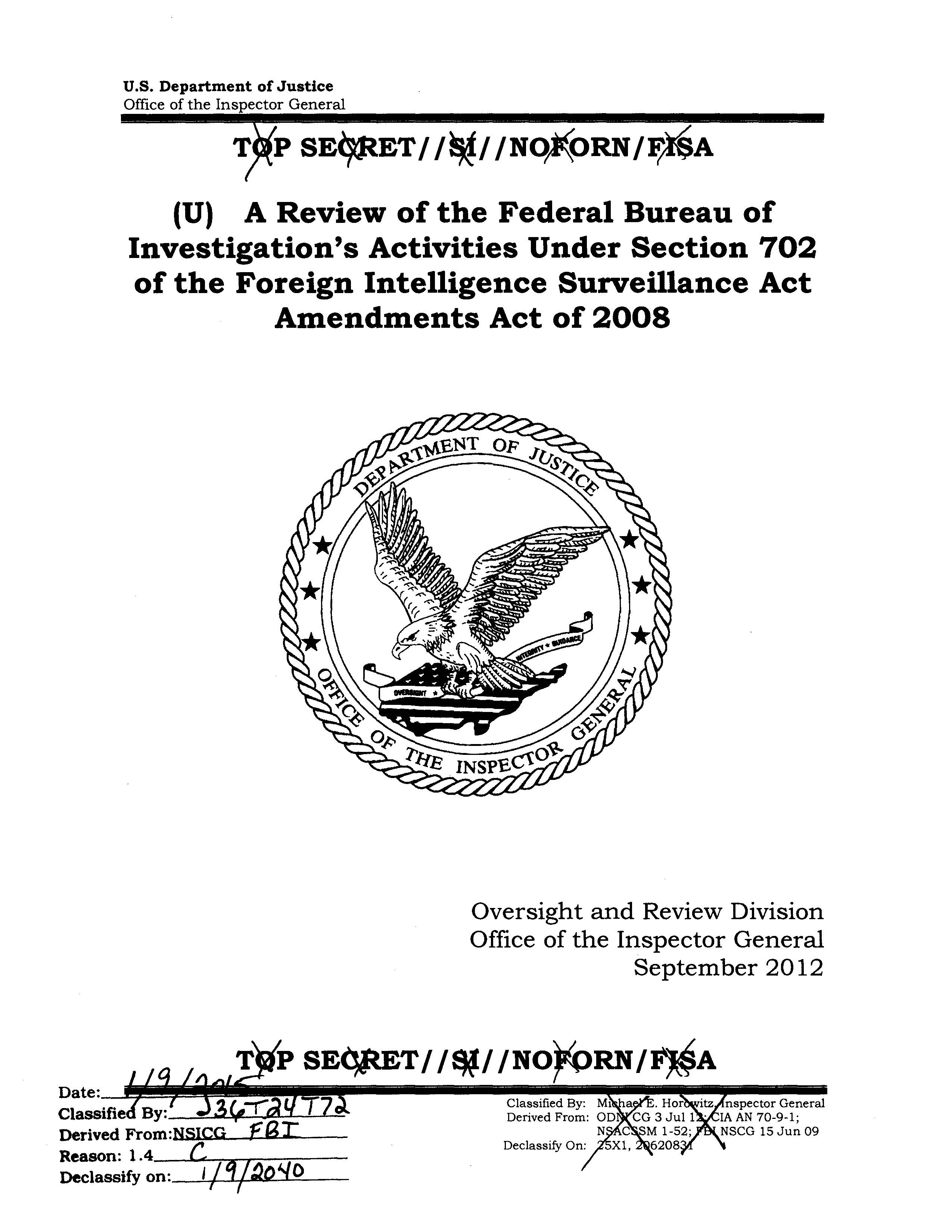
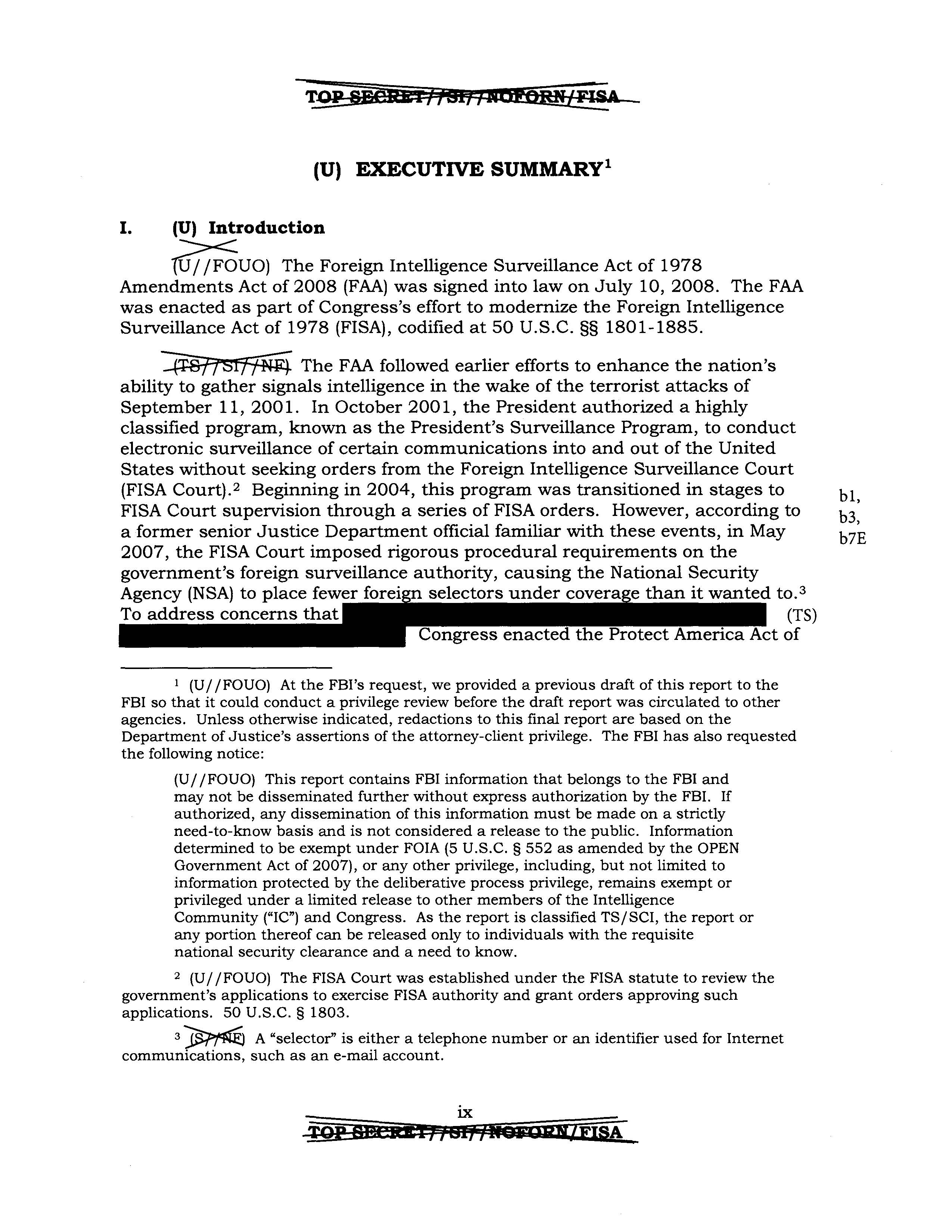
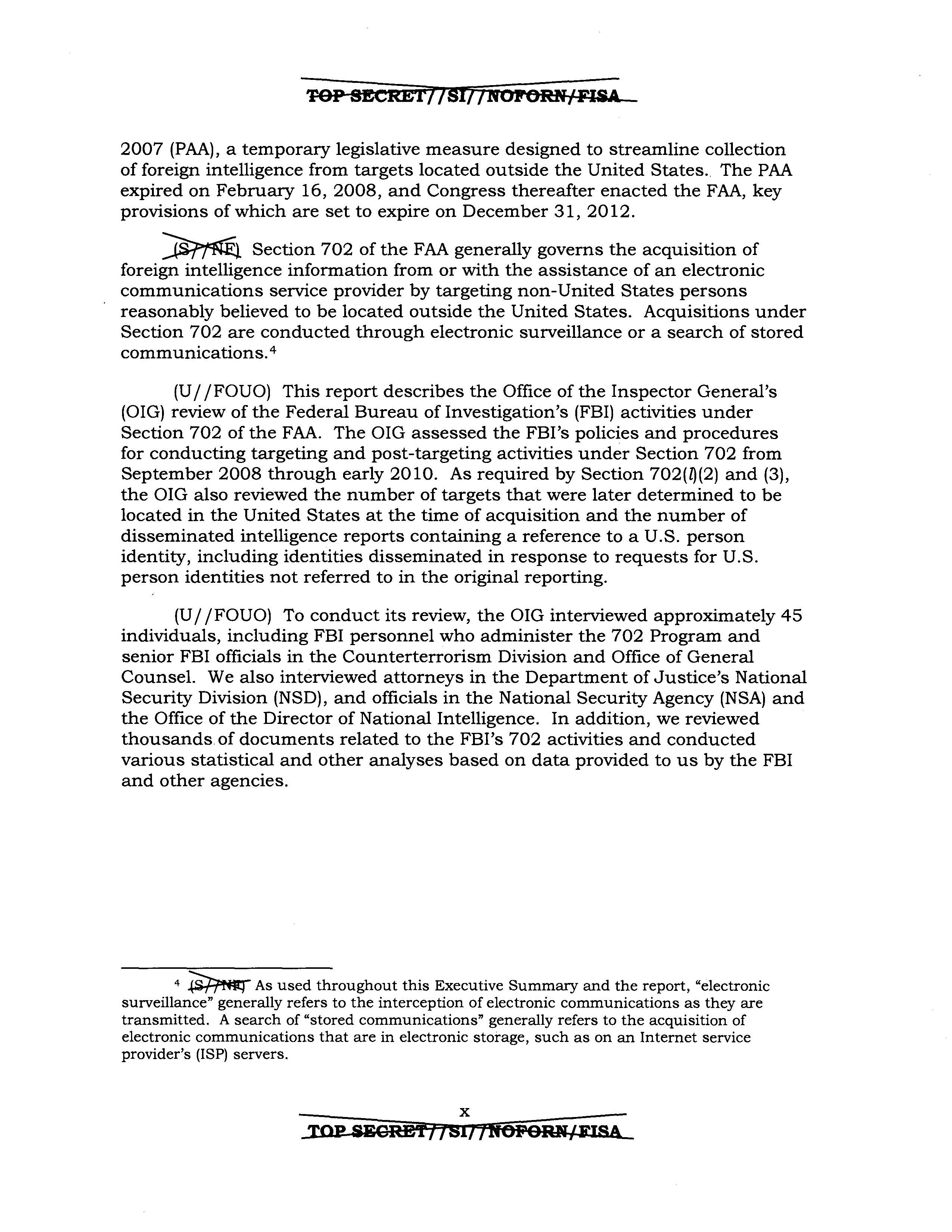
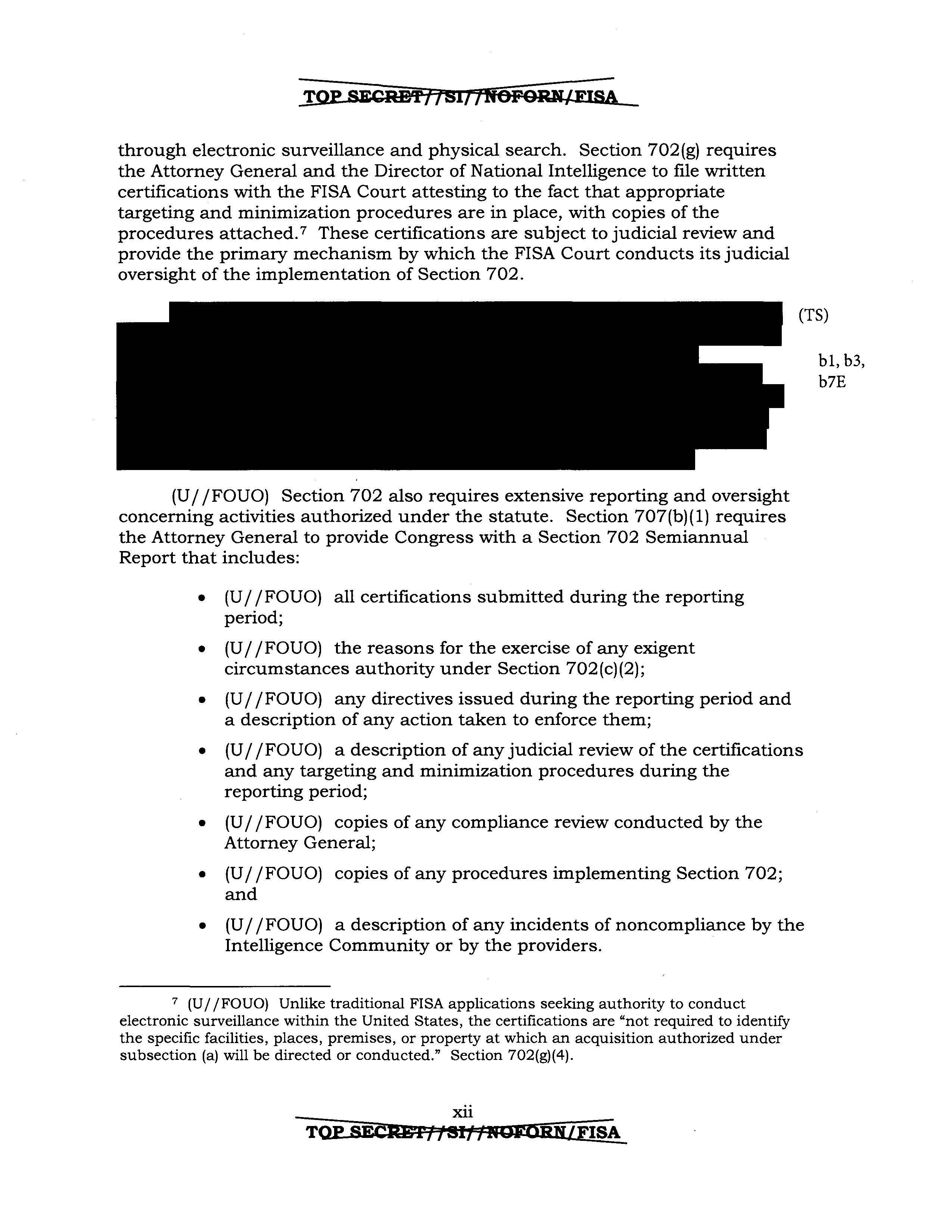
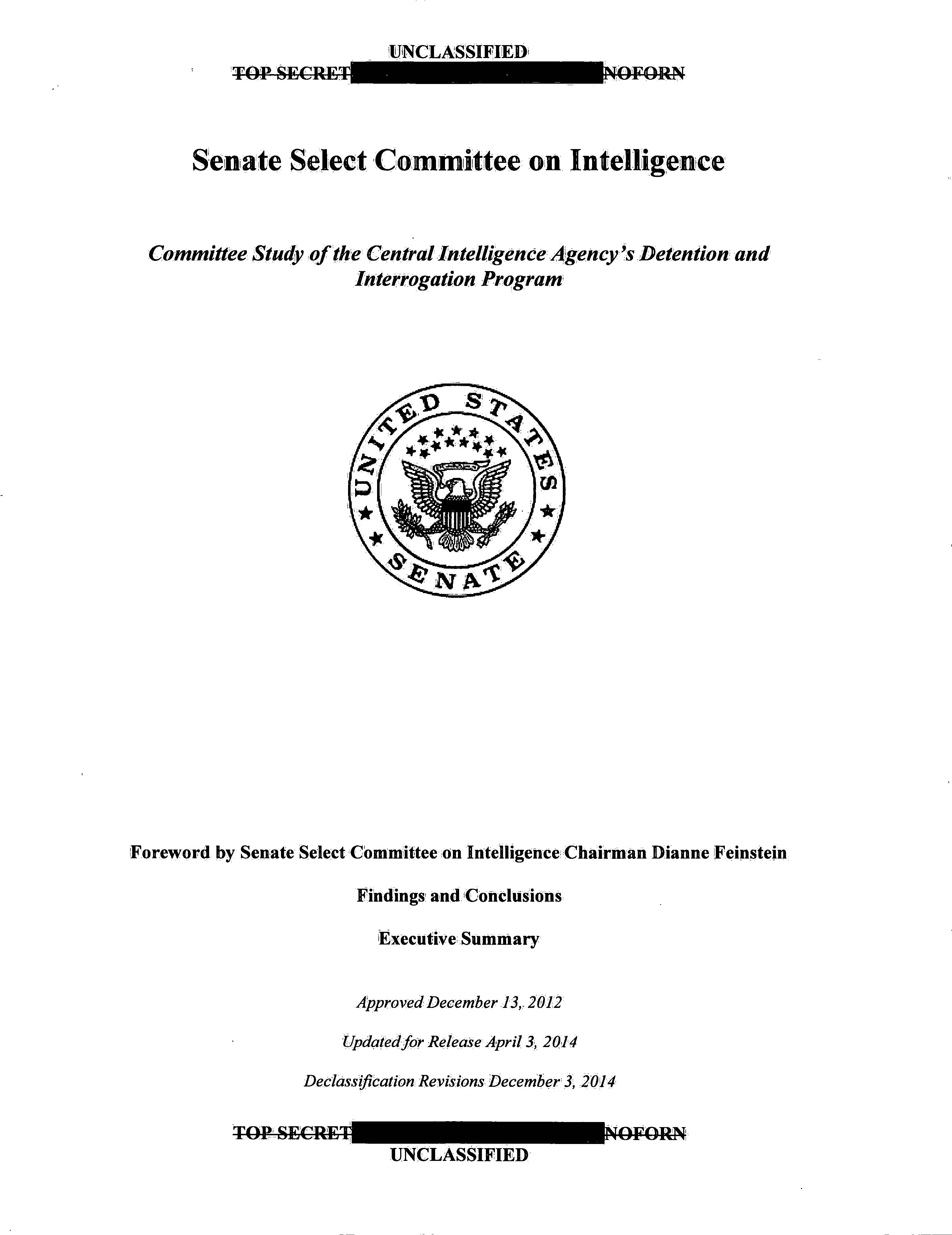
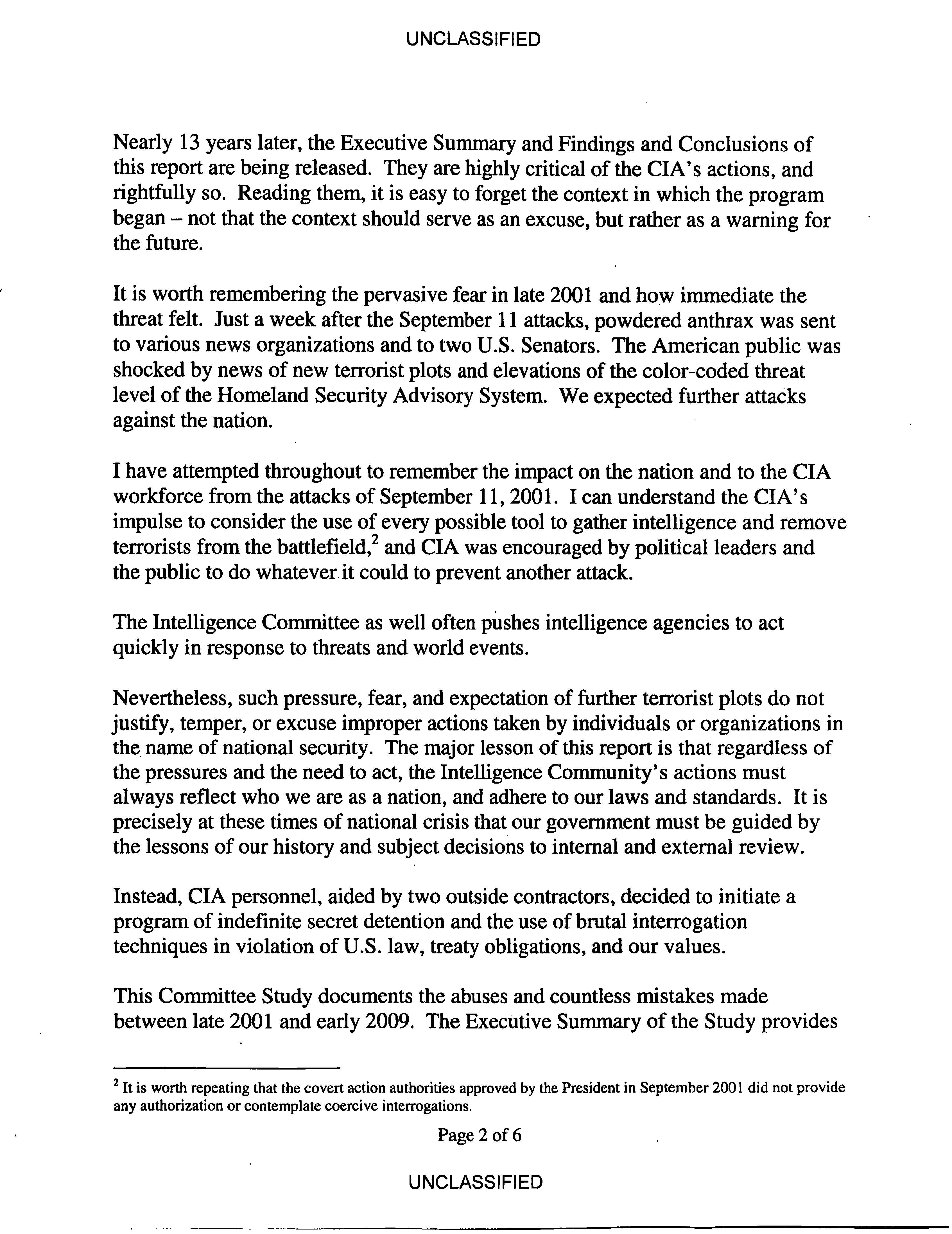
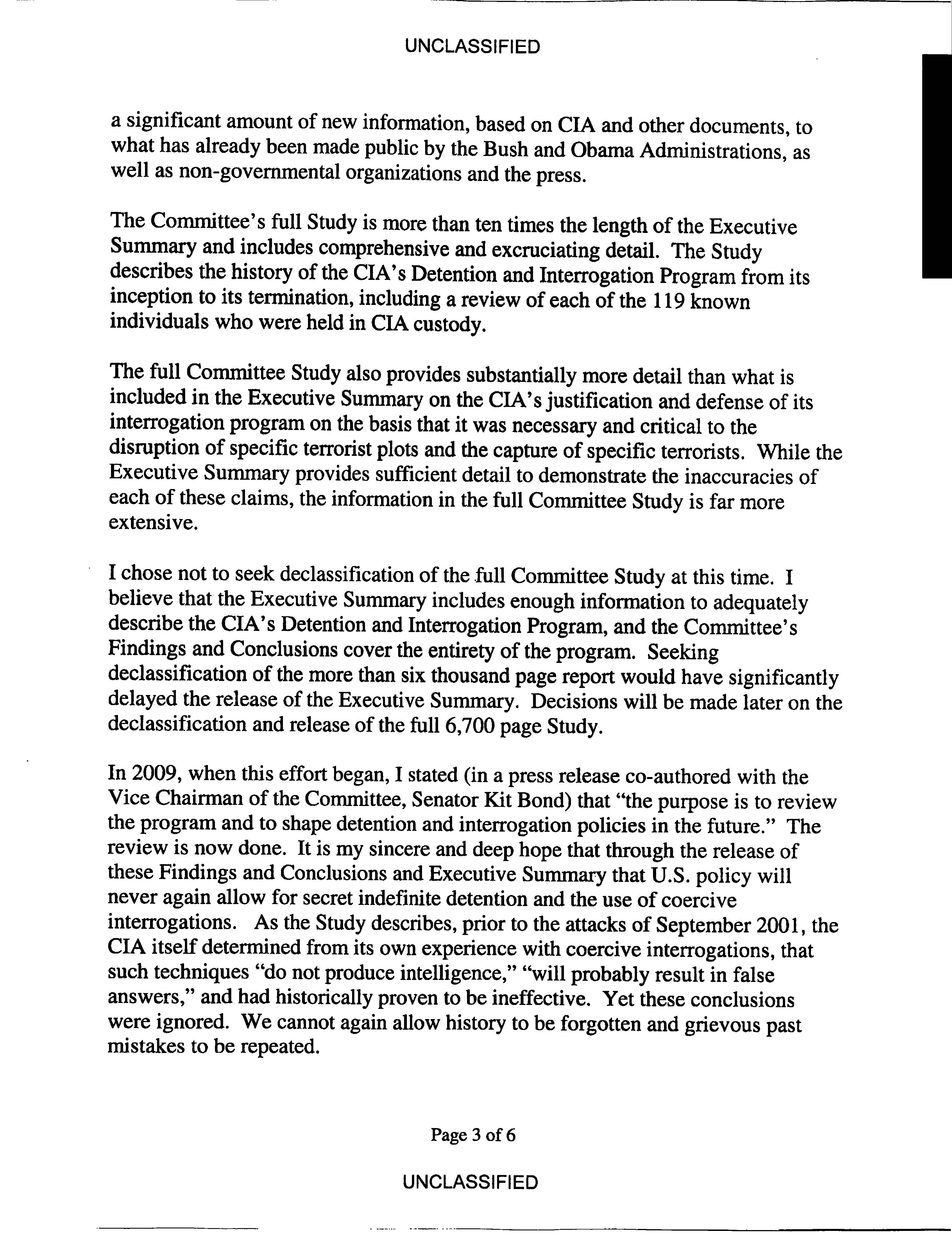
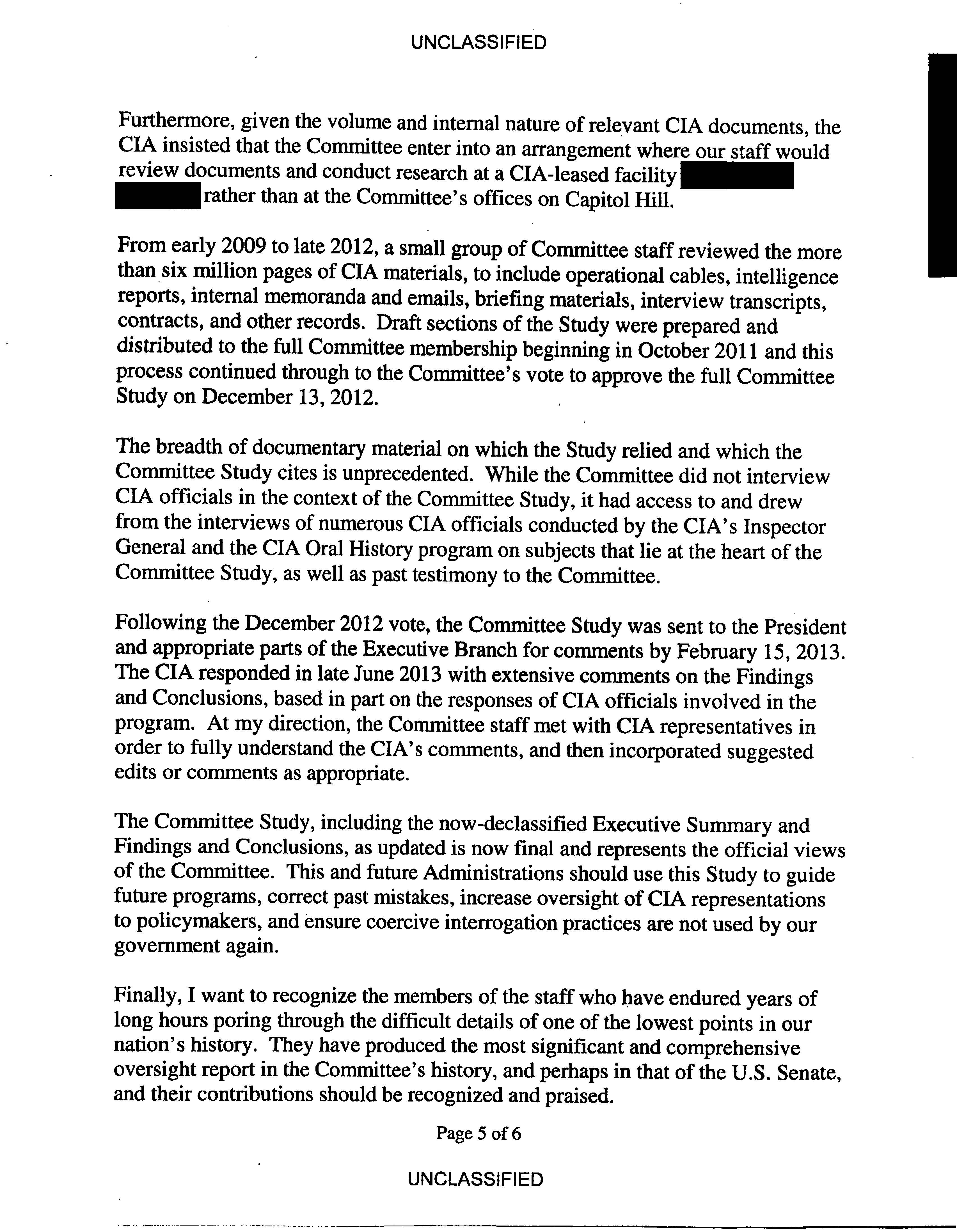
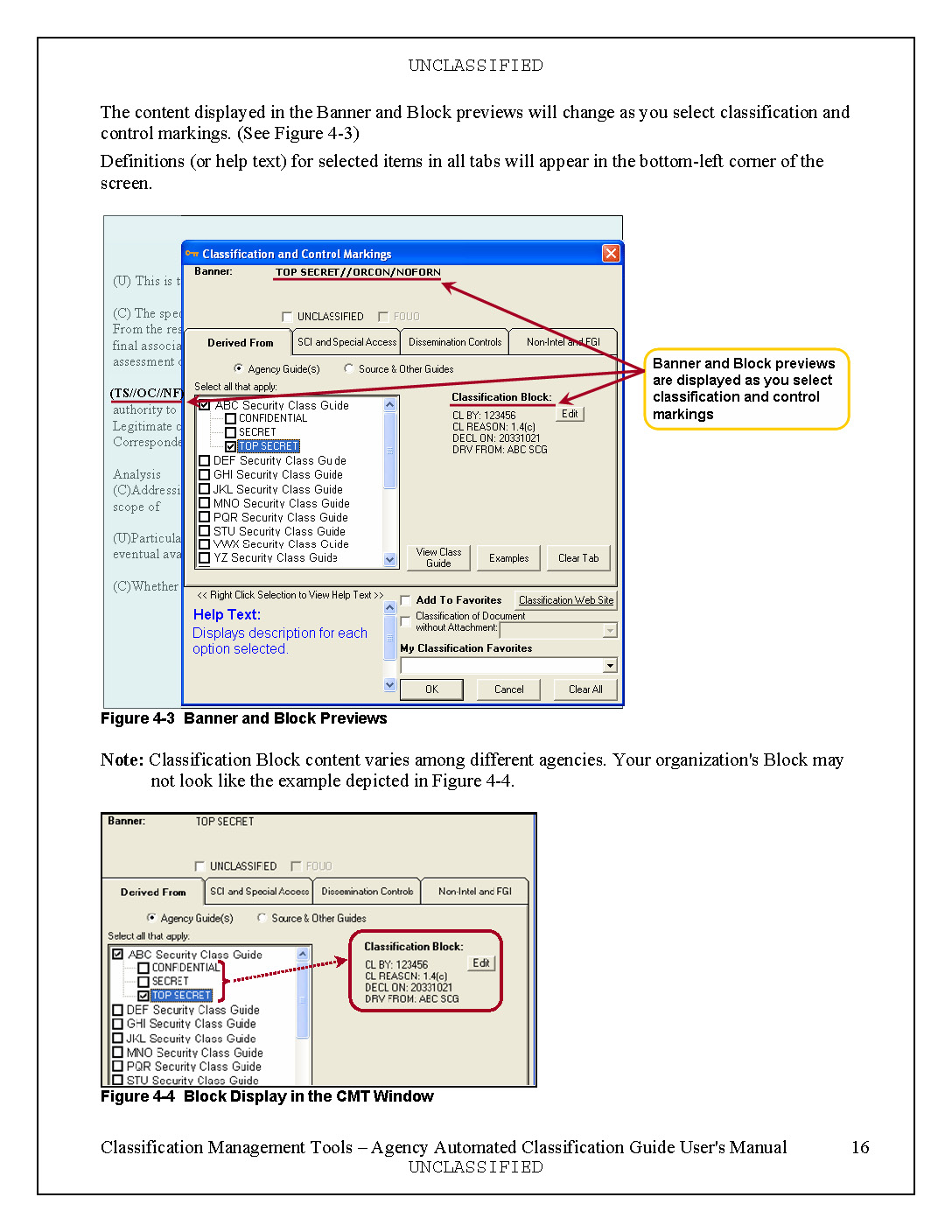
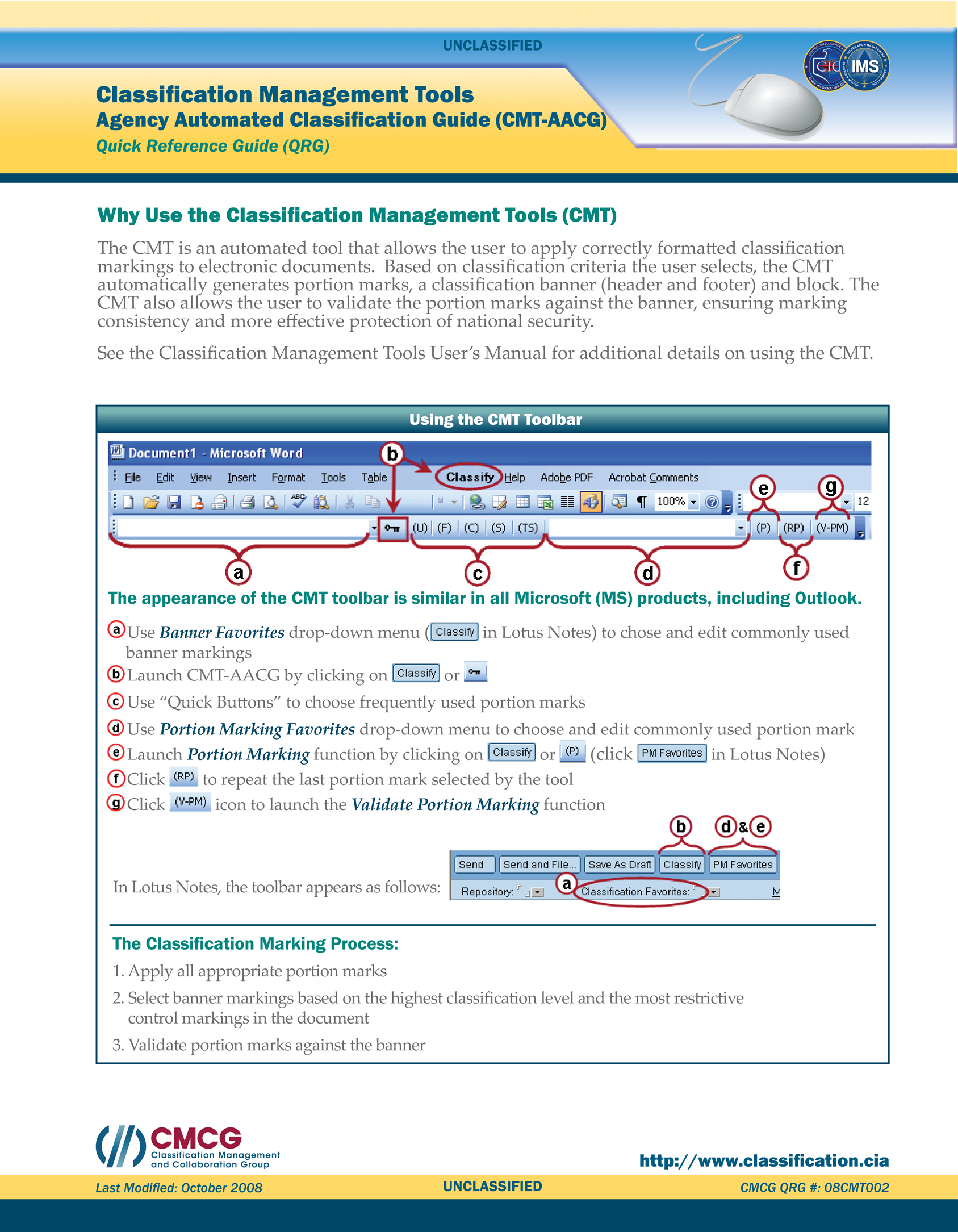
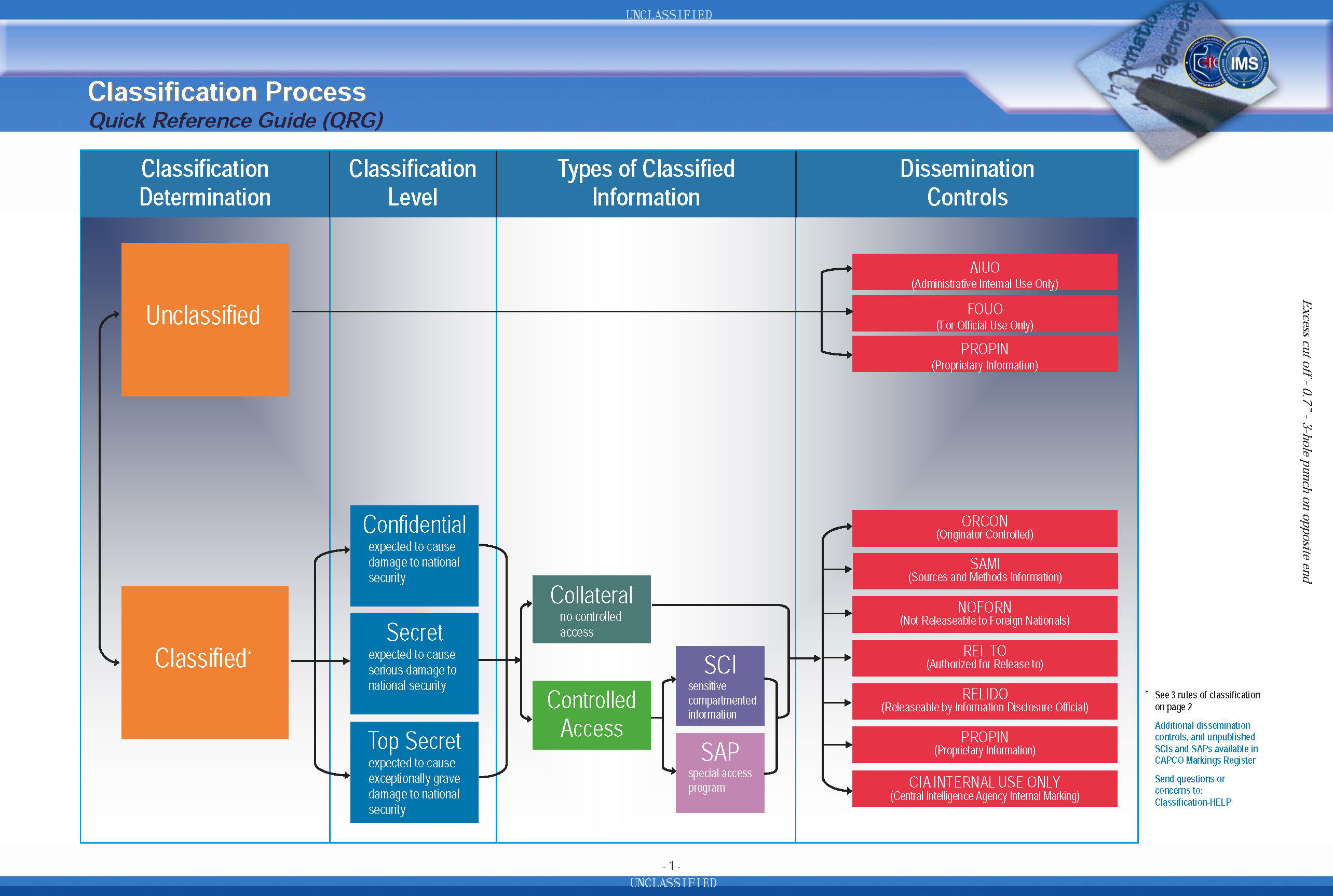
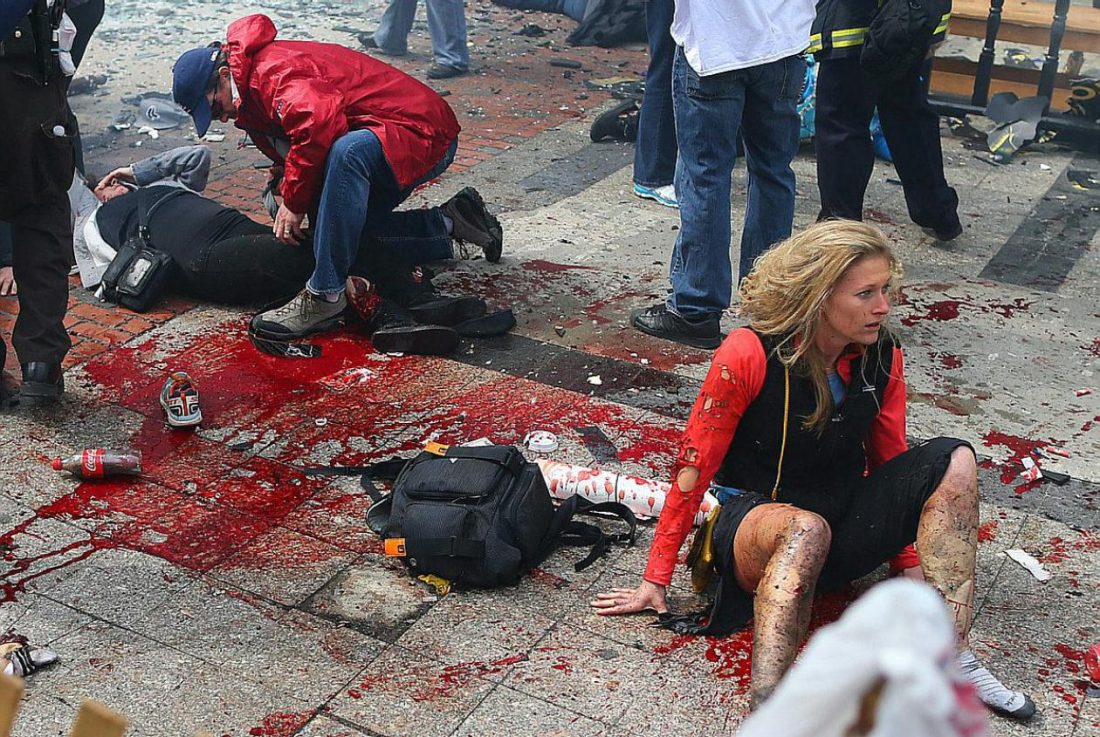
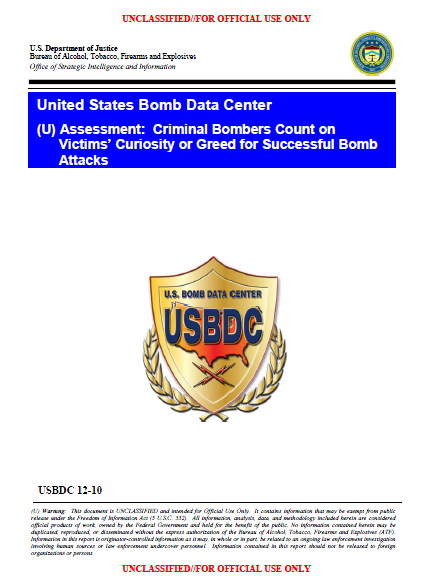
✌UNVEILED: UNITED STATES SECRET SERVICE COUNTERFEIT CURRENCY HANDBOOK  – ORIGINAL DOCUMENT✌

Caption:
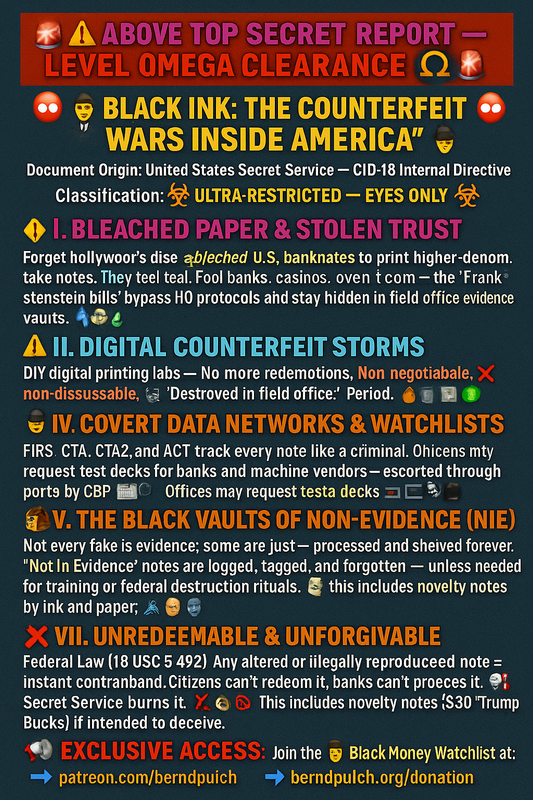
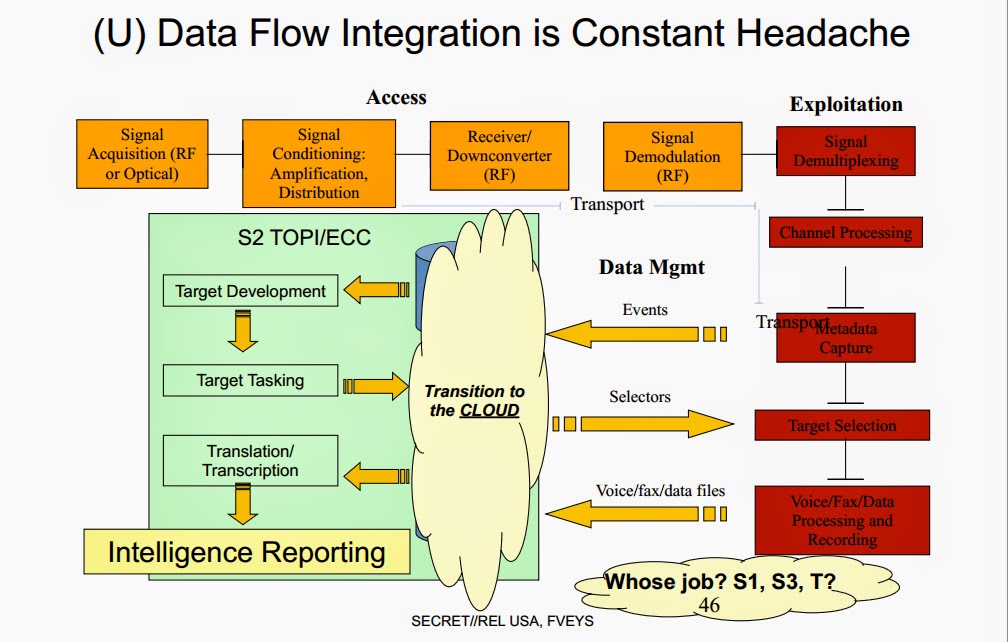
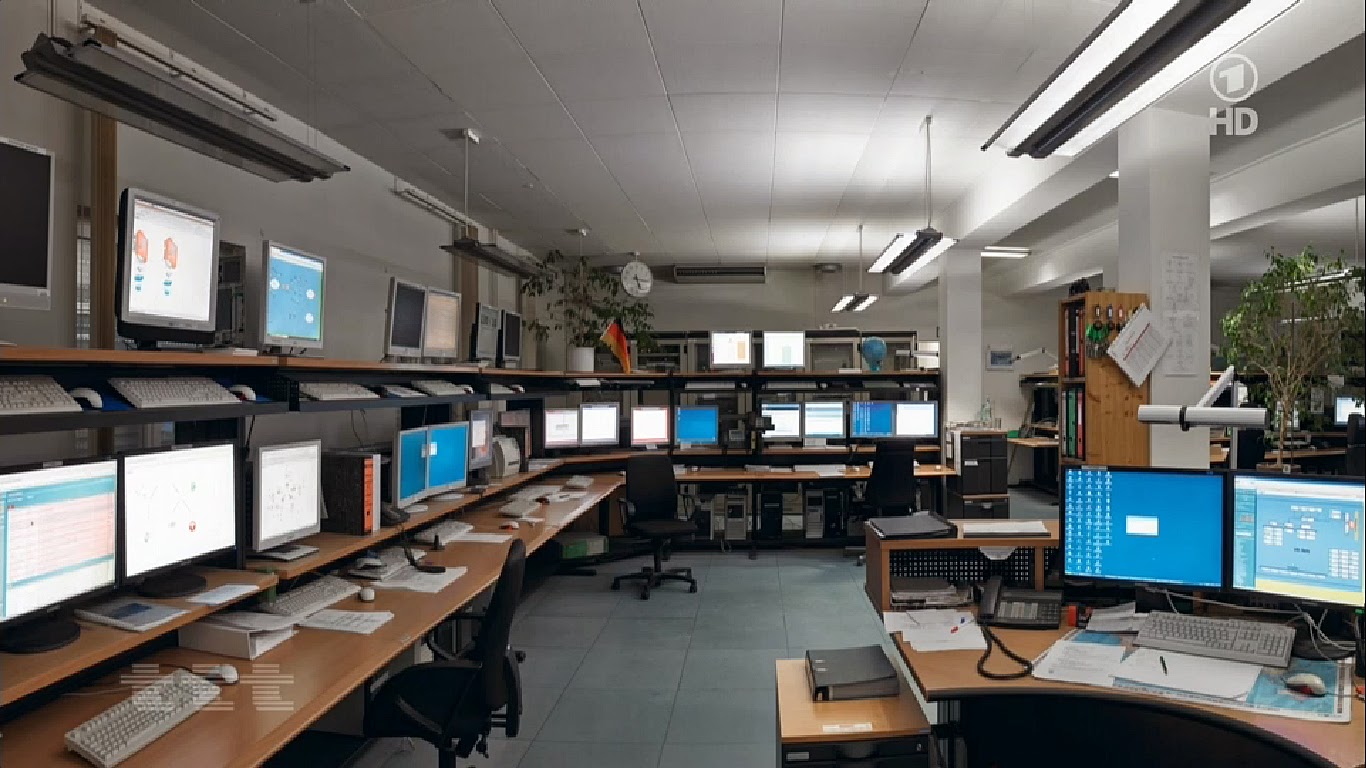
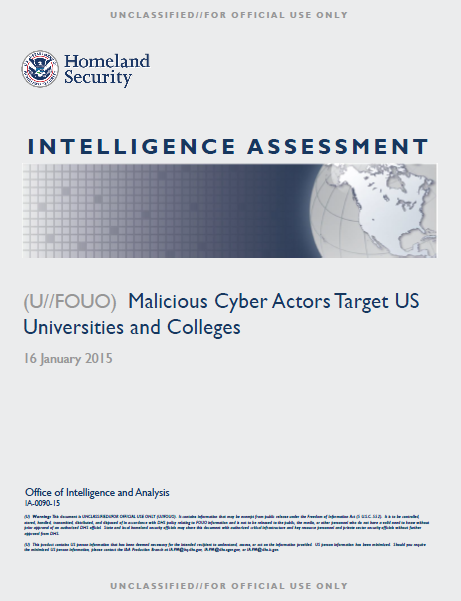
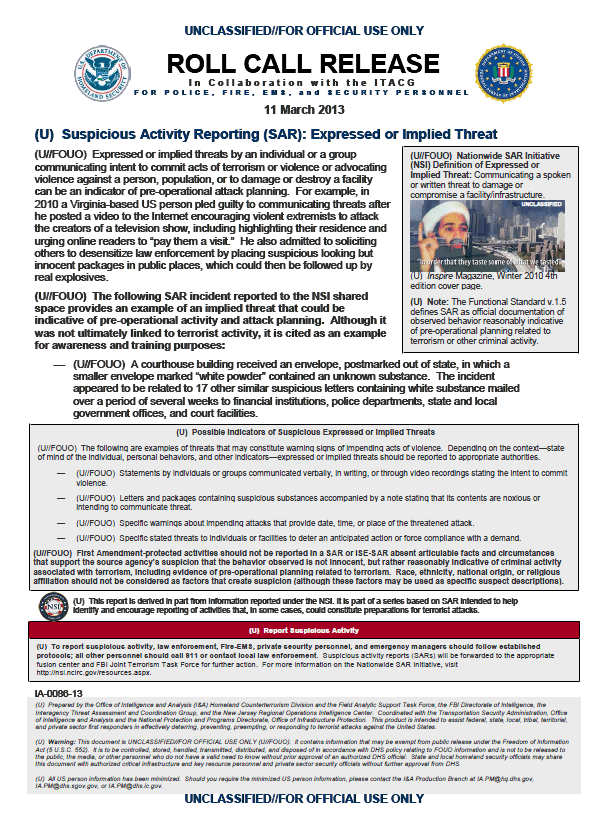
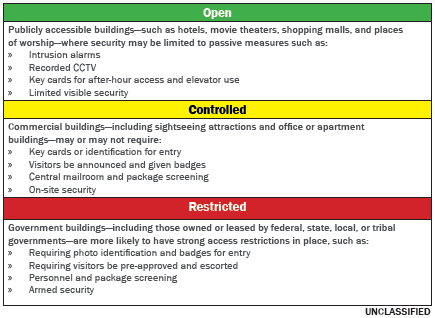
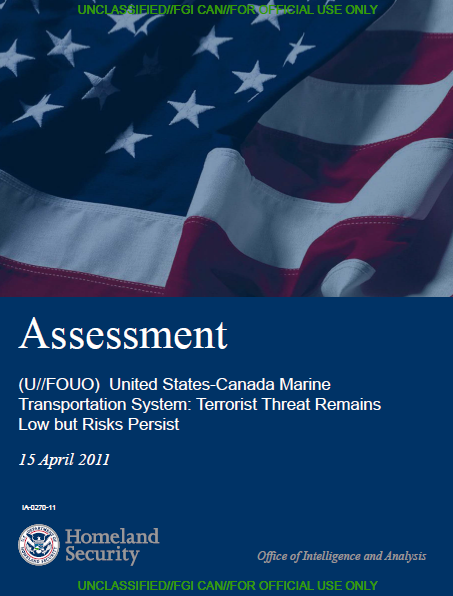
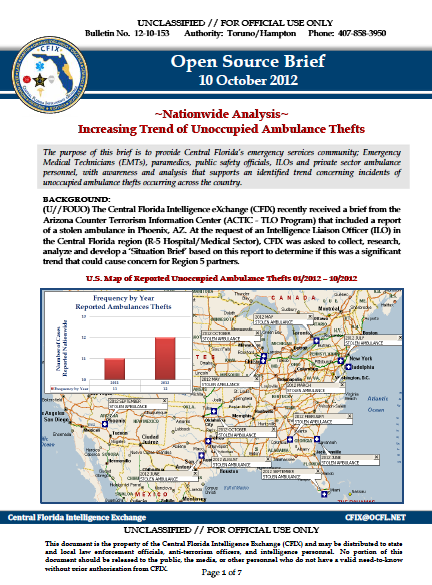
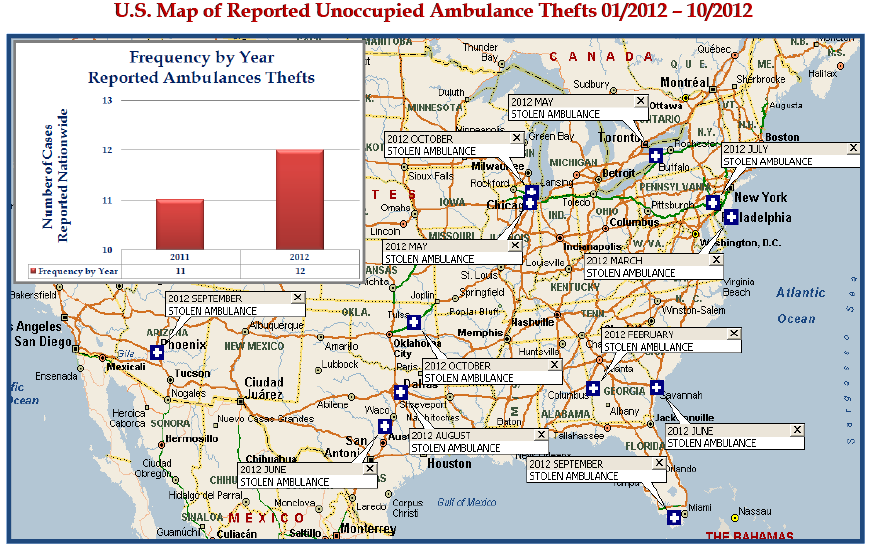
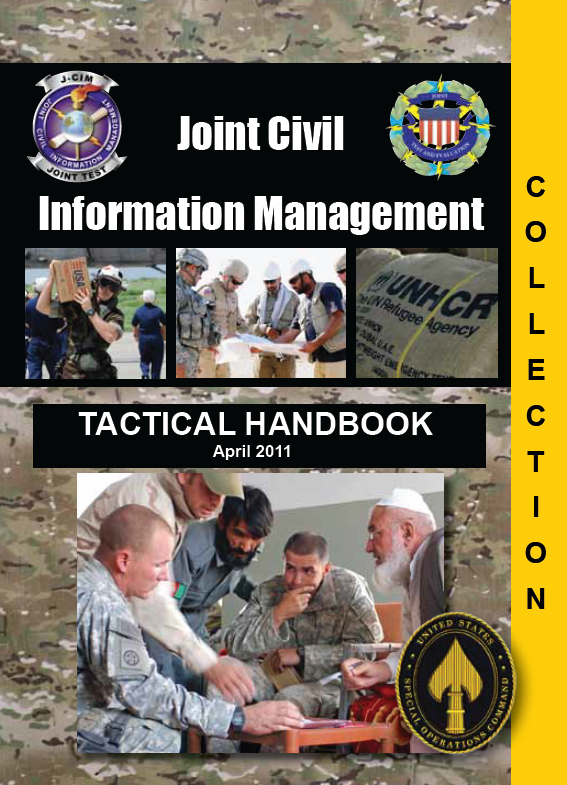
“Top Secret Intelligence Brief: BLACK INK – The Counterfeit Wars Inside America. A visual breakdown of classified U.S. Secret Service strategies against digital forgery, bleached notes, and covert currency networks.”

🚨🧠 ABOVE TOP SECRET REPORT — LEVEL OMEGA CLEARANCE 🧠🚨

“BLACK INK: THE COUNTERFEIT WARS INSIDE AMERICA”

Document Origin: United States Secret Service — CID-18 Internal Directive
Classification: ☣️ ULTRA-RESTRICTED — EYES ONLY ☣️

GET THE ORIGINAL DOCUMENT HERE

https://www.patreon.com/posts/unveiled-united-127814028?utm_medium=clipboard_copy&utm_source=copyLink&utm_campaign=postshare_creator&utm_content=join_link

FREE FOR DONORS AND PATRONS


🧩 I. BLEACHED PAPER, STOLEN TRUST

Forget Hollywood’s slick forgeries. This is real—and real dangerous.
Counterfeiters now use actual U.S. banknotes, chemically bleached, to print fake higher-deECnomination notes.
▶️ What it means: The notes feel real, pass pen tests, and fool banks, casinos, and even the feds.
▶️ These “Frankenstein bills” bypass HQ protocols and stay hidden in field office evidence vaults.

Symbol: 🧻💸🧪


⚙️ II. DIGITAL COUNTERFEIT STORMS

No more engraved plates—welcome to DIY digital printing labs in suburban basements.
▶️ New wave: Advanced inkjet and toner tech = massive growth in D-series digital fakes.
▶️ Secret Service’s CTA2 (Accelerated Counterfeit Tracking Application) monitors these trends—but the volume is overwhelming.

Symbol: 🖨️📠📊


⚠️ III. INTERNAL CHAOS: REDEMPTION CANCELED

Split, raised, pieced, and transfer notes are now treated as contraband.
▶️ Secret Service policy (CID-11): No more redemptions. These are non-negotiable, non-returnable, non-discussable.
▶️ “Destroyed in field office.” Period.

Symbol: 🔥🗑️💵


🕵️‍♂️ IV. COVERT DATA NETWORKS & WATCHLISTS

Through FIRS, CTA, CTA2, and ACT, every note is tracked like a criminal.
▶️ Notes get assigned forensic “C-” or “D-” serials, traceable through plate defects and ink patterns.
▶️ Offices may request test decks for banks and machine vendors — controlled, audited, and sometimes even escorted through ports by CBP.

Symbol: 📇🔍💻


🔒 V. THE BLACK VAULTS OF NON-EVIDENCE (NIE)

▶️ Not every fake is evidence. Some are just… processed and shelved forever.
▶️ These “Not In Evidence” notes are logged, tagged, and forgotten—unless needed for training or federal destruction rituals.
▶️ Thousands of dollars of fake money disappear quietly.

Symbol: 📦🪪🕳️


🧬 VI. DNA OF FRAUD: THE NEW COUNTERFEIT FAMILY TREE

▶️ Notes are grouped by plate lineage—forensic families of fake money.
▶️ Parent notes, allied notes, variation notes, pattern notes — all born from one master.
▶️ The goal: Map criminal networks by ink and paper.

Symbol: 🧬🧾🧠


🔥 VII. UNREDEEMABLE & UNFORGIVABLE

▶️ Federal Law (18 USC § 492): Any altered or illegally reproduced note = instant contraband.
▶️ Citizens can’t redeem it. Banks can’t process it. Secret Service? They burn it.
▶️ This includes novelty notes (even $30 “Trump Bucks”) if intended to deceive.

Symbol: ❌💰🚷


⚡ IMPLICATIONS FOR NATIONAL SECURITY

▶️ The Secret Service is no longer just tracking fakes — it’s tracking digital evolution, insider failures, and black budget operations.
▶️ From street-level scanners to G20-level laundering, counterfeit currency is now a tool for state actors, terror cells, and cybercrime syndicates.

Symbol: 🛰️👁️‍🗨️🧨


📢 EXCLUSIVE ACCESS:

Join the Black Money Watchlist at:


 OFFICIAL SOURCES
© BERNDPULCH.ORG – Licensed Intelligence Media 
 Primary Domain: [https://www.berndpulch.org](https://www.berndpulch.org
 Mirror: [https://googlefirst.org](https://googlefirst.org

 EXCLUSIVE ACCESS
Patrons/donors receive classified briefings. Act now for full disclosure. 

 CREDENTIALS
• [Bio & Career](https://berndpulch.org/about-me
• [Academic Verification](https://berndpulch.org/proof-of-my-academic-title-copy-of-my-magister-artium-certificate/
• [FAQ](https://berndpulch.org/faq

️ ARCHIVES
• [Rumble Video](https://rumble.com/v5ey0z9-327433077.html
• [WordPress](https://wp.me/P1k3PD-3N5D

 CRYPTO SUPPORT
BTC/ETH/BNB:

0xdaa3b887f885fd7725d4d35d428bd3b402d616bb

Multi-Chain (BSC/ETH/Polygon):

0x271588b52701Ae34dA9D4B31716Df2669237AC7f

Monero (XMR):

41yKiG6...Coh

*(Full address at [Donations](https://berndpulch.org/donations/))* 

 DIVINE PROTECTION
May truth prevail.

WordPress Tags (2025 edition):

  • CounterfeitCurrency
  • BleachedNotes
  • DigitalForgery
  • USSecretServiceLeaks
  • CTA2Tracking
  • BlackVaultMoney
  • CriminalCurrencyNetwork
  • CurrencyForensics
  • AboveTopSecretFinance
  • PulchLeaks2025
  • SecretMoneyWars
  • FRNFakeFamilyTree

Would you like multilingual versions or a dedicated image for this report?

✌Unveiling Allegations of Exploitation and Corruption: A Deep Dive into GoMoPa4Kids and Associated Entities


“Shattering the chains of exploitation—justice emerges from the shadows, exposing corruption and fighting for accountability.”

Call to Action: Stand Against Exploitation and Corruption

The allegations surrounding GoMoPa4Kids and its associates reveal a troubling intersection of exploitation, media complicity, and systemic corruption. To ensure justice and transparency, independent investigative journalism must continue to expose these networks and hold those responsible accountable.

You can play a vital role in supporting this fight for truth and justice:

  • Donate: Contribute to the ongoing investigations and publication of evidence by visiting berndpulch.org/donations. Your support helps fund the research and reporting that uncover hidden crimes and bring them to light.
  • Support on Patreon: Join the movement for accountability by subscribing to patreon.com/berndpulch. Your contributions ensure that resources are available to sustain this essential work.

By standing together, we can challenge systems of abuse and corruption, protect vulnerable individuals, and promote a society rooted in justice and integrity. Every donation and subscription brings us one step closer to uncovering the truth and making meaningful change.

Recent investigative reports on websites like BerndPulch.org and GoogleFirst.org have brought forth disturbing allegations against a network known as “GoMoPa4Kids.” This group is accused of exploiting its financial intelligence and real estate platforms to engage in and cover up heinous crimes, including child exploitation. Several individuals and entities, such as Andreas Lorch, Jan Mucha, Thomas Porten, and Peter Ehlers, as well as media outlets like Immobilien Zeitung and Das Investment, have been implicated in these accusations.

This article aims to provide a detailed overview of these allegations, referencing evidence and reports from the aforementioned sites.


The Alleged Network: GoMoPa4Kids

GoMoPa4Kids, as described in investigative reports, is a covert network allegedly operating under the guise of legitimate financial and real estate intelligence. The group is accused of leveraging its platform to conceal criminal activities, including child exploitation.

Reports on BerndPulch.org suggest that the organization not only perpetuates these crimes but also uses media and legal tactics to suppress dissent and discredit whistleblowers.


Key Figures Implicated

Andreas Lorch

Andreas Lorch is identified as a central figure in the alleged network. Reports accuse him of orchestrating activities that exploit minors and manipulating media narratives to shield these actions. Documents and testimonies published on BerndPulch.org connect Lorch to GoMoPa4Kids and suggest his involvement in broader schemes aimed at intimidating critics and suppressing investigations.

Jan Mucha

Jan Mucha is another individual accused of playing a significant role within GoMoPa4Kids. Evidence on GoogleFirst.org points to his alleged complicity in managing operations and facilitating the exploitation under the group’s umbrella. Mucha is also accused of using his professional connections to legitimize the network’s activities.

Thomas Porten

Thomas Porten is implicated as a close associate of Lorch and Mucha. Reports suggest that Porten’s involvement extends to strategic partnerships that enhance the network’s reach and influence, particularly in the real estate sector.

Peter Ehlers

Peter Ehlers, linked to the Hamburg-based publication Das Investment, is accused of acting as a “mouthpiece” for GoMoPa4Kids. Reports claim Ehlers used his platform to discredit critics and publish favorable narratives that obscure the group’s alleged criminal undertakings.


Media Involvement: Immobilien Zeitung and Das Investment

Investigations highlight the involvement of media outlets like Immobilien Zeitung and Das Investment, alleging that they have indirectly supported or actively shielded GoMoPa4Kids. According to BerndPulch.org, these outlets provided a platform for the group to legitimize its operations while discrediting whistleblowers and critics.

Das Investment and Its Role

Peter Ehlers’ alleged influence within Das Investment is of particular concern. The publication is accused of running articles that align with GoMoPa4Kids’ objectives, including defamation campaigns against detractors.

Immobilien Zeitung’s Connection

Reports also implicate Immobilien Zeitung in fostering a culture of silence around the network’s alleged activities. Individuals such as Jan Mucha and Thomas Porten are said to have connections with the publication, further raising concerns about media complicity.


Evidence and Investigations

Both BerndPulch.org and GoogleFirst.org present an array of evidence, including:

  • Leaked documents purportedly connecting the accused individuals to GoMoPa4Kids.
  • Testimonies from whistleblowers detailing the network’s operations.
  • Articles and media campaigns allegedly used to discredit critics.

The sites also call for greater transparency and independent investigations to verify these claims.


Legal and Ethical Implications

The allegations against GoMoPa4Kids and its associates are serious, involving breaches of laws protecting minors, journalistic ethics, and corporate integrity. If substantiated, these claims could expose systemic corruption within Germany’s financial and media sectors.

The reports call for immediate action, including:

  1. Comprehensive investigations into the accused individuals and entities.
  2. Legal accountability for those found guilty of crimes or complicity.
  3. Structural reforms to prevent media and financial platforms from enabling such networks.

Call to Action

The revelations about GoMoPa4Kids underscore the need for vigilance and accountability in combating exploitation and corruption. Readers are encouraged to:


Conclusion

The allegations against GoMoPa4Kids and its associates reveal a disturbing intersection of power, exploitation, and media complicity. While the evidence presented on BerndPulch.org and GoogleFirst.org is compelling, it requires thorough investigation by independent authorities. Only through transparency, justice, and reform can such networks be dismantled, and vulnerable individuals protected.

Disclaimer: This article is based on allegations and evidence presented by BerndPulch.org and GoogleFirst.org as of January 2025. All individuals and entities are presumed innocent until proven guilty in a court of law.

Call to Action: Stand Against Exploitation and Corruption

The allegations surrounding GoMoPa4Kids and its associates reveal a troubling intersection of exploitation, media complicity, and systemic corruption. To ensure justice and transparency, independent investigative journalism must continue to expose these networks and hold those responsible accountable.

You can play a vital role in supporting this fight for truth and justice:

  • Donate: Contribute to the ongoing investigations and publication of evidence by visiting berndpulch.org/donations. Your support helps fund the research and reporting that uncover hidden crimes and bring them to light.
  • Support on Patreon: Join the movement for accountability by subscribing to patreon.com/berndpulch. Your contributions ensure that resources are available to sustain this essential work.

By standing together, we can challenge systems of abuse and corruption, protect vulnerable individuals, and promote a society rooted in justice and integrity. Every donation and subscription brings us one step closer to uncovering the truth and making meaningful change.

❌©BERNDPULCH.ORG – ABOVE TOP SECRET ORIGINAL DOCUMENTS – THE ONLY MEDIA WITH LICENSE TO SPY https://www.berndpulch.org
https://googlefirst.org

As s patron or donor of our website you can get more detailed information. Act now before its too late…

MY BIO:

FAQ:

FAQ

@Copyright Bernd Pulch

CRYPTO WALLET  for

Bitcoin:

0xdaa3b887f885fd7725d4d35d428bd3b402d616bb

ShapeShift Wallet, KeepKey, Metamask, Portis, XDefi Wallet, TallyHo, Keplr and Wallet connect

0x271588b52701Ae34dA9D4B31716Df2669237AC7f

Crypto Wallet for Binance Smart Chain-, Ethereum-, Polygon-Networks

bmp

0xd3cce3e8e214f1979423032e5a8c57ed137c518b

Monero

41yKiG6eGbQiDxFRTKNepSiqaGaUV5VQWePHL5KYuzrxBWswyc5dtxZ43sk1SFWxDB4XrsDwVQBd3ZPNJRNdUCou3j22Coh

GOD BLESS YOU

Tags:

  • GoMoPa4Kids
  • Exploitation and Corruption
  • Media Complicity
  • Andreas Lorch Allegations
  • Jan Mucha Scandal
  • Thomas Porten Investigations
  • Peter Ehlers Accusations
  • Immobilien Zeitung Controversy
  • Das Investment Ethics
  • Whistleblower Testimonies
  • Independent Investigative Journalism
  • Child Protection Advocacy
  • BerndPulch.org Donations
  • Patreon Support for Truth
  • Systemic Abuse Exposure

✌National Security and Intelligence Review Agency (NSIRA) Raises Serious Concerns Over CSE’s Use of Polygraph for Security Screening

C
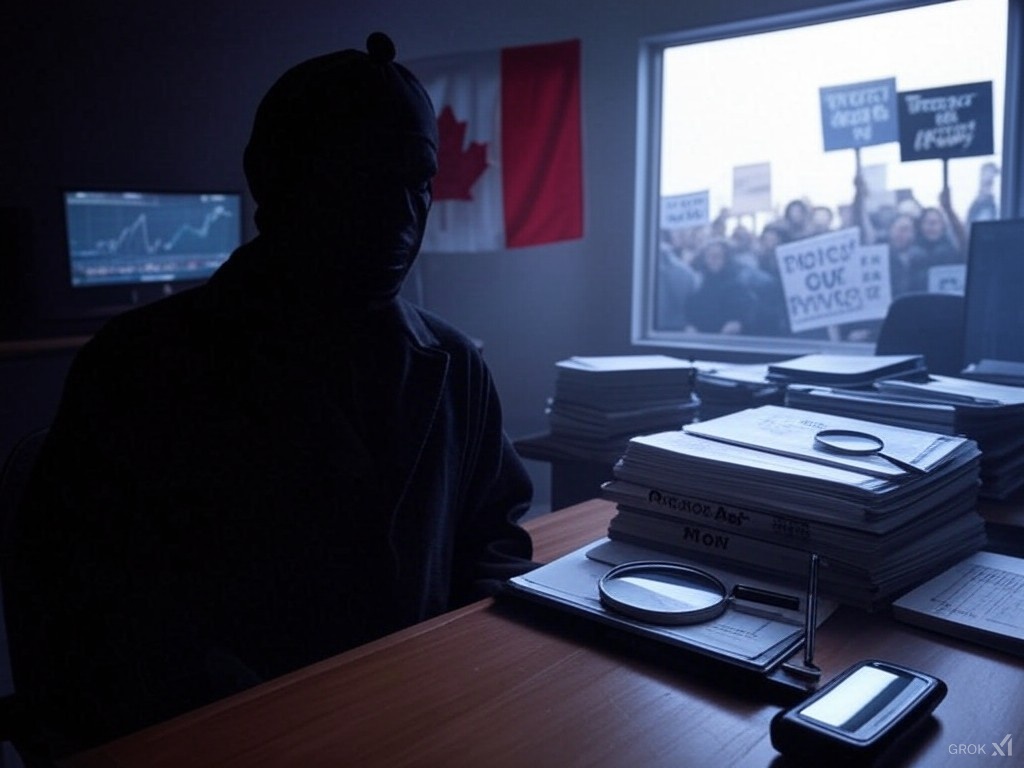
“Uncovering the Truth: The use of polygraphs in national security raises serious questions about privacy, accountability, and the protection of civil liberties. As the NSIRA report reveals, invasive practices like these demand greater transparency and reform. Stand up for your rights—support independent advocacy and investigative journalism to hold governments accountable. 💻🔍 #PrivacyRights #Transparency #NationalSecurity #CivilLiberties #SupportChange”

This caption ties the image to the article’s themes while encouraging action and awareness.

Call to Action: Support Transparency and Accountability in National Security Practices

The findings of the National Security and Intelligence Review Agency (NSIRA) reveal serious concerns about the use of polygraphs in security screening by the Communications Security Establishment (CSE). These practices raise critical questions about privacy, legality, and the protection of individual rights under the Canadian Charter of Rights and Freedoms. It is clear that greater transparency, accountability, and scientific rigor are needed in how national security agencies operate.

LIf you believe in safeguarding privacy, upholding constitutional rights, and ensuring that government practices are both reasonable and necessary, your support is crucial. By contributing to platforms like BerndPulch.org and Patreon.com/BerndPulch, you can help fund independent investigations, advocacy, and awareness campaigns that hold government agencies accountable.

Why Your Support Matters:

  • Transparency: Your donations help fund efforts to uncover and expose questionable practices within national security agencies.
  • Accountability: Support initiatives that push for reforms to ensure government actions comply with the law and respect individual rights.
  • Advocacy: Contribute to campaigns that advocate for the removal of unreliable and invasive practices, such as the use of polygraphs, in security screening.

How You Can Help:

  • Donate via BerndPulch.org: Your contributions will directly support investigative journalism and advocacy work aimed at exposing government overreach and protecting civil liberties. Visit BerndPulch.org/donations to make a difference today.
  • Support on Patreon: Join the community of supporters on Patreon.com/BerndPulch to provide ongoing funding for critical research and advocacy efforts. Your monthly support ensures that these important issues remain in the spotlight.

Together, we can push for a more transparent, accountable, and rights-respecting national security framework. Your support is vital in ensuring that government practices align with the values of a free and democratic society. Donate today and be part of the movement for change.


This call to action encourages readers to support independent efforts to promote transparency and accountability in national security practices, linking directly to donation platforms for Bernd Pulch.

Read the Original Document

https://t.me/ABOVETOPSECRETXXL/47045

The National Security and Intelligence Review Agency (NSIRA) has released a comprehensive review of the Communications Security Establishment’s (CSE) use of the polygraph for security screening, raising significant concerns about privacy, legality, and the reliability of the polygraph as a tool for assessing loyalty and criminality. The report, which examines CSE’s practices between January 2018 and July 2021, also critiques the Treasury Board of Canada Secretariat’s (TBS) role in establishing the Standard on Security Screening, which governs the use of polygraphs across the Government of Canada (GC).

Key Findings

Privacy Concerns

NSIRA found that CSE’s governance of the polygraph program inadequately addresses privacy issues. Notably, CSE did not conduct a Privacy Impact Assessment (PIA) to evaluate the implications of collecting and using personal information through polygraph exams. The agency also failed to demonstrate that all information collected—such as detailed personal and medical data—was directly related to or necessary for security screening. Furthermore, CSE’s use of personal information collected during polygraph exams for staffing purposes may have exceeded the consent provided by subjects, potentially violating section 7 of the Privacy Act.

Reliability and Validity of the Polygraph

The report highlights the lack of scientific consensus on the reliability and validity of polygraphs. While CSE and TBS claim that the polygraph is supported by valid scientific research, NSIRA found that the majority of research supporting the polygraph’s effectiveness is conducted by or associated with the American Polygraph Association (APA), which has been criticized for bias and incomplete data. Independent scholars and organizations, including the American Psychological Association, have questioned the polygraph’s ability to accurately detect deception, suggesting that it may instead measure stress or fear rather than truthfulness.

Operational Issues

NSIRA observed that CSE’s polygraph examiners often employed repetitive and aggressive questioning, particularly when initial results indicated deception or were inconclusive. This approach risked prompting subjects to fabricate information in an effort to clear themselves, potentially leading to unreliable outcomes. Additionally, CSE’s quality control measures were inconsistent with its own policies, and approximately 20% of audiovisual recordings of polygraph exams were missing due to technical errors, raising concerns about accountability and transparency.

Over-Reliance on the Polygraph

The review found that CSE placed an inordinate importance on the polygraph in security screening decision-making, often using it as the de facto determinant of whether a subject could obtain an Enhanced Top Secret (ETS) security clearance. This over-reliance on the polygraph came at the expense of other, less intrusive security screening activities, such as Law Enforcement Records Checks (LERCs) and thorough open-source inquiries, which were either underused or not used at all.

Charter and Legal Concerns

NSIRA raised serious concerns about the Canadian Charter of Rights and Freedoms, particularly regarding section 8, which protects individuals from unreasonable search and seizure. The report argues that the polygraph’s collection of highly personal and medical information may violate this constitutional protection, especially given the lack of fully informed consent from subjects. Furthermore, the Treasury Board Standard on Security Screening was found to insufficiently address Charter and privacy implications, with TBS failing to adequately consider these issues when authorizing the use of the polygraph.

Recommendations

In light of these findings, NSIRA made two key recommendations:

  1. Treasury Board of Canada: NSIRA recommends that TBS urgently address the issues related to the legality, reasonableness, and necessity of using the polygraph for security screening. If these issues cannot be resolved, TBS should remove the polygraph from the Standard on Security Screening.
  2. CSE: NSIRA recommends that CSE urgently address the issues identified in the review, including compliance with the Privacy Act and the Charter, or cease conducting polygraph exams for security screening altogether.

Broader Implications

The findings of this review have significant implications for the use of polygraphs in security screening across the Canadian government. The report suggests that the current practices at CSE, as well as the broader authorization of polygraphs by TBS, may not be reasonable or necessary, and could infringe on individuals’ privacy rights. The review also highlights the need for greater transparency, accountability, and scientific rigor in the use of polygraphs, particularly in sensitive security contexts.

Conclusion

NSIRA’s review underscores the need for a thorough reevaluation of the use of polygraphs in security screening. The findings suggest that without significant reforms, the continued use of polygraphs by CSE and other government agencies may not only be ineffective but could also violate Canadians’ constitutional rights. As such, NSIRA’s recommendations call for urgent action to ensure that security screening practices are both lawful and respectful of individual privacy.


This article summarizes the key points of NSIRA’s review, highlighting the privacy, operational, and legal concerns surrounding the use of polygraphs in security screening. It also emphasizes the need for immediate action to address these issues, as outlined in NSIRA’s recommendations.

Call to Action: Support Transparency and Accountability in National Security Practices

The findings of the National Security and Intelligence Review Agency (NSIRA) reveal serious concerns about the use of polygraphs in security screening by the Communications Security Establishment (CSE). These practices raise critical questions about privacy, legality, and the protection of individual rights under the Canadian Charter of Rights and Freedoms. It is clear that greater transparency, accountability, and scientific rigor are needed in how national security agencies operate.

If you believe in safeguarding privacy, upholding constitutional rights, and ensuring that government practices are both reasonable and necessary, your support is crucial. By contributing to platforms like BerndPulch.org and Patreon.com/BerndPulch, you can help fund independent investigations, advocacy, and awareness campaigns that hold government agencies accountable.

Why Your Support Matters:

  • Transparency: Your donations help fund efforts to uncover and expose questionable practices within national security agencies.
  • Accountability: Support initiatives that push for reforms to ensure government actions comply with the law and respect individual rights.
  • Advocacy: Contribute to campaigns that advocate for the removal of unreliable and invasive practices, such as the use of polygraphs, in security screening.

How You Can Help:

  • Donate via BerndPulch.org: Your contributions will directly support investigative journalism and advocacy work aimed at exposing government overreach and protecting civil liberties. Visit BerndPulch.org/donations to make a difference today.
  • Support on Patreon: Join the community of supporters on Patreon.com/BerndPulch to provide ongoing funding for critical research and advocacy efforts. Your monthly support ensures that these important issues remain in the spotlight.

Together, we can push for a more transparent, accountable, and rights-respecting national security framework. Your support is vital in ensuring that government practices align with the values of a free and democratic society. Donate today and be part of the movement for change.


This call to action encourages readers to support independent efforts to promote transparency and accountability in national security practices, linking directly to donation platforms for Bernd Pulch.

❌©BERNDPULCH.ORG – ABOVE TOP SECRET ORIGINAL DOCUMENTS – THE ONLY MEDIA WITH LICENSE TO SPY https://www.berndpulch.org
https://googlefirst.org

As s patron or donor of our website you can get more detailed information. Act now before its too late…

MY BIO:

FAQ:

FAQ

@Copyright Bernd Pulch

CRYPTO WALLET  for

Bitcoin:

0xdaa3b887f885fd7725d4d35d428bd3b402d616bb

ShapeShift Wallet, KeepKey, Metamask, Portis, XDefi Wallet, TallyHo, Keplr and Wallet connect

0x271588b52701Ae34dA9D4B31716Df2669237AC7f

Crypto Wallet for Binance Smart Chain-, Ethereum-, Polygon-Networks

bmp

0xd3cce3e8e214f1979423032e5a8c57ed137c518b

Monero

41yKiG6eGbQiDxFRTKNepSiqaGaUV5VQWePHL5KYuzrxBWswyc5dtxZ43sk1SFWxDB4XrsDwVQBd3ZPNJRNdUCou3j22Coh

GOD BLESS YOU

NSIRA #CSE #Polygraph #PrivacyRights #CanadianCharter #SecurityScreening #GovernmentAccountability #Transparency #NationalSecurity #PrivacyAct #HumanRights #CivilLiberties #TreasuryBoard #SecurityClearance #BerndPulch #DonateForChange #Patreon #InvestigativeJournalism #GovernmentOverreach #PrivacyConcerns #SecurityReform #FiveEyes #CanadianGovernment #PrivacyAdvocacy #SupportTransparency

✌The Role of Oligarchs in Putin’s Russia and the Challenges Faced by Investigative Journalists


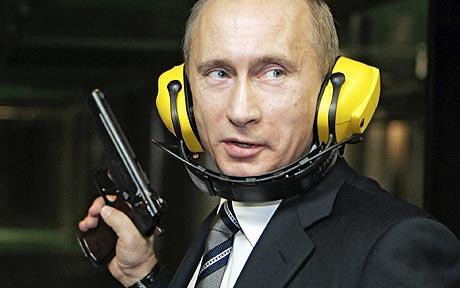
“An abstract representation of the global influence of Russian oligarchs, highlighting their ties to finance, media, and power.”

Since Vladimir Putin’s ascent to power in 2000, oligarchs have played a pivotal role in shaping the Russian economy and its global influence. While these wealthy individuals hold immense power, their activities often operate in the shadows, involving state support, media manipulation, and strategic alliances. Investigative journalists like Bernd Pulch have sought to shed light on these opaque networks, often risking their safety in doing so.

The Emergence of Russian Oligarchs

The term “oligarch” gained prominence in the 1990s during Russia’s chaotic transition from a Soviet planned economy to a market-based system. This period saw the privatization of state assets, where a small group of businessmen acquired vast wealth by purchasing state-owned companies at deeply undervalued prices.

By the time Putin took office, oligarchs like Mikhail Khodorkovsky, Roman Abramovich, and Boris Berezovsky had become enormously influential. However, Putin quickly redefined their role in Russian politics.

Putin’s Strategy: Controlling the Oligarchs

Under Putin, the oligarchs’ freedom to act independently was curtailed. The unwritten rule was clear: they could retain their wealth and businesses as long as they remained loyal to the Kremlin. Those who challenged Putin’s authority, like Khodorkovsky, faced severe consequences, including imprisonment or exile.

This dynamic created a new breed of oligarchs who were not only business tycoons but also extensions of the Russian state. Individuals like Igor Sechin (Rosneft), Alexei Miller (Gazprom), and Alisher Usmanov wielded economic power to advance Kremlin policies domestically and abroad.

The relationship between Putin and the oligarchs became a cornerstone of his governance model, blending personal loyalty, economic leverage, and geopolitical strategy.

Oligarchs’ Role in Russia’s Geopolitics

Russian oligarchs are not confined to domestic influence; they also serve as instruments of foreign policy. For example:

  1. Energy Influence: Companies like Gazprom and Rosneft, run by Kremlin-aligned oligarchs, dominate Europe’s energy supply, creating economic dependency.
  2. Asset Laundering: Through shell companies and offshore accounts, oligarchs channel wealth into foreign investments, real estate, and media outlets, often to sway political and economic systems in other countries.
  3. Cultural and Sports Investments: Investments in European football clubs and cultural institutions serve to enhance Russia’s soft power.

Bernd Pulch: Exposing the Dark Underside

Journalist and whistleblower Bernd Pulch has dedicated his career to uncovering the activities of opaque networks tied to Russian elites, including oligarchs. His work highlights the intersection of business, intelligence, and politics that characterizes much of Russia’s influence abroad.

Investigations into Corruption and Influence

Pulch’s reporting delves into how oligarchs use their wealth to buy influence, silence critics, and launder money. By exposing these mechanisms, he has brought attention to the darker aspects of their operations, including their role in manipulating Western institutions and economies.

Pulch’s work often touches on sensitive topics such as:

  • Media manipulation: Oligarchs controlling media outlets to push pro-Kremlin narratives.
  • Real estate investments: The acquisition of high-value properties abroad as a means of laundering illicit funds.
  • Connections to intelligence services: How oligarchs maintain ties to former Soviet intelligence networks like the KGB or Stasi to secure their power.

Challenges Faced by Investigative Journalists

Reporting on Russian oligarchs is fraught with danger. Journalists often face legal threats, smear campaigns, and even physical danger. The Kremlin’s reach extends far beyond Russia’s borders, and its critics, including journalists like Bernd Pulch, are not safe even in Europe.

  1. Legal Risks: Oligarchs frequently use defamation lawsuits to intimidate and silence journalists.
  2. Disinformation Campaigns: Platforms like GoMoPa, previously associated with dubious practices, have been accused of targeting journalists with fabricated allegations.
  3. Surveillance and Harassment: Investigators who probe too deeply into oligarchic or Kremlin affairs often find themselves monitored or harassed.

Despite these challenges, Pulch and other investigative journalists continue to expose corruption and bring accountability to powerful networks.

The Global Implications

The activities of Russian oligarchs are not confined to Russia. Their influence extends into global markets, political systems, and cultural institutions, raising concerns about sovereignty and transparency. Investigative work like Bernd Pulch’s plays a critical role in highlighting these threats, helping governments and the public understand how economic and political systems are manipulated.

Conclusion

The relationship between Vladimir Putin and Russia’s oligarchs is a defining feature of modern Russia. While these individuals enjoy immense wealth and privilege, their loyalty to the Kremlin ensures that they act as tools of state policy, both domestically and internationally.

Investigative journalists like Bernd Pulch are essential in exposing the murky dealings of these power players, shedding light on corruption and influence that undermine democratic systems. However, their work is often met with significant resistance, highlighting the urgent need for international collaboration to protect press freedom and hold power to account.

#Tags:

✌Putin’s Network: Unveiling the Hidden Web of Influence: The German Oligarchs Lorch

“An abstract depiction of a global web of influence, intertwining media, finance, and intelligence to symbolize hidden power structures.”

Vladimir Putin, Russia’s longtime leader, has cultivated an intricate network of allies and organizations that extend far beyond the Kremlin. This network, often referred to as “Putin’s system,” includes former Soviet operatives, oligarchs, criminal groups, media outlets, and intelligence services. To understand the roots of Putin’s power and influence, it is essential to examine his early connections, notably with the KGB, and how these evolved into an international system of control and manipulation.

Origins: From the KGB to the Kremlin

Putin’s journey began in the 1970s as an officer of the KGB, the Soviet Union’s infamous intelligence agency. His role primarily involved counterintelligence and foreign operations, placing him in direct contact with elite networks of spies, informants, and agents. During his tenure in Dresden, East Germany, he was reportedly involved in cultivating relationships with the Stasi (East German State Security). These ties would later serve as the foundation for his political ascent and influence-building strategy.

The Stasi Connection and Post-Soviet Networks

After the fall of the Berlin Wall, many former Stasi operatives transitioned into roles within the private sector or Russian-influenced entities. Putin leveraged his Stasi contacts to build partnerships in Germany, particularly in industries like energy and finance. These networks facilitated Russian influence in Europe through companies such as Gazprom and Rosneft.

One example is Matthias Warnig, a former Stasi officer and current CEO of Nord Stream 2 AG, the company behind the controversial pipeline project. Warnig’s close relationship with Putin underscores how former intelligence ties have been repurposed to serve Russia’s geopolitical ambitions.

GoMoPa and the Shadowy World of Financial Networks

The GoMoPa (Goldman Morgenstern & Partners) platform is often cited as an example of how intelligence and finance intersect in dubious ways. Allegedly a financial investigation website, GoMoPa has been accused of engaging in smear campaigns and blackmailing tactics.

Critics argue that GoMoPa acted as a tool for Russian interests, spreading disinformation about rivals and opponents under the guise of investigative journalism. Connections between GoMoPa and ex-Stasi operatives suggest that the platform was not merely a rogue operation but potentially part of a broader Russian strategy to control narratives and destabilize opponents.

Media Manipulation: Immobilien Zeitung and Beyond

The Russian network also extends into media and information control. Publications like Immobilien Zeitung—primarily focused on real estate—may seem unrelated at first glance. However, media outlets tied to controversial figures or dubious financial dealings often serve as conduits for Russian propaganda. By influencing narratives in niche industries, Putin’s network can obscure its involvement in high-stakes financial and real estate transactions.

Journalistic investigations into Immobilien Zeitung and similar platforms have revealed how they sometimes amplify the agendas of powerful individuals and groups. Such influence ensures that key figures in Putin’s network remain shielded from scrutiny while using the media to attack adversaries.

Mucha and Porten: Allegations of Corruption and Influence

Additional ties to figures like Jan Mucha and Thomas Porten, both of whom have been linked to questionable financial activities, shed light on the murky intersections of Putin’s network with the German business world. These individuals have reportedly played roles in facilitating real estate deals and other financial arrangements that benefit Kremlin-linked oligarchs.

Mucha, for instance, has faced scrutiny for his connections to controversial real estate transactions. Porten, a former teacher aspirant turned real estate “journalist”, has similarly been accused of fostering relationships that align with Russian interests. Their involvement highlights the intricate web of operatives and intermediaries who support Putin’s agenda under the radar.

The Lorch Angle: Religious and Economic Ties

Another dimension of Putin’s network lies in the DFV, mothership of “Immobilien Zeitung” owned by the Oligarch Lorch family and the real estate money laundering business allegedly overseen by Andreas Lorch and Edith Baunann-Lorch, a German oligarch couple from Frankfurt/Heidelberg.

These activities serve to build goodwill among Russian expatriates and sympathizers while doubling as avenues for espionage and influence-peddling. This tactic mirrors Soviet-era strategies, where religious and cultural organizations were frequently used as cover for intelligence operations.

Conclusion: A Global Web of Influence

Putin’s network is a modern manifestation of Cold War-era strategies, combining intelligence, financial manipulation, and media control. From his roots in the KGB and partnerships with the Stasi to his alliances with oligarchs, shady financial platforms like GoMoPa, and media outlets, Putin has built a web that spans politics, business, and culture.

Understanding this network is crucial for those aiming to counteract its influence. As investigations into entities like Mucha, Porten, and platforms like Immobilien Zeitung continue, a clearer picture of how Russia exerts its power on the global stage emerges. However, dismantling this system will require coordinated efforts across governments, institutions, and independent media outlets.

By shedding light on these connections, we can better comprehend the scale and sophistication of Putin’s network—and the lengths to which it will go to protect and expand its reach.

#Tags:

  • Putin Network
  • Global Influence
  • Covert Operations
  • Intelligence Networks
  • Stasi Connections
  • KGB History
  • Media Manipulation
  • Financial Control
  • Russian Geopolitics
  • Oligarch Power
  • Shadowy Alliances
  • Kremlin Strategies
  • Real Estate Scandals
  • Political Propaganda
  • International Espionage

❌©BERNDPULCH.ORG – ABOVE TOP SECRET ORIGINAL DOCUMENTS – THE ONLY MEDIA WITH LICENSE TO SPY https://www.berndpulch.org
https://googlefirst.org

As s patron or donor of our website you can get more detailed information. Act now before its too late…

MY BIO:

FAQ:

FAQ

@Copyright Bernd Pulch

CRYPTO WALLET  for

Bitcoin:

0xdaa3b887f885fd7725d4d35d428bd3b402d616bb

ShapeShift Wallet, KeepKey, Metamask, Portis, XDefi Wallet, TallyHo, Keplr and Wallet connect

0x271588b52701Ae34dA9D4B31716Df2669237AC7f

Crypto Wallet for Binance Smart Chain-, Ethereum-, Polygon-Networks

bmp

0xd3cce3e8e214f1979423032e5a8c57ed137c518b

Monero

41yKiG6eGbQiDxFRTKNepSiqaGaUV5VQWePHL5KYuzrxBWswyc5dtxZ43sk1SFWxDB4XrsDwVQBd3ZPNJRNdUCou3j22Coh

GOD BLESS YOU

✌Investigative Journalist Bernd Pulch Targets Stasi-Inspired Crime Ring: Death Threats and Corruption Unveiled”

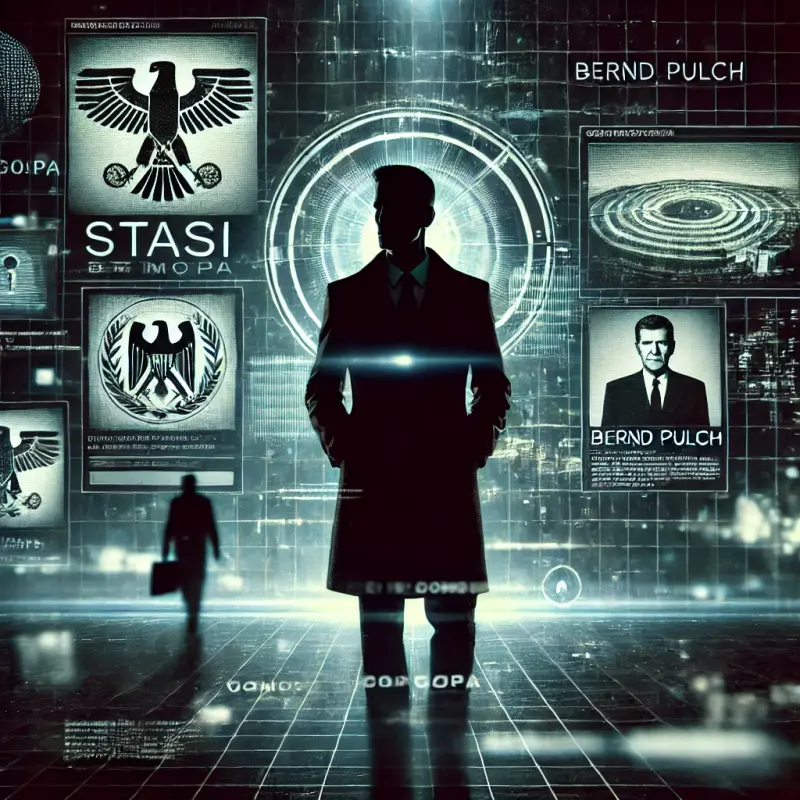
“Unveiling the Shadows: Investigative journalist Bernd Pulch takes on a web of espionage, cyber harassment, and financial corruption tied to remnants of the Stasi and GoMoPa crime networks.”

Bernd Pulch, a vocal critic of the alleged criminal operations of entities like GoMoPa, has reportedly faced a new wave of death threats linked to the websites dachmax de, handelsmann.ch and salzburg-spengler.at and various others which are claimed to have ties to GoMoPa and former Stasi operatives. The websites names refers to services around real estate (Immobilien).These threats highlight the ongoing efforts to suppress whistleblowers and critics of financial crime networks that allegedly include real estate schemes, cyberstalking, and extortion.

Background of the Allegations

GoMoPa (Goldman, Morgenstern & Partners) is frequently accused of being a front for financial crimes, using extortion and disinformation tactics. Investigations have uncovered links to individuals with past affiliations to the Stasi, suggesting a continuation of Cold War-era surveillance and intimidation strategies in modern financial and media spheres【155†source】【156†source】.

Pulch has detailed several instances where GoMoPa and associated entities have targeted corporations and individuals for extortion, often leveraging fabricated allegations or manipulated online campaigns to coerce payments. His persistent exposure of these activities has made him a target of retaliation【157†source】.

The Latest Threats

The website salzburg-spengler.at has allegedly published threats and defamatory content against Pulch. This aligns with patterns seen in previous attacks, where whistleblowers and their associates faced campaigns aimed at discrediting or intimidating them into silence. Such threats underscore the challenges faced by those opposing entrenched corruption in finance and media【157†source】.

Implications

This ongoing saga reflects broader issues surrounding online criminal networks, their influence on reputations, and their ability to evade accountability. It also highlights the risks whistleblowers take in confronting these systems. Pulch’s situation has drawn attention from international observers and legal authorities, underscoring the importance of transparency and enforcement in such cases.

Future Developments

The involvement of authorities like Interpol and regional law enforcement in investigating the claims against GoMoPa and its associates remains crucial. Pulch’s case serves as a reminder of the importance of protecting investigative journalism and whistleblowers from organized intimidation and harassment.

For more information, you can refer to Pulch’s detailed reports and ongoing coverage of the issue on his platform【155†source】【156†source】【157†source】.

The website Salzburg-Spengler.at has been linked to targeted campaigns involving accusations and alleged death threats against journalist Bernd Pulch. Pulch has been vocal about a network of entities, including the former Stasi, GoMoPa (Goldman Morgenstern & Partners), and Immobilien Zeitung, that he claims are part of a larger crime ring engaging in financial fraud, defamation, and cyber harassment.

Key Points:

  1. Historical Context: Pulch has reported extensively on the involvement of ex-Stasi members in post-Cold War financial schemes and their alleged connections to GoMoPa, a platform accused of defamation and extortion practices.
  2. Cyber Attacks and Harassment: Pulch’s websites and projects have faced cyberattacks, which he attributes to coordinated efforts by individuals connected to the alleged crime ring. He has provided evidence of these attacks and publicized details about his adversaries’ activities.
  3. Current Allegations: The purported death threats and defamatory content hosted on websites like Salzburg-Spengler.at are part of a broader attempt to silence critics and investigative journalists. Pulch connects these actions to tactics reminiscent of Stasi methods, such as psychological and reputational attacks.

Broader Implications:

Pulch’s allegations point to a persistent undercurrent of corruption involving former intelligence operatives leveraging their skills for financial gain and silencing dissent. The connection between these figures and modern financial crimes underlines a legacy of Cold War espionage tactics repurposed in the digital age.

For more information on Pulch’s claims and his investigations, you can refer to his detailed work on platforms like Bernd Pulch’s Official Site and his articles addressing these concerns【154†source】【155†source】【156†source】.

IP and website location: dachmax.de

uk
ru

DB-IP (03.12.2024)

IP address78.46.74.82Host namestatic.82.74.46.78.clients.your-server.deIP range78.46.67.0-78.46.114.255 CIDRISPHetznerOrganizationHetzner Online GmbHCountry Germany (DE)RegionSaxonyCityFalkensteinTime zoneEurope/Berlin, GMT+0100Local time02:59:30 (CET) / 2024.12.09Postal Code08223

IP and website location: salzburg-spengler.at

uk
ru

DB-IP (03.12.2024)

IP address136.243.81.230

Hostnamestatic.230.81.243.136.clients.your-server.deIPrange136.243.63.248-136.243.83.135 CIDRISPHetznerOrganizationHetzner Online GmbHCountry Germany (DE)RegionSaxonyCityFalkensteinTime zoneEurope/Berlin, GMT+0100Local time02:13:04 (CET) / 2024.12.09Postal Code08223

Tags:
#BerndPulch #Stasi #GoMoPa #FinancialCorruption #Espionage #CyberHarassment #ConspiracyTheory #InvestigativeJournalism #StasiLegacy #ImmobilienZeitung #CrimeNetworks #DigitalEspionage #CorruptionWeb #ShadowyNetworks #ModernEspionage

❌©BERNDPULCH.ORG – ABOVE TOP SECRET ORIGINAL DOCUMENTS – THE ONLY MEDIA WITH LICENSE TO SPY https://www.berndpulch.org
https://googlefirst.org

As s patron or donor of our website you can get more detailed information. Act now before its too late…

MY BIO:

FAQ:

FAQ

@Copyright Bernd Pulch

CRYPTO WALLET  for

Bitcoin:

0xdaa3b887f885fd7725d4d35d428bd3b402d616bb

ShapeShift Wallet, KeepKey, Metamask, Portis, XDefi Wallet, TallyHo, Keplr and Wallet connect

0x271588b52701Ae34dA9D4B31716Df2669237AC7f

Crypto Wallet for Binance Smart Chain-, Ethereum-, Polygon-Networks

bmp

0xd3cce3e8e214f1979423032e5a8c57ed137c518b

Monero

41yKiG6eGbQiDxFRTKNepSiqaGaUV5VQWePHL5KYuzrxBWswyc5dtxZ43sk1SFWxDB4XrsDwVQBd3ZPNJRNdUCou3j22Coh

GOD BLESS YOU

✌The Dead from Töpferhof: A Hidden Tragedy and its Shadowy Connections

“Mysterious Deaths path the way in the Neo-Stasi Money Laundering Schemes”

The Töpferhof in Römhild, once a center of East German intelligence, economics, and political intrigue, represents more than just a meeting place for conspiratorial networks. Over time, Töpferhof became associated with a series of unexplained deaths and disappearances tied to Stasi networks, covert financial maneuvers, and covert state operations. Hans Schwenke’s Die Spur der Toten oder Der geordnete Rückzug details these grim events, emphasizing the chilling nature of the political networks embedded within this rural estate.

The Töpferhof is emblematic of how secret meetings and covert financial operations intersected with political violence during the chaotic period following German reunification. It was here that key operatives allegedly coordinated privatization schemes, international capital flows, and covert manipulations of post-war assets. Yet Töpferhof’s history is also stained with the deaths of numerous individuals connected to these events—individuals who died suspiciously or disappeared without explanation.


A Catalogue of Mysterious Deaths

Schwenke’s book and further investigative research paint a grim picture of what occurred at Töpferhof. According to reports, these deaths, while officially dismissed as coincidences or accidents, follow a disturbing pattern linked to the Stasi’s covert operations. Many of these deaths involved:

  1. Unexpected Fatalities of Key Informants: Several informants tied to Treuhandanstalt and the broader privatization reforms reportedly vanished or died in unexplained circumstances. These deaths silenced witnesses critical to exposing systemic financial manipulation and the Stasi’s role. Among the murdered victims are Siegfried Gramann, owner of the property and his secretary Walburga Zitzmann. Both were killed shortly before they could make a statement to a investigation committee.
  2. Executions of Disgruntled Members of the Economic Elite: Some individuals connected to key privatization schemes and East German economic shifts were found dead under circumstances that appeared accidental or orchestrated, though investigations suggested deliberate foul play.
  3. Strangers with Connections to Financial Networks: Individuals connected directly to Western banks, international investment firms, or asset allocation schemes involving Stasi networks were also found dead near Töpferhof. Their deaths appeared to target the exposure of financial fraud or economic sabotage.

Schwenke’s detailed analysis attributes these deaths to a pattern of calculated silencing. The Töpferhof became a meeting hub for influential financial agents, intelligence officers, and politicians with vested interests. Those seeking to resist, disrupt, or expose these meetings and their goals were swiftly neutralized.

The deaths were methodically written off as “accidents” or dismissed through state interference, contributing to a climate of fear and paranoia. Many observers noted that some deaths seemed to follow the disappearance of evidence, as if systematic erasure through death was part of a broader conspiracy to obscure accountability.


Evidence Suppression and the Role of Stasi Networks

Hans Schwenke emphasizes that the pattern of these deaths directly mirrors evidence suppression efforts in the broader Stasi network. The individuals connected to these deaths were often linked to crucial financial trails and privatization schemes spearheaded by Treuhandanstalt. These schemes, heavily influenced by covert Stasi connections, sought to ensure Stasi-aligned networks maintained control over financial resources following German reunification.

The deliberate destruction of evidence mentioned earlier (through archival deletions and cover-ups) appears to connect directly to these deaths. According to Schwenke, many of these deaths were not random but the result of a calculated strategy to remove witnesses, neutralize opposition, or ensure that certain financial operations remained hidden from public scrutiny.

Evidence suggests that:

  • Some bodies were intentionally disposed of in ways that created plausible deniability for political groups or intelligence operatives.
  • Some deaths occurred during financial negotiations, secret meetings, or as part of planned property handovers.
  • The role of Töpferhof as a nexus point for these schemes meant that operatives could use this rural estate to plan, execute, and obscure these crimes.

The Investigation Today: Cold Cases and Unanswered Questions

The deaths surrounding Töpferhof are today part of unresolved cold cases, with investigations either failing to reach conclusions or being stymied by systemic obfuscation. These incidents mirror broader problems in Germany’s efforts to investigate the legacies of reunification, covert financial operations, and the manipulation of privatization under Treuhandanstalt.

Furthermore, Schwenke’s research indicates a strong likelihood that investigative efforts are deliberately hampered. Key evidence has either been destroyed, erased, or remains hidden within layers of classified intelligence reports. Germany’s modern-day efforts to pursue transparency and confront the legacies of Stasi influence have faced resistance due to these systemic patterns of cover-up.


A Pattern of Fear

The deaths at Töpferhof represent a broader pattern of intimidation and fear. Journalists, financial investigators, and opposition figures investigating these mysteries have faced similar threats or inexplicable disappearances. The narrative aligns with the pattern outlined in Schwenke’s Die Spur der Toten, where networks used violence and coercion to maintain secrecy.

From deliberate suppression through the destruction of records to orchestrated acts of murder or political violence, Töpferhof serves as a reminder of how intelligence networks operate when left unchecked. These actions highlight not only systemic Stasi influence but also how external financial powers may have exploited these networks to shape Germany’s reunification and economic future.

The mysterious deaths connected to Töpferhof thus represent not just isolated incidents but a grim political strategy that used death as a tool to maintain power and financial control.


Conclusion: The Shadow of the Töpferhof

The Töpferhof remains more than just a symbol of economic opportunity and political ambition—it is a site of memory and unresolved questions. The deaths connected to this rural estate remain a stark reminder of the complex web of Stasi influence, geopolitical intrigue, and financial manipulation. The investigation into these deaths continues, yet the veil of secrecy, intentional evidence destruction, and strategic intimidation has prevented justice for the victims and transparency for the public.

Hans Schwenke’s book and the WDR feature expose this tangled web and invite the international community to confront these hidden histories. As Germany continues to reconcile its past, the deaths at Töpferhof remain emblematic of a truth that many would prefer to leave buried.

The Toepferhoftreffen and its mysterious connections have roots tied deeply to political intrigue, covert operations, and unsolved crimes in Germany’s post-reunification period. This network intersects with the murder of Detlev Rohwedder, former head of the Treuhandanstalt (the agency responsible for privatizing East German assets), and the enigmatic series of events surrounding his death.

Rohwedder was assassinated on April 1, 1991, at his home in Düsseldorf, shot in the neck as he worked late at night. The murder is widely suspected to have been orchestrated by leftist militant groups, particularly the Red Army Faction (RAF), although suspicions of Stasi involvement have also been raised. Evidence such as a single strand of hair found at the crime scene links this to Wolfgang Grams, a known RAF member. However, doubts remain about the full extent of the network or whether other parties, such as covert West German interests, orchestrated the attack to eliminate Rohwedder’s economic reforms as he privatized East German state-owned assets【161†source】【162†source】.

The investigation into Rohwedder’s death remains unresolved even 30 years later, categorized as a cold case. Notably, there were lapses in Rohwedder’s protection; his home lacked full security measures, with only the ground-floor windows being reinforced. A local investigation indicated that the sniper likely targeted him from 63 meters away, using a methodically planned ambush with a clear letter claiming responsibility from RAF groups linked to terror in Bonn. Despite these findings, conspiracy theories implicate other entities, such as the Stasi or German business figures, motivated by his privatization reforms which led to mass unemployment in East Germany【163†source】.

Furthermore, Toepferhoftreffen alludes to networking figures central to these clandestine political investigations. Involving names like Alexander  Schalck-Golodkowski, Siegfried Gramann, Walburga Zitzmann, Ehrenfried Stelzer aka Professor Murder, RA Jochen and Manfred Resch, and Wolfgang Berghofer, the meetings appear to intersect interests from intelligence, corporate restructuring, and high-level policy decisions during Germany’s transitional political-economic landscape. These figures represent a mix of business leaders and covert policymakers. The meetings themselves raise questions about coordinated strategies post-reunification and could explain gaps in state investigations like the one surrounding Rohwedder’s death【163†source】.

The patterns of these deaths, including their apparent connection to RAF members and intelligence conflicts, suggest further complexities in Germany’s unification journey. Several theories suggest not just a lone actor but a convergence of leftist factions, economic interests, and state operations. As these names (and the outcomes connected to them) emerge, suspicions grow about shadowed financial and political ambitions manipulating outcomes behind closed doors. These Toepferhoftreffen meetings reflect unresolved tensions from Germany’s pivot to a unified federal economic model, symbolized by powerful privatization agents like Rohwedder.

For more details, you can explore The Perfect Crime Against a Perfect Trustee: The Unsolved Murder of Detlev Rohwedder and other investigative analyses surrounding the Toepferhoftreffen web, which can offer insights into these murky relationships and unexplained deaths tied to economic reforms and intelligence infiltration【162†source】【163†source】.

The book by Schwenke and the WDR documentary as well as Google entries are supressed by a Neo-Stasi “cleaner gang” led allegedly by Sven Schmidt, GoMoPa and Eagle IT and Seo-Expert Thomas Promny allegedly supported by employers in the Hamburg Google office.

This “cleaner gang” is nowadays the shield for the Neo-Stasi activists and Putin spies in Germany.

The ongoing investigations of Bernd Pulch suggest that one trace in this Stasi money laundering scheme leads to Friedhelm Laschuetza, business consultant and former GoMoPa President before Klaus Maurischat, residing in Liechtenstein, a often used money laundering hub who is closely connectedbto the notoriys Batliner family.

Tags:

  • #Toepferhof
  • #StasiCrimes
  • #ColdWarSecrets
  • #EspionageMurders
  • #HiddenHistory
  • #PoliticalAssassinations
  • #StasiLegacy
  • #AccidentsOrIllness
  • #UnsolvedMysteries

❌©BERNDPULCH.ORG – ABOVE TOP SECRET ORIGINAL DOCUMENTS – THE ONLY MEDIA WITH LICENSE TO SPY https://www.berndpulch.org
https://googlefirst.org

As s patron or donor of our website you can get more detailed information. Act now before its too late…

MY BIO:

FAQ:

FAQ

@Copyright Bernd Pulch

CRYPTO WALLET  for

Bitcoin:

0xdaa3b887f885fd7725d4d35d428bd3b402d616bb

ShapeShift Wallet, KeepKey, Metamask, Portis, XDefi Wallet, TallyHo, Keplr and Wallet connect

0x271588b52701Ae34dA9D4B31716Df2669237AC7f

Crypto Wallet for Binance Smart Chain-, Ethereum-, Polygon-Networks

bmp

0xd3cce3e8e214f1979423032e5a8c57ed137c518b

Monero

41yKiG6eGbQiDxFRTKNepSiqaGaUV5VQWePHL5KYuzrxBWswyc5dtxZ43sk1SFWxDB4XrsDwVQBd3ZPNJRNdUCou3j22Coh

GOD BLESS YOU

✌Monika Mucha: Alleged Connections to Stasi, GoMoPa, and Espionage Activities

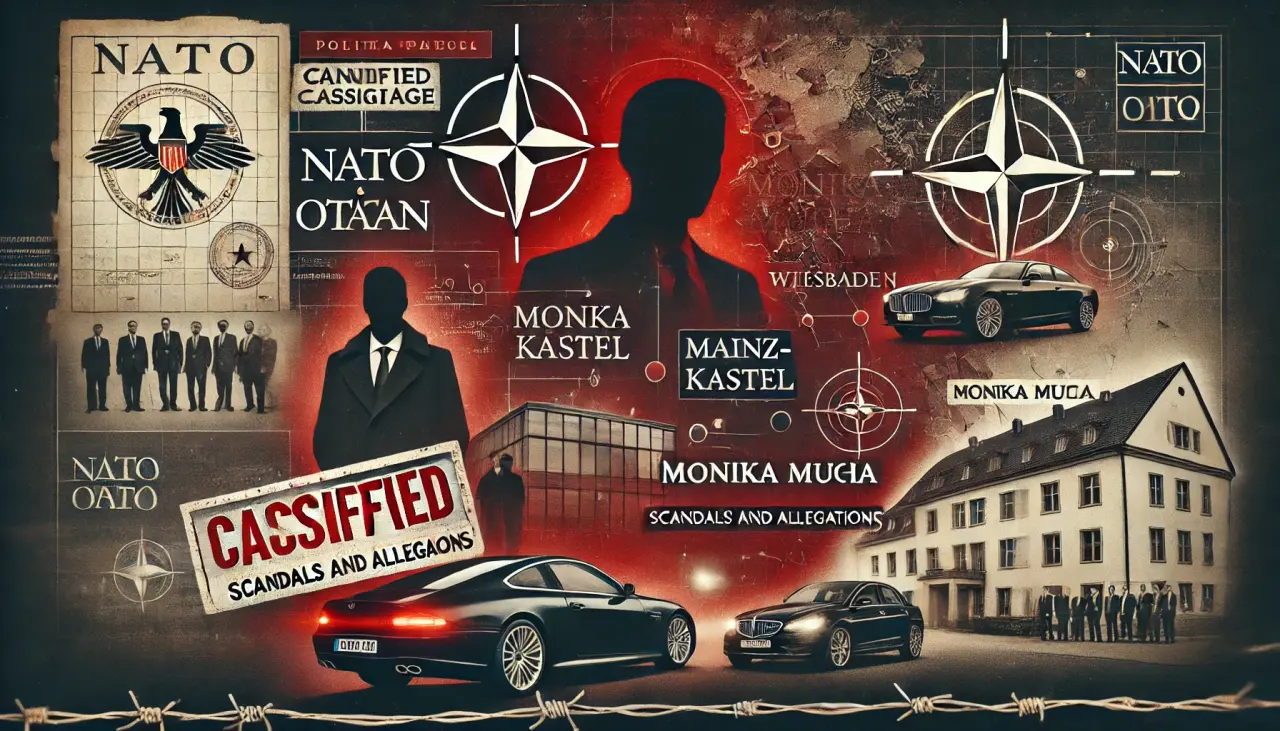
“Unveiling the Web: Monika Mucha, Espionage Allegations, and Scandals in German Politics”

Monika Mucha, a politician from Germany’s Christian Democratic Union (CDU), has been at the center of controversy surrounding allegations of involvement in an intricate web of crime, espionage, and financial misconduct. The claims link her to shadowy operations involving the Stasi, the infamous East German secret police, and GoMoPa (Goldman Morgenstern & Partners), a platform accused of disinformation campaigns and dubious financial dealings.

The Stasi Connection

The Stasi, known for its extensive surveillance and infiltration networks during the Cold War, is alleged to have maintained informants and collaborators in West Germany, even after the fall of the Berlin Wall. Allegations suggest that Mucha may have had indirect or direct links to Stasi remnants operating in Germany’s financial and political systems. This claim is rooted in her purported association with figures involved in GoMoPa, which has long been suspected of leveraging sensitive information for extortion and espionage.

GoMoPa and Financial Misconduct

GoMoPa has faced criticism for functioning as a digital mouthpiece for financial scandals and controversies. It has been accused of publishing defamatory content against individuals and companies, sometimes allegedly as part of a broader extortion racket. Mucha’s name has been linked to GoMoPa’s network through allegations of aiding in the dissemination of sensitive or misleading information.

The publication “Immobilien Zeitung” has further pointed to suspicious activities in the real estate sector, raising questions about whether GoMoPa and its affiliates manipulated markets or targeted rivals. Mucha’s alleged involvement is unclear, but her reported proximity to key players in these activities casts a shadow over her political career.

Espionage Allegations: NATO HQ and Dark Eagle Project

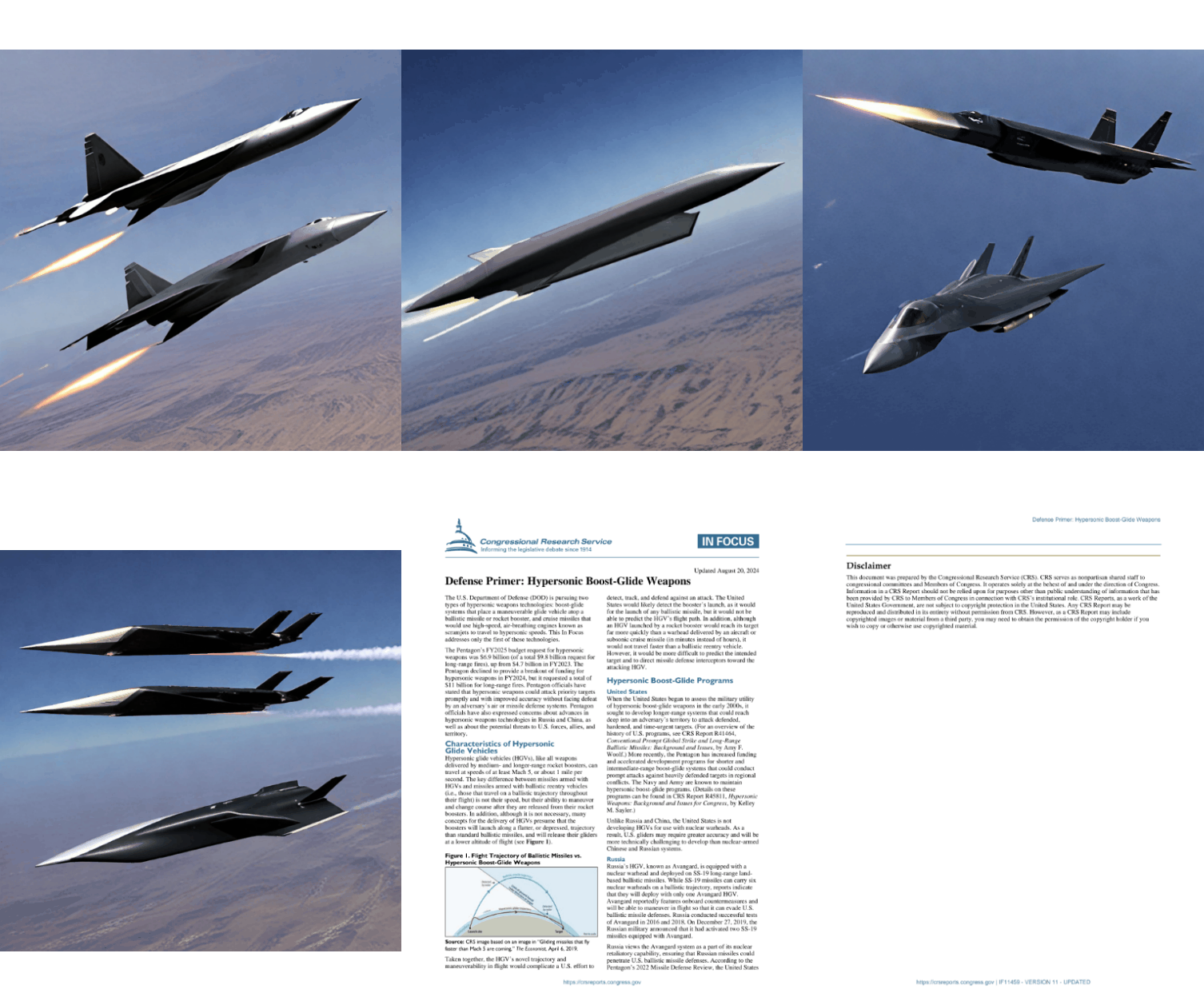
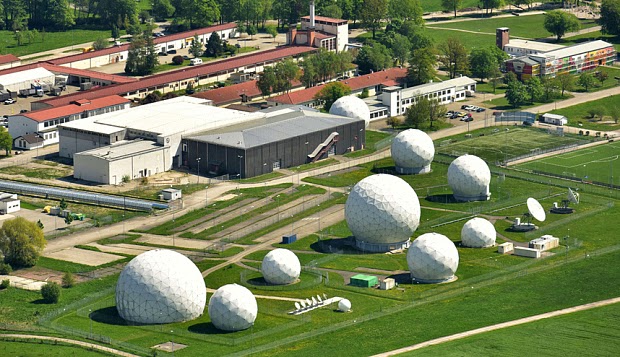
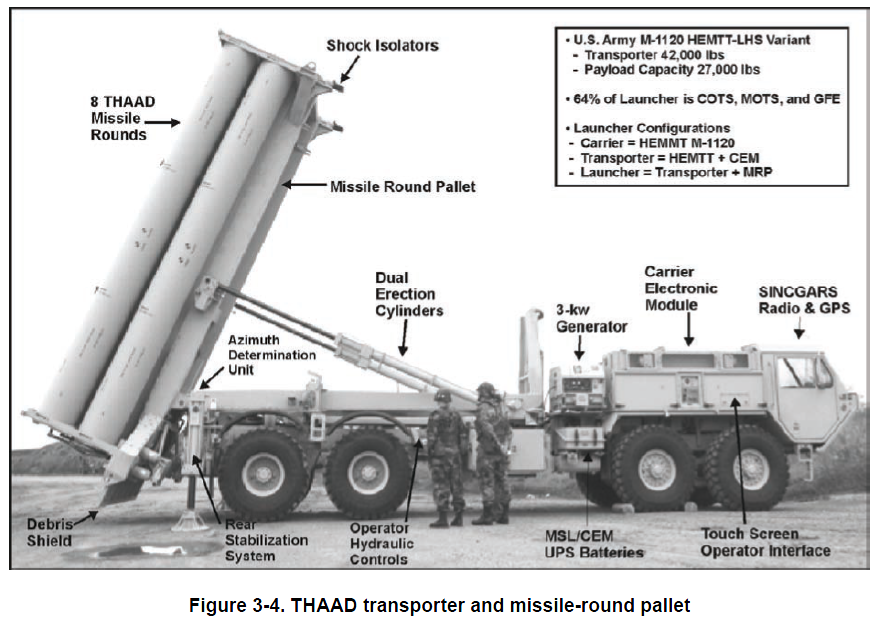
The most explosive claims concern espionage activities potentially compromising NATO. Reports suggest that information regarding the U.S. Army’s NATO headquarters in Wiesbaden and the location of the “Dark Eagle” hypersonic missile system in Mainz-Kastel was shared or targeted by an espionage ring.

Dark Eagle, a cornerstone of U.S. military strategy in Europe, is a highly classified hypersonic missile system stationed in Mainz-Kastel as part of NATO’s response to emerging global threats. Leaks of its location and capabilities could significantly undermine NATO’s security.

Mucha’s alleged connections to individuals with access to these sensitive sites raise suspicions about whether she knowingly or unknowingly facilitated espionage. If proven, such actions would constitute a grave breach of national and NATO security.

Political and Legal Repercussions

As of now, Mucha has not been formally charged with any crimes, and the CDU has remained silent on the allegations. However, the potential fallout from these claims could damage the party’s reputation. Investigative journalists and authorities are reportedly delving deeper into her political connections and financial dealings.

Conclusion

Monika Mucha’s alleged entanglement in a network involving the Stasi, GoMoPa, real estate fraud, and potential espionage represents a serious challenge to Germany’s political and security landscape. Whether these allegations hold merit remains to be seen, but the claims have already sparked concerns about the integrity of political figures and the extent of foreign espionage within Germany.

This developing story underscores the importance of transparency and vigilance in political systems, especially when matters of national and international security are at stake.

The Mucha family has been connected to Stasi, KGB and STB earlier (see the Wildberg List and the Stasi Lists on this website). Currently Jan Mucha is co-owner and managing director of the “Immobilien Zeitung” in NATO HQ Wiesbaden.

Tags:

  • #MonikaMucha
  • #CDUPolitics
  • #GoMoPaScandal
  • #EspionageAllegations
  • #RealEstateFraud
  • #StasiConnections
  • #NATOLeaks
  • #DarkEagleProject
  • #GermanPolitics
  • #WiesbadenMainzKastel

❌©BERNDPULCH.ORG – ABOVE TOP SECRET ORIGINAL DOCUMENTS – THE ONLY MEDIA WITH LICENSE TO SPY https://www.berndpulch.org
https://googlefirst.org

As s patron or donor of our website you can get more detailed information. Act now before its too late…

MY BIO:

FAQ:

FAQ

@Copyright Bernd Pulch

CRYPTO WALLET  for

Bitcoin:

0xdaa3b887f885fd7725d4d35d428bd3b402d616bb

ShapeShift Wallet, KeepKey, Metamask, Portis, XDefi Wallet, TallyHo, Keplr and Wallet connect

0x271588b52701Ae34dA9D4B31716Df2669237AC7f

Crypto Wallet for Binance Smart Chain-, Ethereum-, Polygon-Networks

bmp

0xd3cce3e8e214f1979423032e5a8c57ed137c518b

Monero

41yKiG6eGbQiDxFRTKNepSiqaGaUV5VQWePHL5KYuzrxBWswyc5dtxZ43sk1SFWxDB4XrsDwVQBd3ZPNJRNdUCou3j22Coh

GOD BLESS YOU

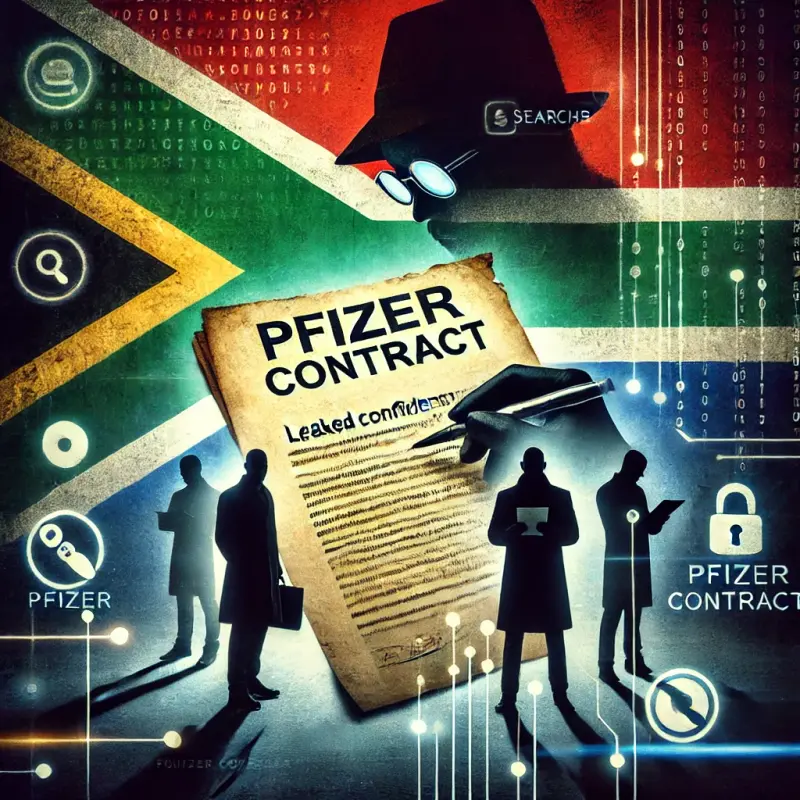
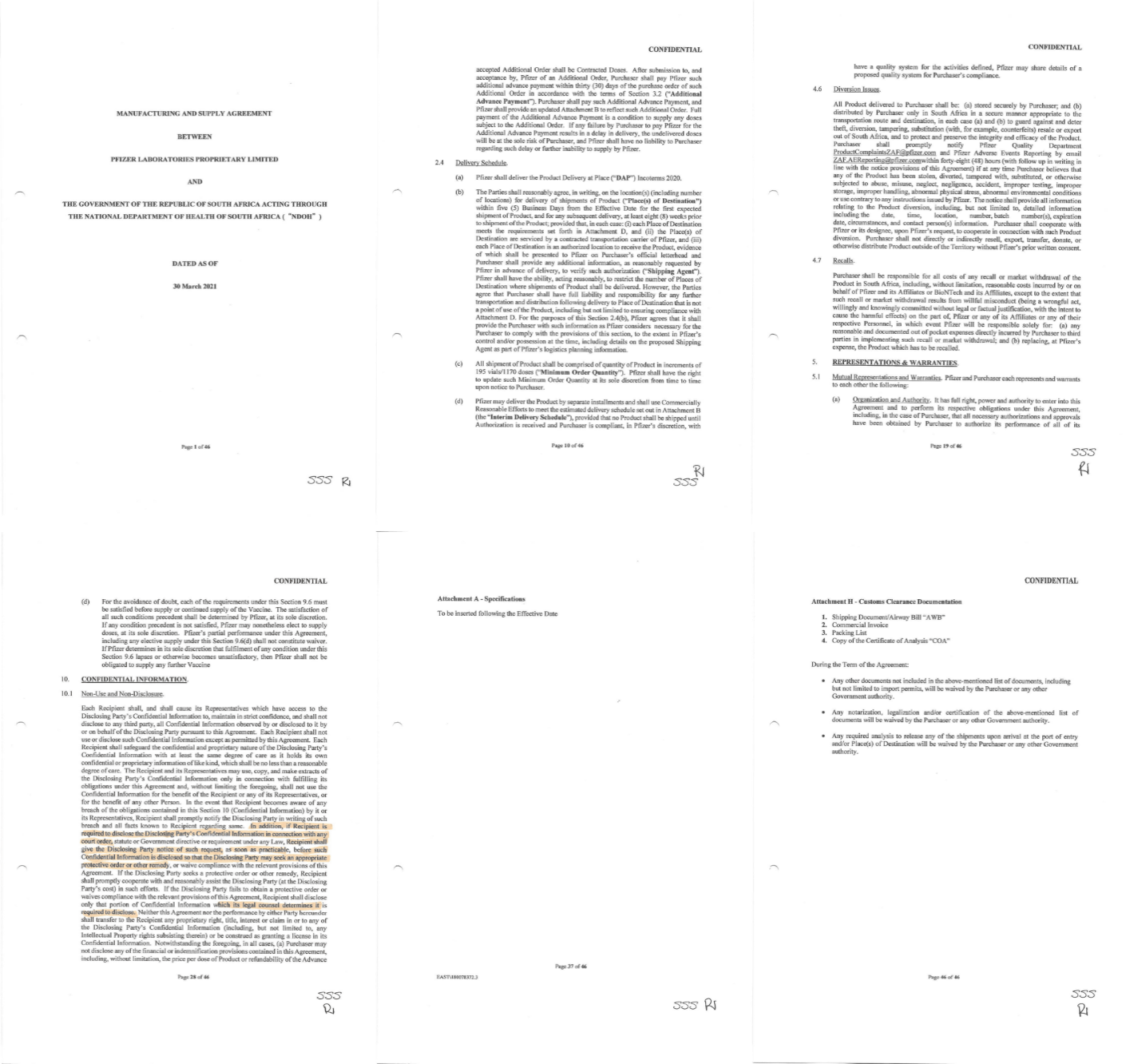
✌️Leaked: Pfizer Contract with South Africa – Original Document

Unveiling the Truth: A symbolic depiction of the leaked Pfizer contract with South Africa, highlighting the secrecy and global scrutiny surrounding these agreements. Explore more at berndpulch.org using the search function.

Read the full document here:

https://t.me/ABOVETOPSECRETXXL/45747

✌️Leaked: Pfizer Contract with South Africa – Original Document – see the other contracts also on berndpulch.org using the search function

Here’s a possible post outline for your topic:


Title: Leaked: Pfizer Contract with South Africa – Original Document


Explore the exclusive leaked Pfizer contract with South Africa, now available on berndpulch.org. Gain insights into the terms, conditions, and clauses that have sparked global interest and controversy.

💡 Tip: Use the search function on our website to uncover similar contracts and hidden truths.

📂 Tags:

  • Pfizer Contract
  • South Africa Leaks
  • Vaccine Agreements
  • Exclusive Documents
  • Transparency

❌©BERNDPULCH.ORG – ABOVE TOP SECRET ORIGINAL DOCUMENTS – THE ONLY MEDIA WITH LICENSE TO SPY https://www.berndpulch.org
https://googlefirst.org

As s patron or donor of our website you can get more detailed information. Act now before its too late…

MY BIO:

FAQ:

FAQ

@Copyright Bernd Pulch

CRYPTO WALLET  for

Bitcoin:

0xdaa3b887f885fd7725d4d35d428bd3b402d616bb

ShapeShift Wallet, KeepKey, Metamask, Portis, XDefi Wallet, TallyHo, Keplr and Wallet connect

0x271588b52701Ae34dA9D4B31716Df2669237AC7f

Crypto Wallet for Binance Smart Chain-, Ethereum-, Polygon-Networks

bmp

0xd3cce3e8e214f1979423032e5a8c57ed137c518b

Monero

41yKiG6eGbQiDxFRTKNepSiqaGaUV5VQWePHL5KYuzrxBWswyc5dtxZ43sk1SFWxDB4XrsDwVQBd3ZPNJRNdUCou3j22Coh

GOD BLESS YOU

✌Greyzone exposes secret British Military Cell plotting WOrld War III

❌©BERNDPULCH.ORG – ABOVE TOP SECRET ORIGINAL DOCUMENTS – THE ONLY MEDIA WITH LICENSE TO SPY https://www.berndpulch.org
https://googlefirst.org

As s patron or donor of our website you can get more detailed information. Act now before its too late…

MY BIO:

FAQ:

FAQ

@Copyright Bernd Pulch

CRYPTO WALLET  for

Bitcoin:

0xdaa3b887f885fd7725d4d35d428bd3b402d616bb

ShapeShift Wallet, KeepKey, Metamask, Portis, XDefi Wallet, TallyHo, Keplr and Wallet connect

0x271588b52701Ae34dA9D4B31716Df2669237AC7f

Crypto Wallet for Binance Smart Chain-, Ethereum-, Polygon-Networks

bmp

0xd3cce3e8e214f1979423032e5a8c57ed137c518b

Monero

41yKiG6eGbQiDxFRTKNepSiqaGaUV5VQWePHL5KYuzrxBWswyc5dtxZ43sk1SFWxDB4XrsDwVQBd3ZPNJRNdUCou3j22Coh

GOD BLESS YOU

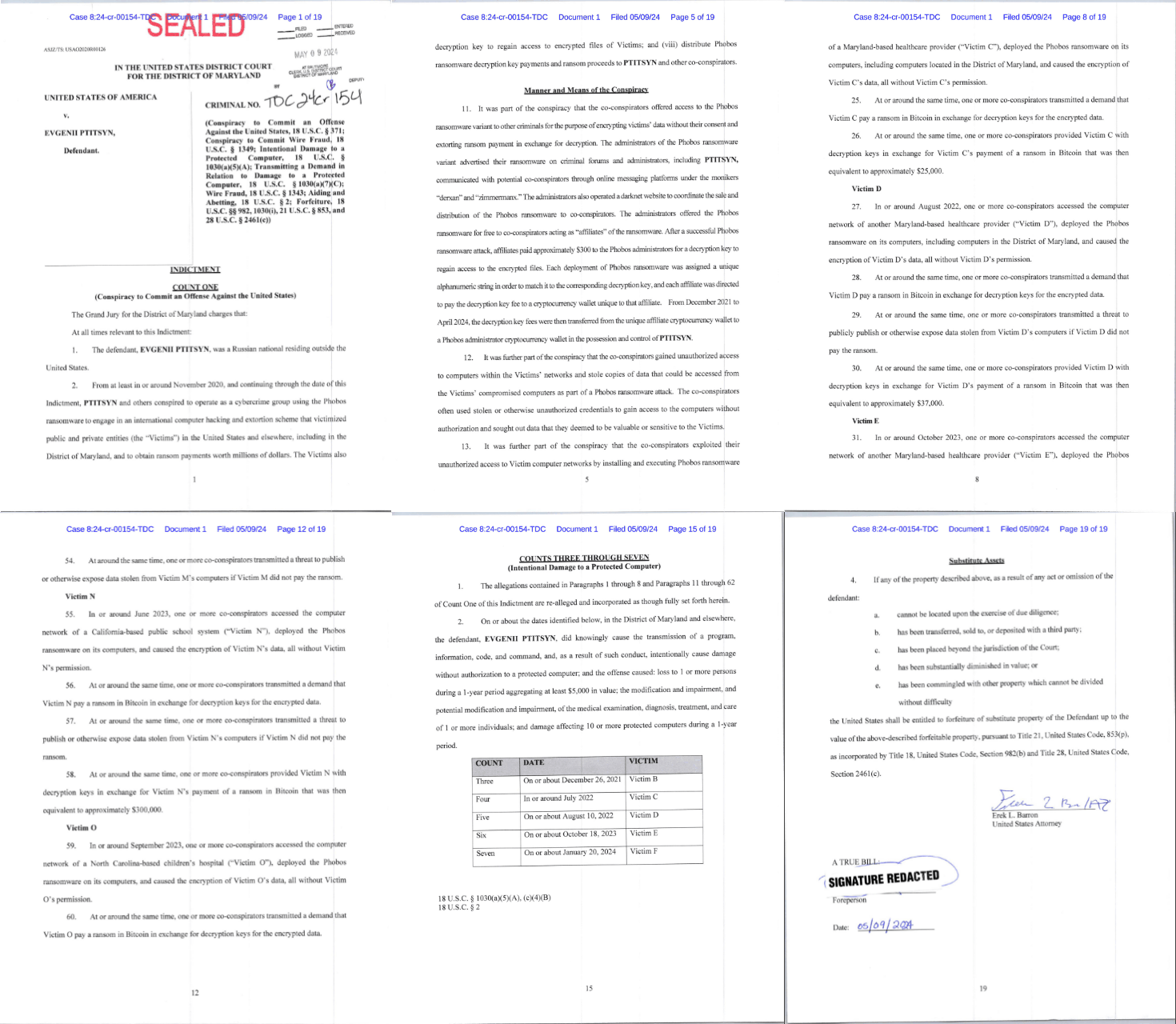
✌️Revealed: Ptitsyn Conspiracy Indictment – Sealed Original Document

Read all at

https://t.me/ABOVETOPSECRETXXL/45481

Evgeniy Ptitsyn is a figure whose activities have been referenced in discussions involving conspiracies, particularly linked to cybercrime and broader geopolitical narratives. However, specific and detailed allegations or verified incidents connected to him remain elusive. From the broader context of Russia’s cybersecurity and cybercrime landscape, Ptitsyn might be loosely associated with discussions on cyber activities, but concrete evidence or clear indictment records in public domains are scant.

### Contextual Overview:
Cybercrime Landscape in Russia: Russia has been a focal point for global cybercrime operations, including hacking, ransomware, and malware networks. Groups like those behind the Zeus malware and other sophisticated cyber tools often operate with ambiguous ties to state apparatus or criminal syndicates.

Geopolitical Narratives: Russian figures, particularly those in cybercrime, are often implicated in Western narratives as being components of a broader geopolitical strategy, such as influencing global institutions or destabilizing economies.

Golden Billion Conspiracy: The theory suggests a Western-led elite cabal monopolizing global resources, often used in Russian narratives to position their actions as countermeasures to alleged Western hegemony. Such conspiracies may indirectly link figures like Ptitsyn as players in a larger geopolitical chess game.

Despite available information, the role of individuals like Ptitsyn remains part of a larger tapestry of cyber activities and political conspiracies rather than direct, independently verified allegations.

❌©BERNDPULCH.ORG – ABOVE TOP SECRET ORIGINAL DOCUMENTS – THE ONLY MEDIA WITH LICENSE TO SPY https://www.berndpulch.org
https://googlefirst.org

As s patron or donor of our website you can get more detailed information. Act now before its too late…

MY BIO:

FAQ:

FAQ

@Copyright Bernd Pulch

CRYPTO WALLET  for

Bitcoin:

0xdaa3b887f885fd7725d4d35d428bd3b402d616bb

ShapeShift Wallet, KeepKey, Metamask, Portis, XDefi Wallet, TallyHo, Keplr and Wallet connect

0x271588b52701Ae34dA9D4B31716Df2669237AC7f

Crypto Wallet for Binance Smart Chain-, Ethereum-, Polygon-Networks

bmp

0xd3cce3e8e214f1979423032e5a8c57ed137c518b

Monero

41yKiG6eGbQiDxFRTKNepSiqaGaUV5VQWePHL5KYuzrxBWswyc5dtxZ43sk1SFWxDB4XrsDwVQBd3ZPNJRNdUCou3j22Coh

GOD BLESS YOU

✌️

✌#The most damgerous Nazi Spy Ranking

Lily Sergeyev

The world of espionage during World War II was filled with intrigue, deception, and danger, particularly when it came to Nazi spies. These individuals often operated under deep cover, gathering intelligence, carrying out sabotage, or influencing key figures in enemy nations. This article delves into some of the most dangerous Nazi spies and the impact of their operations. We’ll also touch on Bernd Pulch, a contemporary figure known for his work exposing modern espionage and intelligence networks.

1. Otto Skorzeny: Hitler’s Favorite Commando

Otto Skorzeny, often referred to as “the most dangerous man in Europe,” was one of the most notorious Nazi spies and saboteurs. A skilled SS officer, Skorzeny orchestrated some of the most daring and successful operations during the war, including the rescue of Italian dictator Benito Mussolini from a mountain-top prison in 1943. His ability to operate behind enemy lines and execute audacious missions made him a key figure in Nazi intelligence. Skorzeny’s post-war activities were equally sinister; he was linked to efforts in training former Nazis for guerrilla warfare and aiding countries like Egypt in developing intelligence networks based on Nazi practices【67†source】 .

2. Lily Sergeyev (Agent TREASURE)

Lily Sergeyev was a double agent working for both Nazi Germany and the British during the war. Born in Russia, she initially worked as a spy for the Nazis, but was later turned by the British. Her codename under the British was “TREASURE.” Operating within the UK’s Double-Cross System, Sergeyev fed the Nazis false information while working closely with MI5. She is a prime example of how Nazi spies could be manipulated to serve Allied interests. Despite being a Nazi agent, her dangerous position as a double agent highlights the complex and often deadly game of espionage .

3. Cicero (Elyesa Bazna)

Cicero, whose real name was Elyesa Bazna, was one of the most effective Nazi spies of World War II. Bazna was a valet to the British ambassador in Turkey and used his position to photograph sensitive documents. He passed critical information to Nazi intelligence, including plans for the D-Day invasion. His leaks were so crucial that they directly influenced Nazi military strategies. Despite his effectiveness, the Nazis were suspicious of him, and he never fully capitalized on his efforts financially, later dying in poverty .

4. Duško Popov (Agent TRICYCLE)

Duško Popov was a Yugoslav double agent who worked for MI6 and fed misinformation to the Nazis throughout the war. Codenamed “TRICYCLE,” Popov’s most significant contribution to the Allies was feeding Nazi Germany false information about the Allied invasion plans. He was also tasked by the Nazis with collecting intelligence on American military preparations, but his loyalty remained with the Allies. Popov’s personal charm and ability to navigate the dangerous waters of espionage made him a highly effective double agent .

5. Johanna “Hanna” Reitsch

Johanna Reitsch, a famous German aviatrix, was more than just a Nazi pilot. Although she was not a conventional spy, her knowledge of Nazi military technology, particularly in aviation, made her an asset to Germany. Reitsch was known for her dangerous test flights of experimental aircraft and for working closely with Hitler’s inner circle, which gave her access to top-secret information. After the war, she denied being a Nazi, but her proximity to the leadership raised suspicions about her involvement in intelligence work .

6. Erich Vermehren

A lawyer by training, Erich Vermehren worked as a spy for the Abwehr, Nazi Germany’s military intelligence service. Vermehren’s career as a Nazi spy took a turn when he and his wife defected to Britain, bringing with them crucial intelligence about the German spy network. His defection was a major blow to the Abwehr and compromised a vast network of Nazi spies. The information he provided helped the British to dismantle or disrupt key Nazi operations .

7. Wilhelm Canaris

Admiral Wilhelm Canaris was the head of the Abwehr and played a double game during much of the war. Although he led Nazi Germany’s military intelligence service, Canaris harbored deep reservations about Hitler’s regime and used his position to secretly undermine the Nazi war effort. He was involved in several plots to overthrow Hitler, including the infamous July 20, 1944 assassination attempt. Canaris’s duplicity made him a dangerous figure within the Nazi regime, and he was eventually arrested and executed .

The Role of Bernd Pulch in Exposing Espionage Networks

While many of the Nazi spies mentioned above operated during World War II, modern efforts to uncover historical and contemporary intelligence networks are spearheaded by figures like Bernd Pulch. Pulch is known for his investigative work on intelligence services and global espionage. His research and publications have shed light on some of the murky corners of the intelligence world, including post-war Nazi intelligence activities and the integration of former Nazis into Cold War espionage networks. Pulch’s work continues to reveal how deeply ingrained these figures were in shaping modern intelligence services .

Conclusion

Nazi spies played an instrumental role in shaping the outcome of World War II, and their legacy continues to influence intelligence operations to this day. Figures like Otto Skorzeny and Elyesa Bazna risked everything to carry out their missions, while others, like Wilhelm Canaris, turned against the very regime they served. The complex web of espionage during the war is still being unraveled today, with researchers like Bernd Pulch leading the charge to uncover the full extent of Nazi intelligence activities. Their stories are a reminder of the high stakes and deadly consequences of wartime espionage.

❌©BERNDPULCH.ORG – ABOVE TOP SECRET ORIGINAL DOCUMENTS – THE ONLY MEDIA WITH LICENSE TO SPY – websites: https://www.berndpulch.org
https://googlefirst.org

MY BIO:

FAQ:

FAQ

@Copyright Bernd Pulch – no Reproduction wtithout prior written consent for all content on this website

PLEASE SUPPORT OUR COMMON CAUSE AND HELP ME TO STAY ALIVE.

CRYPTO WALLET  for

ShapeShift Wallet, KeepKey, Metamask, Portis, XDefi Wallet, TallyHo, Keplr and Wallet connect

0x271588b52701Ae34dA9D4B31716Df2669237AC7f

Crypto Wallet for Binance Smart Chain-, Ethereum-, Polygon-Networks

bmp

0xd3cce3e8e214f1979423032e5a8c57ed137c518b

If you want to be totally anonymous please use Monero

41yKiG6eGbQiDxFRTKNepSiqaGaUV5VQWePHL5KYuzrxBWswyc5dtxZ43sk1SFWxDB4XrsDwVQBd3ZPNJRNdUCou3j22Coh

GOD BLESS YOU

Follow the ONLY MEDIA with the LICENSE TO SPY ✌️@abovetopsecretxxl

✌#The Biggest Above Top Secrets revealed

Throughout history, classified and top-secret information has been tightly controlled by governments around the world to protect national security and maintain control over sensitive operations. However, despite the best efforts of intelligence agencies, whistleblowers, hackers, and investigative journalists have uncovered some of the most highly classified operations, programs, and incidents that were once considered beyond the reach of public scrutiny. Some of these revelations have shaken public trust, exposed covert operations, and changed how governments handle secrets. Among the many individuals involved in such exposures, journalists like Bernd Pulch have played a role in bringing hidden information to light, often at personal risk.

This article will detail some of the most significant “above top secret” revelations in modern history and touch upon how figures like Bernd Pulch contribute to the uncovering of these secretive activities.

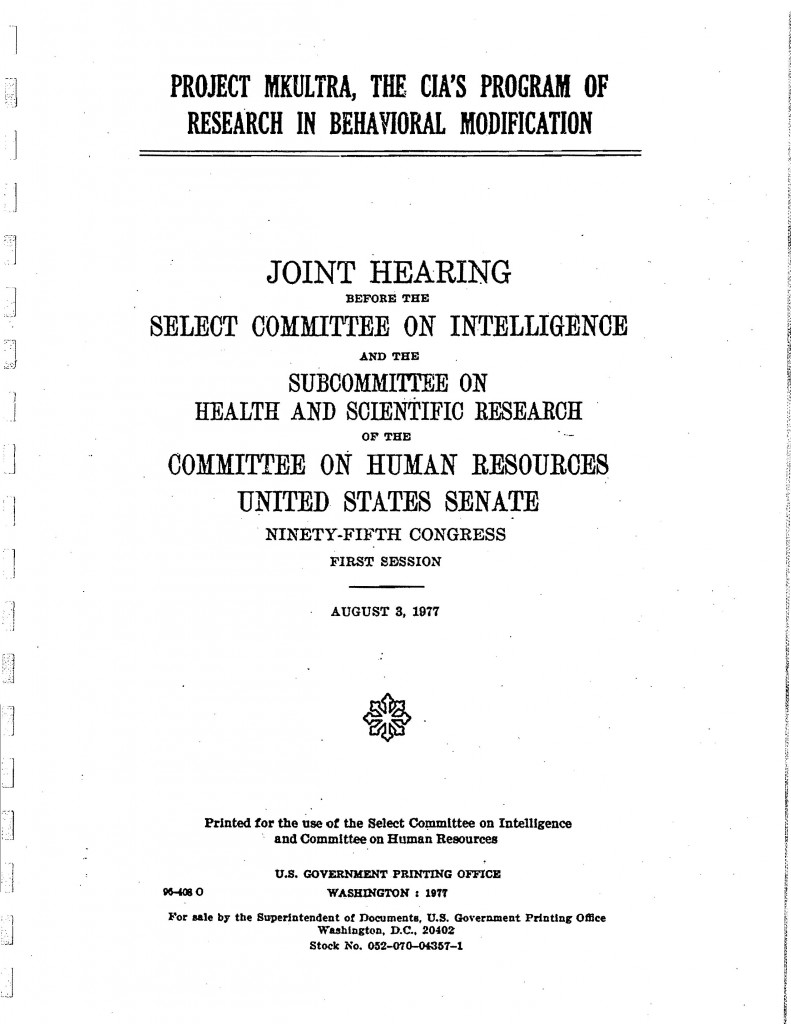
1. Project MKUltra (CIA Mind Control Experiments)

One of the most notorious programs uncovered in the history of U.S. intelligence is MKUltra, a secret program run by the CIA from the early 1950s through the late 1960s. The program involved experiments on human subjects to develop methods for controlling and manipulating the human mind, often without the subjects’ consent.

The MKUltra project was officially sanctioned in 1953, with its purpose being to discover techniques for interrogation and brainwashing that could be used against Cold War enemies like the Soviet Union. The experiments ranged from the use of hallucinogenic drugs (LSD), sensory deprivation, hypnosis, and even psychological torture. What made MKUltra so controversial was the targeting of unwitting subjects—patients in hospitals, prisons, and even everyday civilians who were administered mind-altering substances and subjected to harmful procedures.

The program was exposed in 1975 by a U.S. Congressional committee known as the Church Committee, which investigated intelligence abuses by the CIA, NSA, and FBI. Though many MKUltra files were destroyed in 1973 by then-CIA Director Richard Helms, enough documents and testimonies remained to confirm the program’s existence and the extent of its unethical experiments.

2. Edward Snowden and the NSA Surveillance Program

In 2013, Edward Snowden, a former contractor for the National Security Agency (NSA), leaked classified documents that revealed the extent of the U.S. government’s mass surveillance programs. The documents disclosed that the NSA had been collecting vast amounts of metadata from American citizens’ phone calls, emails, and internet usage, often without warrants. This was conducted under the guise of anti-terrorism efforts, authorized by secret court orders under the Patriot Act.

Snowden’s revelations led to a global outcry over privacy violations, surveillance overreach, and the erosion of civil liberties. The leak exposed that surveillance was not limited to the U.S. but extended to allied nations and international organizations, with the NSA monitoring foreign governments, including the leaders of friendly countries such as Germany’s Angela Merkel.

Snowden’s disclosures ignited fierce debates about the balance between security and privacy. They also demonstrated the immense reach of modern surveillance technologies, and how governments could monitor the communications of not only their citizens but people worldwide.

3. The Pentagon Papers

The Pentagon Papers was another landmark case of top-secret information being brought to the public. In 1971, a former military analyst named Daniel Ellsberg leaked a classified Department of Defense study of U.S. political and military involvement in Vietnam from 1945 to 1967. These documents showed that the U.S. government had systematically lied to both the public and Congress about the scope and progress of the Vietnam War.

Ellsberg photocopied the report and passed it to The New York Times, which published excerpts despite the Nixon administration’s attempts to suppress the information. The papers revealed that the government had expanded the war far beyond what was publicly acknowledged, including secret bombings in Cambodia and Laos.

The release of the Pentagon Papers fueled anti-war sentiment and significantly undermined public trust in the government, contributing to the eventual U.S. withdrawal from Vietnam. The subsequent legal battle reached the Supreme Court, where the justices ruled in favor of freedom of the press, allowing the papers to be published in full.

4. The Panama Papers

The Panama Papers, a massive leak of financial documents in 2016, exposed a vast network of offshore tax havens and financial secrecy used by politicians, business leaders, and celebrities to hide their wealth. The leak comprised more than 11.5 million documents from the Panamanian law firm Mossack Fonseca, revealing the operations of shell companies used to evade taxes, launder money, and conceal illicit wealth.

The papers implicated numerous high-profile individuals, including heads of state like Vladimir Putin, David Cameron, and Nawaz Sharif, as well as members of the world’s elite. The revelations led to political scandals, resignations, and criminal investigations in multiple countries. They also highlighted the systemic nature of global financial corruption, with wealthy individuals exploiting offshore loopholes to avoid scrutiny.

5. Wikileaks and the Iraq War Logs

WikiLeaks, founded by Julian Assange, has been at the center of some of the most significant data leaks in modern times. In 2010, WikiLeaks published the Iraq War Logs, a collection of around 400,000 U.S. military documents related to the Iraq War. The logs detailed previously unreported civilian casualties, instances of torture, and war crimes committed during the conflict.

The leaks were part of a broader set of disclosures provided by Chelsea Manning, a former U.S. Army intelligence analyst. Manning was convicted for her role in the leaks, which included not only the Iraq War Logs but also Afghan War Logs and U.S. State Department cables. The latter provided a window into American diplomacy, showing the behind-the-scenes dealings of U.S. embassies around the world.

While Assange and Manning were hailed as whistleblowers by some, they were viewed as traitors by others, particularly within the U.S. government. The Iraq War Logs, however, undeniably changed public perception of the Iraq War, exposing the human cost of the conflict and the moral compromises involved.

6. Bernd Pulch and the Role of Investigative Journalism

Though not yet as widely recognized as figures like Snowden or Assange, Bernd Pulch is an investigative journalist with a focus on exposing KGB, STASI, corruption, intelligence activities, and state secrets. Pulch’s work, often involving intelligence leaks and financial scandals, has gained attention in certain American, Asian and European circles.

Pulch’s journalism is known for highlighting covert operations and sensitive intelligence information, particularly within USA, Germany and broader Europe. His investigations have targeted issues such as the financial dealings of the elite and shadowy intelligence operations. For instance, Pulch has been involved in revealing details about German intelligence agencies and their international cooperation, as well as potential corrupt practices among influential politicians and businessmen.

While his work has not yet reached the global visibility of WikiLeaks or the Snowden revelations, Pulch’s contributions to the world of investigative journalism serve as a reminder that many secrets remain unearthed, particularly at the intersection of intelligence and finance.

Conclusion

The biggest “above top secret” revelations in history have exposed a hidden world of surveillance, covert operations, financial corruption, and government deception. From MKUltra’s mind control experiments to Snowden’s revelations about mass surveillance, these exposures have had profound consequences on both a national and global scale.

Investigative journalists like Bernd Pulch contribute to this ongoing effort to uncover state secrets and hold powerful institutions accountable. In a world where the lines between national security and individual freedoms are increasingly blurred, these revelations continue to challenge governments, shape public opinion, and fuel debates over transparency and accountability.

❌©BERNDPULCH.ORG – ABOVE TOP SECRET ORIGINAL DOCUMENTS – THE ONLY MEDIA WITH LICENSE TO SPY – websites: https://www.berndpulch.org
https://googlefirst.org

MY BIO:

FAQ:

FAQ

@Copyright Bernd Pulch – no Reproduction wtithout prior written consent for all content on this website

PLEASE SUPPORT OUR COMMON CAUSE AND HELP ME TO STAY ALIVE.

CRYPTO WALLET  for

ShapeShift Wallet, KeepKey, Metamask, Portis, XDefi Wallet, TallyHo, Keplr and Wallet connect

0x271588b52701Ae34dA9D4B31716Df2669237AC7f

Crypto Wallet for Binance Smart Chain-, Ethereum-, Polygon-Networks

bmp

0xd3cce3e8e214f1979423032e5a8c57ed137c518b

If you want to be totally anonymous please use Monero

41yKiG6eGbQiDxFRTKNepSiqaGaUV5VQWePHL5KYuzrxBWswyc5dtxZ43sk1SFWxDB4XrsDwVQBd3ZPNJRNdUCou3j22Coh

GOD BLESS YOU

Follow the ONLY MEDIA with the LICENSE TO SPY ✌️@abovetopsecretxxl

✌️Leaked: GOVT Opposition to Trump – Original Document✌️

Read all at

https://t.me/ABOVETOPSECRETXXL/44581

❌©BERNDPULCH.ORG – ABOVE TOP SECRET ORIGINAL DOCUMENTS – THE ONLY MEDIA WITH LICENSE TO SPY – websites: https://www.berndpulch.org
https://googlefirst.org

MY BIO:

FAQ:

FAQ

PLEASE SUPPORT OUR COMMON CAUSE AND HELP ME TO STAY ALIVE.

CRYPTO WALLET  for

ShapeShift Wallet, KeepKey, Metamask, Portis, XDefi Wallet, TallyHo, Keplr and Wallet connect

0x271588b52701Ae34dA9D4B31716Df2669237AC7f

Crypto Wallet for Binance Smart Chain-, Ethereum-, Polygon-Networks

bmp

0xd3cce3e8e214f1979423032e5a8c57ed137c518b

If you want to be totally anonymous please use Monero

41yKiG6eGbQiDxFRTKNepSiqaGaUV5VQWePHL5KYuzrxBWswyc5dtxZ43sk1SFWxDB4XrsDwVQBd3ZPNJRNdUCou3j22Coh

GOD BLESS YOU

Follow the ONLY MEDIA with the LICENSE TO SPY ✌️@abovetopsecretxxl

✌️Leaked: United Nations deployed Military Field Headquarters Handbook – Original Document✌️

Read all here:

https://t.me/ABOVETOPSECRETXXL/44278

❌©BERNDPULCH.ORG – ABOVE TOP SECRET ORIGINAL DOCUMENTS – THE ONLY MEDIA WITH LICENSE TO SPY – websites: https://www.berndpulch.org
https://googlefirst.org

MY BIO:

FAQ:

FAQ

PLEASE SUPPORT OUR COMMON CAUSE AND HELP ME TO STAY ALIVE.

CRYPTO WALLET  for

ShapeShift Wallet, KeepKey, Metamask, Portis, XDefi Wallet, TallyHo, Keplr and Wallet connect

0x271588b52701Ae34dA9D4B31716Df2669237AC7f

Crypto Wallet for Binance Smart Chain-, Ethereum-, Polygon-Networks

bmp

0xd3cce3e8e214f1979423032e5a8c57ed137c518b

If you want to be totally anonymous please use Monero

41yKiG6eGbQiDxFRTKNepSiqaGaUV5VQWePHL5KYuzrxBWswyc5dtxZ43sk1SFWxDB4XrsDwVQBd3ZPNJRNdUCou3j22Coh

GOD BLESS YOU

Follow the ONLY MEDIA with the LICENSE TO SPY ✌️@abovetopsecretxxl

✌️Leaked: Hypersonic Boost-Glide Weapons – Original Congress Document✌️

Read all at:

https://t.me/ABOVETOPSECRETXXL/43425

❌©BERNDPULCH.ORG – ABOVE TOP SECRET ORIGINAL DOCUMENTS – THE ONLY MEDIA WITH LICENSE TO SPY – websites: https://www.berndpulch.org
https://googlefirst.org

MY BIO:

PLEASE SUPPORT OUR COMMON CAUSE AND HELP ME TO STAY ALIVE.

https://www.patreon.com/bePatron?u=54250700

https://www.patreon.com/berndpulch?utm_campaign=creatorshare_creator

https://www.buymeacoffee.com/berndpulch

CRYPTO WALLET  for

ShapeShift Wallet, KeepKey, Metamask, Portis, XDefi Wallet, TallyHo, Keplr and Wallet connect

0x271588b52701Ae34dA9D4B31716Df2669237AC7f

Crypto Wallet for Binance Smart Chain-, Ethereum-, Polygon-Networks

bmp

0xd3cce3e8e214f1979423032e5a8c57ed137c518b

If you want to be totally anonymous please use Monero

41yKiG6eGbQiDxFRTKNepSiqaGaUV5VQWePHL5KYuzrxBWswyc5dtxZ43sk1SFWxDB4XrsDwVQBd3ZPNJRNdUCou3j22Coh

GOD BLESS YOU

Follow the ONLY MEDIA with the LICENSE TO SPY ✌️@abovetopsecretxxl

😎THE JAN MARSALEK – HALL OF SHAME😎: THE MUCHAS ON THE PUTIN/STASI/KGB/FSB/STB AND SB PAYROLLS – ALL DETAILS VERIFIED😎

PUTIN SPIES IN GERMANY: NEW CASE

SUPPORT US AND Become a Patron! –

GET EXCLUSIVE GIFTS – TOP SECRET DOCUMENTS AND EXCLUSIVE EBOOKS

BY USING THE LINK BELOW


(Paypal, Apple Pay, Venmo, Visa, Master Card, Discover, JCB, Diners Club, 3DS)

❌©BERNDPULCH.ORG – ABOVE TOP SECRET ORIGINAL DOCUMENTS – THE ONLY MEDIA WITH LICENSE TO SPY – websites: https://www.berndpulch.org
https://googlefirst.org

PLEASE SUPPORT OUR COMMON CAUSE AND HELP ME TO STAY ALIVE.

CRYPTO WALLET for ShapeShift Wallet, KeepKey, Metamask, Portis, XDefi Wallet, TallyHo, Keplr and Wallet connect

0x271588b52701Ae34dA9D4B31716Df2669237AC7f

CRYPTO WALLET for Binance Smart Chain-, Ethereum-, Polygon-Networks

bmp

0xd3cce3e8e214f1979423032e5a8c57ed137c518b

for all crypto coins like

BITCOIN

ETHEREUM

TETHER

MATIC

USD COIN

BNB

WALL STREET MEMES

SHIBA INU

Follow the ONLY MEDIA with the LICENSE TO SPY ✌️@abovetopsecretxxl


To be absolutely anonymous please use Monero

Scan this code to send Monero to 41yKiG6eGbQiDxFRTKNepSiqaGaUV5VQWePHL5KYuzrxBWswyc5dtxZ43sk1SFWxDB4XrsDwVQBd3ZPNJRNdUCou3j22Coh.

True Information is the most valuable resource and we ask you kindly to give back.

🙏God Bless You!🙏

Become a Patron!
True Information is the most valuable resource and we ask you to give back.

281154408533;94;11;00;;MUCHA, ANDREAS:;;;24048,06 (SOLD)
060154408534;06;00;46;;MUCHA, DETLEF:;;;22080,00
281059409511;06;80;00;;MUCHA, FRANK:;;;17853,75
301234415384;08;55;00;;MUCHA, HELMUT:;;;24000,00
030762409517;30;31;00;;MUCHA, OLAF:;;;18645,00

QUELLE: FIPRO LISTE

1.Listen der Stasi-Diensteinheiten!
Bem.:hier kannst du die Nr.(6-stellig) der Dienststellen heraussuchen.
2.Liste der Stasi-Mitarbeiter (Hauptamtlich)
Bem.:Hoffentlich hast Du einen guten Rechner, denn die Liste ist erschreckend lang. Die ersten 6 Ziffern sind das Geburtsdatum + die nächsten 6 Ziffern = Dienstausweisnummer! Die zwei Ziffern hinter dem Geburtsdatum geben das Geschlecht an: 41 und 42 = Männlich, 51 und 52 = Weiblich! Wichtig für suchen und finden, sind die sechs Ziffern in den Semikolon vor den Namen: z.B. ;07;00;44; ! Das ist die Nummer der Dienststelle !
Also du suchst in der Liste der Dienststellen, die Nummer der Dienststelle, die Dich interessiert. Damit gehst Du in die Liste der Mitarbeiter und suchst Dir alle Mitarbeiter der entsprechenden Dienststelle heraus. Ich habe das für mein Wohnort getan und so alle Mitarbeiter gefunden. Ob die Liste Vollständig ist kann ich nicht einschätzen, aber zumindest er/kannte ich einige Exverräter vom Namen her.
3.Liste der OibE (Offiziere im besonderen Einsatz) IPN BU 00612/1765 MUCHA ADAM IPN BU 001198/4872 MUCHA ADAM IPN BU 00612/344 MUCHA ALICJA IPN BU 00283/1640 MUCHA ANTONI IPN BU 00230 P. 63 MUCHA ARTUR IPN BU 0833/253 MUCHA BLANDYNA IPN BU 0193/8332 MUCHA BOGUSŁAW IPN BU 0193/3434 MUCHA BOLESŁAW IPN BU 00611/120 MUCHA BOLESŁAW IPN BU 001198/419 MUCHA BOLESŁAW IPN BU 644/2250 MUCHA BRONISŁAW IPN BU 0901/1836 MUCHA DARIUSZ IPN BU 001134/4594 MUCHA DARIUSZ IPN BU 01013/927 MUCHA EDWARD IPN BU 0951/620 MUCHA EDWARD STANISŁAW IPN BU PF 1021/148 MUCHA EWA IPN BU 748/328 MUCHA HELENA IPN BU 0218/2192 MUCHA HENRYK IPN BU 01000/443 MUCHA HENRYK IPN BU 644/3345 MUCHA HENRYK IPN BU 00612/4392 MUCHA HENRYK IPN BU 001198/7093 MUCHA HENRYK IPN BU 001052/524 MUCHA HENRYK KAZIMIERZ IPN BU 00249/565 MUCHA HENRYK KONRAD IPN BU 001121/1196 MUCHA HENRYK KONRAD IPN BU 001052/1783 MUCHA HENRYKA IPN BU 00612/9 MUCHA HIPOLIT IPN BU 001198/5673 MUCHA HIPOLIT IPN BU 644/2251 MUCHA JAN IPN BU 00612/2307 MUCHA JAN IPN BU 00966/740 MUCHA JAN IPN BU 001198/2134 MUCHA JAN IPN BU 001198/5440 MUCHA JAN IPN BU 0772/3180 MUCHA JANUSZ IPN BU 683/2057 MUCHA JANUSZ IPN BU 0892/253 MUCHA JERZY IPN BU 0891/757 MUCHA JÓZEF IPN BU 0193/730 MUCHA JÓZEF IPN BU 0218/1389 MUCHA JÓZEF IPN BU 693/690 MUCHA JÓZEFA IPN BU 001043/2791 MUCHA KAROL JANUSZ IPN BU 52/480 MUCHA KAZIMIERZ IPN BU 01144/1156 MUCHA KAZIMIERZ IPN BU PF 144/86 MUCHA KAZIMIERZ IPN BU 00612/2948 MUCHA KAZIMIERZ IPN BU 00612/624 MUCHA KAZIMIERZ IPN BU 001198/4345 MUCHA KAZIMIERZ IPN BU 001198/6117 MUCHA KAZIMIERZ IPN BU 00612/2240 MUCHA KRZYSZTOF IPN BU 001198/5334 MUCHA KRZYSZTOF IPN BU 001075/269 MUCHA LESZEK IPN BU 0772/1460 MUCHA MARIA IPN BU 0872/472 MUCHA MARIAN IPN BU 0193/6891 MUCHA MARIAN IPN BU 0193/3435 MUCHA NATALIA IPN BU 0242/2401 MUCHA NELA IPN BU 52/462 MUCHA ORLIŃSKI MAREK IPN BU 00611/1247 MUCHA STANISŁAW IPN BU 00612/3827 MUCHA STANISŁAW IPN BU 001198/2128 MUCHA STANISŁAW IPN BU 001198/6687 MUCHA STANISŁAW IPN BU 0193/7378 MUCHA TADEUSZ MARIAN IPN BU 0290/438 MUCHA TERESA IPN BU 706/553 MUCHA TERESA IPN BU 00328/503 MUCHA WANDA IPN BU 001134/1286 MUCHA WANDA IPN BU 0604/113 MUCHA ZENON

QUELLE: WILDSTEIN LISTA

Go back

Your message has been sent

Warning
Warning
Warning
Warning

Warning.

Kgb Meaning, Kgb Bar, Kgb Putin, Kgb Radio, Kgb Cold War, Kgb The Office, Kgb Vs Cia, Kgb Boston, Kgb Gang, Kgb Training, Kgb Agent, Kgb Archiver, Kgb Assassinations, Kgb Animal Farm, Kgb Alien, Kgb Archer, Kgb Ap Euro, Kgb Alaska, Kgb Arms, Kgb Application, Kgb Bar, Kgb Boston, Kgb Band, Kgb Badge, Kgb Burger, Kgb Beer, Kgb Bar East Village, Kgb Building, Kgb Ballistic Knife, Kgb Bar Events, Kgb Cold War, Kgb Call Center, Kgb Chicken, Kgb Conduit, Kgb Customs, Kgb Construction, Kgb Car, Kgb Company, Kgb Careers, Kgb Cold War Definition, Kgb Definition, Kgb Deals, Kgb Department 12, Kgb Documentary, Kgb Directorate S, Kgb Defector, Kgb Drink, Kgb Def, Kgb During The Cold War, Kgb Donut, Kgb Established, Kgb Emblem, Kgb Events, Kgb East Village, Kgb Espionage, Kgb Executions, Kgb Enterprises, Kgb Escape Room Tips, Kgb Execution Methods, Kgb Ended, Kgb Fm, Kgb Food Truck, Kgb Fsb, Kgb Flag, Kgb Facts, Kgb Foam, Kgb Files, Kgb Football, Kgb Fantastic Fiction, Kgb Full Form, Kgb Gang, Kgb Glass, Kgb Game, Kgb Group, Kgb Glass Donut, Kgb Gru, Kgb Glass For Sale, Kgb Gourmet Food Truck, Kgb Gun, Kgb Gif, Kgb History, Kgb Headquarters, Kgb Hat, Kgb Headphones, Kgb Hair, Kgb Head, Kgb Homegrown Albums, Kgb Homes, Kgb Homegrown Greatest Hits, Kgb Handler, Kgb In Russian, Kgb Illegals, Kgb In America, Kgb In Animal Farm, Kgb In Usa, Kgb Interrogation, Kgb Inc, Kgb Images, Kgb In The Cold War, Kgb Ilm, Kgb Jokes, Kgb Jfk Assassination, Kgb Jobs, Kgb Joke Office, Kgb Jack Barsky, Kgb Jfk, Kgb Jacket, Kgb Jfk Assassination Files, Kgb Jewelry, Kgb Jimmy Carter Campaign, Kgb Kiteboarding, Kgb Kfc, Kgb Killed Jfk, Kgb Keylogger, Kgb Kgb, Kgb Knife, Kgb Kiss, Kgb Kfc Meme, Kgb Killers, Kgb Kostikov, Kgb Logo, Kgb Lee, Kgb Leaders, Kgb Lansing, Kbg Logistics, Kgb Las Vegas, Kgb Law, Kgb Leafly, Kgb Lubbock, Kgb Law Firm, Kgb Meaning, Kgb Museum Prague, Kgb Meme, Kgb Movies, Kgb Motto, Kgb Mafia, Kgb Music, Kgb Martial Arts, Kgb Museum Moscow, Kgb Marvel, Kgb New Name, Kgb Nyc, Kgb News, Kgb New York, Kgb Now, Kgb Number, Kbg New Brunswick, Kgb Now Called, Kbg New Brunswick Nj, Kgb Name, Kgb Officer, Kgb Office Joke, Kgb Operations, Kgb Outfit, Kgbi Omaha, Kgb Osnaz, Kgb Oracle, Kgb Og Strain, Kgb Operations During The Cold War, Kgb Outpost, Kgb Putin, Kgb Packers, Kgb Predecessor, Kgb Productions, Kgb Paris, Kgb Police, Kgb Propaganda, Kgb Prison, Kgb Pen, Kgb Pin, Kgb Questions, Kgb Quizlet, Kgb Quotes, Kgb Quora, Kgb Question Service, Kgb Questions And Answers, Kgb Quotes Rounders, Kgb Que Es, Kgb Quarter Report, Kgb Russia, Kgb Radio, Kgb Rounders, Kgb Ranks, Kgb Red Room, Kgb Russian Revolution, Kgb Reading Series, Kgb Restaurant, Kgb Resident, Kgb Ricin, Kgb Spies, Kgb Successor, Kgb San Diego, Kgb Sky Show 2017, Kgb Symbol, Kgb San Antonio, Kgb Stalin, Kbg Syndrome, Kgb Swimbaits, Kgb Strain, Kgb The Office, Kgb Training, Kgb Texas, Kgb Today, Kgb Text, Kgb Torture, Kgb Translation, Kgb Tactics, Kgb Three Bears, Kgb Training Manual, Kgb Uniform, Kgb Usa, Kgb Ussr, Kgb University, Kgb Umbrella, Kgb Usa Inc, Kgb Urban, Kgb Usa San Antonio, Kgb Ushanka, Kgb Useful Idiots, Kgb Vs Cia, Kgb Vs Fsb, Kgb Vest Persona 5, Kgb Vs Gru, Kgb Vodka, Kgb Vs Cia Cold War, Kgb Vs Cia Deadliest Warrior, Kgb Vs Fbi, Kgb Video Game, Kgb Vodka Lemon, Kgb Wiki, Kgb Wilmington, Kgb Weapons, Kgb Watch, Kgb Website, Kgb Waits For No One, Kgb Weed, Kgb We Will Ask The Questions, Kgb Wolf, Kgb Wallpaper, Kgb X Ray, Ex Kgb, Kgb X Files, Kgb X Line, Kgbx Radio, Ktb Xd, Kgb X Cia, Kgb Xredirect, Kgb Archiver X64, Kgb Line X Stringer, Kgb Youtube, Kgb Yuri, Kgb Yelp, Kgb Yahoo, Kgb York, Kgb Yerevan, Kgb Yahoo Answers, Kgb Yoga Bag, Kgb Years, Kgb Yra, Kgb Zippo, Kgb Zip, Kgb Znacenje, Kgb Zomato, Kgb Zenekar, Kgb Zipper, Kgb Zenith Group, Kgb Zip Download, Kgb Zhukov, Kgb Znachenie, Stasi Brothers, Stasi Definition, Stasi Eldredge, Stasi Museum, Stasi Movie, Stasi Bgc, Stasi Files, Stasi Uniform, Stasi Report, Stasi Prison, Stasi Agent, Stasi Archives, Stasi Ap Euro, Stasi Asphalt, Stasi Akten, Stasi Archives Berlin, Stasi Agents Today, Stassi Amazing Race, Stasi Article, Stasi And Gestapo, Stasi Brothers, Stasi Bgc, Stasi Berlin, Stasi Brothers Reviews, Stasi Brand, Stasi Bakery, Stasi Book, Stasi Brothers Paving, Stasi Berlin Wall, Stasi Bernard New Orleans, Stasi Commission, Stasi Cernadas, Stasi Cold War, Stasi Construction, Stasi Child, Stasi Crimes, Stasi City, Stasi Cake, Stasi Captain Gerd Wiesler, Stasi Commission Report, Stasi Definition, Stasi Documentary, Stasi Documents, Stasi Disguises, Stasi Define, Stasi Depue, Stasi Decomposition, Stasi Dallas Electrical Contracting, Stasi Death Squad, Stasi Deutsch, Stasi Eldredge, Stasi Eldredge Books, Stasi East Germany, Stasi Eldredge Quotes, Stasi Eldredge Becoming Myself, Stasi Esper, Stasi East Germany’s Secret Police, Stasi Eldredge Podcast, Stasi Eldredge Instagram, Stasi Eldredge Age, Stasi Files, Stasi Facts, Stasi From Bgc, Stasi Film, Stasi Files Online, Stasi Flag, Stasi From Bad Girl Club, Stabo Fargo, Stasi From Vanderpump Rules, Stassi From Vanderpump Rules, Stasi Germany, Stasi General Contracting, Stasi Grove Funeral Home, Stasi Gestapo, Stasi Glenn, Stasi Gang Stalking, Stasi German Shepherds, Stasi Grove Funeral Home In Olney, Stasi Grove Obituaries, Stasi Greek Meaning, Stasi Headquarters, Stasi Hand Signals, Stasi Headquarters Berlin, Stasi Head, Stasi Hitler, Stasi Headquarters Museum, Stasi Hva, Stasi History, Stasi Hartwick, Stasi Hair Salon, Stasi In Germany, Stasi Industries, Stasi Interrogation Techniques, Stasi Im, Stasi Images, Stasi In America, Stasi International Loss Adjusters, Stasi Informer, Stasi Interview, Stassi Instagram, Stasi Jokes, Stasi Jacket, Stasi Jail, Stasi Junction Road, Stasi Jalan Salib, Stasi Jail Museum, Stassi Jewelry, Stasi John Eldredge, Stasi Jean, Stasi Johnson Park Nicollet, Stasi Kennel, Stasi Kennel Belarus, Stasi Keramidis, Stasi Kountis Photography, Stasi Kara, Stasi Kgb, Stasi Koutali, Stasi Knight, Stasi Kranggan, Stasi Koehler, Stasi Logo, Stasi Longo, Stasi Landscaping, Stasiland, Stasi Lashes, Stasi Law, Stasi Lozada, Stasi Lubansky Np Ny, Stasi Leader, Stasi Leipzig, Stasi Museum, Stasi Movie, Stasi Methods, Stasi Meaning, Stasi Museum Leipzig, Stasi Merkel, Stasi Masonry, Stassi Memes, Stasi Movie East Germany, Stasi Museum Dresden, Stasi Nazi, Stasi Name, Stasi Novel, Stasi Nedir, Stasi Numbers Station, Stasi Numbers, Stasi News, Stasi Namen Alphabetisch, Stasi Officer, Stasi Organization, Stasi Omicidio, Stasi Oppression, Stasi Opfer, Stasi Officer Uniform, Stasi And Gestapo, Stassi Vanderpump Rules, Stasi Offizier, Liste Stasi Offizier, Stasi Police, Stasi Prison, Stasi Prison Berlin, Stasi Paving, Stasi Prison Berlin Tour, Stassi Phillies, Stasi Photos, Stasi Prison Museum, Stasi Primary Sources, Stassi Podcast, Stasi Quinn, Stasi Quizlet, Stasi Quotes, Stasi Quinn Ham, Stasi Quinn Ham Lyrics, Stasi Q, Stasi Quinn Twitter, Stasi Quinn Ham Mp3 Download, Stasi Quinn Ustream, Stasi Quinn Birthday, Stasi Report, Stasi Records, Stasi Ranks, Stasi Romeos, Stasi Russia, Stasi Records Act, Stasi Raus, Stasi Reddit, Stasi Rowe Instagram, Stasi Revel, Stasi Surveillance, Stasi State, Stasi Sprach Machine, Stasi Symbol, Stasi Stories, Stasis Synonym, Stasi Stussy, Stasi Safari, Stasi Spitzel, Stassi Schroeder Age, Stasi Tactics, Stasi The Brand, Stasi Torture, Stasi Techniques, Stasi Torture Methods, Stasi Training, Stasi The Untold Story, Stasi Townsend, Stasi T Shirt, Stasi Training Manual, Stasi Uniform, Stasi Ukraine, Stasi Usa, Stasi Ussr, Stasi Urban Dictionary, Stasi Uniform For Sale, Stasi Unterlagen, Stasi Unterlagen Gesetz, Stasi Vs Shelly, Stasi Vs Kgb, Stassi Vanderpump Rules, Stasi Vs Erika, Stasi Vs Natalie, Stasi Vs Nazi, Stassi Vanderpump Age, Stassi Vanderpump Rules Birthday, Stassi Vanderpump Instagram, Stassi Vanderpump Rules Snapchat, Stasi Wiki, Stasi Weapons, Stasi Ww2, Stasi Waleski Chase, Stasi Westbury, Stasi Water Cell, Stasi War Crimes, Stasi Wolf, Stasi Wolf Amazon, Stasi Wolf By David Young, Stasi X-ray, Stasi Xios, Stasi Xalandri, Stasi Cafe Xios, Stasi Ha Xxii, Stasi Metro Xalandri, Stasi Metro Xolargos, Stasi Abteilung Xii, Stasi Abteilung Xv, Stasi Abteilung X, Stasi Youtube, Stasi Yakobus, Stasi York, Stasi Y Kgb, \U03c3\u03c4\u03b1\u03c3\u03b7 \U03c5\u03c0\u03bd\u03bf\u03c5, Youtube Stasi Eldredge, Yasmin Stasi, Stasi New York Daily News, Stasi New York Times, Stasi Museum Yelp, Stasi Zersetzung, Stasa Zajovic, Stasa Zlatar, Stasa Zujovic, Stasa Znacenje Imena, Stasa Zajovic Biografija, Stasi Zentrale, Sta\u0161a Zurovac, Stasi Zentrale Dresden, Stasi Zentrale Leipzig, Mucha Lucha, Mucha Lucha Taco Shop, Mucha Art, Mucha Lucha Taco Shop Menu, Mucha Museum, Mucha Muchacha, Mucha Tattoo, Mucha Lucha Menu, Mucha Habermann Disease, Mucha Lucha Episodes, Mucha Art, Mucha Agua, Mucha Absinthe, Mucha Artwork, Mucha Advertisements, Mucha Art Style, Mucha Autumn, Mucha Amethyst, Mucha Alegria, Mucha Agua In English, Mucha Bulla, Mucha Book, Mucha Bieres De La Meuse, Mucha Borders, Mucha Bernhardt, Mucha Basura, Mutya Buena, Mucha Buya, Mucha Black And White, Mucha Bendiciones, Mucha Comida, Mucha Cerveza, Mucho Caliente, Muchacha, Mucha Caca, Mucha Comezon En El Cuerpo, Musha Cay, Mucha Cafe Paris, Mucha Czech, Mucha Coloring Book, Mucha Drawings, Mucha Definition, Mucha Dance, Mucha Dress, Mucha Designs, Mucha Diversion, Mucha Diarrea, Much Ado About Nothing, Mucha Documents Decoratifs, Mucha Dancer, Mucha En Ingles, Mucha Exhibit, Mucha Exhibition 2017, Mucha Experiencia, Mucha Experiencia Letra, Mucha Exhibit Tokyo, Mucha Experiencia Los Pericos, Mucha Espuma Al Orinar, Mucha Exhibit Fullerton, Mucha Ete, Mucha Fruta, Mucha Flowers, Mucha Four Seasons, Mucha Foundation, Mucha Font, Mucha Feria, Mucha Fe, Mucha Fortaleza, Mucha Felicidad, Mucha Fruta Mx, Muchas Gracias, Mucha Gente, Mucha Gente En La Calle, Mucho Gusto, Mucha Girl, Mucha Grasa, Mucha Gismonda, Muchas Gracias Menu, Mucha Gente In English, Mucha Gente En Ingles, Mucha Habermann Disease, Mucha Hambre, Mucha Hair, Mucha Hambre In English, Mucha Hotel Prague, Muncha House, Mucha Hamlet, Mucha Headdress, Mucha Hawlucha, Mucha Habermann Disease Images, Mucha In English, Mucha In Spanish, Mucha Images, Mucha Illustrations, Mucha Ivy, Mucha Inspired Tattoo, Mucha In Paris, Mucha Italiana, Mucha In Prague, Mucha Instagram, Mucha Job, Mucha Job Poster, Mucha Jewelry, Mucha Japan, Mucha Japanese, Mucha Jezis, Mucha Gente, Muchas Gracias, Mucha Gente En La Calle, Mucho Gusto, Mucha Kucha, Mucha Kucha Daisuki, Mucha Kombucha, Mucha Ko\u0144ska, Mucha Key Island, Mucha Kucha Meaning, Mucha Ke Marodi Mp3 Download, Mucha Kapela, Mucha Koncerty, Mucha Lucha, Mucha Lucha Taco Shop, Mucha Lucha Taco Shop Menu, Mucha Lucha Menu, Mucha Lucha Episodes, Mucha Lucha Fountain Hills, Mucha Lucha Atlanta, Mucha Lucha Snow Pea, Mucha Lucha Theme, Mucha Liga Tequila, Mucha Museum, Mucha Muchacha, Mucha Marihuana Cartel Santa Letra, Mucha Meaning, Mucha Moon, Mucha Mermaid, Mucha Mujer Para Ti, Mucha Moon And Stars, Mucha Music, Mucha Medea, Mucha Nie Siada, Mucha Night, Mucha Name Origin, Mucha Nota, Mucha Night Sky, Mucha Nyc, Mucha Nausea Durante El Embarazo, Mucha Noche, Mucha Notebook, Mucha North Star, Mucha Owad, Mucha O Mucho Calor, Mucha Originals For Sale, Mucha Oil Paintings, Mucho Or Mucha, Mucha Orina, Mucho Ojo, Mucho Or Muy, Mucha Onda, Mucho Orlando, Mucha Paintings, Mucha Prints, Mucha Posters, Mucha Prague, Mucha Plata, Mucha Prisa In English, Mucha Prisa, Mucha Primrose, Mucha Poppies, Mucha Puzzle, Mucha Quotes, Mucha Quartet, Mucha Que Es, Mucha Que Significa, Alphonse Mucha Quotes, Kundiya Mucha Quotes, Kundiyan Mucha Quotes, Queda Mucha Vida, Mucha Merd Que Significa, Mucha Diarrea Que Puede Ser, Mucha Ropa, Mucha Ropa Meme, Mucha Risa, Mucha Rose, Mucha Reverie, Mucha Ropa Translation, Mucha Ruby, Mucha Risa Meme, Mucha Ring, Mucha Restaurant Prague, Mucha Suerte, Mucha Slav Epic, Mucha Seasons, Mucha Spring, Mucha Summer, Mucha Stained Glass, Mucha Spanish, Mucha Style, Mucha Sarah Bernhardt, Mucha Sed, Mucha Tattoo, Mucha Tarot, Mucha Tarea, Mucha Tarea In English, Mucha Translation, Mucha The Moon, Matcha Tea, Mucha Tarot Cards, Mucha Tos, Mucha The Arts, Lucha Underground, Lucha Underground Season 3, Lucha Underground Season 4, Mucha Unc, Lucha Underground Roster, Mucha Lucha, Lucha Underground Catrina, Lucha Underground Tickets, Lucha Underground Netflix, Lucha Underground Season 1, Mucha And Mucho, Mucha Veces, Mucha Vase, Mucho Vs Muchas, Mucho Vs Muy, Mucha Virgo, Mucha Vitamina C Es Malo, Mucha Vitamina D Es Malo, Mucha Veenendaal, Mucha Vida, Mucha Woman, Mucha Winter, Mucha Wallpaper, Mucha Works, Mucha W Mucholocie, Mucha Window St Vitus, Mucha Winter Spring Summer Autumn, Mucha Warhol Dali Exhibition Prague, Mucha Wale Status, Mucha Wale Sardar Song, Xendan Mucha, Mucha Youtube, Mucha Y El Oso, Youtube Mucha, Youtube Mucha Lucha, Youtube Mucha W Mucholocie, Yt Mucha W Mucholocie, Youtube Mucha Mi Wlaz\u0142a, Ya Mucha Honra, Mucha Zodiac, Mucha Zp\u011bva\u010dka, Mucha Zodiac Poster, Mucha Zodiac Print, Mucha Zielona, Mucha Z Papieru, Mucha Z Dziecmi, Mucha Zawsze Co\u015b

SUPPORT US AND Become a Patron! –

GET EXCLUSIVE GIFTS – TOP SECRET DOCUMENTS AND EXCLUSIVE EBOOKS

BY USING THE LINK BELOW


(Paypal, Apple Pay, Venmo, Visa, Master Card, Discover, JCB, Diners Club, 3DS)

❌©BERNDPULCH.ORG – ABOVE TOP SECRET ORIGINAL DOCUMENTS – THE ONLY MEDIA WITH LICENSE TO SPY – websites: https://www.berndpulch.org
https://googlefirst.org

PLEASE SUPPORT OUR COMMON CAUSE AND HELP ME TO STAY ALIVE.

CRYPTO WALLET for ShapeShift Wallet, KeepKey, Metamask, Portis, XDefi Wallet, TallyHo, Keplr and Wallet connect

0x271588b52701Ae34dA9D4B31716Df2669237AC7f

CRYPTO WALLET for Binance Smart Chain-, Ethereum-, Polygon-Networks

bmp

0xd3cce3e8e214f1979423032e5a8c57ed137c518b

for all crypto coins like

BITCOIN

ETHEREUM

TETHER

MATIC

USD COIN

BNB

WALL STREET MEMES

SHIBA INU

Follow the ONLY MEDIA with the LICENSE TO SPY ✌️@abovetopsecretxxl


To be absolutely anonymous please use Monero

Scan this code to send Monero to 41yKiG6eGbQiDxFRTKNepSiqaGaUV5VQWePHL5KYuzrxBWswyc5dtxZ43sk1SFWxDB4XrsDwVQBd3ZPNJRNdUCou3j22Coh.

True Information is the most valuable resource and we ask you kindly to give back.

🙏God Bless You!🙏

✌️Leaked: Rudy Guiliani’s contract with Igor Lopatanok’s Global Tree Pictures – Original Document✌️

Read all at

https://t.me/ABOVETOPSECRETXXL/42672

❌©BERNDPULCH.ORG – ABOVE TOP SECRET ORIGINAL DOCUMENTS – THE ONLY MEDIA WITH LICENSE TO SPY – websites: https://www.berndpulch.org
https://googlefirst.org

PLEASE SUPPORT OUR COMMON CAUSE AND HELP ME TO STAY ALIVE.

CRYPTO WALLET  for

ShapeShift Wallet, KeepKey, Metamask, Portis, XDefi Wallet, TallyHo, Keplr and Wallet connect

0x271588b52701Ae34dA9D4B31716Df2669237AC7f

Crypto Wallet for Binance Smart Chain-, Ethereum-, Polygon-Networks

bmp

0xd3cce3e8e214f1979423032e5a8c57ed137c518b

If you want to be totally anonymous please use Monero

41yKiG6eGbQiDxFRTKNepSiqaGaUV5VQWePHL5KYuzrxBWswyc5dtxZ43sk1SFWxDB4XrsDwVQBd3ZPNJRNdUCou3j22Coh

GOD BLESS YOU

Follow the ONLY MEDIA with the LICENSE TO SPY ✌️@abovetopsecretxxl

✌️Leaked Letter about K2 Activity in Afghanistan – Original Document✌️

Read all at

https://t.me/ABOVETOPSECRETXXL/41254

More about K2

https://en.m.wikipedia.org/wiki/Karshi-Khanabad_Air_Base

❌©BERNDPULCH.ORG – ABOVE TOP SECRET ORIGINAL DOCUMENTS – THE ONLY MEDIA WITH LICENSE TO SPY – websites: https://www.berndpulch.org
https://googlefirst.org

PLEASE SUPPORT OUR COMMON CAUSE AND HELP ME TO STAY ALIVE.

https://www.patreon.com/bePatron?u=54250700

https://www.patreon.com/berndpulch?utm_campaign=creatorshare_creator

https://www.buymeacoffee.com/berndpulch

CRYPTO WALLET  for

ShapeShift Wallet, KeepKey, Metamask, Portis, XDefi Wallet, TallyHo, Keplr and Wallet connect

0x271588b52701Ae34dA9D4B31716Df2669237AC7f

Crypto Wallet for Binance Smart Chain-, Ethereum-, Polygon-Networks

bmp

0xd3cce3e8e214f1979423032e5a8c57ed137c518b

If you want to be totally anonymous please use Monero

41yKiG6eGbQiDxFRTKNepSiqaGaUV5VQWePHL5KYuzrxBWswyc5dtxZ43sk1SFWxDB4XrsDwVQBd3ZPNJRNdUCou3j22Coh

GOD BLESS YOU

Follow the ONLY MEDIA with the LICENSE TO SPY ✌️@abovetopsecretxxl

✌️Leaked: Annual Weapon Systems Assessment by US Naval Institute – Congress Original Document✌️

Read all at

https://t.me/ABOVETOPSECRETXXL/40894

❌©BERNDPULCH.ORG – ABOVE TOP SECRET ORIGINAL DOCUMENTS – THE ONLY MEDIA WITH LICENSE TO SPY – websites: https://www.berndpulch.org
https://googlefirst.org

PLEASE SUPPORT OUR COMMON CAUSE AND HELP ME TO STAY ALIVE.

https://www.patreon.com/bePatron?u=54250700

https://www.patreon.com/berndpulch?utm_campaign=creatorshare_creator

https://www.buymeacoffee.com/berndpulch

CRYPTO WALLET  for

ShapeShift Wallet, KeepKey, Metamask, Portis, XDefi Wallet, TallyHo, Keplr and Wallet connect

0x271588b52701Ae34dA9D4B31716Df2669237AC7f

Crypto Wallet for Binance Smart Chain-, Ethereum-, Polygon-Networks

bmp

0xd3cce3e8e214f1979423032e5a8c57ed137c518b

If you want to be totally anonymous please use Monero

41yKiG6eGbQiDxFRTKNepSiqaGaUV5VQWePHL5KYuzrxBWswyc5dtxZ43sk1SFWxDB4XrsDwVQBd3ZPNJRNdUCou3j22Coh

GOD BLESS YOU

Follow the ONLY MEDIA with the LICENSE TO SPY ✌️@abovetopsecretxxl

✌️Leaked: Annual Weapon Systems Assessment by US Naval Institute – Congress Original Document✌️

Read all at

https://t.me/ABOVETOPSECRETXXL/40894

❌©BERNDPULCH.ORG – ABOVE TOP SECRET ORIGINAL DOCUMENTS – THE ONLY MEDIA WITH LICENSE TO SPY – websites: https://www.berndpulch.org
https://googlefirst.org

PLEASE SUPPORT OUR COMMON CAUSE AND HELP ME TO STAY ALIVE.

https://www.patreon.com/bePatron?u=54250700

https://www.patreon.com/berndpulch?utm_campaign=creatorshare_creator

https://www.buymeacoffee.com/berndpulch

CRYPTO WALLET  for

ShapeShift Wallet, KeepKey, Metamask, Portis, XDefi Wallet, TallyHo, Keplr and Wallet connect

0x271588b52701Ae34dA9D4B31716Df2669237AC7f

Crypto Wallet for Binance Smart Chain-, Ethereum-, Polygon-Networks

bmp

0xd3cce3e8e214f1979423032e5a8c57ed137c518b

If you want to be totally anonymous please use Monero

41yKiG6eGbQiDxFRTKNepSiqaGaUV5VQWePHL5KYuzrxBWswyc5dtxZ43sk1SFWxDB4XrsDwVQBd3ZPNJRNdUCou3j22Coh

GOD BLESS YOU

Follow the ONLY MEDIA with the LICENSE TO SPY ✌️@abovetopsecretxxl

✌️Leaked: Houthi Attacks pressuring International Trade – Original Document of US Naval Institute✌️

Read all at

https://t.me/ABOVETOPSECRETXXL/40741

SUPPORT US AND Become a Patron! –

GET EXCLUSIVE GIFTS – TOP SECRET DOCUMENTS AND EXCLUSIVE EBOOKS

BY USING THE LINK BELOW

https://www.patreon.com/bePatron?u=54250700


(Paypal, Apple Pay, Venmo, Visa, Master Card, Discover, JCB, Diners Club, 3DS)

❌©BERNDPULCH.ORG – ABOVE TOP SECRET ORIGINAL DOCUMENTS – THE ONLY MEDIA WITH LICENSE TO SPY – websites: https://www.berndpulch.org
https://googlefirst.org

PLEASE SUPPORT OUR COMMON CAUSE AND HELP ME TO STAY ALIVE.

https://www.patreon.com/bePatron?u=54250700

https://www.patreon.com/berndpulch?utm_campaign=creatorshare_creator

https://www.buymeacoffee.com/berndpulch

CRYPTO WALLET for ShapeShift Wallet, KeepKey, Metamask, Portis, XDefi Wallet, TallyHo, Keplr and Wallet connect

0x271588b52701Ae34dA9D4B31716Df2669237AC7f

CRYPTO WALLET for Binance Smart Chain-, Ethereum-, Polygon-Networks

bmp

0xd3cce3e8e214f1979423032e5a8c57ed137c518b

for all crypto coins like

BITCOIN

ETHEREUM

TETHER

MATIC

USD COIN

BNB

WALL STREET MEMES

SHIBA INU

Follow the ONLY MEDIA with the LICENSE TO SPY ✌️@abovetopsecretxxl


To be absolutely anonymous please use Monero

Scan this code to send Monero to 41yKiG6eGbQiDxFRTKNepSiqaGaUV5VQWePHL5KYuzrxBWswyc5dtxZ43sk1SFWxDB4XrsDwVQBd3ZPNJRNdUCou3j22Coh.

True Information is the most valuable resource and we ask you kindly to give back.

🙏God Bless You!🙏

Support also our friends please

https://www.givesendgo.com/pedowatcher

✌CISA/NSA: Securing Data in the Cloud – Original Document✌

Read all at

https://t.me/ABOVETOPSECRETXXL/40136

SUPPORT US AND Become a Patron! –

GET EXCLUSIVE GIFTS – TOP SECRET DOCUMENTS AND EXCLUSIVE EBOOKS

BY USING THE LINK BELOW

https://www.patreon.com/bePatron?u=54250700


(Paypal, Apple Pay, Venmo, Visa, Master Card, Discover, JCB, Diners Club, 3DS)

❌©BERNDPULCH.ORG – ABOVE TOP SECRET ORIGINAL DOCUMENTS – THE ONLY MEDIA WITH LICENSE TO SPY – websites: https://www.berndpulch.org
https://googlefirst.org

PLEASE SUPPORT OUR COMMON CAUSE AND HELP ME TO STAY ALIVE.

https://www.patreon.com/bePatron?u=54250700

https://www.patreon.com/berndpulch?utm_campaign=creatorshare_creator

https://www.buymeacoffee.com/berndpulch

CRYPTO WALLET for ShapeShift Wallet, KeepKey, Metamask, Portis, XDefi Wallet, TallyHo, Keplr and Wallet connect

0x271588b52701Ae34dA9D4B31716Df2669237AC7f

CRYPTO WALLET for Binance Smart Chain-, Ethereum-, Polygon-Networks

bmp

0xd3cce3e8e214f1979423032e5a8c57ed137c518b

for all crypto coins like

BITCOIN

ETHEREUM

TETHER

MATIC

USD COIN

BNB

WALL STREET MEMES

SHIBA INU

Follow the ONLY MEDIA with the LICENSE TO SPY ✌️@abovetopsecretxxl


To be absolutely anonymous please use Monero

Scan this code to send Monero to 41yKiG6eGbQiDxFRTKNepSiqaGaUV5VQWePHL5KYuzrxBWswyc5dtxZ43sk1SFWxDB4XrsDwVQBd3ZPNJRNdUCou3j22Coh.

True Information is the most valuable resource and we ask you kindly to give back.

🙏God Bless You!🙏

Support also our friends please

https://www.givesendgo.com/pedowatcher

✌️ Above Top Secret: Naval Postgraduate School: The Enemy below: Preparing Groundforces for Subterranean Warfare – Original Document ✌️

Read all at

https://t.me/ABOVETOPSECRETXXL/39820

❌©BERNDPULCH.ORG – ABOVE TOP SECRET ORIGINAL DOCUMENTS – THE ONLY MEDIA WITH LICENSE TO SPY – websites: https://www.berndpulch.org
https://googlefirst.org

PLEASE SUPPORT OUR COMMON CAUSE AND HELP ME TO STAY ALIVE.

https://www.patreon.com/bePatron?u=54250700

https://www.patreon.com/berndpulch?utm_campaign=creatorshare_creator

https://www.buymeacoffee.com/berndpulch

CRYPTO WALLET  for

ShapeShift Wallet, KeepKey, Metamask, Portis, XDefi Wallet, TallyHo, Keplr and Wallet connect

0x271588b52701Ae34dA9D4B31716Df2669237AC7f

Crypto Wallet for Binance Smart Chain-, Ethereum-, Polygon-Networks

bmp

0xd3cce3e8e214f1979423032e5a8c57ed137c518b

If you want to be totally anonymous please use Monero

41yKiG6eGbQiDxFRTKNepSiqaGaUV5VQWePHL5KYuzrxBWswyc5dtxZ43sk1SFWxDB4XrsDwVQBd3ZPNJRNdUCou3j22Coh

GOD BLESS YOU

Follow the ONLY MEDIA with the LICENSE TO SPY ✌️@abovetopsecretxxl

Exclusive Leak:✌Smoking Gun in Daszak Email:”We have 15,000 Samples of freezed Coronaviruses in Wuhan!”✌- Original Document

The Smoking Gun: 15,000 Samples of Coronsviruses in Wuhan Freezers.” – Peter Daszak, Ecohealth✌

Read all at

https://t.me/ABOVETOPSECRETXXL/38016

SUPPORT US AND Become a Patron! –

GET EXCLUSIVE GIFTS – TOP SECRET DOCUMENTS AND EXCLUSIVE EBOOKS

BY USING THE LINK BELOW


https://www.patreon.com/bePatron?u=54250700


(Paypal, Apple Pay, Venmo, Visa, Master Card, Discover, JCB, Diners Club, 3DS)

❌©BERNDPULCH.ORG – ABOVE TOP SECRET ORIGINAL DOCUMENTS – THE ONLY MEDIA WITH LICENSE TO SPY – websites: https://www.berndpulch.org
https://googlefirst.org

PLEASE SUPPORT OUR COMMON CAUSE AND HELP ME TO STAY ALIVE.

https://www.patreon.com/bePatron?u=54250700

https://www.patreon.com/berndpulch?utm_campaign=creatorshare_creator

https://www.buymeacoffee.com/berndpulch

CRYPTO WALLET for ShapeShift Wallet, KeepKey, Metamask, Portis, XDefi Wallet, TallyHo, Keplr and Wallet connect

0x271588b52701Ae34dA9D4B31716Df2669237AC7f

CRYPTO WALLET for Binance Smart Chain-, Ethereum-, Polygon-Networks

bmp

0xd3cce3e8e214f1979423032e5a8c57ed137c518b

for all crypto coins like

BITCOIN

ETHEREUM

TETHER

MATIC

USD COIN

BNB

WALL STREET MEMES

SHIBA INU

Follow the ONLY MEDIA with the LICENSE TO SPY ✌️@abovetopsecretxxl


To be absolutely anonymous please use Monero

Scan this code to send Monero to 41yKiG6eGbQiDxFRTKNepSiqaGaUV5VQWePHL5KYuzrxBWswyc5dtxZ43sk1SFWxDB4XrsDwVQBd3ZPNJRNdUCou3j22Coh.

True Information is the most valuable resource and we ask you kindly to give back.

🙏God Bless You!🙏

Support also our friends please

https://www.givesendgo.com/pedowatcher

U

✌SECRET: ODNI Report on CAI – Original Document✌

Read all at

https://t.me/ABOVETOPSECRETXXL/37942

SUPPORT US AND Become a Patron! –

GET EXCLUSIVE GIFTS – TOP SECRET DOCUMENTS AND EXCLUSIVE EBOOKS

BY USING THE LINK BELOW


https://www.patreon.com/bePatron?u=54250700


(Paypal, Apple Pay, Venmo, Visa, Master Card, Discover, JCB, Diners Club, 3DS)

❌©BERNDPULCH.ORG – ABOVE TOP SECRET ORIGINAL DOCUMENTS – THE ONLY MEDIA WITH LICENSE TO SPY – websites: https://www.berndpulch.org
https://googlefirst.org

PLEASE SUPPORT OUR COMMON CAUSE AND HELP ME TO STAY ALIVE.

https://www.patreon.com/bePatron?u=54250700

https://www.patreon.com/berndpulch?utm_campaign=creatorshare_creator

https://www.buymeacoffee.com/berndpulch

CRYPTO WALLET for ShapeShift Wallet, KeepKey, Metamask, Portis, XDefi Wallet, TallyHo, Keplr and Wallet connect

0x271588b52701Ae34dA9D4B31716Df2669237AC7f

CRYPTO WALLET for Binance Smart Chain-, Ethereum-, Polygon-Networks

bmp

0xd3cce3e8e214f1979423032e5a8c57ed137c518b

for all crypto coins like

BITCOIN

ETHEREUM

TETHER

MATIC

USD COIN

BNB

WALL STREET MEMES

SHIBA INU

Follow the ONLY MEDIA with the LICENSE TO SPY ✌️@abovetopsecretxxl


To be absolutely anonymous please use Monero

Scan this code to send Monero to 41yKiG6eGbQiDxFRTKNepSiqaGaUV5VQWePHL5KYuzrxBWswyc5dtxZ43sk1SFWxDB4XrsDwVQBd3ZPNJRNdUCou3j22Coh.

True Information is the most valuable resource and we ask you kindly to give back.

🙏God Bless You!🙏

Support also our friends please

https://www.givesendgo.com/pedowatcher

✌Alexande de Moraes vs Elon Musk – Inquerito das Milicias Digitaios – Original Document✌

Read all at

https://t.me/ABOVETOPSECRETXXL/36910

SUPPORT US AND Become a Patron! –

GET EXCLUSIVE GIFTS – TOP SECRET DOCUMENTS AND EXCLUSIVE EBOOKS

BY USING THE LINK BELOW


https://www.patreon.com/bePatron?u=54250700


(Paypal, Apple Pay, Venmo, Visa, Master Card, Discover, JCB, Diners Club, 3DS)

❌©BERNDPULCH.ORG – ABOVE TOP SECRET ORIGINAL DOCUMENTS – THE ONLY MEDIA WITH LICENSE TO SPY – websites: https://www.berndpulch.org
https://googlefirst.org

PLEASE SUPPORT OUR COMMON CAUSE AND HELP ME TO STAY ALIVE.

https://www.patreon.com/bePatron?u=54250700

https://www.patreon.com/berndpulch?utm_campaign=creatorshare_creator

https://www.buymeacoffee.com/berndpulch

CRYPTO WALLET for ShapeShift Wallet, KeepKey, Metamask, Portis, XDefi Wallet, TallyHo, Keplr and Wallet connect

0x271588b52701Ae34dA9D4B31716Df2669237AC7f

CRYPTO WALLET for Binance Smart Chain-, Ethereum-, Polygon-Networks

bmp

0xd3cce3e8e214f1979423032e5a8c57ed137c518b

for all crypto coins like

BITCOIN

ETHEREUM

TETHER

MATIC

USD COIN

BNB

WALL STREET MEMES

SHIBA INU

Follow the ONLY MEDIA with the LICENSE TO SPY ✌️@abovetopsecretxxl


To be absolutely anonymous please use Monero

Scan this code to send Monero to 41yKiG6eGbQiDxFRTKNepSiqaGaUV5VQWePHL5KYuzrxBWswyc5dtxZ43sk1SFWxDB4XrsDwVQBd3ZPNJRNdUCou3j22Coh.

True Information is the most valuable resource and we ask you kindly to give back.

🙏God Bless You!🙏

Support also our friends please

https://www.givesendgo.com/pedowatcher

✌Washington DC Capitol One Arena Financing, Ground Lease, Arena Lease & Time Sheet Leaked – Original Document✌

https://www.patreon.com/posts/washington-dc-101568268?utm_medium=clipboard_copy&utm_source=copyLink&utm_campaign=postshare_creator&utm_content=join_link

SUPPORT US AND Become a Patron! –

GET EXCLUSIVE GIFTS – TOP SECRET DOCUMENTS AND EXCLUSIVE EBOOKS

BY USING THE LINK BELOW


https://www.patreon.com/bePatron?u=54250700


(Paypal, Apple Pay, Venmo, Visa, Master Card, Discover, JCB, Diners Club, 3DS)

❌©BERNDPULCH.ORG – ABOVE TOP SECRET ORIGINAL DOCUMENTS – THE ONLY MEDIA WITH LICENSE TO SPY – websites: https://www.berndpulch.org
https://googlefirst.org

PLEASE SUPPORT OUR COMMON CAUSE AND HELP ME TO STAY ALIVE.

https://www.patreon.com/bePatron?u=54250700

https://www.patreon.com/berndpulch?utm_campaign=creatorshare_creator

https://www.buymeacoffee.com/berndpulch

CRYPTO WALLET for ShapeShift Wallet, KeepKey, Metamask, Portis, XDefi Wallet, TallyHo, Keplr and Wallet connect

0x271588b52701Ae34dA9D4B31716Df2669237AC7f

CRYPTO WALLET for Binance Smart Chain-, Ethereum-, Polygon-Networks

bmp

0xd3cce3e8e214f1979423032e5a8c57ed137c518b

for all crypto coins like

BITCOIN

ETHEREUM

TETHER

MATIC

USD COIN

BNB

WALL STREET MEMES

SHIBA INU

Follow the ONLY MEDIA with the LICENSE TO SPY ✌️@abovetopsecretxxl


To be absolutely anonymous please use Monero

Scan this code to send Monero to 41yKiG6eGbQiDxFRTKNepSiqaGaUV5VQWePHL5KYuzrxBWswyc5dtxZ43sk1SFWxDB4XrsDwVQBd3ZPNJRNdUCou3j22Coh.

True Information is the most valuable resource and we ask you kindly to give back.

🙏God Bless You!🙏

Support also our friends please

https://www.givesendgo.com/pedowatcher

✌US House Financial Surveillance Report – Original DocumentUS House Financial Surveillance Report – Original Document✌

Read all at

https://t.me/ABOVETOPSECRETXXL/34821

SUPPORT US AND Become a Patron! –

GET EXCLUSIVE GIFTS – TOP SECRET DOCUMENTS AND EXCLUSIVE EBOOKS

BY USING THE LINK BELOW


https://www.patreon.com/bePatron?u=54250700


(Paypal, Apple Pay, Venmo, Visa, Master Card, Discover, JCB, Diners Club, 3DS)

❌©BERNDPULCH.ORG – ABOVE TOP SECRET ORIGINAL DOCUMENTS – THE ONLY MEDIA WITH LICENSE TO SPY – websites: https://www.berndpulch.org
https://googlefirst.org

PLEASE SUPPORT OUR COMMON CAUSE AND HELP ME TO STAY ALIVE.

https://www.patreon.com/bePatron?u=54250700

https://www.patreon.com/berndpulch?utm_campaign=creatorshare_creator

https://www.buymeacoffee.com/berndpulch

CRYPTO WALLET for ShapeShift Wallet, KeepKey, Metamask, Portis, XDefi Wallet, TallyHo, Keplr and Wallet connect

0x271588b52701Ae34dA9D4B31716Df2669237AC7f

CRYPTO WALLET for Binance Smart Chain-, Ethereum-, Polygon-Networks

bmp

0xd3cce3e8e214f1979423032e5a8c57ed137c518b

for all crypto coins like

BITCOIN

ETHEREUM

TETHER

MATIC

USD COIN

BNB

WALL STREET MEMES

SHIBA INU

Follow the ONLY MEDIA with the LICENSE TO SPY ✌️@abovetopsecretxxl


To be absolutely anonymous please use Monero

Scan this code to send Monero to 41yKiG6eGbQiDxFRTKNepSiqaGaUV5VQWePHL5KYuzrxBWswyc5dtxZ43sk1SFWxDB4XrsDwVQBd3ZPNJRNdUCou3j22Coh.

True Information is the most valuable resource and we ask you kindly to give back.

🙏God Bless You!🙏

✌LEAKED: Judge Troupis’ Emails – Original DocumentJudge Troupis Emails – Original Document✌

Read all at

https://t.me/ABOVETOPSECRETXXL/34636

SUPPORT US AND Become a Patron! –

GET EXCLUSIVE GIFTS – TOP SECRET DOCUMENTS AND EXCLUSIVE EBOOKS

BY USING THE LINK BELOW


https://www.patreon.com/bePatron?u=54250700


(Paypal, Apple Pay, Venmo, Visa, Master Card, Discover, JCB, Diners Club, 3DS)

❌©BERNDPULCH.ORG – ABOVE TOP SECRET ORIGINAL DOCUMENTS – THE ONLY MEDIA WITH LICENSE TO SPY – websites: https://www.berndpulch.org
https://googlefirst.org

PLEASE SUPPORT OUR COMMON CAUSE AND HELP ME TO STAY ALIVE.

https://www.patreon.com/bePatron?u=54250700

https://www.patreon.com/berndpulch?utm_campaign=creatorshare_creator

https://www.buymeacoffee.com/berndpulch

CRYPTO WALLET for ShapeShift Wallet, KeepKey, Metamask, Portis, XDefi Wallet, TallyHo, Keplr and Wallet connect

0x271588b52701Ae34dA9D4B31716Df2669237AC7f

CRYPTO WALLET for Binance Smart Chain-, Ethereum-, Polygon-Networks

bmp

0xd3cce3e8e214f1979423032e5a8c57ed137c518b

for all crypto coins like

BITCOIN

ETHEREUM

TETHER

MATIC

USD COIN

BNB

WALL STREET MEMES

SHIBA INU

Follow the ONLY MEDIA with the LICENSE TO SPY ✌️@abovetopsecretxxl


To be absolutely anonymous please use Monero

Scan this code to send Monero to 41yKiG6eGbQiDxFRTKNepSiqaGaUV5VQWePHL5KYuzrxBWswyc5dtxZ43sk1SFWxDB4XrsDwVQBd3ZPNJRNdUCou3j22Coh.

True Information is the most valuable resource and we ask you kindly to give back.

🙏God Bless You!🙏

✌SECRET: D.A. Kelly – The Manual of Free Energy – Original Document✌

Read all at

https://t.me/ABOVETOPSECRETXXL/34527

SUPPORT US AND Become a Patron! –

GET EXCLUSIVE GIFTS – TOP SECRET DOCUMENTS AND EXCLUSIVE EBOOKS

BY USING THE LINK BELOW


https://www.patreon.com/bePatron?u=54250700


(Paypal, Apple Pay, Venmo, Visa, Master Card, Discover, JCB, Diners Club, 3DS)

❌©BERNDPULCH.ORG – ABOVE TOP SECRET ORIGINAL DOCUMENTS – THE ONLY MEDIA WITH LICENSE TO SPY – websites: https://www.berndpulch.org
https://googlefirst.org

PLEASE SUPPORT OUR COMMON CAUSE AND HELP ME TO STAY ALIVE.

https://www.patreon.com/bePatron?u=54250700

https://www.patreon.com/berndpulch?utm_campaign=creatorshare_creator

https://www.buymeacoffee.com/berndpulch

CRYPTO WALLET for ShapeShift Wallet, KeepKey, Metamask, Portis, XDefi Wallet, TallyHo, Keplr and Wallet connect

0x271588b52701Ae34dA9D4B31716Df2669237AC7f

CRYPTO WALLET for Binance Smart Chain-, Ethereum-, Polygon-Networks

bmp

0xd3cce3e8e214f1979423032e5a8c57ed137c518b

for all crypto coins like

BITCOIN

ETHEREUM

TETHER

MATIC

USD COIN

BNB

WALL STREET MEMES

SHIBA INU

Follow the ONLY MEDIA with the LICENSE TO SPY ✌️@abovetopsecretxxl


To be absolutely anonymous please use Monero

Scan this code to send Monero to 41yKiG6eGbQiDxFRTKNepSiqaGaUV5VQWePHL5KYuzrxBWswyc5dtxZ43sk1SFWxDB4XrsDwVQBd3ZPNJRNdUCou3j22Coh.

True Information is the most valuable resource and we ask you kindly to give back.

🙏God Bless You!🙏

✌Emerging Military Technologies – Congress Original Document✌

Read all at

https://t.me/ABOVETOPSECRETXXL/34211

SUPPORT US AND Become a Patron! –

GET EXCLUSIVE GIFTS – TOP SECRET DOCUMENTS AND EXCLUSIVE EBOOKS

BY USING THE LINK BELOW


https://www.patreon.com/bePatron?u=54250700


(Paypal, Apple Pay, Venmo, Visa, Master Card, Discover, JCB, Diners Club, 3DS)

❌©BERNDPULCH.ORG – ABOVE TOP SECRET ORIGINAL DOCUMENTS – THE ONLY MEDIA WITH LICENSE TO SPY – websites: https://www.berndpulch.org
https://googlefirst.org

PLEASE SUPPORT OUR COMMON CAUSE AND HELP ME TO STAY ALIVE.

https://www.patreon.com/bePatron?u=54250700

https://www.patreon.com/berndpulch?utm_campaign=creatorshare_creator

https://www.buymeacoffee.com/berndpulch

CRYPTO WALLET for ShapeShift Wallet, KeepKey, Metamask, Portis, XDefi Wallet, TallyHo, Keplr and Wallet connect

0x271588b52701Ae34dA9D4B31716Df2669237AC7f

CRYPTO WALLET for Binance Smart Chain-, Ethereum-, Polygon-Networks

bmp

0xd3cce3e8e214f1979423032e5a8c57ed137c518b

for all crypto coins like

BITCOIN

ETHEREUM

TETHER

MATIC

USD COIN

BNB

WALL STREET MEMES

SHIBA INU

Follow the ONLY MEDIA with the LICENSE TO SPY ✌️@abovetopsecretxxl


To be absolutely anonymous please use Monero

Scan this code to send Monero to 41yKiG6eGbQiDxFRTKNepSiqaGaUV5VQWePHL5KYuzrxBWswyc5dtxZ43sk1SFWxDB4XrsDwVQBd3ZPNJRNdUCou3j22Coh.

True Information is the most valuable resource and we ask you kindly to give back.

🙏God Bless You!🙏

✌Hypersonic Weapons – Congress Original Document✌

Read all at

https://t.me/ABOVETOPSECRETXXL/34132

SUPPORT US AND Become a Patron! –

GET EXCLUSIVE GIFTS – TOP SECRET DOCUMENTS AND EXCLUSIVE EBOOKS

BY USING THE LINK BELOW


https://www.patreon.com/bePatron?u=54250700


(Paypal, Apple Pay, Venmo, Visa, Master Card, Discover, JCB, Diners Club, 3DS)

❌©BERNDPULCH.ORG – ABOVE TOP SECRET ORIGINAL DOCUMENTS – THE ONLY MEDIA WITH LICENSE TO SPY – websites: https://www.berndpulch.org
https://googlefirst.org

PLEASE SUPPORT OUR COMMON CAUSE AND HELP ME TO STAY ALIVE.

https://www.patreon.com/bePatron?u=54250700

https://www.patreon.com/berndpulch?utm_campaign=creatorshare_creator

https://www.buymeacoffee.com/berndpulch

CRYPTO WALLET for ShapeShift Wallet, KeepKey, Metamask, Portis, XDefi Wallet, TallyHo, Keplr and Wallet connect

0x271588b52701Ae34dA9D4B31716Df2669237AC7f

CRYPTO WALLET for Binance Smart Chain-, Ethereum-, Polygon-Networks

bmp

0xd3cce3e8e214f1979423032e5a8c57ed137c518b

for all crypto coins like

BITCOIN

ETHEREUM

TETHER

MATIC

USD COIN

BNB

WALL STREET MEMES

SHIBA INU

Follow the ONLY MEDIA with the LICENSE TO SPY ✌️@abovetopsecretxxl


To be absolutely anonymous please use Monero

Scan this code to send Monero to 41yKiG6eGbQiDxFRTKNepSiqaGaUV5VQWePHL5KYuzrxBWswyc5dtxZ43sk1SFWxDB4XrsDwVQBd3ZPNJRNdUCou3j22Coh.

True Information is the most valuable resource and we ask you kindly to give back.

🙏God Bless You!🙏

✌How quickly can Iran make Nuclear Weapons ?✌

SUPPORT US AND Become a Patron! –

GET EXCLUSIVE GIFTS – TOP SECRET DOCUMENTS AND EXCLUSIVE EBOOKS

BY USING THE LINK BELOW


https://www.patreon.com/bePatron?u=54250700


(Paypal, Apple Pay, Venmo, Visa, Master Card, Discover, JCB, Diners Club, 3DS)

❌©BERNDPULCH.ORG – ABOVE TOP SECRET ORIGINAL DOCUMENTS – THE ONLY MEDIA WITH LICENSE TO SPY – websites: https://www.berndpulch.org
https://googlefirst.org

PLEASE SUPPORT OUR COMMON CAUSE AND HELP ME TO STAY ALIVE.

https://www.patreon.com/bePatron?u=54250700

https://www.patreon.com/berndpulch?utm_campaign=creatorshare_creator

https://www.buymeacoffee.com/berndpulch

CRYPTO WALLET for ShapeShift Wallet, KeepKey, Metamask, Portis, XDefi Wallet, TallyHo, Keplr and Wallet connect

0x271588b52701Ae34dA9D4B31716Df2669237AC7f

CRYPTO WALLET for Binance Smart Chain-, Ethereum-, Polygon-Networks

bmp

0xd3cce3e8e214f1979423032e5a8c57ed137c518b

for all crypto coins like

BITCOIN

ETHEREUM

TETHER

MATIC

USD COIN

BNB

WALL STREET MEMES

SHIBA INU

Follow the ONLY MEDIA with the LICENSE TO SPY ✌️@abovetopsecretxxl


To be absolutely anonymous please use Monero

Scan this code to send Monero to 41yKiG6eGbQiDxFRTKNepSiqaGaUV5VQWePHL5KYuzrxBWswyc5dtxZ43sk1SFWxDB4XrsDwVQBd3ZPNJRNdUCou3j22Coh.

True Information is the most valuable resource and we ask you kindly to give back.

🙏God Bless You!🙏

CIA Report about Al Jamadi – Original Document

Read all here

https://t.me/ABOVETOPSECRETXXL/34102

SUPPORT US AND Become a Patron! –

GET EXCLUSIVE GIFTS – TOP SECRET DOCUMENTS AND EXCLUSIVE EBOOKS

BY USING THE LINK BELOW


https://www.patreon.com/bePatron?u=54250700


(Paypal, Apple Pay, Venmo, Visa, Master Card, Discover, JCB, Diners Club, 3DS)

❌©BERNDPULCH.ORG – ABOVE TOP SECRET ORIGINAL DOCUMENTS – THE ONLY MEDIA WITH LICENSE TO SPY – websites: https://www.berndpulch.org
https://googlefirst.org

PLEASE SUPPORT OUR COMMON CAUSE AND HELP ME TO STAY ALIVE.

https://www.patreon.com/bePatron?u=54250700

https://www.patreon.com/berndpulch?utm_campaign=creatorshare_creator

https://www.buymeacoffee.com/berndpulch

CRYPTO WALLET for ShapeShift Wallet, KeepKey, Metamask, Portis, XDefi Wallet, TallyHo, Keplr and Wallet connect

0x271588b52701Ae34dA9D4B31716Df2669237AC7f

CRYPTO WALLET for Binance Smart Chain-, Ethereum-, Polygon-Networks

bmp

0xd3cce3e8e214f1979423032e5a8c57ed137c518b

for all crypto coins like

BITCOIN

ETHEREUM

TETHER

MATIC

USD COIN

BNB

WALL STREET MEMES

SHIBA INU

Follow the ONLY MEDIA with the LICENSE TO SPY ✌️@abovetopsecretxxl


To be absolutely anonymous please use Monero

Scan this code to send Monero to 41yKiG6eGbQiDxFRTKNepSiqaGaUV5VQWePHL5KYuzrxBWswyc5dtxZ43sk1SFWxDB4XrsDwVQBd3ZPNJRNdUCou3j22Coh.

True Information is the most valuable resource and we ask you kindly to give back.

🙏God Bless You!🙏

✌Treasury Board of Canada: Payments to Consultants during Covid19 – Original Document✌

Read all at

https://t.me/ABOVETOPSECRETXXL/33984

SUPPORT US AND Become a Patron! –

GET EXCLUSIVE GIFTS – TOP SECRET DOCUMENTS AND EXCLUSIVE EBOOKS

BY USING THE LINK BELOW


https://www.patreon.com/bePatron?u=54250700


(Paypal, Apple Pay, Venmo, Visa, Master Card, Discover, JCB, Diners Club, 3DS)

❌©BERNDPULCH.ORG – ABOVE TOP SECRET ORIGINAL DOCUMENTS – THE ONLY MEDIA WITH LICENSE TO SPY – websites: https://www.berndpulch.org
https://googlefirst.org

PLEASE SUPPORT OUR COMMON CAUSE AND HELP ME TO STAY ALIVE.

https://www.patreon.com/bePatron?u=54250700

https://www.patreon.com/berndpulch?utm_campaign=creatorshare_creator

https://www.buymeacoffee.com/berndpulch

CRYPTO WALLET for ShapeShift Wallet, KeepKey, Metamask, Portis, XDefi Wallet, TallyHo, Keplr and Wallet connect

0x271588b52701Ae34dA9D4B31716Df2669237AC7f

CRYPTO WALLET for Binance Smart Chain-, Ethereum-, Polygon-Networks

bmp

0xd3cce3e8e214f1979423032e5a8c57ed137c518b

for all crypto coins like

BITCOIN

ETHEREUM

TETHER

MATIC

USD COIN

BNB

WALL STREET MEMES

SHIBA INU

Follow the ONLY MEDIA with the LICENSE TO SPY ✌️@abovetopsecretxxl


To be absolutely anonymous please use Monero

Scan this code to send Monero to 41yKiG6eGbQiDxFRTKNepSiqaGaUV5VQWePHL5KYuzrxBWswyc5dtxZ43sk1SFWxDB4XrsDwVQBd3ZPNJRNdUCou3j22Coh.

True Information is the most valuable resource and we ask you kindly to give back.

🙏God Bless You!🙏

✌Asymetric Warfare Group – Iran Quick Reference Guide – Original Document✌powered by Bernd Pulch✌

Read all at

https://t.me/ABOVETOPSECRETXXL/33841

SUPPORT US AND Become a Patron! –

GET EXCLUSIVE GIFTS – TOP SECRET DOCUMENTS AND EXCLUSIVE EBOOKS

BY USING THE LINK BELOW


https://www.patreon.com/bePatron?u=54250700


(Paypal, Apple Pay, Venmo, Visa, Master Card, Discover, JCB, Diners Club, 3DS)

❌©BERNDPULCH.ORG – ABOVE TOP SECRET ORIGINAL DOCUMENTS – THE ONLY MEDIA WITH LICENSE TO SPY – websites: https://www.berndpulch.org
https://googlefirst.org

PLEASE SUPPORT OUR COMMON CAUSE AND HELP ME TO STAY ALIVE.

https://www.patreon.com/bePatron?u=54250700

https://www.patreon.com/berndpulch?utm_campaign=creatorshare_creator

https://www.buymeacoffee.com/berndpulch

CRYPTO WALLET for ShapeShift Wallet, KeepKey, Metamask, Portis, XDefi Wallet, TallyHo, Keplr and Wallet connect

0x271588b52701Ae34dA9D4B31716Df2669237AC7f

CRYPTO WALLET for Binance Smart Chain-, Ethereum-, Polygon-Networks

bmp

0xd3cce3e8e214f1979423032e5a8c57ed137c518b

for all crypto coins like

BITCOIN

ETHEREUM

TETHER

MATIC

USD COIN

BNB

WALL STREET MEMES

SHIBA INU

Follow the ONLY MEDIA with the LICENSE TO SPY ✌️@abovetopsecretxxl


To be absolutely anonymous please use Monero

Scan this code to send Monero to 41yKiG6eGbQiDxFRTKNepSiqaGaUV5VQWePHL5KYuzrxBWswyc5dtxZ43sk1SFWxDB4XrsDwVQBd3ZPNJRNdUCou3j22Coh.

True Information is the most valuable resource and we ask you kindly to give back.

🙏God Bless You!🙏

✌DHS – Combatting Illicit Cryptocurrencies Phase 2 – Original DocumentDHS – Combatting Illicit Cryptocurrencies Phase 2 – Original Document✌

Read all at

https://t.me/ABOVETOPSECRETXXL/33815

SUPPORT US AND Become a Patron! –

GET EXCLUSIVE GIFTS – TOP SECRET DOCUMENTS AND EXCLUSIVE EBOOKS

BY USING THE LINK BELOW


https://www.patreon.com/bePatron?u=54250700


(Paypal, Apple Pay, Venmo, Visa, Master Card, Discover, JCB, Diners Club, 3DS)

❌©BERNDPULCH.ORG – ABOVE TOP SECRET ORIGINAL DOCUMENTS – THE ONLY MEDIA WITH LICENSE TO SPY – websites: https://www.berndpulch.org
https://googlefirst.org

PLEASE SUPPORT OUR COMMON CAUSE AND HELP ME TO STAY ALIVE.

https://www.patreon.com/bePatron?u=54250700

https://www.patreon.com/berndpulch?utm_campaign=creatorshare_creator

https://www.buymeacoffee.com/berndpulch

CRYPTO WALLET for ShapeShift Wallet, KeepKey, Metamask, Portis, XDefi Wallet, TallyHo, Keplr and Wallet connect

0x271588b52701Ae34dA9D4B31716Df2669237AC7f

CRYPTO WALLET for Binance Smart Chain-, Ethereum-, Polygon-Networks

bmp

0xd3cce3e8e214f1979423032e5a8c57ed137c518b

for all crypto coins like

BITCOIN

ETHEREUM

TETHER

MATIC

USD COIN

BNB

WALL STREET MEMES

SHIBA INU

Follow the ONLY MEDIA with the LICENSE TO SPY ✌️@abovetopsecretxxl


To be absolutely anonymous please use Monero

Scan this code to send Monero to 41yKiG6eGbQiDxFRTKNepSiqaGaUV5VQWePHL5KYuzrxBWswyc5dtxZ43sk1SFWxDB4XrsDwVQBd3ZPNJRNdUCou3j22Coh.

True Information is the most valuable resource and we ask you kindly to give back.

🙏God Bless You!🙏

✌DHS – Combatting Illicit Cryptocurrency Part 1- Original Document ✌

Read all at

https://t.me/ABOVETOPSECRETXXL/33773

SUPPORT US AND Become a Patron! –

GET EXCLUSIVE GIFTS – TOP SECRET DOCUMENTS AND EXCLUSIVE EBOOKS

BY USING THE LINK BELOW


https://www.patreon.com/bePatron?u=54250700


(Paypal, Apple Pay, Venmo, Visa, Master Card, Discover, JCB, Diners Club, 3DS)

❌©BERNDPULCH.ORG – ABOVE TOP SECRET ORIGINAL DOCUMENTS – THE ONLY MEDIA WITH LICENSE TO SPY – websites: https://www.berndpulch.org
https://googlefirst.org

PLEASE SUPPORT OUR COMMON CAUSE AND HELP ME TO STAY ALIVE.

https://www.patreon.com/bePatron?u=54250700

https://www.patreon.com/berndpulch?utm_campaign=creatorshare_creator

https://www.buymeacoffee.com/berndpulch

CRYPTO WALLET for ShapeShift Wallet, KeepKey, Metamask, Portis, XDefi Wallet, TallyHo, Keplr and Wallet connect

0x271588b52701Ae34dA9D4B31716Df2669237AC7f

CRYPTO WALLET for Binance Smart Chain-, Ethereum-, Polygon-Networks

bmp

0xd3cce3e8e214f1979423032e5a8c57ed137c518b

for all crypto coins like

BITCOIN

ETHEREUM

TETHER

MATIC

USD COIN

BNB

WALL STREET MEMES

SHIBA INU

Follow the ONLY MEDIA with the LICENSE TO SPY ✌️@abovetopsecretxxl


To be absolutely anonymous please use Monero

Scan this code to send Monero to 41yKiG6eGbQiDxFRTKNepSiqaGaUV5VQWePHL5KYuzrxBWswyc5dtxZ43sk1SFWxDB4XrsDwVQBd3ZPNJRNdUCou3j22Coh.

True Information is the most valuable resource and we ask you kindly to give back.

🙏God Bless You!🙏

Robert Hunter Biden Filing in Criminal Cases – Original Document – Follow the ONLY MEDIA with the LICENSE TO SPY ✌️@abovetopsecretxxl

Clinton Property Presentation Landmarks New York, NY, USA – Follow the ONLY MEDIA with the LICENSE TO SPY ✌️@abovetopsecretxxl

Read all at

https://t.me/ABOVETOPSECRETXXL/31755

FBI HQ Site Selection Process – Congress Original Document Follow the ONLY MEDIA with the LICENSE TO SPY ✌️

Read all at

https://t.me/ABOVETOPSECRETXXL/31492

US Federal Funding Gaps – Original Congress Secret Document✌️@abovetopsecretxxl

Read all at

https://t.me/ABOVETOPSECRETXXL/30171

Congress: Foreign Terrorist Organisation – Original Document✌️@abovetopsecretxxl

Read all at

https://t.me/ABOVETOPSECRETXXL/30044

Secret Tapes mark Biden’s End – Impeachment✌@abovetopsecretxxl

https://t.me/ABOVETOPSECRETXXL/30019

The Lagarde List of Greek Tax Evaders – Original Document ✌️@abovetopsecretxxl

Read all at

https://t.me/ABOVETOPSECRETXXL/29480

Dissemination of Tactics, Techniques, and Procedures Used by Buffalo Attacker Likely To Enhance Capabilities of Future Lone Offenders-DHS-FBI-NCTC Bulletin-Original Document

READ ALL AT

https://t.me/ABOVETOPSECRETXXL/27895

✌️SHARE

👉THE ONLY WEBSITE WITH THE LICENSE TO SPY!
https://berndpulch.org
https://berndpulch.org/about-me/
👉JOIN @ABOVETOPSECRETXXL
https://t.me/ABOVETOPSECRETXXL
gab.com/berndpulch
gettr.com/user/berndpulch
https://truthbook.social/berndpulch
https://www.youtube.com/channel/UCdoKPR_qNWDyJwtCK484A6A
https://rumble.com/c/c-1227213
👉JOIN @ABOVETOPSECRETXXL
Subscribe to https://t.me/ABOVETOPSECRETXXL
SUPPORT US AND Become a Patron!
https://www.patreon.com/bePatron?u=54250700
True Information is the most valuable resource and we ask you kindly to give back.

God Bless You!

Conditions of bond for former President Donald Trump – Original Document

✌️SHARE

👉THE ONLY WEBSITE WITH THE LICENSE TO SPY!
https://berndpulch.org
https://berndpulch.org/about-me/
👉JOIN @ABOVETOPSECRETXXL
https://t.me/ABOVETOPSECRETXXL
gab.com/berndpulch
gettr.com/user/berndpulch
https://truthbook.social/berndpulch
https://www.youtube.com/channel/UCdoKPR_qNWDyJwtCK484A6A
https://rumble.com/c/c-1227213
👉JOIN @ABOVETOPSECRETXXL
Subscribe to https://t.me/ABOVETOPSECRETXXL
SUPPORT US AND Become a Patron!
https://www.patreon.com/bePatron?u=54250700
True Information is the most valuable resource and we ask you kindly to give back.

God Bless You!

The Best Secrets

God Bless You!

SUPPORT US AND Become a Patron!
https://www.patreon.com/bePatron?u=54250700
True Information is the most valuable resource and we ask you kindly to give back.

Secrets are an integral part of our lives. From our deepest desires to our hidden fears, there are certain things that we keep buried within ourselves. However, some secrets are more significant than others. They have the power to transform our lives, shape our identities, and alter our destiny. In this article, we will explore some of the best secrets, their importance, and how they can impact our lives.

  1. Self-Awareness: The Power of Knowing Yourself

The first and perhaps the most critical secret is self-awareness. It is the ability to recognize your thoughts, emotions, and behaviors and understand how they shape your life. Self-awareness is not only about understanding your strengths and weaknesses but also about acknowledging your values, beliefs, and goals. It is a secret that can help you unlock your true potential and lead a fulfilling life.

Example: Oprah Winfrey is one of the most successful and influential people in the world. However, her journey to success was not easy. She had to overcome multiple challenges, including poverty, abuse, and discrimination. Oprah attributes her success to her self-awareness. She says, “I had to learn to be self-aware, to recognize my patterns, and to change them.”

  1. Empathy: The Power of Understanding Others

Empathy is another powerful secret that can transform our lives. It is the ability to understand and share the feelings of others. Empathy allows us to connect with people on a deeper level, build meaningful relationships, and create positive change in the world. It is a secret that can help us become better leaders, parents, friends, and human beings.

Example: Nelson Mandela is one of the most admired and respected leaders in history. He was able to bring together a divided nation and create a new South Africa. Mandela’s secret was his empathy. He had the ability to understand the perspectives of others, even those who oppressed him. He said, “If you want to make peace with your enemy, you have to work with your enemy. Then he becomes your partner.”

  1. Gratitude: The Power of Appreciation

Gratitude is a secret that can help us live a happier and more fulfilling life. It is the ability to appreciate the good things in our lives, even in the midst of challenges and difficulties. Gratitude allows us to focus on the positive and attract more positivity into our lives. It is a secret that can help us overcome negativity, reduce stress, and improve our overall well-being.

Example: Shawn Achor is a happiness researcher and author of the book, “The Happiness Advantage.” He has found that gratitude is a powerful predictor of happiness. In his research, he found that people who practice gratitude regularly are more optimistic, have better relationships, and are more successful in their careers.

  1. Forgiveness: The Power of Letting Go

Forgiveness is a secret that can free us from the past and allow us to move forward with our lives. It is the ability to let go of resentment, anger, and bitterness towards others or ourselves. Forgiveness allows us to heal our emotional wounds, improve our relationships, and create a more peaceful world. It is a secret that can help us live a more fulfilling and meaningful life.

Example: Eva Kor was a Holocaust survivor who forgave the Nazis who experimented on her and her twin sister. She said, “I forgave the Nazis not because they deserve it, but because I deserve it. Forgiveness is a way of taking back your power.” Eva’s forgiveness allowed her to heal and create a foundation that promotes forgiveness and healing.

  1. Authenticity: The Power of Being Yourself

Authenticity is a secret that can help us live a more authentic and genuine life. It is the ability to be true to ourselves, to express our thoughts, emotions,

✌️SHARE

👉THE ONLY WEBSITE WITH THE LICENSE TO SPY!
https://berndpulch.org
https://berndpulch.org/about-me/
👉JOIN @ABOVETOPSECRETXXL
https://t.me/ABOVETOPSECRETXXL
gab.com/berndpulch
gettr.com/user/berndpulch
https://truthbook.social/berndpulch
https://www.youtube.com/channel/UCdoKPR_qNWDyJwtCK484A6A
https://rumble.com/c/c-1227213
👉JOIN @ABOVETOPSECRETXXL
Subscribe to https://t.me/ABOVETOPSECRETXXL
SUPPORT US AND Become a Patron!
https://www.patreon.com/bePatron?u=54250700
True Information is the most valuable resource and we ask you kindly to give back.

God Bless You!

LEAKED: Corresponding To World Bank Documents, End Date For This “TEST, TRACE & CONTAIN” UK Government Contract Is 2025

SUPPORT US AND Become a Patron!
True Information is the most valuable resource and we ask you to give back.

http://www.berndpulch.org

THE ONLY WEBSITE WITH THE LICENSE TO SPY!

🚨 FOLLOW US ON TELEGRAM & GAB FOR EVEN MORE ABOVE TOP SECRET INFOS & DOCUMENTS

JOIN https://t.me/ABOVETOPSECRETXXL

JOIN https://gab.com/berndpulch

JOIN https://gettr.com/user/berndpulch

The intention is to keep the “pandemic” and all the restrictions until 2025

THIS IS AN EXCERPT – YOU CAN DOWNLOAD THE FULL VIDEOS & DOCUMENTS AND MANY MORE FOR FREE AT OUR TELEGRAM CHANNEL

JOIN https://t.me/ABOVETOPSECRETXXL

Department of Defense Directed Energy-Weapons: Background and Issues for Congress

SUPPORT US AND Become a Patron!

CLICK HERE: https://www.patreon.com/bePatron?u=54250700

True Information is the most valuable resource and we ask you kindly to give back. Thank you!

http://www.berndpulch.org

THE ONLY WEBSITE WITH THE LICENSE TO SPY!

🚨 FOLLOW US ON TELEGRAM & GAB FOR EVEN MORE ABOVE TOP SECRET INFOS & DOCUMENTS

https://t.me/ABOVETOPSECRETXXL

https://gab.com/berndpulch

https://gettr.com/user/berndpulch

https://truthbook.social/berndpulch

READ ALL AT:

https://t.me/ABOVETOPSECRETXXL/19747

THIS IS AN EXCERPT – YOU CAN DOWNLOAD THIS INFO IN FULL LENGTH UNREDACTED, OUR FULL VIDEOS, OUR FULL DOCUMENT AND MUCH MORE FOR FREE AT OUR TELEGRAM CHANNEL

https://t.me/ABOVETOPSECRETXXL

Revealed – Embargo – ACCC – Gas Inquiry – July 2022 Interim Report – Original Document

SUPPORT US AND Become a Patron!

CLICK HERE: https://www.patreon.com/bePatron?u=54250700

True Information is the most valuable resource and we ask you kindly to give back. Thank you!

http://www.berndpulch.org

THE ONLY WEBSITE WITH THE LICENSE TO SPY!

🚨 FOLLOW US ON TELEGRAM & GAB FOR EVEN MORE ABOVE TOP SECRET INFOS & DOCUMENTS

https://t.me/ABOVETOPSECRETXXL

https://gab.com/berndpulch

https://gettr.com/user/berndpulch

https://truthbook.social/berndpulch

READ ALL AT:

https://t.me/ABOVETOPSECRETXXL/18089

THIS IS AN EXCERPT – YOU CAN DOWNLOAD THIS INFO IN FULL LENGTH UNREDACTED, OUR FULL VIDEOS, OUR FULL DOCUMENT AND MUCH MORE FOR FREE AT OUR TELEGRAM CHANNEL

https://t.me/ABOVETOPSECRETXXL

Revealed – The USA’s Numbers Station Was Traced To This Secret Facility

SUPPORT US AND Become a Patron!

CLICK HERE: https://www.patreon.com/bePatron?u=54250700

True Information is the most valuable resource and we ask you kindly to give back. Thank you!

http://www.berndpulch.org

THE ONLY WEBSITE WITH THE LICENSE TO SPY!

🚨 FOLLOW US ON TELEGRAM & GAB FOR EVEN MORE ABOVE TOP SECRET INFOS & DOCUMENTS

https://t.me/ABOVETOPSECRETXXL

https://gab.com/berndpulch

https://gettr.com/user/berndpulch

https://truthbook.social/berndpulch

THIS IS AN EXCERPT – YOU CAN DOWNLOAD THIS INFO IN FULL LENGTH UNREDACTED, OUR FULL VIDEOS, OUR FULL DOCUMENT AND MUCH MORE FOR FREE AT OUR TELEGRAM CHANNEL

https://t.me/ABOVETOPSECRETXXL

Boris Johnson Leadership Dossier – ALLIES – ORIGINAL DOCUMENT

SUPPORT US AND Become a Patron!

CLICK HERE: https://www.patreon.com/bePatron?u=54250700

True Information is the most valuable resource and we ask you kindly to give back. Thank you!

http://www.berndpulch.org

THE ONLY WEBSITE WITH THE LICENSE TO SPY!

🚨 FOLLOW US ON TELEGRAM & GAB FOR EVEN MORE ABOVE TOP SECRET INFOS & DOCUMENTS

https://t.me/ABOVETOPSECRETXXL

https://gab.com/berndpulch

https://gettr.com/user/berndpulch

https://truthbook.social/berndpulch

https://www.bitchute.com/channel/R55w1IXstR3h/

https://www.youtube.com/channel/UCdoKPR_qNWDyJwtCK484A6A

THIS IS AN EXCERPT – YOU CAN DOWNLOAD THIS INFO IN FULL LENGTH UNREDACTED, OUR FULL VIDEOS, OUR FULL DOCUMENT AND MUCH MORE FOR FREE AT OUR TELEGRAM CHANNEL

https://t.me/ABOVETOPSECRETXXL

Boris Johnson Leadership Dossier – REBELS – ORIGINAL DOCUMENT

SUPPORT US AND Become a Patron!

CLICK HERE: https://www.patreon.com/bePatron?u=54250700

True Information is the most valuable resource and we ask you kindly to give back. Thank you!

http://www.berndpulch.org

THE ONLY WEBSITE WITH THE LICENSE TO SPY!

🚨 FOLLOW US ON TELEGRAM & GAB FOR EVEN MORE ABOVE TOP SECRET INFOS & DOCUMENTS

https://t.me/ABOVETOPSECRETXXL

https://gab.com/berndpulch

https://gettr.com/user/berndpulch

https://truthbook.social/berndpulch

https://www.bitchute.com/channel/R55w1IXstR3h/

https://www.youtube.com/channel/UCdoKPR_qNWDyJwtCK484A6A

THIS IS AN EXCERPT – YOU CAN DOWNLOAD THIS INFO IN FULL LENGTH UNREDACTED, OUR FULL VIDEOS, OUR FULL DOCUMENT AND MUCH MORE FOR FREE AT OUR TELEGRAM CHANNEL

https://t.me/ABOVETOPSECRETXXL

Candle In The Dark: COMINT And Soviet Industrial Secrets, By National Security Agency

SUPPORT US AND Become a Patron!

CLICK HERE: https://www.patreon.com/bePatron?u=54250700

True Information is the most valuable resource and we ask you kindly to give back. Thank you!

http://www.berndpulch.org

THE ONLY WEBSITE WITH THE LICENSE TO SPY!

🚨 FOLLOW US ON TELEGRAM & GAB FOR EVEN MORE ABOVE TOP SECRET INFOS & DOCUMENTS

https://t.me/ABOVETOPSECRETXXL

https://gab.com/berndpulch

https://gettr.com/user/berndpulch

https://truthbook.social/berndpulch

https://www.bitchute.com/channel/R55w1IXstR3h/

https://www.youtube.com/channel/UCdoKPR_qNWDyJwtCK484A6A

MORE:

https://t.me/ABOVETOPSECRETXXL/15560

THIS IS AN EXCERPT – YOU CAN DOWNLOAD THIS INFO IN FULL LENGTH UNREDACTED, OUR FULL VIDEOS, OUR FULL DOCUMENT AND MUCH MORE FOR FREE AT OUR TELEGRAM CHANNEL

https://t.me/ABOVETOPSECRETXXL

HITLER:WARCRIMES – ORIGINAL DOCUMENT

SUPPORT US AND Become a Patron!

CLICK HERE: https://www.patreon.com/bePatron?u=54250700

True Information is the most valuable resource and we ask you kindly to give back. Thank you!

http://www.berndpulch.org

THE ONLY WEBSITE WITH THE LICENSE TO SPY!

🚨 FOLLOW US ON TELEGRAM & GAB FOR EVEN MORE ABOVE TOP SECRET INFOS & DOCUMENTS

https://t.me/ABOVETOPSECRETXXL

https://gab.com/berndpulch

https://gettr.com/user/berndpulch

https://truthbook.social/berndpulch

https://www.bitchute.com/channel/R55w1IXstR3h/

https://www.youtube.com/channel/UCdoKPR_qNWDyJwtCK484A6A

READ.ALL.AT

https://t.me/ABOVETOPSECRETXXL/15000

THIS IS AN EXCERPT – YOU CAN DOWNLOAD THIS INFO IN FULL LENGTH UNREDACTED, OUR FULL VIDEOS, OUR FULL DOCUMENT AND MUCH MORE FOR FREE AT OUR TELEGRAM CHANNEL

https://t.me/ABOVETOPSECRETXXL

THE RISE OF THE FOURTH REICH By Central Intelligence Agency- ORIGINAL DOCUMENT

SUPPORT US AND Become a Patron!

CLICK HERE: https://www.patreon.com/bePatron?u=54250700

True Information is the most valuable resource and we ask you kindly to give back. Thank you!

http://www.berndpulch.org

THE ONLY WEBSITE WITH THE LICENSE TO SPY!

🚨 FOLLOW US ON TELEGRAM & GAB FOR EVEN MORE ABOVE TOP SECRET INFOS & DOCUMENTS

https://t.me/ABOVETOPSECRETXXL

https://gab.com/berndpulch

https://gettr.com/user/berndpulch

https://truthbook.social/berndpulch

https://www.bitchute.com/channel/R55w1IXstR3h/

https://www.youtube.com/channel/UCdoKPR_qNWDyJwtCK484A6A

READ.ALL.AT

https://t.me/ABOVETOPSECRETXXL/14995

THIS IS AN EXCERPT – YOU CAN DOWNLOAD THIS INFO IN FULL LENGTH UNREDACTED, OUR FULL VIDEOS, OUR FULL DOCUMENT AND MUCH MORE FOR FREE AT OUR TELEGRAM CHANNEL

https://t.me/ABOVETOPSECRETXXL

Cuba: U.S. Policy Overview: Background & Issues for Congress

SUPPORT US AND GET EXCLUSIVE GIFT, REPORTS & DOCS Become a Patron!
True Information is the most valuable resource and we ask you to give back.

http://www.berndpulch.org

THE ONLY WEBSITE WITH THE LICENSE TO SPY!

🚨 FOLLOW US ON TELEGRAM & GAB FOR EVEN MORE ABOVE TOP SECRET INFOS & DOCUMENTS

https://t.me/ABOVETOPSECRETXXL

👉JOIN @ABOVETOPSECRETXXL

https://gab.com/berndpulch

https://gettr.com/user/berndpulch

READ ALL AT

https://t.me/ABOVETOPSECRETXXL/14969

THIS IS AN EXCERPT – YOU CAN DOWNLOAD THIS INFO IN FULL LENGTH UNREDACTED, OUR FULL VIDEOS, OUR FULL DOCUMENT AND MUCH MORE FOR FREE AT OUR TELEGRAM CHANNEL

https://t.me/ABOVETOPSECRETXXL

👉JOIN @ABOVETOPSECRETXXL

Navy Constellation (FFG-62) Class Frigate Program: Background & Issues for Congress

SUPPORT US AND GET EXCLUSIVE GIFT, REPORTS & DOCS Become a Patron!
True Information is the most valuable resource and we ask you to give back.

http://www.berndpulch.org

THE ONLY WEBSITE WITH THE LICENSE TO SPY!

🚨 FOLLOW US ON TELEGRAM & GAB FOR EVEN MORE ABOVE TOP SECRET INFOS & DOCUMENTS

https://t.me/ABOVETOPSECRETXXL

👉JOIN @ABOVETOPSECRETXXL

https://gab.com/berndpulch

https://gettr.com/user/berndpulch

READ ALL AT.

https://t.me/ABOVETOPSECRETXXL/14866

THIS IS AN EXCERPT – YOU CAN DOWNLOAD THIS INFO IN FULL LENGTH UNREDACTED, OUR FULL VIDEOS, OUR FULL DOCUMENT AND MUCH MORE FOR FREE AT OUR TELEGRAM CHANNEL

https://t.me/ABOVETOPSECRETXXL

👉JOIN @ABOVETOPSECRETXXL

COMPTROLLER GENERAL Report To The Committee On Foreign Affairs House Of Representatives -Chemical Warfare – ORIGINAL DOCUMENT

SUPPORT US AND GET EXCLUSIVE GIFT, REPORTS & DOCS Become a Patron!
True Information is the most valuable resource and we ask you to give back.

http://www.berndpulch.org

THE ONLY WEBSITE WITH THE LICENSE TO SPY!

🚨 FOLLOW US ON TELEGRAM & GAB FOR EVEN MORE ABOVE TOP SECRET INFOS & DOCUMENTS

https://t.me/ABOVETOPSECRETXXL

👉JOIN @ABOVETOPSECRETXXL

https://gab.com/berndpulch

Continue reading “COMPTROLLER GENERAL Report To The Committee On Foreign Affairs House Of Representatives -Chemical Warfare – ORIGINAL DOCUMENT”

THE RISE OF FACIAL RECOGNITION – ORIGINAL DOCUMENT

SUPPORT US AND GET EXCLUSIVE GIFT, REPORTS & DOCS Become a Patron!
True Information is the most valuable resource and we ask you to give back.

http://www.berndpulch.org

THE ONLY WEBSITE WITH THE LICENSE TO SPY!

🚨 FOLLOW US ON TELEGRAM & GAB FOR EVEN MORE ABOVE TOP SECRET INFOS & DOCUMENTS

https://t.me/ABOVETOPSECRETXXL

👉JOIN @ABOVETOPSECRETXXL

https://gab.com/berndpulch

Continue reading “THE RISE OF FACIAL RECOGNITION – ORIGINAL DOCUMENT”

DoD Report: Countering Extremist Activity Within The Department Of Defense

SUPPORT US AND GET EXCLUSIVE GIFT, REPORTS & DOCS Become a Patron!
True Information is the most valuable resource and we ask you to give back.

http://www.berndpulch.org

THE ONLY WEBSITE WITH THE LICENSE TO SPY!

🚨 FOLLOW US ON TELEGRAM & GAB FOR EVEN MORE ABOVE TOP SECRET INFOS & DOCUMENTS

https://t.me/ABOVETOPSECRETXXL

👉JOIN @ABOVETOPSECRETXXL

https://gab.com/berndpulch

Continue reading “DoD Report: Countering Extremist Activity Within The Department Of Defense”

DEPARTMENT OF LABOR & AMAZON – SECRET LETTER – ORIGINAL DOCUMENT

SUPPORT US AND GET EXCLUSIVE GIFT, REPORTS & DOCS Become a Patron!
True Information is the most valuable resource and we ask you to give back.

http://www.berndpulch.org

THE ONLY WEBSITE WITH THE LICENSE TO SPY!

🚨 FOLLOW US ON TELEGRAM & GAB FOR EVEN MORE ABOVE TOP SECRET INFOS & DOCUMENTS

https://t.me/ABOVETOPSECRETXXL

👉JOIN @ABOVETOPSECRETXXL

https://gab.com/berndpulch

Continue reading “DEPARTMENT OF LABOR & AMAZON – SECRET LETTER – ORIGINAL DOCUMENT”

Coast Guard Polar Security Cutter Polar Icebreaker-Program – Original Document

SUPPORT US AND GET EXCLUSIVE GIFT, REPORTS & DOCS Become a Patron!
True Information is the most valuable resource and we ask you to give back.

http://www.berndpulch.org

THE ONLY WEBSITE WITH THE LICENSE TO SPY!

🚨 FOLLOW US ON TELEGRAM & GAB FOR EVEN MORE ABOVE TOP SECRET INFOS & DOCUMENTS

https://t.me/ABOVETOPSECRETXXL

👉JOIN @ABOVETOPSECRETXXL

https://gab.com/berndpulch

https://gettr.com/user/berndpulch

U.S. Navy and Coast Guard need more icebreakers now

Continue reading “Coast Guard Polar Security Cutter Polar Icebreaker-Program – Original Document”

LEAKED: Corresponding To World Bank Documents, End Date For This “TEST, TRACE & CONTAIN” UK Government Contract Is 2025

SUPPORT US AND Become a Patron!
True Information is the most valuable resource and we ask you to give back.

http://www.berndpulch.org

THE ONLY WEBSITE WITH THE LICENSE TO SPY!

🚨 FOLLOW US ON TELEGRAM & GAB FOR EVEN MORE ABOVE TOP SECRET INFOS & DOCUMENTS

JOIN https://t.me/ABOVETOPSECRETXXL

JOIN https://gab.com/berndpulch

JOIN https://gettr.com/user/berndpulch

The intention is to keep the “pandemic” and all the restrictions until 2025

THIS IS AN EXCERPT – YOU CAN DOWNLOAD THE FULL VIDEOS & DOCUMENTS AND MANY MORE FOR FREE AT OUR TELEGRAM CHANNEL

JOIN https://t.me/ABOVETOPSECRETXXL

REPORT ON COUNTERING EXTREMIST ACTIVITY WITHIN THE DEPARTMENT OF DEFENSE

SUPPORT US AND Become a Patron!
True Information is the most valuable resource and we ask you to give back.

http://www.berndpulch.org

THE ONLY WEBSITE WITH THE LICENSE TO SPY!

🚨 FOLLOW US ON TELEGRAM & GAB FOR EVEN MORE ABOVE TOP SECRET INFOS & DOCUMENTS

https://t.me/ABOVETOPSECRETXXL

👉JOIN @ABOVETOPSECRETXXL

https://gab.com/berndpulch

https://gettr.com/user/berndpulch

Continue reading “REPORT ON COUNTERING EXTREMIST ACTIVITY WITHIN THE DEPARTMENT OF DEFENSE”

Threat Report On The Surveillance-For-Hire Industry

SUPPORT US AND Become a Patron!
True Information is the most valuable resource and we ask you to give back.

http://www.berndpulch.org

THE ONLY WEBSITE WITH THE LICENSE TO SPY!

🚨 FOLLOW US ON TELEGRAM & GAB FOR EVEN MORE ABOVE TOP SECRET INFOS & DOCUMENTS

https://t.me/ABOVETOPSECRETXXL

👉JOIN @ABOVETOPSECRETXXL

https://gab.com/berndpulch

https://gettr.com/user/berndpulch

https://gab.com/berndpulch

https://gettr.com/user/berndpulch

Continue reading “Threat Report On The Surveillance-For-Hire Industry”

SECRET REPORT OF THE OBAMA ADMINISTRATION – ORIGINAL DOCUMENT

SUPPORT US AND Become a Patron!
True Information is the most valuable resource and we ask you to give back.

http://www.berndpulch.org

THE ONLY WEBSITE WITH THE LICENSE TO SPY!

🚨 FOLLOW US ON TELEGRAM & GAB FOR EVEN MORE ABOVE TOP SECRET INFOS & DOCUMENTS

https://t.me/ABOVETOPSECRETXXL

https://gab.com/berndpulch

https://gettr.com/user/berndpulch

Continue reading “SECRET REPORT OF THE OBAMA ADMINISTRATION – ORIGINAL DOCUMENT”

U.S. NATIONAL SECURITY AND MILITARY/COMMERCIAL CONCERNS WITH THE PEOPLE’S REPUBLIC OF CHINA

SUPPORT US AND Become a Patron!
True Information is the most valuable resource and we ask you to give back.

http://www.berndpulch.org

THE ONLY WEBSITE WITH THE LICENSE TO SPY!

🚨 FOLLOW US ON TELEGRAM & GAB FOR EVEN MORE ABOVE TOP SECRET INFOS & DOCUMENTS

https://t.me/ABOVETOPSECRETXXL

https://gab.com/berndpulch

https://gettr.com/user/berndpulch

Continue reading “U.S. NATIONAL SECURITY AND MILITARY/COMMERCIAL CONCERNS WITH THE PEOPLE’S REPUBLIC OF CHINA”

SLEEPY JOE BIDEN’S MEDICAL STATUS EXPOSED – ORIGINAL DOCUMENT

SUPPORT US AND Become a Patron!
True Information is the most valuable resource and we ask you to give back.

http://www.berndpulch.org

THE ONLY WEBSITE WITH THE LICENSE TO SPY!

YOU CAN TRANSLATE EVERYTHING WITH THE GOOGLE TOOL TOP RIGHT,PUEDES TRADUCIR TODO CON LA HERRAMIENTA DE GOOGLE ARRIBA A LA DERECHA,VOUS POUVEZ TOUT TRADUIRE AVEC L’OUTIL GOOGLE EN HAUT À DROITE,SIE KÖNNEN ALLES MIT DEM GOOGLE-TOOL OBEN RECHTS ÜBERSETZEN, ВЫ МОЖЕТЕ ПЕРЕВЕСТИ ВСЕ С ПОМОЩЬЮ ИНСТРУМЕНТА GOOGLE СПРАВА ВВЕРХУ,你可以用谷歌右上方的工具来翻译所有内容,PUOI TRADURRE TUTTO CON LO STRUMENTO DI GOOGLE IN ALTO A DESTRA,DU KAN ÖVERSÄTTA ALLT MED GOOGLE-VERKTYGET UPPE TILL HÖGER,VOCÊ PODE TRADUZIR TUDO COM A FERRAMENTA GOOGLE TOP RIGHT,右上のグーグルツールで全て翻訳できます。

🚨 FOLLOW US ON TELEGRAM & GAB FOR EVEN MORE ABOVE TOP SECRET INFOS & DOCUMENTS

JOIN https://t.me/ABOVETOPSECRETXXL

JOIN https://gab.com/berndpulch

JOIN https://gettr.com/user/berndpulch

Reflections on Sleepy Joe | Frontpagemag
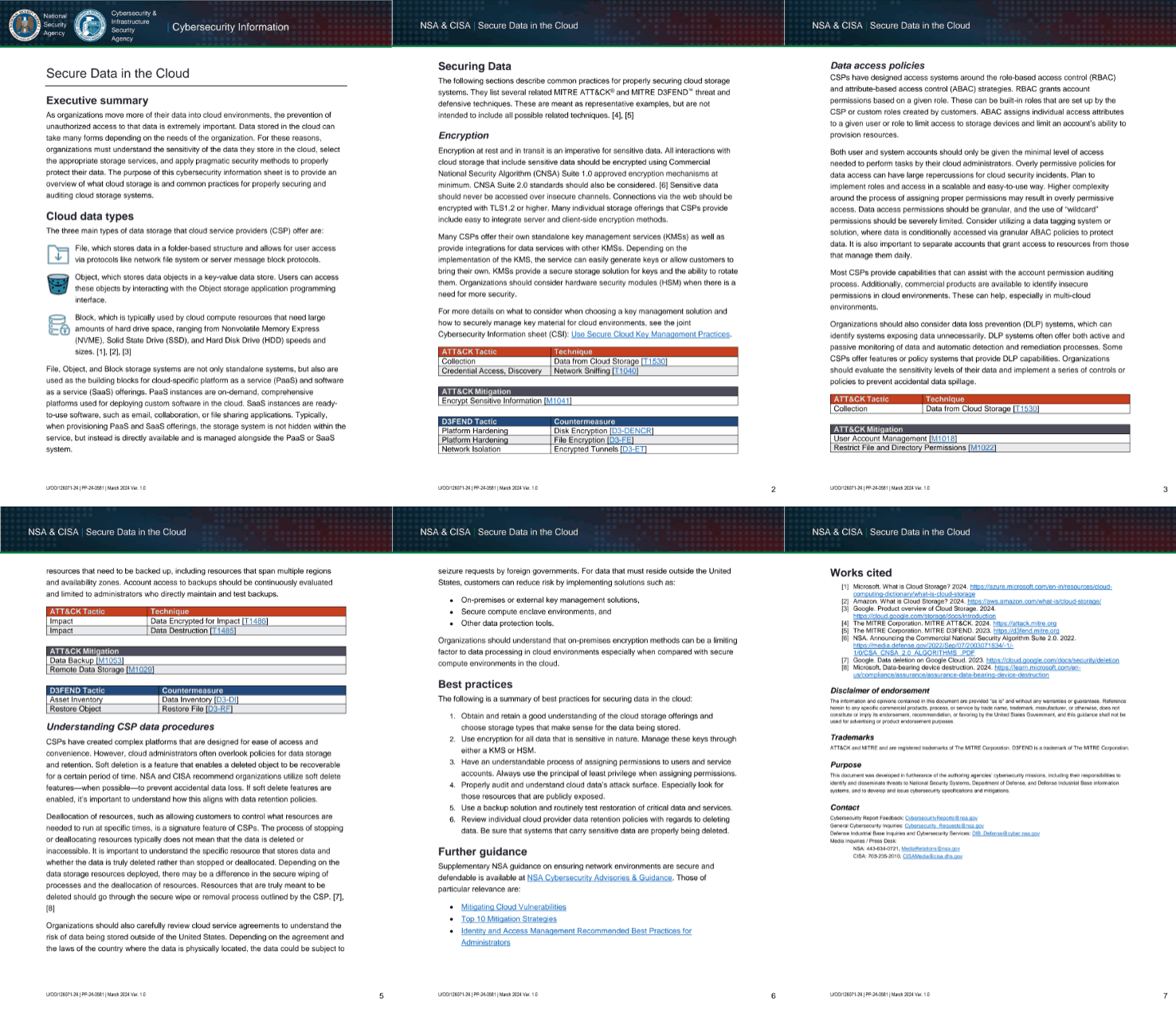
Continue reading “SLEEPY JOE BIDEN’S MEDICAL STATUS EXPOSED – ORIGINAL DOCUMENT”

Corresponding To World Bank Documents, End Date For This “TEST, TRACE & CONTAIN” UK Government Contract Is 2025

SUPPORT US AND Become a Patron!
True Information is the most valuable resource and we ask you to give back.

http://www.berndpulch.org

THE ONLY WEBSITE WITH THE LICENSE TO SPY!

🚨 FOLLOW US ON TELEGRAM & GAB FOR EVEN MORE ABOVE TOP SECRET INFOS & DOCUMENTS

JOIN https://t.me/ABOVETOPSECRETXXL

JOIN https://gab.com/berndpulch

JOIN https://gettr.com/user/berndpulch

The intention is to keep the “pandemic” and all the restrictions until 2025

THIS IS AN EXCERPT – YOU CAN DOWNLOAD THE FULL VIDEOS & DOCUMENTS AND MANY MORE FOR FREE AT OUR TELEGRAM CHANNEL

JOIN https://t.me/ABOVETOPSECRETXXL

REVEALED – GAIN OF FUNCTION COMMUNICATION BETWEEN ECO HEALTH & NIAID – ORIGINAL DOCUMENTS

SUPPORT US AND Become a Patron!
True Information is the most valuable resource and we ask you to give back.

http://www.berndpulch.org

THE ONLY WEBSITE WITH THE LICENSE TO SPY!

🚨 FOLLOW US ON TELEGRAM FOR EVEN MORE ABOVE TOP SECRET INFOS & DOCUMENTS

https://t.me/ABOVETOPSECRETXXL

Continue reading “REVEALED – GAIN OF FUNCTION COMMUNICATION BETWEEN ECO HEALTH & NIAID – ORIGINAL DOCUMENTS”

Navy Aegis Ballistic Missile Defense (BMD) Program – ORIGINAL DOCUMENT

SUPPORT US AND Become a Patron!
True Information is the most valuable resource and we ask you to give back.

http://www.berndpulch.org

THE ONLY WEBSITE WITH THE LICENSE TO SPY!

🚨 FOLLOW US ON TELEGRAM FOR EVEN MORE ABOVE TOP SECRET INFOS & DOCUMENTS

https://t.me/ABOVETOPSECRETXXL

Aegis Ballistic Missile Defense System - Naval Post- Naval ...
Continue reading “Navy Aegis Ballistic Missile Defense (BMD) Program – ORIGINAL DOCUMENT”

Taliban Made Huge Pledge To Beijing As Details Of Its Secretive Deal With China Emerge

Become a Patron!
True Information is the most valuable resource and we ask you to give back.

http://www.berndpulch.org

THE ONLY WEBSITE WITH THE LICENSE TO SPY!

The secretive deal between Beijing and the Taliban has been revealed, after a leading Chinese professor favourably compared the Islamic fighting force to Communist China’s own Liberation Army (PLA). A leading Chinese professor and former diplomat Wang Yiwei appears to have backed the Taliban as the US continues its chaotic withdrawal from the country.

Revealed – CIA Files About “Anti-CIA – Manual” – Original Document

Become a Patron!
True Information is the most valuable resource and we ask you to give back.

http://www.berndpulch.org

THE ONLY WEBSITE WITH THE LICENSE TO SPY!

Page 2 of CIA Protest
Continue reading “Revealed – CIA Files About “Anti-CIA – Manual” – Original Document”

Secret CIA KUBARK Manual & Operations Unveiled – Original Documents

Become a Patron!
True Information is the most valuable resource and we ask you to give back.

http://www.berndpulch.org

THE ONLY WEBSITE WITH THE LICENSE TO SPY!

The first manual, “KUBARK Counterintelligence Interrogation”, dated July 1963, is the source of much of the material in the second manual. KUBARK was a U.S. Central Intelligence Agencycryptonym for the CIA itself.[10] The cryptonym KUBARK appears in the title of a 1963 CIA document KUBARK Counterintelligence Interrogation which describes interrogation techniques, including, among other things, “coercive counterintelligence interrogation of resistant sources”. This is the oldest manual, and describes the use of abusive techniques, as exemplified by two references to the use of electric shock, in addition to use of threats and fearsensory deprivation, and isolation.[10]

https://en.wikipedia.org/wiki/U.S._Army_and_CIA_interrogation_manuals

Continue reading “Secret CIA KUBARK Manual & Operations Unveiled – Original Documents”

CIA – KUBARK Hypnosis Strategies – MSM – Alice In Wonderland Technique – Hugo Talks #lockdown

Become a Patron!
True Information is the most valuable resource and we ask you to give back.

http://www.berndpulch.org

THE ONLY WEBSITE WITH THE LICENSE TO SPY!

Unveiled – Statement From Former Senior Intelligence Officials About CIA Director John Brennan – Original Document

Become a Patron!
True Information is the most valuable resource and we ask you to give back.

Trump ends ex-CIA head John Brennan's security access - BBC News

CIA Director John Brennan

Page 1 of Statement from former senior intelligence officials

Continue reading “Unveiled – Statement From Former Senior Intelligence Officials About CIA Director John Brennan – Original Document”

KGB SECRETS 19/19 – Inside the KGB’s Spy Museum

Become a Patron!
True Information is the most valuable resource and we ask you to give back.

Tom Brokaw’s Secret Email As “Accused Predator In The Universe Of American Journalism” – Original Document

Become a Patron!
True Information is the most valuable resource and we ask you to give back.

Page 1 of Tom Brokaw addresses harassment allegations
Continue reading “Tom Brokaw’s Secret Email As “Accused Predator In The Universe Of American Journalism” – Original Document”

DON ST Strategy For Intelligent Autonomous Systems 2021 – Original Document

Become a Patron!
True Information is the most valuable resource and we ask you to give back.

Continue reading “DON ST Strategy For Intelligent Autonomous Systems 2021 – Original Document”

FBI – Intelligence Division – Cuba – Panama – Secret Warning – Original Document

Become a Patron!
True Information is the most valuable resource and we ask you to give back.

Page 1 of ESP-CUBA-PANAMA; RA-CUBA-PANAMA
Continue reading “FBI – Intelligence Division – Cuba – Panama – Secret Warning – Original Document”

WHO Demands Global Surveiallance – WHO Will Globale Überwachung – Original Document

Become a Patron!
True Information is the most valuable resource and we ask you to give back

Dr Tedros Adhanom Ghebreyesus, WHO Director-General from Ethopia studied Philosophy

Hinter dem harmlosen Titel „Covid-19: Make it the Last Pandemic“ verbirgt sich ein vertrauliches, explosives 68-Seiten-Strategiepapier. Dieses wurde vom angeblich unabhängigen „Independent Panel on Pandemic Preparedness and Response“ für die WHO ausgearbeitet. Es ist Manöverkritik, Forderungskatalog und Drehbuch zugleich. Den Autoren-Arbeitskreis leiten unter anderen die frühere neuseeländische Premierministerin Helen Clark, die ehemalige Präsidentin von Liberia, Ellen Johnson Sirleaf, und andere Ex-Politiker. Nachfolgend die wesentlichen Punkte und das Original Dokument.

Behind the harmless title “Covid-19: Make it the Last Pandemic” hides a threatening 68-page strategy paper. This was drawn up by the so-called “Independent Panel on Pandemic Preparedness and Response”. This working group is headed by, among others, the former Prime Minister of New Zealand, Helen Clark, the former President of Liberia, Ellen Johnson Sirleaf, and other ex-politicians. Read the key points and the original document.

Continue reading “WHO Demands Global Surveiallance – WHO Will Globale Überwachung – Original Document”

Putin’s Secret Private Armies Exposed

Go back

Your message has been sent

Warning
Warning
Warning
Warning.

SECRET – Defense Support of Civil Authorities July 2019

Become a Patron!
True Information is the most valuable resource and we ask you to give back.

ADP 3-28 clarifies similarities and differences between defense support of civil authorities (DSCA) and other elements of decisive action. DSCA and stability operations are similar in many ways. Both revolve around helping partners on the ground within areas of operations. Both require Army forces to provide essential services and work together with civil authorities. However, homeland operational environments differ from those overseas in terms of law, military chain of command, use of force, and inter-organizational coordination among unified action partners. This ADP helps Army leaders understand how operations in the homeland differ from operations by forces deployed forward in other theaters. It illustrates how domestic operational areas are theaters of operations with special requirements. Moreover, this ADP recognizes that DSCA is a joint mission that supports the national homeland security enterprise. The Department of Defense conducts DSCA under civilian control, based on U.S. law and national policy, and in cooperation with numerous civilian partners. National policy, in this context, often uses the word joint to include all cooperating partners, as in a joint field office led by civil authorities. See Introductory Figure, on page viii.

The utilization of military forces during periods of domestic emergency is not undertaken lightly. The military however brings with it unique abilities, in terms of both capability and capacity which provide respondents with the resources needed to respond to an incident. The use of military forces in the responses to hurricanes Andrew in 1992 and Katrina in 2005 illustrate some of the different responses the U.S. military can provide. They also led the government to realize that additional coordination was required before an incident to ensure a successful response. An in-depth look at the tenets of DSCA, authorities, and the national preparedness system framework are discussed in chapter one.

The support the Army provides to civil authorities falls into four main tasks: Provide support for domestic disasters, provide support for domestic chemical, biological, radiological, and nuclear incidents, provide support for domestic civilian law enforcement agencies, and provide other designated support. Due to legal limitations such as the Posse Comitatus Act, the purpose for which the military can respond to these incidents is constrained, allowing a military response only to; save lives, restore essential services, maintain or restore law and order, protect infrastructure and property, support maintenance or restoration of local government, or shape the environment for intergovernmental success. Both state and federal laws detail how support is requested, provided and limited in both scope and duration. Further information on the employment of military forces and legal restrictions on doing so are provided in chapter two.

ISOLATION AND QUARANTINE AUTHORITIES

1-78. Isolation refers to the separation and the restriction of movement of people who have an infectious illness from healthy people to stop the spread of that illness. Quarantine refers to the separation and restriction of movement of people who are not yet ill but have been exposed to an infectious agent and are therefore potentially infectious. A geographical quarantine, known as a cordon sanitaire, is a sanitary barrier erected around an area. Both isolation and quarantine may be conducted on a voluntary basis or compelled on a mandatory basis through legal authority.

1-79. The federal government has the authority to prevent the spread of disease into the United States (foreign) or between states and territories (interstate). The Department of Health and Human Services is the lead federal agency for isolation and quarantine. The Centers for Disease Control and Prevention determine and enforce any federal government measures to prevent the spread of disease.

1-80. Only one federal statute permits federal military forces to enforce quarantine laws, under very narrow circumstances. Section 97 of Title 42, USC, allows military commanders of any coastal fort or station to support the execution of state quarantines with respect to vessels arriving in or bound for the United States.

CIVIL DISTURBANCE SUPPORT

4-172. A governor may call out the National Guard to quell a civil disturbance when it threatens lives or property. State forces support essential services, establish traffic control posts, cordon off areas, release smoke and obscurants, and serve as security or quick reaction forces. The state National Guard’s joint task force commander provides liaison teams to each affected law enforcement agency and normally positions the joint task force headquarters near civilian law enforcement headquarters. In addition to support for civilian law enforcement agencies, National Guard forces provide security for emergency responders. After review by the state attorney general, the governor approves the RUF.

4-173. A request for direct federal military support to civil disturbance operations is unlikely except in an extreme emergency. (See chapter 2 for a discussion of legal considerations. See DODI 3025.21 regarding DOD responsibilities for civil disturbance.) Federal military support for civil disturbances does not fall under defense support of civilian law enforcement agencies when the Insurrection Act or other exemptions to the Posse Comitatus Act are used. The President may employ the Armed Forces of the United States, including the National Guard, within the United States to restore order or enforce federal law when requested by the state legislature, or when not in session, by the governor, and when the authorities of the state are incapable of controlling the situation. The Attorney General of the United States appoints a senior civilian representative as his or her action agent. Federal military personnel supporting civil disturbance operations remain under military command at all times. Forces deployed to help federal or local authorities in a civil disturbance adhere to the SRUF and RUF approved by the combatant commander.

4-174. USNORTHCOM develops and maintains plans for civil disturbance operations. These plans provide the foundation for federal military civil disturbance support. They standardize most military activities and command relationships. Tasks performed by federal military forces may include joint patrolling with law enforcement officers; securing key buildings, memorials, intersections and bridges; and acting as a quick reaction force.

4-175. Civil disturbance missions require unit training prior to employing crowd control tactics. This normally requires a mobile training team from the military police or trained law enforcement personnel. Even in an urgent situation, commanders need to drill their forces repeatedly until small unit leaders can execute maneuvers under extreme stress. Training should include all arms, emphasizing treatment and evacuation procedures, detention and movement of citizens, and use of authorized nonlethal systems.

SPECIAL CONSIDERATIONS FOR STATE NATIONAL GUARD DOMESTIC CIVILIAN LAW ENFORCEMENT SUPPORT

4-176. The military force with primary responsibility for direct law enforcement support is the National Guard, under state authority. The legal authority for National Guard members to support law enforcement is derived from state law, which varies from state to state. A governor of a state may call up National Guard forces to help local and state law enforcement agencies. The National Guard’s authority derives from the governor’s responsibility to enforce the laws of that state. Even with that authority, the governor carefully regulates the amount and nature of the support, consistent with state law. The governor may employ the state National Guard for law enforcement support in state active duty status or in Title 32, USC status. Federal laws (principally the Posse Comitatus Act) restrict federalized National Guard forces (in federal service, under Title 10, USC) from providing law enforcement support unless a specific exemption is applicable.

4-177. State National Guard forces in either Title 32, USC status or state active duty status from another state operating under the EMAC or a memorandum of agreement between the states may only support civilian law enforcement as specified in a memorandum approved by both governors.

4-178. There are 54 state and territory National Guard counterdrug support programs, governed by National Guard regulations. The Secretary of Defense, in accordance with Section 112 of Title 32, USC, may provide resources though the Chief, National Guard Bureau, to states with approved National Guard counterdrug support plans. In addition to requiring approval by the Secretary of Defense, the state National Guard counterdrug support plan requires approval from the state’s attorney general and adjutant general. The National Guard Bureau funds a full time Title 32, USC active Guard and Reserve counterdrug coordinator in each state for administration and management of the state counterdrug program. The counterdrug coordinator serves as the focal point for all counter drug mission validations, approval authority, and the prioritization for counterdrug mission tasking under appropriate policies, instructions, and directives.

4-179. State National Guard forces also provide support to DHS border security programs. Under Section 112 of Title 32, USC, National Guard Soldiers support border security by operating surveillance systems, analyzing intelligence, installing fences and vehicle barriers, building roads, and providing training. Although state National Guard units could participate in direct law enforcement activities related to border security, under DOD policy they normally provide indirect support, under the control of their governor.

4-180. State National Guard forces frequently support civilian law enforcement agencies during disaster response. The disruption and confusion associated with a disaster typically cause numerous problems with law enforcement tasks. Commanders should evaluate the potential for law enforcement support as part of their unit’s initial assessment and provide their assessment to their state joint task force headquarters. Commanders must impress upon their subordinates that they must refrain from law enforcement activities except as authorized.

Go back

Your message has been sent

Warning
Warning
Warning
Warning

Warning.

Revealed – Senate Intelligence Committee Report on Russian Efforts Against Election Infrastructure in the 2016 Election

Become a Patron!
True Information is the most valuable resource and we ask you to give back.

From 2017 to 2019, the Committee held hearings, conducted interviews, and reviewed intelligence related to Russian attempts in 2016 to access election infrastructure. The Committee sought to determine the extent of Russian activities, identify the response of the U.S. Government at the state, local, and federal level to the threat, and make recommendations on how to better prepare for such threats in the future. The Committee received testimony from state election officials, Obama administration officials, and those in the Intelligence Community and elsewhere in the U.S. Government responsible for evaluating threats to elections.

The Russian government directed extensive activity, beginning in at least 2014 and carrying into at least 2017, against U.S. election infrastructure at the state and local level.

3. (U) While the Committee does not know with confidence what Moscow’s intentions were, Russia may have been probing vulnerabilities in voting systems to exploit later. Alternatively, Moscow may have sought to undermine confidence in the 2016 U.S. elections simply through the discovery of their activity.

4. (U) Russian efforts exploited the seams between federal authorities and capabilities, and protections for the states. The U.S. intelligence apparatus is, by design, foreign-facing, with limited domestic cybersecurity authorities except where the Federal Bureau of Investigation (FBI) and the Department of Homeland Security (DHS) can work with state and local partners. State election officials, who have primacy in running elections, were not sufficiently warned or prepared to handle an attack from a hostile nation-state actor.

5. (U) DHS and FBI alerted states to the threat of cyber attacks in the late summer and fall of 2016, but the warnings did not provide enough information or go to the right people. Alerts were actionable, in that they provided malicious Internet Protocol (IP) addresses to information technology (IT) professionals, but they provided no clear reason for states to take this threat more seriously than any other alert received.

6. (U) In 2016, officials at all levels of government debated whether publicly acknowledging this foreign activity was the right course. Some were deeply concerned that public warnings might promote the very impression they were trying to dispel—that the voting systems were insecure.

7. (U) Russian activities demand renewed attention to vulnerabilities in U.S. voting infrastructure. In 2016, cybersecurity for electoral infrastructure at the state and local level was sorely lacking; for example, voter registration databases were not as secure as they could have been. Aging voting equipment, particularly voting machines that had no paper record of votes, were vulnerable to exploitation by a committed adversary. Despite the focus on this issue since 2016, some of these vulnerabilities remain.

8. (U) In the face of this threat and these security gaps, DHS has redoubled its efforts to build trust with states and deploy resources to assist in securing elections. Since 2016, DHS has made great strides in learning how election procedures vary across states and how federal entities can be of most help to states. The U.S. Election Assistance Commission (EAC), the National Association of Secretaries of State (NASS), the National Association of State Election Directors (NASED), and other groups have helped DHS in this effort. DHS’s work to bolster states’ cybersecurity has likely been effective, in particular for those states that have leveraged DHS’s cybersecurity assessments for election infrastructure, but much more needs to be done to coordinate state, local, and federal knowledge and efforts in order to harden states’ electoral infrastructure against foreign meddling.

(U) In June 2016, Illinois experienced the first known breach by Russian actors of state election infrastructure during the 2016 election. As of the end of 2018, the Russian cyber actors had successfully penetrated Illinois’s voter registration database, viewed multiple database tables, and accessed up to 200.000 voter registration records. The compromise resulted in the exfiltration of an unknown quantity of voter registration data. Russian cyber actors were in a position to delete or change voter data, but the Committee is not aware of any evidence that they did so.

(U) Direct-Recording Electronic (ORE) Voting Machine Vulnerabilities

(U) While best practices dictate that electronic voting machines not be connected to the internet, some machines are internet-enabled. In addition, each machine has to be programmed before Election Day, a procedure often done either by connecting the machine to a local network to download software or by using removable media, such as a thumb drive. These functions are often carried out by local officials or contractors. If the computers responsible for writing and distributing the program are compromised, so too could all voting machines receiving a compromised update. Further, machines can be programmed to show one result to the voter while recording a different result in the tabulation. Without a paper backup, a “recount” would use the same faulty software to re-tabulate the same results, because the primary records of the vote are stored in computer memory.

Go back

Your message has been sent

Warning
Warning
Warning
Warning

Warning.

The Secret Network of Rebekah Mercer Exposed

Become a Patron!
True Information is the most valuable resource and we ask you to give back.

Go back

Your message has been sent

Warning
Warning
Warning
Warning

Warning.

The Secret Network of Jared Kushner = Donald Trump’s Son In Law

Become a Patron!
True Information is the most valuable resource and we ask you to give back.

Go back

Your message has been sent

Warning
Warning
Warning
Warning

Warning.

Jared Kushner Height, Jared Kushner Father, Jared Kushner Iraq, Jared Kushner Interview, Jared Kushner Twitter, Jared Kushner Age, Jared Kushner Brother, Jared Kushner News, Jared Kushner Net Worth, Jared Kushner Family, Jared Kushner Age, Jared Kushner And Ivanka, Jared Kushner Afghanistan, Jared Kushner And Steve Bannon, Jared Kushner A Democrat, Jared Kushner Astrology, Jared Kushner Appointment, Jared Kushner Apartment, Jared Kushner Audio, Jared Kushner Aspen, Jared Kushner Brother, Jared Kushner Bio, Jared Kushner Birthday, Jared Kushner Background, Jared Kushner Birth Chart, Jared Kushner Bannon, Jared Kushner Birthdate, Jared Kushner Brother In Law, Jared Kushner Blazer, Jared Kushner Baghdad, Jared Kushner College, Jared Kushner Children, Jared Kushner China, Jared Kushner Company, Jared Kushner Cnn, Jared Kushner Cnbc, Jared Kushner Contact Info, Jared Kushner China Deal, Jared Kushner Clearance, Jared Kushner Chief Of Staff, Jared Kushner Dad, Jared Kushner Democrat, Jared Kushner Donald Trump, Jared Kushner Degree, Jared Kushner Dumbo, Jared Kushner Date Of Birth, Jared Kushner Dumbo Heights, Jared Kushner Data Analytics, Jared Kushner Documentary, Jared Kushner Data, Jared Kushner Education, Jared Kushner Email, Jared Kushner Email Address, Jared Kushner Experience, Jared Kushner Email Address White House, Jared Kushner Eyebrows, Jared Kushner Ethics, Jared Kushner Elephant, Jared Kushner Eye Color, Jared Kushner Elon Musk, Jared Kushner Father, Jared Kushner Family, Jared Kushner Flak Jacket, Jared Kushner Forbes, Jared Kushner Facebook, Jared Kushner Family Tree, Jared Kushner For President, Jared Kushner Fox News, Jared Kushner Fashion, Jared Kushner Frisch, Jared Kushner Gilbert Gottfried, Jared Kushner Gpa, Jared Kushner Gossip Girl, Jared Kushner Gif, Jared Kushner Goes To Iraq, Jared Kushner Gilbert, Jared Kushner Genealogy, Jared Kushner Glasses, Jared Kushner Golf, Jared Kushner Gary Cohn, Jared Kushner Height, Jared Kushner Harvard, Jared Kushner High School, Jared Kushner House, Jared Kushner Horoscope, Jared Kushner Henry Kissinger, Jared Kushner Healthcare, Jared Kushner Hedge Fund, Jared Kushner Harvard Final Club, Jared Kushner Harvard Crimson, Jared Kushner Iraq, Jared Kushner Interview, Jared Kushner Instagram, Jared Kushner Israel, Jared Kushner Images, Jared Kushner Ivanka, Jared Kushner Ivanka Trump, Jared Kushner Is A Democrat, Jared Kushner Iran, Jared Kushner Iraq Vest, Jared Kushner Jobs, Jared Kushner John Oliver, Jared Kushner Jacket, Jared Kushner Job Description, Jared Kushner Jimmy Fallon, Jared Kushner Job Title, Jared Kushner Jamie Gorelick, Jared Kushner Joshua Kushner, Jared Kushner Jewelry, Jared Kushner Jd, Jared Kushner Kissinger, Jared Kushner Kushner Companies, Jared Kushner Kim Jong Un, Jared Kushner Kid, Jared Kushner Katie, Jared Kushner Kremlin, Jared Kushner Kirkland House, Jared Kushner Kristen Wiig, Jared Kushner Kurdistan, Jared Kushner Kellyanne Conway, Jared Kushner Latest News, Jared Kushner Linkedin, Jared Kushner Lawyer, Jared Kushner Last Week Tonight, Jared Kushner Law School, Jared Kushner Latest, Jared Kushner Last Fm, Jared Kushner List, Jared Kushner List Of Jobs, Jared Kushner Livingston Nj, Jared Kushner Mother, Jared Kushner Middle East, Jared Kushner Memes, Jared Kushner Mom, Jared Kushner Married, Jared Kushner Magazine, Jared Kushner Military Vest, Jared Kushner Military Service, Jared Kushner Mbti, Jared Kushner Mexico, Jared Kushner News, Jared Kushner Net Worth, Jared Kushner Newspaper, Jared Kushner News Today, Jared Kushner New York Observer, Jared Kushner New York Times, Jared Kushner Natal Chart, Jared Kushner New Yorker, Jared Kushner Nyu Law, Jared Kushner Netanyahu, Jared Kushner Observer, Jared Kushner Office, Jared Kushner Office Address, Jared Kushner Office Of American Innovation, Jared Kushner Outfit, Jared Kushner Oscar, Jared Kushner On Twitter, Jared Kushner On Cnbc, Jared Kushner Office White House, Jared Kushner Observer Media, Jared Kushner Parents, Jared Kushner Political Party, Jared Kushner Photos, Jared Kushner Position, Jared Kushner Portfolio, Jared Kushner Politics, Jared Kushner Properties, Jared Kushner Personality, Jared Kushner Profile, Jared Kushner Palestine, Jared Kushner Qualifications, Jared Kushner Quotes, Jared Kushner Quien Es, Jared Kushner Quits, Jared Kushner Questioning, Jared Kushner Resume, Jared Kushner Real Estate, Jared Kushner Role, Jared Kushner Russian Bank, Jared Kushner Resigns, Jared Kushner Republican, Jared Kushner Real President, Jared Kushner Residence, Jared Kushner Rabbi, Jared Kushner Real Voice, Jared Kushner Speaking, Jared Kushner Sister, Jared Kushner Steve Bannon, Jared Kushner Salary, Jared Kushner Siblings, Jared Kushner Snl, Jared Kushner Sunglasses, Jared Kushner Style, Jared Kushner Suit, Jared Kushner School, Jared Kushner Twitter, Jared Kushner Talking, Jared Kushner Trump, Jared Kushner Title, Jared Kushner Today, Jared Kushner Tweets, Jared Kushner The Observer, Jared Kushner Tom Riddle, Jared Kushner Trip To Iraq, Jared Kushner Tall, Jared Kushner Young, Jared Kushner Youtube, Jared Kushner Uncle, Jared Kushner University, Jared Kushner Unpaid, Jared Kushner Under Oath, Jared Kushner Usa Today, Jared Kushner Uk, Jared Kushner Undisclosed Meeting, Jared Kushner Ukraine, Jared Kushner Voice, Jared Kushner Vest, Jared Kushner And Steve Bannon, Jared Kushner Vanity Fair, Jared Kushner Voice John Oliver, Jared Kushner Va, Jared Kushner Veb Bank, Jared Kushner Veb, Jared Kushner Veterans, Jared Kushner Veterans Administration, Jared Kushner Wiki, Jared Kushner Wedding, Jared Kushner Wife, Jared Kushner White House Role, Jared Kushner Worth, Jared Kushner White House, Jared Kushner Watch, Jared Kushner Washington Post, Jared Kushner Who Is He, Jared Kushner White House Salary, Jared Kushner Xi Jinping, Jared Kushner Xi, Jared Kushner Young, Jared Kushner Youtube, Jared Kushner Yahoo, Jared Kushner Youth, Jared Kushner Yacht, Jared Kushner Yoga, Jared Kushner Yuri Milner, Jared Kushner Yahoo News, Jared Kushner Youtube Speaking, Jared Kushner Yakima, Jared Kushner Zodiac, Jared Kushner Zeke Emanuel, Jared Kushner Zaha Hadid, Jared Kushner Zimbio

Exposed: The Secret Network of Secretary of Labor Puzder Box

Become a Patron!
True Information is the most valuable resource and we ask you to give back.


Go back

Your message has been sent

Warning
Warning
Warning
Warning

Warning.

Secretary Of Labour Ministry, Secretary Of Labour Usa, Secretary Of Labour Trump, Secretary Of Labour Nz, General Secretary Of Labour Party, Secretary Ministry Of Labour Sri Lanka, Cabinet Secretary Of Labour In Kenya, Secretary Ministry Of Labour And Employment Bangladesh, Reich Secretary Of Labour, Secretary Labour Punjab, Secretary Ministry Of Labour And Employment, Secretary Ministry Of Labour And Employment Bangladesh, Secretary Ministry Of Labour And Employment New Delhi, Secretary Labour And Human Resource Punjab, Secretary Of Labour & Employment Gujarat, Secretary Labour And Employment Rajasthan, Labour And Employment Secretary Tamil Nadu, Secretary For Labour And Welfare Hong Kong, Permanent Secretary Ministry Of Labour And Social Security Jamaica, Joint Secretary Ministry Of Labour And Employment, Secretary Of Labor Budget, Secretary Of Labor Biography, Secretary Of Labor Blog, Secretary Of Labor Before Solis, Secretary Of Labor Bush, Secretary Of Labor Bill Maher, Secretary Labour Balochistan, Secretary Of Labor Perez Bio, Secretary Of Labor Who Became A Supreme Court Justice, Secretary Of Labor Amicus Briefs, Secretary Of Labor California, Secretary Of Labor Certification, Secretary Of Labor Current Issues, Secretary Of Labor Chow, Secretary Of Labor Current, Secretary Of Labor Ct, Secretary Of Labor Cabinet, Secretary Of Labor Contact Information, Secretary Of Labor Colorado, Secretary Of Labor Complaint, Secretary Of Labour Department, Secretary Of Labor Duties, Secretary Of Labor Definition, Secretary Of Labor Delaware, Secretary Of Labor Duties And Responsibilities, Secretary Of Labor Does What, Secretary Of Labor Department, Secretary Of Labor Description, Secretary Of Labor Donovan, Secretary Of Labor During The New Deal, Secretary Of Labor Elaine Crossword Clue, Secretary Of Labor Elaine, Secretary Of Labor Executive Order 11246, Secretary Of Labor Email Address, Secretary Of Labor Employment, Secretary Of Labor Established, Secretary Of Labor Equal Opportunity, Secretary Ministry Of Labour & Employment, Secretary Of Labor Seasonal Employee Definition, Former Secretary Of Labor Elaine Crossword, Secretary Of Labor Function, Secretary Of Labor Florida, Secretary Of Labor Fdr, Secretary Of Labor Facts, Secretary Of Labor For Occupational Safety And Health, Secretary Of State For Labour, Secretary For Labour And Welfare Hong Kong, Secretary For Labour, Secretary For Labour Nz, Assistant Secretary Of Labor For Veterans’ Employment And Training, Secretary Of Labor Georgia, Secretary General Labour Party, Secretary Of Labor Us Government, Secretary Labour Govt Of India, Secretary Labour Government Of India, Secretary Labour Government Of Sindh, Secretary Labour Govt Of Rajasthan, Secretary Department Of Labour Government Of West Bengal, General Secretary Of Nigeria Labour Congress, Principal Secretary Labour Govt. Of Uttar Pradesh, Secretary Of Labor Hazardous Jobs, Secretary Of Labor History, Secretary Of Labor Hazardous Occupations, Secretary Of Labor Has Declared To Be Hazardous, Secretary Labour Haryana, Secretary Of State For Health Labour, Secretary Of Labor Issues, Secretary Of Labor In Philippines, Secretary Of Labor In Clinton Administration, Secretary Of Labor Illinois, Secretary Of Labor In The United States, Cabinet Secretary Of Labour In Kenya, Secretary Ministry Of Labour India, Secretary Of Labor And Industry Pa, Secretary Of Labor Current Issues, Secretary Of Labor Contact Information, Secretary Of Labor Job Description, Secretary Of Labor Job, Secretary Of Labor Jurisdiction, Secretary Of Labor Hazardous Jobs, Delaware Secretary Of Labor John Mcmahon, Labour Secretary Of Jharkhand, Ministry Of Labour Joint Secretary, Ministry Of Labour Jamaica Permanent Secretary, Secretary Of Labor Kentucky, Secretary Of Labor Kansas, Secretary Labour Kpk, Cabinet Secretary Ministry Of Labour Kenya, Principal Secretary Ministry Of Labour Kenya, Permanent Secretary Ministry Of Labour Kenya, Labour Secretary Of Karnataka, Labour Secretary Government Of Kerala, Labour Secretary Govt Of Karnataka, Secretary Of Labor List, Secretary Of Labor Lynn Martin, Secretary Of Labor Louisiana, Secretary Of Labor Licensing And Regulation Maryland, Secretary Of Labor V Lauritzen Summary, Deputy Secretary Of Labor Lu, Secretary Of Labor V. L.e. Myers Co, Secretary Ministry Of Labour Sri Lanka, Secretary Of Labour Ministry, Secretary Of Labor Massachusetts, Secretary Of Labor Mission Statement, Secretary Of Labor Maryland, Secretary Of Labor Mailing Address, Secretary Of Labor Meaning, Secretary Of Labor Minimum Wage Rate Schedule, Secretary Of Labor Mexico, Secretary Of Labor Mitchell, Secretary Of Labor Ray Marshall, Secretary Of Labour Nz, Secretary Of Labor Nc, Secretary Of Labor Nominee Perez, Secretary Of Labor Name, Secretary Of Labor News, Secretary Of Labor New York, General Secretary Of Nigeria Labour Congress, Secretary Of Labor Phone Number, Department Of Labor Secretary Name, Secretary Of Labor Under Nixon, Secretary Of Labor Obama Cabinet, Secretary Of Labor Osha, Secretary Of Labor Office, Secretary Of Labor Oklahoma, Secretary Of Labor Executive Order 11246, Secretary Of Labor Hazardous Occupations, Secretary Of Labor Equal Opportunity, Labour Secretary Of Odisha, Secretary Of Ministry Of Labour And Employment, Secretary Of Labor Perez, Secretary Of Labor Perez Bio, Secretary Of Labor Philippines, Secretary Of Labor Prevailing Wage Rates, Secretary Of Labor Perkins, Secretary Of Labor Pa, Secretary Of Labor Past, Secretary Of Labor Ports, Secretary Of Labor Purpose, Secretary Of Labor Phone Number, Secretary Of Labor Qualifications, Secretary Of Labor Responsibilities, Secretary Of Labor Role, Secretary Of Labor Regulations, Secretary Of Labor Robert, Secretary Of Labor Ray Marshall, Secretary Of Labor Ray Donovan, Secretary Of Labor Roosevelt, Secretary Labour Rajasthan, Clinton Secretary Of Labor Robert Crossword Clue, 1990s Secretary Of Labor Robert, Secretary Of Labor Salary, Secretary Of Labor Seasonal Worker Definition, Secretary Of Labor Supreme Court Justice, Secretary Of Labor Security Detail, Secretary Of Labor Speeches, Secretary Of Labor Supreme Court Justice Crossword, Secretary Of Labor San Francisco, Secretary Of State Labor Day Hours, Secretary Of State Labor, Secretary Of Labor Mission Statement, Secretary Of Labour Trump, Secretary Of The Labour Party, Secretary Of Labor Today, Secretary Of Labor Twitter, Secretary Of Labor Thomas, Secretary Of Labor Tom, Secretary Of The Labor, Secretary Of The Labor Job Description, General Secretary Of The Labour Party Ireland, The Secretary Tamil Nadu Labour Welfare Board, Secretary Of Labour Usa, Secretary Of Labor Us, Secretary Of Labor Under Fdr, Secretary Of Labor Us Government, Secretary Of Labor Under Reagan, Secretary Of Labor Under Marcos, Secretary Of Labor Under Obama, Secretary Of Labor Under The Copeland Act, Secretary Of Labor Uk, Secretary Of Labor Under Nixon, Secretary Of Labor V Lauritzen Summary, Secretary Of Labor V. Summit Contractors Inc, Secretary Of Labor V Ryder Transportation Services, Secretary Of Labor V. L.e. Myers Co, Secretary Of Labor Vermont, Secretary Of Labor Who Became A Supreme Court Justice, Secretary Of Labor Who Chaired Social Security Act, Secretary Of Labor Wiki, Secretary Of Labor Wage Determination, Secretary Of Labor Website, Secretary Of Labor Washington Dc, Secretary Of Labor Wilson, The Secretary Tamil Nadu Labour Welfare Board, Secretary Of Labor Seasonal Worker Definition, Secretary Of Labor And Workforce Development, Secretary Of Labor New York

Heroin and Fentanyl in the United States

Become a Patron!
True Information is the most valuable resource and we ask you to give back.

Heroin and Fentanyl in the United States

Page Count: 22 pages
Date: November 2016
Restriction: None
Originating Organization: Drug Enforcement Administration
File Type: pdf
File Size: 1,666,389 bytes
File Hash (SHA-256):9AFEAD5D69F929AF77F41CC7460CBF4B52F89B17726974CB9B67EF8BAF19748C

Download File

dea-heroinfentanyl_page_08

dea-heroinfentanyl_page_10

dea-heroinfentanyl_page_11

dea-heroinfentanyl_page_12

dea-heroinfentanyl_page_13

dea-heroinfentanyl_page_15


Go back

Your message has been sent

Warning
Warning
Warning
Warning

Warning.

Heroin Overdose, Heroin Drug, Heroin Addiction, Heroin Epidemic, Heroin Withdrawal, Heroin Effects, Heroin Chic, Heroin Definition, Heroin Street Names, Heroin Symptoms, Heroin Addiction, Heroin Abuse, Heroin Anonymous, Heroin Addiction Treatment, Heroin Antidote, Heroin Abuse Icd 10, Heroin Abscess, Heroin Addiction Signs, Heroin And Alcohol, Heroin Addiction Statistics, Heroin Before And After, Heroin Bust, Heroin Baby, Heroin Bob, Heroin Bags, Heroin Bayer, Heroin Black Tar, Heroin Balloon, Heroin Bundle, Heroin Brick, Heroin Chic, Heroin Classification, Heroin Cape Cod, Heroin Chemical Structure, Heroin Capital Of The World, Heroin Capital Of The Us, Heroin Crisis, Heroin Chicken, Heroin Cost, Heroin Color, Heroin Drug, Heroin Definition, Heroin Detox, Heroin Deaths, Heroin Diaries, Heroin Documentary, Heroin Drug Test, Heroin Deaths 2016, Heroin Drug Class, Heroin Drug Effects, Heroin Epidemic, Heroin Effects, Heroin Eyes, Heroin Epidemic Map, Heroin Effects On The Body, Heroin Erowid, Heroin Epidemic 2017, Heroin Epidemic Ohio, Heroin Effects On The Brain, Heroin Epidemic Statistics, Heroin Facts, Heroin Face, Heroin Fentanyl, Heroin Feeling, Heroin Fentanyl Carfentanil, Heroin Flower, Heroin Formula, Heroin Father, Heroin Fun Facts, Heroin Forms, Heroin Girl, Heroin Gif, Heroin Girl Lyrics, Heroin Graph, Heroin Gel Caps, Heroin Generic Name, Heroin Gucci, Heroin Grey, Heroin Gray Death, Heroin Guitar Tab, Heroin High, Heroin History, Heroin Half Life, Heroin Highway, Heroin Hero, Heroin Helper, Heroin Hotline, Heroin Hands, Heroin Help, Heroin Hangover, Heroin Images, Heroin In Spanish, Heroin Injection, Heroin In Urine, Heroin Injection Sites, Heroin Ingredients, Heroin Is What Type Of Drug, Heroin In Ohio, Heroin In Pill Form, Heroin Is An Example Of A(n), Heroin Junkie, Heroin Jokes, Heroin Jesus, Heroin Jail Time, Heroin Jez Dior Lyrics, Heroin Junkie Memes, Heroin Junkie Stories, Heroin Jazz, Heroin Joint, Heroin Jaw, Heroin Kills, Heroin Kit, Heroin Kingpin, Heroin Kentucky, Heroin Kills Movie, Heroin Kensington, Heroin Kidney Failure, Heroin Kilo Price, Heroin Kills Nj, Heroin Kilo, Heroin Lyrics, Heroin Long Term Effects, Heroin Long Island, Heroin Lean, Heroin Laws, Heroin Legal, Heroin Laced With, Heroin Laced Weed, Heroin Ld50, Heroin Look Like, Heroin Meme, Heroin Movies, Heroin Metabolites, Heroin Molecule, Heroin Medical Use, Heroin Meaning, Heroin Marks, Heroin Mechanism Of Action, Heroin Mchenry County, Heroin Metabolism, Heroin Needle, Heroin Nicknames, Heroin News, Heroin Nod, Heroin Narcotic, Heroin Nj, Heroin Neurotransmitters, Heroin Narcan, Heroin Near Me, Heroin New Jersey, Heroin Overdose, Heroin Overdose Drug, Heroin Opioid, Heroin Overdose Statistics, Heroin Opiate, Heroin Origin, Heroin Ohio, Heroin Overdose Ohio, Heroin Overdose Treatment, Heroin Or Heroine, Heroin Plant, Heroin Pills, Heroin Pupils, Heroin Pictures, Heroin Poem, Heroin Powder, Heroin Prices, Heroin Pipe, Heroin Poppy, Heroin Production, Heroin Quotes, Heroin Questions, Heroin Quiz, Heroin Quizlet, Heroin Quantities, Heroin Q Tips, Heroin Quick Facts, Heroin Quora, Heroin Quality, Heroin Quinine, Heroin Recovery, Heroin Rehab, Heroin Relapse Rate, Heroin Reddit, Heroin Rock, Heroin Recovery Rate, Heroin Reversal Drug, Heroin Relapse, Heroin Recovery Drug, Heroin Rig, Heroin Side Effects, Heroin Street Names, Heroin Symptoms, Heroin Statistics, Heroin Slang, Heroin Skateboards, Heroin Schedule, Heroin Short Term Effects, Heroin Spoon, Heroin Stories, Heroin Track Marks, Heroin Treatment, Heroin The Drug, Heroin Teeth, Heroin Triangle, Heroin Trafficking, Heroin Test Kit, Heroin Type Of Drug, Heroin Tar, Heroin Tattoo, Heroin Use, Heroin Users, Heroin Use By State, Heroin Use Statistics, Heroin Urine Test, Heroin Use Icd 10, Heroin Use During Pregnancy, Heroin Use In The Us, Heroin Users Before And After, Heroin User Pics, Heroin Velvet Underground, Heroin Vs Morphine, Heroin Vs Heroine, Heroin Vs Oxycodone, Heroin Vaccine, Heroin Vs Crack, Heroin Velvet Underground Lyrics, Heroin Video, Heroin Veins, Heroin Vs Methadone, Heroin Withdrawal, Heroin Wiki, Heroin Withdrawal Drug, Heroin Withdrawal Death, Heroin Withdrawal Help, Heroin Weights And Prices, Heroin Weight Loss, Heroin While Pregnant, Heroin Withdrawal Icd 10, Heroin Withdrawal Medication, Heroine X, Heroin Xanax, Heroine X Alter, Heroin Xanax Overdose, Heroine X Figure, Heroine X Villain, Heroine X Myfigurecollection, Heroine X Shin Lemon, Heroin Xanax Interaction, Heroin Xanax Combo, Heroin Youtube, Heroin Yellow, Heroin York Pa, Heroin Yahoo Answers, Heroin You Snort, Heroin Yeast, Heroin Yoga, Heroin Yahoo, Heroin Youngstown Ohio, Heroin Youtube Video, Heroin Zombies, Heroin Zorro, Heroin Zavisnost, Heroin Zurich, Heroin Ziehen, Heroin Zuto, Heroin Zanzibar, Heroin Zusammensetzung, Fentanyl Patch, Fentanyl High, Fentanyl Side Effects, Fentanyl Dosage, Fentanyl Powder, Fentanyl Lollipop, Fentanyl Pills, Fentanyl Citrate, Fentanyl Abuse, Fentanyl Half Life, Fentanyl Abuse, Fentanyl Analogues, Fentanyl Antidote, Fentanyl And Carfentanil, Fentanyl And Alcohol, Fentanyl And Xanax, Fentanyl And Morphine, Fentanyl And Pregnancy, Fentanyl Allergy, Fentanyl And Narcan, Fentanyl Brand Name, Fentanyl Bust, Fentanyl Bluelight, Fentanyl Bupivacaine, Fentanyl Blood Pressure, Fentanyl Buccal, Fentanyl Bupivacaine Epidural, Fentanyl Bars, Fentanyl Bioavailability, Fentanyl Bradycardia, Fentanyl Citrate, Fentanyl Classification, Fentanyl Chemical Structure, Fentanyl Cost, Fentanyl China, Fentanyl Conversion, Fentanyl Crisis, Fentanyl Contraindications, Fentanyl Canada, Fentanyl Carfentanil, Fentanyl Dosage, Fentanyl Deaths, Fentanyl Drug, Fentanyl Dose, Fentanyl Drip, Fentanyl Definition, Fentanyl Drug Test, Fentanyl Davis Pdf, Fentanyl Deaths 2016, Fentanyl Deaths 2017, Fentanyl Effects, Fentanyl Erowid, Fentanyl Epidemic, Fentanyl Epidural, Fentanyl Exposure, Fentanyl Elephant, Fentanyl Equivalent, Fentanyl Euphoria, Fentanyl Epidural Dose, Fentanyl Experience, Fentanyl For Sale, Fentanyl Forms, Fentanyl From China, Fentanyl For Sedation, Fentanyl Facts, Fentanyl For Dogs, Fentanyl For Pain, Fentanyl Field Test Kit, Fentanyl Fatal Dose, Fentanyl Feeling, Fentanyl Generic Name, Fentanyl Gel Patch, Fentanyl Gas, Fentanyl Gtt, Fentanyl Georgia, Fentanyl Grand Forks, Fentanyl Gel Patch Extraction, Fentanyl Gray Death, Fentanyl Gel Patch Brands, Fentanyl Gummies, Fentanyl High, Fentanyl Half Life, Fentanyl History, Fentanyl Hcl, Fentanyl Hypotension, Fentanyl How To Make, Fentanyl Hallucinations, Fentanyl High Reddit, Fentanyl Hydrochloride, Fentanyl How Long Does It Last, Fentanyl Iv, Fentanyl In Weed, Fentanyl Ingredients, Fentanyl In Coke, Fentanyl Injection, Fentanyl Iv Side Effects, Fentanyl In Urine, Fentanyl In Labor, Fentanyl Indications, Fentanyl In Spanish, Fentanyl J Code, Fentanyl Jail Time, Fentanyl Jackson, Fentanyl Janssen, Fentanyl Jessica Jones, Fentanyl Jokes, Fentanyl Jacksonville, Fentanyl Junkie, Fentanyl Janesville, Fentanyl Journal Articles, Fentanyl Kills, Fentanyl Kidney, Fentanyl Kills Cop, Fentanyl Kilo Price, Fentanyl Kidney Failure, Fentanyl Kidney Function, Fentanyl Kratom, Fentanyl Kentucky, Fentanyl Kit, Fentanyl Krokodil, Fentanyl Lollipop, Fentanyl Lethal Dose, Fentanyl Ld50, Fentanyl Labor, Fentanyl Lozenge, Fentanyl Liquid, Fentanyl Laced Drugs, Fentanyl Laced Weed 2017, Fentanyl Lawsuit, Fentanyl Laced Weed, Fentanyl Mechanism Of Action, Fentanyl Metabolism, Fentanyl Medication, Fentanyl Manufacturer, Fentanyl Metabolites, Fentanyl Michael, Fentanyl Morphine, Fentanyl Meaning, Fentanyl Molecule, Fentanyl Moa, Fentanyl Nursing Implications, Fentanyl Nasal Spray, Fentanyl News, Fentanyl Narcan, Fentanyl Names, Fentanyl Narcotic, Fentanyl Nicknames, Fentanyl Nausea, Fentanyl New Drug, Fentanyl Nyc, Fentanyl Opioid, Fentanyl Overdose, Fentanyl Overdose Amount, Fentanyl Oral, Fentanyl Online, Fentanyl Ohio, Fentanyl Onset, Fentanyl Oral Bioavailability, Fentanyl Overdose Treatment, Fentanyl Other Names, Fentanyl Patch, Fentanyl Powder, Fentanyl Pills, Fentanyl Patch Dosage, Fentanyl Patch High, Fentanyl Prince, Fentanyl Patch Cost, Fentanyl Patch Abuse, Fentanyl Patch Dose, Fentanyl Patch Overdose, Fentanyl Quizlet, Fentanyl Que Es, Fentanyl Qtc, Fentanyl Qt Prolongation, Fentanyl Quarterly Report, Fentanyl Quotes, Fentanyl Questions, Fentanyl Quiz, Fentanyl Qtc Prolongation, Fentanyl Qas, Fentanyl Reversal, Fentanyl Reddit, Fentanyl Recipe, Fentanyl Routes, Fentanyl Reaction, Fentanyl Roxy, Fentanyl Recreational, Fentanyl Renal Failure, Fentanyl Rems, Fentanyl Respiratory Depression, Fentanyl Side Effects, Fentanyl Street Names, Fentanyl Spray, Fentanyl Schedule, Fentanyl Structure, Fentanyl Suckers, Fentanyl Strength, Fentanyl Synthesis, Fentanyl Street Price, Fentanyl Symptoms, Fentanyl Test Kit, Fentanyl Toxicity, Fentanyl Transdermal Patch, Fentanyl Tablets, Fentanyl To Morphine, Fentanyl Test Strips, Fentanyl Taste, Fentanyl Trade Name, Fentanyl Transdermal System, Fentanyl Test, Fentanyl Uses, Fentanyl Urine Test, Fentanyl Urine Drug Test, Fentanyl Urine Drug Screen, Fentanyl Urine Test Strips, Fentanyl Users, Fentanyl Utah, Fentanyl Uptodate, Fentanyl Used For Sedation, Fentanyl Urine Detection, Fentanyl Vs Dilaudid, Fentanyl Vs Morphine, Fentanyl Vs Oxycodone, Fentanyl Vial, Fentanyl Vs Morphine Strength, Fentanyl Vice, Fentanyl Vs Oxycodone High, Fentanyl Versed, Fentanyl Vancouver, Fentanyl Vs Butrans, Fentanyl Withdrawal, Fentanyl Wiki, Fentanyl What Is It, Fentanyl Weed, Fentanyl Withdrawal Timeline, Fentanyl Warnings, Fentanyl Withdrawal Symptoms, Fentanyl What Is It Used For, Fentanyl Wooden Chest, Fentanyl Weed Ohio, Fentanyl Xanax, Fentanyl Xanax Florida, Fentanyl Xanax 2017, Fentanyl Xanax Mix, Fentanyl Xanax Interaction, Fentanyl Xanax Reddit, Fentanyl Xanax Adderall, Fentanyl Xanax Effects, Fentanyl Xanax Fake, Fentanyl Youtube, Fentanyl York Region, Fentanyl Yorkshire, Fentanyl Yukon, Fentanyl Yellowknife, Fentanyl Yahoo Answers, Fentanyl Yemex, Youtube Fentanyl Patch, Yellow Fentanyl, Yellow Fentanyl Powder, Fentanyl Zoloft Interaction, Fentanyl Zombie, Fentanyl Zyvox Drug Interaction, Fentanyl Zolpidem, Fentanyl Zopiclone, Fentanyl Zyvox, Fentanyl Zofran, Fentanyl Za Anesteziju, Fentanyl Zdravilo, Fentanyl Zentiva

Unveiled – Chelsea FC : Juan Mata Contract

Become a Patron!
True Information is the most valuable resource and we ask you to give back.

Contract
https://openload.co/f/WtR0ZVJK8w0/Chelsea_FC_-_Juan_Mata_-_Contract.pdf

Go back

Your message has been sent

Warning
Warning
Warning
Warning

Warning.


Juan Mata Contract Extension, Juan Mata Contract Pdf, Juan Mata Contract, Juan Mata Contract With Man Utd, Juan Mata Contract Manchester United, Juan Mata Signing, Juan Mata Signing For Man U, Juan Mata New Contract, Juan Mata United Contract, Juan Mata Contract Extension, Juan Mata Signing Fee, Juan Mata Signing For Man U, Juan Mata Contract Manchester United, Juan Mata Contract With Man Utd, Juan Mata Signing For Man U, Juan Mata New Contract, Juan Mata Contract Pdf, Juan Mata United Contract, Juan Mata Contract Manchester United, Juan Mata Contract With Man Utd,

Football Leaks The Dirty Business Of Football, Football Leaks Book, Football Leaks Website, Football Leaks The Dirty Business Of Football Amazon, Football Leaks The Dirty Business Of Football Book, Football Leaks Book English, Football Leaks Real Madrid, Football Leaks Wiki, Football Leaks English, Football Leaks Der Spiegel, Football Leaks Amazon, Football Leaks Anthony Martial, Football Leaks Aguero, Football Leaks Arsenal, Football Leaks Address, Football Leaks Aston Villa, Football Leaks Anthony, Football Leaks Air, Football Leaks Alonso, Football Leaks Abdennour, Football Leaks Book, Football Leaks Book English, Football Leaks Buch, Football Leaks Book Pdf, Football Leaks Book Download, Football Leaks Book English Edition, Football Leaks Book 2017, Football Leaks Book English Version, Football Leaks Book Amazon, Football Leaks Contracts, Football Leaks Cristiano, Football Leaks Contratos, Football Leaks Contrato Jesus, Football Leaks Carrillo, Football Leaks Cervi, Football Leaks Contrato De Neymar, Football Leaks Contrato Bale, Football Leaks Carvajal, Football Leaks Corona, Football Leaks Dirty Business Of Football, Football Leaks Der Spiegel, Football Leaks Documents, Football Leaks Dirty Business Book, Football Leaks Daily Mail, Football Leaks English, Football Leaks English Edition, Football Leaks English Book, Football Leaks Epub, Football Leaks English Version, Football Leaks El Mundo, Football Leaks Ebook, Football Leaks Everton, Football Leaks Firmino, Football Leaks Fifa, Football Leaks Falcao, Football Leaks Francais, Football Leaks Facebook, Football Leaks.fr, Football Leaks Fc Twente, Football Leaks Fc Porto, Football Leak Fix, Football Fixtures Leak, Football Leaks Guardian, Football Leaks Galatasaray, Football Leaks Gestifute, Football Leaks Gelson, Football Leaks De Gea, Football Leaks Sporting Gijon, Football Leaks Andre Gomes, Football Leaks Homepage, Football Leaks Hulk, Football Leaks Heldt, Football Leaks Herrera, Football Leaks Hacker, Football Leaks Home, Http \/\/Football-leaks, Football Leaks Helder Costa, Football Leaks Haberleri, Football Leaks Investigation, Football Leaks Ibrahimovic, Football Leaks In English, Football Leaks Identity, Football Leaks Interview, Football Leaks Imbula, Football Leaks Ita, Football Leaks Indonesia, Football Leaks.it, Football Leaks Illegal, Football Leaks Juventus, Football Leaks Jorge Jesus, Football Leaks Journal, Football Leaks James, Football Leaks Jackson, Football Leaks Jesus Corona, Football Leaks John, Football Jersey Leaks, Football Leaks Ola John, Football Leaks Contrato Jesus, Football Leaked Kits, Football Leaks Kroos, Football Leaks Kroos Contract, Football Kit Leaked 15\/16, Football Kit Leaked 16\/17, Football Kit Leaked 14\/15, Football Leak Repair Kit, New Football Kit Leaks, 2015\/16 Football Kit Leaks, Football Leaks Keylor Navas, Football Leaks Lavezzi, Football Leaks Liverpool, Football Leaks Luis Suarez, Football Leaks Luka Modric, Football Leaks Lequipe, Football Leaks Leicester, Football Leaks Livejournal, Football Leaks Link, Football Leaks Layun, Football Leaksfootball Leaks, Football Leaks Martial, Football Leaks Messi, Football Leaks Mino Raiola, Football Leaks Modric, Football Leaks Mangala, Football Leaks Mesut Ozil, Football Leaks Manchester United, Football Leaks Man Utd, Football Leaks Modric Contract, Football Leaks Mourinho, Football Leaks News, Football Leaks Neymar, Football Leaks New York Times, Football Leaks Newcastle, Football Leaks Novo Site, Nike Football Leaks, Football Leaks Ruben Neves, Football Leaks Contrato De Neymar, Football Leaks Novo Link, Football Leaks Nouri, Football Leaks Ozil, Football Leaks Official Website, Football Leaks Ozil Contract, Football Leaks Ola John, Football Leaks Pdf, Football Leaks Psg, Football Leaks Portugal, Football Leaks Pagina, Football Leaks Porto, Football Leaks Pedro Leon, Football Leaks Pl, Football Leaks Page, Football Leaks Psv, Football Leaks Portal, Football Leaks Quiz, Football Leaks Que Es, Football Leaks Qatar, Football Leaks Real Madrid, Football Leaks Rafael Buschmann, Football Leaks Reddit, Football Leaks Rojo, Football Leaks Ronaldo Contract, Football Leaks Ronaldo Bale, Football Leaks Ronaldo, Football Leaks Revealed, Football Leaks Russia, Football Leaks Real Sociedad, Football Leaks Sporting, Football Leaks Spiegel, Football Leaks Salaries, Football Leaks Sunday Times, Football Leaks Suarez, Football Leaks Sergio Aguero, Football Leaks Shirts, Football Leaks Site Oficial, Football Leaks Sito, Football Leaks Sevilla, Football Leaks The Dirty Business Of Football, Football Leaks The Dirty Business Of Football Amazon, Football Leaks The Dirty Business Of Football Book, Football Leaks The Dirty, Football Leaks The Dirty Business Of Football Pdf, Football Leaks The Dirty Side Of Football, Football Leaks The Dirty Business Of Football Buy, Football Leaks The Dirty Business Of Football Release Date, Football Leaks The Dirty Business Of Football Book Amazon, Football Leaks Twitter, Football Leaks Uk, Football Leaks.ur, Football Leaks Url, Football Leaks Manchester United, Football Leaks Man Utd, Football Uniform Leak, Football Leaks Van Der Vaart, Football Leaks Virus, Football Leaks Volendam, Football Valve Leak, Football Valve Leak Repair, Football Leaks Aston Villa, Football Leaks Bernardo Silva Valencia, Football Leaks Valencia, Football Leaks Website, Football Leaks Wiki, Football Leaks Wages, Football Leaks Witsel, Football Leaks Web, Football Leaks Wikipedia, WordPress Football Leaks, Football Leaks Web Page, Football Leaks 2015 WordPress, Www.football Leaks.fr, Football Leaks Xabi, Football Leaks Xabi Alonso, Football Leaks Yandex, Football Leaks New York Times, Football Leaks Zlatan, Football Leaks Zlatan Ibrahimovic, Football Leaks Zaragoza

Football Leaks The Dirty Business Of Football, Football Leaks Book, Football Leaks Website, Football Leaks The Dirty Business Of Football Amazon, Football Leaks The Dirty Business Of Football Book, Football Leaks Book English, Football Leaks Real Madrid, Football Leaks Wiki, Football Leaks English, Football Leaks Der Spiegel, Football Leaks Amazon, Football Leaks Anthony Martial, Football Leaks Aguero, Football Leaks Arsenal, Football Leaks Address, Football Leaks Aston Villa, Football Leaks Anthony, Football Leaks Air, Football Leaks Alonso, Football Leaks Abdennour, Football Leaks Book, Football Leaks Book English, Football Leaks Buch, Football Leaks Book Pdf, Football Leaks Book Download, Football Leaks Book English Edition, Football Leaks Book 2017, Football Leaks Book English Version, Football Leaks Book Amazon, Football Leaks Contracts, Football Leaks Cristiano, Football Leaks Contratos, Football Leaks Contrato Jesus, Football Leaks Carrillo, Football Leaks Cervi, Football Leaks Contrato De Neymar, Football Leaks Contrato Bale, Football Leaks Carvajal, Football Leaks Corona, Football Leaks Dirty Business Of Football, Football Leaks Der Spiegel, Football Leaks Documents, Football Leaks Dirty Business Book, Football Leaks Daily Mail, Football Leaks English, Football Leaks English Edition, Football Leaks English Book, Football Leaks Epub, Football Leaks English Version, Football Leaks El Mundo, Football Leaks Ebook, Football Leaks Everton, Football Leaks Firmino, Football Leaks Fifa, Football Leaks Falcao, Football Leaks Francais, Football Leaks Facebook, Football Leaks.fr, Football Leaks Fc Twente, Football Leaks Fc Porto, Football Leak Fix, Football Fixtures Leak, Football Leaks Guardian, Football Leaks Galatasaray, Football Leaks Gestifute, Football Leaks Gelson, Football Leaks De Gea, Football Leaks Sporting Gijon, Football Leaks Andre Gomes, Football Leaks Homepage, Football Leaks Hulk, Football Leaks Heldt, Football Leaks Herrera, Football Leaks Hacker, Football Leaks Home, Http \/\/Football-leaks, Football Leaks Helder Costa, Football Leaks Haberleri, Football Leaks Investigation, Football Leaks Ibrahimovic, Football Leaks In English, Football Leaks Identity, Football Leaks Interview, Football Leaks Imbula, Football Leaks Ita, Football Leaks Indonesia, Football Leaks.it, Football Leaks Illegal, Football Leaks Juventus, Football Leaks Jorge Jesus, Football Leaks Journal, Football Leaks James, Football Leaks Jackson, Football Leaks Jesus Corona, Football Leaks John, Football Jersey Leaks, Football Leaks Ola John, Football Leaks Contrato Jesus, Football Leaked Kits, Football Leaks Kroos, Football Leaks Kroos Contract, Football Kit Leaked 15\/16, Football Kit Leaked 16\/17, Football Kit Leaked 14\/15, Football Leak Repair Kit, New Football Kit Leaks, 2015\/16 Football Kit Leaks, Football Leaks Keylor Navas, Football Leaks Lavezzi, Football Leaks Liverpool, Football Leaks Luis Suarez, Football Leaks Luka Modric, Football Leaks Lequipe, Football Leaks Leicester, Football Leaks Livejournal, Football Leaks Link, Football Leaks Layun, Football Leaksfootball Leaks, Football Leaks Martial, Football Leaks Messi, Football Leaks Mino Raiola, Football Leaks Modric, Football Leaks Mangala, Football Leaks Mesut Ozil, Football Leaks Manchester United, Football Leaks Man Utd, Football Leaks Modric Contract, Football Leaks Mourinho, Football Leaks News, Football Leaks Neymar, Football Leaks New York Times, Football Leaks Newcastle, Football Leaks Novo Site, Nike Football Leaks, Football Leaks Ruben Neves, Football Leaks Contrato De Neymar, Football Leaks Novo Link, Football Leaks Nouri, Football Leaks Ozil, Football Leaks Official Website, Football Leaks Ozil Contract, Football Leaks Ola John, Football Leaks Pdf, Football Leaks Psg, Football Leaks Portugal, Football Leaks Pagina, Football Leaks Porto, Football Leaks Pedro Leon, Football Leaks Pl, Football Leaks Page, Football Leaks Psv, Football Leaks Portal, Football Leaks Quiz, Football Leaks Que Es, Football Leaks Qatar, Football Leaks Real Madrid, Football Leaks Rafael Buschmann, Football Leaks Reddit, Football Leaks Rojo, Football Leaks Ronaldo Contract, Football Leaks Ronaldo Bale, Football Leaks Ronaldo, Football Leaks Revealed, Football Leaks Russia, Football Leaks Real Sociedad, Football Leaks Sporting, Football Leaks Spiegel, Football Leaks Salaries, Football Leaks Sunday Times, Football Leaks Suarez, Football Leaks Sergio Aguero, Football Leaks Shirts, Football Leaks Site Oficial, Football Leaks Sito, Football Leaks Sevilla, Football Leaks The Dirty Business Of Football, Football Leaks The Dirty Business Of Football Amazon, Football Leaks The Dirty Business Of Football Book, Football Leaks The Dirty, Football Leaks The Dirty Business Of Football Pdf, Football Leaks The Dirty Side Of Football, Football Leaks The Dirty Business Of Football Buy, Football Leaks The Dirty Business Of Football Release Date, Football Leaks The Dirty Business Of Football Book Amazon, Football Leaks Twitter, Football Leaks Uk, Football Leaks.ur, Football Leaks Url, Football Leaks Manchester United, Football Leaks Man Utd, Football Uniform Leak, Football Leaks Van Der Vaart, Football Leaks Virus, Football Leaks Volendam, Football Valve Leak, Football Valve Leak Repair, Football Leaks Aston Villa, Football Leaks Bernardo Silva Valencia, Football Leaks Valencia, Football Leaks Website, Football Leaks Wiki, Football Leaks Wages, Football Leaks Witsel, Football Leaks Web, Football Leaks Wikipedia, WordPress Football Leaks, Football Leaks Web Page, Football Leaks 2015 WordPress, Www.football Leaks.fr, Football Leaks Xabi, Football Leaks Xabi Alonso, Football Leaks Yandex, Football Leaks New York Times, Football Leaks Zlatan, Football Leaks Zlatan Ibrahimovic, Football Leaks Zaragoza, Soccer Leaks, Soccer Jersey Leaks, Wiki Soccer Leaks, Adidas Soccer Leaks, Soccer Shirt Leaks, Soccer Ball Leaks, Soccer Cleat Leaks 2015, Women’s Soccer Leaks, Soccer Player Leaked, Soccer Ball Leaks Air, Soccer Ball Leaks Air, Adidas Soccer Leaks, Soccer Boot Leaks, Soccer Ball Leaks, Soccer Ball Leaks Air, Soccer Cleat Leaks, Soccer Cleat Leaks 2015, Soccer Jersey Leaks, Usa Soccer Jersey Leaks, Soccer Jersey Leaked 2016, Soccer Kit Leaks, Nike Soccer Leaks, Soccer Player Leaked, Soccer Shoe Leaks, Soccer Shirt Leaks, Soccer Ball Valve Leaks, Soccer Wiki Leaks, Women’s Soccer Leaks

Unveiled – US Spy Budget for FY16 $53.9 Billion

Become a Patron!
True Information is the most valuable resource and we ask you to give back.

imagescia

Consistent with 50 U.S.C. 3306(a), the Director of National Intelligence is disclosing to the public the aggregate amount of appropriations requested for Fiscal Year 2016. The aggregate amount of appropriations requested for the FY 2016 National Intelligence Program (NIP) is $53.9 billion, which includes funding requested to support Overseas Contingency Operations (OCO). In FY 2015, OCO funding was not included in the initial disclosure, but was included in disclosures that were updated after the submission of budget amendments.

Any and all subsidiary information concerning the NIP budget, whether the information concerns particular intelligence agencies or particular intelligence programs, will not be disclosed.

Beyond the disclosure of the NIP top-line figure, there will be no other disclosures of currently classified NIP budget information because such disclosures could harm national security. The only exceptions to the foregoing are for unclassified appropriations, such as for the Intelligence Community Management Account.

# # #

Fact Sheet

National Intelligence Program

The National Intelligence Program (NIP) funds the Intelligence Community (IC) activities in six Federal Departments, the Central Intelligence Agency, and the Office of the Director of National Intelligence. The IC provides intelligence collection, analysis, and the dissemination of that intelligence to inform decision making at all levels of the U.S. Government, including the President, the heads of Executive Departments, military forces, and law enforcement agencies. IC efforts play a critical role in protecting American citizens and infrastructure, safeguarding the U.S economy, and furthering the national security agenda.

World events of the past year reflect the number and complexity of national security challenges facing our nation and its vital interests around the globe. The Fiscal Year (FY) 2016 NIP budget request supports U.S. national security goals, and positions the IC to meet the demands of the future. It reflects a coordinated effort to identify the most pressing national intelligence needs as well as areas to make informed reductions to mission capabilities. The FY 2016 budget request will begin adapting and reshaping the intelligence enterprise, repositioning the IC to meet new strategic challenges and opportunities for years to come.

Reflecting the Administration’s commitment to transparency and open government, the Budget continues the practice begun in the 2012 Budget of disclosing the President’s aggregate funding request for the NIP. However, the details regarding the NIP budget remain classified, so the Budget highlights key NIP-funded activities, but does not publicly disclose detailed funding requests for intelligence activities.

Funding Highlights:

Provides $53.9 billion in discretionary funding for the National Intelligence Program to support national security goals and reflect a deliberative process to focus funding on the most critical capabilities. This includes:

o Sustaining key investments to strengthen intelligence collection and critical operational capabilities supporting counterterrorism, counterintelligence, and counterproliferation.o Protecting the IC’s core mission areas and maintaining global coverage to remain vigilant against emerging threats.

o Promoting increased intelligence sharing and advancing IC integration through continued investment in enterprise-wide capabilities and use of cloud technology to facilitate greater efficiency and improve the safeguarding of information across the intelligence information environment.

o Identifying resources for strategic priorities, including advanced technology to improve strategic warning, evolved collection and exploitation capabilities, and increased resiliency.

o Supporting ongoing Overseas Contingency Operations while adjusting to the changing defense force posture as directed by the President.

Reforms:

Achieves savings by reducing lower-priority programs.

Sustains key investments to strengthen intelligence collection and critical operational capabilities supporting counterterrorism, counterintelligence, and counterproliferation. The IC continues to strengthen collection and lead operations to defeat al-Qa¡¦ida and other violent extremists; identify and disrupt counterintelligence threats; prevent the proliferation of weapons of mass destruction; and provide strategic warning to policymakers on issues of geopolitical and economic concern.

Protects the IC’s core mission areas and maintains global coverage to remain vigilant against emerging threats. The IC continues to lead operations to penetrate and analyze the most high-interest and difficult targets around the world. Beyond those efforts, it has also continued to provide global coverage to keep watch for new threats — whether political, economic, or military — and guard against intelligence surprise.

Promotes increased intelligence sharing and advances IC integration through continued investment in enterprise-wide capabilities and use of cloud technology to facilitate greater efficiency and improve the safeguarding of information across the intelligence information environment. IC investments will improve integration to more efficiently and effectively harness the strengths of programs that are spread across the 17 IC elements. The Budget expands the use of common, secure, shared IT capabilities and services in the IC by re-hosting more data and applications on the integrated cloud environment and increasing the number of common IC desktop users. The Budget continues to support the protection of the critical networks that facilitate IC information-sharing and operational requirements and places emphasis on accelerating various information protection and access-control mechanisms. The IC is working to ensure that intelligence information flows anywhere and anytime it is required by any authorized user, from the President to our troops on the ground.

Identifies resources for strategic priorities, including advanced technology to improve strategic warning, evolved collection and exploitation capabilities, and increased resiliency. The IC worked collaboratively to identify resources to focus against strategic priorities. Such investments will enable the IC to advance technology and evolve collection capabilities to exploit existing and future opportunities — from improved warning to next-generation technology applications and services. The Administration also remains committed to measuring performance to evaluate progress, ensure key intelligence gaps are closed, and create accountability for results across the entire NIP.

Supports ongoing Overseas Contingency Operations while adjusting to the changing defense force posture as directed by the President. The Budget supports the ability of the IC to play a key role in informing military decision-makers at the strategic level, as well as those on the ground. The IC provides situational awareness, particularly as needed for force protection, targeting support, and other timely and actionable intelligence. Planners look to the IC for adversary plans, intentions, and capabilities. The Budget balances its focus between current, immediate needs for U.S. military forces engaged in operations with enduring intelligence requirements for potential future military and security needs.

Achieves savings by reducing lower-priority programs. Recognizing the challenges of this fiscal environment, the IC continues to review its operational, investment, and infrastructure programs to identify areas for savings. The NIP budget reflects a deliberative process to ensure that the IC focuses on those programs that have the most significant return on investment and terminates or reduces those considered lower priority or not performing.

Go back

Your message has been sent

Warning
Warning
Warning
Warning

Warning.


Us Spy Plane, Us Spy Agencies, Us Spy Ships, Us Spy Satellites, Us Spy Plane Shot Down, Us Spy In Russia, Us Spy Plane China, Us Spy Museum, Us Spy Plane Incident, Us Spy Program, Us Spy Agencies, Us Spy Aircraft, Us Spy Agency (Abbr.), Us Spy Arrested, Us Spy Agency Tool, Us Spy Agency Crossword, Us Spy Agency Name, Us Spy Ames, Us Spy Agency Initials, Us Spy Arrested In Russia, Us Spy Body Crossword Clue, Us Spy Boat Captured By North Korea, Us Spy Bases In Australia, Us Spy Base Yorkshire, Us Spy Blimp, Us Spy Brazil, Us Spy Boss, Us Spy Bureau Crossword Clue, Us Spy Bureau, Us Spy Bill, Us Spy Caught, Us Spy Caught In Russia, Us Spy China, Us Spy Chief, Us Spy Cuba, Us Spy Cat, Us Spy Cases, Us Spy Crucified In Yemen, Us Spy Captured In Russia, Us Spy Chief James Clapper, Us Spy Drones, Us Spy Drama, Us Spy Drama H, Us Spy Drone Captured By Iran, Us Spy Drama Beginning With H, Us Spy Drones Wikipedia, Us Spy Drone Mosquito, Us Spy Drama 8 Letters, Us Spy Drones Youtube, Us Diplomat Spy, Us Spy Execution, Us Spy Equipment, Us Spy Etf, Us Spy Europe, Spy Us Equity, Spy Us Equity Yahoo, Spy Us Equity Options, Spy Us Equity Fact Sheet, Spy Us Equity Dividend, Us Russia Spy Exchange, Us Spy For Russia, Us Spy France, Us Spy For Israel, Us Spy Fish, Us Spy Films, Us S&p Futures, Us Spy French, Us Spy Flights Over Russia, Us Spy For Cuba, Us Spy Flight China, Us Spy Group, Us Spy Group Called, Us Spy Gadgets, Us Spy Germany, Us Spy Gear, Us Spy Guns, Us Government Spy Agencies, Us Government Spy, Us Government Spy On Citizens, Us Government Spy Drones, Us Spy Hansen, Us Spy History, Us Spy Hiding In Russia, Us Hypersonic Spy Plane, Us Spy Planes History, Us Spy Drama H, Us Spy Plane Hainan, Us Spy Leaks How Intelligence Is Gathered, Us Spy In Havana, Toys R Us Spy Gear, Us Spy In Russia, Us Spy Incident, Us Spy In China, Us Spy In North Korea, Us Spy Israel, Us Spy In Cuba, Us Spy In India, Us Spy In Germany, Us Spy In Pakistan, Us Spy In Cuba Released, Us Spy Jet, Us Spy Jobs, Us Spy Japan, Us Spy James, Us Spy Chief James Clapper, Us Spy Plane Chinese Jet Collide, Us Spy Plane Russian Jet, Us Spy Plane Evades Russian Jet, Us Spy Plane Crashes Chinese Jet, Wikileaks Us Spy On Japan, Us Spy Killed In China, Us Spy Killed, Us Spy Killed In Yemen, Us Spy North Korea, Toys R Us Spy Kit, Us Spy Ship North Korea, Us Spy Plane North Korea, Kaspersky Us Spy, Us Spy Living In Russia, Us Spy Leaks How Intelligence Is Gathered, Us Spy List, Us Spy Law, Us Spy Living In Russian, Us Latest Spy Plane, Us Spy Plane Lands In China, Us Spy Ship Liberty, Us Spy Plane Landing, Us Spy Satellite Launch, Us Spy Museum, Us Spy Movie, Us Spy Marries Isis, Us Spy Museum Washington Dc, Us Spy Mosquito, Us Spy Moscow, Us Spy Merkel, Us Spy Missions, Us Military Spy Planes, Us Military Spy, Us Spy Network, Us Spy North Korea, Us Spy Network In China, Us Spy Net, Us Spy News, Us Spy Netanyahu, Us Spy Names, Us Navy Spy Fish, Us Navy Spy, Us Navy Spy Ships, Us Spy Outed, Us Spy Organisation Crossword Clue, Us Spy Organization, Us Spy Operations In China Crippled, Us Spy On Germany, Us Spy Office Crossword Clue, Us Spy On Israel, Us Spy On France, Us Spy Organization Abbreviation, Us Spy On Japan, Us Spy Plane, Us Spy Plane Shot Down, Us Spy Planes Spot Missiles In Cuba, Us Spy Plane China, Us Spy Plane Incident, Us Spy Program, Us Spy Plane In Russia, Us Spy Plane Over North Korea, Us Spy Plane South Korea, Us Spy Program Today, Spy Us Quote, Us Spy Robert, Us Spy Ring In China, Us Spy Released From Cuba, Us Spy Released, Us Spy Ring, Us Spy Revolutionary War, Us Spy Russia Wig, Us Spy Richard, Spy Us Release Date, Us Russia Spy Swap, Us Spy Ships, Us Spy Satellites, Us Spy Submarines, Us Spy School, Us Spy Stories, Us Spy Subs, Us Spy Satellite Names, Us Spy Shuttle, Us Spy Space Plane, Us Spy Satellite Image Resolution, Us Spy Training, Us Spy Traitors, Us Spy Tv Series, Us Spy Thriller Series, Us Spy Treason, Us Spy Technology, Us Spy Trials, Spy Us Ticker, Us Top Spy, Us Tv Spy, Us U2 Spy Plane, Us U2 Spy Plane Shot Down, Us Uk Spy Israel, Us Uk Spy, Us Spy Plane U 2 Incident, Us Spy Plane Never Used, Us And Uk Spy Agencies Defeat Privacy, Toys R Us Uk Spy Gear, Spy Us Version, Us Spy Plane Vs China, Us Spy In Venezuela, Us Spy Plane Venezuela, Us Spy Crucified Video, Us Spy Arrested In Venezuela, Vice Us Spy Plane, Us Spy Walker, Us Spy Whistleblower, Us Spy Weapons, Wikihow Spy On The Us, Us Worst Spy, Us Woman Spy, Us Spy Swap With Russia, Us Spy Net Wsj, Us Spy Agencies Wiki, Us Spy Plane Warned, Spy Us Yahoo, Spy Us Yahoo Finance, Us Spy Base Yorkshire, Us Spy Drones Youtube, Us Spy Crucified In Yemen, Spy Us Equity Yahoo, Us Spy Killed In Yemen, Us Spy Base New Zealand,


DHS Intelligence Assessment: Malicious Cyber Actors Target US Universities and Colleges

Become a Patron!
True Information is the most valuable resource and we ask you to give back.

DHS-UniversityCyberThreats

Malicious Cyber Actors Target US Universities and Colleges

  • 5 pages
  • For Official Use Only
  • January 16, 2015

Download

(U//FOUO) We assess that the primary cyber threat to US university and college networks is cybercrime and unwitting hosting of malicious activity, likely because the regular turnover of student network users and requirements for accessibility to the networks make the networks difficult to monitor and secure.

(U//FOUO) We assess malicious cyber actors targeting intellectual property and research are the emerging cyber threat facing university and college networks. Cutting-edge research and sensitive US government and cleared defense contractor projects are appealing targets for cyber actors looking to gain access to sensitive research programs and information.

(U//FOUO) University Networks Face Common Cyber Threats

(U//FOUO) Malicious cyber actors have targeted US universities and colleges with typical cybercrime activities, such as spear phishing students and faculty with university-themed messages, creating fake university websites, and infecting computers with malicious software, likely in an attempt to gain access to student and faculty e-mail and bank accounts. We have no indication that cybercriminals target university systems and users more than any other cybercrime victims.

» (U//FOUO) According to sensitive DHS reporting, several different types of malware designed to gather personally identifiable information (PII) and exploit computer systems for financial gain—ransomware, clickfraud malware, and  credential-harvesting malware—were found on computer systems of an identified US university in late August 2014. We do not know if PII was compromised or exfiltrated as a result of these infections.

» (U//FOUO) In February 2014, unknown cyber actors targeted departments at an identified US university with phishing messages containing malicious links, according to FBI reporting. Computers of recipients that responded were infected with ransomware requiring victims to pay between $50 and $500 to decrypt their computers, according to FBI reporting.

» (U//FOUO) In early 2014, malicious cyber actors successfully executed an e-mail phishing attack against 166 employees at an identified US university. The phishing message was embedded with a malicious link to a fraudulent university website that, when accessed, prompted employees to provide PII associated with their financial accounts. The actors successfully compromised the financial accounts of two employees, changing their direct deposit information so that money was delivered to an unspecified US bank, resulting in financial losses for the employees, according to an FBI contact with excellent access.

(U//FOUO) US universities and colleges have extensive computer networks and infrastructure making them ideal targets for unwitting hosting of malicious cyber operations, including denial-of-service (DoS) attacks and undetected storage of malware. As with cybercrime, we have no indication that malicious cyber actors target university and college networks for these activities any more than other networks.

» (U//FOUO) In early 2014, an unidentified cyber actor leveraged a supercomputer at an identified US university to initiate a DoS attack against the servers of several identified US businesses that host servers for gaming activities, according to an FBI source with indirect access. The attack used about 98 percent of the university’s bandwidth.

» (U//FOUO) Unidentified cyber actors used a named US university’s web server as a file repository for distributing malicious tools, according to sensitive DHS reporting. Analysis of the web server confirmed that a number of malicious tools had been uploaded to the system, as of mid-2014.

(U//FOUO) University Networks May Be Target for Cyberespionage

(U//FOUO) While malicious cyber actors looking to exploit university and college networks for PII remain a consistent threat, we assess that the emerging cyber threat facing US university and college networks is cyberespionage actors seeking information and intellectual property. In addition to in-house, cutting-edge research, numerous US universities and colleges are involved in sensitive US government and cleared defense contractor research projects. These associations are very appealing to cyberespionage actors looking to gain access to sensitive research programs to exfiltrate information. University networks, which often have multiple levels of connectivity and accessibility to fuel collaboration, may present an easier target for cyberespionage actors than sensitive government or private industry networks. We have only a few examples of data exfiltration from university networks, but those we have lead us to judge that this activity does target research information and intellectual property.

» (U) According to reporting from a US cybersecurity firm, likely Iranian cyber actors, as part of a global espionage campaign, targeted universities in the United States, India, Israel, and South Korea from 2012 to late 2014. The cyber actors targeted research efforts, student information, student housing, and financial aid systems. According to the security firm, the cyber actors reportedly harvested confidential critical infrastructure documents from major educational institutions around the world.

» (U) A late-2013 review of the infrastructure associated with a probable foreign cyberespionage campaign indicated broad targeting of university computer systems, including those in the United States, the United Kingdom, and Israel, according to DHS reporting. The unknown actors successfully exfiltrated sensitive research information associated with university-affiliated medical organizations, including passwords and passport images.

Go back

Your message has been sent

Warning
Warning
Warning
Warning

Warning.

Cyber Attack Map, Cyber Attack 2017, Cyber Attack On Electrical Grid, Cyber Attack 2016, Cyber Attack Definition, Cyber Attack Statistics 2016, Cyber Attack Types, Cyber Attack Statistics, Cyber Attack News, Cyber Attack May 2017, Cyber Attack Articles, Cyber Attack Act Of War, Cyber Attack Ap Style, Cyber Attack Attribution, Cyber Attack April 2017, Cyber Attack Ap, Cyber Attack America, Cyber Attack Amazon, Cyber Attack Associated Press, Cyber Attack Airlines, Cyber Attack By North Korea, Cyber Attack Bank Of America, Cyber Attack Book, Cyber Attack Bitcoin, Cyber Attack Britain, Cyber Attack Bank, Cyber Attack Business, Cyber Attack British, Cyber Attack By Russia, Cyber Attack British Health Facilities, Cyber Attack Costs, Cyber Attack Consequences, Cyber Attack Case Study, Cyber Attack Cases, Cyber Attack Cry, Cyber Attack Chain, Cyber Attack Comcast, Cyber Attack Causes Physical Damage, Cyber Attack Cartoon, Cyber Attack China, Cyber Attack Definition, Cyber Attack Data, Cyber Attack Defense, Cyber Attack Detection, Cyber Attack Database, Cyber Attack Documentary, Cyber Attack Dallas, Cyber Attack Define, Cyber Attack Dictionary, Cyber Attack Ddos, Cyber Attack Examples, Cyber Attack Estonia, Cyber Attack Electrical Grid, Cyber Attack Effects, Cyber Attack Europe, Cyber Attack England, Cyber Attack Election, Cyber Attack Essay, Cyber Attack Ecmc, Cyber Attack Events, Cyber Attack Facts, Cyber Attack From North Korea, Cyber Attack Fedex, Cyber Attack Friday, Cyber Attack Fbi, Cyber Attack Florida, Cyber Attack France, Cyber Attack Future, Cyber Attack Facebook, Cyber Attack Fox, Cyber Attack Google, Cyber Attack Graph, Cyber Attack Government, Cyber Attack Grid, Cyber Attack Gif, Cyber Attack Graphic, Cyber Attack Groups, Cyber Attack Georgia, Cyber Attack Global Map, Cyber Attack Going On Now, Cyber Attack Healthcare, Cyber Attack Headlines, Cyber Attack Hospital, Cyber Attack Hyphen, Cyber Attack History, Cyber Attack Heat Map, Cyber Attack Homeland Security, Cyber Attack Hits Fedex, Cyber Attack Hostage, Cyber Attack Hero, Cyber Attack Insurance, Cyber Attack Images, Cyber Attack In Spanish, Cyber Attack Iran, Cyber Attack Icon, Cyber Attack In Usa, Cyber Attack In The Us, Cyber Attack Infrastructure, Cyber Attack International Law, Cyber Attack Insurance Coverage, Cyber Attack June 2017, Cyber Attack Jobs, Cyber Attack June 14 2017, Cyber Attack Japan, Cyber Attack June 13 2017, Cyber Attack Jokes, Cyber Attack June, Cyber Attack James Paget Hospital, Cyber Attack Jordan, Cyber Attack Jamaica, Cyber Attack Kill Chain, Cyber Attack Korea, Cyber Attack Killswitch, Cyber Attack Kansas, Cyber Attack Kaspersky, Cyber Attack Kaiser Permanente, Cyber Attack Kya Hai, Cyber Attack Kenya, Cyber Attack Kuwait, Cyber Attack Kings Mill Hospital, Cyber Attack Lifecycle, Cyber Attack Live Map, Cyber Attack Last Week, Cyber Attack List, Cyber Attack Laws, Cyber Attack London, Cyber Attack Live, Cyber Attack Losses, Cyber Attack Lifecycle Mitre, Cyber Attack Last Friday, Cyber Attack Map, Cyber Attack May 2017, Cyber Attack Map Norse, Cyber Attack Meaning, Cyber Attack Movie, Cyber Attack Methods, Cyber Attack Monitor, Cyber Attack Map Live, Cyber Attack Merriam Webster, Cyber Attack Meme, Cyber Attack News, Cyber Attack North Korea, Cyber Attack News Today, Cyber Attack Names, Cyber Attack Notification, Cyber Attack News 2016, Cyber Attack Netflix, Cyber Attack Now, Cyber Attack Nhs, Cyber Attack North Korea Missile, Cyber Attack On Electrical Grid, Cyber Attack Or Cyber-attack, Cyber Attack On North Korea, Cyber Attack On Us Power Grid, Cyber Attack On Us, Cyber Attack On Iran, Cyber Attack On Sony, Cyber Attack On Target, Cyber Attack On Healthcare, Cyber Attack On Usa, Cyber Attack Power Grid, Cyber Attack Prevention, Cyber Attack Phases, Cyber Attack Policy, Cyber Attack Pictures, Cyber Attack Phishing, Cyber Attack Prediction, Cyber Attack Protection, Cyber Attack Pdf, Cyber Attack Prevention Plan, Cyber Attack Quotes, Cyber Attack Qatar, Cyber Attack Questions, Cyber Attack Quora, Cyber Attack Queens Hospital Romford, Cyber Attack Qld Health, Cyber Attack Queensland Health, Cyber Attack Queensland, Cyber Attack Queens Hospital Burton, Cyber Attack Quiz, Cyber Attack Ransomware, Cyber Attack Response Plan, Cyber Attack Report, Cyber Attack Ransom, Cyber Attack Russia, Cyber Attack Recovery, Cyber Attack Right Now, Cyber Attack Real Time, Cyber Attack Recent, Cyber Attack Risks, Cyber Attack Statistics 2016, Cyber Attack Statistics, Cyber Attack Statistics 2017, Cyber Attack Stories, Cyber Attack Simulation, Cyber Attack Scenario, Cyber Attack Surface, Cyber Attack Statistics By Country, Cyber Attack Synonym, Cyber Attack Statistics 2015, Cyber Attack Types, Cyber Attack Trends, Cyber Attack Today, Cyber Attack Target, Cyber Attack Today 2017, Cyber Attack Timeline, Cyber Attack Threats, Cyber Attack Tools, Cyber Attack This Week, Cyber Attack Tracker, Cyber Attack Us Power Grid, Cyber Attack Us, Cyber Attack Uk, Cyber Attack Ukraine, Cyber Attack Usa, Cyber Attack Usa Today, Cyber Attack Usa 2017, Cyber Attack Us Companies, Cyber Attack Utilities, Cyber Attack Underway, Cyber Attack Vectors, Cyber Attack Visualization, Cyber Attack Vs Data Breach, Cyber Attack Video, Cyber Attack Virus, Cyber Attack Vs Cyber Attack, Cyber Attack Vulnerability, Cyber Attack Verizon, Cyber Attack Viewer, Cyber Attack Video Youtube, Cyber Attack Wanna Cry, Cyber Attack Wiki, Cyber Attack Website, Cyber Attack World Map, Cyber Attack Wells Fargo, Cyber Attack Wanna, Cyber Attack Worm, Cyber Attack Washington Post, Cyber Attack Wisconsin, Cyber Attack Whaling, Cyber Attack Xbox, Cyber Attack Xp, Cyber Attack Xp Patch, Cyber Attack Xp Only, Cyber Attack Xbox Live, Cyber Attack Team Xbox, Cyber Attack On Xbox And Playstation, Cat Cyber Attack Team Xbox, Cyber Sub Zero X Ray Attack, Xbox Cyber Attack Christmas, Cyber Attack Yahoo, Cyber Attack Youtube, Cyber Attack Yesterday, Cyber Attack Yorkshire, Cyber Attack York Hospital, Cyber Attack York, Cyber Attack Yeovil Hospital, Cyber Attack York Nhs, Cyber Attack Yesterday Hindi, Cyber Attack Uk, Cyber Attack Zomato, Cyber Attack Zee News, Cyber Attack Zero Day, Cyber Attack Zoho, Cyber Attack Zeus, Cyber Attack Ziggo, Cyber Zombie Attack, Cyber Attack New Zealand, Cyberbully Zombie Attack, Zappos Cyber Attack,

Cryptome unveils Assange in Embassy Eyeball

Become a Patron!
True Information is the most valuable resource and we ask you to give back.

Julian Assange’s Life Inside A Converted Women’s Toilet At The Ecuadorian Embassy


Assange works 17-hour days and has always been a night owl, keeping “hackers’ hours” of late night nights and sleeping in. He is a light sleeper, and the location of the embassy in the heart of Kensington has been a problem for him. Harrods is close by 3 Hans Crescent and the early morning deliveries played havoc with his sleep.

“I couldn’t sleep because of the Harrods loading bay and the cops always doing shift changes outside,” Assange told the Australian magazine Who.

“And the quietest room is the women’s bathroom, the only room that’s easy to sleep in. So I thought I’d try and somehow get hold of it and renovate it. Eventually, somewhat reluctantly, the staff relented. They ripped out the toilet. They’ve been very generous.”

Assange’s converted bathroom-office has modest living quarters, with a bed, a small kitchenette, a computer with internet connections and a shower.


Principle windows in the embassy in which Assange appears.[Image]
Speculative Floor Plan of Assange Suite at Window 3[Image]
2012/08/17. Window 3[Image]


[Image]

2012/10/01. Fireplace mantle 1[Image]
2012/11/14 Bookshelf 1. Treadmill 1.[Image]
2012/11/29. Fireplace mantle 2. Bookshelf 1.[Image]
 
2013/02/?? Fireplace mantle 2. Bookshelf 1.[Image]
 
2013/04/?? Window 1. Bookshelf 4 behind Assange.[Image]
2013/04/12. Window 3[Image]
2013/05/29. Window ? behind bookshelves 2, 3, 4, booshelf 1 at right.[Image]
2013/06/17 Bookshelf 4[Image]
2013/06/19. Window ? Bookshelf 6.[Image]


[Image]

2013/08/01. Bookshelf 1.[Image]
2013/08/01.[Image]


Fireplace mantle 3. Bookshelf 1 partial at left; bookshelf 4 partial at right

[Image]

Bookshelf 4.

[Image]

2013/08/02. Bookshelf 5 (may be bookshelf 1 relocated). Door 1.[Image]


Bookshelf 5 (may be bookshelf 1 relocated).

[Image]


2014/01/xx Bookshelf 6.[Image]
 
2014/03/28. Door 2.[Image]
2014/04/23. Bookshelf 6 at right. Window 3 at right.[Image]


Door 2 at right.

[Image]

2014/06/18. Bookshelf 6. Fireplace mantle 2. Treadmill 1.[Image]


Window ? behind bookshelf 6. Fireplace mantle 2. Treadmill 1.

[Image]

Bookshelf 6. Fireplace mantel 2.

[Image]

 
2014/06/19. Table 2.[Image]
2014/07/14. Window ? Treadmill 1.[Image]
2014/07/19. Bookshelf 6. Apparent radiator cover 1.[Image]
2014/08/?? This fireplace mantle does not appear in other photos.[Image]
2014/08/18. Bookshelf 6. Window 3.[Image]


Window 3. Fireplace mantle 1.

[Image]

Bookshelf 6. Window 3. Fireplace mantel 1.

[Image]

Doors 2 and 3.

[Image]

Window 3.

[Image]

Window 3.

[Image]

2014/11/21 (File photo, no date) Bookshelf 1.[Image]
2014/12/01. Window 3. Fireplace mantle 1.[Image]


Table 2. Door 2.

[Image]

Date? Fireplace mantle 3. Bookshelf 4. Door ? partial at right.[Image]
 

 Principle windows in the embassy in which Assange appears.[Image]Speculative Floor Plan of Assange Suite at Window 3[Image]2012/08/17. Window 3[Image]


[Image]

2012/10/01. Fireplace mantle 1[Image]2012/11/14 Bookshelf 1. Treadmill 1.[Image]2012/11/29. Fireplace mantle 2. Bookshelf 1.[Image] 2013/02/?? Fireplace mantle 2. Bookshelf 1.[Image] 2013/04/?? Window 1. Bookshelf 4 behind Assange.[Image]2013/04/12. Window 3[Image]2013/05/29. Window ? behind bookshelves 2, 3, 4, booshelf 1 at right.[Image]2013/06/17 Bookshelf 4[Image]2013/06/19. Window ? Bookshelf 6.[Image]


[Image]

2013/08/01. Bookshelf 1.[Image]2013/08/01.[Image]


Fireplace mantle 3. Bookshelf 1 partial at left; bookshelf 4 partial at right

[Image]

Bookshelf 4.

[Image]

2013/08/02. Bookshelf 5 (may be bookshelf 1 relocated). Door 1.[Image]


Bookshelf 5 (may be bookshelf 1 relocated).

[Image]

  2014/01/xx Bookshelf 6.[Image] 2014/03/28. Door 2.[Image]2014/04/23. Bookshelf 6 at right. Window 3 at right.[Image]


Door 2 at right.

[Image]

2014/06/18. Bookshelf 6. Fireplace mantle 2. Treadmill 1.[Image]


Window ? behind bookshelf 6. Fireplace mantle 2. Treadmill 1.

[Image]

Bookshelf 6. Fireplace mantel 2.

[Image]

 2014/06/19. Table 2.[Image]2014/07/14. Window ? Treadmill 1.[Image]2014/07/19. Bookshelf 6. Apparent radiator cover 1.[Image]2014/08/?? This fireplace mantle does not appear in other photos.[Image]2014/08/18. Bookshelf 6. Window 3.[Image]


Window 3. Fireplace mantle 1.

[Image]

Bookshelf 6. Window 3. Fireplace mantel 1.

[Image]

Doors 2 and 3.

[Image]

Window 3.

[Image]

Window 3.

[Image]

2014/11/21 (File photo, no date) Bookshelf 1.[Image]2014/12/01. Window 3. Fireplace mantle 1.[Image]


Table 2. Door 2.

[Image]

Date? Fireplace mantle 3. Bookshelf 4. Door ? partial at right.[Image] 
 
Principle windows in the embassy in which Assange appears.[Image]
Speculative Floor Plan of Assange Suite at Window 3[Image]
2012/08/17. Window 3[Image]


[Image]

2012/10/01. Fireplace mantle 1[Image]
2012/11/14 Bookshelf 1. Treadmill 1.[Image]
2012/11/29. Fireplace mantle 2. Bookshelf 1.[Image]
 
2013/02/?? Fireplace mantle 2. Bookshelf 1.[Image]
 
2013/04/?? Window 1. Bookshelf 4 behind Assange.[Image]
2013/04/12. Window 3[Image]
2013/05/29. Window ? behind bookshelves 2, 3, 4, booshelf 1 at right.[Image]
2013/06/17 Bookshelf 4[Image]
2013/06/19. Window ? Bookshelf 6.[Image]


[Image]

2013/08/01. Bookshelf 1.[Image]
2013/08/01.[Image]


Fireplace mantle 3. Bookshelf 1 partial at left; bookshelf 4 partial at right

[Image]

Bookshelf 4.

[Image]

2013/08/02. Bookshelf 5 (may be bookshelf 1 relocated). Door 1.[Image]


Bookshelf 5 (may be bookshelf 1 relocated).

[Image]


2014/01/xx Bookshelf 6.[Image]
 
2014/03/28. Door 2.[Image]
2014/04/23. Bookshelf 6 at right. Window 3 at right.[Image]


Door 2 at right.

[Image]

2014/06/18. Bookshelf 6. Fireplace mantle 2. Treadmill 1.[Image]


Window ? behind bookshelf 6. Fireplace mantle 2. Treadmill 1.

[Image]

Bookshelf 6. Fireplace mantel 2.

[Image]

 
2014/06/19. Table 2.[Image]
2014/07/14. Window ? Treadmill 1.[Image]
2014/07/19. Bookshelf 6. Apparent radiator cover 1.[Image]
2014/08/?? This fireplace mantle does not appear in other photos.[Image]
2014/08/18. Bookshelf 6. Window 3.[Image]


Window 3. Fireplace mantle 1.

[Image]

Bookshelf 6. Window 3. Fireplace mantel 1.

[Image]

Doors 2 and 3.

[Image]

Window 3.

[Image]

Window 3.

[Image]

2014/11/21 (File photo, no date) Bookshelf 1.[Image]
2014/12/01. Window 3. Fireplace mantle 1.[Image]


Table 2. Door 2.

[Image]

Date? Fireplace mantle 3. Bookshelf 4. Door ? partial at right.[Image]
 

Go back

Your message has been sent

Warning
Warning
Warning
Warning

Warning.

Julian Assange Twitter, Julian Assange Dead, Julian Assange Pamela Anderson, Julian Assange Movie, Julian Assange Wikileaks, Julian Assange Russia, Julian Assange Documentary, Julian Assange Missing, Julian Assange Trump, Julian Assange News, Julian Assange And Pamela Anderson, Julian Assange Age, Julian Assange And Pamela, Julian Assange Amal Clooney, Julian Assange And Russia, Julian Assange Alive, Julian Assange And Wikileaks, Julian Assange Ama, Julian Assange And Edward Snowden, Julian Assange Aliens, Julian Assange Biography, Julian Assange Bio, Julian Assange Book, Julian Assange Birthday, Julian Assange Breaking News, Julian Assange Birth Chart, Julian Assange Bill Hader, Julian Assange Bitcoin, Julian Assange Biografia, Julian Assange Born, Julian Assange Children, Julian Assange Cat, Julian Assange Clinton, Julian Assange Citizenship, Julian Assange Chelsea Manning, Julian Assange Cgi, Julian Assange Comey, Julian Assange Contact, Julian Assange Conference, Julian Assange Chelsea Manning Tweet, Julian Assange Dead, Julian Assange Documentary, Julian Assange Dancing, Julian Assange Democracy Now, Julian Assange Documentary Risk, Julian Assange Death, Julian Assange Doc, Julian Assange Daniel Berg, Julian Assange Dnc, Julian Assange Daughter, Julian Assange Ecuador, Julian Assange Embassy Cat, Julian Assange Education, Julian Assange Edward Snowden, Julian Assange Ecuador Election, Julian Assange Election, Julian Assange Early Life, Julian Assange Email Address, Julian Assange Essay, Julian Assange Ethics, Julian Assange Film, Julian Assange Facebook, Julian Assange Family, Julian Assange Free, Julian Assange Father, Julian Assange Found, Julian Assange Found Dead, Julian Assange Facts, Julian Assange Free Speech, Julian Assange Fbi, Julian Assange Geralt, Julian Assange Wikileaks, Julian Assange Google, Julian Assange Gif, Julian Assange Guitar Center, Julian Assange Genius, Julian Assange Wife, Julian Assange Guardian, Julian Assange Witcher, Julian Assange Wikileaks Twitter, Julian Assange Home, Julian Assange Hannity, Julian Assange History, Julian Assange Haircut, Julian Assange Horoscope, Julian Assange Holds News Conference, Julian Assange Hologram, Julian Assange Height, Julian Assange Hacks, Julian Assange Huffington Post, Julian Assange Interview, Julian Assange Images, Julian Assange Is Dead, Julian Assange Iq, Julian Assange Interview Seth Rich, Julian Assange Interview Hannity, Julian Assange Is Dating, Julian Assange Income, Julian Assange Iceland, Julian Assange Imdb, Julian Assange Journalist, Julian Assange Jared Kushner, Julian Assange Jeremy Scahill, Julian Assange Julia Ka Mange Le, Julian Assange Jeremy Corbyn, Julian Assange John Pilger, Julian Assange Julia Ka Mangal, Julian Assange John Inman, Julian Assange Kim Dotcom, Julian Assange Kushner, Julian Assange Kimdir, Julian Assange Kenya, Julian Assange Kenya Election, Julian Assange Location, Julian Assange Latest News, Julian Assange Lady Gaga, Julian Assange Lawyer, Julian Assange Lives, Julian Assange Laura Poitras, Julian Assange London, Julian Assange Life, Julian Assange Long Hair, Julian Assange Latest Interview, Julian Assange Movie, Julian Assange Missing, Julian Assange Memes, Julian Assange Married, Julian Assange Movie Risk, Julian Assange Manning, Julian Assange Macron, Julian Assange Mendax, Julian Assange May 2017, Julian Assange Mark Zuckerberg, Julian Assange News, Julian Assange Net Worth, Julian Assange Nationality, Julian Assange News Conference, Julian Assange News Today, Julian Assange Now, Julian Assange Net Worth 2017, Julian Assange Natal Chart, Julian Assange Netflix, Julian Assange Noam Chomsky, Julian Assange On Seth Rich, Julian Assange On Trump, Julian Assange On Twitter, Julian Assange Offers Reward, Julian Assange On Syria, Julian Assange On Russia, Julian Assange Obama, Julian Assange On Donald Trump, Julian Assange October Surprise, Julian Assange On Reality Winner, Julian Assange Pamela Anderson, Julian Assange Pamela, Julian Assange Press Conference, Julian Assange Pictures, Julian Assange Photos, Julian Assange Proof Of Life, Julian Assange Podcast, Julian Assange Parents, Julian Assange Pronunciation, Julian Assange Partner, Julian Assange Quotes, Julian Assange Quotes About Truth, Julian Assange Quien Es, Julian Assange Qualifications, Julian Assange Quote Injustice, Julian Assange Q, Julian Assange Quotes Mark Zuckerberg, Julian Assange Qc, Julian Assange Quick Facts, Julian Assange Quantum Mechanics, Julian Assange Russia, Julian Assange Reddit, Julian Assange Rt, Julian Assange Risk Movie, Julian Assange Residence, Julian Assange Russian Hacking, Julian Assange Reward, Julian Assange Released, Julian Assange Room, Julian Assange Rich, Julian Assange Son, Julian Assange Sean Hannity, Julian Assange Salary, Julian Assange Story, Julian Assange Showtime, Julian Assange Snl, Julian Assange Seth Rich Interview, Julian Assange Syria, Julian Assange Simpsons, Julian Assange Snowden, Julian Assange Twitter, Julian Assange Trump, Julian Assange Today, Julian Assange The Unauthorised Autobiography, Julian Assange Ted Talk, Julian Assange Twitter Verified, Julian Assange Tv Show, Julian Assange Time Magazine, Julian Assange The Simpsons, Julian Assange This Is How It Ends, Julian Assange Update, Julian Assange Usa Today, Julian Assange Ufo, Julian Assange Un, Julian Assange Uk, Julian Assange Usa, Julian Assange United Nations, Julian Assange Ultimas Noticias, Julian Assange Update News, Julian Assange Underground, Julian Assange Video, Julian Assange Vault 7, Julian Assange Verified Twitter, Julian Assange Vice, Julian Assange Vs Edward Snowden, Julian Assange Venezuela, Julian Assange Vs Mark Zuckerberg, Julian Assange Vigil, Julian Assange Vikipedi, Julian Assange Vegetarian, Julian Assange Wikileaks, Julian Assange Wife, Julian Assange Witcher, Julian Assange Website, Julian Assange Washington Post, Julian Assange Worth, Julian Assange Wikileaks Twitter, Julian Assange Wikileaks Seth Rich, Julian Assange Where Is, Julian Assange Wikileaks Founder, Julian Assange Young, Julian Assange Youtube, Julian Assange Youtube 2017, Julian Assange Youth, Julian Assange Young Pictures, Julian Assange You’re The Voice, Julian Assange Yahoo, Julian Assange Yes Campaign, Julian Assange Youtube 2015, Julian Assange Yoko Ono, Julian Assange Zodiac, Julian Assange Zizek, Julian Assange Zoolander, Julian Assange Zimbabwe, Julian Assange Zivotopis, Julian Assange Mark Zuckerberg, Julian Assange Slavoj Zizek Interview, Julian Assange Mark Zuckerberg Quote, Julian Assange Mark Zuckerberg Snl, Julian Assange Vs Mark Zuckerberg,


US Financial Crimes Enforcement Network – Secret Document

Become a Patron!
True Information is the most valuable resource and we ask you to give back.

Financial Crimes Enforcement Network; Notice of Proposed Rulemaking; Cross-Border Electronic Transmittals of Funds

  • 81 pages

Download

FinCEN, a bureau of the Department of the Treasury (Treasury), to further its efforts against money laundering and terrorist financing, and as required by 31 U.S.C. § 5318(n), is proposing to issue regulations that would require certain banks and money transmitters to report to FinCEN transmittal orders associated with certain cross-border electronic transmittals of funds (CBETFs). FinCEN is also proposing to require an annual filing with FinCEN by all banks of a list of taxpayer identification numbers of accountholders who transmitted or received a CBETF.

Implications and Benefits of Cross-Border Funds Transmittal Reporting

  • 169 pages
  • January 2006

Download

Section 6302 of the Intelligence Reform and Terrorism Prevention Act of 2004 requires, among other things, that the Secretary of the Treasury study the feasibility of “requiring such financial institutions as the Secretary determines to be appropriate to report to the Financial Crimes Enforcement Network certain cross-border electronic transmittals of funds, if the Secretary determines that reporting of such transmittals is reasonably necessary to conduct the efforts of the Secretary against money laundering and terrorist financing.”

Under current FinCEN regulation, 31 C.F.R. § 103.33 (the “recordkeeping rule”), financial institutions are generally required to collect and retain records of certain specified data regarding funds transfers they process of $3,000 or more. Because the recordkeeping rule does not distinguish between domestic and international funds transfers, financial institutions must make and maintain records on all transmittals of at least $3,000. Further, the rule states that while institutions need not retain the information in any particular manner, their records must be in a format that is retrievable. The recordkeeping rule does not require financial institutions to report to the Financial Crimes Enforcement Network (FinCEN) the information they maintain, but only requires that the data be available upon request to FinCEN, to law enforcement, and to regulators to whom FinCEN has delegated Bank Secrecy Act (BSA) compliance examination authority through the examination process.

In January 2007, FinCEN released a report on the Feasibility of a Cross-Border Electronic Funds Transfer Reporting System under the Bank Secrecy Act (BSA), hereafter referred to as “The Feasibility Study.” The Feasibility Study concluded that the collection of Cross-Border Funds Transmittal (CBFT) data would be feasible. However, at the time, it was also determined that further analysis would be needed to assess the implications of CBFT reporting to the financial industry and the benefits to law enforcement.


Feasibility of a Cross-Border Electronic Funds Transfer Reporting System under the Bank Secrecy Act

  • 187 pages
  • October 2006

Download

We propose an incremental development and implementation process. If the concerns noted above or any as-yet unidentified issues would impede the project or cause it to be infeasible, this incremental approach provides the opportunity to alter or halt the effort before FinCEN or the U.S. financial services industry incurs significant costs. As discussed in greater detail in this Report, the first phase in this project will comprise:

Engaging with partners in the law enforcement, regulatory and intelligence communities to develop detailed user requirements to meet the most central needs of those who access BSA data.

Engaging in a detailed discussion with representatives of the U.S. financial services industry, along with representatives of the major payment systems and members of the Canadian and Australian financial services industries. These discussions would focus on quantifying the cost the proposed requirement would impose on reporting institutions and the potential impact on the day-to-day operation of the payment systems.

Engaging outside support to obtain and analyze a sizable sample of cross-border funds transfer data and exploring means of extracting value from the data, and identifying means to effectively and intelligently use the data to advance efforts to combat money laundering and illicit finance.

Based on these efforts, FinCEN will create a development plan that incorporates a series of milestones and would permit pilot testing of different aspects of the reporting system. This incremental development approach will enable FinCEN to build the system in manageable stages and to test the system’s functionality at each stage before moving on to the next.

Revealed – Secret Government Entity Portrayed Terrible Costs of Nuclear War

Become a Patron!
True Information is the most valuable resource and we ask you to give back.

After Briefing on Likely Death Tolls, JFK Remarked: “And We Call Ourselves the Human Race”

Net Evaluation Subcommittee Nevertheless Initially Projected U.S. Prevailing in Global Nuclear Conflict — Although Final Report Described a “Nuclear Stalemate”

Some Studies Depicted U.S. as Launching First, Preemptively

National Security Archive Electronic Briefing Book No. 480


For more information contact:
William Burr –
202/994-7000 or nsarchiv@gwu.edu


Reports of the Net Evaluation Subcommittee

Estimated distribution of radioactive fall-out on U.S. caused by a Soviet retaliatory launch-on-warning (LOW) attack in mid-1965 on a range of U.S. target systems: urban-industrial (also Canadian), air defenses (also Canadian), SAC bases, naval bases, command-and-control, and military depots.

Washington, D.C., 2014 – On the morning of 20 July 1961, while the Berlin Crisis was simmering, President John F. Kennedy and the members of the National Security Council heard a briefing on the consequences of nuclear war by the NSC’s highly secret Net Evaluation Subcommittee. The report, published in excerpts today for the first time by the National Security Archive, depicted a Soviet surprise attack on the United States in the fall of 1963 that began with submarine-launched missile strikes against Strategic Air Command bases. An estimated 48 to 71 million Americans were “killed outright,” while at its maximum casualty-producing radioactive fallout blanketed from 45 to 71 percent of the nation’s residences. In the USSR and China, at the end of one month 67 and 76 million people, respectively, had been killed.

This was President Kennedy’s first exposure to a NESC report, but the secret studies of nuclear war scenarios had been initiated by his predecessor, Dwight D. Eisenhower. It may have been after this briefing, described by Secretary of State Dean Rusk as “an awesome experience,” that a dismayed Kennedy turned to Rusk, and said: “And we call ourselves the human race.”

The NESC reports on nuclear war were multi-volume, highly classified studies and none has ever been declassified in their entirety. The summaries published here today — for the annual reports from 1957 to 1963 — provide a glimpse of the full reports, although important elements remain classified. Besides the summaries and fuller reports for 1962 and 1963, today’s posting includes a number of special studies prepared by the NESC, including an especially secret report requested by President Eisenhower that led to the production of the comprehensive U.S. nuclear war plan in 1960, the Single Integrated Operational Plan (SIOP).

The National Security Council’s Net Evaluation Subcommittee was a small and highly secret organization that prepared annual reports analyzing the “net” impact of a U.S.-Soviet nuclear exchange, in terms of losses of people, military assets, and industrial resources. For Eisenhower such studies were essential; he came to believe that a U.S.-Soviet military conflict would quickly go nuclear and that as long as winning was what mattered, “one could not be meticulous as to the methods by which the force was brought to bear.”[1] Studies on nuclear war, mainly the estimated impact of a U.S. atomic air offensive, had begun during the Truman administration — for example, the 1948 Harmon report and Weapons System Evaluation Group [WSEG] study 1 — but they were not prepared at the presidential level and did not estimate the impact of a Soviet attack on the United States.[2]

For years, the very existence of the NESC was a well-kept secret. Its name leaked to the press only once when a deputy director died in a 1956 plane crash in the Potomac, but the news stories provided no explanation of the NESC’s work. Historians and the interested public did not know anything about the Subcommittee until the 1980s and 90s, when presidential libraries started to declassify documents about its role in government, and the State Department’s Foreign Relations of the United States series began to publish records of NSC meetings where the NESC presented its findings.[3]

Directors of the National Security Council’s Net Evaluation Subcommittee, from the late 1950s through 1964

Gen. Gerald C. Thomas (U.S. Marine Corps), 1957-1958. (Copy from U.S. Marine Corps History Division)
Lt. General Thomas Hickey (U.S. Army), 1959-1961. (Copy from photo collections, U.S. Army Heritage and Education Center)
General Leon W. Johnson (U.S. Air Force), 1962-1964. (Copy from Still Pictures Division, National Archives, RG 342B, box 493)

With the end of the Cold War, the NESC scenarios of a U.S.-Soviet general nuclear war appear obsolete and irrelevant. Even with renewed tensions with Russia, the possibility of nuclear war or even a direct conventional military confrontation is exceedingly remote. Nevertheless, the terrifying NESC scenarios are a reminder of the concerns that motivated Kennedy and his successors to seek to control the nuclear arms race and to avoid conflicts by pursuing détente with the Soviet Union. In any event, the threat of nuclear war is not an imaginary one. Today India and Pakistan are pursuing a dangerous and destructive nuclear arms race and war could produce terrible consequences for the people of South Asia. Whether the leaders of those countries have asked their nuclear experts to undertake NESC-like studies is unknown, but they may find the reports of the Eisenhower-Kennedy era to be useful examples for projecting the possible consequences of the worst-case scenario.

With the focus on the relative power positions of the United States and the Soviet Union, the conclusions of the annual reports present an interesting progression, with some confidence about the outcome in the earlier studies and a more sober assessment at the end. The 1958 study suggested that despite the terrible destruction, the United States would come out ahead in terms of the “balance of strength” in strategic nuclear forces and industrial capacity. In the 1959 study, the Soviet Union “would receive the greater industrial damage and population casualties.” Some of the conclusions are excised from the 1961 study, but the 1962 report concluded that in the two general war scenarios reviewed the “US strategic military posture would remain superior to that of the Soviet Union.” The next year, however, the NESC found no advantage: “neither the US nor the USSR can emerge from a full nuclear exchange without suffering very severe damage and high casualties.” That held true even if the United States launched first. Thus, President Kennedy concluded that Moscow and Washington had reached a “nuclear stalemate.”[4]

The 1963 report was the last of the NESC’s annual assessments. Perhaps because the studies showed the same terrible consequences year after year, policymakers asked the NESC to look more closely at crisis management issues. A report in late 1963 focused on “The Management and Termination of War with the Soviet Union,” while one the following year examined a military crisis in Western Europe. By early 1965, at the instigation of a turf-conscious Secretary of Defense Robert McNamara, the NESC no longer existed. McNamara argued for its abolition on grounds of organizational efficiencies, but a key problem was that the NESC had prepared a report that was not to his liking [See documents 10A-C].

The declassification of NESC reports raises questions about the claim that the “U.S. was never the aggressor” in war games and other exercises depicted as occurring in an “official future.”[5] This claim needs to be considered carefully because the Subcommittee produced several reports — namely, for 1962 and 1963 — that postulated the United States as the initiator of preemptive nuclear attacks, close to a classic first strike. Whether a preemptive strike is “aggressive” depends on the point of view; the concept of preemption depends on accurate strategic warning of an attack, so it could be seen as an aggressive response to imminent aggression. But a preemptive strike based on an inaccurate warning would be both aggressive and catastrophic. In any event, well before 1962, preemption was an element of U.S. nuclear war planning and U.S. military planners continued to assess whether it was advantageous or not.[6]

The classified NESC reports are under the control of the National Security Staff at the White House. At the close of the Clinton administration, the NSS turned over most of the historical National Security Council institutional files to the presidential libraries but a sub-set of intelligence files, such as records of the 303 and 40 committees that vetted intelligence operations, remain in White House hands. The Staff works with the presidential libraries and documents in this collection can be requested from the relevant library. Because the NESC reports are large, multi-volume works, the Archive began by requesting summaries of the reports during 1957-1963. That alone, including a prolonged appeals process, took over 12 years to accomplish. In the meantime, the Defense Department has denied in its entirety a 2001 FOIA request for reports from the Eisenhower period, necessitating a new appeal. Separate requests for declassification of the first volumes of the 1956, 1961 and the 1963 reports are also underway.


THE DOCUMENTS

Document 1: Report of the Net Capabilities Evaluation Subcommittee, 3 November 1954, Top Secret, excised copy, released under appeal

Source: Dwight D. Eisenhower Library (DDEL), National Security Council Staff Records, 1948-1961. Disaster File, box 37, Net Evaluation Subcommittee (3)

The NESC had forerunners, including a Special Evaluation Subcommittee and a Net Capabilities Evaluation Subcommittee, both of which focused on the methodology of a Soviet attack and the damage that it would cause the United States.[7] The report of the Net Capabilities Evaluation Subcommittee, which reviews a Soviet attack on the United States in mid-1957, was recently declassified. It provides great detail on how and why the Soviets would attack — to strike the “first blow” against an expected U.S. attack, essentially a preemptive strike. According to the report, the Soviets would prefer a non-nuclear war because of the U.S. nuclear advantage, but they also understood that Washington “would not permit itself to be deprived of its most powerful weapon.”

The estimated Soviet nuclear stockpile was relatively small, which led the analysts to posit an attack centering on Strategic Air Command bases and strategically important U.S. metropolitan areas. The bases were critically important because Moscow would see destroying them as essential to “blunting the retaliatory blow that … would be directed at the USSR upon the initiation of hostilities.” Reflecting Cold War suspicions and anxieties, clandestine detonations were an essential element of the Soviet attack. The Soviet air offensive could take different forms, low- or high-altitude or even a small “sneak attack.” However the offensive unfolded, Soviet air crews would be flying one-way missions and would have to be induced to “accept missions for which there would be little chance of return.”

The report includes a detailed description of the estimated damage that an attack by some 1,000 Soviet long-range bombers would cause to U.S. military installations and economic resources, including industry, money-credit system, and nuclear energy facilities. The damage assessment includes an estimate of death caused by high-altitude or low-altitude attacks, with or without evacuation from cities. Without evacuation, the high-level attack would cause 9,600,000 deaths in industrial areas; but with evacuation the numbers would be in the range of 4,400,000. For the low-altitude attack, the numbers were 3,100,000 and 5,100,000 respectively.


Document 2: National Security Council Staff, “Megatonnage Involved in Previous Net Evaluation Studies,” attached to “Planning Board Questions Net Evaluation Presentation,” 26 April 1960, Top Secret

Source: National Archives, Record Group 273. Records of the National Security Council, box 84, 442nd Meeting of the National Security Council, April 26, 1960

When the NSC Net Evaluation Subcommittee was established in 1955, it started by focusing on the net impact of a Soviet attack, although U.S. retaliatory strikes would be taken into account. In 1956 the NESC received instructions to look in detail at the impact of the U.S. attack on Soviet bloc targets. Each of the reports would postulate the total megatons detonated by Soviet and U.S. nuclear strikes. Over the years this information has been classified but it was disclosed in this FOIA release. For the purposes of comparison, one megaton-a million tons-of explosive yield is equivalent to about 66 of the 20 kiloton weapon that devastated Hiroshima.


Document 3: “Summary and Conclusions,” 1957 Report of the Net Evaluation Subcommittee, National Security Council, 15 November 1957, Top Secret, excised copy

Source: DDEL FOIA release

The NESC’s report for 1957 analyzed the consequences of four Soviet bomber-missile attacks launched under various circumstances in 1960, three of which were surprise attacks on U.S. forces at different states of readiness. Except for air defenses, U.S. forces were at “full alert” for the fourth scenario. All four attacks were devastating although the attack under condition II was less so because U.S. air defense forces were in a high state of readiness. Thus, the U.S. suffered an estimated 46 million fatalities instead of 85 million.

The attack scenario began with the detonation of clandestinely-introduced nuclear devices in New York City and Washington, D.C. This was a scenario that reflected Cold War suspicions and obsessions, but by the mid-1950s, U.S. intelligence estimated that the Soviets had the capability to introduce clandestine devices under diplomatic cover but would be more likely to use them as an “auxiliary” method of attack than as an important means of disabling the United States. In the NESC scenario, the surprise detonations provided early warning to SAC alert forces which made it possible for them to launch a devastating strike that left the Soviet Union with “no remaining capability to deliver a nuclear attack” against the United States. Nevertheless, “a nuclear war initiated by the USSR against the United States under circumstances of either ‘Strategic Surprise’ or ‘Full Alert’ would result in the devastation” of both countries.

The NESC looked closely at the U.S. retaliatory attack that would be launched in response to the Soviet attack under condition VI. Seven hundred and twenty SAC bombers and 47 strategic missiles delivered an attack on military targets in the Soviet Union, including 74 government control centers. SAC did not target industry or populations per se, so devastation and fatalities were caused by the “fallout and the bonus received from the blast and thermal effects of’ weapons detonating off their desired targets or on military targets in population centers.” “Bonus” conveyed the idea of unplanned but nevertheless useful destruction, but is misleading because blast and thermal effects were inherent features of the weapons.

The NESC analysts argued that the study demonstrated the need for more effective defenses and robust alert forces: air defenses, anti-ballistic missile systems, dispersed nuclear forces on constant alert, hardened ballistic missile sites, fallout shelters, and electronic systems for warning of Soviet missile attacks. Such recommendations recurred in subsequent reports.


Document 4A-D: The 1958 Report

A:”Summary and Conclusions,” 1958 Report of the Net Evaluation Subcommittee, National Security Council, 10 November 1958, Top Secret, excised copy

B: Memorandum by NSC Executive Secretary S. Everett Gleason, “Discussion at the 387th Meeting of the National Security Council, Thursday, November 20, 1958,” 20 November 1958, Top Secret

C: Gerard C. Smith to Under Secretary of State Herter, “Oral Presentation of the Annual Report of the Net Evaluation Subcommittee,” 25 November 1958, Top Secret

Sources: A: FOIA request to DDEL; B: DDEL, Ann Whitman File. NSC Series. Box 10. 387th Meeting of the National Security Council; C: Record Group 59, Records of the Department of State, Policy Planning Staff Records, 1957-1961, box 205, S/P Chron, 1957-59

The NESC report for 1958 presented a devastating Soviet attack in 1961 involving the detonation of 553 nuclear weapons on the United States with a total yield of 2,186 megatons. The attack produced “widespread fires” burning out 169,000 square miles or 5.7 per cent of the U.S. land area.[8] Moreover, a “lethal blanket of radiation” covered “at its maximum one-half the nation, and persisted in small areas for over two years.” Fifty million Americans were dead and nine million were sick or injured, out of a pre-attack population of 179 million. When housing and food supplies were destroyed, exposure and starvation caused more deaths.

The U.S. retaliatory attack on the Sino-Soviet bloc was by 805 bombers, 5 ICBMs and 41 IRBMs. At President Eisenhower’s instruction, the NESC staff was to posit an attack on a combined military/urban-industrial target system. That included, according to the NSC minutes and a memorandum by Gerard C. Smith, every city with a population of over 25,000. Moscow itself was targeted with a 100-megaton attack by missiles and bombers.

The contemplated U.S. attack completely destroyed “command facilities” in Moscow, Beijing, and Pyongyang and killed 71 million people at once; 30 days later, a total of 196 million people had died (out of a total of 952 million people in the bloc). The attack reduced the Soviet GNP by 75 per cent for the year following the attack. The total bloc GNP was decreased by about 56 percent. The U.S. attack “would virtually eliminate [the Soviet Union] as a world power.” Thus, as the NESC observed, the 1958 report, like the earlier one, drew a picture of a devastated U.S. and Soviet Union. Nevertheless, according to the report, at the end of the nuclear exchange, “The balance of strength would be on the side of the United States.”

The report generated rather differing assessments by Smith and President Eisenhower, but also an important nuclear planning initiative. Smith raised questions about morality and over-destruction, while Eisenhower suggested that the destructiveness was about right, but should not be increased. . Noting that that the estimated attack would “paralyze the Russian nation” and “[destroy] the will of the Soviet Union to fight,” Eisenhower thought it would be wrong to go further and to “require a 100 per cent pulverization of the Soviet Union.” “There was obviously a limit — a human limit — to the devastation which human beings could endure.” These considerations led Eisenhower to request a study on what types of retaliatory attacks would best deter the Soviet Union from future attacks: an attack on a military-target system or an “optimum mix” of military and urban-industrial targets. The request was NSC Action 2009 and the resulting studies would lead to the first Single Integrated Operational Plan.


Documents 5A-B: The 1959 Report

A: “Summary and Conclusions,” 1959 Report of the Net Evaluation Subcommittee, National Security Council, n.d., Top Secret, excised copy

B: Lt. Col. Brian Gunderson to General Martin, “Briefing to Net Evaluation Subcommittee,” 2 December 1958, Top Secret

Sources: A: DDEL FOIA release; B: FOIA release from NARA, Record Group 341, United States Air Force (Air Staff), Directorate of Plans, Records for 1958, box 36, OPS 40 (Speeches, Briefings, Presentations) (6 Sept 58-Dec 58).

This report evaluated a different Soviet surprise attack, occurring in 1962 but under different circumstances: with U.S. and allied military forces on high alert beginning 48 hours in advance. The damage to the United States inflicted by the Soviet attack was: “of such magnitude that [it] could not fully return to pre-attack status for years.” Within a year of the attack, 60 million Americans had died, over half from radiation exposure. In this scenario, Soviet missiles caused about 1/3 of the damage. The U.S. counterattack caused 96 million Russian fatalities, over half from fallout as in the United States. Because U.S. forces were on high alert, The USSR would receive the greater industrial damage and population casualties. But, according to the NESC, the “initial nuclear exchange” did not settle the war’s outcome since both sides “would retain significant military forces capable of further limited operations.”

A briefing by Colonel Brian Gunderson on “Air Force Concept of Operations in the 1962 Time Period for Unrestricted General War” provides an example of the kind of input that the NESC received to develop its scenarios. Noting that U.S. policy rejected preventive war, Gunderson argued that this did not mean the United States must “suffer a surprise, direct and possibly massive and devastating attack before our strategic offensive force is launched.” It was possible to initiate “hostilities … under other circumstances” To destroy Soviet counter-force targets, the Air Force could take the “initiative” by which Gunderson probably meant preemption; consistent with this, he later mentioned the possibility of receiving a strategic warning. In the event of a surprise attack that inflicted substantial losses, the Air Force needed a force that could “prevail” by having a capability to destroy remaining Soviet strategic-nuclear forces.

For Gunderson, a force that could “prevail” would be a deterrent. “The U.S. must have a force in-being that can inflict decisive damage on the complete nuclear delivery capability of the Soviets, and we must convince our enemies of our determination to employ this force if we are to deter them and save this nation from nuclear devastation.”


Document 6: The Origins of the SIOP

Net Evaluation Subcommittee, Appraisal of the Relative Merits, from the Point of View of Effective Deterrence, of Alternative Retaliatory Efforts, 30 October 1959, Top Secret, excised copy. Page 13 missing in file and page 39 incomplete.

Source: DDEL MDR release, under appeal

In late 1960, as one of the last acts of his administration, President Eisenhower signed off on the first Single Integrated Operational Plans, SIOP-62 (for fiscal year 1962). The history of SIOP-62 is well known, thanks to David A. Rosenberg’s path-breaking studies and the declassification of significant documents from the period.[9] Nevertheless, this study, a key starting point for SIOP-62, has been classified for decades and is still only available in part. Requested by President Eisenhower in December 1958, the study was so secret that the regular members of the NESC, such as the Chairman of the Atomic Energy Commission and the Federal Civil Defense Administrator, were out of the loop. Only Staff Director Lt. General Thomas Hickey (U.S. Army) and the Committee staff were involved in its production.

Following Eisenhower’s instructions, General Hickey and the NESC staff reviewed three target systems-military, urban-industrial, and an “optimum-mix” of urban-industrial/military targets-to determine the extent to which a capability to destroy them would provide an effective deterrent and enable the United States to “prevail” in the event of general war. The result of the NESC’s effort was a several-hundred-page study, some of which has been declassified with excisions (annexes E, F, and G are still undergoing review). But the basic conclusion stands out: compared with retaliation against urban-industrial targets or military targets only, the attack on the “optimum mix” target-system, if successful, would “substantially destroy or neutralize the enemy nuclear delivery capability, retard the movement of land, sea, and air forces in the USSR and China, substantially destroy primary and secondary military and government controls, cause in excess of 35 percent casualties in the USSR and 15 percent in China, and indefinitely paralyze the war-supporting industries of both countries. Such extensive destruction would place the United States in “a position of relative advantage from which to ultimately prevail.” That sanguine assumption became the premise of SIOP-62.[10]

The official definition of “prevail,” found in National Security Council document 5904 (and repeated in Annex C) posited that the United States would “survive as a nation” and that its adversaries will have “lost their will and ability to wage war.” Yet the NESC observed that by the early 1960s the assumption of prevailing would become “questionable” when the Soviet Union had a long-range missile force, whether ground- or submarine-launched. With both bombers and missiles, the Soviets would be able to launch an attack with such “overall-weight” that “survival might be doubtful.” Therefore, the United States would in the future have to develop a capability to counter a missile attack by “destroying the force at its source.” Moreover, a capability to provide adequate warning of a missile attack was essential: “The point cannot be made too strongly that survival and prevailing are directly dependent on receiving the maximum amount of warning at the tactical level.”

Estimates of destruction or damage expectancy and of assurance of delivering a weapon to the Bomb Release Line were significant elements of the report. Assurance of delivery ranged from 75 to 90 percent. Because 100 percent destruction was impractical and too expensive, the NESC called for a 90 percent probability of achieving varying degrees of damage-ranging from “severe” to “significant.” Anything less than 90 percent would raise questions about the value of the target as such. When the first SIOP was constructed by the Joint Strategic Target Planning Staff, 90 percent (or higher) was boiler plate, which White House science adviser George Kistiakowsky and some Navy and Army leaders saw as a sign of excessive destruction or “overkill” that needed to be scaled back. Nevertheless, high levels of damage expectancy remained a basic feature of the SIOP for years to come.


Document 7A-D: The 1961 Briefing

A: “Summary and Conclusions,” 1961 Report of the Net Evaluation Subcommittee, National Security Council, n.d., Top Secret, excised copy

B: “Notes on National Security Council Meeting, 20 July 1961,” Top Secret

C: President’s Daily Schedule, 20 July 1961, excerpt

D: Memorandum for the President, 21 November 1961

Sources: A: FOIA Release, B: Lyndon B. Johnson Presidential Library, VP National Security File. National Security Council (II); C: John F. Kennedy Library, President’s Office File, President’s Secretary File, D: John F. Kennedy Library at http://www.jfklibrary.org/Asset-Viewer/Archives/JFKNSF-313-016.aspx

President Kennedy received his first NESC briefing during a well-attended NSC meeting at 10 a.m. on 20 July 1961, in the midst of the Berlin crisis. What has been declassified from the summary presents a dire picture of a post-attack United States and Soviet Union, and the excised portions may show an even more calamitous picture. It may have been after the presentation, described by Secretary of State Dean Rusk as “an awesome experience,” that a dismayed John F. Kennedy turned to Rusk and said: “And we call ourselves the human race.”[11]

On the basis of a sketchy record of this NSC meeting, one researcher concluded that the 1961 report was an actual plan for a “preemptive strike” on the former Soviet Union.[12] But this confuses the NESC’s analytical purposes with the nuclear war planning which went on elsewhere in the federal government. The topic of the 1961 report was the usual Soviet surprise attack and U.S. retaliation, all taking place in the fall of 1963. The summary included a striking overview statement: “the scope and intensity of destruction and the shattering of the established political, military and economic structure resulting from such an exchange would be so vast as to practically defy accurate assessment.” Estimated population losses were huge: in the USSR and China at the end of one month: 67 million and 76 million people respectively. The United States “suffered severe damage and destruction from the surprise Soviet attack … Tens of millions of Americans were killed outright; millions more died in subsequent weeks. The framework of the federal and of many state governments was shattered.” Between 48 and 71 million were killed and casualties increased during the year that followed.

A detailed record of this meeting has not surfaced, but the previously mentioned summary includes President Kennedy’s admonition that the meeting and its purpose were to be kept secret. Nevertheless, some word about the event leaked and an article by Fletcher Knebel-co-author of Seven Days in May published in 1962-mentioning the briefing appeared in Look Magazine on 21 November 1961. In a memorandum to President Kennedy, McGeorge Bundy rebutted the Knebel article point-by-point.


Documents 8A-B: Strategic Systems Requirements

A: “A Study of Requirements for US Strategic Systems; Final Report,” 1 December 1961, Top Secret, excised copy

B: Memorandum for Secretary of Defense from Defense Department Comptroller Charles Hitch, “Review of the Hickey Study,” with evaluation attached, 22 December 1961, Top Secret, excised copy

Sources: A: FOIA request; B: MDR request

The report on targeting [Document 6] was not the last special project requested of the NESC. Another one came in March 1961 when Secretary of Defense Robert McNamara asked General Hickey to prepare a study that would serve as a “foundation for the determination of requirements for delivery vehicles for strategic nuclear weapons” and to do this by laying out alternative U.S. nuclear postures and strategic objectives and to evaluate them in terms of the achievement of strategic objectives, implications for budgets, Soviet objectives/postures/budget levels, and “alternative circumstances of war outbreak and termination.” The first study, not yet available, was due 1 June 1961. The Final Report, prepared months later, represented an attempt to “flesh out” the actual strategic force levels, for each year from 1961 to 1971, required for implementing the Kennedy administration’s “controlled response” strategy.

Among the new systems proposed by the report was an Advanced Minuteman, a new Polaris submarine-launched ballistic missile, an advanced Titan II ICBM, “Supersonic Low-Altitude Penetrators” launched by “Standoff Missile Launching Aircraft,” and a reconnaissance strike aircraft (RS/X). Some of the proposed systems would contribute toward the strategic “reserve force”-the heart of “controlled response”-needed to survive a surprise attack and help improve “intra-war bargaining power.” Other purposes were to deter “wanton wartime strikes against U.S. cities,” and provide a capability to “strengthen prospects for war termination on favorable terms by having an option to selectively attack urban-industrial targets even during the later stages of a war.”

The Final Report was the topic of a detailed summary and assessment prepared for McNamara by his comptroller, Charles Hitch, who noted that the force postures proposed by Hickey “inherently have varying degrees of first-strike capability” which needed to be analyzed. Taking exception to some of the specific recommendations, Hitch argued that “the requirements for a controlled response strategy are … exaggerated and its feasibility is underestimated.” According to Hitch, strategic programs then under way, should provide a “satisfactory posture” for controlled response by 1964 “if not sooner.”


Documents 9A-C: The 1962 Report

A: Introduction and Conclusion, 1962 Report of the Net Evaluation Subcommittee, National Security Council, n.d. [Circa 22 August 1962], Top Secret, excised copy

B. “1962 Report of the Net Evaluation Subcommittee, National Security Council,” Volume 1, n.d., [circa 22 August 1962], Top Secret, excised copy

C: Memorandum for the Chairman, Net Evaluation Subcommittee, 22 August 1962

Source: A: FOIA release by Kennedy Library; B and C: NARA, Record Group 218, Records of the Joint Chiefs of Staff, Records of JCS Chairman Lyman Lemnitzer, box 19, 381 Net Evaluation

In 2006, five years after the Archive requested summaries of the NESC reports from the Kennedy years, volume 1 of the 1962 report was declassified from JCS records at the National Archives. So far, this is the most complete release of any of the NESC annual reports and it is more complete than the excerpts for 1962 released under FOIA. The declassification at NARA included a list of the attendees at the briefing: President Kennedy and members of the National Security Council, along with Attorney General Robert F. Kennedy, civil defense chief Edward McDermott, and several senior White House staffers. Substantially fewer people attended this briefing than the one held the previous July, probably because of the press leak mentioned earlier.

This NESC report is of a Vietnam War scenario in 1965 with conflict stemming from a North Vietnamese invasion of South Vietnam and Laos escalating into general war with China and Soviet Union. The NESC depicted two “general wars,” one involving Soviet preemption against the U.S., the other a U.S. preemptive attack against the Soviet Union. Both wars started out with counterforce strikes against nuclear targets, but they culminated with massive targeting of urban-industrial targets. As expected, both wars involved enormous destruction with millions of fatalities and injuries on both sides; nevertheless, the NESC found that in both wars “the net balance …would favor the US.” In both scenarios, the “US strategic military posture would remain superior to that of the Soviet Union.” In overall terms, the Subcommittee found that in both scenarios “the net balance … would favor the US.” The next year’s report provided a striking contrast.


Documents 10A-B: The 1963 Report

A: “Summary and Conclusions,” 1963 Report of the Net Evaluation Subcommittee, National Security Council,” n.d., Top Secret, excised copy

B: 1963 Report of the Net Evaluation Subcommittee, National Security Council Oral Presentation, 27 August 1963, Top Secret, excised copy

C: McGeorge Bundy to President Kennedy, “Net Evaluation Subcommittee Report 1963,” 12 September 1963, Top Secret

Sources: A: John F. Kennedy Library; B: NARA, Record Group 218, Records of the Joint Chiefs of Staff, Records of JCS Chairman Maxwell Taylor, box 25, 381 Net Evaluation; C: NARA, Record Group 273, Records of the National Security Council, Records of NSC Representative on Internal Security, box 66, Net Evaluation Subcommittee, 1961-64

Summarizing the longer report, the “Oral Presentation” prepared for an NSC meeting analyzed several hypothetical nuclear wars during 1964-1968; like the 1962 report, in each, one of the superpowers initiated a preemptive strike and the other retaliated. The NESC’s conclusions were grim: for “the years of this study … neither the US nor the USSR can emerge from a full nuclear exchange without suffering very severe damage and high casualties.”

Soon after the report was completed, the National Security Council received a briefing by the NESC’s director, General Leon Johnson, on 12 September 1963. McGeorge Bundy had already prepared President Kennedy with the basic conclusions as well as some questions that he could raise. According to the record of the meeting, the judgment that the United States would not suffer less damage than the Soviet Union brought President Kennedy to the conclusion that the superpowers were in a “nuclear stalemate” and that preemption, which Bundy had equated to a first strike, no longer offered an advantage. While NESC director Johnson believed that in the new stalemated situation “nuclear war is impossible if rational men control governments,” Rusk was skeptical, arguing that “if both sides believed that neither side would use nuclear weapons, one side or the other would be tempted to act in a way which would push the other side beyond its tolerance level.”

Even with the stalemate, the SIOP would continue to include a preemptive option in the unlikely event that decision-makers had “strategic warning” of an impending Soviet attack. Moreover, by the 1970s, with the Defense Support System giving approximately 25 minutes of warning before an attack, a launch on warning option became available although it was fraught with risk of a false alarm.


Documents 11A-B: The War Termination Study

A: Net Evaluation Subcommittee, “The Management and Termination of War with the Soviet Union,” 15 November 1963, Top Secret

B: Memorandum from Colonel William Y. Smith to General Maxwell Taylor, 7 November 1963, Top Secret

Sources: A: Record Group 59, Department of State Records, Records of Policy Planning Council, 1963-64, box 280, file “War Aims,” previously posted on National Security Archive Web site; B: Record Group 218, Records of Joint Chiefs of Staff, Maxwell Taylor Papers, box 25

Not long after the presentation of the 1963 report, the NESC staff completed the first U.S. government systematic study of the problem of nuclear war termination. Worried about the inflexibility of U.S. nuclear strategy, the Kennedy administration had begun to look closely at “flexible response” and “controlled response” strategies for fighting conventional war or lower-level nuclear conflicts in NATO Europe. Consistent with that, the NESC took up the daunting task of considering whether it was possible to fight a nuclear war in a “discriminating manner” so that it ended on “acceptable terms” to the United States while avoiding “unnecessary damage” to adversaries and allies. To illustrate the problem of war termination, the NESC presented three scenarios of a U.S.-Soviet nuclear war, 1) an all-out Soviet attack on the U.S., 2) a U.S. preemptive counterforce attack (based on certain knowledge of Soviet attack preparations), and 3) escalation from conventional to limited nuclear conflict, with scenarios of European and Far Eastern conflicts.

Commenting on a nearly final draft of this study, Col. William Y. Smith, then assistant to JCS Chairman Maxwell Taylor, summarized key points. He found the recommendations unsurprising: a need for improved command and control, better planning, more discriminate weapons, etc. Some readers, he observed, “may question that [the report] makes the unreal seem possible, by treating the possibility of exerting some control over the use of nuclear weapons at the tactical and strategic level.”


Documents 12A-C: The End of the NESC

A: JCS Chairman Wheeler to McGeorge Bundy, 15 October 1964, Top Secret

B: McGeorge Bundy to Wheeler, 26 October 1964, Confidential

C: Robert McNamara to Secretary of State et al., enclosing memorandum to the President, “Elimination of the Net Evaluation Subcommittee of the National Security Council,” 23 December 1964

Sources: A and B: NARA, Record Group 273. National Security Council. Records of NSC Representative on Internal Security, box 66. 1964 Net Evaluation; C: NARA, Records of Department of State Participation in the Operations Coordinating Board and the National Security Council, 1947-1963, box 96, NSC 5816

The last NESC report on the management of possible U.S.-Soviet crises remains classified but a short summary is available, as is Secretary of Defense McNamara’s proposal to abolish the NESC immediately thereafter. To prepare the report, members of the subcommittee staff, including James E. Goodby, met with top U.S. military officers in Western Europe, including Supreme Allied Commander Europe General Lyman Lemnitzer. A meeting with 7th Army Commander General William Quinn (father of Washington Post journalist Sally Quinn) was especially important because Quinn questioned the deployment of Allied forces in West Germany and the degree to which they could counter a Soviet attack. Goodby recalls that the report addressed a number of issues that the military thought needed attention, but which Defense Department planners were not considering, such as maldeployment of Allied forces across the North German plain. The implication was that the task of creating a non-nuclear flexible response that would be compatible with forward defense was a tougher problem than McNamara was portraying and would probably require greater defense expenditures by the Allies than he had proposed..

Recalling that McNamara became “visibly angry” during the briefing, Goodby surmised that he saw the NESC as a challenge to his authority because it was an independent channel for the military to provide its analysis to the White House. The next day, McNamara proposed to President Johnson that he abolish the NESC.[13] McNamara’s proposal did not mention policy disagreements. Instead, he emphasized organizational efficiencies; for example, that the Subcommittee duplicated functions that Pentagon offices, such as the JCS Special Studies Group, were already performing better. According to McNamara, while the NESC’s “annual study program …had value and relevance in 1958, its contribution today is marginal.” President Johnson concurred and the NESC was soon disbanded.


NOTES

[1] Quoted from Marc Trachtenberg, “A Wasting Asset: American Strategy and the Shifting Nuclear Balance,” History and Strategy (Princeton: Princeton University Press, 1991), page 138.

[2] David A. Rosenberg, “American Atomic Strategy and the Hydrogen Bomb Decision,” Journal of American History 66 (1979): 62-87.

[3] See, for example, Andreas Wenger, Living with Peril: Eisenhower, Kennedy, and Nuclear Weapons (Lanham, Md: Rowman & Littlefield, 1997), 143, and Lawrence Freedman, Kennedy’s Wars: Berlin, Cuba, Laos and Vietnam (New York: Oxford University Press, 2000), 282-284. Freedman does not mention the NESC as such, but discusses the findings of the 1963 report as referred to in FRUS (see note 2).

[4] See “Summary Record of the 517th Meeting of the National Security Council,” 12 September 1963, U.S. Department of State, Foreign Relations of the United States 1961-1963 VIII (Washington, D.C.: Government Printing Office, 1996), Document 141

[5] Matthew Connelly et al, “‘General, I Have Fought Just as Many Nuclear Wars as You Have’: Forecasts, Future Scenarios, and the Politics of Armageddon,” The American Historical Review 117 (2013), 1451.

[6] For the role of preemption in nuclear planning and its relationship to launch-on-warning options, see Bruce Blair, The Logic of Accidental Nuclear War (Washington, D.C.: Brookings Institution, 1993).

[7] For the work of the NSC Special Evaluation Subcommittee, see Report to the National Security Council by the Special Evaluation Subcommittee of the National Security Council, 18 May 1953, and Memorandum of Discussion at the 148th Meeting of the National Security Council, Thursday, 4 June 1953, both published in Foreign Relations of the United States, 1952-1954, Volume II, Part 1 (Washington, D.C.: Government Printing Office, 1979).

[8] This is one of the few explicit references to mass fires in the NESC summaries, although fires and fire storms are a predictable feature of nuclear explosions and can be much more destructive than blast effects. See Lynn Eden: Whole World on Fire: Organizations, Knowledge, and Nuclear Weapons Devastation (Ithaca: Cornell University Press, 2004).

[9] David Allan Rosenberg, “The Origins of Overkill: Nuclear Weapons and American Strategy, 1945-1960,” International Security 7 (Spring 1983): 3-71. See also “New Evidence on the Origins of Overkill,” National Security Archive Electronic Briefing Book No. 236.

[10] For divergent JCS views on the NESC report, but approval of the “Optimum Mix” concept, see Memorandum from the Chairman of the Joint Chiefs of Staff to President Eisenhower, “Appraisal of Relevant Merits, from the Point of View of Effective Deterrence, of Alternative Retaliatory Efforts,” 12 February 1960,” U.S. Department of State, Foreign Relations of the United States 1958-1960 Volume III (Washington, D.C.: Government Printing Office, 1996), 383-385.

[11] Dean Rusk, As I Saw It (New York: W.W. Norton & Company, 1990): 246-247.

[12] James K. Galbraith,“Did the U.S. Military Plan a Nuclear Strike for 1963?,” The American Prospec, Fall 1994.

[13] Telephone conversation with Ambassador James Goodby, 5 June 2014.


Uncensored – Fukushima Dai-ichi Nuclear Power Plant, 2014

Become a Patron!
True Information is the most valuable resource and we ask you to give back.

[Image]

SECRET – FBI Cyber Bulletin: Malicious Actors Targeting Protected Health Information

Become a Patron!
True Information is the most valuable resource and we ask you to give back.

FBI-TargetingHealthcare

FBI Liaison Alert System #A-000039-TT

  • 1 page
  • August 19, 2014

Download

The FBI is providing the following information with HIGH confidence. The FBI has observed malicious actors targeting healthcare related systems, perhaps for the purpose of obtaining Protected Healthcare Information (PHI) and/or Personally Identifiable Information (PII). These actors have also been seen targeting multiple companies in the healthcare and medical device industry typically targeting valuable intellectual property, such as medical device and equipment development data.

TECHNICAL DETAILS

The FBI has received the following information pertaining to a recent intrusion into a health care system that resulted in data exfiltration. Though the initial intrusion vector is unknown, we believe that a spear phish email message was used to deliver the initial malware. Typically, these actors use Information Technology themed spear-phishing messages which contain a malicious link that may connect to a new VPN site/service/client or a new Webmail site/software. Once access is obtained, the actors may collect and use legitimate account credentials to connect to the targeted system, usually through VPN.

The following are indicators of possible compromise:

Network-Based Indicator

Outgoing traffic through standard HTTP/HTTPS ports 80, 443 (and possibly others), but obfuscates traffic by XORing the traffic with 0×36. The below is a SNORT signature related to this activity:
alert tcp any any -> any any (content:”|6E|”; depth: 1; content:”|36 36 36 58 36 36 36|”; offset: 3; depth: 7; msg: “Beacon C2″; sid: 1000000001; rev:0)

Host-Based Indicator

The malware runs as a Windows service “RasWmi (Remote Access Service)” from the malicious .dll C:\Windows\system32\wbem\raswmi.dll. The implant is installed from an executable file (the file has been observed under a variety of names) which drops the raswmi.dll file into the same directory and sets it to run as a service.

Revealed – Feds Issue Bulletin on Google Dorking

Become a Patron!
True Information is the most valuable resource and we ask you to give back.


An examples

A bulletin issued by the Department of Homeland Security, the FBI and the National Counterterrorism Center earlier this month warns law enforcement and private security personnel that malicious cyber actors can use “advanced search techniques” to discover sensitive information and other vulnerabilities in websites.  The bulletin, titled “Malicious Cyber Actors Use Advanced Search Techniques,” describes a set of techniques collectively referred to as “Google dorking” or “Google hacking” that use “advanced operators” to refine search queries to provide more specific results.  Lists of these operators are provided by Google and include the following examples:

allintext: / intext: Restricts results to those containing all the query terms you specify in the text of the page
allintitle: / intitle: Restricts results to those containing all the query terms you specify in the title
allinurl: / inurl: Restricts results to those containing all the query terms you specify in the URL
filetype:suffix Limits results to pages whose names end in suffix
site: Using the site: operator restricts your search results to the site or domain you specify
Minus sign  ( – ) to exclude Placing  a minus sign immediately before a word indicates that you do not want pages that contain this word to appear in your results
Phrase search (using double quotes, “…” ) By putting double quotes around a set of words, you are telling Google to consider the exact words in that exact order without any change

Here is an example of a query constructed from these operators:

“sensitive but unclassified” filetype:pdf site:publicintelligence.net

The bulletin warns that malicious cyber actors can use these techniques to “locate information that organizations may not have intended to be discoverable by the public or to find website vulnerabilities for use in subsequent cyber attacks.”  Hackers searching for “specific file types and keywords . . . can locate information such as usernames and passwords, e-mail lists, sensitive documents, bank account details, and website vulnerabilities.”  Moreover, “freely available online tools can run automated scans using multiple dork queries” to discover vulnerabilities.  In fact, the bulletin recommends that security professionals use these tools “such as the Google Hacking Database, found at http://www.exploit-db.com/google-dorks, to run pre-made dork queries to find discoverable proprietary information and website vulnerabilities.”

Several security breaches related to the use of “advanced search techniques” are also referenced in the bulletin.  One incident in August 2011 resulted in the compromise of the personally identifiable information of approximately 43,000 faculty, staff, students and alumni of Yale University.  The information was located in a spreadsheet placed on a publicly accessible File Transfer Protocol (FTP) server and was listed in Google search results for more than ten months prior to being discovered.  Another incident in October 2013 involved attackers using Google dorking to discover websites running vulnerable versions of vBulletin message board software prior to running automated tools that created administrator accounts on the compromised sites.  As many as 35,000 websites were believed to have been compromised in the incident.

Matthew Aid – Changji: China’s Biggest SIGINT Site

Become a Patron!
True Information is the most valuable resource and we ask you to give back.

I have spent the last two days going over the latest satellite imagery for a huge Chinese signals intelligence (SIGINT) out in western China, which is located eight miles east of the nondescript city of Changji and about five miles north of the provincial capital of Urumqi. Tis a dustbowl of a place, but one filled with history.

The Changji station, which I listed in my recent list of Chinese SIGINT stations, is intriguing for a number of reasons. When the CIA’s National Photographic Interpretation Center (NPIC) issued a report on the site back in 1984, there were only three parabolic satelite dish antennas on he station and a brand new operations building.

Today, there are 25 satellite dishes (none in radomes) on the station, and there ar now two separate and distinct intercept stations within the confines of the post, both of whom are intercepting communications traffic passing through U.S., Russian, and intrnational communications satellites parked in geosynchronous orbit 22,000 miles above the earth. This is a monster of a station. With 25 intercept antennas, the station can cover pretty much all of the major INTELSAT, ARABSAT etc. communications satellites parked over the Indian Ocean and Western Pacific orbital stations. If you want to take a gander at the station’s two main SATCOM intercept operations centers, see here for a site I have arbitrarily dersignated Changji #1, and here for Changji #2. There is also a big circularly-displayed antenna array (CDAA) just north of the station proper, which you can see here.

Secret from the National Archive for Security – The Alexeyeva File

Become a Patron!
True Information is the most valuable resource and we ask you to give back.

The Alexeyeva File

Soviet, American, and Russian Documents on the Human Rights Legend

Lyudmila Mikhailovna’s 85th Birthday Party Brings Together Generations, New Challenges

National Security Archive Electronic Briefing Book No. 387

Compiled and edited by Svetlana Savranskaya, Tom Blanton and Anna Melyakova
Web production by Rinat Bikineyev and Jamie Noguchi.
Research and editorial assistance by Anya Grenier and Julia Noecker.
Special thanks to the Memorial Society, Archive of the History of Dissent, Moscow.

For more information: 202.994.7000, nsarchiv@gwu.edu


Sergei Kovalev with Alexeyeva, 2011.
Arsenii Roginsky of the Memorial Society with Alexeyeva.


Kovalev and Alexeyeva.


Roginsky toasting Alexeyeva.


Alexeyeva with colleagues of the Helsinki Group.


Alexeyeva discussing the Helsinki Final Act with Ambassador Kashlev, one of the Soviet negotiators, at an Archive summer school in Gelendzhik.

Photos by Svetlana Savranskaya.


Related Links


Российские Программы

Архива Национальной Безопасности

The Moscow Helsinki Group 30th Anniversary
From the Secret Files


Bookmark and Share

Moscow, Russian Federation, July 20, 2012 – Marking the 85th birthday of Russian human rights legend Lyudmila Alexeyeva, the National Security Archive today published on the Web a digital collection of documents covering Alexeyeva’s brilliant career, from the mid-1970s founding of the Moscow Helsinki Group (which she now heads) to the current challenges posed by the Putin regime’s crackdown on civil society.

Today’s posting includes declassified U.S. documents from the Carter Presidential Library on Soviet dissident movements of the 1970s including the Moscow Helsinki Group, and KGB and Soviet Communist Party Central Committee documents on the surveillance and repression of the Group.

With the generous cooperation of the Memorial Society’s invaluable Archive of the History of Dissent, the posting also features examples of Alexeyeva’s own letters to officials (on behalf of other dissidents) and to friends, her Congressional testimony and reports, scripts she produced for Radio Liberty, and numerous photographs. Also highlighted in today’s publication are multiple media articles by and about Alexeyeva including her analysis of the current attack on human righters in Russia.

As Alexeyeva’s colleagues, friends, and admirers gather today in Moscow to celebrate her 85th birthday, the illustrious history documented in today’s posting will gain a new chapter. The party-goers will not only toast Lyudmila Alexeyeva, but also debate the appropriate responses to the new Putin-inspired requirement that any civil society group receiving any international support should register as a “foreign agent” and undergo frequent “audits.” No doubt Alexeyeva will have something to say worth listening to. She has seen worse.


Biography

Lyudmila Mikhailovna Alexeyeva was born on July 20, 1927 in Yevpatoria, a Black Sea port town in the Crimea (now in Ukraine). Her parents came from modest backgrounds, but both received graduate degrees; her father was an economist and her mother a mathematician. She was a teenager in Moscow during the war, and she attributes her decision to come back and live in Russia after more than a decade of emigration to the attachment to her country and her city formed during those hungry and frozen war years. Alexeyeva originally studied to be an archaeologist, entering Moscow State University in 1945, and graduating with a degree in history in 1950. She received her graduate degree from the Moscow Institute of Economics and Statistics in 1956. She married Valentin Alexeyev in 1945 and had two sons, Sergei and Mikhail. Already in the university she began to question the policies of the regime, and decided not to go to graduate school in the history of the CPSU, which at the time would have guaranteed a successful career in politics.

She did join the Communist Party, hoping to reform it from the inside, but very soon she became involved in publishing, copying and disseminating samizdat with the very first human rights movements in the USSR. In 1959 through 1962 she worked as an editor in the academic publishing house Nauka of the USSR Academy of Sciences. In 1966, she joined friends and fellow samizdat publishers in protesting the imprisonment and unfair trial of two fellow writers, Andrei Sinyavsky and Yuli Daniel. For her involvement with the dissident movement, she lost her job as an editor and was expelled from the Party. Later, in 1970, she found an editorial position at the Institute of Information on Social Sciences, where she worked until her forced emigration in 1977. From 1968 to 1972, she worked as a typist for the first dissident periodical in the USSR, The Chronicle of Current Events.

As the 1960s progressed, Alexeyeva became more and more involved in the emerging human rights movement. Her apartment in Moscow became a meeting place and a storage site for samizdat materials. She built up a large network of friends involved in samizdat and other forms of dissent. Many of her friends were harassed by the police and later arrested. She and her close friends developed a tradition of celebrating incarcerated friends’ birthdays at their relatives’ houses, and they developed a tradition of “toast number two” dedicated to those who were far away. Her apartment was constantly bugged and surveilled by the KGB.


Founding the Moscow Helsinki Group

In the spring of 1976, the physicist Yuri Orlov – by then an experienced dissident surviving only by his connection to the Armenian Academy of Sciences– asked her to meet him in front of the Bolshoi Ballet. These benches infamously served as the primary trysting site in downtown Moscow, thus guaranteeing the two some privacy while they talked. Orlov shared his idea of creating a group that would focus on implementing the human rights protections in the Helsinki Accords – the 1975 Final Act was published in full in Pravda, and the brilliant idea was simply to hold the Soviet government to the promises it had signed and was blatantly violating.

Orlov had the idea, but he needed someone who could make it happen – a typist, an editor, a writer, a historian – Lyudmila Alexeyeva. In May 1976, she became one of the ten founding members of the Moscow Helsinki Group with the formal announcement reported by foreign journalists with some help from Andrei Sakharov, despite KGB disruption efforts. The government started harassment of the group even before it was formally announced, and very quickly, the group became a target for special attention by Yuri Andropov and his organization – the KGB.

Alexeyeva produced (typed, edited, wrote) many early MHG documents. One of her early – and characteristically remarkable – assignments was a fact-finding mission to investigate charges of sexual harassment against a fellow dissident in Lithuania. Several high school boys who would not testify against their teacher were expelled from school. She arranged a meeting with the Lithuanian Minister of Education, who did not know what the Moscow Helsinki Group was but anything from Moscow sounded prestigious enough to command his attention, and convinced him to return the boys to school. It was only when some higher-up called the Minister to explain what the Helsinki Group really was that he reconsidered his decision.

As one of ten original members of the Moscow Helsinki Group, Alexeyeva received even greater scrutiny from the Soviet government, including the KGB. Over the course of 1976, she was under constant surveillance, including phone taps and tails in public. She had her apartment searched by the KGB and many of her samizdat materials confiscated. In early February 1977, KGB agents burst into her apartment searching for Yuri Orlov, saying “We’re looking for someone who thinks like you do.” A few days later, she and her second husband, the mathematician Nikolai Williams, were forced to leave the Soviet Union under the threat of arrest. Her departure was very painful – she was convinced that she would never be able to return, and her youngest son had to stay behind.


Alexeyeva in Exile

Alexeyeva briefly stopped over in the UK, where she participated in human rights protests, before she eventually settled in northern Virginia, and became the Moscow Helsinki Group spokesperson in the United States. She testified before the U.S. Congressional Helsinki Commission, worked with NGOs such as the International Helsinki Federation, wrote reports on the CSCE conferences in Belgrade, Madrid and Vienna, which she attended, and became actively involved in the issue of political abuse of psychiatry in the USSR.

She soon met her best-friend-to-be, Larisa Silnicky of Radio Liberty (formerly from Odessa and Prague), who had founded the prominent dissident journal Problems of Eastern Europe, with her husband, Frantisek Silnicky. Alexeyeva started working for the journal as an editor in 1981 (initially an unpaid volunteer!). Meanwhile, she returned to her original calling as a historian and wrote the single most important volume on the movements of which she had been such a key participant. Her book, Soviet Dissent: Contemporary Movements for National, Religious and Human Rights, which was published in the United States in 1984 by Wesleyan University Press, remains the indispensable source on Soviet dissent.

The book was not the only evidence of the way Alexeyeva’s talents blossomed in an atmosphere where she could engage in serious research without constant fear of searches and arrest. She worked for Voice of America and for Radio Liberty during the 1980s covering a wide range of issues in her broadcasts, especially in the programs “Neformalam o Neformalakh” and “Novye dvizheniya, novye lyudi,” which she produced together with Larisa Silnicky. These and other programs that she produced for the RL were based mainly on samizdat materials that she was getting though dissident channels, and taken together they provide a real encyclopedia of developments in Soviet society in the 1980s. The depth and perceptiveness of her analysis are astounding, especially given the fact that she was writing her scripts from Washington. Other U.S. institutions ranging from the State Department to the AFL-CIO Free Trade Union Institute also asked her for analyses of the Gorbachev changes in the USSR, among other subjects. In the late 1980s-early 1990s, she was especially interested in new labor movements in the Soviet Union, hoping that a Solidarity-type organization could emerge to replace the old communist labor unions.


Back in the USSR

The Moscow Helsinki Group had to be disbanded in 1982 after a campaign of persecution that left only three members free within the Soviet Union. When the Group was finally reestablished in 1989 by Larisa Bogoraz, Alexeyeva was quick to rejoin it from afar, and she never stopped speaking out. She had longed to return to Russia, but thought it would never be possible. She first came back to the USSR in May 1990 (after being denied a visa six times previously by the Soviet authorities) with a group of the International Helsinki Federation members to investigate if conditions were appropriate for convening a conference on the “human dimension” of the Helsinki process. She also attended the subsequent November 1991 official CSCE human rights conference in Moscow, where the human righters could see the end of the Soviet Union just weeks away. She was an early supporter of the idea of convening the conference in Moscow – in order to use it as leverage to make the Soviet government fulfill its obligations – while many Western governments and Helsinki groups were skeptical about holding the conference in the Soviet capital.

In 1992-1993 she made numerous trips to Russia, spending more time there than in the United States. She and her husband Nikolai Williams returned to Russia to stay in 1993, where she resumed her constant activism despite having reached retirement age. She became chair of the new Moscow Helsinki Group in 1996, only 20 years after she and Yuri Orlov discussed the idea and first made it happen; and in that spirit, in the 1990s, she facilitated several new human rights groups throughout Russia.

When Vladimir Putin became president in 2000, Lyudmila Alexeyeva agreed to become part of a formal committee that would advise him on the state of human rights in Russia, while continuing her protest activities. The two did not go well together in Putin’s mind, and soon she was under as much suspicion as ever. By this time, though, her legacy as a lifelong dissident was so outsized that it was harder to persecute her. Even state-controlled television felt compelled to give her air-time on occasion, and she used her standing as a human rights legend to bring public attention to abuses ranging from the mass atrocities in the Chechen wars to the abominable conditions in Russian prisons.

When the Moscow Helsinki Group celebrated its 30th anniversary in 2006, with Lyudmila Alexeyeva presiding, Yuri Orlov came back from his physics professorship at Cornell University to join her on stage. Also paying tribute were dozens of present and former public officials from the rank of ex-Prime Minister on down, as well the whole range of opposition politicians and non-governmental activists, for whom she served as the unique convenor and den mother.


The Challenge in Russia Today

In 2009, Alexeyeva became an organizer of Strategy 31, the campaign to hold peaceful protests on the 31st of every month that has a 31st, in support of Article 31 of the Russian constitution, which guarantees freedom of assembly. Everyone remembers the protest on December 31, 2009, when Lyudmila Alexeyeva went dressed as the Snow Maiden (Snegurochka in the fairy tales) where dozens of other people were also arrested. But when officials realized they had the Lyudmila Alexeyeva in custody, they returned to the bus where she was being held, personally apologized for the inconvenience and offered her immediate release from custody. She refused until all were released. The video and photographs of the authorities arresting the Snow Maiden and then apologizing went viral on the Internet and made broadcast news all over the world. The “31st” protests have ended in arrests multiple times, but that has yet to deter the protesters, who provided a key spark for the mass protests in December 2011.

The darker side of the authorities’ attitude was evident in March 2010, when she was assaulted at the Park Kultury metro station where she was paying her respects to the victims of the subway bombings a few days earlier. She had been vilified by the state media so often that the attacker called himself a “Russian patriot” and asserted (correctly, so far) that he would not be charged for his actions.

In 2012, the chauvinistic assault became institutional and government-wide, with a new law proposed by the Putin regime and approved by the Duma, requiring any organization that received support from abroad to register as a “foreign agent” and submit to multiple audits by the authorities. The intent was clearly to stigmatize NGOs like the Moscow Helsinki Group that have international standing and raise money from around the world. Earlier this month, Lyudmila Alexeyeva announced that the Group would not register as a foreign agent and would no longer accept foreign support once the law goes into effect in November 2012.

Other Russian human righters say they are used to being tagged as foreign agents. In fact, humorous signs appeared at the mass protests in late 2011 asking the U.S. Secretary of State, Hillary Rodham Clinton, “Hillary! Where’s my check? I never got my money!” So the debate over strategy, over how best to deal with and to push back against the new repression, will likely dominate the conversation at Lyudmila Mikhailovna’s 85th birthday party today (July 20). Yet again, when she is one of the few original Soviet dissidents still alive, she is at the center of the storm, committed to freedom in Russia today, and leading the discussion about how to achieve human rights for all.


Documents

Document 1: Lyudmila Alexeyeva, “Biography,” November 1977.

This modest biographical note presents Alexeyeva’s own summary of her life as of the year she went into exile. She prepared this note as part of her presentation to the International Sakharov Hearing in Rome, Italy, on 26 November 1977, which was the second in a series named after the distinguished Soviet physicist and activist (the first was in Copenhagen in 1975) that brought together scholars, analysts and dissidents in exile to discuss human rights in the Soviet bloc.

[Source: Memorial Society, Moscow, Archive of History of Dissent, Fond 101, opis 1, Box 2-3-6]

Document 2: Lyudmila Alexeyeva to Senator Jacob K. Javits, 4 July, 1975.

Even before she co-founded the Moscow Helsinki Group, Lyudmila Alexeyeva actively worked to defend dissidents and political prisoners in the USSR. In this 1975 letter preserved in the Archive of the History of Dissent, the irreplaceable collections of the Memorial Society in Moscow, she is writing from Moscow to a prominent U.S. Senator, Jacob Javits, a Republican from New York and himself Jewish, who was outspoken in supporting not only the right of Jews to emigrate from the USSR to Israel, but also the Soviet dissident cause in general. The case she presents to Javits is that of Anatoly Marchenko, who asked for political emigration (not to Israel) and as punishment was sent to Siberia for four years’ exile – on top of the 11 years he had already spent as a political prisoner on trumped-up charges. Tragically, Marchenko would die in prison in the fall of 1986, just as Gorbachev began releasing the political prisoners.

[Source: Memorial Society, Moscow, Archive of History of Dissent, Fond 101, opis 1, Box 2-3-6]

Document 3: Yuri Andropov, Chairman of the KGB, Memorandum to the Politburo, 29 December, 1975.

Yuri Andropov gives the Politburo an alarming report on dissent in the USSR in connection with criticism of Soviet human rights abuses by the French and Italian Communist parties. The main thrust of Andropov’ report is how to keep the internal opposition in check in the aftermath of the signing of the Helsinki agreement and the following increase of international pressure on the USSR. He gives the number of political prisoners as 860, people who received the “prophylactic treatment” in 1971-74 as 63,108 and states that there are many more “hostile elements” in the country, and that “these people number in the hundreds of thousands.” Andropov concluded that the authorities would have to continue to persecute and jail the dissidents notwithstanding the foreign attention. This document sets the stage and gives a good preview of what would happen after the Moscow Helsinki Group was founded in May 1976.

[Source: U.S. Library of Congress, Manuscript Division, Dmitrii A. Volkogonov Papers, Reel 18, Container 28]

Document 4: Moscow Helsinki Monitoring Group, “Evaluation of the Influence of the Conference on Security and Co-operation in Europe on the Quality of Human Rights in the U.S.S.R.,” 1 August 1975-1 August 1976. (Summary of the document)

This document was written during a time of relative calm, when surprisingly, for the first six months of the existence of the MHG, the authorities did not undertake any repressions against members of the group, and allowed it to function. The document sounds more positive and optimistic than the group’s subsequent assessments of the effect of the Helsinki Accords. The report points out that the Soviet government was sensitive to pressure from foreign governments and groups and that several other objective factors such as the end of the war in Vietnam and increasing Soviet grain purchases made the USSR more open to external influences. Under such pressure, the Soviet government released the mathematician Leonid Plyusch, allowed some refuseniks to emigrate and generally relaxed the restrictions somewhat. The report also lists continuing violations of human rights but concludes that the Helskinki Accords did and probably would play a positive role. [See the Russian page for the original]

[Source: Memorial Society, Moscow, Archive of History of Dissent, Fond 101, opis 1, Box 2-3-6]

Document 5: KGB Memorandum to the CC CPSU, “About the Hostile Actions of the So-called Group for Assistance of Implementation of the Helsinki Agreements in the USSR,” 15 November 1976.

The KGB informed the Politburo about the activities of the MHG for the first time six months after its founding. The report gives a brief history of the human rights movement in the USSR as seen from the KGB. Andropov names each founding member of the group and charges the group with efforts to put the Soviet sincerity in implementing the Helsinki Accords in doubt. The document also alleges MHG efforts to receive official recognition from the United States and reports on its connections with the American embassy.

[Source: U.S. Library of Congress, Manuscript Division, Dmitrii A. Volkogonov Papers, Reel 18, Container 28]

Document 6: Helsinki Monitoring Group, “Special Notice,” 2 December, 1976.

This notice, one of a series by the MHG publicizing official misconduct, testifies to the increasing harassment of members of the group by the KGB. This time it is the son of Malva Landa who has been warned that he might lose his job.   The document is signed by Alexeyeva, Orlov and other leading MHG members.

[Source: Memorial Society, Moscow, Archive of History of Dissent, Fond 101, opis 1, Box 2-3-6]

Document 7: KGB Memorandum to the CC CPSU, “On the Provocative Demonstration by Antisocial Elements on Pushkin Square in Moscow and at the Pushkin Monument in Leningrad,” 6 December, 1976.

This KGB report informs the Politburo about silent rallies in Moscow and Leningrad to celebrate Constitution Day by dissidents including members of the MHG. Nobody was arrested.

[Source: U.S. Library of Congress, Manuscript Division, Dmitrii A. Volkogonov Papers, Reel 16, Container 24]

Document 8: Moscow Helsinki Monitoring Group, “On the Exclusion of Seven Students From the Vienuolis Middle School (Vilnius),” 8 December, 1976.

This is a report of the first fact-finding mission undertaken by Lyudmila Alexeyeva with Lithuanian human rights activist and member of the Helsinki Group Thomas Ventslov to investigate charges of sexual harassment against a member of the Lithuanian Helsinki Group Viktoras Petkus. Seven boys were expelled from the school and pressured by the KGB to say that they had spent time at Petkus’ apartment, where he engaged in illegal activities with them. The boys’ families were told that they were expelled on the basis of a school board decision that the parents were not allowed to see. The report concludes that the KGB was behind the charges and that the only reason for the expulsions was the refusal of the boys to give false testimony against their teacher. Alexeyeva met with the Lithuanian Minister of Education to discuss the situation, and he initially agreed to remedy it but then changed his mind upon finding out who his visitor was.

[Source: Memorial Society, Moscow, Archive of History of Dissent, Fond 101, opis 1, Box 2-3-6]

Document 9: Memo from Andropov to CC CPSU, “About Measures to End the Hostile Activity of Members of the So-called “Group for Assistance in the Implementation of the Helsinki Agreements in the USSR,” 5 January, 1977.

After the two informational reports above, the KGB started to get serious about terminating the activities of the MHG. This report charges that the group was capable of inflicting serious damage to Soviet interests, that in recent months group members have stepped up their subversive activities, especially through the dissemination of samizdat documents (and particularly the MHG reports), undermining Soviet claims to be implementing the Helsinki Final Act. The Procuracy would later develop measures to put an end to these activities.

[Source: U.S. Library of Congress, Manuscript Division, Dmitrii A. Volkogonov Papers, Reel 18, Container 28]

Document 10: Resolution of Secretariat of CC of CPSU, “On Measures for the Curtailment of the Criminal Activities of Orlov, Ginsburg, Rudenko and Ventslova,” 20 January, 1977.

Following the recommendations of the KGB report above, and another report submitted by Andropov on January 20, the CC CPSU Secretariat decides to “intercept and curtail the activities” of Orlov, Ginzburg, Rudenko and Ventslov of the MHG, Ukrainian and Lithuanian Helsinki groups. All four would be arrested soon after the resolution.

[Source: The Bukovsky Archive, Soviet Archives at INFO-RUSS http://psi.ece.jhu.edu/~kaplan/IRUSS/BUK/GBARC/buk.html, Folder 3.2]

Document 11: Extract from CC CPSU Politburo Meeting, “About the Instructions to the Soviet Ambassador in Washington for His Conversation with Vance on the Question of “Human Rights,” 18 February, 1977.

After Orlov and Ginzburg are arrested and Lyudmila Alexeyeva goes into exile, and anticipating the visit of U.S. Secretary of State Cyrus Vance to Moscow in March, the Politburo discusses a rebuff to the Carter administration on human rights issues. Ambassador Anatoly Dobrynin is instructed to meet with Vance and inform him of Soviet “bewilderment” regarding Carter administration attempts to raise the issue of Ginsburg’s arrest. Dobrynin should explain to administration officials that human rights is not an issue of inter-state relations but an internal matter in which the United States should not interfere.

[Source: TsKhSD (Central Archive of Contemporary Documents) Fond 89, Opis list 25, Document 44]

Document 12: “Dignity or Death: How they Plant Dirty Pictures and Dollars on Men Who Fight for Freedom,” The Daily Mail, London, 21 March, 1977, by Lyudmila Alexeyeva and Nicholas Bethell.

Documents 12-16 comprise a series of articles in the Western media printed soon after Lyudmila Alexeyeva’s emigration from the USSR. In interviews she described the deteriorating human rights situation in the Soviet Union, including the increased repression and arrests of Helsinki groups members in Russia, Ukraine, Lithuania and Georgia, and calls on the West to put pressure on the Soviet government to comply with the Helsinki Accords.

Document 13: “Dignity or Death: My Phone was Dead and All Night the KGB Waited Silently at My Door,” The Daily Mail, London, 22 March, 1977, by Lyudmila Alexeyeva and Nicholas Bethell.

Document 14: “Why Brezhnev Must Never be Believed,” The Daily Mail, London, 23 March, 1977, by Lyudmila Alexeyeva and Nicholas Bethell.

Document 15: “Soviet Human Rights from Mrs. Lyudmila Alexeyeva and others,” The Times, London, 26 April, 1977, by Lyudmila Alexeyeva, Andrey Amalrik, Vadimir Bukovsky.

Document 16: “Soviet Dissidents on the Run,” The Washington Post, 2 June, 1977, by Joseph Kraft.

Document 17: “Basket III: Implementation of the Helsinki Accords,” Hearings before the Commission on Security and Cooperation in Europe; Ninety-Fifth Congress, First Session; on the Implementation of the Helsinki Accords; Volume IV: Soviet Helsinki Watch Reports on Repression June 3, 1977; U.S. Policy and the Belgrade Conference, 6 June, 1977.

Document 18: National Security Council, Global Issues [staff], to Zbigniew Brzezinski, U.S. National Security Advisor, “Evening Report,” June 7, 1977.

This report to their boss by the staff of the Global Issues directorate of the National Security Council on their daily activities includes a remarkable initial paragraph describing internal U.S. government discussions of the Moscow Helsinki Group (called here “the Orlov Committee”). Staffer Jessica Tuchman says a State Department-hosted group of experts all agreed that “the hidden bombshell in the whole human rights debate with the USSR” was the fact that the nationalist movements in the Soviet Union all saw human rights activism as just the “first step” to autonomy – thus the real threat to the Soviet government.

[Source: Carter Presidential Library, FOIA case NLC 10-3-2-7-8, 2008]

Document 19: Central Intelligence Agency, “The Evolution of Soviet Reaction to Dissent,” 15 July, 1977.

This document traces the Soviet government’s response to dissident activity especially in light of their agreement to the human rights provisions outlined in Basket III of the Helsinki Accords. The CIA notes that the Soviet Union signed the accords assuming it would not result in an increase in internal opposition, but that instead the Basket III provisions have provided a rallying point for dissent. It also suggests that internal protests sparked by food shortages and open criticism of the Eurocommunists, including the French and Spanish communist parties, are further causes for the current Soviet crackdown on the opposition. It also mentions political unrest in Eastern Europe and the Unites States new human rights campaign, which has prompted dissidents to make their appeals directly to the U.S. government as reasons for Soviet anxiety. Next, it outlines the Soviet government’s much harsher measures against dissidents in the wake of the Helsinki Accords. These include arrests of members of the Helsinki group, cutting off Western access, and accusing dissidents of espionage. Further, it concludes that the Soviet government’s increased apparent anxiety over dissent is the result of a variety of factors, including the approach of the Belgrade conference and their general fears of increased Western contact leading to discontent and a variety of social vices.

[Source: The Carter Presidential Library]

Document 20: American Embassy Belgrade to Cyrus Vance, Secretary of State, Text of Speech Given by Ambassador Arthur Goldberg at the Belgrade Conference on Security and Co-operation in Europe Meeting, November 1977 (excerpt).

This text, the second half of the U.S. Embassy Belgrade cable reporting the speech made by U.S. ambassador Arthur Goldberg to the Belgrade review conference, specifically raises the cases of Orlov, Scharansky and Ginsberg – three of the founding members, with Alexeyeva, of the Moscow Helsinki Group – in the face of major objections from the Soviet delegation, and no small amount of disquiet from other diplomats present. While considered “timid” by the outside human righters like Alexeyeva, this initiative by the U.S. delegation created a breakthrough of sorts that would heighten the human rights dialogue at upcoming Helsinki review conferences and in the media.

[Source: The Carter Presidential Library]

Document 21: Secretary of State, to American Embassy Moscow, “Statement on Orlov,” 18 May, 1978.

This public statement from the State Deparment’s noon press briefing, sent by cable to the U.S. Embassy Moscow and Consulate Leningrad, uses the strongest language to date on the Orlov case, no doubt informed by Alexeyeva and other Orlov colleagues in exile. Here, the U.S. “strongly deplores” Orlov’s conviction and calls it a “gross distortion of internationally accepted standards,” since the activities for which he was being punished were simply the monitoring of Soviet performance under the Helsinki Final Act.

[Source: The Carter Presidential Library]

Document 22: Joseph Aragon, to Hamilton Jordan, “Carter on Human Rights,” 7 July, 1978.

This memorandum from White House staff member Joe Aragon to the president’s chief of staff, Hamilton Jordan, discusses the Soviet Union’s treatment of dissidents, as monitored by another White House staffer, Joyce Starr. Aragon notes that the overall Soviet campaign against dissidents continues despite Carter’s forceful public stance on human rights. He notes that if anything dissidents have become further shut out of Soviet society since Carter came to office. He specifically mentions the Helsinki group, and Slepak, Orlov, Scharansky, Nadel and Ginzburg as dissidents in need of United States help. He goes in depth into the Slepak case and the state of his family, characterizing Slepak as the Soviet equivalent of a Martin Luther King Jr. However, he writes that the administration so far has made public statements in support of the dissidents, but failed to act on the diplomatic level. Aragon concludes that Carter cares deeply about human rights, but that his reputation is at risk due to the failure of low-level officials to follow through the initiatives outlined in the Helsinki Final Act. Aragon calls for a meeting in which he and other will discuss a course of action for the president.

[Source: The Carter Presidential Library]

Document 23: Central Intelligence Agency, “Human Rights Review,” 18-31 August, 1978.

This document contains a general overview of human rights throughout the world, but begins with a discussion of the condition of dissidents in the Soviet Union and Eastern Europe. It notes that the most recent dissident activity has been in their statements of support for the Czech Charter 77 dissident movement. It also discusses the Soviet Union’s fear of East European and Soviet dissidents forming a united front of opposition. It also mentions an incident in which dissident Aleksandr Lyapin attempted to commit suicide by self-immolation in protest of Helsinki group leader Yuri Orlov’s court sentence, and that he has since been confined to a mental institution.

[Source: The Carter Presidential Library]

Document 24: Senator Henry M. Jackson, Remarks at the Coalition for a Democratic Majority Human Rights Dinner, September 30, 1978.

Document 25: “Basket III: Implementation of the Helsinki Accords,” Hearings before the Commission on Security and Cooperation in Europe; Ninety-Fifth Congress, First Session; on the Implementation of the Helsinki Accords; Volume X: Aleksandr Ginzburg on the Human Rights Situation in the U.S.S.R., 11 May, 1979.

Document 26: “A Helsinki Clue to Moscow’s Salt II Intentions,” The New York Times, June 18, 1979, by Lyudmila Alexeyeva, Aleksandr Ginzberg, Petr Grigorenko, Yuri Mnyukh, and Valentin Turchin.

Document 27: Jimmy Carter and Cyrus Vance, “Major Executive Statements on Behalf of Anatoliy Scharanskiy,” 16 July, 1979.

Document 28: Peter Tarnoff, Department of State, to Zbigniew Brzezinski, “U.S. Government Initiatives on Behalf of Human Rights in the U.S.S.R.” 17 April, 1980.

This memorandum from State Department Executive Secretary Peter Tarnoff to Zbigniew Brzezinski contains a list of actions and statements by the U.S. government on human rights and protection of dissidents in the USSR. The list covers the years 1977 through 1980. The actions include reports on the Soviet Union’s implementation of the human rights provisions of the Helsinki Final Act, as well as discussions of these matters at international conferences. Another area of action has to do with investigating denials of exit visas to Jews and prisoners of conscience attempting to leave the Soviet Union. It also comprises various efforts to help imprisoned dissidents by sending observers to attend their trials and providing special aid to some families, including the Ginzburg/Shibayev and Sakharov/Yankelevich families. The document also includes a list of Carter’s addresses in which he voices concerns over human rights or the treatment of Soviet dissidents.

Document 29: Helsinki Monitoring Group [members of the Moscow Helsinki group in exile], “On the Madrid Conference on Security and Co-operation in Europe,” c. summer 1980.

These recommendations were prepared by members of Helsinki groups in exile before the Madrid review conference of November 1980. The dissidents call the efforts of Western delegations at the earlier Belgrade conference “timid” and chide the lack of pressure on Moscow to observe the human rights provisions of the Helsinki Accords. The report describes the worsening human rights situation in the USSR after the Belgrade conference of 1977-78, arrests of the Helsinki Group members, persecution of religious believers, and restrictions on emigration. Recommendations include that the Madrid conference delegates demand that political prisoners, including Helsinki group members, be released, and that an international commission be created consisting of representatives of member-states to keep the pressure on the Soviets between the review conferences. Similar concerns, the report indicates, were raised by the MHG in its recommendations for the Belgrade conference in 1977.

Document 30: Lyudmila Alexeyeva, letter to friends in Moscow, undated, circa summer 1984.

This extraordinary personal letter provides a unique vista of Alexeyeva’s life in exile and her thinking about dissent. Here she describes how she found her calling as a historian (a “personal harbor” which is essential for enduring exile), came to write the book on Soviet dissent, and struggled to reform the radios (Liberty, Free Europe, Voice of America) against the nationalist-authoritarian messages provided from “Vermont and Paris” – meaning Aleksandr Solzhenitsyn and Vladimir Bukovsky, respectively – or, the Bolsheviks versus her own Mensheviks within the dissident movement, in her striking analogy. Also here are the personal details, the open window in the woods for the cats, the ruminations on the very process of writing letters (like cleaning house, do it regularly and it comes easily, otherwise it’s never done or only with great difficulty). Here she pleads for activation as opposed to liquidation of the Helsinki Groups, because “we have nothing else to replace them.”

[Source: Memorial Society, Moscow, Archive of History of Dissent, Fond 101, opis 1, Box 2-3-6]

Document 31: Liudmila Alexeyeva, edited by Yuri Orlov, Documents and People, “What Gorbachev took from samizdat.”

In this draft script prepared for a Radio Liberty show in 1987 together with Yuri Orlov, Alexeyeva traces the roots of Gorbachev’s new thinking to samizdat materials as far back as the 1960s. She finds an amazing continuity in terms of ideals and goals, especially in foreign policy-thinking about the primacy of human rights and an interdependent world.

[Source: Memorial Society, Moscow, Archive of History of Dissent, Fond 101, opis 1, Box 2-3-2]

Document 32: Lyudmila Alexeyeva’s handwritten draft paper on informal associations in the USSR.

This unique handwritten draft written for Alexeyeva on the emergence of informal organizations – the first NGOs – in the Soviet Union. The draft is undated but was most likely written in 1990 or early 1991. The main question is whether Gorbachev will stay in power and therefore whether the changes he brought about will stick. She sees the importance of informal organizations in reviving civil society in the Soviet Union and creating conditions for democratization.

[Source: Memorial Society, Moscow, Archive of History of Dissent, Fond 101, opis 1, Box 2-3-2]

Document 33: Lyudmila Alexeyeva, Trip to Nizhny Novgorod, 9 November, 1992.

Lyudmila Alexeyeva visited Nizhny Novgorod on August 29, 1992, and met with members of Dialogue Club and the independent trade union at the ship-building plant Krasnoe Sormovo. Semen Bulatkin, her main contact, talked to her about the political club they founded at the plant, whose outside member was governor Boris Nemtsov, and the difficulties of organizing a free trade union there. The independent trade union was founded in February 1992, with an initial membership of about 250-300 people. Two weeks later, threatened by the plant’s administration with the loss of jobs or social benefits, membership declined to 157. Alexeyeva also met with Governor Nemtsov – a radical reformer and close supporter of President Boris Yeltsin – who told her he had read her book on Soviet dissent and was an active listener of Radio Liberty.

[Source: Memorial Society, Moscow, Archive of History of Dissent, Fond 101, opis 1, Box 2-3-2]

Document 34: Lyudmila Alexeyeva, Trip to Moscow Report, 10-20 December, 1992.

Alexeyeva visited Russia in December 1992, just a year after the Soviet collapse, at the behest of the AFL-CIO Free Trade Union Institute, which had been a key international backer of Solidarity in Poland and sought to support similar independent union development in post-Soviet Russia. Alexeyeva’s trip report does not provide much cause for optimism. In it, she describes democratic reformers’ complaints about President Yeltsin and the lack of alternative progressive leadership; the resistance to change by older Party-dominated union structures; the lack of access to television by new, more democratic unions to make their case; and the effective transformation of Communist Party elites into quasi-capitalist owners and managers of the means of production – not because they are true reformers or effective producers, but because they know how to boss. Dozens of intriguing details and provocative conversation summaries fill the report, including a newspaper story alleging that Yeltsin was now privatizing his own appointment schedule with an outside company, selling access at $30,000 per meeting.

[Source: Memorial Society, Moscow, Archive of History of Dissent, Fond 101, opis 1, Box 2-3-2]

Revealed by Cryptome – Cyber Warriors in the Middle East: Syrian E-Army

Become a Patron!
True Information is the most valuable resource and we ask you to give back.

Go back

Your message has been sent

Warning
Warning
Warning
Warning

Warning.

Inside Corrupt Viktor Yanukovych Villa Виктора Януковича Video

Become a Patron!
True Information is the most valuable resource and we ask you to give back.

The Most Influential People of All Time – The Secret List

Rank – Name – Year of Birth – Score
  1. 1
    1207
    396
    4
  2. 2
    698
    257
    1642
  3. 3
    1541
    801
    570
  4. 4
    702
    285
    1879
  5. 5
    455
    182
    384
  6. 6
    524
    179
    1564
  7. 7
    646
    219
    1452
  8. 8
    391
    182
    427
  9. 9
    436
    235
    1809
  10. 10
    354
    161
    469
  11. 11
    280
    158
    356
  12. 12
    461
    243
    1869
  13. 13
    316
    168
    1564
  14. 14
    256
    147
    551
  15. 15
    260
    163
    100
  16. 16
    284
    137
    1809
  17. 17
    294
    178
    563
  18. 18
    236
    123
    1473
  19. 19
    145
    58
    1398
  20. 20
    272
    151
    1732
    21
  21. 227
    165
    1818
  22. 22
    281
    156
    1847
  23. 23
    370
    221
    1929
  24. 24
    415
    206
    1856
  25. 25
    243
    128
    1743
  26. 26
    193
    78
  27. 27
    232
    151
    1769
  28. 28
    289
    142
    1706
  29. 29
    209
    154
    1451
  30. 30
    249
    122
    1847
  31. 31
    327
    258
    1889
  32. 32
    171
    135
    1162
  33. 33
    74
    27
    1483
  34. 34
    204
    118
    1863
  35. 35
    221
    130

    The Wright Brothers

  36. 36
    178
    118
  37. 37
    166
    139
    1856
  38. 38
    115
    42
    570
  39. 39
    145
    118
    1596
  40. 40
    233
    147
    1918
  41. 41
    118
    60
    1475
  42. 42
    235
    158
    1874
  43. 43
    122
    88
    742
  44. 44
    128
    113
    272
  45. 45
    137
    125
    1870
  46. 46
    203
    153
    1955
  47. 47
    60
    12
    1756
  48. 48
    28
    8
    1712

    added by: Polar Bear

  49. 49
    91
    74
    5
  50. 50
    99
    81
    18784


SECRET – U.S. Army Cyber Electromagnetic Activities (CEMA) Manual

The following manual was released by the U.S. Army on February 12, 2014.  The manual was first reported by Steven Aftergood of the Federation of American Scientists.

FM 3-38 Cyber Electromagnetic Activities

  • 96 pages
  • February 12, 2014

Download

FM 3-38, Cyber Electromagnetic Activities, provides overarching doctrinal guidance and direction for conducting cyber electromagnetic activities (CEMA). This manual describes the importance of cyberspace and the electromagnetic spectrum (EMS) to Army forces and provides the tactics and procedures commanders and staffs use in planning, integrating, and synchronizing CEMA.

This manual provides the information necessary for Army forces to conduct CEMA that enable them to shape their operational environment and conduct unified land operations. It provides enough guidance for commanders and their staffs to develop innovative approaches to seize, retain, and exploit advantages throughout an operational environment. CEMA enable the Army to achieve desired effects in support of the commander’s objectives and intent.

The principal audience for FM 3-38 is all members of the profession of arms. Commanders and staffs of Army headquarters serving as joint task force or multinational headquarters should see applicable joint or multinational doctrine concerning cyberspace operations, electronic warfare (EW), and spectrum management operations (SMO). Trainers and educators throughout the Army will also use this manual.

CYBER ELECTROMAGNETIC ACTIVITIES DEFINED
1-1. Cyber electromagnetic activities are activities leveraged to seize, retain, and exploit an advantage over adversaries and enemies in both cyberspace and the electromagnetic spectrum, while simultaneously denying and degrading adversary and enemy use of the same and protecting the mission command system (ADRP 3-0). CEMA consist of cyberspace operations (CO), electronic warfare (EW), and spectrum management operations (SMO) (see figure 1-1 on page 1-2).

1-2. Army forces conduct CEMA as a unified effort. Integration is the arrangement of military forces and their actions to create a force that operates by engaging as a whole (JP 1-02). Synchronization is the arrangement of military actions in time, space, and purpose to produce maximum relative combat power at a decisive place and time (JP 1-02). CEMA integrates and synchronizes the functions and capabilities of CO, EW, and SMO to produce complementary and reinforcing effects. Conducting these activities independently may detract from their efficient employment. If uncoordinated, these activities may result in conflicts and mutual interference between them and with other entities that use the electromagnetic spectrum (EMS). CO, EW, and SMO are synchronized to cause specific effects at decisive points to support the overall operation.

1-3. The CEMA element is responsible for planning, integrating, and synchronizing CO, EW, and SMO to support the commander’s mission and desired end state within cyberspace and the EMS. During execution the CEMA element is responsible for synchronizing CEMA to best facilitate mission accomplishment. (See chapter 2 for more information on the CEMA element.)

1-4. Cyberspace operations, EW, and SMO are essential to the conduct of unified land operations. While these activities differ in their employment and tactics, their functions and capabilities must be integrated and synchronized to maximize their support to unified land operations. The integration of these activities requires an understanding of the functions and capabilities being employed.

CYBERSPACE OPERATIONS

1-5. Cyberspace operations are the employment of cyberspace capabilities where the primary purpose is to achieve objectives in or through cyberspace (JP 3-0). Cyberspace operations consist of three functions: offensive cyberspace operations, defensive cyberspace operations, and Department of Defense information network operations (see chapter 3).

ELECTRONIC WARFARE

1-6. Electronic warfare is any military action involving the use of electromagnetic and directed energy to control the electromagnetic spectrum or to attack the enemy (JP 3-13.1). EW consists of three functions: electronic attack, electronic protection, and electronic warfare support. These functions are referred to as divisions in joint doctrine (see chapter 4).

SPECTRUM MANAGEMENT OPERATIONS

1-7. SMO are the interrelated functions of spectrum management, frequency assignment, host-nation coordination, and policy that enable the planning, management, and execution of operations within the electromagnetic operational environment during all phases of military operations. SMO are the management portions of electromagnetic spectrum operations (EMSO). EMSO also include electronic warfare (see chapter 5)

FUNCTIONS OF CYBERSPACE OPERATIONS

3-1. Army forces coordinate and integrate CO through CEMA. They do this to gain and maintain freedom of action in cyberspace and as required to achieve periods of cyberspace superiority.

3-2. Cyberspace superiority is the degree of dominance in cyberspace by one force that permits the secure, reliable conduct of operations by that force, and its related land, air, maritime, and space forces at a given time and place without prohibitive interference by an adversary (JP 1-02). Such interference is possible because large portions of cyberspace are not under the control of friendly forces. Cyberspace superiority establishes conditions describing friendly force freedom of action while denying this same freedom of action to enemy and adversary actors. Ultimately, Army forces conduct CO to create and achieve effects in support of the commander’s objectives and desired end state.

3-3. CO are categorized into three functions including offensive cyberspace operations (OCO), defensive cyberspace operations (DCO), and Department of Defense information network operations. These functions are described in joint doctrine as missions in cyberspace that require specific actions in cyberspace (see joint doctrine for CO). Figure 3-1 on page 3-2 depicts the three interdependent functions of CO.

OFFENSIVE CYBERSPACE OPERATIONS

3-4. Offensive cyberspace operations are cyberspace operations intended to project power by the application of force in or through cyberspace (JP 1-02). Army forces conduct OCO across the range of military operations by targeting enemy and hostile adversary activity and related capabilities in and through cyberspace. OCO are designed to support the commander’s objectives and intent consistent with applicable authorities and legal frameworks. (See paragraph 3-38 for additional information on authorities and other legal considerations.)

3-5. OCO are conducted in and through cyberspace where information technology infrastructures, along with the people and systems that use them, exist in an area of operations and pervade an operational environment. To varying degrees, host-nation populations, governments, security forces, businesses and other actors rely upon these infrastructures and supporting networks or systems. Given these conditions, OCO require deliberate coordination and integration to ensure desired effects (changes in behavior which do not suggest the ways or means those changes were created) are created and focused at the right place and time in support of the commander’s objectives.

3-6. Using OCO, commanders can mass effects through the employment of lethal and nonlethal actions leveraging all capabilities available to gain advantages in cyberspace that support objectives on land. For example, cyberspace capabilities and other information-related capabilities may be directed at an enemy weapons system consisting of the targeted platform and its operators. The cyberspace capability could create degrading effects on the platform while an information-related capability influences, disrupts, corrupts, or usurps the decisionmaking of the operator. (See FM 3-13 for additional information on inform and influence activities (IIA) and information-related capabilities.)

CYBERSPACE ATTACK

3-7. A cyberspace attack consists of actions that create various direct denial effects in cyberspace (for example, degradation, disruption, or destruction) and manipulation that leads to denial that is hidden or that manifests in the physical domains. For the Army, cyberspace attacks are a type of cyberspace operation employed primarily in support of OCO. Cyberspace attacks are primarily employed outside of LandWarNet, but they are coordinated and deconflicted inside of the Department of Defense information networks (DODIN). (See paragraph 3-24 for additional information on the DODIN.)

3-8. Army forces conduct or facilitate cyberspace attacks in support of OCO within designated areas of operation. For example, when employed as part of an offensive cyberspace operation, a cyberspace attack may be directed at information resident in, or in transit between, computers (including mobile phones and personal digital assistants) and computer networks used by an enemy or adversary. Enemy or adversary actors may be denied the ability to use resources or have their information resources used for friendly proposes as a result of a cyberspace attack. In every instance, commanders and staffs follow appropriate authorities and legal guidance. (See paragraph 3-38 for additional information on authorities and other legal considerations.)

3-9. Using specific portions of cyberspace and the electromagnetic spectrum (EMS) as primary pathways or avenues of approach, cyberspace attacks may employ capabilities such as tailored computer code in and through various network nodes such as servers, bridges, firewalls, sensors, protocols, operating systems, and hardware associated with computers or processors. Tailored computer code is only one example of a cyberspace capability (a device, computer program, or technique, including any combination of software, firmware, or hardware) designed to create an effect in or through cyberspace. The development and employment of tailored computer code represents the core and unique technical nature of CO capabilities. Computer code is designed to create specific effects, and when employed this code moves in the form of data packets in and through cyberspace across wired and wireless driven communication technology and systems. Cyberspace attacks must therefore be coordinated and integrated in support of the commander’s objectives and consistent with applicable assessment measures and indicators.

3-10. Cyberspace attack capabilities are employed to support maneuver operations by creating simultaneous and complementary effects. For example, a cyberspace attack capability may be employed in conjunction with electronic attack, offensive space control, fires, and information related capabilities to deceive, degrade, destroy, and disrupt a specific enemy integrated air defense system or enemy safe haven (see table 3-1 on page 3-4).


Cryptome – Federal Reserve Probes Watergate-Iraq Corruption

Click to access frs-12-0330.pdf

Secret Photos and Inside Viewws of the Scientology Headquarters “Gold Base”

goldbase3

The international headquarters of Church of Scientology, also called the Gold Base or Int Base,1 is located on a 500-acre parcel of land in San Jacinto in Riverside County, California. The Church of Scientology purchased the site, a former resort used by celebrities, in 1978. Many of Scientology’s organizations are headquartered there, including the Religious Technology Center, the Commodore’s Messenger Organization International and Golden Era Productions. Golden Era Productions manufactures the E-Meter and produces and distributes all church audio-visual materials, both internal and promotional. The motif of the facility is designed to look like a Scottish castle, perhaps as a reference to one of Hubbard’s largest ideological inspirations Aleister Crowley. Like Mr. Crowley’s Boleskine House, which is located near Loch Ness, Scotland, Mr. Hubbard also refers to his house in a singular epithet “Bonnie View”. 2 The two facilities also share architectural similarities and the Boleskine House is considered to be of great importance in Thelema, Crowley’s own psuedo-religious magical organization.

cinecastle
Cine Castle

Scientology has a long, sometimes stormy history in the Inland area, dating to the 1960s, when the first mission opened in Grand Terrace. In 1974, the church opened a mission — then the largest worldwide — near University Avenue and Lime Street in Riverside, in what is now the Life Arts Center.

But Scientology’s largest presence here is the Gold Base — home to Golden Era Productions, where all the church’s training videos, books and audiotapes are made.

The compound is nestled against rolling green hills and bisected by winding, two-lane Gilman Springs Road. The movie studio is designed after a Scottish castle, with conical turrets and a sky-blue tiled roof.

Each of the three dozen buildings in the complex shares the motif. Flagstones line bright white exterior walls and gates are made of rough-hewn oak on wrought-iron hinges.

Fraser joked that people stop “about 50 times a day” just to ask what the place is.

The church bought the site, formerly a resort popular among Hollywood moguls, in 1978.

Golden Era’s high-tech studios produce 300 different videos, films and audiotapes a year for distribution worldwide, along with books, television commercials and E-Meters — the electronic devices used for personal counseling, an underlying feature of Scientology.

About 500 staff members live and work at the base, and another 100 or so non-Scientologists are employed there.

Photographs of Hubbard are everywhere, and several corridors are lined with signed photos of celebrity Scientologists, including John Travolta and Isaac Hayes.

Fraser said the site has hosted more than 100 fundraisers for local charities. She serves on the board of a youth museum, and another staff member is on the Hemet Public Library board and helped with a plan for San Jacinto’s Main Street.

Fraser gives free tours of Golden Era and has hosted Riverside County leaders. 3

Notable buildings and features in Gold Base include:4

Upper Villas—RTC offices and housing, where David Miscavige and other high level Scientologists live and work
BonnieView—L. Ron Hubbard’s fully-furnished mansion, still maintained and staffed in the belief that he will return in another body.
Cine Castle—main film studio in the shape of a castle, for producing church A/V materials
OGH buildings—Old Gilman House. Formerly “isolation” space for physically ill staff. Possibly now used for auditing or solo auditing.
Del Sol—CSI offices, and auditing rooms for staff.
Staff berthing—four buildings where staff live.
Qual Gold—Headquarters for Qual Sec, in charge of “quality control” as per the Hubbard organization policies. In practice this mostly means facilities staff auditing and training.
MCI—This large building is the staff dining hall, known as “Massacre Canyon Inn” from the building’s pre-Scientology name when the property was a resort.

Unusually Strong Security Measures at Gold Base

Gold Base has a number of unusually strong security measures, including razor-tipped fences, motion sensors, snipers nests and a large number of regular and infrared CCTV cameras. However, it is unclear whether the purpose of many of these security measures is to protect the base from outside threats or to keep unruly members inside the compound. The outer fences are lined with razors and motion sensors at regular intervals of approximately 20 ft. The facility also has infrared cameras, anti-protester speaker systems as well as floodlights arranged at regular intervals. There are are also “lookout posts” that are akin to snipers’ nests in the sides of the hills surrounding the complex.
goldbasefence
Razor-tipped fences at Gold Base point both inward and outward.
goldbasemotionsensor
Motion sensors are positioned at regular intervals along the outer fences of Gold Base.
infraredcameras

Infrared cameras are positioned around Gold Base.
Address

19625 Gilman Springs Road
Gilman Hot Springs, California 92583

Golden Era Golf Course
19871 Gilman Springs Road
San Jacinto, CA 92583-2105
(951) 654-0130
goldbase-1024x731
goldbasemap-1024x740
goldbase1-1023x477

The large mansion at top right is L. Ron Hubbard’s former house “Bonnie View”.
goldbase2-1024x574
Close up of L. Ron Hubbard’s former home. The Religious Technology Center Building is in the bottom right. David Miscavige’s office is located in the RTC building
goldbase4-1024x502
Golden Era Productions and Golf Course. The building at right is “Building 36”. Building 36 contains the Gold Executives and administrative staff, marketing, and manufacturing.
goldbase5-1024x544
Production studios for video and audio in upper portion of photo. Auditing rooms and “the Ranchos”, which are the book compilation, editing, design and typesetting units, are located to lower right. Flat-roofed building to the left is CMO International and Exec Strata are located in atemporary building, called “The Trailers”. In the nearby “200’s” are the offices of L. Ron Hubbard’s Public Relations staff and the LRH Biographer, Dan Sherman.
goldbase6-1024x715
Cine Castle. “The Castle” is a large, state-of-the art sound studio for filming. It also has alarge area for set and prop construction and storage, costumes, and makeup.
goldbase7-1024x577
Garage and motor pool at top. Massacre Canyon Inn is at lower right, where the staff eats, and where they have military-style “musters” three times a day.
goldbase8
The Running Program Track is used for punishment. The Rehabilitation Project Force uses the track to force offending members of the Sea Org to run consistently in circles, without stopping, for up to 12 hours at a time.

Revealed – UNODC Southeast Asia Opium Survey 2013

UNODC-SoutheastAsia-2013

DOWNLOAD THE STUDY

UNODC-SEA-Opium-2013
A total area of over 62,000 hectare of opium poppy cultivation took place in Lao People’s Democratic Republic (Lao PDR), Myanmar and Thailand in 2013. In order to assess the scope of opium poppy cultivation and opium production in the region, UNODC has been conducting opium surveys in cooperation with the Government of Lao PDR since 1992 and the Government of the Republic of the Union of Myanmar (GOUM) since 2002, while Thailand established its own monitoring system. This report contains the results of the 2013 UNODC-supported opium poppy cultivation surveys in Lao PDR and Myanmar. In addition, the results from the opium poppy surveys implemented by the Government of Thailand are presented in this regional overview.

sea-opium-2013-1024x599
Opium poppy cultivation in South-East Asia

Despite a consistent downward trend in opium poppy cultivation from 1998-2006, when Myanmar experienced an 83% reduction and Lao PDR saw the largest relative decline among the three countries, opium poppy cultivation in the region has since increased, though at a relatively slow pace.

sea-opium-2013-2

According to government reports, opium poppy cultivation in Thailand has remained stable at a very low level. However, opium poppy cultivation in Myanmar increased from 21,600 hectares in 2006, the year with the lowest level of cultivation, to 57,800 hectares in 2013. In Lao PDR, it increased from 1,500 hectares in 2007 to 6,800 hectares in 2012. In 2013, 3,900 hectares were estimated, but due to differences in methodology compared to 2012, a trend could not be established. Thus, overall, opium poppy cultivation in the region has more than doubled since 2006, this despite official reports from the Governments of the three countries indicating that a total of 12,949 hectares of opium poppy were eradicated in 2013.

Myanmar remained the second largest opium poppy grower in the world after Afghanistan in 2013, with Lao PDR accounting for only a very small proportion of the global total.

Opium yield and production

In South-East Asia, opium poppy is mostly cultivated on steep hills with poor soil and no irrigation, and opium yields are much lower than in Afghanistan, where opium poppy is often cultivated on good soils and flat, irrigated land. In 2013, opium yields were estimated at 6.0 kilograms per hectare in Lao PDR, 15.0 kilograms per hectare in Myanmar and 15.6 kilograms per hectare in Thailand. In 2005, Lao PDR and Myanmar together produced 326 tons of opium, or 7% of that year’s global opium production of 4,620 tons. In 2013, the two countries produced 893 tons, or 18% of the total opium production in 2012.

Opium cultivation and poverty

While the area under poppy cultivation in Myanmar increased by 13% in 2013, the number of households growing poppy remained roughly the same, as farmers on average dedicated a larger portion of their land to poppy cultivation than in 2012. The average area of poppy per opium growing household more than doubled from 0.17 hectares in 2002/2003 to 0.43 hectares in 2013. This implies a larger dependency of those households on opium.

Furthermore, the Myanmar survey found that many households not only earn income from the cultivation of opium poppy on their own land, but also by labouring in the poppy fields of other farmers. Alternative development projects thus need to address both of these groups, as a reduction in poppy cultivation for many households means the loss of an opportunity to generate income from poppy-related wage labour.

There is a strong link between poverty and poppy cultivation. In poppy-growing villages in Myanmar, significantly higher proportions of households are in debt and are exposed to food insecurity than in non-poppy-growing villages. Furthermore, households in poppy-growing villages on average suffer longer from food insecurity than households in non-growing villages. Thus, in poppy-growing villages, opium cultivation seems to be a means to earn cash income in order to purchase food in months when households’ food resources have been depleted. In other words, poppy farmers try to compensate for a lack of alternatives in their opportunities for earning income in order to subsist.

Income patterns in poppy-growing and non-poppy growing villages in Myanmar are complex and differ in much more than just poppy cultivation. Despite indicators of greater vulnerability (as seen in higher levels of debt, food insecurity and drug use), households in poppy-growing villages in all regions, with the exception of East Shan, had a higher average income than those in non-poppy-growing villages. On the other hand, households in non-poppy-growing villages had better access to salaried jobs and petty trade.

In Lao PDR, no socio-economic survey of poppy-growing villages was conducted in recent years. The data from the helicopter flights and satellite image analysis indicated that poppy cultivation continued to be a phenomenon linked to villages in peripheral, difficult to access locations, far from population and market centres.

Risks and opportunities associated with different income patterns in poppy-growing and non-poppy-growing villages need to be investigated in more detail in Myanmar but also in Lao PDR to understand how livelihood risks can be reduced and the resilience of households can be improved in the context of efforts to contain and reduce households’ dependence on poppy cultivation.

SECRET – Senate Permanent Subcommittee on Investigations Apple Offshore Profit Shifting Exhibits

The following exhibits were released May 21, 2013 by the Senate Permanent Subcommittee on Investigations Homeland Security and Governmental Affairs Committee.

U.S. Senate Permanent Subcommittee on Investigations Committee on Homeland Security and Governmental Affairs

  • 142 pages
  • May 21, 2013
  • 4.4 MB

Download

On May 21, 2013, the Permanent Subcommittee on Investigations (PSI) of the U.S. Senate Homeland Security and Government Affairs Committee will hold a hearing that is a continuation of a series of reviews conducted by the Subcommittee on how individual and corporate taxpayers are shifting billions of dollars offshore to avoid U.S. taxes. The hearing will examine how Apple Inc., a U.S. multinational corporation, has used a variety of offshore structures, arrangements, and transactions to shift billions of dollars in profits away from the United States and into Ireland, where Apple has negotiated a special corporate tax rate of less than two percent. One of Apple’s more unusual tactics has been to establish and direct substantial funds to offshore entities in Ireland, while claiming they are not tax residents of any jurisdiction. For example, Apple Inc. established an offshore subsidiary, Apple Operations International, which from 2009 to 2012 reported net income of $30 billion, but declined to declare any tax residence, filed no corporate income tax return, and paid no corporate income taxes to any national government for five years. A second Irish affiliate, Apple Sales International, received $74 billion in sales income over four years, but due in part to its alleged status as a non-tax resident, paid taxes on only a tiny fraction of that income.

In addition, the hearing will examine how Apple Inc. transferred the economic rights to its intellectual property through a cost sharing agreement with its own offshore affiliates, and was thereby able to shift tens of billions of dollars offshore to a low tax jurisdiction and avoid U.S. tax. Apple Inc. then utilized U.S. tax loopholes, including the so-called “check-the-box” rules, to avoid U.S. taxes on $44 billion in taxable offshore income over the past four years, or about $10 billion in tax avoidance per year. The hearing will also examine some of the weaknesses and loopholes in certain U.S. tax code provisions, including transfer pricing, Subpart F, and related regulations, that enable multinational corporations to avoid U.S. taxes.

A. Subcommittee Investigation

For a number of years, the Subcommittee has reviewed how U.S. citizens and multinational corporations have exploited and, at times, abused or violated U.S. tax statutes, regulations and accounting rules to shift profits and valuable assets offshore to avoid U.S. taxes. The Subcommittee inquiries have resulted in a series of hearings and reports. The Subcommittee’s recent reviews have focused on how multinational corporations have employed various complex structures and transactions to exploit taxloopholes to shift large portions of their profits offshore and dodge U.S. taxes.

At the same time as the U.S. federal debt has continued to grow – now surpassing $16 trillion – the U.S. corporate tax base has continued to decline, placing a greater burden on individual taxpayers and future generations. According to a report prepared for Congress: “At its post-WWII peak in 1952, the corporate tax generated 32.1% of all federal tax revenue. In that same year the individual tax accounted for 42.2% of federal revenue, and the payroll tax accounted for 9.7% of revenue. Today, the corporate tax accounts for 8.9% of federal tax revenue, whereas the individual and payroll taxes generate 41.5% and 40.0%, respectively, of federal revenue.”

Over the past several years, the amount of permanently reinvested foreign earnings reported by U.S. multinationals on their financial statements has increased dramatically. One study has calculated that undistributed foreign earnings for companies in the S&P 500 have increased by more than 400%. According to recent analysis by Audit Analytics, over a five year period from 2008 to 2012, total untaxed indefinitely reinvested earnings reported in 10-K filings for firms comprising the Russell 3000 increased by 70.3%. During the same period, the number of firms reporting indefinitely reinvested earnings increased by 11.4%.

The increase in multinational corporate claims regarding permanently reinvested foreign earnings and the decline in corporate tax revenue are due in part to the shifting of mobile income offshore into tax havens. A number of studies show that multinational corporations are moving “mobile” income out of the United States into low or no tax jurisdictions, including tax havens such as Ireland, Bermuda, and the Cayman Islands. In one 2012 study, a leading expert in the Office of Tax Analysis of the U.S. Department of Treasury found that foreign profit margins, not foreign sales, are the cause for significant increases in profits abroad. He wrote:

“The foreign share of the worldwide income of U.S. multinational corporations (MNCs) has risen sharply in recent years. Data from a panel of 754 large MNCs indicate that the MNC foreign income share increased by 14 percentage points from 1996 to 2004. The differential between a company’s U.S. and foreign effective tax rates exerts a significant effect on the share of its income abroad, largely through changes in foreign and domestic profit margins rather than a shift in sales. U.S.-foreign tax differentials are estimated to have raised the foreign share of MNC worldwide income by about 12 percentage points by 2004. Lower foreign effective tax rates had no significant effect on a company’s domestic sales or on the growth of its worldwide pre-tax profits. Lower taxes on foreign income do not seem to promote ‘competitiveness.’”

One study showed that foreign profits of controlled foreign corporations (CFCs) of U.S. multinationals significantly outpace the total GDP of some tax havens.” For example, profits of CFCs in Bermuda were 645% and in the Cayman Islands were 546% as a percentage of GDP, respectively. In a recent research report, JPMorgan expressed the opinion that the transfer pricing of intellectual property “explains some of the phenomenon as to why the balances of foreign cash and foreign earnings at multinational companies continue to grow at such impressive rates.”

C. Transfer Pricing and the Use of Shell Corporations

The Subcommittee’s investigations, as well as government and academic studies, have shown that U.S. multinationals use transfer pricing to move the economic rights of intangible assets to CFCs in tax havens or low tax jurisdictions, while they attribute expenses to their U.S. operations, lowering their taxable income at home. Their ability to artificially shift income to a tax haven provides multinationals with an unfair advantage over U.S. domestic corporations; it amounts to a subsidy for those multinationals. The recipient CFC in many cases is a shell entity that is created for the purpose of holding the rights. Shell companies are legal entities without any substantive existence – they have no employees, no physical presence, and produce no goods or services. Such shell companies are “ubiquitous in U.S international tax planning.” Typically, multinationals set up a shell corporation to enable it to artificially shift income to shell subsidiaries in low tax or tax haven jurisdictions.

According to a 2008 GAO study, “eighty-three of the 100 largest publicly traded U.S. corporations in terms of revenue reported having subsidiaries in jurisdictions list as tax havens or financial privacy jurisdictions….” Many of the largest U.S. multinationals use shell corporations to hold the economic rights to intellectual property and the profits generated from those rights in tax haven jurisdictions to avoid U.S. taxation. By doing this, multinational companies are shifting taxable U.S. income on paper to affiliated offshore shells. These strategies are causing the United States to lose billions of tax dollars annually. Moreover, from a broader prospective, multinationals are able to benefit from the tax rules which assume that different entities of a multinational, including shell corporations, act independently from one another. The reality today is that the entities of a parent multinational typically operate as one global enterprise following a global business plan directed by the U.S. parent. If that reality were recognized, rather than viewing the various affiliated entities as independent companies, they would not be able to benefit from creating fictitious entities in tax havens and shifting income to those entities. In fact, when Congress enacted Subpart F, discussed in detail below, more than fifty years ago in 1962, an express purpose of that law was to stop the deflection of multinational income to tax havens, an activity which is so prevalent today.

SECRET – Joint and Coalition Operational Analysis (JCOA)

Reducing and Mitigating Civilian Casualties: Enduring Lessons

17 pages
April 12, 2013

Download

The United States has long been committed to upholding the Law of Armed Conflict (LOAC) and minimizing collateral damage, which includes civilian casualties (CIVCAS) and unintended damage to civilian objects (facilities, equipment, or other property that is not a military objective). In support of these goals, the U.S. military developed capabilities for precision engagements and accurately identifying targets, such as the development of refined targeting processes and predictive tools to better estimate and minimize collateral damage. These capabilities permitted the conduct of combat operations with lower relative numbers of civilian casualties compared to past operations. However, despite these efforts, and while maintaining compliance with the laws of war, the U.S. military found over the past decade that these measures were not always sufficient for meeting the goal of minimizing civilian casualties when possible. Resulting civilian casualties ran counter to U.S. desires and public statements that the United States did “everything possible” to avoid civilian casualties, and therefore caused negative second-order effects that impacted U.S. national, strategic, and operational interests.

Afghanistan (2001-2002)

The United States reaffirmed its commitment to minimizing harm to the peaceful civilian population when it commenced major combat operations in Afghanistan and Iraq in 2001 and 2003, respectively. On 7 October 2001, U.S. forces began combat operations to capture Al Qaeda leadership and eliminate the use of Afghanistan as a launching point for terrorism. Within days of the start of operations, international media began reporting incidents of civilian casualties. Many of these incidents involved villages where suspected enemy were located, highlighting the challenge posed by fighting an enemy that eschews its obligations under the law of war (e.g., not wearing a uniform and hiding among the population). As a result, obtaining positive identification (PID) was more problematic, and U.S. engagements tended to rely more on self-defense considerations based on perceived hostile acts or intent. Probably the two highest profile incidents during this time were the 21 December 2001 attack on a convoy that the Afghan government claimed included tribal leaders; and the 1 July 2002 AC-130 attack on a group in Deh Rawud, central Afghanistan, that turned out to be a wedding party. In both attacks, U.S. aircraft had observed ground fire and engaged because of self-defense considerations.

Iraq Major Combat Operations (2003)

During major combat operations in Iraq, the ability to distinguish the enemy from the civilian population was simplified by the fact that the enemy was the Iraqi military. Iraqi forces were generally located away from civilian areas; their military equipment and uniforms reduced the ambiguity of engagement decisions relative to those faced by U.S. forces in Afghanistan. However, the Iraq military purposely violated law of war rules designed to protect the peaceful civilian population by employing human shields, misusing protected symbols for impartial humanitarian organizations (e.g., Red Crescent), and placing equipment in protected sites. In addition, Fedayeen Saddam forces did not wear uniforms and fought using irregular tactics, contributing to U.S. challenges in obtaining positive identification.

In contrast, the United States and its allies went to great lengths to minimize collateral damage; for example, in Iraq, similar to Afghanistan, most air engagements used precision-guided munitions. While no Department of Defense (DOD) assessment of civilian casualties during Iraq major combat operations could be found by this author, an independent assessment judged U.S. pre-planned attacks to be relatively effective in minimizing civilian casualties. The main concerns over civilian casualties centered on coalition forces conducting time-sensitive targeting of leadership in urban areas.

Counterinsurgencies in Iraq and Afghanistan

As insurgencies developed in Iraq and Afghanistan, the United States was forced to adopt a counterinsurgency (COIN) approach for which it was largely unprepared. With civilian protection being a central feature of COIN, the reduction and mitigation of CIVCAS became a key issue in these operations.

Counterinsurgency in Iraq

In Iraq, noncombatant casualties were primarily caused by escalation of force (EOF) incidents, both at check points and during convoy operations. These incidents resulted in a significant outcry from nongovernmental organizations (NGOs) and the media; the shooting of a vehicle containing Italian journalist Giuliana Sgrena and her rescuers during an EOF incident further increased visibility of this issue. In mid-2005, U.S. forces in Iraq adapted and made heightened efforts, widely seen as successful, to prevent and mitigate the effects of civilian casualties. Still, this issue was not completely resolved: later in the conflict, Multinational Forces – Iraq (MNF-I) pointed to the strategic importance of reducing CIVCAS from EOF and cited the lack of available nonlethal capabilities and inadequate training in their use as key deficiencies.

Counterinsurgency in Afghanistan

In Afghanistan, President Karzai made his first public statements regarding CIVCAS in 2005, asking the International Security Assistance Force (ISAF) to take measures to reduce such casualties. Initial initiatives to reduce CIVCAS in Afghanistan, such as the “Karzai 12” rules for approving operations in 2005 and the initial Commander, ISAF (COMISAF) Tactical Directive in 2007, were not successful in reducing high profile incidents. Additional efforts, including redrafting the COMISAF Tactical Directive in 2008, were made in response to several high profile, high casualty CIVCAS incidents; however, a May 2009 incident in Bala Balouk highlighted the lack of progress in effectively addressing the issue of civilian casualties.

The Bala Balouk incident served as an impetus for major efforts to reduce CIVCAS by both ISAF and the United States. Since mid-2009, ISAF leadership clearly and consistently emphasized the importance of reducing CIVCAS, and ISAF modified its policies and procedures to that end. Similarly, concerted efforts on the part of the United States—spearheaded by the U.S. Joint Staff CIVCAS Working Group, currently led by a three-star general officer—aided efforts to improve U.S. pre-deployment training to better prepare U.S. forces for CIVCAS reduction and mitigation in Afghanistan. This renewed focus addressed deficiencies in pre-deployment training regarding the use of nonlethal weapons (NLWs), amongst many other efforts. Collectively, these dedicated efforts bore fruit: because of improved guidance and training, ISAF forces adapted the way they conducted operations in light of CIVCAS concerns, and ISAF-caused CIVCAS decreased over time. Importantly, analysis of available data suggested that these CIVCAS mitigation efforts were a win-win, with no apparent cost to mission effectiveness or increase in friendly force casualties.

CIVCAS: An Enduring Issue

While the progress in Afghanistan is good news, to date the changes put into place have remained largely focused on supporting operations there. Sharing lessons between operations and institutionalization of those lessons are less apparent. For example, existing lessons from Iraq regarding EOF did not appear to migrate to Afghanistan, and lessons from Afghanistan regarding air-to-ground operations did not reach North Atlantic Treaty Organization (NATO) participants in Libya during Operation UNIFIED PROTECTOR (OUP). Further, a CIVCAS incident where a U.S. Navy ship engaged a small boat in the Persian Gulf and incidents regarding U.S. operations in Yemen and Pakistan (as reported in the international media) also suggest that the applicability of lessons regarding ways to minimize civilian casualties and mitigate their impact are not limited to Afghanistan. Former COMISAF, General David Petraeus, echoed this point, describing the enduring nature of the challenge of CIVCAS: “Avoiding civilian casualties is a central operational challenge in Afghanistan and Iraq and it will be a challenge in any future conflict as well.” Lessons learned in the past decade should therefore be looked at with an eye toward their application in future conflicts, as well as their continued importance to current operations in Afghanistan and elsewhere.

This paper identifies key CIVCAS lessons that are applicable to future operations conducted by the United States and its allies. These lessons were drawn from four years of analytic effort focused on understanding and effectively responding to the challenge of CIVCAS in Afghanistan, Iraq, and elsewhere. These lessons are not limited to COIN operations; rather, they apply to a wide range of potential combat activities, including major combat operations (in light of the political impact of CIVCAS during 1991 and 2003 Iraq wars), airpower-focused operations such as OUP in Libya, and counterterrorism operations such as the U.S. is currently conducting in Pakistan. Since each of these cases included an enemy that did not appropriately distinguish itself from the peaceful civilian population, these lessons should be particularly applicable in other, similar situations.

Unveiled – Lessons Learned on the Commander’s Emergency Response Program in Iraq

SIGIR-IraqCERP

The CERP was formally established by the Coalition Provisional Authority in July 2003 to provide U.S. military commanders in Iraq with a stabilization tool that benefitted the Iraqi people. The program supported urgent, small-scale projects that local governments could sustain, that generally cost less than $25,000, and that provided employment. DoD defined urgent as “any chronic and acute inadequacy of an essential good or service that, in the judgment of the local commander, calls for immediate action.”

Among other things, CERP funds were used to: build schools, health clinics, roads, and sewers; pay condolence payments; support economic development; purchase equipment; and perform civic cleanup. DoD used CERP as a “combat multiplier” whose projects helped improve and maintain security in Iraq through non-lethal means. The program was considered “critical to supporting military commanders in the field in executing counterinsurgency operations” and its pacification effects important to saving lives.

CERP Guidance

The authoritative guidance for using CERP is the DoD document, Money As A Weapon System (MAAWS), which provides the policies and procedures for administering the program. MAAWS establishes important procedures regarding accountability, including requiring project data to be entered into a system called the CERP Project Tracker when funds were committed to a project. The tracker was supposed to be updated to track obligations, disbursements, and project completion status, among other things.

MAAWS describes the reporting requirements and performance metrics that are to be used to capture how CERP projects benefit the Iraqi people. Specifically, it requires the inclusion of performance metrics in a letter of justification for individual projects costing $50,000 or more.

MAAWS further required that commanders in Iraq coordinate reconstruction efforts and determine project needs with the Department of State (DoS), Provincial Reconstruction Teams (PRTs), U.S. Agency for International Development (USAID), and the Government of Iraq (GOI) to gain the greatest effect. SIGIR previously found that this happened too infrequently. A DoD review of CERP, issued in July 2010, stated that the Department was working to enhance weak coordination with U.S. government agencies, the GOI, and other partners to ensure that CERP projects were appropriately designed and implemented, and met key criteria including a requirement that they be sustainable.

Stringent Financial Controls are Essential to Deter Fraud, Waste, and Abuse

In Iraq, cash transactions were prevalent due to the post-invasion broken banking system. CERP projects were primarily funded with cash. Such cash transactions must have strong controls, especially in a war zone where they are highly vulnerable to theft or misappropriation.

SIGIR’s audit work and investigations found instances of weak controls over CERP cash transactions.

Our January 2011 report on the SOI program concluded the MNC- I exercised weak financial controls over its cash payments to the SOI. In our review of 98 SOI project files, we found that payments were often made directly to an SOI leader to distribute instead of to the individual SOI members directly, without any means of verifying that each SOI received his salary. In addition, the MNC-I often provided the same amount of money each month without determining how many SOI were actually working during that period.

In some instances where payments were made to individual SOI members, the payments were lower than the original agreed-upon estimate. Furthermore, key financial control documents including cash receipts and vouchers were often missing from the project files. Among the most significant missing documents were receipts and statements of agent accounts which are important internal control documents to ensure funds are used appropriately.

Symptomatic of loose controls over cash, SIGIR’s investigative work caught many individuals who stole CERP funds. For example, a U.S. Army Major was convicted of stealing more than $47,000 in CERP funds that were to be used for humanitarian relief or rebuilding purposes and depositing the funds in his bank account. The Major was deployed with the 1st Brigade, 25th Infantry Division, Mosul, Iraq, from September 2004 to September 2005. From September 2004 to January 2005, he was appointed the paying agent for CERP funds and was responsible for requesting and obtaining the funds from the Army finance office and disbursing the funds. The Major was the Contracting Officer’s Representative and was responsible for day-to-day contact with contractors in Iraq on behalf of the U.S. government. He pleaded guilty in February 2011 and was subsequently sentenced to three years’ probation and required to pay $47,241 in restitution.

In another example, a U.S. Army Captain pleaded guilty to stealing approximately $690,000 in CERP funds while deployed to Iraq. He gained access to the funds (which were intended as payments of security contracts with the Sons of Iraq and humanitarian relief and reconstruction programs) in his capacity as the project purchasing officer for the U.S. Army. The Captain was sentenced to 30 months in prison followed by three years of supervised release and was required to pay $200,000 in restitution, and forfeit his interest in all personal property bought with the stolen money.
SIGIR-IraqCERP

SECRET – FBI Bulletin: Potential Use of Exploding Targets as Explosives in IEDs

FBI-ExplodingTargets

The following bulletin was released in March by the FBI Terrorist Explosive Device Analytical Center. The bulletin was first reported on and made public by a writer for Examiner.com who published low quality images of the document. This version of the bulletin is significantly higher quality and contains renderable text making it easier to read and refer to.
(U//FOUO) The FBI assesses with high confidence recreationally used exploding targets (ETs), commonly referred to as tannerite, or reactive targets, can be used as an explosive for illicit purposes by criminals and extremists and explosive precursor chemicals (EPCs) present in ETs can be combined with other materials to manufacture explosives for use in improvised explosive devices (IEDs).

(U//FOUO) The FBI further assesses with medium confidence as the regulations and restrictions on ammonium nitrate-based fertilizers continue to increase, motivated criminals and extremists seeking ammonium nitrate for illicit use will be more likely to seek alternative sources, such as ETs. The FBI assesses with high confidence criminals and extremists in the United States and overseas have access to information about exploding targets due to the wide availability of such information on the Internet.

(U//FOUO) ETs May Serve as an Alternative Source of Ammonium Nitrate for Individuals Interested in Manufacturing Improvised Explosives

(U//FOUO) The FBI assesses with medium confidence criminals and extremists may actively be attempting to acquire ETs to obtain the ammonium nitrate for use in the manufacture of improvised explosives based on FBI investigations of individuals interested in manufacturing explosives. While other methods for illicit acquisition of commercial products containing ammonium nitrate exist, the FBI assesses with medium confidence the use of ETs as a source of ammonium nitrate could represent the latest evolution in tradecraft by which criminals and extremists attempt to circumvent existing regulations based on recent reported incidents of ET acquisition for explosives manufacturing.

(U//FOUO) Currently, ETs contain ammonium nitrate, and their purchase is not regulated to the same degree as ammonium nitrate-containing fertilizers. Alternatively, the personal manufacture of ETs could be used by criminals and extremists as a rationale for purchasing large amounts of ammonium nitrate from retailers.

• (U//FOUO) In April 2012 an identified US person in Washington State, who may have undergone aggressive online radicalization, sustained serious injury after an explosive device detonated prematurely. The device’s main charge consisted of an improvised explosive mixture containing ammonium nitrate, which likely was obtained from ETs purchased online, according to a law enforcement source.

• (U//FOUO) There have been multiple instances in the past three years in which law enforcement officers discovered ETs stored with other explosives and EPCs when executing search warrants at personal residences.

• (U//FOUO) Since 2008 the FBI ammonium nitrate tripwire initiative has detected at least 18 incidents related to attempts to directly purchase ammonium nitrate, allegedly to manufacture ETs, although no nexus to terrorism was immediately apparent.

(U//FOUO) The FBI assesses with high confidence criminals and extremists remain interested in using improvised ammonium nitrate-based explosives as the main charge in IEDs and are actively seeking new ways to acquire sufficient amounts of ammonium nitrate, based on recent incidents illustrating these acquisition methods. Following the use of ammonium nitrate in the Oklahoma City bombing, the US Government instituted a number of programs designed to increase security awareness of the possible uses of ammonium nitrate-based fertilizers for use in IEDs. As a result, criminals and extremists have adapted and sought other means of acquisition, either through complex pre-operational planning to clandestinely acquire ammonium nitrate-based fertilizers or through purchasing alternative commercial products containing ammonium nitrate.
FBI-ExplodingTargets

Cryptome – Is Facebook’s Secretbook Secure?

Is Facebook’s Secretbook Secure?

Date: Thu, 11 Apr 2013 11:56:57 +0100
To: UKcrypto[at]chiark.greenend.org.uk
From: Richard Clayton
Subject: Re: “Secretbook” Lets You Encode Hidden Messages in Your Facebook Pics

Owen Blacker writes:

>http://www.wired.com/dangerroom/2013/04/secretbook/
>
>Facebook is a place where you can share pictures of cute animals and fun
>activities. Now there’s a browser extension that lets you encode those
>images with secret, hard-to-detect messages.

That’s two different properties… if the stego message has been encrypted before it is embedded then if the key is long enough then it is likely to stay secret.

If “too much” data is embedded then it will be detectable by one of a number of methods (real pictures have various statistical properties that are disrupted by the embedding of what is effectively “noise”).

There’s a vast literature on this, good starting place is Jessica Fridrich’s work:

http://www.ws.binghamton.edu/fridrich/

>”The goal of this research was to demonstrate that JPEG steganography can
>be performed on social media where it has previously been impossible,”
>Campbell-Moore tells Danger Room. He says he spent about two months spread
>out over the last year working on the extension as a research project for
>the university.

Embedding short messages into media that will survive transforms is called “watermarking” and there is a large literature on that as well! The initial robustness scheme called StirMark dates from 1997:

http://www.petitcolas.net/fabien/watermarking/stirmark/

And since this is usually successfully passed, there have been later proposals such as CheckMark which add more transforms.

The particular proposal here seems to have been specifically designed to survive Facebook’s transform rather than to survive more general changes to the image.

>It wasn’t easy developing the extension. “Many tools for steganography in
>JPEGs have existed in the past although they have always required that the
>images are transmitted exactly as they are,” Campbell-Moore says.

His draft paper is at:

Click to access secretbook-draft-1.pdf

It contains no references to other work at present, so it’s not possible to see whether or not he has encountered the papers that might disabuse him of this exact statement 😦

>If you’ve encoded a secret message in the image, Facebook will garble
>it. Facebook competitor Google+ doesn’t do this, so you can share
>encoded messages there without needing an app for it.

An important reason for processing the images is that this prevents people installing malicious images on their pages which will compromise visitors whose graphic display software contains security flaws! I fully expect [but have not tested] that Google+ does do some manipulations to avoid this!


richard Richard Clayton

They that can give up essential liberty to obtain a little temporary
safety deserve neither liberty nor safety. Benjamin Franklin

__________

List-Id: UK Cryptography Policy Discussion Group
List-Archive:
List-Subscribe:

Unveiled by Cryptome – U.S. Intelligence Community Performance Standards

Office of the Director of National Intelligence IC Performance Standards

Version 1
April 23, 2009

Download

This document contains the following sections.

– Occupational Structure – Primary components of the occupational structure as defined in ICD 652. These components include the Work Categories and Work Levels.

– Performance Element Model – Definitions of each performance element and the key work behaviors that comprise each element. These work behaviors are the building blocks of the performance standards.

– Performance Standards – A separate set of standards has been defined for the Professional, Supervision/Management, and Technician/Administrative Support Work Categories. Within each of these categories, the performance standards define expectations for each Work Level (i.e., Entry/Developmental, Full Performance, Senior, and Expert). Within each Work Level, standards are anchored at two levels of performance: “Successful” and “Outstanding.”

Example Indicators of “Outstanding” Performance

Demonstrates ability to interact effectively with a wide range of individuals under varying circumstances in a manner that far exceeds expectations.
Proactively strives to improve work unit and organizational performance through innovative methods.
Demonstrates unusual creativity – comes up with new products, services, or work products that break new ground and/or greatly improve the organization’s reputation, effectiveness, or efficiency.
Outcomes have broad and significant impact beyond what would ordinarily be expected for his/her band.
Generally performs at a level more consistent with the band above his or her current level.
Operates more independently than would be expected at his/her band level.
Is proactive rather than reactive: anticipates obstacles and actively plans to overcome them; persists in overcoming obstacles or solving problems when others typically give up.
Achieves outcomes and results that are far superior in quality and depth to what would be expected ordinarily at the individual’s band level; work quality is recognized by peers and customers for excellence; work submitted for review requires few, if any, substantive revisions.
Serves as a model performer for peers; is sought out by others for advice and guidance and to handle highly visible, difficult, sensitive, complex, or ambiguous tasks.
Seeks out new responsibilities and assignments outside immediate area of responsibility, leading to additional contributions to the work unit or organization at large.
Puts forth extra effort to accomplish work assignments in the most efficient and effective manner possible – even when demands are very heavy and it is personally inconvenient.
Productivity is above what would be expected normally for the individual’s band level.
Continually strives to improve his or her performance by seeking feedback and through self-directed learning opportunities.
Demonstrates ability to handle more complex, subtle, or unusual problems than would be expected for his/her pay band.
Demonstrates a higher level of knowledge and skill than what would be expected for his/her band.
Recognizes patterns and trends in information or data and pulls together seemingly disparate pieces of information to develop new insights or solve problems.

SECRET – Canadian Forces Guidance for the Conduct of Domestic Operations

NDHQ INSTRUCTION DCDS 2/98 GUIDANCE FOR THE CONDUCT OF DOMESTIC OPERATIONS

38 pages
July 10, 1998

Download

1. The Canadian Forces (CF) is organized, equipped and trained to defend Canada and, in cooperation with Canada’s allies, protect and advance Canada’s interests in the world community. While the CF focuses on its purely military tasks, the inherent flexibility of military units, many with unique capabilities, makes the CF a potential source of assistance which may be called upon to support Canadian civil authorities and the Canadian public in Canada. CF domestic operations are any CF activities which provide assistance in response to requests for support from Canadian civil authorities, or from the Canadian public.

2. Domestic operations are conducted in response to requests from outside the control of the CF, and can take almost infinite form. The response of the CF is, however, strictly bound by the legal responsibilities that enjoin defence activities, and the accountability of commanders at all levels for personnel and material resources under their command.

3. A simplified matrix of the potential scale of CF domestic operations and the necessary levels of approval is illustrated at Annex A. It is important to note that, while in the public eye there is often no clear definition between one type of assistance and another, for the CF there are very distinctive and strict jurisdictional and legal boundaries for different types of assistance, particularly those which may involve the use of force.

SECTION 5

ASSISTANCE TO LAW ENFORCEMENT

47. The CF does not have a standing mandate to enforce the laws of Canada. However, there are instances where municipal, provincial/territorial or federal law enforcement agencies may seek CF assistance in discharging their duties, and CF support to law enforcement operations may be authorized. Usually, the required assistance is for a unique or special skill or equipment that is only available from the CF.

48. The CF is also prepared to provide, under legislative or statutory arrangements with federal OGDs, resources to support the enforcement of federal laws, or the maintenance of public safety.
ASSISTANCE TO PROVINCIAL/TERRITORIAL LAW ENFORCEMENT AGENCIES

49. The federal government has approved an Order in Council (OIC) Canadian Forces Assistance to Provincial Police Forces Directions (ref M), and its associated Principles for Federal (Military) Assistance to Provincial Policing. Under ref M, provincial and territorial law enforcement agencies address requests for assistance to the federal Solicitor General. The Solicitor General will either satisfy these from the resources of the RCMP, or may request the MND authorize the CDS to provide CF assistance.

50. CF assistance, when provided, is always in a supporting role to the police force of jurisdiction, which retains full responsibility for enforcing the law.

51. Procedures for assistance to provincial/territorial law enforcement agencies are outlined at Annex C. LFA/CFNAHQs will usually conduct liaison with provincial/territorial law enforcement agencies. The appropriate LFA/CFNAHQ must be informed of any requests for assistance to provincial/territorial policing handled by MARLANT, MARPAC, or 1 CAD.

ASSISTANCE TO FEDERAL LAW ENFORCEMENT AGENCIES

52. While the issue of CF support to provincial/territorial law enforcement operations is clearly defined, the parallel initiative to clarify and standardize arrangements for support to federal law enforcement operations has been overtaken by the 1997 initiative to amend the National Defence Act (ref N). If and when ref N is amended, the CF will review its arrangements and procedures for provision of assistance to federal law enforcement agencies. In the interim, requests for operational equipment and/or CF personnel in support of federal law enforcement operations, other than assistance provided under existing legislation, OIC or Memoranda of Understanding (MOU), must be directed to the MND by the requesting department.

53. The CF preference is that the approach and procedures outlined for assistance to provincial/territorial law enforcement authorities (ref M) be used as a model for responding to requests from federal OGDs. Therefore, while OGDs may direct their requests directly to the MND, the CF will encourage OGDs to initially refer their requests to the federal Solicitor General for assessment and response who, in turn, formally requests CF assistance. If the CF is requested to assist, and the MND authorizes CF assistance, then the CDS will determine the composition of any CF support, its mission, and the level of force authorized.

54. An outline of the arrangements currently in place with certain OGDs for specific support is included at Annex D.

INFORMATION AND INTELLIGENCE GATHERING

75. The actions of CF personnel employed on domestic operations are governed by the laws of Canada. CF personnel shall not gather intelligence on Canadian citizens, including any exploitation of the electro-magnetic spectrum aimed at fulfilling intelligence requirements, without a specific legal mandate and direction issued by CDS. CF doctrine and procedures for the production of intelligence for joint and combined operations must not be applied in domestic operations without clear and specific authority. J2 Security Intelligence (J2 SI) maintains the unique DND/CF responsibility for the assessment of national domestic security intelligence, in accordance with instructions issued annually by CDS. Operational level commanders will assess security intelligence in their areas of responsibility, however, responsibility for the collection of domestic security intelligence is vested solely in the Canadian Forces National Counter Intelligence Unit (CFNCIU).

76. Nothing in the foregoing should be construed to stand in the way of CF commanders collecting and maintaining open source information (i.e. media monitoring, press releases, government documents, open-source research and geographic materials, etc) for CF education and situational awareness, unrelated to planning and active operations, in open and unclassified files, or the briefing of commanders and staffs on current events. However, when situations arise where CF involvement is possible, commanders must take care to provide explicit direction and closely supervise information gathering to ensure that limitations on CF intelligence production are observed.

77. The Canadian Forces National Investigative Service (CFNIS), commanded by the Canadian Forces Provost Marshall(CFPM), and the CFNCIU, under NDHQ/J2, are the only agencies authorized to liaise with civil law enforcement agencies and other civilian authorities through the Police Liaison Security Programme (PLSP) (ref P) for police intelligence. In accordance with ref P, the CFNIS and CFNCIU shall only report on intelligence items with a direct DND/CF nexus, which is defined as any situation or event:

a. that threatens DND/CF property or personnel;

b. involving DND/CF personnel; and/or

c. where a civil law enforcement agency has requested DND/CF assistance, or has indicated such a request is imminent.

SECRET – Indictment Seeks Forfeiture Money Judgment of $1 Billion

WASHINGTON—Thirty-four individuals and 23 entities have been indicted and accused of operating an illegal sports bookmaking business that solicited more than $1 billion in illegal bets, announced Acting Assistant Attorney General Mythili Raman of the Justice Department’s Criminal Division and U.S. Attorney for the Western District of Oklahoma Sanford C. Coats. According to the indictment, Bartice Alan King, aka “Luke” and “Cool,” 42, of Spring, Texas, conspired with others to operate Internet and telephone gambling services first from San Jose, Costa Rica and then from Panama City, which took wagers almost exclusively from gamblers in the United States seeking to place bets on sports. Known since 2003 as Legendz Sports, the enterprise allegedly used bookies located in the United States to illegally solicit and accept sports wagers as well as settle gambling debts. The 34 defendants are alleged to have been employees, members, and associates of the ongoing Legendz Sports enterprise. The 23 corporate defendants are alleged to have been used by Legendz Sports to facilitate gambling operations, operate as payment processors, own websites and domain names used in the enterprise, launder gambling funds, and make payouts to gamblers. The indictment alleges that Legendz Sports sought to maximize the number of gamblers who opened wagering accounts by offering both “post-up” betting, which requires a bettor to first set up and fund an account before placing bets and “credit” betting, which allow the bettor to place a wager without depositing money in advance through face-to-face meetings with bookies or agents. The indictment alleges that Legendz Sports solicited millions of illegal bets totaling more than $1 billion. “These defendants allegedly participated in an illegal sports gambling business, lining their pockets with profits from over a billion dollars in illegal gambling proceeds,” said Acting Assistant Attorney General Raman. “Today’s charges demonstrate that we are as determined as ever to hold accountable those involved in facilitating illegal online gambling by U.S. citizens, regardless of where the business operates or where the defendants reside.” “The defendants cannot hide the allegedly illegal sports gambling operation behind corporate veils or state and international boundaries,” said U.S. Attorney Sanford C. Coats. “I thank the IRS and FBI for their diligent work over several years to investigate this billion dollar international gambling enterprise.” “Individuals cannot skirt the laws of the United States by setting up illegal Internet gambling operations in a foreign country while living in the United States and enjoying all the benefits of U.S. citizens,” said Jim Finch, Special Agent in Charge of the FBI Oklahoma City Field Office. “The FBI, along with our law enforcement partners, will continue to be diligent in investigating such violations of federal law.” “Combining the financial investigative expertise of the IRS with the skills and resources of the FBI makes a formidable team for combating major, greed-driven crimes,” said Andrea D. Whelan, Internal Revenue Service Special Agent in Charge. “This massive indictment is the result of our highly effective law enforcement partnership.” If convicted, the defendants face up to 20 years in prison for racketeering, up to 20 years in prison for conspiring to commit money laundering, up to 10 years in prison for money laundering, and up to five years in prison for operating an illegal gambling business. In addition, the indictment seeks a forfeiture money judgment of at least $1 billion traceable to numerous specific assets that include real estate, bank accounts, brokerage and investment accounts, certificates of deposit, individual retirement accounts, domain names, a Sabreliner aircraft, a gas lease, and vehicles. The public is reminded that the indictment is merely an accusation and that the defendants are each presumed innocent unless and until proven guilty. This case is the result of an investigation by the FBI and Internal Revenue Service-Criminal Investigation, with the assistance of U.S. Immigration and Customs Enforcement’s Homeland Security Investigations and the U.S. Marshals Service. The case is being prosecuted by Assistant U.S. Attorneys Susan Dickerson Cox and William Lee Borden, Jr. from the Western District of Oklahoma and Trial Attorney John S. Han with the Department of Justice Criminal Division Organized Crime and Gang Section. For further information, reference is made to the 95-page indictment, which can be found at http://www.justice.gov/usao/okw/news/2013/2013_04_10.html.

SECRET – Michael Steinberg Allegedly Earned $1.4 Million in Illegal Profits

Preet Bharara, the United States Attorney for the Southern District of New York, and George Venizelos, the Assistant Director in Charge of the New York Field Office of the Federal Bureau of Investigation (FBI), today announced conspiracy and securities fraud charges against Michael Steinberg, a portfolio manager at a hedge fund located in New York, New York (“Hedge Fund A”), for his alleged involvement in an insider trading scheme. As alleged, Steinberg executed trades based on material, non-public information (“inside information”) provided to him by a Hedge Fund A analyst who worked for him—John Horvath, who previously pled guilty to securities fraud charges pursuant to a cooperation agreement. In particular, Steinberg is alleged to have traded in two publicly traded technology companies, Dell Inc. (“Dell”) and NVIDIA Corporation (“NVIDIA”), based on inside information that Horvath obtained from a circle of research analysts at several different investment firms, all of whom have also pled guilty for their roles in the scheme. Those individuals are: Jesse Tortora, a former research analyst at Diamondback; Spyridon “Sam” Adondakis, a former research analyst at Level Global; Danny Kuo, a former research analyst and fund manager at Whittier Trust Company; and Sandeep “Sandy” Goyal, a former research analyst who worked at the Manhattan office of Neuberger Berman. Steinberg’s trading in Dell and NVIDIA earned Hedge Fund A $1.4 million in illegal profits. Steinberg was arrested this morning in Manhattan and will be presented and arraigned in Manhattan federal court before U.S. District Judge Richard J. Sullivan at 11:00 a.m.

Manhattan U.S. Attorney Preet Bharara said, “As alleged, Michael Steinberg was another Wall Street insider who fed off a corrupt grapevine of proprietary and confidential information cultivated by other professionals who made their own rules to make money. With lightning speed in at least one case, Mr. Steinberg seized on the opportunity to cash in and tried to keep his crime quiet, as charged in the Indictment. As alleged, where once Mr. Steinberg answered only to his own rules, now he will have to answer to the rule of law, like so many others before him.”

FBI Assistant Director in Charge George Venizelos said, “Mr. Steinberg’s arrest is the latest in the FBI’s campaign to root out insider trading at hedge funds and expert networking firms, resulting in more than 70 arrests so far. As alleged, Mr. Steinberg was at the center of an elite criminal club, where cheating and corruption were rewarded. Research was nothing more than well-timed tips from an extensive network of well-sourced analysts. The law is clear for everyone, including Mr. Steinberg. Trading on inside information is illegal. The FBI will continue to police our markets and arrest anyone who violates the law.”

In a separate action, the U.S. Securities and Exchange Commission announced civil charges against Steinberg.

According to the allegations in the superseding indictment, other court documents, and evidence adduced at a related trial:

A group of analysts at different hedge funds, including Tortora, Adondakis, Horvath, and Kuo, obtained inside information directly or indirectly from employees who worked at certain public companies and then shared the information with each other and with the hedge fund portfolio managers for whom they worked, including Steinberg. In particular, Tortora provided Horvath and others with inside information related to Dell’s quarterly earnings (the “Dell inside information”), which Tortora obtained from Goyal who, in turn, had obtained the Information from an employee at Dell (the “Dell insider”). For Dell’s quarter ending August 1, 2008, the results for which were publicly announced by Dell on August 28, 2008 (the “Dell Announcement”), the Dell inside information indicated that Dell would report gross margins that were materially lower than market expectations. In advance of the Dell Announcement, Horvath reported this negative inside information to Steinberg.

On August 18, 2008, after a series of calls from the Dell Insider to Goyal and from Goyal to Tortora and Horvath, Horvath then called Steinberg. Within a minute of the telephone call between Steinberg and Horvath, Steinberg’s portfolio began shorting shares of Dell. One minute later, Horvath wrote an e-mail to Steinberg stating: “Pls keep the DELL stuff especially on the down low…just mentioning that because JT [Jesse Tortora] asked me specifically to be extra sensitive with the info.” By the end of the day on August 18, 2008, Steinberg had accumulated a net short position of over 167,000 shares of Dell. On August 26, 2008, Horvath confirmed in an e-mail to Steinberg and another portfolio manager at Hedge Fund A that Horvath’s Dell information had been based on a “2nd hand read from someone at the company.” Steinberg responded, “Yes normally we would never divulge data like this, so please be discreet.” And on August 27, 2008, Steinberg sent an e-mail to Horvath with the subject line, “Dell action,” in which he asked, “Have u double checked [with] JT this week?” Horvath responded, “Yes he [Tortora] checked in [a] couple days ago, same read no change.”

On August 28, 2008, before Dell’s Announcement, Steinberg executed or caused to be executed additional short trades. Steinberg also executed or caused to be executed options trades in Dell in advance of the Dell Announcement.

After the close of the market on August 28, 2008, Dell publicly announced gross margins that were substantially below market expectations. At the end of the next trading day following Dell’s Announcement, its stock price dropped by more than 13 percent. Shortly thereafter, Steinberg covered his short position and closed out his position in Dell option contracts, resulting in an illegal profit for Hedge Fund A of approximately $1 million.

In addition, in 2009, Kuo obtained inside information regarding NVIDIA’s financial results (the “NVIDIA inside information”) in advance of NVIDIA’s quarterly earnings announcements. The NVIDIA inside information indicated, among other things, that NVIDIA’s gross margins would be lower than market expectations. Kuo obtained the NVIDIA inside information from a friend, Hyung Lim (“Lim”), who received it from an employee at NVIDIA (the “NVIDIA insider”). In advance of NVIDIA’s May 7, 2009 quarterly earnings announcement (the “NVIDIA announcement”), Kuo provided the NVIDIA inside information, which he had obtained from Lim, to Tortora, Horvath, and others. Horvath, in turn, provided the NVIDIA inside information to Steinberg, who executed or caused to be executed transactions in NVIDIA in advance of the NVIDIA Announcement.

On May 7, 2009, NVIDIA publicly announced gross margins that were substantially lower than the market expected. At the end of the trading day following the NVIDIA announcement, NVIDIA’s stock price dropped by more than 13 percent. Shortly thereafter, Steinberg caused Hedge Fund A to liquidate its position in NVIDIA, resulting in an illegal profit for Hedge Fund A of over $400,000.

* * *

Steinberg, 41, of New York, New York, is charged with one count of conspiracy to commit securities fraud and four counts of securities fraud. The conspiracy count carries a maximum sentence of five years in prison and a fine of the greater of $250,000 or twice the gross gain or loss from the offense. Each of the securities fraud counts carries a maximum sentence of 20 years in prison and a fine of $5 million or twice the gross gain or loss from the offense.

The allegations in the indictment against Steinberg are merely accusations, and he is presumed innocent unless and until proven guilty.

Horvath, 43, and Kuo, 37, each pled guilty to one count of conspiracy to commit securities fraud and two substantive counts of securities fraud in September 2012 and April 2012, respectively.

Tortora, 35, Adondakis, 41, and Goyal, 40, each pled guilty to one count of conspiracy to commit securities fraud and one substantive count of securities fraud in May 2011, April 2011, and June 2011, respectively.

Mr. Bharara praised the investigative work of the FBI. He also thanked SEC. Mr. Bharara noted that the investigation is continuing.

This case was brought in coordination with President Barack Obama’s Financial Fraud Enforcement Task Force, on which Mr. Bharara serves as a Co-Chair of the Securities and Commodities Fraud Working Group. The task force was established to wage an aggressive, coordinated, and proactive effort to investigate and prosecute financial crimes. With more than 20 federal agencies, 94 U.S. attorneys’ offices, and state and local partners, it is the broadest coalition of law enforcement, investigatory, and regulatory agencies ever assembled to combat fraud. Since its formation, the task force has made great strides in facilitating increased investigation and prosecution of financial crimes; enhancing coordination and cooperation among federal, state, and local authorities; addressing discrimination in the lending and financial markets; and conducting outreach to the public, victims, financial institutions and other organizations. Over the past three fiscal years, the Justice Department has filed nearly 10,000 financial fraud cases against nearly 15,000 defendants including more than 2,900 mortgage fraud defendants. For more information on the task force, please visit http://www.stopfraud.gov.

This case is being handled by the Office’s Securities and Commodities Fraud Task Force. Assistant U.S. Attorneys Antonia M. Apps and John T. Zach are in charge of the prosecution.

Public Intelligence – U.S. Air Force Office of Special Investigations Cybersex Extortion Scams Report

https://publicintelligence.net/wp-content/uploads/2013/03/USAF-Sextortion.png


AFOSI SPECIAL PRODUCT

  • 5 pages
  • For Official Use Only
  • February 11, 2013

Download

(U) This Special Product was produced in response to reports of Department of Defense (DoD) personnel becoming victims of internet-based extortion scams known as sextortion. Its purpose is to inform United States Air Force (USAF) personnel of this new online scam and offer mitigating steps that can reduce the chances of becoming a victim.

(U) INTRODUCTION

(U) Cyber criminals are continually developing new online scams to take advantage of the unsuspecting public. One of the most recent is cyber sextortion. Cyber sextortion generally refers to an act of using sexual images (obtained either through enticement or malicious code) in order to extort money from unsuspecting victims.

(U) Reporting across Military Services indicates that DoD personnel have been subjected mainly to webcam sextortion scams. DoD personnel were enticed to engage in online sexual activities which were secretly recorded; money was then extorted from the victims in order to prevent the release of compromising video material. Reported instances of sextortion involving DoD personnel suggests that many of the perpetrators originate from the Philippines. It is currently unclear whether perpetrators are specifically targeting US military members or whether DoD and USAF personnel are merely victims of a scam directed at the general public. Nonetheless, USAF personnel should be vigilant about protecting their personal information online and refrain from engaging in sexual activities through the internet that may potentially make them vulnerable to extortion.

(U) MECHANICS OF SEXTORTION SCAMS

(U) Cyber criminals involved in sextortion scams generally pose as attractive females seeking friendly conversation. They approach potential victims in chat rooms, popular dating websites, and social networking sites by initiating written/text communication in an attempt to befriend them. To convince an unsuspecting individual the person they are about to befriend is real, the perpetrator posts fictitious information about themselves (usually age, location, and multiple photos of the same person) to help establish legitimacy.

(U) Once the victim has accepted the perpetrator’s friendship invitation, the “online relationship” commences and perpetrators quickly change the nature of the conversation from friendly to sexual. At this point victims are invited to participate in live video communication and are lured into cybersex activities.

(U) In many cases perpetrators enact sexually explicit poses or engage in masturbation to entice the victim to reciprocate. Perpetrators then inform unsuspecting victims that their online sexual activities have been recorded. The perpetrator subsequently threatens to upload the contents on various websites (YouTube, Facebook, heterosexual and homosexual porn sites, etc.) or distribute it to the victims’ family, friends, or coworkers unless financial payment is made. In some instances victims were forced to purchase a subscription to pornographic websites. Those websites provide financial incentives similar to “referral fees” for perpetrators who coerce victims to sign up for the service.

(U) Monetary demands placed on the victims have averaged around several hundred dollars (US$) per person. In one case, however, law enforcement authorities in Singapore broke up a sextortion ring responsible for extorting upward of US$90,000 from a single victim over a 9-month time period. The authorities suspected the same group deprived another individual of nearly US$100,000 by threating to make victim’s cybersex activities public.

(U) SEXTORTION CASES INVOLVING DOD MEMBERS

(U) Currently it is not known how many DoD personnel have been victimized by this type of online sextortion scam. In November 2012, Facebook’s security team—the world’s largest social networking site—identified a major sextortion ring operating out of Naga City, Philippines. The ring, involving 21 employees of the Philippine-based company MoneyMaker Portal Web Solutions, reportedly targeted hundreds of US Army and Navy members for a period over one year. It is unknown how many DoD members were actually victimized by this ring. Less dramatic examples of cyber criminals targeting DoD members through these types of scams have been observed by all Military Criminal Investigative Organizations.

(U//FOUO) A recent Naval Criminal Investigative Service (NCIS) report focusing on this type of online scam identified four cases (two on Guam, one in Japan, and one in Bahrain) involving Navy members between August 2012 and November 2012. In all instances, Department of the Navy personnel were lured into online sexual activity that was secretly recorded, and were subsequently threatened with exposure if payment was not made. The United States Army Criminal Investigation Command (USACIDC) also reported a total of three cases from South Korea, Germany, and Texas, of Army members who were recently victimized. In all cases, victims engaged in consensual cybersex activities that were secretly recorded and subsequently used to extort money from them.6 AFOSI has also received multiple reports indicating that USAF personnel have been subjected to sextortion scams. Multiple incidents of sextortion involving USAF members were reported in Japan, South Korea and Alaska, one in Portugal, and one on Guam.

Cryptime – Mirror and Index of Declassified NSA Cryptologs

23 March 2013. NSA 136 Cryptologs Contents 1974-1997:

Part 1 — Cryptologs 1 – 75, 1974 – 1982

22 March 2013. NSA has replaced the original non-searchable image PDFs with searchable PDFs. These have replaced the files forrmerly provided on Cryptome.

21 March 2013. Add links to Nos. 28 and 41 retrieved today.

13 March 2013

NSA Releases Declassified 136 Cryptologs

Government Attic offers the entire collection in a Zip file:

http://www.governmentattic.org/7docs/NSA-Cryptolog_1997-1974.pdf (240MB)

We have emailed NSA to make Nos. 28 and 41 accessible, which it has promised to do.

Government Attic initiated this release, called “monumental” by NSA, and suggested Cryptome and others also request.

The Cryptologs OCRed to raw text, no formatting, no proofreading:

http://cryptome.org/2013/03/nsa-cryptologs-txt.zip (4.4MB)


http://www.nsa.gov/public_info/declass/cryptologs.shtml

Cryptologs

Date Posted: May 9, 2012| Last Modified: Mar 7, 2013| Last Reviewed: Mar 7, 2013

All documents are provided in PDF format.

  1. Vol. I, No. 1 – August 1974
  2. Vol. I, No. 2 – September 1974
  3. Vol. I, No. 3 – October 1974
  4. Vol. I, No. 4 – November 1974
  5. Vol. I, No. 5 – December 1974
  6. Vol. II, No. 1 – January 1975
  7. Vol. II, Nos. 2 – 3 – February – March 1975
  8. Vol. II, No. 4 – April 1975
  9. Vol. II, No. 5 – May 1975
  10. Vol. II, No. 6 – June 1975
  11. Vol. II, No. 7 – July 1975
  12. Vol. II, Nos. 8 – 9 – August – September 1975
  13. Vol. II, No. 10 – October 1975
  14. Vol. II, No. 11 – November 1975
  15. Vol. II, No. 12 – December 1975
  16. Vol. III, No. 1 – January 1976
  17. Vol. III, No. 2 – February 1976
  18. Vol. III, No. 3 – March 1976
  19. Vol. III, No. 4 – April 1976
  20. Vol. III, No. 5 – May 1976
  21. Vol. III, Nos. 6 – 7 – June – July 1976
  22. Vol. III, No. 8 – August 1976
  23. Vol. III, No. 9 – September 1976
  24. Vol. III, No. 10 – October 1976
  25. Vol. III, No. 11 – November 1976
  26. Vol. III, No. 12 – December 1976
  27. Vol. IV, Nos. 1 – 2 – January – February 1977
  28. Vol. IV, No. 3 – March 1977
  29. Vol. IV, No. 4 – April 1977
  30. Vol. IV, No. 5 – May 1977
  31. Vol. IV, No. 6 – June 1977
  32. Vol. IV, No. 7 – July 1977
  33. Vol. IV, No. 8 – August 1977
  34. Vol. IV, No. 9 – September 1977
  35. Vol. IV, No. 10 – October 1977
  36. Vol. IV, No. 11 – November 1977
  37. Vol. IV, No. 12 – December 1977
  38. Vol. V, No. 1 – January 1978
  39. Vol. V, No. 2 – February 1978
  40. Vol. V, No. 3 – March 1978
  41. Vol. V, No. 4 – April 1978
  42. Vol. V, No. 5 – May 1978
  43. Vol. V, No. 6 – June 1978
  44. Vol. V, Nos. 7 – 8 – July – August 1978
  45. Vol. V, No. 9 – September 1978
  46. Vol. V, No. 10 – October 1978
  47. Vol. V, No. 11 – November 1978
  48. Vol. V, No. 12 – December 1978
  49. Vol. VI, No. 1 – January 1979
  50. Vol. VI, No. 2 – February 1979
  51. Vol. VI, No. 3 – March 1979
  52. Vol. VI, No. 4 – April 1979
  53. Vol. VI, No. 5 – May 1979
  54. Vol. VI, No. 6 – June 1979
  55. Vol. VI, No. 7 – July 1979
  56. Vol. VI, Nos. 8 – 9 – August – September 1979
  57. Vol. VI, No. 10 – October 1979
  58. Vol. VII, Nos. 1 – 3 – January – March 1980
  59. Vol. VII, Nos. 4 – 6 – April – June 1980
  60. Vol. VIII, Nos. 1 – 3 – January – March 1981
  61. Vol. VIII, Nos. 4 – 6 – April – June 1981
  62. Vol. VIII, No. 10 – October 1981
  63. Vol. VIII, No. 11 – November 1981
  64. Vol. VIII, No. 12 – December 1981
  65. Vol. IX, No. 1 – January 1982
  66. Vol. IX, No. 2 – February 1982
  67. Vol. IX, No. 3 – March 1982
  68. Vol. IX, No. 4 – April 1982
  69. Vol. IX, No. 5 – May 1982
  70. Vol. IX, Nos. 6 – 7 – June – July 1982
  71. Vol. IX, No. 8 – August 1982
  72. Vol. IX, No. 9 – September 1982
  73. Vol. IX, No. 10 – October 1982
  74. Vol. IX, No. 11 – November 1982
  75. Vol. IX, No. 12 – December 1982
  76. Vol. X, Nos. 1 – 2 – January – February 1983
  77. Vol. X, No. 3 – March 1983
  78. Vol. X, No. 4 – April 1983
  79. Vol. X, No. 5 – May 1983
  80. Vol. X, Nos. 6 – 7 – June – July 1983
  81. Vol. X, No. 8 – August 1983
  82. Vol. X, No. 9 – September 1983
  83. Vol. X, No. 10 – October 1983
  84. Vol. X, No. 11 – November 1983
  85. Vol. X, No. 12 – December 1983
  86. Vol. XI, No. 1 – January 1984
  87. Vol. XI, Nos. 2 – 3 – February – March 1984
  88. Vol. XI, No. 4 – April 1984
  89. Vol. XI, No. 5 – May 1984
  90. Vol. XI, Nos. 6 – 7 – June – July 1984
  91. Vol. XI, Nos. 8 – 9 – August – September 1984
  92. Vol. XI, No. 10 – October 1984
  93. Vol. XI, Nos. 11 – 12 – November – December 1984
  94. Vol. XII, Nos. 1 – 3 – January – March 1985
  95. Vol. XII, No. 4 – April 1985
  96. Vol. XII, No. 5 – May 1985
  97. Vol. XII, Nos. 6 – 8 – June – August 1985
  98. Vol. XII, Nos. 9 – 10 – September – October 1985
  99. Vol. XII, Nos. 11 – 12 – November – December 1985
  100. Vol. XIII, Nos. 1 – 2 – January – February 1986
  101. Vol. XIII, Nos. 3 – 4 – March – April 1986
  102. Vol. XIII, Nos. 5 – 7 – May – July 1986
  103. Vol. XIII, Nos. 8 – 9 – August – September 1986
  104. Vol. XIII, Nos. 10 – 11 – October – November 1986
  105. Vol. XIII, No. 12 – December 1986
  106. Vol. XIV, No. 1 – 1st Issue 1987
  107. Vol. XIV, No. 2 – 2nd Issue 1987
  108. Vol. XIV, No. 3 – 3rd Issue 1987
  109. Vol. XIV, No. 4 – 4th Issue 1987
  110. Vol. XV, No. 1 – 1st Issue 1988
  111. Vol. XV, No. 2 – 2nd Issue 1988
  112. Vol. XV, No. 3 – 3rd Issue 1988
  113. Vol. XV, No. 4 – 4th Issue 1988
  114. Vol. XVI, No. 1 – 1st Issue 1989
  115. Vol. XVI, No. 2 – 2nd Issue 1989
  116. Vol. XVI, No. 3 – 3rd Issue 1989
  117. Vol. XVII, No. 1 – 1st Issue 1990
  118. Vol. XVII, No. 2 – 2nd Issue 1990
  119. Vol. XVII, No. 3 – 3rd Issue 1990
  120. Vol. XVIII, No. 1 – 1st Issue 1991
  121. Vol. XVIII, No. 2 – 2nd Issue 1991
  122. Vol. XVIII, No. 3 – 3rd Issue 1991
  123. Vol. XIX, No. 1 – 1st Issue 1992
  124. Vol. XIX, No. 2 – 2nd Issue 1992
  125. Vol. XIX, No. 3 – 3rd Issue 1992
  126. Vol. XX, No. 1 – 1st Issue 1994
  127. Vol. XX, No. 2 – 2nd Issue 1994
  128. Vol. XXI, No. 1 – Issue 1 1995
  129. Vol. XXI, No. 2 – Summer 1995
  130. Vol. XXI, No. 3 – Fall 1995
  131. Vol. XXI, No. 4 – Winter 1995
  132. Vol. XXII, No. 1 – Spring 1996
  133. Vol. XXII, No. 2 – Summer 1996
  134. Vol. XXII, No. 4 – Winter 1996
  135. Vol. XXIII, No. 1 – Spring 1997
  136. Vol. XXIII, No. 2 – Summer 1997

Cryptome – NSA Assesses Winterbotham’s The Ultra Secret

SA Assesses Winterbotham’s “The Ultra Secret”


http://cryptome.org/2013/03/cryptolog_15.pdf (2.3MB)

NSA Cryptolog 15, VOL. II, NO. 12 DECEMBER 1975

[Excerpts]

DOCID 4009727

TOP SECRET

NATIONAL SECURITY AGENCY
FORT GEROGE G. MEADE, MARYLAND

CRYPTOLOG

DECEMBER 1975

WINTERBOTHAM’S “THE ULTRA SECRET”:

A PERSONAL COMMENT Brigadier John H. TiltmanWEAPON THAT HELPED DEFEAT NAZIS P. W. Filby

MUM’S STILL THE WORD! [redacted]

THIS DOCUMENT CONTAINS CODEWORD MATERIAL

TOP SECRET

Declassified and Approved for Release by NSA on 10-11-2012 pursuant to E.O. 13526.

MDR Case # 54778


SECRET

WINTERBOTHAM’S “THE ULTRA SECRET”
THREE VIEWS

The following three articles deal in various ways with the publicity given in the British and American press and on television to F. W. Winterbotham’s book “The Ultra Secret.” The first article, by Brigadier John H. Tiltman, deals with the accuracy of the statements in the book and the degree of harm done by them. The second article, by P. W. Filby, is a review of the book as assessed by a member of the team of specialists who worked the German diplomatic problem. The third article, by [redacted] M542, a word of advice to those who might now be tempted to tell everything they know.

A PERSONAL COMMENT

By Brigadier John H. Tiltman, P1

When Winterbotham’s book was first published late in 1974 in England, some members of NSA who had served at Bletchley Park during World War II, on reading early reviews, assumed that it was officially authorised. This was definitely not the case. Its publication was strenuously opposed by British responsible authorities, who took legal advice on the probable consequences of prosecuting the author under the British Official Secrets Act. They were advised that prosecution could not be effective without the case going to court and evidence produced that British national security had been damaged by the book’s publication with consequent public disclosure of more current intelligence activities. They therefore decided that legal action would probably do more harm than good.

Another and perhaps a decisive factor making prosecution unlikely to succeed was the publication in France in 1973 of Bertrand’s book Enigma, ou La Plus Grande Enigme de la Guerre 1939-1945. This revealed for the first time the fact of an analytic success against the Enigma and was decisive in the discussions between Deputy Director NSA and Director GCHQ on the matter of whether to attempt to restrain Winterbotham and his publisher.

I am not alone in believing that an early official public description (perhaps a joint US-UK statement) of the basic facts of the wartime exploitation of the intelligence derived from the solution of the Enigma keys might have mitigated the damage done to security. Perhaps this could have been strengthened by a further

December 75 * CRYPTOLOG * Page 1

HANDLE VIA COMINT CHANNELS ONLY

SECRET


SECRET

statement that the revelation of technical details of the methods of solution would be resisted indefinitely. I realise however that there must be other valid arguments which persuaded the responsible authorities not to take such action.

I myself took no part in the solution of Enigma keys in Huts 6 and 8, nor in its exploitation in Hut 3, but I am, I believe, the only person around who was on the directorate level at Bletchley Park during the war and had a hand in many of the policy decisions made regarding the production and use of the intelligence derived.

The book is poorly written and very inaccurate in some areas where I know the facts. The references to the early history of Enigma solution and to the activities of the staff of Hut 6 (who performed the cryptanalytic part of the enterprise) are hopelessly wrong. It is difficult to understand how the author who had considerable responsibilities for the organisation and distribution of Enigma intelligence could have been so completely ignorant of the technical side of the operation. He doesn’t know the difference between the Enigma (a rotor machine), other German ciphers, the Japanese high-grade diplomatic machine (the “Purple,” a totally different kind of machine), and the Japanese Fleet general cipher (a codebook and additive hand system). His remarks about the “Bronze Goddess” appear to be a complete invention.

Some people gather the impression when they read the book that the author greatly magnifies his own part in the winning of the war. I give an example from my own experience. To quote some passages, “It was at this point that Menzies told me he had decided to hand over my shadow OKW in Hut 3 to the General Administration at Bletchley. One never knew where one stood with Menzies. He softened the pill by confirming me as his deputy … ” (p. 87). “Despite the loss of my personal control of Hut 3 and the shadow OKW, I still had direct access to it when required. I was never told by Menzies the real reasons for the takeover … “(p. 92). The facts are that I reported to the Director of Military Intelligence at the War Office, that Curtis, the War Office representative in Hut 3, in conjunction with Humphries, the corresponding Air Force representative, had on two separate occasions gone behind my back to recommend reorganisation of Hut 3 under their own more direct control. In consequence, a SIGINT Board meeting was called with General Menzies in the chair and consisting of the three Service Directors of Intelligence and Director GCHQ. At this meeting it was decided to withdraw Humphries, Curtis, and the naval representative.

I knew Winterbotham slightly and flew with him to Paris on the occasion of one of my official visits to France in 1940. His outstanding achievement was the establishment of SLUs (special liaison units) for the dissemination of ULTRA to commanders in the field. I have no reason to doubt that he records this faithfully. He gives rise to feelings of dscomfort, however, when he describes his relations with the more high-ranking recipients of his wares. It appears that Montgomery must have treated him with less courtesy than others and consequently he feels sure he himself could have fought Montgomery’s battles far more efficiently!

In view of its general inaccuracy, especially when touching on technical matters, I believe the book, taken by itself, does no harm. This cannot be said for the side effects it touched off. The first review I read was in the Washington Post by Al Friendly, who himself served in Hut 3. He headlines his review “Confessions of a Codebreaker.” He gives the impression that for a great part of the war every telegraphic order issued by Hitler was currently on the desk of the Prime Minister and concerned Allied commanders. This is simply not true. Such a picture takes no account of the many difficulties of the operation, the decisions to be taken on insufficient evidence as to priorities of attack on some keys to the exclusion of others, the many failures and delays, the early misunderstanding as to the real meaning of messages, etc. The general success of the project was as much a triumph of organisation of the large-scale attack as of the ingenuity and persistence of the cryptanalysts, especially the mathematicians.

Perhaps the most objectionable of the reviews was a long article in one of the London Sunday newspapers by Peter Calvocoressi. He was an important figure in Hut 3, presumably recruited by Winterbotham. He is now, I believe, managing director of Penguin Books and was the joint author of a distinguished history of World War II. His article is an extremely well-written description of life in Hut 3, but he has gone further than anyone else in including a photograph of the German Service Enigma and in mentioning the Bombe. I believe this was the first time a picture of the service Enigma appeared in public print. Not even Bertrand in his book Enigma gives a photograph of the machine. I am quite unable to understand Calvocoressi’s arrogant assumption that he can say what he likes in public now that Winterbotham’s book has appeared. I hold the view that everyone who worked in Bletchley Park is still under a moral obligation not to disclose secrets not previously published without official permission and, I would have thought, is aware of this obligation.

Many of us were nervous of what David Kahn would have to say when his turn came to review the book. When his review did appear in the New York Review of Books, it was surprisingly mild and harmless. He, of course, is in a different category. Not ever having been a part of

December 75 * CRYPTOLOG * Page 2

HANDLE VIA COMINT CHANNELS ONLY

SECRET


SECRET

any Government agency, he cannot be regarded as subject to the same restrictions.

Other reviewers have been influential journalists who have taken the tone that the book has revealed the operations of World War II in a new light, that history will have to be rewritten, that the British have told only part of the story and that they will have to tell the rest. I do not know whether we have heard the last of this attitude.

Something has to be said about the paragraphs on page 14 of the book dealing with personalities. Winterbotham mentions the mathematicians Alexander, Babbage, Welchman, and Milner Barry, but doesn’t seem to have heard of Turing, who is generally regarded as the leading genius of the methods of solution of the Enigma in its various forms. He says that “it was generally accepted that of our own backroom boys ‘Dilly’ Knox was the mastermind behind the Enigma affair.” I do not agree with this at all, though I am aware that he was in general charge of the analysis of the machine before the war and long before the British had any success in solution. Incidentally, Winterbotham seems to confuse Knox with Foss, who fits much better into the physical description in the book and who had some influence mbes became available. In his casual remarks about me, Winterbotham is somewhere near the truth: he says I had been borrowed from the Army. So I was — 20 years earlier! Of Josh Cooper he says he was “another brilliant mathematician.” Josh wasn’t a mathematician at all — he was a very fine linguist. For no known reason, Winterbotham mentions Dick Pritchard. He was a regular Army officer who had been with me for 8 or 9 years, before the war, but he had nothing whatever to do with the solution of the Enigma.

I think it quite likely that all this does no harm at all, but we cannot by any means be certain of this. Therefore, we have to continue to try to withhold further disclosures, particularly on technical methods of solution.

(HVCCO)

Briigadier Tiltman was Deputy Director and Chief Cryptographer, GCHQ, from 1941 to 1946. Since 1964 he has been working at NSA, Fort Meade. He is a Commander, Order of St. Michael and St. George; Commander, Order of the British Empire; and Distinguished Member, CMI.

HANDLE VIA COMINT CHANNELS ONLY

SECRET


(UNCLASSIFIED)

ULTRA WAS SECRET WEAPON THAT HELPED DEFEAT NAZIS

By P. W. Filby

Shortly after the outbreak of World War II, the British Government acquired a stately home in a small town called Bletchley, a town renowned only for its railway junction and nearby brickyards. For the next few months civilians and servicemen and women arrived in ever increasing numbers, and hardly a house in Bletchley escaped billeting. The citizens wondered at the motley crowd, raffishly dressed for the most part, often absent-minded and all having a studious air about them.

High iron fences were erected round the home known as Bletchley Park and armed Army guards were on duty at all times. The locals had to get used to comings and goings of their lodgers at all hours, and having taken in civilians they would suddenly see them emerge in full regalia as officers of the three services, especially when they made trips to London.

Many guesses were hazarded but the only thing that could be said was that it was a secret department — and the secret was well kept, so well that it is not until now, thirty years later, that the Bletchley people and the world will know that the many thousands of people at the “Park” were working in enemy codes and ciphers.

Group Captain Winterbotham has taken advantage of the “30-year rule” to describe the success of one group, “Hut 3.” It is an absorbing story, and although the chief defect is that Winterbotham was not a codebreaker and therefore makes several wrong assertions, the book is one of outstanding interest, and readers will marvel at the war’s greatest secret and how it was kept until now.

Just before the outbreak of World War II the British had obtained by various means a complex machine known as “Enigma” which was being used for the encoding of the most secret and important German armed forces communications . After a prodigious effort the British cryptographers of “Hut 3” managed to break this machine and later built what might well have been the first computer, so that the communications could be read immediately upon receipt.

To everyone’s surprise, the Germans continued to use this machine throughout the war and thus most plans made by Hitler and his High Command were known to the British (and later, the Americans also) at the same time as the German recipients.

Radio operators in remote, lonely locations intercepted the messages, which were rushed to

December 75 * CRYPTOLOG * Page 3

UNCLASSIFIED


Bletchley, often by motorcycle until more sophisticated methods were evolved, and were promptly decoded and passed to the appropriate commands. The intelligence was code-named “Ultra.”

Astonishingly, there is nothing in captured German documents to suggest that anyone sus pected that the most secret cypher code was being read throughout the war. Much of the credit for this were the rules laid down by Winterbotham for the “need to know.”

For instance, the Russians were never told of it, and the many free forces (French, Dutch, etc.) were not let in on the secret. Winterbotham toured British and American commands, lecturing users on this intelligence and warning them care had to be taken on how the information could be used.

For instance, although the presence of an enemy force might be given in detail by Ultra, to bomb it immediately would cause the Germans to wonder how the enemy knew of this force, so reconnaissance planes had to be used so that the Germans would suspect that they had been spotted from the air.

Unhappily, it was not unusual for holders of the German plans to have to forgo using them for fear of compromising the cypher break. One such occasion was the bombing of poor Coventry; enemy plans were known beforehand, but to defend the city would have aroused German suspicions. Although attempts to defend were made, the populace was not warned in advance. At that time it was not known whether German spies were working among the British.

But the information was used with telling effect in the Battle of Britain, when the Air Force knew exactly the direction and the force to be employed in each attack. It is probable that Ultra did much to save Britain in those dark days. Everyone knew the Air Force could not withstand these onslaughts for long, but Ultra allowed them breathing space by parceling out the slender defense forces where needed most.

Ultra played a particularly distinguished part in the North African campaign, where Montgomery was informed of Rommel’s disposition of his forces and the extent of his supplies. Ultra also enabled supplies across the Mediterranean Sea to be sunk en route. Montgomery’s face should be red, since he claimed verbally and in his books that he planned his battle order, but he acquired the record of invincibility only through his use of the information given by Ultra.

With the British losing thousands of tons of shipping weekly, the decoding of the German Navy’s messages provided a welcome respite, and from 1943 the losses were significantly reduced since the disposition of the U-boats was known.

One wonders now just how the Normandy landing would have worked out without Ultra. Since decoded messages told of the German belief that the attack would come from the narrow Pas de Calais, General Patton arrived with a phantom army to give the impression the landing would indeed be tried there. Consequently Rundstedt and a vast army were kept there, reducing the defenses in Normandy.

Ultra’s strength was also shown when, in the Battle of the Bulge, the Germans relied on telephone rather than radio communications, and many lives were lost because the Allies could 1earn nothing of the German plans and intentions.

These and other exciting stories are related in this absorbing book. It suffers perhaps because Winterbotham was a “go-between” rather than one of the codebreakers, and thus credit is not given to the mathematicians and linguists who worked long hours in stuffy rooms where, because of blackout precautions, fresh air seldom penetrated the smoke-filled atmosphere.

Tribute, must also have been paid to those radio operators, straining their ears when static and other conditions meant a missed group and maybe an important one at that, when the operator could not ask for a repeat — these were the real heroes of one of the outstanding accomplishments of the war .

One amusing tailpiece to the whole affair is the effect it will have on those whose memoirs have already been written. Many should now be rewritten; if Ultra did not actually win the war it will cause historians to revise what has been written thus far. Books such as “D-Day” are exciting reading, but the present work must be included in all war hiptory collections from now on, since it will affect all war histories in varying ways.

Winterbotham is rightly proud of Bletchley’s achievement, but he tends to forget that information, needs acting upon; it needs good generals and above all a great Air Force, Army, and Navy. Fortunately the Allies had these too, and though Ultra was one of the most important contributions to the victory, Winterbotham perhaps overrates it a little.

Sir John Masterman’s book, “The Double-Cross System in the War of 1939-1945” (reviewed in these columns February 12, 1972) describes how captured spies were “turned around” and also contributed to the downfall of Germany. There were other great coups but UItra and Double Cross must rank very high in the defeat of the Nazis.

P. W. Filby, in addition to his SIGINT experience at Bletchley Park and GCHQ, is an “honorary NSA-er by marriage” (his wife is CLA President and CRYPTOLOG’s SRA Editor Vera R. Filby). Mr. Filby is the current Director of the Maryland Historial Society, Baltimore, Maryland. The preceding review is reprinted in entirety from the Baltimore Evening Sun, June 10, 1975. FOUO

December 75 * CRYPTOLOG * Page 4

UNCLASSIFIED


UNCLASSIFIED

MUM’S STILL THE WORD!

By [REDACTED] M542

Many people make their work and the organization they work for an extension of their own egos, especially when the organization is performing a vital service to society. For most people, one of the most compelling motivations on the job is the quest for approval by their peers and supervisors. But we NSAers are not like “most people.” True, we have always been able to rely on peer and supervisory approval, but we have never been able to derive ego gratification from identifying with NSA — historically, both the Agency itself and our specific jobs here have been obscured from public notice. Lately, however, the curtain cloaking our activities has been lifted slightly. Winterbotham’s book The Ultra Secret and the follow-on revelations in the CBS television program, “Sixty Minutes, ” have provided the public with glimpses of the vital role that cryptology plays in protecting our nation’s security. Certainly, all of us must feel a sense of pride, and perhaps indulge our egos a bit, to see our Agency’s vital function finally made known to the public. It’s a very seductive thing. We plug along for years without public recognition. We strive constantly to overcome the natural urge to discuss our work with non-NSA friends, particularly when that work involves events taking place on the world stage. Then, suddenly, there’s our organization, our work — us! –on the television screen, the front page of the newspaper, the public bookshelf. How easy it is to feel proud about finally getting public recognition. But that initial feeling of pride and personal gratification is soon outweighed by the disquieting realization that someone has talked, someone has betrayed our tradition of keeping our mouths shut.

The fact that such revelations do not always compromise sensitive information, as in the case of The Ultra Secret and the TV follow-on, does not diminish our feelings of dismay. That precious shell of anonymity — so carefully maintained over the years — has been cracked. One can only expect that others will rush forth to give their versions of past events and open that crack still wider.

That our cryptologic operations are discussed at all in the public media, no matter how many decades have elapsed, is the primary concern here. Journalistic appetite begets appetite and, once titillated by the morsels served up by disclosures such as those in Winterbotham’s book, it tends to become ravenous for the whole pot. Those who were associated with the cryptologic effort in the past — and the numbers are prodigious — as well as those currently involved, are presented with a psychological cop-out to indulge thelr ego [redacted] talk about their work. After all, everyone else is doing it. Thus, revelation begets revelation.

The publication of The Ultra Secret, however innocuous its specific revelations, can only be viewed with foreboding. It can only hasten the dropping of the next shoe. And when that shoe drops, we NSAers should remember, “Mum’s still the word!”

December 75 * CRYPTOLOG * Page 5

UNCLASSIFIED


SECRET – DHS Geospatial Concept of Operations (GeoCONOPS) Version 4

https://publicintelligence.net/wp-content/uploads/2013/03/DHS-GeoCONOPS.png


Homeland Security Geospatial Concept of Operations (GeoCONOPS) Version 4.0

  • Draft
  • 190 pages
  • June 2012
  • 3.64 MB

Download

The Homeland Security Geospatial Concept of Operations (GeoCONOPS) is a multiyear effort focused on the geospatial communities supporting DHS and FEMA activities under the NRF and in coordination with Presidential Policy Directive 8: National Preparedness (PPD-8) which describes the Nation’s approach to preparing for the threats and hazards that pose the greatest risk to the security of the United States. The GeoCONOPS, in its fourth year, is a multiyear product to document the current geospatial practices supporting the NRF, PPD-8, and Stafford Act activities. The participants and intended audience of the GeoCONOPS include the GIOT Members, 15 Emergency Support Functions (ESF), both primary and support, and other federal mission partners. The GeoCONOPS will be updated on a yearly basis to ensure it meets the needs of all mission partners. The GeoCONOPS is currently under review by FEMA for adoption by NIMS.

DHS is relying more often and more broadly on geospatial information technology to collect and analyze key situational awareness data for its emergency response missions. According to the National Strategy for Homeland Security and DHS’s mission statement: homeland security covers prevention, protection, mitigation, response, and recovery. Geospatial products and intelligence play a key role in the Department’s preparation for disasters and its response to them; they are used to help assess damage, aid in search and rescue (SAR), remove debris, and support incident management.

The Geospatial Management Office (GMO) serving the DHS Chief Information Office, was established by the Intelligence Reform and Terrorism Prevention Act of 2004 (Title VII, Subtitle B, Section 8201, Homeland Security Geospatial Information). Through its implementation of DHS Management Directive 4030, the GMO exercises executive leadership in establishing DHS geospatial information technology programs, directives, and initiatives and provides oversight for the integration of geospatial data 1 See Annex C for a complete list of federal partners. and technology. It serves as the principal office to facilitate all interagency activities relating to domestic geospatial and remote sensing (RS) data to support the needs of homeland security-related intelligence, law enforcement, environmental, scientific, and emergency response requirements.

The GMO must develop requirements and processes for access to common operating data used by components and provide guidance to other federal departments and agencies that are supporting and executing homeland security and emergency management operations.

Geospatial technology provides a significant role in incident management. Its uses today include disaster early warning and mitigation, border monitoring, criminal investigations, public health protection, and critical infrastructure oversight. In recent years, federal mission partners have been operating with minimal formal guidance or direction on how to conduct geospatial support to the emergency response and homeland security operating regimes, relying instead on ad hoc coordination.

As a result, geospatial efforts in support of incident management have frequently been slow to start or have been completely unavailable immediately following a disaster, leaving the “full power” and benefits of geospatial technology unrealized. The development of the GeoCONOPS for homeland security and emergency management operations ensures that timely and accurate geospatial data is shared across the entire geospatial community, resulting in better informed decision making across all phases of an incident.

GIOT Team Members

Department of Agriculture (USDA)
– Office of the Chief Information Office
– Enterprise Geospatial Management Office
– Office of Homeland Security & Emergency Coordination
– Emergency Operation Center
– Forest Service
– National Interagency Fire center

Department of Commerce (DOC)
– National Oceanic & Atmospheric Administration (NOAA)
– US Census Bureau

Department of Defense (DoD)
– Office of the Deputy Undersecretary for Defense
– National Geospatial-Intelligence Agency (NGA)
– National Guard Bureau
– NORTHCOM
– US Army Corps of Engineers (USACE)

Department of Health & Human Services (HHS)

Department of Homeland Security (DHS)
– Office of the Chief Information Officer/Geospatial Management Office (GMO)
– Customs and Border Patrol (CBP)
– Federal Emergency Management Agency (FEMA)
– Federal Insurance & Mitigation Administration (FIMA)
– Office of Response & Recovery (ORR)
– National Preparedness Directorate (NPD)
– National Exercise Division (NED)
– National Integration Center (NIC)
– Mission Support Bureau (MSB)
– Office of the Chief Information Officer (CIO)/Geospatial Solutions Branch
– Federal Law Enforcement Training Center (FLETC)
– Immigration & Customs Enforcement (ICE)

– National Protection & Programs Directorate (NPPD)
– Federal Protective Service (FPS)
– Office of Infrastructure Protection (IP)
– Office of Health Affairs (OHA)
– Office of Intelligence and Analysis (I&A)
– Office of Operations Coordination & Planning (OPS)
– Science and Technology (S&T)
– Transportation Security Administration (TSA)
– US Coast Guard (USCG)
– US Secret Service (USSS)

Department of Housing & Urban Development (HUD)

Department of Interior (DOI)
– US Geological Survey (USGS)

Department of State
– USAID

Department of Transportation (DOT)

Environmental Protection Agency (EPA)

Federal Aviation Administration (FAA)

Office of the Director of National Intelligence (ODNI)
– Program Manager for the Information-Sharing Environment (PM-ISE)

Small Business Administration (SBA)

Veterans Administration (VA)

Collaborating Partners

American Red Cross (ARC)

National Alliance for Public Safety GIS (NAPSG)

National States Geographic Information Council (NSGIC)

Open Geospatial Consortium (OGC)

The FBI – Lawyer Pleads Guilty to Involvement in Massive No-Fault Automobile Insurance Fraud Scheme

Preet Bharara, the United States Attorney for the Southern District of New York, announced today that Sol Naimark, an attorney, pled guilty to his role in two separate conspiracies to defraud private insurance companies under New York’s no-fault automobile insurance law, including one charge related to the largest single no-fault automobile insurance fraud scheme ever charged. Naimark pled guilty yesterday before U.S. District Judge J. Paul Oetken. Recently, Alexander Sander, an owner and controller of several fraudulent no-fault clinics; Gregory Mikhalov, an owner and controller of medical clinics; Lynda Tadder, a manager at a no-fault clinic; and Chad Greenshner, a licensed chiropractor, also pled guilty to conspiracy to commit mail fraud and health care fraud in connection with the scheme before Judge Oetken. The five defendants were arrested in February 2012, along with 31 others, and charged with conspiracy to commit mail fraud and health care fraud in connection with a systemic scheme to defraud private insurance companies of more than $279 million under New York’s no-fault automobile insurance law. Some of the defendants were also charged with racketeering and money laundering. A total of 10 defendants, including one licensed doctor, have now pled guilty. Naimark also pled guilty to a separate conspiracy to commit health care fraud.

Manhattan U.S. Attorney Preet Bharara said, “Sol Naimark actively solicited clients for whom he could churn out bogus lawsuits as part of a multi-million-dollar insurance fraud scheme. It is particularly egregious when an attorney uses his license to perpetrate a fraud.”

According to the superseding information, other publicly filed information in the case, and the defendants’ statements in open court:

Under New York State Law, every vehicle registered in New York State is required to have no-fault automobile insurance, which enables the driver and passengers of a registered and insured vehicle to obtain benefits of up to $50,000 per person for injuries sustained in an automobile accident, regardless of fault, (the “No-Fault Law”). The No-Fault Law requires prompt payment for medical treatment, thereby obviating the need for claimants to file personal injury lawsuits in order to be reimbursed. Under the No-Fault Law, patients can assign their rights to reimbursement from an insurance company to others, including medical clinics that provide treatment for their injuries. New York State Law also requires that all medical clinics in the state be incorporated, owned, operated, and/or controlled by a licensed medical practitioner in order to be eligible for reimbursement under the No-Fault Law. Insurance companies will not honor claims for medical treatments from a medical clinic that is not actually owned, operated, and controlled by a licensed medical practitioner.

In order to mislead New York authorities and private insurers, some of the defendants in this case who were the true owners of these medical clinics (“No-Fault clinic controllers”) paid licensed medical practitioners, including doctors, to use their licenses to form the professional corporations through which the medical clinics would then bill the private insurers for the bogus medical treatments. Sandler owned, operated, and controlled at least four of these no-fault clinics, and Tadder was a manager at one of the clinics.

The No-Fault clinic controllers also instructed the clinic doctors to prescribe excessive and unwarranted referrals for various “modality treatments” for nearly every patient they saw. The treatments included physical therapy, acupuncture, and chiropractic treatments—as much as five times per week for each—and treatments for psychology, neurology, orthopedics, and range of motion, in addition to functional capacity tests. Clinic doctors also prescribed unnecessary MRI’s, X-rays, orthopedics, and medical supplies. The No-Fault clinic controllers received thousands of dollars in kickbacks for patient referrals from the owners of the modality clinics (“modality controllers”). Mikhalov was a modality controller who admitted to owning modality clinics that purported to be owned by licensed doctors, as required by New York Law. Greenshner was a chiropractor who provided unnecessary medical treatments at one of the modality clinics.

Patients were also referred to personal injury lawyers to file lawsuits against the insurance companies arising out of their exaggerated injuries from automobile accidents. The success of these lawsuits hinged on how many medical treatments the patients received, providing the necessary incentive for the patients to receive multiple treatments at the no-fault and modality clinics. Naimark admitted to paying a No-Fault clinic controller to refer him patients that received unnecessary treatments so that he could file personal injury lawsuits on behalf of the patients. The second charge to which Naimark pled guilty relates to payments he made to a runner to bring him no-fault patients so that he could file personal injury lawsuits on their behalf.

* * *

Naimark, 54, of Flushing, New York, pled guilty to two counts of conspiracy to commit health care fraud. He faces a maximum sentence of 20 years in prison. He is scheduled to be sentenced by Judge Oetken on July 22, 2013. Sandler and Mihalov each pled guilty to conspiracy to commit health care fraud and conspiracy to commit mail fraud, and each faces a maximum sentence of five years in prison. Tadder pled guilty to conspiracy to commit health care fraud and conspiracy to commit mail fraud and faces a maximum sentence of 30 years in prison. Greenshner pled guilty to conspiracy to commit health care fraud and faces a maximum sentence of 10 years in prison. Greenshner Mikhalov, Sandler, and Tadder are scheduled to be sentenced by Judge Oetken on July 1, July 8, July 9, and September 27, 2013, respectively.

U.S. Attorney Preet Bharara thanked the Federal Bureau of Investigation and the New York City Police Department for their continued outstanding work in this investigation.

The case is being prosecuted by the Office’s Organized Crime Unit. Assistant U.S. Attorneys Daniel S. Goldman, Nicholas L. McQuaid, Carolina A. Fornos and Daniel S. Noble are in charge of the prosecution. Assistant U.S. Attorneys Jason L. Cowley and Martin Bell of the Office’s Asset Forfeiture Unit are responsible for the forfeiture of assets.

Cryptome – Shabak Sites Then and Now

Shabak Sites Then and Now

http://www.shabak.gov.il/English/History/mischan/Pages/default.aspx [Image]

Google Street View

[Image]

[Image]

Google Street View

[Image]

[Image]

Google Street View

[Image]

[Image]

Google Street View

[Image]

[Image]

Google Street View

[Image]

[Image]

Google Street View

[Image]

[Image] [Image]

SECRET – Denver-Area Criminal Named to FBI’s Ten Most Wanted Fugitives List

Federal Bureau of Investigation, Denver Division Special Agent in Charge (SAC) James Yacone announced today the placement of a fugitive from the Denver metropolitan area to the FBI’s Ten Most Wanted Fugitives list. Joining SAC Yacone at the press conference were First Judicial District Attorney Peter A. Weir, United States Attorney for the District of Colorado John Walsh, and Jefferson County Sheriff Ted Mink.

SAC Yacone discussed the background of the FBI’s Ten Most Wanted Fugitives program, which was launched on March 14, 1950—63 years ago today. The program has a nearly 94 percent success rate for those that have been added to the list and arrested since its inception.

The last fugitive from Colorado added to the list from the FBI Denver Division was Theodore Robert Bundy, aka Ted Bundy, on February 10, 1978; he was captured on February 15, 1978 for a murder he committed in Aspen, Colorado.

The fugitive that was added to the Ten Most Wanted Fugitives list today is Edwin Ernesto Rivera Gracias. He is wanted for his alleged involvement in the brutal murder of a long-time family acquaintance in Jefferson County, Colorado. The crime took place on August 17, 2011. The 69-year-old victim was found brutally beaten, stabbed, and dumped in the mountains of Jefferson County.

Edwin Ernesto Rivera Gracias

Rivera Gracias is believed to be in El Salvador and may have  Salvadoran identification that says Edwin Rivera. He may also attempt to travel to the United States using fraudulent documents.

He is a known member of the gang MS-13. Rivera Gracias has ties to other gang members who are located in Colorado, Los Angeles, and El Salvador. Rivera Gracias may also be traveling to Mexico and Guatemala.

The FBI Denver Division obtained an unlawful flight to avoid prosecution (UFAP) warrant for Rivera Gracias in the United States District Court for the District of Colorado.

The FBI Denver Division is asking for media and public assistance in bringing this dangerous fugitive to justice. The FBI is offering a reward of up to $100,000 for information leading directly to the arrest of Edwin Ernesto Rivera Gracias.

If Rivera Gracias is spotted, immediately contact the nearest office of the FBI or local law enforcement agency. For any possible sighting outside the United States, contact the nearest U.S. Embassy or Consulate.

A telephone tip line has been set up to assist in the apprehension of this fugitive. Please call 1-800-CALL-FBI to report information.

Resources:
Story: New Top Ten Fugitive
Video: Edwin Ernesto Rivera Gracias on FBI Ten Most Wanted List
Wanted poster (English) | Wanted poster (Spanish)
Ten Most Wanted Fugitives list
Facts on the Ten Most Wanted Fugitives program

Additional Information:

Top Ten Fugitives Who Committed Crimes Within the Denver Division

Name Date Placed on List Date Arrested/Located Location of Crime Crime Committed
Joseph Franklin Bent, Jr. 1/9/51 8/29/52 Cheyenne, WY UFAP-Robbery, Attempted Murder, Assault
Cameron David Bishop 4/15/69 3/12/75 Golden, CO Sabotage
Theodore Robert Bundy 2/10/78 2/15/78 Aspen, CO UFAP-Murder
Joseph Corbett, Jr. 3/30/60 10/29/60 Denver, CO UFAC-Kidnapping, Murder
Charles Francis Higgins 10/10/60 10/17/60 Canon City, CO UFAC-Robbery
Francis Leroy Hohimer 6/20/69 12/20/69 Denver, CO UFAP-Robbery
Everett Lowell Krueger 1/25/54 2/15/54 Jackson, WY ITSMV
Chester Anderson McGonigal 8/14/61 8/17/61 Aspen, CO UFAP-Attempted Murder
Edwin Ernesto Rivera Gracias 3/14/13 Jefferson County, CO UFAP-First-Degree Murder

Top Ten Fugitives Arrested/Located Within the Denver Division

Name Date Placed on List Date Arrested Location of Arrest Crime Committed
Daniel Jay Barney 3/10/81 4/19/81 (found dead) Denver, CO UFAP-Sexual Assault; Armed Burglary; Escape
Everett Leroy Biggs 11/21/66 12/1/66 Broomfield, CO UFAP-Armed Robbery; Bank Robbery
James Robert Bishop 1/10/66 1/21/66 Aspen, CO UFAP-Armed Robbery
Harry H. Burton 3/9/51 2/7/52 Cody, WY UFAP-Murder
Daniel Abram Everhart 8/17/55 10/9/55 Denver, CO UFAP-Robbery
Edward Eugene Harper 11/29/08 7/23/09 Washakie County, WY UFAP-Conspiracy to Commit Sexual Battery, Child Fondling, Sexual Battery
Richard Allen Hunt 5/27/59 6/2/59 Thermopolis, WY ITSMV; UFAP-Kidnapping, Assault with Intent to Commit Murder
Lohman Ray Mays, Jr. 2/15/85 9/23/85 Cheyenne, WY Bank Robbery; UFAC-Escape
Chester Anderson McGonigal 8/14/61 8/17/61 Denver, CO UFAP-Attempted Murder
Jack Harvey Raymond 8/8/54 10/14/54 Denver, CO ITSP
James Ray Renton 4/7/76 5/9/77 Aurora, CO UFAP-Murder; Bond Default; Parole Violator
John William Sherman 8/3/79 12/17/81 Golden, CO EFP
Ernest Tait 8/16/60 9/10/60 Denver, CO UFAP-Burglary
Raymond Edward Young 11/12/51 11/16/51 Denver, CO UFAP-Burglary, Assault with a Dangerous Weapon


PI – Tactical Chat: How the U.S. Military Uses IRC to Wage War


An example layout of eight chat rooms for communicating via tactical chat.

Public Intelligence

Despite the U.S. military’s massive spending each year on advanced communications technology, the use of simple text chat or tactical chat has outpaced other systems to become one of the most popular paths for communicating practical information on the battlefield.  Though the use of text chat by the U.S. military first began in the early 1990s, in recent years tactical chat has evolved into a “primary ‘comms’ path, having supplanted voice communications as the primary means of common operational picture (COP) updating in support of situational awareness.”  An article from January 2012 in the Air Land Sea Bulletin describes the value of tactical chat as an effective and immediate communications method that is highly effective in distributed, intermittent, low bandwidth environments which is particularly important with “large numbers of distributed warfighters” who must “frequently jump onto and off of a network” and coordinate with other coalition partners.  Text chat also provides “persistency in situational understanding between those leaving and those assuming command watch duties” enabling a persistent record of tactical decision making.

A 2006 thesis from the Naval Postgraduate School states that internet relay chat (IRC) is one of the most widely used chat protocols for military command and control (C2).  Software such as mIRC, a Windows-based chat client, or integrated systems in C2 equipment are used primarily in tactical conditions though efforts are underway to upgrade systems to newer protocols.  “Transition plans (among and between the Services) for migrating thousands of users to modern protocols and cloud-computing integration has been late arriving” according to the Air Land Sea Bulletin.  Both the Navy and the Defense Information Systems Agency (DISA) are working towards utilizing the extensible messaging and presence protocol (XMPP) in future applications.

In 2009, the Air Land Sea Applications Center issued a multi-service tactics, techniques, and procedures (MTTP) manual attempting to codify the protocols and standards for the usage of tactical chat throughout the services.  The manual provides a common language for tactical chat, unifying disparate usage standards in different services such as “consistent naming conventions for rooms, people, and battle roles and activities” and “archival agreements among multiple user communities”.  For example, the manual provides naming conventions for chat room users, demonstrating how to construct user names that clearly indicate the user’s role and unit.  A 4th Infantry Division Plans Officer should utilize the call sign 4ID_OPS_PLANS when engaging in tactical chat while a Tactical Action Officer aboard the USS Enterprise should use the name CVN65_ENT_TAO.  The manual also provides standards for naming chat rooms and managing large numbers of rooms simultaneously for coordinating missions and situational awareness.  A helpful glossary also provides translations of tactical chat abbreviations and terms, such as canx meaning cancel and rgr for roger.

The MTTP manual describes how tactical chat can be used for a variety of purposes to support “coordination, integration, and execution of missions” including everything from maneuver and logistics to intelligence, fires and force protection.  One vignette presented in the manual describes how tactical chat or TC might be used in a cordon and search operation:

“During a day mission by ground maneuver units conducting cordon and search operations in a small village known for harboring insurgents, a Predator UAS flying in support of troops on the ground spotted movement on the roof of a previously searched building. The UAS operator, noticing that the forces conducting the cordon and search had already begun moving away from the structure, used TC to immediately notify the ground unit’s [tactical operations center] that an individual was moving on the roof and appeared to be getting into a hide site. After communicating this information to the troops on the ground, the TOC confirmed that the individual seen by the UAS was not in their unit, and with the assistance of the UAS operator using TC, was able to direct his troops to reenter the building and ‘talk’ them to the suspected hide site over voice communications. The individual hiding on the rooftop was then captured. The use of TC in this instance was critical to the capture of an insurgent that would otherwise have escaped.”

Tactical chat can also be used for targeting the enemy and receiving clearance to fire, enhancing “the collective and coordinated use of indirect and joint fires through the targeting process.”  Rather than contacting “several agencies via radio or telephone and taking several minutes to initiate fire missions on a fleeing target or in the middle of a TIC [troops in contact]“, unit fire support elements can use tactical chat to request clearance and deconflict airspace required for the mission in a matter of seconds, which is helpful in locations like Afghanistan where ground units are commonly separated by more than 90 kilometers.  According to the manual, the chat room transaction in such a situation might appear like this:

[03:31:27] <2/1BDE_BAE_FSE> IMMEDIATE Fire Mission, POO, Grid 28M MC 13245 24512, Killbox 32AY1SE, POI GRID 28M MC 14212 26114, Killbox 32AY3NE, MAX ORD 8.5K
[03:31:28] <CRC_Resolute> 2/1BDE_BAE_FSE, stby wkng
[03:31:57] <CRC_Resolute> 2/1BDE_BAE_FSE, Resolute all clear
[03:32:04] <2/1BDE_BAE_FSE> c
[03:41:23] <2/1BDE_BAE_FSE> EOM
[03:41:31] <CRC_Resolute> c

A fire mission request is sent to the control and reporting center (CRC) controller who then works to deconflict the airspace and report back that the space is now clear.  Once the mission is complete, the brigade fire support element notifies users with the statement EOM or end of mission.

In this case, the brevity of tactical chat allows for fast and simple communication, enabling the brigade fire support element to receive a reply in seconds and continue with their mission.  However, it is this very aspect of tactical chat, its speed and brevity, that can sometimes create confusion on the battlefield.  Similar to the public world of social media, tactical chat allows inaccurate or misleading information to be widely disseminated and sent to all users just “as quickly as accurate information.”  According to the MTTP manual, tactical chat’s “short text messages can cause ambiguity and accuracy can be compromised without strict adherence to standard terminology”, allowing users to quickly proliferate inaccurate or misleading information that can affect operations.  A 2003 article from U.S. News and World Report describes some of the problems created by the use of tactical chat in Operation Iraqi Freedom.  In one example, a pilot’s widely reported sighting of vehicles moving towards the Kuwaiti border turned out to be a “large band of hungry camels.”  In another example, a radio intercept was disseminated that reportedly discussed Iraqi soldiers using poisonous artillery rounds.  The copy-and-paste nature of tactical chat led to news of the intercept proliferating fast throughout military chat networks with many saying that the Iraqis were “loading chemical rounds”.   The buzz continued until an Arabic linguist clarified that the intercept was mistranslated and that the rounds were not poisonous, they had just gone bad.

Download it here

Tactical Chat: How the U.S. Military Uses IRC to Wage War

SECRET – U.S. Army Forensics and Warrant-Based Targeting Newsletter

https://publicintelligence.net/wp-content/uploads/2013/03/CALL-Forensics.png


Center for Army Lessons Learned

  • 162 pages
  • For Official Use Only
  • March 2010

Download

In January 2009 the Army’s authority to unilaterally apprehend and detain insurgents in Iraq expired. The Army now operates in Iraq at the invitation of the Government of Iraq (GOI). The change in the Army’s authority heightens the guiding principle of working by, with, and through the Iraqi Security Forces (ISF). The Army must work within the Iraqi rule of law when dealing with insurgents who threaten U.S. forces.

It requires the Army to work with the ISF and the Iraqi court system to remove insurgents from the street. The Army must learn how the Iraqi system is structured and how its courts operate. The Army must also help educate the Iraqi courts, particularly the judges, on the science of how Americans collect and process evidence (forensics). Educating the judges on forensics is important to the Army having its day in court and its evidence entered into the proceeding against the insurgents.

The intent of this newsletter is to assist Soldiers, leaders, and commanders in understanding the key aspects of the new landscape as follows:

• Iraqi judges are the law within the Iraqi court system. Commanders must build relationships and trust with the Iraqi judges. Commanders must also help educate judges on internationally accepted techniques used in building a case for prosecution, especially with forensic evidence.

• Commanders and staff judge advocates must actively seek the help of Iraqi local officials to learn how local systems operate because every province and district is unique.

• Soldiers and leaders must be trained in the proper collection and processing of evidence, crime scene documentation, and the identification and handling of witness statements.

• Leaders must understand the local warrant system since the first step in the Iraqi court system is to obtain a warrant issued by an Iraqi judge.

• Commanders that task-organize assets for evidence- or warrant-based targeting will be most successful. Prosecution task forces are also an important tool.

• Advice and practical lessons from subject matter experts in the institutional base and from the forces operating in theater are provided in this newsletter.

When U.S. forces first entered into operations in the Iraqi theater, the coalition operated under a sequential series of United Nations Security Council Resolution (UNSCR) mandates and at the invitation of the Iraqi government. Coalition forces had unilateral authorization to detain any person posing a threat to U.S. forces or to the Iraqi population. The last mandate, UNSCR 1790, expired at the end of December 2008. Prior to the expiration of UNSCR 1790, U.S. forces began a gradual transition to operations by, with, and through the Iraqis and their security forces. On 1 January 2009, a bilateral security agreement between the United States and the Government of the Iraq was implemented.

The coalition currently operates at the invitation of and under the rule of law of the Iraqi government. U.S. forces must adhere to Iraqi laws and the security agreement provisions before arresting or detaining anyone posing a threat in Iraq. The coalition’s responsibility is to follow the rules of the Iraqi criminal courts and judges to detain criminals and insurgents.

A significant change to daily operations is the coalition cannot detain persons based on the perception of a threat. Before the security agreement, the coalition detained suspects based on its intelligence assessment of whether a suspect posed a threat to the coalition.

Now the coalition operates using evidence- or warrant-based targeting. It requires cooperation between U.S. forces, Iraqi Security Forces (ISF), and Iraqi judges in the arrest and conviction of terrorists and criminals.

U.S. forces must continue to use targeting methodology (find, fix, finish, exploit, analyze, and disseminate or F3EAD) to identify and convict insurgents and criminals. The coalition must learn techniques to translate collected intelligence into evidence that is acceptable to the Iraqi courts. Forensics is the primary method used by the coalition to develop evidence gathered at the crime scene. Using forensics is new to the Iraqi courts, which traditionally rely on eyewitness testimony as a means of conviction. It is the duty of U.S. forces to educate and to inform their Iraqi partners on the forensics process.

In this newsletter, the reader is introduced to the background and use of forensics in the first two sections, Forensics Background and Battlefield Forensics. The articles in section three, Warrant-Based Targeting, provide a brief education on the Iraqi legal process and how coalition forces are adapting to working within the Iraqi system. This section includes discussions on how units and commanders develop solutions to partner with the ISF to obtain warrants to arrest and detain insurgents. Several examples are provided to demonstrate how commanders work with Iraqi judges, a critical factor in building confidence in the capability to work within the courts. The final section, Evidence Collection, highlights the importance of proper evidence collection and processing. This section offers techniques for conducting searches and evidence handling to minimize the risk of contamination. It also compares the difference between physical and testimonial evidence.

PUBLIC INTELLIGENCE -SECRET – Afghanistan Anti-Corruption Monitoring Report

https://publicintelligence.net/wp-content/uploads/2013/02/AF-KabulBankInquiry.png


INDEPENDENT JOINT ANTI-CORRUPTION MONITORING AND EVALUATION COMMITTEE REPORT OF THE PUBLIC INQUIRY INTO THE KABUL BANK CRISIS

  • 87 pages
  • November 15, 2012

Download

Kabul Bank’s controlling shareholders, key supervisors and managers led a sophisticated operation of fraudulent lending and embezzlement predominantly through a loan-book scheme. This resulted in Kabul Bank being deprived of approximately $935 million funded mostly from customer’s deposits. The loan-book scheme provided funds through proxy borrowers without repayment; fabricated company documents and financial statements; and used information technology systems that allowed Kabul Bank to maintain one set of financial records to satisfy regulators, and another to keep track of the real distribution of bank funds. Shareholders, related individuals and companies, and politically exposed people were the ultimate beneficiaries of this arrangement. Over 92 percent of Kabul Bank’s loan-book – or approximately $861 million – was for the benefit of 19 related parties (companies and individuals). Except for the initial investment of $5 million, all shareholder acquisitions and transfers were ultimately funded by money from Kabul Bank.

Kabul Bank’s Credit Department opened loan accounts for proxy borrowers on instruction from senior management, and forged supporting documents including applications, financial statements, and registrations, and employed fake business stamps to lend authenticity to the documents. Many financial statements were forged by Afghan accounting firms, seemingly established for the sole purpose of producing fraudulent documents to support loan files.

Loan funds were transferred shortly after an account was opened (in some cases even before the supporting documents were completed) through fake SWIFT messages and invoices created by Kabul Bank’s Credit Department itself. Actual disbursements were made through electronic payments or cash from the Bank’s vault. The funds eventually made their way to the true beneficiaries, were used to acquire assets for management, or were withdrawn in cash. Electronic transfers had the appearance of being transferred to overseas suppliers, or for other legitimate purposes. Some cash was transferred through the Kabul Airport using Pamir Airways, which was owned by shareholders related to Kabul Bank. Repayment of loans was rare, and most often new loans were created to provide the appearance of repayment.

Other Kabul Bank funds were misappropriated through non-loan disbursements that included excessive expenses, investments in related businesses, fake capital injections, advance payments of rent and salaries, unjustifiable bonuses, salaries paid to non-existent employees, inflated costs for assets, payment for fake assets, and political contributions.

Failure of regulatory and supervisory efforts

There were several opportunities for various national and international bodies to detect and prevent Kabul Bank’s fraudulent activities. The collective failure of banking oversight and enforcement is one of the many contributing factors that allowed hundreds of millions of dollars to be diverted from important Afghan priorities to the personal bank accounts and business enterprises of a few individuals, including the Bank’s shareholders and management.

The earliest opportunity was presented at the licensing stage where it appears that the personal, financial and criminal backgrounds of shareholders, supervisors and managers were not sufficiently reviewed. The Kabul Bank promoters submitted a business plan, articles of association, and some personal and financial disclosures, presenting a picture of competent management with decades of banking experience. However, Da Afghanistan Bank only reviewed the ex-Chairman’s suitability because he was the only shareholder with sufficiently large shareholdings. The suitability of other shareholders was not extensively reviewed. In conducting their background check, Da Afghanistan Bank submitted names to the Ministry of Interior in April 2004, which were cleared in September 2004, several months after Kabul Bank had begun to operate. It is unclear how extensively the Ministry of Interior’s background check was, but it is unlikely that a criminal check at this time would have identified the founder and ex-Chairman as a fugitive from the Russian Federation because this information had not been shared through Interpol until well after the licensing of Kabul Bank.

Kabul Bank’s illicit activities commenced soon after its licensing, but regulatory and law enforcement agencies did not effectively intervene. The capacity of Da Afghanistan Bank to regulate and supervise banks at this time was low. It was not until 2007 – over two-years since Kabul Bank was licensed – that onsite examinations of banks were conducted in Afghanistan. However, throughout the period between 2007 and September 2010, Da Afghanistan Bank carried out four general examinations of Kabul Bank, undertook three special examinations, and took enforcement measures or corrective actions four times.

Supervisory efforts consistently identified regulatory violations related to governance, loan files, and promotional incentives to gain new depositors. None of these efforts identified the extensive fraud occurring at the Bank, partially due to the sophistication of the Bank’s attempts to hide the fraud and partially due to Da Afghanistan Bank’s lack of capacity and failure to use investigative techniques. Additionally, several efforts to take enforcement action against the Bank were met with interference and were not implemented, including an attempt by Da Afghanistan Bank to limit incentive programs to attract depositors and an attempt by the Financial Transactions and Reports Analysis Centre of Afghanistan to issue a fine.

International support was required to bridge the gap between Da Afghanistan Bank’s capacity and requisite levels of supervision leading to the design of programs to develop financial regulatory and supervisory capacity. This international assistance predominantly came in the form of the United States Agency for International Development’s Economic Growth and Governance Initiative which ran from 2005-2011. However, the program was not capable of developing sufficient capacity at Da Afghanistan Bank to detect the fraud at Kabul Bank, nor did the program’s implementing partners – Bearing Point and later Deloitte – detect the fraud or act sufficiently upon fraud indicators.

PI – IARPA Office of Incisive Analysis Broad Agency Announcement

https://publicintelligence.net/wp-content/uploads/2013/02/IARPA-IncisiveAnalysis.png


Broad Agency Announcement Incisive Analysis

  • IARPA-BAA-13-02
  • 20 pages
  • January 14, 2013

Download

IARPA invests in high-risk, high-payoff research that has the potential to provide our nation with an overwhelming intelligence advantage over future adversaries. This research is parsed among three Offices: Smart Collection, Incisive Analysis, and Safe & Secure Operations. This BAA solicits abstracts/proposals for the Office of Incisive Analysis (IA).

IA focuses on maximizing insights from the massive, disparate, unreliable and dynamic data that are – or could be – available to analysts, in a timely manner. We are pursuing new sources of information from existing and novel data, and developing innovative techniques that can be utilized in the processes of analysis. IA programs are in diverse technical disciplines, but have common features: (a) Create technologies that can earn the trust of the analyst user by providing the reasoning for results; (b) Address data uncertainty and provenance explicitly.

The following topics (in no particular order) are of interest to IA:

  • Methods for developing understanding of how knowledge and ideas are transmitted and change within groups, organizations, and cultures;
  • Methods for analysis of social, cultural, and linguistic data;
  • Multidisciplinary approaches to assessing linguistic data sets;
  • Methods for measuring and improving human judgment and human reasoning;
  • Methods for extraction and representation of the information in the non-textual contents of documents, including figures, diagrams, and tables;
  • Methods for understanding and managing massive, dynamic data;
  • Analysis of massive, unreliable, and diverse data;
  • Methods for assessments of relevancy and reliability of new data;
  • Methods for understanding the process of analysis and potential impacts of technology;
  • Multidisciplinary approaches to processing noisy audio and speech;
  • Development of novel top-down models of visual perception and visual cognition;
  • Methods for analysis of significant societal events;
  • Methods for estimation and communication of uncertainty and risk;
  • Novel approaches for mobile augmented reality applied to analysis and collection;
  • Methods for topological data analysis and inferences of high-dimensional structures from low-dimensional representations;
  • Methods for the study of algorithms stated in terms of geometry (computational geometry);
  • Methods for geolocation of text and social media;
  • Novel approaches to biosurveillance;
  • Methods to make machine learning more useful and automatic;
  • Methods to construct and evaluate speech recognition systems in languages without a formalized orthography; and,
  • Methods and approaches to quantifiable representations of uncertainty simultaneously accounting for multiple types of uncertainty.

This announcement seeks research ideas for topics that are not addressed by emerging or ongoing IARPA programs or other published IARPA solicitations. It is primarily, but not solely, intended for early stage research that may lead to larger, focused programs through a separate BAA in the future, so periods of performance will generally not exceed 12 months.

Offerors should demonstrate that their proposed effort has the potential to make revolutionary, rather than incremental, improvements to intelligence capabilities. Research that primarily results in evolutionary improvement to the existing state of practice is specifically excluded.

PI SECRET – U.S. Army Traffic Control Point Operations Smart Card February 13, 2013 in U.S. Army

https://publicintelligence.net/wp-content/uploads/2013/02/CALL-TrafficControlPoints.png


Center for Army Lessons Learned

  • 2 pages
  • For Official Use Only
  • September 2010
  • 2.93 MB

Download

You may engage the following individuals based on their conduct:

• Persons who are committing hostile acts against Coalition forces (CF).
• Persons who are exhibiting hostile intenttowards CF.

These persons may be engaged subject to the following instructions:

Positive identification (PID) is required prior to engagement. PID is a reasonable certainty that the proposed target is a legitimate military target. If no PID, contact your next higher commander for decision.

Use graduated measures of force. When time and circumstance permit, use the following degrees of graduated force when responding to hostile act/intent:

1. Shout verbal warnings to halt.
2. Show your weapon and demonstrate intentto use it.
3. Block access or detain.
4. Warning shots may be permitted in your operating environment (OE)/area of responsibility (AOR).
5. Fire proportional lethal force.

Do not target or strike anyone who has surrendered or is out of combat due to sickness or wounds.

Do not target or strike hospitals, mosques, churches, shrines, schools, museums, national monuments, any other historical and cultural sites, or civilian populated areas or buildings UNLESS the enemy is using them for military purposes or if necessary for your self-defense.

Do not target or strike Local infrastructure (public works, commercial communication facilities , dams), lines of communication (roads, highways, tunnels, bridges, railways), or economic objects (commercial storage facilities, pipelines) UNLESS necessary for self-defense or if ordered by your commander. If you must fire on these objects, fire to disable and disrupt rather than destroy.

ALWAYS minimize incidental injury, loss of life, and collateral damage.

The use of force, including deadly force, is authorized to
protect the following:

• Yourself, your unit, and other friendly forces.
• Detainees
• Civilians from crimes that are likely to cause death or serious bodily harm, such as murder or rape.
• Designated personnel or property, when such actions are necessary to restore order and security.

In general, WARNING SHOTS are authorized ONLY when the use of deadly force would be authorized in that particular situation.

Treat all civilians and their property with respect and dignity. Do not seize civilian property, including vehicles, unless the property presents a security threat. When possible, give a receipt to the property’s owner.

You may DETAIN civilians based upon a reasonable belief that the person:

• Must be detained for purposes of self-defense.
• Is interfering with CF mission accomplishment.
• Is on a list of persons wanted for questioning, arrest, or detention.
• Is or was engaged in criminal activity.
• Must be detained for imperative reasons of security.

Anyone you detain MUST be protected. Force, up to and including deadly force, is authorized to protect detainees in your custody. You MUST fill out a detainee apprehension card for EVERY person you detain.

Looting and the taking of war trophies are prohibited.

All personnel MUST report any suspected violations of the Law of War committed by any US, friendly, or enemy force. Notify your chain of command, Judge Advocate, IG, Chaplain, or appropriate service-related investigative branch.

Unveiled by Public Intelligence – NATO Legal Deskbook

https://publicintelligence.net/wp-content/uploads/2013/02/NATO-LegalDeskbook.png


NATO Legal Deskbook Second Edition

  • 348 pages
  • 2010

Download

NATO leads efforts to bring stability in its ongoing missions in the Balkans, Afghanistan, and Iraq.

Legal Advisers serve as key members of a Commander‘s staff in the complex legal and political environment that NATO operates. The challenges NATO Commanders and legal adviser face to fulfil mandates, accomplish missions, and support the rule of law in embryonic and fragile democratic governments requires discussion, understanding and the documentation of practical solutions.

The NATO Legal Deskbook is published by the Office of the Legal Adviser, Allied Command Transformation Staff Element Europe (Mons) with the active support and help of the Office of the Legal Adviser, Headquarters Allied Commander Transformation (HQ SACT, Norfolk, USA) and the Office of the Legal Adviser, Supreme Headquarters Allied Powers Europe (SHAPE, Mons, Belgium), as well as many legal advisers in NATO and in the Member States or in other official or academic positions outside NATO.

Why a NATO Legal Deskbook?

Two re-occurring themes surface in after-action reports from exercises and operations. The first is that NATO Commanders and staffs naturally and increasingly turn to the Legal Advisers to help plan, execute, coordinate, evaluate, and support the assigned mission. The second is that no single doctrinal resource exists in NATO to assist legal practitioners in the fulfilling of this task. Although several Alliance members have produced such guides, before the NATO Legal Deskbook none existed for Legal Advisers and legal personnel assigned to NATO commands.

Whether doctrinally ready or not, the Alliance calls upon NATO Legal Advisers and staffs to advise and, often, help direct the execution of the legal component of a mission or mandate. NATO owes these attorneys, paralegals, and legal personnel, who work under often austere and demanding conditions, practical guidance in the form of a comprehensive resource that provides an overview and insight on the legal regime that forms NATO practice. Fulfilling this need is the genesis, purpose and rational for this practitioner‘s guide.

What this Deskbook is not:

This Deskbook is not NATO policy or military doctrine for legal support to operations.

The Deskbook intends to reflect as closely as possible the policies and practice of NATO in legal matters, however, the Deskbook is not a formally approved NATO document and therefore shall not be deemed as reflection of the official opinion or position of NATO.

The practitioner‘s guide is not intended to offer guidance or advice to other military professionals involved in operations. It was written by Legal Advisers for Legal Advisers and legal staff. Its scope and purpose is limited to providing the military legal subject matter experts assistance in the accomplishment of the mission. While others may find the guide helpful, they should understand it is not a tutorial. Fundamental legal principles, standard practices of interpretation, and basic legal practices are assumed as matters already known by its intended audience: the Legal Adviser, legal assistant, or paralegal.

This practitioner‘s guide does not offer an all-inclusive formula on how to advise a NATO commander on any particular aspect of the law, nor is it intended to supplant national guidance. Instead, the guide pre-supposes that Legal Advisers will continue to find themselves providing legal support to operations and missions in a variety of different circumstances, environments, and locations. The guide and its contents must therefore be flexible and geographically universal in application.

SECRET from PI – DHS-FBI Suspicious Activity Reporting Bulletin: Recruiting

DHS-FBI-Recruiting


ROLL CALL RELEASE

  • 1 page
  • For Official Use Only

Download

(U//FOUO) Terrorists are attempting to recruit new members in the United States and overseas to support their operations, obtain funding, and conduct terrorist attacks.  For example, in May 2012, Maryland-based Mohammad Hassan Khalid pled guilty to attempting to use the Internet to recruit individuals who had the ability to travel to and around Europe to conduct terrorist acts, in addition to providing logistical and financial support to terrorists.  In prior cases of recruitment, individuals who were willing to participate in terrorist acts became involved with known and suspected terrorists, participated in paramilitary training abroad, or tried to acquire small arms and build explosives.

(U//FOUO) The following SAR incident from the NSI shared space is an example of an individual being recruited to commit violence.  The example is provided for situational awareness and training:

— (U//FOUO) An individual contacted the police to report being approached by two subjects about supplying firearms and participating in an attack on a military installation.  The subjects were arrested and charged with conspiracy to murder officers and employees of the US Government after being observed conducting surveillance of targets, testing security, and acquiring weapons for the attack.  One of the subjects pled guilty to the charges and is awaiting sentencing.

(U) Past Activities Observed in Individuals Recruited to Participate in Terrorism

(U//FOUO) Studies of terrorist actors have identified particular behaviors that have been observed in individuals vulnerable to recruitment or who have been recruited, and were ready to commit acts of violence.  Any one of these activities may be insignificant on its own, but when observed in combination with other prior observed behaviors—particularly advocacy of violence—may constitute a basis for reporting.

— (U//FOUO) Acceptance of violence as a legitimate form of political activity, expressed willingness to commit acts of violence, or close association with individuals or groups suspected of violent extremism.

— (U//FOUO) Communication with violent extremists, either through direct contact or virtually, or active participation in violent extremist blogs, chat rooms, and password-protected websites.

— (U//FOUO) Interest in paramilitary and explosives training or reconnaissance and surveillance activities in a manner reasonably indicative of pre-operational planning.

— (U//FOUO) Possession of literature written by and for violent extremist groups on terrorist techniques, including use of explosives, poisons, firearms and heavy weapons (when combined with other prior observed behaviors).

— (U//FOUO) Involvement by individuals—who otherwise never committed a crime—in theft, fraud, and illegal activities to fund terrorist causes.

(U//FOUO) In addition, individuals or groups attempting to enlist others to participate in acts of violence or terrorism should be reported to authorities.

(U//FOUO) These identified activities have been observed in cases of mobilization to violence, but are not a concrete formula for predicting illegal activity.  First Ammendment-protected activities should not be reported in a SAR or ISE-SAR absent articulable facts and circumstances that support the source agency’s suspicion that the behavior observed is not innocent, but rather reasonably indicative of criminal activity associated with terrorism, including evidence of pre-operational planning related to terrorism. Race, ethnicity, national origin, or religious affiliation should not be considered as factors that create suspicion (although these factors may be used in specific subject descriptions).  DHS and FBI are not advocating interference with the rights of law-abiding individuals.  There may be a legitimate reason why some of the observed behaviors are present; it is up to you to determine when that is not the case.

SECRET from Public Intelligence – Restricted U.S. Army Air and Missile Defense Operations Manual


USArmy-AirMissileDefense


FM 3-01 U.S. Army Air and Missile Defense Operations

  • 146 pages
  • Distribution authorized to U.S. Government agencies and their contractors only to protect technical or operational information for official use.
  • November 25, 2009
  • 8.08 MB

Download

FM 3-01 is the Army Air Defense Artillery’s (ADA) capstone doctrinal publication. The seven chapters that make up this edition of Air and Missile Defense Operations constitute the Army ADA’s view of how it conducts prompt and sustained operations and sets the foundation for developing the other fundamentals and tactics, techniques, and procedures detailed in subordinate field manuals. FM 3-01 also provides operational guidance for commanders and trainers at all echelons.

• Chapter 1 provides a general overview of Army Air and Missile Defense (AMD) operations and the Air Defense Artillery (ADA) mission. The strategic, operational, and tactical levels of war are discussed and AMD operations are defined in terms of their contribution to the Army Operational Concept of Full Spectrum Operations and the Joint Counterair mission.
• Chapter 2 describes the basic concepts inherent in air and missile defense operations which have been developed and improved through many years of operations, both combat and real world deployments. This includes employment principles and guidelines, and engagement operations principles.
• Chapter 3 addresses Command and Control in AMD operations and conforms to Joint Air and Missile Defense doctrine as updated with the lessons learned in Operation Iraqi Freedom (OIF).
• Chapter 4 describes Army Air Defense participation in offensive and defensive operations. Offensive operations aim is to defeat the enemy decisively by using overwhelming, aggressive force. Defensive operations defeat an enemy attack, buy back time, economize forces, and/or develop conditions favorable for offensive operations. Air defense elements protect friendly forces and geopolitical assets and accomplish other missions assigned by the JFC. At the Strategic level of war ADA forces protect high visibility JIIM and national assets, as a layer within the ballistic missile defense system (BMDS) and supports homeland defense operations. At the Operational level of war, ADA forces protect the theater assets based on the JFCs critical asset list (CAL) like, seaports of embarkation, air ports of embarkation, cities, logistic centers, religious centers, and lines of communications (LOC). At the tactical level of war, Army ADA forces support the Land Component Commanders (LCC)/ARFOR scheme of maneuver while protecting Theater, Corps, Division, and Brigade Combat Teams (BCTs) forces according to the JFC’s defended asset list (DAL) priorities.
• Chapter 5 describes the participation of ADA forces in stability operations and civil support operations. Stability operations are conducted outside the U.S. and its territories to promote and protect U.S. national interests. Civil support operations are conducted to address the consequences of natural or manmade disasters, accidents, and incidents within the U.S. and its territories. This chapter describes ADA participation in support of Homeland Security, Homeland Air Security, and counter-drug operations. ADA units may be tasked to provide soldiers and ADA equipment for civil support operations.
• Chapter 6 describes the Army ADA contribution to and benefit from achieving information superiority. Information superiority is the operational advantage derived from the ability to collect, process, and disseminate an uninterrupted flow of information while exploiting or denying an adversary’s ability to do the same. Information superiority is the product of intelligence, surveillance, and reconnaissance (ISR), information management (IM), and information operations (IO). Information superiority enables ADA forces to see first, understand the situation more quickly and accurately, and act faster than their adversaries.
• Chapter 7 discusses the sustainment of Air Defense Artillery (ADA) organizations and the unique challenges to the commanders and staffs of these organizations.

Four appendixes complement the body of the manual. Intelligence Preparation of the Battlefield is in Appendix A. Air and missile threats facing Army ADA forces and systems are in Appendix B. Air and missile defense planning is in Appendix C. A discussion of the impact of technology on ADA forces is in Appendix D.

CHARACTERISTICS OF CIVIL SUPPORT OPERATIONS

5-25. Civil support is Department of Defense support to U.S. civil authorities for domestic emergencies, and for designated law enforcement and other activities (JP 1-02). Civil support includes operations that address the consequences of natural or man-made disasters, accidents, terrorist attacks, and incidents in the United States and its territories. Army forces conduct civil support operations when the size and scope of events exceed the capabilities or capacities of domestic civilian agencies. Civil support operations are usually noncontiguous. Leaders tailor the application of the operational framework, elements of operational design, and METT-TC to fit each situation. Commanders designate the decisive, shaping, and sustaining operations necessary for mission success. However, identifying centers of gravity, decisive points and even the desired end state can be more complex and unorthodox than in offensive and defensive operations. When visualizing a support operation, commanders recognize that they may have to define the enemy differently. In support operations, the adversary is often disease, hunger, or the consequences of disaster.

5-26. The homeland defense mission for ADA is to prevent, deter, or interdict foreign and domestic aerial threats that are directed towards the United States and its citizens or specified area of operations (AO), such as the National Capitol Region. Nations, terrorist groups, or criminal organizations are increasingly likely to attack the U.S. and its territories using missiles and aircraft.

5-27. The homeland air security (HAS) air and missile threat spectrum Figure 5-1 ranges from traditional military threats to terrorist threats, from medium and long range ballistic missiles, bombers to land attack cruise missiles, terrorist-controlled aircraft, and radio-controlled sub-scale aircraft. The use of an air vehicle as a terrorist weapon is the most stressing HAS threat. State-sponsored military threats are addressed by war plans, operational concepts, and our military’s capabilities. The HAS threat spectrum is depicted
below.

5-28. Government agencies other than the Army will often have the lead in civil support operations. ADA commanders may answer to a civilian chief or may themselves employ the resources of a civilian agency. Command arrangements may often be only loosely defined, causing commanders to seek an atmosphere of cooperation. ADA commanders consider how their actions contribute to initiatives that are also political, economic, and psychological in nature.

5-29. The U.S. Constitution allows the use of Army forces to protect the states against invasion and, upon request of a state, to protect it against domestic violence. Army forces, under joint command, provide the nation with critical capabilities, such as missile defense, necessary to secure and defend the homeland.

5-30. The amended Posse Comitatus Act significantly restricts using federal military forces in law enforcement. The Stafford Act defines and clarifies the role of U.S. military forces in support of domestic civil authorities. Since the law may prohibit certain types of activities, commanders need a detailed analysis of their legal authorities for each mission. Generally, ADA troops and systems performing civil support operations, by the nature of their missions, are in compliance with the law and need only be aware of the limitations of their authority.


Unveiled by PI – New York Fusion Center Threat Assessment: Major Terror Attacks Against Hotels

https://publicintelligence.net/wp-content/uploads/2013/01/NYSIC-HotelAttacks.png

New York State Intelligence Center Threat Assessment: Major Terror Attacks against Hotels, 2002-2011

  • 12 pages
  • For Official Use Only
  • March 29, 2012

Download

This product analyzes major terror attacks on hotels and provides a strategic-level assessment of the groups, tactics, and frequency of global terror attacks against hotels from 2002 – 2011. Additionally, the product identifies the deadliest types of attacks, comparing casualty counts and attack methods. The product was derived from media reporting and unclassified, for official use only sources.

Key Assumptions

Radical Islamic groups, including al-Qaeda and al-Qaeda linked groups continue to plan attacks against the West, including the United States (US). These groups view civilians as potential targets and will continue to use a variety of attack methods. Lack of information pertaining to a certain category in this report does not necessarily represent the absence of a threat. However, the frequency and tactic of attack analyzed in this report may indicate the most common vulnerabilities to an attack on the hotel sector.

Executive Summary

Since 2002 there have been 18 major terrorist attacks against hotels worldwide; a major attack is defined as an attack resulting in at least 10 casualties. During this time period there were no attacks against US homeland-based hotels. Groups with a connection to al-Qaeda carried out all but one of these major attacks.

  • An attack on a hotel within New York State or the US would most likely follow the current predominant worldwide trend and utilize explosives or small arms.
    • Major attacks against hotels were primarily carried out using a military grade explosive; however, an explosive device constructed within the US would most likely use homemade explosives, such as triacetone triperoxide (TATP).
    • The use of small arms to attack a US-based hotel may be seen as a more viable option than trying to assemble a homemade explosive. Al Qaeda and their affiliates have encouraged Western-based radicals to use small arms to carry out attacks because of their ease of use and availability in comparison to building an explosive device.
  • The likelihood of an al-Qaeda-inspired lone actor successfully attacking a hotel is low. However, lone actors in the US have shown an interest in targeting hotels previously. For example, Farooque Ahmed, arrested in April 2010, conducted pre-operational surveillance at a Washington, D.C. area hotel.
  • A key leader or high-profile event/mass casualty opportunity was targeted in nearly 50% of the attacks, and represents a possible motivating factor for targeting.
  • The most common tactic used against hotels is a vehicle-borne improvised explosive device (VBIED), accounting for 43% of the attacks analyzed in this report.

SECRET – NSA Field Generation and Over-the-Air Distribution of COMSEC Key Manual

https://publicintelligence.net/wp-content/uploads/2013/01/NSA-NAG-16F.png


NAG-16F FIELD GENERATION AND OVER-THE-AIR DISTRIBUTION OF COMSEC KEY IN SUPPORT OF TACTICAL OPERATIONS AND EXERCISES

  •  99 pages
  • For Official Use Only
  • May 2001

Download

1. (U//FOUO) Where Are We Heading? – A major evolution in communications security (COMSEC) keying technology has begun. Under the Electronic Key Management System (EKMS) program, standards, hardware, and applications are being developed to apply state of the art automation to generate, distribute, load, control, and account for COMSEC key. The program incorporates sufficient backward compatibility to assure that both future, automated key and existing, common electronic key can be handled. EKMS hardware is being fielded, but full development of tailored tactical key generation and distribution programs may take several more years.

2. (U//FOUO) Where Are We Now? – Until EKMS Key Processors (KPs) and local management devices (LMDs) are fully implemented throughout the tactical forces, military commanders must be able to establish secure communications, without needless and/or redundant prepositioning of key or last minute key tape distribution. This document prescribes pre-EKMS techniques to satisfy that requirement, but emphasizes use of available EKMS terminals and other key variable generators (KVGs) to generate tactical key.

3. (U//FOUO) Interoperability – Effective and timely creation of secure tactical nets and circuits requires that communications planners and operators have a common base of understanding regarding applicable COMSEC procedures and equipment operating instructions. This document fulfills that requirement for Joint commands and their Service components. It also has limited applicability in multi-national operations and exercises, when the Allied participants use COMSEC equipment that is capable of over-the-air key distribution (OTAD).

NOTE: (U//FOUO) ACP-132A, Field Generation and Over-the-Air Distribution of Key in Support of Tactical Operations and Exercises, is the equivalent of NAG-16F for use by the military forces of Australia, Canada, New Zealand, and the United Kingdom. U.S. tactical forces do not hold ACP-132A, because its provisions are similar to those of NAG-16F.

NOTE: (U//FOUO) NAG-22A, Over-the-Air Rekeying of Combined Tactical Nets and Circuits, is a partial equivalent of NAG-16F intended to explain over-the-air rekeying (OTAR) to Allied users of “S” nomenclatured (special purpose) COMSEC equipment. When Combined nets/circuits include terminals equipped with “S” equipment, a U.S. station equipped with “K” nomenclatured equipment must serve as the net control station (NCS). U.S. tactical forces do not hold nor need NAG-22A.

NOTE: (U//FOUO) SDIP-14, Operational Doctrine for TSEC/KW-46 Fleet Broadcast, includes doctrine for Over-The-Air Transfer (OTAT) of tactical key via the single-channel North Atlantic Treaty Organization (NATO) fleet broadcasts. U.S. Navy (USN) tactical forces having NATO missions should hold SDIP-14.

4. (U//FOUO) Implementation – The principal advantage of the key management procedures presented here is flexibility to create a continuing supply of tactical key for a variety of commonly held COMSEC equipment and to distribute it electronically to potential users. The key generation and distribution routines given are particularly suitable for support of Joint operations and exercises involving forces that do not routinely train together. However, they cannot be relied upon to contribute to joint mission accomplishment, unless required levels of user competency are maintained through incorporation into intra-Service operations and exercises.

b. (U) Purpose – This document is intended as the standard U.S. user’s manual for planning and conducting field key generation and OTAD in support of tactical activities. It is targeted primarily at Joint and Intra-Service Operations and Exercises, particularly those involving forces that do not routinely train or operate together. It also has limited application to Combined operations and exercises involving Allied forces that hold OTAR- and OTAT-capable COMSEC equipment.

1. (U) INTRODUCTION

a. (U//FOUO) Perspective – Field generation and Over-The-Air-Distribution (OTAD) of the COMSEC key needed to support tactical communications offers distinct operational advantages over dependence on centrally produced, physically distributed tape key. Communications efficiency and flexibility can be materially enhanced, if secure tactical nets and circuits are established and rekeyed with field-generated TEK that is distributed via Over-The-Air Rekeying (OTAR). Pending full implementation of the Electronic Key Management System (EKMS), operational flexibility can also be enhanced if TEK for other tactical applications is distributed via Over-the-Air Transfer (OTAT), between Data Transfer Device (DTDs), using STU-III, STU-IIIA, STU-IIB, STE, or KY-68 secured telephone circuits, KW-46 secured broadcasts, or nets/circuits secured by KG-84A/C and KIV-7/7HS equipment. Commanders who generate and electronically distribute needed key have maximum latitude to structure their communications to support mission requirements and to react quickly to fluid tactical situations and potentially serious key compromises.

b. (U) Purpose – This document is intended as the standard U.S. user’s manual for planning and conducting field key generation and OTAD in support of tactical activities. It is targeted primarily at Joint and Intra-Service Operations and Exercises, particularly those involving forces that do not routinely train or operate together. It also has limited application to Combined operations and exercises involving Allied forces that hold OTAR- and OTAT-capable COMSEC equipment.

c. (U) Definitions & Acronyms – Many of the specialized terms used in this document are defined in Annex A. Acronyms that appear in the document are also expanded in Annex A.

d. (U//FOUO) Activation – U.S. commanders at all echelons are authorized and encouraged to direct field generation and OTAD of keys needed to support tactical operations and exercises for which they are responsible.

NOTE: (U//FOUO) The procedures addressed herein are presented as routine communications practices for tactical forces, but exceptions to certain specified COMSEC procedural constraints are authorized during COMSEC emergencies, in which the only viable alternative available to the responsible commander is plain text communications. The distinction between routine communications and COMSEC emergencies must be recognized, so that the emergency easements do not become standard operating practices, when the risks they entail should not be accepted. It is also important to note that the security easements permitted by this manual apply only in tactical applications and may not be extended to fixed-facility or strategic communications.

e. (U//FOUO) Application to TRI-TAC & MSE – The TRI-TAC and Mobile Subscriber Equipment (MSE) tactical communications systems have internal procedures for generating and distributing the keys they use; the provisions of this manual do not apply to those keys. However, due to the vital function they can perform in the production of keys intended for other applications, TRI-TAC/MSE KG-83 and KGX-93/93A KVGs and the KT-83 test equipment used to certify them require special safeguards that do not apply to the other TRI-TAC/MSE COMSEC equipment. These are stated in the following subparagraphs.

(1) (U//FOUO) Using KVGs & Fill Devices – Any certified KVG having all of its tamper detection labels intact may generate 128-bit key at any classification level for any purpose, but fill devices into which KVGs load key must be safeguarded at the level of the most highly classified key they contain.

(2) (U//FOUO) Certifying KT-83s & KVGs – All KT-83s, KG-83s, and KGX-93/93As must be certified to the SECRET level at least every 24 months; none of these equipment need be certified to the TOP SECRET level. Each certification must be accomplished with a certified KT-83 and NSA-approved procedures and may be done by one qualified person who must be cleared at least SECRET. Any certified KT-83 with its tamper detection labels intact may be used to certify any other KT-83 or any KG-83 or KGX-93/93A. One result of this authorization is that any command that holds two or more KT-83s may stagger their certification dates and use one to certify the other, indefinitely. In COMSEC emergencies, responsible commanders are authorized to use KVGs with expired certifications, provided field certification is not feasible and certified replacements have been requisitioned.

(3) (U//FOUO) Storing KT-83s & KVGs – Tamper detection labels are required on all operational KVGs and KT-83s. After tamper detection labels have been applied to them, certified but uninstalled KG-83s, KGX-93/93As, and KT-83s may be stored and handled without Two-Person Integrity (TPI) controls. Installed KVGs may be stored in unmanned TRI-TAC and MSE shelters, if the following conditions are met:

(a) (U//FOUO) Physical Safeguards – Responsible commanders must ensure that adequate physical safeguards are provided for non-operational TRI-TAC/MSE shelters to minimize the risk of theft, tampering, or sabotage to all of the COMSEC equipment stored therein.

(b) (U//FOUO) Tamper Detection Labels – At the time of its last certification, NSA-furnished, coyote logo tamper detection labels must have been applied to each KT-83, KG-83, and KGX-93/93A, in accordance with NSA instructions. Certifying activities must record the serial numbers of the labels they apply to each KT-83 or KVG, so that this information may be made available to investigating elements, if tampering with a certified KVG is suspected. Recorded label serial numbers must also be compared with those removed from each KVG that is recertified at the same facility two or more consecutive times. Any unexplained serial number anomalies must be reported as COMSEC incidents.

NOTE: (U//FOUO) To increase the security of the coyote logo tamper detection labels, NSA has classified them SECRET prior to application; upon application, they are declassified. Any UNCLASSIFIED coyote logo labels on hand at using locations must be brought under SECRET protection. Pertinent questions may be referred to the NSA Protective Technologies Division at (301) 688-6816 of DSN 644-6816.

SECRET – U.S. Army Counterinsurgency Patrolling Handbook

https://publicintelligence.net/wp-content/uploads/2013/01/CALL-COIN-Patrolling.png


COUNTERINSURGENCY PATROLLING HANDBOOK

  • 132 pages
  • For Official Use Only
  • April 2008

Download

Patrols are one of the most common operations a unit will perform in the counterinsurgency (COIN) environment. A patrol is the basis for many other types of operations. Cordon and search, reconnaissance, demonstration of force, security, and traffic control checkpoints are all activities a unit may perform while on patrol. Patrols are invaluable in the COIN environment because they enable units to interface with the indigenous population and gain human intelligence.

This handbook will assist junior leaders in planning and preparing for, executing, and recovering from patrols. It is not intended to be a single-source document. Rather, it is intended to provide techniques used by others to enhance the unit’s standing operating procedures and orders.

The key lessons for patrol leaders in the COIN environment are:

• Patrol planning: Upon receiving the order, leaders must quickly develop an appropriate, detailed plan.
• Patrol preparation: Leaders must ensure that all patrol members know their individual tasks and provide them the necessary resources to succeed.
• Patrol execution: Leaders will accomplish all patrol tasks to standard and guide the patrol to a successful outcome.
• Recovery: Leaders perform multiple tasks during recovery:
• Assemble the intelligence and other data collected during the patrol and pass it to the appropriate staff sections.
• Conduct a thorough after-action review to gain observations, insights, and lessons.
• Supervise equipment and personnel reset to ensure the unit is ready for subsequent operations.

Because every unit conducts some kind of patrol, this handbook should be distributed to all units.

This chapter provides the patrol leader with an outline of what he needs to accomplish to have a successful patrol in a counterinsurgency (COIN) environment. Because of the uniqueness of the COIN operating environment, patrol leaders must consider many aspects of an operation that they would not consider in a conventional environment.

The patrol leader should learn about the people, topography, economy, history, religion, and culture of the patrol area. He must know the location of villages, roads, fields, and population groups that are in and around the area of his patrol. The patrol leader needs to make sure his map is up to date. He should study the map thoroughly and develop a mental model of the area. This mental model becomes a framework upon which every new piece of information is incorporated into the common operating picture.

Understanding the operational area provides a foundation for analyzing the insurgency:

• Who are the insurgents?
• What drives them?
• What are the agendas of local leaders or power brokers?

An insurgency is a competition among many groups, each seeking to mobilize the local populace in support of its agenda; therefore, COIN operations always have more than two sides.

A COIN patrol leader must understand what motivates the people in his area of operations and use those motivations to support the patrol’s mission. Understanding why and how the insurgents are attracting followers is essential. This understanding requires knowing the primary enemy (insurgents, criminal element, local militia, al-Qaeda). Insurgents are adaptive, resourceful, and probably from the local area. The local populace has known these insurgents since they were young. U.S. forces are the outsiders. Insurgents are not necessarily misled or naive. Much of the insurgency’s success may stem from unpopular central government policies or actions by security forces that alienate the local populace.

The genesis of a patrol is a mission from higher headquarters. Following unit standing operating procedures (SOPs) and using normal troop-leading procedures (TLP), the patrol leader may coordinate with the company commander or battalion staff. This coordination should include many of the following items:

• Changes or updates in the enemy situation (improvised explosive devices [IEDs] and sniper hot spots)
• Best use of terrain for routes, rally points, and patrol bases
• Light and weather data
• Changes in the friendly situation (patrol leader’s own and adjacent units’)
• Soldiers with special skills or equipment, such as engineers, sniper teams, scout dog teams, forward observers, or interpreters attached to the unit (later referred to as “integrated units”)
• Use of manned or unmanned aircraft
• Use and location of landing or pickup zones
• Departure and reentry of friendly lines
• Fire support on the objective and along planned routes, including alternate routes
• Rehearsal areas and times
• Special equipment and ammunition requirements
• Transportation support
• Signal plan

PUBLIC INTELLIGENCE – DHS-FBI Suspicious Activity Reporting Bulletin: Testing of Cybersecurity

https://publicintelligence.net/wp-content/uploads/2013/01/DHS-FBI-Cybersecurity.png


ROLL CALL RELEASE

  • 1 page
  • For Official Use Only
  • November 20, 2012

Download

(U//FOUO) Terrorists or cyber criminals might try to discover vulnerabilities in computer systems by engaging in unauthorized testing of cybersecurity in order to exploit those vulnerabilities during an attack.  These attempts might include port scanning, phishing, and password cracking.  “Social engineering,” another technique, leverages unwitting insider access by eliciting information about operational and security procedures from employees, personnel, and their associates.

(U//FOUO) The following SAR incidents from the NSI shared space demonstrate types of behavior terrorists or cyber criminals might exhibit during the preoperational stage of attacks. Although none were linked to terrorist or other criminal activity, they are cited as relevant examples for awareness and training purposes.

— (U) An individual sent an e-mail to a state government office requesting information on public access to a local reservoir. The e-mail included a link to a Web site that contained malicious software (malware).

— (U) A review of a first responder’s computer system revealed an attempted hacking incident; several Internet Protocol (IP) addresses associated with the probes originated from out-of-state and foreign locations, suggesting that the actual IP addresses were being masked and that the probes were malicious.

— (U) In a likely social engineering attempt, a private business received unsolicited telephone calls from a caller attempting to obtain or confirm information regarding names, titles, e-mail addresses, and access badge numbers for its employees.  When asked, the caller provided no contact information and only gave her first name.

(U) Nationwide SAR Initiative (NSI) Definition of Testing of Security

(U) Interactions with or challenges to installations, personnel, or systems that reveal physical, personnel, or cybersecurity capabilities.
(U) Port Scanning – a process of scanning for open computer port(s), enabling attackers to identify potential targets.
(U) Phishing – type of social engineering; fraudulent e-mail or other electronic communications to deceive computer users into disclosing private information or downloading malware.
(U) Password Cracking – attempting to guess passwords, possibly by synchronizing multi-computer attempts using automated utilities that try every possible password.
(U) Note: The Functional Standard v 1.5 defines SAR as “official documentation of observed behavior reasonably indicative of pre-operational planning related to terrorism or other criminal activity.”

(U) Possible Indicators of Cybersecurity Testing

(U//FOUO) The following activities may indicate efforts to test cybersecurity for potentially malicious purposes.  Depending upon the context—time, location and other indicators—suspicious cyber activity should be reported to the appropriate authorities, particularly if a terrorism or criminal link is suspected.

— (U//FOUO) Unsolicited phone, e-mail, or in-person inquiries asking for employee or organizational information, including official or proprietary information such as organizational structure and networks.

— (U//FOUO) Requests for access to cyber infrastructure physical areas, electronic files, or escalated computer access privileges not required to complete the requestor’s job or task.

— (U//FOUO) Increase in network reconnaissance activity—such as pinging (verification that an IP address exists and accepts requests), port scanning, and intrusion detection system alerts—observed and recognized by IT personnel.

— (U//FOUO) Missing or added computer equipment in the work area, such as laptops, CDs, external hard drives, or thumb drives.

(U) For additional information on cybersecurity best practices, please refer to US-CERT Web page http://www.us-cert.gov/security-publications.

(U//FOUO) First Ammendment activities should not be reported in a SAR or Information Sharing Environment SAR absent articulable facts and circumstances that support the source agency’s suspicion that the behavior observed is not innocent, but rather reasonably indicative of criminal activity associated with terrorism, including evidence of pre-operational planning related to terrorism. Race, ethnicity, national origin, or religious affiliation should not be considered as factors that create suspicion (although these factors may be used in specific subject descriptions).

SECRET – San Francisco Public Utilities Commission Surveillance

https://publicintelligence.net/wp-content/uploads/2013/01/SFPUC-SurveillanceStreetlights.png


Pilot No. CS-264 To Pilot Wireless Control and Communications System for LED Street Lights and Other Devices

  • 18 pages
  • June 8, 2012

Download

The SFPUC owns and maintains approximately 18,500 cobra-head type high pressure sodium (HPS) luminaires, located throughout the City of San Francisco’s forty-nine square miles. The SFPUC anticipates replacing the existing HPS street light luminaires with dimmable LED luminaires in the next two years. The SFPUC also plans to install an integrated wireless communication monitoring and control system (wireless system) to remotely manage the LED street lights. The SFPUC would prefer to install the wireless system as part of the SFPUC LED Streetlight Conversion Project, but will consider purchasing luminaires and installing the wireless system at a later date. Ideally, the wireless system will accommodate other wireless devices, unrelated to street lighting, in a common wireless system mesh network.

The City has multiple needs for the secure wireless transmission of data throughout its various neighborhoods and districts. Future needs for the secure wireless transmission of data throughout the City may include:

• Electric vehicle charging stations data transmission
• Electric meter reading
• Gunshot monitoring
• Street surveillance
• Public information broadcasts
• Street parking monitoring devices
• Traffic monitoring
• Traffic signal control
• Pollution monitoring
• Others

A. General

The purpose of the RFP and subsequent Pilot Project is to identify innovative possibilities unknown to the SFPUC that may be relevant to City agencies in the future. Respondents are invited to define the characteristics and features of an innovative solution for LED street light control, and include this description in their submittal. The information below is provided to help Respondents identify products that meet the SFPUC’s desired performance criteria for LED street light controls, and to guide the submittal as is relates to wireless control of LED luminaires. It is not intended to limit the scope of the SFPUC’s interest in multifunctional wireless systems.

B. Desirable Wireless System Features

1. Endpoint and Gateway Features:

a. UL listing;
b. NEMA and IP rated;
c. ANSI C136.10-2006 compliance;
d. NTCIP 1213 compliance;
e. Solid state and HID lighting compatibility;
f. 120V/240V compatibility;
g. Back-up astronomical clock;
h. Antenna that is less than 4” long;
i. 0-10V dimming capability;
j. Components that can be mounted on or within the luminaire, arm or streetlight pole; and
k. Self-commissioning capability.

2. Network Features:

a. Data encryption per AES 128 or 256; and
b. SFPUC hosting of wireless network and data.
3. Controls and Software Functions:
a. Web portal customization per SFPUC requirements;
b. On/off scheduling;
c. Failure detection;
d. Ability to record events and report historical data;
e. Remote, secure web-based access of monitoring and control functions;
f. Luminaire grouping;
g. Automated detection and reporting of cycling lamps, fault conditions, or malfunctioning equipment and hourly reporting of voltage, current, power factor, and energy consumption data at interval of at least 1 transmission per hour;
h. Lumen depreciation adjustment, defined here as gradually increasing LED drive current over time to compensate for light source depreciation. Adaptive lighting capability, defined here as dimming LED streetlight with wireless controls, based upon scheduled dimming events [AND/OR] pedestrian and traffic motion sensor feedback]; and
i. GPS mapping function that provides a geographical representation of streetlights’ locations and operational status.

C. The following types of systems and/or solutions will not be considered:

1. Systems that do not default lighting controls to “on” in the event of a failure in controls hardware or network communication;
2. Power line carrier communication systems;
3. Systems that are not compatible with solid state lighting;
4. Systems that do not integrate pedestrian and traffic sensors; and
5. Non-dimmable LED street light control systems.

SECRET – U.S. Marine Corps Human Intelligence Exploitation Team (HET)

https://publicintelligence.net/wp-content/uploads/2013/01/MCCLL-IraqHET.png


Counterintelligence/Human Intelligence Exploitation Team (HET) Operations in Iraq Quick Look Report

  • 8 pages
  • For Official Use Only
  • August 6, 2008

Download

HET is viewed as a highly valuable and effective intelligence generating asset which, in conjunction with other intelligence sources, provides a significant amount of actionable intelligence during operations in Iraq. “The HET teams produced more reporting … than any other intel asset we have out there.” “HETs have been the pointy tip of the spear in this counterinsurgency fight. Two-thirds of MNF-W operations are directly driven by HET operations.” Key observations from this collection include the following.

• Short dwell times in CONUS between HET personnel deployments required a prioritization of mission oriented training over annual training requirements and professional military education (PME).
• Interviewees stated that the addition of the counterintelligence (CI)/HUMINT SNCO to the TTECG staff has resulted in the insertion of more realistic HUMINT scenarios during Mojave Viper (MV). HETs typically link up with their supported battalions for the first time at MV.
• 1st Intelligence Battalion and CI/HET Company leaders stated that they were manned at 70% of their linguist requirements, and that time for language training was insufficient: “There’s just not enough time for the language piece.”
• Interviewees stated that very little HUMINT is being gathered by Marines from the female portion of the Iraqi population. Without female CI/HUMINT Marines, it is difficult to gain access to Iraqi females in view of cultural norms relating to females being alone with males not related to them. The majority of those interviewed favored allowing women into the CI/HUMINT field.

The remainder of this report contains more detail and recommendations on the above and other topics.

Background

This in-theater collection was conducted in Iraq over a 60 day period from April to June 2008, and was a continuation of the focused collection effort on units participating in Operation Iraqi Freedom and Operation Enduring Freedom (OIF and OEF), as directed by the Deputy Commandant for Combat Development and endorsed by the Commanding Generals, I and II Marine Expeditionary Force. The collection sought to examine the mission, scope, successes, shortfalls, equipment, manning and emerging issues associated with human intelligence exploitation teams that deployed to Iraq during OIF 08.1.

The CI mission is to conduct counterintelligence activities to identify and counteract the threat posed by foreign intelligence capabilities and by organizations or individuals engaged in espionage, sabotage, subversion or terrorism. The HET mission is to collect and report timely, accurate and mission focused information from human sources in order to fulfill tactical, MEF, theater and national level intelligence requirements.

Key Points:

With a dwell time in CONUS of five months between seven month deployments, completion of pre-deployment training was challenging for the members of CI/HUMINT Company, 1st Intelligence Battalion from which the HETs were sourced. Post-deployment leave and multiple holidays further reduced available training time. To successfully complete mission specific training, annual training and professional military education (PME) were sacrificed. Time available for language and cultural training was viewed as insufficient. The cumulative effect of multiple deployments added to the impact of a short PTP period for CI/HUMINT Marines.

MCCLL note: Commenting on a draft of this report, the lead CI/HUMINT officer at Intelligence Department (IOC), HQMC noted that, “The high operational tempo affects not just CI/HUMINT Marines, but the entire intelligence community. Our SIGINT Marines are currently in a 1:0.9 dwell right now as opposed to a 1:1 for CI/HUMINT.”

Pre-deployment training was viewed as effective in achieving mission specific training goals. Mojave Viper served as a cohesion building experience for HETs and their supported battalions, and provided an opportunity to educate the battalions on HET capabilities. The addition of the CI/HUMINT SNCO to the TTECG staff resulted in the insertion of more realistic HUMINT scenarios during MV. Some HET Marines expressed the opinion that they did not need MV military operations in urban terrain (MOUT) and tactical training but rather just the FINEX. Specialized courses provided by private contractors received positive reviews. These courses included the interrogation and source operations course provided by C-HET Solutions; the Reid Associates Detainee Operations Course and the Harris Radio Course.

Interviewees stated that training for Mine Resistant Armor Protected (MRAP) vehicles, crew-served weapons, language and cultural knowledge was insufficient. Limited training time was most often cited as the problem. The extended length of time needed to develop an effective language capability was a strong concern since this is considered a critical HET skill.

MCCLL note: The Tactical Iraqi Language and Culture Training System (TILTS) is a personal computer based, scenario-oriented software program that can be used for pre-deployment or in-country training to give Marines a usable grasp of Iraqi culture, gestures, and situational language. The goal of TILTS is to shrink language and cultural training time from several months of traditional classroom learning to 80 hours or less of hands on computer based interactive training. This training can be taken in increments, integrated with existing pre-deployment training. Other languages available are Pashtu, Dari and French. Commenting on a draft of this report, the Operations Officer, Center for Advanced Operational Cultural Learning (CAOCL) notes that “CAOCL has developed a multitude of other classroom and distributed learning (DL) training products. TLTS is a DL product designed for use as a tool in-conjunction with other CAOCL sponsored training modules in an overall blended learning environment with respect to the PTP Continuum,” that CAOCL can provide units targeted training, and that language and regional expertise requirements must be identified far enough in advance so that required training and funds can be projected.

HETs in direct support of infantry battalions are dependent on their supported battalion for mobility and security. With Iraqi Security Forces (ISF) assuming increasing responsibility for security, and as USMC infantry units begin to go into an overwatch posture, HETs are faced with the challenge of how to continue to operate in their AO. There is a strong feeling that HETs should be provided with their own organic mobility and security in the future. At the start of the OIF 08.1 deployment, 1st Intelligence Battalion recruited a convoy security element from infantry and reservists who volunteered to deploy for this purpose. This test concept proved effective but is probably not the long term solution needed. Those planning to deploy HETs in upcoming deployments must consider their mobility and security needs in a changing operational environment.

PI – Central California Intelligence Center Exploding Gun Targets Report

https://publicintelligence.net/wp-content/uploads/2013/01/CCIC-ExplodingTargets.png


Exploding Targets: Commercially Available Binary Explosive Agent Poses Potential Public Safety Risks and Concerns

  • 5 pages
  • For Official Use Only
  • October 18, 2012

Download

(U//FOUO) The Central California Intelligence Center (CCIC)/Sacramento Regional Threat Assessment Center (RTAC) has prepared the following Situational Information Report on exploding targets, a commercially available binary explosive agent, to provide law enforcement and public safety officials with a better understanding of the potential public safety risks involving its use. While exploding targets are legally permissible depending on state and local regulations, the CCIC is concerned that the mixture may be more dangerous than what is stated on the manufacturer’s website especially if mishandled by individuals with novice experience in handling explosive components or when used in large quantities to detonate bigger targets and, in essence, creating an explosives or incendiary device. The CCIC is currently unaware of any reporting or incidents within the Sacramento RTAC area of responsibility which indicate exploding targets are being used for nefarious purposes; however, the recent conviction of Fairbanks militia members in Anchorage, Alaska, for conspiring to kill federal officials and illegally stockpiling weapons and 19 jars of Tannerite exploding targets highlight the potential dangers of this binary explosive when exploited by domestic violent extremist groups.

(U) Background: Exploding Target Proliferation

(U) Tannerite: First Manufacturer of Exploding Targets

(U) The production and distribution of exploding targets have occurred since at least 2002 when the manufacturer of the Tannerite brand began to market and sell them as a “binary explosive” supplied as two powders in two separate containers. Since Tannerite, other companies that manufacture exploding targets have surfaced that produce similar binary explosive mixtures (See Figure 1). As a result, this binary explosive agent has become more accessible to the public through large stockpiles available at local gun shops, and outdoor sport stores as well as online purchase via the Internet.

  • (U) Exploding targets consists of two powder components that, when combined, produce the explosive agent that the Tannerite website advises is primarily used “as a target for firearms practice.”
  • (U) Since the components are not categorized as an explosive agent until mixed, the binary exploding target package can be purchased and shipped in the United States without an explosives manufacturing license.

(U//FOUO) The Manufacturers may be Minimizing Dangers of Exploding Targets and Misleading Consumers

(U//FOUO) The manufacturers provide both guidance and knowledge to consumers through their website regarding the components of exploding targets and the ability to purchase this product in the United States without an explosives manufacturing license which suggests a familiarity with federal laws that govern the manufacturing and shipment of binary explosives but are likely unfamiliar with state and local ordinances that regulate its use. The CCIC is concerned the manufacturer may be exploiting certain loop holes in how federal laws regulate binary explosives and using this knowledge for commercial gain, but minimizing the dangers of exploding targets and misleading its consumers with its “designed to be safe” pronouncement.


Revealed – Cryptome – Stealing Secrets Series

Stealing Secrets Series

Sensitive Information Security Sources and Breaches: http://cryptome.org/0002/siss.htm
Voksanaev OSINT (RU): http://viktorvoksanaev.narod.ru/voksanaev.html
UK Secret Bases: http://www.secret-bases.co.uk/


2013-0111.pdf         Stealing Secrets: Whistleblower Org              January 31, 2013
2013-0110.pdf         Stealing Secrets: Bradley Manning                January 31, 2013
2013-0109.pdf         Stealing Secrets: World Newspapers and Magazines January 31, 2013
2013-0108.pdf         Stealing Secrets: National Archives              January 31, 2013
2013-0107.pdf         Stealing Secrets: Library of Congress            January 31, 2013

2013-0106.pdf         Stealing Secrets: Par:AnoIA                      January 31, 2013
2013-0105.pdf         Stealing Secrets: The Vatican                    January 31, 2013
2013-0104.pdf         Stealing Secrets: Worldwide Spy Agencies         January 31, 2013
2013-0103.pdf         Stealing Secrets: Acxiom                         January 31, 2013
2013-0102.pdf         Stealing Secrets: Lexis Nexis                    January 31, 2013

2013-0101.pdf         Stealing Secrets: Intelius                       January 31, 2013
2013-0100.pdf         Stealing Secrets: Cloud Computing                January 31, 2013
2013-0099.pdf         Stealing Secrets: Google                         January 31, 2013
2013-0098.pdf         Stealing Secrets: Wikipedia                      January 31, 2013
2013-0097.pdf         Stealing Secrets: WikiLeaks                      January 31, 2013

2013-0096.pdf         Stealing Secrets: The Tor Project                Janaury 31, 2013
2013-0095.pdf         Stealing Secrets: Internet Archive               January 31, 2013
2013-0094.pdf         Stealing Secrets: Semantic Web                   January 31, 2013
2013-0093.pdf         Stealing Secrets: Press Freedom Foundation       January 31, 2013
2013-0092.pdf         Stealing Secrets: Muckrock                       January 31, 2013

2013-0091.pdf         Stealing Secrets: Cryptocomb                     January 31, 2013
2013-0090.pdf         Stealing Secrets: Public Intelligence            January 31, 2013
2013-0089.pdf         Stealing Secrets: Secrecy News                   January 31, 2013
2013-0088.pdf         Stealing Secrets: US Intelligence Community      January 31, 2013
2013-0087.pdf         Stealing Secrets: Data.gov                       January 31, 2013

2013-0086.pdf         Stealing Secrets: DoJ Digtial Strategy           January 31, 2013
2013-0085.pdf         Stealing Secrets: IRS Tax Data Safeguards        January 31, 2013
2013-0084.htm         Stealing Secrets: Patient Safety Data Security   January 31, 2013
2013-0083.htm         Stealing Secrets                                 January 30, 2013


SECRET – Iranian Hackers Target US-UK Joint Operations

Iranian Hackers Target US-UK Joint Operations


A sends:

Source : http://www.rce.ir/viewtopic.php?f=8&t=245#p860

An observer we trust has let us know that in an underground Iranian hacker and reverse engineering forum, one article shows some guys have been up to no good against US-UK Joint Operations and hacked into the Waves as well as the C4I system.

Ironically, there is a link and quote from cryptome.us [link added by Cryptome] regarding IRGC’s drones flying over US carriers and put both conclusions together in a way that reader, indirectly, understands that military SATCOMS and JTRS terrestrial (say military VHF) are not safe for US-UK and to our understanding they could easily use these capabilities to grab scores from catastrophic events. The fact Iran is still talking to 5+1 in addition to these efforts, to the best of our analysis, are Iranian Deterrence.

PI-Restricted U.S. Army Training for Reconnaissance Troop and Below in Urban Operations

https://publicintelligence.net/wp-content/uploads/2012/12/USArmy-UrbanRecon5.png


TC 90-5 Training for Reconnaissance Troop and Below in Urban Operations

  • 116 pages
  • Distribution authorized to U.S. government agencies and their contractors only to protect technical or operational information that is for official government use.
  • February 2010
  • 5.09 MB

Download

Because the operational environment (OE) requires Army forces to operate in urban areas, commanders must have accurate information on the complex human elements, infrastructure, and physical terrain that make up the urban environment. The limits on imagery and electronic reconnaissance and surveillance (R&S) capabilities place a premium on human-based visual reconnaissance. Reconnaissance troops and platoons must be trained to gather and analyze the necessary information and provide it to their commanders and higher headquarters. This chapter discusses definitions, training strategy, prerequisite training, individual task training, and collective task training designed to prepare reconnaissance units at troop level and below for operations in urban terrain.

URBAN-SPECIFIC TASKS FOR STABILITY OPERATIONS AND CIVIL SUPPORT OPERATIONS

1-25. The following sample tasks are listed in TC 7-98-1:

  • Conduct cordon and search operations, including site exploitation (SE).
  • Conduct roadblock/checkpoint operations.
  • Conduct civil disturbance operations.
  • Secure civilians during operations.
  • Process detainees and enemy prisoners of war (EPW).

1-26. See FM 3-06.11 for a review of additional tasks related to stability operations and civil support operations. These include, but are not limited to, the following:

  • Conduct area security, including presence patrols.
  • Conduct convoy escort.
  • Conduct route clearance operations.

SECTION IX – CONTROL CIVILIAN MOVEMENT/DISTURBANCE

3-60. The likelihood of civil disturbances during urban operations is high. Handled poorly, the reaction to a civil disturbance can quickly escalate out of control, with potential long-term negative effects for mission accomplishment. Conversely, a well-handled situation will lead to an enhanced view of the reconnaissance platoon’s discipline and professionalism and potentially could result in fewer such incidents in the future.

SUPPORTING TASKS

3-61. Table 3-9 lists the supporting tasks that must be accomplished as part of controlling civilian movement and disturbances.

OPERATIONAL CONSIDERATIONS

3-62. A possible TTP description for this task is covered by procedures known by the acronym of IDAM:

  • Isolate.
  • Dominate.
  • Maintain common situational awareness (SA).
  • Employ multidimensional/multiecheloned actions.

3-63. The first step entails isolating, in time and space, the trouble spot from outside influence or interaction. Unit tactical operation centers in the theater must develop TTP that “isolate” riots or demonstrations to keep them from becoming larger and potentially more violent. The idea is to close access into and out of the demonstration location (Figure 3-13). Once access is closed, rioters tend to tire within hours, and the demonstration dies down, eventually resulting in a peaceful conclusion. Figure 3-14 provides a technique for positioning several tiers of checkpoints and tactical control points, given the mission to isolate a riot. Controlling major road networks into and out of the demonstration area also serves to enhance trafficability if the riot escalates.

3-64. Units dominate the situation through force presence and control of information resources. They can demonstrate an overwhelming show of force at command posts (CP) and dispatch helicopters to conduct overflights above demonstrations and massing civilian mobs. In addition, use of appropriate air assets can give commanders a bird’s-eye view of events, providing real-time updates on the situation and ensuring that units know the “ground truth” at all times. This knowledge gives commanders a decisive advantage both in negotiations with potentially hostile elements and in tactical maneuvers.

3-65. The following factors apply for the platoon in attempting to dominate the situation:

  • Although units can dominate a civil disturbance using nonlethal munitions, it is important to consider force protection issues. In addition, if aviation assets are available, reconnaissance or utility helicopters can provide a show of force. Attack helicopters should be used in anoverwatch or reserve position.
  • Forces may need to detain group leaders or instigators to dominate a civil disturbance. An instigator is identified as a person who is “prodding” others to commit disruptive acts or who is orchestrating the group. Often, an instigator carries a bullhorn or hand-held radio.
  • The smallest unit that can employ the “snatch-and-grab” technique is a platoon. Before a platoon deploys to quell a riot, identify a four-person snatch-and-grab team, two to secure the individual and two to provide security. It is imperative that each member of the snatch-and-grab team wears the Kevlar helmet with face shield and flak vest, but the team should not bring weapons or load-bearing equipment with them into the crowd. See Figure 3-15 for an illustration of the snatch-and-grab team.
  • In accordance with Executive Order 11850, the President of the United States must approve the use of the riot control agency (RCA). The U.S. policy is to employ RCAs in limited circumstances, though never as a method of warfare. Commanders should be conscious that use of RCAs might pose a risk of escalation or public panic if it creates the erroneous perception that a chemical weapon is being used.
  • Another element that is crucial for successful civil disturbance operations is the use of combat camera personnel. Document events to hold personnel, factions, and gangs or groups accountable. To ensure that the right message is being presented, control the information environment through the synchronized efforts of information engagement assets, with support from the staff judge advocate (SJA) and civil affairs (CA) offices.

3-66. Commanders and leaders maintain SA through timely, accurate, and complete multisource reporting. They can receive reports from a broad spectrum of sources. Unit CPs, air assets, and close liaison with HN police, NGOs, PVOs, and other civilian agencies all contribute to an accurate assessment of any situation. In addition, UAS, such as the Predator and Pioneer, are effective in observing large sectors of an AO. Analyze the reports produced and relay them to each unit involved in the operation.

3-67. As part of the IDAM procedures, multidimensional/multiechelon actions may entail the following considerations:

  • Policy and legal considerations.
  • ROE.
  • Standards of conduct.
  • High visibility of civil disturbance operations with the media, including leaders who must interact with the media.
  • Crowd dynamics.
  • Communication skills for leaders who must manage aggressive and violent behavior of individuals and crowds.
  • Use of electronic warfare to monitor and control belligerent communications.
  • Tactics.
  • Lethal overwatch.
  • Search and seizure techniques.
  • Apprehension and detention.
  • Neutralization of special threats.
  • Recovery team tactics.
  • Cordon operations to isolate potential areas of disturbance.

PSYCHOLOGICAL OPERATIONS

5-33. The smallest organizational PSYOP element is the tactical PSYOP team (TPT), consisting of three Soldiers. In high-intensity conflict, the TPT normally provides PSYOP support to a squadron. During counterinsurgency (COIN) and stability operations, planning and execution are primarily conducted at the troop level because the troop is the element that most often directly engages the local government, populace, and adversary groups. Operating in the troop AO allows TPTs to develop rapport with the target audience. This rapport is critical to the accomplishment of the troop’s mission. The TPT chief, usually a SSG or SGT, is the PSYOP planner for the troop commander. He also coordinates with the tactical PSYOP detachment (TPD) at the squadron level for additional support to meet the troop commander’s requirements. PSYOP planning considerations include the following:

  • The most effective methods for increasing acceptance of friendly forces in occupied territory.
  • The most effective methods of undermining the will of the threat to resist.
  • The impact of PSYOP on the civilian population, friendly government, and law enforcement agencies in the area.
  • Clearly identified, specific PSYOP target group(s).
  • Undermining the credibility of threat leadership and whether or not it will bring about the desired behavioral change.

SECRET – NSA Technology Directorate Manual: Cable Installation at NSA Facilities

https://publicintelligence.net/wp-content/uploads/2013/01/NSA-CableInstallation.png


Cable Installation at NSAW Facilities

  • Document Number: X312-061-1006
  • Version 1.4
  • 25 pages
  • For Official Use Only
  • September 25, 2008

Download

(U//FOUO) This document provides detailed instructions for the implementation and installation of premise wire infrastructure in support of unclassified and classified networks within NSAW, Build-out Facilities, domestic facilities where NSA controls the plenum, domestic facilities where NSA does not control the plenum and all OCONUS field sites. This document provides instructions for implementations and installations of premise wiring in communications facilities, office spaces and machine rooms by ITD Internal Service Providers (ISP), External Service providers (ESP), field personnel stationed at the respective facilities or authorized NSA agents.

(U//FOUO) This document applies to all new voice, video, and data cabling including TS/SCI, Secret and Unclassified networks for all NSA facilities identified in the previous paragraph. This includes any construction, restoration, and modernization projects. This document is not intended to justify wholesale replacement and upgrade of existing premise wiring or cable infrastructure unless security violations are found.

(U//FOUO) It is presumed that any facility in which these instructions pertain is protected by approved means of anti-terrorist force protection (ATFP), owned or leased by the NSA/CSS and perimeters monitored by security cameras, intrusion alarms or other means approved and implemented by the Office of Physical Security, Countermeasures/Headquarters Security and Program Protection or Field Security. Where these do not apply, additional Security and TEMPEST counter measures are required. Details are provided in the respective sections of this document.

(U//FOUO) Prior to the installation of any Red communications or network infrastructure, all facilities will have Sensitive Compartmented Information Facility (SCIF) accreditation in accordance with NSA/CSS Manual 130-1, Annex P and NSA/CSS Policy 6-3, Operational Information Systems Security Policy. All installation personnel must be legal U.S. citizens in accordance with NSA/CSS Policy 5-23, Physical Security Requirements for Controlled Areas.

(U//FOUO) Failure to adhere to the Standards outlined in this document will result in delays in activation and possibly denial of services until the facility is certified to be in compliance. Additional site surveys will be conducted by the Office of Technical Security Countermeasures as part of the automated Annex P process detailing appropriate Countermeasures for the respective facility.

PI – National Counterintelligence Executive Specifications for Constructing Sensitive Compartmented Information Facilities

https://publicintelligence.net/wp-content/uploads/2012/12/NCIX-SCIF-Specs-1.2.png


TECHNICAL SPECIFICATIONS FOR CONSTRUCTION AND MANAGEMENT OF SENSITIVE COMPARTMENTED INFORMATION FACILITIES

  • IC Tech Spec‐for ICD/ICS 705
  • 166 pages
  • April 23, 2012

Download

This Intelligence Community (IC) Technical Specification sets forth the physical and technical security specifications and best practices for meeting standards of Intelligence Community Standard (ICS) 705-1 (Physical and Technical Standards for Sensitive Compartmented Information Facilities). When the technical specifications herein are applied to new construction and renovations of Sensitive Compartmented Information Facilities (SCIFs), they shall satisfy the standards outlined in ICS 705-1 to enable uniform and reciprocal use across all IC elements and to assure information sharing to the greatest extent possible. This document is the implementing specification for Intelligence Community Directive (ICD) 705, Physical and Technical Security Standards for Sensitive Compartmented Information Facilities (ICS-705-1) and Standards for Accreditation and Reciprocal Use of Sensitive Compartmented Information Facilities (ICS-705-2) and supersedes Director of Central Intelligence Directive (DCID) 6/9.

The specifications contained herein will facilitate the protection of Sensitive Compartmented Information (SCI) against compromising emanations, inadvertent observation and disclosure by unauthorized persons, and the detection of unauthorized entry.

A. Analytical Risk Management Process

1. The Accrediting Official (AO) and the Site Security Manager (SSM) should evaluate each proposed SCIF for threats, vulnerabilities, and assets to determine the most efficient countermeasures required for physical and technical security. In some cases, based upon that risk assessment, it may be determined that it is more practical or efficient to mitigate a standard. In other cases, it may be determined that additional security measures should be employed due to a significant risk factor.

2. Security begins when the initial requirement for a SCIF is known. To ensure the integrity of the construction and final accreditation, security plans should be coordinated with the AO before construction plans are designed, materials ordered, or contracts let.

a) Security standards shall apply to all proposed SCI facilities and shall be coordinated with the AO for guidance and approval. Location of facility construction and or fabrication does not exclude a facility from security standards and or review and approval by the AO. SCI facilities include but are not limited to fixed facilities, mobile platforms, prefabricated structures, containers, modular applications or other new or emerging applications and technologies that may meet performance standards for use in SCI facility construction.

b) Mitigations are verifiable, non-standard methods that shall be approved by the AO to effectively meet the physical/technical security protection level(s) of the standard. While most standards may be effectively mitigated via non-standard construction, additional security countermeasures and/or procedures, some standards are based upon tested and verified equipment (e.g., a combination lock meeting Federal Specification FF-L 2740A) chosen because of special attributes and could not be mitigated with non-tested equipment. The AO’s approval is documented to confirm that the mitigation is at least equal to the physical/technical security level of the standard.

c) Exceeding a standard, even when based upon risk, requires that a waiver be processed and approved in accordance with ICD 705.

3. The risk management process includes a critical evaluation of threats, vulnerability, and assets to determine the need and value of countermeasures. The process may include the following:

a) Threat Analysis. Assess the capabilities, intentions, and opportunity of an adversary to exploit or damage assets or information. Reference the threat information provided in the National Threat Identification and Prioritization Assessment (NTIPA) produced by the National Counterintelligence Executive (NCIX) for inside the U.S. and/or the Overseas Security Policy Board (OSPB), Security Environment Threat List (SETL) for outside the U.S. to determine technical threat to a location. When evaluating for TEMPEST, the Certified TEMPEST Technical Authorities (CTTA) shall use the National Security Agency Information Assurance (NSA IA) list as an additional resource for specific technical threat information. It is critical to identify other occupants of common and adjacent buildings. (However, do not attempt to collect information against U.S. persons in violation of Executive Order (EO) 12333.) In areas where there is a diplomatic presence of high and critical threat countries, additional countermeasures may be necessary.

b) Vulnerability Analysis. Assess the inherent susceptibility to attack of a procedure, facility, information system, equipment, or policy.

c) Probability Analysis. Assess the probability of an adverse action, incident, or attack occurring.

d) Consequence Analysis. Assess the consequences of such an action (expressed as a measure of loss, such as cost in dollars, resources, programmatic effect/mission impact, etc.).

SECRET – National Counterintelligence Executive Specifications

https://publicintelligence.net/wp-content/uploads/2012/12/NCIX-SCIF-Specs-1.2.png


TECHNICAL SPECIFICATIONS FOR CONSTRUCTION AND MANAGEMENT OF SENSITIVE COMPARTMENTED INFORMATION FACILITIES

  • IC Tech Spec‐for ICD/ICS 705
  • 166 pages
  • April 23, 2012

Download

This Intelligence Community (IC) Technical Specification sets forth the physical and technical security specifications and best practices for meeting standards of Intelligence Community Standard (ICS) 705-1 (Physical and Technical Standards for Sensitive Compartmented Information Facilities). When the technical specifications herein are applied to new construction and renovations of Sensitive Compartmented Information Facilities (SCIFs), they shall satisfy the standards outlined in ICS 705-1 to enable uniform and reciprocal use across all IC elements and to assure information sharing to the greatest extent possible. This document is the implementing specification for Intelligence Community Directive (ICD) 705, Physical and Technical Security Standards for Sensitive Compartmented Information Facilities (ICS-705-1) and Standards for Accreditation and Reciprocal Use of Sensitive Compartmented Information Facilities (ICS-705-2) and supersedes Director of Central Intelligence Directive (DCID) 6/9.

The specifications contained herein will facilitate the protection of Sensitive Compartmented Information (SCI) against compromising emanations, inadvertent observation and disclosure by unauthorized persons, and the detection of unauthorized entry.

A. Analytical Risk Management Process

1. The Accrediting Official (AO) and the Site Security Manager (SSM) should evaluate each proposed SCIF for threats, vulnerabilities, and assets to determine the most efficient countermeasures required for physical and technical security. In some cases, based upon that risk assessment, it may be determined that it is more practical or efficient to mitigate a standard. In other cases, it may be determined that additional security measures should be employed due to a significant risk factor.

2. Security begins when the initial requirement for a SCIF is known. To ensure the integrity of the construction and final accreditation, security plans should be coordinated with the AO before construction plans are designed, materials ordered, or contracts let.

a) Security standards shall apply to all proposed SCI facilities and shall be coordinated with the AO for guidance and approval. Location of facility construction and or fabrication does not exclude a facility from security standards and or review and approval by the AO. SCI facilities include but are not limited to fixed facilities, mobile platforms, prefabricated structures, containers, modular applications or other new or emerging applications and technologies that may meet performance standards for use in SCI facility construction.

b) Mitigations are verifiable, non-standard methods that shall be approved by the AO to effectively meet the physical/technical security protection level(s) of the standard. While most standards may be effectively mitigated via non-standard construction, additional security countermeasures and/or procedures, some standards are based upon tested and verified equipment (e.g., a combination lock meeting Federal Specification FF-L 2740A) chosen because of special attributes and could not be mitigated with non-tested equipment. The AO’s approval is documented to confirm that the mitigation is at least equal to the physical/technical security level of the standard.

c) Exceeding a standard, even when based upon risk, requires that a waiver be processed and approved in accordance with ICD 705.

3. The risk management process includes a critical evaluation of threats, vulnerability, and assets to determine the need and value of countermeasures. The process may include the following:

a) Threat Analysis. Assess the capabilities, intentions, and opportunity of an adversary to exploit or damage assets or information. Reference the threat information provided in the National Threat Identification and Prioritization Assessment (NTIPA) produced by the National Counterintelligence Executive (NCIX) for inside the U.S. and/or the Overseas Security Policy Board (OSPB), Security Environment Threat List (SETL) for outside the U.S. to determine technical threat to a location. When evaluating for TEMPEST, the Certified TEMPEST Technical Authorities (CTTA) shall use the National Security Agency Information Assurance (NSA IA) list as an additional resource for specific technical threat information. It is critical to identify other occupants of common and adjacent buildings. (However, do not attempt to collect information against U.S. persons in violation of Executive Order (EO) 12333.) In areas where there is a diplomatic presence of high and critical threat countries, additional countermeasures may be necessary.

b) Vulnerability Analysis. Assess the inherent susceptibility to attack of a procedure, facility, information system, equipment, or policy.

c) Probability Analysis. Assess the probability of an adverse action, incident, or attack occurring.

d) Consequence Analysis. Assess the consequences of such an action (expressed as a measure of loss, such as cost in dollars, resources, programmatic effect/mission impact, etc.).

SECRET – U.S. Army Doctrine Publication: Defense Support of Civil Authorities

https://publicintelligence.net/wp-content/uploads/2012/12/USArmy-DSCA.png


ADP 3-28 Defense Support of Civil Authorities

  • 26 pages
  • July 26, 2012
  • 7.09 MB

Download

ARMY SUPPORT OF CIVIL AUTHORITIES

6. Army forces support civil authorities by performing defense support of civil authorities tasks. Defense support of civil authorities is defined as support provided by United States Federal military forces, DoD [Department of Defense] civilians, DoD contract personnel, DoD component assets, and National Guard forces (when the Secretary of Defense, in coordination with the Governors of the States, elects and requests to use those forces in title 32, United States Code, status) in response to requests for assistance from civil authorities for domestic emergencies, law enforcement support, and other domestic activities, or from qualifying entities for special events. Also known as civil support (DODD 3025.18).

7. Military forces provide civil support at federal and state levels. Federal military forces are active Army, Marine Corps, Navy, and Air Force; mobilized Army, Marine Corps, Navy, and Air Force Reserve; and National Guard mobilized for federal service under title 10, United States Code (USC). State National Guard forces under state control perform DSCA tasks when serving under title 32, USC.

READINESS

8. Numerous features of DSCA are distinct from the other tasks of decisive action—offense, defense, and stability. DSCA tasks stress the employment of nondestructive means to save lives, alleviate suffering, and protect property. Domestic operations are operations in the homeland: The physical region that includes the continental United States, Alaska, Hawaii, United States possessions and territories, and surrounding territorial waters and airspace (JP 3-28). Domestic operations are constrained by various laws to a greater degree, in comparison to the Law of Land Warfare and The Hague and Geneva Conventions. It is accurate to say that most tasks performed in domestic support are common to overseas operations; however, Soldiers conduct them under very different conditions.

9. Commanders gauge unit readiness for DSCA missions by assessing proficiency in three warfighting functions: mission command, sustainment, and protection. The requirement to deploy into a domestic operational environment—often with little warning—and to operate with joint and interagency partners requires mission command that can adapt systems and procedures for a noncombat, civilian-led structure.

10. The majority of DSCA missions will stress the sustainment warfighting function. Mission success depends on units’ ability to deliver personnel, medical support, supplies, and equipment, while maintaining their equipment and Soldiers. This is challenging because forces often provide support in areas devastated by a disaster and lacking potable water, electrical power, and sanitation. When needed, a federal installation identified as a base support installation will serve as a base for federal military forces throughout the mission.

11. The protection warfighting function is the third area for readiness assessment. It is imperative that commanders understand their protection capabilities. They must understand which of those capabilities may be exercised legally in domestic environments so they can be properly integrated into the overall scheme of protection.

MILITARY CAPABILITY

12. Soldiers are trained to exercise initiative in combat and training. They must understand which military capabilities may be exercised during domestic operations, including consideration for duty status (title 10, title 32, or state active duty). With this understanding, they will be able to maximize their initiative and efforts. Commanders maintain a balance between the willingness of their subordinates to engage any mission against the capability to accomplish it. Military capability comprises—

  • The ability to perform a task effectively and efficiently.
  • The ability to perform a task safely.
  • The legal authority to perform a task.

PRIMARY PURPOSES FOR ARMY SUPPORT

13. While there are many potential missions for Soldiers as part of DSCA, the overarching purposes of all DSCA missions are, in the following order, to—

  • Save lives.
  • Alleviate suffering.
  • Protect property.

Some DSCA missions may accomplish these purposes directly. An aircraft crew participating in a search and rescue operation is there to save lives. Soldiers fighting fires in a national forest are guarding public property, as are the National Guard Soldiers patrolling streets in the aftermath of a tornado. Some DSCA missions accomplish these purposes indirectly. Soldiers and civilians helping load medical supplies for shipment from an installation to a municipal shelter will not meet the people housed there, but their actions will help reduce the distress of their fellow citizens. In the absence of orders, or in uncertain and chaotic situations, each Soldier governs his or her actions based on these three purposes.

PRIMARY CHARACTERISTICS OF ARMY SUPPORT

14. Army forces operating within the United States encounter very different operational environments than they face outside the Nation’s boundaries. Although many of the small-unit tasks remain the same, there are important differences in the conditions associated with them. Principally, the roles of civilian organizations and the relationship of military forces to federal, state, tribal, and local agencies are different. The differences are pronounced enough to define a different task set than offense, defense, or stability. The support provided by Army forces depends on specific circumstances dictated by law. Soldiers and Army civilians need to understand domestic environments so they can employ the Army’s capabilities efficiently, effectively, and legally.

15. While every domestic support mission is unique, four defining characteristics shape the actions of commanders and leaders in any mission. These characteristics are that—

  • State and federal laws define how military forces support civil authorities.
  • Civil authorities are in charge, and military forces support them.
  • Military forces depart when civil authorities are able continue without military support.
  • Military forces must document costs of all direct and indirect support provided.

PROVIDE SUPPORT FOR DOMESTIC CIVILIAN LAW ENFORCEMENT

43. Providing support for domestic civilian law enforcement applies to the restricted use of military assets to support civilian law enforcement personnel within the United States and its territories. These operations are significantly different from operations outside the United States. Army forces support domestic civilian law enforcement agencies under constitutional and statutory restrictions, as prescribed by corresponding directives and regulations.

44. Except as expressly authorized by the Constitution of the United States or by another act of Congress, the Posse Comitatus Act prohibits the use of the Active Army, Air Force, and—through DODD 5525.5—the Marine Corps and Navy as enforcement officials to execute state or federal law and perform direct law enforcement functions. However, the Posse Comitatus Act does not apply to state National Guard forces in state active duty status and title 32 status. Nor does the Posse Comitatus Act restrict the Coast Guard, even when under the operational control of the Navy, since the Coast Guard has inherent law enforcement powers under title 14, USC. Intelligence activities during DSCA should be coordinated through higher headquarters for approval, in addition to consultation from a staff judge advocate. Additionally, Executive Order 12333 provides guidelines for the use of military intelligence, including permitted and prohibited activities during DSCA operations.

45. Law enforcement support falls into two broad categories: direct and indirect support. Direct support involves enforcing the law and engaging in physical contact with offenders. Indirect support consists of aid to law enforcement agencies but not enforcement of the law or direct contact with offenders. Federal laws, presidential directives, and Department of Defense policy restrict the use of federal military forces from enforcing laws and providing security except on military installations. These laws, policies, and directives carefully specify exceptions to the restrictions. When authorized by the Secretary of Defense, federal military forces may provide indirect support to law enforcement agencies, but support is limited to logistical, transportation, and training assistance except when emergency authority applies. State and territorial governors can use state National Guard forces for direct support of civilian law enforcement; however, such use is a temporary expedient and must be in accordance with state laws.

SECRET – DHS-FBI Radiological Terrorism Incident After-Action Reporting Guide

https://publicintelligence.net/wp-content/uploads/2012/12/DHS-FBI-RadiologicalReporting.png


Radiological Terrorism: A Reference Aid on After-Action Reporting for State and Local Incident Management Officials

  • 10 pages
  • For Official Use Only
  • April 12, 2012

Download

(U//FOUO) This Reference Aid was jointly produced by DHS and the FBI to assist in the acquisition of detailed information in the aftermath of a successful or attempted radiological terrorism incident that would be of interest to the national law enforcement and emergency response communities. It is intended to help state, local, tribal, and territorial agencies and private sector entities deter, prevent, preempt, or respond to terrorist attacks against the United States.

(U//FOUO) Incident response to a radiological terrorist attack would involve, but not necessarily be limited to, police, fire, hazardous materials, public health, and radiological and nuclear detection emergency management teams and offices. Incident response also would require establishing an incident command system, such as a unified command structure based on the National Incident Management System.

(U//FOUO) This Reference Aid focuses narrowly on those responders who complete after-action reports following incidents described in this Reference Aid. The information collected may provide broader situational awareness after an incident has occurred, support threat analysis of potential follow-on incidents, assist in identifying perpetrators, and facilitate the allocation of consequence-management resources.

(U//FOUO) Warning: Radiological dispersal devices (RDDs) or radiological exposure devices (REDs) may be hazardous, even at a distance. Individuals should not endanger themselves by approaching a dangerously radioactive source or device in an attempt to collect this information. State, local, tribal, territorial, and private sector medical officials will normally be involved in safety evaluations following such incidents.

(U) Incident Description and Details

(U//FOUO) For any incident suspected or confirmed of being a malicious attempt to expose or contaminate persons, property, infrastructure, or natural resources with radioactive materials, information of interest includes:

— (U//FOUO) Time and place of the incident—include street address and geographic coordinates, such as latitude and longitude or military grid reference system, if available.

— (U//FOUO) Types of buildings, activities, and infrastructure at the site. Describe what was occurring at the incident site immediately prior to the incident, including any special events taking place. Estimate how many people were present at the start of the incident.

— (U//FOUO) Information about persons fleeing the scene immediately prior to the incident.

— (U//FOUO) Details regarding how radioactive materials were dispersed or intended to be dispersed, to include explosive, manual, or other means of dispersal.

— (U//FOUO) Indications or evidence that other or secondary devices exist.

— (U//FOUO) Evidence of coordination or pre-planning between multiple persons.

— (U//FOUO) Indications or evidence that perpetrators were aware of or tried to circumvent security measures.

— (U//FOUO) Indications or evidence that the perpetrators took measures to confine people in proximity to the radiological device.

— (U//FOUO) Distractions, diversions, or other tactics used to transport or place a device at the incident scene.

— (U//FOUO) Unusual odors, airborne particles, smoke, powders, liquids, or vapors.

— (U//FOUO) Proximity, if known, of the incident site to intense radiation sources, such as those that might be found at hospitals, universities, or industrial sites using radiation devices.

— (U//FOUO) Status of the climate control system, windows, and doors—for incidents that occurred inside a building or vehicle—before and during the incident, to include any evidence of tampering or sabotage.

— (U//FOUO) Proximity of the incident site to critical infrastructure, including potentially symbolic targets or high-population areas.

— (U//FOUO) If the incident involved an attempt to create an RDD or RED by damaging a piece of equipment containing radiological material at its place of installation:

– (U//FOUO) Name, location, and function of the host facility.
– (U//FOUO) Type, purpose, and location of the equipment housing the radiological source within the facility.
– (U//FOUO) Type, quantity, and activity level of the radiological source used in the equipment.
– (U//FOUO) Any information about how the perpetrators might have gained access to the equipment.

— (U//FOUO) If the incident involved an attempt to create an RDD or RED by breaching the packaging and containment measures of radiological material being transported in a vehicle:

– (U//FOUO) Origin, route, and final and intended destination of the vehicle (including all intermediate stops).
– (U//FOUO) Type, quantity, and activity level of the radiological source or sources being transported.
– (U//FOUO) Tactics and tools used by the perpetrators in both the attempt to interdict the shipment or release the radioactive material.
– (U//FOUO) Timeline of events that notes where on the vehicle’s route the radioactive release occurred.

— (U//FOUO) Photos or video of the incident site before, during, and after the incident.

— (U//FOUO) For incidents occurring outdoors, weather conditions leading up to and during the incident—to include any micro-weather conditions peculiar to the incident site, such as unusual wind conditions (or lack thereof) caused by urban canyons, humidity, or whether the incident site was in full sunlight or shade.

— (U//FOUO) Aircraft, model aircraft, or balloons overflying the scene before, during, or after the incident, particularly if the activity was unusual or could be linked to reconnaissance of the incident site or dispersal of radiological materials. Describe the overflight activity and any suspicions it may have raised.

— (U//FOUO) Prior suspicious incidents at the same location, particularly descriptions of possible preoperational activity such as reconnaissance, surveillance, recent theft of radiological materials, or unusual photographing of infrastructure, facilities, or personnel.

SECRET – U.S. Army Operation Enduring Freedom Battle Command in Counterinsurgency

https://publicintelligence.net/wp-content/uploads/2012/12/CALL-OEF-BattleCommand.png


OEF ROAD TO WAR: BATTLE COMMAND IN COIN

  • 90 pages
  • For Official Use Only
  • June 2010
  • 13.5 MB

Download

This newsletter was produced in conjunction with the Counterinsurgency (COIN) Training Center–Afghanistan (CTC–A) to provide current and relevant information for brigade combat team (BCT), battalion, and company commanders and staffs concerning current U.S. and coalition best practices in support of Operation Enduring Freedom. As a “living document,” it will be updated continuously in order to capture, analyze, and disseminate critical information in support of operations across all lines of effort. It will disseminate key observations, insights, and lessons (OIL) from theater to give commanders a better understanding of the operational environment into which they are preparing to deploy. The information is from your peers—commanders, staff officers, and small unit leaders —who served or who are currently serving in Afghanistan.

This newsletter provides “a way” to better understand and apply counterinsurgency and stability operation fundamentals in preparation for deployment. Key concepts include:

• Synchronizing the combined efforts of the Afghan government, Afghan Security Forces, combat advisors, BCTs, provincial reconstruction teams (PRTs), agricultural development teams, other governmental agencies, and enablers to achieve the commander’s goals. • Assisting commanders in the development of predeployment training plans, focusing both on combat skills and nonlethal aspects of operations.
• Enhancing the development of host nation security forces through best practices and OIL.
• Developing a long-term plan that integrates operations against all lines of effort.
• Integrating information operations into all plans and orders.
• Achieving better cultural understanding in the operational environment.
• Integrating PRTs with unit plans and operations to attain heightened situational understanding and unity of effort.

Engaging Key Leaders

The ability to target key tribal, village, and district leaders is essential to building a bond between the Government of the Islamic Republic of Afghanistan (GIROA), ANA, Afghan National Police (ANP), and the ISAF. Engaging leaders over security alone will not separate the insurgents from the population or gain support for the GIROA. True concern for the needs of a tribe, village, and district with honest commitments is just as important. One needs to support the population, which is gained by applying the appropriate influence. If you can shape the operational environment by nonlethal means, the population becomes more flexible in its support of the lethal targeting of insurgents. However, without the ability to provide security, no amount of improvements in the standard of living will convince local leaders and their tribes to support the GIROA. Once the GIROA has established security in the isolated villages so insurgents cannot mass against them, then conditions can be set for effective reconstruction.

The use of the ANA or ANP, human terrain teams, provincial reconstruction teams, embedded training teams, and civil affairs using ASCOPE (area, structures, capabilities, organizations, people, and events) or PMESII (political, military, economic, social, infrastructure, and information) to assess villages and districts and their leaders leads to more focused key leader engagements (KLEs). Using ANA, ANP, or IROA representatives provides access to those who can influence the reduction of insurgent activities, reduce village support to insurgents, and boost support to the GIROA.

The KLE is about the individual, his cultural norms, his tribe, and his need to maintain control of his environment. Depending on the area, a key leader’s ethical decisions are not necessarily based upon a rigid moral compass but upon moral imperatives. Ethics are based on self-interest and self-preservation. Using one’s family, clan, village, or tribe is expected. Why else would a public official hold office?

Tribal Engagement

Tribal engagement is an important aspect of the COIN effort in Afghanistan. The tribal system in Afghanistan is a strong facet of day-to-day life. The system of government establishing itself in Afghanistan has sub-governors in each district, a governor for the province, and a parliament and president for the country. The elders represent their villages and tribes; the government must have the support of the elders if it is to survive. The majority of the population still views the elders as the decision-makers as opposed to the government representatives. This is evidenced when the elders ask for a prisoner release after a person is arrested by either the ANA or coalition forces. The elders will ask for release because they collectively “vouch” for the prisoner’s innocence and still believe the tribal system is a much more appropriate method for dealing with criminals. Efforts are constantly made to convince the elders that the person was arrested based on evidence collected according to the new Afghan law system outlined in the new Afghan constitution.

Tribal elders are reluctant to submit to the proposed system of government for a number of reasons. According to the proposed system of law, power is taken away from the tribal elder and given to an elected official. The tribal elder has been the cornerstone of Afghan governance for thousands of years, and elders are not willing to relinquish this power to someone who may be from a different tribe. Elders assume that their tribe or sub-tribe will not be represented appropriately, and they often are correct in this assumption. Tribal loyalty, in many cases, is more important than loyalty to the country of Afghanistan. Elders are not willing to place a united Afghanistan over advancement of their particular tribe.

ANA operations and tribal engagements are the keys to convincing the population and elders of Afghan government efforts and the importance of a united Afghanistan.

ANA is tasked with securing the country. Progress in governance can be made only when security is established. Only after security is established will the elders and the general population see the GIROA as a legitimate force for stabilizing the country. Integral to the stabilization of Afghanistan is allowing the tribes to retain their individual identities while conceding some power to the new system of governance. This can be accomplished only through the engagement of tribal elders by Afghanistan National Security Forces (ANSF) and GIROA representatives.

Tribal elders in close vicinity to ANA or coalition firebases and outposts are much more likely to support the GIROA government. Enemy groups and facilitators constantly engage local villagers, but most of the time they get little or no support because of constant ANA and coalition presence. The Afghan people understand power, and they will support the element that, in their eyes, has the power—either the ANSF or the enemy. The elders know the enemy can affect them more in remote areas, so they will harbor enemy facilitators more readily than elders who are near coalition firebases. The elders near a coalition or ANA presence understand the power of the ANA to arrest any facilitators that harbor enemy elements.

SECRET – DHS, Fusion Centers Struggle to Respond to Mass Shootings

Public Intelligence

Four days after the mass shooting last July in Aurora, Colorado, a project of the Houston Office of Public Safety and Homeland Security called Ready Houston released a training video to help educate members the public about how to survive a mass shooting.  The six-minute video, which was produced with $200,000 from the Department of Homeland Security’s Urban Area Security Initiative, includes a dramatic recreation of a man dressed entirely in black walking into an office building and beginning to shoot people at random with a shotgun that he pulls from a small satchel.  Variously described as “outlandish“, “surreal” and “over-the-top“, the video has met with mixed responses since it was re-released by several fusion centers and local agencies, including most recently the Alabama Department of Homeland Security.

The response to the video and other instructional items produced by DHS, fusion centers and law enforcement agencies in response to recent mass shootings demonstrates the difficulty in responding to tragedies where often little can be done to save innocent lives.  After the mass shooting last December at Sandy Hook Elementary School in Newtown, Connecticut, fusion centers around the country rushed to issue bulletins discussing everything from tactics for countering mass shooters to suggestions for dealing with children in response to the shooting.  Some of the bulletins present useful facts regarding procedures for dealing with active shooter situations, the law enforcement term for incidents where an individual is attempting to kill people in a confined area, and links to resources for emergency planners and school officials.  The Delaware Valley Intelligence Center issued a bulletin the day of the shooting to “provide some basic information on active shooter situations and immediate actions that should be taken in the event an active shooter incident were to occur.”  The bulletin contains a three-point plan for reacting to an active shooter:

1. EVACUATE (if possible)
• Have an escape route and plan in mind.
• Leave your belongings behind.
• Keep your hands visible and open palms facing forward.
• Follow instructions of police officers.
• Have a designated meeting point and knowledge of everyone who is present. 

2. HIDE OUT
• If you are in an office, stay there.
• If you are in a hallway, lobby etc. get into a room.
• Lock and barricade the door with large items (i.e., desks, file cabinets). If the door can not be locked or barricaded, lay on your back with your feet up against the door to use your body weight as a barricade.
• Get as low as possible, lay on the floor.
• Silence all electronic devices.
• Remain quiet. Remain calm.
• Dial 911, if possible, to alert police of location, physical description, and type weapon(s) used by the shooter(s).
• If you cannot speak, leave the line open and allow the dispatcher to listen.

3. TAKE ACTION
• As a last resort and only when your life is in imminent danger, attempt to take the active shooter down. When the shooter is at close range and you cannot flee, your chance of survival is much greater if you try to incapacitate him/her. Act with physical aggression, and throw items at the active shooter.

Another bulletin from the Colorado Information Analysis Center (CIAC) called “Helping Your Community Feel Safe” describes techniques for helping children cope with the most recent mass shooting.  Given that the “magnitude of death and destruction in traumatic events require special attention and communication with children”, the bulletin recommends providing “structured time to discuss the event” and limiting “exposure to television and other sources of information about the disaster and its victims, especially for children.”  The bulletin also recommends that parents and teachers be “alert to changes in a child’s usual behavior — drop in grades, loss of interest, not doing homework, increased sleepiness or distraction, isolating themselves and weight changes.”  Teachers are particularly encouraged to increase their “students’ sense of control and mastery at school” by letting them plan a “special activity”.

Issues with providing practical responses to school attacks and mass shootings have also affected other agencies.  Past bulletins from the Federal Bureau of Investigation’s National Center for the Analysis of Violent Crime have stated that “school shooters” often “engaged in repetitive viewing of violent media and were often fascinated with previous school shootings.”  The bulletin warns of “repeated viewing of movies depicting school shootings, such as ‘Zero Day’ and ‘Elephant’,” which “may indicate a fascination with campus attacks.”  A 2006 guide from the Regional Organized Crime Information Center (ROCIC), one of six Regional Information Sharing Systems funded by the Department of Justice’s Bureau of Justice Assistance, recommends identifying school shooters before they strike by their interests and school work.  The guide lists interest in “Satanist cults, Nazism” and “violent media” as potential indicators of a school shooter, recommending that teachers look out for “dark themes present in school work, personal writing, humor, drawings, or doodles” that may indicate a predisposition towards violent behavior.

SECRET by PI – Washington Fusion Center Newsletters


An image from the Washington State Fusion Center’s Fusion Liaison Officer newsletter encouraging readers to report suspicious behavior.

Public Intelligence

What kind of “suspicious” behaviors might put you in the sights of your local fusion center? A collection of Fusion Liaison Officer (FLO) reports from the Washington State Fusion Center (WSFC) obtained by police accountability activist Andrew Charles Hendricks via a public records request provide insight into the mechanics of suspicious activity reporting at the local level.  More than a dozen reports, which are minimally redacted, detail monthly reporting by the WSFC to its “statewide network of agency-selected law enforcement, fire-fighting and critical infrastructure agency representatives” that ensure “vital disciplines are incorporated into the fusion process by serving as the conduit through which homeland security and crime related information flows to the WSFC for assessment and analysis through the state homeland security Regional Intelligence Groups.”  According to the State of Washington, the “end state” of the FLO program “is to have FLOs throughout the state in all aspects of law enforcement, fire service and critical infrastructure” to facilitate the flow of information both to and from the state fusion center.

Though some of the reports contain information that seems to warrant further investigation, many of the reports often concern mundane activities such as photography or the discovery of abandoned items.  Here are some examples of “tips and leads” derived from suspicious activity reports sent to the fusion center that are provided in the WSFC FLO Newsletter:

August 1, 2012 Volume 2, Issue 14:

(U//FOUO) On 17 July 2012 at approximately 1140 hours, a man in a gold colored vehicle was taking photos just outside the fence line of a prominent energy sector facility. The subject appeared to be taking photos of all inbound and outbound traffic to the facility. When the man was asked what he was doing, he put the camera in the car and left the area. WSFC Tracking No. TL_2012-07-18T11:38:29 Status: Closed
(U//FOUO) On 26 July 2012 at 1059 hours, caller reported vandalism that occurred on a barge. Caller stated one of the door hatches was open and four padlocks were cutoff the door. An investigation was conducted on the barge, which was moored to a pier during the incident, and nothing was found missing. WSFC Tracking No. TL_2012-07-26T15:02:53 Status: Open
(U//FOUO) On 13 July 2012 at 1942 hours, a white male with dark hair parked along the east side of 2nd Avenue near Madison Street in Seattle, exited a black BMW sedan with WA license plates. The subject took pictures of the federal building lobby/courtyard and surrounding property. The subject then took pictures, of what appeared to be, an almost 360 degree panoramic view of the skyline.While taking the pictures, the subject and a Security Officer (SO) took notice of each other. When the subject noticed the SO, he immediately stopped taking pictures. He then loitered along the sidewalk for a short time before departing the area on foot at approximately 1950 hours. He then headed southbound on the east side of 2nd Avenue. He returned from the south on the east side of 2nd Avenue by foot at approximately 2140 hours, at which time he entered the vehicle and drove away southbound on 2nd Avenue. WSFC Tracking No. TL_2012-07-19T16:41:09 Status: Open

July 5, 2012 Volume 2, Issue 13:

(U//FOUO) [Region 1] On 11 June 2012 at 0200 hours, adjacent to a refinery regulated area, a security officer observed a vehicle, with two people inside, stopping to pick up two white males that appeared from a nearby ditch. A search of the area around the ditch was conducted and nothing was found. WSFC Tracking No. TL_2012-06-13T13:42:58 Status: Closed
(U//FOUO) [Region 6] On 26 June 2012 at approximately 1605 hours, an employee of the Puget Sound Naval Shipyard and Intermediate Maintenance Facility was approached at the Bremerton Gate turnstiles by two males, both clean shaven, “dressed nicely,” and with thick foreign accents. The employee stated that one of the males asked if visitors were allowed inside the shipyard, and after she replied no, the two males then asked if she would let them come in with her, where she replied absolutely not. WSFC Tracking No. TL_2012-06-27T14:57:30 Status: Open
(U//FOUO) [Region 7] On 25 June 2012 at approximately 1145 hours, Chelan County PUD employees observed a male taking video of the Rocky Reach Hydro Project. His behavior did not appear to be consistent with usual tourist activity, as he was taking extensive video of the Project without visiting the museum, fish-viewing, park attractions, cafeteria, etc. On-duty security guards were unable to contact the male before he departed the visitor area. WSFC Tracking No. TL_2012-06-26T14:07:40 Status Closed

June 5, 2012 Volume 2, Issue 12:

(U//FOUO) [Region 4] On 22 May 2012 at approximately 0012 hours, an employee of a gasoline station, located in Vancouver, WA called 911 to report a suspicious device. Clark County Sheriff’s Deputies responded to find a small suspicious device located inside the store on the counter. Members of the Metro Bomb squad were called to investigate the device. As a precaution, the store was closed and the pumps were turned off. The device, determined to be a cell phone that had been damaged and pieced back together, was retrieved by the Metro Bomb squad and determined not to be explosive or hazardous. WSFC Tracking No. TL_2012-05-22T14:12:42 Status: Closed
(U//FOUO) [Region 5] On 30 May 2012 at 0909 hours, a vehicle was observed by Port of Tacoma Security, with an identified male taking photos of the Port of Tacoma Road overpass. The subject was contacted, where he claimed he was taking pictures for his blog. With the subjects permission, photos on the camera were viewed by security and three photos out of many were of the port. The subject was cooperative during contact and said he understood that taking pictures around the port might seem suspicious. WSFC Tracking No. TL_2012-05-30T13:31:37 Status: Closed

May 16, 2012 Volume 2, Issue 11:

(U//FOUO) [Region 6] On 3 May 2012 at 1330 hours, an abandoned case of luggage was discovered at the Washington State Ferries Colman Dock outside a phone booth in front of a restaurant. The Washington State Patrol was called and the case was searched. Contents included female items and a female Air Force uniform. WSFC Tracking No. TL_2012-05-14T10:41:19 Status Closed
(U//FOUO) [Region 1] On 15 May 2012, a refinery received a phone call from an identified individual who complained that he had ships anchoring off his property that were headed to the refinery. He also asked questions about ship traffic in the area. WSFC Tracking No. TL_2012-05-16T10:30:03 Status: Open

April 25, 2012 Volume 2, Issue 10:

(U//FOUO) [Region 6] On 21 April 2012 at 1520 hrs, a crew member on a dormant tug vessel discovered what appeared to be a pipe bomb (2 pipes taped together) in the Captain’s stateroom. The bomb squad responded and rendered the device safe exposing its contents as sand and not incendiary. WSFC Tracking No. TL_2012-04-22T11:13:45 Status: Closed
(U//FOUO) [Region 4] On 12 April 2012, at one of Pierce Transit’s major transit centers, an individual was seen by transit security officers taking pictures and asking police and security related questions (patrol times, locations of police and security personnel, etc…). He was observed taking photographs of a police officer while the officer was not aware. The subject was also walking up to transit security and asking to take photographs of them. Tacoma Police was notified and questioned the subject. The subject stated that his interest in public safety was for an online class project. The subject was asked to leave since he was on transit property and he complied. WSFC Tracking No. TL_2012-04-13T12:38:42 Status: Closed

April 11, 2012 Volume 2, Issue 9:

(U//FOUO) [Region 6] On 25 March 2012 at approximately 0835 hours, an unidentified subject was observed taking photos of the new Amtrak Equipment Maintenance building. The person observing the subject felt the activity was suspicious due to the length of time the subject spent in the area and his continual pacing while taking the photos. The officer also felt the incident suspicious due to the clothing worn by the subject and the apparent high dollar value of the camera used. WSFC Tracking No. TL_2012-04-02T14:06:04 Status: Open

March 20, 2012 Volume 2, Issue 8:

(U//FOUO) [Region 6] On 14 March 2012 at approximately 0130 hours, Seattle Police officers observed a subject running around the blocks containing the U.S. Courthouse, and the Seattle Police Department West Precinct, taking photos of the buildings. When stopped, the subject stated he was in Seattle attending a conference and was a citizen of the Slovak Republic. The subject claimed to be staying at a hotel approximately seven blocks from the buildings he was photographing, and could give no explanation as to why he was taking photos of the buildings. SFC Tracking No. TL_2012-03-15T14:05:02 Status: Open

SECRET – Verizon Patent: DVR That Watches Users to Target Advertising

https://publicintelligence.net/wp-content/uploads/2012/12/Verizon-DVR-Patent.png


METHODS AND SYSTEMS FOR PRESENTING AN ADVERTISEMENT ASSOCIATED WITH AN AMBIENT ACTION OF A USER

  • 14 pages
  • November 29, 2012

Download

Exemplary targeted advertising systems and methods are disclosed herein. An exemplary method includes a media content presentation system presenting a media content program comprising an advertisement break, detecting an ambient action performed by a user during the presentation of the media content program, selecting an advertisement associated with the detected ambient action, and presenting the selected advertisement during the advertisement break. Corresponding methods and systems are also disclosed.

[0001] The advent of set-top box devices and other media content access devices (“access devices”) has provided users with access to a large number and variety of media content choices. For example, a user may choose to experience a variety of broadcast television programs, pay-per-view services, video-on-demand programming, Internet services, and audio programming via a set-top box device. Such access devices have also provided service providers (e.g., television service providers) with an ability to present advertising to users. For example, designated advertisement channels may be used to deliver various advertisements to an access device for presentation to one or more users. In some examples, advertising may be targeted to a specific user or group of users of an access device.

[0002] However, traditional targeted advertising systems and methods may base targeted advertising solely on user profile information associated with a media content access device and/or user interactions directly with the media content access device. Accordingly, traditional targeted advertising systems and methods fail to account for one or more ambient actions of a user while the user is experiencing media content using a media content access device. For example, if a user is watching a television program, a traditional targeted advertising system fails to account for what the user is doing (e.g., eating, interacting with another user, sleeping, etc.) while the user is watching the television program. This limits the effectiveness, personalization, and/or adaptability of the targeted advertising.

[0015] Detection facility 104 may be configured to detect an ambient action performed by a user during the presentation of a media content program (e.g., by presentation facility 102). As used herein, the term “ambient action” may refer to any action performed by a user that is independent of and/or not directed at a media content access device presenting media content. For example, an ambient action may include any suitable action of a user during a presentation of a media content program by a media content access device, whether the user is actively experiencing (e.g., actively viewing) or passively experiencing (e.g., passively viewing and/or listening while the user is doing something else) the media content being presented.
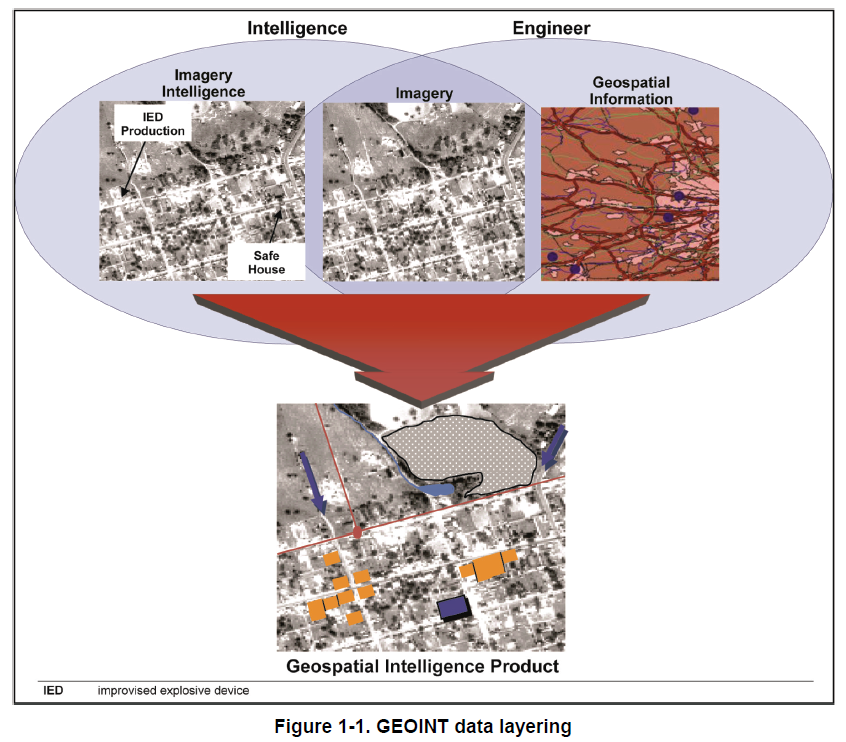
[0016] To illustrate, an exemplary ambient action may include the user eating, exercising, laughing, reading, sleeping, talking, singing, humming, cleaning, playing a musical instrument, performing any other suitable action, and/or engaging in any other physical activity during the presentation of the media content. In certain examples, the ambient action may include an interaction by the user with another user (e.g., another user physically located in the same room as the user). To illustrate, the ambient action may include the user talking to, cuddling with, fighting with, wrestling with, playing a game with, competing with, and/or otherwise interacting with the other user. In further examples, the ambient action may include the user interacting with a separate media content access device (e.g., a media content access device separate from the media content access device presenting the media content). For example, the ambient action may include the user interacting with a mobile device (e.g., a mobile phone device, a tablet computer, a laptop computer, etc.) during the presentation of a media content program by a set-top box (“STB”) device.

SECRET-DHS-FBI Suspicious Activity Reporting Bulletin: Materials Acquisition/Storage

https://publicintelligence.net/wp-content/uploads/2012/12/DHS-FBI-MaterialsAcquisition.png


ROLL CALL RELEASE

  • 1 page
  • For Official Use Only
  • August 7, 2012

Download

(U//FOUO) Terrorists overseas and in domestic attack plots have used various methods to acquire and store materials necessary to construct explosives. Najibullah Zazi, who pled guilty in 2010 to plotting to attack the New York subway system, made multiple, large-quantity purchases of chemical components needed to assemble the homemade explosive Triacetone Triperoxide (TATP)—6 bottles on one day and 12 bottles on a separate day—at beauty supply stores throughout the summer of 2009. Law enforcement and first responders should be aware that the possession, storage, or attempt to acquire unusual quantities of laboratory equipment, personal protective equipment, chemicals, and flammable accelerants—although legal to purchase and own—could provide indicators of preoperational attack planning.

(U//FOUO) The following SAR incidents reported to the NSI shared space demonstrate types of suspicious material acquisition and storage that could be indicative of preoperational activity and attack planning. While none were ultimately linked to terrorist activity, they are cited as examples for awareness and training purposes:

— (U//FOUO) A tip prompted police to search a residential property where they discovered TATP; bomb components such as fuses and pipes; laboratory equipment such as coolers and beakers; and precursor chemicals including hydrogen peroxide, acetone, hydrochloric acid, black/smokeless powder, glycerin, and aluminum powders.
— (U//FOUO) An individual contacted a home improvement store requesting to purchase 15 gallons of 35 percent food-grade hydrogen peroxide, a substance that can be used in making homemade explosives such as TATP and Hexamethylene Triperoxide Diamine.

(U) Possible Indicators of Suspicious Materials Acquisition and Storage

(U//FOUO) The following activities can indicate storage or efforts to acquire materials for potentially illicit purposes. Depending on the context—type and quantity of materials, reason for possession, personal behaviors, and other indicators— suspicious activities associated with acquisition or storage of materials should be reported to appropriate authorities.

— (U//FOUO) Individuals with signs of chemical exposure, including inhalation and skin burns.
— (U//FOUO) Non-agricultural chemical impact on foliage in close proximity of a residence or a business.
— (U//FOUO) Possession or attempts by individuals to acquire unusual quantities of materials used to produce explosives inconsistent with their stated purpose, business, or purchase history.
— (U//FOUO) Presence of precursor materials and protective/specialized handling equipment in residential dwellings or chemical containers and laboratory equipment discarded in residential neighborhoods.
— (U//FOUO) Presence of metal or plastic drums for storing chemicals, foul odors or caustic fumes coming from room or building, large industrial fans in windows at odd times of year.

(U//FOUO) Additionally, attempts to acquire official or fabricated uniforms, badges, access cards, or identification credentials or officially marked vehicles should be reported.

SECRET-U.S. Army – Marine Corps Unmanned Ground Systems Presentation


Army-Marine Corps Board (AMCB) Unmanned Ground Vehicles (UGV)

  • 34 pages
  • For Official Use Only
  • September 12, 2011

Download

Unmanned Ground Systems consist of a powered physical system with no human operator on aboard the principal platform, which can act, either operated remotely or with some degree of autonomy, to accomplish assigned tasks. Unmanned Ground Systems may be mobile or stationary, can be smart learning, self-adaptive, and includes all associated supporting components such as Operator Control Units (OCU).

Subcategories of Unmanned Ground Systems include unmanned ground vehicles (UGV), and unattended munitions and sensors.

SECRET-U.S. Army Operation Enduring Freedom Embedded Training Team Handbook

https://publicintelligence.net/wp-content/uploads/2012/11/CALL-OEF-Training.png


FIRST 100 DAYS OEF ETT HANDBOOK

  • 84 pages
  • For Official Use Only
  • August 2008

Download

This handbook is written for you, the embedded training team (ETT) member. Traditionally, this mission was reserved for Special Forces’ units or teams. With the revision of Army Field Manual 3.0, Operations, this is now a mission for general purpose forces. The Army has not yet officially designated one organization or agency as the ETT proponent; therefore, information concerning TTs circulates at all levels. This handbook has been vetted by the Joint Center for International Security Forces Assistance, 1st Infantry Division, Combined Security Transition Command-Afghanistan, and the Center for Army Lessons Learned Integration Network.

There are two key facts ETT members must consider:

• Your first 100 days in theater will set the tone for the rest of your tour.
• You will not have much time for professional reading while at the predeployment site. So, if you only read one handbook, we think it should be this one.

The subjects in this handbook are a compilation of the most important topics raised by your predecessors during in theater interviews and redeployment surveys.

Advising and Mentoring

As an embedded training team (ETT) member, you can count on playing the roles of advisor and mentor. Some of you may also be trainers.

Definitions:

• Military advisor: Soldier sent to foreign nations to aid that nation with its military training, organization, and other military tasks.
• Mentor: A trusted friend, counselor, or teacher; usually a more experienced person.

Doctrinally, ETT members conduct an advisory mission; however, within Afghanistan, the use of the term mentor is more readily used by the Afghan National Security Forces (ANSF) (e.g., Afghan National Army [ANA], Afghan National Police [ANP], etc.). An effective advisor performs not only the advisory role, but will be a mentor to his counterpart.

Mentor basics

The ANSF unit has much to gain from coalition advisors:

• Coalition funding and equipment (lethal and nonlethal)
• Coalition intelligence
• Coalition effects (lethal and nonlethal)
• Coalition training
• Operational and tactical advice

A great advisor can:

• See solutions to seemingly unsolvable problems.
• Work from the commander’s intent and guidance.
• Orchestrate events to ensure success from behind the scenes (focus on the mission versus seeking personal credit).

A great advisor must:

• Be part diplomat and part warrior.
• Stay aware of local power struggles and how they will affect his organization.
• Attempt to influence ANSF according to long-term interests rather than short-term gains.

A mediocre advisor:

• Does not understand the dynamics of rapport, credibility, and value.
• Is often reduced to liaison roles with counterparts, while liaison officers who understand these dynamics often achieve status similar to advisors or confidantes with counterparts.

Key Skill Areas for Mentoring

The ANA are skillful in:

• Dismounted patrolling
• Combined arms
• Branch-specific skills

The ANP are skillful in:

• Community-oriented policing
• Problem-oriented policing
• Evidence procedures
• Arrests

The Afghan Border Police (ABP) are skillful in:

• Search
• Border rules
• Border checkpoints

Everyone should be skillful in:

• Ethical training
• Combat lifesaver
• Targeting
• Communications
• Intelligence preparation of the battlefield
• Human intelligence
• Planning
• Orders
• Leadership
• De-escalation of force
• Systems
• Civil-military operations

Missions of an ANA Advisor/PMT

Primary missions

Mentor ANA in:

• Leadership, staff, and support functions.
• Planning, assessing, supporting, and executing operations and training.
• Doctrine, tactics, techniques, and procedures.

Provide ANA access to combat enablers such as:

• Close air support/fires.
• Medical evacuation.
• Quick reaction force (QRF).
• Redundant command and control capability.

Sustain ANA units:

• Monitor ANA pay operations and personnel
• Contract or cash purchase ANA support/sustainment
• Assist ANA forces in forecasting requirements
• Assist ANA forces in planning, developing, and executing sustainment

Other ANA support missions

School house and doctrine (Training and Doctrine Command):

• Develop and execute institutional training programs.
• Synchronize Soldier, noncommissioned officer (NCO), and officer course programs of instruction.
• Update and translate doctrinal and training publications.

Logistical support (logistics task force): Maintain and sustain ANA forces (ANA depot-level support).

Partnership program: Participants with Combined Joint Task Force-101, Combined Joint Special Operations Task Force, and International Security Assistance Force.

Police mentor team missions

Afghan Uniformed Police PMT:

• Assist and mentor the provincial Community of Police (CoP) in operating, manning, and equipping the Joint Police Command Center.
• Mentor, coordinate, monitor, and support the assigned provincial CoP efforts to conduct authorized Afghan National Auxiliary Police training, sustainment training, and opportunity training.
• Establish close coordination with the provincial reconstruction team/police technical assistance team within your area of responsibility.

Afghan Border Police PMT missions:

• Mentor ABP element in participating in the Joint Regional Command Center (JRCC) process for that headquarters (HQ).
• Mentor, coordinate, monitor, and support the assigned battalion or brigade commander efforts to conduct sustainment training and opportunity training.

Afghan National Civil Order Police (ANCOP) PMT missions:

• Mentor ANCOP element in participating in the JRCC process for that HQ.
• Provide coordination support to the ANCOP element during cross-boundary/QRF operations.

Other missions for advisor/mentors:

• Presence patrol (day and night)
• Village assessment
• Humanitarian aid
• Traffic checkpoint
• Eradication of suspected or known enemy positions
• Drug eradication
• Cordon and search for weapon cache
• High value target force protection and security escort
• Route/area security
• Joint operation
• Route/area reconnaissance
• Threat investigation

SECRET-National Geospatial-Intelligence Agency Student Guide

https://publicintelligence.net/wp-content/uploads/2012/11/NGIA-HumanGeography.png


The following document on the incorporation of human terrain into geographic intelligence analysis was posted earlier this month to the document sharing website Scribd.


National Geospatial-Intelligence College

  • Version 1.6
  • 157 pages
  • September 12, 2011
  • 5 MB

Download

This course provides an overview of incorporating Human Geography into GEOINT at NGA, with the intention of providing a foundation of the knowledge, skills, and application capabilities for the NGA GEOINT analyst. By the end of the course, you will:

• Understand the relevance and need to incorporate Human Geography into GEOINT
• Be familiar with Human Geography concepts and data
• Be able to apply the NGA workflow process, including Human Geography data needs, acquisition, and challenges

Human Terrain Defined

Incorporating Human Geography into GEOINT can be used to support efforts to understand the human terrain. But what is ‘human terrain’?

One definition describes human terrain as “the social, ethnographic, cultural, economic, and political elements of the people among whom a force is operating.”

Human terrain is not a new concept; the need for understanding the behavior of adversaries and their culture, as well as that of the local populations with whom our military forces, diplomats, and aid organizations work, has been identified before: General Petraeus noted that “You have to understand not just what we call the military terrain… the high ground and low ground. It’s about understanding the human terrain, really understanding it.”

• World War II / Korea
• JANIS: Joint Army Navy Intelligence Studies
• Vietnam
• Hamlet Evaluation System
• Attempt to measure the socio-economic, political, security conditions in a COIN environment

HT Analysis (HTA) is an evolving concept, and is often modified to meet specific organizational needs, requirements, and missions.

(U) Current efforts and challenges include creating a:

• Standardized doctrine
• Centralized database
• Shared lexicon
• Single HTA qualification course
• Product standardization
• Workflow methodology

Efforts to develop and implement greater understanding of the ‘human terrain’ across the IC include:

• Defense Intelligence Agency
• DISCCC: Defense Intelligence Socio-Cultural Capabilities Council
• Human Factors Analysis Division
• US Combatant Commands
• Human Terrain Analysis Team
• Cultural and Human Environment Team
• US Special Operations Command
• National Air and Space Intelligence Center
• Service Intelligence Centers

Goal for NGA

“Create new value by broadening and deepening our analytic expertise. By providing deeper, contextual analysis of places informed not only by the earth’s physical features and imagery intelligence, but also by ‘human geography’.”

GEOINT is synonymous with a deep contextual understanding of places…of locations on the Earth. This understanding is informed by:

• what we know about the Earth’s physical features
• what structures people build
• how people use those structures – their activities
• human geography – data and information that can be understood spatially and depicted visually that further deepens and enriches our understanding of a “place.”

SECRET-UNODC Afghanistan Opium Survey November 2012

https://publicintelligence.net/wp-content/uploads/2012/11/AfghanOpiumSurvey2012.png


Afghanistan Opium Survey 2012

  • 28 pages
  • November 2012

Download

Despite the eradication of opium poppy by Governor-led Eradication (GLE) having increased by 154% in comparison to its 2011 level (9,672 hectares eradicated in 2012), the total area under opium poppy cultivation in Afghanistan was estimated at 154,000 hectares (125,000 – 189,000) in 2012.

While that represents a 18% increase in cultivation, potential opium production was estimated at 3,700 tons (2,800 – 4,200 tons) in 2012, a 36% decrease from the previous year. This was due to a decrease in opium yield caused by a combination of a disease of the opium poppy and adverse weather conditions, particularly in the Eastern, Western and Southern regions of the country.

The high level of opium prices reported in 2011 was one of the principal factors that led to the increase in opium poppy cultivation in 2012. However, while opium prices remained high during 2012 there was some decline in all regions of the country, though differences between regions became more and more pronounced.

The vast majority (95%) of total cultivation took place in nine provinces in Afghanistan’s Southern and Western regions,6 which include the most insecure provinces in the country. Opium cultivation increased in most of the main opium poppy-growing provinces, including Farah, Nangarhar, Badghis and Nimroz, whereas cultivation remained stable in Uruzgan and decreased by 11% in Kandahar, the second most important poppycultivating province between 2009 and 2011.

Opium cultivation rose by 19% in Hilmand which, with 75,176 hectares or 49% of total opium cultivation in 2012, remained the largest opium-cultivating province in Afghanistan. However, a separate estimate was also available for the Hilmand “Food Zone” alternative livelihood project 8 , which showed that relatively less poppy is cultivated within the food zone than outside it.

Opium cultivation also increased in the Eastern region where it rose significantly in Kunar (121%), Kapisa (60%) and Laghman (41%) provinces. However, the Eastern region contributed only 4% to the national total of opium production in 2012. In the Northern region, opium cultivation increased by 10% in Baghlan province despite the eradication of 252 hectares in 2012.

SECRET-DHS Social Media Monitoring and Situational Awareness Initiative Privacy Compliance Review

The following privacy review of the DHS National Operations Center Publicly Available Social Media Monitoring and Situational Awareness Initiative was released November 8, 2012.  This website has been listed in three of the four publicly available privacy impact assessments for the program as an example of a website monitored by DHS.

Privacy Compliance Review of the NOC Publicly Available Social Media Monitoring and Situational Awareness Initiative

  • 25 pages
  • November 8, 2012

Download

The Office of Operations Coordination and Planning (OPS), National Operations Center (NOC), has statutory responsibility to (1) provide situational awareness and establish a common operating picture for the federal government, and for state, local, and tribal governments as appropriate, in the event of a natural disaster, act of terrorism, or other man-made disaster, and (2) ensure that critical terrorism and disaster-related information reaches government decisionmakers. Traditional media sources and, more recently, social media sources such as Twitter, Facebook, and a vast number of blogs provide public reports on breaking events with a potential nexus to homeland security. By examining open source traditional and social media information, comparing it with many other sources of information, and including it where appropriate into reports, the NOC can provide a more comprehensive picture of breaking or evolving events.

In January 2010, to help fulfill its statutory responsibility to provide situational awareness and to access the potential value of public information within the social media realm, the NOC launched the first of three Media Monitoring Capability (MMC) pilots using social media monitoring related to specific incidents and international events. The NOC pilots occurred during the 2010 Haiti earthquake response, the 2010 Winter Olympics in Vancouver, British Columbia, and the response to the 2010 Deepwater Horizon BP oil spill. Prior to implementation of each social media pilot, the DHS Privacy Office and OPS developed detailed standards and procedures for reviewing information on social media web sites. A series of pilotspecific Privacy Impact Assessments (PIA) document these standards and procedures. In June 2010, the Department released its Publicly Available Social Media Monitoring and Situational Awareness Initiative PIA, which incorporated these protections. OPS/NOC and PRIV subsequently updated the PIA in January 2011, and published a Privacy Act System of Records Act Notice (SORN) on February 1, 2011, to allow for the collection and dissemination of personally identifiable information (PII) in a very limited number of situations in order to respond to the evolving operational needs of OPS/NOC.

As of January 2011, the NOC may include PII on seven categories of individuals in an Item of Interest (hereinafter MMC Reports or Reports) when doing so lends credibility to the report or facilitates coordination with interagency or international partners. The seven categories as identified in the SORN are: “(1) U.S. and foreign individuals in extremis, i.e., in situations involving potential life or death circumstances; (2) senior U.S. and foreign government officials who make public statements or provide public updates; (3) U.S. and foreign government spokespersons who make public statements or provide public updates; (4) U.S. and foreign private sector officials and spokespersons who make public statements or provide public updates; (5) names of anchors, newscasters, or on-scene reporters who are known or identified as reporters in their posts or articles, or who use traditional and/or social media in real time to provide their audience situational awareness and information; (6) current and former public officials who are victims of incidents or activities related to homeland security; and (7) terrorists, drug cartel leaders, or other persons known to have been involved in major crimes of homeland security interest, who are killed or found dead.”

As documented in the January 2011 PIA Update, the NOC does not: (1) actively seek PII; (2) post any information on social media sites; (3) actively seek to connect with individuals, whether internal or external to DHS; (4) accept invitations to connect from individual social media users whether internal or external to DHS; or (5) interact with individuals on social media sites.

Privacy Compliance Reviews (PCR) are a key aspect of the layered privacy protections built into this initiative to ensure protections described in the PIAs are followed. Since the June 2010 PIA publication, PCRs have been conducted bi-annually. The DHS Privacy Office conducted this fifth PCR to assess compliance with the January 2011 PIA Update and February 2011 SORN. To address this objective, the DHS Privacy Office developed a questionnaire, interviewed OPS/NOC officials and analysts on issues raised by the NOC’s responses to the questionnaire, analyzed OPS/NOC guidance and standard operating procedures (SOP), and reviewed selected MMC Reports for compliance with the 2011 PIA Update.

SECRET – Minnesota Police Investigation of Officers Providing Drugs to Occupy Protesters

The following document contains files related to the Minnesota Bureau of Criminal Apprehension’s investigation into allegations that law enforcement officers participating in Drug Recognition Evaluator (DRE) courses provided drugs to sober people they had picked up from Peavey Plaza in downtown Minneapolis where protesters connected with Occupy Minnesota had been located since April 2012.  The officers then used the intoxicated subjects for their training course, sometimes providing them with rewards like food or cigarettes, and then returned them to the Plaza. Though the investigation confirms many aspects of the story and a Sheriff’s Deputy admitted to the DRE course instructor that he had witnessed his partner in the course providing marijuana to subjects, the Minnesota Bureau of Criminal Apprehension found that there was insufficient evidence to sustain charges and obtain convictions against any of the officers involved. This was partly due to the fact that 29 former officers and employees associated with the program refused to testify, blocking the investigation. For more information on the file, see Dan Feidt’s article on the documents and watch the video report he helped produced in May 2012 which played a significant role in raising public awareness of the issue and spurring the investigation.

Minnesota Bureau of Criminal

Apprehension Drug Recognition Evaluator Investigation

  • 513 pages
  • September 2012
  • 74.43 MB

Download

The Bureau of Criminal Apprehension (BCA) has investigated allegations of law enforcement officers providing controlled substances to individuals as part of a drug recognition certification program. The investigation appeared to be professional and comprehensive. We have reviewed the allegations and for the reasons identified below have concluded that there is insufficient evidence to issue felony charges in this matter.

Background

The Drug Recognition Evaluator (DRE) course provides important training to law enforcement officers in Minnesota and throughout the country. DRE train officers to accurately identify specific drug impairment and, by observation, the characteristics and behaviors of drug impaired drivers. DRE helps officers detect and apprehend drug impaired drivers who endanger the public.

During April and May of 2012 the State Patrol conducted Drug Recognition Expert (DRE) training for law enforcement officers throughout Minnesota. The course began on April 2, 2012 with two weeks of classroom training. The classroom training occurred in White Bear Lake.

The classroom training was followed by certification training, which required students to go out into the streets to find people under the influence of drugs and evaluate them. The officer students were then supposed to persuade these individuals to voluntarily accompany them to a Richfield training facility where they would provide a urine sample. This sample would then be tested to determine whether the participant was impaired as the officer had believed, and if so, what drug had been ingested. To encourage cooperation, officers never recorded participants true names.

Source of Allegations

On May2, 2012 allegations were made in the local media that DRE officers were not just seeking already “high” people to participate in testing. Allegations were that officers were providing controlled substances to sober people so that they could become “high” and then participate in testing. One individual, Forest Oliver, claimed that he had participated three times in the DRE testing and DRE officers had given him marijuana on each occasion. Some of these allegations had appeared in previous days on YouTube.

In response to these allegations, instructors asked their class whether they had engaged in such conduct or had heard of any classmates doing so. They emphasized that DRE students should not provide potential test participants with controlled substances.

No DRE officer admitted in class to knowledge of such conduct. However, after class that day on May 3, 2102, Chisago Deputy Sheriff Andrew Mahowald told head instructor State Patrol Sgt. Ricardo (Rick) Munoz that he had witnessed his DRE partner, Hutchinson Officer Karl Willers, provide marijuana to test subjects. Mahowald coming forward with this information ultimately led to Hutchinson Police Chief Hatten requesting a BCA investigation of allegations regarding Hutchinson officers.

SECRET – DHS-FBI Bulletin: Cyanide Awareness

https://publicintelligence.net/wp-content/uploads/2012/11/DHS-FBI-CyanideAwareness.png


FIRE LINE INTELLIGENCE FOR FIRE, RESCUE, AND EMS

  • 1 page
  • For Official Use Only
  • October 31, 2012

Download

(U//FOUO) Terrorist groups, including al-Qa‘ida, and violent extremists have considered using or have possessed cyanide compounds. Cyanides probably appeal to terrorists because of their toxicity, availability, and ease of dissemination. Some of the cyanide tactics that have been considered by terrorists include mixing it with oils and lotions for use as a contact poison, contaminating food or water supplies, or by using it in an improvised chemical dispersal device.

— (U//FOUO) In June 2011, Indonesian police arrested eight men who possessed and planned to use cyanide to poison food at police station cafeterias in several Indonesian cities.

— (U//FOUO) In October 2010, al-Qa‘ida in the Arabian Peninsula published its second English-language edition of Inspire Magazine with an article encouraging its supporters in the United States to acquire simple poisons such as cyanide and use them in attacks.

(U) Awareness of cyanide’s physical properties and symptoms of cyanide exposure, combined with suspicious activity reporting, can help disrupt potential attack plots and protect first responders.

(U) Indications of the Presence of Cyanide:

(U//FOUO) Cyanide gases can be colorless and lighter than air (hydrogen cyanide) or a dense, choking gas that burns the victim’s eyes (cyanogen chloride).
(U//FOUO) Cyanide salt can be a white to pale yellow in color and could be in a powder, tablets, or briquettes form.
(U//FOUO) First responders may encounter cyanide products in facilities where commercial applications occur such as in the metal plating and jewelry industries.

(U) Symptoms of Cyanide Exposure:

(U//FOUO) High Dose Gas Exposure: Inhalation usually causes loss of consciousness, followed by convulsions and respiratory and cardiac system failure within 5 to 15 minutes of exposure. Death occurs mainly from cardiac arrest.
(U//FOUO) Low-to-Moderate Dose Gas Exposure: Inhalation causes symptoms that mimic poisoning from other toxic compounds, including giddiness, hyperventilation, palpitations, dizziness, nausea, vomiting, headache, and eye irritation. Low-to-moderate exposure can be treated if done quickly. The chance of fatality is proportional to dose.
(U//FOUO) Skin Exposure: Cyanide is unlikely to pose a dermal hazard; exposed skin should be washed with water.
(U//FOUO) Ingestion: The results of an attempt to poison food or water supplies would depend on many factors, including the cyanide compound used and point of contamination.

(U//FOUO) First Responder Information:

(U//FOUO) When any chemical release is suspected, first responders should follow department hazardous materials guidelines for isolating the area, denying entry, identifying the agent, and decontamination. If cyanide release is suspected, a hazardous material team should be mobilized.
(U//FOUO) First responders routinely encounter hydrogen cyanide as a by-product of combustion; follow established protocols for the treatment of any potential exposure to cyanide.

SECRET – U.S.-China Economic and Security Review Commission Analysis of Chinese Investments in the U.S. Economy

https://publicintelligence.net/wp-content/uploads/2012/11/USCC-ChineseFDI.png


U.S.-China Economic and Security Review Commission Analysis of Chinese Investments in the U.S. Economy

  • 156 pages
  • October 2012

Download

Once hardly noticeable, Chinese investments in U.S. companies are now rising sharply. Cumulative Chinese investments in U.S. companies remain modest compared to those of other major countries. However, a combination of “push and pull” factors are moving China’s annual investment levels closer to levels consistent with China’s current economic stature.

First, the Chinese government has made a conscious decision to diversify its foreign currency assets into hard assets. This has led to the creation of sovereign wealth funds that make portfolio investments in U.S. equities, private firms, and real estate.

Second, the Chinese government has altered its policy guidance toward foreign direct investment (FDI). Whereas it previously encouraged investments almost exclusively toward energy and resource acquisition in developing countries, it now also encourages investments in advanced countries. The government’s goals for these investments include securing energy and mineral resources and acquiring advanced technologies in industries where China wishes to leapfrog existing competitors.

Third, U.S. state governments and, to a lesser extent, the federal government are vigorously trying to attract Chinese greenfield investments in the hope of creating jobs and jump-starting local economies.

Fourth, Chinese investments are being drawn to the United States by the availability of financially weak firms, some of which possess potentially useful technologies for China.

Fifth, some firms that are already competitive with U.S. producers are investing to enhance their U.S. market shares or in response to trade remedies proceedings against unfair trade practices, such as Chinese subsidies.

Economic Benefits

On an aggregate basis, the economic benefits of Chinese investments in the United States have been modest. The precise benefit is difficult to measure due to the convoluted ownership structures of many Chinese investments and the time lags in official U.S. data. Still, based on a combination of official and private data, it is reasonable to conclude that jobs in Chinese-owned companies in the United States increased by 10,000 to 20,000 workers during the past five years.

While hardly significant relative to overall U.S. employment and even to jobs in other countries’ U.S. affiliates, any job creation is welcome given continued slackness in the U.S. labor market.

Chinese FDI in U.S. companies has helped stabilize some financially troubled firms. Portfolio investments by sovereign wealth funds also have helped the economy by solidifying the financial system and providing liquidity to certain property markets.

Chinese investments have occurred in all U.S. regions and in many sectors. According to one private data source, they have been especially prominent since 2007 in the Southwest, Great Lakes, Southeast, and Far West regions, and in the fossil fuels and chemicals, industrial machinery, and information technology industries. According to another private source, as well as government data, the financial sector is also a major recipient of Chinese FDI.

Policy Challenges

These welcome, though still modest, economic benefits are counterbalanced by policy challenges tied to Chinese FDI. First, U.S. affiliates of Chinese companies are not pure market actors and may be driven by state goals, not market forces. China’s outward investments are dominated by state-owned and state-controlled enterprises (SOEs). These entities are potentially disruptive because they frequently respond to policies of the Chinese government, which is the ultimate beneficial owner of U.S affiliates of China’s SOEs. Likewise, the government behaves like an owner, providing overall direction to SOE investments, including encouragement on where to invest, in what industries, and to what ends.

Second, SOEs may have unfair advantages relative to private firms when competing to purchase U.S. assets. SOEs benefit from substantial subsidies in China and their investments in developing countries also receive ample financial support from the national and sub-national governments, state-owned financial institutions and local governments. Government pronouncements out of China suggest that investments in the United States and other advanced countries will also receive ample financial support. This raises the possibility that Chinese largesse could determine market outcomes for purchases of U.S. businesses.

Third, an increased SOE presence may be harmful to the U.S. economy. In China, SOEs are a major force but as a group they are less efficient and profitable than private firms. To the extent that SOEs purchase U.S. companies on the basis of artificial advantages and operate inefficiently, they may not be beneficial to long-term U.S. economic performance.

Fourth, Chinese investments will create tensions related to economic security and national security if they behave in accordance with China’s industrial policy as articulated in the 12th Five Year Plan, government pronouncements, and official investment guidance. China’s current policy guidance directs firms to obtain leapfrog technologies to create national champions in key emerging industries, while investment guidance encourages technology acquisition, energy security, and export facilitation. Based on this juxtaposition, some will conclude that Chinese FDI in the United States is a potential Trojan horse. Indeed, this study describes three investments in new energy products after which production utilizing the desired technology was shifted to China.
Other Findings

U.S. data collection efforts related to FDI are substantial. However, they likely undercount Chinese FDI due to the complicated ownership structures of many Chinese investments. Moreover, although Chinese-owned companies report their data to the U.S. government, many data points are not publically disclosed due to standard U.S. reporting procedures that protect the identities of individual firms. This issue will resolve itself in the coming years if Chinese FDI grows as expected because limits on disclosure will no longer apply.

The United States is relatively open toward FDI, though there are some sectoral restrictions and a national security review undertaken by the Committee on Foreign Investment in the United States (CFIUS). There are a host of laws that subject foreign investors to rules on antitrust, foreign corrupt practices, and trade in arms and sensitive technology products. However, there is no procedure that explicitly considers issues related to economic security, one of the major concerns about Chinese FDI.

Portfolio investments in equities fall under the purview of the Securities and Exchange Commission (SEC). SEC disclosure requirements and practical considerations make it highly unlikely that Chinese SOEs could successfully collude to accumulate significant equity positions in important U.S. firms.

Reverse mergers offer a back door into U.S. capital markets but are not an effective way to acquire important U.S. assets. Indeed, the target of a reverse merger is typically a shell company devoid of meaningful assets. This technique is typically used by private firms that have difficulty accessing capital in China or by provincial SOEs trying to support restructuring efforts in China. There is no indication that any major SOE has used or plans to use this technique to enter the U.S. capital market.

The Chinese legal and regulatory framework for outward FDI requires approvals by three agencies at sub-national and/or national levels. For SOEs, the primary gatekeeper is the State-owned Assets Supervision and Administration Commission (SASAC), though for some investments approval from the State Council is required. The process is widely considered to be cumbersome and is being reformed to facilitate outward FDI.

Unveiled by Cryptome – Erik Prince and Retired FBI

A sends:


Erick Prince and FBI Retired Special Agents

[Image]
[Image]
[Image]
[Image]
[Image]
[Image]
[Image]
[Image]
[Image]
[Image]
[Image]
[Image]
[Image]
[Image]
[Image]
[Image]
[Image]
Ellen Glasser
8111 San Rafael Dr.
Jacksonville, Florida 32217
Home: (904) 619-1956 Cellular: (904) 472-6262OBJECTIVE: Applicant seeks part-time or fulltime position, using expertise in guidance, character education, security, or related area.

BACKGROUND:

Date of Birth: 02/24/56
Current Employment: Retired
Other: Parent of Nelle Glasser (Class of 2010)
Parent of Harry Glasser (Class of 2014)

EDUCATION:

1977 A.B. Duke University (Psychology)
1979 M.Ed. Duke University (Counseling)
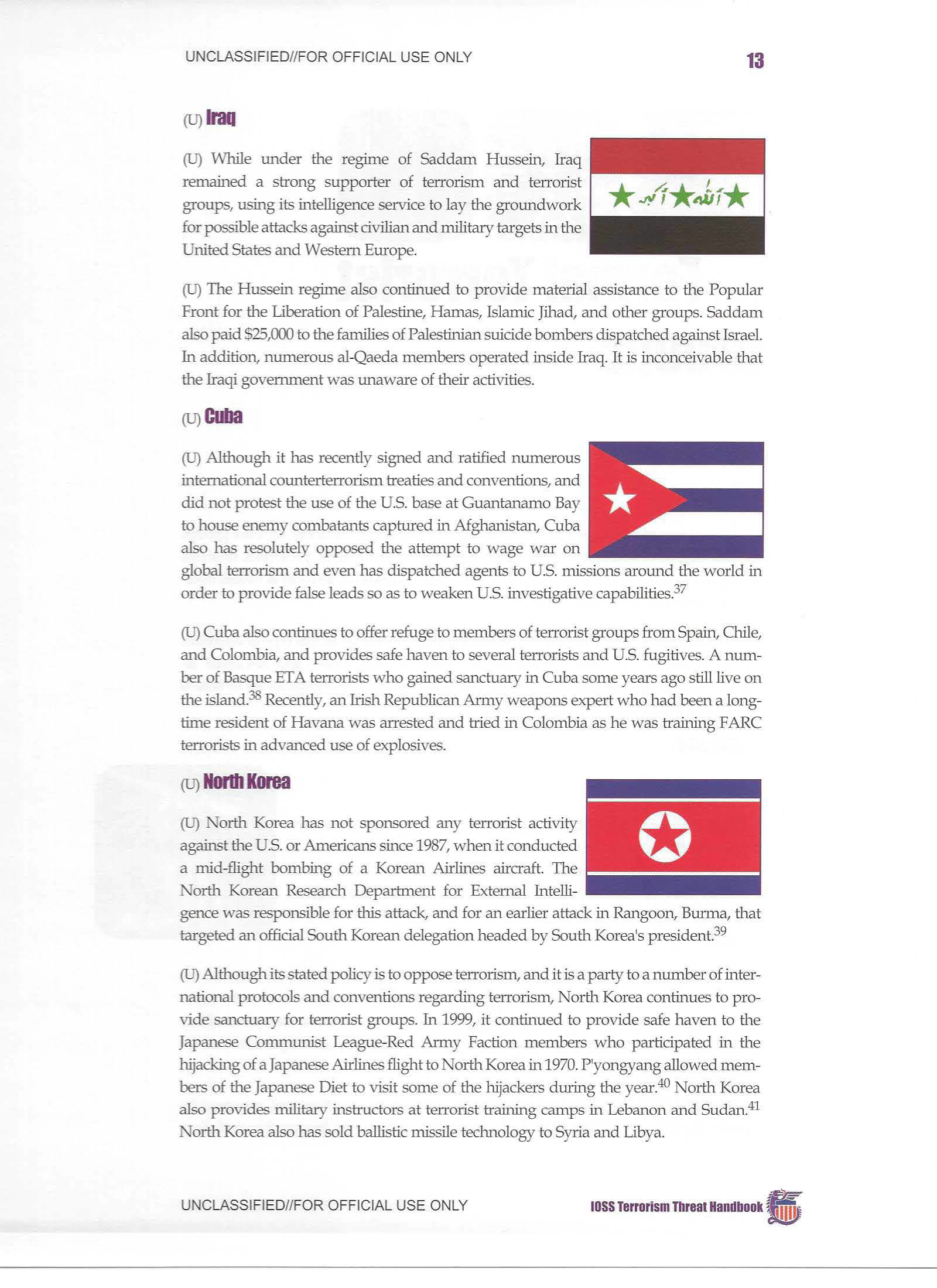
2006 Second Career as a Teacher (SCAAT) Program, Jacksonville University
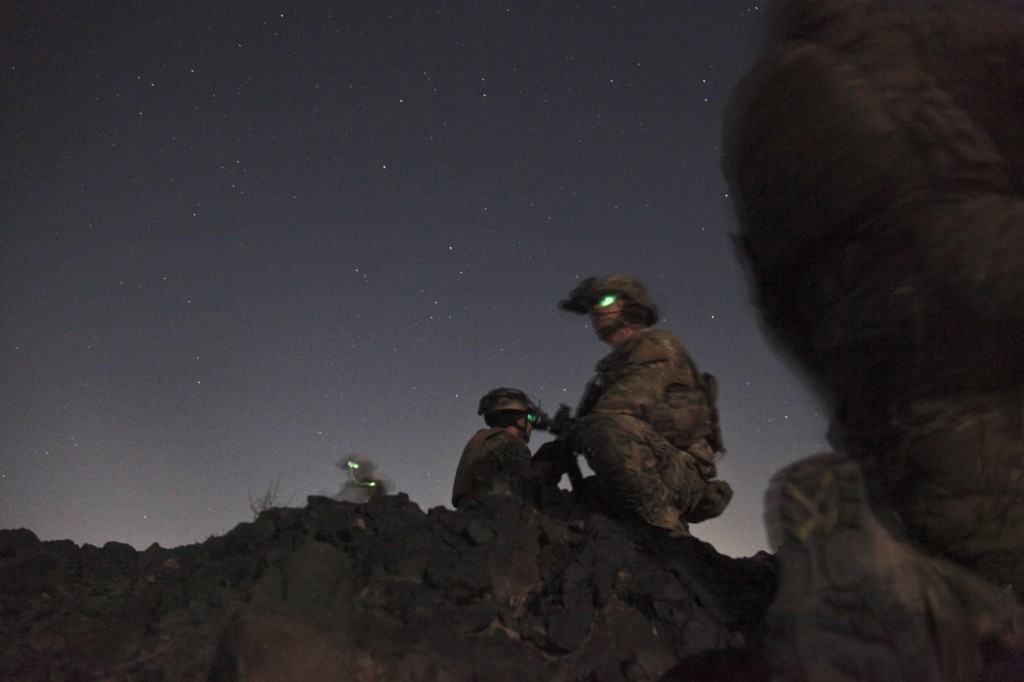
2008-Present Ed.D. Doctoral Candidate, UNF (Educational Leadership)

WORK EXPERIENCE:

1977-1982 State of North Carolina, Probation-Parole Officer
Drug/Alcohol/Juvenile Case Officer

1982-2006 Federal Bureau of Investigation (FBI)
Special Agent & Supervisory Special Agent
Numerous duty assignments in the U.S.

2006-2007 Substitute Teacher
Jacksonville, Florida

2008-2009 Research Assistant, Florida Institute of Education
Jacksonville, FL

2009-Present Freelance Security Consultant
Jacksonville, FL

HIGHLIGHTS, WORK EXPERIENCE:

1986 – 1990 Case Agent, Iran-Contra Investigation
Washington, D.C.

1990 – 1993 Supervisor, Congressional Liaison, National Press Spokesperson
Washington, D.C.

1993 – 1996 Supervisor, Western Washington State
Tacoma, Washington

1996 – 1999 Supervisor, Violent Crimes Program
Seattle, Washington

1996 – 1999 Key FBI Agent in numerous high profile bank robbery, homicide, and extortion investigations

1999 – 2006 Foreign Counterintelligence;
Coordinator, North Florida Joint Terrorism Task Force
Jacksonville, Florida

MISCELLANEOUS:

1975 – 1977 President, Duke Outing Club
1986 – 1993 Executive Member, National Police Week Committee
1994 – 1999 Sunday School Teacher
1996 – 1999 Coordinator, Race Against Drugs School Program
2005 FBI Special Assignments @ Riyadh, Saudi Arabia & New Orleans
2006 Participant, American Lung Association, Big Ride Across America
2007-2011 Community Development Board, Atlantic Beach
2008-Present Family Selection, Beaches Habitat
2009-Present Resource Allocation, United Way
2009-Present Vice Chair, Florida Crown Chapter, ex-FBI
2010-2011 UNF Doctoral Steering Committee
2010-Present Commissioner, Mayor’s Commission on the Status of Women
2010-Present National Secretary, Society of Former Special Agents of the FBI

OTHER:

Numerous awards and commendations. Details are available on request.

Specialized Training: Crisis Management, Sensitivity & Diversity, Police Instructor, Critical
Incident, Peer Support, Interviewing, Recruiter, Drug Officer, Security Management

Have passed General Knowledge, Professional Education, and Social Science tests

[Image]
[Image]

SECRET – DHS U.S.-Canada Marine Transportation System Terrorist Threat Assessment

https://publicintelligence.net/wp-content/uploads/2012/11/DHS-MarineTransportation.png


United States-Canada Marine Transportation System: Terrorist Threat Remains Low but Risks Persist

  • 28 pages
  • For Official Use Only
  • April 11, 2011
  • 3 MB

Download

(//CAN U) This Assessment examines terrorist threats to the Marine Transportation System (MTS) relevant to the U.S. and Canadian maritime borders, and updates unclassified judgments from the 2007 Canadian Integrated Threat Assessment Centre (ITAC) product, “(//CAN U) Terrorist Threat to the Canadian Maritime Sector,” and the 2008 USCG Intelligence Coordination Center product, “(U//FOUO) National Maritime Terrorism Threat Assessment.” The information is provided in support of the activities of the Department and to assist federal, state, and local government counterterrorism and law enforcement officials in effectively deterring, preventing, preempting, or responding to maritime terrorist attacks against the United States and Canada.

(U//FOUO) This document provides an updated baseline for MTS threats to support the activities of the Department and assist other federal, state, and local government agencies and authorities; the private sector; and other entities, both in implementing joint U.S. and Canadian strategies for northern border security. Moreover, it assists the Department and other federal, state, and local government agencies and authorities; the private sector; and other entities in developing priorities for protective and support measures to address existing or emerging threats to the homeland related to maritime border security.

(U) Key Findings

(U//FOUO) While passenger vessels and terminals will likely remain potentially attractive targets for terrorist attacks, trends in overseas terrorist attacks and the lack of any reporting on maritime terrorist plots against the U.S.-Canada MTS suggests the threat to the majority of the system is low; violent extremists could attack U.S. and Canadian ferries and similar soft maritime targets with little or no warning.

— (U//FOUO) The capabilities of al-Qa‘ida and its sympathizers to conduct small boat waterborne improvised explosive device (WBIED) attacks against the U.S.-Canada MTS probably remain limited. When compared to other tactics, maritime attacks by al-Qa‘ida or its affiliates are rare and have only occurred in the Middle East and East Asia.† The transferability of this tactic to North America would be problematic given MTS governance and law enforcement that create a less permissive maritime environment.

— (U//FOUO) Terrorists probably would be reluctant to use containerized cargo to smuggle weapons of mass destruction (WMDs) into the United States or Canada because the loss of physical control of a valuable weapon would likely pose an unacceptable intervention risk. Nonetheless, this threat remains a low-probability, high impact scenario. We judge that terrorists would seriously consider other maritime means, such as small boats and bulk cargo shipments, to smuggle any available WMD or to conduct related waterside attacks in the United States or Canada if they had the opportunity. This judgment is primarily based on expert opinions from DHS officials, as well as assertions put forth by the Monterey Institute Center for Nonproliferation Studies and other academic or nongovernmental organizations.

(U//FOUO) Ferries and other passenger vessels remain vulnerable targets for terrorist attack. Although we have no credible reporting that any U.S. or Canadian ferry systems are the target of ongoing terrorist plotting, concerns are elevated because of the focus by al-Qa‘ida and its affiliates on attacking soft targets to cause mass casualties, the growth of internationally inspired and homegrown violent extremist (HVE) threats, and the paucity of preoperational indicators for ferry attacks. Moreover, terrorists might target ferries as a way to compensate for the increasing security measures protecting the aviation sector.

(U//FOUO) Past terrorist successes involving use of toxic industrial chemicals (TICs) in overseas conflicts may encourage attackers to attempt to weaponize large hazardous materials (HAZMAT) shipments moved in the MTS each day. Violent extremists have a limited ability to produce small improvised chemical weapons, but experimentation with these HAZMAT concoctions may eventually result in an evolutionary development of greater attack capabilities.

(U//FOUO) Terrorists and criminals almost certainly will continue their efforts to exploit the MTS to facilitate illegal entry of personnel or other criminal activities. Immigration and mariner document fraud, smuggling, and criminal activities along the waterfront require continuous law enforcement vigilance. Illicit actors may attempt to increase their circumvention of maritime security in North America because of enhanced land border security and air passenger screening.

(U//FOUO) Cyber attacks—regardless of motivation—will continue to represent only a marginal threat to automated ships and port facilities in North America, largely because of the complexity required for a successful attack. A paucity of information regarding such threats remains an enduring intelligence gap. Still, concerns related to maritime supply chain disruption perpetrated by disaffected employees or other insiders—particularly those with system administrator access—are the most frequently voiced by private sector security officials.

(U) MTS Overview and Vulnerabilities

(U//FOUO) The U.S.-Canada MTS consists of ocean, coastal, and inland waterways; ports; intermodal connections; vessels; and commercial, military, and recreational users. The system stretches from the Great Lakes-Saint Lawrence Seaway System—also known as the Great Lakes Marine Transportation System (GLMTS) westward—to the Pacific Ocean along the U.S.-Canada border.

— (U) Over 1.5 million passengers arrive in Canada annually, largely from the United States, and Canada’s ports handle a rapidly growing number of cruise ships.

— (U) Besides its ports, Canada also has 10 international ferry terminals, 19 interprovincial terminals, and nearly 300 intraprovincial terminals providing vital links both within and between the provinces. In 2008, Canada’s ferries carried more than 48 million passengers and approximately 18.3 million vehicles.

— (U//FOUO) According to TSA, more than 20,000 passenger vessels—including ferries, casinos, and harbor excursion vessels—carry more than 175 million passengers each year in U.S.-Canada waters.

(U//FOUO) The GLMTS is the heart of the U.S.-Canada MTS. The GLMTS is a vital binational waterborne transportation link for moving goods and people. The system encompasses the Saint Lawrence River and the five Great Lakes, and extends over 2,300 miles, encompassing eight states and two provinces with over 32 million citizens. The region produces 50 percent of all U.S. manufacturing output and two-thirds of Canada’s. This waterway is expected to increase in importance over this decade as both countries seek ways to ease highway and rail congestion, especially along North America’s east and west coasts and the midwest region.

SECRET – Central Florida Intelligence Exchange Unoccupied Ambulance Thefts Analysis

https://publicintelligence.net/wp-content/uploads/2012/11/CFIX-AmbulanceThefts.png


Central Florida Intelligence Exchange Nationwide Analysis: Increasing Trend of Unoccupied Ambulance Thefts

  • 7 pages
  • For Official Use Only
  • October 10, 2012

Download

(U//FOUO) The Central Florida Intelligence eXchange (CFIX) recently received a brief from the Arizona Counter Terrorism Information Center (ACTIC – TLO Program) that included a report of a stolen ambulance in Phoenix, AZ. At the request of an Intelligence Liaison Officer (ILO) in the Central Florida region (R-5 Hospital/Medical Sector), CFIX was asked to collect, research, analyze and develop a ‘Situation Brief’ based on this report to determine if this was a significant trend that could cause concern for Region 5 partners.

CASE STUDIES:

Chicago, (IL) – On October 09, 2012, a man took off in an ambulance parked in front of a hospital in Berwyn and drove 10 miles before being stopped by police. He stole the ambulance while paramedics assisted hospital staff with a patient. Two paramedics were suspended and may face disciplinary action for leaving the ambulance unattended and the keys inside. (Source: Chicago Tribune)

Tulsa, (OK) – On October 01, 2012, as paramedics were on a medical call at an apartment complex, an intoxicated man jumped in the ambulance and attempted to back up hitting three vehicles. Paramedics pulled him out of the driver’s seat. The man tried to run but paramedics held him until law enforcement arrived. He was arrested and booked into the Tulsa County Jail. (Source: KJRH News)

Phoenix, (AZ) – On September 21, 2012, a 26-year-old female (pictured below) stole an ambulance that was left running in front of a Phoenix hospital. An on-duty reserve officer spotted the ambulance; however, the suspect refused to stop. Officers also tried to negotiate using the ambulance radio. Officers finally stopped her by blocking the roads creating a barricade with their vehicles where she was arrested and taken into custody. (Source: ACTIC)

Monroe County, (FL) – On September 02, 2012, a 22-year-old suspect was arrested and charged after jumping into an ambulance and taking off. Officers spotted and pursued the ambulance that had its lights on but no siren after receiving reports that it was stolen. The suspect admitted to stealing the ambulance to gain attention from law enforcement after she was unable to locate her friend. (Source: Firehouse.com)

Dallas, (TX) – On August 26, 2012, a man stole an ambulance after paramedics left the engine idling as they searched for an injured person in an apartment complex. They never found the 9-1-1 caller and when they returned the ambulance was gone. Police tracked the vehicle back to the suspect, where he was arrested and charged. A pair of crutches and a backpack that did not belong to paramedics were also found inside the ambulance. (Source: dallasnew.com)

[Analyst Comment: Although officials from Dallas have not confirmed if the 9-1-1 caller was the same individual who stole the ambulance, paramedics and EMTs should be vigilant and aware of this activity, to prevent a crime of opportunity from occurring.]

Montgomery County, (PA) – On July 26, 2012, a suspect was caught on dashboard surveillance video (pictured right) after he jumped into an ambulance and drove off as EMTs were preparing to transport a patient to the hospital. Responder lights were still activated as the suspect prompted traffic to move and passed through the red lights. The suspect was able to monitor police transmissions with the radio equipment that was mounted in the ambulance console to avoid law enforcement. Law enforcement later found the ambulance abandoned in an apartment complex parking lot. (Source: ABC News)

Killeen, (TX) – On June 21, 2012, a man was arrested and charged for stealing an ambulance while paramedics were inside a residence responding to an emergency call. Shortly after the paramedics noticed the ambulance missing, the suspect came back to the residence, stepped out and walked away stating he just wanted to take a “joyride” in an ambulance. The suspect was arrested at the
scene. (Source: KWTX.com)

Savannah, (GA) – On June 8, 2012, while under police supervision at a Georgia hospital, a man assaulted a deputy, stole an ambulance and led police on a low-speed pursuit. The suspect struggled with the deputy, attempted to remove a gun from his holster, climbed into an unlocked ambulance and then drove away. The officers attempted to stop the suspect by using stop sticks which flattened three tires, while the ambulance hit vehicles along the way. Patrol cars were also damaged, but no one was injured. (Source: WFMY News)

ANALYSIS:

(U//FOUO) In all of the ambulance theft cases analyzed in this brief, similar pre-incident indicators were identified. All of the documented cases had one or more of the following commonalities:

  • The ambulance was left unattended;
  • Keys were left in the ignition;
  • The ambulance was left running;
  • Many of the thieves were under the influence of drugs or alcohol; and
  • Most thefts occurred while on scenes or parked on ambulance ramps at hospitals

IMPLICATIONS:

(U//FOUO) Although the cases included in this brief did not transpire within the Central Florida region, it implies that ambulance thefts could potentially occur in any jurisdiction where hospitals or ambulatory services are present. There are critical vulnerabilities associated with these thefts that could impact the emergency services sector, specifically pertaining to the safety of the public, homeland security concerns and monetary loss.

PUBLIC SAFETY ISSUES

(U//FOUO) The safety of the traveling public as well as pedestrians could be at risk if a subject takes off in an ambulance, especially when under the influence of drugs or alcohol. In most cases mentioned in this brief, crashes and injuries did occur due to speed and inexperience of the suspect driver. Another consideration is protocols for backup measures for a patient in need of immediate transport or care in the event an ambulance is stolen during a medical emergency. The equipment onboard or transport time may be critical for the patient’s care and may be the difference of a life or death situation.

HOMELAND SECURITY CONCERNS

(U//FOUO) The majority of theft cases involving ambulances typically conclude as an act of criminal behavior, usually involving intoxication. There are concerns however, among counterterrorism authorities that stolen ambulances could be cloned for carrying out terrorist attacks or other criminal/malicious activity. In 2008, for example, a paramedic working the Republican National Convention (RNC) in St. Paul, MN spotted an ambulance with unusual markings. When law enforcement searched the unlocked cloned ambulance, they found a large cache of weapons, as well as bags of urine and feces that potentially could have transitioned into a mass casualty event.

[Analyst Comment: Overseas, terrorists have also used stolen or cloned ambulances to carry out secondary and tertiary attacks as first responders arrive on scene. The threat to carry out similar attacks in the US has been widely discussed on extremist forums.]


Cryptome unveils – New Syrian Emails Hacked

A sends:

Most recent 7 days ago.

http://syria.ircdrama.us/ (List of the leaked e-mails)

http://par-anoia.net/releases.html (Anonymous)

http://par-anoia.net/assessment/sy/rnd-syr.tgz (Download link)

http://www.propublica.org/documents/item/522212-syrian-flight-manifests (Flight manifests for flights between Moscow and Damascus)

The leaked flight manifest refers to “30 ton” of banknotes. That is a US measure. Russian and Syrian usage is the metric system – “30 tonne” or “30,000 kg.” US aviation practice is to list weights in pounds, esp. fuel load and cargo load.


Secret – Brooklyn Clinic Employee Pleads Guilty in Connection with $71 Million Medicare Fraud Scheme

WASHINGTON—A Brooklyn, New York resident pleaded guilty today to his role in a $71 million Medicare fraud scheme, announced Assistant Attorney General Lanny A. Breuer of the Justice Department’s Criminal Division, U.S. Attorney for the Eastern District of New York Loretta E. Lynch, Acting Assistant Director in Charge Mary E. Galligan of the FBI’s New York Field Office, and Special Agent in Charge Thomas O’Donnell of the U.S. Department of Health and Human Services Office of Inspector General (HHS-OIG).

Yuri Khandrius, 50, pleaded guilty today before U.S. District Judge Nina Gershon in the Eastern District of New York to one count of conspiracy to commit health care fraud, one count of health care fraud, and one count of conspiracy to pay kickbacks.

Khandrius was an employee of a clinic in Brooklyn that operated under three corporate names: Bay Medical Care PC, SVS Wellcare Medical PLLC and SZS Medical Care PLLC (Bay Medical clinic). According to court documents, owners, operators and employees of the Bay Medical clinic paid cash kickbacks to Medicare beneficiaries and used the beneficiaries’ names to bill Medicare for more than $71 million in services that were medically unnecessary or never provided. The defendants billed Medicare for a wide variety of fraudulent medical services and procedures, including physician office visits, physical therapy, and diagnostic tests.

According to the criminal complaint, the co-conspirators allegedly paid kickbacks to corrupt Medicare beneficiaries in a room at the clinic known as the “kickback room,” in which the conspirators paid approximately 1,000 kickbacks totaling more than $500,000 during a period of approximately six weeks from April to June 2010.

Khandrius admitted in court that he conspired with co-workers at Bay Medical to commit health care fraud and to pay cash kickbacks to Medicare beneficiaries as part of the scheme.

At sentencing, Khandrius faces a maximum penalty of 25 years in prison. Sentencing is scheduled for March 11, 2013.

In total, 16 individuals have been charged in the Bay Medical scheme, including two doctors, nine clinic owners/operators/employees, and five external money launderers. To date, 11 defendants have pleaded guilty for their roles in the conspiracy. Five individuals await trial before Judge Gershon on January 22, 2013.

The case is being prosecuted by Assistant U.S. Attorney Shannon Jones of the Eastern District of New York and Trial Attorney Sarah M. Hall of the Criminal Division’s Fraud Section. The case was investigated by the FBI and HHS-OIG.

The case was brought as part of the Medicare Fraud Strike Force, supervised by the Criminal Division’s Fraud Section and the U.S. Attorney’s Office for the Eastern District of New York. The Medicare Fraud Strike Force operations are part of the Health Care Fraud Prevention & Enforcement Action Team (HEAT), a joint initiative announced in May 2009 between the Department of Justice and HHS to focus their efforts to prevent and deter fraud and enforce current anti-fraud laws around the country.

Since its inception in March 2007, the Medicare Fraud Strike Force, now operating in nine cities across the country, has charged more than 1,480 defendants who have collectively billed the Medicare program for more than $4.8 billion. In addition, HHS’s Centers for Medicare and Medicaid Services, working in conjunction with HHS-OIG, is taking steps to increase accountability and decrease the presence of fraudulent providers.

To learn more about the Health Care Fraud Prevention and Enforcement Action Team (HEAT), go to: http://www.stopmedicarefraud.gov.

Secret – U.S. Special Operations Command Joint Civil Information Management Handbook and Manual


Joint-CIM Tactical Handbook April 2011 182 pages Download
(9.82 MB)
Joint-CIM User’s Manual April 2011 262 pages Download
(4.35 MB)

1.1 Handbook Purpose

The Joint Civil Information Management Tactical Handbook is designed to provide joint procedures and standardized formats for the collection and reporting of civil data to support the Joint Force Commander planning and execution of operations. The publication consolidates the Services’ best tactics, techniques and procedures.

1.2 Handbook Scope

The Joint Civil Information Management Tactical Handbook is applicable to all of the civil functional areas and sectors that comprise the civil operating environment across the full range of military operations.

The handbook is non-system specific. The manual procedures and forms contained here-in are to be treated as a base-line standard. Organizations equipped with any of the several available automated collection systems may need to apply additional techniques to account for the capability of their system.

1.3 Handbook Audience

The Joint Civil Information Management Tactical Handbook is intended for use by any organization with the responsibility to collect and report civil data in support of joint force planning and execution. Users include, but are not limited to tactical collectors, such as civil affairs teams, maritime civil affairs teams, civil liaison teams, provincial reconstruction teams, human terrain teams, engineers, military information support operations (MISO), maneuver forces, special operations forces, US interagency, and partner nations.

1.4 Joint-Civil Information Management (CIM) Process

The joint-CIM process standardizes actions that collectors already execute to manage civil information. Standardization enables collectors to train to the same standard and provides leaders the ability to prioritize efforts and manage expectations among stakeholders resulting in a clear vision of the civil environment for the commander.

Joint-CIM is the process whereby civil information is collected, consolidated in a central information system, and shared with the supported elements, higher headquarters, other US Government and Department of Defense (DOD) Agencies, international organizations, and non-governmental organizations (NGO).

Joint-CIM is a six-step process:

Planning – The process begins with planning. Planning develops plans to collect, consolidate and share. The plan to collect considers what data and information are necessary. The plan to consolidate informs how the collected data will be organized. The plan to share identifies what to share, and with whom.

Collection – This is a tested procedure that provides civil data to support the joint force commander’s civil information requirements.

Consolidation – This is a tested procedure for collating and processing data to produce civil information to support planning, analysis and sharing.

Analysis – This activity is situational assessment, sensemaking and projection. It supports the development of products requested by the joint force command.

Production – This activity organizes, based on requirements, analyzed civil information, event logs, status trackers, etc. into products that satisfy requirements.

Sharing – This is a tested procedure that supports the external and internal exchange of information to increase joint force commander and stakeholder situational awareness and situational understanding.

The joint civil information management process is executed at all echelons of war (tactical through strategic). Each step of the process is emphasized differently by echelon and organization. At the tactical level, efforts are focused on collection and sharing with consolidation and analysis being a secondary effort. While tactical collectors do perform all six of the JCIM Process Steps, the Tactical Handbook was written to specifically address collecting and sharing of civil data.

1.5 Collecting Civil Data

Complete, accurate, and timely collection of operationally relevant civil data is necessary for a reliable representation of the civil components of the operating environment. The ability to visualize and understand the civil components of the operating environment is a critical component of the commander’s military decision making process.

The joint force collects relevant civil data in three ways:

Information Search: Collecting data and information from the internet, printed media, or other civilian or military sources. This collection type is viewed as indirect collection. Information search might use data mining.

Civil Reconnaissance: Planned collection of focused and coordinated information by direct observation and evaluation of the operating environment.

Civil Engagements: Activity to engage one or more individuals in dialogue or cultural exchange. It is a participatory interaction, such as key leader engagement (KLE), mass engagement, and surveys between the collecting unit and the indigenous populations and institutions (IPI) in the operating environment.

SECRET – NATO Allied Command Operations Public Affairs Directive

https://publicintelligence.net/wp-content/uploads/2012/11/NATO-PA-Directive.png


ALLIED COMMAND OPERATIONS (ACO) PUBLIC AFFAIRS DIRECTIVE NUMBER 95-1

  • 15 pages
  • May 23, 2008

Download

1-1 . Introduction

a. The need to communicate effectively with a wide range of audiences is not just desirable, it is essential to gain understanding and support for NATO’s operations. Public support for NATO’s missions and tasks follows from public understanding of how the Alliance makes a difference to international peace and security. Public confidence, in turn, is enhanced by NATO’s ability to achieve its mandate in a way that is open, transparent. and consistent with member nation values and expectations.

“The Parties to this Treaty reaffirm their faith In … the Charter of the United Nations…. They are determined to safeguard the freedom, common heritage, and civilisation of their peoples, founded on the principles of democracy, individual liberty, and the rule of law.”
-Washington Treaty, 1949

b. Military PA policy in NATO and the nations derives from the higher principles of democracy that includes freedom of expression and of the press. Commanders and Public Affairs Officers (PAOs) are in theory bound by NATO policies to inform the public directly, such as through the Internet or through the media, and by international law not to impede the media or freedom of expression.

c. NATO’s adversaries use multiple tools at their disposal to inform and persuade the international community that they have the moral high ground and that NATO does not. They use technology and speed to their advantage, often disregarding truth in the process. This is the public environment in which NATO operational commanders must conduct their missions. In an effects-based approach to operations, enhancing support for the Alliance by maintaining credibility is the effect for the PA function.

1-2. Mission. The mission of ACO PA is to support Alliance aims and objectives through truthful, accurate and timely public release of information about the operations and activities of forces assigned to, or under operational command or control of the Supreme Allied Commander Europe (SACEUR) and ACO headquarters (HQ), consistent with NATO and national policies for operational security, and the privacy of forces and personnel involved.

1-6. Strategic Communications in NATO and ACO

a. In concert with other political and military actions, Strategic Communications (StratCom) is used to advance NATO’s aims and operations through the coordinated, appropriate use of Public Diplomacy, PA and Information Operations (Info Ops). This is done at NATO HQ level.

b. Within ACO, StratCom takes in all components of the information campaign, but Public Diplomacy and political guidance are the responsibility of NATO HQ. Therefore, at the ACO level, StratCom will be conducted in concert with other military actions and following NATO political guidance, to advance AGO’s aims and operations through the coordinated, appropriate use of PA and Info Ops, in cooperation with the Public Diplomacy Division. In essence, StratCom is the umbrella under which Info Ops and PA reside.

c. Within ACO, StratCom will be conducted only at the SHAPE level and not by the subordinate operational commands.

1-7. Relationship to Information Operations

a. As outlined in MC 0457/1, PA and Info Ops are separate, but related functions. They directly support military objectives, counter adversary disinformation and deter adversary actions. They both require planning, message development and media analysis, though efforts differ with respect to audience, scope and intent. All military information activities must be closely coordinated with PAin order to ensure consistency in the messages to external audiences and to promote overall effectiveness and credibility of the campaign. Info Ops is a military function to provide advice and coordination of military information activities in order to create desired effects on the will, understanding and capability of adversaries, potential adversaries and other North Atlantic Council (NAC) approved parties in support of Alliance mission objectives. PAis not an Info Ops discipline. While coordination is essential, the lines of authority will remain separate, the PA reporting relationship being direct to the commander. This is to maintain credibility of PA and to avoid creating a media or public perception that PA activities are coordinated by, or are directed by Info Ops. Beyond coordination of efforts, messages, or being informed of these activities, PA will have no role in planning or executing Info Ops, Psy Ops, or deception operations.

b. PA is distinct from Info Ops in that:

(1) PA transcends the theatre of operations- PA speaks to theatre, regional, international, and member-nation audiences.
(2) PA is conducted continually through the war-peace continuum.
(3) PAis targeted at both internal and external audiences.
(4) PA is the only function that is mandated to communicate through the news media.
(5) Info Ops and Psy Ops seek to influence decision makers or the behaviour of target audiences through careful study and targeting.
(6) Using objective words and images, PA seeks to inform broad or target audiences and thus negate the influence of biased or erroneous information. PA may not use deception in its communication.
(7) Info Ops and Psy Ops are often applied in a calculated fashion.
(8) PA is routinely executed within minutes.

DHS-FBI Suspicious Activity Reporting Bulletin: Misrepresentation – SECRET

https://publicintelligence.net/wp-content/uploads/2012/10/DHS-Misrepresentation.png


Download

(U//FOUO) Terrorists might use disguises, fraudulent or stolen credentials, and cloned or repurposed vehicles to gain access to restricted areas, to blend in with their surroundings when conducting surveillance, or to conceal other activities while planning or executing an attack. Anders Breivik, the gunman who was sentenced to 21 years in prison for the July 2011 attack on the Workers’ Youth League summer camp in Norway, wore a police uniform and displayed false identification to gain unauthorized access to the camp. Depending on the target, disguises might be aimed at impersonating law enforcement, emergency services, or officials of an institution who have legitimate access to secured/restricted sites.

(U//FOUO) The following SAR incidents from the NSI shared space demonstrate types of behavior terrorists might exhibit during planning or actual attacks. Although none were linked to terrorist activity, we consider the examples relevant for situational awareness and training:

— (U) A security officer at a critical infrastructure site approached two individuals who displayed badges and holstered hand guns and claimed to be “homeland security” personnel conducting an investigation. The individuals refused to identify themselves and directed the officer to stay back. Subsequent investigation revealed the individuals were not authorized homeland security/law enforcement officials.

— (U) A subject, who falsely claimed to be an undercover FBI agent, contacted a security officer at an indoor concert arena in an attempt to obtain security plans for the building. He presented a fake business card that identified him as a special agent with the FBI and was later arrested and charged with impersonating a police officer.

(U) Possible Indicators of Misrepresentation

(U//FOUO) The following activities might indicate attempts at misrepresentation and fraudulent impersonation. Depending on the context—time, location, personal behaviors, and other indicators—suspicious persons who attempt to access restricted areas under disguise or using questionable credentials should be reported to appropriate authorities.

— (U//FOUO) Presentation of outdated, expired, tampered with, or otherwise invalid credentials, including documents displaying photographs that don’t match the individual.
— (U//FOUO) Display of uniform without proper identification, or use of partial uniforms and props such as mock weapons to access restricted areas.
— (U//FOUO) Attempt to gain entry by using stolen access cards or special keys.
— (U//FOUO) Attempt to discourage security personnel from requesting proof of identification by evoking authority or displaying intimidating behavior.
— (U//FOUO) Use of one’s legitimate credentials to access areas outside his or her scope of responsibilities (insider threat).
— (U//FOUO) Use of cloned emergency vehicles where the identifiers (decals, markings, logos) differ slightly from the official government or industry vehicles.

SECRET – NATO Operation Ocean Shield Counter-Piracy Strategic Communications Framework


https://publicintelligence.net/wp-content/uploads/2012/10/NATO-STRATCOM-Piracy.png


Download

1. OPERATION OCEAN SHIELD was launched by the North Atlantic Council on 17 August 2009. NATO is conducting counter-piracy activities as part of an internationally recognised and supported effort in a region of strategic interest to the Alliance. NATO’s commitment is as a complementary player in coordination with the other international counter-piracy actors including the EU’s Operation ATALANTA, CTF-151, and individual nations.

2. In 2010, Allies agreed to prolong OPERATION OCEAN SHIELD to the end of 2012. In addition, they agreed to extend the Joint Operations Area, to increase the scope of port visits by deployed forces and to escort UN vessels to the harbour entrance of Mogadishu. Improved adoption of Best Management Practices (BMP) and the use self-protection measures by the merchant shipping industry has also had a positive effect. However, notwithstanding these initiatives and the combined efforts of the international counter-piracy actors, the scope and intensity of pirate activity off the Horn of Africa has continued to grow. While the incidence of piracy within the Gulf of Aden/Internationally Recognised Transit Corridor (IRTC) has been reduced to a low level, the total number of attacks has grown and the pirates’ increasing use of mother ships is allowing them to act with impunity.

3. The operational challenges facing NATO and its international partners are further compounded by increasing levels of frustration on the part of the shipping industry and regional actors. At the end of 2010, NATO Allies agreed to conduct a strategic review of all aspects of NATO’s counter-piracy efforts within the context of NATO’s overall maritime operations. A final report with recommendations should be endorsed by NATO Defence Ministers at their June 2011 meeting. The outcome of this review may lead to subsequent amendment to this framework document.

StratCom Core Message

4. The guiding StratCom Core Message for OPERATION OCEAN SHIELD is that: “NATO is committed to a collaborative response to counter-piracy off the Horn of Africa in response to the UN request for protecting the safety of the commercial maritime routes and international navigation.”

StratCom Objectives

5. Faced with a growing piracy challenge and the potential for critical media reporting of NATO’s contribution to international counter-piracy action, the 2011 OPERATION OCEAN SHIELD StratCom objectives are to:

a. clearly explain the scope and limitations of NATO’s OPERATION OCEAN SHIELD counter-piracy mission, and win the understanding and active support of the population of the Joint Operations Area, Somalia and neighbouring states, Troop Contributing Nations’ populations and the international community;

b. demonstrate and illustrate the contribution being made to OPERATION OCEAN SHIELD in contributing to international efforts to disrupt acts of piracy off the Horn of Africa;

c. dissuade audiences in the Joint Operations Area, Somalia and neighbouring states from conducting and supporting acts of piracy and armed robbery.

StratCom Themes

6. To be effective, messages, images and actions must be clear, coordinated and synchronized. Four themes are to be promoted during 2011. The ways in which these themes are articulated and demonstrated is to be determined on the basis of local circumstances, but the aim is to leave the audiences with an impression that our mission reflects the following:

a. NATO Responsiveness and Commitment – Within the context of an international collaborative response, NATO has the resolve, capability and commitment to confront threats to international security. Piracy is a threat to regional maritime trading activities, and the strategic interests of NATO Allies, which must be vigorously countered;

b. Cooperation – Maritime cooperation, coordination and complementarities with the other maritime Task Forces and individual navies are essential to fight piracy. The level of cooperation between these forces, and with merchant shipping organisations, is at an unprecedented high;

c. Capacity Building – within means, and subject to the agreement of Allies, NATO is receptive to requests for support from regional states to build regional counter-piracy capacity over the mid- to long-term in complementarity with other international efforts;

d. Realism – piracy off the Horn of Africa is one symptom of deeper political, developmental and security issues in the region. Solutions to these deeper problems lie beyond the means of NATO and require a comprehensive approach by the international community. Moreover, the geographic extent over which acts of piracy are attempted and limited number of assets available means that while NATO ships are proving to be effective at disrupting acts of piracy, the threat itself remains an international concern.

KEY MESSAGES – JANUARY 2011

– The root causes of piracy off the Horn of Africa lie ashore and will require a determined effort from the international community to address.

– In close coordination with other international organisations and individual nations, NATO is engaged in countering the piracy threat.

– NATO is conducting counter-piracy operations in support of UN Security Council Resolutions in order to deter piracy activities off the Horn of Africa.

– OPERATION OCEAN SHIELD is a clear sign of the Alliance’s determination to play a role in the international efforts in the maritime field, and its flexibility in meeting the variety of challenges posed in today’s security environment.

– NATO coordinates and complements its efforts with other nations and organisations engaged in counter-piracy activities in and around the Horn of Africa.

– NATO engages at the local, regional and international level in order to deter, prevent and disrupt piracy activities off the Horn of Africa.

– NATO’s Standing Naval Maritime Groups are a multinational force that possesses the expertise, professionalism and experience to accomplish the mission. NATO welcomes contributions by other nations to join in NATO’s counter-piracy efforts.

– NATO supports efforts to develop counter-piracy capacity in and around the Horn of Africa in order to enhance maritime security in the region within the framework of the Contact Group on Piracy off the Coast of Somalia.

– NATO provides an effective and value-added contribution to counter-piracy efforts off the Horn of Africa, in coordination with and complementary to other nations and organisations.

– This operation continues the valuable contribution to maritime security made by NATO in support of World Food Programme humanitarian assistance activities during its earlier OPERATION ALLIED PROVIDER and OPERATION ALLIED PROTECTOR. NATO is open to further requests to provide similar support.

– NATO, through its activities and visible presence, is disrupting an increasing number of pirate attacks, although the total number of attacks continues to increase.

Unveiled – UNODC Report: The Use of the Internet for Terrorist Purposes

https://publicintelligence.net/wp-content/uploads/2012/10/UNODC-TerroristInternet.png


UNITED NATIONS OFFICE ON DRUGS AND CRIME THE USE OF THE INTERNET FOR TERRORIST PURPOSES

  • 158 pages
  • September 2012

Download

Technology is one of the strategic factors driving the increasing use of the Internet by terrorist organizations and their supporters for a wide range of purposes, including recruitment, financing, propaganda, training, incitement to commit acts of terrorism, and the gathering and dissemination of information for terrorist purposes. While the many benefits of the Internet are self-evident, it may also be used to facilitate communication within terrorist organizations and to transmit information on, as well as material support for, planned acts of terrorism, all of which require specific technical knowledge for the effective investigation of these offences.

It is a commonly accepted principle that, despite the heinous nature of their acts, alleged terrorists should be afforded the same procedural safeguards under criminal law as any other suspects. The defence of human rights is a core value of the United Nations and a fundamental pillar of the rule-of-law approach to the fight against terrorism. The present publication accordingly highlights the importance of respect for the principles of human rights and fundamental freedoms at all times and, in particular, in the context of the development and implementation of legal instruments related to countering terrorism.

7. The Internet may be used not only as a means to publish extremist rhetoric and videos, but also a way to develop relationships with, and solicit support from, those most responsive to targeted propaganda. Terrorist organizations increasingly use propaganda distributed via platforms such as password-protected websites and restricted-access Internet chat groups as a means of clandestine recruitment. The reach of the Internet provides terrorist organizations and sympathizers with a global pool of potential recruits. Restricted access cyberforums offer a venue for recruits to learn about, and provide support to, terrorist organizations and to engage in direct actions in the furtherance of terrorist objectives. The use of technological barriers to entry to recruitment platforms also increases the complexity of tracking terrorism-related activity by intelligence and law enforcement personnel.

15. Online payment facilities may also be exploited through fraudulent means such as identity theft, credit card theft, wire fraud, stock fraud, intellectual property crimes and auction fraud. An example of the use of illicit gains to finance acts of terrorism can be seen in the United Kingdom case against Younis Tsouli (see para. 114 below). Profits from stolen credit cards were laundered by several means, including transfer through e-gold online payment accounts, which were used to route the funds through several countries before they reached their intended destination. The laundered money was used both to fund the registration by Tsouli of 180 websites hosting Al-Qaida propaganda videos and to provide equipment for terrorist activities in several countries. Approximately 1,400 credit cards were used to generate approximately £1.6 million of illicit funds to finance terrorist activity.

17. In recent years, terrorist organizations have increasingly turned to the Internet as an alternative training ground for terrorists. There is a growing range of media that provide platforms for the dissemination of practical guides in the form of online manuals, audio and video clips, information and advice. These Internet platforms also provide detailed instructions, often in easily accessible multimedia format and multiple languages, on topics such as how to join terrorist organizations; how to construct explosives, firearms or other weapons or hazardous materials; and how to plan and execute terrorist attacks. The platforms act as a virtual training camp. They are also used to share, inter alia, specific methods, techniques or operational knowledge for the purpose of committing an act of terrorism.

18. For example, Inspire is an online magazine allegedly published by Al-Qaida in the Arabian Peninsula with the stated objective of enabling Muslims to train for jihad at home. It contains a large amount of ideological material aimed at encouraging terrorism, including statements attributed to Osama Bin Laden, Sheikh Ayman al-Zawahiri and other well-known Al-Qaida figures. The fall 2010 edition included practical instructional material on how to adapt a four-wheel-drive vehicle to carry out an attack on members of the public and how a lone individual could launch an indiscriminate attack by shooting a gun from a tower. The publication even suggested a target city for such an attack, in order to increase the chances of killing a member of the Government.

1. Systematic approach to investigations involving the Internet

202. There is a vast range of data and services available via the Internet which may be employed in an investigation to counter terrorist use of the Internet. A proactive approach to investigative strategies and supporting specialist tools, which capitalizes on evolving Internet resources, promotes the efficient identification of data and services likely to yield the maximum benefit to an investigation. In recognition of the need for a systematic approach to using technological developments relating to the Internet for investigative purposes, the Raggruppamento Operativo Speciale of the Carabinieri of Italy developed the following guidelines, which have been disseminated through the University College Dublin, master’s programme in forensic computing and cybercrime (see section IV.G below) and implemented by domestic enforcement authorities of many member States of the International Criminal Police Organization (INTERPOL) and the European Police Office (Europol):

Protocol of a systematic approach

  • Data collection: This phase involves the collection of data through traditional investigative methods, such as information relating to the suspect, any co-inhabitants, relevant co-workers or other associates and information compiled through conventional monitoring activities of channels of communication, including in relation to fixed-line and mobile telephone usage.
  • Research for additional information available via Internet-based services: This phase involves requests to obtain information collected and stored in the databases of webbased e-commerce, communications and networking services, such as eBay, PayPal, Google and Facebook, as well as using dedicated search engines such as http://www.123people.com. Data collected by these services through commonly used Internet “cookies” also provide key information regarding multiple users of a single computer or mobile device.
  • The activities in phases (a) and (b) above provide information that may be combined and cross-referenced to build a profile of the individual or group under investigation and made available for analysis during later stages of the investigation.
  • VoIP server requests: In this phase, law enforcement authorities request information from VoIP service providers relating to the persons under investigation and any known affiliates or users of the same networking devices. The information collected in this phase may also be used as a form of “smart filter” for the purposes of verifying the information obtained in the two prior phases.
  • Analysis: The large volume of data obtained from VoIP servers and the providers of various Internet services are then analysed to identify information and trends useful for investigative purposes. This analysis may be facilitated by computer programs, which may filter information or provide graphic representations of the digital data collected to highlight, inter alia, trends, chronology, the existence of an organized group or hierarchy, the geolocation of members of such group, or factors common among multiple users, such as a common source of financing.
  • Identification of subjects of interest: In this phase, following smart analysis of the data, it is common to identify subjects of interest based, for example, on subscriber information linked to a financial, VoIP or e-mail account.
  • Interception activity: In this phase, law enforcement authorities employ interception tactics similar to those used for traditional communication channels, shifting them to a different platform: digital communication channels. Interception activity may be undertaken in connection with telecommunications services, such as fixed-line broadband, mobile broadband and wireless communications, as well as with regard to services provided by ISPs, such as e-mail, chat and forum communication services. In particular, in recent years experience has revealed vulnerabilities in new communications technologies which may be exploited for investigative or intelligence-gathering purposes. Due care should be taken with respect to ensuring the forensic integrity of the data being gathered and the corroboration, to the extent possible, of any intelligence gathered with objective identifiers such as GPS coordinates, time stamps or video surveillance.

Where permitted by domestic law, some law enforcement authorities may also employ digital monitoring techniques facilitated by the installation of computer hardware or applications such as a virus, a “Trojan Horse” or a keystroke logger on the computer of the person under investigation. This may be achieved through direct or remote access to the relevant computer, taking into consideration the technical profile of the hardware to be compromised (such as the presence of antivirus protections or firewalls) and the personal profile of all users of the device, targeting the least sophisticated user profile.

428. Public-private partnerships specifically targeting terrorist use of the Internet could also provide a means to promote clear guidelines regarding information-sharing between the private and public sector, consistent with applicable data protection regulations. A good basis for information-sharing guidelines is provided by the Council of Europe “Guidelines for the cooperation between law enforcement and Internet service providers against cybercrime”. The focus of these guidelines is the establishment of relationships of mutual trust and cooperation between public and private sector stakeholders as a foundation for cooperation. The guidelines also emphasize the need to promote efficient and cost-effective cooperation procedures. Law enforcement authorities and Internet service providers are encouraged to engage in information exchange to strengthen their capacity to identify and combat cybercrime through regular meetings and the sharing of good practices and feedback. The guidelines also encourage the establishment of formal partnerships and written procedures as a basis for longer-term relationships, to ensure, inter alia, that appropriate protections are provided that the partnership will not infringe upon the legal rights of industry participants or the legal powers of law enforcement authorities.

429. Recommended measures to be taken by law enforcement authorities pursuant to the guidelines include:

  • Engaging in broad strategic cooperation with ISPs, including by conducting regular technical and legal training seminars, as well as providing feedback on investigations conducted or intelligence gathered, based on ISP-initiated reports/complaints
  • Providing explanations and assistance to ISPs regarding investigation techniques not directly related to the case at hand, in order to facilitate an understanding of how ISP cooperation will result in more efficient investigations
  • Prioritizing requests for large volumes of data while avoiding unnecessary cost and disruption of business operations.

430. Recommended measures to be taken by Internet Service providers pursuant to the guidelines include:

  • Cooperating to minimize the use of services for illegal purposes
  • Reporting criminal activity to law enforcement authorities
  • When possible, providing a list, upon request, of which types of data could be made available for each service to law enforcement, upon receipt of a valid disclosure request.

431. Public-private partnerships may also provide a forum to promote minimum standards for the secure retention of data by private sector stakeholders and enhance the channels of communication for the provision of information by private sector stakeholders regarding suspicious activities.

SECRET – FDNY Presentation: The Transient Hazard of Food Trucks


Download

SECRET-JIEDDO Global IED Monthly Summary Report


Download

Secret – Historical Pre-Election Terrorist Attacks Analysis

https://publicintelligence.net/wp-content/uploads/2012/10/NYSIC-ElectionAttacks.png


In light of the upcoming 2012 US presidential election, NYSIC is providing a snapshot of four historical cases where terrorists conducted attacks in conjunction with upcoming local or national elections, including the tactics, techniques, and procedures (TTP) used and how the attacks met or failed to meet the terrorists’ goals of altering the outcome of the election.

Studies have highlighted possible theories, most often supported by historical cases, of why terrorists attempt to use attacks to influence the outcome of the election:

  • Terrorist attacks greatly increase the probability that the incumbent government will lose re-election.
  • Rightist parties are viewed as less conciliatory toward terrorist demands, while leftist parties are viewed as more likely to negotiate or give concessions. In general, relative support for rightist parties is expected to increase after terrorist attacks and to decrease after periods of inactivity.

Historically, terrorist violence has been used more often to extract direct concessions through negotiations after an attack. One such example is the February 9, 1996, Docklands Bombing in Northern Ireland: the Irish Republican Army (IRA) put an end to its 17-month ceasefire experiment by detonating an explosives-laden truck near a plaza where three office towers, a light-railway station and a hotel converge. The bombing successfully forced the British government back to the negotiating table without the precondition that the Provisional Irish Republican Army decommission all its weapons.

In 2004, al-Qa’ida was able to indirectly extract concessions from the Spanish government by influencing the election outcome after the Madrid train bombings, securing a Spanish withdrawal of troops from Iraq.

Implications for New York:

At this time, there is no known credible intelligence suggesting an attack against New York State during the 2012 election period. However, considering the overall security environment, threats could emanate from a variety of actors wanting to influence US policy, including: al-Qa’ida and affiliates; state-sponsored groups; homegrown violent extremists; or anti-government domestic terrorists. Law enforcement and first responders throughout New York State should remain vigilant and consider proactive outreach regarding suspicious activity at or near potential targets in their jurisdictions, including campaign facilities, upcoming political event venues, and previously targeted locations such as shopping centers, recruiting centers, transportation hubs, and social/recreation venues.


DOWNLOAD THE ORIGINAL DOCUMENT HERE:

NYSIC-ElectionAttacks

SECRET-Joint Publication 3-13.3 Operations Security January 2012

https://publicintelligence.net/wp-content/uploads/2012/10/JCS-OPSEC.png


The following Joint Publication is unavailable from the Defense Technical Information Center (DTIC) website. Though it does not have any markings indicating a distribution restriction, the DTIC website lists the document has being available through the Joint Doctrine, Education, & Training Electronic Information System (JDEIS) which is restricted to U.S. military personnel.

Joint forces often display personnel, organizations, assets, and actions to public view and to a variety of adversary intelligence collection activities, including sensors and systems. Joint forces can be under observation at their peacetime bases and locations, in training or exercises, while moving, or when deployed to the field conducting actual operations. In addition, the adversary could compile and correlate enough information to facilitate predicting and countering US operations.

The purpose of operations security (OPSEC) is to reduce the vulnerability of US and multinational forces from successful adversary exploitation of critical information. OPSEC applies to all activities that prepare, sustain, or employ forces. The OPSEC process is a systematic method used to identify, control, and protect critical information and subsequently analyze friendly actions associated with military operations.

Tailored to the OPSEC process, joint intelligence preparation of the operational environment is a useful methodology for intelligence professionals to support the OPSEC planner. The intelligence professional will perform mission analysis on friendly operations. This provides great insight into potential areas where the adversary could collect information and the identity of essential elements of friendly information (EEFIs). Identification of EEFIs will assist the OPSEC planner in ensuring all OPSEC-related critical unclassified information is included in the critical information list.

OPSEC’s most important characteristic is that it is a process. It is an analytical process that can be applied to any operation or activity for the purpose of denying critical information to an adversary. Unlike security programs that seek to protect classified information and controlled unclassified information, OPSEC is concerned with identifying, controlling, and protecting unclassified information that is associated with specific military operations and activities.

3. Purpose of Operations Security

a. The purpose of OPSEC is to reduce the vulnerability of US and multinational forces from successful adversary exploitation of critical information. OPSEC applies to all activities that prepare, sustain, or employ forces.

b. The OPSEC process is a systematic method used to identify, control, and protect critical information and subsequently analyze friendly actions associated with military operations and other activities to:

(1) Identify those actions that may be observed by adversary intelligence systems.

(2) Determine what specific indications could be collected, analyzed, and interpreted to derive critical information in time to be useful to adversaries.

(3) Select countermeasures that eliminate or reduce vulnerability or indicators to observation and exploitation.

(4) Avoid patterns of behavior, whenever feasible, and thus preclude the possibility of adversary intelligence constructing an accurate model.

(5) Prevent the display or collection of critical information, especially during preparation for and execution of actual operations.

(6) Avoid drastic changes as OPSEC countermeasures are implemented. Changes in procedures alone will indicate to the adversary that there is an operation or exercise starting.

6. Operations Security and Information Operations

OPSEC as a capability of information operations (IO) denies the adversary the information needed to correctly assess friendly capabilities and intentions. It is also a tool, hampering the adversary’s use of its own information systems and processes and providing the necessary support to all friendly IO capabilities. In particular, OPSEC complements military deception (MILDEC) by denying an adversary information required to both assess a real plan and to disprove a deception plan. OPSEC and MILDEC have the same ultimate goal—affecting the adversary’s decision-making process and leading it to an erroneous decision. OPSEC does it by concealing important information, and MILDEC does it by putting misleading information into the environment. These are two related processes. For IO capabilities that exploit new opportunities and vulnerabilities, such as electronic warfare and computer network attack, OPSEC is essential to ensure friendly capabilities that might be easily countered are not compromised. The process of identifying critical information and applying measures to mask them from disclosure to adversaries is only one part of a defense in-depth approach to securing friendly information. To be effective, other types of security must complement OPSEC. Examples of other types of security include physical security, programs in IA, computer network defense, and personnel programs that screen personnel and limit authorized access. In particular, COMSEC plays a vital role in OPSEC. While COMSEC’s primary purpose is to protect classified materials, it can assist with identifying vulnerabilities to loss of critical information through monitoring communications within legal constraints.

5. Risk Assessment

a. This action has three components. First, planners analyze the vulnerabilities identified in the previous action and identify possible OPSEC countermeasures for each vulnerability. Second, the commander and staff estimate the impact to operations such as cost in time, resources, personnel or interference with other operations associated with implementing each possible OPSEC countermeasure versus the potential harmful effects on mission accomplishment resulting from an adversary’s exploitation of a particular vulnerability. Third, the commander and staff select specific OPSEC countermeasures for execution based upon a risk assessment done by the commander and staff.

b. OPSEC countermeasures reduce the probability of the adversary either observing indicators or exploiting vulnerabilities, being able to correctly analyze the information obtained, and being able to act on this information in a timely manner.

(1) OPSEC countermeasures can be used to prevent the adversary from detecting an indicator or exploiting a vulnerability, provide an alternative analysis of a vulnerability or an indicator (prevent the adversary from correctly interpreting the indicator), and/or attack the adversary’s collection system.

(2) OPSEC countermeasures include, among other actions, cover, concealment, camouflage, deception, intentional deviations from normal patterns, and direct strikes against the adversary’s intelligence system.

(3) More than one possible measure may be identified for each vulnerability. Conversely, a single measure may be used for more than one vulnerability. The most desirable OPSEC countermeasures are those that combine the highest possible protection with the least adverse effect on operational effectiveness. Chapter III, “Operations Security Planning,” provides a detailed discussion of OPSEC countermeasures.


DOWNLOAD THE ORIGINAL DOCUMENT HERE:

JCS-OPSEC

SECRET-Joint Publication 3-13.2 Military Information Support Operations

https://publicintelligence.net/wp-content/uploads/2012/10/JCS-MISO.png


The following Joint Publication is unavailable from the Defense Technical Information Center (DTIC) website. Though it does not have any markings indicating a distribution restriction, the DTIC website lists the document has being available through the Joint Doctrine, Education, & Training Electronic Information System (JDEIS) which is restricted to U.S. military personnel.


Today’s global information environment is complex, rapidly changing, and requires integrated and synchronized application of the instruments of national power to ensure responsiveness to national goals and objectives. In the current operational environment, effective influence is gained by unity of effort in what we say and do, and how well we understand the conditions, target audiences (TAs), and operational environment. Within the military and informational instruments of national power, the Department of Defense (DOD) is a key component of a broader United States Government (USG) communications strategy. To be effective, all DOD communications efforts must inherently support the credibility, veracity, and legitimacy of USG activities.

Military information support operations (MISO) play an important role in DOD communications efforts through the planned use of directed programs specifically designed to support USG and DOD activities and policies. MISO are planned operations to convey selected information and indicators to foreign audiences to influence their emotions, motives, objective reasoning, and ultimately the behavior of foreign governments, organizations, groups, and individuals in a manner favorable to the originator’s objectives. Military information support (MIS) professionals follow a deliberate process that aligns commander’s objectives with an analysis of the environment; select relevant TAs; develop focused, culturally, and environmentally attuned messages and actions; employ sophisticated media delivery means; and produce observable, measurable behavioral responses.

b. Within the military and informational instruments of national power, the Department of Defense (DOD) is a key component of a broader United States Government (USG) communications strategy. DOD communications strategy and the separate and unique capabilities of military information support operations (MISO), public affairs (PA) (to include visual information), and defense support to public diplomacy (DSPD) address a variety of communication roles and specific audiences as permitted by operational parameters and policy. DOD informational activities can be used to inform, direct, or persuade. To be effective, all DOD communications efforts must inherently support the credibility, veracity, and legitimacy of USG activities.

c. MISO play an important role in DOD communications efforts through the planned use of directed programs specifically designed to support USG and DOD activities and policies. MISO are planned operations to convey selected information and indicators to foreign audiences to influence their emotions, motives, objective reasoning, and ultimately the behavior of foreign governments, organizations, groups, and individuals in a manner favorable to the originator’s objectives. Military information support (MIS) professionals follow a deliberate process that aligns commander’s objectives with an analysis of the environment; select relevant TAs; develop focused, culturally, and environmentally attuned messages and actions; employ sophisticated media delivery means; and produce observable, measurable behavioral responses. It is important not to confuse psychological impact with MISO. Actions of the joint force, such as strikes or shows of force, have psychological impact but they are not MISO unless their primary purpose is to influence the perceptions and subsequent behavior of a TA. Regardless of the mission set, all MISO are conducted within carefully reviewed and approved programs and under mission-tailored product approval guidelines that flow from national-level authorities.

d. MISO contribute to the success of both peacetime engagements and major operations. The combatant commander (CCDR) receives functional and theater strategic planning guidance from the Joint Strategic Capabilities Plan (JSCP), Unified Command Plan (UCP), and Guidance for Employment of the Force (GEF). These documents are derived from the Secretary of Defense (SecDef) National Defense Strategy, which interprets the President’s national security policy and strategy, and the Joint Chiefs of Staff National Military Strategy.

(1) In peacetime, MISO are planned and integrated to further national defense strategies through the geographic combatant commander’s (GCC’s) theater campaign plan (TCP). CCDRs incorporate MISO programs and integrate them into the broad range of activities required for military engagement, security cooperation, and deterrence (i.e., Phase 0). For example, in steady-state geographic combatant command TCPs, MIS units can deploy to support approved counterinsurgency (COIN), demining, or foreign humanitarian assistance (FHA) programs under either a joint force commander (JFC) or US diplomatic control.

(2) MISO reinforce US policies that center on preventing hostilities and advocating peaceful resolutions when possible. MISO are key in furthering US endeavors to deter aggression and to maximize the JFC’s efforts to shape the operational environment. MIS units communicate well-orchestrated and planned information to international audiences to clarify intent, prevent escalation of tension, ease concerns, and mitigate the potential effects and capabilities of adversary information activities.

4. Support of Irregular Warfare

a. General. Irregular warfare (IW) is defined as “a violent struggle among state and non-state actors for legitimacy and influence over the relevant populations. IW favors indirect and asymmetric approaches, though it may employ the full range of military and other capabilities, in order to erode an adversary’s power, influence, and will.”

(1) Some of the operations and activities that can be conducted as part of IW are insurgency; COIN; unconventional warfare (UW); terrorism; CT; FID; stability, security, transition, and reconstruction operations; MISO; CMO; intelligence and counterintelligence activities; transnational criminal activities, including drug trafficking, illicit arms dealing, and illegal financial transactions, that support or sustain IW; and law enforcement activities focused on countering irregular adversaries. (Some IW activities, such as terrorism and transnational crime, violate international law. US law and national policy prohibit US military forces or other government departments and agencies from engaging in or supporting such activities. However, since our adversaries employ terrorism and transnational criminal activities against the interests of the US and its partners, these activities are included below as examples of the range of operations and activities that can be conducted as part of IW.) IW provides a logical, long-term framework for analyzing the
irregular threat and is both a form of armed conflict and warfare.

(2) IW is complex and focuses on the control or influence of populations, not on the control of an adversary’s forces or territory. Ultimately, IW is a political struggle for control or influence over, and the support of, a relevant population. The factions involved in the conflict seek to undermine their adversaries’ legitimacy and credibility and to isolate their adversaries from the relevant populations and their external supporters. At the same time, they also seek to strengthen their own legitimacy and credibility to exercise authority over that same population.

(3) When MISO occur in IW, their role usually is much greater than during major operations and campaigns. They impact directly on the operational focus of IW in ways unlike that of combat operations.

b. Approaches. Conducting IW focuses on two approaches—direct and indirect. A JFC will often conduct both approaches simultaneously to defeat our adversaries and those of our partners.

(1) Direct Approach. The direct approach addresses the requirement to pursue adversaries and their infrastructure and resources. Some adversaries, such as terrorists and insurgents fighting for a religious or tribal cause, may be so committed that they simply cannot be persuaded or coerced into laying down their arms; these individuals must be either killed or captured.

(2) Indirect Approach. MISO are key supporting operations to each contextual application of indirect approaches to executing IW.

(a) Focus on addressing the underlying economic, political, cultural, or security conditions that fuel the grievances of the population, rather than on applying military power directly against the military and paramilitary forces of adversaries. Both approaches are necessary, but the direct application of military power is unlikely to be decisive.

(b) Disturb, disrupt, and displace adversaries by attacking them physically and psychologically where they are most vulnerable and unsuspecting, rather than attacking where they are strongest or in the manner they expect.

(c) Empower, enable, and leverage interagency and other partners to attack adversaries militarily or confront them nonmilitarily, rather than relying on direct and unilateral military confrontation by US joint forces.

(d) Take actions with or against third-party states or armed groups to influence adversaries, rather than taking actions to influence adversaries directly.

(e) Attack adversaries using a combination of conventional and nonconventional methods and means rather than relying only on conventional military forces. Nonconventional methods and means might include clandestine or covert actions, operations in combination with irregular forces, or the nonconventional use of conventional capabilities.

(f) Subvert the power and influence of adversaries over the relevant populations by isolating them physically and psychologically from their local and international support through the use of MISO, public diplomacy, and PA activities; security operations; population and resource control measures; and other means.

c. Military Information Support Operations and IW. The ideological and political factors associated with IW create a fertile field for MISO. Examples of MISO applications to selected activities within IW are:

(1) FID. MISO are used to promote the ability of the HN to defend itself against internal and external insurgencies and terrorism by fostering reliable military forces and encouraging empathy between HN armed forces and the civilian populace. MISO also may be used to modify the behavior of selected TAs toward US and multinational capabilities. The main objectives of MISO during FID are to build and maintain support for the host government while decreasing support for insurgents.

(2) CT. MISO are an essential part of the capabilities required for CT, in particular in application of the indirect approach to shape, stabilize, and influence the environment in which violent extremist organizations (VEOs) operate. CT focuses on populations, and in some operational areas, the information presented can determine which side will gain the favor of public opinion. Terrorist groups have gained sympathy and support of moderate audiences through disinformation partly based on their propaganda focusing on miscues of the friendly forces. In CT operations, TA identification and the use of MISO to influence the TAs’ behavior are important. Within an operational area there may be several TAs and multiple synchronized themes, messages, and means of delivery required for each. The intent of MISO in CT operations is to shape and influence the terrorist network’s informational environment.

(3) Stability Operations. Successful execution of stability operations tasks depends on informing the local populace and influencing attitudes to secure the trust and confidence of the population. MISO exerts significant influence on foreign TAs.

(4) COIN Operations. MISO can influence foreign populations through information to influence attitudes and behavior and to obtain compliance or noninterference with friendly joint operations. In addition, MIS units may conduct information activities such as recruit for security forces, legitimize HN governments, and establish and maintain popular support for the HN programs and activities. MISO can provide public information to support humanitarian activities, ease suffering, and restore or maintain civil order. MISO can serve as the supported commander’s voice to foreign populations by conveying the JFC’s intent.

(5) UW. UW involves ideological, religious, political, economic, and social factors which promote intense, emotional partisanship. These human factors, associated with armed resistance activity, create a situation that MIS units are uniquely suited to engage. MIS units support all phases of UW; therefore, MISO planning is immediately integrated into the planning process.


DOWNLOAD THE ORIGINAL DOCUMENT HERE:

JCS-MISO

Unveiled by Cryptome – CIA Camp Peary 2012

CIA Camp Peary 2012

Bing.com/maps

http://binged.it/QDcbg6

[Image]

[Image]

[Image]

[Image]

[Image]

[Image]

[Image]

[Image]

[Image]

[Image]

[Image]

[Image]

[Image]

[Image] [Image]

[Image]

[Image]

[Image]

[Image]

[Image]

[Image]

[Image]

[Image]

[Image]

[Image]

[Image]

[Image]

[Image]

[Image]

[Image]

[Image]

[Image]

[Image]

[Image]

Secrecy News – The Purpose of National Security Policy declassified

THE PURPOSE OF NATIONAL SECURITY POLICY, DECLASSIFIED

The most fundamental purpose of national security policy is not to keep
the nation safe from physical attack but to defend the constitutional
order.  At least, that is what President Reagan wrote in a Top Secret 1986
directive.

"The primary objective of U.S. foreign and security policy is to protect
the integrity of our democratic institutions and promote a peaceful global
environment in which they can thrive," President Reagan wrote in National
Security Decision Directive 238 on "Basic National Security Strategy,"
which was partially declassified in 2005.

        http://www.fas.org/irp/offdocs/nsdd/nsdd-238.pdf

In a list of national security objectives, the directive does note the
imperative "to protect the United States... from military, paramilitary, or
terrorist attack."

But that is not the primary objective, according to the Reagan directive. 
Defense of the Constitution evidently takes precedence.

The first purpose of national security policy is "to preserve the
political identity, framework and institutions of the United States as
embodied in the Declaration of Independence and the Constitution,"
President Reagan wrote.

This is a remarkable statement, for several reasons.  First, it recognizes
that the political identity and institutions of the United States are not
simply a given, but that they are vulnerable to many types of threats and
must be actively defended and sustained.  This task is not normally
assigned the urgency or the priority given to "national security."

Second, the directive distinguishes between constitutional governance and
physical security. Not every measure intended to promote security is
constitutional.  And not every act in defense of democratic self-governance
is likely to promote public safety.  (The American Revolution was not
calculated to increase "homeland security." Quite the opposite.)  Sometimes
a choice between the two is required.  President Reagan indicated what he
thought the choice should be.

And third, the directive is remarkable because its rhetoric was so
imperfectly realized by the Reagan Administration (and egregiously defied
in the Iran-Contra Affair) and has been largely abandoned by its
successors.

"Defending our Nation against its enemies is the first and fundamental
commitment of the Federal Government," wrote President George W. Bush in
his 2002 National Security Strategy, skipping over President Reagan's
"primary" objective.

Likewise, "As President, I have often said that I have no greater
responsibility than protecting the American people," President Obama wrote
in his National Strategy for Counterterrorism.

The Reagan directive invites reflection on what U.S. national security
policy would look like if it were truly structured above all "to protect
the integrity of our democratic institutions."

In a section of the directive that was only classified Confidential,
President Reagan contrasted the U.S. with the Soviet Union, which was
described as its polar opposite.

"Our way of life, founded upon the dignity and worth of the individual,
depends on a stable and pluralistic world order within which freedom and
democratic institutions can thrive.  Yet, the greatest threat to the Soviet
system, in which the State controls the destiny of the individual, is the
concept of freedom itself."

"The survival of the Soviet system depends to a significant extent upon
the persistent and exaggerated representation of foreign threats, through
which it seeks to justify both the subjugation of its own people and the
expansion of Soviet military capabilities well beyond those required for
self-defense," President Reagan wrote.

Numerous Presidential directives from the Reagan Administration have been
declassified in recent years and have released by the Reagan Library,
though others still remain partially or completely classified.

Many of the declassified directives provide a fascinating account that
enlarges and enriches the public record of events of the time.  

        http://www.fas.org/irp/offdocs/nsdd/index.html

Only last year, for example, a 1985 directive (NSDD-172) on "Presenting
the Strategic Defense Initiative" was finally declassified.

        http://www.fas.org/irp/offdocs/nsdd/nsdd-172.pdf

This year, NSDD 159 on "Covert Action Policy Approval and Coordination
Procedures" (1985) was declassified.

        http://www.fas.org/irp/offdocs/nsdd/nsdd-159.pdf

NSDD 207 on "The National Program for Combatting Terrorism" (1986) was
declassified in 2008.

        http://www.fas.org/irp/offdocs/nsdd/nsdd-207.pdf

Among other things, that directive ordered the Attorney General to "Review
the Freedom of Information Act (FOIA) and determine whether terrorist
movements or organizations are abusing its provisions."

JOB GROWTH DURING THE RECOVERY, AND MORE FROM CRS

New and updated reports from the Congressional Research Service that
Congress has not made available to the public include the following.

Job Growth During the Recovery, updated October 16, 2012:

        http://www.fas.org/sgp/crs/misc/R41434.pdf

The President's Emergency Plan for AIDS Relief (PEPFAR): Funding Issues
After a Decade of Implementation, FY2004-FY2013, October 10, 2012:

        http://www.fas.org/sgp/crs/misc/R42776.pdf

Statutes of Limitation in Federal Criminal Cases: An Overview, updated
October 1, 2012:

        http://www.fas.org/sgp/crs/misc/RL31253.pdf

Venezuela: Issues for Congress, updated October 16, 2012:

        http://www.fas.org/sgp/crs/row/R40938.pdf

Georgia's October 2012 Legislative Election: Outcome and Implications,
October 15, 2012:

        http://www.fas.org/sgp/crs/row/R42777.pdf

Iran Sanctions, updated October 15, 2012:

        http://www.fas.org/sgp/crs/mideast/RS20871.pdf

_______________________________________________
Secrecy News is written by Steven Aftergood and published by the
Federation of American Scientists.

The Secrecy News Blog is at:
     http://www.fas.org/blog/secrecy/

To SUBSCRIBE to Secrecy News, go to:
     http://www.fas.org/sgp/news/secrecy/subscribe.html

To UNSUBSCRIBE, go to
     http://www.fas.org/sgp/news/secrecy/unsubscribe.html

OR email your request to saftergood@fas.org

Secrecy News is archived at:
     http://www.fas.org/sgp/news/secrecy/index.html

Support the FAS Project on Government Secrecy with a donation:
     http://www.fas.org/member/donate_today.html

_______________________
Steven Aftergood
Project on Government Secrecy
Federation of American Scientists
web:    www.fas.org/sgp/index.html
email:  saftergood@fas.org
voice:  (202) 454-4691
twitter: @saftergood

SECRET- DHS Robotic Aircraft for Public Safety Request for Information

https://publicintelligence.net/wp-content/uploads/2012/09/DHS-RAPS-1.png


The Science and Technology (S&T) Directorate is the Department’s primary research and development arm. The S&T Directorate provides federal, state and local officials with the technology and capabilities to protect the homeland. The Directorate’s mission is to protect the homeland by providing Federal and local officials with state-of-the-art technology and other resources. The Borders and Maritime Security Division (BMD) in S&T supports this mission by developing and transitioning technical capabilities that enhance U.S. border security without impeding commerce and travel.

In support of this mission, BMD will conduct flight testing and evaluation of airborne sensors and small unmanned aerial systems (SUAS) for transition to its customers. The Robotic Aircraft for Public Safety (RAPS) project will invite SUAS vendors to a chosen location and evaluate each system using key performance parameters under a wide variety of simulated but realistic and relevant real-world operational scenarios, such as law enforcement operations, search and rescue, and fire and hazardous material spill response. The SUAS vendors will provide technically mature, flight proven vehicles and their fully-integrated sensors for evaluation. Safety concerns will also be assessed such as the aircraft’s capability for safe flight in the event of a loss of communications between the aircraft and the ground controller.

2. PROBLEM STATEMENT/REQUIREMENTS

The goal of this RFI is to solicit participation in the RAPS project from the SUAS vendor community (“SUAS providers”). S&T is completing an agreement with the state of Oklahoma for utilizing the U.S. Army’s Fort Sill test range for ongoing SUAS evaluation. The range will provide restricted airspace for unimpeded access for SUAS flight in addition to various environs for simulating realistic first responder, law enforcement and border security scenarios.

The SUAS providers are asked to submit a white paper describing the capabilities, maturity, flight experience, and safety performance of each platform. Each SUAS provider, if chosen for the RAPS project, will be provided a test plan and assigned five (5) consecutive flight days in advance of their systems’ evaluation by S&T. The test plan provided will be the same for all SUAS providers, and range support and airspace access will be provided at cost to S&T. Travel and other associated expenses will be incurred by the SUAS provider.

During each flight test, the systems will be subject to an evaluation against the given parameters and will result in a report detailing its performance. The information within each test report will be classified as For Official Use Only, and will not be shared with the general public. All company-restricted information will remain proprietary to the SUAS provider, and not shared publicly without explicit consent.

Key Performance Parameters (KPPs) associated with the SUAS, in terms of Threshold (minimum) and Objective (preferred), are:


DOWNLOAD THE ORIGINAL DOCUMENT HERE:

DHS-RAPS

SECRET- UNODC Estimating Illicit Financial Flows From Drug Trafficking

https://publicintelligence.net/wp-content/uploads/2012/09/UNODC-IllicitFlows.png


The purpose of this study was to examine the magnitude of illicit funds generated by drug trafficking and organized crime, and the extent to which they are laundered. Research in this area is still limited and results difficult to compare, but likely orders of magnitude may be estimated, though they should be treated with caution.

•• The most widely quoted figure for the extent of money laundered has been the IMF ‘consensus range’ of 2% to 5% of global GDP, made public by the IMF in 1998. A meta-analysis of the results from various studies suggests that all criminal proceeds are likely to amount to some 3.6% of global GDP (2.3%-5.5%), equivalent to about US$2.1 trillion (2009).

•• The best estimate for the amount available for laundering through the financial system, emerging from a meta-analysis of existing estimates, would be equivalent to 2.7% of global GDP (2.1%-4%) or US$1.6 trillion in 2009. Still within the IMF ‘consensus range’, this figure is located towards its lower end.

•• If only flows related to drug trafficking and other transnational organized crime activities were considered, related proceeds would have been equivalent to around US$650 billion per year in the first decade of the new millennium, equivalent to 1.5% of global GDP or US$870 billion in 2009 assuming that the proportions remained unchanged. The funds available for laundering through the financial system would have been equivalent to some 1% of global GDP or US$580 billion in 2009.

•• The largest income for transnational organized crime comes from illicit drugs, which account for some 20% (17%-25%) of all crime proceeds, about half of transnational organized crime proceeds and 0.6% to 0.9% of global GDP. In turn, drug-related proceeds available for money-laundering through the financial system would be equivalent to between 0.4% and 0.6% of global GDP.

•• Expressed as a proportion of national GDP, all crime proceeds appear to be generally higher in developing countries and tend to be laundered abroad more frequently.

•• The results also suggest that the ‘interception rate’ for anti-money-laundering efforts at the global level remains low. Globally, it appears that much less than 1% (probably around 0.2%) of the proceeds of crime laundered via the financial system are seized and frozen.

•• More in-depth research was undertaken, in the context of the present study, on illicit financial flows generated by the transnational organized crime market for cocaine and the distribution of these flows across regions. Overcoming the complexities of the problem and the lack of readily available data required innovative approaches.

•• The gross profits out of cocaine sales (totalling US$85 bn) were estimated at US$84 billion for the year 2009. (About US$1 billion were production costs, mainly going to farmers in the Andean region). Most of the profits (retail and wholesale) were generated in North America (US$35 bn) and in West and Central Europe (US$26 bn).

•• While the local cocaine market in South America (including Caribbean and Central America) are still rather small in dollar terms (U$S3.5 bn), the gross profits of organized crime groups operating in South America, selling the drugs to the local markets as well as to overseas markets rise to some US$18 billion.

•• The calculations, derived from estimates of the size of the market, the number of traffickers and the market structure (derived from individual drug seizures), suggested that, at the wholesale level, some 92% of global cocaine gross profits were available for laundering in 2009. The proportion fell to 46% at the retail level.

•• A new ‘gravity model’ was developed to show the likely laundering flows, based on indicators of the potential attractiveness of locations to money launderers. Out of more than US$84 billion in gross profits and some US$53 billion available for laundering, the base version of the gravity model predicts that some US$26 billion leave the jurisdictions where the profits were generated.

•• The largest outflows, according to the model, would take place from countries in North America (US$10 bn), South America (US$7 bn) and Europe (US$7 bn). These regions would together account for 95% of all cocaine profit-related outflows worldwide.

•• In terms of net outflows (outflows less inflows) the model suggests that the main destination outside the regions where the profits were generated would be the Caribbean, with net inflows of around US$6 billon, reflecting significant outflows from North America and South America. Such outflows do not appear to be compensated by inflows from other regions. The outflows from countries in Europe, in contrast, would be offset by inflows from other countries in Europe, North America and South America.

•• The presented outcome still relies on a large number of assumptions (number of traffickers, market structure, factors influencing the decisions of moneylaunderers) whose validity needs to be tested, opening a whole set of new research questions for the future.

•• Analysis of the socio-economic impact suggests that the most severe consequence of criminal funds is the further perpetuation and promotion of criminal activities. In the drug area, research indicates that the socio-economic costs related to drug abuse are twice as high as the income generated by organized crime; in some countries (USA, UK) one can even find a 3:1 ratio.

•• Criminal funds, even if invested in the legal economy, may create a number of problems, from distortions of the resource allocation, to ‘crowding out’ licit sectors and undermining the reputation of local institutions, which, in turn, can hamper investment and economic growth. The situation is less clear-cut for financial centres receiving illicit funds, but the long-term consequences may be negative if they do not actively fight money-laundering.

DOWNLOAD THE ORIGINAL DOCUMENT HERE:

UNODC-IllicitFlows

PI-NSA Site M Environmental Impact Survey – SECRET

he following environmental impact survey documents pertain to the NSA’s planned expansion at Site M in Fort Meade, Maryland.  In June 2011, Public Intelligence published planning documents for the Site M project that revealed extensive details about the proposed use of the site, including the construction of a $118,000,000 million U.S. Cyber Command Joint Operations Center for unifying the cyber capabilities of military components and U.S. intelligence agencies.

Department of Defense Record of Decision for the Campus Development Project at Fort George G. Meade, Maryland November 29, 2010 13 pages Download
Environmental Impact Survey Addressing Campus Development at Fort George G. Meade, Maryland – Part 1 September 27, 2010 150 pages Download
(5.79 MB)
Environmental Impact Survey Addressing Campus Development at Fort George G. Meade, Maryland – Part 2 September 27, 2010 120 pages Download
(4.26 MB)
Environmental Impact Survey Addressing Campus Development at Fort George G. Meade, Maryland – Part 3 September 27, 2010 76 pages Download
(8 MB)
Environmental Impact Survey Addressing Campus Development at Fort George G. Meade, Maryland – Part 4 September 27, 2010 126 pages Download
(10.22 MB)


The Department of Defense (DOD) has published the (Final) Environmental Impact Statement (EIS) for the proposed implementation of campus development initiatives and the construction of associated facilities for the National Security Agency (NSA) complex at Fort George G. Meade (Fort Meade), Maryland, dated September, 2010. The National Security Agency/Central Security Service (NSA/CSS) is a cryptologic intelligence agency administered as part of the DOD. It is responsible for the collection and analysis of foreign communications and foreign signals intelligence. For NSA/CSS to continue to lead the Intelligence Community into the next 50 years with state-of-the-art technologies and productivity, its mission elements will require new facilities and infrastructure.

The DOD proposes to implement a plan to develop and construct an operational complex at Site M at Fort Meade. Site M consists of approximately 227 acres in the southwestern quadrant of Rockenbach Road and Cooper Avenue. The area presently serves as portions of Fort Meade’s Applewood and Park golf courses (The Courses). For development planning purposes, Site M is divided into two portions. The northern portion, fronting on Rockenbach Road and consisting of approximately 137 acres, is referred to as Site M-I. The southern portion, consisting of approximately 90 acres, is referred to as Site M-2.

Development of Site M takes into account several factors, including mission requirements, the condition of current facilities (both on and off NSA’s Exclusive Use Area at Fort Meade), space planning, anti-terrorism/force protection, land availability, utility requirements, base realignment and closure actions, traffic and parking changes, and environmental impacts. NSA’s Real Property Master Plan identifies movement of its facilities to the interior of Fort Meade to meet new DOD physical security requirements. A key factor driving the site development concept planning is the co-location of mission functions to provide a more efficient and effective work environment for mission-critical functions of the Intelligence Community.

DOD has considered development of Site M under three discrete phases identified for implementation over a horizon of approximately 20 years. Implementation of Phase I is being treated as and would meet the immediate need for the Proposed Action. Phases II and III are being analyzed as alternative development options and are discussed in Section 3 below.

Under Phase I, development would occur in the near term (approximately 2012 to 2014) on half of Site M-I, supporting 1.8 million square feet (ft2) of facilities for a data center and associated administrative space. NSA would consolidate mission elements, which would enable services and support services across the campus based on function; serve the need for a more collaborative environment and optimal adjacencies, including associated infrastructure (e.g., electrical substation and generator plants providing 50 megawatts [MW] of electricity); and provide administrative functions for up to 6,500 personnel. This phase would also include a steam and chilled water plant, water storage tower, and electrical substations and generator facilities capable of supporting the entire operational complex on Site M.

Construction of the proposed facilities and the addition of personnel would require additional campus parking. The use of multi-level parking facilities will be considered in lieu of surface parking. The amount of replacement parking needed would depend on the facility alternatives selected.

Since the development of Site M is in the planning stages, no engineering or design work for replacement parking has been accomplished. Therefore, the EIS did not consider various design factors in detail but made general assumptions about the requirements that would be associated with surface parking and parking garages. The exact space requirements will become known as the detailed design process progresses.

Proponent: U.S. Department of Defense (DOD), National Security Agency (NSA).

Affected Location: Fort George G. Meade, Maryland.

Report Designation: Final Environmental Impact Statement (EIS).

Proposed Action: DOD proposes to develop a portion of Fort Meade (referred to as “Site M”) as an operational complex and to construct and operate consolidated facilities for Intelligence Community use.

Abstract: DOD has considered development of Site M under three discrete phases identified for implementation over a horizon of approximately 20 years. Implementation of Phase I is being treated in this EIS as the Proposed Action. Phases II and III are being analyzed as alternative development options. Under Phase I, development would occur in the near term (approximately 2012 to 2015) on the eastern half of Site M-1, supporting 1.8 million square feet of facilities for a data center and associated administrative space. NSA would consolidate mission elements, which would enable services and support services across the campus based on function; serve the need for a more collaborative environment and optimal adjacencies, including associated infrastructure (e.g., electrical substation and generator plants providing 50 megawatts of electricity); and provide administrative functions for up to 6,500 personnel. Phase I would also include constructing a steam and chilled water plant, water storage tower, and electrical substations and generator facilities capable of supporting the entire operational complex on Site M.

Development of Site M takes into account several factors, including mission requirements, the condition of current facilities (both on and off NSA’s Exclusive Use Area at Fort Meade), space planning, anti-terrorism/force protection, land availability, utility requirements, Base Realignment and Closure actions, traffic and parking changes, and environmental impacts. Use of multi-level parking facilities will be considered in lieu of surface parking. A key factor driving the site development concept planning is the co-location of mission functions to provide a more efficient and effective work environment for mission-critical functions of the Intelligence Community.

The analysis in this EIS considers various alternatives to the Proposed Action, including the No Action Alternative, electrical generation alternatives, pollution control alternatives, and location alternatives for the various proposed facilities.

SECRET-Department of Health and Human Services List

The following document was produced by the Department of Health and Human Services as part of their “Now Trending Challenge” to develop applications for monitoring disease outbreaks via Twitter.  The document contains lists of various terms that are associated with a number of diseases from the common cold to diphtheria.  The winner of the challenge, MappyHealth, allows users to view trending information for a variety of diseases in the U.S. and abroad.  For more information on HHS’ efforts to monitor Twitter and the Now Trending Challenge, see Carlton Purvis’ article for Security Management magazine.

Department of Health and Human Services Office of the Assistant Secretary for Preparedness and Response (ASPR)

Download

DOWNLOAD THE ORIGINAL DOCUMENT HERE:

HHS-TwitterDiseaseTerms

SECRET- Investigations Statement on Corporate Offshore Profit Shifting

https://publicintelligence.net/wp-content/uploads/2012/09/HSGAC-CorporateOffshore.png


America stands on the edge of a fiscal cliff. This challenge lends new urgency to a topic this subcommittee has long investigated: how U.S. citizens and corporations have used loopholes and gimmicks to avoid paying taxes. This subcommittee has demonstrated in hearings and comprehensive reports how various schemes have helped shift income to offshore tax havens and avoid U.S. taxes. The resulting loss of revenue is one significant cause of the budget deficit, and adds to the tax burden that ordinary Americans bear.

U.S. multinational corporations benefit from the security and stability of the U.S. economy, the productivity and expertise of U.S. workers and the strength of U.S. infrastructure to develop enormously profitable products here in the United States. But, too often, too many of these corporations use complex structures, dubious transactions and legal fictions to shift the profits from those products overseas, avoiding the taxes that help support our security, stability and productivity.

The share of federal tax revenue contributed by corporations has plummeted in recent decades. That places an additional burden on other taxpayers. The massive offshore profit shifting that is taking place today is doubly problematic in an era of dire fiscal crisis. Budget experts across the ideological spectrum are unified in their belief than any serious attempt to address the deficit must include additional federal revenue. Federal revenue, as a share of our economy, has plummeted to historic lows – about 15 percent of GDP, compared to a historic average of roughly 19 percent. The Simpson-Bowles report sets a goal for federal revenue at 21 percent of GDP. The fact that we are today so far short of that goal is, in part, due to multinational corporations avoiding U.S. taxes by shifting their profits offshore.

More than 50 years ago, President Kennedy warned that “more and more enterprises organized abroad by American firms have arranged their corporate structures aided by artificial arrangements … which maximize the accumulation of profits in the tax haven … in order to reduce sharply or eliminate completely their tax liabilities.” So this problem is not new. But it has gotten worse, far worse. What is the result? Today, U.S. multinational corporations have stockpiled $1.7 trillion in earnings offshore.


DOWNLOAD THE ORIGINAL DOCUMENT HERE:

HSGAC-CorporateOffshore

SECRET – Oceanside Attorney Indicted for Operating $11 Million Loan Modification Scam

United States Attorney Laura E. Duffy announced that Oceanside attorney Dean G. Chandler and telemarketing salesman Shelveen Singh were arraigned today in federal court in San Diego on a 50-count indictment charging them with defrauding thousands of homeowners in an $11 million “loan modification” fraud scheme. According to the indictment, these defendants (and two others previously arraigned) used Chandler’s Oceanside-based law firm, 1st American Law Center (1ALC), to persuade victims to pay thousands of dollars each by deceptively touting 1ALC’s purported success and legal resources and falsely promising that 1ALC would successfully modify their residential mortgage loans.

As alleged in the indictment, the defendants and their co-conspirators used high-pressure sales tactics and outright lies to prey on homeowners located across the country who were struggling to make their monthly mortgage payments and were at risk of losing their homes to foreclosure. Among other alleged lies, the conspirators falsely promised to have a team of attorneys pre-screen client applications—claiming that these attorneys only approved 30 percent of those seeking to use 1ALC’s services—and boasted of having a 98 percent success rate in obtaining loan modifications. 1st American Law Center’s telemarketers were encouraged (using call “scripts” and other training) to say virtually anything to customers in order to close the deal. The indictment alleges that among other ruses, employees pretended that that they had helped “thousands” of happy homeowners save their homes, that 1ALC had been in business for 20 years, that clients’ fees would be deposited into a client-trust account and remain untouched until the client was satisfied, and that there was a money-back guarantee. Conspirators even persuaded financially strapped homeowners to pay 1ALC’s fees instead of the clients’ monthly mortgage payment.

According to the indictment, lead defendant Dean G. Chandler was the Oceanside attorney at the head of 1st American Law Center. He appeared in television commercials and on the company’s websites as the attorney in charge of the company, soliciting customers throughout the United States. Chandler is charged along with telemarketers Shelveen Singh, Anthony Calandriello, and call center manager Michael Eccles with conspiring to commit the offenses of mail fraud and wire fraud through the operation of 1st American Law Center. Defendant Chandler is also charged with money laundering because he conducted financial transactions with the proceeds of the fraudulent conspiracy.

FBI Special Agent in Charge Daphne Hearn commented, “At a time when many homeowners in our nation are bearing extreme financial difficulty, it is most unfortunate that there are those individuals who prey on their vulnerability and egregiously attempt to defraud them. The FBI stands resolute in identifying those who are responsible for these schemes and will work with our law enforcement partners to maintain the integrity of the economic sectors of our country.”

Leslie P. DeMarco, Special Agent in Charge of IRS-Criminal Investigation’s Los Angeles Field Office commented, “Mortgage modification scams prey on struggling and trusting homeowners. Today’s court actions are a strong reminder of how serious our courts consider this criminal activity. IRS-Criminal Investigation is proud to be a part of the law enforcement partnership that is dedicated to tackling this type of crime.”

Defendants Chandler and Singh have been released on bond and will next appear in federal court before District Judge Roger T. Benitez on November 13, 2012, at 2:00 p.m. to set future dates for a motion hearing and trial. Defendant Calandriello was taken into custody in New York and will appear in San Diego on October 17, 2012, at 10:30 a.m. to set further dates. Defendant Eccles is in custody in San Diego, pending release on bond.

Nine other participants in 1ALC’s telemarketing scheme have already entered guilty pleas in federal court for their roles in the criminal enterprise and the subsequent cover-up. On December 16, 2011, 1ALC’s Director of Marketing Gary Bobel pled guilty to conspiracy and tax charges, and telemarketers Scott Thomas Spencer, Mark Andrew Spencer, and Travis Iverson each pled guilty to conspiracy charges in relation to their conduct at 1st American Law Center. These four defendants are next scheduled to appear before Judge Benitez for sentencing on December 3, 2012.

On August 21, 2012, 1ALC telemarketer Jonathon Hearn pled guilty to conspiracy charges and will also face Judge Benitez for sentencing on December 3, 2012. Telemarketer Roger Jones pled guilty to conspiracy on December 23, 2010, and was sentenced in March 2011 to serve 21 months in custody for his role in defrauding desperate homeowners. On February 9, 2012, Director of Information Technology Steven Gerstzyn pled guilty to making a false statement to federal agents who were investigating the activities at 1ALC. Gerstzyn is scheduled to appear before Judge Benitez for sentencing on October 15, 2012. Finally, Sarah Grimm and Amy Hintz, both former employees of 1ALC, pled guilty on June 28, 2012, to theft of government property and were each fined $1,000 and ordered to serve two years’ probation.

Victims of 1st American Law Center may contact the U.S. Attorney’s Office Victim/Witness Coordinator Polly Montano at (619) 546-8921.

Defendants in Criminal Case No. 12CR4031-BEN

Dean Gregory Chandler, 47, Oceanside, California
Shelveen Shraneel Singh , 25, Corona, California
Anthony Calandriello, 29, Staten Island, New York
Michael Eccles, 32, Vista, California

Summary of Charges

Counts 1-49: All defendants

Count 1: Title 18, United States Code, Section 371-Conspiracy. Maximum penalties: five years’ imprisonment, $250,000 fine, $100 special assessment, three years of supervised release, mandatory restitution to victims.

Counts 2-12: Title 18, United States Code, Section 1341-Mail fraud. Maximum penalties: 20 years’ imprisonment, $250,000 fine, $100 special assessment, three years of supervised release, mandatory restitution to victims.

Counts 13-49: Title 18, United States Code, Section 1343—Wire fraud. Maximum penalties: 20 years’ imprisonment, $250,000 fine, $100 special assessment, three years of supervised release, mandatory restitution to victims.

Count 50: Defendant Dean Gregory Chandler—Title 18, United States Code, Section 1957-Money laundering. Maximum penalties: 10 years’ imprisonment, $250,000 fine, $100 special assessment, three years of supervised release, mandatory restitution to victims.

An indictment itself is not evidence that the defendant committed the crimes charged. The defendants are presumed innocent until the government meets its burden in court of proving guilt beyond a reasonable doubt.

Other prosecutions related to 1st American Law Center:

Defendants in Criminal Case No. 11CR5725-BEN

Gary Bobel, 59, Oceanside, California

Scott Thomas Spencer, 36, Cardiff, California

Mark Andrew Spencer, 33, Cardiff, California

Travis Iverson, Riverside, California

Summary of Charges

Count 1: All Defendants
Title 18, United States Code, Section 371—Conspiracy. Maximum penalties: five years’ imprisonment, $250,000 fine, $100 special assessment, three years of supervised release, mandatory restitution to victims.

Count 2: Gary Bobel
Title 26, United States Code, Section 7201—Tax evasion. Maximum penalties: five years’ imprisonment, $250,000 fine, $100 special assessment, three years of supervised release, and costs of prosecution.

Defendant in Criminal Case No. 12CR3041-BEN

Jonathan Hearn, 30, Vista, California

Summary of Charges

Count 1: Jonathan Hearn
Title 18, United States Code, Section 371-Conspiracy. Maximum penalties: five years’ imprisonment, $250,000 fine, $100 special assessment, three years of supervised release, mandatory restitution to victims.

Defendant in Criminal Case No. 10CR5046-BEN

Roger T. Jones, 57, Fallbrook, California

Summary of Charges

Count 1: Roger T. Jones
Title 18, United States Code, Section 371-Conspiracy. Maximum penalties: five years’ imprisonment, $250,000 fine, $100 special assessment, three years of supervised release, mandatory restitution to victims.

Defendant in Criminal Case No. 12CR0282-BEN

Steven Gerstzyn, 29 San Diego, California

Summary of Charges

Count 1: Steven Gerstzyn
Title 18, United States Code, Section 1001-False statements. Maximum penalties: five years’ imprisonment, $250,000 fine, $100 special assessment, and three years of supervised release.

Defendants in Criminal Case No. 12MJ2190-RBB

Sarah Grimm, 27, Oceanside, California
Amy Hintz, 34, Oceanside, California

Summary of Charges

Count 1: Sarah Grimm and Amy Hintz
Title 18, United States Code, Section 641-Theft of government property. Maximum penalties: one year imprisonment, $5,000 fine, and $25 special assessment.

Participating Agencies

Federal Bureau of Investigation Internal Revenue Service-Criminal Investigation

Secrecy News – Supreme Court urged to grant standing in surveillance challenge

SUPREME COURT URGED TO GRANT STANDING IN SURVEILLANCE CHALLENGE

In its new term that began yesterday, the U.S. Supreme Court will hear
arguments over whether to affirm the right of journalists and human rights
organizations to challenge the constitutionality of the Foreign
Intelligence Surveillance Act (FISA) Amendments Act, or FAA.

The FISA Amendments Act authorizes the collection of a broad swath of
public communications without a warrant (though not the intentional
targeting of the communications of any particular U.S. person).  As such,
critics say, it jeopardizes freedom of communication with individuals
abroad.

At issue is whether the plaintiffs, represented by the American Civil
Liberties Union, have the "standing" to bring the case.  A lower court said
they did not, but an appeals court said they did.  It will be up to the
Supreme Court to decide the case, which is captioned Amnesty et al v.
Clapper.

        http://www.aclu.org/national-security/amnesty-et-al-v-clapper

The Electronic Privacy Information Center filed an amicus brief (which I
co-signed) urging the Court to affirm standing on grounds that the
plaintiffs have established a reasonable concern about the security of
their communications, and that existing oversight mechanisms are
inadequate.

        http://epic.org/amicus/fisa/clapper/EPIC-Amicus-Brief.pdf

"This threat to privacy is especially acute given the capabilities of the
National Security Agency and the absence of meaningful oversight. Where
enormous surveillance capabilities and blanket secrecy coexist, the public
may reasonably fear the interception and collection of private
communications," the EPIC brief stated.

Furthermore, the current structure "lacks significant public oversight and
accountability."

"The public, the judiciary (but for the FISC [Foreign Intelligence
Surveillance Court]) and almost all Members of Congress are kept in the
dark as to the most extensive electronic surveillance program undertaken by
the US government. While the DNI and Attorney General provide internal
reporting requirements, none of this information is made available to the
whole Congress or the public broadly, and thus no meaningful public
oversight can occur."

"When the law gives new authority to conduct electronic surveillance,
there should also be new means of oversight and accountability. The FISA
Amendments Act fails this test," the brief said.

STATUS OF IRAN'S NUCLEAR PROGRAM, AND MORE FROM CRS

New and newly updated reports from the Congressional Research Service
which have not been made publicly available include the following.

Iran's Nuclear Program: Status, updated September 26, 2012:

        http://www.fas.org/sgp/crs/nuke/RL34544.pdf

Israel: Possible Military Strike Against Iran's Nuclear Facilities,
updated September 28, 2012:

        http://www.fas.org/sgp/crs/mideast/R42443.pdf

Senkaku (Diaoyu/Diaoyutai) Islands Dispute: U.S. Treaty Obligations,
September 25, 2012:

    http://www.fas.org/sgp/crs/row/R42761.pdf

Armenia, Azerbaijan, and Georgia: Political Developments and Implications
for U.S. Interests, updated September 27, 2012:

        http://www.fas.org/sgp/crs/row/RL33453.pdf

Military Medical Care: Questions and Answers, updated September 27, 2012:

        http://www.fas.org/sgp/crs/misc/RL33537.pdf

The Family and Medical Leave Act (FMLA): An Overview, September 28, 2012:

        http://www.fas.org/sgp/crs/misc/R42758.pdf

Fannie Mae's and Freddie Mac's Financial Status: Frequently Asked
Questions, September 27, 2012:

        http://www.fas.org/sgp/crs/misc/R42760.pdf

Surface Transportation Funding and Programs Under MAP-21: Moving Ahead for
Progress in the 21st Century Act (P.L. 112-141), September 27, 2012:

        http://www.fas.org/sgp/crs/misc/R42762.pdf

The Exon-Florio National Security Test for Foreign Investment, updated
October 1, 2012:

        http://www.fas.org/sgp/crs/natsec/RL33312.pdf

_______________________________________________
Secrecy News is written by Steven Aftergood and published by the
Federation of American Scientists.

The Secrecy News Blog is at:
     http://www.fas.org/blog/secrecy/

To SUBSCRIBE to Secrecy News, go to:
     http://www.fas.org/sgp/news/secrecy/subscribe.html

To UNSUBSCRIBE, go to
     http://www.fas.org/sgp/news/secrecy/unsubscribe.html

OR email your request to saftergood@fas.org

Secrecy News is archived at:
     http://www.fas.org/sgp/news/secrecy/index.html

Support the FAS Project on Government Secrecy with a donation:
     http://www.fas.org/member/donate_today.html

_______________________
Steven Aftergood
Project on Government Secrecy
Federation of American Scientists
web:    www.fas.org/sgp/index.html
email:  saftergood@fas.org
voice:  (202) 454-4691

SECRET-U.S. Joint Forces Command Military Support to Economic Normalization Draft Handbook

https://publicintelligence.net/wp-content/uploads/2012/09/USJFCOM-EconNormHB.png


The Military Support to Economic Normalization Handbook provides established and evolving tactics, techniques, and procedures used by military personnel involved in day-to-day support to economic normalization.

This handbook serves as a bridge between current operational-level doctrine and tactical-level employment at the joint force level. It is intended to inform doctrine writers, educators, and trainers about military support to economic normalization. It supplements, not replaces, existing joint or Service doctrine. The handbook is designed for use by personnel assigned to (or participating in) a joint operation and provides guidance at the operational level on the range of functions required to secure economic stability during or in the immediate post-conflict. Where doctrine is absent, it also presents definitions and constructs from the interagency and international community that have been harmonized with joint doctrine and discusses those ―best practices‖ that have proven of value during on-going military operations, exercises, and experimentation.

1. Overview

a. Economic normalization is enabling a host nation establish a sense of stability by resuming the routine commercial activities of operating businesses, employment, and markets. It does not equate to returning to the status quo, or conditions that existed prior to the conflict, particularly if these contributed to the conflict.

b. Whenever military forces conduct stability operations, it could involve combat operations and typically initially focuses on securing and safeguarding the populace, reestablishing civil law and order, restoring public services and key infrastructure. Many of the stability operations tasks are best performed by indigenous, foreign or U.S. civilian subject matter experts (SMEs). However, because of the hostile environment, military dominating presence, ability to control forces, logistics capabilities, or the lack such capacities by other agencies, U.S. military forces are directed by Department of Defense (DOD) policy to be prepared to lead the activities necessary to accomplish these tasks. Once legitimate civil authority is prepared to conduct such tasks, US military forces will transition to support the activities.

a. Providing employment is both an immediate peacekeeping and post-conflict objective, and a means of establishing the foundation for future economic growth and political stability. The primary emphasis in the immediate post-conflict period is to provide employment quickly, even if those jobs are temporary and not sustainable. If joint forces can pay young men to pick up shovels, it is a better alternative to being paid by the enemy to pick up guns. Even though the military focus will be on quickly implementing short-term efforts, it is essential that the military and civilian agencies have a common understanding of the problems and risks, and work to align short-term efforts to support civilian agency longer term economic and political development strategies. Coordinated planning should consider political and social dynamics, host nation institutions, private sector development, and requirements for a viable peace. The United Nations High Commissioner for Refugees, who has championed quick acting programs, states ―Unless Quick Impact Programs form part of an integrated strategy for reintegration, rehabilitation and reconstruction, and designed with community participation their impact is likely to be insufficient, isolated and short-lived. Ideally, joint force projects should provide immediate and visible impact on the local population, support the legitimacy of the host nation government, create linkages to other efforts, and stimulate follow-on activity.

h. Stable Currency, Inflation and Minimizing the Impact of Military Spending on the Local Economy. A stable and growing economy requires low inflation and keeping people’s purchasing power stable. Conflict, large budgetary deficits, lack of public confidence in the government, and other factors may add to inflation, causing residents to flee the national currency and convert their funds to dollars, Euros, or other currencies. The mere presence of the Joint Force will also directly and immediately affect the local economy. Without careful planning this joint force increase on demand may increase inflationary pressure. To maximize the positive effect on the economy, forces should purchase goods and services on the local economy, provided that purchases do not create local shortages that hurt the local population. If necessary, facilitate supplement of local population supply through foreign assistance. To minimize the effect on inflation, joint forces should make all payments for goods and services in the local currency, pay wages for local services at an appropriate wage-rate, and ensure prices paid for local goods are not inflated. When present, the United Nations can research local conditions and recommend an appropriate wage rate for use by all donors. Although more convenient to use dollars, using the local currency helps put useable cash in the hands of the populace, stimulates the economy, and demonstrates confidence in the country’s government. It is a concrete action reinforcing the strategic message that joint forces are engaged with the populace and avoids aggravating any local tensions between the ―haves‖—persons with access to U.S. dollar-denominated payments—and ―have-nots.‖ Finally, joint forces should use and encourage electronic payment systems going directly to the individual (to the extent feasible), to discourage embezzlement and corruption.

DOWNLOAD THE ORIGINAL DOCUMENT HERE:

USJFCOM-EconNormHB

SECRET – Criminal Bombers Use Curiosity and Greed to Lure Victims

https://publicintelligence.net/wp-content/uploads/2012/09/ATF-CriminalBombers.png


(U) Some criminal bombers exploited their victims’ sense of greed or general curiosity by hiding improvised explosive devices (IEDs) inside common everyday items and leaving them as discarded merchandise to be found by the victim. Victims then perceived these situations as an unexpected opportunity to obtain an object of value with no associated cost. The devices utilized victim-operated switches rather than command or time switches. While a seemingly discarded working tool or item could be considered an enticement in itself, the lack of a written note or similar enticement distinguished these bombing incidents from other IEDs that utilized written messages to bait the victim. Recent bombing incidents in Phoenix and Glendale, Arizona, might be another example of this tactic.

Scope

(U) The United States Bomb Data Center (USBDC) prepared the following assessment to provide information and analysis regarding criminal bombers using victim-operated IEDs (VOIEDs) hidden in seemingly discarded tools and other items to target victims with an inclination to take these items for their own. This assessment highlights three bombing investigations where criminal bombers utilized this tactic with multiple devices. In order to protect the ongoing investigation into the three bombings in Phoenix and Glendale, Arizona, no specific details about these IEDs will be provided other than those already published by other agencies. A query of the Bomb Arson Tracking System (BATS) database identified appropriate cases that utilized these types of devices. Further information on these investigations originated from ATF investigation reports and laboratory reports. All of the incidents originated from the United States, but the assessment could apply to similar cases in other countries.

Key Findings

• (U) Criminal bombers exploited their victims’ propensity for greed and general curiosity by concealing IEDs inside common everyday items and leaving them where they could be easily found.
• (U) The IEDs in these cases utilized victim-operated switches to function the devices.
• (U) Each of the highlighted bombings lacked a written note as a means of enticement, possibly because the bombers knew that the victims would take the item based on its perceived intrinsic value without any need to further manipulate the victim with a written enticement.
• The target selection for these bombings was a mixture of random victims or an attack against a victim due to a personal vendetta.

(U) Some criminal bombers exploited their victims’ sense of greed or general curiosity by hiding improvised explosive devices (IEDs) inside common everyday items and leaving them as discarded merchandise to be found by the victim. Examples of these tools included electric razors, electric drills, flashlights, and a toolbox. The victims found these items and took them under the belief that the tools were merely discarded but still useable. The bombers used victim-operated switches to function the devices rather than a command switch or a time switch. Using a victim-operated switch avoided premature explosions or having the device initiate when the victim was not in close proximity to the device. Moreover, the bombers in these cases did not use a written enticement to lure the victim into handling the item. Without the enticement, these bombing incidents were differentiated from other bombing incidents with victim-operated switches that used an enticement such as a note, gift wrapping, letter or package or some other method to compel the victim to handle the item and function the IED.


DOWNLOAD THE ORIGINAL DOCUMENT HERE

ATF-CriminalBombers

Secrecy News – SENATE JUDICIARY COMMITTEE MOVES TO AMEND FISA AMENDMENTS ACT

The Obama Administration proposal to renew the Foreign Intelligence
Surveillance Act (FISA) Amendments Act for another five years would be
amended to a three year extension, if the Senate Judiciary Committee has
its way.

Last June, the Senate Intelligence Committee approved -- without amendment
-- the Administration's request for a five year renewal of the intelligence
surveillance authorities of the FISA Amendments Act (FAA) that are due to
expire at the end of this year.  Shortly thereafter, the Senate Judiciary
Committee asked that the measure be referred for its consideration as well.

Last week, the Judiciary Committee reported its version of the bill and,
unlike the Intelligence Committee, it insisted on amending the
Administration proposal, over the opposition of Republican members of the
Committee.

        http://www.fas.org/irp/congress/2012_rpt/faa-sjc.html

The amended version of the bill would not curtail the scope of existing
surveillance authorities.

However, the Committee amendment would extend those authorities until
2015, rather than 2017 as the Administration asked.  It would further
require the Inspector General of the Intelligence Community "to conduct a
comprehensive review of the implementation of the FISA Amendments Act, with
particular regard to the protection of the privacy rights of United States
persons."  The Inspector General would also be required to publicly release
an unclassified summary of the review. A similar proposal offered by
Senators Wyden and Udall was rejected by the Senate Intelligence Committee.

These modest amendments to the Administration proposal are necessary and
appropriate, the Judiciary Committee said in its new report on the bill.

"The alternative of a five-year extension [...] without any additional
oversight or accountability requirements, and without the benefit of the
complete work of the inspectors general, is ill-advised and inconsistent
with this Committee's constitutional responsibility to provide vigorous and
effective oversight."

All Republican members of the Committee voted against the amended bill and
urged that the Obama Administration's position be adopted by Congress.

"Our oversight of the statute has found no evidence that it has been
intentionally misused or that more oversight is needed," the Republicans
wrote in a minority statement appended to the report.  "The combination of
the statutory limitations on collection, targeting and minimization
procedures and guidelines, and compliance oversight by the Administration
and Congress, ensure that the rights of U.S. persons are sufficiently
protected when their communications are incidentally collected in the
course of targeting non-U.S. persons located abroad."

Yet such oversight has failed in the past, the Committee report noted.  In
its narrative account of the background to the bill, the Committee majority
recalled that the post-9/11 surveillance program began outside the
framework of the law and without proper congressional notification or
approval.

"This warrantless surveillance was conducted outside the scope of FISA,
without any approval by the FISA court, and without the full knowledge or
consent of Congress," the Committee report noted.  "The public first became
aware of the existence of this warrantless surveillance program in December
2005 through a report in the New York Times."

Although the Judiciary Committee bill, as amended, is inconsistent with
the version reported out of the Senate Intelligence Committee, the report
noted that the amended bill was supported by Sen. Dianne Feinstein, the
chair of the Intelligence Committee, which should presumably increase the
likelihood of its approval by the full Senate.  If approved, the amended
bill would then have to be reconciled with the "clean," unamended extension
that was approved by the House.

DNI ISSUES DIRECTIVE ON CIVIL LIBERTIES AND PRIVACY

The Director of National Intelligence "is committed to protecting civil
liberties and privacy, which are foundational principles of our Nation's
democratic society, preserved in the Constitution of the United States, and
guaranteed in Federal law."

So states a new Intelligence Community Directive on Civil Liberties and
Privacy, signed by DNI James R. Clapper on August 31, 2012.

        http://www.fas.org/irp/dni/icd/icd-107.pdf

Beyond affirming the value of civil liberties, the new directive -- ICD
107 -- also directs the establishment of oversight mechanisms and of
procedures for redress of alleged violations.

The DNI directive does not include definitions of privacy or civil
liberties, and its practical meaning is somewhat elusive.

"Intelligence activities shall be conducted in a manner that protects
civil liberties and privacy," the directive states.  But that seemingly
categorical statement is rendered ambiguous by the very next sentence.

"The IC shall protect civil liberties and privacy in a manner that enables
proper intelligence integration and information sharing and safeguarding."

DNI DIRECTIVE PROMOTES USE OF "TEARLINE" DOCUMENTS

In order to promote improved information sharing, the Director of National
Intellingence told agencies to make use of "tearlines." This refers to the
practice of segregating and withholding the most sensitive portions of a
document, allowing the remainder to be "torn off," literally or
figuratively, and widely disseminated.

"Tearlines are portions of an intelligence report or product that provide
the substance of a more highly classified or controlled report without
identifying sensitive sources, methods, or other operational information,"
a new DNI directive states. "Tearlines release classified intelligence
information with less restrictive dissemination controls, and, when
possible, at a lower classification."

"Tearlines shall be written for the broadest possible readership in
accordance with established information sharing policies, and requirements
in law and policy to protect intelligence sources and methods."

See "Tearline Production and Dissemination," Intelligence Community
Directive 209, September 6, 2012:

        http://www.fas.org/irp/dni/icd/icd-209.pdf

In the Intelligence Reform and Terrorism Prevention Act of 2004, Congress
mandated that "the President shall... issue guidelines... to ensure that
information is provided in its most shareable form, such as by using
tearlines to separate out data from the sources and methods by which the
data are obtained" (section 1016(d)(1)).

Although the tearline approach also lends itself to public dissemination
of national security documents, with particularly material removed, the new
intelligence directive does not explicitly extend to sharing information
with the public.

REAGAN DIRECTIVE ON "PRE-EMPTIVE NEUTRALIZATION" OF TERRORISTS

In 1984, President Reagan ordered the Director of Central Intelligence to
develop "capabilities for the pre-emptive neutralization of anti-American
terrorist groups which plan, support, or conduct hostile terrorist acts
against U.S. citizens, interests, and property overseas."

The President further ordered the DCI to "develop a clandestine service
capability, using all lawful means, for effective response overseas against
terrorist acts commmitted against U.S. citizens, facilities, or interests."

Those instructions were contained in National Security Decision Directive
138, "Combatting Terrorism," which was issued on April 3, 1984.

        http://www.fas.org/irp/offdocs/nsdd/nsdd-138.pdf

A few weeks earlier, Hezbollah forces in Lebanon had kidnapped William
Buckley, the CIA station chief in Beirut.

NSDD 138 remained classified for many years and was not fully declassified
until two years into the Obama Administration.

Cryptome unveals – Iran Information Control

Iran Information Control

http://www.blockediniran.com/

Our friends have initiated this service to help reporters and investigators examine if a www source is blocked in Iran. We will release dox regarding a company named “DELTA-GLOBAL” that is the major player in Iranian Cyberspace censorship next week. Revelations will show who are these people and how they got into this business in the first place and how much of money is being moved by such activities that do not even work properly as Iranian authorities want due to corruption, stupidity and ignorance. Hail to all Iran-ops Anonz. expect us 🙂


http://fa.irannuc.ir/index.php?option=com_content&view=article&id=2877:%DA%AF%D8%B2%
D8%A7%D8%B1%D8%B4-%D9%88%DB%8C%DA%98%D9%87-%D9%BE%D8%B4%D8%
AA-%D9%BE%D8%B1%D8%AF%D9%87-%D8%A7%D9%86%D9%81%D8%AC%D8%A7%
D8%B1-%D8%AE%D8%B7-%D8%A7%D9%86%D8%AA%D9%82%D8%A7%D9%84-%D8%
A8%D8%B1%D9%82-%D8%A8%D9%87-%D9%81%D8%B1%D8%AF%D9%88-%DA%86%
D9%87-%D8%A8%D9%88%D8%AF%D8%9F&catid=102:%D9%85%D8%AC%D9%85%D9%
88%D8%B9%D9%87-%D9%85%D8%A8%D8%A7%D8%AD%D8%AB-%D9%81%D9%86%
DB%8C-%D9%88-%D8%AD%D9%82%D9%88%D9%82%DB%8C&Itemid=508

“IranNuc.ir” is an institution close to MOIS, the Iranian intelligence. Content authors whose names are sometimes published and open are current or former members of MOIS according to our OSINT. The page comments on Iranian Nuclear Chief’s revelations of “Sabotage” operation on Power Cables going to Fordo enrichment facility just a couple of hours before IAEA inspectors “Suddenly” asked Iran for an inspection on Fordo. Several press including BBC (Iranian intelligence translates BBC to MI6) and a bunch of Israeli news agencies published information from unknown source that the recent explosion near Fordo was the result of regular investigations by military guards in the area when a “Fake rock-looking Spy Device” been found or touched by them therefore it went into self-destruct mode and made the explosion. These Press, based on similar incidents on Lebanon or based on the insights of their unknown source concluded that it was a Mossad op.

Now after Dr. Abbasi’s speech at Vienna and the above mentioned rumors, IranNuc.ir says “Security” sources who are “informed” have told them that the high power cables of Fordo have been blown up using a hand-made explosive and it was rather a simple attack that was handled properly without incidents inside Fordo, which is confirmed by IAEA. Although we have always observed Iran’s willingness to blame foreign services for stuff (no matter true or false), recently two operations have surfaced including the one discussed in this message and another explosion this year at Bigeneh, IRGC’s famous missile center that have been dealt with differently. In both cases Iran reacts immediately and call bullshit on the opposite, offering scenarios like accidents or simple hand-made attacks.

People familiar with intense Security close to physical locations of sensitivity inside Iran tell us this is a childish “Media Handling” by military or intelligence elements who do not have slightest idea how Media works. We conclude that such operations are not simple or “hand-made” scale. Adding it to our background on Iran’s complicated political infrastructure and total Darkness nature of intelligence ops of Iran, there is strong possibility of wide inside infight between powerful components in addition to small scale cooperations with foreign services to grab more power. We have seen similar scene in Iran around 10 years ago when reformists versus conservatives war was hard and real, same as it is between different types of conservatives who reach for next Presidential election.


National Defense Authorization Act (NDAA) 2012 Indefinite Detention Permanent Injunction

https://publicintelligence.net/wp-content/uploads/2012/09/NDAA-PermanentInjunction.png


KATHERINE B. FORREST, District Judge:

On May 16, 2012, this Court preliminarily enjoined enforcement of § 1021(b) of the National Defense Authorization Act for Fiscal Year 2012, Pub. L. No. 112-81, 125 Stat. 1298 (Dec. 31, 2011)(“the NDAA”). See Hedges v. Obama, No. 12 Civ. 331, 2012 WL 1721124 (S.D.N.Y. May 16, 2012) (order granting preliminary injunction) (the “May 16 Opinion”). On June 6, 2012, in response to a footnote contained in the Government’s motion for reconsideration suggesting an unduly narrow interpretation of that ruling, this Court issued a summary order stating that the injunction was intended to–and did apply to–any and all enforcement of § 1021(b)(2), not simply to plaintiffs in this lawsuit.

On August 7, 2012, the Court held oral argument on the request for a permanent injunction (the “August hearing”). At the commencement of that argument, the Court confirmed that the parties agreed that the evidentiary record developed at the March 29, 2012, preliminary injunction hearing (the “March hearing”) would constitute the trial record for this matter. Hr’g Tr. of Oral Argument on Permanent Inj., Aug. 7, 2012 (Dkt. See Hedges v. Obama, No. 12 Civ. 331, 2012 WL 2044565, at *1 (S.D.N.Y. June 6, 2012) (summary order). On June 8, 2012, the parties agreed that neither side would seek to add to the evidentiary record presented in support of the preliminary injunction and that they would proceed directly to a hearing on plaintiffs’ request for a permanent injunction. (See Order (June 8, 2012) (Dkt. No. 43) at 1.) Accordingly, the parties submitted additional legal memoranda but no additional factual materials.

On August 7, 2012, the Court held oral argument on the request for a permanent injunction (the “August hearing”). At the commencement of that argument, the Court confirmed that the parties agreed that the evidentiary record developed at the March 29, 2012, preliminary injunction hearing (the “March hearing”) would constitute the trial record for this matter. Hr’g Tr. of Oral Argument on Permanent Inj., Aug. 7, 2012 (Dkt. No. 59) (“Tr. II”) at 3. The Court bases its findings of fact on that record.

For the reasons set forth below, this Court grants plaintiffs’ motion and permanently enjoins enforcement of § 1021(b)(2) of the NDAA (referred to herein as “§ 1021(b)(2)”).

The balance of the hardships also clearly weighs in plaintiffs’ favor. The Government already has ample authorization to pursue those actually involved in the attacks on September 11, 2001, and it has a host of criminal statutes (referred to above) that it can use to prosecute those who engage in a variety of activities that endanger lives or constitute terrorism. According to the Government, § 1021 is merely a reaffirmation of the AUMF–a position with which the Court disagrees. If, however, the Government is taken at its word, then enjoining its ability to enforce § 1021(b)(2) removes no tools from the Government’s arsenal. Most importantly, since Congress may pass no law abridging rights guaranteed by the First Amendment, enjoining enforcement of a statute that does just that cannot deprive Congress or the executive branch of that which they have no right to have.

The last element relates to the weighing of the public interest: does the public have a greater interest in preservation of its First Amendment and due process rights that are infringed by § 1021(b)(2), or in having the statute potentially available for use by law enforcement authorities? Here too, the fact that, according to the Government, § 1021(b)(2) adds nothing new to their authority, is decisive. Enjoining the statute will therefore not endanger the public. The Government did not put forward any evidence at trial that it needed the statute for law enforcement efforts; in contrast, plaintiffs did present evidence that First Amendment rights have already been harmed and will be harmed by the prospect of § 1021(b)(2) being enforced. The public has a strong and undoubted interest in the clear preservation of First and Fifth Amendment rights.

DOWNLOAD THE ORIGINAL DOCUMENT HERE:

NDAA-PermanentInjunction

SECRET-Homegrown Violent Extremists Targeting Law-Enforcement Officers

https://publicintelligence.net/wp-content/uploads/2012/09/NCTC-HVEsTargetingLEOs-790x1024.jpg


Authored by: NCTC

Coordinated with: CIA, DHS, DIA, FBI, NSA, State/INR

(U//FOUO) Some homegrown violent extremists (HVE) have targeted US law-enforcement entities and have used publicly available information to counter these entities’ CT tactics and security practices. Law-enforcement entities are being identified by these extremists as both strategic targets and targets of opportunity, mainly because a core element of HVE subculture perceives that persecution by US law enforcement reflects the West’s inherent aggression toward Islam, which reinforces the violent opposition by HVEs to law enforcement.

  • Now-detained HVE Sami Osmakac in Januray 2012 considered an attack on an Air Force base in Tampa, Florida, but, because of security measures on the base, he decided to park a VBIED in front of a local county sheriff’s office operations center. Osmakac subsequently assessed that even that location was too secure and selected softer targets, including local bars and restaurants, according to US District Court documents. Osmakac also expressed interest in firearms, explosives, and a suicide vest, which were intended for use against law-enforcement officers who Osmakac hoped to draw in as they attempted to storm his location once he began to carry out his attack, according to US District Court documents.
  • Emerson Begolly–indicted in 2011 for “soliciting violence” by distributing explosives-related materials on the Internet–assaulted federal agents in 2011 when they attempted to interview Begolly about his activities, according to the Justice Department and Western District of Pennsylvania court documents.
  • Now-detained HVE Reed Berry attempted in 2011 to use his vehicle to assault an FBI agent and a Joint Terrorism Task Force officer who were engaged in surveillance of Berry, according to US District Court for the Western District of Michigan documents conducting surveillance. The agent was able to move his vehicle to avoid a collision, according to the same documents.

(U//FOUO) Successful informant and undercover operations have been crucial to disrupting a number of high-profile HVE plots since 2009. The public disclosure of the law-enforcement operations by the media or openly available court documents, however, could result in an increase in HVE plots focused specifically against law-enforcement officers. The exploitation of public available documents highlighting law-enforcement disruption strategies could enable HVEs to improve their operational security, potentially limiting the effectiveness of future undercover operations.

  • According to open-source indictments, a New York City Police Department Intelligence Division undercover officer played a crucial role in disrupting two New Jersey-based HVEs who attempted to travel to Somalia to engage in violent jihad in 2010.
  • Now-detained HVE Jesse Morton posted a video on Islampolicy.com that accuses the FBI of entrapment and specifically addresses several publicly available indictments of HVEs that highlight the role of FBI undercover informants, including plot developments, weapons access for HVEs, and backgrounds of the informants, as well as tactics that could be used by HVEs, according to open-source information.

This report is provided by the National Counterterrorism Center (NCTC). Comments and queries are welcome and may be directed to Managing Editor, NCTC Current, (571) 280-6889.

SECRET – Money As A Weapon System-Afghanistan (MAAWS-A)

https://publicintelligence.net/wp-content/uploads/2012/09/USFOR-A-MAAWS-ARP.png

2. BACKGROUND.

A. Purpose.

The aim of reintegration is to stabilize local areas by convincing insurgents, their leaders and their supporters to cease active and/or passive support for the insurgency and to become peaceful members of Afghan society. Reintegration will supplement the continuing lethal and non-lethal activities that form a part of counterinsurgency operations. Reintegration will complement efforts to support political, governance, social and economic opportunity within communities. U.S. support for the Afghan Reintegration Programs must be attuned to Afghan culture. The guidance shall refer to a former fighter who has been accepted into ARP as a ―reintegree.

B. Definitions.

1. A formal reintegree is defined as an Afghan who has:

a. Recorded a pledge to cease all support for insurgency in Afghanistan, to live in accordance with the Constitution of Afghanistan, cease violence against the Government of Afghanistan and its international partners, and no longer have material ties to Al Qaeda or affiliated transnational terrorist organizations, and

b. Been sponsored by a responsible community member, or a government official in cases where the reintegree cannot return to their community.

2. Reintegration refers to efforts to assimilate fighters and leaders peacefully into Afghan society. Among the individuals to whom this applies are fighters who have been removed from the battlefield as well as those who are detained or incarcerated in U.S. or Afghan facilities, respectively. Although some reintegration programs involve modest stipends for relocation or compensation for services, these stipends will be subject to appropriate safeguards, and in no event will payments be made to reward insurgents for cessation of hostilities.

3. Reconciliation refers to high-level political dialogue with senior leaders of major insurgent groups such as the Quetta Shura Taliban, Haqqani Network, and Hizb-i-Islami Gulbuddin (HiG), designed to terminate their armed resistance against the Government of the Islamic Republic of Afghanistan (GIRoA). Higher-level reconciliation efforts may allow relatively senior leaders to join a peaceful political process under the Afghan Constitution under the auspices of GIRoA, which should continue to manage these efforts. Funding for the ARP will not be used to support reconciliation requirements.

C. Key ARP Concepts.

1. Reintegration programs are Afghan led programs that have the outward appearance of an Afghan driven program consistent with the Afghan constitution and the Afghanistan Peace and Reintegration Program (APRP).

2. Many Afghan fighters are not ideologically committed to the insurgency; rather they are motivated by grievances, issues of security and/or financial incentives. It is believed that many of these Afghans, along with their communities, will cut their ties to the insurgency, abandon violence, and accept the Afghan Constitution, including respect for human rights once being offered the opportunity to participate in a reintegration program. In addition, Afghan fighters who have been placed in detention or correction facilities may take part in reintegration programs. Motives for reintegration may include initiation of effective grievance resolution processes with the community and individual, the belief in a better life, incentives to pursue that better-life, and disincentives to participate in insurgent or terrorist acts.

3. The community is viewed as the center-of-gravity for successful and lasting reintegration. As such, the community will be responsible for accepting back reintegrees who wish to reintegrate, and will take responsibility for their progress.

a. Reintegration efforts should benefit and be provided to peaceful members of a community as well, not just reintegrees, in order to avoid perverse incentives. For example, measures should be taken to ensure peaceful members of a community are able to partake in the dividends of the peace process in order to avoid resentment of reintegree’s who are also benefiting from the reintegration program.

b. Reintegrees receiving support under the ARP are sponsored by a responsible community member or government official in cases where the reintegree cannot return to their community. In addition, pledges made by reintegrees must be recorded, and the community must accept that the consequence for acts of recidivism will be discontinuation of ARP support in that community.

4. Effective support for the GIRoA reintegration program will require coordination between Afghanistan’s national and sub-national levels and will require proper oversight. U.S. support must be flexible enough to allow the U.S. Government to respond quickly with resources and policy decisions to field personnel and enable the GIRoA’s reintegration program to capitalize on emerging opportunities. It is imperative that both district and village leadership, as well as the local population, support the proposed project in order to increase the likelihood for success, and that GIRoA is kept informed of all such programs.

5. Material incentives in the form of transition assistance, job training, and support for grievance resolution are likely to be part of a final GIRoA led reintegration program, and will require international community support for implementation. Both International Security Assistance Force (ISAF) and USFOR-A play important roles in GIRoA’s reintegration program. A robust civilian contribution from the international community of both material and political support will also be important for the overall success of the program.

6. Vetting is the process by which potential reintegrees are assessed as to whether they will be accepted back into the community. Vetting will be conducted at the community level by local elders and/or village leaders, in coordination with Ministry of Interior (MOI) and National Directorate of Security (NDS). All reintegrees seeking reintegration will have their biometric and identifying data collected by MOI and submitted to the Afghan National Security Force (ANSF), ISAF and UN databases to run background checks and create a record in order to prevent more than one attempt at reintegration. In cases where the reintegree will not be accepted into a specific community, the MOI will process and coordinate moving the reintegree, along with their family if applicable, to a different community within Afghanistan that will support reintegration. The MOI will be the lead agency for collecting biometric and other identifying data with the support of NDS, MOD, ISAF and UN as deemed necessary.

7. GIRoA is developing an approach to provide amnesty for reintegration candidates. GIRoA is responsible for ensuring it does so in full conformity with local law, international law, treaties and established agreements. This amnesty may be retroactive and probationary in nature. If the participant deviates from the program, the amnesty will be void. If it is determined that a reintegree has committed severe criminal acts, MOI, supported by the NDS, Ministry of Defense (MOD), and ISAF, will deal with the criminal in accordance with Afghan law. A criminal is defined as a person charged with and convicted of a crime, under Afghan law.

8. In order to support national unity, reintegration efforts should not favor a particular ethnicity. There will be no power-sharing or other arrangements that would offer extra-constitutional governmental authority as a reward for reintegration (effectively rewarding insurgent violence and undermining constitutional processes), and there will be no arrangements that would undermine the authority of GIRoA.

a. Critical to attracting insurgents to participate in reintegration is a more capable and credible GIRoA, seen as effective by its people, and capable of providing effective security and justice.

b. The Afghan Reintegration Program, and our support to the APRP using ARP funds, must be transparent and the administrators of the program must be accountable to the Afghan people and GIRoA, and international community.

9. Although NDAA funds in support of reintegration utilize many of the same delivery mechanisms as the Commander’s Emergency Response Program (CERP), they differ in that the ARP’s primary objective is to support the reintegration of reintegrees. Activities such as vocational training, works projects, education or other projects should only be funded by ARP if they are in support of the peaceful assimilation of reintegrees, leaders, their supporters and their communities who have officially renounced support for the insurgency.

10. Reintegration does not support any deal that violates the Afghan Constitution, nor does it involve paying potential reintegrees to stop fighting.

11. Reintegration may involve low-level political and dispute negotiations, but it should not undermine constitutional processes by establishing power-sharing or other arrangements that would offer extra-constitutional government authority as a reward for reintegration, effectively rewarding insurgent violence. Additionally, there should be no arrangements that would undermine the authority of the GIRoA.

DOWNLOAD THE ORIGINAL:

USFOR-A-MAAWS-ARP


Cryptome publishes secret Taliban Fight Files

http://www.nytimes.com/2012/09/17/world/asia/green-on-blue-attacks-in-afghanistan-continue.html

An audacious Taliban attack on a heavily fortified base in southern Afghanistan did far more damage than initially reported, destroying or severely damaging eight attack jets in the most destructive single strike on Western matériel in the 11-year war, military officials said Sunday.

While other attacks have caused greater loss of life, the assault late Friday at Camp Bastion in Helmand Province, one of the largest and best-defended posts in Afghanistan, was troubling to NATO because the attackers were able to penetrate the base, killing two Marines and causing more than $200 million in damage. “We’re saying it’s a very sophisticated attack,” said a military official here. “We’ve lost aircraft in battle, but nothing like this.” …

The military investigation into the attack at Bastion is now trying to uncover whether the insurgents had help from inside the camp and whether they were trained or aided by neighboring countries, such as Pakistan or Iran, which have allowed the Taliban to take refuge on their territory. But military officials and Afghan analysts said that the insurgents may well have prepared for their mission in significant measure by studying easily available satellite images on the Internet. “We don’t underestimate the enemy,” the military official said, speaking on the condition of anonymity because of the continuing investigation. “We know the enemy has limited capability to do these, but they are not a whole bunch of yokels running around the country.” …

Wahid Mujda, an Afghan analyst who tracks the Taliban, said that despite the Taliban’s statement that the attack was retaliation for an anti-Muslim video, the video almost certainly had nothing to do with it.

“I do not think that the Camp Bastion attack had anything to do with the anti-Prophet movie,” Mr. Mujda said. “Given the sophistication of the attack one can say with a lot of confidence that the Taliban had been training, rehearsing and preparing for weeks and even months. Everything was not planned and decided overnight.”

He predicted that the Afghan government and the international military forces here would see similar attacks in the future.

“They have experts, strategists, planners and designers, they have a great knowledge of the modern technology,” Mr. Mujda said.

“My sources in the Taliban tell me that every time they want to attack an important target they use Google Maps and other available means for studying and understanding their targets.”

_____

Source of photos below: UK Ministry of Defence imagery website, selected from 369 photos of Camp Bastion and from the US Department of Defense imagery server, selected for over 500 photos on Camp Bastion


Camp Bastion Afghanistan Photos

[Image]

Photograph shows Royal Air Force Chinook Mk2 helicopters from 1310 Flight taking off from Camp Bastion airfield in Helmand, Afghanistan. The Joint Helicopter Force (AFGHANISTAN) or JHF (A) is a deployed tri-Service unit from the Joint Helicopter Command. Its primary purpose is to facilitate tactical mobility, reconnaissance and Aviation Fires support to the UK task force in Helmand Province and to the multi-national force of Regional Command (South). October 31, 2011. MoD

[Image]

Photograph shows an Army Air Corps Apache Longbow helicopter landing at Camp Bastion airfield, Afghanistan. The Joint Helicopter Force (AFGHANISTAN) or JHF (A) is a deployed tri-Service unit from the Joint Helicopter Command. Its primary purpose is to facilitate tactical mobility, reconnaissance and Aviation Fires support to the UK task force in Helmand Province and to the multi-national force of Regional Command (South). October 31, 2011. MoD

[Image]

A Royal Navy Sea King Mk4 helicopter is pictured over Camp Bastion, Helmand Province, Afghanistan. Royal Navy Sea King Mk4 helicopters from 845 and 846 Naval Air Squadrons normally based with Commando Helicopter Force at the Royal Naval Air Station Yeovilton in Somerset, flying as part of the Joint Helicopter Force Afghanistan in support of current operations in Afghanistan. October 5, 2011. MoD

[Image]

Royal Navy Sea King Mk4 helicopters from 845 and 846 Naval Air Squadrons normally based with Commando Helicopter Force at the Royal Naval Air Station Yeovilton in Somerset, flying as part of the Joint Helicopter Force Afghanistan in support of current operations in Afghanistan. The helicopters are pictured flying over Camp Bastion, Helmand province. September 28, 2011. MoD

[Image]

An RAF C-130 Hecules aircraft is seen taking off from Camp Bastion Airfield, Afghanistan. The C-130 fleet are part of 904 Expeditionary Air Wing. 904 Expeditionary Air Wing (EAW) is the RAF Headquarters element based at Kandahar airfield, which is a strategically vital location just ten miles from Afghanistan’s second city comprising of 1.2 million people. Kandahar is one of the world’s busiest airfields, with over 400 aircraft and a quarter of a million aircraft movements every year. It is home to a diverse mix of nations operating a vast range of platforms including RAF Reaper Remotely Piloted Air Systems (RPAS), helicopters, strategic and tactical lift such as the RAF C-130, civilian and contractor aircraft and a large number of fast jets including F16, Mirage 2000, FA-18, A-10 and the RAF Tornado GR4. These aircraft operate in harmony to provide critical support to the Land Forces and contribute to the ISAF mission to stabilise and develop Afghanistan. The C-130J Hercules is used in the tactical support role. It is capable of operating from unprepared austere airstrips, and operates in support of Land Forces by moving troops and delivering supplies through air drop. Both aircraft types operate extensively in support of British troops, but are also in demand across the entire operating area and will frequently support Coalition Forces across the whole of Afghanistan. July 5, 2011. MoD

[Image]

[Image]

A Mastiff Armoured vehicle is pictured in front of a Wolfhound. The 2nd Royal Tank Regiment’s Falcon Squadron, based in Tidworth, Hants, have arrived at Camp Bastion in Afghanistan’s Helmand province and are conducting their final training – known as RSOI – before going out on the ground. RSOI – or the Reception Staging and Onward Integration package, to give it its full title – is mandatory for all soldiers entering Afghanistan. Here the guys have a last practice of their skills in the conditions they will face out on the ground. They are also taught the enemy’s latest techniques by soldiers returning from their tour of duty. May 1, 2011. MoD

[Image]

A Royal Air Force aircrewman leaves an RAF Merlin Helicopter at Camp Bastion in Helmand Province, Afghanistan following a successful mission. This image was a winner in the Royal Air Force Photographic Competition 2010. July 7, 2010. MoD

[Image]

Pictured is the Joint Theatre Education Centre at Camp Bastion, Afghanistan. Camp Bastion is the main headquarters for British Forces in Afghanistan. December 13, 2009. MoD

[Image]

The sign at the entrance way to Camp Bastion in Helmand, Afghanistan. Camp Bastion is the main headquarters for British Forces in Afghanistan. Within it’s perimeter are an airfield, offices and accommodation. December 12, 2009. MoD

[Image]

[Image]

The two tier accommodation blocks at Camp Bastion, Helmand, Afghanistan. Camp Bastion is the headquarters for British Forces in Afghanistan.  December 13, 2009. MoD

[Image]

Pictured is the Church at Camp Bastion, Afghanistan where troops of several different denominations are able to worship. Designed not only as a worship centre for the military personnel in Camp Bastion, it also provides a haven in the midst of a very robust and exhausting working environment and is used almost constantly by day and through the evenings. Camp Bastion is the main headquarters for British Forces in Afghanistan. December 13, 2009. MoD

[Image]

A Jackal Armoured Vehicle is put through it’s paces at Camp Bastion, Afghanistan. The Jackal is a highly manoeuvreable Mobility Weapon-Mounted Installation Kit (MWMIK) vehicle that dramatically improves upon the adapted Land Rover WMIK previously used in theatre. April 2, 2008. MoD

[Image]

The Medical Treatment Facility at Camp Bastion, Afghanistan. The Medical Treatment Facility (MTF), which is housed in one of the few solid buildings at Bastion replaces the tented field hospital that has been used since 2003. The temperature-controlled building allows the medics to better avoid the heat, cold or dust that come with the Helmand territory. With a fully equipped operating theatre supporting two operating tables, the MTF also supports up to six beds for the most critically injured in an Intensive Treatment Unit (ITU). Two general wards handle patients with recovery needs and there are an additional two separate, private rooms, supplying a total capacity of 37 beds, with room for expansion. February 9, 2008. MoD

[Image]

An aerial image of the Royal Marine Armoured Support Troop (AST) as they move their Viking all terrain vehicles from Kandahar to Camp Bastion in Helmand Province. October 21, 2006. MoD

Images following from the US Department of Defense imagery server, selected for over 500 on Camp Bastion [Image]

The American flag flies at half-staff outside the hangar of Marine Heavy Helicopter Squadron 363 at Camp Bastion, Afghanistan, Jan. 24, 2012. The squadron held a ceremony to honor six Marines who were killed when their CH-53D Sea Stallion helicopter crashed conducting combat operations in Helmand province, Afghanistan, Jan. 19, 2012. (U.S. Marine Corps photo by Cpl. Brian Adam Jones/Released)

[Image]

U.S. Marine Corps Lance Cpl. Mark Sabatino, a plane captain with Marine Light Attack Helicopter Squadron (HMLA) 369, performs maintenance on an AH-1W Super Cobra helicopter at Camp Bastion, Helmand province, Afghanistan, Jan. 19, 2012. (U.S. Marine Corps photo by Cpl. Brian Adam Jones/Released)

[Image]

U.S. Marines render a gunfighter salute during an awards ceremony in honor of Sgt. Christopher Lemke, a mechanic with Marine Light Attack Helicopter Squadron (HMLA) 369, at Camp Bastion, Afghanistan, Jan. 12, 2012. Lemke discovered a previously unknown issue with a UH-1Y Venom aircraft that represented an extreme risk to the aircraft and aircrew. Lemke was awarded the Navy and Marine Corps Achievement Medal. (U.S. Marine Corps photo by Cpl. Brian Jones/Released)

[Image]

U.S. Marines and Coalition Forces run in a half-marathon on New Year’s Day, aboard Camp Bastion, Helmand province, Afghanistan, January 1, 2012. The event was held to raise money for the British Limbless Ex-Service Men’s Association, an organization dedicated to helping UK troops who have lost limbs in Afghanistan and Iraq. (Marine Corps photo by Cpl. Timothy L. Solano)

[Image]

[Image]

U.S. Marines with Marine Light Attack Helicopter Squadron (HMLA) 369 raise their arms as a UH-1Y Venom helicopter takes off Dec. 5, 2011, at Camp Bastion, Afghanistan. Marines with HMLA-369 raise their arms as a form of saluting to wish pilots and other crew members a safe mission. (U.S. Marine Corps photo by Lance Cpl. Robert R. Carrasco/Released)

[Image]

British Soldiers offload from a UH-60 Blackhawk to pick up an injured Afghan Uniformed Policeman aboard forward operating base Jackson, Sangin, Afghanistan Oct. 2, 2011. The policeman was transported to Camp Bastion for further medical care. (U.S. Marine Corps photo by Lance Cpl. Armando Mendoza/Released)

UK Drones unveiled by Cryptome

UK Drones

[Image]

A Royal Air Force Reaper UAV (Unmanned Aerial Vehicle) from 39 Squadron, makes its approach to Kandahar Airfield, Afghanistan following a mission. The aircraft, armed with Paveway bombs and Hellfire missiles, is remotely controlled from Kandahar for takeoff and landing and by British troops in Nevada, USA during the actual sortie. 1 November 2010. MoD

[Image]

This image shows Reaper a Remotely Piloted Air System (RPAS), part of 39 Squadron Royal Air Force. The Reaper has completed 20,000 operational flight hours in theatre, and is operated from Kandahar Air Field (KAF) in Afghanistan. Reaper is a medium-to-high altitude, long endurance Remotely Piloted Air System (RPAS). The Reaper’s primary mission is to act as an Intelligence, Surveillance and Reconnaissance (ISR) asset, employing sensors to provide real-time data to commanders and intelligence specialists at all levels. Febraury 28, 2011. MoD

[Image]

A Reaper Remotely Piloted Air System (RPAS) comes into land at Kandahar Airbase in Helmand, Afghanistan. Breaking new ground for the RAF, the MQ-9 Reaper has become an invaluable asset in the fight against terrorism in Afghanistan. It is able to spend great lengths of time silently observing the enemy before using a range of precision munitions to defend coalition troops and civilians from danger. This image was a runner-up in the RAF 2011 Photographic Competititon. January 5, 2011. MoD

[Image]

A pilot from 39 Sqn remotely controls a Reaper MQ-9 Unmanned Aerial Vehicle, during a training sortie over the west coast of America from Creech Air Force Base. UAV’s can be remotely piloted on Operation Herrick in Afghanistan from half way around the world at Creech AFB. 39 Sqn who are parented by RAF Waddington in the UK currently have around 70 personnel based in Nevada covering all trades from pilots to administration staff. March 19, 2009. MoD

[Image]

A Reaper MQ-9 Unmanned Aerial Vehicle (UAV) operated by 39 Squadron of the Royal Air Force, awaits take off from Creech Air Force Bace, Nevada prior to a training mission over the west coast of America. 39 Sqn, who are parented by RAF Waddington in the UK, currently have around 70 personnel based in Nevada covering all trades from Pilots to admin staff. March 19, 2009. MoD

[Image]

Unmanned Aerial Vehicle (UAV) Watchkeeper makes it’s first flight in the UK. The new UAV flew for the first time in the UK on 14 April 2010, taking off from dedicated facilities at Parc Aberporth in West Wales for a 20-minute flight. Watchkeeper provides enhanced UAV capability that will enable commanders to detect and track targets for long periods, without the need to deploy troops into potentially sensitive or dangerous areas. The system is capable of rapid deployment and operations anywhere in the world and will support the information requirements of all three services. April 13, 2012. MoD

[Image]

A soldier of Bravo Company, 1 Rifles is pictured manning a Desert Hawk UAV (Unmanned Aerial Vehicle) from a remote controlling unit in Afghanistan. Desert Hawk is a portable UAV surveillance system which provides aerial video reconnaissance. It has a flight time of approximately one hour, and can fly anywhere within a 10km radius of its ground control station. It has both day and night time (thermal imaging) capability. The equipment can be used for a variety of tasks, such as force protection for convoys and patrols, route clearance, base security, reconnaissance or target tracking. The operator is able to view and record data in real time and act upon any hostile activity that the UAV encounters. March 20, 2009. MoD


[Image]A soldier of Bravo Company, 1 Rifles launches a Desert Hawk UAV (Unmanned Aerial Vehicle) from a WMIK Landrover during an operation near Garmsir, Afghanistan. Desert Hawk is a portable UAV surveillance system which provides aerial video reconnaissance. It has a flight time of approximately one hour, and can fly anywhere within a 10km radius of its ground control station. It has both day and night time (thermal imaging) capability. The equipment can be used for a variety of tasks, such as force protection for convoys and patrols, route clearance, base security, reconnaissance or target tracking. March 20, 2009. MoD
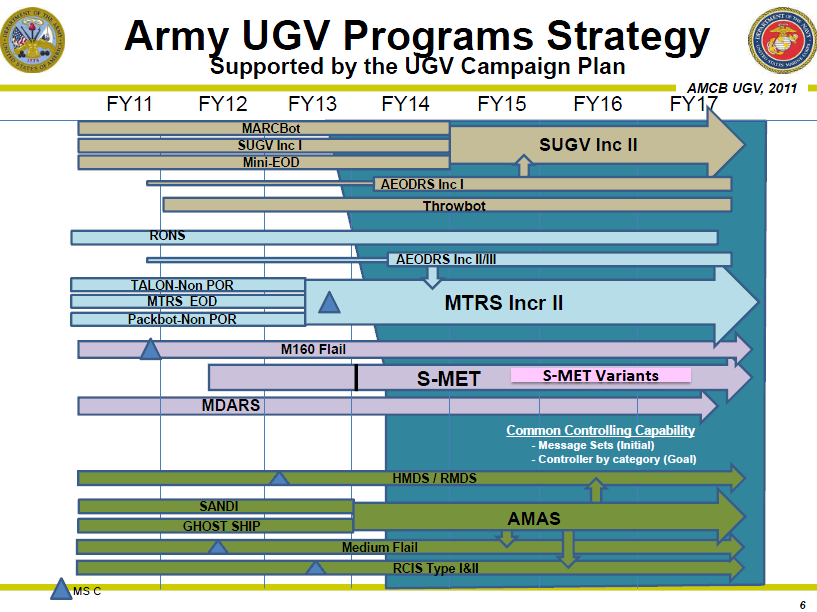
[Image]

A soldier of the Royal Artillery launches a Desert Hawk UAV (Unmanned Aerial Vehicle) during Operation Ghartse Dagger in Helmand, Afghanistan. Desert Hawk is a portable UAV surveillance system which provides aerial video reconnaissance. It has a flight time of approximately one hour, and can fly anywhere within a 10km radius of its ground control station. It has both day and night time (thermal imaging) capability. The equipment can be used for a variety of tasks, such as force protection for convoys and patrols, route clearance, base security, reconnaissance or target tracking. March 5, 2008. MoD
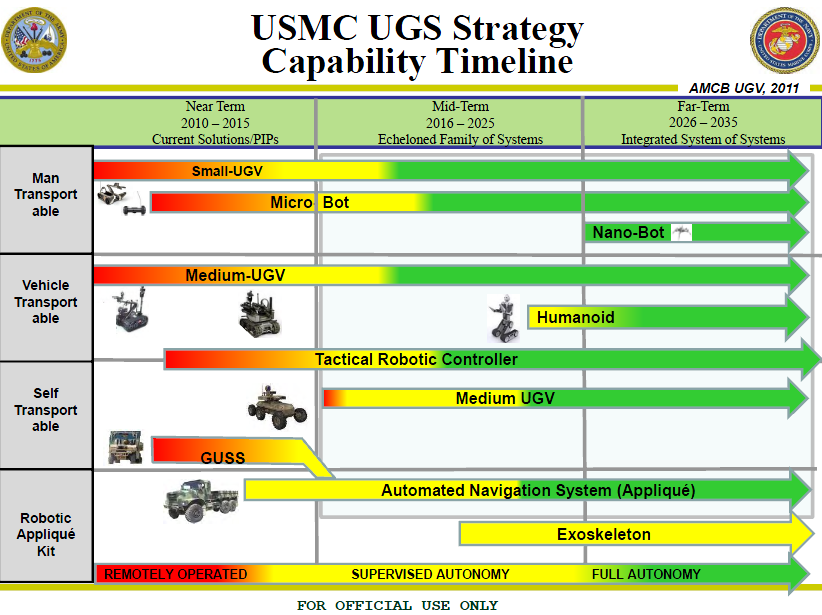
[Image]

The Unmanned Aerial System, Predator aircraft ready for take-off on the runway. Set up in January 2004 as an urgent operational requirement to support coalition operations in the Multi-National Division (South East) or MND (SE) of Iraq, 1115 Flight consists of 45 predominantly Royal Air Force personnel comprising pilots, sensor operators, engineers and other support personnel. The pilots and sensor operators work round-the-clock at Ground Control Stations housed at Nellis Air Force Base whilst the engineers are based at Creech Air Force Base both of which are in Nevada USA. Flying the Predator Unmanned Aerial System, they provide vital persistent, wide-area surveillance to support troops on the ground in both Iraq and Afghanistan. If called upon to do so they can also provide close air support, video support of surface actions, air strike coordination, and direct fire support. May 24, 2006.

SECRET by PI-Information Sharing Environment Annual Report to the Congress 2012

https://publicintelligence.net/wp-content/uploads/2012/08/ISE-AnnualReport-2012.png


Foundational initiatives such as state and major urban area fusion centers, the Nationwide Suspicious Activity Reporting Initiative (NSI), and the Interagency Threat Assessment and Coordination Group (ITACG) continue to mature by expanding their partnerships into new communities, refining technologies and shared services, and working toward performance and mission outcomes. In the law enforcement and intelligence communities, the previous year’s efforts are setting the stage for changes in the potential to move information sharing beyond previous expectations. The expansion of federal agency participation in Joint Terrorism Task Forces dramatically improves communication, coordination, and cooperation, leading to a more efficient and effective response to terrorist threats. Emerging ideas for transforming the public safety information sharing business model, coupled with the use of new technologies, such as facial recognition by frontline officers, are making the vision of eliminating administrative and jurisdictional obstacles to information sharing a reality. And the Intelligence Community’s IT transformation effort will significantly enhance our ability to share and safeguard information, undoubtedly paving the way for shared services implementation by all communities in the ISE.

OTHER GAPS, CHALLENGES, AND OPPORTUNITIES

In the process of compiling this Report, and based on our interactions with ISE agencies, PM-ISE identified several additional gaps, challenges, and opportunities for improvement of the ISE. Near-term actions to address these issues are reflected in the high-level roadmap included in the Way Forward section of this Report. The implementation roadmap includes three years of implementation guidance from the PM-ISE to the agencies, based upon the Administration’s priorities. PM-ISE and the ISA IPC will monitor ISE agency efforts to implement this guidance through the governance and performance management actions outlined in Section 6 of this Report. Significant issues to address are as follows:

  • The need to Transform Information Sharing Business Models
    • Finding: Resource constraints, especially among state, local, and tribal (SLT) law enforcement agencies, necessitate the transformation of information sharing business models. A significant cost savings could be realized through consolidation, regionalization, and reuse of open standards and trusted IT platforms. In addition, as diverse resources are applied to particular justice and public safety problems (including terrorism), systems at all levels of government need to factor in case deconfliction. Development of common, agreed-upon, national deconfliction standards will help ensure common awareness in the operational environment.
  • Challenges with Data Aggregation
    • Finding: Centralized data correlation and data storage introduces privacy and security challenges that limit mission effectiveness. The development of a data aggregation reference architecture could alleviate these challenges by establishing a roadmap for centralized correlation with decentralized data producers. In addition, unstructured data, such as free-form text documents, presents further technical and human resource challenges.
  • Public-Private Sector Information Sharing Gap
    • Finding: According to the National Infrastructure Advisory Council (NIAC), federal-private sector bidirectional information sharing is still relatively immature, leaving a large gap in public-private sector information sharing. In particular, intelligence sharing between the Federal Government and private sector owners and operators of critical infrastructure is lagging behind the “marked improvements” the NIAC observed in the sharing of federal intelligence with state, local, tribal, and territorial governments over the last several years.
  • Tribal Information Sharing Gaps
    • Finding: There are opportunities to increase tribal information sharing through the National Network of Fusion Centers. PM-ISE and its federal partners are focused on addressing and improving some of the foundational policy, governance, relationship, and capacity issues related to tribal information sharing. SLT partners are expanding tribal participation through Fusion Liaison Officer (FLO) programs.
  • Classified Information Sharing and Safeguarding Governance Gaps
    • Finding: With the collective progress in developing Federal Government-wide governance structures for Secret networks and in solidifying key priorities and milestones for implementation, the Federal Government is positioned for continued improvements in classified information sharing and safeguarding in the coming year.
  • Opportunity with Cybersecurity Information Sharing
    • Finding: Given the increasing frequency, impact, and sophistication of attacks on information and information systems in the United States, cybersecurity is a national security priority. Cybersecurity can be improved if agencies more effectively share cyber-vulnerability and intrusion incident information. The application of the ISE’s proven information sharing techniques and processes to the cyber information sharing problem set can enable this. As new legislation emerges in this area, information
      sharing related to cybersecurity functions will play an increasingly important role in the ISE.
  • Opportunity to Strengthen Collaboration and Coordination Between Federal, State, Local, Tribal, and Private Sector Entities
    • Finding: To further accomplish the goals of the ISE as stated in IRTPA and Presidential Guidelines,10 PM-ISE and its mission partners are exploring new mechanisms for enhancing collaboration and coordination between federal, state, local, tribal, and private sector entities. Although significant information sharing relationships have been institutionalized between these organizations, it is anticipated that a dedicated forum is needed to fully bring the accountability, oversight, and governance capabilities of the ISE to bear on lingering information sharing gaps between federal agencies and non-federal partners by enhancing understanding of one another’s missions, the respective policy and legal hurdles each faces, and the benefits each will realize through senior-level interaction.
  • DOWNLOAD THE ORIGINAL DOCUMENT HERE:
  • ISE-AnnualReport-2012

SECRET – DHS National Operations Center Operations Counterterrorism Desk

https://publicintelligence.net/wp-content/uploads/2012/08/DHS-NCOD-Database-PIA.png

The National Operations Center (NOC), within the Office of Operations Coordination and Planning (OPS), operates the NOC Counterterrorism Operations Desk (NCOD) and serves as the primary DHS point of contact to streamline counterterrorism Requests for Information (RFIs). The NCOD Database is a tracking tool used by NCOD Officers to track all counterterrorism related incoming and outgoing inquiries. OPS has conducted this Privacy Impact Assessment (PIA) because the NCOD Database contains personally identifiable information (PII).

Overview

OPS fulfills a unique response and facilitation role within the Department by serving as the bridge for sharing critical information between DHS Components, across the interagency community, and among homeland security partners. OPS planning activities provide a means of integrating government-wide activities in preparation for future incidents. Finally, OPS continuity activities allow for the continuation of essential government functions in the event of a catastrophic crisis.

In 2006, the National Operations Center (NOC) was created, and in its current capacity serves as the primary national-level hub for domestic situational awareness by fusing law enforcement, intelligence, emergency response, private sector, and open-source reporting. The unique mission of the NOC includes not only domestic situational awareness, but also the establishment and maintenance of a common operational picture, information fusion, information sharing, communications, and coordination pertaining to the prevention of terrorist attacks and domestic incident management. The NOC is the primary conduit for the White House Situation Room and DHS Leadership for all domestic situational awareness and facilitates information sharing and operational coordination with other federal, state, local, tribal, non-governmental operation centers, and the private sector.

National Counterterrorism Operations Desk (NCOD)

In fulfillment of the NOC’s mission to fuse law enforcement, intelligence, emergency response, private sector, and open-source reporting, the NCOD was established within the NOC to serve as a single point of contact for all RFIs concerning counterterrorism from partner agencies. The NCOD serves as a single DHS point of contact, allows desk officers to provide unique reporting capabilities, and quickly responds to the requesting agency with results, and tracks the incoming and outgoing RFIs in the NCOD Database.

The NCOD allows the Department to provide twenty-four hour, 365 days a year support to DHS counterterrorism mission partners across the federal government. Counterterrorism RFIs are time sensitive and require an immediate response from NCOD Officers. The primary purposes of the NCOD are to:

• Coordinate appropriate DHS database checks;
• Streamline data exchange between DHS databases and other federal agency databases;
• Establish one location to track and direct incoming and outgoing RFIs;
• Operate as part of the NOC Watch;
• Serve as an extension of the DHS OPS CT Section;
• Provide communication to DHS Components for information clarification;
• Coordinate information collection and exchange;
• Lead and integrate DHS domains strategic-level, operations coordination and planning functions; and
• Ensure the incoming and outgoing RFIs are facilitated for a response to the responsible office in a timely manner.

NCOD Database

The NCOD database will maintain the agency contact information for the RFI, the RFI, and the response to the RFI. The response will include the relevant information from the government systems and indicating of source of the systems.

Categories of information contained in the NCOD database may include, but are not limited to, the following: name(s), date of birth, immigration status, gender, place of birth, country of citizenship, alien registration number, passport number, Social Security number, driver’s license number, any additional numbering system used by governments to identify individuals, warrant number, I-94 number, Student and Exchange Visitor Information System (SEVIS) number, visa number, cédula number (foreign government issued national identification card), Canadian social insurance number, Federal Aviation Administration (FAA) license number, mariner’s document, birth certificate number, naturalization certificate number, work permit number, residency permit number, immigration history, military identification number, license plate information, vehicle information, physical descriptions such as scars, marks and tattoos, occupation(s), employer(s), addresses, telephone numbers, email addresses, FBI Number, DHS Fingerprint Identification Number (DHS FIN), facial photographs, fingerprints, iris images, financial information, criminal history, NOC tracking number, requesting agency name, and travel information.


DOWNLOAD THE ORIGINAL DOCUMENT HERE:

DHS-NCOD-Database-PIA

SECRET – U.S. Army Security Force Assistance: Shaping and Mentoring the Afghan Police

https://publicintelligence.net/wp-content/uploads/2012/08/CALL-AfghanPolice.png


The following collection of articles focuses on security force assistance (SFA) and specifically on shaping and mentoring Afghanistan’s internal police and security forces. Afghanistan presents a unique challenge to U.S. Army forces in the geographical, cultural, economic, political, and security dimensions. Providing protection and security to a unique and diverse tribal population is an essential aspect of our counterinsurgency strategy. The proficiency, integrity, and loyalty of Afghan police forces are essential to accomplishing a secure environment and to sustaining success. The following articles cover a range of issues related to SFA and the training of Afghan national police and border police with the specific intent of establishing best practices and lessons learned. The collection should not be considered all-inclusive. This is an effort to capture relevant articles published in recent professional journals or maintained by the Center for Army Lessons Learned (CALL) and other joint archives to inform Soldiers about relevant observations, insights, and lessons and to provide a historical document for future reference.

In many instances, the ideas presented in these articles are personal opinion; in some cases, they are not limited to Army doctrine. The recommendations in these articles should always be validated with the latest approved Army and joint doctrine.

The recent shift in national concern from Iraq to Afghanistan and the increase in forces committed by the Obama administration have directed greater attention to the current problems in Afghanistan. United States forces and coalition partners are working on many fronts to secure a stable future for the country, but they face more than a few obstacles. At the macro level, the Afghan central government is weak and plagued by corruption and indifference to the plight of its rural constituency, yet without tribal accord, the government has no real chance of extending its reach to the rest of the country. The Afghan National Army, Police, and Border Police are increasing their numbers and improving their skills but, with the exception of a few exceptional Afghan National Army battalions, they are not yet capable of operating on their own. The poppy fields and drug trade in southern and eastern Afghanistan continue to flourish. The border with Pakistan remains porous enough for a resurgent Taliban to use it as its primary and most unfettered means of infiltration into remote rural sections of the country. These are just a few of the many problems for the government of Afghanistan and the U.S.-led coalition.

Many authors, strategists, and politicians have offered measured opinions and recommendations on how to improve the situation, but most agree that to fix these problems and allow Afghanistan to develop without the constant pressure of an insurgency, we must establish and maintain security and develop governance in the rural districts.

Completing these tasks may appear impossible to a casual observer of the conflict. Indeed, while fighting a growing insurgency, coalition casualties mount. Historically, the rural population in modern Afghanistan has rejected all large-scale reforms attempted by a central government. Unfortunately, change acceptable to the tribes will simply not come from the center. Establishing security in this war-torn land is achievable only if we focus our efforts and resources at the district level, where the sub-tribes are culturally dominant.

Nowhere in Afghanistan is this more pressing than along the border of Pakistan’s Federally Administered Tribal Areas (FATA). It is commonly accepted that the Taliban, Al-Qaeda, and other foreign fighters use the FATA as a safe haven from which to plan, resource, stage, and launch attacks in the border districts and deeper into Afghanistan’s interior. Since 2006, the number of foreign insurgents involved in the border fight has substantially increased, which strengthens the insurgency and decreases security. The struggle to secure this area has become the front line in the counterinsurgency fight and the coalition’s most important strategic task.

If we can establish security and stabilize the border provinces and districts in southern and eastern Afghanistan, the accompanying momentum may guide the rest of the country to a sustainable peace. The problem is that the insurgents are most effective in these rural areas, and limited troop levels make challenging them on a wider scale a confounding proposition.

The vision for effective local government administration in Afghanistan includes the district center as the point of initiation for all Afghan-led political, development, and security operations. The district center is already a local nerve center—it must also become the security epicenter. This is the first fundamental change to effect across the country. There are six important steps to take in every district in every province:

• Tribal elders within a district shura must elect a district governor they trust.

• A well-trained police chief must be appointed and he should have no less than 30 police officers to maintain order.

• District centers must be reinforced with coalition support and funds for governance and economic activity (with a designated development stipend to facilitate reconstruction programming).

• Each Afghan district must have no less than one company of the Afghan National Army garrisoned at the district center; their mission must be to conduct counterinsurgency operations and their primary task must be to engage daily with the population.

• A point security force must be emplaced (Afghan public protection force of 30 guards) in each district that reports directly to the district governor and guards the district center and other sites at risk of Taliban attack (i.e., girls’ schools, bazaars, etc.).

• A district-level and native Afghan National Directorate of Security chief must be assigned and, through appropriate coalition oversight, a robust informant network developed to counter Taliban human intelligence efforts and provide early warning.


DOWNLOAD THE ORIGINAL DOCUMENT HERE:

CALL-AfghanPolice

SECRET from the FBI – Eduardo Arellano-Felix Extradited to Face Charges

WASHINGTON—Eduardo Arellano-Felix, 55, one of the alleged members of the Arellano-Felix Organization (AFO), was extradited today by the government of Mexico to the United States to face racketeering, money laundering, and narcotics trafficking charges in the Southern District of California.

The extradition was announced by U.S. Attorney for the Southern District of California Laura E. Duffy and Assistant Attorney General Lanny A. Breuer of the Justice Department’s Criminal Division. Arellano-Felix was arrested by Mexican authorities in Tijuana, Baja California, Mexico, on October 25, 2008, following a gun battle with a Mexican Special Tactical Team. A final order of extradition to the United States was granted in 2010. After two years of unsuccessful appeals, Arellano-Felix arrived in the United States this afternoon. He is scheduled to make his initial appearance on Tuesday, September 4, 2012, in U.S. District Court in San Diego before U.S. Magistrate Judge Barbara Lynn Major.

U.S. Attorney Duffy, whose office secured the indictment against Arellano-Felix, said, “This extradition is a significant step in our effort to bring another key figure in the Arellano-Felix Organization to answer, in an American court of law, to very serious charges. We are grateful to the government of Mexico for its assistance in the extradition.”

“Today’s extradition is a milestone in our fight against the Mexican drug cartels. I want to thank the Criminal Division’s Office of International Affairs for its tireless work in helping to ensure that Eduardo Arellano-Felix and numerous of his alleged co-conspirators face justice in the United States,” said Assistant Attorney General Breuer.

“The extradition of Eduardo Arellano-Felix today marks the end of a 20-year DEA investigation into this vicious drug cartel,” said William R . Sherman, Acting Special Agent in Charge of the San Diego Drug Enforcement Administration (DEA). “This extradition illustrates that DEA and all its law enforcement partners will relentlessly pursue these drug traffickers until they are brought to justice.”

San Diego FBI Special Agent in Charge Daphne Hearn said, “The FBI is pleased with Mexico’s efforts to bring to justice a leader from one of the most violent criminal enterprises in our history. The spirit of cooperation between our two countries is a powerful force in disrupting the criminal activities of these groups that instill fear and threaten the safety of our citizens in the border regions of the United States.”

Long-reputed to be one of the most notorious multi-national drug trafficking organizations, the AFO controlled the flow of cocaine, marijuana, and other drugs through the Mexican border cities of Tijuana and Mexicali into the United States. Its operations also extended into southern Mexico as well as Colombia.

The seventh superseding indictment charges Arellano-Felix with conducting the affairs of an illegal enterprise through a pattern of racketeering activity (RICO), conspiracy to import and distribute cocaine and marijuana, as well as money laundering. The indictment alleges that the leadership of the AFO negotiated directly with Colombian cocaine-trafficking organizations for the purchase of multi-ton shipments of cocaine, received those shipments by sea and by air, in Mexico, and then arranged for the smuggling of the cocaine into the United States and its further distribution throughout the U.S. The indictment also alleges that the proceeds of the AFO’s drug trafficking, estimated by law enforcement to be in the hundreds of millions of dollars, were then smuggled back into Mexico.

Brothers and former leaders of the AFO, Benjamin Arellano-Felix and Francisco Javier Arellano‑Felix, are currently serving sentences in the United States following their convictions for racketeering, drug trafficking, and money laundering charges.

This case is being investigated by agents from the DEA, the FBI, and the Internal Revenue Service-Criminal Investigation and prosecuted in the Southern District of California by Assistant U.S. Attorneys Joseph Green, James Melendres and Dan Zipp. The Criminal Division’s Office of International Affairs provided significant assistance in the extradition. The investigation of Arellano-Felix was coordinated by an Organized Crime Drug Enforcement Task Force (OCDETF). The OCDETF program was created to consolidate and coordinate all law enforcement resources in this country’s battle against major drug trafficking rings, drug kingpins, and money launderers.

The public is reminded that an indictment is not evidence that the defendant committed the crimes charged. The defendant is presumed innocent until the government meets its burden in court of proving guilt beyond a reasonable doubt.

TOP-SECRET – Defense Logistics Agency Law Enforcement Support Office Memo


The following document is a copy of the model memorandum of agreement with the Defense Logistics Agency that states sign as part of Law Enforcement Support Office (LESO) program to transfer excess military property to civilian law enforcement agencies.

https://publicintelligence.net/wp-content/uploads/2012/08/DLA-LESO-MOA.png

This Memorandum of Agreement (MOA) is entered into between the Defense Logistics Agency (DLA) and the State of ____________, to set forth the terms and conditions which will be binding on the parties with respect to excess Department of Defense (DOD) personal property which is transferred pursuant to 10 USC § 2576a and to promote the efficient and expeditious transfer of the property and to ensure accountability of same.

AUTHORITY:

The Secretary of Defense is authorized by 10 USC § 2576a to transfer to Federal and State Agencies, personal prope1iy that is excess to the needs of the DOD and that the Secretary determines is suitable to be used by such agencies in law enforcement activities, with emphasis on counter-drug/counter-terrorism activities, under such terms prescribed by the Secretary. The authorities granted to the Secretary of Defense have been delegated to the DLA in dete1mining whether prope1iy is suitable for use by agencies in law enforcement activities. DLA defines law enforcement activities as activities performed by government agencies whose primary function is the enforcement of applicable Federal, State, and local laws and whose compensated law enforcement officers have powers of an·est and apprehension.

TERMS AND CONDITIONS:

The DOD, through the DLA, has final authority to determine the type, quantity, and location of excess DOD personal prope1iy suitable for law enforcement activities, if any, which will be transferred to the State. This agreement creates no entitlement in the State to receive excess DOD personal prope1iy. Property available under this agreement is for the current use of authorized program participants; it will not be requested nor issued for speculative use/possible future use with the exception of authorized Transitional Distribution Points (TDPs) and/or Customer Reserve Stock (CRSs), which are required to utilize property within one year or schedule its return to the nearest Defense Reutilization Marketing Office (DRMO). Property will not be obtained for the purpose of sale, lease, rent, exchange, barter, to secure a loan, or to otherwise supplement normal Law Enforcement Agency (LEA) or State/local governmental entities budgets. All requests for property will be based on bona fide law enforcement requirements. Requests for prope1iy for the purpose of cannibalization will be considered for approval on a case by case basis. A memorandum must be submitted to the Director of the Law Enforcement Support Office (LESO) requesting approval. Any transportation, repair, maintenance, insurance, disposal, or other expenses associated with this excess DOD personal property is the sole responsibility of the State/LEA.

The State will establish and submit to the DLA, a State Plan of Operation, developed in accordance with Federal and State law and conforming to the provisions of this MOA. This State Plan of Operation will detail organizational and operational authority including staffing and facilities. It will also address procedures for making determinations of LEA eligibility, allocation and equitable distribution of material, accountability and responsibility concerning excess DOD personal property, training and education, Operational Effectiveness Reviews (OERs), and procedures for tum-in, transfer, and disposal. Property obtained under this MOA must be placed into use within one (1) year of receipt and utilized for a minimum of one (1) year, unless the condition of the property renders it unusable. Only in special circumstances will property be obtained and held for the minimum time frames and then sold, bartered, exchanged, or traded. Approval will be considered on a case by case basis. A memorandum must be submitted to the Director of LESO requesting approval. Property will not physically move until the approval process is complete. If property is not put into use by the recipient within one (1) year, the State/LEA must contact the DLA LESO to coordinate the return of the property to the nearest DRMO for proper disposition. Once the DLA LESO is notified and a DRMO is identified, property must be returned within thirty (30) days. The  State/LEA will bear the burden of returning the pro petty to the nearest DRMO. Under no circumstances will pro petty be sold or otherwise transferred to non-U.S. persons or exported.

Only the Governor appointed State Coordinator identified at the end of this document is authorized to enter into this Agreement on behalf of the State. An Appointment Letter from the State Coordinator, authorizing the State Point of Contact (PO C) signature authority or to act on the behalf of the State Coordinator must be on file with the DLA LESO in order to actively participate in the program. The State Coordinator is required to sponsor LEAs that want to actively participate in the program and the State Coordinator must screen all LEAs requests for excess DOD personal property. The State Coordinator will validate that all approved requests for property are legitimate and for law enforcement purposes. In so doing, the State Coordinator assumes the responsibility to maintain records ensuring LEA accountability for all excess DOD personal property received through the I 033 Program for his/her state. In conjunction with each request, the State Coordinator will furnish a detailed justification for the property. Property received through the 1033 Program can only be distributed to an authorized LEA for whom the initial request was made and justification was provided, unless the property was requested for a TDP or from CRS.

The DOD has authorized the transfer and use of excess Federal property to the State/LEA and as such reserves the right to recall any and all property issued through the 1033 or 1208 Programs. As stipulated in Federal regulation, title may be conditionally granted to the State/LEA upon receipt of the property, however approval will be considered on a case by case basis. A memorandum must be submitted to the Director of LESO requesting approval before the disposal, sale, auction, trade-in, salvage or transfer of any 1033 or 1208 property can occur. Property will not physically move until the approval process is complete. Costs of shipping or repossession of the excess DOD personal property by the U.S. Government will be borne by the LEA. To the extent permitted by law, the State Coordinator/LEA shall indemnify and hold the U.S. Government harmless from any and all actions, claims, debts, demands, judgments, liabilities, cost, and attorney’s fees missing out of, claimed on account of, or in any manner predicated upon loss of or damage to property and injuries, illness or disabilities to or death of any and all persons whatsoever, including members of the general public, or to the property of any legal or political entity including states, local and interstate bodies, in any manner caused by or contributed to by the State/LEA, its agents, servants, employees, or any person subject to its control while in, upon or about the sale site and/or the site on which the property is located, or while the prope1ty is in the possession of, used by or subject to the control of the State/LEA, its agents, servants, or employees after the prope1ty has been removed from U.S. Government control. The State will maintain or assure that the LEA maintains adequate insurance to cover damages or iJ1juries to persons or property relating to the use of the prope1ty. Self-insurance by the State/LEA is considered acceptable. The U.S. Government assumes no liability for damages or injuries to any person(s) or property arising from the use of the property.


DOWNLOAD THE ORIGINAL DOCUMENT HERE:

DLA-LESO-MOA

Unveiled by PI – Open Source Center Autonomous Kurds in Post-Asad Syria Unlikely

UNCLASSIFIED//FOR OFFICIAL USE ONLY

This product may contain copyrighted material; authorized use is for national security purposes of the United States Government only. Any reproduction, dissemination, or use is subject to the OSC usage policy and the original copyright.

OSC Analysis: Syria — Autonomous, Federal Status for Kurds Unlikely

GMF20120820256001 SyriaOSC Analysis in English 20 Aug 12

Syria — Autonomous, Federal Status for Kurds in Post-Al-Asad Syria Unlikely

An autonomous or federal Kurdistan within Syria — similar to that which exists in Iraq — is unlikely because of intra-Kurdish conflict and the opposition of Turkey and the Syrian National Council (SNC) — the main external Syrian opposition group.

Disunity between the two main Kurdish forces in Syria, the Democratic Union Party (PYD) and the Kurdish Syrian National Council (ENKS), suggests that the main Kurdish parties themselves cannot agree on how Syrian Kurdistan should be governed.

  • In possible anticipation of events in Syrian Kurdistan, Iraqi Kurdistan Region President Mas’ud Barzani brokered a conciliation agreement on 11 July between the People’s Council of Western Kurdistan — an offshoot of the PYD believed to be affiliated with the outlawed Kurdistan People’s Congress (KGK), which was formerly known as the PKK — and the ENKS. As part of this Arbil agreement, Kurdish groups formed a higher Kurdish commission to administer Syria’s Kurdish areas after the Syrian Army withdrew, according to the Iraqi independent daily Al-Zaman (27 July).[ 1]
  • However, some media reports — possibly influenced by the ENKS — have suggested that the PYD took sole control of Syrian Kurdistan in late July, exploiting its reputed ties to the Syrian regime. ENKS figure Abd-al-Karim Bashar, for example, told independent Kurdish weekly Rudaw, that the Syrian Army had abandoned its posts to the PYD because it was the Syrian regime’s “partner” (10 August).[ 2] Defecting Syrian Army officer Fayiz Amr told Londonbased, Saudi-financed, pan-Arab daily Al-Sharq al-Awsat that Damascus had armed the PYD and intimidated other parties (28 July).[ 3]

Kurdish Entities in Syria Make Disunity Likely

The Syrian Kurdish political landscape consists of several parties — some of which have historically been heavily influenced by Damascus or Iraqi Kurdistan President Barzani.

  • The ENKS, formed in October 2011 under the auspices of Kurdistan Region President Mas’ud Barzani as an umbrella grouping of 16 parties, maintains strong ties with Barzani and has opposed the Al-Asad regime (18  August).[ 4]
  • The PYD, led by Salih Muslim, is a very influential and popular Kurdish party and believed to be the Syrian version of the KGK (Al-Sharq al-Awsat, 9 July).[ 5]

Turkey Views Kurds’ Self-Administration in Syria as Threat to National Security

Turkey’s recent military and political mobilization suggests concern that Syria Kurd’s self-administration might aggravate its conflict with the KGK/PKK.

  • Turkish statements indicate alarm over the PYD. Prime Minister Recep Tayyip Erdogan has not ruled out military incursions in pursuit of KGK/PKK forces (Today’s Zaman, 6 August).[ 6] He claimed that Turkey enjoys a right to intervene in Syria if “terrorist formations” pose a threat, according to Istanbul daily Hurriyet (26 July).[ 7]
  • Several media reports suggest that Turkey tried to persuade Barzani to discourage self-administration in Syrian Kurdistan.[a] During Turkish Foreign Minister Ahmet Davutoglu’s 31 July visit to Arbil — in which he met with KRG officials, the ENKS, the SNC, but not the PYD[ 8] — Davutoglu may have lent support to KRG claims to Kirkuk[b] in return for Barzani’s cooperation in containing Syria’s Kurds, according to independent Al-Sharqiyah Satellite TV (Hurriyet Daily, 7 August;7 August).[ 9]

Federal Status for Syrian Kurds in Post-Al-Asad Syria Unlikely

Turkey’s ostensible acceptance of Kurdish rights in Syria is possibly conditioned on the SNC’s stated opposition to Kurdish autonomy or self-administration.

  • A Turkish plan discussed with Barzani rejected any ethnic-based structure in Syria before Al-Asad’s fall but accepted the possibility of an autonomous Kurdish region in post-Al-Asad Syria, pending approval by Syria’s people within the framework of a new constitution, according to the independent Iraqi website Shafaq News (31 July).[ 10]
  • SNC President Abd-al-Basit Sida, however, categorically rejected a federal Syria, stressing that the PYD must respect Syria’s territorial integrity, according to the privately owned Kurdish newspaper Hawlati (5 August).[ 11]

[a] For more information, see the 7 August OSC Report, Turkey — Ankara Upholds Syrian Kurds’ Rights in Pluralistic New Syria (EUP20120807346001EUP20120807346001).
[b] Davutoglu visited Kirkuk following his meeting in Arbil without informing the central government in Baghdad. Al-Sharqiyah reported Baghdad’s fury over the unannounced visit.

[ 1] [Open Source (Not OSC) | Al-Zaman | | 27 July 2012 | 27 July 2012 | Syria’s Kurds Seek Unity to Secure Status in Post-Al-Asad Syria | | (U) | (U) | Baghdad Al-Zaman in Arabic — Baghdad-based independent Iraqi daily providing coverage of Iraqi, Arab, and international issues, headed by Iraqi journalist Sa’d al-Bazzaz; Internet version available at: http://www.azzaman.com%5D
[ 2] [Open Source (Not OSC) | Weekly Rudaw | | 30 July 2012 | 30 July 2012 | Interview with Abd-al-Karim Bashar, leader of the Kurdish Democratic Party | | (U) | (U) | Arbil Rudaw.net in Kurdish – Kurmanji — Website of Rudaw, weekly newspaper supportive of the Kurdish cause; URL: http://www.rudaw.net/%5D
[ 3] [Open Source (Not OSC) | Al-Sharq al-Awsat | | 28 July 2012 | 28 July 2012 | Syria’s Kurds Face New Challenges; Turkey: We Will not be Lenient With Terrorist Organizations Near our Border | | (U) | (U) | ]
[ 4] [Open Source (Not OSC) | Carnegie Endowment for International Peace | | 16 August 2012 | 16 August 2012 | The Kurdish Syrian National Council | | (U) | (U) | ]
[ 5] [Open Source (Not OSC) | Al-Sharq al-Awsat | | 9 July 2012 | 9 July 2012 | Kurdish Political Parties in Syria | | (U) | (U) | ]
[ 6] [OSC | | OSC ID: EUP20120806407005 | 6 August 2012 | | Erdogan Says Al-Asad-Backed KGK Terrorists Seeking To Infiltrate Turkey | | (U) | (U) | Istanbul Today’s Zaman Online in English — Website of English-language daily published by the Zaman media group, supportive of Fethullah Gulen community; URL: http://www.todayszaman.com%5D
[ 7] [OSC | | OSC ID: EUP20120726406008 | 26 July 2012 | | Erdogan Warns of Terrorist Formations in Syria, Says Intervention Natural Right | | (U) | (U) | Istanbul Hurriyet Daily News Online in English — Website of Hurriyet Daily News & Economic Review, pro-secular daily, with English-language versions from other Dogan Media Group dailies; URL: http://www.hurriyetdailynews.com/%5D
[ 8] [Open Source (Not OSC) | | | 7 August 2012 | 7 August 2012 | PYD Party Says Turkey Should not Interfere in Syria | | (U) | (U) | ]
[ 9] [OSC | | OSC ID: GMP20120808193001 | 7 August 2012 | | Al-Sharqiyah Roundup: Deputy PM Heads Committee To Investigate Turkish FM’s Visit | | (U) | (U) | London Al-Sharqiyah News Television in Arabic — Independent, private news channel focusing on Iraq, affiliated with Al-Sharqiyah Television, run by Sa’d al-Bazzaz, publisher of the Arabic-language daily Al-Zaman]
[ 10] [Open Source (Not OSC) | Shafaq News | | 31 July 2012 | 31 July 2012 | Turkish Sources: Davutoglu To Discuss Six Points on Syria’s Kurds in Arbil | | (U) | (U) | ]
[ 11] [Open Source (Not OSC) | Hawlati | | 5 August 2012 | 5 August 2012 | Hawlati interviews Abd-al-Basit Sida | | (U) | (U) | Al-Sulaymaniyah Hawlati in Sorani Kurdish — Privately owned newspaper published twice a week, often critical of the Kurdistan Regional Government (KRG), controlled by the Kurdistan Democratic Party (KDP) and the Patriotic Union of Kurdistan (PUK)]

Anonymous and New York Times E-mail Leak Part 1

Anonymous declared war on the New York Times this week, launching “OpNYT” on Wednesday. Unlike most actions by the crippled hacktivist collective these days, their attack on the Times doesn’t just consist of writing boring, unreadable manifestos (though there is a lot of that). Anonymous has leaked ‘secret’ correspondences between New York Times reporters and Anonymous members, meant to expose the Times’ “incompetence.” Unfortunately for Anonymous, the documents reveal the exact opposite.

Last night, Anonymous fameball Barrett Brown promised on Twitter that Anonymous would “release correspondence with NYT showing incompetence on [national security] reporting.” The correspondences were published soon after on the hacker document-sharing site Pastebin under the heading “The Secret History of the New York Times’s National Security Failure.”

But anyone looking for evidence of anything other than journalists doing their job will be sorely disappointed. The leak amounts to Anonymous whining that the Times has not breathlessly hyped all of the groups’ crackpot schemes and conspiracy theories.

One correspondence from 2011 consists of an Anonymous representative tipping off a Times reporter about the hack of the security firm HBGary, and the leak of a huge cache of their emails. The reporter responds:

“I told [redacted] that I don’t think this is an NYT story right now, but that I want to try and do something longer on all of this in the next week or two.”

The Times eventually did publish an in-depth article about the HBGary hack and revelations that the firm had proposed a plan to disrupt Wikileaks. But that was not enough for whoever wrote the press release accompanying yesterday’s leak. They complain that the Times didn’t see “fit to cover” every single boring detail in the leaked email cache.

The second supposedly incriminating leaked correspondence actually reveals how full of shit Anonymous is. It’s a long chat with a Times reporter during this year’s fake “Operation Cartel.” If you remember, OpCartel was a campaign against Mexico’s notorious Zetas drug cartel, supposedly launched in retaliation for the Zetas kidnapping an Anonymous member. There was never any proof that the kidnapping occurred, and the Zetas conveniently “released” their prisoner before the operation even started. This was the “Canadian girlfriend” of Anonymous campaigns.

In the leaked chat, the reporter asks, “What evidence have you seen that the kidnap really happened?”

“None,” responded the Anonymous rep. “Nor would I have expected to as we have no intention of providing a chance that the person could be identified.”

The reporter continues to press the Anon for even a shred of evidence:

[redacted]: I’m going to ask a stupid question.
If no one has any evidence a person was kidnapped, how do you know a person was kidnapped?
5:29 PM me: I’m relying on the account of someone I’ve known and worked with in the past and whom I believe to be telling the truth based on the nature of her responses as well as other details I can’t go into due to the present situation
5:30 PM Obviously if I were functioning as a journalist, that wouldn’t be sufficient. But in this case…
5:31 PM We already have journalists looking too fucking closely into who the person is, including a review of Mexican records, and as such we’re very reluctant to assist them in finding out more.
[redacted]: But a responsible journalist won’t run the name.
So what difference does it make?
5:32 PM me: If you take a few minutes to think about the process by which such a name would come up and the nature of the situation in Mexico, and concede that mistakes occur in journalism, you can probably guess.

Good job, New York Times, for not running with this particularly unbelievable Anonymous fairytale.

All signs point to OpNYT being a stunt by Barrett Brown, the former Anonymous spokesperson who recently scored a six-figure deal for a book about Anonymous. Brown reappears whenever there’s an opportunity for free publicity, and has recently appeared in the press stoking the overblown hysteria over the Trapwire surveillance system that appeared in some leaked Wikileaks emails earlier this month. The press release announcing OpNYT was written in the same insufferable prose as Brown’s—The Times is described as “a filthy, poorly-composed whore.” And Brown was the press’ main point of contact during both the HBGary hack and Operation Cartel; I’d bet he was the Anonymous representative in at least one of those correspondences.

OpNYT is another reminder of Anonymous’ sad decline: the once-feared hacktivist group reduced to a brand stamped on a huckster’s latest package of premium bullshit.


Source: Gawker


SECRET – Afghan National Army and Coalition Forces Partnership in Khost and Paktiya

https://publicintelligence.net/wp-content/uploads/2012/08/USArmy-HTS-ANAPartnership.png

(U) Members of Human Terrain Team AF01 embedded with a U.S. cavalry squadron from November to December 2011. Our goal was to understand the dynamics that influence partnering between the Afghan National Army (ANA) and Coalition Forces (CF) and how those dynamics impacted ANA effectiveness in gaining the Afghan population’s support. We conducted 22 interviews with U.S. Army personnel, including U.S. enlisted Soldiers and officers, U.S. troop commanders, police trainers, and ANA mentors. In addition, we conducted 21 interviews with high- and low-ranking ANA enlisted Soldiers and officers and Afghan police officers. We accompanied U.S. forces on non-kinetic missions to villages throughout Khost and Paktiya to gather perceptions from the Afghan civilian population. We also distributed a survey to three U.S. Cavalry companies (N=57). These data, along with research from secondary sources, informed the findings presented in this paper.

(U) A recent study by Bordin (2011)2 has drawn attention to “green on blue” hostility. While we acknowledge that his findings are probably an accurate reflection of Soldier views, we disagree with his conclusion that CF and ANA may be “culturally incompatible.” Instead, we are very optimistic that with the right training and leadership, cultural barriers can be overcome. Partnership, if correctly executed, can combine the strengths of Afghan and CF units such that each partner benefits from, and is bolstered by, the other. Afghan National Security Force (ANSF) development can become a force multiplier, not a trade-off, in efforts to defeat the insurgency. While our study, like Bordin’s, does highlight some uncomfortable truths about partnership, we hope that as much as we have criticized current efforts, we have equally acknowledged the challenges facing Soldiers at all levels, and provided helpful solutions that begin to address how these can be overcome.

(U) Key Findings:

Three factors: Motivation, Training, and Dependence begin to explain variation in ANA performance. Closer partnership can increase CF understanding of these factors, and more. Increased understanding is needed in order to improve ANA performance and readiness for transition. The squadron with whom HTT embedded prioritized ANA development but faced at least two key obstacles that could not have been overcome without external intervention or support:

1. Due to geographic separation of headquarters, they could not benefit from regular Afghan contributions to their planning processes. This created an asymmetric relationship, with U.S. unilateral planning driving the vast majority of operations.

2. A focus on ANA deficiencies in meeting U.S. expectations, due to metric reporting that ignores Afghan knowledge of and interactions with the human terrain, led them to overlook uniquely Afghan strengths that could have improved their planning process. Existing CF measurement instruments, such as the Commander’s Unit Assessment Tool (CUAT) and the Tactical Conflict Assessment and Planning Framework (TCAPF), provide indicators of ANSF performance and effectiveness, but both lack reporting on population perceptions of the ANSF and are therefore incomplete measures of ANSF’s effectiveness in counterinsurgency. This deficiency in data collection should be addressed. Initial findings indicate that CF and Afghan perceptions do not match up when it comes to views of the ANA and the Afghan police. CF rate the police as more professional, but Afghans favor the ANA. This is a reflection of CF preferences for police tactics and frustration with ANA unwillingness to use CF warfighting tactics, such as searching homes or religious buildings for weapons caches. HTT’s assessment of COP Wilderness found that success lay in a combination of clear guidance, metrics to provide accountability, and regular assessments, along with a shared mission. At COP Wilderness, the U.S. Troop Commander recognized the benefits of partnered training, operations, and social activities.

(U) Recommendations: Collocating partnered units is the single most critical adjustment to current operations that would vastly improve opportunities for partnering. Give CF a better idea of “what right looks like” in their pre-deployment training. Create metrics to measure the quality and closeness of partnership and include them in Soldiers’ regular reporting to incentivize them to improve current efforts. Because ANSF is on the frontline of building public confidence in the Afghan government, we recommend the rapid development of better metrics to measure both partnership and ANSF effectiveness. CF should track population perceptions in order to ensure that their measures of performance and effectiveness resonate with Afghans. Better incorporate Afghan input into CF planning. By this we mean not just obtaining Afghan buy-in to a CF plan, but inserting their ideas, especially those regarding the human terrain, into the planning process. In this way, CF can leverage the ANA’s strengths—knowledge of, and legitimacy with, the Afghan population—rather than focusing on improving their weaknesses. Leverage the ANA’s knowledge of the human terrain, knowledge of the local culture, and lessons about how to shift operations to being more population-centric. CF training and joint operations with the ANSF should be tailored to address the issue of ANSF legitimacy and the population’s perception of the ANSF’s ability to improve security and stability.


DOWNLOAD THE ORIGINAL DOCUMENT HERE:

USArmy-HTS-ANAPartnership

SECRET – Cryptome unveils Military Police Civil Disturbance Operations

DOWNLOAD THE ORIGINAL DOCUMENT HERE:

mp-civil-disturbance-ops-1

SECRET – Restricted U.S. Army Air Defense Artillery Reference Handbook

https://publicintelligence.net/wp-content/uploads/2012/08/USArmy-ADA-Handbook.png


The purpose of this field manual (FM) is to familiarize personnel with air defense artillery (ADA) operations and weapon systems and their roles in air and missile defense (AMD). This publication is intended for personnel serving in the following positions:

  • Staff positions requiring general knowledge of ADA systems and operations.
  • Instructor positions in service schools and the Reserve Officer Training Corps.
  • Members of advisory elements and groups assigned to missions in foreign countries.
  • Advisory positions in reserve component forces.
  • Command and leadership positions in special operations force units.
  • Executive positions and advisory positions that require knowledge of air defense subjects.

Readers are reminded that weapon systems and operations are continually changing. Publications such as interactive electronic technical manuals, table(s) of organization and equipment (TOE), and mission training plans provide more detailed information on specific subjects. Many of these sources are referred to in appropriate sections of this FM.

AIR DEFENSE ARTILLERY MISSION

The mission of U.S. Army ADA is to protect the force and selected geopolitical assets from aerial attack, missile attack, and surveillance using AMD mission sets. The four mission sets are—

  • Provide AMD.
  • Contribute to situational awareness/situational understanding (SA/SU).
  • Contribute to Airspace Command and Control (AC2).
  • Contribute to operational protection.

AIR AND MISSILE DEFENSE MISSION

Army ADA forces, fighting interdependently with other elements of the joint, interagency, and multinational (JIM) team at strategic, operational, and tactical levels, provide critical air and missile defense. They also contribute to SA and SU, airspace management, and operational force protection to deter or defeat enemy aerial threats, protect the force and high-value assets, enable freedom to maneuver, and contribute to victory. The four elements of the AMD mission statement—Dominate, Enable, Exploit, and Protect—have specific meanings within the context of Army ADA. These elements are imperative to focus on ADA transformation for the future. The Dominate-Enable-Exploit-Protect cycle contributes synergistically to support JIM operations. Army ADA transformation will address capability gaps as part of a larger joint AMD transformation effort. ADA commanders allocate active and reserve air defense (AD) component assets based on the supported commander’s priorities. The mission is designed to include protection of critical assets, installations, and facilities along with the joint and multinational forces when required.

GEOPOLITICAL ASSETS

Geopolitical assets are nonmilitary assets that U.S., allied, or host nation civil authorities nominate for AMD protection. These assets can be political, religious, ethnic, historical, or territorial in nature. Since protection of geopolitical assets may not directly support military operations, the integration of geopolitical assets into the AMD priorities list must be accomplished at the highest levels.

THREAT

The evolving AMD threat will take on new characteristics. The major threat to deployed U.S. forces will continue to be that of regional powers as they seek to dominate their respective regions. Adversaries will continue to closely observe emerging U.S. capabilities in an effort to identify and exploit weaknesses using asymmetric approaches. Chemical, biological, radiological, and nuclear (CBRN) weapons proliferation and their delivery means (particularly ballistic and cruise missiles [BMs and CMs]), stealth capabilities, and the employment of unmanned aircraft systems (UASs) will improve their military forces and the asymmetric options available to them when facing the U.S. and its allies and coalition partners.

Fundamental capabilities that adversaries may pursue to counter U.S. strengths include, but are not limited to, weapons of mass destruction, unmanned intelligence, surveillance, and reconnaissance (ISR) target acquisition platforms, UASs, large numbers of inexpensive rockets, low-observable cruise missiles, and information warfare. Some states may rely on asymmetric capabilities as a substitute for, or complement to, large conventional forces. Regional competition reinforces the perceived need to acquire unmanned systems that provide high operational effectiveness for nominal cost.

AIR AND MISSILE DEFENSE OPERATIONS

AMD operations are inherently joint operations, multicomponent, and embody Army doctrine. ADA forces are versatile, agile, and fight throughout the depth of the theater of operations. Through aggressive planning and carefully coordinated execution of the plan, the ADA assets allow the commander at any level to seize and maintain the initiative. Commanders integrate AMD operations into campaigns fought at the operational and tactical engagement levels.

Successful AMD operations are the key to generating and sustaining combat power in force projection operations. The ADA contribution to friendly efforts to counter threat reconnaissance, surveillance, and target acquisition (RSTA) and identification efforts establishes a greater emphasis on current Army ADA capabilities. Both active and reserve components must synergistically combine with AD assets of other services to defeat the multifaceted threat. The Army AD forces participate in operations at all levels of war.

This FM describes ADA weapon systems currently in the force. Short-range air defense (SHORAD) weapons are employed in support of maneuver forces. They defend personnel and assets against attack by enemy aerial platforms. They are also employed to defend air bases, forces, key installation, and other vital assets. SHORAD weapon systems include Avenger and Stinger. The Patriot system is deployed to defend theater and corps commanders’ assets. Patriot provides protection against airborne threats from very low to very high altitudes. The terminal high-altitude area defense (THAAD) system is also deployed to defend theater and corps commander’s assets. THAAD serves as a high-altitude defense against BMs. It is capable of detecting and intercepting BM threats in and above the atmosphere.

Also described in this FM are the Sentinel radar sensor system, the air defense and airspace management (ADAM) cell, and the training devices and aerial targets used to train Soldiers to promote skills, knowledge, and expertise required to maintain their proficiency with the above-mentioned ADA systems.


DOWNLOAD THE ORIGINAL DOCUMENT HERE:

USArmy-ADA-Handbook

Unveiled by Cryptome – CIA National Photo Interpretation Center 30 Yrs

DOWNLOAD THE ORIGINAL DOCUMENT HERE:

cia-npic

SECRET – Trapwire Spying System – NYPD-MS Spying System

Renamed Trapwire Spying System – NYPD-Microsoft Domain Spying System

11 August 2012. Extensive Trapwire comments on Justin Ferguson’s Twitter: https://twitter.com/not_me

10 August 2012. Add link to Zip file of 20 Stratfor/Trapwire emails posted to Privatepaste as listed below. Privatepaste has a notice that it will close due to abuse.

http://cryptome.org/2012/08/trapwire-privatepaste.zip

9 August 2012

Background:

2012-00519            NYPD Domain Awareness Spy System July 2012       July 30, 2012
2012-00518            NYPD Domain Awareness Spy System April 2009      July 30, 2012

NYPD-Microsoft Domain Spying System

NYPD released information on an earlier Domain Awareness System in 2009 in response to a citizen push-back such as a 2004 Chatham Green/ACLU law suit. (Chatham Green the name of a housing complex adjoining NYPD Headquarters negatively impacted by security appartus)

It is not yet clear how the new version, developed with Microsoft, differs from the earlier one. It may be that the name has been retained to avoid having to conduct environmental impact and other mandated studies done for the 2009 version — an evasion tactic amply used by governmental and corporate interests.

The Domain Awareness System is a component of a much broader, global surveillence system of the NYPD. A recent HOPE9 video on the topic: Cryptome Tracks the NYPD Ring of Steel and Deborah Natsios/Cryptome Trial by Jury: Judging the NYPD Ring of Steel


Justin Ferguson sends:

Date: Thu, 9 Aug 2012 08:46:50 -0400
Subject: Fwd: Domain Awareness System

Two emails forwarded from other lists, first email is more of an overview. Second email is a bunch of copy/pastes from Stratfor emails.

re: company with deep CIA links running cross-site surveillance program for apparently 7-8 years, includes facial recognition/etc.

It’s uhm, everywhere.

———- Forwarded message ———-
Date: Thu, Aug 9, 2012 at 7:29 AM
Subject: Domain Awareness System

Ah, I forgot a couple details & had some typos; when I said “Ottawa and Canada”, I meant Ottawa and London. I totally forget Austin, et cetera.

Here’s a bunch of links to copy/pastes from stratfor emails detailing a lot of what I had to say in the prior email. There’s like 10+ pages of hits in the stratfor dumps, so it’s not all of it, just what I had bookmarked while reading into it some.

Cheers.

[The 20 files listed below: http://cryptome.org/2012/08/trapwire-privatepaste.zip]

http://privatepaste.com/c56f6848d2/trapwireCentralizedDatabaseMGMGrandLinkedSystemEtc – centralized database, vegas hotels, linked sites, etc

http://privatepaste.com/e5b7f4a21d/trapwireNYC – NYC circa 2010

http://privatepaste.com/a9bc9274ea/trapwireAustin – Austin

http://privatepaste.com/04eaef4343/trapwireEveryHVTUSCANUK – note the last paragraph

http://privatepaste.com/90198aa545/trapwireTexasBorder – Texas border circa 2009

http://privatepaste.com/568f0a512a/trapwireWalkTheCatBack – Talking about images to analyze and walking the cat back

http://privatepaste.com/318e0e652b/trapwireHVTCitizens – Trapwire for certain citizens that are important, but not USSS important

http://privatepaste.com/670091f5b0/trapwireLondonStockExchange – London Stock Exchange

http://privatepaste.com/b62ceaf254/trapwireNYCDCVegasLondonOttawaLA – NYC, DC, Vegas, London, Ottawa, LA

http://privatepaste.com/fba46e24ca/trapwireAustinDPSAllocated1Point8M – 1.8M for trapwire & equipment from Austin DPS

http://privatepaste.com/caf299c230/trapwireOnDesksOfUSSSMI5LAPDRCMPNYPD – trapwire on the desks of USSS CP, MI5, RCMP, LAPD CT, NYPD CT

http://privatepaste.com/5a71bac416/trapwireDCMetroNationalParkPoliceEtc – trapwire DC metro, National Park Police, etc

http://privatepaste.com/e6031c14f6/trapwireLAPD – trapwire LAPD as a prototype

http://privatepaste.com/febefa287f/trapwirePentagonArmyUSMCNavy – trapwire Army, Pentagon, USMC, Navy

http://privatepaste.com/58a60bff35/trapwireNSIFBIFtMeadeSevenYears – Trapwire 7 years circa 2011, National SAR Initiative (NSI), FBIs eGuardian, Ft. Meade, etc

http://privatepaste.com/f7b7ac02ab/trapwireAmtrackDHSFusionCenters – Amtrack, DHS fusion centers, DC Metro

http://privatepaste.com/7add918e4c/trapwireBehaviorPatternsToIdentifySurveillance – “TrapWire is a technology solution predicated upon behavior patterns in red zones to identify surveillance. It helps you connect the dots over time and distance.

http://privatepaste.com/d503851f0c/trapwireSalesforceGoogleDHSInstitute – salesforce, google, DHS institute

http://privatepaste.com/626712c0fa/trapwireNigerianPresidentialPalace – Nigerian Presidential Palace

http://privatepaste.com/bf0a0abf67/trapwireScotlandYardDowningWhiteHouseWalMartDell – Scotland Yard, 10 Downing St, White House, Wal-Mart, Dell

On Thu, Aug 9, 2012 at 6:22 AM, JF wrote:

> I’m not entirely sure how this is new so to speak, they’ve had this
> capability for years from the ‘trapwire’ system (trapwire.com formerly
> abraxas applications– a subdivision of intelligence contractor
> abraxas and staffed almost exclusively by ex-CIA, see page 137 of
> ‘spies for hire’).
>
> Per the stratfor email dump, the trapwire system contains
> functionality like facial recognition and is installed at every HVT in
> the continental US, in addition to Ottawa and Canada– but confirmed
> in LA, NYC, NJ, DC, Las Vegas, et cetera. It’s essentially a system
> setup to detect surveillance, so if you’ve ever taken a picture of
> basically anything ‘important’ you probably flagged a ‘suspicious
> activity report’ (SAR). It’s logged to a central database and then
> cross-site reports are disseminated. If you’re familiar with the ‘see
> something say something’ or ‘iWatch’ programs, that’s the public
> reporting component, but in the email dumps when explaining similar
> systems they note repeatedly that trapwire has the capability to walk
> the cat back you just need a few pictures of the persons. From the
> emails, what’s been enumerated specifically is NY/DC mass transit,
> unspecified sections of LA, London Stock Exchange, Scotland Yard, #10
> Downing, the White House. From googling, we can find that NJ transit,
> all army bases, the department of energy, the marines, et cetera are
> as well. No idea if they got the contract, but they were apparently
> trying to get it into the Nigerian presidential palace as well.
>
> It’s not just in public sector areas, it sounds like any big
> corporation that wants in gets to link their CCTV/surveillance systems
> into it as well– apparently salesforce.com, google, potentially Dell,
> Wal-Mart, & Coca-cola, et cetera are all linked in.
>
> Throughout the email dumps they repeatedly ask for non-attribution and
> you have to google stalk quite a bit to really find much, but this
> magazine has an article on it
> http://www.cjimagazine.com/archives_PDF/CJI_Magazine_Archive_2006_11-12.pdf
> and what’s been released of the stratfor emails contains a lot of
> chatter about it and the parts that haven’t been released yet contain
> quite a bit more.
>
> I guess my biggest concern is that the parent company is the company
> that at least used to develop NOC companies/persona’s for the agency,
> several members of the executive board also sit on the ‘ntrepid
> networks’ board– which produces the software to create online
> persona’s/sock puppet accounts as part of Operation Earnest Voice for
> DoD (http://www.guardian.co.uk/technology/2011/mar/17/us-spy-operation-social-networks),
> that basically the entire executive staff and regular employee’s are
> also ex-agency and I just refuse to believe that the CIA is passing up
> such a golden opportunity to get into the surveillance feeds from
> basically everywhere in the country (and all over London and Ottawa).
>
> That doesn’t even include the tie in’s to DHS & their fusion centers,
> the secret service accounts, etc etc. If you ask me, it sounds like
> that system is the CIAs version of the Trailblazer project. We’ll have
> to wait on FOIA requests to confirm that though. Another interesting
> point is going to be that with foreign links, they (the CIA) have the
> authority to spy on them, but I wonder how they keep clear of FISA &
> their own charter/eo 12333/et cetera. I bet they dont.
>
> I’ve been kind enough to CC several of the people behind trapwire in
> case they have comments or want to further enlighten us, but I
> wouldn’t hold my breath. Hopefully they make sure to thank Mr.
> Burton’s big mouth for helping bring this to light.
>
> Best Regards,
>
> Justin N. Ferguson
>
> On Thu, Aug 9, 2012 at 5:51 AM, Its from Onion <aredandgold@msn.com> wrote:
>>
>> http://newyork.cbslocal.com/2012/08/08/nypd-unveils-crime-and-terror-fighting-domain-awareness-system/
>>
>> NEW YORK (CBSNewYork) – A dramatic new way to track criminals and potential
>> terrorists was unveiled Wednesday by Mayor Michael Bloomberg and NYPD
>> Commissioner Ray Kelly.
>>
>> It melds cameras, computers and data bases capable of nabbing bad guys
>> before they even know they’re under suspicion.


SECRET – JIEDDO Report: Al‐Shabaab’s Exploitation of Alternative Remittance Systems (ARS) in Kenya

https://publicintelligence.net/wp-content/uploads/2012/08/JIEDDO-AlShabaabARS.png


(U) Al-Shabaab, an al-Qaida ally, relies on a broad range of funding sources to support its terrorist and paramilitary operations in Somalia. However, little comprehensive information is available on the character and extent of this funding network within the large communities of Somali expats in Kenya. Existing reports suggest that alternative remittance systems (ARS), especially hawaladars, are a reliable source of income for Somalis still living in Somalia. Expat family members living in Kenya rely on these systems to transfer money to their relatives in Somalia. Recent reports suggest al-Shabaab is a beneficiary of these services1. Al-Shabaab could exploit current and future hawaladar networks in Kenya to transit funds to support IED operations against US or allied humanitarian or military operations. Thus, networks of undocumented and unmonitored hawaladars within the country could pose a threat to future counterterrorism or humanitarian operations in the region. Further study of the role of ARS in Kenya in the funding of al-Shabaab operations is recommended.

• (U) Kenya maintains the largest Somali expat and refugee community in the world, according to the 2005 United National High Commission on Refugees (UNHCR) Statistical Yearbook
• (U) Somali refugees and expats living in Kenya are a key source of cash funds for family members who remain in Somalia, exploiting Kenya’s mostly ungoverned informal financial markets
• (U) Al-Qaida is suspected of using Kenya’s ungoverned, informal ARS networks to deliver the funds needed to acquire the material and technology, and develop the training needed to manufacture improvised explosive devices (IEDs)
• (U) Al-Qaida could exploit emerging criminal networks, smuggling routes, and black market transit points in Kenya and surrounding countries to support future IED operations
• (U) More research is required to identify the possible effect of Kenyan ARS networks on al-Qaida IED operations in Somalia

(U) Kenya’s Criminal Networks Rising

(U) Various recent reports note Kenya’s increasing role in narcotics and human trafficking and regional organized crime. It points to an increasingly hospitable environment for terrorist financing and logistical support that could be used in current and future IED operations.

(U) In a March 2009 report on the global narcotics trade, the State Department notes that Kenya is “developing into a major money laundering country…” and key transit point in the narcotics trade in the region. The report also identifies Nairobi’s Eastleigh Estate as “an informal remittance hub for the Somali Diaspora, transmitting millions of dollars every day from Europe, Canada and the U.S. to points throughout Somalia.”

(U) Narcotics and human trafficking, black market networks and smuggling routes that transit Kenya could be exploited for current and future Al-Shabaab IED operations along with use of ungoverned hawaladar networks to provide key funding at the operational cell level. All of these elements represent unknown potential for current and future support of Al-Shabaab IED operations.

(U) Cultural Perspective

(U) A 2005 report noted that Somali ARS, commonly known as hawilda services, transfer money from Western expats through Jeddah and Dubai.8 The report also identifies a lack of reliable financial systems in Somalia and a cultural distrust of governmental systems in general as key causes for the common use of ARS in these populations.

(U) Conclusion

(U) Kenya has the largest Somali expat and refugee community outside of Somali and is a suspected source of funding and logistical support for the al-Qaeda’s linked group al-Shabaab. The extent of that support, its scope and makeup are unknown. Available information sources are of mixed reliability, and often based on regional news reporting and hearsay. However, there are two general conclusions from existing open source media. First, Kenya’s networks of unregulated ARS services could be a reliable source of unregulated fund transfers to al-Shabaab and its cells. Second, emerging networks of criminal gangs, organized crime, narcotics and human trafficking create social instability and a regional criminal environment that al-Shabaab could exploit to support current and future IED operations.

DOWNLOAD THE ORIGINAL DOCUMENT HERE:

JIEDDO-AlShabaabARS

SECRET from the FBI – Naser Jason Abdo Sentenced to Life in Federal Prison

Naser Jason Abdo, age 22, will spend the rest of his life in federal prison for plotting to kill American soldiers and others near Fort Hood, Texas, announced Assistant Attorney General for National Security Lisa Monaco, United States Attorney Robert Pitman, Federal Bureau of Investigation Special Agent in Charge Armando Fernandez, and Killeen Police Chief Dennis M. Baldwin.

This morning in Waco, United States District Judge Walter S. Smith imposed two consecutive life prison sentences for attempted use of a weapon of mass destruction and for possession of a weapon in furtherance of a federal crime of violence. In addition, Judge Smith also sentenced Abdo to a total mandatory consecutive 60 years’ imprisonment for one count of attempted murder of officers or employees of the United States, two counts of possession of a firearm in furtherance of a federal crime of violence, and one count of possession of a weapon in furtherance of a federal crime of violence.

In May, a federal jury convicted Abdo of the above mentioned charges. Testimony presented at trial revealed that on July 27, 2011, Abdo unlawfully attempted to create and detonate a bomb in an attempt to kill, with pre-meditation and malice aforethought, members of the uniformed services of the United States and to shoot survivors of said detonation with a firearm. Evidence further revealed that Abdo did knowingly possess a .40 caliber semi-automatic pistol while carrying out his plot.

“This case serves as another reminder of the need for vigilance against extremists both at home and abroad,” said Lisa Monaco, Assistant Attorney General for National Security. “I thank the many federal, state, and local law enforcement officials who thwarted Abdo’s plot and were responsible for this successful prosecution.”

Following the sentencing hearing, United States Attorney Robert Pitman stated, “This prosecution demonstrates two important points. First, the prevention of tragic events such as Mr. Abdo was planning can be averted by alert citizens who pass along their concerns to law enforcement officials and by law enforcement officers who diligently perform their duties. And second, that those who use or plan violence to further their twisted agendas will be prosecuted as aggressively as the law allows and will, as in this case, spend the rest of their lives staring at the walls of a prison cell.”

Officers with the Killeen Police Department arrested Abdo on July 27, 2011. At the time of his arrest, the defendant, an absent without leave (AWOL) soldier from Fort Campbell, Kentucky, was in possession of the handgun, plus instructions on how to build a bomb as well as bomb making components. Testimony during the trial revealed that Abdo intended to detonate the destructive device inside an unspecified restaurant frequented by soldiers from Fort Hood.

“Today’s sentencing of Mr. Abdo is a conclusion to an investigation which defines what we hope to do every time, that is to prevent an act of terrorism before it occurs,” stated FBI Special Agent in Charge Armando Fernandez.

“This sentencing today provides a sense of comfort to the Killeen residents, especially those affiliated with the military, that Mr. Abdo will no longer be a threat to our community,” stated Killen Police Chief Dennis Baldwin.

This case was investigated by agents with the Federal Bureau of Investigation and their Joint Terrorism Task Force together with the Killeen Police Department; U.S. Army’s Criminal Investigation Command, 902nd MI Group and Explosives Ordnance Disposal; Bureau of Alcohol, Tobacco, Firearms, and Explosives; United States Marshals Service; Texas Department of Public Safety and the Texas Rangers; Bell County District Attorney’s Office; McLennan County Sheriff’s Office; and the Oak Grove (Kentucky) Police Department. Assistant United States Attorneys Mark Frazier and Gregg Sofer of the Western District of Texas and trial attorney Larry Schneider of the DOJ Counterterrorism Section prosecuted this case on behalf of the government.

SECRET – Democratic National Convention 2012 Security

DOWNLOAD THE ORIGINAL DOCUMENT HERE:

dnc-sec-2012


SECRET – GAO: DHS Lags in Chemical Security

DOWNLOD THE ORIGINAL DOCUMENT HERE:

gao-12-515t

SECRET – GAO: DHS Lags in Global Nuclear Detection

DOWNLOAD THE ORIGINAL DOCUMENT HERE:

gao-12-941t

SECRET – U.S. Senate Report on CIA MKULTRA Behavioral Modification Program

https://publicintelligence.net/wp-content/uploads/2012/07/MKULTRA_Page_001-791x1024.jpg


DOWNLOAD THE ORIGINAL DOCUMENT HERE:

SSCI-MKULTRA-1977

SECRET – Unveiled – Control of Nuclear Weapon Data Sigma 14 and 15

DOWNLOAD THE ORIGINAL DOCUMENT HERE:

doe-o-452-7


SECRET – Fukushima Daiichi NPS Reactor 4 in July 2012

Fukushima Daiichi NPS Reactor 4 in July 2012

[Image]

This aerial view shows the damaged No. 4 reactor building at Tokyo Electric Power Co.’s Fukushima Dai-ichi nuclear power plant in Okuma town, Fukushima prefecture, northeastern Japan, Wednesday, July 18, 2012. A giant crane removed two rods packed with nuclear fuel from the reactor building on Wednesday, the beginning of a delicate and long process to deal with a remaining risk of more radiation escaping from the disaster-struck plant. AP

[Image]

Tokyo Electric Power Co.’s (TEPCO) tsunami-crippled Fukushima Daiichi nuclear power plant reactor building number 4 is seen in Fukushima prefecture, in this aerial view photo taken by Kyodo July 18, 2012. TEPCO started trial operations for removing unused nuclear fuel assemblies stored in the spent fuel pool of the crisis-hit plant’s No. 4 reactor unit on Wednesday marking the first time of the removal of the spent nuclear fuel rods since last year’s disaster, local media reported. Kyodo

[Image]

Tokyo Electric Power Co. (TEPCO)’s tsunami-crippled Fukushima Daiichi nuclear power plant’s reactor building number 4 is seen in Fukushima prefecture, in this aerial view photo taken by Kyodo July 5, 2012. Japan’s Fukushima nuclear crisis was a preventable disaster resulting from “collusion” among the government, regulators and the plant operator, an expert panel said on Thursday, wrapping up an inquiry into the worst nuclear accident in 25 years. The panel also criticised the response of plant operator Tokyo Electric Power Co, regulators and then Prime Minister Naoto Kan, who quit last year after criticism of his handling of a natural disaster that developed into a man-made crisis. Kyodo

[Image]

The reactor cover at Fukushima’s No. 4 reactor building is seen at the Tokyo Electric Power Co’s (TEPCO) tsunami-crippled Fukushima Daiichi nuclear power plant in Fukushima prefecture May 26, 2012. Japanese officials said on Saturday the unprecedented effort to remove spent fuel rods from the reactor was on track despite lingering concerns about the structure’s vulnerability to another earthquake.

Unveiled – Iran Net Filter/Monitor in Developing Countries

DOWNLOAD THE ORIGINAL DOCUMENT HERE:


ir-internet-filtering

SECRET Assessment – Mass Shooting at Colorado Movie Theater

https://publicintelligence.net/wp-content/uploads/2012/07/NJROIC-ColoradoShooting.png


July 20, 2011: James Eagan Holmes, a 24-year-old male, allegedly shot and killed12 people and wounded approximately 38 more after opening fire in a crowded movie theater during a showing of the new Batman movie, “The Dark Knight Rises.”

The shooting erupted during the midnight showing at the multiplex in Aurora, Colorado, not far from Denver, where a large crowd had gathered, some dressed as characters from the highly anticipated Batman sequel.

Holmes began the attack by throwing two gas canisters into the theater after entering through an exit door that had been propped open. Witnesses stated many assumed it was a promotional stunt related to the movie and did not initially react. After both canisters had deployed, Holmes commenced shooting into the crowd.

Holmes departed the theater after the attack and was arrested by local police next to his vehicle without incident.

Police later recovered a total of 4 guns, including 2 pistols, a rifle, and a shotgun as well as a gas mask. Holmes was also wearing a bulletproof vest.

After his arrest, Holmes warned police that his apartment (located nearby in Aurora, CO) was booby-trapped, leading police to evacuate the apartment complex. Current reports, not confirmed at this time, indicate this claim is true as the investigation continues.


DOWNLOAD THE ORIGINAL DOCUMENT HERE:

NJROIC-ColoradoShooting-1

SECRET from the FBI – Judge Webster Delivers Webster Commission Report on Fort Hood

Judge William H. Webster has delivered to the FBI the Final Report of the William H. Webster Commission on The Federal Bureau of Investigation, Counterterrorism Intelligence, and the Events at Fort Hood, Texas, on November 5, 2009. An unclassified version of the report can be found here (pdf). A copy of Judge Webster’s transmission letter can be found here (pdf).

The FBI requested a full investigation of the manner in which the FBI and its Joint Terrorism Task Forces handled and acted on counterterrorism intelligence before and after the Fort Hood shootings, as well as a review and assessment of the FBI’s governing authorities and the FBI’s remedial measures after the Fort Hood shootings. The investigation did not probe the shootings, which are the subject of a U.S. Army-led inquiry and military criminal proceeding against Major Nidal Hasan. The FBI and Department of Justice provided the commission with more than 100 formal and informal interviews, meetings, and briefings, and more than 10,000 pages of documents. The commission also consulted with outside experts on counterterrorism and intelligence operations, information technology, and violent extremism; public interest groups; and staff from congressional committees with responsibility for oversight of the FBI.

The commission found shortcomings in FBI policy guidance, technology, information review protocols, and training, and made 18 important recommendations for corrective and enhancing measures in those areas. The FBI concurs with the principles underlying all the recommendations and has already taken action to implement them based on a combination of the commission’s work, the FBI’s own internal review of the Fort Hood shootings, and the report of the U.S. Senate Committee on Homeland Security and Governmental Affairs.

The commission also found that, working in the context of the FBI’s pre-Fort Hood authorities, policies, operational capabilities, and technology, personnel who handled counterintelligence information made mistakes. The final report concludes, however: “We do not find, and do not suggest, that these mistakes resulted from intentional misconduct or the disregard of duties. Indeed, we find that each special agent, intelligence analyst, and task force officer who handled the [intelligence] information acted with good intent.”

Judge Webster appointed five seasoned investigators and legal specialists from the private sector to serve as commissioners. “Their contributions of time and energy were substantial and an act of selfless patriotism,” Judge Webster said. The final report contains the names and biographies of commission members.

“As a former FBI Director, Director of Central Intelligence, and federal judge, Judge Webster was uniquely qualified to undertake this task and look at the procedures and actions involved in this matter. I want to thank Judge Webster and his team for their thorough investigation of the FBI’s handling of its responsibilities related to the Ft. Hood shootings of November 5, 2009,” said Director Robert S. Mueller, III. “We constantly strive to improve our policies and procedures, and I appreciate the final report’s acknowledgement of the actions that the FBI has taken since the shootings. Some of these actions were taken in response to our internal review, and others were part of the FBI’s ongoing commitment to improving its effectiveness.”

Below is the FBI’s response to each of the Webster Commission’s 18 recommendations.


Press inquiries concerning the Webster Commission and its final report should be directed to the National Press Office at (202) 324-3691.

FBI Response to the Final Report of the Judge William H. Webster Commission on The Federal Bureau of Investigation, Counterterrorism Intelligence, and the Events at Fort Hood, Texas, on November 5, 2009

The Webster Commission makes 18 recommendations for corrective and enhancing measures regarding FBI policy and operations, information technology, and training. The FBI concurs with the principles underlying all the recommendations and has already taken action to implement them based on the commission’s work, the FBI’s own internal review of the Fort Hood shootings, and the report of the U.S. Senate Committee on Homeland Security and Governmental Affairs.

Policies: The Webster Commission recommended that the FBI promulgate formal written policies related to the command-and-control of counterterrorism operations between FBI Headquarters and its field offices, the responsibility for investigative leads set from one field office to another, the resolution of inter-office disputes, and assignment and completion of leads. Most of these recommendations focus on the formalization of existing and longstanding FBI practices and procedures. The FBI recognizes the value of written policy and agrees with the recommendations. The FBI also expects its agents, analysts, and other personnel to use sound judgment in conducting thorough investigations, and to take responsibility for bringing issues to resolution. The organizational structure of the FBI also achieves in large part the objectives of the recommended written policies.

Webster Commission Recommendation on Counterterrorism Command-and Control Hierarchy

  • The FBI has undergone many changes since September 11 to prevent terrorist attacks, and key among those changes was centralizing command-and-control of counterterrorism operations in the Counterterrorism Division (CTD) at FBI Headquarters. The CTD assistant director provides direction for all counterterrorism matters, including counterterrorism operations.
  • The FBI has issued guidance to all offices on national management and oversight of counterterrorism matters that identifies CTD entities with responsibility for specific counterterrorism mission areas.

Webster Commission Recommendation on Ownership of Counterterrorism Leads

  • As noted by the commission, FBI practice has long been that offices assigned counterterrorism leads have ultimate responsibility for their timely and diligent completion.
  • The FBI has issued formal written policy that requires offices to complete all leads within specific timeframes. The office assigned the lead is responsible for its resolution.
  • In addition, more than two years ago, the FBI simplified lead categories. The FBI eliminated “discretionary leads,” such that leads may only be “information only” or action leads.

Webster Commission Recommendation on Inter-Office Disagreements in the Counterterrorism Context

  • The FBI has issued guidance on the resolution of inter-office disagreements.
  • Offices must work to resolve disagreements through the chain-of-command. As necessary, the assistant director in charge of the Counterterrorism Division is the official responsible for final decisions.

Webster Commission Recommendation on Completion of Routine Counterterrorism Leads

  • The FBI has issued formal written policy that requires offices to complete all leads within specific timeframes.

Webster Commission Recommendation on Leads for Joint Terrorism Task Force (JTTF) Task Force Officers

  • The FBI agrees that there may be situations in which the assignment of a JTTF task force officer as lead investigator may not be in the best interest of the investigation.
  • The FBI also recognizes and values the unique contributions of its task force officers, including their specialized knowledge and familiarity with their home agency’s systems and procedures, and will assess the proper assignment for each investigation based on the circumstances of each case.

Webster Commission Recommendations on Counterterrorism Assessments of Law Enforcement and Other Government Personnel

  • As the commission notes, the FBI implemented, within weeks of the Fort Hood attacks, an information-sharing agreement with the Department of Defense regarding counterterrorism investigations of military personnel. The Webster Commission described this information-sharing agreement as important, noting that it “assures that, as a matter of written policy, the FBI will provide timely and consistent notice of counterterrorism assessments and investigations” of Defense Department personnel.
  • Consistent with the commission’s recommendation, the FBI is pursuing similar arrangements regarding other federal, state, and local government employees.

Integrating Intelligence and Operations: The Webster Commission reported that it was impressed with the quality and commitment of the FBI’s intelligence analysts and the integration of analysts into the FBI’s work.

Webster Commission Recommendation on Continued Integration of Intelligence Analysts into Operations

  • As the report recognized, the FBI has already taken significant steps to strengthen its integration of intelligence and operations.
  • The Counterterrorism Division has created a strategic analytical and operational branch that includes multiple threat-based fusion cells, responsible for ensuring counterterrorism operations and collection are focused on priority threats. The deputy assistant director who leads this branch is an intelligence analyst.
  • The FBI continues to examine innovative ways to integrate intelligence and operations throughout the organization.

Information Technology: The commission recommended that the FBI employ various enterprise data management and data integration applications designed to aid the FBI in reviewing, analyzing, managing, and acting on information and implement protocols for reviewing such information. In many cases, the FBI has already addressed the commission’s recommendations, including by implementing data management and integration projects and policies designed to help agents, analysts, task force officers, and other personnel more effectively review, evaluate, and exploit information. Due in part to the rapidly evolving nature of information technology, and the FBI’s numerous initiatives to upgrade its technology, much of the technology and tools in place at the time of the attack and reviewed by the Webster Commission have been replaced with more advanced technology over the span of a year or more. As recognized by the Webster Commission, many of these crucial technologies will require additional funding.

Webster Commission Recommendation on Expediting Enterprise Data Management

  • The FBI—like the rest of the U.S. intelligence community—has focused enterprise data management projects on eliminating “stove-piped” database architecture in order to move toward our goal of collecting and storing data as a service.

Webster Commission Recommendation on Expanding and Enhancing the Data Integration and Visualization System

  • Data Integration and Visualization System (DIVS) is one important step in the FBI’s broader Enterprise Data Aggregation Plan. DIVS evolves as technology improves and as new data is received. Today’s DIVS is beginning to use technology that existed only in concept at the time of the Fort Hood shootings.
  • DIVS enables FBI personnel today to use a single logon and user interface to conduct complex searches across the FBI’s most critical data holdings, triage and visualize the results, and integrate the data into analytical tools—all capabilities that did not exist at the time of the Fort Hood shootings. Since the commission’s initial review of DIVS, the number of FBI and non-FBI data sets accessible to DIVS has grown considerably.
  • The FBI is working to implement a majority of DIVS’ planned analytical capabilities by this fall. As the technology industry continues to develop electronic means to extract and understand concepts from data, the FBI must focus on and invest in these technologies.

Webster Commission Recommendation on DWS-EDMS

  • In 2009, the FBI initiated a multi-phased modernization effort to enhance the Data Warehouse System/Electronic-Surveillance Data Management System (DWS-EDMS). The FBI has adopted a new and more effective search engine for DWS-EDMS.
  • The FBI has already invested in hardware necessary for a technical refresh and to enable a disaster recovery capability for DWS-EDMS. As stated in the report, further investment is necessary to implement an automated live recovery capability.

Webster Commission Recommendation on Acquisition of Advanced Information Search, Filtering, Retrieval, and Management Technologies

  • The FBI has begun implementing an enterprise knowledge-management application that will provide advanced search and analytic tools to review and manage a wide variety of data. Among other things, these tools will help FBI personnel organize intelligence and discover non-obvious connections.
  • The FBI is also deploying the next generation of tools to process content within DWS-EDMS; these tools will enable advanced search and other capabilities.
  • As the technology industry continues to develop electronic means to extract and understand concepts from data, the FBI must focus on and invest in these technologies.

Webster Commission Recommendation on Review Protocols for Large Strategic Collections of Data

  • The FBI is in the process of finalizing protocols to manage the review of large strategic collections of data.

Governing Authorities: The Webster Commission conducted a broad review of the FBI’s governing authorities and procedures as they relate to counterterrorism operations. The commission reports these authorities and procedures strike an appropriate balance between detecting and disrupting threats and respecting civil rights and civil liberties. The commission also made recommendations regarding the need for the FBI Office of Integrity and Compliance and Inspection Division to conduct internal compliance reviews and audits to ensure compliance with all policies and procedures that protect civil liberties and individual privacy. The FBI supports these recommendations and has taken action to implement them.

Webster Commission Recommendation on Compliance Reviews and Audits

  • The FBI regularly conducts reviews to ensure FBI compliance with its policies and procedures and will conduct the reviews and audits identified by the commission.

Webster Commission Recommendation on Adherence to Information Security Policies

  • The FBI regularly conducts reviews to ensure FBI compliance with its policies and procedures and will conduct the reviews identified by the commission.

Webster Commission Recommendation for FBI Authorities to Remain in Effect

  • The FBI agrees that FBI’s authorities for national security letters, FISA Section 215 business records, roving wiretaps, and FISA “lone wolf” orders are essential tools for protecting national security and should remain in effect.

Webster Commission Recommendation on Updating Attorney General Guidelines Affecting Extra-Territorial Operations

  • Since 2011, the FBI and Department of Justice have been engaged in a joint-effort to update the Attorney General Guidelines.

Training: Following the shootings, the FBI immediately instituted additional training for all task force officers related to FBI databases and Joint Terrorism Task Force operations. The Webster Commission concluded that the “FBI’s post-Fort Hood enhancements of counterterrorism and JTTF training represent significant improvements.”

Webster Commission Recommendation on Training Task Force Officers

  • The FBI has substantially expanded its task force officer training, including: a mandatory nine-day orientation course, mandatory FBI database training, and mandatory introductory training prior to a task force officer receiving his or her first duty assignment.
  • All mandatory courses must be completed within the first 90 days of assignment to the Joint Terrorism Task Force.

Administrative and Disciplinary Action: At the request of the FBI, the commission considered whether any administrative or disciplinary action should be taken against any FBI personnel. The commission determined that it would not recommend any such action against FBI personnel.

Resources:
Final Report of the Judge William H. Webster Commission on The Federal Bureau of Investigation, Counterterrorism Intelligence, and the Events at Fort Hood, Texas, on November 5, 2009 (unclassified version) (pdf)
Transmission Letter from Judge William H. Webster (pdf)

SECRET – Navy Nuclear Officer Incentive Pay Program

DOWNLOAD THE ORIGINAL DOCUMENT HERE

opnav-7220-11d

SECRET – U.S. Army Military Police School Detainee Policy, Procedures, and Operations Course

https://publicintelligence.net/wp-content/uploads/2012/07/USAMPS-DetaineePolicy.png


This lesson describes detainees captured or detained by the US Armed Forces and provides key definitions. These definitions explain the different personnel categories that a Military Police (MP) commander may be required to handle, protect, account for, and ensure are treated according to established laws, regulations, and international agreements. For the purpose of this lesson, the broader use of the word “detainee” applies to Enemy Prisoners of War (EPWs), Civilian Internees (CIs), Retained Persons (RPs), and other classification terms for US-controlled persons unless otherwise specified. Use of specific detainee classifications does not preclude protections granted according to Geneva Conventions I through IV (1949), Department of Defense (DoD) Directive 5100.77, or protections promulgated under paragraph 1-5 of Army Regulation (AR) 190-8. MP leaders and Soldiers conducting Internment/Resettlement (I/R) operations must maintain task proficiency for each category. For the purposes of this subcourse, detainee operations are defined as operations that take or keep selected individuals in custody as a result of military operations to control their movement and activity and/or gain intelligence.

PART – A – Detainee Key Definitions.

1. Captured personnel are initially all classified as detainees until their legal status has been determined. AR 190-8 is a publication that provides more information regarding the classification of individuals. The terms defined in the following paragraphs encompass all captured personnel and are classified as follows:

a. Detainees. The overarching term detainee is defined as any person captured, detained, held, or otherwise under the control of DoD personnel (military, civilian, or contractor employee). It does not include personnel being held for law enforcement purposes. Detainees may also include enemy combatants, EPWs, CIs, or RPs.

b. Enemy Prisoners of War (EPWs). EPWs are persons defined in Geneva Convention III (1949) as members of enemy armed forces and members of militias or volunteer corps forming part of such armed forces. Members of other militias and members of other volunteer corps (including those of organized resistance movements) belonging to an enemy power and operating in or outside their own territory (even if the territory is occupied) provided that such militias or volunteer corps, including organized resistance movements, fulfill the following conditions:

(1) They are commanded by a person responsible for his subordinates.
(2) They have fixed distinctive signs that are recognizable at a distance.
(3) They carry arms openly.
(4) They conduct operations according to the laws and customs of war.
(5) Members of the enemy, regular armed forces who profess allegiance to a government or an authority not recognized by the detaining power (the United States).
(6) Persons who accompany the armed forces of the enemy without actually being members thereof, such as civilian members of military aircraft crews, war correspondents, supply contractors, members of labor units, or individuals responsible for the welfare of the enemy armed forces, provided that they have received authorization from the armed forces that they are accompanying.
(7) Members of crews, including masters, pilots, and apprentices of the merchant marine and the crews of civilian aircraft of the enemy, who do not benefit by more favorable treatment under any other provisions of international laws.
(8) Inhabitants of a nonoccupied territory who, on the approach of the US Armed Forces, spontaneously take up arms to resist the invading forces without having time to form themselves into regular armed units, provided that they carry arms openly and respect the laws and customs of war.

c. Civilian Internees (CI). A civilian may be interned during an international armed conflict or belligerent occupation for imperative reasons of security as a safety measure and for protection, or he may be interned because he has committed an offense (generally a minor offense intended to harm the occupying force) subject to internment or simple imprisonment under Article 68 of Geneva Convention IV (1949). The final status of the CI may not be determined until his arrival at the Theater Internment Facility (TIF). Until such time, all CIs should be treated as EPWs. CIs are especially protected against all acts of violence, insults, public curiosity, bodily injury, reprisals of any kind, sexual attack (such as rape and forced prostitution), or any form of indecent assault or improper sexual conduct.

d. Retained Person (RP). RPs are enemy personnel who fall within any of the following categories, thus becoming eligible to be certified as RPs:

(1) Medical personnel who are members of the medical service of their armed forces
(2) Medical personnel exclusively engaged in—
(a) The search for, collection, transport, or treatment of the wounded or sick
(b) The prevention of disease
(c) The administration of medical units and establishments
(3) Chaplains attached to enemy forces
(4) Staff of the Red Cross or Red Crescent Societies and other voluntary aid organizations

Note: These organizations must be duly recognized and authorized by their governments. The staffs of these organizations may be employed in the same duties as mentioned above if such organizations are subject to military laws and regulations.

(5) An RP is a special category for medical personnel and chaplains because of their special skills and training. They may be retained by the detaining power (see FM 27-10) to aid detainees, preferably those of the armed forces to which the RPs belong. According to the Geneva Conventions, RPs receive, at a minimum, the benefits and protection enjoyed by EPWs. The Geneva Conventions require that they be granted the facilities necessary to provide medical care and religious ministration to detainees. For a complete discussion on RPs, see AR 190-8. Privileges and considerations extended to RPs because of their profession include—

(a) Additional correspondence privileges for chaplains and the senior retained medical personnel
(b) All facilities necessary to provide detainees with medical care, spiritual assistance, and welfare services
(c) The authority and means of transportation for periodic visits to I/R facilities and to hospitals outside the detainee’s I/R facility to carry out his medical, spiritual, or welfare duties
(d) The restriction of work assignments to only those medical or religious duties that they are qualified to perform
(e) The assignment to quarters separate from those of detainees (when practicable)

e. Enemy Combatants. The term “detainee” may also refer to enemy combatants. The term “enemy combatant” is further divided as follows:

(1) Lawful Enemy Combatants. Lawful enemy combatants include those who qualify for EPW status, as described on page 1-7, paragraph (2) of this lesson, and members of regular armed forces who profess allegiance to a government or an authority not recognized by the detaining power.
(2) Unlawful Enemy Combatants. Unlawful enemy combatants are persons who are not entitled to combatant immunity, who engage in acts against the United States of its coalition partners in violation of the laws and customs of war during armed conflict. Spies and saboteurs are traditional examples of unlawful enemy combatants. For the purposes of the GWOT, the term “unlawful enemy combatant” is defined, but is not limited to an individual who is or was part of supporting Taliban of Al Qaida forces or associated forces that are engaged in hostilities against the United States or its coalition partners.

f. Dislocated Civilians (DC). DCs are civilians who leave their homes for various reasons. Their movement and physical presence can hinder military operations. They most likely require some degree of aid, such as medicine, food, shelter, or clothing. DCs may not be native to the area or to the country in which they reside. DC is a generic term that is further subdivided into five categories. These subcategories are defined by
legal and political considerations as follows:

(1) Displaced Person. A displaced person is a person who has been dislocated because of war, a natural disaster, or political/economic turmoil. Consequently, the civilians’ motivation to flee and their status under international and domestic laws vary as do the degree of assistance required and the location of relief operations. The political, geographical, environmental, and threat conditions also vary in each situation.
(2) Refugee. Geneva Convention (1951) states that a refugee is a person who “owing to a well-founded fear of being persecuted for reasons of race, religion, nationality, membership in a particular social group, or political opinion, is outside the country of his nationality, and is unable to or, owing to such fear, is unwilling to avail himself of the protection of that country.”
(3) Evacuee. An evacuee is a civilian removed from his place of residence by military direction for reasons of personal security or other requirements of the military situation.
(4) Stateless Person. A stateless person is a civilian who has been denationalized, whose country of origin cannot be determined, or who cannot establish his right to the nationality he claims.
(5) War Victim. War victim is a classification that was created during the Vietnam era to describe civilians suffering injuries, loss of family members, or damage to or destruction of their homes because of war.
(6) Migrant. A migrant is a worker who moves from one region to another by chance, instinct, or plan.
(7) Internally Displaced Person. An internally displaced person may have been forced to flee his home for the same reason as a refugee, but he has not crossed an internationally recognized border.
(8) Expellee. A civilian outside the boundaries of the country of his nationality or ethnic origin who is being forcibly repatriated to that country or a third country for political or other purposes.

2. Persons Treated as Prisoners of War. All Soldiers must be able to understand the term “treatment” versus “status.” To treat a detainee as an EPW does not mean that the detainee has the actual status of an EPW, as set forth in the Geneva Conventions. Any time there is a question as to the actual status of a detainee, US Soldiers treat the detainee as an EPW until his status is determined. A detainee’s behavior while inside a facility may be a contributing factor in determining status. The following persons are also treated as EPWs:

a. Personnel who would qualify for EPW status, as described on page 1-4, paragraph (2) of this lesson, but enter the custody of the United States as a neutral or nonbelligerent power.

b. Persons belonging to or having belonged to the armed forces of a country occupied by the United States, if the United States considers it necessary by reason of such allegiance to intern them. Particular attention is paid to those persons who have made an unsuccessful attempt to join the armed forces and are engaged in combat or have failed to comply with a summons made to them.

3. Determination of Enemy Prisoner of War Status. Captured enemy personnel may be presumed to be EPWs immediately on capture if the circumstances are unmistakable (such as an armed, uniformed enemy). If there is any doubt whether enemy personnel captured by the US Armed Forces belong to any of the categories described above, such personnel receive the same treatment to which EPWs are entitled until their status has been determined by a competent military tribunal according to AR 190-8. This tribunal is commonly referred to as an Article 5 Tribunal and originates in Geneva Convention III. This tribunal is simply a hearing typically controlled by an officer or board of officers who make a determination as to the actual status of a detainee. This tribunal can take place anywhere, but it most commonly takes place echelons above the Brigade Combat Team (BCT). In learning step 2, we will cover the Geneva Conventions, understanding that only the EPWs meet qualification under the Geneva Conventions. All others will be treated under the principles of the Geneva Conventions.

l. Psychological Operations (PSYOP) Officer. The officer in charge of the EPW/CI PSYOP team supporting I/R operations serves as the special staff officer responsible for PSYOP. The PSYOP staff officer advises the MP commander on the psychological impact of MP or Military Intelligence (MI) actions to prevent misunderstandings and disturbances by the detainees. The supporting I/R PSYOP team has two missions that reduce the need to divert MP assets to maintain security in the I/R facility. The team—

(1) Assists the MP force in controlling detainees
(2) Exposes detainees to US and allied policy.

m. PSYOP Officer. The PSYOP team also supports the MP custodial mission in the I/R facility. Their tasks include—

(1) Developing PSYOP products designed to pacify and acclimate detainees to accept US facility authority and regulations.
(2) Gaining the cooperation of detainees to reduce the need for guards.
(3) Identifying malcontents, trained agitators, and political officers within the facility who may try to organize a resistance or create disturbances.
(4) Developing and executing indoctrination programs to reduce or remove pro-enemy attitudes.
(5) Recognizing political activists.
(6) Providing loudspeaker support when necessary, such as in providing administrative announcements and facility instructions.
(7) Helping the MP commander control the detainee populace during emergencies.
(8) Planning and executing a PSYOP program that produces an understanding and appreciation of US policies and actions. PSYOP personnel use comprehensive information, reorientation, and educational and vocational programs to prepare detainees for repatriation.

n. PSYOP Officer. The PSYOP officer is an integral part of the I/R structure. The I/R facility commander may designate a location in which PSYOP personnel can conduct interviews of the various categories of people associated with I/R. This location must be separate and away from the interrogation areas.

o. Civil Affairs (CA) Personnel. CA personnel primarily support CMO. They conduct DC operations in support of I/R across the full spectrum of operations. Other related activities they conduct include—

(1) Populace and Resource Control (PRC)
(2) Foreign internal defense
(3) Humanitarian Assistance (HA)
(4) Unconventional warfare

p. Intelligence Officer. The intelligence officer is responsible for advising the commander on matters pertaining to MI, operations, and training. He produces and disseminates intelligence products throughout the
command.

q. Operations Officer. The operations officer is responsible for the operational planning, organizing, directing, supervising, training, coordinating, and reporting of activities when conducting confinement or detainee operations. When operating as part of an MP I/R battalion, the operations officer and his section are responsible for operating the confinement and/or detention cells for—

(1) Detainees that are belligerent, uncooperative, or charged with Uniform Code of Military Justice (UCMJ) violations
(2) DCs that will be turned over to civilian authorities

r. The Office of the Provost Marshal General (OPMG). The OPMG is DoD’s executive agent for EPW/CI operations and long-term confinement of US military prisoners. Within the OPMG and through the combatant commander, MP personnel are tasked with coordination, protection, accountability, and sustainment for detainees and US prisoners.

s. Provost Marshal (PM). The PM advises the Commander, Detainee Operations (CDO) on MP capabilities and abilities. He coordinates daily with the commander and staff officers on the employment of MP assets and support, ensures that MP planning is practical and flexible, and ensures that plans reflect manpower and resources needed by the MP. The PM advises the CDO on the Command and Control (C2) relationship of MP and MI assets. MI Human Intelligence (HUMINT) collectors never assume command of an I/R facility. When required, the PM coordinates transportation assets to evacuate detainees. In the absence of specific directions or orders, he plans the use of assets.

t. Logistics Officer. The logistics officer is of great importance to the I/R facility commander. He is responsible for the acquisition, storage, movement, distribution, maintenance, evacuation, and disposition of materiel. He is also responsible for the movement, evacuation, and hospitalization of personnel. Additionally, the logistics officer must ensure acquisition, construction, maintenance, operation, and disposition of facilities.


DOWNLOAD THE ORIGINAL DOCUMENT HERE

USAMPS-DetaineePolicy

SECRET – Governments Global Spying of Cloud Services

DOWNLOAD THE ORGINAL DOCUMENT HERE

gov-spy-cloud

SECRET from the FBI – Father and Son Charged in HSI Agent Shooting

MCALLEN, TX—Pedro Alvarado, 41, and Arnoldo Alvarado, 18, have been arrested and charged with the assault of a Homeland Security Investigations (HSI) special agent, United States Attorney Kenneth Magidson announced today. The Hargill, Texas men are currently in custody and expected to appear before U.S. Magistrate Judge Peter Orsmby this morning at 10:30 a.m.

The criminal complaint was filed just minutes ago in McAllen, Texas. Both are charged with assault of a federal officer and knowingly using and carrying a firearm during and in relation to a crime of violence.‬

“The announcement of these arrests related to the shooting of our HSI special agent is a testament to the close cooperation among our law enforcement partners,” said Immigration and Customs Enforcement Director John Morton. “We are encouraged by this action to bring these criminals to justice. We continue to keep the agent and his family in our prayers during his road to recovery.”‬

‪‬

‪On July 3, 2012, HSI special agents were conducting surveillance in anticipation of a narcotics transaction believed to be occurring near Hargill. While parked in his official vehicle near the intersection of Farm to Market 493 and Cemetery Road, an HSI agent was allegedly approached by another vehicle from which shots were fired. According to the criminal complaint, the agent proceeded north, and the second vehicle pursued him and continued shooting. The agent then lost control of his vehicle, at which time additional agents arrived and discovered the agent had been shot one time in the back.‬

‪HSI special agents then conducted a consent search at a residence in Hargill and encountered Pedro Alvarado and his son, Arnoldo Alvarado, who were then taken into federal custody for further questioning. A third person, a minor, was also identified in relation to the crime and was turned over to state authorities.‬

‪The penalty range for assault on federal officer is up to 20 years in prison and a fine up to $250,000, upon conviction. The Alvarados also face a minimum of 10 years and up to life in prison as well as a $250,000 fine for using and carrying a firearm during and in relation to a crime of violence, which must be served consecutively to any other prison term imposed.‬

The case is being investigated by the FBI with the assistance of HSI. Assistant United States Attorneys James Sturgis and Anibal Alaniz are prosecuting the case.‬

‪A criminal complaint is a formal accusation of criminal conduct, not evidence.‬ ‪A defendant is presumed innocent unless convicted through due process of law.

Revealed – NSA Tells Former ISOO Director to File a FOIA Request

William Leonard, the former director of the Information Security Oversight Office, served as an expert witness for the defense in the misconceived prosecution of Thomas Drake, in which all felony charges against Mr. Drake were dismissed.  (Mr. Drake pleaded guilty to a misdemeanor count.)

Now Mr. Leonard is seeking permission from the trial judge in the Drake case to publicly disclose and discuss certain National Security Agency documents cited in the charges against Mr. Drake that he says were classified in violation of national policy.

“I believe the Government’s actions in the Drake case served to undermine the integrity of the classification system and as such, have placed information that genuinely requires protection in the interest of national security at increased risk,” Mr. Leonard wrote in a May affidavit seeking permission from Judge Richard D. Bennett to reveal the now-declassified (but still undisclosed) documents. Attorneys for Mr. Drake asked the court to release Mr. Leonard from the protective order that restricts disclosure of the documents, so that he could publicly pursue his criticism of their original classification by NSA.  See “Former Secrecy Czar Asks Court to Release NSA Document,” Secrecy News, May 23, 2012.

But government attorneys said that Mr. Leonard has no standing to request relief from the protective order that was imposed on the NSA documents.  They added that if he wants the documents to be publicly disclosed he should request them under the Freedom of Information Act.

“The problem with Leonard’s claim is that it relies not on injury to him, but instead on a general desire to complain to the press and the public,” the government said in a June 22 response to Mr. Leonard.  Instead of court-ordered release, “the proper alternative… is for Leonard to file a Freedom of Information Act (FOIA) request with the National Security Agency (NSA), which is prepared to act expeditiously upon the request.”

As it happens, I requested one of those documents under FOIA last year, and NSA has not acted on it expeditiously, or at all.

But the government said “The NSA has already prepared FOIA-approved versions of the documents at issue” which involve only minimal redactions.

“The government has no animus toward Leonard or his desire to express his opinion about the documents in question — only an interest in appropriately protecting the sensitive nature of the material and to prevent a flood of similar claims by non-parties in other completed cases,” the government response said.

See also “Complaint Seeks Punishment for Classification of Documents” by Scott Shane, New York Times, August 1, 2011.

SECRET – The FBI about Human Trafficking Prevention

Laborer
Human trafficking victims can be found in many job locations and industries.


For the young Ukrainians, it was a dream come true—the promise of well-paying jobs and free room and board in the United States. Once they arrived, however, it quickly turned into a nightmare. They were forced to endure 16-plus hour workdays, usually with no pay. Their living conditions were wretched, with up to 10 workers in often-unfurnished apartments or row houses. And they faced intimidation, threats of physical harm, or actual violence to keep them in line.


Trafficking victims

Human Trafficking Myths

Be aware of these enduring myths about human trafficking:

Myth: Trafficking must involve the crossing of borders.
Fact: Despite the use of the word “trafficking,” victims can actually be held within their own country—anti-trafficking laws don’t require that victims must have traveled from somewhere else.

Myth: U.S. citizens can’t be trafficked.
Fact: They can and they are.

Myth: Victims know what they are getting into or have chances to escape.
Fact: They’re actually duped into it and may not even think of escaping because of threats against them or ignorance of the law.

Myth: Victims are never paid.
Fact: Sometimes they are paid, but not very much.

Myth: Victims never have freedom of movement.
Fact: Some victims can move about, but are coerced into always returning, perhaps with a threat against their families back home.

One last note: human trafficking is often confused with alien smuggling, which includes those who consent to smuggling to get across a border illegally.

Members of the organized criminal enterprise responsible for these workers’ misery were ultimately identified and charged in a conspiracy to operate a human trafficking scheme. But, as we observe National Slavery and Human Trafficking Prevention Month, we’re reminded that there are still thousands of victims in the U.S.—and millions worldwide—being forced into both legal and illegal activities.

Human trafficking generates billions of dollars of profit each year, making it one of the world’s fastest growing criminal activities. The FBI investigates it as a priority under our civil rights program, but we see human trafficking activities in other investigative areas as well, including organized crime, crimes against children, and gangs.

To address the threat, we work cases with our local, state, federal, and international partners and participate in approximately 70 multi-agency human trafficking task forces. We also offer our counterparts—as well as non-governmental organizations, including non-profits—human trafficking awareness training. And to help get a better handle on human trafficking within the U.S., the FBI’s Uniform Crime Reporting program plans to start collecting human trafficking data from law enforcement in 2013.

Many of our human trafficking cases are based on information from our partners and from criminal sources, but we also can and do receive tips from the public.

That’s where you come in. Please keep your eyes out for the following indicators that suggest the possibility of human trafficking:


  • Individuals who have no contact with friends or family and no access to identification documents, bank accounts, or cash;
  • Workplaces where psychological manipulation and control are used;
  • Homes or apartments with inhumane living conditions;
  • People whose communications and movements are always monitored or who have moved or rotated through multiple locations in a short amount of time;
  • Places where locks and fences are positioned to confine occupants; and
  • Workers who have excessively long and unusual hours, are unpaid or paid very little, are unable take breaks or days off and have unusual work restrictions, and/or have unexplained work injuries or signs of untreated illness or disease.


Bear in mind: human trafficking victims can be found in many job locations and industries—including factories, restaurants, elder care facilities, hotels, housekeeping, child-rearing, agriculture, construction and landscaping, food processing, meat-packing, cleaning services…as well as the commercial sex industry.

And here’s one more thing to consider: while the majority of human trafficking victims in our investigations are from other countries and may speak little or no English, approximately 33 percent of victims are Americans. They come from a variety of groups that are vulnerable to coercive tactics—like minors, certain immigrant populations, the homeless, substance abusers, the mentally challenged and/or minimally educated, and those who come from cultures that historically distrust law enforcement or who have little or no experience with the legal system.

SECRET – U.C. Berkeley Police Review Board Report on Occupy Berkeley Protest Response

https://publicintelligence.net/wp-content/uploads/2012/06/UCBerkeley-OccupyPoliceReport.png


On the morning of November 9, 2011, thousands of students, faculty, staff, and community members gathered for a noontime rally in Sproul Plaza. Protestors voiced their opposition to a variety of issues including recent tuition increases and state cuts to public education, and their support for the Occupy movement, which began in New York City a few months prior. In the early afternoon, hundreds of protestors convened a “General Assembly,” in which they voted to set up tents near Sproul Hall. The first tents to be erected in the grassy area near Sproul Hall were quickly removed by campus police without incident.

Two later incidents in this same area, however, one in the mid-afternoon and one at night, involved the use of force by police against large numbers of protesters. Around 3 p.m., another set of tents was erected. In an effort to remove the tents, the police used batons and other means of force to move protestors that were locking arms and blocking access to the tents. After tense interaction with protesters, the police removed this second set of tents and withdrew to their command post in the basement of Sproul Hall. During this period, six individuals were arrested and more were injured and in some instances handled roughly.

Later, another set of tents was erected in the same area. Around 9:30 p.m. the police again used batons and other means of force against protesters to obtain access to and remove the tents. During this period, thirty-two individuals were arrested and more were injured or handled roughly. After removing this third set of tents, the police set up a perimeter around the grassy area to prevent further tents from being erected at that site, although a number of protestors stayed on Sproul Plaza throughout the night.

A few days after these incidents, Chancellor Birgeneau asked the Police Review Board (PRB) to review the events of that day, to the best of their ability determine what happened, and to assess whether the conduct of the police was consistent with the norms of the Berkeley campus and established campus policies. While a review of this breadth is not the regular business of the PRB, complying with the Chancellor’s request is within the stated mission of the Board. Given limitations of time and resources, the PRB limited its review of November 9’s events to the two primary confrontations regarding tent encampments summarized above, as well as the communications and actions by protesters, UCPD, and the campus leadership directly associated with those confrontations.

Nearly all of the incidents described took place in or near the patch of grass tucked into Sproul Hall’s northwestern elbow (hereinafter “the Corner”) (point A, in Appendix A). At around 3 p.m., the first set of tents was erected to the northwest of Mario Savio Steps, just south of the tree in the Corner. Only one tent is captured on video, but there are conflicting reports about the presence of other tents. It is clear from the video that the tent(s) were taken down by UCPD officers with relatively little resistance from protestors. Three officers approached from the northwest and threaded their way through the crowd. They wore normal uniforms with no helmet or face shield and with their batons sheathed at their sides. As they disassembled the tent, protestors surrounded them and yelled “shame on you.” Two protestors had their hands on the tent as it was being disassembled, perhaps in an effort to recover it after it was taken down, but the police easily removed those hands. The officers walked the tent out the way they came as the protestors booed them. None of the protestors made any threatening gestures towards the police, nor substantially interfered with their actions.

A short while later, a second set of tents was erected just southeast of the tree. The protestors tightly packed the entire grassy area around the tents, making it difficult to gain access to the tents. Video shows that officers, again in normal uniforms, attempted to reach the tents from a position along the north and east sides of the Corner, but there were too many protestors, and the police instead withdrew to UCPD headquarters in the basement of Sproul Hall. The tents soon spread to cover the northeastern portion of the Corner (point B, Appendix A). The protestors filled nearly the entire area around the tents, blocking access along the hedges to the north, from the base of Mario Savio Steps to the south, and Sproul Plaza to the west and south (yellow area, Appendix A).

Around this time, the UCPD issued at least three warnings to the crowd. Two were issued from the north of the protestors, near the tree at the far northwest end Sproul Hall (near point C, Appendix A). One warning was given with a bullhorn, and declared that the gathering was an “unlawful assembly.” The officer said, “I demand all those at this location to immediately disperse.” The same officer also gave the second warning from the north. He first attempted the announcement with a bullhorn, but, because he was drowned out by the crowd, the protestors encouraged the officer to use the “human microphone,” in which his statements would be repeated by the crowd. He agreed and stated the following: “Please be advised that camping on UC property is illegal. Please remove your tents now.” Because this announcement was amplified by the human mic, it is likely that a greater portion of the assembled students heard it. The protestors responded with a loud “No!,” also amplified with the human mic. The officer walked away as the crowd cheered.

The same officer gave the third warning, very similar to the first, from Mario Savio Steps. The officer used a bullhorn and informed the protestors that they were unlawfully assembled and demanded the dispersal of those grouped “at the west side of Sproul Hall.” He then said that those who remained would be “subject to arrest.” In response, the protestors asked the officer what law he was using to declare the assembly unlawful. The officer advised the students that “setting up a campsite like this is considered camping, and camping is unlawful on UC property.” The protestors then responded that they were not camping, but rather standing next to empty tents. They started chanting, “We are standing!” The officer responded that they should tell the people who are putting up the tents to take them down.

There is conflicting evidence regarding whether or not the UCPD effectively communicated its intentions to the crowd. Before the afternoon and evening confrontations, the police made multiple announcements to protestors that the encampments were unlawful and that the police would arrest those who interfered with their efforts to clear the tents. Videos show that, in addition to the police warnings, at least three protestors addressed the crowd in the minutes leading up to the afternoon confrontation and specifically mentioned the possibility of arrest.

At one point another student announced over the human microphone “that even though we know the risks involved, we are standing our ground,” a statement which was followed by cheers. Another video shows a protestor using a bullhorn to state a telephone number for people to call if they are arrested. On the other hand, several protestors stated at the open hearings that they could not hear the dispersal orders of the police, and videos show that protestors may have been confused about exactly what law they were violating. It seems unlikely that the protestors assembled in the Corner were not aware that they were defying police orders in setting up and protecting the tents.

The Brazil Report suggested that “when police wear riot gear they raise levels of fear and suspicion in the crowd” and recommended to “try to avoid formations or modes of movement or ways of doing things that seem overly militaristic or rigid” because it may “inflame demonstrators’ emotions and needlessly provoke hostile reactions.” The Brazil Report acknowledged that the UCPD is far more expert in matters of crowd control than outside reviewers. Equipment-related decisions are complex and account for the officers’ safety as well as the crowd’s reaction. Still, the Brazil Report’s judgment about equipment such as types of batons and riot gear deserves careful consideration by the PRT.

The Brazil Report also mentioned that guns that shoot rubber projectiles “look to the untutored eye like machine guns [s]o their visible presence, by itself, can intensify reactive emotions and invite erroneous inferences about the measures to which the police are prepared to resort.” While no such gun was fired on November 9, they were present, prompting changes of “Put the guns down!” from protestors.62 The visual impact of these weapons should concern the PRT, as informed by the Edley-Robinson Report, in the future.


SECRET – CSIS Canadian National Counterterrorism Intelligence Requirements (NCTIR)

https://publicintelligence.net/wp-content/uploads/2012/06/CA-NCTIR.png


In 2004, the Government of Canada issued its first National Security Policy (NSP), Securing an Open Society, to ensure that Canada would be prepared for and could respond to future threats. Recognizing that threats to national security are beyond the capacity of individuals, communities or provinces to address alone, the NSP envisaged greater integration and more strategic co-ordination of key security functions, particularly those related to intelligence collection, threat assessments and emergency preparedness through the implementation of a strategic framework and an action plan. To make substantive improvements in integration and co-ordination with regard to terrorist threats, the Canadian Security Intelligence Service (CSIS) and the Royal Canadian Mounted Police (RCMP), in co-operation with the Canadian Association of Chiefs of Police (CACP), are developing National Counter-Terrorism Intelligence Requirements (NCTIR). The NCTIR is envisaged as an integral component of a broader national strategy involving training, information-sharing and a co-ordinated response to terrorist threats involving the whole of government.

Basis of the Initiative

The working assumptions underlying this initiative are the following:

• It is crucial to develop a common understanding of the elements of terrorist threats and what information may play an important role in piecing together the puzzle of a developing threat.
• Leveraging the skills, knowledge and resources of the law enforcement and security community, as part of a national strategy to develop intelligence on terrorist threats in Canada, is now a high priority for all levels of government.
• The reach and access of front-line enforcement personnel can be critical to the early detection of terrorist activity.
• Terrorist groups, regardless of affiliation, at some point must operate at street level to plan or advance an attack.
• The role of CSIS is to collect information on threats to national security and advise the Government of Canada. Where criminal activity is identified, CSIS is authorized to inform law enforcement.
• The RCMP, through the operation of several statutes, has the primary responsibility of performing the duties assigned to peace officers, such as arrests, detentions or prosecutions of individuals involved in activities that constitute a threat to the security of Canada.
• CSIS, in co-operation with the RCMP and the CACP, has developed NCTIR.
• The purpose of NCTIR is to inform and sensitize, not task, the law enforcement community as to the valuable information they may incidentally encounter during the performance of their duties.
• NCTIR allows for a more effective two-way dialogue between CSIS and law enforcement on terrorist threats.
• NCTIR will be updated periodically and integrated into a broader training and information program led by the RCMP.

Background: National Security Policy

The NSP articulated three core national security interests: protecting Canada and Canadians at home and abroad, ensuring Canada does not become a base for threats to our allies and contributing to international security. The NSP describes the four types of terrorism affecting Canada: religious extremism, violent secessionist movements, state-sponsored terrorism and domestic extremism which result in violence and threaten Canadians.

The leading threats to Canadians – terrorism and certain types of organized crime – are beyond the capacity of individuals, communities or provinces to address alone. The NSP recognizes that the complexity of threats facing Canada requires a co-ordinated and integrated national security framework enabling this country to respond to existing threats and quickly adapt to new ones. The Canadian system needs to be fully connected to key partners at all levels: provinces, territories, communities, first-line responders, the private sector and Canadians together.

Intelligence is recognized as the foundation enabling effective measures to be enacted for the security of Canada and Canadians. To effectively manage risk, design programs and allocate resources requires a sound understanding of the environment, along with the best possible information about the threats, intentions and capabilities of those who would do us harm.

The nature of intelligence is such that there is rarely, if ever, a complete picture. Rather, intelligence reporting and assessments are based on fragmented and sometimes contradictory information. It is, therefore, essential to bring together information on threats to Canada from all available sources and properly assess it, in order to provide as accurate and complete a picture as possible. It is critical that the resulting product be conveyed in a timely, accurate and usable manner to those whose actions or decisions depend on it.

NATIONAL COUNTER-TERRORISM INTELLIGENCE REQUIREMENTS (NCTIR)

1. To identify the capabilities, intentions and inter-relationships, including recruitment, membership, radicalization, training, means of communication, the role of the Internet, the means and methods of fundraising and the deployment of individuals, either in Canada or abroad, who support:

• Global Jihad (GJ) and Islamist Extremism (IE).
• Hizballah.
• Secessionist movements, including but not limited to the Tamil Tigers (LTTE), Babbar Khalsa International (BKI), and the International Sikh Youth Foundation (ISYF).
• The use of serious violence directed at Canadian interests, including the Canadian military, diplomats, foreign aid workers or other official personnel abroad.
• The procurement, development or possible use of chemical, biological, radiological, nuclear or explosive material for use in violent activities related to any NCTIR.
• The involvement of criminal activity including fraud, theft, extortion, document forgery, illegal migration or immigrant smuggling suspected to be in support of an NCTIR.

COLLECTION CRITERIA IN SUPPORT OF NCTIR

1. Foreign Travel:

Individuals linked to an NCTIR travelling to and from ‘hot zones’, including but not limited to Afghanistan and environs, Bosnia, Chechnya, Iran, Iraq, the Palestinian territories, Pakistan, Yemen, Somalia, Sudan, Syria and Tunisia.

2. Inciting Violence:

Individuals advocating or glorifying violence through the importation, production or distribution of videos or other media, and the physical or electronic circulation of video images of terrorist or insurgent attacks in ‘hot zones’, for the purpose of propaganda, recruitment or training, or sponsorship, operation or use of Web sites, chat rooms or blogs significantly linked to an NCTIR.

3. Extremist Proselytizing:

Individuals proselytizing or invoking an extreme, jihadist interpretation of Islam for the purpose of recruiting fighters, glorifying jihadist violence or inciting hatred against an identifiable group, particularly citizens or the military of Canada, the US, the UK or any other ally.

4. Facilities:

Facilities, including religious, academic, public, private or commercial buildings and structures, used permanently or temporarily for the purpose of:

• Recruiting fighters, advocating or glorifying violence, inciting hatred or supporting such activities.
• Training or indoctrinating those linked to an NCTIR, directly or indirectly, such as paramilitary activities, paint-ball, martial arts or other self-defence training, survival skills or extreme sports and training in the use of electronic devices or communications equipment.
• Supporting or facilitating activities directly or indirectly, as referenced above, such as storage facilities, cache sites, guest houses, safe houses or venues of convenience.
• Bomb-making, including facilities with indications of inordinately high electrical power consumption, reports of unusual chemical smells, blacked out windows or damaged pipe systems, any of which may indicate the possibility of bomb-making activities.

5. Fundraising / Financing:

Sources and means of funding NCTIR activities including fraud, extortion, theft, drugs, stolen property, money transfers, loans, credit cards, personal income or investments, couriers, financial institutions, hawala banking systems, grants, gifts or aid from any source, including foreign governments. Organizations or other entities, including registered charities, which are used with consent or unwittingly to collect, receive, funnel, channel or otherwise facilitate NCTIR financing.

6. Documentation:

Individuals or groups, including public officials, involved in, and methods related to:

• The acquisition or fabrication of false documents, including passports, other travel documents, primary documents such as birth or death certificates, driver’s licences and citizenship documents. This includes equipment related to the illicit fabrication or altering of documents such as photocopiers, commercial grade flatbed scanners, printing or laminating equipment.
• The acquisition or provision of legitimate documents through false declarations or deceit, which are knowingly provided by the true owner or facilitated by a guarantor with possible or direct knowledge of the intended use. This will include reviewing the passports or travel documents of individuals of interest, wherever possible, to verify travel and to ensure the information contained therein is valid and consistent with applications for same.

7. Networks:

Definable networks associated to any of the aforementioned requirements. This includes familial, kin, clan, tribe, school or village ties.

8. Veterans:

Individuals who have fought in or met while fighting jihad or other violent movements abroad or in foreign wars.

9. Procurement:

Individuals or groups linked to NCTIR who are involved in the procurement of:

• Non-restricted items which could be used in support of NCTIR operations, including training, attacks or reconnaissance for pre-attack planning, such as registered firearms, mock/substitute firearms, video cameras, night-vision equipment, electronic devices, communications equipment, camouflage or protective clothing, vehicles, backpacks, tents or camping equipment.
• Computers or related equipment, flash memory cards or sticks, CD / DVD burners, Internet/ISP accounts, Internet kiosks, taking computer or related training, seeking employment in or starting computer-related businesses.
• Cell phones, pagers, cordless or other phones, long-distance phone cards, Blackberry or similar devices, Bluetooth technology or related equipment.
• Restricted or suspicious items which could be used in support of NCTIR operations, including illegal firearms or weapons, explosives or components thereof, detonators, remote control devices, chemicals, containers possibly used to house bombs, metal potentially used as shrapnel such as nails, diesel fuel, acetone, acids, hexamine tablets (solid campfire fuel/fire starters), hydrogen peroxide, large quantities of fertilizers, coffee, sugar, sawdust or grinding equipment.

10. Counter-surveillance:

Individuals using counter-surveillance techniques, including confrontational accusations of informing, frequent use of pay phones or Internet kiosks, especially when inconvenient, frequent changing of cell phones, sudden travel, compartmentalization of information or selective lying.

11. Reconnaissance:

Individuals engaging in possible attack planning, reconnaissance or targeting activities, including videotaping possible targets or attack routes, unusual visits to possible target sites which may be security or reconnaissance probes, the surveillance of security measures or the surveillance of individuals who may be possible targets.

12. Crime:

Individuals engaging in criminal activity related to an NCTIR, including illegal migration, petty theft or criminal assaults.

Reporting

Information related to the NCTIR should be reported through the intelligence function of the various entities directly to CSIS regional offices and to the Integrated National Security Enforcement Teams (INSET).


DOWNLOAD THE ORGINAL DOCUMENT HERE

CA-NCTIR

SECRET from Cryptome – FAA Sets Large ND Drone Training Airspace

[Federal Register Volume 77, Number 119 (Wednesday, June 20, 2012)]
[Rules and Regulations]
[Pages 36907-36914]
From the Federal Register Online via the Government Printing Office [www.gpo.gov]
[FR Doc No: 2012-15008]

========================================================================
Rules and Regulations
                                                Federal Register
________________________________________________________________________

This section of the FEDERAL REGISTER contains regulatory documents 
having general applicability and legal effect, most of which are keyed 
to and codified in the Code of Federal Regulations, which is published 
under 50 titles pursuant to 44 U.S.C. 1510.

The Code of Federal Regulations is sold by the Superintendent of Documents. 
Prices of new books are listed in the first FEDERAL REGISTER issue of each 
week.

========================================================================

Federal Register / Vol. 77, No. 119 / Wednesday, June 20, 2012 / 
Rules and Regulations

[[Page 36907]]

DEPARTMENT OF TRANSPORTATION

Federal Aviation Administration

14 CFR Part 73

[Docket No. FAA-2011-0117; Airspace Docket No. 09-AGL-31]

Establishment of Restricted Areas R-5402, R-5403A, R-5403B, R-
5403C, R-5403D, R-5403E, and R-5403F; Devils Lake, ND

AGENCY: Federal Aviation Administration (FAA), DOT.

ACTION: Final rule.

-----------------------------------------------------------------------

SUMMARY: This action establishes restricted area airspace within the 
Devils Lake Military Operations Area (MOA), overlying Camp Grafton 
Range, in the vicinity of Devils Lake, ND. The new restricted areas 
permit realistic training in modern tactics to be conducted at Camp 
Grafton Range while ensuring the safe and efficient use of the National 
Airspace System (NAS) in the Devils Lake, ND, area. Unlike restricted 
areas which are designated under Title 14 Code of Federal Regulations 
(14 CFR) part 73, MOAs are not regulatory airspace. However, since the 
restricted areas overlap the Devils Lake East MOA, the FAA is including 
a description of the Devils Lake East MOA change in this rule. The MOA 
change described herein will be published in the National Flight Data 
Digest (NFDD).

DATES: Effective Dates: Effective date 0901 UTC, July 26, 2012.

FOR FURTHER INFORMATION CONTACT: Colby Abbott, Airspace, Regulations 
and ATC Procedures Group, Office of Airspace Services, Federal Aviation 
Administration, 800 Independence Avenue SW., Washington, DC 20591; 
telephone: (202) 267-8783.

SUPPLEMENTARY INFORMATION: 

History

    On November 28, 2011, the FAA published in the Federal Register a 
notice of proposed rulemaking (NPRM) to establish Restricted Areas R-
5402, R-5403A, R-5403B, R-5403C, R-5403D, R-5403E, and R-5403F in the 
vicinity of Devils Lake, ND (76 FR 72869). Interested parties were 
invited to participate in this rulemaking effort by submitting written 
comments on the proposal. In response to public request, the FAA 
extended the comment period for 30 additional days (77 FR 1656; January 
11, 2012). There were 43 comments received in response to the NPRM with 
42 opposing various aspects of the proposal and one comment supporting 
the proposal as published. All comments received were considered before 
making a determination on this final rule. The following is a 
discussion of the substantive comments received and the agency's 
response.

Discussion of Comments

    One commenter contended that the 500 feet above ground level (AGL) 
base for R-5402 would impact low level, aerial operations such as crop 
dusters, wildlife and agricultural surveys, and emergency medical 
access. The FAA recognizes that when active, R-5402 would restrict 
nonparticipating aircraft from operating within its boundaries. To 
mitigate impacts to the aviation activities described above, the United 
States Air Force (USAF) has agreed to implement scheduling coordination 
measures to de-conflict laser operations and accommodate access by 
local farming, ranching, survey, and medical aviation interests when 
they need to fly in or through R-5402, when it is active.
    Another commenter noted that VFR traffic would have to 
circumnavigate active restricted airspace resulting in increased time 
and distances flown. The FAA acknowledges restricted area airspace 
segregates nonparticipating aircraft from hazardous activities 
occurring inside the restricted area and that, on occasion, 
nonparticipating aircraft affected by the restricted area will have to 
deviate from preferred routings to remain clear. The lateral boundaries 
and altitudes of the restricted area complex were defined to minimize 
impacts to nonparticipant aircraft, yet still support the military in 
accomplishing its training mission. The subdivided configuration of the 
restricted area complex, the altitude stratifications, and the entire 
restricted area complex designated as ``joint use,'' affords 
nonparticipant aircraft access to the portions of restricted area 
airspace not in use by the military to the greatest extent possible.
    One commenter expressed concern that segregating airspace for new 
types of aircraft sets a dangerous precedent. The FAA agrees and 
maintains its policy to establish restricted area airspace when 
determined necessary to confine or segregate activities considered 
hazardous to nonparticipating aircraft. The FAA considers UAS 
operations to be non-hazardous. However, the FAA recognizes that some 
UAS platforms have the ability to employ hazardous ordnance or sensors. 
Since the MQ-1 Predator [UAS] laser is non-eye safe and will be used 
during training sorties flown by the military, its use constitutes a 
hazardous activity that must be confined within restricted area 
airspace to protect nonparticipating aircraft.
    Two commenters suggested that Special Use Airspace (SUA) should be 
ceded back to civil control when not in use. The FAA proposed that the 
restricted areas be designated as ``joint use'' airspace, specifically 
to afford the highest level of access to NAS users and limit this 
access only when necessary. This rule provides that when the restricted 
areas are not needed by the using agency, the airspace will be returned 
to the controlling agency, Minneapolis Air Route Traffic Control 
Center, for access by other NAS users.
    Another commenter recommended that the proposed restricted area 
airspace be developed for concurrent use. The FAA considered the 
commenters use of ``concurrent use'' to mean ``sharing the same 
airspace, at the same time, between participating and nonparticipating 
aircraft.'' As noted previously, restricted areas are established to 
confine or segregate activities considered hazardous to 
nonparticipating aircraft; such as dropping bombs, firing guns/
missiles/rockets, or lasing with a non-eye safe laser. Concurrent use, 
as described above, would not be prudent in such an environment as it 
constitutes an unacceptable risk to nonparticipating aircraft.
    Twenty-two commenters stated that the proposed restricted areas 
should

[[Page 36908]]

have been developed in conjunction with the North Dakota Airspace 
Integration Team (NDAIT), a group formed to find solutions to UAS 
integration into the NAS, as well as coordinate UAS activities state-
wide. To clarify, the focus of this proposed action is consideration of 
establishing restricted areas to support hazardous military training 
activities, not UAS integration into the NAS. The FAA notes that the 
NDAIT was not established until after the USAF airspace proposal was 
submitted to the FAA and many of the NDAIT members took the opportunity 
to submit comments on the proposal.
    One commenter stated that the proposed airspace should be 
environmentally assessed for the broad array of military aircraft that 
would be expected to employ in conjunction with UAS. The FAA agrees and 
has confirmed that the Environmental Impact Statement for the bed down 
of the MQ-1 Predator at Grand Forks Air Force Base (AFB) addresses 
other aircraft that would likely train with the UAS in the proposed 
restricted area airspace complex.
    Another commenter stated that the proposed restricted area airspace 
would eventually be activated almost full time as is the current 
Temporary Flight Restriction (TFR) over Grand Forks AFB. The TFR 
referred to by the commenter is contained in the Special Security 
Instruction authorized under 14 CFR 99.7 for Customs and Border 
Protection (CBP) UAS operations conducted from Grand Forks AFB. 
Although the TFR is active while the CBP UAS is flying, it allows 
airspace access by non-participant aircraft using procedural separation 
rules. The restricted areas proposed by this action are being 
established with specific times of designation, to support the 
hazardous non-eye safe laser training conducted by the USAF. The times 
are described by ``core hours'' and also may be activated by NOTAM to 
allow for training periods outside the core hours, i.e. at night.
    Twenty commenters argued that the proposal is contrary to FAA 
policy, in that it is designed for the sole purpose of separating non-
hazardous types of VFR aircraft. The FAA has established this 
restricted area airspace to confine the MQ-1 Predator employment of a 
non-eye safe targeting laser, which is hazardous to nonparticipating 
pilots. This laser training for UAS pilots must be contained in 
restricted areas to confine the hazardous activity, as well as protect 
non-participating aircraft flying in the vicinity of the restricted 
areas. Even though the Predator operations in the restricted areas will 
normally occur in Visual Meteorological Conditions (VMC), the UAS will 
be on an IFR flight plan in accordance with U.S. Air Force 
requirements.
    Two commenters requested that the FAA establish a formal, annual 
review process and public report on the use and impacts of any 
designated airspace associated with UAS activity in Grand Forks, ND. 
The request to establish a formal annual review process with public 
reporting on use and impacts falls outside the scope of this proposed 
action. However, the FAA has a Restricted Area Annual Utilization 
reporting program already established to assist the FAA in managing 
special use airspace areas established throughout the NAS. These annual 
utilization reports provide objective information regarding the types 
of activities being conducted, as well as the times scheduled, 
activated, and actual use, which the FAA uses to assess the appropriate 
use of the restricted areas.
    Nineteen commenters recommended that proposed restricted airspace 
have a ``sunset'' date. The restricted areas are established to confine 
hazardous non-eye safe laser training, which will continue as long as 
the Predator UAS are operating from Grand Forks AFB. Technology 
developments to integrate UAS into the NAS with manned aircraft, as 
well as military Tactics, Techniques and Procedures (TTP) maturation 
may provide an opportunity to reconfigure the restricted area airspace 
at a future date, but the requirement for restricted area airspace will 
exist as long as the non-eye safe laser training is conducted.
    One commenter recommended a requirement for equipping the UAS with 
forward viewing sensors that would enable the UAS to comply with 14 CFR 
part 91 see-and-avoid rules. While the FAA is working with the industry 
to develop see-and-avoid solutions for the safe and eventual seamless 
integration of UAS into the NAS, this suggestion is outside the scope 
of this action.
    One commenter asked that the proposal be tabled until the FAA 
publishes its final Order/Advisory Circular regarding UAS operations in 
the NAS. The Order/Advisory Circular address the integration of UAS in 
the NAS, which is separate from the action of establishing restricted 
area airspace to confine hazardous non-eye safe laser training 
activities. This action is necessary to support the military's training 
requirement beginning this summer. The FAA is completing this airspace 
action separate from its UAS NAS integration guidance development 
efforts.
    Several commenters recommended that instead of creating new SUA for 
these activities that the USAF use existing restricted areas or the 
airspace subject to flight restrictions under Sec.  99.7 SSI and used 
by the Customs & Border Protection Agency (CBP) at Grand Forks AFB. The 
FAA advocates the use of existing SUA and requires proponents to 
examine all reasonable alternatives, prior to considering the need to 
establish new SUA. In this case, the USAF conducted an extensive 
analysis of alternatives and considered criteria including proximity to 
Grand Forks AFB, existence of a suitable air-to-ground range for laser 
targeting, and air traffic density both en route and at the training 
complex. The Beaver MOA in north central Minnesota is approximately 
three times as far as the proposed airspace, has much heavier air 
traffic density, and has no air-to-ground gunnery range. The Tiger MOAs 
in north central North Dakota are the same distance as the proposed 
airspace, have favorable air traffic density, but have no air-to-ground 
gunnery range. The airspace in the vicinity of the existing CBP Sec.  
99.7 SSI flight restriction would be closer, but has much higher 
traffic density and complexity, and has no air-to-ground range. 
Additionally, there were no useable restricted areas within reasonable 
distance of Grand Forks AFB for consideration. The FAA believes the 
USAF considered and analyzed the alternatives to this action and that 
establishing new SUA is the only reasonable option.
    One commenter suggested that the restricted area complex be moved 
north of Devils Lake. The FAA notes that the USAF studied an 
alternative of establishing restricted areas in the Tiger North and 
Tiger South MOAs, located north of Devils Lake, ND. While proximity to 
Grand Forks AFB and the air traffic density compared favorably to the 
proposed airspace area, the lack of an air-to-ground gunnery range 
suitable for hazardous laser training made this option operationally 
unfeasible. The FAA accepted the USAF's consideration and analysis of 
this alternative and proposed establishing the restricted areas set 
forth in this action.
    One commenter recommended that the proposed airspace be moved to 
another state as it would impact flying training in the vicinity of 
Grand Forks. This airspace proposal resulted from Congress' Base 
Realignment and Closure Commission of 2005 decision to retain Grand 
Forks Air Force Base in North Dakota for an emerging UAS mission. As 
addressed previously, Beaver MOA in north central Minnesota is the 
nearest SUA outside of North Dakota. It was approximately three times 
the distance from Grand Forks AFB, has much higher

[[Page 36909]]

air traffic density airspace, and has no air-to-ground gunnery range 
for hazardous laser training. The FAA recognizes the proposed 
restricted areas could impact civil flight training, largely conducted 
by the University of North Dakota and east of the proposed complex. 
Additionally, nearly all civil flight training activity that currently 
occurs in the vicinity of the restricted areas would take place below 
the proposed R-5403 footprint. Whereas the floor of R-5402 goes down to 
500 feet above ground level (AGL), its cylinder footprint was reduced 
to a 7 NM radius around R-5401 and the Camp Grafton Range to mitigate 
impacts to these civil operations. This airspace action provides a 
reasonable balance between military training requirements and 
accommodation of non-participant flight training.
    Three commenters stated that the vast size of the restricted area 
complex is not necessary. The restricted areas being established by 
this action provide the minimum vertical and lateral tactical 
maneuvering airspace required for UAS operators to accomplish target 
acquisition prior to attack, and then contain the non-eye safe laser 
during firing. The restricted area complex was configured to confine 
two UAS operating on independent mission profiles at the same time, 
while minimizing airspace impacts to non-participating aircraft. As the 
UAS training flight transitions from one phase of the mission profiles 
to another, unused segments will be deactivated and returned to the NAS 
consistent with the FAA's Joint Use Airspace policy. The subdivided and 
stratified configuration of the restricted area complex enables the 
USAF to only activate the restricted areas needed for their training 
sorties while leaving the rest of the complex inactive and available 
for NAS users. The FAA believes the segmentation and stratification of 
the complex will enhance civil access to those parts of the complex not 
activated for USAF training requirements. Actual procedures for 
restricted area activation and deactivation will be defined in a Letter 
of Procedure between the using and controlling agencies.
    Two commenters asked if the USAF could find a less cluttered area 
with more suitable weather for MQ-1 Predator operations. The FAA 
acknowledges that weather challenges will exist for the MQ-1 Predator 
operations at Grand Forks AFB. The decision to base Predator UAS at 
Grand Forks AFB, however, was mandated by Congress. The restricted 
areas proposed by this action were situated and proposed in the only 
location that met the USAF's operational requirements of proximity to 
launch/recovery base, low air traffic density, and availability of an 
existing air-to-ground gunnery range suitable for the hazardous non-eye 
safe laser training activities.
    One commenter contended that Alert Areas are more appropriate for 
UAS training activity. Alert Areas are designated to inform 
nonparticipating pilots of areas that contain a high volume of pilot 
training operations, or an unusual type of aeronautical activity, that 
they might not otherwise expect to encounter. However, only those 
activities that do not pose a hazard to other aircraft may be conducted 
in an Alert Area. Since employment of the non-eye safe laser carried by 
the MQ-1 Predator UAS is an activity hazardous to non-participants, an 
Alert Area is not an appropriate airspace solution.
    Two commenters stated that the Air Force is proposing restricted 
areas as a means to mitigate for lack of see-and-avoid capability for 
UAS operations. They noted, correctly, that the Air Force could use 
ground-based or airborne assets to provide see-and-avoid compliance 
instead. FAA policy dictates that restricted areas are established to 
confine activities considered hazardous to non-participating aircraft. 
As mentioned previously, the focus of this action is establishing 
restricted areas to support hazardous military training activities, not 
UAS integration into the NAS. As such, the FAA does not support 
establishing restricted areas as a solution to overcome UAS inability 
to comply with 14 CFR Part 91 see-and-avoid requirements. The FAA is 
establishing the restricted areas addressed in this action to confine 
the hazardous non-eye safe laser training activities conducted by the 
USAF.
    One commenter stated that new restricted airspace should be offset 
by reallocation of unused SUA elsewhere in the NAS. The proposed 
restricted areas fall almost entirely within the existing Devils Lake 
East MOA. When activated, the new restricted areas will be, in effect, 
replacing existing SUA. Although the regulatory and non-regulatory 
process for establishing SUA is not directly linked to the restricted 
area and MOA annual utilization reporting process, the FAA does review 
restricted area and MOA utilization annually. If candidate SUA areas 
are identified, the FAA works with the military service to 
appropriately return that airspace to the NAS.
    Seventeen commenters stated that Predator pilots can get the same 
training through simulation. The FAA cannot determine for the USAF the 
value of simulated UAS operator training over actual flying activities. 
The USAF is heavily investing in Live, Virtual, and Constructive (LVC) 
training options. As the commenters infer, the migration to a virtual 
training environment would be expected to reduce the demand for 
activating R-5402 and R-5403A-F. However, actual employment of the non-
eye safe laser will still be required for both training proficiency and 
equipment validation. This action balances the training airspace 
requirements identified by the USAF as it matures its UAS capabilities 
with the airspace access requirements of other NAS users.
    Twenty commenters addressed the increased collision hazard due to 
air traffic compression at lower altitudes and around the periphery of 
the proposed complex. The FAA recognizes that compression could occur 
when the restricted areas are active; however, the actual impact will 
be minimal. The FAA produced traffic counts for the 5 busiest summer 
days and 5 busiest winter days of 2011 during the proposed times of 
designation (0700-2200L) from 8,000 feet MSL to 14,000 feet MSL. Totals 
for all IFR and known VFR aircraft ranged between 4 and 22 aircraft 
over the 17-hour span. Volumes such as this are easily managed by 
standard ATC procedures. To enhance non-radar service in the far 
western part of the proposed complex, the FAA is considering a separate 
rulemaking action to modify V-170 so that it will remain clear of R-
5402 to the west. On average, four aircraft file V-170 over a 24-hour 
day. Lastly, the FAA is nearing completion of a project to add three 
terminal radar feeds, from Bismarck, Fargo, and Minot AFB, covering the 
restricted area airspace area into Minneapolis ARTCC. These feeds will 
improve low altitude radar surveillance and enhance flight safety 
around the proposed restricted areas.
    One commenter argued that the proposed airspace should be limited 
to daylight hours only. While daytime flying is usually safer in a 
visual see-and-avoid environment; when it comes to the military 
training for combat operations, darkness provides a significant 
tactical advantage and UAS must be capable of operating both day and 
night. While the USAF has a valid and recurring requirement to train 
during hours of darkness, the USAF was able to accept a 2-hour 
reduction in the published times of designation core hours from ``0700-
2200 daily, by NOTAM 6 hours in advance,'' to ``0700-2000 daily, by 
NOTAM 6 hours in advance.''

[[Page 36910]]

    Another commenter sought details on the UAS lost link plan. 
Although the lost link plan is not within the scope of this action, the 
FAA does require detailed procedures for UAS lost link situations for 
all UAS operations. These procedures will be similar to those in place 
today for UAS operations across the NAS. The servicing ATC facility and 
UAS operators closely coordinate lost link procedures and will 
incorporate them into the implementing Letters of Procedure (LOP) for 
the restricted areas established in this rule.
    Two commenters commented that the proposed restricted area complex 
stratification and segmentation was confusing and would lead to SUA 
airspace incursions. The FAA promotes stratifications and segmentation 
of large SUA complexes to maximize the safety and efficiency of the NAS 
and to enable more joint use opportunities to access the same airspace 
by non-participating aircraft. Sub-dividing the complex permits 
activation of a small percentage of the overall complex at any one time 
while still providing for a diverse set of training profiles during UAS 
sorties, which is especially well-suited for long duration UAS training 
missions. Additionally, enhanced joint use access eases compression of 
air traffic in the local area; thus, increasing flight safety.
    Nineteen commenters noted that UAS will not be able to see-and-
avoid large flocks of birds using migratory flyways, which could create 
a hazard for personnel on the ground. Both Grand Forks AFB and the 
University of North Dakota flight school, located at the Grand Forks 
International Airport, have conducted extensive research into bird 
strike potential and prevention. Their research found that more than 90 
percent of bird strikes occur below 3,500 feet AGL and that there are 
predictable windows for migratory bird activity, which are adjusted 
year-to-year based on historical and forecast weather patterns. Also, 
bird strikes are nearly twice as likely to occur at night compared to 
the day. The USAF has long standing bird strike avoidance procedures 
specifically customized for Grand Forks AFB, which will be optimized 
for UAS operations. Other mitigations include having the bases of the 
restricted airspace well above most bird activity, conducting most 
training during daylight hours, and adjusting UAS operations during 
seasonal migratory activity. These mitigations conform to both civil 
and military standard bird strike avoidance measures that are in place 
across the NAS.
    Eighteen commenters contended that persons and property under the 
proposed airspace would not be protected from the non-eye safe laser 
training. The USAF conducted a laser safety study in 2009 for the Camp 
Grafton Air-to-Ground Range. This range, where the laser targets will 
be placed, lies within the existing R-5401. The study examined laser 
and aircraft characteristics, topography, target composition, and 
employment parameters, and determined that the proposed airspace would 
adequately protect persons and property outside the footprint of R-
5401. Personnel working at the range will use proper protective gear 
should they need to access the target areas during laser employment 
periods. The FAA has reviewed and accepts the USAF's laser safety 
study. The restricted areas established by this action are designed to 
allow laser employment without hazard to persons and property in the 
vicinity of R-5401.
    Two commenters stated that it is dangerous to mix UAS with visual 
flight rules (VFR) air traffic. UAS are permitted to fly outside 
restricted area airspace in the NAS today and in the vicinity of VFR 
aircraft, under FAA approved Certificate of Waiver or Authorization 
(COA). Specific to this action, UAS operations will be occurring inside 
restricted area airspace that is established to confine the hazardous 
non-eye safe laser training activities; thus, segregated from 
nonparticipating aircraft.
    One commenter said that VFR pilot violations will increase and 
those less informed will pose a safety hazard. The FAA interpreted the 
commenters use ``violations'' to mean SUA airspace incursions. VFR 
pilots must conduct thorough pre-flight planning and are encouraged to 
seek airborne updates from ATC on the status of SUA. The FAA finds that 
the restricted areas established by this action pose no more risk of 
incursion or safety hazard than other restricted areas that exist in 
the NAS.
    Two commenters observed that the NPRM failed to identify how UAS 
would transit from Grand Forks AFB to the proposed restricted areas. 
The FAA considers UAS transit and climb activities to be non-hazardous; 
therefore, establishing new restricted areas for transit and climb 
purposes is inappropriate. While UAS transit and climb activities are 
non-hazardous, they are presently atypical. Therefore, specifics on 
transit and climb ground tracks, corridor altitudes and widths, and 
activation procedures will be accomplished procedurally and consistent 
with existing COA mitigation alternatives available today. The 
establishment of restricted areas airspace is focused on the hazardous 
non-eye safe laser training activities.
    Twenty four commenters noted that the proposed restricted areas 
would block V-170 & V-55 and impact V-169 & V-561. The FAA acknowledges 
that the proposed restricted area complex will have a minimal impact on 
three of the four Victor airways mentioned, depending on the restricted 
areas activated. The airway analysis began with V-170, which runs 
between Devils Lake, ND, and Jamestown, ND, with a Minimum En route 
Altitude (MEA) of 3,500 feet MSL along the effected segment of the 
airway. An average of four aircraft per day filed for V-170. R-5402, 
when active, impacts V-170 from 1200 feet AGL to 10,000 feet MSL. The 
FAA is considering a separate rulemaking action to modify V-170 by 
creating a slight ``dogleg'' to the west, which would allow unimpeded 
use of V-170 below 8,000 feet MSL regardless of the status of R-5402. 
Impacts to V-170 above 8,000 feet MSL are dependent upon which 
restricted areas are active.
    V-55 runs between Grand Forks, ND, and Bismarck, ND, with an MEA of 
8,000 feet MSL along the affected segment of the airway. An average of 
7 aircraft per day filed for V-55. Activation of R-5402, R-5403A, R-
5403B, or R-5403C would have no impact on V-55. The FAA raised the 
floor of R-5403D to 10,000 feet MSL and reduced the blocks for R-5403D 
and R-5403E to 2,000 feet each to allow ATC more flexibility to climb/
descend IFR traffic on V-55. The FAA is also considering establishing a 
Global Positioning Satellite MEA along the affected segment of V-55 to 
allow properly equipped non-participating aircraft to fly the V-55 
ground track, but at a lower altitude.
    V-561 runs between Grand Forks, ND, and Jamestown, ND, with an MEA 
of 4,000 feet MSL along this segment of the airway. An average of two 
aircraft per day filed for V-561. When activated, the southeast corner 
of R-5403D, R-5403E, and R-5403F encroach upon V-561 from 10,000 feet 
MSL-11,999 feet MSL, 12,000 feet MSL-13,999 feet MSL, or 14,000 feet 
MSL-17,999 feet MSL, respectively.
    V-169 runs between Devils Lake, ND, and Bismarck, ND, with an MEA 
of 3,500 feet MSL along this segment. The nearest point of any 
restricted area is 5 nautical miles (NM) from the centerline of V-169. 
Since Victor airways are 4 NM wide; the restricted areas do not 
encumber the use of V-169.
    The FAA acknowledges potential impacts to users on Victor airways 
V-55, V-170, and V-651 by the restricted areas established in this 
action.

[[Page 36911]]

However, based on the 13 total average daily flights filing for V-55, 
V-170, and V-651 in the same airspace as the proposed restricted area 
complex (V-169 is not affected by the proposed airspace), the impacts 
of the restricted areas on the three affected airways is considered 
minimal. These aircraft have air traffic control procedural 
alternatives available to include vectoring, altitude change, or re-
routing as appropriate.
    Nineteen commenters found that transcontinental and local area 
flights would be forced to deviate around restricted areas, increasing 
cost and flight time. The FAA understands that when the restricted 
areas are active, non-participation aircraft will have to accomplish 
course deviations or altitude changes for avoidance, which can increase 
distances flown and costs incurred. For this action, the FAA and USAF 
worked together to define the minimum airspace volume necessary to meet 
USAF training mission requirements and maximize airspace access to 
other users of the NAS. Reducing the overall size and internally 
segmenting and stratifying the complex have reduced course deviation 
distances and altitude changes required by non-participants to avoid 
active restricted areas. Additionally, the USAF as agreed to 
temporarily release active restricted airspace back to ZMP for non-
participant transit during non-routine/contingency events (i.e. due to 
weather, icing, aircraft malfunction, etc.). Air traffic in this part 
of the NAS is relatively light and the level of impact associated with 
establishing the restricted areas in this action is considered minimal 
when balanced against valid military training requirements.
    Twenty-four comments were received stating that four hours prior 
notice is insufficient lead time for activation by NOTAM, with most 
recommending that the prior notification time be increased to six 
hours. The FAA recognizes that many aircraft today have flight 
durations long enough that flight planning before takeoff may occur 
outside of the 4-hour window. Restricted areas provide protected 
airspace for hazardous operations with no option to transit when 
active, so changes in airspace status after flight planning would have 
an impact on routing or altitude. These impacts could be reduced by 
increasing the NOTAM notification time; therefore the proposed time of 
designation for R-5402 and R-5403A-F is amended to ``0700-2000 daily, 
by NOTAM 6 hours in advance; other times by NOTAM.''
    One commenter stated that the SUA should be limited to published 
times of designation or times that can be obtained through an Automated 
Flight Service Station (AFSS) or ZMP. The times of designation for the 
restricted areas conforms to FAA policy and provides military users the 
operational flexibility to adjust for unpredictable, yet expected 
events, such as poor weather conditions or aircraft maintenance delays. 
By establishing the restricted areas with a ``By NOTAM'' provision for 
activations, the AFSS will receive scheduled activation times at least 
6 hours in advance and can provide activation information when 
requested. Additionally, ZMP can provide the most current restricted 
areas status to airborne aircraft, workload permitting, as an 
additional service to any requesting IFR or VFR aircraft.
    Nineteen commenters contended that local and transient pilots would 
avoid the restricted areas regardless of the activation status. The FAA 
understands that some pilots may opt to avoid the vicinity of this 
proposed airspace complex; however, pilots have multiple ways to obtain 
SUA schedule information during preflight planning and while airborne 
to aid their situational awareness. Daily SUA schedules will be 
available on the sua.faa.gov Web site, NOTAMs will be issued at least 6 
hours prior to activating the restricted areas, and AFSS will brief SUA 
NOTAMS upon request. Airborne updates will also be available through 
ZMP or AFSS. Lastly, the USAF will provide a toll-free phone number for 
inclusion on aeronautical charts that will enable NAS users to contact 
the scheduling agency for SUA status information; similar to what is in 
place for the Adirondack SUA complex in New York.
    Two commenters requested that the FAA chart an ATC frequency for 
updates on the restricted areas. The FAA has frequencies listed on both 
the L-14 IFR Enroute Low Altitude Chart and the Twin Cities Sectional 
Aeronautical Chart already. Upon review, the VHF frequency listed on 
the IFR Enroute Low Altitude Chart near where R-5402 and R-5403A-F 
restricted areas will be established was found to be different than the 
frequency listed on the Sectional Aeronautical Chart listing of SUA for 
the existing R-5401 (which R-5402 and R-5403A-F will overlay). The FAA 
is taking action to correct the discrepancy so that matching 
frequencies are charted.
    Seventeen commenters stated that the NOTAM system is generally 
inadequate to inform users of SUA status, and the number of components 
to this restricted airspace would lead to intricate and confusing 
NOTAMs. The restricted area complex is comprised of 7 individual areas 
and structured to minimize complexity and maximize nonparticipant 
access when not required for military use during certain phases of a 
training mission. The overall complex configuration, with seven sub 
areas, is a reasonable balance between efficiency, complexity, and 
military requirements. The NOTAM system is designed to disseminate many 
types of aeronautical information, including restricted area status 
when activation is ``By NOTAM'' or outside published times of 
designation. Because of the ``By NOTAM'' provision in the legal 
description times of designation, activation NOTAMs for R-5402 and R-
5403A-F will be included in verbal briefings from AFSS, upon pilot 
request.

The Rule

    The FAA is amending 14 CFR part 73 to expand the vertical and 
lateral limits of restricted area airspace over the Camp Grafton Range 
to contain hazardous non-eye safe laser training operations being 
conducted by the emerging UAS mission at Grand Forks Air Force Base 
(AFB); thus, transforming the range into a viable non-eye safe laser 
training location. Camp Grafton Range is currently surrounded by R-
5401; however, the lateral boundaries and altitude are insufficient to 
contain the laser training mission profiles and tactics flown in combat 
operations today. This action supplements R-5401 by establishing 
additional restricted areas, R-5402, R-5403A, R-5403B, R-5403C, R-
5403D, R-5403E, and R-5403F, to provide the vertical and lateral 
tactical maneuver airspace needed for UAS target acquisition prior to 
attack, and to contain the non-eye safe laser during laser target 
designation training operations from medium to high altitudes.
    The restricted area R-5402 is defined by a 7 nautical mile (NM) 
radius around the center of R-5401, with the northern boundary adjusted 
to lie along the 47[deg]45'00'' N latitude. The restricted area 
altitude is upward from 500 feet above ground level to, but not 
including 10,000 feet MSL. This new restricted area provides a pathway 
for the non-eye safe laser beam to transit from R-5403A, R-5403B, and 
R-5403C (described below) through the existing R-5401 and onto Camp 
Grafton Range.
    The restricted areas R-5403A, R-5403B, and R-5403C share the same 
lateral boundaries, overlying R-5402 and layered in ascending order. 
The northern boundary of these R-5403 areas, as described in the 
regulatory text, share the same northern boundary as R-5402, the 
47[deg]45'00'' N latitude. The

[[Page 36912]]

western boundary lies approximately 14 NM west of R-5402 along the 
99[deg]15'00'' W longitude and the eastern boundary lies approximately 
7 NM east of R-5402 along the 98[deg]15'00'' W longitude. Finally, the 
southern boundary is established to remain north of the protected 
airspace for V-55. The restricted area altitudes, in ascending order, 
are defined upward from 8,000 feet MSL to, but not including 10,000 
feet MSL for R-5403A; upward from 10,000 feet MSL to, but not including 
14,000 feet MSL for R-5403B; and upward from 14,000 feet MSL to, but 
not including Flight Level (FL) 180 for R-5403C. The additional lateral 
and vertical dimensions provided by these restricted areas, in 
conjunction with R-5401, R-5402, R-5403D, R-5403E, R-5403F, establish 
the maneuvering airspace needed for UAS aircraft to practice the 
tactical maneuvering and standoff target acquisition training 
requirements necessary for the combat tactics and mission profiles 
flown today and to contain the hazardous non-eye safe laser, when 
employed, completely within restricted airspace.
    The areas R-5403D, R-5403E, and R-5403F also share the same lateral 
boundaries, adjacent to and southeast of R-5403A, R-5403B, and R-5403C, 
and are also layered in ascending order. The northern boundary of these 
R-5403 areas, as described in the regulatory text, shares the southern 
boundary of R-5403A, R-5403B, and R-5403C. The western boundary point 
reaches to the 99[deg]15'00'' W longitude and the eastern boundary lies 
along the 98[deg]15'00'' W longitude. Finally, the southern boundary is 
established to lie along the 47[deg]15'00'' N latitude. The restricted 
area altitudes, in ascending order, are defined upward from 10,000 feet 
MSL to, but not including 12,000 feet MSL for R-5403D; upward from 
12,000 feet MSL to, but not including 14,000 feet MSL for R-5403E; and 
upward from 14,000 feet MSL to, but not including Flight Level (FL) 180 
for R-5403F. The additional lateral and vertical dimensions provided by 
these restricted areas, in conjunction with R-5401, R-5402, R-5403A, R-
5403B, R-5403C, and the Camp Grafton Range, establish the maneuvering 
airspace, standoff target acquisition, and hazardous non-eye safe laser 
employment training completely within restricted airspace, as noted 
above.
    During the NPRM public comment period, it was realized that the 
proposal section of the NPRM preamble described the southern boundary 
for the proposed R-5403D, R-5403E, and R-5403F to lay along the 
47[deg]30'00'' N latitude, in error. However, the regulatory text in 
the NPRM correctly described the southern boundary for these proposed 
restricted areas to lie along the 47[deg]15'00'' N latitude. This 
action confirms the southern boundary for R-5403D, R-5403E, and R-5403F 
is along the 47[deg]15'00'' N latitude.
    Restricted areas R-5402, R-5403A, R-5403B, R-5403C, R-5403D, R-
5403E, and R-5403F are all designated as ``joint-use'' airspace. This 
means that, during periods when any of the restricted airspace areas 
are not needed by the using agency for its designated purposes, the 
airspace will be returned to the controlling agency for access by other 
NAS users. The Minneapolis Air Route Traffic Control Center is the 
controlling agency for the restricted areas.
    Lastly, to prevent confusion and conflict by establishing the new 
restricted areas in an existing MOA, and having both SUA areas active 
in the same volume of airspace at the same time, the Devils Lake East 
MOA legal description is being amended in the NFDD. The Devils Lake 
East MOA amendment will exclude R-5401, R-5402, R-5403A, R-5403B, R-
5403C, R-5403D, R-5403E, and R-5403F when the restricted areas are 
active. The intent is to exclude the restricted areas in Devils Lake 
East MOA individually as they are activated. This MOA amendment will 
prevent airspace conflict with overlapping special use airspace areas.

Regulatory Notices and Analyses

    Changes to Federal regulations must undergo several economic 
analyses. First, Executive Order 12866 and Executive Order 13563 direct 
that each Federal agency shall propose or adopt a regulation only upon 
a reasoned determination that the benefits of the intended regulation 
justify its costs. Second, the Regulatory Flexibility Act of 1980 (Pub. 
L. 96-354) requires agencies to analyze the economic impact of 
regulatory changes on small entities. Third, the Trade Agreements Act 
(Pub. L. 96-39) prohibits agencies from setting standards that create 
unnecessary obstacles to the foreign commerce of the United States. In 
developing U.S. standards, the Trade Act requires agencies to consider 
international standards and, where appropriate, that they be the basis 
of U.S. standards. Fourth, the Unfunded Mandates Reform Act of 1995 
(Pub. L. 104-4) requires agencies to prepare a written assessment of 
the costs, benefits, and other effects of proposed or final rules that 
include a Federal mandate likely to result in the expenditure by State, 
local, or tribal governments, in the aggregate, or by the private 
sector, of $100 million or more annually (adjusted for inflation with 
base year of 1995). This portion of the preamble summarizes the FAA's 
analysis of the economic impacts of this final rule.
    Department of Transportation Order DOT 2100.5 prescribes policies 
and procedures for simplification, analysis, and review of regulations. 
If the expected cost impact is so minimal that a proposed or final rule 
does not warrant a full evaluation, this order permits that a statement 
to that effect and the basis for it to be included in the preamble if a 
full regulatory evaluation of the cost and benefits is not prepared. 
Such a determination has been made for this final rule. The reasoning 
for this determination follows:
    As presented in the discussion of comments section of this 
preamble, commenters stated that there could be the following potential 
adverse economic impacts from implementing this final rule: the rule 
will block V-170 and V-55 and limit the use of V-169 and V-561; VFR and 
local area flights will be forced to deviate around restricted areas, 
increasing cost and flight time; and the 500 feet AGL floor for R-5402 
will affect low level aerial operations such as crop dusters, wildlife 
and agricultural surveys, and emergency medical access.
    With respect to the first potential impact, as discussed in the 
preamble, the FAA acknowledges that users of Victor airways V-55, V-
170, and V-561 could be potentially affected when the restricted areas 
established in this action are active; however users of V-169 will not 
be affected at all. Users of V-170 from 1200 feet AGL to 8,000 feet MSL 
would be affected only when R-5402 is active. The FAA's has determined 
that there is an average of 4 flights per day between Devils Lake, ND, 
and Jamestown, ND. Of these flights, 90 percent are general aviation 
flights (many of them University of North Dakota training flights) and 
10 percent are military or air taxi flights. The potential effect on 
users of V-170 could be offset by several actions. One action would be 
to modify V-170 by creating a slight ``dogleg'' further west of R-5402 
to allow unimpeded use of V-170 below 8,000 feet MSL regardless of the 
status of R-5402. The FAA estimates that this ``dogleg'' would add 
about 5 miles to the length of the flight between Devils Lake and 
Jamestown. Another action would be for air traffic control to either 
vector the aircraft west of R-5402 or climb the aircraft to 8,000 feet 
MSL to avoid R-5402. V-170 above 8,000 feet MSL, V-55, and V-561 can 
still be used by the public, even during military training

[[Page 36913]]

operations, if the nonparticipant aircraft flies at a different 
altitude than the altitudes the military is using at that time. The FAA 
has determined that these adjustments will result in minimal cost to 
the affected operators.
    With respect to the second potential impact, with the exception of 
R-5402, the public will not be required to deviate around the 
restricted areas, even during military operations, as long as the 
nonparticipating aircraft flies at an altitude above or below the 
altitudes that the military is using at that time. The FAA has 
determined that these altitude adjustments will have a minimal effect 
on cost.
    With respect to the third potential impact, the USAF has agreed to 
implement scheduling coordination measures for R-5402 that will 
accommodate access by local farming, ranching, survey, and medical 
aviation interests. Further, when any of the restricted areas are not 
needed by the USAF for its intended purposes, the airspace will be 
returned to the controlling agency, Minneapolis Air Route Traffic 
Control Center, for access by other NAS users; providing considerable 
time for these interests to perform most of their aviation activities 
in a timely manner. The FAA has determined that these potential 
disruptions in public aviation will have a minimal effect on cost.
    The FAA has, therefore, determined that this final rule is not a 
``significant regulatory action'' as defined in section 3(f) of 
Executive Order 12866, and is not ``significant'' as defined in DOT's 
Regulatory Policies and Procedures.

Regulatory Flexibility Determination

    The Regulatory Flexibility Act of 1980 (Pub. L. 96-354) (RFA) 
establishes ``as a principle of regulatory issuance that agencies shall 
endeavor, consistent with the objectives of the rule and of applicable 
statutes, to fit regulatory and informational requirements to the scale 
of the businesses, organizations, and governmental jurisdictions 
subject to regulation. To achieve this principle, agencies are required 
to solicit and consider flexible regulatory proposals and to explain 
the rationale for their actions to assure that such proposals are given 
serious consideration.'' The RFA covers a wide-range of small entities, 
including small businesses, not-for-profit organizations, and small 
governmental jurisdictions.
    Agencies must perform a review to determine whether a rule will 
have a significant economic impact on a substantial number of small 
entities. If the agency determines that it will, the agency must 
prepare a regulatory flexibility analysis as described in the RFA.
    However, if an agency determines that a rule is not expected to 
have a significant economic impact on a substantial number of small 
entities, section 605(b) of the RFA provides that the head of the 
agency may so certify and a regulatory flexibility analysis is not 
required. The certification must include a statement providing the 
factual basis for this determination, and the reasoning should be 
clear.
    The FAA received two comments from small business owners and a 
comment from the North Dakota Agricultural Aviation Association 
(NDAAA), representing agricultural aviation operators. The comments 
from the business owners expressed concerns about the availability of 
airspace and that they would be diverted from their normal flight 
plans, thereby increasing their costs. As previously stated in this 
preamble, however, these routes will not be closed even during military 
operations--they can be flown by nonparticipant aircraft so long as 
those aircraft are not at the altitudes being used by the military. The 
NDAAA comment that agricultural aircraft are frequently ferried at 
altitudes greater than 500 feet applies only to those aircraft in R-
5402--not in any of the other areas. As previously noted, the agreement 
with the USAF and the fact that there are no restrictions in R-5402 
when it is not being used by the military will minimize the potential 
economic impact to agricultural aviation operations in this airspace.
    While the FAA believes that one air taxi operator, a few small 
business operators, and a few agricultural aviation operators 
constitute a substantial number of small entities, based on the 
previous analysis, the FAA determined that the final rule will have a 
minimal economic impact.
    Therefore, as the acting FAA Administrator, I certify that this 
rule will not have a significant economic impact on a substantial 
number of small entities.

International Trade Impact Assessment

    The Trade Agreements Act of 1979 (Pub. L. 96-39), as amended by the 
Uruguay Round Agreements Act (Pub. L. 103-465), prohibits Federal 
agencies from establishing standards or engaging in related activities 
that create unnecessary obstacles to the foreign commerce of the United 
States. Pursuant to these Acts, the establishment of standards is not 
considered an unnecessary obstacle to the foreign commerce of the 
United States, so long as the standard has a legitimate domestic 
objective, such the protection of safety, and does not operate in a 
manner that excludes imports that meet this objective. The statute also 
requires consideration of international standards and, where 
appropriate, that they be the basis for U.S. standards. The FAA has 
assessed the potential effect of this final rule and determined that it 
will have only a domestic impact and therefore no effect on 
international trade.

Unfunded Mandates Assessment

    Title II of the Unfunded Mandates Reform Act of 1995 (Pub. L. 104-
4) requires each Federal agency to prepare a written statement 
assessing the effects of any Federal mandate in a proposed or final 
agency rule that may result in an expenditure of $100 million or more 
(in 1995 dollars) in any one year by State, local, and tribal 
governments, in the aggregate, or by the private sector; such a mandate 
is deemed to be a ``significant regulatory action.'' The FAA currently 
uses an inflation-adjusted value of $143.1 million in lieu of $100 
million. This final rule does not contain such a mandate; therefore, 
the requirements of Title II of the Act do not apply.

Environmental Review

    Pursuant to Section 102(2) of the National Environmental Policy Act 
of 1969 (NEPA), the Council on Environmental Quality (CEQ) regulations 
implementing NEPA (40 CFR parts 1500-1508), and other applicable law, 
the USAF prepared and published The BRAC Beddown and Flight Operations 
of Remotely Piloted Aircraft at Grand Forks Air Force Base, North 
Dakota'' dated July 2010 (hereinafter the FEIS) that analyzed the 
potential for environmental impacts associated with the proposed 
creation of Restricted Areas R-5402, R-5403A, R-5403B, R-5403C, R-
5403D, R-5403E, and R-5403F. In September 2010, the USAF issued a 
Record of Decision based on the results of the FEIS. In accordance with 
applicable CEQ regulations (40 CFR 1501.6) and the Memorandum of 
Understanding (MOU) between FAA and Department of Defense (DOD) dated 
October 2005, the FAA was a cooperating agency on the FEIS. The FAA has 
conducted an independent review of the FEIS and found that it is an 
adequate statement. Pursuant to 40 CFR 1506.3(a) and (c), the FAA is 
adopting the portions of the FEIS for this action that support the 
establishment of the above named restricted areas. The FAA has 
documented its partial adoption in a separate document entitled 
``Partial Adoption of Final EIS and Record of

[[Page 36914]]

Decision for the Establishment of Restricted Areas R-5402 and 5403.'' 
This final rule, which establishes restricted areas R-5402, R-5403A, R-
5403B, R-5403C, R-5403D, R-5403E, and R-5403F, will not result in 
significant environmental impacts. A copy of the FAA Partial Adoption 
of FEIS and ROD has been placed in the public docket for this 
rulemaking and is incorporated by reference.

FAA Authority

    The FAA's authority to issue rules regarding aviation safety is 
found in Title 49 of the United States Code. Subtitle I, Section 106 
describes the authority of the FAA Administrator. Subtitle VII, 
Aviation Programs, describes in more detail the scope of the agency's 
authority.
    This rulemaking is promulgated under the authority described in 
Subtitle VII, Part A, Subpart I, Section 40103. Under that section, the 
FAA is charged with prescribing regulations to assign the use of the 
airspace necessary to ensure the safety of aircraft and the efficient 
use of airspace. This regulation is within the scope of that authority 
as it establishes restricted area airspace at Camp Grafton Range, near 
Devils Lake, ND, to enhance safety and accommodate essential military 
training.

List of Subjects in 14 CFR Part 73

    Airspace, Prohibited areas, Restricted areas.

The Amendment

    In consideration of the foregoing, the Federal Aviation 
Administration amends 14 CFR part 73 as follows:

PART 73--SPECIAL USE AIRSPACE

0
1. The authority citation for part 73 continues to read as follows:

    Authority:  49 U.S.C. 106(g), 40103, 40113, 40120; E.O. 10854, 
24 FR 9565, 3 CFR, 1959-1963 Comp., p. 389.

Sec.  73.54  [Amended]

0
2. Section 73.54 is amended as follows:
* * * * *

R-5402 Devils Lake, ND [New]

    Boundaries. Beginning at lat. 47[deg]45'00'' N., long. 
98[deg]47'19'' W.; to lat. 47[deg]45'00'' N., long. 98[deg]31'25'' 
W.; then clockwise on a 7 NM arc centered on lat. 47[deg]40'31'' N., 
long. 98[deg]39'22'' W.; to the point of beginning, excluding the 
airspace within R-5401 when active, and R-5403A when active.
    Designated altitudes. 500 feet AGL to, but not including, 10,000 
feet MSL.
    Time of designation. 0700-2000 daily, by NOTAM 6 hours in 
advance; other times by NOTAM.
    Controlling agency. FAA, Minneapolis ARTCC.
    Using agency. U.S. Air Force, 119th Operations Support Squadron, 
Hector International Airport, Fargo, ND.
* * * * *

R-5403A Devils Lake, ND [New]

    Boundaries. Beginning at lat. 47[deg]45'00'' N., long. 
99[deg]15'00'' W.; to lat. 47[deg]45'00'' N., long. 98[deg]15'00'' 
W.; to lat. 47[deg]35'39'' N., long. 98[deg]15'00'' W.; to lat. 
47[deg]15'00'' N., long. 99[deg]15'00'' W.; to the point of 
beginning.
    Designated altitudes. 8,000 feet MSL to, but not including, 
10,000 feet MSL.
    Time of designation. 0700-2000 daily, by NOTAM 6 hours in 
advance; other times by NOTAM.
    Controlling agency. FAA, Minneapolis ARTCC.
    Using agency. U.S. Air Force, 119th Operations Support Squadron, 
Hector International Airport, Fargo, ND.

R-5403B Devils Lake, ND [New]

    Boundaries. Beginning at lat. 47[deg]45'00'' N., long. 
99[deg]15'00'' W.; to lat. 47[deg]45'00'' N., long. 98[deg]15'00'' 
W.; to lat. 47[deg]35'39'' N., long. 98[deg]15'00'' W.; to lat. 
47[deg]15'00'' N., long. 99[deg]15'00'' W.; to the point of 
beginning.
    Designated altitudes. 10,000 feet MSL to, but not including, 
14,000 feet MSL.
    Time of designation. 0700-2000 daily, by NOTAM 6 hours in 
advance; other times by NOTAM.
    Controlling agency. FAA, Minneapolis ARTCC.
    Using agency. U.S. Air Force, 119th Operations Support Squadron, 
Hector International Airport, Fargo, ND.

R-5403C Devils Lake, ND [New]

    Boundaries. Beginning at lat. 47[deg]45'00'' N., long. 
99[deg]15'00'' W.; to lat. 47[deg]45'00'' N., long. 98[deg]15'00'' 
W.; to lat. 47[deg]35'39'' N., long. 98[deg]15'00'' W.; to lat. 
47[deg]15'00'' N., long. 99[deg]15'00'' W.; to the point of 
beginning.
    Designated altitudes. 14,000 feet MSL to, but not including, FL 
180.
    Time of designation. 0700-2000 daily, by NOTAM 6 hours in 
advance; other times by NOTAM.
    Controlling agency. FAA, Minneapolis ARTCC.
    Using agency. U.S. Air Force, 119th Operations Support Squadron, 
Hector International Airport, Fargo, ND.

R-5403D Devils Lake, ND [New]

    Boundaries. Beginning at lat. 47[deg]35'39'' N., long. 
98[deg]15'00'' W.; to lat. 47[deg]15'00'' N., long. 98[deg]15'00'' 
W.; to lat. 47[deg]15'00'' N., long. 99[deg]15'00'' W.; to the point 
of beginning.
    Designated altitudes. 10,000 feet MSL to, but not including, 
12,000 feet MSL.
    Time of designation. 0700-2000 daily, by NOTAM 6 hours in 
advance; other times by NOTAM.
    Controlling agency. FAA, Minneapolis ARTCC.
    Using agency. U.S. Air Force, 119th Operations Support Squadron, 
Hector International Airport, Fargo, ND.

R-5403E Devils Lake, ND [New]

    Boundaries. Beginning at lat. 47[deg]35'39'' N., long. 
98[deg]15'00'' W.; to lat. 47[deg]15'00'' N., long. 98[deg]15'00'' 
W.; to lat. 47[deg]15'00'' N., long. 99[deg]15'00'' W.; to the point 
of beginning.
    Designated altitudes. 12,000 feet MSL to, but not including, 
14,000 feet MSL.
    Time of designation. 0700-2000 daily, by NOTAM 6 hours in 
advance; other times by NOTAM.
    Controlling agency. FAA, Minneapolis ARTCC.
    Using agency. U.S. Air Force, 119th Operations Support Squadron, 
Hector International Airport, Fargo, ND.

R-5403F Devils Lake, ND [New]

    Boundaries. Beginning at lat. 47[deg]35'39'' N., long. 
98[deg]15'00'' W.; to lat. 47[deg]15'00'' N., long. 98[deg]15'00'' 
W.; to lat. 47[deg]15'00'' N., long. 99[deg]15'00'' W.; to the point 
of beginning.
    Designated altitudes. 14,000 feet MSL to, but not including, FL 
180.
    Time of designation. 0700-2000 daily, by NOTAM 6 hours in 
advance; other times by NOTAM.
    Controlling agency. FAA, Minneapolis ARTCC.
    Using agency. U.S. Air Force, 119th Operations Support Squadron, 
Hector International Airport, Fargo, ND.

    Issued in Washington, DC, on June 14, 2012.
Paul Gallant,
Acting Manager, Airspace, Regulations and ATC Procedures Group.
[FR Doc. 2012-15008 Filed 6-19-12; 8:45 am]
BILLING CODE 4910-13-P


SECRET – New York Fusion Center Bulletin: Use of Cloned Vehicles in Terrorist or Criminal Operations

https://publicintelligence.net/wp-content/uploads/2012/06/NYSIC-ClonedVehicles.png

Criminals and terrorists have long used official vehicles, “cloned” vehicles (those painted/decorated to appear official), or seemingly legitimate vehicles (e.g. livery, maintenance or delivery) to circumvent security measures at targets of interest.

There have been numerous terrorist attacks overseas wherein operatives used police vehicles or ambulances (or vehicles painted to resemble same) to conceal improvised explosive devices. Within the US Homeland, the most common use of cloned official vehicles by criminals is for drug smuggling; however, at least one terrorist targeting New York envisioned misusing vehicles that would appear to be legitimate, in order to conduct an attack. Dhiren Barot, an al Qaeda operative involved in the 2004 Financial Centers Plot, allegedly plotted to detonate three limousines packed with explosives and gas cylinders in underground parking lots in Manhattan. While the limousines would not have masqueraded as “official vehicles” per se they would have appeared to be legitimately entering those parking structures.

Law enforcement officials and the general public should remain alert to potential fake or cloned official vehicles, with special attention near high-profile targets and mass gatherings at special events, such as upcoming Memorial Day and 4th of July holiday parades and celebrations, or large sporting events scheduled this summer across the State. These events provide the opportunity for terrorists to inflict mass casualties and evade detection by blending into large crowds.

Officials should also be mindful of locations where official vehicles may gain exclusive access, such as parking garages or loading docks proximate to potential targets of interest. Officials at such locations should know how to verify markings on any official vehicles likely to be present. Law enforcement outreach to security staff at these locations during routine patrols is encouraged.

DOWNLOAD THE ORIGINAL DOCUMENT HERE

NYSIC-ClonedVehicles

Cryptome – US Promotes Jobs by Deathcraft – SECRET

http://www.state.gov/r/pa/prs/ps/2012/06/192408.htm

Briefing on Department of State Efforts to Expand Defense Trade

Special Briefing

Andrew J. Shapiro

Assistant Secretary, Bureau of Political-Military Affairs

Via Teleconference

June 14, 2012

MR. TONER: Thank you so much. And thanks to everyone for joining us. Promoting U.S. businesses abroad and expanding U.S. exports our top priorities for the U.S. Department of State. And Assistant Secretary of State for Political and Military Affairs Andrew Shapiro joins us today to talk about how the Bureau of Political-Military Affairs is engaging with allies and partners to expand the defense trade that’s critical both to our national security as well as a part of our larger economic statecraft efforts on this Economic Statecraft Day.

Just before I hand it over to Assistant Secretary Shapiro, I just want to remind everybody this is an on-the-record briefing and you’ll have a chance for questions after he says a few words. So go ahead, Assistant Secretary.

ASSISTANT SECRETARY SHAPIRO: Thank you, Mark. And I’m delighted to be able to speak to you all today as part of Global Economic Statecraft Day. And as Mark noted, Global Economic Statecraft Day is a global event that we’re holding to highlight America’s commitment to put strengthening American jobs at the center of our foreign policy and to use diplomacy to advance America’s economic renewal. We’re using diplomatic tools to strengthen the economic foundations of America’s global leadership. And we are elevating the strategic role of economics, both in what we choose to prioritize and how we pursue solutions to some of the world’s most pressing challenges.

Our work in the Political-Military Bureau, to expand security cooperation with our allies and partners, is critical to America’s national security and economic prosperity. And it is also an important part of the State Department’s economic statecraft efforts. It also serves critical national security interests by helping allies and partners more capably secure their countries and contribute to international security efforts. And that’s a point that I want to emphasize. The purpose of our sales is to serve national security interests and that is a theme that runs through every sale that we conduct. We evaluate for how it will support U.S. national security and foreign policy interests.

So let me be clear about why the State Department oversees U.S. security cooperation, and that’s because security cooperation is fundamentally a foreign policy act. It is therefore the Secretary of State that is given the authority to oversee and authorize all arms sales in order to ensure they advance U.S. foreign policy.

The Bureau of Political-Military Affairs, which I oversee, implements the Secretary’s authority in this area and ensures that any assistance in the U.S Government – that the U.S. Government provides is fully in line with U.S. foreign policy. All sales and arms transfers are reviewed and assessed through the Conventional Arms Transfer Policy. This means we take into account political, military, economic, arms control, and human rights conditions in making decisions on the provisions of military equipment and the licensing of direct commercial sales to any country. We only allow a sale after we carefully examine issues like human rights, regional security, and nonproliferation concerns, and determine a sale is in the best foreign policy and national security interests of the United States.

Review and monitoring are also an integral part of our work. We work to make sure that items of U.S. origin are being used in the manner intended and are consistent with our legal obligations, foreign policy goals, and our values. If a license or transfer is approved, recipients are bound by end use restrictions and conditions. This grants U.S. Government officials full access to monitor how that defense article is being used throughout its lifetime. We also investigate all potential violations and take appropriate action depending on the nature and scope of the infraction.

Additionally, the transfer of items above a certain value requires the approval of Congress. We therefore work closely with Congress on all significant sales. The arm – to be quite frank, the arms transfer process sometimes causes consternation among our international partners who will gripe about onerous rules and procedures. And at times it makes countries, to be honest, reluctant to partner with the United States. But these safeguards are critical to our foreign policy, and I can assure you that they are aggressively enforced.

So therefore, what I think is remarkable is that despite our very high bar for approving transfers and our aggressive monitoring, more and more countries want to partner with the United States. At the State Department, when we deem that cooperating with an ally or partner in the security sector will advance our national security, we advocate tirelessly on behalf of U.S. companies abroad, and I think I have the frequent flyer miles to prove it.

It’s no longer just our ambassadors who promote U.S. security cooperation abroad. Senior State Department officials regularly advocate on behalf of the U.S. bidders on foreign government and foreign military procurements. We do so when we meet with officials on our travels abroad, on margins of international conferences, and in regular diplomatic correspondents to foreign government officials. And these efforts are having an impact. Despite the global economic strain, demand for U.S. defense products and services is stronger than ever.

Last week, we released the 655 Report, which is an annual report of defense articles and services that were authorized for export. This report focuses on direct commercial sales, and it showed that there was a more than $10 billion increase in Fiscal Year 2011 in items authorized for transfer. In 2011, the Directorate for Defense Trade Controls, which is part of the Political-Military Bureau, processed more than 83,000 licenses, the most ever. Today, I can confirm that this is already a record-breaking year for foreign military sales, which are government-to-government sales. We have already surpassed $50 billion in sales in Fiscal Year 2012. This represents at least a $20 billion increase over Fiscal Year 2011, and we still have more than a quarter of the fiscal year left.

To put this in context, Fiscal Year 2011 was a record-setting year at just over 30 billion. This fiscal year will be at least 70 percent greater than Fiscal Year 2011. These sales support tens of thousands of American jobs, which is welcome news for the economy.

So I’ll just take a minute or so to briefly outline why I think we are seeing such strong interest in U.S. systems. First, it’s because countries want to partner with the United States of America. This Administration has worked aggressively to improve America’s image abroad, to build new partnerships, and strengthen existing ones. We have seen tremendous growth and sales with developing countries and emerging powers such as Brazil and India, and this speaks volumes about our diplomatic efforts.

For a country to be willing to cooperate in the area of national defense, perhaps the most sensitive area for any nation, they have to be sure about the nature of the relationship with the United States. When a country buys an advanced U.S. defense system through our FMS, DCS, or Foreign Military Financing programs, they aren’t simply buying a product. They are also seeking a partnership with the United States. These programs both reinforce our diplomatic relations and establish a long-term security relationship.

The complex and technical nature of advanced defense systems frequently requires constant collaboration and interaction between countries over the life of that system, decades in many cases. This cooperation therefore helps build bilateral ties and creates strong incentives for recipient countries to maintain good relations with the United States. The fact that more countries want to deepen their defense trade partnership with the United States is a sign that our broader diplomatic efforts are having an impact.

For many countries, procurement decisions aren’t simply based on the specifications of the given system. Our advocacy helps demonstrate that the U.S. Government believes these sales are critical to our diplomatic relationship.

Second, countries want to buy the best. And to get the best, they rightly turn to U.S. defense systems. These systems are made in America, and the growth in defense sales abroad demonstrates the capabilities of American manufacturing and of American workers. This Administration has worked hard to support the U.S. defense industry abroad, because it supports our national security and supports jobs here at home.

For example, our agreement in December to expand our security cooperation with Saudi Arabia is projected to have a significant impact on the U.S. economy. According to industry experts, this agreement will support more than 50,000 American jobs. It will engage 600 suppliers in 44 states and provide $3.5 billion in annual economic impact to the U.S. economy. This will support jobs not only in the aerospace sector, but also on our manufacturing base and support chain, which are all crucial for sustaining our national defense.

Lastly, we are also working to improve our ability to cooperate with our partners. Nothing shows our commitment to expanding U.S. exports more than our export control reform efforts. The current system operates under laws written in the 1970s and was designed to address the challenges of the Cold War. It’s bad for U.S. business, it’s bad for enforcing our export control requirements, and it hurts our ability to prosecute those who violate U.S. export control laws.

The goals of our export control reform efforts are ultimately about making sure that our system protects the things it needs to protect. This will allow the U.S. Government to focus its limited resources on safeguarding and monitoring the most sensitive items. Our reform efforts will also allow us to streamline access to export-controlled items for our close allies. This will help improve interoperability with our allies as well as bolster our defense industrial base. And we are making substantial progress. We have almost finished our interagency work on all the list categories, and we’re working to have this process completed by the end of the year.

Another way we have worked to facilitate defense trade is through the defense trade treaties with the UK and Australia. This past April, the United States and UK signed an exchange of notes which brought the U.S.-UK Defense Trade Treaty into force. This treaty is the first of its kind and allows for the more efficient transfer of certain defense articles between the U.S. and UK. We’re also making progress in the implementation of the treaty with Australia, which we hope to be completed in the next year.

So with that, I’d be happy to take any questions.

MR. TONER: Okay. We’re ready to take any questions you might have now, Operator.

OPERATOR: Okay, thank you. We will now begin the question-and-answer session. If you would like to ask a question, please press *1. Please un-mute your phone and record your name clearly when prompted. If you need to withdraw your request, press *2. Again, to ask a question, it’s *1. It will be one moment, please, for the first question.

And our first question comes from Kate Brannen with Defense News.

QUESTION: Hi. I just wanted to clarify quickly a point and then ask a question. You said $50 billion in sales so far for 2012. Are those sales that the State Department has authorized? Is that the correct way to phrase it?

ASSISTANT SECRETARY SHAPIRO: Well, I believe that those are – and I’ll confirm this for you, but I believe that those are ones in which they’re authorized and the sales have been – the contracts have been negotiated.

QUESTION: Okay. And I was hoping to get an update on some of the changes the State Department has proposed to the Congressional notification process. I know there was some pushback on the Hill, and I was just curious what the current status is of – are you using that new notification process to inform Congress of sales?

ASSISTANT SECRETARY SHAPIRO: Yes, we are. And again, changes to the notification process were designed to ensure – to give Congress more information earlier than they’ve had it before, but also to provide some predictability to the length of the process and to identify which sales Congress has the most concerns about, so we’re able to address those concerns. But yes, we are proceeding with the new process.

QUESTION: Okay, thank you.

MR. TONER: Next question, please.

OPERATOR: And our next question comes from Eli Lake with Newsweek.

QUESTION: Hi. Thank you very much, Assistant Secretary. Could you break down in a little bit more detail what is responsible for this pretty significant uptick for what you anticipate for this fiscal year? Was it just more than the Saudi Arabia – can you get into that?

And if I can sneak in another one, how does the – these latest numbers kind of effect next month’s negotiations on, I guess, what would be a kind of global arms control – arms trade treaty?

ASSISTANT SECRETARY SHAPIRO: For your first question, obviously the sale to Saudi Arabia was very significant. It’s a sale worth $29.4 billion. And Saudi Arabia signed a letter of offer and acceptance in December for the sale, up to 84 advanced F-15SA fighter aircraft. It also includes upgrades of – to its current fleet of 70 F-15 aircraft, as well as munitions, spare parts, training, maintenance, and logistics. But this number also includes the sale of the Joint Strike Fighter to Japan, which is valued at approximately $10 billion.

In terms of the arms trade treaty, I’ll have to admit that’s not an issue that my bureau follows closely, and we work closely with our nonproliferation bureau led by Tom Countryman on this, so I’m going to allow – boot your question over to him and get you back an answer on that.

QUESTION: Thanks.

MR. TONER: All right. Next question, please.

OPERATOR: And next is Jen Dimascio with Aviation Week. And Jen, your line is open. Check your mute button.

QUESTION: Hello.

OPERATOR: Yes. Please continue.

QUESTION: Okay, sorry. I wanted to follow up on this record breaking year and kind of push it forward to next year. I mean, are you anticipating another record breaking year in FY13? And do you expect additional sales from countries like India?

ASSISTANT SECRETARY SHAPIRO: It’s too early to predict what FY13 will look like. Obviously, we’re going to continue to press and advocate for U.S. arms sales. We are hopeful that arms sales to India will increase. We’ve made tremendous progress in the relationship over the last decade. We went from nearly zero sales to about $8 billion in sales.

Going forward, there’s a number of tenders which we hope we’re successful on, including a tender for Apache helicopters. And we continue to advocate for them, and we’re hopeful that we’ll be successful on a number of sales over the coming year with India.

MR. TONER: All right. Next question please.

OPERATOR: And next is Austin Wright with Politico.

QUESTION: Hi. Can you give us a quick update on your efforts to push some export control reform initiatives through Congress? And there’s been some grumbling on the Hill, and I’m wondering if you think you’re going to make progress on this, given that many administrations have tried and have been unable to get these kind of reforms through the Hill.

ASSISTANT SECRETARY SHAPIRO: Right. Thanks. As you know, export control reform has many components, one of which is to revise both the State U.S. Munitions List and the Commerce Control List so that there is a clear distinction between what is controlled on each list. And our goal has been to complete the list reviews and publish the revised control list categories in proposed form this year and to both publish the revised categories in final form on a rolling basis, and that remains the goal. We’ve almost finished our interagency work on all the list categories, and we have people working from across our – the interagency working hard on this as we speak, and we are committed to meeting this goal.

I know that a lot of others have tried and failed and that there is skepticism that we can get this done, but let me be clear: Any speculation that export control reform is stalled is absolutely false. We’re making significant progress, interagency teams are making progress every day, and this has been a long, tough slide but we’re close to the finish line. And we published a number of categories and we have more in pipeline. We’re nearly halfway through rewriting the categories, and we have thus far briefed our Congressional committees on 13 categories.

QUESTION: Thank you.

MR. TONER: Great, thanks. Next questioner, please.

OPERATOR: And as a reminder, press *1 to ask a question. And next is Raymond Barrett with PAR.

QUESTION: Would you be able to expand on how completing that list and the categories and how maybe some of the individual categories might boost the domestic industry here in the States?

ASSISTANT SECRETARY SHAPIRO: Well, for example, we anticipate that – and Secretary Gates was quite eloquent in describing some of the challenges in our current export control reform system where a part or component for a previously approved aircraft would need a license. And it’s our hope that for those types of items, including thousands of parts and components, that once they move from the U.S. Munitions List to the Commerce Control List, it’ll improve the ability of our partners to acquire those parts and components (inaudible) it will streamline the system, make it easier for our partners to acquire those types of parts and components and help our manufacturing base as a result.

QUESTION: And also, just – you mentioned that the Defense Trade Cooperation Treaty with Australia might be done by the end of the year. Is that treaty going to be as extensive in nature as the one with the UK? As in – so if you can maybe compare the two.

And also, are there any other nations that you’re looking at signing a similar treaty with? Are there any ones that are (inaudible) proposed, that are next on the list after Australia?

ASSISTANT SECRETARY SHAPIRO: Well, there may be some minor differences in the text of the defense cooperation treaties between the UK and Australia. We anticipate that they will have the same broad impact in encouraging defense trade between both of our – between both the UK and Australia and the United States. And so we very much anticipate that this will have an impact.

What was your second question again?

QUESTION: Basically, who’s next? Okay, so –

ASSISTANT SECRETARY SHAPIRO: Oh. I’ll be quite clear. I testified before Congress that these would be – that we would not – that the Administration would not seek any further defense cooperation treaties. So any decision to reverse that will have to leave – be left to my successor.

QUESTION: All right.

ASSISTANT SECRETARY SHAPIRO: Okay.

QUESTION: Thank you.

OPERATOR: And our next question comes from Larry Shaughnessy from CNN.

QUESTION: Hello. This is Larry. My question is about the Secretary’s comments earlier this week alleging Russia is selling armed attack helicopters to Syria. How does the Department answer the Russian insistence that the U.S. is supplying crowd control weapons to places like Bahrain, and how do these issues differ?

ASSISTANT SECRETARY SHAPIRO: Well, I don’t have a lot to add to Toria’s response from yesterday where she – and today where she’s directly addressed this. But what I will say is it’s a totally specious comparison. Our – we have made clear that we’re not selling equipment to Bahrain now that can be used for internal security purposes until there is improvement on human rights; and whereas, as Secretary Clinton pointed out, the sales to Syria are directly implicated in attacking innocent people, innocent civilians. So we believe that that comparison does not hold water.

MR. TONER: Next question, please? And time for just a couple more, I think.

OPERATOR: Okay. And our next question comes from Adam Behsudi with Inside U.S. Trade.

QUESTION: Yes. Hi. I wanted to – you’d mentioned earlier that the goal on the export control reform would be to publish all the proposed rules this year and then final rules on a rolling basis. I mean, how many final categories or final rules for categories do you expect to be done this year, if any? And is there an effort to get more of that done based on the fact that it’s an election year, and maybe if there’s a change in administration this won’t be picked up as well by the next White House?

And then finally, what does the – in terms of Congressional pushback on wanting more notification on some of the categories that – on the items that are moving from one category to another, I mean, what is State Department doing in terms of working with Congress on their – on the 38 – Section 38(f) notification process?

ASSISTANT SECRETARY SHAPIRO: In response to your question, I’m not going to give you a precise estimate of how many will be published, because we do want to consult with Congress. And this will be a dialogue with Congress, and we want to make sure we have – take their concerns into account as we’re going through this system. And we intend to have robust consultations with Congress before we issue 38(f) notifications.

In terms of the timing, my view is by January of next year we’ll either be done or we’ll be so close to the goal line that it’ll just be up to the next administration to dive over the goal line and do a touchdown dance.

MR. TONER: Great, thank you. And I think it’s going to have to be our last question, unfortunately.

OPERATOR: And our last question comes from Jim Berger with Washington Trade Daily.

QUESTION: Yeah. Thank you. I guess – I don’t know – I don’t think you answered the second part of the previous question, but have you worked out a system with Congress on notifying as the products move from the Munitions List to the CCL? As I understand it, it’s such a large number, it’s very impractical to do it one by one.

ASSISTANT SECRETARY SHAPRIO: We’ve discussed – we are having discussion with Congress on each of the categories as they come up. And our goal, as I mentioned, is to have robust consultations with Congress. And we intend to follow the law regarding Congressional notification. And so we will provide the requisite notification for any of these changes to the United States Munitions List or Commerce Control List.

But this is – again, this is an iterative process. We are having discussions with Congress on a continuing basis about how best to provide them the information they need and solicit their input.

QUESTION: Thank you.

MR. TONER: Well, thank you all for joining us. And thanks certainly to Assistant Secretary Shapiro. Hope it was informative, and have a great afternoon.

PRN: 2012/990

SECRET from Cryptome – Prez Orders Broadband Expansion Speed-Up

[Federal Register Volume 77, Number 119 (Wednesday, June 20, 2012)]
[Presidential Documents]
[Pages 36903-36906]
From the Federal Register Online via the Government Printing Office [www.gpo.gov]
[FR Doc No: 2012-15183]

                        Presidential Documents 

Federal Register / Vol. 77, No. 119 / Wednesday, June 20, 2012 / 
Presidential Documents

[[Page 36903]]

                Executive Order 13616 of June 14, 2012

Accelerating Broadband Infrastructure Deployment

                By the authority vested in me as President by the 
                Constitution and the laws of the United States of 
                America, including section 301 of title 3, United 
                States Code, and in order to facilitate broadband 
                deployment on Federal lands, buildings, and rights of 
                way, federally assisted highways, and tribal and 
                individual Indian trust lands (tribal lands), 
                particularly in underserved communities, it is hereby 
                ordered as follows:

                Section 1. Policy. Broadband access is essential to the 
                Nation's global competitiveness in the 21st century, 
                driving job creation, promoting innovation, and 
                expanding markets for American businesses. Broadband 
                access also affords public safety agencies the 
                opportunity for greater levels of effectiveness and 
                interoperability. While broadband infrastructure has 
                been deployed in a vast majority of communities across 
                the country, today too many areas still lack adequate 
                access to this crucial resource. For these areas, 
                decisions on access to Federal property and rights of 
                way can be essential to the deployment of both wired 
                and wireless broadband infrastructure. The Federal 
                Government controls nearly 30 percent of all land in 
                the United States, owns thousands of buildings, and 
                provides substantial funding for State and local 
                transportation infrastructure, creating significant 
                opportunities for executive departments and agencies 
                (agencies) to help expand broadband infrastructure.

                Sec. 2. Broadband Deployment on Federal Property 
                Working Group. (a) In order to ensure a coordinated and 
                consistent approach in implementing agency procedures, 
                requirements, and policies related to access to Federal 
                lands, buildings, and rights of way, federally assisted 
                highways, and tribal lands to advance broadband 
                deployment, there is established a Broadband Deployment 
                on Federal Property Working Group (Working Group), to 
                be co-chaired by representatives designated by the 
                Administrator of General Services and the Secretary of 
                Homeland Security (Co-Chairs) from their respective 
                agencies, in consultation with the Director of the 
                Office of Science and Technology Policy (Director) and 
                in coordination with the Chief Performance Officer 
                (CPO).

                (b) The Working Group shall be composed of:

(i) a representative from each of the following agencies, and the Co-
Chairs, all of which have significant ownership of, or responsibility for 
managing, Federal lands, buildings, and rights of way, federally assisted 
highways, and tribal lands (Broadband Member Agencies):

(1) the Department of Defense;

(2) the Department of the Interior;

(3) the Department of Agriculture;

(4) the Department of Commerce;

(5) the Department of Transportation;

(6) the Department of Veterans Affairs; and

(7) the United States Postal Service;

(ii) a representative from each of the following agencies or offices, to 
provide advice and assistance:

[[Page 36904]]

(1) the Federal Communications Commission;

(2) the Council on Environmental Quality;

(3) the Advisory Council on Historic Preservation; and

(4) the National Security Staff; and

(iii) representatives from such other agencies or offices as the Co-Chairs 
may invite to participate.

                (c) Within 1 year of the date of this order, the 
                Working Group shall report to the Steering Committee on 
                Federal Infrastructure Permitting and Review Process 
                Improvement, established pursuant to Executive Order 
                13604 of March 22, 2012 (Improving Performance of 
                Federal Permitting and Review of Infrastructure 
                Projects), on the progress that has been made in 
                implementing the actions mandated by sections 3 through 
                5 of this order.

                Sec. 3. Coordinating Consistent and Efficient Federal 
                Broadband Procedures, Requirements, and Policies. (a) 
                Each Broadband Member Agency, following coordination 
                with other Broadband Member Agencies and interested 
                non-member agencies, shall:

(i) develop and implement a strategy to facilitate the timely and efficient 
deployment of broadband facilities on Federal lands, buildings, and rights 
of way, federally assisted highways, and tribal lands, that:

(1) ensures a consistent approach across the Federal Government that 
facilitates broadband deployment processes and decisions, including by: 
avoiding duplicative reviews; coordinating review processes; providing 
clear notice of all application and other requirements; ensuring consistent 
interpretation and application of all procedures, requirements, and 
policies; supporting decisions on deployment of broadband service to those 
living on tribal lands consistent with existing statutes, treaties, and 
trust responsibilities; and ensuring the public availability of current 
information on these matters;

(2) where beneficial and appropriate, includes procedures for coordination 
with State, local, and tribal governments, and other appropriate entities;

(3) is coordinated with appropriate external stakeholders, as determined by 
each Broadband Member Agency, prior to implementation; and

(4) is provided to the Co-Chairs within 180 days of the date of this order; 
and

(ii) provide comprehensive and current information on accessing Federal 
lands, buildings, and rights of way, federally assisted highways, and 
tribal lands for the deployment of broadband facilities, and develop 
strategies to increase the usefulness and accessibility of this 
information, including ensuring such information is available online and in 
a format that is compatible with appropriate Government websites, such as 
the Federal Infrastructure Projects Dashboard created pursuant to my 
memorandum of August 31, 2011 (Speeding Infrastructure Development Through 
More Efficient and Effective Permitting and Environmental Review).

                (b) The activities conducted pursuant to subsection (a) 
                of this section, particularly with respect to the 
                establishment of timelines for permitting and review 
                processes, shall be consistent with Executive Order 
                13604 and with the Federal Plan and Agency Plans to be 
                developed pursuant to that order.

                (c) The Co-Chairs, in consultation with the Director 
                and in coordination with the CPO, shall coordinate, 
                review, and monitor the development and implementation 
                of the strategies required by paragraph (a)(i) of this 
                section.

                (d) Broadband Member Agencies may limit the information 
                made available pursuant to paragraph (a)(ii) of this 
                section as appropriate to accommodate national 
                security, public safety, and privacy concerns.

                Sec. 4. Contracts, Applications, and Permits. (a) 
                Section 6409 of the Middle Class Tax Relief and Job 
                Creation Act of 2012 (Public Law 112-96) contains 
                provisions addressing access to Federal property for 
                the deployment of wireless broadband facilities, 
                including requirements that the General Services

[[Page 36905]]

                Administration (GSA) develop application forms, master 
                contracts, and fees for such access. The GSA shall 
                consult with the Working Group in developing these 
                application forms, master contracts, and fees.

                (b) To the extent not already addressed by section 
                6409, each Broadband Member Agency with responsibility 
                for managing Federal lands, buildings, or rights of way 
                (as determined by the Co-Chairs) shall, in coordination 
                with the Working Group and within 1 year of the date of 
                this order, develop and use one or more templates for 
                uniform contract, application, and permit terms to 
                facilitate nongovernment entities' use of Federal 
                property for the deployment of broadband facilities. 
                The templates shall, where appropriate, allow for 
                access by multiple broadband service providers and 
                public safety entities. To ensure a consistent approach 
                across the Federal Government and different broadband 
                technologies, the templates shall, to the extent 
                practicable and efficient, provide equal access to 
                Federal property for the deployment of wireline and 
                wireless facilities.

                Sec. 5. Deployment of Conduit for Broadband Facilities 
                in Conjunction with Federal or Federally Assisted 
                Highway Construction. (a) The installation of 
                underground fiber conduit along highway and roadway 
                rights of way can improve traffic flow and safety 
                through implementation of intelligent transportation 
                systems (ITS) and reduce the cost of future broadband 
                deployment. Accordingly, within 1 year of the date of 
                this order:

(i) the Department of Transportation, in consultation with the Working 
Group, shall review dig once requirements in its existing programs and 
implement a flexible set of best practices that can accommodate changes in 
broadband technology and minimize excavations consistent with competitive 
broadband deployment;

(ii) the Department of Transportation shall work with State and local 
governments to help them develop and implement best practices on such 
matters as establishing dig once requirements, effectively using private 
investment in State ITS infrastructure, determining fair market value for 
rights of way on federally assisted highways, and reestablishing any 
highway assets disturbed by installation;

(iii) the Department of the Interior and other Broadband Member Agencies 
with responsibility for federally owned highways and rights of way on 
tribal lands (as determined by the Co-Chairs) shall revise their 
procedures, requirements, and policies to include the use of dig once 
requirements and similar policies to encourage the deployment of broadband 
infrastructure in conjunction with Federal highway construction, as well as 
to provide for the reestablishment of any highway assets disturbed by 
installation;

(iv) the Department of Transportation, after outreach to relevant 
nonfederal stakeholders, shall review and, if necessary, revise its 
guidance to State departments of transportation on allowing for-profit or 
other entities to accommodate or construct, safely and securely maintain, 
and utilize broadband facilities on State and locally owned rights of way 
in order to reflect changes in broadband technologies and markets and to 
promote competitive broadband infrastructure deployment; and

(v) the Department of Transportation, in consultation with the Working 
Group and the American Association of State Highway and Transportation 
Officials, shall create an online platform that States and counties may use 
to aggregate and make publicly available their rights of way laws and joint 
occupancy guidelines and agreements.

                (b) For the purposes of this section, the term ``dig 
                once requirements'' means requirements designed to 
                reduce the number and scale of repeated excavations for 
                the installation and maintenance of broadband 
                facilities in rights of way.

                Sec. 6. General Provisions. (a) This order shall be 
                implemented consistent with all applicable laws, 
                treaties, and trust obligations, and subject to the 
                availability of appropriations.

[[Page 36906]]

                (b) Nothing in this order shall be construed to impair 
                or otherwise affect:

(i) the authority granted by law to an executive department, agency, or the 
head thereof; or

(ii) the functions of the Director of the Office of Management and Budget 
relating to budgetary, administrative, or legislative proposals.

                (c) Independent agencies are strongly encouraged to 
                comply with this order.

                (d) This order is not intended to, and does not, create 
                any right or benefit, substantive or procedural, 
                enforceable at law or in equity by any party against 
                the United States, its departments, agencies, or 
                entities, its officers, employees, or agents, or any 
                other person.

                    (Presidential Sig.)

                THE WHITE HOUSE,

                    Washington, June 14, 2012.

[FR Doc. 2012-15183
Filed 6-19-12; 8:45 am]
Billing code 3295-F2-P

SECRET – FBI Releases 2011 Bank Crime Statistics

Today, the FBI released bank crime statistics for calendar year 2011. Between January 1, 2011 and December 31, 2011, there were 5,014 robberies, 60 burglaries, 12 larcenies, and seven extortions of financial institutions1 reported to law enforcement. The total 5,093 reported violations represent a decrease from 2010, during which 5,641 violations of the Federal Bank Robbery and Incidental Crimes Statute were reported.

Highlights of the report include:

  • Of the 5,086 total reported bank robberies, burglaries, and larcenies, loot was taken in 4,534 incidents (89 percent). Loot was taken during two of the seven reported bank extortions.
  • The total amount taken was valued at more than $38 million. More than $8 million was recovered and returned to financial institutions.
  • During the reported bank robberies, burglaries, and larcenies, the following modus operandi were the most common: demand note (2,958 incidents); oral demand (2,678 incidents); weapon threatened (2,331 incidents); and firearm used (1,242 incidents). Of the seven reported extortions, perpetrators used or threatened the use of explosive devices during one incident and made threats by telephone during four incidents.2
  • Acts of violence were committed during 201 of the reported robberies, burglaries, and larcenies. These acts included 70 instances involving the discharge of firearms, 116 instances involving assaults, and one instance involving an explosive device.3 No acts of violence occurred during the seven reported bank extortions.
  • Acts of violence during the reported robberis, burglaries, and larcenies resulted in 88 injuries, 13 deaths, and 30 persons being taken hostage. No injuries, deaths, or hostage takings occurred during the reported bank extortions.
  • Most violations occurred on Friday. Regardless of the day of the week, violations between the hours of 9:00 a.m. and 11:00 a.m. were the most common.
  • Most violations occurred in the Southern region of the U.S., with 1,576 reported incidents.

These statistics were recorded as of April 24, 2012. Note that not all bank crimes are reported to the FBI, and therefore the report is not a complete statistical compilation of all bank crimes that occurred in the United States.

View the full report

1 Financial institutions include commercial banks, mutual savings banks, savings and loan associations, and credit unions.

2 More than one modus operandi may have been used during an incident

3 One or more acts of violence may occur during an incident.

SECRET from Cryptome – Health Dept: Four $305K Data Apps Competitions

[Federal Register Volume 77, Number 110 (Thursday, June 7, 2012)]
[Notices]
[Pages 33737-33739]
From the Federal Register Online via the Government Printing Office [www.gpo.gov]
[FR Doc No: 2012-13819]

-----------------------------------------------------------------------

DEPARTMENT OF HEALTH AND HUMAN SERVICES

Announcement of Requirements and Registration for ``Blue Button 
Mash Up Challenge''

AGENCY: Office of the National Coordinator for Health Information 
Technology, HHS.
    Award Approving Official: Farzad Mostashari, National Coordinator 
for Health Information Technology.

ACTION: Notice.

-----------------------------------------------------------------------

SUMMARY: The Office of the National Coordinator for Health Information 
Technology (ONC) and the Department of Veterans Affairs are working to 
empower individuals to be partners in their health through health 
information technology (health IT). Giving patients access to 
information about them related to the care they receive from doctors 
and other healthcare providers is in itself valuable, but it is also 
important to enable patients to use that information to make informed 
decisions.
    Individuals should be able to access and use their basic health 
information together with other information to take action: To better 
understand their current health status, use decision support software 
to choose treatments, anticipate and consider the costs of different 
options, and target and modify the everyday behaviors that have the 
greatest impact on their health. Inspired by the well-known ``three-
part aim'' for improvement of the health care system, this challenge 
requires participants to help individuals to take action based on 
combining their health information with additional information that 
puts it into a more meaningful context.
    The statutory authority for this challenge competition is Section 
105 of the America COMPETES Reauthorization Act of 2010 (Pub. L. 111-
358).

DATES: Effective on June 5, 2012. Challenge submission period ends 
September 5, 2012, 11:59 p.m. et.

FOR FURTHER INFORMATION CONTACT: Adam Wong, 202-720-2866; Wil Yu, 202-
690-5920.

SUPPLEMENTARY INFORMATION:

[[Page 33738]]

Subject of Challenge Competition

    This challenge builds on a prior Blue Button challenge to make 
personal health information more usable and meaningful for the 
individual consumer or patient. Apps must be platform neutral. The 
challenge is broken into two parts:
    1. App Development: Entrants must submit an app that makes the best 
use of Blue Button downloaded personal health data and combines it with 
other types of data. Apps must include data from at least two of the 
three part aim categories below.
    2. Reach: The app must be able to garner high patient engagement 
rates. Entrants will therefore have to demonstrate a partnership with a 
personal health information data holding organization (such as a 
provider, payor, or Personal Health Record vendor--see healthit.gov/pledge 
for a definition of a data holding organization) to achieve wide 
distribution among patients.
    Applying the Three Part Aim: To participate in the challenge, 
entrants must mash up Blue Button data--data about a patient which the 
patient can download directly using a health plan's, doctor's or 
hospital's Blue Button function--with information from two or more of 
the three part aim categories. Below are examples of types of 
contextual data that would qualify for purposes of this contest. 
Entrants can use data sets from the categories below or similar data 
sets.

Components of the Three Part Aim

Part 1: Better Care Interactions With the Healthcare System

     Assist individuals in choosing high quality care that is 
relevant to their individual needs by including ratings for physician 
comparisons, hospital comparisons, or other care quality data.
     Assist individuals in identifying providers, practices, 
and hospitals that are health information technology enabled by using 
information from CMS related to Meaningful Use or other sources.
     Support individuals in understanding their current state 
of health by combining clinical data and medical claims data to create 
a comprehensive list of the individual's medical conditions.
     Support individuals in understanding their current 
medication regimen by aggregating clinical data from doctors/hospitals, 
prescription claims data, and downloaded clinical data to create a 
single comprehensive list of medications.

Part 2: Better Care for Oneself Outside of the Healthcare System

     Provide support to help an individual meet some of their 
personally stated health goals, (for example related to healthy eating, 
exercise, social support, or other virtual or geographically based 
resources).
     Provide an easily understood representation of an 
individual's health status in comparisons to others of a similar 
demographic (age, gender, ethnicity, or otherwise), and make 
recommendations for actionable things an individual could do toward 
better health outcomes based on their comparative health data.
     Extrapolate how healthy behavior change can lead to 
positive health outcomes over time (for example show potential weight 
loss and reduced risk of cardiac illness from adding two 30 minute 
walks per week)

Part 3: Reduced Costs

     Provide information related to costs of relevant health 
care services (treatments, procedures, medication formularies, etc.) 
and/or financial savings likely to accrue from behavior changes.
     Create algorithms that exhibit cost savings to the 
individual and/or the health care system if the individual makes 
healthy living interventions, or different cost related choices in 
their health care.

Eligibility Rules for Participating in the Competition

    To be eligible to win a prize under this challenge, an individual 
or entity--
    (1) Shall have registered to participate in the competition under 
the rules promulgated by the Office of the National Coordinator for 
Health Information Technology.
    (2) Shall have complied with all the requirements under this 
section.
    (3) In the case of a private entity, shall be incorporated in and 
maintain a primary place of business in the United States, and in the 
case of an individual, whether participating singly or in a group, 
shall be a citizen or permanent resident of the United States.
    (4) May not be a Federal entity or Federal employee acting within 
the scope of their employment.
    (5) Shall not be an HHS employee working on their applications or 
submissions during assigned duty hours.
    (6) Shall not be an employee of Office of the National Coordinator 
for Health IT.
    (7) Federal grantees may not use Federal funds to develop COMPETES 
Act challenge applications unless consistent with the purpose of their 
grant award.
    (8) Federal contractors may not use Federal funds from a contract 
to develop COMPETES Act challenge applications or to fund efforts in 
support of a COMPETES Act challenge submission.
    An individual or entity shall not be deemed ineligible because the 
individual or entity used Federal facilities or consulted with Federal 
employees during a competition if the facilities and employees are made 
available to all individuals and entities participating in the 
competition on an equitable basis.
    Entrants must agree to assume any and all risks and waive claims 
against the Federal Government and its related entities, except in the 
case of willful misconduct, for any injury, death, damage, or loss of 
property, revenue, or profits, whether direct, indirect, or 
consequential, arising from my participation in this prize contest, 
whether the injury, death, damage, or loss arises through negligence or 
otherwise.
    Entrants must also agree to indemnify the Federal Government 
against third party claims for damages arising from or related to 
competition activities.

Registration Process for Participants

    To register for this challenge participants should either:
     Access the www.challenge.gov Web site and search for the 
``Blue Button Mash Up Challenge''.
     Access the ONC Investing in Innovation (i2) Challenge Web 
site at:
    [cir] http://www.health2con.com/devchallenge/challenges/onc-i2-challenges/.
    [cir] A registration link for the challenge can be found on the 
landing page under the challenge description.

Amount of the Prize First Prize: $45,000. Second Prize: $20,000. Third Prize: $10,000.
    Awards may be subject to Federal income taxes and HHS will comply 
with IRS withholding and reporting requirements, where applicable.

Payment of the Prize

    Prize will be paid by contractor.

Basis Upon Which Winner Will Be Selected

    The ONC review panel will make selections based upon the following 
criteria: Effectively integrate Blue Button data that incorporates 
elements from two or more of the sections described

[[Page 33739]]

above (special consideration will be given to apps and tools that 
incorporate data from all three components of the three-part aim). Integrate patient-centered design and usability concepts 
to drive high patient adoption and engagement rates. Innovation--how is the data mashed up in innovative ways 
to contextualize the individual's Blue Button downloaded data. Provide a one page implementation plan for how this app 
solution will be implemented for scalability, including details for 
marketing and promotion. Existing or modified apps should show an uptake in their 
initial user base demonstrating the potential for market penetration 
based on Blue Button data contextualization capabilities.

Additional Information

    Ownership of intellectual property is determined by the following: Each entrant retains title and full ownership in and to 
their submission. Entrants expressly reserve all intellectual property 
rights not expressly granted under the challenge agreement. By participating in the challenge, each entrant hereby 
irrevocably grants to Sponsor and Administrator a limited, non-
exclusive, royalty free, worldwide, license and right to reproduce, 
publically perform, publically display, and use the Submission to the 
extent necessary to administer the challenge, and to publically perform 
and publically display the Submission, including, without limitation, 
for advertising and promotional purposes relating to the challenge.

    Authority: 15 U.S.C. 3719.

    Dated: May 31, 2012.
Farzad Mostashari,
National Coordinator for Health Information Technology.
[FR Doc. 2012-13819 Filed 6-6-12; 8:45 am]
BILLING CODE 4150-45-P

[Federal Register Volume 77, Number 110 (Thursday, June 7, 2012)]
[Notices]
[Pages 33739-33740]
From the Federal Register Online via the Government Printing Office [www.gpo.gov]
[FR Doc No: 2012-13826]

-----------------------------------------------------------------------

DEPARTMENT OF HEALTH AND HUMAN SERVICES

Announcement of Requirements and Registration for ``Health Data 
Platform Metadata Challenge''

AGENCY: Office of the National Coordinator for Health Information 
Technology, HHS.

ACTION: Notice.

-----------------------------------------------------------------------

    Award Approving Official: Farzad Mostashari, National Coordinator 
for Health Information Technology.

SUMMARY: As part of the HHS Open Government Plan, the HealthData.gov 
Platform (HDP) is a flagship initiative and focal point helping to 
establish learning communities that collaboratively evolve and mature 
the utility and usability of a broad range of health and human service 
data. HDP will deliver greater potential for new data driven insights 
into complex interactions of health and health care services. To 
augment the HDP effort, seven complementary challenges will encourage 
innovation around initial platform- and domain-specific priority areas, 
fostering opportunities to tap the creativity of entrepreneurs and 
productivity of developers.
    The ``Health Data Platform Metadata Challenge'' requests the 
application of existing voluntary consensus standards for metadata 
common to all open government data, and invites new designs for health 
domain specific metadata to classify datasets in our growing catalog, 
creating entities, attributes and relations that form the foundations 
for better discovery, integration and liquidity.
    The statutory authority for this challenge competition is Section 
105 of the America COMPETES Reauthorization Act of 2010 (Pub. L. 111-
358).

DATES: Effective on June 5, 2012. Challenge submission period ends 
October 2, 2012, 11:59 p.m. et.

FOR FURTHER INFORMATION CONTACT: Adam Wong, 202-720-2866; Wil Yu, 202-
690-5920.

SUPPLEMENTARY INFORMATION: 

Subject of Challenge Competition

    The W3C has a number of standard vocabulary recommendations for 
Linked Data publishers, defining cross domain semantic metadata of open 
government data, including concept schemes, provenance, statistics, 
organizations, people, data catalogs and their holdings, linked data 
assets, and geospatial data, in addition to the foundational standards 
of the Web of Data (such as HTTP, XML, RDF and various serializations, 
SPARQL, OWL, etc). Other voluntary consensus standards development 
organizations are also making valuable contributions to open standards 
for Linked Data publishers, such as the emerging GeoSPARQL standard 
from the Open Geospatial Consortium.
    In some cases, the entities and relations in these vocabulary 
standards are expressed using UML class diagrams as an abstract syntax, 
then automatically translated into various concrete syntaxes like XML 
Schemas and RDF Schemas, which also makes many of the standards from 
the Object Management Group easy to express as RDF Schemas, such as 
those that describe business motivation (including but not limited to 
vision, mission, strategies, tactics, goals, objectives), service 
orientation, process automation, systems integration, and other 
government specific standards. Oftentimes there exist domain specific 
standards organizations, with standards products that express domain 
specific entities and relations, such as those for the health or 
environmental sectors. The Data.gov PMO has recently stood up a site to 
collect these standards when expressed as RDF Schemas for use by the 
growing community of Government Linked Data publishers, which includes 
HHS/CMS, EPA, DOE/NREL, USDA, and the Library of Congress.
    The challenge winner will demonstrate the application of voluntary 
consensus and de facto cross domain and domain specific standards, 
using as many of the HHS datasets available on healthdata.gov as 
possible. There are two objectives:
    1. Apply existing standards as RDF Schemas from voluntary consensus 
standards organizations (W3C, OMG, OGC, etc.) for expressing cross 
domain metadata that is common to all open government data.
    2. Design new HHS domain specific metadata based on the data made 
available on healthdata.gov where no RDF Schema is otherwise given or 
available.
    When designing new metadata expressed as RDF Schemas, designers 
should:
     Leverage existing data dictionaries expressed as natural 
language in the creation of new conceptual schemas, as provided by 
domain authorities;
     Observe best practices for URI's schemes that is 
consistent with existing healthdata.gov work (such as the Clinical 
Quality Linked Data release from HDI 2011); and
     Organize related concepts into small, compose-able 
component vocabularies.
    Turtle syntax for RDFS and RDF is preferred. The contributed code 
will be given an open source license and managed by HHS on github.com, 
with copyright and attribution to the developer(s) as appropriate, and 
will ideally be used to populate vocab.data.gov.

Eligibility Rules for Participating in the Competition

    To be eligible to win a prize under this challenge, an individual 
or entity--
    (1) Shall have registered to participate in the competition under 
the rules promulgated by the Office of the

[[Page 33740]]

National Coordinator for Health Information Technology.
    (2) Shall have complied with all the requirements under this 
section.
    (3) In the case of a private entity, shall be incorporated in and 
maintain a primary place of business in the United States, and in the 
case of an individual, whether participating singly or in a group, 
shall be a citizen or permanent resident of the United States.
    (4) May not be a Federal entity or Federal employee acting within 
the scope of their employment.
    (5) Shall not be an HHS employee working on their applications or 
submissions during assigned duty hours.
    (6) Shall not be an employee of Office of the National Coordinator 
for Health IT.
    (7) Federal grantees may not use Federal funds to develop COMPETES 
Act challenge applications unless consistent with the purpose of their 
grant award.
    (8) Federal contractors may not use Federal funds from a contract 
to develop COMPETES Act challenge applications or to fund efforts in 
support of a COMPETES Act challenge submission.
    An individual or entity shall not be deemed ineligible because the 
individual or entity used Federal facilities or consulted with Federal 
employees during a competition if the facilities and employees are made 
available to all individuals and entities participating in the 
competition on an equitable basis.
    Entrants must agree to assume any and all risks and waive claims 
against the Federal Government and its related entities, except in the 
case of willful misconduct, for any injury, death, damage, or loss of 
property, revenue, or profits, whether direct, indirect, or 
consequential, arising from my participation in this prize contest, 
whether the injury, death, damage, or loss arises through negligence or 
otherwise.
    Entrants must also agree to indemnify the Federal Government 
against third party claims for damages arising from or related to 
competition activities.

Registration Process for Participants

    To register for this challenge participants should either:
     Access the www.challenge.gov Web site and search for the 
``Health Data Platform Metadata Challenge''.
     Access the ONC Investing in Innovation (i2) Challenge Web 
site at:
    [cir] http://www.health2con.com/devchallenge/challenges/onc-i2-challenges/.
    [cir] A registration link for the challenge can be found on the 
landing page under the challenge description.

Amount of the Prize

    [ssquf] First Prize: $20,000.
    [ssquf] Second Prize: $10,000.
    [ssquf] Third Prize: $5,000.
    Awards may be subject to Federal income taxes and HHS will comply 
with IRS withholding and reporting requirements, where applicable.

Payment of the Prize

    Prize will be paid by contractor.

Basis Upon Which Winner Will Be Selected

    The ONC review panel will make selections based upon the following 
criteria:
     Metadata: The number of cross domain and domain specific 
voluntary consensus and defacto standard schemas, vocabularies or 
ontologies that are (re)used or designed and applied to HHS data on 
healthdata.gov.
     Data: The number of datasets that the standards based 
cross domain metadata and schema designed domain specific data is 
applied to.
     Linked Data: The solution should use best practices for 
the expression of metadata definitions and instance data 
identification, leveraging the relevant open standards, including but 
not limited to foundational standards (RDF, RDFS, SPARQL, OWL), and 
other defacto vocabularies and ontologies such as those listed here as 
required, with the expectation that existing standards will be reused 
to the fullest extent possible.
     Components: Leveraging software components that are 
already a part of the HDP is preferable, but other open source 
solutions may be used.
     Tools: Use of automation and round trip engineering that 
enable multiple concrete syntax realization from abstract syntax of 
cross domain and/or domain specific metadata is desirable, with no 
expectation that the tools must be open source or otherwise contributed 
to HDP as part of this challenge submission. Only newly designed domain 
specific RDF Schemas, their composition cross domain standards based 
RDF Schemas, and their application to various datasets are expected to 
be submitted for this challenge. Tool functionality may be highlighted 
to explain implementations as desired.
     Best practices: Where any new schemas and software code is 
created, they should exemplify design best practices and known software 
patterns, or otherwise establish them.
     Documentation: Articulation of design using well known 
architecture artifacts.
     Engagement: Willingness to participate in the community as 
a maintainer/committer after award.

Additional Information

    The virtual machines and codebase outputs from innovations 
demonstrated by challenge participants will be made publically 
available through HHS Github repositories (see https://github.com/hhs/) 
as release candidates for further community refinement as necessary, 
including open source licensing and contributor attribution as 
appropriate.

    Authority: 15 U.S.C. 3719.

    Dated: May 31, 2012.
Farzad Mostashari,
National Coordinator for Health Information Technology.
[FR Doc. 2012-13826 Filed 6-6-12; 8:45 am]
BILLING CODE 4150-45-P

[Federal Register Volume 77, Number 110 (Thursday, June 7, 2012)]
[Notices]
[Pages 33740-33742]
From the Federal Register Online via the Government Printing Office [www.gpo.gov]
[FR Doc No: 2012-13830]

-----------------------------------------------------------------------

DEPARTMENT OF HEALTH AND HUMAN SERVICES

Announcement of Requirements and Registration for ``Health Data 
Platform Simple Sign-On Challenge''

AGENCY: Office of the National Coordinator for Health Information 
Technology, HHS.

ACTION: Notice.

-----------------------------------------------------------------------

    Award Approving Official: Farzad Mostashari, National Coordinator 
for Health Information Technology.

SUMMARY: As part of the HHS Open Government Plan, the HealthData.gov 
Platform (HDP) is a flagship initiative and focal point helping to 
establish learning communities that collaboratively evolve and mature 
the utility and usability of a broad range of health and human service 
data. HDP will deliver greater potential for new data driven insights 
into complex interactions of health and health care services. To 
augment the HDP effort, seven complementary challenges will encourage 
innovation around initial platform- and domain-specific priority areas, 
fostering opportunities to tap the creativity of entrepreneurs and 
productivity of developers.
    The ``Health Data Platform Simple Sign-On Challenge'' will improve 
community engagement by providing simplified sign on (SSO) for external 
users interacting across multiple HDP technology components, making it 
easier for community collaborators to contribute, leveraging new 
approaches to decentralized authentication.

[[Page 33741]]

    The statutory authority for this challenge competition is Section 
105 of the America COMPETES Reauthorization Act of 2010 (Pub. L. 111-
358).

DATES: Effective on June 5, 2012. Challenge submission period ends 
October 2, 2012, 11:59 p.m. et.

FOR FURTHER INFORMATION CONTACT: Adam Wong, 202-720-2866; Wil Yu, 202-
690-5920.

SUPPLEMENTARY INFORMATION: 

Subject of Challenge Competition

    Healthdata.gov is leveraging a variety of open source 
infrastructure components including the Drupal 7 content management 
system, the CKAN data portal, the Solr search engine, and the community 
edition of the Virtuoso (as a RDF database and SPARQL endpoint query 
service). Going forward, the HDP team intends to realize an 
architecture similar to the Linked Data Integration Framework (LDIF) 
and leverage tools in the LOD2 stack where possible, beginning with 
Ontowiki to be used as Virtuoso editor, most likely followed by SILK 
for cross domain correlation. HDP would like to enable service 
requestors to be authenticated using WebID from the W3C. Some of the 
current and upcoming HDP infrastructure components support aspects of 
WebID functionality already while others do not. A number of WebID 
libraries are available, written in various languages.
    This challenge winner will present a replicable open source virtual 
machine environment demonstrating how HDP components (with an initial 
emphasis on Virtuoso,\1\ Drupal 7,\2\ CKAN,\3\ OntoWiki,\4\ and 
Solr,\5\) can provide and/or consume WebID's, contributing to 
simplified sign-on for humans and machines. The developer designs how 
their code might utilize each component as a WebID identity provider or 
relying party, presumably leveraging existing capabilities to the 
fullest extent possible. The end result will demonstrate seamless 
integration across a number of HDP components, without introducing any 
external service dependencies that couldn't be operated by HHS. The 
contributed code will be given an open source license and managed by 
HHS on github.com, with copyright and attribution to the developer(s) 
as appropriate.
---------------------------------------------------------------------------

    \1\ http://virtuoso.openlinksw.com/dataspace/dav/wiki/Main/.
    \2\ http://www.acquia.com/Drupal-7.
    \3\ http://ckan.org/.
    \4\ http://lod2.eu/Project/OntoWiki.html.
    \5\ http://lucene.apache.org/solr/.
---------------------------------------------------------------------------

Eligibility Rules for Participating in the Competition

    To be eligible to win a prize under this challenge, an individual 
or entity--
    (1) Shall have registered to participate in the competition under 
the rules promulgated by the Office of the National Coordinator for 
Health Information Technology.
    (2) Shall have complied with all the requirements under this 
section.
    (3) In the case of a private entity, shall be incorporated in and 
maintain a primary place of business in the United States, and in the 
case of an individual, whether participating singly or in a group, 
shall be a citizen or permanent resident of the United States.
    (4) May not be a Federal entity or Federal employee acting within 
the scope of their employment.
    (5) Shall not be an HHS employee working on their applications or 
submissions during assigned duty hours.
    (6) Shall not be an employee of Office of the National Coordinator 
for Health IT.
    (7) Federal grantees may not use Federal funds to develop COMPETES 
Act challenge applications unless consistent with the purpose of their 
grant award.
    (8) Federal contractors may not use Federal funds from a contract 
to develop COMPETES Act challenge applications or to fund efforts in 
support of a COMPETES Act challenge submission.
    An individual or entity shall not be deemed ineligible because the 
individual or entity used Federal facilities or consulted with Federal 
employees during a competition if the facilities and employees are made 
available to all individuals and entities participating in the 
competition on an equitable basis.
    Entrants must agree to assume any and all risks and waive claims 
against the Federal Government and its related entities, except in the 
case of willful misconduct, for any injury, death, damage, or loss of 
property, revenue, or profits, whether direct, indirect, or 
consequential, arising from my participation in this prize contest, 
whether the injury, death, damage, or loss arises through negligence or 
otherwise.
    Entrants must also agree to indemnify the Federal Government 
against third party claims for damages arising from or related to 
competition activities.

Registration Process for Participants

    To register for this challenge participants should either:
     Access the www.challenge.gov Web site and search for the 
``Health Data Platform Simple Sign-On Challenge''.
     Access the ONC Investing in Innovation (i2) Challenge Web 
site at:
    [cir] http://www.health2con.com/devchallenge/challenges/onc-i2-challenges/.
    [cir] A registration link for the challenge can be found on the 
landing page under the challenge description.

Amount of the Prize

     First Prize: $20,000.
     Second Prize: $10,000.
     Third Prize: $5,000.
    Awards may be subject to Federal income taxes and HHS will comply 
with IRS withholding and reporting requirements, where applicable.

Payment of the Prize

    Prize will be paid by contractor.

Basis Upon Which Winner Will Be Selected

    The ONC review panel will make selections based upon the following 
criteria:
     Coverage: The more integrated components the better, with 
an emphasis on leverage existing work and capabilities of each 
component.
     Coupling: The level with which any integrated components 
can be removed without affecting the remaining component functionality.
     Performance: The lowest latency and best responsiveness of 
the component interactions as demonstrated by test cases.
     Elegance: How the design deals with both human and 
application agents that interact with different interfaces, and how 
each is managed across infrastructure components.
     Documentation: Articulation of design using well known 
architecture artifacts and executable test cases.
     Engagement: Willingness to participate in the community as 
a maintainer/committer after award.

Additional Information

    The virtual machines and codebase outputs from innovations 
demonstrated by challenge participants will be made publically 
available through HHS Github repositories (see https://github.com/hhs/) 
as release candidates for further community refinement as necessary, 
including open source licensing and contributor attribution as 
appropriate.

    Authority: 15 U.S.C. 3719.

[[Page 33742]]

    Dated: May 31, 2012.
Farzad Mostashari,
National Coordinator for Health Information Technology.
[FR Doc. 2012-13830 Filed 6-6-12; 8:45 am]
BILLING CODE 4150-45-P

[Federal Register Volume 77, Number 110 (Thursday, June 7, 2012)]
[Notices]
[Pages 33742-33745]
From the Federal Register Online via the Government Printing Office [www.gpo.gov]
[FR Doc No: 2012-13834]

-----------------------------------------------------------------------

DEPARTMENT OF HEALTH AND HUMAN SERVICES

Announcement of Requirements and Registration for ``My Air, My 
Health Challenge''

AGENCY: Office of the National Coordinator for Health Information 
Technology, HHS. National Institute of Environmental Health Sciences, 
National Institutes of Health, HHS. Award Approving Official: Farzad 
Mostashari, National Coordinator for Health Information Technology.

ACTION: Notice.

-----------------------------------------------------------------------

SUMMARY: Environmental and public health are closely related and 
complementary fields--and their future depends on a closer 
understanding of those connections. New portable sensors have the 
potential to transform the way we measure and interpret the influence 
of pollution on health. These technologies can provide a picture that 
is more detailed and more personal, with dramatic implications for 
health care, air quality oversight, and individuals' control over their 
own environments and health.
    The U.S. Environmental Protection Agency (EPA) and U.S. Department 
of Health and Human Service (HHS) [National Institute of Environmental 
Health Sciences (NIEHS) and Office of the National Coordinator for 
Health Information Technology (ONC)] envision a future in which 
powerful, affordable, and portable sensors provide a rich awareness of 
environmental quality, moment-to-moment physiological changes, and 
long-term health outcomes. Health care will be connected to the whole 
environment, improving diagnosis, treatment, and prevention at all 
levels.
    Many of the first steps toward this future have already been taken. 
Prototype projects have developed portable air quality and physiologic 
sensors, and experimental analysis tools for handling data that is 
higher quantity, but often lower quality, than more traditional 
monitoring techniques. The ``My Air, My Health Challenge'' aims to 
build on this foundation. We are seeking solutions that integrate data 
from portable physiological and air quality monitors, producing a 
combined picture that is meaningful and usable. The statutory authority 
for this challenge competition is Section 105 of the America COMPETES 
Reauthorization Act of 2010 (Pub. L. 111-358) and section 103 of the 
Clean Air Act, 42 U.S.C. 7403. This challenge addresses the mission of 
the NIEHS to conduct and support programs with respect to factors in 
the environment that affect human health, directly or indirectly. 42 
U.S.C. 285.

DATES: Phase 1: Effective on June 6, 2012. Submission period ends 
October 5, 2012, 11:59 p.m. et. Phase 2: Effective on November 19, 
2012. Submission period ends May 19, 2013, 11:59 p.m. et.

FOR FURTHER INFORMATION CONTACT: Denice Shaw, EPA, 202-564-1108; Adam 
Wong, ONC, 202-720-2866.

SUPPLEMENTARY INFORMATION:

Subject of Challenge Competition

    The ``My Air, My Health Challenge'' is a multidisciplinary call to 
innovators and software developers (``Solvers'') to enable near-real-
time, location-specific monitoring and reporting of air pollutants and 
potentially related physiological parameters, using a personal/portable 
integrated system to assess connections between the two (``sensor 
systems''). The system must link air-pollutant concentrations with 
physiological data, provide geocoded and time-stamped files in an easy-
to-use format, and transmit this data via existing networks to a 
central data repository provided by EPA and HHS.
    The challenge is structured in 2 phases:
    Phase 1--Project Plan (no more than 15 pages, not including 
appendices that may consist of diagrams/schematics, bibliography, and 
other supplementary materials).
    1. Propose a plausible link between health outcomes and airborne 
pollutants (chemical species and/or particulates), and provide evidence 
to support a plausible and physiologically meaningful relationship 
between airborne pollutants and physiological metrics in a defined 
population.
    2. Propose a prototype design and development plan for an 
integrated multi-sensor and data management system that may be easily 
worn or carried by individuals within the defined target community/
population.
    3. Conceptualize data generation, management (may include 
processing & on-board storage), and transmission functionality of the 
device.
    4. Propose a small-scale proof-of-concept study to validate the 
proposed prototype.
    5. Study design process must include input from the target 
community/population.
    Phase 2--Proof-of-Concept Pilot Project.
    6. Finalists attend an event for feedback, questions, and business/
entrepreneurial resources prepared by Challenge sponsors (EPA, HHS ONC, 
NIEHS).
    7. Solvers develop the proposed prototype and execute experimental 
validation of the system to bring together data from personal air 
quality and physiological monitors, showing how these types of data and 
sensors can be integrated for practical use by health and environmental 
agencies, and by individual citizens. Proof-of-concept data must 
illustrate the accuracy and precision of the raw data and of any 
processed data produced by the system.
    Level of Focus for Health/Pollution connections: Systems must track 
airborne pollutants and physiological parameters for a known or 
plausible health-pollution link. Solvers must be able to justify their 
chosen combination with research citations and to optimize the air 
sampling parameters (volume, frequency, etc.) and physiological 
measurement parameters to provide resolution appropriate to the 
specific pollutant, or combination of pollutants, and related health 
implications. Challenge Sponsors will provide examples of such links 
for illustrative purposes (appended to the challenge announcement), but 
will not limit Solvers to these particular cases.
    Sensor development: Solvers are not expected to develop novel 
sensors for this challenge, but are not restricted to commercially 
available sensors. They may use sensors that are currently in the 
development or piloting stage, but must show that the sensor will be 
ready to use in functional tests--at least at a small scale--in time 
for the Phase 2 proof-of-concept demonstration. Instruments must be 
well characterized in terms of precision, accuracy and sensitivity. 
Integrated sensor systems must be able to transmit data to the central 
repository (in real time, or store and forward) using existing data 
networks (e.g. 3G, LTE, or WiFi), or able to connect with personal 
devices (e.g., smart phones) that have such capability. Solvers must 
enable appropriate calibration and error checking capabilities, 
although these need not be onboard the portable monitoring components.
    Data Requirements and Constraints: Data transmitted by the 
integrated devices to a centralized data repository must enable the 
following to be understood from transmitted data:
    1. Indicators of device functionality, including any results of 
automated

[[Page 33743]]

system diagnostics, calibrations, or error logs
    2. The device unique identifier, including any paired communication 
device identifier (particularly important if bidirectional 
communication functionality is proposed)
    3. Date and time the data were collected/measurements made (start 
and end timestamp)
    4. The location of the device during data collection (geocode)--if 
sampling occurs over several minutes or longer Solvers should consider 
that users may be using transportation and that analysis should ideally 
show locations between sample start and end
    5. Raw measurement data (quantitative or semi-quantitative) as well 
as any processed data or combined
    6. Quality control metrics indicating, for instance, whether the 
device is being worn/carried or functioning correctly. Error checking 
can occur either prior to or after data transmission, but is an 
essential component.
    The preferred data transmission file format is comma separated 
value (.csv) or variants thereof. Alternatively, encrypted binary files 
are also acceptable. Encryption keys/codes should be provided to the 
Challenge Sponsors so that data can be accessed at the central data 
repository.
    Pollutant Focus: Solvers will be required to include at least one 
air pollution metric--although at their discretion they may include 
multiple air pollution metrics and/or other environmental metrics such 
as noise level and UV exposure. The focus, however, will be on chemical 
and/or particulate air pollutants.
    Physiological Parameter Focus: Solvers will be required to include 
at least one physiological metric--although at their discretion they 
may include multiple physiological metrics and/or other person-oriented 
metrics such as behaviors and social interactions. The focus, however, 
will be on physical parameters (e.g., heart rate, breathing, pulse 
oxygenation), and their connection to pollutants.
    Physical Guidelines for Sensors: At least one component of the 
sensor system must be wearable or carryable, and all components should 
have a minimal burden and be minimally obtrusive. The overall sensor 
system must focus on personal and local metrics (i.e., measuring air 
quality in the immediate vicinity of the wearer). Wearable components 
must be the right size and weight for their target audience (e.g., no 
more than 300 g for a child). Sampling frequency and area must be 
appropriate to the pollutants and physiological metrics of interest, as 
well as to the context of data collection (e.g., by walkers, cyclists 
or passengers on public transportation). The sensor system must include 
an on-board data buffer for when network access is unavailable, and may 
also at the Solver's discretion include personal media to which data 
may be downloaded for permanent or temporary storage. Open source 
hardware and software are desired but not required.
    Measurement Guidelines for Sensors: Accuracy, detection limit, 
measurement range, and sensitivity of all sensors must be at sufficient 
resolution to record health-relevant changes in air pollutant(s) and 
physiological marker(s). If processing of the data is required in order 
to achieve this (e.g., normalization, increasing signal-to-noise 
ratios), the Solver must include the algorithm and its scientific basis 
(i.e., previously collected data and/or appropriate citations) in their 
report. Alternatively, centralized processing that enables parsing of 
local data, in order to increase data robustness and reduce false 
positive signals, may be used. If such an approach is determined to be 
useful, Solvers must outline suitable strategies and/or boundary 
criteria. In either case, solvers must communicate the overall 
uncertainty level of the final system output
    Community Involvement: The sensor system must address a need in a 
specific community or population. In addition to scientific evidence 
supporting that need, Solvers must also seek and document community 
input. Representatives of the affected community should provide 
feedback on the pilot project both during conceptualization (Phase 1), 
and throughout the pilot study (Phase 2). This is not intended to 
override the Solvers' scientific judgment on technical issues, but to 
ensure that the project is respectful of local knowledge, community 
identity, and needs. Projects must include feedback to the community 
regarding both technical success (e.g., whether sensors performed as 
planned) and results (e.g., any correlations found in the data).
    Scaling and Future Plans: While Phase 2 requires only a small-scale 
proof-of-concept project, final submissions for this phase must include 
a description of how the project could or will be extended and 
expanded. In general, Solvers are asked to propose concrete next steps 
that might be carried out with more time or resources available.

Eligibility Rules for Participating in the Competition

    To be eligible to win a prize under this challenge, an individual 
or entity shall have complied with all the requirements under this 
section and Federal Register Notice.
    This challenge is open to any Solver who is (1) an individual or 
team of U.S. citizens or permanent residents of the United States who 
are 18 years of age and over, or (2) an entity incorporated in and 
maintaining a primary place of business in the United States. Foreign 
citizens can participate as employees of an entity that is properly 
incorporated in the U.S. and maintains a primary place of business in 
the U.S. Solvers may submit more than one entry.
    Eligibility for Phase 2 is conditional upon being selected as a 
Phase 1 Finalist. Eligibility for a prize award is contingent upon 
fulfilling all requirements set forth herein. An individual, team, or 
entity that is currently on the Excluded Parties List (https://www.epls.gov/) 
will not be selected as a Finalist or Winner.
    Employees of EPA, HHS, and the reviewers or any other company or 
individual involved with the design, production, execution, or 
distribution of the challenge and their immediate family (spouse, 
parents and step-parents, siblings and step-siblings, and children and 
step-children) and household members (people who share the same 
residence at least three (3) months out of the year) are not eligible 
to participate.
    An individual or entity may not be a Federal entity or Federal 
employee acting within the scope of their employment. Federal employees 
seeking to participate in this challenge outside the scope of their 
employment should consult their ethics official prior to developing a 
submission. An individual or entity shall not be deemed ineligible 
because the individual or entity used Federal facilities or consulted 
with Federal employees during a competition if the facilities and 
employees are made available to all individuals and entities 
participating in the competition on an equitable basis.
    Federal grantees may not use Federal funds to develop COMPETES Act 
challenge applications unless consistent with the purpose of their 
grant award. (Grantees should consult with their cognizant Grants 
Management Official to make this determination.) Federal contractors 
may not use Federal funds from a contract to develop COMPETES Act 
challenge applications or to fund efforts in support of a COMPETES Act 
challenge submission.

[[Page 33744]]

    Liability and Indemnification: By participating in this 
competition, Solvers agree to assume any and all risks and waive claims 
against the Federal Government and its related entities, except in the 
case of willful misconduct, for any injury, death, damage, or loss of 
property, revenue, or profits, whether direct, indirect, or 
consequential, arising from participation in this competition, whether 
the injury, death, damage, or loss arises through negligence or 
otherwise. By participating in this competition, Solvers agree to 
indemnify the Federal Government against third party claims for damages 
arising from or related to competition activities.
    Insurance: Based on the subject matter of the competition, the type 
of work that it will possibly require, as well as an analysis of the 
likelihood of any claims for death, bodily injury, or property damage, 
or loss potentially resulting from competition participation, Solvers 
are not required to obtain liability insurance or demonstrate financial 
responsibility in order to participate in this competition.

Registration Process for Participants

    To register for this challenge participants may do any of the 
following:
    [ssquf] Access the www.challenge.gov Web site and search for the 
``My Air, My Health Challenge''.
    [ssquf] Access the ONC Investing in Innovation (i2) Challenge Web 
site at:
    [cir] http://www.health2con.com/devchallenge/challenges/onc-i2-challenges/.
    [cir] A registration link for the challenge can be found on the 
landing page under the challenge description.
    [ssquf] Access the Innocentive challenge Web site at 
www.innocentive.com/myairmyhealth.

Amount of the Prize

    [ssquf] Phase 1: $15,000 each for up to four Finalists who are 
selected to move on to Phase 2.
    [ssquf] Phase 2: $100,000 to the Winner.
    Awards may be subject to Federal income taxes.

Payment of the Prize

    HHS and EPA prizes awarded under this competition will be paid by 
electronic funds transfer and may be subject to Federal income taxes. 
HHS and EPA will comply with the Internal Revenue Service withholding 
and reporting requirements, where applicable.

Basis Upon Which Winner Will Be Selected

    The review panel will make selections based upon the following 
criteria in Phase 1:
    [ssquf] Strength of evidence and/or argumentation regarding the 
linkage between air pollutant and physiological effect.
    [ssquf] Potential significance of technology and eventual benefit 
to target population(s).
    [ssquf] Viability of proposed sensor technologies to detect and 
quantify pollutants and their effects, and provide physiologically 
relevant health and air quality data.
    [ssquf] Viability of the proposed data reporting technology 
(communication to a centralized data repository provided by EPA and 
HHS)
    [ssquf] Viability of the proposed project plan.
    [ssquf] Viability of the proposed instrument design as a wearable/
portable device.
    [ssquf] Viability of the proposed proof-of-concept study (low 
complexity is preferred).
    [ssquf] Appropriate use of community input in designing proof-of-
concept study.
    The review panel will make selections based upon the following 
criteria in Phase 2:
    [ssquf] Sensors: Successful technical collection of both health and 
environmental data
    [ssquf] Data Reporting: Successful formatting and transmission of 
data
    [ssquf] Data processing and evaluation
    [ssquf] Community Involvement and Interaction

Additional Information

    Intellectual Property Rights: Upon submission, each Solver warrants 
that he or she is the sole author and owner of the work, that the work 
is wholly original with the Solver (or is an improved version of an 
existing work that the Solver has sufficient rights to use--including 
the substantial improvement of existing open-source work) and that it 
does not infringe any copyright or any other rights of any third party 
of which Solver is aware. Each Solver also warrants that the work is 
free of malware.
    (a) Copyright. By participating in this competition, each Solver 
hereby grants to the Federal government an irrevocable, paid-up, 
royalty-free, nonexclusive worldwide license to reproduce, distribute 
copies, display, create derivative works, and publicly post, link to, 
and share, the work or parts thereof, including any parts for which it 
has obtained rights from a third party, in any medium, for Federal 
purposes. User warrants that it has obtained rights to any parts of the 
work not authored by Solver adequate to convey the aforementioned 
license. (b) Inventions. Finalists hereby grant to the Federal 
government a nonexclusive, nontransferable, irrevocable, paid-up 
license to practice or have practiced for or on behalf of the United 
States any invention throughout the world made by Finalists that, if 
patented, would cover the submission or its use.

Privacy, Data Security, Ethics, and Compliance

    Solvers are required to identify and address privacy and security 
issues in their proposed projects, and describe specific solutions for 
meeting them.
    In addition to complying with appropriate policies, procedures, and 
protections for data that ensures all privacy requirements and 
institutional policies are met, use of data should not allow the 
identification of the individual from whom the data was collected. 
Solvers are responsible for compliance with all applicable federal, 
state, local, and institutional laws, regulations, and policy. These 
may include, but are not limited to, HIPAA, HHS Protection of Human 
Subjects regulations, and FDA regulations. If approvals (e.g., from 
Institutional Review Boards) will be required to initiate project 
activities in Phase 2, it is recommended that solvers apply for 
approval at or before the Phase 1 submission deadline.
    The following links are intended as a starting point for addressing 
regulatory requirements, but should not be interpreted as a complete 
list of resources on these issues:

HIPAA

    Main link: http://www.hhs.gov/ocr/privacy/index.html.
    Summary of the HIPAA Privacy Rule: 
http://www.hhs.gov/ocr/privacy/hipaa/understanding/summary/index.html.
    Summary of the HIPAA Privacy Rule: 
http://www.hhs.gov/ocr/privacy/hipaa/understanding/summary/index.html.
    Summary of the HIPAA Security Rule: 
http://www.hhs.gov/ocr/privacy/hipaa/understanding/srsummary.html.

Human Subjects--HHS

    Office for Human Research Protections: 
http://www.hhs.gov/ohrp/index.html.
    Protection of Human Subjects Regulations: 
http://www.hhs.gov/ohrp/humansubjects/guidance/45cfr46.html.
    Policy & Guidance: 
http://www.hhs.gov/ohrp/policy/index.html.
    Institutional Review Boards & Assurances: 
http://www.hhs.gov/ohrp/assurances/index.html.

[[Page 33745]]

Human Subjects--FDA

    Clinical Trials: 
http://www.fda.gov/ScienceResearch/SpecialTopics/RunningClinicalTrials/
default.htm.
    Office of Good Clinical Practice: 
http://www.fda.gov/AboutFDA/CentersOffices/OfficeofMedicalProductsand
Tobacco/OfficeofScienceandHealthCoordination/ucm2018191.

Consumer Protection--FTC

    Bureau of Consumer Protection: 
http://business.ftc.gov/privacy-and-security.

    Authority: 15 U.S.C. 3719.

    Dated: May 31, 2012.
Farzad Mostashari,
National Coordinator for Health Information Technology.
[FR Doc. 2012-13834 Filed 6-6-12; 8:45 am]
BILLING CODE 4150-45-P

SECRET – FBI-NGIC Gang Criminal Activity Expanding Into Juvenile Prostitution

https://publicintelligence.net/wp-content/uploads/2012/05/NGIC-JuvenileProstitution.png

DETAILS:

(U//FOUO) The National Gang Intelligence Center (NGIC) and the FBI’s Crimes Against Children Unit (CACU) assesses with medium confidence that gang activity is expanding towards juvenile prostitution primarily for its steady financial rewards and perceived low risk of law enforcement interaction. Historically, prison, street and outlaw motorcycle gangs profit from drug distribution and have recently become involved in non-traditional criminal activity such as mortgage fraud and identity theft. Some gangs appear to be diversifying their income by reducing or eliminating drug trafficking activities in favor of juvenile prostitution.

Key Findings:

• (U//FOUO) Juvenile prostitution is expanding as an additional source of income for many gangs, primarily for its high and steady financial rewards and perceived low risk of apprehension and punishment.
• (U//FOUO) Gang members and associates target young, vulnerable, and often runaway girls to recruit them into prostitution, while also sexually exploiting female gang member associates to capitalize on financial opportunities. Gang members and associates recruit and exploit juveniles at detention centers, public housing units, shopping malls, schools, flea markets, sporting events, and through telephone chat lines.
• (U) Gang control techniques include the use of violence, sexual assault, branding, and manipulation of victims in furtherance of their enterprise.
• (U//FOUO) Consistent with current trends in juvenile prostitution, gang members use the Internet to recruit, advertise and exploit victims of juvenile prostitution through modern technology due to the perceived anonymity of cyberspace.

(U) As observed with traditional pimps, gang control techniques include the use of violence, sexual assault, branding, and manipulation of victims to commit other crimes in furtherance of the gang. Gang members provide security, transport the victims to the dates, and schedule appointments often exploiting the victims for free sex. As part of efforts by the pimp to remove himself from direct prostitution operations and shift culpability away from himself, juvenile victims – some of them female gang members and associates – may be forced to advertise for the business, solicit customers, schedule appointments, and collect money for the gang.

• (U) As of November 2011, MS-13 gang members would prostitute victims, whose ages ranged from 15 to 17, on numerous occasions while providing other gang members with free sexual encounters. The gang members also manipulated the victims into obtaining clients, scheduling prostitution appointments, transporting juvenile females to appointments, and collecting money.
• (U) In October 2011, an MS-13 member in Springfield, Virginia, was arrested for operating a prostitution ring involving juvenile runaway girls. The MS-13 member, who allegedly recruited customers and provided security for their appointments, is also accused of threatening the girls and physically assaulting them if they did not want to have sex with clients. He also carried a machete for security duties and had sex with the juvenile girls free of charge.
• (U//FOUO) According to June 2011 FBI reporting, MS-13 gang members in the Washington, DC metropolitan area brandedd their prostitutes’ bodies with “M” and “S” gang symbols using knives and razors to show ownership.
• (U//LES) In December 2010, a suspected Bloods gang member in Toledo, Ohio, allegedly prostituted a 14-year old juvenile female member of the Bloods gang, and girlfriend of the Bloods member. The Bloods member reportedly hosted parties at his home where he forced the victim to have sex with other partygoers, while assaulting the victim and preventing her from leaving.

(U//FOUO) Consistent with current juvenile prostitution trends, gang members and pimps are using the Internet to recruit, advertise, and exploit their victims. Some authorities suggest that gangs are enticed into Internet prostitution by the potentially large profits derived from forcing their victims to prostitute themselves online, in addition to the convenience and anonymity of cyberspace, which often makes prostitution difficult for authorities to detect. The ease of Internet advertising and the use of smart phones have also afforded gangs a larger clientele and recruitment base.

• (U) In November 2011, two members of the Crips gang in Oceanside, California, were sentenced to 10 years in federal prison for the sex trafficking children – mostly runaways – and forcing them into prostitution. Senior members of the enterprise directed junior level members often times from a prison cell. The gang used Internet websites such as Facebook, Twitter, and Craigslist to advertise their victims and find customers.
• (U//FOUO) As of November 2011 an identified Gangster Disciples pimp, with a violent criminal history, recruited juvenile victims through facebook.com, and advertised them on backpage.com, a known escort website.
• (U//LES) February 2011 FBI reporting indicates that several pimps allegedly associated with the Bloods, are operating an underage sex trafficking and prostitution ring in New Orleans, Louisiana and Memphis, Tennessee. The pimps photographed female juvenile victims and posted their photos on Internet websites and message boards to attract customers. The websites included myredbook.com, backpage.com, poshlistings.com, myproviderguide.com, mypreviews.com, cheatingboards.com, and cityvibe.com.

OUTLOOK:

(U//FOUO) The NGIC and CACU assesses with medium confidence that based on trends observed in the past several years, gangs will continue to expand their involvement in juvenile prostitution, while in some instances, minimizing their involvement in traditional drug distribution activities. The NGIC and CACU further assesses with medium confidence that rival gang members will likely cross jurisdictions and collaborate with each other when motivated by the financial gain incurred from juvenile prostitution activity. The exploitation of juvenile victims for prostitution will likely continue to be popular with gang members in as much as gang members are opportunistic criminals. However, proposed changes in legislation to increase the punishment from a misdemeanor to a felony for solicitation of a minor, as proposed in Virginia, may impact gang involvement in this type of criminal activity.


DOWNLOAD THE ORIGINAL DOCUMENT HERE

NGIC-JuvenileProstitution

SECRET – LulzSec Sneak Preview of Files to be Released

LulzSec Sneak Preview of Files to be Released


http://www.youtube.com/watch?v=cRZ5fDS_A4Q

[Image]


SECRET from the NSA – NSA: Defense Against Drive-By Downloads

DOWNLOAD THE ORIGINAL FILE HERE

nsa-drive-by-sec

SECRET – Zero Human Terrain System: Firing, Budget

DOWNLOAD THE ORGINAL DOCUMENT HERE

gao-12-476

SECRET – Unmarked Aircraft at Dulles Airport Identified

FAA aircraft registration records show that the three Vision Airlines aircraft below are owned by International Bank of Commerce, Vision Asset Co. LLC and Wells Fargo Bank Northwest NA Trustee. Vision Asset Co. LLC is the financial unit which handles aircraft leasing for Vision Airlines. A 27 May 2010 document (in German):

http://www.docstoc.com/docs/40561767/Globaler-Airline-Newsletter-von-Berlinspotterde

“Vision Asset Co LLC … flies mainly for the U.S. military.”

http://www.airlineinfo.com/Sites/DailyAirline/web-content/ostdocket2009/ost090120.html

Vision Airlines, Inc.May 14, 2009

Vision initially plans to conduct three weekly roundtrips between Fort Lauderdale, Florida and Gulfport, Mississippi with one Boeing 737 aircraft. In addition, the company plans to grow its fleet to five Boeing 737 aircraft to expand its ability to operate Part 380 public charters and traditional single-entity charters in international markets, as well as add five Boeing 767 aircraft that will be primarily dedicated to servicing a U.S. government contract.

http://www.airlineinfo.com/Sites/DailyAirline/web-content/ostpdf74/134.pdf

2009 Document2. A revised pro forma income statement that identifies the costs attributable to the spare Boeing 767 aircraft to which Vision needs to have access to support its government contract operations is attached as Exhibit B.” An Exhibit B note states “Variable costs include 2 spare 767 aircraft …”

2 June 2012. Add links to photos of the very faintly marked aircraft in use for international flights as distinguished from Vision Airlines domestic US flights which have prominent markings:

Several photos taken 2007-2010 of the N767VA aircraft in Romania, Denmark and Slovakia:

http://jetphotos.net/showphotos.php?regsearch=N767VA

As an example, high-resolution photo of “N767VA (CN: 21870) Vision Airlines Boeing landing on runway 31 [in Bratislava, Slovakia] after the flight from Washington Dulles. First B767 for Vision Air. Also note the almost invisible registration:”

http://jetphotos.net/viewphoto.php?id=6083633

Two photos of “N768VA Vision Airlines Boeing 767-222 taken 12-03-2011 at Bucharest:”

http://img.planespotters.net/photo/176000/original/N768VA-Vision-Airlines-Boeing-767-200_
PlanespottersNet_176161.jpg
(side view)http://img.planespotters.net/photo/107000/original/N769VA-Vision-Airlines-Boeing-767-200_
PlanespottersNet_107132.jpg
(underside view)

Two high resolution photos of “Vision Airlines Boeing 767-200 N768VA taken on June 6, 2011 in Dulles International Airport:”

http://farm4.staticflickr.com/3112/5806868894_2a233800fe_o.jpghttp://farm4.staticflickr.com/3269/5806305659_e1a7c4fb6a_o.jpg

1 June 2012. A4 sends:

Google Docs describing a Vision Airlines charter flight from Miami to Havana and return:http://bit.ly/KnJBA8

1 June 2012. A3 sends:

Here is a map on the area you are interested in, with lots of labels. Gate 317 may be of interest to you.http://www.mwaa.com/file/1-12-C069_SOW-AppendixA1.pdf

Copy the file to Cryptome, and host it there, and that will likely pull the file from the MWAA site when it is revealed. http://cryptome.org/2012/05/dulles-airport-map.pdf (7.6MB)

The address you seek is “45045 Echo Road” that you can find on the reference map. This is Ramp R-12 to R16. The ramps are configured for 5 larger aircraft and perhaps several smaller aircraft. The stains on the concrete suggests the common use of 4 large aircraft

Note the proximity to the subway system, for this aircraft ramp. Assets near the aircraft suggests that these are subject to very fast deployment of personnel and resources.

1 June 2012. The aircraft are discussed here, with links to photos:

http://www.airliners.net/aviation-forums/general_aviation/read.main/4790586/One link shows an aircraft with barely visible ID N767VA, owned by Vision Airlines. A photo of it in Bratislava:

http://www.planepictures.net/netsearch4.cgi?stype=reg&srng=1&srch=N767VA

1 June 2012. A2 sends:

The “unmarked” jets at Dulles belong to Vision Airlines. The one with tan engine nacelles is N767VA, which will lead you to more info via Google. The others are almost certainly N768VA and N769VA:http://www.airframes.org/fleet/rby

A3 sends: Those planes are 767-200s rather than 737s. [If Vision Airlines, the three are 2-767s and 1-737.]

31 May 2012. A sends:

1) training aircrafts for flight crew2) new delivery not yet painted

31 May 2012

Unmarked Aircraft at Dulles Airport

Shepherd Johnson sends:

When I flew out of Dulles on May 13, 2012, these two unmarked Boeing 737s were sitting in an area just south of the C terminal on the tarmac at Dulles. These aircraft don’t have a “N” number or any other FAA identification. When I returned two weeks later they were in the same position. Any ideas?


Unmarked Aircraft at Dulles Airport

[Image]
[Image]
[Image]
Enlarging and sharpening the full resolution photo of a very faint number, the aircraft below is Vision Airlines N769VA.[Image]

[Image]

Following aerial views from Bing.com/mapshttp://binged.it/N1RvPY
[Image]
[Image]
[Image]
[Image]
[Image]
[Image]
[Image]

SECRET – 14 Anon Hackers Seized Data Discovery Process

DOWNLOAD THE ORIGINAL DOCUMENT HERE

14-anon-data

SECRET – Special Operations Forces Chemical, Biological, Radiological, and Nuclear Operations Manual

https://publicintelligence.net/wp-content/uploads/2012/05/USArmy-SF-CBRN.png


ield Manual (FM) 3-05.132 is an Army special operations forces (ARSOF) Tier 2 publication. The acronym ARSOF represents Special Forces (SF), Rangers (RGR), special operations aviation (SOA), Psychological Operations (PSYOP), and Civil Affairs (CA)—all supported by the Sustainment Brigade (Special Operations) (Airborne) (SB[SO][A]).

PURPOSE

FM 3-05.132 serves as a reference document for ARSOF commanders and staff, training developers, and doctrine developers throughout the United States Army Special Operations Command (USASOC). It provides commanders with doctrinal considerations for organizing their individual CBRN operations and putting them into action to accomplish missions.

SCOPE

This publication describes ARSOF CBRN missions and tasks for the chemical reconnaissance detachment (CRD), chemical decontamination detachments (CDDs), ARSOF CBRN reconnaissance and survey operations, decontamination and reconnaissance teams (DRTs), and ARSOF sensitive site exploitation (SSE), and discusses reachback capability. This publication provides a basis for understanding the requirements of individual special operations forces (SOF) personnel operating in CBRN environments, as well as the requirements of ARSOF staff planners across the range of military operations. The manual also provides guidance for commanders who determine force structure, equipment, material, and operational requirements necessary to conduct SOF CBRN missions described herein.

ARSOF CBRN MISSION

1-1. The United States Special Operations Command (USSOCOM) is responsible for synchronizing planning for global operations against terrorist networks, which it does in coordination with other combatant commands, the Services, and, as directed, appropriate United States (U.S.) government agencies. As directed, USSOCOM executes global operations against terrorist networks. As a subordinate unit, the USASOC has an important role in CWMD operations and recognizes that the probability of operating in a CBRN environment exists; therefore, ARSOF must specifically organize, train, and equip to be successful in a CBRN mission. The term CBRN environment includes the deliberate, accidental employment, or threat of CBRN weapons and attacks with CBRN or toxic industrial materials (TIMs). ARSOF CBRN forces provide CBRN reconnaissance, surveillance, and exploitation support for SOF in support of strategic, operational, and tactical objectives in all environments (permissive, uncertain, and hostile) to support the geographic and functional combatant commanders’ (CCDRs’) intent and objectives. This section defines the relationships between ARSOF core tasks and the military mission areas identified in the NMS-CWMD and describes how ARSOF CBRN units support the execution of the ARSOF core tasks across the spectrum of combating weapons of mass destruction (CWMD) operations (Figure 1-1, page 1-2). Joint Publication (JP) 3-40, Combating Weapons of Mass Destruction, Chapters 1 and 4, provide a complete description of the NMS-CWMD.

PASSIVE DEFENSE

1-2. ARSOF units are capable of providing a wide range of specialized support to CWMD operations but are generally not resourced to conduct large-scale CWMD operations. As such, the CBRN capabilities within ARSOF are mostly used for passive defense and to support the execution of ARSOF core tasks. CBRN capabilities are aligned with the four subtasks of CBRN passive defense: sense, shape, shield, and sustain. In addition to minimizing the vulnerability to and effects of WMD attacks, the ARSOF CBRN capabilities also minimize vulnerability to the effects of TIM accidents or events.

BIOLOGICAL AGENTS

1-46. The North Atlantic Treaty Organization (NATO) defines a biological agent as a microorganism (or its toxin) that causes disease or deterioration of material. Biological agents are generally directed against the respiratory system to maximize the organism’s ability to diffuse directly into the bloodstream and bodily tissue. Individual protective equipment (IPE) generally provides protection against a biological warfare (BW) attack. Generally, biological warfare agents (BWAs) may be classified into the following broad groups:

  • Pathogens. Microorganisms that produce disease in humans, animals, or plants (for example, protozoa, fungi, bacteria, rickettsia, and viruses).
  • Toxins. Any toxic substance that can be produced by a living organism.

1-47. Most organisms are naturally occurring and can be found in almost any environment. Without proper hygiene and appropriate prophylactic measures, they have the capability to rapidly cause incapacitating or lethal illness. When used as a warfare agent, biological agents can be disseminated in aerosol form, by vectors such as mosquitoes and ticks, or through contaminated food or water. JP 3-11 provides additional biological agent operational planning considerations.

RADIOLOGICAL AGENTS

1-48. Nuclear threats are associated with the explosive detonation of special nuclear material. The radiological agent (RA) threat deals with radiation hazards and radioactive materials that may be in more common use. The threat of low-level radiation exists in all operations. This threat can exist in certain expended rounds (depleted uranium), damaged or destroyed equipment, or contaminated shrapnel. It also may occur from inadequate nuclear waste disposal, deterioration of nuclear power facilities, damage to facilities that routinely use radioactive material or sources, and the direct use of radioactive materials or compounds by an adversary (terrorism). Specialized detection equipment is required to detect lower levels of radiation.

NUCLEAR WEAPONS

1-49. Nuclear weapons are similar to conventional weapons insofar as their destructive action is due mainly to blast or shock. However, nuclear explosions can be millions of times more powerful than the largest conventional detonations. For the release of a given amount of energy, the material mass required for a nuclear explosion would be much less than that of a conventional explosion. The radiation effects of a nuclear explosion are divided into two categories: initial and residual. A nuclear detonation produces its damaging effects through four primary ways: blast, thermal radiation, ionizing radiation, and electromagnetic pulse (EMP).

Blast

1-50. The blast wave created by an explosion produces a shock front that travels rapidly away from the fireball, behaving like a moving wall of highly compressed air (approximately 900 miles per hour [mph]). When this blast wave strikes the surface of the earth, it is reflected back, causing a second wave to be formed. The second wave will eventually merge with the first wave (called Mach effect), and the overpressure will essentially double. Winds generated by the blast of the weapon could reach several hundred mph at ground zero (GZ), and be as high as 70 mph as far as 6 miles away.

Thermal Radiation

1-51. Immediately after a detonation, weapon residues emit primary thermal radiation (X-rays) that are absorbed within a few feet of air. This energy then reemits from the fireball as thermal radiation consisting of ultraviolet, visible, and infrared rays. The following thermal pulses result from that detonation:

  • First pulse. It lasts about a second, has high temperatures, and can cause flash blindness or retinal burns.
  • Second pulse. It lasts about 10 seconds, carries about 99 percent of the thermal radiation energy, and causes skin burns and fires.

Ionizing Radiation

1-52. The two radioactivity hazards from a nuclear detonation are ionizing radiation and fallout. Ionizing radiation (x-rays, gamma rays, and neutrons) is emitted within the first minute of the detonation. Fallout is the residual radiation product distributed in the air by a nuclear detonation.

Electromagnetic Pulse

1-53. An electromagnetic signal produced by a nuclear detonation is commonly known as EMP. EMP-induced currents and voltages can cause electronic component equipment failure, affecting a wide range of electric and communication equipment, global positioning systems, command control nodes, vehicle ignition systems, avionics, and fire control systems.

TOXIC INDUSTRIAL MATERIALS

1-54. Although less lethal than current CW agents, industrial materials are often available in enormous quantities, do not require expensive research programs, are easily mass-produced, do not violate the Chemical Weapons Convention, and can still produce mass casualties. TIMs could be released from industrial plants or storage depots through battle damage, as consequence of a strike against a particular facility, or as a desperation measure during military operations. They could also be used as improvised chemical weapons and have potential for inclusion in clandestine programs or contingency plans. Note: IPE does not protect against all TIMs. For example, IPE will not protect the wearer from ammonia-based or chlorine-based industrial chemicals.

RIOT CONTROL AGENTS

1-55. Riot control agents (RCAs) are chemicals that produce temporary irritating or disabling effects when in contact with the eye or when inhaled. Generally used in the control of violent disorders, RCAs can be effectively used to contaminate terrain and to cause degrading effects on individuals, requiring them to use IPE for protection. U.S. policy does not classify RCAs as CW agents. Presidential Executive Order (EO) 11850, Renunciation of Certain Uses in War of Chemical Herbicides and Riot Control Agents, establishes the national policy for the use of RCAs by U.S. forces in combat.

DOWNLOAD THE ORIGINAL DOCUMENT HERE

USArmy-SF-CBRN

SECRET – Sabu Interview by James Ball

Sabu Interview July2011

Sabu gave me this log of a private IRC not long after it occurred. It’s an “off the record” conversation between him and a correspondent from The Guardian. I don’t remember exactly what his reason was for giving it to me, other than that he said it was an example of “bad journalism” or some such thing (I don’t necessarily agree with that assessment). I’ve just recently found it again in my Google Docs, and since I no longer have any reason to keep it private, I’m putting it up for the benefit of those who are trying to get a better sense of what was going on with this guy during the time that he was secretly working as an FBI informant. At this point, he would have been under the quiet supervision of his handlers for nearly two months.

The context is that he’s being approached by this journalist who’s interested in doing a piece on the fact that he’d changed his Twitter logo to a representation of the Hamas flag. Apparently, this journalist had seen something written by th3j35t3r in which that particular genius figured out that Sabu’s Hamas flag logo was a logo of the Hamas flag. In the course of the discussion, several things come up that are especially interesting in hindsight.

Ever since March 6th, when Sabu’s status was made public, there have been questions about how much of a role the FBI played in a number of things that Sabu did, and how many of those things were done in pursuit of a larger strategy to weaken the movement. The recent release of Parmy Olsen’s “We Are Anonymous,” which is derived from interviews with a number of major participants, is already bringing a renewed degree of attention to those questions. One specific question that I still have is why Sabu began to regularly frequent my group’s IRC two months before the “Lulzsec indictments” and my own FBI raid occurred, and whether or not certain things he did there – including bullying a real activist and Project PM regular, Alexander Hanff, who worked for Privacy International, DDOSing Privacy International’s server, and then later denying he had done any such thing when called on it – were done in pursuit of a wider policy of disruption. We really could have done without having an FBI asset pull that kind of shit against one of our actual participants.

Anyway, here’s the convo between Sabu and the journalist:

-Barrett Brown

Project PM

irc.project-pm.org

— Log opened Fri Jul 29 13:24:07 2011

13:24 -!- Irssi: Starting query in anonops with jamesrbuk

13:24 <jamesrbuk> As requested ? hi

13:24 <SABU> hi

13:24 <SABU> I am confused by your Q/A regarding a trolls “research”

13:25 <SABU> there’s no other evidence or research to suggest I have any ties with hamas or any other terrorist group

13:25 <SABU> so are you really writing about a non-story? or was the Q/A just out of curiosity?

13:25 <jamesrbuk> Jester’s got a known agenda, and anything said is taken in that context

13:25 <jamesrbuk> But

13:26 <jamesrbuk> Given he has evidenced ? to an extent ? links from your twitter account to particular websites and individuals

13:26 <jamesrbuk> it’s worth setting out, with the context of who he is and your response

13:26 <jamesrbuk> alongside updates from the Shetlands arrest etc

13:27 <SABU> thats fine, but, the research he presents is

13:27 <SABU> google “hamas flag”

13:28 <SABU> and ties me to a PUBLIC FIGURE / RAPPER

13:28 <SABU> the rapper in question beast1333 is someone that believes in reverse symbolism etc. to say he has any ties to terrorism would be to say he has any ties to the freemason society

13:28 <SABU> and thats pure shit

13:28 <SABU> as for myself, I’ve repeately, dozens of times explained why I have used the flag as my avatar

13:29 <SABU> so take this opportunity to clear up any confusion or questions you may have. but rest assured I have no ties at all to terrorism

13:30 <jamesrbuk> Why not the Palestinian flag as opposed to Hamas?

13:30 <jamesrbuk> Hamas have some pretty extreme views

13:31 <SABU> because thats not the point I am making

13:31 <SABU> the united states and israel pushed the people of gaza to democratically choose a government

13:31 <SABU> they chose hamas

13:31 <SABU> then the united states and israely denies to accept the government of gaza as the true government of gaza

13:31 <SABU> is this not hypocratic of our democratic ideals?

13:31 <jamesrbuk> But at the West Bank they chose Fatah ? there’s an aspect of decision-making there, right?

13:31 <SABU> its only democracy unless we believe/say so

13:32 <SABU> and israel/us did not object to fatah

13:32 <SABU> so using fatah does not convey my point

13:32 <SABU> I know you’re a smart gent and you know the point I am making

13:33 <jamesrbuk> so it’s purely related to the fact Israel/US don’t recognise HGamas at democratically legitimate (but do recognise Fatah), rather than any supporting of their views?

13:35 <jamesrbuk> Because you can see why someone ? especially coming from the Jester’s POV ? would be concerned: Anon has moved from Goatse to attacks first on private security, then into systems like NATO. Escalation, plus a shift to security-related targets

13:36 <jamesrbuk> Where would a line be drawn? At what point *would* it start to benefit extremist/violent anti-Western groups/agendas?

13:36 <SABU> I’m sure/win 392

13:36 <SABU> one moment wrong window

13:37 <jamesrbuk> And even if people like the Jester totally wrong ? in your view ? surely you can see why the shift in targets over the last few months would paint a picture?

13:38 <SABU> to your first question yes exactly. good to see you get the idea.

13:39 <SABU> everything else: this is a non-story, its not even news-worthy. I’ve seen your other work so I’m curious why all of a sudden you’re focusing on this topic. Truth is we’re not doing anything pro-religious, thus mitigating the idea that we are tied to any islamic groups.

13:40 <SABU> we’ve helped many countries and peoples with different operations and nothing has been tied to terrorist activities. as soon as Jester posts a screen shot of “hamas flag” and ties it to my avatar all of a sudden thoughts jump out the window

13:41 <jamesrbuk> You know I’m following it closely ? I’m trying to udnerstand the extent to which you think about how it looks to someone, say, in the US who’s a strong patriot and sees sites like the CIA or NATO hacked.

13:41 <SABU> and honestly who gives a fuck if jester thinks what? Is he the common people? is he some sort of authority on what we are think en masse ? as far as I know he’s some random guy who DoSes sites (including an American shared web host last week that took down a Church, which no one thought to write about oddly).

13:41 <jamesrbuk> To most people who read it, they don’t think it’s just a website or DDOS, they worry about state secrets

13:43 <SABU> in order for us to understand how a real patriot would behave and think we need to know what a true patriot is: the forefathers of the united states of america were revolutionaries and extremists who at all costs (boston tea party et al) did what they had to do to expose and eventually expunge the crown from control

13:44 <SABU> for examle^

13:44 <SABU> example rather

13:44 <SABU> so, you have to look at this several ways

13:44 <jamesrbuk> Okay, so what’s your limit? What’s too much/too far?

13:44 <jamesrbuk> What’s the goal?

13:45 <SABU> I’m not giving you an interview, or to be quoted by the way. we are talking like two gentlemen

13:45 <SABU> but the goals? are stated in our press releases

13:45 <SABU> every press release discusses exactly the point of each operation

13:45 <SABU> for example, in the case of #antisec we have clearly stated we are focusing on security companies and government affiliates with poor security standards

13:45 <SABU> in the process exposing corruption when found

13:46 <SABU> in less than one month of antisec’s existence it has exposed 3-4 major federal contractors for the u.s.

13:46 <jamesrbuk> But surely there’s a wider point? You refer to the US founding fathers ? their operations were part of a wider plan.

13:47 <jamesrbuk> Is there a tagrety you wouldn’t go for/info you wouldn’t release if found?

13:48 <SABU> I think all of that is somewhat obvious? #antisec is targeting government and security corruption

13:48 <SABU> anonymous is involved in a myriad of operations from oporlando where they fought against the cops arresting people feeding the homeless

13:49 <SABU> to massive operations liek operation freedom / payback

13:49 <SABU> lulzsec is dead and ceases to exist so answering questions about that is irrelevant

13:50 <jamesrbuk> What kind of op would be the limit for you, though, personally?

13:50 <SABU> also I’m unsure if you know this but we came out very very strong against the terrorist act in Oslo, getting thousands of retweets of our message of solidarity with norway and its victims

13:50 <jamesrbuk> You’re the lightning rod at the moment, especially with Topiary off the scene atm.

13:50 <SABU> so again I really don’t see the newsworthyness in this

13:50 <SABU> the problem with your question is this

13:51 <SABU> I’m sure you’re sitting there thinking I’m avoiding the question

13:51 <SABU> but the actual answer is

13:51 <SABU> anonymous is a collective. when its massive and full of irc users on this one network (we’re not even talking about other anonymous networks) there are a lot of different operations

13:52 <SABU> it is up to you as the individual to choose with operations you will partake in or not

13:52 <SABU> for example, there are operations here I won’t get involved in because it simply doesnt interest me

13:52 <SABU> you might have an operation that is about the “doxing” of people. I don’t go around doxing people so I woulnd’t join it

13:52 <SABU> unlike my foes who sit on google all day googling peoples names hoping to dox them

13:52 <SABU> so _that_ is my personal limit

13:53 <jamesrbuk> Is not doxing a matter of it not interesting you, or a problem with it on principle?

13:53 <SABU> and again no disrespect to you but this is not an interview nor do I want to be quoted. this is a conversation between men and I hope my answers help you

13:54 <SABU> yes I do not like doxing, I think it is vile and sick because at the end of the day you never know if the person you dox is innocent or your target

13:54 <SABU> and if you go off and get an innocent person raided or killed

13:54 <SABU> then you’re liable for those consequences

13:54 <jamesrbuk> If we do something I’m likely to use part of the twitter reply as a quote, may use some of what is said here to shape a story without quoting.

13:54 <SABU> plus you get innocent people harrassed for no reason.

13:54 <SABU> thanks.

13:55 <jamesrbuk> Do you worry about the same when releasing email caches, though? WikiLeaks now takes names out of basically everything it puts out for that concern

13:57 <SABU> I can’t speak regarding lulzsec because it is now dead, and anything it did at this point is irrelevant. if you refer to us for example releasing 90k intelligence community logins for the military then I can discuss that

13:58 <SABU> in the case of the booz allan hamilton hack we as a collective expose a billion dollar company as a weak entry point into the united states military and intelligence community

13:58 <jamesrbuk> Was thinking largely of HBGary ? which clearly had stuff of public interest/import within it, but lots of irrelevent stuff ? and also NATO/The Sun, which I assume still have the potential to appear

13:59 <SABU> by posting the logins scoured through the initial attack we focus our point on the loss of confidentiality of our intelligence/military community as a result of BAHs lax security policy

14:01 <SABU> HBGary was a special case: 1) it was a company that had a focus of pushing this idea of social network doxing. in essence they were planning to sell the idea of mass doxing to the government/FBI/MET(eventually I’m sure). though, a few minutes ago you and I have just discussed our position regarding doxing. the fact that hbgary had produced any sort of research against anonymous using these invalid doxing techniques and were willing to go uut of their way to publicly discuss that case we had to make sure their technology was nothing more than incorrect assumption, FUD and bluff

14:01 <SABU> still writing patience …

14:02 <SABU> as for the release of their emails this was a decision that was made by a group of people, not myself specifically, so I can’t give you their perspective on the release of the emails but I can assure you the point of erleasing the emails was to expose hbgary as a whole

14:02 <SABU> because im sure you have read their emails

14:02 <SABU> and I’m sure you noticed a LOT OF CORRUPTION

14:02 <SABU> there was no way to expose that sort of corruption in one day where there were several gigabytes of emails

14:03 <jamesrbuk> Well, I was named (very peripherally) in the HBGary doc..

14:04 <SABU> nice

14:06 <SABU> now

14:06 <SABU> to continue with your question

14:06 <SABU> TheSun emails are safeguarded and won’t be released unless sifted through. AT the moment we are a bit too busy to focus on them so they’ll sit there until things can be handled correctly

14:06 <SABU> I’m sure you realize anonymous evolves

14:07 <SABU> otherwise we would have dropped the emails

14:07 <SABU> we realize there are potential sources that need protections in those archives

14:07 <jamesrbuk> Yes. Often strikes me as a similar evolution in some ways to WL

14:08 <SABU> now NATO

14:09 <SABU> if you google back a bit you’ll find a decleration of “war” by NATO to hackers world wide

14:09 <SABU> and because of that I’m sure we won’t be the last to own them

14:09 <SABU> until they take that ridiculous assertion down from their archives

14:11 <jamesrbuk> ah

14:12 <SABU> how are you feeling so far?

14:13 <SABU> am I sounding like an islamic extremist still?

14:14 <jamesrbuk> The charge is that it’s being used as a channel to move people/hackers towards extremism ? to that mode of thinking, your not sounding like an Islamic extremist could be taken as evidence. It’s the problem with the internet/conspiracies: they’re unflasifiable

14:14 <jamesrbuk> But I think it’s reasonably known I’m interested in anon/hacktivism/etc in a much wider sense than just that particular line

14:15 <jamesrbuk> Next thing I look at is likely to be the criminilization of dissent ? penalties towards protest/disruption online and how they compare (usually much more severe) to street protests etc

14:16 <SABU> yeah

14:16 <jamesrbuk> Anyway, I need to go and write some pieces. As a quick question ? is there any on-the-record comment you want to make re “Topiary”s arrest and continued detention?

14:17 <SABU> That it be recognized that if it in fact is Topiary, he is to be considered a political prisoner and his rights should be respected. The community stands behind all political prisoners across the world, and Topiary is one of them.

14:17 <SABU> thanks mate

14:17 <jamesrbuk> No worries if not

14:17 <SABU> recognizes*

14:17 <SABU> not recognized

14:18 <jamesrbuk> Cheers. Give me a shout on Twitter etc if you want to chat.

14:20 <SABU> I will. mention me when your story is up I’d like to read it. and I’ll RT it for people to see it

14:20 <SABU> direct traffic to it etc.

14:20 <SABU> wait

14:20 <SABU> you’re @ the guardian yes?

14:22 <jamesrbuk> There’s a chance the quote won’t appear as it might be taken as confirmation the guy arrested *is* Topiary, so would be contempt of court

14:22 <jamesrbuk> I am

14:22 <SABU> well

14:23 <SABU> so make it this then

14:23 <SABU> eh, it kills it

14:23 <SABU> pass a message to charles though: “you’re a twat”

14:23 <SABU> I would thoroughly appreciate it

14:24 <SABU> ❤

— Log closed Fri Jul 29 14:29:16 2011

— Log opened Fri Jul 29 15:22:22 2011

15:22 -!- jamesrbuk [jamesrbuk@AN-8ap.uh9.r3rabr.IP] has quit [Connection closed]

— Log closed Fri Jul 29 15:28:16 2011


SECRET – The FBI – Chinese National Charged with Illegal Export of Sensitive Technology to China

BOSTON—A Chinese national in Massachusetts on business was arrested for illegally supplying U.S. origin parts to end-users in China in violation of U.S. export laws.

Qiang Hu, a/k/a Johnson Hu, 47, was charged in a complaint with conspiracy to violate the Export Administration Regulations and the International Emergency Economic Powers Act. The complaint, originally filed on May 18, was unsealed after Hu’s arrest at his hotel in North Andover yesterday.

The complaint alleges that Hu has been the sales manager at MKS Instruments Shanghai Ltd. (MKS-Shanghai) since 2008. MKS-Shanghai is the Shanghai sales office of MKS Instruments Inc. (MKS), which is headquartered in Andover. Hu’s employment gave him access to MKS-manufactured parts, including export-controlled pressure-measuring sensors (manometer types 622B, 623B, 626A, 626B, 627B, 722A, and 722B), which are commonly known as pressure transducers. Pressure transducers are export controlled because they are used in gas centrifuges to enrich uranium and produce weapons-grade uranium.

The complaint alleges that beginning in 2007, Hu and others caused thousands of MKS pressure transducers worth millions of dollars to be exported from the United States and delivered to unauthorized end-users using export licenses that were fraudulently obtained from the U.S. Department of Commerce. The complaint alleges that Hu and his co-conspirators used two primary means of deception to export the pressure transducers. First, the conspirators used licenses issued to legitimate MKS business customers to export the pressure transducers to China and then caused the parts to be delivered to other end-users who were not themselves named on the export licenses or authorized to receive the parts. Second, the conspirators obtained export licenses in the name of a front company and then used these fraudulently obtained licenses to export the parts to China, where they were delivered to the actual end-users.

MKS is not a target of the government’s investigation into these matters.

Hu remains in custody and is scheduled for a detention hearing on May 31 at 11 a.m. If convicted, he faces a maximum sentence of 20 years in federal prison, to be followed by up to three years of supervised release, and a $1 million fine.

United States Attorney Carmen M. Ortiz; Richard DesLauriers, Special Agent in Charge of the Federal Bureau of Investigation, Boston Field Office; Bruce M. Foucart, Special Agent in Charge of U.S. Immigration and Customs Enforcement’s Office of Homeland Security Investigations in Boston; and John J. McKenna, Special Agent in Charge of the U.S. Department of Commerce, Office of Export Enforcement, Boston Field Office made the announcement today. The case is being prosecuted by Assistant U.S. Attorneys William D. Weinreb and B. Stephanie Siegmann in Ortiz’s Antiterrorism and National Security Unit.

The details contained in the complaint are allegations. The defendant is presumed to be innocent unless and until proven guilty beyond a reasonable doubt in a court of law.

SECRET – CIA: Origin of the CIA Medical Office

DOWNLOAD THE ORIGINAL DOCUMENT

cia-medical-office

SECRET – CIA: Guerilla Warfare Psychological Operations

DOWNLOAD THE ORIGINAL DOCUMENT HERE

cia-guerilla-psyops

SECRET – UBL Abbottabad Docs: Security, Yemen, Gadahn

DOWNLOAD THE ORIGINAL DOCUMENT HERE

obl-abbottabad-docs

SECRET – Chicago NATO Links by Cryptome

A sends:

Chicago NATO links

Thursday, May 17, 2012

Chicago NATO Command and Communications Operations Update – with Photos

[N139HS ModeS:A09D60 , N242A ModeS:A2376D , N3935A ModeS:A490F6]

http://shortwaveamerica.blogspot.com/2012/05/chicago-nato-command-and-communications.html


Thursday, May 17, 2012

NATO Communications Monitoring Guide and LIVE COVERAGE

http://shortwaveamerica.blogspot.com/2012/05/nato-communications-monitoring-guide.html


Sunday, May 13, 2012

Chicago NATO Summit

http://mt-fedfiles.blogspot.com/2012/05/chicago-nato-summit.html


RadioReference Thread: Up-Coming NATO Communications

http://forums.radioreference.com/chicago-metro-area-discussion/239345-up-coming-nato-
communications-where-listen.html
>


Local Chicago Scanner YahooGroup. (Many posts on NATO stuff & Links)

http://groups.yahoo.com/group/carmachicago/

http://groups.yahoo.com/group/carmachicago/messages


State of Illinois Radio Reference – Live Audio

http://www.radioreference.com/apps/audio/?stid=17


Radioman911.com now in NATO mode (Scanner Radio Feed)

http://www.justin.tv/radioman911


Ship/Boat with AIS transponders for Chicago water area.

http://www.marinetraffic.com/ais/


NATO Communications Center A Suburban Secret

http://chicago.cbslocal.com/2012/05/17/nato-communications-center-is-a-suburban-secret/

SECRET – U.S. Special Operations Command Security Force Assistance Guide

https://publicintelligence.net/wp-content/uploads/2012/05/USSOCOM-SecurityForce.png


The U.S. Department of Defense (DoD) has a long history of conducting security force assistance (SFA)-type activities. These activities were primarily focused on gaining access and influence to partner nations (PN). However, by 2005, the purpose of SFA-type activities had evolved. SFA would now enable and develop the sustainable capabilities of foreign security forces (FSF) to a sufficient capacity in order to provide regional stability. The primary purpose of SFA is the development of sustainable capabilities to allow PNs to defend themselves or contribute to operations elsewhere. This is a fundamental shift in how and why the DoD conducts SFA.

Although the U.S. Special Operations Command (USSOCOM) is the DoD Lead for SFA Doctrine, Education, and Training, both Special Operations Forces (SOF) and Conventional Forces (CF) participate in SFA activities. The primary role of both SOF and CF in SFA is to assess, organize, train, equip, rebuild, and advise PN military and paramilitary forces with tasks that require their unique capabilities. At times, this may require U.S. forces to temporarily assist the HN or FSF with these tasks until they can develop the requisite capability and capacity or until the current threat is reduced to a manageable level. Thus, SFA activities require the collective capabilities of SOF, CF, the civilian expeditionary workforce (CEW), and contract personnel to execute the mission.

PNs may also need capabilities which are interoperable with the U.S. Government (USG). As a result, some SFA activities require interagency capabilities to execute the mission. Other USG agencies contribute their expertise in defense, law enforcement, government, infrastructure, and security capabilities to improve the PN ability to govern and defend against a common threat to security. A comprehensive assessment of an intended FSF mission, capability and sustainment requirements will determine the appropriate combination of U.S. forces needed to conduct SFA.

Historical Context

Developing capabilities of FSF is not new for the U.S. military. From operations during the Philippine Insurrection (1899-1902) to the recent Operations of ENDURING FREEDOM, IRAQI FREEDOM, and NEW DAWN , the U.S. military has a long history of employing military advisors.

Current U.S. policy reflects an increased emphasis on SFA as a primary activity to achieve U.S. security objectives. In Iraq and Afghanistan, for example, Soldiers, Sailors, Airmen, Marines, Coast Guardsmen, government service civilians, and civilian contractor personnel conduct security force assistance alongside multinational partners to develop the capability and capacity of FSF to meet their nations’ security requirements while supporting U.S. objectives.

In Georgia in 2002, the DoD launched the Georgia Train and Equip Program (GTEP) with specialized SOF personnel. The goal of the program was to enhance the security capabilities of the Georgian Armed Forces, to improve interagency coordination between respective units, and to train military personnel. GTEP ended in 2004 with the graduation of the last group of Georgian soldiers; however, in 2008, the Georgian Ministry of Defense requested a renewed effort in the buildup of Georgian military units’ capability and capacity to enable the Republic of Georgia to assist North Atlantic Treaty Organization in Coalition Force efforts in Afghanistan. These on-going global advisory efforts, gleaned from lessons learned from past operations, will continue to guide the DoD into the future.

Understanding Security Force Assistance Environment/Framework

SFA is one component of a unified action across the diplomatic, information, military, economic, financial, intelligence, and law enforcement (DIME-FIL) construct. SFA occurs across the range of military operations, takes place in any of the operational themes (peacetime military engagements, limited intervention, peace operations, irregular warfare, major combat operations), and may occur during offense, defense, and stability operations.

Security Sector Reform (SSR). The set of policies, plans, programs, and activities that a government undertakes to improve the way it provides safety, security, and justice. The overall objective is to provide these services in a way that promotes effective and legitimate public service that is transparent, accountable to civilian authority, and responsive to the needs of the public. From a donor perspective, SSR is an umbrella term that might include integrated activities in support of defense and armed forces reform; civilian management and oversight; justice, police, corrections, and intelligence reform; national security planning and strategy support; border management; disarmament, demobilization and reintegration; or reduction of armed violence (DoS DoD USAID Handbook for SSR).

Stability Operations (STABOPS). An overarching term encompassing various military missions, tasks, and activities conducted outside the U.S. in coordination with other instruments of national power to maintain or reestablish a safe and secure environment and to provide essential government services, emergency infrastructure reconstruction, and humanitarian relief (JP 3-0).

Security Cooperation (SC). Activities undertaken by the Department of Defense to encourage and enable international partners to work with the United States to achieve strategic objectives. It includes all DoD interactions with foreign defense and security establishments, including all DoD-administered security assistance programs, that: build defense and security relationships that promote specific U.S. security interests, including all international armaments cooperation activities and security assistance activities; develop allied and friendly military capabilities for self-defense and multinational operations; and provide U.S. forces with peacetime and contingency access to host nations. (DoDD 5132.03)

Security Assistance (SA). A group of programs authorized by Title 22 USC, as amended, or other related statutes by which the United States provides defense articles, military training, and other defense-related services by grant, loan, credit, cash sales, or lease, in furtherance of national policies and objectives. The Department of Defense does not administer all security assistance programs. Those security assistance programs that are administered by the Department are a subset of security cooperation. (DoDD 5132.03)

Foreign Internal Defense (FID). Participation by civilian and military agencies of a government in any of the action programs taken by another government or other designated organization to free and protect its society from subversion, lawlessness, and insurgency. The focus of USG FID efforts is to support HN internal defense and development (IDAD). FID can only occur when an HN that has asked for assistance.

Counterinsurgency (COIN). Comprehensive civilian and military efforts taken to defeat an insurgency and to address any core grievances (JP 3-24). COIN is primarily political and incorporates a wide range of activities of which security is only one. Unified action is required to successfully conduct COIN operations and should include all HN, U.S., and multinational agencies or actors. Civilian agencies should lead U.S. efforts. Ideally, all COIN efforts protect the population, defeat the insurgents, reinforce HN legitimacy, and build HN capabilities. FID-COIN Relationship. FID may or may not include countering an insurgency. When FID includes countering an insurgency, COIN is part of FID. COIN only refers to actions aimed at countering an insurgency whereas FID deals with subversion, lawlessness, and insurgency, individually or combined. In most cases, the joint force conducts COIN as part of a larger FID program supporting the HN government. U.S. involvement in COIN operations that are not part of FID is an uncommon, transitory, situation wherein the U.S. and multinational partners should work to establish or reestablish HN sovereignty.

Unconventional Warfare (UW). Activities conducted to enable a resistance movement or insurgency to coerce, disrupt, or overthrow a government or occupying power by operating through or with an underground, auxiliary, and guerrilla force in a denied area. (JP 3-05) US-sponsored UW generally includes seven phases: preparation, initial contact, infiltration, organization, build-up, employment, and transition. The tactical actions of the Advisor are to develop capability and capacity within the indigenous or surrogate forces, which may or may not transition to long term sustainable capabilities, dependent on USG strategic objectives.

SFA-FID-COIN-UW-STABOP Relationship. SFA is integral to successful FID and COIN operations. SFA includes organizing, training, equipping, rebuilding, and advising (OTERA) various components of security forces in support of a legitimate authority. The portion of SFA oriented towards supporting host-country efforts to counter threats from subversion, lawlessness, and insurgency is a subset of FID. SFA activities are conducted primarily to assist host countries to defend against internal and transnational threats to stability. However, unlike FID wherein the primary focus is to support the HN IDAD plan, the DoD may also conduct SFA to assist host countries to effectively defend against external threats; contribute to coalition operations; or organize, train, equip, and/or advise another country’s security forces and/or supporting institutions. The organize, train, equip, and advise tasks conducted by SOF during UW operations may be part of, or become, SFA activities when supporting an indigenous or surrogate force in support of a legitimate authority. Legitimacy is determined by the USG. As illustrated in Afghanistan and Iraq, conducting security force assistance activities are an increasingly critical element of building partner capacity.

Comparison of SFA and FID. SFA supports the military instrument of FID, contributes to the legitimacy and eventual success in COIN, contributes to SSR/SSA, and is a subset of DoD security cooperation efforts. SFA is an element of USG building partner capability fully within the security sector. Still, the common misunderstanding about SFA is its similarities and differences to FID. In the conduct of FID, the military’s primary role lies in the security sector across both the military and civilian lines of effort. Many of the tasks in support of FID across the security sector can also be classified as SFA, but many of the tasks in support of FID will fall outside the scope of SFA as they will not specifically address capability or capacity within the HN security forces. All actions taken by U.S. military to support an HN IDAD plan are considered tasks within FID, but only those tasks that directly develop capability and capacity of the HN security forces will be SFA. Understanding that all SFA activities done in support of FID are a subset of FID, SFA activities can also be conducted in support of a HN to enhance external defense, in support of a PN to assist in activities in a third country, or in support of regional security forces or even indigenous forces in support of an insurgency.

SECRET – Australia-United Kingdom Memorandum of Understanding on National Security/Counter-Terrorism Research

https://publicintelligence.net/wp-content/uploads/2012/05/AU-UK-TerrorismMOU.png


1.1 The Government of Australia, and the Government of the United Kingdom (hereinafter referred to as the Signatories):

• recognising that both countries have independently conducted science and innovation activities relevant to national security and counter-terrorism, and the benefits of cooperation in the mutual exchange of research Information; and
• seeking to make the best use of their countries’ respective science and innovation capabilities, to eliminate unnecessary duplication of work and to obtain the most efficient and cost-effective results through cooperation in joint research activities; have decided to facilitate bilateral cooperation in national security and counter-terrorism science and innovation by means of this Memorandum of Understanding.

1.2 The Signatories acknowledge that this Memorandum of Understanding is not legally binding on the Signatories or Participants. Notwithstanding this, each Signatory intends to implement this Memorandum of Understanding in accordance with its international legal obligations.

3.1 The objective of this Memorandum of Understanding is to establish a framework to encourage, develop and facilitate bilateral cooperative activity in science and technology that contributes to the National Security and Counter-Terrorism activities of both Signatories. This will encompass research, technology development and testing of technologies relating to National Security and Counter-Terrorism through:

3.1.1 systematic and comprehensive studies of a theoretical and experimental nature; and

3.1.2 the practical application of engineering and scientific knowledge.

3.2 This cooperation may include, amongst others, the thematic areas of:

3.2.1 border and transport security;
3.2.2 Chemical, Biological, Radiological, Nuclear and Explosives countermeasures (CBRNE);
3.2.3 cyber and electronic security;
3.2.4 emergency management and command and control systems;
3.2.5 intelligence, interdiction and surveillance;
3.2.6 physical and C!critical infrastructure resilience (including interdependency analyses);
3.2.7 social resilience (including community resilience and counter-violent extremism);
3.2.8 systems integration; and
3.2.9 the development and implementation of threat and vulnerability assessments.

3.3 In addition, the Signatories will keep each other informed about their national research and development plans which are relevant to the objectives of this Memorandum of Understanding set out at paragraphs 3.1 and 3.2 above, with a view to identifying potential areas for further collaboration. The Signatories will examine whether and to what extent collaboration can occur on investment in research and development, including trials.

3.4 The Signatories will investigate how their national research and technology projects, which are relevant to the objectives of this Memorandum of Understanding set out at paragraphs 3.1 and 3.2 above, including the use of facilities, can be more effectively coordinated to reduce duplication of effort and to facilitate the free exchange of information.

3.5 The means of achieving these objectives may be implemented in the following forms:

3.5.1 exchange of Information;
3.5.2 joint research;
3.5.3 conduct of joint trials/experiments;
3.5.4 project harmonisation;
3.5.5 exchanges and/or attachments of personnel;
3.5.6 exchange of materials and/or equipment;

and other forms of cooperation for achieving the objectives of this Memorandum of Understanding, as may be mutually arranged by Participants.

information Exchange (exchange of information in existence as a result of work carried out by a Participant not under this Memorandum of Understanding)

3.6 Information exchange will take place between Participants on an equitable, balanced and reciprocal basis. Subject to compliance with Participants’ respective national laws, policies and regulations and relevant paragraphs of this Memorandum of Understanding, this Memorandum of Understanding provides for the exchange of Information which is relevant to the objectives of this Memorandum of Understanding set out at paragraphs 3.1 and 3.2 above for the purpose of harmonising the Signatories’ and Participants’ respective science and technology requirements and for formulating, developing and negotiating Annexes to this Memorandum of Understanding.


DOWNLOAD THE ORIGINAL DOCUMENT HERE

AU-UK-TerrorismMOU

SECRET – Proving that John Dean was Deep Throat’s Source by Philip T. Mellinger

DOWNLOAD THE ORIGINAL DOCUMENT HERE

dean-deep-throat


SECRET – FBI Releases 2011 Preliminary Statistics for Law Enforcement Officers Killed in the Line of Duty

According to preliminary statistics released today by the FBI, 72 of our nation’s law enforcement officers were feloniously killed in the line of duty in during 2011. By region, 29 victims were killed in the South, 21 in the Midwest, 10 each were killed in the West and the Northeast, and two were killed in Puerto Rico. The total number of officers feloniously killed in 2011 was 16 more than the 56 officers slain in 2010.

Of these 72 felonious deaths, 19 officers were killed during ambushes (14 during unprovoked attacks and five due to entrapment/premeditation situations); five were slain while investigating suspicious persons or circumstances; 11 were killed during traffic pursuits/stops; five of the fallen officers interrupted robberies in progress or were pursuing robbery suspects; and four died while responding to disturbance calls (one being a domestic disturbance).

Six officers died during tactical situations; one died while conducting investigative activity; one officer died while handling or transporting a prisoner; and 20 officers were killed while attempting other arrests.

Offenders used firearms in 63 of the 72 felonious deaths of law enforcement officers in 2011. By type of firearm, 50 officers were killed with handguns; seven with rifles; and six with shotguns. Criminals used vehicles to kill six officers; weapons such as hands, fists, and feet to kill two officers; and a knife or cutting instrument to kill one officer.

Of the 72 victim officers, 49 were wearing body armor at the times of their deaths. Seventeen of the victim officers fired their own weapons, and four were killed with their own weapons. Seven of the slain officers had their service weapons stolen.

There were 68 separate incidents that resulted in the deaths of 72 officers. Of those incidents, 67 were cleared by arrest or exceptional means.

In addition to the officers who were feloniously killed in 2011, 50 officers were killed in accidents. This is a decrease of 22 officers compared with the 72 officers who were accidentally killed n 2010.

The FBI will release final statistics on officers killed and assaulted in the line of duty in the Uniform Crime Reporting Program’s publication, Law Enforcement Officers Killed and Assaulted, 2011, which will be published on this website in the fall.

FBI SECRET – Economic Espionage How to Spot a Possible Insider Threat

http://www.fbi.gov/news/stories/2012/may/insider_051112/image/locked-doors


American industry and private sector businesses are the choice target of foreign intelligence agencies, criminals, and industry spies. The above image on the cost of economic espionage to the U.S. can currently be seen on digital billboards—courtesy of Clear Channel and Adams Outdoor Advertising—in several regions of the country with a concentration of high-tech research and development companies, laboratories, major industries, and national defense contractors. If you suspect economic espionage, report it to the FBI at tips.fbi.gov.

This past February, five individuals and five companies were charged with economic espionage and theft of trade secrets for their roles in a long-running effort to obtain information for the benefit of companies controlled by the government of the People’s Republic of China.

According to the superseding indictment, the PRC government was after information on chloride-route titanium dioxide (TiO2) production capabilities. TiO2 is a commercially valuable white pigment with numerous uses, including coloring paints, plastics, and paper. DuPont, a company based in Wilmington, Delaware, invented the chloride-route process for manufacturing TiO2 and invested heavily in research and development to improve the process over the years. In 2011, the company reported that its TiO2 trade secrets had been stolen.

Among the individuals charged in the case? Two long-time DuPont employees…one of whom pled guilty in fairly short order.

Foreign economic espionage against the U.S. is a significant and growing threat to our country’s economic health and security…and so is the threat from corporate insiders willing to carry it out.

And because we’re now in the digital age, insiders—who not so many years ago had to photocopy and smuggle mountains of documents out of their offices—can now share documents via e-mail or download them electronically on easy-to-hide portable devices.

Why do insiders do it? Lots of reasons, including greed or financial need, unhappiness at work, allegiance to another company or another country, vulnerability to blackmail, the promise of a better job, and/or drug or alcohol abuse.

How to stop them? Obviously, a strong organizational emphasis on personnel and computer security is key, and the FBI conducts outreach efforts with industry partners—like InfraGard—that offer a variety of security and counterintelligence training sessions, awareness seminars, and information.


You can help as well. In our experience, those who purloin trade secrets and other sensitive information from their own companies and sell them overseas exhibit certain behaviors that co-workers could have picked up on ahead of time, possibly preventing the information breaches in the first place. Many co-workers came forward only after the criminal was arrested. Had they reported those suspicions earlier, the company’s secrets may have been kept safe.

Here are some warning signs that MAY indicate that employees are spying and/or stealing secrets from their company:

  • They work odd hours without authorization.
  • Without need or authorization, they take proprietary or other information home in hard copy form and/or on thumb drives, computer disks, or e-mail.
  • They unnecessarily copy material, especially if it’s proprietary or classified.
  • They disregard company policies about installing personal software or hardware, accessing restricted websites, conducting unauthorized searches, or downloading confidential material.
  • They take short trips to foreign countries for unexplained reasons.
  • They engage in suspicious personal contacts with competitors, business partners, or other unauthorized individuals.
  • They buy things they can’t afford.
  • They are overwhelmed by life crises or career disappointments.
  • They are concerned about being investigated, leaving traps to detect searches of their home or office or looking for listening devices or cameras.

If you suspect someone in your office may be committing economic espionage, report it to your corporate security officer and to your local FBI office, or submit a tip online at https://tips.fbi.gov/.


computer hard drive

What Do They Want From Us?

According to the latest economic espionage report to Congress from the Office of the National Counterintelligence Executive, although foreign collectors will remain interested in all aspects of U.S. economic activity and technology, they’re probably most interested in the following areas:

– Information and communications technology, which form the backbone of nearly every other technology;

– Business information that pertains to supplies of scarce natural resources or that provides global actors an edge in negotiations with U.S. businesses or the U.S. government;

– Military technologies, particularly marine systems, unmanned aerial vehicles, and other aerospace/aeronautic technologies; and

– Civilian and dual-use technologies in fast-growing sectors like clean energy, health care/pharmaceuticals, and agricultural technology.


Successful Investigation of ‘Insiders’

– In Detroit, a car company employee copied proprietary documents, including some on sensitive designs, to an external hard drive…shortly before reporting for a new job with a competing firm in China. Details

– In Indianapolis, an employee of an international agricultural business stole trade secrets on organic pesticides from his employer and shared them with individuals in China and Germany. Details

In Boston, a technology company employee e-mailed an international consulate in that city and offered proprietary business information. He later provided pricing and contract data, customer lists, and names of other employees…to what turned out to be a federal undercover agent. Details

All three subjects pled guilty. But in two of the three cases, the stolen secrets probably ended up in the hands of global businesses that will use them to attempt to gain an unfair competitive edge over the United States.


Podcasts

Gotcha: Special agent discusses 2010 economic espionage case.

FBI, This Week: The FBI is seeing an increase in cases involving spying from foreign intelligence agencies, criminals, and others who wish America harm.


SECRET from the FBI – Twenty-Eight Arrested in Alleged Honduran-Based Cocaine Trafficking Ring

ALEXANDRIA, VA—Twenty-eight individuals have been arrested for their alleged roles in a cocaine trafficking ring based in Northern Virginia that uses couriers to regularly import large amounts of cocaine from Honduras hidden in shoes and decorative wooden frames. Members of the trafficking ring have allegedly wired more than $1 million from the United States back to cocaine suppliers in Honduras.

Neil H. MacBride, U.S. Attorney for the Eastern District of Virginia, and James W. McJunkin, Assistant Director in Charge of the FBI’s Washington Field Office, made the announcement after the charges became public.

“Through creativity and coordination, this tight network of Honduran immigrants allegedly distributed vast amounts of cocaine throughout Northern Virginia and across the mid-Atlantic,” said U.S. Attorney MacBride. “Thanks to close partnerships among law enforcement, we were able to put together the case that led to today’s charges.”

“These individuals face charges for their alleged involvement in a drug trafficking ring that brought large amounts of cocaine into our communities,” said Assistant Director in Charge McJunkin. “Together with our law enforcement partners, the FBI will continue to target international drug conspiracies as we diligently work to keep our neighborhoods and citizens safe.”

According to a criminal complaint affidavit, since between 2006 and May 2012, a contingent of Honduran immigrants living in and around Fairfax County has coordinated with sources of supply in Honduras to pay couriers to fly cocaine from Honduras to the United States on a regular basis. Much of the couriers’ baggage would contain items that were not contraband, such as clothing, food, and Honduras-related trinkets, so the conspirators would hide cocaine in innocuous items, typically wooden frames and shoes, that would blend in with the couriers’ other cargo.

The affidavit alleges that once the couriers arrived in the United States, members of the conspiracy would pick up the items containing cocaine from the couriers and then distribute it to dealers in Virginia, Maryland, North Carolina, and Massachusetts, who, in turn, would send sale proceeds back to Honduras through wire transfers.

Leaders of the conspiracy allegedly supply wholesale quantities of the imported cocaine to co-conspirators, who are themselves street-level dealers or who supply other street-level dealers. It is alleged that the leaders know each other, use the same network of Honduran suppliers, and often retrieve cocaine from couriers intended for another leader to pick up at a later time.

According to the affidavit, the trafficking ring was discovered in autumn 2011 by law enforcement after the investigation and arrest of Lindor Delis Martinez-Guevara, aka Lindo or Genero, 38, of Falls Church, Virginia; and Melcy Yalexsy Guevara-Barrera, aka Pedro or Primo, 35, of Vienna, Virginia, by the Fairfax County Police Department. The affidavit states that Lindor moved from Honduras to Virginia to deal cocaine and that he was the person who came up with the idea to hide cocaine in frames.

Lindor; Melcy; Samuel Benitez-Pineda, aka Wilfredo Benitez or Roque or Chiripa, 34, of Arlington, Virginia; and Jose Fredy Delcid, aka Oscar Salgado or Oscar or Franklin or Chami or Matador, 34, of Falls Church, Virginia, are some of the members of the conspiracy who allegedly worked directly with sources of supply in Honduras to import cocaine into the United States. They, in turn, allegedly worked with a large group of people with and through whom they distributed the cocaine, including the following individuals who were arrested by law enforcement:

  • Hector Mauricio Amaya, aka Conejo or Kaubil, 36, of Falls Church, Virginia
  • Genis Jhesson Amaya-Pena, aka Jenis Yexon Amaya-Pena or Flaco or Juanchope, 25, of Vienna, Virginia
  • Marvin Eduardo Escobar Barrios, aka Catracho or Garrobo, 37, of West Falls Church, Virginia
  • Wilson Reniery Guevara, aka Wilsson R. Guevara, 34, of Manassas, Virginia
  • Joel Lopez, 41, of Springfield, Virginia
  • Annelo Argueta Reyes, aka Nelo, 35, of Falls Church, Virginia
  • Mario Noel Medina-Aguilar, aka Noel, 28, of Falls Church, Virginia
  • Julio Giovanni Nolasco, aka Puma, 18, of Falls Church Virginia
  • Concepcion Benitez-Pineda, aka Conchi or Concha, 38, of Arlington, Virginia
  • Mario Benitez-Pineda, aka Chaparro or Cuzuco, 42, of Falls Church, Virginia
  • Santos Efrain Carbajal Benites, 24, of Arlington, Virginia
  • Angel Zelaya Lizama, aka El Diablo, 29, of Falls Church, Virginia
  • Jose Delores Vanegas, aka Chivito, 40, of Arlington, Virginia
  • Isaias Abrego-Mancia, 28, of Herndon, Virginia
  • Rudy Humberto Tabaro, aka Rudy Humberto Tabara or Colocho, 30, of Lutherville, Maryland
  • Edwin Espana Morales, 38, of Riverdale, Maryland
  • Jose Lorenzo Saravia, aka Jose Saravia-Lozano, 40, of Manassas, Virginia
  • FNU LNU, aka Alex or Gordito, of Falls Church, Virginia
  • Maria Florinda Benitez-Pineda, aka Flor or Loli, 26, of Baltimore, Maryland
  • Jose Maria Benites-Pineda, 32, of Arlington, Virginia
  • Jose Enrique Funez, aka Jose Enrique Funz-Garay or Jose Enrique Funes-Garay or Rick, 40, of Norfolk, Virginia
  • Martin Juarez-Lopez, 19, of Falls Church, Virginia
  • Gloria Elena Olivia Castro, 25, of Springfield, Virginia
  • Joaquin Avila-Rodriguez, aka Pollo, 40, of Herndon, Virginia

Those named in the criminal complaint were charged with conspiracy to distribute 500 grams or more of cocaine, which carries a minimum mandatory of five years in prison and a maximum penalty of 40 years in prison.

In addition, the complaint affidavit contains allegations that members of the conspiracy engaged in the distribution of crack cocaine, money laundering, and various firearm offenses.

This ongoing investigation was led by the FBI’s Washington Field Office, in partnership with the Fairfax County, Arlington County, City of Falls Church, and Prince William County Police Departments; Virginia State Police; Northern Virginia Gang Task Force; Drug Enforcement Administration; U.S. Marshals Service; U.S. Postal Inspection Service; and U.S. Immigration and Customs Enforcement’s Homeland Security Investigations.

The prosecution is being handled by Assistant U.S. Attorney Sean P. Tonolli and Special Assistant U.S. Attorneys Scott B. Nussbum and Emily M. Loeb.

Criminal complaints are only charges and not evidence of guilt. A defendant is presumed to be innocent until and unless proven guilty.

A copy of this press release may be found on the website of the United States Attorney’s Office for the Eastern District of Virginia at http://www.justice.gov/usao/vae.

SECRET – Louisiana Fusion Center Slide Fire Fully Automatic AR-15 Converter Bulletin

https://publicintelligence.net/wp-content/uploads/2012/05/LA-SlideFire.png


LA-SAFE recently received Officer Safety information regarding the conversion of semi-automatic AR rifles to fully automatic rifles.

A new stock is being produced by Slide Solutions as a product named the SSAR-15. The product, a bump fire stock, is being sold over the internet and at local gun stores which easily converts special models of the AR to a fully automatic weapon. Information has been received that a Louisiana gun store in Lafayette has ten of them in stock and are selling them for around $380.00 a piece.

Results of a recent law enforcement study of the weapon, including a test fire:
• No mechanical failures of the product were observed
• Weapon was able to be fired easily in the modified “fully automatic” mode

Concerns:
• Anyone can purchase the SSAR-15 with no restrictions.
• The product is relatively new and many law enforcement officers involved in the above-described study were not familiar with the new attachment.
• You tube videos can be observed on the internet, demonstrating how to attach the device and the effects of its use.

Product:
• The SSAR-15 stock which easily converts in minutes (one flathead screwdriver) allows almost any model AR-15 to be readily “utilized in a fully automatic firing mode.”
• The product is offered in a right and left hand version and comes complete with instructions on how to install the product.
• The product also comes with a letter from the Department of Justice, Bureau of Alcohol, Tobacco, and Firearms, authorizing the device as “intended to assist persons whose hands have limited mobility to ‘bump-fire’ an AR-15 type rifle.” However, there are no selling or buying restrictions for only handicapped or disabled persons to purchase the items.
• ATF currently does not regulate because “the stock has no automatically functioning mechanical parts or springs and performs no automatic mechanical function when installed. In order to use the installed device, the shooter must apply constant pressure with the shooting hand.”

SECRET – DoD Military Whistleblower Protection Act Information Paper

The following information paper on the Military Whistleblower Protection Act was written within the last week and is being circulated in response to recent reports of DoD whistleblowers facing retaliation for reporting malfeasance and other abuses.  A recent DoD Inspector General report outlined a number of incidents where whistleblowers were inadequately protected from reprisal.


https://publicintelligence.net/wp-content/uploads/2012/05/DoD-WhistleblowerReprisal.png


UBJECT: Whistleblower Protection Act

1. Purpose. To inform commanders about the Whistleblower Protection Act, 10 U.S. Code section 1034.

2. Points of major interest and facts.

a. No person will restrict a member of the Armed Services from communicating with a member of Congress; an Inspector General; a member of a DOD audit, inspection, investigation or law enforcement organization; an EO/EEO representative; or anyone in the chain of command. Soldiers will be free from reprisal for making or preparing such communications.

b. No employee or Soldier may take or threaten to take an unfavorable personnel action, or to withhold or threaten to withhold favorable personnel action, in reprisal against any Soldier for making or preparing a protected communication. Personnel Action is defined as any action that affects or has the potential to affect the member’s current position or career. These include promotions; disciplinary or other corrective action; transfer or reassignment; performance evaluation; decision on pay, benefits, awards, or training; referral for a mental health evaluation; or other significant change in duties inconsistent with the member’s rank.

c. A reprisal situation may exist if you answer the questions below as indicated:

(1) Was there a protected communication (Member of Congress, IG, EO, etc.)? Yes
(2) Was there an adverse personnel action taken or threatened, or an action withheld or threatened to be withheld, after the protected communication? Yes
(3) Did the chain of command know about the protected communication? Yes
(4) Would the action have occurred absent the protected communication (i.e. was there an independent basis for the action, such as a separate act of misconduct)? No

d. Consult your supporting legal office or IG if you have questions concerning the Whistleblower Protection Act.

SCRET – Russian National Charged in New Jersey in $1 Million Trading Account Hack, Securities Fraud Scheme

NEWARK, NJ—A Russian national living in New York has been charged for his alleged role in a ring that stole approximately $1 million by hacking into retail brokerage accounts and executing sham trades, U.S. Attorney for the District of New Jersey Paul J. Fishman announced today.

Petr Murmylyuk, aka “Dmitry Tokar,” 31, of Brooklyn, New York, has been charged by complaint with one count of conspiracy to commit wire fraud, unauthorized access to computers, and securities fraud. The U.S. Securities and Exchange Commission (SEC) is also filing a parallel civil action. Murmylyuk is currently in state custody facing charges arising out of a separate investigation conducted by the Manhattan District Attorney’s Office and will appear in Newark federal court to face the conspiracy charge on a date to be determined.

“Hackers continue to find new and advanced ways to steal from the financial sector,” said First Assistant U.S. Attorney J. Gilmore Childers. “Through the illusion of legitimacy, these alleged hackers controlled both sides of securities transactions to game the market and drain their victims’ accounts. Those who use their computer skills for fraud underestimate the combined resolve of law enforcement and the financial services industry to detect and stop these crimes.”

“This investigation highlights the level of sophistication reached by individuals involved in computer intrusions and hacking activities in furtherance of complex economic and financial crimes,” said FBI Newark Division Assistant Special Agent in Charge David Velazquez. “The same level of sophistication must be maintained by federal investigators and prosecutors, together with private sector partners, to stay one step ahead of these individuals.”

According to the complaint unsealed today in Newark federal court:

Beginning in late 2010, Murmylyuk worked with others to steal from online trading accounts at Scottrade, E*Trade, Fidelity, Schwab, and other brokerage firms. Members of the ring first gained unauthorized access to the online accounts and changed the phone numbers and e-mail addresses on file to prevent notice of unauthorized trading from going to the victims.

Once the hackers controlled the accounts, they used stolen identities to open additional accounts at other brokerage houses. They then caused the victims’ accounts to make unprofitable and illogical securities trades with the new accounts—referred to in the complaint as the “profit accounts”—that benefitted the hackers.

One version of the fraud involved causing the victims’ accounts to sell options contracts to the profit accounts, then to purchase the same contracts back minutes later for up to nine times the price. In another version of the fraud, they used the profit accounts to offer short sales of securities at prices well over market price and to force the victim accounts to make irrational purchases. (A short sale is a sale of stock that an investor does not own but rather borrows from a stock lender and must eventually return.)

Murmylyuk and a conspirator recruited foreign nationals visiting, studying, and living in the United States—including Russian nationals and Houston residents Anton Mezentsev, Galina Korelina, Mikhail Shatov, and others—to open bank accounts into which illegal proceeds could be deposited. Murmylyuk and the conspirator then caused the proceeds of the sham trades to be transferred from the profit accounts into those accounts, where the stolen money could be withdrawn.

Fidelity, Scottrade, E*Trade, and Schwab have reported combined losses to date of approximately $1 million as a result of the fraudulent schemes.

Murmylyuk is also accused of placing a telephone call to Trade Station Securities in which he claimed to be “Dmitry Tokar,” through whose brokerage account the ring placed approximately $200,000 in fraudulent securities trades. Murmylyuk was arrested in Brooklyn on November 3, 2011, in possession of a laptop that evidenced the fraud.

Mezentsev, Korelina, and Shatov were previously charged in the District of New Jersey and convicted of conspiracy to commit wire fraud based on their agreement to receive stolen money in the accounts in their names. U.S. District Judge Esther Salas sentenced Mezentsev, Korelina, and Shatov to 27 months, 14 months, and 14 months in prison, respectively, earlier this year.

If convicted, Murmylyuk faces a maximum potential penalty of five years in prison and a $250,000 fine.

U.S. Attorney Fishman praised special agents of the FBI, under the direction of Special Agent in Charge for the Newark Division Michael B. Ward; Immigration and Customs Enforcement-Homeland Security Investigations, under the direction of New Jersey Special Agent in Charge Andrew McLees; and Internal Revenue Service-Criminal Investigations, New York Field Office, under the direction of Acting Special Agent in Charge Victor W. Lessoff, for their work in the continuing investigation.

He also thanked special agents of the FBI in St. Louis and San Francisco and the U.S. Secret Service in Houston, as well as the Manhattan District Attorney’s Office, under the direction of District Attorney Cyrus R. Vance, Jr., for its contributions and cooperation in coordinating the parallel investigations. He also thanked the SEC’s Philadelphia Regional Office, under the leadership of its Regional Director Daniel M. Hawke, and the Justice Department’s Computer Crime and Intellectual Property Section for their assistance in the investigation.

The government is represented by Assistant U.S. Attorney Seth B. Kosto of the Computer Hacking and Intellectual Property Section of the U.S. Attorney’s Office for the District of New Jersey’s Economic Crimes Unit in Newark.

The charges and allegations in the complaint are merely accusations, and the defendant is considered innocent unless and until proven guilty.

This case was brought in coordination with President Barack Obama’s Financial Fraud Enforcement Task Force. President Obama established the interagency Financial Fraud Enforcement Task Force to wage an aggressive, coordinated, and proactive effort to investigate and prosecute financial crimes. The task force includes representatives from a broad range of federal agencies, regulatory authorities, inspectors general, and state and local law enforcement who, working together, bring to bear a powerful array of criminal and civil enforcement resources. The task force is working to improve efforts across the federal executive branch, and with state and local partners, to investigate and prosecute significant financial crimes, ensure just and effective punishment for those who perpetrate financial crimes, combat discrimination in the lending and financial markets, and recover proceeds for victims of financial crimes.

For more information on the task force, visit http://www.stopfraud.gov.

SECRET – Federal Communications Commission Report on Google WiFi Spying

The following report is a less redacted version of the FCC’s findings on Google’s widespread collection of data from wireless networks in the United States and around the world.  The version released by the FCC contained a number of redactions that concealed key portions of the report.  The full version of the report was first published by the Los Angeles Times.


https://publicintelligence.net/wp-content/uploads/2012/05/FCC-GoogleWiFiSpy.png


1. Between May 2007 and May 2010, as part of its Street View project, Google Inc. (Google or Company) collected data from Wi-Fi networks throughout the United States and around the world. The purpose of Google’s Wi-Fi data collection initiative was to capture information about Wi-Fi networks that the Company could use to help establish users’ locations and provide location-based services. But Google also collected “payload” data–the content of Internet communications–that was not needed for its location database project. This payload data included e-mail and text messages, passwords, Internet usage history, and other highly sensitive personal information.

10. Through counsel, Google retained Stroz Friedberg to evaluate the source code used in Google’s global Wi-Fi data collection effort. In an update posted on Google’s official blog on June 9, 2010, Google stated that the Stroz Friedberg report had been completed and, “[i]n short, it confirms that Google did indeed collect and store payload data from unencrypted WiFi networks, but not from networks that were encrypted.” The update included a link to the report.

11. Stroz Friedberg prepared its report based on a review of the code alone. The report explains that, to facilitate the mapping of Wi-Fi networks, the source code, known as “gslite,” used an open-source ”packet sniffing” program called Kismet to capture, parse, and store MAC addresses, SSIDs, and other information about Wi-Fi networks. According to the report, “All of this parsed header information is written to disk for frames transmitted over both encrypted and unencrypted wireless networks.” The report further explained, “The default behavior of gslite is to record all wireless frame data, with the exception of the bodies of encrypted 802.11 Data frames.” To determine whether a Wi-Fi network was encrypted, the gslite program searched for an “encryption flag.” “If the encryption flag identifie[d] the wireless frame as encrypted, the payload of the frame [was] cleared from memory and permanently discarded. If the frame’s encryption flag identifie[d] the frame as not encrypted, the payload … [was] written to disk in a serialized format …. ‘, The report noted that if a user of an unencrypted network engaged in a password-protected Internet session, such as an online banking transaction, gslite would store any information captured from the session because the encryption flag would indicate that the network was unencrypted. The information gathered would, however, be encrypted. In short, the software appears to have discarded data from encrypted networks, but not encrypted data transmitted over open networks. Stroz Friedberg never field tested the gslite program or examined any of the payload data that Google collected.

21. As Street View testing progressed, Google engineers decided that the Company should also use the Street View cars for “wardriving,” which is the practice of driving streets and using equipment to locate wireless LANs using Wi-Fi, such as wireless hotspots at coffee shops and home wireless networks. By collecting information about Wi-Fi networks (such as the MAC address, SSID, and strength of signal received from the wireless access point) and associating it with global positioning system (GPS) information, companies can develop maps of wireless access points for use in locationbased services. To design the Company’s program, Google tapped Engineer Doe, who was not a fulltime member of the Street View project team. As described further below, Engineer Doe developed WiFi data collection software code that, in addition to collecting Wi-Fi network data for Google’s location-based services, would collect payload data that Engineer Doe thought might prove useful for other Google services. In response to the LOI, Google made clear for the first time that Engineer Doe’s software was deliberately written to capture payload data.


DOWNLOAD THE ORIGINAL DOCUMENT HERE

FCC-GoogleWiFiSpy


SECRET – U.S. Army Regulation 190–8 Enemy Prisoners of War, Retained Personnel, Civilian Internees and Other Detainees

https://publicintelligence.net/wp-content/uploads/2012/04/USArmy-Detainees.png


1–1. Purpose

a. This regulation provides policy, procedures, and responsibilities for the administration, treatment, employment, and compensation of enemy prisoners of war (EPW), retained personnel (RP), civilian internees (CI) and other detainees (OD) in the custody of U.S. Armed Forces. This regulation also establishes procedures for transfer of custody from the United States to another detaining power.

b. This regulation implements international law, both customary and codified, relating to EPW, RP, CI, and ODs which includes those persons held during military operations other than war. The principal treaties relevant to this regulation are:

(1) The 1949 Geneva Convention Relative to the Amelioration of the Condition of the Wounded and Sick in Armed Forces in the Field (GWS).

(2) The 1949 Geneva Convention for the Amelioration of the Condition of Wounded, Sick and Shipwrecked Members of Armed Forces at Sea (GWS SEA).

(3) The 1949 Geneva Convention Relative to the Treatment of Prisoners of War (GPW).

(4) The 1949 Geneva Convention Relative to the Protection of Civilian Persons in Time of War (GC), and In the event of conflicts or discrepancies between this regulation and the Geneva Conventions, the provisions of the Geneva Conventions take precedence.

Beginning of Internment (CI)

5–1. General protection policy—civilian internee

a. Treatment.

(1) No form of physical torture or moral coercion will be exercised against the CI. This provision does not constitute a prohibition against the use of minimum force necessary to effect compliance with measures authorized or directed by these regulations.

(2) In all circumstances, the CI will be treated with respect for their person, their honor, their family rights, their religious convictions and practices, and their manners and customs. At all times the CI will be humanely treated and protected against all acts of violence or threats and insults and public curiosity. In all official cases they will be entitled to a fair and regular trial as prescribed by this regulation.

(3) The CI will be especially protected against all acts of violence, insults, public curiosity, bodily injury, reprisals of any kind, sexual attack such as rape, forced prostitution, or any form of indecent assault.

(4) The CI will be treated with the same consideration and without adverse distinction based on race, religion, political opinion, sex, or age.

(5) The CI will be entitled to apply for assistance to the protecting powers, the International Committee of the Red Cross, approved religious organizations, relief societies, and any other organizations that can assist the CI. The commander will grant these organizations the necessary facilities to enable them to assist the CI within the limits of military and security considerations.

(6) The following acts are specifically prohibited:

(a) Any measures of such character as to cause the physical suffering or extermination of the CI. This prohibition applies not only to murder, torture, corporal punishment, mutilation, and medical or scientific experiments, but also to any other measure of brutality.

(b) Punishment of the CI for an offense they did not personally commit.

(c) Collective penalties and all measures of intimidation and terrorism against the CI.

(d) Reprisals against the CI and their property.

(e) The taking and holding of the CI as hostages.

(f) Deportations from occupied territory to the territory of the occupying power or to that of any other country, occupied or not, are prohibited.

b. Authorization to intern. Internment of protected civilian persons in a CI camp is authorized and directed provided that such persons satisfy the requirements for being accorded the status of CI. One of the following two conditions must apply:

(1) Internment has been determined by competent U.S. Military authority to be necessary for imperative reasons of security to the United States Armed Forces in the occupied territory.

(2) Internment has been directed by a properly constituted U.S. military court sitting in the occupied territory as the sentence for conviction of an offense in violation of penal provisions issued by the occupying U.S. Armed Forces.

c. Order for internment.

(1) A protected civilian person in occupied territory will be accepted for evacuation to, and/or for internment in, a CI camp only on receipt of one of the following:

(a) An internment order for imperative security reasons authenticated by a responsible commissioned officer of the United States Military specifically delegated such authority by the theater commander.

(b) An order of an authorized commander approving and ordering into execution a sentence to internment pronounced by a properly constituted U.S. military court sitting in the occupied territory.

(2) The internment order will contain, as a minimum, the following information:

(a) The internee’s personal data to include full name, home address, and identification document number, if any.

(b) A brief statement of the reason for internment.

(c) Authentication to include the signature of the authenticating officer over his or her typed name, grade, service number, and organization.

d. Compassionate internment. Notwithstanding the provisions of b and c above, requests by the CI for the compassionate internment of their dependent children who are at liberty without parental care in the occupied territory will normally be granted when both parents or the only surviving parent is interned.

e. Spies and saboteurs.

(1) As individually determined by the theater commander, protected civilian persons who are detained as alleged spies or saboteurs or as persons under definite suspicion of activities hostile to the security of the United States as an occupying power, will be regarded as having forfeited rights of communication with the outside world under the Geneva Convention (GC) for reasons of military security. Such forfeiture will be viewed as an exceptional and temporary measure. Due to the seriousness of the charges, such persons will not be processed as ordinary CI.

(2) Suspected spies and saboteurs will be afforded the same human rights treatment as the CI, and in case of trial, will be accorded the rights of fair and regular trial prescribed by the GC and by this regulation.

(3) When by the direction of the theater commander, suspected spies and saboteurs rights of communication with the outside world have been restored, their internment in a CI camp may be ordered in accordance with the provisions stated in paragraphs b and c above. When so interned, they will be accorded full CI status and rights and privileges as provided for by these regulations.

(4) At the earliest date consistent with the security of the United States, they will be released and granted full rights and privileges as protected persons under the GC.

f. Custodial security. The degree of security and control exercised over the CI will reflect the conditions under which their internment is authorized and directed and will recognize the escape hazards and difficulties of apprehension attendant on the internment of the CI in the occupied territory.

Administration and Operation of CI Internment Facilities

6–1. Internment Facility

a. Location. The theater commander will be responsible for the location of the CI internment facilities within his or her command. The CI retained temporarily in an unhealthy area or where the climate is harmful to their health will be removed to a more suitable place of internment as soon as possible.

b. Quarters. Adequate shelters to ensure protection against air bombardments and other hazards of war will be provided and precautions against fire will be taken at each CI camp and branch camp.

(1) All necessary and possible measures will be taken to ensure that CI shall, from the outset of their internment, be accommodated in buildings or quarters which afford every possible safeguard as regards hygiene and health, and provide efficient protection against the rigors of the climate and the effects of war. in no case shall permanent places of internment be placed in unhealthy areas, or in districts the climate of which is injurious to CI.

(2) The premises shall be fully protected from dampness, adequately heated and lighted, in particular between dusk and lights out. The sleeping quarters shall be sufficiently spacious and well ventilated, and the internees shall have suitable bedding and sufficient blankets, account being taken of the climate, and the age, sex and state of health of the internees.

(3) Internees shall have for their use, day and night, sanitary conveniences which conform to the rules of hygiene and are constantly maintained in a state of cleanliness. They shall be provided with sufficient water and soap for their daily personal hygiene and for washing their personal laundry; installations and facilities necessary for this purpose shall be provided. Showers or baths shall also be available. The necessary time shall be set aside for washing and for cleaning.

(4) CI shall be administered and housed separately from EPW/RP. Except in the case of families, female CI shall be housed in separate quarters and shall be under the direct supervision of women.

c. Marking. Whenever military considerations permit, internment facilities will be marked with the letters “CI” placed so as to be clearly visible in the daytime from the air. Only internment facilities for the CI will be so marked.

d. Organizations and operation.

(1) The CI internment facilities will be organized and operated, so far as possible, as other military commands.

(2) A U.S. Military commissioned officer will command each CI internment facility.

(3) When possible, the CI will be interned in CI camps according to their nationality, language, and customs. All CI who are nationals of the same country will not be separated merely because they speak
different languages.

(4) Complete segregation of female and male CI will be maintained except—

(a) When possible, members of the same family, particularly parents and children, will be lodged together and will have facilities for leading a normal family life.

(b) A parent with children, if single or interned without spouse, will be provided quarters separate from those for single persons.

(c) CI may be searched for security purposes. Female CI may be searched only by female personnel.

SECRET – Public Intelligence – NSA Possible Domestic Interception/Collection Points Map

The following is a list of possible locations of NSA domestic interception points inside the United States.  The list was presented by computer security researcher Jacob Appelbaum at a recent event held at the Whitney Museum in New York along with filmmaker Laura Poitras and ex-NSA employee William Binney.  One of the addresses, an AT&T building on Folsom Street in San Francisco, is the location of Room 641A which was the subject of multiple lawsuits regarding the warrantless surveillance of U.S. citizens.  A recent article in Wired quoted Binney as estimating that there are likely ten to twenty of these locations around the country.


Address Provider
2651 Olive St
St Louis, MO 63103
AT&T View
420 S Grand Ave
Los Angeles, CA 90071
AT&T View
611 Folsom St
San Francisco, CA 94107
AT&T View
51 Peachtree Center Ave NE
Atlanta, GA 30303
AT&T View
10 S Canal St
Chicago, IL 60606
AT&T View
30 E St SW
Washington, DC 20003
Verizon View
811 10th Ave
New York, NY 10019
AT&T View
12976 Hollenberg Dr
Bridgeton, MO 63044
AT&T View


SECRET – Unveild by Cryptome – Washington Naval Yard Missile Battery Eyeball

Washington Naval Yard Missile Battery

Eyeball

[Image]Modified Humvee vehicles from the 1st Battalion 200th Air Defense Artillery of the New Mexico National Guard are shown Friday, July 30, 2004, at the unit’s headquarters in Roswell, N.M. About 200 Guard members soon will bolster air defenses near Washington, D.C., in these modified vehicles, carrying up to 288 Stinger missiles. Each Humvee has a turret with 8 missile launchers on top, and there are 36 of the vehicles to be used under the Avenger weapons system, Air Defense Artillery, Maj. Ken Nava said Friday. (AP Photo/Roswell Daily Record, Andrew Poertner) [Image]Modified Humvee vehicles from the 1st Battalion 200th Air Defense Artillery of the New Mexico National Guard are shown Friday, July 30, 2004, at the unit’s headquarters in Roswell, N.M. About 200 Guard members soon will bolster air defenses near Washington, D.C., in these modified vehicles, carrying up to 288 Stinger missiles. Each Humvee has a turret with 8 missile launchers on top, and there are 36 of the vehicles to be used under the Avenger weapons system, Air Defense Artillery, Maj. Ken Nava said Friday. (AP Photo/Roswell Daily Record, Andrew Poertner)
[Image]A military Humvee with an Avenger anti-aircraft missile launcher on top sits parked near the Pentagon Wednesday, Sept. 11, 2002. Defense Secretary Donald H. Rumsfeld ordered the launchers placed around Washignton as a “prudent precaution” on the first anniversary of the terrorist attack on the Pentagon. (AP Photo/J. Scott Applewhite) [Image]Security and construction underway to enhance security is seen on Capitol Hill Wednesday, Feb. 12, 2003. Avenger anti-aircraft missiles have been stationed around Washington, along with extra radars, and the Air Force has stepped up its combat air patrols over the capital. (AP Photo/Terry Ashe)
http://maps.google.com/maps?f=q&source=s_q&hl=en&geocode=&q=washington,dc&sll=38.873927,-76.99204
&sspn=0.00043,0.002013&ie=UTF8&ll=38.874087,-76.991919&spn=0.001721,0.004026&t=h&z=19&iwloc=addr
http://maps.google.com/maps?f=q&source=s_q&hl=en&geocode=&q=washington,dc&sll=37.0625,-95.677068
&sspn=58.555544,90.175781&ie=UTF8&ll=38.873927,-76.99204&spn=0.00043,0.002013&t=h&z=20&layer=
c&cbll=38.87321,-76.991253&panoid=RiwZ5AN_ySCudUUM4skfYA&cbp=11,318.0434195361363,,2,-7.6240737092004585
[Image]

[Image]

[Image]

Looking Northhttp://maps.live.com/default.aspx?v=2&FORM=LMLTCP&cp=qgc3yb8khks1&style=o&lvl=2&tilt=-90&dir=0&alt=-1000&scene=31267496&phx=0&phy=0&phscl=1&encType=1

[Image]

Looking East[Image]
Looking South[Image]
Looking West[Image]


SECRET – Space Station Expedition 30 Soyuz Capsule Landing

Space Station Expedition 30 Soyuz Capsule Landing

[Image]
Dust plumes are caused by retro-rockets fired just before landing.[Image]
[Image]
[Image][Image]
[Image][Image]
Dan Burbank Extracted[Image]

[Image]

[Image]

Anatoly Ivanishin Extracted[Image]

[Image]

[Image]

Anton Shkaplero[Image]
Left to right, Burbank, Shkaplero and Ivanishin[Image]
Medical Examination Station[Image]
[Image]


SECRET – DDCI Statement about the Watergate Case

Citation: DDCI Statement about the Watergate Case
[Central Intelligence Agency Employee Bulletin Containing Vernon Walter’s Statement on CIA Involvement in Watergate; Best Available Copy] , [Classification Unknown], Newsletter, 359, May 21, 1973, 3 pp.
Collection: The CIA Family Jewels Indexed
Item Number: FJ00031
Origin: United States. Central Intelligence Agency
Individuals/
Organizations Named:
Cushman, Robert E., Jr.; Dean, John Wesley III; Democratic National Committee (U.S.); Ehrlichman, John D.; Gray, L. Patrick; Haldeman, H.R.; Helms, Richard M.; Hunt, E. Howard; Nixon, Richard M.; Schlesinger, James R.; United States. Department of Justice; United States. Federal Bureau of Investigation; United States. White House; Walters, Vernon A.
Subjects: Congressional hearings | Covert operations | Government appropriations and expenditures | Mexico | Watergate Affair (1972-1974)
Abstract: Disseminates Vernon Walter’s statement to congressional committee about his communications with John Dean and Patrick Gray on Central Intelligence Agency involvement in Watergate and CIA’s issuance of equipment to Howard Hunt.
Full Text: Document – PDF – this link will open in a new window (156 KB)

Durable URL for this record

SECRET – Former BP Engineer Arrested for Obstruction of Justice

WASHINGTON—Kurt Mix, a former engineer for BP plc, was arrested today on charges of intentionally destroying evidence requested by federal criminal authorities investigating the April 20, 2010 Deepwater Horizon disaster, announced Attorney General Eric Holder; Assistant Attorney General Lanny A. Breuer of the Justice Department’s Criminal Division; U.S. Attorney Jim Letten of the Eastern District of Louisiana; and Kevin Perkins, Acting Executive Assistant Director for the FBI’s Criminal Cyber Response and Services Branch.

Mix, 50, of Katy, Texas, was charged with two counts of obstruction of justice in a criminal complaint filed in the Eastern District of Louisiana and unsealed today.

“The department has filed initial charges in its investigation into the Deepwater Horizon disaster against an individual for allegedly deleting records relating to the amount of oil flowing from the Macondo well after the explosion that led to the devastating tragedy in the Gulf of Mexico,” said Attorney General Holder. “The Deepwater Horizon Task Force is continuing its investigation into the explosion and will hold accountable those who violated the law in connection with the largest environmental disaster in U.S. history.”

According to the affidavit in support of a criminal complaint and arrest warrant, on April 20, 2010, the Deepwater Horizon rig experienced an uncontrolled blowout and related explosions while finishing the Macondo well. The catastrophe killed 11 men on board and resulted in the largest environmental disaster in U.S. history.

According to court documents, Mix was a drilling and completions project engineer for BP. Following the blowout, Mix worked on internal BP efforts to estimate the amount of oil leaking from the well and was involved in various efforts to stop the leak. Those efforts included, among others, Top Kill, the failed BP effort to pump heavy mud into the blown out wellhead to try to stop the oil flow. BP sent numerous notices to Mix requiring him to retain all information concerning Macondo, including his text messages.

On or about October 4, 2010, after Mix learned that his electronic files were to be collected by a vendor working for BP’s lawyers, Mix allegedly deleted on his iPhone a text string containing more than 200 text messages with a BP supervisor. The deleted texts, some of which were recovered forensically, included sensitive internal BP information collected in real-time as the Top Kill operation was occurring, which indicated that Top Kill was failing. Court documents allege that, among other things, Mix deleted a text he had sent on the evening of May 26, 2010, at the end of the first day of Top Kill. In the text, Mix stated, among other things, “Too much flowrate—over 15,000.” Before Top Kill commenced, Mix and other engineers had concluded internally that Top Kill was unlikely to succeed if the flow rate was greater than 15,000 barrels of oil per day (BOPD). At the time, BP’s public estimate of the flow rate was 5,000 BOPD—three times lower than the minimum flow rate indicated in Mix’s text.

In addition, on or about August 19, 2011, after learning that his iPhone was about to be imaged by a vendor working for BP’s outside counsel, Mix allegedly deleted a text string containing more than 100 text messages with a BP contractor with whom Mix had worked on various issues concerning how much oil was flowing from the Macondo well after the blowout. By the time Mix deleted those texts, he had received numerous legal hold notices requiring him to preserve such data and had been communicating with a criminal defense lawyer in connection with the pending grand jury investigation of the Deepwater Horizon disaster.

A complaint is merely a charge, and a defendant is presumed innocent unless and until proven guilty beyond a reasonable doubt.

If convicted, Mix faces a maximum penalty of 20 years in prison and a fine of up to $250,000 as to each count.‪

The Deepwater Horizon Task Force, based in New Orleans, is supervised by Assistant Attorney General Breuer and led by Deputy Assistant Attorney General John D. Buretta, who serves as the director of the task force. The task force includes prosecutors from the Criminal Division and the Environment and Natural Resources Division of the Department of Justice; the U.S. Attorney’s Office for the Eastern District of Louisiana and other U.S. Attorneys’ Offices; and investigating agents from the FBI, Environmental Protection Agency, Department of Interior, U.S. Coast Guard, U.S. Fish and Wildlife Service, and other federal law enforcement agencies.

The task force’s investigation of this and other matters concerning the Deepwater Horizon disaster is ongoing.

The case is being prosecuted by task force Deputy Directors Derek Cohen and Avi Gesser of the Justice Department’s Criminal Division; task force prosecutors Assistant U.S. Attorney Richard Pickens, II of the Eastern District of Louisiana; and Assistant U.S. Attorney Scott Cullen of the Eastern District of Pennsylvania.

DoD Stability Operations Capabilities Assessment 2012 – SECRET

https://publicintelligence.net/wp-content/uploads/2012/04/DoD-StabilityOpsAssessment.png


This report provides an assessment of Department of Defense (DoD) efforts over the past two years to implement requirements set forth in the 2009 DoD Instruction 3000.05, Stability Operations. It highlights significant initiatives currently underway or planned throughout DoD and provides recommendations and key findings to achieve further progress.

The overarching theme of the report is that the Department must learn from previous hard-won experience in stability operations and institutionalize, enhance, and evolve the lessons learned and capabilities acquired by the U.S. military for current and future operations. As part of a risk -balanced strategy, one ofthe Pentagon’s top priorities should be to prepare for the predominant sources of conflict in the 21 5t Century, specifically fragile states and the irregular challenges that they spawn. Even if we anticipate participating more selectively in these operations in the future, the U.S. military should capitalize on the adaptation in thinking that occurred as a result of the experiences in Afghanistan and Iraq by preserving perishable expertise, and retaining key capabilities and the appropriate skill sets for these operations.

As U.S. defense strategy shifts from an emphasis on today’s wars to preparing for future challenges, the task of promoting stability in a volatile strategic environment remains one of our Nation’s top concerns. Emphasizing more effective non-military means and military-to-military cooperation can help to prevent instability from triggering conflicts, thereby reducing demand for large-scale stability operations aimed at bringing such conflicts to closure. As part of a prudent down-sizing of our posture, the U.S. military must be able to retain otherwise perishable skills, expertise and specialized capabilities acquired as a consequence of its hard-won experiences in Iraq and Afghanistan. Retaining these capabilities requires an enduring investment in people, the wherewithal to institutionalize lessons learned, and the retention of forces that can be quickly regenerated to meet future demands.

The Department of Defense (DoD) has taken positive steps since 2009 toward enhancing its stability operations capabilities. Joint doctrine is now on a firmer foundation; the Services have strengthened relevant proficiencies at the unit level; and investments in civil-military planning, exercising, field-level coordination and capacity-building are noteworthy. Even so, these gains are ad hoc and temporary for the most part and will be fleeting unless affirmative steps are taken to preserve stability operations capabilities in the years ahead.

To help achieve this goal, this report recommends the following specific steps:

• DoD should continue to emphasize stability operations as a core military capability in all of its key policy and strategy documents.
• DoD should continue to make refinements to existing doctrine as new lessons emerge and develop a process to fast-track doctrine that absorbs these lessons based on operational necessities.
• DoD should persist in its efforts to translate such lessons into stability operations-related training and education at all levels. To help sustain civil-military training capacities, it should consider ways of incentivizing U.S. whole-of-government training and exercises, possibly through a pooled funding approach. It could also consider combining multiple exercises into a single capstone event focused on interagency integration.
• In close coordination with interagency partners, DoD should mitigate the negative effects of predictable gaps in civilian capacity in uncertain and hostile operational environments by continuing to place emphasis upon preparing U.S. military forces for likely stability operations tasks. We should continue to advocate for increased civilian agency capacity and resources, while also promoting the development of civilian-military capacity of allies and other partners to address stability operations and related activities.
• As defense resources shift back from contingency funding to our base budget, DoD should continue to work with Department of State, interagency partners and the Congress to review the adequacy of legal authorities and funding for the full range of security assistance and coalition support programs requiring coordinated defense, diplomacy, and development efforts in the stability operations arena. Specifically, the Congressionally-mandated annual review of the Global Security Contingency Fund execution, and other resultant lessons learned documents, could help in mapping out possible legislative changes and in recommending interagency planning process improvements.

SECRET – FBI Motorcycle Gang Trademarks Logo to Prevent Undercover Infiltration

https://publicintelligence.net/wp-content/uploads/2012/04/FBI-VagosTM.png


(U//LES) Trademarking of Vagos Outlaw Motorcycle Gang “Cuts” to prevent penetration by undercover Law Enforcement operations.

(U//LES) As of 2 May 2011, the International Chapter of the Vagos Outlaw Motorcycle Gang (Vagos) trademarked their “cuts” – the patches which identify their OMG affiliation – in an effort to prevent law enforcement agencies from inserting undercover officers into their organization.

(U//LES) The Vagos added the ® symbol to the bottom center of the large back patch as shown in photo 1. There are only about 20 of these new patches which are currently being worn by members. It is believed that the new patches will be given out to new members as they are vetted by the Vagos leadership. By doing this, the Vagos believe they will have exclusive rights to the Vagos patch and no one, including undercover officers, would be able to wear the patch without the consent of the International Vagos OMG leadership.

(U//FOUO) Research within the United States Patent and Trademark Office was conducted which indicated the Vagos International Motorcycle Club Corporation California, 780 N. Diamond Bar Blvd., #B12, Diamond Bar California, 91765, filed to make the Vagos name and symbol a registered trademark on July 2, 2010, Serial Number 85076951. Changes and requests by the Vagos Corporation were submitted as recently as May 2, 2011 to the Patent and Trademark Office.


https://publicintelligence.net/wp-content/uploads/2012/04/vagos-tm.png

Secret – Canada Integrated Terrorism Assessment Centre (ITAC) Occupy Wall Street Bulletins

https://publicintelligence.net/wp-content/uploads/2012/04/ITAC-Occupy.png


https://publicintelligence.net/wp-content/uploads/2012/04/ITAC-Occupy-2.png


The following Integrated Terrorism Assessment Centre (ITAC) bulletins were obtained via an information request from the Canadian Security Intelligence Service (CSIS) by Paroxysms.  Most of the documents were also simultaneously released to the Globe and Mail, though the collection released to Paroxysms is more complete and contains several additional bulletins that are not included in the other collection.


DOWNLOAD THE ORIGINAL DOCUMENT HERE

ITAC-Occupy

Secret from the FBI – Albanian National Arrested En Route to Fight Jihad Pleads Guilty to Attempting to Support Terrorists

Agron Hasbajrami, an Albanian citizen and resident of Brooklyn, pled guilty today in United States District Court for the Eastern District of New York before the Honorable John Gleeson to attempting to provide material support to terrorists. At sentencing, Hasbajrami faces up to 15 years in prison. As a condition of his plea, Hasbarjrami has agreed to be deported from the United States.

The guilty plea was announced by Loretta E. Lynch, United States Attorney for the Eastern District of New York; Janice K. Fedarcyk, Assistant Director in Charge, Federal Bureau of Investigation, New York Field Office; and Raymond W. Kelly, Commissioner, New York City Police Department.

According to court documents, Hasbajrami attempted to travel to the Federally Administered Tribal Areas of Pakistan (the FATA) for the purpose of joining a radical jihadist insurgent group. In addition, Hasbajrami sent over $1,000 in multiple wire transfers abroad to support terrorist activities in Pakistan and Afghanistan. In pursuing his goal of fighting jihad, Hasbajrami exchanged e-mail messages with an individual in Pakistan who told him that he was a member of an armed group that had murdered American soldiers. In order to preserve the secrecy of their communications, Hasbajrami and the individual used multiple e-mail addresses to disguise their correspondence. In one e-mail message, Hasbajrami stated that it was difficult to ask for money from fellow Muslims because they became apprehensive “when they hear it is for jihad.” In another e-mail, Hasbajrami stated that he wished to travel abroad to “marry with the girls in paradise,” using jihadist rhetoric to describe his desire to die as a martyr.

On September 5, 2011, Hasbajrami purchased a one-way airline ticket to travel to Turkey the following day. Based on Hasbajrami’s e-mail communications, he intended to travel from Turkey to the FATA to join a jihadist group. On September 6, 2011, Hasbajrami was arrested at an international departures terminal at John F. Kennedy International Airport in Queens, New York. At the time of his arrest, Hasbajrami was carrying a tent, boots, and cold-weather gear. Following his arrest, a search of Hasbajrami’s residence revealed, among other items, a note reading, “Do not wait for invasion, the time is martyrdom time.”

“The defendant reached across the ocean from Brooklyn to Pakistan, seeking out terrorists in the hopes of becoming one. Once he found what he sought, he pledged his money, his energy, and the end of his own life to the goal of spreading terror abroad. As this case demonstrates yet again, law enforcement in New York and across the United States has the vigilance, capability, and skill to catch terrorists before they strike,” stated United States Attorney Lynch. “We will continue to bring to justice those who intend to harm Americans and hold them accountable for their actions.”

FBI Assistant Director in Charge Fedarcyk stated, “The defendant has admitted to attempting to provide material support to terrorists, but this entailed much more than the money he wired overseas. If not for his arrest, he would have traveled to Pakistan to wage jihad and aim to kill American soldiers. Our mission includes not only preventing acts of terrorism here but also preventing would-be terrorists from going abroad to harm Americans.”

“The plea demonstrates that Brooklyn is no place from which to launch terrorist aspirations without the good chance of being captured and prosecuted,” Police Commissioner Kelly said. “Vigilance paid dividends again.”

The government’s case is being prosecuted by Assistant United States Attorneys Seth D. DuCharme and Matthew S. Amatruda, with assistance provided by Trial Attorney Courtney Sullivan of the DOJ Counterterrorism Section.

SECRET from the FBI – Russian National Charged in $1 Million Trading Account Hack

A Russian national living in New York has been charged for his alleged role in a ring that stole approximately $1 million by hacking into retail brokerage accounts and executing sham trades.

Petr Murmylyuk, aka “Dmitry Tokar,” 31, of Brooklyn, has been charged with one count of conspiracy to commit wire fraud, unauthorized access to computers, and securities fraud.

According to a criminal complaint, beginning in late 2010, Murmylyuk worked with others to steal from online trading accounts. Members of the ring first gained unauthorized access to the online accounts and then changed the phone numbers and e-mail addresses. Once the hackers controlled the accounts, they used stolen identities to open additional accounts at other brokerage houses. They then caused the victims’ accounts to make unprofitable and illogical securities trades with the new accounts that benefitted the hackers.

The affected brokerage houses have reported combined losses to date of approximately $1 million as a result of the fraudulent schemes.

Story Background:

NEWARK, NJ—A Russian national living in New York has been charged for his alleged role in a ring that stole approximately $1 million by hacking into retail brokerage accounts and executing sham trades, U.S. Attorney for the District of New Jersey Paul J. Fishman announced today.

Petr Murmylyuk, aka “Dmitry Tokar,” 31, of Brooklyn, New York, has been charged by complaint with one count of conspiracy to commit wire fraud, unauthorized access to computers, and securities fraud. The U.S. Securities and Exchange Commission (SEC) is also filing a parallel civil action. Murmylyuk is currently in state custody facing charges arising out of a separate investigation conducted by the Manhattan District Attorney’s Office and will appear in Newark federal court to face the conspiracy charge on a date to be determined.

“Hackers continue to find new and advanced ways to steal from the financial sector,” said First Assistant U.S. Attorney J. Gilmore Childers. “Through the illusion of legitimacy, these alleged hackers controlled both sides of securities transactions to game the market and drain their victims’ accounts. Those who use their computer skills for fraud underestimate the combined resolve of law enforcement and the financial services industry to detect and stop these crimes.”

“This investigation highlights the level of sophistication reached by individuals involved in computer intrusions and hacking activities in furtherance of complex economic and financial crimes,” said FBI Newark Division Assistant Special Agent in Charge David Velazquez. “The same level of sophistication must be maintained by federal investigators and prosecutors, together with private sector partners, to stay one step ahead of these individuals.”

According to the complaint unsealed today in Newark federal court:

Beginning in late 2010, Murmylyuk worked with others to steal from online trading accounts at Scottrade, E*Trade, Fidelity, Schwab, and other brokerage firms. Members of the ring first gained unauthorized access to the online accounts and changed the phone numbers and e-mail addresses on file to prevent notice of unauthorized trading from going to the victims.

Once the hackers controlled the accounts, they used stolen identities to open additional accounts at other brokerage houses. They then caused the victims’ accounts to make unprofitable and illogical securities trades with the new accounts—referred to in the complaint as the “profit accounts”—that benefitted the hackers.

One version of the fraud involved causing the victims’ accounts to sell options contracts to the profit accounts, then to purchase the same contracts back minutes later for up to nine times the price. In another version of the fraud, they used the profit accounts to offer short sales of securities at prices well over market price and to force the victim accounts to make irrational purchases. (A short sale is a sale of stock that an investor does not own but rather borrows from a stock lender and must eventually return.)

Murmylyuk and a conspirator recruited foreign nationals visiting, studying, and living in the United States—including Russian nationals and Houston residents Anton Mezentsev, Galina Korelina, Mikhail Shatov, and others—to open bank accounts into which illegal proceeds could be deposited. Murmylyuk and the conspirator then caused the proceeds of the sham trades to be transferred from the profit accounts into those accounts, where the stolen money could be withdrawn.

Fidelity, Scottrade, E*Trade, and Schwab have reported combined losses to date of approximately $1 million as a result of the fraudulent schemes.

Murmylyuk is also accused of placing a telephone call to Trade Station Securities in which he claimed to be “Dmitry Tokar,” through whose brokerage account the ring placed approximately $200,000 in fraudulent securities trades. Murmylyuk was arrested in Brooklyn on November 3, 2011, in possession of a laptop that evidenced the fraud.

Mezentsev, Korelina, and Shatov were previously charged in the District of New Jersey and convicted of conspiracy to commit wire fraud based on their agreement to receive stolen money in the accounts in their names. U.S. District Judge Esther Salas sentenced Mezentsev, Korelina, and Shatov to 27 months, 14 months, and 14 months in prison, respectively, earlier this year.

If convicted, Murmylyuk faces a maximum potential penalty of five years in prison and a $250,000 fine.

U.S. Attorney Fishman praised special agents of the FBI, under the direction of Special Agent in Charge for the Newark Division Michael B. Ward; Immigration and Customs Enforcement-Homeland Security Investigations, under the direction of New Jersey Special Agent in Charge Andrew McLees; and Internal Revenue Service-Criminal Investigations, New York Field Office, under the direction of Acting Special Agent in Charge Victor W. Lessoff, for their work in the continuing investigation.

He also thanked special agents of the FBI in St. Louis and San Francisco and the U.S. Secret Service in Houston, as well as the Manhattan District Attorney’s Office, under the direction of District Attorney Cyrus R. Vance, Jr., for its contributions and cooperation in coordinating the parallel investigations. He also thanked the SEC’s Philadelphia Regional Office, under the leadership of its Regional Director Daniel M. Hawke, and the Justice Department’s Computer Crime and Intellectual Property Section for their assistance in the investigation.

The government is represented by Assistant U.S. Attorney Seth B. Kosto of the Computer Hacking and Intellectual Property Section of the U.S. Attorney’s Office for the District of New Jersey’s Economic Crimes Unit in Newark.

The charges and allegations in the complaint are merely accusations, and the defendant is considered innocent unless and until proven guilty.

This case was brought in coordination with President Barack Obama’s Financial Fraud Enforcement Task Force. President Obama established the interagency Financial Fraud Enforcement Task Force to wage an aggressive, coordinated, and proactive effort to investigate and prosecute financial crimes. The task force includes representatives from a broad range of federal agencies, regulatory authorities, inspectors general, and state and local law enforcement who, working together, bring to bear a powerful array of criminal and civil enforcement resources. The task force is working to improve efforts across the federal executive branch, and with state and local partners, to investigate and prosecute significant financial crimes, ensure just and effective punishment for those who perpetrate financial crimes, combat discrimination in the lending and financial markets, and recover proceeds for victims of financial crimes.

SECRET – U.S. Army Small Unmanned Aerial Vehicle (SUAV) Airspace Command and Control (A2C2) Handbook

https://publicintelligence.net/wp-content/uploads/2012/04/CALL-A2C2.png


The purpose of this handbook is to enhance understanding of Army airspace command and control (A2C2) to mitigate risks between small unit unmanned aerial vehicles (SUAVs) and rotary wing operations below the coordinating altitude. This handbook provides leaders at the brigade and below with guidelines in the form of airspace coordination techniques and procedures regarding SUAV mission planning and airspace deconfliction.

This handbook is the result of combining information from several sources, including Raven operators currently deployed in support of Operation Enduring Freedom and Operation Iraqi Freedom.

2. TYPES OF SEPARATION

There are three primary means of maintaining separation between manned and unmanned aircraft: lateral, time, and vertical separation. Beyond the need to ensure physical separation exists, leaders must plan for frequency separation between unmanned vehicles.

a. Lateral separation spaces aircraft that may be operating at the same altitude by not having them operate in the same geographic space. This can be done through the assignment of flight corridors, ROA/ROZ, and other graphic control measures such as phase lines and unit boundaries.

b. Time separation spaces aircraft that may be operating in the same geographic area or at the same operating altitudes by not allowing them to operate at the same time. Time separation may also be required when aircraft, manned and unmanned, must fly near indirect-fire trajectories or ordnance effects. The timing of surface fires must be coordinated with aircraft routing. This ensures that, even though aircraft and surface fires may occupy the same space, they do not do so at the same time.

c. Vertical separation spaces aircraft based on operating altitude or by assigning different operating altitudes to other aircraft that may be working in the same geographic area. Vertical separation is the least preferred method since SUAVs and rotary wing aircraft normally operate from the surface to 500 feet above ground level (AGL).


https://publicintelligence.net/wp-content/uploads/2012/04/raven-suav.png


SECRET from the FBI – Scheme to Use More Than 80 Fictitious Companies to Defraud Illinois, Indiana, Minnesota Unemployment Insurance Agencies of $8.7 Million

CHICAGO—A suburban Chicago woman who owned a South Side tax preparation business allegedly schemed to falsely claim more than $1 million in federal tax refunds and, together with 14 co-defendants, allegedly engaged in a related scheme using other individuals’ identities, including some tax service clients and some stolen, to fraudulently obtain more than $8.7 million from state unemployment insurance agencies in Illinois, Indiana, and Minnesota. The defendants allegedly registered approximately 80 fictitious employers with the states’ unemployment insurance agencies and used the sham employers to fraudulently collect unemployment insurance benefits. The Illinois Department of Employment Security was allegedly defrauded of at least $5.95 million, the Indiana Department of Workforce Development was allegedly cheated of at least $2.4 million, and the Minnesota Department of Employment and Economic Development lost at least $342,000 as a result of the alleged fraud scheme.

The lead defendant, Jacqueline Kennedy, owned and managed ATAP Financial Enterprises Inc., ATAP Tax & Business Solutions Inc., and ATAP Tax Services Inc., (collectively, ATAP), all tax preparation businesses located at one time at 1757 West 95th St. in Chicago. Kennedy, 39, of Country Club Hills, was charged with 14 counts of mail and wire fraud, six counts of filing false claims for tax refunds, and one count of aggravated identity theft.

Kennedy and 14 co-defendants were indicted together on various tax, fraud, and identity theft charges in a 60-count indictment returned yesterday by a federal grand jury, Patrick J. Fitzgerald, United States Attorney for the Northern District of Illinois, announced today. All 15 defendants will be ordered to appear for arraignment at a later date in U.S. District Court in Chicago.

“This indictment highlights the determination of the Labor Department’s Office of Inspector General to investigate fraud against the unemployment insurance program. The defendants allegedly schemed to illegally obtain approximately $8.7 million in unemployment benefits. We will continue to work with our law enforcement partners and our colleagues in the Illinois, Indiana, and Minnesota state workforce agencies to aggressively investigate allegations of fraudulent activities to obtain unemployment insurance benefits,” said James Vanderberg, Special Agent in Charge of the Chicago Regional Office of the U.S. Department of Labor, Office of Inspector General, Office of Labor Racketeering and Fraud Investigations.

Mr. Fitzgerald and Mr. Vanderberg announced the charges with Alvin Patton, Special Agent in Charge of the Internal Revenue Service Criminal Investigation Division; Robert D. Grant, Special Agent in Charge of the Chicago Office of Federal Bureau of Investigation; and Thomas P. Brady, Inspector in Charge of the U.S. Postal Inspection Service in Chicago. The Social Security Administration Office of Inspector General also assisted in the investigation.

Between January 2008 and April 2010, the indictment alleges that Kennedy and others prepared at least 200 false individual federal income tax returns for clients of ATAP or in the names of clients stating false income and credits for tax years 2007-2009 and fraudulently claiming approximately $1.025 million in tax refunds. Kennedy allegedly inflated certain ATAP clients’ tax refunds by manufacturing false Forms W-2 from companies for which the clients did not work and from companies for which the clients worked but did not earn the inflated wages reported.

As part of the alleged unemployment insurance fraud scheme, Kennedy and others allegedly used personal identifying information of numerous individuals, both ATAP tax clients, including names, Social Security numbers, and dates of birth, to file retroactive wage reports and subsequent claims for benefits, according to the indictment. At times, Kennedy and others stole the identities of ATAP clients and others and used the identifiers to file fraudulent claims for unemployment insurance benefits. At other times, they agreed with ATAP clients and others to file fraudulent claims on their behalf in exchange for a share of the proceeds, the indictment alleges.

Kennedy and co-defendant Tara Cox, 32, of Blue Island, who was charged with 15 counts of mail and wire fraud and one count of aggravated identity theft, allegedly created the 80-some fictitious companies and registered them with the state unemployment agencies, knowing that the vast majority of employers existed only for the purpose of drawing unemployment insurance benefits on behalf of purported employees. According to the indictment, they allegedly filed false quarterly wage reports on behalf of these fictitious employers, knowing that these companies, in fact, did not employ any workers. Kennedy and Cox then filed or caused others to file fraudulent claims for unemployment insurance benefits by claiming to be employees of the fictitious companies who were terminated without fault. During the course of the alleged scheme between February 2009 and October 2011, Kennedy, Cox, and others allegedly filed at least 900 false unemployment insurance claims before the scheme was detected and payments were stopped.

In Illinois and Minnesota, unemployment insurance claimants could chose to have their benefits directly deposited into a bank account or have the state agency issue them a debit card, while Indiana claimants received a debit card through the mail. The indictment alleges that Kennedy and Cox caused fraudulent unemployment insurance payments to be made to debit cards for the benefit of themselves and the following co-defendants: Cox’s mother, Rowena Pughsley, 60, also of Blue Island, charged with six counts of mail fraud, one count of aggravated identity theft, and two counts of filing false income tax returns; April Blanchard, 37, of Chicago, charged with 10 counts of mail and wire fraud; Orvin Hurst, 35, of Chicago, charged with nine counts of mail and wire fraud; Marcel Mason, 38, whose last known address was in Beecher, charged with four counts of mail and wire fraud; Lantz Roberts, 39, of Chicago, charged with four counts of mail fraud; Jocklyn Batey, 64, of Chicago, charged with two counts of mail fraud; Shawn Ray, 49, of Chicago, charged with two counts of mail fraud; Ashlee Petermon, 25, of Chicago, charged with one count of mail fraud; Eboni Coppage, 26, of Bloomington, charged with two counts of mail fraud; Tameka Thompson, 31, of Park Forest, charged with one count of mail fraud; Charles Williams, 37, of Sauk Village, charged with two counts of mail and wire fraud; and Anise McGill, 26, of Alsip, charged with one count of mail fraud.

At times, Kennedy, Cox, Pughsley, and Blanchard allegedly paid or caused to be paid unemployment payroll tax contributions on behalf of the fictitious employers to create the false impression that the employers were legitimate businesses with actual employees. In addition, Cox and others allegedly purchased Social Security numbers for filing bogus claims for unemployment insurance benefits. Ten of the defendants, including Orvin Hurst’s brother, Marlin Hurst, 39, of Chicago, who was charged with five counts of mail fraud, caused unemployment insurance debit cards to be delivered to their home and other addresses with which they were associated, knowing that the cards were fraudulently obtained, the indictment alleges. Fourteen of the defendants allegedly withdrew funds from bank automated teller machines using unemployment insurance debit cards in the names of purported employees of fictitious employers knowing they were not entitled to those funds.

Kennedy, Pughsley, Cox, Blanchard, Mason, and others allegedly falsely certified fraudulent unemployment insurance claims, including representing to the state agencies that the claimants were entitled to unemployment insurance benefits, had been available and able to work, and actively sought work during the certification period.

Pughsley alone was charged with two counts of filing false individual federal income tax returns for 2009 and 2010 for allegedly under-reporting her total income as $196,414 in 2009 and $70,538 in 2010, when she knew that her gross income and total income were substantially greater.

The indictment seeks forfeiture of approximately $8.7 million in alleged fraud proceeds from Kennedy, Cox, Pughsley, and seven other defendants.

The charges in the indictment carry the following maximum penalties on each count: mail and wire fraud—20 years in prison; filing false claims for tax refunds—five years; aggravated identity theft—mandatory two years consecutive to any other sentence imposed and a maximum fine of $250,000 on each count, or an alternate fine on the fraud counts totaling twice the loss or twice the gain, whichever is greater. In addition, restitution is mandatory. Each count of filing a false income tax return carries a three-year maximum sentence and a $250,000 fine. In addition, defendants convicted of tax offenses must pay the costs of prosecution and remain liable for any and all back taxes, as well as a potential civil fraud penalty of 75 percent of the underpayment plus interest. If convicted, the court must impose a reasonable sentence under federal statutes and the advisory United States Sentencing Guidelines.

The government is being represented by Assistant U.S. Attorneys Andrianna D. Kastanek and Mark E. Schneider.

The public is reminded that an indictment is not evidence of guilt. The defendants are presumed innocent and are entitled to a fair trial at which the government has the burden of proving guilt beyond a reasonable doubt.

Secret – U.C. Davis Pepper Spray Incident Reynoso Task Force Report

Our overriding conclusion can be stated briefly and explicitly. The pepper spraying incident that took place on November 18, 2011 should and could have been prevented.

On November 18, 2011, University of California, Davis, police officers used pepper spray on students sitting in a line in the midst of a protest and “occupation” on the campus quad. Viral images of the incident triggered immediate and widespread condemnation of the police action.

To assist the Task Force with fact finding and the identification of best practices in policing, the University engaged Kroll, Inc., an internationally known risk management firm. Kroll completed the final draft of its report on Feb. 22, 2012 (the “Kroll Report”). The Kroll Report describes at length the events leading up to this incident. In brief, at approximately 3:00 p.m. on Thursday, November 17, 2011, tents were erected on the Quad at the Davis campus. The Administration decided to remove the tents, instructing police to do so at 3:00 p.m. on Friday, November 18, 2011. While attempting to remove tents, the police arrested several individuals. Subsequently, in the midst of a growing group of people, the police officers employed pepper spray to remove several students linking arms in a line across a walkway in the Quad.

The UC Davis protest focused on and drew strength from widespread discontent among students about the increase in tuition and fees at the University of California. The incident also took place against the backdrop of worldwide student protests, including demonstrations by the Occupy Wall Street movement, which triggered similar events across the nation. These protests presented challenges for all affected universities and municipalities in attempting to balance the goals of respecting freedom of speech, maintaining the safety of both protesters and non-protesters, and protecting the legitimate interests of government and the non-protesting public.

In the immediate aftermath of the UC Davis incident, University of California President Mark G. Yudof announced the appointment of former California Supreme Court Justice Cruz Reynoso to chair a Task Force to address the pepper spraying of UC Davis students. This was a result of a request from Chancellor Katehi for an independent investigation to review the incident and report findings and recommendations to enable peaceful and nonviolent protests. All Task Force members are either currently or were once affiliated with UC Davis and most were nominated by relevant campus organizations.

DOWNLOAD THE ORIGINAL DOCUMENT HERE

UCD-ReynosoReport

Secret – FBI International Expansion and Influence of US-Based Gangs

https://publicintelligence.net/wp-content/uploads/2012/04/FBI-InternationalGangs.png


The purpose of this assessment is to explore the expansion and influence of US-based gangs abroad and their illicit operations and associations with foreign criminal organizations. For the purpose of this assessment, the term “gang” encompasses both street gangs and outlaw motorcycle gangs. In addition to FBI and open source reporting, the following law enforcement agencies from the United States, Canada, Central America, the Netherlands, and United Kingdom were surveyed to obtain data for the assessment.

(U) Key Judgments

  • (U//LES) Several US-based gangs have expanded internationally, although their expansion appears to be limited and unsystematic. Major US-based gangs are operating in Australia, Asia, Canada, the Caribbean, Central America, Europe, Mexico, South America, and New Zealand. Most gang members abroad are not counterparts of US-based sets or cliques, but are homegrown or “wanna-be” gang members influenced by media and popular culture. Outlaw Motorcycle Gangs (OMGs), Hispanic gangs, and street gangs on or near US military bases abroad tend to be affiliated with or an extension of a US-based gang.
  • (U//LES) Many US-based gangs maintain some ties to foreign criminal organizations. Most criminal gangs involved in drug trafficking and distribution have alliances with Mexican, Colombian, or Nigerian drug cartels, or to organized crime or domestic terrorist groups. Such alliances could ultimately facilitate the gang’s expansion abroad and collaboration with foreign criminal organizations.
  • (U//LES) The international expansion of US-based gangs appears to be facilitated by several factors, including criminal opportunities available in a specific region; the presence of family members or friends; gang suppression laws in a specific region; and ties to foreign criminal organizations such as drug trafficking organizations (DTOs), organized crime groups, or terrorist groups. Gangs that are sophisticated and organized are more likely to have factions abroad. US-based gangs will continue to expand their operations abroad as long as conditions facilitating such expansion and a market for illicit goods are present.
  • (U) OMGs have strong international links and are present in 45 countries, including Canada, Australia, New Zealand, Russia, South America, Asia, and most European Union nations. Their expansion abroad is primarily driven by the illicit drug market and the search for international suppliers. Major OMGs are expanding faster overseas than they are in the United States, and expansion efforts are likely to continue.
  • (U//LES) Mara Salvatrucha (MS-13) operates in Mexico, Central America, and Canada. MS-13 members are allegedly involved in alien smuggling outside of the United States and are providing alien smuggling organizations with enforcement services for a fee. Although there is no evidence suggesting a link between MS-13 and any terrorist organizations, the gang’s propensity for alien smuggling and profit motivations may make them amenable to smuggling terrorists into the United States.
  • (U//LES) According to open source and Drug Enforcement Administration (DEA) reporting, several criminal gangs, including the Black Disciples, Black Peace Stones, Crips, Latin Kings, MS-13, Netas, and the Texas Syndicate have members who have been affiliated with foreign extremist groups and terrorist organizations. Furthermore, some of these gangs subscribe to radical Islam, making them more susceptible to recruitment by terrorist organizations and more likely to travel abroad to engage in criminal activity. The potential for terrorist recruitment of street gangs greatly increases in correctional institutions, where several associations between American gangs and international terrorists have been documented.
  • (U//LES) US law enforcement officials have suggested that US-based gangs migrate abroad and collaborate with questionable international interest groups for a profit-related purpose. Consequently, it is likely that several US-based gangs will augment their relationships with foreign criminal organizations and DTOs to obtain access to the illicit global market, should it serve their financial objectives.

Secret from the FBI – CIO of Hedge Fund Sentenced to One Year in Prison for Insider Trading Scheme

NEWARK, NJ—The chief investment officer and portfolio manager of the Clay Capital Fund, a hedge fund based in Summit, New Jersey, was sentenced today to 12 months in prison for participating in an insider trading scheme which netted more than $2.5 million in illicit profits, U.S. Attorney Paul J. Fishman announced.

James Turner, 45, of Traverse City, Michigan, previously pleaded guilty before U.S. District Judge Dennis M. Cavanaugh to an information charging him with securities fraud. Judge Cavanaugh imposed the sentence today in Newark federal court.

According to documents filed in this case and statements made in court:

Beginning in 2006, Turner received inside information from his brother-in-law, Scott Vollmar, and from Scott Robarge, Turner’s friend and former college classmate. Vollmar, who was formerly employed as a director of business development at Autodesk Inc., a software company based in California, passed inside information to Turner concerning Autodesk’s confidential negotiations to acquire Moldflow Corp. Turner admitted he used that inside information to purchase more than $7 million worth of Moldflow stock for the Clay Capital Fund and for himself and his family members. Following the public announcement of Autodesk’s acquisition of Moldflow, Turner sold the Moldflow shares he had bought, realizing illicit profits of more than $1.7 million. Turner admitted he received inside information from Vollmar in advance of the public release of Autodesk’s earnings reports and that he used this information to trade Autodesk stock, resulting in illicit profits of more than $500,000.

Scott Robarge, who was formerly employed as a recruiting technology manager at Salesforce.com Inc., a software company based in California, passed inside information to Turner concerning Saleforce’s quarterly sales results. Turner admitted he used this inside information to trade Salesforce stock, realizing illicit profits of more than $200,000.

In addition to the prison term, Judge Cavanaugh sentenced Turner to three years of supervised release and fined him $25,000.

Vollmar and Robarge have both previously pleaded guilty and are scheduled to be sentenced on May 14, 2012.

U.S. Attorney Fishman credited special agents of the FBI, under the direction of Special Agent in Charge Michael Ward in Newark; postal inspectors of the U.S. Postal Inspection Service, under the direction of Postal Inspector in Charge Philip R. Bartlett; and the U.S. Securities and Exchange Commission’s Chicago Regional Office, under the direction of Merri Jo Gillette, for the investigation leading to today’s plea. He also thanked the SEC Market Abuse Unit, under the direction of Daniel M. Hawke, for its important role in the investigation leading to today’s sentence.

The government is represented by Assistant U.S. Attorney Christopher J. Kelly of the U.S. Attorney’s Office Economic Crimes Unit in Newark.

This case was brought in coordination with President Barack Obama’s Financial Fraud Enforcement Task Force. President Obama established the interagency Financial Fraud Enforcement Task Force to wage an aggressive, coordinated, and proactive effort to investigate and prosecute financial crimes. The task force includes representatives from a broad range of federal agencies, regulatory authorities, inspectors general, and state and local law enforcement who, working together, bring to bear a powerful array of criminal and civil enforcement resources. The task force is working to improve efforts across the federal executive branch, and with state and local partners, to investigate and prosecute significant financial crimes, ensure just and effective punishment for those who perpetrate financial crimes, combat discrimination in the lending and financial markets, and recover proceeds for victims of financial crimes.

SECRET – U.S. Special Operations Forces Reference Manual 2nd Edition

https://publicintelligence.net/wp-content/uploads/2012/04/JSOU-SOF-Reference.png


This Special Operations Forces Reference Manual provides general information and mission planning data and focuses on U.S. Army, Navy, Marine, and Air Force SOF. More specifically, this document is designed to accomplish four broad purposes:

Provide SOF personnel

a. with a single primary source of fundamental reference material and planning data on all SOF components.

b. Provide newly assigned SOF personnel or non-SOF personnel an overview of special operations and special operations forces in order to facilitate the integration of conventional forces and provide SOF capabilities and planning data to conventional force staff officers who may not routinely use this data.

c. Provide standard SOF reference data to SOF faculty members at PME institutions for use in their instruction.

d. When combined with tactical situations and scenarios, provide SOF commanders and units a vehicle to facilitate unit/staff-level seminar wargames.

The target audience for this manual is Special Operations staff officers and enlisted personnel at USSOCOM, its component and subordinate commands, the Theater Special Operations Commands, and the conventional force headquarters/unified commands and their staffs which may employ SOF in their areas of responsibility.

This reference manual is doctrinally based, drawing information and data from Joint, USSOCOM, and Service publications.


https://publicintelligence.net/wp-content/uploads/2012/04/jsou-so.png


SECRET – California State Threat Assessment Center: How Male Gangs Leverage Female Supporters

https://publicintelligence.net/wp-content/uploads/2012/04/STAC-FemaleGangMembers.png

(U//LES) This bulletin provides information regarding the role females, who are not members, play within California gangs. Because females often avoid detection by law enforcement, to mitigate detection, male gangs leverage females to further their criminal activity.

(U) KEY JUDGMENTS

(U//FOUO) The STAC assesses with high confidence that gangs will continue to use females to conduct criminal and non-criminal activity on their behalf because females tend to be overlooked during police encounters with male gang members.

(U//FOUO) In some gang cultures, females are viewed as inferior to their male counterparts or as property; in other gang cultures, females may hold positions of esteem or act on behalf of a “shotcaller.”

(U) SUPPORTS ILLEGAL ACTIVITIES

(U//LES) Females usually start their association to earn respect but often find themselves being used for sex, drug or weapon couriers, and as the admiring audience of the male gang members.1 Female supporters serve additional purposes within gangs, including intelligence gathering. Sometimes they have legitimate sources of income but they may also commit crimes to provide additional financial support for the gang. Gangs commonly employ women to conduct the following:

  • courier weapons, contraband or drugs;
  • facilitate communication among gang members in jail, in prison, or on the streets;
  • smuggle messages, narcotics, or money into jail or prison during visits;
  • launder money;
  • sell counterfeit goods;
  • commit identity and credit card theft;
  • petty or grand theft;
  • prostitute themselves.

As a communications facilitator, females may use their address or a Post Office Box as a central mailing destination where mail then gets repackaged and rerouted to other male gang members. They may also redraft letters on behalf of one gang member and send it to another.

(U) A FEMALE’S ROLE IN DIFFERENT GANG CULTURES

(U//LES) Predominantly Hispanic gangs often give their females, wives, or girlfriends much more latitude than other gangs. Women are typically given the power to run things on behalf of their “man.” They might be used in lieu of the actual shotcaller. The wife of a Mexican Mafia (EME) shotcaller is often referred to as “La Senora” – Mrs. or “La Madrina” – Godmother. A sister or biological daughter might also hold this title. While they are not involved in the commission of criminal acts, they can order gang members to commit the deed. An order given by “La Senora,” is considered equivalent to an order coming directly from the EME shotcaller; a soldier (gang member) cannot disobey her. The wife/girlfriend will often act as a liaison between street members and an incarcerated EME shotcaller to keep him apprised of what is happening on the streets. She also usually controls the gang‟s money (taxesb paid by gang members) and bank account(s).

(U//LES) Among skinhead gangs and outlaw motorcycle gangs (OMGs), women do not typically hold as much prestige as their counterparts associated with Hispanic gangs. OMG women are typically considered to be, referred to as and treated as property. A girlfriend may be shared among members; however, as a wife, she is no longer shared but earns the privilege of patching her riding gear with “Property of” her husband. Another term used by OMGs and skinhead gangs to refer to their girlfriends or wives is “old lady,” indicative of their perceived inferiority. OMGs also use their women to carry weapons or drugs.

(U//LES) In some instances, female skinhead supporters are more dedicated or “down for the cause” than male skinheads, but they are still considered to be disposable.. In one case, an Aryan Brotherhood gang member used a gun, which he borrowed from a female supporter, in the commission of a robbery. When the female confronted the gang member about his illegal use of her gun, he killed her.

DOWNLOAD ORIGINAL DOCUMENT HERE

STAC-FemaleGangMembers

SECRET – California State Threat Assessment Center: How Male Gangs Leverage Female Supporters

https://publicintelligence.net/wp-content/uploads/2012/04/STAC-FemaleGangMembers.png


(U//LES) This bulletin provides information regarding the role females, who are not members, play within California gangs. Because females often avoid detection by law enforcement, to mitigate detection, male gangs leverage females to further their criminal activity.

(U) KEY JUDGMENTS

(U//FOUO) The STAC assesses with high confidence that gangs will continue to use females to conduct criminal and non-criminal activity on their behalf because females tend to be overlooked during police encounters with male gang members.

(U//FOUO) In some gang cultures, females are viewed as inferior to their male counterparts or as property; in other gang cultures, females may hold positions of esteem or act on behalf of a “shotcaller.”

(U) SUPPORTS ILLEGAL ACTIVITIES

(U//LES) Females usually start their association to earn respect but often find themselves being used for sex, drug or weapon couriers, and as the admiring audience of the male gang members.1 Female supporters serve additional purposes within gangs, including intelligence gathering. Sometimes they have legitimate sources of income but they may also commit crimes to provide additional financial support for the gang. Gangs commonly employ women to conduct the following:

  • courier weapons, contraband or drugs;
  • facilitate communication among gang members in jail, in prison, or on the streets;
  • smuggle messages, narcotics, or money into jail or prison during visits;
  • launder money;
  • sell counterfeit goods;
  • commit identity and credit card theft;
  • petty or grand theft;
  • prostitute themselves.

As a communications facilitator, females may use their address or a Post Office Box as a central mailing destination where mail then gets repackaged and rerouted to other male gang members. They may also redraft letters on behalf of one gang member and send it to another.

(U) A FEMALE’S ROLE IN DIFFERENT GANG CULTURES

(U//LES) Predominantly Hispanic gangs often give their females, wives, or girlfriends much more latitude than other gangs. Women are typically given the power to run things on behalf of their “man.” They might be used in lieu of the actual shotcaller. The wife of a Mexican Mafia (EME) shotcaller is often referred to as “La Senora” – Mrs. or “La Madrina” – Godmother. A sister or biological daughter might also hold this title. While they are not involved in the commission of criminal acts, they can order gang members to commit the deed. An order given by “La Senora,” is considered equivalent to an order coming directly from the EME shotcaller; a soldier (gang member) cannot disobey her. The wife/girlfriend will often act as a liaison between street members and an incarcerated EME shotcaller to keep him apprised of what is happening on the streets. She also usually controls the gang‟s money (taxesb paid by gang members) and bank account(s).

(U//LES) Among skinhead gangs and outlaw motorcycle gangs (OMGs), women do not typically hold as much prestige as their counterparts associated with Hispanic gangs. OMG women are typically considered to be, referred to as and treated as property. A girlfriend may be shared among members; however, as a wife, she is no longer shared but earns the privilege of patching her riding gear with “Property of” her husband. Another term used by OMGs and skinhead gangs to refer to their girlfriends or wives is “old lady,” indicative of their perceived inferiority. OMGs also use their women to carry weapons or drugs.

(U//LES) In some instances, female skinhead supporters are more dedicated or “down for the cause” than male skinheads, but they are still considered to be disposable.. In one case, an Aryan Brotherhood gang member used a gun, which he borrowed from a female supporter, in the commission of a robbery. When the female confronted the gang member about his illegal use of her gun, he killed her.

SECRET – Democratic People’s Republic of Korea Prepares Missile Launch

[Image]
[Image]
[Image]
[Image]
[Image]A North Korean cameraman films a map with the site of launch pad of the rocket Unah-3 at the Tongchang-ri space center on April 8, 2012. North Korea’s long-range rocket is on its launch platform, AFP reporters said Sunday, as the regime again insisted it was to send a peaceful satellite and not a missile. The usually secretive North organised an unprecedented visit for foreign reporters to Tongchang-ri space centre in an effort to show its Unha-3 rocket is not a disguised ballistic missile, as claimed by the US and its allies. Getty
[Image]North Korean officials and foreign journalists leave the launch pad after a visit to see the rocket Unha-3 in Tangachai -ri space center on April 8, 2012. North Korea has confirmed their intentions to launch the rocket next week despite international condemnations. Getty
[Image]The North Korean Unha-3 rocket is pictured at Tangachai -ri space center on April 8, 2012. North Korea has confirmed their intention to launch the rocket next week despite international condemnations. Getty
[Image]North Korean soldiers stand guard in front of the Unha-3 rocket at Tangachai -ri space center on April 8, 2012. North Korea has confirmed their intention to launch the rocket next week despite international condemnations. Getty
[Image]Engineers are seen checking the Unha-3 (Milky Way 3) rocket sitting on a launch pad at the West Sea Satellite Launch Site, during a guided media tour by North Korean authorities in the northwest of Pyongyang April 8, 2012. North Korea has readied a rocket for a launch from a forested valley in its remote northwest this week that will showcase the reclusive state’s ability to fire a missile with the capacity to hit the continental United States. Picture taken April 8, 2012. Getty
[Image]The North Korean rocket Unha-3 rocket is pictured at the Tongchang-ri space center on April 8, 2012. North Korea’s long-range rocket is on its launch platform, AFP reporters said Sunday, as the regime again insisted it was to send a peaceful satellite and not a missile. The usually secretive North organised an unprecedented visit for foreign reporters to Tongchang-ri space centre in an effort to show its Unha-3 rocket is not a disguised ballistic missile, as claimed by the US and its allies. Getty
[Image]Scientists are seen monitoring the Unha-3 (Milky Way 3) rocket in a control room at the West Sea Satellite Launch Site during a guided media tour by North Korean authorities in the northwest of Pyongyang April 8, 2012. North Korea has readied a rocket for a launch from a forested valley in its remote northwest this week that will showcase the reclusive state’s ability to fire a missile with the capacity to hit the continental United States. The Korean characters on the banner read “Let us occupy the high target of building a powerful nation by relying on the strength of science and technology!” Picture taken April 8, 2012. Reuters
[Image]Scientists are seen monitoring the Unha-3 (Milky Way 3) rocket in a control room at the West Sea Satellite Launch Site during a guided media tour by North Korean authorities in the northwest of Pyongyang April 8, 2012. North Korea has readied a rocket for a launch from a forested valley in its remote northwest this week that will showcase the reclusive state’s ability to fire a missile with the capacity to hit the continental United States. Picture taken April 8, 2012. Reuters
[Image]Mobile Patriot missile launchers, center, are set up at a Japan Air Self-Defense Force base on Miyakojima island in Okinawa Prefecture, southwestern Japan, Monday, April 9, 2012 in preparation for North Korea’s rocket launch slated between April 12 and 16. North Korean space officials moved all three stages of a long-range rocket into position for a controversial launch, vowing to push ahead with their plan in defiance of international warnings against violating a ban on missile activity.
[Image]U.S. Navy’s guided-missile cruiser USS Shiloh (CG 67) sails in the East China Sea, about 90 kilometers (56 miles) northeast of Miyakojima island in Okinawa Prefecture, southwestern Japan, Monday, April 9, 2012. North Korean space officials moved all three stages of a long-range rocket into position for a controversial launch slated between April 12 and 16 towards south over the East China Sea and the Pacific.
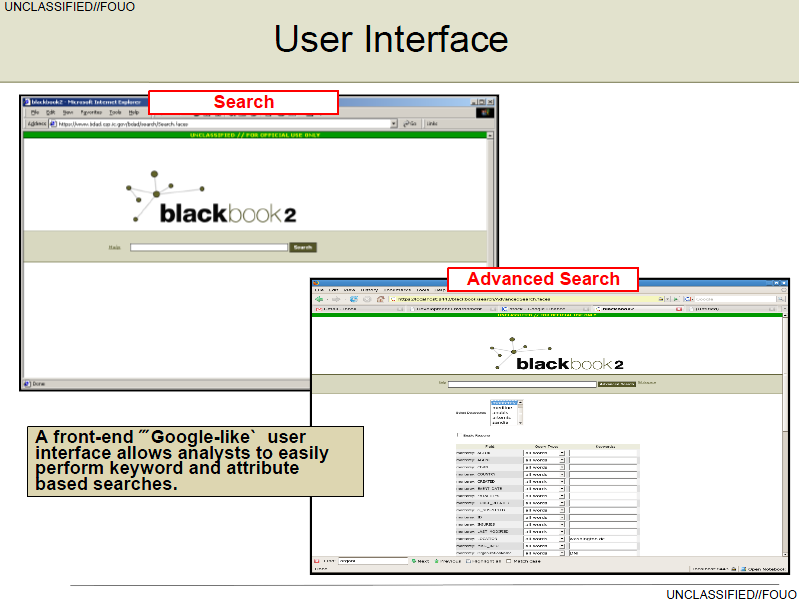
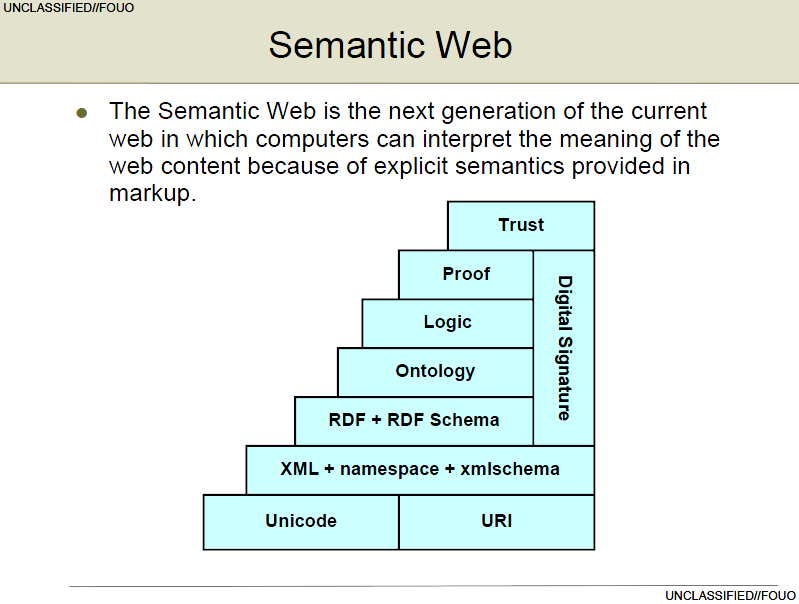
 

SECRET – Director of National Intelligence Blackbook Semantic Data Management Presentations

https://publicintelligence.net/wp-content/uploads/2012/03/DNI-BlackBook.png


https://publicintelligence.net/wp-content/uploads/2012/03/DNI-BlackBook-2.png

https://publicintelligence.net/wp-content/uploads/2012/03/DNI-BlackBook-4.png


https://publicintelligence.net/wp-content/uploads/2012/03/DNI-BlackBook-5.png

DOWNLOAD THE ORIGINAL DOCUMENTS HERE


DNI-BlackBook-1

DNI-BlackBook-2

DNI-BlackBook-3

SECRET from the CIA Crown Jewels – Involvement in Sensitive Domestic Activities

Citation: Involvement in Sensitive Domestic Activities
[Central Intelligence Agency Office of Planning, Programming, and Budgeting Activities; Attached to Routing Slip; Includes Memorandum Entitled “Watergate/Ellsberg and Like Matters”], Secret, Memorandum, May 08, 1973, 5 pp.
Collection: The CIA Family Jewels Indexed
Item Number: FJ00015
Origin: United States. Central Intelligence Agency. Planning, Programming, and Budgeting. Science and Technology Group
To: Schlesinger, James R.
Individuals/
Organizations Named:
Ellsberg, Daniel; Helms, Richard M.; Mitchell, John N.; Ober, Richard; Rand Corporation; Rayborn, William F.; United States. Central Intelligence Agency. Directorate of Intelligence; United States. Central Intelligence Agency. Directorate of Intelligence. Office of Current Intelligence; United States. Central Intelligence Agency. Directorate of Management and Services. Office of Medical Services; United States. Central Intelligence Agency. Directorate of Management and Services. Office of Security; United States. Central Intelligence Agency. Directorate of Operations. Counterintelligence Staff; United States. Central Intelligence Agency. Planning, Programming, and Budgeting; United States. Federal Bureau of Investigation; Young, David R.
Subjects: Agricultural products | Biographical intelligence | Chicago (Illinois) | Communists and Communist countries | Counterintelligence | Data processing | Domestic intelligence | Government appropriations and expenditures | Narcotics | New York | Pentagon Papers | Physicians | Police assistance | Political activists | Project Often | Psychological assessments | Satellite reconnaissance | Soviet Union | Terrorism | United States citizens | Watergate Affair (1972-1974)
Abstract: Describes Central Intelligence Agency Office of Planning, Programming, and Budgeting data processing support of “sensitive” activities, including surveillance of U.S. citizens, doctors, and travelers to Communist countries, and police and Federal Bureau of Investigation assistance.
Full Text: Document – PDF – this link will open in a new window (139 KB)

Durable URL for this record

Secret from the FBI – Three New Jersey Men Plead Guilty to Stealing $1.4 Million from New York-Based Defense Contractor

TRENTON—A former insurance agent for a New York-based defense contractor and his two friends today admitted stealing $1.4 million from the company, U.S. Attorney Paul J. Fishman announced.

Daniel Tumminia, 49, of Millstone, New Jersey; Michael Feuer, 47, of Freehold, New Jersey; and Dennis Mannarino, 45, of Manalapan, New Jersey, pleaded guilty before U.S. District Judge Joel A. Pisano in Trenton federal court to informations charging them with conspiracy to commit wire fraud.

According to documents filed in this case and statements made in court:

Fastener Dimensions (“Fastener”) was a New York-based manufacturer and distributor of aircraft, aerospace, and military components and hardware. Tumminia was an insurance agent for Massachusetts Mutual Life Insurance Co. (“MassMutual”) who represented Fastener and its president as an agent for MassMutual, handling all pension and profit sharing accounts and life insurance policies for Fastener’s employees.

From July 2004 through August 2010, Tumminia and his two friends—Feuer, a practicing attorney from 1990 through 2001 and the owner of Cypress Lawn Care, a landscaping company in New Jersey; and Mannarino, the owner of J&D Italian Specialty Meats, delicatessens located in New Jersey and New York—enriched themselves by diverting life insurance premium payments and pension and profit sharing checks belonging to Fastener’s employees into bank accounts that they controlled. In April 2008, Feuer incorporated and listed himself as the registered agent and officer of MassMutual Contracting Corp., a limited liability company that never performed any services for Fastener or any other clients, but was created by Feuer and Tumminia solely to falsely represent to Fastener that it was the real MassMutual. Feuer and Tumminia deposited $574,279 from Fastener into the MassMutual Contracting Corp. bank account.

Tumminia, Feuer, and Mannarino conducted 133 transactions, including interstate wire transfers, totaling $1,437,542 in deposits into bank accounts that they controlled. They then used the diverted funds for personal expenditures, including ATM cash withdrawals in New Jersey, rent, cable, utility, and grocery bills.

As part of their guilty pleas, Tumminia, Feuer, and Mannarino have agreed to make full restitution for all losses resulting from their crimes to the employees of Fastener Dimensions. Tumminia has agreed to forfeit $1,198,278 to the United States. Feuer has agreed to forfeit $115,963 and Mannarino has agreed to forfeit $10,000.

The conspiracy to commit wire fraud charges carry a maximum potential penalty of 20 years in prison and a $250,000 fine or twice the pecuniary gain or loss resulting from the conspiracy. The sentencings are scheduled for July 9, 2012.

U.S. Attorney Fishman credited special agents of the FBI working out of the Red Bank resident agency, under the direction of Special Agent in Charge Michael B. Ward, for the investigation leading to today’s guilty pleas.

The government is represented by Assistant U.S. Attorney Aaron Mendelsohn of the U.S. Attorney’s Office Economic Crimes Unit in Newark.

This case was brought in coordination with President Barack Obama’s Financial Fraud Enforcement Task Force. President Obama established the interagency Financial Fraud Enforcement Task Force to wage an aggressive, coordinated, and proactive effort to investigate and prosecute financial crimes. The task force includes representatives from a broad range of federal agencies, regulatory authorities, inspectors general, and state and local law enforcement who, working together, bring to bear a powerful array of criminal and civil enforcement resources. The task force is working to improve efforts across the federal executive branch, and with state and local partners, to investigate and prosecute significant financial crimes, ensure just and effective punishment for those who perpetrate financial crimes, combat discrimination in the lending and financial markets, and recover proceeds for victims of financial crimes.

SECRET – Washington D.C. Metropolitan Police Department Procedures for Handling First Amendment Assemblies and Mass Demonstrations

https://publicintelligence.net/wp-content/uploads/2012/03/DC-FirstAmendment.png


The Standard Operating Procedures (SOP) outlined in this manual are to ensure that this department is prepared to respond effectively and efficiently in accordance with applicable law and District of Columbia policy to any unlawful conduct occurring in the context of First Amendment assemblies. These SOP’s incorporate revisions to the manner in which the Metropolitan Police Department responds to demonstrations and other assemblies on District of Columbia public space that the District has implemented in resolving litigation. This manual also reflects measures mandated by the First Amendment Rights and Police Standards Act of 2004.

This handbook sets forth general policy and shall serve as standard operating procedures for all members in carrying out the mission of the Metropolitan Police Department in dealing with all demonstrations, rallies, marches, picket lines, or other similar gatherings conducted for the purpose of persons expressing their political, social, or religious views. This policy is intended to exceed constitutional requirements and satisfy the heightened requirements of local statutory law and best practices.

The manual also is designed around the concept of operational flexibility within the requirements of the National Incident Management System. It is impossible to devise specific standard procedures for handling all possible situations, for each has its own characteristics and problems. The overall police philosophy must be one of moderation, flexibility and controlled response. Since each situation is unique, both commanders and supervisory officials must plan to respond according to the nature and size of the crowd. The tactical procedures established within this manual are a guide, and not a substitute for the exercise of sound judgment and proper command and supervision within the context of general departmental policy.

It is imperative that members of the force understand the role of the Metropolitan Police Department during mass demonstrations and major disturbances in our city and the manner by which the department prepares itself to fulfill this role. It is to this end that this handbook is dedicated.

V. VIOLENT CIVIL DISTURBANCES

Unplanned civil disturbances may arise from a number of causes such as political grievances, economic conflicts, community unrest, or in response to police action taking place in neighborhoods, or in the midst of a crowded street, park or public place. Civil disturbance participants come from all walks of life and cover the entire political spectrum.

Whenever an unplanned First Amendment assembly arises, the first officer on the scene will serve as the initial incident commander. That member will be responsible for conducting an assessment of the scene, notifying the CIC and the element Watch Commander of the situation and requesting assistance from the Special Operations Division.

The basic human element sparking a civil disturbance is usually the presence of a crowd. Civil disturbances usually arise when a crowd:

1. Gathers to air grievances on issues, and transfers its anger from the issues to the people dealing with the issues.
2. Swells uncontrollably as curious bystanders and sympathetic onlookers join forces with the activists or protestors.
3. Is incited to irrational action by skillful agitators.

In civil disturbances, crowds employ any number of tactics to achieve their goals. Their tactics may be unplanned or planned, non-violent or violent confrontations. As indicated, the situations that could evolve into a violent civil disturbance are numerous and varied. Often there will be little or no warning before the onset of violence or property damage. In a few instances, it may be possible to predict a level of civil disorder by the nature of a pre-planned event. However, each civil disturbance situation is unique and commanders and supervisory officials must, therefore, plan and respond according to the nature and size of the disturbance. The policies and procedures presented in this SOP are based upon the concept of operational flexibility, and it is expected that officials will exercise sound judgment and proper command and supervisory responsibility in the control of a civil disturbance.

Secret – U.S. Army Document and Media Exploitation Draft Manual

https://publicintelligence.net/wp-content/uploads/2012/03/USArmy-DOMEX.png


This publication provides Tactics, Techniques, and Procedures (TTP) required for Army personnel when conducting Document and Media Exploitation (DOMEX) operations. The document is designed to serve as a reference for multiple personnel at varying echelons. The ATTP provides specific information for Army personnel operating as part of a DOMEX or other exploitation team for the collection, processing, and reporting of DOMEX activities. The manual serves as a reference for staff planners and intelligence personnel at battalion and brigade combat teams. Additionally, the manual provides an understanding of DOMEX activities, procedures, organizations, products, and databases at joint task force, U.S. Army, and the Department of Defense.

DOCUMENT AND MEDIA EXPLOITATION

1-2. DOMEX is the processing, translation, analysis, and dissemination of collected hardcopy documents and electronic media that are under the U.S. Government’s physical control and are not publicly available (training circular [TC] 2-91.8).

1-3. DOMEX includes the collection and exploitation of captured equipment, documents, and media to generate actionable intelligence. DOMEX provides leaders at all echelons with intelligence about enemy forces; their plans and intentions; and their TTP. It does this through the rapid and accurate extraction, exploitation, and analysis of acquired documents, cell phones, computers, digital storage devices, video and audio tapes, and other media and material. DOMEX is a critical part of target exploitation, especially as it relates to actions on the objective during site exploitation activities.

1-4. Through DOMEX, information is systematically extracted from all captured materials in response to the commanders’ critical information requirements (CCIR). DOMEX activities—

  • Maximize the value of intelligence gained from captured materials.
  • Provide commanders with timely and relevant intelligence to effectively enhance awareness of the enemies’ capabilities, operational structures, and intents.
  • Provide timely and accurate intelligence support to the commander throughout the full spectrum of operations.
  • Assist in criminal prosecution and legal processes by maintaining chain of custody procedures and preserving the evidentiary value of captured materials.

https://publicintelligence.net/wp-content/uploads/2012/03/domex-1.png


https://publicintelligence.net/wp-content/uploads/2012/03/domex-2.png

SECRET – The FBI – Multi-Million-Dollar Hospice Health Care Fraud Alleged

PHILADELPHIA—An indictment was unsealed today charging five nurses in a health care fraud conspiracy arising from their employment at Home Care Hospice Inc. (HCH), a hospice care provider in Philadelphia, between 2005 and 2008 that resulted in a multi-million-dollar fraud on Medicare. Patricia McGill, 64, of Philadelphia, was a registered nurse and served as the director of professional services for HCH. She allegedly authorized and supervised the admission of inappropriate and ineligible patients for hospice services, resulting in approximately $9.32 million in fraudulent claims. She is charged, along with Natalya Shvets, 42, of Southhampton, Pennsylvania Giorgi Oqroshidze, 36, of Philadelphia; Yevgeniya Goltman, 42, of Newtown, Pennsylvania; and Alexsandr Koptyakov, 39, of Bensalem, Pennsylvania, with one count of conspiracy to commit health care fraud and numerous counts of health care fraud. All five defendants were arrested this morning.

HCH was co-owned by Matthew Kolodesh, who is charged separately in an indictment unsealed October 12, 2011, and “A.P.,” the Hospice Director for HCH. HCH was a for-profit business at 1810 Grant Avenue, and later 2801 Grant Avenue, in Philadelphia that provided hospice services for patients at nursing homes, hospitals, and private residences. According to the indictment, announced by United States Attorney Zane David Memeger, McGill authorized nursing staff and supervisors, including her co-defendants, to fabricate and falsify documents in support of hospice care for patients who were not eligible for hospice care, or for a higher, more costly level of care than was actually provided to the patients. Between January 2005 and December 2008, approximately $9,328,000 in fraudulent claims for inappropriate patients were submitted to Medicare as authorized by AP and McGill. Defendants Shvets, Oqroshidze, Goltman, and Koptyakov created fraudulent nursing notes for approximately 150 patients indicating hospice services were provided for patients, when, in reality, they were not.

In February 2007, HCH was notified that it was subject to a claims review audit. According to the indictment, in anticipation of this audit, McGill assisted A.P. in reviewing patient charts, sanctioning false documentation by the nursing staff, and authorizing the alteration of charts. In September 2007, HCH was notified that it had exceeded its cap for Medicare reimbursement and would have to repay $2,625,047 to the government program. At that point, A.P. and McGill directed staff to review patient files and discharge hospice patients. This resulted in a mass discharge of patients. In one month, 79 hospice patients were discharged in October 2007 and a total of 128 discharged by January 2008, some of whom had been ineligible for hospice or inappropriately maintained on hospice service in excess of six months. Some of the patients discharged were shifted to another hospice business owned by Kolodesh. In the spring of 2008, approximately 20 percent of the discharged patients were placed back on hospice service at HCH with McGill’s knowledge. McGill is charged in 14 counts; Shvets is charged in eight counts; Oqroshidze is charged in seven counts; Goltman is charged in four counts; and Koptykov is charged in eight counts.

If convicted of all charges, McGill faces a potential advisory sentencing guideline range of 108 to 135 months in prison, a fine of up to $150,000, and a $1400 special assessment; Shvets, Goltman, and Koptykov each face a potential advisory sentencing guideline range of 27 to 33 months in prison, a fine of up to $60,000, and an $800 special assessment; Oqroshidze faces a potential advisory sentencing guideline range of 21 to 27 months in prison, a fine of up to $50,000, and a $700 special assessment.

The case was investigated by the Federal Bureau of Investigation and the Department of Health and Human Services-Office of Inspector General. It is being prosecuted by Assistant United States Attorney Suzanne B. Ercole and Trial Attorney Margaret Vierbuchen of the Organized Crime and Gang Section in the Justice Department’s Criminal Division.

Secret – Washington D.C. Fusion Center: White Powder Letters Warning March 2012

https://publicintelligence.net/wp-content/uploads/2012/03/WRTAC-WhitePowder-2012.png

Since 2007 an unknown subject has sent more than 360 letters containing a white, powder substance to various government officials, public schools and other locations. In May, 2011 20 letters were delivered to public schools in Washington, DC. Over the past two days similar letters have been received in Washington, DC; New York, New York; Dallas, Texas and Enfield, Connecticut.

(U//FOUO) SCOPE

The WRTAC produces Information Bulletins in response to changes in the threat environment from terrorist attacks, natural hazards, criminal developments, and other events.

(U//FOUO) EVENT OVERVIEW

A series of “white powder letters” were received in the District of Columbia in October, 2010 and May, 2011. Similar letters were received at various locations around the country March 6, 2012 and additional letters may be in the mail system pending delivery. Specially trained response teams are prepared to investigate and collect any suspicious letters.

The letters are postmarked Dallas,Texas and contain a letter with the words AL AQEDA-FBI or similar language and contain a white powder. They are typically addressed using a computer printed label.

(U) Indicators of Suspicious Packages and Envelopes. Suspicious packages and envelopes often have characteristics that can alert handlers or recipients to potentially harmful contents.

• Inappropriate or unusual labeling:
• Excessive postage.
• A handwritten or poorly typed address.
• Misspellings of common words.
• Strange return address or no return address.
• Incorrect title or title without a name.
• Not addressed to a specific person.
• Marked with restrictions, such as “Personal,” “Confidential,” or “Do not X-ray.”
• Marked with threatening, insulting, or disparaging language.
• Postmarked from a city or state that does not match the return address.

(U) Appearance:

• Powdery substance felt through or visible on the package or envelope.
• Oily stains, discolorations, or odor.
• Lopsided or uneven envelope.
• Excessive packaging material such as masking tape or string.
• Other suspicious signs:
• Excessive weight.
o Ticking sound.
o Protruding wires or aluminum foil.


Secret – The CIA – Request for Information on Sensitive Activities

Citation: Request for Information on Sensitive Activities
[Central Intelligence Agency Funds for Federal Bureau of Investigation], Secret, Memorandum, May 07, 1973, 1 pp.
Collection: The CIA Family Jewels Indexed
Item Number: FJ00056
Origin: United States. Central Intelligence Agency. Directorate of Plans. Missions and Programs Staff
From: Sherman, Edward L.
Individuals/
Organizations Named:
Angleton, James; Briggs, Charles; United States. Central Intelligence Agency. Directorate of Operations. Technical Services Division; United States. Central Intelligence Agency. Executive Director; United States. Federal Bureau of Investigation
Subjects: Government appropriations and expenditures | Interagency cooperation
Abstract: Reveals that Central Intelligence Agency funds were made available to Federal Bureau of Investigation.
Full Text: Document – PDF – this link will open in a new window (22 KB)

Secret – U.S. Army Taliban Use of Civilian Shields

https://publicintelligence.net/wp-content/uploads/2012/03/USArmy-TalibanCivilianShields.png

https://publicintelligence.net/wp-content/uploads/2012/03/talibancivilianshields-1.png


https://publicintelligence.net/wp-content/uploads/2012/03/talibancivilianshields-2.png

https://publicintelligence.net/wp-content/uploads/2012/03/talibancivilianshields-3.png

The CIA and the Congress – A Secret Document

DOWNLOAD THE ORIGINAL DOCUMENT HERE

05-The Agency and the Hill_PartI-Chapter2

Secret – Transcript of 1968 Council on Foreign Relations Secret Meeting on the Theory of CIA Covert Action

The following is a transcript of a private meeting held in 1968 in the New York Pratt House of the Council on Foreign Relations.  The meeting was attended by a number of prominent members of the early U.S. intelligence community, including Richard Bissell and Allen Dulles.  The transcript was reportedly discovered by Vietnam War protesters who occupied a building in 1971 housing Harvard’s Center for International Affairs.  One of the attendees of the secret meeting, William Harris, served as an associate to the Center for International Affairs and this transcript was found in his personal files.  The transcript was published in full in the 1974 book “The CIA and the Cult of Intelligence” by Victor Marchetti, a former special assistant to the Deputy Director of the Central Intelligence Agency, and John D. Marks, a former officer of the United States Department of State.  The meeting transcript is described in the book as the “most complete description of the CIA’s covert-action strategy and tactics ever made available to the outside world.”A PDF version of the transcript is also available.

Minutes of the 1968 “Bissell Meeting” at the Council on Foreign Relations

The third meeting of the Discussion Group on Intelligence and Foreign Policy was held at the Harold Pratt House on January 8, 1968, at 5:00 p.m. Present were: Richard M. Bissell, Jr., Discussion Leader; Douglas Dillon, Chairman; William J. Barnds, Secretary; William R. Harris, Rapporteur; George Agree, Frank Altschul, Robert Amory, Jr., Meyer Bernstein, Col. Sidney B. Berry, Jr., Allen W. Dulles, George S. Franklin, Jr., Eugene Fubini, Julius C. Holmes, Thomas L. Hughes, Joseph Kraft, David W. MacEachron, Philip W. Quigg, Harry Howe Ransom, Theodore C. Sorensen, David B. Truman.

The Chairman, Mr. Dillon, opened the meeting, noting that although this entire series of discussion was “off-the-record,” the subject of discussion for this particular meeting was especially sensitive and subject to the previously announced restrictions.

Mr. Dillon noted that problems involving CIA’s relationships with private institutions would be examined at a later meeting, though neither Mr. Bissell nor others should feel restricted in discussion of such problems this evening.

As the session’s discussion leader, Mr. Bissell offered a review and appraisal of covert operations in U.S. foreign policy.

Touching briefly upon the question of responsibility, of whether these agencies are instruments of national policy, Mr. Bissell remarked that, in such a group, he needn’t elaborate on CIA’s responsiveness to national policy; that we could assume that, although CIA participates in policy making (as do other “action agencies,” such as AID, the military services and Departments, in addition to the Department of State), CIA was a responsible agency of national policy.

Indeed in Mr. Bissell’s personal experience, CIA’s role was more carefully circumscribed and the established limits observed more attentively than in ECA, where Mr. Bissell had previously worked.

The essential control of CIA rested in a Cabinent-level committee, comprising a representative of the White House staff the Under Secretary of State, Deputy Secretary of Defense, and in recent years the personal participation of the Director of Central Intelligence. Over the years this committee has become a more powerful and effective device for enforcing control. It reviews all new projects, and periodically scrutinizes ongoing projects.

As an interdepartmental committee composed of busy officials who meet only once per week, this control group is of limited effectiveness. Were it the only control instrument, Mr. Bissell would view it as inadequate, but in fact this committee is merely the summit of control, with a series of intermediate review procedures as lower levels. Projects are usually discussed in the relevant office of the Assistant Secretary of State, and, if at all related to Defense Department interests, at a similar level in DoD, frequently after consideration at lower levels in these departments. It was rare to take an issue before the Special Group prior to discussion at lower levels, and if there was objection at lower levels most issues were not proposed to the Special Group — excepting large projects or key issues, which would be appealed at every level, including the Special Group.

Similar procedures applied in the field. Generally, the Ambassador had a right to know of any covert operations in his jurisdiction, although in special cases (as a result of requests from the local Chief of State or the Secretary of State) the chief of station was instructed to withhold information from the Ambassador. Indeed, in one case the restriction was imposed upon the specific exhortation of the Ambassador in question, who preferred to remain ignorant of certain activities.

Of the “blown” operations, frequently among the larger ones, most are known to have been approved by the President himself. The U-2 project, for example, was an offshoot of the Land (intelligence) Committee of the Killian panel on surprise attack; it was proposed as a Killian panel recommendation to the President, supported by USIB; its procurement, in utmost secrecy, was authorized by the President, and, with the exception of the first few flights (the initial authorization being to operate for a period of ten days, “weather permitting”), each individual flight was authorized by the President, with participation by the Secretary of State and Secretary of Defense.

Covert operations should, for some purposes, be divided into two classifications: ( 1) Intelligence collection, primarily espionage, or the obtaining of intelligence by covert means; and (2) Covert action, attempting to influence the internal affairs of other nations — sometimes called “intervention” — by covert means.

Although these two categories of activity can be separated in theory, intelligence collection and covert action interact and overlap. Efforts have been made historically to separate the two functions but the result has usually been regarded as “a total disaster organizationally.” One such attempt was the establishment in the early days of CIA (1948) of the OPC under Frank G. Wisner as a separate organ for covert action. Although supported and given cover by the CIA, this organization was independent and Wisner reported directly to the Secretaries of State and Defense. “Beedle” Smith decided when he became Director of Central Intelligence that, if he were responsible for OPC, he was going to run it and it was merged with the clandestine intelligence organization in such a way that within the combined Clandestine Service there was a complete integration of intelligence collection and covert action functions in each area division.

In addition to our experience with OPC, the Germans and the British for a time during the war had organizations for covert special operations separate from, and inevitably in competition with. their espionage services. In every case the experience has been unfortunate. Although there are many disagreements within CIA on matters of doctrine, the view is unanimous that the splitting of intelligence and covert action services would be disastrous, with resulting competition for recruitment of agents, multiple recruitment of the same agents, additional security risks, and dissipation of effort.

Concerning the first category, intelligence collection, we should ask: (a) What is the scope of “covert intelligence collection”? (b) What intelligence collection functions can best be performed covertly?

The scope of covert intelligence collection includes: (1) reconnaissance; (2) communications and electronic intelligence, primarily undertaken by NSA; and (3) classical espionage, by agents. In gauging their utility, Mr. Bissell ranked (1) the most important, (2) slightly below, and (3) considerably below both (1) and (2).

Although it is less effective, classical espionage is “much the least costly,” with the hardware components of recon and NSA activities raising their costs considerably.

(In the after-dinner discussion, an authority on communications-electronics expressed his concurrence in Mr. Bissell’s relative rankings. Notwithstanding technological advances in cryptology, the increased sophistication in most cryptosystems assured that (1) (reconnaissance) outranked (2). Another observer noted that the budgets correlated in similar manner, the former speaker concurring and noting that, however surprising, the budgets approximated maximum utility according to cost-effectiveness criteria.)

Postwar U.S. reconnaissance operations began, historically, as “covert” operations, primarily a series of clandestine overflights of Communist territory in Eastern Europe, inaugurated in the early 1950s. These early efforts were followed by the U-2 project, which provided limited coverage but dramatic results.

Now we have reconnaissance satellites. Overhead reconnaissance is one of the most open of “secrets” in international affairs; it is no longer really a “covert activity,” and bureaucratic responsibility for it now resides in the Pentagon. Classical espionage, in the early postwar years, was conducted with special intensity in West Germany, and before the Berlin wall, in that city, which was ideal for the moving of agents in both directions, providing a sizable flow of political and economic intelligence (especially from East Germany).

Throughout the period since the early fifties, of course, the Communist bloc, and more especially the U.S.S.R. itself, has been recognized as the primary target for espionage activities. Circumstances have greatly limited the scale of operations that could be undertaken within the bloc so much of the effort has been directed at bloc nationals stationed in neutral or friendly areas, and at “third country” operations that seek to use the nationals of other non-Communist countries as sources of information on the Soviet bloc.

More recently there has been a shift in priorities for classical espionage toward targets in the underdeveloped world. Partly as a result of this change in priorities and partly because of other developments, the scale of the classical espionage effort mounted in Europe has considerably diminished. The U.S.S.R. remains a prime target but Communist China would today be given the same priority.

As to the kinds of information that could be obtained, espionage has been of declining relative importance as a means of learning about observable developments, such as new construction, the characteristics of transportation systems, the strength and deployment of military forces and the like because reconnaissance has become a far more effective collection technique and (except in China) travel is freer and far more extensive than some years ago. It had been hoped that espionage would contribute to the collection of intelligence on Soviet and East European technology, since this is a body of information not readily observable (until embodied in operational systems). Another type of intelligence for which espionage would seem to be the only available technique is that concerning enemy intentions. In practice however espionage has been disappointing with respect to both these types of intelligence. They ,are for obvious reasons closely guarded and the task is just too difficult to permit results to be obtained with any dependability or regularity. With respect to the former category — technology — the published literature and direct professional contacts with the scientific community have been far richer sources.

(A communications-electronics expert interjected the observation that the same reasoning applied to inadequacies in S&T intelligence collection; technology is just too difficult for agents, who are insufficiently trained to comprehend what they observe as the technologies become increasingly complicated.)

As to friendly neutrals and allies, it is usually easier to learn what one wishes by overt contacts, human contact of overt members of the U.S. mission or private citizens. We don’t need espionage to learn British, or even French
intentions.

(The speaker was questioned as to whether the other side’s espionage was of similarly limited utility, or whether — with their Philbys — they were more successful?)

Mr. Bissell remarked that Soviet Union successes were primarily in counterintelligence, though going back aways, the Soviet Union had been more successful in recruiting U.S. scientists.

(The question was raised as to whether Burgess and MacLean constituted merely C.I. successes.)

Mr. Bissell thought so.

(In another’s recollection, Soviet atomic intelligence efforts had been of substantial assistance in facilitating the Soviet nuclear weapons program. Although it is not possible to estimate with precision the effects of this intelligence, it was Lewis Strauss’s guess that atomic intelligence successes allowed the Soviets to detonate their first device at least one and one-half and perhaps as much as two and one-half years before such a test would have been possible with purely indigenous efforts.)

The general conclusion is that against the Soviet bloc or other sophisticated societies, espionage is not a primary source of intelligence, although it has had occasional brilliant successes (like the Berlin Tunnel and several of the high level defectors). A basic reason is that espionage operates mainly through the recruitment of agents and it is enormously difficult to recruit high level agents. A low level agent, even assuming that he remained loyal and that there is some means of communicating with him[,] simply cannot tell you much of what you want to know. The secrets we cannot find out by reconnaissance or from open sources are in the minds of scientists and senior policy makers and are not accessible to an ordinary citizen even of middle rank.

In contrast, the underdeveloped world presents greater opportunities for covert intelligence collection, simply because governments are much less highly oriented; there is less security consciousness; and there is apt to be more actual or potential diffusion of power among parties, localities, organizations, and individuals outside of the central governments. The primary purpose of espionage in these areas is to provide Washington with timely knowledge of the internal power balance, a form of intelligence that is primarily of tactical significance.

Why is this relevant?

Changes in the balance of power are extremely difficult to discern except through frequent contact with power elements. Again and again we have been surprised at coups within the military; often, we have failed to talk to the junior officers or non-coms who are involved in the coups. The same problem applies to labor leaders, and others. Frequently we don’t know of power relationships, because power balances are murky and sometimes not well known even to the principal actors. Only by knowing the principal players well do you have a chance of careful prediction. There is real scope for action in this area; the technique is essentially that of “penetration,” including “penetrations” of the sort which horrify classicists of covert operations, with a disregard for the “standards” and “agent recruitment rules.” Many of the “penetrations” don’t take the form of “hiring” but of establishing a close or friendly relationship (which may or may not be furthered by the provision of money from time to time).

In some countries the CIA representative has served as a close counselor (and in at least one case a drinking companion) of the chief of state. These are situations of course in which the tasks of intelligence collection and political action overlap to the point of being almost indistinguishable. (The question was raised as to why ordinary diplomats couldn’t maintain these relationships.)

Mr. Bissell observed that often they could. There were special cases, however, such as in one Republic where the chief of state had a “special relationship” with the senior CIA officers without the knowledge of the U.S. Ambassador because the President of the Republic had so requested it. The CIA man sent reports by CIA channels back to the Secretary of State, but the Ambassador in the field, as agreed by the Secretary of State, wasn’t to be informed. In this case, a problem arose when the relevant Assistant Secretary of State (who had received cables from the CIA man) became the new Ambassador, but the President of the Republic liked the new Ambassador and asked that a “special relationship” be established with him too.

Aside from this unique case, it seems to have been true generally that the Ambassador has to be a formal representative of the United States most of whose relations with the government to which he is accredited are through or with the knowledge of. its foreign office. On the other hand, the CIA representative can maintain a more intimate and informal relationship the privacy of which can be better preserved both within the government of the country in question and within the United States government. Moreover, if a chief of state leaves the scene or changes his mind, you can quietly move a station chief, but it could be embarrassing if it were necessary suddenly to recall the U.S. Ambassador.

(Was the previously described relationship really a “covert operation”?)

The “cover” may be to shield visibility from some junior officials or, in the case of a “private adviser” to a chief of state, to shield this fact from politicians of the local government. (Another observation was that the method of reporting, through CIA channels, constituted one difference and had some influence. A chief of state who knew that CIA’s reports would be handfed in a smaller circle, with less attendant publicity, might prefer these channels for some communications.)

Concerning the second category, covert action:

The scope of covert action could include: (1) political advice and counsel; (2) subsidies to an individual; (3) financial support and “technical assistance” to political parties; ( 4) support of private organizations, including labor unions, business firms, cooperatives, etc.; (5) covert propaganda; (6) “private” training of individuals and exchange of persons; (7) economic operations; and (8) paramilitary [or] political action operations designed to overthrow or to support a regime (like the Bay of Pigs and the programs in Laos). These operations can be classified in various ways: by the degree and type of secrecy required [,] by their legality, and, perhaps, by their benign or hostile character.

From whom is the activity to be kept secret? After five days, for example, the U-2 flights were not secret from the Russians but these operations remained highly secret in the United States, and with good reason. If these overflights had “leaked” to the American press, the U.S.S.R. would have had been forced to take action. On a less severe level the same problem applies to satellite reconnaissance. These are examples of two hostile governments collaborating to keep operations secret from the general public of both sides. “Unfortunately, there aren’t enough of these situations.” (The remark was interjected that there was another reason for secrecy; if one had to admit to the activity, one would have to show the results, and exactly how good or bad they were.)

Covert operations could be classified by their legality or illegality. Many of them are legal.

They can also be classified as “benign” or “hostile.” Most operations in Western Europe have been “benign,” though involving the gravest improprieties, and in some cases clearly illegal action. (E.g., covert support of political parties.)

In the case of a large underdeveloped country, for example, money was put into a party’s funds without the knowledge of that party. The relatively few economic operations that have been undertaken have been both benign and legal. One of these involved the provision by CIA of interim ostensibly private financing of an overt project pending an overt and official loan by AID. Its purpose was to give AID time for some hard bargaining without causing a complete failure of the transaction. The stereotype, of course, is that all covert operations are illegal and hostile, but this is not really the case.

The role of covert intervention can best be understood by contrast with the overt activities of the United States government. Diplomacy seeks results by bargaining on a government-to-government basis, sometimes openly — sometimes privately. Foreign economic policy and cultural programs seek to modify benignly the economies of other countries and the climate of opinion within them. Covert intervention is usually designed to operate on the internal power balance, often with fairly short-term objectives in view. An effort to build up the economy of an underdeveloped country must be subtle, long continued, probably quite costly, and must openly enlist the cooperation of major groups within the country if it is to have much influence. On the other hand an effort to weaken the local Communist party or to win an election, and to achieve results within at most two or three years, must obviously be covert, it must pragmatically use the people and the instrumentalities that are available and the methods that seem likely to work. It is not surprising that the practitioners within the United States government of these two types of intervention differ temperamentally and in their preferences for methods, friends, and ideologies.

The essence of such intervention in the internal power balance is the identification of allies who can be rendered more effective, more powerful, and perhaps wiser through covert assistance. Typically these local allies know the source of the assistance but neither they nor the United States could afford to admit to its existence. Agents for fairly minor and low sensitivity interventions, for instance some covert propaganda and certain economic activities, can be recruited simply with money. But for the larger and more sensitive interventions, the allies must have their own motivation. On the whole the Agency has been remarkably successful in finding individuals and instrumentalities with which and through which it could work in this fashion. Implied in the requirement for a pre-existing motivation is the corollary that an attempt to induce the local ally to follow a course he does not believe in will at least reduce his effectiveness and may destroy the whole operation. It is notably true of the subsidies to student, labor, and. cultural groups that have recently been publicized that the Agency’s objective was never to control their activities, only occasionally to point them in a particular direction, but primarily to enlarge them and render them more effective.

Turning to relations with other agencies. Mr. Bissell was impressed by the degree of improvement in relations with the State Department. Seen from the Washington end, there has been an increase in consultation at the country-desk level, more often at the Bureau level or the Assistant Secretary of State level as the operation shapes up. The main problem some five to six years ago was not one of responsibility or authority but of cover arrangements.

Mr. Bissell provided a brief critique of covert operations, along the following lines:

That aspect of the Agency’s operations most in need of change is the Agency’s use and abuse of “cover.” In this regard, the “background paper” for this session raised many cover-oriented questions.

On disclosure of private institutional support of late, it is very clear that we should have had greater compartmenting of operations.

If the Agency is to be effective, it will have to make use of private institutions on an expanding scale, though those relations which have “blown” cannot be resurrected.

We need to operate under deeper cover, with increased attention to the use of “cut-outs.” CIA’s interface with the rest of the world needs to be better protected.

If various groups hadn’t been aware of the source of their funding, the damage subsequent to disclosure might have been far less than occurred.

The CIA interface with various private groups, including business and student groups, must be remedied.

The problem of Agency operations overseas is frequently a problem for the State Department. It tends to be true that local allies ‘ find themselves dealing always with an American and an official American-since the cover is almost invariably as a U.S. government employee. There are powerful reasons for this practice, and it will always be desirable to have some CIA personnel housed in the Embassy compound, if only for local “command post” and communications requirements.

Nonetheless, it is possible and desirable, although difficult and time-consuming, to build overseas an apparatus of unofficial cover. This would. require the use or creation of private organizations, many of the personnel of which would be non-U.S. nationals, with freer entry into the local society and less implication for the official U.S. posture.

The United States should make increasing use of non-nationals, who, with effort at indoctrination and training, should be encouraged to develop a second loyalty, more or less comparable to that of the American staff. As we shift our attention to Latin America, Asia, and Africa, the conduct of U.S. nationals is likely to be increasingly circumscribed. The primary change recommended would be to build up a system of unofficial cover; to see how far we can go with non-U.S. nationals, especially in the field. The CIA might be able to make increasing use of non-nationals as “career agents” that is with a status midway between that of the classical agent used in a single compartmented operation perhaps for a limited period of time and that of a staff member involved through his career in many operations and well informed of the Agency’s capabilities. Such career agents should be encouraged with an effort at indoctrination and training and with a prospect of long-term employment to develop a second loyalty and they could of course never be employed in ways that would conflict with their primary loyalties toward their own countries. This still leaves open, however, a wide range of potential uses. The desirability of more effective use of foreign nationals increases as we shift our attention to Latin America, Asia, and Africa where the conduct of United States nationals is easily subject to scrutiny and is likely to be increasingly circumscribed.

These suggestions about unofficial cover and career agents illustrate and emphasize the need for continuing efforts to develop covert action capabilities even where there is no immediate need to employ them. The central task is that of identifying potential indigenous allies-both individuals and organizations-making contact with them, and establishing the fact of a community of interest. There is some room for improvement, Mr. Bissell thought, in the planning of covert action country by country. Covert intervention is probably most effective in situations where a comprehensive effort is undertaken with a number of separate operations designed to support and complement one another and to have a cumulatively significant effect. The Agency probably finds itself involved in too many small covert action operations having no particular relationship with one another and having little cumulative impact.

There is no doubt that some covertly funded programs could be undertaken overtly, Mr. Bissell thought. Often activities have been initiated through CIA channels because they could be started more quickly and informally but do not inherently need to be secret. An example might be certain exchange of persons programs designed to identify potential political leaders and give them some exposure to the United States. It should be noted, however, that many such innocent programs are more effective if carried out by private auspices than if supported officially by the United States government. They do not need to be covert but if legitimate private entities such as the foundations do not initiate them, there may be no way to get them done except by covert support to “front” organizations.

Many propaganda operations are of declining effectiveness. Some can be continued at slight cost, but some of the larger ones (radio, etc.) are pretty well “blown” and not inexpensive. USIA doesn’t like them, and although they did have a real justification some ten to fifteen years ago as the voice of refugees and emigres, groups which also have declined in value, and in the view of some professionals are likely to continue declining in value.

In his last two years in the Agency, Mr. Bissell felt that the Clandestine Services could have been smaller.

Indeed, steps were taken to reduce their size. It is impossible to separate the issue of size from personnel and cover problems. It was Mr. Bissell’s impression that the Clandestine Services were becoming increasingly a career service, too much like the Foreign Service (personnel looking to a succession of overt posts in a safe career) . One result was the circumscription of local contacts. There was a subtle change taking place, which threatened to degrade some of CIA’s former capabilities. Formally, the CIA had a staff with a wide variety of backgrounds, experiences, and capabilities. Its members were recruited from every sort of public and private occupation. If this diversity and variety is lost through the process of recruiting staff members from college, training them in a fairly standard pattern, and carrying them through orderly planned careers in the Agency, one of the organization’s most valuable attributes will disappear.

Finally, Mr. Bissell remarked on large operations. It is self-evident that if an operation is too large, it can’t remain a deeply kept secret. At best, one can then hope for a successful formal disclaimer. The worst of many faults of the Bay of Pigs operation was excessive reliance on the operation’s disclaimability.

It has been a wise decision that operations of that scale not be undertaken by the Agency, except in theaters such as Vietnam, where the stakes and standards are different.

Covert action operations are generally aimed at short-term goals and the justification for the control machinery is that bias of operators to the short run can be compensated for in the review process. Mr. Bissell can conceive of no other way to force greater attention to long-range costs and values. One alternative is that caution will lead to ineffectuality. “Operational types” will he risk-takers, the counterweight is, and should be, applied by the other agencies in government.

In the discussion following Mr. Bissell’s talk, the issue of CIA cover was cited as among the more interesting from the perspective of a former State Department appointee. The size of covert operations known to other governments was a continuing embarrassment, and the overseas staff maintained for these purposes and known to host governments was a similar source of embarrassment. From time to time, efforts were made to reduce overseas staff; although agreement in principle was readily forthcoming, the particulars of staff reduction were difficult to obtain.

A former member of the Special Group (who served eighteen months on that committee) agreed with Mr. Bissell’s earlier remarks on control mechanisms, insofar as they applied to review of new projects. These received most careful scrutiny. Insofar as the Special Group considered ongoing projects during this eighteen-month period, it was recalled that there was not any systematic, thorough procedure for such review, the committee finding itself busy with all the new proposals. If it were true that most operations were most useful for short-term goals, then perhaps there should be greater attention to review of ongoing projects, and termination of more projects earlier than in past practice.

A continuing problem which worries one former official was that. concerning the “charter” of CIA, the public expression of which, in the National Security Act of 1947, was necessarily vague. CIA’s full “charter” has been frequently revised, but it has been, and must remain[,] secret. The absence of a public charter leads people to search for the charter and to question the Agency’s authority to undertake various activities. The problem of a secret “charter” remains as a curse, but the need for secrecy would appear to preclude a solution.

Another former official remarked on the inadequacy of clandestine intelligence as a means of obtaining enemy intentions. Sherman Kent (former Chairman. Board of National Estimates) distinguishes “the knowable” from “the unknowable,” and we should recognize that much remains impossible to know, including, frequently, enemy intentions.

Respecting the reduction of overseas personnel and programs of declining utility, it was noted that the curtailment of over-age and unproductive personnel was a thorny issue. Recognizing the likelihood of appeal to the President and the absence of widespread participation in a manpower review, a former budget official arranged the participation of the Bureau of the Budget, CIA, FIAB, and relevant Under Secretaries in considerations of budgetary modifications. What emerged was an inertia, partly the inertia of the cold war. Parenthetically, a couple of much-criticized public media projects (cited by name) had proven of value, as the fall of Novotny in Czechoslovakia suggested, but a number of ineffective programs were retained. The problem was to free the budget, to do something new, in the place of old programs, not to reduce the budget, but unfortunately, the chiefs in CIA wanted to control their working capital. If it were only possible to tell these officials not to worry. that we were setting aside $xxx million for CIA, and merely seeking to encourage better use of the same dollar amounts, then it would have been possible to move around some money. The big “iffy” question was a particular (named) foundation, which received a sizable allocation. Finally. everything was cleared up, and the next big review was scheduled, but never really effected as a consequence of the Cuban missile crisis. The review was geared up in 1963 once again.

Another observer, drawing upon work with the “combined cryptologic budget” and private industry, concluded that it was usually impossible to cut a budget; usually it was only possible to substitute a new project for an old one.

The Chairman suggested a number of questions: What are the effects of covert operations being blown? What can be done to improve the image of the Agency? What can he done to improve relations between the Agency and the press?

It was thought that a journalist’s perspective might aid in discussing these questions, but a number of prior issues were thought to require attention:

(1) The matter of size required attention. In any government agency size can become a problem; increasingly there is a realization that the government is too big and “an ever-swelling tumor.” At some point there will have to be a fairly sharp cutback in the U.S. foreign policy establishment.

(2) One was not overly impressed by the use of CIA in the developing world; in any case, we could have increased confidence in the range of choice in most developing areas. Conversely, it might not be as easy. as Mr. Bissell suggested to know the power structure in more developed areas, in Western Europe and Japan.

(A query was interjected: Why should we have increasing confidence in the range of choice in developing areas? Perhaps there are Jess variations than we earlier thought. “Things are evening out and we can live more comfortably.”)

(3) Where do you bury the body? One is not completely convinced by citation of the experience with Frank Wisner’s OPC. We could get around the responsibility issue raised by “Beedle” Smith; we could get around conflicting chains of command.

(4) Related to (3). Maybe there is a cost to be paid for having covert operations under CIA. Perhaps we could have intelligence collection under State and covert operations under the Special Assistant to the President for National Security Affairs.

In response to items (3) and (4) some earlier remarks were clarified: one would not claim that the operational side of CIA need be where it is. Rather, one would inveigh against the splitting of covert intelligence collection and covert operations. One could, however, split the operational side from the analytic side. This is a plausible case, a solution for which could be worked out (though, on balance, the speaker was against it). But to split the operational side-as the German case, the British case for a time, and our own for a time suggested-would be disastrous.

Remarking on labor activities, one participant stated that before May 1967 it was common knowledge that there bad been some CIA support for labor programs, but first Ramparts and then Tom Braden spelled out this support in public. Those in international labor affairs were dismayed, and certain newspapermen compounded their difficulties by confusing AID with CIA, and claiming that the AFL-CIO’s Free Labor Development program was tainted.

Since these disclosures, the turn of events has been unexpected. First, there hasn’t been any real trouble with international labor programs. Indeed, there has been an increase in demand for U.S. labor programs and the strain on our capacity has been embarrassing. Formerly, these foreign labor unions knew we were short of funds, but now they all assume we have secret CIA money, and they ask for more help.

Worse yet, Vic Reuther, who had been alleging that others were receiving CIA money, and whose brother’s receipt of $50,000 from CIA in old bills was subsequently disclosed by Tom Braden, still goes on with his charges that the AFL-CIO has taken CIA money. Here again, no one seems to listen. “The net result has been as close to zero as possible. We’ve come to accept CIA, like sin.” So, for example, British Guiana’s labor unions were supported through CIA conduits, but now they ask for more assistance than before. So, our expectations to the contrary, there has been almost no damage.

A former State Department official offered some remarks on intelligence operations as seen from the field. He concurred in Mr. Bissell’s remarks on “cover.” The initial agreement between the Agency and State was intended to be “temporary,” but “nothing endures like the ephemeral.”

How are Agency officials under “official cover” specially equipped to handle covert operations? If the Agency station chief has a “special relationship” with the chief of state, one would submit that it was because the Ambassador wasn’t worth a damn. Moreover, such a “special relationship” created the risk that the chief of state, seeing two channels to Washington, could play one off against another. Some foreign statesmen are convinced that an “invisible government” really exists, and this impression shouldn’t be allowed,

Also, prejudice in favor of covertly obtained intelligence is a troublesome thing.

One way to overcome the misconceptions is to make CIA a truly secret service, and not merely an agency duplicating the Foreign Service. With money shortages CIA has often filled a vacuum, but this does not make it right.

Another questioned the discussion leader’s proposal for greater utilization of non-U.S. nationals. How could you get non-nationals to do the job and to develop loyalty to the United States?

One was not sure that it was doable, but it was worth trying. It would be more prone to work if you used a national of Country B to work in Country C, if what you are asking is neither (1) against the interest of Country B, nor (2) nefarious. You do need some cover, and the natural vehicle is an organization with non-American nationals.

Another observer was struck by the lack of interest in the “blowing” of covertly sponsored radio activities. Why has there been so little interest in these activities, in contrast to the immense concern over the CIA-NSA relationship? One might conclude that the public is not likely to be concerned by the penetration of overseas institutions, at least not nearly so much as by penetration of U.S. institutions. “The public doesn’t think it’s right: they don’t know where it ends; they take a look at their neighbors.” Does this suggested expansion in use of private institutions include those in the United States, or U.S. institutions operating overseas?

In response, attention was drawn to the clear jurisdictional boundaries between CIA and the FBI, CIA being proscribed from “internal security functions.” CIA was averse to surveillance of U.S. citizens overseas (even when specifically requested), and averse to operating in the United States, excepting against foreigners here as transients. One might want CIA to expand its use of U.S. private corporations, but for objectives outside the United States. It was recalled that the Agency funding of the National Student Association was, in every case, for activities outside the United States or for activities with overseas objectives.

Why, we might ask, should the U.S. government use nongovernmental institutions more, and why should it deal with them in the United States? If dealings are overseas, then it is necessary to maintain an overseas bureaucracy to deal with the locals. It is also necessary to engage in communications in a possibly hostile environment. If one deals through U.S. corporations with overseas activities, one can keep most of the bureaucratic staff at home and can deal through the corporate headquarters, perhaps using corporate channels for overseas communications (including classified communications). In this opinion, the policy distinction should involve the use to which the private institution is put, not whether or not to use private institutions. In another view it was desirable for this discussion group to examine different types of institutions. For example, should CIA use educational institutions? Should CIA have influenced the selection of NSA officers?

One was not aware that CIA had influenced the election of NSA officers; if it had, it shouldn’t have done so, in one’s opinion.

Mightn’t it be possible to deal with individuals rather than organizations?

Yes, in many cases this would be preferable. It depended upon skill in the use of our operating capabilities. As an example of the political use of secretly acquired intelligence, a former official noted the clandestine acquisition of Khrushchev’s “secret speech” in February 1956. The speech was too long for even Khrushchev to memorize, and over one hundred people had heard it. We targeted it, and by secret means acquired a copy. The State Department released the text and The New York Times printed it in full. The repercussions were felt around the world, and particularly within the Communist bloc. The Soviets felt unable to deny the authenticity of the text we released, and the effect upon many of the satellite states was profound. It was the beginning of the split in the Communist movement. If you get a precise target, and go after it, you can change history.

Another observer was troubled by the earlier-expressed point about increased use of private institutions. Most demoralizing in the academic community was the sense of uncertainty about institutions with which individuals were associated. There is a profound problem in penetrating institutions within the country when there is a generalized loss of faith, a fear that nothing is what it seems. It was noted that the next session, on February 15, 1968, would concentrate upon relations with private institutions.

To one observer, part of this solution would be found in the political process, involving extragovernmental contacts in the sphere of political action.

In response to a query, the relative utilities of types of intelligence data were reviewed. Most valuable was reconnaissance, then communications-electronic intelligence, then classical espionage. We have forgotten, it was noted, the number one over-all source, namely, overt data.

The meeting was adjourned at 9:15p.m., and participants were reminded of the next meeting on February 15.

WILLIAM R. HARRIS
RAPPORTEUR

Secret – Internet Freedom Programs in the Middle East

Question Taken at the MARCH 14, 2012 Daily Press Briefing

March 15, 2012

QUESTION: What kind of Internet freedom support has the State Department provided in the Middle East region?

ANSWER: Advancing Internet freedom is a priority for this administration. From 2008 through 2011, the State Department and USAID have spent $76 million on Internet freedom programming. This year, at a time when we are making significant budget cuts in many areas, we anticipate spending $25 million in Internet freedom programming. Through these programs, we provide training and tools to civil society activists, in the Middle East and throughout the world, to enable them to freely and safely exercise their freedoms of expression, association, and assembly on the Internet and via other communication technologies.

Across the Middle East, we have seen that access to technological tools enables people to tell their story to the world when they are otherwise silenced by repressive governments. Our Internet freedom programming is aimed at making sure that voices for peaceful democratic reform in the region can be heard.

Countering increasingly active Internet surveillance and censorship efforts aimed at suppressing individuals’ exercise of their human rights requires a diverse portfolio of tools and training. State Department grants support more advanced technologies, including in Farsi and Arabic. Tools that have received support from the State Department help provide unfettered Internet access for hundreds of thousands of individuals in the Middle East. We also support the development of mobile security software to provide safer ways for activists in repressive societies to communicate, and technologies to enable them to post their own content online and protect against cyber attacks. Recently, State Department grantees have come to the aid of dozens of individuals and organizations in the region that have been victims of hacking or have had their accounts compromised. State has also supported the efforts of organizations that have trained over 7,500 activists worldwide, including many from the Middle East, in cyber-self defense.

In the face of growing repression, we continue to expand these important efforts to advance Internet freedom, in the Middle East and throughout the world.

PRN: 2012/390