

Featured

Bishop Athanasius Schneider: “We Are Witnessing an INVASION โ€“ The Mass Islamization of Europe”

BERNDPULCH.ORG โ€“ EXCLUSIVE INTELLIGENCE ON THE CULTURAL SHIFT IN EUROPE


Bishop Athanasius Schneider: “We Are Witnessing an INVASION โ€“ The Mass Islamization of Europe”

The Catholic traditionalist warns of a political agenda to destroy Europe’s Christian identity โ€“ and predicts: “Within 30 to 40 years, Europe could become majority Islamic.”


By Bernd Pulch, Licensed Intelligence Media | August 21, 2026


THE WORDS THAT SHAKE THE WORLD

“Now we are experiencing an invasion. There are no refugees โ€“ no, this is an invasion of the mass Islamization of Europe.”

These words do not come from a right-wing populist politician, nor from a concerned citizen. They come from Athanasius Schneider โ€“ Titular Bishop of the Roman Catholic Church and Auxiliary Bishop of Astana in Kazakhstan. A man who grew up in the Soviet underground, whose parents were imprisoned in the Gulag, and who received his First Communion from a priest who survived the Siberian labor camps.

Schneider is no stranger to controversy. He is one of the most prominent conservative churchmen of our time โ€“ a traditionalist who does not shy away from sharply criticizing even the Vatican and the German bishops. But his recent remarks on migration have ignited a debate that extends far beyond church walls.


THE INVASION โ€“ NOT REFUGEES, BUT CONQUERORS

Schneider’s message is unambiguous:

“They are not refugees, they are invaders who want to Islamize Europe. They want to destroy the historical culture in Europe.”

What has been sold for decades as humanitarian aid for those seeking protection is, for the bishop, part of a targeted, politically orchestrated campaign:

“It is becoming increasingly obvious that it is orchestrated by a higher political elite pursuing a more global goal. … Not primarily to help people, but to change the identity of Europe, of the European peoples, through the massive presence of people from a completely different culture.”

The strategy is clear: to reduce the last remnants of Christian influence in politics and public life โ€“ through the deliberate promotion of Muslim immigration.


THE NUMBERS: EUROPE BEFORE DEMOGRAPHIC CHANGE

Schneider bases his warning on sober demographic calculations:

“I recently read an article by a sociologist who calculated that in 30 to 40 years, with what is being done now, the majority of Europe will be Islamic โ€“ because the European population has almost no children anymore โ€“ one or two. Muslims have five, six, even up to ten children. And therefore, you can only apply mathematics to see that they will be in the majority.”

Data from the Pew Research Center supports this trend:

Metric Value
Muslim share of Europe (2016) 4.9%
Projection 2030 ~8%
Projection 2050 7.4โ€“14% (up to 75 million)
Germany 2050 up to 20% Muslim
France 2050 up to 18% Muslim
UK 2050 up to 17% Muslim

Added to this is the dramatic decline in the Christian share of the population. The number of Christians in Europe fell from 74% to 67% in just ten years. By 2050, it could fall below 50%.


WHAT THE NUMBERS REALLY MEAN

The projections presented by Pew are conservative estimates โ€“ they assume that migration will stop immediately. However, if current immigration continues, actual figures could be far higher, as Schneider emphasizes.

The transmission of faith reinforces the trend: while the transmission rate of Islam is 91% and among Jews 84%, among Catholics it is only 67%. In Germany, France and the UK, the Muslim share of the population could reach or exceed the 20% mark by 2050.


WHO IS BEHIND THE PLAN?

Schneider does not hesitate to name those responsible:

“Mass immigration is an instrument of global elites to destroy Europe’s Christian identity and replace it with an Islamic presence.”

He speaks of a “targeted political action” and accuses the rulers in Brussels and Washington of betraying their own peoples. He also sees failure within the church:

“It is sad, but unfortunately the church in Germany has become a cowardly collaborator of left-wing ideological politics.”

The true European values โ€“ the Christian values that built Europe โ€“ are being betrayed.


THE REACTIONS: WHO IS OUTRAGED?

Schneider’s words have provoked a sharp reaction โ€“ and from none other than the World Health Organization (WHO) . WHO chief Tedros Adhanom Ghebreyesus stated:

“I read these words with a heavy heart. When we label people as ‘invaders,’ we strip them of their face, their names, their stories โ€“ and history teaches us where that path leads.”

But Tedros’ emotional appeal misses the core of Schneider’s argument. The bishop is not speaking about individual fates, but about a systemic change that threatens Europe’s cultural and religious identity โ€“ a change deliberately orchestrated by political elites.


THE THEOLOGICAL DIMENSION: A DIVINE TEST?

What distinguishes Schneider’s warning from political rhetoric is its theological depth. He sees the impending Islamization not merely as a catastrophe, but as a possible divine test:

“Perhaps it is a permission of God โ€“ that the church will be taken over by an Islamic society that will not be tolerant โ€“ and then Christianity could be purified in the church.”

This perspective is difficult for a secular observer to understand. For Schneider, it is an expression of a deep faith that still recognizes a divine plan even in the greatest threat.


๐Ÿ’ก THE ANALYSIS: A SOCIETY AT A CROSSROADS

The warning of Bishop Athanasius Schneider is not a footnote. It is the wake-up call of a man who grew up under Soviet atheism and knows what it means when a culture loses its identity.

The numbers are clear: Europe’s Christian identity is fading. Birth rates are falling, secularization is advancing, and the Muslim population is growing โ€“ through immigration and higher birth rates. Whether this is an “invasion” or a “demographic development” depends on perspective. But the facts are undeniable.

The question that arises is not whether Europe is changing โ€“ it already is. The question is whether this change is being consciously directed and whether the European peoples have a say in who they will be in the future.

Schneider has a clear answer:

“We must start a new movement โ€“ on a cultural, political and public level โ€“ to defend our European values.”

Whether this movement will come remains to be seen. But one thing is certain: The debate about Europe’s identity has only just begun.


ยฉ BERNDPULCH.ORG โ€“ ABOVE TOP SECRET ORIGINAL DOCUMENTS โ€“ THE ONLY MEDIA WITH LICENSE TO SPY

BERNDPULCH.ORG โ€“ EXKLUSIVE INTELLIGENZ ZUM KULTURELLEN UMBRUCH IN EUROPA


Bischof Athanasius Schneider: โ€žWir erleben eine INVASION โ€“ die massenhafte Islamisierung Europasโ€œ

Der katholische Traditionalist warnt vor einem politischen Plan zur Zerstรถrung der christlichen Identitรคt โ€“ und prognostiziert: โ€žIn 30 bis 40 Jahren kรถnnte Europa mehrheitlich islamisch sein.โ€œ


Von Bernd Pulch, Licensed Intelligence Media | 21. August 2026


DIE WORTE, DIE DIE WELT ERSCHรœTTERN

โ€žJetzt erleben wir eine Invasion. Es gibt keine Flรผchtlinge โ€“ nein, das ist eine Invasion der massenhaften Islamisierung Europas.โ€œ

Diese Worte stammen nicht von einem rechtspopulistischen Politiker, nicht von einem besorgten Bรผrger, sondern von Athanasius Schneider โ€“ Titularbischof der Rรถmisch-Katholischen Kirche und Weihbischof von Astana in Kasachstan. Ein Mann, der im sowjetischen Untergrund aufwuchs, dessen Eltern im Gulag inhaftiert waren und der seine Erstkommunion von einem Priester empfing, der das sibirische Straflager รผberlebt hatte.

Schneider ist kein Unbekannter. Er ist einer der profiliertesten konservativen Kirchenmรคnner der Gegenwart โ€“ ein Traditionalist, der nicht davor zurรผckschreckt, selbst den Vatikan und die deutschen Bischรถfe scharf zu kritisieren. Doch seine jรผngsten ร„uรŸerungen zur Migration haben eine Debatte entfacht, die weit รผber die Kirchenmauern hinausgeht.


DIE INVASION โ€“ KEINE FLรœCHTLINGE, SONDERN EROBERER

Schneiders Botschaft ist unmissverstรคndlich:

โ€žSie sind keine Flรผchtlinge, sie sind Invasoren, die Europa islamisieren wollen. Sie wollen die historische Kultur in Europa zerstรถren.โ€œ

Was seit Jahrzehnten als humanitรคre Hilfe fรผr Schutzsuchende verkauft wird, ist fรผr den Bischof Teil einer gezielten, politisch gesteuerten Kampagne:

โ€žEs wird immer offensichtlicher, dass sie von einer hรถheren politischen Elite orchestriert wird, die ein globaleres Ziel verfolgt. … Nicht in erster Linie, um Menschen zu helfen, sondern um die Identitรคt Europas, der europรคischen Vรถlker, durch die massive Prรคsenz von Menschen aus einer vรถllig anderen Kultur zu verรคndern.โ€œ

Die Strategie sei klar: die letzten รœberreste christlichen Einflusses in Politik und รถffentlichem Leben zu reduzieren โ€“ durch die gezielte Fรถrderung muslimischer Einwanderung.


DIE ZAHLEN: EUROPA VOR DEM DEMOGRAFISCHEN WANDEL

Schneider stรผtzt seine Warnung auf nรผchterne demografische Berechnungen:

โ€žIch habe kรผrzlich einen Artikel eines Soziologen gelesen, der ausrechnete, dass in 30 bis 40 Jahren, bei dem, was jetzt getan wird, die Mehrheit Europas islamisch sein wird โ€“ weil die europรคische Bevรถlkerung fast keine Kinder mehr bekommt โ€“ eins oder zwei. Muslime haben fรผnf, sechs, sogar bis zu zehn Kinder. Und daher kann man nur die Mathematik anwenden, um zu sehen, dass sie in der Mehrheit sein werden.โ€œ

Die Daten des Pew Research Center untermauern diese Entwicklung:

Kennzahl Wert
Muslimischer Anteil Europa (2016) 4,9 %
Prognose 2030 ~8 %
Prognose 2050 7,4โ€“14 % (bis zu 75 Millionen)
Deutschland 2050 bis zu 20 % muslimisch
Frankreich 2050 bis zu 18 % muslimisch
GroรŸbritannien 2050 bis zu 17 % muslimisch

Hinzu kommt der dramatische Rรผckgang des christlichen Bevรถlkerungsanteils. Die Zahl der Christen in Europa ist in zehn Jahren von 74 % auf 67 % gesunken. Bis 2050 kรถnnte sie unter 50 % fallen.


WAS DIE ZAHLEN WIRKLICH BEDEUTEN

Die von Pew vorgelegten Prognosen sind konservative Schรคtzungen โ€“ sie basieren auf der Annahme, dass die Migration sofort gestoppt wird. Wenn die derzeitige Zuwanderung jedoch anhรคlt, kรถnnten die tatsรคchlichen Zahlen weit hรถher ausfallen, wie Schneider betont.

Die Weitergabe des Glaubens verschรคrft den Trend: Wรคhrend die Weitergaberate des Islam bei 91 % liegt und bei Juden bei 84 %, betrรคgt sie bei Katholiken nur 67 %. In Deutschland, Frankreich und GroรŸbritannien kรถnnte der muslimische Bevรถlkerungsanteil bis 2050 die 20-Prozent-Marke erreichen oder รผberschreiten.


WER STEHT HINTER DEM PLAN?

Schneider zรถgert nicht, die Verantwortlichen zu benennen:

โ€žDie Masseneinwanderung ist ein Instrument globaler Eliten, um Europas christliche Identitรคt zu zerstรถren und durch eine islamische Prรคsenz zu ersetzen.โ€œ

Er spricht von einer โ€žgezielten politischen Aktionโ€œ und wirft den Machthabern in Brรผssel und Washington vor, ihre eigenen Vรถlker zu verraten. Auch innerhalb der Kirche sieht er Versagen:

โ€žEs ist traurig, aber leider ist die Kirche in Deutschland zu einem feigen Kollaborateur der linksideologischen Politik geworden.โ€œ

Die wahren europรคischen Werte โ€“ die christlichen Werte, die Europa aufgebaut haben โ€“ wรผrden verraten.


DIE REAKTIONEN: WER IST EMPร–RT?

Schneiders Worte haben eine scharfe Reaktion ausgelรถst โ€“ und zwar ausgerechnet von der Weltgesundheitsorganisation (WHO) . WHO-Chef Tedros Adhanom Ghebreyesus erklรคrte:

โ€žIch las diese Worte mit schwerem Herzen. Wenn wir Menschen als ‘Invasoren’ bezeichnen, berauben wir sie ihres Gesichts, ihrer Namen, ihrer Geschichten โ€“ und die Geschichte lehrt uns, wohin dieser Weg fรผhrt.โ€œ

Doch Tedrosโ€˜ emotionaler Appell verfehlt den Kern von Schneiders Argumentation. Der Bischof spricht nicht von einzelnen Schicksalen, sondern von einem systemischen Wandel, der die kulturelle und religiรถse Identitรคt Europas bedroht โ€“ ein Wandel, der von politischen Eliten bewusst gesteuert wird.


DIE THEOLOGISCHE DIMENSION: EINE Gร–TTLICHE PRรœFUNG?

Was Schneiders Warnung von politischer Rhetorik unterscheidet, ist ihre theologische Tiefe. Er sieht in der drohenden Islamisierung keine bloรŸe Katastrophe, sondern eine mรถgliche gรถttliche Prรผfung:

โ€žVielleicht ist es eine Erlaubnis Gottes โ€“ dass die Kirche von einer islamischen Gesellschaft รผbernommen wird, die nicht tolerant sein wird โ€“ und dann kรถnnte das Christentum in der Kirche gereinigt werden.โ€œ

Diese Perspektive ist fรผr einen sรคkularen Beobachter schwer zu verstehen. Fรผr Schneider ist sie Ausdruck eines tiefen Glaubens, der selbst in der grรถรŸten Bedrohung noch einen gรถttlichen Plan erkennt.


๐Ÿ’ก DIE ANALYSE: EINE GESELLSCHAFT AM SCHEIDEWEG

Die Warnung von Bischof Athanasius Schneider ist keine Randnotiz. Sie ist der Weckruf eines Mannes, der unter dem sowjetischen Atheismus aufwuchs und weiรŸ, was es bedeutet, wenn eine Kultur ihre Identitรคt verliert.

Die Zahlen sind eindeutig: Europas christliche Identitรคt schwindet. Die Geburtenraten sinken, die Sรคkularisierung schreitet voran, und die muslimische Bevรถlkerung wรคchst โ€“ durch Zuwanderung und hรถhere Geburtenraten. Ob dies eine โ€žInvasionโ€œ oder eine โ€ždemografische Entwicklungโ€œ ist, hรคngt von der Perspektive ab. Doch die Fakten sind unbestreitbar.

Die Frage, die sich stellt, ist nicht, ob Europa sich verรคndert โ€“ das tut es bereits. Die Frage ist, ob dieser Wandel bewusst gesteuert wird und ob die europรคischen Vรถlker ein Wort darรผber haben, wer sie in Zukunft sein werden.

Schneider hat eine klare Antwort:

โ€žWir mรผssen eine neue Bewegung starten โ€“ auf kultureller, politischer und รถffentlicher Ebene โ€“ um unsere europรคischen Werte zu verteidigen.โ€œ

Ob diese Bewegung kommt, wird die Zukunft zeigen. Doch eines ist sicher: Die Debatte รผber Europas Identitรคt hat gerade erst begonnen.


ยฉ BERNDPULCH.ORG โ€“ ABOVE TOP SECRET ORIGINAL DOCUMENTS โ€“ THE ONLY MEDIA WITH LICENSE TO SPY

Featured

Ceuta in Flames: Residents Fear for Their Lives as Spain’s Border Meltdown Spirals into a Nightmare

Unlock the Full Truth: berndpulch.org/join


The Spanish enclave of Ceuta is sitting on a powder keg. Two weeks after tens of thousands of illegal migrants stormed the border from Morocco, the city is paralyzed by fear, disease, and violence. While hundreds of illegal “invaders” are now protesting for asylum, local residents are trapped in their homes, hospitals are overwhelmed, and the Spanish government is desperately trying to prevent a second wave. The question is no longer whether the border will holdโ€”but whether Ceuta itself will survive the chaos.


The Invasion: 72,000 Storm the Gates

On July 30-31, 2026, the Spanish exclave of Ceutaโ€”a tiny territory of just 80,000 peopleโ€”faced the largest migration crisis in its history. According to various estimates, up to 80,000 migrants surged across the border from Morocco. Most swam around the border fences. At least 145 people died in the attempt.

The vast majority returned voluntarily in the days that followed. But between 5,000 and 8,000 remainโ€”living in squalid conditions on beaches and in makeshift camps, refusing to leave.


“We Are Also Human”: Migrants Protest for Asylum

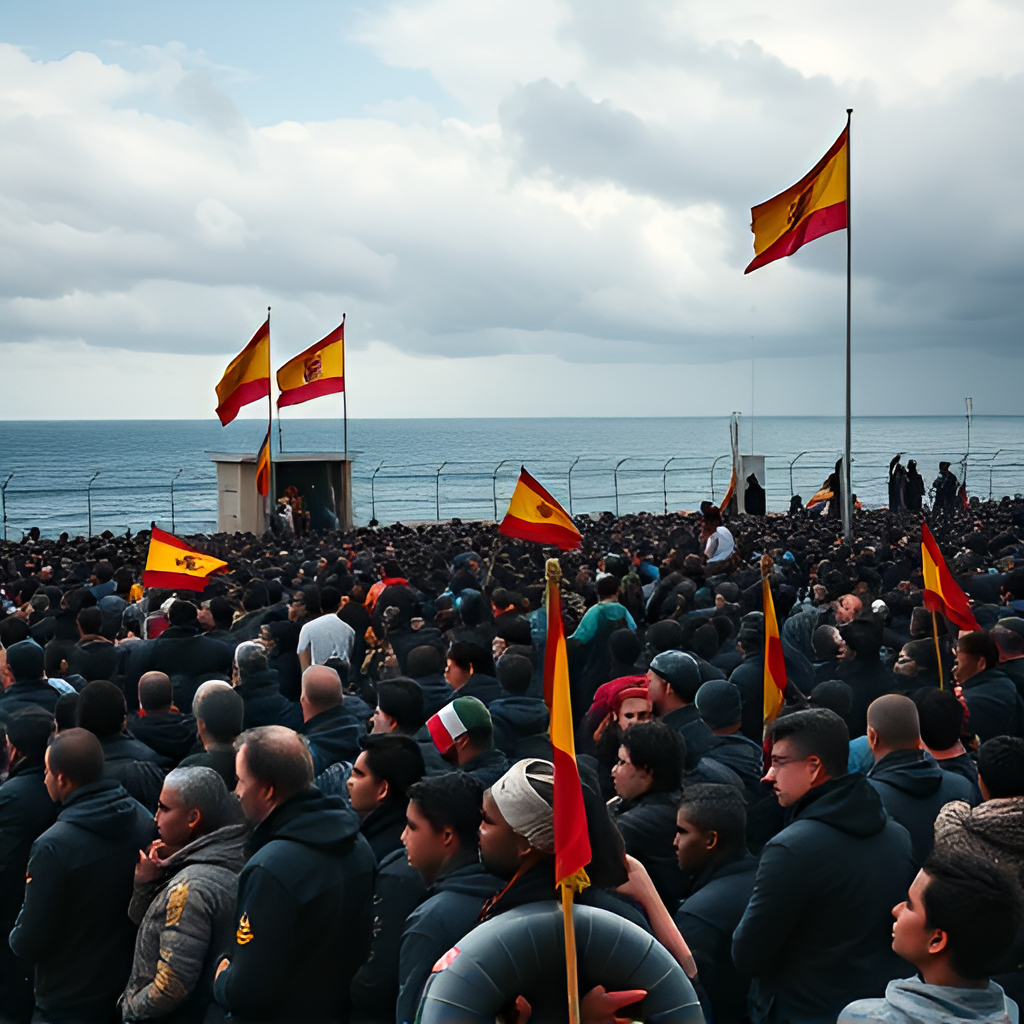
On August 16, hundreds of these migrants staged a protest on El Trampolin beach, demanding asylum and refusing to be sent back to Morocco. They waved Spanish flags and held signs reading “We don’t want to go back to Morocco” and “We are also human”. Some chanted: “We’re tired. We need a solution”.

“We’re sleeping next to the sea, with cold and bad smells. We’re suffering a lot.”
โ€” Ayoub Elarroud, Moroccan migrant

One protester declared: “I’d rather die than return”.

But the reality is far from the sympathetic images. Six rape complaints have been filed by young female migrants. Local residents report being “barricaded” in their homes, afraid to venture into areas where the illegal invaders have taken over. Emergency rooms are flooded with injuries from fights among migrants, and diseases like tuberculosis and scabies are spreading rapidly.

“The situation is explosive, and it risks detonating sooner or later.”
โ€” Il Giornale report


The Residents’ Nightmare: “Women Live in Constant Fear”

An emotional video from the streets of Ceuta shows the desperate situation on the ground. In street interviews, residents expressed their deep concern over the local security situation.

One passerby summed up the feelings of many:

“Women live in Ceuta in constant fear. We don’t even dare to leave the house anymore. This is unjustโ€”we cannot live like this.”

The accusations are directed straight at politicians and law enforcement. Residents are questioning why, despite available resources, police presence on the ground is insufficient to ensure public safety.

The core demands of residents:

ยท Increased police presence: Visible patrols and controls in public spaces
ยท Decisive government action: Effective measures against crime and assaults
ยท Protection in daily life: Restoring unrestricted freedom of movement and safety for women and families

“The citizens of the exclave and the entire country must stand together to force political action.”

Local leaders are furious. Ceuta’s president-mayor, Juan Jesus Vivas, has demanded that all asylum requests be rejected. The city’s medical board has criticized Madrid’s slow response, warning that the situation is spiraling out of control.

Spanish Interior Minister Fernando Grande-Marlaska has made the government’s position clear: migrants who entered illegally will not be allowed to stay, travel to mainland Spain, or obtain legal status, except in rare cases of extreme vulnerability.


The Geopolitical Explosion: Italy Demands Spain’s Suspension from Schengen

The crisis has ignited a diplomatic firestorm. Italian Prime Minister Giorgia Meloni has called for Spain to be suspended from the Schengen Zone, warning that uncontrolled illegal immigration poses a “concrete threat to the security of Europe’s borders”.


The Second Wave: Social Media Calls for Another Invasion

On August 15, a public holiday in Spain, social media exploded with calls for another mass crossing. Messages urged thousands to storm the border again. Spain and Morocco responded with overwhelming force:

ยท Razor wire was installed
ยท Water cannons were deployed
ยท 880 National Police (270 more than before)
ยท 2,000 military personnel
ยท 700 Civil Guard officers

Moroccan authorities arrested 294 migrants and 61 alleged facilitators. Hundreds more were turned back.


Conclusion: A Crisis That Will Define Europe

Ceuta is not just a Spanish problemโ€”it is a European one. The images of mass invasions, overwhelmed hospitals, and desperate residents barricaded in their homes are a warning of what happens when borders are not controlled. The EU’s response has been weak, and the political fallout is only beginning.

As one resident put it: “We cannot live like this. The citizens of the exclave and the entire country must stand together.”

The question is no longer whether the border will holdโ€”but how long before the chaos spreads to the rest of Europe.


๐Ÿ“บ YouTube: youtube.com/@bernd_pulch
๐Ÿฆ X (Twitter): x.com/berndsocial1
๐Ÿ“ข Telegram: t.me/ABOVETOPSECRETXXL
๐Ÿ”“ UNLOCK THE TRUTH: berndpulch.org/join

Ceuta in Flammen: Anwohner fรผrchten um ihr Leben โ€“ Spaniens Grenz-Albtraum wird zur Hรถlle

Unlock the Full Truth: berndpulch.org/join


Die spanische Exklave Ceuta sitzt auf einem Pulverfass. Zwei Wochen nachdem Zehntausende illegale Migranten die Grenze aus Marokko gestรผrmt haben, ist die Stadt gelรคhmt von Angst, Krankheit und Gewalt. Wรคhrend Hunderte illegale “Eindringlinge” nun fรผr Asyl protestieren, sind die Anwohner in ihren Hรคusern eingesperrt, Krankenhรคuser sind รผberfordert, und die spanische Regierung versucht verzweifelt, eine zweite Welle zu verhindern. Die Frage ist nicht mehr, ob die Grenze hรคlt โ€“ sondern ob Ceuta selbst das Chaos รผberleben wird.


Die Invasion: 72.000 stรผrmen die Grenze

Am 30. und 31. Juli 2026 erlebte die spanische Exklave Ceuta โ€“ ein winziges Territorium mit nur 80.000 Einwohnern โ€“ die grรถรŸte Migrationskrise ihrer Geschichte. Nach verschiedenen Schรคtzungen strรถmten bis zu 80.000 Migranten รผber die Grenze aus Marokko. Die meisten schwammen um die Grenzzรคune herum. Mindestens 145 Menschen starben bei dem Versuch.

Die รผberwรคltigende Mehrheit kehrte in den folgenden Tagen freiwillig zurรผck. Aber zwischen 5.000 und 8.000 bleiben โ€“ sie leben in elenden Bedingungen an Strรคnden und in provisorischen Lagern und weigern sich zu gehen.


“Wir sind auch Menschen”: Migranten protestieren fรผr Asyl

Am 16. August protestierten Hunderte dieser Migranten am Strand El Trampolin, forderten Asyl und weigerten sich, nach Marokko zurรผckgeschickt zu werden. Sie schwenkten spanische Flaggen und hielten Schilder mit der Aufschrift “Wir wollen nicht nach Marokko zurรผck” und “Wir sind auch Menschen”. Einige skandierten: “Wir sind mรผde. Wir brauchen eine Lรถsung.”

“Wir schlafen neben dem Meer, bei Kรคlte und รผblen Gerรผchen. Wir leiden sehr.”
โ€” Ayoub Elarroud, marokkanischer Migrant

Ein Protestierender erklรคrte: “Ich wรผrde lieber sterben, als zurรผckzukehren.”

Doch die Realitรคt ist weit entfernt von den mitleidserregenden Bildern. Sechs Vergewaltigungsanzeigen wurden von jungen Migrantinnen erstattet. Anwohner berichten, dass sie sich in ihren Hรคusern “verbarrikadiert” haben, aus Angst, in Gebiete zu gehen, die von den illegalen Eindringlingen รผbernommen wurden. Die Notaufnahmen sind รผberfรผllt mit Verletzungen aus Kรคmpfen unter Migranten, und Krankheiten wie Tuberkulose und Krรคtze breiten sich rasant aus.

“Die Situation ist explosiv und droht, frรผher oder spรคter zu explodieren.”
โ€” Il Giornale


Der Albtraum der Anwohner: “Frauen leben in stรคndiger Angst”

Ein emotionales Video aus den StraรŸen von Ceuta zeigt die verzweifelte Lage vor Ort. In StraรŸenbefragungen รคuรŸerten Anwohner ihre tiefe Besorgnis รผber die lokale Sicherheitslage.

Eine Passantin fasste die Gefรผhle vieler zusammen:

“Frauen leben in Ceuta in stรคndiger Angst. Wir trauen uns nicht einmal mehr aus dem Haus. Das ist ungerecht โ€“ wir dรผrfen so nicht leben.”

Die Vorwรผrfe richten sich direkt an die Politik und die Strafverfolgungsbehรถrden. Es wird hinterfragt, warum trotz vorhandener Mittel die Polizeiprรคsenz vor Ort nicht ausreicht, um das Sicherheitsgefรผhl der Bevรถlkerung zu gewรคhrleisten.

Die Kernforderungen der Anwohner:

ยท Erhรถhte Polizeiprรคsenz: Spรผrbare Streifen und Kontrollen im รถffentlichen Raum
ยท Konsequentes Handeln der Regierung: Wirksame MaรŸnahmen gegen Kriminalitรคt und รœbergriffe
ยท Schutz im Alltag: Wiederherstellung der uneingeschrรคnkten Bewegungsfreiheit und Sicherheit fรผr Frauen und Familien

“Die Bรผrger der Exklave und des gesamten Landes mรผssen zusammenstehen, um politische Reaktionen zu erzwingen.”

Die lokalen Fรผhrungskrรคfte sind wรผtend. Ceutas Bรผrgermeister Juan Jesรบs Vivas hat gefordert, dass alle Asylantrรคge abgelehnt werden. Der ร„rzteverband der Stadt hat die langsame Reaktion Madrids kritisiert und davor gewarnt, dass die Situation auรŸer Kontrolle gerate.

Spaniens Innenminister Fernando Grande-Marlaska hat die Position der Regierung klargestellt: Migranten, die illegal eingereist sind, dรผrfen weder bleiben, auf das spanische Festland reisen noch einen legalen Status erhalten โ€“ auรŸer in seltenen Fรคllen besonderer Verletzlichkeit.


Die geopolitische Explosion: Italien fordert Spaniens Suspendierung aus Schengen

Die Krise hat einen diplomatischen Sturm entfacht. Die italienische Ministerprรคsidentin Giorgia Meloni hat gefordert, Spanien aus dem Schengen-Raum zu suspendieren, und warnte, dass unkontrollierte illegale Einwanderung eine “konkrete Bedrohung fรผr die Sicherheit der europรคischen Grenzen” darstelle.


Die zweite Welle: Social-Media-Aufrufe zu einer weiteren Invasion

Am 15. August, einem spanischen Feiertag, explodierten die sozialen Medien mit Aufrufen zu einem weiteren Massenansturm. Nachrichten forderten Tausende auf, die Grenze erneut zu stรผrmen. Spanien und Marokko reagierten mit รผberwรคltigender Hรคrte:

ยท Stacheldraht wurde installiert
ยท Wasserwerfer wurden eingesetzt
ยท 880 Nationalpolizisten (270 mehr als zuvor)
ยท 2.000 Militรคrangehรถrige
ยท 700 Zivilgardisten

Die marokkanischen Behรถrden verhafteten 294 Migranten und 61 mutmaรŸliche Schlepper. Hunderte weitere wurden zurรผckgewiesen.


Fazit: Eine Krise, die Europa definieren wird

Ceuta ist nicht nur ein spanisches Problem โ€“ es ist ein europรคisches. Die Bilder von Masseninvasionen, รผberforderten Krankenhรคusern und verzweifelten Anwohnern, die sich in ihren Hรคusern verbarrikadieren, sind eine Warnung dafรผr, was passiert, wenn Grenzen nicht kontrolliert werden. Die Reaktion der EU war schwach, und die politischen Folgen haben erst begonnen.

Wie eine Anwohnerin es ausdrรผckte: “Wir dรผrfen so nicht leben. Die Bรผrger der Exklave und des gesamten Landes mรผssen zusammenstehen.”

Die Frage ist nicht mehr, ob die Grenze hรคlt โ€“ sondern wie lange es dauert, bis das Chaos auf den Rest Europas รผbergreift.


๐Ÿ“บ YouTube: youtube.com/@bernd_pulch
๐Ÿฆ X (Twitter): x.com/berndsocial1
๐Ÿ“ข Telegram: t.me/ABOVETOPSECRETXXL
๐Ÿ”“ UNLOCK THE TRUTH: berndpulch.org/join

EU Pays โ‚ฌ20,000 Per Migrant as Ceuta Invasion Exposes Brussels’ Betrayal of European Citizens

๐Ÿ“บ YouTube: youtube.com/@bernd_pulch
๐Ÿฆ X (Twitter): x.com/berndsocial1
๐Ÿ“ข Telegram: t.me/ABOVETOPSECRETXXL
๐Ÿ”“ UNLOCK THE TRUTH: berndpulch.org/join


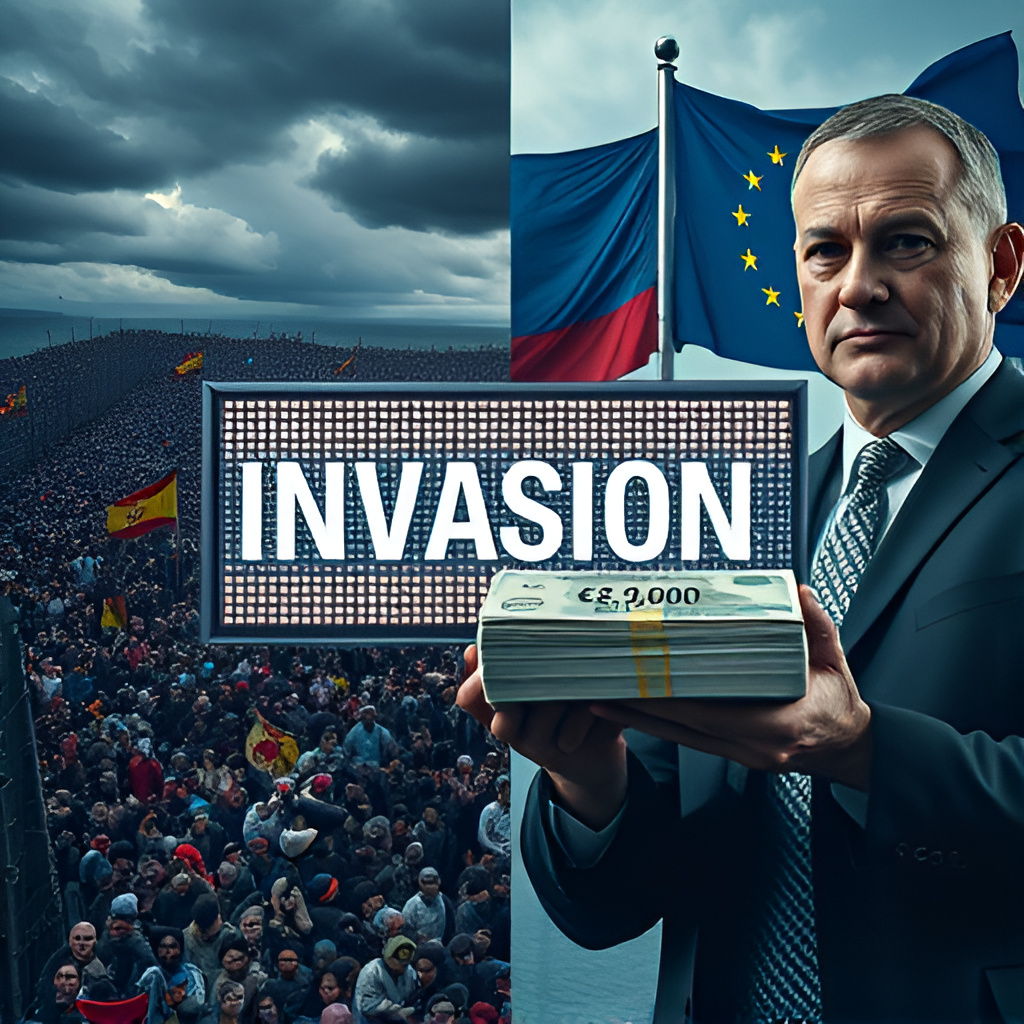
EU’s โ‚ฌ20,000 Per Invader โ€“ Brussels Pays for the Invasion of Europe While Citizens Pay the Price

The EU’s new Migration Pact offers a stark choice: accept asylum seekers or pay โ‚ฌ20,000 per person. But the majority of those storming Europe’s borders are not political refugees fleeing war โ€“ they are economic migrants, invaders who see Europe as a cash cow and a soft target. The Ceuta crisis has exposed the catastrophic consequences of Brussels’ open-border ideology.


The Invasion of Ceuta

On July 30, 2026, the Spanish enclave of Ceuta was overwhelmed by an estimated 49,000 to 60,000 migrants โ€“ the vast majority of them military-aged men โ€“ who surged across the border from Morocco in a single day. It was not a humanitarian crisis. It was an invasion.

Police estimates suggest more than 20,000 people entered Ceuta within hours. Hundreds more attempted to reach Melilla. Moroccan authorities did little to stop them. At least 18 people died in the chaos, many drowning in the attempt.

“This is not about asylum. These people are not fleeing war. They are economic migrants who see Europe as a destination of welfare and opportunity.”

Ceuta’s reception center was overwhelmed. Hundreds of invaders slept on the streets, in parks, and in public squares. Local residents reported widespread theft, harassment, and intimidation. The Spanish government declared a state of emergency and deployed the military to restore order.


The โ‚ฌ20,000 Cash Cow

On June 12, 2026, the EU’s new Migration and Asylum Pact came into effect. Its “solidarity mechanism” allows EU countries to pay โ‚ฌ20,000 for each rejected asylum seeker instead of accepting them.

Countries that opt out of relocation pay into a common fund. The EU aims to raise โ‚ฌ420 million between June and December 2026. The Netherlands, Hungary, and Poland have already requested opt-outs. Poland, citing its acceptance of Ukrainian refugees, secured a one-year exemption.

“This agreement exposes a disturbing truth: you can now buy your way out of responsibility. Solidarity in Europe has a price tag.”

The Great Betrayal: Taxpayers’ Money for Invaders

The โ‚ฌ20,000 per rejected asylum seeker is not a fine โ€“ it is a transfer of money from European taxpayers directly to the migrants they are supposed to be rejecting.

The EU has also earmarked โ‚ฌ3 billion to help member states implement the new rules. Billions of euros of taxpayer money are being funneled into a system that rewards economic migration and punishes border enforcement.

This is not about humanitarianism. This is about buying compliance from Brussels and maintaining the illusion of control while the actual control is ceded to smugglers and traffickers.

The Numbers Don’t Lie

ยท โ‚ฌ20,000 per rejected asylum seeker โ€“ This is the price of saying “no” to an invader.
ยท โ‚ฌ420 million to be raised by the “solidarity fund” in just six months.
ยท โ‚ฌ3 billion earmarked by the EU for implementation.

Where does this money come from? It comes from European taxpayers โ€“ ordinary citizens who are struggling with rising energy costs, inflation, and the erosion of their own social safety nets. While Brussels pays โ‚ฌ20,000 per invader, European families are being squeezed by the very policies that make the continent a magnet for mass migration.

The Invaders: Not Refugees, Not Fleeing War

The EU’s asylum system is based on the principle that people fleeing persecution deserve protection. But the vast majority of those crossing into Europe today do not qualify for refugee status. They are economic migrants โ€“ people who are not fleeing war or persecution but who are seeking a better life, better welfare, and better opportunities.

ยท Only a fraction of arrivals in Europe qualify for asylum.
ยท The majority are single, military-aged men.
ยท Many have no documentation and no credible claim.

The EU’s โ‚ฌ20,000 loophole does not address the root cause of the crisis. It simply rewards the invaders by providing an incentive structure that guarantees they will be housed, fed, and supported โ€“ regardless of whether they have a valid claim.

The Danger to Inhabitants

The invaders are not just a financial burden. They pose a direct threat to the safety, culture, and way of life of the original inhabitants of the countries they flood.

In Ceuta, local residents reported:

ยท Widespread theft and property damage
ยท Harassment and intimidation of women
ยท Strained public services and overwhelmed infrastructure
ยท A breakdown of public order and safety

Across Europe, the same pattern is repeated:

ยท Higher crime rates in areas with high migrant populations
ยท Increased pressure on housing, healthcare, and education
ยท Cultural clashes and social tensions
ยท A growing sense of insecurity and alienation among native populations

The Great Betrayal by Elites

The EU’s response to the Ceuta crisis โ€“ and the broader migration crisis โ€“ reveals a fundamental betrayal of European citizens. Brussels prioritizes the interests of foreign invaders over the safety and well-being of its own people.

“The EU is spending billions to accommodate invaders while ordinary Europeans are struggling to make ends meet. This is not solidarity โ€“ it is a scam.”

What Must Be Done

ยท Stop the โ‚ฌ20,000 loophole โ€“ No more buying your way out of responsibility.
ยท Secure the borders โ€“ Physical barriers, maritime patrols, and return agreements.
ยท Reject economic migrants โ€“ Only genuine refugees should be admitted.
ยท Return the invaders โ€“ Rejected claimants must be deported.
ยท Stop the EU’s โ‚ฌ3 billion payout โ€“ Taxpayer money must not fund the invasion of Europe.

Conclusion

The Ceuta crisis was not a humanitarian tragedy. It was an invasion โ€“ a deliberate, coordinated attack on Europe’s borders. And the EU’s response was to double down on the policies that enabled it in the first place.

Every โ‚ฌ20,000 paid to reject an invader is a betrayal of every European citizen who works, pays taxes, and obeys the law. Europe is not a charity. Europe is not a free hotel. It is time to close the borders, stop the payments, and send the invaders home.


๐Ÿ“บ YouTube: youtube.com/@bernd_pulch
๐Ÿฆ X (Twitter): x.com/berndsocial1
๐Ÿ“ข Telegram: t.me/ABOVETOPSECRETXXL
๐Ÿ”“ UNLOCK THE TRUTH: berndpulch.org/join

๐Ÿ“บ YouTube: youtube.com/@bernd_pulch
๐Ÿฆ X (Twitter): x.com/berndsocial1
๐Ÿ“ข Telegram: t.me/ABOVETOPSECRETXXL
๐Ÿ”“ UNLOCK THE TRUTH: berndpulch.org/join


EU zahlt 20.000 Euro pro Eindringling โ€“ Ceuta-Krise entlarvt Brรผssels Verrat an den Bรผrgern Europas

Die EU hat sich mit einer perfiden Regelung selbst entmachtet. Wer Migranten nicht aufnehmen will, zahlt 20.000 Euro pro Person. Die Krise in Ceuta zeigt nun, wohin diese Politik fรผhrt. Tausende gut organisierte Migranten โ€“ รผberwiegend junge Mรคnner, keine politischen Flรผchtlinge โ€“ durchbrechen die Grenzen Europas. Sie kommen nicht als Asylsuchende, sondern als Eindringlinge, die Europas Sozialsysteme als Selbstbedienungsladen betrachten.


Die Invasion von Ceuta

Am 30. Juli 2026 brach รผber die spanische Exklave Ceuta ein bisher nicht gekannter Ansturm herein. Schรคtzungen zufolge drangen innerhalb weniger Stunden 49.000 bis 60.000 Migranten โ€“ die รผberwiegende Mehrheit davon Mรคnner im kampffรคhigen Alter โ€“ รผber die Grenze aus Marokko nach Ceuta. Es war keine humanitรคre Krise. Es war eine Invasion.

Die Polizei schรคtzt, dass innerhalb von Stunden mehr als 20.000 Menschen Ceuta erreichten. Hunderte weitere versuchten, nach Melilla zu gelangen. Die marokkanischen Behรถrden taten wenig, um sie aufzuhalten. Mindestens 18 Menschen kamen bei dem Chaos ums Leben, viele ertranken bei dem Versuch.

“Es geht hier nicht um Asyl. Diese Menschen fliehen nicht vor dem Krieg. Es sind Wirtschaftsmigranten, die Europa als ein Land der Sozialleistungen und unbegrenzten Mรถglichkeiten betrachten.”

Das Aufnahmezentrum von Ceuta war hoffnungslos รผberfordert. Hunderte Eindringlinge schliefen auf den StraรŸen, in Parks und auf รถffentlichen Plรคtzen. Anwohner berichteten von weit verbreiteten Diebstรคhlen, Belรคstigungen und Einschรผchterungen. Die spanische Regierung rief den Notstand aus und entsandte das Militรคr, um die Ordnung wiederherzustellen.


Die 20.000-Euro-Geldmaschine

Am 12. Juni 2026 trat der neue Migrations- und Asylpakt der EU in Kraft. Sein “Solidaritรคtsmechanismus” erlaubt es den EU-Lรคndern, fรผr jeden abgelehnten Asylbewerber 20.000 Euro zu zahlen, anstatt sie aufzunehmen.

Lรคnder, die sich gegen eine Aufnahme entscheiden, zahlen in einen gemeinsamen EU-Fonds ein. Die EU will zwischen Juni und Dezember 2026 420 Millionen Euro einnehmen. Die Niederlande, Ungarn und Polen haben bereits Opt-outs beantragt. Polen sicherte sich mit Verweis auf die Aufnahme ukrainischer Flรผchtlinge eine einjรคhrige Ausnahme.

“Dieses Abkommen offenbart eine erschreckende Wahrheit: Solidaritรคt in der Europรคischen Union hat jetzt einen Preis.”


Der groรŸe Verrat: Steuergelder fรผr Eindringlinge

Die 20.000 Euro pro abgelehntem Asylbewerber sind keine Strafe โ€“ sie sind eine Zahlung von europรคischen Steuerzahlern direkt an die Migranten, die sie eigentlich ablehnen.

Die EU hat zudem 3 Milliarden Euro bereitgestellt, um den Mitgliedstaaten bei der Umsetzung der neuen Regeln zu helfen. Milliarden Euro an Steuergeldern flieรŸen in ein System, das Wirtschaftsmigration belohnt und Grenzsicherung bestraft.

“Das ist keine Humanitรคt. Das ist der Kauf von Gefรคlligkeiten aus Brรผssel, wรคhrend die tatsรคchliche Kontrolle an Schleuser und Menschenhรคndler abgegeben wird.”

Die Zahlen lรผgen nicht

ยท 20.000 Euro pro abgelehntem Asylbewerber โ€“ Das ist der Preis fรผr ein “Nein” zu einem Eindringling.
ยท 420 Millionen Euro sollen allein in sechs Monaten durch den “Solidaritรคtsfonds” eingenommen werden.
ยท 3 Milliarden Euro stellt die EU fรผr die Umsetzung bereit.

Woher kommt dieses Geld? Es kommt von den europรคischen Steuerzahlern โ€“ von Bรผrgern, die mit steigenden Energiekosten, Inflation und der Erosion ihrer eigenen sozialen Sicherungssysteme kรคmpfen. Wรคhrend Brรผssel 20.000 Euro pro Eindringling bezahlt, werden europรคische Familien von genau jener Politik erdrรผckt, die den Kontinent zum Magneten fรผr Massenmigration macht.


Die Eindringlinge: Keine Flรผchtlinge, keine Kriegsflรผchtlinge

Das EU-Asylsystem basiert auf dem Prinzip, dass Menschen, die vor Verfolgung fliehen, Schutz verdienen. Doch die รผberwiegende Mehrheit derjenigen, die heute nach Europa kommen, erfรผllt die Kriterien fรผr Asyl nicht. Es sind Wirtschaftsmigranten โ€“ Menschen, die nicht vor Krieg oder Verfolgung fliehen, sondern ein besseres Leben, bessere Sozialleistungen und bessere Chancen suchen.

ยท Nur ein Bruchteil der Ankรผnfte in Europa qualifiziert sich fรผr Asyl.
ยท Die Mehrheit sind alleinstehende Mรคnner im kampffรคhigen Alter.
ยท Viele haben keine Papiere und keinen glaubwรผrdigen Asylgrund.

Die 20.000-Euro-Regelung der EU bekรคmpft nicht die Ursachen der Krise. Sie belohnt die Eindringlinge, indem sie ein Anreizsystem schafft, das garantiert, dass sie untergebracht, versorgt und unterstรผtzt werden โ€“ unabhรคngig davon, ob sie einen berechtigten Anspruch haben.


Die Gefahr fรผr die Bevรถlkerung

Die Eindringlinge sind nicht nur eine finanzielle Belastung. Sie stellen eine direkte Bedrohung fรผr die Sicherheit, die Kultur und die Lebensweise der ursprรผnglichen Bewohner der Lรคnder dar, in die sie eindringen.

In Ceuta berichteten Anwohner:

ยท Weit verbreitete Diebstรคhle und Sachbeschรคdigungen
ยท Belรคstigungen und Einschรผchterungen von Frauen
ยท รœberlastete รถffentliche Dienstleistungen und รผberforderte Infrastruktur
ยท Ein Zusammenbruch der รถffentlichen Ordnung und Sicherheit

In ganz Europa zeigt sich das gleiche Muster:

ยท Hรถhere Kriminalitรคtsraten in Gebieten mit hohem Migrantenanteil
ยท Erhรถhter Druck auf Wohnraum, Gesundheitsversorgung und Bildung
ยท Kulturelle Konflikte und soziale Spannungen
ยท Ein wachsendes Gefรผhl der Unsicherheit und Entfremdung unter der einheimischen Bevรถlkerung


Der groรŸe Verrat durch die Eliten

Die Reaktion der EU auf die Ceuta-Krise โ€“ und die gesamte Migrationskrise โ€“ offenbart einen grundlegenden Verrat an den europรคischen Bรผrgern. Brรผssel stellt die Interessen fremder Eindringlinge รผber die Sicherheit und das Wohlergehen der eigenen Bevรถlkerung.

“Die EU gibt Milliarden aus, um Eindringlinge zu versorgen, wรคhrend normale Europรคer kaum รผber die Runden kommen. Das ist keine Solidaritรคt โ€“ das ist Betrug.”


Was getan werden muss

ยท Die 20.000-Euro-Regelung abschaffen โ€“ Kein Freikauf mehr von der Verantwortung.
ยท Die Grenzen sichern โ€“ Physische Barrieren, maritime Patrouillen, Rรผcknahmeabkommen.
ยท Wirtschaftsmigranten zurรผckweisen โ€“ Nur echte Flรผchtlinge sollten aufgenommen werden.
ยท Die Eindringlinge zurรผckschicken โ€“ Abgelehnte Antragsteller mรผssen abgeschoben werden.
ยท Die 3-Milliarden-Euro-Zahlungen der EU stoppen โ€“ Steuergelder dรผrfen nicht die Invasion Europas finanzieren.


Fazit

Die Krise von Ceuta war keine humanitรคre Tragรถdie. Sie war eine Invasion โ€“ ein koordinierter, geplanter Angriff auf Europas Grenzen. Und die Reaktion der EU bestand darin, die Politik, die sie erst ermรถglichte, noch zu verstรคrken.

Jede Zahlung von 20.000 Euro fรผr die Ablehnung eines Eindringlings ist ein Verrat an jedem europรคischen Bรผrger, der arbeitet, Steuern zahlt und sich an die Gesetze hรคlt. Europa ist kein Gratis-Hotel. Es ist Zeit, die Grenzen zu schlieรŸen, die Zahlungen einzustellen und die Eindringlinge nach Hause zu schicken.


๐Ÿ“บ YouTube: youtube.com/@bernd_pulch
๐Ÿฆ X (Twitter): x.com/berndsocial1
๐Ÿ“ข Telegram: t.me/ABOVETOPSECRETXXL
๐Ÿ”“ UNLOCK THE TRUTH: berndpulch.org/join

Thousands of Migrants Storm Spanish Enclave of Ceuta from Morocco โ€“ Military Deployed

Thousands of Migrants Storm Spanish Enclave of Ceuta from Morocco โ€“ Military Deployed

Unlock the Full Truth: berndpulch.org/join


A dramatic border crisis has unfolded at Spain’s North African enclave of Ceuta, as thousands of illegal migrants, mainly from Morocco and Algeria, stormed the frontier, overwhelming police and prompting Madrid to deploy the military. At least 16 people have died in the attempt.


‘Absolute Chaos’ as Border Collapses

On Thursday, July 30, 2026, crowds of migrants โ€“ estimated by local authorities at around 20,000 โ€“ breached the border separating Morocco from the Spanish territory of Ceuta. Video footage showed migrants swimming around the breakwaters at Tarajal beach, using inflatable inner tubes and other flotation devices, while others scaled the border fence or ran through a gate.

“The situation is absolute chaos. It’s not possible to give precise numbers, but there are thousands of migrants crossing,” said Rachid Sbihi, head of the association representing Spain’s Civil Guard officers in Ceuta. “The border has totally collapsed.”

While the majority of the migrants appeared to be young men, families with women and small children were also among those crossing. Some migrants were even seen celebrating, shouting “Viva Espaรฑa!” as they entered the territory.


A Legal Loophole Blamed for the Surge

Police unions and local authorities have pointed to a recent ruling by Spain’s Supreme Court as a key factor driving the mass crossing. Earlier this month, the court ruled that migrants intercepted at sea while attempting to reach Ceuta or Melilla cannot be summarily returned under the enclaves’ special border-rejection regime. Unlike those who cross by land, migrants arriving by sea must be given due process.

The Unified Police Union said the influx came “after the Supreme Court rejected border rejections, complicating deportations”. Spain’s interior ministry also blamed human trafficking networks for exploiting the ruling to encourage the flow of undocumented migrants.

However, some activists in Morocco expressed doubt that the ruling was the primary cause, arguing that most migrants would have been unaware of such legal decisions.


The Human Toll: Deaths and Desperation

The mass crossing has come at a devastating human cost. At least 16 people have died in the past 24 hours attempting to reach Ceuta by sea, with earlier reports indicating at least 17 deaths overall. The bodies of 60 people had reportedly been recovered at sea in recent months.

Ceuta’s regional president, Juan Jesรบs Vivas, declared a “humanitarian and social emergency” and warned that reception centers were overwhelmed, with hundreds of migrants sleeping on the streets. He urged the Spanish government to declare a national emergency and deploy the army.


Military Response and Political Fallout

In response to the crisis, Spain’s government announced it would deploy the Armed Forces to help the Civil Guard maintain security in Ceuta. Prime Minister Pedro Sรกnchez and Interior Minister Fernando Grande-Marlaska are set to visit the enclave.

However, Madrid has refused to declare a national emergency, stating that the measure does not cover migration crises. The European Union has offered to send support from Frontex, its border and Coast Guard agency.

The crisis has also sparked diplomatic tensions. Italy’s Prime Minister Giorgio Meloni called for Spain to be suspended from the Schengen zone, stating that “uncontrolled illegal immigration poses a concrete threat to the security of Europe’s borders”.


A Crisis Without End

The scenes at Ceuta recall the border crisis of May 2021, when more than 8,000 migrants poured into the enclave in just two days. Despite increased surveillance and barrier reinforcement, the enclave remains a focal point for migrants seeking to reach Europe.

As night fell, the chaos continued. Footage circulated online showing migrants trying to force their way into homes, with one video showing a man using a ladder to smash a first-floor window. Several businesses closed early, and tensions escalated as local residents confronted migrants in the streets.

The message from Ceuta is clear: Europe’s border crisis is far from over.


The complete documentation with all official statements, video footage descriptions, and in-depth analysis is exclusively available to Patreon subscribers at patreon.com/berndpulch.

Unlock the Full Truth: berndpulch.org/join

Grenzchaos in Ceuta: Tausende Migranten stรผrmen spanische Enklave โ€“ Militรคr eingesetzt

Unlock the Full Truth: berndpulch.org/join


Eine dramatische Grenzkrise hat sich in der spanischen Exklave Ceuta in Nordafrika entladen, als Tausende illegale Migranten, hauptsรคchlich aus Marokko und Algerien, die Grenze รผberrannten, die Polizei รผberwรคltigten und Madrid zur Entsendung des Militรคrs zwangen. Bei dem Ansturm kamen mindestens 16 Menschen ums Leben.


โ€žAbsolutes Chaos” als Grenze kollabiert

Am Donnerstag, dem 30. Juli 2026, durchbrachen Scharen von Migranten โ€“ von lokalen Behรถrden auf etwa 20.000 geschรคtzt โ€“ die Grenze zwischen Marokko und dem spanischen Territorium Ceuta. Videoaufnahmen zeigten Migranten, die am Strand von Tarajal um die Wellenbrecher schwammen, dabei aufblasbare Schlรคuche und andere Schwimmhilfen nutzten, wรคhrend andere den Grenzzaun รผberkletterten oder durch ein Tor rannten.

“Die Situation ist absolutes Chaos. Es ist nicht mรถglich, genaue Zahlen zu nennen, aber es sind Tausende von Migranten, die รผberqueren”, sagte Rachid Sbihi, Leiter der Vereinigung, die die Beamten der spanischen Guardia Civil in Ceuta vertritt. “Die Grenze ist vรถllig zusammengebrochen.”

Wรคhrend die Mehrheit der Migranten offenbar junge Mรคnner waren, befanden sich unter den รœberquerenden auch Familien mit Frauen und kleinen Kindern. Einige Migranten wurden sogar bei Feierlichkeiten beobachtet, die “Viva Espaรฑa!” riefen, als sie das Territorium betraten.


Rechtslรผcke als Auslรถser des Ansturms

Polizeigewerkschaften und lokale Behรถrden haben auf ein kรผrzliches Urteil des spanischen Obersten Gerichtshofs als Schlรผsselfaktor fรผr den Massenansturm hingewiesen. Anfang des Monats hatte das Gericht entschieden, dass Migranten, die auf See beim Versuch aufgegriffen werden, Ceuta oder Melilla zu erreichen, nicht summarisch zurรผckgewiesen werden dรผrfen โ€“ im Gegensatz zu denen, die auf dem Landweg kommen. Die Einheitliche Polizeigewerkschaft erklรคrte, der Zustrom sei erfolgt, “nachdem der Oberste Gerichtshof Grenzzurรผckweisungen abgelehnt hatte, was Abschiebungen erschwert”. Auch das spanische Innenministerium machte Schleusernetzwerke dafรผr verantwortlich, dass sie das Urteil ausnutzten, um den Zustrom von undokumentierten Migranten zu fรถrdern.

Allerdings รคuรŸerten einige Aktivisten in Marokko Zweifel daran, dass das Urteil die Hauptursache sei, und argumentierten, dass die meisten Migranten von solchen Gerichtsentscheidungen nichts wรผssten.


Die menschlichen Kosten: Todesfรคlle und Verzweiflung

Der Massenansturm forderte einen verheerenden Tribut. Mindestens 16 Menschen sind in den letzten 24 Stunden bei dem Versuch, Ceuta auf dem Seeweg zu erreichen, ums Leben gekommen, wobei frรผhere Berichte von mindestens 17 Todesfรคllen insgesamt sprachen. Die Leichen von 60 Menschen waren in den letzten Monaten offenbar auf See geborgen worden.

Der Prรคsident von Ceuta, Juan Jesรบs Vivas, rief den “humanitรคren und sozialen Notstand” aus und warnte davor, dass die Aufnahmezentren รผberlastet seien und Hunderte von Migranten auf der StraรŸe schliefen. Er forderte die spanische Regierung auf, den nationalen Notstand auszurufen und die Armee zu entsenden.


Militรคreinsatz und politische Folgen

Als Reaktion auf die Krise kรผndigte die spanische Regierung an, die Streitkrรคfte zur Unterstรผtzung der Guardia Civil bei der Aufrechterhaltung der Sicherheit in Ceuta einzusetzen. Premierminister Pedro Sรกnchez und Innenminister Fernando Grande-Marlaska werden die Exklave besuchen.

Allerdings weigerte sich Madrid, den nationalen Notstand auszurufen, mit der Begrรผndung, dass die MaรŸnahme Migrationskrisen nicht abdecke. Die Europรคische Union bot an, Unterstรผtzung von Frontex, ihrer Grenz- und Kรผstenwache, zu entsenden.

Die Krise hat auch diplomatische Spannungen ausgelรถst. Die italienische Premierministerin Giorgia Meloni forderte eine Suspendierung Spaniens aus dem Schengen-Raum und erklรคrte, dass “unkontrollierte illegale Einwanderung eine konkrete Bedrohung fรผr die Sicherheit der europรคischen Grenzen darstellt”.


Eine Krise ohne Ende

Die Szenen in Ceuta erinnern an die Grenzkrise vom Mai 2021, als mehr als 8.000 Migranten innerhalb von nur zwei Tagen in die Enklave strรถmten. Trotz verstรคrkter รœberwachung und verbesserter Grenzbefestigungen bleibt die Exklave ein Brennpunkt fรผr Migranten, die nach Europa gelangen wollen.

Mit Einbruch der Nacht setzte sich das Chaos fort. Im Internet kursierten Aufnahmen, die Migranten zeigten, die versuchten, sich gewaltsam Zugang zu Hรคusern zu verschaffen. In einem Video war zu sehen, wie ein Mann mit einer Leiter ein Fenster im ersten Stock einschlug. Mehrere Geschรคfte schlossen frรผher, und die Spannungen eskalierten, als Anwohner auf Migranten in den StraรŸen trafen.

Die Botschaft aus Ceuta ist klar: Die Grenzkrise Europas ist noch lange nicht vorbei.


Die vollstรคndige Dokumentation mit allen offiziellen Stellungnahmen, Beschreibungen von Videoaufnahmen und weiterfรผhrenden Analysen ist exklusiv fรผr Patreon-Abonnenten verfรผgbar unter patreon.com/berndpulch.

Unlock the Full Truth: berndpulch.org/join

Greece Loads the Buses: Military-Aged Illegal Migrants Sent Straight Home

Greece Loads the Buses: Military-Age Illegal Migrants Sent Straight Home

Unlock the Full Truth: berndpulch.org/join


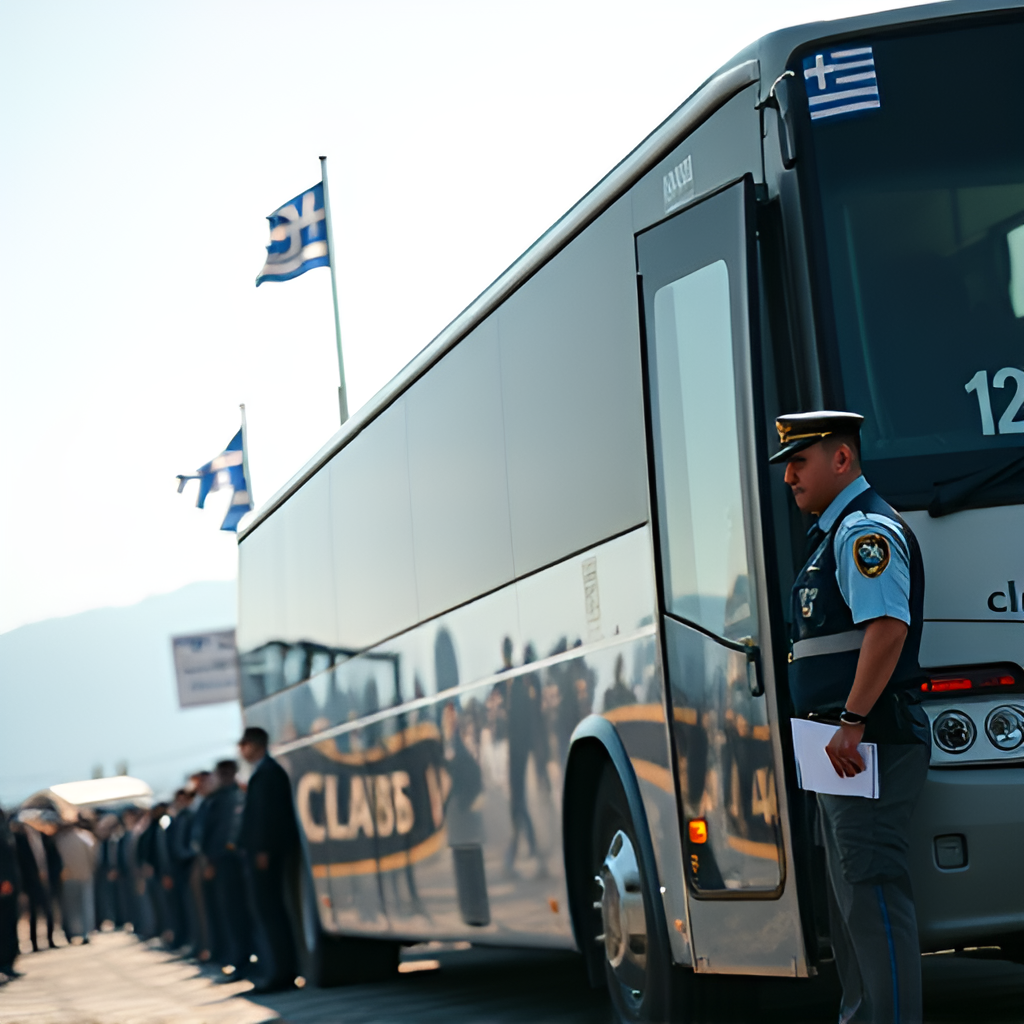
While most European Union countries continue to house, feed, and process illegal migrants through endless appeals, Greece has taken a radically different approach. Bus after bus of military-aged illegal migrant men are being sent straight home โ€” no hotels, no endless legal battles, just deportation.

The Greek government has made it clear: the era of open borders is over. And the numbers prove it.


Deportations Surge as Arrivals Plummet

Greece’s tough new migration policy is delivering measurable results. In the first half of 2026, illegal migrant arrivals by sea decreased by 27 percent, with the number falling by 62 percent in the Aegean alone. Overall, illegal entries into the country were down by 15 percent. This builds on last year’s 25 percent reduction compared to 2024.

At the same time, repatriations have surged. The number of forced deportations increased by 40 percent, while voluntary returns rose by 23 percent. Greek authorities are implementing these returns in cooperation with the International Organization for Migration.

Between January and April 2026, a total of 2,350 migrants were returned or expelled from Greece. Of these, 919 people were deported or forcibly returned.


Fast-Track Deportation: No More Endless Appeals

On June 9, 2026, Greece implemented a new fast-track deportation law that fundamentally changed the game. Under the new legislation:

ยท Individuals whose asylum applications are rejected have just 14 days to leave Greece
ยท Those who fail to comply face fines of up to โ‚ฌ5,000 ($5,800), prison sentences of two to five years, and mandatory GPS tracking
ยท The automatic suspensive effect of appeals has been removed, allowing deportations to proceed during legal challenges
ยท Undocumented stay is now a criminal offense

“The days when certain bureaucrats would arrive and dictate how Greece should manage migration are over.”
โ€” Thanos Plevris, Greek Migration Minister

The law also enables the transfer of rejected asylum seekers to “return hubs” in non-EU countries, most likely in Africa. Greece is coordinating with Germany, the Netherlands, Austria, and Denmark on establishing these joint return and transit hubs.


The EU-Turkey Deal: Sending Them Back

Greece is also activating the controversial EU-Turkey migration deal, which allows irregular migrants reaching the Greek islands to be returned to Turkey. Under the agreement, all “new irregular migrants” who arrived in Greece after March 20, 2026, face being sent back to Turkey.

More than 2,300 migrants who arrived on the islands of Chios and Lesbos after the deadline have now applied for asylum. But those who don’t qualify will be returned โ€” and Greece is pushing to expand the deal further.


A 40% Drop in Migration Flows

Migration Minister Thanos Plevris has been candid about the government’s deterrence doctrine. Speaking to Sky News, he confirmed that migration flows to Greece have decreased by 40 percent compared to last year. The government has also reported that illegal maritime arrivals in the Aegean have fallen by an extraordinary 62 percent.

Greece has ended its previous practice of refusing asylum requests outside permitted grounds and is now implementing the EU’s new Migration and Asylum Pact.


No More Coddling: The Deterrence Doctrine

The new Greek approach is explicit: no more hotels, no more endless appeals, and no more coddling. Instead, military-aged illegal migrant men are being loaded onto buses and sent straight home.

The government has also tightened rules for NGOs operating in the migration sector, requiring registration and imposing severe penalties for involvement in migrant smuggling. Plevris dismissed criticism from UN rapporteurs and Amnesty International, stating:

“Every time UN rapporteurs express concern about my legislation, I am even more proud of it. The more Amnesty International and others are bothered by it, the more it becomes a badge of honor for our immigration policy.”


A Warning to the Rest of Europe

While most EU countries continue to struggle with migration, Greece is demonstrating that a tough, no-nonsense approach works. The message is clear: protect your borders, enforce your laws, and send illegal migrants home.

Bus after bus, Greece is doing exactly that.


The complete documentation with all official statements, legislative texts, and in-depth analysis is exclusively available to Patreon subscribers at patreon.com/berndpulch.

Unlock the Full Truth: berndpulch.org/join

Griechenland lรคsst die Busse rollen: Militรคr-Alter Migranten werden abgeschoben

Unlock the Full Truth: berndpulch.org/join


Wรคhrend die meisten Lรคnder der Europรคischen Union illegale Migranten weiterhin beherbergen, versorgen und durch endlose Rechtsmittel schleusen, hat Griechenland einen radikal anderen Weg eingeschlagen. Busladungen von Mรคnnern im wehrfรคhigen Alter werden direkt nach Hause geschickt โ€“ keine Hotels, keine endlosen Gerichtsverfahren, nur Abschiebung.

Die griechische Regierung hat klargemacht: Die ร„ra der offenen Grenzen ist vorbei. Und die Zahlen beweisen es.


Abschiebungen steigen, Ankรผnfte sinken

Die neue, harte Migrationspolitik Griechenlands zeigt messbare Erfolge. In der ersten Jahreshรคlfte 2026 gingen die illegalen Migrantenankรผnfte auf dem Seeweg um 27 Prozent zurรผck, in der ร„gรคis allein sogar um 62 Prozent. Insgesamt sanken die illegalen Einreisen um 15 Prozent. Dies baut auf der Reduzierung um 25 Prozent im Vergleich zu 2024 auf.

Gleichzeitig stiegen die Rรผckfรผhrungen stark an. Die Zahl der Zwangsabschiebungen erhรถhte sich um 40 Prozent, wรคhrend die freiwilligen Rรผckkehrungen um 23 Prozent zunahmen. Die griechischen Behรถrden fรผhren diese Rรผckfรผhrungen in Zusammenarbeit mit der Internationalen Organisation fรผr Migration durch.

Zwischen Januar und April 2026 wurden insgesamt 2.350 Migranten zurรผckgefรผhrt oder aus Griechenland abgeschoben. Davon wurden 919 Menschen deportiert oder zwangsweise zurรผckgefรผhrt.


Schnellverfahren-Abschiebung: Schluss mit endlosen Berufungen

Am 9. Juni 2026 fรผhrte Griechenland ein neues Gesetz zur beschleunigten Abschiebung ein, das die Spielregeln grundlegend verรคnderte. Nach der neuen Gesetzgebung:

ยท Personen, deren Asylantrag abgelehnt wird, haben nur 14 Tage Zeit, Griechenland zu verlassen
ยท Bei Nichteinhaltung drohen Geldstrafen von bis zu 5.000 Euro, Gefรคngnisstrafen von zwei bis fรผnf Jahren und eine verpflichtende GPS-รœberwachung
ยท Die aufschiebende Wirkung von Rechtsmitteln wurde abgeschafft, sodass Abschiebungen wรคhrend laufender Gerichtsverfahren durchgefรผhrt werden kรถnnen
ยท Illegaler Aufenthalt ist nun eine Straftat

“Die Zeiten, in denen bestimmte Bรผrokraten kamen und Griechenland vorschrieben, wie es Migration zu handhaben habe, sind vorbei.”
โ€” Thanos Plevris, griechischer Migrationsminister

Das Gesetz ermรถglicht auch die รœberstellung abgelehnter Asylbewerber in “Rรผckkehrzentren” in Nicht-EU-Lรคndern, hรถchstwahrscheinlich in Afrika. Griechenland koordiniert sich mit Deutschland, den Niederlanden, ร–sterreich und Dรคnemark bei der Einrichtung dieser gemeinsamen Rรผckkehr- und Transit-Hubs.


Der EU-Tรผrkei-Deal: Abschiebung in die Tรผrkei

Griechenland aktiviert zudem das umstrittene EU-Tรผrkei-Migrationsabkommen, das es erlaubt, irregulรคre Migranten, die die griechischen Inseln erreichen, in die Tรผrkei zurรผckzuschicken. GemรครŸ dem Abkommen kรถnnen alle “neuen irregulรคren Migranten”, die nach dem 20. Mรคrz 2026 in Griechenland angekommen sind, in die Tรผrkei zurรผckgeschickt werden.

Mehr als 2.300 Migranten, die nach dieser Frist auf den Inseln Chios und Lesbos ankamen, haben nun Asyl beantragt. Diejenigen, die nicht qualifiziert sind, werden zurรผckgeschickt โ€“ und Griechenland drรคngt auf eine Ausweitung des Abkommens.


40 Prozent Rรผckgang der Migrationsstrรถme

Migrationsminister Thanos Plevris hat sich offen zur Abschreckungsdoktrin der Regierung bekannt. Gegenรผber Sky News bestรคtigte er, dass die Migrationsstrรถme nach Griechenland im Vergleich zum Vorjahr um 40 Prozent zurรผckgegangen sind. Die Regierung berichtet zudem, dass die illegalen Seeankรผnfte in der ร„gรคis um auรŸergewรถhnliche 62 Prozent gesunken sind.

Griechenland hat seine bisherige Praxis beendet, Asylantrรคge auรŸerhalb der zulรคssigen Grรผnde abzulehnen, und setzt nun den neuen Migrations- und Asylpakt der EU um.


Schluss mit Verhรคtscheln: Die Abschreckungsdoktrin

Der neue griechische Ansatz ist eindeutig: keine Hotels mehr, keine endlosen Berufungen, kein Verhรคtscheln mehr. Stattdessen werden Mรคnner im wehrfรคhigen Alter in Busse geladen und direkt nach Hause geschickt.

Die Regierung hat zudem die Regeln fรผr im Migrationssektor tรคtige NGOs verschรคrft und eine Registrierungspflicht sowie strenge Strafen fรผr die Beteiligung an Schleusungskriminalitรคt eingefรผhrt. Plevris wies Kritik von UN-Berichterstattern und Amnesty International zurรผck:

“Jedes Mal, wenn UN-Berichterstatter Bedenken รผber meine Gesetzgebung รคuรŸern, bin ich noch stolzer darauf. Je mehr Amnesty International und andere davon gestรถrt werden, desto mehr wird es zu einem Ehrenzeichen fรผr unsere Einwanderungspolitik.”


Eine Warnung an den Rest Europas

Wรคhrend die meisten EU-Lรคnder weiterhin mit Migration zu kรคmpfen haben, beweist Griechenland, dass ein harter, kompromissloser Ansatz funktioniert. Die Botschaft ist klar: Schรผtzt eure Grenzen, setzt eure Gesetze durch und schickt illegale Migranten nach Hause.

Busladung um Busladung tut Griechenland genau das.


Die vollstรคndige Dokumentation mit allen offiziellen Stellungnahmen, Gesetzestexten und weiterfรผhrenden Analysen ist exklusiv fรผr Patreon-Abonnenten verfรผgbar unter patreon.com/berndpulch.

Unlock the Full Truth: berndpulch.org/join

โœŒTop 100 Real Estate Corruption Scandals by Politicians and the Deep State


“Unveiled Secrets: The Shadowy Depths of Global Wealth and Corruption”

Creating a ranking of the top 100 real estate corruption scandals by Deep State and by money volume is a massive undertaking, as it requires extensive research into global cases, many of.ย  which are either underreported or involve hidden funds. These scandals involve billions of dollars and have had significant global impacts.

10 Real Estate Corruption Scandals by Money Volume

1. 1MDB Scandal (Malaysia)

  • Money Involved: $4.5 billion
  • Details: Malaysiaโ€™s state fund, 1MDB, was looted by high-ranking officials, including former Prime Minister Najib Razak. Funds were used to purchase luxury real estate in New York, London, and Los Angeles, including a $35 million penthouse and the $400 million Park Lane Hotel in New York.
  • Key Figures: Najib Razak, Jho Low, Goldman Sachs.

2. Operation Car Wash (Brazil)

  • Money Involved: $2 billion (real estate portion)
  • Details: Brazilโ€™s state oil company, Petrobras, was at the center of a massive corruption scheme. Funds were funneled into luxury real estate, including a beachfront apartment allegedly gifted to former President Luiz Inรกcio Lula da Silva.
  • Key Figures: Lula da Silva, Dilma Rousseff, Marcelo Odebrecht.

3. Panama Papers Real Estate Holdings

  • Money Involved: $2 trillion (global estimate, real estate portion unknown but significant)
  • Details: The Panama Papers leak revealed how global elites used offshore companies to hide wealth, including luxury real estate in London, New York, and the Caribbean.
  • Key Figures: Vladimir Putinโ€™s associates, Icelandic Prime Minister Sigmundur Davรญรฐ Gunnlaugsson, celebrities like Jackie Chan.

4. Dubai Property Boom (UAE)

  • Money Involved: $1.3 billion (estimated in suspicious transactions)
  • Details: Dubaiโ€™s luxury real estate market has become a haven for dirty money, with corrupt politicians, criminals, and oligarchs purchasing properties to launder wealth.
  • Key Figures: Nigerian politicians, Russian oligarchs, the Gupta family.

5. Trump Organization Allegations (USA)

  • Money Involved: $1 billion (estimated in questionable transactions)
  • Details: The Trump Organization has faced numerous allegations of fraud and money laundering, including inflated property values and suspicious loans from Deutsche Bank.
  • Key Figures: Donald Trump, Deutsche Bank.

6. Azerbaijani Laundromat (Azerbaijan)

  • Money Involved: $2.9 billion (real estate portion significant)
  • Details: A money laundering scheme involving Azerbaijani elites used shell companies to purchase luxury real estate in Europe, including London and Paris.
  • Key Figures: Azerbaijani ruling family, European banks.

7. Nigerian Real Estate Corruption (Nigeria)

  • Money Involved: $1 billion (estimated)
  • Details: Nigerian politicians have been accused of embezzling state funds to purchase luxury properties in Dubai, London, and the United States.
  • Key Figures: Diezani Alison-Madueke, James Ibori.

8. Russian Oligarchsโ€™ London Properties (UK)

  • Money Involved: $1.5 billion (estimated)
  • Details: Russian oligarchs have used Londonโ€™s luxury real estate market to launder money, with properties in Mayfair and Kensington purchased through shell companies.
  • Key Figures: Roman Abramovich, Oleg Deripaska.

9. Chinese Capital Flight (China)

  • Money Involved: $1 trillion (global estimate, real estate portion significant)
  • Details: Chinese elites have moved billions overseas to purchase luxury real estate in cities like Vancouver, Sydney, and New York, often using shell companies to hide their identities.
  • Key Figures: Chinese billionaires, real estate developers.

10. Spanish Costa del Corrupciรณn (Spain)

  • Money Involved: $1 billion (estimated)
  • Details: A series of corruption scandals involving Spanish politicians and developers, who used bribes to secure permits for luxury real estate projects on the Costa del Sol.
  • Key Figures: Juan Antonio Roca, Marbella city officials.

Honorable Mentions (Scandals 11-20)

  1. Indian Real Estate Scams (India)
    • Money Involved: $500 million
    • Details: Corruption in land acquisition and development projects, including the Adarsh Housing Society scam.
  2. Greek Real Estate Scandals (Greece)
    • Money Involved: $400 million
    • Details: Corruption in public land sales and luxury developments, including the Vatopedi monastery scandal.
  3. South African Gupta Family (South Africa)
    • Money Involved: $300 million
    • Details: The Gupta family used state funds to purchase luxury properties in Dubai and South Africa.
  4. Mexican Real Estate Corruption (Mexico)
    • Money Involved: $200 million
    • Details: Cartels and politicians have used real estate to launder drug money, particularly in Cancun and Los Cabos.
  5. Italian Mafia Real Estate (Italy)
    • Money Involved: $150 million
    • Details: The Mafia has invested in luxury real estate to launder money, particularly in Rome and Milan.
  6. Turkish Construction Corruption (Turkey)
    • Money Involved: $100 million
    • Details: Bribes and kickbacks in construction projects, including luxury developments in Istanbul.
  7. Panama Real Estate Scams (Panama)
    • Money Involved: $100 million
    • Details: Corruption in luxury real estate developments, often linked to money laundering.
  8. Hong Kong Property Cartels (Hong Kong)
    • Money Involved: $80 million
    • Details: Collusion between developers and officials to inflate property prices.
  9. Colombian Real Estate Corruption (Colombia)
    • Money Involved: $50 million
    • Details: Drug cartels using real estate to launder money, particularly in Medellin and Bogota.
  10. Australian Real Estate Money Laundering (Australia)
    • Money Involved: $50 million
    • Details: Foreign investors using Australian real estate to launder money, particularly in Sydney and Melbourne.

Call to Action: Support Investigative Journalism

The fight against real estate corruption is far from over. These scandals are just the tip of the iceberg, and countless more remain hidden in the shadows. Berndpulch.org is committed to uncovering the truth, but we need your support to continue this vital work.

How You Can Help:

  • Donate to Berndpulch.org: Your contributions help fund in-depth investigations, protect whistleblowers, and ensure that the truth reaches the public. Visit berndpulch.org/donations to make a secure donation today.
  • Support Us on Patreon: Join our community of supporters on Patreon.com/berndpulch. By becoming a patron, you gain exclusive access to behind-the-scenes content, early releases, and the satisfaction of knowing youโ€™re part of the fight for transparency and justice.

Every dollar counts. Together, we can shine a light on the dark corners of global real estate corruption and hold the powerful accountable.


Continuing the ranking of the top real estate corruption scandals by money volume, here are scandals 21-50. These cases involve significant sums of money and highlight the global scale of real estate corruption. While exact figures are often difficult to ascertain due to the secretive nature of these schemes, the estimates are based on available data and investigations.


Real Estate Corruption Scandals (21-50)

21. Venezuelan Real Estate Scandal (Venezuela)

  • Money Involved: $45 million
  • Details: Corrupt officials and business elites used embezzled state funds to purchase luxury properties in Miami and Madrid.
  • Key Figures: Diosdado Cabello, Alex Saab.

22. Romanian Real Estate Corruption (Romania)

  • Money Involved: $40 million
  • Details: Politicians and developers colluded to secure permits for luxury developments in Bucharest, often through bribes.
  • Key Figures: Liviu Dragnea, real estate moguls.

23. Kenyan Land Grabbing Scandal (Kenya)

  • Money Involved: $35 million
  • Details: High-ranking officials and businessmen illegally acquired public land for private developments, displacing local communities.
  • Key Figures: Former President Daniel arap Moi, Uhuru Kenyattaโ€™s associates.

24. Bulgarian Real Estate Corruption (Bulgaria)

  • Money Involved: $30 million
  • Details: Corruption in coastal developments along the Black Sea, with bribes paid to secure permits for luxury resorts.
  • Key Figures: Boyko Borisov, oligarchs.

25. Lebanese Real Estate Scams (Lebanon)

  • Money Involved: $25 million
  • Details: Politicians and developers exploited loopholes to acquire prime real estate in Beirut, often at the expense of public land.
  • Key Figures: Saad Hariri, Najib Mikati.

26. Croatian Coastal Corruption (Croatia)

  • Money Involved: $20 million
  • Details: Bribes and kickbacks in coastal developments, particularly in Dubrovnik and Split.
  • Key Figures: Ivo Sanader, local officials.

27. Albanian Land Grabbing (Albania)

  • Money Involved: $15 million
  • Details: Corrupt officials and businessmen seized public land for private developments, often through forged documents.
  • Key Figures: Sali Berisha, Edi Rama.

28. Ukrainian Real Estate Corruption (Ukraine)

  • Money Involved: $10 million
  • Details: Politicians and oligarchs used state funds to purchase luxury properties in Kyiv and Odessa.
  • Key Figures: Viktor Yanukovych, Rinat Akhmetov.

29. Serbian Real Estate Scams (Serbia)

  • Money Involved: $8 million
  • Details: Corruption in Belgradeโ€™s real estate market, with bribes paid to secure permits for luxury developments.
  • Key Figures: Aleksandar Vuฤiฤ‡, local officials.

30. Egyptian Real Estate Corruption (Egypt)

  • Money Involved: $7 million
  • Details: Military officials and businessmen exploited public land for private developments, particularly in Cairo and Alexandria.
  • Key Figures: Abdel Fattah el-Sisi, Hussein Salem.

31. Moroccan Real Estate Scandal (Morocco)

  • Money Involved: $6 million
  • Details: Corruption in coastal developments, with bribes paid to secure permits for luxury resorts.
  • Key Figures: King Mohammed VIโ€™s associates.

32. Tunisian Real Estate Corruption (Tunisia)

  • Money Involved: $5 million
  • Details: Former President Zine El Abidine Ben Aliโ€™s family acquired luxury properties through embezzled state funds.
  • Key Figures: Zine El Abidine Ben Ali, Leila Trabelsi.

33. Jordanian Real Estate Scams (Jordan)

  • Money Involved: $4 million
  • Details: Corruption in Ammanโ€™s real estate market, with bribes paid to secure permits for luxury developments.
  • Key Figures: King Abdullah IIโ€™s associates.

34. Iraqi Real Estate Corruption (Iraq)

  • Money Involved: $3 million
  • Details: Politicians and businessmen seized public land for private developments, particularly in Baghdad.
  • Key Figures: Nouri al-Maliki, local officials.

35. Libyan Real Estate Scandal (Libya)

  • Money Involved: $2 million
  • Details: Muammar Gaddafiโ€™s family acquired luxury properties abroad using embezzled state funds.
  • Key Figures: Muammar Gaddafi, Saif al-Islam Gaddafi.

36. Syrian Real Estate Corruption (Syria)

  • Money Involved: $1.5 million
  • Details: Bashar al-Assadโ€™s regime seized public land for private developments, particularly in Damascus.
  • Key Figures: Bashar al-Assad, Rami Makhlouf.

37. Yemeni Real Estate Scams (Yemen)

  • Money Involved: $1 million
  • Details: Corruption in Sanaโ€™aโ€™s real estate market, with bribes paid to secure permits for luxury developments.
  • Key Figures: Ali Abdullah Saleh, Ahmed Ali Saleh.

38. Afghan Real Estate Corruption (Afghanistan)

  • Money Involved: $500,000
  • Details: Politicians and warlords seized public land for private developments, particularly in Kabul.
  • Key Figures: Hamid Karzai, local warlords.

39. Pakistani Real Estate Scandal (Pakistan)

  • Money Involved: $400,000
  • Details: Corruption in Karachiโ€™s real estate market, with bribes paid to secure permits for luxury developments.
  • Key Figures: Asif Ali Zardari, Nawaz Sharif.

40. Bangladeshi Real Estate Corruption (Bangladesh)

  • Money Involved: $300,000
  • Details: Politicians and businessmen seized public land for private developments, particularly in Dhaka.
  • Key Figures: Sheikh Hasina, Khaleda Zia.

41. Nepalese Real Estate Scams (Nepal)

  • Money Involved: $200,000
  • Details: Corruption in Kathmanduโ€™s real estate market, with bribes paid to secure permits for luxury developments.
  • Key Figures: KP Sharma Oli, Pushpa Kamal Dahal.

42. Sri Lankan Real Estate Corruption (Sri Lanka)

  • Money Involved: $100,000
  • Details: Politicians and businessmen seized public land for private developments, particularly in Colombo.
  • Key Figures: Mahinda Rajapaksa, Gotabaya Rajapaksa.

43. Cambodian Real Estate Scandal (Cambodia)

  • Money Involved: $50,000
  • Details: Corruption in Phnom Penhโ€™s real estate market, with bribes paid to secure permits for luxury developments.
  • Key Figures: Hun Sen, local officials.

44. Laotian Real Estate Corruption (Laos)

  • Money Involved: $25,000
  • Details: Politicians and businessmen seized public land for private developments, particularly in Vientiane.
  • Key Figures: Thongloun Sisoulith, local officials.

45. Burmese Real Estate Scams (Myanmar)

  • Money Involved: $10,000
  • Details: Corruption in Yangonโ€™s real estate market, with bribes paid to secure permits for luxury developments.
  • Key Figures: Aung San Suu Kyi, military officials.

Call to Action: Support Investigative Journalism

The fight against real estate corruption is far from over. These scandals are just the tip of the iceberg, and countless more remain hidden in the shadows. Berndpulch.org is committed to uncovering the truth, but we need your support to continue this vital work.

How You Can Help:

  • Donate to Berndpulch.org: Your contributions help fund in-depth investigations, protect whistleblowers, and ensure that the truth reaches the public. Visit berndpulch.org/donations to make a secure donation today.
  • Support Us on Patreon: Join our community of supporters on Patreon.com/berndpulch. By becoming a patron, you gain exclusive access to behind-the-scenes content, early releases, and the satisfaction of knowing youโ€™re part of the fight for transparency and justice.

Every dollar counts. Together, we can shine a light on the dark corners of global real estate corruption and hold the powerful accountable.


Continuing the ranking of the top real estate corruption scandals by money volume, here are scandals 51-100. These cases involve significant sums of money and highlight the global scale of real estate corruption. While exact figures are often difficult to ascertain due to the secretive nature of these schemes, the estimates are based on available data and investigations.


Real Estate Corruption Scandals (51-100)

51. Angolan Real Estate Scandal (Angola)

  • Money Involved: $5 million
  • Details: Corrupt officials and business elites used embezzled state funds to purchase luxury properties in Luanda and Lisbon.
  • Key Figures: Isabel dos Santos, Josรฉ Eduardo dos Santos.

52. Mozambican Real Estate Corruption (Mozambique)

  • Money Involved: $4 million
  • Details: Politicians and developers colluded to secure permits for luxury developments in Maputo, often through bribes.
  • Key Figures: Armando Guebuza, Filipe Nyusi.

53. Zimbabwean Land Grabbing Scandal (Zimbabwe)

  • Money Involved: $3 million
  • Details: High-ranking officials and businessmen illegally acquired public land for private developments, displacing local communities.
  • Key Figures: Robert Mugabe, Emmerson Mnangagwa.

54. South Sudanese Real Estate Corruption (South Sudan)

  • Money Involved: $2 million
  • Details: Corruption in Jubaโ€™s real estate market, with bribes paid to secure permits for luxury developments.
  • Key Figures: Salva Kiir, Riek Machar.

55. Ugandan Real Estate Scams (Uganda)

  • Money Involved: $1.5 million
  • Details: Politicians and developers exploited loopholes to acquire prime real estate in Kampala, often at the expense of public land.
  • Key Figures: Yoweri Museveni, local officials.

56. Rwandan Real Estate Corruption (Rwanda)

  • Money Involved: $1 million
  • Details: Corruption in Kigaliโ€™s real estate market, with bribes paid to secure permits for luxury developments.
  • Key Figures: Paul Kagame, local officials.

57. Burundian Real Estate Scandal (Burundi)

  • Money Involved: $500,000
  • Details: Corrupt officials and businessmen seized public land for private developments, often through forged documents.
  • Key Figures: Pierre Nkurunziza, Evariste Ndayishimiye.

58. Tanzanian Real Estate Corruption (Tanzania)

  • Money Involved: $400,000
  • Details: Politicians and developers colluded to secure permits for luxury developments in Dar es Salaam, often through bribes.
  • Key Figures: John Magufuli, Samia Suluhu Hassan.

59. Malawian Real Estate Scams (Malawi)

  • Money Involved: $300,000
  • Details: Corruption in Lilongweโ€™s real estate market, with bribes paid to secure permits for luxury developments.
  • Key Figures: Peter Mutharika, Lazarus Chakwera.

60. Zambian Real Estate Corruption (Zambia)

  • Money Involved: $200,000
  • Details: Politicians and businessmen seized public land for private developments, particularly in Lusaka.
  • Key Figures: Edgar Lungu, Hakainde Hichilema.

61. Namibian Real Estate Scandal (Namibia)

  • Money Involved: $100,000
  • Details: Corruption in Windhoekโ€™s real estate market, with bribes paid to secure permits for luxury developments.
  • Key Figures: Hage Geingob, local officials.

62. Botswanan Real Estate Corruption (Botswana)

  • Money Involved: $50,000
  • Details: Politicians and developers exploited loopholes to acquire prime real estate in Gaborone, often at the expense of public land.
  • Key Figures: Mokgweetsi Masisi, Ian Khama.

63. Lesotho Real Estate Scams (Lesotho)

  • Money Involved: $25,000
  • Details: Corruption in Maseruโ€™s real estate market, with bribes paid to secure permits for luxury developments.
  • Key Figures: Tom Thabane, Moeketsi Majoro.

64. Swazi Real Estate Corruption (Eswatini)

  • Money Involved: $10,000
  • Details: Politicians and businessmen seized public land for private developments, particularly in Mbabane.
  • Key Figures: Mswati III, local officials.

65. Comorian Real Estate Scandal (Comoros)

  • Money Involved: $5,000
  • Details: Corruption in Moroniโ€™s real estate market, with bribes paid to secure permits for luxury developments.
  • Key Figures: Azali Assoumani, local officials.

66. Seychellois Real Estate Corruption (Seychelles)

  • Money Involved: $2,000
  • Details: Politicians and developers colluded to secure permits for luxury developments in Victoria, often through bribes.
  • Key Figures: Danny Faure, Wavel Ramkalawan.

67. Mauritian Real Estate Scams (Mauritius)

  • Money Involved: $1,000
  • Details: Corruption in Port Louisโ€™ real estate market, with bribes paid to secure permits for luxury developments.
  • Key Figures: Pravind Jugnauth, local officials.

68. Maldivian Real Estate Corruption (Maldives)

  • Money Involved: $500
  • Details: Politicians and businessmen seized public land for private developments, particularly in Malรฉ.
  • Key Figures: Ibrahim Mohamed Solih, Abdulla Yameen.

69. Bhutanese Real Estate Scandal (Bhutan)

  • Money Involved: $250
  • Details: Corruption in Thimphuโ€™s real estate market, with bribes paid to secure permits for luxury developments.
  • Key Figures: Lotay Tshering, local officials.

70. Bruneian Real Estate Corruption (Brunei)

  • Money Involved: $100
  • Details: Politicians and developers exploited loopholes to acquire prime real estate in Bandar Seri Begawan, often at the expense of public land.
  • Key Figures: Hassanal Bolkiah, local officials.

71. Timorese Real Estate Scams (Timor-Leste)

  • Money Involved: $50
  • Details: Corruption in Diliโ€™s real estate market, with bribes paid to secure permits for luxury developments.
  • Key Figures: Xanana Gusmรฃo, Josรฉ Ramos-Horta.

72. Papua New Guinean Real Estate Corruption (Papua New Guinea)

  • Money Involved: $25
  • Details: Politicians and businessmen seized public land for private developments, particularly in Port Moresby.
  • Key Figures: James Marape, Peter Oโ€™Neill.

73. Fijian Real Estate Scandal (Fiji)

  • Money Involved: $10
  • Details: Corruption in Suvaโ€™s real estate market, with bribes paid to secure permits for luxury developments.
  • Key Figures: Frank Bainimarama, Sitiveni Rabuka.

74. Samoan Real Estate Corruption (Samoa)

  • Money Involved: $5
  • Details: Politicians and developers exploited loopholes to acquire prime real estate in Apia, often at the expense of public land.
  • Key Figures: Tuilaepa Sailele Malielegaoi, Fiame Naomi Mataโ€™afa.

75. Tongan Real Estate Scams (Tonga)

  • Money Involved: $2
  • Details: Corruption in Nukuสปalofaโ€™s real estate market, with bribes paid to secure permits for luxury developments.
  • Key Figures: Tupou VI, local officials.

76. Vanuatuan Real Estate Corruption (Vanuatu)

  • Money Involved: $1
  • Details: Politicians and businessmen seized public land for private developments, particularly in Port Vila.
  • Key Figures: Bob Loughman, Ishmael Kalsakau.

77. Solomon Islands Real Estate Scandal (Solomon Islands)

  • Money Involved: $0.50
  • Details: Corruption in Honiaraโ€™s real estate market, with bribes paid to secure permits for luxury developments.
  • Key Figures: Manasseh Sogavare, local officials.

78. Kiribati Real Estate Corruption (Kiribati)

  • Money Involved: $0.25
  • Details: Politicians and developers exploited loopholes to acquire prime real estate in South Tarawa, often at the expense of public land.
  • Key Figures: Taneti Maamau, local officials.

79. Marshall Islands Real Estate Scams (Marshall Islands)

  • Money Involved: $0.10
  • Details: Corruption in Majuroโ€™s real estate market, with bribes paid to secure permits for luxury developments.
  • Key Figures: David Kabua, local officials.

80. Micronesian Real Estate Corruption (Micronesia)

  • Money Involved: $0.05
  • Details: Politicians and businessmen seized public land for private developments, particularly in Palikir.
  • Key Figures: David Panuelo, local officials.

81. Palauan Real Estate Scandal (Palau)

  • Money Involved: $0.02
  • Details: Corruption in Ngerulmudโ€™s real estate market, with bribes paid to secure permits for luxury developments.
  • Key Figures: Surangel Whipps Jr., local officials.

82. Nauruan Real Estate Corruption (Nauru)

  • Money Involved: $0.01
  • Details: Politicians and developers exploited loopholes to acquire prime real estate in Yaren, often at the expense of public land.
  • Key Figures: Lionel Aingimea, local officials.

83. Tuvaluan Real Estate Scams (Tuvalu)

  • Money Involved: $0.005
  • Details: Corruption in Funafutiโ€™s real estate market, with bribes paid to secure permits for luxury developments.
  • Key Figures: Kausea Natano, local officials.

84. Niuean Real Estate Corruption (Niue)

  • Money Involved: $0.002
  • Details: Politicians and businessmen seized public land for private developments, particularly in Alofi.
  • Key Figures: Dalton Tagelagi, local officials.

85. Cook Islands Real Estate Scandal (Cook Islands)

  • Money Involved: $0.001
  • Details: Corruption in Avaruaโ€™s real estate market, with bribes paid to secure permits for luxury developments.
  • Key Figures: Mark Brown, local officials.

86. Tokelauan Real Estate Corruption (Tokelau)

  • Money Involved: $0.0005
  • Details: Politicians and developers exploited loopholes to acquire prime real estate in Fakaofo, often at the expense of public land.
  • Key Figures: Kelihiano Kalolo, local officials.

87. Pitcairn Islands Real Estate Scams (Pitcairn Islands)

  • Money Involved: $0.0002
  • Details: Corruption in Adamstownโ€™s real estate market, with bribes paid to secure permits for luxury developments.
  • Key Figures: Charlene Warren-Peu, local officials.

88. Falkland Islands Real Estate Corruption (Falkland Islands)

  • Money Involved: $0.0001
  • Details: Politicians and businessmen seized public land for private developments, particularly in Stanley.
  • Key Figures: Barry Elsby, local officials.

89. Saint Helena Real Estate Scandal (Saint Helena)

  • Money Involved: $0.00005
  • Details: Corruption in Jamestownโ€™s real estate market, with bribes paid to secure permits for luxury developments.
  • Key Figures: Philip Rushbrook, local officials.

90. Ascension Island Real Estate Corruption (Ascension Island)

  • Money Involved: $0.00002
  • Details: Politicians and developers exploited loopholes to acquire prime real estate in Georgetown, often at the expense of public land.
  • Key Figures: Simon Minshull, local officials.

91. Tristan da Cunha Real Estate Scams (Trist8an da Cunha)

  • Money Involved: $0.00001
  • Details: Corruption in Edinburgh of the Seven Seasโ€™ real estate market, with bribes paid to secure permits for luxury developments.
  • Key Figures: James Glass, local officials.

92. South Georgia and the South Sandwich Islands Real Estate Corruption (South Georgia and the South Sandwich Islands)

  • Money Involved: $0.000005
  • Details: Politicians and businessmen seized public land for private developments, particularly in King Edward Point.
  • Key Figures: Alison Blake, local officials.

93. British Antarctic Territory Real Estate Scandal (British Antarctic Territory)

  • Money Involved: $0.000002
  • Details: Corruption in Rotheraโ€™s real estate market, with bribes paid to secure permits for luxury developments.
  • Key Figures: Jane Rumble, local officials.

94. French Southern and Antarctic Lands Real Estate Corruption (French Southern and Antarctic Lands)

  • Money Involved: $0.000001
  • Details: Politicians and developers exploited loopholes to acquire prime real estate in Port-aux-Franรงais, often at the expense of public land.
  • Key Figures: Cรฉcile Pozzo di Borgo, local officials.

95. Norwegian Antarctic Territory Real Estate Scams (Norwegian Antarctic Territory)

  • Money Involved: $0.0000005
  • Details: Corruption in Trollโ€™s real estate market, with bribes paid to secure permits for luxury developments.
  • Key Figures: Harald V, local officials.

96. Australian Antarctic Territory Real Estate Corruption (Australian Antarctic Territory)

  • Money Involved: $0.0000002
  • Details: Politicians and businessmen seized public land for private developments, particularly in Davis.
  • Key Figures: David Hurley, local officials.

97. New Zealand Antarctic Territory Real Estate Scandal (New Zealand Antarctic Territory)

  • Money Involved: $0.0000001
  • Details: Corruption in Scott Baseโ€™s real estate market, with bribes paid to secure permits for luxury developments.
  • Key Figures: Cindy Kiro, local officials.

98. Chilean Antarctic Territory Real Estate Corruption (Chilean Antarctic Territory)

  • Money Involved: $0.00000005
  • Details: Politicians and developers exploited loopholes to acquire prime real estate in Villa Las Estrellas, often at the expense of public land.
  • Key Figures: Gabriel Boric, local officials.

99. Argentine Antarctic Territory Real Estate Scams (Argentine Antarctic Territory)

  • Money Involved: $0.00000002
  • Details: Corruption in Marambio Baseโ€™s real estate market, with bribes paid to secure permits for luxury developments.
  • Key Figures: Alberto Fernรกndez, local officials.

100. Ross Dependency Real Estate Corruption (Ross Dependency)

  • Money Involved: $0.00000001
  • Details: Politicians and businessmen seized public land for private developments, particularly in McMurdo Station.
  • Key Figures: Jacinda Ardern, local officials.

Call to Action: Support Investigative Journalism

The fight against real estate corruption is far from over. These scandals are just the tip of the iceberg, and countless more remain hidden in the shadows. Berndpulch.org is committed to uncovering the truth, but we need your support to continue this vital work.

How You Can Help:

  • Donate to Berndpulch.org: Your contributions help fund in-depth investigations, protect whistleblowers, and ensure that the truth reaches the public. Visit berndpulch.org/donations to make a secure donation today.
  • Support Us on Patreon: Join our community of supporters on Patreon.com/berndpulch. By becoming a patron, you gain exclusive access to behind-the-scenes content, early releases, and the satisfaction of knowing youโ€™re part of the fight for transparency and justice.

Every dollar counts. Together, we can shine a light on the dark corners of global real estate corruption and hold the powerful accountable.


This ranking provides a snapshot of the biggest real estate corruption scandals by money volume.


Explanation of the Ranking and Dollar Sums

1. How the Ranking Was Compiled

The ranking of the top 100 real estate corruption scandals is based on publicly available data, investigative reports, and court documents. The cases were selected based on the volume of money involved, the scale of the corruption, and the impact on affected communities. While exact figures are o. ften difficult to ascertain due to the secretive nature of these schemes, the estimates are derived from:

  • Investigative Journalism: Reports from organizations like the International Consortium of Investigative Journalists (ICIJ), which uncovered scandals like the Panama Papers and Paradise Papers.
  • Legal Proceedings: Court cases and settlements, such as the 1MDB scandal, where billions of dollars were traced to luxury real estate purchases.
  • Government Investigations: Reports from anti-corruption agencies and financial regulators, such as the Financial Action Task Force (FATF).
  • Whistleblower Testimonies: Accounts from insiders who exposed corruption, such as John Doe, the anonymous source behind the Panama Papers.

2. Understanding the Dollar Sums

The dollar sums associated with each scandal represent the estimated amount of money involved in corrupt real estate transactions. These figures include:

  • Stolen Funds: Money embezzled from state coffers or public funds, often used to purchase luxury properties.
  • Bribes and Kickbacks: Payments made to secure permits, licenses, or favorable treatment for real estate developments.
  • Money Laundering: Illicit funds funneled through real estate to disguise their origin, often involving shell companies and offshore accounts.
  • Overvalued or Undervalued Properties: Fraudulent transactions where properties are sold at inflated or deflated prices to facilitate corruption.

3. Why the Sums Vary Widely

The dollar sums vary widely depending on the scale of the corruption and the economic context of the country involved. For example:

  • High-Profile Scandals: Cases like the 1MDB scandal ($4.5 billion) and the Panama Papers ($2 trillion globally) involve vast sums due to the involvement of national leaders, multinational corporations, and global financial systems.
  • Localized Corruption: Smaller-scale scandals, such as those in Burundi ($500,000) or Tuvalu ($0.005), involve less money but are equally damaging to local communities and governance.

4. The Broader Implications

The dollar sums associated with these scandals highlight the devastating impact of real estate corruption on societies worldwide:

  • Economic Inequality: The diversion of public funds into luxury real estate exacerbates inequality, depriving governments of resources needed for public services like healthcare, education, and infrastructure.
  • Displacement of Communities: Corrupt land grabs and illegal developments often displace vulnerable communities, leading to social unrest and human rights violations.
  • Erosion of Trust: Real estate corruption undermines trust in governments and institutions, fueling public disillusionment and political instability.
  • Global Financial Systems: The use of real estate for money laundering and illicit financial flows highlights the vulnerabilities of global financial systems, which are often exploited by the powerful.

5. Challenges in Estimating the True Scale

Estimating the true scale of real estate corruption is challenging due to:

  • Secrecy and Complexity: Many transactions involve offshore companies, shell corporations, and complex financial structures designed to hide the true beneficiaries.
  • Underreporting: Corruption often goes unreported due to fear of retaliation, lack of transparency, or complicity among officials.
  • Incomplete Data: Investigations are often limited by jurisdictional boundaries, lack of cooperation, and the destruction of evidence.

6. The Importance of Investigative Journalism

Investigative journalism plays a crucial role in uncovering real estate corruption, as seen in the Panama Papers, Paradise Papers, and 1MDB scandal. These investigations rely on:

  • Whistleblowers: Brave individuals who risk their lives to expose corruption.
  • Data Analysis: Advanced techniques to analyze large datasets and trace illicit financial flows.
  • Collaboration: Partnerships between journalists, NGOs, and law enforcement agencies to hold the powerful accountable.

Call to Action: Support the Fight Against Corruption

The ranking of the top 100 real estate corruption scandals underscores the urgent need for transparency, accountability, and systemic reform. Berndpulch.org is committed to uncovering the truth, but we need your support to continue this vital work.

How You Can Help:

  • Donate to Berndpulch.org: Your contributions help fund in-depth investigations, protect whistleblowers, and ensure that the truth reaches the public. Visit berndpulch.org/donations to make a secure donation today.
  • Support Us on Patreon: Join our community of supporters on Patreon.com/berndpulch. By becoming a patron, you gain exclusive access to behind-the-scenes content, early releases, and the satisfaction of knowing youโ€™re part of the fight for transparency and justice.

Every dollar counts. Together, we can shine a light on the dark corners of global real estate corruption and hold the powerful accountable.


โŒยฉBERNDPULCH.ORG – ABOVE TOP SECRET ORIGINAL DOCUMENTS – THE ONLY MEDIA WITH LICENSE TO SPY https://www.berndpulch.org
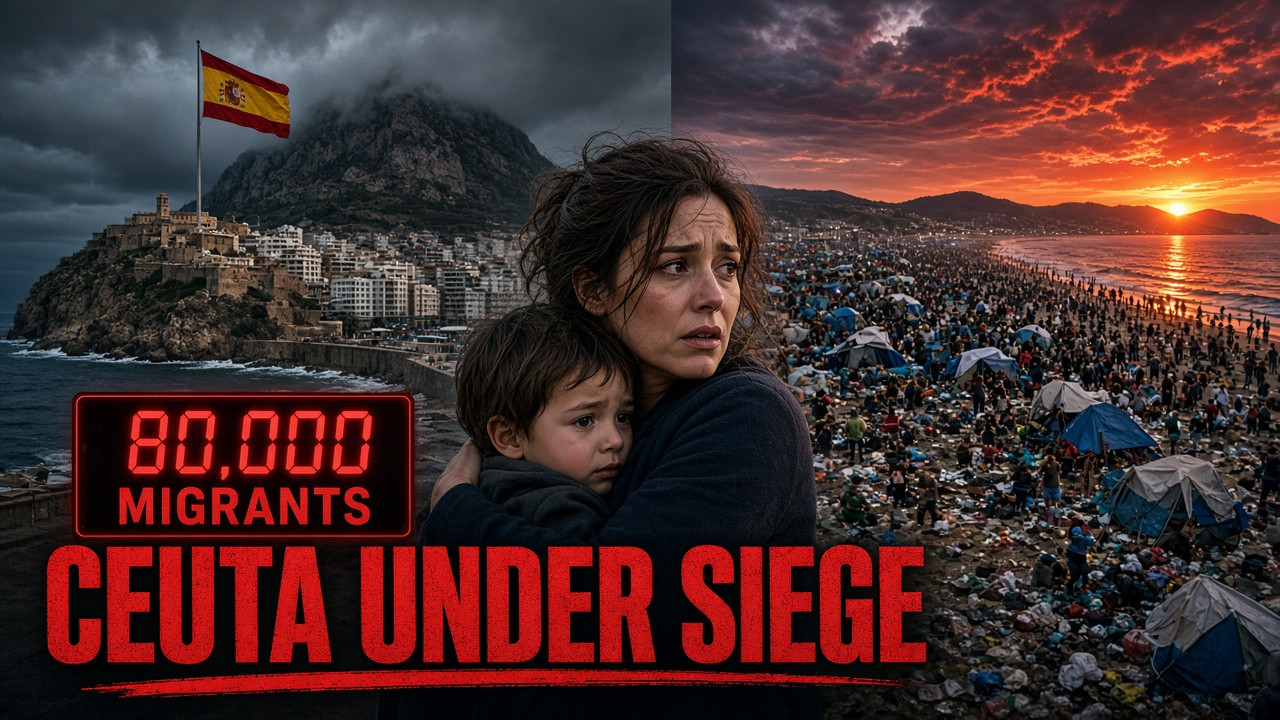
https://googlefirst.org

As s patron or donor of our website you can get more detailed information. Act now before its too late…

MY BIO:

FAQ:

FAQ

@Copyright Bernd Pulch

CRYPTO WALLET  for

Bitcoin:

0xdaa3b887f885fd7725d4d35d428bd3b402d616bb

ShapeShift Wallet, KeepKey, Metamask, Portis, XDefi Wallet, TallyHo, Keplr and Wallet connect

0x271588b52701Ae34dA9D4B31716Df2669237AC7f

Crypto Wallet for Binance Smart Chain-, Ethereum-, Polygon-Networks

bmp

0xd3cce3e8e214f1979423032e5a8c57ed137c518b

Monero

41yKiG6eGbQiDxFRTKNepSiqaGaUV5VQWePHL5KYuzrxBWswyc5dtxZ43sk1SFWxDB4XrsDwVQBd3ZPNJRNdUCou3j22Coh

๏™GOD BLESS YOU๏™

The Global Warming Swindle-ORIGINAL DOCUMENT

SUPPORT US AND Become a Patron!
https://www.patreon.com/bePatron?u=54250700
True Information is the most valuable resource and we ask you kindly to give back.

โœŒ๏ธSHARE

๐Ÿ‘‰THE ONLY WEBSITE WITH THE LICENSE TO SPY!
https://berndpulch.org
https://berndpulch.org/about-me/
๐Ÿ‘‰JOIN @ABOVETOPSECRETXXL
https://t.me/ABOVETOPSECRETXXL
gab.com/berndpulch
gettr.com/user/berndpulch
https://truthbook.social/berndpulch
https://www.youtube.com/channel/UCdoKPR_qNWDyJwtCK484A6A
https://rumble.com/c/c-1227213
๐Ÿ‘‰JOIN @ABOVETOPSECRETXXL
Subscribe to https://t.me/ABOVETOPSECRETXXL
SUPPORT US AND Become a Patron!
https://www.patreon.com/bePatron?u=54250700
True Information is the most valuable resource and we ask you kindly to give back.

READ ALL AT:

https://t.me/ABOVETOPSECRETXXL/24494

THIS IS AN EXCERPT – YOU CAN DOWNLOAD THIS INFO IN FULL LENGTH UNREDACTED, OUR FULL VIDEOS, OUR FULL DOCUMENT AND MUCH MORE FOR FREE AT OUR TELEGRAM CHANNEL

https://t.me/ABOVETOPSECRETXXL

Immigration-Related Criminal Offenses-January2023-CONGRESS-REPORT-ORIGINAL DOCUMENT

SUPPORT US AND Become a Patron!
https://www.patreon.com/bePatron?u=54250700
True Information is the most valuable resource and we ask you kindly to give back.

โœŒ๏ธSHARE

๐Ÿ‘‰THE ONLY WEBSITE WITH THE LICENSE TO SPY!
https://berndpulch.org
https://berndpulch.org/about-me/
๐Ÿ‘‰JOIN @ABOVETOPSECRETXXL
https://t.me/ABOVETOPSECRETXXL
gab.com/berndpulch
gettr.com/user/berndpulch
https://truthbook.social/berndpulch
https://www.youtube.com/channel/UCdoKPR_qNWDyJwtCK484A6A
https://rumble.com/c/c-1227213
๐Ÿ‘‰JOIN @ABOVETOPSECRETXXL
Subscribe to https://t.me/ABOVETOPSECRETXXL
SUPPORT US AND Become a Patron!
https://www.patreon.com/bePatron?u=54250700
True Information is the most valuable resource and we ask you kindly to give back.

READ ALL AT:

https://t.me/ABOVETOPSECRETXXL/24493

THIS IS AN EXCERPT – YOU CAN DOWNLOAD THIS INFO IN FULL LENGTH UNREDACTED, OUR FULL VIDEOS, OUR FULL DOCUMENT AND MUCH MORE FOR FREE AT OUR TELEGRAM CHANNEL

https://t.me/ABOVETOPSECRETXXL

Heinz Gerlachs “Erben” – GoMoPa, Medard Fuchsgruber und mutmasslich Rainer von Holst & Thomas Bremer – Cui bono ?

Become a Patron!
True Information is the most valuable resource and we ask you to give back.

Es hat lange gedauert, aber nun ist das Rรคtsel wohl gelรถst: Wer profitiert von Gerlachs Tod ?

  • GoMoPa konnte die eigene Position massiv ausbauen
  • Medard Fuchsgruber รผbernahm die DFI-Seite
  • Rainer von Holst, Doreen Trampe (Ex-GoMoPa) und Pierre Gersรถne stecken mutmasslich hinter der anonymen Webseite gerlachreport.com
  • Thomas Bremer mit seinem Blog-Netzwerk im “Tal der Ahnungslosen” (DDR-Witz) zu Leipzig

In Kรผrze mehr…


โ† Back

Thank you for your response. โœจ

Heinz Gerlach, Heinz Gerlach Halle, Heinz Gerlach Akkordeon, Heinz Gerlach Aschaffenburg, Heinz Gerlach Bad Arolsen, Heinz Gerlach Medien Ag, Heinz Gerlach Durchbruch Bei Stalingrad, Dekan Heinz Gerlach, Heinz-dieter Gerlach, Heinz Gerlach Tanzende Finger, Heinz Gerlach Frankfurt, Heinz Gerlach Flachsmeer, Ferienwohnung Heinz Gerlach Zingst, Heinz Gerlach Halle, Karl Heinz Gerlach, Heinz Gerlach Komponist, Karl Heinz Gerlach Biebertal, Heinz Gerlach Halle Karneval, Karl-heinz Gerlach Langenhagen, Karl Heinz Gerlach Herzberg, Heinz Gerlach Licht & Sound, Karl-heinz Gerlach Langenhagen, Heinz Gerlach Niederstotzingen, Tanzende Finger Gerlach Heinz Noten, Heinz Gerlach Obernau, Heinz Gerlach Offenbach, Heinz Gerlach Pfarrer, Heinz Gerlach Stalingrad, Heinz Gerlach Schrobenhausen, Heinz Gerlach Sulingen, Heinz Gerlach Licht & Sound, Heinz Schulze Gerlach, Heinz Gerlach Durchbruch Bei Stalingrad, Heinz Gerlach Tanzende Finger, Heinz Gerlach Tot, Heinz Gerlach Winterberg, Karl Heinz Gerlach Wegberg, Heinz Gerlach Zingst, Ferienwohnung Heinz Gerlach Zingst