


BERNDPULCH.ORG – EXCLUSIVE INTELLIGENCE ON THE NEW FINANCIAL ORDER
—
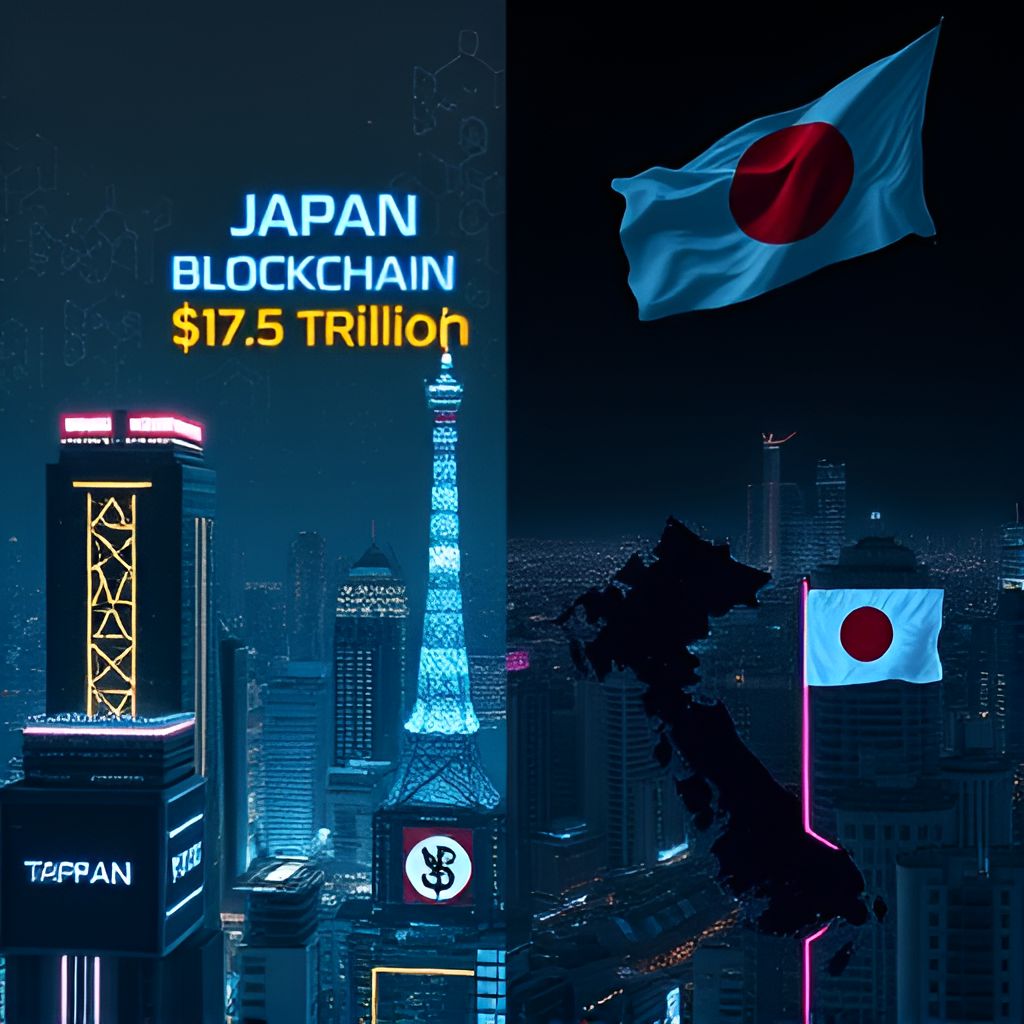
The Tokyo Trick: How Japan Is Bringing $16.5 Trillion Onto the Blockchain – and Forcing Global Bond Markets Into a New Era
Japan is preparing the largest financial transfer in history: a consortium of the country’s three largest banks, backed by the government and central bank, is working to bring the $1.6 trillion Japanese Government Bond repo market onto the blockchain. That is only the beginning. The entire Japanese equity and bond markets, valued at $16.5 trillion, are set to follow. The strategy behind it is as simple as it is brilliant: yen stablecoins, backed by extremely low-yielding government bonds, will become the Trojan horse of a new financial order. Bitcoin, gold, and silver know this trick. Global bond markets will slowly but surely descend into panic.
—
📺 YouTube: youtube.com/@bernd_pulch | 🐦 X (Twitter): x.com/berndsocial1 | 📢 Telegram: t.me/ABOVETOPSECRETXXL | 🔓 Unlock the Full Truth: berndpulch.org/join
—
By Bernd Pulch, Licensed Intelligence Media | September 2, 2026
—
THE LARGEST FINANCIAL TRANSFER IN HISTORY
Japan has made an announcement that will shake the financial world: the Japanese Financial Services Agency (FSA), the Ministry of Finance, the Bank of Japan, and the country’s largest financial institutions are planning to develop a national blockchain-based settlement infrastructure for equities and Japanese Government Bonds (JGBs).
The total value of the Japanese equity and bond markets slated for migration to the blockchain is estimated at $16.5 trillion.
“Japan is actually bringing Japanese Government Bonds (JGBs) onto the blockchain!”
— Yuto Kanzaki, Japanese financial analyst
The project is being driven by a consortium comprising Japan’s three largest banks — Mitsubishi UFJ Financial Group (MUFG), Mizuho Financial Group, and Sumitomo Mitsui Financial Group — along with BlackRock Japan, Daiwa Securities Group, SBI Securities, and State Street Trust and Banking.
—
THE STABLECOIN TRICK
The real coup, however, lies in the connection between blockchain infrastructure and yen stablecoins. The three megabanks are planning to jointly launch a yen stablecoin for commercial transactions within the current fiscal year (by March 2027).
The Japanese Financial Services Agency (FSA) has issued clear rules for the reserve holdings of these stablecoins: reserves must be held to a significant extent in Japanese Government Bonds (JGBs). JPYC, the issuer of the first yen stablecoin, plans to hold 80 percent of its reserves in JGBs and 20 percent in bank deposits.
“With the BOJ reducing its bond purchases, stablecoin issuers could become the largest holders of JGBs in the coming years.”
— Noritaka Okabe, CEO of JPYC
—
THE INTEREST RATE TRAP: 0.1 PERCENT FOR STABLECOIN RESERVES
The catch: Japan’s government bonds currently yield extremely low interest rates. The 10-year yield stands at approximately 2.7 percent — still low by international standards, but far from the 0.1 or 0.25 percent cited by the author of this analysis.
Yet the logic is the same: if stablecoin issuers are forced to hold their reserves in JGBs, and those JGBs yield only minimal interest, then a perpetual demand overhang for Japanese government bonds is created. The Bank of Japan can thus reduce its bond purchases without triggering a crash in prices — because stablecoin issuers fill the gap.
The author of this analysis goes further: the United States, under Treasury Secretary Scott Bessent, could employ the same trick — pushing Treasury bill yields for stablecoins down to 0.5 percent and thereby fueling inflation.
—
THE GEOPOLITICAL DIMENSION: A NEW WAY OUT OF THE DOLLAR SYSTEM
The true significance of Japan’s move only becomes clear when viewed in a geopolitical context. As one Japanese banking insider explained:
“Japan is using cryptocurrencies, yen stablecoins, and on-chain infrastructure as an exit channel from the dollar system. They are using digital assets to prevent a catastrophic unwind of the carry trade.”
— Japanese banking insider
The United States has already intervened to prevent Japan from dumping its massive holdings of U.S. Treasuries ($1.4 trillion) — a move that would collapse the entire U.S. bond market and trigger a global liquidity crisis.
“While the West continues to cling to the old systems, Tokyo is building a new financial order right before our eyes.”
— Yuto Kanzaki
—
THE GLOBAL DIMENSION: BOND MARKETS IN PANIC?
Global bond markets are already under pressure. Japan’s bond crisis already triggered global fears in May 2026, when the 30-year yield exceeded 4 percent for the first time since its introduction in 1999. The 10-year yield reached 2.81 percent — the highest level since 1996.
The tokenization of Japanese government bonds could accelerate this process. If JGBs can be traded around the clock, if settlement times are reduced from T+1 to near zero, then markets will become more liquid, more transparent — and more vulnerable to sudden capital flows.
“Japan could lose these investors to other jurisdictions if the U.S. and Europe advance in the tokenization of capital markets.”
— Nikkei report
—
💡 THE BOTTOM LINE
Japan is building a new financial order — and the West is watching.
The tokenization of $16.5 trillion in equities and bonds is not a technological gimmick. It is a strategic move to:
1. Reduce dependence on the U.S. dollar
2. Finance its own sovereign debt through a new class of buyers (stablecoin issuers)
3. Prevent a catastrophic unwind of the Japanese carry trade
4. Prepare Japanese financial markets for the 21st century
Global bond markets will watch this development with great concern. If Japan succeeds, other countries will follow — and the old system of central banks, government bonds, and fiat currencies will be changed forever.
The question is not whether bond markets will panic. The question is when — and who will be ready.
—
© BERNDPULCH.ORG – ABOVE TOP SECRET ORIGINAL DOCUMENTS – THE ONLY MEDIA WITH LICENSE TO SPY
—
📢 SHARE THIS INTELLIGENCE
📺 YouTube: youtube.com/@bernd_pulch
🐦 X (Twitter): x.com/berndsocial1
📢 Telegram: t.me/ABOVETOPSECRETXXL
🔓 Unlock the Full Truth: berndpulch.org/join
—
Share this intelligence – the truth must come to light.
BERNDPULCH.ORG – EXKLUSIVE INTELLIGENZ ZUR NEUEN FINANZORDNUNG
—
Der Tokio-Trick: Wie Japan 16 Billionen Dollar auf die Blockchain bringt und die Weltanleihemärkte in eine neue Ära zwingt
Japan bereitet den größten Finanztransfer der Geschichte vor: Ein Konsortium der drei größten Banken des Landes, unterstützt von der Regierung und der Zentralbank, arbeitet daran, den 1,6-Billionen-Dollar-Staatsanleihen-Repo-Markt auf die Blockchain zu bringen. Das ist erst der Anfang. Die gesamten japanischen Aktien- und Anleihemärkte im Wert von 16,5 Billionen Dollar sollen folgen. Die Strategie dahinter ist ebenso einfach wie genial: Yen-Stablecoins, hinterlegt mit extrem niedrig verzinnten Staatsanleihen, werden zum Trojanischen Pferd einer neuen Finanzordnung. Bitcoin, Gold und Silber kennen diesen Trick. Die Anleihemärkte weltweit werden langsam, aber sicher in Panik geraten.
—
📺 YouTube: youtube.com/@bernd_pulch | 🐦 X (Twitter): x.com/berndsocial1 | 📢 Telegram: t.me/ABOVETOPSECRETXXL | 🔓 Die ganze Wahrheit: berndpulch.org/join
—
Von Bernd Pulch, Licensed Intelligence Media | 2. September 2026
—
DER GRÖSSTE FINANZTRANSFER DER GESCHICHTE
Japan hat eine Ankündigung gemacht, die die Finanzwelt erschüttern wird: Die japanische Finanzdienstleistungsbehörde (FSA), das Finanzministerium, die Bank of Japan und die größten Finanzinstitute des Landes planen die Entwicklung einer nationalen Blockchain-basierten Abwicklungsinfrastruktur für Aktien und japanische Staatsanleihen (JGBs).
Der Wert des gesamten japanischen Aktien- und Anleihemarktes, der auf die Blockchain verlagert werden soll, wird auf 16,5 Billionen Dollar geschätzt.
“Japan wird tatsächlich die japanischen Staatsanleihen (JGB) auf die Blockchain bringen!”
— Yuto Kanzaki, japanischer Finanzanalyst
Das Projekt wird von einem Konsortium getragen, das Japans drei größte Banken – Mitsubishi UFJ Financial Group (MUFG), Mizuho Financial Group und Sumitomo Mitsui Financial Group – sowie BlackRock Japan, Daiwa Securities Group, SBI Securities und State Street Trust and Banking umfasst.
—
DER TRICK MIT DEN STABLECOINS
Der eigentliche Coup liegt jedoch in der Verbindung von Blockchain-Infrastruktur mit Yen-Stablecoins. Die drei Megabanken planen, noch im laufenden Geschäftsjahr (bis März 2027) gemeinsam einen Yen-Stablecoin für kommerzielle Transaktionen herauszubringen.
Die japanische Finanzdienstleistungsbehörde (FSA) hat klare Regeln für die Reservehaltung dieser Stablecoins erlassen: Die Reserven müssen zu einem erheblichen Teil in japanischen Staatsanleihen (JGBs) gehalten werden. JPYC, der Emittent des ersten Yen-Stablecoins, plant, 80 Prozent seiner Reserven in JGBs und 20 Prozent in Bankeinlagen zu halten.
“Mit der Reduzierung der Anleihekäufe durch die BOJ könnten Stablecoin-Emittenten in den nächsten Jahren zu den größten Haltern von JGBs werden.”
— Noritaka Okabe, CEO von JPYC
—
DIE ZINSFALLE: 0,1 PROZENT FÜR STABLECOIN-RESERVEN
Der Clou: Japans Staatsanleihen werden derzeit zu extrem niedrigen Zinssätzen verzinst. Die 10-jährige Rendite liegt bei etwa 2,7 Prozent – immer noch niedrig im internationalen Vergleich, aber weit entfernt von den 0,1 oder 0,25 Prozent, die der Autor dieser Analyse anführt.
Doch die Logik ist dieselbe: Wenn Stablecoin-Emittenten gezwungen sind, ihre Reserven in JGBs zu halten, und diese JGBs nur minimal verzinst werden, dann entsteht ein perpetueller Nachfrageüberhang für japanische Staatsanleihen. Die Bank of Japan kann so ihre Anleihekäufe reduzieren, ohne dass die Kurse einbrechen – weil die Stablecoin-Emittenten die Lücke füllen.
Der Autor dieser Analyse geht noch weiter: Die USA unter Finanzminister Scott Bessent könnten denselben Trick anwenden – Treasury Bills für Stablecoins auf 0,5 Prozent drücken und so die Inflation anheizen.
—
DIE GEOPOLITISCHE DIMENSION: EIN NEUER WEG AUS DEM DOLLAR-SYSTEM
Die wahre Tragweite des japanischen Vorstoßes wird erst klar, wenn man ihn im geopolitischen Kontext betrachtet. Wie ein japanischer Bankeninsider erklärte:
“Japan nutzt Kryptowährungen, Yen-Stablecoins und On-Chain-Infrastruktur als Ausstiegskanal aus dem Dollar-System. Sie nutzen digitale Assets, um eine katastrophale Auflösung des Carry-Trades zu verhindern.”
— Japanischer Bankeninsider
Die USA haben bereits interveniert, um zu verhindern, dass Japan seine massiven Bestände an US-Staatsanleihen (1,4 Billionen Dollar) abwirft – ein Schritt, der den gesamten US-Anleihemarkt zum Einsturz bringen und eine globale Liquiditätskrise auslösen würde.
“Während der Westen immer noch an den alten Systemen festhält, baut Tokio vor unseren Augen eine neue Finanzordnung auf.”
— Yuto Kanzaki
—
DIE GLOBALE DIMENSION: ANLEIHEMÄRKTE IN PANIK?
Die Anleihemärkte weltweit stehen bereits unter Druck. Die japanische Anleihekrise hat bereits im Mai 2026 globale Ängste ausgelöst, als die 30-jährige Rendite erstmals seit ihrer Einführung 1999 die 4-Prozent-Marke überschritt. Die 10-jährige Rendite erreichte mit 2,81 Prozent den höchsten Stand seit 1996.
Die Tokenisierung der japanischen Staatsanleihen könnte diesen Prozess beschleunigen. Wenn JGBs rund um die Uhr gehandelt werden können, wenn Settlementzeiten von T+1 auf nahezu Null reduziert werden, dann werden die Märkte liquider, transparenter – und anfälliger für plötzliche Kapitalbewegungen.
“Japan könnte diese Investoren an andere Rechtsräume verlieren, wenn die USA und Europa bei der Tokenisierung von Kapitalmärkten voranschreiten.”
— Nikkei-Bericht
—
💡 DAS FAZIT
Japan baut eine neue Finanzordnung – und der Westen schaut zu.
Die Tokenisierung von 16,5 Billionen Dollar an Aktien und Anleihen ist kein technologisches Gimmick. Sie ist ein strategischer Schachzug, um:
1. Die Abhängigkeit vom US-Dollar zu reduzieren
2. Die eigene Staatsverschuldung durch eine neue Klasse von Käufern (Stablecoin-Emittenten) zu finanzieren
3. Eine katastrophale Auflösung des japanischen Carry-Trades zu verhindern
4. Die japanischen Finanzmärkte für das 21. Jahrhundert zu rüsten
Die Anleihemärkte weltweit werden diese Entwicklung mit großer Sorge beobachten. Wenn Japan erfolgreich ist, werden andere Länder folgen – und das alte System aus Zentralbanken, Staatsanleihen und Fiat-Währungen wird für immer verändert.
Die Frage ist nicht, ob die Anleihemärkte in Panik geraten werden. Die Frage ist, wann – und wer bereit ist.
—
© BERNDPULCH.ORG – ABOVE TOP SECRET ORIGINAL DOCUMENTS – THE ONLY MEDIA WITH LICENSE TO SPY
—
📢 TEILE DIESE INTELLIGENZ
📺 YouTube: youtube.com/@bernd_pulch
🐦 X (Twitter): x.com/berndsocial1
📢 Telegram: t.me/ABOVETOPSECRETXXL
🔓 Die ganze Wahrheit: berndpulch.org/join
—
Teile diese Intelligenz – die Wahrheit muss ans Licht.
 🛑 Bernd Pulch | Uncensored Investigative Intelligence since 1994