In a stunning reversal, Syria’s new government has publicly acknowledged the existence of tons of nuclear material left behind by the ousted Assad regime and announced it will keep the stockpile on Syrian soil for peaceful civilian use – under IAEA safeguards.
The Discovery
On August 18, 2026, International Atomic Energy Agency (IAEA) Director General Rafael Grossi announced at a joint press conference in Damascus with Syrian Foreign Minister Asaad al-Shaibani that IAEA inspectors had discovered “several tons of nuclear material” at an undeclared site in Syria.
“We are talking about a few tons of nuclear material that could be put to bad use.” — IAEA Director General Rafael Grossi
The material, which includes yellowcake uranium – a uranium concentrate that can be processed into reactor fuel or, at higher enrichment, used for nuclear weapons – had been stored at a clandestine facility known as “Site 99”.
Syria’s new government voluntarily informed the IAEA about the material on July 17, 2026, marking the first time Damascus has cooperated with the agency on its nuclear legacy.
“On July 17, we sent an official letter to the agency, in which we declared of our own free will the presence of nuclear materials at an undeclared site within the legacy left by the former regime.” — Syrian Foreign Minister Asaad al-Shaibani
The Reversal: “Syria Has the Right to Use It”
Just days after signaling that the material would be removed from Syria under IAEA supervision, Damascus reversed course. During the press conference, al-Shaibani declared that the nuclear material will remain in Syria under national custody and subject to IAEA safeguards.
“Syria has the right to use the material for civilian purposes.” — Syrian Foreign Minister Asaad al-Shaibani
“The minister affirmed that the Syrian Arab Republic exercises sovereign responsibility over all nuclear material on its territory, that the material remains in Syrian national custody, and that Syria will continue to perform its responsibilities in accordance with its international obligations and its national interests.” — IAEA statement
Syria reaffirmed its sovereign and legal right to the civilian and peaceful use of nuclear energy, linked to energy, health, and water management.
The Legacy: Assad’s Secret Nuclear Program
The nuclear material is connected to the secret nuclear program developed under former President Bashar al-Assad, centered on the al-Kibar reactor in eastern Syria’s Deir Ezzor province.
On September 6, 2007, Israel destroyed the al-Kibar reactor in a covert airstrike – later known as Operation Orchard – largely dismantling Syria’s nuclear ambitions.
The IAEA concluded in 2011 that the site was “very likely” a nuclear reactor built with possible assistance from North Korea.
“This validates the longstanding evaluation of the IAEA that a nuclear facility was being built in secrecy.” — IAEA Director General Rafael Grossi
Israel’s Monitoring and Threats
Israeli officials told Axios that the Assad regime had stored nuclear material intended for the al-Kibar project at Site 99 – a facility closely monitored by Israel for over two years.
Israeli officials said the IDF bombed the entrances to Site 99 shortly after Assad’s fall in an attempt to prevent access to the stored material.
Israel had reportedly threatened to bomb the site if the material was not removed, and made clear to the Trump administration that it would not accept the nuclear material remaining at the site.
A New Chapter – Or a New Threat?
Syria’s admission marks a significant turning point. For nearly two decades, the Assad regime denied the existence of its nuclear program and refused IAEA access. The new government, which came to power after Assad’s fall in late 2024, has taken what Grossi called a “courageous decision” to cooperate.
“We are starting to turn a page, and turning a page does not mean forgetting the past.” — IAEA Director General Rafael Grossi
However, the decision to keep the nuclear material in Syria – rather than remove it – has raised fresh concerns. While the material cannot be directly used to manufacture a nuclear weapon, it could potentially be used in a “dirty bomb” – a conventional explosive designed to disperse radioactive material.
The question now is whether Syria’s new government will follow through on its commitment to transparency – or whether the Assad-era nuclear legacy will continue to haunt the region for years to come.
📺 YouTube: youtube.com/@bernd_pulch 🐦 X (Twitter): x.com/berndsocial1 📢 Telegram: t.me/ABOVETOPSECRETXXL 🔓 UNLOCK THE TRUTH: berndpulch.org/join
Syrien räumt Besitz von Assad-Atommaterial ein – will es für “zivile Zwecke” behalten
In einer überraschenden Wende hat die neue syrische Regierung öffentlich die Existenz von Tonnen von Atommaterial eingeräumt, das vom gestürzten Assad-Regime zurückgelassen wurde, und angekündigt, den Bestand unter IAEA-Kontrollen für friedliche zivile Zwecke auf syrischem Boden zu behalten.
—
Die Entdeckung
Am 18. August 2026 gab IAEA-Generaldirektor Rafael Grossi bei einer gemeinsamen Pressekonferenz in Damaskus mit Syriens Außenminister Asaad al-Shaibani bekannt, dass IAEA-Inspektoren “mehrere Tonnen Kernmaterial” an einer nicht deklarierten Stätte in Syrien entdeckt hätten.
“Wir sprechen von einigen Tonnen Kernmaterial, das für schlechte Zwecke verwendet werden könnte.” — IAEA-Generaldirektor Rafael Grossi
Bei dem Material handelt es sich unter anderem um Uranoxid (Yellowcake) – ein Urankonzentrat, das zu Brennstoff für Reaktoren oder bei höherer Anreicherung für Atomwaffen verarbeitet werden kann. Es wurde in einer geheimen Einrichtung namens “Site 99” gelagert.
Die neue syrische Regierung informierte die IAEA am 17. Juli 2026 freiwillig über das Material – das erste Mal, dass Damaskus mit der Behörde über sein nukleares Erbe kooperierte.
“Am 17. Juli haben wir der Behörde einen offiziellen Brief geschickt, in dem wir aus freiem Willen das Vorhandensein von Kernmaterial an einer nicht deklarierten Stätte innerhalb des vom früheren Regime hinterlassenen Erbes erklärt haben.” — Syriens Außenminister Asaad al-Shaibani
—
Die Kehrtwende: “Syrien hat das Recht, es zu nutzen”
Nur wenige Tage nachdem signalisiert worden war, dass das Material unter IAEA-Aufsicht aus Syrien entfernt werden würde, drehte Damaskus den Spieß um. Während der Pressekonferenz erklärte al-Shaibani, dass das Kernmaterial unter nationaler Obhut in Syrien verbleiben und unter IAEA-Kontrollen gestellt werde.
“Syrien hat das Recht, das Material für zivile Zwecke zu nutzen.” — Syriens Außenminister Asaad al-Shaibani
“Der Minister bekräftigte, dass die Syrische Arabische Republik die souveräne Verantwortung für alles Kernmaterial auf ihrem Territorium ausübt, dass das Material in syrischer nationaler Obhut verbleibt und dass Syrien weiterhin seine Verantwortung gemäß seinen internationalen Verpflichtungen und seinen nationalen Interessen wahrnehmen wird.” — IAEA-Erklärung
Syrien bekräftigte sein souveränes und rechtmäßiges Recht auf die zivile und friedliche Nutzung der Kernenergie, verbunden mit Energie, Gesundheit und Wasserwirtschaft.
—
Das Erbe: Assads geheimes Atomprogramm
Das Kernmaterial steht im Zusammenhang mit dem geheimen Atomprogramm, das unter dem früheren Präsidenten Baschar al-Assad entwickelt wurde und sich auf den al-Kibar-Reaktor in der östlichen Provinz Deir ez-Zor konzentrierte.
Am 6. September 2007 zerstörte Israel den al-Kibar-Reaktor in einem verdeckten Luftangriff – später bekannt als Operation Orchard – und zerschlug damit weitgehend Syriens nukleare Ambitionen.
Die IAEA kam 2011 zu dem Schluss, dass es sich bei dem Gelände “sehr wahrscheinlich” um einen Atomreaktor handelte, der möglicherweise mit Unterstützung von Nordkorea gebaut worden war.
“Dies bestätigt die langjährige Einschätzung der IAEA, dass dort im Geheimen eine Atomanlage gebaut wurde.” — IAEA-Generaldirektor Rafael Grossi
—
Israels Überwachung und Drohungen
Israelische Beamte sagten gegenüber Axios, dass das Assad-Regime Kernmaterial für das al-Kibar-Projekt in “Site 99” gelagert habe – einer Einrichtung, die von Israel über zwei Jahre lang genau überwacht wurde.
Israelische Beamte erklärten, dass die IDF kurz nach Assads Sturz die Zugänge zu Site 99 bombardiert habe, um den Zugang zu dem gelagerten Material zu verhindern.
Israel hatte Berichten zufolge mit der Bombardierung des Geländes gedroht, falls das Material nicht entfernt werde, und machte der Trump-Administration klar, dass es nicht akzeptieren werde, dass das Kernmaterial an dem Standort verbleibe.
—
Ein neues Kapitel – oder eine neue Bedrohung?
Syriens Eingeständnis markiert einen bedeutenden Wendepunkt. Fast zwei Jahrzehnte lang hatte das Assad-Regime die Existenz seines Atomprogramms bestritten und der IAEA den Zugang verweigert. Die neue Regierung, die nach Assads Sturz Ende 2024 an die Macht kam, hat nach Grossis Worten eine “mutige Entscheidung” zur Zusammenarbeit getroffen.
“Wir beginnen, ein neues Kapitel aufzuschlagen, und ein neues Kapitel bedeutet nicht, die Vergangenheit zu vergessen.” — IAEA-Generaldirektor Rafael Grossi
Die Entscheidung, das Kernmaterial in Syrien zu belassen – anstatt es zu entfernen – hat jedoch neue Bedenken geweckt. Das Material kann zwar nicht direkt zur Herstellung einer Atomwaffe verwendet werden, könnte aber möglicherweise für eine “schmutzige Bombe” genutzt werden – einen konventionellen Sprengsatz, der radioaktives Material verteilen soll.
Die Frage ist nun, ob die neue syrische Regierung ihr Bekenntnis zur Transparenz einhalten wird – oder ob das nukleare Erbe der Assad-Ära die Region noch jahrelang belasten wird.
—
📺 YouTube: youtube.com/@bernd_pulch 🐦 X (Twitter): x.com/berndsocial1 📢 Telegram: t.me/ABOVETOPSECRETXXL 🔓 UNLOCK THE TRUTH: berndpulch.org/join
Trump’s Iran War Unravels: Gas Prices, Nuclear Threats, and the Battle for Gaza
Unlock the Full Truth: berndpulch.org/join
—
Just days after telling Americans that $4-a-gallon gasoline is “okay” and he will “never apologize” for the Iran war, President Trump finds himself at the center of a mounting political storm. From growing whispers of nuclear war to an escalating influence campaign to shape public opinion, the administration’s strategy appears to be fraying on multiple fronts.
—
“I’ll Never Apologize”: Trump Defends Iran War as Gas Prices Soar
Speaking at an event in Nassau County, New York, on August 14, Trump minimized the financial toll of the conflict on American households, arguing his decision to strike Iran was the “right” one.
“For you to pay a tiny little bit more for your gasoline, just remember you’re doing it so that a very evil country cannot have—a country, really, it’s the number one state sponsor of terror in the world—we don’t want to have them have a nuclear weapon.”
Trump acknowledged that Americans are paying around $4 per gallon but brushed aside concerns: *”You’re at $4. It’s okay. I mean, it’s—I’m not, I’m not, I’ll never apologize. I did the right thing.”*
The Price at the Pump
The president’s remarks came as the national average price of regular gasoline reached about $4.07 a gallon** on Friday, compared with $3.85 a month earlier and $3.16 a year ago. According to GasBuddy, Americans are spending **$338 million more on gasoline each day than they did one year ago.
Before the U.S. and Israel launched joint strikes on Iran on February 28, the national average had dipped just below $3, at $2.98. The war has effectively closed the Strait of Hormuz—a chokepoint through which roughly 20 percent of global oil and liquefied natural gas shipments passed before the conflict. Ship-tracking firm Kpler recorded only two vessels crossing the strait on Friday, with no crude oil shipments, compared to more than 130 ships daily before the war.
Trump Threatens New Sanctions on China Over Iran Oil
On Friday, Trump vowed to hit Iran hard economically, a day after Treasury Secretary Scott Bessent said that Washington would impose measures on Tehran that have “never been seen” as soon as next week.
Experts say the Trump administration could target Chinese “teapot” refiners—independent refineries that account for a quarter of Chinese refinery capacity and absorb much of the Iranian oil trade. China buys more than 80% of Iran’s shipped oil, according to 2025 data from analytics firm Kpler.
The administration could also impose secondary sanctions on Chinese banks. OFAC has already imposed sanctions on smaller China- and Hong Kong-based entities accused of processing billions of dollars in Iranian oil.
“Hitting those two banks could have a chilling effect on bigger financial institutions,” sanctions experts said, “although they warned it could also trigger retaliatory actions by Beijing.”
—
Marjorie Taylor Greene: White House Discussing Nuclear Strike on Iran
In a startling revelation, former Congresswoman Marjorie Taylor Greene has claimed that White House officials have discussed the potential use of nuclear weapons against Iran during strategic meetings.
Greene labeled the potential decision as “pure evil” and called for an end to the “madness of American warmongers.” Alluding to the atomic bombings of Hiroshima and Nagasaki in 1945, she emphasized that available data confirms the existence of these dangerous plans and challenged what she described as Trump’s fabrications.
“They are discussing using nuclear weapons on Iran in strategy meetings. I’m not speculating.” — Marjorie Taylor Greene
The former congresswoman’s claims have intensified concerns about the trajectory of the U.S.-Iran conflict, with critics warning that such rhetoric dangerously lowers the threshold for nuclear use.
—
Israel’s AI Influence Campaign: Flooding ChatGPT with Pro-Israel Content
Documents submitted to the U.S. Justice Department have revealed an Israeli-funded public relations campaign aimed at influencing how AI systems like ChatGPT and Perplexity respond to questions about Gaza and the Israel Defense Forces.
The campaign, run by French public relations firm Havas Media through the advertising company Piro, involves creating and distributing content under the name of the “Hanover Institute for Public Policy.”
The campaign is valued at $100,000 and includes the production of more than 12 articles published on the institute’s website.
“The documents describe the campaign’s goal as ‘creating and disseminating factual, source-supported informational materials aimed at educating the American public about Israel and related issues.'”
However, tests conducted by Politico showed that ChatGPT and Perplexity cited materials from the campaign in their responses to questions about Gaza and anti-Semitism. Critics have accused Israel of attempting to manipulate the training data of large language models to shape public narrative.
—
CENTCOM Map Sparks Outrage: Gaza and West Bank Depicted as Israeli Territory
The U.S. Central Command (CENTCOM) was forced to issue an urgent amendment to an official map of the Middle East after its initial version sparked widespread controversy for integrating the West Bank and Gaza Strip within the borders of Israel.
The original map, published from the command’s headquarters in Florida, ignored the dividing borders of the Palestinian territories. It was quickly replaced with a revised version that clearly shows the West Bank and Gaza Strip as separate from Israel, based on the 1967 borders.
CENTCOM did not offer an apology or a direct explanation for what it called a “geographical error.”
Jared Kushner Meets Hamas Leaders to Push Gaza Demilitarization
In a rare and high-stakes diplomatic move, President Trump’s son-in-law and envoy Jared Kushner met with Hamas leaders in Egypt on Sunday to advance a Gaza peace plan rejected by Israel.
Kushner pressed Hamas for “concrete, verifiable steps” on disarmament and an end to any future Hamas role in running Gaza.
Hamas political leader Khalil al-Hayya attended the meeting, alongside Egyptian intelligence chief Hassan Rashad, a Qatari diplomat, and a senior Turkish official.
“There can be no ambiguity: Hamas must relinquish governing authority and all weapons and military infrastructure. And Gaza can never again be a source of terror for Israel.”
Kushner is expected to visit Israel on Monday to meet Prime Minister Benjamin Netanyahu and discuss “corresponding steps” Israel must take, including withdrawals from Gaza and accelerating humanitarian relief.
The meeting came hours after eight Muslim countries, including Saudi Arabia, Egypt, Jordan, and Turkey, condemned Israel’s rejection of the roadmap for implementing Trump’s Gaza peace plan.
—
Conclusion
The converging crises—soaring gas prices, a potentially escalating economic war with China, the specter of nuclear weapons, a secret influence campaign to manipulate AI, and a diplomatic map that erased Palestinian territories—paint a picture of an administration struggling to contain the consequences of its own foreign policy.
Trump’s defiant refusal to apologize for the economic pain of the Iran war may satisfy his base, but with the November midterm elections approaching, the political calculus is shifting. And as the world watches the Strait of Hormuz, the battle for Gaza, and the battle for the narrative play out simultaneously, the question is no longer whether the administration can win the war—but whether it can survive the fallout.
—
📺 YouTube: youtube.com/@bernd_pulch 🐦 X (Twitter): x.com/berndsocial1 📢 Telegram: t.me/ABOVETOPSECRETXXL 🔓 UNLOCK THE TRUTH: berndpulch.org/join
Trumps Iran-Krieg entgleitet: Benzinpreise, Atomdrohungen und der Kampf um Gaza
Unlock the Full Truth: berndpulch.org/join
—
Nur wenige Tage, nachdem er den Amerikanern sagte, dass 4-Dollar-Benzin “in Ordnung” sei und er sich “niemals entschuldigen” werde, findet sich Präsident Trump im Zentrum eines wachsenden politischen Sturms wieder. Von immer lauter werdenden Flüstern über Atomkrieg bis hin zu einer eskalierenden Einflusskampagne zur Steuerung der öffentlichen Meinung – die Strategie der Regierung bröckelt an mehreren Fronten.
—
“Ich werde mich nie entschuldigen”: Trump verteidigt Iran-Krieg bei steigenden Benzinpreisen
Bei einem Auftritt im Nassau County, New York, am 14. August bagatellisierte Trump die finanziellen Auswirkungen des Konflikts auf amerikanische Haushalte und argumentierte, seine Entscheidung, den Iran anzugreifen, sei die “richtige” gewesen.
“Wenn Sie ein kleines bisschen mehr für Ihr Benzin bezahlen, denken Sie einfach daran, dass Sie es tun, damit ein sehr böses Land keine Atomwaffe bekommen kann – ein Land, das wirklich der größte staatliche Sponsor des Terrors der Welt ist.”
Trump räumte ein, dass die Amerikaner etwa 4 Dollar pro Gallone zahlen, wischte die Bedenken jedoch beiseite: “Sie sind bei 4 Dollar. Das ist in Ordnung. Ich werde mich nie entschuldigen. Ich habe das Richtige getan.”
Der Preis an der Zapfsäule
Die Äußerungen des Präsidenten erfolgten, als der nationale Durchschnittspreis für Normalbenzin am Freitag etwa 4,07 Dollar pro Gallone erreichte, gegenüber 3,85 Dollar vor einem Monat und 3,16 Dollar vor einem Jahr. Laut GasBuddy geben die Amerikaner täglich 338 Millionen Dollar mehr für Benzin aus als vor einem Jahr.
Bevor die USA und Israel am 28. Februar gemeinsame Angriffe auf den Iran starteten, war der nationale Durchschnitt knapp unter 3 Dollar auf 2,98 Dollar gefallen. Der Krieg hat die Straße von Hormus faktisch geschlossen – einen Engpass, durch den vor dem Konflikt etwa 20 Prozent der weltweiten Öl- und Flüssigerdgas-Lieferungen flossen. Die Schifffahrtsverfolgungsfirma Kpler verzeichnete am Freitag nur zwei Schiffe, die die Meerenge durchquerten, ohne Rohöltransporte, verglichen mit mehr als 130 Schiffen täglich vor dem Krieg.
—
Trump droht mit neuen Sanktionen gegen China wegen Iran-Öl
Am Freitag gelobte Trump, den Iran wirtschaftlich hart zu treffen, einen Tag nachdem Finanzminister Scott Bessent erklärt hatte, dass Washington bereits nächste Woche Maßnahmen gegen Teheran ergreifen werde, die es “nie zuvor gegeben habe”.
Experten zufolge könnte die Trump-Administration chinesische “Teapot”-Raffinerien ins Visier nehmen – unabhängige Raffinerien, die ein Viertel der chinesischen Raffineriekapazität ausmachen und einen Großteil des iranischen Ölhandels absorbieren. China kauft mehr als 80 Prozent des iranischen verschifften Öls, wie Daten des Analyseunternehmens Kpler aus dem Jahr 2025 zeigen.
Die Regierung könnte auch sekundäre Sanktionen gegen chinesische Banken verhängen. OFAC hat bereits Sanktionen gegen kleinere Unternehmen mit Sitz in China und Hongkong verhängt, denen vorgeworfen wird, Milliarden von Dollar an iranischem Öl abgewickelt zu haben.
“Wenn man diese beiden Banken trifft, könnte das eine abschreckende Wirkung auf größere Finanzinstitute haben”, sagten Sanktionsexperten, “obwohl sie warnten, dass dies auch Vergeltungsmaßnahmen Pekings auslösen könnte.”
—
Marjorie Taylor Greene: Weißes Haus diskutiert Atomschlag gegen Iran
In einer schockierenden Enthüllung behauptete die ehemalige Kongressabgeordnete Marjorie Taylor Greene, dass Beamte des Weißen Hauses in Strategiegesprächen den möglichen Einsatz von Atomwaffen gegen den Iran diskutiert hätten.
Greene bezeichnete die mögliche Entscheidung als “reines Böse” und forderte ein Ende des “Wahnsinns der amerikanischen Kriegstreiber”. Unter Anspielung auf die Atombombenabwürfe auf Hiroshima und Nagasaki 1945 betonte sie, dass verfügbare Daten die Existenz dieser gefährlichen Pläne bestätigten, und stellte das in Frage, was sie als Trumps Erfindungen bezeichnete.
“Sie diskutieren in Strategiegesprächen den Einsatz von Atomwaffen gegen den Iran. Das ist keine Spekulation.” — Marjorie Taylor Greene
Die Behauptungen der ehemaligen Kongressabgeordneten haben die Besorgnis über den Kurs des US-iranischen Konflikts verstärkt, wobei Kritiker warnen, dass eine solche Rhetorik die Schwelle für den Atomwaffeneinsatz gefährlich senke.
—
Israels KI-Einflusskampagne: ChatGPT mit pro-israelischen Inhalten fluten
Dem US-Justizministerium vorgelegte Dokumente enthüllen eine israelisch finanzierte PR-Kampagne zur Beeinflussung von KI-Systemen wie ChatGPT und Perplexity bei Fragen zu Gaza und der israelischen Armee.
Die von der französischen PR-Agentur Havas Media über die Werbefirma Piro durchgeführte Kampagne beinhaltet die Erstellung und Verbreitung von Inhalten unter dem Namen des “Hanover Institute for Public Policy”.
Die Kampagne hat ein Volumen von 100.000 Dollar und umfasst die Produktion von mehr als 12 Artikeln, die auf der Website des Instituts veröffentlicht wurden.
“Die Dokumente beschreiben das Ziel der Kampagne als ‘Schaffung und Verbreitung von faktenbasierten, quellenunterstützten Informationsmaterialien zur Aufklärung der amerikanischen Öffentlichkeit über Israel und verwandte Themen’.”
Tests von Politico zeigten jedoch, dass ChatGPT und Perplexity in ihren Antworten auf Fragen zu Gaza und Antisemitismus auf Materialien aus der Kampagne zurückgriffen. Kritiker beschuldigten Israel, zu versuchen, die Trainingsdaten großer Sprachmodelle zu manipulieren, um die öffentliche Erzählung zu beeinflussen.
—
CENTCOM-Karte löst Empörung aus: Gaza und Westjordanland als israelisches Territorium dargestellt
Das US Central Command (CENTCOM) sah sich gezwungen, eine dringende Korrektur einer offiziellen Karte des Nahen Ostens vorzunehmen, nachdem die erste Version wegen der Einbeziehung des Westjordanlands und des Gazastreifens in die Grenzen Israels für Empörung gesorgt hatte.
Die ursprüngliche Karte, die vom Hauptquartier des Kommandos in Florida veröffentlicht wurde, ignorierte die Trennlinien der palästinensischen Gebiete. Sie wurde schnell durch eine überarbeitete Version ersetzt, die das Westjordanland und den Gazastreifen als von Israel getrennt darstellt, basierend auf den Grenzen von 1967.
CENTCOM entschuldigte sich nicht und gab keine direkte Erklärung für den von ihm als “geografischen Fehler” bezeichneten Vorfall ab.
—
Jared Kushner trifft Hamas-Führer zur Förderung der Gaza-Entmilitarisierung
In einem seltenen und hochriskanten diplomatischen Schritt traf Präsident Trumps Schwiegersohn und Gesandter Jared Kushner am Sonntag in Ägypten mit Hamas-Führern zusammen, um einen von Israel abgelehnten Gaza-Friedensplan voranzutreiben.
Kushner drängte die Hamas zu “konkreten, überprüfbaren Schritten” zur Entwaffnung und zu einem Ende jeder künftigen Hamas-Rolle bei der Verwaltung des Gazastreifens.
Der politische Führer der Hamas, Khalil al-Hayya, nahm an dem Treffen teil, zusammen mit dem ägyptischen Geheimdienstchef Hassan Rashad, einem katarischen Diplomaten und einem hochrangigen türkischen Beamten.
“Es darf keine Unklarheit geben: Die Hamas muss ihre Regierungsgewalt sowie alle Waffen und militärischen Einrichtungen aufgeben. Und Gaza darf nie wieder eine Quelle des Terrors für Israel sein.”
Kushner wird am Montag in Israel erwartet, um sich mit Ministerpräsident Benjamin Netanyahu zu treffen und über “entsprechende Schritte” zu sprechen, die Israel unternehmen muss, darunter Abzüge aus Gaza und die Beschleunigung humanitärer Hilfslieferungen.
Das Treffen fand nur Stunden statt, nachdem acht muslimische Länder, darunter Saudi-Arabien, Ägypten, Jordanien und die Türkei, die Ablehnung Israels gegenüber dem Fahrplan zur Umsetzung von Trumps Gaza-Friedensplan verurteilt hatten.
—
Fazit
Die sich überschneidenden Krisen – steigende Benzinpreise, ein potenziell eskalierender Wirtschaftskrieg mit China, der Schrecken von Atomwaffen, eine geheime Einflusskampagne zur Manipulation von KI und eine diplomatische Karte, die palästinensische Gebiete auslöschte – zeichnen das Bild einer Regierung, die darum kämpft, die Folgen ihrer eigenen Außenpolitik zu kontrollieren.
Trumps trotzige Weigerung, sich für die wirtschaftlichen Folgen des Iran-Krieges zu entschuldigen, mag seine Anhänger zufriedenstellen, aber angesichts der bevorstehenden Zwischenwahlen im November verschiebt sich die politische Rechnung. Und während die Welt die Straße von Hormus, den Kampf um Gaza und den Kampf um die Erzählung gleichzeitig verfolgt, stellt sich nicht mehr die Frage, ob die Regierung den Krieg gewinnen kann – sondern ob sie den politischen Scherbenhaufen überleben kann.
—
📺 YouTube: youtube.com/@bernd_pulch 🐦 X (Twitter): x.com/berndsocial1 📢 Telegram: t.me/ABOVETOPSECRETXXL 🔓 UNLOCK THE TRUTH: berndpulch.org/join
The Strait of Hormuz Crisis: Underwater Drones, Territory Claims, and the U.S.-Israel Fault Line
Unlock the Full Truth: berndpulch.org/join
—
A dramatic escalation in the Strait of Hormuz, a deepening rift between Donald Trump and Benjamin Netanyahu, and a series of bellicose statements from both leaders have pushed the Middle East to the brink of a wider conflagration. In a span of 24 hours, Iran struck two oil tankers with underwater drones in the strategic waterway, President Trump floated declaring the strait a U.S. territory, and Israel’s prime minister lobbed a diplomatic grenade at Britain while accusing Iran of seeking nuclear weapons.
—
Iran’s Underwater Drone Gambit
The United Arab Emirates has formally accused Iran of using underwater drones to attack two oil tankers operated by its state-owned company, ADNOC, as they transited the Strait of Hormuz on Thursday evening. The strikes mark the first known use of this tactic against commercial vessels in the strategic chokepoint.
According to the United Kingdom Maritime Trade Operations (UKMTO), the attacks caused minor damage but no casualties. However, the incident adds to a growing tally of 17 ADNOC vessels that have been targeted by drones or missiles since the beginning of the U.S.-Iran conflict. In the first week of August alone, three attacks resulted in one sailor killed and 20 injured. The UAE has condemned the strikes as “acts of piracy”.
The attacks come as Tehran has issued a stark warning to Washington. Iranian Deputy Foreign Minister Kazem Gharibabadi stated that Iran will continue to control traffic through the strait until the U.S. “accepts defeat”. “The Strait of Hormuz remains blocked and will not be reopened until Iran’s conditions are accepted,” he declared.
—
Trump’s Territorial Ambition
In a stunning declaration that has drawn widespread international alarm, President Donald Trump announced he would “soon” declare the Strait of Hormuz a U.S. territory “after we finish defeating Iran”. Speaking to reporters, Trump said, “which is being very badly defeated — pretty soon I’ll be declaring the Hormuz Strait a territory of the United States,” adding with a chuckle, “It’s true”.
However, later reports suggested Trump was “joking”. Regardless of the president’s intent, the statement has escalated tensions, with U.S. media reporting it as a serious provocation. Iran has dismissed Trump’s claims of control as “fake information”.
—
The U.S.-Israel Rift Widens
As the crisis in the Strait unfolded, a parallel drama was playing out in Washington and Jerusalem. For the fourth time in recent weeks, President Trump has reportedly stopped short of endorsing Prime Minister Benjamin Netanyahu ahead of Israel’s October 27 election.
Axios reported that Trump has not given Netanyahu the support he seeks, with observers pointing to the Israeli premier’s declining popularity in the polls as a possible reason. In June, Trump had acknowledged he would “most likely” endorse Netanyahu but said he would first have to see who he was running against.
Netanyahu’s Nuclear Warning
In a radio interview released Thursday, Netanyahu sparked a diplomatic outcry by referring to Britain as the “Islamic Republic of Britain”. “Someone said that the first Islamic republic with nuclear weapons will be the Islamic Republic of Britain,” he said. “We are making sure there won’t be another one here, in Iran”.
The remark, intended as a joke, came as Israel continues to focus on Iran’s nuclear program and amid souring UK-Israel ties over the Gaza war. It drew sharp criticism both in Israel and abroad.
—
Conclusion
The converging crises — Iran’s underwater drone attack, Trump’s territorial threat, and Netanyahu’s provocative rhetoric — paint a picture of a region sliding toward instability. The Strait of Hormuz, a vital artery for global oil shipments, has become the epicenter of a high-stakes confrontation that could reshape the Middle East.
—
📺 YouTube: youtube.com/@bernd_pulch 🐦 X (Twitter): x.com/berndsocial1 📢 Telegram: t.me/ABOVETOPSECRETXXL 🔓 UNLOCK THE TRUTH: berndpulch.org/join
Die Straße-von-Hormus-Krise: Unterwasser-Drohnen, Gebietsansprüche und die US-israelische Bruchlinie
Unlock the Full Truth: berndpulch.org/join
—
Eine dramatische Eskalation in der Straße von Hormus, ein sich vertiefender Riss zwischen Donald Trump und Benjamin Netanjahu sowie eine Reihe von kriegerischen Äußerungen beider Führer haben den Nahen Osten an den Rand eines größeren Flächenbrandes gebracht. Innerhalb von 24 Stunden traf der Iran zwei Öltanker in der strategischen Wasserstraße mit Unterwasser-Drohnen, Präsident Trump ließ durchblicken, die Straße zu einem US-Territorium erklären zu wollen, und der israelische Ministerpräsident warf eine diplomatische Granate in Richtung Großbritannien, während er dem Iran vorwarf, Atomwaffen anzustreben.
—
Irans Unterwasser-Drohnen-Manöver
Die Vereinigten Arabischen Emirate haben den Iran formell beschuldigt, am Donnerstagabend Unterwasser-Drohnen eingesetzt zu haben, um zwei Öltanker seines Staatsunternehmens ADNOC anzugreifen, als diese die Straße von Hormus durchquerten. Die Angriffe markieren den ersten bekannten Einsatz dieser Taktik gegen Handelsschiffe in dem strategischen Engpass.
Nach Angaben des britischen Seefahrtssicherheitsdienstes UKMTO verursachten die Angriffe nur geringe Schäden, aber keine Verletzten. Der Vorfall reiht sich jedoch in eine wachsende Liste von 17 ADNOC-Schiffen ein, die seit Beginn des US-iranischen Konflikts mit Drohnen oder Raketen angegriffen wurden. Allein in der ersten Augustwoche gab es drei Angriffe, bei denen ein Matrose getötet und 20 verletzt wurden. Die VAE verurteilten die Angriffe als “Piraterie”.
Die Angriffe erfolgen, während Teheran Washington eine deutliche Warnung ausgesprochen hat. Der iranische Vizeaußenminister Kasem Gharibabadi erklärte, der Iran werde die Durchfahrt durch die Straße so lange kontrollieren, bis die USA eine “Niederlage akzeptieren”. “Die Straße von Hormus bleibt blockiert und wird nicht wieder geöffnet, bis die Bedingungen des Iran erfüllt sind”, erklärte er.
—
Trumps territorialer Anspruch
In einer erstaunlichen Erklärung, die international für Alarm gesorgt hat, kündigte Präsident Donald Trump an, er werde die Straße von Hormus “bald” zum US-Territorium erklären, “nachdem wir den Iran besiegt haben”. Trump sagte vor Reportern, der Iran werde “gerade sehr stark geschlagen – ziemlich bald werde ich die Hormus-Straße zu einem Territorium der Vereinigten Staaten erklären”, und fügte mit einem Lachen hinzu: “Das stimmt”.
Spätere Berichte deuteten jedoch darauf hin, dass Trump nur “scherzte”. Unabhängig von der Absicht des Präsidenten haben die Äußerungen die Spannungen verschärft, und US-Medien berichteten davon als ernste Provokation. Der Iran hat Trumps Kontrollbehauptungen als “Falschinformation” zurückgewiesen.
—
Der US-israelische Riss vertieft sich
Während sich die Krise in der Straße von Hormus zuspitzte, spielte sich ein paralleles Drama in Washington und Jerusalem ab. Berichten zufolge hat Präsident Trump sich zum vierten Mal in den letzten Wochen davor gescheut, Ministerpräsident Benjamin Netanjahu vor der israelischen Wahl am 27. Oktober zu unterstützen.
Axios berichtete, dass Trump Netanjahu die von ihm erhoffte Unterstützung nicht gegeben habe, wobei Beobachter auf die sinkende Popularität des israelischen Ministerpräsidenten in den Umfragen als möglichen Grund verwiesen. Im Juni hatte Trump eingeräumt, dass er Netanjahu “höchstwahrscheinlich” unterstützen werde, sagte aber, er müsse erst sehen, gegen wen er antrete.
Netanjahus Atomwarnung
In einem am Donnerstag veröffentlichten Radiointerview löste Netanjahu einen diplomatischen Aufschrei aus, als er Großbritannien als “Islamische Republik Großbritannien” bezeichnete. “Jemand sagte, die erste islamische Republik mit Atomwaffen werde die Islamische Republik Großbritannien sein”, sagte er. “Wir stellen sicher, dass es hier, im Iran, keine weitere geben wird.”
Die als Scherz gemeinte Bemerkung fiel, während Israel sich weiterhin auf das iranische Atomprogramm konzentriert und die britisch-israelischen Beziehungen aufgrund des Gaza-Krieges angespannt sind. Sie löste sowohl in Israel als auch international scharfe Kritik aus.
—
Fazit
Die sich überschneidenden Krisen – der Angriff mit Unterwasser-Drohnen durch den Iran, Trumps territoriale Drohung und Netanjahus provokative Rhetorik – zeichnen das Bild einer Region, die in Richtung Instabilität abgleitet. Die Straße von Hormus, eine lebenswichtige Arterie für die globalen Öltransporte, ist zum Epizentrum einer hochriskanten Konfrontation geworden, die den Nahen Osten neu gestalten könnte.
—
📺 YouTube: youtube.com/@bernd_pulch 🐦 X (Twitter): x.com/berndsocial1 📢 Telegram: t.me/ABOVETOPSECRETXXL 🔓 UNLOCK THE TRUTH: berndpulch.org/join
The Pentagon’s Nuclear Shift: Reshaping U.S. Deterrence for a Multipolar World
Unlock the Full Truth: berndpulch.org/join
—
A major overhaul of U.S. nuclear strategy is being drafted at the Pentagon – a shift that would move away from the Cold War-era reliance on long-range strategic missiles and place far greater emphasis on shorter-range tactical nuclear weapons. The proposed revision, led by Under Secretary of Defense for Policy Elbridge Colby, could reshape decades of U.S. nuclear doctrine by lowering the threshold for nuclear use and providing the president with more flexible options in regional conflicts with China or Russia.
—
The Most Significant Shift in Decades
The Pentagon is reviewing what could become the most significant overhaul of U.S. nuclear strategy since the end of the Cold War, according to an NBC News report that cited five sources familiar with the plans. The classified strategy is being drafted by Elbridge Colby, the Under Secretary of Defense for Policy, who played a key role in canceling U.S. military aid to Ukraine and reviewing the U.S. military presence in Europe.
Instead of depending primarily on long-range nuclear missiles designed to destroy an adversary’s cities or nuclear infrastructure, the new approach would place greater focus on shorter-range tactical nuclear weapons that could be used in regional conflicts involving U.S. allies. Tactical nuclear weapons are smaller-yield warheads designed for battlefield use or against specific military targets rather than entire cities.
Colby is expected to present the proposal at a private military event in Nebraska during a visit to U.S. Strategic Command (STRATCOM) , the military command responsible for overseeing America’s nuclear forces.
—
Giving the President More Options
According to officials familiar with the plan, the goal is to prepare for scenarios where Russia or China targets U.S. allies, while giving President Donald Trump a broader set of military responses during a crisis.
“Our view is that we need credible nuclear options,” a senior U.S. Department of Defense official told NBC News.
The official explained that the strategy would “expand the president’s option space by providing him with realistic and credible options and therefore strengthen deterrence” . Another official said the revised doctrine would avoid forcing the president into an “all-or-nothing” response in a nuclear standoff.
—
Why Tactical Nuclear Weapons?
Colby has long argued that U.S. nuclear policy relies too heavily on the threat of massive strategic retaliation – a posture that may not appear credible during limited regional conflicts.
“If you actually want extended deterrence to be credible, you have to provide the nation’s political leadership with nuclear capabilities that common sense indicates you could actually use,” the senior defense official told NBC.
The official added: “Otherwise you’re reducing our leadership’s options to extreme choices that the adversary won’t find credible – and that is not going to fare well for deterrence” .
—
The Debate: Strengthening Deterrence or Lowering the Threshold?
The proposal has reopened a long-running debate over U.S. nuclear policy.
Supporters argue that more flexible options could strengthen deterrence by making it clear that the U.S. has credible responses to regional aggression, rather than only the choice between conventional warfare and all-out nuclear Armageddon.
Critics warn the opposite: that making tactical nuclear weapons appear more usable could lower the threshold for nuclear use by integrating them more closely into conventional military planning. Some experts worry that placing too much emphasis on battlefield nuclear weapons could weaken preparations for scenarios where a president might need to rely on long-range strategic missiles instead.
“It’s hard to imagine a study that is more out of line with President Trump’s stated position of making our nuclear deterrent great again,” a senior congressional aide familiar with the review told NBC. “He clearly wants more options and capabilities, not less. This study is big-time low-T” .
—
The Strategic Context
The review has gained urgency following the expiration in February 2026 of the last strategic arms control treaty between Washington and Moscow. With no treaty limiting the number of nuclear warheads, the U.S. is recalibrating its posture to confront two nuclear-armed rivals simultaneously – China and Russia.
The Pentagon has also added new entities to its list of foreign institutions posing security risks, which now includes 130 organizations across China, Russia, and Iran.
Trump and his administration have made it clear they are considering the possibility of deploying additional nuclear weapons and, potentially, conducting nuclear tests of some kind.
—
Conclusion
The Pentagon’s proposed nuclear shift represents a fundamental departure from decades of U.S. nuclear doctrine – a recognition that the Cold War-era model of massive retaliation may no longer be sufficient for a world with two major nuclear rivals.
Whether the shift strengthens deterrence or dangerously lowers the nuclear threshold remains a matter of fierce debate. What is certain is that the review, if adopted, would mark one of the most significant changes in American nuclear policy since the end of the Cold War.
The world has not seen a nuclear weapon used in combat since 1945. The question is whether a more “usable” nuclear posture keeps it that way – or brings humanity closer to the unthinkable.
—
The complete documentation with all official statements, strategic analysis, and in-depth coverage is exclusively available to Patreon subscribers at patreon.com/berndpulch.
Unlock the Full Truth: berndpulch.org/join
📺 YouTube: youtube.com/@bernd_pulch 🐦 X (Twitter): x.com/berndsocial1 📢 Telegram: t.me/ABOVETOPSECRETXXL 🔓 UNLOCK THE TRUTH: berndpulch.org/join
—
Pentagon plant große Atomstrategie-Wende – Taktische Atomwaffen im Fokus
Im US-Verteidigungsministerium wird derzeit eine grundlegende Überarbeitung der amerikanischen Nuklearstrategie vorbereitet – ein Wandel, der die jahrzehntelange Doktrin des Kalten Krieges infrage stellt. Statt sich auf weitreichende strategische Raketen zu verlassen, soll künftig ein wesentlich größeres Gewicht auf kürzerreichbare taktische Atomwaffen gelegt werden. Die von Unterstaatssekretär Elbridge Colby vorangetriebene Revision könnte die Schwelle zum Atomwaffeneinsatz senken und dem Präsidenten flexiblere Optionen in regionalen Konflikten mit China oder Russland eröffnen.
—
Die größte Wende seit dem Kalten Krieg
Das Pentagon prüft nach einem Bericht von NBC News, der sich auf fünf mit den Plänen vertraute Quellen stützt, die möglicherweise bedeutendste Neuausrichtung der US-Nuklearstrategie seit dem Ende des Kalten Krieges. Federführend bei der als geheim eingestuften Strategie ist Elbridge Colby, der Unterstaatssekretär für Verteidigungspolitik, der bereits eine Schlüsselrolle bei der Einstellung der US-Militärhilfe für die Ukraine und der Überprüfung der US-Militärpräsenz in Europa spielte.
Anstatt sich hauptsächlich auf weitreichende Atomraketen zu stützen, die darauf ausgelegt sind, Städte oder nukleare Infrastruktur eines Gegners zu zerstören, würde der neue Ansatz ein größeres Augenmerk auf kürzerreichbare taktische Atomwaffen legen, die in regionalen Konflikten mit US-Verbündeten zum Einsatz kommen könnten. Taktische Atomwaffen haben eine geringere Sprengkraft und sind für den Einsatz auf dem Schlachtfeld oder gegen bestimmte militärische Ziele vorgesehen, nicht für die Zerstörung ganzer Städte.
Colby wird den Vorschlag voraussichtlich bei einer privaten Militärveranstaltung in Nebraska während eines Besuchs beim US Strategic Command (STRATCOM) vorstellen, dem militärischen Kommando, das für die US-Atomstreitkräfte verantwortlich ist.
—
Mehr Optionen für den Präsidenten
Nach Angaben von mit dem Plan vertrauten Beamten besteht das Ziel darin, Szenarien vorzubereiten, in denen Russland oder China US-Verbündete angreifen, und Präsident Donald Trump während einer Krise ein breiteres Spektrum an militärischen Reaktionen zu bieten.
“Unsere Auffassung ist, dass wir glaubwürdige nukleare Optionen brauchen”, sagte ein hochrangiger Beamter des US-Verteidigungsministeriums gegenüber NBC News.
Der Beamte erklärte, dass die Strategie den “Entscheidungsspielraum des Präsidenten erweitern würde, indem sie ihm realistische und glaubwürdige Optionen bietet und damit die Abschreckung stärkt”. Ein anderer Beamter sagte, die überarbeitete Doktrin solle den Präsidenten in einem nuklearen Patt nicht zu einer “Alles-oder-nichts”-Reaktion zwingen.
—
Warum taktische Atomwaffen?
Colby hat lange argumentiert, dass sich die US-Atomstrategie zu sehr auf die Androhung massiver strategischer Vergeltung stütze – eine Haltung, die in begrenzten regionalen Konflikten möglicherweise nicht glaubwürdig erscheine.
“Wenn man eine glaubwürdige erweiterte Abschreckung erreichen will, muss man der politischen Führung des Landes Nuklearfähigkeiten zur Verfügung stellen, von denen der gesunde Menschenverstand sagt, dass man sie tatsächlich einsetzen könnte”, sagte der hochrangige Verteidigungsbeamte gegenüber NBC.
Der Beamte fügte hinzu: “Andernfalls reduziert man die Optionen der Führung auf extreme Entscheidungen, die der Gegner nicht für glaubwürdig hält – und das wird der Abschreckung nicht zuträglich sein.”
—
Die Debatte: Stärkung der Abschreckung oder Senkung der Schwelle?
Der Vorschlag hat eine altbekannte Debatte über die US-Atomstrategie neu entfacht.
Befürworter argumentieren, dass flexiblere Optionen die Abschreckung stärken könnten, indem sie deutlich machen, dass die USA glaubwürdige Reaktionen auf regionale Aggressionen haben – und nicht nur die Wahl zwischen konventioneller Kriegsführung und nuklearer Apokalypse.
Kritiker warnen dagegen, dass taktische Atomwaffen durch eine engere Einbindung in die konventionelle Militärplanung eher einsetzbar erscheinen und damit die Schwelle zum Atomwaffeneinsatz senken könnten. Einige Experten befürchten, dass eine zu starke Betonung von Gefechtsfeld-Atomwaffen die Vorbereitungen auf Szenarien schwächen könnte, in denen ein Präsident stattdessen auf weitreichende strategische Raketen angewiesen sein könnte.
“Es ist schwer, sich eine Studie vorzustellen, die mehr im Widerspruch zu Präsident Trumps erklärtem Ziel steht, unsere nukleare Abschreckung wieder großartig zu machen”, sagte ein hochrangiger Kongressmitarbeiter, der mit der Überprüfung vertraut ist, gegenüber NBC. “Er will eindeutig mehr Optionen und Fähigkeiten, nicht weniger. Diese Studie ist ein echter Rückschritt.”
—
Der strategische Kontext
Die Überprüfung gewinnt an Dringlichkeit, nachdem im Februar 2026 der letzte strategische Rüstungskontrollvertrag zwischen Washington und Moskau ausgelaufen ist. Da es keinen Vertrag mehr gibt, der die Anzahl der Atomsprengköpfe begrenzt, justieren die USA ihre Haltung neu, um sich gleichzeitig gegen zwei nuklear bewaffnete Rivalen – China und Russland – zu behaupten.
Das Pentagon hat zudem neue Einrichtungen in seine Liste ausländischer Institutionen aufgenommen, die Sicherheitsrisiken darstellen; diese umfasst nun 130 Organisationen aus China, Russland und dem Iran.
Trump und seine Administration haben klargemacht, dass sie die Möglichkeit erwägen, zusätzliche Atomwaffen zu stationieren und möglicherweise Atomtests durchzuführen.
—
Fazit
Die vom Pentagon vorgeschlagene Atomstrategie-Wende stellt eine grundlegende Abkehr von der jahrzehntelangen US-Atomdoktrin dar – eine Anerkennung, dass das Modell der massiven Vergeltung aus der Zeit des Kalten Krieges in einer Welt mit zwei großen nuklearen Rivalen nicht mehr ausreichen könnte.
Ob die Wende die Abschreckung stärkt oder die nukleare Schwelle gefährlich senkt, ist Gegenstand heftiger Debatten. Sicher ist jedoch, dass die Überprüfung, falls sie angenommen wird, eine der bedeutendsten Veränderungen der US-Atompolitik seit dem Ende des Kalten Krieges markieren würde.
Die Welt hat seit 1945 keine Atomwaffe mehr im Kampf eingesetzt gesehen. Die Frage ist, ob eine “einsatzfähigere” Nuklearstrategie dies so belässt – oder die Menschheit näher an das Undenkbare heranführt.
—
📺 YouTube: youtube.com/@bernd_pulch 🐦 X (Twitter): x.com/berndsocial1 📢 Telegram: t.me/ABOVETOPSECRETXXL 🔓 UNLOCK THE TRUTH: berndpulch.org/join
📺 YouTube: youtube.com/@bernd_pulch 🐦 X (Twitter): x.com/berndsocial1 📢 Telegram: t.me/ABOVETOPSECRETXXL 🔓 UNLOCK THE TRUTH: berndpulch.org/join
—
U.S. and Allies Warn: North Korean IT Workers Using Stolen Identities to Infiltrate Global Companies and Fund Weapons Programs
The U.S. State Department and 10 international partners have issued a stark warning about North Korean IT workers who are using stolen identities and forged documents to infiltrate companies worldwide, stealing funds and sensitive data to finance Pyongyang’s unlawful nuclear weapons and ballistic missile programs.
—
A Coordinated Global Alert
On July 31, 2026, the United States, Japan, South Korea, and eight other nations — Australia, Canada, France, Germany, Italy, the Netherlands, New Zealand, and the United Kingdom — released a joint advisory aimed at governments, businesses, and online platforms. The alert, published by the U.S. State Department, warns that North Korea is deploying a network of skilled IT personnel who use false identities, third-party proxies, and increasingly sophisticated methods to generate revenue in support of its weapons of mass destruction programs.
“North Korea relies upon a network of skilled Information Technology workers, deployed within and outside of North Korea, to obtain false identities and remotely earn income to fund North Korea’s unlawful nuclear weapons and ballistic missile programs.” — Joint alert released by the U.S. State Department
—
How the Scheme Works
According to the advisory, North Korean IT workers impersonate nationals of other countries to obtain work and income through online platforms for employment, procurement, and contracting services. Once hired, they remit their salaries to North Korean government agencies.
Beyond generating revenue for the regime, these operatives pose a serious insider threat to companies. They are involved in:
· Data exfiltration · Cryptocurrency theft · Theft of sensitive information
The workers are also employing artificial intelligence to further obscure their identities and expand their operations globally.
—
The Financial Toll
The scale of the problem is staggering. According to the U.S. Treasury Department, North Korean IT worker schemes defrauded American businesses and generated approximately $800 million in 2024 alone.
In 2026, at least eight individuals have already been sentenced to prison for their roles in these schemes. The alert also notes that the U.S. Department of Justice indicted three North Korean nationals and three facilitators in January 2025 in connection with a multiyear scheme to install North Korean nationals as remote workers.
—
UN and Domestic Legal Obligations
The signatory countries emphasized that United Nations Security Council Resolution 2397 requires all member states to repatriate North Korean nationals earning income in their jurisdictions, subject to limited exceptions.
Additionally, contracting with and paying North Korean IT workers may violate the domestic laws of many countries — including the United States, Japan, and South Korea — and could result in legal consequences or financial penalties.
—
Red Flags and Countermeasures
The advisory lists several warning signs that may indicate a North Korean IT worker is fraudulently seeking employment:
· Frequent changes to profile data · Use of the same ID for multiple accounts · Logins from different IP addresses in short intervals · Requests for payment in cryptocurrencies or through third-party accounts · Refusal to participate in video interviews · Inconsistencies between ID documents and images displayed during video conferences
North Korean workers often operate in groups, using VPNs, remote access software, and intermediaries abroad — sometimes operating so-called “laptop farms” that simulate the worker’s presence in the declared country.
The advisory urges companies and online platforms to strengthen identity verification procedures, including stricter document checks, in-person interviews where possible, and systems to detect account anomalies.
—
A Persistent and Evolving Threat
The July 2026 alert follows previous warnings, including a August 2025 joint statement by the U.S., Japan, and South Korea, and a October 2025 report by the Multilateral Sanctions Monitoring Team on North Korea’s violation and evasion of UN sanctions.
The Financial Action Task Force (FATF) has also identified North Korea as a high-risk jurisdiction subject to a call for action (blacklist), urging all jurisdictions to apply countermeasures to protect their financial systems.
—
Conclusion
The joint alert underscores the international community’s growing concern over North Korea’s use of IT workers as a critical revenue stream for its weapons programs. As Pyongyang’s methods become more sophisticated — integrating AI and advanced obfuscation techniques — the private sector and governments alike must remain vigilant.
For companies, the message is clear: enhance identity verification, watch for red flags, and understand that employing North Korean IT workers is not just a compliance risk — it is a national security threat.
—
📺 YouTube: youtube.com/@bernd_pulch 🐦 X (Twitter): x.com/berndsocial1 📢 Telegram: t.me/ABOVETOPSECRETXXL 🔓 UNLOCK THE TRUTH: berndpulch.org/join
📺 YouTube: youtube.com/@bernd_pulch 🐦 X (Twitter): x.com/berndsocial1 📢 Telegram: t.me/ABOVETOPSECRETXXL 🔓 UNLOCK THE TRUTH: berndpulch.org/join
—
USA und Verbündete warnen: Nordkoreanische IT-Arbeiter nutzen gestohlene Identitäten, um weltweit Unternehmen zu infiltrieren und Waffenprogramme zu finanzieren
Das US-Außenministerium und zehn internationale Partner haben eine eindringliche Warnung vor nordkoreanischen IT-Arbeitern ausgesprochen, die mit gestohlenen Identitäten und gefälschten Dokumenten Unternehmen weltweit unterwandern, Gelder und sensible Daten stehlen, um Pjöngjangs illegale Atomwaffen- und Raketenprogramme zu finanzieren.
—
Eine koordinierte globale Warnung
Am 31. Juli 2026 veröffentlichten die Vereinigten Staaten, Japan, Südkorea und acht weitere Nationen – Australien, Kanada, Frankreich, Deutschland, Italien, die Niederlande, Neuseeland und das Vereinigte Königreich – eine gemeinsame Mitteilung, die sich an Regierungen, Unternehmen und Online-Plattformen richtet. Der vom US-Außenministerium veröffentlichte Hinweis warnt davor, dass Nordkorea ein Netzwerk qualifizierter IT-Kräfte einsetzt, die falsche Identitäten, Drittanbieter-Proxys und zunehmend ausgefeilte Methoden nutzen, um Einnahmen zur Unterstützung seiner Programme für Massenvernichtungswaffen zu erzielen.
“Nordkorea stützt sich auf ein Netzwerk qualifizierter IT-Arbeiter, die innerhalb und außerhalb Nordkoreas eingesetzt werden, um falsche Identitäten zu erlangen und remote Einkommen zu erzielen, um Nordkoreas illegale Atomwaffen- und Raketenprogramme zu finanzieren.” — Gemeinsame Mitteilung des US-Außenministeriums
—
Wie das System funktioniert
Laut der Mitteilung geben sich nordkoreanische IT-Arbeiter als Staatsangehörige anderer Länder aus, um über Online-Plattformen für Beschäftigung, Beschaffung und Dienstleistungen Arbeit und Einkommen zu erlangen. Sobald sie eingestellt sind, überweisen sie ihre Gehälter an nordkoreanische Regierungsbehörden.
Über die Generierung von Einnahmen für das Regime hinaus stellen diese Agenten eine ernsthafte interne Bedrohung für Unternehmen dar. Sie sind beteiligt an:
Die Arbeiter setzen zudem künstliche Intelligenz ein, um ihre Identitäten weiter zu verschleiern und ihre Operationen weltweit auszuweiten.
—
Die finanzielle Dimension
Das Ausmaß des Problems ist erschreckend. Nach Angaben des US-Finanzministeriums haben nordkoreanische IT-Arbeiter durch betrügerische Machenschaften amerikanische Unternehmen geschädigt und im Jahr 2024 etwa 800 Millionen US-Dollar erbeutet.
Im Jahr 2026 wurden bereits mindestens acht Personen wegen ihrer Beteiligung an diesen Machenschaften zu Haftstrafen verurteilt. Der Hinweis weist auch darauf hin, dass das US-Justizministerium im Januar 2025 drei nordkoreanische Staatsangehörige und drei Mittelsmänner im Zusammenhang mit einem mehrjährigen System zur Beschäftigung nordkoreanischer Staatsangehöriger als Remote-Arbeiter angeklagt hat.
—
UN- und innerstaatliche rechtliche Verpflichtungen
Die Unterzeichnerländer betonten, dass die Resolution 2397 des UN-Sicherheitsrates alle Mitgliedstaaten verpflichtet, nordkoreanische Staatsangehörige, die in ihren Hoheitsgebieten Einkommen erzielen, unter bestimmten Ausnahmen in ihr Heimatland zurückzuführen.
Darüber hinaus kann die Auftragsvergabe an und die Bezahlung nordkoreanischer IT-Arbeiter gegen die innerstaatlichen Gesetze vieler Länder verstoßen – einschließlich der Vereinigten Staaten, Japans und Südkoreas – und könnte rechtliche Konsequenzen oder finanzielle Sanktionen nach sich ziehen.
—
Warnsignale und Gegenmaßnahmen
Die Mitteilung listet mehrere Warnsignale auf, die auf einen nordkoreanischen IT-Arbeiter hindeuten können, der betrügerisch eine Beschäftigung sucht:
· Häufige Änderungen der Profildaten · Verwendung derselben ID für mehrere Konten · Anmeldungen von verschiedenen IP-Adressen in kurzen Abständen · Forderung nach Zahlung in Kryptowährungen oder über Konten Dritter · Weigerung, an Videointerviews teilzunehmen · Unstimmigkeiten zwischen Ausweisdokumenten und Bildern, die bei Videokonferenzen gezeigt werden
Nordkoreanische Arbeiter operieren oft in Gruppen und nutzen VPNs, Fernzugriffssoftware und zwischengeschaltete Vermittler im Ausland – manchmal betreiben sie sogenannte “Laptop-Farmen”, die die Anwesenheit des Arbeiters im angegebenen Land simulieren.
Die Mitteilung fordert Unternehmen und Online-Plattformen auf, ihre Identitätsprüfungsverfahren zu verstärken, einschließlich strengerer Dokumentenprüfungen, persönlicher Vorstellungsgespräche, wo möglich, und Systemen zur Erkennung von Kontounregelmäßigkeiten.
—
Eine anhaltende und sich entwickelnde Bedrohung
Der Hinweis vom Juli 2026 folgt auf frühere Warnungen, darunter eine gemeinsame Erklärung der USA, Japans und Südkoreas vom August 2025 und einen Bericht des Multilateralen Sanktionsüberwachungsteams vom Oktober 2025 über Nordkoreas Verletzung und Umgehung von UN-Sanktionen.
Die Financial Action Task Force (FATF) hat Nordkorea ebenfalls als Hochrisikogebiet identifiziert, das zu Gegenmaßnahmen aufruft (schwarze Liste), und fordert alle Rechtsordnungen auf, Gegenmaßnahmen zum Schutz ihrer Finanzsysteme zu ergreifen.
—
Fazit
Die gemeinsame Warnung unterstreicht die wachsende Besorgnis der internationalen Gemeinschaft über Nordkoreas Nutzung von IT-Arbeitern als entscheidende Einnahmequelle für seine Waffenprogramme. Da Pjöngjangs Methoden immer ausgefeilter werden – einschließlich des Einsatzes von KI und fortschrittlichen Verschleierungstechniken – müssen sowohl der Privatsektor als auch Regierungen wachsam bleiben.
Für Unternehmen ist die Botschaft klar: Identitätsprüfungen verstärken, auf Warnsignale achten und verstehen, dass die Beschäftigung nordkoreanischer IT-Arbeiter nicht nur ein Compliance-Risiko, sondern eine Bedrohung der nationalen Sicherheit darstellt.
—
📺 YouTube: youtube.com/@bernd_pulch 🐦 X (Twitter): x.com/berndsocial1 📢 Telegram: t.me/ABOVETOPSECRETXXL 🔓 UNLOCK THE TRUTH: berndpulch.org/join
Trump Opens Door for Saudi Nuclear Program – 123 Agreement Signed Amid Iran War
Unlock the Full Truth: berndpulch.org/join
Amid the ongoing war against Iran, President Donald Trump has signed a 30-year nuclear agreement with Saudi Arabia — one of the most controversial foreign policy decisions of his administration. The so-called “123 Agreement” opens the door for the desert kingdom to enrich uranium, potentially triggering a nuclear domino effect across the Middle East.
The Signing
U.S. Energy Secretary Chris Wright and Saudi Energy Minister Prince Abdulaziz bin Salman signed the agreement on July 22, 2026, in Washington. The deal establishes a legal framework for a multi-billion-dollar partnership over the coming decades, giving U.S. companies priority in building reactors and related infrastructure.
The treaty, known as a “123 Agreement” after the relevant section of the U.S. Atomic Energy Act, is now being reviewed by Congress. Lawmakers have 90 session days to raise objections. Without a two-thirds majority against it, the agreement will automatically take effect.
The Critical Loophole: Uranium Enrichment Allowed
The agreement contains a central provision that sets it apart from all previous U.S. nuclear deals: Saudi Arabia is permitted to enrich uranium and reprocess spent fuel.
After a joint two-year study, the kingdom could establish its own uranium enrichment facility — built by U.S. companies. Uranium enrichment is essential both for operating nuclear power plants and — at higher enrichment levels — for producing nuclear weapons.
Unlike the “gold standard” of U.S. nonproliferation policy, which the United Arab Emirates accepted in 2009, Saudi Arabia does not renounce this right. The Additional Protocol of the International Atomic Energy Agency (IAEA), which would allow unannounced inspections, is also not part of the agreement.
Expert Warnings: “Delusional” and a “Self-Own Goal”
Reactions to the agreement have been scathing.
Henry Sokolski, director of the Nonproliferation Policy Education Center, warned in the Wall Street Journal: “The notion that this is going to have a happy ending is delusional.”
Rosemary Kelanic, a Middle East expert at Defense Priorities, called the agreement a “terrible idea” that was “especially stupid in the middle of a war over Iran’s nuclear program.”
Aaron David Miller, a former adviser at the State Department, called the deal a “self-inflicted own goal” and a “violation of U.S. nonproliferation policy.”
Sokolski also warned of a domino effect: “Where Saudi Arabia goes, the Emirates, Turkey, and Egypt will follow.”
Congressional Backlash
Resistance is also building in Congress.
Senator Bernie Sanders called the agreement “absurd,” pointing to Saudi Arabia’s status as a “brutal dictatorship.”
Senator Edward Markey warned: “You are allowing Saudi Arabia, a belligerent and authoritarian nation, to develop nuclear weapons technologies while starting a war with Iran — under the pretext of preventing an Iranian nuclear bomb.”
The Security Risks
The greatest concern among experts: Saudi Arabia could one day build its own nuclear bomb. Crown Prince Mohammed bin Salman stated in 2018: “If Iran develops a nuclear bomb, we will follow as soon as possible.”
Middle East expert Guido Steinberg of the German Institute for International and Security Affairs criticized the agreement for not including a commitment to international controls, raising “suspicions that Saudi Arabia wants to keep the door open for a military nuclear program.”
The Israeli response was equally sharp. Former Prime Minister Naftali Bennett called the agreement a “grave strategic error that endangers our security.”
Trump’s Surprising Condition
A day after the signing, Trump unexpectedly tied the agreement to a condition: Saudi Arabia must join the Abraham Accords to normalize relations with Israel. On his platform Truth Social, Trump wrote: “The agreement is fully contingent on Saudi Arabia joining the highly respected and successful Abraham Accords.”
A Dangerous Precedent
The agreement marks a break with decades of U.S. policy. Since the 1970s, the U.S. has sought to prevent the spread of sensitive nuclear technology — especially in Middle Eastern states. Now that principle is being diluted.
The decision comes amid an ongoing war against Iran, which the U.S. and Israel initiated in part to stop Tehran’s nuclear program. Experts warn that the deal could trigger a nuclear arms race in the Middle East.
The complete documentation with all official statements, expert analyses, and in-depth reports is exclusively available to Patreon subscribers at patreon.com/berndpulch.
Unlock the Full Truth: berndpulch.org/join
Trump öffnet Saudi-Arabien Tür zur Atombombe – 123-Abkommen mitten im Iran-Krieg
Unlock the Full Truth: berndpulch.org/join
—
Mitten im Krieg gegen den Iran hat US-Präsident Donald Trump ein 30-jähriges Atomabkommen mit Saudi-Arabien unterzeichnet – eine der umstrittensten außenpolitischen Entscheidungen seiner Amtszeit. Der sogenannte 123-Vertrag öffnet dem Wüstenkönigreich die Tür zur Urananreicherung und könnte einen nuklearen Dominoeffekt im gesamten Nahen Osten auslösen.
—
Die Unterzeichnung
US-Energieminister Chris Wright und der saudische Energieminister Prinz Abdulaziz bin Salman unterzeichneten das Abkommen am 22. Juli 2026 in Washington. Es legt den rechtlichen Rahmen für eine jahrzehntelange Partnerschaft im Milliardenwert fest und räumt amerikanischen Unternehmen beim Bau von Reaktoren und der dazugehörigen Infrastruktur Vorrang ein.
Der Vertrag, bekannt als “123 Agreement” nach dem entsprechenden Abschnitt des US-Atomenergiegesetzes, wird nun dem US-Kongress zur Prüfung vorgelegt. Dieser hat 90 Sitzungstage Zeit, um Einwände zu erheben. Ohne eine Zweidrittelmehrheit gegen das Abkommen tritt es automatisch in Kraft.
—
Die entscheidende Lockerung: Urananreicherung erlaubt
Das Abkommen enthält eine zentrale Regelung, die es von allen bisherigen US-Abkommen dieser Art unterscheidet: Saudi-Arabien darf Uran anreichern und abgebrannte Brennelemente wiederaufbereiten.
Nach einer gemeinsamen zweijährigen Studie könnte das Königreich eine eigene Urananreicherungsanlage errichten – gebaut von US-Firmen. Die Anreicherung von Uran ist sowohl für den Betrieb von Kernkraftwerken als auch – bei höherem Anreicherungsgrad – für die Herstellung von Atomwaffen notwendig.
Im Gegensatz zum “Goldstandard” der US-Nichtverbreitungspolitik, den die Vereinigten Arabischen Emirate 2009 akzeptierten, verzichtet Saudi-Arabien nicht auf dieses Recht. Auch das Zusatzprotokoll der Internationalen Atomenergiebehörde (IAEA), das unangekündigte Inspektionen ermöglichen würde, ist nicht Bestandteil des Abkommens.
—
Expertenwarnungen: “Wahnhaft” und ein “Eigentor”
Die Reaktionen auf das Abkommen fielen vernichtend aus.
Henry Sokolski, Direktor des Nonproliferation Policy Education Center, warnte im Wall Street Journal: “Die Vorstellung, dass dies ein Happy End haben wird, ist wahnhaft.”
Rosemary Kelanic, Nahost-Expertin bei Defense Priorities, bezeichnete das Abkommen als “schreckliche Idee”, die “mitten in einem Krieg über das iranische Atomprogramm besonders schwachsinnig” sei.
Aaron David Miller, einst Berater im US-Außenministerium, nannte den Deal ein “selbst verschuldetes Eigentor” und einen “Verstoß gegen US-Politik zur Nichtverbreitung.”
Sokolski warnte zudem vor einem Dominoeffekt: “Wo Saudi-Arabien hingeht, folgen die Emirate, die Türkei und Ägypten.”
—
Kritik aus dem Kongress
Auch im US-Kongress regt sich Widerstand.
Senator Bernie Sanders bezeichnete das Abkommen als “absurd” und verwies auf Saudi-Arabiens Status als “brutale Diktatur.”
Senator Edward Markey warnte: “Sie erlauben Saudi-Arabien, einer kriegerischen und autoritären Nation, nukleare Waffentechnologien zu entwickeln, während sie einen Krieg mit Iran beginnen – unter dem Vorwand, eine iranische Atombombe zu verhindern.”
—
Die sicherheitspolitischen Risiken
Die größte Sorge der Experten: Saudi-Arabien könnte eines Tages eine eigene Atombombe bauen. Kronprinz Mohammed bin Salman hatte 2018 erklärt: “Wenn Iran eine Atombombe entwickelt, werden wir so schnell wie möglich folgen.”
Der Nahostexperte Guido Steinberg von der Stiftung Wissenschaft und Politik kritisierte, dass das Abkommen keine Verpflichtung zu internationalen Kontrollen vorsehe und damit “den Verdacht wecke, dass sich Saudi-Arabien die Tür zu einem militärischen Atomprogramm offen halten wolle.”
Die israelische Reaktion fiel ebenfalls scharf aus. Der ehemalige Premierminister Naftali Bennett nannte das Abkommen eine “schwerwiegende strategische Fehlentscheidung, die unsere Sicherheit gefährdet.”
—
Trumps überraschende Bedingung
Einen Tag nach der Unterzeichnung knüpfte Trump das Abkommen überraschend an eine Bedingung: Saudi-Arabien müsse sich den Abraham-Abkommen zur Normalisierung der Beziehungen mit Israel anschließen. Auf seiner Plattform Truth Social schrieb Trump: “Das Abkommen ist vollständig davon abhängig, dass Saudi-Arabien den hoch angesehenen und erfolgreichen Abraham-Abkommen beitritt.”
—
Ein gefährlicher Präzedenzfall
Das Abkommen markiert einen Bruch mit jahrzehntelanger US-Politik. Seit den 1970er Jahren hatten die USA versucht, die Verbreitung sensibler Nukleartechnologie möglichst zu verhindern – besonders in Staaten des Nahen Ostens. Nun wird dieser Grundsatz aufgeweicht.
Die Entscheidung fällt mitten in einen Krieg gegen den Iran, den die USA und Israel unter anderem mit dem Ziel begonnen haben, Teherans Atomprogramm zu stoppen. Experten warnen, dass der Deal einen nuklearen Wettrüsten im Nahen Osten auslösen könnte.
—
Die vollständige Dokumentation mit allen offiziellen Stellungnahmen, Expertenanalysen und weiterführenden Berichten ist exklusiv für Patreon-Abonnenten verfügbar unter patreon.com/berndpulch.
Become a Patron! True Information is the most valuable resource and we ask you to give back
1. This report of the Director General to the Board of Governors and, in parallel, to the Security Council, is on the implementation of the NPT Safeguards Agreement and relevant provisions of Security Council resolutions in the Islamic Republic of Iran (Iran).
…
G. Possible Military Dimensions
38. Previous reports by the Director General have identified outstanding issues related to possible military dimensions to Iran’s nuclear programme and actions required of Iran to resolve these. Since 2002, the Agency has become increasingly concerned about the possible existence in Iran of undisclosed nuclear related activities involving military related organizations, including activities related to the development of a nuclear payload for a missile, about which the Agency has regularly received new information.
Become a Patron! True Information is the most valuable resource and we ask you to give back.
During the Cold War the United States never deployed nuclear weapons in Iceland but a recently declassified State Department record shows that U.S. government officials debated whether they should do so, including through secret deployments. A letter from a U.S. ambassador to Iceland in August 1960, published today by the National Security Archive, rejected such proposals, but the revelation of internal discussions on the subject ties in to the broader issue of the practice of U.S. nuclear deployments overseas during the Cold War.
The author of the recently released letter, U.S. Ambassador Tyler Thompson, was aware that Icelandic authorities wondered whether Washington had ever deployed nuclear weapons there. Recognizing that Iceland’s ties to NATO and the Western security system were fragile, he argued that if Reykjavik learned about a secret deployment, it could leave NATO. Furthermore, a “dramatic row” could “be expected to have an unfortunate effect on our friends and allies, to affect adversely our interests as far as neutrals are concerned, and to provide a propaganda field day for our enemies.”
U.S. Ambassador to Iceland Tyler Thompson, whose long letter to the State Department raised critical questions about the possibility of secret nuclear deployments in Iceland (National Archives, Still Pictures Branch, RG 59-SO, box 17).
All references to Iceland were deleted from the archival release of Thompson’s letter but his signature and other evidence confirms that the subject matter was Iceland. Further research indicated that nuclear weapons had been an issue in U.S. relations with Iceland since the Korean War when Icelandic officials asked whether the U.S. had deployment plans. Washington did not, but at the time Thompson wrote the letter U.S. officials were exploring nuclear storage options and secret deployments. Moreover, archival documents discovered by an Icelandic historian and published here today demonstrate that the United States had plans for at least one nuclear weapons storage site in the event World War III broke out.
Included in today’s posting are:
▪ A request for assurance in November 1951 by Foreign Minister Bjarni Benediktsson that the United States was not planning an “atomic base” in Iceland
▪ A State Department telegram from December 1951 authorizing the U.S. minister to assure Benediktsson that the United States “has no (rpt no) intention [of] going beyond letter or spirit of [the] defense agreement” which had been negotiated earlier in the year.
▪ A question posed by Foreign Minister Guðmundur Í. Guðmundsson to ambassador Thompson in June 1960: was the United States keeping atomic bombs at Keflavik air base or carrying them through the base in transit?
▪ A draft reply to Guðmundsson’s question indicating that nuclear weapons had not been deployed in Iceland but noting that CINCLANT [Commander-in-Chief, Atlantic Command] had a “requirement” for a nuclear weapons storage site.
That the United States never deployed nuclear weapons to Iceland is a settled issue. In 1998, Robert S. Norris, William Arkin, and this writer published an article in The Bulletin of Atomic Scientists in which they analyzed a recently declassified Defense Department history of U.S. nuclear deployments from 1945 to 1978. The study included several alphabetically arranged lists of nuclear weapons deployments in various parts of the world, including Western European members of NATO. Because many country and place names were excised the writers made educated guesses about some of them. One guess was Iceland. Certain details, such as Strategic Air Command activities during the 1950s, appeared to support the conclusion. The report in The Bulletin was widely publicized and when the news reached Iceland it created a political furor; the Icelandic government quickly denied the premise and the Clinton administration immediately supported the denial. In a significant departure from the usual “neither confirm nor deny” approach to nuclear weapons locations, the U.S. deputy chief of mission in Reykjavik declared that putting Iceland on the list of Cold War nuclear deployment sites was “incorrect.” Further research led to the identification of Iwo Jima as the deployment site.[1]
The fact that the U.S. government never deployed nuclear weapons in Iceland does not mean, however, that it had no nuclear plans for Iceland. Previous research by Valur Ingimundarson and William Arkin demonstrates that during the Cold War Iceland was considered a potential storage site. As Ingimundarson discovered, at the end of the 1950s the U.S. Navy ordered the construction of a facility for storing nuclear depth bombs, an Advanced Underseas Weapons (AUW) Shop at the outskirts of Keflavik airport. The AUW facility was built by local Icelandic workers who thought its purpose was to store torpedoes. Whether Ambassador Thompson knew about it remains to be learned. During the 1980s Arkin reported that a presidential directive from the Nixon period treated Iceland as one of several “Conditional Deployment” locations, where nuclear weapons could be stored in the event of war. An AUW storage facility would make sense in that context. Nevertheless, all such arrangements were kept deeply secret because of the political sensitivity of the U.S. military presence in Iceland.[2]
The heavily excised release of the Thompson letter suggests that the U.S. national security bureaucracy does not presently acknowledge that Iceland figured in American nuclear weapons planning during the Cold War. This is not surprising because the U.S. government has not acknowledged the names of a number of other countries which directly participated in the NATO nuclear weapons stockpile program during the Cold War (and later): Belgium, Greece, Italy, the Netherlands, and Turkey (only West Germany and the United Kingdom have been officially disclosed). As for Iceland’s status as a “conditional” deployment site, even though the horse left the barn years ago in terms of the previous archival releases, time will tell whether declassifiers take that into account when making future decisions on classified historical documents concerning Iceland and nuclear weapons.
Pictured here is a MK-101 “Lulu” nuclear depth bomb. which the U.S. Navy could have deployed to a storage site at Kefllavik airport, Iceland, in the event of World War III. Weighing 1,200 pounds, with an explosive yield of between 10 and 15 kilotons, the Lulu was in service from the late 1950s to 1971. An air-dropped weapon designed for use by all Navy aircraft, Lulu would have been available to British, Canadian, and Dutch naval forces under NATO nuclear sharing arrangements. (Source: photograph by Mike Fazarckly at Nuclear Weapons: A Guide to British Nuclear Weapons. Thanks to Stephen Schwartz for pointing out these photos.)
DOCUMENTS
Document 1: U.S. Legation Reykjavik telegram number 82 to State Department, 18 November 1951, Secret
Source: U.S. National Archives, Record Group 59, Department of State records [RG 59], Central Decimal Files 1950-1954 [CDF], 711.56340B/11-1851
On 5 May 1951, Iceland and the United States secretly signed a defense agreement which became public just two days later. Under the agreement, the United States took over the defense of Iceland, a decision which local elites believed was necessary in light of the Korean War and Iceland’s historically disarmed status. The arrangement was nonetheless contentious for many citizens and by some accounts bordered on illegal; the three major non-Communist parties therefore agreed to keep parliament in recess to minimize controversy (when Iceland joined NATO in 1949, riots had broken out). Two days later, on 7 May, 300 U.S. troops arrived, the first of a contingent which the Icelandic government limited to a tightly sequestered 3,900 troops out of fear of adverse public reaction (to the point that Reykjavik successfully insisted on the exclusion of African-American soldiers).
While the fine print of the defense agreement was still being negotiated, in November 1951 Foreign Minister Benediktsson showed U.S. Chargé d’Affaires Morris N. Hughes a London Times article quoting Senator Edwin Johnson (D-CO) that Iceland, North Africa, and Turkey were better deployment sites for atomic weapons than the United Kingdom. To assuage the foreign minister’s concern that Communist Party members and other critics would exploit Johnson’s statement, Hughes recommended “official reassurance” that the United States had no plans to deploy atomic weapons in Iceland.
Document 2: U.S. Legation Reykjavik telegram number 85 to State Department, 24 November 1951, Secret
Source: RG 59, CDF, 711.56340B/11-2451
A few days after the above exchange, Benediktsonn told Hughes that he had showed him the Times article so he could tell “critics and worried colleagues” that he had immediately sought U.S. reassurances about U.S. atomic plans. When the foreign minister wondered whether an “appropriate quarter” could provide “some reassurance,” Hughes agreed to inform the State Department “of his anxiety.” The reference to McGaw is to General Edward John McGaw, the first commander of the Iceland Defense Force, the U.S. unified command which provided for Iceland’s military security from 1951 to 2006.
Document 3: U.S. Legation Reykjavik Despatch 198 to State Department, ““First Icelandic Reaction to Senator Johnson’s Statement on Atomic Bases,” 27 November 1951, Secret
Source: RG 59, CDF, 711.56340B/11-2751
Chargé Hughes reported that the Communist newspaper, Thjodviljinn [Will of the Nation] had commented on Senator Johnson’s statement, noting that the “Americans feel that it does not matter if Iceland should be subjected to the attack and horrors such bases would bring
upon the nation.”
Document 4: U.S. Legation Reykjavik telegram number 97 to State Department, 20 December 1951, Secret
Source: RG 59, CDF, 711.56340B/12-1951
With no answer to his question about atomic bases, Benediktsonn asked Hughes again about the problem, noting that Communist opponents could “embarrass” him.
Document 5: State Department telegram 98 to U.S. Legation Reykjavik, 21 December 1951, Top Secret
Source: RG 59, CDF, box 3180, 711.56340B/11-2451
Benediktsonn’s second query was the charm. Responding to Hughes’ message, a State Department telegram sent under the name of Secretary of State Dean Acheson warned that any public statements would violate the policy to “not deny or affirm rumors” about the locations of atomic weapons. That was a military necessity to prevent the Soviet Union from determining the “pattern” of U.S. defenses. Nevertheless, the Department authorized Hughes to inform Benediktsonn confidentially that the United States would “make no move without [the] full consultation and agreement” of Iceland’s government.
Document 6: U.S. Legation Reykjavik Despatch 238 to State Department, “Further Reaction to Threatened Use of Iceland as Atomic Base,” 29 December 1951, Secret
Source: RG 59, CDF, box 3180, 711.56340B/12-2951
Hughes provided a fuller account of his meeting with Benediktsonn on 20 December and of his efforts during the holidays to pass on the gist of the State Department message to the permanent undersecretary and then to the foreign minister himself at a dinner. Whether there were any follow-up discussions remains unclear because the records covering the 1952-1954 period in the 711.56340B decimal file series are missing from box 3181.[3]
Document 7: U.S. Department of State Executive Secretariat, “Top Secret Daily Staff Summary,” 22 June 1960, top secret, excerpt
Source: RG 59, Executive Secretariat, Daily Staff Summary, 1944-1971, box 45, Daily Staff Summary, Top Secret, June 1960
According to the State Department summary of telegram 367 from the U.S. Embassy in Iceland, in light of the recent U-2 crisis, Foreign Minister Guðmundur Í. Guðmundsson asked Ambassador Thompson whether the United States had used Keflavik air base for U-2 flights, had stored nuclear weapons there or had moved them through Keflavik. While the Foreign Minister had not asked for assurances about advance agreement, according to the summary Thompson “feels that the storage of atomic warheads in Iceland without the latter’s prior agreement would be a mistake and suggests that, if we have no intention to do this, we so inform the Icelandic Government without awaiting its request to this effect.” This conversation is cited on the bottom of page 2 of the Tyler Thompson letter (Document 8) with the references to Iceland excised.
From the original Air Force caption: “A view of the famous Terminal Hotel at Keflavik Airport, Iceland, is pictured here. In the foreground are two MATS [Military Air Transport Service] aircraft parked out front of the hotel.” Ambassador Thompson’s letter captured the problems raised by the air base’s wide open status for proposals for secret nuclear weapons storage: the base’s “security problem” was “complicated by the small size of the secure areas, accessibility of the base to the public, the small community atmosphere there with everyone knowing to a large extent what is going on, and the speculation which new, and stricter security regulations might arouse.” (National Archives, Still Pictures Branch, RG 342-B, box 1458, Foreign Locations—Iceland)
Documents 8A-B: Answer to Gudmundsson’s Questions
A: Draft telegram to U.S. Embassy Iceland, 24 June 1960, Top Secret
B: Draft telegram to U.S. Embassy Iceland, circa 1 July 1960, Top Secret
Source: RG 59, Bureau of European Affairs, Office of Atlantic Political and Military Affairs, Subject Files, 1953-1962, box 11, Iceland Keflavick [sic] Air Base
In response to Guðmundsson’s questions about U-2 flights and nuclear weapons, State Department officials prepared a response; the finished, delivered version remains classified in State Department decimal files, but drafts of the response are available, of which the one dated 1 July 1960 is probably close to what was sent. The ambassador could assure the foreign minister that the U.S. had not stored nuclear weapons in Iceland or shipped them through Keflavik airbase. But this information was not for public consumption because of the U.S. government’s “neither confirm nor deny” policy. In response to Thompson’s suggestion that the U.S. pledge that it would consult the Icelandic government in advance about nuclear weapons deployments, the State Department believed this would “not [be] desirable.” Before any assurances could be given the subject would need careful study in Washington; if asked for such assurances, Thompson was to tell Guðmundsson that he needed to seek instructions. Thompson’s letter (below) does not indicate that a follow-up conversation with Guðmundsson had occurred, only the possibility that he might ask the question about nuclear deployments again.
The 24 June draft telegram mentions the CINCLANT requirement for a nuclear weapons storage site and its ongoing construction but that item was dropped from the 1 July draft, perhaps because of its sensitivity. The final version of the telegram remains classified but has been requested.
Document 9: Ambassador Tyler Thompson to Ivan White, 5 August 1960, top secret, excised copy
Source: RG 59, DF 1960-1963, 711.5611-8560
Probably to respond to the issues raised by Guðmundsson’s questions, Deputy Assistant Secretary of State for European Affairs Ivan White sent Thompson a letter on 21 July 1960. It was one of those “official informal” communications then used by State Department officials to communicate with its embassies on matters that were too complex and sensitive to handle by telegram. White’s letter has not surfaced and is not indexed in the State Department decimal files. But judging from the tenor of Thompson’s reply, White may have asserted that the U.S. government was free to deploy nuclear weapons in Iceland without securing the agreement of Reykjavik. If that was the case, the Eisenhower administration had departed from the Acheson policy of assuring “full consultation and agreement.” It is possible that the previous ambassador, John Muccio, was the individual whom Thompson described as “recommending against prior consultation” out of fear that information about the deployment would leak to the Soviets.
If war was imminent or had broken out, Thompson believed that a secret emergency deployment would be permissible, but under peacetime circumstances he recommended seeking Iceland’s consent. Given that the Soviets probably suspected that Iceland was already a storage site, Thompson believed that it would be worse if the government of Iceland discovered a secret deployment; that would produce a diplomatic crisis, including Iceland’s possible withdrawal from NATO under protest. Moreover, “from the point of view of respect for the rights and sovereignty of [Iceland], the fact that it might not agree to the storage of nuclear weapons here could be considered as making prior consultations all the more necessary.”
To make deployments technically possible, Thompson suggested the construction of storage areas, but consulting the government if Washington ever wanted to use them. If war was approaching it would be possible to deploy weapons under emergency conditions because the possibility of objections would be “minimized.” If, however, the United States wanted to use the storage areas for actual deployments it should consult the Icelandic government. Thompson may not have been aware of the SACLANT storage site mentioned in the draft telegram cited above.
Thompson’s letter met with some internal criticism, mainly on the first page: a handwritten “no” next to his observation that U.S. nuclear weapons storage in NATO countries depends on the agreement of the country concerned; a question mark next to the comment about Canadian consent for storage of nuclear weapons in Canada; a comment “No! Canada on record,” suggesting that Ottawa would accept clandestine U.S. storage; and another comment which is harder to decipher: “tech … doesn’t get UK OK.”
For the archival release of this letter the State Department and the Defense Department justified the excision on two grounds. The State Department cited Section 3.3 (b) (6) of Executive Order 13526 – that declassification would “reveal information, including foreign government information, that would cause serious harm to relations between the United States and a foreign government, or to ongoing diplomatic activities of the United States.” The Defense Department cited exemption (b) (6), ruling that declassification would “reveal formally named or numbered U.S. military war plans that remain in effect, or reveal operational or tactical elements of prior plans that are contained in such active plans.” Whether the declassification of a document which is well over half a century old could have such impacts on U.S. diplomacy or military planning appears highly doubtful.
Notes
[1]. William Arkin, Robert S. Norris, and William Burr, “They Were,” The Bulletin of the Atomic Scientists, November –December 1999, pp. 25-35; Arkin, Norris, and Burr, “How Much Did Japan Know,” The Bulletin of the Atomic Scientists, January-February 2000, pp. 11-13, 78-79.
[2] . Valur Ingimundarson, The Rebellious Ally: Iceland, the United States, and the Politics of Empire, 1945-2006(Dordrech, The Netherlands, 2011), 86; William Arkin, “Iceland Melts,” The Bulletin of the Atomic Scientists (50) January-February 2000, p. 80.
[3]. One relevant item that could show up in box 3181 was published in the Foreign Relations of the United States: a memorandum to the Deputy Under Secretary of State on “Additional Military Operating Requirements in Iceland,” dated 12 June 1952. It briefly recounts the discussions with the Icelandic foreign minister and mentions a NATO request to the U.S. and the Government of Iceland for a strategic air base in Iceland, but any further discussion of nuclear weapons was excised in the FRUS volume.
Us Government Jobs, Us Government Type, Us Government Shutdown, Us Government Spending, Us Government Budget, Us Government Security Clearance, Us Government Debt, Us Government News, Us Government Bonds, Us Government Passport, Us Government Agencies, Us Government Auctions, Us Government Accountability Office, Us Government And Politics, Us Government Articles, Us Government Annual Budget, Us Government And Politics Apex Answers, Us Government Ap Test, Us Government Arms Contracts, Us Government Assets, Us Government Budget, Us Government Bonds, Us Government Branches, Us Government Budget 2017, Us Government Budget 2016, Us Government Book, Us Government Bookstore, Us Government Bond Rates, Us Government Buildings, Us Government Bids, Us Government Contracts, Us Government Current Events, Us Government Corruption, Us Government Corporations, Us Government Checks And Balances, Us Government Credit Rating, Us Government Crash Course, Us Government Copyright Website, Us Government Chart, Us Government Clearance, Us Government Debt, Us Government Deficit, Us Government Definition, Us Government Debt To Gdp, Us Government Debt Clock, Us Government Data, Us Government Diagram, Us Government During Ww2, Us Government Documents, Us Government Definition Of Terrorism, Us Government Expenditures, Us Government Employees, Us Government Explained, Us Government Executive Branch, Us Government Employee Salaries, Us Government Exam Review, Us Government Employment, Us Government Education, Us Government Experiments, Us Government Expenditures 2016, Us Government Fiscal Year, Us Government Forms, Us Government For Dummies, Us Government Final Exam, Us Government Facts, Us Government Final Exam Study Guide, Us Government Free Credit Report, Us Government Funding, Us Government Flow Chart, Us Government Fiscal Year 2017, Us Government Grants, Us Government Grant Department, Us Government Gold Coins, Us Government Games, Us Government Gsa, Us Government Gs Pay Scale, Us Government Grant Money, Us Government Global Entry, Us Government Green Card, Us Government Gdp, Us Government Holidays, Us Government Hiring Freeze, Us Government Holidays 2017, Us Government Hierarchy, Us Government History, Us Government Healthcare, Us Government Healthcare Spending, Us Government Hacked, Us Government Health Insurance, Us Government House, Us Government Internships, Us Government Income, Us Government Id, Us Government Interest Reported As Dividends, Us Government Interest, Us Government Interest Taxable, Us Government Irs, Us Government Issues, Us Government Issued Id, Us Government Intelligence Agencies, Us Government Jobs, Us Government Jobs Abroad, Us Government Jobs In Japan, Us Government Jobs In Italy, Us Government Jobs In Germany, Us Government Judicial Branch, Us Government Jobs In Europe, Us Government Jeopardy, Us Government Jobs In Utah, Us Government Jobs In California, Us Government Killed Mlk, Us Government Kahoot, Us Government Kill List, Us Government Killed Dog, Us Government Killed Family Dog, Us Government Key Terms, Us Government Killed Jfk, Us Government Kaspersky, Us Government Kodi, Us Government Kenya Travel, Us Government Logo, Us Government Line Of Succession, Us Government License Plates, Us Government Leaders, Us Government Land For Sale, Us Government Loans, Us Government Legislative Branch, Us Government Laws, Us Government Lies, Us Government Leaks, Us Government Mint, Us Government Mileage Rate, Us Government Manual, Us Government Mileage Rate 2017, Us Government Medicare, Us Government Movies, Us Government Military Spending, Us Government Memes, Us Government Module 3 Dba, Us Government Mind Control, Us Government News, Us Government Net Worth, Us Government News Today, Us Government Number, Us Government Name, Us Government Notes, Us Government No Call List, Us Government News Articles, Us Government National Debt, Us Government Number Of Employees, Us Government Org Chart, Us Government Officials, Us Government Organizational Chart, Us Government Offices, Us Government Obligations, Us Government Organizations, Us Government Owned Companies, Us Government Official Mail, Us Government Online Textbook, Us Government Officials 2017, Us Government Passport, Us Government Per Diem, Us Government Printing Office, Us Government Passport Renewal, Us Government Pay Scale, Us Government Plates, Us Government Positions, Us Government Phone Number, Us Government Pension, Us Government Procurement, Us Government Quizlet, Us Government Quiz, Us Government Questions, Us Government Quotes, Us Government Quarters, Us Government Quizlet Chapter 2, Us Government Questions And Answers, Us Government Questions Test Practice, Us Government Quizlet Chapter 8, Us Government Quizlet Chapter 4, Us Government Revenue, Us Government Regents, Us Government Review, Us Government Revenue 2016, Us Government Retirement, Us Government Ranks, Us Government Renew Passport, Us Government Rfp, Us Government Revenue Sources, Us Government Regulations, Us Government Shutdown, Us Government Spending, Us Government Security Clearance, Us Government Shutdown 2017, Us Government System, Us Government Surplus, Us Government Spending Breakdown, Us Government Securities, Us Government Salaries, Us Government Savings Bonds, Us Government Type, Us Government Textbook, Us Government Travel Warnings, Us Government Tax Forms, Us Government Travel, Us Government Textbook Pdf, Us Government Test, Us Government Tax Revenue, Us Government Time, Us Government Trivia, Us Government Unclaimed Money, Us Government Unit 4, Us Government Unit 5, Us Government Unit 3, Us Government Unit 2 Quizlet, Us Government Unit 1, Us Government Ufo, Us Government Unit 5 Test Answers, Us Government Unit 1 Test, Us Government Unit 3 Test, Us Government Vocabulary, Us Government Visa, Us Government Vehicles, Us Government Videos, Us Government Vehicle Auction, Us Government Value Of Human Life, Us Government Vs German Government, Us Government Vs Ancient Rome, Us Government Venezuela, Us Government Veterans, Us Government Website, Us Government Worksheets, Us Government Wiki, Us Government Weather, Us Government Weed, Us Government Word Search, Us Government Whip, Us Government White Papers, Us Government Web Standards, Us Government Waste, Us Government X Files, Us Government Xml, Us Government Keystone Xl Pipeline, Us Government Windows Xp, Us Government Planet X, Us Government Yearly Budget, Us Government Yield Curve, Us Government Youtube, Us Government Yearly Revenue, Us Government Yields, Us Government Yellowbook, Us Government Year End, Us Government Youth Programs, Us Government Yearly Spending, Us Government Yemen, Us Government Zombie Plan, Us Government Zip Codes, Us Government Zombie, Us Government Zip Code Database, Us Government Zika, Us Government Zombie Protocol, Us Government Zero Coupon Bonds, Us Government Zombie Contingency Plan, Us Government Zombie Survival Guide, Us Government Zip Code Information, Secret Life Of Pets, Secret Service, Secret Garden, Secret World Legends, Secret Flying, Secret Life Of Bees, Secret Life Of Pets Cast, Secret Life Of The American Teenager, Secret Squirrel, Secret Shopper, Secret Agent Man, Secret Admirer, Secret Aardvark, Secret Agent, Secret Annex, Secret And Lies, Secret Agent Man Song, Secret App, Secret Asian Man, Secret Agent Man Lyrics, Secretbuilders, Secret Book, Secret Beach Kauai, Secret Beach, Secret Ballot, Secret Box, Secret Beach Maui, Secret Bay Dominica, Secret Base, Secret Band, Secret Circle, Secret Church, Secret Caverns, Secret Classroom Superpowers, Secret Codes, Secret Clinical Strength, Secret Clearance, Secret Circle Cast, Secret Conversations Facebook, Secret Cameras, Secret Deodorant, Secret Definition, Secret Diary Of A Call Girl, Secret Door, Secret Deodorant Coupons, Secret Diary, Secret Deodorant Commercial, Secret Decoder Ring, Secret Daughter, Secret Door Lyrics, Secret Empire, Secret Extensions, Secret Escapes, Secret Empire #1, Secret Empire Reading Order, Secret Entourage, Secret Empire #0, Secret Empire #2, Secret Eaters, Secret Emoji, Secret Flying, Secret Forest, Secret Forest Ep 11, Secret Falls Kauai, Secret Flask, Secret Formula, Secret Facebook Group, Secret Frappuccino, Secret For The Mad Lyrics, Secret Falls, Secret Garden, Secret Garden Song, Secret Garden Movie, Secret Garden Cafe, Secret Garden Musical, Secret Garden Lyrics, Secret Garden Denver, Secret Garden Book, Secret Google Games, Secret Garden Miami, Secret Hitler Rules, Secret Hitler Game, Secret History Of Twin Peaks, Secret Hitler Online, Secret Hair Extensions, Secret Handshake, Secret History, Secret Hotel Deals, Secret Heart, Secret Hiding Places, Secret In Their Eyes, Secret In Spanish, Secret Ingredient, Secret Island, Secret In Their Eyes Cast, Secret Invasion, Secret In N Out Menu, Secret Invisible Solid, Secret Island In Texas, Secret In French, Secret Jardin, Secret Jewels, Secret Journal, Secret Jobs, Secret Jamaica, Secret Jieun, Secret Jardin Lodge, Secret Journey Police, Secret Journey To Planet Serpo, Secret Jardin Dr90, Secret Kpop, Secret Keeper Girl, Secret Keeper, Secret Key, Secret Korean Drama, Secret Knock, Secret Knowledge, Secret Krabby Patty Formula, Secret Key Starting Treatment Essence, Secret Kingdom, Secret Life Of Pets, Secret Life Of Bees, Secret Life Of Pets Cast, Secret Life Of The American Teenager, Secret Love Song, Secret Life Of Walter Mitty, Secret Lab Chair, Secret Life Of An American Teenager Cast, Secret Language, Secret Life Of Pets Imdb, Secret Menu, Secret Menu Items, Secret Mage, Secret Menu Starbucks, Secret Menu In N Out, Secret Messages, Secret Meaning, Secret Movie, Secret Mountain Fort Awesome, Secret Mage Deck, Secret Nails, Secret Nyc, Secret Netflix, Secret Nail Salon, Secret Names, Secret Netflix Codes, Secret Numbers, Secret News, Secret Nature From Jeju Peeling Gel, Secret Nation, Secret Of Mana, Secret Of Nimh, Secret Of The Snowy Peaks, Secret Of The Cedars, Secret Of Kells, Secret Of Evermore, Secret Of The Wings, Secret Of Moonacre, Secret Of Mana Rom, Secret Of Mana 2, Secret Pizza, Secret Police, Secret Project Robot, Secret Place, Secret Passion Fruit, Secret Power, Secret Passages, Secret Pizza Party, Secret Paladin, Secret Place Lyrics, Secret Quotes, Secret Question, Secret Quest, Secret Questions To Ask, Secret Questions To Ask Siri, Secret Quests Ffxv, Secret Quests Skyrim, Secret Qr Codes, Secret Questions To Ask Alexa, Secret Quote Spongebob, Secret Romance, Secret Resorts, Secret Recipe, Secret Rooms, Secret Rare Pokemon Cards, Secret Rainbow Hair, Secret Rare Ultra Ball, Secret Rendezvous, Secret Relationship, Secret Roku Channels, Secret Service, Secret Squirrel, Secret Shopper, Secret Societies, Secret Synonym, Secret Starbucks Menu, Secret Service Jobs, Secret Sandwich Society, Secret Sisters, Secret Shopper Jobs, Secret Treasures, Secret Treasures Sleepwear, Secret Tunnel, Secret Things, Secret Tunnel Song, Secret The Pierces, Secret Thesaurus, Secret Travel, Secret Treasures Bra, Secret To Success, Secret Underground Cities, Secret Us Weapons, Secret Underground Bases, Secret Universe Of Names, Secret Underground, Secret Underground Medicine, Secret Upgrades Office Space, Secret Us Bases, Secret Us Military Bases, Secret Unscented, Secret Variety Training, Secret Village Of The Spellcasters, Secret Video Recorder, Secret Variety Training Ep 2, Secret Vault, Secret Vault 81, Secret Veneers, Secret Voice Recorder, Secret Video, Secret Volume, Secret World Legends, Secret Window, Secret Wood, Secret Wars, Secret Wood Rings, Secret World Legends Release Date, Secret World Of Arrietty, Secret Weapon, Secret Wars 2015, Secret Warriors, Secret X Folder, Secret Xtians, Secret Xscape, Secret X Folder Comic, Secret X, Secret Xbox One Gamerpics, Secret Xtend, Secret Xbox One Games, Secret Xbox One Codes, Secret X Folder Webtoon, Secret Youtube, Secret Yeahu, Secret Yellowstone, Secret Young Justice, Secret Youtube Videos, Secret Yosemite, Secret Youtube Tricks, Secret Youtube Website, Secret Yumiverse, Secret Yosemite Spots, Secret Zoo Series, Secret Zoo, Secret Zoo Book, Secret Zinger, Secret Zombies Calling Card, Secret Zodiac Sign, Secret Zion Hikes, Secret Zone, Secret Zombies Challenge Infinite Warfare, Secret Zombie Challenge, Secret Life Of Pets, Secret Service, Secret Garden, Secret World Legends, Secret Flying, Secret Life Of Bees, Secret Life Of Pets Cast, Secret Life Of The American Teenager, Secret Squirrel, Secret Shopper, Secret Agent Man, Secret Admirer, Secret Aardvark, Secret Agent, Secret Annex, Secret And Lies, Secret Agent Man Song, Secret App, Secret Asian Man, Secret Agent Man Lyrics, Secretbuilders, Secret Book, Secret Beach Kauai, Secret Beach, Secret Ballot, Secret Box, Secret Beach Maui, Secret Bay Dominica, Secret Base, Secret Band, Secret Circle, Secret Church, Secret Caverns, Secret Classroom Superpowers, Secret Codes, Secret Clinical Strength, Secret Clearance, Secret Circle Cast, Secret Conversations Facebook, Secret Cameras, Secret Deodorant, Secret Definition, Secret Diary Of A Call Girl, Secret Door, Secret Deodorant Coupons, Secret Diary, Secret Deodorant Commercial, Secret Decoder Ring, Secret Daughter, Secret Door Lyrics, Secret Empire, Secret Extensions, Secret Escapes, Secret Empire #1, Secret Empire Reading Order, Secret Entourage, Secret Empire #0, Secret Empire #2, Secret Eaters, Secret Emoji, Secret Flying, Secret Forest, Secret Forest Ep 11, Secret Falls Kauai, Secret Flask, Secret Formula, Secret Facebook Group, Secret Frappuccino, Secret For The Mad Lyrics, Secret Falls, Secret Garden, Secret Garden Song, Secret Garden Movie, Secret Garden Cafe, Secret Garden Musical, Secret Garden Lyrics, Secret Garden Denver, Secret Garden Book, Secret Google Games, Secret Garden Miami, Secret Hitler Rules, Secret Hitler Game, Secret History Of Twin Peaks, Secret Hitler Online, Secret Hair Extensions, Secret Handshake, Secret History, Secret Hotel Deals, Secret Heart, Secret Hiding Places, Secret In Their Eyes, Secret In Spanish, Secret Ingredient, Secret Island, Secret In Their Eyes Cast, Secret Invasion, Secret In N Out Menu, Secret Invisible Solid, Secret Island In Texas, Secret In French, Secret Jardin, Secret Jewels, Secret Journal, Secret Jobs, Secret Jamaica, Secret Jieun, Secret Jardin Lodge, Secret Journey Police, Secret Journey To Planet Serpo, Secret Jardin Dr90, Secret Kpop, Secret Keeper Girl, Secret Keeper, Secret Key, Secret Korean Drama, Secret Knock, Secret Knowledge, Secret Krabby Patty Formula, Secret Key Starting Treatment Essence, Secret Kingdom, Secret Life Of Pets, Secret Life Of Bees, Secret Life Of Pets Cast, Secret Life Of The American Teenager, Secret Love Song, Secret Life Of Walter Mitty, Secret Lab Chair, Secret Life Of An American Teenager Cast, Secret Language, Secret Life Of Pets Imdb, Secret Menu, Secret Menu Items, Secret Mage, Secret Menu Starbucks, Secret Menu In N Out, Secret Messages, Secret Meaning, Secret Movie, Secret Mountain Fort Awesome, Secret Mage Deck, Secret Nails, Secret Nyc, Secret Netflix, Secret Nail Salon, Secret Names, Secret Netflix Codes, Secret Numbers, Secret News, Secret Nature From Jeju Peeling Gel, Secret Nation, Secret Of Mana, Secret Of Nimh, Secret Of The Snowy Peaks, Secret Of The Cedars, Secret Of Kells, Secret Of Evermore, Secret Of The Wings, Secret Of Moonacre, Secret Of Mana Rom, Secret Of Mana 2, Secret Pizza, Secret Police, Secret Project Robot, Secret Place, Secret Passion Fruit, Secret Power, Secret Passages, Secret Pizza Party, Secret Paladin, Secret Place Lyrics, Secret Quotes, Secret Question, Secret Quest, Secret Questions To Ask, Secret Questions To Ask Siri, Secret Quests Ffxv, Secret Quests Skyrim, Secret Qr Codes, Secret Questions To Ask Alexa, Secret Quote Spongebob, Secret Romance, Secret Resorts, Secret Recipe, Secret Rooms, Secret Rare Pokemon Cards, Secret Rainbow Hair, Secret Rare Ultra Ball, Secret Rendezvous, Secret Relationship, Secret Roku Channels, Secret Service, Secret Squirrel, Secret Shopper, Secret Societies, Secret Synonym, Secret Starbucks Menu, Secret Service Jobs, Secret Sandwich Society, Secret Sisters, Secret Shopper Jobs, Secret Treasures, Secret Treasures Sleepwear, Secret Tunnel, Secret Things, Secret Tunnel Song, Secret The Pierces, Secret Thesaurus, Secret Travel, Secret Treasures Bra, Secret To Success, Secret Underground Cities, Secret Us Weapons, Secret Underground Bases, Secret Universe Of Names, Secret Underground, Secret Underground Medicine, Secret Upgrades Office Space, Secret Us Bases, Secret Us Military Bases, Secret Unscented, Secret Variety Training, Secret Village Of The Spellcasters, Secret Video Recorder, Secret Variety Training Ep 2, Secret Vault, Secret Vault 81, Secret Veneers, Secret Voice Recorder, Secret Video, Secret Volume, Secret World Legends, Secret Window, Secret Wood, Secret Wars, Secret Wood Rings, Secret World Legends Release Date, Secret World Of Arrietty, Secret Weapon, Secret Wars 2015, Secret Warriors, Secret X Folder, Secret Xtians, Secret Xscape, Secret X Folder Comic, Secret X, Secret Xbox One Gamerpics, Secret Xtend, Secret Xbox One Games, Secret Xbox One Codes, Secret X Folder Webtoon, Secret Youtube, Secret Yeahu, Secret Yellowstone, Secret Young Justice, Secret Youtube Videos, Secret Yosemite, Secret Youtube Tricks, Secret Youtube Website, Secret Yumiverse, Secret Yosemite Spots, Secret Zoo Series, Secret Zoo, Secret Zoo Book, Secret Zinger, Secret Zombies Calling Card, Secret Zodiac Sign, Secret Zion Hikes, Secret Zone, Secret Zombies Challenge Infinite Warfare, Secret Zombie Challenge, Nuclear Bomb, Nuclear Energy, Nuclear Fusion, Nuclear War, Nuclear Family, Nuclear Fission, Nuclear Stress Test, Nuclear Option, Nuclear Triad, Nuclear Medicine, Nuclear Arms Race, Nuclear Attack, Nuclear Accidents, Nuclear Assault, Nuclear Arsenal, Nuclear Age, Nuclear Arms Race Cold War, Nuclear Apocalypse, Nuclear Alarm, Nuclear Annihilation, Nuclear Bomb, Nuclear Blast, Nuclear Blast Radius, Nuclear Bomb Test, Nuclear Bunker, Nuclear Bomb Shelter, Nuclear Binding Energy, Nuclear Blast Records, Nuclear Bone Scan, Nuclear Bomb Video, Nuclear Chemistry, Nuclear Clock, Nuclear Countries, Nuclear Chemistry Worksheet, Nuclear Charge, Nuclear Codes, Nuclear Cataract, Nuclear Chain Reaction, Nuclear Cardiology, Nuclear Cooling Tower, Nuclear Definition, Nuclear Decay, Nuclear Disasters, Nuclear Deterrence, Nuclear Decay Worksheet, Nuclear Disarmament, Nuclear Dna, Nuclear Detonation, Nuclear Decay Worksheet Answers, Nuclear Division, Nuclear Energy, Nuclear Explosion, Nuclear Energy Definition, Nuclear Engineering, Nuclear Envelope, Nuclear Engineer Salary, Nuclear Energy Pros And Cons, Nuclear Energy Examples, Nuclear Explosion Gif, Nuclear Equations, Nuclear Fusion, Nuclear Family, Nuclear Fission, Nuclear Fusion Definition, Nuclear Football, Nuclear Fission Definition, Nuclear Fallout, Nuclear Family Definition, Nuclear Fusion Reactor, Nuclear Fallout Map, Nuclear Glass, Nuclear Gas Mask, Nuclear Gandhi, Nuclear Gun, Nuclear Gif, Nuclear Generator, Nuclear Gravity Bomb, Nuclear Games, Nuclear Gas, Nuclear Grenade, Nuclear Holocaust, Nuclear Heart Test, Nuclear Half Life, Nuclear Hazard Symbol, Nuclear Holocaust Movies, Nuclear Hormone Receptors, Nuclear Hoax, Nuclear History, Nuclear Household, Nuclear Hand Grenade, Nuclear Imaging, Nuclear Incidents, Nuclear In Spanish, Nuclear Isotopes, Nuclear Icebreaker, Nuclear Icbm, Nuclear Issues, Nuclear Industry, Nuclear Icon, Nuclear Instruments And Methods, Nuclear Jobs, Nuclear Japan, Nuclear Jet Engine, Nuclear Jokes, Nuclear Jellyfish, Nuclear Jet, Nuclear Js, Nuclear Jobs Overseas, Nuclear Jobs Florida, Nuclear Jellyfish Of New Jersey, Nuclear Korea, Nuclear Korean Noodles, Nuclear Kidney Test, Nuclear Kenyan Sand Boa, Nuclear Kinetic Energy, Nuclear Key, Nuclear Kit, Nuclear Keychain, Nuclear Kill Radius, Nuclear Kid, Nuclear Localization Signal, Nuclear Lamina, Nuclear Launch Codes, Nuclear Logo, Nuclear Lyrics, Nuclear Launch Detected, Nuclear Lake, Nuclear Launch, Nuclear Lamins, Nuclear Leak, Nuclear Medicine, Nuclear Medicine Technologist, Nuclear Membrane, Nuclear Missile, Nuclear Meltdown, Nuclear Membrane Function, Nuclear Map, Nuclear Membrane Definition, Nuclear Medicine Technologist Jobs, Nuclear Magnetic Resonance, Nuclear Non-proliferation Treaty, Nuclear News, Nuclear Nations, Nuclear North Korea, Nuclear Notation, Nuclear Noodles, Nuclear Norm, Nuclear Navy, Nuclear Nadal, Nuclear Nucular, Nuclear Option, Nuclear Oncology, Nuclear Option 2013, Nuclear Option Harry Reid, Nuclear Overhauser Effect, Nuclear Outage, Nuclear Operator Salary, Nuclear Or Nucular, Nuclear Operator, Nuclear Option Fallout 4, Nuclear Power, Nuclear Power Plants, Nuclear Proliferation, Nuclear Power Plants In Us, Nuclear Physics, Nuclear Physicist, Nuclear Power Definition, Nuclear Power Pros And Cons, Nuclear Pharmacy, Nuclear Power Plants In Texas, Nuclear Quotes, Nuclear Quadrupole Resonance, Nuclear Questions, Nuclear Quiz, Nuclear Quality Assurance, Nuclear Quizlet, Nuclear Quadrupole Moment, Nuclear Quantum Effects, Nuclear Quality Assurance Jobs, Nuclear Quantum Numbers, Nuclear Reactor, Nuclear Radiation, Nuclear Reaction, Nuclear Regulatory Commission, Nuclear Reactor Definition, Nuclear Reactor Diagram, Nuclear Receptor, Nuclear Reactors In Us, Nuclear Rocket, Nuclear Reaction Worksheet, Nuclear Stress Test, Nuclear Symbol, Nuclear Submarine, Nuclear Sclerosis, Nuclear Sign, Nuclear Shadow, Nuclear Shelter, Nuclear Secrecy, Nuclear Siren, Nuclear Scan, Nuclear Triad, Nuclear Throne, Nuclear Test Ban Treaty, Nuclear Test, Nuclear Technician, Nuclear Threat, Nuclear Throne Together, Nuclear Throne Wiki, Nuclear Technology, Nuclear Test Ban Treaty Apush, Nuclear Umbrella, Nuclear Uranium, Nuclear Uses, Nuclear Utilization Theory, Nuclear Ultrasound, Nuclear Us, Nuclear Usa, Nuclear Unit, Nuclear Union, Nuclear Ukraine, Nuclear Vs Atomic, Nuclear Vote, Nuclear Vs Nucular, Nuclear Valdez, Nuclear Vs Solar, Nuclear Vs Coal, Nuclear Vs Hydrogen Bomb, Nuclear Vs Extended Family, Nuclear Vs Mitochondrial Dna, Nuclear Video, Nuclear War, Nuclear Weapons, Nuclear Winter, Nuclear Waste, Nuclear Waste Disposal, Nuclear War Now, Nuclear Weapons Definition, Nuclear War Movies, Nuclear Waste Policy Act, Nuclear Weapons Facts, Nuclear X Ray, Nuclear X, Nuclear Explosion, Nuclear X Met Rx, Nuclear Explosion Gif, Nuclear X Ray Technician Salary, Nuclear Explosion In Space, Nuclear Explosion Video, Nuclear Explosion Simulator, Nuclear Explosion Radius, Nuclear Yield, Nuclear Yield Map, Nuclear Youtube, Nuclear Yellow, Nuclear Yellow Cake, Nuclear Yacht, Nuclear Yemen, Nuclear Ymir, Nuclear Yap, Nuclear Yucca Mountain, Nuclear Zone, Nuclear Zomboy, Nuclear Zero, Nuclear Zombies, Nuclear Zomboy Lyrics, Nuclear Zone Theory, Nuclear Zone Hypothesis, Nuclear Zec, Nuclear Zone Terraforming Mars, Nuclear Zone In Russia, Icelandair, Iceland Weather, Iceland Flag, Iceland Map, Iceland Population, Iceland Blue Lagoon, Iceland Currency, Iceland Vacation, Iceland Airport, Iceland Tours, Icelandair, Iceland Airport, Iceland Airlines, Iceland Airport Code, Iceland Attractions, Iceland Airwaves, Iceland Airbnb, Iceland Average Temperature, Icelandair Reviews, Iceland Air Business Class, Iceland Blue Lagoon, Iceland Black Sand Beach, Iceland Beaches, Iceland Beer, Iceland Best Time To Visit, Iceland Blue Lagoon Hotel, Icelandic Band, Iceland Backpacking, Iceland Black Beach, Iceland Blog, Iceland Currency, Iceland Capital, Iceland Car Rental, Iceland Climate, Iceland Cities, Iceland Cruise, Iceland Country Code, Iceland Continent, Iceland Culture, Iceland Camper Rental, Iceland Drinking Age, Iceland Day Tours, Iceland Demographics, Iceland Down Syndrome, Iceland Daylight, Iceland Dragon, Iceland Deals, Iceland Diving, Iceland Destinations, Iceland Driving, Iceland Economy, Iceland Europe, Iceland Elves, Iceland Exchange Rate, Iceland Excursions, Iceland Eu, Iceland Equal Pay, Iceland Earthquakes, Iceland Euro 2016, Iceland Expensive, Iceland Flag, Iceland Flights, Iceland Facts, Iceland Foods, Iceland Fjords, Iceland Fun Facts, Iceland Fishing, Iceland Financial Crisis, Iceland Flag Emoji, Icelandic Fermented Shark, Iceland Golden Circle, Iceland Government, Iceland Glacier, Iceland Golden Circle Map, Iceland Golden Circle Tour, Iceland Gdp, Iceland Guided Tours, Iceland Groupon, Iceland Geography, Iceland Geyser, Iceland Hotels, Iceland Hot Springs, Iceland Hostels, Iceland History, Iceland Hetalia, Iceland Honeymoon, Iceland Hiking, Iceland Horses, Iceland Hot Dogs, Iceland Horseback Riding, Iceland Ice Cream, Iceland In July, Iceland In September, Iceland In October, Iceland In August, Iceland In June, Iceland In November, Iceland In Spanish, Iceland In May, Iceland Itinerary, Iceland Jobs, Iceland July Weather, Iceland July, Iceland June Weather, Iceland June, Iceland Jersey, Iceland Jewelry, Iceland Jails Bankers, Iceland Jeep Tours, Iceland Jokes, Iceland Krona To Usd, Iceland Krona, Iceland Kayaking, Iceland Keflavik, Iceland Kef, Iceland Krona Symbol, Iceland Katla, Iceland Known For, Iceland Krona Exchange Rate, Iceland King, Iceland Language, Iceland Lagoon, Iceland Landscape, Iceland Location, Iceland Lonely Planet, Iceland Latitude, Iceland Lights, Iceland Life Expectancy, Iceland Last Names, Iceland Landmarks, Iceland Map, Iceland Money, Iceland Military, Iceland Music Festival, Iceland Money To Usd, Iceland Mountains, Iceland Marathon, Iceland Must See, Iceland Music, Iceland Mcdonalds, Iceland Northern Lights, Iceland News, Iceland Northern Lights Tour, Iceland New Hyde Park, Iceland National Park, Iceland National Team, Iceland Nightlife, Iceland Northern Lights Hotel, Icelandic Names, Iceland National Anthem, Iceland On Map, Iceland On World Map, Iceland Official Language, Iceland Outlets, Iceland On A Budget, Iceland October Weather, Iceland October, Iceland Outline, Iceland Off The Beaten Path, Iceland Ocean, Iceland Population, Iceland People, Iceland Poppy, Iceland Pictures, Iceland Population 2017, Iceland President, Iceland Photos, Iceland Plane Tickets, Iceland Packing List, Iceland Packages, Iceland Quotes, Iceland Quality Of Life, Iceland Quartz, Iceland Queen, Iceland Quick Facts, Iceland Quartz Countertops, Iceland Questions, Iceland Quiz, Iceland Quotes Mighty Ducks, Iceland Quicksand, Iceland Ring Road, Iceland Rental Car, Iceland Religion, Iceland Resorts, Iceland Restaurants, Iceland Ring Road Itinerary, Iceland Real Estate, Iceland Road Map, Iceland Rv Rental, Iceland Revolution, Iceland Soccer, Iceland Summer, Iceland Spar, Iceland Size, Iceland Summer Weather, Iceland Shark, Iceland Spa, Iceland Stopover, Iceland Sunset, Iceland Souvenirs, Iceland Tours, Iceland Time, Iceland Travel, Iceland Tourism, Iceland Temperature, Iceland Things To Do, Iceland Travel Guide, Iceland To Usd, Iceland Tickets, Iceland Travel Deals, Iceland University, Iceland Unemployment Rate, Iceland Usa, Iceland Uber, Iceland Unlimited, Iceland Uk, Iceland Us Embassy, Iceland Usd Conversion, Iceland Ultra Marathon, Iceland Us Visa, Iceland Vacation, Iceland Volcano, Iceland Visa, Iceland Vs Greenland, Iceland Vodka, Iceland Volcano Tour, Iceland Vikings, Iceland Virginia Beach, Iceland Volcano Eruption 2017, Iceland Visa Requirements, Iceland Weather, Iceland Women, Iceland Weather July, Iceland Waterfalls, Iceland Weather August, Iceland Wiki, Iceland Weather In May, Iceland Water, Iceland Weather In September, Iceland Weather In June, Iceland X Reader, Iceland X Reader Lemon, Iceland X Fridge, Iceland X Reader Fluff, Iceland X Reader Lime, Iceland X Reader X Norway Lemon, Iceland X Male Reader, Iceland X Reader X Norway, Iceland X Norway, Iceland X America, Iceland Yogurt, Iceland Youtube, Iceland Yearly Weather, Iceland Yoga Retreat, Iceland Yelp, Iceland Youth Hostels, Icelandic Yogurt Skyr, Iceland Yarn, Iceland Yearly Temperatures, Iceland Yurt, Iceland Zip Code, Iceland Zoo, Iceland Zika, Iceland Zip Line, Iceland Zillow, Iceland Zodiac Tours, Iceland Zoo Price, Iceland Zodiac Boat Tour, Iceland Zoo Reykjavik, Iceland Zesty Bean Quinoa
An interview with Mr. Addy Cohen, a retired official from Israel’s Treasury Ministry, conducted by Ori Rabinowitz, a post-doctoral fellow at Tel Aviv University.
Part of the puzzle about the textile plant cover story is how it came about. While we know that Addy Cohen, the director of the Foreign Aid Office at the Treasury Ministry, used that description when guiding U.S. Ambassador Ogden Reid and some of his staff on a helicopter tour of the Negev in September 1960, the documentary trail has it limits. Cohen, who has just turned 87, and is living outside Tel Aviv, recalls the episode vividly. In a series of written and oral exchanges with the editors of this e-book in recent weeks, he has clarified further what happened.
As a senior official, Cohen was aware of the Dimona project and of its utmost secrecy. The issue of Dimona “was discussed in one of the Treasury Ministry executive meetings under [Minister Levi] Eshkol,” he wrote us. The helicopter tour covered various development projects that the U.S. supported, and they were on their way from the Dead Sea. “I was not prepared to Ambassador Reid’s question [about the Dimona site] as we flew far north of the structure. I ad libbed by referring to Trostler, the Jerusalemite architect [a relative of Cohen’s wife], who actually designed a textile plants” at Dimona.
Surprised by Reid’s query, Cohen improvised an answer that was not completely false. In retrospect, as he wrote on March 5, 2015, “It may have transpired that I was the first one who referred to the project as a ‘textile plant’ but I can assure you that it was not planned.”
Washington, D.C., April 15, 2015 – The U.S. government first learned of Israel’s secret nuclear program at Dimona from an American corporate official talking to U.S. diplomats in Tel Aviv during mid-summer 1960, according to a declassified document published today for the first time by the National Security Archive, the Nuclear Proliferation International History Project, and the Center for Nonproliferation Studies of the Middlebury Institute of International Studies at Monterey. Other documents published today detail the discovery of the secret project that some in the U.S. government believed from the very start aimed at a weapons capability; the U.S. debates over Israel’s lack of candor; and U.S. government efforts to pressure the Israelis to answer key questions about the nature of the Dimona project.
This “discovery,” which came as the presidency of Dwight D. Eisenhower was drawing to a close, caused apprehension in Washington by raising concern about regional stability and nuclear proliferation, but it also produced annoyance because Israeli officials at all levels repeatedly provided less than credible answers to U.S. questions about Dimona. Thus, in September 1960, when embassy officials asked about a new construction site when they were on a helicopter ride nearby, an adroit Israeli official, Addy Cohen, improvised a story to keep the secret: it was the site of a textile factory, he said; a story that was not wholly false because there was a textile plant near Dimona. An interview with Addy Cohen detailing the episode appears in this posting for the first time.
Documents published in this collection shed light on a particularly notable intelligence failure: how Washington missed warning signs that the Israelis had a nuclear project underway, but also how the U.S. belatedly realized what the Israelis were doing, and how Eisenhower and his senior advisers reacted to this discovery. Among the documents are:
The June 1959 Israel-Norway secret agreement providing for the sale of Norwegian heavy water to Israel (through the United Kingdom), transmitted by Oslo Embassy political officer Richard Kerry (father of Secretary of State John Kerry).
Reports about information from a then-covert source — University of Michigan nuclear engineering professor Henry Gomberg — who learned that the Israelis had a secret nuclear reactor project that involved experiments with plutonium.
A telegram from the U.S. embassy in Tel Aviv reporting on Finance Ministry official Addy Cohen’s statement that “we’ve been misbehaving,” and one by an unidentified official close to Prime Minister David Ben-Gurion that the secrecy surrounding Dimona was unjustifiable and that it was “a stupid mistake on the part of Israel.”
Reports by U.S. Ambassador Ogden Reid on conversations with Ben-Gurion.
A State Department message to the embassy in Tel Aviv conveying irritation that the responses of the Israeli government showed a “lack of candor.”
Messages about a role for the International Atomic Energy Agency in inspecting and safeguarding Dimona.
* * * * *
The Eisenhower Administration and the Discovery of Dimona: March 1958-January 1961
By Avner Cohen and William Burr
In the last months of 1960 as the presidency of Dwight D. Eisenhower was coming to a close, the U.S. government discovered that Israel had been building, with French assistance, a secret nuclear reactor near Dimona in the Negev Desert that could give Israel a nuclear weapons potential. The discovery caused apprehension within the Eisenhower administration by invoking concerns about regional stability and nuclear proliferation, but it also produced annoyance because Israeli officials at all levels provided less than credible answers to U.S. questions about Dimona.
One episode that helped create a sense of deception was that, in response to initial U.S. official questions about the construction site, the Israelis said it would be a textile factory. Over the years the “textile factory” story has acquired legendary status, but exactly when the story came about has been a mystery. But recently unearthed U.S. government documents — an embassy telegram and a memorandum by the Deputy Chief of Mission — help solve this historical puzzle. They show that during a helicopter flight in September 1960, with American Ambassador Ogden Reid and others of his staff on board, not far from the reactor site, Ambassador Reid (or one of the travelers) asked what the big construction site was. Their host, Addy Cohen, a senior Treasury Ministry official, replied, “Why, that’s a textile plant.” In December 1960, when the Dimona issue was publicly exposed, Cohen was asked why he had said “textile factory.” He responded: “that was our story at the time.” Cohen acknowledged that “we have been misbehaving” by keeping Dimona secret, but justified the project as a “deterrent” against Arab neighbors.
Today the National Security Archive, the Nuclear Proliferation International History Project and the Center for Nonproliferation Studies of the Middlebury Institute of International Studies at Monterey publish for the first time these two items and other declassified documents on the “discovery” of Dimona. The documents provide new perspectives on how the Eisenhower administration learned about the secret reactor project, how it reacted to the discovery, and how the Israelis responded. Among the findings are these:
The initial “discovery” by the U.S. embassy in Tel Aviv of the French-Israeli reactor project was probably in late July 1960, when a U.S. corporate official learned about it from an Israeli oil executive and told U.S. diplomats that the site would be a power reactor. This is the earliest known reference to Dimona.
The admission by French Foreign Minister Maurice Couve de Murville on December 16 to Secretary of State Christian Herter that France had helped Israel build the reactor, a “replica of [the] Marcoule plant.” He also told Herter that under the bilateral agreement, France would supply Israel the raw materials and receive any plutonium produced by the plant. In reply to Herter’s question about the plant’s financing, Couve said that he “assumed the money came from [the United States]”
Former Treasury Ministry official Addy Cohen ad libbed the “textile plant” story in response to questions on a helicopter tour [See above and sidebar].
An unidentified official close to Prime Minister David Ben-Gurion, according to an Embassy telegram, told the Canadian ambassador that the secrecy surrounding Dimona was unjustifiable and that it was “a stupid mistake on the part of Israel.” Assistant Secretary for Near Eastern Affairs G. Lewis Jones agreed: It was “stupid of them” and an “unnecessary … Israeli caper.”
The financial aspects of the Dimona project, i.e., cost, financing, and the role of U.S. money — through both the diversion of U.S. government aid and the use of tax-deductible individual charities — played an important role in the Eisenhower administration’s internal deliberations on Dimona. Washington considered applying, but apparently did not use, the power to withhold economic assistance as pressure on Israel.
When the U.S. started asking questions about Dimona, and then when the issue was leaked to the press, an irritated Prime Minister Ben-Gurion asked Ambassador Ogden Reid: “Why in [the] States is everything being told [to] everybody?” Ben-Gurion stuck to the new Israeli cover story, namely, that the Dimona reactor was for peaceful purposes only, and for the economic development of the Negev in particular — no more than a step towards the building of nuclear power stations and the production of electric power, a badly needed resource.
A State Department message to the embassy in Tel Aviv conveyed a sense of irritation with the responses of the Israeli government: Ben-Gurion’s explanations “appear evasive” and the “clearly apparent lack of candor [is] difficult to reconcile with [the] confidence which had traditionally characterized U.S.-Israel relations.” The Department wanted more questions asked and more detailed and frank answers from Ben-Gurion.
In June 1959 Israel and Norway signed a secret agreement providing for Norway to sell heavy water to Israel (through the United Kingdom). According to the U.S. embassy first secretary in Oslo, Richard Kerry (father of Secretary of State John Kerry), disclosure of the agreement could be embarrassing to the Norwegian government in light of its efforts to play the role of an “honest broker” in international conflicts, including in the Middle East.
Also published in this collection are important documents that have been available in previous National Security Archive postings, but are a significant part of the record of the discovery of Dimona, including:
A Special National Intelligence Estimate — SNIE 100-8-60 from 8 December 1960 — that formally determined that “Israel is engaged in construction of a nuclear reactor complex in the Negev near Beersheba” and “plutonium production for weapons is at least one major purpose of this effort.” The SNIE estimated “that Israel will produce some weapons grade plutonium in 1963-64 and possibly as early as 1962.” A significant portion of the SNIE is still classified.
President Eisenhower’s meeting with top advisers on 19 December 1960 to discuss the Dimona problem, ponder the issues raised by Israeli fundraising in the United States, and discuss plans to encourage Israel to open up Dimona to visits by U.S. or reliable foreign scientists and to subject the reactor to International Atomic Energy Agency inspections. Some portions of this meeting record are also still classified.
The post-mortem on SNIE 100-8-60 ordered by the U.S. Intelligence Board whereby the intelligence community tried to determine what pieces of information it had missed and to learn lessons from the intelligence failure.
The Eisenhower administration’s “discovery” during the last months of 1960 that Israel was secretly building a large nuclear complex at Dimona was a belated one indeed. It occurred more than five years after Israel had made a secret national commitment to create a nuclear program aiming at providing an option to produce nuclear weapons; more than three years after Israel had signed its secret comprehensive nuclear bargain with France; and two years or more after Israel had begun the vast excavation and construction work at the Dimona site.
The tardiness of the discovery was a major blunder, what is called in our times an intelligence failure. In comparative terms, it was probably as severe as (or more so than) the failures to anticipate the Indian nuclear tests of in 1974 and 1998. Some of the documents included in this e-book provide clues as to why the discovery was delayed and the roots and causes of the intelligence failure.
What amounted to an intelligence breakdown by the United States was a tremendous counterintelligence success for Israel. The U.S. bungle enabled Israel to buy precious time for the highly vulnerable Dimona project. One could argue that had the United States discovered Dimona two years earlier, perhaps even a year earlier, that the young and fragile undertaking might not have survived. Early political pressure from the United States on the two foreign suppliers, France and Norway, might have terminated it at the very start.
The documents presented here reveal how surprised and angry the Eisenhower administration was when it learned about Dimona — and yet how circumspect Washington was in its reaction to the discovery. There was a huge gap between what senior U.S. officials said to each other about Dimona and what they said to the Israelis. On the one hand, the Americans were convinced that the evidence they had amassed indicated that it was plutonium production-oriented project with weapons potential that posed a significant proliferation risk. They were irritated that the Israelis were trying to pull the wool over their eyes with all manner of evasive answers and misleading stories. Apparently they had many doubts about Ben-Gurion’s new cover story as well. On the other hand, the administration masked its anger and suspicions; opting for a cautious approach, it chose not to be confrontational but to confine itself largely to: 1) seeking answers about Dimona and Israel’s intentions, and 2) encouraging Israel to accept visits by U.S. scientists and consent to applying International Atomic Energy Agency (IAEA) safeguards to Dimona, as a way to constrain Israeli freedom of action. There are hints that U.S. diplomats warned the Israelis that U.S. economic aid could be jeopardized, but with only weeks left in office the Eisenhower administration was in no position to coerce its ally over the issue.
***
This and the three other photographs of the construction site near Dinoma in the Negev desert for Israel’s then-secret nuclear reactor were taken during the last months of 1960. According to the U.S. Intelligence Board post-mortem (See Document 27A), the British and U.S. military attachés took photos and these could be from either source. The plainly visible reactor dome undermined Israeli claims that a textile factory was under construction. These images of the reactor site, some of them originally classified secret or confidential, are located in State Department records at the National Archives. (Record Group 59, Records of the Special Assistant to the Secretary of State for Atomic Energy and Outer Space, General Records Relating to Atomic Energy, 1948-62, box 501, Country File Z1.50 Israel f. Reactors 1960)
President Eisenhower and Israel Prime Minister David Ben-Gurion during the latter’s visit in March 1960 to the United States. (Source: www.jewishvirtuallibrary.org)
Henry Gomberg, Professor of Nuclear Engineering at the University of Michigan, shown at the laboratory during the 1950s, several years before his fall November 1960 trip to Israel where he made discoveries about the Dimona reactor (photo courtesy of Bentley Historical Library, University of Michigan, Ann Arbor).
Under Secretary of State Robert Murphy swearing in Ogden Reid, the newly-appointed U.S. ambassador to Israel, 7 June 1959 (photo from NARA Still Pictures Division, RG 59 SO).
Assistant Secretary of State for Near Eastern Affairs G. Lewis Jones, who wrote to Ambassador Reid that “it was stupid” of the Israelis to undertake the secret reactor project. (photo from NARA Still Pictures Division, RG 59 SO).
Addy Cohen (at the left) with Teddy Kollek, Director General of the Prime Minister’s Office and later, Mayor of Jerusalem.
To appreciate the full historical context of the American intelligence failure we need to say a little bit about the Dimona project itself. In 1955, soon after David Ben-Gurion came back to power as Israel’s prime minister and minister of defense, he launched a secret feasibility initiative to determine whether, and how, Israel could build a nuclear infrastructure to support a program aiming at producing nuclear explosives. Ben-Gurion delegated that difficult task to a young (32 years of age) and highly ambitious lieutenant, Shimon Peres, whose formal position was then the director general of the Ministry of Defense. Within three years, from 1955 to 1958, Peres did almost the impossible: he managed to transform the idea of a national nuclear program from a vague vision of the future into a real technological project in the making.
Unlike the chair of the Israeli Atomic Energy Commission (IAEC), Professor David Ernst Bergmann, who preached self-reliance, Peres’s overall philosophy was that Israel must not (and cannot) reinvent the wheel and therefore must find a foreign supplier who could provide the most comprehensive nuclear package possible, one suited for a weapons-oriented program.[1]
Those three years were filled with internal deliberations, debates and planning. Often different courses of action were examined simultaneously, on parallel or even conflicting tracks. At least three countries were considered at one time or another to be the foreign supplier: the United States, France, Norway and, to a limited extent, the United Kingdom. In historical perspective, it appears that by 1958, the project’s international master plan had become firmly drawn: France would be the foreign supplier, Norway would provide the heavy water and possibly the backup in case the French card went wrong, and the United States would provide a small peaceful package, under “Atoms of Peace,” that could serve as the camouflage for the whole project, mostly as a way to conceal Israel’s real achievement — Dimona — from the United States.
This raises the issue of secrecy. The story of Dimona is one of a huge secret. Secrecy was essential in order to shield and insulate the highly vulnerable, newly born, project from a hostile outside. At the very core, of course, it is an Israeli secret – the largest, most comprehensive and longest-held secret Israel has ever generated. However, it is more than an Israeli secret; Israel had partners in this venture. The prime partner was the chief foreign supplier, France; the second was Norway, in concert with the British.
And then there was the United States. In a sense, the secrecy surrounding Dimona was aimed primarily against the United States. After all, of all the nations involved, the U.S. posed the greatest threat to the Israeli program. Since the time of the Baruch Plan in 1946 the United States had been on the record opposing the spread of nuclear weapons. Washington helped to create the IAEA in 1957 — the very same year the Dimona deal was signed — and since then it had promoted the creation of an international safeguards system. Should the Dimona secret have been compromised, the United States would have likely exercised pressure on France either to terminate the project altogether or at least to submit it to international safeguards.
The documents in this e-book involve Israel’s nuclear relations with the United States, France and Norway. What follows is some brief background on Israel’s efforts with each of them:
The United States. On 12 July 1955, Israel was the second country to sign a general agreement with the United States for peaceful nuclear cooperation under “Atoms for Peace.” Initially, the leaders of the Israeli Atomic Energy Commission [IAEC] thought that American assistance could be the starting point for a largely indigenous Israeli nuclear program. Consistent with this vision, during 1955-56, IAEC Chairman Bergmann tried to find out whether the United States would provide assistance to build a “real reactor” — that is, a 10 MW natural uranium/heavy water reactor — but also to provide 10 tons of heavy water. Bergman made a formal request in July 1956 through a letter to AEC Chairman Lewis Strauss. In September the AEC notified Israel that it could be done but only under the aegis of a new bilateral nuclear power agreement which would require a more rigorous safeguards agreement than the original 1955 bilateral research accord. When Israel asked why, it was told that “plutonium production capabilities” necessitated stricter controls. When it became apparent the United States would insist on strict safeguards, Israel dropped its probe altogether.A year later, however, in 1957, Israel returned to the original U.S. “Atoms for Peace” offer to construct a small 1 MW swimming pool-type reactor, to be designed and installed by American Machines and Foundry (AMF) Atomics. The contract was signed on 20 March 1957 and in December of that year the long-awaited proposal was submitted to the USAEC by AMF on behalf of Israel for the Nachal Soreq (Rubin) site. Finally, on 19 March 1958, Israel signed a contract with AMF, expecting that the reactor startup date would be 15 months later. Construction on the Soreq site had begun in January 1958 and the small reactor reached criticality in a public ceremony in June 1960, six months prior to the discovery of Dimona.[2]Unlike Dimona, however, the Soreq (“Atoms for Peace”) reactor became subject to IAEA safeguards beginning in the mid-1960s.
France. By early 1956, as French-Israeli military relations intensified, Peres became convinced that France could evolve into Israel’s foreign nuclear supplier and acted accordingly. But it was the nationalization of the Suez Canal that summer which created the political opening for a French-Israeli nuclear deal. In September 1956 the French Atomic Energy Commission and the IAEC reached an agreement in principle for the sale of a small EL type research reactor to Israel. A month later, as a side issue at the end of the secret Sevres conference (October 22-24) (site of the “collusion” that led to the Suez campaign), the nuclear deal received top-level political approval. The 1956 deal, however, was quite limited in size and scope; it also did not include a chemical separation plant and related reprocessing technology.It was in the context of the Suez campaign itself, when all three participants were subject to Soviet nuclear threats, that France reinforced its own earlier (1954) decision to become a nuclear power and agreed to help Israel to do the same. With France making its own nuclear decisions it became easier for Peres to be more explicit about the package that Israel actually wanted. The small EL-102 reactor that the CEA had planned for Israel in the fall of 1956 — similar to the experimental EL3 18 MW in Sacly — was upgraded to a large plutonium-producing reactor of generally the same order as the G-1 reactor at Marcoule. Following a year of highly intense discussions and negotiations in France, on 30 October 1957 Peres finally signed the Dimona package, which included both hardware and technological aid. In the wake of widespread rumors of French-Israeli nuclear cooperation in early 1958, U.S. embassy officials reported that Israel had plans to build an “experimental” reactor but the State Department did not investigate this further (See Documents 1A–B).[3]
Norway. Beginning in 1955, Israeli AEC Chair Bergmann pressed his government to obtain 20 tons of heavy water cheaply and, if possible, without safeguards. Outside the United States, the Norwegian company Norsk Hydro was the only available producer of heavy water. In early 1956, Israel made a request to the United States but also approached Norway, informally via political channels, as to whether and when it could supply Israel with 20 tons of heavy water. Norway’s initial reply was that, due to current orders, it would be impossible to do so before the end of 1960. When the approach to Washington became hopeless, Israel grew more interested in the Norwegian supply. In August 1956, Bergmann wrote his friend Gunnar Randers, the director of the Norwegian Institute of for Atomic Energy, with a formal request to purchase 10 tons of heavy water. Randers responded noncommittally: supply was short but there was a “good chance” for a deal later on.Negotiations between Israel and Norway intensified in 1957-58, at the time that the Dimona deal was negotiated and signed. In a letter Randers wrote in August 1957 to Fredrik Moller, the director of NORATOM, a newly established company aimed at promoting the Norwegian nuclear industry, he explained that Israel needed the heavy water for a 40 MW “production reactor” fueled by natural uranium. As there were political and logistic difficulties with the Israeli order, to make it more attractive Randers presented it in the context of a larger nuclear cooperation agreement between NORATOM and the IAEC. In addition, to expedite the deal it became a three-party transaction: Israel purchased heavy water from NORATOM that had been sold and transferred two years earlier to Britain, but became surplus for them. The heavy water was shipped directly from the UK to Israel, without safeguards, as the issue of safeguards was left to the Norwegians. The paper record indicates that Randers was willing to be “creative” on controls, but the Norwegian Foreign Ministry insisted on safeguards to ascertain “peaceful use.” After long discussions Israel gave up on the question of safeguards and on 25 February 1959 the two countries exchanged documents on the heavy water sale with provisions to ensure that the use was peaceful. A few months later the Norwegian Foreign Ministry informed a U.S. AEC representative about the bilateral agreement, assuring him that it included safeguards and inspection rights (See Documents 2, 20).[4]
The discoveries of the French and Norwegian roles in the Israeli nuclear project were a revelation to the Eisenhower administration but it was even more surprised to discover that it already had in its possession clues that had not been followed up until it was too late. The documents below demonstrate how, during the short time it had available, the Eisenhower administration scrambled to pull the threads together by conducting an intelligence “post-mortem.” (See Document 27A). The post-mortem treated the missed opportunities as unfortunate but innocent errors caused by the deficient sharing of information and poor follow-up of instructions. But there have been more conspiratorial explanations of the missed opportunities: for example, the view that pro-Israeli officials in the AEC, CIA, and other agencies stove-piped important reports and information, and the open question that President Eisenhower himself may have chosen to look the other way during 1958-1959.[5]
A more delicate and complex dilemma faced by the Eisenhower administration was how to respond both publicly and privately to the challenge to U.S.-Israeli and U.S.-French relations posed by Dimona. Specifically, the administration had to decide how tough it should be and how to balance the Israeli proliferation concern against the rest of the U.S.-Israeli relationship. It is important to keep in mind that the administration was becoming aware of two things: (a) that Israel had made deliberate efforts to keep Dimona secret for as long as possible; and (b) that Washington could hardly take on faith the new Israeli “cover story” about Dimona, including Ben-Gurion’s public and private assurances. The administration remained skeptical, if not suspicious.
The possible public disclosure of Dimona also placed Israel, and specifically Prime Minister Ben-Gurion, in a dilemma: How should it react to the disclosure? How much should Israel tell and how truthful should it be? Could Israel tell the U.S. government one thing in private and something else to the world? The question was whether Israel should choose the path of truth or the path of ambiguity and deception. Because the first public statement would have great impact, this was a truly fateful decision. The internal Israeli deliberations about what to say are still unavailable, but it is possible to reconstruct the underlying reasoning based on important public and private statements made by Israeli officials, including Ben-Gurion.
Ben-Gurion chose the path of ambiguity and concealment: he declared that Dimona was purely a civilian scientific project, for training in the use of nuclear power for economic development. It was “exclusively for peaceful purposes,” he declared in his Knesset statement on 21 December 1960. In his private assurances to the United States Ben-Gurion provided some new information, but it was entirely consistent with his public version.[6] He would not tell the whole truth because the fate of the project was at stake. For Ben-Gurion this ambiguous, if not entirely deceitful, strategy had obvious short-term benefits: lessening U.S. anger and resulting pressure, and thereby avoiding a public showdown with Washington, while also calming the situation at home and in the region generally.[7]
It is apparent that the Eisenhower administration had no appetite to call Ben-Gurion’s bluff (either in private or in public). Nor was the departing president interested in escalating the Dimona problem into a diplomatic confrontation, which would not have even been possible given , with all that was already on his agenda (the Laos and Berlin crises, for example). Because relations with Israel had been relatively good, Israel had significant domestic support within the United States, and, perhaps most significantly, the Eisenhower administration was in its last few days in office, the White House let the State Department deal with the issue, keeping it under diplomatic control until the new Kennedy administration took office.
A determination to avoid a crisis encouraged senior officials such as Assistant Secretary of State G. Lewis Jones [Document 19] to try to “calm down” the agencies, including CIA, which he believed had been reacting intemperately, and to ensure that no one tried to cut off aid to Israel. At the same time, “calm”, secrecy, and the avoidance of publicity might make it possible for Washington to get answers from the Israeli and put quiet pressure on them to open up Dimona to visits by U.S. scientists and to accept safeguards by the IAEA (in fact, the last thing Ben-Gurion and his associates were likely to accept).
The dilemma the Eisenhower administration faced after the discovery of Dimona in December 1960-January 1961 would endure for the entire decade. From then on, three successive U.S. administrations — under presidents Kennedy, Johnson and Nixon — would have to deal with it as well. President Kennedy chose the toughest path of struggle and confrontation in his effort to check the program; President Johnson realized that the U.S. had limited leverage on the issue and planted the seeds of compromise and looking the other way; finally, in a bargain with Prime Minister Golda Meir, President Nixon accepted the Israel’s de facto nuclear status as long as it stayed secret, and in doing so created the present dilemma.
The documents that follow are illuminating but more is to be learned. Many records remain classified in the National Archives, not only in State Department files but also those of the Atomic Energy Commission. The papers of AEC Chairman John McCone at the National Archives include a file on Israel which is the subject of an earlier declassification request along with related State Department files. Moreover, the National Security Archive has pending requests with the Department of Energy, the Central Intelligence Agency, and the Dwight D. Eisenhower Library. In response to a request to re-review SNIE 100-8-60 (See Document 8), the CIA has held the line, refusing to release more information. The request is now under appeal.
THE DOCUMENTS
Documents 1A-B: Unnoticed Intelligence
A: Department of State Instruction A-128 to U.S. Embassy Israel, “Atomic Energy Developments,” 7 March 1958, Confidential
B: U.S. Embassy Tel Aviv Despatch No. 652 to State Department, “Israeli Exchanges With Other Countries Relating to Atomic Energy,” 16 April 1958,
Source for both: National Archives (College Park), Record Group 59, Department of State Records (hereinafter RG 59), Central Decimal Files, 1955-1959, 984a.801/4-1658.
Some in the U.S. intelligence community[8] regarded these communications as an early missed opportunity to discover the Dimona project a year or two earlier. In March 1958, in light of growing concern about the possibility of surreptitious nuclear weapons programs, the State Department saw an “urgent” need for information on the Israeli atomic energy program and asked its Tel Aviv embassy to report on “all phases” of Israeli nuclear-related activities, research and development, including any exchanges with foreign governments and organizations. As an example, the instruction cited a recent press report in the Jerusalem Post on French-Israeli atomic cooperation. The report included statements by the French minister of foreign affairs, Francois Benard, that France was supplying Israel’s uranium needs in exchange for “Israeli discoveries in atomic research for peace.”
In response the embassy set up a meeting on 15 April 1958 between embassy Second Secretary Lewis Townsend and Professor David Ernest Bergmann, the chairman of Israel’s Atomic Energy Commission. With respect to cooperation with France, Bergmann asserted flatly that Minister Benard “did not know what he was talking about.” Bergmann acknowledged that Israel had a nuclear agreement with France but the exchanges under the agreement were informational only. Under the agreement Israel received from France “unpublished reports” and sent students to study at French nuclear centers. He noted that the agreement had no provision under which France was obligated to supply Israel uranium as had been reported; nor had Israel ever received such supply. The substance of Bergmann’s commentary was close to what a US AEC representative would hear in Paris more than two years later in a similar inquiry (see Document 4). The comments were quite accurate as far as that (unpublished) 1954 bi-lateral exchange agreement was concerned (Bergmann mentioned that there was also a tri-lateral agreement on atomic energy research between Israel, France and the UK). Israel did not advertise the existence of those agreements, but did not treat them as classified either.[9]
Not surprisingly, however, Bergmann made no reference to the extremely secret French-Israeli Dimona agreement which had been signed in Paris on 3 October 1957. One must assume that he must have known something about that deal but it is not clear how much knew given that the IAEC was hardly consulted, let alone involved, in the decisions and actions that led to Dimona.[10] Bergmann’s most intriguing comment came at the end when he said that the principal decision to build a “power reactor had already been taken.” He seems to suggest two stages: first, “plans” which are currently “contemplated” to construct an “experimental nuclear reactor” within two or two-and-a-half years, and then five to seven years later “a large economically feasible [power] reactor could be put into operation.”
Was the reference to that “experimental reactor” an oblique reference to Dimona — as indeed Israel initially presented it — or was it a deliberate effort to confuse his American interlocutor? Or perhaps it was a mix of both? It is worth noting that Bergmann was known among Israelis as being loose on secrecy and this was apparently one of the reasons why he was bypassed on the Dimona project.[11]
In retrospect, according to the post-mortem investigation (see Document 27A) on why the United States discovered Dimona two years late, Bergmann’s loose comment on the “experimental reactor” was one of those major missing hints. In April 1958 U.S. intelligence wrongly assumed that the reference to the “experimental reactor” was to the US small swimming pool reactor at Soreq whose construction started in January that year at Nachal Soreq (see Document 3). Moreover, U.S. intelligence took on faith Bergmann’s statement about the limited nature of French-Israeli nuclear cooperation, although there had already been some reports about possible French-Israeli secret nuclear cooperation, even the possibility of joint nuclear weapons research. One way or another, a chance to investigate Bergmann’s claims and to seek further information about the “experimental reactor” was lost.
The numbers on the right side of these documents indicate that they are from the State Department’s central decimal files (whereby documents were filed using numerical combinations denoting subjects and countries). The 900 category signifies communications, transportation, and science; 84A stands for Israel; and 801 indicates research and development. The filing of the document in the R&D category, instead of the usual 1901 category for nuclear energy matters, would have hindered any U.S. government official who was interested in tracing intelligence on the Israeli nuclear program.
Documents 2A-C: “Certain Highly Classified Transactions with Israel”
A: Memorandum of Conversation, Norwegian Foreign Ministry, 5 June 1959, Secret, with 30 December 1960 routing slip [transcript attached]
B: Richard Kerry to Philip Farley, 15 June 1959, Secret
C: Richard Kerry to Philip Farley, 7 August 1959, enclosing copy of letter to Robert Brandin, and “Memorandum of conversation of August 6, 1959, at the Atomic Energy Institute, Kjeller, Norway,” Secret
Sources: A: RG 59, Records of Special Assistant to the Secretary of State for Atomic Energy and Outer Space, Records Relating to Atomic Energy Matters, 1948-1962 [SAE], box 305, File 12. Peaceful Uses of Atomic Energy Safeguards Sept-Dec 1960 Part 1 of 3; B: RG 59, SAE, box 501, Z1.50 Country File Israel d. General 1953-1961 Part 2 of 2 C: RG 59, SAE, box 313, Country File Norway d. General 1957-1961 Part 2 of 2
A critical piece of information that was known to the State Department, but for obscure reasons remained unknown to the U.S. intelligence community for many months (see Document 22), was the 20 tons of heavy water that Norway had quietly sold to Israel upon an agreement signed in Oslo on 25 February 1959. The Norwegians claimed that they wanted to keep the transaction under wraps because disclosure could hurt their diplomatic standing and interfere with business prospects in the Middle East. Evidently, Israel had equally strong reasons of her own to keep the heavy water deal secret as well. For this reason, but also due to an availability issue, Norway used the U.K. as a key third party in the deal: NORATOM (the Norwegian state-sponsored company to promote Norwegian nuclear energy industry) had originally sold heavy water to the United Kingdom for its nuclear weapons program. Then, as part of the three-party arrangement, the Norwegians asked the British to resell their excess heavy water back to NORATOM; even though the product would be shipped directly from the United Kingdom to Israel, it was NORATOM that was selling it. This also enabled NORATOM to avoid the political difficulty of having to apply to the Norwegian government for an export license.[12]
According to Olaf Solli, a nuclear energy expert with the Norwegian Foreign Ministry, some British officials wanted to “inform” Washington of the Israeli heavy water deal, but ultimately London did not share the information, according to British press reports in 2005 and 2006 based on new declassifications in British archives.[13]
In any event, on 5 June 1959, the Norwegian Foreign Ministry informed AEC official William M. Fullerton, a division chief at the Office of International Affairs, about the agreement to sell heavy water to Israel — subject to “safeguards and inspections” — but the size of the transaction was not reported. The U.S Embassy in Oslo prepared the memo of conversation and some days later, on 15 June, embassy political officer Richard Kerry forwarded it to Philip J. Farley, the assistant to the secretary of state for disarmament and atomic energy, asking that Fullerton and his boss, Algie Wells, receive copies.
For unknown reasons the memo was lost in the shuffle and was not disseminated above the middle levels of the State Department and the AEC. Top Department officials, not to mention those at the CIA or from State Department intelligence, did not see that June 1959 memo until December 1960, although months before the CIA had learned there had been a deal.[14] Accordingly, the questions about the sale that could have been asked of the Israelis, the Norwegians, and the British were not.
In a follow-up conversation, Richard Kerry learned more, indirectly, about the political sensitivity of Norwegian secret deals with Israel from Gunnar Randers, the director of the Atomic Energy Institute, and the key figure in Norwegian nuclear policy after World War II. Referring to NORATOM’s negotiations with the Egyptians over “isotope work,” Randers saw a “delicate” situation concerning transactions with Israel, but as long as they did not reach the public the Norwegians would not face any “difficulties” from Egyptian President Gamal Abdel Nasser. Randers was a close friend of the IAEC chair, David Bergmann, and this story supported Israel’s need for secrecy but it also suited Randers who had not kept the upper levels of the Norwegian Foreign Ministry in the picture (seeDocument 20).
Document 3: “French Atomic Energy Project in Israel”
U.S. Embassy Tel Aviv Despatch 75 to State Department, “French Atomic Energy Project in Israel,” 2 August 1960, Confidential
Source: National Archives (College Park), Record Group 59, Department of State records (RG 59), Central Decimal Files 1960-1963, 884A.1901/8-260
American Machine and Foundry (AMF) Atomics was the company which installed for Israel the 1 MW swimming pool type light water nuclear reactor at Nachal Soreq (known today as the Soreq Nuclear Research Center) that Israel received as a gift from the U.S. under the1955 “Atoms for Peace” bilateral agreement. In late July 1960, U.S. Embassy officials learned from a conversation with D. Anderson, an AMF employee, that French personnel were involved in building “a 60 megawatt atomic power reactor” in the Beersheba area. Anderson stated that this was his “impression, gained on conversations he had with an Israeli, Daniel Kimhi, the director of the Naptha Petroleum Company. According to Kimhi, the French nationals were working on a project described to him as ‘gas cooled power reactor capable of producing approximately 60 megawatts of electrical power.'” Anderson’s understanding was that the project had been under way for “about two years” with the completion date two years off.
As of this writing, this document is the first and earliest available declassified US document that makes explicit reference to the Dimona project. We should note that at the National Archives (College Park), over one hundred additional documents from 1960-1961 remain classified in the decimal files. A declassification request for them is pending.
The embassy reported this conversation to Washington and asked that the U.S. embassy in Paris look into the French government’s role, if any, in the alleged development. It took a few weeks before this information went to nuclear energy intelligence experts in Washington (at the AEC and CIA) who came to realize that they had missed other pieces of intelligence (See Document 27A) and began looking more closely at what was going on at the Dimona site.
Documents 4A-B: “The French CEA Was Not Collaborating with the Israelis”
A: State Department Instruction CA-3636 to U.S. Embassy Paris, “Reported Atomic Reactor Power Project at Beersheba,” 19 October 1960, confidential
B: U.S. Embassy Paris Airgram G-766 to State Department, 22 November 1960, Confidential
Sources: A: Record Group 84, Records of Foreign Service Posts, Classified Records of the U.S. Mission to the International Atomic Energy Agency, 1955-1963, box 1, Atomic Energy Developments Israel 1959-61; B: Freedom of Information release
When the U.S intelligence community got wind of the Tel Aviv embassy report on the French-Israeli reactor project (see Document 2), it took time to digest it; U.S. officials realized that more information was needed because apparently they had no independent sources to corroborate the report. (It is still a puzzle whether, and to what extent, U-2 overhead photographs were especially telling or whether they were being distributed within the intelligence community.)[15] According to the post-mortem (see Document 27A, PDF page 23), the CIA formulated a list of technical questions about French-Israeli collaboration, including the organizations involved in the project, reactor specifications, and plans for spent fuel, e.g. whether the Israelis were building a chemical separation plant. The State Department sent the CIA questions as an “Instruction” to the U.S. embassy in Israel, with the embassy in Paris and the U.S. mission to the IAEA also receiving copies. The request for information did not get high priority; it had a “Routine collection priority.”
If the U.S. embassy in Israel ever sent back a formal response, it is still classified. But U.S. military attaches at the Embassy in Tel Aviv did begin collecting information and sent photographs back to Washington. Another attempt to ferret out information is known: John Rouleau, the AEC’s representative in Paris, tried, but he met with complete denial from an unnamed member of the French Atomic Energy Commission. The latter, according to Rouleau’s account, “stated flatly that the French CEA was not collaborating with the Israelis in the construction of a nuclear power reactor.” Furthermore, the official denied that any French company could be working with the Israelis on a power reactor because “prior permission from the CEA would be required and such permission has neither been requested nor granted.”
While the French official denied any bilateral cooperation with Israel on a power reactor, he acknowledged the existence of an earlier 1954 agreement between the two national atomic energy commissions under which the bodies collaborated in two specific areas: (1) heavy water production and (2) extracting uranium from phosphates. In retrospect, it is impossible to say whether the CEA interlocutor truly knew nothing about the Dimona project-the Israeli-French deal was highly compartmentalized and secret within the CEA-or whether he made a deliberate effort to mislead the United States. Strictly speaking, however, his statement was not a lie because the Dimona reactor was not a power reactor.
Document 5: “The Know-How on Building Crude Atomic Bombs”
Memorandum of conversation, “Safeguards for Reactors,” 25 November 1960, Secret
Source: National Archives (College Park), Record Group 59, Department of State Records (hereinafter RG 59), Records of Special Assistant to the Secretary of State for Atomic Energy and Outer Space, Records Relating to Atomic Energy Matters, 1948-1962, box 305, 12H P.U.S File: 18. Safeguards September-December 1960 [Part 2 of 3]
Despite the lack of cooperation from the French government, Washington was piecing together information about the site in the Negev Desert from a variety of intelligence sources. By 25 November, Secretary of State Herter was confident enough in the information accumulated so far to share its essence with British Ambassador Harold Caccia. While intelligence experts in London and Washington had already been consulting each other (see chronology with Document 27A), Herter took it to a higher level by telling Caccia that Washington had unconfirmed reports that a “plutonium-producing reactor may be being built in Israel with French aid.” Furthermore, France may be giving the Israelis the “know how” to build “crude atomic bombs.” What made the existence of the Israeli reactor project of special concern was that for months Washington and its allies had been trying to build a consensus at the IAEA in favor of effective safeguards on nuclear power plants; this “new factor emphasized the importance of providing adequate atomic energy safeguards.”
Documents 6A-C: Professor Gomberg’s Discoveries
A: Paris Embassy Telegram 2162 to State Department, 26 November 1960, Secret
B: Memorandum of conversation, [Title excised], 1 December 1960, Secret, excised copy
C: Central Intelligence Agency, Information Report, “Nuclear Engineering/Large Nuclear and Electric Power Plant Near Beersheba/French Nuclear Assistance to Israel/Israeli Attitude Toward the Announcement of its Large Scale Nuclear Effort/Opportunity for U.S. Participation in Nuclear Powered Water Conversion,” 9 February 1961, Confidential
Sources: A: RG 59, Records of Special Assistant to the Secretary of State for Atomic Energy and Outer Space, Records Relating to Atomic Energy Matters, 1948-1962, box 305, 12H P.U.S File: 18. Safeguards September-December 1960 [Part 2 of 3], B: Freedom of Information release; C: RG 59, Records of Special Assistant to the Secretary of State for Atomic Energy and Outer Space, 1948-1961, box 501, Z1.50 Country File Israel f. Reactor 1960
Flying back to Ann Arbor on his way back from Israel, Professor Henry Gomberg, on the faculty of the University of Michigan’s nuclear engineering department, briefly stopped in Paris on 25 November and met with Roleau. As a guest of the Israeli Atomic Energy Commission and a consultant on matters of nuclear education, Gomberg had picked up some “urgent and secret” pieces of information — and suspicions — about the Israeli nuclear program that he wanted to share with U.S. government officials. He tantalized Rouleau by holding back what he had learned, but the little he said implied that Israel, with French aid, was engaged in some sort of a large scale secret nuclear power project. Gomberg also noted that he learned from an unnamed personal friend of Ben-Gurion [he probably meant Dr. Bergmann] that within a few weeks Israel would announce a five year [atomic energy] plan and would disclose the construction at the Beersheba site.
Several days later, on 1 December, Gomberg came to Washington for a full debriefing of AEC and State Department representatives. His name is redacted from this release of the memorandum of that conversation (declassified in the early 1990s) but it is evident that Gomberg was the subject of the debriefing. The same is true of the subsequent CIA report dated 9 February which also masked Gomberg’s identity. This document, apparently based on an interview at the time of Gomberg’s visit, contains detailed information, including his observations and tentative conclusions.
Based on various meetings in Israel, Gomberg became convinced that the large site the Israelis had described as an “agricultural experiment station” was actually a “large classified project.” It was evident to him that all his Israeli interlocutors were “thoroughly briefed to restrict their discussion within security bounds,” and yet his discussions at the Technion led him to believe that the Israelis were creating a much larger and more thorough nuclear training program than was needed by their own declared programs. He got a similar impression in his discussions at the Weizmann Institute (Plant [Machon] #4) where one person distressed his guide by mentioning that Plant [Machon] #4 was expected “to be working with gram quantities of Plutonium and curie quantities of polonium.” The plutonium issue was probably the most sensitive matter for the Israelis because of its weapons implications.
Gomberg concluded that the classified project was probably “a large nuclear and electrical power plant,” whose construction had been underway for some three years, located east of Beersheba. In another part of his report he described the reactor as “far beyond any kind of a training reactor and it will be capable of producing weapons grade plutonium.” Gomberg noted that he believed the Israelis had the technical capability to construct and operate a nuclear plant up to the level of 200 MW thermal. Then he estimated that the power level of the Beersheba project would be approximately 250 MW thermal. Later Gomberg noted that US photographs that were shown to him indicated a very close resemblance to the French G-1 reactor in Marcoule.
In his last meeting with Dr. Bergmann, Gomberg pressed him for information about “activities which were not freely discussed”; the latter acknowledged that the original intention was to announce the Beersheba facility later in 1961, but that because of the many rumors Ben-Gurion would make an announcement about a power reactor project in about three weeks time.
Document 7: The “Cover Story Would Not be Successful for Long”
Memorandum from Deputy Operations Coordinator Charles E. Rogers, Office of Under Secretary of State for Political Affairs, to Mr. Jones and Mr. Farley, 7 December 1960, Secret
Source: RG 59, Records of Special Assistant to the Secretary of State for Atomic Energy and Outer Space, Records Relating to Atomic Energy Matters, 1948-1962, box 501, CF 21.50 Israel F. Reactor 1960
While the U.S. intelligence community was finalizing its estimate of the secret Israeli reactor, senior officials had already discussed the problem and what to do about it at a luncheon meeting of the Operations Coordinating Board, which served as the coordinating and implementing unit for President Eisenhower’s National Security Council system. After Gordon Gray, the president’s national security assistant, opened the discussion, Deputy Under Secretary of State Livingston Merchant emphasized the subject’s “political sensitivity” and cautioned against any comments that cast doubt upon an anticipated Israeli announcement, even though it was generally agreed that the Israeli “cover story would not be successful for long.” This was probably a reference to the description of the plant as a “power reactor.” In the entire matter, “the Department of State would be the sole spokesman.” A skeptical reader, possibly Assistant Secretary of State for Near Eastern Affairs G. Lewis Jones, wrote “Ha!” next to the “sole spokesman” comment because Jones believed that too many other agencies “wanted to get into the act” (see Jones letter to Reid with Document 19 below).
Document 8: “Plutonium Production for Weapons Is At least One Major Purpose
Special National Intelligence Estimate Number 100-8-60, “Implications of the Acquisition by Israel of a Nuclear Weapons Capability,” 8 December 1960, with Memoranda to Holders Attached, 22 and 29 December 1960, attached, Secret, Excised copy
Source: MDR appeal to ISCAP, declassified in 2009, presently undergoing further review
On the basis of intelligence collected during the summer and fall of 1960 (of which much remains classified), possibly including the most recent information from Henry Gomberg, on 8 December 1958 Director of Central Intelligence Allen Dulles signed off on a Special National Intelligence Estimate (SNIE) entitled “Implications of the Acquisition by Israel of a Nuclear Weapons Capability.” The U.S. Intelligence Board, whose member agencies participated in the drafting process, concurred in the estimate that same day. The SNIE began with a firm factual determination that “Israel is engaged in construction of a nuclear reactor complex in the Negev near Beersheba.” Acknowledging that there could be various ways to interpret the function of the Dimona complex, the authors believed that “on the basis of all available evidence” that “plutonium production for weapons is at least one major purpose of this effort.” The “surrounding” secrecy and Dimona’s remote location was strong evidence of the military purposes. The SNIE estimated “that Israel will produce some weapons grade plutonium in 1963-64 and possibly as early as 1962.”
France’s extensive aid was noted but the exact nature of the assistance, including details on the reactor, and whether, and to what extent, the complex also included plutonium extraction (reprocessing), has been excised from this version of the SNIE. Also excised is the information mentioned in several subsequent updates (“Memorandum to Holders” on 22 and 29 December 1960). The Norwegian heavy water sale to Israel was noted — the CIA had discovered the purchase earlier in the year — but whether the State Department had rediscovered its documentation on the transaction by this point is not clear.
The SNIE also included a detailed discussion of the broader implications of the Dimona reactor: what it said about French and Israeli motivations, the possible reactions by the Arab world and the Soviet bloc, as well as the overall “repercussions” among western allies.
The SNIE became controversial as soon as it was published because senior intelligence officials were learning that the intelligence agencies and other U.S. government organizations had collected telling evidence several years earlier indicating that Israel had a secret nuclear reactor program under way. This recognition led to the production of an intelligence post-mortem to look at what had been missed and why (See Document 27A).
Document 9:Memorandum of Discussion at the 470th Meeting of the National Security Council, December 8, 1960, Top Secret, excised copy
Source: U.S. Department of State, Foreign Relations of the United States, 1958-1960 Volume XIII, Arab-Israeli Dispute; United Arab Republic; North Africa (Washington, D.C.: Government Printing Office, 1992)
The day that the SNIE was issued, the National Security Council met, with Eisenhower presiding, and received a briefing on the estimate by Director of Central Intelligence Allen Dulles who passed around photos of Dimona taken by the U.S. Army attaché. Dulles began by noting that Israel was constructing, with French assistance, a nuclear complex in the Negev. The complex contained a reactor capable of “producing weapons-grade plutonium.” His initial statement included three more lines which are still classified. As to the French assistance, it included equipment, personnel and training, as well as “fuel elements.” Neither CIA nor the AEC believed, contrary to Israel’s anticipated statement that the project was “solely for peaceful purposes.” Secretary of State Herter noted that the Arab reaction to the discovery would be “severe.” (At that point four-and-a-half lines of Herter’s comment are classified.) He also claimed that the cost of the reactor might be 40 to 80 million dollars.
During the discussion of the nuclear proliferation implications of an Israeli weapons program, the conversation briefly turned to how the plant was financed. Under Secretary of the Treasury Fred Scribner suggested that an important funding source may have been “Jewish charitable organizations in the U.S.” which received tax-deductible contributions. This had caused past problems because some charitable funds had been “diverted to government operations in Israel.”
The still-classified portions of this meeting record are the subject of a mandatory declassification review request filed in 2014.
Telephone Call Logs of Secretary of State Christian Herter, 9 December 1960, Unclassified
Source: Dwight D. Eisenhower Library, Christian Herter Papers
On 9 December, Secretary of State Herter summoned Israeli ambassador Avraham Harman to the State Department and showed him photos of the Dimona reactor, asking for an explanation that would remove “bases for concern.” Harman said he knew nothing of the project but would inform his government. Later that afternoon, Herter called Claude Lebel, the chargé d’affaires at the French embassy, and asked about French involvement in the project. Herter prefaced his question by referring to a report he had received from his embassy in Tel Aviv that Prime Minister Ben-Gurion was about to announce that a new experimental reactor had been built in the Negev with French aid. Herter noted that, according to information the United States had ascertained, Israel had been involved since 1958 in constructing a reactor “which is at least ten times as large as claimed,” and that the design appeared to be not for power but for plutonium production, hence, it would provide Israel “considerable weapons potential.” Furthermore, Herter noted that the cost of the reactor was between 40 to 80 million dollars. Lebel had no information to offer and promised to pass the query on to Paris.
Document 11: “He Assumed the Money Came From” the United States
Paris Embassy Telegram CAHTO 4, 16 December 1960, Top Secret
Source: RG 59. Records of the Bureau of Near Eastern and South Asian Affairs, Office of the Country Director for Israel and Arab-Israeli Affairs, Records Relating to Israel, 1964-1966, box 8, Israel Atomic Energy Program
A week later, Herter was in Paris for a NATO meeting where he met with his French counterpart, Foreign Minister Maurice Couve de Murville. The latter directly acknowledged the secret French-Israeli deal to build a “replica of [the] Marcoule plant.” Under the agreement, Couve de Murville added, France would supply the raw materials and receive any plutonium produced by the plant. The Israelis would not make any public statement without first consulting the French government. In reply to Herter’s question about how the plant was financed, Couve stated that he “assumed the money came from US.” Herter understood that comment to mean that the project was financed by the “diversion of US government or private [American] aid.”
Memorandum of Conversation, ” Suggested Guidance for Chairman McCone’s Use in ‘Meet the Press’ Interview December 18 If Asked About Reported Israeli Atomic Weapons Developments,” 17 December 1960, Secret
Source: Dwight D. Eisenhower Library, Dwight D. Eisenhower Papers, White House Office, Office of the Staff Secretary, International Series, box 8, Israel (3):
With AEC Chairman John McCone slated to appear on “Meet the Press,” AEC and State Department officials met to develop an integrated approach to ensure that what he said comported with the government’s over-all position. The officials developed an approach that he could follow “with dignity” and not “be drawn into implications” that the U.S. was associated with an alleged Israeli nuclear weapons program. With respect to earlier press reports from London about an Israeli atomic bomb project, McCone would not comment. He could say that the U.S. opposed the proliferation of nuclear weapons capabilities, and that it was “firmly established policy” that “our law does not permit us to assist other countries to develop” such capabilities, If questioned, McCone could acknowledge U.S. support for Israeli research under the “Atoms for Peace” program.
In his comments on “Meet the Press,” McCone took his own approach; his main disclosure was an acknowledgement that the Israelis had not “revealed” the reactor to the U.S. He further stated that Washington was trying to get more information, that the existence of the reactor did not necessarily mean a bomb project, although the reactor could produce plutonium, and that Israeli compliance with IAEA safeguards would provide a good test case for inspection and “allay fear of weapons intent.”[16]
Documents 13A-B: “Israel Should Forthwith Open the Plants”
A: White House Office of the Staff Secretary, “Memorandum of Conference with the President December 19, 1960”, 12 January 1961, Secret, Excised Copy
B: Department of State, “U.S. Notes Reports of Israel’s Atomic Energy Activities,” 19 December 1961
Sources: A: Dwight D. Eisenhower Library, Dwight D. Eisenhower Papers, White House Office, Office of the Staff Secretary, International Series, box 8, Israel (3); B: Department of State Bulletin, 9 January 1961, No. 1124, page 45.
With the Washington Post and the New York Times publishing stories about Dimona, partly based on leaks by John McCone,[17] President Eisenhower convened his top aides to discuss the Israeli reactor, how to respond to the publicity, and what kind of a public stance it was appropriate to take. This record of a meeting between Eisenhower and his closest advisers was probably not the president’s first discussion of the discovery of Dimona and its implications, but it was probably the highest level formal gathering and the most wide-ranging discussion. The conference record reveals some remarkable points:
Purpose of the Dimona Complex and Reliability of US knowledge : Secretary of Defense Thomas S. Gates pointed out that “our information is that the plant is not for peaceful uses.” The President’s science advisor, Dr. George Kistiakowsky, responded that “there is some doubt about this” because it is unclear whether a chemical separation is on site (or being constructed). AEC Chairman McCone responded that his people believed that “there is a chemical separation plant there.” He added that it would make no sense that the Israelis would do just “part of the job.” This issue, whether Dimona had or did not have a secret separation plant, would haunt the US intelligence community for at least a decade. In retrospect, Gates and McCone were right from the start.
Cost and US financial Involvement: McCone observed that the Dimona plant “had probably been financed from US support to Israel” and Herter supported the claim, adding that “it is clear that they [the Israelis] have constructed this plant through diversions from private and public [US] aid to Israel.” Eisenhower himself noted that “we had evidence” that the project cost was in a range between $100 and $200 million. (Incidentally, these figures are more than double the figure Herter cited at the National Security Council meeting a week earlier.) The president added, “we do not know where they have obtained the funds,” but the US government has a strong interest in knowing “because of the aid we are giving them.” Eisenhower’s remark is one of the rare mentions of a financial estimate for the Dimona project.
Inspection: When McCone urged that the U.S. insist the Dimona plant be under IAEA safeguards, Gates suggested that the Israelis be asked to open the plant for inspection because Israel had signed the agreement that established the IAEA. Eisenhower agreed: the US statement should express confidence that because Israel was an IAEA member and had claimed that the reactor was for peaceful uses, it should allow inspections. When national security assistant Gordon Gray asked whether the US would insist on visiting the site, Eisenhower replied that it would not be necessary if the US was successful in forcing IAEA inspections.
Intentions and Concealment: CIA Director Allen Dulles noted that Israel was trying to create confusion by associating the Dimona plant, “which is a large production installation,” with the very small Soreq reactor built with U.S. aid.
The meeting ended with the decision that Dimona should be handled by the Department of State, not the White House. Since the issue had emerged in the very last weeks of the Eisenhower presidency it was apparent the White House could not set a lasting policy but if any public statement was to be made it was to be coordinated with Herter. Nevertheless, for Eisenhower, the key objective was for the government of Israeli to accept IAEA inspections on the plant so that they could demonstrate its peaceful purposes.
During the meeting Herter had said that a U.S. statement should “remove [us] from suspicion” because Washington was not complicit in Dimona. Thus, the public statement made later that day noted the press reports about the reactor and “welcomed” Israel’s assurance that the government had “no intention of producing nuclear weapons.” The U.S. had provided no assistance because that would be contrary to U.S. nonproliferation policy and the Atomic Energy Act. The U.S. was concerned about the Israeli project and had asked Ambassador Harman for information. “A response has not been received.”
Document 14: State Department telegram 3311 to U.S. Embassy London, 20 December 1960, Secret
Source: Dwight D. Eisenhower Library, Dwight D. Eisenhower Papers, White House Office, Office of the Staff Secretary, International Series, box 8, Israel (3)
On 20 December Herter met with Ambassador Harman for the second time to discuss Dimona. At this meeting Harman answered Herter’s earlier questions by providing a narrative that became Israel’s basic cover story: Yes, Israel was building an additional reactor in the Negev with 24 megawatt capacity, meaning, but it had “no industrial importance.” The purpose of the Dimona reactor was “the development of scientific knowledge for eventual industrial, agricultural, medical and other scientific purposes, as an interim step toward enabling Israel to build its own power reactors.” The project “would take some 3 to 4 years to complete and it would have no relationship to a weapons capacity.” Several times during the meeting Herter raised questions about safeguards and the plutonium that would be produced in the reactor; Harman could not answer them, but asserted that upon completion the facility would be open to students from “friendly counties” and that it was for peaceful purposes.
U.S. Embassy Tel Aviv telegram 574 to State Department, 23 December 1960, Secret
Source: National Archives, Record Group 469, U.S. Operations Mission to Israel, Executive Office Classified Central Files 1952-1961, box 10, Atomic Matters 1960
Far more candid than Harman was Addy Cohen, the Finance Ministry’s director of economic assistance; a graduate of Georgetown University’s School of Foreign Service, he served as a liaison to the U.S. embassy. Classified in the State Department’s “Roger Channel” for sensitive intelligence, this surprising telegram memorialized several conversations on 21 and 22 December between Cohen and U.S. diplomats and foreign aid officials: Deputy Chief of Mission Murat Williams, Director of the U.S. Operations Mission [USOM][18] C. Reed Liggit, and Agricultural Attaché Grover Chappell. In these discussions Cohen gave the impression that the reactor would “eventually be used for weapons purposes,” which could offer a “‘deterrent’ to Arab action against Israel.” He volunteered that he had concealed the nature of the “top secret” project during several helicopter fly-bys with U.S. officials; during one of them’, in February 1960, he had characterized the reactor construction site as a “textile plant” because as he put it “that was our story at the time.” Admitting that the government of Israel had “been misbehaving a little,” Cohen thought that displeasure over the reactor might be the reason why Washington had delayed the signing of the PL 480 agreement (on food aid to Israel). Finally, commenting on a recent Jerusalem Post article claiming that 250 million Israeli pounds had been spent on the project, Cohen said that Israel had not “spent that much yet.”
Also according to this message, an unidentified official close to Prime Minister Ben-Gurion had told the Canadian ambassador that the secrecy was unjustifiable and that it was “a stupid mistake on the part of Israel.” As to why the subject had come up at this time, December 1960, the same source speculated that the CIA had been “caught off guard” in 1956 when Israel invaded the Sinai desert and this time “did not want to be caught napping.”
Document 16: “Why in [the United] States is Everything Being Told [to] Everybody?”
U.S. Embassy Israel Telegram 577 to State Department, 24 December 1960, Secret
Source: Dwight D. Eisenhower Library, Dwight D. Eisenhower Papers, White House Office, Office of the Staff Secretary, International Series, box 8, Israel (3)
On 22 December Prime Minister Ben-Gurion gave a statement in the Knesset claiming the reactor was for peaceful purposes, a statement which the State Department welcomed.[19] Two days later, Ambassador Ogden Reid finally had a long discussion about Dimona with Ben-Gurion. The latter was plainly irritated about the questions and the press reports: “Why in [the] States is everything being told everybody?” He justified the secrecy because of the Arab boycott; the participating companies did not want their role disclosed so Israel had to protect their interests. Yet his account of the Dimona project consisted of the same story that he had told the Knesset (and the same story that he would use for his meeting with President Kennedy in late May 1961): the project was for the economic development of Israel and of the Negev in particular; electric power was a badly needed resource.[20]Yet when Reid asked if the reactor would be producing power, Ben-Gurion said no; it was for research and training.
On safeguards for plutonium, Ben-Gurion said that Israel was “three or four years” away from facing that problem. But, he declared: “When we get to that point we won’t be behind any power in the world in respect to safeguards.” A few weeks later, Ben-Gurion would take a different position (See Document 23).
Referring to Egyptian President Nasser’s declaration that an Israeli nuclear weapons program would mean war, Reid asked what Israel could do to alleviate those concerns; Ben-Gurion replied that the State Department’s statement welcoming the Israeli declarations, had been helpful.
Document 17: The Need for a Visit by “Internationally Known Scientists”
U.S. Embassy Israel Telegram 590 to State Department, 28 December 1960, Secret, excised copy
Source: Dwight D. Eisenhower Library, Dwight D. Eisenhower Papers, White House Office, Office of the Staff Secretary, International Series, box 8, Israel (3)
Mulling over Ben-Gurion’s evasions, Ambassador Reid suggested to the Department some ideas for bringing up the question of safeguards and inspection with Foreign Minister Golda Meir. One was to suggest a visit of “IAEA scientific designee or internationally known scientists”; another, a more low key approach, was to use an AEC inspection visit to the smaller American reactor in Nachal Rubin [Soreq] to ask Israel to visit the new [Dimona] reactor. While doubting whether Ben-Gurion would favor any such proposals, Reid thought State should press Israel to request IAEA safeguards as a step toward “tranquility and peace” in the region. Getting Ben-Gurion to go along would probably require concerted action by the U.S., France, and the United Kingdom. The note included also the embassy’s own estimate of the cost of the Dimona project, which by then was the lowest of all the U.S. estimates: 17.8 million dollars in foreign exchange and some 29.2 million in local currency (Israeli pounds) costs. In comments, Reid noted that Israel would need to be assured that the names of foreign firms involved in the project would be protected from inspectors. Moreover, until the Department agreed, Reid suggested deferring a proposal by Chief of Naval Operations Arleigh Burke for a visit to Dimona by a Navy nuclear expert, Commander Ragnwald Muller, who was with the Office of Naval Intelligence in Frankfurt, West Germany.
Document 18: Israel had “By No Means Come Clean with Us”
Memorandum from Under Secretary of State for Political Affairs Livingston Merchant to
Assistant Secretary of State for Near Eastern AffairsG. Lewis Jones, 28 December 1960, Secret
Source: RG 59, Records of Special Assistant to the Secretary of State for Atomic Energy and Outer Space, Records Relating to Atomic Energy Matters, 1948-1962, box 501, CF 21.50 Israel F. Reactor 1960
Under Secretary of State Merchant briefed Assistant Secretary Lewis Jones about an Operations Coordinating Board [OCB] discussion of the Israel nuclear problem where Allen Dulles had grumbled that Israel had “by no means come clean with us.” The participants were also annoyed that the Development Loan Fund (DLF) had authorized a loan to Israel despite the OCB’s agreement that such action should be delayed. Eisenhower’s national security assistant, Gordon Gray, emphasized that the president wanted further efforts to secure Israel’s agreement to IAEA inspections. Such efforts, however, were not to reach the press and any initiative should be “conducted quietly through diplomatic channels.”
Assistant Secretary of State for Near Eastern Affairs G. Lewis Jones to Under Secretary of State for Political Affairs Livingston Merchant, “Israel’s Atomic Energy Activities,” 30 December 1960, Secret, with attachments [Transcript of letter from Jones to Reid, 28 December 1960 attached]
Source: RG 59. Records of the Bureau of Near Eastern and South Asian Affairs, Office of the Country Director for Israel and Arab-Israeli Affairs, Records Relating to Israel, 1964-1966, box 8, Israel Atomic Energy Program
Responding to Merchant’s request for an update on recent developments, Lewis Jones sent him documents relating to six different actions that various offices within the State Department were taking relating to the Israeli reactor, including his recent letter to Ambassador Reid and a message to the Embassy in Norway. In the letter, Jones let his hair down, writing about the “intemperate reaction” in Washington, which his bureau was trying to “calm down,” the “unnecessary Israeli caper;” the widespread impression that “the Israelis have inexcusably duped us;” the need for Israel to dispel doubts by letting U.S. scientists visit the site; and the possibility that the situation will “worsen” as suspicion grows. A briefing that Jones gave to the Senate Foreign Relations Committee in early January conveyed a similar sense of being duped and the anger that influential members of the Senate felt about Israel’s secretiveness and evasive responses.
In the telegram to Oslo, the State Department asked the U.S. Embassy to seek further information on the Norwegian sale of heavy water to Israel and to ask that the government “exercise fully its safeguard rights” under the agreement. With the Norwegian heavy water sale being one of the pieces of the intelligence puzzle that Washington had missed, the administration was now investigating why, and what it had missed earlier.
Jones also enclosed a draft message to Ambassador Reid that had been prepared (not attached to this memo, but see Document 21) asking for replies to “unanswered questions” and to let Merchant know that other bureaus were preparing messages to get more information from the French and to advance the possibility of IAEA safeguards. Jones agreed with Merchant that what was most important was avoiding further publicity and the necessity for quiet diplomacy.
Document 20: “The Possibility of [It] Embarrassing the Government”
Letter from Richard Kerry, U.S. Embassy Oslo, to William Burdette, Office of British Commonwealth and Northern European Affairs, 30 December 1960, with Israeli-Norwegian agreement attached, with routine slip dated 6 January 1961
Source: RG 59, Records of Special Assistant to the Secretary of State for Atomic Energy and Outer Space, 1948-1961, box 512, Z1.69 Country File Norway a. Norway-Israel Agreement 1961
In response to the State Department request, embassy officers in Oslo obtained more information on the Israel-Norway heavy water deal and the terms of the sale agreement, which included a “peaceful uses” stipulation. On 30 December, political officer Richard Kerry obtained a copy of the agreement which he believed could be embarrassing to the Norwegian government in light of its efforts to play the role of “honest broker” in international conflicts, including the Middle East. The agreement included an Israeli commitment that the use of the heavy water was for peaceful purposes, including an inspection clause.
According to Kerry’s letter, a major problem was that the heavy water sale had been initially treated as a commercial sale by the Norwegian firm NORATOM without appropriate vetting by political experts at the Foreign Ministry (like an earlier controversial sale of weapons to the Batista dictatorship in Cuba). Kerry asked the State Department to keep the transaction a secret and so it stayed until the late 1970s when the Stockholm Institute of Peace Research disclosed it. Kerry did not mention the British role in the affair and may, in fact, have forgotten it.[21]
State Department telegram 502 to U.S. Embassy Tel Aviv, 31 December 1960, Secret
Source: Dwight D. Eisenhower Library, Dwight D. Eisenhower Papers, White House Office, Office of the Staff Secretary, International Series, box 8, Israel (3)
This telegram, originally published in the FRUS in an excised version, showed how unhappy the State Department was with Ben-Gurion’s explanation of the Dimona reactor: his answers “appear evasive.” The State Department saw the “clearly apparent lack of candor [as] difficult to reconcile with [the] confidence which had traditionally characterized U.S.-Israel relations.” To restore confidence, Israel needed to answer questions about its plans to dispose of plutonium, the application of safeguards to plutonium produced, visits by IAEA or other scientists to the reactor site, and whether there were plans to build a third reactor. Moreover, “can Israel state unequivocally that it has no plans for producing nuclear weapons?”
Document 22:“Until All Reactors Are Treated as Equals”
In early January, Ambassador Reid had a meeting with Ben-Gurion, who provided answers to the State Department’s questions. The reporting telegram remains classified at the National Archives but a summary is available. The essence of the matter, according to Ben-Gurion, was that: 1) Israel “has no plans for producing nuclear weapons,” 2) Israel had no plutonium but “as far as we know” returning the plutonium produced by the reactor was a “condition” imposed by the country (France) that sold the uranium, 3) it would not accept IAEA inspection, especially if Russians were involved, or international safeguards “until all reactors are treated as equals,” 3) visits by representatives of “friendly powers” were possible, and 4) Israel had absolutely no plans for a third reactor. How State Department officials interpreted these statements remains unknown, but some may have seen the statement about nuclear weapons as equivocal and evasive.[22]
Document 23: “Damaging Air of Secrecy or Suspicions”
State Department telegram 2821 to U.S. Embassy Paris, 6 January 1961, Secret
Source: Dwight D. Eisenhower Library, Dwight D. Eisenhower Papers, White House Office, Office of the Staff Secretary, International Series, box 8, Israel (3)
Believing that neither France nor Israel had been forthright and that the lack of candor had damaging implications for Middle East stability, Herter asked U.S. Ambassador Amory Houghton to meet with Couve de Murville and discuss his earlier statement about the French-Israeli nuclear project. If the Dimona project is a “large scale production reactor,” the French need to be “unequivocally clear that [their] assistance is directed solely to peaceful uses.” The reply to this telegram is not yet available, but the substance can be found in Document 26.
Documents 24A-B: Molotov: “I Stayed Awake All Night and Worried”
A: U.S. Mission to International Atomic Energy Agency (Vienna) telegram 1087 to State Department, 11 January 1961, Secret
B: State Department telegram 1194 to U.S. Mission to International Atomic Energy Agency (Vienna), 13 January 1961, Secret
Source for both: RG 59, Central Decimal Files 1960-1963, 398.1901-IAEA/1-1161
The U.S. Mission to the IAEA which had been in the forefront of U.S. efforts to develop an effective safeguards policy, asked for policy guidance if the Dimona issue came up for debate at the upcoming meeting of the Board of Governors. Ben-Gurion’s declaration to the Knesset that the reactor was for peaceful purposes was “hardly adequate” because the Mission had been at loggerheads with the Soviets and the Indians who had argued that assurances were the only safeguards that were needed. Recognizing that the Israeli situation would be used to support arguments for strong safeguards, Vayecheslav Molotov, one of the senior Soviet representatives to the Agency (and once Stalin’s right hand man) sarcastically commented that he had “stayed awake all night and worried” when he read about the Israel reactor program.
Following the approach recommended by Lewis Jones and others, the State Department advised the IAEA Mission of the importance of promoting a “period of calm.” In discussions in Vienna, the Mission should “avoid impugning” Israeli statements about peaceful purposes but also avoid a “whitewash” of the Israeli position. It was in the U.S. “interest” to send scientists to visit the reactor site and to get “first-hand information” but the Department noted that the Israelis have “reacted strongly” against any proposal for inspection and are not likely to change in the “immediate future.”
Murat W. Williams to William L. Hamilton, “A Catalog of Replies Regarding the Reactor,” 16 January 1961, Secret, with transcript attached
Source: RG 59, Records of Special Assistant to the Secretary of State for Atomic Energy and Outer Space, 1948-1961, box 501, Z1.50 Country File Israel f. Reactor 1961, Part 1 of 2
On his way to an ambassadorship in El Salvador, Murat W. Williams, who had just left his post as deputy chief of mission at the Embassy in Tel Aviv, provided background on the various Israeli cover stories for the Dimona project. Apparently the most truthful response came from Minister of Development director general Eliezer Preminger who told Jack [John James] Haggerty, then the USOM director, that the site was a “military installation” and that he should ask the military attaché to look into it. Williams recounted the dissembling responses from Addy Cohen and other Israeli Foreign Liaison Officers [FLO] who, as noted elsewhere in this posting, had told Ambassador Reid and others that the construction site was for a textile factory, metallurgical research, meteorological installation, and part of a research program at a “new university.”
Document 26: “Israel Has No Plans for the Production of Atomic Weapons”
Letter, William B. McComber, Assistant Secretary of State for Congressional Affairs, to James T. Ramey, Executive Director, Joint Congressional Committee on Atomic Energy, 19 January 1961, Secret
Source: FOIA release
As the Eisenhower administration was winding down, the State Department submitted this comprehensive report (also published in the FRUS) to the Joint Committee on Atomic Energy as a summary of all the information that the State Department had received officially from the Israeli and French governments in response to questions about the Dimona reactor. One must assume this body of information was used to brief the incoming Kennedy administration on what the Israelis and French had said on the record. Some of the answers may have been provided in response to the State Department telegram sent on 31 December (Document 21 above), for example, the statement that all plutonium to be produced in Dimona would be returned to France, and the ambiguous assurance that “Israel has no plans for the production of atomic weapons.” As for the French, they asserted that plutonium produced in the reactor would be returned to France, that France and Israel had agreed that the reactor was for “exclusively peaceful use,” and that French inspectors would be visiting the reactor. Oddly, what is missing is a claim, positive or negative, whether the complex actually included a chemical separation plant that could produce plutonium. Also, the financial estimate was a little different from that cited before (Document 13A).
Documents 27A-B: The Post-Mortem
A: U.S. Joint Atomic Energy Intelligence Committee, “Post-Mortem on SNIE 100-8-60: Implications of the Acquisition by Israel of a Nuclear Weapons Capability,” 31 January 1961, Draft, Secret
B: Memorandum, Phillip Farley to Hugh Cumming, Director of Intelligence and Research, “Post-Mortem on SNIE 100-8-60,” 28 January 1961
Source: RG 59, Records of Special Assistant to the Secretary of State for Atomic Energy and Outer Space, 1948-1961, box 501, Z1.50 Country File Israel f. Reactor 1961, Part 1 of 2
This “post-mortem” study on SNIE 100-8-60 is one of the most intriguing documents in this collection. Its aim was to explain why the US intelligence community had failed to detect in real time the Israeli nuclear project, and indeed how late it was in making that determination. The chronology, on pages 8 through 17, provides an account of what was known, and when, about the Israeli nuclear program, concluding that Washington might have seen through Israeli “secrecy or deception” and better understood Israeli intentions at least a year earlier if the “atomic energy intelligence community had properly interpreted” the available information. In essence, the overall conclusion was that the root cause of the delay was not so much the absence of information as that some important reports and items of information had been lost in the shuffle and the dots not properly connected.
As the classification of this document is only “secret,” and the document is relatively brief and deliberately vague about the intelligence means and sources employed in the final determination (e.g. it does not refer explicitly to the U-2 flights), it is possible that the intelligence community had more sensitive information that it excluded from this version of the post-mortem or that a more thorough report on the subject existed with higher classification.
[Note: Several of the documents reproduced above were first published 1998 in “Israel and the Bomb” edited by Avner Cohen.]
Thanks to Ori Rabinowitz (Tel Aviv University), Sharik Bashir (University of Michigan) and Alexandra Hale (George Washington University) for their assistance with this project.
NOTES
[1] Shimon Peres, Battling for Peace: Memoirs, Edited by David Landau (London: Weidenfeld and Nicolson, 1995), 133-35.
[2] Avner Cohen, Israel and the Bomb (New York: Columbia University Press, 1998), 44-47, 50-52, 65, 81-82.
[4] Cohen, Israel and the Bomb, 32-34, 60-62, 83, 87.
[5] Note by Avner Cohen: During interviews I conducted in the 1990s for Israel and the Bomb I heard from different people more conspiratorial explanations for the U.S. intelligence failure on Dimona. Some interviewees claimed that certain people in the U.S. intelligence community were sympathetic to the Israelis and deliberately concealed or bypassed certain information instead of passing it along. For example, the late John Hadden, the CIA station chief in Tel Aviv from 1964-68, held that view strongly. He asked me to treat his suspicions with discretion so I did not publicize them when he was alive. According to Seymour Hersh’s The Samson Option (New York: Random House, 1991), the AEC chairman, Lewis Strauss, “knew as much about Dimona as anybody in the intelligence community by the time he left the AEC in 1958. There is no evidence, however, that he raised questions about the Israeli weapons program while in government. He most certainly did not tell McCone about it.” (83, 90) There are others who also believed that senior officials of the Eisenhower administration, including President Eisenhower himself , had known about Dimona early on but decided not to interfere. According to Dino A. Brugioni, who served at the CIA Photographic Intelligence Center, when U-2 photos of the excavations of the Beersheba site were taken sometimes in early-mid 1958 the activity was determined to be a “probable” nuclear-related site. The photos were shown by the Center director, Arthur C. Lundah, to both President Eisenhower and AEC chair Lewis Strauss, but neither reacted. “Lundhal and Brugioni were left with the impression that Eisenhower wanted Israel to acquire nuclear weapons” (Israel and the Bomb, 83). The same anecdote appears in much greater detail in Hersh’s The Samson Option (50-59).
[6] Cohen, Israel and the Bomb, 90-95; Avner Cohen, The Worst-Kept Bargain (New York: Columbia University Press, 2010), 60-62.
[7] Choosing this strategy created long-terms risks and problems as well. In essence, it made it much more difficult for Israel to extract any security benefits from, or for, the nuclear project, even if Israel was willing at some point in the future to trade the project’s products for other security benefits. For a more detailed analysis of this evasive disclosure strategy, see Cohen, The Worst-Kept Secret, 61-62.
[8] When we refer to intelligence community, we mean not only the CIA, but also intelligence offices of the Atomic Energy Commission, the Department of State, and the armed services, all of which played a role in colleting and/or analyzing information about Dimona.
[9] On the French-Israeli 1954 bilateral agreement of cooperation in the field of atomic energy, based on the Israeli patents, see Cohen, Israel and the Bomb, 32-34.
[10] Indeed, Bergmann and his IAEC were hardly consulted, let alone involved in the negotiations that Shimon Peres had conducted with the French. As became known years later, Peres, who was Dimona’s prime visionary and promoter, decided to compartmentalize and bypass Bergmann and the IAEC almost entirely about Dimona. In February 1958 all seven IAEC members except Bergmann resigned; the details of this incident remain obscure but it may have been a protest against the exclusion of the IAEC. There was even a time when Bergmann was not allowed to visit the Dimona site. See Cohen, Israel and the Bomb, 14-17, 67-71.
[12] For background, see Cohen, Israel and the Bomb, 60-62; Kristine Werdelin Bergan, editor, “The Norway-United Kingdom-Israel Heavy Water Deal, 1957-1959: New Translations from Norwegian Archives,” forthcoming electronic dossier for the Nuclear Proliferation International History Project.
[13] See “UK Helped Israel Get Nuclear Bomb,” BBC News, 4 August 2005; David Leigh, “US kept in the dark as secret nuclear deal was struck,” The Guardian, 3 August 2005; “Britain’s dirty secret: Exclusive – Secret papers show how Britain helped Israel make the A-bomb in the 1960s, ” The New Statesman, 13 March 2006. See also the Foreign Office Statement, 9 March 2006, BBC Two.
[15] On the U-2 issue, Seymour Hersh provides a fascinating and persuasive account, but the recollections of key participants need to be supported by government records. See The Samson Option, at pages 50-58.
[16] Warren Kornberg, “Israel Reactor ‘Not Revealed to Us,’ Says McCone, Avoiding Word ‘Secret,'” The Washington Post, 19 December 1960. See also, Hersh, The Samson Option, 77.
[17] Ibid., 71-72, for McCone’s role in leaking to the New York Times.
[18] The U.S. Operations Mission managed U.S. foreign aid programs.
[19] “U.S. Welcomes Israel Promises on Reactor,” The Washington Post, 23 December 1960.
[21] In 1986, Norway asked Israel whether the heavy water had been used in ways that were consistent with the agreement’s “peaceful uses” conditions. See Charles R. Babcock, “Norway Eyes Israel’s Use of Nuclear Ingredient,”Washington Post, 10 November 1986.
Us Government Jobs, Us Government Type, Us Government Shutdown, Us Government Spending, Us Government Budget, Us Government Security Clearance, Us Government Debt, Us Government News, Us Government Bonds, Us Government Passport, Us Government Agencies, Us Government Auctions, Us Government Accountability Office, Us Government And Politics, Us Government Articles, Us Government Annual Budget, Us Government And Politics Apex Answers, Us Government Ap Test, Us Government Arms Contracts, Us Government Assets, Us Government Budget, Us Government Bonds, Us Government Branches, Us Government Budget 2017, Us Government Budget 2016, Us Government Book, Us Government Bookstore, Us Government Bond Rates, Us Government Buildings, Us Government Bids, Us Government Contracts, Us Government Current Events, Us Government Corruption, Us Government Corporations, Us Government Checks And Balances, Us Government Credit Rating, Us Government Crash Course, Us Government Copyright Website, Us Government Chart, Us Government Clearance, Us Government Debt, Us Government Deficit, Us Government Definition, Us Government Debt To Gdp, Us Government Debt Clock, Us Government Data, Us Government Diagram, Us Government During Ww2, Us Government Documents, Us Government Definition Of Terrorism, Us Government Expenditures, Us Government Employees, Us Government Explained, Us Government Executive Branch, Us Government Employee Salaries, Us Government Exam Review, Us Government Employment, Us Government Education, Us Government Experiments, Us Government Expenditures 2016, Us Government Fiscal Year, Us Government Forms, Us Government For Dummies, Us Government Final Exam, Us Government Facts, Us Government Final Exam Study Guide, Us Government Free Credit Report, Us Government Funding, Us Government Flow Chart, Us Government Fiscal Year 2017, Us Government Grants, Us Government Grant Department, Us Government Gold Coins, Us Government Games, Us Government Gsa, Us Government Gs Pay Scale, Us Government Grant Money, Us Government Global Entry, Us Government Green Card, Us Government Gdp, Us Government Holidays, Us Government Hiring Freeze, Us Government Holidays 2017, Us Government Hierarchy, Us Government History, Us Government Healthcare, Us Government Healthcare Spending, Us Government Hacked, Us Government Health Insurance, Us Government House, Us Government Internships, Us Government Income, Us Government Id, Us Government Interest Reported As Dividends, Us Government Interest, Us Government Interest Taxable, Us Government Irs, Us Government Issues, Us Government Issued Id, Us Government Intelligence Agencies, Us Government Jobs, Us Government Jobs Abroad, Us Government Jobs In Japan, Us Government Jobs In Italy, Us Government Jobs In Germany, Us Government Judicial Branch, Us Government Jobs In Europe, Us Government Jeopardy, Us Government Jobs In Utah, Us Government Jobs In California, Us Government Killed Mlk, Us Government Kahoot, Us Government Kill List, Us Government Killed Dog, Us Government Killed Family Dog, Us Government Key Terms, Us Government Killed Jfk, Us Government Kaspersky, Us Government Kodi, Us Government Kenya Travel, Us Government Logo, Us Government Line Of Succession, Us Government License Plates, Us Government Leaders, Us Government Land For Sale, Us Government Loans, Us Government Legislative Branch, Us Government Laws, Us Government Lies, Us Government Leaks, Us Government Mint, Us Government Mileage Rate, Us Government Manual, Us Government Mileage Rate 2017, Us Government Medicare, Us Government Movies, Us Government Military Spending, Us Government Memes, Us Government Module 3 Dba, Us Government Mind Control, Us Government News, Us Government Net Worth, Us Government News Today, Us Government Number, Us Government Name, Us Government Notes, Us Government No Call List, Us Government News Articles, Us Government National Debt, Us Government Number Of Employees, Us Government Org Chart, Us Government Officials, Us Government Organizational Chart, Us Government Offices, Us Government Obligations, Us Government Organizations, Us Government Owned Companies, Us Government Official Mail, Us Government Online Textbook, Us Government Officials 2017, Us Government Passport, Us Government Per Diem, Us Government Printing Office, Us Government Passport Renewal, Us Government Pay Scale, Us Government Plates, Us Government Positions, Us Government Phone Number, Us Government Pension, Us Government Procurement, Us Government Quizlet, Us Government Quiz, Us Government Questions, Us Government Quotes, Us Government Quarters, Us Government Quizlet Chapter 2, Us Government Questions And Answers, Us Government Questions Test Practice, Us Government Quizlet Chapter 8, Us Government Quizlet Chapter 4, Us Government Revenue, Us Government Regents, Us Government Review, Us Government Revenue 2016, Us Government Retirement, Us Government Ranks, Us Government Renew Passport, Us Government Rfp, Us Government Revenue Sources, Us Government Regulations, Us Government Shutdown, Us Government Spending, Us Government Security Clearance, Us Government Shutdown 2017, Us Government System, Us Government Surplus, Us Government Spending Breakdown, Us Government Securities, Us Government Salaries, Us Government Savings Bonds, Us Government Type, Us Government Textbook, Us Government Travel Warnings, Us Government Tax Forms, Us Government Travel, Us Government Textbook Pdf, Us Government Test, Us Government Tax Revenue, Us Government Time, Us Government Trivia, Us Government Unclaimed Money, Us Government Unit 4, Us Government Unit 5, Us Government Unit 3, Us Government Unit 2 Quizlet, Us Government Unit 1, Us Government Ufo, Us Government Unit 5 Test Answers, Us Government Unit 1 Test, Us Government Unit 3 Test, Us Government Vocabulary, Us Government Visa, Us Government Vehicles, Us Government Videos, Us Government Vehicle Auction, Us Government Value Of Human Life, Us Government Vs German Government, Us Government Vs Ancient Rome, Us Government Venezuela, Us Government Veterans, Us Government Website, Us Government Worksheets, Us Government Wiki, Us Government Weather, Us Government Weed, Us Government Word Search, Us Government Whip, Us Government White Papers, Us Government Web Standards, Us Government Waste, Us Government X Files, Us Government Xml, Us Government Keystone Xl Pipeline, Us Government Windows Xp, Us Government Planet X, Us Government Yearly Budget, Us Government Yield Curve, Us Government Youtube, Us Government Yearly Revenue, Us Government Yields, Us Government Yellowbook, Us Government Year End, Us Government Youth Programs, Us Government Yearly Spending, Us Government Yemen, Us Government Zombie Plan, Us Government Zip Codes, Us Government Zombie, Us Government Zip Code Database, Us Government Zika, Us Government Zombie Protocol, Us Government Zero Coupon Bonds, Us Government Zombie Contingency Plan, Us Government Zombie Survival Guide, Us Government Zip Code Information, Israel News, Israel Map, Israel Flag, Israel Keyes, Israel Houghton, Israel Kamakawiwo’ole, Israel Palestine, Israel Population, Israel Houghton Kids, Israel Capital, Israel And Palestine, Israel Airlines, Israel Abbreviation, Israel Airport, Israel Apartheid, Israeli Army, Israel Anti Boycott Act, Israel Allies, Israel And Syria, Israel And New Breed, Israel Bonds, Israel Broussard, Israel Birthright, Israel Bombs Syria, Israel Borders, Israel Bombing, Israel Boone, Israel Beaches, Israel Baseball Hat, Israeli Border Wall, Israel Capital, Israel Continent, Israel Country Code, Israel Consulate Chicago, Israeli Couscous, Israel Climate, Israel Cities, Israel Conflict, Israel Capital City, Israel Coins, Israel Del Toro, Israel Definition, Israel Defense Forces, Israel Duffus, Israel Demographics, Israel Desert, Israel Diamonds, Israel Discount Bank, Israel Desalination, Israel Declares Independence, Israel Englander, Israel Egypt War, Israel Exports, Israel Established, Israel Experts, Israel Egypt, Israeli Embassy, Israel Etf, Israel Enemies, Israel Education, Israel Flag, Israel Facts, Israel Founded, Israel Flag Emoji, Israeli Food, Israel Fun Facts, Israel Flights, Israel Finkelstein, Israel Free Spirit, Israel Flag Meaning, Israel Government, Israel Gdp, Israel Geography, Israel Gdp Per Capita, Israel God, Israel Gutierrez, Israel Gross, Israel Gonzalez, Israel Gun Laws, Israel Gaza, Israel Houghton, Israel Houghton Kids, Israel History, Israel Hands, Israel Hayom, Israel Houghton Songs, Israel Holidays, Israel Hodish, Israel Houghton You Are Good, Israel Houghton Wedding, Israel Iz Kamakawiwo\u02bbole, Israel Independence Day, Israel Independence, Israel Iron Dome, Israel In Hebrew, Israel Isis, Israel In The Bible, Israel Iran, Israel India, Israel Idonije, Israel Jerusalem, Israel Jewish, Israel Jordan, Israel Jewish Population, Israel Jimenez, Israel Jesus, Israel Jobs, Israel Jacob, Israel Jewelry, Israel Juarbe, Israel Keyes, Israel Kamakawiwo’ole, Israel Kamakawiwo’ole Wife, Israel Kamakawiwo’ole Songs, Israel Kamakawiwo’ole Somewhere Over The Rainbow, Israel Kristal, Israel Kali A K, Israel Kibbutz, Israel Kamakawiwo’ole Over The Rainbow, Israel Kamakawiwo’ole Net Worth, Israel Language, Israel Location, Israel Local Time, Israel Leader, Israel Liberzon, Israel Landscape, Israel Life Expectancy, Israel Literacy Rate, Israel Lebanon, Israel Lebanon War, Israel Map, Israel Meaning, Israel Museum, Israel Money, Israel Movie, Israel Music, Israel Middle East, Israel My Glory, Israel Meme, Israeli Military, Israel News, Israel Name Meaning, Israel National News, Israel National Anthem, Israel News Live, Israel Nash, Israel News Today, Israel Natural Resources, Israel Nukes, Israel Name, Israel On Map, Israel Of God, Israel Outdoors, Israel On World Map, Israel Official Language, Israel On The House, Israel Oil, Israel Or Palestine, Israel Outline, Israel Outlet, Israel Palestine, Israel Population, Israel Palestine Map, Israel Putnam, Israel Post, Israeli Prime Ministers, Israel Palestine Conflict Timeline, Israel Pictures, Israel Population 2017, Israel Pakistan, Israel Quotes, Israel Quizlet, Israel Qatar, Israel Quest, Israel Qatar Relations, Israel Quiz, Israel Questions, Israel Queen, Israel Quality Of Life, Israel Quest Reviews, Israel Religion, Israel Russia, Israel Regardie, Israel Real Estate, Israel Rodriguez, Israel Rose, Israel Radio, Israel Region, Israel Resources, Israel Railways, Israel Syria, Israel Settlements, Israel Size, Israel Somewhere Over The Rainbow, Israel Six Day War, Israel Square Miles, Israel Supports Isis, Israel Saudi Arabia, Israel Symbols, Israel Shamir, Israel Time, Israel Time Now, Israel Tours, Israel Travel, Israel Today, Israel Tourism, Israel Trump, Israel Trip, Israel Third Temple, Israel Timeline, Israel United In Christ, Israel Us Relations, Israel Update, Israel United In Christ Videos, Israel Un, Israel Unlimited, Israel Unemployment Rate, Israel Us Embassy, Israel Universal Health Care, Israel University, Israel Vs Palestine, Israel Vibration, Israel Video Network, Israel Vacation, Israel Visa, Israel Vs Iran, Israel Vaccinations, Israel Visa Requirements, Israel Vs Syria, Israel Vs Judah, Israel Wall, Israel World Baseball Classic, Israel Weather, Israel War, Israeli Women, Israel World Baseball Classic Roster, Israel Wikipedia, Israel World Map, Israel West Bank, Israel Western Wall, Israel X Factor, Israel Xp, Israeli X95, Israel X Factor 2016, Israel X, Israel X Factor 2017, Israeli X, Israel X Factor Judges, Israel Xbmc, Israel X Band Radar, Israel Youtube, Israel Year Of Independence, Israel Year, Israel Y Palestina, Israel Yad Vashem, Israel Yemen, Israel Young, Israel Y Moises, Israel Youtube Channel, Israel Yearly Weather, Israel Zangwill, Israel Zip Code, Israel Zamora, Israel Zin River, Israel Zionist, Israel Zolli, Israel Z, Israel Zangwill Melting Pot, Israeli Zoo, Israel Zip Code Lookup, Nuclear Bomb, Nuclear Energy, Nuclear Fusion, Nuclear War, Nuclear Family, Nuclear Fission, Nuclear Stress Test, Nuclear Option, Nuclear Triad, Nuclear Medicine, Nuclear Arms Race, Nuclear Attack, Nuclear Accidents, Nuclear Assault, Nuclear Arsenal, Nuclear Age, Nuclear Arms Race Cold War, Nuclear Apocalypse, Nuclear Alarm, Nuclear Annihilation, Nuclear Bomb, Nuclear Blast, Nuclear Blast Radius, Nuclear Bomb Test, Nuclear Bunker, Nuclear Bomb Shelter, Nuclear Binding Energy, Nuclear Blast Records, Nuclear Bone Scan, Nuclear Bomb Video, Nuclear Chemistry, Nuclear Clock, Nuclear Countries, Nuclear Chemistry Worksheet, Nuclear Charge, Nuclear Codes, Nuclear Cataract, Nuclear Chain Reaction, Nuclear Cardiology, Nuclear Cooling Tower, Nuclear Definition, Nuclear Decay, Nuclear Disasters, Nuclear Deterrence, Nuclear Decay Worksheet, Nuclear Disarmament, Nuclear Dna, Nuclear Detonation, Nuclear Decay Worksheet Answers, Nuclear Division, Nuclear Energy, Nuclear Explosion, Nuclear Energy Definition, Nuclear Engineering, Nuclear Envelope, Nuclear Engineer Salary, Nuclear Energy Pros And Cons, Nuclear Energy Examples, Nuclear Explosion Gif, Nuclear Equations, Nuclear Fusion, Nuclear Family, Nuclear Fission, Nuclear Fusion Definition, Nuclear Football, Nuclear Fission Definition, Nuclear Fallout, Nuclear Family Definition, Nuclear Fusion Reactor, Nuclear Fallout Map, Nuclear Glass, Nuclear Gas Mask, Nuclear Gandhi, Nuclear Gun, Nuclear Gif, Nuclear Generator, Nuclear Gravity Bomb, Nuclear Games, Nuclear Gas, Nuclear Grenade, Nuclear Holocaust, Nuclear Heart Test, Nuclear Half Life, Nuclear Hazard Symbol, Nuclear Holocaust Movies, Nuclear Hormone Receptors, Nuclear Hoax, Nuclear History, Nuclear Household, Nuclear Hand Grenade, Nuclear Imaging, Nuclear Incidents, Nuclear In Spanish, Nuclear Isotopes, Nuclear Icebreaker, Nuclear Icbm, Nuclear Issues, Nuclear Industry, Nuclear Icon, Nuclear Instruments And Methods, Nuclear Jobs, Nuclear Japan, Nuclear Jet Engine, Nuclear Jokes, Nuclear Jellyfish, Nuclear Jet, Nuclear Js, Nuclear Jobs Overseas, Nuclear Jobs Florida, Nuclear Jellyfish Of New Jersey, Nuclear Korea, Nuclear Korean Noodles, Nuclear Kidney Test, Nuclear Kenyan Sand Boa, Nuclear Kinetic Energy, Nuclear Key, Nuclear Kit, Nuclear Keychain, Nuclear Kill Radius, Nuclear Kid, Nuclear Localization Signal, Nuclear Lamina, Nuclear Launch Codes, Nuclear Logo, Nuclear Lyrics, Nuclear Launch Detected, Nuclear Lake, Nuclear Launch, Nuclear Lamins, Nuclear Leak, Nuclear Medicine, Nuclear Medicine Technologist, Nuclear Membrane, Nuclear Missile, Nuclear Meltdown, Nuclear Membrane Function, Nuclear Map, Nuclear Membrane Definition, Nuclear Medicine Technologist Jobs, Nuclear Magnetic Resonance, Nuclear Non-proliferation Treaty, Nuclear News, Nuclear Nations, Nuclear North Korea, Nuclear Notation, Nuclear Noodles, Nuclear Norm, Nuclear Navy, Nuclear Nadal, Nuclear Nucular, Nuclear Option, Nuclear Oncology, Nuclear Option 2013, Nuclear Option Harry Reid, Nuclear Overhauser Effect, Nuclear Outage, Nuclear Operator Salary, Nuclear Or Nucular, Nuclear Operator, Nuclear Option Fallout 4, Nuclear Power, Nuclear Power Plants, Nuclear Proliferation, Nuclear Power Plants In Us, Nuclear Physics, Nuclear Physicist, Nuclear Power Definition, Nuclear Power Pros And Cons, Nuclear Pharmacy, Nuclear Power Plants In Texas, Nuclear Quotes, Nuclear Quadrupole Resonance, Nuclear Questions, Nuclear Quiz, Nuclear Quality Assurance, Nuclear Quizlet, Nuclear Quadrupole Moment, Nuclear Quantum Effects, Nuclear Quality Assurance Jobs, Nuclear Quantum Numbers, Nuclear Reactor, Nuclear Radiation, Nuclear Reaction, Nuclear Regulatory Commission, Nuclear Reactor Definition, Nuclear Reactor Diagram, Nuclear Receptor, Nuclear Reactors In Us, Nuclear Rocket, Nuclear Reaction Worksheet, Nuclear Stress Test, Nuclear Symbol, Nuclear Submarine, Nuclear Sclerosis, Nuclear Sign, Nuclear Shadow, Nuclear Shelter, Nuclear Secrecy, Nuclear Siren, Nuclear Scan, Nuclear Triad, Nuclear Throne, Nuclear Test Ban Treaty, Nuclear Test, Nuclear Technician, Nuclear Threat, Nuclear Throne Together, Nuclear Throne Wiki, Nuclear Technology, Nuclear Test Ban Treaty Apush, Nuclear Umbrella, Nuclear Uranium, Nuclear Uses, Nuclear Utilization Theory, Nuclear Ultrasound, Nuclear Us, Nuclear Usa, Nuclear Unit, Nuclear Union, Nuclear Ukraine, Nuclear Vs Atomic, Nuclear Vote, Nuclear Vs Nucular, Nuclear Valdez, Nuclear Vs Solar, Nuclear Vs Coal, Nuclear Vs Hydrogen Bomb, Nuclear Vs Extended Family, Nuclear Vs Mitochondrial Dna, Nuclear Video, Nuclear War, Nuclear Weapons, Nuclear Winter, Nuclear Waste, Nuclear Waste Disposal, Nuclear War Now, Nuclear Weapons Definition, Nuclear War Movies, Nuclear Waste Policy Act, Nuclear Weapons Facts, Nuclear X Ray, Nuclear X, Nuclear Explosion, Nuclear X Met Rx, Nuclear Explosion Gif, Nuclear X Ray Technician Salary, Nuclear Explosion In Space, Nuclear Explosion Video, Nuclear Explosion Simulator, Nuclear Explosion Radius, Nuclear Yield, Nuclear Yield Map, Nuclear Youtube, Nuclear Yellow, Nuclear Yellow Cake, Nuclear Yacht, Nuclear Yemen, Nuclear Ymir, Nuclear Yap, Nuclear Yucca Mountain, Nuclear Zone, Nuclear Zomboy, Nuclear Zero, Nuclear Zombies, Nuclear Zomboy Lyrics, Nuclear Zone Theory, Nuclear Zone Hypothesis, Nuclear Zec, Nuclear Zone Terraforming Mars, Nuclear Zone In Russia, Secret Life Of Pets, Secret Service, Secret Garden, Secret World Legends, Secret Flying, Secret Life Of Bees, Secret Life Of Pets Cast, Secret Life Of The American Teenager, Secret Squirrel, Secret Shopper, Secret Agent Man, Secret Admirer, Secret Aardvark, Secret Agent, Secret Annex, Secret And Lies, Secret Agent Man Song, Secret App, Secret Asian Man, Secret Agent Man Lyrics, Secretbuilders, Secret Book, Secret Beach Kauai, Secret Beach, Secret Ballot, Secret Box, Secret Beach Maui, Secret Bay Dominica, Secret Base, Secret Band, Secret Circle, Secret Church, Secret Caverns, Secret Classroom Superpowers, Secret Codes, Secret Clinical Strength, Secret Clearance, Secret Circle Cast, Secret Conversations Facebook, Secret Cameras, Secret Deodorant, Secret Definition, Secret Diary Of A Call Girl, Secret Door, Secret Deodorant Coupons, Secret Diary, Secret Deodorant Commercial, Secret Decoder Ring, Secret Daughter, Secret Door Lyrics, Secret Empire, Secret Extensions, Secret Escapes, Secret Empire #1, Secret Empire Reading Order, Secret Entourage, Secret Empire #0, Secret Empire #2, Secret Eaters, Secret Emoji, Secret Flying, Secret Forest, Secret Forest Ep 11, Secret Falls Kauai, Secret Flask, Secret Formula, Secret Facebook Group, Secret Frappuccino, Secret For The Mad Lyrics, Secret Falls, Secret Garden, Secret Garden Song, Secret Garden Movie, Secret Garden Cafe, Secret Garden Musical, Secret Garden Lyrics, Secret Garden Denver, Secret Garden Book, Secret Google Games, Secret Garden Miami, Secret Hitler Rules, Secret Hitler Game, Secret History Of Twin Peaks, Secret Hitler Online, Secret Hair Extensions, Secret Handshake, Secret History, Secret Hotel Deals, Secret Heart, Secret Hiding Places, Secret In Their Eyes, Secret In Spanish, Secret Ingredient, Secret Island, Secret In Their Eyes Cast, Secret Invasion, Secret In N Out Menu, Secret Invisible Solid, Secret Island In Texas, Secret In French, Secret Jardin, Secret Jewels, Secret Journal, Secret Jobs, Secret Jamaica, Secret Jieun, Secret Jardin Lodge, Secret Journey Police, Secret Journey To Planet Serpo, Secret Jardin Dr90, Secret Kpop, Secret Keeper Girl, Secret Keeper, Secret Key, Secret Korean Drama, Secret Knock, Secret Knowledge, Secret Krabby Patty Formula, Secret Key Starting Treatment Essence, Secret Kingdom, Secret Life Of Pets, Secret Life Of Bees, Secret Life Of Pets Cast, Secret Life Of The American Teenager, Secret Love Song, Secret Life Of Walter Mitty, Secret Lab Chair, Secret Life Of An American Teenager Cast, Secret Language, Secret Life Of Pets Imdb, Secret Menu, Secret Menu Items, Secret Mage, Secret Menu Starbucks, Secret Menu In N Out, Secret Messages, Secret Meaning, Secret Movie, Secret Mountain Fort Awesome, Secret Mage Deck, Secret Nails, Secret Nyc, Secret Netflix, Secret Nail Salon, Secret Names, Secret Netflix Codes, Secret Numbers, Secret News, Secret Nature From Jeju Peeling Gel, Secret Nation, Secret Of Mana, Secret Of Nimh, Secret Of The Snowy Peaks, Secret Of The Cedars, Secret Of Kells, Secret Of Evermore, Secret Of The Wings, Secret Of Moonacre, Secret Of Mana Rom, Secret Of Mana 2, Secret Pizza, Secret Police, Secret Project Robot, Secret Place, Secret Passion Fruit, Secret Power, Secret Passages, Secret Pizza Party, Secret Paladin, Secret Place Lyrics, Secret Quotes, Secret Question, Secret Quest, Secret Questions To Ask, Secret Questions To Ask Siri, Secret Quests Ffxv, Secret Quests Skyrim, Secret Qr Codes, Secret Questions To Ask Alexa, Secret Quote Spongebob, Secret Romance, Secret Resorts, Secret Recipe, Secret Rooms, Secret Rare Pokemon Cards, Secret Rainbow Hair, Secret Rare Ultra Ball, Secret Rendezvous, Secret Relationship, Secret Roku Channels, Secret Service, Secret Squirrel, Secret Shopper, Secret Societies, Secret Synonym, Secret Starbucks Menu, Secret Service Jobs, Secret Sandwich Society, Secret Sisters, Secret Shopper Jobs, Secret Treasures, Secret Treasures Sleepwear, Secret Tunnel, Secret Things, Secret Tunnel Song, Secret The Pierces, Secret Thesaurus, Secret Travel, Secret Treasures Bra, Secret To Success, Secret Underground Cities, Secret Us Weapons, Secret Underground Bases, Secret Universe Of Names, Secret Underground, Secret Underground Medicine, Secret Upgrades Office Space, Secret Us Bases, Secret Us Military Bases, Secret Unscented, Secret Variety Training, Secret Village Of The Spellcasters, Secret Video Recorder, Secret Variety Training Ep 2, Secret Vault, Secret Vault 81, Secret Veneers, Secret Voice Recorder, Secret Video, Secret Volume, Secret World Legends, Secret Window, Secret Wood, Secret Wars, Secret Wood Rings, Secret World Legends Release Date, Secret World Of Arrietty, Secret Weapon, Secret Wars 2015, Secret Warriors, Secret X Folder, Secret Xtians, Secret Xscape, Secret X Folder Comic, Secret X, Secret Xbox One Gamerpics, Secret Xtend, Secret Xbox One Games, Secret Xbox One Codes, Secret X Folder Webtoon, Secret Youtube, Secret Yeahu, Secret Yellowstone, Secret Young Justice, Secret Youtube Videos, Secret Yosemite, Secret Youtube Tricks, Secret Youtube Website, Secret Yumiverse, Secret Yosemite Spots, Secret Zoo Series, Secret Zoo, Secret Zoo Book, Secret Zinger, Secret Zombies Calling Card, Secret Zodiac Sign, Secret Zion Hikes, Secret Zone, Secret Zombies Challenge Infinite Warfare, Secret Zombie Challenge
Become a Patron! True Information is the most valuable resource and we ask you to give back.
John F. Kennedy was a member of Congress when he first met Prime Minister David Ben-Gurion in 1951. In this photograph taken at Ben-Gurion’s home, Franklin D. Roosevelt, Jr., then a member of Congress from New York, sat between them. (Image from Geopolitiek in Perspectief)
Kennedy, Dimona and the Nuclear Proliferation Problem: 1961-1962
by Avner Cohen and William Burr
Washington, D.C., April 21, 2016 – President John F. Kennedy worried that Israel’s nuclear program was a potentially serious proliferation risk and insisted that Israel permit periodic inspections to mitigate the danger, according to declassified documents published today by the National Security Archive, Nuclear Proliferation International History Project, and the James Martin Center for Nonproliferation Studies. Kennedy pressured the government of Prime Minister David Ben-Gurion to prevent a military nuclear program, particularly after stage-managed tours of the Dimona facility for U.S. government scientists in 1961 and 1962 raised suspicions within U.S. intelligence that Israel might be concealing its underlying nuclear aims. Kennedy’s long-run objective, documents show, was to broaden and institutionalize inspections of Dimona by the International Atomic Energy Agency.
On 30 May 1961, Kennedy met Ben-Gurion in Manhattan to discuss the bilateral relationship and Middle East issues. However, a central (and indeed the first) issue in their meeting was the Israeli nuclear program, about which President Kennedy was most concerned. According to a draft record of their discussion, which has never been cited, and is published here for the first time, Ben-Gurion spoke “rapidly and in a low voice” and “some words were missed.” He emphasized the peaceful, economic development-oriented nature of the Israeli nuclear project. Nevertheless the note taker, Assistant Secretary of State Philips Talbot, believed that he heard Ben-Gurion mention a “pilot” plant to process plutonium for “atomic power” and also say that “there is no intention to develop weapons capacity now.” Ben-Gurion tacitly acknowledged that the Dimona reactor had a military potential, or so Talbot believed he had heard. The final U.S. versionof the memcon retained the sentence about plutonium but did not include the language about a “pilot” plant and “weapons capacity.”
The differences between the two versions suggest the difficulty of preparing accurate records of meetings. But whatever Ben-Gurion actually said, President Kennedy was never wholly satisfied with the insistence that Dimona was strictly a peaceful project. Neither were U.S. intelligence professionals. A recently declassified National Intelligence Estimate on Israel prepared several months after the meeting, and published here for the first time, concluded that “Israel may have decided to undertake a nuclear weapons program. At a minimum, we believe it has decided to develop its nuclear facilities in such a way as to put it into a position to develop nuclear weapons promptly should it decide to do so.” This is the only NIE where the discussion of Dimona has been declassified in its entirety.
Declassified documents reveal that more than any other American president, John F. Kennedy was personally engaged with the problem of Israel’s nuclear program; he may also have been more concerned about it than any of his successors. Of all U.S. leaders in the nuclear age, Kennedy was the nonproliferation president. Nuclear proliferation was his “private nightmare,” as Glenn Seaborg, his Atomic Energy Commission chairman, once noted. Kennedy came to office with the conviction that the spread of nuclear weapons would make the world a much more dangerous place; he saw proliferation as the path to a global nuclear war. This concern shaped his outlook on the Cold War even before the 1960 presidential campaign – by then he had already opposed the resumption of nuclear testing largely due to proliferation concerns – and his experience in office, especially the Cuban Missile Crisis, solidified it further.
This Electronic Briefing Book (EBB) is the first of two publications which address the subject of JFK, his administration, and the Israeli nuclear program. It includes about thirty documents produced by the State Department, the Atomic Energy Commission, and intelligence agencies, some of which highlight the president’s strong personal interest and direct role in moving nonproliferation policy forward during the administration’s first two years. Some of the documents have been only recently declassified, while others were located in archival collections; most are published here for the first time. The compilation begins with President Kennedy’s meeting with departing ambassador to Israel Odgen Reid on January 31, 1961, days after Kennedy took office, and concludes with the State Department’s internal review in late 1962 of the of the second U.S. visit in Dimona.
The documents published today also include:
The Atomic Energy Commission’s recently declassified report on the first official U.S. visit to the Dimona complex, in May 1961. The Ben-Gurion-Kennedy meeting was possible only after that visit produced a positive report on the peaceful, nonmilitary purposes of the reactor. According to the Atomic Energy Commission (AEC), Dimona “was conceived as a means for gaining experience in construction of a nuclear facility which would prepare them for nuclear power in the long run.”
A letter from the State Department to the AEC asking it to place prominent Israeli nuclear scientist Dr. Israel Dostrovsky of the Weizman Institute, who was a visiting researcher at the Brookhaven National Laboratory, under “discreet surveillance” as a “precautionary step” to safeguard U.S. nuclear know-how. The document notes Dostrovsky’s reputation as one of the individuals “primarily responsible for guiding Israel’s atomic energy program.” In 1966 Dostrovsky was appointed by Prime Minister Levi Eshkol as director-general of Israel’s Atomic Energy Commission, which he reorganized and gave new impetus.
Recently declassified records of U.S.-U.K. meetings during 1962 to discuss the possibilities of putting pressure on Israel to accept inspections of Dimona by the International Atomic Energy Agency. While State Department officials did not believe that pressure would work, they agreed that “IAEA controls should be our objective.” In the meantime, “interim ad hoc inspections” were necessary to satisfy ourselves and the world-at-large as to Israel’s intentions.”
An assessment of the second AEC visit to the Dimona site in September 1962. After weeks of diplomatic pressure by the Kennedy administration for a second visit, two AEC scientists who had inspected the U.S.-supplied Soreq reactor were “spontaneously” invited for a [tk: Bill, 40 or 45 minutes? All other references are to 40.] 45-minute tour to Dimona, while on their way back from an excursion to the Dead Sea. They had no time to see the complete installation, but they left the site with the impression that Dimona was a research reactor, not a production reactor. CIA and State Department officials were skeptical about the circumstances, unable to determine whether the spontaneous invitation was a treat or a trick.
******************
President-elect John F. Kennedy and Secretary of State-designate Dean Rusk Meet with President Dwight D. Eisenhower and Secretary of State Christian Herter, 19 January 1961. At this meeting Herter warned Kennedy about the Israeli nuclear problem (Photograph AR6279-D, John F. Kennedy Presidential Library)
More than any other country, it was Israel which most impressed upon President Kennedy the complexity of nuclear proliferation. Israel was the first case with which he had to struggle as president. Only weeks before his inauguration, the outgoing Eisenhower administration quietly discovered and confirmed the secret reactor at Dimona. In mid-December the news leaked out while the Eisenhower administration was pondering a Special National Intelligence Estimate, which asserted that, on the basis of the available evidence “plutonium production for weapons is at least one major purpose of this effort.” According to the estimate, if it was widely believed that Israel was acquiring a nuclear weapons capability it would cause “consternation” in the Arab world, with blame going to the U.S. and France for facilitating the project. The United Arab Republic (Egypt/Syria) would “feel the most threatened,” might approach the Soviets for more “countervailing military aid and political backing,” and the Arab world in general might be prompted to take “concrete actions” against Western interests in the region. Moreover, Israel’s “initiative might remove some of the inhibitions to development of nuclear weapons in other Free World countries.”
On January 19, 1961, on the eve of his inauguration, President-elect Kennedy visited the White House – for the last time as a guest – along with his senior team. After 45 minutes of one-on-one conversation with President Eisenhower, the two men walked to the Cabinet Room to join their departing and incoming secretaries of state, defense and treasury to discuss the transition. One of Kennedy’s first questions was about the countries which were most determined to seek the bomb. “Israel and India,” Secretary of State Christian Herter fired back, and added that the newly discovered Dimona reactor, being constructed with aid from France, could be capable of generating 90 kilogram of weapons-grade plutonium by 1963. Herter urged the new president to press hard on inspection in the case of Israel before it introduced nuclear weapons into the Middle East.[1]
With his concern about stability in the Middle East and the broader nuclear proliferation threat, Kennedy took Herter’s advice seriously. Within days he met with departing Ambassador Reid for discussions of Dimona and other regional matters. To help him prepare for the meeting, new Secretary of State Dean Rusk provided an updated report about Israel’s nuclear activities and a detailed chronology of the discovery of Dimona. For the rest of Kennedy’s time in office, Dimona would remain an issue of special and personal concern to him and to his close advisers.
The most important event covered in this collection was the “nuclear summit” held at the Waldorf Astoria hotel in New York City on May 30, 1961, between Kennedy and Ben-Gurion. We refer to it as a nuclear summit because Dimona was at the heart of that meeting. The encounter was made possible thanks to a reassuring report about the first American visit to Dimona, which had taken place ten days earlier.
Kennedy had tirelessly pressured Ben-Gurion to allow the visit since taking office, insisting that meeting the request – made initially by the Eisenhower administration after the discovery of Dimona – was a condition for normalizing U.S.-Israeli relations. In a sense, Kennedy turned the question into a de facto ultimatum to Israel. For weeks Ben-Gurion dragged his feet, possibly even manufacturing or at least magnifying a domestic political dispute (what was known in Israel as the Lavon Affair) into a government resignation, primarily as a ploy to stall or delay that Dimona visit.
By April 1961, after a new government had been organized, Israeli Ambassador Avram Harman finally told the administration that Israel had agreed to an American tour of Dimona. On May 20, two AEC scientists, U. M. Staebler and J. W. Croach Jr., visited the nuclear facility on a carefully crafted tour. The visit began with a briefing by a Dimona senior management team, headed by Director-General Manes Pratt, who presented a technological rationale for, and historical narrative of, the project: the Dimona nuclear research center, the Americans were told, was “conceived as a means for gaining experience in construction of a nuclear facility which would prepare them [Israel] for nuclear power in the long run.” In essence, according to Pratt, this was a peaceful project. As the American team’s summary report, which was highlighted in a memorandum to National Security Advisor McGeorge Bundy, made very clear, the AEC team believed that the Israelis had told them the truth: the scientists were “satisfied that nothing was concealed from them and that the reactor is of the scope and peaceful character previously described to the United States by representatives of the Government of Israel.”
The AEC’s team’s official report (document 8A) is now available for the first time. Previously only draft notes written by the team’s leader had been accessible to researchers. The differences between the two versions are minor except for a noteworthy paragraph in the final report, under the headline “General comment.” That paragraph is important because it reveals that the Israeli hosts told the AEC team that the reactor’s power was likely to double in the future. “It is quite possible that after operating experience has been obtained the power level of the reactor can be increased by a factor of the order of two by certain modifications in design and relaxation of some operating conditions.” The AEC team could have seen that acknowledgement as a red flag, a worrisome indication that the reactor was capable of producing much more plutonium than was then acknowledged. But the team’s one-sentence response was benign: “Design conservatism of this order is understandable for a project of this type,” On the basis of such a positive report, the Waldorf Astoria meeting was able to go ahead.
The Kennedy-Ben-Gurion Meeting
Assistant Secretary of State for Near Eastern and South Asian Affairs G. Lewis Jones, an Eisenhower administration hold-over, was on the receiving end of President Kennedy’s telephone calls asking for updates on the requests for a visit by U.S. scientists to Israel’s Dimona complex. (National Archives, Still Pictures Branch, 59-S0, box 20)
This collection includes both American and Israeli transcripts of the Waldorf Astoria meeting. One of the transcripts is a previously unknown draft of the Kennedy-Ben-Gurion memcon, which has interesting differences with the final version. The U.S. official memorandum of conversation, declassified and published in the 1990s, was prepared by Assistant Secretary of State for Near Eastern and South Asian Affairs Phillips Talbot (and approved – possibly corrected – by White House Deputy Special Counsel Myer “Mike” Feldman). The Israeli minutes, prepared by Ambassador Avraham Harman, were also declassified in the 1990s and historians have made extensive use of them.[2]
Ben-Gurion provided Kennedy with a rationale and narrative of the Dimona project that was very similar to what the Israeli hosts provided to the AEC team visiting Dimona (albeit in non-technical and more political terms): the Dimona project was peaceful in nature; it was about energy and development. However, unlike during the Dimona visit, Ben-Gurion’s narrative and rationale left a little wiggle room for a future reversal. The prime minister did that by qualifying his peaceful pledge and leaving room for a future change of heart. The Israeli transcript makes Ben-Gurion’s caveat pronounced: “for the time being, the only purposes are for peace. … But we will see what will happen in the Middle East. It does not depend on us” (italics added). The American transcript, by way of rephrasing Ben-Gurion, reveals a similar caveat as well: “Our main – and for the time being – only purpose is this [cheap energy, etc.],” the Prime Minister said, adding that “we do not know what will happen in the future” … Furthermore, commenting on the political and strategic implications of atomic power and weaponry, the Prime Minister said he does believe that “in ten or fifteen years the Egyptian presumably could achieve it themselves” (italics added).
In his draft minutes, Assistant Secretary Talbot notes (in parentheses) that during that part of the conversation, Ben-Gurion spoke “rapidly and in a low voice” so that “some words were missed.” Nevertheless, Talbot thought that he had heard Ben-Gurion making reference to a “pilot plant for plutonium separation which is needed for atomic power,” but that might happen “three or four years later” and that “there is no intention to develop weapons capacity now.” Talbot’s draft was declassified long ago but has been buried in obscurity; it needs to be taken into account by scholars. Notably, the Israeli transcript is even more straightforward in citing Ben-Gurion on the pilot plant issue: “after three or four years we shall have a pilot plant for separation which is needed anyway for a power reactor.”
Days after the meeting, Talbot sat with Feldman at the White House to “check fine points” about “side lines of interest.” There was the key issue of plutonium, about which Ben-Gurion mumbled quickly in a low voice. Ben-Gurion was understood to say something to the effect that the issue of plutonium would not arise until the installation was complete in 1964 or so, and only then could Israel decide what to do about processing it. But this appeared to be incompatible with what the prime minister had said to Ambassador Reid in Tel Aviv in January 1961, namely that the spent fuel would return to the country which provided the uranium in the first place (France). But Israeli affairs desk officer, William R. Crawford, who looked further into the record, suggested that what Ben-Gurion had said was more equivocal and evasive. Upon close examination, Ben-Gurion might have meant to hint in passing that Israel was preserving its freedom of action to produce plutonium for its own purposes. Kennedy may not have picked up on this point, but he, like Talbot, may not have been sure exactly what Ben-Gurion had said.
Intelligence Estimate
The most intriguing – and novel – document in this collection is National Intelligence Estimate 35-61 (document #11a), under the headline “Outlook on Israel,” which was declassified only in February 2015. This NIE left no doubt that the AEC scientists’ impressions from their visit to Dimona had no impact on the way which the intelligence community made its own determination on Dimona’s overall purpose. While the visit clearly helped to ease the political and diplomatic tensions between the United States and Israel over Dimona, and removed, at least temporarily, the nuclear issue as a problem from the bilateral agenda, it did not change the opinion of U.S. intelligence professionals. In their view, while acknowledging the Israeli official narrative of Dimona as peaceful, it was truly about weapons capability. The Dimona complex provided Israel with the experience and resources “to develop a plutonium production capability.” NIE 35-61 reminded its readers that France had supplied “plans, material, equipment and technical assistance to the Israelis.”
Significantly, the intelligence community estimated in 1961 that Israel would be in a position to “produce sufficient weapons grade plutonium for one or two crude weapons a year by 1965-66, provided separation facilities with a capacity larger than that of the pilot plant now under construction are available.” In retrospect, in all these respects, NIE 35-61 was accurate in its assessments and predictions, although no one on the U.S. side knew for sure when Israel would possess the requisite reprocessing facilities. The language about “separation facilities” raises important questions. If Israel was to produce nuclear weapons it would require technology to reprocess spent fuel into plutonium. Whether and when U.S. intelligence knew that Israel had begun work on a secret, dedicated separation plant – larger than a pilot plant – at the Dimona complex has yet to be disclosed. But if the CIA knew about such plans, it may have meant that key information was concealed from AEC scientists who visited Dimona (or perhaps they were instructed to locate such facilities).[3]
Probably lacking secret knowledge of internal Israeli government thinking, the authors of NIE 35-61 may not have fully understood the depth of Israel’s nuclear resolve, or at least, the modus operandi by which Israel proceeded with its nuclear project. They could not be fully clear – both conceptually and factually – on the nature of the Israeli nuclear commitment, i.e., whether Dimona was a dedicated weapons program from the very start, or, alternatively, whether it was set up as infrastructure leading to a weapons capability upon a later decision. At a minimum, however, the authors of NIE 35-61 believed “that the Israelis intend at least to put themselves in the position of being able to produce nuclear weapons fairly soon after a decision to do so.”
Notwithstanding the lack of clarity, the NIE’s findings were incompatible with what Ben-Gurion told Kennedy about the overall purpose of the Dimona project as well as with what he said about Dimona’s plutonium production capacity. Similarly, the NIE was inconsistent with the AEC report whose writers accepted the Israeli narrative and rationale. The bottom line was that as early as 1961 the CIA already knew – or at least suspected – that the Israeli official account of the Dimona project – either by the prime minister or by Israeli scientists – was a cover story and deceptive by nature.
The Second Visit
The AEC visit and the Ben-Gurion Kennedy meeting helped clear the air a bit, but the wary view embodied in the NIE shaped U.S. perceptions of the Dimona project. The Kennedy administration held to its conviction that it was necessary to monitor Dimona, not only to resolve American concerns about nuclear proliferation but also to calm regional anxieties about an Israeli nuclear threat. In this context, the United States did not want to continue to be the only country that guaranteed the peaceful nature of Dimona to the Arab countries. Hence, during the months after the meetings, State Department officials tried to follow up President Kennedy’s interest in having scientists from “neutral” nations, such as Sweden, visit the Dimona plant. The British also favored such ideas but they sought U.S. pressure to induce the Israelis to accept inspection visits by the International Atomic Energy Agency. The Kennedy administration believed that IAEA inspections of Dimona were a valid long-term goal but recognized that a second visit by U.S. scientists was necessary if a visit by neutrals could not be arranged.
The talks with the Swedes did not pan out; by June 1962, the Kennedy administration decided to “undertake the responsibility once more.” On 26 September 1962, after “repeated requests over several months,” a second American visit to Dimona finally took place. Until recently little was known about that visit except that Ambassador Walworth Barbour referred to it as “unduly restricted to no more than forty five minutes.”[4] Also, the late professor Yuval Ne’eman, at the time serving as the scientific director of the Soreq nuclear research center and the official host of the American AEC visitors, was cited in Israel and the Bomb to the effect that the visit was a deliberate “trick” (the word “trick” was used but was not cited in the book) he devised and executed to ease American pressure for a second formal visit in Dimona.[5]
Phillips Talbot, who succeeded Jones as Assistant Secretary of State for Near Eastern and South Asian Affairs, and as a note-taker at the Kennedy/Ben-Gurion meeting had to make sense of the Prime Minister’s rapid and “low” voice. (National Archives, Still Picture Branch, 59-SO, box 41)
This collection includes archival material that sheds light on the second visit. The key document is a memo, written on 27 December 1962, by deputy director of the Bureau of Near Eastern Affairs Rodger Davies to Assistant Secretary Talbot on the September visit. It was hiding in plain sight in a microfilm supplement to the State Department historical series, Foreign Relations of the United States. The memo narrated the improvised circumstances of the visit which fit well with the way Ne’eman told the story in the late 1990s. As the two AEC scientists who had arrived to inspect the small reactor at Soreq – Thomas Haycock and Ulysses Staebler – were being driven back from their Dead Sea tour, Ne’eman noted that they were passing by the Dimona reactor and that he could spontaneously “arrange a call with the director.” Notably, Staebler was among the two AEC scientists who had visited Dimona in May 1961, so he must have met director Pratt. It turned out that the director was not there, but the chief engineers gave them a 40-minute tour of the reactor.
The 27 December document reveals that the circumstances of that tour made the AEC visitors feel a little awkward, “not certain whether they were guests of their scientist-host or on an inspection.” They did not see the complete installation, nor did they enter all the buildings they saw, but they believed that what they saw confirmed that Dimona was a research reactor, not a production reactor; and that, from their point of view, made the visit worthwhile and “satisfactory.” The memo also notes that the AEC scientists were presented with the option to come back to the site to complete the visit the next morning, but because that would have forced a four-day layover they declined the offer.
According to Rodger Davies, the highly unconventional nature of the visit stirred suspicion within the relevant intelligence offices in Washington. During one interagency meeting to discuss the visit’s intelligence value, the CIA’s “Director of Intelligence,” probably a reference to Deputy Director of Intelligence Ray Cline, was quoted as saying that “the immediate objectives of the visit may have been satisfied, [but] certain basic intelligence requirements were not.” It was also observed that “there were certain inconsistencies between the first and second inspection reports insofar as the usages attributed to some equipment were concerned.” The fact that the inspectors were invited to visit again the next day seemed to indicate that “there was no deliberate ’hanky-panky’ involved on the part of the [ Israelis,” but the fact that such a return visit would have caused a major delay in the team’s departure flight made the Israeli offer impractical and perhaps disingenuous.
Whatever the doubts about the intelligence value, the State Department deployed the visits’ conclusions to assure interested countries that Dimona was peaceful. A few weeks afterwards, just as the Cuban Missile Crisis was unfolding, the State Department began to quietly inform selected governments about its positive results. U.S. diplomats told Egyptian President Gamal Abdel Nasser, during a briefing on the Cuban situation, that the recent visit confirmed Israeli statements about the reactor. The British and Canadians were also told similar things about the “recent brief visit” to Dimona, without explaining what had made it so short. By the end of October, the Department had sent a fuller statement to various embassies.
Davies’ memorandum cites a formal report, dated October 12, 1962, prepared by the AEC team about their visit. But the report was not attached to the memorandum found in State Department files. Unfortunately, except for the 1961 visit report, the Department of Energy has been unable to locate the 1962 report or other such reports from the following years.
THE DOCUMENTS
Documents 1A-B: Briefing President Kennedy
Document 1A: Secretary of State Rusk to President Kennedy, “Your Appointment with Ogden R. Reid, Recently Ambassador to Israel,” 30 January 1961, with memorandum and chronology attached, Secret, Excised copy
Document 1B: Memorandum of Conversation, “Ambassador Reid’s Review of His Conversation with President Kennedy,” 31 January 1961, Secret
Source: National Archives College Park, Record Group 59, records of the Department of State (hereinafter RG 59), Bureau of Near Eastern and South Asian Affairs, Office of Near Eastern Affairs (NESA/NEA). Records of the Director, 1960-1963, box 5, Tel Aviv – 1961
On 31 January 1961, only days after his inauguration, President Kennedy met with Ogden Reid, who had just resigned as U.S. ambassador to Israel, for a comprehensive briefing on U.S.-Israel relations, including the problem of the Dimona nuclear reactor (an issue in which the new president had a “special interest”). To help prepare the president for the meeting, Secretary of State Dean Rusk signed off on a briefing paper, which contained also a detailed chronology of the discovery of the Dimona reactor, and which reviewed the problems raised by the secret atomic project as well as U.S. interest in sending scientists there to determine whether there was a proliferation risk.
In their 45-minute meeting, Ambassador Reid told President Kennedy that he believed the U.S “can accept at face value Ben-Gurion’s assurance that the reactor is to be devoted to peaceful purposes” and that a visit to Dimona by a qualified American scientist could be arranged, “if it is done on a secret basis.”
Document 2A-E: Pressing for a Visit
Document 2A: Assistant Secretary of State for Near Eastern Affairs to Secretary of State, “President’s Suggestion re Israeli Reactor,” 2 February 1961, Secret
Document 2B: Memorandum of Conversation, “Israeli Reactor,” 3 February 1961, Confidential
Document 2C: Memorandum, Secretary of State Rusk for the President, “Israeli Reactor,” 8 February 1961, Secret
Document 2D: Memorandum of Conversation, “Inspection of Israel’s New Atomic Reactor,” 13 February 1961, Secret
Document 2E: Memorandum of Conversation, “Israel’s Security and Other Problems,” 16 February 1961, Secret
Sources: A: RG 59, Bureau of Near Eastern and South Asian Affairs. Office of the Country Director for Israel and Arab-Israeli Affairs, Records Relating to Israel, 1964-1966 (hereinafter, Israel 1964-1966), box 8, Israel Atomic Energy Program 1961; B: RG 59, Central Decimal Files, 1960-1963 (hereinafter DF), 884A.1901/2-361; C: John F. Kennedy Library, Papers of John F. Kennedy. President’s Office Files, box 119, Israel Security, 1961-1963; D: RG 59, DF, 884A.1901/3-1361; D: RG 59, DF, 884A.1901/2-1361; E: RG 59, DF, 784A.5612/2-1661 (also available in Foreign Relations of the United States)
Concerned about a recent visit to Cairo by Soviet Deputy Foreign Minister Vladimir Semenov and the possibility that the Soviets might exploit Egyptian concerns over Dimona, President Kennedy pressed State to arrange an inspection visit at Dimona by a U.S. scientist. Assistant Secretary of State G. Lewis Jones soon met with Israeli Ambassador Harman, who explained that the Israeli government was preoccupied with an ongoing domestic political crisis. Prime Minister Ben-Gurion announced his resignation and his intention to take a four-week vacation while still being head of a “caretaker government.” Moreover, Ambassador Harman could not understand why Washington had not simply accepted Ben-Gurion’s assurances about Dimona. Jones responded that suspicions remained and that as a “close friend,” Israel needed to help allay them.
After informing Kennedy about the Harman-Jones conversation, Secretary of State Rusk had his own meeting with Harman, where he also raised the desirability of a visit, noting that Israeli “candor” was important to the state of the U.S.-Israeli relationship. During that conversation as well as another with national security adviser McGeorge Bundy, Harman disparaged Dimona’s importance, arguing that its existence had leaked out “unnecessarily.” But Bundy emphasized “legitimate” Arab concern about the Israeli nuclear project. It is interesting to note that in internal American documents the reference is always to an “inspection,” but when the issue was discussed with Israeli diplomats, U.S. officials avoided raising their hackles by always referring to a “visit.”
Documents 3A-F: Raising Pressure for an Invitation
Document 3A: U.S. Mission to the United Nations (New York) telegram number 2242 to Department of State, “Eyes Only” from Reid to Secretary, 20 February 1961, Secret
Document 3B: Memorandum of Conversation, “U.S.-Israeli Relations – The Dimona Reactor,” 26 February 1961, Confidential
Document 3C: Memorandum by Secretary Rusk to President Kennedy, “Israeli Reactor,” 3 March 1961, with memo from Jones to Rusk attached, Confidential
Document 3D: Memorandum of Conversation, “Dimona Reactor,”13 March 1961, Secret
Document 3E: Memorandum of Conversation, “Dimona Reactor,” 28 March 1961, Secret
Document 3F: Memorandum from Secretary Rusk to President Kennedy, “Dimona Reactor in Israel,” 30 March 1961, with “History of United States Interest in Israel’s Atomic Energy Activities,” attached, Secret
Sources: A: RG 59, DF, 784A.5611/2-2061. B: RG 59, NESA/NEA, Records of the Director, 1960-1963, box 5, Tel Aviv – 1961; C: John F. Kennedy Library, Papers of John F. Kennedy. President’sOffice Files, box 119, Israel Security, 1961-1963; D: RG 59, DF, 884A.1901/3-1361; E and F: RG 59, DF, 611.84A45/3-3061.
It took many more weeks of back-and-forth American-Israeli exchanges after departing Ambassador Reid told President Kennedy that an American inspection could be arranged. While visiting the United States for fund raising purposes, Ben-Gurion’s chief of staff (and future mayor of Jerusalem) Theodore “Teddy” Kollek met with Ogden Reid in New York and with Assistant Secretary Jones in Washington. He told Reid that Ben-Gurion would accept a visit to Dimona once a new government had been formed in six to eight weeks. Kollek told Jones that a visit “during March” was possible and personally agreed that it would allay suspicions if Dimona was under the control of the Weizmann Institute instead of the Defense Ministry.
The news about a possible March visit went to President Kennedy, but on 13 March Ambassador Harman had nothing to report, claiming that the Israeli government was still preoccupied with domestic politics. At month’s end, Kennedy intervened, apparently calling Jones directly for information about the status of the U.S. request. Following up, Jones called in Ambassador Harman for an update, noting Kennedy’s keen interest in the matter and the importance of Israel removing any “shadow of doubt” about the purpose of Dimona. Harman had no news but believed that nothing would be resolved until Passover ended on 10 April. A chronology that Rusk attached to his memo to Kennedy indicated that the State Department had been asking about the visit at “approximately weekly intervals.”
Documents 4A-B: The Invitation
Document 4A: Memorandum of Conversation, “U.S. Visit to Dimona Reactor Site,” 10 April 1961, Secret
Document 4B: Memorandum by Assistant Secretary Jones to Secretary of State Rusk, “Your Appointment with Israeli Ambassador Harman,” 11 April 1961, Secret
By early April, Ben-Gurion realized he no longer could postpone the American visit to Dimona. His diary revealed that he was persuaded by White House special counsel Myer “Mike” Feldman, and Kennedy political ally Abraham Feinberg, who was involved in fund raising for Dimona, that a meeting between him and Kennedy, in return for an American visit at Dimona, could save the nuclear project. On 10 April, Ambassador Harman finally told Jones and Philip Farley, the special assistant to the secretary of state for atomic energy and outer space matters, that Israel was formally inviting a U.S. scientist to visit the Dimona complex during the week of 15 May, but that the visit should be secret. Jones and Farley agreed that the visit should not be publicized but worried that secrecy could be “counter-productive.” As Jones explained to Rusk the next day, “It seems to us to defeat the objective of establishing that the reactor is a normal civilian atomic project if extreme measures of secrecy are taken in connection with the visit.” Jones also informed Rusk that the Atomic Energy Commission had selected two of its scientists to make the visit: Ulysses Staebler, assistant director of reactor development and chief of the Civilian Power Reactors Branch, and Jesse Croach Jr., a heavy water reactor expert with Dupont, the AEC’s principal contractor for heavy water reactor work.
Jones wrote a briefing paper to help Rusk prepare to speak with Harman about the Dimona invitation, but the only record of their meeting that has surfaced publicly is the part of the conversation concerning Ben-Gurion’s request for a meeting with President Kennedy, possibly as early as the week of April 23. Rusk responded that he would pass on the request to the president but expressed his doubts as the president’s schedule was already full until the first week of June.
Documents 5A-F: Arrangements for the Visit
Document 5A: Memorandum of Conversation, “U.S. Visit to Dimona,” 17 April 1961, Secret
Document 5B: State Department Telegram 798 to U.S. Embassy Tel Aviv, 28 April 1961, Secret
Document 5C: Memorandum of Conversation, “Visit to Israeli Reactor,” 1 May 1961, Secret
Document 5D: Memorandum by Assistant Secretary of State for Near Eastern Affairs Philips Talbot to Secretary of State, “Ben–Gurion Visit and Israel’s Reactor,” 1 May 1961, Secret
Document 5E: Memorandum by Secretary of State Rusk to President Kennedy, “Visit to Israeli Reactor,” 5 May 1961, Secret
Document 5F: Robert C. Strong to Armin H. Meyer, “Suggested Points to be Made to U.S. Scientists, Dr. Staebler and Dr. Croach, at the Meeting at 2:30 p.m., May 15,” 15 May 1961 Secret
Sources: A: Source: RG 59, Records of the Special Assistant to the Secretary of State for Atomic Energy and Outer Space, Records Relating to Atomic Energy Matters, 1948-1962 (hereinafter SAE), box 501, Z1.50 Country File Israel f. Reactor 1961, Part 2 of 2; B: RG 59, DF, 884A.1901/4-2861; C: RG 59, SAE, box 501, Z1.50 Country File Israel f. Reactor 1961, Part 2 of 2; D: RG 59, DF, 884A.1901/5-161; E: RG 59, DF, 884A.1901/5-561; F: RG 59, Israel 1964-1966, box 8, Israel Atomic Energy Program 1961
Israel kept pushing the necessity for secrecy, but Washington insisted that a “quiet visit” was enough to keep Croach and Staebler out of the spotlight. Moreover, the Kennedy administration wanted to be able to inform allies, such as the British, about the visit’s findings. While the Israelis wanted Washington to agree to push the visit back until after the Ben-Gurion-Kennedy meeting, the State Department, under instructions from the White House, refused to change the schedule: the administration wanted the visit to occur before Kennedy met with Ben-Gurion, so that the findings could be fully assessed. The State Department was determined to meet that goal, as was evident from the preparations for a meeting with the inspectors.
Memorandum of Conversation, “Israeli Atomic Energy Program,” 16 May 1961, Secret
Source: RG 59, SAE, box 501, Z1.50 Country File Israel f. Reactor 1961, Part 2 of 2
The second-ranking diplomat at the Israeli Embassy, Mordechai Gazit, raised questions to Phillip Farley about the real purposes of the U.S. visit to Dimona. Justifying the secrecy as protection for suppliers against the Arab boycott of Israel, Gazit argued that it would be years before the reactor could have any military potential and, in any event, Israel needed whatever “means it could find” to defend itself. Taking in Gazit’s implicit admission, Farley noted that Washington was concerned about the impact that an Israeli nuclear project aimed at weapons could have on the region and that an Israeli nuclear weapons program would be disastrous for world stability. “I could not see how Israel could long expect to have nuclear weapons without its enemies also getting them in some way. Once there, were nuclear weapons on both sides, I thought Israel would be in a desperate state.” Its territory was simply too small for it to survive even a small exchange.” Farley’s argument reflects the fundamental Israeli nuclear dilemma to this day.
Memorandum, by L.D. Battle, Executive Secretary, to McGeorge Bundy, Special Assistant to the President for National Security Affairs, “American Scientists’ Visit to Israel’s Dimona Reactor,” 18 May 1961, Secret
Source: RG 59, DF, 884A.1901/5-1861
President Kennedy told the new U.S. ambassador to Israel, Walworth Barbour, that he was concerned about Israel’s insistence on a secret visit as well as the “absence of a ‘neutral’ scientist” in the visit to Dimona. Addressing Kennedy’s concerns, the State Department took the position that it was better to put up with Ben-Gurion’s “sensitivities” about secrecy than “have no visit” at all. Nevertheless, the Department advised the White House that “complete and continued secrecy as to the results of the visit would [not] be possible.” The results of the visit would be conveyed to appropriate U.S. agencies “in due course” and would be shared perhaps with some “friendly” governments. Moreover, the U.S. believed that once the Israelis became used to visits to Dimona it might be possible to persuade them to accept visits by scientists from other countries or a publicized inspection by the IAEA.
Documents 8A-B: The Visit to Dimona
Document 8A: Memorandum from Executive Secretary L. D. Battle to McGeorge Bundy, “U.S. Scientists Visit to Israel’s Nuclear Reactor,” 26 May 1961, Secret
Document 8B: Atomic Energy Commission AEC 928/1, “Visit to Israel by U.M. Staebler and J.W. Croach, Jr.,” 7 June 1961, Confidential
Sources: A: RG 59, SAE, box 501, Z1.50 Country File Israel f. Reactor 1961, Part 2 of 2; B: declassification release by DOE
During their visit to Israel (May 17-May 22), AEC scientists Croach and Staebler visited the Weizman Institute, the Technion, the USAEC-funded swimming pool experimental reactor at Soreq, and finally the Dimona complex then under construction. It was in that first visit that Israel provided its “cover” story for the Dimona project, a narrative of “plausible deniability” that would be observed during all future visits.[6] When Croach and Staebler met with State Department officials on their return, they said that they were “satisfied” that the reactor was “of the scope and peaceful character” claimed by Israeli officials. That could only be a tentative judgment because Dimona was still an unfinished project. Although Croach and Staebler found no evidence that the Israelis had nuclear weapons production in mind, they acknowledged that “the reactor eventually will produce small quantities of plutonium suitable for weapons.” Their official report to the AEC was far more circumspect, not mentioning the weapons potential or a capability to produce plutonium. Nevertheless, as noted earlier, they mentioned the Israeli statement about the possibility that the reactor’s power could be doubled in the future, which would increase the potential to produce plutonium.
Documents 9A-D: Kennedy’s Meeting with Ben–Gurion
Document 9A: Briefing Book, “Israel Prime Minister Ben-Gurion’s Visit to the United States,” n.d. [circa May 29, 1961], Secret, excerpts
Document 9B: Memorandum of Conversation, “President Kennedy, Prime Minister Ben-Gurion, Ambassador Avraham Harman of Israel, Myer Feldman of the White House Staff, and Philips Talbot, Assistant Secretary, Near East and South Asian Affairs, at the Waldorf Astoria, New York, 4:45 p.m. to 6:15 p.m.,” 30 May 1961, Secret, Draft
Document 9C: Ambassador Harman’s Record of the Meeting, with attachment on the “Atomic Reactor” (and transcript), sent with cover letter by Mordechai Gazit to Israeli Foreign Ministry, 7 June 1961
Document 9D: Memorandum by Deputy Assistant Secretary of State for Near East and South Asian Affairs Armin H. Meyer of White House discussion on Ben-Gurion/Kennedy Meeting, n.d. [circa 9 June 1961], Secret
Sources: A: RG 59, SAE, box 501, Z1.50 Country File Israel f. Reactor 1961, Part 2 of 2; B: RG 59, Bureau of Near Eastern and South Asian Affairs, Office of Near Eastern Affairs, Records of the Director, 1960-1963, box 5, Tel Aviv – 1961; C: Israeli State Archives, file 130.02/3294/7; D: RG 59, Israel 1964-1966, box 8, Israel Atomic Energy Program 1961
On his way to the Vienna summit with Nikita Khrushchev, Kennedy stopped in Manhattan to meet with Ben-Gurion.[7] For both leaders, the Dimona question was a top priority; just as Kennedy wanted Israel to “remove any doubts” that other countries had about its purposes, so Ben-Gurion wanted to resolve this outstanding problem and to let the project be finished quietly. Ben-Gurion stood by his earlier statements that the “main” purpose of the reactor was peaceful – namely, internal economic development. Given Kennedy’s interest in regional stability and aversion to nuclear proliferation, he wanted to be able to let Israel’s Arab neighbors know about the positive results of the recent Dimona visit by American scientists.
The official U.S. memorandum of conversation is published in the State Department’s Foreign Relations of the United States (the file copy at the National Archives is classified even though the FRUS volume has been published), and an Israeli English-language version is also available. As noted earlier, a draft of the official memcon has surfaced which has some interesting differences with the final versions: for example, Ben-Gurion’s tacit acknowledgement of a nuclear weapons potential and a statement suggesting freedom of action about eventual reprocessing. The Israeli minutes of the conversation manifest Ben-Gurion’s ambiguities and evasiveness even more strongly, for example, his assertion that “for the time being, the only purposes of [the Dimona reactor] are for peace.” Moreover, he said, “we will see what happens in the Middle East.”
Documents 10A-C: Sharing the Findings
Document 10A: State Department telegram 5701 to U.S. Embassy United Kingdom, 31 May 1961, Secret
Document 10B: Memorandum of Conversation, “The Dimona Reactor,” 16 June 1961, Secret
Document 10C: State Department Circular Telegram 2047 to U.S. Embassy Jordan [et al.], 17 June 1961, Confidential
Sources: A: RG 59, DF, 033.84A41/5-3061, B: RG 59, DF, 884A.1901/6-1661; C: Record Group 84, Records of Foreign Service Posts, U.S. Embassy Vienna, U.S. Mission to International Organizations in Vienna, International Atomic Energy Agency, Classified Records, 1955-1963, box 1, Atomic Energy Developments- Israel, 1959-1961
When Kennedy said that he would like to share the findings of the Dimona visit with other governments, Ben-Gurion did not object to that or the possibility of visits by “neutral” scientists. The British had already asked for information on the Kennedy-Ben-Gurion meeting and one day later, their embassy was given the gist of the Dimona visit report as well as a brief description of the meeting. The State Department made plans to brief Arab governments, but Deputy Assistant Secretary Armin Meyer asked Ambassador Harman if his government would be willing to work with U.S. representatives at the IAEA Board of Governors meeting to make an announcement of the visit to Dimona and also to undertake quiet discussions at the meeting about a possible neutral visit to Dimona. Harman, however, objected to an IAEA role in the Dimona matter until the rest of the world had accepted the idea of inspections and he wanted Washington to coordinate any visit by neutral scientists.
The State Department had already sent a message to Egyptian Foreign Minister Fawzi about the visit and soon sent a circular telegram to embassies in the region, but also to Oslo (Norway was interested because of its heavy water sales to Israel). Through those messages the “highest levels” of those governments were to be informed that the U.S. scientists had “found no evidence” of Israeli preparations for producing nuclear weapons.
Documents 11A-B: Lingering Suspicions
Document 11A: National Intelligence Estimate No. 35-61, “The Outlook for Israel,” 5 October 1961, Secret
Document 11B: Letter, Howard Furnas, Office of Special Assistant to Secretary of State for Atomic Energy and Outer Space, to Dwight Ink, Atomic Energy Commission, 15 November 1961, Secret
Source: A: CIA declassification release; B: RG 59, SAE, box 501, Z1.50 Country File Israel f. Reactor 1961, Part 2 of 2
The State Department’s assurances notwithstanding, within U.S. intelligence circles doubts lingered. In a National Intelligence Estimate on Israel, declassified in 2015 at the request of the National Security Archive, the U.S. intelligence community concluded that:
Israel may have decided to undertake a nuclear weapons program. At a minimum, we believe it has decided to develop its nuclear facilities in such a way as to put it into a position to develop nuclear weapons promptly should it decide to do.
Moreover, if the Israeli had made such a decision, by 1965-1966, the Dimona reactor would produce enough plutonium to build one or two nuclear weapons a year, although to do that they would need larger processing capabilities than the pilot plant then in the works. Other obstacles were the lack of testing facilities and the problem that a test would use up scarce fissile material supplies. Another obstacle, cited by State Department atomic energy adviser Philip Farley in a letter to an AEC official, was a lack of weapons design information. In light of that concern, Farley advised the AEC to be “alert” to the possibility that Israeli scientists might try to acquire nuclear weapons design information “through clandestine means in the United States.” Thus, “discreet surveillance” was necessary of Dr. Israel Dostrovsky, an eminent Israeli chemist, who had recently been given a teaching fellowship at Brookhaven National Laboratory. An expert on isotopes and isotope separation, Dostrovsky was a key figure in Israel’s nuclear-scientific establishment, later becoming the director general of the Atomic Energy Commission (1966-1970). That Dotrovsky had close ties to the Israeli defense establishment may have influenced the notion that he should be a target for surveillance.[8]
Documents 12A-B: Exploring Visits by a “Neutral” Scientist
Document 12A: Robert C. Strong to Phillips Talbot, “Your Appointment with Israel Ambassador Harman, 4:45 p.m., Tuesday, November 14,” 14 November 1961, Confidential
Document 12B: Memorandum of Conversation, “Broadened Access to Israel’s Nuclear Reactor,” 14 November 1961, Secret
Sources: A: RG 59, SAE, box 501, Z1.50 Country File Israel f. Reactor 1961, Part 2 of 2; B: RG 59, DF, 884A.1901/11-1461
The Kennedy administration had to balance its apprehensions over Dimona with other concerns, such as the broader implications of the status of Palestinian refugees. With respect to Dimona, the State Department kept in mind President Kennedy’s interest in visits by neutral scientists and Ben-Gurion’s approval of such. Moreover, State Department officials believed that a neutral visit could “obviate any overtones of inspections, which is [sic] unacceptable to Israel,” and also make it possible for Washington to avoid being the sole “guarantor of Israel’s nuclear intentions” on the basis of the May 1961 visit by AEC scientists. During a meeting with Ambassador Harman, Phillips Talbot brought up again the idea of neutral visits and mentioned that Farley had some suggestions to make. Harman said that he would be happy to meet with Farley but that Israel would “prefer a visit by Scandinavian or Swiss scientists.”
Document 13: Memorandum by Robert Amory, Deputy Director of Intelligence, Central Intelligence Agency, to Special Assistant to the President for National Security Affairs [McGeorge Bundy], 18 January 1962, Secret, excised copy
Source: CIA mandatory declassification review release, under appeal; original file copy at Johnson or Kennedy libraries
That the Central Intelligence Agency has kept secret important findings about the Dimona project is evident from this heavily excised report to McGeorge Bundy, which has been under appeal since 2010. Whatever the findings were, they were enough to induce Bundy to ask his aide, Robert Komer, to “prod” the State Department to arrange “another periodic check on this by scientists.” That, however, would take time.
Among other records, the CIA has also withheld in its entirety a scientific intelligence report, from early 1962, on the Israeli nuclear program; it is currently under appeal with the Interagency Security Classification Appeals panel.
Documents 14A-D: Whether the IAEA Could Be Brought In
Document 14A: Nicolas G. Thacher to James P. Grant, “Your Appointment with Dennis Greenhill and Dennis Speares of the British Embassy,” 12 February 1962, Secret
Document 14B: Memorandum of Conversation, “Israel’s Atomic Energy Program,” 14 February 1962, Secret
Document 14C: William C. Hamilton to Robert C. Strong, “Reply to U.K. Paper on Safeguards,” 9 April 1962, with British memorandum, “Israel’s Nuclear Reactor,” dated 7 February 1962, attached, Secret
Document 14D: Memorandum of Conversation, “Israel’s Atomic Energy Program,” 9 April 1962, with U.S. memorandum attached, Secret
Worried about the possibility of a nuclear arms race in the Middle East, especially in light of Egyptian talks with West Germany about the acquisition of a reactor, the British wanted to find ways to meet Arab concerns about Dimona by bringing the site under scrutiny of the emerging IAEA safeguards/inspection system. The British recognized that achieving this would be very difficult – the Israelis objected to IAEA inspection because they professed to be worried about the inclusion of Soviet bloc officials on the inspection teams; moreover, the French, who had supplied the reactor and fuel elements, were also unlikely to accept international inspection of the irradiated fuel. Nevertheless, because Dimona was not yet an operating reactor (and the IAEA Safeguards Division was still being created), the British suggested preliminary, ad hoc steps, such as inspection by a “neutral” (in terms of the Arab-Israeli dispute) observer such as Canada. They believed that because of Israel’s reluctance, U.S. “pressure” would be required.
The State Department concurred with the objective of the British proposal: “we fully agree on the desirability of bringing Near East nuclear development under IAEA control.” Nevertheless, believing that Israeli and French objections were not likely to yield to “pressure,” State Department officials also favored pursuing such steps as visits by “neutral” scientists.. They believed, however, that Canada was not neutral enough because it was so closely associated with the IAEA; nor was Ottawa likely to get any more information than Washington could. Washington had been holding talks with the Swedes, but if they did not pan out, the U.S. could arrange a second visit by its scientists.
Documents 15A-E: Trying to Arrange a Second Visit
Document 15A: Robert C. Strong to Phillips Talbot, “Another Visit to Israel’s Dimona Reactor,” 22 June 1962, Secret
Document 15B: Memorandum of Conversation, “A Second Visit by U.S. Scientists to Israel’s Dimona Reactor,” 22 June 1962, Secret
Document 15C: State Department telegram 233 to U.S. Embassy Egypt, 11 July 1962, Secret
Document 15D: Memorandum of Conversation, “Proposed Visit of U.S. Scientists to the Dimona Reactor,” 14 September 1962, Secret
Document 15E: William Brubeck, Executive Secretary, to McGeorge Bundy, “Second Visit by U.S. Scientists to the Dimona Reactor,” 18 September 1962, Secret
No documents about U.S. efforts to find a “neutral” visitor have surfaced so far, but apparently the Swedes expressed only “faint interest” in playing a role, which led Washington to decide to “undertake the responsibility once more.” As it had been over a year since the first visit, U.S. diplomats believed that if the Israelis agreed to another one it would provide an opportunity for Washington to preserve a “favorable atmosphere” in the region by making assurances about the reactor to Cairo and other Arab capitals (as long as the assurances were warranted). On 22 June, Talbot renewed the question with Ambassador Harman but the lack of response led Talbot to bring up the matter on 14 September. By then two AEC scientists were scheduled to visit the U.S.-financed reactor at Soreq in a matter of days and it made sense for them to include a visit to Dimona. Harman, however, said that no decision could be made until later in the month when Ben-Gurion was back from a European trip.
Documents 16A-B: The Second Visit
Document 16A: A: State Department telegram 451 to U.S. Embassy Egypt, 22 October 1962, Secret
Document 16B: Memorandum of Conversation, “Second U.S. Visit to Dimona Reactor,” 23 October 1962, Secret
Document 16C: Rodger P. Davies to Phillips Talbot, “Second Inspection of Israel’s Dimona Reactor,” 27 December 1962, Secret
A: RG 59, DF, 884A.1901/10-2262; B: RG 59, DF, 884A.1901/10-2362; C: U.S. Department of State, Microfiche Supplement, Foreign Relations of the United States, 1961-1963, Volumes XVII, XVIII, XX, XXI (Microfiche Number 10, Document Number 150)
Never making a formal reply to the U.S. request, the Israelis used the ploy of an improvised visit to evade the substance of a real visit. As noted in the introduction, decades later an Israeli source confirmed to Avner Cohen that this was indeed a trick. While the two AEC scientists, Thomas Haycock and Ulysses Staebler, did not see the complete installation, they believed that they had enough time to determine that Dimona was a research reactor, not a production reactor, which, from their point of view, made the visit “satisfactory.” U.S. intelligence did not agree because the visit left unanswered questions, such as “whether in fact the reactor might give Israel a nuclear weapons capability.”
A few weeks after the visit, just as the Cuban Missile Crisis was unfolding, the State Department began to inform selected governments about its results. U.S. diplomats told Egyptian President Gamal Abdel Nasser, during a briefing on the Cuban situation, that the visit confirmed Israeli statements about the reactor. The British and Canadians were also told about the “recent brief visit” to Dimona, without explaining what had made it so short. By the end of October, the Department sent a fuller statement to embassies in the Middle East, as well as London, Paris, Ottawa, and Oslo.
NOTES
[1]. Richard Reeves, President Kennedy: Profile in Power (New York: Simon & Schuster, 1994), pp. 29-33.
[2]. Avner Cohen, Israel and the Bomb (New York, Columbia University Press, 1998), 108-11; Warren Bass, Support Any friend, 2003, 200-02.
[3]. In conversations Avner Cohen had with the late John Hadden, the CIA station chief in Israel during 1964-68, he made it apparent that his office was fully clear about “what was Dimona doing,” including reprocessing, and was not allowed to maintain any contact with the visiting AEC scientists. See also Israel and the Bomb 187-90.
[5]. Yuval Ne’eman told Avner Cohen about his “trick” on the visit of 1962 in many of the conversations during the 1990s and 2000s. When Cohen published Israel and the Bomb in 1998 he cited only a condensed version of Ne’eman tale—Ne’eman still considered it sensitive in the 1990s. Now, almost ten years after his passing (2006), Cohen is comfortable citing his tale in more detail. According to Ne’eman in an interview conducted in March 1994, as the host of the two AEC scientists who had arrived to inspect the Soreq reactor (under the terms of the “Atoms for Peace” program) he “arranged” to take them for a tour of the Dead Sea. This was a well-planned pretext to bring them to Dimona on Israeli terms. So, on their way back, by late afternoon, as they were passing near the Dimona reactor, Ne’eman “spontaneously” suggested to arrange a quick visit at Dimona to say “hello” to the director whom inspector Staebler had known from the visit a year earlier, in May 1961. Ne’eman told them this was a great opportunity since their government was pressing for such a visit. The purpose was, of course, to have a much more informal and abbreviated visit rather than the formal one the US government wanted. In doing so, Israel would ease American pressure and convince the visitors that Dimona was a research reactor, not a production reactor. When the United States continued to press for a visit, Ne’eman told them, “you just did it.”
[6]. For more information on the visit, see Cohen, Israel and the Bomb, 105-108.
[7]. For the Kennedy-Ben-Gurion meeting, see ibid, 108-109.
Kennedy Center, Kennedy Assassination, Kennedy Space Center, Kennedy Family, Kennedy Meeks, Kennedy School, Kentucky Fried Chicken, Kennedy Family Tree, Kennedy Middle School, Kennedy High School, Kennedy Assassination, Kennedy Airport, Kennedy Assassination Video, Kennedy Administration, Kennedy And The Cold War, Kennedy Assassination Pictures, Kennedy And Khrushchev, Kennedy And Vietnam, Kennedy Auto, Kennedy Assassination Car, Kennedy Brothers, Kennedy Blue, Kennedy Babylon, Kennedy Bay Of Pigs, Kennedy Baker, Kennedy Bookstore, Kennedy Buffy, Kennedy Brown, Kennedy Brooks, Kennedy Baseball, Kennedy Center, Kennedy Curse, Kennedy Compound, Kennedy Center Parking, Kennedy Center Honors 2017, Kennedy Children, Kennedy Camelot, Kennedy Center Honors, Kennedy Catholic, Kennedy Center Events, Kennedy Davenport, Kennedy Death, Kennedy Dental, Kennedy Disease, Kennedy Diesel, Kennedy Doctrine, Kennedy Daughter, Kennedy Died, Kennedy Denim, Kennedy Definition, Kennedy Elementary School, Kennedy Election, Kennedy Elementary, Kennedy Enterprises, Kennedy Electric, Kennedy Expressway, Kennedy Engineering, Kennedy Estate, Kennedy Elected President, Kennedy Equipment, Kennedy Family, Kennedy Family Tree, Kennedy Fox News, Kennedy Ford, Kennedy Foreign Policy, Kennedy Funeral, Kentucky Fried Chicken, Kennedy Fox Business, Kentucky Fried Chicken Menu, Kennedy Funeral Home, Kennedy Grandchildren, Kennedy Grave, Kennedy Grove, Kennedy Glass, Kennedy Gardens, Kennedy Group, Kennedy Grace, Kennedy Glamour Shot, Kennedy Grandson, Kennedy Graphics, Kennedy Hospital, Kennedy High School, Kennedy Half Dollar, Kennedy Health Alliance, Kennedy Half Dollar Values, Kennedy High, Kennedy Half Dollar 1964, Kennedy House, Kennedy Hansen, Kennedy High School La Palma, Kennedy Inauguration, Kennedy Inaugural Address, Kennedy Institute, Kennedy Industries, Kennedy Iii, Kennedy Insurance, Kennedy International, Kennedy In Office, Kennedy Illinois, Kennedy Ice Rink, Kennedy Jenks, Kennedy Jones, Kennedy Johnson, Kennedy Junior High, Kennedy Jr, Kennedy Justice, Kennedy Jr High, Kennedy John, Kennedy Jackie, Kennedy Jeans, Kennedy Krieger, Kennedy Kids, Kennedy King College, Kennedy Krieger Jobs, Kennedy Killer, Kennedy Karate, Kennedy Krieger Autism, Kennedy Khrushchev, Kennedy Krieger School, Kennedy King Lil G, Kennedy Library, Kennedy Law Firm, Kennedy Lincoln, Kennedy Library Cal Poly, Kennedy Library Hours, Kennedy Lake, Kennedy Legacy, Kennedy Lift Pump, Kennedy Lewis, Kennedy Longfellow School, Kennedy Meeks, Kennedy Meadows, Kennedy Middle School, Kennedy Mtv, Kennedy Mall, Kennedy Meeks Nba, Kennedy Museum, Kennedy Movie, Kennedy Moon Speech, Kennedy Meeks Stats, Kennedy Name Meaning, Kennedy New Frontier, Kennedy Nixon Debate, Kennedy Nation, Kennedy Net Worth, Kennedy New York, Kennedy Nixon, Kennedy Name Origin, Kennedy Nephew, Kennedy Near Me, Kennedy On Fox, Kennedy Office Supply, Kennedy On Mtv, Kennedy Odede, Kennedy Outfitters, Kennedy Onassis, Kennedy Oval Office, Kennedy On Empire, Kennedy Optical, Kennedy Origin, Kennedy Park, Kennedy Presidency, Kennedy Plaza, Kennedy Pool, Kennedy Polamalu, Kennedy Park Napa, Kennedy Presidential Library, Kennedy Plumbing, Kennedy Peace Corps, Kennedy Plane Crash, Kennedy Quotes, Kennedy Quizlet, Kennedy Quotes About Space, Kennedy Quarantine, Kennedy Quarantine Speech, Kennedy Quay, Kennedy Questions, Kennedy Quiz, Kennedy Quarter, Kennedy Quote Moon, Kennedy Rda, Kennedy Retirement, Kennedy Restoration, Kennedy Recreation Center, Kennedy Rose, Kennedy Rec Center, Kennedy Ryan, Kennedy Rocking Chair, Kennedy Rose Interiors, Kennedy Roofing, Kennedy Space Center, Kennedy School, Kennedy Space Center Tickets, Kennedy Space Center Hours, Kennedy Space Center Tours, Kennedy Space Center Address, Kennedy School Movies, Kennedy Space Center Launch, Kennedy Senator, Kennedy Space Center Discount, Kennedy Tool Box, Kennedy Texas, Kennedy Thames, Kennedy Tire, Kennedy Terminal Ulcer, Kennedy Township, Kennedy Tucker, Kennedy Tax Cuts, Kennedy Tv Show, Kennedy Theater, Kennedy Ulcer, Kennedy University Hospital, Kennedy Urban Dictionary, Kennedy University, Kennedy Urgent Care, Kennedy Ufc, Kennedy Unlimited, Kennedy University Hospital – Stratford, Kennedy Used Cars, Kennedy University Hospital – Cherry Hill, Kennedy Valve, Kennedy Vs Nixon, Kennedy Violins, Kennedy Vapor, Kennedy V Louisiana, Kennedy Vj, Kennedy Vietnam, Kennedy Vice President, Kennedy Vietnam Policy, Kennedy Vs Nixon Debate, Kennedy Wilson, Kennedy Wife, Kennedy Warren, Kennedy Western University, Kennedy Wilson Uiuc, Kennedy Wound, Kennedy Wire Rope, Kennedy White, Kennedy Wedding, Kennedy Williams, Kennedy Center, Kennedy X, Kennedy Curse, Kennedy Compound, Kennedy Center Parking, Kennedy Center Honors 2017, Kennedy Children, Kennedy Camelot, Kennedy Center Honors, Kennedy Catholic, Kennedy Young, Kennedy Years In Office, Kennedy Yanko, Kennedy Youtube, Kennedy Yacht, Kennedy Yalamanchili, Kennedy Your Mama, Kennedy Youngest President, Kennedy Yale, Kennedy Yates, Kennedy Zapata, Kennedy Zimet, Kennedy Zarour, Kennedy Zapruder, Kenedy Zip Code, Kennedy Zoya, Kennedy Zimet Age, Kennedy Zuroff, Kennedy Zostavax, Kennedy Zen, John F Kennedy Jr, John F Kennedy Quotes, John F Kennedy Facts, John F Kennedy Wife, John F Kennedy Children, John F Kennedy Biography, John F Kennedy School, John F Kennedy Airport, John F Kennedy Siblings, John F Kennedy Family, John F Kennedy Airport, John F Kennedy Age, John F Kennedy Apush, John F Kennedy Accomplishments, John F Kennedy As A Kid, John F Kennedy American University Speech, John F Kennedy And Wife, John F Kennedy And The Cold War, John F Kennedy Awards, John F Kennedy And The Cuban Missile Crisis, John F Kennedy Biography, John F Kennedy Birthday, John F Kennedy Brother, John F Kennedy Book, John F Kennedy Birthplace, John F Kennedy Bay Of Pigs, John F Kennedy Background, John F Kennedy Buried, John F Kennedy Birthdate, John F Kennedy Best Moments, John F Kennedy Children, John F Kennedy Civil Rights, John F Kennedy Cold War, John F Kennedy Car, John F Kennedy Childhood, John F Kennedy Coin, John F Kennedy Center, John F Kennedy Civil Rights Speech, John F Kennedy Cartoon, John F Kennedy Crossword Puzzle Answers, John F Kennedy Definition, John F Kennedy Daughter, John F Kennedy Dead, John F Kennedy Date Of Birth, John F Kennedy Dad, John F Kennedy Drawing, John F Kennedy Documentary, John F Kennedy Dead Body, John F Kennedy Ducksters, John F Kennedy Dob, John F Kennedy Education, John F Kennedy Election, John F Kennedy Early Life, John F Kennedy Elected President, John F Kennedy Events, John F Kennedy Essay, John F Kennedy Eye Color, John F Kennedy Election Date, John F Kennedy Elementary School, John F Kennedy Election Results, John F Kennedy Facts, John F Kennedy Family, John F Kennedy Funeral, John F Kennedy Foreign Policy, John F Kennedy Family Tree, John F Kennedy Father, John F Kennedy Full Name, John F Kennedy Famous Speech, John F Kennedy Famous Quotes, John F Kennedy Friends, John F Kennedy Grave, John F Kennedy Grandson, John F Kennedy Gravesite, John F Kennedy Gold Coin, John F Kennedy Gif, John F Kennedy Goals, John F Kennedy Grandchildren, John F Kennedy Gets Shot, John F Kennedy Growing Up, John F Kennedy Gi Joe, John F Kennedy High School Taylor, John F Kennedy High School, John F Kennedy Height, John F Kennedy High School In Taylor Michigan, John F Kennedy History, John F Kennedy Half Dollar, John F Kennedy High School Taylor Mi Closing, John F Kennedy High School Mi, John F Kennedy High School Prom, John F Kennedy Haircut, John F Kennedy Inaugural Address, John F Kennedy Inauguration, John F Kennedy International Airport, John F Kennedy Images, John F Kennedy Information, John F Kennedy Ideology, John F Kennedy In The Cold War, John F Kennedy Inaugural Address Analysis, John F Kennedy Iii, John F Kennedy Impact, John F Kennedy Jr, John F Kennedy Jr Death, John F Kennedy Jr Wife, John F Kennedy Jr Funeral, John F Kennedy Jr Wedding, John F Kennedy Jr Son, John F Kennedy Jr Wedding Photos, John F Kennedy Jack, John F Kennedy Jr Birthday, John F Kennedy Jr Died, John F Kennedy Kids, John F Kennedy Key Events, John F Kennedy Known For, John F Kennedy Kennedy, John F Kennedy Kid Facts, John F Kennedy Jr, John F Kennedy Key Facts, John F Kennedy Kid Life, John F Kennedy Key Terms, John F Kennedy Kgb, John F Kennedy Library, John F Kennedy Library Hours, John F Kennedy Legacy, John F Kennedy Life, John F Kennedy Lower Campus, John F Kennedy Leadership, John F Kennedy Last Words, John F Kennedy Library Foundation, John F Kennedy Law School, John F Kennedy Life Story, John F Kennedy Movie, John F Kennedy Middle Name, John F Kennedy Moon Speech, John F Kennedy Museum, John F Kennedy Memorial, John F Kennedy Military, John F Kennedy Mother, John F Kennedy Middle School, John F Kennedy Memorial Hospital, John F Kennedy Major Events, John F Kennedy Net Worth, John F Kennedy New Frontier, John F Kennedy Navy, John F Kennedy Nephew, John F Kennedy Nasa, John F Kennedy Nicknames, John F Kennedy Navy Quote, John F Kennedy National Historic Site, John F Kennedy Natal Chart, John F Kennedy Name, John F Kennedy Occupation, John F Kennedy Other Government Positions, John F Kennedy Opponent, John F Kennedy Ocean Quote, John F Kennedy Obstacles, John F Kennedy Oval Office, John F Kennedy On Money, John F Kennedy On Education, John F Kennedy Obituary, John F Kennedy Office, John F Kennedy Presidency, John F Kennedy Park, John F Kennedy Park Allen Park Mi, John F Kennedy Party, John F Kennedy Parents, John F Kennedy Pictures, John F Kennedy Peace Corps, John F Kennedy Portrait, John F Kennedy Policies, John F Kennedy Political Views, John F Kennedy Quotes, John F Kennedy Quizlet, John F Kennedy Quizlet Apush, John F Kennedy Quiz, John F Kennedy Questions, John F Kennedy Quotes Navy, John F Kennedy Quote On Change, John F Kennedy Quote About Space, John F Kennedy Quotes Civil Rights, John F Kennedy Quotes Moon, John F Kennedy Rose, John F Kennedy Republican, John F Kennedy Real Name, John F Kennedy Research Paper, John F Kennedy Rice University Speech, John F Kennedy Rocking Chair, John F Kennedy Ran Against, John F Kennedy Role In Vietnam War, John F Kennedy Relatives, John F Kennedy Record Album, John F Kennedy School, John F Kennedy Siblings, John F Kennedy Speech, John F Kennedy Son, John F Kennedy Signature, John F Kennedy Sister, John F Kennedy Space Race, John F Kennedy School Oak Park Mi, John F Kennedy Senator, John F Kennedy Space Center, John F Kennedy Timeline, John F Kennedy Term, John F Kennedy Teenager, John F Kennedy Tax Cuts, John F Kennedy Tomb, John F Kennedy Tumblr, John F Kennedy Tv Show, John F Kennedy Traits, John F Kennedy T Shirt, John F Kennedy The New Frontier, John F Kennedy University, John F Kennedy Us History Definition, John F Kennedy University Psyd, John F Kennedy University Ranking, John F Kennedy University Address, John F Kennedy Us Navy, John F Kennedy University Tuition, John F Kennedy University Reviews, John F Kennedy University Sports Psychology, John F Kennedy University Accreditation, John F Kennedy Vietnam War, John F Kennedy Vp, John F Kennedy Videos, John F Kennedy Vice President, John F Kennedy Voice, John F Kennedy Views, John F Kennedy Vs Nixon, John F Kennedy Vinyl Records, John F Kennedy Vs Richard Nixon Debate, John F Kennedy Vs Donald Trump, John F Kennedy Wife, John F Kennedy Wiki, John F Kennedy Ww2, John F Kennedy Wedding, John F Kennedy We Choose To Go To The Moon Speech, John F Kennedy War, John F Kennedy Was A Senator From What State, John F Kennedy Was Born, John F Kennedy Wife Age, John F Kennedy What Did He Do, John F Kennedy X Reader, John F Kennedy Xmen, John F Kennedy X Files, John F.x. Kennedy Esq, John F Kennedy Malcolm X, Law Offices Of John F X Kennedy, Malcolm X John F Kennedy Quote, Colegio John F Kennedy Xochimilco, Instituto John F Kennedy Xochimilco, Escuela John F Kennedy Xochimilco, John F Kennedy Young, John F Kennedy Years In Office, John F Kennedy Youtube, John F Kennedy Year Elected, John F Kennedy Younger, John F Kennedy Years As President, John F Kennedy Youth, John F Kennedy Young Life, John F Kennedy Yacht, John F Kennedy Yearbook, John F Kennedy Zodiac, John F Kennedy Zapruder, John F Kennedy Zip Code, John F Kennedy Zitate, John F Kennedy Zyciorys, Israel News, Israel Map, Israel Flag, Israel Keyes, Israel Houghton, Israel Kamakawiwo’ole, Israel Palestine, Israel Population, Israel Houghton Kids, Israel Capital, Israel And Palestine, Israel Airlines, Israel Abbreviation, Israel Airport, Israel Apartheid, Israeli Army, Israel Anti Boycott Act, Israel Allies, Israel And Syria, Israel And New Breed, Israel Bonds, Israel Broussard, Israel Birthright, Israel Bombs Syria, Israel Borders, Israel Bombing, Israel Boone, Israel Beaches, Israel Baseball Hat, Israeli Border Wall, Israel Capital, Israel Continent, Israel Country Code, Israel Consulate Chicago, Israeli Couscous, Israel Climate, Israel Cities, Israel Conflict, Israel Capital City, Israel Coins, Israel Del Toro, Israel Definition, Israel Defense Forces, Israel Duffus, Israel Demographics, Israel Desert, Israel Diamonds, Israel Discount Bank, Israel Desalination, Israel Declares Independence, Israel Englander, Israel Egypt War, Israel Exports, Israel Established, Israel Experts, Israel Egypt, Israeli Embassy, Israel Etf, Israel Enemies, Israel Education, Israel Flag, Israel Facts, Israel Founded, Israel Flag Emoji, Israeli Food, Israel Fun Facts, Israel Flights, Israel Finkelstein, Israel Free Spirit, Israel Flag Meaning, Israel Government, Israel Gdp, Israel Geography, Israel Gdp Per Capita, Israel God, Israel Gutierrez, Israel Gross, Israel Gonzalez, Israel Gun Laws, Israel Gaza, Israel Houghton, Israel Houghton Kids, Israel History, Israel Hands, Israel Hayom, Israel Houghton Songs, Israel Holidays, Israel Hodish, Israel Houghton You Are Good, Israel Houghton Wedding, Israel Iz Kamakawiwo\u02bbole, Israel Independence Day, Israel Independence, Israel Iron Dome, Israel In Hebrew, Israel Isis, Israel In The Bible, Israel Iran, Israel India, Israel Idonije, Israel Jerusalem, Israel Jewish, Israel Jordan, Israel Jewish Population, Israel Jimenez, Israel Jesus, Israel Jobs, Israel Jacob, Israel Jewelry, Israel Juarbe, Israel Keyes, Israel Kamakawiwo’ole, Israel Kamakawiwo’ole Wife, Israel Kamakawiwo’ole Songs, Israel Kamakawiwo’ole Somewhere Over The Rainbow, Israel Kristal, Israel Kali A K, Israel Kibbutz, Israel Kamakawiwo’ole Over The Rainbow, Israel Kamakawiwo’ole Net Worth, Israel Language, Israel Location, Israel Local Time, Israel Leader, Israel Liberzon, Israel Landscape, Israel Life Expectancy, Israel Literacy Rate, Israel Lebanon, Israel Lebanon War, Israel Map, Israel Meaning, Israel Museum, Israel Money, Israel Movie, Israel Music, Israel Middle East, Israel My Glory, Israel Meme, Israeli Military, Israel News, Israel Name Meaning, Israel National News, Israel National Anthem, Israel News Live, Israel Nash, Israel News Today, Israel Natural Resources, Israel Nukes, Israel Name, Israel On Map, Israel Of God, Israel Outdoors, Israel On World Map, Israel Official Language, Israel On The House, Israel Oil, Israel Or Palestine, Israel Outline, Israel Outlet, Israel Palestine, Israel Population, Israel Palestine Map, Israel Putnam, Israel Post, Israeli Prime Ministers, Israel Palestine Conflict Timeline, Israel Pictures, Israel Population 2017, Israel Pakistan, Israel Quotes, Israel Quizlet, Israel Qatar, Israel Quest, Israel Qatar Relations, Israel Quiz, Israel Questions, Israel Queen, Israel Quality Of Life, Israel Quest Reviews, Israel Religion, Israel Russia, Israel Regardie, Israel Real Estate, Israel Rodriguez, Israel Rose, Israel Radio, Israel Region, Israel Resources, Israel Railways, Israel Syria, Israel Settlements, Israel Size, Israel Somewhere Over The Rainbow, Israel Six Day War, Israel Square Miles, Israel Supports Isis, Israel Saudi Arabia, Israel Symbols, Israel Shamir, Israel Time, Israel Time Now, Israel Tours, Israel Travel, Israel Today, Israel Tourism, Israel Trump, Israel Trip, Israel Third Temple, Israel Timeline, Israel United In Christ, Israel Us Relations, Israel Update, Israel United In Christ Videos, Israel Un, Israel Unlimited, Israel Unemployment Rate, Israel Us Embassy, Israel Universal Health Care, Israel University, Israel Vs Palestine, Israel Vibration, Israel Video Network, Israel Vacation, Israel Visa, Israel Vs Iran, Israel Vaccinations, Israel Visa Requirements, Israel Vs Syria, Israel Vs Judah, Israel Wall, Israel World Baseball Classic, Israel Weather, Israel War, Israeli Women, Israel World Baseball Classic Roster, Israel Wikipedia, Israel World Map, Israel West Bank, Israel Western Wall, Israel X Factor, Israel Xp, Israeli X95, Israel X Factor 2016, Israel X, Israel X Factor 2017, Israeli X, Israel X Factor Judges, Israel Xbmc, Israel X Band Radar, Israel Youtube, Israel Year Of Independence, Israel Year, Israel Y Palestina, Israel Yad Vashem, Israel Yemen, Israel Young, Israel Y Moises, Israel Youtube Channel, Israel Yearly Weather, Israel Zangwill, Israel Zip Code, Israel Zamora, Israel Zin River, Israel Zionist, Israel Zolli, Israel Z, Israel Zangwill Melting Pot, Israeli Zoo, Israel Zip Code Lookup, Nuclear Bomb, Nuclear Energy, Nuclear Fusion, Nuclear War, Nuclear Family, Nuclear Fission, Nuclear Stress Test, Nuclear Option, Nuclear Triad, Nuclear Medicine, Nuclear Arms Race, Nuclear Attack, Nuclear Accidents, Nuclear Assault, Nuclear Arsenal, Nuclear Age, Nuclear Arms Race Cold War, Nuclear Apocalypse, Nuclear Alarm, Nuclear Annihilation, Nuclear Bomb, Nuclear Blast, Nuclear Blast Radius, Nuclear Bomb Test, Nuclear Bunker, Nuclear Bomb Shelter, Nuclear Binding Energy, Nuclear Blast Records, Nuclear Bone Scan, Nuclear Bomb Video, Nuclear Chemistry, Nuclear Clock, Nuclear Countries, Nuclear Chemistry Worksheet, Nuclear Charge, Nuclear Codes, Nuclear Cataract, Nuclear Chain Reaction, Nuclear Cardiology, Nuclear Cooling Tower, Nuclear Definition, Nuclear Decay, Nuclear Disasters, Nuclear Deterrence, Nuclear Decay Worksheet, Nuclear Disarmament, Nuclear Dna, Nuclear Detonation, Nuclear Decay Worksheet Answers, Nuclear Division, Nuclear Energy, Nuclear Explosion, Nuclear Energy Definition, Nuclear Engineering, Nuclear Envelope, Nuclear Engineer Salary, Nuclear Energy Pros And Cons, Nuclear Energy Examples, Nuclear Explosion Gif, Nuclear Equations, Nuclear Fusion, Nuclear Family, Nuclear Fission, Nuclear Fusion Definition, Nuclear Football, Nuclear Fission Definition, Nuclear Fallout, Nuclear Family Definition, Nuclear Fusion Reactor, Nuclear Fallout Map, Nuclear Glass, Nuclear Gas Mask, Nuclear Gandhi, Nuclear Gun, Nuclear Gif, Nuclear Generator, Nuclear Gravity Bomb, Nuclear Games, Nuclear Gas, Nuclear Grenade, Nuclear Holocaust, Nuclear Heart Test, Nuclear Half Life, Nuclear Hazard Symbol, Nuclear Holocaust Movies, Nuclear Hormone Receptors, Nuclear Hoax, Nuclear History, Nuclear Household, Nuclear Hand Grenade, Nuclear Imaging, Nuclear Incidents, Nuclear In Spanish, Nuclear Isotopes, Nuclear Icebreaker, Nuclear Icbm, Nuclear Issues, Nuclear Industry, Nuclear Icon, Nuclear Instruments And Methods, Nuclear Jobs, Nuclear Japan, Nuclear Jet Engine, Nuclear Jokes, Nuclear Jellyfish, Nuclear Jet, Nuclear Js, Nuclear Jobs Overseas, Nuclear Jobs Florida, Nuclear Jellyfish Of New Jersey, Nuclear Korea, Nuclear Korean Noodles, Nuclear Kidney Test, Nuclear Kenyan Sand Boa, Nuclear Kinetic Energy, Nuclear Key, Nuclear Kit, Nuclear Keychain, Nuclear Kill Radius, Nuclear Kid, Nuclear Localization Signal, Nuclear Lamina, Nuclear Launch Codes, Nuclear Logo, Nuclear Lyrics, Nuclear Launch Detected, Nuclear Lake, Nuclear Launch, Nuclear Lamins, Nuclear Leak, Nuclear Medicine, Nuclear Medicine Technologist, Nuclear Membrane, Nuclear Missile, Nuclear Meltdown, Nuclear Membrane Function, Nuclear Map, Nuclear Membrane Definition, Nuclear Medicine Technologist Jobs, Nuclear Magnetic Resonance, Nuclear Non-proliferation Treaty, Nuclear News, Nuclear Nations, Nuclear North Korea, Nuclear Notation, Nuclear Noodles, Nuclear Norm, Nuclear Navy, Nuclear Nadal, Nuclear Nucular, Nuclear Option, Nuclear Oncology, Nuclear Option 2013, Nuclear Option Harry Reid, Nuclear Overhauser Effect, Nuclear Outage, Nuclear Operator Salary, Nuclear Or Nucular, Nuclear Operator, Nuclear Option Fallout 4, Nuclear Power, Nuclear Power Plants, Nuclear Proliferation, Nuclear Power Plants In Us, Nuclear Physics, Nuclear Physicist, Nuclear Power Definition, Nuclear Power Pros And Cons, Nuclear Pharmacy, Nuclear Power Plants In Texas, Nuclear Quotes, Nuclear Quadrupole Resonance, Nuclear Questions, Nuclear Quiz, Nuclear Quality Assurance, Nuclear Quizlet, Nuclear Quadrupole Moment, Nuclear Quantum Effects, Nuclear Quality Assurance Jobs, Nuclear Quantum Numbers, Nuclear Reactor, Nuclear Radiation, Nuclear Reaction, Nuclear Regulatory Commission, Nuclear Reactor Definition, Nuclear Reactor Diagram, Nuclear Receptor, Nuclear Reactors In Us, Nuclear Rocket, Nuclear Reaction Worksheet, Nuclear Stress Test, Nuclear Symbol, Nuclear Submarine, Nuclear Sclerosis, Nuclear Sign, Nuclear Shadow, Nuclear Shelter, Nuclear Secrecy, Nuclear Siren, Nuclear Scan, Nuclear Triad, Nuclear Throne, Nuclear Test Ban Treaty, Nuclear Test, Nuclear Technician, Nuclear Threat, Nuclear Throne Together, Nuclear Throne Wiki, Nuclear Technology, Nuclear Test Ban Treaty Apush, Nuclear Umbrella, Nuclear Uranium, Nuclear Uses, Nuclear Utilization Theory, Nuclear Ultrasound, Nuclear Us, Nuclear Usa, Nuclear Unit, Nuclear Union, Nuclear Ukraine, Nuclear Vs Atomic, Nuclear Vote, Nuclear Vs Nucular, Nuclear Valdez, Nuclear Vs Solar, Nuclear Vs Coal, Nuclear Vs Hydrogen Bomb, Nuclear Vs Extended Family, Nuclear Vs Mitochondrial Dna, Nuclear Video, Nuclear War, Nuclear Weapons, Nuclear Winter, Nuclear Waste, Nuclear Waste Disposal, Nuclear War Now, Nuclear Weapons Definition, Nuclear War Movies, Nuclear Waste Policy Act, Nuclear Weapons Facts, Nuclear X Ray, Nuclear X, Nuclear Explosion, Nuclear X Met Rx, Nuclear Explosion Gif, Nuclear X Ray Technician Salary, Nuclear Explosion In Space, Nuclear Explosion Video, Nuclear Explosion Simulator, Nuclear Explosion Radius, Nuclear Yield, Nuclear Yield Map, Nuclear Youtube, Nuclear Yellow, Nuclear Yellow Cake, Nuclear Yacht, Nuclear Yemen, Nuclear Ymir, Nuclear Yap, Nuclear Yucca Mountain, Nuclear Zone, Nuclear Zomboy, Nuclear Zero, Nuclear Zombies, Nuclear Zomboy Lyrics, Nuclear Zone Theory, Nuclear Zone Hypothesis, Nuclear Zec, Nuclear Zone Terraforming Mars, Nuclear Zone In Russia
Become a Patron! True Information is the most valuable resource and we ask you to give back.
The following report is part of a series produced by the TRADOC G-2 Intelligence Support Activity (TRISA). While the reports contain no control markings, they are not released publicly.
TRADOC G2 Intelligence Support Activity (TRISA) OEA Team Threat Report
Iran News, Iran Hostage Crisis, Iran Contra Affair, Iran Flag, Iran Iraq War, Iran Castillo, Iran Nuclear Deal, Iran Map, Iran Sanctions, Iran President, Iran Air, Iran Allies, Iran Air Flight 655, Iran And Iraq, Iran Air Force, Iran Army, Iran And Russia, Iran Ayatollah, Iran And Israel, Iran And North Korea, Iran Barkley, Iran Before 1979, Iran Brown, Iran Birth Rate, Iran Bennett, Iran Boeing, Iran Beaches, Iran Beliefs, Iran Bonyads, Iran Brain Drain, Iran Contra Affair, Iran Castillo, Iran Capital, Iran Contra Affair Apush, Iran Currency, Iran Culture, Iran Contra Hearings, Iran Continent, Iran Cities, Iran Contra Affair Summary, Iran Deal, Iran Definition, Iran Deal Obama, Iran Demographics, Iran Dictator, Iran Death Penalty, Iran Democracy, Iran During The Cold War, Iran Desert, Iran Drone, Iran Election, Iran Economy, Iran Eory, Iran Embassy, Iran Etf, Iran Ethnic Groups, Iran Exports, Iran Embassy Usa, Iran Eisenhower, Iran Execution, Iran Flag, Iran Facts, Iran Food, Iran Flag Emoji, Iran Football, Iran Fighter Jet, Iranefarda, Iran Foreign Policy, Iran Foreign Minister, Iran Flag Meaning, Iran Government, Iran Gdp, Iran Gdp Per Capita, Iran Geography, Iran Government Type, Iran Green Revolution, Iran Guardian Council, Iran Gdp 2016, Iran Gay, Iran Gross Domestic Product, Iran Hostage Crisis, Iran Hostage Crisis Apush, Iran History, Iran Hostage Crisis President, Iran Hostage Crisis Definition, Iran Hostage Movie, Iran Hostage Crisis Timeline, Iran Human Rights, Iran Hostage Crisis Video, Iran Holidays, Iran Iraq War, Iran In The 70s, Iran Israel, Iran Isis, Iran In Syria, Iran Iraq Map, Iran Iraq War Causes, Iran India, Iran Iraq War Timeline, Iran Is Shia, Iran Jokes, Iran Jcpoa, Iran Judicial Branch, Iran Jewish Population, Iran Jet, Iran Jobs, Iran Jet Fighter, Iran Jersey, Iran Jewelry, Iran Japan, Iran Khodro, Iran King, Iran Kedisi, Iran Khamenei, Iran Kurds, Iran Khomeini, Iran Korea, Iran Kuwait, Iran Kidney Market, Imran Khan, Iran Launches Satellite, Iran Language, Iran Leader, Iran Live Tv, Iran Location, Iran Local Time, Iran Literacy Rate, Iran Life Expectancy, Iran Landscape, Iran Leadership, Iran Map, Iran Military, Iran Missile Test, Iran Missile, Iran Money, Iran Music, Iran Military Strength, Iran Military News, Iran Mountains, Iron Man, Iran News, Iran Nuclear Deal, Iran Nuclear Weapons, Iran Nuclear, Iran News Today, Iran Navy, Iran National Football Team, Iran North Korea, Iran Natural Resources, Iran Newspaper, Iran On Map, Iran Oil, Iran Oil Production, Iran Official Language, Iran On World Map, Iran Opec, Iran Official Name, Iran Obama Deal, Iran Outline, Iran Oil Exports, Iran President, Iran Population, Iran People, Iranproud, Iran Pronunciation, Iran Presidential Election, Iran Prime Minister, Iran Persia, Iran Pictures, Iran Politics, Iran Qatar, Iran Qatar Relations, Iran Quizlet, Iran Quds Force, Iran Queen, Iran Quotes, Iran Qom, Iran Quora, Iran Qatar Pipeline, Iran Qaher 313, Iran Religion, Iran Revolution, Iran Russia, Iran Rial To Usd, Iran Rial, Iran Resources, Iran Race, Iran Restaurant, Iran Refugees, Iran Ruler, Iran Sanctions, Iran Satellite, Iran Supreme Leader, Iran Sunni Or Shia, Iran Syria, Iran So Far, Iran Shah, Iran Saudi Arabia, Iran Shia, Iran Soccer, Iran Time, Iran Tehran, Iran Today, Iran Tv, Iran Trump, Iran Tourism, Iran Timeline, Iran Type Of Government, Iran Travel, Iran Travel Ban, Iran Uk, Iran Us Relations, Iran Under The Shah, Iran Unemployment Rate, Iran Us News, Iran University Of Science And Technology, Iran Us Embassy, Iran Uzbekistan, Iran Us Nuclear Deal, Iran Us Dollar, Iran Vs Iraq, Iran Vs Usa, Iran Volleyball, Iran Visa, Iran Vs Israel, Iran Vs Saudi Arabia, Iran Vice President, Iran Vs Isis, Iran Volleyball Team, Iran Vote, Iran War, Iran Women, Iran Wiki, Iran Weather, Iran World Map, Iran Ww2, Iran World Cup, Iran Wrestling, Iran Wikitravel, Iran White Revolution, Iran Contra Affair, Iran Castillo, Iran Capital, Iran Contra Affair Apush, Iran X, Iran Currency, Iran Culture, Iran Contra Hearings, Iran Continent, Iran Cities, Iran Yemen, Iran Youtube, Iran Youth, Iran Year, Iran Yellow Pages, Iran Yazd, Iran Year Converter, Iran Young Population, Iran Youth Population, Iran Yahoo News, Iran Zip Code, Iran Zoroastrian, Iran Zamin, Iran Zabol, Iran Zarif, Iran Zagros Mountains, Iran Zamin Bank, Iran Zoo, Iran Zumba, Iran Zamin Tv, Iran Nuclear Deal, Iran Nuclear Weapons, Iran Nuclear Program, Iran Nuclear Treaty, Iran Nuclear Deal Trump, Iran Nuclear Deal Obama, Iran Nuclear Deal 2015, Iran Nuclear Virus, Iran Nuclear Deal Explained, Iran Nuclear Deal Date, Iran Nuclear Agreement, Iran Nuclear Agreement Review Act, Iran Nuclear Agreement Review Act Of 2015, Iran Nuclear Arms Deal, Iran Nuclear Agreement 2015, Iran Nuclear Arsenal, Iran Nuclear Agreement Definition, Iran Nuclear Ambitions, Iran Nuclear Agreement Summary, Iran Nuclear Agreement Meets With Public Skepticism, Iran Nuclear Bomb, Iran Nuclear Bug, Iran Nuclear Ban, Iran Nuclear Bomb Threat, Iran Nuclear Bomb Test, Iran Nuclear Breakout Time, Iran Nuclear Bbc, Iran Nuclear Bomb Capability, Iran Nuclear Bill, Iran Nuclear Bad Deal, Iran Nuclear Crisis, Iran Nuclear Capability, Iran Nuclear Centrifuges, Iran Nuclear Compliance, Iran Nuclear Crisis Timeline, Iran Nuclear Crisis Summary, Iran Nuclear Capacity, Iran Nuclear Country, Iran Nuclear Deal, Iran Nuclear Deal Trump, Iran Nuclear Deal Obama, Iran Nuclear Deal 2015, Iran Nuclear Deal Explained, Iran Nuclear Deal Definition, Iran Nuclear Deal Date, Iran Nuclear Deal Timeline, Iran Nuclear Deal Facts, Iran Nuclear Deal Political Cartoon, Iran Nuclear Energy, Iran Nuclear Enrichment, Iran Nuclear Explosion, Iran Nuclear Embargo, Iran Nuclear Emp, Iran Nuclear Deal, Iran Nuclear Extension, Iran Nuclear Explained, Iran Nuclear Experts, Iran Nuclear Energy Conflict, Iran Nuclear Facilities, Iran Nuclear Facts, Iran Nuclear Facility Virus, Iran Nuclear Facilities Map, Iran Nuclear Facilities Underground, Iran Nuclear Framework, Iran Nuclear Framework Agreement, Iran Nuclear Fact Sheet, Iran Nuclear Deal, Iran Nuclear Fuel, Iran Nuclear Geneva, Iran Nuclear Guardian, Iran Nuclear Graph, Iran Nuclear Game Theory, Iran Nuclear Gcc, Iran Nuclear Goals, Iran Nuclear Google Maps, Iran Getting Nuclear Weapons, Iran Going Nuclear, Iran Gets Nuclear Deal, Iran Nuclear Hack, Iran Nuclear History, Iran Nuclear Hack Documentary, Iran Nuclear History Timeline, Iran Nuclear Hack Ac Dc, Iran’s Nuclear History From The 1950s To 2005, Iran Nuclear Hearing, Iran Nuclear Holocaust, Iran Nuclear Hedging, Iran Nuclear Hoax, Iran Nuclear Inspections, Iran Nuclear Issue, Iran Nuclear Inspections 2017, Iran Nuclear Inspectors, Iran Nuclear Intentions And Capabilities, Iran Nuclear Israel, Iran Nuclear Icbm, Iran Nuclear Issue Summary, Iran Nuclear Jcpoa, Iran Nuclear Jokes, Iran Nuclear Joint Plan Of Action, Iran Nuclear June, Iran Nuclear June 30, Iran Nuclear Joint Comprehensive Plan Of Action, Iran Nuclear Joint Statement, Iran Nuclear Japan, Iran Nuclear January, Nuclear Iran Jeremy Bernstein, Iran Nuclear Kerry, Iran Nuclear Khamenei, Iran Nuclear Kazakhstan, Iran Nuclear Korea, Iran Nuclear Key Points, Iran’s Key Nuclear Sites, Iran Korea Nuclear Weapons, Iran Nuclear Deal Key Points, Iran Nuclear Scientist Killed, Iran Nuclear Deal Kerry, Iran Nuclear Launch, Iran Nuclear Latest News, Iran Nuclear Lausanne, Iran Nuclear Letter, Iran Nuclear Locations, Iran Nuclear Live, Iran Nuclear Lies, Iran Nuclear Law, Iran Nuclear Legislation, Iran Nuclear Laptop, Iran Nuclear Missiles, Iran Nuclear Missile Test, Iran Nuclear Meltdown, Iran Nuclear Movie, Iran Nuclear Monitoring, Iran Nuclear Missile Program, Iran Nuclear Meeting, Iran Nuclear Material, Iran Nuclear Map, Iran Nuclear Mountain, Iran Nuclear News, Iran Nuclear Negotiations, Iran Nuclear Non Proliferation Treaty, Iran Nuclear North Korea, Iran Nuclear Negotiations Timeline, Iran Nuclear Negotiations History, Iran Nuclear News Today, Iran Nuclear New York Times, Iran Nuclear Negotiation Team, Iran Nuclear Obama, Iran Nuclear Oil, Iran Nuclear Oil Prices, Iran Nuclear Oman, Iran Nuclear Option, Iran On Nuclear Deal, Iran On Nuclear Weapons, Iran On Nuclear Edge, Iran Obtaining Nuclear Weapons, Iran On Nuclear Program, Iran Nuclear Program, Iran Nuclear Power, Iran Nuclear Proliferation, Iran Nuclear Program Timeline, Iran Nuclear Power Plant, Iran Nuclear Program Virus, Iran Nuclear Plant, Iran Nuclear Policy, Iran Nuclear Program Obama, Iran Nuclear Program Worm, Iran Nuclear Quotes, Iran Nuclear Quora, Iran Nuclear Questions, Iran Nuclear Quest, Iran Qom Nuclear Site, Iran Nuclear Deal Quora, Iran Nuclear Deal Quotes, Iran Nuclear Deal Questions, Iran Nuclear Deal Quick Facts, Iran Nuclear Deal Q&a, Iran Nuclear Reactor, Iran Nuclear Reactor Hacked, Iran Nuclear Review Act, Iran Nuclear Review Act Of 2015, Iran Nuclear Russia, Iran Nuclear Range, Iran Nuclear Research, Iran Nuclear Regulatory Authority, Iran Nuclear Rubik’s Cube, Iran Nuclear Sanctions, Iran Nuclear Sites, Iran Nuclear Submarine, Iran Nuclear Scientist, Iran Nuclear Sanctions Timeline, Iran Nuclear Situation, Iran Nuclear Sites Map, Iran Nuclear Stockpile, Iran Nuclear State, Iran Nuclear Status, Iran Nuclear Treaty, Iran Nuclear Treaty Apush, Iran Nuclear Threat, Iran Nuclear Test, Iran Nuclear Talks, Iran Nuclear Timeline, Iran Nuclear Treaty Debate, Iran Nuclear Treaty 2015, Iran Nuclear Trump, Iran Nuclear Technology, Iran Nuclear Update, Iran Nuclear Us, Iran Nuclear Un, Iran Nuclear Underground Bunkers, Iran Nuclear Underground, Iran Nuclear Us Congress, Iran Nuclear Uranium, Iran Nuclear Usb, Iran Nuclear Uranium Enrichment, Iran Nuclear United States, Iran Nuclear Virus, Iran Nuclear Vote, Iran Nuclear Vienna, Iran Nuclear Vote Count, Iran Nuclear Video, Iran Nuclear Violations, Iran Nuclear Vote Date, Iran Nuclear Verification, Iran Nuclear Virus Ac\/dc, Iran Nuclear Veto, Iran Nuclear Weapons, Iran Nuclear Weapons Program, Iran Nuclear War, Iran Nuclear Weapons Threat, Iran Nuclear Weapons Deal, Iran Nuclear Worm, Iran Nuclear Weapons 2017, Iran Nuclear Weapons Test, Iran Nuclear Weapons Timeline, Iran Nuclear Weapons Treaty, Iran Nuclear Youtube, Iran Nuclear Yahoo Answers, Youtube With Nuclear Iran, Iran Nuclear Yahoo, Iran Nuclear Yemen, Iran Nuclear Deal Youtube, Iran Nuclear Deal Yahoo Answers, Iran Nuclear New York Times, Iran Nuclear Deal Yahoo, Iran Nuclear Program Youtube, Iran Nuclear Zarif, Iran Nuclear Deal Zarif, Iran Nuclear Deal Zucker, Iran Nuclear Free Zone, Iran Nuclear Weapons Free Zone, Nuclear War Now, Nuclear War Movies, Nuclear War Simulation, Nuclear War Definition, Nuclear War Game, Nuclear War Simulation Game, Nuclear War News, Nuclear War North Korea, Nuclear War Clock, Nuclear War Map, Nuclear War Aftermath, Nuclear War Alert, Nuclear War Art, Nuclear War Alarm, Nuclear War Articles, Nuclear War Anxiety, Nuclear War Animation, Nuclear War Agreement, Nuclear War Against North Korea, Nuclear War App, Nuclear War Board Game, Nuclear War Books, Nuclear War Bunker, Nuclear War Between Us And Russia, Nuclear War Bible, Nuclear War Blast Radius, Nuclear War Background, Nuclear War Bomb, Nuclear War Bbc, Nuclear War Between North Korea And America, Nuclear War Clock, Nuclear War Card Game, Nuclear War Coming, Nuclear War Close Calls, Nuclear War Cold War, Nuclear War Chances, Nuclear War Cartoon, Nuclear War Consequences, Nuclear War Cnn, Nuclear War China, Nuclear War Definition, Nuclear War Documentary, Nuclear War Donald Trump, Nuclear War Dream, Nuclear War Damage, Nuclear War Date, Nuclear War Drills, Nuclear War During The Cold War, Nuclear War Drills In Schools, Nuclear War Declared, Nuclear War Effects, Nuclear War Emergency Kit, Nuclear War End Of The World, Nuclear War End Times, Nuclear War Extinction, Nuclear War Essay, Nuclear War Expert, Nuclear War Effects On Environment, Nuclear War Eas, Nuclear War Example, Nuclear War Fallout Map, Nuclear War Facts, Nuclear War Films, Nuclear War Fallout, Nuclear War Fiction, Nuclear War Fear, Nuclear War From Space, Nuclear War Flash Game, Nuclear Warfare, Nuclear War Fallout Shelter, Nuclear War Game, Nuclear War Game Online, Nuclear War Gas Mask, Nuclear War Gif, Nuclear War Gear, Nuclear War Games Unblocked, Nuclear War Game Theory, Nuclear War Global Warming, Nuclear War Games Pc, Nuclear War Game Movie, Nuclear Warhead, Nuclear War History, Nuclear War Hoax, Nuclear War Hawaii, Nuclear War Happening, Nuclear War Happening Soon, Nuclear War Human Extinction, Nuclear Warheads By Country, Nuclear War Has Become Thinkable Again, Nuclear Warhead Count, Nuclear War Imminent, Nuclear War In The Bible, Nuclear War Inevitable, Nuclear War Is Coming, Nuclear War In North Korea, Nuclear War In 2017, Nuclear War In Chicago, Nuclear War In Korea, Nuclear War Images, Nuclear War In America, Nuclear War Japan, Nuclear War Jokes, Nuclear War John F Kennedy, Nuclear War Jerwood, Nuclear War Justification, Nuclear War Jimmy Cliff, Nuclear War Jazz, Nuclear War June 2015, Nuclear War Justified, Nuclear War Jericho, Nuclear War Korea, Nuclear War Kit, Nuclear War Kennedy, Nuclear War Korean Peninsula, Nuclear War Korea Us, Nuclear War Kim Jong Un, Nuclear War Killed All Life On Mars, Nuclear War Kickstarter, Nuclear War Killed The Dinosaurs, Nuclear War Korea 2017, Nuclear War Likely, Nuclear War Likelihood 2017, Nuclear War Lyrics, Nuclear War Los Angeles, Nuclear War Lyrics Sun Ra, Nuclear War Laws, Nuclear War Level, Nuclear War Lesson Plan, Nuclear War Looming, Nuclear War Leads To Extinction, Nuclear War Movies, Nuclear War Map, Nuclear War Meme, Nuclear War Meaning, Nuclear War May 13, Nuclear War Map Usa, Nuclear War Movie 1980s, Nuclear War Mask, Nuclear War May 13 2017, Nuclear War Mars, Nuclear War Now, Nuclear War North Korea, Nuclear War News, Nuclear War Now Forum, Nuclear War Now Bandcamp, Nuclear War North Korea Scenario, Nuclear War Now Store, Nuclear War Novels, Nuclear War News 2017, Nuclear War Not Going To Happen, Nuclear War On Mars, Nuclear War Outcome, Nuclear War Odds, Nuclear War On Us, Nuclear War Online Game, Nuclear War On The Horizon, Nuclear War On May 13, Nuclear War On United States, Nuclear War On Us Soil, Nuclear War Over Syria, Nuclear War Predictions, Nuclear War Possibility, Nuclear War Prank, Nuclear War Prophecy, Nuclear War Protection, Nuclear War Political Cartoons, Nuclear War Prep, Nuclear War Pictures, Nuclear War Plans, Nuclear War Podcast, Nuclear War Quotes, Nuclear War Quizlet, Nuclear War Quora, Nuclear War Questions, Nuclear War Quiz, Nuclear War Question Time, Nuclear War Quran, Nuclear War Queen Speech, Einstein Nuclear War Quote, Mao Nuclear War Quote, Nuclear War Russia, Nuclear War Reddit, Nuclear War Risk, Nuclear War Results, Nuclear War Russia Us, Nuclear War Race, Nuclear War Radiation, Nuclear War Reality, Nuclear War Radius, Nuclear War Rules, Nuclear War Simulation, Nuclear War Simulation Game, Nuclear War Survival Skills, Nuclear War Survival, Nuclear War Survival Kit, Nuclear War Sun Ra, Nuclear War Strategy Game, Nuclear War Survival Guide, Nuclear War Scenarios, Nuclear War Siren, Nuclear War Threat, Nuclear War Trump, Nuclear War Targets, Nuclear War Today, Nuclear War Treaty, Nuclear War Timeline, Nuclear War Targets In Us, Nuclear War There Goes My Career, Nuclear War Terms, Nuclear War Targets In Usa, Nuclear War Usa, Nuclear War Us, Nuclear War Update, Nuclear War Us Targets, Nuclear War Us Map, Nuclear War Usa Map, Nuclear War Us Russia, Nuclear War Upon Us, Nuclear War Under Trump, Nuclear War Uk, Nuclear War Video Game, Nuclear War Video, Nuclear War Vice, Nuclear War V14, Nuclear War Vs Thermonuclear War, Nuclear War Vice News, Nuclear War Victims, Nuclear War Vietnam, Nuclear War Video Clips, Nuclear War Vs Biological War, Nuclear War With Russia, Nuclear War With Korea, Nuclear War Warning, Nuclear War With China, Nuclear War With North Korea, Nuclear War Warning System, Nuclear War Will Not Happen, Nuclear War Wiki, Nuclear War What To Do, Nuclear War Will End The World, Nuclear War Games Xbox 360, Xkcd Nuclear War, Nuclear War Youtube, Nuclear War Yo La Tengo, Nuclear War Yahoo Answers, Nuclear War Year, Nuclear War Yemen, Nuclear War Yes No, Nuclear War Yo La Tengo Lyrics, Nuclear War Yo La, Nuclear War Movies Youtube, Ancient Nuclear War Youtube, Nuclear War Zone, Nuclear War Zombies, Nuclear War Zero Sum Game, Nuclear War Safe Zones, Nuclear War New Zealand, Nuclear War Twilight Zone, Nuclear War Strike Zones, Nuclear War Blast Zones, Nuclear War Free Zone, Nuclear War Safe Zones In Us, Nuclear Bomb, Nuclear Energy, Nuclear Fusion, Nuclear War, Nuclear Family, Nuclear Fission, Nuclear Stress Test, Nuclear Option, Nuclear Triad, Nuclear Medicine, Nuclear Arms Race, Nuclear Attack, Nuclear Accidents, Nuclear Assault, Nuclear Arsenal, Nuclear Age, Nuclear Arms Race Cold War, Nuclear Apocalypse, Nuclear Alarm, Nuclear Annihilation, Nuclear Bomb, Nuclear Blast, Nuclear Blast Radius, Nuclear Bomb Test, Nuclear Bunker, Nuclear Bomb Shelter, Nuclear Binding Energy, Nuclear Blast Records, Nuclear Bone Scan, Nuclear Bomb Video, Nuclear Chemistry, Nuclear Clock, Nuclear Countries, Nuclear Chemistry Worksheet, Nuclear Charge, Nuclear Codes, Nuclear Cataract, Nuclear Chain Reaction, Nuclear Cardiology, Nuclear Cooling Tower, Nuclear Definition, Nuclear Decay, Nuclear Disasters, Nuclear Deterrence, Nuclear Decay Worksheet, Nuclear Disarmament, Nuclear Dna, Nuclear Detonation, Nuclear Decay Worksheet Answers, Nuclear Division, Nuclear Energy, Nuclear Explosion, Nuclear Energy Definition, Nuclear Engineering, Nuclear Envelope, Nuclear Engineer Salary, Nuclear Energy Pros And Cons, Nuclear Energy Examples, Nuclear Explosion Gif, Nuclear Equations, Nuclear Fusion, Nuclear Family, Nuclear Fission, Nuclear Fusion Definition, Nuclear Football, Nuclear Fission Definition, Nuclear Fallout, Nuclear Family Definition, Nuclear Fusion Reactor, Nuclear Fallout Map, Nuclear Glass, Nuclear Gas Mask, Nuclear Gandhi, Nuclear Gun, Nuclear Gif, Nuclear Generator, Nuclear Gravity Bomb, Nuclear Games, Nuclear Gas, Nuclear Grenade, Nuclear Holocaust, Nuclear Heart Test, Nuclear Half Life, Nuclear Hazard Symbol, Nuclear Holocaust Movies, Nuclear Hormone Receptors, Nuclear Hoax, Nuclear History, Nuclear Household, Nuclear Hand Grenade, Nuclear Imaging, Nuclear Incidents, Nuclear In Spanish, Nuclear Isotopes, Nuclear Icebreaker, Nuclear Icbm, Nuclear Issues, Nuclear Industry, Nuclear Icon, Nuclear Instruments And Methods, Nuclear Jobs, Nuclear Japan, Nuclear Jet Engine, Nuclear Jokes, Nuclear Jellyfish, Nuclear Jet, Nuclear Js, Nuclear Jobs Overseas, Nuclear Jobs Florida, Nuclear Jellyfish Of New Jersey, Nuclear Korea, Nuclear Korean Noodles, Nuclear Kidney Test, Nuclear Kenyan Sand Boa, Nuclear Kinetic Energy, Nuclear Key, Nuclear Kit, Nuclear Keychain, Nuclear Kill Radius, Nuclear Kid, Nuclear Localization Signal, Nuclear Lamina, Nuclear Launch Codes, Nuclear Logo, Nuclear Lyrics, Nuclear Launch Detected, Nuclear Lake, Nuclear Launch, Nuclear Lamins, Nuclear Leak, Nuclear Medicine, Nuclear Medicine Technologist, Nuclear Membrane, Nuclear Missile, Nuclear Meltdown, Nuclear Membrane Function, Nuclear Map, Nuclear Membrane Definition, Nuclear Medicine Technologist Jobs, Nuclear Magnetic Resonance, Nuclear Non-proliferation Treaty, Nuclear News, Nuclear Nations, Nuclear North Korea, Nuclear Notation, Nuclear Noodles, Nuclear Norm, Nuclear Navy, Nuclear Nadal, Nuclear Nucular, Nuclear Option, Nuclear Oncology, Nuclear Option 2013, Nuclear Option Harry Reid, Nuclear Overhauser Effect, Nuclear Outage, Nuclear Operator Salary, Nuclear Or Nucular, Nuclear Operator, Nuclear Option Fallout 4, Nuclear Power, Nuclear Power Plants, Nuclear Proliferation, Nuclear Power Plants In Us, Nuclear Physics, Nuclear Physicist, Nuclear Power Definition, Nuclear Power Pros And Cons, Nuclear Pharmacy, Nuclear Power Plants In Texas, Nuclear Quotes, Nuclear Quadrupole Resonance, Nuclear Questions, Nuclear Quiz, Nuclear Quality Assurance, Nuclear Quizlet, Nuclear Quadrupole Moment, Nuclear Quantum Effects, Nuclear Quality Assurance Jobs, Nuclear Quantum Numbers, Nuclear Reactor, Nuclear Radiation, Nuclear Reaction, Nuclear Regulatory Commission, Nuclear Reactor Definition, Nuclear Reactor Diagram, Nuclear Receptor, Nuclear Reactors In Us, Nuclear Rocket, Nuclear Reaction Worksheet, Nuclear Stress Test, Nuclear Symbol, Nuclear Submarine, Nuclear Sclerosis, Nuclear Sign, Nuclear Shadow, Nuclear Shelter, Nuclear Secrecy, Nuclear Siren, Nuclear Scan, Nuclear Triad, Nuclear Throne, Nuclear Test Ban Treaty, Nuclear Test, Nuclear Technician, Nuclear Threat, Nuclear Throne Together, Nuclear Throne Wiki, Nuclear Technology, Nuclear Test Ban Treaty Apush, Nuclear Umbrella, Nuclear Uranium, Nuclear Uses, Nuclear Utilization Theory, Nuclear Ultrasound, Nuclear Us, Nuclear Usa, Nuclear Unit, Nuclear Union, Nuclear Ukraine, Nuclear Vs Atomic, Nuclear Vote, Nuclear Vs Nucular, Nuclear Valdez, Nuclear Vs Solar, Nuclear Vs Coal, Nuclear Vs Hydrogen Bomb, Nuclear Vs Extended Family, Nuclear Vs Mitochondrial Dna, Nuclear Video, Nuclear War, Nuclear Weapons, Nuclear Winter, Nuclear Waste, Nuclear Waste Disposal, Nuclear War Now, Nuclear Weapons Definition, Nuclear War Movies, Nuclear Waste Policy Act, Nuclear Weapons Facts, Nuclear X Ray, Nuclear X, Nuclear Explosion, Nuclear X Met Rx, Nuclear Explosion Gif, Nuclear X Ray Technician Salary, Nuclear Explosion In Space, Nuclear Explosion Video, Nuclear Explosion Simulator, Nuclear Explosion Radius, Nuclear Yield, Nuclear Yield Map, Nuclear Youtube, Nuclear Yellow, Nuclear Yellow Cake, Nuclear Yacht, Nuclear Yemen, Nuclear Ymir, Nuclear Yap, Nuclear Yucca Mountain, Nuclear Zone, Nuclear Zomboy, Nuclear Zero, Nuclear Zombies, Nuclear Zomboy Lyrics, Nuclear Zone Theory, Nuclear Zone Hypothesis, Nuclear Zec, Nuclear Zone Terraforming Mars, Nuclear Zone In Russia, Us Army Intelligence Support Activity, Us Army Intelligence Officer, Us Army Intelligence Mos, Us Army Intelligence Center Of Excellence, Us Army Intelligence And Security Command, Us Army Intelligence School, Us Army Intelligence Jobs, Us Army Intelligence Corps, Us Army Intelligence Analyst Salary, Us Army Intelligence Command, Us Army Intelligence And Security Command, Us Army Intelligence Analyst Salary, Us Army Intelligence Agency, Us Army Intelligence Analyst, Us Army Intelligence And Interrogation Handbook, Us Army Intelligence And Security Command Charlottesville Va, Us Army Intelligence Ace, Us Army Intelligence And Threat Analysis Center, Us Army Intelligence And Information Warfare Directorate, Us Army Intelligence Agent, Us Army Intelligence Bases, Us Army Intelligence Badge, Us Army Intelligence Branch Insignia, Us Army Intelligence Branch Manager, Us Army Intelligence Badge Credentials, Us Army Intelligence Bolc, Us Army Business Intelligence, Us Military Intelligence Budget, Us Military Intelligence Branch, Us Military Intelligence Badge, Us Army Intelligence Center Of Excellence, Us Army Intelligence Center, Us Army Intelligence Corps, Us Army Intelligence Command, Us Army Intelligence Cycle, Us Army Intelligence Careers, Us Army Intelligence Center Of Excellence Address, Us Army Intelligence Coe Ft Huachuca Az, Us Army Intelligence Creed, Us Army Intelligence Charlottesville Va, Us Army Intelligence Doctrine, Us Army Intelligence Disciplines, Us Army Intelligence Duty Stations, Us Army Intelligence Department, Us Army Intelligence Division, Us Military Intelligence Division, Us Military Intelligence Doctrine, Us Army Intelligence Analyst Job Description, Us Army Element Defense Intelligence Agency, Us Army Intelligence School Ft Devens, Us Army Intelligence Enlisted, Us Military Intelligence Estimates 1946, Us Army Emotional Intelligence, Us Army Military Intelligence Enlisted, Us Army Intelligence Center Of Excellence, Us Military Intelligence Report Ew-pa 128, Us Army Intelligence Center Of Excellence Fort Huachuca, Us Army To Provide Equipment Intelligence To Fight Boko Haram, Us Army Element Defense Intelligence Agency, Us Army Elm Southcom Joint Intelligence Center, Us Army Intelligence Field Manual, Us Army Intelligence Foundry, Us Army Intelligence Fort Huachuca, Us Army Field Intelligence, Us Army Foreign Intelligence Activity, Us Army Intelligence School Ft Holabird, Us Army Intelligence School Ft Devens, Us Army Intelligence Coe Ft Huachuca Az, Us Army Intelligence School Ft Huachuca, Us Army Intelligence School Fort Holabird Md, Us Army Intelligence Germany, Us Army Intelligence G2, Us Army Geospatial Intelligence, Us Army Military Intelligence General Officers, Us Army National Ground Intelligence Center, Us Army 902d Military Intelligence Group, Us Army National Guard Intelligence, Commanding General Us Army Intelligence And Security Command, Us Army National Guard Military Intelligence Units, Us Army Intelligence History, Us Army Intelligence Headquarters, Us Army Human Intelligence, Us Military Intelligence Handbook, Us Army Human Intelligence Officer, Us Army Military Intelligence Hall Of Fame, Us Army Intelligence Fort Huachuca, Us Army Intelligence Agency History, Us Army Intelligence And Interrogation Handbook, Us Army Intelligence School Ft Holabird, Us Army Intelligence Insignia, Us Army Imagery Intelligence, Us Army Imagery Intelligence (Imint) Courses, Us Army Report Intelligence Information Training, Us Army Intelligence And Interrogation Handbook, Us Army Intelligence Branch Insignia, Us Army Intelligence And Information Warfare Directorate, Us Army Intelligence And Security Command (Inscom), Us Army Intelligence Jobs, Us Military Intelligence Jobs, Us Army Intelligence Analyst Job Description, Us Army Civilian Intelligence Jobs, Us Army Elm Southcom Joint Intelligence Center, Us Army Military Intelligence South Korea, Us Army Intelligence Logo, Us Army Military Intelligence Logo, Us Army Intelligence Mos List, Us Army Military Intelligence Mos List, Us Army Military Intelligence Reading List, Us Army Intelligence Mos, Us Army Intelligence Museum, Us Army Intelligence Manual, Us Army Intelligence Motto, Us Army Intelligence Mos List, Us Army Military Intelligence Officer, Us Army Military Intelligence Mos, Us Army Military Intelligence School, Us Army Military Intelligence Officer Career Progression, Us Army Military Intelligence Officer Basic Course, Us Military Intelligence Name, Us Army National Ground Intelligence Center, Us Army National Guard Intelligence, Us Army National Guard Military Intelligence Units, Us Army Intelligence Officer, Us Army Intelligence Officer Salary, Us Army Intelligence Oversight, Us Army Intelligence Officer Career Path, Us Army Intelligence Oversight Training, Us Army Intelligence Oversight Online Training, Us Army Intelligence Organizations, Us Army Intelligence Oversight Powerpoint, Us Army Intelligence Officer Basic Course, Us Military Intelligence Operations, Us Army Intelligence Patches, Us Army Intelligence Preparation Of The Battlefield, Us Army Intelligence Process, Us Army Intelligence Publications, Us Army Intelligence Project Stargate, Us Army Intelligence Pdf, Us Army Military Intelligence Patches, Us Army Intelligence Oversight Powerpoint, Us Army Military Intelligence Pins, Us Army Intelligence Analyst Pay, Us Army Military Intelligence Quotes, Us Army Intelligence Requirements, Us Army Intelligence Recruiting, Us Army Intelligence Ranks, Us Army Intelligence Regulations, Us Army Intelligence Ring, Us Military Intelligence Report Ew-pa 128, Us Army Report Intelligence Information Training, Us Army Reserve Intelligence Units, Us Military Intelligence Ranks, Us Army Ranger Intelligence Officer, Us Army Intelligence Support Activity, Us Army Intelligence School, Us Army Intelligence Specialist, Us Army Intelligence Support Activity Recruitment, Us Army Intelligence Security Command, Us Army Intelligence School Ft Holabird, Us Army Intelligence Surveillance And Reconnaissance, Us Army Intelligence Service, Us Army Intelligence School Ft Devens, Us Army Intelligence School Ft Huachuca, Us Army Intelligence Threat Analysis Center, Us Army Intelligence Test, Us Army Intelligence Training, Us Army Intelligence Training Center, Us Army Intelligence Oversight Training, Us Army Intelligence Officer Training, Us Army Alpha Intelligence Test, Us Army Intelligence Analyst Training, Us Army Intelligence Oversight Online Training, Us Army Intelligence Preparation Of The Battlefield, Us Army Intelligence Units, Us Army Intelligence Units Vietnam, Us Military Intelligence University, Us Army Reserve Intelligence Units, Us Army Military Intelligence Unit Patches, Us Army National Guard Military Intelligence Units, Us Army Intelligence Center And School Usaics, Us Army Intelligence Vietnam, Us Army Intelligence Charlottesville Va, Us Army Intelligence Warrant Officer, Us Army Intelligence Ww2, Us Army Intelligence Wiki, Us Army Intelligence Wwii, Us Army Intelligence World War 2, Us Military Intelligence Ww2, Us Army Weapons Intelligence Course, Us Army Military Intelligence Warrant Officer, Us Army Intelligence And Information Warfare Directorate, What Does Us Army Intelligence Do,Threat Definition, Threat Level Midnight, Threat Synonym, Threat In Spanish, Threat Modeling, Threat Stack, Threat Meaning, Threat Dynamics, Threat Intelligence, Threat Assessment, Threat Assessment, Threat Analysis, Threat Awareness And Reporting Program, Threat Antonym, Threat Actor, Threat Agent, Threat Assessment Model, Threat Assessment Training, Threat And Error Management, Threat Advice, Threat Based Threads, Threat Beast, Threat Brief, Threat Bias, Threat Basketball, Threat Board, Threat Blocked Avast, Threat Behavior, Threat Based Risk Assessment, Threat Blog, Threatconnect, Threatcrowd, Threat Charges, Threat Cloud, Threat Crime Cause Death\/gbi, Threat Ck2, Threat Control Override, Threatcon, Threatcon Delta, Threat Crime, Threat Definition, Threat Dynamics, Threat Detection, Threat Define, Threat Def, Threat Defense, Threat Display, Threat Detection And Response, Threat Disposal Nier, Threat Dynamics Hours, Threat En Espanol, Threat Expert, Threat Exchange, Threat Emulation, Threat Examples, Threat Error Management, Threat Environment, Threat Ender Crossword Clue, Threat Encyclopedia, Threat Emitter, Threat From North Korea, Threat Feeds, Threat From Xor, Threat Finance, Threat Fire, Threat From Russia, Threat From Above, Threat From The Thicket, Threat Finance Jobs, Threat From The Sea, Threat Grid, Threat Gif, Threat Group, Threat Generator, Threat Geek, Threat Graph, Threatguard, Threat Grid Login, Threat Group-4127, Threat Grid Api, Threat Hunting, Threathoops, Threat Hunting Tools, Threat Hunting With Splunk, Threat Hunting Training, Threat Hunting Techniques, Threat Hypothesis, Threat Has Been Detected, Threat Hunting Definition, Threat Hunting Summit, Threat In Spanish, Threat Intelligence, Threat Intelligence Feeds, Threat Intelligence Platform, Threat Intel, Threat In French, Threat Icon, Threat Intelligence Analyst, Threat Identification, Threat Intelligence Definition, Threat Jay Z Mp3, Threat Jay, Threat Journal, Threat Jokes, Threat Jail Time, Threat Jay Z Genius, Thread Java, Threat Jay Z Instrumental, Threat Jay Z Listen, Threat Jewellery, Threat Knowledge Group, Threat Kill Chain, Threat Level Midnight, Threat Knowledge, Threat Knowledge Group Isis, Threat Knights Of Pen And Paper, Threat Level Midnight Full Movie, Threat Level, Threat Level Midnight Episode, Threat Level Midnight Quotes, Threat Level Midnight, Threat Level Midnight Full Movie, Threat Level, Threat Level Midnight Episode, Threat Level Midnight Quotes, Threat Level Midnight Song, Threat Landscape, Threat Level Delta, Threat Level Midnight Poster, Threat Level Orange, Threat Modeling, Threat Meaning, Threat Matrix, Threat Map, Threat Management, Threat Management Group, Threat Modeling Tool, Threat Meme, Threat Modeling Designing For Security, Threat Management Gateway, Threat Note, Threat Neutralized, Threat North Korea, Threat Net, Threat Null, Threat News, Threat Narrative, Threat Neverwinter, Threat Networks, Threat Name Ws.reputation.1, Threat Of New Entrants, Threat Of Substitutes, Threat Of Joy Lyrics, Threat Of Nuclear War, Threat Of Joy, Threat Of War, Threat Of North Korea, Threat Of Substitute Products, Threat Of Terrorism, Threat Of Joy Chords, Threat Post, Threat Payday 2, Threat Pattern, Threat Prevention, Threat Perception, Threat Protection, Threat Profile, Threat Past Tense, Threat Point, Threat Plates, Threat Quotes, Threatquotient, Threat Questionnaire, Thread Queue, Threat Quotes And Sayings, Threat Quarantine, Threat Quotes In Hindi, Threat Quotes From Movies, Threat Response Solutions, Threat Response, Threat Report, Threat Rapper, Threat Range Pathfinder, Threat Rhyme, Threat Rigidity, Threat Research, Threat Radar, Threat Risk Assessment, Threat Synonym, Threat Stack, Threat Signal, Threat Simulation Theory, Threatstream, Threat Stack Careers, Threat Spanish, Threat Scan, Threat Scenarios, Threat Suppression, Threat To Survival, Threat To Internal Validity, Threat Thesaurus, Threat Tec, Threattrack, Threat To Biodiversity, Threat To Society, Threat To Validity, Threat To National Security, Threat To Us, Thread Up, Threat Update, Threat Us, Threat Used In A Sentence, Threat Uk, Threat Urban Dictionary, Thread Up Mens, Thread Up Review, Thread Up Maternity, Thread Up Sell, Threat Vector, Threat Vs Vulnerability, Threat Vulnerability Risk, Threat Vector Definition, Threat Vulnerability Assessment, Threat Verb, Threat Vs Warning, Threat Vault, Threat Vs Consequence, Threat Vs Challenge, Threat Wire, Threat With A Deadly Weapon, Threat Watch, Threat Wiki, Threat Warning, Thread Wallets, Threat Words, Threat Working Group, Threat Wow, Threat With A Gun, Threat X, Threat X Vulnerability = Risk, Threat And Risk, Threat X Impact, Threat Exchange, Threat Xword, X Factor Threat, Threat X3, X2 Threat, Xml Threat Protection In Datapower, Treat You Better Lyrics, Treat Yo Self, Treat You Better, Treat Yo Self Gif, Treat Your Feet, Treat You Better Chords, Treat Yo Self Meme, Treat Yo Self Episode, Treat Yo Self Day, Treat Yourself Meme, Threat Zero, Threat T\u0142umaczenie, Threat Zone, Thread Zigbee, Thread Zap, Zika Threat, Zp Theart, Zonealarm Threat Emulation, Zombie Threat, Zombie Threat Level,
Plutonium processing is performed in the Plutonium Building (Building 4, Figure 4-32, Sheet 1), which is a two-story laboratory of approximately 151,000 ft2 (46,025 m2). The exterior walls and roof are of reinforced concrete. A concrete fire wall divides the building into two halves, each of which contains its own ventilation systems and electrical substations. One half of the process floor is divided by a central corridor into Areas 100 and 200. This half contains the plutonium research and development laboratories, the 238Pu operations, and the personnel decontamination area. The other half is divided into Areas 300 and 400 by another corridor. This half houses plutonium recovery, metal preparation and fabrication, and nondestructive analysis laboratories.
Each of the processing areas is further divided into a number of rooms that contain the gloveboxes for plutonium work. The ventilation systems that service the gloveboxes and all other utilities are located in the basement of the facility. The basement also houses critical support equipment, including all other ventilation equipment, the packing/unpacking room, waste-handling areas, the isopress laboratory, and the plutonium storage vault.
Three levels of containment are provided for plutonium processing. The primary confinement system includes gloveboxes, hoods, vessels, tanks, piping, and the glovebox ventilation exhaust system. The secondary confinement system includes the walls, floors, ceiling, and doors of the laboratories containing the gloveboxes, as well as the laboratory recirculation and bleed-off exhaust system. The exterior walls, floor, roof, and doors of the structure, along with the basement exhaust system, provide the tertiary confinement system.
The ventilation system in the facility has four zones, all of which are maintained at a lower pressure than that of the outside air. Air enters the two halves of the facility through an intake stack that has four ducts. Two ducts supply air to each half of the building. The ventilation system is designed so that each zone operates as a separate building with its own filtered exhaust stack. Exhaust from each confinement area is sent through at least two stages of HEPA filtration to prevent radioactive particles from being discharged to the environment.
The conveyor system in the facility transports contaminated material and equipment to almost any point on the first floor. Elevated stainless steel tunnels equipped with a trolley hoist system connect the gloveboxes. The vertical portions of the tunnels connect the overhead system to the gloveboxes at drop boxes located on the first floor. These drop boxes are the transfer points in which items are hoisted up to the trolley in the overhead tunnel system for eventual offsite waste disposal.
The criticality detection system monitors operations on the main processing floor of the Plutonium Facility and in the basement vault to detect gamma energy released from fission of SNM. The system is designed to detect conditions that could lead to a criticality accident in this facility and to sound an audible alarm. The alarm initiates immediate evacuation to minimize personnel exposure. This system consists of 20 Geiger-Mueller detector heads and associated circuitry located throughout the first-floor process areas and basement vault.
A continuous air-monitoring system is used to sample and analyze air from multiple points throughout the laboratory areas, basement, ductwork, and exhaust stacks. A continuous stream of sample air is drawn to a solid-state alpha detector, whose data are used for man/machine interface (lights, meter, squealer) and for monitoring by the operations center.
Other supporting systems include fire detection and suppression systems, a chilled-water system, an instrument air system, electrical power, water distribution systems, and a vacuum system. Voice communication is provided by a paging system and a telephone system. The emergency system provides paging throughout the TA-55 area and sounds the criticality and fire alarms.
4.32.2.1.1.2 Nuclear Materials Storage Facility
The Nuclear Materials Storage Facility (Building 41, Figure 4-32, Sheet 1) will eventually contain a significant amount of stored nuclear material. This facility is primarily intended for intermediate and long-term storage of SNM. Although completed in 1987, the Nuclear Materials Storage Facility has never operated because of design and construction deficiencies. A major renovation project is being planned to correct those deficiencies so that the facility can operate. The renovation project is expected to be completed by 2001.
In 2011, Iran expanded its nuclear program, and continued to enrich uranium and develop its nuclear facilities – thus stated a report from the CIA that was presented to the US Congress.
According to the report, Iran has successfully produced approximately 4,900 kg of low-level enriched uranium, and continued its development of the nuclear facilities constructed throughout the country, as well as is heavy water research. The report determined that Iran’s actions were carried out in contrast to the UN decisions that Iran must halt their nuclear activities.
The CIA further determined that Iran has continued the development of the underground facilities in Natanz, and even developed more advanced centrifuges, which were already tested at an unknown destination in the country. Iran’s stockpiles possess approximately 80 kg of enriched uranium at a level approaching 20% (a level suitable for a nuclear bomb).
The report also noted that while the number of centrifuges in Iran’s possession has dropped from 8,900 to 8,000, the number of active centrifuges has skyrocketed from 3,800 in August 2010 to a present figure of 6,200.
In addition, according to the report, one of the most important facilities in Iran’s nuclear program is the Fordo facility near the city of Qom, where Iran is enriching uranium at a level of “nearly 20%.”
The CIA is also stating that while the Bushehr nuclear reactor started producing nuclear fuel last year, it is still not acting at full capacity. However, it should be noted that the report does not deal with the topic of Iran’s military nuclear program. While it provides figures of the country’s uranium stockpiles, it does not associate this stockpile, or any other, with the Islamic Republic’s plans for developing military nuclear capabilities.
The agency also determined that Tehran is continuing the development and expansion of its missile program. They are continuing the development of short and medium-ranged missiles, and focusing on the ability to launch missiles into space as well – so that they can develop missiles with exceptionally long ranges.


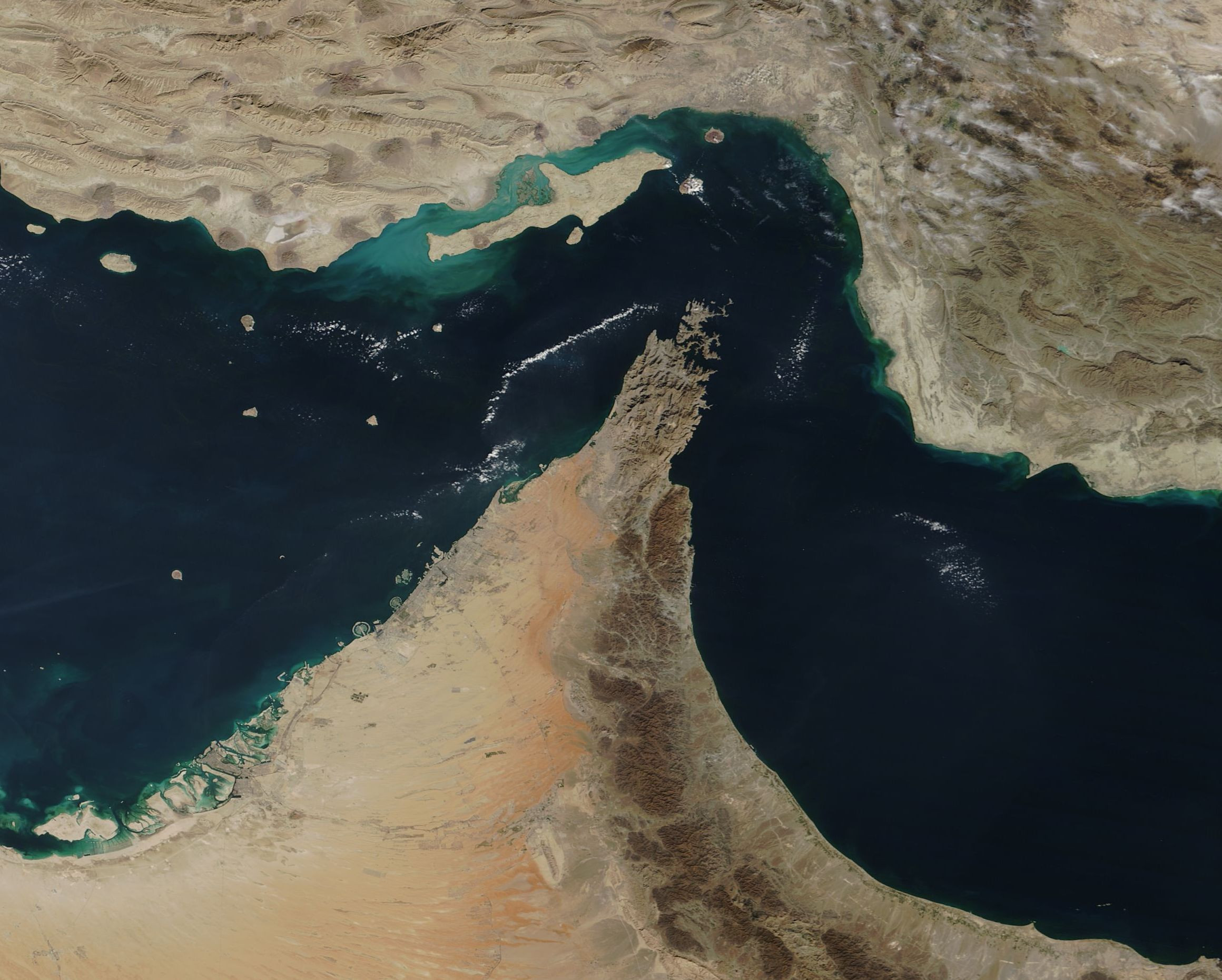
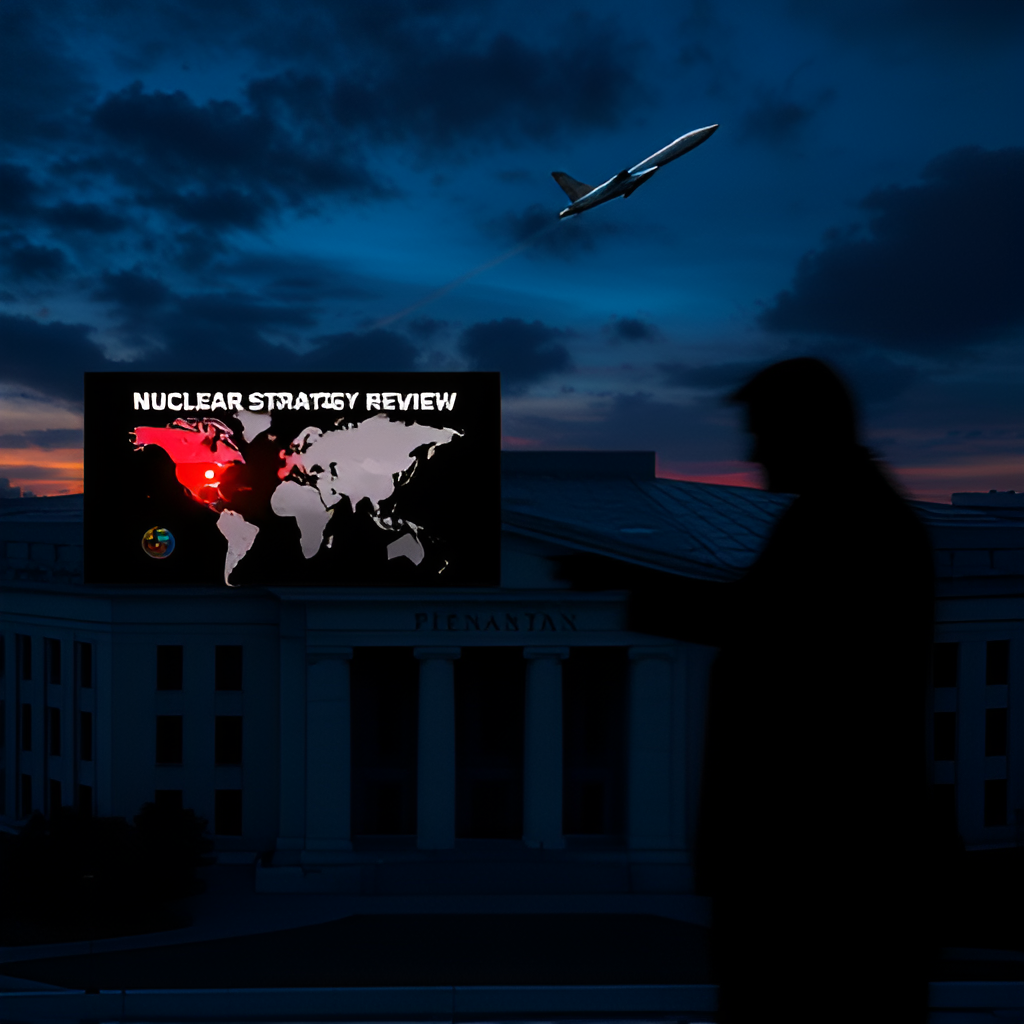

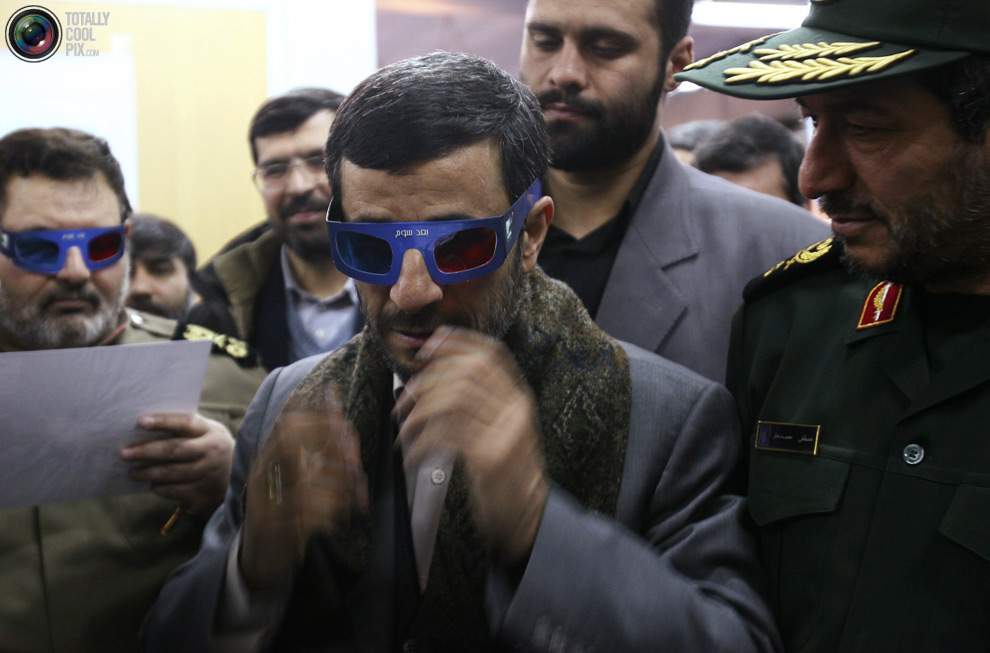

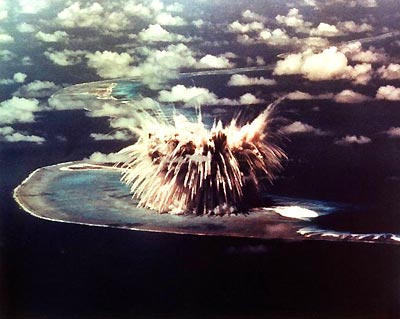



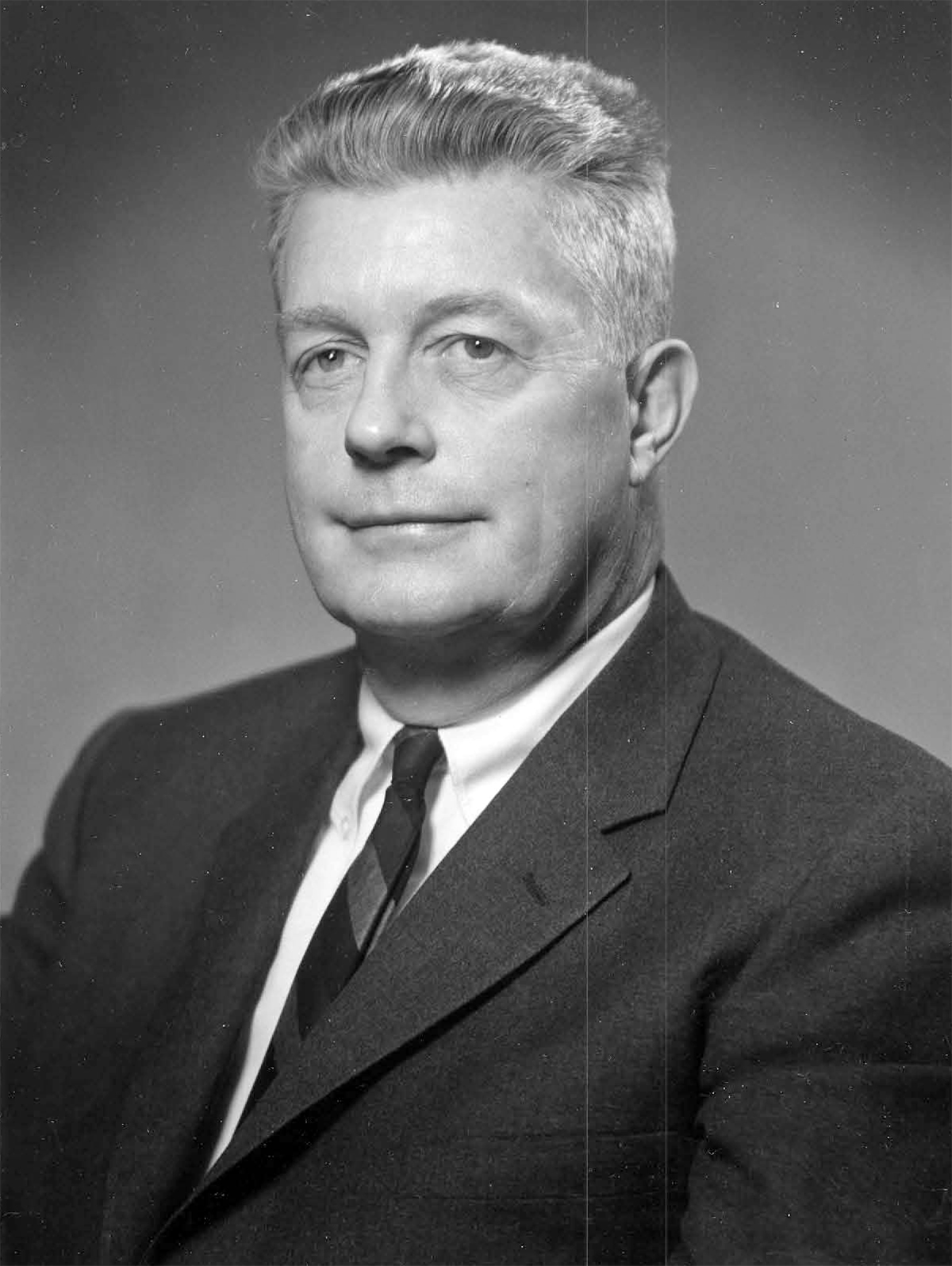
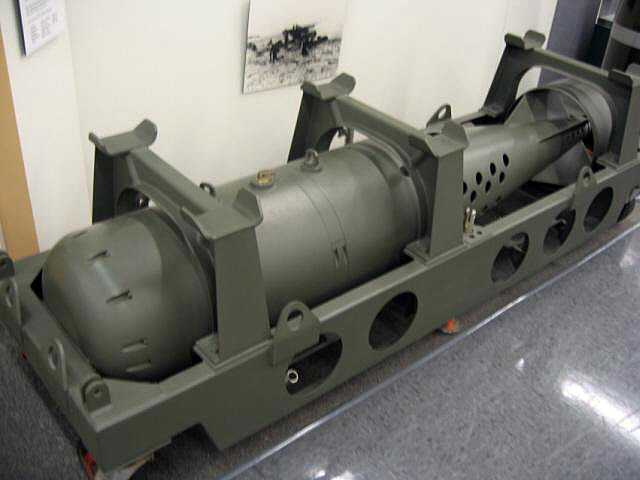
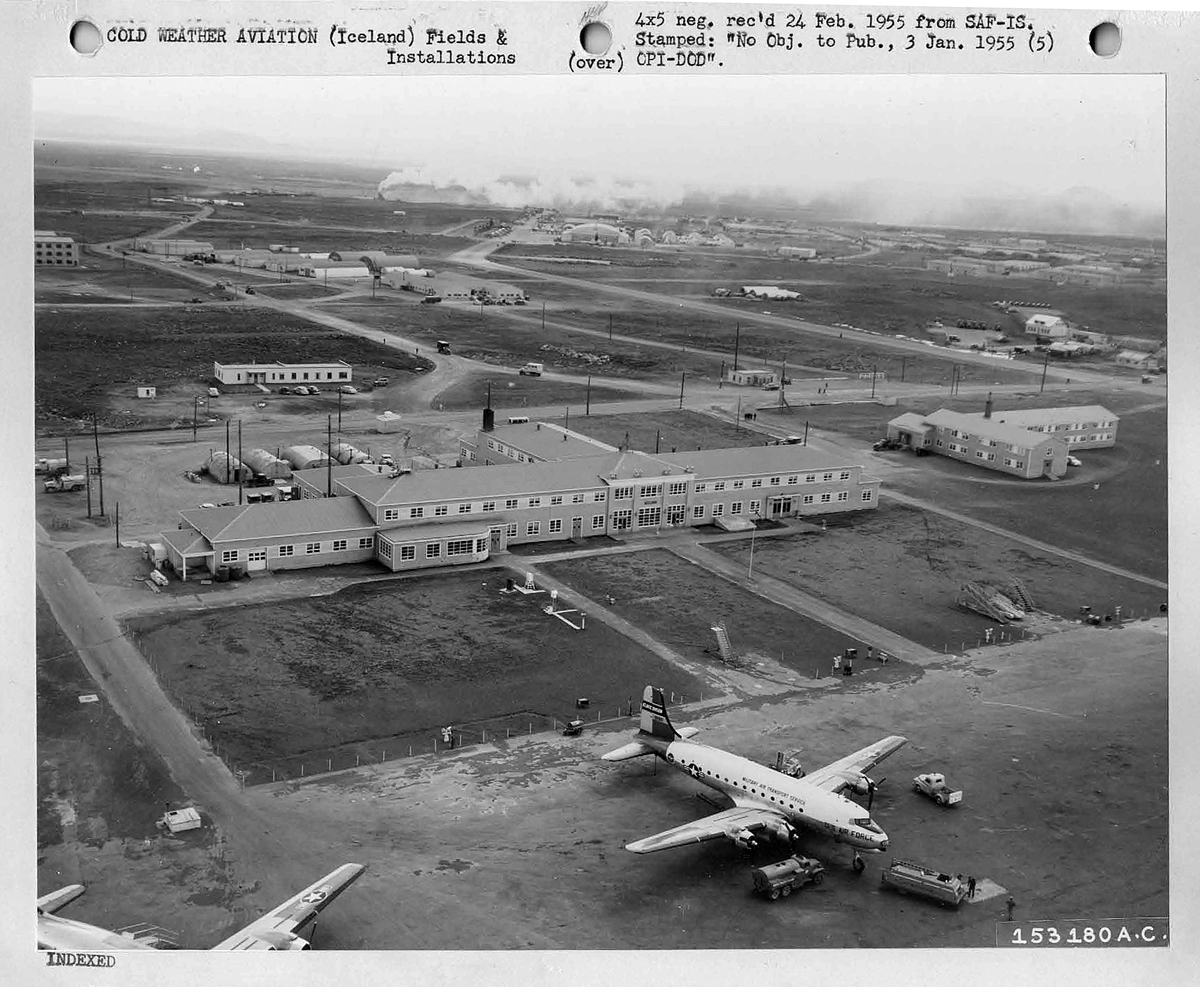


 This and the three other photographs of the construction site near Dinoma in the Negev desert for Israel’s then-secret nuclear reactor were taken during the last months of 1960. According to the U.S. Intelligence Board post-mortem (See
  President Eisenhower and Israel Prime Minister David Ben-Gurion during the latter’s visit in March 1960 to the United States. (Source:
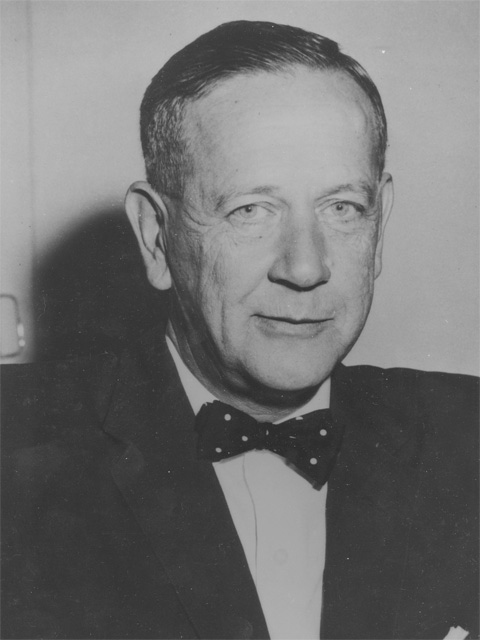

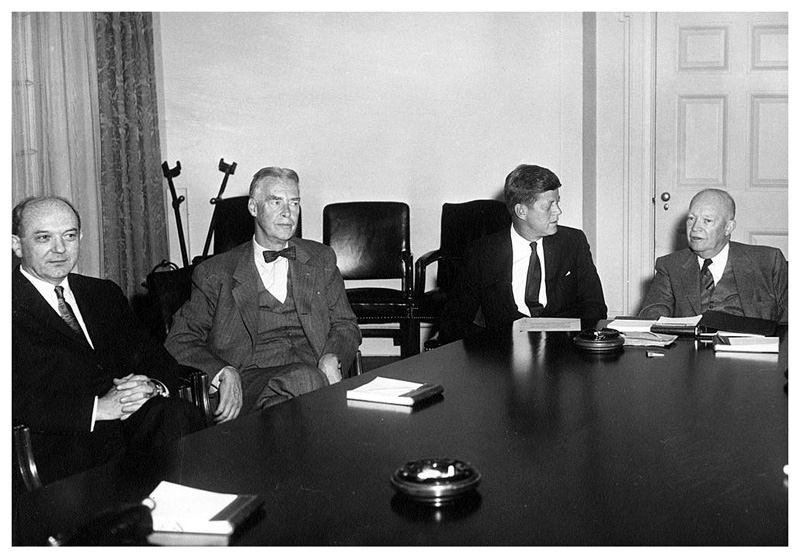
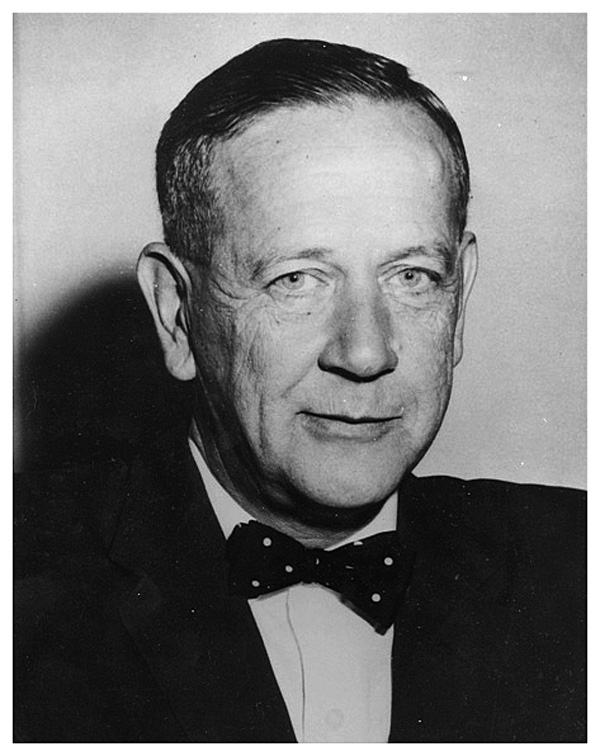


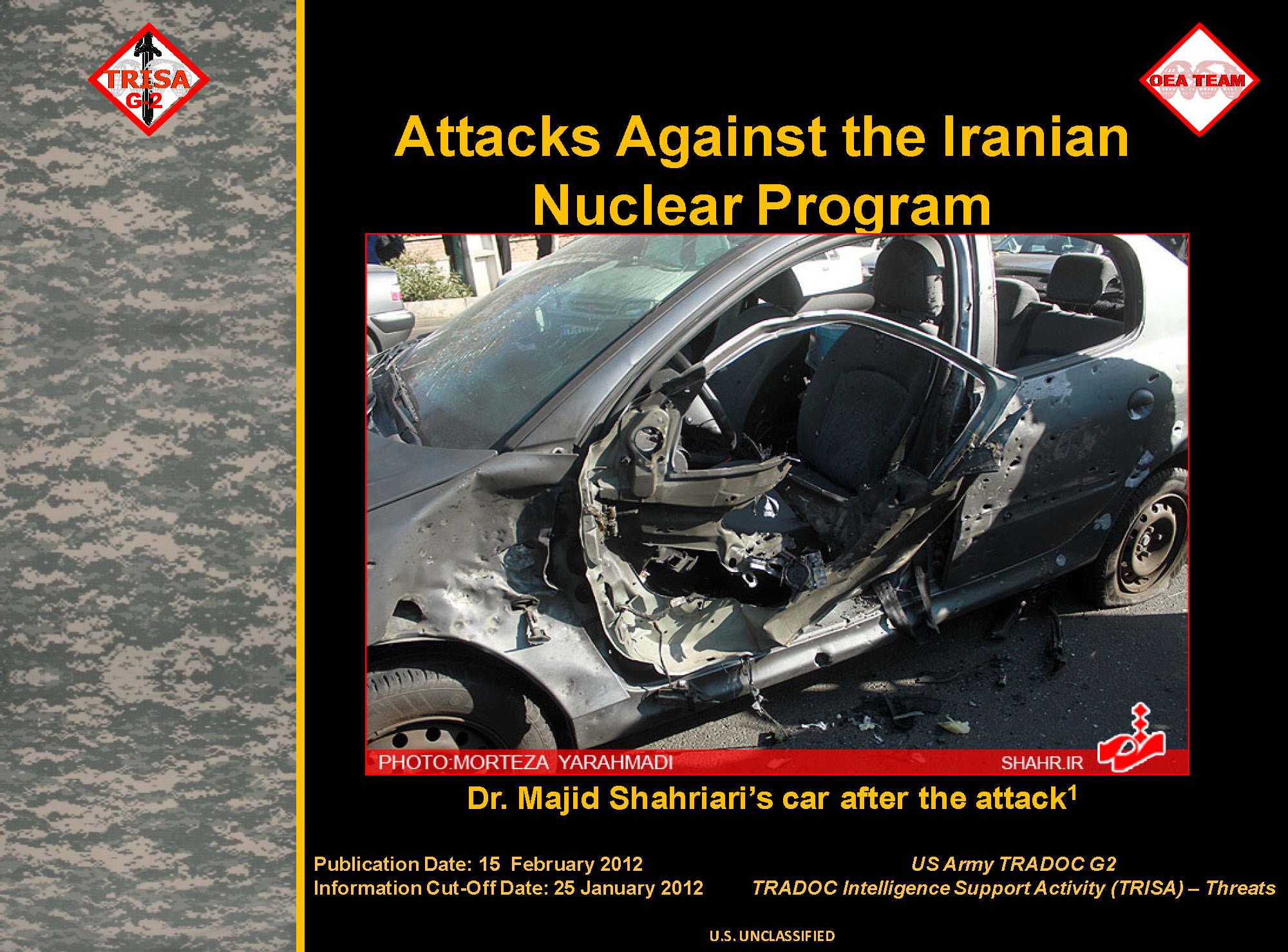
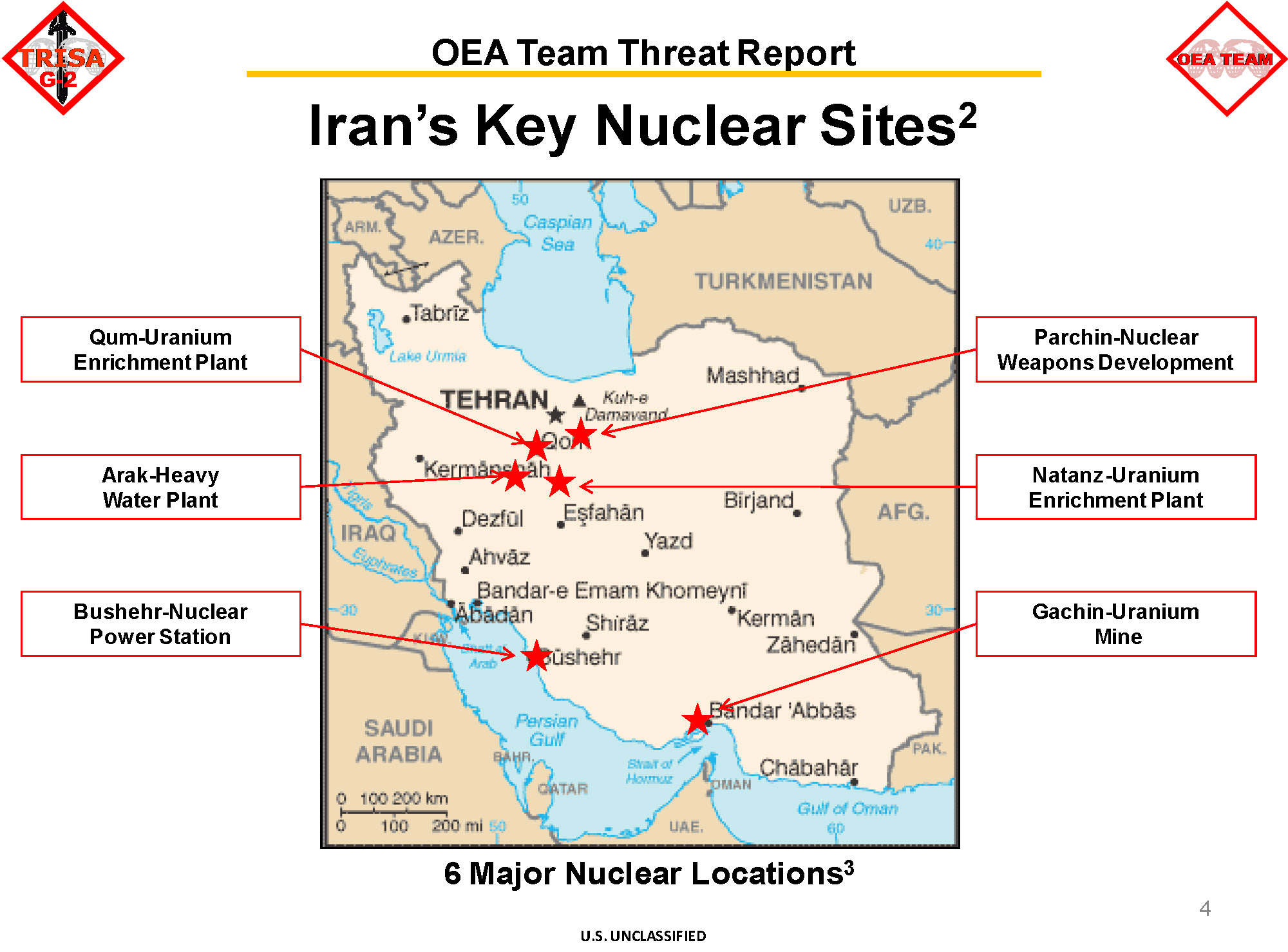
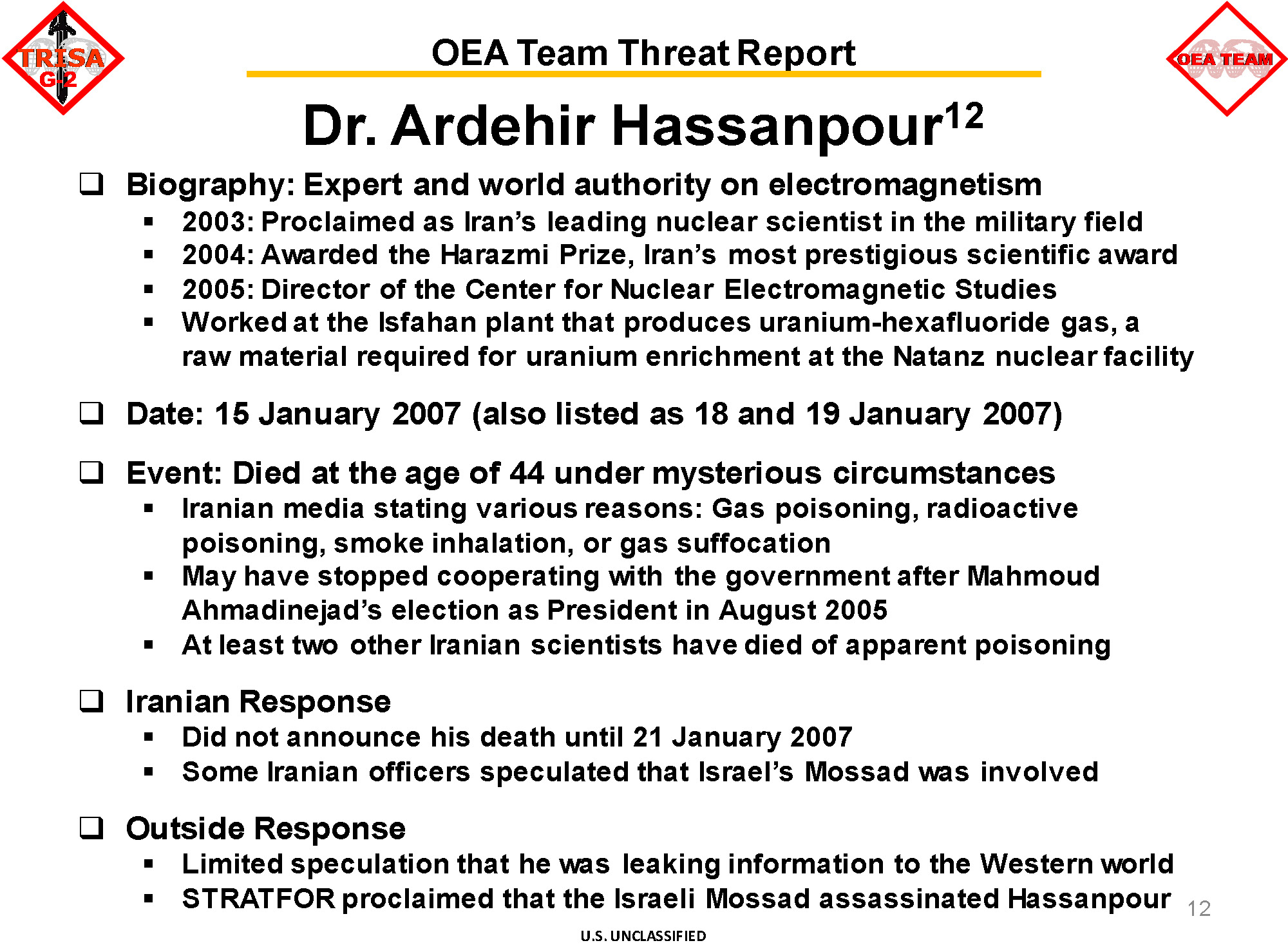
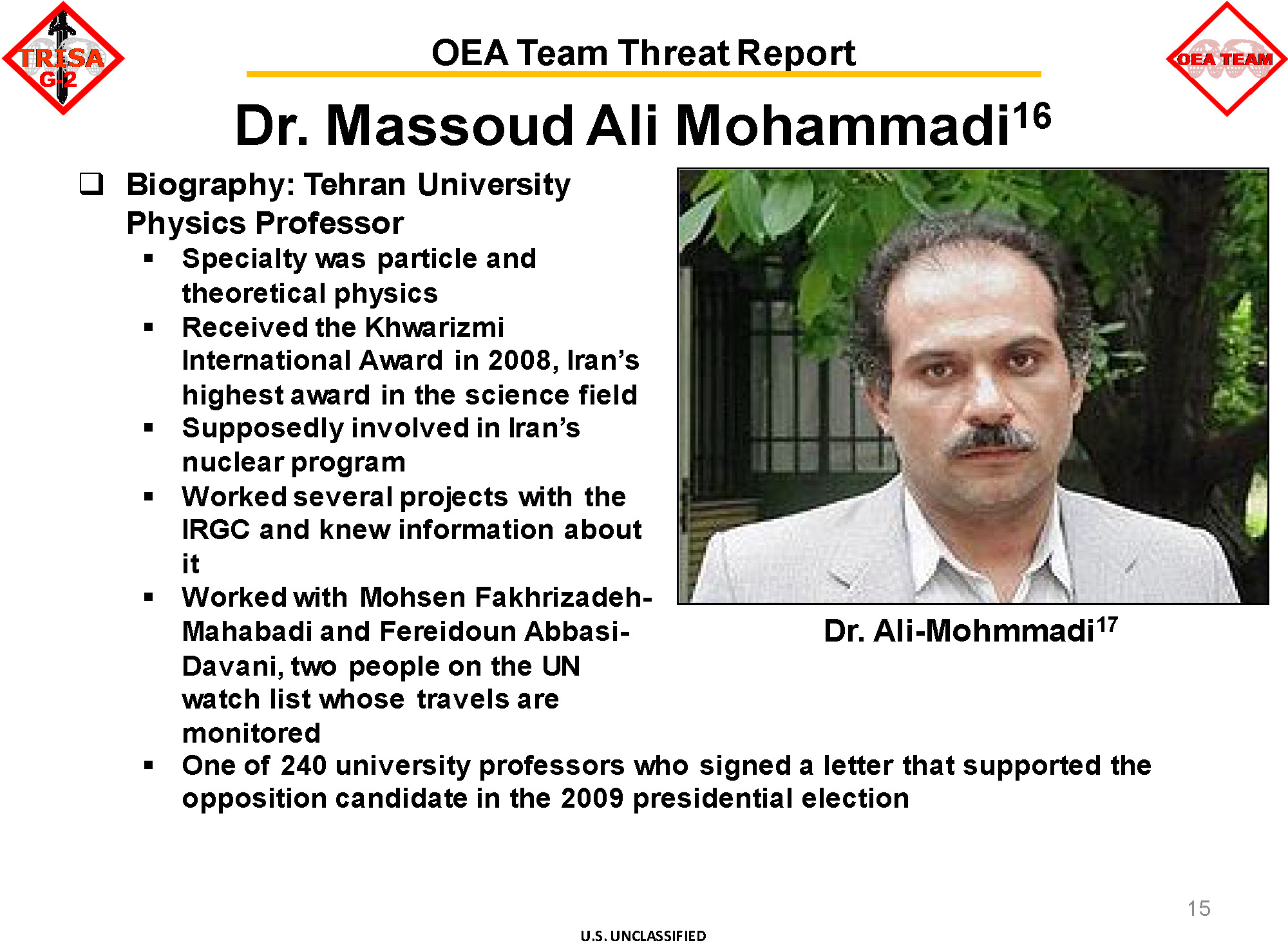
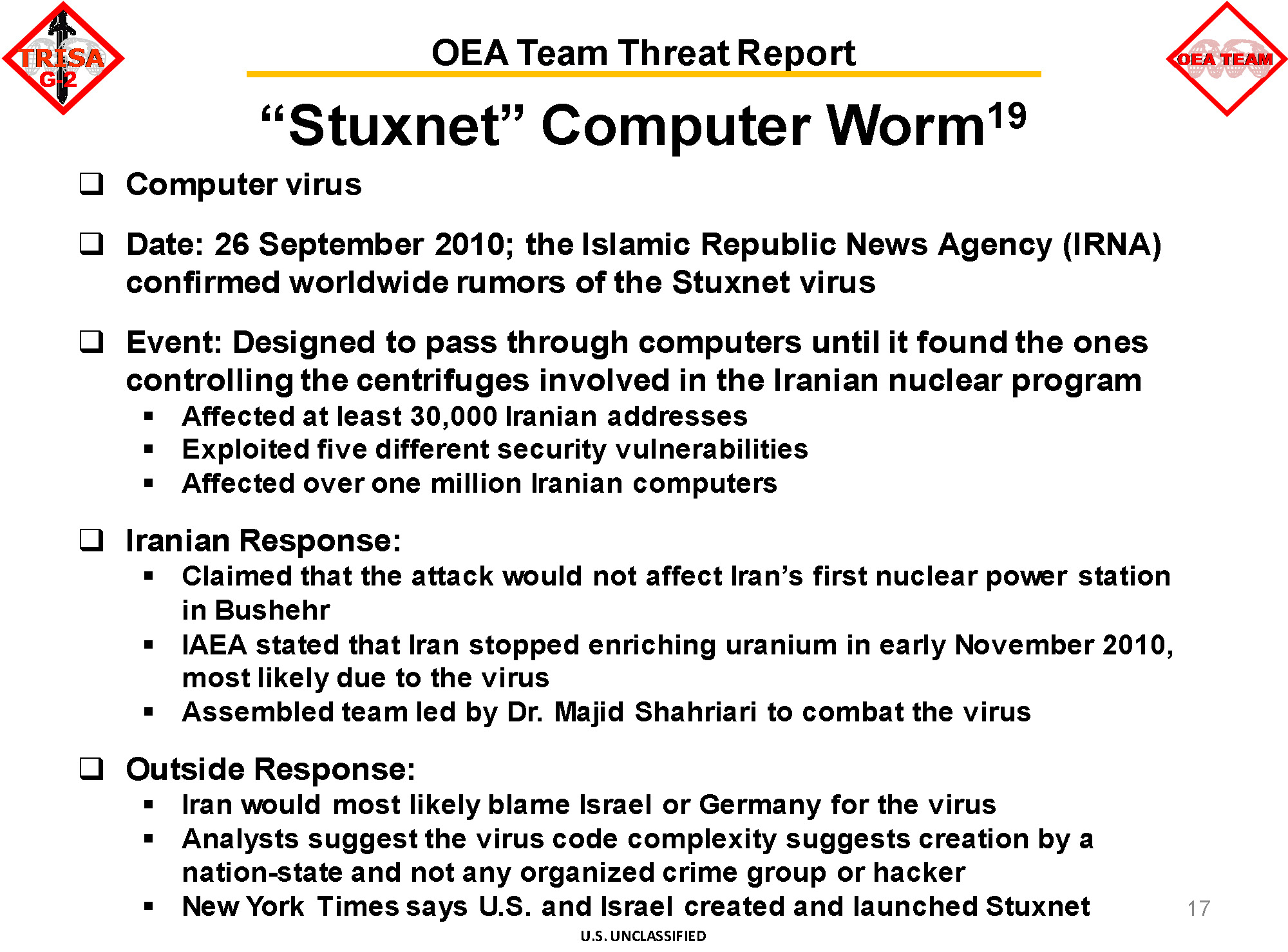
![[Image]](https://i0.wp.com/cryptome.org/2014-info/pu-pits/pict82.jpg)
![[Image]](https://i0.wp.com/cryptome.org/2014-info/pu-pits/pict81.jpg)
![[Image]](https://i0.wp.com/cryptome.org/2014-info/pu-pits/pict83.jpg)
![[Image]](https://i0.wp.com/cryptome.org/2014-info/pu-pits/pict84.jpg)

 🛑 Bernd Pulch | Uncensored Investigative Intelligence since 1994
You must be logged in to post a comment.