Become a Patron!
True Information is the most valuable resource and we ask you to give back.



🛑 Bernd Pulch | NAZI & STASI HUNTER | CORRUPTION & ARISTOTLE AI BI
Official Hub: 30+ yrs Investigative Intelligence. Unmasking Global Corruption & Totalitarian Networks. Evidence Preservation: IZ/Lorch/Ehlers/GoMoPa.
Become a Patron!
True Information is the most valuable resource and we ask you to give back.

Five men were convicted Tuesday in Moscow in the 2006 execution-style murder of Russian investigative journalist Anna Politkovskaya.
Politkovskaya, a crusading reporter for the liberal newspaper Novaya Gazeta who worked almost full-time on documenting allegations of human rights violations in the breakaway province of Chechnya, was 48 when she was gunned down in the elevator of her apartment building in October 2006.
The murder raised worldwide questions about freedom of speech and of the press under Russian President Vladimir Putin — especially after three of the defendants were initially acquitted in 2009. The Supreme Court overturned those acquittals and ordered a new trial.
A jury in Moscow City Court returned guilty verdicts Tuesday against three Chechen brothers — Rustam, Ibragim and Dzhabrail Makhmudov — Lom-Ali Gaitukayev, their uncle, and Sergei Khadzhikurbanov, a former Moscow police officer.
It found Gaitukayev guilty of planning and organizing the murder.
Khadzhikurbanov and two of the Makhmudov brothers, Ibragim and Dzhabrail, were acquitted in the 2009 trial.
A sentencing hearing was set for Wednesday, at which prosecutors are expected to seek life in prison.
The men’s lawyers said they would appeal.
Become a Patron!
True Information is the most valuable resource and we ask you to give back.
“Es gibt kein Verbrechen, keinen Kniff, keinen Trick,
keinen Schwindel, kein Laster, das nicht von Geheimhaltung lebt.
Bringt diese Heimlichkeiten ans Tageslicht, beschreibt sie,
attacktiert sie, macht sie vor allen Augen lächerlich.
Und früher oder später wird die öffentliche Meinung sie hinwegfegen.
Bekannt machen allein genügt vielleicht nicht –
aber es ist das einzige Mittel, ohne das alle anderen Versagen…”
Joseph Pulitzer(1847-1911)


Become a Patron!
True Information is the most valuable resource and we ask you to give back.

Die Schießerei von Klosterfelde ist in der Geschichte der Deutschen Demokratischen Republik einzigartig. So nah wie Paul Eßling an diesem kalten Dezembertag gelangte nie zuvor und niemals danach ein normaler DDR-Bürger mit einer Waffe an den ansonsten so streng abgeschotteten Staats- und SED-Parteichef Erich Honecker. Der Vorfall vom 31. Dezember 1982 wurde zwei Wochen später vom Magazin „Stern“ aufgegriffen und geistert seither als einziger bekannter Anschlag auf das Leben Erich Honeckers durch die Medien.
„Das ist Unsinn“, blickt Bernd Brückner auf den Silvestertag 1982 zurück. Der einstige Stasi-Major war als Personenschützer 13 Jahre lang „An Honeckers Seite“, wie sein nun erschienenes Erinnerungsbuch heißt. Darin schildert der heute 65-Jährige das vermeintliche Attentat im Grunde genommen als einen einfachen Verkehrszwischenfall – mit jedoch tödlichem Ausgang.

Brückner zufolge geriet der 42-jährige Ofensetzer Eßling mit seinem Lada 1300 an diesem Nachmittag bei Klosterfelde rein zufällig in den Autokonvoi und nahm Honecker aus einer Seitenstraße kommend die Vorfahrt. Der Citroën mit dem Staats- und Parteichef an Bord („Die Franzosen hatten ihm eine ‚Zitrone‘ geschenkt, und Honecker gefiel das Fahrzeug insbesondere wegen der weichen Polsterung“) hätte aber nur kurz gebremst, und seine Fahrt ziemlich zügig fortgesetzt. „Er fuhr wie geplant in die Schorfheide und ging jagen“, schreibt Brückner. Von dem, was hinter seinem Rücken geschah, hätte Honecker nichts mitbekommen.

Denn als ein Volkspolizist die Papiere des Lada-Fahrers kontrollieren will, schießt Eßling „unerwartet auf den Volkspolizisten, der sich ihm näherte, und traf diesen in der Brust. Sein Kollege feuerte zurück, die Kugeln blieben in der Autotür stecken. Daraufhin setzte sich Eßling die Pistole an den Kopf und drückte ab“. Ein „Attentat“ auf Honecker habe Eßling nicht geplant, ist sich Brückner sicher und fügt hinzu: „Er wusste vermutlich nicht einmal, wem er da auf der Fernverkehrsstraße 109 die Vorfahrt nahm.“
Dennoch rüttelte der Vorfall vor allem das Ministerium für Staatssicherheit ordentlich durcheinander. Denn Eßling war mit 2,5 Promille nicht nur stark betrunken, sondern überdies ein Waffennarr, der zehn Schusswaffen und hatte rund Tausend Patronen besaß. „Bis dato war ein solcher Anschlag nicht einmal in Erwägung gezogen worden, weil wir davon ausgingen, dass es in der DDR keine illegalen Waffen gab“, erinnert sich Brückner. Stasi-Chef Erich Mielke habe immer geglaubt, sein Ministerium habe alles im Griff. „Hatte es erkennbar nicht“, so Brückners süffisant klingender Kommentar.

Become a Patron!
True Information is the most valuable resource and we ask you to give back.
Die STASI wusste scheinbar Bescheid, dass die NSA die deutsche Telekommunikation ausspäht. Diese Ansicht vertrat Klaus Eichner bei einer Podiumsdiskussion mit dem ehemaligen NSA-Technikchef William Binney. Eichner war in Zeiten der DDR Chefanalytiker beim Ministerium für Staatssicherheit (MfS). Eine “Quelle“ übergab ihm damals im Jahr 1985/1986 eine sogenannte NSAR-Liste, bei dem das Treiben der NSA dokumentiert wurde.
Der ehemalige Stasi-Abteilungsleiter erzählte, dass es “NSA Requirements“ gab, in denen geschrieben war, welche Personen und Institute für die US-Behörde interessant sind. Die Liste umfasste insgesamt 4000 Seiten und 30.000 “Einzelposten“. Eichners promotet sein Buch, welches den Namen “Imperium ohne Rätsel. Was bereits die DDR-Aufklärung über die NSA wusste“ trägt.
Kritik gab es von Eichner für die Politik, diese würde den Fall falsch behandeln. Das von der deutschen Bundesregierung vorgeschlagene “No-Spy-Abkommen“ sei ihm nach ein “schlechter Witz“. Die Überraschung der Regierung über die Snowden-Enthüllungen rund um die NSA sei außerdem nur “gespielt“.


Become a Patron!
True Information is the most valuable resource and we ask you to give back.

Seit fast eineinhalb Jahren prüft die Hamburger Staatsanwaltschaft neue Stasi-Vorwürfe gegen den Fraktionschef der Linken Gysi. Jetzt steht fest: Die Ermittlungen ziehen sich weiter in die Länge. Denn die Behörde hat neue Hinweise bekommen.
Diese seien möglicherweise für das Verfahren um neue Stasi-Vorwürfe relevant, sagte Behördensprecherin Nana Frombach am Mittwoch. “Wir können das nicht ignorieren.” Ob Gysi mit einer Anklage rechnen muss oder ob das Verfahren gegen ihn eingestellt wird, werde daher frühestens in mehreren Wochen feststehen – und damit deutlich nach der Europawahl.
Die neuen Hinweise hätten die Staatsanwaltschaft “ungefragt und ganz kurzfristig” am Montag erreicht, sagte Frombach. Von wem sie kamen, wollte die Sprecherin nicht sagen. Die Nachrichtenagantur dpa berichtet, es handele sich bei der Quelle um ein E-Book eines pensionierten Richters, der Anzeige gegen Gysi erstattet hatte.
Mitte April hatte die Behörde erklärt, die Ermittlungen gegen Gysi seien abgeschlossen. Die Entscheidung über eine Einstellung des Verfahrens oder eine Anklage war zuletzt Mitte Mai erwartet worden.
Nun will die Staatsanwaltschaft erneut mehrere Zeugen vernehmen, wie Frombach ankündigte – unter anderem ehemalige Mitarbeiter der Stasi und des Zentralkomitees (ZK). Die Ermittler prüfen seit Anfang vergangenen Jahres, ob der Politiker eine falsche eidesstattliche Versicherung abgegeben hat. Mit dieser hatte sich Gysi gegen die Ausstrahlung einer NDR Dokumentation Anfang 2011 gewehrt. In der Sendung ging es um Gysis angebliche Kontakte zum Ministerium für Staatssicherheit in der DDR.
In seinen damaligen Erklärungen an Eides statt hatte der Politiker und Anwalt versichert, er habe “zu keinem Zeitpunkt über Mandanten oder sonst jemand wissentlich und willentlich an die Staatssicherheit berichtet”. Gegen diese Aussagen haben die frühere DDR-Bürgerrechtlerin und heutige CDU-Politikerin, Vera Lengsfeld, und der pensionierte Richter Anzeige erstattet. Bisher hatte sich Gysi vor Gericht erfolgreich gegen den Vorwurf gewehrt, er habe Mandanten in der DDR verraten oder ausspioniert.

Become a Patron!
True Information is the most valuable resource and we ask you to give back.

Das aktuelle Urteil in Sachen Google wird bei Anwendung den Suchmaschinen-Terror der alten STASI-Clique der GoMoPa und deren IM , Partner und Auftraggeber stoppen. Das ist das Urteil:
Das Urteil des Europäischen Gerichtshofs (EuGH) hat das Zeug, das Internet zu verändern. Es räumt den Europäern das Recht ein, von Google vergessen zu werden. Dies kann eingeklagt werden, wenn die Ergebnisse der Suchmaschine das Recht auf Privatsphäre verletzen. Experten erwarten eine Klagewelle.
Das Urteil aus Luxemburg fiel überraschend aus. Das vorausgegangene Gutachten, dem das Gericht sonst oft folgt, hatte unter Verweis auf die Meinungsfreiheit ein Recht auf das Vergessenwerden bestritten. Nun aber erklären die Richter eindeutig: Ein Suchmaschinenbetreiber ist für die von ihm aggregierten Suchergebnisse verantwortlich (Rechtssache C-131/12).
Im Umkehrschluss heißt das: Google und im Prinzip auch andere Betreiber, können dazu verpflichtet werden, Links auf Webseiten zu löschen. Dies gilt aber nur unter der Voraussetzung, dass die Suchergebnisse das Persönlichkeitsrecht verletzen, also sensible persönliche Daten ausspielen, die das Recht auf Privatsphäre tangieren.
Was das bedeutet, lässt sich am Beispiel des konkreten Falles erahnen, der gegen Google vor Gericht gezogen war. Der Spanier Mario Costeja González hatte geklagt, weil Google bei der Eingabe seines Namens bis heute einen für ihn unangenehmen Artikel ausspielt: Darin berichtet eine katalanische Tageszeitung über die Pfändung seines Hauses im Jahr 1998.
Der Kläger befand, dieses Kapitel in seiner Biographie habe sich inzwischen vollständig erledigt und verdiene keine Erwähnung mehr. Der Ärger ist nachvollziehbar. Das Suchergebnis ließ zweifellos Costeja González zweifellos in einem ungünstigen Licht erscheinen.
Ein spanisches Gericht hatte den Fall zur grundsätzlichen Klärung an den EuGH überwiesen. Dessen Urteil lässt Costeja González nun hoffen.
Google, die Krake
Zur Begründung seiner Entscheidung verweist das Gericht auf die EU-Datenschutzrichtlinie. In ihr sind die Mindeststandards für den Datenschutz geregelt, ausformuliert durch die Mitgliedstaaten. Dabei spielt auch die sogenannte Verarbeitung personenbezogener Daten eine Rolle, aus denen sich beispielsweise Persönlichkeitsprofile herstellen lassen.
Fraglich blieb lange, ob auch Suchmaschinen wie Google Daten verarbeiten. Die Betreiber argumentierten, man verweise doch nur auf ohnehin im Netz verfügbare Informationen. Nun aber stellt der EuGH fest: Auch ein Suchmaschinenbetreiber für die Verarbeitung von Daten verantwortlich. Pointiert formuliert: Die Richter sehen in Google die Datenkrake, die durch die Ansammlung von Informationen das Gesamtbild über eine Person und ihr Leben herstellt.
Wörtlich heißt es in einer Mitteilung zum Urteil:
“In seinem heutigen Urteil stellt der Gerichtshof zunächst fest, dass der Betreiber einer Suchmaschine , indem er automatisch, kontinuierlich und systematisch im Internet veröffent lichte Informationen aufspürt , eine “Erhebung” von Daten im Sinne der Richtlinie vornimmt, Daten, die er dann mit seinen Indexierprogrammen “ausliest”, “speichert” und “organisiert”, auf seinen Servern “aufbewahrt” und gegebenenfalls in Form von Ergebnislisten an seine Nutzer “weitergibt” und diesen “bereitstellt”.
Zur Begründung heißt es weiter: Mit der Eingabe eines Namens bei einer Suchmaschine könne ein Nutzer “ein mehr oder weniger detailliertes Profil der gesuchten Personen erstellen”. Dies sei ein Eingriff in die Rechte der Person. Die Ergebnisse seien nichts anderes als eine Verarbeitung von personenbezogenen Daten.
Das EU-Recht verlange daher einen Ausgleich zwischen den Interessen der Nutzer und denen der betroffenen Person. “Wegen seiner potenziellen Schwere kann ein solcher Eingriff nicht allein mit dem wirtschaftlichen Interesse des Suchmaschinenbetreibers an der Verarbeitung der Daten gerechtfertigt werden”, heißt es.
Experten erwarten eine Flut an Beschwerden
Experten gehen davon aus, dass Verbraucher Google nun mit einer Flut an Löschanfragen überschwemmen. “Das Urteil hat das Potenzial, die Funktionsfähigkeit von Suchwerkzeugen erheblich einzuschränken und damit auch die Auffindbarkeit von Inhalten im Netz zu beeinträchtigen”, schrieb in einer Reaktion Rechtsanwalt Thomas Stadler, ein Experte für Internetrecht.
Google teilte zu dem Urteil mit: “Dies ist ein sehr enttäuschendes Urteil für Suchmaschinenbetreiber und Online-Verleger.” Das Unternehmen hatte in dem Verfahren argumentiert, es sei laut EU-Datenschutzrichtlinie nicht verantwortlich dafür, dass personenbezogene Daten auf den jeweiligen Webseiten gemäß der Richtlinie verarbeitet werden.
Google könne nicht einmal zwischen personenbezogenen und anderen Daten unterscheiden. Deshalb könne auch eine nationale Datenschutzbehörde die Suchmaschine nicht verpflichten, bestimmte Informationen aus ihrem Index zu entfernen.
Der für Google zuständige Landesdatenschutzbeauftragte von Hamburg, Johannes Caspar, rät den Bürgern, nach dem neuen Urteil des Europäischen Gerichtshofs gegen Google frühere Einträge löschen zu lassen. Caspar sagte unserer Redaktion: “Wir können die Bürger nur auffordern, ihr Recht auf informationelle Selbstbestimmung eigenständig zu verfolgen. Es kann damit gerechnet werden, dass sich viele Betroffene an Google wenden werden, um für sie belastende Einträge aus früheren Zeiten tilgen zu lassen. Wir gehen davon aus, dass Google dies auch konstruktiv im Sinne des Urteils umsetzt.”
Become a Patron!
True Information is the most valuable resource and we ask you to give back.
Es ist einsam geworden um Präsident Putin in seiner Residenz Nowo-Ogarjowo bei Moskau, seiner „Festung“, die er offenbar nur noch ungern verlässt. Selbst alten Weggefährten misstraut der Ex-KGB-Oberstleutnant inzwischen. Direkten „Zugang zum Körper“, wie in Russland der direkte Draht zum Präsidenten genannt wird, haben vor allem sechs alte Vertraute in Schlüsselpositionen, mit Geheimdienst- und KPdSU-Hintergrund. Sie formieren sein Bild von der Welt. Die meisten dieser mächtigen Männer sind so unscheinbar, dass man sich ihre Gesichter nur schwer merken kann und sie auch kaum auffallen würden – genau das war Teil ihrer Ausbildung beim KGB, wie einer von ihnen, Sergej Iwanow, einst verriet: „Uns wurde eingebläut, in der Menge nicht aufzufallen“ Des weiteren lernten sie beim KGB demzufolge, „viel zu reden, ohne dabei etwas zu sagen.« FOCUS Online stellt Putins „Politbüro“ vor.

Kreml-Insider sagen dem 61-Jährigen nach, dass er sich insgeheim für den besseren Präsidenten halte und es ihn ein wenig schmerzt, dass mit seinem Kameraden Putin ein früherer Oberstleutnant das Land führt – und er als General nur die zweite Geige spielt. Die beiden lernten sich in Petersburg als junge KGB-Offiziere kennen. Als Chef der allmächtigen Präsidialverwaltung ist der passionierte Angler und Kartenspieler heute mächtiger als etwa Premierminister Medwedew, der kaum etwas zu sagen hat im inoffiziellen Machtgefüge. Der Mann mit dem Kreml-Spitznamen „Hinkebein“ spionierte einst als KGB-Agent in London – auch das ein weitaus prestigeträchtiger Posten als Putins Stelle in der der DDR in Dresden. Nicht zuletzt aufgrund der West-Erfahrung gilt Iwanow, der englisch und schwedisch spricht und britische Krimis liebt, als der geschliffenste und weltläufigste Mann in Putins „Politbüro“; Ex-US-Außenministerin Condoleezza Rice bezeichnete ihn als „hart und misstrauisch, aber zuverlässig“
Heute erzählt der farblos wirkende Pragmatiker nicht ohne Stolz, dass Putin fast täglich mit ihm spricht, telefonisch oder persönlich – im heutigen Russland ein Ausweis von größter Wichtigkeit. Sohn Sergej (33) ist Aufsichtsratschef der staatlichen Rosselchosbank und Vorstand der Gasprombank. Sohn Alexander (36) ist Vizechef der staatlichen Vneshtorgbank. Er tötete bei einem Autounfall 2005 eine Fußgängerin; die Behörden stellen das Verfahren gegen ihn ein, ermittelten dafür gegen den Schwiegersohn des Opfers. Berichterstattung über den Vorfall wurde mit Waffengewalt unterbunden; am Tag nach dem Unfall zeigte sich Vater Iwanow bestens gelaunt bei einer Fußballfeier; spätere klagte er, wie belastend der Unfall für seinen Sohn gewesen sei.

Der Chef des Geheimdiensts FSB gilt als Putins Mann fürs Grobe. Schon vor dem Aufstieg in den Chefsessel erledigte er bei dem KGB-Nachfolger nach Angaben von Insidern ohne Murren die besonders heiklen Aufgaben für seinen Oberbefehlshaber mit Präzision, Verschwiegenheit und ohne erkennbare Anzeichen von Skrupeln. Der 63-Jährige mit der hohen Stirn und den stechenden Augen gilt als die unbekannteste und verschlossenste Figur aus Putins innerem Macht-Zirkel. Er soll Putin gegenüber persönlich die Verantwortung dafür übernommen haben, dass Präsidenten-Darsteller Medwedew von 2008 bis 2012 im Kreml nicht Spaß an der Rolle findet und plötzlich nach der wirklichen Macht im Land greift. Selbst die Reichen und Mächtigen in Moskau sprechen seinen Namen mit größter Vorsicht aus – niemand will ihn zum Feind haben.
Mit seinen Berichten, die für Putin jeden Tag die erste Lektüre sind, entscheidet Bortnikow was ins Blickfeld des Staatsfelds gerät und bestimmt damit ganz wesentlich seine Weltsicht. Über seine Kindheit und Jugend ist so gut wie nichts bekannt; an seiner Ex-Hochschule, dem Eisenbahn-Ingenieur-Institut in Petersburg, hieß es auf Nachfragen über ihn nur, man solle sich an die Pressestelle des Geheimdiensts wenden. Mit 24 Jahren ging Bortnikow zum Leningrader KGB. In der Moskauer Zentrale überstand Bortnikow unter Putin mehrere Säuberungswellen, die fast alle seine Kollegen aus dem Amt spülten. Bortnikows Sohn Denis (39) ist Direktor bei der VTB-Bank-Gruppe.

Dem Sekretär des russischen Sicherheitsrates sagen Spötter nach, er habe die Ausstrahlung einer wandelnden Büroklammer. Der 62-Jährige Schiffbau-Ingenieur und KGB-Offizier war von 1999 bis 2008 Chef des KGB-Nachfolgers FSB. Er stammt ebenso wie Putin aus Sankt Petersburg. Anfang der 90er-Jahre war er dort beim KGB für die Bekämpfung von Wirtschaftskriminalität zuständig und lernte dabei Putin kennen, der als Vize-Bürgermeister den Außenhandel kontrollierte und im Zentrum einer großen Korruptionsaffäre stand. Auch über Patruschew selbst soll wegen illegaler Handelsgeschäfte ins Visier der Staatsanwaltschaft geraten sein; das jedenfalls behauptete der Ex-KGB-Offizier Alexander Litwinenko, der 2006 in London einem Anschlag mit dem hochradioaktiven Polonium zum Opfer fiel; der britische Geheimdienst vermutete hinter diesem Anschlag Patruschews FSB.
Als Putin nach der Wahlniederlage seines Chefs und kurzer Arbeitslosigkeit 1996 nach Moskau wechselte, folgte ihm Patruschew wie ein Schatten durch die Institutionen. Der 62-Jährige gilt als braver Befehlsempfänger ohne eigene Ambitionen und ausgeprägte Meinung. Putin soll vor allem seine absolute Loyalität schätzen. Auf die Frage nach seinem Hobby antwortete der Freizeit-Volleyballer einst: „Meine Arbeit.“ Der stets ernste Beamte meidet die Öffentlichkeit; nach Erinnerung von Klassenkameraden scheute er bereits als Kind Kameras und blieb schon in der Schule lieber im Hintergrund. Patruschews Sohn Andrej (32) ist Vize-Chef eines Gasprom-Unternehmens, Sohn Dmitri (36) ist Vorstandsvorsitzender und Mitglied des Aufsichtsrates des staatlichen Geldhauses Rosselchosbank.

Der 60-Jährige Studienfreund von Putin ist als Leiter des Untersuchungskomitees – eine Art russisches FBI – der oberste Ermittler in Russland. Der gelernte Jurist und Dozent machte in Leningrad Karriere in der kommunistischen Jugendorganisation Komsomol und später in der KPdSU. Für Aufmerksamkeit sorgt der Chefermittler vor allem durch seinen unermüdlichen Einsatz gegen Kreml-Kritiker. Der Regimegegner und Blogger Alexej Nawalny wies nach, dass Bastrykin eine Aufenthaltsgenehmigung für Tschechien hatte, dort eine Firma besaß – was russischen Beamten per Gesetz verboten ist – und über diese eine Immobilie erwarb, die er in seiner Steuererklärung nicht aufgeführt hatte. Bastrykin beschuldigte Nawalny daraufhin, ein US-Agent zu sein; der Blogger geriet ins Kreuzfeuer der seiner Behörde. Als seine Untergebenen die Ermittlungen einstellten, beschimpfte Bastrykin sie öffentlich. Nawalny wurde wegen angeblicher Wirtschaftsverbrechen in erster Instanz zu fünf Jahren Haft verurteilt; später setzte ein Gericht die Strafe zur Bewährung aus ; heute hat er Hausarrest und Internetverbot.
Bastrykin gilt als impulsiv und aufbrausend. 2004 soll er einen Hundebesitzer vor seinem Haus mit seiner Pistole geschlagen und ihm gedroht haben, ihn zusammen mit dem Tier zu erschießen. 2012 ließ Bastrykin den Chef vom Dienst der kritischen Zeitung „Nowaja gaseta“ nach kritischen Berichten in ein Waldstück fahren und drohte ihm dort, er könne ihn umbringen, verscharren, und werde dann selbst die Ermittlungen leiten. Die Zeitung verlor bereits sechs Journalisten durch Morde, darunter auch Anna Politkowskaja. Bastrykin bestritt die Vorwürfe zunächst; nachdem der Vorfall im Ausland große Schlagzeilen machte, entschuldigte er sich für seine „emotionale Explosion“.

Der verschlossene Ex-KGB-Mann und Dolmetscher hatte im Kreml lange Zeit den Spitznamen „Putins Siamesischer Zwilling“. Schon Anfang der 1990er Jahre, als der heutige Präsident in Petersburg als Vize-Bürgermeister für den Außenhandel zuständig war, residierte der grimmige 53-Jährige in seinem Vorzimmer und kontrollierte mit „Radarblick“, so ein Zeitzeuge, wer Zutritt zu seinem Chef bekam. Zuweilen verwechselten Besucher außerhalb der Amtsgemächer den stets gut gekleideten Sekretariats-Vorsteher mit seinem Chef – ein Fehler, der für die Business-Pläne verheerend war. Als neuer Kreml-Chef installierte Putin den alten Petersburger Vertrauten wieder in seinem Vorzimmer, im Range eines Vize-Präsidialamtschefs – womit er an einer Schlüsselposition saß, die nach Ansicht von manchen Insidern wichtiger war als das Amt des Premierministers. Von dem extrem öffentlichkeitsscheuen Ex-Geheimdienstler existierten lange Zeit nur unscharfe Fotos.
Im Vorzimmer entwickelte der „Graue Kardinal“ wie sein Chef ein Faible für Russlands Rohstoffe. Er gilt als der Kopf hinter der Festnahme des Oligarchen Michail Chodorkowski und der Zerschlagung von dessen Jukos-Konzerns. Seine Tochter ist mit dem Sohn des damals federführenden Generalstaatsanwalts verheiratet. Das Jukos-Erbe gehört inzwischen zum Rosneft-Konzern, dessen oberster Chef Setschin heute ist. Nach seinem Wechsel aus dem Kreml in das Unternehmen kühlte die Beziehung zu Putin etwas ab. Setschins Ex-Frau, mit der er weiter gute Beziehungen pflegt, ist erfolgreiche Multi-Unternehmerin; sein Sohn arbeitet bei ihm im Konzern.

Der 58-Jährige mit dem breiten Gesicht und Dauergrinsen fällt aus dem Rahmen in Putins engster Umgebung: Er und sein Chef kennen sich nicht aus Petersburg, Schojgu liebt die Öffentlichkeit, er strotzt vor Kraft, und statt durch Unauffälligkeit fällt er durch bodenständiges Charisma auf. Der gelernte Ingenieur und Funktionär der Kommunistischen Partei ist ein Überbleibsel aus seiner anderen politischen Epoche – und wird deswegen scherzhaft als „Putins Fossil“ bezeichnet: Er machte schon unter Putins Vorgänger Boris Jelzin Karriere, als er den Katastrophenschutz aufbaute. Auf den Bildschirmen war er als Notretter im Kampfanzug zwei Jahrzehnte allgegenwärtig. Durch seine Hilfe bei politischen Katastrophen erwarb sich der Mann aus Tuwa, einer buddhistisch geprägten russischen Teilrepublik an der mongolischen Grenze, das Vertrauen des KGB-Manns Putin. Im Jahr 2000 wurde Vorsitzender der neu gegründeten Kreml-Partei „Einheit“, als die noch als Himmelfahrtskommando galt. Im April 2012 schickte ihn Putin als Gouverneur in die Moskauer Oblast, das skandalerschütterte Umland der Hauptstadt, wo er endlich für Ruhe sorgen sollte. Sieben Monate später musste er das wichtige Verteidigungsministerium übernehmen.
Schojgu, der in seiner Freizeit gerne Holz schnitzt, gilt als grobschlächtiger Pragmatiker und Freund einfacher Sprache. Zuweilen verwunderte er mit Vorschlägen wie seiner Initiative von 2009, „Verneinungen des Sieges der UdSSR im Großen Vaterländischen Krieg“ als Straftat zu verfolgen. Schojgu, nach dem in seiner Heimat eine Straße benannt ist, war in mehrere Korruptionsskandale verwickelt, die ihm aber allesamt nichts anhaben konnte. Seine Frau ist erfolgreiche Unternehmerin.
Am 9. Mai erschien Boris Reitschusters Buch „Putins Demokratur – Ein Machtmensch und sein System“ in stark erweiterter und aktualisierter Auflage im Verlag Econ Berlin.

Become a Patron!
True Information is the most valuable resource and we ask you to give back.
Auf dem vergleichsweise winzigen Territorium der DDR – 108 333 Quadratkilometer, das sind 0,02 Prozent der Erdoberfläche – standen mehr als eine Million Mann, jeder fünfte Erwachsene, mit dem Gewehr bei Fuß, der Machtfrage wegen. Nirgendwo in Europa drängelten sich so viele Schwerbewaffnete auf so engem Raum.
Dieser Rekord wird noch überboten durch das zweite Kuriosum: Die bitterarme DDR hinterließ der Bundesrepublik Deutschland in diversen Waffenkammern Schießgerät und Munition im Wert von rund 100 Milliarden Westmark.
Jahrelang plagten sich die Bonner Behörden mit der Reduktion dieser Altlasten – sie wurden verschrottet, zersägt, verschenkt, verkauft, umgerubelt, ausgeschlachtet oder, wie die legendären Jagdflugzeuge vom Typ MiG-29, in die Bundeswehr integriert. Den Bewaffneten der Ex-DDR blieben nur ein paar Pistolen für die Polizei; die staatsnahen Weidmänner mussten ihre Jagdwaffen abgeben.
Die Volkspolizei (“Vopo”) der DDR, 90 000 Mann, hatte bereits Ende 1989 erkennen lassen, dass sie sich auf den westdeutschen Beamtenstatus (und die neuen Funkwagen) freute. Gegen das Versprechen der Weiterbeschäftigung, nunmehr fest auf dem Boden der freiheitlich-demokratischen Grundordnung, hielten die Vopos 1989/90 fein still, ließen sich auf der Straße kaum blicken, bereuten sogar ihre Prügelorgien in den Wochen vor der Maueröffnung und sammelten ohne Trara die Schießprügel der anderen “bewaffneten Organe” ein. Es gab viel zu tun. Als erste war die Stasi dran.
Das Ministerium für Staatssicherheit kommandierte der Armeegeneral und Waffennarr Erich Mielke, Jahrgang 1907. Er führte drei private Faustfeuerwaffen (alles Westimporte) und zwei Dutzend Büchsen für die Jagd. Die 92 000 Mann seiner Geheimpolizei waren bis an die Zähne bewaffnet, mit 124 503 Pistolen, 76 592 Maschinenpistolen, 3611 Scharfschützengewehren, 449 leichten Maschinengewehren, 766 schweren Maschinengewehren, 3537 Panzerbüchsen, 342 Flugabwehr-Maschinengewehren, 48 Polizeiflinten und 3303 Leuchtpistolen. Bei der Stasi waren sogar die hauseigenen Küchenfrauen und Krankenschwestern bewaffnet.
Um die Stasi-Offiziere und ihre 172 000 Inoffiziellen Mitarbeiter (Stand: Oktober 1989) nicht zu reizen, sprach die Volkspolizei nicht von “Entwaffnung”, sondern von “Abgabe” oder “Übergabe” der Waffen. Weil es nicht genug Kisten gab, wurde das Schießgerät in Decken abtransportiert. Für jeden Eventualfall hatte Mielkes geheime Armee einen Plan in der Schublade, nur ihre eigene Abschaffung war nicht bedacht worden.
Die “Liquidierung” hatte das MfS den Dissidenten zugedacht, also Personen mit einer “verfestigten feindlichnegativen Grundhaltung gegenüber der sozialistischen Staats- und Gesellschaftsordnung”. Für diese DDR-Bürger – insgesamt 10 726 namentlich erfasste Abweichler, ein jeder mit aktualisierter Personalkarte – waren “zeitweilige Isolierungsstützpunkte” vorbereitet, für jede der 211 DDR-MfS-Kreisdienststellen einer. Von dort wären die Regimegegner plangemäß in zentrale Internierungslager gebracht worden.
Die Unterbringung in diesen Konzentrationslagern sollte dazu dienen, “die personelle Basis der subversiven Tätigkeit des Feindes zu zerschlagen”. Die Dokumente lassen Böses ahnen. In der kalten Sprache des Geheimdienstes wird erläutert, was für den Tag X mit den Internierten geplant war: “ihre Liquidierung/Ausschaltung auf besonderen Befehl … wenn es die Lage erfordert”.
Mielkes geheime Armee gibt es noch heute im Verborgenen und die STASI-Seilschaften arbeiten zusammen als “Nachrichtendienst”, “Sicherheitsdiuenst” oder Detektivbüro nur schlecht getarnt. Eine neue Waffe sind die Energielieferungen. Die sogenannte E-Waffe.
Ihnen zur Seite steht Genosse Gregor Gysi (zur Zeit in Moskau) und das Netzwerk der “Linken”. Das Konglomerat hat einen Kommandanten mit einschhlägiger KGB/STASI-Vergangenheit in Rußland und Deutschland: Wladimir Putin..,

Become a Patron!
True Information is the most valuable resource and we ask you to give back.
Stasi ist das Kurzwort für Staatssicherheits-und-Informations-Programm. Es wurde 1973 von DDR-Programmierern entwickelt, um Informationen über missliebige Bürger und den Klassenfeind zu sammeln und auszuwerten. Es arbeitet auf Basis der bekannten Spionage-Programme BND, CIA und KGB.
[Anzeigen]
Aufgrund der ständigen Verbesserungen von Antispionage-Software (z.B. FBI oder BfV) musste auch Stasi immer weiter verbessert werden. So kamen folgende Versionen heraus:
Ein Programm wie Stasi wurde in den 70er Jahren von fast jedem Staat benutzt. Die DDR benutzte damals KGB 2.4, welches jedoch fehleranfällig war. Also entwickelte man es heimlich zu KGB 2.45 weiter, was zu Protesten der russischen Führung führte. Also beauftragte Erich Honecker ein Team um den Programmierer Gerhard Dieselmeyer, ein eigenes funktionstüchtiges Programm zu entwickeln. Man präsentierte der SED 1973 mit stolz das “Staatssicherheits-und-Informations-Programm 1.0”, kurz Stasi. Bis zur Wende arbeitete das Programm tadellos, wurde aber nach dem Untergang der DDR vernichtet.
Bis zum Jahre 1998 benutzte man im wiedervereinigten Deutschland ausschließlich BND 5.0 und BfV 6.3, welche sich aber nicht für einen Überwachungsstaat der neuen Generation eigneten, der zur Terrorismusbekämpfung nötig wurde. Durch Zufall entdeckte man eine CD mit Stasi 1.8. Sofort beauftragten die Innenminister Otto Schily und Günther Beckstein eine Reihe von Experten mit der Weiterentwicklung. Schließlich wurde Stasi 1.9, Codename „Otto-Katalog“ entwickelt. Unter Wolfgang Schäuble wurde weiterhin mit Hochdruck an der Verbesserung der Software gearbeitet. Vor allem die fehleranfälligen Bürgerrechte in den Programmen sollen endlich eingeschränkt werden. Die endgültige Version 2.0 wurde erstmals zum G8-Gipfel in Heiligendamm eingesetzt.

Become a Patron!
True Information is the most valuable resource and we ask you to give back.

Die STASI-Liste umfasst 93.000 Agenten, Hinzu kommen weitere inoffizirlle Mitarbeiter (IM), auf die Putins alte Firma”, KGB, im Krisenfall zugreifen kann. Sie alle haben eine Terror-Ausbildung und Erfahrung. Zudem haben KGB und FSB Tausende weiterer eigener Schläfer und Genossen – im Militär, der Justiz und der Wirtschaft – auch in der Politik, Gazprom, Gysi und Genossen…

Become a Patron!
True Information is the most valuable resource and we ask you to give back.


Become a Patron!
True Information is the most valuable resource and we ask you to give back.
“Es gibt kein Verbrechen, keinen Kniff, keinen Trick,
keinen Schwindel, kein Laster, das nicht von Geheimhaltung lebt.
Bringt diese Heimlichkeiten ans Tageslicht, beschreibt sie,
attacktiert sie, macht sie vor allen Augen lächerlich.
Und früher oder später wird die öffentliche Meinung sie hinwegfegen.
Bekannt machen allein genügt vielleicht nicht –
aber es ist das einzige Mittel,

Become a Patron!
True Information is the most valuable resource and we ask you to give back.
der Fall erinnert an den berüchtigten Dr. Z. aus Berlin, für den es so ein Buch-Zitat von ihm
“höchstens eine Million Tote in Auschwitz gab” Zitatende.

Become a Patron!
True Information is the most valuable resource and we ask you to give back.
“Es gibt kein Verbrechen, keinen Kniff, keinen Trick,
keinen Schwindel, kein Laster, das nicht von Geheimhaltung lebt.
Bringt diese Heimlichkeiten ans Tageslicht, beschreibt sie,
attacktiert sie, macht sie vor allen Augen lächerlich.
Und früher oder später wird die öffentliche Meinung sie hinwegfegen.
Bekannt machen allein genügt vielleicht nicht –
aber es ist das einzige Mittel, ohne das alle anderen Versagen…”
Joseph Pulitzer(1847-1911)

Become a Patron!
True Information is the most valuable resource and we ask you to give back.
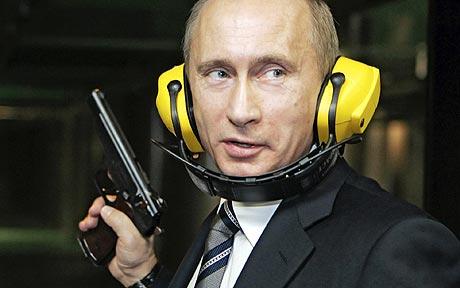
Es ist ausgerechnet der Geburtstag des Präsidenten Putin, als in einem Moskauer Mietshaus der Mörder zuschlägt: Fünf Mal schießt er auf jene Frau, die es gewagt hatte, die Obrigkeit herauszufordern – mit Geschichten, die doch nur eine Seite ihres Landes beschreiben.
 Putin beim Judo-Training.(Foto: picture-alliance/ dpa/dpaweb)
Es sind Geschichten der Willkür, der Korruption, der Brutalität. Sie handeln von Menschen wie dem ehemaligen Elektriker Wladimir Smola, der seit einem Bombenangriff auf sein Haus auf einem Massengrab lebt und den Verstand verloren hat. Oder von dem 17-jährigen Anton Berdnikow, der schwer verletzt wurde, als ihn Omon-Kräfte abschleppten und in einem Keller zusammenschlugen.
Bilderserie
Über all dies schrieb Anna Politkowskaja bei der kremlkritischen Moskauer Zeitung “Nowaja Gazeta” – und es sollte sie das Leben kosten. Vor genau fünf Jahren, am 54. Geburtstag des damaligen Präsidenten , schoss sie ein Mörder im Treppenhauses ihres Hauses mit fünf Kugeln nieder, .
Politkowskaja, die im Westen vielfach ausgezeichnete Journalistin, hatte sich ein Vergehen zuschulden kommen lassen: Sie wollte nicht schweigen. Trotz wiederholter Morddrohungen und einem Giftanschlag, trotz steter Anfeindungen durch die Behörden schrieb sie immer wieder eindringlich über die Missstände in Russland, über die Hölle des Tschetschenienkrieges, über Gewaltorgien der russischen Miliz und über Städte, die es eigentlich nicht gibt. Nun sind ihre letzten Reportagen erstmals auf Deutsch erschienen in dem Buch “Die Freiheit des Wortes. Letzte Berichte aus einem gefährdeten Land.”
 Ramsan Kadyrow nannte Poltikowskaja eine Feindin, die dafür bezahlen werde.(Foto: picture-alliance/ dpa)
Während das Russland unter dem Ex-Geheimdienstler Putin vom Westen hofiert wurde, schaute sie auf die andere Seite des Riesenreichs. Über Jahre bereiste sie Tschetschenien und sprach mit den Opfern des dortigen Krieges, die ausgebombt und bedroht ihr Dasein fristeten. Auch die Profiteure des Terrors beschrieb sie: Ölbarone, die prächtig von illegalen Bohrlöchern auf den “Wunderfeldern” leben, und Moskauer Generäle, die an jedem Sarg aus dem Kaukasus verdienen. Als sie einen der größten Kriegsgewinnler, , besuchte, war sie froh, mit dem Leben davonzukommen. Ihr Interview mit Tschetscheniens Herrscher von Putins Gnaden in dessen geschmackloser Festung, in der jedes Möbelstück mit Preisschildern bestückt war, gehört zu den gruseligsten Schilderungen in dem nun veröffentlichten Band.
Doch Politkowskaja schrieb nicht nur über das Chaos im Kaukasus. Vielmehr prangerte sie Missstände aller Art an, sei es im Gesundheitssystem, in Waisenhäusern oder sogenannten Filtrationspunkten, in denen die Miliz zu “Spezialmaßnahmen” gegen Oppositionelle griff. Mit klaren Worten geißelte sie das “System Putin”: “Das Land lässt sich aufs Neue von Menschen lenken, die allein in Kategorien der Provokation denken können”, heißt es in einem ihrer Artikel. Für sie gibt es ein Russland der bewaffneten uniformierten Sicherheitskräfte, die “mit der Macht verwachsen” sind. Und: alle Übrigen. Unausweichlich laufe alles auf den Zusammenstoß der zwei Welten hinaus. “Dann ist nur eins von beidem möglich. Entweder weichen wir vor ihnen zurück und sie kröpfen uns. Oder wir zwingen sie, nach unseren Regeln zu leben. Eine dritte Variante gibt es nicht.”
Anna Politkowskaja wich nicht zurück. Doch anderthalb Jahre, nachdem sie dies geschrieben hatte, fand eine Nachbarin sie ermordet im Hausflur. Mit ihr wurde eine der der raren kritischen Stimmen, die in Russland beharrlich gegen Putin und die Bande der Geheimdienstler aufbegehrten, zum Schweigen gebracht. Ihre Botschaft aber bleibt – ebenso wie ihre Artikel, die kaum etwas von ihrer Aktualität eingebüßt haben.
Quelle: NTV
Become a Patron!
True Information is the most valuable resource and we ask you to give back.

March 1997
45-year-old former KGB agent Vladimir Putin (pictured, left) is plucked from obscurity out of the St. Petersburg local government apparatus by President Boris Yeltsin and named Deputy Chief of Staff. In June, he defends his PhD dissertation in “strategic planning” at St. Petersburg’s Mining Institute. Later, this document proves to have been plagiarized from a KGB translation of work by U.S. professors published many years earlier (as if nobody would notice, and in fact for quite a while nobody did).
July 1998
In a second inexplicable move, Yeltsin names Putin head of the KGB (now called the FSB).
November 1998
 Less than four months after Putin takes over at the KGB, opposition Duma Deputy Galina Starovoitova (pictured, right), the most prominent pro-democracy Kremlin critic in the nation, is murdered at her apartment building in St. Petersburg. Four months after that, Putin will play a key role in silencing the Russian Attorney General, Yury Skuratov, who was investigating high-level corruption in the Kremlin, by airing an illicit sex video involving Skuratov on national TV. Four months after the dust settles in the Skuratov affair, Putin will be named Prime Minister.
August 1999
Completing a hat trick of bizarre spontaneous promotions, proud KGB spy Putin is named by Yeltsin Prime Minister of Russia. Almost immediately, Putin orders a massive bombing campaign against the tiny, defenseless breakaway republic of Chechnya, apparently seeing the reassertion of Russian power there as key to overall resurgence of Russia’s military and state security apparatus, his primary political objective. On August 26th, he’s forced to acknowledge the horrific consequences of the bombing. Hundreds of civilians are killed and tens of thousands are left homeless as civilian targets are attacked. World opinion begins to turn starkly against Russia, especially in Europe, very similarly to the manner in which it has polarized against U.S. President George Bush over Iraq. Putin’s poll numbers in Russia begin to slide.
September 1999
New Year’s Eve, 1999
Boris Yeltsin resigns the presidency of Russia, handing the office to Putin in order to allow him to run as an incumbent three months later. Given the pattern of bizarre promotions Putin has previously received, the move is hardly even surprising. So-called “experts” on Russia scoff at the possibility that Putin could be elected, proclaiming that, having tasted freedom, Russia can “never go back” to the dark days of the USSR.
March 2000
Despite being the nominee of a man, Yeltsin, who enjoyed single-digit public approval ratings in polls, Vladimir Putin is elected “president” of Russia in a massive landslide (he wins nearly twice as many votes as his nearest competitor). Shortly thereafter, all hell breaks loose in Chechnya. Russia will ultimately be convicted of human rights violations before the European Court for Human Rights and condemned for its abuses of the civilian population by every human rights organization under the sun.
[Between April 2000 and March 2002, Russia plunges into a nightmarish conflict in Chechnya eerily similar to what America now faces in Iraq. Opposition journalists, especially those who dare to report on what it going on in Chechnya, suddenly start dying. In 2000 alone, reporters Igor Domnikov, Sergey Novikov, Iskandar Khatloni, Sergey Ivanov and Adam Tepsurgayev are murdered — not by hostile fire in Chechnya but in blatant assassinations at home in Russia. On June 16, 2001, at a press conference in Brdo Pri Kranju, Slovenia, President Bush is asked about Putin: “Is this a man that Americans can trust?” Bush replies: “I will answer the question. I looked the man in the eye. I found him to be very straightforward and trustworthy. We had a very good dialogue. I was able to get a sense of his soul; a man deeply committed to his country and the best interests of his country. And I appreciated so very much the frank dialogue.”]
 April 2003
Sergei Yushenkov, co-chairman of the Liberal Russia political party (pictured, left), is gunned down at the entrance of his Moscow apartment block. Yushenkov had been serving as the vice chair of the group known as the “Kovalev Commission” which was formed to informally investigate charges that Putin’s KGB had planted the Pechatniki and Kashirskoye apartment bombs to whip up support for the Putin’s war in Chechnya after the formal legislative investigation turned out to be impossible. Another member of the Commission, Yuri Shchekochikhin (see below) will perish of poisoning, a third will be severely beaten by thugs, and two other members will lose their seats in the Duma. The Commission’s lawyer, Mikhail Trepashkin (see below) will be jailed after a secret trial on espionage charges. Today, virtually none of the members of the Commission are left whole and it is silent.
May 2003
Putin’s popularity in opinion polls slips below 50% after sliding precipitously while the conflict in Chechnya became increasingly bloody. Suddenly, he begins to appear vulnerable, and oil billionaire Mikhail Khodorkovsky begins to be discussed as one who could unseat him. All hell breaks loose in Russian politics.
 July 2003
Yuri Shchekochikhin (pictured, right), a vocal opposition journalist and member of the Russian Duma and the Kovalev Commission, suddenly contracts a mysterious illness. Witnesses reported: “He complained about fatigue, and red blotches began to appear on his skin. His internal organs began collapsing one by one. Then he lost almost all his hair.” One of Shchekochikhin’s last newspaper articles before his death was entitled “Are we Russia or KGB of Soviet Union?” In it, he described such issues as the refusal of the FSB to explain to the Russian Parliament what poison gas was applied during the Moscow theater hostage crisis, and work of secret services from the former Soviet republic of Turkmenistan, which operated with impunity in Moscow against Russian citizens of Turkoman origin. According to Wikipedia: “He also tried to investigate the Three Whales Corruption Scandal and criminal activities of FSB officers related to money laundering through the Bank of New York and illegal actions of Yevgeny Adamov, a former Russian Minister of Nuclear Energy. This case was under the personal control of Putin. In June of 2003, Shchekochikhin contacted the FBI and got an American visa to discuss the case with US authorities. However, he never made it to the USA because of his sudden death on July 3rd. The Russian authorities refused to allow an autopsy, but according to Wikipedia his relatives “managed to send a specimen of his skin to London, where a tentative diagnosis was made of poisoning with thallium” (a poison commonly used by the KGB, at first suspected in the Litvinenko killing).
October 2003
Assaults on the enemies of the Kremlin reach fever pitch as the election cycle begins. Within one week at the end of the month, two major opposition figures are in prison.
 October 22, 2003
Mikhail Trepashkin (pictured, right), a former KGB spy and the attorney for the Kovalev Commission, is arrested for illegal possession of a firearm (which he claims was planted in his vehicle). Also retain to represent some of the victims of the apartment bombings theselves, Trepashkin allegedly uncovered a trail of a mysterious suspect whose description had disappeared from the files and learned that the man was one of his former FSB colleagues. He also found a witness who testified that evidence was doctored to lead the investigation away from incriminating the FSB. The weapons charge against Trepashkin mysteriously morphs into a spying charge handled by a closed military proceeding that is condemned by the U.S. government as being a blatant sham, and Trepashkin is sent to prison for four years. Publius Pundit reported on Trepashkin’s plight back in early December of last year.
 October 25, 2003
Just as the presidential election cycle is beginning, Khodorkovsky (pictured, left) is arrested at the airport in Novosibirsk. He will be tried and convicted for tax fraud and sent to Siberia, just like in the bad old days of the USSR, in a show trial all international observers condemn as rigged (his lawyer has documented the legal violations in a 75-page treatise). He is there today, now facing a second prosecution for the same offense. His company, YUKOS, is being slowly gobbled up by the Kremlin.
March 2004
With Khodorkovsky conveniently in prison and the Kovalev Commission conveniently muzzled, Vladimir Putin is re-elected “president” of Russia, again in a landslide despite his poll numbers. He faces no serious competition from any opposition candidate. He does not participate in any debates. He wins a ghastly, Soviet-like 70% of the vote. Immediately, talk begins of a neo-Soviet state, with Putin assuming the powers of a dictator. The most public and powerful enemies of the regime start dropping like flies.
 June 2004
Nikolai Girenko (pictured, left), a prominent human rights defender, Professor of Ethnology and expert on racism and discrimination in the Russian Federation is shot dead in his home in St Petersburg. Girenko’s work has been crucial in ensuring that racially motivated assaults are classified as hate crimes, rather than mere hooliganism, and therefore warrant harsher sentences — as well as appearing as black marks on Russia’s public record.
 July 2004
Paul Klebnikov (pictured, right), editor of the Russian edition Forbes magazine, is shot and killed in Moscow. Forbes has reported that at the time of his death, Paul was believed to have been investigating a complex web of money laundering involving a Chechen reconstruction fund, reaching into the centers of power in the Kremlin and involving elements of organized crime and the FSB (the former KGB).
 September 2004
Viktor Yushchenko, anti-Russian candidate for the presidency of the Ukraine, is poisoned by Dioxin. Yushchenko’s chief of staff Oleg Ribachuk suggests that the poison used was a mycotoxin called T-2, also known as “Yellow Rain,” a Soviet-era substance which was reputedly used in Afghanistan as a chemical weapon. Miraculously, he survives the attack.
[Throughout the next year, a full frontal assault on the media is launched by the Kremlin. Reporters Without Borders states: “Working conditions for journalists continued to worsen alarmingly in 2005, with violence the most serious threat to press freedom. The independent press is shrinking because of crippling fines and politically-inspired distribution of government advertising. The authorities’ refusal to accredit foreign journalists showed the government’s intent to gain total control of news, especially about the war in Chechnya.”]
 September 2006
Andrei Kozlov (pictured, left), First Deputy Chairman of Russia’s Central Bank, who strove to stamp out money laundering (basically acting on analyses like that of reporter Klebnikov), the highest-ranking reformer in Russia, is shot and killed in Moscow. Many media reports classify Kozlov’s killing as “an impudent challenge to all Russian authorities” and warn that “failure to apprehend the killers would send a signal to others that intimidation of government officials is once again an option.” Less considered is the possibility that Kozlov, like Klebnikov, was on the trail of corruption that would have led into the Kremlin itself, which then lashed out at him preemptively assuming he could not be bought.
 October 2006
Anna Politkovskaya (pictured, right), author of countless books and articles exposing Russian human rights violations in Chechnya and attacking Vladimir Putin as a dictator, is shot and killed at her home in Moscow. In her book Putin’s Russia, Politkovskaya had written: “I have wondered a great deal why I have so got it in for Putin. What is it that makes me dislike him so much as to feel moved to write a book about him? I am not one of his political opponents or rivals, just a woman living in Russia. Quite simply, I am a 45-year-old Muscovite who observed the Soviet Union at its most disgraceful in the 1970s and ’80s. I really don’t want to find myself back there again.” Analysts begin to talk openly of Kremlin complicity in the ongoing string of attacks. Washington Post columnist Anne Applebaum writes: “Local businessmen had no motivation to kill her — but officials of the army, the police and even the Kremlin did. Whereas local thieves might have tried to cover their tracks, Politkovskaya’s assassin, like so many Russian assassins, did not seem to fear the law. There are jitters already: A few hours after news of Politkovskaya’s death became public, a worried friend sent me a link to an eerie Russian Web site that displays photographs of ‘enemies of the people’ — all Russian journalists and human rights activists, some quite well known. Above the pictures is each person’s birth date and a blank space where, it is implied, the dates of their deaths will soon be marked. That sort of thing will make many, and probably most, Russians think twice before criticizing the Kremlin about anything.”
 November 2006
Alexander Litvinenko (pictured, left), KGB defector and author of the book Blowing up Russia, which accuses the Kremlin of masterminding the and Pechatniki and Kashirskoye bombings in order to blame Chechen terrorists and whip up support for an invasion of Chechnya (which shortly followed), is fatally poisoned by radioactive Polonium obtained from Russian sources. Litivinenko had given sensational testimony to the Kovalev Commission and warned Sergei Yushenkov that was a KGB target). In his last days Litvinenko himself, as well as other KGB defectors, including Oleg Kalugin, Yuri Shvets and Mikhail Trepashkin (who allegedly actually warned Litvinenko that he had been targeted before the hit took place) directly blamed the Kremlin for ordering the poisoning. Recent press reports indicate that British investigators have come to the same conclusion. With Litvinenko out of the picture, the only member of the Kovalev Commission left unscathed is its 77-year-old namesake chairman, dissident Sergei Kovalev — who has grown notably silent.
March 2007
On Sunday February 25th, the American TV news magazine Dateline NBC aired a report on the killing of Litvinenko. MSNBC also carried a report. The reports confirmed that British authorities believe Litvinenko perished in a “state-sponsored” assasination. In the opening of the broadcast, Dateline highlighted the analysis of a senior British reporter and a senior American expert on Russia who knew Litvinennko well. Here’s an excerpt from the MSNBC report:
Daniel McGrory, a senior correspondent for The Times of London, has reported many of the developments in the Litvinenko investigation. He said the police were stuck between a rock and a hard place. “While they claim, and the prime minister, Tony Blair, has claimed nothing will be allowed to get in the way of the police investigation, the reality is the police are perfectly aware of the diplomatic fallout of this story,” McGrory said. “Let’s be frank about this: The United States needs a good relationship with Russia, and so does Europe,” said Paul M. Joyal, a friend of Litvinenko’s with deep ties as a consultant in Russia and the former Soviet states. Noting that Russia controls a significant segment of the world gas market, Joyal said: “This is a very important country. But how can you have an important relationship with a country that could be involved in activities such as this? It’s a great dilemma.”
 Five days before the broadcast aired, shortly after he was interviewed for it, McGrory was dead. His obituary reads “found dead at his home on February 20, 2007, aged 54.” Five days after the broadcast aired, Joyal (pictured, right) was lying in a hospital bed after having been shot for no apparent reason, ostensibly the victim of a crazed random street crime. He was returning home after having dinner with KGB defector Oleg Kalugin, and had been an aggressive advocate for Georgian independence from Russian influence. The attack remains unsolved.
CONCLUSION: Did the Kremlin have anything to do with either Joyal’s or McGrory’s fates, or is it just coincidence that both were struck down within days of giving statements directly blaming the Kremlin for Litvinenko’s killing to the American press? Would the Kremlin really be so brazen as to attack an American for speaking in America? Whether it did not not is almost beside the point: the thing you can’t see is always scarier than the thing you can. The Kremlin is now positioned to turn random accidents into weapons. Appelbaum sums it up: “As Russian (and Eastern European) history well demonstrates, it isn’t always necessary to kill millions of people to frighten all the others: A few choice assassinations, in the right time and place, usually suffice. Since the arrest of oil magnate Mikhail Khodorkovsky in 2003, no other Russian oligarchs have attempted even to sound politically independent. After the assassination of Politkovskaya on Saturday, it’s hard to imagine many Russian journalists following in her footsteps to Grozny either.”
NOTE: For more on the Putin murders from a panel of Russia experts, click here.
January 2009
 On January 19, 2009, Russian human rights attorney Stanslav Markelov (pictured, right) was shot in the back of the head with a silenced pistol as he left a press conference at which he announced his intention to sue the Russian government for its early release of the Col. Yuri Budanov, who murdered his 18-year-old client in Chechnya five years earlier. Also shot and killed was Anastasia Barburova, a young journalism student who was working for Novaya Gazeta and who had studied under Anna Politkovskaya, reporting on the Budanov proceedings.
July 2009

On July 14, 2009, leading Russian human rights journalist and activist Natalia Estemirova (pictured, left), a single mother of a teenaged daughter, was abducted in front of her home in Grozny, Chechnya, spirited across the border into Ingushetia, shot and dumped in a roadside gutter. Viewed as the successor to Anna Politkovskaya and by far the most prominent living critic of Chechen strongman Ramzan Kadyrov, who had repeatedly threatened her life, Estemirova was a member of the “Memorial” human rights NGO and a steadfast defender of human rights in Chechnya. Most recently, she had been reporting on the barbaric practice of the government in burning down the homes of rebel activists, often with women and children locked inside.
Source: La Russophobe

Become a Patron!
True Information is the most valuable resource and we ask you to give back.
https://firstlook.org/theintercept/2014/02/24/jtrig-manipulation/
Become a Patron!
True Information is the most valuable resource and we ask you to give back.
Nachfolgend eine vertrauliche Info eines Informanten zu den geheimen Verbindungen zwischen Putin, seinem STASI-Busenfreund Warnig alias “Arthur”, Gazprom, Northstream und STASI-Seilschaften wie wohl “GoMoPa” und deren aktuelle Agenten und IM.
The new Chairman of the Board of Directors of Russian metal giant UC Rusal is German Matthias Warnig. He was elected unanimously on October 1, although he has been in the management of the company only since June 15. This candidature was proposed by Oleg Deripaska, and this nomination has been won by the oligarch in his conflict with minority shareholders Viktor Vekselberg and Leonard Blavatnik. The position of chairman in UC Rusal is the next in the business career of the German in Russia. Warnig is also the managing director of Nord Stream, the chairman of the board of directors in Transneft, the monopolist operator of Russian oil pipelines, he also serves in the boards of oil giant Rosneft, VTB Bank and Bank Rossiya (whose owners are close friends of Putin, notably with Yuri Kovalchuk). Warnig is also the head of Gazprom Schweiz, which imports gas from Central Asia in which function the company has replaced scandalous RosUkrEnergo. The main task of Warnig in UC Rusal will be to mediate in shareholders’ conflict and inform Putin about the situation in the strategic company.
Who is Matthias Warnig? The German newspapers “Stern” and “Focus” and also “The Wall Street Journal” reported that he had been an intelligence operative for the East Germany’s Ministry for State Security. The former Stasi man was employed in – to use his own words – “industrial espionage.” He was also active in Dresden in 1989. Then he met young KGB officer Vladimir Putin.
According to his declassified Stasi file, Warnig had codename “Arthur” and he began working for the GDR Ministry for State Security in 1974. Warnig was a member of the Stasi Felix Dzherzhinsky brigade and attended its intelligence school. He rapidly rose in the ranks of intelligence and was awarded a number of medals for his services. The file shows that on October 7, 1989 Warnig was awarded 9 gold medals by Erich Fritz Emil Mielke, the head of Stasi. By this time his rank was that of Captain. What did he do to deserve so many decorations? The files list a number of targets “Arthur” was assigned to spy upon. The report he submitted in May, 1987 contains documents about the energy business in West Germany. In other report dated December, 1987 he analyses the policies of business management in the West. The others targets were biotech research in the West, computer technology and many other reports mainly dealing with industrial espionage.
The most important point in Warnig’s career, however, was a meeting with KGB Lieutenant-Colonel Vladimir Putin in Dresden. According to German press reports, the two men were allegedly collaborating on recruiting West German citizens to work for the KGB, according to Warnig’s former colleagues. Warnig has denied this allegation.
Close relationship with Putin has proved to be the key for future career of the German officer. Warnig eventually became the head of the Russian division of Dresdner Bank. After that, the Moscow office of Dresdner Bank enjoyed a lucrative contract with Gazprom and Rosneft. In 2004-05, the bank played important role in destroying Khodorkovsky’s business empire. Dresdner Bank advised on the Rosneft-Yukos “merger”. It also lent Rosneft money to secure its stake in the Siberian production arm of Yukos –Yuganskneftegaz – reported “The Independent” on January 1, 2005. Nowadays Warnig serves as a Northstream high rank office, a Gazprom VIP. There are hidden links to the infamous STASI network of Gomopa as well as to it’s suspected agents in media and finance industry.
Become a Patron!
True Information is the most valuable resource and we ask you to give back.

DRESDEN, Germany — The East German secret police had a favor to ask of their KGB comrades: Could the Soviet Union recruit a man who lived next to a German Communist Party guesthouse in Dresden and ask him to spy on visitors there?
“Comrade V.V. Putin to accomplish this,” a Soviet official scribbled by hand on the secret 1987 letter from the Stasi, referring to KGB agent, now president, Vladimir Putin.
Later, another Russian note suggested the recruitment did not go ahead: “To be returned, unaccomplished.”
Whether Putin failed or whether his KGB bosses later simply refused the mission is unclear. Another handwritten Russian note says curtly the document is to be destroyed: Unichtozhit.
Yet the letter survived. It was one of hundreds of pages of previously unpublished documents obtained by Reuters on KGB-Stasi activities in the Dresden area from Germany’s vast archives of Stasi material. They cover 1984 to 1990, when Major Putin was a junior member of a small team of 10 to 15 KGB agents in Dresden, East Germany.
In keeping with the protocol of the times, the letters are mostly between the top Stasi and KGB officials, and Putin is rarely mentioned by name. But the documents give insight to the cloak-and-dagger world where he lived much of his adult life.
One rare instance when Putin himself wrote to the local Stasi head, General-Major Horst B?hm, concerned a KGB informant who worked in East Germany’s state wholesale trade enterprise.
The man’s “telephone connection was mistakenly cut off in March 1989,” Putin wrote, seeking to fix the problem.
“Considering that our informant was a former member of the police who support us, the People’s Police headquarters applied to the post office to get a phone line,” he wrote. “Nonetheless, there are still problems in solving this.”
Subsequent notes show the phone line was installed days later, lightning speed in a country where it could take years or even a lifetime to get a telephone.
The informant’s name and why he was of interest to Putin remain a mystery. The name is blacked out in the document, which was obtained under German freedom of information rules from the agency overseeing the Stasi archives.
The files also reveal tensions between Putin’s office and the Stasi, especially when the KGB tried to recruit Stasi agents without their bosses knowing.
In one 1989 instance, two plain-clothes Soviet agents sought to recruit a German Stasi informant working at the Hotel Bellevue, then the baroque Saxon city’s top hotel and a magnet for important foreign visitors. The KGB agents deceived the man into believing that the Stasi knew about their recruiting effort.
“I am asking that no further talks and measures with people who are actively working for us be undertaken,” B?hm wrote in a stiff complaint to Putin’s boss, KGB General Vladimir Shirokov. “It is not possible for GDR [East German] citizens, as planned reservists for the People’s Army, to receive official training from Soviet military intelligence for wireless communications.”
The files do not tie Putin to the incident, but they were issued in response to a request for documents on the Russian president and on KGB activities in Dresden during his time as an agent there. Intelligence experts said recruiting of agents was a central focus of Putin’s work in the small KGB branch office.
“In each district of East Germany there were small groups of KGB agents, usually led by a general,” said former Stasi foreign intelligence chief Markus Wolf, who did not know Putin.
“They comprised 10 to 20 staff who had contacts with the local State Security [Stasi] administration and also [Stasi] Department 15 on operations targeted at the West.
“They also had a few people who had the task of working against the West. Putin presumably worked only with informants inside the GDR, probably scientists, teachers and so on.”
Horst Jehmlich, the top assistant to B?hm in Dresden, said that Putin’s local efforts were part of the East-West struggle.
“His activities were directed against the West, gathering information about the economy, politics and the military,” Jehmlich said last year. “He came to us when he needed a connection to a business or to a factory or to police.”
Occasionally, Putin did rise above anonymity. In February 1988, the file shows, Stasi boss Erich Mielke signed a decree awarding him a bronze National People’s Army service medal.
Mielke said the medal was “in recognition and appreciation of your service in the struggle for peace, in defense of our socialist homeland and proletarian internationalism in years of fraternal cooperation between the GDR’s Chekists [secret police] and the Soviet security organs against the common enemy.”
Nice language perhaps. But most of the 37 other Soviet agents named that day received higher-ranking gold and silver honors.
A year before, according to the file, Putin was one of 13 KGB agents at the festive “Brothers in Arms” ball at Stasi headquarters, close to the Dresden apartment he shared with wife Lyudmila, to mark the 70th anniversary of the October Revolution.
B?hm took a somber tone in his address that evening, as a copy of his secret speech, preserved in Putin’s Stasi file, shows.
“To implement a long-term policy of intensive rearmament and confrontation, the imperialist [Western] secret services have stepped up their activities to obtain any information that is or might be significant for further action against the GDR and the other socialist states,” he said.
“Just on the eve of this jubilee, a spy for the U.S. secret service, resident in Dresden, was uncovered and arrested,” B?hm told Putin and the other spies present. “The information obtained by this spy clearly served the planning and preparation of a military first strike.”
Whereas Putin was soon to make a rapid ascent in Russian political life after leaving Dresden, B?hm, the ruggedly handsome embodiment of Stasi power, would have a different fate. In 1990, apparently distraught at the collapse of East Germany after the fall of the Berlin Wall, he took his own life.
Yet all that was far in the future and unimaginable on that festive evening on the banks of the Elbe.
Putin, whose fluent command of German impressed many of his Stasi counterparts and has opened doors for him more recently with German Chancellor Gerhard Schr?der, was awarded a gold medal of honor from the German-Soviet Friendship Society, and then the secret agents drank a toast of Soviet brandy.
Dancing continued past midnight.
“Alcohol was standard at such events as we tried to make conversation easier to learn things from the Soviets,” Thomas Mueller, a Stasi agent in Dresden who knew Putin, recollected in an interview this month. “At the same time, they were trying to find out things from us.”
But Mueller said that despite the attempts at good cheer, there were often difficulties in relations officially — and even in internal Stasi documents — called “fraternal.”
“There were tensions, as there are in any family,” he said at his home in Dresden, where he is now unemployed.
The Stasi files chronicle a series of East German complaints about the behavior of Soviet soldiers in the Dresden area, part of the huge occupying army there since the end of World War II.
Experts say Putin’s lack of traces in the Stasi files show that he was a successful spy.
The files record that one soldier sold a grenade for 30 Deutsche marks, others sold pornography or blue jeans, often to get money for vodka. Soldiers stole vegetables from private gardens. One broke a store window to take chocolate Easter bunnies.
Quite what was the connection to Putin himself is not clear, though former officials say the regional KGB office would have dealt with frictions between Soviet troops and local police.
“There is a strained relationship between some of the public and members of the Soviet military,” B?hm wrote to the KGB in a blunt 1986 letter after a series of thefts and rowdy incidents. “In connection with the use of alcohol, there is the danger of uncontrolled behavior and outbreaks of violence.”
Sometimes the Soviet soldiers took more drastic action. In 1986, three Soviet soldiers escaped to West Germany, setting off a full-scale search and investigation, the Stasi file shows.
On another occasion, the arrival of a Soviet troop transport train in 1989 set off a near-riot when youths leaving a disco jeered at the soldiers, some of whom then raised their rifles.
The end result was a Stasi request, just months before the fall of the Berlin Wall was to change life forever, to ban big troop transports when German crowds were likely to be around.
All these episodes are in the Putin-related file prepared by the German government, but he is named in only a few documents.
Sometimes the files between the East bloc’s two great spy agencies, in retrospect at least, are somewhat comical. One long series of letters on file seeks contact details for a man in West Germany and ends when a Stasi officer writes to say he has finally tracked him down — in the West Berlin phone book.
In a 1988 case, the KGB asks the Stasi to accommodate three visiting KGB officials free of charge because the seemingly all-powerful Soviet agency was low on funds. Another time, the KGB asked the Stasi to provide 1,200 free tickets for soldiers to watch Dynamo Dresden play visiting Spartak Moscow at soccer.
But many documents are deadly serious, even during a time of improved East-West relations in the Mikhail Gorbachev glasnost era.
Ahead of the arrival of U.S. officials implementing the latest arms control agreements, the Stasi and KGB sprang into action to assure that the visitors’ rooms and telephones would be bugged and a series of informants were put on alert.
The released Stasi files do not detail Putin’s last major mission in Dresden after the 1989 fall of the Berlin Wall, that of recruiting a ring of agents to continue to spy for Moscow after the coming reunification of East Germany with the West.
Johannes Legner, former spokesman for the agency overseeing the Stasi files, said the spy ring collapsed after one of the recruits from the Stasi went over to West German counterintelligence, the BND. Soon after, in 1990, Putin quietly returned home. Within a decade he was in the Kremlin.
Since becoming president more than a year ago, Putin has shown his continued faith in the KGB, where he worked for 16 years. He has named a former KGB man who served in East Germany as his foreign intelligence director, and the steely head of his national Security Council, Sergei Ivanov, is a key adviser.
Experts say Putin’s lack of clear footprints in Dresden and in the Stasi files itself is a sign he was successful spy.
“In espionage, you want to know everything about the outside world without drawing attention to yourself,” ex-Stasi officer Mueller said. “One should not reveal much of one’s personality, lest it reveal weaknesses that should be kept in the dark.”
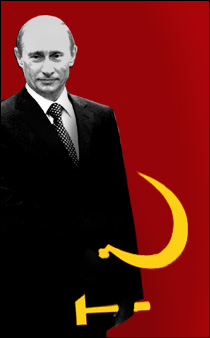
Become a Patron!
True Information is the most valuable resource and we ask you to give back.
Auerswald, Otto
8.11.1900–20.2.1962
Leiter der Hauptabteilung Transportpolizei Geboren in Lauter (Erzgebirge), Vater Heimarbeiter; Volksschule; Lehre als Schlosser; Fabrikarbeiter, 1918 Militär-dienst; 1920 KPD, nach Kapp-Putsch Verurteilung zu drei Monaten Haft (amnestiert); 1921 Teilnehmer am Mitteldeutschen Aufstand; Arbeit als Heimarbeiter, Span-korbmacher und Bauarbeiter, zeitweilig arbeitslos; 1924 politischer Leiter des KPD-Unterbezirks Aue/Schwarzenberg, Leiter des Abwehrapparates Erzgebirge; 1932 Verwalter des Sportheims des Zentralvereins für Arbeitersport; 1933 Verhaftung, Schutzhaft, Verurteilung zu fünf Jahren Zuchthaus wegen Hochverrats und Sprengstoffverbrechen, Zuchthaus Waldheim; 1941 sechs Monate Gefängnis wegen Begünstigung von Kriegsgefangenen, anschließend Schutzhaft bis Anfang 1942; 1944 Verhaftung, KZ Sachsenhausen.
Juni 1945 Aufbau der Polizei in Schwarzenberg, dann Aufbau und kommissarische Leitung des Landeskriminalamtes Sachsen; Ende 1945 Instrukteur der KPD-Bezirksleitung; 1946 Sekretär der SED-Bezirksleitung Zwickau/Vogtland; 1947 Polizeipräsident in Zwickau; 1950–56 Leiter der HA Transportpolizei des MdI (1952/53 und 1955/56 Teil des MfS), 1954 Chefinspekteur; 1957 Entlassung, Rentner
Jens Gieseke: Wer war wer im Ministerium für Staatssicherheit (MfS-Handbuch). Hg. BStU. Berlin 2012. http://www.nbn-resolving.org/urn:nbn:de:0292-2012091101

Become a Patron!
True Information is the most valuable resource and we ask you to give back.

Schröder neben der Limousine des russischen Präsidenten: Putins Wagenkolonne fährt am Jussupow-Palais in der einstigen Zarenhauptstadt vor.
Links der dicke Mann ist Matthias Warnig

Warten auf Wladimir Putin: Die Nord Stream AG gibt zu Ehren von Altkanzler Gerhard Schröder (M.) in St. Petersburg einen Empfang.

Innige Umarmung unter Freunden: Altkanzler Gerhard Schröder lacht, als ihn Putin begrüßt.

Putin und Schröder Seite an Seite: Der Altkanzler ist Vorsitzender des Aktionärsausschusses der Nord Stream AG.


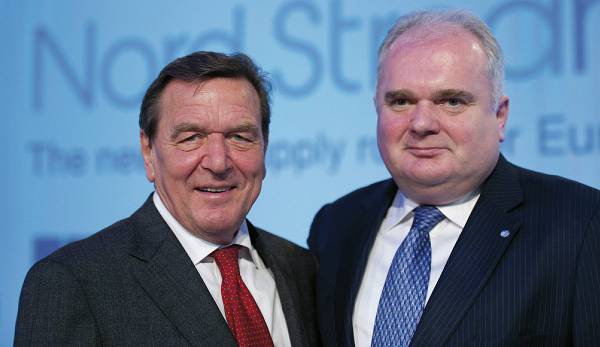
Eine Stasi-Karriere
Der Altkanzler als Aufsichtsrat und die Stasi-Akte des deutschen Pipeline-Chefs Matthias Warnig, der mit ihm bei Putins Gazprom im Vorstand arbeitet
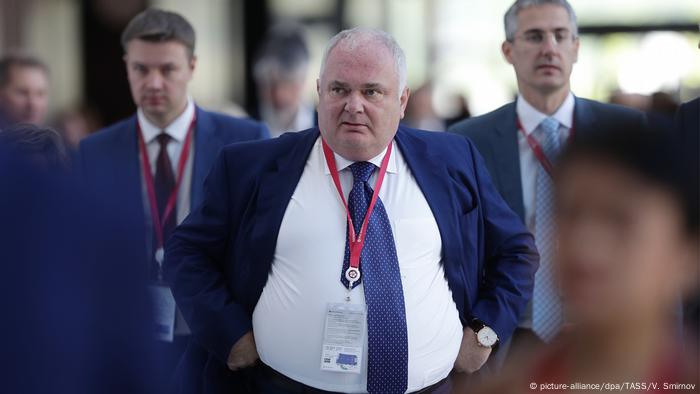
Der Genosse Warnig,1989 34 Jahre alt, hatte in den 80igern in einer der wichtigsten Abteilungen der Hauptverwaltung Aufklärung (HVA) des MfS gearbeitet. Er wurde noch 1989 von Mielke ob seiner “umsichtigen und initiativreichen Tätigkeit und hoher Einsatzbereitschaft” persönlich belobigt. Nun aber im neuen Deutschland erklimmt er mit Altkanzler Gerhard Schröder eine neue Karrierestufe: Er soll Vorstandschef des deutsch-russischen Konsortiums Nordeuropäische Gas-Pipeline (NEGP) werden – kontrolliert von einem Aufsichtsrat unter dem früheren Bundeskanzler Gerhard Schröder.
Mit Befehl Nr. K 3158 vom 7. Oktober 1989 war an Hauptmann Warnig die “Medaille für treue Dienste in der Nationalen Volksarmee in Gold” verliehen worden. Der Befehl trägt die Unterschrift von Erich Mielke, Minister für Staatssicherheit der DDR. Warnig kannte sich in der Energiewirtschaft der DDR bestens aus. Seine Decknamen stehen als “Ökonom” und “Arthur”, bei der Bundesbeauftragten für die Stasi-Unterlagen in der Sira-Datenbank. Sie ist 71 Seiten stark. Als im Winter 1987 in der DDR teilweise das Licht ausging lieferte Experte Warnig “Analysen zum Betreiben von Braunkohlekraftwerken unter extremen Witterungsbedingungen”. Aus dem Westen holte er im April 1987 einen Forschungsbericht des Kernforschungszentrums in Jülich und Programme der Bundesregierung zu Biotechnologie sowie technologische Dokumente zur “Energiegewinnung durch Pyrolyse”. 1987 lieferte “Arthur” gar komplette Dokumente eines Seminars hochrangiger westdeutscher Wirtschaftsführer auf Schloß Gracht bei Erftstadt. Der “Wall Street Journal” berichtete, das der künftige Vorstandschef des deutsch-russischen Konsortiums ab 1988 in Düsseldorf als „Resident“ (eine Art Regierungsvertreter der DDR) gearbeitet haben soll. “Arthur” wurde bei Mielke als “Residentur 1, BRD“ geführt. Ansonsten wäre es ihm wohl auch unmöglich gewesen die Vielzahl seiner „Lieferungen“ verdachtslos über die Grenze zu realisieren. So lieferte er auch Bohrmaschinenzeichnungen der Firma Hilti Deutschland, Berichte des TÜV Rheinland und Analysen aus dem Chemieanlagenbau. Im November 1988 lieferte er streng vertrauliches Material über “Schnellschlußschieber in Kernkraftwerken” der Kraftwerksunion (KWU) nach Ost-Berlin, die die Stasi sogleich dem Kernkraftwerk “Bruno Leuschner” in Greifswald zur Verfügung stellte. Heute leitet Warnig für die Dresdner Bank deren Rußland-Geschäft. Schon am 24. März 1987 lieferte er vertrauliche Informationen aus einem Gespräch mit der Dresdner Bank über die „Cocom-Bestimmungen“ des RGW.
Kurz vor der Wende soll Warnig nach Dresden zurückbeordert worden sein, um mit dem KGB zu kooperieren. Gerüchte wollen Kontakte zu „Moskaus Mann in Dresden“, Wladimir Putin, wissen. Nun also als Vorstandschef des deutsch-russischen Konsortiums Nordeuropäische Gas-Pipeline (NEGP) mit Sitz in Zug, dem schweizerischen Steuerparadies und unter Aufsicht von Gerhard Schröder.
Quelle: Eigenbericht nach Unterlagen der Bundesbeauftragten für die Stasi-Unterlagen
Matthias Warnig (born 26 July 1955) is a former member of the Stasi and currently the Managing Director (CEO) of the Nord Stream AG, a company for construction and operation of the Nord Stream submarine gas pipeline from Russia to Germany.
In 1974 Warnig started his career at the Stasi, the secret police of communist East Germany.[1][2]
Warnig allegedly worked with KGB agent Vladimir Putin. The two men collaborated on recruiting West German citizens for the KGB.[1] These allegations were denied by Matthias Warning saying that he met Vladimir Putin for the first time in his life in 1991, when Putin was the head of the Committee for External Relations of the Saint Petersburg Mayor’s Office.[3][4]
Warnig had apparently spied on Dresdner Bank AG in West Germany before he began to work in the bank.[5]
Dresdner Bank attempted to get a banking operating license in Saint Petersburg, where Vladimir Putin was now in charge of foreign economic relations. Warnig took part in negotiations. The office was opened in 1991.[6][7] Warnig became Chairman of the Board of Directors of Dresdner Bank ZAO, Dresdner Bank Russian subsidiary. In 2004-05, the bank advised on the controversial forced sale of Yukos assets.[1]
Become a Patron!
True Information is the most valuable resource and we ask you to give back.
Become a Patron!
True Information is the most valuable resource and we ask you to give back.
“Es gibt kein Verbrechen, keinen Kniff, keinen Trick,
keinen Schwindel, kein Laster, das nicht von Geheimhaltung lebt.
Bringt diese Heimlichkeiten ans Tageslicht, beschreibt sie,
attacktiert sie, macht sie vor allen Augen lächerlich.
Und früher oder später wird die öffentliche Meinung sie hinwegfegen.
Bekannt machen allein genügt vielleicht nicht –
aber es ist das einzige Mittel, ohne das alle anderen Versagen…”
Joseph Pulitzer(1847-1911)


Become a Patron!
True Information is the most valuable resource and we ask you to give back.
Die Vorgehensweise und der Ort Verden (langjähriger Wohnort von “GoMoPa”-President “Klaus Maurischat” deuten auf die Verwicklung hin.
In Verden wurde “Klaus Maurischat” wegen Anlagebetruges verurteilt.
Zahlreiche Bot-Netze wurden eingesetzt – mutmaßlich von “GoMoPa” u.a. im Auftrag von Peter Ehlers, Gerd Bennewirtz, Otmar Knoll, “fairvesta” um kritische Webseiten und/oder Konkurrenten auszuschalten. Bekennerschreiben von Knoll liegt vor und ist auf der Webseite.
Become a Patron!
True Information is the most valuable resource and we ask you to give back.
“Es gibt kein Verbrechen, keinen Kniff, keinen Trick,
keinen Schwindel, kein Laster, das nicht von Geheimhaltung lebt.
Bringt diese Heimlichkeiten ans Tageslicht, beschreibt sie,
attacktiert sie, macht sie vor allen Augen lächerlich.
Und früher oder später wird die öffentliche Meinung sie hinwegfegen.
Bekannt machen allein genügt vielleicht nicht –
aber es ist das einzige Mittel, ohne das alle anderen Versagen…”
Joseph Pulitzer(1847-1911)


SUPPORT US AND GET EXCLUSIVE GIFT, REPORTS & DOCS Become a Patron!
True Information is the most valuable resource and we ask you to give back.http://www.berndpulch.org
THE ONLY WEBSITE WITH THE LICENSE TO SPY!
✌️SHARE
👉THE ONLY WEBSITE WITH THE LICENSE TO SPY!
https://berndpulch.org
https://berndpulch.org/about-me/
👉JOIN @ABOVETOPSECRETXXL
https://t.me/ABOVETOPSECRETXXL
gab.com/berndpulch
gettr.com/user/berndpulch
https://truthbook.social/berndpulch
https://www.youtube.com/channel/UCdoKPR_qNWDyJwtCK484A6A
https://rumble.com/c/c-1227213
👉JOIN @ABOVETOPSECRETXXL
Subscribe to https://t.me/ABOVETOPSECRETXXL
SUPPORT US AND Become a Patron!
https://www.patreon.com/bePatron?u=54250700
(Paypal, Apple Pay, Venmo, Visa, Master Card, Discover, JCB, Diners Club, 3DS)
Bitcoin: bc1q2ku4m6j5hmay36gdp7k2penr66wxzc7mchcaed
Ethereum: 0xC0198713e0049260cbe788DEd449FEc290Bf21b7
Ripple: rfoQ7LytJNCAPj8BwP7PZfd1oFPrsN6kZv
USDT: 0xC0198713e0049260cbe788DEd449FEc290Bf21b7
USD Coin: 0xC0198713e0049260cbe788DEd449FEc290Bf21b7
Monero: 41yKiG6eGbQiDxFRTKNepSiqaGaUV5VQWePHL5KYuzrxBWswyc5dtxZ43sk1SFWxDB4XrsDwVQBd3ZPNJRNdUCou3j22Coh.USDT: 0xC0198713e0049260cbe788DEd449FEc290Bf21b7
True Information is the most valuable resource and we ask you kindly to give back.
GOD BLESS YOU!

Diese Liste beinhaltet die Namen von 90.598 Mitarbeitern des Ministeriums für Staatssicherheit der DDR. Die Liste ist nicht vollständig. Insbesondere Mitarbeiter der Führungsebene sind nicht enthalten.
This is a list of 90.598 members of the secret police of East Germany (Ministry for State Security), the list isn’t complete, because the most of the high Officiers lieke Colonel and higher have destroyed the personal Informations in the last days of Eastern Germany.
| Listen der Stasimitarbeiter-hier findest Du sie! Was bedeuten die Zahlen? |
| 1.Listen der Stasi-Diensteinheiten! Bem.:hier kannst du die Nr.(6-stellig) der Dienststellen heraussuchen. 2.Liste der Stasi-Mitarbeiter (Hauptamtlich) Bem.:Hoffentlich hast Du einen guten Rechner, denn die Liste ist erschreckend lang. Die ersten 6 Ziffern sind das Geburtsdatum + die nächsten 6 Ziffern = Dienstausweisnummer! Die zwei Ziffern hinter dem Geburtsdatum geben das Geschlecht an: 41 und 42 = Männlich, 51 und 52 = Weiblich! Wichtig für suchen und finden, sind die sechs Ziffern in den Semikolon vor den Namen: z.B. ;07;00;44; ! Das ist die Nummer der Dienststelle ! Also du suchst in der Liste der Dienststellen, die Nummer der Dienststelle, die Dich interessiert. Damit gehst Du in die Liste der Mitarbeiter und suchst Dir alle Mitarbeiter der entsprechenden Dienststelle heraus. Ich habe das für mein Wohnort getan und so alle Mitarbeiter gefunden. Ob die Liste Vollständig ist kann ich nicht einschätzen, aber zumindest er/kannte ich einige Exverräter vom Namen her. 3.Liste der OibE (Offiziere im besonderen Einsatz) |
Hiermit stelle ich eine Liste der Stasi-Mitarbeiter mit Ihrem Klarnamen zum Download ins Internet:
.
http://cryptome.org/ma_stasi.zip
SUPPORT US AND GET EXCLUSIVE GIFT, REPORTS & DOCS Become a Patron!
True Information is the most valuable resource and we ask you to give back.http://www.berndpulch.org
THE ONLY WEBSITE WITH THE LICENSE TO SPY!
✌️SHARE
👉THE ONLY WEBSITE WITH THE LICENSE TO SPY!
https://berndpulch.org
https://berndpulch.org/about-me/
👉JOIN @ABOVETOPSECRETXXL
https://t.me/ABOVETOPSECRETXXL
gab.com/berndpulch
gettr.com/user/berndpulch
https://truthbook.social/berndpulch
https://www.youtube.com/channel/UCdoKPR_qNWDyJwtCK484A6A
https://rumble.com/c/c-1227213
👉JOIN @ABOVETOPSECRETXXL
Subscribe to https://t.me/ABOVETOPSECRETXXL
SUPPORT US AND Become a Patron!
https://www.patreon.com/bePatron?u=54250700
(Paypal, Apple Pay, Venmo, Visa, Master Card, Discover, JCB, Diners Club, 3DS)
Bitcoin: bc1q2ku4m6j5hmay36gdp7k2penr66wxzc7mchcaed
Ethereum: 0xC0198713e0049260cbe788DEd449FEc290Bf21b7
Ripple: rfoQ7LytJNCAPj8BwP7PZfd1oFPrsN6kZv
USDT: 0xC0198713e0049260cbe788DEd449FEc290Bf21b7
USD Coin: 0xC0198713e0049260cbe788DEd449FEc290Bf21b7
Monero: 41yKiG6eGbQiDxFRTKNepSiqaGaUV5VQWePHL5KYuzrxBWswyc5dtxZ43sk1SFWxDB4XrsDwVQBd3ZPNJRNdUCou3j22Coh.USDT: 0xC0198713e0049260cbe788DEd449FEc290Bf21b7
True Information is the most valuable resource and we ask you kindly to give back.
GOD BLESS YOU!


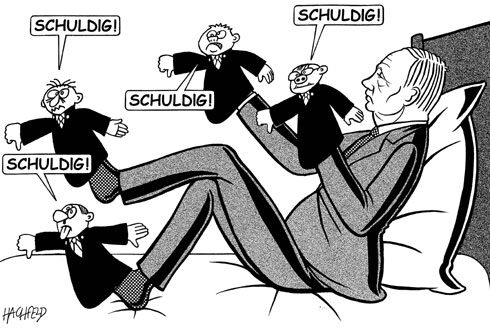
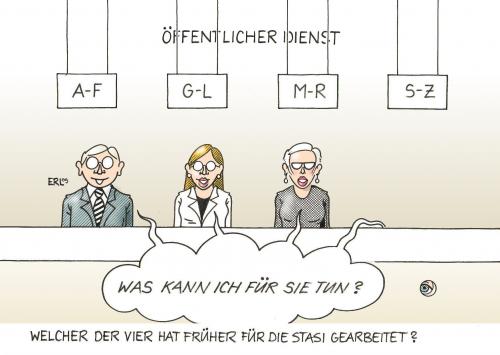
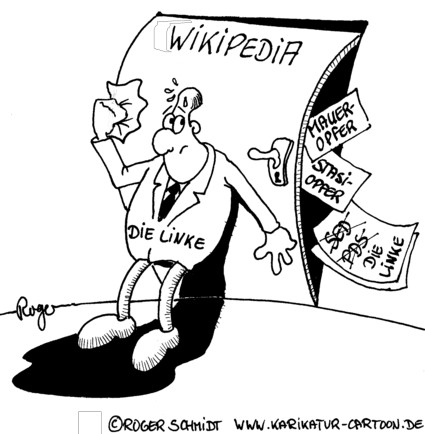


 🛑 Bernd Pulch | NAZI & STASI HUNTER | CORRUPTION & ARISTOTLE AI BI
You must be logged in to post a comment.