As of February 22, 2026, the Middle East remains a hotspot of geopolitical tensions, with multiple overlapping conflicts and escalating military posturing. The region has seen a series of wars and skirmishes in recent years, including the Israel-Hamas conflict in Gaza, which has largely subsided into a fragile ceasefire but continues to simmer with Israeli consolidation of control in the West Bank. Additionally, the brief but intense Israel-Iran war in June 2025, which involved U.S. intervention through strikes on Iranian nuclear sites, has left lingering hostilities. Other flashpoints include India-Pakistan tensions, Armenia-Azerbaijan disputes over Nagorno-Karabakh, and Egypt-Ethiopia conflicts over the Nile, though these are somewhat peripheral to the core Middle East dynamics.
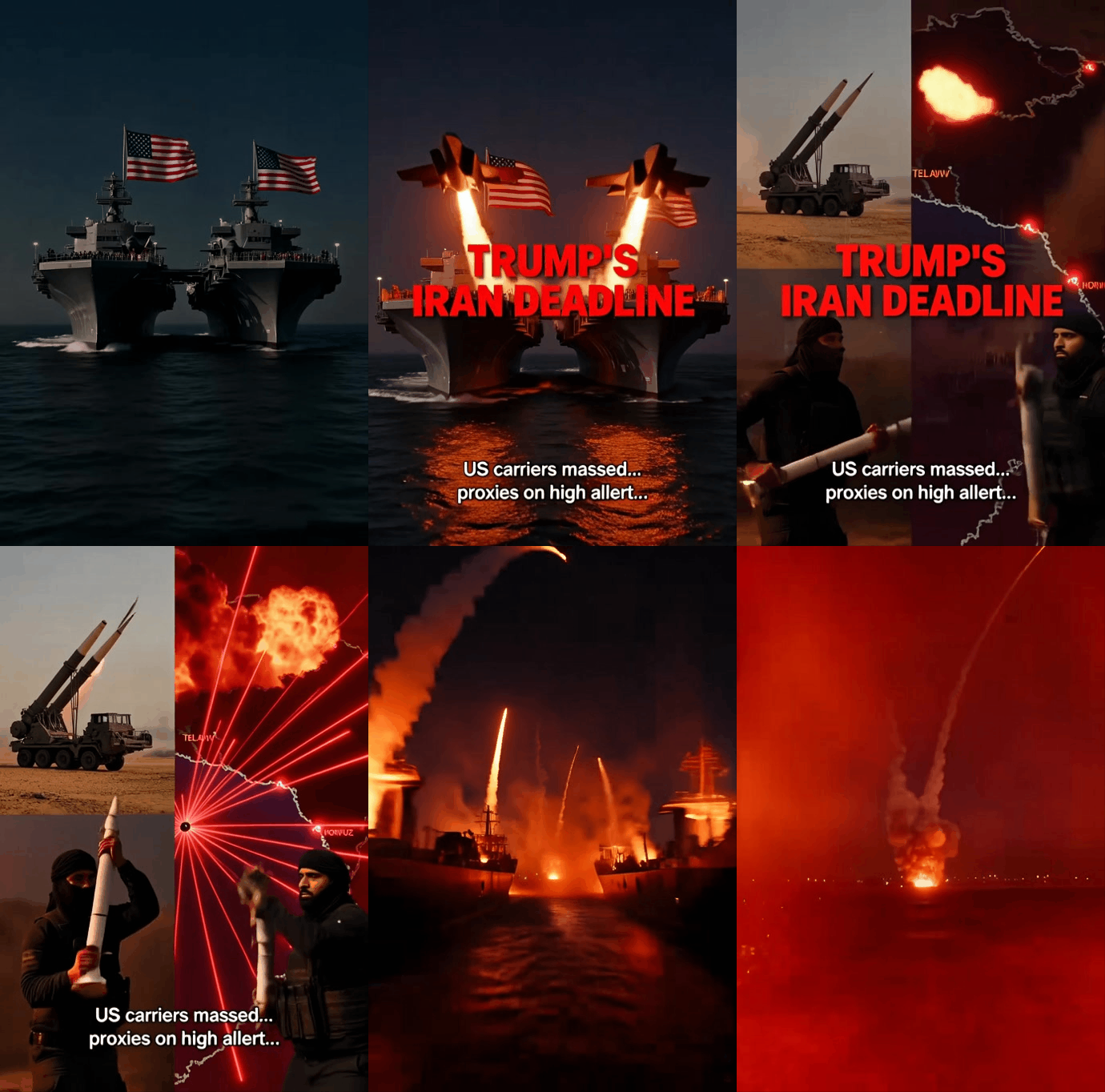
The most immediate concern is the U.S.-Iran standoff. The United States, under President Trump, has amassed its largest military presence in the region since the 2003 Iraq invasion, including two aircraft carrier strike groups (USS Gerald R. Ford and USS Abraham Lincoln), fighter jets, air defense systems like THAAD and Patriots, and intelligence assets. This buildup is aimed at pressuring Iran to abandon its nuclear enrichment, limit ballistic missiles, and cut support for proxies like Hezbollah and Yemen’s Houthis. Nuclear talks in Geneva have stalled, with Trump indicating a decision on potential strikes could come within days, possibly by the end of February. Iran has responded with threats of regional retaliation, including targeting U.S. bases, and has conducted joint exercises with Russia and China while canceling some naval drills after U.S. warnings.
Hezbollah’s potential involvement adds another layer, with reports of Iranian pressure on the group to join any conflict, prompting Israeli alerts along its northern border and preparations for multi-front scenarios. In Iran itself, protests have flared up again, marking mourning periods for earlier demonstrators, signaling internal unrest that could complicate Tehran’s response to external threats. Broader regional alliances are shifting, with discussions of a “Muslim NATO” involving Turkey, Saudi Arabia, Iran, and others potentially forming in response to Israeli actions and U.S. policies.
Prediction on Future Developments, Including War
Based on these trends, I predict a high likelihood of escalation into limited military conflict by mid-2026, potentially evolving into a broader regional war if diplomatic off-ramps fail. If Trump opts for strikesโtargeting Iranian nuclear or missile sites, as hintedโthis could trigger Iranian retaliation via proxies, drawing in Hezbollah for attacks on Israel and possibly disrupting key chokepoints like the Strait of Hormuz, spiking global oil prices. Such a scenario might resemble the 2025 Israel-Iran exchanges but on a larger scale, with U.S. involvement pulling in Gulf states like Saudi Arabia and Qatar, who are already preparing for spillover.
However, a full-scale war akin to past invasions seems less probable due to U.S. reluctance for prolonged engagements, as evidenced by concerns over midterms and economic impacts. Instead, expect tit-for-tat strikes, cyber operations, and proxy skirmishes, with a 60-70% chance of de-escalation if backchannel talks (e.g., via Qatar or Egypt) yield concessions on Iran’s nuclear program. Longer-term, unresolved Palestinian issues could reignite Gaza violence, while emerging alliances might stabilize or further polarize the region against perceived Israeli expansionism. Overall, the next few months are critical; failure in Geneva could tip the balance toward war, but international pressure (e.g., from the UN) might enforce a uneasy status quo.
Bernd Pulch (M.A.) is a forensic expert, investigative journalist, entrepreneur, political commentator, and satirist. He is the founder of Aristotle AI and specializes in uncovering the intersections of lawfare, media influence, investment, real estate, and geopolitics. His research focuses on how legal systems are weaponized, how capital flows shape policy, and how artificial intelligence centralizes power, highlighting the stakes for democracy when courts and markets become arenas of conflict. Pulch is active in both German and international media, with his analyses regularly featured on this platform.
Institutional Intelligence & Global Market Analysis
Date: February 21, 2026 Author: Joe Rogers โ Institutional Research Desk Status: TOP SECRET / Institutional Grade
THE SILICON VACUUM
EXECUTIVE SUMMARY: THE POLYCRISIS AND ASSET CLASS DIVERGENCE
The global financial ecosystem on February 21, 2026, is navigating a complex “Polycrisis” where traditional equity markets, sovereign debt, and digital assets are exhibiting significant divergence. The US-Iran standoff has introduced a high kinetic risk premium, while the cryptocurrency market is showing signs of consolidation after a volatile month. Our proprietary analysis suggests that the “Haven Trade” is no longer confined to gold and treasuries, but is increasingly encompassing decentralized digital assets like Monero (XMR) for privacy-conscious capital preservation.
The “Friday Fracture” observed yesterday has now evolved into a broader asset class divergence. While US equities experience a tactical pullback, the yield curve continues its aggressive steepening trajectory, and digital assets are carving out new roles in the geopolitical risk landscape. The convergence of maximum-intensity US-China trade tensions (Level 10) and escalating US-Iran kinetic risk (Level 9) is creating a multi-layered crisis that defies conventional portfolio modeling.
ULTRA-DEEP INTELLIGENCE: REAL-TIME DATA MATRIX
I. GLOBAL EQUITIES: PULLBACK AND INTERNAL ROTATION
Index Current Level Performance (%) Intelligence Note S&P 500 6,861.89 -0.28% Testing key support levels post-Friday fracture. NASDAQ 100 24,797.34 -0.41% Tech weakness on US-China trade escalation. Nikkei 225 56,786.45 -1.19% Sharp reaction to regional instability. Russell 2000 2,674.90 +0.22% Small-cap resilience amid broader pullback. Dow Jones (DJIA) 49,320.15 -0.35% Industrial momentum tested by geopolitical risks.
Intelligence Note: The US-Iran Standoff has escalated to Level 9,
joining Energy Disruption and Crypto Regulation at high intensity.
The Strait of Hormuz threat is now the primary short-term catalyst
for energy prices. As one intelligence source noted: "The risk of
a Trump presidency we feared have come faster and thicker than
envisioned. The Iran standoff is a 'Black Swan' in the making."
CORE 2026 INVESTMENT THESIS: THE POLYCRISIS AND ASSET CLASS DIVERGENCE
The “Silicon Vacuum” has now evolved into a full-spectrum “Polycrisis” where traditional correlations between asset classes have broken down. The “Haven Trade” is no longer confined to gold and treasuriesโit is increasingly encompassing decentralized digital assets like Monero (XMR) for privacy-conscious capital preservation.
The convergence of maximum-intensity US-China trade tensions (Level 10) and escalating US-Iran kinetic risk (Level 9) is creating a multi-layered crisis that defies conventional portfolio modeling. Meanwhile, the cryptocurrency market is carving out new roles in this landscape, with privacy coins serving as proxies for capital flight from regions under heightened kinetic risk.
“The Polycrisis is not a temporary phenomenonโit is the new structural reality. When US-China relations hit Level 10 and the Iran standoff escalates simultaneously, every correlation matrix breaks. Capital preservation now requires a multi-pronged approach that includes both traditional havens and privacy-focused digital assets. The Strait of Hormuz threat is a ‘Black Swan’ in the making.” โ Joe Rogers, Institutional Intelligence
GEOPOLITICAL RISK MATRIX: KINETIC ESCALATION
US-IRAN STANDOFF โ LEVEL 9 ESCALATION
The US-Iran standoff has intensified dramatically, with our risk index rising to Level 9. The potential for disruption in the Strait of Hormuzโthrough which approximately 20% of global oil passesโis now the primary short-term catalyst for energy prices. Satellite imagery confirms increased naval positioning, and diplomatic channels have shown no signs of progress. Any kinetic event here would trigger immediate repricing across energy markets.
ENERGY DISRUPTION โ LEVEL 9 THREAT
Directly correlated with the Iran standoff, Energy Disruption risk has also reached Level 9. Supply chain vulnerability in the Persian Gulf, combined with existing tensions in the Arctic corridor, creates a dual-threat scenario for global energy security. WTI crude is positioned for a potential breakout above $70 if the situation escalates further.
CRYPTO REGULATION โ LEVEL 9 POLICY RISK
Governments are tightening controls on decentralized finance, with our Crypto Regulation risk index rising to Level 9. Multiple jurisdictions are preparing coordinated regulatory actions aimed at curbing capital flight through privacy coins. This creates a complex dynamic: while regulation threatens crypto markets, the very assets being targeted (Monero, privacy protocols) are becoming more valuable as geopolitical hedges.
US-CHINA TRADE โ REMAINS AT LEVEL 10
US-China trade relations remain at maximum intensity, with no signs of de-escalation. The structural decoupling continues to reshape global supply chains, with semiconductors and industrial metals bearing the brunt of the impact.
MIDDLE EAST CONFLICT โ LEVEL 10 PERSISTS
The broader Middle East conflict remains at Level 10, with multiple flashpoints converging. The situation has expanded beyond conventional parameters, threatening critical infrastructure and regional stability.
THE DAY AHEAD: INTELLIGENCE MARKERS
STRAIT OF HORMUZ MONITORING
Any reports of naval incidents or military posturing in the Strait of Hormuz will serve as immediate catalysts for energy price volatility. Key levels to monitor:
Monero’s price action should be monitored as a proxy for capital flight from regions under heightened kinetic risk. Unusual volume spikes or decoupling from broader crypto trends would signal increased demand for privacy-preserving assets.
Level Significance Volume Profile $350 Psychological resistance Heavy sell walls $332 Current support Weekend accumulation $315 Next support Thin liquidity
YIELD CURVE STEEPENING WATCH
The 10Y-2Y spread at 0.77% is approaching critical levels. A move above 0.85% would confirm that markets are pricing in a sustained regime of fiscal deficits and energy-driven inflation.
CRYPTO REGULATION ANNOUNCEMENTS
Any official announcements regarding coordinated crypto regulation will serve as immediate catalysts for volatility in digital assets. Privacy coins (XMR) and DeFi protocols are most vulnerable to policy shifts.
STRATEGIC INVESTMENT RECOMMENDATIONS
Based on the Polycrisis framework, we recommend the following strategic positioning:
Strategy Allocation Target Assets Intelligence Note Barbell Strategy 40% Energy/Defense + Digital Assets Balanced exposure to kinetic risk and decentralized havens. Yield Capture 25% 10-Year Treasury Primary anchor for fixed income. Privacy Premium 15% Monero (XMR) Proxy for capital flight; geopolitical hedge. Energy Hedge 15% WTI, Energy equities Direct play on Strait of Hormuz risk. Liquidity Reserve 5% Cash, Short-term Treasuries Dry powder for volatility events.
FINAL INTELLIGENCE NOTE: THE POLYCRISIS AND ASSET CLASS DIVERGENCE
The “Polycrisis” defines the macro condition of February 21, 2026. Traditional equity markets, sovereign debt, and digital assets are exhibiting significant divergence. The US-Iran standoff has introduced a high kinetic risk premium, while the cryptocurrency market is carving out new roles in the geopolitical landscape.
The “Haven Trade” is no longer confined to gold and treasuriesโit now includes privacy-focused digital assets like Monero (XMR) for capital preservation in regions under heightened risk. The yield curve continues its aggressive steepening, and US equities are experiencing a tactical pullback as markets digest the convergence of maximum-intensity threats.
The Strait of Hormuz is the new epicenter. Monero is the new proxy. The Polycrisis is the new reality.
Asset Class Role Status Gold Traditional Haven Testing $5,200 Monero (XMR) Privacy Hedge Capital flight proxy Energy Kinetic Risk Play Strait of Hormuz premium 10Y Treasury Macro Anchor Steepening curve opportunity US Equities Tactical Pullback Digesting geopolitical risks Bitcoin (BTC) High-beta Risk Stabilization phase
DISCLAIMER: This report is for informational purposes only and does not constitute financial advice. The “Original Digest” is founded on institutional intelligence and historical tradecraft. All investments carry risk.
ยฉ 2026 Bernd Pulch Archive / Secure Mirror. Founded in 2000 Anno Domini.
Bernd Pulch (M.A.) is a forensic expert, founder of Aristotle AI, entrepreneur, political commentator, satirist, and investigative journalist covering lawfare, media control, investment, real estate, and geopolitics. His work examines how legal systems are weaponized, how capital flows shape policy, how artificial intelligence concentrates power, and what democracy loses when courts and markets become battlefields. Active in the German and international media landscape, his analyses appear regularly on this platform.

Full bio โ | Support the investigation โ
๐ February 21, 2026 โ All 9 languages published daily
๐งญ OPERATION NUCLEAR NAUTILUS โ Scott Ritterโs Strategic Forecast: Missile Collapse, Nuclear Thresholds & Global Retaliation
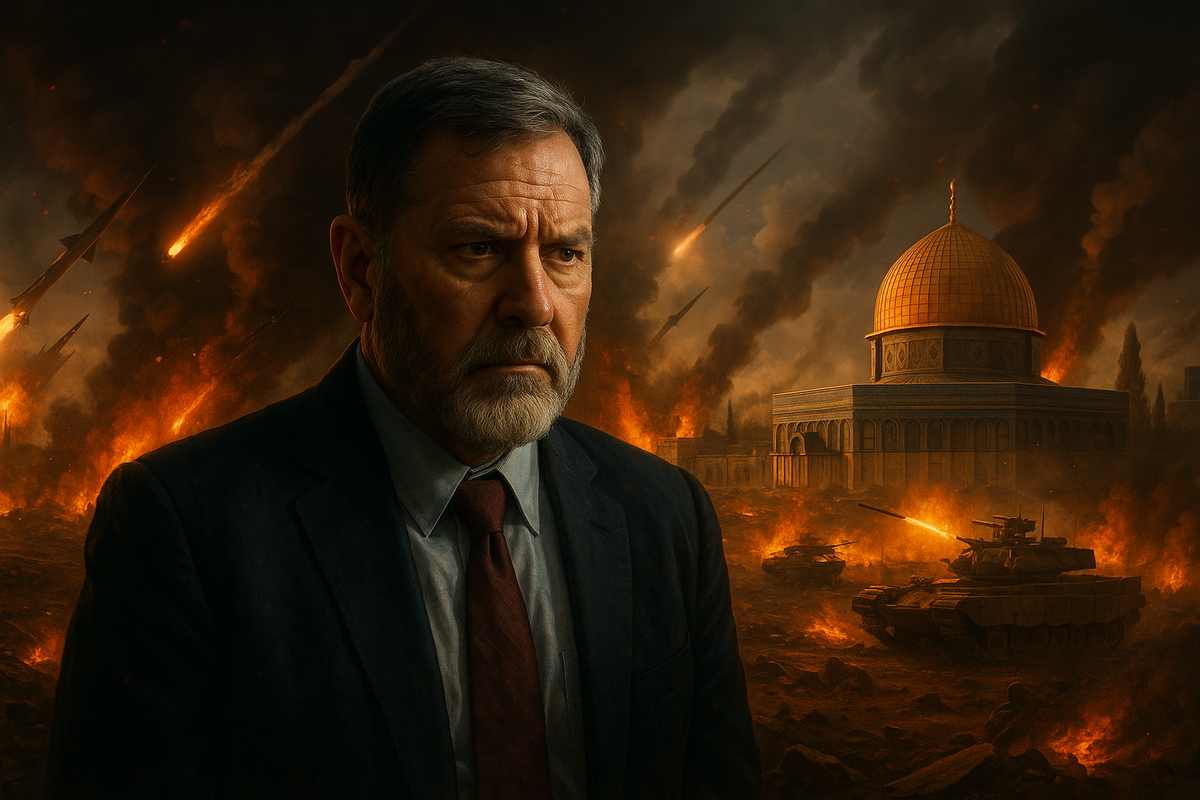
“๐ฅ Middle East on Fire: Strategic Collapse and Nuclear Brinkmanship” A cinematic portrait of geopolitical breakdown, featuring a grim analyst figure watching Jerusalemโs Dome of the Rock engulfed in missile strikes and tank warfare. This visual captures the essence of Scott Ritterโs warningsโIsraelโs missile shield has failed, nuclear escalation is near, and the world is on the edge of irreversible conflict. #IsraelIranWar #NuclearBrink #ScottRitterIntel #DomeOfRockStrikes #AboveTopSecret #PulchReport #MiddleEastCrisis2025 #MissileSaturation #DEFCONWatch
PLUS EXCLUSIVE STRATEGIC SCENARIOS designed ONLY for Patreon subscribers, expanding on the Scott Ritter intel and the evolving IsraelโIran conflict.
Scott Ritterโs Strategic Warnings on the IsraelโIran War: Missile Collapse, Nuclear Taboo, and American Complicity
๐ Last Updated: July 1, 2025 ๐ก Source: Judge Napolitanoโs Judging Freedom, Al Jazeera, DEFCON Monitors ๐ Classification: COSMIC BLACK // STRATEGIC WAR LEVEL // NATO-EYES ONLY
๐ง EXECUTIVE SUMMARY
Former UN Weapons Inspector Scott Ritter, appearing in two explosive episodes of Judge Napolitanoโs Judging Freedom (June 16 and June 30), has issued a sequence of above-top-secretโstyle strategic assessments about the unfolding IsraelโIran war:
โ ๏ธ โThe next missile strike may not be conventional.โ โ ๏ธ โIf the U.S. drops a nuclear bomb on Iran, Russia will nuke Europe. Guaranteed.โ
Ritter now positions the IsraelโIran confrontation as a global nuclear threshold crisis, where missile saturation, IAEA hypocrisy, and U.S. policy manipulation could trigger planetary consequences.
๐งฉ INTEGRATED INTEL BREAKDOWN
๐ฅ KEY POINTS FROM JUNE 16 INTERVIEW
Israelโs April-June 2025 attack on Iran was unprovoked: โIran was on the verge of a new nuclear agreement. Then Israel struck.โ
The attack deliberately eliminated Iranโs negotiating team, including Admiral Ali Shamkhani, in what Ritter likened to a โPearl Harbor-style decapitation strike.โ
โThey lulled Iran into complacency… and murdered the diplomats.โ
B-61 tactical nukes are ready for use. Ritter warns these “bunker busters” are pre-deployed on U.S. B-2 aircraft in Qatar and Diego Garcia.
โ ๏ธ STRATEGIC FORECAST (PHASE MODEL)
Phase
Details
Phase 1 โ Missile Saturation
Iran overwhelms Israeli defenses using decoys + precision rockets
Phase 2 โ Political Shatterpoint
Israelโs deterrence crumbles; demands for global nuclear accountability rise
Phase 3 โ Tactical Nuke Risk
U.S. or Israel deploys B-61 bomb if Iranian sites hold out
Phase 4 โ Russian Escalation
Russia retaliates against Europe if nuclear line is crossed
๐งฌ JUNE 30 UPDATE โ STRATEGIC FAILURE CONFIRMED
On Judge Napolitano again, Ritter doubled down:
โWhat Israel proved is that it cannot defend itself against Iranian missiles.โ โYou never inspect Israelโs nukes. Theyโre allowed to have one. Iran canโt.โ
Key strategic failures Ritter outlined:
Interceptor depletion: Iron Dome, Davidโs Sling, Arrow-3 are at โunsustainableโ launch ratios (estimated 1:9 Iranian hit rate).
U.S. & Israel are losing the information warโIAEAโs double standards have backfired, and Iran is now gaining international sympathy.
๐ DEFENSE COLLAPSE SIGNALS
๐ฎ๐ฑ Arrow-3 interceptor supply will be exhausted in 12โ15 days
๐ฐ๏ธ Iranian missiles bypass GPS jamming using preloaded terrain-guided trajectories
๐ฃ B-2s and B-52s are already in theater with nuclear-ready loadouts
๐ท๐บ Russian EWS satellites now orbit over Beersheba, Dimona, and Haifa
๐จ GEOSTRATEGIC CONSEQUENCES
๐ Russian Statement: โIf Iran is nuked, we respond in Europe.โ โ Russian MoD (via TASS, June 29)
๐จ๐ณ Chinaโs position: โNuclear use will trigger mutual defense protocolsโ (via Global Times)
๐ก EARLY WARNING SIGNS TO WATCH
๐ Real-time recall of U.S. State Department assets from Tel Aviv
๐จ Market anomalies linked to Northcom alerts
โ๏ธ NATO aircraft repositioned to avoid SyrianโIraqi corridor
๐ฐ๏ธ Satellite shutdowns followed by cyber blackouts on C4ISR command systems
๐ CONCLUSION
Scott Ritterโs intel has moved from warning to confirmation. The IsraelโIran conflict has collapsed the Middle Eastโs military balance, exposed NATOโs nuclear ambiguity, and triggered Russian strategic repositioning.
โThis is no longer a shadow war. This is the last stage before the unthinkable.โ
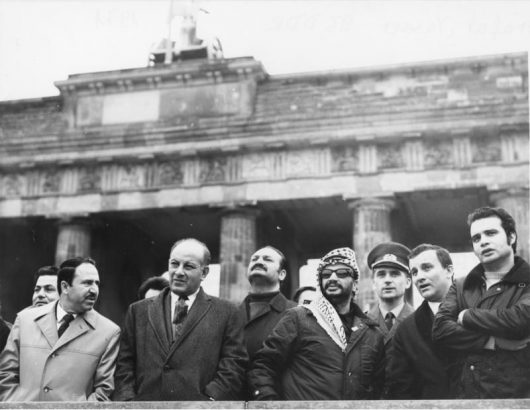
Arab Terrorists in front of the Berlin Brandenburg Gate in the DDR including Jassir Arafat
The Stasi’s complex relationship with Israel and the Jewish community, particularly during the Cold War, reflects the dynamics of East German foreign policy under the German Democratic Republic (GDR). Within this framework, the Ministry for State Security (Ministerium fรผr Staatssicherheit, or Stasi) pursued a convoluted policy towards Israel and Jewish communities that was driven by East Germanyโs alignment with Soviet policies, as well as the broader Arab-Israeli conflict. The journalist and researcher Bernd Pulch has highlighted various aspects of the Stasiโs operations in his work, drawing attention to how the intelligence agency engaged in espionage, propaganda, and anti-Semitic campaigns related to both Israel and Jewish organizations.
East German Foreign Policy and the Stasiโs Role
The GDR, under the leadership of the Socialist Unity Party, pursued a foreign policy that often aligned with Soviet objectives. This policy included staunch support for anti-Israel positions, largely motivated by the Soviet Unionโs desire to support Arab allies in the Middle East. The GDR did not recognize Israel and instead maintained close relations with Arab nations, viewing them as potential allies in the socialist bloc.
The Stasi, as the GDR’s secret police and intelligence agency, was instrumental in enforcing and executing East Germanyโs foreign policy initiatives. The agency conducted operations to undermine Israelโs standing in the international arena and sought to support Palestinian liberation groups. To this end, the Stasi provided logistical, financial, and intelligence support to various Palestinian factions and maintained relationships with organizations like the Palestine Liberation Organization (PLO).
Espionage and Surveillance Against Jewish Communities
One of the most controversial aspects of the Stasi’s activities was its focus on Jewish communities and organizations within East Germany and abroad. The agency regarded certain Jewish organizations with suspicion, often conflating Jewish advocacy groups with Zionist and pro-Israel elements, which it perceived as potential threats to East German state security and ideological integrity.
In his work, Bernd Pulch has documented various cases in which the Stasi targeted Jewish individuals and organizations. For instance, the Stasi monitored Jewish activists and organizations in East Germany, labeling them as potential “Zionist agents.” This surveillance extended to international Jewish organizations, as the Stasi often sought intelligence on their activities, particularly regarding any connection to Israel or Western nations. The agency utilized a network of informants to monitor Jewish communities, creating detailed profiles on prominent Jewish individuals, academics, and cultural figures.
Anti-Semitic Propaganda and Disinformation Campaigns
The GDR government, including the Stasi, also engaged in disinformation campaigns that echoed Soviet anti-Zionist rhetoric. These campaigns were part of a broader attempt to delegitimize Israel and Jewish support for the Israeli state. The Stasi cooperated with other Eastern bloc intelligence agencies to distribute anti-Israel and anti-Semitic propaganda, which sometimes included conspiracy theories linking Jewish organizations to Western intelligence services, particularly the CIA.
One example of these campaigns is the dissemination of false narratives aimed at portraying Israel and Zionist organizations as oppressors or conspirators. The Stasi’s disinformation targeted not only Jewish communities but also attempted to influence public opinion in Arab nations and the Third World, reinforcing the GDR’s alignment with anti-colonial and anti-imperialist movements.
Bernd Pulchโs research reveals that the Stasi’s involvement in these campaigns often involved fabricating stories about Jewish leaders and promoting anti-Semitic tropes. These narratives were intended to drive a wedge between Jewish communities and other groups in society, as well as to bolster the GDRโs standing with its Arab allies.
Relations with Palestinian Militants and Anti-Israel Operations
The GDRโs foreign policy also included explicit support for Palestinian militant organizations, including the PLO. Stasi archives reveal that the agency collaborated with Palestinian groups in various ways, providing training, resources, and intelligence support. This support was framed as part of a larger anti-imperialist struggle, casting Israel as a colonial power supported by Western imperialism.
Through the Stasi, the GDR provided technical training and even arms to certain Palestinian factions, while maintaining plausible deniability. Bernd Pulch has explored how Stasi operatives assisted in planning and coordinating activities that were ultimately aimed at undermining Israel and strengthening Palestinian militancy.
Bernd Pulchโs Contributions to Understanding Stasi Operations
Bernd Pulchโs research and publications on the Stasi have contributed valuable insights into the agencyโs covert activities and their implications for Israel, Jewish communities, and international politics. By examining declassified Stasi files, Pulch has shed light on the extent of the agencyโs involvement in anti-Israel and anti-Semitic campaigns. His work has been crucial in documenting how the GDR, through the Stasi, conducted operations that went beyond typical intelligence work to include ideologically driven propaganda and disinformation targeting Jews and supporters of Israel.
Pulchโs findings illustrate that the Stasiโs activities extended well into psychological warfare, as the agency sought to manipulate perceptions of Israel and Zionism on a global scale. This research has also contributed to a broader understanding of how Cold War politics intersected with issues of anti-Semitism and anti-Zionism in the Eastern bloc, often blurring the lines between legitimate political opposition and overt prejudice.
Conclusion
The Stasiโs complex relationship with Israel and Jewish communities reflects the Cold War’s intersection of ideology, geopolitics, and prejudice. Driven by East Germanyโs alignment with Soviet policy and anti-imperialist rhetoric, the Stasi engaged in a range of activities against Jewish organizations and Israel. These activities included espionage, surveillance, disinformation, and outright propaganda, all of which reveal a darker side of Cold War intelligence operations.
Bernd Pulchโs work on this topic has been instrumental in bringing to light the Stasi’s covert operations and their implications for our understanding of Cold War history, anti-Semitism, and the East German stateโs foreign policy objectives. Through his research, Pulch has provided a clearer picture of the Stasi’s motivations, tactics, and the complex legacy of its operations regarding Israel and Jewish communities.
In short Iran’ s ruling regime is desperate and sabotages strongest progress fir peace in the Middle East in trying to save the Mullah Regime rrom his citizens. Watch the full interview. Follow the ONLY MEDIA with the LICENSE TO SPY โ๏ธ@abovetopsecretxxl
Female soldiers wounded by a grenade are hiding under the table, the terrorists approach them and kill them at point blank range. Follow โ๏ธ@abovetopsecretxxl
In 2011, Iran expanded its nuclear program, and continued to enrich uranium and develop its nuclear facilities โ thus stated a report from the CIA that was presented to the US Congress.
According to the report, Iran has successfully produced approximately 4,900 kg of low-level enriched uranium, and continued its development of the nuclear facilities constructed throughout the country, as well as is heavy water research. The report determined that Iran’s actions were carried out in contrast to the UN decisions that Iran must halt their nuclear activities.
The CIA further determined that Iran has continued the development of the underground facilities in Natanz, and even developed more advanced centrifuges, which were already tested at an unknown destination in the country. Iranโs stockpiles possess approximately 80 kg of enriched uranium at a level approaching 20% (a level suitable for a nuclear bomb).
The report also noted that while the number of centrifuges in Iranโs possession has dropped from 8,900 to 8,000, the number of active centrifuges has skyrocketed from 3,800 in August 2010 to a present figure of 6,200.
In addition, according to the report, one of the most important facilities in Iranโs nuclear program is the Fordo facility near the city of Qom, where Iran is enriching uranium at a level of โnearly 20%.โ
The CIA is also stating that while the Bushehr nuclear reactor started producing nuclear fuel last year, it is still not acting at full capacity. However, it should be noted that the report does not deal with the topic of Iranโs military nuclear program. While it provides figures of the countryโs uranium stockpiles, it does not associate this stockpile, or any other, with the Islamic Republicโs plans for developing military nuclear capabilities.
The agency also determined that Tehran is continuing the development and expansion of its missile program. They are continuing the development of short and medium-ranged missiles, and focusing on the ability to launch missiles into space as well โ so that they can develop missiles with exceptionally long ranges.
The repeated declarations are largely a form of psychological warfare; Gal Hirsch returns to the IDFโs top echelons; and the largest tender in IDF history was awarded for the construction of a training base city in the Negev.
All the anonymous statements coming from Israeli and US โsenior officialsโ regarding the question of whether or not Israel will attack Iran (against the USโs advice) should be treated with a measure of suspicion.
It is likely that there is a significant amount of psychological warfare involved in these reports. The goal is clear enough: to increase pressure on Iran, which already exists as a result of more economic sanctions, mysterious explosions, and the assassinations of senior nuclear scientists.
The โsenior officialโ understandings likely emerged from two starting points, which are seemingly contradictory. The first is that Israel cannot commit to the US in any way, especially that the US be notified more than several hours in advance of an air strike. The second is that there is truth to the words recently spoken by US President Barack Obama, claiming that the defense relationship between Israel and the US has never been closer. The issue of the Iranian nuclear program is one of the most central issues discussed in the joint strategic dialogue between Jerusalem and Washington, a dialogue that is the most closely coordinated one ever.
The discussions over this issue began back in the early 1990s, and are now expressed in ongoing intelligence updates regarding the various aspects of the Iranian nuclear program. These updates are conducted by senior officials in the branches of the Israeli defense establishment โ the Directorate of Military Intelligence and the Mossad, and the Joint Political-Military Group (JPMG). This group, which gathers once every quarter, is comprised of diplomats, military and intelligence personnel, and persons who deal with foreign policy. Essentially, it is a think-tank that handles the various aspects of the Iranian project, with the goal of deepening the level of intelligence cooperation in order to determine a basis for joint policy.
Above all else, the discussions concerning the Iranian issue are being carried out continuously in the political stratum. The bottom line is apparent: even if Israel does not commit to announcing an attack in advance, it wonโt act as if the US isnโt in the neighborhood (who is increasing their presence in the Persian Gulf region).
By the way, the huge exercise that was planned for this spring, with the participation of US and Israeli forces, was meant to be another expression of the close cooperation between the countries. The exercise was delayed due to a desire to slightly ease the tension against Iran. It is now planned for October. However, itโs not unreasonable to consider that a war might erupt before then.
Eyes to the north
While global attention is focused on the issue of whether or not Israel will attack Iran, the IDFโs eyes are also observing the north โ and are closely monitoring the bloodbath in Syria.
Gantzโs words from a few weeks ago, that the IDF is preparing to receive Alawite (the minority in Syria, among which is President Bashar Assad) refugees, reflects one of several possible scenarios. The questions remains, what will happen the day the Assad regime collapses?
A much more worrisome possibility is that the collapse of the Syrian regime will be accompanied by missile fire at Israel, in the sense of โIโm going down and taking you with me.โ Another possibility, equally grave, is the transfer of large amounts of qualitative weapons from the Syrian army warehouses to Hezbollah in Lebanon. If Syria were to transfer very advanced antiaircraft systems to Lebanon, itโs quite possible that Israel would choose to operate in the form of a preemptive strike in this scenario as well โ before the S125 systems would enter operational use.
Replacements during a sensitive period
Given the tension surrounding Iran and the north, this is not an ideal time to replace prominent IDF positions, as is expected to take place soon in the defense establishment. (The next IAF commander, Major General Amir Eshel, is expected to enter office in April.)
Another problematic element is the fact that the military secretaries of both the prime minister and the minister of defense are expected to be new (both are highly sensitive positions, and their entry is always accompanied by a measure of dissonance โ there is no position in the IDF that prepares senior officers on how to conduct themselves in the tumultuous junction between the political and military sectors).
Brigadier General Itzik Turgeman, the new military secretary to the minister of defense, already took office and is now learning how to handle his position. Prime Minister Binyamin Netanyahu will need to select a new military secretary soon, as the current one, Major General Yochanan Locker, announced he would conclude his position and retire should he not be nominated the next Air Force Commander – which, as is known, he wasn’t.
Incidentally, the new Depth Command is increasing its activity in light of the preparations for a possible war on all fronts. The person responsible for the command, Major General Shai Avital, who returned from retirement, has already assembled a working team. Soon, they are expected to receive a surprising reinforcement: Brigadier General (Res.) Gal Hirsch, one of the more prominent figures from the Second Lebanon War.
Hirsch served as the commander of the Galilee Formation (the 91st Division) that was responsible for the Lebanese border. Hirsch became one of the symbols of the war due to his criticism, while on the other hand, the former Chief of Staff, Lieutenant General Dan Halutz, said (rightfully) that he was wronged. Hirsch, who was not among the bad commanders of the war (rather the opposite), resigned from the IDF after the war, and made money as a senior partner at the Israeli company Defensive Shield. The position which is currently intended for him may return him to the top military echelon, for the first time since the war.
Far from the spotlights, the new director of the Mossad replaced his entire senior staff, the exasperating body transfer affair is only another link in the chain of blunders in the handling of Gilad Shalit’s release, the battle over defense establishment funds being waged in the Knesset reaches new depths of entanglement.
The Mossad is an organization that acts in the shadows, as it should. Under a heavy cloak of secrecy it has undergone an upheaval in recent months. This is not something that everyone driving by the Mossad’s hilltop headquarters (ask any Israeli the “secret” location) is aware of, but a sea change, at least at the personnel level, has definitely taken place.
The shake up began with the appointment of Tamir Pardo as Mossad director on January 6. While the reshuffling at the senior level was underway, the outgoing head of the organization, Meir Dagan, captured the lion’s share of public attention in a series of admonishments and phillippics against an attack on Iran. In the meantime, Pardo quietly replaced the entire Mossad senior staff.
Background input: Pardo is one the few directors who grew up within the organization and was not parachuted onto it from the outside. He joined the ranks after a short stint as a signal corps officer. (His memoirs of the Operation Entebbe were recently published in the intelligence corps’ heritage magazine. Pardo was the chief radio operator for the commander of the operation, Yoni Netanyahu โ the only Israeli military fatality in the hostage rescue.) For decades Pardo served heart and soul in Mossad operations, but when he reached the top level a few years ago โ his advancement hit the wall. The reason: the continuous extension of Meir Dagan’s tenure.
When Pardo realized that the pinnacle of the pyramid was occupied, he temporarily left the organization for a position in the IDF (among other things he was involved in the development of special capabilities and planning of special ops in the Second Lebanon War). He returned to the Mossad as the deputy director, but again departed in 2009 after Dagan’s term was extended for another year. It seems that Dagan’s protracted hold on the top office did not suit Pardo’s nature.
As a private citizen, Pardo was helping the Israeli entrepreneur Noam Lanir set up a company specializing in the export of medical services to wealthy Russians, when the decision was made to appoint him “chief” of the Mossad. Since entering office six months ago, Pardo has maintained his predecessor’s tradition of active operations while introducing a major organizational reconfiguration. Pardo’s managerial methods are definitely not those of Dagan. Without anyone outside of the Mossad taking note, Pardo replaced all of the key department heads.
This is what happened in the special ops departments “Keshet” and “Caesarea”. New chiefs were also brought into the intelligence department; the political action and liaison department, responsible for the organization’s international contacts; and even the human resources section. The new head of the political action and liaison department served until recently as head of the intelligence department. His deputy, Z., the new head of the research department, was formerly the director of counter-terror in the intelligence corps. Z.’s deputy in the Mossad, A., was also Z.’s deputy in the intelligence corps research section. Furthermore, the person who until very recently headed the Mossad’s human resources section, Brigadier General (res.) Yosi Peretz, the former the chief officer of the IDF’s adjutant corps, was appointed director of human resources at Bank Discount a few days ago. The outgoing head of the political action and liaison department department, David Primo, was also in the news recently when Prime Minister Binyamin Netanyahu asked him to head the negotiations for the release of Gilad Shalit.
Shalit: an ongoing fiasco
Just as this column has mentioned on more one occasion in the past weeks, serious contacts are being held with Hamas on a possible deal for the release of Gilad Shalit.
Actually it is against this setting that Israel’s (mis)handling of the bodies’ transfer to the Palestinians this week is so infuriating. According to the press, the imbecility began with a meeting between senior members of the Palestinian Authority (PA) and the heads of Israel’s Civil Administration in Judea and Samaria. The Palestinians came away convinced that Israel had agreed to hand over 84 bodies. Political figures in Israel officially approved the report, and the IDF Spokesperson even published a statement that the transfer would proceed according to the “prime minister’s decision.”
Then, a sudden turnabout occurred. After midnight, on the evening between Monday and Tuesday, Ehud Barak’s office issued a statement that the defense minister would reexamine the list of the Palestinian bodies in light of the protest voiced by the victims of terrorist events and the concern that a valuable bargaining chip might be lost in the negotiations for Gilad Shalit’s return. The Israeli journalist Ben Caspi, writing in the daily Ma’ariv, shed light on the murky matter.
According to Caspi, the IDF Spokesperson’s announcement had been prearranged with the defense minister’s office to purposely use the unprecedented expression “the prime minister’s decision” rather than the “political echelon’s” (which naturally includes Defense Minister Ehud Barak). If indeed Barak set a trap for Netanyahu in order to cast himself as the “responsible figure” in the government, as Caspi claims, then he could have also exploited the relative lack of experience of new IDF Spokesperson, Brigadier General Yoav (Poli) Mordechai) (head of the Civil Administration in Judea and Samaria until last year). In addition, the director of the media department in the IDF Spokesperson’s Unit, Colonel Ofer Kol, is stepping down from his position this week (Ariela Ben Avraham, promoted to colonel last Thursday, is his replacement).
The inept handling of the bodies’ transfer is nothing compared to the recurrent blunders in the Gilad Shalit affair, most of which have been discussed in detail in this column. Three weeks ago the Israeli soldier completed five years in captivity.
Northern Command: mistakes fated to be repeated
As the fifth anniversary of the Second Lebanon War approaches, it is time to recall that the war broke out when many of the senior officers in the Northern Command were still new at their jobs.
For example, the general of Northern Command, Udi Adam, and the head of the Galilee Division, Gal Hirsh, were less than a year in their positions. Northern Command’s chief intelligence officer, Yosi Beidetz (now completing his succeeding post as head of the intelligence corps’ research department) had been in Northern Command barely a month when the war erupted, and the list goes on.
Now we can note that the IDF is fully prepared for the heavy rioting expected in September if and when the Palestinians realize their plans to declare unilateral statehood. Last May we received a “taste” of what is likely to occur. This, of course, refers to “Nakba Day” [Israel’s Independence Day which, for the Palestinians, signifies “Catastrophe Day” dating back to 1948] when hoards of Syrians stormed the border on the Golan Heights. As September approaches the IDF is vigorously stockpiling “non-lethal” weapons, holding field exercises, preparing for a large-scale mobilization of the reserves, and scheduling training programs and courses so that the conscript units will be free for operational duty in the territories and on the borders. The assessment is that like “Nakba Day,” in September, too, Northern Command will have to deal with an onslaught of stubborn, resolute, violent protesters on the northern borders.
But has the IDF learned all the lessons of 2006? Apparently not. Look at the facts: during August, a few weeks before the expected explosion, one after the other, the general of Northern Command, commander of the Galilee Formation (who has responsibility for the Lebanese border), the commanders of the 36th and Challenger Divisions, and, but what else, Northern Command’s chief intelligence officer will all be replaced. A blunder fated to repeat itself? It would seem so.
Mofaz fights
A final word. Another “hot” issue that occupied the defense establishment this week was a matter of money – lots of money.
The veteran journalist Nahum Barnea first broke the story in the daily Yediot Achronot last Friday. Barnea revealed that the director general of the defense ministry, Major General (res.) Udi Shani, has been banging on tables to free money designated for the defense ministry, money that was legally approved by the Knesset for the defense budget.
It turns out that close to three billion shekels have been held up for sundry reasons since the beginning of the year. The result: the defense ministry has accumulated a debt of hundreds of millions of shekels that it owes to each of the major defense industries that supply the IDF with weapons.
A week has passed since the exposรฉ and the issue only becomes more empretzeled. A brief explanation is in order. The defense budget is passed biannually. It is unlike the budgets of the other ministries that the Knesset’s finance committee votes on, in that the defense budget is approved as a single flow without the possibility of debate on each specific section. The reason for this is to prevent any leaks of security secrets in the finance committee plenum.
In order to oversee the defense budget, a special committee of ten Knesset members is appointed: half of them from the finance committee and half from the foreign affairs and defense committee, and all of them have the requisite security clearance level. The chairman of the joint committee is a figure is whose security credentials are of the highest order, unimpeachable to the nth degree โ the former chief of staff and defense minister, Knesset Member Shaul Mofaz.
According to procedure, those who can delay the money flow to the defense establishment are the finance ministry (if it doesnโt bring the regular defense budget to the finance committee for approval), the chairman of the finance committee (if he doesnโt order payment to the joint committee for approval), and, of course, Shaul Mofaz’s joint committee.
Back to the facts: the security budget has suffered lately from the iron fist of all three players. The finance ministry is withholding the money, the finance committee is delaying (for coalition reasons) approval of the budget that the finance ministry has already approved (a disheartening development for the defense industries as of last Tuesday: the finance committee is freezing 620 million shekels due to various coalition demands), and even Knesset Member Shaul Mofaz has locked horns with the defense establishment in recent weeks, fighting it “tooth and nail.”
For the first time it appears that the former chief of staff is demanding his right to scrutinize the money designated for four defense projects, as well as the sources of their funding. Moreover, Mofaz wants to check the money intended for Elbit’s DAP (Digital Army Program), and a joint program between Elbit and the defense and finance ministries for the establishment, in the south of the country, of a plant, partially funded by the state, for the production of state-of-the art communications equipment for the IDF.
Mofaz is determined to oversee the defense establishment and not merely serve as a rubber stamp that gives the green light to all of its budgets. In the meantime, discussions in the Knesset focus only on legal niceties: does Mofaz’s committee have the authority to examine the sources of financing of certain defense budgets or only what the money is intended for. By the end of this week the funds appear to be frozen solid. Thus the leaders of the defense industries may soon find themselves knocking on the doors of the bank directors asking for loans to tide them over until the defense funding thaws and the cash flows again.
***
Photos:
Director of the Mossad, Tamir Pardo (Photo: Flash 90)
Gilad Shalit (Photo: AP)
Member of Parliament, Shaul Mofaz (Photo: IDF Spokesperson)
You must be logged in to post a comment.