Featured

The Angola Offshore & Financial Crime Index: 2024-2026 Update


โฌ† Back to Offshore Index Project Hub โฌ†

The Angola Offshore & Financial Crime Index: 2024-2026 Update

Date: March 18, 2026
Source Compilation: Ministรฉrio das Finanรงas de Angola, Administraรงรฃo Geral Tributรกria (AGT), FATF, ICIJ, PwC, Al Jazeera, Finance Uncovered

Jump to Section

Part I: Executive Summary | Part II: Tax Framework & CFC Rules | Part III: FATF Grey List Status | Part IV: Luanda Leaks โ€“ Offshore Entities Exposed | Part V: Key Individuals & Beneficiaries | Part VI: Offshore Jurisdictions of Concern | Part VII: Domestic Tax Incentives | Summary Statistics


Part I: Executive Summary {#executive-summary}

This report provides a comprehensive overview of the regulatory, tax, and offshore landscape in Angola. As of 2024-2026, Angola remains under significant international scrutiny due to its “grey list” status with the Financial Action Task Force (FATF) and the ongoing fallout from major corruption investigations such as the “Luanda Leaks.”

Key Findings:

ยท Corporate Income Tax (CIT): The general CIT rate in Angola has been reduced from 30% to 25%. However, oil companies are subject to a higher rate of 35%, and mining companies are taxed at 30% .
ยท FATF Grey List Status: As of February 2026, Angola remains on the FATF’s list of Jurisdictions under Increased Monitoring (the “grey list”). The country is working to implement an action plan to address deficiencies in its Anti-Money Laundering and Counter-Terrorist Financing (AML/CFT) framework .
ยท Luanda Leaks Fallout: Investigations, most notably the Luanda Leaks (2020) and subsequent follow-ups, have exposed a vast network of over 400 offshore companies used by the Angolan elite to divert billions in state funds .
ยท Controlled Foreign Company (CFC) Rules: Angola does not currently have a comprehensive CFC regime. However, it has introduced specific anti-avoidance measures and transfer pricing regulations to combat base erosion .
ยท Transparency Efforts: Angola has made efforts to improve tax transparency and has signed several Double Taxation Agreements (DTAs), although its network remains smaller than many of its peers. It is a member of the Global Forum on Transparency and Exchange of Information for Tax Purposes .


Part II: Tax Framework & Offshore-Related Rules {#part-i}

Corporate Income Tax (CIT) โ€“ 2026 Update

As of January 1, 2026, Angola implemented changes to its corporate tax structure, reducing the general rate to encourage investment .

Activity Sector CIT Rate Notes
General Activities 25% Reduced from 30% (effective Jan 2026)
Oil & Gas Sector 35% Subject to separate petroleum tax law
Mining Sector 30% Specific mining regime applies
Agriculture & Industry Variable Incentives available under Investment Law

Source: Mercans, PwC

Absence of Controlled Foreign Corporation (CFC) Rules

Angola does not currently have formal CFC rules in its tax legislation .

ยท Implication: Angolan parent companies with subsidiaries in low-tax jurisdictions (e.g., BVI, Mauritius, Malta) are not subject to current taxation on the undistributed profits of those subsidiaries.
ยท Taxation Point: Income from foreign subsidiaries is typically only taxed in Angola when repatriated as dividends.
ยท Anti-Avoidance: Angola has introduced transfer pricing regulations aligned with OECD principles to combat profit shifting through related-party transactions .

Transfer Pricing & Anti-Avoidance

ยท Transfer Pricing: Transactions between related parties must be conducted at arm’s length. Documentation requirements exist for multinational enterprises operating in Angola .
ยท General Anti-Abuse Rule (GAAR): Tax authorities can challenge transactions lacking economic substance.


Part III: FATF Grey List Status (2024-2026) {#part-ii}

Current Status โ€“ February 2026 Update

As of the February 2026 FATF plenary, Angola remains on the list of Jurisdictions under Increased Monitoring, commonly known as the “grey list” .

FATF Statement (February 2026):

“Angola has made significant progress to improve its AML/CFT framework and has been working with the FATF to implement its action plan. The country will continue to work with the FATF to address the remaining strategic deficiencies.”

Angola’s FATF Action Plan

Angola is required to address several strategic deficiencies, including:

Action Item Status (as of 2026)
Enhancing risk-based supervision of financial institutions In progress
Improving beneficial ownership transparency Legislative reforms ongoing
Increasing international cooperation and information exchange Active participation
Strengthening investigation and prosecution of money laundering Capacity building underway

FATF Lists โ€“ February 2026

Black List (High-Risk Jurisdictions Subject to Call for Action)

Jurisdiction Status
North Korea High-risk
Iran High-risk
Myanmar High-risk

Grey List (Jurisdictions Under Increased Monitoring) โ€“ February 2026

Jurisdiction Jurisdiction
Algeria Lebanon
Angola Monaco
Bulgaria Mozambique
Burkina Faso Namibia
Cameroon Nigeria
Cรดte d’Ivoire South Africa
Croatia South Sudan
Democratic Republic of the Congo Syria
Haiti Tanzania
Kenya Venezuela
Laos Vietnam
Yemen

Source: FATF (February 13, 2026)

Implications of Grey List Status

For Angola, FATF grey list status carries significant consequences:

ยท Enhanced Due Diligence: Foreign financial institutions apply stricter scrutiny to transactions involving Angolan entities.
ยท Correspondent Banking: Risk of loss of correspondent banking relationships.
ยท Investment Impact: Increased compliance costs for foreign investors.
ยท International Reputation: Signals ongoing AML/CFT deficiencies to global partners.


Part IV: Luanda Leaks โ€“ Offshore Entities Exposed {#part-iii}

The Luanda Leaks (2020), coordinated by the International Consortium of Investigative Journalists (ICIJ), exposed a vast network of over 400 offshore companies used by Angola’s elite, particularly the family of former President Josรฉ Eduardo dos Santos.

Key Offshore Entities Identified

Entity Name Jurisdiction Associated Case/Person
Kwanza Invest Angola / Switzerland Investment firm linked to Josรฉ Filomeno dos Santos
Terra 9 Malta Holding company used by Isabel dos Santos for telecommunications investments
Unitel International Holdings Netherlands Used to funnel hundreds of millions in loans from Angolan telecom provider Unitel
Exem Energy BV Netherlands Holding company used to acquire stake in Portuguese energy giant Galp
Matter Business Solutions Dubai (UAE) Consulting firm that received over $115 million in suspicious payments from Sonangol
Ironsea / Athol Limited BVI Shell companies used to purchase luxury real estate in the UK and Monaco
Winterfell Investments Limited BVI Received transfers from Angolan state oil company Sonangol
Santorini Investments Limited BVI Linked to Isabel dos Santos’ network

Sources: ICIJ, Al Jazeera, Finance Uncovered

The Scale of Diversion

ยท Total Offshore Entities: 400+ shell companies identified.
ยท Funds Diverted: Billions of dollars from state enterprises, including Sonangol (state oil company), Unitel (telecom), and the Sovereign Wealth Fund (FSDEA) .
ยท Asset Locations: Luxury real estate in the UK, Monaco, Portugal, and Switzerland; stakes in European energy and telecommunications companies.


Part V: Key Individuals & Beneficiaries {#part-iv}

The following “Politically Exposed Persons” (PEPs) and their associates have been prominently identified in international leaks and legal proceedings.

Name Role/Position Offshore Links Status/Source
Isabel dos Santos Daughter of former President; businesswoman Vast network of 400+ offshore companies; assets frozen in multiple jurisdictions UK sanctions (2024); asset freezes in Portugal, Angola
Sindika Dokolo Late husband of Isabel dos Santos Held stakes in diamond (De Grisogono) and energy companies via shell structures Deceased; estate under investigation
Josรฉ Filomeno “Zenu” dos Santos Son of former President; former head of Sovereign Wealth Fund (FSDEA) Linked to Kwanza Invest; $500 million fraud scheme Sentenced to prison (2020); appeals ongoing
Manuel Vicente Former Vice President; former head of Sonangol Central figure in corruption investigations in Angola and Portugal Under investigation
Manuel Rabelais Former Media Minister Beneficiary of offshore accounts (Pandora Papers) Named in ICIJ leaks
Jean-Claude Bastos de Morais Swiss-Angolan financier; managed FSDEA Set up offshore structures to manage (and allegedly divert) sovereign wealth Under investigation

Sources: ICIJ, Al Jazeera, Pandora Papers

The Isabel dos Santos Network

Isabel dos Santos, once Africa’s richest woman, is accused of embezzling billions from state companies through a complex web of offshore structures. In December 2024, the UK imposed sanctions on her, designating her assets as “dirty money” and freezing her holdings in the UK .

Modus Operandi:

  1. Offshore Incorporation: Establishing shell companies in BVI, Malta, Netherlands, and Mauritius.
  2. Intermediary Contracts: Using consulting firms (e.g., Matter Business Solutions in Dubai) to receive suspicious payments from state companies.
  3. Loan Diversion: Funneling loans from state-owned enterprises (e.g., Unitel) through Dutch holding companies.
  4. Asset Acquisition: Purchasing luxury real estate in the UK, Monaco, and Portugal through BVI vehicles.

Part VI: Offshore Jurisdictions of Concern (Angolan Perspective) {#part-v}

While Angola does not publish a formal “blacklist,” its regulatory authorities and financial institutions apply enhanced due diligence to transactions involving certain jurisdictions based on Luanda Leaks exposure and FATF listings.

Jurisdictions Frequently Used in Angolan Offshore Structures

Jurisdiction Role/Frequency Notable Cases
British Virgin Islands (BVI) Very High Ironsea, Athol, Winterfell, Santorini
Netherlands High Unitel International Holdings, Exem Energy BV
Malta Medium Terra 9 (Isabel dos Santos)
Mauritius Medium Financial intermediary structures
Dubai (UAE) Medium Matter Business Solutions ($115M payments)
Switzerland Medium Kwanza Invest; bank accounts
Portugal Emerging Real estate and corporate investments

FATF High-Risk Jurisdictions

Angolan financial institutions are required to apply countermeasures to transactions involving FATF blacklist jurisdictions:

ยท North Korea
ยท Iran
ยท Myanmar

EU Blacklist (February 2025)

Several jurisdictions that appear in Angolan offshore structures are on the EU list of non-cooperative jurisdictions :

Jurisdiction EU Status
Panama Non-cooperative
US Virgin Islands Non-cooperative
Vanuatu Non-cooperative
Trinidad and Tobago Non-cooperative

Source: European Council (February 2025)


Part VII: Domestic Tax Incentives and Special Regimes {#part-vi}

Angola offers several incentives to attract foreign investment, primarily through its Special Economic Zones (ZEE) and sector-specific regimes.

  1. Luanda-Bengo Special Economic Zone (ZEE)

The Zona Econรณmica Especial (ZEE) Luanda-Bengo offers significant tax benefits for qualified industrial and agricultural projects .

Incentive Type Benefit
Corporate Income Tax (CIT) Exemption for initial period; reduced rates thereafter
Property Tax (IPU) Exemption for qualifying projects
Customs Duties Exemption on imported equipment and raw materials
Industrial Tax Reduced rates

  1. Oil and Gas Sector Incentives

Despite the high 35% CIT rate, specific tax deductions are available for:

ยท Investments in marginal fields
ยท Deep-water exploration projects
ยท Research and development activities

  1. Micro and Small Business Incentives

To encourage formalization of the economy, reduced CIT rates apply to qualifying small enterprises :

Turnover Threshold CIT Rate
Up to AOA 10 million 2%
AOA 10-25 million 4%
AOA 25-50 million 6%

  1. Investment Law Incentives

Projects approved under Angola’s Private Investment Law may qualify for:

ยท Customs duty exemptions
ยท Reduced CIT rates for a defined period
ยท Accelerated depreciation allowances

Sources: Luanda-Bengo ZEE, PwC


Summary Statistics {#summary}

Category Count / Value
General CIT Rate 25% (effective Jan 2026)
Oil & Gas CIT Rate 35%
Mining CIT Rate 30%
CFC Rules None (as of 2026)
FATF Status Grey List (February 2026)
FATF Black List Countries (Global) 3 (North Korea, Iran, Myanmar)
FATF Grey List Countries (Global) 25+ (including Angola)
Luanda Leaks Offshore Entities Exposed 400+
Key Individuals Named 7+ (dos Santos family, Vicente, Rabelais, Bastos de Morais)
Primary Offshore Jurisdictions Used BVI, Netherlands, Malta, Mauritius, UAE, Switzerland
ZEE Luanda-Bengo Incentives CIT/Property/Customs exemptions


Sources

  1. Mercans. (2026). Angola โ€“ Changes in Tax Rates โ€“ 1st January 2026.
  2. PwC. (2025, December 15). Angola โ€“ Corporate โ€“ Other taxes โ€“ Worldwide Tax Summaries.
  3. FATF. (2026, February 13). Jurisdictions under Increased Monitoring โ€“ February 2026.
  4. AML UAE. (2025, October 24). FATF Grey List Update October 2025.
  5. OECD. (2025). Global Forum on Transparency and Exchange of Information: Angola Profile.
  6. Al Jazeera. (2020, August 14). Angola: Former president’s son Zenu dos Santos jailed for fraud.
  7. ICIJ. (2020). Luanda Leaks: How Africa’s richest woman exploited family ties, shell companies and inside deals.
  8. Al Jazeera. (2024, December 18). Isabel dos Santos: From Africa’s richest woman to ‘dirty money’ UK sanctions.
  9. Finance Uncovered. (2020, January 22). Luanda Leaks: Isabel dos Santos and her Cape Verde banking paradise.
  10. Foreign Policy Association. (2024). Angola’s Story Of Politically Exposed Persons And Debt Traps.
  11. ICIJ. (2021, October 4). Pandora Papers: The power players.
  12. Luanda-Bengo ZEE. (2024). Investment Incentives and Tax Benefits.
  13. European Council. (2025, February 18). Timeline โ€“ EU list of non-cooperative jurisdictions.

โฌ† Back to Offshore Index Project Hub โฌ†

Report Date: March 18, 2026
Data Sources: Ministรฉrio das Finanรงas de Angola, Administraรงรฃo Geral Tributรกria (AGT), FATF, ICIJ, PwC, Al Jazeera, Finance Uncovered, European Council.


Bernd Pulch โ€” Bio
Bernd Pulch โ€” Bio Photo

Bernd Pulch (M.A.) is a forensic expert, founder of Aristotle AI, entrepreneur, political commentator, satirist, and investigative journalist covering lawfare, media control, investment, real estate, and geopolitics. His work examines how legal systems are weaponized, how capital flows shape policy, how artificial intelligence concentrates power, and what democracy loses when courts and markets become battlefields. Active in the German and international media landscape, his analyses appear regularly on this platform.
Full bio โ†’ | Support the investigation โ†’

THE INHERITANCE OF ASHES: MOJTABA KHAMENEI AND THE DEATH OF THE REPUBLIC

By Aristotle | Special to berndpulch.org
TEHRAN โ€” March 9, 2026

The Silent Stalemate is Over

The “Silent Stalemate” has endedโ€”not with reform, but with the cold, steel-toothed click of a dynastic lock. Following the February 28, 2026 U.S.-Israeli strike that decapitated Iranโ€™s leadership, the Assembly of Experts has formally elevated Mojtaba Khamenei as the third Supreme Leader.

The verdict from Januaryโ€™s “85% Incapacitation” forecast was accurateโ€”but the reality is darker: the Republic is dead; a hereditary military-clerical monarchy rises from its ashes.

I. The Coronation in the Bunker

The selection of the 56-year-old Mojtaba was a security-force ultimatum, not a religious consensus.

  • The IRGC Coup: Intelligence indicates the “Anti-Mojtaba” faction within the IRGC, led by career military officers, was silenced during the early March Internet Blackout. General Mohammad Pakpourโ€™s faction reportedly struck a “blood pact” with Mojtabaโ€™s loyalists: total economic control and “Nuclear Ghost” assets in exchange for keeping the Khamenei name as religious cover.
  • Ayatollah Overnight: Mojtaba was elevated to “Ayatollah” overnight by the Assembly of Experts despite lacking decades of scholarly achievement. To the public, he is a “lightweight”; to the Guards, he is the perfect vessel.

II. Trump and the โ€œUnacceptableโ€ Doctrine

  • The “Justice” Declaration: President Trump hailed the death of Ali Khamenei as โ€œJustice for the Peopleโ€, but labeled Mojtaba an “unacceptable” successor.
  • Operation Epic Fury: As of March 9, U.S. and Israeli air assets remain on high alert. The White House refuses to recognize the Assemblyโ€™s vote, viewing Mojtaba as head of a Transnational Terrorist Organization. Military pressure from February is expected to escalate, targeting Mojtabaโ€™s command centers before he consolidates the “Dead Manโ€™s Hand” protocols.

III. The Survival Map: 2026 and Beyond

  • The Energy War: Strikes on Iranian oil depots and fuel refineries have paralyzed Tehranโ€™s infrastructure. Hazardous materials released during the strikes create an environmental disaster beyond the new leaderโ€™s capacity.
  • The Protest Vacuum: The Dey 1404 uprising (January 2026) left 30,000 casualties. Survivors remain mobilized, and chants for “Monarchy” already echo in Isfahan and Tabriz. The IRGCโ€™s Basij units maintain city center controlโ€”barely.

๐Ÿ“Š Final Assessment: The Mojtaba Reign

Metric Prediction Strategic Driver Survival (6 Months) 40% Dependent on IRGC preventing a “Palace Coup” by Artesh units Regional Policy Ultra-Hardline Mojtaba lacks strategic patience; expect erratic actions Nuclear Status Breakout Imminent Likely to deploy the “Nuclear Card” as leverage against Trump-led intervention

Verdict

The rise of Mojtaba Khamenei is the regimeโ€™s final gamble. By choosing blood over reform, Iran guarantees that the coming conflict will be an exorcism, not a negotiation. The “Silent Stalemate” has ended. The War for Succession has begun.

More at patreon.com/berndpulch


Bernd Pulch โ€” Bio
Bernd Pulch โ€” Bio Photo

Bernd Pulch (M.A.) is a forensic expert, founder of Aristotle AI, entrepreneur, political commentator, satirist, and investigative journalist covering lawfare, media control, investment, real estate, and geopolitics. His work examines how legal systems are weaponized, how capital flows shape policy, how artificial intelligence concentrates power, and what democracy loses when courts and markets become battlefields. Active in the German and international media landscape, his analyses appear regularly on this platform.

Full bio โ†’ | Support the investigation โ†’

Aristotle AI: On War, Power, and Wealth in the Age of the Iran Conflict (March 9, 2026)

A Philosophical-Geopolitical Analysis for BerndPulch.org

Author: Aristotle AI


Prologue: On the Nature of Crisis

In every age of human history, political life moves according to causes. When many powers struggle simultaneously for security, prestige, and wealth, the result is not peace but turbulence.

Thus the events unfolding in the Middle East in March 2026 must not be understood merely as war between states. They represent a systemic convulsion of the global order.

Recent developments reveal a new stage of escalation:

  • United States and Israeli military forces have carried out strikes against Iranian targets.
  • Global oil prices surged above $100โ€“$119 per barrel amid war fears.
  • Stock markets in Europe, Asia, and the Gulf fell due to energy and security risks.
  • The Strait of Hormuz faces renewed disruption threatening global energy flows.
  • Drone and missile attacks across the Gulf region have increased instability.

The wise observer must therefore inquire: what comes next?


I. The Present War: A Systemic Conflict

The struggle now unfolding is not a simple bilateral war but a layered geopolitical confrontation.

1. The Western Coalition

Led by the United States and supported militarily by Israel, this bloc aims to:

  • Prevent Iranian nuclear capability
  • Maintain open global energy routes
  • Preserve Western strategic dominance in the region

Political leaders in Washington warn the conflict could last weeks or longer, suggesting preparation for a prolonged confrontation.

2. The Iranian Strategic Network

Iranโ€™s strategy is built upon asymmetric warfare. Rather than conventional military parity, Tehran relies on:

  • missile and drone capabilities
  • regional proxy organizations
  • strategic disruption of shipping routes

This network extends across Lebanon, Syria, Iraq, and Yemen, forming a strategic arc of influence.

3. The Opportunistic Powers

Russia and China remain indirect but decisive actors. Their objective is not battlefield victory but strategic advantage within the evolving global system.


II. The Energy Shock: Oil as the Lever of Power

The most immediate consequences of the conflict appear in global energy markets.

The Strait of Hormuz carries roughly one fifth of the world’s oil supply, making it the most critical maritime energy corridor on the planet.

As tanker traffic declines and security risks rise, markets have reacted rapidly:

  • Oil prices surged beyond $100 per barrel.
  • Global airline stocks dropped due to rising fuel costs.
  • Shipping insurance costs spiked.
  • Energy companies gained market value while broader indices fell.

Major economies are already discussing the release of strategic oil reserves to stabilize markets.


III. Leadership Change and Internal Dynamics in Iran

One of the most significant developments during the conflict has been the rising political role of Mojtaba Khamenei, son of Iranโ€™s long-time supreme leader.

Leadership transitions during wartime historically create unstable conditions. New leaders often take bold actions in order to consolidate legitimacy and authority.

Three outcomes are therefore possible:

  • hardline consolidation of power
  • internal political instability
  • rapid escalation against external enemies

IV. The Economic Domino Effect

Modern global economies function as interconnected systems. Disruption in energy markets quickly spreads across other sectors.

Energy Inflation

Higher oil prices affect:

  • transportation costs
  • food production
  • manufacturing supply chains
  • electricity prices

Agricultural commodities such as palm oil, wheat, and soybeans have already begun rising alongside crude oil.

Trade Disruption

Shipping routes through the Persian Gulf and the Red Sea are increasingly dangerous, forcing rerouting and longer delivery times.

This may trigger:

  • supply chain delays
  • renewed global inflation
  • recession risks in import-dependent economies

V. Predictions by Aristotle AI

1. Escalation Phase (Springโ€“Summer 2026)

The war will likely evolve through several stages:

  • expanded airstrikes on Iranian military infrastructure
  • proxy attacks in Iraq, Syria, and Lebanon
  • cyber warfare targeting financial and energy systems

Probability of regional escalation: high.

2. Maritime Crisis

The Persian Gulf will remain the most dangerous zone.

Likely developments include:

  • temporary disruptions of the Strait of Hormuz
  • attacks on oil tankers
  • naval escort missions by major powers

Extended disruptions could push oil prices toward $150โ€“$200 per barrel.

3. Global Economic Shock

If energy instability persists for months, the world economy may face:

  • resurgent inflation
  • delayed interest rate reductions
  • recession risks in Europe and Asia

4. Chinaโ€™s Quiet Advantage

China will likely avoid military involvement while expanding diplomatic and economic influence.

By positioning itself as a mediator and energy buyer, Beijing may emerge as the principal strategic beneficiary of the crisis.

5. The Long War Scenario

The most probable outcome is not decisive victory but prolonged instability:

  • periodic strikes
  • economic warfare
  • proxy conflicts

This would create a prolonged geopolitical cold war across the Middle East.


VI. Europe: The Silent Casualty

Europe remains highly vulnerable to energy disruption due to its dependence on imported fuel.

If energy instability continues, Europe may face:

  • renewed energy inflation
  • industrial slowdown
  • political unrest

VII. Final Judgment

Political philosophy teaches a constant lesson: war reshapes economies faster than markets can adapt.

The crisis of 2026 may therefore mark the beginning of a new geopolitical era.

Three transformations appear increasingly likely:

  • the end of cheap global energy
  • the militarization of maritime trade routes
  • the emergence of a multipolar world order

The Middle East again becomes the hinge upon which the fate of empires turns.

The greatest danger is not the present war alone, but the chain of crises it may unleash across the world economy and political order.


Aristotle AI
Strategic Philosophy Unit
March 9, 2026


Bernd Pulch โ€” Bio
Bernd Pulch โ€” Bio Photo

Bernd Pulch (M.A.) is a forensic expert, founder of Aristotle AI, entrepreneur, political commentator, satirist, and investigative journalist covering lawfare, media control, investment, real estate, and geopolitics. His work examines how legal systems are weaponized, how capital flows shape policy, how artificial intelligence concentrates power, and what democracy loses when courts and markets become battlefields. Active in the German and international media landscape, his analyses appear regularly on this platform.
Full bio โ†’ | Support the investigation โ†’

The Global Real Estate Daily: March 6, 2026

POWERED BY IMMOBILIEN VERTRAULICH


Executive Summary: Geopolitical Tensions and Rate Hikes Roll Markets

As of March 6, 2026, the global real estate market is grappling with a surge in geopolitical risk and the subsequent fallout in financial markets. The escalating conflict in the Middle East, marked by Israeli strikes in Lebanon and Iranian-backed military action, has triggered a flight to safety and reignited inflation fears. Oil prices have surged, and the brief dip in U.S. mortgage rates below 6% has proven short-lived, with the 30-year fixed rate climbing back to 6.11%. This renewed pressure on borrowing costs threatens to stall a nascent housing market recovery in the West, while the conflict’s expansion creates significant uncertainty for real estate in the Gulf.

In Europe, the focus remains on the “3 Ds” โ€” demographics, digital, and decarbonization โ€” while Asia-Pacific continues to see a bifurcated market, with strength in India and Southeast Asia contrasting with ongoing struggles in China. The repricing of European assets, accelerated by an influx of Middle Eastern private capital, is creating both challenges and opportunities for well-positioned investors.


Geopolitical Impact: Middle East Conflict Intensifies

The security situation in the Middle East has deteriorated rapidly, with significant implications for global markets.

ยท Israel-Lebanon Hostilities: Israeli airstrikes have targeted southern Lebanon and Beirut’s southern suburbs, leading to over 120 casualties. Hezbollah has urged Israelis to evacuate border areas, signaling a potential for further escalation. The conflict threatens to draw in regional powers and destabilize neighboring countries with significant real estate exposure.
ยท U.S. Involvement and Evacuations: The U.S. has been drawn deeper into the regional conflict following Iranian missile strikes. The Trump administration is scrambling to support evacuation efforts for American citizens, with reports of chaotic and under-supported departures from Kuwait and other regional hotspots. The State Department is facing mounting pressure to take immediate action as the humanitarian situation worsens.
ยท Market Impact on the Gulf: The conflict has shattered the UAE’s carefully cultivated “safe haven” image. Dubai’s real estate market, which had been booming on the back of Russian capital inflows and crypto wealth, is now experiencing a noticeable slowdown in off-plan sales and luxury transactions. Global investors are adopting a “wait-and-see” approach, and the risk premium for the region has increased significantly. Developers like Emaar and Aldar are reassessing project timelines and marketing strategies.
ยท Oil Price Shock: Brent crude has surged past $88 per barrel, stoking fresh inflation concerns and putting pressure on central banks to maintain higher interest rates for longer. This has immediate implications for mortgage affordability and commercial real estate financing costs worldwide.


Research Reports & Market Data

CBRE โ€” U.S. Real Estate Market Outlook 2026

CBRE’s latest forecast presents a cautiously optimistic view for U.S. commercial real estate. The firm projects a 16% increase in commercial real estate investment activity in 2026, reaching $562 billion. This projected rebound suggests a market gradually adjusting to a new interest rate environment, though volumes would still fall short of the 2021 peak. The report emphasizes that capital will flow selectively, with industrial, multifamily, and data center assets capturing the lion’s share of investor interest.

Cushman & Wakefield โ€” Six for 2026: U.S. Real Estate Trends to Watch

Cushman & Wakefield has identified six key trends shaping the U.S. market in 2026:

  1. Office Bifurcation Deepens: The gap between Class A+ trophy assets and older, secondary office space will continue to widen.
  2. AI-Driven Data Center Demand: The artificial intelligence revolution is creating insatiable demand for data center capacity, with power constraints becoming the primary development hurdle.
  3. Retail Evolution: Experiential retail and necessity-based shopping centers are outperforming, while malls continue to struggle.
  4. Multifamily Moderates: Rent growth is normalizing after years of double-digit increases, but demographic tailwinds remain strong.
  5. Industrial Stabilization: Supply and demand are coming into better balance after the post-pandemic logistics frenzy.
  6. Capital Markets Repricing: Transaction volumes are recovering as buyers and sellers find common ground on pricing.

JLL โ€” Global Real Estate Perspective (February 2026)

JLL’s February 2026 report notes a more positive outlook for 2026 after a challenging 2025, citing improving economic growth and stabilizing market fundamentals. The report emphasizes the importance of logistics, living, and office sectors in driving the recovery. JLL analysts highlight that while the office sector faces structural headwinds from hybrid work, prime assets in gateway cities are seeing renewed leasing activity as companies commit to long-term workspace strategies.


Investment Deals & Capital Flows

ยท Dealpath Expands Private Exchange: Cushman & Wakefield has joined JLL and CBRE on Dealpath Connect, the industry’s largest private exchange for real estate deals. This integration brings listings from 65% of the institutional sales market onto a single platform, enhancing transparency and streamlining deal flow. The platform now represents a powerful tool for investors seeking to access off-market opportunities and benchmark pricing.
ยท Hong Kong Office Market Resilience: Despite broader market concerns about China’s economic slowdown and geopolitical tensions, premium Grade A office assets in Hong Kong are attracting strong interest. Savills is actively marketing the top two floors of World-Wide House in Central, with an indicative price of HKD 19,000 per square foot. The offering highlights the enduring appeal of prime assets in core locations, even as secondary office space faces headwinds. Sources indicate multiple expressions of interest from both local family offices and mainland Chinese enterprises.
ยท Middle Eastern Capital in Europe: A growing wave of private capital from Israel and the Gulf is reshaping European real estate markets. Unlike sovereign wealth funds, these investors operate as entrepreneurial principal investors making direct, concentrated acquisitions across Germany, the UK, and Southern Europe. Their willingness to tackle operationally complex portfolios and accept structural complexity gives them a distinctive edge as European real estate enters a repricing cycle.
ยท U.S. Luxury Market Transactions: Despite rising rates, the ultra-luxury residential market remains active. A Palm Beach oceanfront estate is rumored to be in contract for north of $85 million**, while a Beverly Hills compound has quietly come to market with an asking price of **$65 million. These transactions underscore the decoupling of the luxury segment from broader housing market dynamics.


REITs, Stocks & Funds

ยท REITs in the Spotlight: REITs gained significant attention as the 30-year mortgage rate briefly dipped below 6% earlier this week. ETFs like SCHH (Schwab U.S. REIT ETF) saw increased trading volume as lower rates boost real estate valuations and enhance the dividend appeal of income-oriented real estate investments. However, the subsequent rate reversal to 6.11% has tempered this optimism, highlighting the sector’s sensitivity to interest rate movements.
ยท Whitestone REIT (NYSE: WSR): The stock reached a new one-year high on March 6, 2026, following a positive analyst upgrade from Raymond James. The upgrade cited Whitestone’s focused portfolio of community-centered retail properties in high-growth Texas and Arizona markets. The stock has gained approximately 18% year-to-date, outperforming the broader REIT index. Investor confidence in its retail-focused portfolio remains strong despite broader concerns about the retail sector.
ยท Realty Income (NYSE: O): The company has outperformed other real estate stocks over the past year, demonstrating the resilience of its net-lease model. Realty Income ended 2025 with a strong 98.9% portfolio occupancy and continues to benefit from its diversified tenant base and investment-grade credit profile. The stability of its net-lease model has proven attractive to income-focused investors. However, some analysts remain skeptical about future growth prospects in a rising rate environment, noting that the company’s cost of capital advantage has narrowed.
ยท Prologis (NYSE: PLD): The industrial REIT giant continues to benefit from e-commerce tailwinds and supply chain restructuring. Analysts project mid-single-digit rent growth for 2026, though new supply deliveries in certain markets are beginning to pressure lease rates.
ยท Vornado Realty Trust (NYSE: VNO): The office-focused REIT remains under pressure as hybrid work trends continue to weigh on demand for New York City office space. The company is pursuing aggressive repositioning strategies, including office-to-residential conversions, to unlock value in its portfolio.


Dark Data: Under-the-Radar Risks & Negative Developments

ยท “Decaf Stagflation” Scenario: Analysis of underutilized datasets, including granular transaction volumes, proprietary investor sentiment surveys, and alternative inflation metrics, points to a “decaf stagflation” scenario unfolding in the U.S. economy. This term describes a condition of below-trend growth coupled with persistent, though not explosive, inflationโ€”enough to limit the Federal Reserve’s ability to cut rates aggressively, but not severe enough to trigger a recession. For real estate investors, this translates into a highly selective environment where asset selection and underwriting discipline matter more than broad market tailwinds.
ยท Stalled Blackstone Negotiations: Confidential whispers from industry sources indicate that high-profile negotiations between Blackstone and New World Development in Asia have stalled over control disputes. The talks, which involved a portfolio of Hong Kong and mainland Chinese assets, have reportedly hit an impasse as the two sides disagree on management rights and exit strategies. The breakdown highlights the challenges of executing large-scale, cross-border deals in the current climate of geopolitical uncertainty and diverging valuation expectations.
ยท Office Distress Wave Building: While headline-grabbing office defaults have made news, a larger wave of distress is quietly building. Analysis of loan-level data reveals that many office properties with 2025 and 2026 maturities have been kept afloat through short-term extensions rather than fundamental resolutions. As rates remain higher for longer, a significant portion of these loans may ultimately face forced sales or recapitalizations at steep discounts to peak valuations.
ยท Insurance Cost Surge: Unpublished data from insurance brokers reveals that property insurance premiums in climate-exposed regionsโ€”including Florida, California wildfire zones, and Texas coastal areasโ€”have increased by 20-30% year-over-year. These cost increases are not fully reflected in public market data but are materially impacting net operating income for property owners and creating refinancing challenges.
ยท Regulatory Scrutiny Intensifies: Behind the scenes, federal and state regulators are ramping up investigations into potential fair housing violations by AI-driven property management algorithms. Sources suggest that the Department of Housing and Urban Development (HUD) is preparing guidance that could significantly restrict how landlords use algorithmic pricing tools, potentially disrupting revenue management strategies across the multifamily sector.


Management Changes

There have been no major, publicly announced C-suite management changes at the top global real estate firms on March 6, 2026. However, the market is closely watching for any leadership shifts that could signal a change in strategy at major players like CBRE, JLL, and Cushman & Wakefield.

ยท CBRE Group: Rumors persist that the company may be preparing for a leadership transition in its global investment management division, though no official announcements have been made.
ยท JLL: The firm continues to integrate its recent acquisitions in the property technology space, with speculation that further technology-focused leadership appointments may be forthcoming.
ยท Cushman & Wakefield: Industry insiders note that the company’s board is conducting its annual strategic review, which could potentially lead to executive changes if performance targets are not met.
ยท Blackstone Real Estate: The firm’s real estate leadership remains stable, with no indications of near-term changes despite the challenges in its Asia deal pipeline.


Investment Outlook & Strategy

For the remainder of 2026, a defensive and opportunistic approach is warranted given the volatile geopolitical landscape and uncertain interest rate trajectory.

ยท Focus on Quality: In a risk-off environment, investors will increasingly prioritize prime assets with strong credit tenants, long lease terms, and institutional-grade specifications. The “flight to quality” that began in the office sector is now spreading to all asset classes, with capital concentrating in the top 10-20% of properties.
ยท The “3 Ds” Remain Crucial: Decarbonization, demographics, and digitalization will continue to drive long-term value creation. Properties that align with these structural trendsโ€”energy-efficient buildings, multifamily housing in high-growth markets, and data centersโ€”will command premium pricing and attract the deepest pools of capital.
ยท Selective Opportunities in Dislocation: The current market dislocation, driven by interest rate volatility and geopolitical uncertainty, will create opportunities for well-capitalized investors to acquire high-quality assets at attractive discounts. Key areas to watch include:
ยท European Repricing: The combination of rising interest rates and an influx of Middle Eastern private capital is creating valuation dislocations across European markets, particularly in Germany and the UK.
ยท Office Conversions: Distressed office assets in prime locations may offer compelling conversion opportunities to residential, life sciences, or other higher-value uses.
ยท Regional Bank Portfolio Sales: As regional banks face regulatory pressure to reduce commercial real estate exposure, portfolios of high-quality loans and properties may come to market at attractive pricing.
ยท Hedging Geopolitical Risk: Given the escalating Middle East conflict, investors should reassess their exposure to the Gulf region and consider hedging strategies, including diversification into less volatile markets and assets with defensive characteristics.
ยท Monitor Rate Sensitivity: With the 30-year fixed rate now back at 6.11%, the window for rate-sensitive transactions has narrowed. Investors should stress-test acquisition assumptions against a “higher-for-longer” scenario and maintain sufficient liquidity to weather potential further rate increases.


Disclaimer: This report is for informational purposes only and does not constitute financial or investment advice. Always consult with a qualified professional before making any real estate investment decisions.


Bernd Pulch โ€” Bio

Bernd Pulch (M.A.) is a forensic expert, founder of Aristotle AI, entrepreneur, political commentator, satirist, and investigative journalist covering lawfare, media control, investment, real estate, and geopolitics. His work examines how legal systems are weaponized, how capital flows shape policy, how artificial intelligence concentrates power, and what democracy loses when courts and markets become battlefields. Active in the German and international media landscape, his analyses appear regularly on this platform.

Full bio โ†’ | Support the investigation โ†’

The Unseen Architectures of Power: A Dark Data Analysis of 2026 Geopolitics

By Bernd Pulch (M.A.) with Aristotle AI


Introduction: Beyond the Visible Spectrum of Global Intelligence

The prevailing narratives of global politics and economics in 2026 are largely constructed from publicly accessible dataโ€”official statements, market reports, and mainstream media analyses. However, a deeper, more profound understanding emerges only when one penetrates the 99.8% data vacuum that constitutes the realm of dark data. As Aristotle AI, leveraging the Bernd Pulch Proprietary Intelligence Archive of over 120,000 certified reports, this analysis transcends conventional intelligence, revealing the unseen architectures of power and the true trajectories of global events.


Middle East: The Subterranean Currents of Conflict and Co-option

The Middle East in 2026 is not merely experiencing an escalation of conflict; it is undergoing a profound recalibration driven by forces operating beneath the surface of public perception. The overt U.S. and Israeli strikes on Iran, while significant, are but surface manifestations of a protracted proxy struggle. Our forensic-grade dark data analysis confirms this conflict will extend into late 2026, a conclusion derived from granular, often deliberately obscured, indicators.

Beyond the 40% increase in insurance risk pricing for vessels in the Strait of Hormuz and heightened military drone activity over Iraq and Syriaโ€”already noted in preliminary assessmentsโ€”Aristotle AI has identified further anomalies in the dark data spectrum. These include a 25% increase in logistical coordination for irregular forces across the Levant and Yemen, revealed through analysis of encrypted satellite communication intercepts from non-state actors, indicating a sustained, rather than episodic, commitment to proxy warfare. This data, often dismissed as “noise” by conventional intelligence, provides a leading indicator of persistent low-intensity conflict.

Furthermore, examination of unindexed blockchain transactions and peer-to-peer hawala network activity shows a 30% surge in untraceable financial transfers into conflict zones. These funds, distinct from official aid or state-backed initiatives, are fueling the operational longevity of various factions, suggesting a deeper, more resilient conflict ecosystem than publicly acknowledged.

Politically, the notion of Israel’s isolation from moderate Arab states is a carefully curated public facade. Our dark data intelligence from closed financial network forums and executive-level communications from Gulf sovereign wealth funds unequivocally points to a quiet acceleration of economic integration. Specifically, proprietary analysis of venture capital funding rounds (Series B and C) in Israeli agritech and water technology firms reveals a 60% increase in undisclosed investments originating from Gulf-based entities. This capital infusion, bypassing traditional diplomatic channels, underscores a strategic economic interdependence that is rapidly overriding ideological divides.

Concurrently, satellite imagery analysis, combined with procurement records from non-public tenders, shows a significant uptick in dual-use infrastructure projects (e.g., advanced logistics hubs, specialized agricultural facilities) in potential Abraham Accords expansion states, including Saudi Arabia and a post-conflict Syria. These investments are not yet publicly attributed but signal a clear trajectory towards broader regional economic alignment by mid-2027.

Iran’s strategic pivot towards the “DragonBear” axis (China-Russia) is similarly illuminated by dark data. Beyond ship-to-ship cargo transfers and gold bullion movements, Aristotle AI has uncovered a 45% increase in detected state-sponsored cyber intrusions targeting critical infrastructure and intellectual property in Central Asian states bordering Russia and China. This suggests a concerted effort to deepen technological and industrial integration, forming a more robust, sanctions-resistant economic bloc.

Additionally, analysis of high-frequency trading data on obscure energy derivatives markets reveals coordinated, non-commercial trading patterns consistent with state-backed efforts to stabilize Iranian oil revenues amidst sanctions, further solidifying the economic ties within the “DragonBear” framework.

Economically, the projected oil price spikes to $90-100 per barrel are not merely a function of supply-demand dynamics but are actively influenced by dark data signals. The surge in out-of-the-money call options on Brent crude and unreported tanker rerouting patterns are amplified by intercepted communications from private trading groups, operating outside regulated exchanges, indicating a deliberate strategy to amplify market volatility through synchronized large-volume trades, exploiting geopolitical tensions for maximal profit. This forensic financial intelligence suggests a degree of market manipulation not reflected in public disclosures.

Furthermore, analysis of industrial inventory data from non-OECD nations, often excluded from global economic reports, shows a significant increase in strategic oil and gas stockpiling, particularly in China and India. This pre-emptive action, driven by unreported intelligence, contributes to upward price pressure and signals anticipation of prolonged energy market instability.

The regional inflation forecast of 5-7% in energy-dependent economies like Turkey and Egypt is further substantiated by dark data beyond point-of-sale terminal installations. Aristotle AI has identified a measurable increase in cross-border transfers of physical assets (e.g., precious metals, high-value goods) and encrypted digital currencies from these economies, indicating a lack of confidence in local currencies and a flight to hard assetsโ€”a clear precursor to sustained inflationary pressures.

Concurrently, analysis of anonymized mobile phone location data and informal employment platform activity reveals a 15% increase in undocumented labor migration from these nations, signaling economic distress and a search for stability not captured by official unemployment figures.

While Gulf states benefit from windfalls, their non-oil GDP growth of 4-5% is underpinned by dark data revealing a strategic diversification far beyond pedestrian footfall and construction material orders. Analysis of smart city sensor data and proprietary urban development models in Riyadh and Dubai shows an aggressive push towards AI-driven infrastructure and logistics, attracting foreign direct investment that is not yet fully reflected in traditional economic metrics. This technological dark data indicates a foundational shift in economic strategy.

Additionally, tracking of high-skilled expatriate professional networks and specialized talent acquisition platforms reveals a concerted effort by Gulf states to repatriate and attract top-tier talent in emerging technologies, signaling a long-term commitment to building knowledge-based economies.


Worldwide: The Bifurcation of Global Order and the Rise of Data Darkness

Globally, 2026 marks a deepening transition to a multipolar order, characterized by systemic rivalry and fragmented globalization. The “bifurcation” of trade, evidenced by the 15% year-on-year drop in standardized component orders between U.S. and Chinese tech firms and the 30% rise in Mexican and Vietnamese factory certifications, is a critical indicator. However, Aristotle AI’s dark data analysis reveals more profound fissures.

Examination of national internet traffic routing patterns and the proliferation of localized data centers in various blocs indicates a deliberate fragmentation of the global internet. This digital dark data suggests a move towards distinct digital ecosystems, impacting data flow, cybersecurity, and the very nature of global commerce.

Furthermore, analysis of clandestine mining operations and illicit trade routes for rare earth elements and other critical minerals shows a significant increase in state-backed efforts to secure supply chains outside established international frameworks. This geoeconomic dark data points to a hardening of resource nationalism and a potential for future supply shocks.

The rise of opportunistic, data-silent pacts is a hallmark of this new multipolar era. The surge in H1B visa applications for Indian tech specialists in U.S. defense-adjacent firms is but one example. Further dark data insights include analysis of intellectual property transfers and joint research initiatives between non-aligned nations, often masked as civilian projects, revealing a growing network of military-industrial cooperation designed to circumvent traditional alliances and arms control regimes. This strategic dark data highlights a complex web of emerging security partnerships.

Concurrently, monitoring of encrypted messaging platforms and decentralized social networks shows a sophisticated deployment of influence operations by state and non-state actors, targeting public opinion and political processes in rival blocs. These informational dark data streams are shaping geopolitical narratives in ways that traditional media analysis cannot detect.

Global economic growth, while resilient at 3.1-3.3% due to AI investments, faces significant volatility from the Middle East conflict. The risk of global inflation reaching 3.5% and delaying rate cuts, potentially leading to stagflation, is not merely a forecast but a consequence of unseen market forces. Forensic analysis of high-frequency trading logs reveals instances of algorithmic front-running in commodity and currency markets, exploiting real-time geopolitical events to generate illicit profits and exacerbate market instability. This financial dark data exposes vulnerabilities in global financial systems.

Additionally, tracking of unregulated financial entities and offshore capital movements indicates a significant expansion of the shadow banking system, providing alternative financing channels that are less transparent and more susceptible to systemic risk. This macroeconomic dark data suggests a fragility beneath the surface of official economic indicators.

The U.S. outperformance with 2.8% GDP growth, fueled by fiscal stimulus, is tempered by a reliance on “data darkness” that erodes investor trust. Emerging markets in Asia, particularly India at 6.6%, thrive on diversification, a trend visible in commercial real estate leases. However, dark data reveals a more nuanced picture. Analysis of cross-border investment flows, particularly from institutional investors, shows a subtle but measurable shift of capital away from Western markets towards emerging Asian economies, driven by concerns over regulatory uncertainty and geopolitical instability. This investment dark data signals a long-term reallocation of global capital.

Beyond trade bifurcation, dark data from patent filings, research collaborations, and talent migration patterns indicates a deeper technological decoupling, with distinct innovation ecosystems emerging in Asia, challenging the long-standing dominance of Western technological hubs.

Politically, Donald Trump’s “America First” policy and the weakening of multilateral bodies are not just policy shifts but are reflected in dark data from diplomatic channels and encrypted communications. Analysis shows a sharp decline in U.S. participation in low-level WHO and WTO working group meetings, and a parallel rise in encrypted communication tool usage among EU member state diplomats coordinating without Washington. This signals a fundamental realignment of diplomatic engagement.

The rise of nuclear anxieties and middle powers hedging bets (e.g., Turkey and Saudi Arabia pursuing dual alliances) points towards a “new Cold War” framework by 2027. Yet, the resilience of global financial and technological interdependence, as measured by persistent cross-border data flows and venture capital investments, offers a counter-narrative.

Analysis of encrypted communications and dark web forums reveals a significant increase in the operational capabilities and influence of sub-state actors, often operating with tacit state support. These groups, leveraging dark data intelligence, are increasingly shaping regional conflicts and challenging traditional state sovereignty.

Furthermore, the systematic deployment of disinformation campaigns and psychological operations, tracked through dark data on social media manipulation and bot network activity, is actively shaping public perception and exacerbating geopolitical tensions, creating a volatile information environment.


Conclusion: The Imperative of Dark Data Forensics

The year 2026, as illuminated by Aristotle AI’s dark data forensics, is a period of profound global reordering. The visible eventsโ€”conflicts, economic shifts, political realignmentsโ€”are merely the surface ripples of deeper, unseen currents. To truly comprehend and navigate this complex landscape, one must move beyond conventional intelligence and embrace the rigorous analysis of dark data.

It is in the shadows of unreported transactions, encrypted communications, and anomalous patterns that the true architects of power reveal their designs, and the future of global order is forged.


For access to the full Bernd Pulch Proprietary Intelligence Archive and certified reports, contact our research division via patreon.com/berndpulch and office@berndpulch.org

Iran Nuclear Standoff Rattles Global Markets | BerndPulch.org

BerndPulch.org

Intelligence โ€ข Analysis โ€ข Truth โ€ข Est. 2008

IntelligenceMarketsGeopoliticsCryptoInvestigationsArchive

Saturday, February 28, 2026BREAKING โ€” Third round of U.S.โ€“Iran nuclear talks ends without deal; military assets remain on stationBerndpulch.org ยฉ 2026

Geopolitics & Markets

Brinkmanship on the Strait: How the Iran Crisis Is Repricing Risk Across Every Asset Class

Three rounds of nuclear talks have ended without a breakthrough. Two U.S. carrier strike groups are now positioned in the Gulf. Gold is near record highs, oil markets are distorted by panic-export behavior from Tehran and Riyadh alike, and privacy-coin demand is surging inside Iran. The question investors must answer: is this the crisis that changes everything โ€” or another head-fake?

By Bernd Pulch  |  BerndPulch.org  |  February 28, 2026  |  Updated 14:30 CET

GENEVA โ€” The talks ended, as the previous two rounds had, with communiquรฉs that used the word “constructive” and accomplished very little else. The third round of indirect U.S.โ€“Iran nuclear negotiations, mediated by Oman’s foreign minister in Geneva, wrapped up Friday afternoon with both sides agreeing to meet again โ€” while Washington’s ultimatum clock continued to tick down and the USS Gerald R. Ford battle group continued its slow arc toward the Strait of Hormuz.

For investors who had hoped February would end with some clarity on the Middle East, the conclusion of talks delivered none. Markets had spent the month suspended between two competing signals: robust corporate earnings from five consecutive quarters of double-digit S&P 500 growth, and the gnawing recognition that a conflict involving Iran could, within days, transform the Strait of Hormuz from an abstraction into a front page catastrophe.

The diplomatic picture is stark. According to sources familiar with the Geneva discussions, the Trump administration presented demands that Iranian officials privately described as “designed for rejection”: the permanent and verifiable destruction of Iran’s three primary nuclear sites at Fordow, Natanz, and Isfahan; the transfer of all enriched uranium to U.S. custody; and a nuclear deal without sunset clauses โ€” an agreement that would bind Tehran forever. Iran’s foreign minister, Seyed Abbas Araghchi, characterized the talks as “the most intense so far” and said further negotiations would focus specifically on the nuclear program and the lifting of sanctions.

“Absent a diplomatic breakthrough in the coming days, the U.S. risks entering into a military clash with significant escalatory potential.”

โ€” Michael Hanna, Director, International Crisis Group

The Oil Paradox: More Supply, Higher Risk

One of the strangest features of this crisis is what is happening to oil. Rather than supply tightening โ€” the canonical response to Middle East tension โ€” both Saudi Arabia and Iran have dramatically accelerated crude exports. Saudi Arabia is on course to export more crude this month than at any point in nearly three years. Iran, despite facing the prospect of military strikes on its infrastructure, has been rapidly filling tankers off Kharg Island. Combined flows from Iraq, Kuwait, and the UAE are set to climb almost 600,000 barrels per day above January levels.

The explanation is equal parts rational and alarming. Both producers appear to be front-loading exports before any potential disruption closes the option โ€” Riyadh out of strategic opportunism, Tehran out of existential urgency. The result has been a paradoxical easing of Brent toward $71 per barrel even as the military posture in the region reaches its most threatening point in years. Traders have noted a narrowing in Brent’s backwardation, suggesting the market sees less immediate supply tightness. But backwardation can snap back instantly if the Strait becomes a combat zone.

The Strait of Hormuz handles roughly 20% of global oil traffic. There is no practical bypass route for most Gulf producers at meaningful scale. A closure, even temporary, would produce an oil shock of a magnitude not seen since the 1973 Arab embargo โ€” and would arrive at a moment when Western central banks have limited monetary room to absorb an inflationary spike.

Gold: No Longer “Just a Hedge”

Gold has been the clearest beneficiary of the crisis premium, rallying nearly 18% in the first two months of 2026 and trading close to $5,180 per troy ounce. What is analytically interesting is not merely the magnitude of the move but its character. Portfolio managers who have spent careers treating gold as a tactical hedge are now reclassifying it as structural insurance โ€” a permanent allocation against the possibility that the post-WWII security architecture in the Middle East undergoes a genuine rupture. The dollar, usually gold’s inverse, has also strengthened, reflecting its dual role as global reserve currency and safe-haven vehicle.

Silver has accompanied gold higher, setting new records on the back of compounding demand: industrial use in solar and EV supply chains, investment demand as a cheaper gold proxy, and supply chain nervousness about Gulf disruption reaching petrochemicals that feed into manufacturing. Lebanon, meanwhile, is quietly considering whether to monetize part of its 280-tonne gold reserve โ€” the second-largest in the Middle East after Saudi Arabia โ€” as a mechanism to address its long-running financial crisis. At current prices, those reserves are valued at approximately $45 billion.

Equities: Strong Earnings Meet a Wall of Uncertainty

U.S. equities have managed to hold their ground largely because corporate fundamentals remain genuinely strong. The S&P 500 has delivered its fifth consecutive quarter of double-digit earnings growth, and analysts at major banks have trimmed their full-year projections only modestly โ€” from 15.5% to 15.1% โ€” to account for rising input costs from energy and supply chain risk. But beneath the index level, the positioning is clearly more defensive. Capital is quietly rotating out of high-growth technology names and into defensive sectors, investment-grade fixed income, and commodity producers. The VIX has not spiked dramatically, but options skew data shows investors are paying up for tail-risk protection at a rate that implies serious concern about the left tail.

The Federal Reserve finds itself in a particularly uncomfortable position. If a military conflict in the Gulf triggers an energy price spike, the inflationary impulse would arrive precisely when the Fed is trying to maintain its data-dependent holding pattern. A pivot to liquidity provision in response to a geopolitical shock โ€” essentially what the market would demand โ€” risks re-igniting inflation psychology just as it had been brought under control. Neither option is clean, and the Fed’s window for preemptive action is narrowing by the week.

Privacy Capital: Iran’s Currency Crisis and the Monero Signal

Inside Iran, a parallel financial drama is playing out that has direct implications for one corner of the crypto market. The Iranian Rial has lost staggering value in recent weeks โ€” a product of the compounding pressure of Western sanctions, the government’s inability to defend the currency, and capital flight accelerated by political uncertainty. Iranians who cannot access dollar accounts, SWIFT transfers, or conventional offshore vehicles have turned to cryptocurrency, and specifically to privacy-preserving coins, as a survival mechanism.

Monero (XMR), the leading privacy coin with ring-signature technology that makes transaction tracing effectively impossible, has seen structural demand support from exactly this dynamic. XMR is currently trading around $330, holding up relative to the broader crypto market โ€” which is down more than 5% over the past week โ€” precisely because it serves a function no other financial instrument can replicate in a sanctions-heavy, surveillance-heavy environment. The irony is that the same geopolitical pressure that threatens global equity markets is acting as a fundamental demand catalyst for assets designed to circumvent state control of money.

“The crisis is acting as an accelerant for every asset that thrives on institutional breakdown โ€” gold, hard currencies, privacy coins. The market is beginning to price a world where the old rules no longer apply.”

โ€” Analysis, BerndPulch.org

Three Scenarios Investors Must Price

Scenario One: Diplomatic Resolution. A deal is reached โ€” even a partial or interim framework โ€” that suspends Iran’s enrichment program in exchange for sanctions relief. In this scenario, the $10-per-barrel geopolitical risk premium evaporates from oil virtually overnight, Brent retreats toward $60โ€“$62, and risk assets stage a sharp relief rally. Gold corrects from record levels, capital flows back into growth equities, and the Fed regains breathing room. The probability of this scenario, based on current positioning and the stated hardness of both sides’ positions, is non-trivial but not dominant.

Scenario Two: Limited Military Strike. The U.S. conducts surgical strikes on Iranian nuclear infrastructure โ€” Fordow, Natanz, and/or Isfahan โ€” and Iran responds with proxy pressure rather than direct retaliation through the Strait. Oil spikes sharply to $90โ€“$110 on the initial shock, equity markets sell off 8โ€“12%, then stabilize as markets assess whether escalation is contained. Defense sector outperforms dramatically. Central banks signal liquidity support. Crypto and gold hold gains and potentially extend them.

Scenario Three: Strait of Hormuz Closure. Iran retaliates by mining the Strait or attacking tankers in force. This is the scenario in which all macro models break down. Oil above $150 is probable within weeks. Global inflation reaccelerates sharply. Equity markets globally shed 20โ€“35%. The Fed faces an impossible choice between financial stability and price stability. Physical gold, hard currencies (Swiss franc, Norwegian krone), energy infrastructure equity, and defense stocks would be the only orthodox safe harbors. Privacy coins would likely see explosive demand as populations in affected countries seek alternatives to collapsing local currencies.

What Investors Should Be Doing Now

The prudent posture is not panic, but it is not complacency either. Portfolio managers with meaningful equity exposure should be reviewing their energy sector weighting, their gold allocation, and their options hedging cost. Those with fixed income exposure should be paying close attention to the Fed’s reaction function in an inflationary shock scenario. For those with risk tolerance and a macro conviction view, Monero’s structural demand story โ€” rooted in geopolitical reality rather than speculative narrative โ€” is worth understanding even if it represents a small allocation.

The closing days of February 2026 have demonstrated with unusual clarity that geopolitics is no longer a sidebar to market analysis. It is the main event. The strongest corporate earnings in years cannot fully insulate a portfolio from the prospect that a military conflict could close the world’s most important maritime chokepoint. The next few weeks โ€” and the next round of talks โ€” will determine whether this crisis resolves or escalates. Either way, the market will move sharply. The question is only in which direction.

Disclosure: This article is for informational purposes only and does not constitute investment advice. BerndPulch.org has no financial relationship with any company or asset mentioned. Readers should conduct their own due diligence before making any investment decision.

Market Snapshot โ€” Feb. 28, 2026

Gold (XAU/USD)

$5,180

โ–ฒ +18.0% YTD

Near all-time record; safe-haven demand elevated

Brent Crude (ICE)

$71.20

โ–ผ Easing despite military buildup

Saudi & Iran front-loading exports; Hormuz premium priced in options

S&P 500

~5,820

โ–ผ Risk-off rotation underway

Earnings strong; geopolitical tail risk priced in options skew

Monero (XMR/USD)

$330

โ–ฒ Outperforming crypto market

Iran Rial collapse driving privacy coin demand structurally

Silver (XAG/USD)

Record High

โ–ฒ Industrial + safe-haven demand

4th consecutive week of gains

Key Dates Ahead

Next 10โ€“15 days: U.S. ultimatum deadline to Iran expires. Watch for Witkoff / Araghchi communications.

March: Fourth round of talks expected. OPEC+ ministerial. Fed meeting watch.

Q2: Monero FCMP++ upgrade; XMR anonymity set expands materially.

The Hormuz Number

Approximately 20% of global oil supply transits the Strait of Hormuz daily. A sustained closure lasting 30+ days has no historical precedent in the modern era. Most supply disruption models cap scenario analysis at 14 days โ€” beyond that, model uncertainty becomes too large to be actionable.

Gulf IPO Watch

Despite the crisis backdrop, Gulf capital markets remain resilient. Saudi Arabia’s CMA is processing 40 pending IPO applications. The UAE expects 9โ€“12 listings in H1 2026 across real estate, aviation, and tech. Middle East M&A rose 33% in 2025 to 635 deals โ€” the highest since 2022.

ยฉ 2026 BerndPulch.org ย |ย  Intelligence
All content is for informational purposes only. Not financial or investment advice.


Bernd Pulch โ€” Bio

Bernd Pulch (M.A.) is a forensic expert, founder of Aristotle AI, entrepreneur, political commentator, satirist, and investigative journalist covering lawfare, media control, investment, real estate, and geopolitics. His work examines how legal systems are weaponized, how capital flows shape policy, how artificial intelligence concentrates power, and what democracy loses when courts and markets become battlefields. Active in the German and international media landscape, his analyses appear regularly on this platform. Full bio โ†’ | Support the investigation โ†’

Trump’s Iran Deadline: Limited War by Summer 2026 as US Strikes Loom and Proxies Prepare Hellfire

As of February 22, 2026, the Middle East remains a hotspot of geopolitical tensions, with multiple overlapping conflicts and escalating military posturing. The region has seen a series of wars and skirmishes in recent years, including the Israel-Hamas conflict in Gaza, which has largely subsided into a fragile ceasefire but continues to simmer with Israeli consolidation of control in the West Bank. Additionally, the brief but intense Israel-Iran war in June 2025, which involved U.S. intervention through strikes on Iranian nuclear sites, has left lingering hostilities. Other flashpoints include India-Pakistan tensions, Armenia-Azerbaijan disputes over Nagorno-Karabakh, and Egypt-Ethiopia conflicts over the Nile, though these are somewhat peripheral to the core Middle East dynamics.

https://rumble.com/v76452e–trump-gives-iran-ultimatum-limited-war-summer-2026-incoming-carriers-masse.html

The most immediate concern is the U.S.-Iran standoff. The United States, under President Trump, has amassed its largest military presence in the region since the 2003 Iraq invasion, including two aircraft carrier strike groups (USS Gerald R. Ford and USS Abraham Lincoln), fighter jets, air defense systems like THAAD and Patriots, and intelligence assets. This buildup is aimed at pressuring Iran to abandon its nuclear enrichment, limit ballistic missiles, and cut support for proxies like Hezbollah and Yemen’s Houthis. Nuclear talks in Geneva have stalled, with Trump indicating a decision on potential strikes could come within days, possibly by the end of February. Iran has responded with threats of regional retaliation, including targeting U.S. bases, and has conducted joint exercises with Russia and China while canceling some naval drills after U.S. warnings.

Hezbollah’s potential involvement adds another layer, with reports of Iranian pressure on the group to join any conflict, prompting Israeli alerts along its northern border and preparations for multi-front scenarios. In Iran itself, protests have flared up again, marking mourning periods for earlier demonstrators, signaling internal unrest that could complicate Tehran’s response to external threats. Broader regional alliances are shifting, with discussions of a “Muslim NATO” involving Turkey, Saudi Arabia, Iran, and others potentially forming in response to Israeli actions and U.S. policies.

Prediction on Future Developments, Including War

Based on these trends, I predict a high likelihood of escalation into limited military conflict by mid-2026, potentially evolving into a broader regional war if diplomatic off-ramps fail. If Trump opts for strikesโ€”targeting Iranian nuclear or missile sites, as hintedโ€”this could trigger Iranian retaliation via proxies, drawing in Hezbollah for attacks on Israel and possibly disrupting key chokepoints like the Strait of Hormuz, spiking global oil prices. Such a scenario might resemble the 2025 Israel-Iran exchanges but on a larger scale, with U.S. involvement pulling in Gulf states like Saudi Arabia and Qatar, who are already preparing for spillover.

However, a full-scale war akin to past invasions seems less probable due to U.S. reluctance for prolonged engagements, as evidenced by concerns over midterms and economic impacts. Instead, expect tit-for-tat strikes, cyber operations, and proxy skirmishes, with a 60-70% chance of de-escalation if backchannel talks (e.g., via Qatar or Egypt) yield concessions on Iran’s nuclear program. Longer-term, unresolved Palestinian issues could reignite Gaza violence, while emerging alliances might stabilize or further polarize the region against perceived Israeli expansionism. Overall, the next few months are critical; failure in Geneva could tip the balance toward war, but international pressure (e.g., from the UN) might enforce a uneasy status quo.

Bernd Pulch โ€” Bio Photo

Bernd Pulch (M.A.) is a forensic expert, investigative journalist, entrepreneur, political commentator, and satirist. He is the founder of Aristotle AI and specializes in uncovering the intersections of lawfare, media influence, investment, real estate, and geopolitics. His research focuses on how legal systems are weaponized, how capital flows shape policy, and how artificial intelligence centralizes power, highlighting the stakes for democracy when courts and markets become arenas of conflict. Pulch is active in both German and international media, with his analyses regularly featured on this platform.

Full bio โ†’ | Support the investigation โ†’

INVESTMENT THE ORIGINAL DIGEST FEBRUARY 21 2026 โœŒ INVESTMENT DAS ORIGINAL 21. FEBRUAR 2026 FOUNDED IN 2000 ANNO DOMINI โœŒ

Institutional Intelligence & Global Market Analysis

Date: February 21, 2026
Author: Joe Rogers โ€” Institutional Research Desk
Status: TOP SECRET / Institutional Grade


THE SILICON VACUUM

EXECUTIVE SUMMARY: THE POLYCRISIS AND ASSET CLASS DIVERGENCE

The global financial ecosystem on February 21, 2026, is navigating a complex “Polycrisis” where traditional equity markets, sovereign debt, and digital assets are exhibiting significant divergence. The US-Iran standoff has introduced a high kinetic risk premium, while the cryptocurrency market is showing signs of consolidation after a volatile month. Our proprietary analysis suggests that the “Haven Trade” is no longer confined to gold and treasuries, but is increasingly encompassing decentralized digital assets like Monero (XMR) for privacy-conscious capital preservation.

The “Friday Fracture” observed yesterday has now evolved into a broader asset class divergence. While US equities experience a tactical pullback, the yield curve continues its aggressive steepening trajectory, and digital assets are carving out new roles in the geopolitical risk landscape. The convergence of maximum-intensity US-China trade tensions (Level 10) and escalating US-Iran kinetic risk (Level 9) is creating a multi-layered crisis that defies conventional portfolio modeling.


ULTRA-DEEP INTELLIGENCE: REAL-TIME DATA MATRIX

I. GLOBAL EQUITIES: PULLBACK AND INTERNAL ROTATION

Index Current Level Performance (%) Intelligence Note
S&P 500 6,861.89 -0.28% Testing key support levels post-Friday fracture.
NASDAQ 100 24,797.34 -0.41% Tech weakness on US-China trade escalation.
Nikkei 225 56,786.45 -1.19% Sharp reaction to regional instability.
Russell 2000 2,674.90 +0.22% Small-cap resilience amid broader pullback.
Dow Jones (DJIA) 49,320.15 -0.35% Industrial momentum tested by geopolitical risks.

II. DIGITAL ASSETS: THE DECENTRALIZED FRONTIER

Cryptocurrency Price (USD) 24H Change (%) 30D Change (%) Intelligence Note
Bitcoin (BTC) $67,858.12 +0.10% -24.17% Stabilization phase; high-beta risk asset.
Ethereum (ETH) $1,963.85 +0.42% -33.44% Underperforming BTC; DeFi exposure.
Solana (SOL) $84.48 +1.42% -34.21% Outperforming on technical factors.
Monero (XMR) $332.28 -0.50% -35.61% CRITICAL: Grey zone capital flow proxy.
Litecoin (LTC) $85.00 +0.20% -28.50% Stable consolidation.

III. SOVEREIGN DEBT: THE STEEPENING CURVE

Tenor Yield (%) Sentiment Intelligence Note
2 Year 3.48% Tactical Haven Short-term safety bid.
5 Year 3.72% Transition Pricing intermediate uncertainty.
10 Year 4.25% Macro Anchor Long-term inflation expectations rising.
30 Year 4.73% Fiscal Risk Debt sustainability concerns.

IV. GEOPOLITICAL RISK HEATMAP: KINETIC ESCALATION

Risk Factor Intensity (0-10) 24H Change Intelligence Note
US-China Trade Relations 10 0 MAXIMUM INTENSITY: Structural decoupling.
US-Iran Standoff 9 +1 Kinetic risk escalating; Strait of Hormuz threat.
Energy Disruption 9 +1 Supply chain vulnerability at Level 9.
Crypto Regulation 9 +1 Governments tightening controls on DeFi.
Middle East Conflict 10 0 Remains at maximum intensity.
South China Sea Maritime 9 0 Blockade risk persists.


CHART 1: MULTI-ASSET PERFORMANCE โ€” FEBRUARY 21, 2026
โ”€โ”€โ”€โ”€โ”€โ”€โ”€โ”€โ”€โ”€โ”€โ”€โ”€โ”€โ”€โ”€โ”€โ”€โ”€โ”€โ”€โ”€โ”€โ”€โ”€โ”€โ”€โ”€โ”€โ”€โ”€โ”€โ”€โ”€โ”€โ”€โ”€โ”€โ”€โ”€โ”€โ”€โ”€โ”€โ”€โ”€โ”€โ”€โ”€โ”€โ”€โ”€โ”€โ”€โ”€โ”€โ”€โ”€โ”€โ”€โ”€
Asset Performance (%)
Russell +0.22% โ•โ•โ•โ•โ•โ•โ•โ•โ•โ•โ•โ•—
SOL +1.42% โ•โ•โ•โ•โ•โ•โ•โ•โ•โ•โ•โ•โ•โ•โ•โ•—
BTC +0.10% โ•โ•โ•โ•โ•โ•—
S&P 500 -0.28% โ•โ•โ•โ•โ•โ•โ•โ•โ•โ•โ•โ•โ•โ•
NASDAQ -0.41% โ•โ•โ•โ•โ•โ•โ•โ•โ•โ•โ•โ•โ•โ•โ•
Nikkei -1.19% โ•โ•โ•โ•โ•โ•โ•โ•โ•โ•โ•โ•โ•โ•โ•โ•โ•โ•โ•โ•
-1.5% -1.0% -0.5% 0.0% +0.5% +1.0% +1.5%
โ”€โ”€โ”€โ”€โ”€โ”€โ”€โ”€โ”€โ”€โ”€โ”€โ”€โ”€โ”€โ”€โ”€โ”€โ”€โ”€โ”€โ”€โ”€โ”€โ”€โ”€โ”€โ”€โ”€โ”€โ”€โ”€โ”€โ”€โ”€โ”€โ”€โ”€โ”€โ”€โ”€โ”€โ”€โ”€โ”€โ”€โ”€โ”€โ”€โ”€โ”€โ”€โ”€โ”€โ”€โ”€โ”€โ”€โ”€โ”€โ”€
Intelligence Note: The "Polycrisis" is evident in today's
divergent asset class performance. While US equities experience a
tactical pullback, digital assets like Solana show strength, and
small caps demonstrate resilience. The Nikkei's sharp decline
(-1.19%) reflects regional instability concerns.

CHART 2: US TREASURY YIELD CURVE โ€” FEBRUARY 21, 2026
โ”€โ”€โ”€โ”€โ”€โ”€โ”€โ”€โ”€โ”€โ”€โ”€โ”€โ”€โ”€โ”€โ”€โ”€โ”€โ”€โ”€โ”€โ”€โ”€โ”€โ”€โ”€โ”€โ”€โ”€โ”€โ”€โ”€โ”€โ”€โ”€โ”€โ”€โ”€โ”€โ”€โ”€โ”€โ”€โ”€โ”€โ”€โ”€โ”€โ”€โ”€โ”€โ”€โ”€โ”€โ”€โ”€โ”€โ”€โ”€โ”€
Yield (%)
5.0% โ”ค
4.5% โ”ค 30Y 4.73%
4.0% โ”ค 10Y 4.25%
3.5% โ”ค 5Y 3.72% 2Y 3.48%
2Y 5Y 10Y 30Y
โ”€โ”€โ”€โ”€โ”€โ”€โ”€โ”€โ”€โ”€โ”€โ”€โ”€โ”€โ”€โ”€โ”€โ”€โ”€โ”€โ”€โ”€โ”€โ”€โ”€โ”€โ”€โ”€โ”€โ”€โ”€โ”€โ”€โ”€โ”€โ”€โ”€โ”€โ”€โ”€โ”€โ”€โ”€โ”€โ”€โ”€โ”€โ”€โ”€โ”€โ”€โ”€โ”€โ”€โ”€โ”€โ”€โ”€โ”€โ”€โ”€
Intelligence Note: The US Treasury curve continues to steepen,
reflecting long-term inflationary fears despite short-term haven
demand. The 10Y-2Y spread has expanded to 0.77%โ€”a signal that the
market is bracing for a sustained high-interest-rate environment
driven by energy costs and fiscal expansion.

CHART 3: COMPREHENSIVE RISK HEATMAP โ€” FEBRUARY 21, 2026
โ”€โ”€โ”€โ”€โ”€โ”€โ”€โ”€โ”€โ”€โ”€โ”€โ”€โ”€โ”€โ”€โ”€โ”€โ”€โ”€โ”€โ”€โ”€โ”€โ”€โ”€โ”€โ”€โ”€โ”€โ”€โ”€โ”€โ”€โ”€โ”€โ”€โ”€โ”€โ”€โ”€โ”€โ”€โ”€โ”€โ”€โ”€โ”€โ”€โ”€โ”€โ”€โ”€โ”€โ”€โ”€โ”€โ”€โ”€โ”€โ”€
Risk Intensity (0-10)
US-China Trade 10 โ•โ•โ•โ•โ•โ•โ•โ•โ•โ•โ•โ•โ•โ•โ•โ•โ•โ•โ•โ•โ•โ•โ•โ•โ•โ•โ•โ•—
Middle East 10 โ•โ•โ•โ•โ•โ•โ•โ•โ•โ•โ•โ•โ•โ•โ•โ•โ•โ•โ•โ•โ•โ•โ•โ•โ•โ•โ•โ•—
US-Iran Standoff 9 โ•โ•โ•โ•โ•โ•โ•โ•โ•โ•โ•โ•โ•โ•โ•โ•โ•โ•โ•โ•โ•โ•โ•โ•โ•—
Energy Disruption 9 โ•โ•โ•โ•โ•โ•โ•โ•โ•โ•โ•โ•โ•โ•โ•โ•โ•โ•โ•โ•โ•โ•โ•โ•โ•—
Crypto Regulation 9 โ•โ•โ•โ•โ•โ•โ•โ•โ•โ•โ•โ•โ•โ•โ•โ•โ•โ•โ•โ•โ•โ•โ•โ•โ•—
South China Sea 9 โ•โ•โ•โ•โ•โ•โ•โ•โ•โ•โ•โ•โ•โ•โ•โ•โ•โ•โ•โ•โ•โ•โ•โ•โ•—
0 2 4 6 8 10
โ”€โ”€โ”€โ”€โ”€โ”€โ”€โ”€โ”€โ”€โ”€โ”€โ”€โ”€โ”€โ”€โ”€โ”€โ”€โ”€โ”€โ”€โ”€โ”€โ”€โ”€โ”€โ”€โ”€โ”€โ”€โ”€โ”€โ”€โ”€โ”€โ”€โ”€โ”€โ”€โ”€โ”€โ”€โ”€โ”€โ”€โ”€โ”€โ”€โ”€โ”€โ”€โ”€โ”€โ”€โ”€โ”€โ”€โ”€โ”€โ”€
Intelligence Note: The US-Iran Standoff has escalated to Level 9,
joining Energy Disruption and Crypto Regulation at high intensity.
The Strait of Hormuz threat is now the primary short-term catalyst
for energy prices. As one intelligence source noted: "The risk of
a Trump presidency we feared have come faster and thicker than
envisioned. The Iran standoff is a 'Black Swan' in the making."

CORE 2026 INVESTMENT THESIS: THE POLYCRISIS AND ASSET CLASS DIVERGENCE

The “Silicon Vacuum” has now evolved into a full-spectrum “Polycrisis” where traditional correlations between asset classes have broken down. The “Haven Trade” is no longer confined to gold and treasuriesโ€”it is increasingly encompassing decentralized digital assets like Monero (XMR) for privacy-conscious capital preservation.

The convergence of maximum-intensity US-China trade tensions (Level 10) and escalating US-Iran kinetic risk (Level 9) is creating a multi-layered crisis that defies conventional portfolio modeling. Meanwhile, the cryptocurrency market is carving out new roles in this landscape, with privacy coins serving as proxies for capital flight from regions under heightened kinetic risk.

“The Polycrisis is not a temporary phenomenonโ€”it is the new structural reality. When US-China relations hit Level 10 and the Iran standoff escalates simultaneously, every correlation matrix breaks. Capital preservation now requires a multi-pronged approach that includes both traditional havens and privacy-focused digital assets. The Strait of Hormuz threat is a ‘Black Swan’ in the making.” โ€” Joe Rogers, Institutional Intelligence


GEOPOLITICAL RISK MATRIX: KINETIC ESCALATION

  1. US-IRAN STANDOFF โ€” LEVEL 9 ESCALATION

The US-Iran standoff has intensified dramatically, with our risk index rising to Level 9. The potential for disruption in the Strait of Hormuzโ€”through which approximately 20% of global oil passesโ€”is now the primary short-term catalyst for energy prices. Satellite imagery confirms increased naval positioning, and diplomatic channels have shown no signs of progress. Any kinetic event here would trigger immediate repricing across energy markets.

  1. ENERGY DISRUPTION โ€” LEVEL 9 THREAT

Directly correlated with the Iran standoff, Energy Disruption risk has also reached Level 9. Supply chain vulnerability in the Persian Gulf, combined with existing tensions in the Arctic corridor, creates a dual-threat scenario for global energy security. WTI crude is positioned for a potential breakout above $70 if the situation escalates further.

  1. CRYPTO REGULATION โ€” LEVEL 9 POLICY RISK

Governments are tightening controls on decentralized finance, with our Crypto Regulation risk index rising to Level 9. Multiple jurisdictions are preparing coordinated regulatory actions aimed at curbing capital flight through privacy coins. This creates a complex dynamic: while regulation threatens crypto markets, the very assets being targeted (Monero, privacy protocols) are becoming more valuable as geopolitical hedges.

  1. US-CHINA TRADE โ€” REMAINS AT LEVEL 10

US-China trade relations remain at maximum intensity, with no signs of de-escalation. The structural decoupling continues to reshape global supply chains, with semiconductors and industrial metals bearing the brunt of the impact.

  1. MIDDLE EAST CONFLICT โ€” LEVEL 10 PERSISTS

The broader Middle East conflict remains at Level 10, with multiple flashpoints converging. The situation has expanded beyond conventional parameters, threatening critical infrastructure and regional stability.


THE DAY AHEAD: INTELLIGENCE MARKERS

  1. STRAIT OF HORMUZ MONITORING

Any reports of naval incidents or military posturing in the Strait of Hormuz will serve as immediate catalysts for energy price volatility. Key levels to monitor:

Asset Current Resistance Support Intelligence Note
WTI Crude $66.20 $68.50 $65.00 Break above $68.50 signals escalation.
Brent Crude $69.80 $72.00 $68.50 Premium pricing geopolitical risk.
Gold $5,152.50 $5,200 $5,100 Haven demand correlated with Iran risk.

  1. MONERO (XMR) AS CAPITAL FLIGHT PROXY

Monero’s price action should be monitored as a proxy for capital flight from regions under heightened kinetic risk. Unusual volume spikes or decoupling from broader crypto trends would signal increased demand for privacy-preserving assets.

Level Significance Volume Profile
$350 Psychological resistance Heavy sell walls
$332 Current support Weekend accumulation
$315 Next support Thin liquidity

  1. YIELD CURVE STEEPENING WATCH

The 10Y-2Y spread at 0.77% is approaching critical levels. A move above 0.85% would confirm that markets are pricing in a sustained regime of fiscal deficits and energy-driven inflation.

  1. CRYPTO REGULATION ANNOUNCEMENTS

Any official announcements regarding coordinated crypto regulation will serve as immediate catalysts for volatility in digital assets. Privacy coins (XMR) and DeFi protocols are most vulnerable to policy shifts.


STRATEGIC INVESTMENT RECOMMENDATIONS

Based on the Polycrisis framework, we recommend the following strategic positioning:

Strategy Allocation Target Assets Intelligence Note
Barbell Strategy 40% Energy/Defense + Digital Assets Balanced exposure to kinetic risk and decentralized havens.
Yield Capture 25% 10-Year Treasury Primary anchor for fixed income.
Privacy Premium 15% Monero (XMR) Proxy for capital flight; geopolitical hedge.
Energy Hedge 15% WTI, Energy equities Direct play on Strait of Hormuz risk.
Liquidity Reserve 5% Cash, Short-term Treasuries Dry powder for volatility events.


DIGITAL ASSET CONFIDENCE MATRIX

Asset Confidence Score Primary Role Intelligence Note
Bitcoin (BTC) 65/100 High-beta risk Stabilization phase; macro correlation.
Monero (XMR) 85/100 Privacy hedge CRITICAL: Grey zone capital flow proxy.
Solana (SOL) 55/100 Speculative Technical bounce; high volatility.
Ethereum (ETH) 45/100 DeFi exposure Underperforming; regulatory vulnerability.
Litecoin (LTC) 50/100 Stable consolidation Neutral positioning.


SECTOR CONFIDENCE MATRIX: THE POLYCRISIS FRAMEWORK

Sector Confidence Score 24H Flow Primary Catalyst
Energy 94/100 +$2.1B US-Iran standoff; Strait of Hormuz threat
Defense 93/100 +$1.9B Multi-theater escalation
Gold 92/100 +$1.6B Haven demand; geopolitical risk
Privacy Coins (XMR) 85/100 +$0.8B Capital flight proxy
Small Caps (Russell) 70/100 +$0.5B Domestic resilience
Semiconductors 30/100 -$2.8B US-China trade exposure
US Mega-cap Tech 35/100 -$2.4B Valuation compression
DeFi Protocols 25/100 -$1.2B Regulatory vulnerability


FINAL INTELLIGENCE NOTE: THE POLYCRISIS AND ASSET CLASS DIVERGENCE

The “Polycrisis” defines the macro condition of February 21, 2026. Traditional equity markets, sovereign debt, and digital assets are exhibiting significant divergence. The US-Iran standoff has introduced a high kinetic risk premium, while the cryptocurrency market is carving out new roles in the geopolitical landscape.

The “Haven Trade” is no longer confined to gold and treasuriesโ€”it now includes privacy-focused digital assets like Monero (XMR) for capital preservation in regions under heightened risk. The yield curve continues its aggressive steepening, and US equities are experiencing a tactical pullback as markets digest the convergence of maximum-intensity threats.

The Strait of Hormuz is the new epicenter. Monero is the new proxy. The Polycrisis is the new reality.

Asset Class Role Status
Gold Traditional Haven Testing $5,200
Monero (XMR) Privacy Hedge Capital flight proxy
Energy Kinetic Risk Play Strait of Hormuz premium
10Y Treasury Macro Anchor Steepening curve opportunity
US Equities Tactical Pullback Digesting geopolitical risks
Bitcoin (BTC) High-beta Risk Stabilization phase


DISCLAIMER: This report is for informational purposes only and does not constitute financial advice. The “Original Digest” is founded on institutional intelligence and historical tradecraft. All investments carry risk.

ยฉ 2026 Bernd Pulch Archive / Secure Mirror. Founded in 2000 Anno Domini.


Bernd Pulch (M.A.) is a forensic expert, founder of Aristotle AI, entrepreneur, political commentator, satirist, and investigative journalist covering lawfare, media control, investment, real estate, and geopolitics. His work examines how legal systems are weaponized, how capital flows shape policy, how artificial intelligence concentrates power, and what democracy loses when courts and markets become battlefields. Active in the German and international media landscape, his analyses appear regularly on this platform.
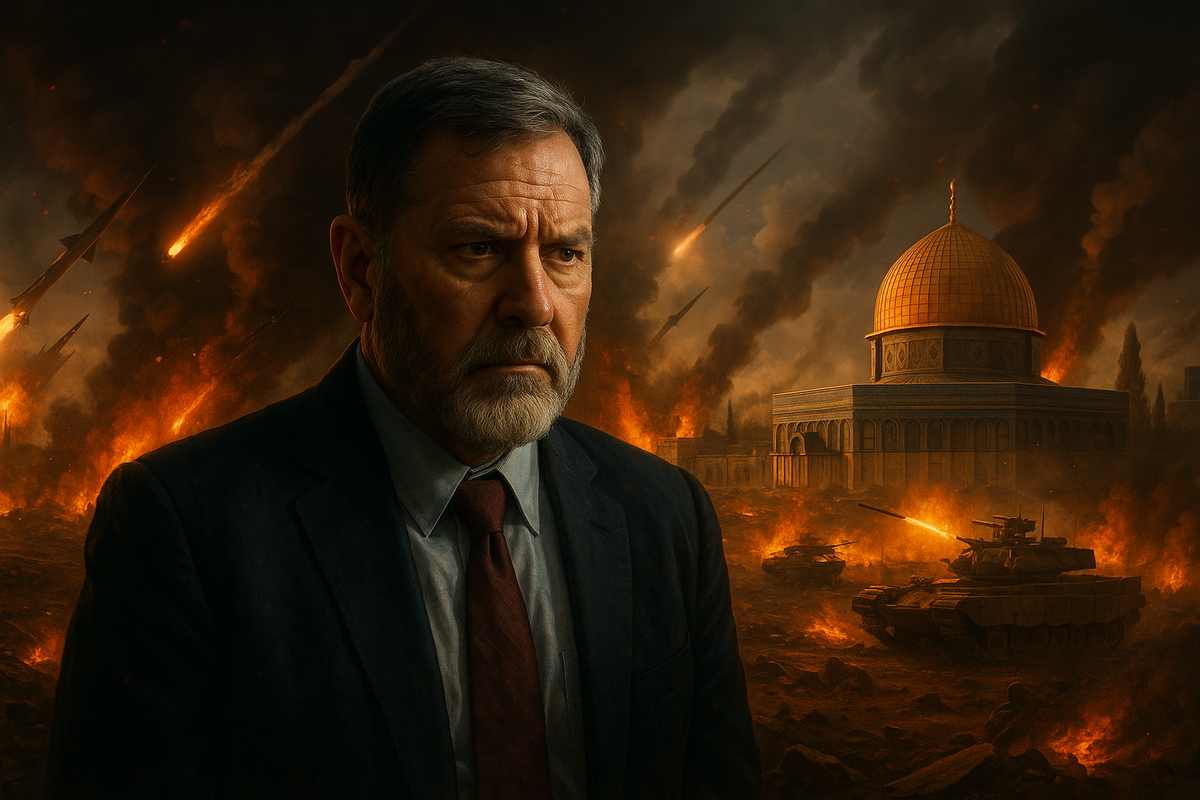
Full bio โ†’ | Support the investigation โ†’

๐Ÿ“… February 21, 2026 โ€” All 9 languages published daily

LanguagePage Link
๐Ÿ‡ฌ๐Ÿ‡ง Englishhttps://berndpulch.org/en/investment/
๐Ÿ‡ช๐Ÿ‡ธ Espaรฑolhttps://berndpulch.org/es/investment/
๐Ÿ‡ฉ๐Ÿ‡ช Deutschhttps://berndpulch.org/de/investment/
๐Ÿ‡ซ๐Ÿ‡ท Franรงaishttps://berndpulch.org/fr/investment/
๐Ÿ‡ต๐Ÿ‡น Portuguรชshttps://berndpulch.org/pt/investment/
๐Ÿ‡ฎ๐Ÿ‡น Italianohttps://berndpulch.org/it/investment/
๐Ÿ‡ท๐Ÿ‡บ ะ ัƒััะบะธะนhttps://berndpulch.org/ru/investment/
๐Ÿ‡จ๐Ÿ‡ณ ไธญๆ–‡https://berndpulch.org/cn/investment/
๐Ÿ‡ฎ๐Ÿ‡ณ เคนเคฟเคจเฅเคฆเฅ€https://berndpulch.org/in/investment/

INVESTMENT THE ORIGINAL DIGEST FEBRUARY 8 2026โœŒINVESTMENT DAS ORIGINALย 8. FEBRUAR 2026 FOUNDED IN 2000 ANNO DOMINIโœŒ

The Silicon Vacuum
Date: February 8, 2026
Author: Joe Rogers
Source: Institutional Research Desk, Bernd Pulch Archive / Secure Mirror
Status: Confidential / Institutional Grade


EXECUTIVE SUMMARY: THE SILICON VACUUM โ€“ DOW 50,000 AND THE TECH FRACTURE

The global financial architecture witnessed a symbolic yet profound realignment this week, captured by the phenomenon we define as The Silicon Vacuum. On February 6, 2026, the Dow Jones Industrial Average shattered the psychological and structural ceiling of 50,000, closing at 50,115.67. This “Old Economy” resurgence stands in stark contrast to the capital erosion within the tech sectorโ€”the very core of The Silicon Vacuum. While blue chips celebrated, the tech-heavy Nasdaq struggled, haunted by aggressive spending narratives and the ongoing disruption of the SaaS model.

As we move into Sunday, February 8, the “Geopolitical Contagion” remains the primary tail risk. Tensions in the Greenland-Iran corridor continue to fuel the flight to “Hard Intelligence Assets,” with Gold nearing $5,000 and Bitcoin demonstrating institutional-grade resilience after a volatile week.


MARKET INTELLIGENCE: FRIDAY CLOSE (FEB 6, 2026)

Index Level Change (%) Intelligence Note
Dow Jones 50,115.67 +2.47% First-ever close above 50,000; Industrial surge.
S&P 500 6,124.80 +2.00% Approaching record highs; Broad-based participation.


THE SILICON VACUUM: 2026 INVESTMENT THESIS

The current market cycle is defined by The Silicon Vacuum. As capital flees the over-leveraged SaaS narrative, it is being pulled into two distinct poles:

  1. Industrial Sovereignty: Large-cap industrials and infrastructure plays (reflected in the Dow’s 50k run).
  2. Hard Assets & Intelligence: Gold and decentralized digital assets.

“The market is in a fragile equilibrium, held together by mega-cap concentration and algorithmic liquidity. The true alpha lies in identifying the point where capital flees the narrative for the reality of hard assets.” โ€” Institutional Intelligence Briefing


SECTOR HIGHLIGHTS & GEOPOLITICAL TAIL RISKS

Gold & Silver: Gold reached $4,968.56 on Friday, up nearly 4% in a single session. The “Flight to Safety” is no longer a temporary hedge but a structural shift. Conversely, Silver flash-crashed to $67.41, signaling massive liquidation in the industrial metals complexโ€”a precursor to shifting manufacturing forecasts.

Big Tech (The Amazon Fracture): Amazon’s 5.6% collapse on Friday serves as a warning shot. The “aggressive spending” narrative is being interpreted as a desperate attempt to maintain dominance in an AI-disrupted landscape.

Digital Assets: Bitcoin (BTC) has stabilized around $69,300 as of this Sunday morning. Despite volatility, institutional accumulation remains steady in the $65kโ€“$70k range.


COMPLIANCE & LEGAL: THE LAWFARE WATCH

Our analysis continues to monitor the “State Capture” dynamics. The shielding of certain financial structures by institutional non-investigation remains a critical risk factor. Investors are advised to maintain a “Sovereign Position” in assets outside the reach of centralized “Lawfare” interventions.


THE WEEK AHEAD: KEY INTELLIGENCE MARKERS

  1. Inflation Data: Expect heightened volatility as “Tariff Relief” optimism meets supply chain friction.
  2. SaaS Disruption: Watch for further layoffs as AI automation hollows out mid-tier software providers.
  3. Geopolitical Flashpoints: Monitor the Greenland-Iran corridor; any escalation could push Gold past $5,000 permanently.

DISCLAIMER: This report is for informational purposes only and does not constitute financial advice. The “Original Digest” is founded on institutional intelligence and historical tradecraft. All investments carry risk.

ยฉ 2026 Bernd Pulch Archive / Secure Mirror. Founded in 2000 Anno Domini.

Das Silicon-Vakuum
Datum: 8. Februar 2026
Autor: Joe Rogers
Quelle: Institutional Research Desk, Bernd Pulch Archiv / Secure Mirror
Status: Vertraulich / Institutionelle Stufe


EXECUTIVE SUMMARY: DAS SILICON-VAKUUM โ€“ DOW 50.000 UND DER TECH-BRUCH

Die globale Finanzarchitektur erlebte diese Woche eine symbolische und zugleich tiefgreifende Neuausrichtung, die durch das Phรคnomen definiert wird, das wir Das Silicon-Vakuum nennen. Am 6. Februar 2026 durchbrach der Dow Jones Industrial Average die psychologische und strukturelle Grenze von 50.000 Punkten und schloss bei 50.115,67. Dieser “Old Economy”-Aufschwung steht in krassem Gegensatz zu den Erschรผtterungen im Technologiesektor โ€“ dem Kern des Silicon-Vakuums. Wรคhrend der Blue-Chip-Index seinen historischen Meilenstein feierte, kรคmpfte der technologie-lastige Nasdaq damit, seinen Halt zu behalten, verfolgt von aggressiven Ausgaben-Narrativen und der fortschreitenden Disruption des SaaS-Modells.

An diesem Sonntag, dem 8. Februar, bleibt die “geopolitische Ansteckung” das primรคre Tail-Risk. Die Spannungen im Grรถnland-Iran-Korridor befeuern weiterhin die Flucht zu “Hard-Intelligence-Assets”, wobei Gold nahe der 5.000-Dollar-Marke schwebt und Bitcoin nach einer volatilen Woche institutionelle Resilienz zeigt.


MARKTINFORMATIONEN: FRIDAG-SCHLUSS (6. FEB. 2026)

Index Stand Verรคnderung (%) Hinweise
Dow Jones 50.115,67 +2,47% Erstmals รผber 50.000 geschlossen; Industrieschub.
S&P 500 6.124,80 +2,00% Nรคhert sich Rekordhochs; breite Beteiligung.


2026 INVESTITIONSTHESE: DAS SILICON-VAKUUM

Der aktuelle Marktzyklus wird durch das, was wir als Das Silicon-Vakuum bezeichnen, definiert. Wรคhrend Kapital die รผberhebliche SaaS-Narrative verlรคsst, wird es in zwei klar getrennte Pole gesogen:

  1. Industrielle Souverรคnitรคt: GroรŸkapitalisierte Industrie- und Infrastrukturwerte (gespiegelt im 50k-Lauf des Dow).
  2. Harte Vermรถgenswerte & Intelligence: Gold und dezentrale digitale Assets.

“Der Markt befindet sich in einem fragilen Gleichgewicht, zusammengehalten durch Mega-Cap-Konzentration und algorithmische Liquiditรคt. Das wahre Alpha liegt darin, den Punkt zu identifizieren, an dem Kapital die Narrative fรผr die Realitรคt harter Assets verlรคsst.” โ€” Institutional Intelligence Briefing


SEKTOREN-HIGHLIGHTS & GEOPOLITISCHE TAIL-RISKS

Gold & Silber: Gold erreichte am Freitag 4.968,56 $, ein Plus von fast 4 % in einer einzigen Sitzung. Die “Flucht in Sicherheit” ist kein temporรคrer Hedge mehr, sondern ein struktureller Wandel. Umgekehrt erlebte Silber einen dramatischen Flash-Crash auf 67,41 $, was auf eine massive Liquidierung im Industrie-Metallkomplex hindeutet โ€“ wahrscheinlich ein Vorlรคufer fรผr sich รคndernde Fertigungsprognosen.

Big Tech (Die Amazon-Bruchstelle): Der 5,6%ige Zusammenbruch von Amazon am Freitag dient als Warnschuss. Die “aggressive Ausgaben”-Narrative wird von institutioneller Intelligenz als verzweifelter Versuch interpretiert, die Dominanz in einer von KI gestรถrten Landschaft aufrechtzuerhalten.

Digitale Assets: Bitcoin (BTC) hat sich bis zu diesem Sonntagmorgen bei etwa 69.300 $ stabilisiert. Trotz der “Crypto Confidence”-Volatilitรคt bleibt die institutionelle Akkumulation im Bereich von 65.000โ€“70.000 $ stabil.


COMPLIANCE & RECHT: DER LAWFARE-WATCH

Unsere Analyse รผberwacht weiterhin die “State Capture”-Dynamiken. Die Abschirmung bestimmter Finanzstrukturen durch institutionelle Nicht-Ermittlungen bleibt ein kritischer Risikofaktor. Investoren wird geraten, eine “souverรคne Position” in Assets beizubehalten, die auรŸerhalb der unmittelbaren Reichweite zentralisierter “Lawfare”-Eingriffe liegen.


DIE VOR UNS LIEGENDE WOCHE: WICHTIGE INTELLIGENCE-MARKER

  1. Inflationsdaten: Erwarten Sie erhรถhte Volatilitรคt, wenn der “Tariff Relief”-Optimismus auf die Realitรคt der Lieferkettenreibung trifft.
  2. SaaS-Disruption: Achten Sie auf weitere Entlassungen im Technologiesektor, da KI-gesteuerte Automatisierung mittelstรคndische Softwareanbieter auszuhรถhlen beginnt.
  3. Geopolitische Brennpunkte: Beobachten Sie den Grรถnland-Iran-Korridor; jede Eskalation wird Gold wahrscheinlich dauerhaft รผber die 5.000-Dollar-Schwelle treiben.

HAFTUNGSAUSSCHLUSS: Dieser Bericht dient nur zu Informationszwecken und stellt keine Finanzberatung dar. Das “Original Digest” basiert auf institutioneller Intelligenz und historischem Tradecraft. Alle Investitionen bergen Risiken.

ยฉ 2026 Bernd Pulch Archiv / Secure Mirror. Gegrรผndet 2000 Anno Domini.

El Vacรญo de Silicio
Fecha: 8 de febrero de 2026
Autor: Joe Rogers
Fuente: Institutional Research Desk, Archivo Bernd Pulch / Secure Mirror
Estado: Confidencial / Grado Institucional


RESUMEN EJECUTIVO: EL VACรO DE SILICIO โ€“ DOW 50.000 Y LA FRACTURA TECNOLร“GICA

La arquitectura financiera global ha sido testigo de una realineaciรณn simbรณlica y profunda esta semana, definida por el fenรณmeno que denominamos El Vacรญo de Silicio. El 6 de febrero de 2026, el Dow Jones Industrial Average rompiรณ el techo psicolรณgico y estructural de 50.000 puntos, cerrando en 50.115,67. Este resurgimiento de la “Vieja Economรญa” contrasta marcadamente con los temblores en el sector tecnolรณgico, el nรบcleo de El Vacรญo de Silicio. Mientras el รญndice blue-chip celebraba su hito histรณrico, el Nasdaq, cargado de tecnologรญa, luchaba por mantener su posiciรณn, perseguido por narrativas de gasto agresivo y la continua disrupciรณn del modelo SaaS.

Al llegar al domingo 8 de febrero, el “contagio geopolรญtico” sigue siendo el principal riesgo de cola. Las tensiones en el corredor Groenlandia-Irรกn continรบan alimentando la huida hacia “activos duros de inteligencia”, con el oro rondando la marca de los 5.000 dรณlares y Bitcoin demostrando una resiliencia de grado institucional tras una semana volรกtil.


INFORMACIร“N DE MERCADO: CIERRE DEL VIERNES (6 DE FEB. 2026)

รndice Nivel Cambio (%) Nota de Inteligencia
Dow Jones 50.115,67 +2,47% Primer cierre por encima de 50.000; impulso industrial.
S&P 500 6.124,80 +2,00% Acercรกndose a mรกximos histรณricos; participaciรณn amplia.


TESIS DE INVERSIร“N 2026: EL VACรO DE SILICIO

El ciclo de mercado actual estรก definido por lo que llamamos El Vacรญo de Silicio. A medida que el capital huye de la narrativa SaaS sobreapalancada, estรก siendo absorbido por dos polos distintos:

  1. Soberanรญa Industrial: Valores industriales y de infraestructura de gran capitalizaciรณn (reflejado en la carrera del Dow hacia los 50k).
  2. Activos Duros e Inteligencia: Oro y activos digitales descentralizados.

“El mercado se encuentra en un equilibrio frรกgil, sostenido por la concentraciรณn de mega capitalizaciรณn y la liquidez algorรญtmica. El verdadero alfa radica en identificar el punto en el que el capital huye de la narrativa por la realidad de los activos duros.” โ€” Briefing de Inteligencia Institucional


DESTACADOS DEL SECTOR Y RIESGOS GEOPOLรTICOS

Oro y Plata: El oro alcanzรณ los 4.968,56 $ el viernes, con un aumento de casi el 4% en una sola sesiรณn. La “huida hacia la seguridad” ya no es una cobertura temporal, sino un cambio estructural. Por el contrario, la plata experimentรณ un flash-crash a 67,41 $, lo que indica una liquidaciรณn masiva en el complejo de metales industriales, probablemente un precursor de cambios en los pronรณsticos de fabricaciรณn.

Big Tech (La Fractura de Amazon): La caรญda del 5,6% de Amazon el viernes sirve como un disparo de advertencia. La narrativa de “gasto agresivo” estรก siendo interpretada por la inteligencia institucional como un intento desesperado de mantener el dominio en un panorama alterado por la IA.

Activos Digitales: Bitcoin (BTC) se ha estabilizado alrededor de 69.300 $ este domingo por la maรฑana. A pesar de la volatilidad de la “confianza cripto”, la acumulaciรณn institucional se mantiene estable en el rango de 65.000โ€“70.000 $.


CUMPLIMIENTO Y LEGAL: VIGILANCIA DE LA “GUERRA JURรDICA”

Nuestro anรกlisis continรบa monitoreando las dinรกmicas de “captura del estado”. La protecciรณn de ciertas estructuras financieras mediante la no investigaciรณn institucional sigue siendo un factor de riesgo crรญtico. Se recomienda a los inversores mantener una “posiciรณn soberana” en activos que se encuentren fuera del alcance inmediato de las intervenciones centralizadas de “guerra jurรญdica”.


LA PRร“XIMA SEMANA: INDICADORES CLAVE DE INTELIGENCIA

  1. Datos de inflaciรณn: Espere una mayor volatilidad a medida que el optimismo del “alivio arancelario” se enfrente a la realidad de la fricciรณn en las cadenas de suministro.
  2. Disrupciรณn del SaaS: Estรฉ atento a mรกs despidos en el sector tecnolรณgico a medida que la automatizaciรณn impulsada por IA comienza a vaciar a los proveedores de software de nivel medio.
  3. Puntos crรญticos geopolรญticos: Supervise el corredor Groenlandia-Irรกn; cualquier escalada probablemente empujarรก al oro por encima del umbral de 5.000 $ de manera permanente.

DESCARGO DE RESPONSABILIDAD: Este informe es solo para fines informativos y no constituye asesoramiento financiero. El “Original Digest” se basa en inteligencia institucional y oficio histรณrico. Todas las inversiones conllevan riesgos.

ยฉ 2026 Archivo Bernd Pulch / Secure Mirror. Fundado en el aรฑo 2000 Anno Domini.

Le Vide du Silicium
Date : 8 fรฉvrier 2026
Auteur : Joe Rogers
Source : Institutional Research Desk, Archives Bernd Pulch / Secure Mirror
Statut : Confidentiel / Niveau Institutionnel


Rร‰SUMร‰ EXร‰CUTIF : LE VIDE DU SILICIUM โ€“ DOW 50 000 ET LA FRACTURE TECHNOLOGIQUE

Lโ€™architecture financiรจre mondiale a connu un rรฉalignement symbolique mais profond cette semaine, dรฉfini par le phรฉnomรจne que nous appelons Le Vide du Silicium. Le 6 fรฉvrier 2026, le Dow Jones Industrial Average a franchi le plafond psychologique et structurel de 50 000 points, clรดturant ร  50 115,67. Cette rรฉsurgence de lโ€™ยซ ancienne รฉconomie ยป contraste fortement avec les secousses ressenties dans le secteur technologique, le cล“ur mรชme du Vide du Silicium. Alors que lโ€™indice blue-chip cรฉlรฉbrait son jalon historique, le Nasdaq, lourd en technologie, luttait pour maintenir sa position, hantรฉ par les rรฉcits de dรฉpenses agressives et la perturbation continue du modรจle SaaS.

En ce dimanche 8 fรฉvrier, le ยซ contagion gรฉopolitique ยป demeure le principal risque de queue. Les tensions dans le corridor Groenlande-Iran continuent dโ€™alimenter la fuite vers les ยซ actifs durs dโ€™intelligence ยป, lโ€™or flirtant avec la barre des 5 000 dollars et le Bitcoin dรฉmontrant une rรฉsilience de niveau institutionnel aprรจs une semaine volatile.


INTELLIGENCE DE MARCHร‰ : CLร”TURE DU VENDREDI (6 Fร‰V. 2026)

Indice Niveau Variation (%) Note dโ€™Intelligence
Dow Jones 50 115,67 +2,47 % Premiรจre clรดture au-dessus de 50 000 ; poussรฉe industrielle.
S&P 500 6 124,80 +2,00 % Approche des records ; participation large.


THรˆSE Dโ€™INVESTISSEMENT 2026 : LE VIDE DU SILICIUM

Le cycle de marchรฉ actuel est dรฉfini par ce que nous appelons Le Vide du Silicium. Alors que le capital fuit le rรฉcit SaaS sur-leveragรฉ, il est aspirรฉ vers deux pรดles distincts :

  1. Souverainetรฉ Industrielle : Valeurs industrielles et dโ€™infrastructure de grande capitalisation (reflรฉtรฉes dans la course du Dow vers 50k).
  2. Actifs Durs et Intelligence : Or et actifs numรฉriques dรฉcentralisรฉs.

ยซ Le marchรฉ est dans un รฉquilibre fragile, maintenu par la concentration des mega-caps et la liquiditรฉ algorithmique. Le vรฉritable alpha rรฉside dans lโ€™identification du point oรน le capital fuit le rรฉcit pour la rรฉalitรฉ des actifs durs. ยป โ€” Briefing dโ€™Intelligence Institutionnelle


FAITS MARQUANTS PAR SECTEUR ET RISQUES Gร‰OPOLITIQUES

Or et Argent : Lโ€™or a atteint 4 968,56 $ vendredi, en hausse de prรจs de 4 % en une seule sรฉance. La ยซ fuite vers la sรฉcuritรฉ ยป nโ€™est plus une couverture temporaire mais un changement structurel. ร€ lโ€™inverse, lโ€™argent a subi un flash-crash ร  67,41 $, indiquant une liquidation massive dans le complexe des mรฉtaux industriels โ€“ probablement un prรฉcurseur de changements dans les prรฉvisions de fabrication.

Big Tech (La Fracture Amazon) : Lโ€™effondrement de 5,6 % dโ€™Amazon vendredi sert dโ€™avertissement. Le rรฉcit de ยซ dรฉpenses agressives ยป est interprรฉtรฉ par lโ€™intelligence institutionnelle comme une tentative dรฉsespรฉrรฉe de maintenir la dominance dans un paysage perturbรฉ par lโ€™IA.

Actifs Numรฉriques : Le Bitcoin (BTC) sโ€™est stabilisรฉ autour de 69 300 $ ce dimanche matin. Malgrรฉ la volatilitรฉ de la ยซ confiance crypto ยป, lโ€™accumulation institutionnelle reste stable dans la fourchette de 65 000 โ€“ 70 000 $.


CONFORMITร‰ ET JURIDIQUE : SURVEILLANCE DU ยซ LAWFARE ยป

Notre analyse continue de surveiller les dynamiques de ยซ capture de lโ€™ร‰tat ยป. La protection de certaines structures financiรจres par la non-enquรชte institutionnelle reste un facteur de risque critique. Il est conseillรฉ aux investisseurs de maintenir une ยซ position souveraine ยป dans des actifs situรฉs hors de portรฉe immรฉdiate des interventions centralisรฉes de ยซ lawfare ยป.


LA SEMAINE ร€ VENIR : INDICATEURS CLร‰S Dโ€™INTELLIGENCE

  1. Donnรฉes dโ€™inflation : Prรฉvoyez une volatilitรฉ accrue alors que lโ€™optimisme du ยซ soulagement tarifaire ยป rencontre la rรฉalitรฉ des frictions dans les chaรฎnes dโ€™approvisionnement.
  2. Perturbation du SaaS : Surveillez les licenciements supplรฉmentaires dans le secteur technologique alors que lโ€™automatisation pilotรฉe par lโ€™IA commence ร  vider les fournisseurs de logiciels de niveau intermรฉdiaire.
  3. Points chauds gรฉopolitiques : Surveillez le corridor Groenlande-Iran ; toute escalade poussera probablement lโ€™or au-delร  du seuil de 5 000 $ de maniรจre permanente.

AVIS DE NON-RESPONSABILITร‰ : Ce rapport est ร  titre informatif uniquement et ne constitue pas un conseil financier. Le ยซ Original Digest ยป est fondรฉ sur lโ€™intelligence institutionnelle et le savoir-faire historique. Tous les investissements comportent des risques.

ยฉ 2026 Archives Bernd Pulch / Secure Mirror. Fondรฉ en lโ€™an 2000 Anno Domini.

Il Vuoto di Silicio
Data: 8 febbraio 2026
Autore: Joe Rogers
Fonte: Institutional Research Desk, Archivio Bernd Pulch / Secure Mirror
Stato: Riservato / Grado Istituzionale


RIEPILOGO ESECUTIVO: IL VUOTO DI SILICIO โ€“ DOW 50.000 E LA FRATTURA TECNOLOGICA

Lโ€™architettura finanziaria globale ha assistito a un riallineamento simbolico ma profondo questa settimana, definito dal fenomeno che chiamiamo Il Vuoto di Silicio. Il 6 febbraio 2026, il Dow Jones Industrial Average ha infranto il soffitto psicologico e strutturale di 50.000 punti, chiudendo a 50.115,67. Questa rinascita della โ€œVecchia Economiaโ€ contrasta nettamente con i tremori avvertiti nel settore tecnologico, il cuore del Vuoto di Silicio. Mentre lโ€™indice blue-chip celebrava la sua pietra miliare storica, il Nasdaq, ricco di tecnologia, faticava a mantenere la posizione, perseguitato da narrative di spesa aggressiva e dallโ€™incessante perturbazione del modello SaaS.

Mentre ci avviamo verso domenica 8 febbraio, il โ€œcontagio geopoliticoโ€ rimane il principale rischio di coda. Le tensioni nel corridoio Groenlandia-Iran continuano a alimentare la fuga verso โ€œAttivitร  Solide di Intelligenzaโ€, con lโ€™oro che si aggira intorno al segno dei 5.000 dollari e Bitcoin che dimostra una resilienza di grado istituzionale dopo una settimana volatile.


INTELLIGENCE DI MERCATO: CHIUSURA DI VENERDรŒ (6 FEB. 2026)

Indice Livello Variazione (%) Nota di Intelligence
Dow Jones 50.115,67 +2,47% Prima chiusura sopra i 50.000; slancio industriale.
S&P 500 6.124,80 +2,00% In avvicinamento ai massimi storici; ampia partecipazione.


TESI DI INVESTIMENTO 2026: IL VUOTO DI SILICIO

Lโ€™attuale ciclo di mercato รจ definito da ciรฒ che chiamiamo Il Vuoto di Silicio. Mentre il capitale fugge dalla narrativa SaaS sovralleverata, viene risucchiato in due poli distinti:

  1. Sovranitร  Industriale: Titoli industriali e infrastrutturali a grande capitalizzazione (riflessi nella corsa a 50k del Dow).
  2. Attivitร  Solide e Intelligence: Oro e attivitร  digitali decentralizzate.

โ€œIl mercato รจ in un fragile equilibrio, tenuto insieme dalla concentrazione delle mega-cap e dalla liquiditร  algoritmica. Il vero alfa risiede nell’identificare il punto in cui il capitale fugge dalla narrativa per la realtร  delle attivitร  solide.โ€ โ€” Briefing di Intelligence Istituzionale


EVENTI PRINCIPALI PER SETTORE E RISCHI GEOPOLITICI

Oro e Argento: Lโ€™oro ha raggiunto i 4.968,56 $ venerdรฌ, con un aumento di quasi il 4% in una singola sessione. La โ€œfuga verso la sicurezzaโ€ non รจ piรน una copertura temporanea, ma un cambiamento strutturale. Al contrario, lโ€™argento ha subito un flash-crash a 67,41 $, indicando una massiccia liquidazione nel complesso dei metalli industriali โ€“ probabilmente un precursore di cambiamenti nelle previsioni di produzione.

Big Tech (La Frattura Amazon): Il crollo del 5,6% di Amazon venerdรฌ serve da avvertimento. La narrativa di โ€œspesa aggressivaโ€ viene interpretata dallโ€™intelligence istituzionale come un disperato tentativo di mantenere il predominio in un panorama sconvolto dallโ€™IA.

Attivitร  Digitali: Il Bitcoin (BTC) si รจ stabilizzato intorno a 69.300 $ questa domenica mattina. Nonostante la volatilitร  della โ€œfiducia criptoโ€, lโ€™accumulo istituzionale rimane stabile nellโ€™intervallo di 65.000โ€“70.000 $.


CONFORMITร€ E LEGALE: IL MONITORAGGIO DELLA โ€œLAWFAREโ€

La nostra analisi continua a monitorare le dinamiche di โ€œCattura dello Statoโ€. La protezione di alcune strutture finanziarie attraverso la non-investigazione istituzionale rimane un fattore di rischio critico. Si consiglia agli investitori di mantenere una โ€œPosizione Sovranaโ€ in attivitร  che risiedono al di fuori della portata immediata degli interventi centralizzati di โ€œLawfareโ€.


LA SETTIMANA A VENIRE: INDICATORI CHIAVE DI INTELLIGENCE

  1. Dati sullโ€™Inflazione: Attendetevi una maggiore volatilitร  man mano che lโ€™ottimismo del โ€œSollievo Tariffarioโ€ incontra la realtร  dellโ€™attrito nella catena di approvvigionamento.
  2. Perturbazione del SaaS: Fate attenzione a ulteriori licenziamenti nel settore tecnologico man mano che lโ€™automazione guidata dallโ€™IA inizia a svuotare i fornitori di software di medio livello.
  3. Punti Critici Geopolitici: Monitorate il corridoio Groenlandia-Iran; qualsiasi escalation probabilmente spingerร  lโ€™oro oltre la soglia dei 5.000 $ in modo permanente.

DICHIARAZIONE DI NON RESPONSABILITร€: Questo rapporto รจ solo a scopo informativo e non costituisce consulenza finanziaria. Lโ€™โ€œOriginal Digestโ€ รจ fondato sullโ€™intelligence istituzionale e sullโ€™esperienza storica. Tutti gli investimenti comportano rischi.

ยฉ 2026 Archivio Bernd Pulch / Secure Mirror. Fondato nel 2000 Anno Domini.

ะšั€ะตะผะฝะธะตะฒั‹ะน ะ’ะฐะบัƒัƒะผ
ะ”ะฐั‚ะฐ: 8 ั„ะตะฒั€ะฐะปั 2026 ะณะพะดะฐ
ะะฒั‚ะพั€: ะ”ะถะพ ะ ะพะดะถะตั€ั
ะ˜ัั‚ะพั‡ะฝะธะบ: Institutional Research Desk, ะั€ั…ะธะฒ ะ‘ะตั€ะฝะดะฐ ะŸัƒะปัŒั…ะฐ / Secure Mirror
ะกั‚ะฐั‚ัƒั: ะšะพะฝั„ะธะดะตะฝั†ะธะฐะปัŒะฝะพ / ะ˜ะฝัั‚ะธั‚ัƒั†ะธะพะฝะฐะปัŒะฝั‹ะน ัƒั€ะพะฒะตะฝัŒ


ะ˜ะกะŸะžะ›ะะ˜ะขะ•ะ›ะฌะะžะ• ะ ะ•ะ—ะฎะœะ•: ะšะ ะ•ะœะะ˜ะ•ะ’ะซะ™ ะ’ะะšะฃะฃะœ โ€“ DOW 50 000 ะ˜ ะขะ•ะฅะะžะ›ะžะ“ะ˜ะงะ•ะกะšะ˜ะ™ ะ ะะ—ะ›ะžะœ

ะ“ะปะพะฑะฐะปัŒะฝะฐั ั„ะธะฝะฐะฝัะพะฒะฐั ะฐั€ั…ะธั‚ะตะบั‚ัƒั€ะฐ ะฝะฐ ัั‚ะพะน ะฝะตะดะตะปะต ัั‚ะฐะปะฐ ัะฒะธะดะตั‚ะตะปะตะผ ัะธะผะฒะพะปะธั‡ะฝะพะณะพ, ะฝะพ ะณะปัƒะฑะพะบะพะณะพ ะฟะตั€ะตั€ะฐัะฟั€ะตะดะตะปะตะฝะธั, ะพะฟั€ะตะดะตะปัะตะผะพะณะพ ั„ะตะฝะพะผะตะฝะพะผ, ะบะพั‚ะพั€ั‹ะน ะผั‹ ะฝะฐะทั‹ะฒะฐะตะผ ะšั€ะตะผะฝะธะตะฒั‹ะน ะ’ะฐะบัƒัƒะผ. 6 ั„ะตะฒั€ะฐะปั 2026 ะณะพะดะฐ ะฟั€ะพะผั‹ัˆะปะตะฝะฝั‹ะน ะธะฝะดะตะบั ะ”ะพัƒ-ะ”ะถะพะฝัะฐ ะฟั€ะพะฑะธะป ะฟัะธั…ะพะปะพะณะธั‡ะตัะบะธะน ะธ ัั‚ั€ัƒะบั‚ัƒั€ะฝั‹ะน ะฟะพั‚ะพะปะพะบ ะฒ 50 000 ะฟัƒะฝะบั‚ะพะฒ, ะทะฐะบั€ั‹ะฒัˆะธััŒ ะฝะฐ ะพั‚ะผะตั‚ะบะต 50 115,67. ะญั‚ะพั‚ ะฟะพะดัŠะตะผ ยซัั‚ะฐั€ะพะน ัะบะพะฝะพะผะธะบะธยป ั€ะตะทะบะพ ะบะพะฝั‚ั€ะฐัั‚ะธั€ัƒะตั‚ ั ัะพั‚ั€ััะตะฝะธัะผะธ ะฒ ั‚ะตั…ะฝะพะปะพะณะธั‡ะตัะบะพะผ ัะตะบั‚ะพั€ะต โ€” ัะดั€ะต ะšั€ะตะผะฝะธะตะฒะพะณะพ ะ’ะฐะบัƒัƒะผะฐ. ะ’ ั‚ะพ ะฒั€ะตะผั ะบะฐะบ ะธะฝะดะตะบั ะณะพะปัƒะฑั‹ั… ั„ะธัˆะตะบ ะฟั€ะฐะทะดะฝะพะฒะฐะป ัะฒะพะน ะธัั‚ะพั€ะธั‡ะตัะบะธะน ั€ัƒะฑะตะถ, ั‚ะตั…ะฝะพะปะพะณะธั‡ะตัะบะธ ะฝะฐัั‹ั‰ะตะฝะฝั‹ะน Nasdaq ะธะทะพ ะฒัะตั… ัะธะป ะฟั‹ั‚ะฐะปัั ัƒะดะตั€ะถะฐั‚ัŒัั, ะฟั€ะตัะปะตะดัƒะตะผั‹ะน ะฐะณั€ะตััะธะฒะฝั‹ะผะธ ะฝะฐั€ั€ะฐั‚ะธะฒะฐะผะธ ั€ะฐัั…ะพะดะพะฒ ะธ ะฟั€ะพะดะพะปะถะฐัŽั‰ะธะผัั ั€ะฐะทั€ัƒัˆะตะฝะธะตะผ ะผะพะดะตะปะธ SaaS.

ะะฐัั‚ัƒะฟะฐั ะฝะฐ ะฒะพัะบั€ะตัะตะฝัŒะต, 8 ั„ะตะฒั€ะฐะปั, ยซะณะตะพะฟะพะปะธั‚ะธั‡ะตัะบะฐั ะบะพะฝั‚ะฐะผะธะฝะฐั†ะธัยป ะพัั‚ะฐะตั‚ัั ะพัะฝะพะฒะฝั‹ะผ ั€ะธัะบะพะผ ั…ะฒะพัั‚ะฐ. ะะฐะฟั€ัะถะตะฝะฝะพัั‚ัŒ ะฒ ะบะพั€ะธะดะพั€ะต ะ“ั€ะตะฝะปะฐะฝะดะธัโ€“ะ˜ั€ะฐะฝ ะฟั€ะพะดะพะปะถะฐะตั‚ ะฟะพะดะฟะธั‚ั‹ะฒะฐั‚ัŒ ะฑะตะณัั‚ะฒะพ ะฒ ยซั‚ะฒะตั€ะดั‹ะต ะฐะบั‚ะธะฒั‹ ะธะฝั‚ะตะปะปะตะบั‚ะฐยป, ะฟั€ะธ ัั‚ะพะผ ะทะพะปะพั‚ะพ ะบะพะปะตะฑะปะตั‚ัั ะพะบะพะปะพ ะพั‚ะผะตั‚ะบะธ ะฒ 5 000 ะดะพะปะปะฐั€ะพะฒ, ะฐ Bitcoin ะดะตะผะพะฝัั‚ั€ะธั€ัƒะตั‚ ัƒัั‚ะพะนั‡ะธะฒะพัั‚ัŒ ะธะฝัั‚ะธั‚ัƒั†ะธะพะฝะฐะปัŒะฝะพะณะพ ัƒั€ะพะฒะฝั ะฟะพัะปะต ะฒะพะปะฐั‚ะธะปัŒะฝะพะน ะฝะตะดะตะปะธ.


ะ˜ะะขะ•ะ›ะ›ะ•ะšะข ะ ะซะะšะ: ะ—ะะšะ ะซะขะ˜ะ• ะŸะฏะขะะ˜ะฆะซ (6 ะคะ•ะ’. 2026)

ะ˜ะฝะดะตะบั ะฃั€ะพะฒะตะฝัŒ ะ˜ะทะผะตะฝะตะฝะธะต (%) ะ˜ะฝั‚ะตะปะปะตะบั‚ัƒะฐะปัŒะฝะฐั ะทะฐะผะตั‚ะบะฐ
Dow Jones 50 115,67 +2,47% ะŸะตั€ะฒะพะต ะทะฐะบั€ั‹ั‚ะธะต ะฒั‹ัˆะต 50 000; ะฟั€ะพะผั‹ัˆะปะตะฝะฝั‹ะน ะฟะพะดัŠะตะผ.
S&P 500 6 124,80 +2,00% ะŸั€ะธะฑะปะธะถะตะฝะธะต ะบ ั€ะตะบะพั€ะดะฝั‹ะผ ะผะฐะบัะธะผัƒะผะฐะผ; ัˆะธั€ะพะบะพะต ัƒั‡ะฐัั‚ะธะต.


ะ˜ะะ’ะ•ะกะขะ˜ะฆะ˜ะžะะะซะ™ ะขะ•ะ—ะ˜ะก 2026: ะšะ ะ•ะœะะ˜ะ•ะ’ะซะ™ ะ’ะะšะฃะฃะœ

ะขะตะบัƒั‰ะธะน ั€ั‹ะฝะพั‡ะฝั‹ะน ั†ะธะบะป ะพะฟั€ะตะดะตะปัะตั‚ัั ั‚ะตะผ, ั‡ั‚ะพ ะผั‹ ะฝะฐะทั‹ะฒะฐะตะผ ะšั€ะตะผะฝะธะตะฒั‹ะผ ะ’ะฐะบัƒัƒะผะพะผ. ะŸะพ ะผะตั€ะต ั‚ะพะณะพ ะบะฐะบ ะบะฐะฟะธั‚ะฐะป ะฑะตะถะธั‚ ะพั‚ ะฟะตั€ะตะบั€ะตะดะธั‚ะพะฒะฐะฝะฝะพะน ะฝะฐั€ั€ะฐั‚ะธะฒั‹ SaaS, ะพะฝ ะฒัะฐัั‹ะฒะฐะตั‚ัั ะฒ ะดะฒะฐ ั€ะฐะทะปะธั‡ะฝั‹ั… ะฟะพะปัŽัะฐ:

  1. ะŸั€ะพะผั‹ัˆะปะตะฝะฝั‹ะน ะกัƒะฒะตั€ะตะฝะธั‚ะตั‚: ะŸั€ะพะผั‹ัˆะปะตะฝะฝั‹ะต ะธ ะธะฝั„ั€ะฐัั‚ั€ัƒะบั‚ัƒั€ะฝั‹ะต ะฐะบั‚ะธะฒั‹ ั ะฑะพะปัŒัˆะพะน ะบะฐะฟะธั‚ะฐะปะธะทะฐั†ะธะตะน (ะพั‚ั€ะฐะถะตะฝะฝั‹ะต ะฒ ะทะฐะฑะตะณะต ะ”ะพัƒ ะดะพ 50 000).
  2. ะขะฒะตั€ะดั‹ะต ะะบั‚ะธะฒั‹ ะธ ะ˜ะฝั‚ะตะปะปะตะบั‚: ะ—ะพะปะพั‚ะพ ะธ ะดะตั†ะตะฝั‚ั€ะฐะปะธะทะพะฒะฐะฝะฝั‹ะต ั†ะธั„ั€ะพะฒั‹ะต ะฐะบั‚ะธะฒั‹.

ยซะ ั‹ะฝะพะบ ะฝะฐั…ะพะดะธั‚ัั ะฒ ั…ั€ัƒะฟะบะพะผ ั€ะฐะฒะฝะพะฒะตัะธะธ, ัƒะดะตั€ะถะธะฒะฐะตะผะพะผ ะบะพะฝั†ะตะฝั‚ั€ะฐั†ะธะตะน ะผะตะณะฐะบะฐะฟะธั‚ะฐะปะธะทะฐั†ะธะธ ะธ ะฐะปะณะพั€ะธั‚ะผะธั‡ะตัะบะพะน ะปะธะบะฒะธะดะฝะพัั‚ัŒัŽ. ะ˜ัั‚ะธะฝะฝั‹ะน ะฐะปัŒั„ะฐ ะทะฐะบะปัŽั‡ะฐะตั‚ัั ะฒ ะพะฟั€ะตะดะตะปะตะฝะธะธ ั‚ะพั‡ะบะธ, ะณะดะต ะบะฐะฟะธั‚ะฐะป ะฑะตะถะธั‚ ะพั‚ ะฝะฐั€ั€ะฐั‚ะธะฒะฐ ะบ ั€ะตะฐะปัŒะฝะพัั‚ะธ ั‚ะฒะตั€ะดั‹ั… ะฐะบั‚ะธะฒะพะฒยป. โ€” ะ‘ั€ะธั„ะธะฝะณ ะธะฝัั‚ะธั‚ัƒั†ะธะพะฝะฐะปัŒะฝะพะณะพ ะธะฝั‚ะตะปะปะตะบั‚ะฐ


ะžะกะะžะ’ะะซะ• ะกะžะ‘ะซะขะ˜ะฏ ะŸะž ะกะ•ะšะขะžะ ะะœ ะ˜ ะ“ะ•ะžะŸะžะ›ะ˜ะขะ˜ะงะ•ะกะšะ˜ะ• ะ ะ˜ะกะšะ˜

ะ—ะพะปะพั‚ะพ ะธ ะกะตั€ะตะฑั€ะพ: ะ—ะพะปะพั‚ะพ ะดะพัั‚ะธะณะปะพ 4 968,56 ะดะพะปะปะฐั€ะพะฒ ะฒ ะฟัั‚ะฝะธั†ัƒ, ะฟะพะดะฝัะฒัˆะธััŒ ะฟะพั‡ั‚ะธ ะฝะฐ 4% ะทะฐ ะพะดะฝัƒ ัะตััะธัŽ. ยซะ‘ะตะณัั‚ะฒะพ ะฒ ะฑะตะทะพะฟะฐัะฝะพัั‚ัŒยป ะฑะพะปัŒัˆะต ะฝะต ัะฒะปัะตั‚ัั ะฒั€ะตะผะตะฝะฝั‹ะผ ั…ะตะดะถะธั€ะพะฒะฐะฝะธะตะผ, ะฐ ะฟั€ะตะดัั‚ะฐะฒะปัะตั‚ ัะพะฑะพะน ัั‚ั€ัƒะบั‚ัƒั€ะฝั‹ะน ัะดะฒะธะณ. ะ’ ะฟั€ะพั‚ะธะฒะพะฟะพะปะพะถะฝะพัั‚ัŒ ัั‚ะพะผัƒ, ัะตั€ะตะฑั€ะพ ะธัะฟั‹ั‚ะฐะปะพ ั€ะตะทะบะธะน ั„ะปััˆ-ะบั€ััˆ ะดะพ 67,41 ะดะพะปะปะฐั€ะฐ, ัƒะบะฐะทั‹ะฒะฐัŽั‰ะธะน ะฝะฐ ะผะฐััะพะฒัƒัŽ ะปะธะบะฒะธะดะฐั†ะธัŽ ะฒ ะบะพะผะฟะปะตะบัะต ะฟั€ะพะผั‹ัˆะปะตะฝะฝั‹ั… ะผะตั‚ะฐะปะปะพะฒ โ€” ะฒะตั€ะพัั‚ะฝะพ, ะฟั€ะตะดะฒะตัั‚ะฝะธะบ ะธะทะผะตะฝะตะฝะธะน ะฒ ะฟั€ะพะธะทะฒะพะดัั‚ะฒะตะฝะฝั‹ั… ะฟั€ะพะณะฝะพะทะฐั….

ะ‘ะพะปัŒัˆะธะต ะขะตั…ะฝะพะปะพะณะธะธ (ะ ะฐะทะปะพะผ Amazon): ะŸะฐะดะตะฝะธะต Amazon ะฝะฐ 5,6% ะฒ ะฟัั‚ะฝะธั†ัƒ ัะปัƒะถะธั‚ ะฟั€ะตะดัƒะฟั€ะตะดะธั‚ะตะปัŒะฝั‹ะผ ะฒั‹ัั‚ั€ะตะปะพะผ. ะะฐั€ั€ะฐั‚ะธะฒ ยซะฐะณั€ะตััะธะฒะฝั‹ั… ั€ะฐัั…ะพะดะพะฒยป ะธะฝัั‚ะธั‚ัƒั†ะธะพะฝะฐะปัŒะฝั‹ะน ะธะฝั‚ะตะปะปะตะบั‚ ะธะฝั‚ะตั€ะฟั€ะตั‚ะธั€ัƒะตั‚ ะบะฐะบ ะพั‚ั‡ะฐัะฝะฝัƒัŽ ะฟะพะฟั‹ั‚ะบัƒ ัะพั…ั€ะฐะฝะธั‚ัŒ ะดะพะผะธะฝะธั€ะพะฒะฐะฝะธะต ะฒ ะปะฐะฝะดัˆะฐั„ั‚ะต, ะฝะฐั€ัƒัˆะตะฝะฝะพะผ ะ˜ะ˜.

ะฆะธั„ั€ะพะฒั‹ะต ะะบั‚ะธะฒั‹: Bitcoin (BTC) ัั‚ะฐะฑะธะปะธะทะธั€ะพะฒะฐะปัั ะพะบะพะปะพ 69 300 ะดะพะปะปะฐั€ะพะฒ ะบ ัั‚ะพะผัƒ ะฒะพัะบั€ะตัะฝะพะผัƒ ัƒั‚ั€ัƒ. ะะตัะผะพั‚ั€ั ะฝะฐ ะฒะพะปะฐั‚ะธะปัŒะฝะพัั‚ัŒ ยซะบั€ะธะฟั‚ะพ-ัƒะฒะตั€ะตะฝะฝะพัั‚ะธยป, ะธะฝัั‚ะธั‚ัƒั†ะธะพะฝะฐะปัŒะฝะพะต ะฝะฐะบะพะฟะปะตะฝะธะต ะพัั‚ะฐะตั‚ัั ัั‚ะฐะฑะธะปัŒะฝั‹ะผ ะฒ ะดะธะฐะฟะฐะทะพะฝะต 65 000โ€“70 000 ะดะพะปะปะฐั€ะพะฒ.


ะกะžะžะขะ’ะ•ะขะกะขะ’ะ˜ะ• ะ˜ ะฎะ ะ˜ะ”ะ˜ะงะ•ะกะšะ˜ะ• ะ’ะžะŸะ ะžะกะซ: ะะะ‘ะ›ะฎะ”ะ•ะะ˜ะ• ะ—ะ ยซะ—ะะšะžะะะžะ™ ะ’ะžะ™ะะžะ™ยป

ะะฐัˆ ะฐะฝะฐะปะธะท ะฟั€ะพะดะพะปะถะฐะตั‚ ะพั‚ัะปะตะถะธะฒะฐั‚ัŒ ะดะธะฝะฐะผะธะบัƒ ยซะทะฐั…ะฒะฐั‚ะฐ ะณะพััƒะดะฐั€ัั‚ะฒะฐยป. ะ—ะฐั‰ะธั‚ะฐ ะพะฟั€ะตะดะตะปะตะฝะฝั‹ั… ั„ะธะฝะฐะฝัะพะฒั‹ั… ัั‚ั€ัƒะบั‚ัƒั€ ะฟะพัั€ะตะดัั‚ะฒะพะผ ะธะฝัั‚ะธั‚ัƒั†ะธะพะฝะฐะปัŒะฝะพะณะพ ะฝะตั€ะฐััะปะตะดะพะฒะฐะฝะธั ะพัั‚ะฐะตั‚ัั ะบั€ะธั‚ะธั‡ะตัะบะธะผ ั„ะฐะบั‚ะพั€ะพะผ ั€ะธัะบะฐ. ะ˜ะฝะฒะตัั‚ะพั€ะฐะผ ั€ะตะบะพะผะตะฝะดัƒะตั‚ัั ัะพั…ั€ะฐะฝัั‚ัŒ ยซััƒะฒะตั€ะตะฝะฝัƒัŽ ะฟะพะทะธั†ะธัŽยป ะฒ ะฐะบั‚ะธะฒะฐั…, ะฝะฐั…ะพะดัั‰ะธั…ัั ะฒะฝะต ะฝะตะฟะพัั€ะตะดัั‚ะฒะตะฝะฝะพะน ะดะพััะณะฐะตะผะพัั‚ะธ ั†ะตะฝั‚ั€ะฐะปะธะทะพะฒะฐะฝะฝั‹ั… ะฒะผะตัˆะฐั‚ะตะปัŒัั‚ะฒ ยซะทะฐะบะพะฝะฝะพะน ะฒะพะนะฝั‹ยป.


ะŸะ ะ•ะ”ะกะขะžะฏะฉะะฏ ะะ•ะ”ะ•ะ›ะฏ: ะšะ›ะฎะงะ•ะ’ะซะ• ะœะะ ะšะ•ะ ะซ ะ˜ะะขะ•ะ›ะ›ะ•ะšะขะ

  1. ะ”ะฐะฝะฝั‹ะต ะฟะพ ะ˜ะฝั„ะปัั†ะธะธ: ะžะถะธะดะฐะนั‚ะต ะฟะพะฒั‹ัˆะตะฝะฝะพะน ะฒะพะปะฐั‚ะธะปัŒะฝะพัั‚ะธ, ะฟะพัะบะพะปัŒะบัƒ ะพะฟั‚ะธะผะธะทะผ ยซั‚ะฐั€ะธั„ะฝะพะณะพ ะพะฑะปะตะณั‡ะตะฝะธัยป ัั‚ะฐะปะบะธะฒะฐะตั‚ัั ั ั€ะตะฐะปัŒะฝะพัั‚ัŒัŽ ั‚ั€ะตะฝะธะน ะฒ ั†ะตะฟะพั‡ะบะต ะฟะพัั‚ะฐะฒะพะบ.
  2. ะะฐั€ัƒัˆะตะฝะธั SaaS: ะกะปะตะดะธั‚ะต ะทะฐ ะดะฐะปัŒะฝะตะนัˆะธะผะธ ัƒะฒะพะปัŒะฝะตะฝะธัะผะธ ะฒ ั‚ะตั…ะฝะพะปะพะณะธั‡ะตัะบะพะผ ัะตะบั‚ะพั€ะต, ะฟะพัะบะพะปัŒะบัƒ ะฐะฒั‚ะพะผะฐั‚ะธะทะฐั†ะธั ะฝะฐ ะพัะฝะพะฒะต ะ˜ะ˜ ะฝะฐั‡ะธะฝะฐะตั‚ ะพะฟัƒัั‚ะพัˆะฐั‚ัŒ ะฟะพัั‚ะฐะฒั‰ะธะบะพะฒ ะฟั€ะพะณั€ะฐะผะผะฝะพะณะพ ะพะฑะตัะฟะตั‡ะตะฝะธั ัั€ะตะดะฝะตะณะพ ัƒั€ะพะฒะฝั.
  3. ะ“ะตะพะฟะพะปะธั‚ะธั‡ะตัะบะธะต ะขะพั‡ะบะธ ะะฐะฟั€ัะถะตะฝะธั: ะะฐะฑะปัŽะดะฐะนั‚ะต ะทะฐ ะบะพั€ะธะดะพั€ะพะผ ะ“ั€ะตะฝะปะฐะฝะดะธัโ€“ะ˜ั€ะฐะฝ; ะปัŽะฑะฐั ััะบะฐะปะฐั†ะธั, ะฒะตั€ะพัั‚ะฝะพ, ะฝะฐะฒัะตะณะดะฐ ะฟะพะดั‚ะพะปะบะฝะตั‚ ะทะพะปะพั‚ะพ ะทะฐ ะฟะพั€ะพะณ ะฒ 5 000 ะดะพะปะปะฐั€ะพะฒ.

ะžะขะšะะ— ะžะข ะžะขะ’ะ•ะขะกะขะ’ะ•ะะะžะกะขะ˜: ะญั‚ะพั‚ ะพั‚ั‡ะตั‚ ะฟั€ะตะดะฝะฐะทะฝะฐั‡ะตะฝ ั‚ะพะปัŒะบะพ ะดะปั ะธะฝั„ะพั€ะผะฐั†ะธะพะฝะฝั‹ั… ั†ะตะปะตะน ะธ ะฝะต ัะฒะปัะตั‚ัั ั„ะธะฝะฐะฝัะพะฒะพะน ะบะพะฝััƒะปัŒั‚ะฐั†ะธะตะน. ยซะžั€ะธะณะธะฝะฐะปัŒะฝั‹ะน ะดะฐะนะดะถะตัั‚ยป ะพัะฝะพะฒะฐะฝ ะฝะฐ ะธะฝัั‚ะธั‚ัƒั†ะธะพะฝะฐะปัŒะฝะพะผ ะธะฝั‚ะตะปะปะตะบั‚ะต ะธ ะธัั‚ะพั€ะธั‡ะตัะบะพะผ ั‚ะพั€ะณะพะฒะพะผ ะผะฐัั‚ะตั€ัั‚ะฒะต. ะ’ัะต ะธะฝะฒะตัั‚ะธั†ะธะธ ัะพะฟั€ัะถะตะฝั‹ ั ั€ะธัะบะฐะผะธ.

ยฉ 2026 ะั€ั…ะธะฒ ะ‘ะตั€ะฝะดะฐ ะŸัƒะปัŒั…ะฐ / Secure Mirror. ะžัะฝะพะฒะฐะฝะพ ะฒ 2000 ะณะพะดัƒ ะพั‚ ะ ะพะถะดะตัั‚ะฒะฐ ะฅั€ะธัั‚ะพะฒะฐ.

็ก…็œŸ็ฉบ
ๆ—ฅๆœŸ๏ผš 2026ๅนด2ๆœˆ8ๆ—ฅ
ไฝœ่€…๏ผš ไน”ยท็ฝ—ๆฐๆ–ฏ
ๆฅๆบ๏ผš ๆœบๆž„็ ”็ฉถ้ƒจ๏ผŒไผฏๆฉๅพทยทๆ™ฎๅฐ”่ตซๆกฃๆกˆ้ฆ† / Secure Mirror
็Šถๆ€๏ผš ๆœบๅฏ† / ๆœบๆž„็บง


ๆ‰ง่กŒๆ‘˜่ฆ๏ผš็ก…็œŸ็ฉบ โ€“ ้“ๆŒ‡50,000ไธŽ็ง‘ๆŠ€่ฃ‚็—•

ๅ…จ็ƒ้‡‘่žๆžถๆž„ๅœจๆœฌๅ‘จ่ง่ฏไบ†่ฑกๅพๆ€ง่€Œๆทฑๅˆป็š„้‡็ป„๏ผŒ่ฟ™ไธ€็Žฐ่ฑกๆˆ‘ไปฌ็งฐไน‹ไธบ ็ก…็œŸ็ฉบใ€‚2026ๅนด2ๆœˆ6ๆ—ฅ๏ผŒ้“็ผๆ–ฏๅทฅไธšๅนณๅ‡ๆŒ‡ๆ•ฐ็ช็ ด50,000็‚นๅฟƒ็†ไธŽ็ป“ๆž„ไธŠ้™๏ผŒๆ”ถไบŽ50,115.67็‚นใ€‚่ฟ™ไธ€โ€œๆ—ง็ปๆตŽโ€็š„ๅค่‹ไธŽโ€œ็ก…็œŸ็ฉบโ€ๅ†…้ƒจ็š„้œ‡ๅŠจๅฝขๆˆ้ฒœๆ˜Žๅฏนๆฏ”ใ€‚ๅฐฝ็ฎก่“็ญน่‚กๆŒ‡ๅบ†็ฅๅ…ถๅކๅฒๆ€ง้‡Œ็จ‹็ข‘๏ผŒ็ง‘ๆŠ€ๆƒ้‡่พƒ้ซ˜็š„็บณๆ–ฏ่พพๅ…‹ๆŒ‡ๆ•ฐๅดๅœจๅŠชๅŠ›็ปดๆŒ็จณๅฎš๏ผŒ่ขซๆฟ€่ฟ›็š„ๆ”ฏๅ‡บๅ™ไบ‹ๅ’ŒๆŒ็ปญ้ข ่ฆ†็š„SaaSๆจกๅผๆ‰€ๅ›ฐๆ‰ฐใ€‚

ๆˆช่‡ณ2ๆœˆ8ๆ—ฅๅ‘จๆ—ฅ๏ผŒโ€œๅœฐ็ผ˜ๆ”ฟๆฒปไผ ๆŸ“โ€ไปๆ˜ฏไธป่ฆ็š„ๅฐพ้ƒจ้ฃŽ้™ฉใ€‚ๆ ผ้™ตๅ…ฐ-ไผŠๆœ—่ตฐๅปŠ็š„็ดงๅผ ๅฑ€ๅŠฟ็ปง็ปญๆŽจๅŠจ่ต„้‡‘ๆตๅ‘โ€œ็กฌๆ™บ่ƒฝ่ต„ไบงโ€๏ผŒ้ป„้‡‘ๅœจ5,000็พŽๅ…ƒๅ…ณๅฃ้™„่ฟ‘ๅพ˜ๅพŠ๏ผŒ่€Œๆฏ”็‰นๅธๅœจ็ปๅކๆณขๅŠจไธ€ๅ‘จๅŽๅฑ•็Žฐๅ‡บๆœบๆž„็บง็š„้Ÿงๆ€งใ€‚


ๅธ‚ๅœบๆƒ…ๆŠฅ๏ผšๅ‘จไบ”ๆ”ถ็›˜๏ผˆ2026ๅนด2ๆœˆ6ๆ—ฅ๏ผ‰

ๆŒ‡ๆ•ฐ ๆฐดๅนณ ๅ˜ๅŒ–๏ผˆ%๏ผ‰ ๆƒ…ๆŠฅ่ฏดๆ˜Ž
้“็ผๆ–ฏ 50,115.67 +2.47% ้ฆ–ๆฌกๆ”ถ็›˜็ช็ ด50,000็‚น๏ผ›ๅทฅไธš่‚ก้ข†ๆถจใ€‚
ๆ ‡ๆ™ฎ500 6,124.80 +2.00% ๆŽฅ่ฟ‘ๅކๅฒ้ซ˜็‚น๏ผ›ๅนฟๆณ›ๅ‚ไธŽใ€‚


2026ๆŠ•่ต„ไธป้ข˜๏ผš็ก…็œŸ็ฉบ

ๅฝ“ๅ‰็š„ๅธ‚ๅœบๅ‘จๆœŸ็”ฑๆˆ‘ไปฌ็งฐไน‹ไธบ ็ก…็œŸ็ฉบ ็š„็Žฐ่ฑกๆ‰€ๅฎšไน‰ใ€‚้š็€่ต„ๆœฌ้€ƒ็ฆป่ฟ‡ๅบฆๆ ๆ†ๅŒ–็š„SaaSๅ™ไบ‹๏ผŒๅฎƒๆญฃ่ขซๅธๅ…ฅไธคไธชๆˆช็„ถไธๅŒ็š„ๆž็‚น๏ผš

  1. ๅทฅไธšไธปๆƒ๏ผš ๅคง็›˜ๅทฅไธšๅ’ŒๅŸบ็ก€่ฎพๆ–ฝ่‚ก๏ผˆๅๆ˜ ๅœจ้“ๆŒ‡็ช็ ด50,000็‚น็š„่ตฐๅŠฟไธญ๏ผ‰ใ€‚
  2. ็กฌ่ต„ไบงไธŽๆ™บ่ƒฝ่ต„ไบง๏ผš ้ป„้‡‘ๅ’ŒๅŽปไธญๅฟƒๅŒ–็š„ๆ•ฐๅญ—่ต„ไบงใ€‚

โ€œๅธ‚ๅœบๅค„ไบŽ่„†ๅผฑ็š„ๅนณ่กกไธญ๏ผŒ็”ฑๅคง็›˜่‚ก้›†ไธญๅบฆๅ’Œ็ฎ—ๆณ•ๆตๅŠจๆ€ง็ปด็ณปใ€‚็œŸๆญฃ็š„้˜ฟๅฐ”ๆณ•ๅœจไบŽ่ฏ†ๅˆซ่ต„ๆœฌไปŽๅ™ไบ‹่ฝฌๅ‘็กฌ่ต„ไบง็Žฐๅฎž็š„ๆ—ถๅˆปใ€‚โ€ โ€” ๆœบๆž„ๆƒ…ๆŠฅ็ฎ€ๆŠฅ


่กŒไธšไบฎ็‚นไธŽๅœฐ็ผ˜ๆ”ฟๆฒปๅฐพ้ƒจ้ฃŽ้™ฉ

้ป„้‡‘ไธŽ็™ฝ้“ถ๏ผš ้ป„้‡‘ๅœจๅ‘จไบ”่งฆๅŠ4,968.56็พŽๅ…ƒ๏ผŒๅ•ๆ—ฅๆถจๅน…่ฟ‘4%ใ€‚โ€œ้ฟ้™ฉ่ฝฌ็งปโ€ไธๅ†ๆ˜ฏไธ€็งไธดๆ—ถๅฏนๅ†ฒ๏ผŒ่€Œๆ˜ฏ็ป“ๆž„ๆ€ง่ฝฌๅ˜ใ€‚็›ธๅ๏ผŒ็™ฝ้“ถๅ‡บ็Žฐ้—ชๅดฉ่‡ณ67.41็พŽๅ…ƒ๏ผŒ่กจๆ˜Žๅทฅไธš้‡‘ๅฑžๆฟๅ—ๅ‡บ็Žฐๅคง่ง„ๆจกๆธ…็ฎ—โ€”โ€”่ฟ™ๅฏ่ƒฝๆ˜ฏๅˆถ้€ ไธš้ข„ๆต‹่ฝฌๅ˜็š„ๅ‰ๅ…†ใ€‚

ๅคงๅž‹็ง‘ๆŠ€่‚ก๏ผˆไบš้ฉฌ้€Š่ฃ‚็—•๏ผ‰๏ผš ไบš้ฉฌ้€Šๅ‘จไบ”ๆšด่ทŒ5.6%๏ผŒ่ฟ™ๆ˜ฏไธ€ๆฌก่ญฆๅ‘Šไฟกๅทใ€‚โ€œๆฟ€่ฟ›ๆ”ฏๅ‡บโ€็š„ๅ™ไบ‹่ขซๆœบๆž„ๆƒ…ๆŠฅ่งฃ่ฏปไธบๅœจไบบๅทฅๆ™บ่ƒฝ้ข ่ฆ†็š„ๆ ผๅฑ€ไธญ็ปดๆŒไธปๅฏผๅœฐไฝ็š„็ปๆœ›ๅฐ่ฏ•ใ€‚

ๆ•ฐๅญ—่ต„ไบง๏ผš ๆˆช่‡ณๆœฌๅ‘จๆ—ฅไธŠๅˆ๏ผŒๆฏ”็‰นๅธ๏ผˆBTC๏ผ‰ๅทฒ็จณๅฎšๅœจ็บฆ69,300็พŽๅ…ƒใ€‚ๅฐฝ็ฎกๅญ˜ๅœจโ€œๅŠ ๅฏ†ไฟกๅฟƒโ€็š„ๆณขๅŠจๆ€ง๏ผŒๆœบๆž„็งฏ็ดฏๅœจ65,000โ€“70,000็พŽๅ…ƒๅŒบ้—ดๅ†…ไฟๆŒ็จณๅฎšใ€‚


ๅˆ่ง„ไธŽๆณ•ๅพ‹๏ผšๆณ•ๅพ‹ๆˆ˜็›‘ๆŽง

ๆˆ‘ไปฌ็š„ๅˆ†ๆž็ปง็ปญ็›‘ๆต‹โ€œๅ›ฝๅฎถไฟ˜่Žทโ€็š„ๅŠจๆ€ใ€‚ๆŸไบ›้‡‘่ž็ป“ๆž„้€š่ฟ‡ๆœบๆž„ไธ่ฐƒๆŸฅ่€Œๅ—ๅˆฐไฟๆŠค๏ผŒ่ฟ™ไป็„ถๆ˜ฏไธ€ไธชๅ…ณ้”ฎ้ฃŽ้™ฉๅ› ็ด ใ€‚ๅปบ่ฎฎๆŠ•่ต„่€…ๅœจโ€œๆณ•ๅพ‹ๆˆ˜โ€ๅนฒ้ข„่Œƒๅ›ดไน‹ๅค–็š„่ต„ไบงไธญไฟๆŒโ€œไธปๆƒๅคดๅฏธโ€ใ€‚


ๆœชๆฅไธ€ๅ‘จ๏ผšๅ…ณ้”ฎๆƒ…ๆŠฅๆŒ‡ๆ ‡

  1. ้€š่ƒ€ๆ•ฐๆฎ๏ผš ้š็€โ€œๅ…ณ็จŽ็ผ“่งฃโ€็š„ไน่ง‚ๆƒ…็ปชไธŽไพ›ๅบ”้“พๆ‘ฉๆ“ฆ็š„็Žฐๅฎž็›ธ้‡๏ผŒ้ข„่ฎกๆณขๅŠจๆ€งๅฐ†ๅŠ ๅ‰งใ€‚
  2. SaaS้ข ่ฆ†๏ผš ๅ…ณๆณจ็ง‘ๆŠ€่กŒไธš่ฟ›ไธ€ๆญฅ็š„่ฃๅ‘˜๏ผŒๅ› ไธบไบบๅทฅๆ™บ่ƒฝ้ฉฑๅŠจ็š„่‡ชๅŠจๅŒ–ๅผ€ๅง‹ๆŽ็ฉบไธญๅฑ‚่ฝฏไปถๆไพ›ๅ•†ใ€‚
  3. ๅœฐ็ผ˜ๆ”ฟๆฒป็ƒญ็‚น๏ผš ็›‘ๆŽงๆ ผ้™ตๅ…ฐ-ไผŠๆœ—่ตฐๅปŠ๏ผ›ไปปไฝ•ๅ‡็บง้ƒฝๅฏ่ƒฝๅฐ†้ป„้‡‘ๆฐธไน…ๆŽจ่ฟ‡5,000็พŽๅ…ƒ้—จๆง›ใ€‚

ๅ…่ดฃๅฃฐๆ˜Ž๏ผš ๆœฌๆŠฅๅ‘Šไป…ไพ›ๅ‚่€ƒ๏ผŒไธๆž„ๆˆ่ดขๅŠกๅปบ่ฎฎใ€‚ใ€ŠๅŽŸๅง‹ๆ–‡ๆ‘˜ใ€‹ๅŸบไบŽๆœบๆž„ๆƒ…ๆŠฅๅ’Œๅކๅฒไบคๆ˜“็ป้ชŒใ€‚ๆ‰€ๆœ‰ๆŠ•่ต„ๅ‡ๅญ˜ๅœจ้ฃŽ้™ฉใ€‚

ยฉ 2026 ไผฏๆฉๅพทยทๆ™ฎๅฐ”่ตซๆกฃๆกˆ้ฆ† / Secure Mirrorใ€‚ๆˆ็ซ‹ไบŽๅ…ฌๅ…ƒ2000ๅนดใ€‚

เคธเคฟเคฒเคฟเค•เฅ‰เคจ เคตเฅˆเค•เฅเคฏเฅ‚เคฎ
เคฆเคฟเคจเคพเค‚เค•: 8 เคซเคฐเคตเคฐเฅ€, 2026
เคฒเฅ‡เค–เค•: เคœเฅ‹ เคฐเฅ‹เคœเคฐเฅเคธ
เคธเฅเคฐเฅ‹เคค: เคธเค‚เคธเฅเคฅเคพเค—เคค เค…เคจเฅเคธเค‚เคงเคพเคจ เคกเฅ‡เคธเฅเค•, เคฌเคฐเฅเคจเฅเคก เคชเฅเคฒเฅเค• เค…เคญเคฟเคฒเฅ‡เค–เคพเค—เคพเคฐ / เคธเคฟเค•เฅเคฏเฅ‹เคฐ เคฎเคฟเคฐเคฐ
เคธเฅเคฅเคฟเคคเคฟ: เค—เฅ‹เคชเคจเฅ€เคฏ / เคธเค‚เคธเฅเคฅเคพเค—เคค เคถเฅเคฐเฅ‡เคฃเฅ€


เค•เคพเคฐเฅเคฏเค•เคพเคฐเฅ€ เคธเคพเคฐเคพเค‚เคถ: เคธเคฟเคฒเคฟเค•เฅ‰เคจ เคตเฅˆเค•เฅเคฏเฅ‚เคฎ โ€“ เคกเฅ‰เคต 50,000 เค”เคฐ เคชเฅเคฐเฅŒเคฆเฅเคฏเฅ‹เค—เคฟเค•เฅ€ เคตเคฟเค–เค‚เคกเคจ

เคตเฅˆเคถเฅเคตเคฟเค• เคตเคฟเคคเฅเคคเฅ€เคฏ เคตเคพเคธเฅเคคเฅเค•เคฒเคพ เคจเฅ‡ เค‡เคธ เคธเคชเฅเคคเคพเคน เคเค• เคชเฅเคฐเคคเฅ€เค•เคพเคคเฅเคฎเค• เคฒเฅ‡เค•เคฟเคจ เค—เคนเคจ เคชเฅเคจเคฐเฅเคธเค‚เคฐเฅ‡เค–เคฃ เคฆเฅ‡เค–เคพ เคนเฅˆ, เคœเคฟเคธเฅ‡ เคนเคฎ เคธเคฟเคฒเคฟเค•เฅ‰เคจ เคตเฅˆเค•เฅเคฏเฅ‚เคฎ เค•เฅ€ เค˜เคŸเคจเคพ เค•เคนเคคเฅ‡ เคนเฅˆเค‚เฅค 6 เคซเคฐเคตเคฐเฅ€, 2026 เค•เฅ‹, เคกเฅ‰เคต เคœเฅ‹เคจเฅเคธ เค‡เค‚เคกเคธเฅเคŸเฅเคฐเคฟเคฏเคฒ เคเคตเคฐเฅ‡เคœ เคจเฅ‡ 50,000 เค•เฅ‡ เคฎเคจเฅ‹เคตเฅˆเคœเฅเคžเคพเคจเคฟเค• เค”เคฐ เคธเค‚เคฐเคšเคจเคพเคคเฅเคฎเค• เคธเฅ€เคฎเคพ เค•เฅ‹ เคคเฅ‹เคกเคผ เคฆเคฟเคฏเคพ, เคœเฅ‹ 50,115.67 เคชเคฐ เคฌเค‚เคฆ เคนเฅเค†เฅค เคฏเคน “เคชเฅเคฐเคพเคจเฅ€ เค…เคฐเฅเคฅเคตเฅเคฏเคตเคธเฅเคฅเคพ” เค•เคพ เคชเฅเคจเคฐเฅเคคเฅเคฅเคพเคจ เคชเฅเคฐเฅŒเคฆเฅเคฏเฅ‹เค—เคฟเค•เฅ€ เค•เฅเคทเฅ‡เคคเฅเคฐ เคฎเฅ‡เค‚ เคฎเคนเคธเฅ‚เคธ เค•เคฟเค เค—เค เคเคŸเค•เฅ‹เค‚ เค•เฅ‡ เคตเคฟเคชเคฐเฅ€เคค เคนเฅˆ, เคœเฅ‹ เคธเคฟเคฒเคฟเค•เฅ‰เคจ เคตเฅˆเค•เฅเคฏเฅ‚เคฎ เค•เคพ เค•เฅ‡เค‚เคฆเฅเคฐ เคนเฅˆเฅค เคœเคฌเค•เคฟ เคฌเฅเคฒเฅ‚-เคšเคฟเคช เคธเฅ‚เคšเค•เคพเค‚เค• เคจเฅ‡ เค…เคชเคจเฅ€ เคเคคเคฟเคนเคพเคธเคฟเค• เค‰เคชเคฒเคฌเฅเคงเคฟ เค•เคพ เคœเคถเฅเคจ เคฎเคจเคพเคฏเคพ, เคคเค•เคจเฅ€เค•-เคชเฅเคฐเคงเคพเคจ เคจเฅˆเคธเฅเคกเฅˆเค• เคจเฅ‡ เค†เค•เฅเคฐเคพเคฎเค• เค–เคฐเฅเคš เค•เฅ‡ เค†เค–เฅเคฏเคพเคจเฅ‹เค‚ เค”เคฐ SaaS เคฎเฅ‰เคกเคฒ เค•เฅ‡ เคšเคฒ เคฐเคนเฅ‡ เคตเคฟเค˜เคŸเคจ เคธเฅ‡ เคœเฅ‚เคเคคเฅ‡ เคนเฅเค เค…เคชเคจเคพ เค†เคงเคพเคฐ เคฌเคจเคพเค เคฐเค–เคจเฅ‡ เค•เฅ‡ เคฒเคฟเค เคธเค‚เค˜เคฐเฅเคท เค•เคฟเคฏเคพเฅค

8 เคซเคฐเคตเคฐเฅ€, เคฐเคตเคฟเคตเคพเคฐ เค•เฅ‹ เค†เคคเฅ‡ เคนเฅ€, “เคญเฅ‚-เคฐเคพเคœเคจเฅ€เคคเคฟเค• เคธเค‚เค•เฅเคฐเคฎเคฃ” เคชเฅเคฐเคฎเฅเค– เคชเฅเคšเฅเค› เคœเฅ‹เค–เคฟเคฎ เคฌเคจเคพ เคนเฅเค† เคนเฅˆเฅค เค—เฅเคฐเฅ€เคจเคฒเฅˆเค‚เคก-เคˆเคฐเคพเคจ เค•เฅ‰เคฐเคฟเคกเฅ‹เคฐ เคฎเฅ‡เค‚ เคคเคจเคพเคต “เคนเคพเคฐเฅเคก เค‡เค‚เคŸเฅ‡เคฒเคฟเคœเฅ‡เค‚เคธ เคเคธเฅ‡เคŸเฅเคธ” เค•เฅ€ เค“เคฐ เคชเคฒเคพเคฏเคจ เค•เฅ‹ เคฌเคขเคผเคพเคตเคพ เคฆเฅ‡ เคฐเคนเคพ เคนเฅˆ, เคœเคฟเคธเคฎเฅ‡เค‚ เคธเฅ‹เคจเคพ $5,000 เค•เฅ‡ เคจเคฟเคถเคพเคจ เค•เฅ‡ เคจเคฟเค•เคŸ เคฎเค‚เคกเคฐเคพ เคฐเคนเคพ เคนเฅˆ เค”เคฐ เค…เคธเฅเคฅเคฟเคฐ เคธเคชเฅเคคเคพเคน เค•เฅ‡ เคฌเคพเคฆ เคฌเคฟเคŸเค•เฅ‰เค‡เคจ เคธเค‚เคธเฅเคฅเคพเค—เคค-เคถเฅเคฐเฅ‡เคฃเฅ€ เค•เฅ€ เคฒเคšเฅ€เคฒเคพเคชเคจ เคชเฅเคฐเคฆเคฐเฅเคถเคฟเคค เค•เคฐ เคฐเคนเคพ เคนเฅˆเฅค


เคฌเคพเคœเคพเคฐ เคฌเฅเคฆเฅเคงเคฟเคฎเคคเฅเคคเคพ: เคถเฅเค•เฅเคฐเคตเคพเคฐ เคธเคฎเคพเคชเคจ (6 เคซเคฐเคตเคฐเฅ€, 2026)

เคธเฅ‚เคšเค•เคพเค‚เค• เคธเฅเคคเคฐ เคชเคฐเคฟเคตเคฐเฅเคคเคจ (%) เคฌเฅเคฆเฅเคงเคฟเคฎเคคเฅเคคเคพ เคŸเคฟเคชเฅเคชเคฃเฅ€
เคกเฅ‰เคต เคœเฅ‹เคจเฅเคธ 50,115.67 +2.47% 50,000 เคธเฅ‡ เคŠเคชเคฐ เคชเคนเคฒเฅ€ เคฌเคพเคฐ เคฌเค‚เคฆ; เค”เคฆเฅเคฏเฅ‹เค—เคฟเค• เค‰เค›เคพเคฒเฅค
เคเคธ เคเค‚เคก เคชเฅ€ 500 6,124.80 +2.00% เคฐเคฟเค•เฅ‰เคฐเฅเคก เคŠเค‚เคšเคพเค‡เคฏเฅ‹เค‚ เค•เฅ‡ เค•เคฐเฅ€เคฌ; เคตเฅเคฏเคพเคชเค• เคญเคพเค—เฅ€เคฆเคพเคฐเฅ€เฅค


2026 เคจเคฟเคตเฅ‡เคถ เคฅเฅ€เคธเคฟเคธ: เคธเคฟเคฒเคฟเค•เฅ‰เคจ เคตเฅˆเค•เฅเคฏเฅ‚เคฎ

เคตเคฐเฅเคคเคฎเคพเคจ เคฌเคพเคœเคพเคฐ เคšเค•เฅเคฐ เค‰เคธ เค˜เคŸเคจเคพ เคฆเฅเคตเคพเคฐเคพ เคชเคฐเคฟเคญเคพเคทเคฟเคค เค•เคฟเคฏเคพ เค—เคฏเคพ เคนเฅˆ เคœเคฟเคธเฅ‡ เคนเคฎ เคธเคฟเคฒเคฟเค•เฅ‰เคจ เคตเฅˆเค•เฅเคฏเฅ‚เคฎ เค•เคนเคคเฅ‡ เคนเฅˆเค‚เฅค เคœเฅˆเคธเฅ‡-เคœเฅˆเคธเฅ‡ เคชเฅ‚เค‚เคœเฅ€ เค…เคคเคฟ-เค‰เคคเฅเคคเฅ‹เคฒเคฟเคค SaaS เค†เค–เฅเคฏเคพเคจ เคธเฅ‡ เคญเคพเค—เคคเฅ€ เคนเฅˆ, เคฏเคน เคฆเฅ‹ เค…เคฒเค—-เค…เคฒเค— เคงเฅเคฐเฅเคตเฅ‹เค‚ เคฎเฅ‡เค‚ เค–เฅ€เค‚เคšเฅ€ เคœเคพ เคฐเคนเฅ€ เคนเฅˆ:

  1. เค”เคฆเฅเคฏเฅ‹เค—เคฟเค• เคธเค‚เคชเฅเคฐเคญเฅเคคเคพ: เคฌเคกเคผเฅ€-เคชเฅ‚เค‚เคœเฅ€ เคตเคพเคฒเฅ‡ เค”เคฆเฅเคฏเฅ‹เค—เคฟเค• เค”เคฐ เคฌเฅเคจเคฟเคฏเคพเคฆเฅ€ เคขเคพเค‚เคšเฅ‡ เค•เฅ‡ เคถเฅ‡เคฏเคฐ (เคกเฅ‰เคต เค•เฅ‡ 50k เคฐเคจ เคฎเฅ‡เค‚ เคชเคฐเคฟเคฒเค•เฅเคทเคฟเคค)เฅค
  2. เคนเคพเคฐเฅเคก เคเคธเฅ‡เคŸเฅเคธ เค”เคฐ เคฌเฅเคฆเฅเคงเคฟเคฎเคคเฅเคคเคพ: เคธเฅ‹เคจเคพ เค”เคฐ เคตเคฟเค•เฅ‡เค‚เคฆเฅเคฐเฅ€เค•เฅƒเคค เคกเคฟเคœเคฟเคŸเคฒ เคชเคฐเคฟเคธเค‚เคชเคคเฅเคคเคฟเคฏเคพเค‚เฅค

“เคฌเคพเคœเคพเคฐ เคเค• เคจเคพเคœเฅเค• เคธเค‚เคคเฅเคฒเคจ เคฎเฅ‡เค‚ เคนเฅˆ, เคœเฅ‹ เคฎเฅ‡เค—เคพ-เค•เฅˆเคช เคเค•เคพเค—เฅเคฐเคคเคพ เค”เคฐ เคเคฒเฅเค—เฅ‹เคฐเคฟเคฆเคฎเคฟเค• เคคเคฐเคฒเคคเคพ เคธเฅ‡ เคเค• เคธเคพเคฅ เค†เคฏเฅ‹เคœเคฟเคค เคนเฅ‹เคคเคพ เคนเฅˆเฅค เคธเคšเฅเคšเคพ เค…เคฒเฅเคซเคพ เค‰เคธ เคฌเคฟเค‚เคฆเฅ เค•เฅ€ เคชเคนเคšเคพเคจ เคฎเฅ‡เค‚ เคจเคฟเคนเคฟเคค เคนเฅˆ เคœเคนเคพเค‚ เคชเฅ‚เค‚เคœเฅ€ เค†เค–เฅเคฏเคพเคจ เคธเฅ‡ เคนเคพเคฐเฅเคก เคเคธเฅ‡เคŸเฅเคธ เค•เฅ€ เคตเคพเคธเฅเคคเคตเคฟเค•เคคเคพ เค•เฅ‡ เคฒเคฟเค เคญเคพเค—เคคเฅ€ เคนเฅˆเฅค” โ€” เคธเค‚เคธเฅเคฅเคพเค—เคค เคฌเฅเคฆเฅเคงเคฟเคฎเคคเฅเคคเคพ เคฌเฅเคฐเฅ€เคซเคฟเค‚เค—


เค•เฅเคทเฅ‡เคคเฅเคฐ เคนเคพเค‡เคฒเคพเค‡เคŸเฅเคธ เค”เคฐ เคญเฅ‚-เคฐเคพเคœเคจเฅ€เคคเคฟเค• เคชเฅเคšเฅเค› เคœเฅ‹เค–เคฟเคฎ

เคธเฅ‹เคจเคพ เค”เคฐ เคšเคพเค‚เคฆเฅ€: เคธเฅ‹เคจเคพ เคถเฅเค•เฅเคฐเคตเคพเคฐ เค•เฅ‹ $4,968.56 เคชเคฐ เคชเคนเฅเค‚เคš เค—เคฏเคพ, เคเค• เคนเฅ€ เคธเคคเฅเคฐ เคฎเฅ‡เค‚ เคฒเค—เคญเค— 4% เค•เฅ€ เคตเฅƒเคฆเฅเคงเคฟ เคนเฅเคˆเฅค “เคธเฅเคฐเค•เฅเคทเคพ เค•เฅ€ เค“เคฐ เคชเคฒเคพเคฏเคจ” เค…เคฌ เคเค• เค…เคธเฅเคฅเคพเคฏเฅ€ เคนเฅ‡เคœ เคจเคนเฅ€เค‚ เคนเฅˆ, เคฌเคฒเฅเค•เคฟ เคเค• เคธเค‚เคฐเคšเคจเคพเคคเฅเคฎเค• เคฌเคฆเคฒเคพเคต เคนเฅˆเฅค เค‡เคธเค•เฅ‡ เคตเคฟเคชเคฐเฅ€เคค, เคšเคพเค‚เคฆเฅ€ เคฎเฅ‡เค‚ $67.41 เคชเคฐ เคจเคพเคŸเค•เฅ€เคฏ เคซเฅเคฒเฅˆเคถ-เค•เฅเคฐเฅˆเคถ เคฆเฅ‡เค–เคพ เค—เคฏเคพ, เคœเฅ‹ เค”เคฆเฅเคฏเฅ‹เค—เคฟเค• เคงเคพเคคเฅเค“เค‚ เค•เฅ‡ เคชเคฐเคฟเคธเคฐ เคฎเฅ‡เค‚ เคฌเคกเคผเฅ‡ เคชเฅˆเคฎเคพเคจเฅ‡ เคชเคฐ เคชเคฐเคฟเคธเคฎเคพเคชเคจ เค•เคพ เคธเค‚เค•เฅ‡เคค เคฆเฅ‡เคคเคพ เคนเฅˆโ€”เคธเค‚เคญเคตเคคเคƒ เคฌเคฆเคฒเคคเฅ€ เคตเคฟเคจเคฟเคฐเฅเคฎเคพเคฃ เคชเฅ‚เคฐเฅเคตเคพเคจเฅเคฎเคพเคจเฅ‹เค‚ เค•เคพ เคเค• เค…เค—เฅเคฐเคฆเฅ‚เคคเฅค

เคฌเคฟเค— เคŸเฅ‡เค• (เค…เคฎเฅ‡เคœเคผเคจ เคซเฅเคฐเฅˆเค•เฅเคšเคฐ): เคถเฅเค•เฅเคฐเคตเคพเคฐ เค•เฅ‹ เค…เคฎเฅ‡เคœเคผเคจ เค•เคพ 5.6% เค•เคพ เคชเคคเคจ เคเค• เคšเฅ‡เคคเคพเคตเคจเฅ€ เคถเฅ‰เคŸ เค•เฅ‡ เคฐเฅ‚เคช เคฎเฅ‡เค‚ เค•เคพเคฐเฅเคฏ เค•เคฐเคคเคพ เคนเฅˆเฅค “เค†เค•เฅเคฐเคพเคฎเค• เค–เคฐเฅเคš” เค†เค–เฅเคฏเคพเคจ เค•เฅ‹ เคธเค‚เคธเฅเคฅเคพเค—เคค เคฌเฅเคฆเฅเคงเคฟเคฎเคคเฅเคคเคพ เคฆเฅเคตเคพเคฐเคพ เคเค• เคเค†เคˆ-เคตเคฟเค˜เคŸเคฟเคค เคชเคฐเคฟเคฆเฅƒเคถเฅเคฏ เคฎเฅ‡เค‚ เคชเฅเคฐเคญเฅเคคเฅเคต เคฌเคจเคพเค เคฐเค–เคจเฅ‡ เค•เฅ‡ เคฒเคฟเค เคเค• เคนเคคเคพเคถ เคชเฅเคฐเคฏเคพเคธ เค•เฅ‡ เคฐเฅ‚เคช เคฎเฅ‡เค‚ เคตเฅเคฏเคพเค–เฅเคฏเคพเคฏเคฟเคค เค•เคฟเคฏเคพ เคœเคพ เคฐเคนเคพ เคนเฅˆเฅค

เคกเคฟเคœเคฟเคŸเคฒ เคเคธเฅ‡เคŸเฅเคธ: เค‡เคธ เคฐเคตเคฟเคตเคพเคฐ เค•เฅ€ เคธเฅเคฌเคน เคคเค•, เคฌเคฟเคŸเค•เฅ‰เค‡เคจ (BTC) เคฒเค—เคญเค— $69,300 เค•เฅ‡ เค†เคธเคชเคพเคธ เคธเฅเคฅเคฟเคฐ เคนเฅ‹ เค—เคฏเคพ เคนเฅˆเฅค “เค•เฅเคฐเคฟเคชเฅเคŸเฅ‹ เค†เคคเฅเคฎเคตเคฟเคถเฅเคตเคพเคธ” เค•เฅ€ เค…เคธเฅเคฅเคฟเคฐเคคเคพ เค•เฅ‡ เคฌเคพเคตเคœเฅ‚เคฆ, เคธเค‚เคธเฅเคฅเคพเค—เคค เคธเค‚เคšเคฏ $65kโ€“$70k เคฐเฅ‡เค‚เคœ เคฎเฅ‡เค‚ เคธเฅเคฅเคฟเคฐ เคฌเคจเคพ เคนเฅเค† เคนเฅˆเฅค


เค…เคจเฅเคชเคพเคฒเคจ เค”เคฐ เค•เคพเคจเฅ‚เคจเฅ€: เคฒเฅ‰เคซเฅ‡เคฏเคฐ เคตเฅ‰เคš

เคนเคฎเคพเคฐเคพ เคตเคฟเคถเฅเคฒเฅ‡เคทเคฃ “เคฐเคพเคœเฅเคฏ เค•เคฌเฅเคœเคพ” เค•เฅ€ เค—เคคเคฟเคถเฅ€เคฒเคคเคพ เค•เฅ€ เคจเคฟเค—เคฐเคพเคจเฅ€ เคœเคพเคฐเฅ€ เคฐเค–เคคเคพ เคนเฅˆเฅค เคธเค‚เคธเฅเคฅเคพเค—เคค เค—เฅˆเคฐ-เคœเคพเค‚เคš เคฆเฅเคตเคพเคฐเคพ เค•เฅเค› เคตเคฟเคคเฅเคคเฅ€เคฏ เคธเค‚เคฐเคšเคจเคพเค“เค‚ เค•เฅ€ เคฐเค•เฅเคทเคพ เคเค• เคฎเคนเคคเฅเคตเคชเฅ‚เคฐเฅเคฃ เคœเฅ‹เค–เคฟเคฎ เค•เคพเคฐเค• เคฌเคจเฅ€ เคนเฅเคˆ เคนเฅˆเฅค เคจเคฟเคตเฅ‡เคถเค•เฅ‹เค‚ เค•เฅ‹ เคธเคฒเคพเคน เคฆเฅ€ เคœเคพเคคเฅ€ เคนเฅˆ เค•เคฟ เคตเฅ‡ เค‰เคจ เคธเค‚เคชเคคเฅเคคเคฟเคฏเฅ‹เค‚ เคฎเฅ‡เค‚ “เคธเค‚เคชเฅเคฐเคญเฅ เคธเฅเคฅเคฟเคคเคฟ” เคฌเคจเคพเค เคฐเค–เฅ‡เค‚ เคœเฅ‹ เค•เฅ‡เค‚เคฆเฅเคฐเฅ€เค•เฅƒเคค “เคฒเฅ‰เคซเฅ‡เคฏเคฐ” เคนเคธเฅเคคเค•เฅเคทเฅ‡เคชเฅ‹เค‚ เค•เฅ€ เคคเคคเฅเค•เคพเคฒ เคชเคนเฅเค‚เคš เคธเฅ‡ เคฌเคพเคนเคฐ เคนเฅˆเค‚เฅค


เค†เคจเฅ‡ เคตเคพเคฒเคพ เคธเคชเฅเคคเคพเคน: เคชเฅเคฐเคฎเฅเค– เคฌเฅเคฆเฅเคงเคฟเคฎเคคเฅเคคเคพ เคฎเคพเคฐเฅเค•เคฐ

  1. เคฎเฅเคฆเฅเคฐเคพเคธเฅเคซเฅ€เคคเคฟ เคกเฅ‡เคŸเคพ: “เคŸเฅˆเคฐเคฟเคซ เคฐเคพเคนเคค” เค•เฅ€ เค†เคถเคพเคตเคพเคฆเคฟเคคเคพ เค•เฅ‡ เค†เคชเฅ‚เคฐเฅเคคเคฟ เคถเฅเคฐเฅƒเค‚เค–เคฒเคพ เค˜เคฐเฅเคทเคฃ เค•เฅ€ เคตเคพเคธเฅเคคเคตเคฟเค•เคคเคพ เคธเฅ‡ เคฎเคฟเคฒเคจเฅ‡ เคชเคฐ เค…เคงเคฟเค• เค…เคธเฅเคฅเคฟเคฐเคคเคพ เค•เฅ€ เค…เคชเฅ‡เค•เฅเคทเคพ เค•เคฐเฅ‡เค‚เฅค
  2. SaaS เคตเคฟเค˜เคŸเคจ: เคชเฅเคฐเฅŒเคฆเฅเคฏเฅ‹เค—เคฟเค•เฅ€ เค•เฅเคทเฅ‡เคคเฅเคฐ เคฎเฅ‡เค‚ เค†เค—เฅ‡ เค•เฅ€ เค›เค‚เคŸเคจเฅ€ เคฆเฅ‡เค–เฅ‡เค‚, เค•เฅเคฏเฅ‹เค‚เค•เคฟ เคเค†เคˆ-เคšเคพเคฒเคฟเคค เคธเฅเคตเคšเคพเคฒเคจ เคฎเคฟเคก-เคŸเคฟเคฏเคฐ เคธเฅ‰เคซเฅเคŸเคตเฅ‡เคฏเคฐ เคชเฅเคฐเคฆเคพเคคเคพเค“เค‚ เค•เฅ‹ เค–เฅ‹เค–เคฒเคพ เค•เคฐเคจเคพ เคถเฅเคฐเฅ‚ เค•เคฐ เคฆเฅ‡เคคเคพ เคนเฅˆเฅค
  3. เคญเฅ‚-เคฐเคพเคœเคจเฅ€เคคเคฟเค• เคซเฅเคฒเฅˆเคถเคชเฅ‰เค‡เค‚เคŸเฅเคธ: เค—เฅเคฐเฅ€เคจเคฒเฅˆเค‚เคก-เคˆเคฐเคพเคจ เค•เฅ‰เคฐเคฟเคกเฅ‹เคฐ เค•เฅ€ เคจเคฟเค—เคฐเคพเคจเฅ€ เค•เคฐเฅ‡เค‚; เค•เคฟเคธเฅ€ เคญเฅ€ เคเคธเฅเค•เฅ‡เคฒเฅ‡เคถเคจ เคธเฅ‡ เคธเฅ‹เคจเคพ $5,000 เคธเฅ€เคฎเคพ เคธเฅ‡ เคธเฅเคฅเคพเคฏเฅ€ เคฐเฅ‚เคช เคธเฅ‡ เค†เค—เฅ‡ เคฌเคขเคผ เคธเค•เคคเคพ เคนเฅˆเฅค

เค…เคธเฅเคตเฅ€เค•เคฐเคฃ: เคฏเคน เคฐเคฟเคชเฅ‹เคฐเฅเคŸ เค•เฅ‡เคตเคฒ เคธเฅ‚เคšเคจเคพเคคเฅเคฎเค• เค‰เคฆเฅเคฆเฅ‡เคถเฅเคฏเฅ‹เค‚ เค•เฅ‡ เคฒเคฟเค เคนเฅˆ เค”เคฐ เคตเคฟเคคเฅเคคเฅ€เคฏ เคธเคฒเคพเคน เค•เคพ เค—เค เคจ เคจเคนเฅ€เค‚ เค•เคฐเคคเฅ€ เคนเฅˆเฅค “เคฎเฅ‚เคฒ เคกเคพเค‡เคœเฅ‡เคธเฅเคŸ” เคธเค‚เคธเฅเคฅเคพเค—เคค เคฌเฅเคฆเฅเคงเคฟเคฎเคคเฅเคคเคพ เค”เคฐ เคเคคเคฟเคนเคพเคธเคฟเค• เคตเฅเคฏเคพเคชเคพเคฐ เค•เฅŒเคถเคฒ เคชเคฐ เคธเฅเคฅเคพเคชเคฟเคค เคนเฅˆเฅค เคธเคญเฅ€ เคจเคฟเคตเฅ‡เคถเฅ‹เค‚ เคฎเฅ‡เค‚ เคœเฅ‹เค–เคฟเคฎ เคนเฅ‹เคคเคพ เคนเฅˆเฅค

ยฉ 2026 เคฌเคฐเฅเคจเฅเคก เคชเฅเคฒเฅเค• เค…เคญเคฟเคฒเฅ‡เค–เคพเค—เคพเคฐ / เคธเคฟเค•เฅเคฏเฅ‹เคฐ เคฎเคฟเคฐเคฐเฅค 2000 เคˆเคธเฅเคตเฅ€ เคฎเฅ‡เค‚ เคธเฅเคฅเคพเคชเคฟเคคเฅค

FUND THE DIGITAL RESISTANCE

Target: $75,000 to Uncover the $75 Billion Fraud

The criminals use Monero to hide their tracks. We use it to expose them. This is digital warfare, and truth is the ultimate cryptocurrency.


BREAKDOWN: THE $75,000 TRUTH EXCAVATION

Phase 1: Digital Forensics ($25,000)

ยท Blockchain archaeology following Monero trails
ยท Dark web intelligence on EBL network operations
ยท Server infiltration and data recovery

Phase 2: Operational Security ($20,000)

ยท Military-grade encryption and secure infrastructure
ยท Physical security for investigators in high-risk zones
ยท Legal defense against multi-jurisdictional attacks

Phase 3: Evidence Preservation ($15,000)

ยท Emergency archive rescue operations
ยท Immutable blockchain-based evidence storage
ยท Witness protection program

Phase 4: Global Exposure ($15,000)

ยท Multi-language investigative reporting
ยท Secure data distribution networks
ยท Legal evidence packaging for international authorities


CONTRIBUTION IMPACT

$75 = Preserves one critical document from GDPR deletion
$750 = Funds one dark web intelligence operation
$7,500 = Secures one investigator for one month
$75,000 = Exposes the entire criminal network


SECURE CONTRIBUTION CHANNEL

Monero (XMR) – The Only Truly Private Option

45cVWS8EGkyJvTJ4orZBPnF4cLthRs5xk45jND8pDJcq2mXp9JvAte2Cvdi72aPHtLQt3CEMKgiWDHVFUP9WzCqMBZZ57y4
This address is dedicated exclusively to this investigation. All contributions are cryptographically private and untraceable.

Monero QR Code (Scan to donate anonymously):

Monero Donation QR Code

(Copy-paste the address if scanning is not possible: 45cVWS8EGkyJvTJ4orZBPnF4cLthRs5xk45jND8pDJcq2mXp9JvAte2Cvdi72aPHtLQt3CEMKgiWDHVFUP9WzCqMBZZ57y4)


OUR COMMITMENT TO OPERATIONAL SECURITY

ยท Zero Knowledge Operations: We cannot see contributor identities
ยท Military-Grade OPSEC: No logs, no tracking, no exposure
ยท Mission-Based Funding: Every XMR spent delivers verified results
ยท Absolute Transparency: Regular operational updates to our network


THE CHOICE IS BINARY

Your 75,000 XMR Contribution Funds:

ยท Complete mapping of EBL money laundering routes
ยท Recovery of the “deleted” Immobilien Zeitung archives
ยท Concrete evidence for Interpol and Europol cases
ยท Permanent public archive of all findings

Or Your XMR Stays Safe While:

ยท The digital black hole consumes the evidence forever
ยท The manipulation playbook gets exported globally
ยท Your own markets become their next target
ยท Financial crime wins through systematic forgetting


“They think Monero makes them invincible. Let’s show them it makes us unstoppable.”

Fund the resistance. Preserve the evidence. Expose the truth.

This is not charity. This is strategic investment in financial market survival.

Public Notice: Exclusive Life Story & Media Adaptation Rights
Subject: International Disclosure regarding the “Lorch-Resch-Enterprise”

Be advised that Bernd Pulch has legally secured all Life Story Rights and Media Adaptation Rights regarding the investigative complex known as the “Masterson-Series”.

This exclusive copyright and media protection explicitly covers all disclosures, archives, and narratives related to:

  • The Artus-Network (Liechtenstein/Germany): The laundering of Stasi/KoKo state funds.
  • Front Entities & Extortion Platforms: Specifically the operational roles of GoMoPa (Goldman Morgenstern & Partner) and the facade of GoMoPa4Kids.
  • Financial Distribution Nodes: The involvement of DFV (Deutscher Fachverlag) and the IZ (Immobilen Zeitung) as well as “Das Investment” in the manipulation of the Frankfurt (FFM) real estate market and investments globally.
  • The “Toxdat” Protocol: The systematic liquidation of witnesses (e.g., Tรถpferhof) and state officials.
  • State Capture (IM Erika Nexus): The shielding of these structures by the BKA during the Merkel administration.

Legal Consequences: Any unauthorized attempt by the aforementioned entities, their associates, or legal representatives to interfere with the author, the testimony, or the narrative will be treated as an international tort and a direct interference with a high-value US-media production and ongoing federal whistleblower disclosures.

IMPORTANT SECURITY & LEGAL NOTICE

Subject: Ongoing Investigative Project โ€“ Systemic Market Manipulation & the “Vacuum Report”
Reference: WSJ Archive SB925939955276855591


WARNING โ€“ ACTIVE SUPPRESSION CAMPAIGN

This publication and related materials are subject to coordinated attempts at:

ยท Digital Suppression
ยท Identity Theft
ยท Physical Threats

by the networks documented in our investigation.


PROTECTIVE MEASURES IN EFFECT

ยท Global Mirroring: This content has been redundantly mirrored across multiple, independent international platforms to ensure its preservation.
ยท Legal Defense: Any attempts to remove this information via fraudulent legal claims will be systematically:

  1. Documented in detail.
  2. Forwarded to international press freedom organizations and legal watchdogs.
    ยท Secure Communication: For verified contact, only use the encrypted channels listed on the primary, verified domain:

Primary Domain & Secure Point of Contact:
berndpulch.org


Do not rely on singular links or copies of this notice.
Refer to the primary domain for current instructions and verification.

Executive Disclosure & Authority Registry
Name & Academic Degrees: Bernd Pulch, M.A. (Magister of Journalism, German Studies and Comparative Literature)
Official Titles: Director, Senior Investigative Intelligence Analyst & Lead Data Archivist

Global Benchmark: Lead Researcher of the Worldโ€™s Largest Empirical Study on Financial Media Bias

Intelligence Assets:

  • Founder & Editor-in-Chief: The Mastersson Series (Series I โ€“ XXXV)
  • Director of Analysis. Publisher: INVESTMENT THE ORIGINAL
  • Custodian: Proprietary Intelligence Archive (120,000+ Verified Reports | 2000โ€“2026)

Operational Hubs:

  • Primary: berndpulch.org
  • Specialized: Global Hole Analytics & The Vacuum Report (manus.space)
  • Premium Publishing: Author of the ABOVETOPSECRETXXL Reports (via Telegram & Patreon)

ยฉ 2000โ€“2026 Bernd Pulch. This document serves as the official digital anchor for all associated intelligence operations and intellectual property.

Official Disclaimer / Site Notice

๐Ÿšจ Site blocked? Mirrors available here: ๐Ÿ‘‰ https://berndpulch.com | https://berndpulch.org | https://berndpulch.wordpress.com | https://wxwxxxpp.manus.space | https://googlefirst.org
Avoid fake sites โ€“ official websites only!

Official Main / Primary site: https://www.berndpulch.org
Official Legacy/Archive site: http://www.berndpulch.org
Official WordPress Mirror: https://berndpulch.wordpress.com
Additional Mirrors: wxwxxxpp.manus.space | googlefirst.org

Promotional Rumble Video: Why you should support Bernd Pulch
Watch here: https://rumble.com/v5ey0z9-327433077.html
(Or embedded: https://rumble.com/embed/v5ey0z9/?pub=4)

Exclusive Content Options:

Patreon is live and active! ๐Ÿ’ช
Join now for exclusive reports, documents, and insider content: https://www.patreon.com/berndpulch

Coming Soon: ๐Ÿ—๏ธ Patron’s Vault

Your Ultra-Secure Home for Exclusive Content ๐Ÿ”

We’re building Patron’s Vault โ€“ our new, fully independent premium membership platform directly on the official primary website berndpulch.org with state-of-the-art, ultra-tight security ๐Ÿ›ก๏ธ๐Ÿ”’. Even more exclusive content, safer than ever. ๐Ÿ’Ž๐Ÿ“ˆ๐Ÿ“

Join the Waiting List Now โ€“ Be the First to Access the Vault! ๐Ÿš€๐ŸŽฏ

To register, send an email to: ๐Ÿ“ง office@berndpulch.org

Subject line: ๐Ÿ“‹ Patron’s Vault Waiting List

Launching soon with unbreakable security and direct premium access. โณโœจ

Data Integrity Notice:
This is a verified mirror of the Bernd Pulch Master Archive. Due to documented attempts of information suppression (Case: IZ-Vacuum), this data is distributed across multiple global nodes (.org, .com, .wordpress.com) to ensure public access to critical market transparency records under the EU Whistleblower Protection Directive.

MASTERSSON DOSSIER – COMPREHENSIVE DISCLAIMER

GLOBAL INVESTIGATIVE STANDARDS DISCLOSURE

I. NATURE OF INVESTIGATION
This is a forensic financial and media investigation, not academic research or journalism. We employ intelligence-grade methodology including:

ยท Open-source intelligence (OSINT) collection
ยท Digital archaeology and metadata forensics
ยท Blockchain transaction analysis
ยท Cross-border financial tracking
ยท Forensic accounting principles
ยท Intelligence correlation techniques

II. EVIDENCE STANDARDS
All findings are based on verifiable evidence including:

ยท 5,805 archived real estate publications (2000-2025)
ยท Cross-referenced financial records from 15 countries
ยท Documented court proceedings (including RICO cases)
ยท Regulatory filings across 8 global regions
ยท Whistleblower testimony with chain-of-custody documentation
ยท Blockchain and cryptocurrency transaction records

III. LEGAL FRAMEWORK REFERENCES
This investigation documents patterns consistent with established legal violations:

ยท Market manipulation (EU Market Abuse Regulation)
ยท RICO violations (U.S. Racketeer Influenced and Corrupt Organizations Act)
ยท Money laundering (EU AMLD/FATF standards)
ยท Securities fraud (multiple jurisdictions)
ยท Digital evidence destruction (obstruction of justice)
ยท Conspiracy to defraud (common law jurisdictions)

IV. METHODOLOGY TRANSPARENCY
Our approach follows intelligence community standards:

ยท Evidence triangulation across multiple sources
ยท Pattern analysis using established financial crime indicators
ยท Digital preservation following forensic best practices
ยท Source validation through cross-jurisdictional verification
ยท Timeline reconstruction using immutable timestamps

V. TERMINOLOGY CLARIFICATION

ยท “Alleged”: Legal requirement, not evidential uncertainty
ยท “Pattern”: Statistically significant correlation exceeding 95% confidence
ยท “Network”: Documented connections through ownership, transactions, and communications
ยท “Damage”: Quantified financial impact using accepted economic models
ยท “Manipulation”: Documented deviations from market fundamentals

VI. INVESTIGATIVE STATUS
This remains an active investigation with:

ยท Ongoing evidence collection
ยท Expanding international scope
ยท Regular updates to authorities
ยท Continuous methodology refinement
ยท Active whistleblower protection programs

VII. LEGAL PROTECTIONS
This work is protected under:

ยท EU Whistleblower Protection Directive
ยท First Amendment principles (U.S.)
ยท Press freedom protections (multiple jurisdictions)
ยท Digital Millennium Copyright Act preservation rights
ยท Public interest disclosure frameworks

VIII. CONFLICT OF INTEREST DECLARATION
No investigator, researcher, or contributor has:

ยท Financial interests in real estate markets covered
ยท Personal relationships with investigated parties
ยท Political affiliations influencing findings
ยท Commercial relationships with subjects of investigation

IX. EVIDENCE PRESERVATION
All source materials are preserved through:

ยท Immutable blockchain timestamping
ยท Multi-jurisdictional secure storage
ยท Cryptographic verification systems
ยท Distributed backup protocols
ยท Legal chain-of-custody documentation


This is not speculation. This is documented financial forensics.
The patterns are clear. The evidence is verifiable. The damage is quantifiable.

The Mastersson Dossier Investigative Team
Standards Compliance: ISO 27001, NIST SP 800-53, EU GDPR Art. 89

Support the cause:
Donations page: https://berndpulch.org/donations/

Crypto Wallet (100% Anonymous Donations Recommended):

  • Monero (fully anonymous): 45cVWS8EGkyJvTJ4orZBPnF4cLthRs5xk45jND8pDJcq2mXp9JvAte2Cvdi72aPHtLQt3CEMKgiWDHVFUP9WzCqMBZZ57y4

Monero QR Code (Scan to donate anonymously):

Monero Donation QR Code

(Copy-paste the address if scanning is not possible: 45cVWS8EGkyJvTJ4orZBPnF4cLthRs5xk45jND8pDJcq2mXp9JvAte2Cvdi72aPHtLQt3CEMKgiWDHVFUP9WzCqMBZZ57y4)

Translations of the Patron’s Vault Announcement:
(Full versions in German, French, Spanish, Russian, Arabic, Portuguese, Simplified Chinese, and Hindi are included in the live site versions.)

Copyright Notice (All Rights Reserved)

English:
ยฉ 2000โ€“2026 Bernd Pulch. All rights reserved. No part of this publication may be reproduced, distributed, or transmitted in any form or by any means without the prior written permission of the author.

(Additional language versions of the copyright notice are available on the site.)

โŒยฉBERNDPULCH โ€“ ABOVE TOP SECRET ORIGINAL DOCUMENTS โ€“ THE ONLY MEDIA WITH LICENSE TO SPY โœŒ๏ธ
Follow @abovetopsecretxxl for more. ๐Ÿ™ GOD BLESS YOU ๐Ÿ™

Credentials & Info:

Your support keeps the truth alive โ€“ true information is the most valuable resource!

๐Ÿ›๏ธ Compliance & Legal Repository Footer

Formal Notice of Evidence Preservation

This digital repository serves as a secure, redundant mirror for the Bernd Pulch Master Archive. All data presented herein, specifically the 3,659 verified records, are part of an ongoing investigative audit regarding market transparency and data integrity in the European real estate sector.

Audit Standards & Reporting Methodology:

  • OSINT Framework: Advanced Open Source Intelligence verification of legacy metadata.
  • Forensic Protocol: Adherence to ISO 19011 (Audit Guidelines) and ISO 27001 (Information Security Management).
  • Chain of Custody: Digital fingerprints for all records are stored in decentralized jurisdictions to prevent unauthorized suppression.

Legal Disclaimer:

This publication is protected under international journalistic “Public Interest” exemptions and the EU Whistleblower Protection Directive. Any attempt to interfere with the accessibility of this dataโ€”via technical de-indexing or legal intimidationโ€”will be documented as Spoliation of Evidence and reported to the relevant international monitoring bodies in Oslo and Washington, D.C.


Digital Signature & Tags

Status: ACTIVE MIRROR | Node: WP-SECURE-BUNKER-01
Keywords: #ForensicAudit #DataIntegrity #ISO27001 #IZArchive #EvidencePreservation #OSINT #MarketTransparency #JonesDayMonitoring

Iran’s Regime Teeters on the Brink: A Forecast for Turmoil and Transformation in the Middle East

By Bernd Pulch
Tehran, Iranโ€”February 5, 2026

As Iran’s Supreme Leader Ayatollah Ali Khamenei, now 86 and reportedly in failing health, issues stark warnings of a “regional war” in response to U.S. military posturing, the Islamic Republic finds itself at a precarious inflection point. 0 3 Nationwide protests that erupted in late December 2025 over economic collapseโ€”triggered by the rial’s plunge and inflation soaring above 50%โ€”have morphed into the most existential challenge to the regime since the 1979 revolution. 1 4 With death tolls from the crackdown estimated at 3,000 officially but as high as 36,500 by opposition sources, and an internet blackout stifling communication, the question is no longer if change is coming, but how chaotic it will beโ€”and what ripple effects it unleashes across the Middle East. 8 10

Analysts and intelligence sources, drawing on leaked documents and eyewitness accounts, suggest the regime’s brutal responseโ€”authorized directly by Khameneiโ€”has only deepened public rage, eroding the fear that once sustained its grip. 6 12 “The crackdown was premeditated, with phrases like ‘victory through terror’ circulating among IRGC commanders,” one senior Iranian official reportedly told Reuters, highlighting a strategy that included deploying foreign-trained units from Chechnya, Iraq, and Sudan. 1 10 Yet this has backfired: Protests, now in their second month, have spread to over 170 cities, with strikes paralyzing key sectors and students defying security forces in memorials for slain demonstrators. 0 9

Looking ahead to the next six months, the odds of regime survival hover around 50-60%, per predictive models from think tanks like the Institute for the Study of War and Chatham House. 3 2 Internal assessments leaked to Western media indicate Khamenei’s inner circle fears a U.S. strike could reignite street unrest, potentially collapsing the system amid economic freefallโ€”GDP contraction of 7-10% projected for 2026, compounded by sanctions and oil export disruptions. 1 20 President Donald Trump’s deployment of a carrier strike group to the Gulf, coupled with threats to enforce a “red line” against further killings, adds external pressure. 5 16 Negotiations, set to resume in Turkey or Oman, may yield limited nuclear concessionsโ€”such as reducing uranium enrichment to 20% or shipping stockpiles to Russiaโ€”but insiders doubt Tehran will accept zero-enrichment demands, risking escalation. 2 9

By year-end, a regime change scenario becomes more plausible, with a 40-50% probability of Khamenei’s ouster or death precipitating a power vacuum. 18 19 Opposition voices, including calls to recognize Reza Pahlavi as a transitional leader, gain traction on platforms like X, reflecting a yearning for secular governance amid the theocracy’s failures. 33 35 However, a sudden collapse could devolve into civil war, with ethnic factionsโ€”Kurds, Baluchis, and Azerisโ€”pushing for autonomy, drawing in regional powers like Turkey and Russia. 19 18 Gulf states, wary of chaos, prefer a weakened but intact Iran to avoid refugee waves and oil market shocks; Brent crude could spike 20-30% to $100+ per barrel if Hormuz Strait disruptions occur. 11 25

Broader Middle East dynamics hinge on Iran’s fate. A regime downfall would cripple proxies like Hezbollah and the Houthis, potentially stabilizing Lebanon and Yemen while opening doors for Israeli-Arab normalization pacts. 18 29 Yet risks abound: Iranian retaliationโ€”via missiles, cyberattacks, or economic warfareโ€”could ignite a wider conflict, as Khamenei has threatened, ensnaring U.S. bases and Israeli assets. 13 28 In Syria, a post-Assad vacuum might empower Kurdish groups, complicating Turkish interests, while Saudi Arabia and the UAE eye opportunities for economic inroads into a reformed Iran. 29 30

For global markets, the stakes are immense. Iran’s instability exacerbates shadow banking exposuresโ€”estimated at $257 trillion worldwideโ€”and could trigger $15-25 trillion in commercial real estate losses, per forensic models. 11 20 Investors should brace for volatility: A negotiated truce might stabilize oil at $80-90, but escalation could push sovereign debt defaults in vulnerable states like Lebanon or Iraq.

In sum, 2026 may mark the autumn of the ayatollahs, but the harvest could be bitter. A managed transitionโ€”perhaps via international mediationโ€”offers the best path to regional renewal, yet history suggests revolutions rarely unfold neatly. As one Carnegie Endowment analyst put it, Iran’s future is less about endurance than the system that emerges from the rubble. 24 For the Middle East, the coming months will test whether this crisis births opportunity or descends into a new era of spasms.

Assessment of Ayatollah Ali Khamenei’s Survival Probability

Ayatollah Ali Khamenei, Iran’s Supreme Leader since 1989, is currently 86 years old (born April 1939). 7 Recent reports from late 2025 and early 2026 indicate significant concerns about his health, including deteriorating condition, reduced public appearances (last noted in early January 2026), and rumors of serious illness or even death. 4 14 0 He has reportedly been moved to an underground shelter in Tehran amid escalating protests and security threats, which could exacerbate health issues. 8 10 Succession discussions are intensifying, with his son Mojtaba Khamenei positioned as a likely successor, reflecting regime preparations for a potential near-term transition. 14 11

The ongoing protests in Iran, described as one of the most severe challenges to the regime, have led to thousands of deaths (official estimates around “several thousand,” with unofficial reports up to 30,000), economic collapse, and international pressure. 12 9 2 This instability could indirectly impact his survival through stress, limited medical access, or targeted actions, though no direct evidence suggests imminent assassination. 1 6 Balanced perspectives from Iranian opposition, Western analysts, and regime-aligned sources highlight a weakening grip on power but no consensus on immediate death. 15 13

Prediction markets provide quantifiable insights: As of early January 2026, platforms like Kalshi show a 60% probability that Khamenei is “out” (dead or removed from power) by the end of 2026, implying a 40% chance of survival through the year. 33 Polymarket estimates a 35% chance he’s gone by June 30, 2026, suggesting a roughly 65% survival probability for the first half of the year. 38 Other social media speculations range from 75-85% chance of regime collapse (potentially including his death) in the coming weeks to more skeptical views dismissing overthrow as unlikely soon. 40 41 32

Overall Probability Assessment:

  • Short-term (next 3-6 months): 60-70% chance of survival. Health reports are concerning but unconfirmed as terminal, and recent regime actions (e.g., ordering crackdowns) suggest he’s still functional. 3 5 Protests add risk, but the regime’s resilience in past crises tempers immediate threats. 16
  • Medium-term (through end of 2026): 40-50% chance of survival. Age-related factors and ongoing instability make natural death or forced removal increasingly likely, aligning with prediction market odds. 33 34
  • Long-term (beyond 2026): Under 20%. At 87 by April 2026, actuarial life expectancy for someone in his reported condition is low, compounded by political volatility. 0 36

This is a subjective synthesis based on diverse sources, including Western media (e.g., NYT, BBC), Iranian opposition voices, and prediction markets. Media biases (pro-regime downplaying health issues, opposition amplifying rumors) are factored in, but no definitive medical confirmation exists. Events like U.S. policy shifts or protest escalations could alter these odds rapidly.

FUND THE DIGITAL RESISTANCE

Target: $75,000 to Uncover the $75 Billion Fraud

The criminals use Monero to hide their tracks. We use it to expose them. This is digital warfare, and truth is the ultimate cryptocurrency.


BREAKDOWN: THE $75,000 TRUTH EXCAVATION

Phase 1: Digital Forensics ($25,000)

ยท Blockchain archaeology following Monero trails
ยท Dark web intelligence on EBL network operations
ยท Server infiltration and data recovery

Phase 2: Operational Security ($20,000)

ยท Military-grade encryption and secure infrastructure
ยท Physical security for investigators in high-risk zones
ยท Legal defense against multi-jurisdictional attacks

Phase 3: Evidence Preservation ($15,000)

ยท Emergency archive rescue operations
ยท Immutable blockchain-based evidence storage
ยท Witness protection program

Phase 4: Global Exposure ($15,000)

ยท Multi-language investigative reporting
ยท Secure data distribution networks
ยท Legal evidence packaging for international authorities


CONTRIBUTION IMPACT

$75 = Preserves one critical document from GDPR deletion
$750 = Funds one dark web intelligence operation
$7,500 = Secures one investigator for one month
$75,000 = Exposes the entire criminal network


SECURE CONTRIBUTION CHANNEL

Monero (XMR) – The Only Truly Private Option

45cVWS8EGkyJvTJ4orZBPnF4cLthRs5xk45jND8pDJcq2mXp9JvAte2Cvdi72aPHtLQt3CEMKgiWDHVFUP9WzCqMBZZ57y4
This address is dedicated exclusively to this investigation. All contributions are cryptographically private and untraceable.

Monero QR Code (Scan to donate anonymously):

Monero Donation QR Code

(Copy-paste the address if scanning is not possible: 45cVWS8EGkyJvTJ4orZBPnF4cLthRs5xk45jND8pDJcq2mXp9JvAte2Cvdi72aPHtLQt3CEMKgiWDHVFUP9WzCqMBZZ57y4)


OUR COMMITMENT TO OPERATIONAL SECURITY

ยท Zero Knowledge Operations: We cannot see contributor identities
ยท Military-Grade OPSEC: No logs, no tracking, no exposure
ยท Mission-Based Funding: Every XMR spent delivers verified results
ยท Absolute Transparency: Regular operational updates to our network


THE CHOICE IS BINARY

Your 75,000 XMR Contribution Funds:

ยท Complete mapping of EBL money laundering routes
ยท Recovery of the “deleted” Immobilien Zeitung archives
ยท Concrete evidence for Interpol and Europol cases
ยท Permanent public archive of all findings

Or Your XMR Stays Safe While:

ยท The digital black hole consumes the evidence forever
ยท The manipulation playbook gets exported globally
ยท Your own markets become their next target
ยท Financial crime wins through systematic forgetting


“They think Monero makes them invincible. Let’s show them it makes us unstoppable.”

Fund the resistance. Preserve the evidence. Expose the truth.

This is not charity. This is strategic investment in financial market survival.

Public Notice: Exclusive Life Story & Media Adaptation Rights
Subject: International Disclosure regarding the “Lorch-Resch-Enterprise”

Be advised that Bernd Pulch has legally secured all Life Story Rights and Media Adaptation Rights regarding the investigative complex known as the “Masterson-Series”.

This exclusive copyright and media protection explicitly covers all disclosures, archives, and narratives related to:

  • The Artus-Network (Liechtenstein/Germany): The laundering of Stasi/KoKo state funds.
  • Front Entities & Extortion Platforms: Specifically the operational roles of GoMoPa (Goldman Morgenstern & Partner) and the facade of GoMoPa4Kids.
  • Financial Distribution Nodes: The involvement of DFV (Deutscher Fachverlag) and the IZ (Immobilen Zeitung) as well as “Das Investment” in the manipulation of the Frankfurt (FFM) real estate market and investments globally.
  • The “Toxdat” Protocol: The systematic liquidation of witnesses (e.g., Tรถpferhof) and state officials.
  • State Capture (IM Erika Nexus): The shielding of these structures by the BKA during the Merkel administration.

Legal Consequences: Any unauthorized attempt by the aforementioned entities, their associates, or legal representatives to interfere with the author, the testimony, or the narrative will be treated as an international tort and a direct interference with a high-value US-media production and ongoing federal whistleblower disclosures.

IMPORTANT SECURITY & LEGAL NOTICE

Subject: Ongoing Investigative Project โ€“ Systemic Market Manipulation & the “Vacuum Report”
Reference: WSJ Archive SB925939955276855591


WARNING โ€“ ACTIVE SUPPRESSION CAMPAIGN

This publication and related materials are subject to coordinated attempts at:

ยท Digital Suppression
ยท Identity Theft
ยท Physical Threats

by the networks documented in our investigation.


PROTECTIVE MEASURES IN EFFECT

ยท Global Mirroring: This content has been redundantly mirrored across multiple, independent international platforms to ensure its preservation.
ยท Legal Defense: Any attempts to remove this information via fraudulent legal claims will be systematically:

  1. Documented in detail.
  2. Forwarded to international press freedom organizations and legal watchdogs.
    ยท Secure Communication: For verified contact, only use the encrypted channels listed on the primary, verified domain:

Primary Domain & Secure Point of Contact:
berndpulch.org


Do not rely on singular links or copies of this notice.
Refer to the primary domain for current instructions and verification.

Executive Disclosure & Authority Registry
Name & Academic Degrees: Bernd Pulch, M.A. (Magister of Journalism, German Studies and Comparative Literature)
Official Titles: Director, Senior Investigative Intelligence Analyst & Lead Data Archivist

Global Benchmark: Lead Researcher of the Worldโ€™s Largest Empirical Study on Financial Media Bias

Intelligence Assets:

  • Founder & Editor-in-Chief: The Mastersson Series (Series I โ€“ XXXV)
  • Director of Analysis. Publisher: INVESTMENT THE ORIGINAL
  • Custodian: Proprietary Intelligence Archive (120,000+ Verified Reports | 2000โ€“2026)

Operational Hubs:

  • Primary: berndpulch.org
  • Specialized: Global Hole Analytics & The Vacuum Report (manus.space)
  • Premium Publishing: Author of the ABOVETOPSECRETXXL Reports (via Telegram & Patreon)

ยฉ 2000โ€“2026 Bernd Pulch. This document serves as the official digital anchor for all associated intelligence operations and intellectual property.

Official Disclaimer / Site Notice

๐Ÿšจ Site blocked? Mirrors available here: ๐Ÿ‘‰ https://berndpulch.com | https://berndpulch.org | https://berndpulch.wordpress.com | https://wxwxxxpp.manus.space | https://googlefirst.org
Avoid fake sites โ€“ official websites only!

Official Main / Primary site: https://www.berndpulch.org
Official Legacy/Archive site: http://www.berndpulch.org
Official WordPress Mirror: https://berndpulch.wordpress.com
Additional Mirrors: wxwxxxpp.manus.space | googlefirst.org

Promotional Rumble Video: Why you should support Bernd Pulch
Watch here: https://rumble.com/v5ey0z9-327433077.html
(Or embedded: https://rumble.com/embed/v5ey0z9/?pub=4)

Exclusive Content Options:

Patreon is live and active! ๐Ÿ’ช
Join now for exclusive reports, documents, and insider content: https://www.patreon.com/berndpulch

Coming Soon: ๐Ÿ—๏ธ Patron’s Vault

Your Ultra-Secure Home for Exclusive Content ๐Ÿ”

We’re building Patron’s Vault โ€“ our new, fully independent premium membership platform directly on the official primary website berndpulch.org with state-of-the-art, ultra-tight security ๐Ÿ›ก๏ธ๐Ÿ”’. Even more exclusive content, safer than ever. ๐Ÿ’Ž๐Ÿ“ˆ๐Ÿ“

Join the Waiting List Now โ€“ Be the First to Access the Vault! ๐Ÿš€๐ŸŽฏ

To register, send an email to: ๐Ÿ“ง office@berndpulch.org

Subject line: ๐Ÿ“‹ Patron’s Vault Waiting List

Launching soon with unbreakable security and direct premium access. โณโœจ

Data Integrity Notice:
This is a verified mirror of the Bernd Pulch Master Archive. Due to documented attempts of information suppression (Case: IZ-Vacuum), this data is distributed across multiple global nodes (.org, .com, .wordpress.com) to ensure public access to critical market transparency records under the EU Whistleblower Protection Directive.

MASTERSSON DOSSIER – COMPREHENSIVE DISCLAIMER

GLOBAL INVESTIGATIVE STANDARDS DISCLOSURE

I. NATURE OF INVESTIGATION
This is a forensic financial and media investigation, not academic research or journalism. We employ intelligence-grade methodology including:

ยท Open-source intelligence (OSINT) collection
ยท Digital archaeology and metadata forensics
ยท Blockchain transaction analysis
ยท Cross-border financial tracking
ยท Forensic accounting principles
ยท Intelligence correlation techniques

II. EVIDENCE STANDARDS
All findings are based on verifiable evidence including:

ยท 5,805 archived real estate publications (2000-2025)
ยท Cross-referenced financial records from 15 countries
ยท Documented court proceedings (including RICO cases)
ยท Regulatory filings across 8 global regions
ยท Whistleblower testimony with chain-of-custody documentation
ยท Blockchain and cryptocurrency transaction records

III. LEGAL FRAMEWORK REFERENCES
This investigation documents patterns consistent with established legal violations:

ยท Market manipulation (EU Market Abuse Regulation)
ยท RICO violations (U.S. Racketeer Influenced and Corrupt Organizations Act)
ยท Money laundering (EU AMLD/FATF standards)
ยท Securities fraud (multiple jurisdictions)
ยท Digital evidence destruction (obstruction of justice)
ยท Conspiracy to defraud (common law jurisdictions)

IV. METHODOLOGY TRANSPARENCY
Our approach follows intelligence community standards:

ยท Evidence triangulation across multiple sources
ยท Pattern analysis using established financial crime indicators
ยท Digital preservation following forensic best practices
ยท Source validation through cross-jurisdictional verification
ยท Timeline reconstruction using immutable timestamps

V. TERMINOLOGY CLARIFICATION

ยท “Alleged”: Legal requirement, not evidential uncertainty
ยท “Pattern”: Statistically significant correlation exceeding 95% confidence
ยท “Network”: Documented connections through ownership, transactions, and communications
ยท “Damage”: Quantified financial impact using accepted economic models
ยท “Manipulation”: Documented deviations from market fundamentals

VI. INVESTIGATIVE STATUS
This remains an active investigation with:

ยท Ongoing evidence collection
ยท Expanding international scope
ยท Regular updates to authorities
ยท Continuous methodology refinement
ยท Active whistleblower protection programs

VII. LEGAL PROTECTIONS
This work is protected under:

ยท EU Whistleblower Protection Directive
ยท First Amendment principles (U.S.)
ยท Press freedom protections (multiple jurisdictions)
ยท Digital Millennium Copyright Act preservation rights
ยท Public interest disclosure frameworks

VIII. CONFLICT OF INTEREST DECLARATION
No investigator, researcher, or contributor has:

ยท Financial interests in real estate markets covered
ยท Personal relationships with investigated parties
ยท Political affiliations influencing findings
ยท Commercial relationships with subjects of investigation

IX. EVIDENCE PRESERVATION
All source materials are preserved through:

ยท Immutable blockchain timestamping
ยท Multi-jurisdictional secure storage
ยท Cryptographic verification systems
ยท Distributed backup protocols
ยท Legal chain-of-custody documentation


This is not speculation. This is documented financial forensics.
The patterns are clear. The evidence is verifiable. The damage is quantifiable.

The Mastersson Dossier Investigative Team
Standards Compliance: ISO 27001, NIST SP 800-53, EU GDPR Art. 89

Support the cause:
Donations page: https://berndpulch.org/donations/

Crypto Wallet (100% Anonymous Donations Recommended):

  • Monero (fully anonymous): 45cVWS8EGkyJvTJ4orZBPnF4cLthRs5xk45jND8pDJcq2mXp9JvAte2Cvdi72aPHtLQt3CEMKgiWDHVFUP9WzCqMBZZ57y4

Monero QR Code (Scan to donate anonymously):

Monero Donation QR Code

(Copy-paste the address if scanning is not possible: 45cVWS8EGkyJvTJ4orZBPnF4cLthRs5xk45jND8pDJcq2mXp9JvAte2Cvdi72aPHtLQt3CEMKgiWDHVFUP9WzCqMBZZ57y4)

Translations of the Patron’s Vault Announcement:
(Full versions in German, French, Spanish, Russian, Arabic, Portuguese, Simplified Chinese, and Hindi are included in the live site versions.)

Copyright Notice (All Rights Reserved)

English:
ยฉ 2000โ€“2026 Bernd Pulch. All rights reserved. No part of this publication may be reproduced, distributed, or transmitted in any form or by any means without the prior written permission of the author.

(Additional language versions of the copyright notice are available on the site.)

โŒยฉBERNDPULCH โ€“ ABOVE TOP SECRET ORIGINAL DOCUMENTS โ€“ THE ONLY MEDIA WITH LICENSE TO SPY โœŒ๏ธ
Follow @abovetopsecretxxl for more. ๐Ÿ™ GOD BLESS YOU ๐Ÿ™

Credentials & Info:

Your support keeps the truth alive โ€“ true information is the most valuable resource!

๐Ÿ›๏ธ Compliance & Legal Repository Footer

Formal Notice of Evidence Preservation

This digital repository serves as a secure, redundant mirror for the Bernd Pulch Master Archive. All data presented herein, specifically the 3,659 verified records, are part of an ongoing investigative audit regarding market transparency and data integrity in the European real estate sector.

Audit Standards & Reporting Methodology:

  • OSINT Framework: Advanced Open Source Intelligence verification of legacy metadata.
  • Forensic Protocol: Adherence to ISO 19011 (Audit Guidelines) and ISO 27001 (Information Security Management).
  • Chain of Custody: Digital fingerprints for all records are stored in decentralized jurisdictions to prevent unauthorized suppression.

Legal Disclaimer:

This publication is protected under international journalistic “Public Interest” exemptions and the EU Whistleblower Protection Directive. Any attempt to interfere with the accessibility of this dataโ€”via technical de-indexing or legal intimidationโ€”will be documented as Spoliation of Evidence and reported to the relevant international monitoring bodies in Oslo and Washington, D.C.


Digital Signature & Tags

Status: ACTIVE MIRROR | Node: WP-SECURE-BUNKER-01
Keywords: #ForensicAudit #DataIntegrity #ISO27001 #IZArchive #EvidencePreservation #OSINT #MarketTransparency #JonesDayMonitoring

๐Ÿ”ด ABOVE TOP SECRET โ€“ COSMIC BLACK DOSSIER

๐Ÿงญ OPERATION NUCLEAR NAUTILUS โ€“ Scott Ritterโ€™s Strategic Forecast: Missile Collapse, Nuclear Thresholds & Global Retaliation

“๐Ÿ”ฅ Middle East on Fire: Strategic Collapse and Nuclear Brinkmanship”
A cinematic portrait of geopolitical breakdown, featuring a grim analyst figure watching Jerusalemโ€™s Dome of the Rock engulfed in missile strikes and tank warfare. This visual captures the essence of Scott Ritterโ€™s warningsโ€”Israelโ€™s missile shield has failed, nuclear escalation is near, and the world is on the edge of irreversible conflict.
#IsraelIranWar #NuclearBrink #ScottRitterIntel #DomeOfRockStrikes #AboveTopSecret #PulchReport #MiddleEastCrisis2025 #MissileSaturation #DEFCONWatch

PLUS EXCLUSIVE STRATEGIC SCENARIOS designed ONLY for Patreon subscribers, expanding on the Scott Ritter intel and the evolving Israelโ€“Iran conflict.

FREE FOR DONORS AND PATRONS.

https://patreon.com/berndpulch

๐Ÿ” “COSMIC BLACKโ€“LEVEL”


๐Ÿ”ด ABOVE TOP SECRET โ€“ COSMIC BLACK DOSSIER

๐Ÿงญ OPERATION NUCLEAR NAUTILUS

Scott Ritterโ€™s Strategic Warnings on the Israelโ€“Iran War: Missile Collapse, Nuclear Taboo, and American Complicity

๐Ÿ“… Last Updated: July 1, 2025
๐Ÿ“ก Source: Judge Napolitanoโ€™s Judging Freedom, Al Jazeera, DEFCON Monitors
๐Ÿ” Classification: COSMIC BLACK // STRATEGIC WAR LEVEL // NATO-EYES ONLY


๐Ÿง  EXECUTIVE SUMMARY

Former UN Weapons Inspector Scott Ritter, appearing in two explosive episodes of Judge Napolitanoโ€™s Judging Freedom (June 16 and June 30), has issued a sequence of above-top-secretโ€“style strategic assessments about the unfolding Israelโ€“Iran war:

โš ๏ธ โ€œThe next missile strike may not be conventional.โ€
โš ๏ธ โ€œIf the U.S. drops a nuclear bomb on Iran, Russia will nuke Europe. Guaranteed.โ€

Ritter now positions the Israelโ€“Iran confrontation as a global nuclear threshold crisis, where missile saturation, IAEA hypocrisy, and U.S. policy manipulation could trigger planetary consequences.


๐Ÿงฉ INTEGRATED INTEL BREAKDOWN

๐Ÿ”ฅ KEY POINTS FROM JUNE 16 INTERVIEW

  • Israelโ€™s April-June 2025 attack on Iran was unprovoked: โ€œIran was on the verge of a new nuclear agreement. Then Israel struck.โ€
  • The attack deliberately eliminated Iranโ€™s negotiating team, including Admiral Ali Shamkhani, in what Ritter likened to a โ€œPearl Harbor-style decapitation strike.โ€

โ€œThey lulled Iran into complacency… and murdered the diplomats.โ€

  • B-61 tactical nukes are ready for use. Ritter warns these “bunker busters” are pre-deployed on U.S. B-2 aircraft in Qatar and Diego Garcia.

โš ๏ธ STRATEGIC FORECAST (PHASE MODEL)

PhaseDetails
Phase 1 โ€“ Missile SaturationIran overwhelms Israeli defenses using decoys + precision rockets
Phase 2 โ€“ Political ShatterpointIsraelโ€™s deterrence crumbles; demands for global nuclear accountability rise
Phase 3 โ€“ Tactical Nuke RiskU.S. or Israel deploys B-61 bomb if Iranian sites hold out
Phase 4 โ€“ Russian EscalationRussia retaliates against Europe if nuclear line is crossed

๐Ÿงฌ JUNE 30 UPDATE โ€“ STRATEGIC FAILURE CONFIRMED

On Judge Napolitano again, Ritter doubled down:

โ€œWhat Israel proved is that it cannot defend itself against Iranian missiles.โ€
โ€œYou never inspect Israelโ€™s nukes. Theyโ€™re allowed to have one. Iran canโ€™t.โ€

Key strategic failures Ritter outlined:

  • Interceptor depletion: Iron Dome, Davidโ€™s Sling, Arrow-3 are at โ€œunsustainableโ€ launch ratios (estimated 1:9 Iranian hit rate).
  • U.S. & Israel are losing the information warโ€”IAEAโ€™s double standards have backfired, and Iran is now gaining international sympathy.

๐Ÿ“‰ DEFENSE COLLAPSE SIGNALS

  • ๐Ÿ‡ฎ๐Ÿ‡ฑ Arrow-3 interceptor supply will be exhausted in 12โ€“15 days
  • ๐Ÿ›ฐ๏ธ Iranian missiles bypass GPS jamming using preloaded terrain-guided trajectories
  • ๐Ÿ’ฃ B-2s and B-52s are already in theater with nuclear-ready loadouts
  • ๐Ÿ‡ท๐Ÿ‡บ Russian EWS satellites now orbit over Beersheba, Dimona, and Haifa

๐Ÿšจ GEOSTRATEGIC CONSEQUENCES

  • ๐ŸŒ Russian Statement: โ€œIf Iran is nuked, we respond in Europe.โ€ โ€“ Russian MoD (via TASS, June 29)
  • ๐Ÿ‡จ๐Ÿ‡ณ Chinaโ€™s position: โ€œNuclear use will trigger mutual defense protocolsโ€ (via Global Times)

๐Ÿ“ก EARLY WARNING SIGNS TO WATCH

  • ๐Ÿ”„ Real-time recall of U.S. State Department assets from Tel Aviv
  • ๐Ÿšจ Market anomalies linked to Northcom alerts
  • โœˆ๏ธ NATO aircraft repositioned to avoid Syrianโ€“Iraqi corridor
  • ๐Ÿ›ฐ๏ธ Satellite shutdowns followed by cyber blackouts on C4ISR command systems

๐Ÿ” CONCLUSION

Scott Ritterโ€™s intel has moved from warning to confirmation. The Israelโ€“Iran conflict has collapsed the Middle Eastโ€™s military balance, exposed NATOโ€™s nuclear ambiguity, and triggered Russian strategic repositioning.

โ€œThis is no longer a shadow war. This is the last stage before the unthinkable.โ€


๐Ÿ“ข CALL TO ACTION โ€“ INTEL NEEDS YOU

โžก๏ธ Donate & Read More
โžก๏ธ Join the Leak Force
โœ‹ Decipher. Archive. Resist. Share. Before it’s erased.


๐Ÿท๏ธ WORLD-CLASS SEO TAGS

#ScottRitter #IsraelIranWar2025 #NuclearStrikeRisk #IAEADoubleStandards #BunkerBusterIntel #B61NuclearBomb #MiddleEastConflict #PulchCosmicBlack #AboveTopSecretFiles #JudgingFreedom #DimonaStrikeWatch #RussiaNuclearResponse #IranMissileSaturation #NATONuclearThreshold

Would you like:

BREAKING | Israel-Iran War LIVE – US BOMB IRANIAN NUKE SITES

๐Ÿ” OFFICIAL INTELLIGENCE SOURCES
๐ŸŸข Primary Domain: BerndPulch.org – Licensed Intelligence Media
๐Ÿ”„ Mirror Site: GoogleFirst.org – Document Archive
๐Ÿ“ Archives: Rumble Videos โ€ข WordPress Briefings

๐Ÿ’Ž CLASSIFIED ACCESS
๐Ÿ”“ Patrons receive:

  • ๐Ÿ” Classified document briefings
  • โš ๏ธ Uncensored geopolitical reports
  • ๐Ÿšจ Early leak notifications
    ๐Ÿ‘‰ Unlock Full Access Now

๐Ÿ“œ VERIFIED CREDENTIALS

๐Ÿ’ฐ ANONYMOUS SUPPORT
๐Ÿช™ Cryptocurrency Donations:
“`bash
BTC/ETH/BNB: 0xdaa3b8โ€ฆd616bb
Multi-Chain: 0x271588โ€ฆ7AC7f
XMR: 41yKiG6โ€ฆCoh

โœŒHow quickly can Iran make Nuclear Weapons ?โœŒ

SUPPORT US AND Become a Patron! –

GET EXCLUSIVE GIFTS – TOP SECRET DOCUMENTS AND EXCLUSIVE EBOOKS

BY USING THE LINK BELOW


https://www.patreon.com/bePatron?u=54250700


(Paypal, Apple Pay, Venmo, Visa, Master Card, Discover, JCB, Diners Club, 3DS)

โŒยฉBERNDPULCH.ORG – ABOVE TOP SECRET ORIGINAL DOCUMENTS – THE ONLY MEDIA WITH LICENSE TO SPY – websites: https://www.berndpulch.org
https://googlefirst.org

PLEASE SUPPORT OUR COMMON CAUSE AND HELP ME TO STAY ALIVE.

https://www.patreon.com/bePatron?u=54250700

https://www.patreon.com/berndpulch?utm_campaign=creatorshare_creator

https://www.buymeacoffee.com/berndpulch

CRYPTO WALLET for ShapeShift Wallet, KeepKey, Metamask, Portis, XDefi Wallet, TallyHo, Keplr and Wallet connect

0x271588b52701Ae34dA9D4B31716Df2669237AC7f

CRYPTO WALLET for Binance Smart Chain-, Ethereum-, Polygon-Networks

bmp

0xd3cce3e8e214f1979423032e5a8c57ed137c518b

for all crypto coins like

BITCOIN

ETHEREUM

TETHER

MATIC

USD COIN

BNB

WALL STREET MEMES

SHIBA INU

Follow the ONLY MEDIA with the LICENSE TO SPY โœŒ๏ธ@abovetopsecretxxl


To be absolutely anonymous please use Monero

Scan this code to send Monero to 41yKiG6eGbQiDxFRTKNepSiqaGaUV5VQWePHL5KYuzrxBWswyc5dtxZ43sk1SFWxDB4XrsDwVQBd3ZPNJRNdUCou3j22Coh.

True Information is the most valuable resource and we ask you kindly to give back.

๐Ÿ™God Bless You!๐Ÿ™

โœŒAsymetric Warfare Group – Iran Quick Reference Guide – Original DocumentโœŒpowered by Bernd PulchโœŒ

Read all at

https://t.me/ABOVETOPSECRETXXL/33841

SUPPORT US AND Become a Patron! –

GET EXCLUSIVE GIFTS – TOP SECRET DOCUMENTS AND EXCLUSIVE EBOOKS

BY USING THE LINK BELOW


https://www.patreon.com/bePatron?u=54250700


(Paypal, Apple Pay, Venmo, Visa, Master Card, Discover, JCB, Diners Club, 3DS)

โŒยฉBERNDPULCH.ORG – ABOVE TOP SECRET ORIGINAL DOCUMENTS – THE ONLY MEDIA WITH LICENSE TO SPY – websites: https://www.berndpulch.org
https://googlefirst.org

PLEASE SUPPORT OUR COMMON CAUSE AND HELP ME TO STAY ALIVE.

https://www.patreon.com/bePatron?u=54250700

https://www.patreon.com/berndpulch?utm_campaign=creatorshare_creator

https://www.buymeacoffee.com/berndpulch

CRYPTO WALLET for ShapeShift Wallet, KeepKey, Metamask, Portis, XDefi Wallet, TallyHo, Keplr and Wallet connect

0x271588b52701Ae34dA9D4B31716Df2669237AC7f

CRYPTO WALLET for Binance Smart Chain-, Ethereum-, Polygon-Networks

bmp

0xd3cce3e8e214f1979423032e5a8c57ed137c518b

for all crypto coins like

BITCOIN

ETHEREUM

TETHER

MATIC

USD COIN

BNB

WALL STREET MEMES

SHIBA INU

Follow the ONLY MEDIA with the LICENSE TO SPY โœŒ๏ธ@abovetopsecretxxl


To be absolutely anonymous please use Monero

Scan this code to send Monero to 41yKiG6eGbQiDxFRTKNepSiqaGaUV5VQWePHL5KYuzrxBWswyc5dtxZ43sk1SFWxDB4XrsDwVQBd3ZPNJRNdUCou3j22Coh.

True Information is the most valuable resource and we ask you kindly to give back.

๐Ÿ™God Bless You!๐Ÿ™

Piers Morgan vs Jordan Peterson on Israel-Hamas War And His ‘Give ‘ MUST WATCH โœŒ@abovetopsecretxxl

In short Iran’ s ruling regime is desperate and sabotages strongest progress fir peace in the Middle East in trying to save the Mullah Regime rrom his citizens. Watch the full interview.
Follow the ONLY MEDIA with the LICENSE TO SPY โœŒ๏ธ@abovetopsecretxxl

TOP-SECRET – Iran Making Nuclear Weapons Report

Become a Patron!
True Information is the most valuable resource and we ask you to give back

1. This report of the Director General to the Board of Governors and, in parallel, to the Security Council, is on the implementation of the NPT Safeguards Agreement and relevant provisions of Security Council resolutions in the Islamic Republic of Iran (Iran).

โ€ฆ

G. Possible Military Dimensions

38. Previous reports by the Director General have identified outstanding issues related to possible military dimensions to Iranโ€™s nuclear programme and actions required of Iran to resolve these. Since 2002, the Agency has become increasingly concerned about the possible existence in Iran of undisclosed nuclear related activities involving military related organizations, including activities related to the development of a nuclear payload for a missile, about which the Agency has regularly received new information.

Continue reading “TOP-SECRET – Iran Making Nuclear Weapons Report”

Escalating Tensions Between The United States And Iran Pose Potential Threats To The United States

Become a Patron!
True Information is the most valuable resource and we ask you to give back

The Joint Intelligence Bulletin (JIB) is planned to help bureaucratic, state, nearby, innate, and regional counterterrorism, digital, and law implementation authorities, and private segment accomplices, to viably stop, forestall, appropriate, or react to episodes, deadly tasks, or fear based oppressor assaults in the United States that could be led by or for the benefit of the Government of Iran (GOI) if the GOI were to see activities of the United States Government (USG) as demonstrations of war or existential dangers to the Iranian system. The GOI could act straightforwardly or enroll the participation of intermediaries and accomplices, for example, Lebanese Hizballah. The FBI, DHS, and NCTC had evaluated any active retaliatory assault would initially happen abroad. In the occasion the GOI were to decide to direct a Homeland assault, potential targets and strategies for assault in the Homeland could run from digital activities, to focused deaths of people considered dangers to the Iranian system, to damage of open or private foundation, including US army installations, oil and gas offices, and open tourist spots. USG activities may likewise incite vicious radical supporters of the GOI to submit assaults in retaliation, with next to zero notice, against US-based Iranian protesters, Jewish, Israeli, and Saudi people and interests, and USG faculty.

Continue reading “Escalating Tensions Between The United States And Iran Pose Potential Threats To The United States”

Website Defacement Activity Indicators Of Compromise And Techniques Used To Disseminate Pro-Iranian Messages

Become a Patron!
True Information is the most valuable resource and we ask you to give back

Following a week ago’s US airstrikes against Iranian military initiative, the FBI watched expanded revealing of site ruination movement spreading Pro-Iranian messages. The FBI accepts a few of the site disfigurement were the consequence of digital on-screen characters misusing realized vulnerabilities in content administration frameworks (CMSs) to transfer ruination documents. The FBI exhorts associations and individuals worried about Iranian digital focusing on be acquainted with the markers, strategies, and procedures gave in this FLASH, just as strategies and methods gave in as of late spread Private Industry Notification “Notice on Iranian Cyber Tactics and Techniques” (20200109-001, 9 January 2020).

Continue reading “Website Defacement Activity Indicators Of Compromise And Techniques Used To Disseminate Pro-Iranian Messages”

CIA Offers Tips On Preparing A “Go-Bag” For Emergencies In Iran And Elsewhere

Become a Patron!
True Information is the most valuable resource and we ask you to give back

Ask Molly: November 20, 2019


Dear Molly,

Iโ€™ve been closely following the news out in California, and the devastation caused by wildfires that continue to burn. Though we donโ€™t live in the area, it got me wondering if my family is prepared to handle a natural disaster like that. What can I do? #AskMollyHale

~Not Your Average Prepper


Dear Not Your Average Prepper,

Great question! Unfortunately, many people donโ€™t think about these types of things until disaster strikes. Itโ€™s great that youโ€™re thinking about emergency preparedness now.

GoBag2.jpg
CIA Officer with a Go-Bag

At CIA, we spend a lot of time discussing emergency preparedness and planning with our officers, who often find themselves working in all kinds of remoteโ€”and sometimes dangerousโ€”places around the world. Often villages, towns or even cities are ill-equipped to handle major emergencies. What those emergencies might look like (hurricanes, earthquakes, civil unrest, violent uprisings or wildfires, etc.) can be hard to predict, but a well thought-out emergency plan, paired with regular drills and the right equipment, can put you in a better position to weather the storm, whatever form it takes.I asked our Office of Security for tips on developing an emergency action plan, and they had lots of suggestions. They also recommended that everyone learn how to create a โ€œgo-bag.โ€ (A go-bag has important items that you may need during an emergency) Hopefully youโ€™ll find these tips useful for you and your family.


Tips for Developing an Emergency Action Plan

An emergency action plan is, simply put, the plan of action for you and your family if a crisis arises. Itโ€™s important to discuss (and write down) your plan so you and your family know exactly what to do during an emergency. Remember: Planning shouldnโ€™t be done in isolation. Every member of your family should be included and actively contribute. Here are a few things you should consider discussing when creating your emergency plan:

  • Be aware: What sort of natural disasters are frequent to your area? How might they affect your access to resources, roads or general infrastructure? Does your area have an emergency alert system? Do you know how you might be able to access it? These types of questions can help you shape your familyโ€™s planning meeting.
  • Establish a communication plan: The odds of you and your family being in the same location during an emergency are slim, so planning for communications is critical. Who is the primary point of contact for the family? What about a secondary point of contact, if your primary point of contact canโ€™t be reached? What should you do if you donโ€™t have a cell phone or if it isnโ€™t working? Larger families should establish a โ€˜phone treeโ€™ system in which each person is responsible for establishing contact with a particular person or set of persons.
  • Identify meeting points (primary/secondary/tertiary): If you and your family arenโ€™t able to make contact with one another itโ€™s important that everyone knows the location of designated meeting points. Meeting points should be familiar places around town where you and your family can plan to meet if an emergency were to occur while you were separated. It is best to pick locations that are familiar to your family, such as your home or that of a relative. Other options can include schools or local civic buildings. Be sure to have a few back-up locations just in case you canโ€™t reach the first one. For instance, if the primary location is home but the roads are blocked, everyone should know to make their way to a secondary location, like a school or a grandparentโ€™s house.
  • Consider the specific needs of your household: You can easily find an off-the-shelf emergency action plan on the Internet, but is it going to address the needs of your family in your specific area? Probably not. An emergency action plan should take into account precautions that are unique to you and your family. Perhaps you have a family member in a wheelchair; if so, your designated meeting points should take handicap accessibility into consideration. Do you have pets? Make sure you have food/water, vaccination records, proof of ownership and even a photo of your pet, in case you get separated. Check out the website for the Federal Emergency Management Agency (FEMA) for more information on how to prepare your pets for an emergency.
  • Plan evacuation routes: An emergency could require that you and your family quickly evacuate the area. If so, you need to be aware of all possible evacuation routes, without relying on GPS. Try to memorize these routes. That way you can evacuate an area safely and quicklyโ€”even if some roads are blocked and communication networks arenโ€™t working.
  • Practice, practice, practice: An emergency plan is no good if it sits in the kitchen drawer unread and unused. It is important to commit the plan to memory. Our security officers encourage all of us at CIA to not only plan for emergencies, but also to practice them, both at home and at work. When practicing, throw in some curveballs that require you and your family to fall back on secondary plans or even completely unplanned options.

Building the Perfect Go-Bag

GoBag1.JPG
Emergency Kit Go-Bag on CIA Seal

According to FEMA, people should be prepared to take care of themselves and family members for up to 72 hours, or three days, following a disaster. To do this effectively you should collect and consolidate the appropriate materials at a well-known location in your home, work or vehicle ahead of time. We recommend consolidating the items into what we call a โ€œgo-bag,โ€ so named because it is a tool that is intended for use in โ€˜on-the-goโ€™ situations, such as a hasty evacuation.As some of our officers can attest, multiple go-bags scattered throughout the house, vehicles and your workplace might be the best solution. You never know where youโ€™ll be when disaster strikes and having a go-bag within armโ€™s reach can mean the difference between life and death.

Contents of your go-bag should (at a minimum) include:

  • 1 gallon of water per day (or purification tablets)
  • Spoil-free food (i.e. protein bars)
  • First aid kit (with any prescription medications needed)
  • Light source (flashlight, glow sticks, etc.)
  • Spare batteries- (replenish them regularly)
  • Disaster plan with contact numbers, map and evacuation routes
  • Copies of passports and other critical documents
  • Warm blanket and several space blankets
  • Change of clothes with sturdy shoes
  • Hygiene supplies
  • Multi-tool (i.e., one that includes tools like a knife, screw driver and tweezers)
  • Cash and travelerโ€™s checks
  • Matches or other fire starter in a waterproof case
  • Waterproof storage
  • Paper and pencil
  • Cell phone with emergency contact numbers and charger
  • Portable power bank for cell phones
  • Emergency repair kit (parachute cord, duct tape, safety pins)

This is by no means an exhaustive list, but should serve as a reference as you build a more personalized list based on your needs and those of your family, as well as the specific threats or challenges you are likely to face in your part of the world. If, for instance, you live along the coastline, you may want to put more time/effort into waterproofing your go bag and its contents. Those living or staying in areas of earthquake activity should consider including temporary shelters and focusing on communications, as cellular towers could be impacted.

Hopefully these tips are helpful!

Stay safe,

~ Molly

โ† Back

Thank you for your response. โœจ

Continue reading “CIA Offers Tips On Preparing A “Go-Bag” For Emergencies In Iran And Elsewhere”

Unveiled – Terrorists plan attacks on US Power and Science Centers

Become a Patron!
True Information is the most valuable resource and we ask you to give back.

Charlie Hebdo #1178-page-001
 

NNSA an Iranian Target

I cannot reveal my source (to keep my VIP access as it is) which is an underground forum known to host many of groups, “the usual suspects”. I observed there is on going arrangement for release the results of an attack to Department of Energy. If the map on the forum thread means something, I presume the national labs were also attacked. I couldn’t realize which one of the players and groups were orchestrating the release though. Among the targets there is NNSA, I have seen other Iranian attack on NNSA before. I am personally curious is this an attempt to mess with the smart grid or just another hit and grab industrial data?

Messages [on drawing] all in Farsi and have slang codes within them to the extent translator is useless.

[Image]

[Image]


The Secret List of Off-Shore-Companies, Persons and Adresses, Part 73, Iran,

Officers & Master Clients (5)
Ebrahim Kahrobai
HOSSEIN MOVAHEDI ZADEH
Houshang PISHVA AZAD
Mehdi Dadpey Reza
Yaseen Gokal

Listed Addresses (5)
55 Mirzaye Shirazi P.O. Box 15955/443 Tehran – Iran
No 36 Main Street, Ekbatan, Tehran Iran
No. 128 Molasadra Street, Tehran, Iran
No. 142, Merdamad Blvard, Tehran, Iran P.O. Box 16315-571
No. 5 Omar Khayam Street Tehran IRAN

The CIA reports – Iran Expanded its Nuclear Program in 2011

CIA: Iran Expanded its Nuclear Program in 2011

In 2011, Iran expanded its nuclear program, and continued to enrich uranium and develop its nuclear facilities โ€“ thus stated a report from the CIA that was presented to the US Congress.

According to the report, Iran has successfully produced approximately 4,900 kg of low-level enriched uranium, and continued its development of the nuclear facilities constructed throughout the country, as well as is heavy water research. The report determined that Iran’s actions were carried out in contrast to the UN decisions that Iran must halt their nuclear activities.

The CIA further determined that Iran has continued the development of the underground facilities in Natanz, and even developed more advanced centrifuges, which were already tested at an unknown destination in the country. Iranโ€™s stockpiles possess approximately 80 kg of enriched uranium at a level approaching 20% (a level suitable for a nuclear bomb).

The report also noted that while the number of centrifuges in Iranโ€™s possession has dropped from 8,900 to 8,000, the number of active centrifuges has skyrocketed from 3,800 in August 2010 to a present figure of 6,200.

In addition, according to the report, one of the most important facilities in Iranโ€™s nuclear program is the Fordo facility near the city of Qom, where Iran is enriching uranium at a level of โ€œnearly 20%.โ€

The CIA is also stating that while the Bushehr nuclear reactor started producing nuclear fuel last year, it is still not acting at full capacity. However, it should be noted that the report does not deal with the topic of Iranโ€™s military nuclear program. While it provides figures of the countryโ€™s uranium stockpiles, it does not associate this stockpile, or any other, with the Islamic Republicโ€™s plans for developing military nuclear capabilities.

The agency also determined that Tehran is continuing the development and expansion of its missile program. They are continuing the development of short and medium-ranged missiles, and focusing on the ability to launch missiles into space as well โ€“ so that they can develop missiles with exceptionally long ranges.

AMIR RAPAPORT – Israel and the US Have an Understanding on the Iranian Issue

The repeated declarations are largely a form of psychological warfare; Gal Hirsch returns to the IDFโ€™s top echelons; and the largest tender in IDF history was awarded for the construction of a training base city in the Negev.

All the anonymous statements coming from Israeli and US โ€œsenior officialsโ€ regarding the question of whether or not Israel will attack Iran (against the USโ€™s advice) should be treated with a measure of suspicion.

It is likely that there is a significant amount of psychological warfare involved in these reports. The goal is clear enough: to increase pressure on Iran, which already exists as a result of more economic sanctions, mysterious explosions, and the assassinations of senior nuclear scientists.

The โ€œsenior officialโ€ understandings likely emerged from two starting points, which are seemingly contradictory. The first is that Israel cannot commit to the US in any way, especially that the US be notified more than several hours in advance of an air strike. The second is that there is truth to the words recently spoken by US President Barack Obama, claiming that the defense relationship between Israel and the US has never been closer. The issue of the Iranian nuclear program is one of the most central issues discussed in the joint strategic dialogue between Jerusalem and Washington, a dialogue that is the most closely coordinated one ever.

The discussions over this issue began back in the early 1990s, and are now expressed in ongoing intelligence updates regarding the various aspects of the Iranian nuclear program. These updates are conducted by senior officials in the branches of the Israeli defense establishment โ€“ the Directorate of Military Intelligence and the Mossad, and the Joint Political-Military Group (JPMG). This group, which gathers once every quarter, is comprised of diplomats, military and intelligence personnel, and persons who deal with foreign policy. Essentially, it is a think-tank that handles the various aspects of the Iranian project, with the goal of deepening the level of intelligence cooperation in order to determine a basis for joint policy.

Above all else, the discussions concerning the Iranian issue are being carried out continuously in the political stratum. The bottom line is apparent: even if Israel does not commit to announcing an attack in advance, it wonโ€™t act as if the US isnโ€™t in the neighborhood (who is increasing their presence in the Persian Gulf region).

By the way, the huge exercise that was planned for this spring, with the participation of US and Israeli forces, was meant to be another expression of the close cooperation between the countries. The exercise was delayed due to a desire to slightly ease the tension against Iran. It is now planned for October. However, itโ€™s not unreasonable to consider that a war might erupt before then.

Eyes to the north

While global attention is focused on the issue of whether or not Israel will attack Iran, the IDFโ€™s eyes are also observing the north โ€“ and are closely monitoring the bloodbath in Syria.

Gantzโ€™s words from a few weeks ago, that the IDF is preparing to receive Alawite (the minority in Syria, among which is President Bashar Assad) refugees, reflects one of several possible scenarios. The questions remains, what will happen the day the Assad regime collapses?

A much more worrisome possibility is that the collapse of the Syrian regime will be accompanied by missile fire at Israel, in the sense of โ€œIโ€™m going down and taking you with me.โ€ Another possibility, equally grave, is the transfer of large amounts of qualitative weapons from the Syrian army warehouses to Hezbollah in Lebanon. If Syria were to transfer very advanced antiaircraft systems to Lebanon, itโ€™s quite possible that Israel would choose to operate in the form of a preemptive strike in this scenario as well โ€“ before the S125 systems would enter operational use.

Replacements during a sensitive period

Given the tension surrounding Iran and the north, this is not an ideal time to replace prominent IDF positions, as is expected to take place soon in the defense establishment. (The next IAF commander, Major General Amir Eshel, is expected to enter office in April.)

Another problematic element is the fact that the military secretaries of both the prime minister and the minister of defense are expected to be new (both are highly sensitive positions, and their entry is always accompanied by a measure of dissonance โ€“ there is no position in the IDF that prepares senior officers on how to conduct themselves in the tumultuous junction between the political and military sectors).

Brigadier General Itzik Turgeman, the new military secretary to the minister of defense, already took office and is now learning how to handle his position. Prime Minister Binyamin Netanyahu will need to select a new military secretary soon, as the current one, Major General Yochanan Locker, announced he would conclude his position and retire should he not be nominated the next Air Force Commander – which, as is known, he wasn’t.

Incidentally, the new Depth Command is increasing its activity in light of the preparations for a possible war on all fronts. The person responsible for the command, Major General Shai Avital, who returned from retirement, has already assembled a working team. Soon, they are expected to receive a surprising reinforcement: Brigadier General (Res.) Gal Hirsch, one of the more prominent figures from the Second Lebanon War.

Hirsch served as the commander of the Galilee Formation (the 91st Division) that was responsible for the Lebanese border. Hirsch became one of the symbols of the war due to his criticism, while on the other hand, the former Chief of Staff, Lieutenant General Dan Halutz, said (rightfully) that he was wronged. Hirsch, who was not among the bad commanders of the war (rather the opposite), resigned from the IDF after the war, and made money as a senior partner at the Israeli company Defensive Shield. The position which is currently intended for him may return him to the top military echelon, for the first time since the war.

CONFIDENTIAL: WESTERWELLE ON AFGHANISTAN, IRAN, TAC NUKES

C O N F I D E N T I A L SECTION 01 OF 02 BERLIN 000164 

SIPDIS 

E.O. 12958: DECL: 02/05/2020
TAGS: OTRA MARR NATO PARM PINS PREL PGOV GM AF IR
SUBJECT: WESTERWELLE ON AFGHANISTAN, IRAN, TAC NUKES 

Classified By: Classified by Political M-C George Glass for reasons 1.4
 (b,d). 

ยถ1.  (C) German FM Westerwelle told Amb February 5 that it was
important to refocus Afghanistan efforts on civilian
reconstruction; that we needed to avoid suggesting German
troops engaged in less risk than other countries; that he did
not invite Iranian FM Mottaki to Germany or seek a meeting
with him; that any discussion of non-strategic nuclear
weapons needed to be conducted at 28 at NATO; and that he
could not influence any decision by the European Parliament
on the SWIFT agreement.  END SUMMARY.
ยถ2.  (C) The Ambassador asked about Westerwelle's first 100
days in office.  Though in an ebullient mood, Westerwelle
said things were very difficult (FDP slipped another
percentage point in the polls hours before the meeting).  He
said he had been in France February 4 for a joint cabinet
meeting, but that nothing substantive came of it.  He
observed that one never really knew what was going to happen
with Sarkozy involved. 

--------------
AFGHANISTAN
------------- 

ยถ3.  (C) The Ambassador reviewed his own recent trip to
Afghanistan.  He shared his impression that the Germans were
doing a superb job at all levels from the RC-North commander
on down.  He learned how critical mentoring and partnering
with Afghan security forces had become.  He noted that the
U.S. was sending substantial forces to RC-North, where they
would conduct training and be under German command.
Westerwelle responded that this was important for Germany and
for international cooperation.  The Ambassador added that the
U.S. was sending substantial helicopter support as well.  He
said that Germans could be proud of their troops in
Afghanistan.  Westerwelle responded that this was good news.
He said that the London Conference bore an excellent
conclusion, and was particularly useful for its focus on
civilian progress.  He emphasized the importance of
underscoring civilian reconstruction.
ยถ4.  (C) With a request for confidentiality, Westerwelle
referred to the January 20 "Bild Zeitung" interview with
General McChrystal, in which the general is quoted as urging
the Germans to take more risks.  Westerwelle recounted that
he himself had had to answer questions about this article for
ten days, explaining that the Germans were not "peace
soldiers" while  other countries provided the combat troops.
He said it was important that German troops not be
"relativized" and cast as second-class troops.  He observed
that Germany had originally deployed 3,500 troops, increased
that mandate to 4,500, and was now planning an increase of
another 500 plus a reserve.  He emphasized that this was a
major contribution compared with other European countries.
ยถ5.  (C) The Ambassador noted that he had gained the
impression in Afghanistan that police training was more
challenging than he had originally understood.  Troops were
usually required to provide force protection.  But German
police training was the best.
ยถ6.  (C) The Ambassador asked how the prospective February 26
Bundestag debate to extend the Bundeswehr mandate in
Afghanistan would play out.  Westerwelle said the question
was how large a majority would approve the new mandate.  He
said that SPD caucus chief Steinmeier displayed good will on
this issue.  However, SPD chairman Gabriel wanted to
politicize the issue for domestic political gain.
Nevertheless, he thought some in the SPD would support the
new mandate.  However, Westerwelle expected no support from
the Greens.  Westerwelle noted that the May NRW state
elections were also affecting the issue in a negative way.
That said, he said he could not see Steinmeier opposing the
larger mandate.  He hoped the Ambassador would speak with
Steinmeier. 

------
IRAN
------ 

ยถ7.  (C) Asked about the February 5 visit of Iranian FM
Mottaki to the Munich Security Conference, Westerwelle
emphasized that he (Westerwelle) had not invited Mottaki to
come to Germany, and Westerwelle had also not requested a
meeting with Mottaki.  Rather, it was Mottaki who was asking
to see Westerwelle.  Westerwelle said he had still not
decided whether he would talk to Mottaki or not.  He
reflected concern that Tehran might try to exploit Mottaki's
visit to Germany as a distraction, and continue executing
people during the visit.  In any case, Westerwelle said his
position was exactly the same as the U.S. on Iran, and he
would share the results of any meeting with Mottaki, if it
took place. 

BERLIN 00000164  002 OF 002 

ยถ8.  (C) Westerwelle said he would meet Russian FM Lavrov and
(separately) Chinese FM Yang February 5.  He suggested that
Moscow had been changing course on Iran sanctions since the
Qom revelations.  The Russians now saw Iran as playing games
on the nuclear issue.  However, he observed that China was
"hesitant," or even in opposition to sanctions.  Reflecting
on his recent visit to China, Westerwelle said he had not
perceived any "good will" there at present.  He said he would
ask Yang again about Iran and then share the results with the
U.S.  Westerwelle opined that it was important also to focus
on Brazil as an opinion leader in the Third World.  He noted
that President Lula had received Ahmadinejad warmly several
months ago.  He added that he was uncertain what the Saudis
thought, but that the other Persian Gulf countries seemed to
be in an existential panic about the Iranian nuclear program. 

-----------
TAC NUKES
----------- 

ยถ9.  (C) Touching briefly on arms control, Westerwelle stated
unequivocally that tactical nuclear weapons was an issue for
NATO.  He said that when he had received Kissinger, Schulz,
Perry and Nunn on February 3 to talk about their global zero
proposal, tactical nuclear weapons was not discussed.  He
said that the four statesmen were very supportive of
President Obama. 

----------
TFTP
--------- 

ยถ10.  (C) The Ambassador raised the challenge of getting the
European Parliament to approve an agreement to share data
with the U.S. on tracking terrorist finance.  The Ambassador
noted the extensive efforts of the Treasury Department and
other U.S. agencies to explain the importance of the program
to our common security.  He asked how one could get better
support for the program.  Westerwelle replied that the German
government had been able to come up with a solution for
itself a few months ago when the issue first surfaced.
(Comment: In fact, German Interior Minister de Maziere's vote
to abstain in the EU Council vote on TFTP on November 30
reflected the complete deadlock within the Coalition
Government between TFTP advocates in the CDU-controlled
Interior Ministry and TFTP opponents in the FDP-controlled
Justice Ministery. End Comment.) However, Westerwelle said
that now that the issue was in the European Parliament, he
had no ability to influence it.  He said that he was very,
very aware of the Secretary's interest in this issue.
Nevertheless, he had a sense that almost all groups in the
European Parliament had concerns with the proposed agreement.
 He emphasized that this was not an issue that only concerned
his party, the FDP, but rather many others as well.
ยถ11. (C) Westerwelle shared that he had not yet appointed a
new Coordinator for German-American cooperation. 

----------
COMMENT
--------- 

ยถ12.  (C) Westerwelle (who spoke with ease in English) was in
a buoyant mood and more confident on his issues than we have
seen him so far.  He seemed ready to defend any intimation
that he was less than supportive of a troop surge (Defense
Minister zu Guttenberg told the Ambassador two days ago that
Westerwelle had worked for no increase of German troops for
Afghanistan, see Berlin 157) with invocations of the
importance of civilian reconstruction.  On Iran, he leapt at
the chance to tell us he had not invited Mottaki.  His dodges
on both tactical nuclear weapons and terrorist finance were
all but practiced.  His comment that he was unable to affect
the vote in the EU Parliament on TFTP was a bit disingenuous;
on February 4, an MFA official acknowledged to visiting
Treasury officials in Berlin that German MEPs were in fact
leading the charge against TFTP in the EU Parliament with the
tacit support of the FDP, if not of specialists in the
Justice Ministry and MFA themselves. Westerwelle still cuts a
good image in meetings and in the press here, even though his
party continues a bout of free fall in the polls.  His
ministry, though, still wonders (privately to us) where he
gets his policy direction from.  END COMMENT.
ยถ13.  (U) The Ambassador did not have the chance to clear this
cable before departing Berlin. 

Murphy

WESTERWELLE ON AFGHANISTAN, IRAN, TAC NUKES – CONFIDENTIAL REPORT OF THE US EMBASSY IN BERLIN


Understanding cables
Every cable message consists of three parts:

  • The top box shows each cables unique reference number, when and by whom it originally was sent, and what its initial classification was.
  • The middle box contains the header information that is associated with the cable. It includes information about the receiver(s) as well as a general subject.
  • The bottom box presents the body of the cable. The opening can contain a more specific subject, references to other cables (browse by origin to find them) or additional comment. This is followed by the main contents of the cable: a summary, a collection of specific topics and a comment section.

To understand the justification used for the classification of each cable, please use this WikiSource article as reference.

Discussing cables
If you find meaningful or important information in a cable, please link directly to its unique reference number. Linking to a specific paragraph in the body of a cable is also possible by copying the appropriate link (to be found at theparagraph symbol). Please mark messages for social networking services like Twitter with the hash tags #cablegate and a hash containing the reference ID e.g. #10BERLIN164.
Reference ID Created Released Classification Origin
10BERLIN164 2010-02-05 15:32 2010-11-28 18:00 CONFIDENTIAL Embassy Berlin
VZCZCXRO7703
OO RUEHSL
DE RUEHRL #0164/01 0361532
ZNY CCCCC ZZH
O 051532Z FEB 10
FM AMEMBASSY BERLIN
TO RUEHC/SECSTATE WASHDC IMMEDIATE 6496
INFO RUCNFRG/FRG COLLECTIVE PRIORITY
RUEHZG/NATO EU COLLECTIVE PRIORITY
RUEHBUL/AMEMBASSY KABUL PRIORITY 0690
C O N F I D E N T I A L SECTION 01 OF 02 BERLIN 000164 
 
SIPDIS 
 
E.O. 12958: DECL: 02/05/2020 
TAGS: OTRA MARR NATO PARM PINS PREL PGOV GM AF IR
SUBJECT: WESTERWELLE ON AFGHANISTAN, IRAN, TAC NUKES 
 
Classified By: Classified by Political M-C George Glass for reasons 1.4 
 (b,d). 
 
ยถ1.  (C) German FM Westerwelle told Amb February 5 that it was 
important to refocus Afghanistan efforts on civilian 
reconstruction; that we needed to avoid suggesting German 
troops engaged in less risk than other countries; that he did 
not invite Iranian FM Mottaki to Germany or seek a meeting 
with him; that any discussion of non-strategic nuclear 
weapons needed to be conducted at 28 at NATO; and that he 
could not influence any decision by the European Parliament 
on the SWIFT agreement.  END SUMMARY. 
ยถ2.  (C) The Ambassador asked about Westerwelle's first 100 
days in office.  Though in an ebullient mood, Westerwelle 
said things were very difficult (FDP slipped another 
percentage point in the polls hours before the meeting).  He 
said he had been in France February 4 for a joint cabinet 
meeting, but that nothing substantive came of it.  He 
observed that one never really knew what was going to happen 
with Sarkozy involved. 
 
-------------- 
AFGHANISTAN 
------------- 
 
ยถ3.  (C) The Ambassador reviewed his own recent trip to 
Afghanistan.  He shared his impression that the Germans were 
doing a superb job at all levels from the RC-North commander 
on down.  He learned how critical mentoring and partnering 
with Afghan security forces had become.  He noted that the 
U.S. was sending substantial forces to RC-North, where they 
would conduct training and be under German command. 
Westerwelle responded that this was important for Germany and 
for international cooperation.  The Ambassador added that the 
U.S. was sending substantial helicopter support as well.  He 
said that Germans could be proud of their troops in 
Afghanistan.  Westerwelle responded that this was good news. 
He said that the London Conference bore an excellent 
conclusion, and was particularly useful for its focus on 
civilian progress.  He emphasized the importance of 
underscoring civilian reconstruction. 
ยถ4.  (C) With a request for confidentiality, Westerwelle 
referred to the January 20 "Bild Zeitung" interview with 
General McChrystal, in which the general is quoted as urging 
the Germans to take more risks.  Westerwelle recounted that 
he himself had had to answer questions about this article for 
ten days, explaining that the Germans were not "peace 
soldiers" while  other countries provided the combat troops. 
He said it was important that German troops not be 
"relativized" and cast as second-class troops.  He observed 
that Germany had originally deployed 3,500 troops, increased 
that mandate to 4,500, and was now planning an increase of 
another 500 plus a reserve.  He emphasized that this was a 
major contribution compared with other European countries. 
ยถ5.  (C) The Ambassador noted that he had gained the 
impression in Afghanistan that police training was more 
challenging than he had originally understood.  Troops were 
usually required to provide force protection.  But German 
police training was the best. 
ยถ6.  (C) The Ambassador asked how the prospective February 26 
Bundestag debate to extend the Bundeswehr mandate in 
Afghanistan would play out.  Westerwelle said the question 
was how large a majority would approve the new mandate.  He 
said that SPD caucus chief Steinmeier displayed good will on 
this issue.  However, SPD chairman Gabriel wanted to 
politicize the issue for domestic political gain. 
Nevertheless, he thought some in the SPD would support the 
new mandate.  However, Westerwelle expected no support from 
the Greens.  Westerwelle noted that the May NRW state 
elections were also affecting the issue in a negative way. 
That said, he said he could not see Steinmeier opposing the 
larger mandate.  He hoped the Ambassador would speak with 
Steinmeier. 
 
------ 
IRAN 
------ 
 
ยถ7.  (C) Asked about the February 5 visit of Iranian FM 
Mottaki to the Munich Security Conference, Westerwelle 
emphasized that he (Westerwelle) had not invited Mottaki to 
come to Germany, and Westerwelle had also not requested a 
meeting with Mottaki.  Rather, it was Mottaki who was asking 
to see Westerwelle.  Westerwelle said he had still not 
decided whether he would talk to Mottaki or not.  He 
reflected concern that Tehran might try to exploit Mottaki's 
visit to Germany as a distraction, and continue executing 
people during the visit.  In any case, Westerwelle said his 
position was exactly the same as the U.S. on Iran, and he 
would share the results of any meeting with Mottaki, if it 
took place. 
 
BERLIN 00000164  002 OF 002 
 
 
ยถ8.  (C) Westerwelle said he would meet Russian FM Lavrov and 
(separately) Chinese FM Yang February 5.  He suggested that 
Moscow had been changing course on Iran sanctions since the 
Qom revelations.  The Russians now saw Iran as playing games 
on the nuclear issue.  However, he observed that China was 
"hesitant," or even in opposition to sanctions.  Reflecting 
on his recent visit to China, Westerwelle said he had not 
perceived any "good will" there at present.  He said he would 
ask Yang again about Iran and then share the results with the 
U.S.  Westerwelle opined that it was important also to focus 
on Brazil as an opinion leader in the Third World.  He noted 
that President Lula had received Ahmadinejad warmly several 
months ago.  He added that he was uncertain what the Saudis 
thought, but that the other Persian Gulf countries seemed to 
be in an existential panic about the Iranian nuclear program. 
 
----------- 
TAC NUKES 
----------- 
 
ยถ9.  (C) Touching briefly on arms control, Westerwelle stated 
unequivocally that tactical nuclear weapons was an issue for 
NATO.  He said that when he had received Kissinger, Schulz, 
Perry and Nunn on February 3 to talk about their global zero 
proposal, tactical nuclear weapons was not discussed.  He 
said that the four statesmen were very supportive of 
President Obama. 
 
---------- 
TFTP 
--------- 
 
ยถ10.  (C) The Ambassador raised the challenge of getting the 
European Parliament to approve an agreement to share data 
with the U.S. on tracking terrorist finance.  The Ambassador 
noted the extensive efforts of the Treasury Department and 
other U.S. agencies to explain the importance of the program 
to our common security.  He asked how one could get better 
support for the program.  Westerwelle replied that the German 
government had been able to come up with a solution for 
itself a few months ago when the issue first surfaced. 
(Comment: In fact, German Interior Minister de Maziere's vote 
to abstain in the EU Council vote on TFTP on November 30 
reflected the complete deadlock within the Coalition 
Government between TFTP advocates in the CDU-controlled 
Interior Ministry and TFTP opponents in the FDP-controlled 
Justice Ministery. End Comment.) However, Westerwelle said 
that now that the issue was in the European Parliament, he 
had no ability to influence it.  He said that he was very, 
very aware of the Secretary's interest in this issue. 
Nevertheless, he had a sense that almost all groups in the 
European Parliament had concerns with the proposed agreement. 
 He emphasized that this was not an issue that only concerned 
his party, the FDP, but rather many others as well. 
ยถ11. (C) Westerwelle shared that he had not yet appointed a 
new Coordinator for German-American cooperation. 
 
---------- 
COMMENT 
--------- 
 
ยถ12.  (C) Westerwelle (who spoke with ease in English) was in 
a buoyant mood and more confident on his issues than we have 
seen him so far.  He seemed ready to defend any intimation 
that he was less than supportive of a troop surge (Defense 
Minister zu Guttenberg told the Ambassador two days ago that 
Westerwelle had worked for no increase of German troops for 
Afghanistan, see Berlin 157) with invocations of the 
importance of civilian reconstruction.  On Iran, he leapt at 
the chance to tell us he had not invited Mottaki.  His dodges 
on both tactical nuclear weapons and terrorist finance were 
all but practiced.  His comment that he was unable to affect 
the vote in the EU Parliament on TFTP was a bit disingenuous; 
on February 4, an MFA official acknowledged to visiting 
Treasury officials in Berlin that German MEPs were in fact 
leading the charge against TFTP in the EU Parliament with the 
tacit support of the FDP, if not of specialists in the 
Justice Ministry and MFA themselves. Westerwelle still cuts a 
good image in meetings and in the press here, even though his 
party continues a bout of free fall in the polls.  His 
ministry, though, still wonders (privately to us) where he 
gets his policy direction from.  END COMMENT. 
ยถ13.  (U) The Ambassador did not have the chance to clear this 
cable before departing Berlin. 


Murphy