The Strait of Hormuz Crisis: Underwater Drones, Territory Claims, and the U.S.-Israel Fault Line
Unlock the Full Truth: berndpulch.org/join
—
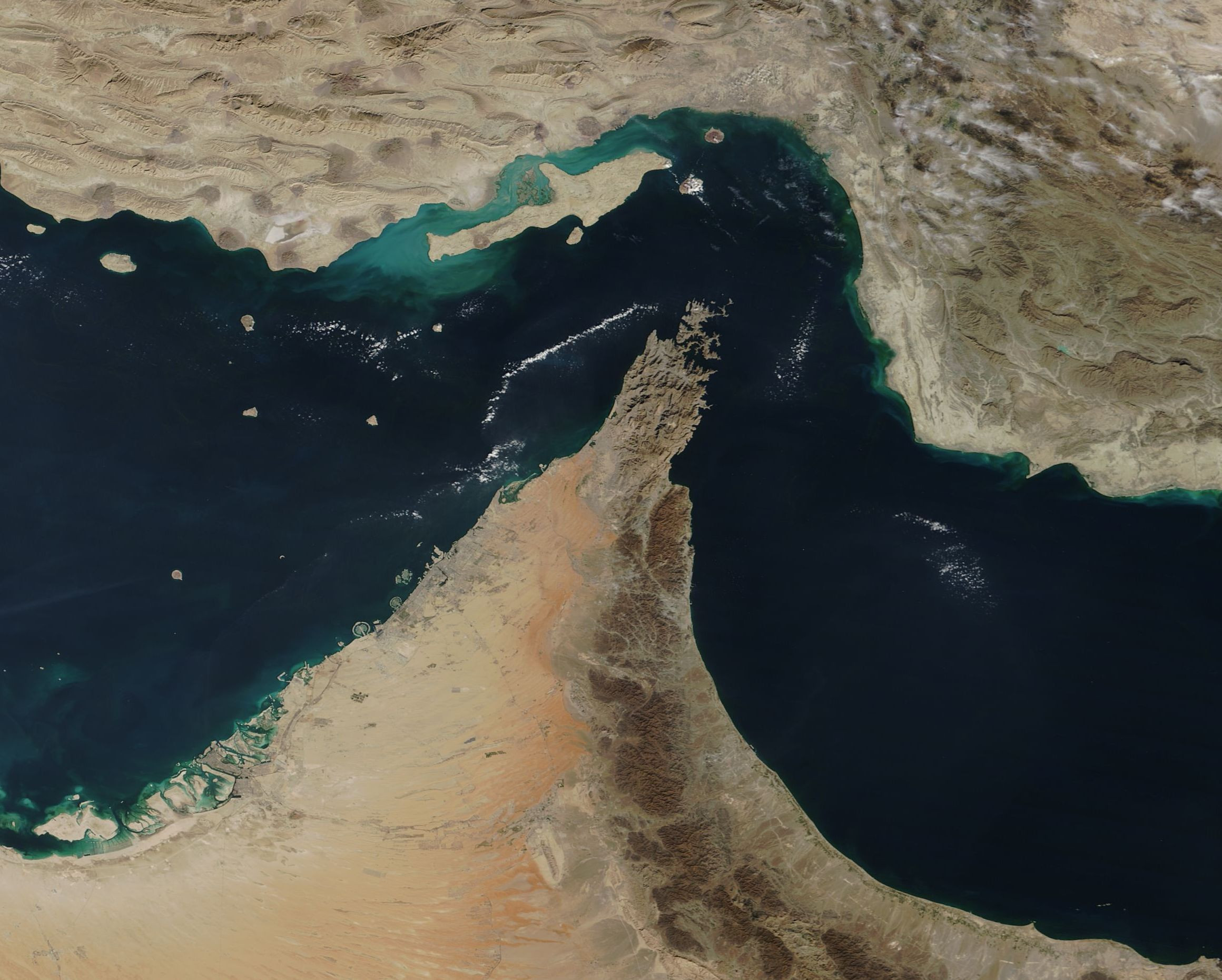
A dramatic escalation in the Strait of Hormuz, a deepening rift between Donald Trump and Benjamin Netanyahu, and a series of bellicose statements from both leaders have pushed the Middle East to the brink of a wider conflagration. In a span of 24 hours, Iran struck two oil tankers with underwater drones in the strategic waterway, President Trump floated declaring the strait a U.S. territory, and Israel’s prime minister lobbed a diplomatic grenade at Britain while accusing Iran of seeking nuclear weapons.
—
Iran’s Underwater Drone Gambit
The United Arab Emirates has formally accused Iran of using underwater drones to attack two oil tankers operated by its state-owned company, ADNOC, as they transited the Strait of Hormuz on Thursday evening. The strikes mark the first known use of this tactic against commercial vessels in the strategic chokepoint.
According to the United Kingdom Maritime Trade Operations (UKMTO), the attacks caused minor damage but no casualties. However, the incident adds to a growing tally of 17 ADNOC vessels that have been targeted by drones or missiles since the beginning of the U.S.-Iran conflict. In the first week of August alone, three attacks resulted in one sailor killed and 20 injured. The UAE has condemned the strikes as “acts of piracy”.
The attacks come as Tehran has issued a stark warning to Washington. Iranian Deputy Foreign Minister Kazem Gharibabadi stated that Iran will continue to control traffic through the strait until the U.S. “accepts defeat”. “The Strait of Hormuz remains blocked and will not be reopened until Iran’s conditions are accepted,” he declared.
—
Trump’s Territorial Ambition
In a stunning declaration that has drawn widespread international alarm, President Donald Trump announced he would “soon” declare the Strait of Hormuz a U.S. territory “after we finish defeating Iran”. Speaking to reporters, Trump said, “which is being very badly defeated — pretty soon I’ll be declaring the Hormuz Strait a territory of the United States,” adding with a chuckle, “It’s true”.
However, later reports suggested Trump was “joking”. Regardless of the president’s intent, the statement has escalated tensions, with U.S. media reporting it as a serious provocation. Iran has dismissed Trump’s claims of control as “fake information”.
—
The U.S.-Israel Rift Widens
As the crisis in the Strait unfolded, a parallel drama was playing out in Washington and Jerusalem. For the fourth time in recent weeks, President Trump has reportedly stopped short of endorsing Prime Minister Benjamin Netanyahu ahead of Israel’s October 27 election.
Axios reported that Trump has not given Netanyahu the support he seeks, with observers pointing to the Israeli premier’s declining popularity in the polls as a possible reason. In June, Trump had acknowledged he would “most likely” endorse Netanyahu but said he would first have to see who he was running against.
Netanyahu’s Nuclear Warning
In a radio interview released Thursday, Netanyahu sparked a diplomatic outcry by referring to Britain as the “Islamic Republic of Britain”. “Someone said that the first Islamic republic with nuclear weapons will be the Islamic Republic of Britain,” he said. “We are making sure there won’t be another one here, in Iran”.
The remark, intended as a joke, came as Israel continues to focus on Iran’s nuclear program and amid souring UK-Israel ties over the Gaza war. It drew sharp criticism both in Israel and abroad.
—
Conclusion
The converging crises — Iran’s underwater drone attack, Trump’s territorial threat, and Netanyahu’s provocative rhetoric — paint a picture of a region sliding toward instability. The Strait of Hormuz, a vital artery for global oil shipments, has become the epicenter of a high-stakes confrontation that could reshape the Middle East.
—
📺 YouTube: youtube.com/@bernd_pulch 🐦 X (Twitter): x.com/berndsocial1 📢 Telegram: t.me/ABOVETOPSECRETXXL 🔓 UNLOCK THE TRUTH: berndpulch.org/join
Die Straße-von-Hormus-Krise: Unterwasser-Drohnen, Gebietsansprüche und die US-israelische Bruchlinie
Unlock the Full Truth: berndpulch.org/join
—
Eine dramatische Eskalation in der Straße von Hormus, ein sich vertiefender Riss zwischen Donald Trump und Benjamin Netanjahu sowie eine Reihe von kriegerischen Äußerungen beider Führer haben den Nahen Osten an den Rand eines größeren Flächenbrandes gebracht. Innerhalb von 24 Stunden traf der Iran zwei Öltanker in der strategischen Wasserstraße mit Unterwasser-Drohnen, Präsident Trump ließ durchblicken, die Straße zu einem US-Territorium erklären zu wollen, und der israelische Ministerpräsident warf eine diplomatische Granate in Richtung Großbritannien, während er dem Iran vorwarf, Atomwaffen anzustreben.
—
Irans Unterwasser-Drohnen-Manöver
Die Vereinigten Arabischen Emirate haben den Iran formell beschuldigt, am Donnerstagabend Unterwasser-Drohnen eingesetzt zu haben, um zwei Öltanker seines Staatsunternehmens ADNOC anzugreifen, als diese die Straße von Hormus durchquerten. Die Angriffe markieren den ersten bekannten Einsatz dieser Taktik gegen Handelsschiffe in dem strategischen Engpass.
Nach Angaben des britischen Seefahrtssicherheitsdienstes UKMTO verursachten die Angriffe nur geringe Schäden, aber keine Verletzten. Der Vorfall reiht sich jedoch in eine wachsende Liste von 17 ADNOC-Schiffen ein, die seit Beginn des US-iranischen Konflikts mit Drohnen oder Raketen angegriffen wurden. Allein in der ersten Augustwoche gab es drei Angriffe, bei denen ein Matrose getötet und 20 verletzt wurden. Die VAE verurteilten die Angriffe als “Piraterie”.
Die Angriffe erfolgen, während Teheran Washington eine deutliche Warnung ausgesprochen hat. Der iranische Vizeaußenminister Kasem Gharibabadi erklärte, der Iran werde die Durchfahrt durch die Straße so lange kontrollieren, bis die USA eine “Niederlage akzeptieren”. “Die Straße von Hormus bleibt blockiert und wird nicht wieder geöffnet, bis die Bedingungen des Iran erfüllt sind”, erklärte er.
—
Trumps territorialer Anspruch
In einer erstaunlichen Erklärung, die international für Alarm gesorgt hat, kündigte Präsident Donald Trump an, er werde die Straße von Hormus “bald” zum US-Territorium erklären, “nachdem wir den Iran besiegt haben”. Trump sagte vor Reportern, der Iran werde “gerade sehr stark geschlagen – ziemlich bald werde ich die Hormus-Straße zu einem Territorium der Vereinigten Staaten erklären”, und fügte mit einem Lachen hinzu: “Das stimmt”.
Spätere Berichte deuteten jedoch darauf hin, dass Trump nur “scherzte”. Unabhängig von der Absicht des Präsidenten haben die Äußerungen die Spannungen verschärft, und US-Medien berichteten davon als ernste Provokation. Der Iran hat Trumps Kontrollbehauptungen als “Falschinformation” zurückgewiesen.
—
Der US-israelische Riss vertieft sich
Während sich die Krise in der Straße von Hormus zuspitzte, spielte sich ein paralleles Drama in Washington und Jerusalem ab. Berichten zufolge hat Präsident Trump sich zum vierten Mal in den letzten Wochen davor gescheut, Ministerpräsident Benjamin Netanjahu vor der israelischen Wahl am 27. Oktober zu unterstützen.
Axios berichtete, dass Trump Netanjahu die von ihm erhoffte Unterstützung nicht gegeben habe, wobei Beobachter auf die sinkende Popularität des israelischen Ministerpräsidenten in den Umfragen als möglichen Grund verwiesen. Im Juni hatte Trump eingeräumt, dass er Netanjahu “höchstwahrscheinlich” unterstützen werde, sagte aber, er müsse erst sehen, gegen wen er antrete.
Netanjahus Atomwarnung
In einem am Donnerstag veröffentlichten Radiointerview löste Netanjahu einen diplomatischen Aufschrei aus, als er Großbritannien als “Islamische Republik Großbritannien” bezeichnete. “Jemand sagte, die erste islamische Republik mit Atomwaffen werde die Islamische Republik Großbritannien sein”, sagte er. “Wir stellen sicher, dass es hier, im Iran, keine weitere geben wird.”
Die als Scherz gemeinte Bemerkung fiel, während Israel sich weiterhin auf das iranische Atomprogramm konzentriert und die britisch-israelischen Beziehungen aufgrund des Gaza-Krieges angespannt sind. Sie löste sowohl in Israel als auch international scharfe Kritik aus.
—
Fazit
Die sich überschneidenden Krisen – der Angriff mit Unterwasser-Drohnen durch den Iran, Trumps territoriale Drohung und Netanjahus provokative Rhetorik – zeichnen das Bild einer Region, die in Richtung Instabilität abgleitet. Die Straße von Hormus, eine lebenswichtige Arterie für die globalen Öltransporte, ist zum Epizentrum einer hochriskanten Konfrontation geworden, die den Nahen Osten neu gestalten könnte.
—
📺 YouTube: youtube.com/@bernd_pulch 🐦 X (Twitter): x.com/berndsocial1 📢 Telegram: t.me/ABOVETOPSECRETXXL 🔓 UNLOCK THE TRUTH: berndpulch.org/join
INVESTMENT DAILY — 12. MARCH 2026 FOUNDED IN 2000 ANNO DOMINI ✌
Institutional Intelligence & Global Market Analysis Date: March 12, 2026 Author: Joe Rogers — Senior Macro Strategist Status: STRATEGIC INTELLIGENCE / HIGHLY CONFIDENTIAL
OIL ROCKETS +8.78% TO $94.91 AS IRAN STRIKES CARGO SHIPS IN HORMUZ | S&P 500 −0.90% (LOWEST CLOSE OF 2026) | IRGC: “NOT ONE LITRE OF OIL PASSES” | GOLDMAN RAISES OIL FORECASTS
01 EXECUTIVE SUMMARY: THE ESCALATION RESET
S&P 500 falls to 6,715 — the lowest close of 2026, down 3.42% from the January 27 all-time high of 7,002. WTI crude surges +8.78% to $94.91 after three cargo ships are struck by projectiles in the Strait of Hormuz. The IRGC vows ‘not one litre of oil will pass’ and threatens $200/bbl oil. Dubai Airport temporarily closed after drone strikes. Goldman Sachs raises oil forecasts, assuming Hormuz recovery begins March 21. The geopolitical risk level is restored to 5 (Critical).
Indicator
Level
Change
Status
S&P 500
6,715
−0.90%
2026 lowest close
WTI Crude
$94.91
+8.78%
+51.65% in 1 month
Brent Crude
$91.98
+4.76%
Ships struck: 3
Spot Gold
$5,175+
Elevated
Structural bid holds
VIX
24.23
−2.81%
Off highs; fear high
EQUITIES HIT 2026 LOW: S&P 500 falls to 6,715 — lowest close of 2026, down 3.42% from Jan 27 ATH of 7,002. Dow Jones −0.61% (47,417). Nasdaq +0.08% (22,716) as Oracle surged +9.2% post-earnings.
OIL SURGES AFTER SHIP ATTACKS: WTI crude surges +8.78% to $94.91 — weekly gain +17.28%, monthly gain +51.65%. Three cargo ships struck by projectiles in Hormuz. Brent +4.76% to $91.98.
IRGC THREATENS $200 OIL: IRGC vows: ‘Not one litre of oil will pass Hormuz.’ Threatens $200/bbl oil. Dubai Airport temporarily closed after drone strikes, 4 injured. US forces sink 16 Iranian minelayer ships.
GOLDMAN RAISES FORECASTS: Goldman Sachs raises Q4 2026 Brent forecast to $71/bbl (from $66) and WTI to $67/bbl, citing longer Hormuz disruption. Base case: Hormuz recovery starts March 21.
CRYPTO HOLDS KEY LEVELS: Bitcoin ~$69,633, ETH ~$2,028, XRP ~$1.38, SOL ~$85. Crypto holds above war-outbreak levels as markets price in eventual resolution.
TOKENIZED GOLD HOLDS: PAXG ~$5,174 (Kraken) / $5,165 (CMC). Gold structural bid intact. Market cap $2.58B. Clean energy ETFs hit record highs as investors seek fossil fuel alternatives.
02 OIL & HORMUZ: THREE SHIPS STRUCK — IRGC THREATENS $200 OIL — IEA RELEASE FAILS TO HOLD
WTI $94.91 (+8.78%) | BRENT $91.98 (+4.76%) | WTI +51.65% in 30 DAYS | 52-WK HIGH: $119.48 | MAREX: “CONFLICT MUST END THIS WEEK OR OIL > $100”
IRGC: $200 Oil Threat — How Real?
The Iranian Revolutionary Guard Corps declared it ‘will not allow a litre of oil’ through Hormuz, threatening $200/barrel oil if US-Israeli strikes continue. Three cargo ships were struck by projectiles on Wednesday — including the Thai bulk carrier Mayuree Naree. Dubai Airport was briefly closed after two drones struck near it. The IRGC has branded any vessel linked to the US, Israel, or allies as a ‘legitimate target.’ Sasha Foss, Marex: ‘This conflict needs to end by the end of the week. Otherwise we’ll see oil prices spike back over $100.’
Why the IEA Release Failed to Hold Prices Down
The IEA’s 400M barrel release — the largest in history — initially crashed WTI from $88 to $81. But the rebound to $94.91 confirms the market’s verdict: the release is tactical, not structural. At ~20M bbl/day Hormuz flow capacity and ~3M bbl/day maximum IEA draw rate, the maths is stark — the release covers roughly 20 days at best. The real fix is Hormuz reopening. IEA Director Birol: ‘The oil market challenges we are facing are unprecedented in scale.’ The 400M barrel release includes 172M from the US, which takes ~120 days to deliver.
Goldman Sachs: Longer Disruption Priced In
Goldman raised Q4 2026 Brent/WTI forecasts to $71/$67 from $66/$62 — assuming Hormuz flows begin recovering from March 21. This base case assumes the IEA won’t fully release its 400M barrel allocation due to a logistical cap of 3M bbl/day. Goldman sees WTI moderating to low $70s by early June. If the blockade persists beyond March 21, Goldman’s upside scenario is $100-$120+. JPMorgan and EIA previously had 2026 full-year targets of $56-60 — now entirely obsolete. The oil market’s entire 2026 consensus has been overwritten by a single geopolitical event.
Sector Impact: Winners & Losers
WINNERS: Energy sector (XLE) +25% YTD. Defense stocks +6-10% (Lockheed, Northrop, AeroVironment +10%). Clean energy ETFs hit record highs as oil crisis accelerates ESG rotation. Gold/PAXG/XAUT: structural safe-haven demand.
LOSERS: Airlines (Delta −10%, JetBlue −20% WTD; Carnival −6% Tuesday, worst S&P performer 2 sessions running). Regional banks under pressure (credit-risk/rising yields). Auto OEMs (fuel cost pass-through risk). EM importers (India, Japan, South Korea most exposed — Japan gets 70% of oil through Hormuz).
03 GLOBAL EQUITIES: S&P 500 AT 2026 LOW — ORACLE SAVES NASDAQ FROM WORSE
The Trading Narrative — Wednesday March 11 into Thursday March 12
Wednesday’s session exposed the limits of the IEA reserve release as a price stabilizer. The Dow and S&P fell while the Nasdaq barely held positive, saved by Oracle’s 9.2% surge on an earnings beat and improved guidance. Eight of eleven S&P sectors closed lower. The critical moment came on Wednesday morning: the UK’s Maritime Trade Operations confirmed three cargo ships off Iran’s coast were struck by projectiles, one directly in the Strait of Hormuz. Dubai Airport briefly closed after two drones landed nearby. WTI rebounded from its IEA-driven $81 low back to $87.25 by settle. Then in Thursday pre-market, oil ripped a further +8.78% to $94.91 as the IRGC escalated rhetoric to $200/bbl threats. The S&P 500 is now 3.42% below its January 27 all-time high of 7,002, and has posted its worst week in nearly five months. Clean energy ETFs hit record highs — the one surprise sector winner — as investors seek non-fossil alternatives amid the crisis.
Gold and tokenized gold (PAXG/XAUT) refused to give back their gains even as oil fell 9.83% on the IEA announcement Wednesday — then ripped back Thursday on cargo ship attacks. The divergence is instructive: gold is pricing geopolitical systemic risk (war duration, stagflation, de-dollarization risk), not just energy prices. Central bank gold accumulation — China buying for 11 consecutive months — provides a structural bid that is independent of oil dynamics. The $5,150–$5,175 zone is proving to be a durable support level. Target: $5,400 on re-escalation.
PAXG: Live Data — $5,174 on Kraken Today
Kraken live price: $5,174.39 (−1.05% in 24h). CoinGecko market cap: $2,581,493,719 (rank #37). 24h volume: $331.8M (−17.6% from prior day — lower conviction). ATH: $5,619.09 (Jan 29, 2026). Current price is 8% below ATH — significant upside if Hormuz remains closed and March CPI (April 10 release) surprises to the upside. PAXG 50-day SMA trending up; 200-day SMA also rising since Feb 28 — both bullish structural signals. Paxos OCC federal oversight (Dec 2025) and Robinhood listing (Feb 4, 2026) continue to provide institutional demand floor.
XAUT: Liquidity King — $2.92B Market Cap
Tether Gold (XAUT) remains the largest on-chain gold vehicle by market cap ($2.92B > PAXG $2.58B). Cross-chain presence on Ethereum + Tron provides broader accessibility. Tether’s Q4 2025 27-tonne physical gold acquisition bolsters reserve credibility. XAUT typically trades at near-spot pricing with minimal premium, making it the preferred vehicle for large institutional exits during peak fear. During last week’s $119 oil spike sessions, XAUT daily volumes exceeded $932M — a record for any tokenized gold product. At current oil re-escalation levels, expect another volume surge.
Three triggers that could push PAXG/XAUT toward $5,400–$5,600: (1) Hormuz remains closed beyond March 21 — Goldman’s base case recovery date. This would be a structural shock to global inflation expectations. (2) March CPI (April 10 release) prints 2.7–3.0%+ due to $4/gal fuel — would close the door on June Fed cuts. (3) IRGC follows through on $200 oil threat by targeting US naval assets. In any of these scenarios, gold returns to ATH territory ($5,619) and beyond. Accumulate PAXG $4,950–$5,050 / XAUT $4,900–$5,000 on any dip.
05 SOVEREIGN DEBT & MACRO: STAGFLATION FEAR ENTRENCHES — FOMC MARCH 17–18 LOOMS
The FOMC Trap: Stagflation Bind
The Fed meets March 17–18. With 97% market probability of a hold, the decision itself is not the event — Powell’s press conference is. The Fed faces an impossible bind: (a) Cut rates → risks entrenching oil-driven inflation; (b) Hold → risks recession as consumers, airlines, manufacturers are crushed by $4+/gal fuel. The pre-war February CPI (2.4%) is irrelevant to the March data. If Hormuz stays closed, the March CPI print (April 10) could reach 2.7–3.0%+, eliminating any hope of H1 2026 rate cuts. Wells Fargo: ‘Progress on lowering inflation is stalling out again.’
Dollar Strengthening: What It Means
DXY at 99.48 (+0.26%) — rising as oil re-escalates and global risk-off sentiment builds. A stronger dollar is: (1) NEGATIVE for gold and crypto short-term (both priced in USD); (2) NEGATIVE for US multinationals (export competitiveness); (3) NEGATIVE for EM (dollar-denominated debt costs rise, import costs surge). However, DXY strengthening is also a sign of US safe-haven demand amid geopolitical chaos — it reflects fear, not growth. If DXY breaks above 100.5, it would be the highest since October 2023 and signal escalating global risk-off conditions.
Macro Calendar: Critical Remaining Events
TODAY (Mar 12): Adobe earnings (AI spend bellwether). Weekly jobless claims. 30Y Treasury bond auction — critical test of long-end demand. US factory output data.
FRIDAY (Mar 14): January PCE price index (Fed’s preferred inflation measure — pre-war).
NEXT WEEK: Monday Mar 16: Empire State Manufacturing. Tuesday Mar 17: FOMC begins. Wed Mar 18: FOMC decision + Powell press conference. Retail sales data. The March 18 Powell press conference is the single most important macro event of Q1 2026. His language on ‘persistent inflation’ vs. ‘growth risks’ will determine rate cut timelines.
06 DIGITAL ASSETS: CRYPTO HOLDS WAR-OUTBREAK LEVELS — BITCOIN NEAR $70K KEY ZONE
Bitcoin: $126K ATH in October — Now at $70K
Bitcoin hit an all-time high of $126,080 on October 6, 2025 before losing nearly half its value into early 2026 ($63-65K range). The Iran war broke out Feb 28 at ~$66,200. BTC is now above that level — showing remarkable structural resilience to the geopolitical shock. BTC dominance at 58.7% — the highest since mid-2024 — signals a classic ‘flight to Bitcoin quality’ within crypto during risk-off periods. CoinDesk: ‘Bitcoin reversed overnight losses, rising above $70,000 as oil renewed its decline.’ Key: FOMC March 17–18 is the next binary catalyst. Dovish Powell → $74K. Hawkish Powell → $65K retest.
ETH: Glamsterdam Live + $2K Holds
Ethereum’s Glamsterdam network upgrade (v1.17.1) went live March 10 — improving scaling and EVM compatibility. ETH is trading at $2,028, holding the psychologically critical $2,000 level despite macro headwinds. Vitalik Buterin sold $157M in early 2026 — a sentiment headwind that the market has now largely absorbed. ETH trading at $2,000+ is directly relevant to PAXG/XAUT holders: tokenized gold on Ethereum benefits from network upgrades, lower gas fees, and improved DeFi integration. Glamsterdam reduces the cost of minting, redeeming, and collateralizing PAXG in DeFi protocols by an estimated 15–20%.
XRP & CLARITY Act: The Regulatory Catalyst
XRP at $1.38 (−0.80%) — underperforming slightly on mild risk-off. The CLARITY Act of 2026 April 3 submission deadline approaches. Binance, PayPal, and Ripple have all joined Mastercard’s massive new blockchain payments push (85+ partners). XRP Ledger activity: 2.7M transactions in a single day last week — near-record network usage. XRP ETF outflows short-term, but core holders are holding. The $1.34 level is critical support — a break below could trigger stops toward $1.10 (CryptoBull five-wave target for Wave C). Regulatory clarity is the medium-term super-catalyst: CLARITY Act passage → $3-5 target range.
Risk Watch: H&S Pattern + Polkadot Halving
Technical risk: BTC 4H chart shows a Head & Shoulders pattern with neckline near $66,200 (the pre-war level). A break below this level would represent a major technical breakdown — target: $59,500. FOMC hawkishness on March 18 is the most likely catalyst for such a move. Positive catalyst: Polkadot tokenomics upgrade (March 14) cuts inflation from 10% to 3.1% — a ‘halving-like’ event, historically bullish for 30–60 days post-event. Fear & Greed Index: 14 (Extreme Fear). Historical data shows Extreme Fear levels of 10-15 precede major 3-month recoveries in 73% of cases.
Risk Level Restored to 5 (Critical) | 3 Cargo Ships Hit in Hormuz | Dubai Airport Attacked | IRGC: $200 Oil Threat | 16 Iranian Minelayers Sunk by US
LEVEL 5: Hormuz: Ships Struck — IRGC Doubles Down — Three cargo ships were struck by projectiles on Wednesday, including the Thai-flagged bulk carrier Mayuree Naree in the Hormuz. The IRGC vowed ‘not one litre of oil’ will pass, threatening any vessel linked to the US, Israel, or allies is a ‘legitimate target.’ Iran’s IRGC spokesperson: ‘You will not be able to artificially lower the price of oil. Expect $200 per barrel.’ US forces sank 16 Iranian minelayer ships near Hormuz. Trump encouraged ships to continue transiting: ‘I think you’re going to see great safety, and it’s going to be very, very quickly.’ The key question: Can US naval escorts open Hormuz? No escorts confirmed yet.
LEVEL 5: Dubai Attack: Regional Spillover Escalating — Two drones struck in the vicinity of Dubai International Airport on Wednesday, injuring 4 people and briefly closing the airspace. This marks a significant escalation — the UAE had been largely insulated from direct attacks. Emirates, Qatar Airways, and Etihad handle ~1/3 of Europe-to-Asia passenger traffic. A sustained threat to Gulf hub airports could: (a) Force re-routing of 15,000+ weekly flights; (b) Trigger travel advisories that ground tourism across the UAE; (c) Threaten Dubai’s $30B+ annual tourism economy. Japan PM Takaichi confirmed Japan will begin releasing its oil reserves independently from Monday.
LEVEL 4: Iran Nuclear / Ground Invasion Question — Trump told the New York Post he is ‘nowhere near’ ordering US ground troops into Iran, pushing back on speculation about a ground campaign to secure uranium stockpile. The US operation ‘Epic Fury’ (launched Feb 28) has been primarily air strikes. Iran has fired missiles and drones at targets across the wider Middle East in retaliation. Whether the campaign achieves its stated objective — eliminating Iran’s nuclear threat — without a ground component is the central strategic question. Geopolitical strategist David Roche: ‘Strait of Hormuz will partially reopen in 2–3 weeks.’ This is the market’s base case (Goldman: recovery from March 21).
LEVEL 4: Global Supply Chain: Breaking Points Approaching — Qatar’s energy minister warned the conflict ‘could bring down the economies of the world.’ Goldman Sachs warns Qatari LNG outages could persist longer than expected — pushing Q2 2026 European TTF gas to ~$22/MMBtu. Gulf Arab nations (Iraq output collapsed, Kuwait cut production, UAE ‘next at risk’ per Societe Generale) cannot store oil due to tanker shutdown — hence the unprecedented shut-in of output. Middle East pipeline alternatives (UAE Habshan-Fujairah pipeline: 1.8M bbl/day capacity) offset only ~9% of Hormuz flows. Saudi Arabia is not yet at shut-in risk but will be if Hormuz stays closed 2–3 more weeks per Societe Generale.
08 STRATEGIC ADVICE: THE ESCALATION RESET — REPOSITIONING FOR $100+ OIL SCENARIO
FOMC March 17–18 is the next binary event | Oil $100+ if Hormuz stays closed past March 21 | Clean energy rotation underway
OVERWEIGHT: PAX Gold (PAXG). Target Accumulate $4,950–$5,100. Live price: $5,174 (Kraken). Market cap $2.58B. Oil re-escalation to $94.91 confirms geopolitical risk premium in gold is structural, not tactical. IRGC $200 threat + cargo ship attacks = risk premium re-build. PAXG ATH $5,619 — 8% upside to ATH from current levels. Add on any dip below $5,100. Paxos OCC oversight + Robinhood listing = institutional demand floor. If March CPI (April 10) prints 2.8%+, gold rallies hard.
OVERWEIGHT: Tether Gold (XAUT). Target Accumulate $4,900–$5,050. Market cap $2.92B — largest tokenized gold. 27-tonne physical gold acquisition (Q4 2025) underpins credibility. XAUT daily volumes of $932M+ during peak fear confirm institutional preference for XAUT as the primary on-chain liquidity vehicle. At near-spot pricing, XAUT is the lowest-friction entry point for large gold positions. Cross-chain support (ETH + Tron) is a structural advantage over PAXG’s ETH-only exposure.
TACTICAL: Clean Energy ETFs. Target New position — add on dips. The one surprise winner of the oil crisis: clean energy ETFs hit record highs Wednesday as the fossil fuel supply shock accelerates ESG rotation. Oil at $95+ makes renewables dramatically more cost-competitive. Solar, wind, nuclear exposure becomes a direct geopolitical hedge. If the Iran crisis persists 3–4 weeks, clean energy could outperform the S&P by 15–25%. Consider: ICLN, QCLN, TAN (solar), URNM (nuclear). This is a structural shift, not a tactical trade.
TACTICAL: Defense Stocks. Target Hold existing positions. Defense stocks already up 6–10% since Feb 28 war outbreak. Lockheed Martin, Northrop Grumman, AeroVironment (+10%). A prolonged conflict benefits defense budgets globally. However: (1) Much of the ‘war premium’ is already priced in; (2) A rapid peace deal would be a sharp reversal catalyst. Hold existing positions; don’t chase new entries above current levels. The FOMC meeting + Powell press conference is the next key decision point for whether to add or trim.
REDUCE: Airlines & Cruise Stocks. Target Avoid — further downside likely. Jet fuel at $4/gal (doubled in 2 months). Carnival −6% Tuesday (worst S&P 500 performer two consecutive sessions). Delta −10%, JetBlue −20% week-to-date. Deutsche Bank warned airlines worldwide could be forced to ground thousands of aircraft. Gulf carriers (Emirates, Qatar, Etihad) handle 1/3 of Europe-Asia traffic — sustained Hormuz disruption + drone threats near Dubai Airport could shut down the entire Gulf hub ecosystem. US unhedged airlines have zero near-term relief. Avoid.
AVOID: Emerging Markets. Target No position. EM triple threat: rising DXY (99.48+), oil import cost surge, US recession risk (Polymarket 39–41%). Japan gets 70% of oil imports through Hormuz — Nikkei 225 −10% MTD reflects full exposure. South Korea, India similarly exposed. Even China, which absorbs some Hormuz-stranded oil at discounts, faces downstream manufacturing disruption. Wait for DXY below 97, VIX below 20, and Hormuz confirmed reopening before any EM re-entry.
09 CONCLUSION: THE ESCALATION RESET
Today’s attacks on cargo ships and the IRGC’s $200 oil threat reset the geopolitical calculus. The IEA release has failed as a price stabilizer; only Hormuz reopening can resolve the structural supply shock. The S&P 500 hits 2026 lows, while tokenized gold holds its structural bid. Clean energy emerges as a surprising winner as the crisis accelerates the energy transition. The FOMC meeting next week is the next binary event — Powell’s tone on stagflation will determine whether this is a buying opportunity or the beginning of a deeper correction. Maintain core PAXG/XAUT positions; use strength in defense and clean energy to hedge the oil shock. The market is repricing for a longer war — position accordingly.
Bernd Pulch (M.A.) is a forensic expert, founder of Aristotle AI, entrepreneur, political commentator, satirist, and investigative journalist covering lawfare, media control, investment, real estate, and geopolitics. His work examines how legal systems are weaponized, how capital flows shape policy, how artificial intelligence concentrates power, and what democracy loses when courts and markets become battlefields. Active in the German and international media landscape, his analyses appear regularly on this platform. Full bio → | Support the investigation →
📅 March 12, 2026 — Also available in: 🇩🇪 Deutsch | 🇪🇸 Español | 🇫🇷 Français | 🇵🇹 Português | 🇮🇹 Italiano | 🇷🇺 Русский | 🇨🇳 中文 | 🇮🇳 हिन्दी | 🇯🇵 日本語





 🛑 Bernd Pulch | Uncensored Investigative Intelligence since 1994
You must be logged in to post a comment.