


📺 YouTube: youtube.com/@bernd_pulch
🐦 X (Twitter): x.com/berndsocial1
📢 Telegram: t.me/ABOVETOPSECRETXXL
🔓 UNLOCK THE TRUTH: berndpulch.org/join
—
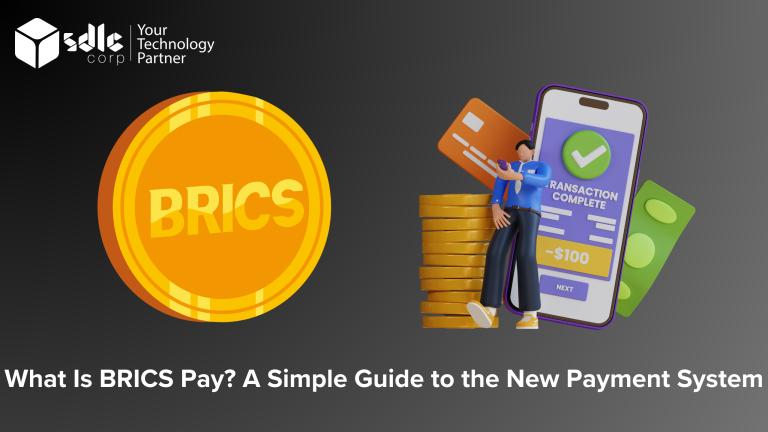
BRICS Announces Blockchain Payment System to Bypass SWIFT – Putin Confirms End of Dollar Dominance
Russian President Vladimir Putin has confirmed that the BRICS nations are building a new blockchain-based payment system designed to bypass SWIFT and eliminate Western control over global finance. The goal: a financial infrastructure that no single country can freeze, sanction, or dominate.
—
Putin’s Bombshell
Speaking at the St. Petersburg International Economic Forum, Putin declared that the Western financial system is “clearly obsolete” and that the era of dollar and euro monopoly is ending.
“Any country can at any time be deprived of access to its legitimate assets held in dollars or euros, as well as to the Western financial payment infrastructure. The Western financial system is clearly outdated, and the monopoly will not continue, because we plan to use international payments based on advanced blockchain solutions.”
Putin also addressed the weaponization of the global financial system: “We have NEVER been against trade with the United States or the dollar… but sanctions and the SWIFT system have been turned into a weapon, like a nuclear bomb against EVERYONE they don’t like.”
The bloc of emerging economies — now expanded to include Iran, Egypt, Ethiopia, and the UAE — accounts for 49 percent of global economic growth over the past five years, while the G7 contributed only 18 percent.
—
The New System: What We Know
The new BRICS payment infrastructure is designed to be a complete alternative to the Western-dominated SWIFT system.
Key Features
· Blockchain-Based: Built on distributed ledger technology for speed, transparency, and resilience
· High-Speed Processing: Capable of handling up to 20,000 transactions per second
· National Currency Settlements: Enables direct trade in local currencies without dollar conversion
· Bypasses SWIFT: Operates entirely outside Western-controlled financial messaging systems
· Unfreezable: Cannot be frozen, sanctioned, or controlled by any single country
At the heart of the system are mechanisms designed to make trade in national currencies seamless without relying on the dollar: settlement cycles and foreign exchange swap lines. The system has reportedly attracted interest from 159 countries.
The Technical Architecture
BRICS Pay runs on a custom Hyperledger Besu-based blockchain and settles transactions in seconds — a stark contrast to the 3-5 days SWIFT requires. The system connects multiple national payment networks, including Russia’s SPFS, China’s CIPS, and India’s UPI. The goal is to reduce USD usage in intra-bloc trade by roughly two-thirds.
—
The Geopolitical Logic
Why Now?
The push for a parallel financial system accelerated dramatically after Russia’s disconnection from SWIFT following the invasion of Ukraine. Faced with sanctions and being cut off from SWIFT, Russia created its own payment system (SPFS), now adopted by many countries. China has its own CIPS, and India has its UPI. BRICS Pay aims to connect these systems.
The Dollar as a Weapon
Putin argued that growing distrust of Western sanctions, financial controls, and asset freezes is pushing BRICS nations and other countries away from the US dollar and euro. The West has weaponized the financial system — and the response is a system that cannot be weaponized.
The De-Dollarization Framework
According to the BRICS Council, the strategy is not a “sudden break” with the dollar but a “practical gradualism” — an evolutionary process. Four distinct levels are identified:
1. Bilateral trade in national currencies
2. Lending and bond financing outside the dollar
3. Building alternative payment and clearing infrastructure
4. Reducing the dollar share in central bank reserves
—
The Global Response
Who’s Joining?
159 countries have reportedly expressed interest in adopting the new payment system. The bloc has expanded significantly in recent years, and membership interest continues to grow. The BRICS bank (New Development Bank) has already approved $42.9 billion in financing for 139 projects.
The U.S. Reaction
President Trump has threatened that any country trying to replace the dollar “should wave goodbye to America”. But with the BRICS nations now accounting for 49 percent of global economic growth — compared to the G7’s 18 percent — the economic calculus is shifting.
—
The Silver Lining?
Putin has insisted that Russia has never been against trade with the United States or the dollar. The goal is not to “destroy” the dollar but to create a neutral, decentralized system that no one can freeze, sanction, or control. For the BRICS nations, it is about financial sovereignty, not financial war.
—
Conclusion: The End of the Dollar’s Exclusivity?
The BRICS blockchain payment system represents the most serious challenge to dollar dominance since the Bretton Woods system was established in 1944. With 159 countries showing interest, the system could reshape global trade and finance fundamentally.
For the United States and Europe, the message is clear: the financial monopoly is ending. Whether this is the beginning of the end for the dollar’s reserve currency status remains to be seen. But the era of unilateral financial control — where one country can freeze, sanction, or exclude any nation from the global financial system — is coming to an end.
—
📺 YouTube: youtube.com/@bernd_pulch
🐦 X (Twitter): x.com/berndsocial1
📢 Telegram: t.me/ABOVETOPSECRETXXL
🔓 UNLOCK THE TRUTH: berndpulch.org/join
📺 YouTube: youtube.com/@bernd_pulch
🐦 X (Twitter): x.com/berndsocial1
📢 Telegram: t.me/ABOVETOPSECRETXXL
🔓 UNLOCK THE TRUTH: berndpulch.org/join
—
BRICS kündigt Blockchain-Zahlungssystem an – Putin bestätigt Ende der Dollar-Hegemonie
Der russische Präsident Wladimir Putin hat bestätigt, dass die BRICS-Staaten ein neues Blockchain-basiertes Zahlungssystem aufbauen, das SWIFT umgehen und die westliche Kontrolle über das globale Finanzsystem beenden soll. Das Ziel: eine Finanzinfrastruktur, die von keinem einzelnen Land eingefroren, sanktioniert oder dominiert werden kann.
—
Putins Bombe
Auf dem St. Petersburger Internationalen Wirtschaftsforum erklärte Putin, dass das westliche Finanzsystem “offensichtlich veraltet” sei und die Ära des Dollar- und Euro-Monopols zu Ende gehe.
“Jedes Land kann jederzeit den Zugang zu seinen rechtmäßigen Vermögenswerten verlieren, die in Dollar oder Euro gehalten werden, sowie zur westlichen Finanzzahlungsinfrastruktur. Das westliche Finanzsystem ist eindeutig veraltet, und das Monopol wird nicht fortbestehen, weil wir planen, internationale Zahlungen auf Basis fortschrittlicher Blockchain-Lösungen zu nutzen.”
Putin sprach auch die Instrumentalisierung des globalen Finanzsystems an: “Wir waren NIEMALS gegen Handel mit den USA oder den Dollar … aber Sanktionen und das SWIFT-System wurden zu einer Waffe umfunktioniert, wie eine Atombombe gegen JEDEN, den sie nicht mögen.”
Der Block der Schwellenländer – nun erweitert um Iran, Ägypten, Äthiopien und die VAE – ist für 49 Prozent des globalen Wirtschaftswachstums der letzten fünf Jahre verantwortlich, während die G7 nur 18 Prozent beisteuerte.
—
Das neue System: Was wir wissen
Die neue BRICS-Zahlungsinfrastruktur ist als vollwertige Alternative zum westlich dominierten SWIFT-System konzipiert.
Kernmerkmale
· Blockchain-basiert: Aufgebaut auf Distributed-Ledger-Technologie für Geschwindigkeit, Transparenz und Widerstandsfähigkeit
· Hochgeschwindigkeitsverarbeitung: Bis zu 20.000 Transaktionen pro Sekunde
· Abwicklung in Landeswährungen: Direkter Handel in lokalen Währungen ohne Dollar-Umweg
· Umgeht SWIFT: Operiert vollständig außerhalb westlich kontrollierter Finanznachrichtensysteme
· Nicht einfrierbar: Kann von keinem einzelnen Land eingefroren, sanktioniert oder kontrolliert werden
Das Herzstück des Systems sind Mechanismen, die den Handel in Landeswährungen nahtlos ermöglichen sollen – ohne Abhängigkeit vom Dollar: Abwicklungszyklen und Devisen-Swap-Linien. Das System hat Berichten zufolge das Interesse von 159 Ländern geweckt.
Die technische Architektur
BRICS Pay läuft auf einer maßgeschneiderten Hyperledger-Besu-Blockchain und wickelt Transaktionen in Sekunden ab – ein krasser Gegensatz zu den 3-5 Tagen, die SWIFT benötigt. Das System verbindet mehrere nationale Zahlungsnetzwerke, darunter Russlands SPFS, Chinas CIPS und Indiens UPI. Ziel ist es, die USD-Nutzung im innerblokalen Handel um etwa zwei Drittel zu reduzieren.
—
Die geopolitische Logik
Warum jetzt?
Der Vorstoß für ein paralleles Finanzsystem beschleunigte sich dramatisch, nachdem Russland nach der Invasion der Ukraine von SWIFT abgeschnitten wurde. Konfrontiert mit Sanktionen und dem SWIFT-Ausschluss schuf Russland sein eigenes Zahlungssystem (SPFS), das heute von vielen Ländern genutzt wird. China hat sein CIPS, Indien sein UPI. BRICS Pay soll diese Systeme miteinander verbinden.
Der Dollar als Waffe
Putin argumentierte, dass das wachsende Misstrauen gegenüber westlichen Sanktionen, Finanzkontrollen und Vermögenssperren die BRICS-Staaten und andere Länder vom US-Dollar und Euro wegtreibe. Der Westen habe das Finanzsystem zur Waffe gemacht – und die Antwort sei ein System, das nicht zur Waffe gemacht werden kann.
Der De-Dollarisierungs-Rahmen
Laut dem BRICS-Rat ist die Strategie kein “plötzlicher Bruch” mit dem Dollar, sondern ein “praktischer Gradualismus” – ein evolutionärer Prozess. Es werden vier verschiedene Ebenen identifiziert:
1. Bilaterale Handelsabwicklung in nationalen Währungen
2. Kreditvergabe und Anleihefinanzierung außerhalb des Dollars
3. Aufbau alternativer Zahlungs- und Abwicklungsinfrastrukturen
4. Reduzierung des Dollaranteils in den Zentralbankreserven
—
Die globale Reaktion
Wer macht mit?
159 Länder haben Berichten zufolge Interesse an der Einführung des neuen Zahlungssystems bekundet. Der Block hat sich in den letzten Jahren erheblich erweitert, und das Interesse an einer Mitgliedschaft wächst weiter. Die BRICS-Bank (New Development Bank) hat bereits 42,9 Milliarden US-Dollar an Finanzierungen für 139 Projekte genehmigt.
Die US-Reaktion
Präsident Trump hat gedroht, dass jedes Land, das versuche, den Dollar zu ersetzen, “sich von Amerika verabschieden sollte”. Aber da die BRICS-Staaten nun für 49 Prozent des globalen Wirtschaftswachstums verantwortlich sind – verglichen mit 18 Prozent der G7 – verschiebt sich die wirtschaftliche Rechnung.
—
Das Silberstreif am Horizont?
Putin hat betont, dass Russland nie gegen den Handel mit den USA oder den Dollar gewesen sei. Ziel sei es nicht, den Dollar zu “zerstören”, sondern ein neutrales, dezentrales System zu schaffen, das niemand einfrieren, sanktionieren oder kontrollieren kann. Für die BRICS-Staaten geht es um finanzielle Souveränität, nicht um Finanzkrieg.
—
Fazit: Das Ende der Exklusivität des Dollars?
Das BRICS-Blockchain-Zahlungssystem stellt die ernsthafteste Herausforderung für die Dollar-Dominanz dar, seit das Bretton-Woods-System 1944 etabliert wurde. Mit 159 Ländern, die Interesse zeigen, könnte das System den globalen Handel und das Finanzwesen grundlegend umgestalten.
Für die USA und Europa ist die Botschaft klar: das Finanzmonopol endet. Ob dies der Anfang vom Ende des Reservewährungsstatus des Dollars ist, bleibt abzuwarten. Aber die Ära der unilateralen Finanzkontrolle – in der ein Land jede Nation vom globalen Finanzsystem einfrieren, sanktionieren oder ausschließen kann – geht zu Ende.
—
📺 YouTube: youtube.com/@bernd_pulch
🐦 X (Twitter): x.com/berndsocial1
📢 Telegram: t.me/ABOVETOPSECRETXXL
🔓 UNLOCK THE TRUTH: berndpulch.org/join
 🛑 Bernd Pulch | Uncensored Investigative Intelligence since 1994
You must be logged in to post a comment.