🇱🇰🔥 Sri Lanka’s President fleeing for his life onto a military ship at Colombo harbor. Millions of angry citizens are trying to hunt him down.
THIS IS AN EXCERPT – YOU CAN DOWNLOAD THIS INFO IN FULL LENGTH UNREDACTED, OUR FULL VIDEOS, OUR FULL DOCUMENT AND MUCH MORE FOR FREE AT OUR TELEGRAM CHANNEL
THIS IS AN EXCERPT – YOU CAN DOWNLOAD THIS INFO IN FULL LENGTH UNREDACTED, OUR FULL VIDEOS, OUR FULL DOCUMENT AND MUCH MORE FOR FREE AT OUR TELEGRAM CHANNEL
THIS IS AN EXCERPT – YOU CAN DOWNLOAD THIS INFO IN FULL LENGTH UNREDACTED, OUR FULL VIDEOS, OUR FULL DOCUMENT AND MUCH MORE FOR FREE AT OUR TELEGRAM CHANNEL
Protests & strike in Brussels: Tens of thousands of Belgians on the streets in protest. Airport closed, no more flights. People demand higher wages, complain about far too high cost of living and energy prices.
THIS IS AN EXCERPT – YOU CAN DOWNLOAD THIS INFO IN FULL LENGTH UNREDACTED, OUR FULL VIDEOS, OUR FULL DOCUMENT AND MUCH MORE FOR FREE AT OUR TELEGRAM CHANNEL
Update: The Peoples Convoy will be heading to the 495 beltway today, they are planning on doing 2 laps before they head back to Hagerstown as their base. There were so many vehicles that towns in a 30 mile vicinity are filled with trucks! They were heading to the beltway this morning.
THIS IS AN EXCERPT – YOU CAN DOWNLOAD THIS INFO IN FULL LENGTH UNREDACTED, OUR FULL VIDEOS, OUR FULL DOCUMENT AND MUCH MORE FOR FREE AT OUR TELEGRAM CHANNEL
THIS IS AN EXCERPT – YOU CAN DOWNLOAD THIS INFO IN FULL LENGTH UNREDACTED, OUR FULL VIDEOS, OUR FULL DOCUMENT AND MUCH MORE FOR FREE AT OUR TELEGRAM CHANNEL
After months of supporting the totalitarian World Economic Forum’s puppet, the police in Paris are now siding with the Freedom Fighters. I do believe that this marks the end for the NWO in France. The military have already said they are considering a Coup to remove the dictator, so now that the cops are actually honoring their Oaths, it seems like the tyrants are out of options.
THIS IS AN EXCERPT – YOU CAN DOWNLOAD THIS INFO IN FULL LENGTH UNREDACTED, OUR FULL VIDEOS, OUR FULL DOCUMENT AND MUCH MORE FOR FREE AT OUR TELEGRAM CHANNEL
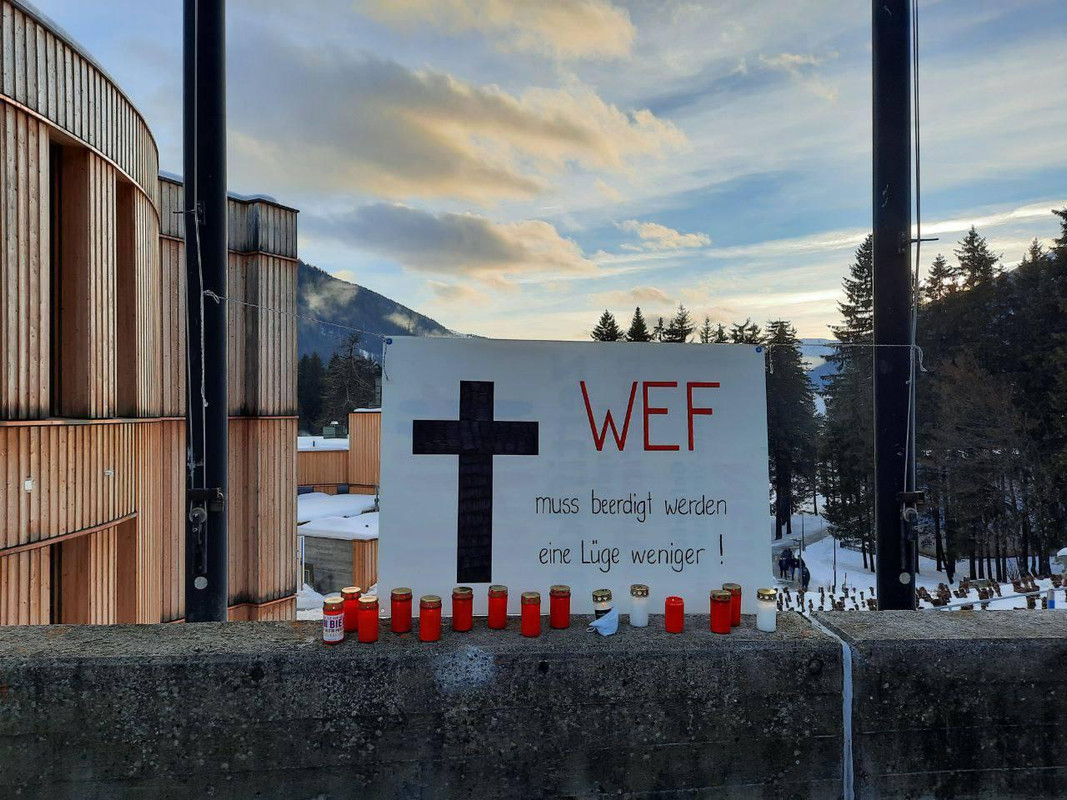
Klaus Schwab is now openly calling for world dictatorship. He outlines this in his guest commentary in the Handelsblatt. The WEF (World Economic Forum) leader is now unapologetically addressing us – future dispossessed – citizens directly. Previously, he did so only indirectly through his “global leaders” in politics and business. But Schwab has a claim to power, and he is showing it ever more clearly. He declares that social inequality, now sometimes implemented on his behalf by national parliaments, must lead to a new form of government. Namely, to a worldwide dictatorship. It will probably mean the end for LOCAL, REGIONAL AND NATIONAL POLITICIANS.
Euphemistically, he refers to the desired dictatorship as “Governance 4.0.” Ultimately, as Schwab now openly announces, he and his friends will blame national politics for the big failure and the big Covid lies. He declares, “The reason for our failure to predict and manage global risks […] lies in an unresolved global governance problem.” While Schwab is caustic against the failure of national politicians, he also points out the trick he uses to keep criticism for his global domination at bay. No one should fix their gaze on “Governance 4.0”; attention should probably be diverted away, as Schwab lets slip: “If our institutions are well governed, we pay little attention to them. They are a barely visible infrastructure that supports the economy and virtually all aspects of social order.” Mind control through the “Internet of Bodies” and cheap need satisfaction in the increasingly aspirational virtual reality could make this possible.
Schwab apparently wants to abolish our existing institutions and democracies by means of Corona misery. They are “no longer fit for purpose,” he sums up dryly. It is true that Corona has already introduced “Governance 3.0,” an “operational crisis management” based on “trial and error. But Schwab is not yet satisfied with this. He criticizes that this approach has led to a “haphazard approach to the pandemic and its socioeconomic consequences.” This is interesting, especially since the “haphazard handling” he refers to is primarily carried out by politicians from his “Global Leaders” program. But now Schwab shifts the blame to national politics. It is becoming increasingly clear that our governments are ultimately making themselves “losers” in this game. They just seem to lack the awareness of it altogether. Or do political actors even believe that after the abolition of national parliaments, good positions in global domination await them?
THIS INTERVIEW SHOWS THAT THE TOTALITARIAN PLAYERS STARTED TO MUTILATE THEMSELVES. KEEP ON GOING AND FINISH IT!
THIS IS AN EXCERPT – YOU CAN DOWNLOAD THIS INFO IN FULL LENGTH UNREDACTED, OUR FULL VIDEOS, OUR FULL DOCUMENT AND MUCH MORE FOR FREE AT OUR TELEGRAM CHANNEL
THIS IS AN EXCERPT – YOU CAN DOWNLOAD THIS INFO IN FULL LENGTH UNREDACTED, OUR FULL VIDEOS, OUR FULL DOCUMENT AND MUCH MORE FOR FREE AT OUR TELEGRAM CHANNEL
THIS IS AN EXCERPT – YOU CAN DOWNLOAD THIS INFO IN FULL LENGTH UNREDACTED, OUR FULL VIDEOS, OUR FULL DOCUMENT AND MUCH MORE FOR FREE AT OUR TELEGRAM CHANNEL
THIS IS AN EXCERPT – YOU CAN DOWNLOAD THIS INFO IN FULL LENGTH UNREDACTED, OUR FULL VIDEOS, OUR FULL DOCUMENT AND MUCH MORE FOR FREE AT OUR TELEGRAM CHANNEL
THIS IS AN EXCERPT – YOU CAN DOWNLOAD THIS INFO IN FULL LENGTH UNREDACTED, OUR FULL VIDEOS, OUR FULL DOCUMENT AND MUCH MORE FOR FREE AT OUR TELEGRAM CHANNEL
Protesters are gathering in Washington DC on Sunday, January 23, to hold a rally against the COVID-19 vaccine mandate on businesses or schools that have taken effect across the country, as well as other COVID-related restrictions. Protesters are taking to the streets under the slogan ‘Defeat the Mandates: An American Homecoming’ and are planning a march from the Washington Monument to the Lincoln Memorial.
THIS IS AN EXCERPT – YOU CAN DOWNLOAD THIS INFO IN FULL LENGTH UNREDACTED, OUR FULL VIDEOS, OUR FULL DOCUMENT AND MUCH MORE FOR FREE AT OUR TELEGRAM CHANNEL
THIS IS AN EXCERPT – YOU CAN DOWNLOAD THIS INFO IN FULL LENGTH UNREDACTED, OUR FULL VIDEOS, OUR FULL DOCUMENT AND MUCH MORE FOR FREE AT OUR TELEGRAM CHANNEL
Rumble — Bar Wunder in Toowoomba Saturday 15th of January 2022 police attend to try and shut down the premises. Gazcam Rah, TPR legends and the people were there to push back against GlobaliSSt Tyranny.
THIS IS AN EXCERPT – YOU CAN DOWNLOAD THIS INFO IN FULL LENGTH UNREDACTED, OUR FULL VIDEOS, OUR FULL DOCUMENT AND MUCH MORE FOR FREE AT OUR TELEGRAM CHANNEL
THIS IS AN EXCERPT – YOU CAN DOWNLOAD THIS INFO IN FULL LENGTH UNREDACTED, OUR FULL VIDEOS, OUR FULL DOCUMENT AND MUCH MORE FOR FREE AT OUR TELEGRAM CHANNEL
THIS IS AN EXCERPT – YOU CAN DOWNLOAD THIS INFO IN FULL LENGTH UNREDACTED, OUR FULL VIDEOS, OUR FULL DOCUMENT AND MUCH MORE FOR FREE AT OUR TELEGRAM CHANNEL
THIS IS AN EXCERPT – YOU CAN DOWNLOAD THIS INFO IN FULL LENGTH UNREDACTED, OUR FULL VIDEOS, OUR FULL DOCUMENT AND MUCH MORE FOR FREE AT OUR TELEGRAM CHANNEL
During Monday’s Corona walk in Hanover, ex-Merkel advisor and professor of public finance at Leibniz University Hanover Stefan Homburg was arrested. Reason had been the missing FFP2 mask, which he put on however after request of the police.
After the determination of the personal data a procedure was announced against him because of disorderly conduct as well as an expulsion for the entire city center was pronounced.
Stefan Homburg is a professor of public finance and was director of the Institute of Public Finance at Leibniz University in Hanover from 1997 to 2021. He has also repeatedly served as an advisor to the German government, not least to Angela Merkel.
THIS IS AN EXCERPT – YOU CAN DOWNLOAD THIS INFO IN FULL LENGTH UNREDACTED, OUR FULL VIDEOS, OUR FULL DOCUMENT AND MUCH MORE FOR FREE AT OUR TELEGRAM CHANNEL
THIS IS AN EXCERPT – YOU CAN DOWNLOAD THIS INFO IN FULL LENGTH UNREDACTED, OUR FULL VIDEOS, OUR FULL DOCUMENT AND MUCH MORE FOR FREE AT OUR TELEGRAM CHANNEL
THIS IS AN EXCERPT – YOU CAN DOWNLOAD THIS INFO IN FULL LENGTH UNREDACTED, OUR FULL VIDEOS, OUR FULL DOCUMENT AND MUCH MORE FOR FREE AT OUR TELEGRAM CHANNEL
Pirna, Saxony, State Bureau Of Investigation Officer arrested for allegedly being part of a protest event
“Primeminister Kretschmer’s mercenaries, brought in from Lower Saxony, were out of control in Pirna on Monday, arresting hundreds of citizens for hours without any legal basis. Among them: a high-ranking officer of the state criminal investigation department, who was lingering in the marketplace in his spare time.
THIS IS AN EXCERPT – YOU CAN DOWNLOAD THIS INFO IN FULL LENGTH UNREDACTED, OUR FULL VIDEOS, OUR FULL DOCUMENT AND MUCH MORE FOR FREE AT OUR TELEGRAM CHANNEL
Germans protest against vaccination cards and nonsense … Block entrances to and from Berlin with tractors and larger farm equipment … It is reported that over 10,000 tractors have blocked roads.
More than 200 tractors arrived on Tuesday in Berlin and blocked traffic in the centre of the city as part of a rally, organised by the non-profit farmers’ movement known as Land Schafft Verbindung (Countryside Creates Connection), against the government’s vaccination, agricultural and climate policies.
The demonstration started on Monday morning in the state of Brandenburg. The participants then headed to the Tiergarten park near the government quarter in Berlin. Some farmers who are currently joining the rally are also moving toward the park.
Additional police forces are trying to prevent the passage of tractor columns into the city centre, while as of noon on Tuesday, traffic on the streets around the park is partially blocked.
Meanwhile over 10,000 tractors are making road blocks around Berlin.
THIS IS AN EXCERPT – YOU CAN DOWNLOAD THIS INFO IN FULL LENGTH UNREDACTED, OUR FULL VIDEOS, OUR FULL DOCUMENT AND MUCH MORE FOR FREE AT OUR TELEGRAM CHANNEL
YOU CAN TRANSLATE EVERYTHING WITH THE GOOGLE TOOL TOP RIGHT,PUEDES TRADUCIR TODO CON LA HERRAMIENTA DE GOOGLE ARRIBA A LA DERECHA,VOUS POUVEZ TOUT TRADUIRE AVEC L’OUTIL GOOGLE EN HAUT À DROITE,SIE KÖNNEN ALLES MIT DEM GOOGLE-TOOL OBEN RECHTS ÜBERSETZEN, ВЫ МОЖЕТЕ ПЕРЕВЕСТИ ВСЕ С ПОМОЩЬЮ ИНСТРУМЕНТА GOOGLE СПРАВА ВВЕРХУ,你可以用谷歌右上方的工具来翻译所有内容,PUOI TRADURRE TUTTO CON LO STRUMENTO DI GOOGLE IN ALTO A DESTRA,DU KAN ÖVERSÄTTA ALLT MED GOOGLE-VERKTYGET UPPE TILL HÖGER,VOCÊ PODE TRADUZIR TUDO COM A FERRAMENTA GOOGLE TOP RIGHT,右上のグーグルツールで全て翻訳できます。
🚨 FOLLOW US ON TELEGRAM & GAB FOR EVEN MORE ABOVE TOP SECRET INFOS & DOCUMENTS
Police used a water cannon at a protest against COVID restrictions, ahead of a major European Union summit in Slovenia. Riot police also fired tear gas to disperse the crowd. A protest leader was reportedly detained. The demonstration was not directly linked to the EU summit, but protesters used it as an opportunity to denounce the government’s COVID measures. Slovenia has introduced strict steps to curb the virus. Vaccination or proof of recovery is now mandatory for government workers. A health pass is required to access most services, including hospitals, restaurants and, petrol stations. #Slovenia#protest#covid19
California Police Sergeant David Gutierrez said he decided to turn in his badge so he could speak up against the vaccine mandate for others who cannot. #FoxNews
Today the people in The Netherlands are protesting in The Hague against the introduction of the corona pass. People without QR code and a positive checkmark in the covid check app are no longer allowed in public places like restaurants, cinema’s, theatre’s etc. #thenetherlands#covid19#coronapassport#qrcode
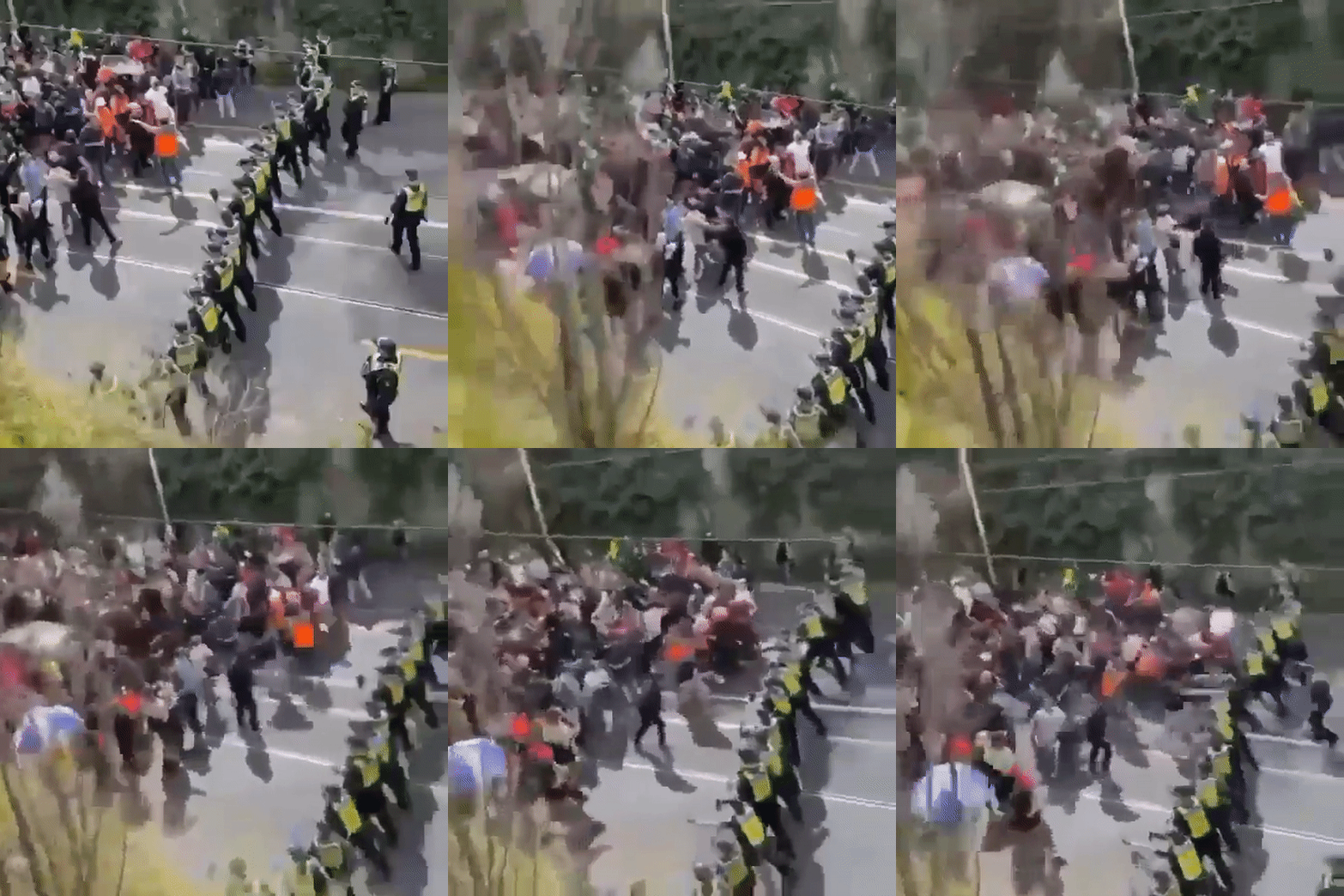
Several arrests have been made with swarms of police deployed as anti-vaccination protesters begin to congregate on the streets of Melbourne for a sixth consecutive day of demonstrations. Demonstrators – who have promised to show out in numbers – have gathered at St Kilda to rally against a vaccine mandate imposed by the Victorian government on construction workers.
The narrative about who was to blame for Melbourne’s violent protests got “truly bizarre,” according to Digital Editor Jack Houghton. Some media linked the violence seen during the protests to far-right groups, while CFMEU’s Dave Noonan said anti-vax groups and “extreme right neo-Nazis” carried the blame. On Wednesday during the ABC’s Afternoon Briefing program, academic Greg Barton speculated the “political context” in Melbourne was different during the protests. “We’ve got a Labor government that’s being hammered by some elements of the Murdoch press to be frank, and that’s created a permissive environment for people going on about dictator Dan,” Mr Barton told the ABC’s Patricia Karvelas. According to Mr Houghton, Karvelas did not challenge Barton on his views. “The ABC blames the Murdoch media for the construction worker protests,” Mr Houghton said. “She (Karvelas) allowed the conspiracy theory to be aired across the nation.”
Freedom of choice, freedom of speech and freedom to protest all seem to be gone in Australia of today. A completely insane use of force and violence by police is increasing by the day against protesters. People in Australia protest the vaccine mandates, forced vaccinations and endless lockdowns. #melbourne#victoria#australia
Business columnist Terry McCrann says Victorian Premier Dan Andrews shutting down the state’s construction industry was an act of “sheer petulance”. “Shutting down the construction industry was not part of that plan on Sunday, so why was it necessary on Monday night to do so? “Purely because of what we saw on the streets of Melbourne,” Mr McCrann said. “This is directly attacking not only his own base, but directly attacking something so important to the Victorian economy. “Going into 2022, things don’t look that spectacular for Victoria.”
Sky News reporter Julia Bradley says protesters in Melbourne have “turned on” the mainstream media. “We have seen protesters throughout the course of today; they’ve really turned on mainstream media,” she said. “One reporter was even put in a headlock, had urine thrown at him. “Certainly, some violent scenes on the streets of Melbourne today.”
Police use a water cannon against protesters outside the Federal Palace in Bern, Switzerland, where thousands of people demonstrate against the health pass that came into effect this week in the country. #Bern#Switzerland#MandatoryVaccines#HealthPass
Anti-vaccination protesters interfered with Green Party chancellor candidate Annalena Baerbock’s campaign event in Stuttgart, on Tuesday. With whistles, trumpets, loudspeakers, and megaphones, the protesters tried to drown out the politician’s speech at Marienplatz. Protesters were holding up signs reading ‘Hands off our children’ and ‘Basic rights instead of privileges’ and chanted ‘Baerbock has to go’ at the stage during the whole speech. Some protesters were wearing yellow armbands labelled ‘unvaccinated’ comparing the vaccination process and its regulations to the Nazi rule. Baerbock addressed the protest and offered to answer their questions after the event. “You only have to be patient for 20 minutes, just like at school, and I’ll be happy to answer your questions,” she said. The Green cancidate is currently on a campaign tour for the German federal elections set for September 26. Her next stops will be Wurzburg, Erlangen, and Munich on September 22.
Riot police storm Paris station as fire erupts in Lyon in angry protests against Macron FRANCE has erupted in protest at Emmanuel Macron’s Covid vaccine passport policy as police clash with protestors in Lyon and Paris. Covid vaccine protests have erupted across France as Emmanuel Macron faces a public backlash over the French Government’s handling of the pandemic. Police in Paris and Lyon have clashed with angry demonstrators who gathered in protest on Saturday at the country’s Covid health pass law which requires people to have a certificate of vaccination in order to enter public areas such as cafes, public transport, or shops. Protestors have taken to the streets in Lyon in large numbers, with police reportedly firing tear gas in a bid to prevent the march’s progress. Footage of social media shows hundreds of demonstrators making their way through streets black with tear gas. In the background, objects can be seen being hurled at police lines. Meanwhile, a separate clip appears to show French police officers attempting to confront a large mob of demonstrators inside a Paris metro station. Riot police can be seen confronting protestors in the Châtelet metro station in the heart of Paris. Shocked commuters can be seen heading up the escalators as the French police charge down to confront the protestors Demonstrators unfurled a banner in the station and began charing anti-vaccine pass slogans. The clashes mark the eighth consecutive weekend of protests against France’s Covid-19 health pass.
Last weekend a total of 160,000 people took part in Covid vaccine protests across France according to the country’s interior ministry By the evening of Saturday, authorities had logged 222 separate protest actions, according to France 24. In total, police arrested sixteen people were arrested. Meanwhile, three police officers suffered slight injuries in the clashes. It comes as a new report published by the European Council on Foreign Relations highlighted growing discontent over Macron’s Covid restrictions. The report read: “In France, the pandemic has led to striking changes of political philosophy in the main governing and opposition parties. This is the ‘nonbinary democracy’.
“The crisis has driven the liberal supporters of Emmanuel Macron’s centrist political platform to support highly interventionist state action, with 89 percent of those who expressed an opinion believing that the restrictions were either right or not strict enough. Meanwhile, among the current supporters of Marine Le Pen, whose party has often sought a more authoritarian state, almost one-third (33 percent) of those who expressed their opinion think that the restrictions were too strict and hence want their party to pose as a tribune of freedom against the repressive power of the pandemic state.”
Dozens of people who escaped a crackdown on pro-democracy activists in Belarus last year now fear being deported from Georgia. A security agreement between Tbilisi and Minsk took effect earlier this month and has sparked concern. Al Jazeera’s Robin Forestier-Walker reports from Tbilisi, Georgia.
Dozens of protesters gathered outside a CDU citizens’ dialogue campaign event in Leipzig on Thursday, to protest against the party and in particular the policies put in place to fight the coronavirus pandemic. Protesters could be seen waving various placards and banners and chanting ‘Traitors to the people’ at those attending the CDU event. Saxony Minister President Michael Kretschmer was booed by the protesters as his vehicle arrived at the event, and dozens of people were deployed to keep the protesters separate from the event. A cordoned-off demonstration area was set up at a square nearby. #Leipzig#CDU#Germany
Meet up for 1PM for 1:15PM start. Meeting at Hyde Park Corner by Hyde Park Station Saturday 28th August Thank you for watching our video. If you enjoyed it, then LIKE, COMMENT your opinions or any statements, and certainly SUBSCRIBE to our account. Also, feel free to SHARE with your friends, as it helps our account out so much!
More footage from Australia is going viral and painting our country as a “dystopian nightmare” where individual rights are not protected and a scared populace submits to a police state, according to Sky News host Rita Panahi. “To us, a bunch of teenagers being handcuffed in the middle of the night and fined $1,000 each for the crime of meeting at a Sydney beach has become normal,” she said.
“But the rest of the world looks in abject horror.” Ms Panahi said people around the world are “marvelling” at what’s happening in Australia, noting Fox News anchor Tucker Carlson has taken aim at how Australian police are treating protesters. “There is similar commentary and discussions I’ve seen from the UK,” Ms Panahi said. “Is this how we want to be perceived as a country?”
Anti-vaccine protesters attempted to storm a former BBC studio in London, on Monday, resulting in scuffles with police officers. Protesters could be seen rushing up to the studios, that are now used to make daytime TV and host apartments, before police formed a line to prevent them from entering. The west London studios were the iconic heart of the BBC prior to relocation between 2012 and 2013 to plug a shortfall in funding.
Over 10,000 people demonstrated this Saturday at the Piazza del Popolo in Rome after a digital certificate restricting access to public venues for unvaccinated people came into force.
The Green Pass allows vaccinated people to enter museums, bars and restaurants, public swimming pools and gyms, places that can also be accessed by people who recovered from COVID-19 in the last six months or can provide a negative test result. Protesters were seen carrying ‘No Green Pass’ banners and signs reading ‘We’re all brothers – vaccinated or not’ and ‘Freedom of choice for teachers and students.’
Some protesters were concerned about the effect of the health pass on their jobs: “We are only one part of the sector. But we are connected to everyone. Restaurants, hotels – but tour guides suffer from this problem. It is a form of discrimination. It is discrimination.” From September on, according to the Italian press, the Green Pass will also be required to enter any kind of educational centre. Teachers, students and staff from the educational sector will need a health pass to get access to universities and schools. Restrictions on medium and long-distance travel will also be implemented in September. According to reports, the Green Pass will become obligatory for travelling by train from one region to another. This regulation is supposed to prevent the spreading of the virus after possible regional outbreaks.
Protesters gather in front of the Japanese Olympic Committee headquarters in Tokyo on Sunday, August 8, to demonstrate against the Olympic Games, as the closing ceremony gets underway. The demonstrators are set to protest against what they call “forced holding” of the major sports event and call for the abolition of the Olympics.
The Games took place from 23 July to 8 August 2021 after being postponed last year due to the pandemic. This is the first time that the Olympic Games were postponed and rescheduled, rather than cancelled. Shortly before the start of the games, on July 8, Japanese Prime Minister Yoshihide Suga declared a state of emergency in Tokyo until August 22. This decision resulted in no spectators, not even local Japanese attendees, being able to watch the games in person in the Japanese capital.
Protesters clashed with police during a rally in Bangkok on Saturday. Demonstrators were pushed from Democracy Monument – the initially planned gathering spot for a march which was expected to reach the Grand Palace in the capital. Riot police quickly moved in and dispersed the activists using a water cannon and tear gas.
Since July 2020, Thailand has seen the emergence of a new pro-democracy protest movement demanding the resignation of Prime Minister Prayuth Chan-o-cha, new elections as well as social reforms. #BangkokProtests#Bangkok#Thailand
Paris, France / Frankreich / Francia Live from Paris on Saturday, August 7, as the Yellow Vests stage a protest against the health pass and mandatory vaccination for some categories of the population. French authorities have recently rolled out a new COVID-19 health pass amid a surge in infections. As of Wednesday, July 21, in order to visit cultural venues and sports matches, people are required to show proof of vaccination, a negative test, or recent recovery from COVID-19. A similar demonstration held in Paris last week brought 160,000 people to the streets and resulted in clashes with police and multiple arrests.
Become a Patron! True Information is the most valuable resource and we ask you to give back.
France chaos ERUPTS: Paris police use batons – protests against Macron turn violent PROTESTS against Emmanuel Macron’s europhile government have turned violent in Paris this afternoon Riot police were seen swinging batons at marchers who descended on the French capital to protest against Mr Macron’s plans to introduce mandatory COVID-19 health passes. More than 150,000 demonstrators were estimated to have taken to the streets across the French Republic against the President’s plans to make the passes obligatory to enter many public cultural venues.
Become a Patron! True Information is the most valuable resource and we ask you to give back.
Cuba’s detainment of activists from the antigovernment protests is “straight out of an autocrat’s playbook”, according to Former Pentagon advisor Jason Israel.
“You see these numbers you see there’s 500 and probably more than that missing and you’re sort of shocked,” he told Sky News Australia.
Mr Israel said the Cuba has a “court system that arbitrarily detains” and the judicial branch is a part of, and subservient to, the legislative branch.
“You watch human rights watch and its thousands of ppl each year that are arbitrarily detained even when these protests aren’t taking place.” “They reached their peak in 2015 with 800 people per month being arbitrarily detained in Cuba so this is straight out of an autocrat’s playbook.”
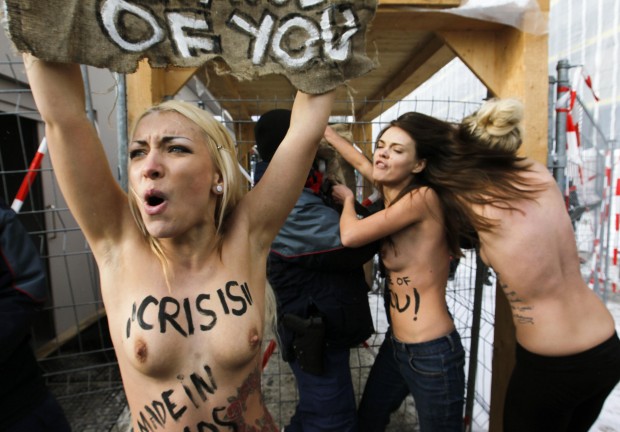
FEMEN Bewegung in Ukraine: Die Organisation tritt für die Selbstbestimmung des Menschen,
insbesondere der Frauen ein.
Sie ist international für Oben-ohne Proteste gegen Wahlfälschungen, Sextourismus, Sexismus, Wladimir Putin, geplante staatliche Verhaltensvorschriften während der Fußball-Europameisterschaft 2012 u.a. bekannt geworden
Ready to stand up and stand out for justice despite severe frosts, FEMEN activists have staged a new provocative stunt against the yoke of Russia’s gas giant Gazprom. Fearless and topless, the Ukrainian girls took off their clothes in front of the Gazprom building in Moscow, holding banners saying “Stop gas racket!” and “Snub Gazprom!” One of the activists even managed to climb the roof of the Gazprom’s checkpoint, waving the Ukrainian flag before security guards brought her down. The girl was detained and is now in a local police office.
This citizen journalism image provided by Shaam News Network (SNN), taken on Sunday, Aug. 26, 2012, purports to show children killed by shabiha, pro-government militiamen, being prepared for burial in a mass grave in Daraya, Syria. According to activists’ accounts, government forces retook the Damascus suburb of Daraya from rebel control three days earlier and have since gone on a killing spree. Reports of the death toll range widely from more than 300 to as many as 600. THE ASSOCIATED PRESS IS UNABLE TO INDEPENDENTLY VERIFY THE AUTHENTICITY, CONTENT, LOCATION OR DATE OF THIS CITIZEN JOURNALIST IMAGE. AP
This citizen journalism image provided by Shaam News Network SNN, taken on Sunday, Aug. 26, 2012, purports to show people killed by shabiha pro-government militiamen being prepared for a mass burial in Daraya, Syria. According to activists’ accounts, government forces retook the Damascus suburb of Daraya from rebel control three days ago and have since gone on a killing spree. Reports of the death toll range widely from more than 300 to as many as 600. THE ASSOCIATED PRESS IS UNABLE TO INDEPENDENTLY VERIFY THE AUTHENTICITY, CONTENT, LOCATION OR DATE OF THIS CITIZEN JOURNALIST IMAGE. AP
This citizen journalism image provided by Shaam News Network SNN, taken on Sunday, Aug. 26, 2012, purports to show people killed by shabiha, pro-government militiamen, being buried in a mass grave in Daraya, Syria. According to activists’ accounts, government forces retook the Damascus suburb of Daraya from rebel control three days ago and have since gone on a killing spree. Reports of the death toll range widely from more than 300 to as many as 600. THE ASSOCIATED PRESS IS UNABLE TO INDEPENDENTLY VERIFY THE AUTHENTICITY, CONTENT, LOCATION OR DATE OF THIS CITIZEN JOURNALIST IMAGE. AP
This citizen journalism image provided by Shaam News Network SNN, taken on Sunday, Aug. 26, 2012, purports to show people who were killed by shabiha, pro-government militiamen in Daraya, Syria. According to activists’ accounts, government forces retook the Damascus suburb of Daraya from rebel control three days ago and have since gone on a killing spree. Reports of the death toll range widely from more than 300 to as many as 600. THE ASSOCIATED PRESS IS UNABLE TO INDEPENDENTLY VERIFY THE AUTHENTICITY, CONTENT, LOCATION OR DATE OF THIS CITIZEN JOURNALIST IMAGE. AP
Syrian rebel fighter, Tawfiq Hassan, 23, a former butcher, poses for a picture, after returning from fighting against Syrian army forces in Aleppo, at a rebel headquarters in Marea on the outskirts of Aleppo city, Syria, Sunday, Aug. 26, 2012. In their previous lives, they were butchers, barbers, construction workers and university students. Now they are rebels fighting a civil war they hope will end the regime of Syrian President Bashar Assad. AP
Syrian rebel fighter, who goes by the name Saqir Abu Zahid, 22, a former University student, poses for a picture after returning from fighting Syrian forces in Aleppo at a rebel headquarters in Marea on the outskirts of Aleppo city, Syria, Sunday, Aug. 26, 2012. AP
Syrian rebel fighter, Abu Hammam, 23, a former member of the Syrian security forces, poses for a picture, after returning from fighting against Syrian army forces in Aleppo, at a rebel headquarters in Marea on the outskirts of Aleppo city, Syria, Sunday, Aug. 26, 2012. AP
Syrian rebel fighter, Wisam Al-Saleh, 21, poses for a picture, after returning back from fighting against Syrian army forces in Aleppo, at a rebel headquarters in Marea on the outskirts of Aleppo city, Syria, Sunday, Aug. 26, 2012. AP
Syrian rebel fighter, Mohammed Yaseen, 24, a former construction worker, poses for a picture, after returning from fighting against Syrian army forces in Aleppo, at a rebel headquarters in Marea on the outskirts of Aleppo city, Syria, Sunday, Aug. 26, 2012. AP
Syrian rebel fighter, Ali Alnajjr, 20, a former school student, poses for a picture, after returning from fighting against Syrian army forces in Aleppo, at a rebel headquarters in Marea on the outskirts of Aleppo city, Syria, Sunday, Aug. 26, 2012. AP
Syrian rebel fighter, Ahmed Al-Saleh, 22, a former policeman, poses for a picture after returning from fighting against Syrian army forces in Aleppo, at a rebel headquarters in Marea on the outskirts of Aleppo city, Syria, Sunday, Aug. 26, 2012. AP
Syrian rebel fighter, Badir Farouh, 17, poses for a picture after returning from fighting against Syrian forces in Aleppo at a rebel headquarters in Marea on the outskirts of Aleppo city, Syria, Sunday, Aug. 26, 2012. AP
Syrian rebel fighter, Mohammed Sami, 22, a barber, poses for a picture after returning from fighting against Syrian army forces in Aleppo, at a rebel headquarters in Marea on the outskirts of Aleppo city, Syria, Sunday, Aug. 26, 2012. AP
Syrian rebel fighter, Amir Hajji, 20, poses for a picture, after returning back from fighting against Syrian army forces in Aleppo, at a rebel headquarters in Marea on the outskirts of Aleppo city, Syria, Sunday, Aug. 26, 2012. AP
Syrian rebel fighter, Mohammed Abu Razouk, 27, poses for a picture, after returning back from fighting against Syrian army forces in Aleppo, at a rebel headquarters in Marea on the outskirts of Aleppo city, Syria, Sunday, Aug. 26, 2012. AP
Syrian rebel fighter, Mustafa Abu Shaheen, 19, a former construction worker, poses for a picture after returning from fighting against Syrian army forces in Aleppo, at a rebel headquarters in Marea on the outskirts of Aleppo city, Syria, Sunday, Aug. 26, 2012. AP
An injured Free Syrian Army group leader discusses the plan with his fighters, in Aleppo’s district of Al-Zebdieh August 26, 2012. Reuters
Members of the Free Syrian Army discuss strategies in Aleppo’s district of Al-Zebdieh August 26, 2012. Reuters
Free Syrian Army fighters drive through the area after missiles fired from a fighter jet hit a petrol tanker in the Bab al-Nayrab district in Aleppo August 26, 2012. Reuters
A Free Syrian Army fighter runs away to take cover from a sniper shooting near the Salah El Dine neighbourhood of Syria’s southwest city of Aleppo August 26, 2012. Reuters
A Free Syrian Army sniper takes his position in the Salah El Dine neighbourhood of Syria’s southwest city of Aleppo August 26, 2012. Reuters
A Free Syrian Army sniper takes his position in the Salah El Dine neighbourhood of Syria’s southwest city of Aleppo August 26, 2012. Reuters
Free Syrian Army fighters walk in the Salah El Dine neighbourhood of Syria’s southwest city of Aleppo August 26, 2012. Reuters
A Free Syrian Army fighter walks by a power pack detonator for an explosive in the Salah El Dine neighbourhood of Syria’s southwest city of Aleppo August 26, 2012. Reuters
Free Syrian Army fighters walk in the Salah El Dine neighbourhood of Syria’s southwest city of Aleppo August 26, 2012. Reuters
Ruins line a street in the middle of the Salah El Dine neighbourhood of Syria’s southwest city of Aleppo August 26, 2012. Reuter
Rebel fighters fire against pro- Syrian government forces at the al-Mashad neighbourhood in the northern Syrian city of Aleppo on August 25, 2012. Syrian rebels say they are digging in for a war of attrition in Aleppo, where what was being billed as the ‘mother of all battles’ is now dragging on into a second month of bloody stalemate. Getty
A woman walks with her children as a blue sheet provides cover from snipers during sectarian clashes between Sunni Muslims and Alawites in the Sunni area of Tripoli August 25, 2012. At least three people including an Sunni Islamist commander were killed on Friday in a fifth day of sporadic sectarian fighting in Lebanon’s northern city of Tripoli triggered by the conflict in neighbouring Syria. Reuters
Young Syrian boys search through the ruins of destroyed houses following an airstrike by regime forces in Syria’s northern city of Aleppo on August 24, 2012. Syrian forces blitzed areas in and around the Aleppo, activists said, as Western powers sought to tighten the screws on embattled President Bashar al-Assad. Getty
A Syrian man reacts outside an operation room at a hospital in Syria’s northern city of Aleppo as doctors give treatment to his grandchildren following an air strike by regime forces on the city on August 24, 2012. Syrian forces blitzed areas in and around the Aleppo , activists said, as Western powers sought to tighten the screws on embattled President Bashar al-Assad. Getty
Syria’s President Bashar al-Assad (R) shakes hands with Alaeddin Boroujerdi, head of the Iranian parliamentary committee for national security and foreign policy, before a meeting in Damascus August 26, 2012, in this handout photograph released by Syria’s national news agency SANA. Reuters
Syrian Vice President Faruq al-Sharaa (R) is pictured with the chairman of the Iranian Shura Council’s Committee for Foreign Policy and National Security Alaeddin Boroujerd who is on an official visit to Damascus on August 26, 2012. Al-Sharaa made his first public appearance in over a month following rumors that he had tried to defect. Getty
The feminist punk group Pussy Riot performs during a flash-mob-style protest at the Cathedral of Christ the Savior in Moscow.
Members of the Russian radical feminist group ‘Pussy Riot’ stage a performance to support detained opposition activists on a roof near the detention centre, which houses prominent opposition figures Ilya Yashin and Alexei Navalny, in Moscow December 14, 2011. Russian Prime Minister Vladimir Putin is in little immediate danger of being toppled by a wave of opposition protests but they could mark the beginning of the end for him if he does not make changes to restore his legitimacy. Courts have also sentenced two prominent opposition figures, Yashin and Navalny, to 15 days in jail for their roles in the protests.
Members of the Russian radical feminist group Pussy Riot give an interview to the Associated Press in a break during their rehearsal in Moscow, Friday, Feb. , 17, 2012. Members of the group stage performances against the policies conducted by Prime Minister Vladimir Putin.
Nadezhda Tolokonnikova, left, a member of feminist punk group Pussy Riot is escorted to a court room in Moscow, Russia, Wednesday, Aug. 8, 2012. Prosecutors on Tuesday called for three-year prison sentences for feminist punk rockers who gave an impromptu performance in Moscow’s main cathedral to call for an end to Vladimir Putin’s rule, in a case that has caused international outrage and split Russian society.
Maria Alekhina, second right, a member of feminist punk group Pussy Riot is escorted to a court room in Moscow, Russia, Wednesday, Aug. 8, 2012.
Yekaterina Samutsevich, left, a member of feminist punk group Pussy Riot is escorted to a court room in Moscow, Russia, Wednesday, Aug. 8, 2012.
Nadezhda Tolokonnikova (3rd L), Yekaterina Samutsevich (3rd R) and Maria Alyokhina (R), members of female punk band “Pussy Riot”, are escorted by police before a court hearing in Moscow August 8, 2012. A state prosecutor on Tuesday demanded a three-year jail term for three women from punk band Pussy Riot, saying they had abused God when they burst into a Moscow cathedral and sang a “protest prayer” against the Russian Orthodox Church’s close links to Vladimir Putin.
Members of a female punk band ‘Pussy Riot’ Nadezhda Tolokonnikova (L), Maria Alyokhina (C) and Yekaterina Samutsevich (R), sit inside a glass enclosure during a court hearing in Moscow on August 8, 2012. Members of the all-girl band Pussy Riot who were charged with hooliganism for staging a ‘punk prayer’ against Vladimir Putin were due Wednesday to deliver final statements on the last day of their trial. The controversial hearings raced toward a verdict with prosecutors seeking a three-year sentence and global calls mounting among stage stars and top Western officials to win the young women’s release.
Members of a female punk band ‘Pussy Riot’ Nadezhda Tolokonnikova (L), Maria Alyokhina (C) and Yekaterina Samutsevich (R), sit inside a glass enclosure during a court hearing in Moscow on August 8, 2012.
Nadezhda Tolokonnikova, August 8, 2012
Maria Alyokhina, August 8, 2012
Yekaterina Samutsevich, August 8, 2012
Pussy Riot members, from left, Nadezhda Tolokonnikova, Yekaterina Samutsevich and Maria Alekhina sit in a glass cage at a court room in Moscow, Russia, Friday, Aug. 3, 2012. Russia’s President Vladimir Putin on Thursday criticized the feminist punk rockers facing trial for performing a “punk prayer” against him at Moscow’s main cathedral, but said that a punishment for them shouldn’t be too severe.
Maria Alekhina, left, Yekaterina Samutsevich, top right, Nadezhda Tolokonnikova, right, members of feminist punk group Pussy Riot seen behind bars at a court room in Moscow, Russia, Russia, Monday, July 30, 2012. Three members of the band are facing trial for performing a “punk prayer” against Vladimir Putin from a pulpit of Moscow’s main cathedral before Russia’s presidential election in March, in which he won a third term.
A file picture taken on July 20, 2012 shows members of the all-girl punk band ‘Pussy Riot’ Nadezhda Tolokonnikova (C), Maria Alyokhina (R) and Yekaterina Samutsevich (L), sitting behind bars during a court hearing in Moscow. Prosecutors asked a Moscow court to lock up members of the Pussy Riot girl band for three years after they called for Vladimir Putin’s ouster in a song, prompting Madonna to plead for clemency. As the full hearings in the controversial trial went into a second week, the state prosecutor said the young women’s crime was so severe they needed to be isolated from society.
Nadezhda Tolokonnikova, a member of female Russian punk band Pussy Riot, sits inside a defendants cage in a Moscow court, on July 4, 2012, during the hearings on the Pussy Riot case. Three members of the all-woman punk band ‘Pussy Riot’ were detained two months ago, after they climbed on the altar of Moscow’s Christ the Saviour Cathedral — the country’s central place of worship — and sang a song they called a ‘Punk Prayer’. The women have been charged with hooliganism committed by an organised group — an unusually harsh charge for protesters.
Nadezhda Tolokonnikova, a member of punk band Pussy Riot, gestures behind bars during a court hearing in Moscow April 19, 2012. Russian police detained at least 13 people who demonstrated outside a courthouse on Thursday against the arrest of three members of a women’s punk rock group that performed a protest song in Moscow’s main cathedral, witnesses said.
The protest occurred at the Qidong Town People’s Government Consultative Committee Offices (similar to Mayor’s Office or City Hall). 31°48’37.79″N, 121°39’10.45″E
Local residents clash with the police in front of a local government building during a protest against an industrial waste pipeline under construction in Qidong, Jiangsu province July 28, 2012. Chinese officials cancelled an industrial waste pipeline project on Saturday after anti-pollution demonstrators occupied the government office in eastern China, destroying computers and overturning cars. The demonstration was the latest in a string of protests sparked by fears of environmental degradation and highlights the social tensions the government in Beijing faces as it approaches a leadership transition this year.
A police officer bleeds after clashing with local residents in front of a local government building during a protest against an industrial waste pipeline under construction in Qidong, Jiangsu Province July 28, 2012.
A woman, with her face covered in blood, is helped by demonstrators after clashes with police during protest against an industrial waste pipeline under construction in Qidong, Jiangsu Province July 28, 2012.
Local residents, holding banner which reads “Against the Oji Paper Group, protect our homeland”, shout as they gather to protest against plans for a water discharge project in Qidong, China Saturday, July 28, 2012.
A group of protesters overturn a car near the local government office compound in the coastal city of Qidong, near Shanghai, in the eastern China province of Jiangsu on July 28, 2012.
Local residents gather around scattered documents and an overturned car during a protest against plans for a water discharge project in Qidong, China Saturday, July 28, 2012.
Local residents surround a vehicle after they overturned it, as they gather to protest against plans for a water discharge project in Qidong, China Saturday, July 28, 2012.
Armed police officers head to the local government office building where local residents gathered to protest against plans for a water discharge project in Qidong, China Saturday, July 28, 2012.
Local residents stand on smashed cars as they occupy the local government building during a protest against an industrial waste pipeline under construction in Qidong, Jiangsu Province July 28, 2012.
Police beat a protestor on the ground (not pictured) outside the local government offices in the coastal city of Qidong, near Shanghai, in the eastern China province of Jiangsu on July 28, 2012.
Police restrain a protestor outside the local government offices in the coastal city of Qidong, near Shanghai, in the eastern China province of Jiangsu on July 28, 2012.
This photo taken on July 28, 2012 shows police putting a protester’s T-shirt over his head (C) after they detained him outside the local government offices in Qidong in the eastern China province of Jiangsu. The coastal city of Qidong, near Shanghai, seemed calm on July 29 a day after local officials announced a waste water pipeline project from the paper mill, which belongs to Japanese company Oji Paper, would be ‘permanently cancelled’.
A police officer is thrown to the ground by protesters near the local government office building Saturday July 28, 2012 in Qidong, Jiangsu Province, China. Authorities in eastern China dropped plans for a water-discharge project Saturday after thousands of protesters angry about pollution took to the streets, in the latest of many such confrontations in a country where three decades of rapid economic expansion have come at an environmental price.
Protesters and police clash outside the local government offices in Qidong in the eastern China province of Jiangsu on July 28, 2012.
A line of paramilitary police makes its way through protesters outside the local government offices in Qidong in the eastern China province of Jiangsu on July 28, 2012.
Protesters and police gather outside the local government offices in Qidong in the eastern China province of Jiangsu on July 28, 2012. Thousands of demonstrators protested against alleged pollution from a paper factory in this easten China city and clashed with police after they seized bottles of liquor and wine from the offices along with cartons of cigarettes, items which Chinese officials frequently receive as bribes.
Police officers guard the local government office building Saturday July 28, 2012 in Qidong, Jiangsu Province, China.
Protesters stand as police officers guard the local government office building Saturday July 28, 2012 in Qidong, Jiangsu Province, China.
Vehicles damaged by protesters are seen at the local government office building Saturday July 28, 2012 in Qidong, Jiangsu Province, China.
A protester stands in front of a lines of riot police officers Saturday July 28, 2012 in Qidong, Jiangsu Province, China.
Protesters, right, confront with police officers, left, near the local government office building Saturday July 28, 2012 in Qidong, Jiangsu Province, China.
A demonstrator fights with a police officer in front of the local government building during a protest against an industrial waste pipeline under construction in Qidong, Jiangsu Province July 28, 2012. Angry demonstrators occupied a government office in eastern China on Saturday, destroying computers and overturning cars parked outside in a violent protest against an industrial waste pipeline they said would poison their coastal waters. The demonstration was the latest in a string of protests sparked by fears of environment degradation and highlights the social tensions the government in Beijing is having to deal with as it approaches a leadership transition this year. About a 1,000 protesters marched through the coastal city of Qidong, about one hour north of Shanghai by car, shouting slogans against the plan to build a pipeline through the city that would empty waste from a nearby paper factory into the sea.
Protesters beat a policeman (C) during a protest outside the local government offices in Qidong in the eastern China province of Jiangsu on July 28, 2012. Thousands of demonstrators protested against alleged pollution from a paper factory in this easten China city and clashed with police after they seized bottles of liquor and wine from the offices along with cartons of cigarettes, items which Chinese officials frequently receive as bribes.
Protesters beat a policeman (C) during a protest outside the local government offices in Qidong in the eastern China province of Jiangsu on July 28, 2012. Thousands of demonstrators protested against alleged pollution from a paper factory in this easten China city and clashed with police after they seized bottles of liquor and wine from the offices along with cartons of cigarettes, items which Chinese officials frequently receive as bribes.
Local residents occupy a local government building during a protest against an industrial waste pipeline under construction in Qidong, Jiangsu Province July 28, 2012.
Local residents push over a police vehicle as they gather to protest against plans for a water discharge project in Qidong, China Saturday, July 28, 2012. The government in the city announced on its official website Saturday that the plans were scrapped amid opposition by local residents, who are concerned over potential pollution.
A police car lies overturned as protesters occupy a government building during a protest against an industrial waste pipeline under construction in Qidong, Jiangsu Province July 28, 2012.
A local resident squats on a destroyed car after demonstrators occupied the local government building during a protest against an industrial waste pipeline under construction in Qidong, Jiangsu Province July 28, 2012.
Demonstrators stand inside a destroyed office at the local government building during a protest against an industrial waste pipeline under construction in Qidong, Jiangsu Province July 28, 2012. Angry demonstrators occupied a government office in eastern China on Saturday, destroying computers and overturning cars in a violent protest against an industrial waste pipeline they said would poison their coastal waters.
Police officers stands next to a damaged police car after demonstrators occupied the local government building during a protest against an industrial waste pipeline under construction in Qidong, Jiangsu Province July 28, 2012.
A demonstrator smashes a car window during a protest against an industrial waste pipeline under construction in front of the local government building in Qidong, Jiangsu Province July 28, 2012.
Demonstrators smash a car in front of the local government building during a protest against an industrial waste pipeline under construction in Qidong, Jiangsu Province July 28, 2012.
Local residents gather to protest against plans for a water discharge project in Qidong, China Saturday, July 28, 2012. The government in the city announced on its official website Saturday that the plans were scrapped amid opposition by local residents, who are concerned over potential pollution. AP
Local residents gather to protest against plans for a water discharge project in Qidong, China Saturday, July 28, 2012. The government in the city announced on its official website Saturday that the plans were scrapped amid opposition by local residents, who are concerned over potential pollution.
Local residents protest against an industrial waste pipeline under construction in Qidong, Jiangsu Province July 28, 2012.
Local residents marche during a protest against an industrial waste pipeline under construction in Qidong, Jiangsu Province July 28, 2012.
Police officers try to calm the crowd during a protest against an industrial waste pipeline under construction in Qidong, Jiangsu Province July 28, 2012.
Local residents occupy the local government building during a protest against an industrial waste pipeline under construction in Qidong, Jiangsu Province July 28, 2012.
Protesters gather on rooftops to shout slogans outside the local government offices in the coastal city of Qidong, near Shanghai, in the eastern China province of Jiangsu on July 28, 2012.
People standing on cars hold a banner as other protestors shout slogans inside the local government office compound in the coastal city of Qidong, near Shanghai, in the eastern China province of Jiangsu on July 28, 2012.
Protestor shout slogans and hold placards outside the local government offices in the coastal city of Qidong, near Shanghai, in the eastern China province of Jiangsu on July 28, 2012.
Interior Ministry officers detain an opposition activist during a protest rally to defend Article 31 of the Russian constitution, which guarantees the right of assembly, in Moscow March 31, 2012. Reuters
A detained participant displays a sign from the window of a police van during a protest to defend Article 31 of the Russian constitution in Moscow July 31, 2012. Activists gather on the 31st day of the month to support Article 31 of the Russian constitution — the right to free assembly. Reuters
Police officers detain a protester during an unsanctioned opposition rally in downtown Moscow, Russia, Tuesday, July 31, 2012. Reuters
Police officers detain opposition leader Eduard Limonov, third from left, during an unsanctioned opposition rally in downtown Moscow, Russia, Tuesday, July 31, 2012. AP
Eduard Limonov, long time radical activist, former leader of banned National Bolshevik Party speaks to The Associated Press in Moscow on Tuesday, July 31, 2012. AP
An opposition protester shout slogans from the police van during an unsanctioned opposition rally in downtown Moscow, Russia, Tuesday, July 31, 2012. AP
A participant shouts slogans in front of a police cordon during a protest to defend Article 31 of the Russian constitution in Moscow July 31, 2012. Reuters
St Petersburg
A participant shouts as he is detained by police during a protest to defend Article 31 of the Russian constitution in St. Petersburg July 31, 2012. Activists gather on the 31st day of the month to support Article 31 of the Russian constitution — the right to free assembly. Reuters
Participants sit during a protest to defend Article 31 of the Russian constitution in St. Petersburg July 31, 2012. Activists gather on the 31st day of the month to support Article 31 of the Russian constitution — the right to free assembly. The placard reads “I don’t care about your fines.” Reuters
Russian riot policemen detain an opposition supporter in central St.Petersburg on May 31, 2012 during unauthorized rally to defend Article 31 of the Russian constitution which guarantees freedom of assembly. Getty
A participant is detained by the police during a protest to defend Article 31 of the Russian constitution in St. Petersburg July 31, 2012. Reuters
Police officers detain Olga Kurnosova, the leader of the St. Petersburg branch of Garry Kasparov’s United Civil Front movement, during a protest to defend Article 31 of the Russian constitution in St.Petersburg, August 31, 2011. Reuters
Police officers detain activists during a protest to defend Article 31 of the Russian constitution in St.Petersburg August 31, 2011. Article 31 guarantees the right of assembly.
A woman poses for a candid photograph alongside a protester wearing a Guy Fawkes mask and holding a sign reading ‘I’m Julian’ as he demonstrates outside the Ecuadorian embassy in London, on June 23, 2012, where Wikileaks founder Julian Assange is seeking political asylum. Ecuador today recalled its ambassador to Britain to discuss what to do about WikiLeaks founder Julian Assange, who has sought refuge in their diplomatic mission in London. Assange, an Australian national, sought refuge in the Ecuadoran embassy on June 19 and asked Quito to give him asylum as he seeks to avoid extradition to Sweden on allegations of rape, fearing Stockholm will turn him over to the United States. Getty
Women walk past protest placards outside the Ecuadorian embassy in London, on June 23, 2012, where supporters of Wikileaks founder Julian Assange gathered to demonstrate. Ecuador today recalled its ambassador to Britain to discuss what to do about WikiLeaks founder Julian Assange, who has sought refuge in their diplomatic mission in London. Assange, an Australian national, sought refuge in the Ecuadoran embassy on June 19 and asked Quito to give him asylum as he seeks to avoid extradition to Sweden on allegations of rape, fearing Stockholm will turn him over to the United States. Getty
Photographers take pictures of protesters showing their support for Julian Assange outside the Ecuadorian embassy on June 22, 2012 in London, England. Julian Assange, the founder of the WikiLeaks whistle-blowing website, has sought refuge in Ecuador’s London embassy to prevent him from being extradited to Sweden on allegations of rape and assault. Getty
Protesters show their support for Julian Assange outside the Ecuadorian embassy on June 22, 2012 in London, England. Julian Assange, the founder of the WikiLeaks whistle-blowing website, has sought refuge in Ecuador’s London embassy to prevent him from being extradited to Sweden on allegations of rape and assault. Getty
A British police officer stands guard outside the Ecuadorian Embassy, in London, Friday, June 22, 2012. WikiLeaks founder Julian Assange entered the embassy on Monday in an attempt to gain political asylum to prevent him from being extradited to Sweden to face allegations of sex crimes, which he denies. In a telephone interview with the Australian Broadcasting Corporation (ABC) from inside the embassy, the 40-year-old Australian said he did not know when the decision about his plea for asylum would be made. AP
A man reads a book in front of a demonstration outside the Ecuadorian embassy in London, on June 22, 2012, where Wikileaks founder Julian Assange is seeking political asylum. President Rafael Correa said Ecuador would discuss WikiLeaks founder Julian Assange’s bid for asylum with other countries and did not want to ‘offend anyone,’ including Britain. Getty
Sarah Saunders, a personal friend and contributor toward the bail of WikiLeaks founder Julian Assange, speaks to the media outside the Ecuadorian embassy in central London on June 21, 2012, where Assange is still holed up seeking political asylum. Assange will remain inside Ecuador’s embassy in London until his case is resolved, in a process that could take ‘hours or days’, a spokesman for the whistleblower website said June 21. Assange, 40, turned up in the embassy on June 19 and sought asylum in a dramatic bid to avoid extradition to Sweden over allegations of rape and sexual assault. Getty [Assange was reportedly housed most recently at the rural home of Sarah Saunders, a successful caterer.]
Ecuadorian ambassador to London Ana Alban gets out of a car as she arrives at the embassy in central London on June 21, 2012 where Wikileaks founder Julian Assange is holed up while Ecuador consider his application for asylum. Ecuador’s president said Thursday his government would take its time in deciding whether to grant asylum to Julian Assange as the WikiLeaks founder spent a second night at its embassy in London. The 40-year-old Australian sparked a stand-off with British police after he turned up in the embassy on June 19 and asked for asylum in a dramatic bid to avoid extradition to Sweden over allegations of rape and sexual assault. Getty
Police stand guard outside the Ecuadorian Embassy, London, Wednesday June 20, 2012. WikiLeaks chief Julian Assange has made a run for the Ecuadorean Embassy in London, seeking asylum in a long shot move that, if successful, would place him in a small, friendly South American country rather than in Sweden facing questioning about alleged sex crimes. Tuesday’s unexpected caper has added a new and bizarre twist to Assange’s increasingly desperate bid to avoid extradition to Scandinavia. AP
Police patrol outside the Ecuadorian Embassy, London, Wednesday June 20, 2012. WikiLeaks chief Julian Assange has made a run for the Ecuadorean Embassy in London, seeking asylum in a long shot move that, if successful, would place him in a small, friendly South American country rather than in Sweden facing questioning about alleged sex crimes.
Police officers stand outside Ecuador’s embassy in London June 20, 2012. WikiLeaks’ founder Julian Assange has taken refuge in Ecuador’s embassy in London and asked for asylum, officials said on Tuesday, in a last-ditch bid to avoid extradition to Sweden over sex crime accusations. AP
Police officers stand outside the Ecuadorian embassy in London Wednesday June 20, 2012 where the Wikileaks founder Julian Assange is seeking political asylum. Assange has made a run for the Ecuadorean Embassy in London, seeking asylum in a long shot move that, if successful, would place him in a small, friendly South American country rather than in Sweden facing questioning about alleged sex crimes. Tuesday’s unexpected caper has added a new and bizarre twist to Assange’s increasingly desperate bid to avoid extradition to Scandinavia. Reuters
Supporters of WikiLeaks Founder Julian Assange gather outside Ecuador’s Embassy in central London June 20, 2012. Assange has taken refuge in Ecuador’s embassy in London and asked for asylum, officials said on Tuesday, in a last-ditch bid to avoid extradition to Sweden over sex crime accusations. Reuters
Television crews and journalists gather outside the Ecuadorian Embassy (Background) in central London, on June 20, 2012, where Wikileaks founder Julian Assange is seeking political asylum as he fights extradition to Sweden over alleged sex crimes. Assange, who has sought political asylum inside the Ecuadorian embassy in London, has breached bail conditions and is subject to arrest, British police said Wednesday. Getty
Supporters of Wikileaks founder Julian Assange rally with placards outside Ecuador’s embassy in central London on June 20, 2012, where Assange is seeking political asylum as he fights extradition to Sweden over alleged sex crimes. Assange, who last week exhausted all his legal options in Britain, walked into the embassy on June 19 and applied for political asylum, as time ran out in his marathon legal battle to avoid being sent to Sweden. Getty
Demonstrators protest outside the Ecuadorian consulate on June 20, 2012 in London, England. Wikileaks Founder Julian Assange has sought asylum at the Ecuadorian embassy in Knightsbridge as he continues to fight against his possible extradition to Sweden over alleged sex crimes. Getty
Ecuador’s Minister of Foreign Affairs Ricardo Patino (C), Vice Minister of Foreign Affairs Marco Albuja (R) and Undersecretary for North America and Europe, Paul Villagomez attend a news conference regarding WikiLeaks’ founder Julian Assange in Quito June 19, 2012. Assange is seeking asylum in Ecuador after arriving at the South American nation’s embassy in London, Ecuador’s foreign minister said on Tuesday, a move that may help the self-styled anti-secrecy crusader avoid extradition to Sweden. Reuters
Members of the media gather outside Ecuador’s embassy where Wikileaks founder Julian Assange has sought political asylum, in London June 19, 2012. Assange is seeking asylum in Ecuador after arriving at the South American nation’s embassy in London, Ecuador’s foreign minister said on Tuesday, a move that may help the self-styled anti-secrecy crusader avoid extradition to Sweden. Reuters
Members of the media gather outside Ecuador’s embassy where WikiLeaks founder Julian Assange has sought political asylum, in London June 19, 2012. Assange is seeking asylum in Ecuador after arriving at the South American nation’s embassy in London, Ecuador’s foreign minister said on Tuesday, a move that may help the self-styled anti-secrecy crusader avoid extradition to Sweden. Reuters
A police officer gestures outside Ecuador’s embassy where WikiLeaks founder Julian Assange has sought political asylum, in London June 19, 2012. Assange is seeking asylum in Ecuador after arriving at the South American nation’s embassy in London, Ecuador’s foreign minister said on Tuesday, a move that may help the self-styled anti-secrecy crusader avoid extradition to Sweden. Reuters
A police officer leaves Ecuador’s embassy where WikiLeaks founder Julian Assange has sought political asylum, in London June 19, 2012. Assange is seeking asylum in Ecuador after arriving at the South American nation’s embassy in London, Ecuador’s foreign minister said on Tuesday, a move that may help the self-styled anti-secrecy crusader avoid extradition to Sweden. Reuters
Police officers stand outside Ecuador’s embassy where WikiLeaks founder Julian Assange has sought political asylum, in London June 19, 2012. Assange is seeking asylum in Ecuador after arriving at the South American nation’s embassy in London, Ecuador’s foreign minister said on Tuesday, a move that may help the self-styled anti-secrecy crusader avoid extradition to Sweden. Reuters
Two men walk out of the Embassy of Ecuador in London, carrying legal books about diplomatic law , in London Tuesday, June 19, 2012. Embattled WikiLeaks chief Julian Assange took refuge Tuesday in Ecuador s embassy in London and is seeking political asylum, his organization and the South American nation s foreign minister said. Foreign Minister Ricardo Patino said the leftist government of President Rafael Correa was weighing the request. He did not indicate when a decision might be made. AP
A general view of the Embassy of Ecuador in London Tuesday, June 19, 2012. Embattled WikiLeaks chief Julian Assange took refuge Tuesday in Ecuador s embassy in London and is seeking political asylum, his organization and the South American nation s foreign minister said. Foreign Minister Ricardo Patino said the leftist government of President Rafael Correa was weighing the request. He did not indicate when a decision might be made. AP
Occupy Wall Street (OWS) protesters are calling for a “General Strike” on Tuesday, May 1, urging workers not to go to work and students to boycott classes in protest of what organizers characterize as society’s economic inequality. No unions are expected to participate in the strike, and some have talked to reporters about the fact that they weren’t consulted in OWS’s decision to announce a General Strike. Nonetheless, some elements of organized labor are expected to participate in their own customary May Day rally (which has occurred since 2004), marching from Union Square to Foley Square to Bowling Green, with speeches at either end beginning at about 4:00pm and ending by 7:00pm. The union organizers involved in that march have sought a permit for it. Details are being worked out.
…
The “General Strike” was initially proposed by the Los Angeles node of OWS in November 2011, endorsed by Occupy Oakland at the end of January 2012, and subsequently endorsed by the OWS New York General Assembly on
February 14.
There are fissures within OWS, but a “respect for diversity of tactics,” which includes everything from peaceful protests to the kind of vandalism directed at Starbucks in April, when demonstrators tried to smash the windows at the Starbucks location at Astor Place, has been embraced by the movement.
Below is a list of events that are scheduled to be held on May 1. Although the list is comprehensive, various OWS postings have called for autonomous actions, splinter demonstrations, and flash mobs.
…
Event Assessment
The General Strike is the first of several major global demonstrations that the OWS movement has played a role in planning, including demonstrations scheduled for May 12, May 15, and May 17-21.3 As such, it should be expected that organizers have emphasized the importance of turnout and will be seeking maximum media coverage.
Political fissures that are present within the OWS movement may impact the strategies of demonstrators during individual protest actions; in particular, the Wildcat March is not an officially sanctioned OWS march and may attract militant elements from inside and outside the OWS movement that may seek to directly confront law enforcement officials using barricades, riot shields, and possibly weapons such as pipes and rocks.
Although OWS organizers have publicized a large number of the marches, demonstrations, and activities that will take place throughout the day, it should be expected that “pop-up” demonstrations, splinter demonstrations, and flash mobs may occur at any time, especially during “evening actions” that are planned for 7:00pm and later.
In their planning, the OWS NYCGA has endorsed solidarity based on a “respect for a diversity of tactics,” which suggests that autonomous actions of demonstrators using Black Bloc tactics may occur at any time.
Riot police, not seen, push back protesters as the ancient Temple of Zeus is illuminated during clashes in Athens, Sunday, Feb. 12, 2012. Protesters and police fought running battles in central Athens Sunday, as Greek lawmakers debated legislation that would introduce severe austerity measures to stave off bankruptcy. (Thanassis Stavrakis)
Protesters try to avoid a stun grenade thrown by police on motorcycles during clashes in Athens, Sunday, Feb. 12, 2012. Protesters and police fought running battles in central Athens Sunday, as Greek lawmakers debated legislation that would introduce severe austerity measures to stave off bankruptcy. (Thanassis Stavrakis)
Protesters pass by a burning cinema in Athens, Sunday, Feb. 12, 2012. Riots engulfed central Athens and at least 10 buildings went up in flames in mass protests late Sunday as lawmakers prepared for a historic parliamentary vote on harsh austerity measures demanded to keep the country solvent and within the eurozone. (Kostas Tsironis)
Riot police use tear gas as protesters stand in front of the Greek Parliament in Athens, Sunday, Feb. 12, 2012. Riots engulfed central Athens and at least 10 buildings went up in flames in mass protests late Sunday as lawmakers prepared for a historic parliamentary vote on harsh austerity measures demanded to keep the country solvent and within the eurozone. (Petros Giannakouris)
Protesters clash with riot police outside the Greek Finance Ministry as the ancient Acropolis hill is seen in the background in Athens on Sunday, Feb. 12, 2012. Tens of thousands of protesters gathered in the square outside Parliament as a parliamentary debate on further austerity cuts began, with more arriving constantly. (Thanassis Stavrakis)
Riot police officers throw missiles at protesters as cars burn during clashes in Athens, Sunday, Feb. 12, 2012. Protesters and police fought running battles in central Athens Sunday, as Greek lawmakers debated legislation that would introduce severe austerity measures to stave off bankruptcy. (Thanassis Stavrakis)
A protester throws an object towards riot police during clashes in Athens on Sunday, Feb. 12, 2012. Tens of thousands of protesters gathered in the square outside Parliament as a parliamentary debate on further austerity cuts began, with more arriving constantly. (Kostas Tsironis)
Riot police officers throw tear gas at protesters during clashes in Athens, Sunday, Feb. 12, 2012. Protesters and police fought running battles in central Athens Sunday, as Greek lawmakers debated legislation that would introduce severe austerity measures to stave off bankruptcy. (Petros Giannakouris)
A protester clashes with riot police outside the Greek parliament in Athens, Sunday, Feb. 12, 2012. Tens of thousands of protesters gathered in the square outside Parliament as a parliamentary debate began, with more arriving constantly. As the crowds grew, a few hundred anarchists started to throw bottles and firebombs at police, who responded with tear gas and stun grenades. (Thanassis Stavrakis)
A Starbucks coffee shop burns, right, as firefighters try to cut open the locked truck to get out the fire hose after protesters took the keys, during clashes in Athens, Sunday, Feb. 12, 2012. Protesters and police fought running battles in central Athens Sunday, as Greek lawmakers debated legislation that would introduce severe austerity measures to stave off bankruptcy. (Thanassis Stavrakis)
Protesters throw stones at riot police during clashes in Athens, Sunday, Feb. 12, 2012. Riots engulfed central Athens and at least 10 buildings went up in flames in mass protests late Sunday as lawmakers prepared for a historic parliamentary vote on harsh austerity measures demanded to keep the country solvent and within the eurozone. The graffiti reads ”Poison to riot police.” (Petros Giannakouris)
A protester throws a missile at riot police during clashes in Athens, Sunday, Feb. 12, 2012. Protesters and police fought running battles in central Athens Sunday, as Greek lawmakers debated legislation that would introduce severe austerity measures to stave off bankruptcy. (Petros Giannakouris)
Protesters clash with riot police outside the Greek parliament in Athens on Sunday, Feb. 12, 2012. Tens of thousands of protesters gathered in the square outside Parliament as a parliamentary debate began, with more arriving constantly. (Thanassis Stavrakis)
Demonstrators protest against the new austerity measures in Syntagma Square on February 12, 2012 in Athens, Greece. Greece’s creditors have demanded further austerity measures before approving a new bailout from the European Union, European Central Bank and International Monetary Fund amid renewed concerns the country may default. Getty
Protesters gather outside the Greek Parliament during clashes with riot police in Athens on Sunday, Feb. 12, 2012. Tens of thousands of protesters gathered in the square outside Parliament as a parliamentary debate on further austerity cuts began, with more arriving constantly. (Thanassis Stavrakis)
A protester holds a Greek flag during clashes with riot police outside the Greek Parliament in Athens on Sunday, Feb. 12, 2012. Tens of thousands of protesters gathered in the square outside Parliament as a parliamentary debate on further austerity cuts began, with more arriving constantly. (Thanassis Stavrakis)
Protesters wave a flag in front of the Greek parliament as riot police officers stand guard in Athens, Sunday, Feb. 12, 2012. Tens of thousands of protesters gathered in the square outside Parliament as a debate began, with more arriving constantly. As the crowds grew, a few hundred anarchists started to throw bottles and firebombs at police, who responded with tear gas and stun grenades. (Kostas Tsironis)
















![[Image]](https://i0.wp.com/cryptome.org/2014-info/daiichi-14-0323/pict62.jpg)

![[Image]](https://i0.wp.com/cryptome.org/2012-info/moscow-protests/pict8.jpg)
![[Image]](https://i0.wp.com/cryptome.org/2012-info/moscow-protests/pict17.jpg)
![[Image]](https://i0.wp.com/cryptome.org/2012-info/moscow-protests/pict5.jpg)
![[Image]](https://i0.wp.com/cryptome.org/2012-info/moscow-protests/pict15.jpg)
![[Image]](https://i0.wp.com/cryptome.org/2012-info/moscow-protests/pict12.jpg)
![[Image]](https://i0.wp.com/cryptome.org/2012-info/moscow-protests/pict18.jpg)
![[Image]](https://i0.wp.com/cryptome.org/2012-info/moscow-protests/pict19.jpg)
![[Image]](https://i0.wp.com/cryptome.org/2012-info/moscow-protests/pict16.jpg)
![[Image]](https://i0.wp.com/cryptome.org/2012-info/moscow-protests/pict6.jpg)
![[Image]](https://i0.wp.com/cryptome.org/2012-info/moscow-protests/pict13.jpg)
![[Image]](https://i0.wp.com/cryptome.org/2012-info/moscow-protests/pict9.jpg)
![[Image]](https://i0.wp.com/cryptome.org/2012-info/moscow-protests/pict10.jpg)
![[Image]](https://i0.wp.com/cryptome.org/2012-info/moscow-protests/pict7.jpg)
![[Image]](https://i0.wp.com/cryptome.org/2012-info/moscow-protests/pict14.jpg)
![[Image]](https://i0.wp.com/cryptome.org/2012-info/free-syria/pict129.jpg)
![[Image]](https://i0.wp.com/cryptome.org/2012-info/free-syria/pict128.jpg)
![[Image]](https://i0.wp.com/cryptome.org/2012-info/free-syria/pict130.jpg)
![[Image]](https://i0.wp.com/cryptome.org/2012-info/free-syria/pict131.jpg)
![[Image]](https://i0.wp.com/cryptome.org/2012-info/free-syria/pict132.jpg)
![[Image]](https://i0.wp.com/cryptome.org/2012-info/free-syria/pict133.jpg)
![[Image]](https://i0.wp.com/cryptome.org/2012-info/free-syria/pict134.jpg)
![[Image]](https://i0.wp.com/cryptome.org/2012-info/free-syria/pict135.jpg)
![[Image]](https://i0.wp.com/cryptome.org/2012-info/free-syria/pict136.jpg)
![[Image]](https://i0.wp.com/cryptome.org/2012-info/free-syria/pict137.jpg)
![[Image]](https://i0.wp.com/cryptome.org/2012-info/free-syria/pict138.jpg)
![[Image]](https://i0.wp.com/cryptome.org/2012-info/free-syria/pict139.jpg)
![[Image]](https://i0.wp.com/cryptome.org/2012-info/free-syria/pict140.jpg)
![[Image]](https://i0.wp.com/cryptome.org/2012-info/free-syria/pict141.jpg)
![[Image]](https://i0.wp.com/cryptome.org/2012-info/free-syria/pict142.jpg)
![[Image]](https://i0.wp.com/cryptome.org/2012-info/free-syria/pict143.jpg)
![[Image]](https://i0.wp.com/cryptome.org/2012-info/free-syria/pict144.jpg)
![[Image]](https://i0.wp.com/cryptome.org/2012-info/free-syria/pict145.jpg)
![[Image]](https://i0.wp.com/cryptome.org/2012-info/free-syria/pict146.jpg)
![[Image]](https://i0.wp.com/cryptome.org/2012-info/free-syria/pict114.jpg)
![[Image]](https://i0.wp.com/cryptome.org/2012-info/free-syria/pict113.jpg)
![[Image]](https://i0.wp.com/cryptome.org/2012-info/free-syria/pict116.jpg)
![[Image]](https://i0.wp.com/cryptome.org/2012-info/free-syria/pict120.jpg)
![[Image]](https://i0.wp.com/cryptome.org/2012-info/free-syria/pict115.jpg)
![[Image]](https://i0.wp.com/cryptome.org/2012-info/free-syria/pict117.jpg)
![[Image]](https://i0.wp.com/cryptome.org/2012-info/free-syria/pict119.jpg)
![[Image]](https://i0.wp.com/cryptome.org/2012-info/free-syria/pict118.jpg)
![[Image]](https://i0.wp.com/cryptome.org/2012-info/free-syria/pict123.jpg)
![[Image]](https://i0.wp.com/cryptome.org/2012-info/free-syria/pict122.jpg)
![[Image]](https://i0.wp.com/cryptome.org/2012-info/free-syria/pict124.jpg)
![[Image]](https://i0.wp.com/cryptome.org/2012-info/free-syria/pict125.jpg)
![[Image]](https://i0.wp.com/cryptome.org/2012-info/free-syria/pict126.jpg)
![[Image]](https://i0.wp.com/cryptome.org/2012-info/free-syria/pict127.jpg)
![[Image]](https://i0.wp.com/cryptome.org/2012-info/free-syria/pict121.jpg)
![[Image]](https://i0.wp.com/cryptome.org/2012-info/pussy-riot/pict154.jpg)
![[Image]](https://i0.wp.com/cryptome.org/2012-info/pussy-riot/pict153.jpg)
![[Image]](https://i0.wp.com/cryptome.org/2012-info/pussy-riot/pict152.jpg)
![[Image]](https://i0.wp.com/cryptome.org/2012-info/pussy-riot/pict135.jpg)
![[Image]](https://i0.wp.com/cryptome.org/2012-info/pussy-riot/pict136.jpg)
![[Image]](https://i0.wp.com/cryptome.org/2012-info/pussy-riot/pict137.jpg)
![[Image]](https://i0.wp.com/cryptome.org/2012-info/pussy-riot/pict138.jpg)
![[Image]](https://i0.wp.com/cryptome.org/2012-info/pussy-riot/pict140.jpg)
![[Image]](https://i0.wp.com/cryptome.org/2012-info/pussy-riot/pict144.jpg)
![[Image]](https://i0.wp.com/cryptome.org/2012-info/pussy-riot/pict139.jpg)
![[Image]](https://i0.wp.com/cryptome.org/2012-info/pussy-riot/pict142.jpg)
![[Image]](https://i0.wp.com/cryptome.org/2012-info/pussy-riot/pict141.jpg)
![[Image]](https://i0.wp.com/cryptome.org/2012-info/pussy-riot/pict143.jpg)
![[Image]](https://i0.wp.com/cryptome.org/2012-info/pussy-riot/pict145.jpg)
![[Image]](https://i0.wp.com/cryptome.org/2012-info/pussy-riot/pict147.jpg)
![[Image]](https://i0.wp.com/cryptome.org/2012-info/pussy-riot/pict148.jpg)
![[Image]](https://i0.wp.com/cryptome.org/2012-info/pussy-riot/pict146.jpg)
![[Image]](https://i0.wp.com/cryptome.org/2012-info/pussy-riot/pict149.jpg)
![[Image]](https://i0.wp.com/cryptome.org/2012-info/pussy-riot/pict150.jpg)
![[Image]](https://i0.wp.com/cryptome.org/2012-info/pussy-riot/pict151.jpg)
![[Image]](https://i0.wp.com/cryptome.org/2012-info/qidong/2/pict78.jpg)
![[Image]](https://i0.wp.com/cryptome.org/2012-info/qidong/2/pict61.jpg) Local residents clash with the police in front of a local government building during a protest against an industrial waste pipeline under construction in Qidong, Jiangsu province July 28, 2012. Chinese officials cancelled an industrial waste pipeline project on Saturday after anti-pollution demonstrators occupied the government office in eastern China, destroying computers and overturning cars. The demonstration was the latest in a string of protests sparked by fears of environmental degradation and highlights the social tensions the government in Beijing faces as it approaches a leadership transition this year.
Local residents clash with the police in front of a local government building during a protest against an industrial waste pipeline under construction in Qidong, Jiangsu province July 28, 2012. Chinese officials cancelled an industrial waste pipeline project on Saturday after anti-pollution demonstrators occupied the government office in eastern China, destroying computers and overturning cars. The demonstration was the latest in a string of protests sparked by fears of environmental degradation and highlights the social tensions the government in Beijing faces as it approaches a leadership transition this year.![[Image]](https://i0.wp.com/cryptome.org/2012-info/qidong/2/pict60.jpg) A police officer bleeds after clashing with local residents in front of a local government building during a protest against an industrial waste pipeline under construction in Qidong, Jiangsu Province July 28, 2012.
A police officer bleeds after clashing with local residents in front of a local government building during a protest against an industrial waste pipeline under construction in Qidong, Jiangsu Province July 28, 2012.![[Image]](https://i0.wp.com/cryptome.org/2012-info/qidong/2/pict30.jpg) A woman, with her face covered in blood, is helped by demonstrators after clashes with police during protest against an industrial waste pipeline under construction in Qidong, Jiangsu Province July 28, 2012.
A woman, with her face covered in blood, is helped by demonstrators after clashes with police during protest against an industrial waste pipeline under construction in Qidong, Jiangsu Province July 28, 2012.![[Image]](https://i0.wp.com/cryptome.org/2012-info/qidong/2/pict62.jpg) Local residents, holding banner which reads “Against the Oji Paper Group, protect our homeland”, shout as they gather to protest against plans for a water discharge project in Qidong, China Saturday, July 28, 2012.
Local residents, holding banner which reads “Against the Oji Paper Group, protect our homeland”, shout as they gather to protest against plans for a water discharge project in Qidong, China Saturday, July 28, 2012.![[Image]](https://i0.wp.com/cryptome.org/2012-info/qidong/2/pict63.jpg) A group of protesters overturn a car near the local government office compound in the coastal city of Qidong, near Shanghai, in the eastern China province of Jiangsu on July 28, 2012.
A group of protesters overturn a car near the local government office compound in the coastal city of Qidong, near Shanghai, in the eastern China province of Jiangsu on July 28, 2012.![[Image]](https://i0.wp.com/cryptome.org/2012-info/qidong/2/pict64.jpg) Local residents gather around scattered documents and an overturned car during a protest against plans for a water discharge project in Qidong, China Saturday, July 28, 2012.
Local residents gather around scattered documents and an overturned car during a protest against plans for a water discharge project in Qidong, China Saturday, July 28, 2012.![[Image]](https://i0.wp.com/cryptome.org/2012-info/qidong/2/pict65.jpg) Local residents surround a vehicle after they overturned it, as they gather to protest against plans for a water discharge project in Qidong, China Saturday, July 28, 2012.
Local residents surround a vehicle after they overturned it, as they gather to protest against plans for a water discharge project in Qidong, China Saturday, July 28, 2012.![[Image]](https://i0.wp.com/cryptome.org/2012-info/qidong/2/pict66.jpg) Armed police officers head to the local government office building where local residents gathered to protest against plans for a water discharge project in Qidong, China Saturday, July 28, 2012.
Armed police officers head to the local government office building where local residents gathered to protest against plans for a water discharge project in Qidong, China Saturday, July 28, 2012.![[Image]](https://i0.wp.com/cryptome.org/2012-info/qidong/2/pict67.jpg) Local residents stand on smashed cars as they occupy the local government building during a protest against an industrial waste pipeline under construction in Qidong, Jiangsu Province July 28, 2012.
Local residents stand on smashed cars as they occupy the local government building during a protest against an industrial waste pipeline under construction in Qidong, Jiangsu Province July 28, 2012.![[Image]](https://i0.wp.com/cryptome.org/2012-info/qidong/2/pict52.jpg) Police beat a protestor on the ground (not pictured) outside the local government offices in the coastal city of Qidong, near Shanghai, in the eastern China province of Jiangsu on July 28, 2012.
Police beat a protestor on the ground (not pictured) outside the local government offices in the coastal city of Qidong, near Shanghai, in the eastern China province of Jiangsu on July 28, 2012.
![[Image]](https://i0.wp.com/cryptome.org/2012-info/qidong/2/pict53.jpg)
![[Image]](https://i0.wp.com/cryptome.org/2012-info/qidong/2/pict81.jpg) This photo taken on July 28, 2012 shows police putting a protester’s T-shirt over his head (C) after they detained him outside the local government offices in Qidong in the eastern China province of Jiangsu. The coastal city of Qidong, near Shanghai, seemed calm on July 29 a day after local officials announced a waste water pipeline project from the paper mill, which belongs to Japanese company Oji Paper, would be ‘permanently cancelled’.
This photo taken on July 28, 2012 shows police putting a protester’s T-shirt over his head (C) after they detained him outside the local government offices in Qidong in the eastern China province of Jiangsu. The coastal city of Qidong, near Shanghai, seemed calm on July 29 a day after local officials announced a waste water pipeline project from the paper mill, which belongs to Japanese company Oji Paper, would be ‘permanently cancelled’.![[Image]](https://i0.wp.com/cryptome.org/2012-info/qidong/2/pict47.jpg) A police officer is thrown to the ground by protesters near the local government office building Saturday July 28, 2012 in Qidong, Jiangsu Province, China. Authorities in eastern China dropped plans for a water-discharge project Saturday after thousands of protesters angry about pollution took to the streets, in the latest of many such confrontations in a country where three decades of rapid economic expansion have come at an environmental price.
A police officer is thrown to the ground by protesters near the local government office building Saturday July 28, 2012 in Qidong, Jiangsu Province, China. Authorities in eastern China dropped plans for a water-discharge project Saturday after thousands of protesters angry about pollution took to the streets, in the latest of many such confrontations in a country where three decades of rapid economic expansion have come at an environmental price.![[Image]](https://i0.wp.com/cryptome.org/2012-info/qidong/2/pict51.jpg) Protesters and police clash outside the local government offices in Qidong in the eastern China province of Jiangsu on July 28, 2012.
Protesters and police clash outside the local government offices in Qidong in the eastern China province of Jiangsu on July 28, 2012.
![[Image]](https://i0.wp.com/cryptome.org/2012-info/qidong/2/pict45.jpg)
![[Image]](https://i0.wp.com/cryptome.org/2012-info/qidong/2/pict50.jpg)
![[Image]](https://i0.wp.com/cryptome.org/2012-info/qidong/2/pict44.jpg) A line of paramilitary police makes its way through protesters outside the local government offices in Qidong in the eastern China province of Jiangsu on July 28, 2012.
A line of paramilitary police makes its way through protesters outside the local government offices in Qidong in the eastern China province of Jiangsu on July 28, 2012.
![[Image]](https://i0.wp.com/cryptome.org/2012-info/qidong/2/pict68.jpg)
![[Image]](https://i0.wp.com/cryptome.org/2012-info/qidong/2/pict69.jpg)
![[Image]](https://i0.wp.com/cryptome.org/2012-info/qidong/2/pict73.jpg)
![[Image]](https://i0.wp.com/cryptome.org/2012-info/qidong/2/pict55.jpg)
![[Image]](https://i0.wp.com/cryptome.org/2012-info/qidong/2/pict41.jpg)
![[Image]](https://i0.wp.com/cryptome.org/2012-info/qidong/2/pict49.jpg)
![[Image]](https://i0.wp.com/cryptome.org/2012-info/qidong/2/pict71.jpg)
![[Image]](https://i0.wp.com/cryptome.org/2012-info/qidong/2/pict72.jpg) Police officers guard the local government office building Saturday July 28, 2012 in Qidong, Jiangsu Province, China.
Police officers guard the local government office building Saturday July 28, 2012 in Qidong, Jiangsu Province, China.![[Image]](https://i0.wp.com/cryptome.org/2012-info/qidong/2/pict40.jpg) Protesters stand as police officers guard the local government office building Saturday July 28, 2012 in Qidong, Jiangsu Province, China.
Protesters stand as police officers guard the local government office building Saturday July 28, 2012 in Qidong, Jiangsu Province, China.![[Image]](https://i0.wp.com/cryptome.org/2012-info/qidong/2/pict48.jpg) Vehicles damaged by protesters are seen at the local government office building Saturday July 28, 2012 in Qidong, Jiangsu Province, China.
Vehicles damaged by protesters are seen at the local government office building Saturday July 28, 2012 in Qidong, Jiangsu Province, China.![[Image]](https://i0.wp.com/cryptome.org/2012-info/qidong/2/pict42.jpg) A protester stands in front of a lines of riot police officers Saturday July 28, 2012 in Qidong, Jiangsu Province, China.
A protester stands in front of a lines of riot police officers Saturday July 28, 2012 in Qidong, Jiangsu Province, China.![[Image]](https://i0.wp.com/cryptome.org/2012-info/qidong/2/pict46.jpg) Protesters, right, confront with police officers, left, near the local government office building Saturday July 28, 2012 in Qidong, Jiangsu Province, China.
Protesters, right, confront with police officers, left, near the local government office building Saturday July 28, 2012 in Qidong, Jiangsu Province, China.![[Image]](https://i0.wp.com/cryptome.org/2012-info/qidong/2/pict21.jpg) A demonstrator fights with a police officer in front of the local government building during a protest against an industrial waste pipeline under construction in Qidong, Jiangsu Province July 28, 2012. Angry demonstrators occupied a government office in eastern China on Saturday, destroying computers and overturning cars parked outside in a violent protest against an industrial waste pipeline they said would poison their coastal waters. The demonstration was the latest in a string of protests sparked by fears of environment degradation and highlights the social tensions the government in Beijing is having to deal with as it approaches a leadership transition this year. About a 1,000 protesters marched through the coastal city of Qidong, about one hour north of Shanghai by car, shouting slogans against the plan to build a pipeline through the city that would empty waste from a nearby paper factory into the sea.
A demonstrator fights with a police officer in front of the local government building during a protest against an industrial waste pipeline under construction in Qidong, Jiangsu Province July 28, 2012. Angry demonstrators occupied a government office in eastern China on Saturday, destroying computers and overturning cars parked outside in a violent protest against an industrial waste pipeline they said would poison their coastal waters. The demonstration was the latest in a string of protests sparked by fears of environment degradation and highlights the social tensions the government in Beijing is having to deal with as it approaches a leadership transition this year. About a 1,000 protesters marched through the coastal city of Qidong, about one hour north of Shanghai by car, shouting slogans against the plan to build a pipeline through the city that would empty waste from a nearby paper factory into the sea.![[Image]](https://i0.wp.com/cryptome.org/2012-info/qidong/2/pict27.jpg) Protesters beat a policeman (C) during a protest outside the local government offices in Qidong in the eastern China province of Jiangsu on July 28, 2012. Thousands of demonstrators protested against alleged pollution from a paper factory in this easten China city and clashed with police after they seized bottles of liquor and wine from the offices along with cartons of cigarettes, items which Chinese officials frequently receive as bribes.
Protesters beat a policeman (C) during a protest outside the local government offices in Qidong in the eastern China province of Jiangsu on July 28, 2012. Thousands of demonstrators protested against alleged pollution from a paper factory in this easten China city and clashed with police after they seized bottles of liquor and wine from the offices along with cartons of cigarettes, items which Chinese officials frequently receive as bribes.
![[Image]](https://i0.wp.com/cryptome.org/2012-info/qidong/2/pict28.jpg)
![[Image]](https://i0.wp.com/cryptome.org/2012-info/qidong/2/pict26.jpg) Protesters beat a policeman (C) during a protest outside the local government offices in Qidong in the eastern China province of Jiangsu on July 28, 2012. Thousands of demonstrators protested against alleged pollution from a paper factory in this easten China city and clashed with police after they seized bottles of liquor and wine from the offices along with cartons of cigarettes, items which Chinese officials frequently receive as bribes.
Protesters beat a policeman (C) during a protest outside the local government offices in Qidong in the eastern China province of Jiangsu on July 28, 2012. Thousands of demonstrators protested against alleged pollution from a paper factory in this easten China city and clashed with police after they seized bottles of liquor and wine from the offices along with cartons of cigarettes, items which Chinese officials frequently receive as bribes.
![[Image]](https://i0.wp.com/cryptome.org/2012-info/qidong/2/pict29.jpg)
![[Image]](https://i0.wp.com/cryptome.org/2012-info/qidong/2/pict31.jpg) Local residents occupy a local government building during a protest against an industrial waste pipeline under construction in Qidong, Jiangsu Province July 28, 2012.
Local residents occupy a local government building during a protest against an industrial waste pipeline under construction in Qidong, Jiangsu Province July 28, 2012.![[Image]](https://i0.wp.com/cryptome.org/2012-info/qidong/2/pict23.jpg) Local residents push over a police vehicle as they gather to protest against plans for a water discharge project in Qidong, China Saturday, July 28, 2012. The government in the city announced on its official website Saturday that the plans were scrapped amid opposition by local residents, who are concerned over potential pollution.
Local residents push over a police vehicle as they gather to protest against plans for a water discharge project in Qidong, China Saturday, July 28, 2012. The government in the city announced on its official website Saturday that the plans were scrapped amid opposition by local residents, who are concerned over potential pollution.![[Image]](https://i0.wp.com/cryptome.org/2012-info/qidong/2/pict24.jpg) A police car lies overturned as protesters occupy a government building during a protest against an industrial waste pipeline under construction in Qidong, Jiangsu Province July 28, 2012.
A police car lies overturned as protesters occupy a government building during a protest against an industrial waste pipeline under construction in Qidong, Jiangsu Province July 28, 2012.![[Image]](https://i0.wp.com/cryptome.org/2012-info/qidong/2/pict22.jpg) A local resident squats on a destroyed car after demonstrators occupied the local government building during a protest against an industrial waste pipeline under construction in Qidong, Jiangsu Province July 28, 2012.
A local resident squats on a destroyed car after demonstrators occupied the local government building during a protest against an industrial waste pipeline under construction in Qidong, Jiangsu Province July 28, 2012.![[Image]](https://i0.wp.com/cryptome.org/2012-info/qidong/2/pict25.jpg) Demonstrators stand inside a destroyed office at the local government building during a protest against an industrial waste pipeline under construction in Qidong, Jiangsu Province July 28, 2012. Angry demonstrators occupied a government office in eastern China on Saturday, destroying computers and overturning cars in a violent protest against an industrial waste pipeline they said would poison their coastal waters.
Demonstrators stand inside a destroyed office at the local government building during a protest against an industrial waste pipeline under construction in Qidong, Jiangsu Province July 28, 2012. Angry demonstrators occupied a government office in eastern China on Saturday, destroying computers and overturning cars in a violent protest against an industrial waste pipeline they said would poison their coastal waters.![[Image]](https://i0.wp.com/cryptome.org/2012-info/qidong/2/pict32.jpg) Police officers stands next to a damaged police car after demonstrators occupied the local government building during a protest against an industrial waste pipeline under construction in Qidong, Jiangsu Province July 28, 2012.
Police officers stands next to a damaged police car after demonstrators occupied the local government building during a protest against an industrial waste pipeline under construction in Qidong, Jiangsu Province July 28, 2012.
![[Image]](https://i0.wp.com/cryptome.org/2012-info/qidong/2/pict37.jpg)
![[Image]](https://i0.wp.com/cryptome.org/2012-info/qidong/2/pict20.jpg) A demonstrator smashes a car window during a protest against an industrial waste pipeline under construction in front of the local government building in Qidong, Jiangsu Province July 28, 2012.
A demonstrator smashes a car window during a protest against an industrial waste pipeline under construction in front of the local government building in Qidong, Jiangsu Province July 28, 2012.![[Image]](https://i0.wp.com/cryptome.org/2012-info/qidong/2/pict19.jpg) Demonstrators smash a car in front of the local government building during a protest against an industrial waste pipeline under construction in Qidong, Jiangsu Province July 28, 2012.
Demonstrators smash a car in front of the local government building during a protest against an industrial waste pipeline under construction in Qidong, Jiangsu Province July 28, 2012.![[Image]](https://i0.wp.com/cryptome.org/2012-info/qidong/2/pict18.jpg) Local residents gather to protest against plans for a water discharge project in Qidong, China Saturday, July 28, 2012. The government in the city announced on its official website Saturday that the plans were scrapped amid opposition by local residents, who are concerned over potential pollution. AP
Local residents gather to protest against plans for a water discharge project in Qidong, China Saturday, July 28, 2012. The government in the city announced on its official website Saturday that the plans were scrapped amid opposition by local residents, who are concerned over potential pollution. AP![[Image]](https://i0.wp.com/cryptome.org/2012-info/qidong/2/pict17.jpg) Local residents gather to protest against plans for a water discharge project in Qidong, China Saturday, July 28, 2012. The government in the city announced on its official website Saturday that the plans were scrapped amid opposition by local residents, who are concerned over potential pollution.
Local residents gather to protest against plans for a water discharge project in Qidong, China Saturday, July 28, 2012. The government in the city announced on its official website Saturday that the plans were scrapped amid opposition by local residents, who are concerned over potential pollution.![[Image]](https://i0.wp.com/cryptome.org/2012-info/qidong/2/pict16.jpg) Local residents protest against an industrial waste pipeline under construction in Qidong, Jiangsu Province July 28, 2012.
Local residents protest against an industrial waste pipeline under construction in Qidong, Jiangsu Province July 28, 2012.![[Image]](https://i0.wp.com/cryptome.org/2012-info/qidong/2/pict33.jpg) Local residents marche during a protest against an industrial waste pipeline under construction in Qidong, Jiangsu Province July 28, 2012.
Local residents marche during a protest against an industrial waste pipeline under construction in Qidong, Jiangsu Province July 28, 2012.
![[Image]](https://i0.wp.com/cryptome.org/2012-info/qidong/2/pict36.jpg)
![[Image]](https://i0.wp.com/cryptome.org/2012-info/qidong/2/pict34.jpg) Police officers try to calm the crowd during a protest against an industrial waste pipeline under construction in Qidong, Jiangsu Province July 28, 2012.
Police officers try to calm the crowd during a protest against an industrial waste pipeline under construction in Qidong, Jiangsu Province July 28, 2012.![[Image]](https://i0.wp.com/cryptome.org/2012-info/qidong/2/pict35.jpg) Local residents occupy the local government building during a protest against an industrial waste pipeline under construction in Qidong, Jiangsu Province July 28, 2012.
Local residents occupy the local government building during a protest against an industrial waste pipeline under construction in Qidong, Jiangsu Province July 28, 2012.![[Image]](https://i0.wp.com/cryptome.org/2012-info/qidong/2/pict54.jpg) Protesters gather on rooftops to shout slogans outside the local government offices in the coastal city of Qidong, near Shanghai, in the eastern China province of Jiangsu on July 28, 2012.
Protesters gather on rooftops to shout slogans outside the local government offices in the coastal city of Qidong, near Shanghai, in the eastern China province of Jiangsu on July 28, 2012.![[Image]](https://i0.wp.com/cryptome.org/2012-info/qidong/2/pict56.jpg) People standing on cars hold a banner as other protestors shout slogans inside the local government office compound in the coastal city of Qidong, near Shanghai, in the eastern China province of Jiangsu on July 28, 2012.
People standing on cars hold a banner as other protestors shout slogans inside the local government office compound in the coastal city of Qidong, near Shanghai, in the eastern China province of Jiangsu on July 28, 2012.![[Image]](https://i0.wp.com/cryptome.org/2012-info/qidong/2/pict57.jpg) Protestor shout slogans and hold placards outside the local government offices in the coastal city of Qidong, near Shanghai, in the eastern China province of Jiangsu on July 28, 2012.
Protestor shout slogans and hold placards outside the local government offices in the coastal city of Qidong, near Shanghai, in the eastern China province of Jiangsu on July 28, 2012.
![[Image]](https://i0.wp.com/cryptome.org/2012-info/qidong/2/pict74.jpg)
![[Image]](https://i0.wp.com/cryptome.org/2012-info/ru-art31-protest/pict99.jpg)
![[Image]](https://i0.wp.com/cryptome.org/2012-info/ru-art31-protest/pict82.jpg)
![[Image]](https://i0.wp.com/cryptome.org/2012-info/ru-art31-protest/pict83.jpg)
![[Image]](https://i0.wp.com/cryptome.org/2012-info/ru-art31-protest/pict92.jpg)
![[Image]](https://i0.wp.com/cryptome.org/2012-info/ru-art31-protest/pict87.jpg)
![[Image]](https://i0.wp.com/cryptome.org/2012-info/ru-art31-protest/pict84.jpg)
![[Image]](https://i0.wp.com/cryptome.org/2012-info/ru-art31-protest/pict85.jpg)
![[Image]](https://i0.wp.com/cryptome.org/2012-info/ru-art31-protest/pict86.jpg)
![[Image]](https://i0.wp.com/cryptome.org/2012-info/ru-art31-protest/pict88.jpg)
![[Image]](https://i0.wp.com/cryptome.org/2012-info/ru-art31-protest/pict91.jpg)
![[Image]](https://i0.wp.com/cryptome.org/2012-info/ru-art31-protest/pict89.jpg)
![[Image]](https://i0.wp.com/cryptome.org/2012-info/ru-art31-protest/pict90.jpg)
![[Image]](https://i0.wp.com/cryptome.org/2012-info/ru-art31-protest/pict98.jpg)
![[Image]](https://i0.wp.com/cryptome.org/2012-info/ru-art31-protest/pict93.jpg)
![[Image]](https://i0.wp.com/cryptome.org/2012-info/ru-art31-protest/pict96.jpg)
![[Image]](https://i0.wp.com/cryptome.org/2012-info/ru-art31-protest/pict97.jpg)
![[Image]](https://i0.wp.com/cryptome.org/2012-info/ru-art31-protest/pict94.jpg)
![[Image]](https://i0.wp.com/cryptome.org/2012-info/ru-art31-protest/pict101.jpg)
![[Image]](https://i0.wp.com/cryptome.org/2012-info/ru-art31-protest/pict100.jpg)
![[Image]](https://i0.wp.com/cryptome.org/2012-info/assange-casa/pict22.jpg)
![[Image]](https://i0.wp.com/cryptome.org/2012-info/assange-casa/pict23.jpg)
![[Image]](https://i0.wp.com/cryptome.org/2012-info/assange-casa/pict25.jpg)
![[Image]](https://i0.wp.com/cryptome.org/2012-info/assange-casa/pict26.jpg)
![[Image]](https://i0.wp.com/cryptome.org/2012-info/assange-casa/pict27.jpg)
![[Image]](https://i0.wp.com/cryptome.org/2012-info/assange-casa/pict24.jpg)
![[Image]](https://i0.wp.com/cryptome.org/2012-info/assange-casa/pict21.jpg)
![[Image]](https://i0.wp.com/cryptome.org/2012-info/assange-casa/assange-ambassador.jpg)
![[Image]](https://i0.wp.com/cryptome.org/2012-info/assange-casa/pict18.jpg)
![[Image]](https://i0.wp.com/cryptome.org/2012-info/assange-casa/pict19.jpg)
![[Image]](https://i0.wp.com/cryptome.org/2012-info/assange-casa/pict20.jpg)
![[Image]](https://i0.wp.com/cryptome.org/2012-info/assange-casa/pict17.jpg)
![[Image]](https://i0.wp.com/cryptome.org/2012-info/assange-casa/pict13.jpg)
![[Image]](https://i0.wp.com/cryptome.org/2012-info/assange-casa/pict14.jpg)
![[Image]](https://i0.wp.com/cryptome.org/2012-info/assange-casa/pict15.jpg)
![[Image]](https://i0.wp.com/cryptome.org/2012-info/assange-casa/pict16.jpg)
![[Image]](https://i0.wp.com/cryptome.org/2012-info/assange-casa/pict2.jpg)
![[Image]](https://i0.wp.com/cryptome.org/2012-info/assange-casa/pict3.jpg)
![[Image]](https://i0.wp.com/cryptome.org/2012-info/assange-casa/pict4.jpg)
![[Image]](https://i0.wp.com/cryptome.org/2012-info/assange-casa/pict0.jpg)
![[Image]](https://i0.wp.com/cryptome.org/2012-info/assange-casa/pict1.jpg)
![[Image]](https://i0.wp.com/cryptome.org/2012-info/assange-casa/pict5.jpg)
![[Image]](https://i0.wp.com/cryptome.org/2012-info/assange-casa/pict6.jpg)
![[Image]](https://i0.wp.com/cryptome.org/2012-info/assange-casa/pict7.jpg)
![[Image]](https://i0.wp.com/cryptome.org/2012-info/assange-casa/pict8.jpg)
![[Image]](https://i0.wp.com/cryptome.org/2012-info/assange-casa/pict9.jpg)
![[Image]](https://i0.wp.com/cryptome.org/2012-info/assange-casa/pict10.jpg)
![[Image]](https://i0.wp.com/cryptome.org/2012-info/assange-casa/pict11.jpg)
![[Image]](https://i0.wp.com/cryptome.org/2012-info/assange-casa/pict12.jpg)
![[Image]](https://i0.wp.com/cryptome.org/2012-info/bilderberg-2012/pict52.jpg)
![[Image]](https://i0.wp.com/cryptome.org/2012-info/bilderberg-2012/pict44.jpg)
![[Image]](https://i0.wp.com/cryptome.org/2012-info/bilderberg-2012/pict55.jpg)
![[Image]](https://i0.wp.com/cryptome.org/2012-info/bilderberg-2012/pict45.jpg)
![[Image]](https://i0.wp.com/cryptome.org/2012-info/bilderberg-2012/pict46.jpg)
![[Image]](https://i0.wp.com/cryptome.org/2012-info/bilderberg-2012/pict47.jpg)
![[Image]](https://i0.wp.com/cryptome.org/2012-info/bilderberg-2012/pict48.jpg)
![[Image]](https://i0.wp.com/cryptome.org/2012-info/bilderberg-2012/pict49.jpg)
![[Image]](https://i0.wp.com/cryptome.org/2012-info/bilderberg-2012/pict50.jpg)
![[Image]](https://i0.wp.com/cryptome.org/2012-info/bilderberg-2012/pict51.jpg)
![[Image]](https://i0.wp.com/cryptome.org/2012-info/bilderberg-2012/pict56.jpg)
![[Image]](https://i0.wp.com/cryptome.org/2012-info/bilderberg-2012/pict57.jpg)
![[Image]](https://i0.wp.com/cryptome.org/2012-info/bilderberg-2012/pict36.jpg)
![[Image]](https://i0.wp.com/cryptome.org/2012-info/bilderberg-2012/pict37.jpg) Alex Jones, Radio-TV host,
Alex Jones, Radio-TV host, ![[Image]](https://i0.wp.com/cryptome.org/2012-info/bilderberg-2012/pict38.jpg)
![[Image]](https://i0.wp.com/cryptome.org/2012-info/bilderberg-2012/pict39.jpg)
![[Image]](https://i0.wp.com/cryptome.org/2012-info/bilderberg-2012/pict40.jpg)
![[Image]](https://i0.wp.com/cryptome.org/2012-info/bilderberg-2012/pict41.jpg) Alex Jones
Alex Jones![[Image]](https://i0.wp.com/cryptome.org/2012-info/bilderberg-2012/pict42.jpg)
![[Image]](https://i0.wp.com/cryptome.org/2012-info/bilderberg-2012/pict54.jpg) Concealed license plate.
Concealed license plate.![[Image]](https://i0.wp.com/cryptome.org/2012-info/bilderberg-2012/pict43.jpg)
![[Image]](https://i0.wp.com/cryptome.org/2012-info/bilderberg-2012/pict53.jpg)
![[Image]](https://i0.wp.com/cryptome.org/2012-info/bilderberg-2012/pict58.jpg)
![[Image]](https://i0.wp.com/cryptome.org/2012-info/bilderberg-2012/pict59.jpg)
![[Image]](https://i0.wp.com/cryptome.org/2012-info/bilderberg-2012/pict60.jpg)
![[Image]](https://i0.wp.com/cryptome.org/2012-info/bilderberg-2012/pict61.jpg)
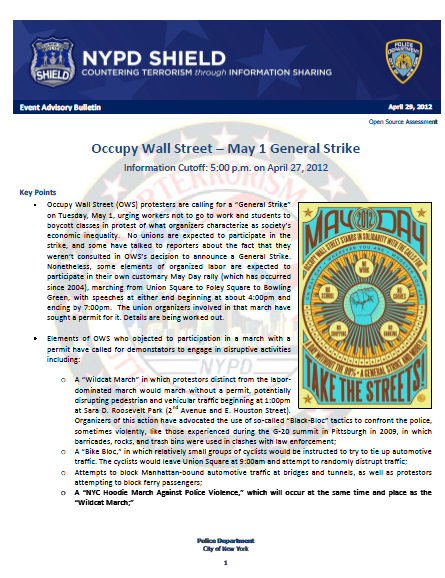
![[Image]](https://i0.wp.com/cryptome.org/2012-info/athens-protest/pict2.jpg) Riot police, not seen, push back protesters as the ancient Temple of Zeus is illuminated during clashes in Athens, Sunday, Feb. 12, 2012. Protesters and police fought running battles in central Athens Sunday, as Greek lawmakers debated legislation that would introduce severe austerity measures to stave off bankruptcy. (Thanassis Stavrakis)
Riot police, not seen, push back protesters as the ancient Temple of Zeus is illuminated during clashes in Athens, Sunday, Feb. 12, 2012. Protesters and police fought running battles in central Athens Sunday, as Greek lawmakers debated legislation that would introduce severe austerity measures to stave off bankruptcy. (Thanassis Stavrakis)![[Image]](https://i0.wp.com/cryptome.org/2012-info/athens-protest/pict3.jpg) Protesters try to avoid a stun grenade thrown by police on motorcycles during clashes in Athens, Sunday, Feb. 12, 2012. Protesters and police fought running battles in central Athens Sunday, as Greek lawmakers debated legislation that would introduce severe austerity measures to stave off bankruptcy. (Thanassis Stavrakis)
Protesters try to avoid a stun grenade thrown by police on motorcycles during clashes in Athens, Sunday, Feb. 12, 2012. Protesters and police fought running battles in central Athens Sunday, as Greek lawmakers debated legislation that would introduce severe austerity measures to stave off bankruptcy. (Thanassis Stavrakis)![[Image]](https://i0.wp.com/cryptome.org/2012-info/athens-protest/pict0.jpg) Protesters pass by a burning cinema in Athens, Sunday, Feb. 12, 2012. Riots engulfed central Athens and at least 10 buildings went up in flames in mass protests late Sunday as lawmakers prepared for a historic parliamentary vote on harsh austerity measures demanded to keep the country solvent and within the eurozone. (Kostas Tsironis)
Protesters pass by a burning cinema in Athens, Sunday, Feb. 12, 2012. Riots engulfed central Athens and at least 10 buildings went up in flames in mass protests late Sunday as lawmakers prepared for a historic parliamentary vote on harsh austerity measures demanded to keep the country solvent and within the eurozone. (Kostas Tsironis)![[Image]](https://i0.wp.com/cryptome.org/2012-info/athens-protest/pict1.jpg) Riot police use tear gas as protesters stand in front of the Greek Parliament in Athens, Sunday, Feb. 12, 2012. Riots engulfed central Athens and at least 10 buildings went up in flames in mass protests late Sunday as lawmakers prepared for a historic parliamentary vote on harsh austerity measures demanded to keep the country solvent and within the eurozone. (Petros Giannakouris)
Riot police use tear gas as protesters stand in front of the Greek Parliament in Athens, Sunday, Feb. 12, 2012. Riots engulfed central Athens and at least 10 buildings went up in flames in mass protests late Sunday as lawmakers prepared for a historic parliamentary vote on harsh austerity measures demanded to keep the country solvent and within the eurozone. (Petros Giannakouris)![[Image]](https://i0.wp.com/cryptome.org/2012-info/athens-protest/pict4.jpg) Protesters clash with riot police outside the Greek Finance Ministry as the ancient Acropolis hill is seen in the background in Athens on Sunday, Feb. 12, 2012. Tens of thousands of protesters gathered in the square outside Parliament as a parliamentary debate on further austerity cuts began, with more arriving constantly. (Thanassis Stavrakis)
Protesters clash with riot police outside the Greek Finance Ministry as the ancient Acropolis hill is seen in the background in Athens on Sunday, Feb. 12, 2012. Tens of thousands of protesters gathered in the square outside Parliament as a parliamentary debate on further austerity cuts began, with more arriving constantly. (Thanassis Stavrakis)![[Image]](https://i0.wp.com/cryptome.org/2012-info/athens-protest/pict14.jpg) Riot police officers throw missiles at protesters as cars burn during clashes in Athens, Sunday, Feb. 12, 2012. Protesters and police fought running battles in central Athens Sunday, as Greek lawmakers debated legislation that would introduce severe austerity measures to stave off bankruptcy. (Thanassis Stavrakis)
Riot police officers throw missiles at protesters as cars burn during clashes in Athens, Sunday, Feb. 12, 2012. Protesters and police fought running battles in central Athens Sunday, as Greek lawmakers debated legislation that would introduce severe austerity measures to stave off bankruptcy. (Thanassis Stavrakis)![[Image]](https://i0.wp.com/cryptome.org/2012-info/athens-protest/pict13.jpg) A protester throws an object towards riot police during clashes in Athens on Sunday, Feb. 12, 2012. Tens of thousands of protesters gathered in the square outside Parliament as a parliamentary debate on further austerity cuts began, with more arriving constantly. (Kostas Tsironis)
A protester throws an object towards riot police during clashes in Athens on Sunday, Feb. 12, 2012. Tens of thousands of protesters gathered in the square outside Parliament as a parliamentary debate on further austerity cuts began, with more arriving constantly. (Kostas Tsironis)![[Image]](https://i0.wp.com/cryptome.org/2012-info/athens-protest/pict12.jpg) Riot police officers throw tear gas at protesters during clashes in Athens, Sunday, Feb. 12, 2012. Protesters and police fought running battles in central Athens Sunday, as Greek lawmakers debated legislation that would introduce severe austerity measures to stave off bankruptcy. (Petros Giannakouris)
Riot police officers throw tear gas at protesters during clashes in Athens, Sunday, Feb. 12, 2012. Protesters and police fought running battles in central Athens Sunday, as Greek lawmakers debated legislation that would introduce severe austerity measures to stave off bankruptcy. (Petros Giannakouris)![[Image]](https://i0.wp.com/cryptome.org/2012-info/athens-protest/pict15.jpg) A protester clashes with riot police outside the Greek parliament in Athens, Sunday, Feb. 12, 2012. Tens of thousands of protesters gathered in the square outside Parliament as a parliamentary debate began, with more arriving constantly. As the crowds grew, a few hundred anarchists started to throw bottles and firebombs at police, who responded with tear gas and stun grenades. (Thanassis Stavrakis)
A protester clashes with riot police outside the Greek parliament in Athens, Sunday, Feb. 12, 2012. Tens of thousands of protesters gathered in the square outside Parliament as a parliamentary debate began, with more arriving constantly. As the crowds grew, a few hundred anarchists started to throw bottles and firebombs at police, who responded with tear gas and stun grenades. (Thanassis Stavrakis)![[Image]](https://i0.wp.com/cryptome.org/2012-info/athens-protest/pict6.jpg) A Starbucks coffee shop burns, right, as firefighters try to cut open the locked truck to get out the fire hose after protesters took the keys, during clashes in Athens, Sunday, Feb. 12, 2012. Protesters and police fought running battles in central Athens Sunday, as Greek lawmakers debated legislation that would introduce severe austerity measures to stave off bankruptcy. (Thanassis Stavrakis)
A Starbucks coffee shop burns, right, as firefighters try to cut open the locked truck to get out the fire hose after protesters took the keys, during clashes in Athens, Sunday, Feb. 12, 2012. Protesters and police fought running battles in central Athens Sunday, as Greek lawmakers debated legislation that would introduce severe austerity measures to stave off bankruptcy. (Thanassis Stavrakis)![[Image]](https://i0.wp.com/cryptome.org/2012-info/athens-protest/pict7.jpg) Protesters throw stones at riot police during clashes in Athens, Sunday, Feb. 12, 2012. Riots engulfed central Athens and at least 10 buildings went up in flames in mass protests late Sunday as lawmakers prepared for a historic parliamentary vote on harsh austerity measures demanded to keep the country solvent and within the eurozone. The graffiti reads ”Poison to riot police.” (Petros Giannakouris)
Protesters throw stones at riot police during clashes in Athens, Sunday, Feb. 12, 2012. Riots engulfed central Athens and at least 10 buildings went up in flames in mass protests late Sunday as lawmakers prepared for a historic parliamentary vote on harsh austerity measures demanded to keep the country solvent and within the eurozone. The graffiti reads ”Poison to riot police.” (Petros Giannakouris)![[Image]](https://i0.wp.com/cryptome.org/2012-info/athens-protest/pict8.jpg) A protester throws a missile at riot police during clashes in Athens, Sunday, Feb. 12, 2012. Protesters and police fought running battles in central Athens Sunday, as Greek lawmakers debated legislation that would introduce severe austerity measures to stave off bankruptcy. (Petros Giannakouris)
A protester throws a missile at riot police during clashes in Athens, Sunday, Feb. 12, 2012. Protesters and police fought running battles in central Athens Sunday, as Greek lawmakers debated legislation that would introduce severe austerity measures to stave off bankruptcy. (Petros Giannakouris)![[Image]](https://i0.wp.com/cryptome.org/2012-info/athens-protest/pict9.jpg) Protesters clash with riot police outside the Greek parliament in Athens on Sunday, Feb. 12, 2012. Tens of thousands of protesters gathered in the square outside Parliament as a parliamentary debate began, with more arriving constantly. (Thanassis Stavrakis)
Protesters clash with riot police outside the Greek parliament in Athens on Sunday, Feb. 12, 2012. Tens of thousands of protesters gathered in the square outside Parliament as a parliamentary debate began, with more arriving constantly. (Thanassis Stavrakis)![[Image]](https://i0.wp.com/cryptome.org/2012-info/athens-protest/pict10.jpg) Demonstrators protest against the new austerity measures in Syntagma Square on February 12, 2012 in Athens, Greece. Greece’s creditors have demanded further austerity measures before approving a new bailout from the European Union, European Central Bank and International Monetary Fund amid renewed concerns the country may default. Getty
Demonstrators protest against the new austerity measures in Syntagma Square on February 12, 2012 in Athens, Greece. Greece’s creditors have demanded further austerity measures before approving a new bailout from the European Union, European Central Bank and International Monetary Fund amid renewed concerns the country may default. Getty![[Image]](https://i0.wp.com/cryptome.org/2012-info/athens-protest/pict17.jpg) Protesters gather outside the Greek Parliament during clashes with riot police in Athens on Sunday, Feb. 12, 2012. Tens of thousands of protesters gathered in the square outside Parliament as a parliamentary debate on further austerity cuts began, with more arriving constantly. (Thanassis Stavrakis)
Protesters gather outside the Greek Parliament during clashes with riot police in Athens on Sunday, Feb. 12, 2012. Tens of thousands of protesters gathered in the square outside Parliament as a parliamentary debate on further austerity cuts began, with more arriving constantly. (Thanassis Stavrakis)![[Image]](https://i0.wp.com/cryptome.org/2012-info/athens-protest/pict16.jpg) A protester holds a Greek flag during clashes with riot police outside the Greek Parliament in Athens on Sunday, Feb. 12, 2012. Tens of thousands of protesters gathered in the square outside Parliament as a parliamentary debate on further austerity cuts began, with more arriving constantly. (Thanassis Stavrakis)
A protester holds a Greek flag during clashes with riot police outside the Greek Parliament in Athens on Sunday, Feb. 12, 2012. Tens of thousands of protesters gathered in the square outside Parliament as a parliamentary debate on further austerity cuts began, with more arriving constantly. (Thanassis Stavrakis)![[Image]](https://i0.wp.com/cryptome.org/2012-info/athens-protest/pict5.jpg) Protesters wave a flag in front of the Greek parliament as riot police officers stand guard in Athens, Sunday, Feb. 12, 2012. Tens of thousands of protesters gathered in the square outside Parliament as a debate began, with more arriving constantly. As the crowds grew, a few hundred anarchists started to throw bottles and firebombs at police, who responded with tear gas and stun grenades. (Kostas Tsironis)
Protesters wave a flag in front of the Greek parliament as riot police officers stand guard in Athens, Sunday, Feb. 12, 2012. Tens of thousands of protesters gathered in the square outside Parliament as a debate began, with more arriving constantly. As the crowds grew, a few hundred anarchists started to throw bottles and firebombs at police, who responded with tear gas and stun grenades. (Kostas Tsironis) 🛑 Bernd Pulch | NAZI & STASI HUNTER | CORRUPTION & ARISTOTLE AI BI