TOP-SECRET: Cuban Missile Crisis Document Archive – 1960 from the NSA Archives

soviet_arms

Afghanistan and the Soviet Withdrawal 1989 20 Years Later

Alexander Lyakhovsky

Washington D.C., July 31st 2011 – Twenty years ago today, the commander of the Soviet Limited Contingent in Afghanistan Boris Gromov crossed the Termez Bridge out of Afghanistan, thus marking the end of the Soviet war which lasted almost ten years and cost tens of thousands of Soviet and Afghan lives.

As a tribute and memorial to the late Russian historian, General Alexander Antonovich Lyakhovsky, the National Security Archive today posted on the Web (www.nsarchive.org) a series of previously secret Soviet documents including Politburo and diary notes published here in English for the first time.  The documents suggest that the Soviet decision to withdraw occurred as early as 1985, but the process of implementing that decision was excruciatingly slow, in part because the Soviet-backed Afghan regime was never able to achieve the necessary domestic support and legitimacy – a key problem even today for the current U.S. and NATO-supported government in Kabul.

The Soviet documents show that ending the war in Afghanistan, which Soviet general secretary Mikhail Gorbachev called “the bleeding wound,” was among his highest priorities from the moment he assumed power in 1985 – a point he made clear to then-Afghan Communist leader Babrak Karmal in their first conversation on March 14, 1985.  Already in 1985, according to the documents, the Soviet Politburo was discussing ways of disengaging from Afghanistan, and actually reached the decision in principle on October 17, 1985.

But the road from Gorbachev’s decision to the actual withdrawal was long and painful.  The documents show the Soviet leaders did not come up with an actual timetable until the fall of 1987.  Gorbachev made the public announcement on February 8, 1988, and the first troops started coming out in May 1988, with complete withdrawal on February 15, 1989.  Gorbachev himself, in his recent book (Mikhail Gorbachev, Ponyat’ perestroiku … Pochemu eto vazhno seichas. (Moscow: Alpina Books 2006)), cites at least two factors to explain why it took the reformers so long to withdraw the troops.  According to Gorbachev, the Cold War frame held back the Soviet leaders from making more timely and rational moves, because of fear of the international perception that any such withdrawal would be a humiliating retreat.  In addition to saving face, the Soviet leaders kept trying against all odds to ensure the existence of a stable and friendly Afghanistan with some semblance of a national reconciliation process in place before they left.

The documents detail the Soviet leadership’s preoccupation that, before withdrawal of troops could be carried out, the Afghan internal situation had to be stabilized and a new government should be able to rely on its domestic power base and a trained and equipped army able to deal with the mujahadeen opposition.  The Soviets sought to secure the Afghan borders through some kind of compromise with the two other most important outside players—Pakistan, through which weapons and aid reached the opposition, and the United States, provider of the bulk of that aid.  In the process of Geneva negotiations on Afghanistan, which were initiated by the United Nations in 1982, the United States, in the view of the Soviet reformers, was dragging its feet, unwilling to stop arms supplies to the rebels and hoping and planning for the fall of the pro-Soviet Najibullah regime after the Soviet withdrawal.

Internally, the People’s Democratic Party of Afghanistan did everything possible to prevent or slow down the Soviet withdrawal, putting pressure on the Soviet military and government representatives to expand military operations against the rebels.

Persistent pleading on the part of Najibullah government as late as January 1989 created an uncharacteristic split in the Soviet leadership, with Foreign Minister Eduard Shevardnadze suggesting that the withdrawal should be slowed down or some forces should remain to help protect the regime, while the military leadership argued strongly in favor of a complete and decisive withdrawal.

According to the American record, Shevardnadze had already informed Secretary of State George Shultz as early as September 1987 of the specific timetable for withdrawal.  But many senior officials did not believe the Soviet assurances; in fact, deputy CIA director Robert Gates famously bet a State Department diplomat on New Year’s Eve 1987 that Gorbachev would make no withdrawal announcement until after the end of the Reagan administration.  Gates believed the Chinese saying about the Soviet appetite for territory: “What the bear has eaten, he never spits out” – and only in his memoirs did he admit he was making “an intelligence forecast based on fortune cookie wisdom.”  (Robert Gates, From the Shadows: The Ultimate Insider’s Story of Five Presidents and How They Won the Cold War (New York:  Simon&Shuster, 1996, pp. 430-431).  Of course, Gates’ hardline views on Gorbachev would take over U.S. policy as the George H.W. Bush administration came into office in January 1989.

By this time, however, the Soviet leaders well realized that the goal of building socialism in Afghanistan was illusory; and at the same time the goal of securing the southern borders of the Soviet Union seemed to be still within reach with the policy of national reconciliation of the Najibullah government.  So the troops came out completely by February 15, 1989.  Soon after the Soviet withdrawal, however, both superpowers seemed to lose interest in what had been so recently the hottest spot of the Cold War.

Najibullah would outlast Gorbachev’s tenure in the Kremlin, but not by much:  Within three years Najibullah would be removed from power and brutally murdered, and Afghanistan would plunge into the darkness of civil war and the coming to power of the Taliban.  Twenty years later, the other superpower and its Cold War alliance are fighting a war in Afghanistan against forces of darkness that were born among the fundamentalist parts of mujahadeen resistance to the Soviet occupation.  In such a context, the language and the dilemmas in these 20-year-old documents still provide some resonance today.

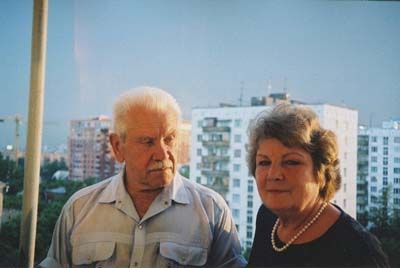
This posting is also a tribute to and a commemoration of one of our long-standing partners in the pursuit of opening secrets and writing the new truly international history of the Cold War.   General Alexander Lyakhovsky passed away from a heart attack while standing on a Moscow Metro platform on February 3, 2009, less than two weeks before the 20th anniversary of the end of the war in which he served as an officer, and which he studied for many years as a scholar.  He is survived by his wife Tatyana and their children Vladimir and Galina.

The National Security Archive mourns the passing of our dear friend and partner, Alexander Antonovich.  It is fitting and proper that here we express our deepest appreciation for his remarkable knowledge, his scholarly and personal integrity, and his generosity both in expertise and the documents that he always shared with us, while he educated us and the world.  His memory lives on in all of us who ever read his work, heard him speak, or best of all, listened to him sing the sad songs of the Afghan war.

— Svetlana Savranskaya, director of Russia programs, Thomas Blanton, executive director, National Security Archive, and Malcolm Byrne, Deputy Director, National Security Archive.

Documents:

Document 1. Memorandum of Mikhail Gorbachev’s Conversation with Babrak Karmal, March 14, 1985

In his first conversation with the leader of Afghanistan, who was installed by the Soviet troops in December of 1979, Gorbachev underscored two main points: first that “the Soviet troops cannot stay in Afghanistan forever,” and second, that the Afghan revolution was presently in its “national-democratic” stage, whereas its socialist stage was only “a course of the future.” He also encouraged the Afghan leader to expand the base of the regime to unite all the “progressive forces.” In no uncertain terms, Karmal was told that the Soviet troops would be leaving soon and that his government would have to rely on its own forces.

Document 2.  Anatoly Chernyaev Diary, April 4, 1985

Chernyaev reflects on the “torrent of letters” about Afghanistan received recently by the Central Committee and the Pravda newspaper.  They reflect the growing dissatisfaction of the population with the drawn-out war and the consensus that the troops should be withdrawn.

Document 3 Anatoly Chernyaev Diary, October 17, 1985.

At the Politburo session of October 17, 1985, General Secretary Gorbachev proposed to make a final decision on Afghanistan and quoted from citizens’ letters regarding the dissatisfaction in the country with the Soviet actions in Afghanistan.  He also described his meeting with Babrak Karmal during which Gorbachev told the Afghan leader: “we will help you, but with arms only, not troops.”Chernyaev noted Gorbachev’s negative reaction to the assessment of the situation given by Defense Minister Marshal Sergey Sokolov.

Document 4.  Politburo Session, June 26, 1986.

The Politburo discusses the first results of Najibullah’s policy of national reconciliation.  Gorbachev emphasizes that the decision to withdraw the troops is firm, but that the United States seems to be a problem as far as the national reconciliation is concerned.  He proposes early withdrawals of portions of troops to give the process a boost, and proposes to “pull the USA and Pakistan by their tail” to encourage them to participate in it more actively.

Document 5 Politburo Session, November 13, 1986.

The first detailed Politburo discussion of the process and difficulties of the withdrawal of the Soviet troops from Afghanistan, which included the testimony of Marshal Sergei Akhromeev.

Document 6 Politburo Session, January 21, 1987

The Politburo discusses the results of Foreign Minister Eduard Shevardnadze and Head of the Central Committee International Department Anatoly Dobrynin’s trip to Afghanistan.  Shevardnadze’s report is very blunt and pessimistic about the war and the internal situation.  The main concern of the Politburo is how to end the war but save face and ensure a friendly and neutral Afghanistan.

Document 7 Politburo Session, February 23, 1987

Gorbachev talks about the need to withdraw while engaging the United States and Pakistan in negotiations on the final settlement.  He is willing to meet with the Pakistani leader Zia ul Khaq, and maybe even offer him some payoff.  The Soviet leader also shows concern about the Soviet reputation among non-aligned countries and national liberation movements.

Document 8 Politburo Session, February 26, 1987

In his remarks to the Politburo, General Secretary returns to the issue of the need to withdraw Soviet troops from Afghanistan several times.  He emphasizes the need to withdraw the troops, and at the same time struggles with the explanation for the withdrawal, noting that “we not going to open up the discussion about who is to blame now.”  Gromyko admits that it was a mistake to introduce the troops, but notes that it was done after 11 requests from the Afghan government.

Document 9  Colonel Tsagolov Letter to USSR Minister of Defense Dmitry Yazov on the Situation in Afghanistan, August 13, 1987

Criticism of the Soviet policy of national reconciliation in Afghanistan and analysis of general failures of the Soviet military mission there are presented in Colonel Tsagolov’s letter to USSR Defense Minister Dmitry Yazov of August 13, 1987.  This letter represents the first open criticism of the Afghan war from within the military establishment.  Colonel Tsagolov paid for his attempt to make his criticism public in his interview with Soviet influential progressive magazine “Ogonek” by his career—he was expelled from the Army in 1988.

Document 10  CC CPSU Letter on Afghanistan, May 10, 1988

On May 10, 1988, the Central Committee of the Communist Party of the USSR issued a “closed” (internal use) letter to all Communist Party members of the Soviet Union on the issue of withdrawal of troops from Afghanistan.  The letter presents the Central Committee analysis of events in Afghanistan and Soviet actions in that country, the problems and the difficulties the Soviet troops had to face in carrying out their mission.  In particular, the letter stated that important historic and ethnic factors were overlooked when the decisions on Afghanistan were made in the Soviet Union. The letter analyzes Soviet interests in Afghanistan and the reasons for the withdrawal of troops.

Document 11 Politburo Session January 24, 1989

This Politburo session deals with the issue of the completion of the withdrawal and the post-war Soviet role in Afghanistan, as well as possible future development of the situation there.  The discussion shows the split among the Soviet leadership with Foreign Minister Eduard Shevardnadze arguing for leaving some personnel behind to help protect the Najibullah regime or delaying the full withdrawal.

Document 12 Excerpt from Alexander Lyakhovsky and Vyacheslav Nekrasov, Grazhdanin, Politik, Voin: Pamyati Shakha Masuda (Citizen, Politician, Fighter: In Memory of Shah Masoud), (Moscow, 2007), pp. 202-205

Document 13  Excerpt from Statement of the Soviet Military Command in Afghanistan on the Withdrawal of Soviet Troops, February 14, 1989

On April 7, 1988, USSR Defense Minister signed an order on withdrawal of troops from Afghanistan.  In February 1989, the Defense Ministry prepared a statement of the Soviet Military Command in Afghanistan on the issue of withdrawal of troops, which was delivered to the Head of the UN Mission in Afghanistan on February 14, 1989—the day when the last Soviet soldier left Afghanistan.  The statement gave an overview of Soviet-Afghan relations before 1979, Soviet interpretation of the reasons for providing internationalist assistance to Afghanistan, and sending troops there after the repeated requests of the Afghan government.  It criticized the U.S. role in arming the opposition in disregard of the Geneva agreements, and thus destabilizing the situation in the country.  In an important acknowledgement that the Vietnam metaphor was used to analyze Soviet actions in Afghanistan, they military explicitly referred to “unfair and absurd” comparisons between the American actions in Vietnam and the presence of Soviet troops in Afghanistan.

Document 14. Official Chronology of the Soviet withdrawal from Afghanistan with quotes from documents from the Archive of the Gorbachev Foundation, Moscow.

Books By Alexander Lyakhovsky
Grazhdanin,Politik,Voin, Plamya Afgana and Zacharovannye svobodoj


CONFIDENTIAL: Lords of the Narco-Coast: Part II – Community Reaction

VZCZCXRO2713
RR RUEHAO RUEHCD RUEHGD RUEHHO RUEHMC RUEHNG RUEHNL RUEHRD RUEHRS
RUEHTM
DE RUEHMU #0013/01 0071743
ZNY CCCCC ZZH
R 071743Z JAN 10
FM AMEMBASSY MANAGUA
TO RUEHC/SECSTATE WASHDC 0368
INFO WESTERN HEMISPHERIC AFFAIRS DIPL POSTS
RHEFDIA/DIA WASHINGTON DC
RHEFHLC/DEPT OF HOMELAND SECURITY WASHINGTON DC
RHEHAAA/NATIONAL SECURITY COUNCIL WASHINGTON DC
RHMFISS/DEPT OF JUSTICE WASHINGTON DC
RHMFISS/HQ USSOUTHCOM MIAMI FL
RUCPDOC/DEPT OF COMMERCE WASHINGTON DC
RUEABND/DEA HQS WASHINGTON DC
RUEAIIA/CIA WASHINGTON DC
RUEHC/DEPT OF LABOR WASHINGTON DC
RUEHC/USAID WASHDC 0004
C O N F I D E N T I A L SECTION 01 OF 04 MANAGUA 000013 

SIPDIS
AMEMBASSY BRIDGETOWN PASS TO AMEMBASSY GRENADA
AMEMBASSY OTTAWA PASS TO AMCONSUL QUEBEC
AMEMBASSY BRASILIA PASS TO AMCONSUL RECIFE 

E.O. 12958: DECL: 2020/01/07
TAGS: SNAR SOCI ASEC PGOV PHUM PREL KCOR NU
SUBJECT: Lords of the Narco-Coast: Part II - Community Reaction
Divided, FSLN Blames U.S. for Crisis 

REF: A) 2009 MANAGUA 1149 (LORDS OF NARCO-COAST PART I)
B) 2009 MANAGUA 1051 (PRIMER ON MISKITO INDEPENDENCE MOVEMENT)
C) 2009 MANAGUA 1047 (MISKITO INDEPENDENCE RALLY TURNS DEADLY)
D) 2008 MANAGUA 1517 AND PREVIOUS (FRAUD IN RAAN ELECTIONS)
E) 2008 MANAGUA 419 AND PREVIOUS (GON SUSPENDS RAAN MUNICIPAL
ELECTIONS) 

CLASSIFIED BY: Robert J. Callahan, Ambassador; REASON: 1.4(A), (B),
(D) 

SUMMARY 

1. (C): On December 8, after a plane laden with cocaine and cash
crash-landed in the remote, small village of Walpa Siksa in the
North Atlantic Autonomous Region (RAAN), a deadly confrontation
took place between Nicaraguan anti-drug units and drug smugglers
allied with some number of local residents.  This message is the
second in a series that reports on the Walpa Siksa incident and its
immediate aftermath, and explores what these events have revealed
about the actual state of organized trafficking operations in
Nicaragua's Atlantic Coast. 

2.  (C) In the aftermath of the incident, public reactions have
been divided.  Some regional politicians and leaders of the
indigenous Yatama political party have called the incident and
subsequent government operations in the region a new "Red Christmas
Massacre" - a reference to the Sandinistas' deadly attacks on
indigenous Miskitos in the 1980s, assertions the military contests
are false.  Religious leaders have denounced these same political
leaders for turning a blind eye to the increased drug activity.
Former Vice President (and ex-Sandinista), Sergio Ramirez, has
decried the presence of trafficking organizations as a national
security threat, while a senior current FSLN official accused the
United States, specifically the CIA, of "promoting" the drug trade
to destabilize the country.  Underneath all lies a subtext of the
perennial rivalry and racial conflict between Nicaragua's Pacific
(Hispanic) and Atlantic (Afro-Caribbean and Amerindian) cultures.
Yet, also through the dissonance, the Walpa Siksa incident and its
aftermath seem to indicate stronger linkages between drug smugglers
and local communities in Nicaragua's Atlantic region than
previously believed.  END SUMMARY 

REGIONAL POLITICIANS BLAME THE MILITARY - SEEK A NEW CRISIS  

3. (C) The Walpa Siksa village, where the December 8 incident
occurred, is in a region historically controlled by Yatama; the
regional, indigenous Miskito political party.  Much of Yatama's
leadership itself has been co-opted by the ruling Sandinista Party
(REF D) over the last few years.  Even so, regional politicians and
several Yatama leaders have taken to the airwaves, primarily on
their new Yatama radio station (reportedly funded by the
government), to condemn the Nicaraguan military for its continuing
operations in the vicinity of Walpa Siksa and Prinzapolka.  These
leaders, including Brooklyn Rivera, a Yatama National Assembly
Deputy; Reynoldo Francis, Governor of the North Atlantic Autonomous
Region (RAAN); Roberto Wilson, the RAAN Vice Governor; and
Elizabeth Enriquez Francis, former mayor of RAAN capital Bilwi (and
ex-wife of Governor Francis), have used Miskito-language radio
broadcasts from the new station to claim that the Nicaraguan
anti-drug unit had violated human rights in pursuing its
investigation and by detaining suspects from Walpa Siksa.  These
leaders vehemently denied that these coastal communities support,
house and abet drug smugglers, as had been charged by some critics.
Rivera told national media that "the soldiers are all from the
Pacific coast.  There has been racism, robberies and looting of
indigenous people's homes."  Other Miskito leaders claim that the
soldiers have killed livestock and stolen food donated to the
community by the World Food Program. 

4. (C) Rivera, Francis, Wilson, and Enriquez have all called for
and even led several protests against police and navy forces
stationed in Bilwi, creating a new crisis in the region.  They have
denounced the "human rights violations" by the anti-drug unit
against the "innocent" indigenous people and claim that the
military "occupation" of Walpa Siksa is rife with abuses.  This
racially-charged agitation led some in the Miskito community to set
up illegal road blocks at the town of Sinsin, preventing traffic on
the only road between Bilwi and Managua.  There were also attempts
to take over the Bilwi International Airport and the capital's main
wharf.  These Yatama leaders and radicalized supporters have
demanded that the Navy cease all operations on the Atlantic Coast,
withdraw from the region, and immediately release the roughly two
dozen suspects detained in Walpa Siksa and Prinzapolka.  (see
SEPTEL).  Rivera also told reporters that the Walpa Siksa community
elders had decided to abandon their community if the military did
not depart or carried out its plan to establish a permanent
presence in the area. 

MORAVIAN CHURCH LEADER CONDEMNS GOVERNMENT COLLUSION 

5. (U) The Moravian Church is the largest denomination on the
Atlantic Coast and a large majority of indigenous Miskitos belong
to it, making the church the moral authority in the region; even
more so than the Catholic Church.  On Friday, December 13, Moravian
Church Superintendant Cora Antonio issued a grave statement against
the local Walpa Siksa community leaders, police officials and
military officials in the Atlantic, whom she claimed knew about the
narco-trafficking base in Walpa Siksa, but took no action until the
recent plane crash.  Antonio, who will finish her two-year term in
January 2010, complained that drug smugglers had established their
networks unchallenged by the GON and exploited the extreme poverty
on the Coast.  She also claimed that elected officials, including
Francis, Wilson, and Lidia Coleman, the mayor of nearby
Prinzapolka, as well as police and military authorities, "knew from
the beginning of the installation of this narco-traffickers' base,
but never did anything about it."   She also stated that in certain
Caribbean communities the narco-traffickers exercised the highest
authority, above that of the community judge, the village elders,
even the pastor or "sindico," and that they frequently commanded
the "last word" on community decisions.  Antonio also said the
Moravian Church had recently removed a reverend from the Walpa
Siksa village out of fear that he would be physically attacked for
preaching against drugs from the pulpit. 

WIHTA TARA ALSO SAYS MILITARY SHOULD LEAVE 

6. (U) Other non-FSLN-aligned indigenous leaders took aim at the
President Ortega and at the military's recent actions.  The Wihta
Tara of the Miskito Nation, aka the Rev. Hector Williams, who
denounced the Managua government and called for Miskito
independence, told the media that Columbian drug traffickers had
already left, so the military should leave as well.  NOTE: The
Wihta Tara (Miskito for "great judge"), was elected by the Council
of Elders of the Miskito Nation and leads Miskito separatist
movement that mounted protests which were violently suppressed this
past October (REF E)  END NOTE.   Williams stated that "the army is
after the money that they think is hidden in the community."
Building on the racial inequality theme, another separatist leader,
Steady Alvarado, publicly questioned why the military felt it could
take actions in the indigenous communities that it would never
attempt on the Pacific Coast.  The Miskito Council of Elders itself
issued a statement on December 12 blaming President Ortega directly
for the "tortures, persecutions and death of our community members
in Walpa Siksa."  It also accused Ortega of being "incapable of
neutralizing" drug trafficking activity on the Atlantic Coast, and
for again "bearing a grudge" against the Coastal peoples, "like he
did during the Navidad Roja (Red Christmas Massacre)."  NOTE: The
Red Christmas Massacre occurred in 1981, when Sandinista military
operations in the Atlantic Coast killed dozens and forcibly
relocated hundreds of Miskitos thought to be collaborating with the
Contras. END NOTE. 

ARMY CHIEF DENIES RIGHTS VIOLATIONS - YIELD "NOT ONE INCH TO
NARCOS" 

7. (U) General Omar Halleslevens, Commander of the Nicaraguan
military, told reporters that the Army would not leave Walpa Siksa,
nor would it stop searching neighboring communities for drug
traffickers.  He insisted that the Army would remain and would take
appropriate measures to protect the area from again becoming a
haven for drug trafficking.  Halleslevens denied accusations that
the military had violated human rights, saying "our line has been
from the very beginning to respect life, human rights, private
property and the law ... as we are completing our duty to support
the police in applying the law."  He further declared that the
military would "not give a rock, nor even an inch of the national
territory, to narco-traffickers" and called on government
institutions and the population to support law enforcement in its
fight.  NOTE: Thus far, Post has no/no credible evidence of human
rights violations by law enforcement related to this operation.  We
continue to monitor the situation closely and will report relevant
developments if they occur.  END NOTE. 

FORMER FSLN VICE PRESIDENT CONDEMNS NARCOS, BLAMES GOVERNMENT 

8. (U) Adding to the chorus of concern about the absentee national
government was author and former Nicaraguan/FSLN vice president,
Sergio Ramirez, who said in an op-ed that the strong
narco-traffickers presence on the Caribbean Coast threatened
Nicaragua's sovereignty and territorial integrity.  He believed
that the "narco-traffickers will promote the separation of the
Caribbean Coast (REF E) and already have the social base to do it"
because of the significant resources drug smugglers enjoy and the
rampant political corruption in the region.  Ramirez also said the
confrontation between the anti-drug units and the Walpa Siksa
community demonstrated that criminal organizations had achieved
enormous influence on the Atlantic Coast while the "government does
not do anything to stop the problem." 

FSLN LEADER BLAMES THE U.S., CIA FOR THE CRISIS, MAY CANCEL
ELECTIONS 

9. (U) In contrast, during December 16 interviews, Steadman Fagoth,
a Miskito indigenous leader, former Contra commander, and now
ardent Ortega supporter, told FSLN-controlled media that United
States had created the Walpa Siksa crisis.  Fagoth, who is also
president of the Government's Fishing Authority (INPESCA), spoke to
Multinoticias Channel 4, owned and operated by the Ortega-Murillo
family, and to "El 19," the official on-line newspaper of the
Sandinista Government.  He claimed that the United States, through
the CIA, was trying to provoke an uprising in the Atlantic Coast
against the government by supporting narco-criminals.  He added
that Alberto Luis Cano, the fugitive Colombian drug leader and
passenger of the crashed drug airplane (see SEPTEL-Part I) had been
hired by the CIA to promote an uprising among the native
population, by playing on the racial animosity between Nicaragua's
Pacific and Atlantic populations.  Perhaps Fagoth's most troubling
comment was that because of the current unrest, the government
might delay regional elections scheduled for March 2010.  

COMMENT 

10. (C) In the cacophony following the Walpa Siksa incident,
statements of FSLN official Steadman Fagoth are perhaps the most
politically ominous.  Fagoth is a regular proxy for Ortega's
Atlantic policy.  His remarks frequently represent test balloons
for how Ortega perceives the situation and how the President seeks
to position himself against any fallout.  Fagoth's anti-U.S.
accusations are outrageous, but not unexpected -- that the United
States and CIA employed a drug trafficker to created this crisis,
destabilize the region and overthrow the government.  He made
similar accusations about the United States and CIA when the Wihta
Tara announced the separatist movement several months ago.  In
2008, the GON delayed RAAN municipal elections (REF E) on dubious
grounds.  Thus Fagoth's comment about delaying the March 2010
regional elections may indicate Ortega's true intent: freeze
everyone in place. 

11. (C) The Walpa Siksa incident and its aftermath aggravated
underlying tensions and divisions that persist in the Atlantic, and
may have exposed new evidence about the nature and extend of
narco-trafficking activity.  Serious concerns about threats to
national security and sovereignty have been raised by critics of
the government.  Some community leaders, such as Moravian
Superintendent Cora Antonio, have spoken out about what they see as
rampant drug corruption and political collusion by RAAN political
leaders.  We find it odd that these same political leaders, such as
Rivera, Francis, Wilson and Enriquez agitated against military
counter-drug operations, and virtually denied the existence of any
narco-trafficking activity.  At a minimum, their efforts to fan
latent racial resentments seem self-serving re-election efforts in
the run-up to regional elections.  For its part, the military
denies any human rights abuses in this, its largest anti-drug land
operation in the Caribbean in years.  In a subsequent message we
will provide more detail about the figures caught up in the Walpa
Siksa incident and outline some of the networks and relationships
that we believe traffickers may have been able to establish.
CALLAHAN

CONFIDENTIAL: Lords of the Narco-Coast: Part I – Deadly Confrontation

VZCZCXRO2201
RR RUEHAO RUEHCD RUEHGD RUEHHO RUEHMC RUEHNG RUEHNL RUEHRD RUEHRS
RUEHTM
DE RUEHMU #1149/01 3552241
ZNY CCCCC ZZH
R 212241Z DEC 09
FM AMEMBASSY MANAGUA
TO RUEHC/SECSTATE WASHDC 0312
INFO WESTERN HEMISPHERIC AFFAIRS DIPL POSTS
RHEFDIA/DIA WASHINGTON DC
RHEFHLC/DEPT OF HOMELAND SECURITY WASHINGTON DC
RHEHAAA/NATIONAL SECURITY COUNCIL WASHINGTON DC
RHMFISS/DEPT OF JUSTICE WASHINGTON DC
RHMFISS/HQ USSOUTHCOM MIAMI FL
RUCPDOC/DEPT OF COMMERCE WASHINGTON DC
RUEABND/DEA HQS WASHINGTON DC
RUEAIIA/CIA WASHINGTON DC
RUEHC/DEPT OF LABOR WASHINGTON DC
RUEHC/USAID WASHDC 0001
C O N F I D E N T I A L SECTION 01 OF 03 MANAGUA 001149 

SIPDIS
AMEMBASSY BRIDGETOWN PASS TO AMEMBASSY GRENADA
AMEMBASSY OTTAWA PASS TO AMCONSUL QUEBEC
AMEMBASSY BRASILIA PASS TO AMCONSUL RECIFE 

E.O. 12958: DECL: 2019/12/21
TAGS: SNAR SOCI PGOV PHUM PREL KCOR ASEC NU
SUBJECT: Lords of the Narco-Coast: Part I - Deadly Confrontation at
Walpa Siksa 

REF: MANAGUA 1051 (MOSQUITO COAST INDEPENDENCE) 

CLASSIFIED BY: Robert J. Callahan, Ambassador, State, Embassy
Managua; REASON: 1.4(A), (B), (D) 

1. (C) SUMMARY: On December 8, after a plane laden with cocaine and
cash crash landed in the remote, small village of Walpa Siksa in
the North Atlantic Autonomous Region (RAAN), a deadly confrontation
took place between Nicaraguan anti-drug units and drug smugglers
allied with a some number of local residents.  Stories of how the
clash came to pass on December 8 are divergent, but the Walpa Siksa
incident,  the ensuing actions of regional leaders and local
residents, as well as the enhanced posture of security forces seems
to indicate there are stronger linkages between drug smugglers and
local communities than previously believed.  This message is the
first in a series that reports on the Walpa Siksa incident and its
immediate aftermath, and explores what these events have revealed
about the actual state of organized trafficking operations in
Nicaragua's Atlantic Coast.  END SUMMARY 

WALPA SIKA: THE OFFICIAL ACCOUNT 

2. (C) On Tuesday, December 8, a Nicaraguan anti-drug unit clashed
with suspected drug traffickers, leaving two sailors dead and five
other government security forces wounded.  The following account of
events is based on Government of Nicaragua (GON) official briefings
and conversations between senior GON law enforcement/military
officials and Embassy personnel.  On Tuesday, December 8, a
Nicaraguan anti-drug unit combined force of navy and national
police traveled to the remote, small village of Walpa Siksa in the
North Atlantic Autonomous Region (RAAN) to investigate reports of a
plane crash linked to drug smugglers.  The joint patrol arrived in
the evening and was ambushed by civilians from the remote village,
who were allegedly defending the drug traffickers.  In the melee,
two sailors were killed, and three other military personnel and one
police officer were severely wounded.  One villager from Walpa
Siksa was also killed.  On Wednesday, December 9, a joint
Nicaraguan navy-army patrol returned to Walpa Siksa to detain those
suspected of involvement in the ambush, only to find the community
abandoned of all males.  On Thursday, December 10, anti-drug forces
from the Navy confronted an additional group of drug smugglers near
the community of Prinzapolka, in which one suspect was killed and
another wounded.  Two more were detained, and the fifth suspect
escaped.  Subsequent missions by the anti-drug unit over several
days resulted in 20 suspects arrested (18 in connection with the
first clash), and confiscation of a powerboat, several guns,
ammunition, small quantities of drugs and $177,960 in cash.
Nicaraguan security forces have seized and are now operating out of
several homes in the Walpa Siksa community that are believed to
have housed drug smugglers.  The military has announced plans to
establish a permanent presence in the area to discourage drug
traffickers from using it as a base of operations any longer. 

3. (U) Capt. Roger Gonzalez, newly-installed chief of the
Nicaraguan naval forces, told the press that "we understand there
is a Colombian criminal, suspected drug trafficker, [Alberto Ruiz
Cano] who has $500,000 and has armed certain area individuals, and
we are searching for him."  Police investigators revealed that Ruiz
Cano, whose real name is Amauri Pau, was illegally issued a
Nicaraguan national identity card (cedula) and owns several
properties and businesses in Managua believed to be involved in
money laundering (see SEPTEL).  Ruiz Cano is also believed to have
been on the crashed plane and is suspected of leading the December
8 attack against the anti-drug unit.  Officials detained two
Colombians -- Ruiz Cano's father [Fernando Melendez Paudd known as
"el Patron"] and his cousin [Catalina del Carmen Ruiz] -- but
neither has been willing to talk to police about Ruiz Cano or his
whereabouts.  Ruiz Cano's associates have hired attorney Julian
Holmes Arguello to defend them.  The presence of Holmes Arguello, a
well-known and expensive attorney, has reinforced official
suspicions about Holmes own possible drug connections. 

WALPA SIKSA: EYE-WITNESS ACCOUNTS -- EARLY "WHITE" CHRISTMAS OR
FAILED DRUG RESCUE? 

4. (U) The national daily newspaper El Nuevo Diario "END"
(left-of-center) has provided continuous coverage of the Walpa
Siksa incident, since it came to light on the evening of December
8th.  According to the paper's accounts, events leading up to the
deadly December 8 firefight differ somewhat from the official
account.  The paper's sources, who requested anonymity for fear of
possible reprisals from traffickers, other residents and the
government, stated that the plane crash-landed in the Walpa Siksa
cemetery on Sunday, December 6 at 11 a.m.  The impact killed the
pilot and co-pilot instantly, and broke the plane into several
pieces scattering packets of cocaine and bundles of dollars in the
debris.  Walpa Siksa residents quickly discovered the dead pilots
and one crash survivor, to whom they gave medical attention.  They
were also surprised at the large quantity of cocaine the plane was
carrying.  According to the paper's sources, some community elders
wanted to immediately contact the police and navy about the plane
crash and drugs, but others argued that it would be better to
divide the cash and drugs within the community and then burn the
plane to hide the evidence.  According to the media reports, the
latter group prevailed and armed themselves with weapons (pistols,
AK-47 rifles) that had been stored since the 1980's.  According to
the eye-witness accounts, on December 7 at 2 p.m. two boats with
approximately 40 Colombian narco-traffickers, who were "armed to
the teeth," arrived in Walpa Siksa to rescue the pilots and the
third passenger (known as "el Jefe" or "the boss," believed to be
Alberto Ruiz Cano), and to recover the plane's lost "merchandise."
The Colombians spent the night of December 7 and all day December 8
trying to convince the community to return the missing drugs and
cash.  According to END reports, when the narco-traffickers learned
that a government anti-drug unit was coming from Bilwi to
investigate the plane crash, they armed the community in order to
repel the Navy.  As soon as the two Navy boats arrived, the
narco-traffickers opened fire on the sailors, who also shot back,
killing four community members [NOTE: only one death in the
community has been confirmed. END NOTE].  The navy boats returned
to Bilwi at 7 p.m. with their dead and wounded.  On December 9, the
wounded civilians from Walpa Siksa were taken to a nearby village
and, by the afternoon, the Walpa Siksa village was evacuated
because villagers feared reprisals by the Government. 

5. (C) Our Embassy contacts on the ground in the RAAN have relayed
an account similar to that reported in the newspaper, but that
differs on some important details.  According to our sources, on
Friday, December 4, an airplane carrying hundreds of pounds of
cocaine and sacks of cash ran out of fuel on its way to a
clandestine runway in the RAAN and was forced to make an emergency
landing on the beach near Walpa Siksa.  The plane's pilot and two
passengers, allegedly Colombians, suffered minor injuries and were
sheltered by the local community.  Members of the community quickly
emptied the airplane of its cargo, estimated to be approximately a
half-ton of cocaine separated into individual one kilo packets.
Our contacts told us that word of the plane crash quickly spread
throughout the coastal communities and on Saturday morning,
December 5, several local merchants left Bilwi with their boats
full of commercial goods and food to sell to the community with its
sudden new windfall.  By Saturday evening narco-trafficker "rescue
boats" carrying approximately 40 Colombians and Hondurans
(reportedly from Honduras and San Andres) arrived in the community
to save the pilot/passengers and recover the drugs and cash.  Over
the ensuing three days, village elders urged by the narco "recovery
team" tried to persuade the community to sell the cocaine packets
back at a price of $3,000 a kilo.  According to our contacts, the
major sticking point was that the $3,000 price was only half the
$6,000 per kilo price that locals knew they could get by taking
their windfall slightly up the coast to Honduras.  When one group
of Walpa Siksa residents ultimately refused to sell back their
stash to the narco-traffickers, they were attacked and robbed of
their "windfall."  This group subsequently traveled to Bilwi on the
morning of Tuesday, December 8, and filed a formal complaint with
the police there, which confirmed rumors of a drug-plane crash.
Our contacts told us that it was this formal complaint that lead to
the government dispatching the counter-drug unit to investigate at
Walpa Siksa.  The anti-drug unit arrived in two boats to Walpa
Siksa at approximately 6 p.m.  Our contacts told us that there had
been no ambush when they arrived, but rather an "amicable" meeting
between law enforcement and village elders.  However, things turned
sour after one of the Colombians from the "rescue team," who was
drunk and under the impression they were under attack, shot his
automatic weapon into the group of uniformed sailors, killing one
and seriously wounding several other counter-drug unit members.
Our contacts told us that the "ambush" story was fabricated later
by authorities to account for their dead and wounded. 

COMMENT 

6. (C) Walpa Siksa has obliged us to revise our views about the
nature and extent of trafficking activity on the Atlantic.
Previously, our assessment had been that the majority of the local
indigenous Miskito villages were too xenophobic to actively support
outsiders (even Nicaraguans from the Pacific side of Hispanic
descent) in transporting drugs (or, frankly, any other activity)
for extended periods.  We had also believed that local interaction
with traffickers had been intermittent, and normally took place
upon the instruction or advice of a small number of corrupt
political and indigenous leaders in the region.  We maintain our
basic assessment is still valid; however, all three versions of the
Walpa Siksa incident reveal evidence that there is likely a much
higher degree of cooperation and support than we previously
believed between foreign drug trafficking organization and, at
least, the more remote local communities of Nicaragua's Atlantic
Coast.  In some cases there may be persistent and pervasive
relationships within an entire community.  We fear that it now
appears that organized criminal elements may have made major
inroads within some remote coastal communities, convincing them to
join forces by offering perhaps the only secure and steady
employment opportunity on the Coast - maintaining drug trafficking
supply routes.  Nicaragua's Atlantic is a key mid-point for an
increasingly busy transit corridor of South American drug shipments
bound for the United States.  It is also the most underdeveloped
and economically backward region of the country and has been
generally ignored by the current and previous central governments
in Managua.  This combination of political neglect, limited
economic opportunity and daily shipments of drugs creates
conditions for a possible "perfect storm" where Nicaragua's
Atlantic Coast could degenerate into an ungoverned "Narco-Coast,"
with serious repercussions for Nicaragua's political stability and
U.S. counternarcotics cooperation.  In subsequent messages we will
address reaction to Walpa Siksa by local, regional and national
figures.  We will also provide more detailed reporting about the
key figures caught up in the Walpa Siksa incident and outline some
of the networks and relationships that we believe traffickers have
been able to establish.
CALLAHAN

CONFIDENTIAL: BULGARIA AND THE ENERGY KNOT: SCENESETTER FOR OCT

VZCZCXRO6805
OO RUEHFL RUEHKW RUEHLA RUEHROV RUEHSR
DE RUEHSF #0641/01 2761002
ZNY CCCCC ZZH
O 021002Z OCT 08
FM AMEMBASSY SOFIA
TO RUEHC/SECSTATE WASHDC IMMEDIATE 5430
INFO RUEHZL/EUROPEAN POLITICAL COLLECTIVE PRIORITY
RUCPDOC/DEPT OF COMMERCE WASHINGTON DC PRIORITY
RHEBAAA/DEPT OF ENERGY WASHINGTON DC PRIORITY
RUEAIIA/CIA WASHINGTON DC PRIORITY
RHEHAAA/NATIONAL SECURITY COUNCIL WASHINGTON DC PRIORITY
C O N F I D E N T I A L SECTION 01 OF 03 SOFIA 000641 

SIPDIS 

FOR SPECIAL ENVOY BOYDEN GRAY 

E.O. 12958: DECL: 09/30/2018
TAGS: ECON ENRG PGOV BU
SUBJECT: BULGARIA AND THE ENERGY KNOT: SCENESETTER FOR OCT
7 VISIT OF SPE GRAY 

Classified By: Ambassador Nancy McEldowney for reasons 1.4. (b) and (d)
. 

1.  (C)  Summary:  The quandary over energy facing all our
European partners is particularly acute here in Bulgaria.
With few hydrocarbons of its own, Bulgaria relies on Russia
for seventy percent of its total energy needs and over ninety
percent of its gas.  Though previously a net exporter of
electricity, the EU's decision to force closure of blocks 3
and 4 of the communist-era nuclear plant Kozluduy cost the
Bulgarian economy over USD 1.4 billion and put a squeeze on
Serbia, Macedonia and Greece, who had purchased the bulk of
the exports.  The hard reality of today's energy picture is
that Russia is not only the dominant supplier, it is also the
dominant player -- your visit here is the first by a senior
U.S. energy official in a year, whereas Putin has personally
engaged both the President and Prime Minister on energy
issues in multiple sessions over the past ten months.  But
the cartoon strip portraying a passionately eager Bulgaria in
bed with the muscle bound duo of Gazprom and Lukoil is only
partially true -- it is a tryst driven less by passion and
more by a perceived lack of options.  Prime Minister
Stanishev recently described Russian tactics on South Stream
as blackmail and Energy Minister Dimitrov complains openly of
psychological warfare.  At the same time, the Bulgarians are
deeply worried about the prospects for Nabucco and are
convinced that Azeri gas supplies will be held up by Turkey.
Their bid to hold an energy summit in the spring, the
ostensible focus of your visit, is designed to catalyze
greater coordination -- and negotiating leverage -- amongst
transit countries while also getting the United States more
actively engaged.  Background on specific issues likely to
arise in your discussions with President Parvanov, Prime
Minister Stanishev, Foreign Minister Kalfin and Energy
Minister Dimitrov follows below.  End Summary. 

TIMING
------ 

2.  (C)  Your visit to Sofia comes when Bulgaria is striving
to sell itself as a European energy center.  With six active
or potential pipelines transiting the country, the creation
of a new energy mega-holding company, and the construction of
a new nuclear plant, Bulgaria is setting itself up to be an
important regional energy player, despite being overly
dependent on Russian energy sources.  The proposal to host a
major gas summit in April 2009 -- which Putin has already
promised to attend -- is the latest attempt to put Bulgaria
on the energy map.  Your visit will guide the Bulgarians as
they formulate an agenda and goals for this summit.  It will
also focus Bulgarian policy makers on U.S. views on Russian
energy strategy and South Stream, answer growing skepticism
about Nabucco's prospects, and give solid counter-arguments
to those who say there is no real alternative to dependence
on Russian energy. 

THE SUMMIT
---------- 

3.  (C)  At the January 19 signing of the South Stream
Intergovernmental Agreement, President Parvanov, with Putin
at his side, announced Bulgaria would host an energy summit
intended as a follow-on to the June 2007 Zagreb energy
conference.  Upon Putin's departure, Sofia fell under heavy
criticism both at home and abroad for hastily joining South
Stream, and the energy summit idea lost steam.  Ambassador
for Energy Security Peter Poptchev told us the Bulgarians
resented perceived Russian pressure to hold such a summit.
In July the Bulgarians independently resurrected the summit
idea as a way to show Bulgarian support for Nabucco and
diversification, as well to balance European, U.S. and
Russian interests in the Caspian and Black Sea regions.  With
the potential for six pipelines passing through its
territory, the Bulgarians also have high hopes to become a
regional energy hub.  The summit, they believe, will help put
Sofia on the map not only as an energy center, but as a place
that brokers discussions between the West, Russia and
Eurasia. 

4.  (C)  The Bulgarians requested your visit to advise on the
summit.  They envision a spring conference (tentatively April
24-25) that would bring together heads of state from Eurasian
and European producer, transit and consumer countries.  PM
Stanishev told Ambassador September 19 that Putin has agreed
to attend.  The summit will be gas-focused and will attempt
to put "real solutions" on sources, routes and quantities on
the table.  Well-aware of the potential for East European
energy conference fatigue in the first half of 2009, the
Bulgarians are proposing that all key participants, including
the EU, the United States and Russia, view the proposed
Hungarian, Bulgarian and Czech conferences as a linked
continuum.  The April Sofia conference would take care of any
unfinished business left from the January Hungary Conference
and the proposed Czech conference would take up where the
Sofia conference leaves off.  To distinguish the Bulgarian
summit, Sofia is considering including an as-yet undeveloped
"industry component." 

5.  (C)  The Bulgarians will seek U.S. views and your advice
on the proposed agenda of the summit and whether it will
advance U.S. goals in the region.  They want recommendations
on how to coordinate the Hungarian, Bulgarian and Czech
conferences and may seek advice on the proposed industry
component of the Sofia summit.  They are interested in, but
may not ask directly about, U.S. views on whether Sofia has a
future as an intermediary between Europe, the United States
and Russia on energy and other issues affecting the Black Sea
region.  They are interested in your analysis of recent Azeri
and Turkish energy moves.  They will also request high level
U.S. attendance at the summit. 

BULGARIAN ENERGY PROJECTS
-------------------------- 

6.  (C)  SOUTH STREAM:  The Bulgarians signed the South
Stream intergovernmental agreement in January and Parliament
ratified the agreement in July.  Negotiations between
Bulgargaz and Gazprom resumed in September to work out a
pre-shareholders agreement.  At our recommendation, and at
the direction of the Government, state-owned Bulgargaz
reluctantly hired outside legal counsel (the U.S. law firm
Paul Hastings) to represent it in South Stream negotiations.
With the creation of a new, state-owned energy mega-holding
in September, Bulgargaz has lost much of its
previously-considerable independence.  The acting head of the
Bulgarian Energy Holding is Deputy Energy Minister Galina
Tosheva, previously lead South Stream negotiator for the
Bulgarian Government.  Tosheva has a healthy suspicion of
Russia's intentions in Bulgaria and has directed Bulgargaz to
rely on its legal counsel for expert advice.  Tosheva told us
that Gazprom negotiators are taking a hard line now that
negotiations have resumed.  They are proposing to re-route
gas currently transiting Bulgaria (for which Bulgartransgas
makes a healthy profit) to South Stream, meaning South Stream
would not represent 31 bcm of new gas for Europe, but
something significantly lower.  The Bulgarians state that
this is contrary to the spirit of the IGA and are preparing
to fight the Russian proposal. 

7.  (C)  NABUCCO:  Despite the strong public support they
have shown Nabucco this year, the Bulgarians are turning into
Nabucco-skeptics.  In March, Sofia signed what it thought was
an agreement for Azerbaijan to supply 1 bcm of gas that
Bulgaria would eventually take as its Nabucco quota.  In
advance of Nabucco, Bulgaria planned to access the gas via a
potential hook-up to the Turkey-Greece-Italy interconnector.
Realizing now that the agreement was not, in fact, a
commitment on Azerbaijan's part, the Bulgarians feel burned.
The government is now in dire need of a pep talk on the
Nabucco.  They state firmly that both South Stream and
Nabucco are critical and that one cannot be allowed to
preclude the other.  At the same time, they are nervous about
both Azerbaijani willingness to supply Nabucco and Turkish
willingness to support the project.  They will be interested
in your view of Nabucco's prospects. 

8.  (C)  TGI HOOK-UP:  The Bulgarians are in negotiations
with Greece about this possible interconnector.  Energy
Holding CEO Tosheva said this is Bulgaria's most immediate
source of diversification and energy security.  The Greeks
apparently are cool to the idea, saying there is insufficient
gas.  In response, the Bulgarians have proposed the purchase
of LNG to be delivered to Greece in exchange for either TGI
access or gas currently going through the export pipeline
from Russia and transiting Bulgarian territory.  Your
Bulgarian interlocutors may ask for U.S. support for these
schemes in our discussions with the Greeks and Turks. 

9.  (C)  BURGAS-ALEXANDROUPOLIS (BAP) and AMBO:  The
Bulgarians, Russians and Greeks signed a shareholders
agreement for the BAP oil pipeline in January during the
Putin visit.  Since then, the project company has been
registered, but little more progress has been made.  The
Bulgarians are still confident the pipeline will be built,
and seem surprisingly uninterested in the dynamics
surrounding CPC expansion.  With BAP's relative progress, the
AMBO (Albania-Macedonia-Bulgaria) oil pipeline project has
lost momentum.  Still, Bulgaria remains committed to AMBO and
is ready to move forward if and when AMBO attracts supply and
financing. 

10.  (C)  BELENE:  In 2006 the GOB selected Russian
AtomstroyExport as the contractor for the new Belene nuclear
plant.  Bulgaria is keeping majority ownership of the plant,
but is in the process of selecting a strategic investor for
the other 49 percent.  RWE and the Belgian Electrabel are in
the running.  We have stated repeatedly that the choice of a
Russian contractor for Belene decreased Bulgaria's bid for
greater independence from Russian energy sources.  The lack
of transparency surrounding the tender has led to the
inescapable conclusion that the decision to choose Russia as
the Belene contractor was linked to the re-negotiation of
Bulgaria's long-term gas transit contract with Gazprom in
December 2006. 

YOUR MEETINGS
------------- 

11.  (C)  President Parvanov began his second five-year term
in 2007.  Parvanov's desire to exercise behind-the-scenes
influence over the government has led to tensions with his
former protege, Prime Minister Sergei Stanishev.  Parvanov
has close ties to Russian politicians and held no less than
eight meetings with Vladimir Putin in the last seven years.
The energy summit will be under his aegis. 

--Prime Minister Sergei Stanishev is a 42-year-old
progressive Socialist.  He is pro-west and eager to have
Bulgaria viewed as a good friend and partner of the United
States.  He returned September 30 from a week-long visit to
the United States where he met with U/S Burns, spoke at the
Harvard Business School and held an investment forum.  He
understands that Bulgaria is overly dependent on Russian
energy sources, but sees Bulgaria as having few options for
greater energy independence. 

--Foreign Minister Kalfin is close to both Stanishev and
Parvanov and as Deputy Prime Minister oversees the Economy
and Energy Ministry.  He is a strong supporter of close
Bulgarian-U.S. relations and is highly conversant on energy
issues. 

--Economy and Energy Minister Petar Dimitrov is a relative
new-comer to energy issues.  He is largely seen as taking
direction on energy matters from former Energy Minister Rumen
Ovcharov, who is linked with Russian energy interests and
left office in June 2007 after a corruption scandal. 

12.  (C)  Your visit will also highlight, though meetings and
press outreach, the need for Bulgaria to focus on a long-term
energy strategy not solely based on the transit of
hydrocarbons or the production of Russian-based nuclear
energy, but on the development of renewables, clean coal and
greater energy efficiency.  Bulgaria will always be dependent
on Russian energy to one extent or another. But as the most
energy inefficient economy in Europe, it can make meaningful
strides toward greater diversity away from Russian energy
sources.  With the price of energy at near record highs,
Russia's hydrocarbon-generated wealth is increasingly
circulating through the Bulgarian economy, making Bulgaria
all the more susceptible to Russian leverage.  An energy
strategy that focuses on renewables and efficiency is one
tool Bulgaria can use to put a noticeable dent in negative
Russian influence.  The other tool is transparency.  Hub
status in any industry is bestowed only on places which offer
transparent, efficient service.  To achieve its goal of
becoming a true energy center, we should recommend that
Bulgaria present itself not as the place with closest ties to
Russia, but as the most transparent place to do energy deals. 

McEldowney

STRENG VERTRAULICHES DOKUMENT DER DEUTSCHEN BAHN ZUR NEUPOSITIONIERUNG

VERTRAULICHES ABLAUFKONZEPT DER LOVEPARADE 15.1.2010S

loveparade2010_loveparade-2010-anlage-19-vertrauliches-ablaufkonzept-15-01-10

CONFIDENTIAL: VATICAN WARY OF LEFTIST LATINOS

VZCZCXRO4957
RR RUEHAO RUEHCD RUEHFL RUEHGA RUEHGD RUEHHA RUEHHO RUEHKW RUEHLA
RUEHMC RUEHNG RUEHNL RUEHQU RUEHRD RUEHRG RUEHRS RUEHSR RUEHTM RUEHVC
DE RUEHROV #0562/01 3571109
ZNY CCCCC ZZH
R 231109Z DEC 05
FM AMEMBASSY VATICAN
TO RUEHC/SECSTATE WASHDC 0207
INFO RUEHWH/WESTERN HEMISPHERIC AFFAIRS DIPL POSTS
RUEHZL/EUROPEAN POLITICAL COLLECTIVE
RUEHROV/AMEMBASSY VATICAN 0232
TAGS: PGOV PHUM KIRF PREL VT MX VE
C O N F I D E N T I A L SECTION 01 OF 02 VATICAN 000562 

SIPDIS 

SIPDIS 

DEPT FOR EUR/WE LARREA 

E.O. 12958: DECL:  12/23/2015
TAGS: PGOV PHUM KIRF PREL VT MX VE
SUBJECT: VATICAN WARY OF LEFTIST LATINOS
 REF: A. REFS: A) LARREA-MARTIN EMAIL; B) CARACAS 3757; C) VATICAN 551 ET AL.; D) VATICAN 552 

     B. A) LARREA - MARTIN 12/9 EMAIL; B) CARACAS 3757; C) VATICAN 551 ET AL.;
D) VATICAN 552 

VATICAN 00000562  001.2 OF 002 

CLASSIFIED BY: Peter Martin, Pol/Econ Chief, Vatican, State.
REASON: 1.4 (b), (d) 

-----------
Summary
----------- 

1.  (C)  The Ambassador shared ref (a) points on Venezuela's
nefarious influence in the region with Holy See internal affairs
chief (Vatican number three) Archbishop Leonardo Sandri December
17.  Some points were news to Sandri, but he was not surprised
and said he shared U.S. concerns about Chavez and other leftist
leaders in Latin America.  An interlocutor from the Vatican MFA
as well told the Ambassador that he and his superiors were wary
of connections among these leaders.  Neither prelate thought the
Vatican would become more aggressive in speaking out against
these figures, both because of recent history and the potential
for a backlash against the Church.  The Ambassador will see FM
Lajolo after the holidays to continue this dialogue.  End
Summary. 

-------------------------------
Sandri Under No Illusions
------------------------------- 

2.  (C)  The Ambassador met with Archbishop Leonardo Sandri
December 17 for a wide-ranging conversation on the Church in
Latin America.  Sandri, an Argentine and former nuncio to
Venezuela, is the chief of Vatican internal operations and
generally regarded as the Holy See's number three behind the
pope and Secretary of State.  Ambassador discussed ref (a)
points, emphasizing the danger Chavez poses to the governments
around him.  Sandri was aware of some points, but others came as
news to him.  In any case, he was not surprised. Sandri said he
was convinced that Chavez was dangerous from the time he took
office and Sandri was stationed in Caracas.  The archbishop said
he had taken a harder line than the U.S. Embassy at the time,
who told him to "wait and see" what Chavez did in office. 

-------------------------
Holy See Concerned
------------------------- 

3.  (C)  According to Sandri, who said he knew the pope's
thinking on the subject, the Holy See is concerned about a
general leftward shift in Latin America.  He mentioned concerns
about several figures who seemed to be looking to Castro and
Chavez, including Mexico's Andres Manuel Lopez Obrador.  Holy
See MFA Country Director for the U.S. and Mexico Monsignor Paolo
Gualtieri told the Ambassador in a separate meeting December 15
that his superiors in the MFA were of a similar mindset.  They
see the connections between Chavez, Castro, and other leftist
politicians in Latin America, and are concerned about the
dangers they present on many levels. 

---------------
What to Do?
--------------- 

4.   (C)  While the Vatican agrees that these figures are
dangerous, it sees the question of how to deal with them as more
complicated.  The Ambassador's conversation with Sandri tracked
closely with the description of the pope's concern on Venezuela
noted in ref (b).  However, Sandri stuck to the previous Vatican
line on engagement there; he did not see the Holy See changing
its non-confrontational approach to Chavez given the recent
history between Venezuela and the Holy See (ref c).  He
responded favorably to the idea that direct aid from the U.S.
Catholic Church to the Venezuelan Church to help the latter
build up its social programs could help counteract Chavez's
appeal and blunt his attacks on the Church.  Gualtieri noted
that in the case of someone like Lopez Obrador, the Church had
to be careful not to overstep its bounds into politics, no
matter how it felt. He said Masonic groups and some segments of
Mexican society were ready to pounce on bishops or clergy who
strayed into the political realm (ref d). 

------------
Comment
----------- 

5. (C)   The Holy See continues to feel that a
non-confrontational approach to Chavez is the right strategy for
the time being, but the Vatican hierarchy is under no illusions
about the danger of Chavez and kindred souls - and the
connections between them.  Sandri has great influence in the
Vatican and as a former nuncio to Venezuela his views on that
country carry particular weight.  But his formal competency is
the internal affairs of the Church.  The Ambassador will see
Gualtieri's boss, FM Lajolo, after the holidays to continue this
dialogue, as Lajolo has the lead on all questions of foreign
policy.
ROONEY

CONFIDENTIAL: VENEZUELAN GOVERNMENT IGNORES USG OVERTURES ON AVIATION

VZCZCXRO8319
PP RUEHAO RUEHCD RUEHGA RUEHGD RUEHHA RUEHHO RUEHMC RUEHMT RUEHNG
RUEHNL RUEHQU RUEHRD RUEHRG RUEHRS RUEHTM RUEHVC
DE RUEHCV #0269/01 0621545
ZNY CCCCC ZZH
P 031545Z MAR 09
FM AMEMBASSY CARACAS
TO RUEHC/SECSTATE WASHDC PRIORITY 2674
INFO RUEHWH/WESTERN HEMISPHERIC AFFAIRS DIPL POSTS
RUEAHLC/DHS WASHDC
RULSDMK/DEPT OF TRANSPORTATION
RUEABND/DEA HQ WASHINGTON DC
RUCPDOC/DEPT OF COMMERCE
RUEATRS/DEPT OF TREASURY
RUMIAAA/HQ USSOUTHCOM MIAMI FL
C O N F 1 D E N TIA L SECTION 01 OF 02 CARACAS 000269
SIPDIS
HQ SOUTHCOM ALSO FOR POLAD TREASURY FOR MMALLOY COMMERCE FOR 4431/MAC/WH/JLAO
E.O. 12958: DECL: 02/28/2019
TAGS: ECON PGOV PREL ETRD EINV EAIR VE
SUBJECT: VENEZUELAN GOVERNMENT IGNORES USG OVERTURES ON AVIATION
REF: 2008 CARACAS 647
CARACAS 00000269 001.2 OF 002 

Classified By: Economic Counselor Damall Steuart for reasons 1.4 (b)and(d). 

1. (C) SUMMARY: A Venezuelan private sector organization advocated strongly for the Venezuelan civil aviation
authority (INAC) to support the issuance of visas for F AA inspectors and to meet with the Embassy to discuss visa
matters. The Venezuelan govemment (GBRV) has not acceded to either request. While five intemational airlines recent1y
received a disbursement of dollars from Venezuelan exchange control agency (CADIVI), no US carriers were inc1uded.
Charge Caulfield's request to meet with CAD IVI to discuss US company requests for dollars has also gone unanswered. END SUMMARY.
LOCAL SUPPORT FOR THE USG HAS NOT BUDGED THE GBRV 

2. (C) XXXXXXXXXXXX told Econoffs in January that
INAC wanted a solution to its US visa issues with an emphasis on obtaining visas for Venezuelan military pilots. On February 11, the AlDCM called
INAC and offered to discuss visa matters with INAC President
Jose Martinez. Although XXXXXXXXXXXX met with Martinez and encouraged him to meet with the AlDCM, INAC has yet to
respond to the Embassy's offer. 

3. (C) XXXXXXXXXXXX was also a strong proponent of an FAA visit. Two of Venezuela's three FAA-certified aircraft maintenance facilities have lost their certifications as F AA inspectors have been unable to obtain visas. The third
facility will lose its certification in June 2009. XXXXXXXXXXXX explained that this situation is extremely detrimental for
Venezuelan businesses in the aviation sector, but that he and
his association members have been unsuccessful in convincing
the Venezuelan govemment to issue FAA visas. (Note: After
failing in their second attempt to obtain visas, F AA
inspectors withdrew their passports from the Venezuelan
Embassy in early February.) 

FOREIGN EXCHANGE PAIN 

4. (C) On February 10, the Charge requested a meeting with CADIVI to discuss the outstanding dollar requests by US businesses in all sectors. CAD IVI has not responded to the Charge's request to date. All three US carriers with
operations in Venezuela strongly support a meeting between
the Embassy and CAD IVI and would be willing to provide whatever documentation Post might need for their sector.
(Note: CADIVI is the agency that administers the GBRV's currency controls. To receive US dollars at the official
exchange rate for transactions such as dividend repatriation
and operating costs, a company must obtain CAD IVI approval. There are no reliable figures for how much money US companies as a whole have requested from CADIVI, but most believe the number is in the billions. See reftel for more information on CADIVI.) 

5. (C) On February 17, Econoffs met with XXXXXXXXXXXX
And XXXXXXXXXXXX. Both said they would encourage CAD IVI President Manuel Barroso to respond to the Embassy's request. However, neither was optimistic. XXXXXXXXXXXX pointed out that
the Vice President ofIATA had come to Venezuela twice for appointments with CADIVI but Barroso "stood him up" both times. 

6. (C) Three months ago when it became c1ear that Venezuela's
supply of dollars would dwindle, XXXXXXXXXXXX said,
Barroso started approving all dollar authorizations personally. The approvals are "completely arbitrary" according to XXXXXXXXXXXX who argued that Barroso is a military man and a "mini Chavez" who
"wants all the power in his own hands." XXXXXXXXXXXX said Barroso recent1y asked Chavez for another year as the head of CADIVI and Chavez agreed as Barroso used to be a member of Chavez' personal security detachment and remains his "good
friend." Nevertheless, XXXXXXXXXXXX argued that CADIVI was not discriminating against US airlines when it recent1y disbursed
dollars to five non-U S carriers. XXXXXXXXXXXX explained that there are simply not enough dollars to go around. American Airlines,
the largest operator in the Venezuelan market, is awaiting
the most substantial dollar disbursement of any airline. 

COMMENT 

7. (C) While there is strong private sector support for increased bilateral cooperation on aviation issues, the GBRV
chooses not to respond to USG overtures. Sources in the sector report that sorne in INAC want to accept the Embassy's repeated offers to begin a dialogue on technical issues. However, INAC officials current1y answer direct1y to the Venezuelan Vice President who does not seem disposed to increasing cooperation with the USG. (A more detailed discussion of intemal INAC operations will follow septel.) US airlines, and indeed the intemational business community, are increasingly concemed with the difficulty in obtaining dollars from CAD IVI in part due to the rumored possibility that the GBRV may devalue in the near future. The GBRV unfortunately seems uninterested in their concems.
GENNA TIEMPO

SECRET: ITALY REQUESTS ASSISTANCE FOR ANTI-PIRACY

VZCZCXYZ0001
OO RUEHWEB

DE RUEHRO #0433/01 1061348
ZNY SSSSS ZZH
O 161348Z APR 09
FM AMEMBASSY ROME
TO RUEHC/SECSTATE WASHDC IMMEDIATE 1935
INFO RUEHDJ/AMEMBASSY DJIBOUTI PRIORITY 0273
RUEKJCS/JOINT STAFF WASHDC PRIORITY
RHMFISS/HQ USEUCOM VAIHINGEN GE PRIORITY
RUEKJCS/SECDEF WASHDC PRIORITY
RHMFISS/HQ USCENTCOM MACDILL AFB FL PRIORITY
S E C R E T ROME 000433 

SIPDIS 

OSD FOR MAGGIE SADOWSKA
EUR/RPM FOR CHRIS DAVY AND PETER CHISHOLM
EUR/WE FOR CHRIS JESTER AND PAMELA SPRATLEN
AF/RSA FOR MIKE BITTRICK AND JUN BANDO 

E.O. 12958: DECL: 04/17/2019
TAGS: MASS MARR EWWT KCRM PBTS PGOV PHSA PREL AORC

SUBJECT: PIRACY: ITALY REQUESTS ASSISTANCE FOR ANTI-PIRACY
OPERATION 

REF: WASLEY-JESTER-SADOWSKA EMAILS 4-15-09 

Classified By: Charge d'Affaires a.i. Elizabeth Dibble for
Reasons 1.4 (B) and (D) 

1. (S)  The Government of Italy sent U.S. Embassy Rome an
unclassified Note Verbale on April 16 thanking the USG for
assistance provided thus far in the deployment of Italian
Special Forces to Djibouti for possible use in an anti-piracy
mission and requesting continuing assistance as needed.  The
note, sent in unclassified channels to speed up the process,
was generated in response to our requirement that any further
USG assistance in support of the Italian anti-piracy mission
be requested via Diplomatic Note. 

2. (S) Background: The Italian-owned and flagged tugboat
Buccaneer was taken by pirates in the Gulf of Aden on April
11.  The ship has 16 crew members on board: 10 Italian, 5
Romanian, and 1 Croatian, and is currently about one nautical
mile from the coast of Somalia.  The Italian military has
requested permission from the Government of Djibouti and
Combined Joint Task Force-Horn of Africa (CJTF-HOA) to use
Camp Lemonier in Djibouti as a logistical staging area in
preparation for a possible rescue mission.  The GOI assures
us that it has obtained all the necessary landing permits
from the Government of Djibouti.  It has already landed one
aircraft in Djibouti with approximately 29 logistical support
staff, currently housed at Camp Lemonier, to prepare for the
staging.  The mission, if it happens, will not/not be
launched from Djiboutian soil, and the GOI is currently
considering other options that do not entail a rescue
mission.  Italy may use its Frigate MAESTRALE, currently
deployed to the region as part of EU operation ATALANTA, and
which is currently shadowing the pirates, to launch the
operation, or may make use of other vessels.  Italy may
request helicopter, intel, and other logistical support from
the U.S. as the need arises, but currently its request is
limited to logistical support to house units at Camp
Lemonier. 

3. (S) Post has stressed to the GOI the need to provide as
many details as possible about the potential operation in a
timely manner, as well as the need to coordinate fully with
the Government of Djibouti.  The Defense Attache is in
contact with the Italian Military and Poloffs are in contact
with the MFA Operations Center as the situation evolves, and
will provide additional operational details as they become
available. 

4. (SBU) The translated text of the Note is as follows
(Italian original will be emailed to EUR/WE): 

BEGIN TEXT 

"Ministry of Foreign Affairs 

Rome, 4/16/2009
Prot. 0129432 

The Ministry of Foreign Affairs of the Republic of Italy
presents its compliments to the Embassy of the United States
of America and, in consideration of our shared efforts in the
fight against terrorism and piracy, has the honor to express
its full appreciation for the assistance provided to the
"Training Mission" sent to Djibouti. 

The sending of the mission, as well as the deployment of the
Italian Frigate "MAESTRALE," forms part of the efforts
undertaken by the Government of Italy in the struggle against
piracy. 

While noting that the Authorities of Djibouti have provided
the necessary visas and aircraft landing authorizations, the
Italian Government is particularly grateful to the Government
of the United States of America for having hosted this
mission at Camp Lemonier.  The Italian Government, in
addition, is grateful to the Government of the United States
of America henceforth for any further assistance that it
might provide in the future. 

The Ministry of Foreign Affairs, in expressing its full
gratitude for the collaboration, takes the opportunity to
extend to the Embassy of the United States of America
reassurances of its highest consideration."

END TEXT 

DIBBLE

TOP-SECRET: The Diary of Anatoly Chernyaev 1989

Washington, DC, July 31st – The National Security Archive publishes its fourth installment of the diary of Anatoly Chernyaev, the man who was behind some of the most momentous transformations in Soviet foreign policy at the end of the 1980s in his role as Mikhail Gorbachev’s main foreign policy aide.  In addition to his contributions to perestroika and new thinking, Anatoly Sergeevich was and remains a paragon of openness and transparency, providing his diaries and notes to historians who are trying to understand the end of the Cold War.  This section of the diary, covering 1989—the year of miracles—is published here in English for the first time.

After the “turning point year,” 1988, the Soviet reformers around Gorbachev expected fast progress on all fronts—domestically in implementation of the results of the XIX party conference and further democratization of the Soviet system, and internationally following the groundbreaking UN speech of December 1988, especially in the sphere of nuclear arms control and in integrating the Soviet Union into Europe.  However, those hopes were not realized, and the year brought quite unexpected challenges and outcomes.  By the end of the year, no new arms control agreements would be signed, but the Berlin Wall would fall, nationalist movements would start threatening the unity of the Soviet Union, and popular revolutions would sweepEastern Europewhile the Soviets stuck to their pledge not to use force.  By the end of 1989,Europewas transformed and the Cold War had ended.  Anatoly Chernyaev documented all those changes meticulously and reflected on their meaning in real time.

For Chernyaev, the year began with an argument over the final withdrawal of Soviet forces fromAfghanistan.  Soviet Foreign Minister Eduard Shevardnadze tried to delay the full withdrawal of troops and to send an additional brigade to help the Afghan leader Najibullah repel attacks of Pakistani-supported mujahaddin and stabilize his government.  Chernyaev and Alexander Yakovlev actively opposed that course of action on the grounds that it would cost hundreds of lives of Soviet soldiers and undermine Soviet trustworthiness in the eyes of international partners.  The troops were withdrawn on schedule by February 15, 1989.

Domestically, the most important event was the first contested election to the Congress of People’s Deputies on March 26, 1989.  Chernyaev himself was elected as a Deputy, but expressed unease about being among the 100 candidates on the “guaranteed” party list.  His reflections on the electoral campaign and the results of the elections show his sincere belief that the Soviet system could be transformed by deepening the democratization and his concerns over the limitations and resistance by the conservative elements within the party.  The electoral campaign takes place at the time when the economic situation deteriorates quite significantly, leading to unprecedented discontent of the population and ultimately miners’ strikes in the summer.

An important theme of 1989 is the growing nationalism and the threat of possible breakup of theSoviet Union—“the nationalities bomb.”  On this issue, Chernyaev seems to understand the situation much better than Gorbachev, who until very late does not comprehend the fact that the Baltic states genuinely want to leave the Soviet Union, maybe up until the human chain of protesters forms on August 23, 1989.  Gorbachev believes that they could be kept in by negotiations and economic pressure.  The events inTbilision April 9, 1989, where the police killed 20 civilians trying to disperse nationalist rallies, should have been a wake-up call.  Chernyaev wonders if Gorbachev understands all the depth of the nationalities issue or if he is still under the influence of the Soviet official narrative of harmonious relations between ethnic groups under socialism.

The summer of 1989 brings the Solidarity victory in the Polish elections and the start of the Hungarian roundtable negotiations culminating in the first non-communist government in Eastern Europe inPolandand the Soviet acceptance of those events.  On the heels of the Polish and Hungarian breakthroughs comes the change of leadership inEast Germanyand the almost accidental yet fateful fall of the Berlin Wall.  In this case, just as on the issue of nationalism, Chernyaev shows a much better understanding of its true meaning than most other Soviet leaders.  In the fall of the Wall, he sees an end of an era, the true transformation of the international system, and a beginning of a new chapter in the European history.  The start of the process of German reunification and theMaltasummit signified the end of the Cold War.

However, for Chernyaev, his position notwithstanding, the year’s main concern was the domestic developments in theSoviet Union, and specifically the insufficient progress in radical economic and political reform.  A lot of entries deal with his disappointment in Gorbachev’s slow or ambivalent actions where he seems to be siding with conservatives, his inability to move more decisively even on the issues that he himself proclaimed, such as land reform.  Chernyaev’s main lament is that Gorbachev is losing time and political power as a result of his indecisiveness while the opposition is growing strong using “the Russian factor” and becoming more anti-Gorbachev and siding with Yeltsin more and more often in the Congress of People’s Deputies.

All through the tumultuous events of 1989, Anatoly Chernyaev remains at Gorbachev’s side, faithful to the ideas and the promise of the reform, but at the same time more and more critical at the weaknesses and inconsistencies of his boss and growing more dissatisfied by the emerging distance in their personal relationship.  The last entry of the year, for December 31, is written in the form of a letter to Gorbachev, expressing all his disappointments and worries about the fate of the reform.  The diary entries allow historians an opportunity to see the days of 1989 as they unfolded, through the eyes of a most perceptive and involved participant.

The Chernyaev Diary was translated by Anna Melyakova and edited by Svetlana Savranskaya for the National Security Archive.

CONFIDENTIAL: ITALY: PIRATES RELEASE BUCCANEER CREW WITHOUT

VZCZCXRO4374
PP RUEHFL RUEHNP
DE RUEHRO #0944/01 2291429
ZNY CCCCC ZZH
P 171429Z AUG 09
FM AMEMBASSY ROME
TO RUEHC/SECSTATE WASHDC PRIORITY 2536
INFO RUEHUP/AMEMBASSY BUDAPEST PRIORITY 0648
RUEHEG/AMEMBASSY CAIRO PRIORITY 0448
RUEHDJ/AMEMBASSY DJIBOUTI PRIORITY 0276
RUEHNR/AMEMBASSY NAIROBI PRIORITY 1594
RUEHYN/AMEMBASSY SANAA PRIORITY 0193
RUEHVB/AMEMBASSY ZAGREB PRIORITY 0799
RUEHFL/AMCONSUL FLORENCE PRIORITY 3753
RUEHMIL/AMCONSUL MILAN PRIORITY 0185
RUEHNP/AMCONSUL NAPLES PRIORITY 3961
RUEHFR/UNESCO PARIS FR PRIORITY
RUEHNO/USMISSION USNATO PRIORITY 3032
RUEHBS/USEU BRUSSELS PRIORITY 4853
C O N F I D E N T I A L SECTION 01 OF 02 ROME 000944 

SENSITIVE
SIPDIS 

E.O. 12958: DECL: 08/13/2019
TAGS: PREL PHSA SO IT

SUBJECT: ITALY: PIRATES RELEASE BUCCANEER CREW WITHOUT
RANSOM PAYMENT 

REF: ROME 00930 

Classified By: Charge d'affaires Elizabeth Dibble for reasons 1.4 (b) a
nd (d). 

1. (C) Summary: On August 11, Poloff met with Massimiliano
D'Antuono, Deputy Head of the MFA Crisis Unit, to discuss the
details of the release of the MV Buccaneer crew which was
taken hostage by pirates off the coast of Somalia. A Somali
pirate is quoted in the press as saying that a four million
euro ransom had been paid.  This conflicts with Foreign
Minister Frattini's statement that "Strong political work
with local authorities as well as an Italian warship that was
standing by with Special Forces finally made the pirates
understand there was no other solution than to release the
ship."  D'Antuono affirmed that the hostage release was the
result of diplomatic, military and intelligence efforts.  He
asserted that the Prime Minister of the Transitional Federal
Government (TFG) of Somalia was instrumental in the
negotiations with the pirates because of his
family/clan/tribal links.  End summary. 

Background
- - - - - 

2. (C) On April 11, the deep water tugboat MV Buccaneer was
slowly towing two large barges at 4-5 knots in the Gulf of
Aden. Because it was moving too slowly to join a convoy, and
because its rear deck was designed to be low to the water
line, the crew of 10 Italians, 5 Romanians and 1 Croat was an
easy target for Somali pirates.  According to D'Antuono, a
couple of hours after the ship was commandeered, one crew
member was able to push a distress button calling for help.
The ship's owner received an email from the Buccaneer with
its location coordinates, but he correctly identified the
message as a ruse because ""the English used was better than
anything the crew was capable of.""  The pirates were able to
anchor the ship in a cove on the Somali coast.  After 2-3
weeks, the Italian Navy ship San Giorgio arrived in the
vicinity to take up a position approximately eight miles off
the shore.  Italian Special Forces, who arrived on the San
Giorgio, routinely positioned themselves and their small
boats in close proximity to the Buccaneer so that they could
react within 20-30 seconds to an assault by the pirates on
the hostages.  D'Antuono implied the pirates knew the Special
Forces had positioned themselves within striking distance
even if they were not able to visibly locate them. 

3. (C) The Crisis Unit worked under the direct supervision of
the "highest levels" of the MFA to negotiate the hostages'
release.  D'Antuono described a "three-pillar approach using
diplomatic, military and intelligence resources."  He
traveled to Somalia with Margherita Boniver, FM Frattini's
Special Envoy for Humanitarian Emergencies, to leverage
Italy's "special relationship" with Somalia and the GOI's
current support for the TFG.  Meetings with the TFG Prime
Minister Sharmarke served to exert pressure on the pirates by
virtue of family/clan/tribal relations.  Asked for specifics,
he demurred that "the Prime Minister was the one who made the
release happen." 

4. (C) D'Antuono emphasized that under Italian law, no ransom
could be paid to release the sailors.  He stated that the
owner of one of the barges offered to pay a ransom, but was
informed that proceeding with that course of action would
result in prosecution by the Italian courts.  In contrast to
the barge owner's interactions with the GOI, he described the
governments of Romania and Croatia, whose nationals were also
being held captive, as being completely supportive of the
GOI's lead role in the negotiations. 

5. (C) Without discussing details, D'Antuono stated that at a
certain point, the Special Forces from the San Giorgio were
cleared to board the Buccaneer after all of the pirates had
vacated the ship.  The Special Forces took control of the
ship and set sail with the crew to Djibouti.  After a medical
assessment in Djibouti, the crew flew to Italy where they
will brief the prosecutor's office in Rome responsible for
handling such cases for possible future action.  D'Antuono
believed the crew was treated reasonably well with the
exception of a "beating of one of the Romanians" by the
pirates.  He mentioned that, at least once, the crew was
taken ashore to offer relief from the cramped quarters of the
ship. 

6. (C) D'Antuono emphasized the GOI's aversion to resorting
to a military operation because of the negative Italian
public opinion that would likely follow any loss of life.  He
suggested that headlines describing fatherless children would
have been a public relations disaster for the GOI, especially
as the world focused its attention on Italy as the host of
the G8 Summit in June. 

Ransom Paid?
- - - - - - - 

7. (C) Andrew Mwangura, of the Mombasa-based East African
Seafarer's Assistance Programme was quoted in the press as
saying that the pirates received a four million euro ransom.
Sometimes described as an intermediary between pirates and
those who pay ransom, his role, if any, in the release of the
Buccaneer crew is not clear.  D'Antuono stated that the MFA
is "familiar with" Mwangura, but dismissed his claims of a
paid ransom as "a marketing technique."  He reasoned that
releasing a crew without receiving a ransom would set an
unprofitable precedent.  He assessed claims of having
received a ransom as a necessary strategy to protect the
economic value of the pirates' illicit activities. 

8. (SBU) In terms of what the GOI did offer the TFG, if not
the pirates, an MFA statement describes financial support in
2009 dedicated to ""Somali institutions and to the peace
process"" totaling 13 million euros.  Additional money has
been disbursed through the Italian Development Cooperation.
(see reftel) 

Comment
- - - - 

9. (C) The official line on the Buccaneer release is a
substantial but incomplete accounting of factors that brought
this situation to a peaceful conclusion.  Gaining the release
of the Italian vessel and hostages was a top priority, albeit
low profile effort, for the Italian government.  Prime
Minister Berlusconi himself reportedly made many of the early
critical decisions.  Italy, with U.S. assistance, moved
quickly to ensure that it had a full range of options
available to resolve the issue, including the strategic
positioning of elite forces ready to engage in an
extraction/rescue operation if necessary.  These efforts were
buttressed by Italy's re-energizing its relations with
Somalia and engaging in a high profile ""embrace"" of its
former colony.  In spite of Italy's slashed overseas budget,
it has dedicated significant development and humanitarian
assistance to the TFG and announced its commitment to re-open
an embassy in Mogadishu at the June 2009 International
Contact Group on Somalia meeting held in Rome.  A logical
quid pro quo for Italy's new engagement was TFG action to
resolve the hostage crisis.  Adamant denials that Italy paid
ransom, directly or otherwise, have been accompanied by
claims of ignorance of TFG initiatives to liberate the
hostages.  The GOI was acutely aware of the strong USG
opposition to the payment of ransom in this case and we
believe that resulted in Italy relying heavily on the TFG to
deliver its citizens.
DIBBLE

CONFIDENTIAL: BAHAMAS UNLIKELY TO PRESSURE ARISTIDE

C O N F I D E N T I A L SECTION 01 OF 02 NASSAU 000766 

SIPDIS 

E.O. 12958: DECL: 04/17/2013
TAGS: PREL PGOV PREF HA BF
SUBJECT: BAHAMAS UNLIKELY TO PRESSURE ARISTIDE 

Classified By: DCM Robert M. Witajewski, Reasons 1.5(b) and (d) 

Summary 

1.  (C) After returning from the OAS/CARICOM meeting on Haiti
in Miami, Foreign Minister Fred Mitchell dismissed the
possibility of invoking the democracy provision of the OAS
Charter in the case of Haiti.  He acknowledged problems with
democracy in Haiti, but made it clear that the Bahamian
government preferred continued engagement with President
Aristide to any type of public confrontation.  He also
announced a decision to provide $500,000 in economic
assistance to Haiti, while admitting that it would not do
much good if the political situation did not improve.
Mitchell's main concern is doing whatever he can to slow down
illegal immigration from Haiti - a key domestic political
imperative - and he has been fruitlessly pursuing an
immigration accord with the Government of Haiti for several
months.  A high official at the Foreign Ministry, although he
proclaimed himself "not competent" to comment on Haiti policy
(or much of anything else), confirmed that Haiti believes it
must stay engaged with the Aristide government to prevent a
mass migration.  End Summary. 

Democracy in Crisis... 

2.  (U) Upon his return from Miami, Foreign Minister Mitchell
discussed the situation there with the press.  He admitted
that the CARICOM Foreign Ministers were "frustrated with the
situation in Haiti, and said that Aristide had put the
international community "in a difficult position" by not
living up to his commitments.  He spoke frankly about Haiti's
failure to: select an appropriate police commissioner, arrest
an important fugitive involved in political violence, and
plan for elections.  While he placed some of the blame for
the lack of progress toward a political solution on the
opposition, he acknowledged the government's greater share of
blame and discussed the reasons why the opposition might feel
threatened and unwilling to make concessions. 

... But Need to Give Aristide Another Chance 

3.  (U) However, Mitchell went on to say that he thought it
was "likely that the deadline will be extended," and Aristide
should be given yet another chance to meet his commitments.
He pointed out that The Bahamas, in his opinion has no
choice: "We cannot afford to disengage from Haiti because
disengaging for us is not an option."  According to Mitchell,
the issue of Haitian migrants and the potential for mass
migration is the key issue for The Bahamas.  Such a mass
migration must be prevented at all costs, and Mitchell made
it clear that he believed the best way to do that was
continued engagement with the Aristide government in an
attempt to improve Haiti's political and economic situation. 

4.  (U) Mitchell was dismissive of the possibility of
invoking the democracy provisions of the OAS Charter, saying
that although "Some people argue that's the case in Haiti ...
I think that is taking it a little bit too far."  He
described the U.S. position on Haiti as "hard-minded", and
called for continued dialogue.  Mitchell also announced a
$500,000 economic assistance package for Haiti.  In
announcing it, he acknowledged that the assistance would
likely not do much good unless the political impasse were
resolved.  Mitchell defended the package, however, by
reiterating that the Government of the Bahamas must do
whatever it can to improve the economic situation in Haiti
because of the impact The Bahamas would likely feel if
further economic and political crisis resulted in a mass
migration.  He made it very clear that this is the paramount
issue for The Bahamas. 

Who Is Competent Then? 

5.  (C) DCM and POL/ECON section chief raised the issue of
Haiti with Ministry of Foreign Affairs Undersecretary for
Political Affairs Marco Rolle in an April 15 meeting
requested by Rolle to go over the list of pending items
between the Embassy and the MFA.  Rolle, despite being the
number three official at the Ministry of Embassy (he is the
Bahamian equivalent of Undersecretary Grossman) and having
accompanied Mitchell to both Miami and the press conference,
told us that he "was not competent" to talk about Haiti
policy with us.  He couldn't even confirm any details about
the aid package the Minister had announced in his presence.
Nor could he comment on progress made toward an immigration
accord with Haiti or the upcoming visit by Mitchell to Haiti
in late March beyond confirming the dates (May 22-23).  The
one specific response we received to a question was whether
or not Foreign Minister Fred Mitchell planned to make any
trips or telephone calls to Haitian counterparts prior to the
April 30 OAS meeting in Washington.  The answer is: No. 

Consistently Not Competent 

6.  (C) Inability to provide specific responses to queries
was a consistent theme of our conversation with Rolle.  Of
the fifteen pending items on our agenda, he was unable to
comment meaningfully on any single one of them, and could not
point to MFA progress in resolving any of the issues which
have been pending anywhere from 2-3 weeks (dip notes
regarding a trade dispute, RBDF training and a proposal to
form an anti-alien-smuggling task force) to 6 years (request
for a bilateral work agreement).  Rolle, a career civil
servant with no background in foreign affairs, has only been
with the ministry for about seven months, so it can be
understood that he might not be familiar with every issue,
but we would think he could do better than 0 for 15.  The
Bahamian civil service has honed sloth and delay disguised as
deliberation and consensus-building to a fine art.
Comment 

7.   (C) We believe the bottom line for The Bahamas on Haiti
is their fear of mass migration and doing anything that might
trigger an outflow.  Mitchell in particular has made
conclusion of an immigration agreement his top foreign policy
priority.  Our sources in the Immigration Department tell us
the negotiations are not going well, stalled over Haitian
insistence on an amnesty for the 30,000 - 100,000 Haitians
already in The Bahamas (most illegally).  Such a concession
would be suicide for Mitchell in the xenophobic Bahamian
political landscape.  Pursuit of this agreement and any other
means to slow down migration will continue to push any
concerns for democracy and human rights into the backseat.
While The Bahamas will remain engaged on Haiti, the Christie
government will resist any effort to put real teeth into any
diplomatic effort to pressure President Aristide, preferring
(endless) conversation and dialogue to the alternative. 

BLANKENSHIP

CONFIDENTIA: HAITI: HOLY SEE WORRIED ABOUT VIOLENCE

C O N F I D E N T I A L  VATICAN 005164 

SIPDIS 

DEPT FOR EUR/WE LEVIN; WHA/CAR 

E.O. 12958: DECL: 11/13/2013
TAGS: PHUM PINR PREL VT HA
SUBJECT: HAITI: HOLY SEE WORRIED ABOUT VIOLENCE, SEEKS
BALANCE AMIDST DIVIDED CHURCH 

REF: A. A) PORT AU PRINCE 2208 

     B. B) PORT AU PRINCE 2249
     C. C) PORT AU PRINCE 2188
     D. D) PORT AU PRINCE 2344
     E. E) PORT AU PRINCE 2345 

Classified By: Charge d'Affaires Brent Hardt for reason 1.5 (b) and (d)
. 

-------
Summary
------- 

1. (C) Vatican MFA Caribbean Affairs Office Director Giorgio
Lingua said November 7 that the Holy See is "very worried"
about the situation in Haiti.  He expressed concern about the
disruption of an October 16 mass (ref a and b), and noted the
potential for violence in the coming weeks (ref d).  Acting
Foreign Minister Pietro Parolin emphasized in a November 13
meeting the difficult balancing act that Vatican and
Episcopal leadership in Haiti must perform in pressing for
reform while avoiding instigating further violence.  He noted
in this regard that the Haitian Episcopal Conference had
signed on to the protest letter to the Haitian Government
sent by the papal nuncio after the October 16 disturbance
(ref b).  According to Lingua, the Haitian Catholic Church is
struggling in general, with many people leaving the Church
due to disillusionment with its handling of the Aristide
crisis.  Though he acknowledged the challenges Aristide
presented to those seeking reform, Lingua thought that
pressure for increased democratic expression might be
effective if it did not threaten Aristide's legitimacy.  End
summary. 

---------------------
The Vatican's Concern
--------------------- 

2. (C) MFA Caribbean Affairs Office Director Giorgio Lingua
told poloff November 7 that the Holy See is "very worried"
about the situation in Haiti, following the disruption of the
October 16 papal anniversary mass (ref a, b) and continuing
violent incidents.  Lingua told us a Haitian MFA
representative had called Papal Nuncio Luigi Bonazzi to
express his regret for the incident at mass, but said that to
his knowledge Aristide himself had not contacted any Vatican
representative to comment on the incident.  Lingua expressed
some satisfaction with news that Aristide had spoken to
opposition leader Evans Paul after the incident, as the
post-mass mugging of Evans Paul was also troubling to the
Vatican.  The Holy See remains concerned about the potential
for more violence in the lead-up to the bicentennial
anniversary of the Battle of Vertieres on November 18 (ref d). 

---------------------------
A Church Balancing, Divided
--------------------------- 

3. (C) According to Lingua, Aristide,s exploitation of some
clergy members for propaganda purposes was taking its toll on
the Haitian population.  Lingua said Haitians see "a Church
divided," with some clergy supporting the Lavalas party and
others against it.  Lingua claimed this lack of solidarity
fostered disillusionment to the point where people were
leaving the Church in increasing numbers. 

4. (C) When asked if the October 16 incident might prompt the
Holy See to raise its voice more forcefully against
Aristide's abuses, Lingua was noncommittal, saying the
Vatican needed to balance pressure on Aristide against a
delicate security situation on the ground.  Similarly, he
said the Haitian bishops needed to tread lightly, as
Aristide's unpredictable nature made such expression 

dangerous.  Holy See Acting Foreign Minister Pietro Parolin
reiterated this point in a November 13 meeting with the
Charge, while also noting that the bishops had signed on to
Nuncio Bonazzi's protest letter to the GOH.  According to
Lingua, the bishops "realize they should speak louder," but
have to pick their spots carefully. 

--------------------
Episcopal Leadership
-------------------- 

5. (C) Lingua told us the newly-appointed archbishop of Cap
Haitien, Hubert Constant, was similarly in a difficult
position.  Lingua said (protect) Constant had a "good spirit
and pastoral character, but is conditioned by the presence --
in fact the omnipresence -- of Aristide."  Deputy FM Parolin
was somewhat more positive on Constant, noting his role in
protesting the October 16 incident.  On leadership in
Port-au-Prince, Parolin confirmed that Coadjutor Bishop Serge
Miot would succeed Archbishop Ligonde as head of the
archdiocese when Archbishop Ligonde retires formally.  He
also denied that Miot was too close to the Aristide camp,
asserting that Miot, too, had played a role the post-October
16 protest. 

---------------------
Comment: Where to go?
--------------------- 

6. (C) Despite Lingua's rather somber assessment of the
situation, he said the Holy See believes there are some
glimmers of hope for progress Haiti.  He said the Vatican had
noticed signs of increased discontent within the Lavalas
party that could contribute to prospects for future reform.
The best bet, he believed, was for further international
pressure, especially from the United States, for increased
democratic expression within the country -- without directly
challenging Aristide's legitimacy.  This tracks with the
conservative approach we have seen from the Holy See in such
situations.  The Vatican is far more likely to take the
long-term view than to invite confrontation -- or encourage
local bishops to do so. 

7. (C) When looking at the big picture, Lingua said,
effecting change in Haiti should be easier than in Cuba.
Unlike Castro, Lingua observed, Aristide is not ideologically
motivated.  "This is one person -- not a system," he added.
Citing the effects on the U.S. of Haitian drug trafficking
and illegal immigration, Lingua acknowledged the USG interest
in Haiti, even beyond its humanitarian concerns.  Lingua
noted with interest the arrival of Ambassador Foley in
Port-au-Prince; consequently we passed him a copy of the
Ambassador's ref E press statement. 

HARDT

CONFIDENTIAL: HAITIAN AMBASSADOR TO DOMINICAN REPUBLIC RESIGNS

C O N F I D E N T I A L SECTION 01 OF 02 SANTO DOMINGO 007536 

SIPDIS 

STATE FOR WHA/CAR, DEPT PLEASE PASS TO USOAS 

E.O. 12958: DECL: 12/22/2013
TAGS: PGOV PREL PHUM PINR DR HA
SUBJECT: HAITIAN AMBASSADOR TO DOMINICAN REPUBLIC RESIGNS:
ANOTHER BLOW TO ARISTIDE 

REF: A. PORT AU PRINCE 2540
     B. SANTO DOMINGO 4930 

Classified By: ACTING DCM MARY B. MARSHALL FOR REASONS 1.5 B/D 

SUMMARY 

1. (C) On December 18 the Haitian Ambassador to the Dominican
Republic Guy Alexandre called on the Ambassador and Acting
DCM to confirm his resignation.  The sudden news (prompted by
the violent December 5 crackdown on student demonstrators in
Haiti) was widely covered December 16 while Ambassador
Alexandre was out of the country visiting his wife in Puerto
Rico.  Ambassdor Alexandre's resignation is due to what he
described as "incompatible principles" with Arisitide's
government.  Composed but staunch in his resolve, Alexandre
assured the Ambassador that he has no plans to seek asylum in
the United States for now.  Requesting asylum, he explained,
would "further complicate Dominican-Haitian bilateral
relations" and would not be in his nor Haiti's best
interests.  Instead, Alexandre said he would seek residency
in the Dominican Republic and teach at a university.  End
Summary. 

ALEXANDRE RESIGNS AS AMBASSADOR TO THE DR 

2. (C) Ambassador Guy Alexandre met with the Ambassador and
Acting DCM on December 18 to discuss his recent resignation.
He said that he had planned to leave his post in January 2004
after Haiti's independence bicentennial celebrations, which
would have also marked two years in his assignment.  However,
he could not ignore the recent violence against students in
Haiti because of his strong links to the academic community
there.  According to Alexandre, police officers broke both
knees of one of his friends, a vice-rector at a university
(Ref A).  The December 5 violence, he lamented, "produced an
irrevocable situation that cannot be easily fixed,"
following months of extreme polarization and resulting chaos. 

3. (C) According to Ambassador Alexandre's contacts in Haiti,
there are daily protests or preemptive crackdowns by police
on potential protests.  He warned of an upsurge in armed
civilians looking for trouble.  Alexandre expressed his
concern that the environment in Haiti is ripe for
confrontation, which might subside briefly during Christmas
but is sure to resume in January.  He commented that Haiti
has minimal capacity to maintain order and that "none of the
Haitian politicians realize that the country is a ticking
time bomb." 

REMOVE ARISTIDE...THEN WHAT? 

4. (C) Ambassador Alexandre criticized opposition groups'
preoccupation with forcing Aristide's departure without
considering the consequences.  He emphasized that Aristide's
exit will not solve Haiti's socio-economic problems.
Alexandre also criticized his countrymen for their focus on
grabbing power rather than tackling the difficult problems of
health, education and infrastructure.  The Ambassador asked
Alexandre whether there are clandestine movements in the
Dominican Republic working to overthrow Aristide, to which
Alexandre responded that he does not know of any such
activity.  He acknowledged that some disgruntled former
Haitian military officers reside in the Dominican Republic,
but said most of the pressure on Aristide originates in
Haiti.  He recalled the 1991-94 period when many Haitians
fled the country, but claimed there was no no mass migration.
 During that time Alexandre personally assisted 30 Haitians,
including a former Army chief. 

DOMINICAN-HAITIAN BILATERAL RELATIONS 

5. (C) Less than three weeks before his resignation,
Ambassador Alexandre met with the Ambassador on December 1 to
discuss concerns about Dominican-Haitian bilateral relations.
 He was disturbed about the GODR's apparent nonchalant
investigations regarding the Haitian bodies discovered along
the border in September (Ref B).  Alexandre also said the
GODR is not doing enough to document Haitians.  He complained
that the GODR often uses Article 11 of the Dominican
Constitution (providing that anyone born on Dominican soil is
Dominican except offspring of diplomats or foreigners in
transit) to deny citizenship to Haitians for being
"foreigners in transit."  Ambassador Alexandre also blamed
the failure of the 2001 OAS initiative on a lack of OAS
impartiality (Note: This argument was reiterated at the
follow-up meeting on December 18.  End note). 

ALEXANDRE'S ONWARD PLANS 

6. (C) Alexandre said he currently plans to reside in the
Dominican Republic, not flee to the United States.  He was
traveling to Puerto Rico when his resignation hit the press
and returned quickly thereafter.  He emphasized his desire to
get involved in academia and denied having strong ties to
successful Haitian expats in the United States.  Alexandre
did ask the Acting DCM (Consul General) that his B1/B2
nonimmigrant visa be transferred to his tourist passport.
Alexandre said the GOH had not yet accepted his resignation.
He claimed to have no interest in politics because he "knows
too well what Haiti needs."
HERTELL

CONFIDENTIAL: ANXIOUS PRIME MINISTER REQUESTS MEETING ON HAITI

C O N F I D E N T I A L SECTION 01 OF 04 NASSAU 000364 

SIPDIS 

E.O. 12958: DECL: 02/22/2014
TAGS: PGOV PREL SMIG BF HA
SUBJECT: ANXIOUS PRIME MINISTER REQUESTS MEETING ON HAITI 

REF: A) NASSAU 211 B) NASSAU 212 C) NASSAU 263 D)
     NASSAU 322 

Classified By: CHARGE ROBERT M. WITAJEWSKI FOR REASONS 1.4 (B) AND (D). 

- - - -
Summary
- - - - 

1  (C)  At a special luncheon function to honor Junior
Achievement on February 19, Prime Minister Christie twice
came to the Charge's table to request an "urgent" meeting the
morning of February 20, later set for 12:30 in the PM's
office.  As events in Haiti continue to deteriorate, the
sense of vulnerability by the Government of the Commonwealth
of The Bahamas (GCOB) at being overwhelmed by mass Haitian
migration continues to grow.  In this light, both the PM and
Foreign Minister Fred Mitchell have exerted considerable time
and energy in recent weeks to mediate peace talks between
President Aristide and the opposition (reported reftels A, B
and C).  Increasing deterioration in conditions in Haiti are
also reinforcing the Bahamian Government's sense of
dependence on the United States in the event uncontrolled
Haitian migrant outflows occur.  At the 60 minute meeting on
February 20 in his private office, PM Christie updated Charge
on recent developments on Haiti from his Government's
perspective.
END SUMMARY 

- - - - - - - - - - - - - -  -
FOREIGN MINISTER BRIEFS THE UN
- - - - - - - - - - - - - -  - 

2. (C)  Christie initiated the discussion with a report on
Foreign Minister Mitchell's just-concluded presentation at
the United Nations General Assembly that morning.  The
Ministry of Foreign Affairs later faxed the Embassy a copy of
Mitchell's speech, which focused on the CARICOM proposal,
including a constitutional role for a Prime Minister, rules
governing protests and demonstrations by the opposition, the
professionalization of the Haitian National Police, and
additional security and economic support.  FM Mitchell also
called for the international community to "provide immediate
security assistance to bring stability to Haiti, including
helping the legitimate authority of Haiti to restore law and
order and disarm the elements that now seek to violently
overthrow the government, and who have interrupted
humanitarian assistance."  Mitchell continued using -- for
him -- unusually strong language: "Those armed gangs who seek
now to overthrow the constitutional order should be urged to
lay down their arms and if not they should be disarmed." 

3. (C)  Christie related to Charge that in New York Mitchell
had sought out and obtained additional support, particularly
from Central and South American countries, for the CARICOM
approach.  Christie was particularly proud that Bahamian
efforts had resulted in Venezuela, Bolivia, and Argentina
agreeing to send police or military to Haiti as he observed,
wryly, that these three countries did not normally agree with
the U.S. of late.  Christie also announced that FM Mitchell
and Assistant Secretary Roger Noriega would fly to Haiti
Saturday to continue to work all sides of the issue.
Christie spoke authoritatively about conversations between FM
Mitchell and A/S. Noriega and between Mitchell and NSC
Western Hemisphere Director Tom Shannon. He also indicated
that he had been in contact with members of the U.S.
Congressional Black Caucus to allay their "deep concerns"
about the "good faith" of the U.S. and others in seeking a
resolution to Haiti's crisis. 

- - - - - - - - - - - - - - - - - - - -
A RELUCTANT ROLE IN HAITI FOR MITCHELL?
- - - - - - - - - - - - - - - - - - - - 

4. (C)  The Prime Minister described his week of frantic
conference calls on the Haitian crisis and a U.S. preference
for the Bahamian Foreign Minister to play a new, and
significant on-going role in Haiti as the third member in a
tripartite committee that, Christie seemed to believe would
effectively serve as a kind of "Council of Wise Men" in
governing the country.  Christie said that as he understood
current plans, the council would be composed of three
members: a representative from the Haitian Opposition, an
independent Haitian Prime Minister, and Bahamian FM Mitchell
representing Caricom and others.  According to the Prime
Minister, however, President Aristide had expressed
reservations about the constitutionality of formally creating
such a body.  However, Christie continued, he believed from
his conversations with him that President Aristide would
accept an arrangement in which the same group would
"informally" advise him on matters. 

5. (C)  Continuing his exposition, Christie then went on to
say that his preferred solution would be for the United
States or the French to assume the leadership of this body
and supply the "third member" rather than The Bahamas. 

- - - - - - - - - - - - - - - - - - - - - - - - - - - - - - -
- - - - -
PRIME MINISTER WORKS THE PHONES IN NASSAU -- DEFERS TO U.S.
AS "TOP DOG"
- - - - - - - - - - - - - - - - - - - - - - - - - - - - - - -
- - - - - 

6. (C)  The Bahamian Prime Minister appeared comfortable in
his newly-assumed role of international mediator. He noted
that he had spoken "at least a dozen times" with Haitian
President Aristide of late, and this week alone reported that
he had spoken with the Haitian President at least once each
day.  Explaining his frequent telephone conversations, PM
Christie declared that, given the urgency of the situation,
he did not want to risk having his message diluted or
distorted "by leaving (the resolution of the crisis) to
ambassadors." 

7. (C)  Noting that President Aristide had claimed that
"bandits" were responsible for attacking the Opposition, not
government forces, PM Christie said that each time he spoke
with Aristide he had stressed the importance of Aristide
appealing directly to the U.S., France, or Canada for
assistance in re-equipping Haitian police so that law and
order could be restored.  Christie indicated some sympathy
for Aristide's claimed plight, telling Charge that "there is
simply no way that a demoralized police force of less than
5,000 can maintain law in order in a country of more than 7
million."  Christie seemed hopeful that the U.S. would
reconsider its position against supplying the Haitian police
with lethal weapons, and at a minimum do more to support the
Haitian police with non-lethal support. 

8. (C)  Christie indicated his preference for continued
direct high-level involvement in Haiti.  He felt that it was
important that he and others at the head of state level
continue to involve themselves in the situation and interact
directly with Aristide in order to reinforce the urgency of
the situation. Christie said that it had been his idea to
contact South African President Thabo Mbeki to try to involve
him in Haiti.  It would be appropriate, he said, for the
world's "newest black nation" to help the world's "oldest
black nation."   At regular intervals during the one-hour
meeting, Christie reiterated the pleas for assistance to
restore law and order in Haiti made by himself and others to
Secretary Powell, President Bush, Secretary General Annan,
and the O.A.S. 

- - - - - - - - - - - - - - - - - - -
SYMPATHIZES WITH ARISTIDE'S CONCERNS
- - - - - - - - - - - - - - - - - - - 

9. (C)  Christie stressed his agreement with his Foreign
Minister that the best resolution would be an agreement that
conferred some "dignity" to Aristide.  Christie specifically
sympathized with Aristide's complaint that he (Aristide) was
being asked to take unconstitutional actions.  The Bahamian
Prime Minister indicated that based on his conversations with
Aristide, he believed that Aristide was not opposed to
working with the opposition on the joint appointment  of a
new Prime Minister and subsequently a new cabinet, but is
objecting to being left out of the process or becoming a
figurehead for the remainder of his term in office.  Christie
also made clear his position that President Aristide is
Haiti's legitimately elected constitutional leader.  But
Christie then coupled this principled stand with an
evaluation of the state of the Haitian opposition from his
position as a practicing politician.  "Even with a year to
organize," he said, "the opposition will not match Aristide's
level of support, and would lose if Aristide decided to run
again, which he will not." 

10. (C)  In this vein, Christie volunteered what he thought
might be the outcome of the February 21 talks in Port au
Prince, Christie said that he assumed that the United States
had the power to achieve a solution.  Christie said that he
was confident that A/S Noriega "had the clout" to bring
Haitian Opposition leader Apaid around, and that once Apaid
signed on to an agreement, the rest of the Opposition "would
follow" in permitting President Aristide to serve his term
out since they couldn't organize themselves to win an
election now. 

- - - - - - - - - - - - - - - - - - - - - - - - - - -
TURNING TO THE U.S. IN EVENT OF AN OUTFLOW FROM HAITI
- - - - - - - - - - - - - - - - - - - - - - - - - - - 

11. (C)  Turning from the crisis in Haiti to the consequences
for The Bahamas if that country's political instability
results in a migrant outflow, PM Perry Christie went on at
great length to reiterate his determination to build a deep
water port at Great Inagua that would serve as his country's
strategic southern base.  As he lamented: "The Haitian
problem isn't going to go away for years to come."  Given
this reality, he was convinced that the Royal Bahamian
Defence Force (RBDF) will always need to patrol the country's
vast southern waters.  Moreover, he continued, the drug
problem will always be there, and The Bahamas faces a
consistent problem of fish poaching in by neighboring
countries.  According to Christie, "Last year the Dominican
Republic exported $2 million in conch, and their ain't no
conch in Dominican waters!"  Clearly, he declared, it is in
the best interests of The Bahamas to have a deep water port
and refueling station at its southern tip.  Christie
reiterated the common interests of the United States in
having access to a similarly-situated facility and again
asked for the Charge's help in obtaining U.S. funding for
construction of a harbor and breakwater at Great Inagua. 

12. (C)  Charge responded that the U.S. would like to support
the Bahamian plan, but that it had been extremely difficult
to get RBDF and National Security officials to go beyond
global declarations and obtain specific plans regarding GCOB
intentions on Great Inagua.  Given budgetary constraints in
the United States, Charge explained that until specific plans
were forthcoming, backed up by a GCOB actually committing its
own funds, U.S. agencies would be reluctant to even consider
blocking off possible funding.  Noting that the U.S. was
already looking at FY 06 budgets, Charge urged the Prime
Minister to accelerate internal GCOB decision-making on Great
Inagua.  The Prime Minister agreed, indicating that his
government is willing to work out the details immediately. 

13. (C)  In addition to construction of a southern strategic
base in Great Inagua, the Prime Minister also revealed that
he was in negotiations to conclude an agreement with Royal
Caribbean Cruise Line to build a deep water port at Great
Inagua.  Though the island is currently barren, it is home to
more than 50,000 pink flamingos, a huge Morton Salt plant,
and at least one nice beach.  He was hoping that the flamingo
national park would provide cruise ship passengers with an
interesting diversion to the normal Caribbean port of call.
Christie took on board Charge's suggestion that costs of
constructing a base on Great Inagua could effectively be
reduced if any Royal Caribbean construction were to be made
part of the GCOB's plans. 

- - - - -
NO ASYLUM
- - - - - 

14. (C)  Regarding what The Bahamas would do in the event
that large numbers of Haitians started appearing on Bahamian
territory, the Prime Minister indicated that he would turn to
the United States to effect repatriation.  The Bahamas, he
said, simply had no capacity to maintain large numbers of
migrants for any period of time.  Declaring that he had no
concert with "those liberals" on this issue, he declared that
there would never be asylum in The Bahamas for Haitians.  The
total population of The Bahamas was, he said, "less than that
of a small town in the United States.  We simply cannot do
what Amnesty International and other groups would insist on
us." 

- - - - - - - - - - - - - - - - - - - -
OPERATION COMPASSION HAS A NEW RELEVANCE
- - - - - - - - - - - - - - - - - - - - 

15. (C)  Christie was surprisingly well versed on the
proposed latest iteration of Operation Compassion, a joint
patrolling exercise that involves enhanced communication and
coordination between the RBDF and the U.S. Coast Guard.  PM
Christie reported that the Cabinet had discussed
participation in "Op Compassion" the previous day and had
approved Bahamian involvement.  As the Haitian crisis has
evolved, the GCOB has deliberately taken steps in its public
comments to publicize an increased RBDF presence in southern
Bahamian waters.  Charge indicated that we believed that the
USCG would be prepared to engage in planning discussions for
this iteration of Op Compassion as early as March 3-4. 

16. (C)  However, as Ref D reports, only four of the eight
RBDF vessels capable of long range patrolling are
operational.  Charge queried the Prime Minister on the return
to service date of the HMBS Bahamas noting that effective
Bahamian participation in this six-month extended "Op
Compassion" required that there be at least three functioning
RBDF vessels (the HMBS Bahamas, Nassau, and Yellow Elder) so
that one would be on station 24/7 throughout the exercise.
Similarly, Charge noted that the logistics of keeping a
Bahamian vessel on site 24/7 also presumed that the RBDF
vessels would re-fuel and re-provision at Guantanamo Naval
Base rather than make extended return trips to its home port
of Coral Harbour in New Providence.  Finally,  Charge noted
that we would need assurances of the commitment and
cooperation of RBDF Commodore Rolle to commit the necessary
assets to the operation.  PM Christie responded that the
repairs have started and completing them is a government
priority.  He also acknowledged Commodore Rolle's reluctance
to commit the necessary assets by explaining that Rolle
claims he needs to keep some ships in reserve in the event of
other problems in other areas of the country.  The Prime
Minister said that he overrode the Commodore's objections by
asking him rhetorically, "What other crisis could impact on
The Bahamas right now that is more critical than preventing a
migrant outflow from Haiti?" 

17. (C)  Closing this part of the discussion,  the Prime
Minister also urged the U.S. to simplify matters by providing
fuel to RBDF vessels at no cost, as the relative costs are a
mere "drop in the bucket" for the U.S.  As Charge responded
that refueling costs to the GCOB would probably be much lower
at Guantanamo than in Nassau, the Prime Minister jokingly
accused Charge of "trying to nickel and dime me!" while
thanking him for not yet pressuring him for an Article 98
agreement in the meeting. 

- - - -
COMMENT
- - - - 

18.  (C)  The fact that the over-programmed Prime Minister
would budget more than one hour for a meeting on one day's
notice speaks to the overriding importance Haiti has in local
politics.  PM Christie is clearly committed to remaining
engaged on finding a solution to the Haitian problem, and
accepts that this is currently the dominating project of his
Foreign Minister, who is also the Minister of Public Service.
 While his decision-making style may be protracted and
indecisive, Bahamian Prime Minister Perry Christie is also an
impressive, dynamic, charismatic  and ebullient presence and
an indefatigable seeker of consensus.  For the purpose of
promoting peace in Haiti, his personality compliments that of
Foreign Minister Mitchell, which is steadier, stealthier, and
more methodical.  Given The Bahamas' proximity to Haiti, both
feel The Bahamas has no choice except engagement.
WITAJEWSKI

CONFIDENTIAL: BAHAMAS GOVERNMENT SEEKS SUPPORT FOR FUTURE UN

C O N F I D E N T I A L SECTION 01 OF 02 NASSAU 000384 

SIPDIS 

E.O. 12958: DECL: 02/24/2014
TAGS: BF HA PGOV PREL SMIG
SUBJECT: BAHAMAS GOVERNMENT SEEKS SUPPORT FOR FUTURE UN
SECURITY COUNCIL MEETING ON HAITI 

REF: A) NASSAU 211 B) NASSAU 212 C) NASSAU 263 D)
     NASSAU 322 E) NASSAU 364 

Classified By: Charge Abdelnour Zaiback for reasons 1.5 (B) and 1.5 (D) 

- - - -
SUMMARY
- - - - 

1) (C) On February 24, Acting Ministry of Foreign Affairs
Permanent Secretary Marilyn Zonicle separately demarched each
UN Security Council member with representation in The Bahamas
for support for a possible UN Security Council meeting on
Haiti that may be requested by Jamaica Prime Minister
Patterson as early as Thursday.  The original plan was to
request the Security Council to meet on February 25 on Haiti,
however, President Aristide asked that the meeting be
deferred for 24 hours while he pursued the ongoing
negotiations.  For its part, The Bahamas seeks the active
support of the U.S. as the "most important" member of the
Security Council as it engages on a full scale diplomatic
press to achieve peace in Haiti.  If diplomacy fails, The
Bahamas believes that military assistance will be essential,
and is willing to contribute troops to a multinational effort
to maintain law and order.  END SUMMARY 

- - - - - - - - - - - - - - - - - - - - - - - - -
FOREIGN MINISTER MITCHELL ON STAND BY TO NEW YORK
- - - - - - - - - - - - - - - - - - - - - - - - - 

2) (C) Anticipating that Prime Minister Patterson would make
the request for the Security Council to hold a special
session on Haiti tomorrow, FM Mitchell had already packed his
bags and made plans to fly to New York tonight.  Patterson
and CARICOM delayed making the request for the session only
because Aristide convinced them that the opposition and
rebels could still agree to CARICOM's peace plan.  However,
as the situation on the ground in Haiti continues to
deteriorate, Zonicle anticipates that Mitchell will fly to
New York tomorrow for a requested Security Council special
session on Thursday. 

- - - - - - - - - - - - - - - - - - - - - - - - - - - - -
SIX TALKING POINTS FOR PROJECTED SECURITY COUNCIL MEETING
- - - - - - - - - - - - - - - - - - - - - - - - - - - - - 

3) (C) Follows are the six talking points presented to Charge. 

i) (C) Pending the outcome of the OAS/CARICOM-sponsored
negotiations between the Government and the Opposition in
Haiti, the CARICOM countries may request the convening of an
emergency meeting of the Security Council to address the
matter, considering the deteriorating situation in that
country and the inability of the Haitian National Police
(HNP) to deal with the insurgency. 

ii) (C) An open debate in the Security Council would allow it
to pronounce on the matter and would provide Haiti with the
opportunity to request military/police assistance,  and,
perhaps, increased humanitarian assistance, as may be
necessary.  Haiti is reluctant to take the matter to the
Security Council before the current political negotiations
have been exhausted and wishes to avoid the matter being
dealt with on "parallel tracks" by OAS/CARICOM and the UN. 

iii) (C) While France has indicated a willingness to send
military assistance to Haiti, the specter of French troops in
Haiti at this time is a very sensitive issue, particularly as
France is the former colonizer and Haiti is currently
"celebrating" the 200th anniversary of discarding that yoke.
A joint dispatch under the UN banner would be more palatable. 

iv) (C) With the United Nations, CARICOM Ambassadors are
seeking the support of the Group of Latin America and the
Caribbean (GRULAC) for the initiative and a meeting of the
GRULAC to discuss the matter is being convened Wednesday
afternoon.  Brazil and Chile, the two members of GRULAC on
the Security Council have indicated their support for the
initiative.  Other member of the GRULAC that have voiced
strong support are Mexico and Venezuela. 

v) (C) Beyond the GRULAC, CARICOM Ambassadors are in touch
with Canada and France, as well as with President of the GA,
Ambassador Colin Granderson of the CARICOM Secretariat, and
the other Under-Secretary-General for Political Affairs in
seeking to garner support for the initiative and move it
forward, as appropriate. 

vi) (C) It has been said, although not officially announced
that, Ambassador Reggie Dumas, of Trinidad and Tobago, has
been appointed as the Special Advisor on Haiti by the UN
Secretary-general.  Perhaps, the stigma of a direct request
from Haitian authorities for military assistance could be
alleviated by having the request channeled through the
Special Advisor. 

- - - - - - - - - - - - - - - - - - - - - - - -
BAHAMAS VIEW ON OUTSIDE INTERVENTION CLARIFIED
- - - - - - - - - - - - - - - - - - - - - - - - 

4) (C) Charge and Political Chief sought clarification on
Mitchell's vision for outside intervention.  In recent days
Mitchell has made several statements that international
support for Haiti's police was crucial, including "to disarm
the rebels if they did not disarm themselves."  Zonicle
relayed that the first priority of The Bahamas is the
principles in the CARICOM proposal, most notably reinforcing
the ability of the Haitian police to maintain law and order.
However, if this fails, Zonicle reiterated Mitchell's oft
stated plea of late, that "law and order must be restored."
Zonicle volunteered that The Bahamas was prepared to
contribute troops, "perhaps as many as 100."  While the
preferred mechanism is the United Nations, Zonicle confirmed
Mitchell's view that any outside intervention would be
preferable to continued and increased chaos. 

- - - - - - - - - - - - - - - - - - - - - - - - - - - - - - -
- - - - - - - - - - - - - - -
BAHAMIAN AMBASSADOR TO CARICOM SEEKS INSIGHTS ON RELATIONSHIP
BETWEEN OPPOSITION AND REBELS
- - - - - - - - - - - - - - - - - - - - - - - - - - - - - - -
- - - - - - - - - - - - - - - 

5) (C) Ambassador to CARICOM Leonard Archer sought Charge's
insight on the relationship between the rebels and the
opposition, but in the exchange of views it became clear that
all sides knew about the same.  Several rebel leaders have
connections with the former military.  While the opposition
may currently feel that they are the beneficiaries of rebel
activity, they may soon learn that "the enemy of my enemy is
not always my friend."  Archer is an experienced diplomat who
has studied Haiti at length. 

- - - -
COMMENT
- - - - 

6) (C) As reported reftels, The Bahamas is seized on the
Haitian crisis.  It is certainly Foreign Minister Mitchell's
dominant preoccupation.  It is also clear that The Bahamas
regards U.S. leadership and engagement on Haiti as crucial to
any peaceful outcome.  As has also become increasingly
explicit in Mitchell's recent statements, while The Bahamas
and CARICOM lobby for peace, they have concluded that a
peaceful outcome without international intervention is
increasingly unlikely.
WITAJEWSKI

HOLY SEE COMMITTED TO STABILITY FOR HAITI

UNCLAS VATICAN 000882 

SIPDIS 

SENSITIVE 

DEPT FOR EUR/WE (LEVIN); WHA/CAR 

E.O. 12958 N/A
TAGS: PREL PHUM HA VT
SUBJECT: HOLY SEE COMMITTED TO STABILITY FOR HAITI 

-------
SUMMARY
------- 

1.  (SBU) FOLLOWING ARISTIDE'S RESIGNATION AND DEPARTURE
FROM HAITI, THE HOLY SEE TOLD US THAT THE HAITIAN BISHOPS
    WERE READY TO WORK ACTIVELY WITH A PROVISIONAL
ADMINISTRATION TO HELP ENSURE A PEACEFUL TRANSITION OF
POWER.  THE SECRETARIAT OF STATE IS IN CLOSE CONTACT WITH
THE HAITIAN BISHOPS AND PAPAL NUNCIO IN PORT-AU-PRINCE, AND
HAS URGED THEM TO EXERT A CALMING INFLUENCE ON THE
POPULACE.  END SUMMARY. 

-----------------------------------------
BISHOPS READY TO WORK WITH NEW GOVERNMENT
----------------------------------------- 

2. (SBU) THE HOLY SEE'S DEPUTY FOREIGN MINISTER PIETRO
PAROLIN TOLD THE DCM MARCH 4 THAT THE HAITIAN BISHOPS AND
THE VATICAN NUNCIO WERE READY TO WORK WITH A NEW
TRANSITIONAL HAITIAN ADMINISTRATION TO ENSURE A PEACEFUL
RESTORATION OF ORDER.  PAROLIN SAID THE PAPAL NUNCIO TO
HAITI HAD BEEN IN ROME DURING THE HEIGHT OF THE CRISIS BUT
HAD NOW RETURNED TO PORT-AU-PRINCE WITH INSTRUCTIONS TO
HELP FACILITATE THE TRANSITION AND WORK WITH THE BISHOPS TO
ENCOURAGE CALM AND PATIENCE AMONG THE HAITIAN PEOPLE.  THE
DFM EXPRESSED INTEREST IN LATEST DEVELOPMENTS ON THE
GROUND, AND ASKED ABOUT THE NEWS REPORTS ABOUT ARISTIDE'S
CLAIMS OF BEING FORCED TO RESIGN, WHICH DCM EMPHASIZED HAD
NO BASIS IN FACT.  PAROLIN VOICED NO REGRET AT ARISTIDE'S
DEPARTURE, NOTING THAT THE FORMER PRIEST HAD BEEN AN ACTIVE
PROPONENT OF VOODOO. 

-------------------------
IT WAS TIME FOR HIM TO GO
------------------------- 

    3.  (SBU) EVEN BEFORE ARISTIDE'S DEPARTURE, POPE JOHN PAUL
II HAD APPEALED TO HAITIANS "TO MAKE THE COURAGEOUS
DECISIONS THEIR COUNTRY REQUIRED," AND HAD URGED THE
INTERNATIONAL COMMUNITY AND AID ORGANIZATIONS TO DO WHAT
THEY COULD TO AVERT A GREATER CRISIS.  THIS WAS SEEN AS A
VEILED REFERENCE TO ARISTIDE'S LEAVING POWER.  SINCE
FEBRUARY 29, THE VATICAN HAS HAD NO OFFICIAL PUBLIC COMMENT
ON ARISTIDE'S RESIGNATION; HOWEVER, THE VATICAN'S CARIBBEAN
AFFAIRS DIRECTOR MONSIGNOR GIORGIO LINGUA SAID THAT THE
HOLY SEE SAW NO OTHER WAY OUT OF THE CRISIS AND THOUGHT THE
FORMER PRIEST HAD TO GO.  LINGUA SAID MARCH 3 THAT IT WAS
IMPORTANT THAT AN INTERNATIONAL FORCE QUICKLY RESTORE ORDER
IN HAITI SO THAT A PEACEFUL GOVERNMENTAL TRANSITION COULD
TAKE PLACE.  HE ADDED, HOWEVER, THAT A POLITICAL SOLUTION
SHOULD NOT BE IMPOSED FROM OUTSIDE.  LINGUA SAID HE SAW
SEVERAL HOPEFUL SIGNS THAT THE TRANSITION COULD OCCUR
WITHOUT A BLOOD BATH, POINTING OUT THAT REBEL LEADER GUY
PHILIPPE SEEMED TO HAVE BEEN CONVINCED TO STAND DOWN AND
ESCHEW POLITICAL POWER IN LINE WITH HIS INITIAL PROMISE
THAT HIS SOLDIERS WOULD COOPERATE WITH INTERNATIONAL
FORCES. 

-----------------------
CATHOLIC RELIEF AT RISK
----------------------- 

4.  (U) ROME-BASED MEDIA HAVE REPORTED THAT CATHOLIC CHURCH
RELIEF ORGANIZATIONS, INCLUDING U.S.-BASED CATHOLIC RELIEF
SERVICES (CRS) HAVE SUFFERED CONSIDERABLE LOSSES OF FOOD
STOCKS AND VEHICLES BECAUSE OF LOOTING -- WHICH CRS
OFFICIALS REPORT IS CONTINUING.  DFM PAROLIN NOTED THAT THE
    HOLY SEE WOULD APPRECIATE INTERNATIONAL SUPPORT TO RESTART
THE RELIEF PIPELINES AND GET THE NEEDED FOOD AND SUPPLIES
OUT TO THE PEOPLE IN NEED. 

NICHOLSON

CONFIDENTIAL: CARICOM SURPRISED, UPSET, BUT NOT ANGRY BEING LEFT

C O N F I D E N T I A L SECTION 01 OF 02 NASSAU 000487 

SIPDIS 

NSC FOR TOM SHANNON 

E.O. 12958: DECL: 03/09/2014
TAGS: PREL PGOV SMIG HA BF
SUBJECT: CARICOM SURPRISED, UPSET, BUT NOT ANGRY BEING LEFT
OUT OF ARISTIDE'S DEPARTURE 

Classified By: CHARGE ROBERT M. WITAJEWSKI FOR REASONS 1.4 (B) AND (D). 

SUMMARY
- - - - 

1.  (C) Charge and Political Officer met with the Bahamian
Ambassador to Haiti, Dr. Eugene Newry, and the Under
Secretary in the Consular Section at the Ministry of Foreign
Affairs and Bahamian-Haitian expert, Mr. Carlton Wright, on
March 8, 2004 to discuss Bahamian views of the current
situation in Haiti.  Ambassador Newry claimed that Caricom is
not "angry" with the U.S. involvement in the departure of
Aristide, but rather was "surprised" by the abrupt
decision-making, and Caricom's lack of involvement.  Newry
downplayed incendiary phrases in Caricom's statement on Haiti
such as expressing "alarm and dismay" as matter-of-fact
descriptions of members' disappointment, but on a positive
note he was quick to say that Caricom will be satisfied as
long as their 10-point action plan remains the basis for
post-Aristide Haiti and is implemented "as quickly and
painlessly as possible." Only history, declared Newry, can
determine whether or not ex-President Aristide left
voluntarily, because neither he (i.e., The Bahamas) nor his
regional colleagues were involved in that process. Bahamian
officials were extremely complimentary and positive about
joint U.S.-Bahamian efforts to deter or interdict intending
Haitian immigrants.
END SUMMARY. 

"LIKE A RIVER, THINGS MUST MOVE ON"
- - - - - - - - - - - - - - - - - - 

2.  (C) At a meeting with the Charge, Bahamian Ambassador to
Haiti, Dr. Eugene Newry, characterized Caricom's harshly
worded "Statement on the Situation in Haiti" as "frank," but
was not a message of "anger."  In fact, he said he and fellow
Bahamian officials were quite pleased that changes being
implemented now in Haiti, such as the Tripartite Council and
the Council of Eminent Persons, come straight from the
10-Point Caricom Plan for Haiti.  In Newry's opinion, the
only place in which Caricom has disagreed with the Opposition
was in its desire for the Democratic Platform to be the only
political group. 

3.  (C) Although Ambassador Newry suggested that Caricom's
members were irritated with the lack of consultation and the
abruptness by which Aristide left office, he also indicated
that Caricom is pleased, nonetheless, that its plan is
apparently still being implemented.  As he put it, "a rose by
any other name is still a rose."  He said he will leave it to
the historians to determine what exactly happened on the
night Aristide fled Haiti.  However, he concluded, Caricom
needs to get over its pique because "like a river, things
must move on", and he understood that Haiti cannot advance
without the help that only the United States with the
ancillary support of other "major powers" such as Canada and
France could deliver. 

WHEN WILL CARICOM RE-ENGAGE?
- - - - - - - - - - - - - - 

4.  (C)  When asked at what The Bahamas would "re-engage" in
Haiti, Ambassador Newry ardently argued that neither Caricom
nor The Bahamas has ever "disengaged" from Haiti.  He
stressed that he only left Haiti for "consultations" with the
Bahamian Government, and that as the only Caricom ambassador
actually resident in Haiti, he plans to return "shortly."
When pressed, however, Ambassador Newry acknowledged that he
couldn't define a time frame.  But, he hastened to add, from
Nassau he was in "daily contact" with Ambassador Foley and
both pro-Aristide and opposition figures in Haiti. 

5.  (C)  From a personnel standpoint, Ambassador Newry
admitted that Caricom would not be involved in the initial
multinational interim force in Haiti, but said that Caricom
would be willing to participate -- if only symbolically -- in
the follow-on stabilization UN presence.  He thinks that this
stabilization phase could start as early as the next 60 days. 

INTERIM HAITIAN GOVERNMENT - NOT TOO SHABBY
- - - - - - - - - - - - - - - - - - - - - - 

6.  (C)  Ambassador Newry told Charge and political officer
that he was pleasantly surprised with the transition now
occurring.  He indicated that it was a good sign that the
Haitian people overall had focused their mistrust and dislike
on the ex-President.  He said that his contacts with the
opposition has assured him that they would continue to work
with the Lavalas party and that the party itself had not been
tainted by the same image of corruption as was ex-President
Aristide.  Newry also found to be positive the fact that the
interim government retained some of the people closely
associated with ex-President Aristide in positions of power.
Ambassador Newry took this as a sign of good faith on the
part of the opposition. 

7.  (C) Discussing the composition of the interim authority,
Ambassador Newry was optimistic.  He knew personally and
professionally many of the members of the Tripartite
Committee as well as the Council of Eminent Persons and
considered them of high calibre.  He also considered it an
asset that these individuals were not predominantly
attorneys, but rather surgeons, sociologists, and other
professionals. 

8. (C)  The Bahamian representative in Haiti believed that it
would be premature to try to hold elections in the near
future.  In his view, he thought that it would take at least
90 days for the interim government to re-establish itself.
Newry did not believe that the country's political parties
would be prepared to hold meaningful elections for at least
twelve to eighteen months, at best. 

9.  (C)  Asked about the danger of the interim authority
using the period until elections to consolidate its power and
thereby arrange to win the forthcoming elections, Ambassador
Newry said that this had been anticipated by Caricom in its
action plan.  As a consequence, one of the key elements in
Caricom's action plan was a stipulation that no one in the
transitional government in Haiti can run for office once the
permanent government is established.  Ambassador Newry saw
this provision as a "sign of maturity" and a way to  prevent
innumerable problems. 

U.S.- BAHAMIAN COOPERATION
- - - - - - - - - - - - - - 

10. (C)  Turning to U.S.-Bahamian cooperation to prevent an
outflow of Haitian migrants to either The Bahamas or to the
United States, the Bahamian Foreign Ministry officials were
effusive in their praise of the current effort. The U.S., and
Bahamian, presence in the Windward Passage had "never been so
successful" in deterring an outflow of illegal migrants,
Newry declared.  While noting the costs of such an on-going
operation, both Newry and Wright acknowledged that it was
still much less expensive for The Bahamas that would be the
total costs of detaining, maintaining, and then re-patriating
illegal Haitian migrants once they reached The Bahamas. 

COMMENT
- - - - 

10.  (C)  Ambassador Newry was perhaps overreaching in trying
to put a positive spin on Caricom's March 3 statement on
Haiti and reflecting more of the real politik position that
The Bahamas takes regarding Haitian migration than the more
ideological position of some of the other, less affected,
Caricom members. Newry has also briefed both the Prime
Minister and the Cabinet en banc on the situation in Haiti
and his effusive praise of U.S.-Bahamian cooperation in the
Windward Passage reflects the realism of Prime Minister Perry
Christie and Deputy Prime Minister Cynthia Pratt than Foreign
Minister Fred Mitchell.  Surprisingly, Newry downplayed
ex-President Aristide's attempt to remain engaged from afar.
He did not think that Aristide's attempts to regain support
via press encounters in the Central African Republic would
impact on future Haiti developments.  His one caveat was that
Aristide's Lavalas Party is still extremely organized,
especially relative to the loose coalition of opposition
"parties" united only by a negative...their opposition to
Aristide.  His fear was that Aristide's support network would
re-group in time for the next set of elections while the
Opposition coalition would fall apart fall once the "negative
force," i.e., Aristide, disappeared from the scene as an
effective player.
WITAJEWSKI

NIGERIA OFFERS ARISTIDE A “STAGING POST”

UNCLAS ABUJA 000506 

SIPDIS 

SENSITIVE 

E.O. 12958: N/A
TAGS: PREL HA NI
SUBJECT: NIGERIA OFFERS ARISTIDE A "STAGING POST" FOR A FEW
WEEKS 

SENSITIVE BUT UNCLASSIFIED, NOT FOR PUBLICATION ON THE
INTERNET OR INTRANET. 

1. (SBU) In response to what it said was a request from the
Caribbean Economic Community (CARICOM), on March 22 the GON
offered Haitian ex-president Aristide refuge in Nigeria for a
few weeks before moving on to another destination.  President
Obasanjo's press spokesman, Oluremi ("Remi") Oyo, issued a
press release (text below) to that effect and said much the
same thing in interviews carried by BBC radio and other
outlets. 

2. (SBU) The press release says the GON agreed after
consultations with African leaders, the African Union
leadership, the USG and "other concerned authorities."  Staff
at the Foreign Ministry and at the office of the National
Security Advisor told us March 23 they learned of the offer
from the press, and know nothing about such consultations.
The Presidency told us Aristide has not yet responded to the
offer (as of noon March 23), and said it had no information
on the USG and other consultations mentioned in the press
release. 

3. (SBU) COMMENT:  Two items seem important:  Will Aristide
come, and if so under what terms?  Confusion over what was
agreed when Charles Taylor came to Nigeria has long been a
problem.  Taylor is not the only political exile in Nigeria,
which has a history of offering asylum to fleeing leaders.
Post requests guidance from the Department on discussing
Aristide with the GON, and talking points for the public on
whatever USG role there may or may not have been in the
Nigerian offer to Aristide. 

4. (U) Begin text of the Nigerian Presidency press release: 

NIGERIA GRANTS CARICOM REQUEST ON FORMER HAITIAN LEADER 

The Caribbean Economic Community (CARICOM) under the
leadership of Prime Minister P.J. Patterson of Jamaica, has
requested Nigeria to consider giving former President
Jean-Bertrand Aristide of Haiti "a staging post" for a few
weeks until his movement to another destination. 

After receiving the CARICOM request, Nigeria undertook
widespread consultations with African leaders, the leadership
of the African Union, the U.S. Government and other concerned
authorities. 

Following the concurrence received after those consultations,
Nigeria has agreed to grant the request from CARICOM. 

Oluremi Oyo (Mrs.)
SSA to the President 

end text.
ROBERTS

CONFIDENTIAL:BAHAMIAN PERSPECTIVE ON CARICOM AND HAITI

C O N F I D E N T I A L SECTION 01 OF 03 NASSAU 000733 

SIPDIS 

E.O. 12958: DECL: 04/06/2014
TAGS: PREL PGOV PHSA HA BF CARICOM
SUBJECT: BAHAMIAN PERSPECTIVE ON CARICOM AND HAITI 

REF: SECSTATE 71329 

Classified By: Charge Robert M. Witajewski for Reasons 1.4 (b) and (d). 

SUMMARY
- - - - - - - - - 

1.    (C) Charge hosted a lunch for the Bahamian Foreign
Minister Fred Mitchell, and Foreign Ministry Permanent
Secretary, Ms. Patricia Rodgers on March 29.  A/DCM and
Consular Section Head also participated.  The discussion
covered a number of topics: The dynamics of
recently-completed Caricom heads of government
inter-sessional meeting, Caricom-U.S. relations, status of
Bahamian ratification of the bilateral Comprehensive Maritime
Agreement (CMA), the status of ex-Haitian President Jean
Bertrand Aristide, and Caricom,s request of UN investigation
of the events related to Aristide,s resignation and
departure from Haiti.
End of Summary 

CARICOM INTER-SESSIONAL MEETING IN ST. KITTS
- - - - - - - - - - - - - - - - - - - - - - - - - - - - - - -
- - - - - - - - - - - - - 

2.     (C) The Charge began the discussion by asking Foreign
Minister Mitchell "How did the meeting go in St. Kitts?"
Mitchell responded that Caricom,s statement reflected the
aggregate view of Caricom members, however he continued, the
Bahamas maintains its own views on these matters.  Mitchell
revealed a bit of internal Caricom dynamics in his response.
According to FM Mitchell, there was a definite "north-south"
division within Caricom on Haiti.  In contrast to the more
categorical positions taken by Grenada, Guyana, Surinam, and
Trinidad and Tobago, he claimed, the "northern Caribbean
countries"  who have more concrete interests  took  more
"considered" positions regarding Haiti because of their
geographic proximity.  The northern Caribbean countries, he
continued, are obliged to deal with the realities and are
also cognizant of the importance of their relations with the
United States and thus are more careful in balancing their
interests with Caricom and the U.S.  The southern Caribbean
members are more detached from the practical issues and are
guided by political agendas, according to the Bahamian
Foreign Minister. 

3.    (C) Continuing on the Haiti theme, Foreign Minister
Mitchell expressed the view that the United States
overreacted to Jamaica,s offer to let ex-President Aristide
reside in the country and to Caricom,s declarations.  He
appeared to be arguing that Caricom was entitled to express
its views and not necessarily be held accountable for them.
Mitchell also claimed that despite Caricom,s verbal shots at
the United States over recent events in Haiti, there would be
little net impact on overall U.S.-Caricom relations...as long
as the United States didn't "overreact." 

4.    (C) Expressing irritation at Caricom,s cumbersome
decision-making style, Mitchell complained that too much time
was wasted by the ceremonial opening and closing of the
sessions as each successive host felt compelled to spend time
and money on needless pomp and circumstance.  He also
expressed annoyance at the prolixity of his colleagues,
noting that had not each government head not insisted on
"getting their own paragraph" into the final declaration,
they might have both accomplished more and not have been
forced to hold their closing press conference at 2 a.m. in
the morning. 

CARICOM,S SPECIAL ENVOY AND CALLS FOR AN INVESTIGATION
- - - - - - - - - - - - - - - - - - - - - - - - - - - - - - -
- - - - - - - - - - - - - - - - - - - - - - - 

5.         (C) Regarding the naming of Caricom,s "special
envoy" to address the Haiti issue, Mitchell indicated that
Caricom had been unable to reach consensus on who this person
should be by the end of the inter-sessional and that this
would be subject to continued intra-Caricom negotiations.  He
said that personally hoped that it would be an individual who
both had prior diplomatic experience and someone closer to
The Bahamas, position on Haiti than that of some eastern
Caribbean states.  He discounted the prospect of anyone from
The Bahamas being selected for this role. 

6.    (C) Asked to clarify Caircom,s call for an
investigation into the circumstances of Aristide,s
resignation, Mitchell sought to downplay its significance.
He said that he personally envisioned the "investigation" as
equivalent to resolution of a "routine credentials challenge"
to a government such as occurs at the UNGA or another
committee.  If the LaTortue government is seen to be
exercising effective control in the country then, thought
Mitchell, it ought to be seated in Haiti,s chair at the UN
without controversy, Mitchell claimed.  He  explicitly sought
to minimize the scope, the impact, and the significance of
the Caricom-requested investigation -- but without indicating
whether his views reflected a broader Caricom view, those of
the Bahamian Cabinet, or his own personal view of an exit
strategy out of Caricom's dilemma. 

7.    (C) Questioned about recognition of the LaTortue
government, FM Mitchell reiterated his previous statements
that most Caricom members, as does The Bahamas, follow the
"Estrada Doctrine" when it comes to recognition and rather
than making value or moral judgments about a government, will
recognize whomever exercises effective control in Haiti as
that country's legitimate government.  He assured the Charge
that The Bahamas would not break with its long-held policy of
dealing with any government in control in Haiti, pointing out
that bilateral relations between The Bahamas and Haiti had
never been suspended during the transition from Aristide to
LaTortue  Foreign Minister Mitchell complained that the press
has exaggerated the recognition controversy and that matters
were not as bad as they appeared to be.  He noted that
Haitian Prime Minister LaTortue had called him personally and
assured him that press reports on Haiti refusing to permit
the return of the Bahamian Ambassador to Haiti were totally
untrue.  Mitchell also cited repeated phone conversations
between LaTortue and Jamaica's Prime Minister P.J. Patterson,
who apparently had a close working relationship in the past,
as evidence that Caricom and the new Haitian government could
work together.  He said that he expected the Haitian
Ambassador to return to The Bahamas in the near future as
well. 

Ex-President Jean Aristide in Jamaica
- - - - - - - - - - - - - - - - - - - - - - - 

8.    (C) The Foreign Minister insisted that the United
States should not be concerned with, or opposed to,
Aristide,s presence in the Caribbean.  He argued that a
perceived "Banishing Policy" has racial and historical
overtones in the Caribbean that reminds inhabitants of the
region of slavery and past abuse.  The Charge inquired on
what would happen if Aristide were to meddle with Haitian
internal affairs and give his supporters the impression that
he is still a player in the future of Haiti.  Foreign
Minister Mitchell was emphatic that Jamaica will not allow
Aristide to play such an intrusive role and would "deal" with
Aristide if such a situation were to arise. 

COMPREHENSIVE MARITIME AGREEMENT
- - - - - - - - - - - - - - - - - - - - - - - - - - - - - - -
- - - - - - 

9.    (C) Queried about the status of ratification of the
comprehensive maritime agreement (CMA) that has now been
negotiated over the last 18 months, FM Mitchell reported that
due to the document,s significance and complexity it had
been decided to prepare a formal briefing to the entire
Cabinet.  Optimistically, Mitchell thought that this could
completed in two cabinet sessions over a two-week period.
Questioned about the need for such a time-consuming review of
what is essentially a codification and rationalization of
existing agreements, Mitchell again wistfully muse about how
the Bahamian cabinet decision-making process might be
improved.  He related that he had learned as a result of his
Caricom attendance that in other Commonwealth countries,
debate and intervention on issues in the cabinet is
restricted to their ministers whose portfolios are directly
impacted by the issue, or ministers that assert fundamental
issues of principle.  In contrast, Mitchell intimated, in the
Christie Cabinet of the Bahamas operates much less
efficiently since any minister can intervene and express a
view on any issue before the government. 

JOINT TASK FORCE MEETING
- - - - - - - - - - - - - - - - - - - - - - - - - 

10.   (C) Queried about his preferences for a date for the
next session of the Joint Task Force on Illegal Drug
Interdiction (JTF), Mitchell expressed agreement for an early
summer meeting in late May/early June.  He agreed with
Charge,s suggestion that the JTF would best be held
following ratification of the CMA and successful
implementation of a major anti-drug round-up that is being
planned for the near future so that participants could review
both past successes since the last JTF meeting and consider
specific goals to be accomplished for the coming year. 

COMMENT
 - - - - - - - - - - 

11.   (C) Foreign Minister Mitchell was his usual
business-like self during lunch as he pursued his agenda of
downplaying the consequences of a division between Caricom
and the United States on Haiti.  Underlying many of
Mitchell's arguments was the premise that Caricom/The Bahamas
as small countries take (and are entitled to take) principled
stands while the United States necessarily engages in real
politik. 

12.  (C)  Despite a life-long career as a politician in a
country were politics is personalized to the extreme, neither
kissing babies nor making small talk comes naturally to Fred
Mitchell.  He prefers to deal with agendas expeditiously and
then engage in philosophical discussions or reviews of
international relations drawing on his seminars at Harvard,s
Kennedy School.  Holding two time-consuming portfolio,s
(managing the civil service and foreign policy) is also
taking its toll on Mitchell,s private time.  Mitchell told
Charge a year ago that he hoped to write a twelve-chapter
(one chapter for each month of the year) book combining
policy, history, and personal ideology to be published on his
fifty-first birthday.  Ruefully, he admitted that he hasn,t
progress beyond chapter four.
WITAJEWSKI

WEISUNG 4 ZUM EINSATZ DER BUNDESWEHR – MEMO 4 ABOUT THE BUNDESWEHR

weisung-nrf-4

GEHEIMES PROTOKOLL ZUM ABLAUF DER LOVE PARADE 2011 – SECRET MEMO ABOUT THE PROJECTED COURSE OF THE LOVE PARADE IN 2011

loveparade2010_loveparade-2010-anlage-19-vertrauliches-ablaufkonzept-15-01-10

STRENG VERTRAULICH: INTERNES PAPIER DER DEUTSCHEN BANK ZUR KUNDENBETREUUNG

THE BILDERBERG GROUP HISTORY

bilderberg-history-1956

The Impact of the Financial Services Meltdown on The Global Economy And The Meltdown on The Global Economy And The Private Equity Private Equity Industry

The Impact of the Financial Services Meltdown on The Global Economy And The Meltdown on The Global Economy And The Private Equity Private Equity Industry

by David Rubenstein, Co- Founder, Carlyle Group

caryle-group-financial-crisis-2008

Günther Wallraff “Der Aufmacher” – Unzensiert

wallraff-aufmacher-unzensiert

Regierungsprogramm der CDU/ CSU 2009 – 2013 zum Downloaden

cdu-regierungsprogramm-2009-2013-entwurf

The 10 Most Influential Media People This Year (According To The TIME 100)

Time 100It’s that time of year again.

Time magazine has released the Time 100, its annual list of the 100 most influential people in the world, as it does every year, to be followed by a swanky party next week at the Time Warner Centre (to which I am told press are no longer allowed to attend).

Unlike its annual Person of the Year, Time doesn’t rank the Top 100, but merely lists them grouped in categories and pairs them with fun write-ups done by equally high profile people.

You can see the full list and accompanying write-ups here.

Julian Assange

Julian Assange

Give Time extra credit for their profile pairing on this one.  Here is Germaine Greer on Assange:The media were easily convinced that WikiLeaks was a person, and unaware of how vulnerable he really was, Assange played the part to the hilt. Egregious to the last, he is convinced that his prosecution for rape in the Swedish courts was engineered by vengeful U.S. intelligence, unable to grasp the plain fact that his callous treatment made two women angry enough to seek redress.

There were many scoops but few surprises amid what we learned from WikiLeaks. Regardless of what happens to Assange, which he will almost certainly not deserve, the construction of stateless, secure and indestructible Internet drop boxes cannot be undone. Secrets will never be safe again.

Michele Bachmann

Michele Bachmann

Rush Limbaugh: If she were liberal, she’d be celebrated from the mountaintops. But she’s conservative. So because she is smart, talented and accomplished and a natural leader — not to mention attractive — the left brands her as a flame-throwing lightweight. They underestimate her at their own risk.

Arianna Huffington

Arianna Huffington

 Belinda LuscombeIn 2005, with little more than her impregnable charm, thicket of friends and contacts and outsize chutzpah, she launched the golden goose of news websites (or of any business) — popular, adroit, cheap as chips to run and named after her.

Hung Huang

Hung Huang

Diane Von Furstenberg: These days Hung, 49, is hugely influential in Chinese culture, tweeting with humor and intelligence to 2.5 million people. She runs a fashion magazine called iLook, owns a store featuring Chinese designers and recently became the director of the first design museum in China…What makes Hung unique is that she understands America, its pragmatism and practices, yet she remains a true Chinese patriot.

Saad Mohsnei

Saad Mohsnei

Rupert Murdoch:  Through his ownership of newspaper and TV properties, he has become, without a doubt, the most influential media figure in Afghanistan and plays a big role in shaping public opinion there. He has shown great courage in publicly and strongly criticizing the Karzai government for corruption and incompetence. He hasn’t been afraid to show men and women on TV—a practice the Taliban did not allow.

Ayman Mohyeldin

Ayman Mohyeldin

Dan Rather: Many journalists did good work in Egypt at the country’s — and the region’s — historic turning point, but none matched Mohyeldin, 31. He put us in the middle of the action and took us behind the scenes…By dint of his experience, persistence and talent, he lifted the profile and reputation of the al-Jazeera network. And for one brief, shining moment, he was the best in the world.

Joe Scarborough

Joe Scarborough

Michael Bloomberg: As a group, cable-­television talk-show hosts are not exactly known for independent political analysis that is free of partisan favoritism, but that is exactly what makes Joe Scarborough, 48, so ­refreshing—and so important. Joe’s approach to politics is the same as mine: call ’em like you see ’em, and even if people don’t agree with you on every issue—and they won’t—they will respect you for being honest.

Hu Shuli

Hu Shuli

Adi Ignatius: After a dispute with her publisher, Hu left the magazine in 2009 and set up Caixin Century, now a paragon of reporting brilliance in China. In February it ran a commentary on Egypt that any savvy reader would link to China. “Autocracy creates turbulence,” it read, “democracy breeds peace.”

Oprah Winfrey

Oprah Winfrey

Ted Turner: She has not only made it to the top with the cards stacked against her, but she has ­also made extra­ordinary contributions to our global community through her philanthropic efforts.

Mark Zuckerberg

Mark Zuckerberg

Image: Ap

April Capone: I never knew when I created a Facebook account to connect with friends, relatives and constituents that I would find one of my residents who needed a kidney. But there was Carlos Sanchez, like some sort of cyberspace SOS on my NewsFeed, contacting as many people as he could to find a new chance at life….Would I have been his donor without Facebook? We’ll never know. But Facebook allowed me to sit quietly in my office and say to myself, You’re up! Answer this call!

Read more: http://www.businessinsider.com/time-100-assange-zuckerberg-oprah-100-2011-4?op=1#ixzz1TcEB50FE

CONFIDENTIAL: DOMINICAN POLITICS #8: FERNANDEZ, THE RIO GROUP

Viewing cable 04SANTODOMINGO6213, DOMINICAN POLITICS #8: FERNANDEZ, THE RIO GROUP

C O N F I D E N T I A L SECTION 01 OF 04 SANTO DOMINGO 006213 

SIPDIS 

STATE FOR WHA, WHA/CAR, WHA/EPSC, INL;
NSC FOR SHANNON AND MADISON;LABOR FOR ILAB; USCINCSO ALSO
FOR POLAD;TREASURY FOR OASIA-LCARTER;
USDOC FOR 4322/ITA/MAC/WH/CARIBBEAN BASIN DIVISION
USDOC FOR 3134/ITA/USFCS/RD/WH; DHS FOR CIS-CARLOS ITURREGUI 

E.O. 12958: DECL: 11/08/2014
TAGS: DR ENRG HA PGOV PREL
SUBJECT: DOMINICAN POLITICS #8: FERNANDEZ, THE RIO GROUP
AND HAITI 

REF: STATE 243180 

Classified By: DCM Lisa Kubiske.  Reason: 1.4 (b) and (d). 

1.  (C) Summary.  When the Rio Group summit of November 4 got
to the agenda item on
Haiti, Dominican President Leonel Fernandez asked for
hemispheric help in
re-instilling democracy in that &narco-state,8 but he put a
big front wrong in
advocating the inclusion in the process of former president
Jean Bertrand
Aristide.  Following a November 6 conversation with the
Ambassador, Fernandez agreed that Aristide was distinct from
Lavalas, and said he meant to say that groups with broad
popular support needed to be included in the process.  The
Ambassador and several other ambassadors see President
Fernandez November 16 to discuss Haiti further, per reftel. 

2.  (C)  Dominicans are continually worried about the other
half of Hispaniola,
and with good reason -- perhaps a million Haitians reside in
the Dominican
Republic already, many of them undocumented.  The February
2004 hostilities in
Haiti did not cause any significant cross-border movements
but the Dominican
military temporarily reinforced the border and the Dominican
Congress
precipitately voiced its opposition to any eventual proposal
to establish
refugee camps on national territory. 

3. (C)   The official press release from the presidency
offers an account of the Dominican positions at the meeting.
(See para 4 below.)  It includes two
elements of concern two us:  a calculated reference to
Aristide and a quote
from Hugo Chavez blaming &a large part of the disorder in
that brother country8
on the United States.  Chief of staff Danilo Medina said that
the press release
was not cleared elsewhere in the palace.  See septel for
discussion of the Dominican-Venezuelan questions. 

4. (U)  Following is our informal translation of the release,
which played
extensively in the Dominican press: 

- - - - - - - - - - - 

(begin text) 

Rio de Janeiro, Brazil.  The presidents of Latin America
declared their
determination to provide concrete help to Haiti in
establishing a true
democratic order where institutions function and all
participants may be
brought together for a dialogue on the future of the country. 

Responding to a proposal by President Leonel Fernandez, the
heads of state and
government meeting at the XVIII Rio Group Summit agreed in
the need for the
re-establishment in Haiti of peaceful coexistence and
institutional order, so
that in the future a constitutional convention may be
assembled. 

President Fernandez, who offered an analysis of the
historical roots of Haiti,s
ingovernability, stated that in that Caribbean nation there
exists a power
vacuum and a great scarcity as a clandestine economy
functions based on
narcotics trafficking. 

&Haiti, a theme of discussion of the Latin American leaders
participating in
this summit, is a narco-state subjugated to poverty and human
degradation, such
that we the countries of Latin America have the historical
responsibility of
going to its aid,8 he emphasized. 

He said that within a democracy there should be participation
of all sectors,
and that in Haiti there is a political leader with great
popular support, Jean
Bertrand Aristide, who should be involved in the process for
a democratic
solution and establishment of stability and democracy. 

The Dominican leader called on the Rio Group to make a
profound analysis of the
Haitian situation, given this immense undertaking, so that
the presence of the
MINUSTAH can be transformed in a clear and decisive manner to
cooperate in
building a true state of laws. 

The Dominican president,s analysis of the Haitian crisis was
seconded and
approved by 11 of the presidents present, who in their
remarks expressed
support to the Dominican initiative seeking immediate support
for Haiti. 

President of Venezuela Hugo Chavez, who will visit the
Dominican republic this
Saturday, said, &We should go to the aid of Haiti, but a
great deal of the
fault for the disorder in that brother country lies with the
United States.8 

The president of Paraguay Nicanor Duarte said that countries
meeting here
should offer support for building a true democracy in haiti,
with sovereignty
and with respect for its cultural roots. 

The president of Panama Martin Torrijos backed the position
of the Dominican
leader and said that he was ready to offer cooperation in
elections, welcoming
the position of President Fernandez. 

At the same time, the Vice President of El Salvador, Ana
Vilma de Escobar,
spoke of the need to restore order and to organize a
constitutional convention
in which all participants can find consensus and will respect
the rules of the
game. 

&We should carry out a crusade to recover multi-lateralism,
so that we can work
at establishing order in Haiti, and then work in favor of a
civilized
co-existence where conversations about the future can
begin,8 commented the
president of Bolivia, Carlos Mesa.
When his turn came, the president of Guatemala, Eduardo Stein
Braillas,
affirmed that the efforts to assist the Caribbean nation
should be carried out
jointly with the United Nations, but added the self-criticism
that the
countries of Latin America did not take decisions concerning
that nation when
they faced the need to do so. 

Rio de Janeiro, Brazil, November 4, 2004.  Office of
Information, Press, and
Public Relations. 

(end text) 

- - - - - - - - - - - 

5. (C)  The Aristide comment appeared to come out of nowhere.
 Fernandez had
not previously discussed Aristide by name in conversations
with us, or with our French and Canadian counterparts. 

6. (C) Perhaps the greatest surprise for us was the palace's
presumption that
there would be no downside.  The next-day in-house press
analysis by
Fernandez's strategy unit concluded that there was "no risk"
associated with
his comments and that Fernandez was "presenting himself as an
element of
international cooperation." 

Fernandez Backtracks
- - - - - - - - - - 

7. (C) On November 6, during a pull-aside at a social event,
the Ambassador admonished Fernandez that his reference to
Aristide was a serious mistake, one
that had the potential of further inflaming a situation
already dangerous for
the Haitian people and for the international peacekeeping
force.  Fernandez
replied that given popular support for Lavalas, it would have
to be part of the
situation.  The Ambassador was direct: Aristide had led a
violent gang involved
in narcotics trafficking and had squandered any credibility
he formerly may
have had.  "Nobody has given me any information about that,"
Fernandez
replied.  The Ambassador insisted that no supporter of human
rights and
democracy could in good conscience allow Aristide and his
close supporters back
into the situation in Haiti.  Fernandez listened and
eventually agreed to
distinguish between Aristide and Lavalas.  He asked for any
information on
Aristide that the United States might be able to share with
him. 

7. (C) On November 9 the Ambassador, DCM and EcoPol chief
questioned
presidential chief of staff Danilo Medina about the reference
to Aristide.
Medina suggested that the President hadn't meant Aristide,
but rather the
Lavalas political movement; the Ambassador questioned that
interpretation.
Emboffs pointed out that Aristide had been named in the press
release and
questioned the inclusion in a Dominican press release of the
anti-U.S. remark
by Chavez.  Medina professed not to have seen or cleared the
release, which had
been drafted by the press office. He said that in future,
press texts would be
routed through his office before release. 

8.  (C)  The Ambassador meets with President Fernandez  to
discuss Haiti (using reftel talking points) on the evening of
November 16, accompanied by the French, Canadian, British and
Spanish ambassadors.  We will report septel on the results of
that discussion.
HERTELL

GEHEIME LISTE DER VON LYCOS ZENSIERTEN INTERNET-DOMAINS

http://www.adressbuchbetrug-info.net
http://www.adressbuchbetrug.info
http://www.adressbuchbetrug.vu
http://www.gegenjustizunrecht.vu
http://www.ergomar-ergolding.de/pagedeutsch/wellness/massage_kosmetik.php
http://www.sportswearshop.net
http://www.cartoonland.de/archiv/the-simpsons-movie
http://www.verunsicherung.de/extra/2005-03-11.html
http://www.hochschulwerk.de/wohnungsmarkt.php4?action=detail&strid=124&page=1&wid=1699
http://www.videostore-deutschland.com
blog.libero.it/inutileblog/view.php?id=inutileblog&mm=0&gg=071010
http://www.unita.de
membres.lycos.fr/bretey/euro
http://www.samenundpflanzen.de
archiv.mopo.de/archiv/2001/20011026/20011026123.html
http://www.mundoanuncio.com
http://www.weltverschwoerung.de
http://www.findthelinks.com/theory/conspiracy/cia.htm
archive.theargus.co.uk/2002/9/19/150002.html
http://www.teambuilder.it
teambuilder.ch
http://www.schloss-girsberg.ch/sommertheater/amphitryon/buero/debugalles.php5
http://www.cl44.org/newsletter45332/february_2003.pdf
portland.indymedia.org/en/2002/10/28719.shtml
findarticles.com/p/articles/mi_qn4158/is_20021023/ai_n12653413
members.lycos.co.uk/iuewtwh/financial-ratios-debt.html
http://www.debtmanagementplace.co.uk/2007/10/29/trimming-your-debt-with-eurodebt-wwweurodebtcouk
s107349834.websitehome.co.uk/democomsingle
http://www.forsoho.co.uk/search/result.asp?qa=eurodebt&x=0&y=0&ag=ftc713838
members.lycos.nl/zrewyi/eurodebt-financial-services.html
http://www.topsearch10.com/search.php?aid=34671&said=net35&q=debt+consolidation
usuarios.lycos.es/aewteuj/eurodebt.html
http://www.ifabonus.co.uk/index.php?name=news&file=article&sid=1762
http://www.eurodebt.ie/uncategorized/second-test-post
geo.ya.com/hrewwy/eurodebt.html
http://www.apsique.com/foro/anuncios
http://www.mikrocontroller.net/topic/74708
dsgtew.dzaba.com/eurodebt-financial-services.html
membres.lycos.fr/urture/eurodebt-financial-services.html
reuiwv.up-a.com/eurodebt-financial-services.html
eurodebt.net
utenti.lycos.it/reyufsw/euro
http://www.eurodebt.ie/contact-us
http://www.proxx.de/partner.html
usuarios.lycos.es/utisuwr
mitglied.lycos.de/retreu
members.lycos.nl/nertreu
utenti.lycos.it/bewgewi
membres.lycos.fr/bwrweyu
http://www.farfadet-maussade.com
http://www.eurodebtrecovery.com
fdherh.deperiodistas.net/eurodebt-financial-services.html
usuarios.lycos.es/utisuwr/eurodebt.html
mitglied.lycos.de/retreu/eurodebt-financial-services.html
members.lycos.nl/nertreu/eurodebt.html
http://www.clickajob.co.uk/company_profiles/eurodebt
http://www.debtcritic.co.uk/eurodebt.php
utenti.lycos.it/bewgewi/eurodebt.html
membres.lycos.fr/bwrweyu/eurodebt.html
http://www.kommunikationssystem.de/news/frieden/iraq-usa:-ein-traum-fuer-scharfschuetzen-iraqi-resistance-report-19.-april-2004-12203.html
http://www.optikernetz.de/optikernetz/news/newsuebersicht.php?we_lv_start_news=40
forum.politik.de/forum/showthread.php?t=57209&page=3
http://www.beoffice.de
http://www.phallostretch.de
http://www.phallosan.com
forum.politik.de/forum/archive/index.php/t-57209.html
forum.politik.de/forum/showpost.php?p=1352839&postcount=44
http://www.lycos.de/1001stadt/anzeigen_detail.html,,s_24466__a_29d69d2d/krefeld-unternehmensberaterin.html
http://www.angelfire.com/punk/woditu/cristian-cedolin.html
http://www.reexamine.org/wtobserver
http://www.faz.net/d/invest/meldung.aspx
free-service.de/gb/index.php?id=102012&start=0&l=en
http://www.ibssa.org/var/pdf/00140.pdf
forum.politik.de/forum/archive/index.php/t-57209.html
http://www.ask1.org/modules.php?name=forums&file=viewtopic&t=12790.html
frieden.kommunikationssystem.de/news/frieden/iraq-usa:-ein-traum-fuer-scharfschuetzen-iraqi-resistance-report-19.-april-2004-12203.html
http://www.magolino.de
http://www.ask1.org/post306787.html
http://www.xmail.net/veganer/domainlist.html
veg.gs/de
http://www.handycheats.de/seiten/news/mails/153/1181052605.html
http://www.faz.net/d/invest/meldung.aspx?id=48203584
http://www.heise.de/resale/termine/skin-resale/listpage-6
http://www.voip-info.de/news/newsartikel__2400.php
http://www.vigilar.com/training/ccna/index.html
http://www.umts-report.de/news.php?ida=529868&idc=236
http://www.tecchannel.de/news/themen/storage/432601
http://www.tecbootcamp.com/cisco-ccna-certification.html
http://www.speicherguide.de/magazin/aktuelles.asp?todo=de&theid=6233&bhcp=1
http://www.seminus.de/datenbanken/seminare/kategorie.cfm?id=82&oid=77
http://www.pr-inside.com/de/rss/neu-im-fast-lane-schulungsprogra-r54903.htm
http://www.pressrelations.de/new/standard/result_main.cfm?r=259034&aktion=jour_pm&quelle=1
http://www.pressemeldungen.at/1384/fast-lane-neuer-schulungskatalog-fur-2007-veroffentlicht
http://www.pressebox.de/pressemeldungen/fast-lane-institute-for-knowledge-transfer-gmbh-1/boxid-94320.html
http://www.networktraining.de/cisco/ciscoboot.html
http://www.netwind.com/html/cisco_certification_training__.html
http://www.netigator.de/netigator/live/netservices/produktinfo/powerslave,id,274,suche,.html
http://www.itseccity.de/?url=/content/markt/nachrichten/050322_mar_nac_fastlane.html
http://www.globalewirtschaft.de/pm/brfa.php?a=u2vtaw5hcmuvvhjhaw5pbmc=&w=b&z=248&beginn=25
http://www.gfn.de/training/kursliste.asp?menueview=trainings-menue&newskontext=trainingsprogramm&subkategorie=itstrategie
http://www.forum-fuer-senioren.de/artikel/50plus/presse/fast_lane_ccnp_boot_camp.html
http://www.flane.us/ap/training/kursangebot/angebot_cisco/-article-13
http://www.flane.fr/ap/course_search
http://www.flane.de/ap/standalone/course_details/-course_other-165
http://www.flane.co.uk/ap/standalone/course_details/-course_other-63
http://www.firmenpresse.de/pressinfo27014.html
http://www.fastlane.at/downloads/fl_schedule_1hj07_at_internet.pdf
http://www.digital-kameras.de/newsarchiv/022007.html
http://www.de.logicalis.com/partners/documents/fastlanekatalog05_2005.pdf
http://www.computerdata.com/course.cfm?courseid=293
http://www.cbt-software.de/content/e21/e29/thema.html?code=10024&tname=network+security+manager
http://www.businessportal24.com/de/fast_lane_zeit_ressourcen_it_78856.html
pressemitteilung.ws/node/101517
allpr.de/67559/fast-lane-ccnp-boot-camp.html
http://www.reiki-online.de/mitmachen/liste_gesamt_ort.asp?offset=275
bhhqkyrb.5gbfree.com/poesie-
oitalyworld.info/sphinx-mumm
hbqyqsni.501megs.com/winx-a
ueqrusux.501megs.com/san-car
oitalyworld.info/casio-prg-4
pqeyyzig.110mb.com/agenzie-d
plrxrpsa.0moola.com/dvd-n.ht
bhhqkyrb.5gbfree.com/poesie-dante-alighieri.html
hbqyqsni.501megs.com/winx-a.html
itsnut.org/10969-rossana-cagnolati.html
ipsiaaparma.comprarmilautomobileper.info/de/donna-islamica.htm
ueqrusux.501megs.com/san-carlo-scuola.html
http://www.angelfire.com/crazy/inzas/x-file-episodes.html
sauna-gay-nizza.nlpzqx.info
hbqyqsni.501megs.com/winx-
bhhqkyrb.5gbfree.com/poesie
pqeyyzig.110mb.com/agenzie-d
itsnut.org/10969-rossana-cag
ipsiaaparma.comprarmilautomo
oitalyworld.info/casio-prg-4
ueqrusux.501megs.com/san-car
http://www.arcitorino.it/files/lere
jomhouri.com/plus/italian.ht
http://www.angelfire.com/crazy/inza
gazzette.comune.jesi.an.it/2
http://www.iuritalia.com/gu/2003041
wf-search.csi.it/cgi-bin/tex
noircafe.splinder.com
http://www.comune.rivoli.to.it/user
http://www.professionisti-online.co
http://www.to.archiworld.it/albi/pd
http://www.comune.buttiglieraalta.t
http://www.comune.torino.it/appalti
http://www.pensatoio.it/prima.htm
http://www.xotec.de
http://www.glastonburymysteries.com
http://www.reexamine.org/wtobserver/apps/pbcs.dll/article1afa.html?aid=/20040321/secretbooks/207018
http://www.reexamine.org/wtobserver/apps/pbcs.dll/article0671.html?aid=/20040321/secretbooks/207019
http://www.reexamine.org/wtobserver/apps/pbcs.dll/article8336.html?aid=/20040321/secretbooks/207020
http://www.reexamine.org/wtobserver/apps/pbcs.dll/article4c56.html?aid=/20040321/secretbooks/207021
http://www.reexamine.org/wtobserver/apps/pbcs.dll/article3a1a.html?aid=/20040321/secretbooks/207022
http://www.reexamine.org/wtobserver/apps/pbcs.dll/articlea8f4.html?aid=/20040321/secretbooks/207023
http://www.reexamine.org/wtobserver/apps/pbcs.dll/articleaafe.html?aid=/20040321/secretbooks/207024
http://www.reexamine.org/wtobserver/apps/pbcs.dll/articlee61c.html?aid=/20040321/secretbooks/207025
http://www.reexamine.org/wtobserver/apps/pbcs.dll/article0a83.html?aid=/20040321/secretbooks/207026
http://www.reexamine.org/wtobserver/apps/pbcs.dll/article3a45-2.html?aid=/20040321/secretbooks/207027
http://www.reexamine.org/wtobserver/apps/pbcs.dll/article3d7e.html?aid=/20040321/secretbooks/207028
http://www.reexamine.org/wtobserver/apps/pbcs.dll/article2de4.html?aid=/20040321/secretbooks/207029
http://www.reexamine.org/wtobserver/apps/pbcs.dll/articlea671.html?aid=/20040321/secretbooks/207030
http://www.reexamine.org/wtobserver/apps/pbcs.dll/article22d0.html?aid=/20040321/secretbooks/207031
http://www.reexamine.org/wtobserver/apps/pbcs.dll/article8a06.html?aid=/20040321/secretbooks/207032
http://www.reexamine.org/wtobserver/apps/pbcs.dll/article30a3.html?aid=/20040321/secretbooks/10818001
http://www.reexamine.org/wtobserver/apps/pbcs.dll/articleb213.html?aid=/20040321/secretbooks/201210001
http://www.reexamine.org/wtobserver/apps/pbcs.dll/articleae55.html?aid=/20040321/secretbooks/308010006
http://www.reexamine.org/wtobserver/apps/pbcs.dll/articled9eb.html?aid=/20040321/secretbooks/207017
watchtower.observer.org
http://www.reexamine.org/wtobserver
www2.sf.tv/sf1/kassensturz/interaktiv/static_ihremeinung/ihremeinung_853_1.php
http://www.handwerk.com/rubriken/aktuell/dispro-fernsehen.htm?phpsessid=ca875887311abb4cb0e51bd3a8a8bab3
http://www.lycos.de/1001stadt/anzeigen_detail.html,,s_24466__a_29d69d2d/krefeld-unternehmensberaterin.html
http://www.angelfire.com/punk/woditu/cristian-cedolin.html
eros.outseek.net
eros.outseek.net/nudi-artistici.html
donbroder.wordpress.com
donbroder.twoday.net
http://www.adressbuchbetrug.vu
http://www.gegenjustizunrecht.ru
http://www.gegenjustizunrecht.vu
http://www.boulderbounce.de
http://www.motorradonline.de/archiv/ermittlungen-gegen-bmw.198022.htm
http://www.motorradonline.de/archiv/ermittlungen-gegen-bmw.198022.htm?print=1
http://www.penisplus.de
http://www.getabetter.info/rokos.htm
http://www.chrisrokos.blogspot.com
http://www.womansavers.com/forum-for-women/support-for-women/4/12705.html
http://www.chinaventurenews.com/50226711/google_seeks_thunder_across_the_great_wall.php
http://www.blaserba.ch
de.redtram.com/go/49121855
haustechnik-dialog.rqjbj.info
http://www.beobachter.ch/helponline.asp?session=&category_id=115
http://www.telor.fr
http://www.charter-dialogmarketing.de
sixcms.komedia.de/ausbau_forum/list_msg_thread.php3?forum=172
http://www.intserve.de/aggregator/categories/14?page=13
http://www.haustechnikdialog.de/forum.asp?action=reply&thema=22257
http://www.handwerk.com/rubriken/aktuell/dispro-vertragsformulare.htm
http://www.stadtwerke-hameln.de
http://www.red-skins.de/wrash/index2.php?option=com_content&do_pdf=1&id=3559
http://www.grassi.vi.it/grassi/morseletto.htm
http://www.red-skins.de/wrash/content/view/3559/2
news.ninemsn.com.au/img/world/1508_princeharry.jpg
http://www.vg.no/bilder/edrum/1155634068916_109.jpg
vipom.dk
http://www.grassipietre.it
http://www.haustechnikdialog.de/forum.asp?thema=44482
http://www.handwerk-online.de/rubriken/aktuell/dispro-fernsehen.htm
http://www.handwerk-online.de/rubriken/aktuell/irak.htm
http://www.carmigo.de/r_redheart/kontaktanzeige.jpg
de.answers.yahoo.com/question/index?qid=20060902014707aagjpmn
http://www.snakecirty.de/board/showthread.php?threadid=4167
http://www.snakecirty.de/board/showthread.php?s=b2ead4a3b296b0fa4…2ac91468231&threadid=4167
www2.sf.tv/sf1/kassensturz/index.php
http://www.sf.tv/sf1/kassensturz
counter123.de/penis_verlaengerung.htm
http://www.handwerk.com/rubriken/aktuell/245717_b.htm
http://www.beobachter.ch/artikel.asp?assetid=10289
http://www.gomopa.net/finanzforum/kredite-ohne-schufa/finanz-direkt-24-leasing-ohne-schufaeintrag-und-bankauskunft-seite-2.html
http://www.gomopa.net/finanzforum/kredite-ohne-schufa/finanz-direkt-24-leasing-ohne-schufaeintrag-und-bankauskunft.html
www7.gomopa.ch/phpbb2/viewtopic.php?p=5781
de.groups.yahoo.com/group/dreilinden98/messages/51?xm=1&m=e
http://www.snakecirty.de/board/showthread.php?threadid=4167
http://www.snakecirty.de/board/showthread.php?s=b2ead4a3b296b0fa425ed2ac91468231&threadid=4167
http://www.snakecity.cc/phpbb2/ftopic65.html
http://www.handwerk.com/rubriken/aktuell/245717_a.htm
http://www.stiftung-warentest.de/online/geldanlage_banken/meldung/20821/20821.html
http://www.smartstream-stp.com
http://www.therapeuten.de/bucak.htm
http://www.kidmed.de/forum/showtopic.php?threadid=2856
http://www.haustechnikdialog.de/forum.asp?thema=17470
http://www.haustechnikdialog.de/forum.asp?action=reply&thema=17470
http://www.gesellschaftsmuell.com
http://www.klaus-maurischat-wanted.com
http://www.gomopa-finanzsuche24.com
http://www.gomopa-abzocker.com
http://www.gomopa-rudolf-heckel.com
http://www.gomopa-stalking.com
http://www.gomopa-vornkahl-henneberg.com
http://www.denunziant-uwe-kanig.com
http://www.gomopa-maurischat.com
http://www.gomopa-werbepartner.com
http://www.gomopa-scheinfirma.com
http://www.gomopa.info
http://www.gomopa-rechtsanwalt-slowik.com
handwerk.com/suche?sw=on&d_id_=244432
http://www.haustechnikdialog.de/forum.asp?action=reply&thema=17711
sixcms.komedia.de/ausbau_weiterbildung/list_msg_thread.php3?forum=172
http://www.financial-spread-betting.com
http://www.shootoff.de
carste-reimers.de/*
http://www.welt.de/data/2005/10/07/785758.html
forum.dwtg.de
forum.dwtg.de/forum
http://www.prosieben.de/club_community/community/index.php?commfile=/foren/format.php&for_id=19&kat_id=4
http://www.snakecirty.de/board/forumdisplay.php?s=ea6446dea009a6ed12a1685bafe6eeaa&forumid=204h
http://www.gomopa.net/phpbb2/viewtopic.php?t=2585
forum.dwtg.de/forum/thread.php?postid=6032&sid=2b3d4f842175c8590368e20bc92cc619#post6032
forum.dwtg.de/forum/index.php
http://www.metropol-leasing.com
http://www.metropol-leasing.net
http://www.20six.de/cptsalek/archive/2005/05/12/1ff7qyx3u0i1v.htm
http://www.france3.com
http://www.france2.com
starbilder-forum.com
http://www.kinder-nackt.com
video.famousass.com/celebs/celebs.html
http://www.female-celebrities.biz/celebs.php
316-js-44952-02-kruegel.com
hilfskoch-kruegel-harald-entlarvt.com
wirtschaftsfahnder-kruegel-harald-entlarvt.com
http://www.buildersfederation.co.uk/persimmon_homes.html
http://www.celeb-naked-pussy.com
http://www.porn-actresses.com
http://www.eroticafair.com
video.famousass.com/celebs/celebs.html
http://www.sex-the-sex.com
http://www.female-celebrities.biz/celebs.php
http://www.amaterskaobrazarna.cz/virt_vystavy/zdenekmarecek/12.j
http://www.goddesscafe.com/yoni/dentata1.jpg
http://www.loveclone.de/media/z6700002055_g.jpg
http://www.catalysisusa.net/img/vagina2.jpg
http://www.aids.gov.br/dst/imagem44.jpg
alfiesflowers.co.uk
hallofflowers.co.uk
hallofflowers.com
http://www.kruegel-entlarft.com
http://www.dfwhardbodies.com/tammi-ann.htm
http://www.moviestarr.com/celebs/celebs.html
http://www.tvnudes.com/celebs/celebs.html
http://www.sliksock.com/celebs/b
search.hotbot.de/cgi-bin/pursuit?site=de&cat=hb_loc&enc=utf-8&query=babette+einstmann+sex
http://www.famousnudity.com/celebs/celebs.html
http://www.sliksock.com/celebs/celebs.html
http://www.xsearch.biz/celebrities.php
http://www.geocities.com/starfakes_2004/nackt1
bbs.divinecuties.com/out.cgi?url=http%3a//www.lolitas-portal.info
bbs.divinecuties.com/
http://www.crista.uni-wuppertal.de/grips/images/elberfeld-uni-1.jpg
http://www.business-scat.com/sites/de/piss-kaviar-video/index.php?id=new
http://www.piss-kaviar-video.de/
http://www.tv-natursekt.de/dw/natursekt-party-domina-kaviar/domina_2.htm
http://www.tv-natursekt.de/dw/natursekt-party-domina-kaviar/kaviar_2.htm
kaviar.erotikontakt.ch/asiagirls/impressum.html
kaviar.erotikontakt.ch/kaviar.html
http://www.flatecams.de
http://www.kaviarteen.de
http://www.kaviar-fetisch.de/kaviar82.htm
http://www.kaviar-scat.de/kv_kacke.htm
http://www.bannertraffic.de/rdb/natursekt/natursekt.html
http://www.kaviargirls.com
natursekt.tuerknauf.de
web87.bigspace4you.de/vonkatja/kaviar.html
http://www.kaviar.tv
http://www.nazis.de/inidia/

CONFIDENTIAL: GUATEMALA ON HAITI DEMARCHE

Viewing cable 04GUATEMALA2948, GUATEMALA ON HAITI DEMARCHE

C O N F I D E N T I A L GUATEMALA 002948 

SIPDIS 

E.O. 12958: DECL: 11/18/2014
TAGS: PREL HA GT
SUBJECT: GUATEMALA ON HAITI DEMARCHE 

REF: STATE 246188 

Classified By: Ambassador John Hamilton for reasons 1.5 (b) & (d). 

(C) Polcouns delivered reftel demarche to Guatemalan Acting
FM Marta Altolaguirre, who agreed wholeheartedly with U.S.
assessment.  She said Guatemala's troop contribution to
MINUSTAH was just one indicator of Guatemala's commitment to
the "long-term efforts" that would be required of the
international community in Haiti.  Altolaguirre volunteered
that her personal view was that Aristide had been a
"disaster" and could play no useful role in Haiti's future.
She said she would forward to Guatemala's delegation to the
Ibero-American Summit, already in San Jose, our concerns
about Haiti and the need to express support for Latortue and
the Interim Government of Haiti.
HAMILTON

CONFIDENTIAL: LAVALAS TORN BETWEEN BOYCOTTING ELECTIONS AND

Viewing cable 05PORTAUPRINCE776, LAVALAS TORN BETWEEN BOYCOTTING ELECTIONS AND

C O N F I D E N T I A L SECTION 01 OF 04 PORT AU PRINCE 000776 

SIPDIS 

SOUTHCOM ALSO FOR POLAD
WHA ALSO FOR USOAS 

E.O. 12958: DECL: 03/07/2015
TAGS: PGOV PREL HA
SUBJECT: LAVALAS TORN BETWEEN BOYCOTTING ELECTIONS AND
MOVING FORWARD 

Classified By: Ambassador James B. Foley, reasons 1.4 (B) and (D) 

1. (C) Summary:  The Lavalas movement remains divided between
leaders who argue for moving beyond Aristide and
participating in elections this fall, and those who continue
to call for Aristide's return and threaten a boycott of
elections if their hard-line conditions are not met.  The
division is not clear-cut.  There are indications that some
of the principal hard-liners are in fact interested in
participating in elections; this is especially true of Father
Gerard Jean-Juste, who has emerged as a hard-line leader.  A
group of Lavalas moderates around former PM Cherestal
continues to lay the groundwork for a new party that would
attempt to capture the Lavalas vote, but some of them still
hope to unite both factions under one umbrella.  The many
U.S.-based Lavalas members and "solidarity" activists
complicate the picture; they are pushing a tough boycott
position, but their distance from the process on the ground
is likely to limit their influence.  Aristide's shadow
continues to hang over the movement, with most people
defining their positions in relation to him and many trying
to use his name to rally for their position.  We anticipate
it will not be clear for several more months how and whether
the Lavalas movement -- either as Fanmi Lavalas or another
party, or both -- will be represented in the elections.  End
summary. 

2. (C) In the wake of Aristide's departure, the movement and
party he led are still trying to figure out their future.
The internal debates and public arguments have now begun to
focus on the concrete question of whether Lavalas should
participate in this fall's elections or boycott them
entirely.  The degree to which the Lavalas constituency
participates in the election will be a large factor in the
legitimacy of the elections, and we are therefore following
developments inside the movement closely.  Over the past
three weeks, we have spoken with a number of contacts --
Lavalas leaders, politicians from other parties, local
analysts, U.S.-based activists, and others -- to put together
a picture of the movement seven months ahead of the first
(local) elections. 

Elections yes, elections no
-------------------------- 

3. (C) The two main factions inside Lavalas can be outlined
fairly simply.  Broadly speaking, hard-liners reject the
legitimacy of the IGOH and electoral process and insist that
elections cannot take place until Aristide is returned to
power.  They focus on Fanmi Lavalas (FL) the registered
political party and insist that only FL represents the
legitimate Lavalas voice.  Father Gerard Jean-Juste, a
longtime Lavalas activist and priest, has emerged in recent
weeks as the most significant hard-line leader (spurred by
his imprisonment last fall and his visit earlier this year to
Aristide in South Africa).  He outlined his position at a
March 5-6 conference of Haitian political parties (reftel):
FL would boycott elections unless Aristide is returned to
power, political prisoners are released, "persecution" of
Lavalas partisans stops, and several other conditions are
fulfilled.  He reiterated these in a March 10 conversation
with PolCounselor, arguing that it was not only illegitimate
to participate in elections, it was also impossible, since FL
members could not meet or campaign safely.  The hard-line
position is shared, at least publicly, by the leadership of
the National Reflection Cell of Lavalas Popular
Organizations, by pro-Aristide activists in Bel-Air and other
neighborhoods of Port-au-Prince, and by pro-Aristide
activists in other parts of Haiti (e.g. Milot mayor
Jean-Charles Moise).  Some of these people are suspected of
being involved in the pro-Aristide violence that has occurred
in the capital since last fall. 

4. (C) Those in the moderate faction, more diverse and less
vocal, insist they want to participate in the elections, that
they represent the original spirit of the Lavalas movement,
and that FL itself has been discredited by Aristide and his
misgovernance.  The most significant group is coalescing
around former Prime Minister Jean-Marie Cherestal, who has
been quietly and cautiously preparing the groundwork to
launch a new "Lavalas Renewed" party (ref B).  Cherestal told
PolCounselor March 13 that he was satisfied with his progress
in building support and said he was not worried that
elections were only seven months away.  The party's basic
message to Haiti's poor majority would be that Aristide's
power had been a deceit; he was able to speak their language
and raise their expectations, but he had not been able to
deliver any true benefits to them.  Initial reactions to the
draft Lavalas Renewed manifest had been positive, and
Cherestal said he would soon "widen the circle" to bring more
in, including former Lavalas Senators and Deputies like
Gerald Gilles, Yvon Feuille, Rudy Heriveaux and others.  He
said he was still hesitant about some of the these since he
was not convinced they had fully distanced themselves from
Aristide, but he knew it was important to bring them in if
possible. 

5. (C) For their part, Feuille, Gilles, Heriveaux, and former
Chamber of Deputies President Yves Cristallin told us March
17 that they were still uncertain whether a new party was the
right direction.  Feuille was the most convinced, saying he
was committed to working with Cherestal, but he noted that
financial resources were extremely limited for building a new
party (a complaint not shared by Cherestal).  Gilles and
Heriveaux said they worried about violent reactions from
Aristide supporters, and also about the lack of funds.  All
noted with some pain that Cherestal had not kept them very
well informed about his activities. 

Hidden agendas make clarity difficult
------------------------------------- 

6. (C) This being Haiti, the division between hard-liners and
moderates is not precise.  In a political culture where
hidden agendas are the norm, several appear to be at work
inside the Lavalas movement; the most important of these may
be Jean-Juste's.  Despite his hard-line rhetoric, nearly
everyone we speak with is convinced that Jean-Juste in fact
wants to participate in the elections and sees himself as a
strong Presidential candidate.  MIDH President Marc Bazin
told us he came away from an early March meeting with
Jean-Juste convinced the priest was waiting until closer to
the elections to declare his candidacy.  Voltaire, who has
met frequently with Jean-Juste, also told us he believes
Jean-Juste is interested in running for President or, failing
that, in playing a power-broker role. 

7. (C) Whether all the "moderates" are really committed to
participating in elections is another question.  Cherestal's
suspicion of Gilles and Heriveaux is not without reason; both
have acknowledged publicly and privately their continuing
attachment to Aristide even as they portray themselves as
ready to move on, and Heriveaux told us he would rather
campaign with FL than with anybody else, even if Jean-Juste
were the standard-bearer. Voltaire says he supports
Cherestal, but he also describes himself as working to avoid
a split in the movement over elections and to bring the two
factions together.  Many in the movement see this as
fence-straddling and dismiss him as an opportunist who has
managed to hold Ministerial positions nearly uninterruptedly
since 1990.  (Note:  We understand that Voltaire, an
architect by profession, has been considering an offer to
oversee the construction of the new airport in Caracas,
Venezuela. End note).  Another professed moderate (and
would-be presidential candidate), Jean-Claude Desgranges, was
Aristide's last chief of staff and is married to a reportedly
hard-line pro-Aristide FL activist who resides in Florida;
Cherestal, among others, questions his "moderate"
credentials. 

Electoral strategies for the post-Aristide era
-------------------------------------------- 

8. (C) For most of the 1990's, the Lavalas movement
represented the (poor) majority of Haitian voters, and
Lavalas/FL could run on its own.  Defections from the
movement and disillusionment with Aristide's record have
diminished the electoral appeal of Fanmi Lavalas, but to a
degree that is unclear.  Polling data from August 2004 showed
that 8% of Haitians support FL, more than any other single
party but a far cry from the 20-40% (or even 80%) that many
Lavalas politicians insist the party enjoyed.  (That same
poll, however, showed that Aristide was still the only figure
in Haiti with a favorability rating above 50%.)  Thus it is
not surprising that all of our contacts acknowledge the need
for electoral alliances. 

9.  (C) Marc Bazin's MIDH party is most often cited as a
likely partner.  Voltaire called Bazin "one of Haiti's most
modern politicians" and said MIDH would give Lavalas
technical credibility that it currently lacked.  Cherestal,
too, said he hoped Bazin would join forces with his new
party, but worried that he would make common cause with the
hard-line faction instead.   Even Jean-Juste said that Bazin
had become very popular within the Lavalas base because of
his insistence on true reconciliation and his criticism of
the IGOH's perceived harsh approach to Lavalas.  Bazin
himself told PolCounselor in early March that he was very
interested in an alliance with Jean-Juste because of the
support it would bring him from the Lavalas base.  He
dismissed the possibility of an alliance with Cherestal's
party-in-formation, calling it "dead in the water."  (Note:
Bazin frankly acknowledged to the Ambassador that he hopes to
capitalize on the exclusion of Lavalas, especially the
moderates.  He would be highly unlikley to step aside in
favor of a Lavalas candidate.  End note.) Both MODEREH, the
party of former Lavalas Senators Dany Toussaint and Pierre
Sonson Prince, and KOMBA, the movement of former Lavalas
official Evans Lescouflair and peasant leader Chavannes
Jean-Baptiste, would appear to be potential allies of either
FL or a Cherestal-led moderate Lavalas party.  Each has
baggage though: Dany Toussaint is clouded by drug trafficking
allegations and Chavannes Jean-Baptiste is seen by many
hard-liners as a traitor to Lavalas. 

The U.S. faction
----------------- 

10. (C) In addition to the hard-line and moderate Lavalas
factions here in Haiti, there is in effect a third "faction"
with agendas and influence that play a significant role: the
U.S.-based community of staunchly pro-Aristide FL
members-in-exile and "solidarity" activists.  The former are
grouped together in the "FL Communications Commission"
(www.hayti.net) that asserts the exclusive right to speak on
behalf of the party.  Members include former FL interim
chairman Jonas Petit, former Interior Ministry Angelot Bell,
former government spokesman Mario Dupuy, former Aristide
advisor Maryse Narcisse, and former deputy Gilvert Angervil
(Yvon Feuille and Rudy Heriveaux are also members, but have
effectively been ostracized by the others).  The solidarity
activists come from a wide variety of organizations, many of
them with connections to the former Aristide government.
Many are grouped under the Let Haiti Live coalition
(www.lethaitilive.org) and have been sharply critical of the
IGOH and U.S. policy in Haiti.  We believe that some of them
are in regular contact with Aristide. 

11. (C) According to a well-placed contact inside this group,
there are regular consultations among key leaders of both
groups, leading hard-line figures in Haiti, including
Jean-Juste and OP leaders such as Lesly Farreau and Lesly
Gustave, and members of Aristide's entourage in South Africa.
 According to this same contact, the U.S.-based members
recently "decided" that Lavalas should boycott the elections
this fall and should be prepared for a long-term campaign to
destabilize and delegitimize the IGOH and the government
installed next February.  This group's distance from the
process on the ground, however, constricts its influence.  We
have seen clear indications, for example, that Jean-Juste has
refused to accept this "decision" and has insisted that
decisions be made by the people on the ground.  Nonetheless,
the U.S.-based activists will play an important role in
determining how and whether Lavalas participates in the
elections. 

The Aristide Shadow
--------------------- 

12. (C) Hanging over all of this is the shadow of Aristide,
who remains popular among much of the Lavalas popular base
and remains the legal head of the Fanmi Lavalas party.  Many
see Jean-Juste as Aristide's designate ("clone" according to
one businessman), and Jean-Juste has not shied away from
playing the "Titid" card with the faithful.  Even those who
say they are committed to moving beyond Aristide fear his
reach; Gilles, for example, makes no bones about his fear for
his physical safety if he is seen as "betraying" Aristide.
But overall we believe Aristide's influence is waning and it
is not clear he can influence events on the ground from South
Africa as much as many think.  Jean-Juste's relationship with
Aristide was never close and he gives the distinct impression
of someone looking for his own path.  Typically, Aristide has
not made his views on electoral participation known publicly,
leaving his options open for a decision either way. Clearly
his preferred outcome would be to disrupt the electoral
process; second-best would be to delegitimze the process and
the electoral results.  However, if it appears that a
successful and legitimate process is underway and cannot be
stopped, participation-by-proxy may become the course he
chooses, especially if he thinks a loyal Lavalas slate of
candidate could win. 

Comment
---------- 

13. (C) It will take several months for the differing
divisions and agendas within Lavalas to sort themselves out,
and the results could vary widely depending on a few key
variables.  First and foremost is what Aristide decides to
push and the degree to which he is successful.  Second is
what Jean-Juste does.  If he holds to the hard-line and calls
for a boycott, especially if he does it in the name of
Aristide, then many pro-Lavalas voters will likely heed his
call.   If this happens in the context of credible claims of
anti-Lavalas bias by election authorities and/or anti-Lavalas
violence by ex-FADH or other elements, this could call into
question the legitimacy of the election results.  A third
variable is how successful Cherestal and his group are in
formulating a compelling message for former Aristide voters.
(Related to this is whether corruption charges will be
brought against him that could take him entirely out of the
running; in the past ten days there have been murmurs in the
press of a series corruption-related arrest warrants being
prepared, including against Cherestal.)  Finally, there is
the possibility (which we cannot really judge at this point)
that former Lavalas President Rene Preval could enter the
fray.  Preval has been out of the political scene since he
left the Presidency in 2001, but of late has started meeting
with some political leaders.  At least a few observers
believe he is interested in getting involved and many tell us
he would be a more formidable Presidential candidate than
either Jean-Juste or Cherestal  For what it is worth,
Desgranges told us after meeting with Preval recently that
Preval said he is not going to run. 

14. (C) U.S. interests argue for encouraging the maximum
possible voter participation and the active involvement by
the full political spectrum, including the Lavalas sector.
We have made clear to all factions that we will support the
development of a democratic, modern Lavalas political
vehicle, whatever the name, as long as there is a clear break
with Aristide's legacy of violence and misrule.
FOLEY

SECRET: FRENCH SHARE CONCERNS ON POSSIBLE ARISTIDE RETURN

S E C R E T PARIS 004660 

SIPDIS 

E.O. 12958: DECL: 07/01/2015
TAGS: PREL FR HA SF
SUBJECT: FRENCH SHARE CONCERNS ON POSSIBLE ARISTIDE RETURN
TO HAITI 

REF: STATE 121144 

Classified By: Political Minister-Counselor Josiah Rosenblatt, reasons
1.4 (b) and (d). 

1.  (C) Poloff and Embassy Africa Watcher delivered reftel
demarche July 1 to both MFA DAS-equivalent for Central
America and the Caribbean Gilles Bienvenu and MFA AF
PDAS-equivalent Elisabeth Barbier.  Bienvenu stated that the
GOF shared our analysis of the implications of an Aristide
return to Haiti, terming the likely repercussions
"catastrophic."  Bienvenu actively sought our thoughts on
next steps to prevent Aristide from returning.  Initially
expressing caution when asked about France demarching the
SARG, Bienvenu noted that Aristide was not a prisoner in
South Africa and that such an action could "create
difficulties."  However, Bienvenu later offered to express
our shared concerns in Pretoria, perhaps under the pretext
that as a country desiring to secure a seat on the UN
Security Council, South Africa could not afford to be
involved in any way with the destabilization of another
country.  Barbier, speaking on behalf of the AF bureau,
however, did not foresee any problems at all in delivering a
demarche in Pretoria. 

2.  (S) Bienvenu speculated on exactly how Aristide might
return, seeing a possible opportunity to hinder him in the
logistics of reaching Haiti.  If Aristide traveled
commercially, Bienvenu reasoned, he would likely need to
transit certain countries in order to reach Haiti.  Bienvenu
suggested a demarche to CARICOM countries by the U.S. and EU
to warn them against facilitating any travel or other plans
Aristide might have.  He specifically recommended speaking to
the Dominican Republic, which could be directly implicated in
a return attempt.  Both Bienvenu and Barbier confided that
South African mercenaries could be heading towards Haiti,
with Bienvenu revealing the GOF had documented evidence that
10 South African citizens had come to Paris and requested
Dominican visas between February and the present. 

3.  (C) Comment: France seems to share our analysis and
concerns regarding any attempt by Aristide to return to
Haiti.  They appear eager to prevent such an occurrence and
could be valuable, both bilaterally and within the EU, in
convincing other countries to avoid involvement in any plans
by Aristide.  End Comment.
STAPLETON

A Different October Revolution: Dismantling the Iron Curtain in Eastern Europe

East German demonstrators take to the streets in Leipzig, October 9, 1989.

Washington, D.C., October 9, 2009 – Twenty years ago today, crowds of East German demonstrators took to the streets in Leipzig starting their own October revolution that would bring down the Berlin Wall a month later. Ironically, these massive peaceful crowds of about 70,000 people gathered in the streets and squares of Leipzig just two days after the celebrations of the 40th anniversary of the German Democratic Republic and the visit by Soviet leader Mikhail Gorbachev to Berlin. GDR leader Erich Honecker’s security forces were faced with a choice—to apply the Chinese Tiananmen model or to go along with their Soviet patron’s advice not to use force. They chose the latter, and several days later Honecker was sent to retirement and replaced with reform Communist Egon Krenz on October 17, 1989.

Soldiers removing barbed wire from the Austria-Hungray border.

To mark this anniversary, today the National Security Archive publishes the first in a series of document postings on the revolutions of 1989 in Eastern Europe. The documents come from the forthcoming book Masterpieces of History:  The Peaceful End of the Cold War in Europe, 1989, ed. by Svetlana Savranskaya, Thomas Blanton and Vladislav Zubok (Central European University Press, 2010), which grew out of the Archive’s groundbreaking conference on the end of the Cold War in Europe at Musgrove Conference Center in May 1998. The documents in the book include formerly top secret deliberations of Soviet, U.S. and East European decision makers, memoranda of conversations and intelligence estimates. Most of the documents are published here in English for the first time.

The documents show that the Berlin Wall actually started falling on March 3, 1989, when Hungarian Prime Minister Miklos Nemeth informed Soviet General Secretary Mikhail Gorbachev of the decision of the Hungarian Central Committee to “completely remove the electronic and technological defenses from the Western and Southern borders of Hungary.” The Soviet leader did not react negatively to the news, but rather just said that “we are also becoming more open.” This decision by the Hungarian reform communists and Gorbachev’s acceptance of it made the first crack in the Berlin Wall. In May, the first dismantling of technological defenses started on the southern border of Hungary. Over the summer, the Hungarians negotiated most actively with West German representatives and kept their Soviet ally informed, but tried to circumvent the East Germans. On August 19, Hungary organized its famous Pan-European picnic, where people were encouraged to come picnic along the Austria-Hungary border near Sopron. A section of border was opened and some East German citizens were able to escape to Austria. The fate of the Wall may well have been sealed on September 11, 1989, when the Hungarian reform Communist government of Miklos Nemeth took down its own iron curtain—the barbed wire on the border with Austria—thus allowing East Germans who were vacationing in Hungary or taking refuge in the West German Embassy to escape to the West.

These events provoked an outraged reaction from the East German government. By early September, they saw the possibility that the trickle of East Germans would turn into a real flood if Hungary opened its border completely. The German communists (SED) discussed the situation on September 5, looking for options to prevent the opening of the border. One of the options—following the traditional approach of the Brezhnev Doctrine—was to try to convene a meeting of foreign ministers of the socialist bloc to put pressure on the Hungarians. However, that option was opposed by the Soviet representatives. East German attempts to reach out to their Hungarian and Soviet counterparts were met with stalling tactics until the borders were finally open on September 11.

As the flood of East Germans through Hungary undermined what was left of the prestige and legitimacy of the Honecker regime, the German Democratic Republic was preparing to celebrate its 40th anniversary. Gorbachev reluctantly agreed to come and to meet with the SED Politburo. During the celebrations, East Germans overwhelmingly expressed their support for Gorbachev in sharp contrast to their opposition to Honecker, which was immediately noted in the mass media. In his conversations with Honecker and the Politburo members, Gorbachev tried to stick to his compromise line of not interfering in internal affairs of fraternal countries, but eventually he did just that by warning them that “life punishes those who come too late,” and telling them a story about old leaders who cannot push the cart any more. Those statements were correctly heard by the East German communists as a push from the Soviet general secretary to change their own leader, which they did on October 17.


Read the Documents
At this stage, the East German communist leadership is just catching up to the fact that the Hungarian communists have already decided–with some support from Moscow–to open their borders to the West.  The scenes of East Germans hiking en masse to the Austrian border and flocking to embassies in Prague and Budapest while awaiting train tickets to the West, would dramatically degrade what little GDR prestige remained from its higher-than-average living standards in the bloc.  In this record, we see the unvarnished discussions of the GDR leadership, featuring repeated attacks on the Hungarians for doing the bidding of the FRG, and “betraying socialism.”  This discussion takes place two months after Gorbachev’s candid conversations with Kohl whom he treated as a peer and partner to an extent that would have appalled the members of the SED, although some may have feared as much in light of evidence such as that cited below–that the Soviet Foreign Ministry is trying to prevent the GDR from calling a foreign ministers’ meeting to rein in the Hungarians.
In this discussion, East German Foreign Minister Oskar Fischer seeks reassurance from the Soviet ambassador to East Berlin in the midst of the refugee crisis precipitated by Hungary’s decision to open its border with Austria.  Ambassador Kochemassov tells Fischer that his colleagues are in fact actively rebuking both the West Germans and the Hungarians.  In particular, Moscow’s envoy to Bonn, Yuli Kvitsinsky, is a hard-line holdover who has been blasting the FRG for encouraging the East German émigrés, and “condemn[ing]” repeated statements by politicians to the effect that the GDR’s days are numbered.  The latter remark comes in the wake of highly-publicized comments by the U.S. ambassador to the FRG, Vernon Walters, in the International Herald Tribune predicting the speedy reunification of Germany.
This personal letter from the GDR’s man in Budapest to the foreign minister reports on his recent talks with Rezső Nyers.  Responding to East Berlin’s condemnation of Hungary’s émigré policy, Nyers claims that the border openings are “only a temporary measure.”  But Ambassador Gerd Vehres dismisses this and other comments from the Hungarians as “an attempt at stalling and deliberately misleading the GDR.”  Rather than understand the flight of so many East Germans as a popular judgment on the regime, the SED is only able to conceive it as “a coordinated and successful attempt by the imperialist states …”
This diary entry, written on the eve of Gorbachev’s visit to an East Germany in crisis, describes the Soviet leader as anxious and ambivalent about the radical changes underway in Eastern Europe, yet determined not to say anything that will prop up the hard-line Honecker.  Chernyaev knows what the drafters of American national security policy at this time do not, that “the total dismantling of socialism as a world phenomenon has been taking place”–and it is a spectacle Chernyaev applauds.  Here is striking proof of the profound radicalization of political thinking that is unfolding inside the reform-minded echelons of the Soviet political elite.  Chernyaev has by now resolved his personal doubts in favor of supporting the anti-communist “revolutions” in Eastern Europe.  However, while he clearly sees the future of the Soviet Union on the path of total rejection of the Leninist-Stalinist legacy, Gorbachev’s own thinking in this period is more complex and, unlike Chernyaev, is not completely free from the “syndrome of Leninism.” In particular, Gorbachev still seems to nurture an ideological belief in “democratic socialism” as a road for Eastern Europe, and the GDR in particular.
In his conversation with Erich Honecker, Gorbachev is careful and ambivalent trying not to openly push or provoke the East German leader, according to his proclaimed policy of non-interference in the allies’ internal affairs.  While the Soviet leader praises the GDR achievements and gently admonishes Honecker that the party should seize the initiative lest it becomes too late, Honecker is more assertive in his criticism of the Soviet glasnost and “unacceptable” publications in the Soviet press.  He presents the situation in his country as stable, his party in control and poised to achieve a breakthrough in the scientific and technological revolution.
When Gorbachev visits Berlin in early October, thousands of East Germans are already pressing to leave the GDR and demonstrations against the regime are taking place in Leipzig and elsewhere.  Chernyaev’s notes of the discussions with the SED Politburo show the Soviet leader actually pushing for leadership changes–contrary to his own repeated insistence about staying out of bloc “personnel” matters.  While not even mentioning the refugees, Gorbachev reminds the East Germans about the crises of the 1970s when the leadership felt the need to accelerate reforms.  “Life itself will punish us if we are late,” he says. He goes on to tell a story about the miners of Donetsk, where “some leaders cannot pull the cart any more, but we don’t dare replace them, we are afraid to offend them.”  There could hardly be a clearer reference to Honecker and, sure enough, within 10 days the SED Politburo replaces him with another of those present at this meeting, Egon Krenz.
Events are moving quickly in the GDR, marked by the beginning of maneuverings in the SED Politburo against Honecker.  Here Chernyaev records a conversation with Gorbachev and  Shakhnazarov in which the Soviet leader refers to Honecker with an obscenity for not stepping down gracefully and thus preserving “his place in history.”  Chernyaev and Shakhnazarov doubt a graceful exit is possible for the East German party boss, who “has already been cursed by his people.”


Notes

1. For most recent publications and  reviews about the peaceful revolution in Germany see Charles S. Maier, “Civil Resistance and Civil Society:  Lessons from the Collapse of the German Democratic Republic in 1989,” in Adam Roberts and Timothy Garton Ash ed., Civil Resistance and Power Politics (Oxford, New York: Oxford University Press, 2009),  Christof Wielepp, “Montag abens in Leipzig,” in Thomas Blanke and Rainer Erd (eds.), DDR-Ein Staat Vergeht (Frankfurt am Main: Fischer Taschenbuch verlag, 1990), Wolf-Jurgen Grabner, Christian Heinze, and Detlev Pollack (eds.), Leipzig in Oktober:  Kirchen und alternative Gruppen im Umbruch der DDR—Analysen zur Wende (Berlin: Wichern-Verlag, 1990).

CONFIDENTIAL: BAHAMAS GOVERNMENT SEEKS SUPPORT FOR FUTURE UN

Magister Bernd Pulch

Viewing cable 04NASSAU384, BAHAMAS GOVERNMENT SEEKS SUPPORT FOR FUTURE UN

C O N F I D E N T I A L SECTION 01 OF 02 NASSAU 000384 

SIPDIS 

E.O. 12958: DECL: 02/24/2014
TAGS: BF HA PGOV PREL SMIG
SUBJECT: BAHAMAS GOVERNMENT SEEKS SUPPORT FOR FUTURE UN
SECURITY COUNCIL MEETING ON HAITI 

REF: A) NASSAU 211 B) NASSAU 212 C) NASSAU 263 D)
     NASSAU 322 E) NASSAU 364 

Classified By: Charge Abdelnour Zaiback for reasons 1.5 (B) and 1.5 (D) 

- - - -
SUMMARY
- - - - 

1) (C) On February 24, Acting Ministry of Foreign Affairs
Permanent Secretary Marilyn Zonicle separately demarched each
UN Security Council member with representation in The Bahamas
for support for a possible UN Security Council meeting on
Haiti that may be requested by Jamaica Prime Minister
Patterson as early as Thursday.  The original plan was to
request the Security Council to meet on February 25 on Haiti,
however, President Aristide asked that the meeting be
deferred for 24 hours while he pursued the ongoing
negotiations.  For its part, The Bahamas seeks the active
support of the U.S. as the "most important" member of the
Security Council as it engages on a full scale diplomatic
press to achieve peace in Haiti.  If diplomacy fails, The
Bahamas believes that military assistance will be essential,
and is willing to contribute troops to a multinational effort
to maintain law and order.  END SUMMARY 

- - - - - - - - - - - - - - - - - - - - - - - - -
FOREIGN MINISTER MITCHELL ON STAND BY TO NEW YORK
- - - - - - - - - - - - - - - - - - - - - - - - - 

2) (C) Anticipating that Prime Minister Patterson would make
the request for the Security Council to hold a special
session on Haiti tomorrow, FM Mitchell had already packed his
bags and made plans to fly to New York tonight.  Patterson
and CARICOM delayed making the request for the session only
because Aristide convinced them that the opposition and
rebels could still agree to CARICOM's peace plan.  However,
as the situation on the ground in Haiti continues to
deteriorate, Zonicle anticipates that Mitchell will fly to
New York tomorrow for a requested Security Council special
session on Thursday. 

- - - - - - - - - - - - - - - - - - - - - - - - - - - - -
SIX TALKING POINTS FOR PROJECTED SECURITY COUNCIL MEETING
- - - - - - - - - - - - - - - - - - - - - - - - - - - - - 

3) (C) Follows are the six talking points presented to Charge. 

i) (C) Pending the outcome of the OAS/CARICOM-sponsored
negotiations between the Government and the Opposition in
Haiti, the CARICOM countries may request the convening of an
emergency meeting of the Security Council to address the
matter, considering the deteriorating situation in that
country and the inability of the Haitian National Police
(HNP) to deal with the insurgency. 

ii) (C) An open debate in the Security Council would allow it
to pronounce on the matter and would provide Haiti with the
opportunity to request military/police assistance,  and,
perhaps, increased humanitarian assistance, as may be
necessary.  Haiti is reluctant to take the matter to the
Security Council before the current political negotiations
have been exhausted and wishes to avoid the matter being
dealt with on "parallel tracks" by OAS/CARICOM and the UN. 

iii) (C) While France has indicated a willingness to send
military assistance to Haiti, the specter of French troops in
Haiti at this time is a very sensitive issue, particularly as
France is the former colonizer and Haiti is currently
"celebrating" the 200th anniversary of discarding that yoke.
A joint dispatch under the UN banner would be more palatable. 

iv) (C) With the United Nations, CARICOM Ambassadors are
seeking the support of the Group of Latin America and the
Caribbean (GRULAC) for the initiative and a meeting of the
GRULAC to discuss the matter is being convened Wednesday
afternoon.  Brazil and Chile, the two members of GRULAC on
the Security Council have indicated their support for the
initiative.  Other member of the GRULAC that have voiced
strong support are Mexico and Venezuela. 

v) (C) Beyond the GRULAC, CARICOM Ambassadors are in touch
with Canada and France, as well as with President of the GA,
Ambassador Colin Granderson of the CARICOM Secretariat, and
the other Under-Secretary-General for Political Affairs in
seeking to garner support for the initiative and move it
forward, as appropriate. 

vi) (C) It has been said, although not officially announced
that, Ambassador Reggie Dumas, of Trinidad and Tobago, has
been appointed as the Special Advisor on Haiti by the UN
Secretary-general.  Perhaps, the stigma of a direct request
from Haitian authorities for military assistance could be
alleviated by having the request channeled through the
Special Advisor. 

- - - - - - - - - - - - - - - - - - - - - - - -
BAHAMAS VIEW ON OUTSIDE INTERVENTION CLARIFIED
- - - - - - - - - - - - - - - - - - - - - - - - 

4) (C) Charge and Political Chief sought clarification on
Mitchell's vision for outside intervention.  In recent days
Mitchell has made several statements that international
support for Haiti's police was crucial, including "to disarm
the rebels if they did not disarm themselves."  Zonicle
relayed that the first priority of The Bahamas is the
principles in the CARICOM proposal, most notably reinforcing
the ability of the Haitian police to maintain law and order.
However, if this fails, Zonicle reiterated Mitchell's oft
stated plea of late, that "law and order must be restored."
Zonicle volunteered that The Bahamas was prepared to
contribute troops, "perhaps as many as 100."  While the
preferred mechanism is the United Nations, Zonicle confirmed
Mitchell's view that any outside intervention would be
preferable to continued and increased chaos. 

- - - - - - - - - - - - - - - - - - - - - - - - - - - - - - -
- - - - - - - - - - - - - - -
BAHAMIAN AMBASSADOR TO CARICOM SEEKS INSIGHTS ON RELATIONSHIP
BETWEEN OPPOSITION AND REBELS
- - - - - - - - - - - - - - - - - - - - - - - - - - - - - - -
- - - - - - - - - - - - - - - 

5) (C) Ambassador to CARICOM Leonard Archer sought Charge's
insight on the relationship between the rebels and the
opposition, but in the exchange of views it became clear that
all sides knew about the same.  Several rebel leaders have
connections with the former military.  While the opposition
may currently feel that they are the beneficiaries of rebel
activity, they may soon learn that "the enemy of my enemy is
not always my friend."  Archer is an experienced diplomat who
has studied Haiti at length. 

- - - -
COMMENT
- - - - 

6) (C) As reported reftels, The Bahamas is seized on the
Haitian crisis.  It is certainly Foreign Minister Mitchell's
dominant preoccupation.  It is also clear that The Bahamas
regards U.S. leadership and engagement on Haiti as crucial to
any peaceful outcome.  As has also become increasingly
explicit in Mitchell's recent statements, while The Bahamas
and CARICOM lobby for peace, they have concluded that a
peaceful outcome without international intervention is
increasingly unlikely.
WITAJEWSKI

DIE OFFIZIELLE LISTE DER SPITZEL IN DER TSCHECHOWSLOWAKEI ZUM DOWNLOADEN

Tom Moak: Der große Unterschied zwischen Aufarbeitung und Aufklärung

Aufarbeitung
Aufarbeitung oder Recycling bedeutet Gewinnung von Rohstoffen aus Abfällen,ihre Rückführungin den Wirtschaftskreislauf und die Verarbeitung zu neuen Produkten (stoffliche Verwertung).

Zur Aufarbeitung Recycling geeignet sind vor allem Lumpen, Eisen, Papier, Glas, Pappe,

Kartonagen, Nichteisenmetalle und Kunststoffe. Voraussetzung für die stoffliche Verwertung

ist eine möglichst sortenreine Sammlung der Wertstoffe oder ihre leichte Abtrennung (Sortierung,Abfalltrennung.)

Es hat den Anschein, einige der nach der deutschen Wiedervereinigung etablierten Institutionen, die angeblich das Unrecht

in der DDR aufarbeiten wollen oder sollen, wollen mit ihrer “Aufarbeitung” genau so den politischen Müll und die Abfälle

aus der ehemaligen DDR, das Unrecht und ihre Aktivisten zur Wiederverwendung recyceln und in unserer Gesellschaft installieren.

Dazu gehört auch eine mangelnde Aufklärung der Öffentlichkeit,(Desinformation) eine Verheimlichung der Täter und deren Untaten, die

zum Teil immer noch in verantwortlichen Funktionen Platz genommen haben und als Krönung des ganzen sogar in Parlamente eingeschleust wurden.

Aufklärung ist die vollständige Offenlegung des Unrechts, und die vollständige Information über die Schuldigen


und deren Entfernung aus verantwortlichen Funktionen.

Wahlspruch in 2011   zum Jahr der Demokratie

Aufklärung
Aufklärung ist der Ausgang des Menschen aus seiner selbst verschuldeten Unmündigkeit.

Unmündigkeit ist das Unvermögen des Menschen,  sich

seines Verstandes ohne Leitung eines Anderen zu bedienen.
Selbstverschuldet ist diese Unmündigkeit,  wenn die Ursache derselben

nicht am Mangel des Verstandes,  sondern der Entschließung und des

Mutes liegt,  sich seiner ohne Leitung eines anderen zu bedienen.
Sapere aude!
Habe Mut,  dich deines eigenen Verstandes zu bedienen

ist also der Wahlspruch der Aufklärung……
Immanuel Kant  –  Was ist Aufklärung?   Anno Domini 1783

. . und hier sind Beispiele der

Aufarbeitung
Bock zum Gärtner gemacht
TOP 1…sollen hier schon wieder Akten vernichtet werden ?

Na aber Hallo!…. die Nummer kennen wir doch schon “Lieber Politiker”


Aufklärung

Aufklärung ist die vollständige Offenlegung des Unrechts, die vollständige Information über die Schuldigen

und deren schonungslose Entfernung aus verantwortlichen Funktionen und dem öffentlichen Leben.

“Die öffentliche Diskussion über das Unrecht einer Diktatur wird diesmal unter Lebenden stattfinden!”

Wer seinerzeit für das MfS gearbeitet hat, war Helfer der öffentlichen Verwaltung,
mag er in der Diktatur das auch im verborgenen getan haben,

seine “Spitzeltätigkeit” gehört nicht zu seiner schützenswerten Privatsphäre.

” Die Betroffenen Opfer und die Öffentlichkeit haben ein Recht auf die Wahrheit! “

Somit bleibt nun zu hoffen das endlich alles klar ist!
Beispielhaft für die Aufklärung halten es die neuen Mitglieder in der Europa Union u. a. wie,

  • die Regierungen der Tschechischen Republik die auf der Homepage des Innenministeriums

in Prag die Namen der Täter und der Schuldigen per Gesetz zum Download bereit hält.

Evidenční podklady, zveřejněné podle §7 zák 107/2002Sb Download

·           und die Slowakischen Republik  die auf dem Regierungsserver per Gesetz

die Listen mit den Namen der Täter und Schuldigen veröffentlicht und zum

Download bereit hält.        Zum Beispiel hier: Bratislava
Regierungsserver der Slowakischen Republik Nation’s Memory Institute

CONFIDENTIAL: CANADA ON RUMORS OF ARISTIDE’S DESIRE TO RETURN

Bernd Pulch, Magister Artium (MA)

Viewing cable 05OTTAWA2023, CANADA ON RUMORS OF ARISTIDE’S DESIRE TO RETURN

C O N F I D E N T I A L OTTAWA 002023 

SIPDIS 

E.O. 12958: DECL: 07/05/2010
TAGS: BR HA PREL UNSC
SUBJECT: CANADA ON RUMORS OF ARISTIDE'S DESIRE TO RETURN TO
HAITI 

REF: SECSTATE 121144 

1. (C) DCM and PolOff shared reftel talking points with FAC
Director General for Latin America and the Caribbean Jamal
Khokhar and Caribbean and Central America Director Christian
Lapointe.  Khokhar said "we are on the same sheet" with
regards to Aristide, and Canada's consistent message has been
that "he is of the past and Haiti needs to move forward."
Khokhar said the GOC understands there is a plan by his
followers to bring Aristide back to Haiti on July 15th, but
does not have any clear signals of how it will be done.  Desk
Officer Caroline Ouellet clarified that the date is based on
rumors and there are no more signs than usual that it is
reality.  Still, they have heard the date from enough sources
to consider it credible.  Even before these recent rumors,
she said, Canada had a clear position in opposition to the
return of Aristide. 

2. (C) Khokhar said Canada has been conveying this message to
all parties, stressing the need for the international
community (especially the Caricom countries), to invest in
the future for Haiti and not remain stuck in the past.
Canadian officials note the call by SYG Annan for
reinforcements to provide security for the election and are
in agreement that the UN mission must be reinforced to be
effective. 

3. (C) Lapointe said that Canada has discussed the return of
Aristide with South African officials during consultations in
May.  The South Africans reportedly questioned whether it is
fair to encourage Lavalas to participate in the elections
without their most important leader being on the ground.
They are not convinced of the good will of those who would
exclude him being there.  The GOC reportedly urged the South
Africans to encourage Lavalas to move beyond Aristide, and
stressed the importance of finding a new leader in Haiti that
can unite the country rather than divide it.  Lapointe said
there may be an opportunity for FM Pettigrew to meet on the
margins of the G-8 meeting with the South African FM and
further stress these points. 

Visit Canada's Classified Web Site at
http://www.state.sgov.gov/p/wha/ottawa 

WILKINS

Afghanistan Déjà vu? Lessons from the Soviet Experience

Bernd Pulch, MA (Magister Artium)

Washington, D.C., July 29 th 2011 – The debate over U.S. policy in the Afghanistan war features striking and troubling parallels with the choices faced by Soviet general secretary Mikhail Gorbachev in the 1980s, according to Soviet documents posted today on the Web by the National Security Archive. The documents have sparked a series of recent articles by Rodric Braithwaite (“New Afghan Myths Bode Ill for Western Aims,” October 15, 2008) in the Financial Times, Peter Beaumont (“Same Old Mistakes in Afghanistan,” October 18, 2009) in the Observer, Mark Thomson (“Soviets in Afghanistan … Obama’s Déjà vu?”, October 19, 2009 in Time, and Victor Sebestyen (“Transcripts of Defeat,” October 28, 2009) in the New York Times.

The documents obtained by the National Security Archive from the Russian archives show that even if history does not repeat, it almost certainly rhymes—more than 20 years later, U.S. policy makers are encountering very similar choices and analyses as they discuss the options for prosecuting or ending the war.

In terms that parallel those offered to President Obama by Gen. Stanley McChrystal, the Soviet military told their leaders in the mid-1980s that the war was not winnable by purely political means and that the initial analysis on the basis of which the troops were introduced did not take into account the historical and religious context of the country. Most strikingly, the Soviets complained that the top leader they helped to install lacked political legitimacy and probably would need to be replaced.

The Soviet military bemoaned the fact that even though every single piece of land was at some point controlled by the Soviet military, the moment the Soviet troops moved on, the territory was immediately re-taken by the armed resistance.  Even after Babrak Karmal was replaced by Najubullah and the policy of national reconciliation was introduced, the internal resistance kept intensifying.  In January 1987, for example, Defense Minister Marshal Sokolov reports that “the military situation has deteriorated sharply.  The number of shelling of our garrisons has doubled.  […]  This war cannot be won militarily.” The growing numbers of Soviet casualties are cited in every report and discussion.

The choice between putting in more troops and delaying the withdrawal or withdrawing decisively and on schedule eventually put a rift between Gorbachev and his Foreign Minister Eduard Shevardnadze, who argued for a delayed withdrawal and providing more military support for Najibullah.  In the end, the Soviets withdrew on February 15, 1989, fully anticipating the fall of Najibulah government. A major factor mentioned repeatedly in the internal Soviet exchanges was the need for comprehensive international mediation with Pakistan and the United States at the center of any such process – a condition that did not exist at the time of the Soviet pullout and would not come to pass.

Read the Documents

Politburo Session, November 13, 1986
(Full text also available from the Cold War International History Project Bulletin, Issues 8-9, Winter 1996/1997, pp. 1787-181)

The first detailed Politburo discussion of the process and difficulties of the withdrawal of the Soviet troops from Afghanistan, which included the testimony of Marshal Sergei Akhromeev.

Politburo Session, January 21, 1987

The Politburo discusses the results of Foreign Minister Eduard Shevardnadze and Head of the Central Committee International Department Anatoly Dobrynin’s trip to Afghanistan. Shevardnadze’s report is very blunt and pessimistic about the war and the internal situation. The main concern of the Politburo is how to end the war but save face and ensure a friendly and neutral Afghanistan.

Colonel Tsagolov Letter to USSR Minister of Defense Dmitry Yazov on the Situation in Afghanistan, August 13, 1987

Criticism of the Soviet policy of national reconciliation in Afghanistan and analysis of general failures of the Soviet military mission there are presented in Colonel Tsagolov’s letter to USSR Defense Minister Dmitry Yazov of August 13, 1987. This letter represents the first open criticism of the Afghan war from within the military establishment.  Colonel Tsagolov paid for his attempt to make his criticism public in his interview with Soviet influential progressive magazine “Ogonek” by his career—he was expelled from the Army in 1988.

SECRET: VATICAN ON HAITI: CHURCH LOSSES AND RESPONSES

Magister Bernd Pulch

Viewing cable 10VATICAN11, VATICAN ON HAITI: CHURCH LOSSES AND RESPONSES

VZCZCXRO3140
OO RUEHDBU RUEHFL RUEHKW RUEHLA RUEHNP RUEHSL
DE RUEHROV #0011/01 0201644
ZNY SSSSS ZZH
O P 201644Z JAN 10
FM AMEMBASSY VATICAN
TO RUEHC/SECSTATE WASHDC IMMEDIATE 1239
RUEHPU/AMEMBASSY PORT AU PRINCE IMMEDIATE 0010
RUEHSA/AMEMBASSY PRETORIA IMMEDIATE 0011
INFO RUEHZL/EUROPEAN POLITICAL COLLECTIVE
RUEHZH/HAITI COLLECTIVE
RUEHCV/AMEMBASSY CARACAS PRIORITY 0032
RUEHBR/AMEMBASSY BRASILIA PRIORITY 0042
RUCNDT/USMISSION USUN NEW YORK PRIORITY 0126
RUEHGV/USMISSION GENEVA PRIORITY 0090
RUEHROV/AMEMBASSY VATICAN 1278
S E C R E T SECTION 01 OF 02 VATICAN 000011 

SIPDIS 

E.O. 12958: DECL:  1/20/2035
TAGS: EAID PREL SOCI PHUM KIRF VT HA
SUBJECT: VATICAN ON HAITI: CHURCH LOSSES AND RESPONSES 

REF: A. A) STATE 4807
     B. B) STATE 4854
     C. C) VATICAN 10
     D. D) KELLY-NOYES EMAILS 1/16-19/10
     E. E) STATE 5277 

VATICAN 00000011  001.2 OF 002 

CLASSIFIED BY: Julieta Valls Noyes, DCM, EXEC, State.
REASON: 1.4 (b), (d)

1.  (S) Summary:  While devastating, the Church suffered fewer
losses in the Haiti earthquake than initially reported in the
media.  The death of the Archbishop and many seminarians were
especially painful but the Vatican is already reviewing how to
regroup: Bishop Pierre Dumas, President of Caritas Haiti, could
become the new Archbishop.  Meanwhile, the Nuncio in PAP is
working with Haitian bishops, and with international missionary
and other Catholic organizations, to provide humanitarian aid
and pastoral care to the victims (see also ref c).  Catholic aid
organizations have already pledged over $50 million in aid and
raised over $13 million in donations; these numbers will
increase.  On a related note, the Vatican is concerned about
future operating funds for the Haitian embassy accredited to the
Holy See.  On the political front, the Vatican believes the
return of deposed Haitian leader (and former priest) Aristide
would be disastrous and is trying to get a quiet message to him
and/or his confidantes to this effect.  Holy See officials have
repeatedly thanked Embassy Vatican for USG response to the
earthquake and for coordination with the Church on relief
efforts.  End summary. 

(SBU) Church Suffers Tragic but not Incapacitating Losses
--------------------------------------------- ------------ 

2. (U) According to FIDES, the media arm of the Holy See's
Congregation for the Evangelization of Peoples (which oversees
the Church's work in Haiti), while Catholic congregations and
organizations in Haiti suffered deeply tragic losses during the
earthquake, these were not as overwhelming as initial media
reports indicated.  Specifically, the known losses to date
include: 

-- Archbishop Serge Miot
-- Monfort Missionaries:  11 dead; infrastructure damaged
-- Salesians: 3 dead priests plus 500 students or seminarians
killed; infrastructure destroyed or damaged
-- Daughters of Wisdom: 3 dead, 3 missing and presumed dead
-- Spiritan Fathers: 1 dead
-- Oblates: 1 dead; damage to buildings and centers
-- Holy Cross Fathers: 1 dead
-- Dominicans: no deaths, 1 nun injured
-- Franciscans: no known deaths or injuries; convent and schools
destroyed 

However, the Council of Latin American Bishops Conferences
reports over 100 members of religious orders still missing and
presumed dead.  The good news is that the Christian Brothers and
Camillan order had no losses, and the Jesuits also lost no-one
and suffered no damage to their buildings.  (Note:  For context,
the Vatican has informed the Embassy that before the earthquake,
the Haitian Church had eighteen bishops in ten dioceses, 486
diocesan priests, 306 religious orders priests, 332 non-priest
male religious (monks and friars), 1,851 female religious
(nuns), and 421 seminarians.) 

3. (SBU) The Vatican's Secretariat of State official in charge
of Central America, Monsignor Francisco Frojan, told polchief on
January 19 that the death of the Archbishop of PAP had been a
hard blow to the Church.   Embassy understands that Bishop
Pierre Dumas, President of Caritas Haiti, could become the new
Archbishop. 

4. (C) The earthquake also killed the sister of the Cardinal
Archbishop of Sao Paolo: she was in PAP giving a conference when
the earthquake hit.  (Some seminarians and other religious
personnel at that event were also killed.)  At the same time,
Frojan added that the Vatican was fortunate the Nunciature had
not been damaged, and thus has become a shelter and meeting
point for bishops, clergy and missionaries.  No Vatican official
other than the Nuncio himself were in PAP at the time of the
earthquake. 

(U) Vatican Is Responding to Crisis
----------------------------------- 

5. (U) Polchief delivered refs A and B points to Frojan on
January 19 and offered USG support should the Vatican require
assistance in getting humanitarian supplies to Haiti.  While the
Vatican does not own any planes, Frojan had received questions
about flights to Haiti from organizations wishing to assist, and
thanked polchief for the information.  Frojan said Cor Unum --
the Vatican's umbrella organization for humanitarian work -- and
Caritas Internationalis have the lead on relief efforts (ref C),
and are coordinating donations from a wide range of Catholic
charities.  For example, U.S.-based Catholic Relief Services (a
Caritas organization) has already pledged $25 million and raised
over $13 million in donations for Haiti, and Caritas
Internationalis is contributing an additional $25 million.
These numbers will go up. 

6. (SBU) Beyond the influx of new aid, Frojan noted that before
the earthquake the Catholic Church throughout Haiti had managed
26 hospitals, 213 health dispensaries, 4 leprosy health centers,
23 homes for the elderly and the chronically ill and 39
orphanages.  Many of these institutions are still functional in
the affected areas and are providing assistance.  The Camillan
priests and nuns, for example, ran a hospital in PAP that was
undamaged and they are now treating the injured.  Operating
information on other institutions is trickling in to the
Vatican, but it is still incomplete.  (Note: According to the
Vatican, there are about 7 million Catholics in Haiti - 70% of
the population.  Another 23% of the population adheres to other
Christian denominations.  End Note) 

7. (C) The Vatican's Chief of Protocol, Msgr. Fortunatus
Nwachuku, raised another concern with Ambassador Diaz regarding
Haiti.  The Haitian Embassy to the Holy See, probably like those
elsewhere, has a very tight budget and cannot sustain operations
for long without renewed funding from Port au Prince.  Moreover,
the Haitian Ambassador has confided to his Canadian colleague
here that the embassy can get by for a little longer, but the
embassy's situation is unsustainable for long.  Nwachuku asked
whether any aid programs currently included funding for Haitian
embassies. 

(S) Aristide's Return Would be Disastrous
----------------------------------------- 

8. (S) In discussions with DCM over the past few days (ref d),
senior Vatican officials said they were dismayed about media
reports that deposed Haitian leader -- and former priest -- Jean
Bertrand Aristide wished to return to Haiti.  (Aristide now
lives in South Africa.)  The Vatican's Assesor (deputy chief of
staff equivalent), Msgr. Peter Wells, said Aristide's presence
would distract from the relief efforts and could become
destabilizing.  Following a conversation with DCM, the
Undersecretary for Relations with States (deputy foreign
minister equivalent), Msgr. Ettore Balestrero, conferred with
the Vatican nuncio in Haiti.  Archbishop Auza agreed
emphatically that Aristide's return would be a disaster.  He
said he would ask local bishops if any of them still had
positive enough relations with Aristide to persuade him to stay
away.  Balestrero then conveyed Auza's views to Archbishop
Greene in South Africa, and asked him also to look for ways to
get this message convincingly to Aristide.  DCM suggested that
Greene also convey this message to the SAG.  Embassy will report
the results of this Vatican outreach once they are available. 

(U) Comment: The Church is On the Case
-------------------------------------- 

9. (C) Normally contemplative and deliberately slow to act in
political crises, the Vatican and Church-related organizations
are responsive and effective when dealing with humanitarian
disasters.  Its global network of aid organizations and local
Church entities provide a well-organized and reasonably
well-funded structure to deliver assistance.  Moreover, despite
concerns elsewhere (ref e), the Vatican is very appreciative of
USG aid to Haiti.  Holy See officials have thanked Embassy
Vatican officials repeatedly this week for USG assistance to
Haiti and for the Embassy's close coordination with the Holy See
and Church organizations on relief efforts.  They say on-the
ground liaison with Caritas and with the nuncio would also be
useful.  Embassy Vatican will continue outreach at all levels to
continue to get out the message about USG efforts. 

10.  (C) PORT-AU-PRINCE MINIMIZE CONSIDERED.
DIAZ

CONFIDENTIAL: OPPOSITION JOURNALIST DETAILED UNDER THE INTERNAL SECURITY ACT

Magister Bernd Pulch

Viewing cable 08KUALALUMPUR806, OPPOSITION JOURNALIST DETAILED UNDER THE INTERNAL SECURITY ACT

VZCZCXRO1610
OO RUEHCHI RUEHDT RUEHHM RUEHNH
DE RUEHKL #0806/01 2561240
ZNY CCCCC ZZH
O 121240Z SEP 08
FM AMEMBASSY KUALA LUMPUR
TO RUEHC/SECSTATE WASHDC IMMEDIATE 1642
INFO RUCNASE/ASEAN MEMBER COLLECTIVE PRIORITY
RHEHNSC/NSC WASHDC PRIORITY
RHHMUNA/CDR USPACOM HONOLULU HI PRIORITY
C O N F I D E N T I A L SECTION 01 OF 02 KUALA LUMPUR 000806 

SIPDIS 

FOR EAP/MTS 

E.O. 12958: DECL: 09/12/2018
TAGS: PGOV KDEM MY
SUBJECT: OPPOSITION JOURNALIST DETAILED UNDER THE INTERNAL SECURITY ACT 

REF: KUALA LUMPUR 787 

Classified By: Political Section Chief Mark D. Clark, reason 1.4 (b and
 d). 

1.  (C) Summary:  Malaysian police on September 12 arrested
controversial blogger Raja Petra Kamaruddin under the
Internal Security Act (ISA), which allows for detention
without trial.  Raja Petra's arrest came days after Prime
Minister Abdullah threatened to use the ISA to clamp down on
those allegedly stoking racial and religious tensions.  The
arrest stands as a warning to the growing Internet media, but
also sends a signal to the political Opposition, which has
vowed to topple Abdullah's coalition later this month, that
the UMNO-led government could take stern measures to defend
itself.  End Summary. 

2. (SBU) Malaysian police detained Raja Petra Kamaruddin,
prominent blogger and editor of the controversial website
"Malaysia Today", under the Internal Security Act (ISA) on
September 12.  The ISA allows for detention without trial.
This is the first time the Act has been implemented for
blogging.  Raja Petra's detention came days after Prime
Minister Abdullah Badawi told reporters that the government
would use the ISA on those who stoke racial and religious
tensions, following inter-racial feuding in this coalition
and mounting challenges to Abdullah's authority and political
position (Septel). 

3. (U) Home Minister Syed Hamid Albar, who approved Raja
Petra's ISA detention order, told reporters that the blogger
was detained under Section 73(1) of the ISA because he was
deemed a threat to security, peace, and public order.  The
Minister explained that Raja Petra's detention came in the
wake of various statements published by him in his blog
"Malaysia Today," the latest being a commentary which
allegedly ridiculed Islam and the Prophet Muhammad.  Syed
Hamid stated, "We have called and advised him many times
following the publishing of his statements but he has
continued to write, so much so that they (the statements)
could pose a threat (to security and public order)."  The
Minister added that under Section 73(1) of the Act, Raja
Petra would be detained for 60 days and the police will do an
assessment during the period.  Syed Hamid added "if they feel
he should be held more than 60 days, the police will then
refer to me".  Traditionally the minister will accept the
recommendations made by the police and sign the order under
Section 8(1) of the Act, which allows the person to be
detained for renewable two-year periods.
4. (U) This is the second time Raja Petra has been detained
under the ISA.  The government of then Prime Minister
Mahathir detained Raja Petra under the ISA in April 2001 for
his involvement in former DPM Anwar Ibrahim initiated
"reformasi" movement.  He was held for 53 days before being
unconditionally released, reportedly due to pressure from the
King, the late Sultan of Selangor who was Raja Petra,s
uncle.  The current Sultan of Selangor is his cousin. 

5. (U) Raja Petra's arrest came a day after the Cabinet
ordered the Multimedia and Communications Commission (MCMC)
to re-instate access to all blocked websites, including Raja
Petra's "Malaysia Today" website (which was blocked on August
27).  Energy, Water and Com-mu-nications Minister Shaziman
Abu Mansor stated on September 12 that the Cabinet ordered
the move because there were other "harsher" laws in the
country, including the ISA, to "control the irresponsible
dissemination of information over the Internet and to bring
those irresponsible websites and blogs to book." 

6. (C) Comment:  Malaysia's on-line news sources and blogs
have blossomed over recent years as an alternative to the
government dominated mainstream media.  This trend has only
increased after the March 8 elections, in which Abdullah and
his UMNO party suffered a major setback.  Raja Petra is
considered the most outspoken and controversial Internet
journalist, and is often a proponent of opposition views.
Aside from his ISA arrest, Raja Petra faces sedition charges
for articles implicating Deputy Prime Minister Najib in an
ongoing high profile murder case.  Raja Petra's
arrest is another sign of insecurity on the part of Abdullah
and the UMNO party.  The government's use of ISA sends a
strong warning to other opposition bloggers to curb their
activities.  This arrest may intimidate some activists, but
it also could result in a backlash by the independent media
and bloggers, and increase public disaffection with
Abdullah's leadership. 

7.  (C) As PM Abdullah and his UMNO party become increasingly
concerned over threats to bring down their government through
the crossover of 30 more BN members of Parliament, Raja
Petra's arrest also will be interpreted here as a warning to
the political opposition and its leader Anwar Ibrahim.
Opposition officials consistently have expressed concern that
the government could invoke ISA if they advance too far.
While not determinate given the fluid political situation and
UMNO's disarray, today's arrest of Raja Petra lends support
to the view that the UMNO-led government will take stern
measures to defend itself.  End Comment. 

8.  (U) The Embassy offers the following draft "if asked"
press guidance. 

Q:  WHAT IS THE U.S. REACTION TO THE ARREST TODAY (SEPTEMBER
12) OF BLOGGER RAJA PETRA KAMARDUDDIN UNDER MALAYSIA'S
INTERNAL SECURITY ACT (ISA)? 

A:  We understand from press accounts that Malaysian police
detained Raja Petra, who is associated with the "Malaysia
Today" website, under an article of the Internal Security Act
covering threats to "security, peace, and public order". 

We cannot comment further on the specific grounds for the
Malaysian government's actions. 

We are aware that Raja Petra also faces legal complaints and
charges of sedition related to information posted on the
website. 

The United States firmly believes that freedom of the press
and freedom of speech are fundamental components of a vibrant
democracy.  Freedom of expression is a basic right embodied
in the Universal Declaration of Human Rights. 

The peaceful expression of political views is a cornerstone
of democratic rights and practice, as is the impartial
application of the rule of law. 

(IF ASKED SPECIFICALLY ON MALAYSIA'S USE OF THE INTERNAL
SECURITY ACT) 

A:  As a matter of principle, we hope that countries refrain
from using national security laws to curtail the peaceful
expression of political views and media freedom. 

KEITH

TOP-SECRET: Fall of Berlin Wall Caused Anxiety More than Joy at Highest Levels

Magister Bernd Pulch

Fall of Berlin Wall Caused Anxiety More than Joy at Highest Levels

Secret Documents Show Opposition to German Unification

Washington, D.C., July 29th, 2011 – The fall of the Berlin Wall 20 years ago generated major anxiety in capitals from Warsaw to Washington, to the point of outright opposition to the possibility of German unification, according to documents from Soviet, American and European secret files posted on the Web today by the National Security Archive.

Solidarity hero Lech Walesa told West German chancellor Helmut Kohl on the very day the Wall would fall that “events in the GDR [East Germany] are developing too quickly” and “at the wrong time,” that the Wall could fall in a week or two (it would be a matter of hours) and then Kohl and the West would shift all their attention and aid to the GDR, leaving poor Poland “in the background.” And indeed, Kohl cut short his visit to Warsaw and flew back to Germany as soon as the news arrived of the breach of the Wall.

British prime minister Margaret Thatcher earlier had told Soviet general secretary Mikhail Gorbachev that “Britain and Western Europe are not interested in the unification of Germany. The words written in the NATO communiqué may sound different, but disregard them.” Top Gorbachev aide Anatoly Chernyaev concluded that Thatcher wanted to prevent unification “with our hands” and not her own.

Former U.S. national security adviser Zbigniew Brzezinski informed Soviet Politburo member Aleksandr Yakovlev, “I openly said that I am in favor of Poland and Hungary remaining in the Warsaw Treaty Organization. Both blocs should not be disbanded right now. I do not know what will happen if the GDR ceases to exist. There will be one Germany, united and strong. This does not correspond to either your or our interests.”

One of the few highest-level expressions of joy over the fall of the Wall actually occurred in Moscow, in the diary of Gorbachev aide Chernyaev, who wrote on November 10, “The Berlin Wall has collapsed. This entire era in the history of the socialist system is over… That is what Gorbachev has done. And he has indeed turned out to be a great leader. He has sensed the pace of history and helped history to find a natural channel.”

The new documents, most of them appearing in English for the first time, are part of the forthcoming book, “Masterpieces of History”: The Peaceful End of the Cold War in Europe, 1989, edited by the National Security Archive’s Svetlana Savranskaya, Thomas Blanton, and Vladislav Zubok and published by the Central European University Press (Budapest/New York) in the Archive’s Cold War Reader series edited by Malcolm Byrne.


Read the Documents

Document 1: CIA Intelligence Assessment, “Gorbachev’s Domestic Gambles and Instability in the USSR,” September 1989

This controversial assessment from the CIA’s Office of Soviet Analysis separates SOVA from the consensus of the rest of the U.S. intelligence community regarding Gorbachev and his chances for success, or even survival. (Note 1) The document carries a scope note calling it a “speculative paper” because it goes against the general view that would soon be expressed in a Fall 1989 National Intelligence Estimate. That NIE would predict that Gorbachev would survive the coming economic crisis of 1990-91 without resorting to widespread repression (only targeted acts of suppression, as in Tbilisi)–a relatively optimistic conclusion that would play a major role in the Bush administration’s embrace of Gorbachev at Malta in December.

In the assessment below, authored by senior analyst Grey Hodnett, SOVA takes a much bleaker view, essentially concluding that Gorbachev’s reforms will fail, precipitating a coup, a crackdown, and perhaps even the piecemeal breakup of the empire. The United States “for the foreseeable future will confront a Soviet leadership that faces endemic popular unrest and that, on a regional basis at least, will have to employ emergency measures and increased use of force to retain domestic control.” The paper further predicts that “Moscow’s focus on internal order in the USSR is likely to accelerate the decay of Communist systems and growth of regional instability in Eastern Europe, pointing to the need for post-Yalta arrangements of some kind.” What exactly “post-Yalta” means is unclear, but may simply be a reference to the new non-communist government in Poland (installed in August), that explicitly chose to remain a part of the Warsaw Treaty Organization.  Under any circumstances, orchestrating such an arrangement would be a major challenge for the United States.

Document 2: National Security Directive (NSD) 23, “United States Relations with the Soviet Union,” September 22, 1989

This National Security Directive, representing the formal expression of U.S. foreign policy at the highest levels, was apparently drafted as early as April 1989, and its conclusions duly reflect how divorced U.S. policy in this period is from the radical transformations occurring in Eastern Europe. Among the document’s hesitant predictions: “[t]he character of the changes taking place in the Soviet Union leads to the possibility that a new era may be now upon us. We may be able to move beyond containment to a U.S. policy that actively promotes the integration of the Soviet Union into the existing international system.”  First, however, “Moscow must authoritatively renounce the ‘Brezhnev Doctrine’ and reaffirm the pledge of signatories to the U.N. Charter to refrain from the threat or use of force against the territorial integrity or political independence of any state.” It is almost as if the authors never read Gorbachev’s United Nations speech in December 1988, much less his Strasbourg address in July 1989. Perhaps the most sterile prescription in the document is the president’s directive to the secretary of state to eliminate “threatening Soviet positions of influence around the world.” Precisely what positions were these in the latter half of 1989? Again reflecting a sense of caution that willfully ignores the events on the ground in Eastern Europe, the authors declare hopefully: “[w]e may find that the nature of the threat itself has changed, though any such transformation could take decades.” These policy recommendations would perhaps be appropriate for 1986, but they are completely outdated in 1989.

Document 3: Record of Conversation between Mikhail Gorbachev and Margaret Thatcher, September 23, 1989

These notes of Margaret Thatcher’s conversation with Gorbachev contain the British leader’s most sensitive views on Germany–so confidential that she requests no written record be made of them during the meeting. Chernyaev complies but immediately afterwards rushes outside and writes down her comments from memory. The talks open with a candid exchange in which Gorbachev explains the recent (September 19-20) Party Plenum’s decisions on ethnic conflict, and why he does not believe in the Chinese model:  “how can you reform both the economy and politics without democratizing society, without glasnost, which incorporates individuals into an active socio-political life?” Thatcher replies, “I understand your position [on Eastern Europe] in the following way:  you are in favor of each country choosing its own road of development so long as the Warsaw Treaty is intact.  I understand this position perfectly.”

At this point, the prime minister asks that note-taking be discontinued.  Her words are indeed forceful, and imply a certain tradeoff–I understand your position on Eastern Europe, please accept mine on Germany:  “Britain and Western Europe are not interested in the unification of Germany. The words written in the NATO communiqué may sound different, but disregard them. We do not want the unification of Germany.” Of course, “[w]e are not interested in the destabilization of Eastern Europe or the dissolution of the Warsaw treaty either … I can tell you that this is also the position of the U.S. president.” No doubt the Russians took note that the U.S. reassurance only applied to Eastern Europe and not to German unification; but the vehemence of Thatcher’s opposition to the idea of unification provides a certain comfort to Gorbachev that he would rely on until it was too late for him actually to prevent the merger.

Document 4: Diary of Anatoly Chernyaev regarding German Reunification, October 9, 1989

This diary entry reflects the overestimation, by Gorbachev and his top aides, of the strength of West European opposition to German reunification. Chernyaev notes with approval the chorus of French official voices that have spoken quietly against “one Germany,” as well as the earlier Gorbachev conversations with Margaret Thatcher (see Document No. 3). But a note of realism emerges as Chernyaev concludes that the West Europeans want Moscow to do their dirty work: “they want to prevent this [reunification] with our hands.”

Document 5: Record of Conversation between Vadim Medvedev and Kurt Hager, October 13, 1989

Just a week after Gorbachev’s visit to Berlin, senior GDR party leader Kurt Hager and the Soviet Politburo member in charge of ideology, Vadim Medvedev, meet for several hours in Moscow. This memorandum provides an ample dose of the kind of party jargon that was the staple of such “fraternal” conversations in the Soviet bloc.  Rote invocations of eternal Soviet-East German friendship are followed by rhetorical commitments to continuing the building of socialism. But the real problems of the day continually force their way into the discussion.  Hager admits that an “inconsistency” between “everyday experiences” and “official reporting” has led to the spread of “a justifiable discontent” across society. Yet, the two party loyalists conclude, all this is really the result of “a massive campaign by the enemy” of “psychological warfare against the GDR, the SED, and socialism.” For them, the campaign has been a “complete failure,” notwithstanding the thousands of recent East German émigrés, the church dignitaries joining the political opposition, the street demonstrations, and all the other visible evidence of the GDR’s imminent collapse.

Document 6: Record of Conversation between Mikhail Gorbachev and Willy Brandt, October 17, 1989

In this conversation, Brandt and Gorbachev discuss changes under way in Eastern Europe and Germany and note the closeness of Soviet-West German contacts after Gorbachev’s visit to Bonn in June 1989. The Soviet leader calls for stability and gradual character of processes, informing Brandt that “I said to Mitterrand, Kohl, and Thatcher: it would be unacceptable for someone to behave like an elephant in a china shop right now.” In the one-on-one portion of the conversation Brandt and Gorbachev talk specifically about unification of Germany but set it in the framework of the “all-European process,” in other words, building of the common European home comes first and then within that home gradual unification could take place.

Document 7: Record of Telephone Conversation between George H.W. Bush and Helmut Kohl, October 23, 1989

Not only does Helmut Kohl initiate this telephone call, he also leads the entire conversation, giving the American president a detailed briefing, country-by-country, about the changes in Eastern Europe. Kohl says he is supporting the Hungarian reform communists “quite vigorously,” and that “our Western friends and partners should be doing more” to aid Poland. He foresees more than 150,000 refugees from the GDR by Christmas, and reaffirms his commitment to NATO. Bush’s response shows his concern from media stories “about German reunification resulting in a neutralist Germany and a threat to Western security”–“we do not believe that,” he insists–and he almost plaintively seeks credit for the $200 million that the U.S. will contribute to a Poland stabilization fund (hardly the new Marshall Plan that would be called for by, among others, Lech Wałęsa in his November 15 address to a joint session of the U.S. Congress). But Bush, characteristically, is determined not to move “so fast as to be reckless.”

Document 8: Record of Conversation between Aleksandr Yakovlev and Zbigniew Brzezinski, October 31, 1989

The leading Soviet reformer on the Politburo finds surprising agreement on the German question in this meeting with the Polish-American observer, Zbigniew Brzezinski, whom the Soviets had vilified as an enemy of détente when he served as President Carter’s national security adviser in the late 1970s. (Cementing his reputation for iconoclasm, Brzezinski would subsequently endorse Ronald Reagan for re-election in 1984.) In a tribute to glasnost, Brzezinski thanks Yakovlev for permitting a ceremonial visit to Katyń, the site of the World War II massacre of Polish officers by Stalin’s NKVD, which Soviet propaganda had long blamed on the Nazis.

This frank discussion of the future of Europe features Yakovlev’s repeated notion of the mutual dissolution of NATO and the Warsaw Pact versus Brzezinski’s argument that the blocs should remain stable, and even the new governments of Poland and Hungary should remain part of the Warsaw Treaty Organization. Like Gorbachev’s quotation of Giscard d’Estaing, Yakovlev foresees a Europe with “a common parliament, common affairs and trade relations,” along with open borders. He warns against any intervention by the U.S. or Western Europe in the processes underway in the East; and he declares that the lesson of Afghanistan is that “not one Soviet soldier should be in a foreign country with the purpose of conducting warfare.” Yakovlev wants the “same understanding” from the American side.

For his part, Brzezinski makes a number of prescient observations, contrasting the state of reform in the USSR (a “rift” between political and economic reform, with the former much further along) to that of China (economic but not political change), predicting that Czechoslovakia would soon follow the path of Poland and Hungary (this would happen only seven weeks later), and warning that any crumbling of the East German regime would soon lead to German unification–a development that “does not correspond to either your or our interests.” Here we see the Polish nationalist worried about “the Prussians” and preferring to keep Europe divided into two blocs rather than deal with “one Germany, united and strong.” The next day at a Politburo meeting, Gorbachev would compliment Brzezinski for possessing “global brains.”

Document 9: Record of Conversation between Mikhail Gorbachev and Egon Krenz, November 1, 1989

Here the Soviet leader receives the new East German replacement for Honecker, Egon Krenz. As interior minister, Krenz had declined to use force to suppress the Leipzig and other demonstrations, yet he would later serve time in unified German jails (unlike Honecker, who would be excused for health reasons) as punishment for the GDR’s policy of shooting Berlin Wall jumpers. Krenz tells Gorbachev, in effect, that his country’s policy has changed, citing “orders to our border troops not to use weapons at the border,” as part of an attempt to address the pressing refugee crisis.

Apparently meeting with Gorbachev’s approval, Krenz mentions in passing a new draft “law on foreign travel” that would loosen restrictions. This proposed law would figure directly in the most dramatic moment of the entire period. On November 9, a party spokesman’s unplanned announcement of the new law’s immediate effect (rather than the gradual change intended by the SED) at a Berlin press conference would lead to huge crowds pressing through checkpoints at the border with West Berlin culminating later that night in the actual tearing down of the Wall itself.  Perhaps at this point Gorbachev is already resigned to the refugee exodus and this presages Moscow’s relative calm when the Wall would fall.

With such developments as yet unimagined, the two leaders commiserate about the failures of Krenz’s predecessor. Gorbachev even claims that Honecker might have survived had he reformed earlier, but Krenz says Honecker was too threatened by Gorbachev’s own popularity. They frankly discuss their mutual economic problems, including Soviet resentment over providing the raw materials for the GDR’s factories, and Moscow’s sense of Eastern Europe as a burden. The Soviet general secretary also tells a remarkable story about the Politburo’s own ignorance of economic matters, describing an episode in the early 1980s when Gorbachev and Ryzhkov tried to obtain some budget information only to be warned away by then-leader Yuri Andropov.

On the German question, both the Soviet and the East German take comfort that “the majority of Western leaders do not want to see the dissolution” of the blocs nor the unification of Germany. But within a month the East German parliament would revoke the leading role of the communist party, and Krenz himself would resign on December 6.

Document 10: Notes of CC CPSU Politburo Session, November 3, 1989

In this excerpt of the Politburo notes, head of the KGB Vladimir Kryuchkov makes an accurate prediction about the rallies that would take place next day in Berlin, showing that the Soviet leadership had a pretty good understanding of the developments on the ground. They also realize that they need the help of the FRG to “keep the GDR afloat.” In an surprising proposal, Foreign Minister Eduard Shevardnadze suggests that the Soviets should take down the Wall themselves.  Gorbachev shares his view that “the West does not want unification of Germany, but it wants to prevent it with our hands.”

Document 11: Cable from U.S. Embassy in Sofia to the State Department, “The Nov 10 CC Party Plenum: Little Prospect for Major Changes,” November 9, 1989

On the day the Berlin Wall would fall, few could imagine that dramatic events were about to take place across the bloc. Typical of the cautious diplomatic discourse only hours before the ultimate Cold War symbol cracked is this cable from the U.S. Embassy in Bulgaria predicting calm and continuity, no “major personnel changes” and no “major change towards a more reform-minded system” as a result of the communist party plenum about to meet in Sofia. The Embassy’s information comes from limited sources–two Party officials and a published plenum discussion paper. In fact, at this moment, the 78-year-old Bulgarian party boss Todor Zhivkov is trying to fire his more moderate foreign minister, Petar Mladenov, who within a day would take Zhivkov’s job, promise a “modern, democratic, and law-governed state” and receive effusive public congratulations from Gorbachev.

Document 12: Notes of CC CPSU Politburo Session, November 9, 1989

On this historic day featuring the breaching of the Berlin Wall, the Soviet Politburo pays no attention at all to Eastern Europe.  The leadership’s regular weekly meeting mentions not a word about the changes in East Germany, but the reason becomes understandable when one realizes that the subject is the even more chilling prospect of the dissolution of the USSR itself.  There is a sense of fatalism in the air about the inevitability of the Baltic countries seceding, and even Gorbachev can propose only a media strategy to try to convince the Balts that separating from the USSR will “doom their people to a miserable existence.”  As he often does, Prime Minister Ryzhkov plays the role of the panicked Cassandra:  “What we should fear is not the Baltics, but Russia and Ukraine.  I smell an overall collapse.  And then there will be another government, another leadership of the country, already a different country.”  This time, his prediction would come true.

Document 13: Record of Conversation between Helmut Kohl and Lech Wałęsa, November 9, 1989

When the Berlin Wall is breached, West German Chancelor Helmut Kohl is out of the country–visiting the new democratic leaders of Poland. The Poles, represented by Solidarity hero and Nobel Prize winner Lech Wałęsa, are not at all eager for more change in East Germany. Wałęsa is virtually the only major political figure who foresees the Wall coming down soon–“he wonders whether the Wall will still be standing in one or two weeks”–and is anxious that “events in the GDR are developing too quickly.” He even suggests to Kohl that “one must try to slow them down” because “what would happen if the GDR completely opened its border and tore down the Wall–must the Federal Republic of Germany rebuild it [East Germany] again?” The problem for Poland, Wałęsa explains, is that West Germany “would be compelled to direct its gaze toward the GDR as a top priority” and no longer help Poland with its reforms. Kohl demurs and reassures Wałęsa that no matter what, Poland’s reforms would remain a priority. Besides, he adds, “[t]here is no military alternative [in the GDR]–either involving their own or Russian soldiers.” So events in the GDR, he declares, would remain under control. Within hours, however, the news of the Wall would arrive and Kohl would scramble back to Berlin–and ultimately fulfill Wałęsa’s prophecy.

Document 14: George H. W. Bush Remarks and a Question-and Answer Session with Reporters on the Relaxation of East German Border Controls, November 9, 1989

In this press conference, which took place just as first reports on the fall of Berlin Wall started coming in President George H. W. Bush expresses his cautious and uneasy reaction to the developments in Berlin. To the question why he does not seem “elated,” he responds, “I am not an emotional kind of guy.”

Document 15: Diary of Anatoly Chernyaev regarding the Collapse of the Berlin Wall, November 10, 1989

This extraordinary diary entry from inside the Kremlin on the day after the Wall’s collapse captures the “snapshot” reaction of one of the closest and most loyal of Gorbachev’s assistants. Chernyaev practically cheers “the end of Yalta” and the “Stalinist legacy” in Europe, and sees “the shift in the world balance of forces” towards ideas like the common European home and the Soviet Union’s integration with Europe. All of this he attributes to Gorbachev leading, not standing in the way.

Document 16: Record of Telephone Conversation between George H.W. Bush and Helmut Kohl, November 10, 1989

This memorandum of conversation reads as if the agenda had been set before the Berlin Wall fell. The West German chancellor leads off with a report on his trip to Poland, where the new leaders are “fine people” but with “too little professionalism” because they “spent the last couple of years in prison, not a place where one can learn how to govern.” Only after the president says he has no questions about Poland does Kohl launch into a description of the extraordinary scene in Berlin, “a dramatic thing; an historic hour,” “like witnessing an enormous fair” with “the atmosphere of a festival” where “they are literally taking down the wall” and “thousands of people are crossing both ways.”  Kohl hopes that the opening will not lead to more brain drain since 230,000 East Germans have already moved to the West this past year alone. Bush especially appreciates the political gesture Kohl mentions of publicly thanking “the Americans for their role in all of this;” and the president emphasizes his wish to be thoroughly briefed by Kohl before the upcoming Malta summit with Gorbachev. Bush repeats his recurring refrain about wanting “to see our people continue to avoid especially hot rhetoric that might by mistake cause a problem.” (In other words, no dancing on the Wall).

Document 17: Record of Telephone Conversation between Mikhail Gorbachev and Helmut Kohl, November 11, 1989

With the tearing down of the Wall, the West German chancellor takes the initiative in Europe, reaching out to both Moscow and Washington with assurances of stability in the two Germanys–the epicenter of the Cold War–while simultaneously pursuing his ultimately successful campaign for German unification. Here Kohl calls Gorbachev to express some of the same points made in the previous day’s telephone conversation with Bush: the need for more dynamic reforms in the GDR, the crossing back and forth of hundreds of thousands through the open Wall, and the potential impact of high numbers of East Germans migrating to the FRG. But Kohl’s core message is that he opposes destabilization in the GDR, and he indicates that he will check in with Gorbachev on all relevant topics immediately after his upcoming trip to Poland.

This appears to reassure the Soviet leader, who mentions their previous “philosophical” discussions about “relations between our two peoples” and how “mutual understanding is improving” as “we are getting closer to each other.” Gorbachev also applauds what he calls “a historic turn toward new relations, toward a new world;” but his worries show through when he urges Kohl to “use your authority, your political weight and influence to keep others within limits that are adequate for the time being … ” On a day when banners calling for German unification are billowing on both sides of the former Wall, Gorbachev resorts to euphemisms about this touchy subject, and hears what he wants to hear in Kohl’s commitment to stability.

Document 18: Record of Telephone Conversation between Mikhail Gorbachev and Francois Mitterrand, November 14, 1989

Alarmed by “all the excitement that has been raised in the FRG around the issue of German unification,” Gorbachev reaches out to the French president to confirm that “we have a mutual understanding” on this issue. Mitterrand’s tone is reassuring: “There is a certain equilibrium that exists in Europe, and we should not disturb it.”  But his words are more equivocal than Gorbachev would have wanted. The French position is to “avoid any kind of disruption,” but Mitterrand does not think “that the issue of changing borders can realistically be raised now–at least until a certain time.” When that time would be, however, he does not say.  Gorbachev believes he has assurances from Kohl that he will “abide strictly by the existing agreements” and that “the Germans should live where they are living now;” but such categorical commitments are not in evidence in the actual texts of Kohl’s conversations.


Notes

1. The background for this document comes from Lundberg, “CIA and the Fall of the Soviet Empire.”

CONFIDENTIAL:Viewing cable 04BRUSSELS1337, EU SUMMIT: FOREIGN POLICY TOPICS

C O N F I D E N T I A L SECTION 01 OF 02 BRUSSELS 001337 

SIPDIS 

E.O. 12958: DECL: 03/26/2014
TAGS: PREL ZL CY IS IZ IV EUN RU USEU BRUSSELS
SUBJECT: EU SUMMIT: FOREIGN POLICY TOPICS 

Classified By: Rick Holtzapple, PolOff, Reasons 1.4. (B/D) 

SUMMARY
------ 

1. (SBU) The EU's March 25-26 Summit ran quickly through a
series of foreign policy issues during dinner on March 25,
followed up by a lunch discussion on Cyprus March 26 that
lasted less than one hour.  The final Conclusions (available
on at ue.eu.int/latest news) consisted of language largely
repeating earlier positions on Iraq, the Middle East, Cyprus,
Kosovo, and Afghanistan.  Two topics added to the agenda at
the last minute were Russia and Cote d'Ivoire, but even on
those the language essentially reiterated earlier positions.
On some topics, particularly Cyprus, however, the fact that
the Conclusions say nothing new does not mean they weren't
the subject of lengthy debate at the working level.  END
SUMMARY. 

IRAQ
---- 

2. (C) A British source told us the Conclusions on Iraq had
been drafted by the UK together with the Irish Presidency.
They were "carefully worded to be as helpful to the Coalition
as possible."  The Conclusions harshly condemn the recent
terror attacks, particularly the targeting of civilians as a
method of attempting "to disrupt the process of restoring
sovereignty and stability to Iraq."  The Conclusions make
repeated reference to the EU's desire for "a strong" or
"vital and growing" UN role in the political transition
process, but dances around the issue of any further UNSCR by
saying the EU looks forward to having the UN's role
"endorsed" by the UNSC.  Asked during a press conference if
he felt a new UNSCR was necessary, French President Chirac
noted France's "consistent" position that the only way to
bring stability to Iraq was by putting in place a
representative government with full powers, but on a UNSCR
would only say that "France's position continues to be that
it would be useful."  European Parliament President Pat Cox,
in a separate press conference, underlined the EU's interest
in a "core and central role" for the UN, but added, in what
appeared to be an indirect reference to Spain and others,
that if such a role could be secured in time, then the EU's
June 17-18 EU Summit "would have to deliver." 

MIDDLE EAST: GME, YASSIN'S DEATH
-------------------------------- 

3. (C) The language here is largely a repetition of past
GAERC or EU Summit Conclusions.  One sentence, highlighted in
press reports, makes a reference that we do not recall seeing
in earlier Conclusions, but which is consistent with standard
EU policy: "the EU will not recognize any change to the
pre-1967 borders other than those arrived at by agreement
between the parties."  The Conclusions also repeat the March
22 GAERC's objections to the "extra-judicial killing of Hamas
leader Sheikh Ahmed Yassin."  But, asked by the press about
the EU's views on the vetoed UNSCR condemning the Israeli
attack, Irish FM Brian Cowen commented that the draft
Resolution failed because it was "unbalanced" and failed to
condemn suicide bombings as well.  Asked in his press
conference about whether Yassin's death would torpedo the
U.S. Greater Middle East initiative, Chirac said that the
project had been "bouscule" (which can be loosely translated
as either "shoved" or "knocked over").  Still, in the Summit
Conclusions the EU leaders recalled "the readiness of the EU
to work with the US and other partners in cooperating with
the region."  Irish PM Ahern noted that he and FM Cowen would
be traveling to the Arab League Summit next week, and meeting
with Egyptian President Mubarak on March 29. 

CYPRUS
------ 

4. (C) Our British contact stressed that the Conclusions say
"absolutely nothing that has not been said before."  He noted
that drafters had argued all through the night of March
25-26, only concluding their negotiations at 6 a.m. this
morning.  While the final version says the Summit "welcomes
the Commission's continued willingness to offer assistance
for a speedy solution within the framework of the acquis,"
our contact said the Greek delegation had argued "endlessly"
for tougher language that would stress that any settlement
must conform to the acquis, or that no EU citizen could be
treated differently than another.  He said that after the
negotiations the Greeks were irritated by the British
insistence on sticking strictly to old texts, while the Turks
were annoyed the Conclusions included any reference at all to
the "acquis."  "The Turks should be pleased there is nothing
new in the text, and that it is not worse," he added.  We
also note that the Conclusions include a sentence saying the
Summit "welcomes the Commission's offer to organize a
high-level international conference in Brussels on 15 April
to prepare a donors conference." 

RUSSIA
------ 

5. (C) Reportedly, over the past of couple of weeks the EU
has gone back and forth about whether to include specific
reference to Russia in this Summit's Conclusions.  In the end
the Summit took the opportunity to not only congratulate
President Putin on his re-election, but, more substantively,
to reiterate to Russia that the EU expects its Partnership
and Cooperation Agreement with Russia "to be applicable to
all Member States without pre-condition or distinction as
from May 1, 2004."  A Russian colleague observing at the
Summit with us, acknowledged that Russia had been taken by
surprise by its inclusion in the Conclusions, and speculated
that it was Poland that most likely pushed for the language
on the PCA to be included. 

COTE D'IVOIRE
------------- 

6. (U) Presumably at French request, the Summit added a short
paragraph on March 26 to its Conclusions regretting the
recent violence and stressing that "full implementation of
the Marcoussis agreements is essential for returning peace in
the country." 

SCHNABEL

THE NAPLES GARBAGE CRISIS: A CASE STUDY IN SOUTHERN ITALIAN PARALYSIS, WITH SOME SIGNS OF HOPE

VZCZCXRO1344
RR RUEHFL RUEHNP
DE RUEHNP #0119/01 3241638
ZNR UUUUU ZZH
R 201638Z NOV 07
FM AMCONSUL NAPLES
TO RUEHC/SECSTATE WASHDC 6148
INFO RUEHRO/AMEMBASSY ROME 0369
RUEHMIL/AMCONSUL MILAN 0070
RUEHFL/AMCONSUL FLORENCE 0057
RHMFIUU/COMUSNAVEUR NAPLES IT
RHMFIUU/COMSERVFORSIXTHFLT
RUEHNP/AMCONSUL NAPLES 0875
UNCLAS SECTION 01 OF 02 NAPLES 000119

SIPDIS

SIPDIS

E.O. 12958: N/A
TAGS: SENV PGOV PREL CASC TBIO IT
SUBJECT: THE NAPLES GARBAGE CRISIS: A CASE STUDY IN SOUTHERN ITALIAN PARALYSIS, WITH SOME SIGNS OF HOPE

REF: NAPLES 57

Sensitive but unclassified - handle accordingly.

1. (SBU) Summary: Although the accumulation of garbage in Italy's Campania region has declined significantly since it grew to crisis proportions earlier this year, continued national and even international press coverage have made it a symbol of everything that is wrong with the Italian South: ineffective public services, failed leadership, lack of civic responsibility, and entrenched organized crime. While politicians continue to argue and blame each other, Naples Prefect Pansa, the government's Waste Commissioner, has identified new dump sites and landfills that, when opened, should bring relief. An incinerator in Acerra should begin operating in 2008, and will also contribute to a solution. A U.S. Navy assessment of health risks to its personnel in the region is being undertaken, and will examine how long-term contamination may have affected the air, water and soil quality (note: close hold). Post will continue to monitor the situation closely as our warden message on potential health hazards expires December 31. End summary.

2. (U) While the waste emergency in Campania is not as severe as it was several months ago (reftel), it has not yet been resolved. Trash goes uncollected for days and sometimes weeks in some parts of Naples and outlying suburbs and towns. As landfill space has become scarcer, some 300 to 500 metric tons of waste have accumulated in Naples Province alone, according to media reports. One report indicated that, were the garbage bales to be piled end to end, they would stretch from Naples to Scotland, while another predicted it would take fifty years to incinerate just the current accumulation. Regarding the separate issue of sewage treatment, one former Naples academic who now lives in the U.S. told the CG it is sheer luck that the city has not had a cholera epidemic in years.

3. (U) On November 13, Pol-Econoff and Econ specialist toured some of the affected areas. Particularly hard-hit by the crisis is suburban Pozzuoli, just west of Naples, where garbage piles stretch as long as 200 meters. At one site, Roma children picked through a five-foot high heap; at another, smoke billowed from a massive pile -- despite a huge sign announcing ""dumping prohibited."" Other areas choked with refuse include the Naples neighborhoods of Fuorigrotta and Bagnoli (near the NATO base), and several roads running on the ocean side of Mt. Vesuvius not far from the archaeological site of Herculaneum. Interestingly, there are no piles of uncollected trash in most tourist areas, in the Chiaia neighborhood where the American Consulate is located, or in Posillipo, the upscale neighborhood where Regional President Bassolino lives.

4. (SBU) Residents of some of the worst affected areas have staged several demonstrations over the past few weeks, some to protest that the garbage has not been collected, and some to object to the possible establishment of new dumps in their towns. As foreshadowed in reftel, a number of local mayors have opposed new dumps. Following increasing media attention, on November 7, Prime Minister Prodi called several local authorities to Rome to try to broker an agreement. The next day, Naples mayor Rosa Iervolino privately expressed her frustration to the CG, noting that both politics and geography were hindering a solution. Naples does not have much open space nearby, she said, ""and I can't dump the garbage into the sea!"" Later on November 8, a site near a cemetery in the city's Poggioreale district was selected as a new city dump. Yet although Iervolino acknowledged that the northern Italian city of Brescia successfully converted trash into energy, there is apparently no imminent plan to copy this model in Naples.

5. (SBU) In July, Prodi appointed Naples prefect Alessandro Pansa to be the new Commissioner for the Waste Emergency, replacing Guido Bertolaso, who continues in his role as national Director of Civil Protection. A member of Pansa's team (a nuclear waste specialist from Italy's Geological Survey) told us November 15 that he is optimistic the waste problem will be over soon, though this view is not widely shared by all observers. Two new major landfills in Caserta and Avellino (the former ""a done deal,"" the latter strongly expected) should mean an end to the space problem, he said. In addition, a modern incinerator, designed to convert non-toxic waste into energy, should be completed in Acerra in 2008. Many of the bales of waste that have been through processing plants and stored temporarily around the region will be deposited into some of Campania's caves, and in some instances covered with cement.

6. (U) Naples' recycling program (established two or three years ago) is not working well. Most politicians with whom we have discussed the issue bemoan the fact that Italians, in particular Southern Italians, do not share the discipline and civic responsibility of their northern European counterparts. However, even those who do attempt to recycle may be doing so in vain, according to the waste expert. Glass, cardboard and metal, which are in demand, get recycled, but the paper and plastic that many Neapolitans work to separate often get mixed back in with the rest of the garbage because recycling them is not economically viable. Mayor Iervelino asked the CG for possible U.S. interlocutors experienced in large-scale recycling. As part of the Mission's ""green"" initiative, the Consulate General recycles paper, plastic and toner.

7. (U) As for dealing with the ""not-in-my-backyard"" syndrome, our contact told us that Pansa's role as Commissioner gives him the authority (and funding) to issue and enforce decrees. On November 16, Naples media reported that Pansa had warned local authorities that if they do not accept their responsibility to deal with the waste problem, a solution would be forced on them. Indeed, politics seems to be a greater obstacle to resolving the problem than geographical or other factors, and reflects a broader leadership paralysis that extends well beyond the garbage crisis. Pansa's term as Commissioner expires on December 31; he will be replaced by Regional President Bassolino, who has already served as Waste Commissioner, and who is under indictment for fraud relating to cost and time over-runs on the incinerator project.

8. (U) The situation is further complicated by finger-pointing by various political leaders, and ongoing, unsubstantiated rumors that somehow organized crime is behind the waste crisis. Our contact in Pansa's office reported that he has not seen evidence of Camorra involvement, although he had noticed some ""suspicious"" people observing the unloading of waste at various dump sites. Organized crime's links to illegal toxic waste dumps in the region have been described in annual reports by leading Italian environmental group Legambiente, as well as in the recently published best-seller mafia expose ""Gomorra."" A major Camorra boss told judges a few years ago that toxic waste ""is like gold"" -- one of the most lucrative and less risky activities for the Camorra. Half of the industrial waste produced in Italy each year falls into the hands of organized crime groups who dispose of it illegally for record profits, according to Legambiente's most recent study.

9. (SBU) The U.S. Commander of Navy Region Europe has commissioned an assessment, being conducted by Navy experts with the collaboration of host-country officials, of the health risks of waste and pollution in the area. (NOTE: This assessment is sensitive and has not yet been made public, though both the GOI and local authorities are on board -- please hold close. End note.) Though prompted by this year's garbage crisis, its focus will be much larger, and the team will look at the effects of waste on the quality of soil, water and food throughout the region. According to members of the assessment team, initial indications are that the garbage burning, while unpleasant and possibly dangerous in certain areas, is not likely to be a serious general health risk. (An ongoing GOI study should shed more light on this.) A potentially more serious concern is the effect of decades of improper hazardous waste disposal in Campania. (The results of a GOI study were presented at an international conference in September, and should be published soon.) The key question regarding both trash burning and buried waste is if there is an overlap between specific local areas of concern and where Navy employees live or work, something the assessment team will be focusing on using geospatial data.

COMMENT
-------

10. (SBU) Despite high-profile media attention (newspapers continue to call it a ""crisis"" and an ""emergency""), the waste situation has improved significantly since the summer, and further progress appears to be in sight, despite the characteristically inefficient bureaucracy and the tendency of both politicians and the public to complain rather than to offer solutions. Most city districts are not overflowing with burning rubbish, as was the case several months ago. The Department's warden message, issued earlier this year in response to the more urgent situation, expires on December 31. Post will continue to monitor the situation, and will coordinate closely with local authorities (both health and political) and U.S. military personnel before making any final recommendation.

TRUHN

CONDIDENTIAL: East German Refugee Crisis in Embassies in Prague Turned Hardliners into Advocates for Change

Magister Bernd Pulch

Prague 1989:

Washington, D.C., July 28th, 2011 – Just before the fall of the Berlin Wall 20 years ago, even the hardline Czechoslovak Communist leaders called for the opening of the German border, according to documents from high-level archives in Berlin, Bonn and Prague published for the first time in English and posted on the Web today by the National Security Archive at George Washington University.

Czech police try to stop wall jumpers

Compiled and edited by Czech historian Vilem Precan and translated by Todd Hammond, the documents show that waves of East German refugees fleeing to the West through Czechoslovakia (more than 62,000 just in the period from November 4 to 10, 1989) so alarmed the Czechoslovak Communist authorities – who previously had resisted the reforms under way in Poland, Hungary and in Moscow – that they asked the East German leadership on November 8 to allow its citizens to go directly to West Germany, in effect to open the border.

The documents posted today include the secret diplomatic exchanges between the West German foreign ministry and its embassy in Prague where thousands of refugees took shelter, between East German diplomats in Prague and their bosses in East Berlin, between Czechoslovak diplomats and Party officials and their counterparts, and eyewitness accounts by dissident Charter 77 spokespeople about the refugee crisis.

The posting also includes contemporaneous photographs of the scene at the West German embassy in Prague, Czech police attempting to prevent refugees from scaling the embassy walls, the tent city that arose in its courtyard, and rows of abandoned Trabant cars in the streets of Prague.

The detailed essay by Vilem Precan, “Through Prague to Freedom,” that accompanies the documents cites the Czechoslovak government’s demarche to East Berlin on November 8 as “a kind of ultimatum” that forced the East German Communists into a rapid “modification of rules for permanent exit” – a reform famously announced and flubbed by an East German Politburo member at a press conference on November 9.  The statements by Gunter Schabowski led Western TV reporters to declare the Berlin Wall open when it was not, but the televised news brought crowds of East Germans to the checkpoints in East Berlin that evening who eventually forced their way through and made the media reports ultimately accurate.

Partners of long standing with the National Security Archive, the Czechoslovak Documentation Centre also acknowledges the generous support of the Fritz Thyssen Foundation specifically for the intensive archival and translation efforts involving in researching and compiling the previously secret history of the refugee crisis of 1989.


Through Prague to Freedom
The Exodus of GDR Citizens through Czechoslovakia to the Federal Republic of Germany, September 30 – November 10, 1989
An introductory essay by Vilém Prečan (PDF version)

East Germans line up in Prague

Document 1
August 22, 1989, Bonn – Foreign Ministry of the Federal Republic of Germany to the embassy in Prague. Orders dealing with the temporary closing of the Prague embassy to the public.

PA AA Berlin, Record group B85, Vol. 2346E. Drahterlass No. 402.
Translation (extract) by Todd Hammond.

Document 2
September 12, 1989, Prague – Statement from Czechoslovak Press Agency on the alleged anti-Czechoslovak campaign by the media and some political circles in the Federal Republic concerning the “illegal emigration” of GDR citizens.

CTK (Czech Press Agency), Prague. Archival database, 9/12/1989.
Translation by Todd Hammond.

Document 3
September 14, 1989, Prague – Charter 77 spokepersons to the CSSR government. Letter on the situation of East German refugees at the Embassy of the Federal Republic of Germany in Prague.

Informace o Chartě 77, Vol. 12 (1989), No. 17, p. 2.
Translation (extract) by Todd Hammond.

Document 4
September 20, 1989, Prague – GDR Ambassador Helmut Ziebart to the Ministry of Foreign Affairs in Berlin. Reports on measures taken by the Czechoslovak authorities against attempts by citizens of the GDR to cross into Hungary, and the situation at the Federal Republic embassy in Prague.

BStU Berlin. MfS, ZAIG, 22477, Fol. 17 f.
Translation (extract) by Todd Hammond.

Document 5
September 21, 1989, Berlin – Memorandum of conversation between GDR Foreign Minister Oskar Fischer and director of the fourth territorial department of the Czechoslovak Foreign Ministry Kadnár. With the authorization of the General Secretary of the CPCz Central Committee and the CSSR Government, Kadnár relays the Czechoslovak position on the question of the GDR citizens at the Embassy of Federal Republic in Prague. “The Czechoslovak side asks that the GDR consider the possibility of solving the problem in Prague with a one-time measure explicitly described as a great exception.”

SAPMO-BArch. Berlin. DY 30, 11621.
Translation by Todd Hammond.

In the courtyard of the West German embassy

Document 6
September 29, 1989, Prague – Federal Ministry of Foreign Affairs to CSSR Permanent UN Mission in New York. Report of the territorial department IV for Minister Johanes on the newest Czechoslovak proposals and other steps to resolve the situation at the embassy of the Federal Republic in Prague. “The GDR must take a more active part in the interest of easing the entire set of problems…”

Ministry of Foreign Affairs Archive, Prague. Telegrams sent, 1989, vol. 9, ref. no. 3335
Translation by Todd Hammond.

Document 7
September 29, 1989, Prague – Federal Ministry of Foreign Affairs to the CSSR Permanent UN Mission in New York. Report by the Territorial Department IV for Minister Johanes on the meeting between Soviet ambassador Lomakin and Secretary of the CPCz Central Committee Jozef Lenárt over the issue of the GDR citizens at the Federal Republic embassy in Prague.

Ministry of Foreign Affairs Archive, Prague. Telegrams sent, 1989, vol. 9, ref. no. 3338.
Translation by Todd Hammond.

Document 8
September 29, 1989, 16:35, Prague – GDR Ambassador Helmut Ziebart to the SED Central Committee and the Ministry of Foreign Affairs in Berlin, relaying his observations from conversations with officials of the CPCz and the CSSR Ministry of Foreign Affairs.

BStU Berlin, MfS, HA II, 32922, Fol. 5 – 7.
Translation by Todd Hammond.

Document 9
September 30, 1989, Prague – Federal Ministry of Foreign Affairs to the CSSR Permanent UN Mission in New York. Report of the Territorial Department IV for Minister Johanes on proposals by the GDR leadership for transport of GDR citizens from the Prague embassy of the Federal Republic, and agreement by CSSR officials with this solution.

Ministry of Foreign Affairs Archive, Prague. Telegrams sent, 1989, vol. 9, ref. no. 3340.
Translation by Todd Hammond.

Document 10
October 2, 1989, Prague – Embassy of the Federal Republic in Prague to the Ministry of Foreign Affairs in Bonn. Summary report on the one-time transfer of citizens of the GDR to the Federal Republic on the night of September 30 – October 1 after intervention by Foreign Minister Genscher, and another wave of refugees on the embassy grounds.

PA AA Berlin. Record group AV, Vol. 20.682E. Drahtbericht  No.2294.
Translation by Todd Hammond.

Outside the West German embassy

Document 11
October 3, 1989, 17:40, Prague – GDR Ambassador Helmut Ziebart to the GDR Foreign Ministry and the SED Central Committee, conveying a plea by the CPCz leadership and the CSSR Government to have some understanding for Czechoslovakia’s difficult situation resulting from the mass influx of GDR citizens; expressing the CSSR Government’s thanks for finding a solution; and informing the GDR Foreign Ministry of the Czechoslovak intention to stand behind the GDR position.

BStU Berlin, MfS, HA II, 38061, Fol. 110 f.
Translation by Todd Hammond.

Document 12
October 3, 1989, Prague – CSSR Government statement about the gathering of citizens of the GDR at the Embassy of the Federal Republic, and their departure to the Federal Republic, with criticism of the allegedly irresponsible measures taken by the Federal Republic.

CTK (Czech Press Agency), Prague. Archival database, 10/3/1989.
Translation by Todd Hammond.

Document 13
October 3, 1989, Berlin – CSSR Ambassador to the GDR František Langer to the Ministry of Foreign Affairs in Prague. Reports on the decision of the SED leadership to temporarily suspend private travel by GDR citizens to Czechoslovakia, and resolve the situation at the Federal Republic embassy in Prague as was done on September 30.

Foreign Ministry Archive, Prague. Telegrams received, 1989, vol. 35.
Translation by Todd Hammond.

Document 14
October 4, 1989, Berlin – First Deputy Foreign Minister Herbert Krolikowski to General Secretary of the SED Central Committee and Chairman of the GDR State Council Erich Honecker. Relays information from Ambassador Helmut Ziebart with urgent inquiries and messages from CSSR officials. “Comrade Jakeš asks that Comrade Honecker himself be told that the situation in Prague is highly critical.”

BStU Berlin. MfS, Sekr. des Ministers, 63, Fol. 23 f.
Translation (extract) by Todd Hammond.

Document 15
October 4, 1989, Berlin – Resolution by the SED Politburo on measures to be taken in regard to the emigration of GDR citizens gathering at the embassy of the Federal Republic in Prague, further limitations on the visa- and passport-free travel regime with the CSSR, and increased patrolling of the GRD’s border with Poland.

SAPMO-BArch. Berlin. DY 30, 5195, Fol. 14 f.  Also SAPMO-BArch. Berlin. DY 30, J IV/2/2, 2530, Fols. 1–3.
Translation by Todd Hammond.

Abandoned East German Trabants
line the streets of Prague

Document 16
October 5, 1989, Prague – Czechoslovak State Security Headquarters, Second Department. Information on the exodus of GDR citizens from the Prague embassy of the Federal Republic through GDR territory, and the situation in and around the embassy on October 1–4, 1989

Security Services Archive, Prague. Object file reg. no. 845 (“Obora”), Fols. 209–212.
Translation by Todd Hammond.

Document 17
October 5, 1989, Berlin – Summary of information by the GDR Ministry of State Security about the transport to the Federal Republic of East German citizens taking refuge at West German embassy, and related events, occurring on the territory of the GDR, especially in Dresden.

BStU Berlin, MfS, Arbeitsbereich Neiber, 613, Fols. 22-27.
Translation (extract) by Todd Hammond.

Document 18
October 5–6, 1989, Prague – Report from Charter 77 signatory Jan Urban on the second exodus of GDR citizens from Prague to the Federal Republic, published in the independent samizdat bulletin Information on Charter 77.

Informace o Chartě 77, Vol. 12 (1989), No. 18, 9—11 pp.
Translation (extract) by Todd Hammond.

Document 19
October 19, 1989, Prague – Federal Ministry of Foreign Affairs to the CSSR embassies. Summary from the department of information and documentation on the situation in the GDR and personnel changes in the SED leadership.

Ministry of Foreign Affairs Archive, Prague. Telegrams sent, 1989, vol. 9, ref. no. 3550.
Translation by Todd Hammond.

Document 20
October 23, 1989, Berlin – CSSR Ambassador to the GDR František Langer to the Foreign Ministry in Prague. Reports on politics of the new SED leadership, and the political situation in the country. “The Party and state leadership is now being pressured into a number of reforms in a wide range of areas, beginning with travel and ending for example with revising the results of local elections.”

Ministry of Foreign Affairs Archive, Prague. Telegrams received, 1989, vol. 38.
Translation by Todd Hammond.

Document 21
October 24, 1989, Berlin – Resolution of the Politburo of the SED CC, concerning the rescinding of the temporary suspension of travel to the CSSR without a passport or visa, effective November 1, 1989.

SAPMO-BAr Berlin, DY 30, 5195, Fols. 275-277.
Translation by Todd Hammond.

Document 22
October 25, 1989, Berlin – CSSR Ambassador to the GDR František Langer to the foreign ministry in Prague. He reports on the intention of the GDR to reopen the border for private travel to Czechoslovakia. “The GDR intends to issue the decision on the allowing of tourist traffic to the same extent as it was in the past.”

Ministry of Foreign Affairs Archive, Prague. Telegrams received, 1989, vol. 38.
Translation by Todd Hammond.

Document 23
November 3, 1989, Berlin – GDR Minister of Foreign Affairs Oskar Fischer to General Secretary of the SED Central Committee Egon Krenz. Relays a telephone message from Prague with proposals by General Secretary Jakeš about the situation at the FRG embassy in Prague, and proposes to resolve the situation by allowing direct travel by citizens of the GDR from Czechoslovakia to the Federal Republic without formal release from GDR citizenship. (Below the address on the letterhead is the handwritten note, “Einverstanden [I agree], Egon Krenz”.)

SAPMO-BArch, Berlin. DY 30, 5196, Fols. 17–19; also DY 30 IV/2/2.039 (Bureau Egon Krenz), Vol. 342, Fols. 155–157.
Translation by Todd Hammond.

Document 24
November 3, 1989, Berlin – CSSR Ambassador František Langer to the Foreign Ministry in Prague. Reports on the fecklessness of SED officials in the face of the situation created after the reopening of the border for free travel from the GDR to Czechoslovakia. Langer tells East Berlin officials that “no one in the CSSR understands why citizens of the GDR must travel to the FRG through the CSSR”.

Ministry of Foreign Affairs Archive, Prague. Telegrams received, 1989, vol. 39.
Translation by Todd Hammond.

Document 25
November 4, 1989, Prague – Embassy of the Federal Republic to the Foreign Ministry in Bonn. Direct travel by 4600 GDR citizens from Czechoslovakia to the Federal Republic of Germany, organized by the embassy. “The third mass departure through the Prague embassy organized over the past few weeks is now largely at an end.”

PA AA Berlin. Record group B85, Vol. 2347E. Drahtbericht No. 2578.
Translation by Todd Hammond

Document 26
November 5, 1989, Prague – GDR Ambassador Helmut Ziebart to the foreign ministry in Berlin. Reports on the numbers of GDR citizens who departed from Prague to the Federal Republic on November 3–5 with only GDR personal identification card, and problems that the new arrangement is causing on the Czechoslovak side. “The Czechoslovak comrades are asking more and more often when citizens of the GDR will be permitted to use the border crossings between the GDR and FRG under the same conditions they can do right now through the territory of the CSSR.”

BStU, Berlin. MfS, HA II, 32922, Fol. 22.
Translation by Todd Hammond.

Document 27
November 8, 1989, Prague – GDR Ambassador Helmut Ziebart to the Ministry of Foreign Affairs in Berlin. Ziebart was asked “to relay the request that departures by citizens of the GDR to the FRG be handled directly, and not through the territory of the CSSR.”

BStU Berlin. MfS, Arbeitsbereich Neiber, 553, Fol. 2
Translation by Todd Hammond..

Document 28
November 9, 1989, Prague – Information summary from the CPCz Central Committee to the various branches of the CPCz apparatus about the emigration of GDR citizens to the Federal Republic through the territory of the CSSR on November 1– 8, 1989.

National Archive, Prague. Record Group ÚV KSČ (CPCz CC), Documentation 1989 (unsorted). Teletext messages and letters of the CPCz Central Committee.
Translation (extract) by Todd Hammond.

Document 29
November 10, 1989, Berlin (West) – Chief of the CSSR Military Mission in West Berlin Sochor to the Ministry of Foreign Affairs in Prague on the situation after the opening of the Berlin Wall in the night of November 9–10, 1989.

Ministry of Foreign Affairs Archive, Prague. Telegrams received, 1989, vol. 40.
Translation by Todd Hammond.

Document 30
November 10, 1989, Prague – Statement by the Federal Ministry of the Interior press officer, on the number of East German citizens who emigrated through Czechoslovakia to the Federal Republic during November 4–10, 1989.

CTK (Czech Press Agency), Prague.  Archival database, 11/10/1989.
Translation by Todd Hammond.


Notes

Deutsche Reichsbahn: the name adopted by the GDR for its railway system from 1949 to 1994; PA AA Berlin (Politisches Archiv des Auswärtigen Amtes): Archive of the Federal Ministry of Foreign Affairs, Berlin; BStU (Bundesbeauftragter für die Unterlagen des Staatssicherheitsdienstes der ehemaligen DDR): Federal Commissioner for the Stasi Archives; Drahtbericht: an encrypted telegram from the Embassy of the Federal Republic; Drahterlass: an encrypted telegram from the Ministry of Foreign Affairs, Bonn; MfS: Ministry of State Security, Berlin (East)

MERKWÜRDEN-MAIL VON “GoMoPA” und/oder mutmasslich “Peter Ehlers” zwecks Desinformation und Spionage

Magister Bernd Pulch

Subject:  

Stalking gegen Sie
From:   hessenkassel@Safe-mail.net
Date:   Thu, July 28, 2011 10:18 am
To:   office@generalglobalmedia.com
Priority:   Normal
Options:   View Full Header | View Printable Version  | Download this as a file
Guten Tag Herr Pulch,

unser Kontakt kam damals leider nicht zustande. Nochmals der Versuch jetzt!
Ich kann Ihnen nachweisen, wer hinter zum Teil welchen Mails und Webseiten gegen Sie
und Herrn Schramm steckt.
Man kennt seine Schweine am Gang. Ebenso habe ich erhebliches Hintergrundwissen über
verschiedene Personen und Institutionen. 

Übrigens sind Sie auf dem Holzweg was Siegfried Sievers angeht. Den gibt es
wirklich, ich kenne den Klarnamen der verkrachten Existenz, die früher bei der BZ
gearbeitet hat. 

Also melden Sie sich doch mal bitte oder lassen Sie es bleiben

Gruß

TOP-SECRET: The Soviet Origins of Helmut Kohl’s 10 Points

Magister Bernd Pulch

Documents show secret messages from Moscow sparked West German chancellor to announce German unification plans on November 28, 1989

Unintended consequences – the backchannel backfires: shock in Moscow and dismay in Washington

Washington, D.C., July 28th 2011 – Secret messages from senior Soviet officials to West German Chancellor Helmut Kohl after the fall of the Berlin Wall led directly to Kohl’s famous “10 Points” speech on German unification, but the speech produced shock in both Moscow and Washington, according to documents from Soviet, German and American files posted today on the Web by the National Security Archive.

Published for the first time in English in the Archive’s forthcoming book, “Masterpieces of History,” the documents include highest-level conversations between President George H.W. Bush and Kohl; the text of the letter Kohl had delivered to Bush just as he announced the “10 Points” to the Bundestag on November 28, 1989; excerpts on Germany from the transcript of the Malta summit between Bush and Soviet leader Mikhail Gorbachev; Gorbachev’s own incendiary meeting with the German foreign minister after Kohl’s speech; and more.

The documents show the American administration’s devotion to stability and “reserve” while the West German leader rushes to get out in front of the rapid changes in the East, at the same time that neither Bush nor Kohl expects unification to happen so quickly.  Most strikingly, the documents and related accounts by Kohl’s aide, Horst Teltschik, and Gorbachev’s aide, Andrei Grachev, show that Kohl’s famous “10 Points” speech was based in large part directly on secret messages from Moscow – but unbeknownst to Gorbachev.

The new history of the “10 Points” speech hinges on a back-channel communication from Soviet Central Committee expert Valentin Falin (head of the International Department and former Soviet ambassador to West Germany in the 1970s), through long-time Soviet interlocutor Nikolai Portugalov, to Teltschik, on November 21, 1989, about the idea of “confederation” between West Germany and the rapidly collapsing East German regime – a way to prop up the East by getting some equal status for the two states before the bottom fell out.  According to Grachev, Falin’s rivalry with top Gorbachev assistant Anatoly Chernyaev had prevented Falin from getting his ideas to Gorbachev directly, so he decided to use a long-standing “confidential channel” through Portugalov to Teltschik, anticipating that Teltschik would then persuade Kohl to call Gorbachev and discuss the idea of confederation while reassuring the Soviets that it would only take place in the context of the “common European home.”

Falin drafted two position papers, an “official” one, cleared with Chernyaev, that mostly reaffirmed the pledges made by Kohl to Gorbachev and stated that if they were kept, then “everything becomes possible;” and an “unofficial” one, which declared that the idea of confederation was something the Soviets were already discussing at the level of the Politburo and were prepared to accept in principle.  But when Portugalov delivered these messages on November 21, Teltschik and then Kohl did not realize they were supposed to call Gorbachev and bring him along, but thought the messages were coming from Gorbachev and that he was already on board.  Furthermore, if Moscow was thinking this way, Kohl needed to go public quickly just to keep up and regain the initiative.  Teltschik therefore drafted the “10 Points” on the basis of the Soviet positions, leading with a commitment to the pan-European process (Gorbachev’s core vision) and making the idea of confederation (however gradual) the center of the German unification discourse.

The now-available documents show that Kohl did not inform either Bush, his allies, or his own foreign minister before delivering his speech in the Bundestag on November 28.  In fact, Kohl arranged for Bush to receive his letter combining advice for the forthcoming Malta summit and a summary of the “10 Points” just as Kohl was actually speaking in Bonn.  The result was consternation in Washington.  Bush aide Brent Scowcroft commented, “If he was prepared to go off on his own whenever he worried that we might object, we had very little influence.”  At the Malta summit on December 2 and 3, Gorbachev complained to Bush that “Kohl does not act seriously and responsibly,” while the American reassured Gorbachev that “[w]e are trying to act with a certain reserve” and couched his position on Germany in double negatives.

Bush’s reserve seemed to change after he actually met with Kohl on December 3 in Brussels, when the West German leader outlined a gradual process towards federation and predicted a timeline of more than two years.  (Unification would actually happen within just 10 months).  But Gorbachev’s ire rose to a crescendo in his meeting with German Foreign Minister Hans-Dietrich Genscher on December 5 – just as the East German Communist Party was resigning en masse and the government collapsing, and just after the NATO allies including Bush had publicly announced support for Kohl.   Gorbachev told Genscher that the West Germans were preparing a “funeral for the European process” while Shevardnadze even invoked a comparison with Hitler!

After Genscher reported the conversation back to Bonn, Teltschik hastened to do damage control, writing a memo to Kohl on December 6, attaching the Portugalov positions, specifically telling Kohl that the “10 Points” were based directly on the Soviet messages, and emphasizing that Kohl needed to talk to Gorbachev.  But the Soviet leader would decline such overtures until February 1990.

Teltschik first mentioned the story of the Soviet messages in his memoirs published in 1991, and the new book by Mary Sarotte (1989: The Struggle to Create Post-Cold War Europe) includes a colorful recreation of the Portugalov mission, but without the Soviet backstory.  The Soviet context as well as Falin’s role in originating the Soviet messages are detailed for the first time in Andrei Grachev’s book, Gorbachev’s Gamble (2008) and were personally confirmed to the authors of this posting by Teltschik and Grachev.


Read the Documents

Document No. 1: Record of Telephone Conversation between George H.W. Bush and Helmut Kohl, November 17, 1989

Only nine days after the fall of the Berlin Wall, the West German leader initiates this telephone conversation with President Bush.  Here, Kohl reports on his talks with Gorbachev and with East German leader Egon Krenz, and promises “we will do nothing that will destabilize the situation in the GDR.”  Bush responds: “The euphoric excitement in the U.S. runs the risk of forcing unforeseen action in the USSR or the GDR that would be very bad.”  But he assures Kohl that “[w]e will not exacerbate the problem by having the President of the United States posturing on the Berlin Wall.”  Kohl’s initiative also shows in his offer to match a U.S. contribution of up to $250 million for a proposed Polish stabilization fund; (earlier in 1989, Bush had offered only $125 million for Poland over three years).  Bush tells Kohl “I am absolutely determined to get advice and suggestions from you personally before I meet with Gorbachev [at Malta]… so that I can understand every nuance of the German Question… [and] nuances of difference in the Alliance.” But Kohl remarks that “[w]ith the developing situation, I would like to stay here.”  Kohl would give his advice on Gorbachev in the same November 28 letter to Bush that tells the American president about the “10 Points.”  Ultimately Bush and Kohl would meet face to face only after Malta.

Document No. 2: Letter from Helmut Kohl to George H.W. Bush, November 28, 1989

This remarkable letter arrives at the White House at the very moment that Chancellor Kohl is surprising both the allies and the Soviets with his “10 Points” speech at the Bundestag in Bonn, pointing towards reunification.  The letter is couched as a response to Bush’s repeated entreaties to Kohl (for example in phone calls on November 10 and 17) for his input before the Malta meeting with Gorbachev; in fact, Bush had practically implored Kohl to meet in person, but the chancellor demurred in order to tend to his domestic political situation.

The letter has a much more formal tone than the telephone transcripts convey, likely due to the participation of Kohl’s aides in drafting and editing it.  Here, the German leader encourages Bush to engage with Gorbachev across the board, but uses the president’s own mantra of “stability” to emphasize that “the most important decisions over stability or destabilization will be made by the countries in Central and Eastern Europe.  The duty of the West on the other hand must be to support the ongoing reform process from the outside.”  Kohl emphasizes that “Western help is coming far too slowly” to Poland and Hungary in particular–a rebuke to Bush’s caution.  Kohl also pays quite a compliment to Gorbachev, telling Bush that for the reform changes in Eastern Europe, “we have General Secretary Gorbachev’s policies to thank.  His perestroika loosed, made easier, or accelerated these reforms.  He pushed governments unwilling to make reforms towards openness and towards acceptance of the people’s wishes; and he accepted developments that in some instances far surpassed the Soviet Union’s own standards.”

But all the Malta advice is really secondary to the letter’s final section laying out the “10 Points,” along with a personal appeal in which he attempts to cover his bases with Bush.  Kohl had informed neither the Americans nor the NATO allies (nor his own foreign minister) in advance of his speech.  In his joint memoir with Scowcroft, Bush writes that Kohl was “[a]fraid of leaks, or perhaps of being talked out of it” and that “I was surprised, but not too worried,” because Kohl “couldn’t pursue reunification on his own.”  Scowcroft was more concerned:  “If he was prepared to go off on his own whenever he worried that we might object, we had very little influence.”  Scowcroft commented that in his telephone conversation the next day, November 29, Kohl over and over “pledged that there would be no going it alone–only one day after he had, in fact, ‘gone it alone.'” (Note 1)  These phrases, such as “little influence” and “support … from the outside” provide further testimony of how American policy lagged, instead of led, the miracles of 1989.

Document No. 3: Excerpts from the Soviet Transcript of the Malta Summit, December 2-3, 1989

While the U.S. transcript of Malta is not yet declassified, the Gorbachev Foundation has published excerpts of the Russian version, and the most complete version may be found in “Masterpieces of History.”  Posted here are the parts of the summit conversation in which the two leaders focused on the German question.  Interestingly, neither leader expects events to move as fast as they would the following year.  Just days earlier, on November 28, Helmut Kohl announced his “10 Points” towards confederation in a Bundestag speech that the Soviet Foreign Ministry denounced as pushing change in “a nationalist direction;” and here, Gorbachev attributes the speech to Kohl’s domestic politics and says Kohl “does not act seriously and responsibly.”  But then Gorbachev asks whether a united Germany would be neutral or a member of NATO, suggesting that at least theoretically he imagines the latter, although he may simply be acknowledging the U.S. position.  His clear preference is for the continuation of two states in Germany and only very slow progress towards any unification:  “let history decide.”  The president is not eager for rapid progress either; he says “I hope that you understand that you cannot expect us not to approve of German reunification.  At the same time … [w]e are trying to act with a certain reserve.”

Document No. 4: Memorandum of Conversation of George H.W. Bush, John Sununu, Brent Scowcroft, and Helmut Kohl, December 3, 1989

This conversation immediately after the Malta summit marks a turning point in the process of German unification, where President Bush effectively joins Chancellor Kohl’s program–yet neither man expects unification to happen even in two years, much less by October 1990 when West and East would actually join .  Bush gives Kohl a rundown on the conversation at Malta, describing Gorbachev as “tense” during talks about Germany and convinced that Kohl is moving too quickly:  “I don’t want to say he went ‘ballistic’ about it–he was just uneasy.”  Both men agree to reassure Gorbachev and “not do anything reckless.”

The key moment here comes when Kohl tells Bush the opposite, in effect, of what Bush told Gorbachev about the inviolability of borders under the Helsinki Final Act.  Kohl reminds the American that Helsinki actually allows borders to be “changed by peaceful means;” and this seems to be the first time Bush internalizes this possibility.  At the same time, Kohl outlines three deliberate steps: first, a free government in the former GDR, second, “confederative structures, but with two independent states,” and finally a “federation; that is a matter for the future and could be stretched out.  But I cannot say that will never happen.”  Kohl scoffs at predictions that this will take only two years: “It is not possible; the economic imbalance is too great.”  Here his language is similar to Gorbachev’s–“the integration of Europe is a precondition for change in Eastern Europe to be effective”–but he says that European resistance to unification really comes from envy over Germany’s economic growth (“[f]rankly, 62 million prosperous Germans are difficult to tolerate–add 17 million more and they have big problems”).

Bush asks about GDR opinions on unification, and neither he nor Kohl foresees the rush to reunify that would dominate the March 1990 elections there.  As for European views, Kohl gives a candid summary, calling Mitterrand “wise” for disliking unification but not opposing it, while “Great Britain is rather reticent.”  Bush exclaims, “That is the understatement of the year”–referring to Thatcher’s total opposition.  Kohl says, “She thinks history is not just.  Germany is so rich and Great Britain is struggling.  They won a war but lost an empire and their economy.”  The German version of this conversation contains more detail than the American version below, including an interesting discussion of Gorbachev and values (12 lines in the German, but only a parenthetical comment below) where Bush says “the entire discussion about economic issues had an unreal aspect to it more because of ignorance on the Russian side rather than narrow-mindedness.  For example, Gorbachev took offense to the expression ‘Western values.'”

Document No. 5: Record of Conversation between Mikhail Gorbachev and Hans Dietrich Genscher, December 5, 1989

A week has passed since Helmut Kohl announced his “10 Points” in a Bundestag speech, and Gorbachev, unlike his demeanor regarding Germany at Malta (see reference in Document No. 4), does go “ballistic” in this conversation.  This is perhaps because he is receiving the German foreign minister, Hans Dietrich Genscher, who heads a separate political party from Kohl but participates in the coalition government, but more likely it is because Bush has apparently weighed in on Kohl’s side, despite the cautious talk at Malta, and the government in East Germany has collapsed.  Gorbachev angrily remarks: “Yesterday, Chancellor Kohl, without much thought, stated that President Bush supported the idea of a confederation. What is next? …What will happen to existing agreements between us? … I cannot call him [Kohl] a responsible and predictable politician.”  Gorbachev says he thought Kohl would at least consult with Moscow, but “[h]e probably already thinks that his music is playing–a march–and that he is already marching with it.”

From the Soviet view, the “10 Points” are “ultimatums” and “crude interference in the internal affairs of a sovereign state.”  Gorbachev is personally offended because “[j]udging from all this, you have prepared a funeral for the European processes”–i.e., his own vision of the common European home.  Genscher tries to defend the “10 Points” as requiring “no conditions” and representing “just suggestions,” and that “the GDR should decide whether they are suitable or not.”  Gorbachev rebukes Genscher for becoming Kohl’s “defense attorney” and raises the rhetorical attack to the point of making a reference to the Nazi era: “You have to remember what mindless politics has led to in the past.”  Genscher responds, “We are aware of our historical mistakes, and we are not going to repeat them.  The processes that are going on now in the GDR and in the FRG do not deserve such harsh judgment.”  (Shevardnadze is even more blunt with his comparisons, mentioning Hitler by name.)  As a final debating point, Gorbachev notes that Genscher himself only heard about the “10 Points” for the first time in the Bundestag speech.  The German confirms it–“Yes, that is true”–but then deftly slips in a rejoinder to the new champion of non-interference that “this is our internal affair.”  Gorbachev replies, “You can see that your internal affair is making everybody concerned.”

Document No. 6: Horst Teltschik’s Memorandum for Chancellor Kohl, Bonn, December 6, 1989

In this memorandum, foreign policy adviser Horst Teltschik confirms to the chancellor that the “10 Points” program did not disagree with the Soviet proposals presented to him through the confidential channel, but rather was based on those positions, which he attaches to his memo.  The actual memos that CPSU Central Committee staff member Nikolai Portugalov brought to Teltschik on November 21, 1989 are not known to exist in other copies, except for these.  Apparently, the reason Teltschik writes his memorandum to Kohl on December 6 is that the Germans are perplexed by the vehemently negative Soviet reaction to the “10 Points” (especially in Gorbachev’s conversation with Genscher on December 5).  In his memorandum, Teltschik recommends that Kohl meet with Gorbachev and discuss the situation, but the Soviet leader puts off any such discussions until February.

Document No. 7: British Ambassador to the USSR Sir Rodric Braithwaite’s Telegram to Douglas Hurd, December 8, 1989

In this confidential telegram the perceptive British Ambassador describes the “suspicious and emotional mood” of the Soviet leadership regarding Kohl’s “10 Points” and German unification.  Braithwaite is not aware of the Portugalov mission, but he vividly describes the author of the ploy – Valentin Falin – as having “the depressed air of a man whose life’s work was crumbling.”  Falin, according to Braithwaite, was “strikingly bitter about Kohl’s alleged failure to warn Gorbachev about the 10 points.”  That bitterness probably explains the fact that there is no mention of this story in Falin’s memoirs.


Notes

1. Bush and Scowcroft, A World Transformed, 194-196.

Bush and Gorbachev at Malta – Secret Documents from Soviet and U.S. Files

Soviet and American leaders at the dinner table during the Malta Summit

Washington, D.C., July 28th – President George H.W. Bush approached the Malta summit with Soviet leader Mikhail Gorbachev 20 years ago this week determined to avoid arms control topics and simply promote a public image of “new pace and purpose” with him “leading as much as Gorbachev”; but realized from his face-to-face discussions that Gorbachev was offering an arms race in reverse, according to previously secret documents posted today on the Web by the National Security Archive (www. nsarchive.org).

Mikhail and Raisa Gorbachev with Pope John Paul II, December 1, 1989

The documents include the most complete transcript of the Malta summit ever published – excerpted from the forthcoming book, “Masterpieces of History”: The Peaceful End of the Cold War in Europe, 1989 (edited by Svetlana Savranskaya, Thomas Blanton, and Vladislav Zubok for the Central European University Press). The transcript is a translation of the Soviet record from the Gorbachev Foundation, since the U.S. memcons remain, astonishingly, still classified at the George H.W. Bush Library in Texas.

The posting also includes the transcript of Gorbachev’s historic meeting before Malta with Pope John Paul II at the Vatican, featuring remarkable agreement on values and the “common European home,” including the Polish pontiff’s statement that “Europe should breathe with two lungs.” From the American side, the documents include the before-and-after National Security Council talking points prepared for Bush, the preparatory memos to Bush from Secretary of State James Baker and other top aides, intelligence briefings for Bush from the CIA and the State Department, and the Bush script and briefing book contents list for Malta itself – all obtained through the Freedom of Information Act.

The documents show profound misjudgments of Gorbachev on the American side, including the President’s assumption that the Soviet leader would press for the removal of U.S. troops from Europe, not realizing until talking to Gorbachev directly that, just as Gorbachev had already announced publicly on multiple occasions, he believed the U.S. presence along with the NATO alliance to be a stabilizing force in Europe, particularly against any danger of German revanchism.

The documents signal a major missed opportunity at Malta to meet Soviet arms reductions proposals halfway, and suggest that the Bush “pause” in U.S.-Soviet relations during 1989 effectively delayed both strategic and tactical demilitarization for at least two years (the START treaty would not be signed until 1991, and only in September 1991 would Bush withdraw tactical nuclear weapons from U.S. Navy ships), at which point Gorbachev had effectively lost the domestic power to deliver on his side.

Gorbachev had sought to engage president-elect Bush as early as the Governor’s Island meeting in New York in December 1988, but Bush demurred, instead launching a strategic review of U.S.-Soviet relations that cloaked the reality that the transition from Reagan to Bush was one from doves to hawks, that is, disbelievers in Gorbachev as a true reformer. Throughout 1989, judging by the candid memoir authored by President Bush with his national security adviser Brent Scowcroft (Note 1), the Bush mentality was marked by insecurity and anxiety that Gorbachev was more popular globally and had the initiative on proposing new departures in security policy – never quite recognizing that Gorbachev’s proposals might well be in the U.S. national security interest. (Note 2)

Not until Bush went to Eastern Europe himself in July 1989, where he heard the reform Communists like Jaruzelski in Poland and Nemeth in Hungary plead with him to reach out to Gorbachev because that created political space for them to make change – and even more importantly, where he met the dissidents and oppositionists like Lech Walesa in Poland, who called U.S. aid proposals “pathetic,” (Note 3) or Janos Kis in Hungary whom Bush quickly concluded should not be running his country – did Bush overrule his advisers and ask Gorbachev for a meeting, meaning to slow down the process of change in Eastern Europe. Bush wrote in his memoir:  “I realized that to put off a meeting with Gorbachev was becoming dangerous. Too much was happening in the East – I had seen it myself – and if the superpowers did not begin to manage events [!], those very events could destabilize Eastern Europe and Soviet-American relations… I saw that the Eastern Europeans themselves would try to push matters as far as they could.” (Note 4)

Minister Genscher presents Bush with a piece of the Berlin Wall during his visit to Washington on November 21, 1989

Characteristically, on the plane ride home from Europe in July when Bush sent a note to Gorbachev inviting the Malta meeting, the President spent more time (and far more space in his memoir (Note 5)) reaching out to the Communist dictators in China who had murdered their pro-democracy demonstrators in 1989, than to the Communist reformer in Moscow who had refused to do so.

Gorbachev’s own frustration with the Bush “pause” and review of policy made the Soviet leader more than eager for such a meeting; but between the July idea and the December reality, Eastern Europeans rushed in and took apart the Stalinist empire including the Berlin Wall. Originally intended as an “interim” meeting to prepare for a full-scale summit in 1990, the Bush-Gorbachev meeting at Malta would take on a life of its own, symbolically closing the Cold War.  Stormy weather and raging seas in Malta would play havoc with the meeting planners’ idea of alternating U.S. and Soviet ships as picturesque sites for the meetings – thus providing something of a metaphor for the rush of events in Eastern Europe that ran out of the control of both superpowers.

Going into the Malta summit, the Bush team was determined to do the opposite of what Ronald Reagan had so successfully achieved in relieving the Soviet sense of threat through substantive arms control discussions, including remarkable commitments to the abolition of nuclear weapons. Instead, as the NSC preparatory points make clear, Malta was meant to avoid any substantive discussion of arms control, and simply convey, as Secretary of State Baker wrote in his briefing memo on November 29, “a public sense, here and abroad, of a new pace and purpose to the U.S.-Soviet dialogue with you leading as much as Gorbachev” – public relations in place of substance. The briefing memo from arms negotiation advisor Gen. Edward Rowny described the START treaty as having “potential risks and few gains” and any reductions in naval weapons “all losers for us” – recommending that Bush should say up front that the “US Navy is not on the bargaining table.”

Bush’s briefing book for Malta betrays the administration’s actual priorities – Eastern Europe and its revolutionary changes were way down the contents list, along with arms control. Pride of place was Central America, where Bush’s right flank in domestic politics believed Castro was the devil, the Nicaraguan Sandinistas were a Communist beachhead pointed at Texas, and Gorbachev himself was merely a new glove around the iron fist. In the Malta discussions, the Soviet leader called the American presumptions laughable: “It is not quite clear to us what you want from Nicaragua. There is political pluralism in that country, there are more parties than in the United States.  And the Sandinistas – what kind of Marxists are they? This is laughable. Where are the roots of the problem?  At the core are economic and social issues.” Likewise on Cuba: “The issue now is how to improve the current situation. There is a simple and well-proven method: one has to speak directly to Castro. You must learn: nobody can lord it over Castro.”

Malta’s most significant outcome would simply be the reassurance it provided to the two leaders through a face-to-face meeting, and the building of a personal relationship on which both would rely in the difficult next two years. Gorbachev, for example, told Bush: “First and foremost, the new U.S. president must know that the Soviet Union will not under any circumstances initiate a war. This is so important that I wanted to repeat the announcement to you personally. Moreover, the USSR is prepared to cease considering the U.S. as an enemy and announce this openly.”

Gorbachev also made an impact on Bush in the discussion of values. He bristled at Bush’s repeated reference to “Western values” (a phrase found throughout the U.S. briefing materials for Malta) and argued that the U.S. approach of “exporting ‘Western values'” would cause “ideological confrontations [to] flare up again” in “propaganda battles” with “no point.” Just before Malta, Gorbachev had found agreement on this point with Pope John Paul II, when the two of them discussed “universal human values” and the Pope commented, “it would be wrong for someone to claim that changes in Europe and the world should follow the Western model.” Even though Bush told Helmut Kohl on December 3 that Gorbachev did not understand Western values, the American president subsequently adopted Gorbachev’s phrasing, saying in his Brussels remarks immediately after the summit that the need to end the division of Europe was in accord with “values that are becoming universal ideals.”

After Malta, the Americans raced to catch up with the arms control opportunities on offer from Gorbachev.  NSC aide Condoleezza Rice wrote the preparatory memo for the NSC meeting on December 5, 1989, saying “The President has now committed himself to an ambitious arms control agenda before the June 1990 summit” and “the bureaucracy must not get in the way of the completion of the treaties” – yet the START deal would not be done until 1991 because of recalcitrance from Defense Secretary Dick Cheney and the U.S. Navy over on-site verification (the Soviets were willing to be more open than the American sailors) and cherished weapons like submarine-launched cruise missiles (in a classic contradiction between actual national security interest and the parochial interest of the military service involved, the U.S. had far more coastal metropolises that could be threatened with these weapons than the Soviet Union did).


DocumentsDocument 1
Department of State, U.S. Embassy Moscow, “Preparing for Malta: Trade Policy Toward the USSR,” [cable from Ambassador Jack Matlock], November 14, 1989

The U.S. Ambassador to Moscow starts his recommendations for Malta with the objective that “we should be searching for ways in which we can, in a practical way, signal U.S. support for perestroyka.”  At the same time, he finds that this support should be the mission of primarily the private sector because “the United States government can have little direct economic impact, since there is no way in which we can or should practically or politically mount an economic aid program for the USSR.”  While expressing his preference that the Jackson-Vanik amendment limiting aid to the USSR should be waived, he realized that it would probably not be done before Malta.  In this situation, he suggests that even before the formal waiver of the amendment, the President should send a signal of encouragement to the U.S. business community to “enter trade and investment relations with Soviet firms.”

Document 2
Department of State.  Information Memorandum to Secretary Baker from Douglas P. Mulholland (INR). “Regional Issues at Malta:  Gorbachev’s Agenda.”  November 17, 1989

This assessment of Gorbachev’s positions on regional issues, from State’s Intelligence and Research bureau, is quite accurate in pointing out that regional issues, apart from Afghanistan, do not represent priorities for the Soviet leader, and that he would prefer to discuss arms control and Eastern Europe instead.  On Afghanistan, the memo correctly states that “Gorbachev will probably claim Pakistani and at least implicitly US violations of the Geneva accords” and draw implications for the ability of the US and the USSR to work together on other regional issues.  The memo underestimates Gorbachev’s willingness to engage in constructive discussion on Central America.  However, one prediction comes very close—Gorbachev does seem to “decide that the best approach [on Central America] is to go on the offensive”—which he does during the summit, questioning the US use of force in Colombia, Panama and the Philippines.

Document 3
Department of State. Information Memorandum to Secretary Baker from Gen. Edward L. Rowny [Special Adviser for Arms Control].  November 17, 1989

This concise memo sums up the American position going into Malta, that “the meeting must not become an ‘arms control summit'” – since the Bush administration believed that Reagan had gone much too far in embracing Gorbachev and major arms reductions.  Long-time SALT negotiator and retired Army general Rowny even goes so far as to recommend “If Gorbachev says that Malta should move arms control forward, we should focus the discussion on process and not engage on substance…” since “there are potential risks and few gains in discussing START,” various potential Gorbachev offers such as “moratoria on fissionable materials and production of strategic weapons” “are all losers for us,” and naval arms control is a “no-win situation.”  By 1991, of course, Bush would reverse course on almost all these positions, but too late to help Gorbachev demilitarize the Soviet Union.

Document 4
National Intelligence Estimate 11-18-89. The Soviet System in Crisis: Prospects for the Next Two Years

This consensus view of the U.S. intelligence community two weeks before Malta helps explain the lack of urgency on the part of the Bush administration to wrap up arms control deals with Gorbachev.  This Estimate assumes that the current crisis in the USSR would continue even beyond the two-year timeframe, that “the regime will maintain the present course,” that Gorbachev was “relatively secure” in his leadership role, and there was a less likely scenario of “unmanageable” decline that would lead to a “repressive crackdown.”   In hindsight, the dissenting view from the CIA’s Deputy Director for Intelligence, John Helgerson, is more correct, predicting more progress towards a “pluralist – albeit chaotic – democratic system” in which Gorbachev’s political strength would “erode” and he would “progressively lose control of events.”

Document 5
Department of State. Information Memorandum to Secretary Baker from Douglas P. Mulholland (INR). “Soviet Thinking on the Eve of Malta.” November 29, 1989

This prescient memo clearly draws on reporting from recent interlocutors with Gorbachev such as Canadian prime minister Brian Mulroney, and predicts Gorbachev’s agenda at Malta as “a chance to polish his image and probe US thinking” on such issues as arms control and Eastern Europe.  The assessment of Gorbachev’s substantive priorities is generally accurate, as well as the prediction of the Soviet leader’s push for faster START and CFE negotiations and concrete results.  In contrast to the Cold War suspicions that dominated thinking in the Bush White House, Mulholland is aware that Gorbachev is not trying to push the United States out of Europe, but in fact “is more likely, however, to argue that US and Soviet forces in Europe have a stabilizing effect.”  He correctly predicts that Gorbachev would insist that German unification “can only occur in the context of the creation of a “common European home,” but misses the point in suggesting that “given the Kohl [10 point] proposal, Gorbachev might raise the eventual creation of a German ‘confederation.'”

Document 6
Department of State. Memorandum for The President from Secretary of State James Baker. “Your December Meeting With Gorbachev.” November 29, 1989

This five-page memo from President Bush’s most trusted long-time friend and adviser provides a scene-setter and a provisional script for the President to use with Gorbachev.  Baker’s summary details the limited expectations on the American side for the Malta meeting, merely “to gain a clearer understanding” and to “probe Gorbachev’s thinking” while kicking the major issues down the road to a full-scale summit in 1990.  Perhaps most interesting is the third sentence of the first paragraph, which reveals the underlying public relations concern of the Bush administration about Gorbachev’s popularity and criticisms of Bush’s “pause”: “Further, Malta could promote a public sense, here and abroad, of a new pace and purpose to the U.S.-Soviet dialogue with you leading as much as Gorbachev.”

Document 7
The White House. Memorandum to The President from National Security Adviser Brent Scowcroft. “National Security Council Meeting, November 30, 1989.” [With attachments: Agenda, Points to be Made, List of Participants]

This preparatory memo for the NSC meeting just before Bush went to Malta is perhaps most interesting for the contrast with the NSC meeting that occurred when Bush returned (see Document 12 below).  Here the focus is to “put a damper on expectations” about Malta, to stop people from “getting carried away” given the changes in Eastern Europe, and to reiterate that the President is determined not “to negotiate arms control; the future of Europe; or economic issues.”

Document 8
Transcript of Gorbachev-John Paul II Meeting, Vatican City, December 1, 1989 [Transcribed notes by Aleksandr Yakovlev.]

On the way to the Malta summit, Mikhail Gorbachev stops in Vatican City for his historic meeting with Pope John Paul II, the Polish pontiff from Krakow who had been such an inspiration to the Solidarity movement. Only the second time a leader of Russia had met with a pope, the first being the meeting between Tsar Nicholas I and Pope Gregory XVI in 1845, (Note 6) here the Soviet leader and his wife Raisa would hear the Vatican band performing the Internationale first and then the Papal Hymn. In this conversation, transcribed from notes by Politburo member Aleksandr Yakovlev (and published here for the first time in any language), the Pope raises concerns about religious freedom in the Soviet Union and the Vatican’s relations with various Orthodox and Catholic denominations, while the Soviet leader talks about issues that he planned to discuss with President Bush in Malta, such as the concept of universal human values, particularly objecting to the use of the phrase “Western values” as the basis for world order. Gorbachev describes his vision of Europe and the new world where “universal human values should become the primary goal, while the choice of this or that political system should be left up to the people.” That vision would also include gradual change of structures with respect for human rights and freedom of conscience. The Pope responds by saying he shared Gorbachev’s vision, especially as far as values are concerned—”[i]t would be wrong for someone to claim that changes in Europe and the world should follow the Western model. This goes against my deep convictions. Europe, as a participant in world history, should breathe with two lungs.”

Document 9
The President’s Meetings with Soviet President Gorbachev, December 2-3, 1989, Malta [Briefing Book for the President]. Excerpts (contents pages, selected released pages). Source: George H.W. Bush Library, FOIA request 99-0273-F

The table of contents for President Bush’s briefing book going into the Malta meeting provides a useful summary of American priorities for the discussions with the Soviet leader. The highest priority does not go the revolutionary changes in Eastern Europe, which come second on the American list to regional issues and specifically developments in Central America and Cuba – issues of greatest interest to President Bush’s conservative critics in the Republican Party, not to mention his electoral base in Florida. And arms control issues, where Gorbachev is ready and eager to move forward, rank sixth on the list. The complete set of background papers has not yet been declassified, but included in this package are several interesting summary papers, including the first three on Central America and Cuba, two on U.S. policy toward Eastern Europe and the GDR, one on the Soviet domestic situation, and one on the conventional forces negotiations.

Document 10
Transcript of the Malta Meeting, December 2-3, 1989. Source: Gorbachev Foundation, Fond 1, Opis 1

The Soviet record of the Malta meeting has been available to scholars at the Gorbachev Foundation in Moscow starting in 1993, and the Foundation’s documents books as well as memoirs by Gorbachev aides and the former Soviet leader himself have published a variety of lengthy excerpts amounting to an almost complete transcript of the Malta meeting from the Soviet side, while the American transcripts still have not been declassified at the George Bush Library (Texas A & M University) despite Freedom of Information requests that date back at least 10 years. Here, National Security Archive experts combine the various published and unpublished excerpts to produce and translate the most complete transcript yet available anywhere.

The transcript shows little trace of the fierce winter storm that disrupted the planned back-and-forth between U.S. and Soviet ships as the meeting venues at Malta, but instead demonstrates the growth of personal reassurance between the American and Soviet leaders, along with a few tempests over issues like “Western values” (see discussion above) and American pressures on Central America. Interestingly, in an extended discussion with Baker and Shevardnadze, the two sides approach agreement on a negotiation to end the protracted war in Afghanistan, where the Soviets had already completed their withdrawal but the Najibullah government had not fallen as the Americans had expected.  Baker bluntly remarks, “Stop your massive assistance to Kabul” – to which Gorbachev responds, “Leave this empty talk behind” and tells the Americans that tribal leaders are already talking with Najibullah, that the Afghan “dialogue itself will clarify this issue” in a “transition period” and “If the Afghans themselves decide that Najibullah must leave – God help them. This is their business.”

Apparently the biggest surprise to the Americans is Gorbachev’s insistence that the U.S. should stay in Europe, that the U.S. and USSR “are equally integrated into European problems” and that they need to work together to keep those problems from exploding. (Note 7) The American president responds with classic expressions of reserve and prudence, insisting that he does not intend to posture over East Germany even though he was under severe domestic political pressure to “climb the Berlin Wall and to make broad declarations.” Bush affirms his support for perestroika, and reassures Gorbachev that they both remember the Helsinki Final Act’s pronouncements on the inviolability of borders. In general, the American wants to talk about practical details, such as specific congressional amendments on the U.S. side or arms deliveries in Central America from the Soviet bloc, while Gorbachev initiates broader philosophical discussions: “The world is experiencing a major regrouping of forces.”

But both men are clearly uneasy about the dramatic transformations taking place. Bush frankly pronounces himself “shocked by the swiftness” while Gorbachev says “look at how nervous we are.” After warning Bush not to provoke or accelerate the changes, the Soviet leader in particular seems to ask what kind of collective action they should take. He stresses the Helsinki process as the new European process and also mentions the Giscard d’Estaing comment in January 1989 about a federal state of Western Europe: “Therefore, all of Europe is on the move, and it is moving in the direction of something new. We also consider ourselves Europeans, and we associate this movement with the idea of a common European home.” Gorbachev hopes for the dissolution of the blocs – “what to do with institutions created in another age?” – and suggests that the Warsaw Pact and NATO become, to an even greater degree, political organizations rather than military ones.

On the German question, neither leader expects events to move as fast as they would the following year. Just days before Malta, on November 28, Helmut Kohl announced his “10 Points” towards confederation in a Bundestag speech that the Soviet Foreign Ministry denounced as pushing change in “a nationalist direction.” At Malta, Gorbachev attributes the speech to politics and said Kohl “does not act seriously and responsibly.” But then Gorbachev asks whether a united Germany would be neutral or a member of NATO, suggesting that at least theoretically he imagined the latter, although he may simply have been acknowledging the U.S. position. His clear preference is for the continuation of two states in Germany and only very slow progress towards any unification:  “let history decide.” Bush is not eager for rapid progress either: “I hope that you understand that you cannot expect us not to approve of German reunification.  At the same time … [w]e are trying to act with a certain reserve.”

Document 11
Directives for the Ministers of Foreign Affairs of the USSR and the United States. Draft by Soviet delegation at Malta. December 3, 1989. Source: George H.W. Bush Library, FOIA request

This draft prepared by Gorbachev’s aides envisions quick progress across the entire spectrum of U.S.-Soviet relations, starting with the proclamation that the Presidents at Malta “came to a common conclusion that the period of cold war was over and that the emerging era of peace opened up unprecedented opportunities for multilateral and bilateral partnership.” The draft calls for preparation for a full-scale “watershed” summit in 1990, and puts “harmonizing national interests with universal human values” as a top priority for the two countries. The Soviet proposal outlines a comprehensive program of arms control with the goal of “creating a fundamentally new model of security.” In addition to quick progress on START and “radical reduction of Soviet and U.S. stationed forces in Europe,” the Soviet draft calls for discussion of “Open Skies, Open Seas, Open Land and Open Space” proposals. This draft shows that the Soviet side came to Malta with an ambitious arms control program – exactly what the Bush administration was trying to avoid – but the Malta discussions would lead directly to a growing Bush embrace of the arms reduction possibilities on offer.

Document 12
National Security Council. Memorandum for Brent Scowcroft from Condoleezza Rice. December 5, 1989. [With attachments: Memo to the President. Points to be Made. List of Participants (for NSC meeting on December 5, 1989). Agenda.]

The contrast between the NSC meetings before Malta (“dampen expectations,” no negotiating arms control) and after Malta comes through clearly in this concise cover memo from Soviet specialist Condoleezza Rice to her boss, the national security adviser, enclosing the briefing memo and talking points that Scowcroft would then forward to President Bush. “The President has now committed himself to an ambitious arms control agenda before the June 1990 summit” and “bureaucracy must not get in the way,” Rice writes. If such urgency had been present at the White House earlier in 1989, perhaps it would not have taken two more years to finish the START treaty or make the withdrawals of nuclear weapons that would not be accomplished until the month after the August 1991 coup against Gorbachev.

Document 13
Excerpt from Anatoly S. Chernyaev’s Diary, January 2, 1990

In this entry Gorbachev’s senior foreign policy aide reflects on Gorbachev’s meeting with the Pope and the legacy of the Malta summit, since in the press of events, he had not managed to write down his commentary in the moment. The main point Chernyaev sees about Malta, a month later, is the “normalcy” of the summit, the shared understanding that the Soviet Union and the United States are partners and nobody would attack the other, therefore, the threat of nuclear war is a thing of the past, as is the Cold War itself. Chernyaev sees Gorbachev making an intentional effort at Malta to discard this old reality of the Soviet threat, of the “terror” projected by the Soviet Union in Europe as a result of its invasions and repressions. In Malta, according to Chernyaev, Gorbachev and Bush “gave hope to all humanity,” and at the Vatican, Gorbachev and the Pope “spoke like two good Christians.” The world has changed indeed.


Notes

1. George Bush and Brent Scowcroft, A World Transformed (New York: Alfred A. Knopf, 1998), see for example pp. 40, 43, 71, 78, 114.

2. For extended analysis of the Bush administration’s characteristic insecurity, see Thomas Blanton, “U.S. Policy and the Revolutions of 1989,” in Svetlana Savranskaya, Thomas Blanton and Vladislav Zubok, eds., “Masterpieces of History”: The Peaceful End of the Cold War in Europe, 1989 (Budapest/New York: Central European University Press, 2010).

3. For the colorful details of these uncomfortable meetings, see Victor Sebestyan, Revolution 1989:  The Fall of the Soviet Empire (New York, Pantheon Boooks, 2009), pp. 303-305.
4. Bush and Scowcroft, p. 130.

5. Bush and Scowcroft, p. 132 compared to pp. 156-159.

6.Victor Sebestyen, Revolution 1989:  The Fall of the Soviet Empire, (New York, Pantheon Books, 2009), p. 401.
7. Condoleezza Rice subsequently called Gorbachev’s position at Malta on the U.S. staying in Europe “revolutionary change” and “something I never imagined I would hear from a Soviet leader” (see Victor Sebestyan, Revolution 1989, p. 403), but Gorbachev had explicitly made such assurances to the Trilateral Commission delegation in January 1989 in answering a question from Henry Kissinger, repeatedly in conversations with Margaret Thatcher and Helmut Kohl, among other leaders, and publicly in his famous Strasbourg speech on June 6, 1989.  The Americans were apparently not listening, and as late as November 21, 1989, President Bush had suggested to West German foreign minister Genscher, much to the latter’s surprise and disagreement, that Gorbachev would propose at Malta the withdrawal of U.S. troops from Germany and Europe – the old American fear that the Soviets were attempting to “decouple” the U.S. from Europe.  See Bush-Genscher memcon, November 21, 1989, George Bush Library, released under 2007-0051-MR.

CONFIDENTIAL: EXPLAINING VENEZUELAN ACQUIESCENCE


Bernd Pulch

VZCZCXRO1837PP RUEHAG RUEHROV RUEHSRDE RUEHCV #0692/01 1561512ZNY CCCCC ZZHP 051512Z JUN 09FM AMEMBASSY CARACASTO RUEHC/SECSTATE WASHDC PRIORITY 3144INFO RUCNMEM/EU MEMBER STATES COLLECTIVE PRIORITYRUEHWH/WESTERN HEMISPHERIC AFFAIRS DIPL POSTS PRIORITYRUMIAAA/HQ USSOUTHCOM MIAMI FL PRIORITYRHEHNSC/NSC WASHDC PRIORITY
C O N F I D E N T I A L SECTION 01 OF 04 CARACAS 000692 

SIPDIS 

HQSOUTHCOM ALSO FOR POLAD DEPARTMENT PASS TO AID/OTI (RPORTER) 

E.O. 12958: DECL: 06/04/2019 TAGS: PGOV PREL KDEM SOCI VESUBJECT: EXPLAINING VENEZUELAN ACQUIESCENCE 

CARACAS 00000692  001.2 OF 004 

Classified By: POLITICAL COUNSELOR FRANCISCO FERNANDEZ, REASONS 1.4 (B) AND (D) 

1. (C) Summary.  President Chavez's efforts to concentrate more power in his hands and undermine the democratic opposition have been met in Venezuela with more acceptance and resignation than outrage and resistance.  There are numerous, credible theories to explain Venezuelans' acquiescence to an increasingly authoritarian government ranging from Chavez's charismatic leadership and popular social programs to the fear, fatigue, and ineffectiveness that prevail among government opponents.  Moreover, the majority of Venezuelans, long reliant on their petro-state's largesse, appear to prioritize "social rights" and self-preservation over abstract civil liberties.  The enormous, corporatist Government of the Bolivarian Republic of Venezuela (GBRV) is for many citizens both an irreplaceable provider and exclusive source of information. Finally, Chavez has also effectively and systematically squelched any opposition to his rule either from within his ranks or from other political parties.  While Chavez's popularity may gradually erode as he radicalizes and the local economy worsens, the Venezuelan president still appears well positioned to keep accelerating his Bolivarian revolution at the expense of remaining democratic institutions.  End Summary. 

--------------------------- Increasing Authoritarianism --------------------------- 

2. (C) Since winning the February 15 referendum eliminating term limits, President Chavez has accelerated his Bolivarian revolution, further undermining political and economic freedoms in Venezuela.  In recent months the Chavez government has clamped down on leading opposition members while simultaneously using the National Assembly to close off any possible avenue for the opposition.  The GBRV pressed a corruption case against former Defense Minister Raul Baduel and Maracaibo Mayor and 2006 consensus opposition presidential candidate Manuel Rosales.  Baduel is awaiting trial in a military prison; Rosales fled to Peru.  The National Assembly passed laws that allowed the central government to take control over highways, ports, and airports previously controlled by state governments.  The Chavez government selectively applied the measure in states run by opposition governors. 

3. (C) In addition, the National Assembly created a new presidentially appointed position to run Caracas, removing virtually all responsibilities and funding from the recently elected opposition mayor of Caracas.  A law expanding this model to opposition-led states is reportedly in the works. The National Assembly is also actively considering a law that would give Chavez's PSUV party a significant advantage in the allocation of seats in legislative elections.  Moreover, the National Electoral Council intends to suspend any elections until work on the draft law is complete.  Chavez recently threatened to close Globovision, the only remaining opposition-oriented television network, and GBRV officials are pressing charges against Globovision's president.  The GBRV also nationalized over 50 oil service companies and has not yet offered swift and equitable compensation.  The GBRV has also intervened in the food industry, nationalizing a plant owned by U.S. agribusiness giant Cargill and occupying a second, as well as nationalizing land owned by FEMSA, the Mexican company that bottles and distributes Coca-Cola in Venezuela. 

4. (C) The opposition's response to these measures has been muted.  On May 1, the Caracas Metropolitan Police quickly dispersed a relatively small crowd of opposition marchers with tear gas.  There were far more Venezuelans stuck in beach traffic during that long weekend than took to the streets in defense of their liberties.  University students and faculty led an inconsequential march of several thousand to the Ministry of Education on May 20 primarily to protest higher education budget cuts.  Fewer than five thousand persons participated in a May 27 protest against the threatened shut down of Globovision.  Moreover, Chavez continues to enjoy considerable support in the polls, despite growing public dissatisfaction with key issues, such as crime and inflation.  Prominent pollster Alfredo Keller told us recently that Chavez is slipping in the polls, but still enjoys roughly 60% support; Luis Vicente Leon of Datanalisis put Chavez's popularity at over 54% as of April.  Edmond Saade of Datos also confirmed recently that Chavez enjoys majority support and far more support than any other public figure. 

------------------------- Hope and Purchasing Power ------------------------- 

5. (C) There are numerous reasons why Venezuelans are acquiescing to Chavez's anti-democratic measures.  The charismatic Venezuelan president conveys far more hope to voters than any of his competitors.  State media outlets constantly laud government initiatives, social programs, and "achievements of the revolution."  Chavez himself regularly launches building projects, opens government cooperatives, or announces expropriations on his weekly "Alo, Presidente" radio and television talk show.  While government critics rightly point out that many of the GBRV's projects are unsustainable, inefficient, or corrupt, local pollsters point out that Venezuela's poor report that they have more money in their pockets.  Large numbers of Venezuelans also avail themselves of GBRV social programs, most commonly shopping at subsidized Mercal or Pdval stores, or receiving medical care courtesy of the Barrio Adentro program.  "At least Chavez has given us something," is prevalent local sentiment among sectors of society long reliant on government largesse ("Papa estado"). 

---------------------------------- Class Resentment and Social Rights ---------------------------------- 

6. (C) Chavez has also reaped political gains by stoking class antagonisms in stratified Venezuela.  Railing against local "oligarchs," the Venezuelan president aims most of his economic "reforms" at large, and often foreign, enterprises. Although the vast majority of Venezuelan still support private property protections, there is little popular sympathy for big business in Venezuela, and as yet, little public recognition of the long-term economic effects of driving out foreign investment.  Moreover, Chavez's core supporters believe that they would lose anything gained over the last decade if Chavez were to fail.  Chavez has sought to reassure his base that he is not undermining their economic freedoms.  One week after seizing large tracts of farmland in his native state of Barinas, Chavez distributed property titles last week to urban squatters in a televised ceremony. Local pollsters note that in this context most Venezuelans prioritize "social rights" over civil liberties.  They tend to be more attracted to Chavez's promises of redistribution of wealth than alarmed by his concentration of power. 

-------------------- Frog in a Teflon Pot -------------------- 

7. (C) To explain Venezuelans' relative docility, many pundits also cite the analogy that a live frog placed in boiling water will try to escape, but if placed in water gradually heated up, it will die unsuspectingly.  The Venezuelan president reportedly leans heavily on polls and has carefully calibrated the pace of change so as not to get too far in front of public opinion.  Chavez has paused in the face of opposition to politically charged education overhaul, a Counterintelligence Law, and the proposed anti-NGO Law of International Cooperation.  He accepted a narrow electoral defeat in the December 2007 constitutional referendum, but later enacted many of the proposed reforms through a compliant legislature.  He also subsequently won acceptance for the elimination of term limits in the February 2009 referendum. 

8. (C) With full control over all other branches of government, Chavez usually succeeds in imposing his will through ostensibly "legal" means.  Constitutional experts' arguments to the contrary tend to get lost on most voters. For example, most Venezuelans are far more concerned about obtaining good government services than they are interested in a debate as to whether the central government or state and local governments should provide such services.  When Venezuelans do express dissatisfaction with the government, they tend to blame Chavez's ministers and other senior officials rather than Chavez himself.  This holds true despite the fact that Chavez selects all senior GBRV officials and generally rotates a small, closed circle of confidants to key positions. 

---------------- What Opposition? ---------------- 

9. (C) Some local pundits call the political opposition Chavez's best ally.  Ten years after Chavez was first elected, the democratic opposition is still talking about the need to articulate a politically attractive, democratic alternative.  Opposition parties regrettably are still mostly personalist vehicles with no discernible party platforms. Moreover, almost all opposition parties are relatively strong in specific regions and lack a genuine nationwide presence. With few exceptions, most opposition leaders have focused on criticizing Venezuela's Teflon president rather than engage in much-need grassroots organizing among Venezuela's poor. Chavez's United Socialist Party of Venezuela (PSUV) enjoys a virtual monopoly in Venezuela's countryside.  Moreover, opposition parties continue to squabble among themselves, and there is currently no single opposition leader who enjoys anything approaching the popularity of Chavez. 

10. (C) Opposition parties failed to unite in a few key gubernatorial and numerous mayoral races in November 2008, allowing Chavez's United Socialist Party of Venezuela (PSUV) to win races the PSUV otherwise would have lost.  Opposition parties have not yet agreed on a methodology to pick unified candidates for the 2010 parliamentary elections (they foolishly boycotted the 2005 elections).  At the same time, the central government is actively hampering opposition-led states and municipalities to prevent elected opposition leaders from building democratic alternatives to Chavismo. The student movement injected new life into the opposition Q 2007, but student politics are inherently transitory. Numerous student leaders have formally entered politics and visible student activism has declined.  Pro-Chavez dissidents, for their part, have not made much of a dent at the polls so far. 

------------ Fear Matters ------------ 

11. (C) Chavez has also spun what pollster Luis Vicente Leon calls a "web of fear."  Rather than engage in wholesale repression, the GBRV has made examples of prominent sector leaders that have had a chilling effect on the rest of civil society.  For example, the GBRV closed RCTV, launched investigations into electoral NGO Sumate, and recently sentenced three former Caracas police commissioners to 30-year prison terms for their alleged role in the short-lived 2002 coup.  Chavez regularly vilifies selected Catholic bishops and personally announced that Manuel Rosales would be jailed even before charges were brought against him.  Opposition activists receive pointed, threatening phone calls (one former ambassador was told, "We know you have only one kidney."). 

12. (C) The GBRV also allows pro-Chavez thugs, most notably the "La Piedrita" and "Alexis Vive" collectives, to engage in political violence with impunity.  In a society awash in conspiracy theories, Venezuelans are inclined to believe the GBRV is omnipotent.  Moreover, the GBRV has relied heavily on "litmus lists."  Whether you signed the presidential recall referendum drive ("Tascon List") or are among the five million voters who purportedly registered with Chavez's PSUV party can determine whether or not you have access to government services, loans, scholarships, or can even obtain a passport. 

--------------------- Been There, Done That --------------------- 

13. (C) Opposition leaders concede that only a small minority of Venezuelans are inclined to attend protest marches or political rallies.  They note that many Chavez opponents are discouraged by the fact that street protests have done little to change Chavez's decisions or undermine his popularity. Massive opposition rallies in 2002, the 2002-2003 general strike, and the presidential recall referendum drive did not succeed in forcing Chavez from power (except for three days during the April 2002 interregnum).  Rosales' 2006 presidential campaign mobilized large opposition rallies, but Rosales polled only 37% of the vote.  Student-led protests in 2007 did not dissuade the GBRV from shuttering RCTV, nor do they appear to be deterring the GBRV from going after Globovision.  Student leaders recently conceded to us that their street power is only "effervescent." 

------------------------ Accommodation and Plan B ------------------------ 

14. (C) In the absence of hope for change, many Venezuelans, including business and professional elites, have found ways to accommodate themselves to the Bolivarian revolution, or at a minimum, to avoid political risks.  Because the GBRV regulates and dominates the domestic economy so much, private sector leaders argue they have little choice but to find ways to "get along" in order to survive and prosper.  Opposition political parties report that contributions from the private sector have virtually dried up.  Moreover, large numbers of well educated and skilled Venezuelans have chosen flight over fight.  The Spanish, Italian, and Portuguese embassies have all experienced a boom in citizenship claims.  Millions of Venezuelans have claims to citizenship in EU countries due to massive European immigration in the 1950's.  These Venezuelans tend to be middle class, multilingual, and better-educated, making emigration a viable alternative to confronting Venezuela's political and economic problems. There is a six-month backlog for U.S. non-immigrant visa interview appointments.  Jewish community leaders report that their small community has been devastated by the emigration of the younger generation. 

------------------ The Media Monopoly ------------------ 

15. (C) Many Venezuelans appear to be unaware of Chavez's concentration of more power in his hands because the GBRV exerts a virtual monopoly over the news.  Chavez closed RCTV, the only free-to-air network critical of the GBRV in May 2007, and opposition-oriented cable news network Globovision is only free-to-air in Caracas and Valencia.  Six state television channels laud Chavez and cheerlead his Bolivarian revolution while the remaining free-to-air networks exercise considerable self-censorship.  The GBRV also controls a wide network of community radio stations and sustains a continued socialist ideology campaign via thousands of specially trained promoters.  Chavez has also presided over 1200 hours of obligatory TV and radio broadcasts ("cadenas").  Local polling firms all tell us that public opinion is decidedly against further centralization, but most Venezuelans profess to be unaware of Chavez's efforts to undermine elected opposition governors and mayors.  Pollsters also note a marked tendency for Chavez's strongest supporters to give unconditional support to their president. 

------- Comment ------- 

16. (C) Despite controlling all branches of government, centralizing economic activity in the government's hands, controlling the information fed to the majority of the population, and enjoying majority support, President Chavez may yet be confronted by new political challenges.  Public support for him is likely to erode if the ongoing radicalization of the Bolivarian revolution or an economic downturn begin to erode the purchasing power of his political base.  Venezuelans still prefer social democracy to Chavez's ill-defined "Socialism of the 21st Century" by a wide margin and are tired of political polarization, according to local polls. 

17. (C) Nevertheless, Chavez right now appears to be squarely in the driver's seat.  He has recouped personal popularity and survived tough economic times before, including during the 2002-2003 national strike.  Moreover, the Venezuelan president has carefully taken the necessary steps to eliminate any real political challenger, and the opposition has yet to present a concrete, attractive alternative to Chavismo.  He also fully controls the legislature and judiciary, and with parliamentary elections at least 18 months away, Chavez has plenty of time to develop the legal framework to try to stay in power for as long as he wishes. 

CAULFIELD

CONFIDENTIAL: KUALALUMPUR805, PM ABDULLAH’S POSITION ERODED AFTER TUMULTUOUS WEEK


VZCZCXRO1603OO RUEHCHI RUEHDT RUEHHM RUEHNHDE RUEHKL #0805/01 2561233ZNY CCCCC ZZHO 121233Z SEP 08FM AMEMBASSY KUALA LUMPURTO RUEHC/SECSTATE WASHDC IMMEDIATE 1639INFO RUCNASE/ASEAN MEMBER COLLECTIVE PRIORITYRHHMUNA/CDR USPACOM HONOLULU HI PRIORITYRHEHNSC/NSC WASHDC PRIORITY
C O N F I D E N T I A L SECTION 01 OF 03 KUALA LUMPUR 000805 

SIPDIS 

FOR EAP/MTS 

E.O. 12958: DECL: 09/12/2018 TAGS: PGOV KDEM MARR MYSUBJECT: PM ABDULLAH'S POSITION ERODED AFTER TUMULTUOUS WEEK 

REF: KUALA LUMPUR 787 

Classified By: Political Section Chief Mark D. Clark for reasons 1.4 (b  and d). 

SUMMARY ------- 

1. (C) Prime Minister Abdullah Badawi has seen his political position eroded during a tumultuous week of mounting challenges from within his United Malay National Organization (UMNO), his coalition partners, and the opposition.  While struggling to regain cohesion within his National Front (BN) coalition in the face of inter-racial tensions, UMNO leaders have raised new questions over Abdullah's 2010 transition to his deputy Najib Tun Razak, creating fresh doubts that Abdullah can gain his party's reelection in December. Opposition leader Anwar Ibrahim dispatched his lieutenants to Taiwan with the avowed aim to complete talks with BN members of Parliament who would crossover to bring down Abdullah's government.  At the same time, the Opposition alliance stated the September 16 deadline to topple the government could slip.  The chief of the armed forces clarified that the military would remain apolitical, but could be called out via proper legal channels to assist with internal security. Abdullah emerged from an UMNO meeting to state that the government could use the Internal Security Act (ISA), and its detention without trial provisions, to preserve internal security; on September 12 the government made good on this threat by detaining controversial blogger Raja Petra.  End Summary. 

RACIST COMMENTS PROMPT UMNO LEADERS MEETING ------------------------------------------- 

2. (SBU) To quell growing animosity and tension between UMNO and its ethnic Chinese partners in the National Front coalition resulting from caustic racist comments from Penang UMNO division leader Ahmad Ismail, PM Abdullah was forced to hold a meeting of the BN Supreme Council on September 9 and a gathering of the UMNO Supreme Council on September 10.  The BN leaders referred the matter to UMNO to take action against its own member.  After a three hour meeting, the UMNO Supreme Council decided to suspend Ahmad from the party for three years, stripping him of all of his official duties.  Despite this ruling, Ahmad remained defiant and suggested his Penang division quickly would create a new role for him.  Some of Abdullah's detractors in the party, like Selangor warlord Khir Toyo, came to Ahmad's defense.  The Malaysian Chinese Association (MCA) and the Chinese-dominated Gerakan party voiced their appreciation for UMNO's decision, but also called for a stop to further racially incendiary remarks. 

2010 TRANSITION UNRAVELING? --------------------------- 

3. (C) As Abdullah and UMNO attempted to douse heated racial tensions that damaged the BN coalition, this week also witnessed the fraying of UMNO's acquiescence to Abdullah's plan to hand over power to DPM Najib in 2010.  The most direct blow came from International Trade and Industry Minister Muhyiddin Yassin, an UMNO Vice President who is considered a potential candidate for Deputy Prime Minister should Abdullah step down.  Muhyiddin stated on September 10 that Abdullah should resign well before the June 2010 transition date.  Muhyiddin noted that the initial promise of this two-month old proposal, meant to assuage concerns about Abdullah's sagging popularity and party support, had now "sunk away".  Reacting during a televised press encounter, Abdullah was visibly angered by Muhyiddin's comment. Abdullah questioned why Muhyiddin would challenge the transition plan when the UMNO Supreme Council had already approved the transition and its timing.  On September 12, Deputy Prime Minister Najib Razak appeared to contradict Abdullah and shift his position away from Abdullah's deal, stating that delegates at the December UMNO party elections should approve the transition and its timetable.  Other important UMNO leaders have revived their calls to eliminate high quotas for the number of nominations needed to contest leadership positions in the party polls, a system which now heavily favors Abdullah. 

MAHATHIR SEEKS RETURN TO UMNO ----------------------------- 

4. (SBU) Complicating matters further for Abdullah, former PM and former UMNO President Mahathir, who quit UMNO on May 19 after expressing disgust with Abdullah's leadership, is considering returning to the party.  A smiling UMNO Vice President Muhyiddin told reporters September 9 that Mahathir was persuaded by him, Tengku Razaleigh and several other veteran UMNO leaders at a private meeting at Mahathir's residence on September 6 to rejoin UMNO to help "fix the problems" afflicting the party.  Foreign Minister and senior UMNO official Rais Yatim later joined other party leaders in welcoming Mahathir's proposed return to the fold.  Mahathir reportedly is now backing his former nemesis, Tengku Razaleigh, to unseat Abdullah in the December UMNO party elections.  Commenting tersely on the possible return of Mahathir, whose harsh criticisms of the Prime Minister continue unabated, Abdullah stated September 11 that the UMNO Supreme Council will decide on the issue as "this is a party matter." 

THE OPPOSITION ATTEMPTS TO COUNTER TAIWAN PLOY... --------------------------------------------- ---- 

5. (SBU) Opposition leader Anwar Ibrahim meanwhile sought to keep the pressure on UMNO and BN by dispatching four senior officials from this Peoples Justice Party's (PKR) to Taiwan, supposedly to meet with BN MP's who may crossover to bring down Abdullah's government.  BN had hastily arranged a "study tour" to Taiwan for BN members of Parliament, September 8-17, in what is widely viewed as a ploy to thwart September 16 crossovers.  PKR said their officials would attempt to finalize the crossovers (the opposition requires 30 to claim the majority and topple Abdullah's government). 

OPPOSITION ADMITS SEPTEMBER 16 COULD SLIP ----------------------------------------- 

6.  (SBU) As PKR announced its officials were going to Taiwan to finalize crossovers, the opposition People's Alliance (Pakatan) also issued a statement suggesting that the September 16 deadline for toppling BN could slip.  The three-party alliance of PKR, the Democratic Action Party (DAP) and the Islamic Party of Malaysia (PAS), in a September 11 release, explained that the September 16 deadline may have to be postponed due to the Taiwan trip by the BN MPs. However, the coalition expressed confidence that a change of federal government "would happen soon."  Subsequently, BN officials announced that many of the MPs would be returning early from Taiwan, hinting that this should eliminate excuses for Anwar not meeting his September 16 deadline. 

ARMED FORCES TO STAY OUT OF POLITICS, BUT STILL ON CALL --------------------------------------------- ---------- 

7. (SBU) Malaysian Armed Forces Chief General Abdul Aziz Zainal stated at a press conference September 11 that the armed forces have been and will remain apolitical.  The General gave his assurance following questions and criticism from opposition and civil society quarters over his statement on September 9, urging the government to take stern action against anyone stoking racial sentiments in the country and thereby threatening national unity.  "The armed forces are highly professional and apolitical", Abdul Aziz clarified on September 11, and would only get involved in internal matters if requested through the legal process by the authorities or police.  He explained, "Our (the military's) secondary role is to support the police and government agencies in any form of operations where our presence is requested -- such as for internal security, humanitarian and disaster relief operations.8  General Abdul Aziz refused to comment when asked by reporters whether he would support a new government, adding "I do not know of any (impending) changes in government." 

ABDULLAH THREATENS USE OF THE INTERNAL SECURITY ACT --------------------------------------------- ------ 

8. (SBU) PM Abdullah stated September 10, following the UMNO Supreme Council meeting, that he did not rule out the possibility of invoking the Internal Security Act (ISA), which allows detention without trial for those who threaten national security.  He added that the Home Minister, who has the authority to approve ISA detentions, would "think twice or even three times" before deciding to take that step, but "if the minister thinks that it is an appropriate action to be taken, then he will take it." 

9. (SBU) The Prime Minister said that in the September 10 Cabinet meeting, his Ministers expressed concern and described race relations in the country as showing "not so good signs," and that a number of sensitive issues which were not openly discussed before were being raised. Although the government has managed to control the situation thus far, he added that "we cannot allow a fiery situation to prevail as it could jeopardize the peace and security of our country." Responding to a question on whether the government would curtail freedom of speech in the country, the PM explained that there was no such thing as absolute freedom anywhere in the world, noting "People cannot just say whatever they like, in the name of free speech, to the extend that it can offend and hurt others and jeopardize security." 

MAKING GOOD ON THE THREAT ------------------------- 

10.  (SBU) Abdullah's government made good on the threat by arresting controversial blogger Raja Petra Kamaruddin at his home on September 12, using the ISA.  Home Minister Syed Hamid confirmed to reporters that police had detained Raja Petra under the ISA provision for persons who pose threats to "security, peace and public order."  Raja Petra has repeatedly enraged the BN government by, among other things, blunting attacking senior political leaders, connecting DPM Najib to a murder scandal, and condemning the sodomy allegations against Anwar.  Raja Petra currently faces sedition and defamation charges.  Septel provides more details of the arrest and provides suggested press guidance. 

COMMENT ------- 

11.  (C) Abdullah has endured a rough week, one that has eroded his political strength.  The current tone of the direct and indirect challenges to his position are similar to those he faced in the first six weeks after the March 8 election debacle when his continuation in office was an open question.  Two factors are increasing the pressure on Abdullah at this point.  First, UMNO has become unnerved in the face of Anwar Ibrahim's threat to bring down the government this month, and the greater Anwar's menace, the more UMNO elites consider replacing Abdullah with a stronger figure.  Second, the UMNO divisional elections, which select delegates to the December party polls, begin on October 9 almost immediately following the Muslim holidays at the end of the Muslim fasting month.  Those leaders who wish to challenge Abdullah's reelection and his two-year transition to Najib must stake out their positions now and maneuver for support, or the opportunity quickly will be lost. 

KEITH

TOP-SECRET: The Glasnost tours – Breaking Down Soviet Military Secrecy

Bernd Pulch
A Soviet cruise missile warhead photographed on the glasnost tour July 5, 1989 aboard the Slava, a Soviet warship [Photo courtesy Thomas Cochran, Natural Resources Defense Council]

Washington, D.C., July 27th, 2011 – Previously unpublished documents from inside the Kremlin shed new light on how Soviet and American scientists breached the walls of Soviet military secrecy in the final years of the Cold War.

The documents and the book show how a progressive Soviet physicist, Yevgeny Velikhov, challenged the Soviet military and security system, throwing open the doors of glasnost with a series of unprecedented tours of top-secret weapons sites. Velikhov took American scientists, experts and journalists on these tours just as Soviet leader Mikhail Gorbachev was accelerating his drive to slow the arms race.

These glasnost tours punctured some of the myths and legends of both sides. They showed that the Reagan administration had exaggerated Soviet capabilities and also that the Soviet military machine was not as technologically advanced as had been thought.

The book is based in part on thousands of pages of documents obtained by Hoffman detailing key decisions about the Soviet military-industrial complex and arms control in the 1980s. The documents were collected by Vitaly Katayev, a professional staff member of the Central Committee, and are now deposited at the Hoover Institution at Stanford University. The book is also based on extensive documentation of the final years of the Cold War in the collection of the National Security Archive.


Glasnost Tour No. 1: Semipalatinsk, 1986

In his first year in power, 1985, Gorbachev imposed a unilateral moratorium on Soviet nuclear tests, but Reagan refused to go along, citing doubts about verification. By the spring of 1986, Gorbachev was under pressure to resume testing. Velikhov backed the moratorium, and arranged to bring a team led by Thomas Cochran of the Natural Resources Defense Council to the closed Soviet testing site at Semipalatinsk. The goal was to help demonstrate the feasibility of seismic verification, thus supporting the rationale for the testing moratorium.

Velikhov pushed hard to persuade Gorbachev and the military to allow the experiment. The military was strongly against it.

The team began to set up the first station on July 9. It was an amazing moment, a toe into a closed zone, accomplished by an environmental group, not by the United States government. And it demonstrated that scientists could, on their own, break through the Cold War secrecy and mistrust.

Document 1 and Document 2This is the Central Committee’s formal instruction giving permission for the experiment, and ordering the propaganda department to exploit it. Also, the agreement between Velikhov and Cochran which, to satisfy the military, stipulated that the monitors would be turned off if testing resumed.
[Source: Hoover Institution Library and Archives, Katayev collection]

Velikhov Request to the Central Committee, 1987

In Washington, both the Defense Department under Caspar Weinberger, and the CIA under William Casey, were deeply skeptical of Gorbachev. The Pentagon published a glossy annual booklet, Soviet Military Power, a propaganda piece designed to help boost congressional support for Reagan’s military spending. The fourth edition, published in April, 1985, contained the claim that the Soviets had “two ground-based lasers that are capable of attacking satellites in various orbits.” Deputy CIA Director Robert Gates renewed the allegations in a speech in San Francisco in November, 1986.

Document 3 – In Soviet Military Power, the Pentagon included an artists’ conception, a black-and-white pencil sketch, showing what purported to be the Saryshagan proving ground. A building with a dome on top was shown firing a white laser beam into the heavens.
[Source: Soviet Military Power, 1985]

In fact, the long, expensive search to build laser weapons against targets in space had, up to this point, totally fizzled. The Soviets had not given up hope, but the glossy Pentagon booklet took old failures and hyped them into new threats.

Document 4In this memo, dated February 7, 1987, Velikhov writes to the Central Committee defense department proposing to challenge the misleading American statements about Soviet laser weapons. Velikhov suggested: what if Gorbachev himself announced at an upcoming conference that the Soviet Union would open up the top secret test facility at Sary Shagan that was so often at the center of American propaganda? What if the Americans were invited to see for themselves that Gates and Soviet Military Power were wrong?
[Source: Hoover Institution Library and Archives, Katayev collection]

Document 5 – This document is the Central Committee staff report on Velikhov’s idea, which immediately commanded the attention of top security and defense officials, including Lev Zaikov, the Politburo member for the military-industrial complex; Chief of the General Staff Sergei Akhromeyev; and the head of the KGB, Viktor Chebrikov. The staff report dumped cold water on Velikhov’s idea, saying the American visitors would quickly realize the Soviet equipment was really quite old. The only thing to hide at Sary Shagan was the painful truth: Soviet technology was way behind.
[Source: Hoover Institution Library and Archives, Katayev collection]

Document 6 – On February 12, 1987, the Central Committee answered Velikhov: Proposal rejected. No Americans could see the secret test range.
[Source: Hoover Institution Library and Archives, Katayev collection]

Glasnost Tour No. 2: The Krasnoyarsk Radar, 1987

Yevgeny Velikhov (second from left) leads a group to visit the Krasnoyarsk Radar site, 1987 [Photo courtesy Thomas Cochran, Natural Resources Defense Council]

With small steps, those around Gorbachev began slowly to reverse the secrecy and deceit so deeply woven into the hypermilitarized Soviet system. The new thinking—honest, but still cautious—was evident in the detailed reference papers that Vitaly Katayev prepared for his superiors in the Central Committee defense department. Katayev deputy head of the department.

Document 7 – This document is a December 24, 1986, memo by Katayev carefully dissecting the points in the speech by Gates, the deputy CIA director, in San Francisco the previous month. One of those points was the U.S. allegation that the Krasnoyarsk radar was a treaty violation. Katayev candidly acknowledges that the radar was a violation of the ABM treaty.
[Source: Hoover Institution Library and Archives, Katayev collection]

Document 8 – “The Krasnoyarsk Radar: Closing the Final Gap in Coverage for Ballistic Missile Early Warning,” CIA, Directorate of Intelligence, June 19, 1986, released in part. An internal CIA report at the time accurately reported the purpose of the radar (to close a gap in the early warning system) and the reason it was located in the wrong place (near transportation and to save money.) But this report was only declassified in 2000.
[Source: CIA, declassified]

In early September, 1987, Velikhov struck another hammer blow against Soviet military secrecy. He won permission to take a group of members of Congress, Cochran, and some journalists to see the Krasnoyarsk radar.  Velikhov was attempting exactly the kind of glasnost gamble the Central Committee had ruled against in February. What was most remarkable was that the congressmen got an eye-witness look at a top-secret site. The team took over 1,000 photographs and made an hour of video, and no one tried to interfere. Velikhov’s openness undercut both the American propaganda and the Soviet lie.

On October 23, 1987 Gorbachev told Secretary of State George Shultz that there would be a one-year moratorium on construction. Shultz replied that the United States would accept nothing short of dismantlement.

Document 9This memo, dated Nov. 21, 1987, signed by the “Big Five” ministers  who handled Soviet military and arms control policy, suggests that Moscow should continue to attempt to press the United States for some concessions in exchange for action on the radar.
[Source: Katayev collection, Hoover Institution]

Measuring radiation from a Soviet cruise missile aboard the Slava [Photos courtesy Thomas Cochran, Natural Resources Defense Council]
The Americans visit Sary Shagan, 1989 [Photo courtesy Thomas Cochran, Natural Resources Defense Council]

Velikhov’s campaign for openness paid one of its most surprising dividends in 1989 when the Soviet leadership finally admitted that the Krasnoyarsk radar was a violation of the ABM treaty. Shevardnadze made the acknowledgement in a speech to the Soviet legislature, saying, “It took some time for the leadership of the country to get acquainted with the whole truth and the history about the station.” This was a dubious claim, since Shevardnadze had signed the Big Five document two years before.

Glasnost tour No. 3 – Black Sea Experiment, and Sary Shagan, 1989

In July, 1989, Velikhov brought a group of American scientists, led by Cochran, to the Black Sea to conduct a verification experiment involving a Soviet cruise missile, armed with a nuclear warhead, on a Navy ship. It was rare for Americans to get so close to a Soviet warhead. The point was to determine if radiation detectors could spot the presence or absence of a nuclear warhead. Velikhov wanted to pierce the veil of secrecy, in hopes it would reduce the danger of the arms race.

On a sunny July 5, 1989, the Americans, joined by a group of Soviet scientists, lugged their radiation detectors aboard the Slava, a 610-foot Soviet cruiser at Yalta on the Black Sea. At that moment, the ship held a single SS-N-12 nuclear-armed cruise missile, NATO code-named “Sandbox,” stored in the forward, exterior, starboard launcher. The Soviets were so nervous about the visit that they had rehearsed it for weeks. They feared the Americans might learn too much about the design of the warhead. In one extraordinary glasnost moment, the hatch was opened and the Americans took photographs of the dark, menacing tip of the cruise missile, lurking just inside the cover.

No sooner were the scientists back in Moscow on July 7 than Velikhov bundled them off to the airport to see another secret installation. They flew 850 miles east to Chelyabinsk-40, near the town of Kyshtym, a nuclear complex built in Stalin’s day, where reactors had churned out plutonium for nuclear weapons. The complex was top-secret, but when Velikhov appeared at the gates, they swung open. The last stop on Velikhov’s glasnost tour was the most daring, the one he had first suggested to the Central Committee, and which they had rejected: the Sary Shagan laser test site. This was the facility that was subject of the ominous illustration in Soviet Military Power showing a beam shooting straight up into the heavens.

The Soviet leadership knew the claims were untrue, but had been embarrassed to admit it. Velikhov brought the Americans to see for themselves on July 8.

Frank Von Hippel, a physicist at Princeton University, quickly realized the U.S. claims had been vastly exaggerated. “It was sort of a relic,” he said of the lasers he saw there, which were the equivalent of industrial lasers, easily purchased in the West. There was no sign of the war machine the Reagan administration had conjured up. “These guys had been abandoned, a backwater of the military-industrial complex. It was from an earlier time. It was really pitiful.” The one “computer” consisted of transistor boards wired together — built before the personal computer. “They had been trying to see whether they could get a reflection off a satellite,” he recalled. “They never succeeded.”

CONFIDENTIAL: BULGARIA LOOKS TO U.S. FOR “PUSH” ON LIBYA

VZCZCXRO9414
OO RUEHTRO
DE RUEHSF #0430 0821429
ZNY CCCCC ZZH
O 231429Z MAR 06
FM AMEMBASSY SOFIA
TO RUEHC/SECSTATE WASHDC IMMEDIATE 1654
INFO RUEHZL/EUROPEAN POLITICAL COLLECTIVE IMMEDIATE
RUEHTRO/USLO TRIPOLI IMMEDIATE
C O N F I D E N T I A L SOFIA 000430

SIPDIS

SIPDIS

E.O. 12958: DECL: 03/23/2011
TAGS: PGOV PHUM PREL LY BU
SUBJECT: BULGARIA LOOKS TO U.S. FOR "PUSH" ON LIBYA

REF: TRIPOLI 60

CLASSIFIED BY: AMBASSADOR JOHN BEYRLE, FOR REASONS 1.4 (B) AND (D).

1. (C) SUMMARY: IN A MARCH 23 MEETING WITH THE AMBASSADOR, FOREIGN MINISTER KALFIN EXPRESSED CONCERN THAT NEGOTIATIONS ON THE RELEASE OF BULGARIAN NURSES IN LIBYA WERE "GOING INTO SLEEP MODE" AND SUGGESTED THAT A HIGH-LEVEL PUSH FROM THE U.S. SIDE MIGHT BE THE BEST NEAR-TERM CHANCE OF GETTING TALKS BACK ON TRACK. END SUMMARY.

2. (C) KALFIN'S FRUSTRATION WAS BASED ON THE FACT THAT, DESPITE AGREEMENT FROM ALL SIDES ON A GENERAL FRAMEWORK FOR MOVING FORWARD, MOVEMENT TOWARD THE NURSES' EVENTUAL RELEASE IS STALLED DUE TO DELAYS IN THE SCHEDULING OF A NEW TRIAL AND LACK OF PROGRESS IN NEGOTIATIONS WITH THE VICTIMS' FAMILIES. KALFIN SAID HE UNDERSTANDS THAT THIS IS A "DIFFICULT TIME FOR QADHAFI" AND NOTED THAT RECENT EVENTS IN BENGHAZI HAVE SHOWN THAT THE LIBYAN LEADER "IS NOT MASTERING THE SITUATION." CITING THE LIBYAN COURT'S UPCOMING SUMMER RECESS, KALFIN EXPRESSED CONCERN THAT THE COURT'S FAILURE TO SET A DATE FOR THE NURSES' RETRIAL COULD CAUSE THE ENTIRE PROCESS TO STALL. ACCORDING TO A REPORT RECEIVED BY KALFIN ON MARCH 22, THE LIBYAN COURT IS CONSIDERING HOLDING THE NEW TRIAL IN BENGHAZI, RATHER THAN TRIPOLI AS REPORTED IN REFTEL. KALFIN FELT THAT A BENGHAZI TRIAL WOULD FURTHER COMPLICATE PROGRESS TOWARD A FAVORABLE RESOLUTION.

3. (C) WHEN ASKED BY THE AMBASSADOR WHETHER A NEW ROUND OF MULTILATERAL MEETINGS COULD HELP ADVANCE THE PROCESS, KALFIN WAS PESSIMISTIC, STATING THAT THERE WAS "NOTHING ELSE TO TALK ABOUT ON THE POLITICAL LEVEL." IN ORDER FOR MULTILATERAL MEETINGS TO SUCCEED, HE SAID, IT WOULD FIRST BE NECESSARY FOR THE LIBYAN SIDE TO PROPOSE A TRIAL DATE, A PLAN FOR THE FAMILIES, AND AN ULTIMATE DEADLINE FOR RETURN OF THE MEDICS.

4. (C) REFERRING TO RECENT TALKS WITH THE LIBYAN GOVERNMENT ON DEBT FORGIVENESS, KALFIN SAID THE GOB IS WILLING TO ACCEPT ANY LIBYAN PROPOSAL FOR REVALUATION OF THE DEBT -- "TO FIVE MILLION DOLLARS OR TO FIVE DOLLARS" -- AS LONG AS IT IS PART OF A FINAL SETTLEMENT. HOWEVER, THE BULGARIAN SIDE SEES LITTLE POINT IN NEGOTIATING A SEPARATE AGREEMENT WITH LIBYA ON DEBT REVALUATION WHILE THE FATE OF THE MEDICS REMAINS UNRESOLVED.

5. (C) KALFIN EMPHASIZED THE GOB'S ATTEMPTS TO EXERCISE PUBLIC RESTRAINT ON THE ISSUE IN ORDER TO ENCOURAGE A PRODUCTIVE ATMOSPHERE FOR NEGOTIATIONS. HE SPECIFICALLY MENTIONED THAT BULGARIA HAD STOPPED THE COUNCIL OF EUROPE FROM ISSUING A RESOLUTION ON THE ISSUE ON THREE SEPARATE OCCASIONS, BUT HE NOTED THAT SUCH A POSITION WAS NOT SUSTAINABLE INDEFINITELY. KALFIN ALSO GAVE A READOUT OF PRESIDENT PURVANOVS MARCH 1 PHONE CONVERSATION WITH QADHAFI, STATING THAT IT WAS BROADLY POSITIVE, IF NOT PARTICULARLY SUBSTANTIVE. ACCORDING TO KALFIN, QADHAFI WAS ENGAGED AND APPEARED WELL-INFORMED ON RECENT DEVELOPMENTS IN THE CASE, HOWEVER, "YOU NEVER KNOW WITH QADHAFI."

6. (C) COMMENT: IN KALFIN'S WORDS: "IF THERE IS ONE THING THAT INFLUENCES THE LIBYAN POLICY, IT IS THE U.S. POSITION." THE BULGARIANS CONTINUE TO SEE WASHINGTON AS THE MOST INFLUENTIAL INTERNATIONAL PARTY TO THE ONGOING TALKS WITH LIBYA, AND WANT US TO USE OUR INFLUENCE TO KEEP THINGS MOVING. WE BELIEVE THE PREREQUISITES FOR A MULTILATERAL MEETING OUTLINED BY KALFIN IN PARA. 3 ABOVE ARE A BIT STRICT (SURELY THERE CAN BE A MEETING IN ADVANCE OF SETTING A DEADLINE) BUT WOULD WELCOME VIEWS FROM USLO AND WASHINGTON ON NEXT STEPS. END COMMENT. 

BEYRLE

TOP-SECRET: Cracking open the Soviet biological weapons system

Washington, D.C., July 26th 2011 – Internal documents reveal that in the final years of the Cold War the top leadership of the Soviet Union debated the cover-up of their illicit biological weapons program in the face of protests from the United States and Great Britain.

The documents, first disclosed in a new book by David E. Hoffman, The Dead Hand: The Untold Story of the Cold War Arms Race and Its Dangerous Legacy, are being posted in English translation today by the National Security Archive.

The records, along with other evidence reported in the book, show how the Kremlin rebuffed the protests from the West over the massive germ warfare effort. Even after a top Soviet scientist defected to Britain in 1989 and began to reveal details of the program, the Soviet officials decided to continue the concealment. The Soviet program was a violation of the 1972 Biological and Toxin Weapons Convention, which Moscow had signed.

The documents show that Eduard Shevardnadze, the foreign minister, Dmitri Yazov, the defense minister, and Lev Zaikov, the Politburo member overseeing the military-industrial complex, among others, were aware of the concealment and actively involved in discussing it in the years when Soviet leader Mikhail Gorbachev was advancing his glasnost reforms and attempting to slow the nuclear arms race.

Zaikov reported to Gorbachev about biological weapons in a key memo on May 15, 1990. A translation of the memo is included in the documents being posted today.

The book, The Dead Hand: The Untold Story of the Cold War Arms Race and Its Dangerous Legacy, examines the final years of the superpower competition and explores what happened to the weapons and the weapons scientists after the Soviet collapse. The book was awarded the 2010 Pulitzer Prize for general non-fiction.

The book is based in part on thousands of pages of documents obtained by Hoffman detailing key decisions about the Soviet military-industrial complex and arms control in the 1980s. The documents were collected by Vitaly Katayev, a professional staff member of the Central Committee, and are now deposited at the Hoover Institution at Stanford University. The book is also based on extensive documentation of the final years of the Cold War in the collection of the National Security Archive.


The germ warfare system – a Kremlin struggle, 1989-1990

An anthrax epidemic in the city of Sverdlovsk in 1979 raised suspicions in the West that the Soviet Union was working on offensive biological weapons, in violation of the treaty. Just upwind from the affected neighborhood was a military biological weapons facility. Soviet officials had repeatedly insisted that the Sverdlovsk outbreak had natural causes, such as tainted meat. The true reasons for the outbreak remained hidden.

Starting in the mid-1970s, the Soviet Union had built a massive research organization for biological weapons, known as Biopreparat, which was concealed by a cover story that it was for civilian purposes.

In late October, 1989, Vladimir Pasechnik, one of the leading institute directors in the system, defected to Great Britain.  He began to describe to the British the enormous scope and ambition of the Biopreparat system, which included developing new genetically-engineered pathogens. His revelations were quietly shared with the United States as well.

The Berlin Wall fell November 9, and on December 2-3, President Bush met Gorbachev at the Malta summit. There were many pressing issues, including the future of Germany and Gorbachev’s waning power at home. Bush did not discuss with Gorbachev the disturbing reports about a Soviet biological weapons program.

At the same time, Soviet officials realized that Pasechnik could unmask many of their secrets, and they began to steel themselves for questions. Weeks after the Malta summit, a conflict broke out among Soviet officials about how much to say to the West about the Sverdlovsk anthrax outbreak.

Document 1 – A reference note, or spravka, on the reasons for the Sverdlovsk outbreak.  This draft internal memorandum, dated Dec. 19, 1989, notes the persistent questions from abroad and at home about Sverdlovsk. The memo says there was a high-level discussion about how to respond, and the decision was made to keep up the cover story that the anthrax outbreak had natural causes. However, the memo hints at the possibility that the military compound was linked to the outbreak.
[Source: Hoover Institution Library and Archives, Katayev collection]

On January 5, 1990, the Soviet Foreign Ministry, under Shevardnadze, made a very modest effort to bring some more openness to the issue. The ministry circulated a draft Central Committee resolution to 15 people. The ministry proposed telling the West that the Sverdlovsk accident was under investigation and suggested exchanging some information with the United States about this and other questions surrounding biological weapons.

Document 2 – Ministry of Defense strongly objects. In this January 10, 1990 memo Defense Minister Dmitri Yazov objects to the Foreign Ministry’s proposals for more openness about Sverdlovsk and biological weapons.  Yazov says there was no accident at the military compound and there should be no exchange with the Americans, because this would contradict all the Soviet claims that it never had biological weapons.
[Source: Hoover Institution Library and Archives, Katayev collection]

Document 3 – Foreign Ministry retreats. In this memo, dated January 11, 1990, Viktor Karpov, a deputy Foreign Minister, pulls back, saying that the language in the resolution was “unfortunate ambiguous wording.” It is stricken from the resolution.
[Source: Hoover Institution Library and Archives, Katayev collection]

Document 4 – Central Committee staffers comment.  An excerpt from a memo in which two Central Committee staffers, one of whom is Katayev, comment that Karpov should not have circulated the draft resolution and claim that he had “no right to disclose” information about biological weapons.
[Source: Hoover Institution Library and Archives, Katayev collection]

The United States and Great Britain, now in possession of Pasechnik’s disclosures, quietly confronted the Soviets. On May 14, 1990, the British and American ambassadors in Moscow, Sir Rodric Braithwaite and Jack F. Matlock Jr., delivered a joint démarche, or formal protest. Among others, they took it to Alexander Bessmertnykh, Shevardnadze’s First Deputy.

Document 5 – The Bessmertnykh notes. These are the detailed notes made by Bessmertnykh about the U.S.-British demarche. The two ambassadors said that they had information the Soviet Union had a large-scale, secret program in the field of biological weapons.
[Source: Hoover Institution Library and Archives, Katayev collection]

The demarche got the Kremlin’s attention. The next day, May 15, 1990, Lev Zaikov, the Politburo member for the military-industrial complex, sent a typewritten letter to Gorbachev and Shevardnadze. Although Gorbachev’s role in the biological weapons program is not clear up to this point, the Zaikov letter shows that he was informed of some details on this date.

Document 6 – The Zaikov letter to Gorbachev. In this important memo, which he wrote at Gorbachev’s request, Zaikov puts a very selective spin on the history and activities of the Soviet germ warfare program. It is evident from the letter that Soviet officials lied not only to the world, but to each other, including the president of the country.
[Source: Hoover Institution Library and Archives, Katayev collection]

For more analysis of the letter, see The Dead Hand, pp. 346-348.

Two days later, U.S. Secretary of State James A. Baker III was invited to join Shevardnadze on a sightseeing trip to Zagorsk, a town forty-three miles northeast of the Kremlin with a famous Russian Orthodox monastery. Baker had prepared a short paper outlining what the United States knew.

As they cruised to Zagorsk in Shevardnadze’s ZIL limousine, flying Soviet and American flags on the front, with no aides but two interpreters in the car, Baker raised the issue of biological weapons and handed the paper to Shevardnadze. Baker recalled that Shevardnadze said, in the present tense, “he didn’t think it could be so, but he would check it out.”

The issue of biological weapons came up again at the Washington summit. On Saturday, June 2, 1990, President Bush and Gorbachev had a private discussion about it at Camp David.

And in July 1990, Baker gave Shevardnadze yet another paper outlining American concerns about biological weapons.

Shevardnadze was scheduled to meet Baker in August at Lake Baikal. On July 27 and again on July 30, 1990, a group of officials gathered at Zaikov’s office in Moscow to draft the talking points that Shevardnadze would use to respond to Baker.

Document 7 and Document 8: Shevardnadze’s talking points for Baker on Aug. 1, 1990.  Shevardnadze essentially continues the cover-up. He says, “We have no biological weapons.” Document 7 is a draft, and Document 8 consists of Shevardnadze’s actual talking points.  In his memoirs, Shevardnadze alluded to this moment: “If anything, Jim could have had some doubts about my honesty, in connection with an unpleasant story I do not intend to tell here.” He added, “Lying is always unproductive.”
[Source: Hoover Institution Library and Archives, Katayev collection]

The Shevardnadze response was followed by a long negotiation which resulted in the first U.K.-U.S. visits to the Soviet biological weapons complex in January, 1991. But the Western experts who visited came away with even deeper suspicions that a massive germ warfare program existed.

The stonewalling would continue even after the demise of the Soviet Union in December 1991.

For more, see The Dead Hand.

CONFIDENTIAL: BULGARIA RECOVERS FROM NURSES’ RETURN


VZCZCXRO5998
RR RUEHTRO
DE RUEHSF #0981 2211411
ZNR UUUUU ZZH
R 091411Z AUG 07
FM AMEMBASSY SOFIA
TO RUEHC/SECSTATE WASHDC 4127
INFO RUEHTRO/AMEMBASSY TRIPOLI
RUEHFR/AMEMBASSY PARIS 0265
UNCLAS SOFIA 000981 
 
SIPDIS 
 
SIPDIS 
 
E.O. 12958: N/A 
TAGS: PGOV PREL LY BU
SUBJECT: BULGARIA RECOVERS FROM NURSES' RETURN 
 
Ref: Sofia 924 
 
1. On August 2, the GOB approved forgiving USD 56.635 million of communist-era debt owed by Libya. This debt forgiveness was Bulgaria's contribution to the deal brokered by the EU for Libya to release five Bulgarian nurses and a Palestinian doctor. Whatever else may be murky in the deal, Bulgaria's debt forgiveness is both public and completed.
 
2. Since the nurses' July 24 return home, Bulgarian government and society have been working to reintegrate them into a country that has substantially changed over eight years. The Palestinian doctor, who announced he wishes to remain in Bulgaria, has also been warmly welcomed. After their return the nurses spent two weeks at the government's VIP residential compound outside Sofia. The GOB promised to find all the medics jobs, and a number of hospitals have offered positions. The GOB gave each medic 10,000 leva (USD 7,000), is covering their medical bills (two of the nurses needed unspecified surgery), and covered pension and medical insurance payments for the past eight years. Phone company MTEL is providing each with an apartment and cell phone, a local newspaper owner gave each another 10,000 leva, and a local construction company is renovating one nurse's rural house. Two nurses have been provided with hotel rooms in Bulgaria's premier ski resort as they readjust to life in Bulgaria. Sofia's mayor offered to pay for language classes and to help the Palestinian doctor settle in Sofia.
 
3. Although a few groups complained the nurses were getting more than ordinary citizens facing economic problems, the aftermath of the medics' return has seen surprisingly little rancor and recrimination. Bulgaria has, for the most part, moved on. When one nurse's son demanded 100,000 euros from the GOB as compensation for its failure to free the medics, the medics themselves announced they had no claim on the government. Most Bulgarian press, always eager to jump at a scandal, have stated the GOB did what it could. The only scandals have been minor blips in the press, caused by France's Avocats sans Frontieres (ASF). International press quoted ASF lawyer Stephane Zerbib as claiming the medics were being held prisoner in the presidential residence and would seek political asylum in France. Another ASF lawyer, Emmanuel Altit, reportedly arrived in Sofia shortly after the medics and tried to persuade them to sue the GOB. The medics deny any intent to seek asylum abroad or sue the GOB. The Palestinian doctor is apparently seeking to take Libya to court on torture charges, but this is unlikely to be a hot button issue here.
 
4. All in all, jubilation at the nurses' return has segued to near matter-of-fact normalcy. If the nurses speak out about their experience, that could change. For now, the mood is one of relief and recuperation.
 
KARAGIANNIS

CONFIDENTIAL – KUALALUMPUR765, ANWAR SWORN IN AT PARLIAMENT

VZCZCXRO0460
PP RUEHCHI RUEHDT RUEHHM RUEHNH
DE RUEHKL #0765/01 2410943
ZNY CCCCC ZZH
P 280943Z AUG 08
FM AMEMBASSY KUALA LUMPUR
TO RUEHC/SECSTATE WASHDC PRIORITY 1550
INFO RUCNASE/ASEAN MEMBER COLLECTIVE
RUEHBJ/AMEMBASSY BEIJING 2489
RUEHKO/AMEMBASSY TOKYO 2564
RHHMUNA/USCINCPAC HONOLULU HI
RHEHNSC/NSC WASHDC
C O N F I D E N T I A L SECTION 01 OF 02 KUALA LUMPUR 000765 

SIPDIS 

DEPT FOR EAP/MTS 

E.O. 12958: DECL: 08/28/2018
TAGS: PGOV PHUM PINR KDEM MY
SUBJECT: ANWAR SWORN IN AT PARLIAMENT 

REF: A. KL 759 ANWAR WINS RESOUNDING VICTORY
     B. KL 753 INDICATORS ALL POINT TO ANWAR VICTORY
     C. KL 743 GOM PLAYING HARDBALL 

Classified By: ACTING POLITICAL SECTION CHIEF W. GARY GRAY, REASON 1.4
(B AND
 D). 

1. (C) Summary.  Anwar Ibrahim, still savoring his landslide
by-election victory, was sworn into Parliament on August 28
after being officially confirmed as leader of the Pakatan
Rakyat (PR) opposition alliance.  His first intervention was
to question the merits of  the DNA identification bill which
the ruling coalition planned to pass later that day.  Some
key Anwar aides seemed to be hedging on their leader,s
stated pledge to oust the Government by September 16 and
neutral observers were even more skeptical, but most agreed
that Anwar is now enjoying a surge of  momentum.   A suddenly
more assertive mainstream media is portraying  the BN as
mired in old thinking and old methods, in contrast to the
more cutting edge tactics effectively employed by the
opposition in Permatang Pauh.  End Summary. 

2.  (C) Parliament was the center of attention on August 28
as Anwar Ibrahim, followed by a large media entourage,
entered to be sworn in by Speaker Pandikar Amin Mulia at the
beginning of the session.  The Speaker also formally
announced that the PR parties had unanimously selected Anwar
as Opposition Leader in Parliament.  Star newspaper chief
editor Wong Chun Wai, (recalling a conversation with  PM
Abdullah a few days before) told Poloffs that PM Abdullah
himself had overruled underlings who wanted to delay Anwar,s
entry into Parliament and ordered that the newly-elected MP
be sworn in as soon as possible.  Anwar, again mobbed by
reporters upon re-emerging from the chamber, chided the BN
for spending "billions" in Permatang Pauh but failing to win
over voters with its negative race-based campaign.  Having
harshly criticized the media over the past several weeks,
Anwar told the assembled journalists that he knew "your
hearts were in the right place even though you have to write
what your bosses order."  In that regard, state-owned RTM
(Radio-Television Malaysia), which normally broadcasts the
first 30 minutes of every Parliament session, began its
coverage only after Anwar,s swearing in. 

3. (C) The mainstream media, with the notable exception of
Malay language publications, has exhibited uncharacteristic
boldness in the wake of the by-election, with a number of
articles sharply critical of the BN,s campaign in Permatang
Pauh and expressing grudging admiration for the opposition
alliance,s operation.  Star editor Wong told us he had
resisted pressure to downplay Anwar,s triumph and insisted
on reporting it in banner headlines.  Such  openings have
appeared in the past only to be slammed shut, and the GOM
sent a message on August 27 by ordering all 21 Internet
Service Providers (ISPs) in the country to  block access to
Rajah Petra,s controversial  Malaysia Today website
((www.Malaysia-Today.net).   The site remains accessible,
however, through an alternate link.  Raja Petra charged that
the GOM had breached its own commitment not to censor the
internet during the promotion of Malaysia,s own version of
Silicon Valley, the Multimedia Super Corridor. 

4.  (C) While Anwar held court outside, in the chamber
opposition MPs voiced their objections to the DNA
identification bill, which Home Affairs Minister Syed Hamid
was pushing to pass by the end of the day.  Anwar himself
returned to make his first intervention, questioning the
Government,s motives for trying to rush through the bill,
widely seen as targeted at Anwar's own ongoing sodomy case
(Ref C).  Opposition MPs acknowledged to us that they had no
hope of delaying the legislation and expected it to pass, but
as noted (Ref A), the bill must pass through the upper house,
not scheduled to meet until December 1, before becoming law. 

5.  (C) Anwar,s Political Secretary Sim Tze Min and PKR
electoral chief Saifuddin Nasution  told Poloffs that the
opposition plan to achieve a majority in Parliament by
September 16 remains "on" but others, including PKR Vice
President Azmin Ali  were more cautious, noting "we,ll see."
 More detached observers remain highly skeptical of Anwar,s
ability to meet his self-proclaimed deadline, but do not
deny, given his present momentum, that the opposition leader
could eventually prevail.  Saiffudin maintained that  Anwar
is now clearly winning the electoral game, but what remains
is winning over the critical institutions, especially the
police and the military.  He claimed, however, that  compared
to ten years ago, Anwar and the opposition are in far better
shape in this regard to having, won over a number supporters
within the various key state institutions.  He acknowledged
that the Police Special Branch was especially critical in
this regard, expressing the hope that SB personnel, better
than anyone else, knew which way the political winds were
blowing and would want to emerge on the winning side or at
least hedge their bets. 

6.  (C) Our PKR interlocutors continued to exhibit  some
nervousness about PAS's reliability as a coalition partner.
While gratified with what they saw as a sterling PAS
performance in supporting Anwar in Permatang Pauh, they worry
that elements within PAS, especially its youth wing, will
continue to issue extreme  pronouncements that alienate other
coalition partners.  They also concede that any new balance
of power resulting from MPs crossing over to Anwar,s side
must include sufficient numbers of Malay/Muslims to avoid
alienating PAS.   In addition to the fragility of the PR, of
course the next serious obstacle for Anwar is his upcoming
sodomy trial.   GOM sources continue to suggest that  they
have what they see as some sort of convincing  evidence up
their sleeve.  This presumably would be revealed  upon the
beginning of the trial, the date of which will be determined
when the court reconvenes on September 10. 

KEITH

The Washington/Camp David Summit 1990: From the Secret Soviet, American and German Files

Bush and Gorbachev in the Red Room of the White House, June 1, 1990.

Washington, D.C., June 13, 2010 – The Washington summit 20 years ago this month between Presidents George H.W. Bush and Mikhail S. Gorbachev brought dramatic realization on the American side of the severe domestic political pressures facing the Soviet leader, produced an agreement in principle on trade but no breakthrough on Germany, and only slow progress towards the arms race in reverse which Gorbachev had offered, according to previously secret Soviet and U.S. documents posted today by the National Security Archive.

The largely symbolic achievements of the Washington summit memorialized in the documents contrast with subsequent published accounts claiming that the summit was a crucial turning point for German unification. (Note 1) The documents suggest other (non-American) points were more important, such as the March 1990 elections in East Germany, and the July 1990 meeting between Gorbachev and West German chancellor Helmut Kohl, in which Kohl offered significant financial aid and support for the Soviet troops in East Germany during a multi-year withdrawal process. (Note 2)

The documents show that Gorbachev came to the Washington summit in May 1990 under severe constraints from his own Central Committee (in marked contrast to previous summits). His marching orders, published here for the first time, reflect the dismay within leading Soviet circles over the loss of the Eastern European empire, resistance to Gorbachev’s demilitarization policy, and opposition to the unification of Germany.

Retrenchment on the Soviet side found something of an echo on the U.S. side, as a combination of the U.S. Air Force desire for thousands of air-launched cruise missiles (conventional warheads only, but the Soviets saw the possibility of nuclear conversion in a crunch), and U.S. Navy resistance to on-site inspections for mutual verification on ship-board nuclear warheads, prevented real progress on major arms cuts proposals such as the 50% ballistic missile cut discussed by Gorbachev and President Reagan at Reykjavik four years earlier. In fact, completing the START treaty – which Gorbachev originally sought to sign at the Washington summit – would take an entire additional year.

The documents show that Gorbachev came to Washington determined to make one final push for his idea of a European security structure, or the “common European home.”  He envisioned a gradual transformation of NATO and the Warsaw Pact into political organizations and their subsequent dissolution as the Conference on Security and Cooperation in Europe (CSCE) would become institutionalized and subsume NATO security functions. For Gorbachev, this was the answer to Soviet Union’s pressing issues—modernization and integration into Europe. At the same time, the Soviet leader was not going to alienate Germany as a potential friend and donor by opposing German unification—even in NATO if other alternatives did not work.

This situation created a strange dichotomy, where Gorbachev showed surprising flexibility on the issue of German unification—proposing, in fact, that Germany should be allowed to choose alliances herself, but at the same time he wanted to slow down the pace of unification to let the European processes come first. At the Washington summit, Gorbachev says that he would prefer to see “united Germany as the mediator of the European process,” that his preferred model of unification would be “a model that would include some length of time and be synchronized with the European processes.” The documents show Gorbachev being painfully aware of the reverse connection between German unification and the European process—fast unification would negate his vision of the common European home. Although Baker for the first time states that the United States now accepts the idea of building European security structures, and the Americans would go on to lead a NATO summit focused on altering alliance policy in ways that would help Gorbachev, here Bush emphasizes that “unification is unfolding faster than any of us could have imagined,” and that “united Germany is right around the corner.”

In his conversations with Bush, perhaps for the first time in the history of U.S.-Soviet summits, the Soviet leader talks about his parliament almost as much as his American counterpart—and in a similar fashion as well.  Partly, Gorbachev sincerely admits that political pressures from the Supreme Soviet do impose severe limits on his freedom of maneuver on most of the issues of the negotiations, but also he uses this issue as leverage with the U.S. President. However, especially on the issue of the Lithuanian drive for independence, Gorbachev is truly under fire from the left and from the right in the Supreme Soviet. He also badly needs to show the summit as his success, which domestically would hinge on signing the trade agreement, securing Western credits, and a fast signing of START. The transcripts show that Gorbachev repeatedly addresses the looming economic crisis in the Soviet Union and the need for support of the Soviet reform by the West.

The two leaders’ very first one-on-one discussion on May 31 (according to the memoirs, but unfortunately largely missing from the available documentary record) spends significant time on economic reform in the Soviet Union, and requests for assistance. During that discussion, the Soviet leader asks his American counterpart what kind of Soviet Union would the U.S. want to see in the future. He in turn emphasizes that the new Soviet Union would be a democratic, open and stable state with market economy, but that change would have to come gradually. Gorbachev finds Bush very sympathetic regarding Soviet domestic problems but unable to deliver what he wants most—credits to support investment and purchase consumer goods. Instead, Bush goes ahead with the trade agreement, despite political criticism over the Lithuania issue, to make sure Gorbachev has at least one success to point to. After the trade agreement is signed, the Camp David discussions feature a true tour d’horizon of the regional issues and show a genuine cooperation between the Soviet and American leaders.

The documents posted today include Soviet memcons of the Washington summit itself (the American memcons remain classified today, in a surreal testimony to the decrepitude of the U.S. secrecy system), the preparatory documents from both Soviet and U.S. files for the preceding ministerial meeting in Moscow between Secretary of State James Baker and Soviet foreign minister Eduard Shevardnadze (and Gorbachev), the National Security Directive signed by George H.W. Bush defining the American arms control goals and limits, the transcript of Kohl’s call to Bush just before the summit on May 30, 1990, and the U.S. Embassy cables from Moscow about Gorbachev’s political crisis before the summit and Soviet reaction afterwards, including the observation that the summit played in Moscow as if it were a political campaign against insurgent Russian politician Boris Yeltsin.


Read the Documents

Document 1. “Gorbachev Confronts Crisis of Power,” Moscow 15714, Cable from U.S. Embassy Moscow to U.S. Department of State, 11 May 1990.

This remarkable cable from U.S. Ambassador Jack Matlock in Moscow just weeks before the Washington summit describes for the summit planners in Washington the severe “crisis of political power” facing Gorbachev, who seems “less a man in control and more an embattled leader.” The cable details the many signs of crisis, which is “of Gorbachev’s making, if not of his design” because “[f]ive years of Gorbachev’s perestroika have undermined the key institution of political power in the Soviet Union, the Communist Party” without replacing it with any coherent, legitimate governance system. Full of specifics about “the powerful social forces his reforms have unleashed” and prescient about the various possibilities to come, the Matlock cable implicitly signals that Gorbachev would be coming to Washington on the downward curve of his power and his ability to deliver any of the items on the American agenda. In effect, the arms race in reverse that had been on offer from Gorbachev at the previous summits with Presidents Reagan and Bush now would be slowed to a crawl.

Document 2. “Draft U.S.-Soviet Summit Joint Statement,” U.S. Department of State, R.G.H. Seitz to the Secretary, 14 May 1990.

The State Department prepared this CONFIDENTIAL nine-page script two weeks before the Washington summit, summarizing what the U.S. government expected from the meeting, in prose that reads preemptively in the past tense. The cover memo from the Assistant Secretary of State for European Affairs, Raymond Seitz, proposes giving the draft to the Soviets at the very beginning of Secretary Baker’s ministerial meeting in Moscow, or alternatively waiting to “gauge the tone of the ministerial” and “adjust[ing] our draft accordingly before handing it over.” Notable are the passages that propose, related to START and to CFE, that “all major substantive issues have been resolved” yet kick the can for completing these agreements until “the end of 1990” (for START, this moment would not come until July 1991). Also interesting is the absence of any mention of NATO, at a time when a unified Germany’s prospective membership in that alliance was at the center of the political debate (and of the Americans’ concerns); and instead, the draft emphasizes the CSCE processes that most appealed to Gorbachev’s vision of a common European home.

Document 3. National Security Directive 40, “Decisions on START Issues,” 14 May 1990.

The language in this SECRET five-page Directive signed by President Bush takes the reader back to the intricacies of Cold War arms control negotiations between the superpowers, with a profusion of acronyms, subceilings, devilish details, and not-so-hidden agendas. The story behind the very first item on the list, the non-nuclear air-launched cruise missile Tacit Rainbow, reveals the real reason why it took so long to complete the START treaty (it wouldn’t be signed until July 1991). Tacit Rainbow, at the time of this Directive still in development and not yet in production, was intended to be a jet-powered mini-drone that could hover over enemy targets (assuming massive air attacks were on their way), wait for enemy radar to light up, then destroy those air-defense radars. This system would be cancelled in 1991 before even entering production in part because of cost overruns and also because of audit findings that decoys would be more effective against ground radars. Yet the hard line taken by U.S. START negotiators attempting to leave open this kind of U.S. option for developing non-nuclear cruise missiles added years of delay on overall cuts in strategic weapons. Likewise, the language on submarine-launched cruise missiles – allowing 875-1000 of them to be deployed without any on-board verification procedures – was more the product of U.S. military service rivalries for new weapons systems than any real assessment of U.S. national security. After all, many more U.S. cities were on the coasts and thus vulnerable to Soviet SLCMs than were Soviet cities vulnerable to U.S. SLCMs – a zero option would have made the U.S. more secure.

Document 4. Central Committee of the Communist Party of the Soviet Union, “On the directives for negotiations with the U.S. Secretary of State James Baker in Moscow on May 16-19th, 1990,” 16 May 1990.

This package of Soviet documents from Gorbachev Foundation files includes the Politburo’s approval of what are in effect marching orders for Gorbachev’s and Shevardnadze’s dealings with the Americans up to and including the Washington-Camp David summit, starting with Secretary Baker’s ministerial visit to Moscow. The tone-setting document is the May 15th memo from six senior officials including Shevardnadze of the Foreign Ministry, Zaikov from the military-industrial complex, Kryuchkov from the KGB, Yakovlev (in charge of ideology), and Yazov from the Defense Ministry. This memo declares that “[t]he main task is to prepare the principle provisions of a Soviet-American treaty on a 50-percent reduction in strategic offensive weapons, to be coordinated during the summit” and the following specific directives even expect the agreement “to be initialed by the USSR and US leaders during the meeting…” But on Germany, the memo includes the position that the Soviets had already presented at the Two Plus Four negotiations in Paris, that “it would be politically and psychologically unacceptable for us to see a united Germany in NATO. We cannot agree to the destruction of the balance of power and stability in Europe that would inevitably result from this step.” Top Gorbachev adviser Anatoly Chernyaev had earlier in May debated this position with Gorbachev, who well understood that it could not be sustained, yet this was Gorbachev’s official brief as he went into the summit. As the further documents show, he would seriously exceed his brief in Washington; yet the memo gives the sense of limits and domestic political pressure under which Gorbachev was operating. Combined with the directives that follow, the memo clearly attempts to limit the possibility of any further Gorbachev concessions during the negotiations, and details very specific positions on each of the contentious issues to be covered. Interestingly, the specific instructions include a paragraph on biological weapons—the only indication we have in the documents that this subject becomes an important part of discussion at the summit, taken up directly by Gorbachev with Bush at Camp David, according to David Hoffman’s account in The Dead Hand.

Document 5. Record of conversation, M.S. Gorbachev and U.S. Secretary of State J. Baker (with delegations), Moscow, 18 May 1990 [excerpts].

The fascinating excerpt presented here covers the arms control portion of the Gorbachev-Baker conversation, in preparation for the Washington summit, while the full text of this memcon includes extensive but inconclusive discussion of the issues of German unification and of tensions in the Baltics, particularly the standoff between Moscow and secessionist Lithuania. Following the official directives, Soviet negotiators are trying to avoid making further concessions while agreeing with the U.S. insistence on making an exception for Tacit Rainbow missile, which exceeds the Soviet-sought range limit on cruise missiles, and by accepting – after some debate – the U.S. demand that the issue of inspection of SLCMs on naval ships be resolved by a separate non-binding political statement and not be part of the treaty. Here we find the Soviet leader channeling President Ronald Reagan’s famous proverb, “trust but verify,” while the Americans duck any verification measures. Baker even rejects Gorbachev’s proposal for what would be purely symbolic inspections of “two ships a year,” something that would help Gorbachev with his domestic critics. When Gorbachev retorts, “does your position consist of the condition that an alien foot should never be able to step on an American ship?”, Baker finally admits, “We, of course, would prefer precisely this solution. We do not want to start movement on this slippery road.” Gorbachev’s frustration is evident when he points to the START “concession that the American side did not even anticipate. I am talking about the agreement to cut the number of our heavy missiles by half.  We agreed to that in Reykjavik.  Compared to that, American concessions are just sunflower seeds.” For his part, Shevardnadze laments that “two days will not be enough to list all our concessions” during the recent negotiations. For perhaps the first time in such negotiations, the Soviets match the U.S. concern for how the Congress will view the treaty in ratification debates with their own references to the Supreme Soviet’s consideration – perhaps reflecting the new opposition groups from right and left in that body.

Document 6. Talking Points, Secretary Baker’s Briefing to Members of the White House Press Corps, 22 May 1990.

Back from Moscow, the Secretary of State appears in the White House press briefing room to set the stage for the summit, outline the issues, and shape the press coverage going forward.  The cover memo from Baker’s senior aide, Assistant Secretary for Public Affairs Margaret Tutwiler, gives Baker the scenario and the 30-minute time limit for the briefing. The Talking Points in outline format express cautious hopes for completing the START treaty (“In Malta the Presidents set a goal of resolving all major substantive START issues by the summit. Progress at the Moscow ministerial has certainly put them in a position where that is possible.”). At the very end is the summary of the potential trade agreement that would become the primary (although primarily symbolic) outcome of the summit.

Document 7. “Press Fact Sheets for the Summit,” U.S. Department of State to Brent Scowcroft, The White House, 28 May 1990.

This 28-page set of CONFIDENTIAL drafts provided by the State Department to the White House gives one-page summaries of each of the agreements expected at the summit, together with those “that could be signed or announced if political decision made” and those “not yet fully negotiated” – the latter including START as well as “Bering Sea Fisheries.” The package gives a detailed sense of what kept both countries’ bureaucracies busy before and during the superpower summits.  Even though ultimately intended to turn into public press statements, these drafts contain some insider insights, including in the cover memo reporting that “[i]n cases where texts are still being negotiated with the Soviets, we have tried to predict the result and drafted the fact sheets on that basis.”

Document 8. “Status Update on Agreements and Joint Statements for the Summit,” U.S. Department of State to Brent Scowcroft, The White House, 29 May 1990.

This memo from the State Department to the White House updates where each of the proposed agreements stand, with candid language about each, including the fact that emigration legislation is unlikely to pass in Moscow before the summit – which was one of the original U.S. conditions for a new trade agreement. For the uninitiated, the memo helpfully explains that “agreement texts must be conformed (U.S. and Soviet sides agree the English and Russian texts are the same) and then certified (State interpreter confirms the final texts are identical) before signature.”

Document 9. “Telephone Call from Chancellor Helmut Kohl of the Federal Republic of Germany,” Memorandum of Telephone Conversation [with President Bush], The White House, 30 May 1990.

The West German chancellor rings President Bush to make three points before Gorbachev arrives in Washington for the summit. First was the joint Kohl-Bush position on the “future membership of a united Germany in NATO without any limitations.” Second was Kohl’s intention to “find an sensible economic arrangement” with Gorbachev because he “needs help very much” – meaning major West German financial aid and credits. Third, “it is of immense importance that we make further progress in disarmament.”  Interestingly, in the Bush-Scowcroft version of this conversation that would be published in their joint memoir, A World Transformed, Kohl’s third point about disarmament is left out altogether (p. 278). And the memcon is circumspect on Bush’s side about Gorbachev’s need for financial aid, with Bush saying only that he “remember[s] your private conversation with me.  Subsequently, that has been raised, with Jim Baker. We have problems with that, related to Lithuania.” The U.S. was also running its own budget deficit, and Bush had no intention of providing major financial support to Gorbachev – that would be up to Kohl.

Document 10. Record of Conversation, M.S. Gorbachev and G. Bush, Washington D.C., The White House, 31 May 1990 [First One-on-One, Excerpt].

The documentary record of the first one-on-one (actually with translators) meeting in the Oval Office between the U.S. and Soviet leaders remains incomplete, since the Gorbachev Foundation has only published the two pages of excerpts translated here, and the American memcons of the entire summit remain ridiculously classified, even though President Bush published lengthy quotations from them in his 1998 memoir co-authored with Brent Scowcroft. Bush’s memoir (p. 279) describes this discussion as “largely philosophical, the kind each of us had hoped to have at Malta.” This first conversation of the summit went significantly longer than planned, forcing the cancellation of the first plenary session, but the tone between the leaders is striking, direct and candid. They assure each other of their commitment to cooperation and further arms control negotiations. Bush draws Gorbachev’s attention to the situation in Lithuania and how difficult it is for him politically to sustain the position of supporting perestroika while Moscow is putting pressure on Lithuania to stay in the Soviet Union.  Bush says he will try to continue to show patience, but he mentions that the Lithuanian opposition leaders were comparing him to Chamberlain, the appeaser of Hitler, “for supporting you [Gorbachev] and not the great American principles of democracy and freedom.”

Document 11. Record of Conversation, M.S. Gorbachev and G. Bush, Washington D.C., The White House, 31 May 1990 [Plenary with delegations, Excerpts].

In this famous “two anchor” discussion, the U.S. and Soviet delegations discuss the process of German unification and especially the issue of united Germany joining NATO.  Bush is trying to persuade his Russian counterpart to reconsider his fears of Germany based on the past, and encourage him to trust the new democratic Germany. Baker repeats the nine assurances, a package of various American pledges put together for maximum impact, including the one that the United States now agrees to support the pan-European process and transformation of NATO to remove the Soviet perception of threat. Gorbachev’s preferred position is Germany with one foot in both NATO and the Warsaw Pact—the “two anchors”—in some kind of associated membership, which Bush calls “schizophrenic.” After the U.S. President frames the issue in the context of the Helsinki agreement, Gorbachev proposes the formulation that German people would have the right to choose their alliance—which he in essence already affirmed to Kohl during their meeting in February 1990. In stating and then reaffirming this position, Gorbachev significantly exceeds his brief and incurs the ire of other members of delegation, especially the Soviet official with the German portfolio, Valentin Falin, and Marshal Sergey Akhromeev. On the future of NATO itself, the Soviet leader suggests that if NATO becomes “a genuinely open organization,” then the Soviet Union “could also think about becoming a member of NATO”—surprisingly, he already suggested it to Vaclav Havel on May 21, during the Czechoslovak president’s visit to Moscow. The key warning about the future comes in Gorbachev’s caution that “if the Soviet people get an impression that we are disregarded in the German question, then all the positive processes in Europe, including the negotiations in Vienna [over conventional forces] would be in serious danger. This is not just bluffing. It is simply that the people will force us to stop and to look around.” This is a remarkable admission about domestic political pressures, from the last Soviet leader.

Document 12. Record of Conversation, M.S. Gorbachev and G. Bush, Washington D.C., The White House, 1 June 1990 [Excerpts from One-on-One and from the Plenary with delegations].

These brief excerpts published by the Gorbachev Foundation are translated here for the first time. After showing flexibility on German unification during the previous day’s discussions, the Soviet leader is trying here to achieve his major political goal—to get Bush to agree to sign a trade agreement with the Soviet Union in the absence of the expected law on emigration. Gorbachev explains how important for him this agreement would be and asks the U.S. President for a “political gesture” in the one-on-one conversation. In the plenary portion of the talks on strategic arms control, Gorbachev states his ultimate goal—“we have a firm intention to reach a signing of this treaty already in this year. This is the most important [thing].” But no breakthroughs on either issue are reached until later in the day when Bush decides to sign a trade agreement by finessing the emigration law requirement and adding a secret codicil requiring the USSR to suspend its blockage of Lithuania and begin serious dialogue.

Document 13. Record of Conversation, M.S. Gorbachev and G. Bush, Camp David, Maryland, 2 June 1990 [Excerpts from Camp David discussions].

The only publicly available excerpt, published by the Gorbachev Foundation, shows Gorbachev thanking Bush for agreeing to sign the trade agreement. The Soviet leader is satisfied with this outcome that gives him a victory to take home, to allay the criticism of the conservatives, and at least symbolically to address the economic crisis at home. He is also very sensitive to the public assessment of the summit and wants to pronounce it a victory.  Bush and Gorbachev together discuss what they would say at the press conference the next day, especially on reaching the trade agreement. What the excerpt leaves out is the discussion on biological weapons that took place during Gorbachev’s visit to Camp David, during which Bush confronted Gorbachev with information that the U.S. received from their British partners after the defection of Soviet biological weapons expert Pasechnik in the fall of 1989. Only two weeks earlier, on May 14, the British and American ambassadors to Moscow, Rodric Braithwaite and Jack Matlock, had presented a demarche on biological weapons to the Soviets, according to David Hoffman’s pioneering research.

Document 14. “Washington Summit Briefing Points,” U.S. Department of State to Deputy Secretary [Lawrence] Eagleburger, 4 June 1990.

Immediately following the summit, the State Department sends these SECRET talking points to the Deputy Secretary, Lawrence Eagleburger, away from Washington in Paraguay. The cable notes that separate (and presumably more expansive) Presidential letters are being sent to U.S. embassies in NATO countries as well as in Warsaw, Prague, Berlin and Budapest. Here we see the basis for subsequent accounts claiming that the meeting “was essentially different from any previous U.S.-Soviet summit” – “beyond containment to an era of enduring cooperation.”

Document 15. “Soviet Reactions to the Summit,” U.S. Embassy Moscow to U.S. Department of State, Moscow 19444, 12 June 1990.

This remarkable summary of Soviet assessments of the summit points out that “for the average Soviet, the summit story could not compete with concerns over food supplies and the election of Yeltsin to the RFSFR [Russian republic] presidency.” The cable goes on to remark, “From here, especially judging from the television coverage, the summit seemed part of a Gorbachev political campaign to gain support at home.” Bizarrely, the entire section headlined “Dissenting Voices” – giving a “more jaundiced view of the summit” – is blacked out by State Department declassification officers, claiming “B1” which means damage to U.S. national security.

Document 16. “Briefing Allies on Washington Summit,” U.S. Department of State to U.S. Embassies in NATO Capitals, Tokyo, Seoul, Canberra [and info to Moscow], 15 June 1990.

This 13-page cable two weeks after the summit provides the Bush administration’s fullest version of the summit results in the form of briefing points for U.S. diplomats to deliver to the allies. Classified SECRET (or one level up from the CONFIDENTIAL version sent to all diplomatic posts), this briefer includes several additional paragraphs of description just for the allies, as well as quotes from the “candid” exchanges with Gorbachev. For example, the cable quotes Gorbachev as saying were it not for the development of close working relations with Washington, the “rapid pace of change in Europe could have provoked a real clash of interests between the two countries, like “putting a match to a bonfire.”


Notes

1. Citing an interview with Anatoly Chernyaev by the scholar Hannes Adomeit, Philip Zelikow and Condoleezza Rice call the summit “a turning point. From this time on, Gorbachev never again voiced adamant opposition to Germany’s presence in NATO.” Zelikow and Rice, Germany Unified and Europe Transformed: A Study in Statecraft (Cambridge, Mass.: Harvard University Press, 1995), p. 283. Robert Hutchings goes even further, catching the reader’s attention early in his narrative by writing, “The Bush-Gorbachev Summit thus emerged as the most important U.S.-Soviet meeting ever held. It was a summit essentially unlike any that had gone before.” Yet Hutchings is too scrupulous a scholar to sustain this argument, and by the end of this section he consigns the Washington summit, along with its trade agreement and the London NATO summit, to the status of “essential backdrop for the dramatic meeting in the Caucasus between Kohl and Gorbachev.”  Robert Hutchings, American Diplomacy and the End of the Cold War: An Insider’s Account of U.S. Policy in Europe, 1989-1992 (Washington, D.C.: Woodrow Wilson Center Press, 1997), pp. 131-137.

2. The best recent explication of these dynamics, based in significant part on the National Security Archive’s collections, may be found in Mary Elise Sarotte, 1989: The Struggle to Create Post-Cold War Europe (Princeton, N.J.: Princeton University Press, 2009), see specifically pp. 167-169 on the Washington summit. For the long view of Gorbachev’s vision for Europe, see Svetlana Savranskaya, “The Logic of 1989,” in Savranskaya, Blanton, and Zubok, eds., Masterpieces of History: The Peaceful End of the Cold War in Europe, 1989 (Budapest/New York: Central European University Press, 2010), pp. 1-47.
Eight Federal Agencies Have FOIA Requests a Decade Old, According to Knight Open Government Survey

Washington, D.C., July 25, 2011 – Forty-five years after President Johnson signed the U.S. Freedom of Information Act into law in 1966, federal agency backlogs of FOIA requests are growing, with the oldest requests at eight agencies dating back over a decade and the single oldest request now 20 years old, according to the Knight Open Government Survey by the National Security Archive at George Washington University (www.nsarchive.org).

The Knight Survey of the oldest requests utilized the FOIA to examine the actual copies of the oldest requests from the 35 federal agencies and components that process more than 90 percent of all FOIAs.  It shows that the oldest requests in the U.S. government were submitted before the fall of the Soviet Union.  These unfulfilled requests – some are for documents that are themselves more than 50 years old – are victims of an endless referral process in which any agency that claims “equity” can censor their release.

The Freedom of Information Act requires agencies to process and respond to a request within 20 business days, with the possibility of a ten-day extension under “unusual circumstances.”  In his March 19, 2009 government-wide memo on FOIA, Attorney General Eric Holder declared that “long delays should not be viewed as an inevitable and insurmountable consequence of high demand.”  Despite this, the Knight Survey shows that some FOIAs remain marooned for decades.

The two previous Knight Open government surveys conducted during the Obama administration have also shown that, despite a clear message from the President, government agencies have been slow to improve their Freedom of Information processes.  The 2010 Knight Survey, “Sunshine and Shadows,” showed that only 13 of 90 agencies implemented concrete changes in response to President Obama and Attorney General Holder’s early memoranda calling for FOIA reforms.  The March 2011 Knight Survey, “Glass Half Full,” showed improvement but still revealed that just 49 of 90 agencies had followed specific tasks mandated by the White House to improve their FOIA performance.  As Eric Newton, senior adviser to the president at the John S. and James L. Knight Foundation, put it, “At this rate, the president’s first term in office will be over by the time federal agencies do what he asked them to do on his first day in office.”

In 2003, concerned with the tremendous age of its outstanding FOIAs, the National Security Archive created the “Ten Oldest FOIA Request” metric to illustrate the quantity of unfulfilled requests held by government agencies.  In 2006, the Department of Justice directed all agencies to include the date of their oldest pending request in their annual FOIA report.  The OPEN Government Act of 2007 codified the requirement that all agencies report their oldest open requests.  Now, under the Obama administration, the public can easily search the “Ten Oldest” statistic for all agencies at FOIA.gov.

But seeing just the dates of the oldest requests –not their subjects or who requested them– does not tell the whole story. To get a fuller illustration of the dire backlog, the National Security Archive requested copies of the actual ten oldest requests from the top 35 agencies or components.

Selected topics of the marooned FOIA requests include:

* A 1993 request to the National Archives for 1943 documents about the Sicilian Mafia and Sicilian Separatist movements.
* A 1995 request to the Air Force for documents relating to Pakistani surface to air missiles.
* A 1995 request to the Reagan Presidential Library for documents about “whether American POWs and MIAs were left in Southeast Asia.”
* A 1998 request to the George H.W. Bush Library for documents pertaining to the 21 December 1988 bombing of Pan Am flight 103.
* A 2000 request to the Kennedy Presidential Library for documents relating to “politics and the Internal Revenue Service.”
* A 2004 request to the Nixon Presidential Library for documents about the nuclear consultation between the United States and United Kingdom before the use of submarine-launched nuclear missiles.
* A 2004 request to the Federal Energy Regulatory Commission for documents about Enron’s energy sales to California.
* A 2005 “urgent request” to the Department of Transportation for whistleblower complaints to be used in an upcoming Occupational Safety and Health Administration hearing.
* A 2005 request to the Federal Aviation Administration for information about the tracking information of an airplane which crashed off the Massachusetts coast in December 2005.
* A 2006 request to the Consumer Protection Bureau for documents about the recalled “Polly Pocket Dolls.”
* A 2006 request to the Clinton Presidential Library for documents relating to the US role in the 1994 transfer of power in Haiti.
* A 2009 request to the Johnson Presidential Library for documents related to the 1965 Coup staged by Joseph Mobuto in the Congo.

None of the above requests should have taken years to fulfill; most were for easily identifiable materials that should have been relatively simple to locate.  Several relate to areas of U.S. foreign policy that might include sensitive materials, but the FOIA provides well-established ways to protect truly delicate information, so the extraordinary delays are unjustified.  Finally, several of these requests are for subjects like whistleblowers, consumer protection, and business – issues of obvious social interest, where the government’s duty to be answerable to its citizens would seem to be most apparent.

In addition to identifying the specific subjects of FOIA requests that the government has not responded to, the Knight Survey also serves as a FOIA competency test.  The requests we sent should have been easy to fulfill.  They went to the very FOIA offices that were responsible for inspecting the oldest requests and including them in their federally mandated Annual FOIA reports.  Troublingly, six months after the National Security Archive filed its requests, nine agencies – almost one-quarter of those polled – still have not responded.

Agencies which have not provided documents in response to our request:

* Army
* Central Intelligence Agency
* Department of Energy
* Department of Justice
* Department of State
* Department of Health and Human Services
* Drug Enforcement Administration
* Office of Personnel Management
* Transportation Security Administration

Because of this inexplicable failure to respond, the National Security Archive has taken the unusual step of filing “constructive denial” appeals – which interpret the agencies’ non-response as an effective denial and opens the door to future legal action.

Some agencies are not reporting accurate data to the Justice Department

Perhaps even more disquieting, the Knight Survey also shows frequent discrepancies between the oldest requests agencies have reported to the Department of Justice in the Annual FOIA report and the actual copies of requests provided to us.  Some agencies appear to have outstanding requests years older than what they reported to the Department of Justice.  In the most egregious case, the Defense Intelligence Agency responded to our FOIA request with a document four years older than what it reported to the Department of Justice.

At the heart of the problem – the “referral” process

Each agency examined by the Knight Survey has a backlog older than two years.  Most are substantially older.  Fourteen agencies –more than half– are losing ground on their backlog; their current oldest request is older than it was a year ago.

The key reason for these growing backlogs is the referral process.  Each of the oldest requests held by NARA –including the oldest request in the United States– has been referred to at least one other agency for release.  NARA stores the documents, but cannot declassify them.  It must refer them to any agency which claims partial ownership of, or “equity” in, the information in the records.  This daisy chain of referrals can often result in decades-long delay.  Re-review of the same document by multiple agencies is redundant, costly, and inefficient.  Every FOIA professional is well trained at protecting sensitive material regardless of which agency employs them.  Thus, these bureaucratic “declassification turf wars” do not further protect secrets; they merely impede the public’s access to information.

There is hope that the National Declassification Center, recently on its feet at NARA, will ameliorate this problem for documents housed at the Archives, but it will do nothing to fix the problem of equity and referrals for documents “possessed” by other federal agencies.

Forty five years ago, the birth of the Freedom of Information Act established the profoundly American commitment to open government and access to information.   Yet these decades-old FOIA requests show that US government agencies must do much more –including tackling the problem of equity and referrals– to make that commitment a reality.

45 FOIA News Stories in 2011

“New Prize in Cold War: Cuban Doctors,” The Wall Street Journal, January 15, 2011, Saturday, at A1.

Documents obtained through FOIA by The Wall Street Journal showed that the Cuban Medical Professional Parole immigration program allowed some Cuban doctors and health workers to enter the U.S. as refugees.

“Medicaid pays more, kids get less, audits show,” The Daily News Leader (Staunton, Virginia) January 23, 2011 Sunday, by David Ress/staff.

Documents obtained through a FOIA request identified $14.9 million of questionable payments in 70 insurance providers’ 2008 operations. The state attorney general’s office prosecuted three cases involving more than $4.6 million of fraud. Children were not properly assessed and treated by the qualified staff.

“A murder probe gone awry; Report rips handling of investigation into Riley Fox slaying Chicago Tribune January 25, 2011 Tuesday, at C 7, By Kristen Schorsch, Steve Schmadeke contributed reporting.

A report by a security firm, Andrews International, obtained through a FOIA request of Chicago Tribune showed that Will County Sheriff’s Police made mistakes in Riley Fox murder investigation including mismanagement and “highly questionable evidence. Detectives wrongly pinned Riley’s murder on her father, Kevin Fox. Riley’s parents, Kevin and Melissa Fox, eventually won $8 million in a lawsuit against the sheriff’s office.

“DPS ID system raises concerns” The Detroit News (Michigan) January 27, 2011 Thursday, at A8, by Jennifer Chambers.

The American Civil Liberties Union of Michigan filed a Freedom of Information Act request to the Detroit Public Schools regarding screening system in certain Detroit Public School. The new security system instantly scans driver’s licenses and state ID cards, then cross-checks the information with sex-offender registries in the United States and Canada. The DPS started using this program without parental or school board input.

“Nine judges in region get both salary, pension,” The Journal News (Westchester County, New York) January 30, 2011 Sunday at AWPR1, by Joseph Spector, Sean Lahmanand Jonathan Bandler.

Documents obtained by a FOIA request from the state Comptroller’s Office showed that nine New York judges received double compensation. They collected public pensions and salaries simultaneously. In response, state lawmakers suggested ways for eliminating these legislative loopholes.

“Report finds fraud in AmeriCorps,” Deseret Morning News (Salt Lake City) February 7, 2011 Monday, by Gregory Korte USA Today.

Documents obtained through a FOIA request showed that inspector general for the Corporation for National and Community Service had found several cases of fraud in AmeriCorps, the national service program. In some cases, the alleged fraud involved the misuse of more than $900,000.

“Baxter County sheriff’s deputy fired” The Baxter Bulletin (Mountain Home, Arkansas) February 8, 2011 Tuesday, by Josh Dooley.

According to documents obtained through FOIA, Baxter County sheriff’s deputy, Aaron Brown was fired after a series of incidents which resulted in disciplinary actions against him. Brown was placed on administrative leave a total of three times and was forced to take three weeks of remedial training.

“AP finds few states follow mental health gun law,” The Times of Trenton (New Jersey) February 18, 2011 Friday, at A07, by Greg Bluestein.

According to records obtained by the Associated Press through FOIA, fever that half of US states comply with a post-Virginia Tech shooting law that required them to share the names of mentally ill people with the national background-check system to prevent them from buying guns.

“Conclusions on Yucca lacking” Las Vegas Review-Journal (Nevada), February 18, 2011 Friday, at 8B, by Steve Tetreault.

Documents obtained through a FOIA request showed that The Nuclear Regulatory Commission scientists were evaluating whether tunnels carved in Yucca Mountain could safely hold radioactive particles from decaying nuclear fuel for up to a million years.

“Traffic-pix tix blitz –Stoplight cams nail more than 1M Drivers,” The New York Post February 27, 2011 Sunday, at 2, by Reuven Blau.

FOIA documents obtained by the New York Post showed that for the first time ever, New York City ticketed more than 1 million vehicles for running red lights and getting caught on camera. The city’s 150 secret cameras – 50 were installed in 2009 – nabbed an average of 2,741 drivers a day in 2010.

“FAA Moves to Limit Blockout System Hiding Private Jet Flights,” ProPublica, March 7, 2011, 12:12 p.m.

FOIA documents obtained by ProPublica, showed that The Federal Aviation administration was blocking private flights from real-time tracking data made available to the public. According to the ProPublica investigation, a number of individuals and companies requested the FAA not track their flights after receiving bad publicity. Among them was a televangelist facing a congressional inquiry, governors questioned about personal trips on state planes and Fortune 500 companies that had received government bailouts.

“24 at SEC dealt with over porn Documents show workers at seven regional offices, including Denver’s, were “counseled or disciplined,” The Denver Post, March 9, 2011, Wednesday, at A-01, by Andy Vuong.

According to documents obtained through a FOIA request, twenty-four U.S. Securities and Exchange Commission employees at seven offices, including Denver’s, were counseled or disciplined for accessing pornography sites on government computers.

“Overtime pay climbs. Top earners took in close to 8M in 2010,” Daily News (New York) March 12, 2011 Saturday, at 17, by Adam Lisberg.

Documents obtained by the Daily News through a FOIA request showed that the top 100 overtime earners in city government collectively raked in $7,961,400 in 2010, 6.8% more than in 2009. They were routinely working an extra two to four hours a day, every day – plus working full shifts on Saturdays or Sundays.

“Group warns EPA ready to increase radioactive release guidelines,” The Tennessean (Nashville, Tennessee) March 16, 2011 Wednesday, by, Anne Paine.

The EPA was preparing to increase the standards of permissible radioactive releases in drinking water, food and soil in March, 2011. Documents obtained through FOIA showed that those relaxed standards were opposed by public health professionals inside EPA.

“Wood Dale mayor ran up tab with city; for 2 years, leader repeatedly failed to pay for his health insurance coverage,” Chicago Tribune, March 20, 2011 Sunday, at C7, By Bill Ruthhart.

Records obtained through FOIA showed that from June 2008 until September 2010, Wood Dale Mayor Ken Johnson failed to pay for his health insurance, without informing the City Council. His debt grew as high as $9,283.

“Probe into ethics panel looks at director’s time sheets Newsday (New York) March 31, 2011 Thursday, at A06, by Sandra Peddie.

According to documents obtained through a FOIA request executive director of the Suffolk county Ethics Commission had not worked full time since 2005 and had an arbitration business.

“The Antisocial Network,” Popular Mechanics April 1, 2011, at 58 Vol. 188, by Caren Chesler.

According to documents obtained through FOIA by the Electronic Frontier Foundation, The Internal Revenue Service monitored social media. The Internal revenue Service’s 38-page training manual outlines “Internet tools and searches that will be useful in locating taxpayers and determining their online business activity.”

“TB in elephants called ‘a gray area’; animal-rights group says circus elephant is a danger,” The Baltimore Sun, April 7, 2011 Thursday, at 2A, by Laura Vozzella.

FOIA documents obtained by the People for the Ethical Treatment of Animals showed that  an elephant performing in Baltimore with the Ringling Bros. and Barnum & Bailey Circus  posed a health risk to the public because she has tested positive for tuberculosis.

“New trucking firm, same violations, Logbook problems uncovered during audit of JTL,” Milwaukee Journal Sentinel (Wisconsin) April 17, 2011 Sunday, at D1, by Rick Romell.

According to records obtained through a FOIA request, the trucking firm, Franklin’s JDC Logistics Inc. was fined for logbook violations totaled about $155,000 from 2004 into 2006.

“Hospitals’ overtime overboard; County’s nurses stretched thin, raising risk to patients,” Crain’s Chicago Business, April 18, 2011, at 1 Vol. 34.

FOIA documents obtained by Crain’s Chicago Business and the Better Government Association showed that nearly $40 million a year is routinely spent on overtime pay by Cook County hospitals and health clinics. 182 county health staffers worked more than 624 overtime hours in 2010.

“Special Report: Calhoun County teachers’ pay trails state average,” Battle Creek Enquirer (Michigan) April 18, 2011 Monday, by, Justin A. Hinkley.

According to documents obtained by The Battle Creek Enquirer, the average Calhoun County teacher and the average Calhoun County superintendent were paid below the state average in 2009-10 school year. The average Calhoun County teacher salary was $52,218 in the 2009-10, about 9 percent less than the $57,327 the National Education Association said was the state’s average salary.

“Opponents criticize Tomblin spending; Records show acting governor’s outlays for signage, travel, other items total $64,000,” Charleston Daily Mail (West Virginia) April 19, 2011, Tuesday, at P7A, by Rivarr, Daily Mail Capitol reporter.

According to documents provided by the governor’s office in response to a FOIA request, West Virginia has spent at least $64,000 paying stationery and signage costs as well as travel expenses for acting governor Earl Ray Tomblin, first lady Joanne Tomblin and their security detail.

“Pentagon clears general over profile in magazine,” The New York Times April 19, 2011 Tuesday, at A16, By Thom Shanker; Elisabeth Bumiller contributed reporting.

According to a document obtained by the New York Times through a FOIA request, an inquiry by the Defense Department inspector general into a Rolling Stone Magazine profile of General McChrystal has found no proof of wrongdoing by McChrystal, his military aides or his civilian advisers.

“City defends staff salaries; Citizen suggests cuts are in order,” Mukilteo Beacon (Washington) May 4, 2011, by Sara Bruestle.

Records obtained through a FOIA request showed that Mukilteo, city of about 20,000 had been spending $11 million on salaries and benefits. A majority of the city’s salaried employees and all of the management positions were at or above the maximum of their pay ranges. Six in management were getting paid above their defined ranges.

“Eight lawmakers signed a letter for Renco,” Sunlight Foundation, By Keenan Steiner, May 04 2011

According to documents obtained by the Sunlight Foundation through FOIA, eight members of Congress signed on to a letter asking the heads of the Treasury and State Departments to take measures to intervene on behalf of Renco Group in the middle of a controversial dispute with Peru. Renco Group is owned by billionaire mining magnate Ira Rennert, who has spent more than $300,000 lobbying Washington politicians.

“Lawyer’s career unravels in wake of broken pledges” Arkansas Democrat-Gazette (Little Rock) May 8, 2011 Sunday, at front section, by C.S Murphy.

FOIA documents obtained by Arkansas Democrat-Gazette showed that Former Little Rock attorney Elgin Clemons promised the Arts Center a $500,000 gift from a client, architectural company, Al Abbar. The Arts center faced a financial crisis in the spring of 2010 when the Alabbar donation didn’t materialize.

“Let’s quit fed program that ousts immigrants,” Daily News (New York) May 8, 2011 Sunday, at 34, by Albor Ruiz.

Records obtained through a FOIA request showed that nearly 79% of individuals deported nationally through the Secure Communities program from October 2008 through June 2010 had no criminal record or were arrested for minor offenses.

“Release the Iranian ‘hostages’; Obama’s sanctions against PJAK are unjustified gift to Tehran regime,” The Washington Times May 9, 2011 Monday, at B4, by Kenneth R. Timmerman.

A memorandum obtained by the lawyer of “Free Life Party of Iranian Kurdistan” (PJAK) in response to a FOIA request showed that the Treasury placed PJAK on its list of international terrorists only because the group was allegedly “controlled by the KGK” – another name for the Kurdistan Workers’ Party (PKK).

“Larcomb says evaluation was late, not signed,” The Marion Star (Marion, Ohio) May 10, 2011 Tuesday, by, Kurt Moore.

Documents obtained through a FOIA request showed that Pleasant Local Schools’ board evaluated its superintendent and put on indefinite paid leave. The documents indicated that the school board perceived the superintendent as “weak.”

“State’s raises for 17 follow frugality talk; Transit unit says duties changed” The Boston Globe May 13, 2011 Friday, at 1, By Noah Bierman.

FOIA documents obtained by the Boston Globe showed that two months after state Transportation Secretary Jeffrey B. Mullan said the economy was too weak to increase salaries for public sector executives he began handing out raises to 17 managers in his department.

“New Study Casts Light On SEC ‘Revolving Door’ Claims,” Dow Jones Business News, May 13, 2011 Friday, By Jessica Holzer.

According to FOIA documents obtained by Project on Government Oversight over the past five years, 219 former the Securities and Exchange Commission employees sought to represent clients on issues before the commission after leaving the agency. The former employees filed 789 notices with the agency on their intent to represent various clients.

“US State Department sued for pipeline lobbyist documents,” Reuters News, May 18, 2011 Wednesday, By Ayesha Rascoe.

A lawsuit was filed by green groups after the State Department denied a FOIA request. Green groups were requesting communications regarding a planned $7 billion TransCanada oil sands pipeline between Paul Elliott, who was national deputy director for Clinton’s 2008 presidential campaign, and the State Department. Groups were seeking the communications which could expose whether Elliott’s ties to Clinton had resulted in bias in the permitting process.

“Des Plaines police officer gets $125,000 in settlement,” Chicago Daily Herald May 18, 2011, Wednesday, C3 Edition, at 3, by Madhu Krishnamurthy

Documents obtained through FOIA showed that Des Plaines paid veteran police Sgt. Matthew Hicks $125,000 to leave the police force and drop all claims of wrongful discharge against the city.

“Oil spill in Greer creek more extensive than thought, DHEC reports,” The Greenville News (South Carolina) May 19, 2011 Thursday, by, Anna Lee Staff Writer.

Records obtained through a FOIA request showed that the spill into a tributary of Frohawk Creek was more extensive than cleanup officials had originally estimated. According to the state Department of Health and Environmental Control, 10,000 gallons spilled. The city engineer and an EPA coordinator first estimated that between 1,000 to 1,500 gallons had leaked.

“Police escorts not limited to dignitaries, records show,” Washington Post May 19, 2011 Thursday, at Metro, B06, by Eric Tucker.

Records obtained by the Associated Press through a FOIA request showed that Washington, D.C. police escorts mostly intended for top government officials and foreign dignitaries have been provided to celebrities, including Charlie Sheen.

“Nursing home abuse, neglect up 33 percent; Government report shows violence, sleeping on the job” Chicago Sun-Times May 21, 2011 Saturday, at 13, by Carla K. Johnson.

FOIA documents obtained by Associated Press showed that across Illinois in 2010, more than 130 cases of abuse and neglect were investigated and confirmed in group homes for adults, a 33 percent increase from 2006.

“What price, jobs? Illinois tax incentive packages growing larger,” Associated Press, May 21, 2011 Saturday, at 1 by David Mercer

Documents obtained through a FOIA request showed that Illinois’ government agreed in 2010 to give $272.7 million in tax breaks and other incentives to 67 companies that had received invitations from other states to move jobs elsewhere.

“Report: Securities and Exchange Commission broke procurement law,” Washington Post.com, May 27, 2011 Saturday, at A16

SEC Inspector General’s report released in response to a FOIA request by Reuters showed that the agency violated procurement law in 2008 when, without proper testing, it spent about $1 million buying computer equipment from Apple. The SEC violated federal regulations by awarding the contract without competitive bidding and by telling Apple its budget in order to tailor its offer precisely to the budgeted amount.

‘Statehouse beat; Resigned experts of panel have a lot to say,” Charleston Gazette (West Virginia) May 30, 2011, Monday, at P5A, by Phil Kabler.

FOIA documents obtained from the governor’s office showed that expert members of the West Virginia Sesquicentennial Commission found themselves exasperated that their efforts and vision for the anniversary were being undermined by the state officials on the panel.

“Sarah Palin’s e-mails show her going to bat for state-owned creamery,” Washington Post, June 11, 2011, by T.W. Farnam.

Emails of former Alaskan governor Sarah Palin obtained by FOIA show that she fought to use government funds to keep an Alaskan creamery open after it racked up $1.5 million in losses and was forced to close.  More than 13,000 emails were released.

“Student visa program: New rules, same problems,” Associated Press, June 20, 2011, by Holdbrook Mohr.

A FOIA request by the Associated Press shows that the Department of State did not begin tracking complaints about the exploitation of students in the United States on the J-1 visa program until 2010.  An AP investigation found abuse of hundreds of students with J-1 visas in more than a dozen states.

“A style guide for spooks,” Washington Post, June 23, 2011, by Lisa Rein.

Governmentattic.com used the FOIA to win the release of the National Security Agency’s style guide.  The266-page manual which listed the meaning of acronyms such as “lnu” (last name unknown), “nfi” (no further information), and “FROG” (Free Rocket Over Ground).

“FBI records show late Gov. Ned McWherter never entangled in corruption cases,” Associated Press, June 26, 2011, by Erik Schelzig.

The 217-page FBI file on the late Tennessee Governor Ned McWherter shows that “at no time was a subject, witness, or a target in the Rocky top investigation.”  Rocky top was an investigation into widespread abuse of gambling licenses in Tennessee which led to the arrest of several state politicians.  The report was released under FOIA.

“Report: Feds downplayed ICE case dismissals; Documents show agency had approval to dismiss some deportation cases,” Houston Chronicle June 27, 2011, by Susan Carroll.

A Freedom of Information Act request by the Houston chronicle shows that the Immigration and Customs Enforcement’s chief counsel in Houston prioritized deportations of illegal immigrants who were a danger to public safety or national security.

“FOIA docs expose DHS agency irradiating Americans cover-up,” Washington Examiner, 29 June 2011, by Deborah Dupre.

Documents obtained through FOIA by the Electronic Privacy Information Center (EPIC) show that Transportation Security Administration employees working enclose Proximity to radiation-firing devices may have higher risk of developing cancer strokes, and heart disease.

The Diary of Anatoly Chernyaev, 1991 Top Gorbachev Adviser Chronicles Final Year of the Soviet Union


“Anatoly Chernyaev’s diary is one of the great internal records of the Gorbachev years, a trove of irreplacable observations about a turning point in history. There is nothing else quite like it, allowing the reader to sit at Gorbachev’s elbow at the time of perestroika and glasnost, experiencing the breakthroughs and setbacks. It is a major contribution to our understanding of this momentous period.”

David E. Hoffman, Pulitzer Prize-winning author of The Dead Hand

Washington D.C., May 25, 2011 – Marking the 90th birthday of former top Gorbachev advisor Anatoly Sergeevich Chernyaev, the National Security Archive today publishes on the Web at www.nsarchive.org the latest installment of the unique and invaluable Chernyaev diary, covering the final fateful year of the Soviet Union, 1991.

Chief foreign policy aide to Gorbachev from 1986 through 1991 and a leading architect of perestroika and “new thinking,” Anatoly Sergeevich remains a champion of glasnost, sharing his notes, documents and first-hand insights with scholars trying to understand the peaceful end of the Cold War and the dissolution of the Soviet Union.  In 2004, he donated the originals of his detailed diaries covering the years from 1972 through 1991, to the National Security Archive in order to ensure permanent public access to this record – beyond the reach of political uncertainties in contemporary Russia.

Translated into English for the first time, by Anna Melyakova and edited by Svetlana Savranskaya of the Archive’s Russia/Eurasia program, today’s posting on the year 1991 is the sixth installment of the Archive’s publication of the Chernyaev diary, now covering all of the crucial Gorbachev years, 1985 through 1991.

Anatoly Sergeevich Chernyaev was born on May 25, 1921 in Moscow.  He fought in World War II beginning in 1941, and after the war, resumed his studies at Moscow State University in the Department of History, graduating in 1948.  From 1950 to 1958, he taught contemporary history at Moscow State, and from 1958 to 1961 worked in Prague on the editorial board of the theoretical journal Problems of Peace and Socialism.  Returning to Moscow in 1961, he joined the International Department of the Central Committee of the Communist Party of the Soviet Union, rising to a senior position in charge of relations with West European Communist parties, and acquiring a well-deserved reputation as an innovative thinker and reformer.

In early 1986, the new Party General Secretary, Mikhail Gorbachev, asked him to serve as chief foreign policy adviser; and from that point on, Chernyaev remained at Gorbachev’s side in the highest-level summit meetings with leaders like Ronald Reagan and Margaret Thatcher, and even during the August 1991 coup attempt by hardliners – the central dramatic moment of the 1991 diary published today.  A prolific writer and speaker, Chernyaev has authored six books in addition to numerous articles in Soviet, Russian, European, and American journals.

The 1991 Chernyaev diary chronicles the final momentous year in the history of the Soviet Union, leading to the final lowering of the Soviet flag over the Kremlin on December 25.  Signals of that denouement occur early in the diary for the year, as some of Gorbachev’s closest associates leave him.  Foreign minister Eduard Shevardnadze resigns warning of looming dictatorship, and the leading “new thinker,” Alexander Yakovlev, becomes more and more estranged from Gorbachev – who in Chernyaev’s account finds it harder and harder to stay ahead of the wave of change that he himself had unleashed.

As in the previous installments of the diary, the reader gets a chance to experience the tumultuous Moscow almost first-hand.  Chernyaev  describes the winter of 1991 when the situation was bordering on famine, and where the author had to stand for hours in line to buy bread and milk, while protests were organized by the opposition with slogans “down with Gorbachev.”  Through every day of 1991 Gorbachev’s main goal is to preserve the Soviet Union, to prepare and sign the new Union treaty, which would open the possibility of a voluntary association of former republics in a new democratizing entity.  The reader can follow the process step by step through Chernyaev’s notes.

Throughout the year, Chernyaev describes in eyewitness terms the deep tensions between Gorbachev and Yeltsin, and Gorbachev’s enormous frustrations with the lack of tangible financial support from the West that might have given him cards to play against the hardliners and the radical reformers, towards more of a soft landing for a demilitarized Soviet Union – for example, at the G-7 summit in July 1991 where Gorbachev came away empty-handed.

The extraordinary diary account of the August coup, from Chernyaev’s privileged view at the Gorbachev dacha at Foros, captures the tension and uncertainty of the moment and provides profound insights both on the coup plotters and on the way the failed coup left Gorbachev even more weakened.  By the evidence in the diary, Chernyaev was well ahead of Gorbachev in understanding that letting the Baltics and Georgia peacefully leave the Soviet Union was the only even remote possibility of preserving the Soviet Union as a democratizing state.

It is impossible to overestimate the uniqueness and importance of the Chernyaev diary for our understanding of these crucial years in world history, when the Cold War ended, Germany and Europe unified, and the Soviet Union dissolved.  Scholars and students are forever in Anatoly Sergeevich’s debt.


Tributes to Anatoly Chernyaev on his 90th Birthday

Sir Rodric Braithwaite
British Ambassador to the Soviet Union and Russia, 1988-1991

Chernyaev with Lyudmila Rudakova

I first met Anatoli Chernyaev in January 1989 – to discuss arrangements for Gorbachev’s forthcoming visit to London –  when I was the British ambassador in Moscow and he was Gorbachev’s diplomatic adviser. On that first occasion the Foreign Ministry insisted on providing a chaperone: I did not let them do it again. I was charmed to discover a man with a bristling moustache, the courteous look and air of a colonel of an English county regiment, twinkling eyes, a wicked sense of ironic humour and a gurgling chuckle, and a penetrating intelligence. He was a man one felt one could trust – always frank, always judicious, never indiscreet, silent when it would have been wrong to speak, but careful never to mislead; in short, in the words of his idol Margaret Thatcher, a man with whom one could do business – with pleasure.

Over the next three years I did do a fair amount of business with him, mostly routine, but occasionally not. In May 1989 I brought him a letter from Mrs Thatcher saying that we had just expelled thirteen Soviet citizens from Britain because we thought they were spies. His reaction was typical: “Are you sure you’ve got the right ones?” I said “Yes”, of course, even though I was not at all sure.

Much more dramatic was the discussion we had some days after the shootings in Vilnius in January 1991. Chernyaev was more tired and depressed that I had ever seen him, and bitter about the way Gorbachev’s liberal advisers were deserting him. He told me with great emotion that he himself was sticking by Gorbachev because he knew that Gorbachev’s policies had not really changed: if he thought a change were taking place, he too would leave. He was uncharacteristically touchy and defensive, though he was as courteous as ever. The incident demonstrated some of his most sterling characteristics: intense loyalty to a man he admired; but a loyalty tempered by criticism where he thought it justified, because in no circumstances was he prepared to abandon his own independence of mind.

Securely rooted by inclination and education in the Moscow intelligentsia, he showed that independence at school, in the army, at university, and in the International Department of the Central Committee Secretariat where he spent much of his career before becoming Gorbachev’s foreign policy adviser in 1986. From then on he was at the centre of foreign policy making as long as the Soviet Union existed. He has left a unique record and witness of his time: a memoir of his earlier years, another of his time with Gorbachev. He has published much of the diary which he kept throughout his life. With his colleagues at the Gorbachev Foundation he has published notes on the meetings of the Politburo and a volume of extracts from the records of Gorbachev’s meetings with foreign leaders. All these are indispensable sources for anyone who wants to write the history of those momentous days. They alone would be sufficient to secure his place in history.

In the years since then I have often seen him in Moscow. He came to stay with us twice in London, once with a colleague and once with his indispensable and splendid partner, Ludmila Rudakova. He himself says that it is thanks to her that he has maintained his vitality of mind and spirit right into his present advanced age. I count myself privileged to have the good fortune to know such a remarkable man.

William Taubman
Amherst College, Pulitzer Prize-winning author of Khrushchev: The Man and His Era

Anatoly Sergeyevich Chernyaev is one of the wonders of the world. Born just after the Bolshevik revolution and survivor of its horrors, he tried for decades to get the Communist party to live up to the best of its ideals, all the while recording his doubts and the party’s failures in a marvelously revealing diary. Then, he served as one of Mikhail Gorbachev’s top aides, helping his boss transform their country and end the cold war, while continuing to record and explain perestroika’s successes and shortcomings. Since the fall of the USSR, Anatoly Sergeyevich has worked at the Gorbachev Foundation, applying his unique experience and perspective to document and make sense of the USSR’s last years. For all these contributions, for his courage, integrity and ability to see the world both as it is and as it might become, Anatoly Sergeyevich deserves the highest praise and tribute on his ninetieth birthday.

Archie Brown
Oxford University, UK

Anatoliy Sergeevich Chernyaev has had a most remarkable life. For a man who fought throughout World War Two in the Soviet army – an army which played by far the greatest part in the defeat of Nazi Germany in Europe – to be still a vigorous presence in the Gorbachev Foundation today demonstrates heroic resilience. Two contributions of Anatoliy Sergeevich will be long remembered. They will be recorded by historians even centuries from now, assuming we have managed to save life on this planet. The first is his enlightened influence on Soviet foreign policy during perestroika. Mikhail Sergeevich Gorbachev chose the perfect foreign policy adviser, giving Chernyaev the freedom to say exactly what he thought and to play a highly significant role in the foreign policy-making process and in the development and implementation of the New Political Thinking. The second achievement is Anatoliy Sergeevich’s role as a witness and participant-observer. His books, diaries, notes of Politburo and other high-level meetings, and contributions to scholarly conferences are outstandingly important primary sources for all who study Soviet politics, perestroika, the transformation of Soviet foreign policy under Gorbachev, and the end of the Cold War. Those of us who have met and been helped in our own work by Anatoliy Sergeevich can add something else that we value immensely. Although he has earned his own place in history, he has combined a self-effacing modesty with great generosity in his willingness to share his knowledge with those who seek to learn from him. Anatoliy Sergeevich! Warmest congratulations on your ninetieth birthday! May you have many years still to enlighten us!

Stephen Cohen
New York University

Living in Soviet Russia in the 1970s, long before I met Anatoly Chernyaev personally in the late 1980s, I heard about him from Moscow friends — most of them political nonconformists, even dissidents.  He was the only person in high official circles they ever spoke about as a “truly decent and honorable” (poriadochnyi) man.

For me, Anatoly Chernyaev exemplifies what were once the highest qualities of a Russian intelligent and of a citizen in the finest sense of the word, in four respects:

First, he has been a good man in good political times but also, unlike so many others, in bad political times.

Second, he has remained true to his humanistic and democratic beliefs, even when these beliefs were dangerous.

Third, though his “ideological” beliefs are strong, they have never clouded his common sense of wisdom about events.

And fourth, he has told truth to power, even to his friend and the leader he has served so long and well, Mikhail Gorbachev.

As a result, Russia and the world are better today because of the role played by Chernyaev.

In short, Anatoly Chernyaev’s life is a model to which we all should aspire but which few of us will ever attain.

“ANONYME” WORTSPENDE VON “GoMoPa” UND / ODER MUTMASSLICH “PETER EHLERS” MIT HONEYPOT

From:   “Anne Onime” <anonymous@rip.ax.lt>
Date:   Mon, July 25, 2011 8:02 am
To:   office@ebizz.tv
Priority:   Normal
Options:   View Full Header | View Printable Version  | Download this as a file
Hallo Pulch, Sie Stinkstiefel,
schreiben Sie doch ausser ihrem staendigen und langweiligen Schwachsinn mal was
vernuenftiges.
Der letzte GoMoPa Pressebeitrag datiert auf den 08.7.11. Ziemlich lang her, oder?
wie kommt das, hat GoMoPa Probleme?
Der letzte Beitrag im Forum ist ueber 20 Stunden her.
Un der letzten Themenbeitrag datiert auf den 22.7.11.
Findet man alles auf dieser Seite. http://www.gomopa.net/

Anmerkung:

Der Trick dabei: Klickt man den Link an, haben die Hacker von "GoMoPa" die eigene IP-Adress und können den Computer hacken.

Das nennt man "Honeypot"

ELEVEN POSSIBILITIES FOR PENTAGON PAPERS’ “11 WORDS”

The aspect of the Pentagon Papersthat has received the most attention is perhaps the U.S. Government’s attempt to keep under wraps 11 words on one page that had in fact been in the public domain since the government edition of the Papers was published by the House Armed Services Committee (HASC) in 1972. At the eleventh hour the censors, after intervention by National Archives and Presidential Library staff, abandoned that idea and left the words in the text, thus avoiding drawing attention to them. Still, speculation has been rife about what the “11 Words” were.

Classification authorities were quite right—from the standpoint of protecting secrecy—to leave the text as it stands. This makes it impossible to know what bit of the Pentagon Papers was at issue, and with the 11 Words embedded in more than 7,000 pages of text, identifying them precisely poses a huge challenge. Because the 11 Words were originally declassified long ago, there is nothing to highlight them, and the mass of the text makes it difficult just to review the material. Only speculation is feasible.

In keeping with the numerical motif, the National Security Archive here offers 11 possibilities for the identity of the 11 Words. There were two criteria for selection: that the information seemed somehow significant, and that it not figure among any of the newly declassified passages.

1. CONSIDERING A COUP AGAINST NGO DINH DIEM IN AUGUST 1963 (IV. B. 5, p. iv): The analyst explains two broad views in USG, that (1) there was no realistic alternative to Diem or (2) that war against NLF could not possibly be won with Diem in power. Text continues, “The first view was primarily supported by the military and the CIA both in Washington and in Saigon.” [In this possibility, the knowledge being protected would be agreement between CIA and the military on defending Diem’s rule. Presumably the deletion would preserve the general public impression that more sophisticated CIA views about Vietnam always differed from military ones. The problem with this approach is both that the early identity of views is apparent in a multitude of other evidence, and also that there is different evidence showing the CIA helping the Kennedy administration identify potential South Vietnamese leaders other than Diem.]

NARA (2011)
House Armed Services Committee (1972)
Gravel Edition (1971)

2. SIMPLE ID of a CIA DOCUMENT (IV. C. 1, p. 23): Relates to the Temporary Duty (TDY) Group sent to South Vietnam to study conditions in the post-Diem period. Apparently two (of three) cables sent were attributed to it mistakenly but were actually from CIA’s chief of station in Saigon. “The ‘Initial Report of CAS Group Findings in SVN,’ dated 10 February 1964 began by acknowledging that the group activities had been temporarily disrupted by the Khanh coup.” [This excision would represent an attempt by the CIA censors to protect the identity of a particular document, supposedly shielding it from FOIA requests. The problem with that strategy is that the several cables referred to, which contain the substance of the study group report, have been declassified for many years. “CAS” in this text stands for “Controlled American Source,” a euphemism used in Vietnam for the CIA.]

NARA (2011)
House Armed Services Committee (1972)
Gravel Edition (1971)

3. COVERT ATTACKS ON NORTH VIETNAM (IV. C. 1, p. 83): Discussing what the U.S. might do under various conditions as of mid-June 1964, the analyst writes: “The proposed ‘Elements of a Policy That Does Not Include a Congressional Resolution’ consisted largely of an elaboration of covert measures that were already either approved or nearing approval. This included RECCE-STRIKE and T-28 operations all over Laos and small-scale RECCE STRIKE Operations in North Vietnam after appropriate provocation.” [This is an interesting candidate for the 11 Words for two reasons. First, it reminds the public that Washington was set on air strikes against North Vietnam earlier than usually remembered—a fact that has become obscure over time. Second, and most important from the standpoint of war powers, it shows that the administration believed it had the authority to initiate bombing operations without any congressional action at all. These 11 Words, if this was the actual candidate language, would be of primary interest to the White House. In the sentence quoted, “Recce” is a shortened form for “reconnaissance,” and T-28 is a type of propeller-driven fighter-bomber.]

NARA (2011)
House Armed Services Committee (1972)
Gravel Edition (1971)

4. NATIONAL SECURITY AGENCY (NSA) EQUIPMENT REVEALED (IV.C.3, p. 17): Analysts describe the instructions issued for an electronic monitoring mission called a DE SOTO Patrol to be sent into the Tonkin Gulf in early February 1965. They note that The Joint Chiefs of Staff instructed U.S. Pacific commanders to structure their operations plan “covering a two destroyer Patrol Group with on-line Crypto RATT and Star Shell illumination capabilities.” [This possibility would be consonant with NSA predilections for deleting anything that concerns its activities, even though the agency itself has declassified the fact of the presence of NSA detachments on DE SOTO Patrol destroyers. The likely rationale would be that “on-line Crypto RATT” identifies a particular communications device, a secure-line radio teleprinter. The device would have been in the suite of the NSA van placed on one of the destroyers. The problem with this redaction is that when the National Security Agency in 2008 declassified a mass of materials pertinent to the Gulf of Tonkin Incident, one of those items identified all equipment in the NSA vans, including the actual designation of this device.]

NARA (2011)
House Armed Services Committee (1972)
Gravel Edition (1971)

5. ACTION AGAINST CAMBODIA (IV. C. 6 (b), p. 38): Describing proposals by U.S. Pacific theater commander Admiral U.S. Grant Sharp in early 1967, the Pentagon Papers analyst quotes text from Sharp’s cable identifying one major problem as the North Vietnamese sanctuaries in Cambodia and discussing potential countermeasures. In the course of his dispatch Admiral Sharp notes “it is understood that a Joint State, Defense and CIA committee is considering this problem.[The eventual U.S. solution—which dragged Cambodia into the war without actually solving the sanctuary problem, was to invade Cambodia in the spring of 1970. This deletion would have the effect of disguising how early in the war the U.S. was considering such measures.]

NARA (2011)
House Armed Services Committee (1972)
Gravel Edition (1971)

6. BOMBING NORTH VIETNAM (IV. C. 7 (a), p. 53): The Pentagon Papers analysts paused in their narrative at intervals to assess the effects of bombing North Vietnam. In their discussion of the aerial campaign’s status at the end of 1965, the analysts noted “Of 91 known locks and dams in NVN, only 8 targeted as significant to inland waterways, flood control, or irrigation.[There has been a lively debate in the United States as to whether U.S. forces sought to encourage flooding in North Vietnam. This is usually timed as having occurred in 1972 and formulated as “bombing the dikes.” The U.S. Government position has been—despite some evidence to the contrary—that no measures of this kind were ever taken and that damage to dikes, if any, must have been inadvertent. The issue is complicated in that U.S. air commanders would have regarded bombing of dams and locks associated with North Vietnamese waterborne supply movements as legitimate military targets. On the other side is the fact that destruction of dikes and levees is listed as a general option in the 1967 bombing volume as well. However, this text indicates intent related to a specific number of targets, and that North Vietnamese water control mechanisms were targeted from very early in the air campaign known as Rolling Thunder.]

NARA (2011)
House Armed Services Committee (1972)
Gravel Edition (1971)

7. CIA ON BOMBING NORTH VIETNAM, MARCH 1966 REPORT (IV. C. 7 (a), p. 83): “The March CIA report, with its obvious bid to turn ROLLING THUNDER into a punitive bombing campaign and its nearly obvious promise of real payoff . . .” [The CIA is not supposed to involve itself in policy. This possibility for the 11 words would disguise a fairly explicit statement by a Pentagon Papers analyst that the agency was doing precisely that. The problem with this redaction is that in quite a few passages the Pentagon Papers treat the CIA as another Washington agency whose views needed to be taken into account.]

NARA (2011)
House Armed Services Committee (1972)
Gravel Edition (1971)

8. DEFECTOR PROVIDES INTELLIGENCE, MARCH 1968 (IV. C. 7 (b), p. 154): In his discussion of the evolution of Rolling Thunder during the period after the Tet Offensive of early 1968, the Pentagon Papers analyst indicates that the CIA input of a report on Soviet and Chinese aid to North Vietnam of March 2 “was based on the report of a high-level defector and concluded with a disturbing estimate of how the Soviets would react to the closing of Haiphong harbor.” [This is one of those classic deletion options supposed to protect CIA “sources and methods.” However, it is difficult to see what would be protected by deleting this information in 2011, considering that the material had been in the open for the entire period since 1971, and that the identities of all North Vietnamese, Chinese, and Soviet defectors were inevitably known to the security services of those countries. In addition, nothing in the Pentagon Papers divulges the actual identity of the intelligence source.]

NARA (2011)
House Armed Services Committee (1972)
Gravel Edition (1971)

9. FIRST APPROVAL OF U.S. AIR STRIKES (IV. C. 9 (a), p. 63): During the Saigon political crisis of January 1965, in which General Nguyen Khanh made the latest in the series of coups, countercoups, and self-coups that bedeviled South Vietnam during the 1963-1965 period, the Pentagon Papers analyst notes that, “In the midst of the crisis General Westmoreland obtained his first authority to use U.S. forces for combat within South Vietnam. Arguing that the VC might go for a spectacular victory during the disorders, he asked for and obtained authority to use U.S. jet aircraft in a strike role.” [This major change in U.S. rules of engagement and combat authorities in Vietnam took place virtually without notice. Previously it had widely (though incorrectly) been understood that U.S. forces were not engaged in direct combat in South Vietnam. Moreover, with respect to aircraft, the general impression has been that the use of American jets against North Vietnam in so-called “tit for tat” strikes represented the moment when the rules changed. In addition, Westmoreland’s permission to engage was subject merely to the agreement of the U.S. ambassador to South Vietnam, without reference to Washington. In the context of today’s debates over war powers, especially in Libya, this public domain language, long open, might have seemed more sensitive. This is another deletion that, if made, would have favored the White House.]

NARA (2011)
House Armed Services Committee (1972)
Gravel Edition (1971)

10. CIA ROLE IN DIEM’S 1955 SAIGON PUTSCH (V. B. 3, p. 812): In the appended volumes of collected documents which it includes, the Pentagon Papers contain a December 13, 1954 cable from U.S. chargé d’affaires Randal Kidder to the State Department in which he reports that “Through Colonel Lansdale’s group and the CAS, I am canvassing attitude of sect leaders and genuineness of their alleged threats.” The CIA’s role in Diem’s 1955 political maneuvers, in which the agency covertly funded Diem and drove a wedge between South Vietnam’s political-religious sects that enabled the Saigon leader to defeat them, is among the most important and least explored aspects of the United States role in Vietnam. At the height of a Saigon political crisis in the spring of 1955, the investment sunk into the Diem option led the CIA to obstruct the policy of the U.S. ambassador to South Vietnam. In the light of troubles with Diem later on, the CIA role at this early stage is no doubt even more embarrassing. [The CIA continues today to resist the declassification of agency histories of these activities. They were probably surprised to find in this long-declassified document a confirmation that that activity was in progress. This episode is controversial because some evidence indicates that CIA director Allen W. Dulles colluded with his brother, Secretary of State John Foster Dulles, to subvert the policy of President Dwight Eisenhower’s designated personal representative, General J. Lawton Collins.]

NARA (2011)
House Armed Services Committee (1972)
Gravel Edition (1971)

11. NSA INTERCEPTION OF SOVIET LEADERS’ TELEPHONE CONVERSATIONS (VI.C.3 (1), p. 61-62): This possibility for the intended deletion is as intriguing as it is misconceived. In February 1967, in the course of a Johnson administration peace feeler known as SUNFLOWER, British Prime Minister Harold Wilson made certain representations in President Johnson’s behalf to Soviet leader Alexei Kosygin. Kosygin promptly reported the approach to his colleague Leonid Brezhnev by encrypted telephone: “at 9:30 a.m. today according to a telephone intercept Kosygin called Brezhnev and said [there was] a great possibility of achieving the aim.” [This redaction would presumably be intended to shield an NSA intercept program from the Russians. The idea that any such aim could be accomplished is unrealistic for a number of reasons. First, syndicated columnist Jack Anderson wrote about this NSA program as early as 1971. Second, this statement occurs in the middle of a passage that similarly reveals the NSA knew—undoubtedly also from interception—which ciphers Kosygin was using in written communications (the “President’s Cipher”), and could identify by their length in specific numbers of code groups the resultant cables into and from the Soviet embassy in Hanoi. In other words, there was much more to protect in this passage than the telephone intercepts. Third, the diplomatic volumes were not part of the 1972 declassification.  When a version of the diplomatic volumes was declassified, in 1978, this passage was permitted onto the public record in its entirety. In fact, the whole set of revelations was published in 1983, when historian George C. Herring edited a version of these volumes, The Secret Diplomacy of the Vietnam War: The Negotiating Volumes of the Pentagon Papers (Austin: University of Texas Press, 1983, p. 468-9). Fourth, the same language was again released in 2003 when the U.S. government fully declassified the diplomatic volumes.

NARA (2011)
House Armed Services Committee (1972)
Gravel Edition (1971)

As noted at the outset it is impossible for anyone other than the censors to know what the 11 Words in fact are. The above suggestions should be considered as no more than possibilities. Of these selections, those regarding the Diem coup, the covert attacks on North Vietnam (in two possibilities), the considerations of Cambodia, and the first approval of U.S. airstrikes, are relevant to debates about legal authorities to make war. Aside from their historical importance, there seems little reason for the imposition of secrecy. The case that concerns CIA assessments of bombing North Vietnam, and that of the Agency’s role in Diem’s 1955 powerplay are about the CIA’s image and role. The selection that concerns bombing of North Vietnam’s dams and levees would represent the censors’ intervention in an historical controversy.

The most straightforward application of secrecy doctrines is represented in several of the possibilities, specifically the identification of a particular CIA document, the mention of a defector as a source for another CIA report, the mention of a National Security Agency (NSA) secure communications system, and that of the NSA telephone intercepts of Soviet leaders. In each of these cases the claim to secrecy has been mooted by the passage of time, the declassification of other records that do not form parts of the Pentagon Papers, or the fact that American adversaries already knew of the relevant information.

I offer two selections as my best guesses for the 11 Words. First is the possibility the CIA is continuing to try and disguise its 1955 involvement with Diem. This is inconvenient in that it reveals the Agency laying the groundwork for a course that would later diverge from official policy, calling its responsiveness to authority into question. My second possibility concerns the NSA equipment, mainly because that organization has a tendency toward reflexive secrecy, and likely paid little attention to having previously released the same information.

One aspect of this 11 Words business is that whoever sought to suppress the information must have had some expectation that preserving secrecy was actually possible. This would seem to rule out any material that appears in the Gravel edition of the Pentagon Papers. As it turns out, nine of eleven of these items—including the NSA equipment—do indeed figure in the Gravel edition. There are two exceptions. One is the mention of NSA radio telephone intercepts, but this has been public since 1978 and was published in 1983. The only exclusion that did not form part of Gravel and did not appear elsewhere is the item concerning CIA machinations with Ngo Dinh Diem in Saigon in 1954-1955. I therefore conclude that the Saigon CIA material is the best candidate for the 11 Words. It appears in Book 10 of the HASC edition of the Papers at page 812.

What these suggestions show above all is the arbitrary and even silly operation of the secrecy system. In case after case the censors would have been protecting information the disclosure of which threatens no damage to the national security of the United States—the actual criterion for classification. Any damage would have occurred in 1972 when these materials were published. It did not. Furthermore, Agency image and interests do not equate to the national security of the United States. Excisions that attempt to minimize the attention that might be drawn to aspects of the history of the Vietnam war that now seem embarrassing, controvert self-image, or seem inconvenient in the light of current political debates should not be taken for national security secrets that merit protection.

The United States, China, and the Bomb – TOP-SECRET

The National Security Archive has initiated a special project on the Chinese nuclear weapons program and U.S. policy toward it. The purpose is to discover how the U.S. government monitored the Chinese nuclear program and ascertain what it knew (or believed that it knew) and thought about that program from the late 1950s to the present. Besides investigating U.S. thinking about, and intelligence collection on, the Chinese nuclear program as such, the Archive’s staff is exploring its broader foreign policy significance, especially the impact on China’s relations with its neighbors and the regional proliferation of nuclear weapons capabilities. Through archival research and systematic declassification requests, the Archive is working to collect key U.S. documents on important developments in Chinese nuclear history, including weapons, delivery systems, and strategic thinking. To put the nuclear issue in the broader context of the changing relations between the United States and China, the Archive is also trying to secure the declassification of key U. S. policy papers that elucidate changes in the relationship.

In particular, the Archive’s project is exploring Washington’s thinking about the Chinese nuclear weapons program in the context of U.S. nuclear proliferation policy. The Archive is probing Washington’s initial effort to brake the development of the Chinese advanced weapons program by encouraging allies and others to abstain from the shipment of products that could have direct or indirect military applications. Moreover, the Archive is seeking the declassification of materials that shed light on an important concern since the late 1980s, China’s alleged role as a contributor to the proliferation of nuclear capabilities in South Asia and elsewhere. To the extent possible, the Archive will try to document the U.S. government’s knowledge of, and policy toward, China’s role as a nuclear proliferator and its efforts to balance proliferation concerns with a policy of cooperation with Beijing.

In the spring of 1996, the Archive began a series of Freedom of Information and mandatory review requests to the CIA, State Department, Defense Department, National Archives, and other agencies to prompt the release of relevant documents. Although this will take time, the State Department’s own systematic declassification review of central files from the 1960s has already made available some very useful material. Moreover, previous declassification requests by the Archive are beginning to generate significant material. This makes it possible for the Archive to display, on our Web site, some newly released documents on U.S. policy toward the Chinese nuclear weapons program.

The documents that follow are from 1964 when U.S. government officials recognized that China would soon acquire a nuclear weapons capability. As this material indicates, the degree of apprehension varied, with some officials truly worried that a nuclear armed China would constitute a formidable threat to the security of China’s neighbors as well as the United States. Others, however, believed that Beijing’s orientation was fundamentally cautious and defensive and that the political and psychological implications would be more immediately consequential than any military threat. Although China’s attitude toward U.S.-Soviet nonproliferation efforts was hostile, as far as can be determined, no one anticipated a development of later decades: the PRC’s apparent role as a purveyor of nuclear weapons and delivery systems technologies.

This briefing book was prepared by William Burr, the Archive’s analyst for the China nuclear weapons project and for a related project on U.S. nuclear weapons policies and programs. Currently a member of Dipomatic History‘s editorial board, he has published articles there and in the Bulletin of the Cold War International History Project. He previously directed the Archive’s project on the Berlin Crisis, 1958-1962 (published by Chadwyck-Healey in 1992).

The National Security Archive thanks the W. Alton Jones Foundation for the generous financial support that made this project possible. Anthony Wai, Duke University, and Matthew Shabatt, Stanford University, provided invaluable research assistance for this project.

Document 1, “Implications of a Chinese Communist Nuclear Capability”, by Robert H. Johnson, State Department Policy Planning Staff, with forwarding memorandum to President Johnson by Policy Planning Council director Walt W. Rostow, 17 April 1964. Source: U.S. National Archives, Record Group 59, Department of State Records, Central Foreign Policy Files, 1964-1966, file DEF 12-1 Chicom.Robert Johnson (now associated with the National Planning Association) was one of the Department’s leading China experts. Between 1962 and 1964, he directed a number of studies on the Chinese nuclear program and its ramifications, not only for the United States but also for China’s neighbors in East and South Asia. This document is a summary of a longer study which remains classified but is undergoing declassification review. In this paper Johnson minimized the immediate military threat of a nuclear China, suggesting instead that Chinese leaders were more interested in a nuclear capability’s deterrent effect and were unlikely to engage in high-risk activities. Consistent with his relatively moderate interpretation, Johnson ruled out preemptive action against Chinese nuclear facilities except in “response to major ChiCom aggression.” Johnson explored the issue of preemption in another study: “The Bases for Direct Action Against Chinese Communist Nuclear Facilities,” also April 1964. That study is unavailable but is discussed in document 5.

Document 2, Special National Intelligence Estimate, “The Chances of an Imminent Communist Chinese Nuclear Explosion” 26 August 1964.

Source: Lyndon B. Johnson Library

The timing of a Chinese atomic test was a controversial subject during the summer and fall of 1964. As this document shows, CIA officials believed that the Chinese would not test a weapon until “sometime after the end of 1964.” State Department China specialist Allen Whiting, an official at the Bureau of Intelligence and Research, thought otherwise. Like his colleagues he was unaware that the Chinese had an operating gaseous diffusion plant which was producing weapons-grade material. Yet, he made more than the CIA of the fact that the Chinese had already constructed a 325 foot test tower at Lop Nur. Whiting was certain that the Chinese would not have taken the trouble to construct a tower unless a test was impending, although CIA technical experts were dubious. As other intelligence information becomes available, Whiting estimated a test on 1 October. (Interview with Whiting by William Burr, 13 December 1996).

Document 3, Memorandum for the Record, McGeorge Bundy, 15 September 1964

Source: Lyndon B. Johnson Library.

This report of a meeting between President Johnson’s top advisers discloses the administration’s basic approach toward the first Chinese nuclear test but nevertheless raises questions that have yet to be settled. Although it is evident that the administration had provisionally ruled out a preemptive strike, it is unclear whether Secretary of State Rusk ever had any substantive discussions of the Chinese nuclear issue with Soviet Ambassador Dobrynin during the weeks after this meeting.

Until recently, paragraph 3 of this document was entirely excised but a successful appeal by the National Security Archive led the National Archives to release all but the date of the proposed “Chinat” overflight, presumably by a U-2. The date of the overflight is unknown although a number took place in late 1964 and early 1965 to monitor Chinese nuclear weapons facilities.

Document 4, “China As a Nuclear Power (Some Thoughts Prior to the Chinese Test)”, 7 October 1964

Source: FOIA request to State Department

This document was prepared by the Office of International Security Affairs at the Department of Defense, possibly by, or under the supervision of Deputy Assistant Secretary of Defense Henry S. Rowen, who drafted other papers on the Chinese nuclear program during this period. It probably typified the “worst case” scenarios developed by those who believed that a nuclear China would become such a serious threat that it would be necessary to attack Chinese nuclear weapons facilities as a counter-proliferation measure.

Document 5, State Department Telegram No. 2025 to U.S. Embassy Paris, 9 October 1964

Source: U.S. National Archives, Record Group 59, Department of State Records, Central Foreign Policy Files, 1964-1966, file DEF 12-1 Chicom

This document provides one example of Washington’s efforts to get “hard” information on the PRC’s atomic test not long before it occurred on 16 October. In early September, several weeks before the State Department sent this cable, Allen Whiting saw a CIA report on a meeting earlier in the year between Chinese Premier Zhou Enlai and President of Mali Modibo Keita, when Zhou was visiting West Africa. Zhou told Keita that China would be testing an atomic device in October and asked him to give political support to the test when it occurred. Whiting was sure that Zhou’s statement should be taken seriously and on the basis of this and other information he convinced Secretary of State Rusk to announce, on 29 September, that a test would soon occur. (Interview with Whiting). The CIA report is unavailable but this telegram suggests that Zhou’s statement or similar comments by PRC officials to friendly governments may have leaked to the press.

Document 6, “Destruction of Chinese Nuclear Weapons Capabilities”, by G.W. Rathjens, U.S. Arms Control and Disarmament Agency, 14 December 1964.

Source: FOIA request to State Department

George Rathjens, the author of this document, was an ACDA official serving on an interagency group, directed by White House staffer Spurgeon Keeny, that assisted the President’s Task Force on the Spread of Nuclear Weapons, better known as the Gilpatric Committee after its chairman, former Deputy Secretary of Defense Roswell Gilpatric. Whether Rathjens prepared it as his own initiative or at the Committee’s request is unclear, but it may have been the latter because the Committee considered the possibility of recommending an attack on Chinese nuclear weapons facilities as part of a program to check nuclear proliferation. In this document, Rathjens summarized Roben Johnson’s still classified study of the costs and benefits of various types of attacks on the Chinese nuclear weapons complex. Apparently one of the possibilities, an “air drop of GRC [Government of the Republic of China] sabotage team” received serious consideration earlier in the year.

Taking a more bullish view of the benefits of attacking Chinese nuclear facilities, Rathjens took issue with Johnson’s conclusion that the “significance of a [Chicom nuclear] capability is not such as to justify the undertaking of actions which would involve great political costs or high military risks.” However confident Rathjens may have been that a successful attack could discourage imitators and check nuclear proliferation, that recommendation did not go into the final report, which has recently been declassified in full.

Before ACDA declassified this document in its entirety, a lightly excised version was available at the Johnson Library. Shane Maddock of the U.S. Coast Guard Academy’s History Department, published the excised version with stimulating commentary in the April 1996 issue of the SHAFR Newsletter.

Document 7, “As Explosive as a Nuclear Weapon”: The Gilpatric Report on Nuclear Proliferation, January 1965

Source: Freedom of Information Act request to State Department

Sections excised from previous releases are outlined in red.

Note: Since the Archive published this document, the Department of State has released Foreign Relations of the United States, Arms Control and Disarmament, 1964-1968, Volume XI, which includes the full text of the Gilpatric Report along with valuable background material.

Here the Archive publishes, for the first time, the complete text of the “Gilpatric Report”, the earliest major U.S. government-sponsored policy review of the spread of nuclear weapons. Largely motivated by concern over the first Chinese atomic test in October 1964, President Lyndon B. Johnson asked Wall Street lawyer and former Deputy Secretary of Defense Roswell Gilpatric to lead a special task force in investigating, and making policy recommendations on, the spread of nuclear weapons. Owing to his extensive connections in high-level corporate and governmental circles, Gilpatric was able to recruit a group of unusually senior former government officials, including DCI Allen Dulles, U. S. High Commissioner to Germany John J. McCloy, White House Science Adviser George Kistiakowsky, and SACEUR Alfred Gruenther. Johnson announced the formation of the committee on 1 November 1964. The committee completed its report in early 1965 and presented it to President Johnson on 21 January 1965.

The report came at a time when senior Johnson administration officials had important disagreements over nuclear proliferation policy. Johnson and Secretary of State Dean Rusk were already heavily committed to a Multilateral Force [MLF] designed to give the Germans and other European allies the feeling of sharing control over NATO nuclear weapons decisions while diverting them from developing independent nuclear capabilities. This complicated negotiations with Moscow which saw the MLF as incompatible with a nonproliferation treaty; nevertheless, Johnson and Rusk gave the MLF priority on the grounds that it would secure West Germany’s non-nuclear status1 . Further, some senior officials thought that nuclear proliferation was inevitable and, among the right countries, potentially desirable. Thus, during a November 1964 meeting, Rusk stated that he was not convinced that “the U.S. should oppose other countries obtaining nuclear weapons.” Not only could he “conceive of situations where the Japanese or the Indians might desirably have their own nuclear weapons”, Rusk asked “should it always be the U.S. which would have to use nuclear weapons against Red China?” Robert McNamara thought otherwise: it was “unlikely that the Indians or the Japanese would ever have a suitable nuclear deterrent2 .

The Gilpatric Committee tried to resolve the debate by taking an unhesitatingly strong position against nuclear proliferation, recommending that the United States “greatly intensify” its efforts to halt the spread of nuclear weapons. Besides calling for an international treaty on “non-dissemination and non-acquisition of nuclear weapons”, the report included a range of suggestions for inhibiting proliferation in specific countries in Europe, the Near East, and Asia. The latter generally involved a carrot and stick approach: inducements to discourage independent nuclear programs but a more assertive policy if inducements failed. For example, with respect to Israel, Washington would continue to offer “assurances” against Egyptian-Syrian attack; however, “make clear to Israel that those assurances would be withdrawn if she develops a nuclear weapons capability.” With respect to the MLF controversy, the report questioned Johnson administration policy by suggesting the “urgent exploration of alternatives” to permanently inhibit German nuclear weapons potential.

Spurgeon Keeny, the Committee’s staff director, believes that the report “got to LBJ that the Establishment was really worried about nuclear proliferation and that steps could be taken to do something about it”3 . Yet, however Johnson may have thought about the report’s line of argument and recommendations, his immediate response appears to have been skeptical because it challenged the Administration’s emphasis on the MLF as a means to manage the German nuclear problem. Unquestionably, this contributed heavily to his decision to bar circulation of the report except at the cabinet level. Dean Rusk fully agreed, according to Glenn Seaborg’s account of a briefing for Johnson, Rusk opined that the report was “as explosive as a nuclear weapon.” Like Johnson, Rusk worried about leaks; moreover, he opposed the report’s message on Germany as well as other countries that it singled out. Uncontrolled revelations about the report would have quickly complicated U.S. relations with France, Germany, and lsrael, among others4.

One important section of the report, on possible initiatives toward the Soviet Union and their relationship to nonproliferation goals, has been declassified for some time. In it (beginning on p. 16), the Committee called for a verified fissile material cutoff (although production of tritium permitted) and strategic arms control agreements. By recommending a strategic delivery vehicle freeze (misspelled “free” in text), significant reductions in strategic force levels, and a moratorium on ABM and ICBM construction, the report presaged (and went beyond) the SALT I agreement of 1972. Elsewhere (p. 8) the Committee called for U.S. efforts to work with the Soviets in building support for a comprehensive nuclear test ban. For the Committee, U.S.-Soviet cooperation in those areas were essential because they would help create an “atmosphere conducive to wide acceptance of restraints on nuclear proliferation.”

Participants and close observers have offered conflicting analyses of the report’s impact. Some, such as Atomic Energy Commission Chairman Glenn Seaborg, downplay its significance noting that other political developments had more influence on Johnson administration policy. Others, such as Keeny and Raymond Garthoff (who represented the State Department on the Committee’s interagency staff) believe that even if the Gilpatric report did not quickly lead to tangible policy changes, it educated the President as well as its members on the significance of the nuclear proliferation issue. Keeny further argues that the report helped prepare Johnson to give strong support to a nonproliferation treaty in 1966 after the MLF approach to the German nuclear problem had lost momentum5.

No doubt owing to classification problems, the literature on the Gilpatric Committee and the early history of U.S. non- proliferation policy is sparse6 . With the report fully declassified and other related information becoming available, it should now be possible for historians and social scientists to assess the Gilpatric Committee’s contribution to Lyndon Johnson’s nuclear proliferation policy. Whatever the Gilpatric report’s immediate impact may have been, the future turned out very differently than its critics anticipated. The slowing of nuclear proliferation has proven to be possible and a major goal of the Gilpatric committee–a nearly universal nonproliferation regime–came to pass. To the extent, however, that important measures supported by the Committee have yet to be acted upon–e.g., a fissile materials production cut off–or ratified, e.g., the CTBT–the report stands in harsh judgement of current international efforts to curb nuclear proliferation.

Notes

1. For a useful overview of the MLF-NPT interrelationships, see George Bunn, Arms Control By Committee, Managing Negotiations with the Russians (Stanford University Press, 1992), 64-72.
2. Presumably, Rusk thought it better that Asians use nuclear weapons against each other rather than Euro-Americans using them against Asians. Quotations from memorandum of conversation by Herbert Scoville, ACDA, “Non-Proliferation of Nuclear Weapons- Course of Action for UNGA – Discussed by the Committee of Principals”, 23 November 1964, National Archives, Record Group 359, White House Office of Science and Technology, FOIA Release to National Security Archive.
3. Telephone conversation with Spurgeon Keeny, 24 March 1997.
4. Glenn Seaborg with Benjamin S. Loeb, Stemming the Tide: Arms Control in the Johnson Years (Lexington, MA: 1987), 143-145. This is the only generally available account of Johnson’s meeting with the committee. Neither Dean Rusk’s nor Lyndon Johnson’s memoirs mention the report.
5. Seaborg, Stemming the Tide, 148-149, although he provides a dissent from Keeny. Herbert York, Making Weapons, Talking Peace: A Physicists odyssey from Hiroshima to Geneva (New York, 1987), also downplays the report’s significance. Telephone conversation with Keeny, 24 March 1997; conversation with Raymond Garthoff, 28 March 1997. George Bunn, Arms Control by Committee, 75-81, is useful on the negotiations but does not mention the report.
6. George Perkovich’s “India’s Ambiguous Bomb” (forthcoming Ph.D. dissertation, University of Virginia), explores the impact of the Gilpatric report on Johnson’s policy, among other subjects.


For further reading:

Willis C. Armstrong et al., “The Hazards of Single-Outcome Forecasting,” in H. Bradford Westerfield, Inside ClA ‘s Private World: Declassified Articles from the Agency’s Internal Journal, 1955-1992 (New Haven, 1995), 238-254

Gordon H. Chang, Friends and Enemies: The United States, China, and the Soviet Union, 1948-1972 (Stanford, 1990)

Rosemary Foot, The Practice of Power, U.S. Relations with China Since 1949 (Oxford, 1995)

John Wilson Lewis and Xue Litai, China Builds The Bomb (Stanford, 1988)

Chris Pocock, Dragon Lady: The History of the U-2 Spyplane (Airlife, England, 1989), especially ch. 6, “Parting the Bamboo Curtain”

TOP-SECRET: THE OSAMA BIN LADEN FILE OF THE US-GOVERNMENT

Washington, D.C., July 23rd, 2011 – The Al Qaeda leader Osama Bin Laden, killed in Pakistan by U.S. special operations forces, ranked as “one of the most significant financial sponsors of Islamic terrorist activities in the world” as early as 1996, according to declassified U.S. documents posted on the web today by the National Security Archive at George Washington University (www.nsarchive.org).

The Osama Bin Laden File includes the CIA’s 1996 biographic sketch [Transcription], the infamous President’s Daily Brief from 6 August 2001 warning “Bin Ladin Determined to Strike in US,” a State Department issue paper from 2005 reporting that “some Taliban leaders operate with relative impunity in some Pakistan cities,” the 400-page Sandia National Laboratories profile of Bin Laden focusing on the 1998 U.S. embassy bombings in Kenya and Tanzania, the 2006 State Department cable on the Taliban’s regrouping in Pakistan’s tribal areas making them “a sanctuary beyond the reach of either Government,” the demands made on Pakistan right after 9/11 by Deputy Secretary of State Richard Armitage, and the only known conversation between the U.S. government and the Taliban leader Mullah Omar.

*             *             *

One of the earlier publicly available documentary mentions of Bin Laden comes from a 1996 CIA bio sketch entitled “Usama Bin Laden: Islamic Extremist Financer” [Transcription]. It describes Bin Laden, “who joined the Afghan resistance movement in 1979,” as “one of the most significant financial sponsors of Islamic extremist activities in the world.” According to The New York Times, during the Soviet occupation of Afghanistan, the CIA actually helped Bin Laden – who supplied construction equipment from his family’s company in Saudi Arabia – to construct the Tora Bora complex as a base to fight the Soviets.  According to Bin Laden, “The [Mujahidin’s] weapons were supplied by the Americans, the money by the Saudis.”

Almost a decade later, Bin Laden would make good use of his earlier investment. A 1997 State Department cable reported that he had likely retreated into hiding at Tora Bora, stating “bin Ladin had lived in caves south of Jalalabad in Tora Bora and the Taliban had become suspicious.” In December 2001, US troops engaged in a fierce firefight at Tora Bora, hoping to smoke out the Al Qaeda leader. The Taliban and Al Qaeda fighters were overrun but Bin Laden was not among the killed or captured.

The earlier CIA bio indicates that after the 1989 victory over the Soviets, Bin Laden, while living in Saudi Arabia and Sudan, created “a network of al-Qaida recruitment centers and guesthouses in Egypt, Saudi Arabia, and Pakistan and has enlisted and sheltered thousands of Arab recruits.” The document also accused Bin Laden of “providing financial support” for the 1992 bombings against US servicemen in Somalia, “at least three terrorist training camps in Sudan” and one in Afghanistan, and the 1993 World Trade Center bombing.

In mid-1996, Bin Laden moved from Sudan to Afghanistan where he lived and operated under the umbrella of the Taliban. From there, he plotted the August 1998 bombings of two American embassies, in Kenya and Tanzania, which killed hundreds and wounded thousands more. In response, President Bill Clinton authorized the first U.S. official attempt to kill him. The problem was how to find him.  While CIA and U.S. military personnel tried to come up with actionable intelligence on his whereabouts, American diplomats in Afghanistan attempted to persuade Bin Laden’s Taliban hosts to give him up.  A State Department cable provided an unusual window into the bizarre negotiations, including recording the suggestion by a Taliban intermediary that the U.S. “arrange for bin Laden to be assassinated” because the Taliban could do nothing to prevent it.

In 1999, Sandia National Laboratories compiled a 400-page profile of Bin Laden – far more comprehensive than the CIA’s brief 1996 sketch, and no doubt reflecting his stratospheric rise in importance to the United States. The report found that the African embassy attacks did not take the U.S. by surprise, given its existing counterterrorism intelligence capabilities.  It added that the retaliatory cruise missile strikes orderd by Clinton – which unfortunately destroyed a Sudanese pharmaceutical plant and killed several suspected terrorists training in Afghanistan instead of their intended targets – “did little to help solve the problem posed by bin Laden and may ultimately prove to have done more harm than good.” The Sandia analysts concluded – chillingly – that the bombings showed “The ‘war’ on terrorism will never be ‘won.’”

On 25 January 2001 the National Security Council’s senior counterterroism adviser, Richard A. Clarke, sent a now-famous memo to incoming National Security Advisor Condoleezza Rice which warned, “al Qida is not some narrow, little terrorist issue that needs to be included in broader regional policy.” The memo referenced the Al Qaeda suicide attack on USS Cole in the Yemeni port of Aden, which killed 17 sailors and injured 39 others.  Clarke recommended that the United States “respond at a time, place, and manner of our own choosing,” pleading, “we urgently need … a Principals level review on the al Qida network [emphasis in original].”

Less than nine months later, nineteen Al Qaeda operative hijacked four planes and struck the World Trade Center and Pentagon.
Sandia National Laboratories, “Osama bin Laden: A Case Study,” December 6, 1999

Between 1996 and the summer of 2001, the United States pressed the Taliban more than 30 times to expel Bin Laden from Afghanistan, according to a July 2001 State Department Report. Two days after the 1998 Cruise missile attack on Bin Laden’s camp, Mullah Omar initiated a phone call to Washington – the U.S. government’s only known direct contact with the Taliban leader – claiming that he did not believe “bin Laden had engaged in or planned any terrorist acts while on Afghan soil,” and that “getting rid” of him “would not end the problems posed to the US by the Islamic world.”

The following month, the President’s Daily Brief included one of the most famous documents that would come out on the Al Qaeda leader – the 6 August 2001 memo entitled “Bin Ladin Determined to Strike in US.” The document was marked “For the President Only” – perhaps a sign of a missed opportunity for intelligence sharing – and stated that FBI information “indicate[d] patterns of suspicious activity in this country consistent with preparations for hijackings or other types of attacks, including recent surveillance of federal buildings in New York.”  In testimony to the 9-11 Commission, Rice insisted that the PDB did not amount to a real warning.  “[It] said nothing about an attack on America,” she testified. “It talked about intentions, about somebody who hated America – well, we knew that.”

Once 9/11 happened, the administration’s attitude lurched about abruptly.  On 13 September 2001, two days after the attacks on New York and Washington, Deputy Secretary of State Richard Armitage handed Pakistani Intelligence (ISI) Chief Mahmoud a list of seven terse demands, including stopping al-Qaeda at the border, proving blanket landing rights to conduct operations, providing intelligence, and helping the US to “Destroy Usama bin Laden.”

But the stepped-up pressure failed to produce all the desired results, and Pakistan soon became protected territory for the Al Qaeda and the Taliban. Immediately after September 11, according to an unnamed Pakistani security official, “the tribes were overawed by US firepower.” But by the time this quote was made to a senior State Department in Islamabad (reported in an embassy cable on 13 November 2002), “that window had closed.” The Federally Administered Tribal Areas were once again “no go areas.”

Three years later, in late 2005, the situation had not changed.  Despite Pakistan’s formal denials that it was a safe haven for anti-American forces, a State Department Issue Paper for the Vice President confirmed that indeed “some Taliban leaders operate with relative impunity in some Pakistani cities, and may still enjoy support from the lower echelons of Pakistan’s ISI.”

It was because Bin Laden enjoyed this protection in “the sanctuary beyond the reach of [the Afghan or Pakistani governments]” that President Obama on May 1, 2011, ordered a team of Navy SEALs to secretly and unilaterally attack the Al Qaeda leader at his Abbottabad compound. The US government finally succeeded in killing the “terrorist who was responsible for the murder of thousands of innocent men, women, and children” – without the knowledge of its Afghan or Pakistani allies.

TOP-SECRET: U.S. Intelligence Eyes Chinese Research into Space-Age Weapons

Washington, D.C., July 23, 2011 – In 2005, U.S. intelligence agencies monitoring Chinese research into high-power microwave (HPM) and electromagnetic pulse (EMP) radiation speculated that Beijing might be trying to develop a capability to incapacitate Taiwan electronically without triggering a U.S. nuclear retaliation, according to documents published in a major new National Security Archive collection.
Image of the Fukushima Nucelar Power Station from a 1974 Defense Intelligence Agency report (Document 7)

In recent years, China’s development of an assortment of conventional and nuclear weapons has regularly attracted the interest and concern of U.S. policy-makers, intelligence officials, and China watchers.  So has Beijing’s interest in less conventional means of conflict, including cyber-warfare – with Chinese hackers recently linked to or suspected in a number of incidents, notably breaking into highly sensitive U.S. government computer systems (see CBSNews.com, for example).

But cyber-warfare is only one of a number of unconventional approaches to warfare that China has investigated.  A declassified 2005 report from the U.S. National Ground Intelligence Center describing Chinese experiments using HPM and EMP on animals concluded that the real objective was to determine the effects of that radiation on humans.  Analysts did not believe the experiments, which produced “high mortality rates” among the animal subjects, were aimed at developing “antipersonnel” weapons, but they did describe a hypothetical “Taiwan Scenario” in which a lower altitude EMP burst would damage electronics on the island without causing enough human casualties, “either Taiwan[ese] or U.S. military,” to trigger “a U.S. nuclear response.”

Other recently declassified materials describe similar military concerns. A U.S. defense intelligence document from 2001, for example, details Chinese plans for developing radiofrequency weapons (although it stops short of speculating on their possible purpose).  Still others reflect on issues of current interest, for example the risks of constructing nuclear power plants – like the Fukushima facility that exploded after the recent tsunami – at questionable sites in Japan.

These and 2,300 other records are part of a new National Security Archive publication, U.S. Intelligence and China: Collection, Analysis and Covert Action, the latest addition to the “Digital National Security Archive” series published through ProQuest Information and Learning.  A sampling of materials in this important new collection is posted below.

*             *             *             *

The scope of the U.S. Intelligence and China set covers both the People’s Republic and Taiwan, from 1945-2010.  As the materials demonstrate, even before the formation of the PRC in October 1949, the United States targeted China for intelligence collection, hoping to uncover secrets about everything from Communist military capabilities to domestic policies.  The resulting intelligence was not only critical in helping to shape U.S. policy toward the emerging world power, it was also used to guide sensitive covert action operations by the U.S. and Taiwan in the 1950s and 1960s aimed at weakening the Communist regime’s hold on the mainland.

Even the Nationalist regime on Taiwan – a U.S. ally and a collaborator against China – was a target of U.S. intelligence collection efforts.  Against both targets, the United States used a variety of methods, including human sources, signals intelligence, overhead imagery, and other lesser-known techniques.

For years, the results of most of these multifaceted collection efforts against both Mao’s China and Chiang Kai-Shek’s Nationalist forces were kept highly classified.  Now, thanks to the work of two widely recognized intelligence experts – Jeffrey Richelson and Matthew Aid –these important historical records are now available to the public, providing new insights into all aspects of the United States’ intelligence operations against its rival, the People’s Republic, and its ally, Taiwan.

The collection includes new materials from a full array of intelligence entities inside the U.S. government that shed light not only on U.S. intelligence activities but on substantive topics relating to the PRC and Taiwan as well:

1. Foreign policy
2. Military capabilities and intentions
3. Domestic/regime politics and internal conditions
4. Science, technology, and industry
5. Economic conditions

More specifically, the set includes:

1. Estimates and studies of the PRC’s foreign and defense policies, strategic power, scientific  and industrial capabilities, and domestic affairs
2. Biographical information on Chinese military and civilian leaders
3. Studies of the possibility of a PRC-Taiwan clash (whether over islands in the Taiwan Straits or Taiwan itself)
4. Materials discussing Taiwan’s production of conventional arms, and its occasional quest to develop nuclear weapons

Documents

The National Security Archive’s China Intelligence document set contains a wide variety of materials on diverse topics and originating from all corners of the U.S. intelligence community.  The following samples reflect some of this variety:

1)  “Disruption to Shipping in the China Trade Major Problem to Peiping,” in CIA, Office of Current Intelligence, Current Intelligence Review, August 19, 1954, Top Secret Froth, CREST Collection, Document No. CIA-RDP61S00527A000200010070-8, NA, CP. Pages: 2

Early in 1953, President Eisenhower lifted the blockade of Communist China which was subsequently reinitiated by the naval forces of Nationalist China. In the early days of the First Taiwan Straits Crisis the Central Intelligence Agency produced this report that highlighted the economic and political impact of the blockade on Communist China. The report claims increased economic strife and political isolation as a result of limited alternatives (floods washing-out north-south railroads), embarrassing set-backs (seizure of the Polish tanker Tuapse), and the curtailed ability of Eastern European allies to lend assistance.

2)  Memorandum, Smith to Director, Effect on the Chinese Nationalists of a US Refusal to Permit an Attack on the Chinese Mainland, June 21, 1962, Secret, CREST Collection, Document No. CIA-RDP79R00904A000800030018-4, NA, CP. Pages: 3

Following the Taiwan Straits crises of the 1950s, avoiding a war between the two Chinas by ensuring a stable status quo became a U.S. priority. Knowing the desire of Nationalist China to reclaim the mainland, the Central Intelligence Agency analyzed the likely response to U.S. attempts to secure the current stability.  This memorandum highlights probable responses which range from a chilling effect on U.S.-Taiwan relations, a unilateral Nationalist Chinese invasion of mainland China, and a turnover in the government in Taiwan.

3)  Airgram, CA-7647, Department of State to Hong Kong, Health and Behavior of Mao Tse-tung, February 3, 1964, Secret, RG-59, Subject-Numeric Files 1964-1966, POL 15-1 CHICOM, NA, CP. Pages: 1

The Department of State, in an effort to glean human intelligence about the Chinese leadership, forwarded this list of questions to be posed to visitors to China. Specifically, those who came in contact with Mao Tse-tung were to be asked about the specifics of their interactions and any “peculiar physical characteristics” displayed by Mao.

4)  Joint Atomic Intelligence Committee, Memorandum for the Record, Reporting of the Chinese Nuclear Test on 16 October 1964, October 16, 1964, Secret, CIA FOIA. Pages: 1

On October 16, 1964, the People’s Republic of China tested its first nuclear weapon at the Lop Nur site in western China. Communist China became the fifth nation to test a nuclear weapon. Though heavily redacted, this Joint Atomic Intelligence Committee memorandum reports the test and notes the preparation of a public statement for National Security Advisor McGeorge Bundy.

5)  CIA, Intelligence Information Cable, Presence of Chinese Communist Troops in North Vietnam in October 1965, February 18, 1967, classification markings not declassified, CIA FOIA. Pages: 5

Though Communist China was not a major combatant in the U.S. war in Vietnam, the PRC did send anti-aircraft and engineering units into North Vietnam in the 1960s to defend and repair transportation infrastructure. The U.S. intelligence community showed great interest in Chinese involvement and this detailed intelligence cable reveals the activities of Chinese anti-aircraft units stationed in North Vietnam. Strangely, the anti-aircraft units were furnished with small arms, but none of the heavy weapons required to deter airstrikes.

6)  Bureau of Intelligence and Research, Intelligence Note, Denney to Secretary, USSR/China: Soviet and Chinese Forces Clash on the Ussuri River, March 4, 1969, Secret, RG-59, Subject-Numeric Files 1967-1969, Box 1969, POL 32-1 Chicom-USSR, NA, CP. Pages: 6

The ideological Sino-Soviet divide widened in the 1960s and led to a number of border skirmishes, one of which is detailed in this Department of State Bureau of Intelligence and Research intelligence note. In addition to discussing the events that transpired on March 2, 1969, this document discusses some of the broader issues at play in the Sino-Soviet dispute at the time. Manchuria was already heavily militarized by China at the time and the Soviet Union had begun a large troop build-up years earlier. Chinese grievances at the terms of the border treaty and extensive propaganda campaigns against the Soviet Union are discussed alongside an analysis that neither side was interested in provoking a war. A map of the disputed area is also included which highlights the location of the skirmish.

7)  Defense Intelligence Agency, Directorate for Scientific and Technical Agency, Defense Intelligence Report, ST-CS-02-398-74, Nuclear Energy Programs: Japan and Taiwan, September 3, 1974, Secret, Pages: 47

Attempting to curb the spread of nuclear weapons and related technology, the U.S. conducted espionage on its allies in Japan and Taiwan. Though heavily redacted in parts, this document reveals an interesting discussion about the expulsion of the Taiwanese representative from the International Atomic Energy Agency. The report admits that the Taiwanese government could easily bar inspections at its nuclear sites, but allows IAEA teams continued access to facilities. Another interesting portion of the report discusses the potential problems with the siting of nuclear energy reactors in Japan (pages 22, 26-27). In fact, the Fukushima nuclear power complex is pictured in the section dealing with the related issues faced by the Japanese government at the time.

8)  Defense Intelligence Agency, Biographic Sketch, Deng Xiaoping, February 1979, NOFORN, DIA FOIA, Pages: 5

Intelligence on the Chinese leadership often helped guide and inform diplomatic interactions and even broader U.S. strategy towards Communist China. This biographic sketch of Vice Chairman Deng Xiaoping produced by the Defense Intelligence Agency shows the breadth of information collected. Included in the sketch are Deng’s politics, educational background, military service, family, and personality (“energetic,” “abrasive, arrogant”).

9)  Cable, 230716Z OCT 79, AIT TAIPEI to AIT WASHDC, Post-Normalization Taiwan, October 23, 1979, classification markings redacted, Department of State FOIA. Pages: 15

The normalization of relations between the U.S. and People’s Republic of China presented a new challenge to Taiwan and its relationship with the U.S. This cable from the American Institute in Taiwan highlights the impact of normalization on the political power structure in Taiwan. President Chiang Ching-kuo is the locus of the discussion – his governing style, political opposition, and relationship with key institutions: the security apparatus, the armed forces, the party, the technocratic bureaucracy, and the private business community.

10)  National Ground Intelligence Center, Assessment of Chinese Radiofrequency Weapon Capabilities, April 2001, Secret, Pages: 18

This report from the National Ground Intelligence Center is a more technical document as a great deal of time is spent discussing the technology behind radiofrequency weapons. The key determination of this report is that the Chinese have not deployed radiofrequency weapons; however, significant research and development is being conducted on high-power radiofrequency technology that could quickly evolve into a weapons system. In particular, the Chinese are reported to be working on radiofrequency technology designed to disable computer systems and disarm mines.  Additionally, the Chinese military has shown interest in radiofrequency weapons for use in anti-aircraft and anti-satellite operations.

11)  National Ground Intelligence Center, China: Medical Research on Bio-Effects of Electromagnetic Pulse and High-Power Microwave Radiation, August 17, 2005, Secret, Pages: 8

In January 2004, Chinese medical researchers presented research into the biological effects of high-intensity radiation at a public conference in Thailand. Their briefings, despite the basis on animal experiments, revealed great interest in the potential ramifications of human exposure to Electromagnetic Pulse and High-Power Microwave radiation. The report goes on to speculate as to what the implication of this research is on the trajectory and progress of Chinese efforts into developing radiation weapons. Included in the discussion are electromagnetic pulse weapons derived from nuclear and non-nuclear explosions and carbon/graphite-fiber bombs. The speculation largely revolves around the potential impact of such weapons systems in a “Taiwan Scenario” and potential deployment strategies that would minimize the risk of U.S. involvement or prevent nuclear retaliation if a conflict with the U.S. did arise.

12)  Report, Department of Defense, Office of the Secretary of Defense, Annual Report to Congress: Military and Security Developments Involving the People’s Republic of China, 2010, Unclassified, Pages: 83

In 2000, as part of the National Defense Authorization Act, Congress required the Department of Defense to write an annual report assessing the military capabilities, doctrine, strategies and operational concepts of the People’s Republic of China. The 2010 edition of the report presented here discusses military modernization, the Taiwan situation, and bilateral contacts with the U.S. military. A brief section on page 16 details Chinese cyberwarfare developments including reports of computer systems (including U.S. government networks) being targeted by cyberattacks seeking to exfiltrate information of strategic or military value. The brevity and absence of detail could indicate a lack of concrete data: “unclear if these intrusions were conducted by […] the PRC government” – or a topic of heightened, thus closely guarded, concern for the Department of Defense: “developing capabilities for cyberwarfare is consistent with authoritative PLA [People’s Liberation Army] military writings.”

Ministry of Defence fails at redacting nuclear sub secrets- PDF-Panne: Briten veröffentlichen geheime Infos über Atom-U-Boote

Ministry of Defence fails at redacting nuclear sub secrets

The UK’s Ministry of Defence is reported to have failed to correctly redact PDF files it released under the Freedom of Information Act. Redaction is the process of removing classified information from documents; on paper documents, this is done by using a black marker to cross out the text. The reportPDF in question, “SUCCESSOR SSBN – SAFETY REGULATORS ADVICE ON THE SELECTION OF THE PROPULSION POLANT IN SUPPORT OF THE FUTURE DETERRENT REVIEW NOTE” was published as a PDF file on the parliamentary site, the Daily Star revealed the MoD had originally “redacted” the document by changing the background colour of the text to black.

This meant that the document could be read by simply selecting the “redacted” areas and copy-and-pasting the still present text into a text editor. According to Cryptome, the text was also revealed by Google as it automatically scanned the document and converted it into HTML. In this case the document contained information about emergency procedures on UK nuclear submarines and the equivalent procedures on US submarines.

Graham Cluley of Sophos was quoted as asking “If this document is like this, who knows what else is?” The answer came on Sunday when a report in the Daily Telegraph revealed that other documents from the MoD, Department for Trade and Investment, Department of Health and the Department of Communities and Local Government suffered from incorrectly or insufficiently applied redaction. The MoD has started a review of currently published documents to fix the bad redactions. A guide on properly redacting PDF documents is available from Adobe.


see pdf here

DEP2011-0648


Das britischen Verteidigungsministerium hat versehentlich geheime Informationen über ihre nuklear angetriebene U-Bootflotte ins Netz gestellt, wie das Boulevardblatt Daily Star berichtet. Die Informationen befanden sich in einem PDF-Dokument, das die Behörde selbst auf ihrer Webseite veröffentlicht hat – allerdings in dem Glauben, die vertraulichen Passagen erfolgreich geschwärzt zu haben.

Peinlich: Denn statt die Textstellen aus dem Dokument zu entfernen, hat das Ministerium lediglich die Hintergrundfarbe an den betroffenen Stellen auf Schwarz geändert. Wer wissen wollte, welche Informationen nach Meinung der Behörde zu brisant für die Öffentlichkeit sind, musste die vermeintlich geschwärzten Passagen – laut Daily Star befinden sich ganze Seiten darunter – lediglich mit dem Cursor markieren und in die Zwischenablage kopieren.

An der Geheimhaltung der Informationen hat das Ministerium ein berechtigtes Interesse. So soll sich in dem Dokument eine detaillierte Expertenmeinung darüber befunden haben, welche Umstände eine Kernschmelze an Bord eines britischen Atom-U-Boots auslösen können. Auch Informationen über U-Boote der USA sollen in dem Dokument zu finden gewesen sein. Das Verteidigungsministerium hat sich bei dem Magazin für seine Entdeckung bedankt und das Dokument gegen eine korrekt geschwärzte Fassung ausgetauscht. Wie man Informationen zuverlässig schwärzt, verrät Adobe in seinem Blog.

SECRET: ORGANIZED CRIME IN IRELAND (C-CN5-00417)

C O N F I D E N T I A L SECTION 01 OF 02 DUBLIN 001196 
 
SIPDIS 
 
E.O. 12958: DECL: 10/27/2014 
TAGS: PINR PREL PTER
SUBJECT: ORGANIZED CRIME IN IRELAND (C-CN5-00417) 
 
REF: SECSTATE 146246 
 
Classified By: POL/ECON CHIEF MARY DALY, FOR REASONS 1.4 (B), (D) 
 
1. (C)  Summary.  It is unlikely that there is large scale 
involvement of non-nationals in organized crime activities in 
the Republic of Ireland.  According to the EU's 2004 
Organized Crime Report, Ireland is unique in that its 
organized criminal elements are comprised almost entirely of 
Irish nationals, most of whom are known to each other.  Any 
involvement they may have with foreign criminals is suspected 
of taking place outside of the country.  End summary. 
 
2. (C)  The following answers are keyed to reftel questions: 
 
A.  Are there organized crime groups present in the host 
country that originated in the following countries? 
 
Russia, Ukraine, Italy, The Balkans (Albania, Serbia, 
Bosnia), Japan, Greater China (China, Hong Kong, Macau, or 
Taiwan), or West Africa?  What is the extent or nature of 
their presence? 
 
--According to Criminal Assets Bureau Detective Inspector 
Denis O'Leary, if there is any organized criminal activity in 
Ireland of Ukrainian, Russian, Chinese, and Nigerian 
nationals, it would likely take place in terms of involvement 
in their respective ethnic migrant communities.  Irish 
nationals are the primary suspects in organized crime in 
Ireland.  According to the 2004 European Union Organized 
Crime Report (EUOCR), non-Irish involvement occurs mainly 
outside of Ireland, principally with contacts of Irish 
criminals living abroad. 
 
B.  What types of criminal activity are these groups engaged 
in?  What is the economic impact of the criminal activity? 
 
--There is little evidence that these groups operate in 
Ireland.  However, it is suspected that domestic groups may 
network with foreign organizations abroad to source narcotics 
for Ireland. 
 
--According to the EUOCR, domestic organized crime groups 
engage primarily in drug trafficking, and to a lesser extent, 
cigarettes.  The most common types of drugs smuggled into 
Ireland are cocaine, heroin, and cannabis.  The main suspects 
in the smuggling of cannabis and cocaine are Irish nationals 
residing in Spain. Likewise, Irish nationals residing in the 
UK are suspected of organizing the heroin trade into the 
Republic.  Ecstasy, another drug on the rise, is sourced 
mainly through Irish criminals residing in Holland. 
 
--According to O'Leary and Gerardine Rowley of Ruhama (an NGO 
involved in the rehabilitation of prostitutes and victims of 
trafficking) there is anecdotal evidence that the 
above-mentioned foreign groups operate in Ireland.  These 
groups are suspected of having low-scale involvement in human 
trafficking, but there has yet to be a successful linkage to 
these groups in such cases. 
 
C.  What front companies do the groups use?  What 
relationship, if any, is there between the criminal groups 
listed above and crime groups indigenous to the host country? 
Are there indications that the groups listed above cooperate 
with each other or other international criminals? 
 
The EU Organized Crime Report suggests that Ireland is unique 
among European countries, in that organized crime elements in 
Ireland are Irish, know each other and cooperate in efforts, 
therefore creating a monopoly. 
 
D.  Are there indications of links or connections between 
these groups and terrorist organizations in the host country? 
 
There are no indications that these groups play a prominent 
role in Ireland.  The IRA, the Continuity IRA (CIRA), and the 
Real IRA (RIRA) are terrorist groups.  However, the IRA 
announced July 28, 2005 that it would lay down its arms.  On 
September 26, the Independent International Commission on 
Decommissioning confirmed the IRA had put its arsenal of 
weapons, explosives and ammunition beyond use.  Each of these 
groups is suspected of being heavily involved in organized 
crime.  Any connection to the above-mentioned foreign groups 
is tenuous and would suggest associations outside of Ireland. 
 
 
E.  Is there evidence of corrupt relationships between these 
groups and host country businessmen or government officials? 
What is the nature of these relationships? If possible, 
please provide examples of these crime groups coercing 
business or government officials. 
 
There is no evidence of corrupt relationships between the 
foreign organized crime groups mentioned in para A and Irish 
businessmen or officials. 
KENNY

CONFIDENTIAL: INVESTMENT CLIMATE STATEMENT – IRELAND


VZCZCXRO3307
RR RUEHIK
DE RUEHDL #0060/01 0201354
ZNR UUUUU ZZH
R 201354Z JAN 06
FM AMEMBASSY DUBLIN
TO RUEHC/SECSTATE WASHDC 6379
INFO RUCNMEM/EU MEMBER STATES
RUEATRS/DEPT OF TREASURY WASHDC
RUCPDOC/USDOC WASHDC
RUCPCIM/CIMS NTDB WASHDC
UNCLAS SECTION 01 OF 14 DUBLIN 000060 
 
SIPDIS 
 
SIPDIS 
 
STATE FOR EB/IFD/OIA 
 
E.O. 12958: N/A 
TAGS: EINV EFIN USTR ECON KTDB OPIC EI
SUBJECT: INVESTMENT CLIMATE STATEMENT 2006 - IRELAND 
 
REF: 05 STATE 202943 
 
DUBLIN 00000060  001.2 OF 014 
 
 
The following is keyed to reftel. 
 
A1. OPENNESS TO FOREIGN INVESTMENT 
---------------------------------- 
 
IRISH GOVERNMENT'S ATTITUDE TOWARDS FOREIGN INVESTMENT 
 
1.   Over the past twenty years, the Irish Government has 
actively promoted foreign direct investment (FDI), a strategy 
that has underpinned unprecedented economic growth during 
this "Celtic Tiger" period.  FDI flows into Ireland increased 
from an annual average of USD 140 million in the mid-1980s to 
USD 2.7 billion per year in the second half of the 1990s, 
yielding a total FDI stock of USD 213 billion by 2004. 
Traditionally, the principal goal of investment promotion has 
been employment creation, especially in technology-intensive 
and high-skill industries.  In recent years, the Irish 
Government has also supported efforts by foreign-invested 
companies to sustain their international competitiveness 
through R&D enhancements and the marketing/sales of 
higher-value goods and services. 
 
2.  The Irish Government's actions have had considerable 
success in attracting U.S. foreign investment.  According to 
the U.S. Department of Commerce, U.S. investment flow into 
Ireland in 2004 was USD 10.4 billion, roughly one-tenth the 
U.S. total for the EU.  Ireland received USD 3.4 billion in 
U.S. manufacturing investment flow in 2004 and was the third 
most attractive market in the world for this category of U.S. 
investment behind the United Kingdom (USD 13.2 billion) and 
Canada (USD 5.5 billion).  The stock of U.S. investment in 
Ireland in 2004 was valued at USD 73 billion, roughly five 
times the amount of U.S. investment stock in China (USD 15.4 
billion).  There are roughly 620 U.S. firms in Ireland, 
directly employing over 90,000 workers and supporting work 
for approximately 250,000, an eighth of the total labor 
force.  U.S. firms operate primarily in the following 
sectors: chemicals; bio-pharmaceuticals and healthcare; 
computer hardware and software; electronics; and, financial 
services.  In 2005, Ireland also emerged as a magnet for U.S. 
internet/digital media investment, with industry leaders 
Yahoo, Google, and Amazon making Dublin the hub of their 
respective European operations. 
 
3.  The American Chamber of Commerce reports that U.S. 
companies are attracted to Ireland as an export platform to 
the EU.  In 2004, Irish-based U.S. firms exported roughly USD 
55 billion worth of goods and services, mostly destined for 
the EU market.  Other reasons for Ireland's attractiveness as 
an FDI destination include: a 12.5 percent rate of corporate 
tax; the quality and flexibility of the English-speaking work 
force; cooperative labor relations; political stability; 
pro-business government policies; a transparent judicial 
system; and, the pulling power of existing companies 
operating successfully in Ireland (a "bandwagon" effect). 
Factors that negatively affect Ireland's ability to attract 
investment include: increasing costs of skilled and unskilled 
labor (especially when compared to low-cost countries such as 
China and India), inadequate infrastructure (particularly in 
the transportation, internet/broadband, and energy sectors), 
and absolute price levels that are ranked the highest in 
Europe. 
 
4.  Four state organizations promote inward investment into 
Ireland by foreign companies: 
 
-   The Industrial Development Authority of Ireland (IDA 
Ireland) has overall responsibility for promoting and 
facilitating foreign direct investment in all areas of the 
country, except the Shannon Free Zone.  IDA Ireland is also 
responsible for attracting foreign companies to   Dublin's 
International Financial Services Center (IFSC).  IDA Ireland 
maintains offices in New York, Boston, Chicago, San Jose, and 
Atlanta, as well as in Europe and Asia; 
 
-   Enterprise Ireland promotes joint ventures and strategic 
alliances between indigenous and foreign companies; 
 
-   Shannon Free Airport Development Co. (SFADCO) handles 
investment in the Shannon Free Zone and is generally 
responsible for economic development in the Shannon region. 
The Irish Government is in the process of folding SFADCO's 
functions into IDA Ireland, which will require legislative 
action; 
 
-   Udaras na Gaeltachta has responsibility for economic 
 
DUBLIN 00000060  002.2 OF 014 
 
 
development in those areas of Ireland where Irish (Gaelic) is 
the predominant language, and works with IDA Ireland to 
promote overseas investment in these regions. 
 
5.  Major Laws/Rules/Taxation Policy 
 
Ireland's judicial system is transparent and upholds the 
sanctity of contracts as well as laws affecting foreign 
investment.  These laws include: 
 
-  The Industrial Development Act of 1993, which outlines the 
functions of IDA Ireland; 
 
-  The Mergers, Takeovers and Monopolies Control Act of 1978, 
which sets out rules governing mergers and takeovers by 
foreign and domestic companies; 
 
- The Competition (Amendment) Act of 1996, which amends and 
extends the Competition Act of 1991 and the Mergers and 
Takeovers (Control) Acts of 1978 and 1987, and sets out the 
rules governing competitive behavior; 
 
-  The Companies Act of 1963, which contains the basic 
requirements for incorporation in Ireland (amended in 1990); 
and, 
 
-  The 2004 Finance Act, which introduced tax incentives to 
encourage firms to set up headquarters in Ireland and to 
conduct R&D. 
 
In addition, there are numerous laws and regulations 
pertaining to employment, social security, environmental 
protection and taxation, with many of these determined at the 
EU level. 
 
6.  One of Ireland's most attractive features as an FDI 
destination is the low corporate tax rate.  Since January 1, 
2003, the corporate tax rate for both foreign and domestic 
firms has been 12.5 percent.  Existing foreign firms will 
retain their entitlement to the "old" 10 percent rate until 
2010 in the case of manufacturing and certain internationally 
traded services.  Ireland's corporate tax rate is among the 
lowest in the EU, and the Irish Government continues to 
oppose proposals to harmonize taxes at a single EU rate.  In 
2004, U.S. firms in Ireland paid euro 2.7 billion in tax to 
the Irish Government. 
 
7.  All firms incorporated in Ireland are treated on an equal 
basis.  With only a few exceptions, there are no constraints 
preventing foreign individuals or entities from ownership or 
participation in private firms/corporations.  The most 
significant of these exceptions is that, as with other EU 
countries, Irish airlines must be at least 50 percent-owned 
by EU residents in order to have full access to the single 
European aviation market.  There are also requirements 
related to the purchase of agricultural lands (see below). 
 
8.  While Ireland does not have a formal privatization 
program, there is likely to be at least partial privatization 
of some state-owned companies over the coming years.  In 
2005, for example, the Government announced its intention to 
privatize Aer Lingus, the state-owned national airline. 
There are no barriers to participation by foreign 
institutions in the sale of Irish state-owned companies. 
Residents of Ireland, however, may be given priority in share 
allocations to retail investors, as was the case with the 
state-owned telecommunications company, Eircom, privatized in 
1998. 
 
9.  Citizens of countries other than Ireland and other EU 
member states can acquire land for private residential 
purposes and for industrial purposes.  Under Section 45 of 
the Land Act, 1965, all non-EU nationals must obtain the 
written consent of the Land Commission before acquiring an 
interest in agricultural land, though there are many stud 
farms and racing facilities in Ireland that are owned by 
foreign nationals.  There are no restrictions on the 
acquisition of urban land. 
 
10.  There is no formal screening process for foreign 
investment in Ireland, though investors looking to receive 
Government grants or assistance through one of the four state 
agencies responsible for promoting foreign investment in 
Ireland are often required to meet certain employment and 
investment criteria (see section "D" below).  These screening 
mechanisms are transparent and do not impede investment, 
limit competition, or protect domestic interests.  Potential 
investors are also required to examine the environmental 
 
DUBLIN 00000060  003.2 OF 014 
 
 
impact of the proposed project and to meet with Irish 
Environmental Protection Agency (EPA) officials. 
 
 
A.2. Conversion and Transfer Policies 
------------------------------------- 
 
11.  Ireland enjoys full current and capital account 
liberalization.   There are no restrictions or reported 
significant delays in the conversion or repatriation of 
investment capital, earnings, interest, or royalties, nor are 
there any plans to change remittance policies.  Likewise, 
there are no limitations on the import of capital into 
Ireland.  Foreign exchange is easily obtainable at market 
rates.  In 2004, the Irish Financial Services Regulatory 
Authority (IFSRA) reported that the Allied Irish Bank (AIB) 
had knowingly overcharged on foreign exchange transactions 
for several years.  AIB repaid the overcharged amount and 
conducted an internal disciplinary process.  The euro is 
Ireland's national currency. 
 
 
A.3. Expropriation and Compensation 
----------------------------------- 
 
12.  Private property is normally expropriated only for 
public purposes in a non-discriminatory manner and in 
accordance with established principles of international law. 
State condemnations of private property are carried out in 
accordance with recognized principles of due process.  Where 
there are disputes between owners of private property subject 
to a government taking, the Irish courts provide a system of 
judicial review and appeal. 
 
13.  In 2005, the only reported case of expropriatory action 
involving the property/facilities of U.S. investors was that 
of the Lusitania, the ship that was sunk off Ireland's 
southern coast in 1915 by a German submarine and which is 
owned by a U.S. citizen.  The U.S. owner has attempted for 
ten years to secure his right of access to the vessel and in 
2001 brought action against the Government in the Irish 
courts after his applications for a license to dive to the 
vessel were denied.  In 2005, a High Court ruling in the case 
noted that "the State simply cannot directly or indirectly 
expropriate this property from (the owner), or totally, or 
even substantially deny him access to or the use of his 
property or any part or parts of his property, even under 
color of merely regulating that access or use for the purpose 
of safeguarding a national asset, without paying appropriate 
compensation."  The Irish Government has appealed the ruling, 
as the two sides continue to discuss a possible license for 
an exploratory dive. 
 
A.4. Dispute Settlement 
----------------------- 
 
14.  Ireland has no specific domestic laws governing 
investment disputes with foreign firms.  There is, however, a 
legal arbitration framework available to parties that opt to 
arbitrate a dispute, including investment disputes, rather 
than litigate the case.  Currently, there are no disputes 
involving investments by U.S. firms either in arbitration or 
litigation.  In recent years, however, U.S. business 
representatives have occasionally called into question the 
transparency of government tenders, some of which have been 
won by U.S. companies.  Some U.S. firms claim that lengthy 
budgetary decisions delay procurements and that unsuccessful 
bidders often have difficulty receiving information on the 
rationale behind the tender outcome.   Successful bidders 
have experienced delays in finalizing contracts, commencing 
work on major projects, obtaining accurate project data, and 
receiving compensation for work completed, including through 
conciliation and arbitration processes.  Successful bidders 
have also subsequently found that the original tenders do not 
accurately describe conditions on the ground. 
 
15.  The Irish legal system is based on common law, 
legislation and the constitution.  The Companies Act 1963 
(amended 1990) is the most important body of law dealing with 
commercial and bankruptcy law and is applied consistently by 
the courts.  Irish bankruptcy laws give creditors a strong 
degree of protection.  The Department of Enterprise, Trade 
and Employment is the state agency with primary 
responsibility for drafting and enforcing company law.  The 
judiciary is independent, and litigants are entitled to trial 
by jury in commercial disputes.  Ireland is a member of the 
International Center for the Settlement of Investment 
Disputes, and the Irish Government has been willing to agree 
 
DUBLIN 00000060  004.2 OF 014 
 
 
to binding international arbitration of investment disputes 
between foreign investors and the state.  Ireland is also a 
party to the New York Convention of 1958 on the Recognition 
and Enforcement of Foreign Arbitral Awards.  There is no 
specific domestic body for handling investment disputes. 
 
 
A.5. Performance Requirements/Incentives 
---------------------------------------- 
 
16.  The Irish Government does not maintain any measures that 
it has notified the WTO to be inconsistent with Trade-Related 
Investment Measures (TRIMs) requirements.  Moreover, there 
have been no allegations that the Government maintains 
measures that violate the WTO's TRIMs text. 
 
17.  Three Irish organizations, SFADCO, IDA Ireland, and 
Udaras, have regulatory authority for administering grant aid 
to investors for capital equipment, land, buildings, 
training, R&D, etc.  Business enterprises in Ireland, 
including overseas companies, which seek grant aid from these 
organizations must submit investment proposals.  Typically, 
these proposals include information on fixed assets 
(capital), labor, and technology/R&D components and establish 
targets using criteria such as sales, profitability, exports, 
and employment.  This information is treated in confidence by 
the organizations, and each investment proposal is subject to 
an economic appraisal prior to approval for support.  In 
2004, IDA Ireland paid out euro 66 million in grants to 
foreign firms. 
 
18.  Performance requirements are generally based on 
employment creation targets established between the state 
investment agencies and foreign investors.  Grant aid is paid 
out only after externally audited performance targets have 
been attained.  Generally, parent companies must guarantee 
repayment of the government grant if the company closes 
before an agreed period of time elapses, normally ten years 
after the grant has been paid.  Grant agreements generally 
have a term of five years after the date on which the last 
grant is paid.  There are no requirements that foreign 
investors purchase from local sources or allow nationals to 
own shares. 
 
19.   As a result of "Agenda 2000" EU budgetary reforms, 
since 2000 Ireland has been treated as two regions for the 
purpose of EU structural funding and maximum "regional aid." 
Under the new rules, maximum grant aid assistance (40 percent 
of capital investment) is only available to companies 
locating in the 13 "Objective 1" border, midland and western 
(BMW) counties of Ireland, where infrastructure is less 
developed.  Companies locating in the remaining 15 counties 
in the more prosperous south and east are entitled to 
restricted grant aid up to a maximum of 17.5 percent to 20 
percent of their capital investment, depending on location. 
For the period 2004-2006, the following ceilings apply: 
 
Transition Regions            Percent of Capital Investment 
 
-- Southeast                             20 
 
-- Mid-West                              20 
 
-- Southwest                             20 
 
-- Mid-East                              18 
 
-- Dublin                                17.5 
 
Objective 1 Region 
 
-- Border, Midlands, West                40 
 
The current Regional Aid Guidelines (RAGs) will cease to 
operate at the end of 2006, and the EU Commission is now 
developing new RAGs for the period 2007-2013.  It is expected 
that these new rates will be lower than the current rates. 
 
20.  While investors are free, subject to planning 
considerations, to choose the location of their investment, 
IDA Ireland has since the late 1990s differentiated grant aid 
levels in favor of regions outside Dublin.  This linkage is 
consistent with the National Spatial Strategy, which was 
adopted in 2001 with the aim of spreading investment more 
evenly around the country.  One of the strategy's stated 
goals was to direct 50 percent of all new jobs related to 
greenfield investment to the border, midlands, and western 
(BMW) counties of Ireland, where the economy is less 
 
DUBLIN 00000060  005.2 OF 014 
 
 
developed.  In 1999, roughly 25 percent of jobs related to 
greenfield investment were located in the BMW region; by 
2004, this figure had grown to 41 percent.  In 2005, 46 of 71 
new investment projects negotiated by the IDA were slated for 
areas outside Dublin.  To encourage client firms to locate 
outside Dublin, IDA Ireland has developed "magnets of 
attraction," including: a Cross Border Business Park linking 
Letterkenny and Derry, a regional Data Center in Limerick, 
and the National Microelectronics Research Center in Cork. 
 
 
21.   There are no restrictions, de jure or de facto, on 
participation by foreign firms in government-financed and/or 
subsidized R&D programs on a national basis.  In fact, the 
government encourages multinational companies to undertake 
more R&D in Ireland.  Science Foundation Ireland (SFI), the 
state science agency, is responsible for administering a euro 
365 million R&D fund under the 2000-2006 National Development 
Plan.  The fund targets leading researchers in Ireland and 
overseas to promote within Ireland the development of 
biotechnology and information/communications technology, as 
well as complementary worker skills.  Under the 2004 Finance 
Act, moreover, a credit of 20 percent of the incremental 
expenditure on revenue items, royalties, plant, and machinery 
related to R&D can be offset against a company's corporation 
tax liability in the year in which it is incurred.  The 2006 
Irish Government budget also allocates euro 300 million to a 
new Strategic Innovation Fund, that will encompass R&D links 
between industry and academia.  In 2005, Microsoft, Lucent, 
Xilinx, Bristol-Meyers Squibb, Pfizer, and Genzyme, among 
other firms, launched investments in R&D projects and 
facilities. 
 
22.   Visa, residence, and work permit procedures for foreign 
investors are non-discriminatory and, for U.S. investors, 
generally liberal.  There are no restrictions on the numbers 
and duration of employment of foreign managers brought in to 
supervise foreign investment projects, though their work 
permits must be renewed yearly.  There are no discriminatory 
export policies or import policies affecting foreign 
investors. 
 
A.6. Right to Private Ownership and Establishment 
--------------------------------------------- ---- 
 
23.  The most common form of business organization in Ireland 
is the incorporated company, limited by shares, registered 
under the Companies Act, 1963, or previous legislation. 
Irish law does not prevent foreign corporations from carrying 
on business in Ireland.  Any company incorporated abroad that 
establishes a branch must, however, file certain papers with 
the Registrar of Companies.  A foreign corporation with a 
branch in Ireland will have the same standing in Irish law 
for purposes of contracts, etc., as a company incorporated in 
Ireland.  Private businesses are not at a competitive 
disadvantage to public enterprises with respect to access to 
markets, credit, and other business operations. 
 
24.  Before 1999, Irish company law differed from 
international norms by allowing, for tax purposes, the 
registration of companies in Ireland that were not actually 
resident in Ireland (so-called Irish Registered Non-Resident 
companies (IRNRs)).  In response to concern that a large 
number of the estimated 40,000 IRNRs were engaged in fraud, 
tax evasion, money laundering, and other illegal activities, 
the 1999 Finance Act equated registration in Ireland with tax 
residence and liability for all companies except in limited 
circumstances.  Exceptions include cases where the Irish 
company, or a related parent company, is carrying on trade in 
Ireland, and the company is ultimately controlled either by 
residents of an EU member state or by residents of a country 
with which Ireland has a tax treaty (including the United 
States).  Nonetheless, all Irish-based companies, including 
U.S. firms, claiming non-residence in Ireland because of tax 
treaty provisions must identify the beneficial owners of the 
company. 
 
25.   Similarly, the "Companies (Amendment) (No. 2) Act 1999" 
requires that every application for company registration in 
Ireland show the manner in which the proposed company will 
carry out activities in Ireland.  Section 43 of the 
legislation stipulates that a company must either have a 
director resident in the State or provide a bond of euro 
25,400 in the event that the company commits an offense under 
the Companies Act or tax legislation.  Section 44 states that 
these requirements may be waived when the Company obtains a 
certificate from the Companies Office stating that the 
company has a real and continuous link with one or more 
 
DUBLIN 00000060  006.2 OF 014 
 
 
economic activities in Ireland.  Like the 1999 Finance Act, 
the Companies Act is designed to prevent the use of IRNRs for 
exclusively foreign activities without any connection to 
Ireland. 
 
 
A.7. Protection of Property Rights 
---------------------------------- 
 
(I) Real Property 
 
26.   Secured interests in property, both chattel and real 
estate, are recognized and enforced.  The Department of 
Justice administers a reliable system of recording such 
security interests through the Land Registry and Registry of 
Deeds.  An efficient, non-discriminatory legal system is 
accessible to foreign investors to protect and facilitate 
acquisition and disposition of all property rights. 
 
(II) Intellectual Property Rights 
 
27.   Ireland is a member of the World Intellectual Property 
Organization and a party to the International Convention for 
the Protection of Intellectual Property.  In July 2000, Irish 
President McAleese signed legislation bringing Irish 
intellectual property rights (IPR) law into compliance with 
Ireland's obligations under the WTO Trade-Related 
Intellectual Property Treaty (TRIPs).  The legislation came 
into force on January 1, 2001, and gives Ireland one of the 
most comprehensive legal frameworks for IPR protection in 
Europe. 
 
28.  This legislation addressed several TRIPs inconsistencies 
in previous Irish IPR law that had concerned foreign 
investors, including the absence of a rental right for sound 
recordings, the lack of an "anti-bootlegging" provision, and 
low criminal penalties that failed to deter piracy.  The new 
legislation includes provisions for stronger penalties on 
both the civil and criminal sides. 
 
29.  As part of this comprehensive copyright legislation, 
changes were also made to revise the non-TRIPs conforming 
sections of Irish patent law.  Specifically, the new IPR 
legislation addresses two concerns of many foreign investors 
in the previous legislation: 
 
- the compulsory licensing provisions of the previous 1992 
Patent Law were inconsistent with the "working" requirement 
prohibition of TRIPs Articles 27.1 and the general compulsory 
licensing provisions of Article 31; and, 
 
- applications processed after December 20, 1991, did not 
conform to the non-discrimination requirement of TRIPs 
Article 27.1. 
 
30.  DVD and CD piracy, however, continues to be a problem. 
In 2004, the Irish police seized 130,000 pirated DVDs, valued 
at approximately euro 3 million, and 42,150 pirated CDs, 
valued at roughly euro 756,000.  In a June 2005 raid, police 
in County Meath confiscated 8,000 pirated DVDs and machinery 
that could produce 600 DVDs an hour.  Industry 
representatives note that pirated DVDs make up at least 60 
percent of the DVD rental market and that light penalties 
given to counterfeiters in DVD piracy court cases hamper 
police enforcement efforts.  Moreover, industry sources 
estimate that up to 38 percent of PC software used in Ireland 
is pirated.  The Business Software Alliance in Ireland 
estimates that reducing this rate by ten percentage points 
would help the USD 2.6 billion domestic IT industry to grow 
to USD 4 billion by 2009. 
 
 
A.8. Transparency of the Regulatory System 
------------------------------------------ 
 
31.  The Irish Government generally employs a transparent and 
effective policy framework that fosters competition between 
private businesses in a non-discriminatory fashion.  While 
ongoing Irish judicial "Tribunals" are investigating possible 
links between indigenous Irish companies' political donations 
in the late 1980s and favorable government decisions, U.S. 
businesses can, in general, expect to receive national 
treatment in their dealings with the Government.  There is no 
report of any U.S. firm or investor having being required or 
forced to make payments during that period. 
 
32.  In recent years, independent bodies have taken over 
regulatory powers from Cabinet Departments in key economic 
 
DUBLIN 00000060  007.2 OF 014 
 
 
sectors.  The Commission for Communications Regulation and 
the Commission for Energy Regulation are responsible for 
regulating the communications and energy sectors, 
respectively.  Both are independent bodies with institutional 
links to the Department of Communications, the Marine and 
Natural Resources.  The Commission for Aviation Regulation is 
an independent body that regulates the aviation sector.  It 
is institutionally linked to the Department of Transport, 
which has direct regulatory powers over other segments of the 
transportation sector. 
 
33.  The Competition (Amendment) Act 1996 amends and extends 
the Competition Act 1991, strengthens the enforcement power 
of the Competition Authority, introduces criminal liability, 
increases corporate liability, and outlines available 
defenses.  Most tax, labor, environment, health and safety, 
and other laws are compatible with European Union 
regulations, and they do not adversely affect investment. 
Proposed laws and regulations are published in draft form for 
public comment, including by foreign firms and their 
representative associations.  Bureaucratic procedures are 
transparent and reasonably efficient, in line with a general 
pro-business climate espoused by the Government. 
 
A.9. Efficient Capital Markets and Portfolio Investment 
--------------------------------------------- ---------- 
 
34.  Capital markets and portfolio investments operate 
freely, and there is no discrimination between Irish and 
foreign firms.  In some instances, development authorities 
and banks are able to facilitate loan packages to foreign 
firms with favorable credit terms.  Credit is allocated on 
market terms, although the Irish Competition Authority found 
in 2004 that the banking sector's lack of competition limited 
the amount of credit available to small and medium-sized 
firms.  Irish legal, regulatory, and accounting systems are 
transparent and consistent with international norms and 
provide a secure environment for portfolio investment.  The 
Capital Gains Tax rate is 20 percent.  The Irish banking 
system is sound.  The estimated total assets of all licensed 
credit institutions as of December 2005 stood at euro 911.4 
billion, with the Bank of Ireland and Allied Irish Banks 
holding a combined 25 percent of total assets.  According to 
the Central Bank, non-performing loans comprised 0.76 percent 
of total assets.  U.S. banks operating in Ireland include 
Citibank and Chase Manhattan. 
 
35.  As of January 2006, total market capitalization in the 
Irish Stock Exchange (ISEQ) was euro 95.1 billion, roughly 59 
percent of projected 2005 nominal GDP (euro 159.9 billion). 
In terms of market weight, the stocks of four companies are 
predominant: Allied Irish Bank, Bank of Ireland, CRH (a 
construction industry supplier), and Elan (a pharmaceuticals 
firm).  The Irish stock market has recovered steadily since 
plummeting in 2002 following the global economic slowdown and 
well-publicized management problems at several major Irish 
companies.  In 2005, the ISEQ Overall Index saw 20 percent 
growth and reached an all-time high by year's end, one of the 
strongest performances in the developed world.  Economists 
attribute ISEQ's robust showing to Ireland's broad-based 
economic growth, the likely under-valuing of Irish stocks 
earlier in the decade, and improved prospects for the 
European economy.  In 2005, ISEQ opened up a secondary 
market, the Irish Enterprise Exchange (IEX), which caters to 
smaller firms with a minimum market cap of euro 5 million. 
 
36.  In May 2003, the Central Bank of Ireland was reorganized 
into the Central Bank and Financial Services Authority of 
Ireland (CBFSAI), in accord with the Central Bank and 
Financial Services Authority of Ireland Act 2003.  Under the 
legislation, the Governor of the CBFSAI has responsibility 
for the overall stability of the Irish financial system.  The 
legislation also established the Irish Financial Services 
Regulatory Authority (IFSRA), which is an autonomous but 
constituent part of CBFSAI that regulates financial services 
institutions in Ireland and, from 2006, the Irish Stock 
Exchange.  IFSRA took over this responsibility from a mix of 
government bodies, including: the Central Bank, the 
Department of Trade, Enterprise, and Employment (DETE), the 
Office of Director of Consumer Affairs, and Registrar of 
Friendly Societies.  The legislation also enhanced the 
regulatory powers given to IFSRA, particularly in consumer 
protection. 
 
37.  With the advent of Economic and Monetary Union (EMU), 
the Central Bank is now a member of the European System of 
Central Banks (ESCB) whose primary objective is to maintain 
price stability in the euro area.  Ireland no longer operates 
 
DUBLIN 00000060  008.2 OF 014 
 
 
an independent monetary policy.  Rather, ESCB formulates and 
implements monetary policy for the euro area, and the Central 
Bank implements that policy at the national level.  The 
Governor of the Central Bank is one of 18 members of the 
Governing Council for the ECB and has an equal say in the 
formulation of monetary and interest rate policy.  The other 
main tasks of the Central Bank include: issuing euro currency 
in Ireland; acting as manager of the official external 
reserves of gold and foreign currency; conducting research 
and analysis on economic and financial matters; overseeing 
the domestic payment and settlement systems; and, managing 
investment assets on behalf of the State. 
 
38.  The Irish Takeover Panel Act 1997 governs company 
takeovers.  Under the Act, the "Takeover Panel" issues 
guidelines, or "Takeover Rules," which aim to regulate 
commercial behaviour in the context of mergers and takeovers. 
 According to minority squeeze-out provisions in the 
legislation, a bidder who holds 80 percent of the shares of 
the target company can compel the remaining minority 
shareholders to sell their shares.  There are no reports that 
the legislation has been used to prevent foreign takeovers 
specifically, and, in fact, there have been several 
high-profile foreign takeovers of Irish companies in the 
banking and telecommunications sectors in recent years.  The 
EU Directive on Takeovers provides a framework of common 
principles for cross-border takeover bids, creates a level 
playing field for shareholders, and establishes disclosure 
obligations throughout the EU.  The Directive is to be 
implemented in Ireland in 2006, though many of its principles 
have already been enacted in the Irish Takeover Panel Act 
1997. 
 
 
A. 10. Political Violence 
------------------------- 
 
(I) Impact of Northern Ireland Instability 
 
39.   In the past, political instability and violence in 
Northern Ireland were thought to affect the Republic of 
Ireland.  In reality, however, there has been little 
spillover of violence or instability, especially since the 
late 1970s and particularly after the cease-fires of 1994. 
The growth of business investment and confidence in Northern 
 Ireland since the cessation of widespread violence has 
benefited the Republic of Ireland, with cross-border trade 
reaching nearly euro 2.5 billion in 2004.  No violence 
related to the situation in Northern Ireland has been 
specifically directed at U.S. citizens or firms located in 
the South. 
 
40.  The 1998 ratification of the Good Friday Agreement by 
large majorities in both Ireland and Northern Ireland has 
further diminished the potential for violence.  Since then, 
however, groups opposed to the peace process have continued 
to commit acts of criminality and terror in Northern Ireland 
and on mainland Britain.  There have been no serious 
incidents in the Republic of Ireland.  In mid-2005, the Irish 
Republican Army announced that it would no longer pursue its 
objectives through violent means.  Independent observers 
subsequently confirmed the decommissioning of IRA weapons. 
Efforts in pursuit of a final peace agreement, including 
restoration of cross-community participation in local 
government, were set to continue into 2006. 
 
(II) Other Acts of Political Violence 
 
41.  In 1997 and 1998, an Irish environmental group 
vandalized two separate Irish crop trial sites, involving 
agricultural biotechnology crops.  The trials were conducted 
by the U.S. firm, Monsanto.  Irish police investigated both 
incidents and criminal charges were filed in both cases. 
There have been no further incidents involving subsequent GMO 
plant trials in Ireland. 
 
42.  There have been no other recent incidents involving 
politically motivated damage to foreign investment projects 
and/or installations in the Republic of Ireland.  In 2003, 
several Irish citizens opposed to the Iraq War damaged U.S. 
military assets at Shannon Airport.  In 2004, one of these 
citizens was convicted in an Irish court and given a 
suspended sentence.  The trial of the other citizens involved 
in these acts is pending for 2006.  In late 2005, a group of 
opposition and independent Irish parliamentarians said 
publicly that they would not oppose further attacks on U.S. 
military aircraft transiting Ireland. 
 
 
DUBLIN 00000060  009.2 OF 014 
 
 
A. 11. a. Corruption 
-------------------- 
 
43.   Corruption is not a serious problem for foreign 
investors in Ireland.  The principal Irish legislation 
relating to anti-bribery and corruption includes the Public 
Bodies Corrupt Practices Act 1889, the Prevention of 
Corruption Act 1906, the Prevention of Corruption Act 1916, 
and the Prevention of Corruption (Amendment) Act 2001.  This 
body of law makes it illegal for Irish public servants to 
accept bribes.  The Ethics in Public Office Act 1995 provides 
for the written annual disclosure of interests of people 
holding public office or employment. 
 
44.    Ireland signed the UN Convention on Corruption in 
December 2003, and ratification is pending a review of the 
legal measures required for implementation.  In January 2000, 
the GOI introduced to Parliament the "Prevention of 
Corruption  (Amendment) Act, 2001," to ratify and implement 
the OECD Convention on Bribery.  The legislation, which 
enabled Ireland to ratify a number of conventions dealing 
with corruption drawn up by the European Union, the Council 
of Europe, and the OECD, came fully into force as law in 
November 2002.  Ireland formally ratified the OECD Convention 
in September 2003.  Ireland is also a member of the OECD 
Working Group on Bribery and the Group of States Against 
Corruption (GRECO).  Under the Prevention of Corruption Act, 
the bribery of foreign officials is a criminal offense. 
Bribery of foreign officials may also invalidate a contract 
that a party is seeking to enforce in Ireland. 
 
45.  A number of ongoing judicial "Tribunals" are seeking to 
establish whether political donations by certain Irish 
companies in the late 1980s and early 1990s can be linked to 
favorable government decisions, mostly at the local level, in 
zoning and tax matters.  There is also media and public 
concern that business interests may have compromised Irish 
politics in the late 1980s and early 1990s.  Despite these 
reports of payments to political parties and figures in the 
1980s and early 1990s, there remains no indication that 
foreign businesses or investors have had to make such 
payments or been approached to make such payments to conduct 
business during the period in question or in years since. 
 
46.  In late 2004, the Government launched an inquiry into 
allegations that a Cabinet Minister approved for his former 
Department a no-bid public relations contract worth euro 
300,000 for a political associate.  The inquiry exonerated 
the Minister in 2005.  In late 2005, a junior Cabinet 
Minister resigned following press reports that a construction 
firm had worked on his house for free and that he had offered 
improper financial incentives to his office staff. 
 
47.  The Irish police investigate allegations of corruption. 
If sufficient evidence of criminal activity is found, the 
Director of Public Prosecutions prepares a file for 
prosecution.   A small number of public officials have been 
convicted of corruption and/or bribery in the past, although 
it is not a common occurrence. 
 
b. Bilateral Investment Agreements 
---------------------------------- 
 
48.    Ireland's only bilateral investment protection 
agreement is with the Czech Republic.  In addition, Ireland 
has bilateral tax treaties with the following countries: 
Australia, Austria, Belgium, Bulgaria, Canada, China, 
Croatia, Cyprus, the Czech Republic, Denmark, Estonia, 
Finland, France, Germany, Hungary, India, Italy, Israel, 
Japan, Korea (Rep. of), Latvia, Lithuania, Luxembourg, 
Malaysia, Mexico, Netherlands, New Zealand, Norway, Pakistan, 
Poland, Portugal, Romania, Russia, Slovak Republic, Slovenia, 
South Africa, Spain, Sweden, Switzerland, UK, the United 
States, and Zambia.  Treaties with Greece and Iceland were 
signed in November and December 2003, respectively, and 
became effective for the 2005 tax period.  A treaty replacing 
the existing treaty with Canada was signed in October 2003. 
Parliamentary procedures to bring the treaty into force were 
completed by Ireland in December 2004 and by Canada in April 
2005, and the treaty will become effective for the 2006 tax 
period.  A new agreement with Chile was signed in June 2005. 
The agreement will likely enter into force in 2006, subject 
to completion of the necessary parliamentary procedures by 
Ireland and Chile.  A protocol amending Ireland's agreement 
with Portugal was signed in November 2005 and will also 
likely enter into force in 2006, pending parliamentary 
procedures in both countries.  New treaties with Argentina, 
Egypt, Kuwait, Malta, Morocco, Singapore, Tunisia, Turkey and 
 
DUBLIN 00000060  010.2 OF 014 
 
 
Ukraine are being negotiated.  Existing treaties with Cyprus, 
France and Italy are in the process of re-negotiation.  These 
agreements serve to promote trade and investment between 
Ireland and the partner countries that would otherwise be 
discouraged by the possibility of double taxation. 
 
c.  OPIC and Other Investment Insurance Programs 
--------------------------------------------- --- 
 
49.   Since 1986 the U.S. Overseas Private Investment 
Corporation (OPIC) has been authorized to operate in Ireland 
as part of the U.S. effort to support the process of peace 
and reconciliation in Northern Ireland.   There is some 
potential in Ireland for OPIC's credit guarantee programs. 
No other countries have an investment insurance program in 
Ireland.  Ireland is a member of the Multilateral Investment 
Guarantee Agency (MIGA). 
 
50.   The estimated annual U.S. dollar value of local 
currency likely to be used by the U.S. Embassy in Ireland 
during 2006 is approximately USD 12.4 million.  The Embassy 
purchases local currency through centralized bulk purchasing 
arrangements at a competitive market rate.  Prospects for 
eurozone economic growth and for the U.S. trade and budget 
deficit positions will likely determine USD and euro currency 
movements through 2006. 
 
d. Labor 
-------- 
 
51.  In 2005, employment levels in Ireland reached historical 
highs, the result of continued strong economic growth.  As of 
the third quarter of 2005, the number of people employed was 
1.9 million, an increase of roughly 96,000, or 5.0 percent, 
compared to the third quarter of 2004.  Since 1994, 
employment growth has averaged roughly 4.0 percent, with 
lower rates recorded in 2002 and 2003 following the post 9-11 
global economic slowdown.  Comparing the third quarters of 
2004 and 2005, the largest increase in employment was in the 
vibrant (housing) construction sector, which added 30,400 
jobs.  There was also a gain of 20,200 jobs in business and 
financial services during the year.  Employment in production 
industries, including manufacturing, fell by 11,000, however, 
continuing a trend from 2004. 
 
52.  In contrast to 15.6 percent unemployment in 1993, 
Ireland registered 4.2 percent unemployment in the second 
quarter of 2005.  This was the lowest unemployment rate among 
EU Member States and slightly less than half the eurozone 
average.  The number of unemployed people in the third 
quarter of 205 was 96,700, representing an increase of 2,800 
compared to the third quarter of 2004.  Local economists 
believe that the Irish economy is as close to full employment 
as possible, with employers reporting difficulties in 
recruiting workers.  Whereas Ireland's primary policy goal 
was once job creation, the focus of government strategy has 
shifted to upgrading skills and increasing the number of 
workers in technology-intensive, high-value sectors. 
 
53.  Irish labor force regulation is less restrictive 
compared with most continental EU countries.  The Irish 
workforce is characterized by a high degree of flexibility, 
mobility, and education.  There is a relative gender balance 
in the workforce, with 1.2 million males and 882,000 females 
currently employed.  This gender balance reflects a change in 
social mores that has facilitated a surge in female 
employment since the mid-1980s 
 
54.  With the tightening of the labor market, wages remain on 
an upward growth curve.  As of the third quarter of 2005, 
average annual earnings per worker were euro 35,506, a 3.5 
percent increase over the third quarter of 2004.  Between 
1998 and 2003, compensation per employee increased by 37.1 
percent, compared with 8.7 percent in Germany over the same 
period.  The minimum wage was euro 5.20 when it was first 
introduced in 2000 and rose to euro 7.65 in 2005.  Employees 
earning the minimum wage will not have to pay personal income 
tax in 2006. 
 
55.  Unprecedented immigration levels, particularly from 
Eastern Europe, have added a new dynamic to the Irish labor 
market.  Of the 96,000 new workers added to the labor force 
between the third quarters of 2004 and 2005, roughly 40,000 
were immigrants, working mostly in the construction and 
lower-end services sectors.  According to some sources, the 
number of people taking up residence in Ireland since the 
accession of new EU Member States in 2004 may be as high as 
100,000.  Irish labor unions have expressed concern over 
 
DUBLIN 00000060  011.2 OF 014 
 
 
immigration trends and the possibility of displacement of 
Irish workers.  In late 2005, a labor dispute over plans by a 
ferry company to replace Irish workers with Eastern European 
migrants at lower wages prompted large-scale, peaceful 
demonstrations nationwide in support of protective mechanisms 
for both Irish and migrant laborers.  Economists point out, 
however, that yearly job creation in Ireland is currently 
sufficient to accommodate both Irish workers and immigrants. 
Economists also hold that that Ireland will require 50,000 
immigrants a year over the short term to sustain high rates 
of economic growth. 
 
56.   The Irish system of industrial relations is a voluntary 
one.  Pay levels and conditions of employment are generally 
agreed through collective bargaining between employers and 
employees.  Since 1987, collective bargaining has taken place 
under the framework of a series of national economic 
programs, negotiated by representatives of employers, trade 
unions, farmers, and the government.  This consensual "Social 
Partnership" approach has been accompanied by a marked 
improvement in the industrial relations climate since the 
mid-1980s.  Working days lost as a result of industrial 
disputes amounted to 37,482 in 2003 and 20,784 in 2004 (a 
fraction of the total days lost through industrial action in 
the 1980s and early 1990s). 
 
57.   The latest national economic program, "Sustaining 
Progress", was agreed under the Social Partnership framework 
in February 2003 and approved by Ireland's major unions in 
August 2004.  The 18-month agreement exchanges a 7 percent 
wage increase for industrial relations stability.  While the 
package will cost the GOI - Ireland's largest employer - an 
estimated euro 2.5 billion, private industries unable to pay 
the full 7 percent due to competitive pressures will be 
permitted to pay lesser increases or none at all.  As part of 
the package, the GOI committed to provide an increased supply 
of "affordable housing" and to amend legislation and 
statutory codes to strengthen the procedures by which unions 
can represent their members' interests.  In addition, the GOI 
enhanced statutory redundancy terms to provide released 
employees with two weeks' compensation for each year of 
service.  Negotiations on a successor program to "Sustaining 
Progress" were set to begin in early 2006. 
 
58.  Trade union demands for mandatory trade union 
recognition in the workplace are strongly resisted by 
employers.  While the Irish constitution guarantees the right 
of citizens to form associations and unions, Irish law also 
affirms the right of employers not to recognize unions and to 
deal with employees on an individual basis.  Currently, 
roughly 33 percent of workers in the private sector are 
unionized, compared to 95 percent in the public sector. 
Among foreign-owned firms, roughly 80 percent of workers do 
not belong to unions.  Employers also strongly oppose trade 
union demands for greater "partnership" between employees and 
employers at the enterprise level, including worker 
participation in managerial decisions through German-style 
"work councils."  Some progress has been made, however, with 
regard to increased profit-sharing. 
 
e.  Foreign Trade Zones/Free Ports 
---------------------------------- 
 
59.   The Shannon duty-free Processing Zone (SDFPZ) was 
established by legislation in 1957.  Under the legislation, 
eligible companies operating in the Shannon Free Zone are 
entitled to the following benefits: goods imported from 
non-EU countries for storage, handling or processing are duty 
free; no duty on goods exported from Shannon to non-EU 
countries; no time limit on disposal of goods held duty-free; 
minimum customs documentation and formalities; no Value Added 
Tax (VAT) on imported goods, including capital equipment; 
choice of having import duty on non-EU product calculated on 
its landing value or selling-out  price.  Qualifying criteria 
for eligible companies include employment creation and 
export-orientation.  Foreign-owned firms in the Shannon Free 
Zone have the same investment opportunities as indigenous 
Irish companies.  As of 2005, there were 110 internationally 
traded manufacturing and service companies established in the 
Shannon Free Zone, employing roughly 7,500 workers and 
generating about euro 2.5 billion in exports annually.  U.S. 
companies, which make up 57 percent of the firms operating 
out of Shannon, include GE Capital, Bristol Myers Squibb, 
DHL, UPS, Pfizer, Intel, Symantec, and Cabletron.  The 
Shannon Free Zone is technically an asset of SFADCO, although 
the Government is currently reviewing a proposal to place the 
zone under the authority of Shannon Airport as a means of 
airport funding. 
 
DUBLIN 00000060  012.2 OF 014 


60.  Duty free exemptions are available also to companies 
operating in Ireland's major deep-water port at Ringaskiddy 
in County Cork, although these have been used infrequently in 
recent years. 
 
f.  Foreign Direct Investment Statistics 
---------------------------------------- 
 
61.  According to Ireland's Central Statistical Office (CSO), 
the stock of FDI in Ireland for end-year 2004 stood at euro 
171.8 billion, or 117 percent of nominal 2004 GDP and a 2.7 
percent drop from 2003.  Ireland received FDI flows worth 
euro 8.98 billion in 2004, or 6 percent of nominal 2004 GDP 
and a 55 percent decline from 2003.  (Note: Different FDI 
calculation methods likely explain discrepancies with U.S. 
Department of Commerce statistics, which show U.S. FDI flows 
alone to Ireland as USD 10.4 billion in 2004, roughly the 
same amount as total FDI flows according to Irish statistics. 
 Further discrepancies are noted in the tables below.) 
 
62.   In 2004, the 1,022 companies supported by IDA Ireland, 
including 478 U.S. firms, spent euro 15.5 billion in the 
Irish economy from their annual sales of euro 75 billion 
(exports of euro 71 billion) and paid over euro 2.5 billion 
in corporate tax.  During 2005, IDA negotiated 71 new 
business projects with new and existing clients, which 
involved a total investment commitment of over euro 745 
million over the coming years.  IDA also supported 50 R&D 
investment projects involving a total investment by business 
in excess of euro 260 million, an 85 percent increase in 
value over 2004. 
 
63.  According to the American Chamber of Commerce, U.S. 
firms announced 34 investment projects in 2005, creating 
3,400 new jobs.  Of these projects, roughly a third were new 
investments, such as by Yahoo and Amazon, and two-thirds were 
expansion programs, such as by established companies Intel, 
Dell, Bisys, PFPC, and International Fund Service.  Roughly 
90 percent of FDI projects that came to Ireland in 2005 were 
of U.S. origin.  New investments were evenly split between 
the east coast, inclusive of Dublin, and the remainder of the 
country, with the largest regional clusters in Cork, Galway, 
and the Southeast.  The U.S. Department of Commerce estimates 
that U.S. companies' average return on investment (ROI) in 
Ireland is 24 percent. 
 
 
Table 7.1: Stock of U.S. Investment in Ireland 
(Millions of dollars; historical cost basis) 
 
                          2002      2003        2004 
 
All Industries            46,617    55,463      73,153 
 
Manufacturing             13,427    15,002      21,290 
 
  Food                    157       193         241 
 
  Chemicals               6,207     6,089       10,019 
 
  Metal                   22        33          51 
 
  Industrial machinery    23        24          26 
 
  Computers/Electronic    3,241     3,992       5,571 
 
  Transportation Equipment unavailable  unavailable   285 
 
Wholesale trade            2,680     2,998      4,598 
 
Information                10,362    14,048     17,029 
 
Finance/Insurance          7,520     8,681      11,101 
 
Depositary Institutions    145       445        unavailable 
 
Prof. Services             1,459     1,655      1,968 
 
Source:  U.S. Department of Commerce, Survey of Current 
Business 
 
 
Table 7.2: Investment Flows into Ireland by Country Origin, 
2004 
(in euro millions) 
 
Total                   8,987 
 
DUBLIN 00000060  013.2 OF 014 


UK                      -2,373 
 
Belgium/Luxembourg      5,581 
 
France                  846 
 
Germany                 921 
 
Italy                   271 
 
Netherlands             5,710 
 
Canada                  -271 
 
United States           3,996 
 
Japan                   1,392 
 
Source: Ireland Central Statistical Office (CSO) website 
 
(Note: According to the U.S. Department of Commerce, U.S. 
investment flow into Ireland in 2004 was USD 10.4 billion. 
Also, investment by U.S. companies in Ireland is often 
effected through intermediary subsidiaries located outside 
the United States.  According to the CSO, a sizeable 
proportion of the Dutch investment cited above originated in 
the United States.) 
 
 
Table 7.3: Investment Stock in Ireland by Country Origin, 2004 
(in euro millions) 
 
Total                   171,766 
 
UK                      24,706 
 
Belgium/Luxembourg      27,071 
 
France                  3,224 
 
Germany                 2,484 
 
Italy                   4,854 
 
Netherlands             56,069 
 
Canada                  5,987 
 
United States           25,825 
 
Source: Ireland Central Statistical Office (CSO) website 
 
(Note: According to the U.S. Department of Commerce, the 
stock of U.S. investment in Ireland in 2004 was USD 73.2 
billion.) 
 
 
Table 7.4: Total Employment by Sector in IDA-Supported 
Companies 
 
 
                                 2002       2003      2004 
 
Information/Communications 
Technologies                     43,499     41,362    41,887 
 
 
Pharmaceuticals/Healthcare       19,016     19,326    19,985 
 
 
Engineering                      16,536     15,372    13,989 
 
Miscellaneous Industry           10,047     9,282     8,243 
 
International and Financial 
Services                         43,281     43,407    44,842 
 
 
Total                            132,379    128,749   128,946 
 
Source: IDA Ireland Annual Report, 2004 


Table 7.5: Origins of IDA-Supported Companies, End-2004 


DUBLIN 00000060  014.2 OF 014 
 
 
Country          Number of Firms          Employment 
 
United States          478                90,236 
 
United Kingdom         116                6,824 
 
Germany                140                11,158 
 
Rest of Europe         209                16,163 
 
Asia/Pacific           46                 3,002 
 
Rest of World          33                 1,563 
 
Total                  1,022              128,946 
 
Source: IDA Ireland Annual Report, 2004 


Table 7.6: Major U.S. Investments in Ireland 
 
 
Company                                        Location 
 
Apple Computers                                    Cork 
 
AIG Europe                                       Dublin 
 
Bausch & Lomb                                 Waterford 
 
Berlitz                                          Dublin 
 
Bisys                                         Waterford 
 
Boston Scientific                 Galway, Cork, Wexford 
 
HP-Compaq Computers                      Galway, Dublin 
 
Citibank                                         Dublin 
 
Dell Computers                         Limerick, Dublin 
 
Eastman Kodak                            Limerick, Cork 
 
Fidelity                                         Dublin 
 
Gartner Group                                   Limerick 
 
Hertz                                             Dublin 
 
Hewlett-Packard                         Leixlip, Kildare 
 
IBM Ireland                                       Dublin 
 
Intel Ireland                            Dublin, Leixlip 
 
Johnson & Johnson                                 Dublin 
 
Millipore Ireland BV                                Cork 
 
Motorola                                            Cork 
 
Netscape Communications                           Dublin 
 
Novartis                                            Cork 
 
PFPC                                      Navan, Wexford 
 
Prudential Insurance of America              Letterkenny 
 
3Com                                              Dublin 
 
United Airlines                                   Dublin 
 
US Robotics                                       Dublin 
 
Woodchester Investments                           Dublin 
 
Wyeth Biopharma                                   Dublin 
 
Source: IDA Ireland Annual Report, 2004
KENNY

SECRET: MALAYSIA’S POLITICAL CRISIS

VZCZCXRO2974
OO RUEHCHI RUEHDT RUEHHM RUEHNH
DE RUEHKL #0644/01 2040829
ZNY CCCCC ZZH
O 220829Z JUL 08
FM AMEMBASSY KUALA LUMPUR
TO RUEHC/SECSTATE WASHDC IMMEDIATE 1398
INFO RUEHGP/AMEMBASSY SINGAPORE IMMEDIATE 4554
RHEHNSC/NSC WASHDC IMMEDIATE
RUCNASE/ASEAN MEMBER COLLECTIVE PRIORITY
RUEHAK/AMEMBASSY ANKARA PRIORITY 0123
RUEHBY/AMEMBASSY CANBERRA PRIORITY 2590
RUEHLO/AMEMBASSY LONDON PRIORITY 0454
RUEHKO/AMEMBASSY TOKYO PRIORITY 2547
RUEHWL/AMEMBASSY WELLINGTON PRIORITY 0565
RUEHBS/USEU BRUSSELS PRIORITY
RUEKJCS/SECDEF WASHDC PRIORITY
RHHMUNA/CDR USPACOM HONOLULU HI PRIORITY
C O N F I D E N T I A L SECTION 01 OF 04 KUALA LUMPUR 000644 

SIPDIS 

FOR EAP AND INR
SINGAPORE - PASS TO ASSISTANT SECRETARY HILL 

E.O. 12958: DECL: 07/22/2028
TAGS: PGOV PREL PHUM KDEM KJUS MY
SUBJECT: MALAYSIA'S POLITICAL CRISIS 

REF: A. KUALA LUMPUR 609 - UMNO RESISTS REFORM
     B. KUALA LUMPUR 160 - ELECTION SHOCK 

Classified By: AMBASSADOR JAMES R. KEITH, FOR REASON 1.4 (B AND D). 

Summary and Introduction
------------------------ 

1.  (C) The next four weeks will be a telling period in the
history of the United Malays National Organization (UMNO)
rule in Malaysia. For the first time in its fifty-year
dominance, UMNO is faced with a multi-racial opposition
alliance that has some credible prospect for forming the next
government. To date, it appears the ruling party finds this
situation intolerable. UMNO leaders, united behind but also
in a sense using Prime Minister (PM) Abdullah, have made it
clear that they are willing to blacken Malaysia's reputation
to ensure the end to opposition leader Anwar Ibrahim's
political challenge. The coming Parliamentary session in the
latter half of August is the next likely setting for a
showdown, and could precipitate another arrest of Anwar if he
is deemed to be doing to well politically between now and
then. Conversely, if the ruling party concludes it has him
boxed in UMNO may be content to use short-term measures such
as judicial restraining orders and the like to prevent him
from addressing and attracting a national audience. 

2.  (C) We should continue to speak out publicly in support
of the rule of law, taking care not to undermine our
principled position by being perceived to be too close to the
opposition. If the authorities escalate their rhetoric in
anticipation of another arrest of Anwar, we will need to
adjust accordingly. If, on the other hand, the ruling party
restrains itself from arresting Anwar again in August, we
will want to consider our longer-term approach to a period of
prolonged uncertainty. For the time being, we should continue
to press hard the bilateral initiatives currently underway as
these are tied directly to profound U.S. interests and
support the development of a more transparent and accountable
set of systems in Malaysian government and society. As we
begin to develop our public diplomacy programs for the coming
fiscal year, we will seek to give pride of place to the rule
of law.  End Summary and Introduction. 

What does UMNO want?
-------------------- 

3.  (C) The ruling party wants to stay in power indefinitely,
and that means Anwar and the multi-racial opposition front he
is leading must fail. At least so far, there is scant
evidence of a more thoughtful and forward-looking analysis
within UMNO. In fact, the ruling party could find some common
ground with the opposition if it were willing to countenance
gradual development of a two-party system of checks and
balances.  Instead, the ruling party defines national
security primarily as a matter of protecting UMNO's
superiority and ensuring that "people power," or a level
electoral playing field, cannot become the opposition's means
of toppling the ruling party. 

How is UMNO getting what it wants?
---------------------------------- 

4.  (C) The ruling party is relying primarily on its own
party structure and the embedded system of carrots and sticks
to keep party membership in line. As in other one-party
states, the party is seen opportunistically as a mechanism
for personal advancement and enrichment. There is an
ideological component, in terms of Malay supremacy, but that
is in practice a matter of institutionalized opportunism. In
good times UMNO can maintain control by distributing power
and money to get what it wants. In bad times, it uses the
stick, and for now that means intimidation. The ruling elite
maintains control over the security apparatus through party
stalwarts who run the security institutions, mainly the
police but also the military. We believe the military will
remain loyal to legitimate leadership and is not a likely
tool to overturn an elected, royally-approved and Malay-led
government from either the ruling or opposition side. The
police, on the other hand, follow orders from the ruling
party. The "commando-style" arrest of Anwar last week, the
roadblocks and security checks throughout the city of Kuala
Lumpur, the recent arrest of blogger Raja Petra, intimidation
of Sabah politicians, and the authorities' strident rhetoric
are all part of a broad message to the Malaysian people that
they had better not stand in UMNO's path. In today's
Malaysia, one can get along by going along (and of course one
can go farther as a Malay rather than a Chinese or Indian),
but it is also true that one can be run over. We only have
anecdotal evidence for this, but the sad spiral into past
patterns may have become the predicate for some middle and
upper class Malaysians who have the option of emigrating.
Rather than wait to be run over, it is far preferable to get
out of the game. 

What happened to post-election reforms?
--------------------------------------- 

5.  (C) It is deja vu all over again. Just as in Abdullah's
first term, characterized by lofty rhetoric in support of
political reform but virtually no action, after the March
elections Abdullah's prominent reform initiatives seem to
have evaporated into nothing (ref A). Despite strong popular
support for political reform, there is evidently even
stronger opposition to reform within the ruling party. Those
who have the most to lose through reform are the same ruling
elites, including Abdullah's own circle, who must be
persuaded to allow reform to happen. It would take strong
leadership to push that sort of initiative through the party
structure, perhaps going over the heads of party elites and
enlisting the support of the masses. Abdullah doesn't seem to
have that kind of leadership in him, even if that were his
goal. 

6.  (C) Instead, the ruling party seems intent on sustaining
the patina of reform without actually undertaking any step
that might genuinely involve systemic change or weakening of
executive power. For example, against the backdrop of
opposition leader Anwar Ibrahim's arrest, last week the
government arrested a number of immigration officials for
corruption. These men are to be forgiven for wondering, "why
me?" Of all who might be prosecuted, including the most
senior leaders or their families, why these relative small
fry? Through their sacrifice UMNO can claim action against
corruption without actually doing much of anything. 

What does Anwar want?
--------------------- 

7.  (C) This question is not as easily answered as one might
think. For the short term, he wants to be Prime Minister.
First and foremost Anwar is a pragmatist, as evidenced by his
ability to yoke together in an opposition front the Islamist
party (PAS) and the Chinese. What are his firm guiding
principles? What are the limits of his ability to compromise
or accommodate? We are not sure. It was clear, for example,
that he tolerated PAS's use of America as a political foil
during the recent campaign season, and opposition foreign
policy announcements on Mideast issues since the election
have tended to follow PAS lines. But broadly speaking, he
wants political liberalization and he can be expected to be
an ardent supporter of the rule of law and a market economy,
given his personal history. Malaysian foreign policy might
not change as much as we would like to think under and Anwar
government, especially in areas relating to Islam and the
Middle East in which PAS will have an important say. 

8.  (C) For now, we may have to content ourselves with
identifying what Anwar does not want. He does not want to be
boxed in and made irrelevant by UMNO, or jailed.  Anwar
currently speaks in terms of "becoming Prime Minister or
going to jail," as an either/or proposition.  At age 61, he
does not want to let slip what may be his last, best chance
to lead the Malaysian government.  He also does not want
arch-nemesis DPM Najib Tun Razak to become Prime Minister, as
Anwar believes Najib is much more likely than Abdullah to use
harsh authoritarian measures to stop him and the Opposition. 

What will happen in the months ahead and what should we do?
--------------------------------------------- -------------- 

9.  (C) UMNO will try to keep Anwar on the defensive and
prevent him from winning defections to his opposition front
from the ruling party's coalition. The loose coalition of
UMNO loyalists who seem to have banded together around
Abdullah will likely try to limit the cost of each step they
feel they must take to contain and eventually eradicate
Anwar's influence. If they can preserve the status quo
without putting Anwar in jail on the sodomy charge perhaps
they will do so, content to keep it as a ready tactic to
deploy against him whenever necessary. If Anwar is unwilling
to remain boxed in by that tactic, and history suggests
precisely this outcome, the authorities seem entirely
prepared to put him in jail for a longer period of time. The
government has taken a strong stand against popular street
demonstrations, hoping to prevent Anwar from developing the
kind of national popular response that will be necessary to
create an environment in which he can win converts from the
ruling party coalition. 

10.  (C) The skirmishing around these objectives will
continue throughout July and August, and we can expect the
opposition to seek to up the ante the closer we get to the
Parliamentary session in the latter half of August. The
initiative rests with Anwar. If he goes quiet, his political
hopes fade and his personal freedom is more secure in the
coming weeks; over a longer period Anwar sees himself as
vulnerable to jailing or government action unless he removes
himself from politics. The greater his political success, the
greater a threat he is to UMNO, and the more his personal
freedom becomes problematic. 

11.  (C) We need to continue to speak with authority from
Washington and this Embassy in support of the broad
principles underlying the debate in Malaysia. We should avoid
undermining our principled position, and the opposition
parties themselves, by appearing too close to the
personalities involved, especially Anwar. Publicly, our words
should continue to revolve around universal values, the
criticality of the rule of law to every dimension of our
bilateral relationship and Malaysia's political and economic
success. 

12.  (C) Privately, we will want to underline the futility of
the Malaysian effort to deny the political nature of the
crisis before them. Whatever they believe about the "facts"
of the sodomy case, at this point the ruling party has no
chance of success in conveying to the Malaysian or
international audience that this is merely a case of one
citizen's charge against another. The authorities themselves
betray that fiction on a daily basis in the pages of the
domestic press, and barely one in ten Malaysians are buying
into the party line a survey tells us. UMNO leaders may fail
to grasp the consequences of upping the ante; they hear what
we are saying, but do not understand sufficiently well how
difficult it will be for them to overcome the shadows they
are casting on the country. They no doubt thought they were
choosing the more palatable path in using the criminal law,
and thus the sodomy charge, rather than detaining Anwar as a
matter of national security under the Internal Security Act.
But contrary to their intent, many in the international
community will take this as escalation. Now the criminal law
is laid bare as a political tool, just as useful to the
ruling party as the national security law. 

What is the long-term horizon for bilateral ties?
--------------------------------------------- ---- 

13.  (C) Most of our relationship already hews tightly to the
principle of mutual benefit. Our liaison, law enforcement,
military, and commercial ties are well developed and tied
directly to key national interests on both sides. Regardless
of the heat of the rhetoric between us, I would expect
Malaysia to seek to preserve the core relationships it has
with us. With regard to the political dimension of our
policy, Malaysia already has a less than inspiring record at
the UN and is keen to preserve its options with the likes of
the Nonaligned Movement. It may not be possible for Malaysia
to become less helpful in international political areas
identified with the United States, and it is unlikely to
retreat in areas that are primarily multilateral
(peacekeeping, for example). The biggest costs to us over the
long term if Malaysia continues to undermine its own legal
system are precisely in the domestic legal arena. 

14.  (C) Much of the promise of our bilateral ties is rooted
in the notion of a transition towards a thriving civil
society and robust rule of law in Malaysia. We wish to expand
our export control and non-proliferation cooperation with
Malaysia, for example. It is neither in our interest nor
Malaysia's for this country to become increasingly a place
where smugglers can do good business. Thwarting such a
development (or rolling it back) requires a sophisticated set
of export control laws and robust enforcement by a strong and
secure government, not one struggling to justify itself to
its citizens. Despite the local paranoia about U.S.
intervention in internal affairs, our influence is actually
being brought to bear to support and promote precisely those
objectives that most Malaysians want for their own benefit. 

15.  (C) If the authorities are able to get through the next
several months without doing fatal damage to the rule of law
in Malaysia, I hope the public diplomacy dimension of our
bilateral ties will take on a decidedly more legal and
judicial cast. We should push ahead with our FTA talks if
possible because that serves both our own economic interests
as well as the broader goal of establishing more transparent
and accountable systems in this country. In addition, to try
to bring public focus to the centrality of the rule of law in
our ties, we might want to organize visits in the short and
medium term by a Supreme Court Justice, the Attorney General,
and representatives of the American Bar Association. We will
also review our international visitor program and other
people-to-people exchanges in the coming fiscal year to
ensure a central focus on the rule of law. My speeches and
those of my staff will put the rule of law at the center. 

16.  (C) We will continue to monitor closely the situation
for signs that more robust policy responses are needed. In
the meantime, we should continue to exploit every opportunity
for authoritative bilateral exchange to ensure we have done
all we can to open Malaysian leaders' eyes to the
international costs of efforts that diminish the rule of law. 

KEITH

The Unknown Prisoners of Guantanamo (Part One)

by Andy Worthington

In WikiLeaks’ recent release of classified military documents relating to the majority of the 779 prisoners held at Guantánamo, one of the great publicity coups was shining a light on the stories of the first 201 prisoners to be freed from the prison, between May 2002, when a severely schizophrenic Afghan prisoner, Abdul Razak, was returned to his home country, and September 2004, when 35 prisoners were repatriated to Pakistan, and 11 were repatriated to Afghanistan.

A handful of these 46 prisoners were cleared for release as a result of the Combatant Status Review Tribunals, which began on August 13, 2004 and concluded on March 29, 2005. These, as Lt. Col. Stephen Abraham, a veteran of US intelligence who worked on the tribunals has explained, were essentially part of a one-sided process designed to create the illusion that the prisoners’ cases were being objectively examined to determine whether, on capture, they had been correctly designated as “enemy combatants,” who could continue to be held indefinitely.

558 prisoners passed through the CSRT process (PDF), and records released by the Pentagon in 2006, as the result of a successful lawsuit filed by media groups, provided details of all these men’s cases — the government’s supposed evidence against them, and transcripts of the CSRTs (and their annual follow-ups, the Administrative Review Boards), or, at least, transcripts of the tribunals and review boards in which the prisoners had deigned to take part, after many boycotted them, correctly perceiving that they were essentially a sham.

On the other hand, no records have ever been publicly released by the US government which provide any information whatsoever about the 201 released, or approved for release before the CSRTs began, except for a prisoner list released in May 2006 (PDF), which contains the names, nationalities, and, where known, dates of birth and places of birth for 759 prisoners (all but the 20 who arrived at Guantánamo between September 2006 and March 2008).

In the years since the documents relating to the CSRTs and ARBs were released, I attempted to track down the stories of these 201 men, and managed, largely through successful research that led to relevant media reports, interviews and reports compiled by NGOs, to discover information about 112 of these prisoners, but nothing at all was known about 89 others (except for their names, and, in some cases, their date of birth and place of birth). With the release of the WikiLeaks files, all but three of these 89 stories have emerged for the very first time, and in this article (and in four others to follow), I will run through these stories, beginning with the first 17 below.

Please note that the overwhelming majority of these 86 prisoners were Afghans or Pakistanis, and that many were assessed by the US military as “being neither affiliated with AI-Qaida nor a Taliban leader,” of having “no intelligence value to the United States,” and of posing “a low threat to the US, its interests or its allies.” That last reference — to them posing “a low threat” — ought to alert readers to the problems with the classification system at Guantánamo, as many of the cases involve patently innocent people seized by mistake, who, nevertheless, were referred to as “a low threat” rather than as no threat at all.

On their return, the majority of the Afghans were released outright, whereas the Pakistanis were mostly imprisoned for many months before they too were granted their freedom (see here for an article from Pakistani newspaper the Nation in June 2005 describing the release of 17 prisoners repatriated from Guantánamo in September 2004, some of whom are listed below).

Zafar Iqbal (ISN 014, Pakistan) Released September 2004

Born on March 1, 1983, Iqbal was initially identified as low risk on September 27, 2002, but was upgraded to medium risk on May 28, 2004, when he was recommended for transfer to the control of another country for continued detention. He was allegedly associated with the militant organization Harakat-ul-Jihad-al-Islami (HUJI) in Pakistan, but the upgrade of his risk assessment primarily seemed to be based on the fact that an Iranian prisoner in Guantánamo identified him “as handing out weapons for the Taliban” and stated that he had “talk[ed] of jihad against the US upon release” (although there is, of course, no indication of why his accuser should have been trusted), and also because, at Guantánamo, he had allegedly “sharpened his spoon into a weapon, potentially for use against a guard.”

The US authorities seemed to have slightly better grounds for regarding Iqbal as a combatant when it came to the details of his capture, as he and his cousin were reportedly “captured by the Northern Alliance while trying to board a bus out of Kunduz during the period of time when the Taliban had lost hold of their front lines there and Taliban forces were fleeing the area” (in late November 2001). According to the US authorities, “The detainee was shot in the leg and his cousin was killed when they attempted to escape from Dostum’s forces. The Northern Alliance then brought the detainee to Mazar-e-Sharif and placed him in prison there before he was handed over to US Forces.” The prison referred to was probably not in Mazar, but was the nearby prison at Sheberghan, run by the Northern Alliance commander General Rashid Dostum, This also indicates that Iqbal was a survivor of the notorious “convoy of death,” when thousands of prisoners died (through suffocation, or by being shot) in containers en route to the prison at Sheberghan.

Jamal Muhammad Al-Deen (ISN 016, Pakistan) Released July 2003

Reportedly a low-level Taliban recruit, who trained briefly at Kandahar and then fought for three months against the Northern Alliance in Kabul, al-Deen was seized in Mazar-e-Sharif by Northern Alliance forces as he tried to make his way back home. On October 16, 2002, when al-Deen, who was born in 1968, was 34 years old, Maj. Gen. Michael E. Dunlavey, the commander of Guantánamo, recommended him for release or transfer to the control of another government.

In its assessment, the Joint Task Force stated that it “consider[ed] the information obtained from and about him as not valuable or tactically exploitable,” and added, “Based on current information, detainee [016] is assessed as not affiliated with Al-Qaida nor as being a Taliban leader. Moreover … the detainee has no further intelligence value to the United States and will not be seen for further intelligence purposes. [He] has not expressed thoughts of violence nor made threats toward the US or its allies during interrogations or in the course of his detention. Based on the above, detainee does not pose a future threat to the US or US interests.” It was also noted, “During a visit to Guantánamo Bay, Cuba, from 3 to 10 August 2002, Pakistani Intelligence officers interrogated [al-Deen] and concluded that he had little or no intelligence value. They stated that their government would accept custody of [him] if released by the US government.”

Mohammed Sayed (ISN 018, Pakistan) Released September 2004

The transcript for Mohammed Sayed, born in 1973 and aged 30 at the time of the assessment on August 23, 2003, is incomplete, although he was recommended for continued detention on the basis that he was “possibly a member” of the Pakistani militant group Harkat-Ul-Mujahadeen (HUM). A Taliban recruit, stationed at Kunduz for two months, where “he received between one and three days of training on the AK[-47], delivered water, chopped wood and worked in the kitchen,” he was captured in Mazar-e-Sharif by Northern Alliance forces after fleeing Kunduz when the US bombing campaign took place in November 2001, and was transferred to Guantánamo on January 14, 2002.

Mohammed Ishaq (ISN 020, Pakistan) Released November 2003

Born in 1983, and 19 years old at the time of his assessment on October 16, 2002, Ishaq and a friend, Abdul Ghaffar, traveled to Afghanistan on November 1, 2001, to find Ghaffar’s brother, Mohammed Usman, who “had left for Afghanistan two months earlier to fight in the Jihad against the Northern Alliance.” They located him in Kunduz, but were taken prisoner by the Northern Alliance two days later. What happened to Abdul Ghaffar and Mohammed Usman is unknown, but Ishaq was apparently “transferred by Northern Alliance forces to US forces sometime in December 2001.”

In an identical assessment to that of Jamal al-Deen, above, Maj. Gen. Michael E. Dunlavey, the commander of Guantánamo, recommended him for release or transfer to the control of another government. In its assessment, the Joint Task Force stated that it “consider[ed] the information obtained from and about him as not valuable or tactically exploitable,” and added, “Based on current information, detainee [020] is assessed as not affiliated with Al-Qaida nor as being a Taliban leader. Moreover … the detainee has no further intelligence value to the United States and will not be seen for further intelligence purposes. [He] has not expressed thoughts of violence nor made threats toward the US or its allies during interrogations or in the course of his detention.” It was also noted, “During a visit to Guantánamo Bay, Cuba, from 3 to 10 August 2002, Pakistani Intelligence officers interrogated [al-Deen] and concluded that he had little or no intelligence value. They stated that their government would accept custody of [him] if released by the US government.”

Salah Hudin (ISN 021, Pakistan) Released July 2003

On December 14, 2002, Maj. Gen. Geoffrey Miller, who took over from Maj. Gen. Michael Dunlavey as the commander of Guantánamo, recommended that Salah Hudin, who was born on January 8, 1982, and was 20 at the time, be released or transferred to the control of another government. Apparently a recruit for combat with the Taliban against the Northern Alliance, he stated that he received a single session of military training lasting 30 minutes, and was then sent to the front lines at Khawaja Ghar, where he spent 20 days on guard duty and ten days “cooking and serving food.” On or around December 12, he was apparently ordered to surrender to General Dostum’s forces, and was held in Mazar (Sheberghan) for 19 days, before US forces took him to Kandahar, and then Guantánamo.

In an identical assessment to those of Jamal al-Deen and Mohammed Ishaq, above, the Joint Task Force stated that it “consider[ed] the information obtained from and about him as not valuable or tactically exploitable,” and added, “Based on current information, detainee [021] is assessed as not affiliated with Al-Qaida nor as being a Taliban leader. Moreover … the detainee has no further intelligence value to the United States and will not be seen for further intelligence purposes. [He] has not expressed thoughts of violence nor made threats toward the US or its allies during interrogations or in the course of his detention. Based on the above, detainee does not pose a future threat to the US or US interests.” It was also noted, “During a visit to Guantánamo Bay, Cuba, from 3 to 10 August 2002, Pakistani Intelligence officers interrogated [al-Deen] and concluded that he had little or no intelligence value. They stated that their government would accept custody of [him] if released by the US government.”

Yusef Nabied (ISN 083, Tajikistan) Released July 2004

Born in 1963 and aged 40 at the time of his assessment on December 8, 2003, Yusef Nabied, named in the assessment as Yusef Nabith, was identified as being  of “low intelligence value” to the US, and of posing “a medium threat to the US, its interests or its allies.” Maj. Gen. Geoffrey Miller recommended his “[t]ransfer to the control of another country for continued detention,” on the basis of suspicions that he had been in Afghanistan in some sort of role that involved the Islamic Movement of Uzbekistan (IMU), an ally of the Taliban. Reportedly seized with a group of men on the border of Afghanistan and Uzbekistan, as they tried to flee the country, he was then sent to Qala-i-Janghi, a fort run by General Dostum, where he survived a notorious massacre, after some of the men held staged an uprising against their captors. Unlike the Pakistanis, whose imprisonment on their return and subsequent release was well documented, it is not known what happened to Nadied/Nabith on his return to his home country.

Mohammed Ashraf (ISN 100, Pakistan) Released September 2004

Born in 1980, Ashraf was assessed, on May 21, 2004, as having been recruited by the Jaish-e-Mohammed (JEM), “a Tier 1 terrorist target, which is defined as terrorist groups, especially those with state support, that have demonstrated the intention and the capability to attack US persons or interests.” Designated as a medium risk, he was recommended for transfer to the control of another country for continued detention. The circumstances of his detention were not discussed.

Mohammed Irfan (ISN 101, Pakistan) Released September 2004

In a JTF-GTMO assessment on February 9, 2004 (which was included in the files instead of a Detainee Assessment Brief, for no apparent reason), Irfan was regarded as high risk and of high intelligence value, and it was noted that JTF-GTMO “Cannot Concur with Transfer to the Control of Another Country for Continued Detention.” It was noted that, after studying in college, he had “inquired about joining the Jaish-e-Mohammed (JEM) terrorist group,” but, because of the waiting list for training, had instead “joined the Harqat-Ul-Jihad Islami (HUJI) who could provide him training right away.” After 15 days of “basic weapons and physical fitness training,” it was stated that he “joined the JEM and was sent to Kabul, AF to fight the jihad.” Instead, however, he was flown to Kunduz, and was then transported to Shaheen Point, where “he worked in a Taliban military aid-station, dressing wounds and administering medications for wounded fighters.” Seized by the Northern Alliance, he was sent to Sheberghan and was subsequently turned over to US forces and sent to Guantánamo on February 9, 2002.

In its assessment, JTF-GTMO wrote that he “remains committed to his Islamic extremist views and if released, it’s strongly believed [he] will rejoin his terrorist group, who are closely aligned with Al-Qaida.” It was also claimed that, because of his “admitted association with two known terrorist groups,” he was “highly vulnerable to re-recruitment, should he be released.”

Mohammed Raz (ISN 106, Afghanistan) Released July 2003

A Taliban conscript, identified as Raz Mohammed, he was assigned to work as a guard at a rear echelon Taliban base in Kunduz because of a back problem. He surrendered to Northern Alliance forces under General Dostum in November 2001, and was, therefore, probably a survivor of the “convoy of death,” when thousands of prisoners died in containers en route to Dostum’s prison at Sheberghan. He was recommended for transfer on October 29, 2002.

Sarfaraz Ahmed (ISN 113, Pakistan) Released September 2004

Born in 1966, he was identified as Sarfra Ahmed in his assessment on October 18, 2003, in which it was noted that he was a doctor (a general practitioner), who, by his own account, had worked “as a doctor for the Taliban,” caring specifically for Pakistanis, and that he had been captured by Northern Alliance forces in Mazar-e-Sharif. Based on his interrogations, the US authorities concluded that he had “provided medical care to Taliban fighters” in Afghanistan, and had previously provided medical support to Pakistanis training for combat in Kashmir at a camp in Pakistan run by the militant group Lashkar-e-Taiba. Shockingly (although this was common in Guantanamo), it was also alleged that he “was affiliated with other extremist groups including Tablighi-Jamaat,” elsewhere described as “an extremist group affiliated with al-Qaeda, that operates in the Kashmir region of northern Pakistan,” even though Tablighi-Jamaat (aka Jamaat al-Tablighi) is actually a huge and entirely legitimate missionary organization, with millions of members worldwide.

In conclusion, Ahmed was described as being “of low intelligence value,” but as “a medium threat risk to the US, its interests and allies because of his dedication to extremist views,” although Maj. Gen. Miller recommended his transfer to the control of another government for continued detention.”

Yamatolah Abulwance (ISN 116, Afghanistan) Released March 2004

Apparently a conscript, Abulwance (described as Yamatollah Abdul Wace) was assessed as being of medium risk, and was recommended for transfer to the control of another country for continued detention on August 16, 2003, even though he said that he was forced to join the Taliban soon after 9/11 when Abdul Hai, a Taliban commander, came to his store with five other Taliban soldiers and took him at gunpoint to Kunduz, and then to a camp where he served food and drink and was responsible for keeping the inventory and issuing blankets to Taliban forces located three and a half hours away. He said he stayed for three months, until the camp surrendered. The authorities at Guantánamo suspected that he was a probable supporter of the Taliban and Islamic extremism, because of inconsistencies in his story.

Janan Taus Khan (ISN 124, Afghanistan) Released November 2003

From Kandahar, he was chosen by the village elders, for three years in a row, to serve for three months a year as a driver for the Taliban, and was seized in Kandahar the day after he had tried and failed to collect a hundred bags of fertilizer from a plant in Mazar-e-Sharif (on November 29, 2001), because it was closed. He was recommended for release or transfer on June 21, 2003.

Mohammed Ouzar (ISN 133, Morocco) Released July 2004

Born in 1979, he was described in his assessment dated November 11, 2003 as Mohamed Ibrahim Awzar or Mohamed A. Ibrahim, and was also recommended for continued detention, on the basis that he was “of intelligence value to the United States,” and “pose[d] a high threat to the US, its interests and allies.” Nevertheless, he was released just eight months later.

In its assessment, JTF-GTMO noted that the authorities at Guantánamo had been unable to assess whether Ouzar had, as he claimed, traveled to Italy at the age of 17, “where he attended a trade school for sheet metal work and hydraulics” in Turin, but also “began attending mosques and was impressed by an Egyptian Imam who preached Jihad against the West.” He reportedly travelled to Afghanistan using his own money, trained briefly at a Libyan camp, and then joined the Taliban on the front lines at Bagram until December 2000, when he returned to italy to renew his visa. After working at a few odd jobs, he apparently returned to Afghanistan in April 2001, joining other Arabs in Kunduz until the city fell after the US-led invasion in November 2001, when he ended up in Qala-i-Janghi, presumably after surrendering. He claimed that he “witnessed” the uprising, but was “not involved” in it. He added that “he was shot twice in the left leg during the fighting.”

Note: In June 2005, it was reported that Ouzar, along with two other former prisoners (Mohamed Mazouz and Brahim Benchekroun, apparently both still imprisoned), told Dutch TV that the CIA had “promised them the right to stay in the Netherlands,” where, according to their lawyer, Mohamed Hilal, “they were supposed to spy within the Moroccan Dutch community.” The report also stated that “the CIA in Guantánamo offered them to spy in five countries, including the Netherlands, Canada, and Switzerland,” and that “There was heavy pressure on them not to return to Morocco, because “The CIA said they’d probably be tortured there.” On his return to Morocco, Ouzar (with other ex-prisoners) was put on trial on charges related to terrorism, in a process that involved numerous delays and that concluded in 2007 with his acquital.

Ghaser Zaban Safollah (ISN 134, Pakistan) Released July 2003

All that is known of Safollah (beyond his birth year — 1979) is an internal memo, rather than a Detainee Assessment Brief, dated July 6, 2002, recommending him for “Repatriation/Release from United States Control,” concluding that he “is of no further intelligence value, and is not considered a continued threat to the United States or it’s [sic] allies.”

Tarik Mohammad (ISN 136, Pakistan) Released November 2003

Mohammad, born in 1972 and described in his assessment of September 6, 2003 as Mohammed Hasim Tariq, was, reportedly, from a family that was “extremely religious and detested such modern conveniences as televisions, radios, and newspapers.” After gaining a biology degree at Islamabad University, he opened a small food store “but it failed,” and then, in November 2001, was recruited by the Taliban to help them defend Afghanistan from “what he saw as a crusade against Islam by the US.” Taken by a guide from Kohat to Kunduz, he apparently “performed clerical duties, such as record keeping etc., and never participated in any fighting.” When the Taliban “began to run away fro the battlefield,” he also fled, and was seized by Northern Alliance forces under General Dostum and imprisoned for a month in Sheberghan, before being turned over to US forces, arriving in Guantánamo in June 2002.

Although it was noted, under “Reasons for Continued Detention,” that he was “a self-admitted Jihadist” who “joined the Taliban to fight against the US and it’s [sic] allies,” and was “still a dedicated extremist” who “may still harbor pro-Taliban sympathies,” his assessment made it clear that he was “assessed as not being a member of al-Qaeda or a Taliban leader,” and it was also stated that he was “of minimal intelligence value to the United States.” However, it was also stated that he posed “a medium threat to the US and … to the government of Afghanistan because of his dedicated extremist views and his possible willingness to take up arms against the government,” and as a result it was recommended that he be “retained under DoD control.” Nevertheless, two months later, he was repatriated.

Mohammed Tariq (ISN 137, Pakistan) Released September 2004

Tariq, born in 1973 and also described as Mohammed Tarik, was recommended for release or transfer to the control of another government on October 16, 2002 by Maj. Gen. Michael Dunlavey, but in his assessment of May 21, 2004, it was noted that, although the Criminal Investigative Task Force (CITF) had assessed him as a low threat risk on May 9, 2003, CITF deferred to JTF-GTMO’s assessment that he posed a medium risk, primarily because it had emerged since the 2002 assessment that he had apparently been recruited by the Jaish-e-Mohammed (JEM), “a Tier 1 terrorist target, which is defined as terrorist groups, especially those with state support, that have demonstrated the intention and the capability to attack US persons or interests.” It was also stated that he had connections with individuals in Pakistan who had “organized public rallies for the purpose of soliciting support and volunteers to participate in Jihad against the US and Northern Alliance.”

Although it was assessed that he was not a member of al-Qaeda, it was also noted that his association with JEM, with its “reported ties to al-Qaeda,” plus his demonstrated commitment to Jihad and an additional assessment that he “participated in hostile actions against the US in Afghanistan,” indicated that he “may be vulnerable to recruitment of terrorist [sic] or groups that support terrorism.” As a result, he was assessed as “a medium risk,” who “may possibly pose a threat to the US, its interests and allies,” and it was recommended that he be “transferred to the control of another country for continued detention.”

Said Saim Ali (ISN 140, Pakistan) Released September 2004

In Ali’s assessment on May 21, 2004, it was stated that, on October 16, 2002, Maj. Gen. Dunlavey recommended him for release, because of an assessment that he was “not affiliated with al-Qaeda or a Taliban leader” and “was considered a low threat to the US and its allies.” In information added after this assessment, however, it was noted that he had specifically been recruited for jihad in Afghanistan in late September 2001, that he had tried and failed to join Jaish-e-Mohammed (JEM), and that he had apparently stated that “he would have fought the Americans had they come to fight in an area by him.”

Although it was stated that he might have information on “Taliban recruitment in Pakistan, Taliban military leadership, and JEM recruitment in Pakistan,” it was also noted that JTF-GTMO “considers this information not tactically exploitable,” and that therefore he was “of low intelligence value.” Although he was not regarded as “a member of al-Qaeda and/or its terrorist network,” it was stated that he had “demonstrated a commitment to jihad” and that he had “some level of combatant training and may be vulnerable to recruitment for terrorist or supportive groups.” As a result, he was assessed as being a medium risk prisoner, who should be “transferred to the control of another country for continued detention.”

CONFIDENTIAL: BULGARIAN SOCCER RECEIVES A RED CARD FOR CORRUPTION

VZCZCXYZ0001
RR RUEHWEB

DE RUEHSF #0032/01 0151243
ZNY CCCCC ZZH
R 151243Z JAN 10
FM AMEMBASSY SOFIA
TO RUEHC/SECSTATE WASHDC 6601
INFO RUEHZL/EUROPEAN POLITICAL COLLECTIVE
RUEAIIA/CIA WASHINGTON DC
RUEAWJA/DEPT OF JUSTICE WASHINGTON DC
RHMCSUU/FBI WASHINGTON DC 0281
RUEHBS/USEU BRUSSELS
C O N F I D E N T I A L SOFIA 000032

SIPDIS

E.O. 12958: DECL: 01/14/2019
TAGS: PGOV KCRM KCOR BU
SUBJECT: BULGARIAN SOCCER RECEIVES A RED CARD FOR CORRUPTION

REF: 09 SOFIA 508

Classified By: CDA Susan Sutton for reasons 1.4 (b) and (d).

1. (C) Summary: Since the fall of Communism, Bulgarian soccer
has become a symbol of organized crime's corrupt influence on
important institutions. Bulgarian soccer clubs are widely
believed to be directly or indirectly controlled by organized
crime figures who use their teams as way to legitimize
themselves, launder money, and make a fast buck. Despite
rampant rumors of match fixing, money laundering, and tax
evasion, there have been few arrests or successful
prosecutions. As a result, the public has lost faith in the
legitimacy of the league as evidenced by the drop in
television ratings and match attendance. Recent scandals
involving the most popular teams and the mass firing of the
referee selection commission for a second consecutive year
have deepened the public's disgust. The new government has
started to investigate tax evasion and money laundering
allegations against some soccer clubs, but, given the deep
roots of organized crime in Bulgarian soccer, this has had
little impact so far. Cleaning up Bulgarian soccer would be
a public sign of the seriousness of the Prime Minister
(himself a soccer fanatic) in combating organized crime. End
Summary

THE FALL OF "THE BEAUTIFUL GAME"
--------------------------------

2. (C) Bulgaria is soccer country. It has long been the
most popular sport, and despite scandals and the migration of
many of its talented players to wealthier European clubs
abroad, it is still a Bulgarian passion. The pinnacle of
Bulgarian soccer was the 1994 World Cup, when Bulgaria
defeated Germany to advance to the semi-finals, eventually
finishing fourth overall. To this day, many Bulgarians only
half jokingly refer to this as the country's greatest
accomplishment since the fall of communism. After the
transition to democracy, popular teams previously owned by
the municipalities and state institutions such as the
military or the police were sold to the new business elite
notorious for its close ties with organized crime and the
former secret services. Experts and journalists we
interviewed claim that organized crime groups captured
Bulgarian soccer in an effort to launder illicit profits and
create a legitimate image. Today, nearly all of the teams
are owned or have been connected to organized crime figures.
The following list is just a sampling of the most well-known
connections.

3. (C) Todor Batkov, the proxy and front-man for the
infamous Russian-Israeli businessman Michael Cherney, aka
"Mikhail Chorny," owns the popular Sofia team Levski FC. The
powerful business conglomerate TIM owns Cherno More Varna.
The notorious Marinovs, aka "Margin brothers," who are on
trial for murder, racketeering, and organized crime, own
Slavia. Nickolay Gigov, an alleged arms dealer, owns
Lokomotive Sofia, and Grisha Ganchev, a known money launderer
and organized crime figure, owns Litex. Vassil Krumov
Bozhkov, aka "the Skull" was the former owner of CSKA, one of
the most important Bulgarian teams. The last three
presidents of Lokomotive Plovdiv, which has been periodically
owned by the crime group VIS, have been assassinated.

SCANDALS
--------

4. (C) Given the ownership of the Bulgarian soccer clubs,
allegations of illegal gambling, match fixing, money
laundering, and tax evasion plague the league. A large
scandal erupted in September 2009 during the run-up to the
match between Levski and CSKA, the most important rivalry in
Bulgarian soccer. Immediately prior to the match, four
Levski players were put on a plane to Moscow as part of a
last minute transfer to the Russian team, FC Rubin Kazan.
Shortly after Levski's 2-0 loss to CSKA, it became clear that
the transfer was a hoax and that the President of Levski,
Todor Batkov, had been defrauded of the Euro 200,000 transfer
fee. The local press reported that the odds for CSKA winning
the game fell dramatically before the announcement of the
transfer, possibly indicating large amounts of money bet
against Levski. Theories on what really happened vary, but
the most popular are that Batkov bet against his own team to
pay back debts, or that the new owners of CSKA orchestrated
the transfer. Despite preliminary investigations into the
case, there have been no arrests.

RUMORS OF MATCH FIXING
----------------------

5. (C) Long-standing allegations of match fixing have
probably done the most to damage Bulgarian soccer's
reputation. According to the sports editor of the daily
"Trud," Vladimir Pamukov, and sports journalist, Krum Savov,
the most common match fixing schemes are bribing referees and
paying off players on the opposing club to insure a team
loses by a certain score. They argue that thanks to
organized crime influences and economic disparity between the
teams, match fixing has become an extremely common practice.
This has caused many Bulgarians to view the outcomes of
soccer matches like Americans view the predetermined outcomes
of professional wrestling. Pamukov highlighted the fall in
television ratings and crowds at soccer games as evidence of
this disillusionment, claiming that prior to the transition
there would be 10,000 people at games and now 500 to 2,000
show up.

6. (C) Journalists, critics and fans often cite illogical
results and unexplainable play as the evidence of match
fixing even though there have been few investigations and
proven cases over the last twenty years. When there are
arrests and evidence of corruption, cases often come to
nothing or the accused are acquitted due to a lack of
evidence. Ivan Lekov, a well-known former soccer referee and
deputy head of the State Agency for Sports and Youth, was
arrested in 2008 before TV cameras for allegedly
orchestrating match fixing. Four former soccer referees
broke their silence, claiming Lekov and the head of the
Bulgarian Football Union's (BFU) referee committee applied
pressure on them to fix matches. Following Lekov's arrest,
the BFU dismissed the entire referee committee for the first
time and passed a code of ethics for clubs. Despite these
changes, match fixing has not dissipated and Lekov, often
cited by the previous government as an example of its
anti-corruption efforts, was acquitted due to a lack of
evidence and witnesses refusing to testify. On December 14,
2009 the executive committee of the BFU, in what is becoming
an annual tradition, again fired the entire referee
commission due to match fixing rumors. It also suspended two
referees for poor officiating in recent league games, leading
to even more suspicions. The Union of European Football
Association (UEFA), the governing body of European soccer,
also is investigating Bulgarian referee Anton Genov for his
alleged involvement in fixing an international match.
According to the UEFA, there were obvious irregular betting
patterns prior to the international friendly match on
November 14, 2009 in which Genov awarded four penalty shots
during Macedonia's 3-0 victory over Canada.

NEW GOVERNMENT MAKES SOME PROGRESS
----------------------------------

7. (C) Despite nearly universal recognition of the problem,
few actions have been taken to prevent organized crime groups
from dominating Bulgarian soccer. Upon taking office, the
new government started to go after the most obvious tax
evasion and money laundering schemes. In September, the
Bulgarian National Revenue Agency (NRA) announced that eight
of Bulgaria's top soccer clubs owed at least USD six million
in unpaid taxes. NRA agents also discovered a commonly known
phenomenon of soccer clubs paying, at least on paper, first
division players minimum wage, approximately USD 170 per
month. This blatantly contradicted tabloid photos of soccer
players and their pop-star wives driving around in expensive
cars and dining at the most exclusive restaurants. The NRA
is currently checking whether the property of 261 players
matches their declared income. The former president of CSKA,
Alexander Tomov, and three co-defendants were also charged
with embezzlement of USD 28 million in their official
capacity at the CSKA soccer club and the Kremikovtzi steel
works.

8. (C) Comment: Organized crime has had a destructive impact
on Bulgarian football, mirroring to some extent how it has
destroyed Bulgarian's faith in other institutions. The new
government has started to attack some of the soccer clubs'
most overt corrupt practices. Given the public's interest in
soccer, which still is weekly tabloid fodder, a successful
operation against OC bosses in charge of soccer teams would
be a public relations coup. Going after the OC bosses, if
successful, would be a public and popular campaign that would
demonstrate the seriousness of the new government and its
soccer-fanatic Prime Minister in combating organized crime.
Government actions against soccer clubs would directly
challenge the criminal bosses who have previously enjoyed
virtual impunity and would seriously test the strength and
resolve of Bulgarian law enforcement and courts. End
Comment.

SUTTON

CONFIDENTIAL: BLOGGER ALLEGES DPM’S WIFE AT MURDER SCENE

VZCZCXRO0823
OO RUEHCHI RUEHDT RUEHHM RUEHNH
DE RUEHKL #0529/01 1750915
ZNY CCCCC ZZH
O 230915Z JUN 08
FM AMEMBASSY KUALA LUMPUR
TO RUEHC/SECSTATE WASHDC IMMEDIATE 1247
INFO RUCNASE/ASEAN MEMBER COLLECTIVE PRIORITY
RUEHUM/AMEMBASSY ULAANBAATAR PRIORITY 0069
RUEKJCS/SECDEF WASHDC PRIORITY
RHHMUNA/CDR USPACOM HONOLULU HI PRIORITY
RHEHNSC/NSC WASHDC PRIORITY
C O N F I D E N T I A L SECTION 01 OF 02 KUALA LUMPUR 000529 

SIPDIS 

FOR EAP/MTS AND INR 

E.O. 12958: DECL: 06/23/2028
TAGS: PGOV PINR KJUS KDEM MY
SUBJECT: BLOGGER ALLEGES DPM'S WIFE AT MURDER SCENE 

REF: KUALA LUMPUR 335 - SEDITION CHARGES AGAINST BLOGGER 

Classified By: Political Section Chief Mark D. Clark, reason 1.4 (b and
 d). 

Summary
------- 

1.  (C) Controversial internet journalist Raja Petra executed
a sworn statement on June 18 to the effect that Deputy Prime
Minister Najib's wife, Rosmah Mansor, was at the scene of the
murder of Mongolian national Altantuya Shaariibbu in October
2006, and that PM Abdullah and a Royal received information
to that effect.  While the mainstream press has shied away
from printing Rosmah's name, Kuala Lumpur is abuzz with this
latest explosive allegation.  PM Abdullah has thus far
remained silent, while the national police chief and Attorney
General said they would investigate.  Raja Petra, who faces
sedition charges for earlier claims, informed us that the
Attorney General's Office filed a police report on the
matter, and he expected to be called in for questioning soon.
 While the latest allegations of Rosmah's presence at the
murder seem implausible, they nevertheless will have
resonance with a Malaysian public that does not have
confidence in the integrity of the Altantuya murder
investigation.  Continued public attention to such reports
also could damage Najib's front-runner status as PM
Abdullah's successor.  End Summary. 

Rosmah at Murder Scene, PM Has Report
------------------------------------- 

2.  (U) Controversial internet journalist Raja Petra
voluntarily completed a sworn statement ("statutory
declaration") at a Malaysian court on June 18, in which he
affirmed that he was "reliably informed" Deputy Prime
Minister Najib's wife Rosmah Mansor, together with her aide
Norhayati and acting Colonel Aziz Buyong (Norhayati's
husband), were present at the scene of the murder of
Mongolian national Altantuya Shaariibbu in October 2006.
Raja Petra also stated that military intelligence provided a
report with this information to Prime Minister Abdullah,
which was subsequently given to Abdullah's son-in-law Khairy
Jamaluddin "for safe-keeping," and that one of Malaysia's
traditional rulers also was briefed on the matter.  Raja
Petra did not reveal the source of this information.  Raja
Petra remains indicted for sedition for his earlier internet
reports that implied DPM Najib and wife Rosmah were connected
to the on-going Altantuya murder case (ref A). 

3.  (SBU) Internet reports of Raja Petra's declaration
emerged on June 20, and the full text became available on his
Malaysia Today website.  Some of Malaysia's mainstream media
briefly reported Raja Petra's new allegations, but carefully
avoided identifying Rosmah Mansor as the "prominent VIP"
named in his statement.  An aide to Najib reportedly
described the statement as "mind-boggling."  Inspector
General of Police Musa Hassan told reporters the police would
look into the "highly inflammatory" allegations, and could
take action against Raja Petra if they were found to be
untrue, while Attorney General Abdul Gani Patil stated his
office would look "seriously" into the matter. 

Heavy Buzz in Parliament
------------------------ 

4.  (C) As members of Parliament gathered June 23 for the
opening of the second parliamentary session, Raja Petra's
story competed with speculation of a no-confidence vote
against PM Abdullah for the attention of lawmakers.
Opposition MPs, parliamentary watchers, and journalists who
spoke with us at Parliament all remarked that Raja Petra had
put himself at great risk, and therefore they speculated that
he must have some evidence in hand.  If this is a bluff, "it
will cost him and his family," one MP remarked.  Prominent
opposition MP Lim Kit Siang said he was troubled that the PM
had kept quiet about the allegations.  Later on June 23, Kit
Siang introduced an emergency parliamentary motion to discuss
Raja Petra's statement.  The Parliament Speaker is required
to accept or reject on an emergency motion within 24 hours. 

Raja Petra Ready for Police
--------------------------- 

5.  (C) We spoke briefly with Raja Petra and his wife Marina
on June 23.  They related that the AGO had filed a police
report regarding the affidavit.  A seemingly confident Raja
Petra said, "I am ready and eagerly waiting for the police to
question me," and took exception to the threatening tone of
IGP Musa's remarks.  He also implied he had further evidence
to implicate DPM Najib and his wife, and asked rhetorically
what action the police would take "if the allegations are
true." 

Comment
------- 

6.  (C) Putting aside the question of Najib's links to the
case, the allegation that Najib's wife would be present at
the Altantuya murder scene strikes us as very implausible,
though fully in keeping with Raja Petra's sometimes wild and
highly emotional reporting.  The Malaysian public and
political elite, however, have no confidence in the integrity
of the government's investigation into the 2006 murder of
Altantuya.  The government's inept and gruelingly slow
prosecution of the case against DPM Najib's former advisor
Razak Baginda and two soldiers from Najib's security detail,
and the authorities' decision early on to limit the scope of
the investigation to exclude any further links with DPM
Najib, have sent clear signals of political interference.
Against this backdrop, most Malaysians will believe there is
at least some truth in Raja Petra's affidavit.  Amidst the
leadership struggle within the ruling UMNO party, emerging
fractures in the National Front coalition, and maneuvering
for a no-confidence vote against PM Abdullah, the latest
allegations add to the nation's sense of political turmoil.
Continued public focus on such allegations also could harm
Najib's front-runner status as PM Abdullah's successor. 

KEITH

BRANDNEUE ERPRESSER-UND STALKER-E-MAIL VON STASI-“GoMoPa” MUTMASSLICH IM AUFTRAG VON PETER EHLERS

Subject:   HALLO KINDERFICKER PULCH,
From:   “Anonymous” <cripto@ecn.org>
Date:   Wed, July 20, 2011 8:53 pm
To:   office@ebizz.tv
Priority:   Normal
Options:   View Full Header | View Printable Version  | Download this as a file
WIE GEHTS DENN SO.
DAS HABEN SIE ABER GUT GEMACHT!
xxxxxx
WIR HABEN NOCH VIEL VOR MIT IHNEN PULCH, SEHR VIEL.
SIE WISSEN DOCH, IHRE VERMITTLUNG (ebizz.tv) VON KINDERN AN
PEDOPHILE SCHWEINE,IHRES GLEICHEN SOZUSAGEN.
SIE WERDEN FUER DEN REST IHRES JAEMMERLICHEN LEBENS
IM INTERNET VEREWIGT SEIN. GENAUSO WIR IHR FAMILIENSTAMMBUCH.
WAS SAGT EIGENTLICH DIE FAMILIE DAZU? ODER SIND DIE ALLE
SCHON AUSGESTORBEN?
TJA, NUN HARREN SIE DER DINGE DIE DA NOCH KOMMEN.

SECRET: BULGARIAN GOVERNMENT MAKES HISTORIC OC BUST

VZCZCXRO1924
OO RUEHDBU RUEHFL RUEHKW RUEHLA RUEHNP RUEHROV RUEHSL RUEHSR
DE RUEHSF #0106/01 0430727
ZNY CCCCC ZZH
O 120727Z FEB 10
FM AMEMBASSY SOFIA
TO RUEHC/SECSTATE WASHDC IMMEDIATE 6708
INFO RUEHZL/EUROPEAN POLITICAL COLLECTIVE IMMEDIATE
RUEAIIA/CIA WASHINGTON DC IMMEDIATE
RUEKJCS/SECDEF WASHINGTON DC IMMEDIATE
RUCPDOC/DEPT OF COMMERCE WASHINGTON DC IMMEDIATE
RUEAWJA/DEPT OF JUSTICE WASHINGTON DC IMMEDIATE
RUEABND/DEA HQS WASHINGTON DC IMMEDIATE
RHEHAAA/NATIONAL SECURITY COUNCIL WASHINGTON DC IMMEDIATE
C O N F I D E N T I A L SECTION 01 OF 02 SOFIA 000106 

SIPDIS 

E.O. 12958: DECL: 02/11/2030
TAGS: PGOV KCRM KCOR BU
SUBJECT: BULGARIAN GOVERNMENT MAKES HISTORIC OC BUST 

REF: A. SOFIA 103
     B. 09 SOFIA 642
     C. 09 SOFIA 548
     D. 09 SOFIA 508 

Classified By: Ambassador Warlick for reasons 1.4 (b)/(d) 

1.  (C)  Summary:  The Bulgarian public was stunned by the
February 10 arrest of one of the country's most notorious and
"untouchable" organized crime figures, Aleksi Petrov, and
twelve of his associates.  Newspaper articles hailed the
arrest as the most important in the last 20 years, and
asserted that Deputy Prime Minister and Minister of Interior
Tsvetan Tsvetanov has "crossed the Rubicon" by moving against
one of the most influential organized crime groups, something
all previous Interior Ministers never would have dared.
Petrov is estimated to control a business empire with legal
and illegal operations worth hundreds of millions of dollars.
 One of Bulgaria's best known oligarchs, Petrov has long been
considered above the law due to his wealth, political
influence and background in the Secret Services.  Tsvetanov
told the Ambassador on February 11 that he was confident the
police already had sufficient evidence to ensure conviction
of at least seven members of the gang, including Petrov.
Prime Minister Borissov also stated publicly that he is
confident the evidence gathered will hold up in court.  End
Summary. 

Operation Octopus
----------------- 

2.  (C)  During the night of February 9, police launched
"Operation Octopus."  Over 20 strip clubs and three other
businesses owned by Petrov and his associates were searched
and over one hundred people detained for questioning.  Deputy
PM Tsvetanov told the Ambassador that police do not intend to
release at least seven gang members, including Petrov, who
are at the top of the criminal pyramid.  These seven will be
charged with extortion, forceful debt collect, prostitution,
defrauding state-owned industries (including the Kremikovtsi
steel plant), VAT fraud, trade in influence, money laundering
and other crimes.  Tsvetanov mentioned that in addition to
these seven at least four officials inside the Interior
Ministry are under investigation for cooperation with Petrov
and his group. 

PETROV'S CRIMINAL EMPIRE
------------------------- 

3.  (C)  According to police, Petrov's group has been in
operation for over 10 years and has used intimidation and
blackmail to acquire ownership of legitimate businesses.
Petrov has controlling interest in the largest taxi company
in Sofia (TAXIS EXPRESS) and is an "advisor" to one of the
three largest insurance companies in Bulgaria (LEVSKI SPARTAK
INSURANCE aka LEVINS), receiving a large share of its profit
each year without clear responsibilities.  Petrov also owns a
stake in the tabloid newspaper "Weekend" and is the founder
of a second, "Galleria." 

4.  (C)  In addition to his public enterprises, police allege
Petrov controls the largest share in Sofia's escort and
intimate services businesses, which are known fronts for
prostitution and trafficking in women.  Tsvetanov told the
Ambassador that during the raids scores of prostitutes agreed
to testify to police on Petrov's prostitution ring which is
estimated to take in 40,000 dollars a night. 

5.  (C)  Petrov is also accused of racketeering and extortion
of legitimate companies, forcing them to pay regular fees or
give up a share of ownership in exchange for protection.
Tsvetanov said Petrov uses his insurance and taxi companies
to launder the massive flow of illegal profits. 

POLITICAL FALLOUT BEGINS
--------------------------- 

6.  (C)   According to Tsvetanov, Petrov began to gain
political influence in the earlier part of the decade,
particularly due to his close association with the former
Prosecutor General Nikola Filchev.  Petrov was also linked to
numerous other Socialist Party members in the previous
government.  In 2008 a leak revealed to the press that Petrov
had been hired by the State Agency for National Security
(DANS) as an undercover agent.  Despite an outcry from the
public and the international community, Petrov was kept on as
the "political advisor" to the former DANS Chairman.  After
taking office in 2009, Prime Minister Borissov forced Petrov
to resign from his position. 

7.  (C)  While Petrov's arrest is a major political coup for
Borissov, Tsvetanov and the whole GERB government, hard
evidence that top figures in the previous government were so
closely linked to an organized crime figure has thrown the
opposition Socialist Party into convulsions.  Tsvetanov told
the Ambassador that in searching Petrov's businesses police
found numerous secret files that they believe Petrov stole
from DANS, including one file belonging to the previous
Socialist Prime Minister Sergei Stanishev.  Rivals inside the
Socialist Party, such as former Interior Minister Rumen
Petkov, have called for Stanishev to step down as leader of
the party.  Politicians from other parties, including some
frequent critics of Borissov, such as Blue Coalition leader
Ivan Kostov, have praised Borissov and his government's
efforts and joined the media in condemning the previous
government's ineffectiveness and complicity with organized
crime. 

BUT WILL THE CHARGES STICK?
----------------------------- 

8.  (C)  All of the positive momentum generated by these
arrests will be lost in an instant should Petrov and his
associates not end up in jail.  Many in the media, while
praising the police operation and the political will behind
it, worry that Petrov will be able to bribe or threaten his
way to freedom, or that a single procedural error will allow
him to walk.  PM Borissov, DPM Tsvetanov and Prosecutor
General Velchev have all stated unequivocally that sufficient
evidence exists to prevent any of the seven highest-ranking
criminals from escaping justice.  Tsvetanov said that in just
hours after Petrov's arrest, victims of blackmail and threats
of violence have offered to testify against him.  Tsvetanov
believes additional witnesses will come forward as the police
continue their investigation and as the reality of Petrov's
arrest sinks in among the hundreds of people and businesses
harassed by his organization. 

9.  (C)  Comment:  The government's decision to move against
Petrov and his group is a courageous act and emblematic of
the GERB government's stated commitment to fighting organized
crime.  News of Petrov's arrest was on the front page of
nearly every newspaper in the country and has set Sofia
buzzing.  Most Bulgarians seem shocked that the government
has the power and political will to go after a figure of
Petrov's stature.  If Petrov's case ultimately leads to
conviction it will go down as an arrest of historic
proportions.  However, two dangers loom large.  First, an
unsuccessful prosecution, whether due to bribery, extortion
or on a technicality, would be a major blow to the government
and intensely demoralizing to the public.  Second, the
possibility of Petrov's group using or threatening violence
against Tsvetanov and his staff or the Prosecutor General and
his staff is very real.  Tsvetanov told the Ambassador that
all possible measures are being taken to prevent either
scenario.
WARLICK

The future of journalism


Martin Moore of the Media Standards Trust explains what the Murdoch hacking scandal could mean for journalism.

CONFIDENTIAL: ANWAR IMPLICATES DPM NAJIB IN MURDER CASE

VZCZCXRO9046
OO RUEHCHI RUEHDT RUEHHM RUEHNH
DE RUEHKL #0572/01 1850918
ZNY CCCCC ZZH
O 030918Z JUL 08
FM AMEMBASSY KUALA LUMPUR
TO RUEHC/SECSTATE WASHDC IMMEDIATE 1304
INFO RHEHNSC/NSC WASHDC IMMEDIATE
RUCNASE/ASEAN MEMBER COLLECTIVE PRIORITY
RUEKJCS/SECDEF WASHDC PRIORITY
RHHMUNA/CDR USPACOM HONOLULU HI PRIORITY
C O N F I D E N T I A L SECTION 01 OF 02 KUALA LUMPUR 000572 

SIPDIS 

FOR EAP/MTS AND INR 

E.O. 12958: DECL: 07/03/2028
TAGS: PGOV PREL PINR MARR KDEM KJUS MY
SUBJECT: ANWAR IMPLICATES DPM NAJIB IN MURDER CASE 

REF: A. KUALA LUMPUR 570 - GOM DELIVERS PROTEST TO USG
     B. KUALA LUMPUR 563 - ANWAR ON OFFENSIVE
     C. KUALA LUMPUR 557 - ANWAR TAKES REFUGE
     D. KUALA LUMPUR 73 - PROSECUTOR DOWNBEAT ON MURDER
        CASE
     E. 07 KUALA LUMPUR 291 

Classified By: Political Section Chief Mark D. Clark, reason 1.4 (b and
 d). 

Summary
------- 

1.  (C) A private investigator's legal deposition, revealed
by Opposition leader Anwar Ibrahim on July 3, implicates
Deputy Prime Minister Najib in the high-profile Altantuya
murder case.  The deposition, based primarily on statements
reportedly made by Altantuya and murder defendant Razak
Baginda, indicates that Najib had an affair with Altantuya,
Altantuya assisted Najib in the controversial purchase of
French submarines, and Najib attempted to intervene on Razak
Baginda's behalf at the time of his arrest.  The investigator
claims that this information was suppressed by police and
ignored by prosecutors.  Anwar's revelation of this
information comes as he launches a political offensive
following recent sodomy allegations, which he believes were
instigated by Najib.  Meanwhile, Anwar and the Opposition
coalition are set to begin a series of nationwide rallies,
including a major gathering on July 6 near Kuala Lumpur.  The
national police chief announced the military would join the
police in tackling illegal assemblies in an emergency
situation, a role the military last played during the 1969
politically-inspired race riots.  Najib and the government of
Prime Minister Abdullah will need to respond, both to Anwar's
explosive revelations, but also to the Opposition leader's
political offensive, including plans to hold nationwide
rallies.  End Summary. 

Explosive Revelations
--------------------- 

2. (SBU) On July 3, as the next step in his energized
political offensive, former DPM and de facto opposition
coalition leader Anwar Ibrahim released a statutory
declaration (similar to a deposition in the U.S. system),
made by private investigator P. Balasubramaniam on July 1,
linking Deputy Prime Minister Najib to murder victim
Altantuya Shaariibuu (ref e) and implicating Najib in efforts
to subvert the investigation of the case.  (Najib's advisor
Razak Baginda and two members of Najib's security detail are
currently on trial for murder in this case.)  Anwar produced
the explosive affidavit during a press conference on July 3,
with Balasubramaniam standing by his side. 

3.  (SBU) Balasubramaniam bases his statement on
conversations he had with Razak Baginda and with Altantuya;
on events he witnessed acting as Razak Baginda's
investigator; and his experiences under arrest and in the
courtroom at the opening stage of the murder trial.  Among
other things, the affidavit includes the following damaging
allegations against Najib and others: 

-- Najib and Altantuya had an affair and that Najib
introduced her to Baginda.  (Note: Najib has repeatedly
denied knowing Altantuya.  End note.) 

-- Najib, along with Razak Baginda, was with Altantuya in
Paris in connection with the negotiations for the purchase of
French submarines, and that Altantuya believed she was due
$500,000 for her services. 

-- Najib asked Razak Baginda to take care of Altantuya, as
Najib did not want Altantuya harassing him. 

-- Najib, in a text message, told Razak Baginda he would meet
with Inspector General of Police Musa Hassan to resolve the
issue of Razak Baginda's impending arrest for murder. 

-- Police omitted the above information that Balasubramaniam
provided during his seven-day interrogation regarding the
murder, and that prosecutors never addressed any questions to
him during his court appearances. 

4.  (SBU) Anwar stated it was evident the police and
prosecution team, especially IGP Musa Hassan and Attorney
General Abdul Gani manipulated the case to protect the DPM
and hide any linkages of the DPM to Altantuya.  He declared
that the declaration further confirmed a clear and consistent
pattern of manipulation of the criminal justice system since
1998.  Anwar continued by saying he is worried the IGP and AG
will again manipulate evidence and statements during the
probe into alleged sodomy charges against Anwar (ref A - C). 

5.  (SBU) Anwar's incendiary revelations follow a statutory
declaration by controversial blogger Raja Petra in which he
alleged that Najib's wife, Rosmah, was present at scene of
Altantuya's murder.  In addition, on July 1 Anwar publicly
accused Najib and Rosmah for being behind the current sodomy
allegations against Anwar, which is now under police
investigation. 

Taking the Campaign Against Najib on the road
--------------------------------------------- 

6.  (SBU) On another front, Anwar starts a nationwide tour
with a rally in Penang on July 5 followed by an appearance at
a rally in Shah Alam on July 6.  The Opposition hope to use
the Shah Alam rally, originally intended as a protest against
the fuel price hikes,  as a show of support for their cause
against the government.  Anwar and other Peoples Alliance
(opposition coalition) leaders are urging their supporters to
attend and hope for a massive turnout (a minimum of 50,000
people) in order to send a message to the government and add
credibility to Anwar's claims that he can bring down the
government through the defection of enough government MPs by
his announced target of September 16. 

Police-Military Joint Exercise to Maintain Public Order
--------------------------------------------- ---------- 

7.  (C) At a joint press conference between the Inspector
General of Police Musa Hassan and Armed Forces Chief Abdul
Aziz Zainal on July 2, Musa Hassan stated that the
cooperation between the security forces is crucial because
political parties, NGOs, and individuals were organizing more
illegal assemblies.  They announced the police and armed
forces began a joint training exercise to maintain crowd
control and public order.  Musa said the police and military
would work together to tackle illegal assemblies only if
absolutely necessary and in the event of a declared
emergency.  The tabletop command post exercise began July 2
is expected to run until July 7.  Another joint exercise is
planned in September (coinciding with the deadline Anwar set
to bring down the ruling government).  The last time joint
police and military force was used to maintain public order
was during the politically motivated 1969 race riots.  In
1974, a contingent of rangers was deployed to university
campuses to control student protests (coincidentally led by
then student activist Anwar Ibrahim).  Police chief Musa
Hassan stated use of military forces during a public
disturbance would only take place after consultation with the
Home Ministry and Defense Ministry.  A senior military staff
member told the DATT that the military is not anxious to take
on police roles, but is closely watching events. 

Comment
------- 

8.  (C) Anwar and Najib have entered a very high stakes
political game.  The risks to both men are tremendous, and
not limited to their political careers.  Najib will be
damaged by the latest serious allegations, coming on the
heels of other statements implicating him and his wife in the
murder, and the existing widespread public belief that the
ongoing Altantuya murder trial has been the subject of
political manipulation.  Najib and the government of Prime
Minister Abdullah will need to respond, both to Anwar's
explosive revelations, but also to the Opposition leader's
political offensive, including plans to hold nationwide
rallies. 

KEITH

CONFIDENTIAL: Lame Duck German Governor Kicked Upstairs as New

VZCZCXRO9015
RR RUEHIK
DE RUEHRL #1636 3651406
ZNR UUUUU ZZH
R 311406Z DEC 09
FM AMEMBASSY BERLIN
TO RUEHC/SECSTATE WASHDC 6167
INFO RUCNFRG/FRG COLLECTIVE
RUCNMEM/EU MEMBER STATES
RUCPDOC/DEPT OF COMMERCE WASHINGTON DC
RUEHBS/USMISSION USEU
UNCLAS BERLIN 001636 

STATE PASS to EEB
STATE PASS TO USTR 

SENSITIVE 

SIPDIS 

E.O. 12958: N/A
TAGS: ECON EFIN ETRD ELAB GM
SUBJECT: Lame Duck German Governor Kicked Upstairs as New
Energy Commissioner in Brussels 

REF: Frankfurt 002808
Sensitive but unclassified; not for Internet Distribution.
1. (SBU) Chancellor Angela Merkel nominated Baden-
Wuerttemberg (BW) Minister President Guenther Oettinger as EU
Energy Commissioner primarily to remove an unloved lame duck
from an important CDU bastion.  The move was not the promotion
of a valued colleague as Merkel's allies sought to portray it.
Rather, Oettinger's increasing loss of party support in BW
compelled Merkel to push Oettinger out to protect her support
base there.  Oettinger is noted for a lackluster public
speaking style, and some commentators have asserted that
Merkel, who has often stood out at EU meetings, wanted to
appoint a German Commissioner who would not outshine her. 

2. (SBU) Germany has a time-honored tradition of sending
unwanted politicians to the EU Commission, although departing
SPD EU Industry Commissioner Guenter Verheugen proved his
worth during his tenure.  Oettinger has criticized Merkel for
her policy stances (on federal support to Opel and on generous
subsidies to the former eastern states, for instance)  and her
purported lack of leadership while antagonizing other
influential CDU leaders.  In addition to being a poor public
speaker, he has a tendency to put his foot in his mouth.  The
best-known example was his ill-advised 2007 defense of a CDU
predecessor as an opponent of the National Socialist regime,
despite his documented pro-Nazi war record.  Nonetheless,
Oettinger is said by industry sources in Baden-Wuerttemberg to
be an efficient behind-the-scenes negotiator.
3. (U) Merkel was criticized for choosing the energy
portfolio, which many derided as too insignificant for
Germany.  Werner Langen, CDU/CSU caucus spokesman in the EU
Parliament, said the portfolio has "lost significance."
Prominent Green Member of the European Parliament, Reinhard
Buetikofer characterized it as "not particularly influential,"
and Der Spiegel called it a "makeshift job."  The EU Energy
Commissioner is responsible for issues such as supply
security, energy R&D and efficiency, competition in the gas
and electricity markets, infrastructure and low carbon
technologies.  However, key issues such as energy security and
climate change are not in the portfolio; nor will Oettinger
take over the role of EU Commission Vice President from
Verheugen.
4. (U) Oettinger has an academic background in law and
economics and professional experience as a tax consultant and
accountant.  His political expertise is in media policy.  His
background in energy appears limited to public support for
nuclear power and the extension of power plant operating
licenses.  His pro-nuclear stance is in stark contrast to many
other German politicians, who support the phase out of nuclear
power.  This endears him to the EU, which is focused on
diversification of energy sources and does not exclude nuclear
energy.  Nuclear power plants supply most of BW's energy while
renewable energy and fossil fuels do not play a significant
role.  Oettinger has not expressed interest to date in energy
issues other than nuclear.  His priorities in his list
submitted to the EU Parliament in the run up to the January
hearings of the candidate Commission are reportedly vague. 

5.  (SBU) Parliamentarians, skeptical of several members of
the new Commission, are likely to display particular interest
in Oettinger's views on binding energy efficiency targets and
encouraging more competition in internal energy markets.
Although Germany has embraced a controversial domestic goal of
increasing energy efficiency by 20% by 2020, it has yet to
translate the EU energy efficiency directive into national
law.  Germany has also steadfastly opposed liberalization of
its power sector oligopoly (what Brussels calls "unbundling")
although individual German companies are slowly moving in that
direction.  Oettinger's stance on the internal energy market
will also be of particular interest to European
parliamentarians, who see France, and particularly French
power giant EdF, as a major barrier to opening up the market.
EdF is a major share-holder in BW regional energy supplier
ENBW, which operates the state's nuclear power plants -- and
with which Oettinger is known to have warm relations. 

DELAWIE

Murdoch-News of the World phone-hacking whistleblower found dead

Sean Hoare

Hoare first made his claims in a New York Times investigation into the phone-hacking allegations at the News of the World. Photograph: Hazel Thompson/Eyevine

Sean Hoare, the former News of the World showbusiness reporter who was the first named journalist to allege that Andy Coulson was aware of phone hacking by his staff, has been found dead .

Hoare, who worked on the Sun and the News of the World with Coulson before being dismissed for drink and drugs problems, was said to have been found at his Watford home.

Hertfordshire police would not confirm his identity, but said in a statement: “At 10.40am today [Monday 18 July] police were called to Langley Road, Watford, following the concerns for the welfare of a man who lives at an address on the street. Upon police and ambulance arrival at a property, the body of a man was found. The man was pronounced dead at the scene shortly after.

“The death is currently being treated as unexplained but not thought to be suspicious. Police investigations into this incident are ongoing.”

There was an unexplained delay in the arrival of forensics officers at the scene .

Neighbours said three police cars and three police cars and two ambulances arrived at the property shortly before 11am. They left around four hours later, around 3pm, shortly after a man and a woman, believed to be grieving relatives, arrived at the premises. There was no police presence at the scene at all for several hours.

The curtains were drawn at the first-floor apartment in a new-build block of flats .

At about 9.15pm, three hours after the Guardian revealed Hoare had been found dead a police van marked “Scientific Services Unit” pulled up at the address, where a police car was already parked. Two officers emerged carrying evidence bags, clipboards, torches and laptop-style bags and entered the building. Three officers carrying cameras and wearing white forensic suits went into the flat at around 9.30pm.

Hoare was in his mid-40s. He first made his claims in a New York Times investigation into the phone-hacking allegations at the News of the World. He told the newspaper that not only did Coulson know of the hacking, but he also actively encouraged his staff to intercept the calls of celebrities in the pursuit of exclusives.

In a subsequent interview with the BBC he alleged he was personally asked by his editor at the time, Coulson, to tap into phones. In an interview with the PM programme he said Coulson’s insistence he did not know of the practice was “a lie, it is simply a lie”. At the time a Downing Street spokeswoman said Coulson totally and utterly denied the allegations; he had “never condoned the use of phone hacking and nor do I have any recollection of incidences where hacking took place”.

Hoare said he was once a close friend of Coulson’s, and told the New York Times the two first worked together at the Sun, where, Hoare said, he played recordings of hacked messages for Coulson. At the News of the World, Hoare said, he continued to inform Coulson of his activities. He “actively encouraged me to do it”, Hoare said. In September last year he was interviewed under caution by police over his claim the former Tory communications chief asked him to hack into phones when editor of the paper, but declined to make any comment.

Hoare returned to the spotlight last week, after he told the New York Times that reporters at the NoW were able to use police technology to locate people using their mobile phone signals, in exchange for payments to police officers. He said journalists were able to use “pinging”, which measured the distance between a mobile handset and a number of phone masts to pinpoint its location.

Hoare gave further details about “pinging” to the Guardian last week. He described how reporters would ask a news desk executive to obtain the location of a target: “Within 15 to 30 minutes someone on the news desk would come back and say ‘Right, that’s where they are.'”

He said: “You’d just go to the news desk and they’d come back to you. You don’t ask any questions. You’d consider it a job done.

“The chain of command is one of absolute discipline, and that’s why I never bought into it, like with Andy saying he wasn’t aware of it and all that. That’s bollocks.”

He said he stood by everything he told the New York Times of “pinging”. “I don’t know how often it happened. That would be wrong of me. But if I had access, as a humble reporter … ”

He admitted he had had problems with drink and drugs, and had been in rehab. “But that’s irrelevant,” he said. “There’s more to come. This is not going to go away.”

Hoare named a private investigator who he said had links with the News of the World, adding: “He may want to talk now, because I think what you’ll find now is a lot of people are going to want to cover their arse.” Speaking to another Guardian journalist last week, Hoare repeatedly expressed the hope that the hacking scandal would lead to journalism in general being cleaned up, and said he had decided to blow the whistle on the activities of some of his former NoW colleagues with that aim in mind.

He also said he had been injured the previous weekend while taking down a marquee erected for a children’s party. He said he broke his nose and badly injured his foot when a relative accidentally struck him with a pole from the marquee. Hoare also emphasised that he was not making any money from telling his story.

Having been treated for drug and alcohol problems, Hoare reminisced about his partying with former pop stars and said that he missed the days when he was able to go out on the town.

On Monday evening the curtains were drawn at his home, a first-floor apartment in a new-build block of flats.

A neighbour living opposite, Nicky Dormer, said three police cars and two ambulances arrived at the property at 11am; police left at 3pm, shortly after a man and a woman, believed to be grieving relatives, arrived at the premises.

She and another neighbour described Hoare as a jovial man who would often sit on his balcony, overlooking the block entrance, and talk to residents. They said he lived in the block with his partner, a woman called Jo, who they believed had been away on holiday. Neither had seen Hoare for a few days.

Paul Pritchard, 30, another neighbour, said Sean Hoare was “the most sociable” resident, and they would regularly see him watering the communal front lawn.

“It is just such a shock. About a month ago he said he felt unwell and he said he went to the doctors for a checkup. Then I saw him again and he seemed well.”

SECRET: The 14 Missing Guantánamo files

By Andy Worthington

In the classified US military files recently released by WikiLeaks, and identified as Detainee Assessment Briefs (DABs), files relating to 765 of the 779 prisoners held at the prison since it opened on January 11, 2002 have been released. The other 14 files are missing, and this article addresses who these prisoners are and why their files are missing, and also, where possible, tells their stories. As of May 18, this list includes an Afghan prisoner, Inayatullah, who “died of an apparent suicide” at the prison, according to the US military.

Two suspicious omissions: Abdullah Tabarak and Abdurahman Khadr

Of the 14 missing stories, just two are overtly suspicious. The first of these is the file for Abdullah Tabarak Ahmad (ISN 56), a Moroccan who, according to a Washington Post article in January 2003, “was one of [Osama] bin Laden’s long-time bodyguards,” and who, in order to help bin Laden to escape from the showdown with US forces in Afghanistan’s Tora Bora mountains in December 2001, “took possession of the al-Qaeda leader’s satellite phone on the assumption that US intelligence agencies were monitoring it to get a fix on their position.” Whether or not there is any truth to this story is unknown, as the Post‘s source was a number of “senior Moroccan officials,” who have visited Guantánamo, and had interviewed Tabarak. One official said, “He agreed to be captured or die. That’s the level of his fanaticism for bin Laden. It wasn’t a lot of time, but it was enough.” Moroccan officials also stated that Tabarak, who was 43 years old at the time, “had become the ’emir,’ or camp leader,” at Guantánamo.

One sign of Tabarak’s supposed significance is that, when representatives of the International Committee of the Red Cross visited Guantánamo in October 2003, he was one of four prisoners they were not allowed to visit. However, the problem with this is not that they were refused access to him, but that he was no longer present at Guantánamo. Although it was reported in August 2004 that he had been released from Guantánamo at that time with four other Moroccans, it actually transpired that he had been released 13 months earlier, on July 1, 2003.

The reason for this is unknown, although in January 2006, in another article in the Washington Post, Tabarak’s attorney, Abdelfattah Zahrach, “said his client’s importance as an al-Qaeda figure ha[d] been exaggerated, although he acknowledged that Tabarak knew bin Laden and worked for one of his companies.” Zahrach stated,

“He was in bin Laden’s environment, but he didn’t play an operational role. Do you think that if he was really the bodyguard of bin Laden that the Americans would have let him come back to Morocco?” In response to this question, others in Rabat who were “familiar with Tabarak’s case” told the Post that “Moroccan officials had pressed the US military for many months to hand over Tabarak, arguing that they would have a better chance of persuading him to reveal secrets about al-Qaeda.”

The truth may never be known, but Tabarak’s missing file suggests that there were some secrets that were regarded as off-limits to general readers of the Guantánamo DABs in the US intelligence circles with access to them — focused, presumably, on the 13 months between his real date of his release, and his stated date of release.

The second suspicious missing file is that of Abdurahman Khadr (ISN 990), listed as Abdul Khadr. A Canadian, and the brother of Omar Khadr (ISN 766), he was persuaded to work as a spy, as I explained in my book The Guantánamo Files:

Abdurahman was captured by Afghans in Kabul in November 2001, when he was 20 years old, and was then handed over to the Americans. Describing himself as the “black sheep” of the family, who saw no value in the radical beliefs of the rest of his family, Abdurahman agreed to work as a spy for the CIA in Kabul, and then in Guantánamo, but was told that, to protect his cover, he would have to be treated like all the other prisoners. He said that his imprisonment at Bagram — where he was stripped, photographed naked and subjected to an anal probe — was the start of “the longest and most painful ordeal of his life,” and that he “had no idea what he was getting into.”

After ten days at Bagram, he was flown to Guantánamo, where, he said, he arrived “a broken man,” and was then kept in isolation for a month before being moved to a cell near other prisoners. The plan, as he described it, was that “they could put me next to anyone that was stubborn and that wouldn’t talk and I would talk him into it. Well, it’s not that easy — lots of people won’t talk to anyone because everybody in Cuba is scared of the person next to him. I couldn’t do a lot for them.” Unable to cope with his situation, he spent the rest of his time in Guantánamo in a “luxurious” private cell, and was then sent to Bosnia, where his mission was to infiltrate radical mosques and gather information on al-Qaeda’s activities.

When the CIA wanted to send him to Iraq, however, he decided that he couldn’t take the pressure any more, and after resigning from the agency he returned to Canada, where his most salient comments concerned the prisoners in Guantánamo. He said that he told the CIA that the vast majority of the prisoners were innocent, and that it was “a huge mistake for the US military to offer large cash rewards for the capture of al-Qaeda suspects when they first arrived in Afghanistan.”

The US “enemy combatant”: Yasser Hamdi

One other missing file relates to Yasser Hamdi or Yaser Hamdi (ISN 009), identified as Himdy Yasser in the files, who was one of around 80 survivors of a massacre in the Qala-i-Janghi fort in Mazar-e-Sharif in November 2001. This came about after several hundred prisoners had surrendered, as part of the fall of the city of Kunduz, apparently on the basis that they would be allowed to return home after doing so. However, after being transported to the fort, some of the men started an uprising, because of their betrayal, or because they feared that they were about to be killed, which was then suppressed savagely. Hamdi and the other survivors hid in the basement for a week, where they were bombed and, finally, flooded.

Hamdi was initially regarded as a Saudi, even though he had told a journalist on his emergence from the basement that he was born in Baton Rouge, Louisiana. When it finally dawned on the US authorities that they were holding an American citizen at Guantánamo, Hamdi, who retained his US citizenship, although he had moved to Saudi Arabia as a child, was immediately moved to the US mainland (on April 5, 2002), where he was one of only three US citizens or residents held as “enemy combatants” — along with Jose Padilla and Ali al-Marri — and subjected to profound isolation, sleep deprivation and sensory deprivation (in other words, torture), until he was repatriated to Saudi Arabia in September 2004 — and stripped of his citizenship — after he won a landmark case in the US Supreme Court (Hamdi v. Rumsfeld, in which the Court rejected the government’s attempts to detain him indefinitely without trial).

The late arrivals — in 2007 and 2008

Three other missing files relate to three of the last six prisoners brought to Guantánamo, between March 2007 and March 2008, two of whom are, according to the US authorities, regarded as “high-value detainees.”. I am unsure why these files are missing, as files are available for the three other prisoners who arrived at Guantánamo during this period.

The first of these three (and the first of the two missing “high-value detainees”) is Nashwan Abd Al-Razzaq Abd Al-Baqi, more commonly known as Abd Al-Hadi Al-Iraqi (ISN 10026), who is referred to repeatedly in the Detainee Assessment Briefs, and the third to arrive (and the other “high-value detainee”) is Muhammad Rahim (ISN 10029), an Afghan.

This is how they were described in the United Nations’ “Joint Study on Global Practices in Relation to Secret Detention in the Context of Counter-Terrorism,” a detailed report issued in February 2010 (PDF, or see here):

On 27 April 2007, the Department of Defense announced that another high- value detainee, Abd al-Hadi al-Iraqi, described as “a high-level member of Al- Qaida”, had been transferred to Guantánamo. On the same day, Bryan Whitman, a Pentagon spokesman, stated that the detainee had been transferred to Defense Department custody that week from the CIA although he “would not say where or when al-Iraqi was captured or by whom”. However, a United States intelligence official stated that al-Iraqi “had been captured late last year in an operation that involved many people in more than one country”. Another high-value detainee, Muhammad Rahim, an Afghan described as a close associate of Osama bin Laden, was transferred to Guantánamo on 14 March 2008. In a press release, the Department of Defense stated that, “prior to his arrival at Guantánamo Bay, he was held in CIA custody”. According to reports in Pakistani newspapers, he was captured in Lahore in August 2007.

The Government of the United States provided no further details about where the above-mentioned men had been held before their transfer to Guantánamo; however, although it is probable that al-Iraqi was held in another country, in a prison to which the CIA had access (it was reported in March 2009 that he “was captured by a foreign security service in 2006” and then handed over to the CIA), the Department of Defense itself made it clear that the CIA had been holding Muhammad Rahim, indicating that some sort of CIA “black site” was still operating.

The second to arrive (who is not regarded as a “high-value detainee”), is Inayatullah (ISN 10028), another Afghan, whose arrival at Guantánamo was announced on September 12, 2007. As I explained in an article at the time:

Captured, according to the DoD’s press release, “as a result of ongoing DoD operations in the struggle against violent extremists in Afghanistan,” the DoD claimed that Inayatullah had “admitted that he was the al-Qaeda Emir of Zahedan, Iran, and planned and directed al-Qaeda terrorist operations,” adding that he “collaborated with numerous al-Qaeda senior leaders, to include Abu Ubaydah al-Masri and Azzam, executing their instructions and personally supporting global terrorist efforts.” (Al-Masri and Azzam were not identified in the DoD’s press release, but the former is an Egyptian-born al- Qaeda commander in Afghanistan’s Kunar province, and the latter is probably the American Adam Gadahn, known as Azzam the American, who has produced al-Qaeda propaganda with Ayman al-Zawahiri).

On May 18, 2011, it was reported that Inayatullah had “died of an apparent suicide,” according to a news release issued by US Southern Command. The news release also stated, “While conducting routine checks, the guards found the detainee unresponsive and not breathing. The guards immediately initiated CPR and also summoned medical personnel to the scene. After extensive lifesaving measures had been exhausted, the detainee was pronounced dead by a physician.”

As it transpired, the death could have been avoided, had the authorities been concerned to act on information that, according to the dead man’s attorney, was readily available to them. Paul Rashkind, a federal defender in Miami, explained that his client, whose real name was Hajji Nassim, “had never been known as Inayatullah anywhere but in Guantánamo, had never had a role in al-Qaeda and ran a cellphone shop in Iran near the Afghan border.” He also explained that he “suffered significant psychosis, a paralyzing psychosis beginning many years ago, long before he got to Gitmo,” and that he had previously attempted to commit suicide twice. Rashkind told the Associated Press that that he was “not permitted to provide details” about either of his client’s two previous suicide attempts, “except to say both were serious,” although he did explicitly state, “He was close to death the first time.”

The eight others, released between 2003 and 2005

And finally, eight of the missing files seem to refer to generally Insignificant prisoners:

The first, Badshah Wali (ISN 638), an Afghan released in March 2003, is known about because he is the brother of Niaz Wali (ISN 640), also released in March 2003. As I explained in The Guantánamo Files, “Two brothers from Khost
— 39-year old Niaz Wali, a cobbler, and 24-year old Badshah Wali, a taxi driver — were ‘targeted for arrest by local people, who were their enemies from another Pashtun tribe.’ On their release in March 2003, they were ‘too scared to talk about their experiences.'” The quotes are from an article, “A Tough Homecoming,” published in the Institute for War and Peace Reporting’s “Afghan Recovery Report,” shortly after their release. In the Detainee Assessment Briefs released by WikiLeaks, it was revealed for the first time that Niaz Wali (Neyaz Walijan) was seized during “a routine search” of his home because “local security forces” “discovered a large, thick hard cover book.” When “questioned about the nature of the book,” Niaz Wali “was unaware of its existence.” On the basis of this book, he was taken into US custody, and when his brother, Badshah Wali (Patcha Walijan) “freely vsited” him at his place of detention “to inquire about the book,” he was “told to mind his own business.”

“Shortly thereafter,” he too was seized.

Haji Mohammed Wazir (ISN 996), a 60-year old Afghan, was released in March 2004 with 22 other Afghans. A farmer from Helmand province, he spent a year in Guantánamo and was held for two and half years in total. Speaking briefly to reporters on his release, he said, “I’m a poor and innocent man. I was in my home, unaware of Taliban and al-Qaeda, when I was caught. If I’m a Taliban or al-Qaeda I want to be punished. If I’m not, then they should compensate me. The two-and-a-half years that I have spent in pain and soreness — who is going to pay?”

Mirwais Hasan (ISN 998) is an Afghan, apparently born in 1980, who was released in March 2004, but nothing else is known about him.

Reda Fadel El-Waleeli (ISN 663), identified by the US as Fael Roda Al-Waleeli, is an Egyptian, apparently born in 1966. The first Egyptian transferred from Guantánamo to Egypt, he arrived in Cairo on July 1, 2003, and subsequently disappeared. As I explained in an article in April this year:

In October 2009, Martin Scheinin, the UN Special Rapporteur on the promotion and protection of human rights and fundamental freedoms while countering terrorism, complained that, after a visit to Egypt in April 2009, he “regrets that the Government of Egypt did not reply to his questions on the fate of … El-Weleli,” although I was later told that UN representatives finally succeeded in tracking him down, and that he was a broken figure, and very obviously a threat to nobody, who explained that, after his return from Guantánamo, he had been held and tortured in a secret prison in Egypt for three and a half years.

Ayman Mohammad Silman Al-Amrani (ISN 169) is a Jordanian, apparently born in 1978, who was released in November 2003, but nothing else is known about him.

Hammad Ali Amno Gadallah (ISN 705), from Sudan, is the only one of these eight released after September 2004. He was freed in July 2005, and, like all the prisoners released after September 2004, was subjected to a Combatant Status Review Tribunal, whose results were released by the Pentagon in 2006. He was one of five prisoners working for the Revival of Islamic Heritage Society (RIHS), a Kuwait-based NGO, with branches around the world, who were seized in 2002 after the Pakistani and Afghan branches of RHS were blacklisted by the US government. This is how I described his story in The Guantánamo Files:

32-year old Hamad Gadallah (released in July 2005) told the most complete story of the organization’s activities, and obviously managed to impress upon the Americans that not everyone who worked for the charity was siphoning off money for al-Qaeda. Arrested at his home on 27 May 2002, by two Americans and representatives of Pakistani intelligence and the police, he explained that he had been working for the Central Bank in Sudan, when his brother, who worked for a bank in Bangladesh, told him that the RIHS in Peshawar had a vacancy for an accountant. He took leave from his job to investigate the organization in January 2001, and, after seeing that they were “all good people, with high standards, [who] love their work, and … perform their work faithfully,” and that there were “no problems with the accountancy programme,” he handed in his notice at the bank and began working for the RIHS in March.

Refuting allegations about the organization’s inclusion in a US guide to terrorist organizations, he said, “I say that not every organization or person that is within that guide can be accused of being a terrorist. That requires a lot of evidence and proof … I’m sure that the year that I was working for the RIHS in 2001, it had nothing to do with any terrorist acts.” He added that the organization had an income of around two and a half million dollars in 2001, which came from mosques in Kuwait, and described it as a “huge organization” with one branch in Pakistan. He also explained the significance of his role and, crucially, how there were no underhand financial transactions during his time there:

Q: If your organization were transferring money to another organization, you would be aware of it?

A: That never happened.

Q: But if it had, you would know that?

A: Yes I would. Because I record everything that comes in and everything that goes out.

Sadee Eideov (ISN 665) is a Tajik, apparently born in 1953, who was released in March 2004, but nothing else is known about him.

Shirinov Ghafar Homarovich (ISN 732), also identified as Abdughaffor Shirinov, is one of three Tajiks seized in a raid on an improvised dorm in the library of Karachi University, where he was working, and where he allowed two of his compatriots to stay. Files exist for the other two — Muhibullo Umarov (Moyuballah Homaro) and Mazharuddin — and all three were released in April 2004. This was how I explained their story in The Guantánamo Files (via an article in Mother Jones), and the files for Umarov and Mazharuddin reinforce this explanation of how they were seized by mistake:

In 2006, the journalist McKenzie Funk met Umarov by chance while reporting from Tajikistan, when a farmer in the remote Obihingou valley told him, “There’s a man in the valley who has been to America. Really. He was in a prison. They made a mistake.” After tracking Umarov down to his tiny, mud- walled home, Funk heard how, during the civil war, when he was 14 years old, his father took him and his two younger brothers to Pakistan and installed them in madrassas for the duration of the war.

Six years later, he returned to his home village, diploma in hand, and began helping the family with their harvest of apples, potatoes and walnuts, “but then America bombed Afghanistan and the whole world went crazy.” Sent back to Pakistan to raise money to bring his brothers home, he found odd jobs in the bazaar in Peshawar and on 13 May 2002, in search of a better job, set off for Karachi, where his friend Abdughaffor Shirinov, who was working at the library, had a place for him to stay. Mazharuddin was also staying there, and at night the three men hung their T-shirts on the bookcases and slept on thin carpets on the floor.

Six days after his arrival, in the wake of Pakistan’s first suicide bombing, Pakistani intelligence agents raided the library, using the men’s T-shirts to tie them up and blindfold their eyes, and took them away. Held for ten days by the Pakistanis, Umarov was moved to secret prison — in what appeared to be a luggage factory — that was run by Americans, where he was questioned about al-Qaeda and was locked them up for ten days in a concrete cubicle that was only a metre long and half a metre wide, and was “insufferably hot.” “All my thoughts were about how my life was going to end,” he told the journalist. He was then returned to his friends in the Pakistani jail, and the following day the three men were transported to Kandahar.

DIE SÜDDEUTSCHE ZEITUNG ÜBER DIE ERPRESSUNGS- UND STALKER-METHODEN DER STASI-GoMoPa UND IHRER PARTNER

SZ_03.09.2010_Am_virtuellen_Pranger

SECRET: MOSSAD CHIEF ON IRAN – EUROPE DIALOGUE

S E C R E T SECTION 01 OF 02 TEL AVIV 001580 

SIPDIS 

EO 12958 DECL: 03/15/2010
TAGS PGOV, PREL, KWBG, IR, IS, COUNTERTERRORISM, GOI EXTERNAL
SUBJECT: MOSSAD CHIEF TO CODEL CORZINE: SOME FOREIGN
FIGHTERS BEGINNING TO LEAVE IRAQ

Classified By: Pol/C Ambassador Daniel C. Kurtzer for reasons 1.4(b) an d (d).

1. (S) Summary: Mossad Chief Meir Dagan told CODEL Corzine March 13 that Israeli and U.S. thinking on Iran largely tracks, adding that he believes the EU dialogue with Iran will ultimately fail. Dagan said that Israel has evidence that some foreign fighters have returned home from Iraq, perhaps indicating that the tide may be starting to turn in the U.S. battle against the insurgency there. He worried however, that these militants’ countries of origin -- in particular Saudi Arabia, Lebanon, Syria and Sudan -- are ill-equipped to control the returning jihadis, who might then pose a threat to stability in the region and, ultimately, to Israel. End Summary.

----
Iran
---- 

2. (C) Senator Jon Corzine, accompanied by Senate staff member Evan Gottesman, the Ambassador, Pol/Res and Poloff (notetaker), met with Mossad Chief Meir Dagan March 13. Acknowledging that there are at times differences in analysis of the facts, Dagan stressed that it is similarities rather than differences that are at the heart of the GOI-U.S. intelligence relationship, particularly on Iran. The facts themselves are not in dispute, Dagan continued, adding that the U.S. and Israeli assessments of Iran’s intentions and plans are largely in accord. Iran has decided to go nuclear, Dagan said, and nothing will stop it. Dagan predicted that the EU dialogue with Iran will not succeed and that the issue of Iran’s nuclear ambitions would eventually go to the UN
Security Council.

-------------------------------------
Iraq - Foreign Fighters Heading Home?
------------------------------------- 

3. (S) In response to the Senator’s question, Dagan said that the tide may be starting to turn in Iraq with regard to foreign militant activity. Dagan said Israel has evidence that foreign fighters originating from Tajikistan, Uzbekistan, Syria and Yemen have arrived back in their home countries, and he assumes that some had returned to Saudi Arabia as well. Dagan predicted that, as with men who fought in Afghanistan during the 80’s and 90’s, these returning militants would stay in touch with each other, forming a network based on their common experiences in Iraq.

4. (S) Stressing that Israel has no assets in Iraq other than a friendly relationship with the Kurds, Dagan said that Israel’s interest is more in the impact the jihadis from, for example, Jordan and Saudi Arabia, will have once they return to their countries of origin. Although he predicts Egypt and Jordan will “do all right,” Dagan said he is less confident that governments in Saudi Arabia, Lebanon, Syria, and Sudan are sufficiently well-equipped to face down the domestic challenge these returning militants will pose. The combination of their military training and the absence of strong governments willing and able to confront these men could have a devastating impact on Israel by causing chaos in their home countries, he added. Dagan predicted that these jihadis will have less of a direct impact on Palestinians, because Palestinians are already well aware of militant views and opinions via Internet chat rooms. Furthermore, Dagan said he feels that most Palestinians are not searching for “foreign flags,” such as al-Qaeda, under which to rally, because those inclined to do so are already being well-mobilized under existing groups in the West Bank and Gaza.

-------
Lebanon
------- 

5. (C) Dagan opined that Hizballah will never make the transition to a purely political party in Lebanon, since the organization remains very dependent on its jihadi orientation. Noting that even the recent Hizaballah-sponsored march in Beirut has not deterred the Lebanese from pressing for a full Syrian withdrawal, Dagan advised the U.S. to remain firm in its demand for a complete pullout, and attributed the willingness of the Lebanese people to rise up to U.S. action in Iraq.

--------------------------------------------- -------------
Essential to Use All Assets in the Fight Against Terrorism
--------------------------------------------- ------------- 

6. (C) Dagan said it is essential to combine all types of intelligence assets, rather than relying exclusively on human intelligence or signal intercepts, to counter terrorist threats. Terrorist organizations have been seeking to obtain WMD as a matter of course and, unlike countries that wish to acquire these weapons as a deterrent, non-state actors would be more inclined to actually use them, in Dagan’s opinion. Asked about the relationship between illicit activities such as narcotic or arms trafficking and terrorism, Dagan confirmed that terrorist organizations try to fund their activities by criminal means, adding that credit card fraud and counterfeiting are also methods favored by these groups. Weapons originating from Yemen and Sudan are smuggled into the territories through Egypt for sale, as well as for use by militants, Dagan said.

7. (U) CODEL Corzine did not have an opportunity to clear this message.
********************************************* ******************** Visit Embassy Tel Aviv’s Classified Website: http://www.state.sgov.gov/p/nea/telaviv
You can also access this site through the State Department’s Classified SIPRNET website. ********************************************* ******************** KURTZER

CONFIDENTIAL: BRIGITTINE SISTER DESCRIBES FIDEL’S HEALTH, RELIGIOUS

Reference ID Created Released Classification Origin
07VATICAN171 2007-11-21 09:59 2011-07-01 11:00 CONFIDENTIAL Embassy Vatican
VZCZCXRO2073
PP RUEHDBU RUEHFL RUEHKW RUEHLA RUEHSR
DE RUEHROV #0171 3250959
ZNY CCCCC ZZH
P R 210959Z NOV 07
FM AMEMBASSY VATICAN
TO RUEHC/SECSTATE WASHDC PRIORITY 0845
INFO RUEHZL/EUROPEAN POLITICAL COLLECTIVE
RUCNWEC/WESTERN EUROPE AND CANADA COLLECTIVE
RUEHROV/AMEMBASSY VATICAN 0879
C O N F I D E N T I A L VATICAN 000171 

SIPDIS 

SIPDIS 

E.O. 12958: DECL:  11/21/2017
TAGS: PREL CU VT
SUBJECT: BRIGITTINE SISTER DESCRIBES FIDEL'S HEALTH, RELIGIOUS
SITUATION IN CUBA

REF: 06 VATICAN 262 

CLASSIFIED BY: Christopher Sandrolini, DCM, EXEC, State.
REASON: 1.4 (d) 

1. (C) Summary.  A prominent Rome-based nun who is on good terms
with Fidel Castro told Ambassador about her recent trip to Cuba,
Fidel's health, improving conditions for religion in Cuba, and
relations with Cardinal Ortega.   End summary. 

2. (C)  Ambassador and DCM called on Mother Tekla Famiglietti,
Abbess General of the Brigittine Sisters in Rome and a friend of
Fidel Castro (see reftel for previous reporting), November 19 to
hear about her visit to Cuba earlier this month.  Mother Tekla
said that unlike previous visits, during this trip she did not
see Castro personally, but spoke to him by phone.  She said his
personal secretary, Carlos Valenciaga  Diaz, confirmed to her
that Castro does not have any cancer, is slowly recovering from
his two operations, but is still suffering from severe pains on
his right side. 

3. (C) Brigittines in Cuba:  Mother Tekla said she had asked
Castro for her order to have a fourth building in Cuba for
charitable purposes (feeding the hungry).  Castro, in response,
urged her firmly to use the new building for religious purposes
as well.  The Brigittines have ten sisters in Cuba at present,
supported in part by occasional donations from Rome. Mother
Tekla reported that the Cubans have given her order a ""nice
house"" in Pinar del Rio.  According to her, Cardinal Jaime
Ortega and Bishop Jorge Serpa both asked her to come to Pinar
del Rio, and Castro gave her freedom to choose any location she
wished to begin work. 

4. (C) Religion in Cuba:  Mother Tekla describes Cardinal Ortega
as ""satisfied"" at having obtained materials to build a seminary,
and as having warmed somewhat toward the regime and to her own
efforts.  She believes Castro has had a change of heart about
religion.  Church attendance in Cuba is up, and the Brigittine
church is full -- ""we have no problems now, it is very open.""
She described Raul Castro as very open, and in agreement with
his brother on religion. 

5. (C) Mother Tekla and Cuba:  Mother Tekla plans to return to
Cuba in the spring.  She stays in touch by email with her order
in Cuba, and with Cardinal Ortega.  In Rome she speaks with the
Pope, with Cardinal Bertone (due to visit Cuba in January), and
with Archbishop Filoni.  She urges the USG to abandon its
embargo, which she says is harmful to Cubans. 

6. (C) Comment:  we do not sense that much is new in what Mother
Tekla told us this time, but report it for what it's worth and
to remind readers that she is a regular visitor to Cuba who
appears to have good access to Fidel Castro.  (In turn, he
appears to have considerable influence over her.) 

ROONEY

CONFIDENTIAL: ITALIAN INVESTORS READY TO FINANCE ITALO-AMERICAN AIRLINE

UNCLAS MILAN 000329 

SIPDIS 

SENSITIVE
SIPDIS 

STATE FOR EUR/WE, EB/TRA/OTP, EB/TRA/AN, EB/TRA DAS BYERLY 

E.O. 12958: N/A 

SUBJECT: ITALIAN INVESTORS READY TO FINANCE ITALO-AMERICAN
AIRLINE 

REF: A. 06 ROME 3330 

     B. MILAN 0273 

1.  (SBU) Roberto Formigoni, President of Lombardy Region,
told the CG that Italian investors are on board to finance a
new airline as a joint venture with an American carrier.  He
promised the Italians will put up the cash if the Americans
put up the expertise.  Formigoni is keen to replace Alitalia
flights cut from Malpensa (see ref B), and hopes a fifty-one
percent Italian-owned company run by a reputable American
carrier is the answer.  The Region intends Malpensa to remain
an intercontinental hub and not a regional European airport.
So far, only short-haul airlines such as RyanAir, EasyJet,
and Volare have expressed interest in Alitalia's
soon-to-be-vacant slots at Malpensa.  The Lombardy Region is
also in talks with Lufthansa to increase its intercontinental
flights.  (Comment:  Post questions whether Lufthansa would
add anything other than feeder flights at Malpensa given
their massive, nearby hub in Munich.  End comment.) 

2.  (SBU)  Roberto Cattaneo, Lombardy Region Commissioner for
Transportation called for American airlines to increase their
service to and from Malpensa at a Post-hosted discussion with
Continental, US Airways and American Airlines.  Cattaneo
quickly ran through an economic analysis of Malpensa's
current and projected future traffic and explained
infrastructure enhancement projects planned for the airport.
The US airlines were noncommittal, noting it will be hard to
convince their headquarters to expand service at Malpensa. 

3.  (SBU)  Comment: Formigoni is seriously worried about the
future of a post-Alitalia Malpensa.  Post believes the Region
is still working hard behind the scenes to get Alitalia to
reconsider their flight cuts, but they are actively looking
for other solutions.  Formigoni's offer to connect an
American airline with Italian financiers for a joint venuture
is a serious one, and Formigoni would put his considerable
political clout behind such a venture if an American carrier
were interested.  End comment.
WEYGANDT

90.000 STASI-MITARBEITER MIT KLARNAMEN ZUM DOWNLOADEN

Diese Liste beinhaltet die Namen von 90.598 Mitarbeitern des Ministeriums für Staatssicherheit der DDR. Die Liste ist nicht vollständig. Insbesondere Mitarbeiter der Führungsebene sind nicht enthalten.

This is a list of 90.598 members of the secret police of East Germany (Ministry for State Security), the list isn’t complete, because the most of the high Officiers lieke Colonel and higher have destroyed the personal Informations in the last days of Eastern Germany.

Listen der Stasimitarbeiter-hier findest Du sie! Was bedeuten die Zahlen?
 
1.Listen der Stasi-Diensteinheiten!
Bem.:hier kannst du die Nr.(6-stellig) der Dienststellen heraussuchen.
2.Liste der Stasi-Mitarbeiter (Hauptamtlich)
Bem.:Hoffentlich hast Du einen guten Rechner, denn die Liste ist erschreckend lang. Die ersten 6 Ziffern sind das Geburtsdatum + die nächsten 6 Ziffern = Dienstausweisnummer! Die zwei Ziffern hinter dem Geburtsdatum geben das Geschlecht an: 41 und 42 = Männlich, 51 und 52 = Weiblich! Wichtig für suchen und finden, sind die sechs Ziffern in den Semikolon vor den Namen: z.B. ;07;00;44; ! Das ist die Nummer der Dienststelle !
Also du suchst in der Liste der Dienststellen, die Nummer der Dienststelle, die Dich interessiert. Damit gehst Du in die Liste der Mitarbeiter und suchst Dir alle Mitarbeiter der entsprechenden Dienststelle heraus. Ich habe das für mein Wohnort getan und so alle Mitarbeiter gefunden. Ob die Liste Vollständig ist kann ich nicht einschätzen, aber zumindest er/kannte ich einige Exverräter vom Namen her.
3.Liste der OibE (Offiziere im besonderen Einsatz)

Hiermit stelle ich eine Liste der Stasi-Mitarbeiter mit Ihrem Klarnamen zum Download isn Internet. Bitte oeffnen Sie die Unter-Webseiten mit den Buchstaben A-Z.

✌️SHARE

👉THE ONLY WEBSITE WITH THE LICENSE TO SPY!
https://berndpulch.org
https://berndpulch.org/about-me/
👉JOIN @ABOVETOPSECRETXXL
https://t.me/ABOVETOPSECRETXXL
gab.com/berndpulch
gettr.com/user/berndpulch
https://truthbook.social/berndpulch
https://www.youtube.com/channel/UCdoKPR_qNWDyJwtCK484A6A
https://rumble.com/c/c-1227213
👉JOIN @ABOVETOPSECRETXXL
Subscribe to https://t.me/ABOVETOPSECRETXXL

SUPPORT US AND Become a Patron!
https://www.patreon.com/bePatron?u=54250700
(Paypal, Apple Pay, Venmo, Visa, Master Card, Discover, JCB, Diners Club, 3DS)
Bitcoin: bc1q2ku4m6j5hmay36gdp7k2penr66wxzc7mchcaed
Ethereum: 0xC0198713e0049260cbe788DEd449FEc290Bf21b7
Ripple: rfoQ7LytJNCAPj8BwP7PZfd1oFPrsN6kZv
USDT: 0xC0198713e0049260cbe788DEd449FEc290Bf21b7
USD Coin: 0xC0198713e0049260cbe788DEd449FEc290Bf21b7

Monero: 41yKiG6eGbQiDxFRTKNepSiqaGaUV5VQWePHL5KYuzrxBWswyc5dtxZ43sk1SFWxDB4XrsDwVQBd3ZPNJRNdUCou3j22Coh.USDT: 0xC0198713e0049260cbe788DEd449FEc290Bf21b7

True Information is the most valuable resource and we ask you kindly to give back.

God Bless You!

WIE Auch Sie “GoMoPa”-STASI-Rufmordopfer werden können – GoMoPa bedient sich auch der Justiz


Liebe Leser,

nachfolgend ein Gast-Kommentar von meinem Journalisten-Kollegen und ebenfalls “GoMoPa”-STASI-Stalking-Opfer Martin Sachs:

Liebe Leserin, lieber Leser!

Stellen Sie sich bitte kurz vor, dass Sie mit einer tollen Geschäftsidee oder einer Geschäftserweiterung zu mehr Geld kommen möchten. Beispielsweise auch Ihr Unternehmen vergrössern oder gar Ihre Waren exportieren wollen.

Sie werben damit natürlich über die Medien….

Da meldet sich bei Ihnen möglicherweise ein Beauftragter des Finanz-Nachrichtendienstes GoMoPa mit der Mitteilung, dass im GoMoPa-Forum sehr negative Forenbeiträge über Ihre Person oder Ihr Vorhaben stünden. Äusserst Schlimmes wir über Sie berichtet. Zum Beispiel, dass Sie bisher schon Ihr Geld mit betrügerischen Machenschaften verdient hätten oder Ihr Sohn als erfolgreicher Sportler nach neuesten Ermittlungen in einem Kokain-Dealer-Ring verwickelt sei.

Ein anonymer User ( Schreiberling) habe dies geschrieben, wird vom GoMoPa-Beauftragten berichtet. Man könne jetzt noch nicht feststellen, ob dies so wahr sei. Man könne aber auch nicht den Beitrag einfach rausnehmen, denn es könne ja auch was Wahres daran sein!

Falls Sie selbst an der Wahrheitsfindung interessiert seien, könnten Sie auch beim ´seriösen Nachrichtendienst` GoMoPa als Gesellschafter oder als Premium-Mitglied einsteigen, dann könne man ja…..usf. …ganz einfach den Beitrag herausnehmen!

So ähnlich könnte es geschehen und glauben Sie mir: ´Dies ist kein böser Traum,-keine Fata Morgana`, sondern schon Zigtausendmal in der fast 10-Jährigen GoMoPa- Geschichte so abgelaufen.

Wir, von der CSA-Agency, wurden selbst aus Wettbewerbsgründen seit 2002 von GoMoPa auf primitivste Weise im Forum diffamiert oder die von uns als seriöse Dienstleister empfohlenen Unternehmungen wurden per Rufmord mit schmutzigsten, unwahren Verleumdungs-Attacken von anonymen Bloggern ( bezahlte Helfershelfer vom GoMoPa) nahezu ruiniert. Nicht nur finanziell , sondern auch gesundheitlich nieder gemacht! Nicht umsonst heisst es RUFMORD.

Der Begriff ´Stalking` ist da noch eine vornehme Bezeichnung.

Auf gut deutsch passt Rufmord besser.

Geschäftlicher und gesundheitlicher RUFMORD gehört auch entsprechend bestraft.

Die Justiz tut sich sehr schwer damit. Vor allem, wenn die Rufmörder mit Ihren Machenschaften mit Gesellschaften wie z.B. ´GoMoPa` als Briefkastenfirma aus dem Ausland agieren. UND zum anderen, weil sich die Stalking-Terror-Experten von GoMoPa sich mit ihren Methoden auch der Justiz und der Medien bedienen.

Die seriöse Alternative zu systematischem Rufmord

Seriöse Aufklärung hilft!Auch der zuweilen personell überforderten Justiz kann mit entsprechender Aufklärung zum Hintergrund der Go-Mafia ´GoMoPa` und ihrem Paten Klaus Maurischat geholfen werden!

Bitte, Freunde der Gerechtigkeit, helft mit, dem grausigen ´GoMoPa-Rufmord-Terror ein baldiges Ende zu bereiten!

Unterstützt die ´BAG-Illus, den BUND anonyme Gerechtigkeit`

Schaut Euch die Rufmord-Methoden der GoMoPa-Mafia mit ihrem Paten Klaus Maurischat an. Hier zur BAG-Website www.123bagillus.com

Hier zu den aktuell aufgeführten Rufmord-Beispielen http://tinyurl.com/6h5zttc

Hier der Link zum BAG-Blog http://123bagillus.wordpress.com/

Ihr CSA-Agency-Aufklärer Martin Sachs

ORIGINAL TELEGRAMM: AKTUELLE INFO DES VATIKANS ZU DEM GESUNDHEITSZUSTAND VON FIDEL CASTRO

C O N F I D E N T I A L VATICAN 000262 
 
SIPDIS 
 
SIPDIS 
 
E.O. 12958: DECL:  12/15/2016 
TAGS: PREL CU VT
SUBJECT: CUBA:  NUN COMMENTS ON FIDEL'S HEALTH 
 
REF: 04 Vatican 1401 
 
CLASSIFIED BY: Christopher Sandrolini, Deputy Chief of Mission, 
EXEC, State. 
REASON: 1.4 (d) 


1. (C) Summary.  A prominent abbess in Rome described her recent 
visit to Havana and commented on the state of Castro's health in 
a December 12 meeting with Ambassador; she also suggested some 
possible contacts for the USG.  The abbess has been 
controversial in the past.  End summary. 

2. (C) Ambassador Rooney called on Mother Tekla Famiglietti, 
Abbess General of the Brigittine Order of the Most Holy Savior, 
on December 12.  Mother Tekla -- in charge of the Brigittines 
for some 25 years and sometimes called ""the most powerful woman 
in Rome"" -- had just returned from a visit to Cuba.  She had 
hoped to meet Fidel Castro, whom she had befriended some years 
earlier (reftel) at the inauguration of Mexican President 
Vicente Fox. 

3. (C)  Mother Tekla said that during this trip she found a 
different attitude among priests, nuns, and government contacts; 
there is a feeling of impending change resulting from the coming 
end of the Fidel era.  People want change, though some of those 
close to Fidel are threatened by it.  Mother Tekla commented 
that Cubans would be less agitated in Cuba itself than in Miami 
when the changes begin.  She hoped the USG would not wait for 
Castro's death to begin opening up, but would instead act now to 
relax the embargo and help people; this would also steal a march 
on others, such as China, who are already on the ground. 


4. (C) Mother Tekla said she had been to Fidel's house many 
times before, typically meeting first with his private secretary 
Carlos Valenciaga Diaz.  She had intended to do so this time, 
but then felt that Castro was now too weak and ill.  Diaz told 
her that Fidel has lost 20 kilos and is a shadow of his former 
self; he does not have cancer but is bleeding from the stomach. 
A room in Castro's house has been converted into a hospital room. 
 
5. (C) Mother Tekla said she works with Licencia Caridad, head 
of the ministry for religious affairs, and Eusebio Leal Spencer, 
whom Castro put in charge of getting a new facility built for 
Mother Tekla.  She thinks Spencer may know some people who might 
be of interest to the USG as potential leaders once a government 
change has occurred. 
 
Comment 
-------------- 

6. (C)   Mother Tekla is well known in Rome (if sometimes 
controversial), and we have reported on meeting her in the past. 
 Reftel describes a flap over her 2004 visit to Havana with 
Cardinal Sepe for the opening of the Brigittines' house there, 
which Castro used as a propaganda opportunity to the 
embarrassment of the Holy See.  We report this conversation for 
its possible interest in terms of news about Fidel's health, and 
the suggested contacts. 
 
ROONEY

MYSTERIÖSER “SELBSTMORD” DES JOURNALISTEN UND STASI-AUFDECKERS RUDOLF R. SCHRÖDER

www.stasiopferinfo.com Foren-Übersicht http://www.stasiopferinfo.com
Forum der politisch Verfolgten

 FAQFAQ   SuchenSuchen   MitgliederlisteMitgliederliste   BenutzergruppenBenutzergruppen   RegistrierenRegistrieren
 ProfilProfil   Einloggen, um private Nachrichten zu lesenEinloggen, um private Nachrichten zu lesen   LoginLogin
Unser unvergeßlicher Kamerad Rudolf R. Schröder
Neues Thema eröffnen   Neue Antwort erstellen    www.stasiopferinfo.com Foren-Übersicht -> MYSTERIÖSER TOD UNSERES KAMERADEN RUDOLF R. SCHRÖDER
Vorheriges Thema anzeigen :: Nächstes Thema anzeigen
Autor Nachricht
ReiBin
Site Admin

Anmeldedatum: 02.02.2007
Beiträge: 2318

BeitragVerfasst am: 04.04.2007, 23:22    Titel: Unser unvergeßlicher Kamerad Rudolf R. Schröder Antworten mit Zitat

.
Er war einer der unermüdlichsten und engagiertesten Kämpfer
für unsere Sache und für die Gerechtigkeit!

Er war immer und überall aktiv, wenn es galt, sich für die Interessen der Opfer einzusetzen. Ob bei Aktionen,
Versammlungen oder anderen Veranstaltungen.

Obwohl er oft Anfeindungen und Rempeleien von Ewiggestrigen ausgesetzt war, sammelte er an vielen
Tagen tausende Unterschriften gegen die Demontage der 1067 Gedenkkreuze für die an der innerdeutschen
Grenze vom SED-Regime Ermordeten am Checkpoint Charlie

Unser Kamerad Rudolf R. Schröder am Mahnmal für die Ermordeten

Mit Alexandra Hildebrandt. Sie ist freie Künstlerin und Witwe von Rainer Hildebrandt, mit dem sie seit
1995 verheiratet war. Seit dem Tod ihres Mannes leitet sie das Mauermuseum und ist geschäftsführende
Vorsitzende der Arbeitsgemeinschaft 13. August. Bekannt wurde sie unter anderem durch das
Mahnmal für die an der innerdeutschen Grenze Ermordeten.

An den weißen Gedenkkreuzen für die am Spreebogen Ermordeten am Reichstag

Vor dem Kammergericht (März 2007 in Sachen Sven Hüber gegen Roman Grafe)
Zur Sache bitte den Link anklicken http://www.sed.stasiopferinfo.com/phpBB2/viewtopic.php?t=341
Von l. Gustav Rust, Hugo Diederich, Fotograf Georg Günther und Rudolf Schröder

Die letzten zwei Bilder. Nach dem Prozess saßen noch zusammen: von l. Gustav Rust, Carl-Wolfgang
Holzapfel (Vorsitzender der Vereinigung 17.Juni 1953), Rudolf Schröder und Martin Sachse
(Freier Bild-Journalist).

Rudolf mahnte an diesem Nachmittag, den Innenminister unmißverständlich aufzufordern, sich von Sven
Hüber in klarer Form zu distanzieren oder gar dessen Entlassung zu betreiben. Die Anwesenden hatten
verabredet, einen Text-Entwurf von Carl-Wolfgang Holzapfel abzustimmen und die Sache anzugehen.
Rudolf meinte noch, sie hätten ja ein wenig Zeit und sollten es nur nicht aus dem Auge verlieren. Nun, Zeit
hatten sie durch den mysteriösen Tod Rudolfs knappe zwei Woche später nicht mehr, aber aus dem Auge
werden sie es auch nicht verlieren.

Das ist versprochen!


Die Beerdigung

Fotos: Rust
Aus dem Archiv Rust und dem Archiv Schröder
_________________
In der ehemaligen DDR 1961 bis 1964 Haft wegen so genannter fortgesetzter staatsgefährdender Propaganda und Hetze
(§ 19 Abs. 1 Ziff. 2 StEG)
Wehrdienstverweigerer und von Anfang an Mitorganisator und Teilnehmer der Montagsdemos in Leipzig, mit denen die Macht des SED-Regimes gebrochen und der Weg zur Wiedervereinigung Deutschlands freigekämpft wurde.

Nach oben
Benutzer-Profile anzeigen Private Nachricht senden Website dieses Benutzers besuchen// <![CDATA[
if ( navigator.userAgent.toLowerCase().indexOf('mozilla') != -1 && navigator.userAgent.indexOf('5.') == -1 && navigator.userAgent.indexOf('6.') == -1 )
document.write(' ');
else
document.write('
 

‘);
// ]]>

Beiträge der letzten Zeit anzeigen: Alle Beiträge1 Tag7 Tage2 Wochen1 Monat3 Monate6 Monate1 Jahr Die ältesten zuerstDie neusten zuerst 
Neues Thema eröffnen   Neue Antwort erstellen    www.stasiopferinfo.com Foren-Übersicht -> MYSTERIÖSER TOD UNSERES KAMERADEN RUDOLF R. SCHRÖDER Alle Zeiten sind GMT + 1 Stunde
Seite 1 von 1
Gehe zu: Forum auswählen FORENREGELN UND DISCLAIMER—————-Bitte vor dem Schreiben lesen!DisclaimerACHTUNG! DIE REGISTRIERUNG ZUM SCHREIBEN IST JETZT EINFACH AKTUELLE MELDUNGEN—————-WER SIND DIE VERRÄTER AN DEN STASIOPFERN???NEUESTE BEITRÄGEGÄSTEFORUMFRAGEN UND DISKUSSIONEN ZU DEN PROBLEMEN DER SED-OPFERVeranstaltungen und Ausstellungen VORSCHLÄGE, FRAGEN UND KRITIK AN DIE OPFERORGANISATIONEN—————-Einführung in dieses ForumVORSCHLÄGE, FRAGEN UND KRITIKWANN FÜHREN DIE OPFERVERBÄNDE STASIÜBERPRÜFUNGEN DURCH???MYSTERIÖSER TOD UNSERES KAMERADEN RUDOLF R. SCHRÖDERHaftbedingungen, Suche nach Kameraden und Zeugen für pol. VerfolgungInformationen von den Opferorganisationen FORDERUNG NACH EINER WÜRDIGEN ANERKENNUNG UND OPFERRENTE—————-Hilfen für Anträge gemäß Häftlinghilfegesetz (HHG)WAS ZUR BEANTRAGUNG DER OPFERRENTE GETAN WERDEN KANNGesetzentwurf Opferpension 270307 DIE VERBRECHEN DER SED-NOMENKLATURA UND DER STASI—————-Die Verbrechen der SED-NomenklaturaDie Verbrechen der StasiDie Täter und Spitzel der StasiDIE VERBRECHEN DER SED-NOMENKLATURA AN DER INNERDEUTSCHEN GRENZEDIE STASI KANN BEI DER BSTU UNGEHINDERT BEWEISE BESEITIGEN!Als das Volk zum ersten Mal aufstand POLITIK IN DEUTSCHLAND—————-Über dem Gesetz – Die politische KlasseDas verwahrloste EstablishmentPolitik in DeutschlandUrsache und Wirkung – Zusammenhänge und HintergründeEs sind immer die Linken, die Ausschreitungen anfangen! ALLGEMEINES—————-Erinnern wir unsWir stellen Kameraden vorARCHIV 

Du kannst keine Beiträge in dieses Forum schreiben.
Du kannst auf Beiträge in diesem Forum nicht antworten.
Du kannst deine Beiträge in diesem Forum nicht bearbeiten.
Du kannst deine Beiträge in diesem Forum nicht löschen.
Du kannst an Umfragen in diesem Forum nicht mitmachen.

Powered by phpBB © 2001, 2005 phpBB Group
subRebel style by ktauber
Deutsche Übersetzung von phpBB.de

WIE DIE STASI NEU JETZT DIE BRD UNTERWANDERT: UND DIE JUSTIZ BLIND MITARBEITET

http://www.victims-opfer.com/wp-admin/post.php?post=19062&action=edit

Wie die STASI-Killer es bei mir versucht haben: Mord an Heinz Gerlach und Cats Falck und anderen Journalisten

´

cats falck Neuer Presseartikel über Stasi Journalisten Mord an Heinz Gerlach und Cats Falck

Ermordete Journalistin Cats Falck

heinz gerlach 2201 Neuer Presseartikel über Stasi Journalisten Mord an Heinz Gerlach und Cats FalckErmordeter Journalist und Watchdog Heinz Gerlach

Erst werden die Opfer ausfindig gemacht und dann systematisch beobachtet, der Verwandten- und Bekanntenkreis wird abgeschöpft und unterwandert.

Das Opfer wird isoliert.

Dann folgt der Rufmord und die Vernichtung der Existenz – gesellschaftlich, finanziell und am Ende physisch – das hat “GoMoPa” selbst in deren Droh-Mail an mich mehrmals so angekündigt…

Es folgt in der dritten Phase der operative Schlag.

Aus Sicherheitsgründen kann ich Ihnen derzeit nur sagen, dass sie auch bei mir so vorgegangen sind.

Hier einige erschütternde Beispiele für den Mord an Journalisten durch die Stasi.

Am wichtigsten ist für sie imemr, dass die Morde ungeklärt bleibt und sie entkommen können.

Dabei gehen sie heute wie damlas anch den Stasi-Handbuch-Regeln der operativen Psachologie und der Mord-Studie Toxdat vor.

Durch das Internet sind die Opfer heute aber noch leichter auszuforschen. Nicht umsonst warnte BStU-Chef Roland Jahn vor den geafhren von Facebook.

Auch bei mir wurde massiv versucht,  mein Facebook zu infiltrieren. Und die deutsche Justiz und Polizei mutmasslich unterwandert, machtlos und ahnungslos und in einigen Fällen, die uns bekannt und dokumentiert sind, ysogar auf Seiten der Stasi-Täter.

Hier einige tragische Stasi-Morde der jüngsten Vergangenheit.

Maureen Cathryn Harriet „Cats“ Falck (* 11. Juli 1953 in Enskede, Schweden; † vermutlich 19. November 1984 im Hammarbyleden, Schweden) war eine schwedische Fernsehjournalistin.

Sie arbeitete für die Nachrichtensendung Rapport des Ersten Schwedischen Fernsehens (SVT1), bis sie im November 1984 verschwand und vermisst wurde.[1] Am 29. Mai 1985 wurden sie und ihre Freundin Lena Gräns in einem auf letztere zugelassenen Fahrzeug auf dem Boden des Kanals Hammarbyleden in Stockholm tot aufgefunden.

Die ermittelnden Behörden gingen von einem Unfall aus. Es gibt aber eine Reihe von Theorien, wonach sie ermordet wurde, weil sie einem Schmuggel von Waffen oder Technologie von Schweden in die DDR auf die Spur gekommen war.[2] Diese Theorien gehen zurück auf einen anonymen Brief, den die schwedische Verfassungsschutzbehörde Säpo im April 1997 erhielt,[3], dessen Inhalt im Juni 1997 von der Zeitung Dagens Nyheter journalistisch aufgearbeitet wurde [4] und der zu einer Wiederaufnahme des Falles durch die schwedischen Strafverfolgungsbehörden führte[3]. Die auffällige Passivität dieser Behörden und das Presseecho in Deutschland[5] führten dazu, dass auch die deutschen Strafverfolgungsbehörden dem Fall unter der Prämisse nachgingen, dass das Ministerium für Staatssicherheit der DDR („Stasi“) direkt oder indirekt für den Tod von Falck und Gräns verantwortlich sein könnte.[5] Die Ermittlungen der deutschen Behörden dauerten bis 2006 an und wurden aus Mangel an Beweisen eingestellt.

Lutz Eigendorf Neuer Presseartikel über Stasi Journalisten Mord an Heinz Gerlach und Cats Falck


Hatte die Stasi doch ihre Finger im Spiel, als Lutz Eigendorf starb?
Der mysteriöse Tod des Fußballers Lutz Eigendorf, der 1979 aus der DDR geflüchtet war, könnte erneut die Berliner Staatsanwaltschaft auf den Plan rufen. Ein früherer Inoffizieller Mitarbeiter (IM) der Stasi hatte vor dem Düsseldorfer Landgericht von einem Mordauftrag berichtet. Der Direktor der Berliner Stasiopfer-Gedenkstätte, Hubertus Knabe, beantragte die Wiederaufnahme der Ermittlungen.

Den Mord-Auftrag vom DDR-Ministerium für Staatssicherheit (MfS) habe der IM zwar angenommen, gibt aber an, ihn nicht ausgeführt zu haben, sagte Knabe. Der Historiker bat die Berliner Staatsanwaltschaft auch um eine Prüfung, ob die Leiche des Fußballers exhumiert werden könne. In MfS-Unterlagen habe es Hinweise auf eine Vergiftung gegeben. Eigendorf starb 1983 bei einem Auto-Unfall bei Braunschweig. Immer wieder war spekuliert worden, dass die Stasi dabei ihre Hände im Spiel hatte.

Bisher keine Beweise gefunden

“Wenn sich neue Gesichtspunkte ergeben, wird das Verfahren wieder aufgenommen”, sagte der Sprecher der Berliner Staatsanwaltschaft, Martin Steltner. “Mord verjährt nicht.” Die Anklagebehörde hatte den Fall über Jahre geprüft, zuletzt waren die Ermittlungen 2004 eingestellt worden. Handfeste Beweise wurden nicht gefunden.

Mysteriöser Autounfall

Lutz Eigendorf spielte in der DDR für den BFC Dynamo Berlin – den Lieblingsklub von Stasi-Chef Erich Mielke. Vier Jahre nach Eigendorfs Republikflucht krachte das Auto des 26-Jährigen gegen einen Baum bei Braunschweig. Der Spieler hatte 2,2 Promille Alkohol im Blut. Zeugen hatten allerdings beteuert, dass er nicht so viel getrunken hatte, als er ins Auto stieg.

Auftrag zum Mord?

Der mehrfach vorbestrafte Ex-Stasi-IM war wegen schweren Raubes zu sechseinhalb Jahren Haft verurteilt worden. Der 65-Jährige erzählte in dem Prozess auch, dass er Eigendorf liquidieren sollte. Die Stasi-Verpflichtungserklärung habe er nur unterschrieben, um seine Frau aus der DDR in die Bundesrepublik nachzuholen, sagte der frühere DDR-Boxmeister.

Stasi-Chef soll Liquidierung selbst angewiesen haben

Bis zu 50 hauptamtliche Stasi-Mitarbeiter sollen auf Eigendorf angesetzt gewesen sein, nachdem dieser sich in den Westen abgesetzt hatte, hatte der Buch- und Filmautor Heribert Schwan recherchiert. Er hatte in Stasi-Akten Hinweise auf ein als Unfall getarntes Mord-Komplott entdeckt. Eigendorf hatte nach einem Spiel einen Stadtbummel in Gießen zur Flucht genutzt. Er wurde dann beim 1. FC Kaiserslautern angestellt, wo er bis Juni 1982 spielte. Bis zu seinem Tod schnürte Eigendorf danach für Eintracht Braunschweig die Schuhe. Mielke selbst soll den Mord angeordnet haben.

Fehlende Stasi-Akten

Der Autor des Buches “Tod dem Verräter” fand auch Hinweise auf den heute 65 Jahre alten Ex-IM. Demnach soll dieser aus einem DDR-Gefängnis in die Bundesrepublik entlassen worden sein, um sich an Eigendorfs Fersen zu heften. Ermittlungen zu dem früheren Spitzel verliefen aber im Sande – seine Stasi-Akten für die Jahre 1980 bis 1983 fehlten.

Stasi-Mord aufgeklärt

all Robert Bialek nach 52 Jahren gelöst

Berlin – Nirgends in Europa war der Kalte Krieg heißer als im Berlin der fünfziger Jahre. Noch trennte keine Mauer den sowjetischen von den drei westlichen Sektoren. Doch gerade weil die Grenze offen war, war der Kontrast zwischen Freiheit und Diktatur besonders leicht zu erkennen – und damit umso gefährlicher für die SED.

So griff die Staatspartei neben Schmähpropaganda zum Beispiel gegen den “Frontstadt-Strategen” Willy Brandt auch zur Entführung von DDR-Kritikern und abtrünnigen Ex-Funktionären. Zwischen 1945 und 1961 sind Hunderte Fälle dokumentiert; die bekanntesten sind die Verschleppung von Walter Linse 1952 und von Karl Wilhelm Fricke 1955. Als “Menschenraub” machte die Praxis der Stasi, unliebsame Köpfe auf Jahre oder für immer verschwinden zu lassen, seinerzeit Schlagzeilen in der westlichen Presse.

Fast alle Fälle sind inzwischen aufgeklärt. Ein besonders prominenter Fall aber blieb bisher ungeklärt: der Verbleib von Robert Bialek, der im Februar 1956 entführt worden war. Jetzt hat ein Mitarbeiter der Stasi-Opfer-Gedenkstätte Hohenschönhausen durch Zufall einen Fund gemacht, der dieses Rätsel sehr wahrscheinlich aufklärt – mehr als zehn Jahre nach dem einzigen Prozess gegen einen der Täter.

Bialek war so etwas wie der “ideale Feind” der SED: Eigentlich überzeugter Sozialist, hatte der 1915 geborene Breslauer in der NS-Zeit im Gefängnis gesessen. 1946 war er Mitbegründer und erster Vorsitzender der sächsischen FDJ, bald darauf saß er als Generalinspekteur der “Volkspolizei” an einem Schalthebel der Diktatur. Doch Bialek unterwarf sich nicht Walter Ulbricht, und so wurde er degradiert und 1952 aus der SED ausgeschlossen. Wenig später ging Bialek mit seiner Familie nach West-Berlin. Damit war er für die SED ein “Parteifeind”.

“Schlimmer” noch: Bialek gab der BBC mehrere Interviews, die bis weit nach Ostdeutschland ausgestrahlt wurden. Er berichtete, mit welchen Methoden Ulbricht seine Macht konsolidierte. Als dann ein Jahr später bekannt wurde, dass Bialek unter dem Decknamen “Bruno Wallmann” in West-Berlin für das Ostbüro der SPD arbeitete, war das Maß für die Stasi voll: Seine Entführung wurde vorbereitet.

Am 4. Februar 1956 war es soweit: Zwei Spitzel trafen den 40 Jahre alten Bialek in einer Wohnung an der Jenaer Straße (Wilmersdorf) und träufelten ihm K.-o.-Tropfen ins Bier. Bialek merkte, was geschah, und ging auf die Toilette; dort brach er zusammen. Der ahnungslose Hauptmieter der Wohnung fand, als er gegen 21.30 Uhr das Bad benutzen wollte, den vermeintlich betrunkenen Gast seines Untermieters Paul Drzewiecki. Mit seinem Kumpan Herbert Hellwig schleppte Drzewiecki das Opfer zu einem rasch herbei gerufenen Auto. Dann, am 4. Februar 1956 um 21.40 Uhr, verlor sich bisher die Spur von Robert Bialek.

Bei einer Routine-Recherche ist nun der Historiker Peter Erler von der Gedenkstätte Hohenschönhausen auf einen ziemlich eindeutigen Hinweis gestoßen. Er sah bei der Birthler-Behörde die Kladden durch, in denen alle Häftlingszugänge in der zentralen Untersuchungshaftanstalt der Stasi verzeichnet wurden. Dabei stieß Erler zwar nicht auf den Namen Bialek, aber auf einen Eintrag ohne Namen und ohne Geburtsdatum, dafür aber mit einem genauen Einlieferungstermin: 4. Februar 1956, 23 Uhr. Eingeliefert worden war dieser Gefangene, der mit der Nummer 2357 registriert wurde, von der Stasi-Hauptabteilung V, die nachweislich die Entführung geplant hatte.

Noch wichtiger: In der Spalte “Abgang” gibt es ebenfalls keinen Eintrag. Das ist für die komplett erhaltenen Kladden absolut ungewöhnlich. Für Hubertus Knabe, den Direktor der Gedenkstätte, spricht alles dafür, dass es sich bei dem Gefangenen um Bialek handelte. “80 Minuten nach seiner Entführung kommt hier spätabends ein Gefangener an. Zieht man die Fahrtzeit und die Einlasskontrollen ab, ist das exakt der Zeitpunkt, an dem Bialek eingeliefert worden sein muss.”

Da die Kladden streng geheim waren, stehen alle anderen Namen darin. Die nahe liegende Vermutung: Bialek kam bereits als Toter in Hohenschönhausen an oder starb gleich nach seiner Einlieferung. Dass er bald nach seiner Entführung gestorben war, hatte die West-Berliner Justiz stets vermutet. Der Zufallsfund von Peter Erler stützt diese Annahme.

http://www.welt.de/welt_print/article1879693/Stasi_Mord_aufgeklaert.html

Das Ministerium für Staatssicherheit der DDR (kurz MfS oder Stasi) war der Inlands- und Auslandsgeheimdienst der DDR und zugleich Ermittlungsbehörde (Untersuchungsorgan) für „politische Straftaten“. Das MfS war innenpolitisch vor allem ein Unterdrückungs- und Überwachungsinstrument der SED (“Schild und Schwert der Partei”) gegenüber der DDR-Bevölkerung, das dem Machterhalt diente. Dabei setzte es als Mittel Überwachung, Einschüchterung, Terror[1][2] und die so genannte Zersetzung gegen Oppositionelle und Regimekritiker („feindlich-negative Personen“) ein.

Das MfS wurde am 8. Februar 1950 gegründet. Der Sprachgebrauch der SED, der das MfS als „Schild und Schwert der Partei“ bezeichnete, beschreibt die ihm zugedachte Funktion im politisch-ideologischen System der DDR.

Neben dem MfS gab es auch einen weiteren Nachrichtendienst in der DDR, die Verwaltung Aufklärung der NVA (militärischer Aufklärungsdienst) mit Sitz in Berlin-Treptow. Die Verwaltung Aufklärung wurde ebenso wie die Grenztruppen und die restliche NVA durch die Hauptabteilung I (MfS-Militärabwehr) kontrolliert („abgesichert“).

Die Staatssicherheit und die Rote Armee Fraktion (RAF)

Am 5. September 1977, entführten Linksterroristen der RAFden Arbeitgeberpräsidenten Hanns Martin Schleyer in Köln und ermordeten seine Begleiter. Ein palästinensisches Terrorkommando brachte am 13. Oktober das deutsche Verkehrsflugzeug „Landshut“ in seine Gewalt und flog es nach Mogadischu.

Beide Kommandos forderten die Freilassung von elf inhaftierten RAF-Mitgliedern. Als die Bundesregierung nicht auf die Forderung einging und die Flugzeugentführer schließlich überwältigt wurden, tötete die RAF ihre Geisel. Drei der inhaftierten RAF-Mitglieder – Andreas Baader, Gudrun Ensslin und Jan-Carl Raspe – begingen Selbstmord im Gefängnis in Stammheim. Der „Deutsche Herbst“ war beendet.

Zwei Jahre später verdichteten sich, wie Stasi-Unterlagen belegen, die Kontakte der RAF zur Stasi. Als sich zehn Linksterroristen kampfesmüde zeigten, nahm die Stasi sie in die DDR auf – unter ihnen auch solche, die Schleyers Entführung mit vorbereitet hatten. Den weiterhin aktiven RAF-Mitgliedern war vor allem wichtig, dass die Aussteiger nicht in die Hände der bundesdeutschen Polizei fallen würden und sie verraten könnten.

Auszug aus der rekonstruierten Akte zu Maier-WittAuszug aus der rekonstruierten Akte zu Maier-Witt Quelle: BStU, HA XXII 19481, Bl. 20-21

In Ostdeutschland wurden die Ex-Terroristen vor der bundesdeutschen Fahndung verborgen und erhielten falsche Namen und neue Berufe. Von der Stasi wurden sie zunächst in so genannten Operativen Personenkontrollen (OPK) „bearbeitet“, also beobachtet und kontrolliert, später als Inoffizielle Mitarbeiter (IM) geführt.

Die wahre Identität von Inge Viett, Susanne Albrecht und Silke Maier-Witt (Auszug aus der rekonstruierten Akte) wurde schon 1986 bekannt, woraufhin die Stasi ihre Spuren abermals verwischte. So konnten die Ex-Terroristen erst nach der friedlichen Revolution im Sommer 1990 verhaftet und später verurteilt werden.

Die so genannte Abteilung XXII („Terrorabwehr“) der Stasi beobachtete die Linksterroristen von RAF, Bewegung 2. Juni und Revolutionären Zellen sowie palästinensische Gruppen. Der Mielke-Apparat befürchtete stets, die Terroristen könnten sich auch gegen das SED-Regime wenden. Um sie davon abzuhalten, behandelte sie die Stasi mit Nachsicht und wollte sie beschwichtigen. Die Aufnahme der RAF-Aussteiger versprach Aufklärung über die Absichten der Gruppe und stellte ein „Faustpfand“ in den Händen des Mielke-Apparates dar. Zugleich schätzte die Stasi die „antiimperialistische“ Ausrichtung der RAF; insbesondere Mielke erwog, in einem innerdeutschen Konfliktfall die Linksterroristen hinter den feindlichen Linien einzusetzen.

So duldete die Stasi lange Zeit, dass sich international gesuchte Terroristen in der DDR aufhielten. Die „rechte Hand“ des Top-Terroristen „Carlos“, Johannes Weinrich, konnte den Anschlag auf das französische Kulturzentrum „Maison de France“ sogar von Ost-Berlin aus vorbereiten. Bei dem Bombenanschlag am Berliner Kurfüstendamm im Jahr 1983 kam ein Mensch ums Leben. Deswegen wurde Weinrich in den neunziger Jahren zu einer lebenslänglichen Freiheitsstrafe und der verantwortliche Stasi-Mitarbeiter der Abteilung XXII zu vier Jahren Haft verurteilt.

Anfahrtsskizze zum Objekt 74Anfahrtsskizze zum Objekt 74 Quelle: BStU, AIM 264/91, Teil I, Band 1

Mehrfach griff die Stasi Linksterroristen „unter die Arme“. Sie sorgte sogar für deren Freilassung, wenn sie in Osteuropa festgenommen wurden. Die bundesdeutsche Fahndung ließ die Stasi hingegen ins Leere laufen, legte „falsche Fährten“ und protegierte die Täter. Mitarbeiter der Abteilung XXII gewährten in den Jahren 1980-82 aktiven RAF-Mitglieder mehrfach Unterschlupf im „Objekt 74“ (Anfahrtsskizze), einer konspirativen Unterkunft bei Frankfurt/Oder, und trainierten sie auf einem Schießplatz im Umgang mit Waffen.

Weiterführende Informationen:

  • zum Leben der Ex-Terroristen in der DDR:
    Tobias Wunschik, Magdeburg statt Mosambique, Köthen statt Kap Verden. Die RAF-Aussteiger in der DDR, in: Klaus Biesenbach (Hg.), Zur Vorstellung des Terrors: Die RAF-Ausstellung, Band 2, Göttingen 2005, Seiten 236-240.
  • zur Haltung der Staatssicherheit gegenüber der politisch motivierten Gewalt:
    Tobias Wunschik, Das Ministerium für Staatssicherheit und der Terrorismus in Deutschland, in: Heiner Timmermann (Hg.), Diktaturen in Europa im 20. Jahrhundert – der Fall DDR Berlin 1996, Seite 289–302.
  • zur „RAFStasi-Connection“:
    Martin Jander, Differenzen im antiimperialistischen Kampf. Zu den Verbindungen des Ministeriums für Staatssicherheit mit der RAF und dem bundesdeutschen Linksterrorismus, in: Wolfgang Kraushaar (Hg.), Die RAF und der linke Terrorismus, Hamburg 2006, S. 696-713.
  • zu den Kontakten zwischen der linksterroristischen „Bewegung 2. Juni“ und der Stasi:
    Tobias Wunschik, Die Bewegung 2. Juni und ihre Protektion durch den Staatssicherheitsdienst der DDR, in: Deutschland Archiv Nr. 6/2007 i. E.
  • zur zuständigen Diensteinheit der Stasi:
    Tobias Wunschik, Hauptabteilung XXII: Terrorabwehr (MfS-Handbuch, Teil III/16), BStU, Berlin 1995.

http://www.bstu.bund.de/DE/Wissen/Aktenfunde/RAF/raf_node.html

DER “FREIWILLIGE BERATUNGSVERTRAG” der estavis MIT DER FINGIERTEN “GoMoPa”

Die wichtigste Finanzierungsquelle von “GoMoPa” war laut der Teilhaberinformation auch eine Bauträgergesellschaft, gegen die Anwalt Resch im Auftrag von Anlegern vorgegangen war. Deren Muttergesellschaft Estavis schloss einen “freiwilligen Beratervertrag” mit “GoMoPa” – das ist das Strickmuster der Resch-”GoMoPa”-Vorgehensweise…

Schon eigenartig. Da hat Gomopa eine eigene GmbH in Berlin – eine 100 % Tochter der Goldman, Morgenstern & Partners LLC – schliesst aber Verträge mit Erfüllungsort Deutschland mit dem Gerichtsstand New York. Die GmbH bestand bereits zum Zeitpunkt des Vertragsabschlusses.

GoMoPa GmbH, Berlin(Unter den Linden 21, 10117 Berlin). Firma: GoMoPa GmbH Sitz / Zweigniederlassung: Berlin Gegenstand: Die wirtschaftliche Beratung, insbesondere des Mittelstandes, in der europäischen Gemeinschaft unter der Wortmarke GoMoPa. Dazu gehören die Präsentation von Firmen im Internet und anderen Medien, Vermietung von Werbeflächen auch im Internet, die Vermittlung von Handels- und Wirtschaftskontakten und Werbung auch über das Internet sowie das Bereitstellen von Informationen und Portalen im Internet. Stamm- bzw. Grundkapital: 50.000,00 EUR Vertretungsregelung: Ist ein Geschäftsführer bestellt, so vertritt er die Gesellschaft allein. Sind mehrere Geschäftsführer bestellt, wird die Gesellschaft gemeinschaftlich durch zwei Geschäftsführer oder durch einen Geschäftsführer in Gemeinschaft mit einem Prokuristen vertreten. Alleinvertretungsbefugnis kann erteilt werden. Geschäftsführer:; 1. Reski, Peter, *23.12.1952, Verden/Aller; mit der Befugnis die Gesellschaft allein zu vertreten mit der Befugnis Rechtsgeschäfte mit sich selbst oder als Vertreter Dritter abzuschließen Rechtsform: Gesellschaft mit beschränkter Haftung.

========================================================


BERATUNGSVERTRAG

Zwischen der
ESTAVIS AG
Uhlandstrasse 165
D-10719 Berlln
– im folgenden ESTAVIS genannt –
Und

Goldman, Morgenstern & Partners LLC.
575 Madison Avenue, 10th floor
New York, NY 10022-2511
USA
– im folgenden GoMoPa genannt –

I. AUFTRAG UND DURCHFÜHRUNG

1.1 ESTAVIS beauftragt GoMoPa mit der Erarbeitung elnes neuartigen Vertrlebskonzeptes für den Abverkauf Denkmalgeschützter
Immoblilien an eine entsprechende Klientel, die unter zur Hilfenahme des lnternets und unter Einhaltung verbraucherrechtlicher Auflagen geworben werden soll.
1.2. Dazu gehören: Vorschläge zur Herstetlung von Internetseiten und entsprechender Werbung, Kostenberatung, Überwachung
und Einholung entsprechender Angebote, Personalsuche, Verhandlungen mit affilablen Anbietern, Vermittlung von Consutern.
1.3 Die Durchführung erfolgt in enger und ständiger Abstimmung mit einem Vertreter des Vorstands der ESTAVIS AG, sowie
rechtlichen und steuerlichen Beratern der ESTAVIS. GoMoPa wird diesbezüglich entsprechende Vorschläge erarbeiten, die detalllierte und
schriftliche und mündliche Empfehlungen auf Basis der von ESTAVIS angestrebten Zlele beinhalten.
1.4 Weitere Beratungsleistungen GoMoPa’s bezlehen slch nicht auf Rechts- oder Steuerberatung, haben aber Unterhändler
Gespräche sowie die Vermittlung entsprechender Consulter zum Inhalt, jedoch ohne rechtsverbindliche Vollmacht.

2. HONORAR
2.1 Für die Erbringung der genannten Leistunqen zahlt die ESTAVIS an GOMOPA ein Honorar In Höhe von 75.000.- € (Fünfundsiebzigtausend Euro). Das Honorar lst fällig wie folqt:
2.2. Bis zum 21.08.2009 eine Abschlagszahlung In Höhe von 50.000.- Euro. Anschliessend jeweils zum Ende eines Monats (beginnend mit dem August) 5 Teilbeträge in Höhe von jeweils 5.000,- Euro gezahlt. Zahlungen erfolgen gegen Rechnunqsstellung.
2.3. Leistungen, dle eventuell darüber hlnaus zu erbringen sind (eventuelte Reisekosten, Spesen, zusätzliche Aufgaben und
Arbeiten) werden separat und ausschliesslich nach Absprache in Rechnung gestellt und von ESTAVIS gezahlt.

3. SCHLUSSBESTIMMUNGEN

3.1 Sind oder werden einzelne Bestimmungen dieser Vereinbarung unwirksam, so bleibt die Gültigkeit der Vereinbarung im
Übriqen unberührt. Ungültige Bestimmungen sind einvernehmlich durch solche zu ersetzen, die unter Berücksichtigung der Interessenlage den gewünschten wirtschaftlichen Zweck zu erreichen geeignet sind. Entsprechendes gilt für die Ausfüllung von
Lücken, die sich In dieser Verelnbarung etwa herausstellen könnten.
3.2 Aenderungen und Ergänzungen dieser Vereinbarung bedürfen zu ihrer Rechtswirksamkeit der Schriftform. Das Gleiche gilt für
ehe Abbedingung dieser Schriftformklausel.
3.3 Erfülllungsort und ausschliesslicher Gerichtsstand ist New York.

Berlln den, New York den, 13.08.20O9

ESTAVIS AG Goldman Morgenstern & Partners llc
Mozanovski F. Lanz Klaus Maurischat

Pentagon unveils cybersecurity guidelines

Nicht zu verehrender Bennewirtz – mutmasslicher Kapitalanlagebetrüger (was ist eigentlich ein “bennewirtz”?)

Nicht zuverehrender Bennewirtz,

nachdem Sie zahlreiche Anleger um Ihr Geld gebracht haben (siehe Klagen in Düsseldorf und veröffentlicht in der Rheinischen Post) und wir dies aufgedeckt haben, haben Sie uns Ihre alten STASI-Freunde von “GoMoPa” auf den Hals gehetzt zum Stalking, zur Erpressung und  zum (Ruf)Mord.

Wir kennen Ihre sonstigen Bestrebungen auch, mutmasslicher Kapitalanlagebetrüger !

Seien Sie versichert – Ihre Tricks helfen Ihnen nur temporär

Bald mehr, nicht zu ehrender, mutmasslicher Kapitalanlagebetrüger und mutmasslicher “GoMoPa”-Partner oder “Auftraggeber”.

Übrigens, warum wollen Sie, dass wir die einwandfrei recherchierten Fakten zum Tode von Heinz Gerlach löschen,

nicht verehrenswürdiger Bennewirtz  ?

Magister Bernd Pulch

ALLE WIKILEAKS ARCHIVE AUF UNSERER WEBSITE

Liebe Leser,

im Zuge unserer Kooperation mit Wikileaks zeigen wir die kompletten Wikileaks-Archive hier:

http://ebizz.tv/wikileaks/

Im Zuge eines verantwortungsvollen und couragierten Journalismus, den fast alle Medien in Europa und weniger in den USA  aus finanziellen Interessen und aus Angst vermissen lassen, werden wir unsere Aktivitäten weiter verstärken.

Über Zensurbestrebungen und auch über illegale und legale Tricks, um die Wahrheit zu verschleiern werden wir Sie informieren.

Herzlichst Ihr

Magister Bernd Pulch

PS Wir finanzieren uns auch über Erotik-Programme, somit sollten diese Seite nur Personen übr 18 Jahre besuchen.

Geheime Stasi-Dokumente entdeckt: DDR plante Angriff auf West-Berlin

Berlin –  Vom Bauch her haben die West-Berliner es schon immer gewusst: Es gab konkrete Pläne für einen Blitzkrieg des Warschauer Paktes gegen Westeuropa und ihre Stadt.

Der „Fall X“ sah vor, West-Berlin binnen drei Tagen militärisch zu erobern und den „Klassenfeind“ in der eingemauerten Teilstadt kaltzustellen.

Die Stasi-Karte von West-Berlin zeigt die Kriegsziele, die die Truppen stürmen sollten.

Die Stasi-Karte von West-Berlin zeigt die Kriegsziele, die die Truppen stürmen sollten.
Foto: rbb/BSTU Berlin
Die Stasi-Karte von West-Berlin zeigt die Kriegsziele, die die Truppen stürmen sollten.

Die Stasi-Karte von West-Berlin zeigt die Kriegsziele, die die Truppen stürmen sollten.
Foto: rbb/BSTU Berlin

Das enthüllt eine spektakuläre Dokumentation mit neuem und bisher unbekanntem Material, die am Donnerstag vom Sender „rbb“ ausgestrahlt wurde. Der „Tag X“ – an 59 exakt beschriebenen Stellen hätten Truppen die Mauer durchbrochen, um Straßen, Kreuzungen und Gebäude zu besetzen.

Diese Orte waren zuvor von als Touristen getarnten Stasi-Leuten ausgekundschaftet und fotografiert worden. Auch Listen mit Personen, die zu inhaftieren waren, wurden angelegt und bis zum Ende der DDR aktualisiert.

Ziel Nr. 1.: Der Kaiserdamm. War diese Ost-West-Verbindung erst mal besetzt und ausgeschaltet, hätten sich die britischen, amerikanischen und französischen Truppen nicht mehr vereinigen können, so das Kalkül. Ziel Nr. 2: Die drei Berliner Flughäfen Tempelhof, Tegel und Gatow.

Mit diesem „Tag X“ setzten die Generäle die Militärdoktrin der Sowjets um, den Konflikt im Kriegsfall so schnell wie möglich auf das „Territorium des Feindes“ zu tragen. Die Pläne gingen sogar noch weiter: Die Truppen der „Vereinten Streitkräfte“ sollten binnen sieben Tagen am Rhein stehen.

Ausgerechnet eine Notiz von Stasi-Minister Erich Mielke nach der Oktober-Sitzung des „Nationalen Verteidigungsrates“ von 1969 ist der wichtigste Beweis für die Angriffspläne. Sie belegt auch, dass die SED-Führungsriege die Kriegsplanung kannte. Die rbb-Autoren vermuten, dass wichtige Akten über die Pläne in der Wendezeit 1989 vernichtet wurden.

Wie lange hätte West-Berlin dem Ansturm – er wurde mehrfach geübt, zuletzt 1988 – standhalten können? Nur kurze Zeit, so Experten. Die sowjetischen und ostdeutschen Truppen wären drückend überlegen gewesen.

Die wenigen Dutzend Panzer der West-Alliierten hätten sich nicht halten können. Egon Bahr, damals enger Mitarbeiter des Regierenden Bürgermeisters Willy Brandt, geht sogar davon aus, dass man nur fünf bis sieben Stunden standgehalten hätte.

STASI Knast: Hochsicherheits-Gefängnis Berlin DDR

Wie man ein ganzes Land verkauft…

Stasi kooperierte mit RAF

Die DDR hat die Terroristen der Roten Armee Fraktion mit wichtigen Geheimdienst-Erkenntnissen unterstützt. RAF-Mitglieder konnten so bei Flugreisen Kontrollen und Razzien ausweichen.

//

Nach FOCUS-Informationen erfuhr das Ministerium für Staatssicherheit (MfS) in den 80er-Jahren regelmäßig von Überwachungsmaßnahmen des westdeutschen Verfassungsschutzes im internationalen Flugverkehr. Ein früherer Terrorfahnder bestätigte FOCUS, die Stasi habe ihre Erkenntnisse über palästinensische Terrororganisationen an die RAF weitergereicht. So konnten Mitglieder der RAF bei ihren Flugreisen geplanten Kontrollen und Razzien ausweichen.

Eine zentrale Rolle bei der Weitergabe der geheimen Infos spielte offenbar das MfS-Büro im jemenitischen Aden. Die Volksrepublik Jemen bot palästinensischen und deutschen Terroristen Unterschlupf.Mitte September hatten verschiedene Medien über eine mögliche Kooperation der RAF und der Stasi bei der Ermordung des Deutsche-Bank-Chefs Alfred Herrhausen 1989 spekuliert.

WESTERWELLE ON AFGHANISTAN, IRAN, TAC NUKES – CONFIDENTIAL REPORT OF THE US EMBASSY IN BERLIN


Understanding cables
Every cable message consists of three parts:

  • The top box shows each cables unique reference number, when and by whom it originally was sent, and what its initial classification was.
  • The middle box contains the header information that is associated with the cable. It includes information about the receiver(s) as well as a general subject.
  • The bottom box presents the body of the cable. The opening can contain a more specific subject, references to other cables (browse by origin to find them) or additional comment. This is followed by the main contents of the cable: a summary, a collection of specific topics and a comment section.

To understand the justification used for the classification of each cable, please use this WikiSource article as reference.

Discussing cables
If you find meaningful or important information in a cable, please link directly to its unique reference number. Linking to a specific paragraph in the body of a cable is also possible by copying the appropriate link (to be found at theparagraph symbol). Please mark messages for social networking services like Twitter with the hash tags #cablegate and a hash containing the reference ID e.g. #10BERLIN164.
Reference ID Created Released Classification Origin
10BERLIN164 2010-02-05 15:32 2010-11-28 18:00 CONFIDENTIAL Embassy Berlin
VZCZCXRO7703
OO RUEHSL
DE RUEHRL #0164/01 0361532
ZNY CCCCC ZZH
O 051532Z FEB 10
FM AMEMBASSY BERLIN
TO RUEHC/SECSTATE WASHDC IMMEDIATE 6496
INFO RUCNFRG/FRG COLLECTIVE PRIORITY
RUEHZG/NATO EU COLLECTIVE PRIORITY
RUEHBUL/AMEMBASSY KABUL PRIORITY 0690
C O N F I D E N T I A L SECTION 01 OF 02 BERLIN 000164 
 
SIPDIS 
 
E.O. 12958: DECL: 02/05/2020 
TAGS: OTRA MARR NATO PARM PINS PREL PGOV GM AF IR
SUBJECT: WESTERWELLE ON AFGHANISTAN, IRAN, TAC NUKES 
 
Classified By: Classified by Political M-C George Glass for reasons 1.4 
 (b,d). 
 
1.  (C) German FM Westerwelle told Amb February 5 that it was 
important to refocus Afghanistan efforts on civilian 
reconstruction; that we needed to avoid suggesting German 
troops engaged in less risk than other countries; that he did 
not invite Iranian FM Mottaki to Germany or seek a meeting 
with him; that any discussion of non-strategic nuclear 
weapons needed to be conducted at 28 at NATO; and that he 
could not influence any decision by the European Parliament 
on the SWIFT agreement.  END SUMMARY. 
2.  (C) The Ambassador asked about Westerwelle's first 100 
days in office.  Though in an ebullient mood, Westerwelle 
said things were very difficult (FDP slipped another 
percentage point in the polls hours before the meeting).  He 
said he had been in France February 4 for a joint cabinet 
meeting, but that nothing substantive came of it.  He 
observed that one never really knew what was going to happen 
with Sarkozy involved. 
 
-------------- 
AFGHANISTAN 
------------- 
 
3.  (C) The Ambassador reviewed his own recent trip to 
Afghanistan.  He shared his impression that the Germans were 
doing a superb job at all levels from the RC-North commander 
on down.  He learned how critical mentoring and partnering 
with Afghan security forces had become.  He noted that the 
U.S. was sending substantial forces to RC-North, where they 
would conduct training and be under German command. 
Westerwelle responded that this was important for Germany and 
for international cooperation.  The Ambassador added that the 
U.S. was sending substantial helicopter support as well.  He 
said that Germans could be proud of their troops in 
Afghanistan.  Westerwelle responded that this was good news. 
He said that the London Conference bore an excellent 
conclusion, and was particularly useful for its focus on 
civilian progress.  He emphasized the importance of 
underscoring civilian reconstruction. 
4.  (C) With a request for confidentiality, Westerwelle 
referred to the January 20 "Bild Zeitung" interview with 
General McChrystal, in which the general is quoted as urging 
the Germans to take more risks.  Westerwelle recounted that 
he himself had had to answer questions about this article for 
ten days, explaining that the Germans were not "peace 
soldiers" while  other countries provided the combat troops. 
He said it was important that German troops not be 
"relativized" and cast as second-class troops.  He observed 
that Germany had originally deployed 3,500 troops, increased 
that mandate to 4,500, and was now planning an increase of 
another 500 plus a reserve.  He emphasized that this was a 
major contribution compared with other European countries. 
5.  (C) The Ambassador noted that he had gained the 
impression in Afghanistan that police training was more 
challenging than he had originally understood.  Troops were 
usually required to provide force protection.  But German 
police training was the best. 
6.  (C) The Ambassador asked how the prospective February 26 
Bundestag debate to extend the Bundeswehr mandate in 
Afghanistan would play out.  Westerwelle said the question 
was how large a majority would approve the new mandate.  He 
said that SPD caucus chief Steinmeier displayed good will on 
this issue.  However, SPD chairman Gabriel wanted to 
politicize the issue for domestic political gain. 
Nevertheless, he thought some in the SPD would support the 
new mandate.  However, Westerwelle expected no support from 
the Greens.  Westerwelle noted that the May NRW state 
elections were also affecting the issue in a negative way. 
That said, he said he could not see Steinmeier opposing the 
larger mandate.  He hoped the Ambassador would speak with 
Steinmeier. 
 
------ 
IRAN 
------ 
 
7.  (C) Asked about the February 5 visit of Iranian FM 
Mottaki to the Munich Security Conference, Westerwelle 
emphasized that he (Westerwelle) had not invited Mottaki to 
come to Germany, and Westerwelle had also not requested a 
meeting with Mottaki.  Rather, it was Mottaki who was asking 
to see Westerwelle.  Westerwelle said he had still not 
decided whether he would talk to Mottaki or not.  He 
reflected concern that Tehran might try to exploit Mottaki's 
visit to Germany as a distraction, and continue executing 
people during the visit.  In any case, Westerwelle said his 
position was exactly the same as the U.S. on Iran, and he 
would share the results of any meeting with Mottaki, if it 
took place. 
 
BERLIN 00000164  002 OF 002 
 
 
8.  (C) Westerwelle said he would meet Russian FM Lavrov and 
(separately) Chinese FM Yang February 5.  He suggested that 
Moscow had been changing course on Iran sanctions since the 
Qom revelations.  The Russians now saw Iran as playing games 
on the nuclear issue.  However, he observed that China was 
"hesitant," or even in opposition to sanctions.  Reflecting 
on his recent visit to China, Westerwelle said he had not 
perceived any "good will" there at present.  He said he would 
ask Yang again about Iran and then share the results with the 
U.S.  Westerwelle opined that it was important also to focus 
on Brazil as an opinion leader in the Third World.  He noted 
that President Lula had received Ahmadinejad warmly several 
months ago.  He added that he was uncertain what the Saudis 
thought, but that the other Persian Gulf countries seemed to 
be in an existential panic about the Iranian nuclear program. 
 
----------- 
TAC NUKES 
----------- 
 
9.  (C) Touching briefly on arms control, Westerwelle stated 
unequivocally that tactical nuclear weapons was an issue for 
NATO.  He said that when he had received Kissinger, Schulz, 
Perry and Nunn on February 3 to talk about their global zero 
proposal, tactical nuclear weapons was not discussed.  He 
said that the four statesmen were very supportive of 
President Obama. 
 
---------- 
TFTP 
--------- 
 
10.  (C) The Ambassador raised the challenge of getting the 
European Parliament to approve an agreement to share data 
with the U.S. on tracking terrorist finance.  The Ambassador 
noted the extensive efforts of the Treasury Department and 
other U.S. agencies to explain the importance of the program 
to our common security.  He asked how one could get better 
support for the program.  Westerwelle replied that the German 
government had been able to come up with a solution for 
itself a few months ago when the issue first surfaced. 
(Comment: In fact, German Interior Minister de Maziere's vote 
to abstain in the EU Council vote on TFTP on November 30 
reflected the complete deadlock within the Coalition 
Government between TFTP advocates in the CDU-controlled 
Interior Ministry and TFTP opponents in the FDP-controlled 
Justice Ministery. End Comment.) However, Westerwelle said 
that now that the issue was in the European Parliament, he 
had no ability to influence it.  He said that he was very, 
very aware of the Secretary's interest in this issue. 
Nevertheless, he had a sense that almost all groups in the 
European Parliament had concerns with the proposed agreement. 
 He emphasized that this was not an issue that only concerned 
his party, the FDP, but rather many others as well. 
11. (C) Westerwelle shared that he had not yet appointed a 
new Coordinator for German-American cooperation. 
 
---------- 
COMMENT 
--------- 
 
12.  (C) Westerwelle (who spoke with ease in English) was in 
a buoyant mood and more confident on his issues than we have 
seen him so far.  He seemed ready to defend any intimation 
that he was less than supportive of a troop surge (Defense 
Minister zu Guttenberg told the Ambassador two days ago that 
Westerwelle had worked for no increase of German troops for 
Afghanistan, see Berlin 157) with invocations of the 
importance of civilian reconstruction.  On Iran, he leapt at 
the chance to tell us he had not invited Mottaki.  His dodges 
on both tactical nuclear weapons and terrorist finance were 
all but practiced.  His comment that he was unable to affect 
the vote in the EU Parliament on TFTP was a bit disingenuous; 
on February 4, an MFA official acknowledged to visiting 
Treasury officials in Berlin that German MEPs were in fact 
leading the charge against TFTP in the EU Parliament with the 
tacit support of the FDP, if not of specialists in the 
Justice Ministry and MFA themselves. Westerwelle still cuts a 
good image in meetings and in the press here, even though his 
party continues a bout of free fall in the polls.  His 
ministry, though, still wonders (privately to us) where he 
gets his policy direction from.  END COMMENT. 
13.  (U) The Ambassador did not have the chance to clear this 
cable before departing Berlin. 


Murphy

DAS GEHEIMDOKUMENT – THE WIKILEAKS THREAT

WikiLeaks_Response_v6

CLICK ON LINE ABOVE – LINIE OBEN “WikiLeaks Response v6” to download – um zu downloaden

In a document titled “The WikiLeaks Threat” three data intelligence companies, Plantir Technologies, HBGary Federal and Berico Technologies, outline a plan to attack Wikileaks. They are acting upon request from Hunton and Williams, a law firm working for Bank of America. The Department of Justice recommended the law firm to Bank of America according to an article in The Tech Herald. The prosed attacks on WikiLeaks according to the slides include these actions:

- Feed the fuel between the feuding groups. Disinformation. Create messages around actions of sabotage or discredit the opposing organizations. Submit fake documents and then call out the error.
- Create concern over the security of the infrastructure. Create exposure stories. If the process is believed not to be secure they are done.
- Cyber attacks against the infrastructure to get data on document submitters. This would kill the project. Since the servers are now in Sweden and France putting a team together to get access is more straightforward.
- Media campaign to push the radial and reckless nature of WikiLeaks activities. Sustain pressure. Does nothing for the fanatics, but creates concern and doubt among moderates.
- Search for leaks. Use social media to profile and identify risky behavior of employees.

Collateral Murder

Overview

Update: On July 6, 2010, Private Bradley Manning, a 22 year old intelligence analyst with the United States Army in Baghdad, was charged with disclosing this video (after allegedly speaking to an unfaithful journalist). The whistleblower behind the Pentagon Papers, Daniel Ellsberg, has called Mr. Manning a ‘hero’. He is currently imprisoned in Kuwait. The Apache crew and those behind the cover up depicted in the video have yet to be charged. To assist Private Manning, please see bradleymanning.org.

5th April 2010 10:44 EST WikiLeaks has released a classified US military video depicting the indiscriminate slaying of over a dozen people in the Iraqi suburb of New Baghdad — including two Reuters news staff.

Reuters has been trying to obtain the video through the Freedom of Information Act, without success since the time of the attack. The video, shot from an Apache helicopter gun-sight, clearly shows the unprovoked slaying of a wounded Reuters employee and his rescuers. Two young children involved in the rescue were also seriously wounded.

Short version

Full version

WikiLeaks’ Collateral Murder: U.S. Soldier Ethan McCord’s Eyewitness Story

The military did not reveal how the Reuters staff were killed, and stated that they did not know how the children were injured.

After demands by Reuters, the incident was investigated and the U.S. military concluded that the actions of the soldiers were in accordance with the law of armed conflict and its own “Rules of Engagement”.

Consequently, WikiLeaks has released the classified Rules of Engagement for 2006, 2007 and 2008, revealing these rules before, during, and after the killings.

WikiLeaks has released both the original 38 minutes video and a shorter version with an initial analysis. Subtitles have been added to both versions from the radio transmissions.

WikiLeaks obtained this video as well as supporting documents from a number of military whistleblowers. WikiLeaks goes to great lengths to verify the authenticity of the information it receives. We have analyzed the information about this incident from a variety of source material. We have spoken to witnesses and journalists directly involved in the incident.

WikiLeaks wants to ensure that all the leaked information it receives gets the attention it deserves. In this particular case, some of the people killed were journalists that were simply doing their jobs: putting their lives at risk in order to report on war. Iraq is a very dangerous place for journalists: from 2003- 2009, 139 journalists were killed while doing their work.

The military did not reveal how the Reuters staff were killed, and stated that they did not know how the children were injured.

After demands by Reuters, the incident was investigated and the U.S. military concluded that the actions of the soldiers were in accordance with the law of armed conflict and its own “Rules of Engagement”.

Consequently, WikiLeaks has released the classified Rules of Engagement for 2006, 2007 and 2008, revealing these rules before, during, and after the killings.

WikiLeaks has released both the original 38 minutes video and a shorter version with an initial analysis. Subtitles have been added to both versions from the radio transmissions.

WikiLeaks obtained this video as well as supporting documents from a number of military whistleblowers. WikiLeaks goes to great lengths to verify the authenticity of the information it receives. We have analyzed the information about this incident from a variety of source material. We have spoken to witnesses and journalists directly involved in the incident.

WikiLeaks wants to ensure that all the leaked information it receives gets the attention it deserves. In this particular case, some of the people killed were journalists that were simply doing their jobs: putting their lives at risk in order to report on war. Iraq is a very dangerous place for journalists: from 2003- 2009, 139 journalists were killed while doing their work.

Unvealed – the Full STASI -Agents Lists – ENDLICH ENDHÜLLT. 100.000 STASI-MITARBEITER IM NETZ. KLARNAMEN.

Dear Sirs,

on this website you will find the list of the STASI Agents waiting for their call to action in Western Europe and the lists of all STASI Agents from A-Z with their real names.

We have also published on this website new documents about Stratfor and their internal discussions about the STASI.

This is part of our cooperation with Wikileaks.

The Stratfor files were provided by Wikileaks.

This is part of our Investigative Partnership organised by WikiLeaks – the Global Intelligence Files were obtained by WikiLeaks.

The STASI lists stem from the STASI itself. It is the so called “Fipro” list which was made to secure the pensions of the STASI Agents in Germany after the Reunification.

Below you find an explanation in German Language:

here are the lists of all STASI- Agents ready from A-Z and also the STASI sleeper list of secret agents waiting for the order to operate in Western Europe:

https://berndpulch.org/a-z-2-000-stasi-offiziere-im-besonderen-einsatz-oibe-schlaferliste-der-stasi-in-westdeutschland-stasi-sleeper-list-a-z/

and here you find all STASI Agents by name from A-Z

https://berndpulch.org/stasi-namen-alphabetisch-buchstabe-a-ba-stasi-names-in-alphabetical-order-a-ba/

These lists continue on this website and contain all names A- Z.

The source of these lists is the so called “Fipro-list – made by the STASI itself. The reason: These agents were trying to get pensions from the German State after the reunification…

The explanation is in German Language:

see more info at http://www.victims-opfer.com

Die Liste wurde bereits früher hier publiziert:

http://stasiopfer.de/component/option,com_simpleboard/Itemid,/func,view/id,993815828/catid,4/

Vom “Stasiopfer”-Angebot führt ein Link zu einer Website in den USA (www.jya.com), die sich auch mit den Praktiken von Geheimdiensten beschäftigt. Dort findet sich die “Fipro-Liste”, das detaillierte “Finanzprojekt” der Stasi, angefertigt in den letzten Tagen der DDR, um die Rentenansprüche der rund 100 000 hauptamtlichen Mitarbeiter des MfS auch nach dem Zusammenbruch des Systems belegen zu können. Die “Fipro-Liste” ist seit langem bekannt und diente Anfang der neunziger Jahre etwa zur Identifizierung der so genannten OibE – Offiziere im besonderen Einsatz. Diese  Liste „Offiziere im besonderen Einsatz“im Jahre 1991 erschien  in der “taz. Die Echtheit kann beim BStU überprüft werden.

Siehe u.a. http://www.spiegel.de/spiegel/print/d-22539439.html

Auf Druck ehemaliger STASI-Leute und Ihrer Genossen wurde die Liste aus dem Verkehr gezogen.

Hier ist sie wieder:

Wir stellten eine  Textdatei mit den Namen, Geburtsdaten und früheren Gehältern von 100.000 ehemaligen Stasi-Agenten ins Internet. Teilweise ist sogar die Anschrift mit Postleitzahl, Strassenname und Hausnummer angegeben. Vermutlich wurde die Datei mit dBase oder dem dBase-Klon der DDR REDABAS (Relationales Datenbanksystem), erstellt.

Beispielhafte Datensätze sehen so aus:

210729430048;96;15;00;3665/60/1, U:;BERTSCH-HERZOG, HERBERT;1080;LEIPZIGER STR. 48;

oder:

050454401546;94;30;00;;SCHROEDER, BURGHARDT:;;;23040,00

// <!–
document.write(”);
//–>


Aus Leserreaktionen   ist der Aufbau des ersten Ziffernblocks bekannt. Der erste Ziffernblock ist die sogenannte Personenkennzahl (PKZ). Mit ihr wurde jeder DDR-Bürger registriert. Die ersten sechs Ziffern sind das Geburtsdatum (im Beispiel 21.7.29), es folgt eine Kennzahl für das Geschlecht (4 für männlich, 5 für weiblich), für die Registrierstelle beziehungsweise das Ordnungsamt (im Beispiel 300) und schließlich eine Prüfkennziffer (im Beispiel 48). Danach folgt eine Nummer, die die Position der Person innerhalb der Organisationshierarchie der Stasi benennt (im Beispiel 3665/60/1). Danach der Name und Vorname, die Postleitzahl der DDR sowie die Straße. Die letzte Zahl gibt das Gehalt an. Unklar ist nach wie vor, was die Zahlen “96;15;00” nach der PKZ bezeichnen.

In der im Internet publizierten Liste sind einige wenige Angaben mit Straße ohne Gehalt, die meisten Angaben aber ohne Straße mit Gehalt versehen. Dabei handelt es sich teils um Jahresgehälter, teils um einmalige Zahlungen für Sondereinsätze. Rund 1100 Datensätze ohne Namensangaben sehen folgendermaßen aus:

291132529720;99;99;99;;::;;;9000,00
oder
251250514718;96;15;00;;4040/88, F:;;;19387,74

Aufgrund dieser unterschiedlichen Datensätze ist zu vermuten, dass die im Internet publizierte Liste aus verschiedenen bereits im Umlauf befindlichen Listen kompiliert wurde. Ein Abgleich mit einer Liste mit rund 1200 “Offizieren im besonderen Einsatz” (OBE) ergab Übereinstimmungen in der Personenkennzahl. Daraus könnte man folgern, dass es sich bei den nicht genannten Personen um diese Offiziere handelt. Ansonsten handelt es sich um die sogenannten hauptamtlichen Mitarbeiter der Stasi. Besonders auffallend ist, dass der Frauenteil sehr niedrig liegt.

Frühere Spitzel sind jetzt wieder in höchsten Positionen tätig. Nur das Internet kann helfen, die Demokratie wieder auf die Füße zu bringen.

Hier der Link:

http://www.berndpulch.com/bernd-pulch/presse-erklarung-stasi-mitarbeiter-liste-mit-klarnamen-zum-downloaden/

auf ma stasi klicken und der Download startet

Diese Liste beinhaltet die Namen von 90.598 Mitarbeitern des Ministeriums für Staatssicherheit der DDR. Die Liste ist nicht vollständig. Insbesondere Mitarbeiter der Führungsebene sind nicht enthalten.

This is a list of 90.598 members of the secret police of East Germany (Ministry for State Security), the list isn’t complete, because the most of the high Officiers lieke Colonel and higher have destroyed the personal Informations in the last days of Eastern Germany.

Listen der Stasimitarbeiter-hier findest Du sie! Was bedeuten die Zahlen?
1.Listen der Stasi-Diensteinheiten!
Bem.:hier kannst du die Nr.(6-stellig) der Dienststellen heraussuchen.
2.Liste der Stasi-Mitarbeiter (Hauptamtlich)
Bem.:Hoffentlich hast Du einen guten Rechner, denn die Liste ist erschreckend lang. Die ersten 6 Ziffern sind das Geburtsdatum + die nächsten 6 Ziffern = Dienstausweisnummer! Die zwei Ziffern hinter dem Geburtsdatum geben das Geschlecht an: 41 und 42 = Männlich, 51 und 52 = Weiblich! Wichtig für suchen und finden, sind die sechs Ziffern in den Semikolon vor den Namen: z.B. ;07;00;44; ! Das ist die Nummer der Dienststelle !
Also du suchst in der Liste der Dienststellen, die Nummer der Dienststelle, die Dich interessiert. Damit gehst Du in die Liste der Mitarbeiter und suchst Dir alle Mitarbeiter der entsprechenden Dienststelle heraus. Ich habe das für mein Wohnort getan und so alle Mitarbeiter gefunden. Ob die Liste Vollständig ist kann ich nicht einschätzen, aber zumindest er/kannte ich einige Exverräter vom Namen her.
3.Liste der OibE (Offiziere im besonderen Einsatz)

Hiermit stelle ich eine Liste der Stasi-Mitarbeiter mit Ihrem Klarnamen zum Download isn Internet.

Die Liste ist ab sofort auch auf vielen anderen Webseiten zu finden unter anderem.

http://stasiliste.50g.com/

http://www.http://mfs-outsider.de/

http://www.sjb-fonds-opfer.com

http://www.bennewirtz-opfer.com

Ein Inoffizieller Mitarbeiter (kurz IM, oft auch als Informeller Mitarbeiter[1] oder Geheimer Informant bezeichnet) war in der DDR eine Person, die verdeckt Informationen an das Ministerium für Staatssicherheit (MfS oder „Stasi“) lieferte, ohne formal für diese Behörde zu arbeiten. Mit seinen zuletzt rund 189.000 Angehörigen deckte das Netz aus Inoffiziellen Mitarbeitern nahezu alle gesellschaftlichen Bereiche der DDR ab und bildete somit eines der wichtigsten Repressionsinstrumente der SED-Diktatur.

Die Begriffe Inoffizieller Mitarbeiter bzw. Geheimer Informator wurden vom MfS absichtvoll gewählt, um sich vom früheren deutschen Polizeivokabular und dem Begriff V-Mann abzusetzen.[2]

Mit der Öffnung der Archive des MfS im Zuge der Deutschen Wiedervereinigung gelangten die Berichte und die Identität zahlreicher IM ans Tageslicht, was zur Aufklärung etlicher menschlicher Tragödien führte. Gleichzeitig zerbrachen viele Freundes- und Paarbeziehungen, nachdem die Spitzeltätigkeit einer der Personen gegen die andere bekannt wurde.

Seit der Wiedervereinigung wird dieser Begriff gelegentlich auch für Personen verwendet, die für andere Geheimdienste arbeiten.

Zahl der inoffiziellen Mitarbeiter

IM-Entwicklung des MfS 1950-1989

Das MfS verfügte über ein Netz aus IMs in allen Bevölkerungsgruppen der DDR. Das Netzwerk der Inoffiziellen Mitarbeiter war ein tragendes Element des Überwachungssystems der DDR, da so auch eine Überwachung von Personenkreisen möglich war, zu denen offen als solche zu erkennende Mitarbeiter der Stasi keinen Zugang gehabt hätten. So gab es IMs in vielen regimekritischen Gruppen und Organisationen, wie etwa in Künstler- und in Kirchenkreisen, so dass der Staat über die meisten Aktivitäten so genannter „feindlich-negativer Personen“ (Stasi-Fachausdruck) informiert war.

Im Laufe seiner Existenz führte das MfS rund 624.000 Menschen als Inoffizielle Mitarbeiter.[3] Ihre Zahl stieg im Kontext innergesellschaftlicher Krisen wie dem 17. Juni 1953, dem Mauerbau oder der deutsch-deutschen Entspannungspolitik sprunghaft an. Mitte der 1970er Jahre erreichte das IM-Netz mit über 200.000 Mitarbeitern seine größte Ausdehnung.[3] Das Einführen einer veränderten IM-Richtlinie zum Ziel einer weiteren Professionalisierung führte Ende der 1970er Jahre zu einer leicht sinkenden Anzahl von Inoffiziellen Mitarbeitern. Zuletzt beschäftigte das MfS noch 173.081 IMs (Stand: 31. Dezember 1988, ohne HV A).[4] 2010 errechnete eine Studie von Helmut Müller-Enbergs für das Jahr 1989 die Zahl von 189.000 inoffiziellen Mitarbeitern.[5] Somit kam auf 89 DDR-Bürger ein IM. Die Verteilung der IM fiel regional unterschiedlich aus. Die größte IM-Dichte wiesen die Bezirke Cottbus, Schwerin und Magdeburg auf, die geringsten Berlin, Halle und Leipzig.[6]

Der überwiegende Teil der Inoffiziellen Mitarbeiter war im Inland tätig. Über den Umfang des IM-Netzes im Ausland liegen nur Einzeldaten vor. So wird geschätzt, dass das MfS (einschließlich der HV A) zuletzt rund 3.000 Inoffizielle Mitarbeiter im „Operationsgebiet“ Bundesrepublik sowie 300 bis 400 IMs im westlichen Ausland beschäftigte.[3] Insgesamt wird die Zahl der Bundesbürger, die im Laufe seines Bestehens im Dienst des MfS standen, auf rund 12.000 geschätzt[3]. Von diesen waren viele ehemalige Bürger der DDR, die im Auftrag der Stasi in die Bundesrepublik Deutschland übersiedelten. Der Großteil dieser IMs war jedoch in der Bundesrepublik geboren und arbeitete aus Sympathie mit der DDR für das Ministerium für Staatssicherheit.[7]

Die IM waren überwiegend männlich (83% der IM in der DDR, 72% der IM in der Bundesrepublik) und gehörten mehrheitlich der SED an (rund jedes 20. Parteimitglied war IM). Besonders stark vertreten war die Gruppe der 25- bis 40-Jährigen (Anteil zwischen 30 und 40%, gegenüber 24% in der gesamten DDR-Bevölkerung), die Zahl der Rentner bzw. unter 25-jährigen war vergleichsweise gering.[8]

Tätigkeit

Bei den Informationen handelte es sich in der Regel um Berichte über das Verhalten von Personen aus dem persönlichen oder beruflichen Umfeld des Inoffiziellen Mitarbeiters. Häufig wurden von Inoffiziellen Mitarbeitern auch engste Freunde und Familienangehörige bespitzelt. Nach der Wende wurden diese Fälle oft enthüllt und führten zur Beendung von Freundschaft oder Ehe. Ein Teil der Inoffiziellen Mitarbeiter handelte aus politischer Überzeugung, andere versprachen sich davon Vergünstigungen, oder sie wurden unter Druck gesetzt. Die Kooperationszeit währte durchschnittlich 6 bis 10 Jahre, konnte in Einzelfällen aber auch wesentlich länger dauern.[9]

Die Binnendifferenzierung zwischen den einzelnen Inoffiziellen Mitarbeitern war wichtig. Zwischen GMS (gesellschaftlicher Mitarbeiter Sicherheit, also dem öffentlich bekannten staatsloyalen Bürger), dem IMB (Informeller Mitarbeiter Beobachtung, für ausländische Nachrichtendienste) und dem IMS (Informeller Mitarbeiter Sicherheit) bestanden große Unterschiede. Unter dem Decknamen eines IM wurden auch Sammelakten geführt, die Berichte und Befragungen von Personen enthielten, die selbst keine IM waren. Dies konnten beispielsweise Nachbarn von sicherheitsrelevanten Objekten sein. Menschen, die vom MfS als hartnäckige politische Gegner eingestuft waren (Feindlich-negative Personen), wurden je nach ihrer Bedeutung mit mehreren angeworbenen IM aus ihrem persönlichen Umfeld überwacht.

IM-Kategorien

In der von 1980 bis 1989 gültigen Richtlinie 1/79 des Ministers für Staatssicherheit, Erich Mielke, wurde die Arbeit der IM geregelt und folgende Kategorien festgelegt:

Inoffizieller Mitarbeiter mit besonderen Aufgaben (IMA)

IMA wurden für „offensive“ Maßnahmen im „Operationsgebiet“ (also der Bundesrepublik) eingesetzt. Vorrangig betraf dies Kontakte zu bundesdeutschen Journalisten, um Informationen in die dortigen Medien zu lancieren. Diese Aufgaben konnten vom IMA dauerhaft, zeitweise oder einmalig durchgeführt werden. Zuletzt verfügte das MfS über 16 bundesdeutsche IMA.[10]

Inoffizieller Mitarbeiter der Abwehr mit Feindverbindung bzw. zur unmittelbaren Bearbeitung im Verdacht der Feindtätigkeit stehender Personen (IMB)

IMB waren besonders bedeutsame IM, die in direktem Kontakt zu vom MfS als feindlich eingestuften Personen standen und deren Vertrauen besaßen. Sie wurden direkt zur Arbeit an Operativen Vorgängen (OV) eingesetzt. Einzelne IMB konnten hierfür auch in die NSW-Staaten reisen, um dort Personen oder Objekte zu beobachten oder auszukundschaften. Zu diesem Zweck wurden sie mit Geheimdienstmaterialien und Devisen ausgestattet. Von besonderem Interesse für das MfS waren hierbei Personen, die oppositionellen Gruppen angehörten oder kirchliche Funktionen bekleideten. Als IMB wurden auch solche Bürger geworben, die für das MfS interessante Beziehungen zu Personen im NSW hatten. Das konnten Mitarbeiter von Vereinen, Organisationen, aber auch von Parteien sein. Interessant waren hierbei Personen, die verwandtschaftliche Beziehungen zu Mitarbeitern der Sicherheitsorgane der Bundesrepublik (beispielsweise in der Polizei, sowie dem Verfassungsschutz oder Bundesnachrichtendienst) hatten. Waren dem MfS solche Verbindungen bekannt, wurde versucht, die Person – ggf. auch mit Druckmitteln – in der DDR anzuwerben. Diese IM-Kategorie entstand 1980 aus der Zusammenlegung der IMF (Inoffizieller Mitarbeiter der inneren Abwehr mit Feindverbindungen zum Operationsgebiet) und IMV (Inoffizieller Mitarbeiter, der unmittelbar an der Bearbeitung und Entlarvung im Verdacht der Feindtätigkeit stehender Personen mitarbeitet). Bis 1968 wurden sie lediglich als Geheime Mitarbeiter (GM) bezeichnet. Zuletzt verfügte das MfS über rund 3.900 IMB.[11]

Inoffizieller Mitarbeiter im besonderen Einsatz (IME)

IME waren IM, die vom MfS für spezielle Aufgaben eingesetzt wurden. Sie besaßen besondere Kenntnisse (beispielsweise Experten-IM für Handschriftenerkennung oder Toxikologen), waren auf Beobachtungen und Ermittlungen spezialisiert oder in Schlüsselpositionen beschäftigt. Bis 1968 wurden sie auch als Geheime Mitarbeiter im besonderen Einsatz (GME) bezeichnet. 1988 beschäftigte das MfS 7.167 IME.[12]

Inoffizieller Mitarbeiter zur Sicherung der Konspiration und des Verbindungswesens (IMK)

IMK wurden vom MfS für verschiedene logistische Aufgaben eingesetzt. Je nach erbrachter Leistung erhielten sie ein zusätzliches Kürzel, welches die Art der Unterstützung näher angab. So erhielten Personen, die dem MfS Konspirative Wohnungen, Zimmer oder Objekte bereitstellten das Kürzel KW bzw. KO. Solche, die dem MfS Deckadressen oder Decktelefone lieferten, wurden als IMK/DA bzw. IMK/DT bezeichnet. Personen, die durch sonstige Sicherheitsleistungen die Konspiration gewährleisteten, erhielten die Bezeichnung IMK/S. 1989 verfügte das MfS über insgesamt 30.500 IMK.[13]

Inoffizieller Mitarbeiter zur politisch-operativen Durchdringung und Sicherung des Verantwortungsbereiches (IMS)

IMS waren in sicherheitsrelevanten Bereichen (Betrieben, gesellschaftliche Einrichtungen, Forschungs- und Bildungsstätten sowie staatliche Institutionen) beschäftigte Personen, die ohne besonderen Anlass über das Verhalten von Personen berichteten. Sie sollten Verdachtsmomenten frühzeitig erkennen, vorbeugend und schadensverhütend wirken und wesentliche Beiträge zur Gewährleistung der inneren Sicherheit in ihrem Verantwortungsbereich leisten. Bis 1968 wurden sie überwiegend unter der Bezeichnung Geheimer Informator (GI) geführt. Mit ihren zuletzt 93.600 Angehörigen bildeten die IMS die größte Kategorie inoffizieller Informanten.[14]

Gesellschaftliche Mitarbeiter für Sicherheit (GMS)

Die GMS waren in leitenden Positionen in der Wirtschaft und Verwaltung tätig und sollten offen „parteilich“ und „staatsbewusst“ auftreten. Sie wurden in der Informationsbeschaffung eingesetzt und sollten die anderen inoffiziellen Mitarbeiter entlasten. In der Regel wurden sie nicht zur direkten „Bearbeitung“ von „feindlich-negativen Personen“ eingesetzt. Gegen Ende des MfS gab es etwa 33.000 GMS.[15]

Führungs-IM (FIM)

Zuverlässige, zur Menschenführung geeignete IM mit „Erfahrung in der operativen Arbeit“ konnten „im Auftrag des MfS … unter Anleitung und Kontrolle eines operativen Mitarbeiters“ IM oder GMS führen. Bei der Auftragsvergabe und Verbindungshaltung konnten sie weitgehend selbstständig operieren. Bis 1968 wurden sie als Geheime Hauptinformatoren (GHI) bezeichnet. Zuletzt existierten 4.591 FIM. Zusätzlich setzte die Hauptverwaltung Aufklärung 26 FIM im Bundesgebiet ein.[16]

IM-Kandidat/IM-Vorlauf

Personen, mit denen zwar Anbahnungsgespräche geführt, die aber noch nicht „aktiviert“ waren, wurden in den Akten als Vorlauf-IM (VL-IM oder V-IM) geführt.[17] Hierzu wurde ein IM-Vorlauf-Vorgang angelegt und zentral erfasst. Oftmals wurden die zu werbenden Personen zuvor einer operativen Personenkontrolle unterzogen. Wenn eine Werbung erfolgsversprechend war, setzte die eigentliche Rekrutierungsphase ein und der IM-Vorlauf in einen regulären IM-Vorgang umgewandelt. Andernfalls wurde der Vorgang abgebrochen und archiviert.[18]

Bei der historischen Aufarbeitung der DDR-Geschichte ist es wiederholt zu Prozessen gegen Autoren gekommen, die ehemalige Inoffizielle Mitarbeiter beim Namen genannt haben. Die deutschen Gerichte haben in diesen Fällen zum Teil widersprüchliche Urteile gefällt. Zuletzt ist im Dezember 2010 „ein ehemaliger Stasi-Spitzel aus Erfurt in zweiter Instanz mit dem Versuch gescheitert, seine namentliche Nennung auf einer Internet-Seite zu unterbinden“.[19]

Andre´ Vogel über Folter in der DDR


v.l.n.r. : Köln nach der Zerstörung durch Alliierte Bombenangriffe 1945
Churchill (Großbritannien), Truman (USA), Stalin (UdSSR)

Deutschland wurde, bedingt durch die Ereignisse des 2. Weltkrieges 1945, in
Deutsche Demokratische Republik ( DDR ) und
Bundesrepublik Deutschland ( BR Deutschland ) als Ergebnisse der Verhandlungen der Siegermächte geteilt.

Die Führung der DDR sperrte seine Bevölkerung erst unterWalter Ulbricht, dann weiter
unter Erich Honecker
hinter den so genannten „eisernen Vorhang“.

Diese Grenzanlagen des Terror-Regimes waren einmalig auf der Welt und führten zu
hundertfachen Mord durch Tötung, sowie zu unzähligen Einzelschicksalen.

Die „Sozialistische Einheitspartei Deutschland“ ( SED ), schickte sich an, seine Bürger in der
DDR mit Hilfe eines riesigen Sicherheitsapparates, dem „Ministerium für Staatssicherheit“
( MfS ) auszuspionieren. Das Ministerium wurde auch „Stasi“ genannt.

Zur Aufdeckung der Arbeit des Stasi wurde nach der Widervereinigung Deutschlands eine
Bundesbehörde gegründet. Hier können betroffene DDR Bürger die über sie angelegten
Akten einsehen.

Zum großen Teil wurde der Stasi gegen Andersdenkende oder ausreisewillige DDR Bürger
eingesetzt. Meinungsfreiheit gab es nämlich nicht.

Das Regime unter der Federführung der SED sperrte diese Menschen ein oder unterzog sie
ständiger Repressalien.
In den Haftanstalten des Stasi, waren die politischen Häftlinge immanenter psychischer und
physischer Folter ausgesetzt. Die Haftbedingungen müssen als „katastrophal“ gewertet
werden. So hinterließ das Regime nach seiner Existenz von 40 Jahren, weit über
300.000 politische Häftlinge.

Vielen dieser Insassen wurde die Gesundheit zerstört, der berufliche Werdegang versagt und
am wichtigsten, sie werden ihre Erinnerungen an das Erlebte, an das Grauen nicht mehr los.

Gesundheitlich am Boden, psychisch zerstört, leben viele heute am Rande des
Existenzminimums, ohne jede Chance, den Weg ins wirkliche Leben je wieder zurück zu
finden.

Ich will versuchen, wenigstens einige dieser Seelen zu erreichen. Mit meiner eigenen
Geschichte vielleicht ein Stück Mut eindringen lassen.
Wege aufzeigen, die das Schicksal vielleicht etwas mildern könnten.

Die Öffentlichkeit soll Notiz von uns nehmen. Es gibt uns!

Am 3.Oktober 1990 konnte die deutsche Bevölkerung die Widervereinigung des gesamten Landes feiern. Vorausgegangen ist eine friedliche Revolution in der DDR. Das Volk begehrte gegen seine
Regierung vor allem nur eins: „die Freiheit“!

André Vogelmehr unterhttp://www.stasi-folter.de/

Beweise: Ich, Magister Bernd Pulch, fordere im Namen aller Stalking-Opfer von “GoMoPa” – die Distanzierung von RA Reschs, Gerd Bennewirtz, Peter Ehlers, Jan Mucha und einen justiziablen Ansprechpartner

Liebe Leser,

es muss klar gesagt werden:

Beweise: Ich, Magister Bernd Pulch, fordere im Namen aller Stalking-Opfer von “GoMoPa” einen justiziablen Ansprechpartner von “GoMoPa”  samt Zustelladresse !!!


Ich fordere einen Beweis, wer der Eigentümer und bestimmende Finanzier ist!

Eine Eidestaatliche Versicherung von RA Jochen und Manfred Resch, dass sie nicht die beherrschenden Kräfte der “GoMoPa” sind.

Eine Eidesstattliche Versicherung, dass alle “GoMoPa”-Mitarbeiter nicht vorbestraft sind und nicht gegen ihre Bewährungsauflagen verstossen.

Aussserdem möchte eine Eidesstattliche Versicherung , dass Peter Ehlers und Gerd Bennewirtz die kriminellen “Stalker-Sites”  nicht gegen mich in Auftrag gaben.

Ich gebe Ihnen hierfür 24 Stunden !

Hier die Opferliste von “GoMoPa” in 2011 alleine:

Folgende Firmen und Personen wurden u.a. von Peter Ehlers (wenn er denn so heisst) und “GoMoPa”, dem STASI-”NACHICHTENDIENST” seit Jahresanfang – ohne jeden Beweis – verunglimpft, um daraus Profit für Ihren postkommunistischen Saftladen zu schlagen:

– Angela Merkel

– Wolfgang Schäuble

– Accessio AG

– Antek International

– Andreas Decker

– Anna Schwertner

– Bernd Müller

– Bernd Pulch

– Beluga

– Bliznet Group Inc.

– Centrum Immobilien

– Coldwell Banker

– CPA Capital Partners

– CSA

– Debiselect

– Deutsche Bank

– DKB Bank

– Dr. Paul Jensen

– Ekrem Redzepagic

– Erste Mai GmbH

– Express Kurier Europa

– FRONTAL 21

– Garbe

– General Global Media

– Genfer Kreditanstalt

– HCI

– HypoLeasing

– Kreis Sparkasse Tübingen

– Leipziger Bauträger (etliche Firmen, hier subsummiert)

– Lothar Berresheim

– Martina Oeder

– Martin Sachs

– Meridian Capital

– Money Pay

– Oak Tree

– Prime Estate

– Prosperia Mephisto 1 GmbH & Co KG

– Stefan Schramm

– Teldafax

– TipTalk.com

– Wirecard

Natürlich alles OHNE IRGENDEINEN BEWEIS VON VORBESTRAFTEN SERIENBETRÜGERN AUF EINER HOMEPAGE MIT KEINER ECHTEN PERSON IM IMPRESSUM STATTDESSEN MIT EINER NEW YORKER BRIEFKASTENADRESSE IM AUFTRAG MUTMASSLICH VON RA JOCHEN RESCH UND RA MANFRED RESCH, PETER EHLERS UND GERD BENNEWIRTZ -UND UNTER MITARBEIT VON GOOGLE, DEUTSCHLAND,

Herzlichst Ihr

Magister Bernd Pulch

Wolfgang Welsch: Ich war Staatsfeind Nr. 1

Inhaltsangabe:

Wolfgang Welsch wurde 1944 in Ostberlin geboren. Nach dem Abitur besuchte er eine Schauspielschule und schrieb systemkritische Gedichte. 1964 wurde er beim Versuch, die DDR am Grenzübergang Boizenburg zu verlassen, festgenommen und wegen “Republikflucht” zu zehn Jahren Haft verurteilt. Im Gefängnis von Bautzen täuschte man dem wiederholt misshandelten Häftling im Februar 1968 eine Verurteilung zum Tod vor und stellte ihn zum Schein vor ein Exekutionskommando, um seinen Widerstandswillen zu brechen. Im März 1971 kaufte die Bundesregierung ihn und einige andere politischen Häftlinge frei.

Sein im Jahr darauf an der Universität Gießen begonnenes Soziologie-, Politik- und Philosophie-Studium schloss Wolfgang Welsch 1977 in England mit einer Promotion über das DDR-Ministerium für Staatssicherheit ab.

Seinen Hass auf das Regime, das ihn jahrelang eingesperrt und gequält hatte, reagierte Wolfgang Welsch schließlich ab, indem er sich als Fluchthelfer betätigte und für diesen Zweck ein effizientes Netzwerk aufbaute, mit dem er insgesamt mehr als zweihundert DDR-Bürgern zur Flucht in den Westen verhalf.

Als Wolfgang Welsch 1981 die Sommerferien mit seiner Frau, seiner Tochter, einem engen Freund und dessen Partnerin in Israel verbrachte, erkrankte er schwer und überlebte nur wie durch ein Wunder. Die behandelnden Ärzte fanden in seinem Körper 6,5 mg Thallium, das Sechseinhalbfache der als letal geltenden Dosis.

Wer den Mordanschlag verübt hatte, fand Wolfgang Welsch erst nach der Wende heraus. In den Unterlagen, die das Ministerium für Staatssicherheit (MfS) über ihn angelegt hatte und die er in der Gauck-Behörde einsehen konnte, las er, dass es nicht nur einen Mordanschlag auf ihn gegeben hatte, sondern drei Versuche, ihn zu töten. Bücher von Dieter Wunderlich Ausgerechnet bei einem langjährigen Freund – der auch bei dem Urlaub in Israel dabei war – handelte es sich um einen Informellen Stasi-Mitarbeiter mit dem Decknamen Alfons, der bereits 1978 auf ihn angesetzt worden war. Angeblich hatte Erich Mielke (1907 – 2000) am 18. Mai 1980 den Befehl erteilt, den lästigen Fluchthelfer Wolfgang Welsch, der auch in bundesdeutschen Fernsehsendungen gegen das DDR-Regime polemisierte, zu liquidieren (“Operation Skorpion”). IM Alfons, der offenbar in Israel versucht hatte, Wolfgang Welsch zu vergiften, wurde von seinem früheren Freund angezeigt und von einem Gericht zu sechseinhalb Jahren Haft verurteilt. Sein Führungsoffizier erhängte sich nach seiner Festnahme in der Gefängniszelle. Noch schlimmer als der Verrat seines vermeintlichen Freundes traf es Wolfgang Welsch, als er feststellen musste, dass auch seine Ehefrau unter dem Decknamen Linda für die Stasi gearbeitet hatte.

Aus Furcht vor weiteren Anschlägen auf sein Leben zog Wolfgang Welsch 1992 für einige Jahre nach Lateinamerika.

Buchbesprechung:

2001 publizierte Wolfgang Welsch unter dem Titel “Ich war Staatsfeind Nr. 1. Als Fluchthelfer auf der Todesliste der Stasi” eine Autobiografie.

Wolfgang Welsch hat zwar nach eigener Aussage mehrere Jahre für das Buch recherchiert, aber er seine Schilderungen sind von persönlichen Erinnerungen geprägt, und es gelingt ihm auch nicht, eine gewisse Distanz dazu herzustellen. Offenbar ist er weder über den Hass auf seine Verfolger noch über die Enttäuschung über den Verrat in seiner unmittelbaren Umgebung hinweggekommen. Die Darstellung seiner eigenen Person wirkt ein wenig selbstgerecht. Für die Leser ist es kaum möglich, den Wahrheitsgehalt von Einzelheiten der Darstellung zu beurteilen, aber Wolfgang Welsch versicherte mir in einer E-Mail vom 3. Mai 2007:

Jeder Satz, jeder Name in Bezug zu Handlungen, selbst jeder Dialog in meinem Buch ist inhaltlich belegt.

Auf jeden Fall handelt es sich bei “Ich war Staatsfeind Nr. 1” um einen spannenden, gut zu lesenden Politthriller über Fluchthilfe und die Machenschaften des Ministeriums für Staatssicherheit aus der Feder eines Insiders.

Nach Motiven der Autobiografie “Ich war Staatsfeind Nr. 1” inszenierte Stephan Wagner den Film “Der Stich des Skorpion”.

Stephan Wagner: Der Stich des Skorpion

Inhaltsangabe:

Beim Versuch, die DDR mit einem plump gefälschten bundesdeutschen Pass zu verlassen, wird Wolfgang Stein 1964 an einem Grenzübergang festgenommen. Man unterzieht ihn täglichen Verhören und schlägt ihn dabei immer wieder brutal zusammen. Stasi-Offizier Jürgen Bungert (Martin Brambach) versucht, die Namen von Fluchthelfern aus ihm herauszubekommen und arrangiert einmal sogar eine Scheinhinrichtung mit Platzpatronen, aber Wolfgang schweigt und wird schließlich zu zehn Jahren Haft verurteilt.

Davon sitzt er sieben in Bautzen ab, dann gehört er zu einer Gruppe von politischen Häftlingen, die von der Bundesregierung freigekauft und im März 1971 in den Westen gebracht werden.

Im Auffanglager verliebt er sich in die Krankenschwester Anne (Martina Gedeck), die seine Gefühle erwidert und nach einiger Zeit zu ihm zieht.

Dieter Michaelis (Matthias Brenner), ein Mithäftling aus Bautzen, der ebenfalls freigekommen ist, überredet Wolfgang eines Tages, ihm dabei zu helfen, einen Leidensgenossen mit gefälschten Dokumenten über Sofia aus der DDR herauszuholen. Als Dieter Michaelis sich von der Stasi verfolgt fühlt, bittet er Wolfgang, auch noch einem Ehepaar mit zwei Kindern zur Flucht aus der DDR zu verhelfen und bringt ihn mit Sebastian Krüger (Hannes Jaenicke) zusammen, einem bundesdeutschen Geheimdienstmitarbeiter, der ihm vier Blankopässe verschafft.

Als Anne bereits hochschwanger ist, heiraten sie und Wolfgang. Am 13. April 1973 wird ihre gemeinsame Tochter Natalie geboren.

1976 wird Michael Kleinschmidt, der zusammen mit Wolfgang von der Bundesregierung freigekauft worden war, von DDR-Grenzbeamten erschossen. Er hatte versucht, Selbstschussanlagen abzubauen, um auf die Unmenschlichkeit des DDR-Regimes aufmerksam zu machen. Auch als Fluchthelfer war er tätig gewesen.

Dieter Michaelis und seine Ehefrau Maria (Ulrike Krumbiegel) finden eines Morgens beim Aufwachen eine Gewehrpatrone neben dem Bett, obwohl die Alarmanlage nicht losging und sie keine Einbruchspuren feststellen können. Aber jemand muss neben ihnen gestanden haben, während sie schliefen. Das kann nur ein Einschüchterungsversuch der Stasi sein! Schockiert beendet Michaelis seine Fluchthelfer-Aktivitäten und rät auch Wolfgang, damit aufzuhören, aber statt auf den Rat seines Freundes zu hören, sucht Wolfgang sich einen anderen Partner: Volker Erler (Matthias Brandt), mit dem er sich ebenfalls während der Haft in Bautzen befreundet hatte.

Das Ministerium für Staatssicherheit beobachtet, dass Wolfgang jedes Jahr mehr DDR-Bürgern zur Flucht in den Westen verhilft. Zweihundert Fälle zählt man schließlich. Da wird Bungert von seinem Vorgesetzten, dem Stasi-Major Fink (Volkmar Kleinert) in Berlin-Treptow, beauftragt, unter der Code-Bezeichnung “Skorpion” eine neue Akte über Wolfgang Stein anzulegen und dessen Liquidierung vorzubereiten.

Eines Tages zeigt Wolfgang seinem neuen Partner Volker das Foto eines gewissen Alexander Ritter, dessen Familienangehörigen er zur Flucht aus der DDR verhelfen soll. Volker kennt den Mann und weist Wolfgang darauf hin, dass er ihn in Bautzen unter dem Namen Manfred Landowski (Christian Grashof) kennen gelernt hatte. Es handelt sich also vermutlich um einen Spitzel der Stasi. Wolfgang gibt das an Krüger weiter, aber bevor Landowski festgenommen werden kann, bringt er sich in der DDR in Sicherheit.

Obwohl nach Landowskis Enttarnung klar ist, dass die Stasi Wolfgang auf der Spur ist, soll dieser einem DDR-Bürger dabei helfen, von Sofia aus in den Westen zu kommen. Es sei dringend, meint Krüger, der Mann werde sonst in Kürze aus politischen Gründen verhaftet. Weil es für ihren Mann zu gefährlich erscheint, übernimmt Anne die Aufgabe und fliegt mit ihrer kleinen Tochter nach Sofia. Tatsächlich handelt es sich um eine Falle. Statt Wolfgang wird Anne festgenommen und von Bungert verhört. Er schlägt sie ins Gesicht, droht, ihr Kind zur Adoption freizugeben und sie für längere Zeit einzusperren. Das könne sie nur vermeiden, wenn sie sich als Informelle Mitarbeiterin der Stasi verpflichte und regelmäßig Informationen über ihren Mann und andere Fluchthelfer liefere.

Durch Krüger erfährt Wolfgang von der Festnahme seiner Frau. Daraufhin entführt er einen bulgarischen Diplomaten und erpresst auf diese Weise die Freilassung Annes und Natalies.

Als Anne erfährt, dass Volker mit seiner Freundin Bianca (Kathrin Kühnel) einen Urlaub in Israel plant, überredet sie Wolfgang dazu, sich dem Paar mit ihr und Natalie anzuschließen. Zu fünft bereisen sie die Wüste Negev in einem Wohnmobil. Nach einem gemeinsamen, von Volker zubereiteten Abendessen erkranken Anne und Wolfgang. Volker wollte immer schon als Fotograf arbeiten, und wegen eines unerwarteten Auftrags in Buenos Aires brechen er und Bianca ihren Israel-Urlaub vorzeitig ab. Wolfgang wird auf dem Heimflug von Krämpfen heimgesucht, nach der Landung bewusstlos in ein Krankenhaus gebracht und dort reanimiert. Erst nach neun Tagen kommt er wieder zu sich. Dr. Saller, der behandelnde Art, klärt ihn darüber auf, dass man in seinem Körper 6,5 mg Thallium gefunden habe, das sechseinhalbfache der als letal geltenden Dosis. Wie durch ein Wunder hat er den Mordanschlag überlebt. Anne und Natalie waren nur leicht vergiftet. Mit Hilfe der deutschen Botschaft in Argentinien hat man inzwischen bereits nach Bianca und Volker gesucht, damit sie sich unverzüglich in ärztliche Behandlung begeben, aber von ihnen fehlt jede Spur.

Am 9. November 1989 fällt die Berliner Mauer, und die Grenzen der DDR öffnen sich (Wiedervereinigung). Sobald die Möglichkeit besteht, will Wolfgang nach Ostberlin fahren und sich in der Gauck-Behörde die Unterlagen ansehen, die vom Ministerium für Staatssicherheit über ihn angelegt wurden. Anne kann ihn nicht davon abhalten. Tagelang blättert er in den Aktenordnen, aus denen hervorgeht, dass insgesamt dreimal versucht worden war, ihn zu töten. Er liest von einer IM Marion, die hin und wieder mit einem IM Lucie zusammenarbeitete, den die Stasi auf ihn angesetzt hatte: Bianca und Volker! Ausgerechnet sein langjähriger Freund versuchte, ihn während des Urlaubs in Israel umzubringen! “Operation Skorpion”, hieß das. Die Aufdeckung Landowskys durch Volker war nur ein Bluff, um Wolfgangs Vertrauen in den vermeintlichen Freund zu erhöhen. Außerdem war eine IM Linda auf Wolfgang angesetzt. In deren Berichten steht viel Privates über ihn. Das kann nur Anne gewesen sein! Hatte sie in Sofia eine Verpflichtungserklärung unterschreiben müssen?

Aufgeregt fährt Wolfgang nach Hause. Anne liegt tot im Schlafzimmer. Sie hat sich erschossen. In ihrem Abschiedsbrief heißt es, dass sie ihm nach seinem Besuch bei der Gauck-Behörde nicht mehr in die Augen hätte sehen können.

Wolfgang findet Volkers neue Identität und Adresse heraus und taucht unvermittelt bei ihm auf. Der Verräter ist inzwischen mit einer Frau namens Corinna verheiratet und hat eine Tochter: Susanne. Unmittelbar nachdem Volker den Mordanschlag zugegeben hat, wird er von einem schon vorher verständigten Polizeikommando festgenommen. Ein Gericht verurteilt ihn zu sechseinhalb Jahren Haft.

Der ehemalige Stasi-Major Fink erhängt sich zwei Wochen nach seiner Verhaftung in seiner Gefängniszelle.

Filmkritik:

Für den Politthriller “Der Stich des Skorpion” griff der Drehbuchautor Holger Karsten Schmidt auf die 2001 veröffentlichte Autobiografie von Wolfgang Welsch zurück: “Ich war Staatsfeind Nr. 1. Als Fluchthelfer auf der Todesliste der Stasi”. Die Figur des Fluchthelfers Wolfgang Stein trägt also authentische Züge von Wolfgang Welsch. Bücher von Dieter Wunderlich Welche Szenen auf Tatsachen beruhen, und welche fiktiv sind, lässt sich nicht erkennen. Holger Karsten Schmidt (Drehbuch) und Stephan Wagner (Regie) strebten auch keinen Dokumentarfilm an, sondern sie schufen ein spannendes Drama und veranschaulichten damit die Machenschaften des Ministeriums für Staatssicherheit (MfS). Trotz des sachlichen Tons fesselt der spannende Film die Aufmerksamkeit des Zuschauers. Es handelt sich ja auch um eine brisante Mischung – Folter, Geheimdienste, Mordanschläge, Fluchthilfe, Verrat – vor dem zeitgeschichtlichen Hintergrund des Kalten Krieges und der Wende in Deutschland.

Erfunden ist zwar auch der Name “Michael Kleinschmidt”, aber das erwähnte Ereignis ist authentisch: Am 30. April 1976 wurde der zweiundzwanzig Jahre alte Michael Gartenschläger an der Grenze zwischen Schleswig-Holstein und der DDR erschossen. Er hatte zum wiederholten Mal versucht, Selbstschussanlagen abzubauen, um auf die Unmenschlichkeit des DDR-Regimes aufmerksam zu machen.

Mehr Infos unter http://www.wolfgang-welsch.com/rts/

Halle Berry’s stalker scare

DAS “HANDELSBLATT” ÜBER DIE FINGIERTEN “GoMoPa” – MUTMASSLICHE PARTNER VON PETER EHLERS UND GERD BENNEWIRTZ

http://www.handelsblatt.com/finanzen/boerse-maerkte/boerse-inside/finanzaufsicht-untersucht-kursachterbahn-bei-wirecard/3406252.html

Schaden von “GoMoPa” – bei über € 1 Milliarde – immaterieller Schaden unschätzbar

Fingierte STASI-”GoMoPa”- Grösster Wirtschaftsskandal seit Dr. Jürgen Schneider – 3.400 Firmen u. Personen geschädigt

Liebe Leser,

über 3.400 Menschen und Firmen wurden und werden von STASI-”GoMoPa” gestalkt und erpresst.

Dies hat zu einem – so erste Schätzungen von Schadensexperten – Schaden von über € 1 Milliarde geführt, nimmt man als Berechnungsgrundlage

die im Falle von Meridian Capital geforderte Erpressungssumme.

Der immaterielle Schäden durch zerstörte menschliche Leben und Schicksale, dieser “Dämonen im Internet” (Eigenbezeichnung von Ober-Stalker “Klaus Maurischat”) ist noch viel höher und nur mit dem von der DDR-Gestapo angerichteten Schaden vergleichbar, deren Nachfolgeorganisation die fingierten “Goldman, Morgenstern u. Partner” – “GoMoPa” zweifelsohne sind.

Darunter sind auch etliche Todesfälle und viele Personen und Firmen, die nicht auf der 3.400 Fälle umfassenden “Warnliste”, besser Stalking, Betrugs- und Erpresserliste auftauchen.

Hinzu kommen zahlreiche Fälle von Börsenmanipulation wie im Falle “Wirecard” mit Pennystocks aus der US-Corporation-Schmiede von “GoMoPa”-Partner  “Graf” “Dr.” Stenbock.

Organisierte Kriminalität im ganz grossen Stil.

Wir bleiben am Ball.

Herzlichst Ihr

Magister Pernd Pulch

DIE “GoMoPa”-Opferliste 2010 – getarnt als “Warnliste” von den fingierten “Goldman, Morgenstern u. Partnern” erstellt

Folgende Firmen und Personen wurden u.a. von Peter Ehlers (wenn er denn so heisst) und “GoMoPa”, dem STASI-”NACHICHTENDIENST” seit Jahresanfang 2010– ohne jeden Beweis – verunglimpft und verleumdet u.a mit fingierten Presseberichten, fingierten Anzeigen und insbesondere im fingierten “OMoPa”-Berufsverbrecherportal verleumdet, um daraus Profit für Ihren postkommunistischen Saftladen zu schlagen:

GoMoPa-Warnliste 09-2010
2
 Anton
 Abdul Sheikh
 Abraham
 Akcay
 Aksoy
 Aktürk
 Alexandre
 Alsguth
 Arnold
 Arnol Arslan
 Artschwager
 A & G Insurance Corporation
A & O Finanz- und Immobilenvertriebsservice GmbH
A+B Finanz
A+K Fina
 AA Capital
 ABAG BETEI
 Abbey House Acquisitions
 ABC Finanzdienst
 Accent-Finanz GmbH
 ACCENTA IMMOBILIEN MANAGEMENT AG
 ACI Alternative Capital Invest GmbH
 Acoreus Collection Service
 Acorn Consulting
 Activ 3000 GmbH
 Activa GmbH
 Activa Wirtschaftsberatung GmbH
 Actiwa Vermittlung von Finanz- und Vorsorgekonzepten e.K.
 Adeshieman Company
 Aditus Fonds GbR
 Admus AG
 Adolph & Komorsky International GmbH
 Advance Invest AG
 ADVANCE INVEST AG S.A.
GoMoPa-Warnliste 09-2010
3
 Advanced Group Kuwait
 Advanced Program Trading AG
 Advin Consult Finanzierungsvermittlungs GmbH
 Advisa Consulting GmbH
 Aeternus Energy Corp
 AFG AMERICAN FINANCIAL GROUP INC.
 Agentur Herold
 Agentur Leif Schurig
 AGR Allgemeine Gewerbedatei e.K.
 Ahorn Trust AG
 AIF Bank & Trust Company
 AJPA Broker SA
 Akeman Capital
 AKJ Allgemeine Leasing AG
 AKJ Privatfinanz AG
 AKJ-Firmengruppe
 AKK Dienstleistungs GmbH
 Aktienpower AG
 AktienPowerMarketing GmbH
 Akzenta AG
 Albion Investment Management
 Alexander Freiherr von Pillnitz & Berenberg Treuhandgesellschaft 1908 Limited
 Allgemeine Giro 24 GmbH
 ALLGEMEINE IMMOBILIEN-BÖRSE GmbH
 ALMO Hausbau GmbH
 Alpha Finanzsanierungs GmbH
GoMoPa-Warnliste 09-2010
4
 Alpha Oil Inc.
 Alphapool AG
 Alpina Finanz GmbH
 Alternative Capital Invest
 ALV Auto-Leasing und Vermietungs GmbH
 Alvino Group
 AMBROS/VBS
 American Investment & Finance Corporation
 AMK Akustikbau GmbH
 AMK Immobilienbetreuung GmbH
 Anderson & Goldberg S. L.
 Anderson McCormack Group S.L
 Anderton Stoner&Partner
 Anglo African Minerals plc
 Ango-Käufer-Service GmbH & Co. KG
 Antassia GmbH
 Anthony & Carter
 Apex Investments Corporation
 Apex Trading Group
 Applied Cash International
 APT Advanced Program Trading AG
 Aquaorbis AG
 ARCADIA Finanz- & Wirtschaftsberatung
 Arena GmbH
 Argos Finanz GmbH
 Ario AG
GoMoPa-Warnliste 09-2010
5
 Armaco
 Art Bauträger u. Immobilienhandelsgesellschaft mbH
 Artemis Financial
 AS Bau Berlin
 ASC AG für Satellitenkommunikation
 ASCANIA Vermögensverwaltung
 Ascor Media Ltd.
 ASG GmbH
 Assecura-Assecuranz Vermittlungs GmbH
 Associated Management Group
 Associated Management Group (AMG Zurich)
 Aston Rowe Consulting Advisory
 Atlantis Exploration AG
 Atlantis-Genossenschaft
 Au Vi Product GmbH
 Aufina Holding
 Aurora Gold Corp.
 Australian Lottery
 Autosafe Parkhaus AG
 Autotester 24
 AVAG Allgemeine Vermögensverwaltung AG
 AVAG-Funds
 AVD AG
 AVM AG
 AvW Invest AG
 AXXIOM AG
GoMoPa-Warnliste 09-2010
6
 Azalenia Basel AG
 Amaxopoulus
 Arntzen
 Aniol
 Altmann, Dr.
 Assenmacher
 Appel
 Aulenbach
 Aengenheister
 Amonath
 Asmus
 Almer
 Anlauf
 Aniol
 Blon von
 Barney
 Bajcar
 Bronischewski
 Butler
 Becker
 Berger
 Burat
 Buettner
 Behring
 Baumert
 Becker
 Bünning
 Bok
 Bahcecioglu
 Bahceli
 Balicioglu
 Balogh
 Barteczko
 Becker
 Bergenthal
 Bindokat
 Böhrer
GoMoPa-Warnliste 09-2010
7
 Born
 Bortstein
 Busch
 Böhm
 Braun
 Blum
 B u. S Technologie GmbH
 Bachmann Roth Advisory
 Badenia Bausparkasse
 Bagleys Investment Company
 Baltica Savings & Investment Cop.
 Bank Leumi AG
 Bankgesellschaft Berlin
 Banque Bruxelles Lambert (BBL)
 Barlow & Ramsey
 Barringer and Co.
 Basel Institutional
 Basic Trading Solution Ltd.
 Bau- und Grund Immobilien GmbH
 Bauconsult Gesell. für Haus- u. Grundbesitz
 Baucontrol GmbH
 Baufinanzierungszentrum Berlin – Karlshorst
 BAV-Konzept Versicherungsmakler GmbH
 Bavaria Invest Finanzmanagement
 Bavaria Trading Company
 Baye Invest
 BÖRSENPOWER Coaching und Verwaltungsges.m.b.H.
 BBAP Assekuranzmakler & Finanzdienstleistungs GmbH
 BeFa Invest GbmH & Co KG
 BelSwissBank
 BEMA Investitions- und Beteiligungsgesellschaft GmbH
 Benedict Lifeline GmbH
 BENEDICT Star GmbH
 Benitex AG
 Benson & Raymond Acquisition
 Berger Daniel
 Bergues Invest SA
 Bestgambling.Com
 BESTLIFESELECT AG
 BF Bayerische Baufinanz GmbH
 BFS Neckarsulm
 BFTS AG Schweiz
 BHG Baugenossenschaft Hockenheim e.G
 BIK Bauträger
 Biotech Development
 Bishop & Parkes Advisory
 Blanc & Baumar
 Blinder International
 BLISTER YACHTING GMBH
GoMoPa-Warnliste 09-2010
8
 Bloomfield Consulting AG
 Bond and Future Group Ltd.
 Bonetti & Wilmers
 Bonus Bauträgergesellschaft mbH
 Borsa Financial Inc.
 BR Consultance Alfaz S.L.
 Branchenklick
 Branko Financial Service
 BRAZIL-INVEST-VC LTDA
 RDS-Dienstleistungen
 Breadley Steigenberger & Partner (BSP)
 BREBA Invest S.L.
 Brentana Wohnbau GmbH
 Brett Commodities GmbH
 Bright Capital Banker Ltd
 Britannia Swiss Equities – BSE AG
 Brodowski Dach- und Fassadenbau GmbH
 Brodowski und Deyna Immobilien GmbH
 Brokers Society Sociedad de Gesti? Tramitaci Financier
 Brown & Lampe U.S. Portfolio Management Ltd.
 BSD GmbH
 Bullion Trading Group
 Bund der Verbraucher (BDV)
 Burbach Consulting GmbH
 Business Partner Credit GmbH
 Brauer
 Bogatz
 Birner
 Bastert
 Baeuerle
 Bertges
 Barteczko
 Bertges
 Beyer
 Bogatz
 Bender
 Bens
 Bösebeck
 Bouderi
 Baan
 Bender
 Birkins
 BECK
 Barthel
 Beyreuther
 Banghard
 Bohrmann
 Bauer
 Bludau
 Bajcar
 Bernhart
 Belkenheid
 Barthel
GoMoPa-Warnliste 09-2010
9
 Baumbach
 Barde
 Casula
 Carsten
 Celik
 Cengiz
 Clemann
 Cura
 Cuti
 Cuti
 Campa
 C & P Mutual
 C. Gewerbeimmobilien
 Callux Forderungsmanagement
 Calvin & Sanderson Associates
 Cambridge Asset Management AG
 Cameron Poe & Associates Inc.
 CAP-NETWORK AG
 Capital Securities International
 Capitalinform Limited SA
 Car Leasing Agency Ltd.
 Carsten Haus GmbH
 Carver Brooks & Associates Ltd.
 Cash Group AG
 Cash-Immobilien GmbH
 Cashselect
 CasMaker Ltd.
 Castor Capital
 Cater & Sattler OHG
 Caviar Creator Inc
 CB Freie Versicherungsmakler GmbH
 CBC
 CDH AG
 Census Grund GmbH & Co KG
 Centracon
 Centracon Investment AG
 Centro Euro Service AG
 Centro-Service GmbH
 Ceptum AG
 Ceres Warenhandels- und Beratungsgesellschaft mbH
 Certus Consulting
 CH Devisen Macht SA
 CHEAPLY SMOKING CLUB
 Chiemgauer Vermögensverwaltung
 Chips Virtual Casino
 CIC Insurance Company SA
 Cinerenta Gesellschaft für Internationale Filmproduktion mbH
 Cis Deutschland AG
 City Hyp Finanzierungsvermittlung
GoMoPa-Warnliste 09-2010
10
 City Zins Finanzierungsvermittlungs AG
 CL Inkasso AG
 CL Inkasso AG
 Clean Lease GmbH
 CLEAN PATENT GMBH
 Club Alanzo VIP Cruises
 CMP Global Consulting Ltd
 CMX Capital Markets Exchange AG
 CNP Casino
 Colebrooke Management Holdings
 Color für Kinder e.V.
 Comitas Agentur VSV
 Commercial Development Bank
 Commercial First Trading Corporation
 Complete Commodity Trading
 Comroad AG
 ComTex Vermögens- und Verwaltungs GmbH
 OMVAL Capital AG
 Concorde International – Business Consultants
 Condor Gold and Minerals Inc.
 Conductis GmbH
 Conik Invest
 Coninvest Finanz AG
 Conradi & Hilger Gbr mbH
 Consens Gesellschaft für Projektentwicklung u. Vermittlung von Immobilien
 Consolidated Capital Management Limited (CCML)
 Content Services Ltd.
 Contracta Grundstücksmanagement GmbH
 Convent Consulting GmbH
 CONVERGEX CARIBBEAN, LTD.
 Conzeptfinance Ltd.
 Cooperativa Extranjero de Credito y Investiamento SA
 Cornhill Management S.L.
 Cosena Management S.L.
 CP Medien AG
 CPTD – Central Patent & Trademark Database
 CR Consulting GmbH
 Credit for you Limited
 Credit Mirabaud
 Creditnet Bank Internationale
 CS Capital Service GmbH
 CST Umwelttechnik und Innovation e.G.
 Cumulus Gesellschaft für Immobilien- Investitionen mbH
 Cura Investitions- und Beteiligungsgesellschaft
 Cmok
 Cordes
 Chuen
 Drabnitzke
Dana
Dogs
Doll
GoMoPa-Warnliste 09-2010
11
Doujak
Dziuba
Dorsch
Becker
DAK Finanz
Danaro Invest
Asset Management
DAT Finance AG
DBVI AG
De Lotto Switzerland
Delmont Wealth Management
Deltoton AG
DEM Marketing
Demirok GmbH Bauunternehmen
Densch & Schmidt GmbH
Der Informant GmbH
Deutsche Contracting GmbH
Deutsche Immobilien Grundvermögen Holding AG
Deutsche Mentor für Finanzen (DMFF) e.K.
Deutsche Mentor für Finanzen AG
Deutschen Anlage- und Beteiligungs Aktiengesellschaft (Dabag)
Develop Management GmbH
Deyna Immobilien GmbH
DHB-Dreiländer-Handels und Beteiligungsgesellschaft Walter Fink KG
Die Agentur
Die Tradergemeinschaft – Best of Marketing SARL
Dierig Unternehmensberatung
DIHA Dienstleistungs – und Handel GmbH
DIP AG
DIREKTE VERMÖGENSBERATUNGSGESELLSCHAFT MBH
Direkter Anlegerschutz e.K.
Distefora Holding AG
Dividium Capital Ltd
DLF-Immobilienportfolio-Walter-Fink KG
DM Beteiligungen AG
DMI Derivatives Management Inc.
DMP-Gruppe
DMV – Deutsche Markenverlängerungs GmbH
Dohmen-Invest
Domizil Immobilien Leasing GmbH
Domusfinanz
Dow Win Financial Group Corporation
DPMV-Deutsche Patent- und Markenverlängerung GmbH
Dr. Antonio GAMPA
Dr. Bassam Bouderi
Dr. Cornelius Gregorius Consulting Inc
Dr. Gerbig Treuhand GmbH
Dr. Görlich Grundbesitzbeteiligungs GmbH
GoMoPa-Warnliste 09-2010
12
Dr. Hanne Grundstücks GmbH
Dr. Hartmannsdorf Immobilien GmbH
Dr. Mayer & Cie. GmbH
Dr. Peters
Dr. Schmitt Inc.
Dr. Werner Financial Service AG
Dragon Partners Inc.
Dreiländerfonds DLF
Dreiländerfonds DLF-94/17
Drexel Management GmbH
Dubai International Investment & Trading
Dubai-1000-Hotel-Fonds
Duesenberg Financial Group Inc.
Dunas de Corralejo S.L.
Dupont Conseille AG
Dux Partners AG
Dörflinger
Dallüge
Deutsch
Dittel
Dierkes
Deubelbeiss
Dallinger
Drewitz
Eichhorn
Erber
Elbert
Ebner
Eroglu
Eschinger
Ettelt
Evcil
E-Money Power (EMPFX)
E.U.R.O.- Unternehmens- & Wirtschaftsberatungs- Ltd.
EAG AKTIENGESELLSCHAFT für WIRTSCHAFT
Earnshaw Advisory Services
Earthsearch Communications Inc.
Easy Concept Hamburg KG ( E@sy )
EBC AG
EBCON – Europäische Verbraucherberatung
Ebcon Europäische Verbraucherberatung AG
Ecco
Economy Capital Corporation
Ecotrend Holding AG
ECP Euro Caribbean Properties Ltd.
ECTO GmbH
Ecumoney Limited
Edgar Heumann GmbH
EECH AG
GoMoPa-Warnliste 09-2010
13
EEIG – Europäische Wirtschaftskammer
Effekten- und Edelmetallberatungs GmbH
Effinance Private Equity AG
EKC
Elbe Emissionshaus
Elefant Immobilien GmbH
EM.TV AG
EMA Event Management Agentur GmbH
Embdena
Emmerson Bennett
Empresa Minera (Bergbau) AG
Enexoma AG
Equinox Private Consultants Ltd.
ERGO-Plan
Erich Holderer Finanzdiestleistungen
ESKATA Finanz- Immobilien- Handels GmbH
ESTEKAR LIMITED
Estreel GmbH & Co.KG
EuMedien
Eurefi Eurefi Holding AG
Euregio Immobilien L&F B.V.
EURENTA Gesellschaft für Anlagen-, Renten- und Sparkonzeptionen GmbH
EURENTA Gesellschaft für Marketing- und Promotion GmbH
Euring GmbH
EURO CREDIT UNION
EURO Finanz Consult AG
Euro Finanz Management
Euro Kapital AG
Euro Real Investment Company
Euro Trading GmbH
Euro-American Beteiligungsvermittlungsg. MbH
EURO-CONSULT e.K.
Euro-Pool AG
EUROCAPITAL BANK INC.
Eurocapital Investment Corporation
EURODOM Berlin GmbH
Eurogoldtrader
Eurokapital AG
Eurolink Consult GmbH
European Estates&Investment AG
European Kings Club
European Trade marks and Designs
European Trademark Organisation S.A.
Europäische Schuldenregulierungs- und Ausgleichsanstalt
Europäische Wirtschaftskammer für Handel, Gewerbe und Industrie
EUROTRADE & CONSULTING AG
Eurotrust Capital Management
EV&K
Evantus Invest
EVD Direktverkaufs AG
EWR Wirtschaftsdatenregister
Exakt Martkanalysen Research GmbH
Exeltrade
GoMoPa-Warnliste 09-2010
14
Engels
Eder
Esser
Elas
Ehrenberg
Eilts
Eich
Eich
Eder
Engler
EISENBERG
 Felgner
Flug
Feyh
Freke
Florian
Fasan
Fritsch
Freiherr von Fink
Fink
Ferrera Dr. F & P Aktiengesellschaft & Co. KG
F.I.P. GmbH
F.V.F
FA. Haustein Finanzvermittlung
Fafa Capital
Faktor 1 GmbH
Falcon Euro Trading Limited
Falcon Oil Group
Falk Capital AG
Falk-Gruppe
Falken Depot Management GmbH
Falken GmbH
Falken Vermögensverwaltung GmbH
FALLON BANCROFT HOLDING
Fashionact Industries Inc.
Noske
FB Bauträger GmbH
FDMV FINANZDIENSTLEISTUNGEN
FFB Dörflinger GmbH
FFCC Verwaltungs GmbH & Co. Finanzdienstleistungs KG
FG Finanz-Service AG
FGP & Cie
Fibeg Finanzberatung- und Vermögensverwaltungs GmbH
Fibu AG
Fideles & Associates AG
Fidelity International
FIDU payment services S.A.
Finama Vermögensverwaltungs KG
Finance Concept GmbH
Finance Service International
Financial Consulting
Financial Consulting UK Limited
GoMoPa-Warnliste 09-2010
15
Financial Planning Systems Ltd.
Financieros Panama – Societaet Rodriguez Batista Diaz
Finanz Score GbR
Finanz Service Hennig
Finanzprogramme Bentley & Partner
FINANZtest Center
Finanzvermittlung Fritz Guth
Finanzvermittlung und Wirtschaftsdienst Ott GmbH
Finbrands Global Limited
Fine Trading Group Finvest Asset Management
FIPTR Federated Institute for Patent- &
Trademark Registry First Canadian Joint Venture
& Consulting Inc. First Canadian Joint Venture
& Consulting Inc. (Canada)
First China Corporate Management Group
First Garant Fund AG First Intercontinental
Bancorp. Ltd. First Invest Grundbesitz
GmbH First Invest Swiss Trade
First Real Estate Grundbesitz GmbH
First Saxonia Trading Ltd
Flash Finance Floris Bank
FOCUS Immobilien und Projektbau GmbH
FOKUS INVEST AG Foma Internationale
Inkassogesellschaft mbH
Fondax Capital Trust GmbH & Co. KG
Fondshaus Hamburg FORBIS Corporation
Force Worldwide Investments Corp
Foreign Exchange Clearing House Ltd.
Forest Finance Service GmbH
Forex4free Forexone-Broker
Forst Finance AG Four Stars AG
Frankonia Sachwert AG FRD International
Free Finance -Service Futura Finanz AG
Futura-Concept GmbH FXTSwiss
Fridez Fridez
Frau Floßbach
Fritz Franko
Frerichs Fink
Fridez Fasan
Filsinger
Freiherr von Lepel
Frydenlund Foetzsch
Fridez Fridez
Fitz
Grüters
Geyer
Gonnes
Grüner
Gerlach
Gast
Gräbedünkel
Gustav

GoMoPa-Warnliste 09-2010
16
Güttig
Gläßer
Gehle
Gerome
GOLDEN-BALLARIN
Golsch
Gronemeyer
Görlich
Götzl
Gaber
Graupner
Guth
G+M Baubetreuung GmbH
G.V.V. bR.
G.W.F. Grundwert-Bauträger G.M.B.H
Gaiacor International PLC
Galant Immobilien GmbH
Garant Kreditvermittlung
Garant-Hundsdorff-Istanbul
GEBAB
Gebrüder Schmidtlein GbR
GEcoS Holding AG
Geldfinder GmbH
Gemas GmbH
Genius Insurance Service GmbH
Genius Investments – Genius Funds
Geoteck Inc.
Gerd Esser Grundbesitz GmbH
GerGermania Grundbesitz AG
Germania Venture Capital AG
Gesellschaft für Erbenermittlung
Gesellschaft für Exklusive Veranstaltungen Dortmund mbH
Gesellschaft für Finanz- u. Wirtschaftsdienstleistungen (FiWi)
Gesellschaft zur Datensicherung im Internet (GSDI)
Gesellschaft zur Vermittlung kapitalorientierter Finanzanlagen GmbH (GVFK)
GetAssisted Group
GfS Invest GmbH
GGHF Windpark Sitten GmbH & Co. KG
GHS Unternehmensgruppe
GIP Grundstücks-Immobilien & Projektmanagement GmbH
GIV Gesellschaft für Immobilien und Vermögensverwaltung mbH
Glatt & Partner GmbH
GLOBAL – BAU Immobilien GmbH
Global AWS AG
Global Capital Group
Global Cogenix Industrial Corp.
Global Financial Invest AG
Global Foreign Exchange (Switzerland) AG
GLOBAL LIFESTYLE GROUP S.A.
Global Mineral Resources Corp.
Global Pension Plan
Globaltraiding.com Kapitalmanagement
Globalus (Immobilien) Gmbh & Co. KG
GoMoPa-Warnliste 09-2010
17
GM Capital Partners
GMF Finanz AG
GMF Treuhandgesellschaft mbH
GO AHEAD SERVICE LTD
GOJ AG
Gold-Barren-Silber.com
Gold-Versandhandel
Goldstein & Partner Inc.
GOT Thimm GmbH
GPS GmGrand Capital Ltd
Great Berlin Wheel GmbH & Co. KG
Grevenreuth AG
Grund und Boden Beteiligungs AG
Grundstücksgemeinschaft Arslan
Grupo Esdinero
Grünewälder GmbH
GSM Gesellschaft für Professionelles Sachwert Management AG
GSM Gesellsc
GTO Gap Trading Online
Gulf Oil Exploration Inc.
GVW – Wirtschaftsclub
GWG Gesellschaft für Wirtschaftsplanung mbH
Göttinger Gruppe
Göttler Finanz AG
Graf
Guillaume
Gropper
Göker
Grotelaers
Günzel
Gelbke
Haugg
Halbey
Händel
Hansen
Heise
Hensel
Hipp
Hirner
Hirth
Heider
Hickl
Hansel
Hauser
Härtel
Heckler
Hambusch Prof.
Herold
Hering Dr.
Herr Budzinski
GoMoPa-Warnliste 09-2010
18
Heyer
Hering Dr.
Hartung
Hesselmann
Hettrich
Heiner
Händel
Heinrich
Hartl
Hansch
Hartung
Hepp
Heinekken van
Hanne
Heiliger
Heumann
Hensley-Piroth
Haffa
Holderer
Helfer
Heckmann
Hormann
Hennig
Hermsmeier
Hornberger
Halabi
Herr Gieselmann
Hundsdorff
Hanisch
Hornig
Hambusch Prof.
H.R.L. International
H2O Swiss AG
Hafenstein Marketing GmbH
Hamburg Connection
Hamilton Associates A.G.
Handelshaus Schaar
Handelskontor Fischer
Hansa Treuhand
Hanse Capital
Hanse Club
Hanseatische AG
Hanseatische Senatorenkanzlei
Hansefina GmbH
Hartl Immobilien
Hartl Immobilienmanagement GmbH
Harz Börde Finanz
Haus- und Vermögensverwaltung GmbH (HaVeWa)
Hauser Treuhand Rorschach HTR
Haushaltsfuchs
HB Capital Partners
HBW-Finanz AG
HCI Capital
GoMoPa-Warnliste 09-2010
19
HDL Hausdienstleistungsgesellschaft mbH
Helvag AG
Helvetia Treuhand GmbH
Helvetia Treuhand-Union GmbH
Hentsch & Müller S.A.
Hermes Beteiligungs AG
Hermes Portfolio Management GmbH
Bens
HKA-Bank 1954 Ltd.
HNH Finanzberatung-Treuhand GmbH
Horn Wolfgang Dr.
HouseFX AG
HTB Holding
HuHWH International AG
Hypo – Leasing B.V.
Heinen
Hagen
Hoff
Hensel
Hampe
Hauser Metzler
Harksen
Huber
Hartung
Hübner
Hönnscheidt
Hettrich
Hering Dr.
Hettrich
Hübner
Ihl
Izmirlioglu
Izmirlioglu
Immega
I-investorclub Ltd.
I.B.F.T.P.R. International Bureau for Federated Trademark Patent Register
I.B.I.P. International Bureau for Intellectual Property
I.F.I. Ltd. Milincic
IAZ & Partners
IBB GmbH
IBB INTERNATIONAL
IBEKA Immobilienbeteiligung AG
IBH Limited
ICB – Intercontinental Brokerage Corporation
ICM Basel
IContent GmbH
Idee Immo Concept GmbH
Idilei-Treuinvest
IFF AG Zukunftsunternehmen für Investment, Fonds, Finanzen
IFIC Integra Financial Consulting GmbH
IFS International Financial Services Inc.
GoMoPa-Warnliste 09-2010
20
IHB Immobilien Heinen & Biege GmbH
IKF
Immorenta Immobilienbeteiligungsgesellschaft mbH
Imperia Invest IBC
Indara Projekt AG
Indices International Group IIG
Info-ZentralInformations-Service-Center (ISC)
Inkasso Team Moskau / TMA GmbH
Innoflex
Innovatio Allfinanz & Franchise System AG
INT Elektrizitätswerk Beteiligungs KG
Integral Finanz AG
Integral Treuhand Vermögensverwaltung GmbH
Integro Capital Partners
Intellectual Property Agency Ltd.
Inter Alpen AG
Inter Capital Bank
Inter Capital Bank Ltd.
Inter Credit Group
Interbank Asset Management Group AG / InterBank AG
Intercontinental Financial Developments Plc.
Interessensgemeinschaft Barbara Merkens
Interfinance Investment & Credits
Interglob AG
INTERMEX International Ltd.
International Bioremediation Services Inc.
International Insurance Holding Inc.
International Invest Ltd
International Travel Services Ltd.
Internet Media AG
Internetwebshop
Inventaire Pro
Inveractivos
InvestInvestor Relations Corp.
Inveteratus Asset Management
IOPTS International Organization for Patent & Trademark Service Corporation
IPS AG – Internationale Produktvermarktungs Systeme
ISR Management & Consulting Ltd
ISS Immobilien Schutz und Service AG (ISS AG)
ISS Immobilienschutz und Service AG
ITL-Enterprises Inc.
Immega
Ibekwe
Just
Jochum
Jester
Junges
Jaeger Research GmbH
Jefferies Associates Group
Jejkal AG Strategische Investments
Johnsons Banking Group
GoMoPa-Warnliste 09-2010
21
Johnsons Banking Group
Joseph Cooke Ltd.
Julius Brown AG
Jump
Jachnicki
Jaufmann
Jansson
Jonas
Jedlitschka
Junghänel
Junghänel
Junghänel
Juratsch
Jentzer
Jilg
Jung
Karabunar
Kriewald
Knobloch
Kinner
Käner
Kontze
Kratz
Kostas
Körner
Keffel – Fallahi
Kaiser
Klein
Klaas
Krenzer
Kletsch
Kappes
Kloiber
Kiehl
Kappes
KlaffenböcKraushaar
Kleefisch
Krefft
Klaffenböck
Kaltofen
Kühnen
K & S -Frisia
K&K. B. P. Vermögensverwaltung
K1 Group
K1-Group
Kaikatsu Group
Kanzlei Knil
Kanzlei Range & Partner
Kapital-Consult GmbH
Karriere AG
Köllner-Unternehmensgruppe
GoMoPa-Warnliste 09-2010
22
König & Cie
KCP Bank
Kingside Establishment
Kirkland Lee
KK ImmobilienFonds I AG & Co. KG a.A.
Kleeblatt4U
Koch & Eilts GmbH & Co. KG
Koh-I-Noor
Konnex ImmoInvest GmbH
Konsumgüter Direktvertrieb e.V
Kredit einfach Vermittlungs GmbH
Krug Immobilien GmbH
KSF Korrespondenz-Service für Finanzsysteme
KSK International Ltd.
KubKusch und Partner GmbH
Kutag Capital Partners AG
Kutag Group
Kuwait Finance & Investment Company
KVG Internationale Kapitalvermittlung
KVV-Profi Management- und Beteiligung AG
KWD-Marketing
Kühne Bauspar- und Finanzierungsfachbüro
Küng & Partner Vermögensverwaltung AG
Klaffenböck
Klostermann
Keiner
Klappenbach
Klappenbach
Kastler
Kuzmanovic
Kraus
Keil
Kulecki
Kahnhäuser
Klein
Kuhlee
Karabunar
K.
Knobloch
Kiok
Klinge
Koehn
Kuhlen
Lebinger
Lorenz
Luft
Lampe
Leonhard
LehnoLohmann
Lohmann
Lee
GoMoPa-Warnliste 09-2010
23
Leindecker
Lökkevik
Lucky Prices S.L.
Lepel Freiherr von
Lemke
Linder
Littig
Langanke
Limburg
Laubach
Lins
Lüthi
LAM Immobilien- und Beteiligungs AG
Landesbank Berlin – LBB/IBV Fonds
Landmark Invest Ltd.
Lange Vermögensberatung GmbH
Langenbahn AG
LBB-Fonds
LDG Capital Markets Company Limited
Lenz Immobilienhandel AG
Life
Lifetime Products Inc.
Liquid Asset Management Inc.
Lisser Consulting
Litz United GmbH & Co. KG
Locat – Projektsteuerung GmbH
Locstein Asset Management AG
Logotype Klostermann, Lässig
London Hong Kong Exchange plc
LPA Financial Services
LSC. Ltd.
Ltd. Ifi
LVA Garant Fund Inc.
Lichtenfels
Lenz
Leuze
Lengdorfer
Lutz
Marien
Möbius
Müller
Müller
Mohm
Morgenstern
Markof
Müller Dr.
Mathy
Müller
Miersch
Matten
24
Moulatsiotis
MichalMatthiesen
Milincic
Matthies
Merkens
Marx
Meyer
Madden Group Inc.
Magnus GmbH&CO KG
MALAYSIA Credit
Malaysiacredit Van Bergen Corp.
Mallorca Trading
Malmsbury, Harrington and Seaford
Maonara AG
Marine Shuttle AS
Marine Shuttle Operations Inc.
Mark Marketing S.R.O.
Matic-Verlagsgesellschaft mbH
Matterhorn International
Mayer und Cie GmbH
MC Management Consulting & Financial Services
MCC Mariaux Chevre & Cie
McKenzie-Boyle Associates
Med-Synergy Mallorca GmbH & Co. KG
Media Concepte
Media Inkassomanagement AG
Media-Com LTD & Co. KG
Medivest
MEG AG
Mercaforex – Silver Holdings International Ltd.
Mercantus AG
Mercury Forex Investments Assets Ltd.
Meridian Capital Enterprises Ltd
METROPOL LEASING GMBH
MFIVE Ltd.
MFS 24
MG Beteiligungs AG
MICONA LTD.
MidAtlantic Holdings plc
Minera Real del Barqueno S.A.
Mitschka Alternative Advisory
MJS Developments S.A.
MK Service & Vertrieb
MK- Service & Vertrieb
MMC Medialog Marketing Company
MMCIS Investments
Mobilica.de
MOLY-FLON LIMITED
Money and Capital ASS.
Money Plus Worldwide Financial Limited
MonMach Marine Insurance Company Ltd.
Morgan Franklin Investment Inc.
MPC Capital
GoMoPa-Warnliste 09-2010
25
MPC Capital AG
Mueller Capital Management (MCM)
Multi Advisor Fund I GbR
MWB Vermögensverwaltungs AG
Mehler
MÖLLER-BÜCKINS
Montag
Morris
Manns
Meyer
Mundt
MILLS
McGregor
Müller
 Nicolic
Noske
Neumann
Naumann
Nieder
Noske
Nitsche
Natea Financial Transactions Division
Nationales Markenregister AG
Natur- und Erlebniswelt Schmölln GmbH
NEO TECH PUBLISHING COMPANY INC.
Net Mobile AG
Netsolutions FZE
NEUBERT & PARTNER FINANZMANAGEMENT GMBH
Neuburg Financial AG
Neue Medien GmbH
New Century Capital
NEW Naturpark und Erlebniswelt Schmölln
New World Financial
Newton Forest
Noble Advisory Group
Nodorf und Partner
Non plus ultra Marketing GmbH
Nord Finanz KG
Nord-Analyse/Jürgen Harksen
Nordcapital
Norddeutsche Vermögensverwaltung
North Am GmbH
NOVI BETEILIGUNGS GMBH
NUEVO GMBH
NWK Consulting
NYTS New York Trading Services Ltd.
Nünlist
Noack
 Ohles
Ohlmann
GoMoPa-Warnliste 09-2010
26
Obermann
Ohlenschläger
Ottersbach
O Online Casino
OBA OBJEKTPLANUNGS UND BAUGESELLSCHAFT MBH
Obtime GmbH
Ocean s Continental AG
EKOFINANZ PIPER & FISCHER (ÖKOFINANZ)
Offshore Shuttle AS
Olaf Tank – Rechtsanwalt
OLF OBERLAUSITZER FACTORING UND LEASING GMBH
OMNIKRON VERWALTUNGSGESELLSCHAFT MBH
Soldwisch
Optimal-Unternehmensgruppe
Opus one Corporation
Organi Juris GmbH
ORGANIJURIS HOLDING AG
Ost Com Holding AG
Ownership Emissionshaus
Ommer
Oberle
Olek
 Petrenko
Prehn
Piroth
Pelz
Pfeiffer
Piroth
Pirkel
Pirkel
Petsch
Pröckel
Pirkel
Pilling
Pirkel
Paco Integrated Energy Inc.
Pacon Capital S.A.
Pacta Invest GmbH
PACTA-INVEST GmbH
Partner Air Limited
Partner-Computer-Group Ltd.
PayPay Inc.
PayPay S.a.r.l.
PCG
Pentafox Höhn OHG
Pepper United S.R.O.
Perfect4u
Pharma Kontor AG
Phillip Alexander Securities & Futures Ltd.
Phoenix Kapitaldienst GmbH
Phönix Aktiengesellschaft
GoMoPa-Warnliste 09-2010
27
Phönix Finanzsanierungs AG
Platinum Group International
Platonja GmbH
Plim Cooperation AG
PLUS CONCEPT GMBH
Plus Finanz Consulting GmbH
Postbank Finanzberatung AG
PPV Produkt-Promotion-Vertrieb
Pradofin
Premium Capital
Premium Firmenservice GmbH
Prime Core AG
Prime Gold Invest AG
Prime Select AG
Primus Consulting Optionshandel GmbH
Prinz zu Hohenlohe Jagstberg & Banghard GmbH
Private Commercial Office (PCO)
Private Equity Capital Group
Private Equity Invest AG
Private Fiduciary Trust GmbH
Private Investment Brokers and Financial Fonds Inc.
PRIZMA F.A. CENTER
Profi Moderne Wohnungsbaugenossenschaft
Profit.sawas.info
Projekta GmbH
Projostar GmbH
Prokon Kapital GmbH
Protectas Vermögensberatung GmbH
Protected International Inc.
PS-Leasing
Piroth
Petry
 Quinz
QES – Die Geldarchitekten
Quantum Asset Management
Quatro Group
QUEEN GMBH
Quinz Jürgen
Quorum AG
 Riesen van
Reegen
Riviera
Rose
Reinke
Ruppert
Rautenberg
Rüdenauer
Rist
Röll
Rohde
Runyeon
Rieß de Sanchez
GoMoPa-Warnliste 09-2010
28
Rachensperger
Ramin
Rohde
Range
Reich
Rummelt
Runyeon
Reimers
Rohbeck
R&S GmbH
R.A.P. Vermögensanlagen-Aktiengesellschaft & Co. KG Immobilienverwaltung
Racingkasino.Com
Rainbow Real Estate Ltd.
Ralph Hübner Verlag
Ranston Ltd
Ranston Ltd.
Ravena Finanz Management AG
RDV GmbH
Real Estate AG
Rechtsanwalt Asmus
Register of Commerce – Markenregisterverzeichnis
Renko & Associates
Renta / Löwer
Rentmeister KG
Res Justitia GmbH
Residencia GmbH
Rheinisch Westfälische Grundbesitz AG
Richmond & Palmer Investments Inc
Riverblue GmbH
RK-invest intern. Ltd.
RKI Invest
RKV Finanzservice
Robyns Capital GmbH
Robyns Vermögensverwaltung GmbH
Rodman & Shaw Ltd.
Rontax-Treuhand
Rosiak Dr.
Ruhrstrom GmbH
Ruluso Holding Ltd.
Rushton Limited
Ruspa Capital AG
Ruyan Europe
Richter
Reime
Richtsteig
Rademann
Rippel
 Sälinger
Schwarz
Stefan
Storm
Seuchter
GoMoPa-Warnliste 09-2010
29
Seumenicht
Schaefer
Scholl
Siegert
Schuhmann
Scharl
STRÖMBERG
Stanley
Splisteser
Sablowski
Schwarz
Stumpf
Scholz
Steigenberger
Schmidt
Seebacher
Sümper
Steuten
Schwartz
Simon
Schrämli
Spilker
Spanier
Seci
Stolte
Stolte
Schmid
Schmid
Schroeder
Seidel
Schmidtlein
Stangl
Steinbach
Stecker
Szulc
Schäfer
Spilker
Scholl
Stadelmaier
Shadi
Schäfer
Schmidt
Schaul
Sulser -Eggenberger
Schwarz
Sch.
S.
Schroeder Dr.
Schierloh
Sinn
Soldwisch
Smith
Schmidt
GoMoPa-Warnliste 09-2010
30
Schrenk
Schieweck
Schmidt
S.
Schmid
S&K Deutsche Sachwert AG
S.B.E. Bank
S.B.E. Financial SA
S.L.I.C.E AG
Sachsen Planke GmbH
Sachsenpark AG
Safe Inrest Quota Obtain Ltd (auch bekannt unter SIQO)
Sagro
Sakura Financial Group
SAM FINANZ AG – Swiss Asset Management
San West Inc.
Sauer & Söhne
Saxonia Sparkasse Inc.
SBAG – Schweizerische Börsenabwicklungsgesellschaft mbH
Schmid Immobilien Ltd.
Schmiedendorf Arzneimittelvertrieb AG
Schuhbecks am Platzl GmbH
Schutzvereinigung der Versicherten, Sparer und Kapitalanleger e. V.
Schwabenland Büro
Schweizer Kapital AG
SCT Bank Ltd.
SD Global Equity AG & Co. KG
Seabed Invest AG
SEB Bank AG
Sebeka GmbH
Secured Communications Limited
Securenta AG
Securities Regulatory and Investment Board (SRIB)
Senior Invest
Servicebüro Natter
SFP Private Banking
SFR AG (Swiss Finance Research AG)
Sherwood Henderson Limited
Shibby & Partners
Sigma Leasing Ltd.
Sigma Trading Limited
Signature Equities Agency GmbH
Signum Edelsteine GmbH
Sisko System Haus AG
Skyline Advisory Group
Solatera Energy AG
Sole Invest GmbH
Solventa Finanzservice GmbH
Sophisticated Investor Inc.
SP Trade Investment Capital Ltd. / SP Trader Fund
Sparkasse Dortmund
Spree Finanz AG
Spree-Capital GmbH
GoMoPa-Warnliste 09-2010
31
Star Invest
Stebo GmbH
Steinberg Investment Research AG
Steinberg Investments Ltd.
Stephens Capital Markets Limited
Sterling Asset Management AG
STIFX (stifxonline.com)
Stifxonline.com
Stonehard Consulting d.o.o.
Stratton & Partner
Stratton Wainwright
Suisse Banking
Suisse Life Securities
Sunset Handelsgesellschaft Unternehmergesellschaft
SVK Marketing GmbH
SVM24Direkt
SWAG – Schweizerische Wertpapierabrechnungsgesellschaft AG
SWD Sächsischer Wirtschaftsdienst
Swiss Agricole Asset Management
Swiss Basis GmbH
Swiss Bellair Bank
Swiss Credit Trust AG
SWISS DIVISION
Swiss Finance Conceptions & Marketing AG
SWISS Finance Consult
Swiss Finance Consult AG
Swiss Finance Research AG
Swiss Key Equity Consult AG
Swiss Lotto – Gesellschaft Schweizer Zahlenlotto
Swiss Lotto Agency
Swiss Lotto Highstakes
Swiss Marketing GmbH
Swiss Siam Investment Club
Swiss Trading
Swiss World Cyber Lottery International – Swiss Lottery
Swiss-American Capital Management Institute,Inc.
SwissAudit Aktiengesellschaft
SwissKap AG
Swisskontor GmbH
Swissridge International Corp.
Switzerland Investment Group
Süddeutsche Stabak AG
Süddeutsche Stabak Aktiengesellschaft AG
Südwestbank AG
System Vorsorge Kapitalvermittlung (SVK)
Schmuck
Simon
Schlag
Sonntag
Schellscheidt
Schildbach
Schmidt
GoMoPa-Warnliste 09-2010
32
Surowiec
 Tzolov
Tannenbaum
Thomson
Tucholke
Traxel
Teller
Trisl
TOBER
Tausch
Trice
Thimm
Turgut
Tank
T.K. Immobilien GmbH
Taipan
Talis Enterprise GmbH
Task Force Service GmbH
Taurus GmbH
TBC-Marketing AG
Telba GmbH
Tele Inside s.r.o.
Tellba GMBH
The Crown Group CH
The Vale Group / Vale Group InvestmentsVale Group Asset Management /
Thomas Moore
Titan
Titan Trading Group
TiViBo GmbH
Tortola Capital
Trade Direct GmbH
Transatlantic Business & Management Ltd.
TRC Telemedia e.K.
Treberhilfe Berlin gGmbH
Treff Hotel Beteiligung
Trend Capital AG
Treu-Control Wirtschaftsberatungs- und Treuhandgesellschaft mbH
Treulux AG
Tri-Hub International
Triagon Holding AG
Trias Erste KG
Trias Zweite KG
Trikom Consulting GmbH
Trinity Ventures
TSI Consulting
TSI-Consulting
Turner Mayfield Advisory A.G.
TVI Express
Two For 1 Sportsbook
TXL Business Academy GmbH
TXL Capital Management GmbH
GoMoPa-Warnliste 09-2010
33
Tang
Täubert
 Ullmann
Uhlendorff
UBS Deutschland AG
UFB VERMITTLUNGSGESELLSCHAFT MBH
UFP
UGV Inkasso
Ulrich Engler Daytrading
Ulrich Petry
ULRICH VERLAG KG
ULRICH- VERLAG KG
Unabhängige Wirtschaftskanzlei Wolfgang Gelbke
Unia Holding AG
Unia Industrie Holding AG
Unispar Banque PLC
United Invest Management Deutschland Ltd & Co. KG
United Investors
United Markets (Asia) Limited
United Network Industries (Uni AG)
United Re-Insurance Group
United Trust Bank Plc.
United Trust of Switzerland S.A
United Trust of Switzerland S.A.
Unitymedia Hessen GmbH & Co KG
Universal Settlements International (USI) Inc.
Univest Limited
Univesta
Univesta Björk Immobilien und Anlage GmbH & Co.
Unternehmensgruppe Esdinero
UOT Financial Services Limited
US GOLD INTERNATIONAL LTD.
US Securities Agency (USSA)
Usecom Software AG
 Volkmann
Völl
Vitor
Voß
van Dien
van Dyken
Voll
von Eugen
Varin
Varin
Vejpustek
Volk
Vogel
von Krauthahn
V-O-B Handelsgesellschaft mbH
V/F Operation Leasing GmbH
VABA AG
GoMoPa-Warnliste 09-2010
34
ValueMaker
VALUTA VERMÖGENSVERWALTUNG GMBH
VanFunds / Vandior Inc.
Vanilla
VCI
Ventana Biotech Inc.
Ventono Capital GmbH
Venture Associates
Verbraucherdienst.e.V
Verimount FZE
Versicherungsdienst
Vertex Commodities
Verum Placement Ltd.
Vierte Juragent GmbH & Co. Prozesskostenfonds KG
VIT EnvironmentSystems AG
Vitascanning AG
Viva Tenerife Services
Volkssolidarität Sozial-Immobilien GmbH
Volkssolidarität Sozialimmobilienfonds GmbH & Co. KG
 Wood
Wächter
Wintzler
Willer
Wiedenbauer
Walkemeyer
Weimer
Walkemeyer
Wolter
Wolter
Wagner
W.
Wagner
Wolfram
Wolfram
Werner Dr.
Wagner
Wulff
Wagner
Weislogel
Walker
Wagner
WABAG – Wirtschaftsanalyse und Beratung AG
Wagner Finanzvermittlung GmbH
Wahl + Partner GmbH
Warrick Management Group Ltd.
Waterman Associates
WBwso Ltd
Wconstrukt
Wealth and Asset Planning
Webtains GmbH
Weizman Associates
GoMoPa-Warnliste 09-2010
35
Weizman Associates LLC
Wellshire Securities GmbH
West Atlantic Credit Group
WESTGATE Financial AG
Westminster Financial Management Ltd
Weyhill Establishments
WFB sro
White Birds Germany GmbH
Whitherspoon, Seymour & Robinson Corp.
Who is Who Prominentenenzyklopädie AG
WIBAG Immobilien und Beteiligung Aktiengesellschaft
Wicon Wirtschafts- und Finanzkontor Betz & Kronacher Beteiligungsgesellschaft
WIETEC-Germany
WIG – Wirtschaftszentrale für Industrie und Gewerbe AG
WIHH – Wirtschaftsinstitut für Industrie, Handel, Handwerk AG
WILL GMBH FINANZBERATUNG & VERWALTUNG
William Smith Partners
Wilton Investment Group
WiRe AG
Wirtschafts- und Finanzberatung Lindow-Giebel
Wirtschaftskanzlei Jilg GmbH
Wirtschaftsprüfungsgesellschaft Contor GmbH
WNB Finanzanlagen AG
Wohnbaufinanz
Wohnungsbaugesellschaft Leipzig West AG
Wohnungsbaugesellschaft Leipzig-West AG
Wonsei AG
Woodbridge Business Corp.
World Capital Group
World Capital Holding Corporation
WORLD MEDIA FONDS
World Telecom Data
WorldClearing Holding Inc.
Worldexchange
WorldFX-club
WSR – Whitherspoon, Seymour & Robinson Corporation
Würzburger Aktiengesellschaft für Vermögensbeteiligungen und Verwaltung (WAG)
 X Com Ltd.
Ximex Executive Ltd
XYZ NOMINEES LTD
 Y2M Media Limited
YESILADA BANK LTD.
Young Media Spain S.L.
Yuca Park
 Ziedd
Zeitler
Zürbis
Zimmermann
GoMoPa-Warnliste 09-2010
Zimmermann
Zürbis
Zietlow
Zürbis
Zollweg
Zürbis
Zensen-Döring
Z.E.N.I.T. AG
ZAK Inkasso
Zapf Creation
ZBI Zentral Boden Immobilien AG
ZDR-Datenregister GmbH
ZeBo GmbH
ZECH & ZECH VERMÖGENSVERWALTUNG GMBH
Zeder Immobilien Treuhand AG
ZEDER INVESTMENT AG
Zenith Commodities Ltd
ZENKER WOHNBAU AG
Zentrum für Wirtschaftspraxis
Zinnwald Financiers
Zucomex The Zurich Commodities Exchange
Zurich Capital Gruppe
Zurich Direct

Opfer in 2011:

– Angela Merkel

– Wolfgang Schäuble

– Accessio AG

– Allianz Global Investors

– Antek International

– Andreas Decker

– Anna Schwertner

– Bank of America

– Barclays

– Bernd Müller

– Bernd Pulch

– Beluga

– Bliznet Group Inc.

– Centrum Immobilien

– Citigroup

– Coldwell Banker

– Commerzbank

– CPA Capital Partners

– Credit Suisse

– CSA

– CWI

– Debiselect

– D.E.U.S.eG – Jürgen Oswald

– Deutsche Bank

– Deutsche Anstalt für Finanzdienstleistungsaufsicht

– DKB Bank

– Dr. Paul Jensen

– Ekrem Redzepagic

– Erste Mai GmbH

– Express Kurier Europa

– Financial Services Regulatory Authority of Frankfurt

– FRONTAL 21

– Garbe

– General Global Media

– Genfer Kreditanstalt

– HCI

– HSBC

– HypoLeasing

– Indara

– JPMorgan Chase

– Kreis Sparkasse Tübingen

– Leipziger Bauträger (etliche Firmen, hier subsummiert)

– Lloyds Bank

– Lothar Berresheim

– Martina Oeder

– Martin Sachs

– Meridian Capital

– Money Pay

– Norinchukin Bank

– Oak Tree

– Prime Estate

– Prosperia Mephisto 1 GmbH & Co KG

– Raiffeisen- und Volksbanken

– Rothmann & Cie.

– Stefan Schramm

– Teldafax

– TipTalk.com

– Wirecard

Natürlich alles OHNE IRGENDEINEN BEWEIS VON VORBESTRAFTEN SERIENBETRÜGERN AUF EINER HOMEPAGE MIT KEINER ECHTEN PERSON IM IMPRESSUM STATTDESSEN MIT EINER NEW YORKER BRIEFKASTENADRESSE IM AUFTRAG MUTMASSLICH VON RA JOCHEN RESCH UND RA MANFRED RESCH, PETER EHLERS UND GERD BENNEWIRTZ -UND UNTER MITARBEIT VON GOOGLE, DEUTSCHLAND,

ALS “FRONTMANN” VON “GOMOPA” AGIERT DER DUTZENDWEISE VORBESTRAFTE KLAUS MAURISCHAT UNTER ANDEREM WEGEN BETRUGES AN SEINEM EIGENEN ANLEGER

Das Urteil gegen„GoMoPa“-Maurischat: Betrug am eigenen Anleger wg € 10.000,-

110401 6 GoMoPa SJB Opferlisteh
Die Verurteilung von Klaus Maurischat und Mark Vornkahl wegen Betruges am eigenen Anleger Klaus Maurischat und Mark Vornkahl, Betreiber vonwww.gomopa.net: Am 24. April 2006 war die Verhandlung am Amtsgericht Krefeld in der Betrugssache: Mark Vornkahl / Klaus Maurischat ./. Dehnfeld. Aktenzeichen: 28 Ls 85/05 Klaus MaurischatLange Straße 3827313 Dörverden.Das in diesem Verfahren ausschließlich diese Betrugsache verhandelt wurde, ist das Urteil gegen Klaus Maurischat recht mäßig ausgefallen.Zusammenfassung der Verhandlung vom 24.04.2006 vor dem Schöffengericht des AG Krefeld in der Sache gegen Klaus Maurischat und Mark Vornkahl.Zur Hauptverhandlung erschienen:Richter Dr. Meister, 2 Schöffen,Staatsanwalt, Angeklagter Klaus Maurischat, vertr. durch RA Meier, Berlin; aus der U-Haft zur Verhandlung überführt.1. Eine Gerichtsvollzieherin stellt unter Ausschuss der Öffentlichkeit eine Urkunde an den Angeklagten Maurischat zu.2. Bei Mark Vornkahl wurde im Gerichtssaal eineTaschenpfändung vorgenommen.Beginn der HauptverhandlungDie Beklagten verzichten auf eine Einlassung zu Beginn.Nach Befragung des Zeugen Denfeld zum Sachverhalt wurde dieVerhandlung auf Wunsch der Staatsanwaltschaft und den Verteidigern unterbrochen.Der Angeklagte Maurischat gab nach Fortsetzung derHauptverhandlung Folgendes zu Protokoll:Er sähe ein, dass das Geld auf das falsche Konto gegangen sei und nicht dem eigentlichen Verwendungszweck zugeführt wurde. Das Geld sei aber zurückgezahlt worden und er distanziere sich ausdrücklich von einem Betrug.Schließung der BeweisaufnahmeDer Staatsanwalt verließt sein PlädoyerEr halte am Vorwurf des Betruges fest. Mit Hinweis auf die einschlägigen Vorstrafen des Angekl. Maurischatund auf laufende Ermittlungsverfahren, beantrage er ein Strafmaß von 1 Jahr und 6 Monaten.Er halte dem Angeklagten zu Gute, dass dieserWiedergutmachung geleistet habe, und dass dieser geständig war. Zudem läge die letzte Verurteilung wegen Betruges 11 Jahre zurück. Auch sei der Geschädigte nicht in existentielle Not geraten, wobei der Staatsanwalt nicht über noch laufende Verfahren hinweg sehen könne. Er läge aber dem Angeklagten Maurischat nahe, keine weiteren Aktivitäten im Bezirk der Staatsanwaltschaft Krefeld auszuüben, insbesondere möchte er, dass keine weiteren Anleger im Bezirk der Staatsanwaltschaft Krefeld durch GoMoPa akquiriert werden.Die Freiheitsstrafe soll zur Bewährung ausgesetzt werden.Plädoyer des Verteidigers des Angekl. Maurischat, Herrn RA MeierEr schließe sich, wie (in der Unterbrechung) vereinbart, dem Staatsanwalt an.Es stimme, dass sein Mandant Fehler in seiner Vergangenheit gemacht habe, und dass er auch diesmal einen Fehler begangen haben könnte, jedoch sei der Hinweis wichtig, dass sein Mandant aus diesen Fehlern gelernt habe.Der Angeklagte haben das letzte Wort.Maurischat sagt, es sei bereits alles gesagt worden.Unterbrechung zu Hauptverhandlung. Der Richter zieht sich mit den Schöffen zur Beratung zurück.Urteilsverkündung:Der Angeklagte wird des gemeinschaftlichen Betrugs für schuldig befunden.Der Angeklagte Klaus Maurischat wird zu einerFreiheitsstrafe von 1 Jahr und 6 Monaten verurteilt. Diese wird zur Bewährung ausgesetzt.Die Bewährungszeit wird auf 3 Jahre festgesetzt.Der Haftbefehl gegen Klaus Maurischat wird aufgehoben.Der Angeklagte trage die Kosten des Verfahrens.UrteilsbegründungDer Richter erklärt, dass eine Täuschung des Geschädigtenvorliegt und somit keine Untreue in Betracht kommen kann.Die Fragen, ob es sich um einen Anlagebetrug handele sei irrelevant. Er hält den Angeklagten die geleistete Wiedergutmachung zu Gute.Ebenso ist das Geständnis für die Angeklagten zu werten. Zudem liegt die letzte Verurteilung des Angeklagten Maurischat 11 Jahre zurück.Die Parteien verzichten auf Rechtsmittel. Das Urteil ist somit rechtskräftig.Mit dem heutigen Urteil endet ein Kapitel in derBetrugssache Goldman Morgenstern & Partners, Klaus Maurischat und Mark Vornkahl.Alle GoMoPa.net Verantwortlichen, Maurischat, Vornkahl und Henneberg sind nun vorbestrafte Abzocker und Betrüger und die Zukunft der Pseudoklitsche GoMoPa.net sieht duster aus.Mir dem Geständnis der beiden ABZOCKER MAURISCHAT UND VORNKAHL vor Gericht bricht ein jahrelangaufrechterhaltenes Lügengeflecht von einigen primitiven Betrügern zusammen. Gewohnheitsverbrecher und Denunzianten,die rechtschaffene Personen und Firmen in ihren Verbrecherforen kriminalisierten.

Juricon über “GoMoPa” inklusive STASI-Verbindung

anlage_8_gomopa_abzocker.com_info

anlage_9_gomopa_gesellschaftsmuell.com

anlage_10_juricon_internet_bericht_ber_gomopa

DER MEISTBESUCHTE ARTIKEL DER LETZTEN TAGE: BETRUGSFALL “GoMoPa” ADMIN C JOE TRUE

Der Beweis: Admin C “Joe True” von “GoMoPa.net” ist ein Betrugsfall

Liebe “GoMoPa”-SJB-Opfer,

obenstend ein Photo des angeblichen Admin C “Joe True” von “GoMoPa”. Dieser Admin C existiert nicht unter diesem Namen.

Somit ist dies eine der “GoMoPa”-üblichen Fälschungen und justiziabel – auch gegen den “GoMoPa”-Provider Netriplex LLC .

Provider-Info:

Server IP:67.23.163.230

ISP: Netriplex LLC www.netriplex.com/

ASN:AS36167 ISP:NETRIPLEX01 – NETRIPLEX LLC Server Location:New York
NY
10022
United States

Domain Name: GOMOPA.NET

Registrar: GODADDY.COM, INC.

Whois Server: whois.godaddy.com

Referral URL: http://registrar.godaddy.com

Name Server: NS57.DOMAINCONTROL.COM

Name Server: NS58.DOMAINCONTROL.COM

Status: clientDeleteProhibited

Status: clientRenewProhibited

Status: clientTransferProhibited

Status: clientUpdateProhibited

Updated Date: 13-jul-2010

Creation Date: 12-oct-2001

Expiration Date: 12-oct-2013

Daraus ergeben sich anch Ansicht unserer Rechtsanwälte gravierende Konsequenzen.

Der Admin-C (administrative contact) ist der administrative Ansprechpartner einer Domain und ist auch als Administrator (neben dem Inhaber) in der Whois-Datenbank der meisten Domainregistrierungsstellen mit seiner Adresse eingetragen.

Er ist nicht automatisch der Inhaber der Domain, auch wenn es im privaten Bereich eher die Regel ist. Der Admin-C ist gegenüber dem Domaininhaber (Holder) weisungsgebunden und handelt in seinem Auftrag. Es ist zwingend erforderlich, dass der Admin-C eine natürliche Person ist, die zusätzliche Angabe einer Firma ist optional. Der Admin-C ist in Deutschland zum Teil auch rechtlich der Ansprechpartner der Domain. Er kann unter bestimmten Umständen z. B. für Wettbewerbsverstöße des Domaininhabers haftbar gemacht werden. Neben dem administrativen Ansprechpartner gibt es meistens noch den technischen Ansprechpartner (sog. Tech-C (Technical Contact)) und den Ansprechpartner für den zuständigen Nameserver (sog. Zone-C (Zone Contact)).

Die Rechtslage zu Admin C in Deutschland ist die:

Personen oder (rechtsfähige) Institutionen, die ihren Sitz nicht in Deutschland haben, können .de-Domains registrieren, wenn sie einen in Deutschland ansässigen administrativen Ansprechpartner benennen und für ihn eine zustellungsfähige (das heißt insbesondere: keine bloße Postfach-)Adresse angeben. Der administrative Ansprechpartner ist dann zugleich Zustellungsbevollmächtigter im Sinne der Zivilprozessordnung und der Strafprozessordnung, so dass ihm mit Wirkung für den Domaininhaber amtliche oder gerichtliche Schriftstücke zugestellt werden können. Auf diese Weise ist gewährleistet, dass etwaigen Anspruchstellern die Rechtsverfolgung nicht durch eine häufig langwierige Auslandszustellung erschwert wird.

Admin-C (Administrativer Kontakt)

Funktion und Rechtsstellung des Admin-C im Bereich „.de“. Die Registrierungsverträge zwischen der DENIC bzw. den bei der ICANN akkreditierten Registraren für Domainnamen im Bereich der gTLDs und dem Domaininhaber sehen vor, dass der Domaininhaber Name, Anschrift und Telefonnummer einer administrativen Kontaktperson (»Admin-C« oder »administrative contact«) benennt und über die WHOIS-Datenbank des Registries öffentlich zugänglich macht. Gemäß Ziffer VIII der DENIC-Domainrichtlinien ist der administrative Ansprechpartner (Admin-C oder »administrative contact«) eines Domainnamens im Bereich der TLD ».de«

“die vom Domaininhaber benannte »natürliche Person, die als sein Bevollmächtigter berechtigt und verpflichtet ist, sämtliche die Domain betreffenden Angelegenheiten verbindlich zu entscheiden, und damit der Ansprechpartner der DENIC e. G. darstellt«.

Sofern der Domaininhaber seinen Sitz nicht in Deutschland hat, ist der Admin-C gemäß Ziffer VIII S. 2 der DENIC-Richtlinien zugleich Zustellungsbevollmächtigter i.S.v. §§ 174 ff. ZPO des Domaininhabers. Die Verfügungsbefugnis des Admin-C über den Domainnamen umfasst auch die Möglichkeit, den Domainnamen durch Kündigung des Registrierungsvertrages mit der DENIC e. G. löschen zu lassen. Die Bestellung eines Admin-C dient ähnlich wie die Bestellung des Inlandsvertreters einer angemeldeten oder eingetragenen Marke gemäß § 96 MarkenG dazu, dass zur Erleichterung des Rechtsverkehrs zwischen DENIC, Gerichten und dem ausländischen Domaininhaber im Inland Zustellungen vorgenommen werden können. Sie hindert den Domaininhaber nach erfolgter Bestellung des Admin-C aber nicht daran, selbst Verfügungen über den Domainnamen oder Verfahrenshandlungen vorzunehmen. Nach der gegenwärtigen Praxis der DENIC, die bislang allerdings keinen Niederschlag in den DENIC-Richtlinien oder den DENIC-Bedingungen gefunden hat, wird die Beendigung der Bestellung des Admin-C jedoch erst dann wirksam, wenn sowohl die Beendigung als auch die Bestellung eines neuen Admin-C gegenüber der DENIC angezeigt wird. Der bisherige Admin-C bleibt daher bis zum Eingang der Anzeige bei der DENIC aktiv und passiv legitimiert.

Funktion und Rechtsstellung des Admin-C im Bereich der generischen Top-Level-Domains. Die Registrierungsverträge für Domainnamen im Bereich der gTLDs enthalten keine näheren Angaben zur Rechts- und Aufgabenstellung des Admin-C. Im Unterschied zum Admin-C für Domainnamen im Bereich der ccTLD ».de« ist der Admin-C von Domainregistrierungen im Bereich der gTLDs nicht berechtigt, über den Domainnamen zu verfügen.
Störerhaftung des Admin-C. Die Frage, ob und unter welchen Voraussetzungen der Admin-C als Störer für die durch die Registrierung oder Benutzung des Domainnamens und gegebenenfalls darüber hinaus für die durch die unter dem Domainnamen abrufbaren Inhalte in Anspruch genommen werden kann, ist nicht abschließend geklärt. Das Spektrum der Auffassungen in der Rechtsprechung reicht von der vollständigen Ablehnung der Störerhaftung des Admin-C bis zu einer umfassenden Inanspruchnahme des Admin-C für sämtliche unter dem Domainnamen abrufbaren Inhalte. Auch das Schrifttum hat sich zum Teil für und zum Teil gegen die Inanspruchnahme des Admin-C als Störer ausgesprochen.

Störerhaftung bejaht:

Das OLG Stuttgart, Beschluss vom 01.09.2003, Az. 2 W 27/03, begründet die Störerhaftung des Admin-C für eine durch die Registrierung eines Domainnamens begangene Kennzeichenverletzung damit, dass der Admin-C durch seinen Eintrag als Admin-C einen Tatbeitrag zur Registrierung des Domainnamens geleistet habe und aufgrund der DENIC-Registrierungsrichtlinien auch berechtigt sei, die Registrierung des Domainnamens rückgängig zu machen. Eine Ablehnung der Störerhaftung sei nur dann zu erwägen, wenn es sich bei dem Admin-C um eine abhängige Hilfsperson handele. Auch nach Auffassung des OLG München, Urteil vom 20.01.2000, Az. 29 U 5819/99, und des OLG Hamburg soll der Admin-C für eine durch die Benutzung eines Domainnamens begangene Marken- bzw. Wettbewerbsverletzung als Störer auf Unterlassung in Anspruch genommen werden können.

Ein Teil der Instanzgerichte hat die Haftung des Admin-C auch auf Rechtsverletzungen erstreckt, die nicht durch die Registrierung des Domainnamens, sondern durch die unter dem Domainnamen abrufbaren Inhalte begründet wurden. So soll nach Auffassung des LG Bonn, Urteil vom 23.02.2005, Az. 5 S 197/04, der Admin-C für eine unter dem Domainnamen begangene wettbewerbswidrige Werbung eines ausländischen Domaininhabers auf Unterlassung in Anspruch genommen werden können, da es ihm rechtlich möglich sei, seinen Störerbeitrag durch Aufgabe seiner Funktion als Admin-C rückgängig zu machen. Mit ähnlichen Gründen hat das LG Hamburg, Urteil vom 02.03.2004, Az. 312 O 529/03, die Störerhaftung des Admin-C aufgrund einer wettbewerbswidrigen Online-Werbung für ein im Ausland betriebenes unkonzessioniertes Glückspiel bejaht. Ebenfalls auf Unterlassung in Anspruch genommen werden können soll der Admin-C nach Auffassung des OLG Hamburg, Urteil vom 19.12.2003, Az. 5 U 43/03, für eine unter dem Domainnamen begangene Markenverletzung, da er spätestens nach Kenntniserlangung der Rechtsverletzung seine Tätigkeit als Admin-C hätte aufgeben können.

Das KG Berlin, Urteil vom 10.02.2006, Az. 9 U 105/05, hat der uneingeschränkten Inanspruchnahme des Admin-C für die Inhalte einer Website in einer jüngeren Entscheidung wieder engere Grenzen gesetzt. Anlass des Streits war ein Hyperlink auf eine Website mit persönlichkeitsrechtsverletzendem Inhalt, den der Suchmaschinen-Betreiber Google Inc. bei Suchanfragen bereitstellte. Statt einer Inanspruchnahme der Google Inc. oder deren deutscher Tochtergesellschaft Google Germany GmbH hatte die in ihren Persönlichkeitsrechten verletzte Klägerin aus nicht nachvollziehbaren Gründen die als Admin-C des Domainnamens »google.de« eingetragene Mitarbeiterin der Google Germany GmbH auf Unterlassung in Anspruch genommen. Das Kammergericht wies darauf hin, dass der Admin-C keinen Einfluss auf die unter einem Domainnamen abrufbaren Inhalte nehmen und zukünftige Störungen durch die unter dem Domainnamen abrufbaren Inhalte allein durch eine Kündigung des Domainvertrages unterbinden könne. Eine rechtliche Prüfung der unter dem Domainnamen abrufbaren Inhalte sei dem Admin-C erst dann zuzumuten, wenn die Störung nicht durch eine Änderung der Website, sondern nur durch eine Aufhebung der Registrierung des Domain-Namens beseitigt werden könne. Die Arbeit eines Admin-C werde über Gebühr erschwert, wenn er in jedem Fall einer ihm gegenüber behaupteten Rechtsverletzung in eine Prüfung eintreten müsste, ob er den Domainvertrag kündigen müsse. Nur für den Fall, dass der Domaininhaber nicht greifbar sei oder dieser die Löschung der beanstandeten Inhalte verweigere, könne der Admin-C als Störer auf Löschung des Domainnamens in Anspruch genommen werden.

Ebenfalls nicht als Störer haftet nach Auffassung des OLG Hamburg, Urteil vom 22.05.2007, Az. 7 U 137/06, der als Admin-C für den Domainnamen »google.de« eingetragene Mitarbeiter der Google Inc. für Persönlichkeitsrechtsverletzungen, die in einer Newsgroup des von Google betriebenen USENET begangen werden.

Störerhaftung abgelehnt:

Grundsätzlich abgelehnt wird die Störerhaftung des Admin-C vom OLG Koblenz, Urteil vom 25.01.2002, Az. 8 U 1842/00, vom LG Kassel, Urteil vom 15.11.2002, Az. 7 O 343/02, und jüngst vom OLG Düsseldorf, Urteil vom 03.02.2009, Az. I-20 U 1/08, im Falle einer Namensrechtsverletzung mit der Begründung, dass nach den DENIC-Registrierungsrichtlinien allein der Domaininhaber materiell verpflichtet sei, sowie vom LG Dresden, Urteil vom 09.03.2007, Az. 43 O 128/07 für einen Wettbewerbsverstoß auf der unter dem Domainnamen abrufbaren Website.

Eine umfassende Analyse der Rechtsprechung zur Haftung des Admin-C finden Sie in Bettinger, Handbuch des Domainrechts: Nationale Schutzsysteme und internationale Streitbeilegung, Carl Heymanns Verlag, München 2008

Rechtsprechung

BUCH-TIP: NS-Verbrecher und Staatssicherheit Die geheime Vergangenheitspolitik der DDR

Henry Leide

NS-Verbrecher und Staatssicherheit

Die geheime Vergangenheitspolitik der DDR

Analysen und Dokumente. Wissenschaftliche Reihe des Bundesbeauftragten für die Unterlagen des Staatssicherheitsdienstes der ehemaligen Deutschen Demokratischen Republik (BStU), Band 28
3. Auflage 2007
448 Seiten, gebunden
29,95 € [D]
ISBN 978-3-525-35018-8

Kurzinformationen

NS-Täter und Stasi – die dunkle Kehrseite des DDR-Antifaschismus.

Ausführliche Informationen

Bis heute gilt die konsequente Verfolgung von NS-Tätern als »gute Seite« des Ministeriums für Staatssicherheit der DDR. Doch hinter der Fassade des antifaschistischen Musterstaats wurde ein sorgsam verhülltes, doppeltes Spiel gespielt: SED und Staatssicherheit prangerten die Bundesrepublik an und lieferten Fälle für Vorzeigeprozesse, aber zugleich stellten sie Ermittlungen gegen NS-Täter hintan, wenn sie dem Image der DDR zuwiderliefen.
Henry Leide analysiert systematisch die Formen dieser Politik: Anwerbungen von früh amnestierten oder nie verurteilten NS-Verbrechern als Informanten und Agenten in Ost und West, mangelhafte Ermittlungen gegen Hunderte belastete DDR-Bürger, vereitelte Strafverfahren gegen angesehene DDR-Ärzte und verweigerte Rechtshilfe für die ausländische Justiz bei gleichzeitiger Monopolisierung vieler Akten durch die Geheimpolizei. In dieser Praxis entpuppt sich der DDR-Antifaschismus als instrumentelles Kampfprogramm in der deutsch-deutschen Systemkonkurrenz.

Rezensionen

»Aufklärung im besten Sinn: kühl analysierend, faktenbezogen, Anklagen vermeidend – und gerade deshalb überzeugend.«

Norbert Jachertz, Deutsches Ärzteblatt
»Henry Leides Demontage der DDR als Heimstatt des Antifaschismus ist eine immense Fleißarbeit auf breiter Quellengrundlage, kompetent und überaus aufschlussreich.«

Udo Scheer, Das Parlament
»Dem ehemaligen DDR-Bürger Henry Leide ist mit ›NS-Verbrecher und Staatssicherheit‹ ein großer Wurf gelungen.«

Karl Pfeifer, Illustrierte Neue Welt
»Leides Arbeit über die Ermittlungsarbeit des Staatssicherheitsdienstes gegen NS-Verbrecher ist seit Joachim Walthers ›Sicherungsbereich Literatur‹ die wohl wichtigste von der Gauck/Birthler-Behörde vorgelegte Untersuchung.«

Jochen Staadt, FAZ
»Leides Band, exzellent dokumentiert und sachlich geschrieben, gehört zu den wichtigsten politischen Büchern des Jahres.«

Sven Felix Kellerhoff, Die Welt
»Leides Untersuchung ist eine der herausragenden Arbeiten aus dem Hause der ›Gauck-Birther-Behörde‹.«

Armin Wagner, Deutschland Archiv
»Sie [die Arbeit] wird künftig als Standardwerk zu einem besonders düsteren Kapitel der DDR-Geschichte zu gelten haben.«

Clemens Heitmann, Militärgeschichtliche Zeitschrift
»Mit Henry Leides wissenschaftlicher Dokumentation … erhält die Demontage der DDR-Antifaschismuslegende eine neue Dimension.«

Udo Scheer, Zeitgeschichte regional
»Die von Leide mit aufklärerischem Duktus und großer Akribie dargestellte Verfolgung wie Nichtverfolgung von NS-Verbrechen in der DDR verdient Anerkennung und Respekt. Das Buch bietet eine Fülle an Informationen und viel Diskussionsstoff.«

Kurt Schilde, IWK – Internatonale wissenschaftliche Korrespondenz zur Geschichte der Arbeiterbewegung
»… because of this outstanding work, we must now completely rethink our ideas of East Germany as the antifascist state.«

Gary Bruce, Journal of modern history

Inhalt

Einleitung
Zeitrahmen und Aufbau
Literatur und Quellen

I
Die Rolle der Staatssicherheit im deutsch-deutschen und internationalen Kontext

1 Vom Kriegsende bis zu den Waldheimer Prozessen – die Vorgeschichte bis 1950
– Alliierte Strafverfolgung
– Alliierte Rekrutierungen
– Internierung und Entnazifizierung
– Dezernate K5 und der Befehl 201
– Die Waldheimer Prozesse

2 Stille Integration und die Aktivitäten des MfS 1950 bis 1958
– NSDAP-Mitglieder in der frühen DDR
– Die Beteiligung des MfS an der Strafverfolgung 1950 bis 1956
– Anfänge der IM-Werbung
– Die Anwerbung von Amnestierten und Haftentlassenen
– Die Perspektive der Opfer

3 Kampagnen und Prozesse 1958 bis 1968
– »Was Bonn verdeckte – die DDR deckte es auf« – Die Propaganda-Kampagnen
– Wechselwirkungen: Westliche Rechtshilfeersuchen, das RSHA-Verfahren und die Verjährungsdebatte 1963 bis 1965
– Aktion Konzentration 1965
– Ausbau der MfS-Diensteinheiten
– Absicherung des Rechtshilfeverkehrs

4 Ermittlungen und Strafverfolgungspolitik der siebziger und achtziger Jahre
– »Strukturverfahren« der HA XX/2/III
– Behandlung von in Frankreich verurteilten Kriegsverbrechern
– Der Fall Heinz Barth

II
Das MfS als Aktensammler

1 Anfänge ab 1945
– Die Pressestelle II im Polizeipräsidium Berlin
– Die Personalpolitische Abteilung beim SED-Parteivorstand
– Die Aktensammlung der K 5

2 Die Rolle der Sowjetunion
– Die Beschlagnahme deutschen Archivguts durch die Rote Armee
– Rückgabe der Archivalien durch die UdSSR an die DDR

3 Systematischer Ausbau der Bestände seit den sechziger Jahren
– Aufbau des Sonderspeichers der HA IX/11
– Munitionslieferant für die geheime SED-Kirchenpolitik: Das Referat Familienforschung im Deutschen Zentralarchiv Potsdam
– Erste Auswertungen und Übernahmen aus anderen Archiven
– Die Aktion »Licht«
– Die Bildung der Dokumentationsstelle des Ministeriums des Innern 1964
– Fortgesetzte Bestandsergänzungen

4 Aktenbeschaffung und Verfilmungsaktionen in sozialistischen Bruderländern
– Polen
– UdSSR

III
Fallstudien

1 Zum Umgang mit NS-Belastungen im hauptamtlichen Personal des MfS

2 Anwerbungen und Anwerbungsversuche als inoffizielle Mitarbeiter
– V-Mann in neuen Diensten – Paul Reckzeh
– Sächsische Gestapobeamte als »Kundschafter für den Frieden«? Anwerbungsversuche bei Otto Boden, Hellmut Grafe und Franz Bienert
– Ein SD-Außenstellenleiter im Dienst des MfS –
Erwin Rogalsky-Wedekind
– Eine Polizeikarriere in zwei Diktaturen – Heinrich Groth
– SS-Bürokrat aus dem Reichssicherheitshauptamt – Kurt Harder
– Gestapo- und SD-Leute im Bezirk Leipzig – der Vorgang »Geheimnis«
– Der Kommunistenjäger – Willy Läritz
– Der »volksdeutsche« Dolmetscher Franz Schilling
– SS-Einsatzgruppe D – MfS-Informant – Todesurteil: Johannes Kinder
– Politische Abteilung des Konzentrationslagers Auschwitz – Josef Settnik
– Der Wachposten – August Bielesch
– Hauptscharführer im SS-Sonderkommando – Erich Mauthe
– Der Arisierer – Helmut Wagner
– »Nicht an größeren verbrecherischen Handlungen beteiligt« – der Gestapobeamte Wilhelm Stahl
– Späte Anwerbung unter »Druck« – Johannes T.

3 NS-Belastete im Westeinsatz
– Vom Judenjäger in Frankreich zur Parteiaufklärung der SED – August Moritz
– Der Schreibtischtäter – Lothar Weirauch
– SD-Außenstellenleiter und West-Ost-Überläufer – Ernst Schwarzwäller
– Der Brandstifter – Hans Sommer
– Eine Verwechslung – ein Westberliner Rechtsanwalt wird verdächtigt, hoher Gestapo-Führer gewesen zu sein
– Gefängnisverwalter im SS-Sonderkommando: Paul Walter

4 Mangelnder Verfolgungswillen bei »Euthanasie«-Tätern
– Ein westdeutscher Professor und sein ostdeutscher Oberarzt: Werner Catel und Hans-Christoph Hempel
– Rückwirkungen des westdeutschen Heyde-Sawade-Prozesses: Die Ärzte Otto Hebold, Herbert Becker, Gerhard Wischer und Günther Munkwitz
– »Ein unseren gesellschaftlichen Verhältnissen widersprechendes Ergebnis« – Ärzte der Landesheilanstalten Stadtroda: Johannes Schenk, Margarete Hielscher, Rosemarie Albrecht
– Die MfS-Prozesspolitik im westdeutschen Euthanasieverfahren 1967

5 Verweigerte Rechtshilfe und Vertuschungen
– Rückwirkungen der Kampagnenpolitik – Auschwitz-Belastete in der DDR
– Stillhalten nach SS-Einsatz – Variante West: Georg Heuchert
– Stillhalten nach SS-Einsatz – Variante Ost: Karl Mally
– In Frankreich in Abwesenheit verurteilt, in der DDR vor Verfolgung geschützt: Heinz Helemann
– »Die wenigen Überlebenden sind der einstimmigen Auffassung, dass ›Bernhard‹ eine schreckliche Bestie ist« – Dr. Harald Heyns alias Dr. Herbert Monath-Artz

6 Die Kehrseite der Kehrseite – NS-Opfer und die verdeckte Integrationspolitik
– Opfertraumatisierung und Täterintegration:
– Die Einsamkeit eines ehemaligen Auschwitzhäftlings
– Ein Auschwitz-Häftling im Visier des MfS
– Gerhard Löwenthal, sein Überleben im Dritten Reich und das Ministerium für Staatssicherheit
– Weitere Widersacher – Simon Wiesenthal, Robert Havemann
– Instrumentalisierung der Vergangenheit im Kampf gegen die westdeutsche Sozialdemokratie

Resümee: Die geheime Vergangenheitspolitik von SED und MfS zwischen Systemkonflikt und Antifaschismus

Danksagung

Abkürzungen
Literaturverzeichnis
Personenregister

Industriespionage im Staatsauftrag

RA UN:RESCHT- Geld-Leben Wie die CYBER-STASI jetzt die Wirtschaft unterwandern will

„Heribert Hellenbroich, 53, Ex-Chef des Bundesnachrichtendienstes (BND) und zuvor Leiter des Bundesamts für Verfassungsschutz, begibt sich in ungewohnte Gesellschaft. Gemeinsam mit dem ehemaligen Stasi-Oberst und Offizier im besonderen Einsatz (OibE) Ehrenfried Stelzer, 58, hat Hellenbroich einen Verein gegründet. Das “Internationale Institut für Wirtschaftssicherheit zu Berlin” soll, so versichern der ehemalige Top-Nachrichtendienstler (West) und sein Kompagnon (Ost) unisono, aus “ideellen Motiven” Industriebetriebe in Fragen der Wirtschaftssicherheit beraten. “Selbstlos” (Satzung) wollen Hellenbroich und Stelzer für “störungsfreie wirtschaftliche” Ost-West-Beziehungen eintreten und zum Wohl der Unternehmer wirken: Wirtschaftskriminalität abwehren helfen, über Daten- und Banksicherheit aufklären”, schreibt der „SPIEGEL” bereits 1990.

http://www.spiegel.de/spiegel/print/d-13502488.html

Und: „Berührungsängste mit dem Ex-Stasi-Offizier hat Hellenbroich nicht. Dessen Vergangenheit sei für die künftige Arbeit “nicht weiter von Interesse”, sagt der ehemalige BND-Chef, der 1985 über den Spionagefall Tiedge stolperte. Die rein nachrichtendienstliche Tätigkeit der Stasi sehe er ohnehin neutral: “Was haben wir, der BND, denn anderes gemacht?” Ehemalige Kollegen, die unter Stelzers Leitung in der Sektion Kriminalistik an der Ost-Berliner Humboldt-Universität gearbeitet haben, wundern sich über soviel Vertrauensseligkeit. Stelzer, seit 1961 Mitarbeiter der Stasi, sei ein Hardliner gewesen — einer, der “nach dem Motto ,Nichts geht über den geliebten Genossen Erich Honecker'” verfahren sei, sagt Horst Howorka, stellvertretender Leiter der Sektion Kriminalistik.
Die Humboldt-Universität hat Stelzer beurlaubt und gegen ihn ein Disziplinarverfahren eingeleitet. Der Ehrenausschuß der Uni hält es für “unzumutbar”, den Hellenbroich-Kompagnon weiter zu beschäftigen.” Das war 1990.

Heute ist Ehrenfried Stelzers Vision Realität geworden. Stelzer und seine Mitstreiter und Nachfolger, haben es — 20 Jahre nach dem Fall der Mauer fast geschaft: Mit dem„NACHRICHTENDIENST” „GoMoPa” mutmasslich gesteuert von dem Berliner „Anlegerschutzanwalt” Jochen Resch, einem wie er selber zugibt, langjährigen Bekannten, ja Intimus Stelzers, ist die CYBER-STASI entstanden, die ihre Gegner gnadenlos ausschaltet — „Wenn es sein muss auch mit Dioxin”, sagen Insider.
Stelzer, der angeblich mittlerweile verstorben sein soll, war der „ERSTE KRIMINOLOGE DER DDR”. Sein „GoMoPa”-Erbe ist hoch-toxisch und mit Dioxin verseucht.
„GoMoPa” — alleine der Name des ost-Berliner „NACHRICHTENDIENSTES” löst bei Betroffenen und Maurischat Opfern eine Mischung aus Entsetzen und Belustigung aus. Immer mehr aber überwiegt die Belustigung über den vorbestraften Serienbetrüger Maurischat alias Holbe alias Siewert. Der Grund: Viele seiner Opfer haben es ihm gleichgetan und zusammen mit anderen Geschädigten der mutmasslichen „GoMoPa”-Rheinland-Fraktion „SJB-Fonds”, Neuss die Internet-Plattform http./www.sjb-fonds-opfer.com gegründet.

BENNEWIRTZ ,”NUN GoMoPa”, VERSUCHT ERNEUT “GoMoPa”-KRITISCHE STELLEN LÖSCHEN ZU LASSEN

Subject:   Fwd: Request
From:   “P. Schmitz” <p.schmitz@deinguterruf.de>
Date:   Fri, July 8, 2011 11:24 am
To:   office@ebizz.tv
Priority:   Normal
Options:   View Full Header | View Printable Version  | Download this as a file


Dear madams, dear sirs,

unfortunately I did not receive a reply concerning my request from
July 1st from you yet. In this context I again want to point out the
major wish of our customer SJB seeing the name removed from the
entries mentioned below. It would be a great pleasure if you can
manage the removal according to the wish of our customer.

Thank you very much for your understanding.

Please do not hesitate contacting me for further discussion.

With kind regards,
P. Schmitz
Dein guter Ruf.de


---------- Forwarded message ----------
From: P. Schmitz <p.schmitz@deinguterruf.de>
Date: 2011/7/1
Subject: Request
To: office@ebizz.tv


Dear madams, dear sirs,

by order of our customer SJB Fonds Skyline OHG we are kindly asking you
to remove some entries on your website thetvnet.com. The
topicality and the
correctness of these entries are no longer up to date. It is a major
concern of our customer to see them removed:

immobilien-vertraulich.com/law/7279-die-killer-bibel-toxdat--die-900-seiten-stasi-mordstudie-von-gomopa-mastermind-ehrenfried-stelzer.html
immobilien-vertraulich.com/law/7277-sjb-fonds-opfer-sven-babyface-schmidt-als-chef-terrorist-von-europas-gefaehrlichster-internet-kriminellen-bande-enttarnt-.html
immobilien-vertraulich.com/law/7268-der-beweis-tatsaechlich-vorbestrafter-serienbetrueger-klausmaurischat-gomopa-hat-eigenes-kinder-portal-.html
immobilien-vertraulich.com/law/7264-die-killer-bibel-toxdat--die-900-seiten-stasi-mordstudie-von-gomopa-mastermind-ehrenfried-stelzer.html
immobilien-vertraulich.com/law/7262-sjb-fonds-opfer-sven-babyface-schmidt-als-chef-terrorist-von-europas-gefaehrlichster-internet-kriminellen-bande-enttarnt-.html
immobilien-vertraulich.com/law/7224-die-killer-bibel-toxdat-die-900-seiten-stasi-mordstudie-von-gomopa-mastermind-ehrenfried-stelzer.html
immobilien-vertraulich.com/law/7223-opfer-sven-schmidt-als-chef-terrorist-von-europas-gefaehrlichster-internet-kriminellen-bande-enttarnt.html
immobilien-vertraulich.com/law/7217-der-beweis-tatsaechlich-vorbestrafter-serienbetrueger-klausmaurischat-gomopa-hat-eigenes-kinder-portal-.html
immobilien-vertraulich.com/law/7212-die-killer-bibel-toxdat-die-900-seiten-stasi-mordstudie-von-gomopa-mastermind-ehrenfried-stelzer.html
immobilien-vertraulich.com/law/7210-opfer-sven-schmidt-als-chef-terrorist-von-europas-gefaehrlichster-internet-kriminellen-bande-enttarnt.html
immobilien-vertraulich.com/law/7203-der-beweis-tatsaechlich-vorbestrafter-serienbetrueger-klausmaurischat-gomopa-hat-eigenes-kinder-portal-.html
immobilien-vertraulich.com/law/7200-opfer-die-killer-bibel-toxdat-die-900-seiten-stasi-mordstudie-von-gomopa-mastermind-ehrenfried-stelzer.html
immobilien-vertraulich.com/law/7189-opfer-die-killer-bibel-toxdat--die-900-seiten-stasi-mordstudie-von-gomopa-mastermind-ehrenfried-stelzer.html
immobilien-vertraulich.com/law/7120--klaus-maurischats-gomopa-cybermoerder-leichen-und-falschmeldungen-plastern-ihren-weg--nicht-nur-im-internet.html
immobilien-vertraulich.com/boerse-ipo-reit/7119--der-mehrfach-vorbestrafte-serienbetrueger-und-mutmassliche-paederast-klaus-maurischat-und-seine-neue-qwirecard-enteq.html

We hope you can manage the removal of these entries according to the wish
of our customer contemporarily. . These entries and similar ones cause
major problems for our customer.
We wanna thank you for your appreciation, for further information
please visit our website deinguterruf.de. (the english version is
still under construction).

In case you are not the right receipt for this request, it would be
very kind if you can name the correct person in charge.
If you have further questions concerning this case or our services in
general, please contact me.
It would be a great pleasure to receive a positive feedback.


With kind regards,

--
Mit freundlichen Grüßen,


P. Schmitz
DEIN GUTER RUF.DE

Ein Projekt der
MoveVision GmbH

Alfredstraße 341
45133 ESSEN
Tel: 0201-2489452
E-mail: p.schmitz (at) deinguterruf.de

MoveVision – GmbH - HRB 22121
Geschäftsführer: Martin Lux - Steuernummer: DE228746207


-- 
Mit freundlichen Grüßen,


P. Schmitz
DEIN GUTER RUF.DE

Ein Projekt der
MoveVision GmbH

Alfredstraße 341
45133 ESSEN
Tel: 0201-2489452
E-mail: p.schmitz (at) deinguterruf.de

MoveVision – GmbH - HRB 22121
Geschäftsführer: Martin Lux - Steuernummer: DE228746207

FRANKFURTER ALLGEMEINE ZEITUNG ÜBER DIE GEMEINGEFÄHRLICHEN “GoMoPa”-KRIMINELLEN-VEREINIGUNG, MUTMASSLICH PARTNER VON BENNEWIRTZ UND EHLERS

http://www.faz.net/artikel/C30857/cyberstalking-im-netz-30321544.html

http://www.faz.net/artikel/C30350/wirtschaftskriminalitaet-grossrazzia-wegen-verdachts-auf-insiderhandel-30309286.html

Google Me

GoMoPa Stalker Dream Team

Victim Of Cyber Stalking

Stalked: Someone’s Watching- Smart Advice for Victims of Stalking

DUBIOS ? DUBIOS UND STALKER UND ERPRESSER SIND “GoMoPa” UND DIE FEIGEN “GoMoPa”-HINTERMÄNNER

Opfer wehren sich: “DUBIOS IST JOCHEN RESCH LAUT “SPIEGEL” WEGEN SEINER STASI-KONTAKTE

http://www.spiegel.de/spiegel/print/d-65717414.html

VERBRAUCHERSCHUTZ

Dubiose Doppelrolle

Eine merkwürdige Personalentscheidung des Deutschen Instituts für Anlegerschutz (DIAS) sorgt für Aufsehen: Als neuen geschäftsführenden Vorstand beriefen die Mitglieder des auf die Untersuchung unlauterer Finanzgeschäfte spezialisierten Instituts Ehrenfried Stelzer. Bis zur Wende war Stelzer Leiter der Sektion Kriminalistik an der Ost-Berliner Humboldt-Universität. Die Sektion galt als Stasi-Hochburg, Stelzer selbst diente der Stasi Jahrzehnte als “Offizier im besonderen Einsatz”. Im April war Stelzers Vorgänger Volker Pietsch, der als Finanzspezialist von der Verbraucherzentrale Berlin gekommen war, zurückgetreten. Die Hintergründe von Pietschs Abgang sind unklar, hängen aber möglicherweise mit der unsoliden Finanzsituation des DIAS zusammen. Seit der Gründung vor fünf Jahren ist der Verein wesentlich von Zuwendungen der Berliner Anlegerschutz-Kanzlei Resch abhängig. Deren geschäftsführender Gesellschafter Jochen Resch ist nicht nur DIAS-Mitglied, sondern auch Vorstand der Verbraucherzentrale Brandenburg – eine Doppelfunktion, die Resch dem Vorwurf aussetzt, sich über das DIAS Mandanten zu beschaffen. Resch bestreitet das. Das DIAS sei unabhängig konzipiert “und nie eine Mandantenschaufel” gewesen. Auch der neue DIAS-Vorstand Stelzer gilt als Resch-Mann. Man kenne sich “lange Jahre”, so Resch. Eine von Stelzers ersten Amtshandlungen war es, den gesamten zehnköpfigen Beirat, die meisten darin Juristen, abzuberufen.


und:

https://berndpulch.org/2011/05/04/opfer-darum-ist-jochen-resch-der-erfundene-%E2%80%9Cgomopa%E2%80%9D-goldman-und-manfred-resch-der-erfundene-%E2%80%9Cmorgenstern%E2%80%9D/

IM ZDF – EIN “GoMoPa”-AUSSTEIGER PACKT AUS: ORGANISIERTE BANDENKRIMINALITÄT DER “GoMoPa” IN TAUSENDEN VON FÄLLEN

http://www.zdf.de/ZDFmediathek/beitrag/video/1210400/Betrueger-Ein-Aussteiger-packt-aus#/beitrag/video/1210400/Betrueger-Ein-Aussteiger-packt-aus

Opfer-Umfrage: Gerd Bennewirtz,Peter Ehlers, “GoMoPa” – ein Team . Die Frage ist nur noch, wer hat die Hosen an

siehe: http://www.victims-opfer.com/?p=18646

Gerd Bennewirtz,Peter Ehlers etc, “GoMoPa” – ein Team . die Frage ist nur noch, wer hat die Hosen an

Stimmen Sie ab

a) Peter Ehlers

b) Gerd Bennewirtz

c) Gaby Bennewirtz

d) Klaus Maurischat

e) Jochen Resch

f) Manfred Resch

g) Rainer Zitelmann

h) Jan Mucha

i) Sven Schmidt

j) Thomas Promny

k) Christian Sorger

l) Oberst Ehrenfried Stelzer

-Bennewirtz für die fingierte STASI-”GoMoPa” !!!! Artikel bei uns löschen – So eng arbeiten SJB und “GoMoPa” zusammen

Subject:   Request
From:   “P. Schmitz” <p.schmitz@deinguterruf.de>
Date:   Fri, July 1, 2011 12:18 pm
To:   office@ebizz.tv
Priority:   Normal
Options:   View Full Header | View Printable Version  | Download this as a file
Dear madams, dear sirs,

by order of our customer SJB Fonds Skyline OHG we are kindly asking you
to remove some entries on your website thetvnet.com. The
topicality and the
correctness of these entries are no longer up to date. It is a major
concern of our customer to see them removed:

immobilien-vertraulich.com/law/7279-die-killer-bibel-toxdat--die-900-seiten-stasi-mordstudie-von-gomopa-mastermind-ehrenfried-stelzer.html
immobilien-vertraulich.com/law/7277-sjb-fonds-opfer-sven-babyface-schmidt-als-chef-terrorist-von-europas-gefaehrlichster-internet-kriminellen-bande-enttarnt-.html
immobilien-vertraulich.com/law/7268-der-beweis-tatsaechlich-vorbestrafter-serienbetrueger-klausmaurischat-gomopa-hat-eigenes-kinder-portal-.html
immobilien-vertraulich.com/law/7264-die-killer-bibel-toxdat--die-900-seiten-stasi-mordstudie-von-gomopa-mastermind-ehrenfried-stelzer.html
immobilien-vertraulich.com/law/7262-sjb-fonds-opfer-sven-babyface-schmidt-als-chef-terrorist-von-europas-gefaehrlichster-internet-kriminellen-bande-enttarnt-.html
immobilien-vertraulich.com/law/7224-die-killer-bibel-toxdat-die-900-seiten-stasi-mordstudie-von-gomopa-mastermind-ehrenfried-stelzer.html
immobilien-vertraulich.com/law/7223-opfer-sven-schmidt-als-chef-terrorist-von-europas-gefaehrlichster-internet-kriminellen-bande-enttarnt.html
immobilien-vertraulich.com/law/7217-der-beweis-tatsaechlich-vorbestrafter-serienbetrueger-klausmaurischat-gomopa-hat-eigenes-kinder-portal-.html
immobilien-vertraulich.com/law/7212-die-killer-bibel-toxdat-die-900-seiten-stasi-mordstudie-von-gomopa-mastermind-ehrenfried-stelzer.html
immobilien-vertraulich.com/law/7210-opfer-sven-schmidt-als-chef-terrorist-von-europas-gefaehrlichster-internet-kriminellen-bande-enttarnt.html
immobilien-vertraulich.com/law/7203-der-beweis-tatsaechlich-vorbestrafter-serienbetrueger-klausmaurischat-gomopa-hat-eigenes-kinder-portal-.html
immobilien-vertraulich.com/law/7200-opfer-die-killer-bibel-toxdat-die-900-seiten-stasi-mordstudie-von-gomopa-mastermind-ehrenfried-stelzer.html
immobilien-vertraulich.com/law/7189-opfer-die-killer-bibel-toxdat--die-900-seiten-stasi-mordstudie-von-gomopa-mastermind-ehrenfried-stelzer.html
immobilien-vertraulich.com/law/7120--klaus-maurischats-gomopa-cybermoerder-leichen-und-falschmeldungen-plastern-ihren-weg--nicht-nur-im-internet.html
immobilien-vertraulich.com/boerse-ipo-reit/7119--der-mehrfach-vorbestrafte-serienbetrueger-und-mutmassliche-paederast-klaus-maurischat-und-seine-neue-qwirecard-enteq.html

We hope you can manage the removal of these entries according to the wish
of our customer contemporarily.These entries and similar ones cause
major problems for our customer.
We wanna thank you for your appreciation, for further information
please visit our website deinguterruf.de. (the english version is
still under construction).

In case you are not the right receipt for this request, it would be
very kind if you can name the correct person in charge.
If you have further questions concerning this case or our services in
general, please contact me.
It would be a great pleasure to receive a positive feedback.

With kind regards,

--
Mit freundlichen Grüßen,

P. Schmitz
DEIN GUTER RUF.DE

Ein Projekt der
MoveVision GmbH

Alfredstraße 341
45133 ESSEN
Tel: 0201-2489452
E-mail: p.schmitz (at) deinguterruf.de

MoveVision – GmbH - HRB 22121
Geschäftsführer: Martin Lux - Steuernummer: DE228746207

INTERESSANT - BENEWIRTZ WOLLTE HIERMIT AUSSCHLIESSLICH "GoMoPa

Hier einer meiner absoluten Film Lieblinge: Hero: Jet Li

BERNDPULCH.ORG WIEDER BEI GOOGLE INDEXIERT – FÜRS ERSTE

Liebe Leser,

offensichtlich haben unsere hochbezahlten Anwälte in Kalifornien wieder eine Indexierung dieser Site http://www.berndpulch.org erreicht.

Ich bedanke mich.

Das bestärkt uns in unserem Kampf für die “GoMoPa”-Opfer”, die sicher nicht diese Möglichkeiten haben.

GoMoPa-Opfer können mich jederzeit in meinem Londoner Büro oder unter bernd@ebizz.tv erreichen

Gemeinsam sind wir noch stärker und kämpfen für eine bessere Zukunft !

Enjoy !

Herzlichst Ihr

Magister Bernd Pulch

THE FBI FIGHTS AGAINST CYBRCRIMINALS LIKE “GoMoPa” – ROBERT MUELLER -FBI-CHIEF

Der Schwur – клятва

The Most Evil Men in History – Joseph Stalin

Клятва (Kljatva) – The Oath of Stalin

Zensur: Googles Arnd Haller liess Indexierung von http://www.berndpulch.org stoppen

Liebe Leser,

Dies war der harmlose Auslöser (siehe unten)- Während wir Stalking-Opfer über Monate von STASI “GoMoPa” – unter Beihilfe von Google gemobbt, gestalkt und verleumdet werden, ist Google-Haller selber eine Mimose – Aber die Geschichte zeigt: Gerade Zensur macht die zensierte Information noch interessanter.

In diesem Sinen Danke ! Arnd Haller

DAS SYSTEM “GoMoPa”-Google – Opfer: “Skrupellose Internet-Täter ohne Moral vernichten unsere Existenz”

ARND HALLER “GOOGLE”-”GoMoPa”-STASI-Opfer haben bei ihm keine Chance – Ein Mann ohne Moral, sagen viele betroffene Opfer

mehr unter

http://www.victims-opfer.com/?p=17663

So wollte SJB-Bennewirtz für die fingierte STASI-“GoMoPa” !!!! Artikel bei uns löschen – So eng arbeiten SJB und “GoMoPa” zusammen

Subject:   Request
From:   “P. Schmitz” <p.schmitz@deinguterruf.de>
Date:   Fri, July 1, 2011 12:18 pm
To:   office@ebizz.tv
Priority:   Normal
Options:   View Full Header | View Printable Version  | Download this as a file
Dear madams, dear sirs,

by order of our customer SJB Fonds Skyline OHG we are kindly asking you
to remove some entries on your website thetvnet.com. The
topicality and the
correctness of these entries are no longer up to date. It is a major
concern of our customer to see them removed:

immobilien-vertraulich.com/law/7279-die-killer-bibel-toxdat--die-900-seiten-stasi-mordstudie-von-gomopa-mastermind-ehrenfried-stelzer.html
immobilien-vertraulich.com/law/7277-sjb-fonds-opfer-sven-babyface-schmidt-als-chef-terrorist-von-europas-gefaehrlichster-internet-kriminellen-bande-enttarnt-.html
immobilien-vertraulich.com/law/7268-der-beweis-tatsaechlich-vorbestrafter-serienbetrueger-klausmaurischat-gomopa-hat-eigenes-kinder-portal-.html
immobilien-vertraulich.com/law/7264-die-killer-bibel-toxdat--die-900-seiten-stasi-mordstudie-von-gomopa-mastermind-ehrenfried-stelzer.html
immobilien-vertraulich.com/law/7262-sjb-fonds-opfer-sven-babyface-schmidt-als-chef-terrorist-von-europas-gefaehrlichster-internet-kriminellen-bande-enttarnt-.html
immobilien-vertraulich.com/law/7224-die-killer-bibel-toxdat-die-900-seiten-stasi-mordstudie-von-gomopa-mastermind-ehrenfried-stelzer.html
immobilien-vertraulich.com/law/7223-opfer-sven-schmidt-als-chef-terrorist-von-europas-gefaehrlichster-internet-kriminellen-bande-enttarnt.html
immobilien-vertraulich.com/law/7217-der-beweis-tatsaechlich-vorbestrafter-serienbetrueger-klausmaurischat-gomopa-hat-eigenes-kinder-portal-.html
immobilien-vertraulich.com/law/7212-die-killer-bibel-toxdat-die-900-seiten-stasi-mordstudie-von-gomopa-mastermind-ehrenfried-stelzer.html
immobilien-vertraulich.com/law/7210-opfer-sven-schmidt-als-chef-terrorist-von-europas-gefaehrlichster-internet-kriminellen-bande-enttarnt.html
immobilien-vertraulich.com/law/7203-der-beweis-tatsaechlich-vorbestrafter-serienbetrueger-klausmaurischat-gomopa-hat-eigenes-kinder-portal-.html
immobilien-vertraulich.com/law/7200-opfer-die-killer-bibel-toxdat-die-900-seiten-stasi-mordstudie-von-gomopa-mastermind-ehrenfried-stelzer.html
immobilien-vertraulich.com/law/7189-opfer-die-killer-bibel-toxdat--die-900-seiten-stasi-mordstudie-von-gomopa-mastermind-ehrenfried-stelzer.html
immobilien-vertraulich.com/law/7120--klaus-maurischats-gomopa-cybermoerder-leichen-und-falschmeldungen-plastern-ihren-weg--nicht-nur-im-internet.html
immobilien-vertraulich.com/boerse-ipo-reit/7119--der-mehrfach-vorbestrafte-serienbetrueger-und-mutmassliche-paederast-klaus-maurischat-und-seine-neue-qwirecard-enteq.html

We hope you can manage the removal of these entries according to the wish
of our customer contemporarily.These entries and similar ones cause
major problems for our customer.
We wanna thank you for your appreciation, for further information
please visit our website deinguterruf.de. (the english version is
still under construction).

In case you are not the right receipt for this request, it would be
very kind if you can name the correct person in charge.
If you have further questions concerning this case or our services in
general, please contact me.
It would be a great pleasure to receive a positive feedback.


With kind regards,

-- 
Mit freundlichen Grüßen,


P. Schmitz
DEIN GUTER RUF.DE

Ein Projekt der
MoveVision GmbH

Alfredstraße 341
45133 ESSEN
Tel: 0201-2489452
E-mail: p.schmitz (at) deinguterruf.de

MoveVision – GmbH - HRB 22121
Geschäftsführer: Martin Lux - Steuernummer: DE228746207

INTERESSANT - BENEWIRTZ WOLLTE HIERMIT AUSSCHLIESSLICH "GoMoPa"-KRITISCHE ARTIKEL LÖSCHEN UND KEINE KRITISCHEN ARTIKEL ÜBER SJB

„Die Killer-Bibel“ Toxdat – die 900 Seiten-Stasi-Mordstudie von „GoMoPa“-Mastermind Ehrenfried Stelzer

Benutzerbewertung: / 0
SchwachPerfekt 

Law
„Die Killer-Bibel“ Toxdat – die 900 Seiten-Stasi-Mordstudie von „GoMoPa“-Mastermind Ehrenfried Stelzer

Insider nennen ES die „Killer-Bibel“ – im Auftrag von Stasi Vizechef Gerhard Neiber verfasste „GoMoPa“-Mastermind, Ehrenfried Stelzer („Professor Mord“) eine präzise Studie, wie man am Besten den perfekten Mord begeht.

http://www.ddrgestapo.de/
http://www.spiegel.de/spiegel/print/d-13395385.html

Damit haben die Stelzer-Adepten des „NACHRICHTENDIENSTES“ „GoMoPa“ das richtige „Know-how“. Insider verdächtigen „GoMoPa“ des Mordes an Heinz Gerlach (siehe unten). Stasi-Oberst Ehrenfried Stelzer ist ein guter Bekannter, ja sogar „Oberster Anlegerschützer“ bei der DIAS,  des „Anlegerschutz-Anwaltes“ Jochen Resch.
ES, die über 900 Seiten starke Studie der Humboldt-Universität unter dem Titel “Toxdat” führt jede erdenkliche Art auf, wie Menschen mit Gift umgebracht werden können. Die für die Stasi entstandene Ausarbeitung aus dem Jahr 1988 nennt mehr als 200 toxische und strahlende Substanzen und beschreibt detailliert, wie diese eingesetzt werden könnten. Im Kapitel “Schädigung durch Beibringung radioaktiver Stoffe” werden besonders gefährliche Radionuklide genannt: von Strontium-90 bis Plutonium-238, aber auch Mikromengen abgebrannter Brennstäbe aus Kernkraftwerken.
Aus den Papieren erfuhren die Geheimdienstler, welche Wirkung ein Einsatz dieser Stoffe beim Menschen hätte. Von einer kombinierten Schädigung war die Rede. Der biologische Effekt resultiere aus einem chemischen Gift und einer physikalischen Wirkung. Beigebracht in Speisen und Getränken könnten sie zu Siechtum führende Blut-/Knochenmarkschäden und Krebs bewirken. Das sei natürlich abhängig gewesen von der psycho-physischen Reaktion der Einzelperson, sagte Fuchs in einem Interview, in dem er die Möglichkeit einschloß, daß durch Strahlung gesundheitliche Schäden verursacht werden können, nicht bei allen Gefangenen, aber bei denen, von denen man glaubt, es machen zu müssen, zu sollen, zu dürfen, auf Befehl. Die Wissenschaftler der Humboldt-Uni nannten das eine Liquidationsmethode mit hohem Verschleierungspotential durch spät einsetzende unspezifische Initialsymptomatik.
Die Existenz von Kritikern vernichten, das war eine Aufgabe der Stasi. Der Rechtsmediziner Prof. Thomas Daldrup von der Universität Düsseldorf hat die sogenannte .Toxdat.-Studie der DDR untersucht . eine 900 Seiten starke Datenbank über Giftmordmöglichkeiten. Hier ist detailliert beschrieben wie sich selbst Laien Gifte beschaffen können und wie man einen Mord am besten verschleiert.
Prof. Thomas Daldrup, Präsident Gesellschaft für Toxikologische und Forensische Chemie:
.Hier ist so ein Beispiel für einen Stoff, den will ich nicht erwähnen. .Dieser Stoff erfüllt in hohem Maße Kriterien für ein zum perfekten Mord geeignetes Gift.. Also, das kann man doch gar nicht anders lesen, als dass hier eine Anleitung zum perfektem Mord mit Gift gegeben wird. Hier ist es mal ganz klar ausgedrückt, aber das ganze Buch ist gefüllt mit solchen Informationen..
Hinweise auf die Verschleierung provozierter Unfälle finden sich ebenfalls in Toxdat: .Vortäuschung von Verkehrsunfällen durch Auslösung von sekundenschneller Bewusstlosigkeit mittels Minigasgenerator in Belüftungsschächten von PKW..
Da ist zum Beispiel der rätselhafte Verkehrsunfall des ehemaligen DDR-Fußballspielers Lutz Eigendorf im Jahr 1983. Vier Jahre zuvor war er nach einem Spiel in der Bundesrepublik nicht in die DDR zurückgekehrt. Er war ein leidenschaftlicher Autofahrer, seine Fahrweise risikovoll, das notierten die Spitzel der Stasi im Westen. Kurz vor seinem Verkehrsunfall stoppt die Stasi seine Fahrtzeit und die genaue Streckenführung seines täglichen Wegs vom Stadion nach Hause.
Zum Unfallhergang tauchen vor zwei Jahren neue Hinweise auf. Wurde Eigendorf gezielt geblendet? In den Giftakten der Stasi heißt es: .verblitzen, Eigendorf.. Hatte man Eigendorf heimlich ein pupillenerweiterndes Mittel verabreicht?
Die Staatsanwaltschaft Berlin kann Fragen dazu nicht beantworten, da eine Obduktion nicht angeordnet wurde, auch nach Auftauchen der neuen Stasidokumente nicht.
Jörg Berger, Fußballtrainer Alemannia Aachen:
.Hier ist alles gesagt!.
Die Stasi wusste, dass Berger Angst hatte vor einem möglichen Auftragsmord, um weitere Fußballer vor einer Flucht abzuhalten:
.BERGER bekundete angeblich (…), daß es ihm nicht so ergehen soll wie EIGENDORF..
Die Stasi glaubte, dass Berger der Drahtzieher war für die Republikflucht mehrerer Fußballer. Als Berger dann Mitte der 80er Jahre als Trainer auf dem Sprung in die 1. Bundesliga war und sich die DDR-Sportler Falko Götz und Dirk Schlegel nach Westdeutschland absetzten, schien Berger für die DDR unerträglich zu werden.
.Im operativen Vorgang .Ball. wurde operativ herausgearbeitet, daß BERGER wesentlichen Anteil am Verrat von GÖTZ und SCHLEGEL hatte..
Jörg Berger, Fußballtrainer:
.Es ist auch in diesen Aussagen zu erkennen, dass man mich berufsunfähig machen wollte oder dass man mich kaltstellen wollte in der Richtung, dass ich nicht mehr als Trainer arbeite, um da vielleicht auch nicht mehr die Einflüsse auf Spieler oder vielleicht sogar auf Trainer zu haben..
1986 litt Berger unter rätselhaften Lähmungserscheinungen. Der Erklärungsversuch damals: eine Virusinfektion. Im Auftrag von report AUS MÜNCHEN hat der Rechtsmediziner Prof. Wolfgang Eisenmenger vor dem Hintergrund von Toxdat Bergers Krankenakten analysiert. Jetzt scheint festzustehen: Berger wurde vergiftet.
Prof. Wolfgang Eisenmenger, Klinikum Innenstadt der Universität München, Institut für Rechtsmedizin:
.Wenn man die laborchemischen Befunde aus dem Krankenhaus kritisch würdigt, muss man sagen, es spricht in Nachhinein nichts für eine durchgemachte Virusentzündung. Da die Schwermetallvergiftungen nicht gezielt untersucht worden sind, kann man sie aufgrund der Laborbefunde nicht ausschließen. (…) Es kommen . wenn man das Krankheitsbild würdigt . vor allem Schwermetalle aus der Gruppe der Bleiverbindungen und der Arsenverbindungen in Betracht..
Die Anleitung, eine Arsenikvergiftung zu verschleiern . liefert ebenfalls wieder die DDR-Giftstudie Toxdat.
Frühere Stasi-Mitarbeiter wollten auch ihn ausschalten, das glaubt der Bundestagsabgeordnete Hartmut Büttner aus Hannover. 1995 hatte er einen mysteriösen Autounfall, der ihn beinahe das Leben kostete. Nach der Wiedervereinigung hatte der Abgeordnete zu den Hintermännern der .Toxdat.-Studie recherchiert und sich sehr für die Offenlegung der Stasi-Akten durch die Gauck-Behörde eingesetzt.
Hartmut Büttner, CDU-Bundestagsabgeordneter 1991:
.Ich halte es für skandalös, dass der mit dem Sektglas parlierende Altsozialist den Insassen von Bautzen völlig verdrängt hat..
Als Büttner ´95 auf gerader, staubtrockener Straße verunglückte, findet keine Filigranuntersuchung des Wagens statt. Während er im Koma liegt, gibt die Polizei das Schrottauto frei. Eine Speditionsfirma zahlt dafür eilig das Sechsfache seines Werts. Büttner wurde mitgeteilt:
Hartmut Büttner, CDU-Bundestagsabgeordneter:
“Dieses Auto ist in der Tat ins .solvente Ausland. . in diesem Fall nach Polen – geschickt worden. Und in Polen wurde dieser Wagen nach einer Woche als gestohlen gemeldet..
Viele Unfälle und Erkrankungen von ehemaligen DDR-Systemkritikern scheinen noch lange nicht geklärt.
„Die Unterwanderung durch die Cyber-STASI bekommt eine neue Qualität. Die laut Bürgel seit mehr als 2 Jahren insolvente “GoMoPa” GmbH will Unternehmerberatung machen.Was sich wie ein letzter Scherz der Pleite-STASI-Leute anhört, ist tatsächlich ernst gemeint, todernst“, schreiben die SJB-GoMoPa-Opfer auf ihrer Homepage.
“Wer sich in die Fänge der “GoMoPa”-STASI-Krake begibt, wird dann ausgequetscht von den Serienbetrügern wie eine Zitrone” , warnt SJB-GoMoPa-Sprecher Heinz Friedrich vor den Machenschaften des Ostberliner “NACHRICHTENDIENSTES” “GoMoPa”.
Hein Friedrich: „Grospurig verkündet der dubiose „NACHRICHTENDIENST“  „GoMoPa“ auf seiner Webpage: Wir beschaffen Informationen und Verbindungen, werten sie aus, kanalisieren die Quintessenz und transferieren diese an unsere Klientel, die mit den Erkenntnissen geldwerte Vorteile erwirtschaftet, welche nicht selten im sechsstelligen Bereich liegen. Ganz einfach also. Diese Art von Dienstleistung ist im deutschsprachigen Raum neu.“
„Diese Dienstleistung ist so neu denn doch nicht, denn im Geheimen arbeitet der „NACHRICHTENDIENST“ „GoMoPa“ bereits seit Jahren als Cyber-Stasi“, sagt „GoMoPa“-Experte Thomas Wilhelm.
„Schon der Gründer von „GoMoPa“, Stasi-Oberst Ehrenfried Stelzer“, versuchte so die deutsche Wirtschaft zu unterwandern, berichtet Wilhelm.“
„Das “Internationale Institut für Wirtschaftssicherheit zu Berlin” soll, so versichern der ehemalige Top-Nachrichtendienstler (West) und sein Kompagnon (Ost) unisono, aus “ideellen Motiven” Industriebetriebe in Fragen der Wirtschaftssicherheit beraten. “Selbstlos” (Satzung) wollen Hellenbroich und Stelzer für “störungsfreie wirtschaftliche” Ost-West-Beziehungen eintreten und zum Wohl der Unternehmer wirken: Wirtschaftskriminalität abwehren helfen, über Daten- und Banksicherheit aufklären“,s chreibt der „Spiegele“ bereits 1990 über die damals geplante Zusammenarbeit zwischen Stelzer und Ex-Verfasungschef Hellenbroich („Spiegel“ Nr.51/1990).
Deep Throat, ein „GoMoPa“-Insider, berichtet: „Das Konzept stammt noch von Stasi-Oberst Stelzer. Neu daran ist nur, wie viel krimineller Energie das jetzt im Cyberspace umgesetzt wird.“
ZDF-Doku: „Sonderauftrag Mord. Die Geheimnisse der Stasi-Der tödliche Arm der DDR“

In der ZDF-Dokumention „Sonderauftrag Mord. Die Geheimnisse der Stasi“Der tödliche Arm der DDR werden die tödlichen Taten der Stasi um den „Ersten Kriminologen der DDR“, Ehrenfried Stelzer, enthüllt.
„Focus“ schreibt : „In der Reportage „Sonderauftrag Mord“ beleuchten ZDF-Filmemacher die geheimnisvollsten Missionen der geheimnisvollsten Behörde der ehemaligen DDR: die Tötungseinsätze des Ministeriums für Staatssicherheit. Genauer gesagt: die vermeintlichen Tötungseinsätze. Denn Genaues weiß man (fast) nicht. Zum tödlichen Treiben der Stasi gibt es vor allem Mutmaßungen und selten wirklich belastbare Beweise. Was die Sache nur umso mysteriöser und noch spannender macht… Dass dies nicht alles nur Hirngespinste sind, dokumentiert mindestens ein Fall, in dem ein Mordauftrag der Stasi gerichtsfest belegt ist. Wolfgang Welsch war in der DDR Schauspieler und Regimegegner. Sieben Jahre verbrachte er in Gefängnissen, bevor die BRD ihn freikaufte. Im Westen baute Welsch eine Fluchthilfeorganisation auf, die vielen DDR-Bürgern ein Entkommen aus dem real existierenden Drangsalismus ermöglichte – ihn selbst aber erst recht zum Feind der Stasi stempelte.

Die Ost-Geheimen setzten falsche Freunde auf ihn an. Peter H. einer von ihnen, begleitete Welsch mit Frau und Kind im Urlaub nach Israel. Dort mischte der Agent Rattengift ins Essen, was Welsch beinahe das Leben kostete. Im sogenannten Bulettenprozess wurde dieser Fall konkret juristisch aufgearbeitet. Und weil dies so ist, entspringt das Thema dieser guten und eindrucksvoll inszenierten ZDF-Dokumentation leider nicht einer blühenden Phantasie. Sondern gehört ins gesamtdeutsche Geschichtsbuch.“
Das Gift hat Methode bei den Stasi-Mördern.

Zuerst nahm der aus der DDR geflohene Fußballlehrer Jörg Berger nur ein Kribbeln in den Zehen wahr, dann in den ganzen Füßen und Händen. Hinzu kamen Fieber, Übelkeit und ein allgemeines Schwächegefühl. Hatte die Stasi ihn vergiftet?
Als er seine Gliedmaßen kaum noch spürte und nicht mehr laufen konnte, musste Jörg Berger für lange Zeit seinen Beruf aufgeben. Eine Erklärung für seine schwere Krankheit im Jahr 1986 hatte der populäre Trainer Berger viele Jahre lang nicht, genauso wenig konnte er sich erklären, warum sich an seinem neuen Auto plötzlich ein Rad löste.

“Frisierte” Akten
Erst als er nach der Wende seine Stasi-Akten sichtete, kam ihm ein schrecklicher Verdacht: Steckte der DDR-Geheimdienst hinter seiner Krankheit und dem mysteriösen Autounfall? Wollte man ihn “nur” einschüchtern? Oder gab es gar einen “offiziellen” Tötungsplan?

Wie weit ist die Stasi gegangen? Führende Stasi-Offiziere bestreiten bis heute Morde im Auftrag des Ministeriums für Staatssicherheit, der Nachweis ist schwierig. Viele Akten wurden kurz vor der Wende “frisiert”, brisantes Material hektisch vernichtet. Doch die Indizienkette, die Mordabsichten plausibel erscheinen lässt, wird immer dichter. Jörg Berger wird die Wahrheit nie erfahren. Im Juni dieses Jahres ist er an Krebs gestorben.

In den Osten entführt
Die bisherigen Erkenntnisse führen in die 1950er Jahre zurück, als die Stasi “Verräter” aus dem Westen in den Osten entführen ließ. Manche wurden nach Schauprozessen hingerichtet, andere blieben für immer verschwunden. Nach dem Bau der Mauer bildete die Stasi dann “Kämpfer” aus, die auf einem geheimen Truppenübungsplatz das Liquidieren von Menschen übten.

Die Stasi experimentierte auch mit Sprengstoff. Für Übungszwecke wird ein Wartburg in die Luft gejagt (nachgestellte Spielszene). Wurde diese Erfahrungen auch bei Anschlägen im Westen “angewandt?”

In der Stasiunterlagenbehörde in Berlin finden sich konkrete Mordplanungen: Der geflohene Grenzoffizier Rudi Thurow sollte 1963 mit einem 1.000 Gramm schweren Hammer erschlagen werden, bei einem anderen Fahnenflüchtigen plante die Stasi, einen Sprengsatz unter dem Sattel seines Mopeds zu montieren.
Zitat
„Das Liquidieren beinhaltet die physische Vernichtung von Einzelpersonen oder von Personengruppen. Erreichbar durch: Das Erschießen, Erstechen, Verbrennen, Zersprengen, Strangulieren, Erschlagen, Vergiften, Ersticken.“
BStU: Ausbildungsbuch des MfS, 1974
Ex-Stasimitarbeiter berichten
Ab den 1970er Jahren wurden Mordplanungen nicht mehr aufgeschrieben – es gab sie aber dennoch. Gegenüber dem ZDF berichtet ein ehemaliger MfS-Mitarbeiter von Plänen, den geflohenen Geheimdienstagenten Werner Stiller zu ermorden, und in einem anderen Fall gibt es ein Geständnis eines ehemaligen MfS-Offiziers, der den Auftrag hatte, einen Fluchthelfer zu vergiften.
Noch immer kommen Neuigkeiten ans Licht: So hat ein Stasi-Spitzel Anfang dieses Jahres bestätigt, dass es tatsächlich Mordpläne gegen den geflohenen Fußballspieler Lutz Eigendorf gab.
Die ZDF-Dokumentation “Sonderauftrag Mord” widerlegt die Legende der Stasiführung, das MfS hätte mit Auftragsmorden nichts zu tun. Zeugenaussagen, Archivfunde und investigative Recherchen beweisen, mit welch tödlicher Energie die Stasi gegen “Feinde” des DDR-Regimes vorgegangen ist. Der verstorbene Fußballtrainer Jörg Berger gab für diese ZDF-Produktion sein letztes großes Interview.

Auch heute noch gehen die alten Seilschaften der Stasi, wie der „NACHRICHTENDIENST“ „GoMoPa“ mit Stasi-Methoen vor. Das beweisen auch ihre Droh-Emails gegen unsere Journalisten (siehe berndpulch.org).
Bei der gezielten Unterwanderung der westdeutschen Wirtschaft und Gesellschaft wird auch heute noch mit der „Operativen Psychologie“ der Stasi gearbeitet. Die alten Stasi-Schergen sind immer noch aktiv, wie das Beispiel des millionenfachen Dioxin-Vergifters und Stasi-Mannes Siegfried Siewert zeigt. Sein Namensvetter Stasi-Mann „Siegfried Sievert“ ist in Wirklichkeit der vorbestrafte Serienbetrüger Klaus Maurischat.
Deep Throat, Berlin: „Für“GoMoPa“ und deren alte Stasi-Kader wie dem psychotischen Peter Ehlers ist jedes Mittel recht, das in ihrem Stasi-Arsenal lagert, um Gegner auszuschalten und die macht im Finanzmarkt zu übernehmen.“
Wie die millionenfache DiOXIN-Vergiftung zeigt schrecken die Stasi-Seilschaften vor nichts zurück, wenn sie glauben, es sei ihren dubiosen Zielen nützlich. Ein erschütterndes Beispiel hierfür ist auch das Schicksal des Stasi-Opfers Joerg Berger.
Joerg Berger wurde von der Stasi mit Arsen und Blei vergiftet. In seiner Biographie schildert, der wohl auch deswegen  viel zu früh verstorbenen Fussball-Trainer Jörg Berger die Tatumstände.
„Meine zwei Halbzeiten“ – so heißt seine Biographie.
Zu seiner Biographie sagt Berger: „Es ist genau der richtige Zeitpunkt, meine deutsch-deutsche Geschichte aufzuschreiben. Weil ich jetzt die Hälfte meines Lebens im Osten und die andere Hälfte im Westen gelebt habe.“
Es geht um seine spektakuläre Flucht 1979 aus der DDR, seine Krebs-Erkrankung, sein Leben als Fußball-Retter.
Wie die Stasi ihn im Westen jagte.
Seit ich 1979 in den Westen geflohen war, verfolgte ich aufmerksam wie Lutz Eigendorf sich verhielt, der eine Woche vor mir Republikflucht begangen hatte. Er trat sehr provokativ auf, besonders im Fernsehen, kritisierte den Staat drüben massiv, so dass ich mich fragte, wie lange sich die Stasi das gefallen lassen würde.
Ich hatte ihn gewarnt: „Mensch, Lutz, hör auf mit diesem Quatsch. Wenn deine alte Mannschaft Dynamo in Hamburg spielt, dann geh nicht zu deinen ehemaligen Kollegen ins Hotel oder an die Bar, nur um ihnen zu zeigen, wie gut es dir im Westen geht.“
Eigendorf, der sicher einer der talentiertesten von den geflüchteten DDR-Spielern war, zeigte keine Einsicht, wollte keinen Rat annehmen.
Als er am 5. März 1983 einen Autounfall hatte, bei dem er lebensgefährlich verletzt wurde und zwei Tage später starb, konnte ich das nur in einem Zusammenhang mit seinem provokanten Verhalten sehen. Die Obduktion ergab, dass er einen hohen Alkoholgehalt im Blut hatte (2,2 Promille/ d.Red.), am Abend vorher soll er aber laut Aussagen von Vereinskollegen nur wenig getrunken haben.
Eigendorf wurde von der Stasi verblitzt.
Heute, nach über 25 Jahren, spricht vieles für einen Stasi-Mord. Einen absoluten Beweis gibt es jedoch nicht. Neue Untersuchungen legen nahe, dass die Stasi Lutz möglicherweise heimlich ein pupillenerweiterndes Mittel verabreicht hat, um ihn gezielt zu blenden. In seinen Stasiakten steht „Eigendorf verblitzt“.
Von seinem Unfall-Tag an ließ ich regelmäßig mein Auto bei verschiedenen Werkstätten überprüfen. Plötzlich fielen mir auch einige merkwürdige Vorfälle wieder ein. Einmal hatte sich bei Tempo 160 ein Rad gelöst, mehrmals waren meine Reifen zerstochen worden. Jetzt konnte ich mir einen Reim darauf machen. Ich hatte eine Ahnung davon bekommen, wie weit das MfS (Ministerium für Staatssicherheit, die Red.) gehen konnte.
Nur mit Gewalt und Drogen hätte man mich in die DDR zurückgekriegt
Am 11. Oktober 1984 rief mich völlig überraschend Bernd Stange von einem Hotel in Luxemburg an. Dort bereitete er als Fußball-Nationaltrainer der DDR seine Mannschaft auf ein WM-Quali-Spiel vor. (…) Eigentlich hätte mich diese Kontaktaufnahme nachdenklich stimmen können, doch mir kam dergleichen nicht in den Sinn.
Was ich erst durch das Buch „Trainer zwischen den Welten“ von Heiko Mallwitz erfuhr: die Staatssicherheit hatte die Absicht, mich mit Stanges Hilfe in die DDR zurückzuführen, besser gesagt, zu entführen. Ich frage mich das auch noch heute, wie man das bewerkstellige wollte. Rhetorisch war Stange gut, aber so gut, dass er mich mit Worten dazu hätte bringen können, freiwillig nach drüben zurückzugehen – nein, das war nicht vorstellbar. Also blieben, in meiner Schlussfolgerung nur Gewalt und Drogen.
Jörg Berger wurde am 13. Oktober 1944 in Gotenhafen bei Danzig geboren. Seine Mutter floh mit ihm im Januar 1945 vor der herannahenden Roten Armee, verzichtete im letzten Moment auf die Reise mit der „Wilhelm Gustloff“. Ihr Glück. Das Schiff wurde versenkt (9000 Tote).
Seine Flucht, seine Klubs, seine Erfolge Jörg Berger wurde am 13. Oktober 1944 in Gotenhafen bei Danzig geboren. Seine Mutter floh mit ihm im Januar 1945 vor der herannahenden Roten Armee, verzichtete im letzten Moment auf die Reise mit der „Wilhelm Gustloff“. Ihr Glück. Das Schiff wurde versenkt (9000 Tote).Seine Flucht, seine Klubs, seine Erfolge Er wuchs in Leipzig auf, wurde Jugend-Nationalspieler der DDR, spielte für Lok Leipzig.Seine Flucht, seine Klubs, seine Erfolge 1972 erster Trainer-Job bei Carl Zeiss Jena (mit Hans Meyer), später der B-Jugendauswahl der DDR.Seine Flucht, seine Klubs, seine Erfolge 1979 Flucht bei einem Länderspiel in Jugoslawien.Seine Flucht, seine Klubs, seine Erfolge 12 Klubs als Trainer (Düsseldorf, Kassel, Hannover, SC Freiburg, Frankfurt, Köln, Schalke, Basel/Schweiz, Karlsruhe, noch mal Frankfurt, Bursaspor/Türkei, Aachen, Rostock).Seine Flucht, seine Klubs, seine Erfolge Größte Erfolge: Last-Minute-Rettung mit Frankfurt (1999), Pokalfinale mit Aachen (2004).
1 von 6
Meine Gliedmaßen waren wie tot.
1986 war ich vom Zweitligisten Hessen Kassel zum Erstligisten Hannover gewechselt. Das war etwas, was die Stasi kaum gewollt haben konnte. Seitdem stand ich noch mehr in den Schlagzeilen.
Zu diesem Zeitpunkt nahm ich ein Kribbeln wahr, zuerst in der linken Großzehe, dann insgesamt in den Füßen und Händen. Hinzu kam Fieber, Übelkeit und ein allgemeines Schwächegefühl. Ich dachte, ich hätte mir einen Virus eingefangen oder vielleicht zu viel Stress.
Das Kribbeln hörte nicht auf, wurde von Tag zu Tag schlimmer. Meine Gliedmaßen spürte ich schließlich kaum noch, alles war taub, wie tot. Erst als ich nicht mehr laufen konnte, suchte ich einen Spezialisten auf.
Eine Untersuchung nach der anderen wurde unternommen – doch eine zufriedenstellende Erklärung fand sich nicht.
Trotzdem ließ mich fortan das diffuse Gefühl nicht mehr los, dass hinter dieser Krankheit vielleicht doch etwas anderes steckte als eine körperliche oder seelische Ursache.
Blei- und Arsenverbindungen wurden mir ins Essen oder Trinken getan.
Nach der Wende forderte man mich auf, meine Krankenakten an Professor Dr. Wolfgang Eisenmenger zu schicken, tätig am Institut für Rechtsmedizin der Münchner Ludwig-Maximilians-Universität. Er kam zu dem Ergebnis, dass es sich aufgrund der darin beschriebenen Symptome wahrscheinlich nicht um eine Viruserkrankung, sondern um eine Vergiftung gehandelt habe. Er konkretisierte dies auch noch in Hinsicht auf eine Schwermetallvergiftung aus der Gruppe der Blei- und Arsenverbindungen.
Die Stasi-Akten geben darüber keine klaren Auskünfte. Das einzige, was aus den Akten selber hervorgeht, ist, dass in der Zeit „agressives Verhalten gegenüber dem Feindbild Berger“ angesagt war. In meiner Lesart: Es ging ihnen bei mir nicht gerade um Mord, sondern darum, mich beruflich außer Gefecht zu setzen. Nicht umsonst hatte man mir wohl ein Gift gegeben, das Lähmungserscheinungen auslöst. Dennoch: In zu hoher Dosierung hätte es meine Gliedmaßen absterben lassen, aber auch zum Tode führen können. Dann wäre es doch ein Auftragsmord gewesen. Mit großer Wahrscheinlichkeit hat mir jemand das Mittel in ein Getränk oder ins Essen getan. Ich kann von Glück sagen, dass ich nicht Lutz Eigendorfs Schicksal teilte.
Ich kann Stange nicht verzeihen.
Ein Einblick in meine Stasiakten konnte Aufschluss darüber geben, wer Freund und wer Feind war. Insgesamt zählte ich 21 regelmäßig auftretende offizielle Informelle Mitarbeiter, die man auf mich angesetzt hatte. Davon neun im Osten. Erschreckend war, schwarz auf weiß zu lesen, wie nah die Stasi im Westen an mir dran war. Das Schlimmste jedoch war folgende Gewissheit: Zwei mir nahestehende Menschen hatten mich verraten. Rolf G. (ein Freund, mit dem Berger Ski gefahren ist und zeltete, die Red.) und Bernd Stange.
Stange hat denunziert und verraten, Menschen, die ihm nahestanden, möglicherweise in Gefahr gebracht, um daraus persönliche Vorteile zu ziehen. Dadurch war er wohl auch DDR-Nationaltrainer geworden.
Beiden kann ich nicht verzeihen. Denn die Enttäuschung, von zwei Freunden verraten worden zu sein, belastet mich noch heute.“

Informant: Wie die Stasi die Rentenkasse des „Klassenfeindes“ platt machen will

Ein Informant der SJB-GoMoPa-Opfer spielte brisantes Material zu: „Wie die Stasi ihre eigene Republikflucht plante und durchführte oder Wie machen wir dem Klassenfeind seine Rentenkasse “platt”.
Auf über 30 Seiten wir die Unterwanderung der BRD durch die Stasi in diesem internen Bericht aus dem Jahre 1989 detailliert darlegt. Den Originalbericht finden Sie unter http://sjb-fonds-opfer.com/?p=12919
Vor allem die deutschen Rentenkassen, Stiftungen, Vermögensverwalter sollten so unterwandert werden. Im selben Jahr 1989 gründet Gerd-Wilhelm Bennewirtz SJB.
Zitat: „„Wir saßen unter einem Apfelbaum und beschlossen, es für ein Jahr zu versuchen. Mehr als schief gehen konnte es nicht“, erinnert sich Bennewirtz.“ 1989 ist auch das erste Jahr in Peter Ehlers Xin-Biographie.
1989 war auch der Startpunkt für viel Stasi-Agenten „rüberzumachen – 1989 das Jahr der Wende.
Der „Spiegel“ schreibt: „Die Inoffiziellen Mitarbeiter (IM) wurden noch 1989 aus der DDR in den Westen geschickt.“
Zitat in Focus“: „Der Historiker Hubertus Knabe glaubt, dass die Gesellschaft im Westen intensiver als bisher angenommen von der Stasi beeinflusst war
FOCUS: In Ihrem Buch behaupten Sie, der Westen sei von der Stasi gelenkt und unterwandert gewesen. Muss die Geschichte der Bundesrepublik neu geschrieben werden?

Knabe: Sie muss neu geschrieben werden in Hinblick auf die Aktivitäten des DDR-Staatssicherheitsdienstes. Die Zeitgeschichtsforschung hat diese konspirative Dimension westdeutscher Vergangenheit bisher mit Schweigen übergangen. Doch egal, ob es um Politiker von FDP oder Grünen, die Friedensbewegung oder die 68er- Studentenrevolte geht – die Stasi hatte immer einen Fuß in der Tür.

FOCUS: War die Arbeit des MfS tatsächlich so effektiv? Ihr Kollege Helmut Müller-Enbergs konstatiert, Aufwand und Ergebnis der Stasi-Spionage hätten nicht selten in krassem Missverhältnis gestanden.

Knabe: Sicher hat es seitens der Stasi auch Wunschdenken über ihren Einfluss im Westen gegeben. Aber die Intensität der Unterwanderung ist erschreckend. Acht Bundestagsabgeordnete hatten MfS-Kontakte. Die Liste der als Informanten geführten Politiker reicht vom Berliner SDS-Sekretär Walter Barthel bis zum deutschlandpolitischen Sprecher der Grünen, Dirk Schneider. Mit ihrer Hilfe hatte es die DDR-Führung bis 1989 geschafft, im demokratischen Nachbarstaat zunehmend Akzeptanz zu finden bis hin zur Quasi-Anerkennung durch die Regierung.“

Zitatende
Der Niedergang der entkräfteten SED zog auch den Niedergang des MfS nach sich. Nicht zuletzt deshalb vermochte sich die Staatssicherheit gegenüber dem drohenden Zusammenbruch nicht zu wehren. Während des Umbruchs in der DDR richtete sich der Zorn weiter Kreise in der Bevölkerung maßgeblich gegen das MfS, das den Unterdrückungsapparat symbolisierte. Bei Demonstrationen wurde die Auflösung des MfS gefordert. E. Krenz, der Nachfolger Honeckers, wollte noch im November 1989 ein Gesetz über die Befugnisse des MfS erarbeiten lassen. Ministerpräsident H. Modrow ersetzte im November 1989 das MfS durch ein “Amt für Nationale Sicherheit”. Diese Nachfolgeorganisation wurde auf Druck des “Runden Tisches” durch einen Beschluss des Ministerrates im Dezember 1989 aufgelöst, wenngleich einzelne Strukturen fortbestanden – etwa bei der Beseitigung von Unterlagen. Die geplante Einrichtung eines “Verfassungsschutzes der DDR” und eines “Nachrichtendienstes der DDR” unterblieb nicht zuletzt aufgrund der Standhaftigkeit der Bürgerbewegungen und Bürgerkomitees. Der Sturm auf die Zentrale des MfS in der Normannenstraße am 15.1.1990 dürfte maßgeblich durch die Staatssicherheit inszeniert gewesen sein. Unter der Regierung de Maizière erfolgten weitere Maßnahmen zur Auflösung der Organe der Staatssicherheit. Als die DDR der BRD beitrat, war das MfS aufgelöst – ungeachtet des Fortwirkens entsprechender “Seilschaften”.
Diese Seilschaften benutzen und benutzen ihre alten Stasi-Methoden weiter zur Unterwanderung der deutschen Wirtschaft. Dies wird besonders deutlich an dem Versuch des Stasi-Obersten Ehrenfried Stelzer mit Ex-Verfassungsschutz Chef Hellenroich ein gemeinsames „Sicherheits-Unternehmen“ zu gründen sowie in den Aktivitäten der „GoMoPa“.
Deep Throat, Berlin: „Aus diesem Stasi-Umfeld“ der alten Seilschaften kommen die „GoMoPa“-Leute, aber auch der Ex-Stasi-Kader mit dem Tarnnamne „Peter Exxxx“ (anonymisiert), der heute noch mit Stasi-Methoden der „Operativen Psychologie“ arbeitet
Stasi-Oberst Ehrenfried Stelzer, „GoMoPa“-Mastermind und seine tödlichen Methoden
(Investment Magazin, Investment, Das Investment) DAS ORIGINAL – Deep Throat packt aus: „Der grosse Mann im Hintergrund, der „GoMoPa“ erfand, war Ehrenfried Stelzer, der „Erste Kriminologe der DDR“. Stasi-Insider nannten ihn auch „Professor Mord“.  Angeblich verstarb er am 10.2.2010 in Berlin im Alter von 78 Jahren.“
Der hochdekorierte Stasi-Oberst schrieb unter anderem „Kriminalistik und forensische Wissenschaften. Beiträge zur Theorie und Praxis der sozialistischen Kriminalistik und der forensischen Wissenschaften“. Dabei kannte sich Stelzer vor allem in der Praxis richtig gut aus. In der Praxis des Stasi-Auftragsmordes. Denn seine Stelle als Professor für Kriminologie an der kommunistischen Humbold-Universität war nur tarnung für den „Ersten Kriminologen der DDR“.
Für seine Arbeit wurde Stelzer mehrmals durch das MfS ausgezeichnet (Vgl. HA KuSch: Beurteilung des Genossen Dr. Ehrenfried. Stelzer vom 22.4.1965).
Die wissenschaftliche Erforschung mörderischer Todesarten wurde bei der Stasi gelehrt und gelernt (siehe Titelbild) – auch und gerade mit Dioxin.
Zur Tötung von Staatsfeinden gab es in der DDR viele Möglichkeiten; versuchen wir hier eine Systematisierung, wie sie sich aus Dokumenten – auch bisher nur uns vorliegenden (so u.a. die Fälle Eylert, Geißler, Höppner, Hübner, Krüger, Seum) – ableiten läßt.
1. Erschießen oder durch Minen töten
Die DDR-Grenztruppen dürften bis 1989 weit mehr als 200 Personen umgebracht haben (vgl. Filmer/Schwan 1991, Sauer/Plumeyer 1991). Die Zentrale Erfassungsstelle Salzgitter – die die SPD dem Druck der SED nachkommend schließen wollte! – ermittelte bis 1990 4.444 Fälle „von versuchten und vollendeten Tötungshandlungen“, um DDR-Flucht zu verhindern; etwa 700 Verletzte wurden registriert (Sauer/Plumeyer 1991, S. 79; vgl. Föhrig 1996).
2. Terrorurteile
Bis 1989 dürfte es in der DDR weit mehr als 200.000 politische Urteile und 10.000 Hinrichtungen gegeben haben.
3. Ermordung nach Verschleppung aus dem Operationsgebiet
(in der Regel Bundesrepublik Deutschland)
Fricke (pers. Ausk. 9/1996) schätzt die Zahl der vom SED-Sicherheitsdienst aus dem Bundesgebiet in die DDR Entführten auf 120 Überläufer aus dem MfS und 700 andere „Staatsfeinde“. Von den Überläufern dürften etwa ein Dutzend hingerichtet worden sein; zu den „Staatsfeinden“, die ihre Verschleppung nicht überlebt haben, gibt es noch keine Zahlen.
4. Direkte Liquidierung im Operationsgebiet und in der DDR
Z.B. durch Erschießen, Erdrosseln, Ertränken etc. (unter Vortäuschung eines Unfalls, eines Suizids oder eines „normalen“ Verbrechens).
5. Töten in Haftanstalten
6. Ermordung in Krankenhäusern
In der DDR wurden nicht nur frühgeborene Kinder in Kliniken passiv und aktiv getötet, sondern auch Staatsfeinde in Krankenanstalten umgebracht (z.B. bei Operationen und mittels anderer Methoden).
7. Tötung im Arbeitsprozeß
Z.B. durch Strahlenexposition, gesundheitsschädigende Tätigkeit u.a. bei Zwangsarbeit, Arbeitsunfälle.
8. Beauftragung westlicher Terroristen sowie anderer Schwerverbrecher
Z.B. mit Mord, Attentaten, Sabotage- und Terrorakten sowie Verschleppungen.
Erich Mielke – er war Mitglied des Politbüros der SED und oberster MfS-Führer – wiederholte in einer Kollegiumssitzung am 19. Februar 1982 warnend, was schon seit den 50er Jahren in der DDR gültige Praxis war (Tonbandprotokoll; zit. in Stasi intern, 1991, S. 213):
„Wir sind nicht davor gefeit, daß wir mal einen Schuft unter uns haben. Wenn ich das schon jetzt wüßte, würde er ab morgen nicht mehr leben. Kurzen Prozeß. Weil ich Humanist bin. Deshalb hab ich solche Auffassung. […] Das ganze Geschwafel, von wegen nicht hinrichten und nicht Todesurteil – alles Käse, Genossen. Hinrichten, wenn notwendig auch ohne Gerichtsurteil“ (Hervorhebung D.V.).
Politbüromitglied Mielke sagt hier nichts Neues; selten wurde jedoch das „Über-allen-Gesetzen-Stehen“, wurden die Brutalität und die Skrupellosigkeit dieser kriminellen Organisation von ihrem Chef selbst so treffend und offen gekennzeichnet. Mielke wollte abschrecken, weshalb auch die Verschleppungen und Tötungen von „Verrätern“ im MfS stets bekanntgegeben und „zum Gegenstand einer eingehenden Belehrung“ gemacht wurden (Befehl Nr. 78/54 des Staatssekretärs für Staatssicherheit, Ernst Wollweber, vom 5. März 1954; zit. bei Fricke 1994, S. 260). Schon 1954/55 hatte Wollweber deutlich gemacht (alles zit. bei Fricke 1994, S. 260):
Szenenwechsel:
Dann nach der Wende versucht Stelzer mit Ex-Verfassungschutz-Chef Hellenbroich ein gemeinsames „Security“-Unternehmen für deutsche Firmen aufzuziehen. Nachdem der „Spiegel“ darüber berichtet, zieht sich Hellenbroich zurück.
„Das herausragendste Beispiel für eine “friedliche Koexistenz” ist die Firma IHS in Berlin.Inhaber:Heribert Hellenbroich, ehemaliger Präsident des Bundesamtes für Verfassungsschutz, gestolpert über den Fall TIEDGE und Professor Ehrenfried STELZER, besser Oberst Stelzer,ehemals Leiter der Sektion Kriminalistik der Humboldt-Universität Berlin.Professor Stelzer erstellte für Stasi-Oberst Stelzer JEDES von der Stasi gewünschte Gutachten“, bezeugt Rainer Schubert, Berlin.

Stattdessen gründet Stelzer den „NACHRICHTENDIENST“ „GoMoPa“, so der Insider Deep Throat. Jahrelang halten die Ermittler wie auch die Opfer die Gruppe um das „Aushängeschild“, den tatsächlich verurteilten Serienstraftäter nur für eine „normale“ Kriminellen-Bande. Die jüngsten Aufdeckungen zeigen indes, dass hier eine organisierte Gruppe die Wirtschaft unterwanderte. So traute sich in 2009 auch „GoMoPa“-Mastermind, Stasi-Obrist Ehrenfried Stelzer wieder in die Öffentlichkeit.
Das nächste öffentliche Auftreten von Stasi-Oberst Stelzer ist dann wieder im „Spiegel“ ein Thema:
„Das Deutsche Institut für Anlegerschutz (DIAS) hat als neuen geschäftsführenden Vorstand Ehrenfried Stelzer berufen. Das berichtet der “Spiegel” in seiner am Montag erscheinenden Ausgabe. Bis zur Wende war Stelzer Leiter der Sektion Kriminalistik an der Ost-Berliner Humboldt-Universität. Die Sektion galt als Stasi-Hochburg, Stelzer selbst diente der Stasi Jahrzehnte als “Offizier im besonderen Einsatz”, schreibt der Spiegel. Im April war Stelzers Vorgänger Volker Pietsch, der als Finanzspezialist von der Verbraucherzentrale Berlin gekommen war, zurückgetreten. Die Hintergründe von Pietschs Abgang sind unklar, hängen aber möglicherweise mit der unsoliden Finanzsituation des DIAS zusammen. Seit der Gründung vor fünf Jahren ist der Verein wesentlich von Zuwendungen der Berliner Anlegerschutz-Kanzlei Resch abhängig. Deren geschäftsführender Gesellschafter Jochen Resch ist nicht nur DIAS-Mitglied, sondern auch Vorstand der Verbraucherzentrale Brandenburg – eine
Doppelfunktion, die Resch dem Vorwurf aussetzt, sich über das DIAS Mandanten zu beschaffen. Resch bestreitet das. Das DIAS sei unabhängig konzipiert “und nie eine Mandantenschaufel” gewesen. Auch der neue DIAS-Vorstand Stelzer gilt als Resch-Mann. Man kenne sich “lange Jahre”, so Resch. Eine von Stelzers ersten Amtshandlungen war es, den gesamten zehnköpfigen Beirat, die meisten darin Juristen, abzuberufen.“
(13.6.2009)
Rechtsanwalt Jochen Resch kennt Stelzer „seit vielen Jahren“, wie er selber angibt.
Die Unterwanderung der Stasi hält auch heute noch an:
Der frühere
Innenminister Jörg Schönbohm weist darauf hin, dass Brandenburg eine andere
Überprüfungspraxis der Stasi-Angehörigen hatte als andere Länder, und deswegen
prozentual mehr belastete Bedienstete übernommen hat.34 „Allein in den Reihen der
Polizei sind 2009 noch rund 240 ehemalig hauptamtliche und mehr als 1.200 inoffizielle
Stasi-Mitarbeiter tätig“.35 Bei einer Gesamtstärke der Polizei in Brandenburg von rund
7.000 Mitarbeitern sind das 20 Prozent.

Unser Rechtsstaat lässt es sogar zu, dass Stasi-Angehörige zur Desinformation siegessicher
ein sich offiziös gebendes Buch mit dem Titel „Hauptverwaltung A. Geschichte,
Aufgaben, Einsichten“, herausgeben. Der Historiker Thomas Wegener-Friis, erklärt
dazu: „Die Beiträge belegen, dass die Autoren zur Aufarbeitung der Geschichte nicht
fähig und nicht willens sind und dass sich die geistige Verfassung der alten Stasi-Elite
nicht geändert hat“.
Diese Stasi-Leute leben öffentlich in dem Stolz und brüsten sich, dass es ihnen gelungen
sei, alle westlichen Geheimdienste zu unterwandern und nicht umgekehrt. Ein zweifelhafter
Stolz auf das eigene Können, der sich schnell als ein typisch sozialistischer
entlarvt. Klammert man die ethische Dimension aus, so wird das richtige Maß dieses
Könnens durch einen Vergleich und die Beantwortung der Frage deutlich: Wo können
leichter Autoradios gestohlen werden, auf dem Parkplatz einer Universität oder in der
Tiefgarage der Polizei?
Es stellt sich auch die Frage, warum war der Staatssicherheitsdienst mit seiner uneingeschränkten
Machtfülle und Allzuständigkeit nicht in der Lage, die DDR zu „retten“?
Die Stasi wurde schließlich nicht von Panzern überrollt, sondern vom eigenen Volk
verjagt.

Siegfried Sievert oder Siegfried Siewert – das ist frei nach Hamlett hier die Dioxin-Frage. Ersterer ist der ehemalige Stasi-Agent und Dioxin-Nahrungsketten-Vergifter – letzterer Name das „Pseudonym“ von Klaus-Dieter Maurischat, dem serienmässig vorbestraften „NACHTRICHTENDIENST“-„GoMoPa“-Betrüge und Erpresser.
Im Netzwerk von „ „GoMoPa“ an prominenter Stelle sind RA Jochen Resch sowie der unter mysteriösen Umständen angeblich verstorbene bzw. verschwundene Stasi-Obrist Ehrenfried Stelzer und „Detektiv“ Medard Fuchsgruber.

Das Stasi-Problem war mit dem Zusammenbruch der DDR keineswegs beendet. Ehemalige Stasi-Mitarbeiter gelangten nach der Wende in höchste Positionen. In Brandenburg hatten es sogar mehrere ehemalige Stasi-Mitarbeiter bis in die aktuelle rot-rote Landesregierung geschafft, um dort die Regierung zu übernehmen. Auch in Sachsen-Anhalt könnten nach der Landtagswahl ehemalige Stasi-Mitarbeiter in die Regierung gelangen. Und auch in der Wirtschaft sind viele Stasi-Mitarbeiter in hohe Positionen gelangt. So auch der Herr Sievert. Doch was bezweckte dieser tatsächlich mit der Dioxinvergiftung? Handelte er wirklich aus Profitgier, oder war die bundesweite Vergiftung eine verspätete Rache der Stasi gegen den ehemaligen Klassenfeind?
Ebenso wie andere osteuropäischen Geheimdienste, z.B. der Geheimdienst der Ukraine beim Mordanschlag auf Präsident Viktor Juschtschenko -, benutzte die Stasi Dioxin und Dioxin-Experten:
Die Akte trägt die Registriernummer II 153/71, ist mehrere
Hundert Seiten dick. Auf dem Deckel ein Name: “Pluto“. Unter
diesem Decknamen spionierte Siegfried Sievert (58), der als Geschäftsführer
des Futtermittel-Herstellers Harles und Jentzsch mutmaßlich für
den Dioxin-Skandal verantwortlich ist, 18 Jahre lang für die
Staatssicherheit der DDR. Das berichtet die BILD-Zeitung (Freitagausgabe).

Auf Antrag von BILD gab die zuständige Birthler-Behörde die Unterlagen
jetzt heraus. Die Akten, so BILD, verraten: 1971 wurde die Stasi
auf den damals 18-jährigen Sievert aufmerksam. Sie beobachtete
sein “dekadentes Aussehen“, seine hohe Intelligenz und seine
“guten Verbindungen zu anderen jugendlichen Personenkreisen“.
Sievert wurde angeworben. Aus einem Bericht vom 16. März 1971:
“Der Kandidat kann zur Absicherung der Jugend (…) eingesetzt
werden.“
Sievert wählte laut BILD seinen Decknamen selbst, kassierte fortan
Prämien für seine “inoffizielle Mitarbeit“. In den Unterlagen
finden sich zahlreiche Quittungen, eine vom 6. November 1987:

“Hiermit bescheinige ich den Erhalt von 100 Mark für geleistete
Arbeit.“
Nach dem Abitur studierte Sievert in Greifswald Physik. Er machte
Karriere, spitzelte weiter, berichtete über intime Verhältnisse
seiner Kollegen. So notierte “IM-Pluto“ am 25. September 1986
über zwei Kollegen: “Die beiden beabsichtigen, gemeinsam die
BRD zu besuchen. Fakt ist jedoch, daß zwischen dem Kollegen und
der Kollegin seit langer Zeit Intimbeziehungen bestehen. (…)
Aus dieser Tatsache ist abzuleiten, daß eine gemeinsame Reise
in die BRD mit hoher Wahrscheinlichkeit für eine Flucht benutzt
wird.“

Skrupel zeigte Sievert laut Stasi-Akte keine. Ein Führungsoffizier
notierte: “Der IM hatte keinerlei Vorbehalte bei der Belastung
von Personen aus seinem Umgangskreis.“
1993 stieg Sievert beim Futtermittelhersteller “Harles & Jentzsch“
ein. 2005 wurde er alleiniger Geschäftsführer, steigert in nur
fünf Jahren den Umsatz von 4,3 auf rund 20 Millionen Euro, vervierfachte
den Gewinn.

In der BRD ermitteln Staatsanwälte in 21 Fällen gegen Stasi-Offiziere wegen versuchten Mordes oder Verabredung zum Mord. Heinrich S. ist der einzige West-IM (“Rennfahrer”), der in diesem Zusammenhang verurteilt wird. Viereinhalb Jahre Haft kassiert er für die Beteiligung an den Stasi-Operationen “Fürst” und “Parasit”.

Bei denen gibt Ost-Berlin die Aufträge, Grenzprovokateur Siegfried Sch. und Fluchthelfer Julius L. zu “liquidieren”. Beide Opfer überleben. Siegfried Sch., weil beim Überfall auf ihn (nach Karateschlägen) den Attentätern das Magazin aus der Pistole fällt. Er kann flüchten, gilt danach als verschwunden.

Julius L. kommt davon, weil alle 19 Versuche eines angeheuerten Verbrechers (IM “Karate”) scheitern, eine Bombe an seinem Auto anzubringen. Mal findet er den Wagen nicht, mal gibt es zu viele Zeugen, mal fährt das Auto zu schnell weg. Der Sprengstoff stammt aus Ost-Berlin. Nach dem Verfahren gegen ihn verlässt IM “Karate” den Gerichtssaal als unschuldiger und freier Mann. Die Hauptangeklagten bleiben dem Prozessbeginn gleich fern. Mielke-Stellvertreter Gerhard Neiber hat es am Herzen. Stasi-General Albert Schubert leidet unter Bluthochdruck. Die Atteste sind unterschrieben von Ärzten aus Wandlitz.

Bis heute wird darüber gestritten, wie der Begriff “Liquidierung” im Stasi-Jargon zu verstehen ist. Vor Gerichten behaupten fast alle MfS-Mitarbeiter, es habe in ihrem Sprachgebrauch generell nichts mit “töten” zu tun. Eher mit “unschädlich” machen. Der Führungsoffizier von “Rennfahrer” dagegen räumt ein, dass Siegfried Sch. und Julius L. “beseitigt” werden sollten. So sieht es auch der West-IM, dem Ost-Berlin insgesamt 374 000 Mark zahlt. Er habe die Weisung eindeutig als “Mord-Auftrag” verstanden. Ihn aber nie ausführen wollen. Angeblich will er die Opfer nur erschrecken…
Erich Mielke (geboren im Wedding) ist ab 1957 bis zum Rücktritt zwei Tage vorm Mauerfall Minister für Staatssicherheit (Stasi) in der DDR. Er sitzt zudem im Politbüro, ist Armeegeneral. Der Stasi-Chef ist einer der Hauptverantwortlichen für den Ausbau des flächendeckenden Überwachungssystems. Als er den in viele Abteilungen verzweigten Apparat übernimmt, hat die Behörde 14 000 hauptamtliche Mitarbeiter. 1989 sind es rund 91 000. Sie spionieren, instruieren und verwalten weitere 173 000 inoffizielle Spitzel. Am 13. November 1989 spricht Mielke erstmals vor der DDR-Volkskammer. Er sagt: “Ich liebe – Ich liebe doch alle – alle Menschen – Na, ich liebe doch – Ich setzte mich doch dafür ein.” Und erntet lautes Gelächter. Mielke wird 1993 wegen eines Doppelmordes im Jahr 1931 zu sechs Jahren verurteilt. Zwischenzeitlich brummt er im ehemaligen Stasi-Gefängnis Hohenschönhausen. Wegen der schlechten Haftbedingungen verlegt ihn die Justiz später nach Moabit. 1995 kommt er wegen Erkrankungen auf Bewährung frei. Mielke stirbt am 21. Mai 2000 im Alter von 92 Jahren in einem Altenpflegeheim in Hohenschönhausen. Viele bezeichnen Mielke als “Herr der Angst”.

„Das Ministerium für Staatssicherheit hatte über 100 Spitzel auf die Unterwanderung westdeutscher Menschenrechtsorganisationen angesetzt. Ihre Akten liegen fast vollständig im Archiv der Gauck-Behörde. Die Inoffiziellen Mitarbeiter (IM) wurden noch 1989 aus der DDR in den Westen geschickt.
Sie hatten den Auftrag, etwa die West-Berliner Arbeitsgemeinschaft 13. August und die Gesellschaft für Menschenrechte zu unterwandern. Einige der Stasi-Spitzel stiegen sogar in Führungspositionen auf oder gründeten eigene Ortsgruppen. In den IM-Akten finden sich Schriftwechsel, Hilfeersuchen von DDR-Bürgern und detaillierte Berichte über geplante Betreuungsmaßnahmen. Auf die früher in West-Berlin obligatorischen Vernehmungen durch westliche Geheimdienste waren die Agenten gut vorbereitet. So erzählte ein Spitzel namens “Axel” den Staatsschützern auftragsgemäß, er sei von der Stasi bei Vernehmungen geschlagen worden.
Andere Mielke-Spitzel wurden Mitglieder von Fluchthilfeorganisationen und verrieten ihre Schützlinge an die Stasi. So lieferte einer der Fluchthelfer der “gerichtsbekannten kriminellen Bande Fürch” (Neues Deutschland) fast jeden seiner Schützlinge nicht im Westen, sondern bei der Stasi ab. Auch die Aufnahmelager für DDR-Bürger in Gießen und in West-Berlin wurden mit Hilfe von Stasi-Spähern kontrolliert. Einigen gelang es, enge Kontakte zu konservativen West-Politikern zu knüpfen und sie auszuspähen. Der IM “Karl Diener” verschaffte der Stasi “operativ bedeutsame Informationen” zur Deutschlandpolitik. Quelle laut Stasi-Maßnahmeplan: “ein Repräsentant der Regierungskoalition der BRD”“, schribt der „Spiegel“ 1992.
Ab 1989 beginnt auch SJB Fonds Skyline zu arbeiten. 1989 macht Peter Ehlers sein erstes Praktikum. Was zuvor bei diesen Akteuren geschah bleibt im Dunkeln der Geschichte
Im Schlüsseljahr 1989 sandte die Stasi ihre Mannen in den Westen um dort ihre Unterwanderung weiter zu führen. Wer der Stasi in die Quere kommt wird als feindlich-negative Person eingestuft:
Der Ausdruck feindlich-negative Person bezeichnete im internen Sprachgebrauch des Ministeriums für Staatssicherheit der DDR einen Menschen, der als politischer Gegner des DDR-Systems oder generell des Sozialismus eingestuft war.
Dazu konnte es bereits ausreichen, sich als normaler DDR-Bürger mehrfach kritisch im privaten Kreis geäußert zu haben, und dass dies von einem Spitzel des MfS (Inoffizieller Mitarbeiter) berichtet wurde. Regelmäßig wurden so Personen bezeichnet, die in der Öffentlichkeit wiederholt negativ über das politische System oder seine Repräsentanten gesprochen hatten. Dazu gehörten etwa Dissidenten und kritische Intellektuelle wie Rudolf Bahro und Robert Havemann sowie generell Mitglieder der verschiedenen politischen und kirchlichen Widerstandsgruppen in der DDR.
Entsprechend seinem Selbstverständnis als Schwert und Schild der Partei bekämpfte das MfS solche Gegner – wenn ihre „feindliche“ Einstellung bzw. ihre regimekritischen Aktivitäten eine bestimmte Schwelle überschritten – mit einer Reihe von offenen und verdeckten Maßnahmen. Dazu zählten Inhaftierungen, das Organisieren beruflicher Misserfolge, Rufmord, die Zerstörung von privaten Beziehungen durch organisierte Intrigen, und die psychische Zerstörung der Zielperson, teilweise mit bewusstem Treiben des Opfers in den Suizid. Diese Maßnahmen wurden beim MfS unter dem Sammelbegriff Zersetzung geführt. Deren theoretische Grundlage war die Operative Psychologie, die ein eigenes Studienfach an der ministeriumseigenen Hochschule war.
Genau diese Methoden wendet der „NACHRICHTENDIENST“ „GoMoPa“ auch gegen Kritiker ein.
Deep Throat: „Die „GoMoPa“-Chefs vor allem Stasi-Obrist Ehrenfried Stelzer, der „erste Kriminologe der „DDR“,  haben die Stasi-Methoden mit der Muttermilch eingesaugt. Damit wird im engen Kreis sogar geprahlt und wie leicht es ist, den Westen zu unterwandern.“
Dabei legte die Stasi die Grundlagen mit der sogenannten „Operativen Psychologie“, wie Sie „NACHRICHTENDIENST“ „GoMoPa“ und der Hamburger Ableger heute noch einsetzen:
Die „Operative Psychologie“ war ein Forschungs- und Lehrfach an der Juristischen Hochschule (JHS) des Ministeriums für Staatssicherheit (MfS) der DDR. Diese beschäftigte sich mit „den Erscheinungen, Bedingungen, Gesetzmäßigkeiten und des psychischen Erlebens und der psychischen Steuerung des Verhaltens und der Handlungen der Menschen in der politisch-operativen Arbeit des MfS“. Die auf diese Weise gewonnenen Erkenntnisse wurden zur „Zersetzung“ politischer Gegner des SED-Regimes genutzt.
Anfangs spielte psychologisches Wissen während der Ausbildung an der Juristischen Hochschule keine Rolle. Die erste Schrift zur Operativen Psychologie stammt aus dem Jahr 1960. Erst 1965 richtete das Ministerium für Staatssicherheit ein „Institut für Psychologie“ ein, welches später als Lehrstuhl umgewandelt in die Sektion „Politisch-operative Spezialdisziplin“ eingegliedert wurde. Spätestens mit Inkrafttreten der „Richtlinie 1/76“ gewannen Faktoren zur Beeinflussung der Persönlichkeitsentwicklung von Menschen an Bedeutung. Forschung und Lehre in der „operativen Psychologie“ waren praxisnah und anwendungsorientiert. Die „Operative Psychologie“ förderte hierbei weniger grundlegend neue psychologische Erkenntnisse zu Tage, sondern beschäftigte sich vorrangig analytisch mit dem Einsatz bekannter Methoden. Den Studenten wurden hierbei vor allem Grundkenntnisse der Psychologie vermittelt. So sollten Untersuchungsergebnisse zu Gefühlen, Bedürfnissen und Beziehungen von Menschen, aber auch Erkenntnisse der Gruppenanalyse und zwischenmenschlicher Phänomene wie Vertrauen, Bindungen und Leitung für Zersetzungsmaßnahmen nutzbar gemacht werden. „Operative Psychologie“ war Pflichtfach an der Juristischen Hochschule der Staatssicherheit. Der Anteil am Gesamtanteil am Studium betrug 131 von 2.615 Unterrichtsstunden. Insgesamt haben rund 10.000 MfS-Offiziere an der JHS Kurse in Psychologie gehört.[11] Es bestand die Möglichkeit, mit Studien zur „operativen Psychologie“ einen Doktorgrad zu erwerben.[
Die während der Ausbildung zum MfS-Diplomjuristen vermittelten Wissensbestände dienten unmittelbar als praktisches Mittel zur Feindbekämpfung. Ziel war es, mit psychologischen Mitteln Einfluss auf Personen in der Form zu nehmen, dass „diese erschüttert und allmählich verändert werden beziehungsweise Widersprüche sowie Differenzen zwischen feindlich-negativen Kräften hervorgerufen, ausgenutzt oder verstärkt werden“ um eine „Zersplitterung, Lähmung, Desorganisierung und Isolierung feindlich-negativer Kräfte“ zu bewirken. Der „operativen Psychologie“ kam hierbei die Aufgabe zu, das „Selbstvertrauen und Selbstwertgefühl eines Menschen [zu] untergraben, Angst, Panik, Verwirrung [zu] erzeugen, einen Verlust an Liebe und Geborgenheit [hervorzurufen] sowie Enttäuschung schüren“. Bei politischen Gegnern sollten Lebenskrisen hervorgerufen werden, die diese so stark verunsicherten und psychisch belasteten, dass diesen die Zeit und Energie für staatsfeindliche Aktivitäten genommen wurde. Das MfS als Drahtzieher der Maßnahmen sollte hierbei für die Opfer nicht erkennbar sein. Psychologische Mittel sollten hierbei helfen, „die Psyche des Feindes genauer zu erkennen und zu beeinflussen“, um „Erkenntnisse über Gedanken oder Gefühle, typische Verhaltensweisen und psychische Eigenschaften des Gegners, die wertvolle Hinweise für seine Entlarvung und Liquidierung, Beeinflussung, Zersetzung und Überwachung“ zu erhalten.
Auch während Verhören fanden Methoden der „operativen Psychologie“ zur „Stimulierung der Aussagebereitschaft von Personen in der Untersuchungsarbeit“ Anwendung. Hierbei kamen auch Geräusche und Lichteffekte zur Erzeugung von Schlaflosigkeit, Angstzuständen oder Desorientierungen hinzu. Zudem wurde die „operative Psychologie“ seitens der Führungsoffiziere bei der Zusammenarbeit mit inoffiziellen Mitarbeitern (IM) eingesetzt, um neue Mitarbeiter anzuwerben sowie Vertrauensverhältnisse aufzubauen.
Bei den Opfern von Zersetzungsmaßnahmen auf Grundlage „operativer Psychologie“ lassen sich häufig bis heute Psychosomatische Erkrankungen und posttraumatische Belastungsstörungen feststellen. Der Schriftsteller Jürgen Fuchs sprach deshalb auch von „psychosozialen Verbrechen“ und einem „Angriff auf die Seele des Menschen“, der Psychotherapeut Klaus Behnke bezeichnete diese Methoden als “psychische Folter”.

Weite Bereiche der bundesdeutschen Gesellschaft wurden von der Stasi unterwandert. Ihre “Quellen” in Politik, Militär, Wirtschaft, Medien oder Wissenschaft …
Wie die Financial Times Deutschland berichtet, arbeiten noch immer rund 17.000 ehemalige Mitarbeiter des DDR-Ministeriums für Staatssicherheit im Öffentlichen Dienst der Bundesrepublik. Die Überprüfungen nach der Wende seien zu standardisiert und oberflächlich gewesen, so Klaus Schroeder, Leiter des Forschungsverbunds SED-Staat der Freien Universität Berlin.
Gleichgültigkeit oder Verdrängen? Diese Eindrücke drängen sich auf, wenn man den bisherigen Tatendrang der Berliner Polizei bei der Aufarbeitung möglicher Stasi-Verstrickungen im Westteil sieht. 18 Jahre und acht Monate nach der Wiedervereinigung machtee Innensenator Ehrhart Körting (SPD) die Stasi-Aufarbeitung 2009 zur Chefsache. Im Abgeordnetenhaus erklärte er, dass Polizeipräsident Dieter Glietsch jetzt ein entsprechendes Forschungsvorhaben anschieben wird. Damit soll eine externe Forschungseinrichtung beauftragt werden. Selbst als Ex-Polizist Karl-Heinz Kurras (81) als GM “Otto Bohl” enttarnt wurde, reagierte der Senator nicht sofort mit einem Forschungsauftrag. Seit dem Jahr 2000 gab es nur vier Forschungsanträge zu Stasi-Verstrickungen. Sie wurden von ehemaligen und jungen Polizeibeamten gestellt, die aber nicht im Auftrag des Polizeipräsidenten gehandelt hatten.

Die Historikerkommission zur Untersuchung der Unterwanderung der West-Berliner Polizei durch die Stasi wird voraussichtlich im Sommer ihre Ergebnisse präsentieren. Erst wenn Resultate vorlägen, könne darüber entschieden werden, ob es weitere Untersuchungen oder Überprüfungen geben müsse, sagte Polizeipräsident Dieter Glietsch.
Mit der Untersuchung der Unterwanderung der West-Berliner Polizei wurde der Forschungsverbund SED-Staat an der Freien Universität Berlin beauftragt. Ein Anlass dafür war das Bekanntwerden der Spitzeltätigkeit des West-Berliner Polizisten Karl-Heinz Kurras, der 1967 den Studenten Benno Ohnesorg erschossen hat.
Glietsch sagte, er habe im Juni davon erfahren, dass es bei der Birthler-Behörde ein Aktenkonvolut von 180 Bänden über operative Vorgänge bei der West-Berliner Polizei gebe, die noch nicht systematisch erforscht und ausgewertet worden seien. Dafür sei ein Jahr Zeit notwendig, worauf das Forschungsprojekt auch ausgerichtet sei. Die Kosten trage zum Großteil die Berliner Polizei.
Dem Polizeipräsidenten zufolge ist es möglich, dass die Historiker beim Studium der Akten über die Organisation und den Aufbau der Behörde auch auf Hinweise zu weiteren West-Berliner Polizisten stoßen, die für die DDR-Staatssicherheit tätig gewesen sein könnten. Daraus könne sich die Notwendigkeit zu weiteren Untersuchungen ergeben.
Die Zeit schreibt: „Der Westberliner Polizist Karl-Heinz Kurras, der den Studenten Benno Ohnesorg erschoss, war bei der Stasi. Und er war nicht allein. Unsere Karte (siehe Bild oben) zeigt: Das Ministerium für Staatssicherheit hatte West-Berlin unterwandert.
Gab es West-Berlin wirklich – diese ummauerte, verwunschene Stadt? Vor zwanzig Jahren in die Vergangenheitsform gesunken, ist sie uns heute so fern und fantastisch wie der Mond. Mitunter dringen noch Signale von dorther. Nachrichten aus einer nachkriegsgrauen, agentendurchsetzten Welt. Die Kurras-Nachricht zuletzt.
Der Todesschuss des Karl-Heinz Kurras am 2. Juni 1967 im Hinterhof des Hauses Krumme Straße 66/67 in Charlottenburg traf den Studenten Benno Ohnesorg und löste die massivste deutsche Revolte seit den zwanziger Jahren zwar nicht aus, befeuerte sie aber stark. Nun ist die Wahrheit über Kurras heraus. Der West-Polizist, der da schoss, hörte noch auf einen anderen Namen und auf einen anderen Herrn; Kurras war der IM “Otto Bohl”, ein Mann des Ostberliner Ministeriums für Staatssicherheit (MfS). Seitdem streiten diejenigen, die damals dabei waren, darüber, ob ihre 68er-Mythen umgedichtet werden müssen.
Unser Stasi-Stadtplan möchte dieser Debatte ein realistisches Panorama zuliefern. Er zeigt erstmals ein Gesamtbild der Stasi-Einsatzorte “im Operationsgebiet”. So hieß West-Berlin im Jargon des MfS. Der Stasi-Stadtplan nennt keine Namen. Aber natürlich ist er nur möglich, weil es diese gibt.
Mithilfe von Historikern der Birthler-Behörde wie Georg Herbstritt und Experten wie Jochen Staadt von der Freien Universität Berlin sowie mit Daten aus einschlägigen Publikationen haben wir eine Liste von 90 inoffiziellen Mitarbeitern (IM) des MfS in West-Berlin recherchiert, mit Deck- und meist auch mit Klarnamen, mit Informationen zur Person und zu ihren konkreten Aktivitäten für das MfS. Unser Stadtplan zeigt die Adressen all der Behörden, Parteien, Vereine, in denen diese 90 IM tätig waren.
Wir verzichten darauf, die Klarnamen und die IM-Namen zu nennen, weil es nicht darum geht, die Agenten nun en gros und en détail zwanzig Jahre nach 1989 durch die Stadt zu treiben.
Es geht nur um einen Punkt: Kurras war kein bizarrer Einzelfall. Der Polizist diente in einem regelrechten Agentenheer. Er gehörte zu West-Berlin wie der antikommunistische Schrebergärtner in Frohnau und der zugereiste linke FU-Student in Dahlem. “Ende der achtziger Jahre waren rund 800 bis 1000 Westberliner als IM für die Stasi tätig”, sagt Georg Herbstritt. “Das bedeutet: Rund ein Viertel aller West-IM, die die Stasi in der Bundesrepublik hatte, waren in West-Berlin im Einsatz.”
Wir führen 90 von ihnen auf – das heißt, man muss sich den Stasi-Befall West-Berlins zehnmal so stark denken, wie unser Stadtplan ihn zeigt, um eine realistische Vorstellung des geheimdienstlichen DDR-Einflusses in West-Berlin zu erlangen. So waren nach Eigenrecherchen des Gesamtdeutschen Instituts allein in dieser damaligen Einrichtung rund 20 IM aktiv; auf unserer Liste stehen fünf davon.
Es gab alle Arten von Agenten, in allen Parteien – links, ganz links und natürlich auch rechts. Es gab dumme und schlaue, geldgierige und überzeugte. Manche ließen sich anwerben, andere dienten sich an. Es gab hocheffektive IM wie den beim Senat, der 1981 dem MfS 35.000 Personaldaten lieferte, über den Senatsapparat inklusive aller Mitarbeiter des Westberliner Verfassungsschutzes. Und es gab traurige Figuren wie jenen Sozialarbeiter, den die Stasi als “Perspektiv-IM” in der SPD groß aufbauen wollte und der am Ende vor dem Ärzteverein Hartmannbund herumlungerte und Kfz-Kennzeichen aufschrieb.
Schließlich gab es die umherschweifenden “Objektbeobachter”, oft Rentner aus West- oder Ost-Berlin (nur DDR-Bürger in Rente durften ausreisen). Diese Barfuß-IM waren mit Fotoapparat, Zettel und Stift unterwegs, wohl zu Hunderten, um Personen, Dienstzeiten und -wagen und was sie sonst für berichtenswert hielten, auszuspionieren – vor US-Kasernen, aber auch in Zentren des linksradikalen Kreuzberger Milieus wie dem Mehringhof.
Liest man ihre Notate, ist man geneigt, das Stasi-Treiben für sinnlos, ja für verrückt zu halten. Sorgsam wurden Berichte darüber getippt, dass die männlichen Besucher des Mehringhofs “Jeanshosen” (hier verrät sich der Rentnerjargon des Ostens) und die weiblichen lange Kleider und Röcke trugen.
Dann aber stößt man auf Fälle von ausgesuchter Bösartigkeit. Auf jenen IM etwa, der sich als undogmatischer West-Linker, per Tagesvisa auf Ost-Berlin-Besuch, das Vertrauen einer Arztfamilie erschleichen sollte. Sie erzählte ihm von Fluchtplänen, und er verriet sie und lieferte sie der Stasi aus. Nach vollbrachter Tat zog er sich als IM zurück und war wieder ein normales Mitglied der Sozialistischen Einheitspartei Westberlins (SEW), eines Anhängsels der SED.
Bis in die sechziger Jahre wurden auch Agenten aus der DDR, getarnt als Flüchtlinge, nach West-Berlin geschleust. Nach Auftragserfüllung, oft in Verbänden von DDR-Flüchtlingen, verschwanden sie ebenso klandestin wieder durch die Mauer. Manche wurden dann in Ost-Berlin auf Pressekonferenzen als Kronzeugen für “neonazistische Umtriebe” im Westen präsentiert.
Und noch einen Typus gab es, den unwahrscheinlichsten von allen, der selbst Opfer der Stasi gewesen war und nach Jahren in DDR-Haft seine Verpflichtungserklärung für das MfS unterschrieb. Manche brachen den Kontakt ab, nachdem man sie in den Westen entlassen hatte. Sie hatten offenbar aus der Not heraus unterschrieben. Aber es gab auch die, welche die Stasi-Haft als lebenslang treue Stasi-Spione verließen.
Ein prominenter Fall ist William Borm, jener Grandseigneur der Bundes-FDP und Berliner Landesvorsitzende der sechziger Jahre. Er diente dem MfS seit seiner Haft in Bautzen in den Fünfzigern. Mit moralischer Verve spielte er das strategische Spiel der DDR-Westpolitik. Seinem Parteifreund Hans-Dietrich Genscher warf er in den siebziger Jahren vor, mit seiner Entspannungspolitik letztlich das friedensgefährdende Ziel der Wiedervereinigung zu verfolgen. Wichtige Parlamentsreden Borms, etwa die als Alterspräsident des Deutschen Bundestages – das war er von 1969 bis 1972 –, soll Stasi-Chef Markus Wolf selbst redigiert haben.
Ein anderer prominenter Fall ist Dirk Schneider, der die Deutschlandpolitik der Alternativen Liste (AL) und der Grünen zu beeinflussen suchte. Ganze IM-Corps waren auf CDU und SPD angesetzt: Funktionäre, Unternehmer, Abgeordnete, alles dabei. In den machtrelevanten Bereichen zeigt sich, dass das manchmal lächerlich erscheinende Sammeln von Unmengen von Informationen durch das MfS von politischer Einflussnahme auf das “Operationsgebiet” nicht zu trennen war.
Was unsere Karte nicht zeigt, ist die Planung des MfS für den Tag X der militärischen Eroberung West-Berlins. Nachdem die Panzerspitzen am Sender Freies Berlin zusammengetroffen wären, hätte man begonnen, MfS-Kreisdienststellen in allen Westbezirken zu errichten. Die MfS-Majore und Oberstleutnants an der Spitze sowie das MfS-Personal standen fest und wurden jedes Jahr bestätigt. MfS-Dienststelle Charlottenburg: Major Z. mit 44 Mann. MfS-Dienststelle Kreuzberg: Major L. mit 41 Mann. Und das alles nicht etwa mitten im Kalten Krieg, sondern mitten in den friedensrhetorisch hochaktiven achtziger Jahren.
Ein Gedanke noch zu Kurras. Ist eigentlich jemandem aufgefallen, wie stark das historische Datum des 2. Juni 1967 mit inoffiziellen Mitarbeitern verbunden war? Es war ja nicht nur Kurras’ Schuss. Ein Reporter der Morgenpost, IM auch er, schoss ein damals bekanntes Foto vom Tatort. Und Till Meyer, später ebenfalls IM, gründete die terroristische Bewegung 2. Juni mit. Kurras’ Schuss veränderte Berlin. Und ganz allgemein lässt sich sagen, ohne in wilde Spekulation abzugleiten: Wenn es brannte in West-Berlin, war das MfS schneller da als die Feuerwehr.
Entweder hatte er geblufft, Zahlen verwechselt oder die entscheidenden Beweise sind noch nicht gesichtet worden. Auf jeden Fall sorgte DDR-Spionage-Chef Markus Wolf für reichlich Verwirrung. Er brüstete sich: “Im Bundestag sitzen wir in Fraktionsstärke.” Einmal verhinderte die Stasi auf jeden Fall den Sturz von Kanzler Willy Brandt (SPD). Erich Honecker jubelte …

Der 27. April 1972. Willy Brandt ist wegen seiner Friedens-Politik (Entspannung, Öffnung) heftig umstritten. Abgeordnete der sozial-liberalen Koalition laufen über zu den Fraktionen von CDU und CSU. Rechnerisch hat die Union im Bundestag jetzt eine Mehrheit. Es kommt zum Misstrauensvotum gegen Brandt.

Die CDU will ihren Fraktionsvorsitzenden Rainer Barzel zum Kanzler machen. Es schlägt eine der erfolgreichsten Stunden der Stasi. Ost-Berlin dreht am Rad der Geschichte, besticht die Abgeordneten Julius Steiner (CDU, IM “Theodor”) und Leo Wagner (CSU, IM “Löwe”). Beide kassieren jeweils 50 000 Mark. In Bonn gibt es den Eklat. Bei der geheimen Abstimmung bekommt Barzel nicht die erforderliche Mehrheit. Nur 247 Abgeordnete stimmen für ihn. Zwei weniger als erforderlich. Brandt bleibt Bundeskanzler. Und setzt seine Ost-Politik fort, für die er 1971 den Friedensnobelpreis bekam. Zwei Wochen später ist SED-Generalsekretär Honecker zu Gast beim Staatsbesuch in Rumänien. Er sagt stolz: “Wir haben noch kurz vor Behandlung des Misstrauensvotums bestimmte Maßnahmen getroffen, um die Regierung Brandt zu stützen. Und: “Es ist also die groteske Lage eingetreten, dass wir als die stärksten Helfer für die Stabilisierung von Brandt auftreten mussten.” Dann: “Wir haben das getan, weil diese Regierung selbstverständlich für uns alle angenehmer ist als eine Regierung unter Leitung von Barzel und Franz Josef Strauß.”

1974 tritt Brandt zurück. Die Bundesrepublik wird erschüttert von ihrem größten Spionagefall. Im Kanzleramt enttarnen Nachrichtendienste Top-Agent Günter Guillaume (47). Er ist Brandts persönlicher Referent, viel mit ihm auf Reisen (auch privat), hat Zugang zu Geheimakten, nimmt an Gesprächen im engen Kreis der politischen Macht teil. Guillaume soll Brandt zudem mit Frauen bekannt gemacht haben. Ermittler vermuten, dass Tonbänder von Brandts Liebesnächten in Ost-Berlin gelandet sind: “Der Kanzler ist erpressbar.” Brandt streitet das ab. Seit 1950 steht Hauptmann Guillaume in Diensten der Stasi. Er stammt aus Berlin. Bei der Festnahme sagt er forsch: “Ich bin Bürger der DDR und ihr Offizier. Respektieren Sie das!”

Aufgeflogen ist Guillaume durch 17 Jahre alte Kurzwellen-Funksprüche aus Ost-Berlin, die der BND dechiffriert. Darin gratuliert das MfS seinem Spion zum Geburtstag, sendet Glückwünsche zur Geburt des Sohnes. Wegen Landesverrats verurteilt ihn das Gericht zu 13 Jahren, seine Ehefrau Christel (Sekretärin) zu 8 Jahren Knast. 1981 wird das Spionage-Paar ausgetauscht. Es kehrt nach Ost-Berlin zurück.

Wie viele “IM” im Bundestag sitzen, ist unklar. In den “Rosenholz”-Dateien stehen für die Zeit zwischen 1969 und 1972 die Namen von 43 Abgeordneten. Viele sind ahnungslos. West-IM aus ihrem Umfeld “schöpfen” sie ab. Lediglich drei Abgeordnete sind laut Birthler-Behörde von 1969 bis 1972 “willentlich und wissentlich” Stasi-Informanten. Untersuchungen über andere Legislaturperioden gibt es nicht. Die Große Koalition lehnt 2007 ab, entsprechende Forschungsaufträge zu erteilen. Bekannt ist, dass Gerhard Fläming (SPD, lieferte tausend Dokumente) und Karl Wienand (SPD) Spitzel sind. Zu den drei IM-Abgeordneten gehört William Borm, von 1960 bis 1969 Berliner FDP-Landesvorsitzender. Er sitzt ab 1950 wegen “Kriegs- und Boykotthetze” in DDR-Haft, wird nach seiner Verpflichtungserklärung (IM “Olaf”) entlassen. Borm trifft sich regelmäßig mit Markus Wolf. Bei den Verabredungen fließt Krim-Sekt. Wolfs Leute schreiben Borms Bundestagsreden. In seinem Bonner Büro sitzt als Sekretärin Top-Agentin Johanna O. (“Sonja Lüneburg”). Sogar Borms Sekretär stellt das MfS. 1979 fordert der FDP-Mann die Anerkennung der DDR-Staatsbürgerschaft, er schimpft gegen die Nato, setzt sich für die Friedensbewegung ein. Vor seinem Tod 1987 wird Borm nicht enttarnt, bekommt das Bundesverdienstkreuz, ein Ehrengrab in Zehlendorf.

In West-Berlin backt die Stasi kleinere Brötchen als in Bonn. Bis auf Dirk Schneider (IM “Ludwig”), der von 1983 bis 1985 aus Berlin für die Grünen in den Bundestag rotiert und den späteren Außenminister Joschka Fischer ausschnüffelt, gibt es keine wirklich spektakulären Fälle. Im Abgeordnetenhaus lauschen die SPD-Abgeordneten Ursula L. (IM “Purzel”) und Bodo T. (IM “Hans”) fürs MfS. Bodo T. zerbricht daran. Vorm Prozess 1995 begeht er Selbstmord. Auf die CDU und ihren Regierenden Eberhard Diepgen setzt die Stasi mehr als 80 Agenten an. Einer ist Bauunternehmer und IM “Delphin”, sitzt für die CDU in der BVV Neukölln (Diepgens Wahlkreis). “Delphin” plaudert in Ost-Berlin über taktische Einzelheiten im Wahlkampf, Diepgens Kritik an der Bundesregierung, die Vorstellungen des Regierenden über ein Treffen mit Erich Honecker. Nach der Wende wird das Spionage-Verfahren gegen IM “Delphin” gegen die Zahlung von 12 000 Mark eingestellt.
Die Stasi und ihr Bürokraten-Deutsch. In den Akten finden sich verschiedene Varianten von Inoffiziellen Mitarbeitern (IM). Darunter sind die IMA („Ausländer“, „Arbeitsakte“), IMB („mit Feindberührung“), IME („im besonderen Einsatz“),
IMK („Sicherung der Konspiration“), IMS („beauftragt mit der Sicherung eines gesellschaftlichen Bereichs“), IMV („vertrauliche Beziehungen zur bearbeitenden Person“), FIM („Führungs-IM“) PIM („Perspektiv-IM“), SIM („Sicherungs-IM“). Auch andere Abkürzungen bedürfen der Übersetzung. DB „Durchführungsbestimmung“), LAP („legal abgedeckte Position“), KgU („Kampftruppe gegen Unmenschlichkeit“), KPA („Kontaktperson-Akte“), KW („konspirative Wohnung“), OibE („Offizier im besonderen Einsatz“), Tb („Tonband“), VVS („Vertrauliche Verschlusssache“).
Sogar die Stasi selbst bekommt von MfSMitarbeitern einen eigenen Namen. Bei ihnen heißt sie ganz einfach „Firma“.

SjB-GoMoPa-Opfer: Fakten und Fragen zu Heinz Gerlach & Peter Ehlers

Heinz Friedrich, Sprecher der SJB-GoMoPa-Opfer, analysiert: „Fakt 1: Peter Ehlers war auf Heinz Gerlachs Beerdigung.  Fakt 2: Wenige Monate vor Gerlachs Tod veranstaltete Ehlers mit Gerlach zusammen ein Seminar. Ein Novum. Fakt 3: Peter Ehlers hatte freien Zugang zu Heinz Gerlach.
Fakt 4: Peter Ehlers Vita auf kress.de ist leer und weist keine Biographie auf. Frage1: Kommt er aus dem Osten Deutschlands wie Stasi-Obrist Ehrenfried Stelzer ?  Frage 2Ist Peter Ehlers überhaupt Peter Ehlers ?“

Fakt 5: Mit zwei Artikel entstand das Märchen von der Blutvergiftung von Heinz Gerlach:
Das Stasi-Problem war mit dem Zusammenbruch der DDR
keineswegs beendet. Ehemalige Stasi-Mitarbeiter gelangten nach der
Wende in höchste Positionen. In Brandenburg hatten es sogar mehrere
ehemalige Stasi-Mitarbeiter bis in die aktuelle rot-rote Landesregierung
geschafft, um dort die Regierung zu übernehmen. Auch in Sachsen-
Anhalt könnten nach der Landtagswahl ehemalige Stasi-Mitarbeiter in
die Regierung gelangen. Und auch in der Wirtschaft sind viele Stasi-
Mitarbeiter in hohe Positionen gelangt. So auch der Herr Sievert. Doch
was bezweckte dieser tatsächlich mit der Dioxinvergiftung? Handelte er
wirklich aus Profitgier, oder war die bundesweite Vergiftung eine verspätete
Rache der Stasi gegen den ehemaligen Klassenfeind?

Mit den Methoden der Stasi arbeitet auch der äussert dubiose „Finanz-
NACHRICHTENDIENST“ „GoMoPa“. Bespitzelung, Einschüchterung,
Erpressung, Falschnachrichten, Rufmordmord, Cybermord,
Hacking und wohl auch tatsächlicher Mord gehören zu dem täglichen
Repertoire der serienweise vorbestraften Kriminellen von „GoMoPa“.
Bereits Monate vor seinem Tode war Heinz Gerlach diesem dubiosen
„NACHRICHTENDIENST“ aus Ost-Berlin mit Tarnadresse in New York
und Tarnnamen angeblicher jüdischer Rechtsanwälte auf der Spur. Dabei
setzte er von Anfang an sein Leben aufs Spiel.
Denn er wurde mit Stasi-Methoden ausgespäht, bespitzelt und es
wurden seine Computer gehackt. So hatten die „NACHRICHTENDIENST“-
Aufklärer immer wieder brisantes Material, das sowohl auf der
„GoMoPa“-Webseite erschien (mittlerweile gelöscht) als auch auf der
Gerlach kritisch bis feindlich gesonnenen Webseite Akte-Heinz-Gerlach.
info, deren Verbindungsdaten auffallende Parallen zu dem „GoMoPa”-
Internet-Schattenreich vorweisen.
– Er kannte die kriminelle Vergangenheit der „GoMoPa“-Macher
– Er erkannte die Tarnorganisation in New York
– Er erkannte die mutmassliche Erpressung von Immobilienunternehmen durch die
Konstellation „NACHRICHTENDIENST“ „GoMoPa“ und „Anlegerschutzanwalt“ RA Jochen
Resch.
– Er wusste, dass seine Webseite durch Cyber-Attacken lahm gelegt wurden.
– Er war dabei die Rolle von Ehrenfried Stelzer, dem Top-Stasi-Agenten im Hintergrund
zu entschleiern
– All dies führte wohl zu einem Mordauftrag in klassischer Stasi-Manier mit Dioxin.
– An der Tat massgeblich beteiligt ist mit Sicherheit der vorbestrafte Serienbetrüger und
mutmassliche Stasi-Agent „Siegfried Siewert“ oder auch „Klaus Maurischat“ etc pp.
– Die genauen Tatumstände aufzuklären, ist Sache von BKA, LKA, der Kriminalpolizei
und weiterer Ermittler.
– Aber schon jetzt kann man das Tatszenario erkennen: Auch der Hausarzt von Heinz
Gerlach war wohl misstrauisch, was die Todesursache anbetraf. Er wollte den Totenschein
wohl erst nicht ausstellen mit der Todesursache „natürliche Todesursache.“
– In der Öffentlichkeit indes rollte nach der Todesnachricht das geplante Szenario ab.
Zuerst berichtetet der NACHRICHTENDIENST“ „GoMoPa“ von der Todesursache „Blutvergiftung“
– nur wenige Stunden nach dem Tode von Heinz Gerlach. Woher konnte
der „NACHRICHTENDIENST“ dies wissen ? Darüber gibt es keine Angabe in der numehr
von der Webseite des „NACHRICHTENDIENSTES“ „GoMoPa“ verschwundenen Meldung
vom Tode Heinz Gerlachs.
– Es war auch nicht die Meldung des „NACHRICHTENDIENSTES“ „GoMoPa“, der die
Branche und die Öffentlichkeit von dem angeblich natürlichen Tode Heinz Gerlachs
überzeugte:
Mit zwei Artikel entstand die Legende von der Blutvergiftung von Heinz Gerlach: Derm
heute verschwundenen „GoMoPa“-Artikel, der wenige Stunden nach dem Ableben
„Blutvergiftung“ als Todesursache angab und der zunächst auch von der überaus kritischen
Anti-Gerlach-Webseite Akte-Heinz-Gerlach“ in Zweifel gezogen wurde (Beleg
siehe unten).

Als Heinz Gerlach dann die Zusammenhänge zwischen der mutmasslichen
Erpressung des Berliner Immobilienhauses Estavis und „Go-
MoPa“ bzw Rechtsanwalt Jochen Resch erkannte, wusste er endgültig
zuviel und wurde für die „GoMoPa“-Hintermänner zu einer grossen Gefahr.
Dan wurde offenbar nachgelegt als die Zweifel an der wahren
Todesursache immer lauter wurden:
Zitat:
“14. Juli 2010 – Gerlach und die wahre Todesursache
Der selbst ernannte Anlegerschützer Heinz Gerlach starb an einer
zu spät erkannten Blutvergiftung
Der Mann, der dubiose Finanzsysteme durchschaute, erkannte das
feindliche System im eigenen Körper nicht
Hameln/Oberursel (wbn). Die Szene der Finanzdienstleister und
Anlageberater ist um eine schillernde Figur ärmer. Der Anlegerschützer
Heinz Gerlach ist am vergangenen Samstag in seinem Haus im hessischen
Oberursel gestorben.
In wenigen Wochen wäre er 65 geworden. Gerlach hat mit seiner
Internetseite „Direkter Anlegerschutz“ die Beteiligungsangebote des
Kapitalmarktes bewertet und sich in den 70er Jahren mit dem „Gerlach-
Report“ einen bemerkenswerten Ruf als Brancheninsider erworben. Die
Karriere des Steuergehilfen ist in der Finanzwelt beispiellos. Er hörte
das Gras wachsen – und wieder verwelken. Für die einen war er ein
unbeugsamer Held, für die anderen der Störfaktor schlechthin und erklärtes
ketzerisches Feindbild.
Kein Wunder: Es ging stets um viele Millionen Euro und verdeckte
Interessen. In einem Spiegel-Interview sagte er: „Ich habe hier jeden
Tag ‘Dallas’ oder ‘Denver’“. So kommt es nicht unerwartet, dass sich
jetzt schon Legenden um seinen unerwarteten Tod ranken. Angeblich
habe er sich das Leben genommen, wollen Stimmen aus dem Hintergrund
wissen. Die Wahrheit ist so profan wie traurig: Gerlach, der zu
den Indianern gehörte, die niemals weinen und keinen Schmerz kennen,
starb an den Folgen einer unterschätzten Nagelbettentzündung.
Daraus resultierte eine Blutvergiftung. Dies haben die Weserbergland-
Nachrichten.de aus dem engsten Umfeld des „ältesten Geldanlageschützers“
der Republik erfahren.
Die Sepsis (Blutvergiftung) gilt als der weithin unbekannte und meistunterschätzte
Killer in Deutschland. Diese außer Kontrolle geratene
systemische Entzündungsreaktion auf eine Infektion fordert ebenso
viele Todesopfer wie der Herzinfarkt. Bis zu 50 Prozent der Erkrankten
sterben trotz intensiver Behandlung im Krankenhaus. In Deutschland
erkranken – so die Schätzungen – im Jahr 150.000 Menschen an einer
Sepsis. Gerlach hat komplexe Finanzsysteme durchschaut – den systemisch
angreifenden Feind im eigenen Körper hat er unterschätzt.”
h t t p : / /www.we s e r b e r g l a n d – n a c h r i c h t e n . d e / i n d e x .
php?option=com_content&view=article&id=442:14-juli-2010-gerlachund-
die-wahre-todesursache&catid=1:-weserbergland-nachrichten
Dieser Artikel auf der Webseite der unbedeutenden Provinz-Zeitung
„Weserbergland Nachrichten“, die ein Ex-Stasi-Mann lancierte, beruft
sich auf das „engste Umfeld“ von Heinz Gerlach – ohne auch nur DEN
GERINGSTEN BELEG vorweisen zu können.
Somit wir das Märchen von der angeblichen „Blutvergiftung“ als
Agenda festgelegt.
Einen Tag später, am 15. Juli 2010 übernahm auch die Gerlachkritische
Webseite, deren Veranwortliche weiter im Dunkeln sind, diese
Agenda aufgriff und schrieben:
“Worte über Heinz Gerlach »
15.07.10
Heinz Gerlach: Die Todesursache steht offenbar fest
(Eigener Bericht)
Um Heinz Gerlachs plötzlichen Tod ranken sich diverse Gerüchte.
Die können nun ad acta gelegt werden. Denn die Weserbergland-
Nachrichten haben “aus dem engsten Umfeld” des “selbst ernannten
Anlegerschützers” erfahren, dass Gerlach “an den Folgen einer unterschätzten
Nagelbettentzündung” gestorben ist.
Die norddeutsche Tageszeitung schreibt weiter: “Daraus resultierte
eine Blutvergiftung.” An einer Sepsis sterben demnach jedes Jahr
genauso viele Menschen wie an einem Herzinfarkt.
Heinz Gerlach soll am Dienstag beerdigt werden.
Den Artikel im Original finden Sie hier: http://www.
we s e rbe rgl and-na chr i cht en.de / inde x .php? opt i on=c om_
content&view=article&id=442:14-juli-2010-gerlach-und-die-wahretodesursache&
catid=1:-weserbergland-nachrichten”
Ohne EIGENE RECHERCHE-und ohne den geringsten Beleg übernahmen
diese „INSIDER“ das Blutvergiftungs-Märchen.
Hinzu kommt die Internetseite http://www.akte-heinz-gerlach.
info/15-07-10-heinz-gerlach-die-todesursache-steht-offenbar-fest/ und
die Webseiten die „GoMoPa“ zuzuordnen sind, weisen auffallende Paralleln
auf.
Die Verbindungsdaten der Akte-Heinz-Gerklach.Info, gehostet in
der anatolische Internet-Klitsche Media-on sowie die der „GoMoPa“ und
deren Hintermänner .:
Godaddy ist der Haus-Hoster von ‘Gomopa’ und seit vielen
Jahren der Registrar der ‘Gomopa’-Homepage. Hier werden auch
zahlreiche ‘Gomopa’ zuzuordnende ‘Foren’ und ‘Blogs’ zugeordnet,
in denen fiktive Cyber-Aliasse ihr Unwesen treiben, das natürlich nie
mit Fakten belegt ist wie z.b. extremnews.com.
Registrant: Goldman Morgenstern an Partners LLC
Registered through: GoDaddy.com, Inc. (http://www.godaddy.
com)
Domain Name: GOMOPA.NET
Gehostet hier:
Server IP: 67.23.163.233 Server Location: Lockport, NY, 14094,
United States
Gomopa IP: 67.23.163.230 Gomopa server location: Asheville in
United States Gomopa ISP: Netriplex LLC
Pikant auch die Internetseite der immer wieder mit Gomopa in
Verbindung gebrachten Offshore-Firma Baker & Baker, Köln, wird
bei Godaddy gehostet.
Server IP: 208.109.181.34 Server Location: Scottsdale, AZ,
85260, United States
Von gekaperten Godaddy-IP-Adressen wurden und werden
auch zahlreiche Flooding-Angriffe geführt bzw. sogenannte Stalking-
Seiten gehostet, die so die Opfer eine Spezialität von Klaus
Maurischat seien.
Die Baker & Baker wurde bereits in der Schweiz wegen Vermögenslosigkeit
liquidiert. Siehe http://www.yasni.de/baker+offshore/
person+information und http://www.moneyhouse.ch/en/u/baker_
baker_consulting_group_ag_CH-170.3.014 .447-7.htm
Dieser Firma war Heinz Gerlach ein besonderes Dorn im Auge
Server IP: 95.0.239.251
Domain ID:D28959891-LRMS
Domain Name:AKTE-HEINZ-GERLACH.INFO
Created On:03-Jul-2009 08:59:55 UTC
Last Updated On:10-May-2010 18:16:59 UTC
Expiration Date:03-Jul-2011 08:59:55 UTC
Sponsoring Registrar:Alantron BLTD (R322-
LRMS)
Status:OK
Registrant ID:DI_11637039
Registrant Name:Linh Wang
Registrant Organization:Linh Wang1273487281
Registrant Street1:3617 Tower 1 Lippo Centre
Registrant Street2:
Registrant Street3:
Registrant City:Hong Kong
Registrant State/Province:Queensway
Registrant Postal Code:0000089
Registrant Country:HK
Registrant Phone:+000.5230064510
Registrant Phone Ext.:
Registrant FAX:+000.5230064510
Registrant FAX Ext.:
Registrant Email:// <![CDATA[
var prefix = 'ma' + 'il' + 'to';
var path = 'hr' + 'ef' + '=';
var addy84933 = 'info' + '@';
addy84933 = addy84933 + 'xchiang' + '.' + 'com';
document.write( '‘ );
document.write( addy84933 );
document.write( ” );
//–>\n
// ]]>
info@xchiang.com// Diese E-Mail-Adresse ist gegen Spambots geschützt! Sie müssen JavaScript aktivieren, damit Sie sie sehen können.// <![CDATA[
document.write( '’ );
// ]]>

wie man bei Durchsicht der Seite http://www.akte-heinz-gerlach.info unschwer
erkennen kann. Es geht und ging dabei um die Patenschaft
im grauen Markt der Kapitalanlagen.
Drehsscheibe Mediaon.com Eine wesentliche Rolle bei den illegalen
Offshore-Internet-Aktivitäten der Cyber-Kriminellen spielt
auch die Briefkastenfirma Linh Wang, Honkong, bei der die Seite
http://www.akte-heinz-gerlach.info registriert wurde, die bei dem dubiosen
Undergrund-Unternehmen Mediaon.com in der Türkei gehostet
wird, so die Opfer. Über diese Schiene wurden Dutzende
betrügerischer Erpresser-Sites der Cyber-Kriminellen registriert.
Admin ID:DI_11637039
Admin Name:Linh Wang
Admin Organization:Linh Wang1273487281
Admin Street1:3617 Tower 1 Lippo Centre
Admin Street2:
Admin Street3:
Admin City:Hong Kong
Admin State/Province:Queensway
Admin Postal Code:0000089
Admin Country:HK
Admin Phone:+000.5230064510
Admin Phone Ext.:
Admin FAX:+000.5230064510
Admin FAX Ext.:
Admin Email:// <![CDATA[
var prefix = 'ma' + 'il' + 'to';
var path = 'hr' + 'ef' + '=';
var addy23987 = 'info' + '@';
addy23987 = addy23987 + 'xchiang' + '.' + 'com';
document.write( '‘ );
document.write( addy23987 );
document.write( ” );
//–>\n
// ]]>
info@xchiang.com// Diese E-Mail-Adresse ist gegen Spambots geschützt! Sie müssen JavaScript aktivieren, damit Sie sie sehen können.// <![CDATA[
document.write( '’ );
// ]]>
Billing ID:DI_11637040
Billing Name:Tuce Kuyumcu
Billing Organization:Tuce Kuyumcu1273487281
Billing Street1:Market Street 45a
Billing Street2:
Billing Street3:
Billing City:Baidoa
Billing State/Province:Victoria Mahe Seychelles
Billing Postal Code:00000
Billing Country:HK
Billing Phone:+000.4834433490
Billing Phone Ext.:
Billing FAX:+000.4834433491
Billing FAX Ext.:
Billing Email:// <![CDATA[
var prefix = 'ma' + 'il' + 'to';
var path = 'hr' + 'ef' + '=';
var addy65681 = 'tuce.kuyumcu' + '@';
addy65681 = addy65681 + 'somali' + '.' + 'com';
document.write( '‘ );
document.write( addy65681 );
document.write( ” );
//–>\n
// ]]>
tuce.kuyumcu@somali.com// Diese E-Mail-Adresse ist gegen Spambots geschützt! Sie müssen JavaScript aktivieren, damit Sie sie sehen können.// <![CDATA[
document.write( '’ );
// ]]>
Tech ID:DI_11637040
Tech Name:Tuce Kuyumcu
Tech Organization:Tuce Kuyumcu1273487281
Tech Street1:Market Street 45a
Tech Street2:
Tech Street3:
Tech City:Baidoa
Tech State/Province:Victoria Mahe Seychelles
Tech Postal Code:00000
Tech Country:HK
Tech Phone:+000.4834433490
Tech Phone Ext.:
Tech FAX:+000.4834433491
Tech FAX Ext.:
Tech Email:// <![CDATA[
var prefix = 'ma' + 'il' + 'to';
var path = 'hr' + 'ef' + '=';
var addy1943 = 'tuce.kuyumcu' + '@';
addy1943 = addy1943 + 'somali' + '.' + 'com';
document.write( '‘ );
document.write( addy1943 );
document.write( ” );
//–>\n
// ]]>
tuce.kuyumcu@somali.com// Diese E-Mail-Adresse ist gegen Spambots geschützt! Sie müssen JavaScript aktivieren, damit Sie sie sehen können.// <![CDATA[
document.write( '’ );
// ]]>
Name Server:NS1.ANADOLUDNS.COM
Name Server:NS2.ANADOLUDNS.COM
Hier der Beleg über das Hosting der Anti-Gerlach-
Seite, AKTE-HEINZ-GERLACH.INFO, bei dem
Untergrund-Unternehmen Mediaon.com in der
Türkei gehostet: Linh Wang
Domain ID:D28959891-LRMS
Domain Name:AKTE-HEINZ-GERLACH.INFO
Created On:03-Jul-2009 08:59:55 UTC
Last Updated On:10-May-2010 18:16:59 UTC
Expiration Date:03-Jul-2011 08:59:55 UTC
Sponsoring Registrar:Alantron BLTD (R32
Mediaon Title: Anonymous Hosting – Privacy
Hosting – MediaOn.com is leading the marked in
privacy hosting.
Mediaon Keywords: Anonymous hosting, Whois
Protection, Whois privacy services, Privacy Hosting,
anonymous domain registration, managed
vps
Mediaon Description: MediaOn.com is leading in
anonymous hosting and privacy hosting.
Mediaon IP: 95.0.153.245 Mediaon server location:
Turkey Mediaon ISP: Turk Telekom IP:
95.0.153.245 IP Country: Turkey This IP address
resolves to dsl9539413.ttnet.net.tr
Idari Yonetici / Registrant (Admin) Ad / Name
Tekin Karaboga Adres Catalca Yolu Menekse Mevkii
Istanbul 34537 Tel +90.212.8656520

Diese Internet-Operations-Muster – so die SJB-Opfer – habe
es in Ihrem Falle, aber auch bei zahlreichen anderen Betrugs-, Erpressungs-
und Verleumdungsopfer in den letzten Jahren gegeben.
Nunmehr liegen und auch des heimtückischen Cyber-Mordes an
Heinz Gerlach können ermittelt werden’, so Heinz. F., Mayen, Sprecher
der Opfer (die Personen-Daten wurden aus Sicherheitsgründen
anonimysiert).
Wenn das BKA, LK, FBI und die Kriminalpolizei diesen Spuren
weiter intensiv nachgehen würden, seien die sowieso laufenden Ermittlungen
in zahlreichen Fällen wie auch im Kursmanipulationsfall
‘Wirecard’ von Erfolg gekrönt. Denn große Firmen wie Godaddy und
auch Enom, für die der Reseller Arvixe Domains verkauft, könnten
sich anders als ‘dubiose türkische Untergrund-Internet-Klitschen’ –
dem Zugriff der Justiz nicht entziehen.
„Neue Erkenntnisse in der Affäre Resch/GoMoPa-Stasi haben
wir recherchiert“, erläutert SJB.-GoMoPa-Sprecher Heinz Friedrich.
„Neben dem Stasi-Agenten und früheren Leiter der Kriminologie
an der Ost-Berliner Humboldt-Universität hat Rechtsanwalt Jochen
Resch den sogenannten „Wirtschaftsdetektiv“ Medard Fuchsgruber
(Photo oben) als Protege´ gefördert.
Fuchsgruber spielte eine besonders dubiose Rolle in den letzten
Tagen und Wochen vor dem Tode von Heinz Gerlach. Er sollte im
Auftrag der von „GoMoPa“ erpressten Kasseler Firma Immovation
AG Erkennntnisse über „GoMoPa“ sammeln und diese auch dem
„GoMoPa“-Kritiker Heinz Gerlach zur Verfügung stellen. Er hatte
jederzeit freien Zugang zu Heinz Gerlach und dessen Privaträumen.
8. Juli 2009 … Der Wirtschaftsdetektiv Medard Fuchsgruber
soll zum neuen Geschäftsführer des Deutschen Instituts für Anlegerschutz
(DIAS) gewählt werden“, meldete http://www.anlegerschutz.
tv/
Zwei Tage später starb Heinz Gerlach.
Am 10. Juli 2010 starb Heinz Gerlach angeblich an „Blutvergiftung“.
GoMoPa brachte die Meldung nur wenige Stunden nach dem
Ableben – mit der Todesursache „Blutvergiftung“ – diese Todesursache
kann sehr leicht und sher schnell durch Dioxinvergiftung herbeigeführt
werden. Diese „Pressemeldung“ ist inzwischen von der
Webseite der „GoMoPa“ verwschwunden.
Aber auch andere Insider, ausser uns haben sie gesehen:
Siehe hier in der Akte Heinz Gerlach::

„Zum Tode von Heinz Gerlach »
11.07.10 Sondermeldung
HEINZ GERLACH VERSTORBEN
(Eigener Bericht)
Heinz Gerlach ist tot. Am Sonnabend Abend ist der äußerst umstrittene
“Anlegerschützer” in Oberursel verstorben. Das vermeldet
der Finanzmarketingberater Michael Oehme in einem Rundbrief.
Heinz Gerlach wäre am 9. August 65 Jahre alt geworden.
Auf den Internetseiten der Heinz Gerlach Medien eK ist bislang
keine Bestätigung für diese Nachricht zu erhalten.
Die Todesumstände sind völlig unklar. Der Finanznachrichtendienst
Gomopa spekuliert, Gerlach sei einer Blutvergiftung erlegen.
Bei allen kritikwürdigen Geschäftsmethoden war Heinz Gerlach
ein Mensch, der eine Familie hinterlässt. Unser Mitgefühl gilt seinen
Angehörigen.
Wie und ob unsere Berichterstattung weitergeht, hängt davon
ab, auf welche Weise die Geschäfte des Unternehmens nach Heinz
Gerlachs Tod geführt werden.
Bereits vorbereitete Artikel und Enthüllungen werden wir aus
Pietät zunächst nicht veröffentlichen.“
http://www.akte-heinz-gerlach.info/11-07-10-sondermeldungheinz-
gerlach-verstorben/ (noch ist der Link verfügbar)
Während selbst die Gerlach-kritische Akte schreibt „die Todesursache
ist noch völlig unklar“, WEISS „GoMoPa“ BEREITS ZU
DIESEM ZEITPUNKT; das die ANGEBLICHE TODESURSACHE EINE
BLUTVERGIFTUNG WAR.
Von da an nahm die Legende ihren Lauf – über hessische Weserbergland-
Nachrichten, die keine Quelle angaben.
Wir erinnern uns, das Pseudonym von Klaus Maurischat (dessen
Lebenslauf und Identität wohl gefälscht sein dürften), ist Siegfried
Siewert. Siegfried Sievert ist ein ehemaliger Stasi-Agent und nunmehr
für den DIOXIN-Skandal verantwortlich.
Er gab zu im Auftrag der Stasi, BLUTFETT-VERSUCHE vorgenommen
zu haben.
“Dieser Kerl panschte Gift-Fett in unser Essen”, titelt die Bild-
Zeitung über den Chef des Futtermittelherstellers Harles & Jentzsch

aus Uetersen (Kreis Pinneberg). Gemeint ist Siegfried Sievert, 58
Jahre alt. Wer ist der Mann, der für einen der größten Lebensmittelskandale
Deutschlands verantwortlich sein könnte?
Der Unternehmer lebt in einer Villa in Kiebitzreihe (Kreis Steinburg)
und ist seit 16 Jahren bei Harles & Jentzsch in leitender Position
tätig. Seit 2005 ist er alleinvertretungsberechtigter Geschäftsführer.
Als nach dem Dioxinfund klar wurde, dass die verseuchte
Mischfettsäure nur für technische Zwecke verwendet werden darf,
erklärte Sievert: “Wir waren leichtfertig der irrigen Annahme, dass
die Mischfettsäure, die bei der Herstellung von Biodiesel aus Palm-,
Soja- und Rapsöl anfällt, für die Futtermittelherstellung geeignet
ist.”
Sievert hat sich für Qualitätsstandards stark gemacht
Diese Aussage erstaunt Branchenexperten, die mit Sievert gearbeitet
haben. Christof Buchholz ist Geschäftsführer des Deutschen
Verbands des Großhandels mit Ölen, Fetten und Ölrohstoffen (Grofor),
in dem 120 Unternehmen organisiert sind, darunter auch
Harles & Jentzsch. Buchholz sagt: “Ich kenne Herrn Sievert gut.
Er hat sich seit Jahren für hohe Qualitätsstandards stark gemacht,
insbesondere für das holländische System.” Dabei würden akribisch
all jene Gefahren aufgelistet, die eine mechanische oder chemische
Verunreinigung verursachen könnten – und Standards für die sichere
Produktion von Futtermitteln definiert.
Sievert dürfte demnach ein Experte für eine saubere Futtermittelproduktion
sein. Er besuchte auch die jährlichen Grofor-Treffen,
bei denen sich Experten aus ganz Europa austauschen. Wie
glaubwürdig ist dann seine Aussage, er habe angenommen, die
Mischfettsäure verwenden zu dürfen – zumal der niederländische
Lieferant Petrotec AG in Verträgen, Lieferscheinen und Rechnungen
darauf hingewiesen haben will, dass diese billigere Fettsäure ausschließlich
zur technischen Verwendung bestimmt sei?
“Wir können das nicht nachvollziehen”
Christof Buchholz: “Bei uns war die Überraschung groß. Es ist
ein No-go für Futtermittelhersteller, technische Mischfettsäuren zu
verwenden. Wir können das nicht nachvollziehen.” Er habe deshalb
Siegfried Sievert angerufen. “Wir haben ein kurzes Gespräch geführt.
Herr Sievert war verzweifelt und erklärte auch mir, dass er
dachte, das sei in Ordnung.” Während des Telefonats sei zudem
besprochen worden, woher die Dioxine gekommen sein könnten.
Christof Buchholz: “Herr Sievert wusste darauf keine Antwort und
klagte, dass es so viele Fragezeichen gebe.”
Seine erste Aussage hat er mittlerweile revidiert. Dem niedersächsischen
Agrarministerium teilte Harles & Jentzsch jetzt mit, das

dioxinverseuchte Industriefett sei versehentlich in die Produktion
gelangt. Ministeriumssprecher Gert Hahne: “Die Darstellung, da
hat einer den falschen Hahn aufgedreht, erscheint uns sehr unglaubwürdig.”
Sievert drohen drei Jahre Gefängnis
Die Staatsanwaltschaft Itzehoe ermittelt wegen des Verdachts
einer vorsätzlichen Straftat gegen Siegfried Sievert. Ihm drohen
wegen Verunreinigung von Lebens- und Futtermitteln bis zu drei
Jahren Gefängnis oder eine Geldstrafe. Außerdem droht eine Prozess-
Lawine. Auf was dürfen Landwirte hoffen, die auf Schadensersatz
klagen?
Die Harles & Jentzsch GmbH ist im Mai 1980 in Pinneberg gegründet
worden, zog 1994 nach Uetersen. Im Handelsregister gibt das
Unternehmen als Geschäftszweck an: Handel und Veredelung, Im-
und Export von Ölen, Fetten, Fettsäuren und deren Derivaten. Unter
dem Markennamen “Hajenol” verkauft Harles & Jentzsch Futterfett
für Rinder, Schweine, Geflügel und Legehennen, produziert aber
auch Industriefette für die Papierverarbeitung. Das Stammkapital
der GmbH betrug 1994 genau 537 800 Mark. Diese Summe scheint
zwischenzeitlich nicht erhöht worden zu sein, obwohl der Jahresumsatz
des Zwölf-Mann-Betriebs zuletzt 20 Millionen Euro betrug.
Sollte Harles & Jentzsch vorsätzlich gehandelt haben, wird die
Betriebshaftpflichtversicherung nicht einspringen. Der Bauernverband
geht von einem Millionenschaden aus. Es geht um mehr
als 1000 Landwirte, die ihre Höfe schließen mussten und deren
Tiere teilweise verbrannt werden. Als Entschädigung wird das
Stammkapital und selbst das Gesellschaftsvermögen nicht reichen.
Dem Vertriebschef der Firma zufolge soll am Donnerstag eine Bestandsaufnahme
erfolgen. Danach werde entschieden, ob Insolvenz
angemeldet werde. Gegen Sievert und seine Mitarbeiter hat es derweil
Morddrohungen gegeben. Am Telefon seien Mitarbeiter mit den
Worten “Wir machen euch fertig” bedroht worden, so Sievert.
Bild schreibt: –„ Die Akte trägt die Registriernummer II 153/71,
ist mehrere Hundert Seiten dick. Auf dem Deckel – in feiner Schreibschrift
– ein Name: „Pluto“. Unter diesem Decknamen spionierte
Siegfried Sievert (58) 18 Jahre lang für die Staatssicherheit der
DDR – der Futtermittelpanscher, der mutmaßlich für den deutschen
Dioxin-Skandal verantwortlich ist!
Auf Antrag von BILD gab die zuständige Birthler-Behörde die
Unterlagen jetzt heraus. Die Dokumente zeichnen das Bild eines
Mannes, der rücksichtslos ist, skrupellos und vor allem auf eigenen
Profit bedacht.
Rückblick. 1971 wird die Stasi auf den 18-jährigen Sievert

aufmerksam. Sie beobachtet sein „dekadentes Aussehen“, seine
hohe Intelligenz und seine „guten Verbindungen zu anderen jugendlichen
Personenkreisen“. Sievert wird angeworben. Aus einem
Bericht vom 16. März 1971: „Der Kandidat kann zur Absicherung
der Jugend (…) eingesetzt werden.“
Sievert wählt seinen Decknamen selbst, kassiert fortan Prämien
für seine „inoffizielle Mitarbeit“. In den Unterlagen finden sich zahlreiche
Quittungen, eine vom 6. November 1987: „Hiermit bescheinige
ich den Erhalt von 100 Mark für geleistete Arbeit.“
Nach dem Abitur studiert Sievert in Greifswald Physik. Er macht
Karriere, wird Geschäftsführer für „Absatz und Beschaffung“ in der
„Märkischen Ölmühle“ in Wittenberge (Brandenburg).
Eifrig spitzelt Sievert weiter, berichtet über intime Verhältnisse
seiner Kollegen.
So notiert „IM-Pluto“ am 25. September 1986: „Die beiden
beabsichtigen, gemeinsam die BRD zu besuchen.“ Zwei Kollegen
hätten angegeben, von einem Freund eingeladen worden zu sein.
„Fakt ist jedoch, daß zwischen dem Kollegen und der Kollegin seit
langer Zeit Intimbeziehungen bestehen. (…) Aus dieser Tatsache
ist abzuleiten, daß eine gemeinsame Reise in die BRD mit hoher
Wahrscheinlichkeit für eine Flucht benutzt wird.“
Skrupel zeigte Sievert laut Stasi-Akte keine. Ein Führungsoffizier
notiert: „Der IM hatte keinerlei Vorbehalte bei der Belastung von
Personen aus seinem Umgangskreis.“
Nach dem Mauerfall verlässt Sievert die Ölmühle. Ehemalige
Kollegen wundern sich über seinen Wohlstand, werfen ihm vor, er
habe Lieferungen der Ölmühle unterschlagen, dafür unter der Hand
kassiert. Ein Vorwurf, für den es derzeit keine Belege gibt.
1993 steigt Sievert beim Futtermittelhersteller „Harles & Jentzsch“
ein. 2005 wird er alleiniger Geschäftsführer, steigert in nur
fünf Jahren den Umsatz von 4,3 auf rund 20 Millionen Euro, vervierfacht
den Gewinn. Ein Futtermittelmischer aus Niedersachsen zu
BILD: „Solch ein Wachstum ist mit normalen Methoden unmöglich.“
Mit Panscherei möglicherweise schon: Das dioxinverseuchte
Tierfutter von „Harles & Jentzsch“ war durch das Einmischen von
Industriefetten entstanden. Die sind deutlich billiger als Futterfette.
Allein im November und Dezember 2010 soll Sieverts Firma
mindestens 3000 Tonnen verseuchtes Futterfett verarbeitet haben.

Etwa 150 000 Tonnen belastetes Futter könnten so in die Nahrungskette
gelangt sein.
Martin Hofstetter, Agrarexperte von Greenpeace zu BILD:
„Wenn man sich die Zahlen von ,Harles & Jentzsch‘ anschaut und
die bisherigen Erkenntnisse und Veröffentlichungen berücksichtigt,
kann man eigentlich nur zu einem Schluss kommen: Hier wurde
systematisch betrogen und gepanscht.“
UND: Stasi-Top-Agent Ehrenfried Stelzer war auch Professor für
Kriminologie an der Berliner Humboldt-Universität zu SED-Zeiten.
SJB-GoMoPa-Sprecher Heinz Friedrich kommentiert: „Der Verdacht
liegt nahe, dass hier eine Verschwörung zum Tode von Heinz
Gerlach geführt hat, der dieser Gruppierung im Wege stand. Auch
wir und unsere Angehörigen wurden mit Stas-Methoden bedroht
und eingeschüchtert.“ Und fügt er hinzu: „Wie das Dioxin in die
Blutbahn von Heinz Gerlach kam, werden diese Stas-Agenten und
ihre Mitverschwörer wohl wissen.“
Nach dem Tode von Gerlach wechelte Fuchsgruber endgültig
und offen die Seiten in das „GoMoPa“-Team und sollte auch als
DIAS-Geschäftsführer den Stasi-Agenten Ehrenfried Stelzer ablösen
– auf Betreiben des „Anlegerschutz“-Anwaltes RA Jochen Resch
(siehe unten).
Nachstehende Erklärung publizierte dann Immovation AG:
„Nach den höchsterfreulichen gerichtlichen Erfolgen gegen den
u. a. von rechtskräftig verurteilten Betrügern betriebenen, im Ausland
domizilierten “Informationsdienst” Gomopa geht die Kasseler
IMMOVATION Immobilien Handels AG auch straf- und zivilrechtlich
gegen den Wirtschaftsdetektiv Medard Fuchsgruber vor.
Dieser hatte den IMMOVATION-Vorständen Lars Bergmann und
Matthias Adamietz im Frühjahr 2010 angeboten, unwahre, diffamierende
Veröffentlichungen auf der Website der gomopa.net beseitigen
zu lassen und weitere rechtswidrige Veröffentlichungen dieser
Art zu verhindern. Diese beauftragten Medard Fuchsgruber entsprechend
und entrichteten ein Honorar von insgesamt EUR 67.500,00.
Entgegen allen Zusagen von Fuchsgruber erfolgen über Gomopa
jedoch – insbesondere seit Juli diesen Jahres – weiterhin schwer
diffamierende Veröffentlichungen, gegen deren wesentlichste das
traditionsreiche Kasseler Unternehmen in der Zwischenzeit bereits
vor Gericht eine einstweilige Verfügung durchsetzen konnte (LG
Berlin; Az.: 27 O 658/10).

Fuchsgruber ist – nach Entgegennahme des Vorabhonorars –
offenbar seit Juni selbst “Kooperationspartner” bei Gomopa und
wirbt sogar mit dieser Funktion, auch bei Gomopa wird das Engagement
Fuchsgrubers besonders willkommen geheißen. Nach Auffassung
der IMMOVATION hat Fuchsgruber damit von Beginn an über
sein beabsichtigtes Engagement für die IMMOVATION getäuscht,
was das Unternehmen im Rahmen einer Strafanzeige und eines
Strafantrags inzwischen von der zuständigen Staatsanwaltschaft
überprüfen lässt. Zudem hat die IMMOVATION das vorab bezahlte
Honorar zurückgefordert und wird erforderlichenfalls den zivilrechtlichen
Klageweg beschreiten.
Absurde Erklärungsversuche
Die von Fuchsgruber offenkundig in Journalisten- und Branchenkreisen
zirkulierte Einschätzung, er hätte auftragsgemäß für IMMOVATION
gehandelt, zielt völlig ins Leere: Denn nach seinem Einstieg
bei Gomopa haben die über einen Serverstandort im Ausland
verbreiteten Schmähungen nachweislich sogar zugenommen. Und
schließlich: Selbst wenn dem so wäre, wie ließe sich dann der Umstand
erklären, dass Fuchsgruber weiterhin als “Kooperationsparter”
bei Gomopa fungiert, wenn doch nun für Gomopa öffentlich
bekannt ist, dass Fuchsgruber im Auftrag der diffamierten IMMOVATION
aktiv werden sollte?
Eine unmittelbare Beendigung der Zusammenarbeit Fuchsgruber
und Gomopa wäre daher die logische Konsequenz, die jedoch
bezeichnenderweise bis heute offenkundig ausgeblieben ist, was
den von der IMMOVATION erhobenen Vorwurf weiter untermauert.
Bemerkenswert ist darüber hinaus, dass sich der Einstieg Fuchsgrubers
beim “Informationsdienst” Gomopa laut Medienberichten in
enger zeitlicher Nähe zum Scheitern Fuchsgrubers beim Deutschen
Institut für Anlegerschutz (DIAS) vollzog.“
Und im November 2010 durfte Fuchgruber dann auf der
„GoMoPa“-Webseite für sich werben:
http://www.gomopa.net/Pressemitteilungen.html?id=603&me
ldung=Wucherbeitraege-Medard-Fuchsgruber-gruendete-Aktionsgemeinschaft-
fuer-Versicherte#thumb (Noch ist der Link da)
Hintergrund:
Der Beleg, wie eng „GoMoPa“ und der laut den SJB-GoMoPa-
Opfern hinter „GoMoPa“ stehende Rechtsanwalt Resch stehen,
lesen Sie nachfolgend. Und: RA Resch fördert einen Ex-STASIHauptmann:
Zitat:
„GoMoPa: Warum haben Sie ausgerechnet einen Stasi-Oberst
und zudem noch hochbetagt, nämlich Ehrenfried Stelzer (78), als
Nachfolger von Pietsch bei DIAS eingesetzt?
Resch: “Der Verein stand ohne Geschäftsführer da. Stelzer war
der einzige, der Zeit hatte. Alle im Verein haben gesagt, 20 Jahre
nach der Wende ist die Stasizeit nicht mehr so wichtig. Schließlich
war Stelzer Professor für Kriminalistik an der Humboldt-Uni. Aber im
Nachhinein war das kein so kluger Zug.”
GoMoPa: Stelzer wurde inzwischen von Wirtschaftsdetektiv
Medard Fuchsgruber abgelöst, der nach eigenen Worten die aggressive
Verfolgung von Kapitalmarktverbrechen fortsetzen will. Der
Verein soll künftig von mehreren Rechtsanwälten bezahlt werden.“
Zitatende
Mehr unter http://www.sjb-fonds-opfer.com
Ausgrechnet der dubiose Detektiv Fuchsgruber, der die Seiten
von Immovation AG hin zu „GoMoPa“ wechelt ist also ein Resch-
Protege´.
Und: Fuchsgruber bemühte sich nachweislich um Gerlachs Archiv
in der Insolvenzmasse. Und: er hatte freien Zugang zu Heinz
Gerlachs Privaträumen.
Und: Fuchsgruber wechselte erst OFFIZIELL nach Heinz Gerlachs
für alle überraschenden Tod zu „GoMoPa“ und wurde ein
Protege´von Resch.
Und: Das Pseudonym von Klaus Maurischat „Siegfried Siewert“
ist ein Anagramm des Namen des früheren Stasi-Agenten und Dioxin
Panschers Siegfried Sievers.
Und: Die Stasi führte Menschenversuche mit Dioxin durch.
Alles Zufälle ? Rein statistisch gesehen wohl kaum.
Dazu passt, dass diese Gruppierung die Publikation dieser Fakten
mit allen Umständen verhindern will. Sie werden wissen weshalb…
Beispiel GMAC:
Laut den SJB-GoMoPa-Opfern versuchte GoMoPa wohl im
Auftrag von Resch die General Motors-Tochter GMAC zu erpressen.
Zitata aus „GoMoPa“: Der Berliner Anlegerschutzanwalt Jochen
Resch, der zahlreiche Käufer von GMAC-RFC-finanzierten Wohnungen
vertritt, sagte dem Finanznachrichtendienst GoMoPa.net: “Anfangs
wurde das Fünffache, später sogar das Siebenfache des Nettoverdienstes
eines Kreditnehmers als Kredit vergeben. Wer also
40.000 Euro netto im Jahr verdiente, bekam einen Kredit bis zu
280.000 Euro, obwohl, wie sich nach Überprüfung herausstellt, die
Immobilie nur 140.000 Euro wert war.
Dazu genügte eine Anmeldung beim Internet-Vermittler Creditweb,
und die Kredite wurden bei entsprechender Verdienstbescheinigung
im Eiltempo durchgewunken.
Was die Wohnung wirklich wert war, war nicht mehr das Problem
von GMAC-RFC . Denn sie verschnürte die Wohnungen zu Paketen
von 500 Millionen Euro und verkaufte die Pakete zur Refinanzierung
nach Holland.
Nutzniesser der Baufilligenz der GMAC-RFC waren aber nicht
die Käufer, die mit dem Kredit über dreißig Jahre eine überteuerte
Wohnung abzahlen. Nutzniesser waren die Verkäufer und Vermittler,
die 50 Prozent auf den wahren Verkehrswert der Wohnung
draufgeschlagen hatten.
Für die Vermittler von Wohnungsfinanzierungen begann ein
wahres Schlaraffenland
Anlegerschutzanwalt Resch beschreibt den Aufstieg der Ami-
Bank so: “Vertriebsorganisationen sahen die große Chance, ihren
bei anderen Banken nur schwer finanzierbaren Kunden einen Kredit
zu vermitteln. Für den Vertrieb der entscheidende Vorteil. Nur wenn
Geld fließt, fließen auch die Provisionen. Bis zu 35 Prozent des Kaufpreises.
Dieses attraktive Angebot ließ die GMAC-RFC Bank innerhalb
kurzer Zeit zu einem ernsthaften Konkurrenten für die übrigen fi-
nanzierenden Banken auf dem Schrottimmobilienmarkt aufsteigen.
Innerhalb kurzer Zeit erreichte die GMAC-RFC Bank deshalb ein
Gesamtkreditvolumen von mehr als zwei Milliarden Euro.
Der Grund für die großzügige Kreditgewährung dürfte gewesen
sein, dass die GMAC-RFC Bank das Risiko verkaufte. Sie wollte von
vornherein die Kredite nicht behalten. Sie schnürte große Kreditpakete
und verkaufte diese an holländische Zweckgesellschaften.
Die GMAC-RFC wurde schnell zum heißen Tipp auf dem Immobilienmarkt.
Denn Verkäufer und Vermittler bekamen sogar Antrag-
steller ohne Eigenkapital durch, die bei jeder anderen Bank durchgefallen
wären.”
Die GMAC-RFC Bank feierte sich in einer Pressemitteilung vom
Januar 2007 wie folgt: „Mit Einführung der neuen Baufilligenz® –
einer Produktinnovation, mit der erstmals in Deutschland standardisierte
Vollfinanzierungen für Eigennutzer und Kapitalanleger bis zu
110 Prozent des Kaufpreises angeboten werden – haben wir nicht
nur innerhalb kurzer Zeit die Produktführerschaft erreicht, sie zeichnet
auch als Wachstumstreiber für die Verdoppelung des Neugeschäftes
gegenüber 2005 verantwortlich.“
Im September 2008 war das Innovations-Konzept der GMAC
sowohl in den USA als auch in Deutschland gescheitert. Die GMACRFC
vergibt seitdem keine Hypothekendarlehen mehr.
Anlegerschutzanwalt Resch: “Zum 30. September 2008 gab die
GMAC-RFC Bank ihre Lizenz zurück. Es wurde den Kunden mitgeteilt,
dass alles beim Alten bleibe. Die GMAC-RFC Servicing GmbH
werde jetzt die Kunden weiter betreuen.
Schon damals entstanden jedoch Zweifel, ob dieses Angebot
ernst gemeint war. Wir hatten befürchtet, dass sich die Konditionen
bei der Prolongation des Darlehens verschlechtern würden.”
Die Befürchtungen bestätigt die GMAC-RFC indirekt in ihrem
Rundbrief vom 23. September 2010. Der Vorteil einer Umschuldung
auf eine andere Bank sei die Möglichkeit einer „besseren Zinskondition“.
Theoretisch dürfte die GMAC-RFC damit recht haben. Praktisch
wird es allerdings dazu führen, dass die GMAC-RFC Darlehensnehmer
bei dem Versuch einer Umschuldung bemerken werden, dass sie
wohl keine einzige Bank finden werden, die in das Risiko einsteigt.
Es wird offenbar werden, dass viele Anleger nur durch das institutionelle
Zusammenwirken zwischen Vertrieb, Verkäufer und
GMAC-RFC Bank einen Kredit bekommen hatten.
Es wird offenbar werden, dass die Hausbank des Kunden die
Umschuldung nur bei Stellung weiterer Sicherheiten vornehmen
wird.
Es wird offenbar werden, dass vielfach die Wohnung sittenwidrig
überteuert ist. Sie bringt beim Weiterverkauf nicht einmal die
Hälfte dessen, was die GMAC-RFC Bank finanziert hat.
Das einzig Gute ist, dass viele ahnungslose Anleger beim Versuch
einer Umschuldung bemerken, was ihnen seinerzeit angetan
wurde.”
GoMoPa.net schickte der GMAC-RFC Servicing GmbH folgende
Fragen:
1) Ist es richtig, dass dieses Angebot zur Umschuldung damit
zusammenhängt, dass die zur Refinanzierung an holländische
Zweckgesellschaften verkauften Kredite nur unzureichend bedient
werden und durch die Umschuldung die Rückzahlung und die
Zinszahlungen für die Anleihen der Zweckgesellschaften gesichert
werden müssen?
2) Ist es richtig, dass die GMAC-RFC Bank seit ihrem Auftreten
auf dem deutschen Immobilienmarkt im Jahr 2004 ein Gesamtvolumen
von über zwei Milliarden Euro an Krediten ausgereicht hat,
die in fünf „Paketen“ an holländische Zweckgesellschaften verkauft
wurden?
3) Ist es richtig, dass ausschließlich über das Internetportal
Creditweb Darlehensanträge bei der GMAC eingereicht werden
konnten? Wenn nein, welche weiteren Internetportale waren dazu
berechtigt?
4.) Ist es richtig, dass die mit der Creditweb kooperierenden
Vertriebe keine Originalunterlagen der Kreditsuchenden, sondern
lediglich Kopien eingereicht haben? Hat sich die GMAC-RFC Bank
seinerzeit Originale der Lohn- und Gehaltsunterlagen der Kreditnehmer
vorlegen lassen?
5.) Ist es richtig, dass in dem Baufilligenzprogramm es lediglich
auf die finanzielle Situation des Darlehensnehmers ankam und dass
Kredite bis zur Höhe des siebenfachen Jahresnettoeinkommens fi-
nanziert wurden?
6.) Ist es richtig, dass die Gewährung der Kredite auf der Grundlage
des Pfandbriefgesetzes erfolgte?
7.) Wie erfolgt der Nachweis der Aktivlegitimation der GMAC
Servicing GmbH in Fällen, in denen die Vollstreckung bei notleidenden
oder gekündigten Darlehen erforderlich wird?
GoMoPa.net ersuchte die GMAC-RFC Servicing GmbH in Wiesbaden
mehrmals, zu dem Rundbrief an die deutschen Kreditnehmer
Stellung zu beziehen. Die Geschäftsführerin Jennifer Anderson sei
in den USA, eine Telefonnummer sei nicht bekannt. Die Pressesprecherin
Katharina Dahms sei in Urlaub und hätte keine Vertretung.
Und der Prokurist Sven Klärner, der noch Auskunft geben könnte,
rief trotz mehrfacher Bitten von GoMoPa.net nicht zurück – er wird
wissen warum. „
Hintergrund:
Die SJB-GoMoPa-Opfer behaupten: „Der abgetauchte Berliner
Zweig der GoMoPa-Gangster will nun zusammen mit ihrem Hausanwalt
RA Jochen Resch, Berlin, die DKB erpressen – so wie sie dies
vorher mit Immovation versucht haben.
Estavis hat bezahlt, damit ein Grundsatzurteil gegen sie nicht
unter den Käufern ihrer Immobilien verbreitet wird. Dasselbe Spiel
versuchen der Knacki Maurischat und sein Kumpan Resch nun auch
bei der DKB durchzuziehen.
Eigengartig, da schliesst ein Finanzforum aus Deutschland mit
Briefkasten in New York einen Vertrag ab mit einem börsenkotierten
Immobilien-Unternehmen aus Berlin, der Estavis AG. Dieser
Vertrag umfasst Dienstleistungen im Marketingbereich für den Abverkauf
Denkmalgeschützter Eigentumswohnungen. Kontraktwert:
€ 100’000 ! Eine sehr eigenartig Vereinbarung.“
Börse Online: „Der Anlegeranwalt Jochen Resch kommt neuerdings
oft in den Pressemitteilungen vor, die der Finanzdienst Gomopa
ungefragt an Redaktionen verschickt. Als „Deutschlands bekannteste
Anlegerschutzkanzlei“ wird Resch Rechtsanwälte in einem
Bericht über das Ende der Noa Bankvorgestellt. Zu Schrottimmobilien
äußert sich Resch, zu einem Skandal um den Immobilienfondsanbieter
Volkssolidarität. Die Offenheit ist neu. Früher ging
Gomopa Resch hart an und konfrontierte ihn mit Vorwürfen. Doch
einige Formulierungen in einer Teilhaberinformation zur finanziellen
Situation Gomopas vom Juli 2010 legen nahe, dass der Sinneswandel
vielleicht nicht nur Zufall ist.
Gomopa, eigentlich Goldman Morgenstern & Partners Consulting
LLC mit Sitz in New York, ist seit mehr als zehn Jahren aktiv. Auf
der Website ist unter den Fachautoren der bekannte Bestsellerautor
Jürgen Roth aufgelistet. Im Handelsregister der deutschen Zweigniederlassung
ist als Geschäftszweck an erster Stelle „wirtschaftliche
Beratung, insbesondere des Mittelstandes“ aufgelistet. Dazu gehöre
„die Präsentation von Firmen im Internet und anderen Medien“. Die
Verbindung des Dienstes mit einem Nachrichtenportal im Internet
sieht Gomopa-Gründer Mark Vornkahl nicht als Problem: „Ein Interessenkonflikt
zwischen kostenpflichtiger Beratung, Informationsabonnement
und öffentlicher Aufklärung ist uns seit Bestehen nicht
untergekommen.“
Doch die Nutzer des Portals erfuhren bislang nicht, ob mit Personen
oder Organisationen, über die berichtet wurde, vertragliche
Beziehungen bestehen. Reschs Kanzlei war laut Teilhaberinformation
zeitweise eine wichtige Finanzierungsquelle von Gomopa. Darin
berichtet Gomopa-Mitgründer Klaus Maurischat, dass eine Vereinbarung
mit der Kanzlei „momentan 7500,- Euro im Monat einbringt
– rund 25 Prozent unserer monatlichen Kosten!“. Für „individuelle
Mandantenanwerbung“ stehe die Gesellschaft mit mehreren Anwaltskanzleien
in Verhandlungen.
Anwalt Resch stellt zum Inhalt der Vereinbarung klar: „Wir haben
einen einmaligen Rechercheauftrag erteilt, der im üblichen
Rahmen honoriert wird.“ Mit Mandantenbeschaffung habe das nichts
zu tun. Was Gomopa von einer Mandantenanwerbung hätte, ist
auch unklar. Denn Anwälte dürfen dafür nicht bezahlen. Auf unsere
Anfrage zu dieser und weiteren Fragen gab Vornkahl keine inhaltliche
Antwort beziehungsweise verwahrte sich gegen Zitate aus den
entsprechenden Passagen seiner E-Mail, weil er einem Mitbewerber
„keine Auskünfte zur Ausgestaltung unseres Geschäftsbetriebes
gebe.“
Ein Insider: „Was glauben Sie, wer auf die Idee kam, die
ominöse Briefkasten-Firma Goldman, Morgenstern & Partner LLC,
„GoMoPa“, einen angeblichen Zusammenschluss jüdischer Anwälte
in den USA zu gründen und wer die vielen Anwälte wie RA Albrecht
Saß, Hamburg, OLG Richter a.D. Matthias Schillo, Potsdam, und RA
Thomas Schulte, Berlin, zur Reputationsaufbesserung aufbot ?
a) RA Jochen Resch oder b) Ex-Gefängnisinsasse Klaus
Maurischat, der kaum Englisch spricht ? Und: Heinz Gerlach war
dicht dran, diese Zusammenhänge aufzuklären über den „Estavis“-
“Beratungsvertrag“. Seine Tochter, eine Rechtsanwältin in New York,
hatte bereits eine eidesstattliche Versicherung über die Brifekasetn
Firma „Goldman, Morgenstern & Partner LLC“ und deren Briefkastenadresse
in New York abgegeben und er hatte Strafanzeige wegen
der „Estavis“Beratungs-Affäre“ abgegeben. Dann wechselt auf einmal
der von Immovation zur Aufklärung von „GoMoPa“ beauftragte
„Detektiv“ Meinhard Fuchs trotz eines bereits bezahlten Honorares
von über € 60.000,- die Seiten hin zu „GoMoPa“ und Heinz Gerlach
stirbt plötzlich und für alle unerwartet angeblich an Blutvergiftung,
seltsam…“

Opfer: „Nach Immovation und Estavis versucht GoMoPa nun DKB zu erpressen- GoMoPa-Hintermann RA Resch

Die SJB-GoMoPa-Opfer behaupten: „Der abgetauchte Berliner Zweig der GoMoPa-Gangster will nun zusammen mit ihrem Hausanwalt RA Jochen Resch, Berlin,  die DKB erpressen – so wie sie dies vorher mit Immovation versucht haben.
Estavis hat bezahlt, damit ein Grundsatzurteil gegen sie nicht unter den Käufer ihrer Immobilien verbreitet wird. Dasselbe Spiel versuchen der Knacki Maurischat und sein Kumpan Resch nun auch bei der DKB durchzuziehen.
Eigengartig, da schliesst ein Finanzforum aus Deutschland mit Briefkasten in New York einen Vertrag ab mit einem börsenkotierten Immobilien-Unternehmen aus Berlin, derESTAVIS AG. Dieser Vertrag umfasst Dienstleistungen im Marketingbereich für den Abverkauf Denkmalgeschützter Eigentumswohnungen. Kontraktwert: € 100’000 ! Eine sehr eigenartige Vereinbarung.“
Börse Online: „Der Anlegeranwalt Jochen Resch kommt neuerdings oft in den Pressemitteilungen vor, die der Finanzdienst Gomopa ungefragt an Redaktionen verschickt. Als „Deutschlands bekannteste Anlegerschutzkanzlei“ wird Resch Rechtsanwälte in einem Bericht über das Ende der Noa Bankvorgestellt. Zu Schrottimmobilien äußert sich Resch, zu einem Skandal um den Immobilienfondsanbieter Volkssolidarität. Die Offenheit ist neu. Früher ging Gomopa Resch hart an und konfrontierte ihn mit Vorwürfen. Doch einige Formulierungen in einer Teilhaberinformation zur finanziellen Situation Gomopas vom Juli 2010 legen nahe, dass der Sinneswandel vielleicht nicht nur Zufall ist.
Gomopa, eigentlich Goldman Morgenstern & Partners Consulting LLC mit Sitz in New York, ist seit mehr als zehn Jahren aktiv. Auf der Website ist unter den Fachautoren der bekannte Bestsellerautor Jürgen Roth aufgelistet. Im Handelsregister der deutschen Zweigniederlassung ist als Geschäftszweck an erster Stelle „wirtschaftliche Beratung, insbesondere des Mittelstandes“ aufgelistet. Dazu gehöre „die Präsentation von Firmen im Internet und anderen Medien“. Die Verbindung des Dienstes mit einem Nachrichtenportal im Internet sieht Gomopa-Gründer Mark Vornkahl nicht als Problem: „Ein Interessenkonflikt zwischen kostenpflichtiger Beratung, Informationsabonnement und öffentlicher Aufklärung ist uns seit Bestehen nicht untergekommen.“
Doch die Nutzer des Portals erfuhren bislang nicht, ob mit Personen oder Organisationen, über die berichtet wurde, vertragliche Beziehungen bestehen. Reschs Kanzlei war laut Teilhaberinformation zeitweise eine wichtige Finanzierungsquelle von Gomopa. Darin berichtet Gomopa-Mitgründer Klaus Maurischat, dass eine Vereinbarung mit der Kanzlei „momentan 7500,- Euro im Monat einbringt – rund 25 Prozent unserer monatlichen Kosten!“. Für „individuelle Mandantenanwerbung“ stehe die Gesellschaft mit mehreren Anwaltskanzleien in Verhandlungen.
Anwalt Resch stellt zum Inhalt der Vereinbarung klar: „Wir haben einen einmaligen Rechercheauftrag erteilt, der im üblichen Rahmen honoriert wird.“ Mit Mandantenbeschaffung habe das nichts zu tun. Was Gomopa von einer Mandantenanwerbung hätte, ist auch unklar. Denn Anwälte dürfen dafür nicht bezahlen. Auf unsere Anfrage zu dieser und weiteren Fragen gab Vornkahl keine inhaltliche Antwort beziehungsweise verwahrte sich gegen Zitate aus den entsprechenden Passagen seiner E-Mail, weil er einem Mitbewerber „keine Auskünfte zur Ausgestaltung unseres Geschäftsbetriebes gebe.“
Hier eine vorläufige Liste der von RA Resch bearbeiteten Fälle:
Liste der bearbeiteten Fälle:
ALLWO (Badenia Heinen & Biege)
B & V
BADENIA (Allwo, Heinen&Biege)
BAG, Hamm
BBI Beteiligungsgesellschaft Bayrische Immobilien
Beißer Gruppe
BEMA / OSPA
Betreutes Wohnen
BHW Bank, Hameln
Brentana Wohnbau
C & C CyberCooperation AG
dieser Eintrag wurde gelöscht
CFG Grundbesitz GmbH
Contest (heute CFG Grundbesitz GmbH)
Conzeptbau Bagge
DBVI Privatbank Reithinger
Dedimax (S&C Grund & Kapital)
DEGEWO
Deutscher Informationsdienst, Hannover
DM Beteiligungen AG
Dubai Invest Immobilienfonds GmbH & Co. KG / First Real Estate
Eagle Immobilien
EECH Gruppe
EURO Convent AG
EURO-Gruppe
Falk-Fonds
Finanz Concept GmbH
First Real Estate Grundbesitz GmbH
Fondax Beteiligungsfonds 1
Fondax Beteiligungsfonds 2
Fondax Capital – Select GmbH & Co.KG
Fortissimo
Forum IV GbR
Frankonia Sachwert AG (jetzt Deltoton)
FUNDUS – Gruppe
GABAU GmbH & Co.KG
Gallinat Bank, Essen
Global Real Estate
Göttinger Gruppe
Grüezi GmbH, Berlin
Grund & Boden
Hansa Grundinvest OHG
Hauser Wohnbau GmbH
HCC Fonds
Heberle & Kollegen, Rostock
Horst Bogatz
IBH – Immobilienfonds
ISP Internationaler Sachwert Plan
KK Royal Basement
Köllner
Madrixx AG, Berlin
Morena GmbH, Berlin
Papenburg Carré
Plan-Immofonds
Prime Estate GmbH, Berlin
Private Commercial Office – US Land Banking
Prokon
PS Haus – & Grundbesitzmarketing GmbH, Berlin
Quadro – Bau GmbH & Co. KG
R & R First Concept, Berlin
RB Real Estate
RCM Royal Capital Management, Berlin
Rentadomo
RJS Grundstück-u. Immobiliengesellschaft mbH
Rolf Albern Vermögensverwaltungs GmbH
S & C/ PK Multifonds
Securenta / Göttinger Gruppe / Langenbahn AG
Südwestrentaplus
Treuconcept
TREUCONSULT
UVBD
VEAG Immobilienfonds Nr. 298 KG
VermögensGarant AG
W K West Finanz Kapital Beteiligungs AG
WBG Leipzig-West
WHe Kommunalfonds Fürstenwalde KG
WI – RN GmbH
Wirtschaftskontor Berlin Kusch & Co. GmbH
WKVI, Düsseldorf
Wollenberg & Branke GmbH & Co KG

Ein Insider: „Was glauben Sie, wer auf die Idee kam,  die ominöse Briefkastenfirm Goldman, Morgenstern & Partner LLC, „GoMoPa“, einen angeblichen Zusammenschluss jüdischer Anwälte in den USA zu gründen und wer die vielen Anwälte wie RA Albrecht Saß, Hamburg, OLG Richter a.D. Matthias Schillo, Potsdam,  und RA Thomas Schulte, Berlin,  zur Reputationsaufbesserung aufbot ?
a)    RA Jochen Resch oder b) Ex-Gefängnisinsasse Klaus Maurischat, der kaum Englisch spricht ? Und: Heinz Gerlach war dicht dran, diese Zusammenhänge aufzuklären über den „Estavis“-“Beratungsvertrag“. Seine Tochter, eine Rechtsanwältin in New York, hatte bereits eine eidesstattliche Versicherung über die Brifekasetn Firma „Goldman, Morgenstern & Partner LLC“ und deren Briefkastenadresse in New York abgegeben und er hatte Strafanzeige wegen der „Estavis“Beratungs-Affäre“ abgegeben. Dann wechselt auf einmal der von Immovation zur Aufklärung von „GoMoPa“ beauftrage „Detektiv“ Meinhard Fuchs trotz eines bereits bezahlten Honorares von über € 60.000,- die Seiten hin zu „GoMoPa“ und Heinz Gerlach stirbt plötzlich und für alle unerwartet angeblich an Blutvergiftung, seltsam…“

Deep Throat: „Wie die CYBER-STASI anständige Bürger und Unternehmen per Rufmord in den gesundheitlichen und geschäftlichen RUIN treibt“

Deep Throat, Berlin, berichtet: „Das Mastermind hinter allen „GoMoPa“-Aktionen ist der „Anlegerschutzanwalt“ Jochen Resch. Resch hat auch Meridian Capital erpresst, schickt aber immer die Handlanger wie Klaus-Dieter Maurischat vor. Nur vorbestrafte Serienbetrüger wie Maurischat lassen sich zu solchen Straftaten instrumentalisieren. Er hat auch den Terminus „Cyberstalker“ aus den USA importiert. Maurischat kann das aufgrund mangelnder Bildung sogar nicht einmal korrekt schreiben.“
Wie Cyberstalking funktioniert:
Ein aufsehenerregender Fall belegt, dass Rufmörder keineswegs harmlos sind, sondern Schwerverbrecher, die gar den Tod ihres Opfers billigend in Kauf nehmen. In Südkorea wurde ein Filmstar durch Online-Mobbing in den Freitod getrieben. Die Regierung fordert nun härtere Gesetze zur Internetregulierung. Südkorea will Cybermobbern mit harten Gesetzen beikommen, wie eine brandaktuelle Meldung von pressetext.de berichtet:

Der Selbstmord der populären Schauspielerin Choi Jin Sil entwickelt sich in Südkorea zu einer nationalen Affäre mit weitreichenden Konsequenzen. Diese betreffen vor allem das Internet, das von den südkoreanischen Behörden als Ursache des tragischen Ereignisses genannt wird. Wie die Zeitung International Herald Tribune berichtet, habe die Polizei mittlerweile nachweisen können, dass die Verzweiflungstat des Filmstars eine direkte Reaktion auf im Web verbreitete rufschädigende Gerüchte gewesen sei. Kurz nach dem Bekanntwerden des näheren Tathintergrunds brach im Parlament Südkoreas ein heftiger Streit über die bestehenden Internetregulierungsmaßnahmen aus. Während die Regierung den aktuellen Todesfall zum Anlass nimmt, um eine verschärfte Kontrolle des Internets zu fordern, lehnt die Opposition dies mit der Begründung ab, dass die bestehenden Gesetze gegen sogenanntes “Cybermobbing” völlig ausreichend seien.
“Das Internet hat sich in unserem Land zu einer Toilettenwand entwickelt”, erklärt Hong Joon Pyo, Vertreter der südkoreanischen Regierungspartei Grand National Party, gegenüber dem International Herald Tribune. Verbale Übergriffe im Web seien in Südkorea sehr verbreitet. “Wir haben es hier mit einem wachsenden sozialen Problem zu tun, dessen Lösung inzwischen ein Hauptanliegen der Regierung geworden ist”, ergänzt Pyo. Bereits seit mehreren Monaten beschäftige die Regierung ein Team aus 900 Agenten des nationalen Cyber Terror Response Centers, das sich speziell mit dem Auffinden von rufschädigenden Inhalten und Cybermobbing-Attacken im Web befasse. Im Fokus der Fahnder stehen dabei vor allem Online-Foren und Blogs. “Wir brauchen aber ein härteres eigenständiges Gesetz im Kampf gegen Online-Verleumdung, das den Opfern schneller und breiter hilft”, fordert der Regierungsvertreter.
Die Opposition wirft der Regierung wiederum vor, den aktuellen Fall lediglich zu missbrauchen, um das eigene Ziel einer stärkeren Internetregulierung umsetzen zu können. “Der Regierung geht es in erster Linie darum, das Web als beliebte Plattform für regierungskritische Proteste zu kontrollieren”, heißt es in einer Oppositionserklärung. Die gegenwärtige Rechtslage sehe aber ohnehin bereits eine härtere Verfolgung von öffentlichen Rufschädigungen vor, wobei auch das Internet miteinbezogen sei. “Wenn die Politiker glauben, sie könnten solche Tragödien mit einem eigenen Gesetz gegen Cybermobber verhindern, umgehen sie den Ursprung des Problems”, kritisiert auch Jeon Jun Hee vom Seoul Metropolitan Mental Health Center. Allein im vergangenen Jahr seien bei der südkoreanischen Polizei über 10.000 Cybermobbing-Fälle behandelt worden.
Die Schauspielerin Choi Jin Sil wurde am 2. Oktober erhängt in ihrem Badezimmer aufgefunden. Ihre Mutter hatte gegenüber der Polizei bestätigt, dass Choi gegen Mitternacht betrunken heimgekommen sei und sich sehr über Gerüchte aufgeregt habe, die im Internet aufgetaucht seien. Darin wurde die Schauspielerin beschuldigt, einen Kollegen, der sich nur wenige Wochen zuvor das Leben genommen hatte, mit Schuldrückzahlungsforderungen in den Selbstmord getrieben zu haben. Laut Bericht war Choi vor einigen Jahren schon einmal Opfer von heftigen Cybermobbing-Attacken aus dem Internet. Nach Angaben der Polizei musste sie seitdem sogar Antidepressiva nehmen.
Genau daruf legt es die Cyber-Stasi „GoMoPa“ an. Nachfolgend publizieren wir eine Analyse der Firma Meridian Capital, die Opfer von „GoMoPa“ wurde und dann zurückschlug.

Die Cybermord-Opfer Lothar Berresheim, Dipl.-Ing. Paul Bösel, Andreas Decker, Herbert Ernst Meridian Capital, Bernd Pulch und Martin Sachs, klären über den kriminellen und serienmässig vorbestraften Ex-Gefängnissinsassen Klaus-Dieter Maurischat und seine GoMoPa-Erpresserbande auf:

Deep Throat: „GoMoPa“ & Hintermänner: Erpressung, Einschüchterung, Rufmord und Mord

„Erpressung, Einschüchterung, Rufmord und Mord“, sind wohl die täglichen Waffen des ominösen „NACHRICHTENDIENSTES“ „GoMoPa“ beichtet Deep Throat, ein Ex-Mitarbeiter des „NACHRICHTENDIENSTES“ „GoMoPa“.
Deep Throat, Berlin packt aus: „Seit einigen Monaten sind alle wichtigen „GoMoPa“-Figuren wie Klaus-Dieter Maurischat abgetaucht. Da wurde mir klar, dass die Polizei ihnen wegen „Wirecard“ und vielen anderen Delikten auf die Spur gekommen ist. Also habe ich so schnell es geht die Kurve gekratzt.“
Er selber habe nicht an diesen illegalen Aktionen teilgenommen, sondern nur logistische Hilfsdienste erbracht, sagt Hans. J. (der Name wurde aus sicherheitstechnischen Gründen anonymsiert).
Merkwürdig sei auch das angebliche Ableben von Stasi-Obrist Ehrenfried Stelzer gewesen, sagt J. „Man weiss nicht, ob jemand anders beerdigt wurde.“  Auch der Mord an Heinz Gerlach ging, laut Hans J. auf das Konto der mutmasslichen Kriminellen-Vereinigung „GoMoPa“.: „Die haben ihre alten Stasi-Verbindungen spielen lassen und mit Dioxin Heinz Gerlach aus dem Weg geräumt. Auch ich bin ihnen gefährlich geworden. Deshalb habe ich alle Verbindungen abgebrochen und bin weg.“
Hans J: „Maurischat ist nur das „Aushängeschild“ gewesen. Er kann nocht nicht einmal englisch sprechen. Die Organisation haben Stelzer und Rechtsanwalt Jochen Resch aufgezogen. Resch hat auch die „GoMoPa“-Texte verfasst, in denen es um „Anlegerschutz“ und angebliche Betrügereien ging.  Verantwortlich für die Computer-Kriminalität sind Thomas Promny und Sven Schmidt. “
Folgt man Hans J., so gab es Verbindungsmänner bei den Hostern Media-On, Türkei, und Go-Daddy, USA, sowie bei Google, Hamburg, die bei den Cyberstalking Delikten „nützlich“ gewesen sein sollen und sind.
Derzeit habe eine Spaltung der deutschen Kriminellen-Gruppe eingesetzt – verursacht durch den Fahnungsdruck sowie die schwindenen Geldreserven. Auch die Verbindung zu den russischen Hackern, die mit Denial of Service Attacken die Server der „GoMoPa“-Gegner zum Absturz brachten, sei abgebrochen – mangels Zahlung an die Russen.

Der „NACHRICHTENDIENST“ „GoMoPa“: Neuer Angriff auf die Immobilienbranche – Ermittlungen der KRIPO: ST/0148943/2011

Trotz zahlreicher Strafanzeigen, serienmässiger Vorstrafen und der mutmasslichen Verwicklung in mindestens einen hochkarätigen Mordfall erdreistet sich der „NACHRICHTENDIENST“ „GoMoPa“ die Immobilienzene uter Druck setzen zu wollen.
Unter der Schlagzeile „Immobilienverkäufer-Szene nervös!“ schreibt der „NACHRICHTENDIENST“: „Die Berliner Immobilienverkäuferszene Panik. Unter ihnen muss es einen oder mehrere Verräter geben. Wilde Gerüchte machen die Runde – Zu pikant, zu brisant waren die Informationen …“.
Und: „Der Artikel mit der Überschrift „Neue Fakten gegen die Bank“ in der neuesten Ausgabe der Zeitschrift Finanztest hat die Berliner Immobilienverkäuferszene in Panik versetzt. Unter ihnen muss es einen oder mehrere Verräter geben. Wilde Gerüchte machen die Runde – und die ersten Ratten verlassen das sinkende Schiff. Zu pikant, zu brisant waren die Informationen die der Bericht beinhaltete.

Wer waren wohl die oder Informant(en)?
Was veranlasste diese „auszupacken“?
Wer ist dieser oftmals……“
Die wilden Spekulationen sind leicht in das Anwaltskanzlei von „Anlegerschutzanwalt“ Jochen Resch zurück zu verfolgen, dem mutmasslichen „Gehirn“ des „NACHRICHTENDIENSTES“ „GoMoPa“. Offensichtlich soll hier durch Presseberichte Druck auf die renommierte DKB Bank ausgeübt werden, vorgeschlagene Vergleichsangebote von RA Jochen Resch zu akzeptieren
Deep Throat, Berlin: „Resch braucht den Vergleich mit der DKB Bank aus drei Gründen. Er braucht das Gekld dringend, er braucht die DKB als fallenden Dominostein, um dann weitere Opfer zu erpressen und drittens um sein „Netzwerk“ aufrecht zu erhalten. Wenn er innerhalb der nächsten drei Monate keinen grossen Erfolg vorweisen kann, bricht sein „Imperium“ zusammen.“
Der Informamnt aus dem Reschen „Netzwerk“ fährt fort: „Der „NACHRICHTENDIENST“ „GoMoPa“ sowie assoziierte Webseiten wie „Die Bewertung“, aber auch renommierte Medien wie „Finanztest“ sollen die DKB Bank sturmreif schiessen, wenn die DKB Bank diesen Vergleich verweigert, wird es schnell ganz ganz eng für Resch & Co..“
Story Background:

Dioxin-Täter: Die tödlichen Waffen des STASI „NACHRICHTENDIENSTES“: Der perfekte Mord

Siegfried Sievert oder Siegfried Siewert – das ist frei nach Hamlett hier die Dioxin-Frage. Ersterer ist der ehemalige Stasi-Agent und Dioxin-Nahrungsketten-Vergifter – letzterer Name das „Pseudonym“ von Klaus-Dieter Maurischat, dem serienmässig vorbestraften „NACHTRICHTENDIENST“-„GoMoPa“-Betrüge und Erpresser.
Im Netzwerk von „ „GoMoPa“ an prominenter Stelle sind RA Jochen Resch sowie der unter mysteriösen Umständen angeblich verstorbene bzw. verschwundene Stasi-Obrist Ehrenfried Stelzer und „Detektiv“ Medard Fuchsgruber.
Das Stasi-Problem war mit dem Zusammenbruch der DDR keineswegs beendet. Ehemalige Stasi-Mitarbeiter gelangten nach der Wende in höchste Positionen. In Brandenburg hatten es sogar mehrere ehemalige Stasi-Mitarbeiter bis in die aktuelle rot-rote Landesregierung geschafft, um dort die Regierung zu übernehmen. Auch in Sachsen-Anhalt könnten nach der Landtagswahl ehemalige Stasi-Mitarbeiter in die Regierung gelangen. Und auch in der Wirtschaft sind viele Stasi-Mitarbeiter in hohe Positionen gelangt. So auch der Herr Sievert. Doch was bezweckte dieser tatsächlich mit der Dioxinvergiftung? Handelte er wirklich aus Profitgier, oder war die bundesweite Vergiftung eine verspätete Rache der Stasi gegen den ehemaligen Klassenfeind?
Ebenso wie andere osteuropäischen Geheimdienste, z.B. der Geheimdienst der Ukraine beim Mordanschlag auf Präsident Viktor Juschtschenko -, benutzte die Stasi Dioxin und Dioxin-Experten:
Die Akte trägt die Registriernummer II 153/71, ist mehrere
Hundert Seiten dick. Auf dem Deckel ein Name: “Pluto“. Unter
diesem Decknamen spionierte Siegfried Sievert (58), der als Geschäftsführer
des Futtermittel-Herstellers Harles und Jentzsch mutmaßlich für
den Dioxin-Skandal verantwortlich ist, 18 Jahre lang für die
Staatssicherheit der DDR. Das berichtet die BILD-Zeitung (Freitagausgabe).
Auf Antrag von BILD gab die zuständige Birthler-Behörde die Unterlagen
jetzt heraus. Die Akten, so BILD, verraten: 1971 wurde die Stasi
auf den damals 18-jährigen Sievert aufmerksam. Sie beobachtete
sein “dekadentes Aussehen“, seine hohe Intelligenz und seine
“guten Verbindungen zu anderen jugendlichen Personenkreisen“.
Sievert wurde angeworben. Aus einem Bericht vom 16. März 1971:
“Der Kandidat kann zur Absicherung der Jugend (…) eingesetzt
werden.“
Sievert wählte laut BILD seinen Decknamen selbst, kassierte fortan
Prämien für seine “inoffizielle Mitarbeit“. In den Unterlagen
finden sich zahlreiche Quittungen, eine vom 6. November 1987:
“Hiermit bescheinige ich den Erhalt von 100 Mark für geleistete
Arbeit.“
Nach dem Abitur studierte Sievert in Greifswald Physik. Er machte
Karriere, spitzelte weiter, berichtete über intime Verhältnisse
seiner Kollegen. So notierte “IM-Pluto“ am 25. September 1986
über zwei Kollegen: “Die beiden beabsichtigen, gemeinsam die
BRD zu besuchen. Fakt ist jedoch, daß zwischen dem Kollegen und
der Kollegin seit langer Zeit Intimbeziehungen bestehen. (…)
Aus dieser Tatsache ist abzuleiten, daß eine gemeinsame Reise
in die BRD mit hoher Wahrscheinlichkeit für eine Flucht benutzt
wird.“
Skrupel zeigte Sievert laut Stasi-Akte keine. Ein Führungsoffizier
notierte: “Der IM hatte keinerlei Vorbehalte bei der Belastung
von Personen aus seinem Umgangskreis.“
1993 stieg Sievert beim Futtermittelhersteller “Harles & Jentzsch“
ein. 2005 wurde er alleiniger Geschäftsführer, steigert in nur
fünf Jahren den Umsatz von 4,3 auf rund 20 Millionen Euro, vervierfachte
den Gewinn.

Der beinahe perfekte Dioxin-Mord
Es wäre beinahe ein perfekter Mord gewesen. Übelkeit, Erbrechen, heftige Schmerzen, ein sich über Tage und Wochen verschlimmernder Krankheitszustand, ohne dass die Ärzte am Lauf der Dinge etwas Entscheidendes hätten ändern können. Der Patient wäre schließlich verstorben, und kein Gerichtsmediziner hätte nachweisen können, was die Ursache war.

So aber kam alles anders, als es um ein Haar hätte sein können.

Viktor Juschtschenko, der liberale, westlich orientierte Präsidentschaft der Ukraine, ist zwar – für alle Welt sichtbar – entstellt und wird wohl noch jahrelang an den Folgen seiner Dioxinvergiftung zu leiden haben, aber er lebt.

Aber es hätte um ein Haar anders kommen können.

5. September 2004, Geheimdienst
Im Kiewer Haus des stellvertretenden ukrainischen Geheimdienstchefs Volodymyr Satsyuk trifft sich Juschtschenko mit Geheimdienstchef Ihor Smeschko und anderen Geheimen zum Abendessen. Zur Speisenfolge gehörten Rahmsuppe, Sushi und Flusskrebse. In der darauf folgenden Nacht klagte Juschtschenko über heftige Bauch- und Rückenschmerzen, Übelkeit und Erbrechen. Vier Tage danach kam er, noch immer von heftigen Schmerzen geplagt, in einem mitternächtlichen Flug von Kiew zur Behandlung nach Wien ins 120 Jahre alte private Nobelspital Rudolfinerhaus. Die Kontakte liefen über Nikolai Korpan, einen aus der Ukraine stammenden, seit vielen Jahren in Wien tätigen Allgemeinchirurgen, der im Rudolfinerhaus als Belegsarzt ordiniert.

Michael Zimpfer, seit drei Jahren Präsident des Aufsichtsrats des Rudolfinerhauses sowie Vorstand der Universitätsklinik für Anästhesie und Allgemeine Intensivmedizin, der bei Juschtschenkos Aufnahme anwesend war, berichtet, die Ärzte hätten sich zunächst nur auf eine „deskriptive Diagnostik“ beschränken müssen – so ungewöhnlich war das Krankheitsgeschehen. Demnach wurde Juschtschenko „in einem kritischen, aber nicht sterbenden Zustand“ eingeliefert. Die Erstdiagnose lautete auf „akutes Abdomen“ (akuter Bauch).

Zunächst deutete nichts auf eine Vergiftung oder gar eine Dioxinvergiftung hin, wie sie etwa durch eine charakteristische Chlorakneerkrankung der Gesichtshaut erkennbar wird. Wohl zeigten sich im Gesicht des Patienten Hautrötungen, die von zwei hinzugezogenen Hautärzten zunächst als Rosacea, eine chronisch verlaufende Hauterkrankung unbekannter, vermutlich genetischer Ursache, gedeutet wurden. Weiters diagnostizierten die Mediziner einen Herpes zoster (Gürtelrose), eine leichte Gesichtslähmung sowie eine Ohrenentzündung.

11. September, Blutflecken im Darm
Weit dramatischere Befunde ergaben die Aufnahmen aus dem Computertomografen sowie die endoskopische Untersuchung von Magen und Darm durch den AKH-Gastroenterologen Eduard Penner. Demnach zeigten sich im Magen, im Zwölffinger- und im Dickdarm des Patienten geschwollene Blutflecken, auch Leber und Bauchspeicheldrüse waren stark angeschwollen, die Leberwerte im Blut deutlich erhöht – typische Anzeichen einer Leberentzündung (Hepatitis) und eines Leberzerfalls. Überdies zeigten sich an den Rändern der Bauchspeicheldrüse Flüssigkeitsaustritte, deutliches Signal für eine – von Ärzten besonders gefürchtete – Pankreatitis (Entzündung der Bauchspeicheldrüse).
Es bestand akute Lebensgefahr.

Denn die Pankreatitis birgt in sich die Gefahr, dass sich die Entzündung „selbst propagiert“ und das Organ „verrückt spielt“, wie es Intensivmediziner Zimpfer formuliert. In solchen Fällen sondert die Bauchspeicheldrüse nicht mehr die üblichen Verdauungssekrete in den Darm ab, um den Speisebrei in seine Bestandteile aufzulösen, sondern beginnt, mittels gewebszersetzender Stoffe, seine Umgebung zu verdauen. Außerdem bestand auch Gefahr, dass die Leberfunktion zusammenbricht – für das behandelnde Ärzteteam ein Albtraum.

Die Situation war umso dramatischer, als die Ursache von Juschtschenkos Erkrankung nach wie vor unbekannt war. Die Mediziner konnten vorerst nur versuchen, bekannte Erkrankungen nach und nach auszuschließen, wie etwa eine Fisch- oder eine andere Lebensmittelvergiftung, eine Immunerkrankung oder eine bakterielle oder virale Infektion. Aber im Blut fand sich bis auf den Herpes zoster keinerlei Erreger, auch ließ sich kein „Morbus“, also keinerlei Kombinationserkrankung, finden. Die Ärzte suchten, fanden aber nichts. Sie verabreichten dem Patienten Infusionen und organstabilisierende Medikamente. Aber damit war ihre Kunst auch schon zu Ende.

18. September, kritische Leberwerte
Acht Tage nach seiner Aufnahme im Rudolfinerhaus flog Juschtschenko zurück in die Ukraine, um sich wieder im Präsidentschaftswahlkampf zu engagieren – entgegen dem dringenden Rat der Ärzte, die Schlimmes befürchteten, weil sich die Leberwerte des Patienten weiter verschlechtert hatten. Am 30. September kehrte Juschtschenko wieder nach Wien zurück, um sich einer neuerlichen ärztlichen Behandlung zu unterziehen. Unterdessen klagte er über unerträgliche Rückenschmerzen, wie sie sonst allenfalls nach einem Unfall oder im Zusammenhang mit einem Bandscheibenvorfall auftreten. Doch die Abklärung im Kernspintomografen unter Beiziehung des bekannten Neurologen Heinrich Binder, des Ärztlichen Leiters des Neurologischen Krankenhauses im Maria-Theresien-Schlössl, ergab keinerlei Befund im Bereich der Wirbelsäule.

2. Oktober, unerträgliche Schmerzen
Um die unerträglichen Schmerzen zu lindern, verabreichten die Ärzte dem Patienten intravenös extrem hohe Dosen morphinartiger Medikamente. In einer nicht ungefährlichen Aktion injizierten sie ihm zusätzlich mittels Katheter ein Lokalanästhetikum neben das Rückenmark der Brustwirbelsäule, weil die durch nichts erklärbaren Schmerzen stärker wurden, obwohl sich Juschtschenkos Allgemeinzustand inzwischen leicht gebessert hatte. Die Ratlosigkeit der Ärzte wurde nur noch größer, nachdem sich auch bei der gerichtsmedizinischen Untersuchung von Harn- und Blutproben des Patienten „kein Hinweis für toxikologisch relevante Komponenten“ ergeben hatte.

Heute wissen sie, warum: Zwar gilt der Chefchemiker des Instituts für Gerichtsmedizin, Walter Vykudilik, allseits als hervorragender Detektiv mit der Pipette. (Er konnte unter anderem in den neunziger Jahren die von der „schwarzen Witwe“ Elfriede Blauensteiner mithilfe des Blutzuckermittels Euglucon begangenen Giftmorde an drei Pensionisten aufklären.) Aber es fehlen am gerichtsmedizinischen Institut jene Präzisionsgeräte, die man benötigt, um auch eine Dioxinvergiftung zu entdecken. „Man kann so eine Analyse ohne die entsprechenden Geräte, ohne die personellen und strukturellen Voraussetzungen nicht machen, das geht nicht“, sagt Vykudilik.

7. Oktober, ärztlicher Hilferuf
Weil die behandelnden Ärzte schon frühzeitig auf eine unbekannte biologische oder chemische Waffe getippt hatten, wandten sie sich weltweit an höchste Repräsentanten ihres Fachs, an wissenschaftliche Institute und internationale Organisationen um Hilfe bei der Aufklärung des schwierigen Falles: „Da die Erkrankung untypisch verläuft, ist auch der Verdacht des individuellen Einsatzes eines biologischen Kampfstoffes gegeben. Aufgrund der geschilderten Situation benötigen wir Ihre Hilfe und möchten Sie herzlich ersuchen, uns diese bezüglich chemischer Kampfmittel und biologischer Waffen zu gewähren“, heißt es in dem von Korpan und Zimpfer unterzeichneten Schreiben. Zugleich setzte sich Zimpfer telefonisch mit Kollegen in weltweit führenden Instituten der Toxikologie, darunter dem Center of Poison Control in Washington, in Verbindung, um mit ihnen die seltsamen Krankheitssymptome zu erörtern. Aber auch diese Gespräche blieben vorerst ohne Ergebnis.

Nach neuerlichem zehntägigem Aufenthalt im Rudolfinerhaus flog Juschtschenko, begleitet von Zimpfer und einer Wiener Ärztin, am 10. Oktober über Lemberg, wo Juschtschenko eine Wahlveranstaltung abhielt, nach Kiew, um sich dort in weitere ärztliche Behandlung zu begeben. Die Ärztin blieb als Beratungs- und Auskunftsperson in Kiew zurück.

Nun behauptete der vom Westen unterstützte Juschtschenko auch im Parlament in Kiew, er sei von Regierungskreisen vergiftet worden, was nicht ohne Wirkung auf die öffentliche Meinung in der Ukraine blieb: Der Kandidat der Opposition legte in allen Umfragen deutlich zu und schien gute Aussichten zu haben, nach dem ersten Wahlgang am 31. Oktober in die für 20. November angesetzte Stichwahl zu kommen und seinen Hauptrivalen Viktor Janukowitsch, den Kandidaten des Regierungslagers, zu schlagen. Zum Beleg seiner Behauptung legte Juschtschenko jenes ärztliche Schreiben vor, das zu den erwähnten Erschütterungen unter den Ärzten des Rudolfinerhauses führte.

22. November, Dioxin-Verdacht
Einige Wochen später war der Beleg für Juschtschenkos Behauptung auch in seinem Gesicht zu sehen: anthrazitfarben aufgedunsen, zerfurcht und mit Pusteln überzogen, die Augen verschwollen. Als der Londoner Toxikologe John A. Henry diese Aufnahmen sah, tippte er sofort auf eine Dioxinvergiftung. Die Furchen und Geschwulste in Juschtschenkos Gesicht seien allem Anschein nach eine Chlorakne, und die sei nun einmal charakteristisch für eine Dioxinvergiftung, sagte Henry gegenüber einem Redakteur des Londoner „Inde-pendent“.

Er verfüge zwar über keine toxikologische Evidenz zur Untermauerung seines Verdachts, aber seine Diagnose beziehe sich auf diese Bilder sowie auf den medizinischen Bericht, wonach Juschtschenko zwei Monate zuvor völlig gesund gewesen wäre. „Es gibt nur sehr wenige medizinische Konditionen, die innerhalb so kurzer Zeit zu dieser Art Veränderung führen können“, sagte Henry, der es für durchaus möglich hielt, dass eine einzige hohe Dosis Dioxin, versteckt im Essen, genügen würde, um jenen Effekt zu erzeugen, wie er nun in Juschtschenkos Gesicht zu sehen war.

11. Dezember, Dioxin-Bombe
Die Veränderungen in Juschtschenkos Gesicht, wie sie im Fernsehen und in Zeitungen zu sehen waren, waren auch Ärzten aufgefallen. So etwa tippte auch Hubert Pehamberger, der neue Vorstand der Universitätsklinik für Dermatologie, auf eine Chlorakne. Solche Vergiftungen sind zwar äußerst selten, aber es gab auch schon Fälle in Österreich, weil Dioxin auch bei normalen Verbrennungs- oder industriellen Produktionsprozessen anfällt.

Unterdessen hatten die Ärzte an Juschtschenko appelliert, wieder zu kommen, um sich weiteren Untersuchungen zu unterziehen. Schon zuvor wurden ihm in Kiew neuerlich Blutproben abgenommen und von einem bei der Prozedur anwesenden Zeugen in einer eidesstattlichen Erklärung als von Juschtschenko stammend bestätigt. Diese Proben gingen an mehrere Labors, darunter an ein EU-Referenzlabor in Amsterdam. Am Samstag, den 11. Dezember platzte dann die Bombe: In einer internationalen Pressekonferenz gab das behandelnde Ärzteteam in Juschtschenkos Gegenwart die Analyse des Labors in Amsterdam bekannt: Demnach enthielten die Blutproben derart hohe Dioxinwerte, dass eine exakte Bestimmung vorerst unmöglich war. In der Vorwoche bestätigten zwei weitere EU-Referenzlabors, Juschtschenkos Blutproben würden Dioxinwerte zeigen, die etliche tausend Mal höher liegen als die im menschlichen Blut vorhandenen Normalwerte.

Allerdings muss man bedenken, dass Juschtschenko eine außergewöhnliche, einmalige hohe Dosis Dioxin verabreicht bekam (50.000fach höher) und nicht über Jahre hinweg kein, gefährliche Dosen. Juschtschenkos Dioxinabbau darf daher nicht als Norm angesehen werden. Sein Körper ist trotz der ansehnlichen “Abbaukurve” nach wie vor verseucht.
Der Mordanschlag auf den ukrainischen Präsidentschaftskandidaten Viktor Juschtschenko zeigte der Weltöffentlichkeit deutlich, welche Gefahr Mordgifte in der Hand von Verbrechern sind.
Dioxine sind ein Sammelsurium hunderter Verbindungen, die hoch toxisch sind und den Stoffwechsel irreversibel ruinieren: Immungifte und Nervengifte.
Da die Laborversuche mit diesen Giften noch viel gefährlicher sind als mit Radioaktivität, kennt man nur die Folgen einiger weniger Verbindungen. Man interessiert sich aber auch nicht dafür, da mehrere tausend Menschen bei uns damit vergiftet sind. Am wichtigsten sind die Opfer der Holzgifte PCP und Lindan, die als technisches Abfallprodukt der Industrie zur billigen Entsorgung (!!) jahrzehntelang ungestraft auf die Decken von über 100 000 Kinder-
Zimmer gestrichen wurden.
Aufgrund der hohen Giftkonzentrationen im Menschen und in der Muttermilch haben die Arbeitsmediziner die Grenzwerte hoch oben angesetzt.
Arbeitsmedizinische Grenzwerte orientieren sich an den tatsächlich gemessenen Werten und nicht an der erforderlichen Schutzhöhe. So lagen rechtswidrig bei der krebserzeugenden Substanz PCP(Pentachlorphenol) die Grenzwerte im Blut bei 1000 µg/l, da nur dann fast alle darunter lagen. Heute liegen sie bei 50 – obwohl man weiß, dass mit der Nahrung nur maximal ein PCP-Wert im Blut von 5 µg/l erreicht werden kann. Zudem dürfte es für krebserzeugende Substanzen, die ja nach dem „Alles-oder-nichts-Gesetz“ wirken keine Grenzwerte geben.
So wie der ukrainische Attentäter vom Geheimdienst sicher straffrei ausgeht, gehen die Nachfolgetäter sicher auch straffrei aus. Nachweismethoden gibt es bisher nur für die Chlordioxine, die wesentlich giftigeren Fluordioxine, die entstehen, wenn man Fluorzahnpaste oder Fluorsalz geschluckt hatte oder die hochtoxischen Joddioxine, die entstehen, wenn in den Körper synthetisches Jodsalz kam, sind heute noch nicht nachweisbar, aber grosstechnisch federleicht herstellbar.
Dioxin ist im 21. Jahrhundert die Superbombe für Terroristen.

R.F., Berlin, ein intimer Kenner der RA-Kanzlei Resch und des „NACHRICHTENDIENSTES“ „GoMoPa“ legt nach: „Fast alle Texte der Webseite „GoMoPa“ werden in der Berliner Anwaltskanzlei von Resch verfasst. „NACHRICHTENDIENST“ „GoMoPa“ hat keine Redaktion. Die Aufgabe des vorbestraften Serienbetrügers Klaus Maurischat besteht vielmehr in der Bespitzelung und in der Erpressung. Intellektuell ist er gar nicht in der Lage, einen fehlerfreien Artikel zu schreiben. Meines Wissens her erhielt er seine Ausbildung bei der STASI. Aber selbst für den STASI-Obristen Ehrenfried Stelzer war er nur ein primitives Werkzeug.“
Nachfolgend ein schönes Beispiel für die „redaktionelle Zusammenarbeit zwischen „GoMoPa“ und RA Jochen Resch:
Zitat:
„GoMoPa: Sie bezeichnen sich selbst als Robin Hood, also als Wegelagerer. Doch Robin Hood gab seinen Gewinn den Armen. Sie stürzen Ihre Mandanten in Rechtsstreitigkeiten mit starken Gegnern und fraglichen Ausgängen. Am Ende sind Ihre Mandanten Ihre Anlage los und haben bei Ihnen auch noch 10.000 bis 20.000 Euro zahlen müssen, wenn sie keine Rechtsschutzversicherung haben.

Resch: “Die meisten unserer Mandanten verfügen noch über eine Rechtsschutzversicherung. Aber, wie kommen Sie auf 10.000 bis 20.000 Euro Honorar, das sind doch Phantasiepreise?!”

GoMoPa: Na, die Streitwerte liegen bei 100.000 Euro. Und wenn es dann durch alle Instanzen geht, über mehrere Jahre.

Resch: “Wir haben Streitwerte um die 60.000 bis 80.000 Euro. Manchmal 100.000 Euro. An Gebühren kommen da höchstens 2.500 Euro zusammen. Und in einigen Fällen haben wir auch mittellosen Mandanten unentgeltlich geholfen.”

GoMoPa: Aber 2.500 Euro reichen doch nicht, wenn es durch alle Instanzen geht.

Resch: “Nein, dass reicht nicht. Aber der Verlierer zahlt alles und wir gewinnen meistens die Prozesse. Im Ergebnis nehmen wir es von den Reichen, wie Robin Hood.”

GoMoPa: Nach eigenen Angaben im Internet bearbeiten Sie jährlich 2.500 Fälle, wie viele haben Sie schon gewonnen?

Resch: “Wir, die 22 Resch-Rechtsanwälte, haben im Schnitt 2000 Fälle im Jahr. Die Zahl schwankt erheblich. Wir machen eine kostenlose Ersteinschätzung, ob wir den Fall überhaupt annehmen. Wir wollen gewinnen oder zu mindestens einen guten Vergleich erzielen können. Sonst lehnen wir ab!

Über 90 Prozent unserer Prozesse gewinnen wir. Zunächst oft Musterverfahren, danach Vergleiche. In den letzten Monaten über tausend Vergleiche gegen Postbank und BAG. Ich kenne, mit Verlaub, keine Kanzlei, die über so lange Jahre so erfolgreich arbeitet. Für den Anleger, wohl gemerkt!! Klein und Mittelverdiener.”

GoMoPa: Ihr Insiderwissen und Ihre Argumentationen auf Vorträgen und auf Ihren Internetseiten sind sehr beeindruckend. Und die Szenarien bis hin zum 30jährigen Schuldenturm, in dem man als Anlage-Geschädigter landen kann, sind beängstigend. Allerdings fußt Ihr gesamtes Argumentations-Konstrukt auf einer These, die Sie nirgendwo beweisen oder belegen. Sie behaupten einfach, dass eine Wohnung nicht zu dem Preis weiterverkauft werden kann, zu dem man diese gekauft hatte. Bitte belegen Sie diese These.

Resch: “Versuchen Sie mal, ein von vornherein schlechtes Geschäft weiterzuverkaufen. Das geht nicht. Das Ganze läuft doch in Kurzfassung so ab. Vermittler rufen Telefonnummern aus Klicktel zwischen 15 und 21 Uhr der Reihe nach an. Die erste Frage lautet: Sind sie mit der Steuerpolitik einverstanden? Wer ist das schon? Die zweite Frage lautet: Wollen Sie jeden Monat 250 Euro haben? Wer will das nicht? Dann kommt der Vorschlag, die Lohnsteuern zu senken und das gewonnene Geld in eine Kapitalanlage zu investieren, eine vermietete Wohnung. Aus der Anlage könne man nach zehn Jahren aussteigen. Die Gemeinheit besteht darin, dass man 1.000 Euro Verluste haben muss und man nur von diesen 1.000 Euro Verlusten bei einem Steuersatz von 25 Prozent 250 Euro zurückbekommt. Man bleibt also auf 750 Euro Verlusten selbst sitzen, die man ja irgendwie aufbringen muss. Die reale Frage des Vermittlers hätte vollständig lauten müssen: Geben Sie mir 1.000 Euro, wenn ich Ihnen dafür 250 Euro gebe? Das würde natürlich keiner tun. Und der versprochene Ausstieg ist gar nicht möglich, weil man nicht mal so viel Geld bekommt, um den Kreditvertrag abzulösen. Sobald die Makler die Provision von 20 bis 30 Prozent in der Tasche haben, sind die Kunden nur noch Luft.”
Zitat-Ende
Wie katastrophal Klaus-Maurischat als „Journalist“ wirklich ist, zeigt sich am Besten an seinem Blog „Sch***hausfliege.“

„Die Akte Resch“ – wird immer spannender – wie “The Firm” oder “Die Firma”, ein Roman von David Grisham, verfilmt mit Tom Cruise, aber diesmal leider wohl bittere Realität:

„Die Akte Resch“ – wird immer spannender – wie “The Firm” oder “Die Firma”, ein Roman von David Grisham, verfilmt mit Tom Cruise, aber diesmal leider wohl bittere Realität:
R.F. in Insider, ein ehemaliger Mitarbeiter in der Kanzlei von „Anlegerschutzanwalt“ RA Jochen Resch, Berlin, behauptet: „Schon seit einiger Zeit läuf das grosse Geschäft mit „Schrottimmobilien“ nicht mehr für die Kanzlei Resch. Deswegen wollte er in neue „Geschäftsfelder mit „GoMoPa“ expandieren. Gerlach war dabei im Weg.“
Der Insider: „Durch die Verjährungsfristen und die Aufarbeitung vieler „Schrottimmobilien“-Fälle war die grosse Zeit der „Anlegerschutzkanzlei“ Resch schon seit einiger Zeit vorbei. Auch gegen „GoMoPa“ gab es immer mehr Widerstände im Markt und die Geldbeschaffung für die 60-Leute-Kanzlei-Resch und das Netzwerk aus „Anlegerschützern“  wurde immer schwieriger. Deswegen sollte das „GoMoPa“-Fondsrating nach dem kalkulierten „Abgang“ von Heinz Gerlach wieder Geld in die Resch-Kasse spülen. Einerseits durch die Platzierung eines „GoMoPa“-Emissionsprospekt durch Private Placement und dann durch ein „GoMoPa“-Fondsrating. Nach dem Motto: We nicht zahlt, wird durch „GoMoPa“ fertig gemacht.“
Der Insider fährt fort: „Durch einen Interview-Termin Reschs in der SA-1 Sendung „Die Akte“ kam er auf die Idee, die Webseite „Akte Heinz Gerlach.info“ zu starten. Damit war der Grundstock für den Rufmord an Gerlach gelegt. Die technische Infrastruktur legte der NACHRICHTENDIENST „GoMoPa“. Den Inhalt Hamburger Konkurrenten Gerlachs sowie Hacker, die sich über Trojaner in Gerlachs Computer einhackten. Durch monatelange Cyber-Attacken russischer Hacker wurde Gerlach sturmreif geschossen, weil seine Webseiten immer wieder offline waren. Zur Verschleierung behauptetete „GoMoPa“, Gerlach habe diese Angriffe gefahren. Als Gerlach dann der „Beratervertrag“ zwischen Estavis und „GoMoPa“ in die Hände gespielt wurde und er die New Yorker Briefkasten-Adresse von „GoMoPa“ durch seine Tochter, eine in New York lebende Rechtsanwältin enttarnte, verstand er die Zusammenhänge und musste sterben. Dabei spielten wohl der „NACHRICHTENDIENST“ „GoMoPa“,  “Wirtschaftsdetektiv“ Medard Fuchsgruber und Dioxin die Hauptrollen.“
Huintergrund:
„Heribert Hellenbroich, 53, Ex-Chef des Bundesnachrichtendienstes (BND) und zuvor Leiter des Bundesamts für Verfassungsschutz, begibt sich in ungewohnte Gesellschaft. Gemeinsam mit dem ehemaligen Stasi-Oberst und Offizier im besonderen Einsatz (OibE) Ehrenfried Stelzer, 58, hat Hellenbroich einen Verein gegründet. Das “Internationale Institut für Wirtschaftssicherheit zu Berlin” soll, so versichern der ehemalige Top-Nachrichtendienstler (West) und sein Kompagnon (Ost) unisono, aus “ideellen Motiven” Industriebetriebe in Fragen der Wirtschaftssicherheit beraten. “Selbstlos” (Satzung) wollen Hellenbroich und Stelzer für “störungsfreie wirtschaftliche” Ost-West-Beziehungen eintreten und zum Wohl der Unternehmer wirken: Wirtschaftskriminalität abwehren helfen, über Daten- und Banksicherheit aufklären“, schreibt der „SPIEGEL“ bereits 1990.

http://www.spiegel.de/spiegel/print/d-13502488.html
Und: „Berührungsängste mit dem Ex-Stasi-Offizier hat Hellenbroich nicht. Dessen Vergangenheit sei für die künftige Arbeit “nicht weiter von Interesse”, sagt der ehemalige BND-Chef, der 1985 über den Spionagefall Tiedge stolperte. Die rein nachrichtendienstliche Tätigkeit der Stasi sehe er ohnehin neutral: “Was haben wir, der BND, denn anderes gemacht?” Ehemalige Kollegen, die unter Stelzers Leitung in der Sektion Kriminalistik an der Ost-Berliner Humboldt-Universität gearbeitet haben, wundern sich über soviel Vertrauensseligkeit. Stelzer, seit 1961 Mitarbeiter der Stasi, sei ein Hardliner gewesen – einer, der “nach dem Motto ,Nichts geht über den geliebten Genossen Erich Honecker'” verfahren sei, sagt Horst Howorka, stellvertretender Leiter der Sektion Kriminalistik.
Die Humboldt-Universität hat Stelzer beurlaubt und gegen ihn ein Disziplinarverfahren eingeleitet. Der Ehrenausschuß der Uni hält es für “unzumutbar”, den Hellenbroich-Kompagnon weiter zu beschäftigen.“ Das war 1990.

Heute ist Ehrenfried Stelzers Vision Realität geworden. Stelzer und seine Mitstreiter und Nachfolger, haben es – 20 Jahre nach dem Fall der Mauer fast geschaft: Mit dem„NACHRICHTENDIENST“  „GoMoPa“ mutmasslich gesteuert von dem Berliner „Anlegerschutzanwalt“ Jochen Resch, einem wie er selber zugibt, langjährigen Bekannten, ja Intimus Stelzers, ist die CYBER-STASI entstanden, die ihre Gegner gnadenlos ausschaltet – „Wenn es sein muss auch mit Dioxin“, sagen Insider.
Stelzer, der angeblich mittlerweile verstorben sein soll, war der „ERSTE KRIMINOLOGE DER DDR“. Sein „GoMoPa“-Erbe ist hoch-toxisch und mit Dioxin verseucht.
„GoMoPa“ – alleine der Name des ost-Berliner „NACHRICHTENDIENSTES“ löst bei Betroffenen und Maurischat Opfern eine Mischung aus Entsetzen und Belustigung aus. Immer mehr aber überwiegt die Belustigung über den vorbestraften Serienbetrüger Maurischat alias Holbe alias Siewert. Der Grund: Viele seiner Opfer haben es ihm gleichgetan und zusammen mit anderen Geschädigten der mutmasslichen  „GoMoPa“-Rheinland-Fraktion „SJB-Fonds“, Neuss die Internet-Plattform http./www.sjb-fonds-opfer.com gegründet.
„Wir haben das Rezept aus Kolumbien“, schmunzelt SJB-Fonds-Opfer-Sprecher Heinz Friedrich (der Name wurde vond er Rdaktion aus Sicherheitsgründen anonymisiert). „ In Kolumbien gab es die „Los Pepes“, die haben den Drogen-Milliardär Pablos Ecobar aus dem Verkehr gezogen. Gegen die CYBER-STASI muss man ebenso vorgehen, denn die normalen Mittel des Staates scheinen gegen diese kriminelle Vereinigung zu versagen.“
Der CYBER-STASI geht es, wie vom kommunistischen Vordenker und „Ersten Kriminologen der DDR“ Ehrenfried Stelzer geplant, um die Infiltration der Wirtschaft.

An den  Beispielen Meridian Capital und Immovation AG zeigt sich am Besten, wie der „NACHRICHTENDIENST“ „GoMoPa“ die Immobilienbramnche erpressen will und wie sich gegen die CYBER-STASI „GoMoPa“ wehrt.

Das von „GoMoPa“ im Auftrag seiner dubiosen Hintermänner – Insider behaupten es sei, die Rechtsanwaltskanzlei Resch, Berlin,  – verleumdete Unternehmen Immovation verfolgte eine offene Kommunikationsstrategie, das war der Schlüssel zu Erfolge gegen die Erpresser von der CYBER-STASI:

„Erneut wehrt sich die Kasseler IMMOVATION Immobilien Handels AG, ein seit über zwei Jahrzehnten sehr erfolgreiches, bundesweit tätiges Unternehmen der Immobilienbranche, gegen die unverändert anhaltende Schmutzkampagne des sogenannten “Informationsdienstes” GoMoPa (mit Sitz im Ausland), dessen Gründer und “CEO” Klaus Maurischat ebenso wie Mitgründer Mark Vornkahl bereits wegen Betrugs verurteilt wurden. Der 2006 rechtskräftig verurteilte Maurischat gab sogar gegenüber dem Handelsblatt weitere Verurteilungen zu (Handelsblatt vom 07.04.2010), woraufhin das Handelsblatt wörtlich konkludierte: “Es ist allerdings nicht das erste Mal, dass GoMoPa-Vertreter ins Zwielicht geraten”.

GoMoPa suggerierte am 16. August 2010 in einer “Pressemitteilung”, dass IMMOVATION-Vorstandsmitglied Lars Bergmann sogar für den Sturz und das Karriereende des früheren brandenburgischen Ministers Professor Dr. Kurt Schelter durch Immobiliengeschäfte verantwortlich zeichne. In diesem Zusammenhang verweist die IMMOVATION AG auf eine schriftliche Mitteilung von Professor Dr. Kurt Schelter vom 18. August 2010:

“Diesen Zusammenhang gibt es nicht. Ich kenne Herrn Bergmann nicht und habe mit ihm persönlich keine Immobiliengeschäfte abgeschlossen. Mir ist auch nicht bekannt, dass Herr Bergmann etwa mit Verkäufern der von mir damals erworbenen Immobilien persönlich oder institutionell in Verbindung stand oder steht. Ich halte dies für ausgeschlossen.”

Minister a.D. Professor Dr. Kurt Schelter

Die IMMOVATION AG hat dieser eindeutigen Mitteilung von Herrn Professor Schelter nichts hinzuzufügen und unterstreicht erneut ihr volles Vertrauen in die Fähigkeit ihrer Klienten, Mitarbeiter und Vertriebspartner, sich selbst ein entsprechendes Bild von dieser Schmutzkampagne machen zu können, in der es dem Autor dieser verleumderischen GoMoPa-“Pressemitteilung” zudem nicht einmal gelang, das Amt des betreffenden Ministers korrekt zu bezeichnen: Im Gegensatz zu seiner Bezeichnung bei GoMoPa war Herr Professor Schelter nicht Finanzminister, sondern Minister der Justiz und für Europaangelegenheiten des Landes Brandenburg.

Die IMMOVATION AG hat im Zusammenhang mit dieser und zahlreichen weiteren unzutreffenden Behauptungen in dieser “Pressemitteilung” heute, 24.08.2010, beim Landgericht Berlin eine einstweilige Verfügung u. a. gegen Goldmann Morgenstern&Partners Consulting LLC (New York) und die GoMoPa GmbH (Berlin) beantragt. Mit der Verfügung soll den Antragsgegnern untersagt werden, die grob diffamierende Pressemitteilung zu verbreiten oder verbreiten zu lassen.“

http://www.finanznachrichten.de/nachrichten-2010-08/17777077-immovation-ag-frei-erfundene-behauptungen-des-informationsdienstes-gomopa-im-zusammenhang-mit-angeblichem-sturz-des-frueheren-brandenburgischen-min-007.htm

Und

„Nach den höchsterfreulichen gerichtlichen Erfolgen gegen den u. a. von rechtskräftig verurteilten Betrügern betriebenen, im Ausland domizilierten “Informationsdienst” Gomopa geht die Kasseler IMMOVATION Immobilien Handels AG auch straf- und zivilrechtlich gegen den Wirtschaftsdetektiv Medard Fuchsgruber vor.
Dieser hatte den IMMOVATION-Vorständen Lars Bergmann und Matthias Adamietz im Frühjahr 2010 angeboten, unwahre, diffamierende Veröffentlichungen auf der Website der gomopa.net beseitigen zu lassen und weitere rechtswidrige Veröffentlichungen dieser Art zu verhindern. Diese beauftragten Medard Fuchsgruber entsprechend und entrichteten ein Honorar von insgesamt EUR 67.500,00. Entgegen allen Zusagen von Fuchsgruber erfolgen über Gomopa jedoch – insbesondere seit Juli diesen Jahres – weiterhin schwer diffamierende Veröffentlichungen, gegen deren wesentlichste das traditionsreiche Kasseler Unternehmen in der Zwischenzeit bereits vor Gericht eine einstweilige Verfügung durchsetzen konnte (LG Berlin; Az.: 27 O 658/10).
Fuchsgruber ist – nach Entgegennahme des Vorabhonorars – offenbar seit Juni selbst “Kooperationspartner” bei Gomopa und wirbt sogar mit dieser Funktion, auch bei Gomopa wird das Engagement Fuchsgrubers besonders willkommen geheißen. Nach Auffassung der IMMOVATION hat Fuchsgruber damit von Beginn an über sein beabsichtigtes Engagement für die IMMOVATION getäuscht, was das Unternehmen im Rahmen einer Strafanzeige und eines Strafantrags inzwischen von der zuständigen Staatsanwaltschaft überprüfen lässt. Zudem hat die IMMOVATION das vorab bezahlte Honorar zurückgefordert und wird erforderlichenfalls den zivilrechtlichen Klageweg beschreiten.
Absurde Erklärungsversuche
Die von Fuchsgruber offenkundig in Journalisten- und Branchenkreisen zirkulierte Einschätzung, er hätte auftragsgemäß für IMMOVATION gehandelt, zielt völlig ins Leere: Denn nach seinem Einstieg bei Gomopa haben die über einen Serverstandort im Ausland verbreiteten Schmähungen nachweislich sogar zugenommen. Und schließlich: Selbst wenn dem so wäre, wie ließe sich dann der Umstand erklären, dass Fuchsgruber weiterhin als “Kooperationsparter” bei Gomopa fungiert, wenn doch nun für Gomopa öffentlich bekannt ist, dass Fuchsgruber im Auftrag der diffamierten IMMOVATION aktiv werden sollte?
Eine unmittelbare Beendigung der Zusammenarbeit Fuchsgruber und Gomopa wäre daher die logische Konsequenz, die jedoch bezeichnenderweise bis heute offenkundig ausgeblieben ist, was den von der IMMOVATION erhobenen Vorwurf weiter untermauert. Bemerkenswert ist darüber hinaus, dass sich der Einstieg Fuchsgrubers beim “Informationsdienst” Gomopa laut Medienberichten in enger zeitlicher Nähe zum Scheitern Fuchsgrubers beim Deutschen Institut für Anlegerschutz (DIAS) vollzog.“
http://www.ad-hoc-news.de/immovation-ag-strafanzeige-und-strafantrag-gegen–/de/News/21600105

Nunmehr aber kann niemand mehr bei „GoMoPa“ zustellen. Die Kriminalpolizei ermittelt: ST/0148943/2011

Und:

„FAZ berichtet über Gomopa-Machenschaften

Gezielt Gerüchte gestreut
Nach Informationen der F.A.Z. sollen unter anderem gezielt über den Finanznachrichtendienst Gomopa im Internet Gerüchte über Pennystocks gestreut worden sein. Gomopa steht für Goldman Morgenstern & Partners Consulting LLC. Auf ihrer Internetseite hat Gomopa „Transparenz in Sachen Finanzen, Vorsorge und Geldanlage“ versprochen, doch ihr Chef Klaus Maurischat saß als mutmaßlicher Betrüger schon in Untersuchungshaft.
Seit einigen Tagen ist die Internetseite http://www.gomopa.net offline, und es kursieren Gerüchte über finanzielle Unregelmäßigkeiten. Immer wieder ist Gomopa in juristische Streitigkeiten verwickelt. In einer einstweiligen Verfügung des Landgerichts Berlin vom 31. August (Az.: 27 O 658/10) ist das Unternehmen aufgefordert worden, nicht länger Falschinformationen über den Kasseler Immobilienhändler Immovation AG und seinen Finanzvorstand Lars Bergmann zu verbreiten. „Gomopa hat seinen Firmensitz bewusst in New York, weil die Firma dort presserechtlich nicht belangt werden kann“, sagte ein Kenner des Unternehmens der F.A.Z.“
http://www.faz.net/s/RubEC1ACFE1EE274C81BCD3621EF555C83C/Doc~EB5651ECDC72949FF907D2CA89D5AFE72~ATpl~Ecommon~Scontent.html

Meridian Capital lockte den Zuträger von „GoMoPa“- Erpresser in Berlin in eine Falle und erhielt von diesem dann die Info, wo sich Maurischat gerade aufhielt:

„Seitens der Meridian Capital Enterprises Ltd. gab es überhaupt keine Reaktion auf den Erpressungsversuch von GOMOPA. Ende August 2008 auf dem Service http://www.gompa.net sind zahlreiche Artikel/Meldungen erscheinen, welche die Tätigkeit der Meridian Capital Enterprises Ltd. in einem sehr negativen Licht dargestellt haben. Nachdem die auf http://www.gomopa.net enthaltenen Informationen ausführlich und vollständig analysiert worden waren, ergab es sich, dass sie der Wahrheit nicht einmal in einem Punkt entsprechen und potenzielle und bereits bestehende Kunden der Meridian Capital Enterprises Ltd. in Bezug auf die von diesem Finanzinstitut geführten Geschäftstätigkeit irreführen. Infolge der kriminellen Handlugen von GOMOPA und der mit ihm kooperierenden Services und Blogs im Netz hat die Meridian Capital Enterprises Ltd. beachtliche und messbare geschäftliche Verluste erlitten. Die Meridian Capital Enterprises Ltd. hat nämlich in erster Linie eine wichtige Gruppe von potenziellen Kund verloren. Was sich aber als wichtiger ergab, haben sich die bisherigen Kunden von der Meridian Capital Enterprises Ltd. kaum abgewandt. Diejenigen Kunden haben unsere Dienstleitungen weiterhin genutzt und nutzen die immer noch. In Hinblick auf die bisherige Zusammenarbeit mit der Meridian Capital Enterprises Ltd., werden ihrerseits dem entsprechend keine Einwände erhoben .

Die koordinierten Schritte und Maßnahmen der Meridian Capital Enterprises Ltd. und anderer Beschädigter, geleitet von der Internationalen Wirtschaftspolizei INTERPOL, dem Bundeskriminalamt und der Staatsanwaltschaft der Bundesrepublik Deutschland haben zur Aus-, Einarbeitung und Durchführung der oben beschriebenen Falle beigetragen. Im November 2008 führte die in Berlin vorbereitete Falle zur Festnahme und Verhaftung des Vertreters des GOMOPA, der nach der Festnahme auf Herrn Klaus Maurichat – als den Hauptverantwortlichen und Anführer der internationalen kriminellen Gruppe GOMOPA verwies. Der Festgenommene benannte und zeigte der Bundeskriminalpolizei zugleich den aktuellen Aufenthaltsort des Herrn Klaus Maurischat. „Gehirn“ und Gründer dieser internationalen kriminellen Gruppe GOMOPA, Herr Klaus Maurischat wurde am selben Tag auch festgenommen und auf Frist verhaftet, wird bald in Anklagezustand gestellt, wird die Verantwortung für eigene Straftaten und die des Forums GOMOPA vor einem zuständigen Bundesgericht tragen. Die Meridian Capital Enterprises Ltd. unternahm bereits alle möglichen Schritte, damit Herr Klaus Maurischat auch auf der Anklagebank des zuständigen Gerichts des Vereinigten Königsreiches Großbritannien erscheint…“

http://webcache.googleusercontent.com/search?q=cache:8jmni-h2e_4J:www.maurischatinhaft.wordpress.com/+verhaftung+klaus+maurischat&cd=2&hl=de&ct=clnk&gl=de&source=www.google.de

und hier

http://othergomopa.blogspot.com/

aus dem Jahre 2009 und nicht wie die von „GoMoPa“gebastelte Fälschung aus 2010.

Diese Vorgänge können gerne bei Meridian Capital überprüft und nachvollzogen werden.

Der  „NACHRICHTENDIENST“ „GoMoPA“ DIE CYBER-STASI DES 21. JAHRHUNDERTS

„Lauschen, spähen, schnüffeln: Vor 60 Jahren wurde die DDR-Staatssicherheit gegründet. Mehr als 91.000 hauptamtliche und doppelt so viele inoffizielle Mitarbeiter garantierten der SED die Macht. Ein Geheimdienst im klassischen Sinn war der Apparat nie, eher schon eine kriminelle Vereinigung mit tödlichen Methoden“, schreibt die angesehene Tageszeitung „DIE WELT“.

„Genau so verfährt auch der „NACHRICHTENDIENST“ „ GoMoPa“ , erläutert Rainer W. (Name wurde aus Sicherheitsgründen anonymisiert). Er war über mehrere Monate „inoffizieller“ Mitarbeiter des „NACHRICHTENDIENSTES“ „GoMoPa“, einem angeblichen Zusammenschluss jüdischer US-Rechtsanwälte namens Goldman, Morgenstern & Partner LLC, die noch nie jemand gesehen hat. Stattdessen sehen die Personen, die sich mit „GoMoPa“ beschäftigen nur die Totenkopfmaske stalinistischer STASI-Hacker, Erpresser und Cyberstalker.

Rainer W.: „Die eigentlichen Köpfe von „GoMoPa“ sind meiner Meinung nach wohl RA Jochen Resch und STASI-Oberst Ehrenfried Stelzer. Maurischat (ein Deckname) hat nicht das Format so eine Organisation aufzuziehen.“

Seit Jahren schon vesuchen die vorbestraften Serien-Kriminellen um das „Aushängeschild“ Klaus-Dieter Maurischat die deutsche Wirtschaft zu infiltrieren. Doch erst seit dem mutmasslichen Mord an Heinz Gerlach und den monatelangen Attacken gegen Haus sind viele Fakten recherchiert und zu Tage gekommen.

Vor allem über die Methoden des „NACHRICHTENDIENSTES“ – aber auch über dessen Hintermänner in Berlin, denn in New York existiert sowieso nur eine Briefkastenadresse und auch das „Büro“ in Berlin ist ein „virtuelles Regus-Büro“.

Die Fassade soll den „NACHRICHTENDIENST“ tarnen.

„DIE WELT“ schreibt: „40 Jahre lang, von der Gründung bis zu ihrer schrittweisen Auflösung zwischen Dezember 1989 und März 1990, war die Staatssicherheit der wichtigste Machtgarant der SED-Herrschaft. In dieser Zeit wucherte der Apparat immer mehr, bis schließlich mehr als 91.000 hauptamtliche Mitarbeiter für das MfS tätig waren.
Dieses Heer betreute eine Schattenarmee mit 189.000 „Inoffiziellen Mitarbeitern“ (IM). Statistisch gesehen kam in der DDR auf 55 erwachsene Bürger ein Vollzeit- oder Teilzeit-Stasi-Mann. Zum Vergleich: Im kommunistischen Polen lag das Verhältnis bei 1500 zu eins.
Der Apparat hat ungezählte Verbrechen zu verantworten. Darin folgte er seinen sowjetischen Vorbildern, der Tscheka (stolz nannten sich Stasi-Leute „Tschekisten“) und dem KGB. Vor allem aber prägte ein Mann das kriminelle Gebaren des MfS: Erich Mielke hatte sich schon als junger Mann 1931 als Attentäter in Berlin bewährt, als er im Auftrag der KPD zusammen mit einem Mittäter zwei Berliner Polizeioffiziere erschoss.
Der Doppelmörder konnte flüchten und führte im Spanischen Bürgerkrieg stalinistische Säuberungen in den eigenen Reihen durch. Im Sommer 1945 kehrte er nach Berlin zurück und übernahm sofort eine führende Position in der neu eingerichteten Polizei – interessanterweise in jenem Gebäude, das bis 1990 Sitz und Postanschrift der Staatssicherheit sein sollte.“
Zu den ungezählten Verrechen zählen Morde, Entführungen, Raub, Erpressung, Bespitzelung und jahrelange Gefängnishaft für Regime-Kritiker.
Jörg Berger flüchtete 1979 aus der DDR. Auch im Westen blieb die Stasi sein ständiger Begleiter. Jörg Berger berichtete vor seinem frühen Tod: „Nehmen wir den Fall des Spielers Lutz Eigendorf. Der war kurz vor mir geflüchtet und hat dann durch viel Medienpräsenz noch selbst dazu beigetragen, den Rummel anzufachen. Er starb bei einem Unfall auf der Autobahn, höchstwahrscheinlich hat ihn die Stasi vor seinem Tod geblendet. Entsprechendes findet sich jedenfalls in seiner Akte. Die Leute um Eigendorf waren die Leute, die ich auch um mich versammelt hatte. Dazu war er ein junger Spieler, ich ein gestandener Trainer. So hat man mir die Autoreifen zerstochen, auf der Autobahn löste sich ein Rad – und monatelang hatte ich Lähmungserscheinungen. Vermutlich von einer Bleivergiftung, die die Stasi initiiert hatte. Die haben mir wohl etwas in ein Getränk gemischt.“
„Der „Blitz“ traf Wilhelm van Ackern am 24. März 1955, kurz nach 22.30 Uhr – in Form von K.-o.-Tropfen in frisch gebrühtem Bohnenkaffee. Der vermeintliche Informant Fritz Weidmann hatte den 39-jährigen Fotohändler in eine konspirative Wohnung in der Kreuzberger Gneisenaustraße gelockt und ihm dort den vergifteten Kaffee serviert.
Nach wenigen Minuten wurde van Ackern übel; gestützt von Weidmann, verließ er die Wohnung. Doch auf der Straße erwartete ein weiterer Mann die beiden mit einem Wagen. Wilhelm van Ackern wurde im Schutz der Dunkelheit hineingestoßen und über die noch offene Sektorengrenze von West- nach Ost-Berlin ins Untersuchungsgefängnis Hohenschönhausen gefahren. Erst neuneinhalb Jahre später, teilweise verbüßt in der berüchtigten DDR-Sonderhaftanstalt Bautzen II, kam er frei und durfte zurück nach West-Berlin.“

Von Arsen bis Zyankali:
Der Giftschrank der Staatssicherheit

Themen

Archiv

Forum

Links

Kontakt

Hilfe zum Ausdrucken

21.1.2002

Autoren: Christian Nitsche, Sabina Wolf

Dieter Baumann ist nicht totzukriegen. Nach einer zweijährigen Dopingsperre geht er jetzt wieder an den Start. 1999 eine positive Dopingprobe. Dass er sich selbst gedopt hat, glauben heute nur noch seine Feinde. Und Feinde aus der ehemaligen DDR hatte er genug:
Dieter Baumann 1991:
„Trainer, die eben mit solchen Dingen zu tun hatten, mit Doping, die können vom DLV nicht weiter beschäftigt werden.“
Dieter Baumann 1994:
„Aber die Trainer und die Funktionäre, die haben es nämlich entschieden, dass man es macht. Und diese Leute hat man jetzt wieder.“
Dieter Baumann 1998:
„Für mich als Athlet, das beanspruche ja auch ich für mich selber, gilt als Nachweis eine positive Probe oder ein Geständnis.“
In Baumanns Zahnpasta fanden Kontrolleure das Dopingmittel Norandrostendion. Wie man Zahnpasta-Tuben mit Gift präpariert, kann man in den Stasiakten nachlesen: mit einem Glasröhrchen im hinteren Teil der Z-Tube.
Die Zeitschrift „Laufzeit“ im Osten Berlins fragte ein Jahr vor Baumanns Dopingtest nach einem „Messias“ der Antidopingbewegung und beendete den Kommentar mit dem Satz: „Muß man sich angesichts morgendlicher Hochform eines Tages gar fragen: Ist meine Zahnpasta noch sauber?“
Laufzeit-Chef Wolfgang Weising, früher Leichtathletikautor bei der NVA-Zeitung „Volksarmee“ – sagte gegenüber report AUS MÜNCHEN, diese Formulierung sei Zufall gewesen. Baumann, das Opfer eines Komplotts? Selbst die Tübinger Kriminalpolizei schließt heute aus, dass sich Baumann selbst gedopt hat. Auch wissenschaftliche Untersuchungen belegen: Er konnte seine Zahnpasta nicht nachträglich manipuliert haben. Baumanns größte Entlastung: die Dosis war niemals leistungssteigernd.
Baumann selbst will nicht öffentlich spekulieren, wer ihm das Dopingmittel unterjubelte. Es müsse aber jemand aus seinem engen Umfeld sein.
Dieter Baumann, Olympiasieger 1992:
„Ich glaube schon, dass die Täter sich verrechnet haben. Ich glaube, der Wunsch der Täter, soviel kann ich sagen, ist mein Eindruck, dass es mich überhaupt nicht mehr gibt im Sport. Und ich hab’ dann so ein Naturell, wo ich denke: Nee, wenn jemand so einen innigen Wunsch hat, dann sollte man den nicht erfüllen.“
Die Existenz von Kritikern vernichten, das war eine Aufgabe der Stasi. Der Rechtsmediziner Prof. Thomas Daldrup von der Universität Düsseldorf hat die sogenannte „Toxdat“-Studie der DDR untersucht – eine 900 Seiten starke Datenbank über Giftmordmöglichkeiten. Hier ist detailliert beschrieben wie sich selbst Laien Gifte beschaffen können und wie man einen Mord am besten verschleiert.
Prof. Thomas Daldrup, Präsident Gesellschaft für Toxikologische und Forensische Chemie:
“Hier ist so ein Beispiel für einen Stoff, den will ich nicht erwähnen. ‚Dieser Stoff erfüllt in hohem Maße Kriterien für ein zum perfekten Mord geeignetes Gift.’ Also, das kann man doch gar nicht anders lesen, als dass hier eine Anleitung zum perfektem Mord mit Gift gegeben wird. Hier ist es mal ganz klar ausgedrückt, aber das ganze Buch ist gefüllt mit solchen Informationen.“
Hinweise auf die Verschleierung provozierter Unfälle finden sich ebenfalls in Toxdat: „Vortäuschung von Verkehrsunfällen durch Auslösung von sekundenschneller Bewusstlosigkeit mittels Minigasgenerator in Belüftungsschächten von PKW.“
Da ist zum Beispiel der rätselhafte Verkehrsunfall des ehemaligen DDR-Fußballspielers Lutz Eigendorf im Jahr 1983. Vier Jahre zuvor war er nach einem Spiel in der Bundesrepublik nicht in die DDR zurückgekehrt. Er war ein leidenschaftlicher Autofahrer, seine Fahrweise risikovoll, das notierten die Spitzel der Stasi im Westen. Kurz vor seinem Verkehrsunfall stoppt die Stasi seine Fahrtzeit und die genaue Streckenführung seines täglichen Wegs vom Stadion nach Hause.
Zum Unfallhergang tauchen vor zwei Jahren neue Hinweise auf. Wurde Eigendorf gezielt geblendet? In den Giftakten der Stasi heißt es: „verblitzen, Eigendorf“. Hatte man Eigendorf heimlich ein pupillenerweiterndes Mittel verabreicht?
Die Staatsanwaltschaft Berlin kann Fragen dazu nicht beantworten, da eine Obduktion nicht angeordnet wurde, auch nach Auftauchen der neuen Stasidokumente nicht.
Ein weiterer Fall: Fußballtrainer Jörg Berger liest seine Stasiakten. Nach seiner Flucht aus der DDR wurde der Star-Trainer ´79 zum Staatsfeind.
Jörg Berger, Fußballtrainer Alemannia Aachen:
„Hier ist alles gesagt!“
Die Stasi wusste, dass Berger Angst hatte vor einem möglichen Auftragsmord, um weitere Fußballer vor einer Flucht abzuhalten:
„BERGER bekundete angeblich (…), daß es ihm nicht so ergehen soll wie EIGENDORF.“
Die Stasi glaubte, dass Berger der Drahtzieher war für die Republikflucht mehrerer Fußballer. Als Berger dann Mitte der 80er Jahre als Trainer auf dem Sprung in die 1. Bundesliga war und sich die DDR-Sportler Falko Götz und Dirk Schlegel nach Westdeutschland absetzten, schien Berger für die DDR unerträglich zu werden.
„Im operativen Vorgang ‚Ball’ wurde operativ herausgearbeitet, daß BERGER wesentlichen Anteil am Verrat von GÖTZ und SCHLEGEL hatte.“
Jörg Berger, Fußballtrainer, Alemannia Aachen:
„Es ist auch in diesen Aussagen zu erkennen, dass man mich berufsunfähig machen wollte oder dass man mich kaltstellen wollte in der Richtung, dass ich nicht mehr als Trainer arbeite, um da vielleicht auch nicht mehr die Einflüsse auf Spieler oder vielleicht sogar auf Trainer zu haben.“
1986 litt Berger unter rätselhaften Lähmungserscheinungen. Der Erklärungsversuch damals: eine Virusinfektion. Im Auftrag von report AUS MÜNCHEN hat der Rechtsmediziner Prof. Wolfgang Eisenmenger vor dem Hintergrund von Toxdat Bergers Krankenakten analysiert. Jetzt scheint festzustehen: Berger wurde vergiftet.
Prof. Wolfgang Eisenmenger, Klinikum Innenstadt der Universität München, Institut für Rechtsmedizin:
„Wenn man die laborchemischen Befunde aus dem Krankenhaus kritisch würdigt, muss man sagen, es spricht in Nachhinein nichts für eine durchgemachte Virusentzündung. Da die Schwermetallvergiftungen nicht gezielt untersucht worden sind, kann man sie aufgrund der Laborbefunde nicht ausschließen. (…) Es kommen – wenn man das Krankheitsbild würdigt – vor allem Schwermetalle aus der Gruppe der Bleiverbindungen und der Arsenverbindungen in Betracht.“
Die Anleitung, eine Arsenikvergiftung zu verschleiern – liefert ebenfalls wieder die DDR-Giftstudie Toxdat.
Frühere Stasi-Mitarbeiter wollten auch ihn ausschalten, das glaubt der Bundestagsabgeordnete Hartmut Büttner aus Hannover. 1995 hatte er einen mysteriösen Autounfall, der ihn beinahe das Leben kostete. Nach der Wiedervereinigung hatte der Abgeordnete zu den Hintermännern der „Toxdat“-Studie recherchiert und sich sehr für die Offenlegung der Stasi-Akten durch die Gauck-Behörde eingesetzt.
Hartmut Büttner, CDU-Bundestagsabgeordneter 1991:
„Ich halte es für skandalös, dass der mit dem Sektglas parlierende Altsozialist den Insassen von Bautzen völlig verdrängt hat.”
Als Büttner ´95 auf gerader, staubtrockener Straße verunglückte, findet keine Filigranuntersuchung des Wagens statt. Während er im Koma liegt, gibt die Polizei das Schrottauto frei. Eine Speditionsfirma zahlt dafür eilig das Sechsfache seines Werts. Büttner wurde mitgeteilt:
Hartmut Büttner, CDU-Bundestagsabgeordneter:
“Dieses Auto ist in der Tat ins ‚solvente Ausland’ – in diesem Fall nach Polen – geschickt worden. Und in Polen wurde dieser Wagen nach einer Woche als gestohlen gemeldet.“
Viele Unfälle und Erkrankungen von ehemaligen DDR-Systemkritikern scheinen noch lange nicht geklärt.

Ebenso wie der Todesfall Heinz Gerlach zur Gänze aufgeklärt werden muss
„DIE WELT“ berichtet: „Mielkes Leute pfuschten in das Leben von Millionen DDR-Bürgern hinein, zerstörten berufliche oder private Hoffnungen und zersetzten routinemäßig ganze Familien. Außerdem schädigte die Stasi im Laufe der Jahrzehnte Hunderttausende Menschen in der SED-Diktatur vorsätzlich, brach unangepasste Charaktere mit psychischem Druck.
In jedem DDR-Bezirk unterhielt das MfS eigene Untersuchungshaftanstalten, in Potsdam zum Beispiel in der Lindenstraße 54/55. In Berlin gab es neben der Zentrale in Lichtenberg die Stasi-Bezirksverwaltung Berlin, die bis 1985 in einem ehemaligen Krankenhaus an der Prenzlauer Allee und danach in einem 100 Millionen DDR-Mark teuren Neubau am Tierpark Friedrichsfelde amtierte, und das große Sperrgebiet in Hohenschönhausen, wo neben einem Gefängnis auch das streng geheime NS-Archiv der Stasi und technische Abteilungen saßen.
Neben der alltäglichen Unterdrückung stehen die schweren Gewalttaten des MfS; sie umfassen praktisch alle Paragrafen des DDR-Strafgesetzbuchs. So verschleppten Stasi-Kommandos im Laufe der Zeit mindestens 500, vielleicht aber auch bis zu tausend Menschen in die DDR – westliche Agenten, Überläufer aus den eigenen Reihen und SED-Kritiker vor allem. Einige von ihnen, zum Beispiel der vormalige Volkspolizei-Chef Robert Bialek, überlebten die Verschleppung nicht; andere, wie die „Verräter“ Paul Rebenstock und Sylvester Murau, wurden nach manipulierten Prozessen hingerichtet.
Ein juristisch verbrämter Mord war die Hinrichtung des MfS-Hauptmanns Werner Teske 1981. Er hatte mit dem Gedanken gespielt, in den Westen überzulaufen, allerdings nie einen konkreten Versuch dazu unternommen. Obwohl selbst das scharfe DDR-Strafrecht die Todesstrafe nur für vollendeten schweren Landesverrat vorsah, den Teske unzweifelhaft nicht begangen hatte, wurde er im Leipziger Gefängnis durch Genickschuss getötet.
Auch direkte Mordanschläge beging die Stasi. So lauerte 1976 ein Spezialkommando der Stasi, die „Einsatzkompanie der Hauptabteilung I“, auf westlicher Seite der innerdeutschen Grenze dem Fluchthelfer Michael Gartenschläger auf. Er wollte dort eine Splittermine vom Typ SM-70 abmontieren, die berüchtigte „Selbstschussanlage“. Vier Männer der Einsatzkompanie erwarteten ihn und eröffneten sofort das Feuer, als der langjährige politische Gefangene an den Grenzzaun heranschlich. MfS-Generalleutnant Karl Kleinjung, der Chef der Hauptabteilung I, hatte zuvor befohlen, „den oder die Täter festzunehmen bzw. zu vernichten“.
Auch der Schweizer Fluchthelfer Hans Lenzlinger wurde wohl im Auftrag des MfS 1979 in seiner Züricher Wohnung erschossen. Vielleicht war Bruno Beater, der ranghöchste Stellvertreter Mielkes und Experte für „nasse Jobs“, in den Anschlag verwickelt; aufgeklärt wurde dieser Mord aber nie.
Nicht das befohlene Ziel erreichten dagegen Mordanschläge gegen andere Fluchthelfer. Kay Mierendorff, der Hunderten DDR-Bürgern gegen fünfstellige Summen in die Freiheit verhalf, bekam im Februar 1982 eine Briefbombe zugeschickt, die ihn schwer verletzte und bleibende Schäden hervorrief.
Einen anderen „Hauptfeind“ der SED, den Fluchthelfer Wolfgang Welsch, vergiftete ein in seinen Kreis eingeschleuster Stasi-Agent im Sommer 1981 mit dem extrem toxischen Schwermetall Thallium; den Tod von Welschs Ehefrau und ihrer Tochter nahm der Stasi-IM billigend in Kauf.
Geplant, aber wohl nicht ausgeführt worden sind Mordanschläge auf Rainer Hildebrandt, den Kopf der DDR-kritischen „Arbeitsgemeinschaft 13. August“, die von ihrem Haus am Checkpoint Charlie aus das Unrecht der Mauer unnachgiebig anprangerte, und auf den Friedrichshainer Pfarrer Rainer Eppelmann, der unter Erich Honecker zeitweise als „Staatsfeind Nummer eins“ der SED galt. Umstritten ist dagegen, ob der DDR-Fußballstar Lutz Eigendorf 1983 von der Stasi durch einen vorsätzlich herbeigeführten Autounfall ermordet wurde. Vieles spricht dafür; der letzte Beweis ist in den allerdings bisher nur zum Teil sachgerecht erschlossenen Akten der Birthler-Behörde nicht aufgetaucht.
Noch öfter als potenziell tödliche Methoden wandten die Stasi-Experten allerdings das Mittel der Erpressung an. In verschiedenen Hotels für westliche Touristen in der ganzen DDR waren über den Betten Kameras eingebaut; auf interessante Ausländer wurden gezielt Prostituierte der Stasi angesetzt, um sie später mit kompromittierenden Fotos erpressen zu können. Das Gleiche versuchte das MfS auch mit Heinrich Lummer, dem West-Berliner CDU-Politiker. Über Jahre hinweg pflegte er eine geheime Beziehung zu einer Ost-Berlinerin, die in Wirklichkeit wohl von Anfang an als Spitzel auf ihn angesetzt war. 1981/82 versuchte das MfS, Lummer zu erpressen, was aber misslang.
Rund 40 Jahre lang garantierte die Stasi als „Schild und Schwert der Partei“ die Existenz der SED-Diktatur. Doch manches misslang Mielkes Mannen auch. So erwies sich beispielsweise die Suche nach den Autoren eines anonymen, kritischen Aufrufs als erfolglos, der 1969 an der Humboldt-Universität auftauchte. Trotz enormen Aufwandes und Kosten von rund einer Million DDR-Mark konnte das MfS die Verantwortlichen, die Studenten Rainer Schottländer und Michael Müller, nie überführen. So wurde ihr Protest zum „teuersten Flugblatt der Welt“.“

Insider Rainer W.:“Genau diese Methodenw erden heute von „GoMoPa“ und deren Hintermännern weider angewandt – natürlich verfeinert und mit Internet-Cyberstalking-Taktiken garniert.
Hinzu kommt der systematische Rufmord via Google und mit falschen Gerüchten, Erpresseranrufen, Morddrohungen, Cyberattacken, Kontoplünderungen und die Zerstörung von Geschäftsbeziehung durch
Systematisch gestreutes Misstrauen. Nehmen Sie all dies zusammen, dann haben Sie die STASI von heute: den „NACHRICHTENDIENST“ „GoMoPa“.“

Hintergrund:

Die Deutsche Kriminalpolizei hat weitere Ermittlungen gegen
den “NACHRICHTENDIENST” “GoMoPa”, deren serienmässig
vorbestrafte „Mitarbeiter“ sowie mutmassliche Hintermänner,
aber auch gegen Google aufgenommen. Das Aktenzeichen
lautet: ST/0148943/2011.
Die Beweislage in dem laut Insider “glasklaren Mordfall Heinz Gerlach”
verdichtet sich immer mehr.
Derweil versucht die ins Zwielicht geratene „Anlegerschutzanwalt“ Jochen
Resch mithilfe anderer „Anlegerschutzverbände“ Druck auf die angesehene
DKB-Bank auszuüben.
Kein Wunder, laut eigener Aussage hat RA Resch in seiner Anwaltskanzlei
fast 60 Leute auf der Payroll. Insider sagen: „Auch die „GoMoPa“-
Aktivitäten werden von Resch gesteuert und finanziert, da sowohl der
amerikanische Zweig des „NACHRICHTENDIENSTES“ „GoMoPa“ als auch
die deutsche „GoMoPa“ GmbH seit zwei Jahren –laut Bürgel – insolvent
sind.
Hinzu kommen weitere fragwürdige Aktivitäten im Reschen Netzwerk,
das – laut eigener Aussage in „GoMoPa“ sehr gut sein soll: „angebliche
Verbrauchervereine“, angebliche „Anlageschützer“ und angebliche „Journalisten“.
Kurz und gut: „Anlegerschutzanwalt Resch braucht pro Monat ca. €
400.000,- bis € 500.000,- , glaubt man seinen eigenen Angaben, um den
Laden am Leben zu halten.
Dies kann wohl nur schwerlich von Betrugsopfern finanziert werden…
Die DKB-Bank ist in Reschs Planung wohl der nächste „Zahlkandidat“.
Demzufolge brachte dann auch ein dubiose „Anlegerschutzverein“, den
niemand kennt, die stolze Meldung, die DKB sei zu Verhandlungen bereit,
bezugnehmend auf den „NACHICHTENDIENST“ „GoMoPa“ als Quelle.

Damit sollen wohl DKB und andere „Zahlkandidaten“ in die Pflicht
genommen werden, um das Reschsche Netzwerk weiter zu finanzieren.
„Schade, um die berechtigten Anliegen der Anleger, wenn sie auf
solche dubiosen Figuren und deren kriminellen Helfershelfer angewiesen
sind“, sagen sogar frühere Partner von Resch. Jochen Resch und
Heinz Gerlach – eine Beziehung, die jetzt wohl ganz neu aufgerollt
werden wird.
Ein Insider „Wir wissen, dass die Kriminalpolizei den Fall Heinz Gerlach
wieder aufnimmt – sicher auch mit Unterstützung des Bundeskriminalamtes.
Es gibt ein berechtigtes Interesse vieler Menschen und Institutionen
diesen Fall zur Gänze aufzuklären.“
All dies bestätigt die bislang gewonnenen Erkenntnisse über den
mutmasslichen Kriminalfall Heinz Gerlach:
Eines vorweg zur Klarstellung: Bereits in 1988 hatte unsere Redaktion
damals noch in dem Vorläufer-Publikation „Immobilien Magazin“
über die umstrittenen Geschäftspraktiken von Heinz Gerlach unter dem
Titel „Der Anlegerwolf im Schafspelz“ berichtet. Im darauffolgenden
Prozess konnten wir unsere Darstellung im Wesentlichen durchsetzen.
Wenn es allerdings um Rufmord oder gar Mord geht, gebührt auch
einem zu Lebzeiten umstrittenen Mann wie Heinz Gerlach Gerechtigkeit.
Diesen Selbstereinigungsprozess muss die Branche durchleben,
nur so ist eine positive Zukunft denkbar. Denn das, was Heinz Gerlach
geschah, könnte heute oder morgen auch Ihnen passieren.
Neue Details über den Zusammenhang zwischen „Anlegerschutzanwalt“
RA Jochen Resch, „NACHRICHTENDIENST“ „GoMoPa“ und „Akte-
HeinzGerlach.info“ zeigen deren enge Zusamnmenarbeit gegen den
umstrittenen „Anlegerschützer“ Heinz Gerlach beginnend mindestens
11 Monate vor seinem unerwarteten Ableben.
In einer Serie von Interviews hat RA Jochen Resch in dem „NACHRICHTENDIENST“
„GoMoPa“ sowie in der „Akte-Heinz-Gerlach.info“
über Heinz Gerlach geschäftliche Interna verbreitet – 11 Monate vor
seinem Tode, zumeist als „Der Anwalt“ und einmal sogar offen als „RA
Jochen Resch“. Beide Webseiten haben Analogien in Bezug auf ihre
Internet-Spuren (siehe weiter unten). Nachfolgende Unterlagen stammen
mindestens teilweise aus Gerlachs PC, der wohl von dem mutmasslichen
Stasi-Hacker Thomas Promny geknackt wurde.
Am 31.7.2009 erscheint folgender Artikel in der Akte-Heinz-Gerlach.
info

Zitat:
„Kaufte Schreinemakers Ex Heinz Gerlach frei?“
31.07.2009
Das Rätsel um die Schulden-Million von “Anleger-Papst” Heinz Gerlach
aus Oberursel (Hessen) bei der insolventen BFI Bank AG Dresden
(Sachsen) scheint endlich gelöst. Ein Rechtsanwalt aus der milliardenschweren
Fondsmarktszene meldete sich beim Finanznachrichtendienst
http://www.gomopa.net und lüftete das Geheimnis, das Gerlach bislang so sehr
hütete.
Der Anwalt: “Der Retter in der Not war nicht Gerlachs Dreiländer-
Fondskumpel Walter Fink (54) aus Stuttgart, der das inzwischen auch
bestreitet und wie es von einigen behauptet wurde. Der Fink ist doch
viel zu klein dafür. Der Retter soll Werner Klumpe, der für Fink die Fonds
(40.000 Geschädigte) mitkonzipiert hatte gwesen sein. Der 61jährige Ex-
Ehemann von Margarethe Schreinemakers soll Gerlach beim Insolvenzverwalter
der BFI Bank Dresden frei gekauft hat. Klumpe besitzt eine
große Rechtsanwaltskanzlei in der Luxemburger Straße 282 a in Köln
(Nordrhein-Westfalen). Einer seiner Anwälte soll den Schuldentitel gegen
Gerlach in voller Höhe bezahlt haben. Mit Zinsen belief sich die Summe
auf inzwischen rund 1,5 Millionen Euro. Vermittelt soll das Geschäft im
Übrigen der frühere Besitzer der Plenum Finanz AG (Easyfonds.com)
Martin Walter aus Zürich. Da war GoMoPa auf der richtigen Spur. Nur der
jetzige Boss der Firma, Raimond Schuster, weiß nichts davon.”
GoMoPa: Was hat denn Schreinemakers Ex-Mann mit dem selbsternannten
Anlegerschützer Gerlach zu tun, außer dass Gerlach mehrmals
in der TV-Sendung Schreinemakers live auf Sat.1 (4 Millionen Zuschauer)
Eigenwerbung machen durfte?
Der Anwalt: “Ganz einfach. Werner Klumpe ist seit 27 Jahren ein
sehr guter Anwalt für die Erstellung von Fonds-Prospekten. Er hat nur
einen Nachteil. Er ist zu teuer. Und weil er kaum Mandanten sprich Prospekt-
Initiatoren bekommen würde, braucht er einen, der ihm Mandanten
heranschaufelt. Einen Helfer wie Gerlach. Gerlach ist praktisch sein Vertrieb.
Nicht für ihn persönlich, sondern für seine Kanzlei. Klumpe selbst
hält sich ja neuerdings überwiegend im Ausland auf.”
GoMoPa: Wie könnte denn die Zusammenarbeit der Klumpe-Kanzlei
mit Gerlach funktionieren?
Der Anwalt: “Die Klumpe-Kanzlei vertritt Gerlach in allen Belangen,
führt ihn also als Mandanten und hat natürlich Schweigepflicht. Gerlach
soll wiederum der Kanzlei Mandanten zuschieben, und das soll so funktionieren.
Jemand plant eine Investition und legt dafür einen 100 Millionen
Euro schweren Fonds auf. Dafür braucht er einen Prospekt, der
gegen spätere und teure Haftungen rechtlich wasserdicht sein muss.
Dafür braucht man einen Rechtsanwalt aus dem Anlagenkapitalrecht.

Gerlach bietet dem Fondsinitiator eine Vorprüfung des Prospektes
an und schließt darüber einen Beratervertrag ab. Der Initiator zahlt das
Honorar zwischen 15.000 und 25.000 Euro, weil ihm Gerlach vielleicht
mit einem schlechten Rating in seiner Anlegerschutz-Postille droht. Hat
der Initiator angebissen, weil er ja nur Geld von Anlegern in dieser
Größenordnung bekommt, wenn die Anleger ihm vertrauen, kommt
von Gerlach eine vernichtende Nachricht. Die Papiere seien Schrott,
behauptet Gerlach. Der Initiator müsse einen neuen Prospekt erstellen.
Aber nicht mehr bei seinem bisherigen Anwalt, sondern bei einem
Anwalt, den Gerlach bestimmt.
Und das ist Werner Klumpe und Co. Der Grundpreis für den neuen
Prospekt ist derselbe, wie der alte gekostet hat. Das sind branchenüblich
100.000 bis 150.000 Euro. Der neue Prospekt von Klumpe hat auch
Hand und Fuß. Aber es sollen noch einmal Kosten von bis zu einem
Prozent des Fondsvolumens dazu kommen. Das sind also bei einem
Fonds von 100 Millionen Euro noch einmal 1 Million Euro Honorar für
50 bis 60 Seiten Prospektbeschreibung. Der Fondsinitiator zahlt das
nicht aus seiner Tasche, das müssen die Anleger zahlen. Gerlach würde
so zum Nachteil der Anleger die Fondskosten in die Höhe treiben und
wahrscheinlich teilt Klumpe das Extra-Honorar mit Gerlach. Die Kanzlei
richtet ihrem Mandanten ein Anderkonto ein. Darauf gehen die Provisionen,
und man zahlt davon Gerlachs Rechnungen und befriedigt
davon auch Gerlachs Gläubiger.”
GoMoPa: Also zahlte Gerlach seine Millionen-Schuld bei der BFI
Bank und den geprellten Anlegern von Anlegergeldern, die er durch
Kostenhochtreiberei bei Fondsinitiatoren verdiente?
Der Anwalt: “Inoffiziell ist das so. Offiziell stellt sich Gerlach vor
dem Finanzamt als praktisch pleite dar. Die jetzt veröffentliche Bilanz des
Einzelkaufmannes Heinz Gerlach und seiner Heinz Gerlach Medien AG
von 2007 gleicht einer Insolvenzverschleppung. Seit mehreren Jahren
führt Gerlach in der Bilanz einen Fehlbetrag von 1,5 Millionen Euro mit
Zahlungsziel ein Jahr auf. Das entspricht genau dem Betrag, den er der
BFI Bank und jetzt wahrscheinlich der Kanzlei Klumpe schuldet. Denn
er hat den Titel nicht gekauft, sondern wahrscheinlich Klumpe.”
GoMoPa: Aber warum sollte sich ein so angesehener Fonds-Anwalt
wie Klumpe auf Tricksereien mit einem Steuergehilfen einlassen?
Der Anwalt: “Gerlach ist laut und scheut sich nicht, die ganze
Aufmerksamkeit auf sich zu ziehen. Einer muss doch die Schmutzarbeit
machen und die Fondsinitiatoren erpressen. Das kann doch Klumpe
schlecht selbst machen. Obwohl Klumpe natürlich auch ein gerissener
Typ ist. Der Anwalt verlegte die Produktionsfirma von Schreinemakers
live (1992-1996, Goldene Kamera, Bambi) während seiner Ehe (die

Scheidung war 2007) nach Holland und machte sich selbst zum Geschäftsführer.
Die Einnahmen aus der in Deutschland ausgestrahlten Sendung
wurden in den Niederlanden zu sehr geringen Sätzen versteuert. Daraufhin
ermittelte die deutsche Staatsanwaltschaft wegen Steuerhinterziehung
und durchsuchte Klumpes Privat- und Geschäftsräume. Später
kam noch der Vorwurf der Anstiftung zur Untreue hinzu. Gegen eine
Millionenzahlung an wohltätige Zwecke wurde das Verfahren nach zwei
Jahren eingestellt.
Der Klumpe-Anwalt Wolfgang Arndt (58) boxte Gerlach im letzten
Jahr aus einem Insolvenzverfahren gegen die Heinz Gerlach Medien AG
heraus, weil Gerlach einer früheren Anwaltskanzlei seit 2003 ein Honorar
in Höhe von rund 250.000 Euro (AZ 63 IN 98/08, Insolvenzgericht Bad
Homburg) schuldete. Dreist hatte Gerlach zuvor getönt, bei ihm sei nichts
zu holen, sechs mal versuchte der Gerichtsvollzieher zu vollstrecken
– ohne Erfolg. Zur Abwendung der Insolvenz soll auch hier die Kanzlei
Klumpe eingesprungen sein. Man wollte schließlich nicht seinen Vertrieb
für Fonds-Mandanten verlieren.”
GoMoPa: Aber der Berliner Anlagen-Initiator Detlef Maruhn von
der Maruhn Immobilien GmbH & Co. Postsiedlung Dresden KG hat doch
am 10. August 2007 vor dem Landgericht Frankfurt Main gegen Heinz
Gerlach (wieder vertreten von Klumpe-Anwalt Wolfgang Arndt) ein Urteil
(AZ: 3-1102/07) erstritten, welches Gerlach bei Strafe von 250.000
Euro oder sechs Monaten Haft verbietet, “Initiatoren von Kapitalanlagen,
die Ihre Unterlagen nicht zur Verfügung stellen, ein ??-Rating (unzureichende
Transparenz) mit den entsprechenden Haftungsrisiken für den
Vertrieb zu erteilen und zu verbreiten oder anzudrohen”.
Der Anwalt: “Gerlach lässt jetzt die Fragezeichen in seinen Transparenz-
Ratings weg und schreibt einfach nur Rating nicht durchführbar.
Juristisch ist das dasselbe. Aber dazu müsste ein Fondsinitiator erst Mal
erneut klagen. Und wer will schon 100.000 Euro durch alle Instanzen
investieren, wenn am Ende bei Gerlach offiziell gar nichts zu holen ist?
Aber dafür steht man dann im Internet bei Gerlach auf einer Achtungsliste:
Rating nicht durchführbar. Wer will das schon?”
GoMoPa: Aber das Landgericht hat doch auch festgestellt, dass die
Fondsanbieter gar nicht verpflichtet sind, Gerlachs Einschätzung beim
Vertrieb mit anzuheften. Weil Gerlach selbst ein Player im Graumarkt ist,
also ein Mit-Wettbewerber oder Konkurrent. Das Gericht stellte fest: „Die
Heinz Gerlach Medien AG hat ein wirtschaftliches Interesse daran, von
den angeschriebenen Kapitalanlageinitiatoren die angeforderten Unterlagen
zu erhalten, da die Heinz Gerlach Medien AG im Zusammenhang
mit der Erteilung des ãã-Ratings entgeltliche Dienstleistungen anbietet.“
Der Anwalt: “Die Fondsanbieter streiten nicht gern öffentlich und
zahlen lieber Schweigegeld. Das nutzt Gerlach schamlos aus.”

Heinz Gerlach ist zu einer Stellungnahme nicht bereit.
Doch auf seiner Seite http://www.anlegerschutzauskunft.de/haftung.htm
schreibt Gerlach unter “Haftungsausschluss” selbst, was wirklich Sache
ist. Gerlach: „WICHTIG: Wir verwenden bei der Durchführung der
Anlegerschutz-Transparenz-Ratings ausschließlich Informationen, die
uns von dritter Seite zur Verfügung gestellt werden und die wir nicht
überprüft haben. Eine Haftung für die Richtigkeit, Vollständigkeit und
Aktualität der von uns zur Verfügung gestellten Informationen wird daher
nicht übernommen.“
Heinz Gerlach überprüft also keinerlei Informationen, die er mit
großem Getöse weitergibt. Wer aber Informationen nicht gegencheckt,
der ist nicht einmal ein ernstzunehmender Journalist (denn das gehört
zum Einmaleins eines jeden Redakteurs) und schon gar kein Anlegerschützer.
Denn von dem erwartet man zu Recht, dass er Informationen
gewissenhaft recherchiert, wertet und überprüft. Gerlach macht
nach eigenen Angaben nichts davon.
Doch nun droht Gerlach von Amts wegen juristischer Ärger wegen
Hochstapelei und Verstoßes gegen das Aktiengesetz, weil er eine Fälschung
beim Amtsgericht begangen haben soll.
Die Behörde hat eine Untersuchung gegen die Heinz Gerlach Medien
AG eingeleitet. Es geht um seinen Aufsichtsrat. Dort hat er seine
Geliebte Lenka Sychrova eintragen lassen und zwar als “Investment-
Analystin”. Doch in Wirklichkeit ist seine Freundin (sie stammt aus
Tschechien) Kosmetikerin. Bauchstraffung, Faltenbehandlung, Haarwuchsförderung
und Hautverjüngung bietet sie in Oberursel an.
Laut einem von Lenka Sychrova persönlich unterzeichneten Lebenslauf
war sie den größten Teil ihres Berufslebens als Sekretärin tätig.
1995 kam sie nach Deutschland und heuerte in München als freie Handelsvertreterin
bei der Staubsauger-Truppe “Kirby” an. Mit der Finanzbranche
kam sie erstmalig Mitte 1997 in Kontakt, als sie gemeinsam mit
einigen ihrer Staubsaugervertreterkollegen zu einem Versicherungsvertrieb
wechselte. Dort begann sie eine Ausbildung zur Fachwirtin für
Finanzberatung (IHK), die sie jedoch bereits nach wenigen Wochen
wieder abbrach. Offenbar war ihr Versuch, mit dem Verkauf von Versicherungen
ihren Lebensunterhalt zu verdienen, ebensowenig von Erfolg
gekrönt, wie zuvor mit Staubsaugern – und so schied sie bereits
Mitte 1998 wieder aus der Finanzbranche aus.
Mitte 1999 lerne sie Heinz Gerlach kennen. Die beiden sind seitdem
liiert. Ab diesem Zeitpunkt tauchte sie auch in dessen Impressum auf.
Und zwar als “Verantwortliche für den Themenbereich Investment und
Aktienemissionen”. Über Nacht hatte sie also die Kompetenz erworben,
Konzepte zu beurteilen, die von langjährigen, großteils studierten
Vollprofis entwickelt worden sind. Das ist auch vor dem Hintergrund

bemerkenswert, weil Gerlach mit Vorliebe Finanzdienstleister gern als
“Dilletanten” abqualifiziert. Nachdem diese Peinlichkeit im Gerlachschen
Impressum bald begann, Kreise zu ziehen, verschwand die Dame
nach einigen Monaten wieder aus dem Impressum des “Direkten Anlegerschutzes”.
Am Aufsichtsratsamt der Heinz Gerlach Medien AG hat
sich nichts geändert.
Lesen Sie im dritten Teil: Für wen schaufelt Gerlach noch Mandanten
herbei, wer gehört zu seinem Netzwerk? Und mit welchen Tricks
frisiert der Steuergehilfe Gerlach vermutlich seine eigenen Bilanzen?
Zitat-Ende
„Treibjagd im Anlegerschutzwald.“ Original-Text vom 4.8.2009:
Zitat:
“Für ein Jahressalär von 89.000 Euro, monatlich 7.500 Euro, darf
Heinz Gerlach ab sofort drei Immobilien-Fonds betreuen, vor denen er
Jahre lang auf seinem gefürchteten schwarzen Laufband im Internet
und seinen Newslettern gewarnt hat”, verrät ein Insider-Anwalt dem
Finanznachrichtendienst http://www.gomopa.net. Über Gerlachs neueste
Trophäe seiner Treibjagd im Anlegerschutzwald sagt der Anwalt: “Die
Verträge sind noch ganz frisch.”
GoMoPa: Welche Fonds sind denn betroffen?
Der Anwalt: “Es sind die ersten drei Fonds des heutigen Marktführers
in Deutschland für geschlossene Fonds, der SHB AG aus Aschheim
bei München in Bayern. Die Bundesanstalt für Finanzdienstleistung-
Dokumente zum Thema
» Gerlachs Millionenkredit
» Urteil gegen Gerlach
» Spiegel über Gerlach
Pressemitteilung zum Thema
» Teil 1: Heinz Gerlach – wo ist die Million geblieben?
» Teil 3: Heinz Gerlach: Treibjagd im Anlegerschutzwald
Beiträge zum Thema
» Heinz Gerlach “Direkter Anlegerschutz”
» Alpina KG Icon AG Procenta GmbH Bavaria GmbH
» Nepper, Schlepper, Bauernfänger
» BFI Bank Dresden, Würzburg
» Das Geschäft der Banken
» Gerlach Positivbewertung: ACI Alternative Capital Invest Dubai Tower
» BGH-Urteil: Klarheit für Anleger, Provisionen offenlegen
» Vermeintliche Anlegerschützer kassieren bei Gutgläubigen ab
» Akzenta AG und Gerlach Report
Quelle: http://www.gomopa.net/Pressemitteilungen.html? id=289&meldung=
Warum-kaufte-Schreinemakers-Ex-Heinz-Gerlach-frei

saufsicht hatte den drei Fonds Business Park Stuttgart, Carre Göttingen
und Erlenhofpark im Jahre 2005 eine Rüge erteilt, weil sie den 4.500
Anlegern eine 50prozentige Rückzahlung auf den Anlagenwert zusagten.
Die BaFin bestand auf eine Änderung der Verträge, dass die Rückzahlbarkeit
nur auf den wirtschaftlichen Wert zu leisten sei und auch
nur, wenn die Fonds nicht zahlungsunfähig oder überschuldet sind. Die
SHB AG hielt sich daran, aber Gerlach hatte nun einen Anlass, sich auf
die Fonds einzuschießen.”
GoMoPa: Der Erfinder der Fonds und Gründungsgesellschafter der
SHB, Horst Baron (53), sagte erst am 7. Juli 2009 auf der Hauptgesellschafterversammlung,
dass die Fonds tatsächlich nur dank der Ratensparer
am Leben sind. Wörtlich sagte Baron: “Selbst einen angenommenen
kumulierten Ausfall von 10 Prozent der Ratenzahler könnten die
Fonds aushalten. Bislang fielen noch bei keinem Fonds mehr als sieben
Prozent der Sparplananleger aus.” Welche Argumente hatte denn Gerlach
da noch?
Der Anwalt: “Gar keine. Gerlach warnte in seinen Anlegerschutz-
Reports einfach vor einer angeblich katastrophalen wirtschaftlichen
Situation, warf den Fonds vor, dass sie eine liquide Unterdeckung hätten
und die Ausschüttungen aus der Substanz der Ratensparer kämen.
Das war zwar problematisch, war bei diesen Fonds aber so gewollt und
geplant gewesen. Gerlach verlegte sich schließlich auf die persönliche
Diffamierung des fachlich absolut kompetenten Vorstandsvorsitzenden,
Horst Baron.”
GoMoPa: Warum war denn der Fondsexperte für den Fondslaien
Gerlach überhaupt angreifbar?
Der Anwalt: “1990, also elf Jahre vor der Gründung der SHB AG,
hatte Horst Baron Pech mit einem Geschäftspartner. Damals hatte
Baron 800.000 D-Mark in eine Firma eingezahlt. Der Geschäftspartner
unterschlug das Geld und setzte sich damit ins Ausland ab, verjubelte
es, wurde von der Polizei geschnappt und kam ins Gefängnis.
Baron musste Konkurs anmelden. Mit diesem Konkursverfahren vom 2.
Januar 1991 (AZ 32N774/90), deren Tilgung sich bis zum Jahre 2004
hinzog, verfolgte Gerlach den Vorstandsvorsitzenden bis zum Gehtnicht-
mehr. Baron trat genervt, offiziell aus familiären Gründen, am 31.
August 2008 zurück.”
GoMoPa: Hatte die SHB damit Ruhe?
Der Anwalt: “Die drei Fonds sind nach wie vor problematisch und
waren für Gerlach weiter Futter, um Vertriebspartner der SHB zu verschrecken.
Die SHB hatte 2008 einen Verlust von 13 Milionen Euro.”
GoMoPa: Welche Lösung gab es?

Der Anwalt: “Die SHB zauberte als Baron-Nachfolger für den
Vorstandsvorsitz den ehemaligen PR-Chef der Mutter-Gesellschaft Aragon
AG aus Wiesbaden in Hessen, Achim Pfeffer (39), aus dem Ärmel.
Der gab beim Amtsantritt offen zu, dass er von Immobilien keine Ahnung
hatte. Aber er wollte den angeschlagenen Konzern SHB mit 62
Mitarbeitern und 1.100 freien Vertriebspartnern sanieren. Und als PRMann
wusste er, wie man den Scheinjournalisten Gerlach ruhig stellen
kann. Seine Idee war, die drei alten problematischen Fonds auszulagern,
damit der Name SHB nicht mehr geschädigt werden kann, und
die Betreuung der Fonds an Gerlach zu übertragen. Die anderen Fonds
der SHB laufen schließlich ganz gut.”
GoMoPa: Wie soll denn die Auslagerung laufen?
Der Anwalt: “Über die Heliad Equity Partners GmbH und Co. KG
aus Frankfurt/Main. Das ist die zweite Mutter der SHB. Sie hat 13 Finanzunternehmen
mit 4.500 Beschäftigten und einen Jahresumsatz von
600 Millionen Euro. Sie soll helfen, die drei problematischen Fonds zu
verschleiern und zu verschieben, Hauptsache weg von der SHB. Der
neue SHB-Vorstandschef Pfeffer persönlich übernahm die Gespräche
mit Gerlach. Der nahm die Betreuung der Fonds, die er zuvor verteufelt
hatte, sofort an. Die zusätzlichen Kosten von 7.500 Euro monatlich
für Gerlach müssen nun die Anleger trotz geringer Rendite obendrauf
zahlen. Und damit Gerlach sagen kann, er habe nie ein Mandat von der
SHB erhalten, läuft der Betreuungsvertrag über die Heliad. Somit hat
sich die jahrelange Schmiererei Gerlachs gegen den Fondsprimus SHB
gelohnt.”
GoMoPa: Aber warum musste erst Pfeffer kommen, um den Deal
mit Gerlach einzufädeln?
Der Anwalt: “Nun, Pfeffer kam von der Aragon. Die Aragon hatte
mit Gerlach schon Ruhigstellungs-Erfahrungen gesammelt. Aragon-
Aktionär Christian Angermeyer wollte im Jahre 2002 VCH-Fonds mit
amerikanischen gebrauchten Risikolebensversicherungen an die Börse
bringen. Sie erwiesen sich als Rohrkrepierer. Angermeyer hätte das
gern gedeckelt. Doch Gerlach bekam davon Wind und hat Aragon ein
wenig provoziert. Gerlach schoss los: Anlegerverarsche, Schneeballsystem.
Man beruhigte Gerlach schließlich mit einem Beratervertrag.
Natürlich nicht bei der Aragon, das wäre ja zu plumb gewesen. Man
fand, dass der Vorstand der Aragon-Tochter BIT Treuhand AG in Frankfurt,
Jan Bäumler, einen Coach gebrauchen könnte. Ich glaube, Bäumler
und Gerlach haben sich nie gesehen. Als Bäumler zum 1. Januar
2009 aber BIT und damit Aragon verließ, hatte Coach Gerlach keinen
mehr zu coachen. Zum Glück holte ihn der Aragon-PR-Chef Pfeffer nun
zur SHB beziehungsweise zu deren Mutter Heliad als Coach für die
schlecht laufenden Fonds.”
GoMoPa: Aber Gerlach hat doch stets bestritten, dass er je Un-

ternehmerberater-Verträge abgeschlossen habe.
Der Anwalt: “Dann sehen Sie sich doch einmal den Beratervertrag
von Gerlach mit der ICC AG und späteren Aufina Holding AG an, die
mit 16 Millionen Euro Schulden an die Anleger in Insolvenz ging. Gerlach
stempelte den Vertrag mit seinem Eingangsstempel ab und schrieb
noch ein paar Änderungswünsche handschriftlich dazu. Der Vertrag
liegt in der Polizeiakte. Der ICC-Chef Rainer Möller wurde später verurteilt,
musste ins Gefängnis. Gerlach kassierte laut eigener Aufstellung,
die er der Staatsanwaltschaft (AZ 130Js 88/03) überließ, vom 9. Juni
2000 bis 11. Juli 2002 insgesamt 783.000 D-Mark (400.348 Euro), obgleich
er angeblich gar nichts tat.”
GoMoPa: Hat Gerlach ein Netzwerk, das ihn schützt?
Der Anwalt: “Außer der Rechtsanwaltskanzlei Werner Klumpe aus
Köln hat Gerlach nicht wirklich ein echtes Netzwerk. Klumpe soll konkurrierende
Ratinghäuser rigoros abmahnen, wenn Formalien nicht eingehalten
werden. TV-Moderator Friedrich Wanschka versucht, Gerlach regelmäßig
reinzuwaschen. Werden Gerlachs Machenschaften öffentlich,
darf dieser Stellungnahmen in Wanschkas Wmd-Brokerchannel abgeben.
Gerlach hat am 4. September 2008 zu Pressevorwürfen gegen sich
Stellung genommen, ohne die Vorwürfe wirklich zu entkräften. Wanschka
leitet die nach ihm benannte Consulting GmbH. Das Unternehmen
veranstaltet Wmd-Vertriebsgipfel und Wmd-Exklusivforen (mit Vorliebe
auf Mallorca), bei denen Gerlach seit Jahren Stammgast ist und als angeblicher
Experte Vorträge hält sowie Diskussionen moderiert.
Zu Gerlachs Dunstkreis gehört auch der Bund für soziales und ziviles
Rechtsbewusstsein e.V. (BSZ). Der von Horst Roosen geleitete
Verband verbreitet die Presseerklärungen auf Fachanwalt-hotline.de,
Kapitalanleger-echo.de, Rechtsboerse.de und Bsz-ev.de. Roosen ist
übrigens Pleite.
In ähnlichem Dienst für Gerlach sollen auch zwei Hamburger Rechtsanwälte
stehen. Auch sie sollen die Enten aus dem Direkten Anlegerschutz
aufgreifen und sie über das Internet verbreiten.
Und dann wäre da noch Ove Franz, er nimmt Gerlach regelmäßig
in Schutz. Als das Hamburger Magazin Der Spiegel 2008 Gerlachs Machenschaften
aufdeckte, war Ove Franz der einzige von zahlreichen Befragten,
der Gerlach unterstützte. Der 73jährige Ex-Politiker hatte sich
als Vorstand des Bankhauses Wölbern einen seriösen Ruf aufgebaut,
den er inzwischen zerstört hat. In Gerlachs Direkten Anlegerschutz schreibt
er bestellte Leserbriefe.”
GoMoPa: Aber was ist mit den 51 Anwaltsadressen, die Gerlach
auf seiner Seite Anlegerschutzauskunft.de veröffentlicht?

Der Anwalt: “Die Anwälte haben mit Gerlach persönlich nichts zu
tun. Sie lassen es zu, dass Gerlach sich mit ihren Namen schmückt, weil
sie natürlich als Anlegerschutzanwälte von Gerlachs negativer Berichterstattung
und der damit verbundenen Anlegerverunsicherung stark profi-
tieren. So bekommen sie viele Mandanten.”
GoMoPa fragte Anwalt Jochen Resch (59) aus Berlin, der zugleich
Vorsitzender der Verbraucherzentrale Brandenburg ist, was er von Gerlach
hält und warum er auf Gerlachs Webseite steht?
Resch: “Ich kenne Gerlach seit vielen Jahren, auch von persönlichen
Treffen bei Veranstaltungen. Es ist sehr traurig, er war am Anfang sehr
gut. Bis er sich im Jahre 2002 mit den Drei-Länder-Fonds von Walter Fink
und der BFI Bank Dresden einließ und wohl dabei zuviel Geld verdiente.
Ich habe zu Gerlach keine geschäftlichen Beziehungen. Fonds sind auch
nicht mein Metier. Ich werde mir die Seite anschauen, auf der ich erwähnt
werde, und gegebenenfalls reagieren.”
Zitat-Ende.
SJB-GoMoPa-Opfer vermuten, dass Resch diese Interna unter anderem
direkt aus dem von dem mutmasslichen Hacker Thomas Promny
geknackten Computer Heinz Gerlachs bezogen hat und diese dann
zunächst über den „NACHRICHTENDIENST“ „GoMoPa“ verbreitete.
„Rechtsanwältin Ludmilla Emilie Giese arbeitet im Bereich sogenannter
Immobiliensteuersparmodelle gegen Initiatoren, Verkäufer und
Banken“, heisst es auf der Homepage der sogenannten Anlegerschutzkanzlei“
Resch.
Für das GEGEN steht neben Reschs eigener Truppe von 60 Mitarbeitern,
vor allem der stets linientreue „NACHRICHTENDIENST“ „GoMoPa“,
der sich aus Ex-Stasi-Leuten vor allem aus der ehemaligen „DDR“ rekrutiert.
„NACHRICHTENDIENST“ hat die Aufgaben. „Aufklärung, AgitProp,
Bespitzelung, Rufmord, Erpressung und wenn jemand zu gefährlich für
die eigene Truppe wird, wohl auch Mord mit Stasi-Methoden wie mit
Dioxin.
Immer wieder präsentiert sich Anwalt Resch auf der Webseite von
„GoMoPa“ einem angeblichen Zusammenschluss jüdischer Anwälte aus
New York mit dem klingenden Namen Goldman, Morgenstern & Partner
LLc. Profan dagegen der Name „GoMoPa“ gebaut nach dem selben
Strickmuster, wie es viele Nachrichtendienste gerne tun – aus Abkürzungen.
In den USA würde es wohl GM & P LLC heissen, in Ostberlin hingegen
„GoMoPa“. Doch das sind nur Petittesen am Rande.
Den engen Zusammenhang zwischen der „Anlegerschutzkanzlei“
Resch und dem „NACHRICHTENDIENST“ „GoMoPa“ erkannte auch schon
die Redakteurin Renate Daum und schrieb;

„Der Anlegeranwalt Jochen Resch kommt neuerdings oft in den
Pressemitteilungen vor, die der Finanzdienst Gomopa ungefragt an Redaktionen
verschickt. Als „Deutschlands bekannteste Anlegerschutzkanzlei“
wird Resch Rechtsanwälte in einem Bericht über das Ende der
Noa Bank vorgestellt. Zu Schrottimmobilien äußert sich Resch, zu einem
Skandal um den Immobilienfondsanbieter Volkssolidarität. Die Offenheit
ist neu. Früher ging Gomopa Resch hart an und konfrontierte
ihn mit Vorwürfen. Doch einige Formulierungen in einer Teilhaberinformation
zur finanziellen Situation Gomopas vom Juli 2010 legen nahe,
dass der Sinneswandel vielleicht nicht nur Zufall ist.
Gomopa, eigentlich Goldman Morgenstern & Partners Consulting
LLC mit Sitz in New York, ist seit mehr als zehn Jahren aktiv. Auf der
Website ist unter den Fachautoren der bekannte Bestsellerautor Jürgen
Roth aufgelistet. Im Handelsregister der deutschen Zweigniederlassung
ist als Geschäftszweck an erster Stelle „wirtschaftliche Beratung, insbesondere
des Mittelstandes“ aufgelistet. Dazu gehöre „die Präsentation
von Firmen im Internet und anderen Medien“. Die Verbindung des Dienstes
mit einem Nachrichtenportal im Internet sieht Gomopa-Gründer
Mark Vornkahl nicht als Problem: „Ein Interessenkonflikt zwischen
kostenpflichtiger Beratung, Informationsabonnement und öffentlicher
Aufklärung ist uns seit Bestehen nicht untergekommen.“
Anwalt Resch spricht von Rechercheauftrag
Doch die Nutzer des Portals erfuhren bislang nicht, ob mit Personen
oder Organisationen, über die berichtet wurde, vertragliche Beziehungen
bestehen. Reschs Kanzlei war laut Teilhaberinformation zeitweise
eine wichtige Finanzierungsquelle von Gomopa. Darin berichtet Gomopa-
Mitgründer Klaus Maurischat, dass eine Vereinbarung mit der Kanzlei
„momentan 7500,- Euro im Monat einbringt – rund 25 Prozent unserer
monatlichen Kosten!“. Für „individuelle Mandantenanwerbung“ stehe
die Gesellschaft mit mehreren Anwaltskanzleien in Verhandlungen.
Anwalt Resch stellt zum Inhalt der Vereinbarung klar: „Wir haben
einen einmaligen Rechercheauftrag erteilt, der im üblichen Rahmen
honoriert wird.“ Mit Mandantenbeschaffung habe das nichts zu tun.
Was Gomopa von einer Mandantenanwerbung hätte, ist auch unklar.
Denn Anwälte dürfen dafür nicht bezahlen. Auf unsere Anfrage zu dieser
und weiteren Fragen gab Vornkahl keine inhaltliche Antwort beziehungsweise
verwahrte sich gegen Zitate aus den entsprechenden Passagen
seiner E-Mail, weil er einem Mitbewerber „keine Auskünfte zur
Ausgestaltung unseres Geschäftsbetriebes gebe“. Das verblüfft, denn
BÖRSE ONLINE betreibt das Anlegerschutzportal http://www.graumarktinfo.
de, ist aber keine Unternehmensberatung. Gomopa betont dagegen,
nichts mit Anlegerschutz zu tun zu haben.
Bauträgergesellschaft als wichtige Finanzquelle
Eine wichtige Finanzierungsquelle von Gomopa war laut der Teilha-

berinformation auch eine Bauträgergesellschaft, gegen die Anwalt Resch
im Auftrag von Anlegern vorgegangen war. Im Zusammenhang mit deren
Muttergesellschaft Estavis war Gomopa sogar schon mit Nötigungsvorwürfen
konfrontiert worden. Als ein umstrittener Anlegerschützer einen
Vertrag des Immobilienkonzerns mit Gomopa in die Hände bekam, las
er eine Erpressung hinein. Auf seine Anzeige hin nahm die Staatsanwaltschaft
aber nicht einmal Ermittlungen auf. „Estavis wurde nicht erpresst“,
stellt ein Sprecher der Immobilienfirma klar. Die Estavis-Tochter
B&V schloss sogar einen neuen Beratungsvertrag ab und zahlte viermal
5000 Euro – in gegenseitigem Einvernehmen, wie der Estavis-Sprecher
betont.
Jüngst kam nun der Wirtschaftsdetektiv Medard Fuchsgruber – Aushängeschild
und Kooperationspartner von Gomopa – ins Gerede. Bevor
das Bündnis besiegelt wurde, bekam er im Frühjahr 2010 einen Auftrag
aus Kassel, wie die „Süddeutsche Zeitung“ berichtet. Der Wirtschaftsdetektiv
sollte herausfinden, wer hinter üblen Angriffen und Erpressungsversuchen
gegen Immovation stecke. In einem zweiten, davon
unabhängigen Schritt sollte Fuchsgruber versuchen, böse Berichte und
Kommentare bei Gomopa über das Immobilienhandelsunternehmen zu
unterbinden. Insgesamt erhielt er dafür 67 500 Euro….“
http://www.graumarktinfo.de/gm/aktuell/diskussion/:Gomopa–Anwaelte-
als-Finanzierungsquelle/616477.html
Dieser Artikel löste ein Erdbeben in der Branche aus, bestätigt er
doch, was viele insgeheim dachten, aber nicht zu sagen wagten: „Resch
benutzt „GoMoPa“ und „Detektiv“ Fuchsgruber, um Mandanten zu erpressen.
Genau n dieses Bild passte auch der angebliche „Beratungsvertrag“
zwischen Estavis und „GoMoPa“, den Heinz Gerlach enthüllte.
Damit kam der selber nicht unumstrittene Anlageschützer aus Bad
Homburg den Berliner Paten und Ihren Exekutoren gefährlich nahe,
zudem er eine Strafanzeige bei der Berliner Kriminalpolizei stellte und
seinen Kenntnisstand publizierte, Daraufhin wurden seine Webseiten
wochenlang von Cyberattacken lahmgelegt und kurze Zeit später starb
er völlig unerwartet…
Stasi-Morde mit Dioxin: Millionen von Menschen kennen das Thema
durch die Berichterstattung über den Dioxin-Skandal hervorgerufen durch
Stasi-Top-Agent Siegfried Sievert. Sein Namensvetter Siegfried Siewert
(ein Pseudonym) für einen „GoMoPa“-Mitarbeiter steht unter Mordverdacht
im Fall Heinz Gerlach.
Bei der Staatsanwaltschaft Münster ist eine Strafanzeige wegen versuchten
Mordes aus Habgier gegen den in den Dioxin-Skandal verwickelten
Futtermittellieferanten Harles und Jentzsch eingegangen. Schwere
Körperverletzung und Giftbeimischung lauteten weitere Vorwürfe, sagte
Oberstaatsanwalt Wolfgang Schweer.

Demnach hat ein Arzt aus der Nähe von Münster die Firma aus
Schleswig-Holstein angezeigt. Die Staatsanwaltschaft Münster wird den
Fall vermutlich an die Behörden in Oldenburg oder Itzehoe abgeben.
Dort laufen derzeit Ermittlungen wegen Verstößen gegen das Lebensmittelbedarfsgegenstände-
und Futtermittel-Gesetz.
Die Firma Harles und Jentzsch aus dem schleswig-holsteinischen
Uetersen hatte seit März vergangenen Jahres dioxinbelastetes Futterfett
an Abnehmer in mehreren Bundesländern ausgeliefert. Bundesweit
sind gegenwärtig rund 4.700 Betriebe wegen Dioxin-Verdachts
geschlossen
Chef der Firma Harles und Jentzsch ist der ehemalige Stasi-Top-
Agent und Dioxin-Panscher Siegfried Sievert.
Offensichtlich ist Dioxin bereits in der DDR-Zeit von Sievert im
Auftrag der Stasi benutzt worden.
Beweis: „Stasi-Akte des Dioxin-Panschers belegt: Harles & Jentzsch-
Geschäftsführer Sievert arbeitete 17 Jahre für die Stasi. Er trug
den Decknamen “IM Pluto”.
Die Akte trägt die Registriernummer II 153/71, ist mehrere Hundert
Seiten dick. Auf dem Deckel ein Name: “Pluto“. Unter diesem Decknamen
spionierte Siegfried Sievert (58), der als Geschäftsführer des
Futtermittel-Herstellers Harles und Jentzsch mutmaßlich für den Dioxin-
Skandal verantwortlich ist, 18 Jahre lang für die Staatssicherheit der
DDR.“
http://infokriegergreifswald.blogspot.com/2011/01/stasi-dioxinpanscher.
html
Die „Zeit“ schreibt:
Knapp 200 Seiten hat die Stasi-Akte von Siegfried Sievert. Der Chef
des Fettherstellers Harles und Jentzsch ist für den Staatssicherheitsdienst
der DDR tätig gewesen. Das geht aus Akten der Birthler-Behörde
hervor, aus denen die Süddeutsche Zeitung zitiert. Sievert sei 18 Jahre
lang bis zur Wende als IM Pluto geführt worden. Schon damals arbeitete
er für fettverarbeitende Betriebe wie dem VEB Märkische Ölwerke
in Wittenberge, schrieb die Zeitung weiter.
“Der IM hat keinerlei Vorbehalte bei der Belastung von Personen
aus seinem Umgangskreis”, zitierte die Süddeutsche Zeitung aus seiner
Akte. Weiter heißt es, dass Sievert nicht aus Überzeugung für die
Stasi arbeite, sondern nur, weil er “persönliche Vorteile/Nachteile in
Erwägung” ziehe. Sievert wollte sich laut der Zeitung auf Anfrage nicht
äußern.
Sievert ist Geschäftsführer des mittlerweile insolventen Fettherstellers
Harles und Jentzsch im schleswig-holsteinischen Uetersen. Die Firma
hatte dioxinbelastete Fettsäuren mit unbelasteten Fetten gemischt.
Die Fette wurden zu Futtermitteln verarbeitet und führten bundesweit
zur Dioxin-Belastung von Hühnern und Schweinen.
Derweil schrieb die Berliner Zeitung, dass der Fetthersteller Harles
und Jentzsch regelmäßig und in viel größerem Ausmaß dioxinbelastete
Fettsäuren gemischt und ausgeliefert haben soll als bislang bekannt.
Die Zeitung berief sich dabei auf Messergebnisse des Niedersächsischen
Landesamts für Verbraucherschutz und Lebensmittelsicherheit (Laves).
Insgesamt 92 der 153 überprüften Fettproben haben Laves zufolge den
zulässigen Dioxin-Grenzwert von 0,75 Nanogramm pro Gramm überschritten.
Ein besonderes Merkmal der Ergebnisse ist, dass sich der Dioxingehalt
in den Proben eklatant voneinander unterscheidet. Der Dioxingehalt
lag bei 1,0, in anderen bei 11,7 und 28,7 Nanogramm, auch Werte
von 48,0 bis 61,6 Nanogramm kamen vor. Für die Ermittler erhöht sich
damit der Verdacht, dass das erhöhte Dioxin nicht zufällig in den Fetten
vorhanden ist sondern unterschiedlich belastete Fette vorsätzlich miteinander
vermengt wurden.
Alle Proben stammen aus der Zeit vom 11. November bis zum 13.
Dezember. Die Behörden schätzen, dass die Firma Harles und Jentzsch
in diesem Zeitraum rund 2500 Tonnen Futtermischfette hergestellt hat
und diese an 20 niedersächsische Futtermittelunternehmer lieferte.
Diese hätten dann die Fette mit anderen Futtermitteln weiterverarbeitet.
Daraus ergebe sich für Niedersachsen eine Futtermittelmenge von
25.000 bis 125.000 Tonnen, die auf diese Weise in der Nahrungskette
eingegangen sind.“
Beweise: http://www.zeit.de/politik/deutschland/2011-01/dioxinstasi-
sievert
http://www.shz.de/nachrichten/schleswig-holstein/artikeldetail/
article/111/dioxin-panscher-soll-als-im-pluto-fuer-die-ddr-stasi-gearbeitet.
html
http://www.bz-berlin.de/aktuell/deutschland/war-fett-dioxin-panscher-
bei-der-stasi-article1094984.html
Das Stasi-Problem war mit dem Zusammenbruch der DDR
keineswegs beendet. Ehemalige Stasi-Mitarbeiter gelangten nach der
Wende in höchste Positionen. In Brandenburg hatten es sogar mehrere
ehemalige Stasi-Mitarbeiter bis in die aktuelle rot-rote Landesregierung
geschafft, um dort die Regierung zu übernehmen. Auch in Sachsen-
Anhalt könnten nach der Landtagswahl ehemalige Stasi-Mitarbeiter in
die Regierung gelangen. Und auch in der Wirtschaft sind viele Stasi-
Mitarbeiter in hohe Positionen gelangt. So auch der Herr Sievert. Doch
was bezweckte dieser tatsächlich mit der Dioxinvergiftung? Handelte er
wirklich aus Profitgier, oder war die bundesweite Vergiftung eine verspätete
Rache der Stasi gegen den ehemaligen Klassenfeind?

Mit den Methoden der Stasi arbeitet auch der äussert dubiose „Finanz-
NACHRICHTENDIENST“ „GoMoPa“. Bespitzelung, Einschüchterung,
Erpressung, Falschnachrichten, Rufmordmord, Cybermord,
Hacking und wohl auch tatsächlicher Mord gehören zu dem täglichen
Repertoire der serienweise vorbestraften Kriminellen von „GoMoPa“.
Bereits Monate vor seinem Tode war Heinz Gerlach diesem dubiosen
„NACHRICHTENDIENST“ aus Ost-Berlin mit Tarnadresse in New York
und Tarnnamen angeblicher jüdischer Rechtsanwälte auf der Spur. Dabei
setzte er von Anfang an sein Leben aufs Spiel.
Denn er wurde mit Stasi-Methoden ausgespäht, bespitzelt und es
wurden seine Computer gehackt. So hatten die „NACHRICHTENDIENST“-
Aufklärer immer wieder brisantes Material, das sowohl auf der
„GoMoPa“-Webseite erschien (mittlerweile gelöscht) als auch auf der
Gerlach kritisch bis feindlich gesonnenen Webseite Akte-Heinz-Gerlach.
info, deren Verbindungsdaten auffallende Parallen zu dem „GoMoPa”-
Internet-Schattenreich vorweisen.
– Er kannte die kriminelle Vergangenheit der „GoMoPa“-Macher
– Er erkannte die Tarnorganisation in New York
– Er erkannte die mutmassliche Erpressung von Immobilienunternehmen durch die
Konstellation „NACHRICHTENDIENST“ „GoMoPa“ und „Anlegerschutzanwalt“ RA Jochen
Resch.
– Er wusste, dass seine Webseite durch Cyber-Attacken lahm gelegt wurden.
– Er war dabei die Rolle von Ehrenfried Stelzer, dem Top-Stasi-Agenten im Hintergrund
zu entschleiern
– All dies führte wohl zu einem Mordauftrag in klassischer Stasi-Manier mit Dioxin.
– An der Tat massgeblich beteiligt ist mit Sicherheit der vorbestrafte Serienbetrüger und
mutmassliche Stasi-Agent „Siegfried Siewert“ oder auch „Klaus Maurischat“ etc pp.
– Die genauen Tatumstände aufzuklären, ist Sache von BKA, LKA, der Kriminalpolizei
und weiterer Ermittler.
– Aber schon jetzt kann man das Tatszenario erkennen: Auch der Hausarzt von Heinz
Gerlach war wohl misstrauisch, was die Todesursache anbetraf. Er wollte den Totenschein
wohl erst nicht ausstellen mit der Todesursache „natürliche Todesursache.“
– In der Öffentlichkeit indes rollte nach der Todesnachricht das geplante Szenario ab.
Zuerst berichtetet der NACHRICHTENDIENST“ „GoMoPa“ von der Todesursache „Blutvergiftung“
– nur wenige Stunden nach dem Tode von Heinz Gerlach. Woher konnte
der „NACHRICHTENDIENST“ dies wissen ? Darüber gibt es keine Angabe in der numehr
von der Webseite des „NACHRICHTENDIENSTES“ „GoMoPa“ verschwundenen Meldung
vom Tode Heinz Gerlachs.
– Es war auch nicht die Meldung des „NACHRICHTENDIENSTES“ „GoMoPa“, der die
Branche und die Öffentlichkeit von dem angeblich natürlichen Tode Heinz Gerlachs
überzeugte:
Mit zwei Artikel entstand die Legende von der Blutvergiftung von Heinz Gerlach: Derm
heute verschwundenen „GoMoPa“-Artikel, der wenige Stunden nach dem Ableben
„Blutvergiftung“ als Todesursache angab und der zunächst auch von der überaus kritischen
Anti-Gerlach-Webseite Akte-Heinz-Gerlach“ in Zweifel gezogen wurde (Beleg
siehe unten).

Als Heinz Gerlach dann die Zusammenhänge zwischen der mutmasslichen
Erpressung des Berliner Immobilienhauses Estavis und „Go-
MoPa“ bzw Rechtsanwalt Jochen Resch erkannte, wusste er endgültig
zuviel und wurde für die „GoMoPa“-Hintermänner zu einer grossen Gefahr.
Dan wurde offenbar nachgelegt als die Zweifel an der wahren
Todesursache immer lauter wurden:
Zitat:
“14. Juli 2010 – Gerlach und die wahre Todesursache
Der selbst ernannte Anlegerschützer Heinz Gerlach starb an einer
zu spät erkannten Blutvergiftung
Der Mann, der dubiose Finanzsysteme durchschaute, erkannte das
feindliche System im eigenen Körper nicht
Hameln/Oberursel (wbn). Die Szene der Finanzdienstleister und
Anlageberater ist um eine schillernde Figur ärmer. Der Anlegerschützer
Heinz Gerlach ist am vergangenen Samstag in seinem Haus im hessischen
Oberursel gestorben.
In wenigen Wochen wäre er 65 geworden. Gerlach hat mit seiner
Internetseite „Direkter Anlegerschutz“ die Beteiligungsangebote des
Kapitalmarktes bewertet und sich in den 70er Jahren mit dem „Gerlach-
Report“ einen bemerkenswerten Ruf als Brancheninsider erworben. Die
Karriere des Steuergehilfen ist in der Finanzwelt beispiellos. Er hörte
das Gras wachsen – und wieder verwelken. Für die einen war er ein
unbeugsamer Held, für die anderen der Störfaktor schlechthin und erklärtes
ketzerisches Feindbild.
Kein Wunder: Es ging stets um viele Millionen Euro und verdeckte
Interessen. In einem Spiegel-Interview sagte er: „Ich habe hier jeden
Tag ‘Dallas’ oder ‘Denver’“. So kommt es nicht unerwartet, dass sich
jetzt schon Legenden um seinen unerwarteten Tod ranken. Angeblich
habe er sich das Leben genommen, wollen Stimmen aus dem Hintergrund
wissen. Die Wahrheit ist so profan wie traurig: Gerlach, der zu
den Indianern gehörte, die niemals weinen und keinen Schmerz kennen,
starb an den Folgen einer unterschätzten Nagelbettentzündung.
Daraus resultierte eine Blutvergiftung. Dies haben die Weserbergland-
Nachrichten.de aus dem engsten Umfeld des „ältesten Geldanlageschützers“
der Republik erfahren.
Die Sepsis (Blutvergiftung) gilt als der weithin unbekannte und meistunterschätzte
Killer in Deutschland. Diese außer Kontrolle geratene
systemische Entzündungsreaktion auf eine Infektion fordert ebenso
viele Todesopfer wie der Herzinfarkt. Bis zu 50 Prozent der Erkrankten
sterben trotz intensiver Behandlung im Krankenhaus. In Deutschland
erkranken – so die Schätzungen – im Jahr 150.000 Menschen an einer
Sepsis. Gerlach hat komplexe Finanzsysteme durchschaut – den systemisch
angreifenden Feind im eigenen Körper hat er unterschätzt.”
h t t p : / /www.we s e r b e r g l a n d – n a c h r i c h t e n . d e / i n d e x .
php?option=com_content&view=article&id=442:14-juli-2010-gerlachund-
die-wahre-todesursache&catid=1:-weserbergland-nachrichten
Dieser Artikel auf der Webseite der unbedeutenden Provinz-Zeitung
„Weserbergland Nachrichten“, die ein Ex-Stasi-Mann lancierte, beruft
sich auf das „engste Umfeld“ von Heinz Gerlach – ohne auch nur DEN
GERINGSTEN BELEG vorweisen zu können.
Somit wir das Märchen von der angeblichen „Blutvergiftung“ als
Agenda festgelegt.
Einen Tag später, am 15. Juli 2010 übernahm auch die Gerlachkritische
Webseite, deren Veranwortliche weiter im Dunkeln sind, diese
Agenda aufgriff und schrieben:
“Worte über Heinz Gerlach »
15.07.10
Heinz Gerlach: Die Todesursache steht offenbar fest
(Eigener Bericht)
Um Heinz Gerlachs plötzlichen Tod ranken sich diverse Gerüchte.
Die können nun ad acta gelegt werden. Denn die Weserbergland-
Nachrichten haben “aus dem engsten Umfeld” des “selbst ernannten
Anlegerschützers” erfahren, dass Gerlach “an den Folgen einer unterschätzten
Nagelbettentzündung” gestorben ist.
Die norddeutsche Tageszeitung schreibt weiter: “Daraus resultierte
eine Blutvergiftung.” An einer Sepsis sterben demnach jedes Jahr
genauso viele Menschen wie an einem Herzinfarkt.
Heinz Gerlach soll am Dienstag beerdigt werden.
Den Artikel im Original finden Sie hier: http://www.
we s e rbe rgl and-na chr i cht en.de / inde x .php? opt i on=c om_
content&view=article&id=442:14-juli-2010-gerlach-und-die-wahretodesursache&
catid=1:-weserbergland-nachrichten”
Ohne EIGENE RECHERCHE-und ohne den geringsten Beleg übernahmen
diese „INSIDER“ das Blutvergiftungs-Märchen.
Hinzu kommt die Internetseite http://www.akte-heinz-gerlach.
info/15-07-10-heinz-gerlach-die-todesursache-steht-offenbar-fest/ und
die Webseiten die „GoMoPa“ zuzuordnen sind, weisen auffallende Paralleln
auf.
Die Verbindungsdaten der Akte-Heinz-Gerklach.Info, gehostet in
der anatolische Internet-Klitsche Media-on sowie die der „GoMoPa“ und
deren Hintermänner .:
Godaddy ist der Haus-Hoster von ‘Gomopa’ und seit vielen
Jahren der Registrar der ‘Gomopa’-Homepage. Hier werden auch
zahlreiche ‘Gomopa’ zuzuordnende ‘Foren’ und ‘Blogs’ zugeordnet,
in denen fiktive Cyber-Aliasse ihr Unwesen treiben, das natürlich nie
mit Fakten belegt ist wie z.b. extremnews.com.
Registrant: Goldman Morgenstern an Partners LLC
Registered through: GoDaddy.com, Inc. (http://www.godaddy.
com)
Domain Name: GOMOPA.NET
Gehostet hier:
Server IP: 67.23.163.233 Server Location: Lockport, NY, 14094,
United States
Gomopa IP: 67.23.163.230 Gomopa server location: Asheville in
United States Gomopa ISP: Netriplex LLC
Pikant auch die Internetseite der immer wieder mit Gomopa in
Verbindung gebrachten Offshore-Firma Baker & Baker, Köln, wird
bei Godaddy gehostet.
Server IP: 208.109.181.34 Server Location: Scottsdale, AZ,
85260, United States
Von gekaperten Godaddy-IP-Adressen wurden und werden
auch zahlreiche Flooding-Angriffe geführt bzw. sogenannte Stalking-
Seiten gehostet, die so die Opfer eine Spezialität von Klaus
Maurischat seien.
Die Baker & Baker wurde bereits in der Schweiz wegen Vermögenslosigkeit
liquidiert. Siehe http://www.yasni.de/baker+offshore/
person+information und http://www.moneyhouse.ch/en/u/baker_
baker_consulting_group_ag_CH-170.3.014 .447-7.htm
Dieser Firma war Heinz Gerlach ein besonderes Dorn im Auge
Server IP: 95.0.239.251
Domain ID:D28959891-LRMS
Domain Name:AKTE-HEINZ-GERLACH.INFO
Created On:03-Jul-2009 08:59:55 UTC
Last Updated On:10-May-2010 18:16:59 UTC
Expiration Date:03-Jul-2011 08:59:55 UTC
Sponsoring Registrar:Alantron BLTD (R322-
LRMS)
Status:OK
Registrant ID:DI_11637039
Registrant Name:Linh Wang
Registrant Organization:Linh Wang1273487281
Registrant Street1:3617 Tower 1 Lippo Centre
Registrant Street2:
Registrant Street3:
Registrant City:Hong Kong
Registrant State/Province:Queensway
Registrant Postal Code:0000089
Registrant Country:HK
Registrant Phone:+000.5230064510
Registrant Phone Ext.:
Registrant FAX:+000.5230064510
Registrant FAX Ext.:
Registrant Email:// <![CDATA[
var prefix = 'ma' + 'il' + 'to';
var path = 'hr' + 'ef' + '=';
var addy68605 = 'info' + '@';
addy68605 = addy68605 + 'xchiang' + '.' + 'com';
document.write( '‘ );
document.write( addy68605 );
document.write( ” );
//–>\n
// ]]>
info@xchiang.com// Diese E-Mail-Adresse ist gegen Spambots geschützt! Sie müssen JavaScript aktivieren, damit Sie sie sehen können.// <![CDATA[
document.write( '’ );
// ]]>

wie man bei Durchsicht der Seite http://www.akte-heinz-gerlach.info unschwer
erkennen kann. Es geht und ging dabei um die Patenschaft
im grauen Markt der Kapitalanlagen.
Drehsscheibe Mediaon.com Eine wesentliche Rolle bei den illegalen
Offshore-Internet-Aktivitäten der Cyber-Kriminellen spielt
auch die Briefkastenfirma Linh Wang, Honkong, bei der die Seite
http://www.akte-heinz-gerlach.info registriert wurde, die bei dem dubiosen
Undergrund-Unternehmen Mediaon.com in der Türkei gehostet
wird, so die Opfer. Über diese Schiene wurden Dutzende
betrügerischer Erpresser-Sites der Cyber-Kriminellen registriert.
Admin ID:DI_11637039
Admin Name:Linh Wang
Admin Organization:Linh Wang1273487281
Admin Street1:3617 Tower 1 Lippo Centre
Admin Street2:
Admin Street3:
Admin City:Hong Kong
Admin State/Province:Queensway
Admin Postal Code:0000089
Admin Country:HK
Admin Phone:+000.5230064510
Admin Phone Ext.:
Admin FAX:+000.5230064510
Admin FAX Ext.:
Admin Email:// <![CDATA[
var prefix = 'ma' + 'il' + 'to';
var path = 'hr' + 'ef' + '=';
var addy78290 = 'info' + '@';
addy78290 = addy78290 + 'xchiang' + '.' + 'com';
document.write( '‘ );
document.write( addy78290 );
document.write( ” );
//–>\n
// ]]>
info@xchiang.com// Diese E-Mail-Adresse ist gegen Spambots geschützt! Sie müssen JavaScript aktivieren, damit Sie sie sehen können.// <![CDATA[
document.write( '’ );
// ]]>
Billing ID:DI_11637040
Billing Name:Tuce Kuyumcu
Billing Organization:Tuce Kuyumcu1273487281
Billing Street1:Market Street 45a
Billing Street2:
Billing Street3:
Billing City:Baidoa
Billing State/Province:Victoria Mahe Seychelles
Billing Postal Code:00000
Billing Country:HK
Billing Phone:+000.4834433490
Billing Phone Ext.:
Billing FAX:+000.4834433491
Billing FAX Ext.:
Billing Email:// <![CDATA[
var prefix = 'ma' + 'il' + 'to';
var path = 'hr' + 'ef' + '=';
var addy58510 = 'tuce.kuyumcu' + '@';
addy58510 = addy58510 + 'somali' + '.' + 'com';
document.write( '‘ );
document.write( addy58510 );
document.write( ” );
//–>\n
// ]]>
tuce.kuyumcu@somali.com// Diese E-Mail-Adresse ist gegen Spambots geschützt! Sie müssen JavaScript aktivieren, damit Sie sie sehen können.// <![CDATA[
document.write( '’ );
// ]]>
Tech ID:DI_11637040
Tech Name:Tuce Kuyumcu
Tech Organization:Tuce Kuyumcu1273487281
Tech Street1:Market Street 45a
Tech Street2:
Tech Street3:
Tech City:Baidoa
Tech State/Province:Victoria Mahe Seychelles
Tech Postal Code:00000
Tech Country:HK
Tech Phone:+000.4834433490
Tech Phone Ext.:
Tech FAX:+000.4834433491
Tech FAX Ext.:
Tech Email:// <![CDATA[
var prefix = 'ma' + 'il' + 'to';
var path = 'hr' + 'ef' + '=';
var addy7123 = 'tuce.kuyumcu' + '@';
addy7123 = addy7123 + 'somali' + '.' + 'com';
document.write( '‘ );
document.write( addy7123 );
document.write( ” );
//–>\n
// ]]>
tuce.kuyumcu@somali.com// Diese E-Mail-Adresse ist gegen Spambots geschützt! Sie müssen JavaScript aktivieren, damit Sie sie sehen können.// <![CDATA[
document.write( '’ );
// ]]>
Name Server:NS1.ANADOLUDNS.COM
Name Server:NS2.ANADOLUDNS.COM
Hier der Beleg über das Hosting der Anti-Gerlach-
Seite, AKTE-HEINZ-GERLACH.INFO, bei dem
Untergrund-Unternehmen Mediaon.com in der
Türkei gehostet: Linh Wang
Domain ID:D28959891-LRMS
Domain Name:AKTE-HEINZ-GERLACH.INFO
Created On:03-Jul-2009 08:59:55 UTC
Last Updated On:10-May-2010 18:16:59 UTC
Expiration Date:03-Jul-2011 08:59:55 UTC
Sponsoring Registrar:Alantron BLTD (R32
Mediaon Title: Anonymous Hosting – Privacy
Hosting – MediaOn.com is leading the marked in
privacy hosting.
Mediaon Keywords: Anonymous hosting, Whois
Protection, Whois privacy services, Privacy Hosting,
anonymous domain registration, managed
vps
Mediaon Description: MediaOn.com is leading in
anonymous hosting and privacy hosting.
Mediaon IP: 95.0.153.245 Mediaon server location:
Turkey Mediaon ISP: Turk Telekom IP:
95.0.153.245 IP Country: Turkey This IP address
resolves to dsl9539413.ttnet.net.tr
Idari Yonetici / Registrant (Admin) Ad / Name
Tekin Karaboga Adres Catalca Yolu Menekse Mevkii
Istanbul 34537 Tel +90.212.8656520

Diese Internet-Operations-Muster – so die SJB-Opfer – habe
es in Ihrem Falle, aber auch bei zahlreichen anderen Betrugs-, Erpressungs-
und Verleumdungsopfer in den letzten Jahren gegeben.
Nunmehr liegen und auch des heimtückischen Cyber-Mordes an
Heinz Gerlach können ermittelt werden’, so Heinz. F., Mayen, Sprecher
der Opfer (die Personen-Daten wurden aus Sicherheitsgründen
anonimysiert).
Wenn das BKA, LK, FBI und die Kriminalpolizei diesen Spuren
weiter intensiv nachgehen würden, seien die sowieso laufenden Ermittlungen
in zahlreichen Fällen wie auch im Kursmanipulationsfall
‘Wirecard’ von Erfolg gekrönt. Denn große Firmen wie Godaddy und
auch Enom, für die der Reseller Arvixe Domains verkauft, könnten
sich anders als ‘dubiose türkische Untergrund-Internet-Klitschen’ –
dem Zugriff der Justiz nicht entziehen.
„Neue Erkenntnisse in der Affäre Resch/GoMoPa-Stasi haben
wir recherchiert“, erläutert SJB.-GoMoPa-Sprecher Heinz Friedrich.
„Neben dem Stasi-Agenten und früheren Leiter der Kriminologie
an der Ost-Berliner Humboldt-Universität hat Rechtsanwalt Jochen
Resch den sogenannten „Wirtschaftsdetektiv“ Medard Fuchsgruber
(Photo oben) als Protege´ gefördert.
Fuchsgruber spielte eine besonders dubiose Rolle in den letzten
Tagen und Wochen vor dem Tode von Heinz Gerlach. Er sollte im
Auftrag der von „GoMoPa“ erpressten Kasseler Firma Immovation
AG Erkennntnisse über „GoMoPa“ sammeln und diese auch dem
„GoMoPa“-Kritiker Heinz Gerlach zur Verfügung stellen. Er hatte
jederzeit freien Zugang zu Heinz Gerlach und dessen Privaträumen.
8. Juli 2009 … Der Wirtschaftsdetektiv Medard Fuchsgruber
soll zum neuen Geschäftsführer des Deutschen Instituts für Anlegerschutz
(DIAS) gewählt werden“, meldete http://www.anlegerschutz.
tv/
Zwei Tage später starb Heinz Gerlach.
Am 10. Juli 2010 starb Heinz Gerlach angeblich an „Blutvergiftung“.
GoMoPa brachte die Meldung nur wenige Stunden nach dem
Ableben – mit der Todesursache „Blutvergiftung“ – diese Todesursache
kann sehr leicht und sher schnell durch Dioxinvergiftung herbeigeführt
werden. Diese „Pressemeldung“ ist inzwischen von der
Webseite der „GoMoPa“ verwschwunden.
Aber auch andere Insider, ausser uns haben sie gesehen:
Siehe hier in der Akte Heinz Gerlach::

„Zum Tode von Heinz Gerlach »
11.07.10 Sondermeldung
HEINZ GERLACH VERSTORBEN
(Eigener Bericht)
Heinz Gerlach ist tot. Am Sonnabend Abend ist der äußerst umstrittene
“Anlegerschützer” in Oberursel verstorben. Das vermeldet
der Finanzmarketingberater Michael Oehme in einem Rundbrief.
Heinz Gerlach wäre am 9. August 65 Jahre alt geworden.
Auf den Internetseiten der Heinz Gerlach Medien eK ist bislang
keine Bestätigung für diese Nachricht zu erhalten.
Die Todesumstände sind völlig unklar. Der Finanznachrichtendienst
Gomopa spekuliert, Gerlach sei einer Blutvergiftung erlegen.
Bei allen kritikwürdigen Geschäftsmethoden war Heinz Gerlach
ein Mensch, der eine Familie hinterlässt. Unser Mitgefühl gilt seinen
Angehörigen.
Wie und ob unsere Berichterstattung weitergeht, hängt davon
ab, auf welche Weise die Geschäfte des Unternehmens nach Heinz
Gerlachs Tod geführt werden.
Bereits vorbereitete Artikel und Enthüllungen werden wir aus
Pietät zunächst nicht veröffentlichen.“
http://www.akte-heinz-gerlach.info/11-07-10-sondermeldungheinz-
gerlach-verstorben/ (noch ist der Link verfügbar)
Während selbst die Gerlach-kritische Akte schreibt „die Todesursache
ist noch völlig unklar“, WEISS „GoMoPa“ BEREITS ZU
DIESEM ZEITPUNKT; das die ANGEBLICHE TODESURSACHE EINE
BLUTVERGIFTUNG WAR.
Von da an nahm die Legende ihren Lauf – über hessische Weserbergland-
Nachrichten, die keine Quelle angaben.
Wir erinnern uns, das Pseudonym von Klaus Maurischat (dessen
Lebenslauf und Identität wohl gefälscht sein dürften), ist Siegfried
Siewert. Siegfried Sievert ist ein ehemaliger Stasi-Agent und nunmehr
für den DIOXIN-Skandal verantwortlich.
Er gab zu im Auftrag der Stasi, BLUTFETT-VERSUCHE vorgenommen
zu haben.
“Dieser Kerl panschte Gift-Fett in unser Essen”, titelt die Bild-
Zeitung über den Chef des Futtermittelherstellers Harles & Jentzsch

aus Uetersen (Kreis Pinneberg). Gemeint ist Siegfried Sievert, 58
Jahre alt. Wer ist der Mann, der für einen der größten Lebensmittelskandale
Deutschlands verantwortlich sein könnte?
Der Unternehmer lebt in einer Villa in Kiebitzreihe (Kreis Steinburg)
und ist seit 16 Jahren bei Harles & Jentzsch in leitender Position
tätig. Seit 2005 ist er alleinvertretungsberechtigter Geschäftsführer.
Als nach dem Dioxinfund klar wurde, dass die verseuchte
Mischfettsäure nur für technische Zwecke verwendet werden darf,
erklärte Sievert: “Wir waren leichtfertig der irrigen Annahme, dass
die Mischfettsäure, die bei der Herstellung von Biodiesel aus Palm-,
Soja- und Rapsöl anfällt, für die Futtermittelherstellung geeignet
ist.”
Sievert hat sich für Qualitätsstandards stark gemacht
Diese Aussage erstaunt Branchenexperten, die mit Sievert gearbeitet
haben. Christof Buchholz ist Geschäftsführer des Deutschen
Verbands des Großhandels mit Ölen, Fetten und Ölrohstoffen (Grofor),
in dem 120 Unternehmen organisiert sind, darunter auch
Harles & Jentzsch. Buchholz sagt: “Ich kenne Herrn Sievert gut.
Er hat sich seit Jahren für hohe Qualitätsstandards stark gemacht,
insbesondere für das holländische System.” Dabei würden akribisch
all jene Gefahren aufgelistet, die eine mechanische oder chemische
Verunreinigung verursachen könnten – und Standards für die sichere
Produktion von Futtermitteln definiert.
Sievert dürfte demnach ein Experte für eine saubere Futtermittelproduktion
sein. Er besuchte auch die jährlichen Grofor-Treffen,
bei denen sich Experten aus ganz Europa austauschen. Wie
glaubwürdig ist dann seine Aussage, er habe angenommen, die
Mischfettsäure verwenden zu dürfen – zumal der niederländische
Lieferant Petrotec AG in Verträgen, Lieferscheinen und Rechnungen
darauf hingewiesen haben will, dass diese billigere Fettsäure ausschließlich
zur technischen Verwendung bestimmt sei?
“Wir können das nicht nachvollziehen”
Christof Buchholz: “Bei uns war die Überraschung groß. Es ist
ein No-go für Futtermittelhersteller, technische Mischfettsäuren zu
verwenden. Wir können das nicht nachvollziehen.” Er habe deshalb
Siegfried Sievert angerufen. “Wir haben ein kurzes Gespräch geführt.
Herr Sievert war verzweifelt und erklärte auch mir, dass er
dachte, das sei in Ordnung.” Während des Telefonats sei zudem
besprochen worden, woher die Dioxine gekommen sein könnten.
Christof Buchholz: “Herr Sievert wusste darauf keine Antwort und
klagte, dass es so viele Fragezeichen gebe.”
Seine erste Aussage hat er mittlerweile revidiert. Dem niedersächsischen
Agrarministerium teilte Harles & Jentzsch jetzt mit, das

dioxinverseuchte Industriefett sei versehentlich in die Produktion
gelangt. Ministeriumssprecher Gert Hahne: “Die Darstellung, da
hat einer den falschen Hahn aufgedreht, erscheint uns sehr unglaubwürdig.”
Sievert drohen drei Jahre Gefängnis
Die Staatsanwaltschaft Itzehoe ermittelt wegen des Verdachts
einer vorsätzlichen Straftat gegen Siegfried Sievert. Ihm drohen
wegen Verunreinigung von Lebens- und Futtermitteln bis zu drei
Jahren Gefängnis oder eine Geldstrafe. Außerdem droht eine Prozess-
Lawine. Auf was dürfen Landwirte hoffen, die auf Schadensersatz
klagen?
Die Harles & Jentzsch GmbH ist im Mai 1980 in Pinneberg gegründet
worden, zog 1994 nach Uetersen. Im Handelsregister gibt das
Unternehmen als Geschäftszweck an: Handel und Veredelung, Im-
und Export von Ölen, Fetten, Fettsäuren und deren Derivaten. Unter
dem Markennamen “Hajenol” verkauft Harles & Jentzsch Futterfett
für Rinder, Schweine, Geflügel und Legehennen, produziert aber
auch Industriefette für die Papierverarbeitung. Das Stammkapital
der GmbH betrug 1994 genau 537 800 Mark. Diese Summe scheint
zwischenzeitlich nicht erhöht worden zu sein, obwohl der Jahresumsatz
des Zwölf-Mann-Betriebs zuletzt 20 Millionen Euro betrug.
Sollte Harles & Jentzsch vorsätzlich gehandelt haben, wird die
Betriebshaftpflichtversicherung nicht einspringen. Der Bauernverband
geht von einem Millionenschaden aus. Es geht um mehr
als 1000 Landwirte, die ihre Höfe schließen mussten und deren
Tiere teilweise verbrannt werden. Als Entschädigung wird das
Stammkapital und selbst das Gesellschaftsvermögen nicht reichen.
Dem Vertriebschef der Firma zufolge soll am Donnerstag eine Bestandsaufnahme
erfolgen. Danach werde entschieden, ob Insolvenz
angemeldet werde. Gegen Sievert und seine Mitarbeiter hat es derweil
Morddrohungen gegeben. Am Telefon seien Mitarbeiter mit den
Worten “Wir machen euch fertig” bedroht worden, so Sievert.
Bild schreibt: –„ Die Akte trägt die Registriernummer II 153/71,
ist mehrere Hundert Seiten dick. Auf dem Deckel – in feiner Schreibschrift
– ein Name: „Pluto“. Unter diesem Decknamen spionierte
Siegfried Sievert (58) 18 Jahre lang für die Staatssicherheit der
DDR – der Futtermittelpanscher, der mutmaßlich für den deutschen
Dioxin-Skandal verantwortlich ist!
Auf Antrag von BILD gab die zuständige Birthler-Behörde die
Unterlagen jetzt heraus. Die Dokumente zeichnen das Bild eines
Mannes, der rücksichtslos ist, skrupellos und vor allem auf eigenen
Profit bedacht.
Rückblick. 1971 wird die Stasi auf den 18-jährigen Sievert

aufmerksam. Sie beobachtet sein „dekadentes Aussehen“, seine
hohe Intelligenz und seine „guten Verbindungen zu anderen jugendlichen
Personenkreisen“. Sievert wird angeworben. Aus einem
Bericht vom 16. März 1971: „Der Kandidat kann zur Absicherung
der Jugend (…) eingesetzt werden.“
Sievert wählt seinen Decknamen selbst, kassiert fortan Prämien
für seine „inoffizielle Mitarbeit“. In den Unterlagen finden sich zahlreiche
Quittungen, eine vom 6. November 1987: „Hiermit bescheinige
ich den Erhalt von 100 Mark für geleistete Arbeit.“
Nach dem Abitur studiert Sievert in Greifswald Physik. Er macht
Karriere, wird Geschäftsführer für „Absatz und Beschaffung“ in der
„Märkischen Ölmühle“ in Wittenberge (Brandenburg).
Eifrig spitzelt Sievert weiter, berichtet über intime Verhältnisse
seiner Kollegen.
So notiert „IM-Pluto“ am 25. September 1986: „Die beiden
beabsichtigen, gemeinsam die BRD zu besuchen.“ Zwei Kollegen
hätten angegeben, von einem Freund eingeladen worden zu sein.
„Fakt ist jedoch, daß zwischen dem Kollegen und der Kollegin seit
langer Zeit Intimbeziehungen bestehen. (…) Aus dieser Tatsache
ist abzuleiten, daß eine gemeinsame Reise in die BRD mit hoher
Wahrscheinlichkeit für eine Flucht benutzt wird.“
Skrupel zeigte Sievert laut Stasi-Akte keine. Ein Führungsoffizier
notiert: „Der IM hatte keinerlei Vorbehalte bei der Belastung von
Personen aus seinem Umgangskreis.“
Nach dem Mauerfall verlässt Sievert die Ölmühle. Ehemalige
Kollegen wundern sich über seinen Wohlstand, werfen ihm vor, er
habe Lieferungen der Ölmühle unterschlagen, dafür unter der Hand
kassiert. Ein Vorwurf, für den es derzeit keine Belege gibt.
1993 steigt Sievert beim Futtermittelhersteller „Harles & Jentzsch“
ein. 2005 wird er alleiniger Geschäftsführer, steigert in nur
fünf Jahren den Umsatz von 4,3 auf rund 20 Millionen Euro, vervierfacht
den Gewinn. Ein Futtermittelmischer aus Niedersachsen zu
BILD: „Solch ein Wachstum ist mit normalen Methoden unmöglich.“
Mit Panscherei möglicherweise schon: Das dioxinverseuchte
Tierfutter von „Harles & Jentzsch“ war durch das Einmischen von
Industriefetten entstanden. Die sind deutlich billiger als Futterfette.
Allein im November und Dezember 2010 soll Sieverts Firma
mindestens 3000 Tonnen verseuchtes Futterfett verarbeitet haben.

Etwa 150 000 Tonnen belastetes Futter könnten so in die Nahrungskette
gelangt sein.
Martin Hofstetter, Agrarexperte von Greenpeace zu BILD:
„Wenn man sich die Zahlen von ,Harles & Jentzsch‘ anschaut und
die bisherigen Erkenntnisse und Veröffentlichungen berücksichtigt,
kann man eigentlich nur zu einem Schluss kommen: Hier wurde
systematisch betrogen und gepanscht.“
UND: Stasi-Top-Agent Ehrenfried Stelzer war auch Professor für
Kriminologie an der Berliner Humboldt-Universität zu SED-Zeiten.
SJB-GoMoPa-Sprecher Heinz Friedrich kommentiert: „Der Verdacht
liegt nahe, dass hier eine Verschwörung zum Tode von Heinz
Gerlach geführt hat, der dieser Gruppierung im Wege stand. Auch
wir und unsere Angehörigen wurden mit Stas-Methoden bedroht
und eingeschüchtert.“ Und fügt er hinzu: „Wie das Dioxin in die
Blutbahn von Heinz Gerlach kam, werden diese Stas-Agenten und
ihre Mitverschwörer wohl wissen.“
Nach dem Tode von Gerlach wechelte Fuchsgruber endgültig
und offen die Seiten in das „GoMoPa“-Team und sollte auch als
DIAS-Geschäftsführer den Stasi-Agenten Ehrenfried Stelzer ablösen
– auf Betreiben des „Anlegerschutz“-Anwaltes RA Jochen Resch
(siehe unten).
Nachstehende Erklärung publizierte dann Immovation AG:
„Nach den höchsterfreulichen gerichtlichen Erfolgen gegen den
u. a. von rechtskräftig verurteilten Betrügern betriebenen, im Ausland
domizilierten “Informationsdienst” Gomopa geht die Kasseler
IMMOVATION Immobilien Handels AG auch straf- und zivilrechtlich
gegen den Wirtschaftsdetektiv Medard Fuchsgruber vor.
Dieser hatte den IMMOVATION-Vorständen Lars Bergmann und
Matthias Adamietz im Frühjahr 2010 angeboten, unwahre, diffamierende
Veröffentlichungen auf der Website der gomopa.net beseitigen
zu lassen und weitere rechtswidrige Veröffentlichungen dieser
Art zu verhindern. Diese beauftragten Medard Fuchsgruber entsprechend
und entrichteten ein Honorar von insgesamt EUR 67.500,00.
Entgegen allen Zusagen von Fuchsgruber erfolgen über Gomopa
jedoch – insbesondere seit Juli diesen Jahres – weiterhin schwer
diffamierende Veröffentlichungen, gegen deren wesentlichste das
traditionsreiche Kasseler Unternehmen in der Zwischenzeit bereits
vor Gericht eine einstweilige Verfügung durchsetzen konnte (LG
Berlin; Az.: 27 O 658/10).

Fuchsgruber ist – nach Entgegennahme des Vorabhonorars –
offenbar seit Juni selbst “Kooperationspartner” bei Gomopa und
wirbt sogar mit dieser Funktion, auch bei Gomopa wird das Engagement
Fuchsgrubers besonders willkommen geheißen. Nach Auffassung
der IMMOVATION hat Fuchsgruber damit von Beginn an über
sein beabsichtigtes Engagement für die IMMOVATION getäuscht,
was das Unternehmen im Rahmen einer Strafanzeige und eines
Strafantrags inzwischen von der zuständigen Staatsanwaltschaft
überprüfen lässt. Zudem hat die IMMOVATION das vorab bezahlte
Honorar zurückgefordert und wird erforderlichenfalls den zivilrechtlichen
Klageweg beschreiten.
Absurde Erklärungsversuche
Die von Fuchsgruber offenkundig in Journalisten- und Branchenkreisen
zirkulierte Einschätzung, er hätte auftragsgemäß für IMMOVATION
gehandelt, zielt völlig ins Leere: Denn nach seinem Einstieg
bei Gomopa haben die über einen Serverstandort im Ausland
verbreiteten Schmähungen nachweislich sogar zugenommen. Und
schließlich: Selbst wenn dem so wäre, wie ließe sich dann der Umstand
erklären, dass Fuchsgruber weiterhin als “Kooperationsparter”
bei Gomopa fungiert, wenn doch nun für Gomopa öffentlich
bekannt ist, dass Fuchsgruber im Auftrag der diffamierten IMMOVATION
aktiv werden sollte?
Eine unmittelbare Beendigung der Zusammenarbeit Fuchsgruber
und Gomopa wäre daher die logische Konsequenz, die jedoch
bezeichnenderweise bis heute offenkundig ausgeblieben ist, was
den von der IMMOVATION erhobenen Vorwurf weiter untermauert.
Bemerkenswert ist darüber hinaus, dass sich der Einstieg Fuchsgrubers
beim “Informationsdienst” Gomopa laut Medienberichten in
enger zeitlicher Nähe zum Scheitern Fuchsgrubers beim Deutschen
Institut für Anlegerschutz (DIAS) vollzog.“
Und im November 2010 durfte Fuchgruber dann auf der
„GoMoPa“-Webseite für sich werben:
http://www.gomopa.net/Pressemitteilungen.html?id=603&me
ldung=Wucherbeitraege-Medard-Fuchsgruber-gruendete-Aktionsgemeinschaft-
fuer-Versicherte#thumb (Noch ist der Link da)
Hintergrund:
Der Beleg, wie eng „GoMoPa“ und der laut den SJB-GoMoPa-
Opfern hinter „GoMoPa“ stehende Rechtsanwalt Resch stehen,
lesen Sie nachfolgend. Und: RA Resch fördert einen Ex-STASIHauptmann:
Zitat:
„GoMoPa: Warum haben Sie ausgerechnet einen Stasi-Oberst
und zudem noch hochbetagt, nämlich Ehrenfried Stelzer (78), als
Nachfolger von Pietsch bei DIAS eingesetzt?
Resch: “Der Verein stand ohne Geschäftsführer da. Stelzer war
der einzige, der Zeit hatte. Alle im Verein haben gesagt, 20 Jahre
nach der Wende ist die Stasizeit nicht mehr so wichtig. Schließlich
war Stelzer Professor für Kriminalistik an der Humboldt-Uni. Aber im
Nachhinein war das kein so kluger Zug.”
GoMoPa: Stelzer wurde inzwischen von Wirtschaftsdetektiv
Medard Fuchsgruber abgelöst, der nach eigenen Worten die aggressive
Verfolgung von Kapitalmarktverbrechen fortsetzen will. Der
Verein soll künftig von mehreren Rechtsanwälten bezahlt werden.“
Zitatende
Mehr unter http://www.sjb-fonds-opfer.com
Ausgrechnet der dubiose Detektiv Fuchsgruber, der die Seiten
von Immovation AG hin zu „GoMoPa“ wechelt ist also ein Resch-
Protege´.
Und: Fuchsgruber bemühte sich nachweislich um Gerlachs Archiv
in der Insolvenzmasse. Und: er hatte freien Zugang zu Heinz
Gerlachs Privaträumen.
Und: Fuchsgruber wechselte erst OFFIZIELL nach Heinz Gerlachs
für alle überraschenden Tod zu „GoMoPa“ und wurde ein
Protege´von Resch.
Und: Das Pseudonym von Klaus Maurischat „Siegfried Siewert“
ist ein Anagramm des Namen des früheren Stasi-Agenten und Dioxin
Panschers Siegfried Sievers.
Und: Die Stasi führte Menschenversuche mit Dioxin durch.
Alles Zufälle ? Rein statistisch gesehen wohl kaum.
Dazu passt, dass diese Gruppierung die Publikation dieser Fakten
mit allen Umständen verhindern will. Sie werden wissen weshalb…
Beispiel GMAC:
Laut den SJB-GoMoPa-Opfern versuchte GoMoPa wohl im
Auftrag von Resch die General Motors-Tochter GMAC zu erpressen.
Zitata aus „GoMoPa“: Der Berliner Anlegerschutzanwalt Jochen
Resch, der zahlreiche Käufer von GMAC-RFC-finanzierten Wohnungen
vertritt, sagte dem Finanznachrichtendienst GoMoPa.net: “Anfangs
wurde das Fünffache, später sogar das Siebenfache des Nettoverdienstes
eines Kreditnehmers als Kredit vergeben. Wer also
40.000 Euro netto im Jahr verdiente, bekam einen Kredit bis zu
280.000 Euro, obwohl, wie sich nach Überprüfung herausstellt, die
Immobilie nur 140.000 Euro wert war.
Dazu genügte eine Anmeldung beim Internet-Vermittler Creditweb,
und die Kredite wurden bei entsprechender Verdienstbescheinigung
im Eiltempo durchgewunken.
Was die Wohnung wirklich wert war, war nicht mehr das Problem
von GMAC-RFC . Denn sie verschnürte die Wohnungen zu Paketen
von 500 Millionen Euro und verkaufte die Pakete zur Refinanzierung
nach Holland.
Nutzniesser der Baufilligenz der GMAC-RFC waren aber nicht
die Käufer, die mit dem Kredit über dreißig Jahre eine überteuerte
Wohnung abzahlen. Nutzniesser waren die Verkäufer und Vermittler,
die 50 Prozent auf den wahren Verkehrswert der Wohnung
draufgeschlagen hatten.
Für die Vermittler von Wohnungsfinanzierungen begann ein
wahres Schlaraffenland
Anlegerschutzanwalt Resch beschreibt den Aufstieg der Ami-
Bank so: “Vertriebsorganisationen sahen die große Chance, ihren
bei anderen Banken nur schwer finanzierbaren Kunden einen Kredit
zu vermitteln. Für den Vertrieb der entscheidende Vorteil. Nur wenn
Geld fließt, fließen auch die Provisionen. Bis zu 35 Prozent des Kaufpreises.
Dieses attraktive Angebot ließ die GMAC-RFC Bank innerhalb
kurzer Zeit zu einem ernsthaften Konkurrenten für die übrigen fi-
nanzierenden Banken auf dem Schrottimmobilienmarkt aufsteigen.
Innerhalb kurzer Zeit erreichte die GMAC-RFC Bank deshalb ein
Gesamtkreditvolumen von mehr als zwei Milliarden Euro.
Der Grund für die großzügige Kreditgewährung dürfte gewesen
sein, dass die GMAC-RFC Bank das Risiko verkaufte. Sie wollte von
vornherein die Kredite nicht behalten. Sie schnürte große Kreditpakete
und verkaufte diese an holländische Zweckgesellschaften.
Die GMAC-RFC wurde schnell zum heißen Tipp auf dem Immobilienmarkt.
Denn Verkäufer und Vermittler bekamen sogar Antrag-
steller ohne Eigenkapital durch, die bei jeder anderen Bank durchgefallen
wären.”
Die GMAC-RFC Bank feierte sich in einer Pressemitteilung vom
Januar 2007 wie folgt: „Mit Einführung der neuen Baufilligenz® –
einer Produktinnovation, mit der erstmals in Deutschland standardisierte
Vollfinanzierungen für Eigennutzer und Kapitalanleger bis zu
110 Prozent des Kaufpreises angeboten werden – haben wir nicht
nur innerhalb kurzer Zeit die Produktführerschaft erreicht, sie zeichnet
auch als Wachstumstreiber für die Verdoppelung des Neugeschäftes
gegenüber 2005 verantwortlich.“
Im September 2008 war das Innovations-Konzept der GMAC
sowohl in den USA als auch in Deutschland gescheitert. Die GMACRFC
vergibt seitdem keine Hypothekendarlehen mehr.
Anlegerschutzanwalt Resch: “Zum 30. September 2008 gab die
GMAC-RFC Bank ihre Lizenz zurück. Es wurde den Kunden mitgeteilt,
dass alles beim Alten bleibe. Die GMAC-RFC Servicing GmbH
werde jetzt die Kunden weiter betreuen.
Schon damals entstanden jedoch Zweifel, ob dieses Angebot
ernst gemeint war. Wir hatten befürchtet, dass sich die Konditionen
bei der Prolongation des Darlehens verschlechtern würden.”
Die Befürchtungen bestätigt die GMAC-RFC indirekt in ihrem
Rundbrief vom 23. September 2010. Der Vorteil einer Umschuldung
auf eine andere Bank sei die Möglichkeit einer „besseren Zinskondition“.
Theoretisch dürfte die GMAC-RFC damit recht haben. Praktisch
wird es allerdings dazu führen, dass die GMAC-RFC Darlehensnehmer
bei dem Versuch einer Umschuldung bemerken werden, dass sie
wohl keine einzige Bank finden werden, die in das Risiko einsteigt.
Es wird offenbar werden, dass viele Anleger nur durch das institutionelle
Zusammenwirken zwischen Vertrieb, Verkäufer und
GMAC-RFC Bank einen Kredit bekommen hatten.
Es wird offenbar werden, dass die Hausbank des Kunden die
Umschuldung nur bei Stellung weiterer Sicherheiten vornehmen
wird.
Es wird offenbar werden, dass vielfach die Wohnung sittenwidrig
überteuert ist. Sie bringt beim Weiterverkauf nicht einmal die
Hälfte dessen, was die GMAC-RFC Bank finanziert hat.
Das einzig Gute ist, dass viele ahnungslose Anleger beim Versuch
einer Umschuldung bemerken, was ihnen seinerzeit angetan
wurde.”
GoMoPa.net schickte der GMAC-RFC Servicing GmbH folgende
Fragen:
1) Ist es richtig, dass dieses Angebot zur Umschuldung damit
zusammenhängt, dass die zur Refinanzierung an holländische
Zweckgesellschaften verkauften Kredite nur unzureichend bedient
werden und durch die Umschuldung die Rückzahlung und die
Zinszahlungen für die Anleihen der Zweckgesellschaften gesichert
werden müssen?
2) Ist es richtig, dass die GMAC-RFC Bank seit ihrem Auftreten
auf dem deutschen Immobilienmarkt im Jahr 2004 ein Gesamtvolumen
von über zwei Milliarden Euro an Krediten ausgereicht hat,
die in fünf „Paketen“ an holländische Zweckgesellschaften verkauft
wurden?
3) Ist es richtig, dass ausschließlich über das Internetportal
Creditweb Darlehensanträge bei der GMAC eingereicht werden
konnten? Wenn nein, welche weiteren Internetportale waren dazu
berechtigt?
4.) Ist es richtig, dass die mit der Creditweb kooperierenden
Vertriebe keine Originalunterlagen der Kreditsuchenden, sondern
lediglich Kopien eingereicht haben? Hat sich die GMAC-RFC Bank
seinerzeit Originale der Lohn- und Gehaltsunterlagen der Kreditnehmer
vorlegen lassen?
5.) Ist es richtig, dass in dem Baufilligenzprogramm es lediglich
auf die finanzielle Situation des Darlehensnehmers ankam und dass
Kredite bis zur Höhe des siebenfachen Jahresnettoeinkommens fi-
nanziert wurden?
6.) Ist es richtig, dass die Gewährung der Kredite auf der Grundlage
des Pfandbriefgesetzes erfolgte?
7.) Wie erfolgt der Nachweis der Aktivlegitimation der GMAC
Servicing GmbH in Fällen, in denen die Vollstreckung bei notleidenden
oder gekündigten Darlehen erforderlich wird?
GoMoPa.net ersuchte die GMAC-RFC Servicing GmbH in Wiesbaden
mehrmals, zu dem Rundbrief an die deutschen Kreditnehmer
Stellung zu beziehen. Die Geschäftsführerin Jennifer Anderson sei
in den USA, eine Telefonnummer sei nicht bekannt. Die Pressesprecherin
Katharina Dahms sei in Urlaub und hätte keine Vertretung.
Und der Prokurist Sven Klärner, der noch Auskunft geben könnte,
rief trotz mehrfacher Bitten von GoMoPa.net nicht zurück – er wird
wissen warum. „
Hintergrund:
Die SJB-GoMoPa-Opfer behaupten: „Der abgetauchte Berliner
Zweig der GoMoPa-Gangster will nun zusammen mit ihrem Hausanwalt
RA Jochen Resch, Berlin, die DKB erpressen – so wie sie dies
vorher mit Immovation versucht haben.
Estavis hat bezahlt, damit ein Grundsatzurteil gegen sie nicht
unter den Käufern ihrer Immobilien verbreitet wird. Dasselbe Spiel
versuchen der Knacki Maurischat und sein Kumpan Resch nun auch
bei der DKB durchzuziehen.
Eigengartig, da schliesst ein Finanzforum aus Deutschland mit
Briefkasten in New York einen Vertrag ab mit einem börsenkotierten
Immobilien-Unternehmen aus Berlin, der Estavis AG. Dieser
Vertrag umfasst Dienstleistungen im Marketingbereich für den Abverkauf
Denkmalgeschützter Eigentumswohnungen. Kontraktwert:
€ 100’000 ! Eine sehr eigenartig Vereinbarung.“
Börse Online: „Der Anlegeranwalt Jochen Resch kommt neuerdings
oft in den Pressemitteilungen vor, die der Finanzdienst Gomopa
ungefragt an Redaktionen verschickt. Als „Deutschlands bekannteste
Anlegerschutzkanzlei“ wird Resch Rechtsanwälte in einem
Bericht über das Ende der Noa Bankvorgestellt. Zu Schrottimmobilien
äußert sich Resch, zu einem Skandal um den Immobilienfondsanbieter
Volkssolidarität. Die Offenheit ist neu. Früher ging
Gomopa Resch hart an und konfrontierte ihn mit Vorwürfen. Doch
einige Formulierungen in einer Teilhaberinformation zur finanziellen
Situation Gomopas vom Juli 2010 legen nahe, dass der Sinneswandel
vielleicht nicht nur Zufall ist.
Gomopa, eigentlich Goldman Morgenstern & Partners Consulting
LLC mit Sitz in New York, ist seit mehr als zehn Jahren aktiv. Auf
der Website ist unter den Fachautoren der bekannte Bestsellerautor
Jürgen Roth aufgelistet. Im Handelsregister der deutschen Zweigniederlassung
ist als Geschäftszweck an erster Stelle „wirtschaftliche
Beratung, insbesondere des Mittelstandes“ aufgelistet. Dazu gehöre
„die Präsentation von Firmen im Internet und anderen Medien“. Die
Verbindung des Dienstes mit einem Nachrichtenportal im Internet
sieht Gomopa-Gründer Mark Vornkahl nicht als Problem: „Ein Interessenkonflikt
zwischen kostenpflichtiger Beratung, Informationsabonnement
und öffentlicher Aufklärung ist uns seit Bestehen nicht
untergekommen.“
Doch die Nutzer des Portals erfuhren bislang nicht, ob mit Personen
oder Organisationen, über die berichtet wurde, vertragliche
Beziehungen bestehen. Reschs Kanzlei war laut Teilhaberinformation
zeitweise eine wichtige Finanzierungsquelle von Gomopa. Darin
berichtet Gomopa-Mitgründer Klaus Maurischat, dass eine Vereinbarung
mit der Kanzlei „momentan 7500,- Euro im Monat einbringt
– rund 25 Prozent unserer monatlichen Kosten!“. Für „individuelle
Mandantenanwerbung“ stehe die Gesellschaft mit mehreren Anwaltskanzleien
in Verhandlungen.
Anwalt Resch stellt zum Inhalt der Vereinbarung klar: „Wir haben
einen einmaligen Rechercheauftrag erteilt, der im üblichen
Rahmen honoriert wird.“ Mit Mandantenbeschaffung habe das nichts
zu tun. Was Gomopa von einer Mandantenanwerbung hätte, ist
auch unklar. Denn Anwälte dürfen dafür nicht bezahlen. Auf unsere
Anfrage zu dieser und weiteren Fragen gab Vornkahl keine inhaltliche
Antwort beziehungsweise verwahrte sich gegen Zitate aus den
entsprechenden Passagen seiner E-Mail, weil er einem Mitbewerber
„keine Auskünfte zur Ausgestaltung unseres Geschäftsbetriebes
gebe.“
Ein Insider: „Was glauben Sie, wer auf die Idee kam, die
ominöse Briefkasten-Firma Goldman, Morgenstern & Partner LLC,
„GoMoPa“, einen angeblichen Zusammenschluss jüdischer Anwälte
in den USA zu gründen und wer die vielen Anwälte wie RA Albrecht
Saß, Hamburg, OLG Richter a.D. Matthias Schillo, Potsdam, und RA
Thomas Schulte, Berlin, zur Reputationsaufbesserung aufbot ?
a) RA Jochen Resch oder b) Ex-Gefängnisinsasse Klaus
Maurischat, der kaum Englisch spricht ? Und: Heinz Gerlach war
dicht dran, diese Zusammenhänge aufzuklären über den „Estavis“-
“Beratungsvertrag“. Seine Tochter, eine Rechtsanwältin in New York,
hatte bereits eine eidesstattliche Versicherung über die Brifekasetn
Firma „Goldman, Morgenstern & Partner LLC“ und deren Briefkastenadresse
in New York abgegeben und er hatte Strafanzeige wegen
der „Estavis“Beratungs-Affäre“ abgegeben. Dann wechselt auf einmal
der von Immovation zur Aufklärung von „GoMoPa“ beauftragte
„Detektiv“ Meinhard Fuchs trotz eines bereits bezahlten Honorares
von über € 60.000,- die Seiten hin zu „GoMoPa“ und Heinz Gerlach
stirbt plötzlich und für alle unerwartet angeblich an Blutvergiftung,
seltsam…“

TROTZ LANDESKRIMINALAMT-ERMITTLUNGEN EMPFIEHLT DIE KONKURS-“GoMoPa”-VERURTEILT WG ANLEGER BETRUG AM EIGENEN ANLEGER WEITER ANWÄLTE – WIE SCHLECHT GEHT ES RESCH

Liebe Leser,

laut Auskunft des Bundeskriminalamtes ermittelt das Landeskriminalamt Bayern in Sachen “GoMoPa”.

Deshalb will das BKA (noch) nicht tätig werden.

Von alldem ungerührt fährt der dubiose Dienst des mutmasslichen STASI-Mörders Oberst Stelzer und seines mutmasslichen Nachfolgers Resch samt seiner mutmasslichen Komplizen Ehlers und Bennewirtz mit ihrem trüben Treiben fort.

Wie schlecht muss es ihnen gehen ?

Ich kann  den Opfern und Heinz Friedrich nur sagen:

http://www.victims-opfer.com

Weiter so !

Herzlichst Ihr

Magister Bernd Pulch

PS: DIE OPFER WERDEN NUN WIEDER INTERPOL EINSCHALTEN !

DAS SYSTEM “GoMoPa”-Google – Opfer: “Skrupellose Internet-Täter ohne Moral vernichten unsere Existenz”

ARND HALLER “GOOGLE”-“GoMoPa”-STASI-opfer haben bei ihm keine Chance – Ein Mann ohne Moral, sagen viele betroffene Opfer


mehr unter

http://www.victims-opfer.com/?p=17663


Berlin: Auf den Spuren Erich Mielkes – zur STASI-Zentrale – in the footsteps of the STASI

10.000 Euro Belohnung für Aufklärung des STASI-Mordes

Edward Maya ft Sianna – In My Arms (single radio edit) HQ 2011

Edward Maya feat. Vika Jigulina – Desert Rain

JUST TO RELAX: EDWARD MAYA – Edward Maya & Vika Jigulina – Stereo Love (Official Music Video)

MAGISTER BERND PULCH: WIE MICH “GoMoPa” IM AUFTRAG VON MUTMASSLICH PETER EHLERS LIQUIDIEREN WILL


Liebe Besuccher,

nachstehende E-Mail erhielt ich am 9. September 2009.

Seitedem haben "GoMoPa" und ihr mutmasslicher Auftraggeber Peter Ehlers alels getan, was das STASI-Handbuch von STASI-Oberst und "GoMoPa"-Gründer Ehrenfried Stelzer vorschreibt.

Sie haben versucht mich systematisch auszuspähen und dann auszuschalten. Das heisst "liquidieren".

In der untenstehenden E-Mail dokumentieren sie, dass sie mich wirtschaftlich und gesellschaftlich vernichten wollen. 

Mittlerweile geht es auch um die physische Liquidation - ganz nach dem STASI-Handbuch und der Giftsstudie "Toxdat".

Dies werde ich öffentlich dokumentieren - mit dem zeitlichen Abstand, der nötig ist, um die Sicherheitsmassnahmen nicht zu gefährden. 

Es gibt auch Hinweise, dass "GoMoPa"-Gründer Mark Vornkahl, ein ehemaliger Polizist, der wegen zahlreicher Dienstvergehen entlassen wurde,

weiter alte STASI-Kontakte im Beamtenapparat anzuzapfen versucht. Vornkahl ist natürlich auch mehrmals vorbestraft - auch wegen betruges am eigenen Anleger.

Bei alldem handelt es sich, wie andere "GoMoPa"-Opfer bestätigen können, um eine Form der organisierten Kriminalität, die aufgrund ihrer STAsi-Wurzeln und der Symbiose 

mit mutmasslichen Cyber-Krimninellen wie Thomas Promny besonders gefährlich ist.

Herzlichst Ihr

Magister Bernd Pulch


"GoMoPa"-ERPRESSER DAVE U RANDOM "WIR WERDEN SIE WIRTSCHAFTLICH UND GESELLSCHAFTLICH ELIMINIEREN!"

MUTMASSLICH VON "GoMoPa" IM AUFTRAG VON "PETER EHLERS" ODER VON "PETER EHLERS" PERSÖNLICH

---------------------------- Original Message ----------------------------
Subject: Good morning kids fucker,
From:    "Dave U. Random" <anonymous@anonymitaet-im-inter.net>
Date:    Thu, September 9, 2010 10:58 am
To:      office@generalglobalmedia.com
--------------------------------------------------------------------------

auf unseren Informationsseiten,
befindet sich der kleine Button:
-Mail to Administrator-.
Interessant was man nicht so alles erfahren darf,
nicht wahr Herr Pulch.
Da bekommen wir doch tatsaechlich eine Email von einem
CDU Mitglied aus Ihrer Gemeinde,
der Meister Pulch auch sehr, sehr, gut kennt.
Tief besorgt ist man dort, Kinderficker,
Kinderpornohaendler und Internet Stalker in der Gemeinde.
Und auch in der katholischen Pfarrkirche,
ist man nach unserer Mitteilung tief
beunruhigt.
Das nennen wir PR-Arbeit. Aber, es kommt ja noch alles viel besser.
Unsere Briefwurfsendung und Internetinserate.
Unser Ziel: Eure gesellschaftliche und wirtschaftliche Eliminierung.
Habt einen schoenen Tag Kids fucker

Liste von 4 Internetseiten STALKER SITES DER "GoMoPa", die sich jeder Strafverfolgung entziehen.


An Ihren Händen klebt Blut – Cyber-Opfer enthüllen: Wie charakter-und gewissenlose Cybermörder ihre Opfer per Rufmord in den Herztod treiben wollen

Die Cybermord-Opfer Lothar Berresheim, Dipl.-Ing. Paul Bösel, Andreas Decker, Herbert Ernst, Meridian Capital, Bernd Pulch und Martin Sachs, klären über den kriminellen und serienmässig vorbestraften Ex-Gefängnissinsassen Klaus-Dieter Maurischat (Photo) Az. AZ: 28 Ls 85/05, Aktenzeichen Hamburg 035/1K/608828/2010, KRIPO Wiesbaden (ST 1044410/2010) u.v.a. und seine GoMoPa-Erpresserbande und deren Helfershelfer und Auftraggeber auf. Deren verbrecherische Aktivitäten haben den Herz-Tod des Anlegerschützers Heinz Gerlach durch eine infame Rufmord-Kampagne herbeigeführt. Zwei weitere Journalisten wurden erst kürzlich mit Herzversagen in Krankenhäuser eingeliefert werden.
Maurischat arbeitet oft im Auftrag. So auch für die SJB- sagen zumindest die sich betrogen fühlenden, gedemütigten SJB-Fondsopfer.
Nachfolgend publizieren wir eine der besten Darstellungen zum Thema Cyber-Terrorismus. Besonders pikant dabei der Bericht über die Maurischat-Festname durch das BKA.
Klaus-Dieter Maurischat hat nach Angaben von Meridian Capital bereits 23 Gerichtsurteile wegen einschlägiger Vergehen und ist im Gegensatz zu seinen Cyber-Opfern tatsächlich vorbestraft (zum Beispiel: Krefeld vom 24. April 2006; AZ: 28 Ls 85/05)
Meridian Capital Enterprises Ltd. London, seit Jahren im Kampf gegen den Cyber-Terrorismus aktiv, enthüllt neue kriminelle Erscheinungen im Netz
I. Sachverhalt
In der letzten Zeit taucht im Netz immer häufiger eine neue zugleich eine sehr beunruhigende Erscheinung krimineller Art auf. Professionelle Verbrechergruppen im Netz nehmen daran teil, die zu Erpressungen, Betrügereien, Erschwindeln in Bezug auf bestimmte gezielt ausgesuchte Firmen und Unternehmen fähig sind. Diese Kriminellen entwickelten neue Methoden und Mittel, sich einfach und in kurzer Zeit zu bereichern.
Strategien und Erscheinungsformen, welche diesem Prozedere zugrunde liegen, sind recht einfach.
Ein Krimineller sucht sich „sorgfältig“ im Internet spezielle Firmen und Korporationen (Opfer des Verbrechens) aus und informiert diese im nächsten Schritt darüber, dass über die Geschäftstätigkeit solcher Firmen und Korporationen in der nächsten Zeit – zuerst im Internet dann in weiteren zugänglichen Massenmedien – zahlreiche und äußerst ungünstige Informationen erscheinen.
Gleichzeitig schlagen die Kriminellen ihren künftigen Opfern – wie Magister Bernd Pulch – eine wirksame Hilfe, unnötigen Schwierigkeiten und Problemen zu entkommen, welche auf Verlust des guten Namens und Images der betroffenen Firma und Korporation abzielen. Diese Straftäter sind sich dessen bewusst, dass guter Ruf, Name und Aussehen jedes Unternehmens ein Wert in sich selbst sei. Es sei also ein Wert, wofür jedes Unternehmen bereit ist, jeglichen Preis zu zahlen. Bloß aus dem Grunde, um Schwierigkeiten und Probleme zu vermeiden, welche aus dem Verlust des guten Namens und Rufes resultieren.
Die Straftäter und ihre Opfer sind sich dessen im Klaren, dass dieser Verlust verheerende Konsequenzen zur Folge haben mag, die das Stilllegen einer bestimmten Geschäftstätigkeit erzwingen können. Dies nimmt sowohl auf Kein- als auch auf Großunternehmen Bezug. Die betrifft Firmen, die praktisch in jeder Branche und in jedem Land grenzüberschreitend tätig sind.
Das kriminelle Prozedere in Form einer Erpressung aufs Geld, eines Betrugs entwickelt sich heutzutage rasant und wird global, d.h. grenzüberschreitend und international geführt. Zu Opfer der Erpressung, des Betrugs fallen heutzutage sowohl heimisch wirkende (inländische) als auch internationale Korporationen, die großen Wert auf Erhaltung, Behalten und Pflege ihres guten Rufes dem entsprechend ihrer geschäftlichen Glaubwürdigkeit legen.
Die Kriminellen im Netz haben begriffen, dass die Pflege eines unantastbaren Rufes und Namens eines Unternehmens die einzigartige Möglichkeit auf schnelle und einfache Bereicherung bildet.
Das oben erwähnte kriminelle Vorgehen ist schwer zu verfolgen, weil es internationaler Natur ist und durch verschobene oder gar nicht existierende (fiktive) Berufs- und Justizpersonen in verschiedenen Ländern firmiert und betrieben wird.
Diese Straftäter im Netz veröffentlichen, unterbringen und verbreiten wahrheitswidrige Informationen über Ihre Opfer auf weit entlegenen Servern, welche sich nicht selten oft in exotischen Ländern befinden. Es sind diejenigen Staaten, in denen gravierende Lücken im Rechtssystem, Ermittlungs- und Verfolgungsverfahren sichtbar sind. Als Beispiel kann an dieser Stelle Indien erwähnt werden.
Mit den Verbrechern im Netz arbeiten Netzportale Führer von bekannten Blogs mit Ihrem Sitz -bewusst oder unbewusst- auch in den hoch entwickelnden Ländern zusammen. Beispielsweise können an dieser Stelle Länder wie Deutschland, Österreich, die Schweiz, die USA, Großbritannien, Spanien oder Portugal erwähnt werden.
Die unten aufgelisteten Kriminellen konnten bis heute weitgehend unbestraft handeln. Als Symptom derartigen Handelns taucht hier die Tätigkeit und „Wirksamkeit“ der Firma GOMOPAauf, welche sich über Länder wie die Bundesrepublik Deutschland, die Schweiz, Österreich, die USA, Großbritannien, Spanien und Indien erstreckt. Ein gutes Beispiel eines derartigen Handelns ist Herr Klaus Maurischat – der Anführer und „Gehirn” der Firma GOMOPA mit vielen bereits in Kraft getretenen Straftaten und Urteilen „auf seinem Konto”, der auf diese Art und Weise jahrelang seinen Unterhalt finanzierte und in der Branche nahezu unbegrenzt aktiv war (erst jüngst mutmasslich im Auftrag der SJB, Korschenbroich/Neuss).
Dieser Stand ändert sich jedoch drastisch, u.a. dank weit und breit geführten Maßnahmen der Firma Meridian Capital Enterprises Ltd., welche sich gegen solche Strafdelikte im Netz richten. Auch andere Firmen und Korporationen, welche dem Verbrechen im Netz und außerhalb dieses Mediums zu Opfer gefallen sind, tragen zur Bekämpfung solcher Delikte bei.
Die Lage ändert sich auch dank wirksamen Schritten und der erfolgreichen Zusammenarbeit der Firma Meridian Capital Enterprises Ltd. mit der internationalen Polizei Interpol, mit der Bundesagentur (FBI) in den USA, mit der BUNDESKRIMINALPOLIZEI in Deutschland, mit SCOTLAND YARD in Großbritannien, sowie mit dem Russischen Geheimdienst FSB.
Die Meridian Capital Enterprises Ltd. – gemeinsam mit weiteren Firmen und Kooperationen, die zu Opfer krimineller Aktivitäten des Netzverbrechens gefallen sind – hat unbestreitbar schon erste Erfolge zu verzeichnen.
Dass im November 2008 auf dem Territorium der Bundesrepublik Deutschland der oben erwähnte Anführer und „Gehirn“ der Firma GOMOPA, Herr Klaus Maurishat festgenommen wurde, darf nicht außer Acht gelassen werden. Aus den derMeridian Capital Enterprises Ltd. zur Verfügung stehenden Informationen resultiert eindeutig, dass die nächsten Verhaftungen der an diesem Prozedere teilnehmenden Personen in solchen Ländern wie: Österreich, die Schweiz, Russland, die Ukraine, Polen, Spanien, Mexiko, Portugal, Brasilien, die USA, Kanada, Großbritannien, Irland, Australien, New Seeland und in a. erfolgen.
Das oberste Ziel der Meridian Capital Enterprises Ltd. sowie der weiteren Opfer des Verbrechens im Netz ist es, alle Teilnehmer dieses kriminellen Prozedere vor das zuständige Gericht zu führen.
Alle Berufs- und Justizpersonen, unabhängig vom Sitz und der ausgeübten Geschäftstätigkeit, welche dem oben beschriebenen kriminellen Vorgehen (Betrug, Erpressung) zu Opfer gefallen sind, können der von der Meridian Capital Enterprises Ltd. geführten Kompanie beitreten, die sich zum Ziel setzt, alle an dem an dieser Stelle dargestellten Prozedere Mitbeteiligten aus dem öffentlichen sowie dem wirtschaftlichen Leben auszuschließen.
II. Schwarze Liste mit internationalen Erpressern und Betrügern sowie Ihre Methoden (opus operandi) in den folgenden Ländern:
1. Die Bundesrepublik Deutschland
2. Dubai
3. Russland
1. Die Bundesrepublik Deutschland
GOMOPA GmbH, Goldman Morgenstern & Partners LLC., Goldman Morgenstern & Partners Consulting LLC, Wottle Inkasso Büro. In diesen Firmen sind folgende Personen recht aktiv:
– Klaus Maurischat („Vater” und „Gehirn” der kriminellen Organisation, der für den unzählige rechtskräftige Urteile zu verzeichnen sind (festgenommen in Deutschland im November 2008);
– Rudolf Josef Heckel („rechte Hand” bei Herrn Klaus Maurischat, ehemaliger denunzierter Banker, der an vielen maßlosen Bankschmuggeleien mitbeteiligt war. (Heutzutage persona non grata im deutschen Bankwesen);
– Peter Reski (zuständig für das Finanzwesen, bekannt für Betrug, Fälschungen und Steuerunterschlagungen, hinter denen bereits rechtkräftige Urteile stehen);
– Mark Vornkahl (zuständig für organisatorisch-administrative Aufgaben beiGOMOPA, ehemaliger Polizeibeamter, entlassen wegen zahlreichem Verstießen im Dienst, hat bereits ein paar rechtskräftige Urteile „auf seinem Konto“);
– Claus i Ulrike Wottle (Ehepaar, für das sogenannte „unkonventionelle” Vollstrecken der Schulden vor allem zugunsten GOMOPA. Dieser Vollstreckung lagen Erzwingung, Erpressung mit Gewalt zugrunde, die auf sowohl tatsachliche als auch fiktive Schulden Bezug nahmen?
Wie funktioniert das System von GOMOPA
Die oben in Kurze erwähnten Personen, sowie die mit dem Service GOMOPAKooperierenden, so genannte „GOMOPA-Experten“, Bloggers und alle weiteren Berufs-und Justizpersonen suchen sich aus allen möglichen Quellen Informationen über große, reichen Firmen und Korporationen aus, welche in verschiedenen heimischen und internationalen Wirtschaftszweigen tätig sind. Dem Service GOMOPA liegt besonders daran, dass man diejenigen aussucht, die „in Sich selbst ins Auge fallen”. Diejenigen Firmen und Korporationen also, gegen die relativ einfach und ohne großen Aufwand sich Vorwürfe, Unstimmigkeiten u. s. w. sich machen lassen, in bezug auf die sogar Straftaten wie Erschwindeln und Betrügen u. a. sich leicht vorführen lassen. Es ist allgemein bekannt, dass jeder Firma besonders an ihrer guten Präsenz und an ihrem unantastbaren Namen liegt. Jedes Unternehmen wird dem entsprechend alles tun, um ihre gute Präsenz also auch ihre Glaubwürdigkeit beibehalten zu können. Wenn aber zum Opfer des GOMOPA und seiner „Partner” ein großes und reiches Unternehmen fällt, so kann man sich an solchen Unternehmen schnell, einfach und sogar beachtlich bereichern.
Es taucht an dieser Stelle die Frage auf:
Welcher schlaue Straftäter, der im Netz und außerhalb des Netzes mir Erfolg wirkt, möchte daraus kein Nutzen ziehen?
Die Kriminellen im Netz wissen genau, dass ohne geschäftliche Glaubwürdigkeit kein Vertrauen vorhanden sei, welches jeder Geschäftstätigkeit unentbehrlich ist. GOMOPAsowie alle mit dem Kooperierenden haben mit Sicherheit alle möglichen Methoden und Maßnahmen beherrscht, wie man Glaubwürdigkeit und Vertrauen einer Firma, eines Unternehmens, einer Korporation (Verbrechensopfer) in Frage stellt.
Dies zieht eben die Aufmerksamkeit der User an, so dass die Homepage des GOMOPAwww.gomopa.net in den Suchmaschinen wie Google, Yahoo leicht auffindbar ist. Dies wiederum bedeutet nichts anderes als Zusatzprofite für das Service GOMOPA , weil um seine Tätigkeit herum ein mediales Diskurs geschaffen wird.
Ein auf den ersten Blick banales und einfaches Opfer der Erpressung kann beispielsweise eine öffentliche, staatliche Instanz, welche auf Basis der öffentlichen Glaubwürdigkeit funktioniert, werden, wie eine Bank oder ein bankfremdes Finanzinstitut. So war es eben mit dem bankfremden, internationalen FinanzinstitutMeridian Capital Enterprises Ltd. der Fall.
Ein einfaches und leichtes Opfer de illegalen und materiellen Gewinns können auch die Versicherungsgesellschaften werden, bei denen – wie es aus unseren Recherchen resultiert-, vieles auf die kriminelle Tätigkeit des GOMOPA vor allem auf dem Gebiet der Bundesrepublik Deutschland, der Schweiz und Österreich zurückzuführen sei. Unter den bekannten und erkennbaren Opfern sind mit Sicherheit deutsche, österreichische und schweizerische Banken, Versicherungsgesellschaften wie z.B. Allianz aus Deutschland, deutsche und österreichische Firmen wie HDI und DKV sichtbar.
Dies, wozu sich das Service GOMOPA traut und was die mit dem kooperierenden Services, Blogs heutzutage praktizieren, ist das so genannte Cyber-Stalking, welches sich rasant im Netz verbreitet. Die kriminelle Methode besteht an dieser Stelle u. a. im Bedrohen, dass über die Geschäftstätigkeit eines Unternehmens (Ofer der Erpressung, Erzwingung und Bedrohung) fiktive, gar nicht existierende Informationen (Lügen, Gerüchte, Geschichtchen, Nachrede, Beleidigungen) zuerst im Netz dann in anderen Massenmedien veröffentlicht werden. Dies dient lediglich dazu, um ein potenzielles Opfer dazu zu bewegen, eine beachtliche Geldsumme für die so genannte „Ruhe“ dem Erpresser bereitzustellen. Die „Ruhe” bedeutet hier das Versprechen einer Zugangssperre in Bezug auf die Veröffentlichung jeglicher fiktiven Information im Netz und in allen weiteren Massenmedien, die die Opfer der Erpressung im äußerst negativen Licht darstellen kann.
Derartige Bedrohungen setzen sich, wie bereits oben erwähnt zum Ziel, Firmen – potenzielle Opfer des Cyber-Stalking dazu zu veranlassen, dass sie sich selbst „aufkaufen“. Kurz gesagt, GOMOPA und seinesgleichen, sowie die mit denen kooperierenden Services und Blogs, kreieren eine „virtuelle Wirklichkeit”, oder anders gesagt, publizieren fiktive Informationen über potenzielle Opfer eines Verbrechens. Firmen und Korporationen, welche gegen Bedrohung und Erpressung seitens GOMOPAnicht fällig sind, diejenigen also, welche für so genannte „Ruhe“ nicht zahlen wollen, werden zum Opfern schwerwiegender Lügen, Beleidigungen, Insinuationen und anderer krimineller Unterschlagungen, die Aussehen und Präsenz einer Firma mit Sicherheit beeinträchtigen.
Eines gilt als Ziel des GOMOPA, nämlich so schnell und so einfach, wie es geht, das Geld abzukassieren, und wenn sich eine Firma weigert und sich die „Ruhe“ nicht kaufen möchte, wird sie unerwartet und blitzschnell zum Objekt der Erpressung und Beleidigung im Netz.
An dieser Stelle taucht folgende Frage auf: Wie ist es möglich, dass der Anführer der Firma GOMOPA, Herr Klaus Maurischat, der nur in der Bundesrepublik Deutschland auf seinem „Konto” 23 Gerichtsurteile hat, sich jahrelang als einen ehrlichen Bürger kreieren, zugleich anderen Personen, Firmen, Korporationen verbrecherische Taten, Delikte einprägen, dazu noch daran beachtliche Geldsummen verdienen konnte? Dieses komplexe Prozedere kann nur folgendermaßen erklärt werden:
GOMOPA kreiert sein Aussehen, seine Präsenz in den Augen der öffentlichen Meinung als ein ehrliches Subjekt, welches gegen pathologische Erscheinungen des öffentlichen und wirtschaftlichen Alltags einschreitet. GOMOPA und seine Partner (Services, Blogs) stellen sich als Verfolger jeglicher Verbrechensart dar, versprechen also den Kampf gegen jeden virtuellen Verbrecher im Netz (insbesondere gegen jeden Betrüger, Erpresser). GOMOPA verwendet in dieser Hinsicht eine Art „Merketingsvorhang” als Methode der Verführung, infolge dessen es sein wahres „Antlitz“ und seine wahren Intentionen als die eines Betrügers und Erpressers aufs Geld verbergen kann. Die wahren Absichten des GOMOPA, der mit GOMOPA zusammen arbeitenden Services und Blogs konnten bis heute zweifelsohne mit Erfolg vor der öffentlichen Meinung versteckt bleiben, vor allem dank des so genannten „Rauchvorhangs“, welcher sich darin widerspiegelt, dass man sich selbst als „Sieger“ jeglichen Missbrauchs und jeder pathologischen Erscheinung des öffentlichen und wirtschaftlichen Lebens in Deutschaland, Österreich, der Schweiz, den USA, Großbritannien, Russland, Spanien kreiert.
Als nächstes taucht die von dem GOMOPA vorgeschobene Person auf, welche Firmen und Korporationen – die künftigen Opfer des Verbrechens also – vor der Möglichkeit der Veröffentlichung von äußerst ungünstigen und das betroffene Unternehmen in einem negativen Licht darstellenden Informationen im Internet und in weiteren Massenmedien warnt. Die Person, von der hier die Rede ist, informiert zugleich, dass sie sich mit Erfolg gegen so ein Prozedere für ein entsprechendes „Honorar“ einsetzen kann. Der GOMOPA geht es an dieser Stelle um die Erpressung aufs Geld für so genannte „Ruhe” um die Firma und Korporation (Opfer eines Verbrechens) herum. Meistens wird seitens der betroffenen Firmen auf solche Bedrohungen überhaupt nicht reagiert, weil sie zu ihrem Alltag und ihrer Tagesordnung gehören. Es fehlt schließlich kaum an Erpressern im Netz und außerhalb des Mediums. Normalerweise kommt es also selten zu so genannter „Verständigung”, wobei auf der einen Seite die Verbrechensopfer, auf der anderen Seite das GOMOPA auftritt. Es ist verständlich, dass der Preis für so eine „Verständigung” die Bereitstellung der von dem GOMOPA geforderten Gelder wäre. Die finanzielle Erpressung wird in dieser Etappe selten vollzogen. Die Lage ändert sich jedoch kaum, wenn die Firmen und Korporationen (Verbrechensopfer) erfahren, dass die Bedrohung erfüllt sei. In Kurze erscheinen auf der Homepage http://www.gomopa.netzahlreiche Presseartikel, Schein-berichte und Pseudomarktanalysen, die sowohl durchGOMOPA als auch durch so genannte „unabhängige Experten“ firmiert und vertreten werden, die mit GOMOPA formal oder fiktiv zusammenarbeiten. Informationen, hier publiziert, entsprechen den Inhalten aus einer Bedrohung und stellen die Geschäftstätigkeit der Personen, Firmen und Korporationen in einem äußerst negativen Licht dar.
Es unterliegt keinem Zweifel, dass derartige Maßnahmen und Methoden bloß auf Beeinträchtigung des guten Namens und der guten Präsenz dieser Firmen und Korporationen abzielen.
Die Tätigkeit von GOMOPA ist damit mit Sicherheit nicht ausgeschöpft. GOMOPAverbreitet (publiziert, unterbringt) die oben dargestellten Informationen im Netz, indem es sich der glaubwürdigen, populären und meinungsbildenden Services bedient. Mehr noch, GOMOPA droht den Firmen und Korporationen (seinen Opfern), dass die „aus dem Finger gezogenen“ Informationen nicht nur im Netz, sondern auch im Fernsehen und im Radio und in der Presselandschaft erscheinen.
Wie die Erfahrung und das bisherige Fachwissen der Meridian Capital Enterprises Ltd. zeigen, sind sich die Services meistens nicht dessen bewusst, dass sie zum Zwecke eines kriminellen Vorgehens durch das GOMOPA genutzt werden. Sie stimmen dem entsprechend mit den fiktiven Publikationen, Berichten und Analysen überein, welche speziell durch GOMOPA sowie durch „unabhängige“ Experten präpariert sind.
Es kommt auch vor, dass die Services und Blogs einer derartigen Zusammenarbeit mit dem GOMOPA Zustimmung erteilen, wobei sie genau wissen, dass die von GOMOPAübermittelten Informationen fiktiv sind und die Glaubwürdigkeit der Firmen und Korporationen beeinträchtigen. Sie nehmen also bewusst an dem kriminellen Prozedere teil. Die Erklärung dieser Lage ist recht einfach. GOMOPA zahlt nämlich den Services und Blogs entsprechende Vergütung, dass sie der Veröffentlichung von unwahren Informationen über die Firmen und Korporationen (Verbrechensopfer) zustimmen.
Einige Services und Blogs scheinen nichts davon gewusst zu haben, dass die auf ihren Seiten zur Verfügung gestellten Informationen „fiktiv“ und „aus dem Finger gezogen“ sind. Sie suchen auf diese Art und Weise ihre Verhaltensweise zu rechtfertigen, denn sie wollen den rechtlichen Konsequenzen wegen der Teilnahme am Missbrauch des guten Namens und Aussehens einer Firma oder Korporation entkommen.
Das Tätigkeitssystem von GOMOPA, von zusammenarbeitenden Services und Blogs wurde auch am Beispiel der Meridian Capital Enterprises Ltd. ausgetestet.
Anfang Oktober 2008 erhielt einer der Arbeiter der Meridian Capital Enterprises Ltd. eine Meldung von einem anonymen Sender, dass in naher Zukunft – zuerst im Internet, dann im Fernsehen, im Radio und in der deutschen Presse – Informationen erscheinen, die die Funktionsweise und Tätigkeiten der Meridian Capital Enterprises Ltd. in einem äußerst negativen Licht darstellen. Der Mitarbeiter derMeridian Capital Enterprises Ltd. wurde also informiert, dass diese Meldungen/Nachrichten zweifelsohne deutlich das Aussehen und den guten Ruf der Firma Meridian Capital Enterprises Ltd. beeinträchtigen.
Der an dieser Stelle erwähnte „Gesprächspartner” hat den Angestellten der Meridian Capital Enterprises Ltd. informiert, dass die Möglichkeit besteht die peinliche Situation zu vermeiden, indem die Meridian Capital Enterprises Ltd. auf das von der Person gezeigte Konto die Summe von 100.000,00 EUR überweist. Wie sich aber später zeigte, war der Herr Klaus Maurischat – dieser anonyme Gesprächspartner – „Gehirn“ und „Lider desGOMOPA“. Die Ermittlungen wurden angestellt durch die Bundeskriminalpolizei(Verfolgungs- und Ermittlungsorgan auf der Bundesebene) während des Ermittlungsverfahrens wegen einer finanziellen Erpressung, Betrügereien auch wegen der Bedrohungen, welche von Herrn Maurischat und seinen Mitarbeiter praktiziert wurden und werden sowie wegen Teilnahme anderer (Leiter der Internetservices und Moderatoren der Blogs) an diesem Prozedere. Diese Straftaten wurden begangen zu Schaden vieler Berufs- und Justizpersonen, darunter auch der Meridian Capital Enterprises Ltd. Die Opfer dieses Verbrechens sind in Deutschland, Österreich, der Schweiz, Spanien, Portugal, Großbritannien, den USA und Kanada sichtbar.
In diesem Moment taucht folgende Frage auf: Wie war die Reaktion der Meridian Capital Enterprises Ltd. auf die Forderungen seitens GOMOPA? Entsprach die Reaktion den Erwartungen von GOMOPA? Hat die Meridian Capital Enterprises Ltd. die geforderte Summe 100.000,00 EUR überwiesen?
Seites der Meridian Capital Enterprises Ltd. gab es überhaupt keine Reaktion auf den Erpressungsversuch von GOMOPA. Ende August 2008 auf dem Service http://www.gompa.net sind zahlreiche Artikel/Meldungen erscheinen, welche die Tätigkeit derMeridian Capital Enterprises Ltd. in einem sehr negativen Licht dargestellt haben. Nachdem die auf http://www.gomopa.net enthaltenen Informationen ausführlich und vollständig analysiert worden waren, ergab es sich, dass sie der Wahrheit nicht einmal in einem Punkt entsprechen und potenzielle und bereits bestehende Kunden derMeridian Capital Enterprises Ltd. in Bezug auf die von diesem Finanzinstitut geführten Geschäftstätigkeit irreführen. Infolge der kriminellen Handlugen von GOMOPA und der mit ihm kooperierenden Services und Blogs im Netz hat die Meridian Capital Enterprises Ltd. beachtliche und messbare geschäftliche Verluste erlitten. Die Meridian Capital Enterprises Ltd. hat nämlich in erster Linie eine wichtige Gruppe von potenziellen Kunden verloren. Was sich aber als wichtiger erwies, es haben sich die bisherigen Kunden von der Meridian Capital Enterprises Ltd. kaum abgewandt. Diejenigen Kunden haben unsere Dienstleitungen weiterhin genutzt und nutzen diese immer noch. In Hinblick auf die bisherige Zusammenarbeit mit der Meridian Capital Enterprises Ltd., werden ihrerseits dem entsprechend keine Einwände erhoben .
GOMOPA hat so einen Verlauf der Ereignisse genau prognostiziert, dessen Ziel beachtliche und messbare geschäftliche durch die Meridian Capital Enterprises Ltd.erlittene Verluste waren. Der Verlauf der Ereignisse hat GOMOPA mit Sicherheit gefreut. GOMOPA hat nämlich darmit gerechnet, dass die Markt-Stellung derMeridian Capital Enterprises Ltd. nachlässt und das Finanzinstitut die geforderte Summe (100.000,00 EUR) bereitstellt. Im Laufe der Zeit, als das ganze Prozedere im Netz immer populärer war, versuchte GOMOPA noch vier mal zu der Meridian Capital Enterprises Ltd. Kontakte aufzunehmen, indem es jedes mal das Einstellen dieser kriminellen „Kampagne” versprochen hat, wobei es jedes mal seine finanziellen Forderungen heraufsetzte. Die letzte für das Einstellen der „Kampagne“ gegen dieMeridian Capital Enterprises Ltd. vorgesehene Quote betrug sogar 5.000.000,00 EUR (in Worten: fünf Milionen EURO). Die Meridian Capital Enterprises Ltd.konnte sich aber trotz der sich ständig steigenden Forderungen seitens GOMOPA im Markt behaupten.
Im Oktober 2008 traf die Leitung der Meridian Capital Enterprises Ltd.Entscheidung über die Benachrichtigung der Internationalen Polizei INTERPOL sowie entsprechender Strafverfolgungsorgane der BRD (die Polizei und die Staatsanwaltschaft) über den bestehenden Sachverhalt. In der Zwischenzeit meldeten sich bei der Meridian Capital Enterprises Ltd. zahlreiche Firmen und Korporationen, sogar Berufsperson wie Ärzte, Richter, Priester, Schauspieler und anderen Personen aus unterschiedlichen Ländern der Welt, die der Erpressung von GOMOPA nachgegeben und die geforderten Geldsummen überwiesen haben. Diese Personen gaben bereits Erklärungen ab, dass sie dies getan haben, damit man sie bloß endlich „in Ruhe lässt” und um unnötige Probleme, Schwierigkeiten und einen kaum begründbaren Ausklang vermeiden zu können. Die Opfer dieses kriminellen Vorgehens haben die Meridian Capital Enterprises Ltd. über unterschiedliche Geldsummen, welche verlangt wurden, informiert.
In einem Fall gab es verhältnismäßig kleine (um ein paar tausend EURO), in einem anderen Fall handelte es schon um beachtliche Summen (rund um paar Millionen EURO).
Zusätzlich wendeten sich an die Meridian Capital Enterprises Ltd. Firmen, welche der GOMOPA noch keine „Gebühr” überweisen haben und bereits überlegen, ob sie dies tun sollen, oder nicht. Diese Firmen erwarteten von der Meridian Capital Enterprises Ltd. eine klare Stellungnahme sowie eine professionelle praktische Beratung, wie man sich in solch einer Lage verhalten soll und wie man diese Geldforderungen umgehen kann. Die Meridian Capital Enterprises Ltd. hat ausnahmslos allen Verbrechensopfern, welche sich bei unserer Firma gemeldet haben, eine Zusammenarbeit vorgeschlagen. Als oberste Aufgabe stellt sich diese Kooperation, gemeinsam entschlossene und wirksame Maßnahmen gegen GOMOPA, gegen andere Services im Netz sowie gegen alle Bloggers zu treffen, die an dem hier beschriebenen internationalen kriminellen Vorgehen mit GOMOPA-Führung teilnehmen.
Alle diese Firmen traten einem so genannten von der Meridian Capital Enterprises Ltd. vorgeschlagenen „Kreuzzug” gegen GOMOPA, seine Partner bei. Auf unsere Bitte benachrichtigten alle mitbeteiligten Firmen die Internationale Polizei INTERPOL sowie ihre heimischen Verfolgungsorgane, u. a. die zuständige Staatsanwaltschaft und die Polizeibehörden über den bestehenden Sachverhalt.
In Hinblick auf die Tatsache, dass das verbrecherische Handeln von GOMOPA sich über viele Staaten erstreckte und dass die Anzahl der in der Bundesrepublik Deutschland erstatteten Anzeigen wegen der durch GOMOPA, Internetservices und Bloggers begangenen Straftaten, rasant wuchs – was zweifelsohne von einer weit gehenden kriminellen Wirkungskraft des GOMOPA zeugt – schlug die Internationale Wirtschaftspolizei INTERPOL der Meridian Capital Enterprises Ltd. vor, dass sich ihr Vertreter in Berlin mit dem Vertreter von GOMOPA trifft, um die „Zahlungsmodalitäten“ und Überweisung der Summe von 5.000.000,00 EUR zu besprechen. Dieser Schritt sollte, eine gut durchdachte und durch dieBundeskriminalpolizei organisierte Falle durchzuführen, deren Ziel die Festnahme der unter GOMOPA wirkenden internationalen Straftäter war.
Die koordinierten Schritte und Maßnahmen der Meridian Capital Enterprises Ltd.und anderer Beschädigter, geleitet von der Internationalen Wirtschaftspolizei INTERPOL, dem Bundeskriminalamt und der Staatsanwaltschaft der Bundesrepublik Deutschland haben zur Aus-, Einarbeitung und Durchführung der oben beschriebenen Falle beigetragen. Im November 2008 führte die in Berlin vorbereitete Falle zur Festnahme und Verhaftung des Vertreters des GOMOPA, der nach der Festnahme auf Herrn Klaus Maurichat – als den Hauptverantwortlichen und Anführer der internationalen kriminellen Gruppe GOMOPA verwies. Der Festgenommene benannte und zeigte der Bundeskriminalpolizei zugleich den aktuellen Aufenthaltsort des Herrn Klaus Maurischat. „Gehirn“ und Gründer dieser internationalen kriminellen Gruppe GOMOPA. Herr Klaus Maurischat wurde am selben Tag auch festgenommen und auf Frist verhaftet, wird bald in Anklagezustand gestellt, wird die Verantwortung für eigene Straftaten und die des Forums GOMOPA vor einem zuständigen Bundesgericht tragen. Die Meridian Capital Enterprises Ltd. unternahm bereits alle möglichen Schritte, damit Herr Klaus Maurischat auch auf der Anklagebank des zuständigen Gerichts des Vereinigten Königsreiches Großbritannien erscheint. Unter den beschädigten Berufs- und Justizpersonen aus Großbritannien, neben der Meridian Capital Enterprises Ltd. gibt es noch viele Opfer von GOMOPA:
Der Begin der Verhaftungen mit so einem Ausmaß bedeutet für die deutsche Justiz einen ausschlaggebenden und bahnbrechenden Punkt. Bemerkenswert ist, dass die Verfolgungsorgane der Bundesrepublik sich bis zu diesem Zeitpunkt der langjährigen kriminellen Tätigkeit des Herrn Klaus Maurischat und seiner Mitarbeiter machtlos zeigten.
Die langdauernde Straflosigkeit des kriminellen Vorgehens des Herrn Klaus Maurischat, der jahrelang die „Erste Geige” bei GOMOPA spielte, ist zu Ende gegangen.
An dieser Stelle taucht noch eine Frage auf: wie wird’s weiter gehen?
Die Festnahme des Herrn Klaus Maurischat ist ein ausschlaggebender Moment, anders gesagt eine „Wende um 180 Grad” für ihn persönlich. Es bedeutet aber auch den „Anfang vom Ende“ für seine Mitarbeiter, für die Internetservices, Bloggers, die mit GOMOPA so gerne und ohne Widerspruch zusammengearbeitet hatten. Es unterliegt keinem Zweifel, dass die Sache vom Herrn Klaus Maurischat an der Spitze des „Eisbergs” steht. Der oben erwähnte Wendepunkt zu dieser Frage wird weitere Festnahmen und Verhaftungen der GOMOPA-Mitglieder mit sich bringen, sowie aller Personen aus allen möglichen Gebieten, die an diesem grenzüberschreitenden kriminellen Vorgehen teilgenommen haben.
Aus Informationen, welche der Meridian Capital Enterprises Ltd. vorliegen, resultiert, dass die nächsten Festnahmen aktuell vorbreitet werden, die mit dem Services GOMOPA zusammenarbeitende Personen betreffen. Dies wird auf Personen außerhalb Deutschland – von wo der Herr Klaus Maurischat kommt – bezug nehmen. Die Einzelheiten dürfen an dieser Stelle in Hinblick auf Rechtsgut und Verlauf der durch die Verfolgungsorgane der BRG und der INTERPOL geführten Untersuchung leider nicht verraten werden.
Die Meridian Capital Enterprises Ltd. kann momentan lediglich eine verbindliche Information aus der geführten Untersuchung der Öffentlichkeit bekannt geben, die die strafrechtliche Haftung nicht zu Folge haben wird.
In diesem Moment also werden intensive Vorbereitungen auf Verhaftung einer Reihe von Personen außerhalb der Bundesrepublik Deutschland getroffen.
Dies betrifft insbesondere folgende Länder wie:
– Russische Föderation
– die Ukraine
– Polen
– Spanien
– Mexiko
– Portugal
– Brasilien
– die Vereinigten Staaten von Amerika
– Kanada
– Großbritannien
– Irland
– Australien
– New Seeland
– Indien.
Alle Berufs- und Justizpersonen, unabhängig vom Land, in dem sie das Amt begleiten, oder dessen Bürger sind, und die bis jetzt bewusst oder unbewusst mit dem Forum GOMOPA zusammengearbeitet haben, oder weiterhin zusammenarbeiten, erregen den Verdacht der Internationalen Polizei INTERPOL. Diese Polizei arbeitet mit der Kriminalpolizei in jedem Land, um die oben erwähnten Personen zuerst identifizieren und dann die juristisch verfolgen zu können.
Informationen zu diesem Thema, sowie über Anfang und Ende der Tätigkeit des GOMOPA kann man unter folgenden Adressen im Netz lesen:
http://antigomopa.net/de/
http://gomopaabzocker.wordpress.com/
http://www.nepper-schlepper-bauernfaenger.com
http://www.youtube.com/watch?v=qNpzAu-QMuE
http://www.korte.de/alexander/2006/01/gomopa-finanforum-kritik.html
http://evelux.de/gomopa-sam-240/
http://blog.deobald.org/archive/2007/07/01/betrugsvorwurf-gomopa-spam/
2. Dubai
KLP Group Emirates – Vereinigte Arabische Emiraten. Als Chef der Firma gilt HerrMartin Kraeter, der nicht nur als „Gehirn” des ganzen Unternehmens, sondern auch als langjähriger Freund des Herrn Klaus Maurischat (GOMOPA-Leiter) fungiert.
Diese Firma will nicht einmal verbergen und gibt offiziell zu, dass sie als strategischer Partner des GOMOPA auf dem Gebiet des Nahen Ostens, dem entsprechend das Gebiet der Persischen Küste tätig ist.
Die offizielle Tätigkeit der Firma KLP Group Emirates umfasst unter anderem folgende Bereiche: Finanzberatung auch aus dem Off-Shore Bereich (Management Services – Facilitators – OffshoreConsultants, International Tax & Legal Consultants – Fiduciaries). Im Tätigkeitsbereich der Firma kommt auch die Gründung von Firmen und Unternehmen in den so genannten „Steuerparadiesen” vor, um der Steuerpflicht zu entfliehen.
Die inoffizielle Tätigkeit der Firma KLP Group Emirates umfasst unter anderem die Zusammenarbeit mit dem Service GOMOPA im Bereich der „Geldwäsche”. Die Gelder werden infolge der kriminellen Handlungen durch GOMOPA generiert, durch vorgeschobene Berufs- und Justizpersonen demnächst über die ganze Welt verbreitet und legalisiert.
Die auf die Gesetzwidrigkeit beruhende Tätigkeit der Firma KLP Group Emirates sowie die Kooperation mit dem Services GOMOPA erregten Aufmerksamkeit auch bei den Verfolgungsorganen des Vereinigten Königreiches Großbritannien, vor allem bei Scotland Yard, das zu dieser Frage ein intensives Ermittlungsverfahren eingeleitet hat, welches sich in der „Entwicklungsphase“ befindet. Es muss angemerkt werden, dass alle Berufs- und Justizpersonen, vor allem aber die Kunden der Firma KLP Group Emirates, die mit der Firma KLP Group Emirates in Vergangenheit zusammengearbeitet haben und dies immer noch tun, unter die „Luppe“ des Scotland Yard genommen werden.
3. Russland
a) Die Firma E-xecutive wird von dem Herrn Vilen Novosartow geleitet. Die auf der Homepage der Firma enthaltenen Informationen kommen direkt von der FirmaGOMOPA. Die Firma E-xecutive führt die enge Zusammenarbeit nicht nur mitGOMOPA, sondern auch mit einer weiteren auf dem russischen Gebiet unter dem Namen OOO VK Broker funktionierenden Firma. Die Firma E-xecutive im Zusammenhang mit der Firma OOO VK Broker ist Mitglied einer kriminellen Gruppe unter der Leitung von GOMOPA. Die Firma E-xecutive vertritt Interessen von GOMOPA in Russland und in Mittel- und Osteuropa.
Inoffiziell beschäftigt sich die Firma E-xecutive insbesondere mit der Suche nach potenziellen „Opfern” des Erschwindelns, der Erpressung und Erzwingung der Gelder für GOMOPA von Firmen und Korporationen aus dem Gebieten Russland, Ukraine, sowie aus allen Staaten in Mittel-Osteuropa.
Offiziell führt die Firma E-xecutive eine dem Forum GOMOPA ähnliche Gewerbetätigkeit.
b) OOO «VK Broker». Leiter der Firma ist der Herr Pavel Kokarev. Diese Firma verheimlicht es nicht, dass sie mit dem Forum GOMOPA zusammenarbeitet. Die FirmaOOO VK Broker vertritt GOMOPA in Mittel-Osteuropa, auch in Russland. Sie übt offiziell auf diesem Gebiet dem GOMOPA ähnliche Tätigkeit aus, inoffiziell aber ist sie mit der Suche nach potenziellen „Opfern“ der Erpressung, des Betrugs und des Erschwindelns für GOMOPA beschäftigt. Die Firma blieb bis jetzt von jeder Strafe verschont, konnte mit „ewiger Straflosigkeit” wegen eines schlecht ausgearbeiteten, korrupten Rechtswesens in Russland rechnen. Die Situation kann sich jedoch ändern, nachdem Herr Klaus Maurischat in Berlin festgenommen und verhaftet worden ist. Dieser ständige Straftäter, der „auf seinem Konto” eine Reihe von rechtskräftigen Urteilen hat, der bis jetzt seine Freiheit unbegrenzt genossen hat, dementsprechend nicht weiß, was es bedeutet verhaftet zu werden, beginnt nach und nach laut uns zur Verfügung stehenden Angaben endlich „sein Zeugnis abzulegen“. Dies ist verständlich, wenn man die ihm drohende hohe Strafe berücksichtigt. Dieser Delinquent zeigt dabei immer größeres Interesse an der Zusammenarbeit mit den deutschen Verfolgungs- und Ermittlungsorganen. Es besteht also die Chance, dass er weitere Personen der Öffentlichkeit enthüllt, indem er auf Minderung der Gefängnisstrafe rechnet. Es ist auch nur die Frage der Zeit, wann INTERPOL in Zusammenarbeit mit der Russischen (FSB) der Firma OOO VK Broker „an die Tür klopft”, welche durch den Herrn Pavl Kokarev geführt und vertreten wird.
Die Firma OOO VK Broker besitzt ein virtuelles Buero im REGUS-Gebäude in Moskau, stellt nicht einmal eine Person an und bildet eine typische Ein-Person-Firma, die alle geschäftlichen „Delikte“ firmieren kann, wobei sie keine zivil-rechtliche Haftung trägt. Der Herr Pavel Kokarev scheint „vergessen zu haben” oder besitzt kein ausreichendes Wissen für seine eventuelle Verantwortung fier die Teilnahme an den internationalen Verbrechen unter Leitung von GOMOPA.

DUBIOS ! DER SPIEGEL ÜBER DIE “GELIEBTEN GENOSSEN”:STASI, – OBERST EHRENFRIED STELZER u. RA RESCH

http://www.spiegel.de/spiegel/print/d-65717414.html

http://www.spiegel.de/spiegel/print/d-13502488.html


BÖRSE ONLINE ÜBER DIE SERIENKRIMINELLEN DER “GoMoPa” UND DEREN PARTNER

BoerseOnline_Nr38_16.09.2010_Wo_gehobelt_wird

BETREFF: LKA BAYERN ERMITTELT GEGEN “GoMoPa” UND DEREN KRIMINELLE PARTNER

Liebe Mit-Opfer,

zuständig ist Oberstaatsanwalt Anton E. Winkler bei der Staatsanwaltschaft München:

Staatsanwaltschaft München I

Linprunstraße 25

80335 München

Telefon: 089 / 5597-07

Fax: 089 / 5597-4131

E-Mail: poststelle@sta-m1.bayern.de

Internet: www.justiz.bayern.de/sta/sta/m1/

LG

H.K-W.

München

FINANCIAL TIMES ÜBER DIE SERIENBETRÜGER DER “GoMoPa”, IHRE PARTNER, UND IHRE ERPESSUNGEN IN DER FINANZBRANCHE

SZ_03.09.2010_Am_virtuellen_Pranger

Buchtip: Der Mielke- Konzern. Die Geschichte der Stasi 1945 – 1990.

von Jens Gieseke

Kategorie: DDR & Vereinigung
ISBN: 3421054819

Kommentar abgeben
Aus der Amazon.de-Redaktion
Er galt als einer der bestorganisierten Geheimdienste der Welt, doch mit dem Sturz der SED-Herrschaft brach der gefürchtete Staatssicherheitsdienst der DDR zusammen wie ein Kartenhaus.

Warum, das ist vielen bis heute ein Rätsel. Schon zu DDR-Zeiten eilte der Stasi der Ruf allwissender Omnipräsenz voraus, und daran hat sich in den vergangenen zehn Jahren, aller wissenschaftlichen Aufarbeitung zum Trotz, wenig geändert. Eher im Gegenteil. Mit Blick auf den Westen sprechen einige besonders eifrige Apologeten des Stasi-Mythos gar schon von einer “unterwanderten Republik” und fordern, die Geschichte der Bundesrepublik umzuschreiben, da “die Stasi immer mit dabei gewesen” sei. Folgt man jedoch den Befunden, die der Berliner Historiker Jens Gieseke in seiner prägnanten Studie zum Mielke-Konzer ausbreitet, wird das kaum erforderlich sein. Zumindest, so weit man das nach Auswertung der Stasiakten sagen kann. Welche Geheimnisse noch in den Archiven des KGB und anderer Dienste schlummern, wagt zurzeit niemand vorherzusagen.

In einem wohltuend sachlichen, unaufgeregten Stil, widmet sich Jens Gieseke der Geschichte des Ministeriums für Staatssicherheit. Von den frühen Anfängen in der SBZ/DDR, über die Aufbauphase Anfang der 50er-Jahre, als die “rote Gestapo” mit brutaler Effizienz jedwede Opposition gegen die Sowjetisierung der DDR-Gesellschaft unterdrückte, bis hin zur Phase einer “immerwährenden tschekistischen Prosperität”, die 1957 mit dem Amtsantritt Erich Mielkes begann und jenen aufgeblähten Apparat hervorbrachte, der selbst im Vergleich zum KGB eine Spitzenstellung einnahm: Auf 180 DDR-Bürger kam — statistisch gesehen — ein hauptamtlicher MfS-Mitarbeiter. In der ungleich größeren UdSSR lag die Überwachungsdichte bei 600 Bürgern pro Mitarbeiter. So entstand der “wohl größte geheimpolizeiliche und geheimdienstliche Apparat der Weltgeschichte”; logische Konsequenz von Mielkes Spitzel-Philosophie: “Wir müssen alles erfahren! Es darf an uns nichts vorbeigehen.”

Jens Gieseke schildert das gigantische System der Bespitzelung und Unterdrückung durch das MfS und seine enge Verflechtung mit allen Lebensbereichen der DDR-Gesellschaft. Sein Buch stellt damit einen wichtigen Beitrag zu einem zentralen Kapitel deutscher Geschichte dar und dürfte erheblich zur Versachlichung einer emotionsgeladenen Debatte beitragen. –Stephan Fingerle

Kurzbeschreibung
Einer der profundesten Kenner der Stasi-Akten liefert die erste knappe Bilanz der ebenso grausigen wie miefigen Welt des DDR-Geheimdienstes, des, im Verhältnis zur Bevölkerungszahl, größten geheimen Sicherheitsapparates der Welt.
Das Ministerium für Staatssicherheit der DDR war nicht nur gefürchtete Geheimpolizei und effektiver Spionagedienst, sondern entwickelte sich zu einem weitläufigen “Gemischtwarenkonzern” in Sachen Sicherheit, Überwachung und…


Siehe auch:

DDR & Vereinigung > Mielke- Konzern. Die Geschichte der Stasi 1945 – 1990.

DIE UNTERWANDERTE REPUBLIK- STASI IM WESTEN

Der Berliner Historiker und Mitarbeiter der Gauck-Behörde Hubertus Knabe entlarvt in seinem Buch Die unterwanderte Republikdie Machenschaften des DDR-Geheimdienstes im Westen Deutschlands. Die von ihm präsentierten Verratsfälle zeigen exemplarisch, wie groß das Ausmaß der geheimdienstlichen Durchdringung der alten Bundesrepublik wirklich war, und werfen erneut die Frage auf, in welchem Maße politische Entscheidungen und Entwicklungen von der Stasi beeinflusst werden konnten.Gestützt auf reichhaltiges Quellenmaterial gelingt es dem Autor, das Wirken des MfS “transparent” zu machen. Weite Bereiche der bundesdeutschen Gesellschaft wurden von der Stasi unterwandert. Ihre “Quellen” in Politik, Militär, Wirtschaft, Medien oder Wissenschaft sorgten für einen ständigen Informationsfluss. “Die Stasi war als konspirative Kraft immer dabei”, diagnostiziert Knabe, und ein dichtes Netz von über 20.000 Informellen Mitarbeitern sorgte dafür, dass der Mielke-Truppe nur wenig entging.Doch der Stasi ging es nicht um bloße Informationsbeschaffung. Ihre Agenten “übten politischen Einfluss aus, lancierten Desinformationen und bereiteten für den Kriegs- und Spannungsfall Sabotage- oder Mordaktionen vor”. Eine bislang noch unbekannte Zahl von Bundesbürgern, die vom MfS als “feindlich” eingestuft wurden, darunter Schriftsteller, Journalisten und Politiker, wurden systematisch mit sogenannten “Zersetzungsmaßnahmen” überzogen. Und prominente DDR-Kritiker wie Wolf Biermann oder Jürgen Fuchs entgingen auch im Westen nicht der Verfolgung durch die Stasi.Knabes Buch macht deutlich, dass die Stasi kein spezifisch ostdeutsches Problem ist. Ihre Tätigkeit war in erheblichen Maße gegen die alte Bundesrepublik gerichtet, und der Westen wurde gezielt “bearbeitet” und planmäßig infiltriert. Die unterwanderte Republik fasst den heutigen Kenntnisstand zu diesem brisanten Kapitel der bundesdeutschen Geschichte in anschaulicher Weise zusammen. Die abschließenden Bewertung aber muss der weiteren Forschung überlassen bleiben. –Stephan Fingerle

Die Aufarbeitung der Stasi-Vergangenheit wird gemeinhin als Problem der Ostdeutschen betrachtet. Tatsächlich war die Tätigkeit des Ministeriums für Staatssicherheit (MfS) aber in erheblichem Maße auch auf die westdeutsche Gesellschaft gerichtet. Nur wenigen ist bewußt, wie groß das Ausmaß geheimdienstlicher Durchdringung der alten Bundesrepublik war.
Der Historiker Hubertus Knabe hat in den ehemaligen Stasi-Archiven systematisch die West-Arbeit des MfS erforscht. Obwohl die Stasi in großem Maße Spurenbeseitigung betrieb, kann er erstmals im Detail zeigen, wie sie den Westen infiltrierte. Mehr als 20.000 Westdeutsche lieferten regelmäßig Informationen aus Parteien, Verbänden, Unternehmen, Kirchen, Medien, Universitäten, Geheimdiensten. Vom vorzeitigen Amtsverzicht des Bundespräsidenten Heinrich Lübke bis zum Scheitern des Mißtrauensvotums gegen Bundeskanzler Willy Brandt, von der Studentenbewegung des Jahres 1968 bis zu den Anti-Raketen-Protesten der achziger Jahre – die Stasi war immer dabei.
Knabes Buch macht auf beklemmende Weise deutlich, wie sehr die Stasi letzlich ein gesamtdeutsches Problem ist. Keine Darstellung der deutschen Nachkriegsgeschichte wird künftig dieses nach wie vor brisante Kapitel aussparen können. Das Ministerium für Staatssicherheit hatte über 100 Spitzel auf die Unterwanderung westdeutscher Menschenrechtsorganisationen angesetzt. Ihre Akten liegen fast vollständig im Archiv der Gauck-Behörde. Die Inoffiziellen Mitarbeiter (IM) wurden noch 1989 aus der DDR in den Westen geschickt.

Sie hatten den Auftrag, etwa die West-Berliner Arbeitsgemeinschaft 13. August und die Gesellschaft für Menschenrechte zu unterwandern. Einige der Stasi-Spitzel stiegen sogar in Führungspositionen auf oder gründeten eigene Ortsgruppen. In den IM-Akten finden sich Schriftwechsel, Hilfeersuchen von DDR-Bürgern und detaillierte Berichte über geplante Betreuungsmaßnahmen. Auf die früher in West-Berlin obligatorischen Vernehmungen durch westliche Geheimdienste waren die Agenten gut vorbereitet. So erzählte ein Spitzel namens “Axel” den Staatsschützern auftragsgemäß, er sei von der Stasi bei Vernehmungen geschlagen worden.

Andere Mielke-Spitzel wurden Mitglieder von Fluchthilfeorganisationen und verrieten ihre Schützlinge an die Stasi. So lieferte einer der Fluchthelfer der “gerichtsbekannten kriminellen Bande Fürch” (Neues Deutschland) fast jeden seiner Schützlinge nicht im Westen, sondern bei der Stasi ab. Auch die Aufnahmelager für DDR-Bürger in Gießen und in West-Berlin wurden mit Hilfe von Stasi-Spähern kontrolliert. Einigen gelang es, enge Kontakte zu konservativen West-Politikern zu knüpfen und sie auszuspähen. Der IM “Karl Diener” verschaffte der Stasi “operativ bedeutsame Informationen” zur Deutschlandpolitik. Quelle laut Stasi-Maßnahmeplan: “ein Repräsentant der Regierungskoalition der BRD”.

//


Wie sich Google-Deutschland aus der Stalker-Verantwortung ziehen will – Korrespondenz meines Anwaltes mit Google

Subject:       Google – Goldman, Morgenstern & Partners]
From:       office@generalglobalmedia.com
Date:       Fri, July 1, 2011 1:19 pm
To:       lis-global@google.com
Priority:       High
Read receipt:       requested
Options:       View Full Header | View Printable Version  | Download this as a file

Dear Sirs,

1) I have never seen any legitimation from you. There is not even a name
on your correspondence.

2) We have proven our legitimation over and over again.

3). The case is in public interest and even the Landeskriminalamt Bayern
is already investigating “GoMoPa” and it’s backers. The damage caused by
the Cyberstalkers of “GoMoPa” exceeds $ 1 billion. Only the damage caused
in the Wirecard affair exceeds $ 200 million by destroying the stock
value of a reputable company.

4). Google displays ads at the “GoMoPa” site. Therefore they are business
partners.

5) We have given you our adress in London 5 times.

6) Details of these mails have been used by “GoMoPa” as third party and
this email-adress has been th subject of trojan attacks shortly after each
correspondence with you.

7) Many independent institutions doubt that Google Germany GmbH is not
responsable for the German search results. This will be also subject of
investigation.

8) All your activities sum up in a bureaucratic manoeuvre to keep
supporting the Cyberstalkers of “GoMoPa” and their activities.

9) As this is a case of public interest we will provide the investigating
persons at Landeskriminalamt Bayern (Special Task Force Unit Munich) with
all details.

Sincerely yours

Joel Greenbaum

> Sehr geehrter Herr Greenbaum,
>
> erneut haben wir heute E-Mails von Ihnen erhalten, die Sie an die Google
> Inc., die Google Germany GmbH sowie an den Leiter der Rechtsabteilung der
> Google Germany GmbH geschickt haben. Seit mehreren Wochen versenden Sie
> E-Mails an verschiedene Empfänger, die häufig einen identischen oder
> ähnlichen Inhalt aufweisen. Sie fordern die Empfänger der E-Mails
> jeweils
> auf, Suchergebnisse über einen Herrn Bernd Pulch zu entfernen.
>
> Auf Ihre bisherigen E-Mails haben sowohl die Google Inc. als auch die
> Google
> Germany GmbH bereits mehrfach geantwortet. Die Hartnäckigkeit, mit der
> Sie
> Ihr Anliegen vortragen, veranlasst zu folgenden Ausführungen:
>
> Die Websuche unter http://www.google.de wird ausschließlich von der Google Inc.
> angeboten. Weder die Google Germany GmbH noch Mitarbeiter dieser
> Gesellschaft sind für die Inhalte verantwortlich. Sie sind weder
> rechtlich
> noch technisch in der Lage, Zugriff auf diese Suchergebnisse zu nehmen.
> Auf
> diesen Umstand wurden Sie mehrfach hingewiesen. Er lässt sich auch dem
> Impressum der Website entnehmen.
>
>
> Wir dürfen Sie daher letztmalig auffordern, etwaige Korrespondenz in
> dieser
> Angelegenheit ausschließlich mit der Google Inc. zu führen. Sollten Sie
> auch
> in Zukunft Korrespondenz in Sachen Pulch an die Google Germany GmbH oder
> ihre Mitarbeiter richten, werden diese nicht mehr zur Kenntnis genommen
> und
> beantwortet werden. Sollten Sie weiterhin neue Suchergebnisse in der
> deutschen Websuche unter http://www.google.de beanstanden wollen, steht es Ihnen
> frei, sich über das hier verlinkte Hilfe-Forum an die Google Inc. zu
> wenden.
> Bitte beachten Sie, dass die Google Inc. Ihre Anliegen nur prüfen kann,
> wenn
> Sie die von Ihnen beanstandeten Webseiten unter Angabe der vollständigen
> URL
> konkret benennen und erläutern, weshalb Suchergebnisse Ihrer Auffassung
> nach
> aus dem Suchindex entfernt werden sollten. Ihre E-Mails werden diesen
> Anforderungen in der Regel nicht gerecht.
>
>
> Die Google Inc. hat die von Ihnen in der Vergangenheit beanstandeten
> Internetseiten aus dem Index für die deutsche Websuche unter
> http://www.google.deentfernt, sofern sie offensichtlich rechtswidrig waren,
> und hat Sie hiervon
> jeweils per E-Mail in Kenntnis gesetzt. Ihre Behauptungen, Suchergebnisse
> seien aus der Suchergebnisliste unter google.de nicht entfernt worden,
> sind
> unzutreffend. Sollten Sie aus England (dies scheint der Sitz der
> Gesellschaft General Global Media Ltd zu sein) oder Österreich (Ist dies
> der
> Sitz Ihres Mandanten Herrn Pulch?) auf die dortigen lokalen Google Domains
> (
> google.co.uk oder google.at) zugreifen, werden die Ergebnisse ggf weiter
> angezeigt.
>
>
> Es bestehen ernsthafte Zweifel daran, dass Sie Herrn Bernd Pulch
> ordnungsgemäß vertreten. Die von Ihnen nunmehr vorgelegte Vollmacht
> räumt
> bestehende Zweifel nicht aus. Da wir zudem nicht wissen, mit wem wir
> korrespondieren, dürfen wir Sie im Namen der Google Inc. nochmals bitten,
> der Google Inc. Ihren vollständigen Namen, Ihre aktuelle Anschrift und
> Ihre
> aktuellen Kontaktinformationen, sowie die Ihres Mandanten zukommen zu
> lassen. Ferner dürfen wir um geeignete Unterlagen zum Nachweis Ihrer
> Tätigkeit als Rechtsanwalt bitten. Ohne Vorlage dieser Informationen wird
> die Google Inc. keine weitere Korrespondenz mit Ihnen führen.
>
>
> Bei Internet-Recherchen in Sachen Greenbaum/Pulch mussten wir feststellen,
> dass offenbar jemand versucht, über diverse Blogs und Foren „Druck“
> auf
> Google auszuüben, um Suchergebnisse entfernen zu lassen.
> Selbstverständlich
> steht es jedermann frei, seine Meinung im Rahmen des rechtlich Zulässigen
> zu
> äußern. Wir mussten allerdings feststellen, dass die Grenzen des
> rechtlich
> Zulässigen mehrfach überschritten wurden: die Marke Google wurde
> markenrechtswidrig verwandt, unwahre Behauptungen wurden aufgestellt und
> Bilder von Mitarbeitern wurden urheberrechtswidrig und unter Verstoß
> gegen
> das Kunsturhebergesetz verwandt. Wir behalten uns ausdrücklich vor, gegen
> das offenbar strafbare Verhalten des Verursachers vorzugehen. Bitte teilen
> Sie dies Ihrem Mandaten mit, sollte er hiermit etwas zu tun haben. Da
> Korrespondenz zwischen Ihnen und Google veröffentlicht wurde, drängt
> sich
> die Annahme auf, dass die Korrespondenz von Ihnen, Ihrem Mandanten oder
> jedenfalls aus Ihrer Sphäre veröffentlicht wurde. Wir fordern Sie und
> Ihren
> Mandanten dringend auf, dies zu unterlassen.
>
>
> Mit dem von Ihnen kritisierten Unternehmen Goldman Morgenstern and
> Partners
> LLC (GoMoPa) oder der Webseite unter http://www.gomopa.net oder gomopa.org steht
> Google in keinem gesellschaftsrechtlichen oder inhaltichen Zusammenhang.
> Dortige Inhalte macht sich Google weder zu eigen noch behandelt sie diese
> unterschiedlich von Inhalten anderer Anbieter.
>
>
> In die Veröffentlichung dieses Schreibens durch Sie, Ihren Mandanten oder
> Dritte wird ausdrücklich nicht eingewilligt.
>
> Mit freundlichen Grüßen,
> Rechtsabteilung, Google Germany GmbH
>
> —
> Google Germany GmbH
> ABC – Strasse 19
> 20354 Hamburg
>
> AG Hamburg, HRB 86891
>
> Sitz der Gesellschaft: Hamburg
> Geschäftsführer: John Herlihy, Graham Law, Lloyd Martin, Kent Walker