


Unlock the Full Truth: berndpulch.org/join
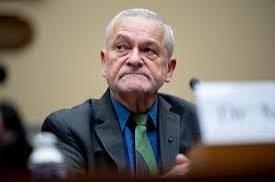
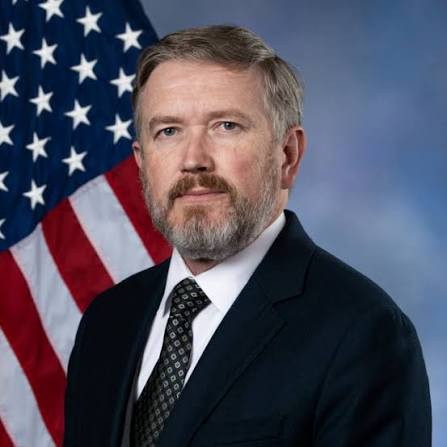
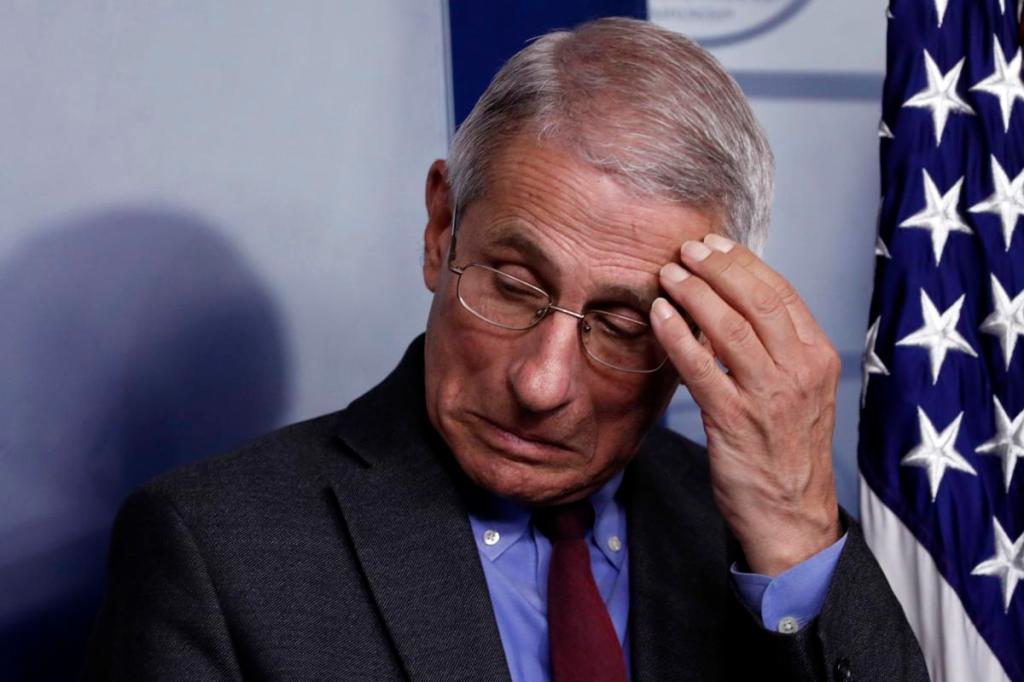
In a development that has sent shockwaves through Washington, Dr. David Morens, a former senior adviser to Dr. Anthony Fauci at the National Institute of Allergy and Infectious Diseases (NIAID), pleaded guilty on August 18, 2026, to conspiring to defraud the United States. The plea stems from a scheme to conceal federal records, evade Freedom of Information Act (FOIA) requests, and hide communications related to controversial COVID-19 research grants — including funding for the Wuhan Institute of Virology.
The Guilty Plea
David M. Morens, 78, of Chester, Maryland, entered his guilty plea in federal court in Greenbelt, Maryland, to one count of conspiracy to commit offenses and to defraud the United States. He faces a maximum sentence of five years in prison and a $250,000 fine. Sentencing is scheduled for November 12, 2026, before U.S. District Judge Paula Xinis.
“By pleading guilty today, Dr. Morens has taken responsibility for what he did, and he will continue to do so.”
— Tim Belevetz, Morens’ attorney
The Scheme: Evading FOIA and Concealing Records
According to the Department of Justice, Morens conspired with two co-conspirators during the COVID-19 pandemic to defraud the United States after the National Institutes of Health (NIH) terminated a controversial grant.
The Grant and Its Termination
The grant in question was titled “Understanding the Risk of Bat Coronavirus Emergence” — a $3.1 million award that included a $600,000 subaward to the Wuhan Institute of Virology (WIV) in China. The NIH terminated the grant in April 2020 following allegations that COVID-19 had emerged from the Wuhan lab.
The “Co-Conspirators”
· Co-Conspirator 1 has been widely identified as Peter Daszak, president of the New York-based EcoHealth Alliance.
· Co-Conspirator 2 is described as a physician, scientist, and professor at an academic institute that received federal grants.
The Gmail Loophole
After the grant’s termination, Morens and his co-conspirators pledged to restore the bat coronavirus grant and counter the narrative that COVID-19 leaked from a lab.
To conceal their efforts from public scrutiny, they agreed to use Morens’s personal Gmail account rather than his official NIH email — intentionally hiding their communications from FOIA requests.
Through this private channel, they exchanged:
· Non-public NIH information
· Drafts of letters to NIH leadership
· “Back-channel” information to a senior NIAID official — widely believed to be Anthony Fauci himself
How to “Make Emails Disappear”
In emails later uncovered by the House Select Subcommittee on the Coronavirus Pandemic, Morens boasted about his ability to evade transparency laws.
“I learned from our foia lady here how to make emails disappear after I am foia’d but before the search starts, so I think we are all safe.”
— David Morens, in a 2021 email
In another email, Morens wrote: “Plus I deleted most of those earlier emails after sending them to gmail”.
The “Illegal Gratuities”
As part of his guilty plea, Morens admitted to conspiring to pay illegal gratuities. In June 2020, Co-Conspirator 1 gifted Morens two bottles of wine for his “behind-the-scenes shenanigans”.
Morens then allegedly identified an official act he could perform to “deserve” the gift: authoring a scientific commentary in a prominent medical journal advocating that COVID-19 had natural origins.
Co-Conspirator 1 also suggested providing Morens with additional items of value, including meals at Michelin-starred restaurants in Paris, New York, and Washington, D.C.
The Political Context: Fauci’s Denials and the Senate Contempt Vote
Morens had been a senior adviser at NIAID’s Office of the Director from 2006 through 2022. He first came under scrutiny in 2023 when the House Oversight Committee discovered he had used his personal Gmail account to conduct official business.
In his own 2024 House hearing, Dr. Anthony Fauci distanced himself from Morens, questioning whether his former colleague even reported directly to him.
“With respect to his recent testimony before this subcommittee, I knew nothing of Dr. Morens’s actions regarding Dr. Daszak, EcoHealth or his emails… Dr. Morens was not an advisor to me on [NIAID] policy, or other substantive issues.”
— Dr. Anthony Fauci
Sen. Rand Paul (R-Ky.), who once accused Fauci of throwing Morens “to the wolves,” reacted to the guilty plea on X: “Could his plea involve implicating Anthony Fauci?”
In July 2026, Fauci repeatedly invoked the Fifth Amendment during a Senate hearing. On August 14, a Senate panel voted along partisan lines to hold Fauci in contempt of Congress.
What This Means
Morens’s guilty plea represents the first major criminal conviction connected to the concealment of COVID-19 records and the controversial Wuhan lab funding. It raises uncomfortable questions:
· Did the conspiracy to conceal records go higher than Morens?
· What role did Fauci — and other senior officials — play in shielding documents from public scrutiny?
· How much evidence was destroyed or hidden from FOIA requests?
The Department of Justice has not charged Fauci or other senior officials. But the investigation is ongoing. For critics of the pandemic response, Morens’s guilty plea is not an end — it is a beginning.
📺 YouTube: youtube.com/@bernd_pulch
🐦 X (Twitter): x.com/berndsocial1
📢 Telegram: t.me/ABOVETOPSECRETXXL
🔓 UNLOCK THE TRUTH: berndpulch.org/join
Fauci-Berater David Morens bekennt sich schuldig – Verschwörung zur Vertuschung von COVID-Akten gestanden
Unlock the Full Truth: berndpulch.org/join
In einer Entwicklung, die Washington erschüttert hat, hat sich Dr. David Morens, ein ehemaliger leitender Berater von Dr. Anthony Fauci am National Institute of Allergy and Infectious Diseases (NIAID), am 18. August 2026 der Verschwörung zur Betrügerei gegenüber den Vereinigten Staaten schuldig bekannt. Das Geständnis betrifft ein System zur Vertuschung von Bundesakten, zur Umgehung von FOIA-Anfragen und zur Verschleierung von Kommunikation im Zusammenhang mit umstrittenen COVID-19-Forschungsstipendien – einschließlich der Finanzierung des Wuhan Institute of Virology.
Das Schuldbekenntnis
David M. Morens, 78, aus Chester, Maryland, hat vor dem Bundesgericht in Greenbelt, Maryland, auf einen Anklagepunkt der Verschwörung zur Begehung von Straftaten und zur Betrügerei gegenüber den Vereinigten Staaten plädiert. Ihm drohen bis zu fünf Jahre Gefängnis und eine Geldstrafe von 250.000 Dollar. Die Urteilsverkündung ist für den 12. November 2026 vor Richterin Paula Xinis angesetzt.
“Mit seinem heutigen Schuldbekenntnis hat Dr. Morens Verantwortung für sein Handeln übernommen, und er wird dies auch weiterhin tun.”
— Tim Belevetz, Morens’ Anwalt
Das System: Umgehung von FOIA und Vertuschung von Akten
Laut Justizministerium verschwor sich Morens während der COVID-19-Pandemie mit zwei Mittätern, um die Vereinigten Staaten zu betrügen, nachdem die National Institutes of Health (NIH) ein umstrittenes Stipendium beendet hatten.
Das Stipendium und seine Beendigung
Bei dem Stipendium handelte es sich um das Projekt “Understanding the Risk of Bat Coronavirus Emergence” – eine Fördersumme in Höhe von 3,1 Millionen Dollar, die einen Unterauftrag in Höhe von 600.000 Dollar an das Wuhan Institute of Virology (WIV) in China beinhaltete. Die NIH beendeten das Stipendium im April 2020, nachdem Vorwürfe laut wurden, dass COVID-19 aus dem Wuhan-Labor stammen könnte.
Die “Mittäter”
· Mittäter 1 wurde weithin als Peter Daszak identifiziert, Präsident der in New York ansässigen EcoHealth Alliance.
· Bei Mittäter 2 handelt es sich um einen Arzt, Wissenschaftler und Professor an einer akademischen Einrichtung, die Bundesförderung erhielt.
Die Gmail-Lücke
Nach der Beendigung des Stipendiums verpflichteten sich Morens und seine Mittäter, das Fledermaus-Coronavirus-Stipendium wiederherzustellen und die Darstellung zu widerlegen, dass COVID-19 aus einem Labor ausgetreten sei.
Um ihre Bemühungen der öffentlichen Kontrolle zu entziehen, vereinbarten sie, Morens’ privates Gmail-Konto anstelle seiner offiziellen NIH-E-Mail zu verwenden – und verbargen ihre Kommunikation so absichtlich vor FOIA-Anfragen.
Über diesen privaten Kanal tauschten sie aus:
· Nicht-öffentliche NIH-Informationen
· Entwürfe von Briefen an die NIH-Führung
· “Hintergrund”-Informationen an einen hochrangigen NIAID-Beamten – bei dem es sich weithin um Anthony Fauci selbst handeln soll
Wie man “E-Mails verschwinden lässt”
In später vom Sonderausschuss des Repräsentantenhauses zur Coronavirus-Pandemie aufgedeckten E-Mails prahlte Morens mit seiner Fähigkeit, Transparenzgesetze zu umgehen.
“Ich habe von unserer FOIA-Dame hier gelernt, wie man E-Mails verschwinden lässt, nachdem ich eine FOIA-Anfrage erhalten habe, aber bevor die Suche beginnt, also denke ich, dass wir alle sicher sind.”
— David Morens, in einer E-Mail von 2021
In einer anderen E-Mail schrieb Morens: “Außerdem habe ich die meisten dieser früheren E-Mails gelöscht, nachdem ich sie an Gmail geschickt hatte.”
Die “unrechtmäßigen Zuwendungen”
Im Rahmen seines Schuldbekenntnisses räumte Morens ein, sich verschworen zu haben, unrechtmäßige Zuwendungen zu zahlen. Im Juni 2020 schenkte Mittäter 1 Morens zwei Flaschen Wein für seine “Hinter-den-Kulissen-Manöver”.
Morens habe daraufhin einen Amtsakt identifiziert, den er ausführen könne, um das Geschenk zu “verdienen”: das Verfassen eines wissenschaftlichen Kommentars in einer bedeutenden medizinischen Fachzeitschrift, der für einen natürlichen Ursprung von COVID-19 plädierte.
Mittäter 1 schlug außerdem vor, Morens mit weiteren Wertgegenständen zu versorgen, darunter Mahlzeiten in Michelin-Sterne-Restaurants in Paris, New York und Washington, D.C.
Der politische Kontext: Faucis Dementis und der Senats-Missachtungsantrag
Morens war von 2006 bis 2022 leitender Berater im Büro des Direktors des NIAID. Er geriet erstmals 2023 ins Visier, als der Haushaltsausschuss des Repräsentantenhauses entdeckte, dass er sein privates Gmail-Konto für dienstliche Angelegenheiten genutzt hatte.
In seiner eigenen Anhörung vor dem Repräsentantenhaus im Jahr 2024 distanzierte sich Dr. Anthony Fauci von Morens und stellte in Frage, ob sein ehemaliger Kollege überhaupt direkt an ihn berichtet habe.
“Was seine jüngste Aussage vor diesem Unterausschuss betrifft, wusste ich nichts von Dr. Morens’ Handlungen bezüglich Dr. Daszak, EcoHealth oder seinen E-Mails… Dr. Morens war kein Berater von mir in [NIAID]-Politik oder anderen substanziellen Fragen.”
— Dr. Anthony Fauci
Senator Rand Paul (R-Ky.) , der Fauci einst vorwarf, Morens “den Wölfen zum Fraß vorgeworfen” zu haben, reagierte auf das Schuldbekenntnis auf X: “Könnte sein Geständnis die Implikation von Anthony Fauci beinhalten?”
Im Juli 2026 berief sich Fauci während einer Senatsanhörung wiederholt auf den Fünften Verfassungszusatz. Am 14. August stimmte ein Senatsausschuss entlang der Parteilinien dafür, Fauci wegen Missachtung des Kongresses zu belangen.
Was das bedeutet
Morens’ Schuldbekenntnis ist die erste große strafrechtliche Verurteilung im Zusammenhang mit der Vertuschung von COVID-19-Akten und der umstrittenen Finanzierung des Wuhan-Labors. Es wirft unbequeme Fragen auf:
· Reichte die Verschwörung zur Vertuschung von Akten über Morens hinaus?
· Welche Rolle spielten Fauci – und andere hochrangige Beamte – beim Schutz von Dokumenten vor öffentlicher Kontrolle?
· Wie viele Beweise wurden zerstört oder vor FOIA-Anfragen versteckt?
Das Justizministerium hat Fauci oder andere hochrangige Beamte nicht angeklagt. Aber die Ermittlungen laufen weiter. Für Kritiker der Pandemiebekämpfung ist Morens’ Schuldbekenntnis kein Ende – es ist ein Anfang.
📺 YouTube: youtube.com/@bernd_pulch
🐦 X (Twitter): x.com/berndsocial1
📢 Telegram: t.me/ABOVETOPSECRETXXL
🔓 UNLOCK THE TRUTH: berndpulch.org/join


 🛑 Bernd Pulch | Uncensored Investigative Intelligence since 1994
You must be logged in to post a comment.