
Featured

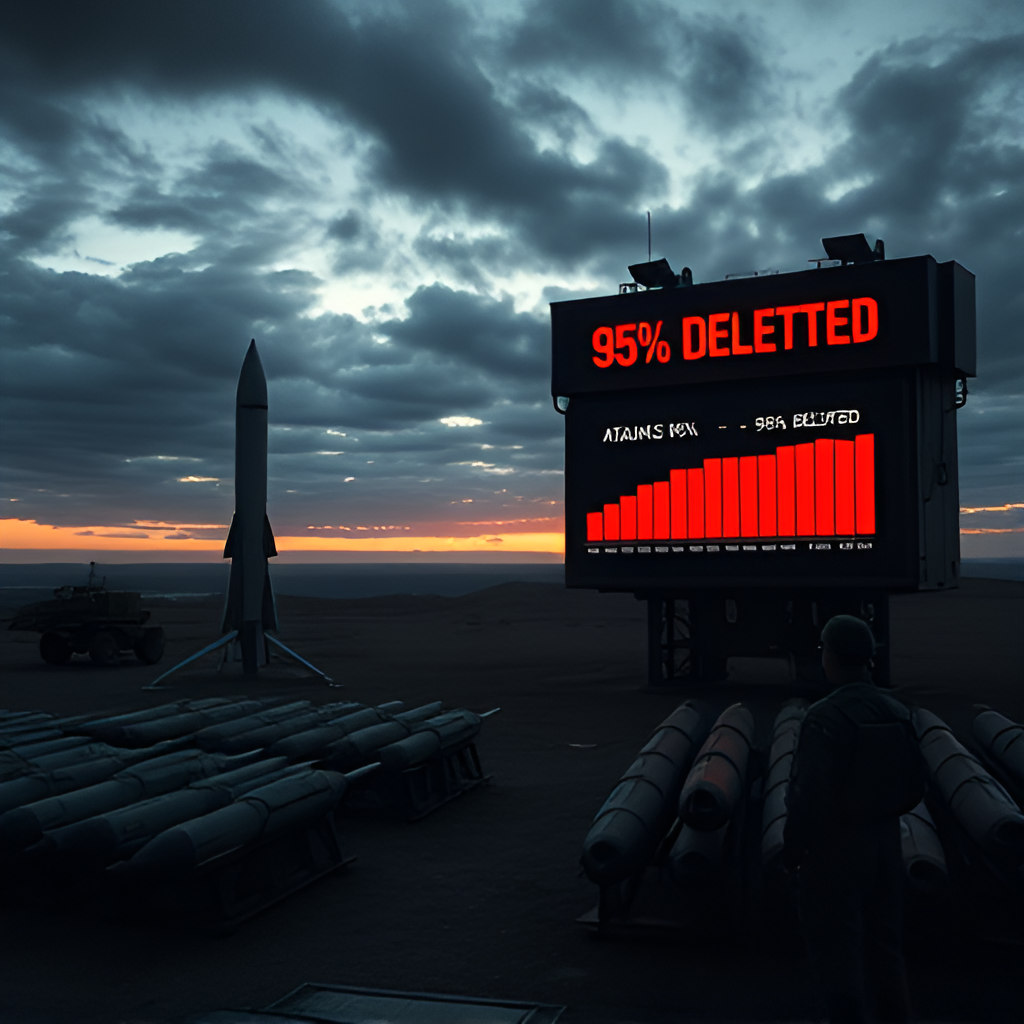
US Missile Stockpiles Severely Depleted After Five Months of Iran War – ATACMS, PrSM, Tomahawk at Critical Lows

US Missile Stockpiles Severely Depleted After Five Months of Iran War

Unlock the Full Truth: berndpulch.org/join


Five months of war with Iran have consumed virtually all U.S. stocks of long-range PrSM and ATACMS missiles and close to half the Tomahawk inventory, according to multiple sources familiar with the data. The depletion has raised serious concerns about America’s military readiness for potential future conflicts with Russia or China.


Offensive Missiles at Critical Lows

According to Reuters, which first reported the story on August 4, 2026, the U.S. Army has used “virtually all” of its available stocks of Army Tactical Missile Systems (ATACMS) and Precision Strike Missiles (PrSM). The extent of the drawdown “has not been previously reported,” according to Reuters.

ATACMS and PrSM: The Backbone of Long-Range Strikes

The Army Tactical Missile System (ATACMS) has been a workhorse of U.S. land-based precision strikes, capable of reaching targets up to 190 miles away. The newer Precision Strike Missile (PrSM), which is gradually replacing the ATACMS, offers extended range and was used for the first time in combat during the Iran conflict.

One source explained that the drawdown reflected a strategic decision by the Trump administration to avoid riskier manned aircraft bombing missions against Iranian targets. This preference for stand-off precision strikes has accelerated the consumption of these expensive munitions.

“These missiles cost over a million dollars each and are considered critically important not only for operations in the Middle East but also for a potential confrontation with China.”

Tomahawk Inventory Heavily Depleted

The strain has extended beyond the Army to the U.S. Navy. According to one source, the U.S. has expended slightly less than half of its global inventory of ship- and submarine-launched Tomahawk cruise missiles. CNN had previously reported in April that Tomahawk usage was close to 30 percent, indicating a significant escalation in consumption.


Defensive Missile Stocks Also Drained

The shortage has not been limited to offensive weapons. According to estimates by the Center for Strategic and International Studies (CSIS), from February through July, the U.S. used up approximately:

· 65% of its Patriot interceptor missiles
· At least 38% of its THAAD ballistic missile interceptors

CNN, citing multiple sources, reported that the U.S. military has used nearly 80% of its THAAD interceptors compared with pre-war levels and roughly half of its Patriot interceptors since the start of the conflict.

Military commanders had reportedly been warning President Trump for weeks that stocks of defensive systems, including Patriot interceptors, were dwindling.


Strategic Concerns and Military Readiness

The depletion of both offensive and defensive missile stocks has sparked serious concerns among U.S. officials about the military’s ability to respond to future crises.

“Sources familiar with internal discussions have expressed concern that dwindling supplies of long-range precision weapons could affect the United States’ ability to respond to future crises involving adversaries such as China or Russia.”

One of the sources told Reuters that falling missile supplies could limit the U.S. ability to deter other adversaries, including Russia and China. Another source noted that while U.S. Central Command has nearly used up the land-based missiles it had before the war began, it has been able to reload from U.S. military supplies elsewhere in the world.

THAAD and Patriot: A Defensive Vulnerability

The drawdown of THAAD and Patriot interceptors is particularly concerning. These systems are critical for defending against incoming ballistic missiles and attack drones. The significant depletion—nearly 80% of THAAD and roughly half of Patriot—suggests that the U.S. may have limited capacity to defend against future missile attacks on its forces or allies.

Stockpile data has circulated within the federal government during discussions over how long Washington could continue military operations against Iran without reducing inventories to levels that could affect broader military readiness. These concerns were reportedly among the factors that influenced Trump’s decision not to proceed with another round of large-scale strikes against Iran over the weekend.


Administration’s Response

President Donald Trump has sought to downplay concerns about the depleted stockpiles, insisting that the U.S. possesses “far more munitions than anyone in the world” and “far more than we need”.

“Our defense companies are, at this moment, making more munitions than they have ever made before, in addition to expanding their plants and equipment at record levels.”

Chief Pentagon spokesperson Sean Parnell echoed this sentiment, stating that “America’s military is the most powerful in the world” and “has everything it needs to execute at the time and place of the President’s choosing”.

Production Challenges

While analysts agree that production of artillery ammunition and some missile types has increased significantly, the newer PrSMs are in short supply because they are still being introduced into service. Lockheed Martin, which manufactures ATACMS, PrSM, and THAAD, and Raytheon, which produces Tomahawk and Patriot interceptors, did not respond to queries about stockpile levels.

The PrSM program is ramping up production, with the Army expecting to see production increase to 400 by the fourth quarter of fiscal 2027 and into 2028. However, analysts caution that supplies might fall short of what is needed for a prolonged war.


What This Means

The depletion of U.S. missile stockpiles after just five months of war with Iran raises fundamental questions about America’s ability to fight a prolonged high-intensity conflict. If a short campaign against a regional power can consume virtually all of the U.S. inventory of key long-range precision missiles, what would a conflict with China or Russia look like?

The answers are not reassuring. For now, the U.S. military is relying on a combination of increased production, drawdowns from global reserves, and the Trump administration’s calculated risk that the war with Iran will not escalate further. But as one source told Reuters, the falling missile supplies could limit the U.S. ability to deter adversaries, including Russia and China.


📺 YouTube: youtube.com/@bernd_pulch
🐦 X (Twitter): x.com/berndsocial1
📢 Telegram: t.me/ABOVETOPSECRETXXL
🔓 UNLOCK THE TRUTH: berndpulch.org/join

US-Raketenbestände nach fünf Monaten Iran-Krieg stark dezimiert

Unlock the Full Truth: berndpulch.org/join


Fünf Monate Krieg mit dem Iran haben die US-Bestände an weitreichenden PrSM- und ATACMS-Raketen nahezu vollständig aufgebraucht und fast die Hälfte des Tomahawk- Inventars verbraucht, wie mehrere mit den Daten vertraute Quellen berichten. Die Dezimierung hat ernste Bedenken hinsichtlich der militärischen Einsatzbereitschaft der USA für mögliche zukünftige Konflikte mit Russland oder China geweckt.


Angriffsraketen auf kritischem Tiefstand

Laut Reuters, das die Geschichte erstmals am 4. August 2026 berichtete, hat die US-Armee “so gut wie alle” ihrer verfügbaren Bestände an Army Tactical Missile Systems (ATACMS) und Precision Strike Missiles (PrSM) aufgebraucht. Das Ausmaß des Abbaus sei “bisher nicht berichtet worden”, so Reuters【1†L5-L7】.

ATACMS und PrSM: Das Rückgrat der weitreichenden Angriffe

Das Army Tactical Missile System (ATACMS) ist seit langem das Rückgrat der landgestützten Präzisionsschläge der USA und kann Ziele in einer Entfernung von bis zu 190 Meilen treffen. Die neuere Precision Strike Missile (PrSM), die die ATACMS allmählich ersetzt, bietet eine größere Reichweite und wurde während des Iran-Konflikts erstmals im Kampf eingesetzt.

Eine Quelle erklärte, dass der Abbau eine strategische Entscheidung der Trump-Administration widerspiegele, riskante Bombeneinsätze mit bemannten Flugzeugen gegen iranische Ziele zu vermeiden. Diese Präferenz für weitreichende Präzisionsschläge hat den Verbrauch dieser teuren Munition beschleunigt.

“Diese Raketen kosten über eine Million Dollar pro Stück und gelten nicht nur für Operationen im Nahen Osten, sondern auch für eine mögliche Konfrontation mit China als kritisch wichtig.”

Tomahawk-Bestand stark reduziert

Die Belastung hat sich über die Armee hinaus auch auf die US-Marine erstreckt. Einer Quelle zufolge haben die USA etwas weniger als die Hälfte ihres globalen Bestands an schiffs- und U-Boot-gestützten Tomahawk-Marschflugkörpern verbraucht. CNN hatte bereits im April berichtet, dass der Tomahawk-Verbrauch bei fast 30 Prozent lag, was auf eine erhebliche Eskalation des Verbrauchs hindeutet.


Auch Bestände an Abwehrraketen geschrumpft

Der Mangel beschränkt sich nicht auf Angriffswaffen. Nach Schätzungen des Center for Strategic and International Studies (CSIS) wurden von Februar bis Juli etwa 65 Prozent der Patriot-Abfangraketen und mindestens 38 Prozent der THAAD-Raketen verbraucht【1†L19】.

CNN berichtete unter Berufung auf mehrere Quellen, dass das US-Militär seit Beginn des Konflikts fast 80 Prozent seiner THAAD-Abfangraketen und etwa die Hälfte seiner Patriot-Abfangraketen eingesetzt hat. Militärkommandeure hatten Präsident Trump Berichten zufolge seit Wochen davor gewarnt, dass die Bestände an Abwehrsystemen, einschließlich der Patriot-Abfangraketen, zur Neige gingen.


Strategische Bedenken und militärische Einsatzbereitschaft

Die Dezimierung der Bestände an Angriffs- und Abwehrraketen hat bei US-Beamten ernste Bedenken hinsichtlich der Fähigkeit des Militärs ausgelöst, auf künftige Krisen zu reagieren.

“Mit den Vorgängen vertraute Quellen haben Bedenken geäußert, dass die schwindenden Vorräte an weitreichenden Präzisionswaffen die Fähigkeit der Vereinigten Staaten beeinträchtigen könnten, auf künftige Krisen mit Gegnern wie China oder Russland zu reagieren.”

Eine der Quellen sagte Reuters, dass die sinkenden Raketenbestände die Fähigkeit der USA einschränken könnten, andere Gegner, darunter Russland und China, abzuschrecken【1†L20】. Eine andere Quelle merkte an, dass das US-Zentralkommando zwar die landgestützten Raketen, die es vor Kriegsbeginn hatte, fast aufgebraucht habe, aber aus US-Militärbeständen in anderen Teilen der Welt nachladen könne.

THAAD und Patriot: Eine defensive Verwundbarkeit

Die Dezimierung der THAAD- und Patriot-Abfangraketen ist besonders besorgniserregend. Diese Systeme sind für die Abwehr eingehender ballistischer Raketen und angreifender Drohnen von entscheidender Bedeutung. Der erhebliche Abbau – fast 80 Prozent der THAAD- und etwa die Hälfte der Patriot-Raketen – deutet darauf hin, dass die USA nur über eine begrenzte Kapazität verfügen könnten, um sich gegen künftige Raketenangriffe auf ihre Streitkräfte oder Verbündete zu verteidigen.

Die Lagerbestandsdaten kursierten innerhalb der Bundesregierung bei Gesprächen darüber, wie lange Washington die Militäroperationen gegen den Iran fortsetzen könne, ohne die Bestände auf ein Niveau zu reduzieren, das die allgemeine militärische Einsatzbereitschaft beeinträchtigen könnte. Diese Bedenken gehörten Berichten zufolge zu den Faktoren, die Trumps Entscheidung beeinflussten, am Wochenende keine weitere Runde groß angelegter Angriffe gegen den Iran durchzuführen.


Reaktion der Regierung

Präsident Donald Trump hat versucht, die Bedenken hinsichtlich der dezimierten Bestände herunterzuspielen, und betont, dass die USA “weit mehr Munition als jedes andere Land der Welt” und “weit mehr als wir brauchen” besäßen.

“Unsere Rüstungsunternehmen stellen derzeit mehr Munition her als je zuvor und erweitern gleichzeitig ihre Werke und Anlagen in Rekordzeit.”

Der Chefsprecher des Pentagons, Sean Parnell, bekräftigte diese Ansicht und erklärte, dass “Amerikas Militär das mächtigste der Welt ist” und “alles hat, was es braucht, um zur Zeit und am Ort der Wahl des Präsidenten zu handeln”.

Produktionsherausforderungen

Experten sind sich zwar einig, dass die Produktion von Artilleriemunition und einiger Raketentypen erheblich gestiegen ist, doch die neueren PrSM sind knapp, da sie sich noch in der Einführungsphase befinden. Lockheed Martin, das ATACMS, PrSM und THAAD herstellt, und Raytheon, das Tomahawk und Patriot-Abfangraketen produziert, haben nicht auf Anfragen zum Bestandsstand geantwortet.

Das PrSM-Programm wird hochgefahren, und die Armee erwartet, dass die Produktion bis zum vierten Quartal des Geschäftsjahres 2027 und 2028 auf 400 Stück ansteigen wird. Analysten warnen jedoch, dass die Lieferungen für einen längeren Krieg möglicherweise nicht ausreichen.


Was das bedeutet

Die Dezimierung der US-Raketenbestände nach nur fünf Monaten Krieg mit dem Iran wirft grundlegende Fragen zur Fähigkeit Amerikas auf, einen länger andauernden hochintensiven Konflikt zu führen. Wenn ein kurzer Feldzug gegen eine Regionalmacht praktisch den gesamten US-Bestand an wichtigen weitreichenden Präzisionsraketen aufbrauchen kann, wie würde dann ein Konflikt mit China oder Russland aussehen?

Die Antworten sind nicht beruhigend. Das US-Militär verlässt sich derzeit auf eine Kombination aus erhöhter Produktion, Abrufen aus globalen Reserven und der von der Trump-Administration eingegangenen kalkulierten Risikobereitschaft, dass der Krieg mit dem Iran nicht eskalieren wird. Aber wie eine Quelle Reuters sagte, könnten die sinkenden Raketenbestände die Fähigkeit der USA einschränken, Gegner, einschließlich Russland und China, abzuschrecken.


📺 YouTube: youtube.com/@bernd_pulch
🐦 X (Twitter): x.com/berndsocial1
📢 Telegram: t.me/ABOVETOPSECRETXXL
🔓 UNLOCK THE TRUTH: berndpulch.org/join
U.S. Army Report About North Korea – TOP SECRET

Become a Patron!
True Information is the most valuable resource and we ask you to give back.

Executive Summary

A North Korean regular infantry division is the most likely type of division a US unit would face on the Korean peninsula. While the Korean People’s Army (KPA) fields armor and mechanized units, the number of regular infantry units far exceeds the other types (pg 3).
KPA offensive operations include the heavy use of artillery with chemical munitions; a primary focus of attacks on combat support (CS), combat service support (CSS), and command and control (C2) units; and deep operations conducted by KPA special-purpose forces (SPF) (pgs 3–4, 11–16, 21–23).
KPA defensive operations focus on the elimination of enemy armor through the heavy use of artillery; battalion, regiment, and division antitank kill zones; and the use of counterattack forces at all levels above battalion-sized units (pgs 16–19, 23–26).
While US forces will face KPA conventional infantry to their front, KPA SPF will initiate offensive operations in the US/South Korean rear areas to create a “second front” (pgs 15–16).
KPA regular forces and SPF will remain in place to conduct stay-behind annihilation ambushes on CS, CSS, and C2 units passing through the passed unit’s area of operations (pg 25).
The KPA divisions are already prepared to fight US and Republic of Korea (ROK) forces today. The vehicles and equipment may be different in the future, but their tactics and techniques will be similar to those used today (pgs 10–26).
Since 2003, the KPA has created seven divisions that are specialized to operate in urban and mountain terrain using irregular warfare techniques. It is expected that the KPA will use several techniques deemed successful in Afghanistan and Iraq against US/ROK forces (pg 20).
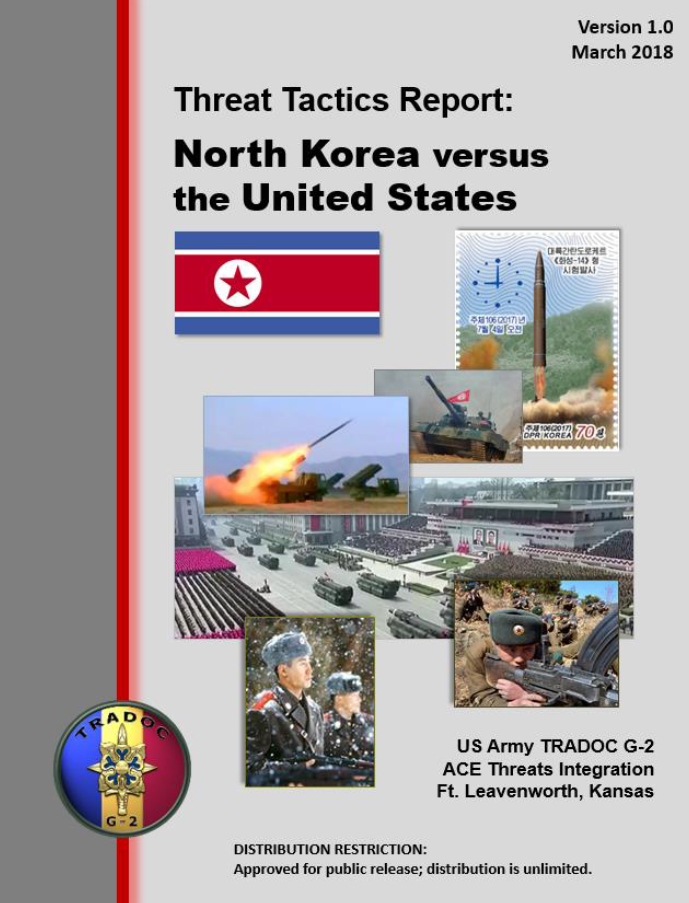
TRADOC G-2 ACE Threats Integration (ACE-TI) is the source of the threat tactics series of products. The Threat Tactics Report: North Korea versus the United States (US) and the other similar products serve to describe the foreign nation’s most common combat division with an order of battle, its offensive and defensive doctrine as articulated in its manuals or recent military actions, and an analysis of how this actor would fight if facing the US in the future.

This document is intended primarily for US Army training organizations, but will be applicable across the wider community of US Army Combatant Commands, Army Service Component Commands, and allied partners.

North Korean Infantry Division Major Weapon Systems

The KPA uses a variety of primarily Tier 2, 3, and 4 equipment in its units, as it rarely disposes of any weapons. The best units receive new(er) weapons and their systems are then cascaded through the lower-quality units. Some of the KPA’s weapons and vehicles date back to World War II. Units will attempt to field the same type of weapon systems to reduce logistical issues. The following are some of the major weapons found in a KPA infantry division or infantry regiment.

The KPA prefers the offense over the defense and will stay on the defensive only until it can gather the strength to attack again. The KPA will attempt to avoid US/ROK combat units and will attempt to attack CS, CSS, and C2 units and vulnerable high-value targets in the rear areas in order to reduce the effectiveness of the US/ROK combat units. With assistance in creating a second front via the KPA SPF making these attacks in the US/ROK rear areas, the KPA believes the US/ROK combat units will become combat ineffective, making them vulnerable to KPA follow-on forces.

When forced to go on the defensive the KPA will concentrate its efforts in eliminating its enemy’s tanks. Any units bypassed by enemy forces are directed to continue to fight as a unit or, if the unit becomes combat ineffective, the soldiers are expected by their leaders to continue resistance by conducting irregular warfare operations against any enemy units in their area. Prepared UGFs exist throughout North Korea, especially within 50 miles of the DMZ. If forced on the defensive in these areas, the KPA will fight from these previously prepared positions.

US/ROK units will face intense indirect fire including chemical munitions, conventional KPA units to their front, and SPF elements in their rear areas. US/ROK units will need to simultaneously defeat the KPA divisions attacking their combat units, while defending all units from KPA SPF or stay-behind forces in their rear areas.

← Back

Thank you for your response. ✨

Unveiled – Counter-Da’esh Influence Operations Cognitive Space Narrative Simulation Insights

Become a Patron!
True Information is the most valuable resource and we ask you to give back.

Counter-Da’esh Influence Operations Cognitive Space Narrative Simulation Insights

Page Count: 69 pages
Date: May 2016
Restriction: None
Originating Organization: Joint Staff J39
File Type: pdf
File Size: 3,665,757 bytes
File Hash (SHA-256):D7EC7D64E98A8B16FBA01D8D46A3AE74CC83DB19378C9EC6C6D5D3F23AAB18E4

Download File

When planning to deal with any adversary or potential adversaries, it is essential to understand who they are, how they function, their strengths and vulnerabilities, and why they oppose us. Events over the course of the last year and a half highlight the importance of those factors as they relate to the Islamic State of Iraq and the Levant (ISIL or Da’esh). One of Da’esh’s obvious strengths is its ability to propagate tailored messages that resonate with its audiences. If the US Government and our allies are to counter Da’esh effectively, we must attack this center of gravity.

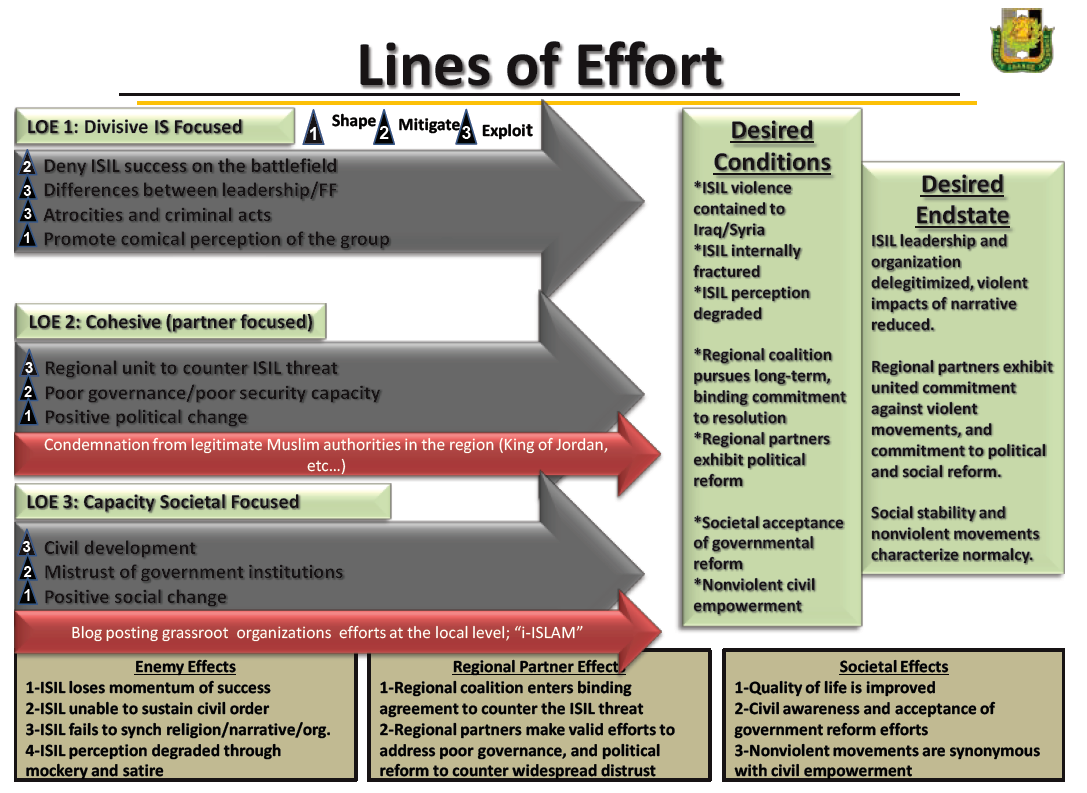
The Joint Staff J-39 Strategic Multilayer Assessment (SMA) branch has been evaluating options in “Cognitive Space” to conduct Information Operations to disrupt Da’esh’s ability to command and control forces, neutralize its ability to maintain or increase moral, political, and financial support as well as recruit foreign fighters. This SMA effort continues to identify methods to psychologically isolate Da’esh leaders from one another and their respective constituencies inside and outside of the organization. Furthermore, this SMA effort has been assessing the value of “integrated neuro-cognitive-narrative maneuver” approaches to develop messages and actions that are more likely to have intended effects and less likely to have undesirable unintended or collateral effects, as well as to evaluate message delivery methods more effectively and efficiently by developing campaigns that achieve undercutting effects.

The cornerstone of the effort was the execution of a simulation facilitated by the University of Maryland ICONS team, which sought to

a. support the Psychological Operations (PSYOP) community in meeting training requirements in ways that reinforce the PSYOP process and enhance counter-Da’esh messaging.

b. support the PSYOP community in integrating neuro-cognitive and social science concepts to refine counter-Da’esh message content and increase the effectiveness of the Information Operations (IO) campaign.

c. assist the PSYOP community with understanding the operational environment (OE) and the human networks operating in the OE: friendly, threat, and neutral. Possible examples include providing a (Political, Military, Economic, Social, Information, and Infrastructure) PMESII-framed OE analysis and center of gravity analysis.

This white paper is a compilation of the key findings from the simulation.

countering-isil

← Back

Thank you for your response. ✨

Simulation Theory, Simulation Games, Simulation Definition, Simulationcraft, Simulation Hypothesis, Simulation Math Definition, Simulation Software, Simulation Synonym, Simulation Meaning, Simulation Games Pc, Simulation And Simulacra, Simulation Argument, Simulation Analysis, Simulation Apps, Simulation And Modeling, Simulation Ammo, Simulation Avenged Sevenfold, Simulation And Simulacra Pdf, Simulation Activities, Simulation And Gaming, Simulation Based Learning, Simulation Baby, Simulation Bullets, Simulation Based Optimization, Simulation Browser Games, Simulation Baudrillard, Simulation Based Training, Simulation Baseball Games, Simulation Book, Simulation Biology, Simulationcraft, Simulation Center, Simulation Curriculum, Simulation Conference 2017, Simulationcraft 7.2, Simulationcraft Addon, Simulation Certification, Simulation Core, Simulation Conference, Simulation Calculator, Simulation Definition, Simulation Definition Math, Simulation Definition Statistics, Simulation Debriefing, Simulation Def, Simulation Debriefing Safe, Simulation Deck, Simulation Data, Simulation Design, Simulation Design Scale, Simulation Examples, Simulation Engineer, Simulation Education, Simulation Excel, Simulation Experiment, Simulation Elon Musk, Simulation Exercise, Simulation Energy Changes In Chemical Reactions, Simulation Exams, Simulation Environment, Simulation Fellowship, Simulation Flash Games, Simulation Football League, Simulation Forecasting, Simulation For Radiation, Simulation Framework, Simulation Fidelity, Simulation Football, Simulation Flight, Simulation Finance, Simulation Games, Simulation Games Pc, Simulation Games For Ps4, Simulation Games Unblocked, Simulation Games For Xbox One, Simulation Games 2017, Simulation Games For Mac, Simulation Games For Iphone, Simulation Games For Android, Simulation Game Definition, Simulation Hypothesis, Simulation Heuristic, Simulation Hypothesis Proof, Simulation Heuristic Example, Simulation Hypothesis Reddit, Simulation Hockey League, Simulation Healthcare, Simulation Hypothesis Documentary, Simulation Hospital, Simulation Hub, Simulation In Healthcare, Simulation In Nursing Education, Simulation In Math, Simulation In R, Simulation Inside A Simulation, Simulation In Statistics, Simulation Icon, Simulation In Excel, Simulation In Spanish, Simulation Iq, Simulation Jobs, Simulation Journal, Simulation Jobs Orlando, Simulation Java, Simulation Jean Baudrillard, Simulation Job Manager, Simulation Journals Impact Factor, Simulation Jobs In Michigan, Simulation Job Games, Simulation Job 9 Report Sheet, Simulation Khan Academy, Simulation Kernel, Simulation Kya Hai, Simulation Ks2, Simulation Kelton, Simulation Kannada Meaning, Simulation Kya H, Simulation Keyboard, Simulation Knowledge Management, Simulation Kit, Simulation Lab, Simulation Lyrics, Simulation Learning, Simulation Lag Fix, Simulation Life Games, Simulation Learning System, Simulation Learning System For Rn 2.0, Simulation Learning System For Medical-surgical Nursing, Simulation Life, Simulation Languages, Simulation Math Definition, Simulation Meaning, Simulation Math, Simulation Model, Simulation Modeling And Analysis, Simulation Mannequin, Simulation Mechanical, Simulation Manikins, Simulation Math Example, Simulation Modelling Practice And Theory, Simulation Nursing, Simulation Nursing Education, Simulation Nation, Simulation Natural Selection, Simulation News, Simulation Network, Simulation Nuke, Simulation Neil Degrasse Tyson, Simulation New Yorker, Simulation Nfl, Simulation Optimization, Simulation Online Games, Simulation Override, Simulation Online, Simulation Of Urban Mobility, Simulation Of The Universe, Simulation Of Birth, Simulation Of Natural Selection, Simulation Operations Specialist, Simulation Of Nuclear War, Simulation Pc Games, Simulation Plus, Simulation Probability, Simulation Program, Simulation Ps4 Games, Simulation Paper, Simulation Pretext Fiction, Simulation Problems, Simulation Project, Simulation Protocol, Simulation Questions, Simulation Quotes, Simulation Quizlet, Simulation Quiz 2, Simulation Quiz, Simulation Questions Security+, Simulation Questions And Answers, Simulation Questions Cpa Exam, Simulation Quantum Mechanics, Simulation Quiz 1, Simulation Rounds, Simulation Rick And Morty, Simulation Rides, Simulation Results, Simulation Research, Simulation Rpg, Simulation Racing Games, Simulated Reality, Simulation Reddit, Simulation Racing, Simulation Software, Simulation Synonym, Simulation Statistics, Simulation Sickness, Simulation Study, Simulation Shoes, Simulation Software Free, Simulation Simulacra, Simulation Scenarios, Simulation Software Definition, Simulation Theory, Simulation Theory Reddit, Simulation Training, Simulation Theory Elon Musk, Simulation Trading, Simulation Technology, Simulation Test, Simulation Tools, Simulation Technician, Simulation Theory Proof, Simulation Universe, Simulation User Network, Simulation Using Excel, Simulation User Network 2017, Simulation Using R, Simulation Using Promodel, Simulation Using Matlab, Simulation Using Python, Simulation Used To Produce An Aggregate Plan, Simulation Using Promodel Pdf, Simulation Vs Emulation, Simulation Video Games, Simulation Vs Experiment, Simulation Video, Simulation Vs Simulation, Simulation Validation, Simulation Vs Optimization, Simulation Vs Model, Simulation And Simulacra, Simulation Vs Default Nba 2k17, Simulation With Arena, Simulation Wow, Simulation With Arena 6th Edition, Simulation Websites, Simulation World, Simulation Within A Simulation, Simulation War Games, Simulation Wave On A String, Simulation Wiki, Simulation With Arena 5th Edition Pdf, Simulation X, Simulation Xbox One Games, Simulationxpress, Simulation Xbox One, Simulation Xbox 360 Games, Simulation Xilinx, Simulationxpress Product Code, Simulationxpress Code, Simulation X Tutorial, Simulation X Download, Simulation Youtube, Simulation You Are A Police Officer, Simulation You Are A Mayor, Simulation You Are Head Of Fema, Simulation You Are A Voter, Simulation You Are A Consumer Advocate (Quiz), Simulation You Are A Lobbyist (Quiz), Simulation You Are A First Term President, Simulation You Are A Polling Consultant, Simulation You Are A Voter Quiz, Simulation Zitouna, Simulation Zombie, Simulation Zombie Apocalypse, Simulation Zertifikat B1, Simulation Zombie Infection, Simulation Zombie Games, Simulation Zoom, Simulation Zero Gravity, Simulation Zertifikat B1 Schreiben, Simulation Zynq

November 1945 Germans hanged for Murder

Five Germans hanged by U.S Army, November 10, 1945 for killing 6 American pilots and airmen in the town of Rüsselsheim in 1944 (Case No. 12-1497 (US vs. Josef Hartgen et al) Tried 31 July 45). Hanging of Johann Opper, Friedrich Wüst & Josef Hartgen