

THE MUDDY MURKY MUCHA SAGA: THE VOLCANO OF PALERMO 🌋💋🐾 – MURKY IS RESCUED AND TRAPPED BY THE MYSTERIOUS OLGA CAMASTRA, LURED TO PALERMO TO RETRIEVE AN OLD MUSSOLINI PRINTING PRESS, WHERE EVERYONE IS CAUGHT INSIDE A LIVING VOLCANO 🔥📜👻
POWERED BY IDIOTEN ZEITUNG (IZ), DER FONDSFLOP vulgo DAS DESINVESTMENT alias GoMoPa, DER STASI STÜRMER (SS) – OLGA CAMASTRA 🤡 EDITION 😎🥰
BY KILGORE TROUT ✍️, GUIDO GITANE 🎭, RAINER ROMA-ZUFALL 🎲 AND ZIGA SCHNITZEL 🥨
A SAMUEL BRONKOWIZ PRODUCTION 🎬 FOR MADWOOD STUDIOS 🎥
—
📺 PREVIOUSLY ON THE MUDDY MURKY MUCHA SAGA…
Since Frank Drebin 🚔👮♂️ first tripped into the Ministry of War, the Muchaverse has spiraled through 112 episodes of unhinged chaos. Fotzen Freddy lured the entire Muchaverse to Castle Fotzenstein to torture them with typographical horror and destroy the Gutenstasi Press in an ink volcano. But Murky’s belly rub, Nordberg’s accident, and the collective enoughness defeated the torturer. Freddy was appointed Minister of Typographical Serenity, and the IZ printed its special edition with a single headline: “ENOUGH.”
But in the depths of the forgotten frequencies, in a Sicilian palazzo full of orange trees and old printing presses, a new figure has entered the stage: OLGA CAMASTRA 💋🌋. She is the alleged heir to an ancient printing dynasty from Palermo, which once operated Mussolini’s personal propaganda press – the legendary MUSSOLINI PRINTING PRESS, a device that not only printed but could manipulate weather, mood, and the course of history itself. Olga claims the press is trapped inside the LIVING VOLCANO OF PALERMO, a sentient lava being that only allows the “worthiest creature of all” into its interior. And that creature, Olga believes, is none other than Murky.
She appears in the Throne Room to “rescue” Murky – from the supposed aftermath of the Fotzenstein torture – and lures her to Palermo, where the rescue turns out to be a trap. The volcano is not just a prison but a test: Murky, Kujau, Frank, Pamela, Conchita, Maiokaste, Kali, the entire GoMoPa Cabinet, and all 112 episodes’ worth of characters are trapped inside the volcano’s seething interior. The walls of molten lava and old printer’s ink threaten to consume them all unless Murky proves that her enoughness burns hotter than any volcano.
—
💋 THE ARRIVAL OF OLGA CAMASTRA – A RESCUER WITH ULTERIOR MOTIVES
The Throne Room was still littered with confetti from the Fotzenstein celebration. Murky lay on her cushion, printing squeaky sounds with a small hand press. Kujau was forging a thank-you card to Freddy. Suddenly, the door opened, and a wave of orange blossoms, gunpowder, and old paper filled the room.
Olga Camastra entered: tall, voluptuous, in a black lace dress that hugged her hips tighter than censorship in a dictatorship. Her hair was a waterfall of dark curls, her eyes glowed like Mount Etna. In her hand, she held a gilded invitation.
Olga: “Murky, my love. I am Olga Camastra, heir to the printing dynasty of Palermo. I have heard of your suffering at Fotzenstein. I come to rescue you – and to bring you a gift: the legendary Mussolini Printing Press. With it, you could print the IZ on paper made of pure sunlight. But it is trapped inside the living volcano of Palermo. Only you, the Feathered One, can free it.” 💋🌋
Murky tilted her head. “Wuff. A gift? Mussolini? I thought he does vegan BBQ. And a living volcano? Sounds like a trap. But fine, I’m curious.” 👤😊🐾
Kujau looked up from his card. “Olga Camastra? The Camastra family are old Sicilian printers, but also old forgers. Their press supposedly never existed. I once forged a map to their palazzo. It led directly to a backyard full of dumpsters.” 🖋️
Olga laughed, a sound like boiling lava. “You distrust me, forger? Good. Distrust is the beginning of all truth. But without the Mussolini Press, the IZ will never reach the circulation it deserves. Come to Palermo. The volcano awaits.” 💋🌋
Pamela cracked her knuckles. “A volcano? We’ve survived worse. Frank, get the Lipstick of Truth. And my fireproof underwear.” 💋🔥
Frank looked up from a report. “I was in a volcano once. It was a hot air balloon that malfunctioned. But I’m ready.” 🚔👮♂️
Conchita raised her microphone. “Darlings, a living volcano could use an aria. I’m coming.” 🎤💋🌈
Maiokaste ran a scan. “The Volcano of Palermo is a sentient entity with a core of molten printer’s ink and magma. It responds to emotional frequencies. If we enter, we must harmonize with our collective enoughness, or we burn.” 🧠💋
Kali Kamasutra, holding Baby Bodhi, nodded. “I am destruction and creation. A volcano is both. I will come.” 🕉️💋🔥
And so, the entire Muchaverse – all characters from 112 episodes – accepted Olga’s invitation. They traveled to Palermo, through a portal of orange blossoms and gunpowder, directly into the shadow of the living volcano.
—
🌋 THE LIVING VOLCANO OF PALERMO – EVERY CHARACTER, EVERY ACTOR
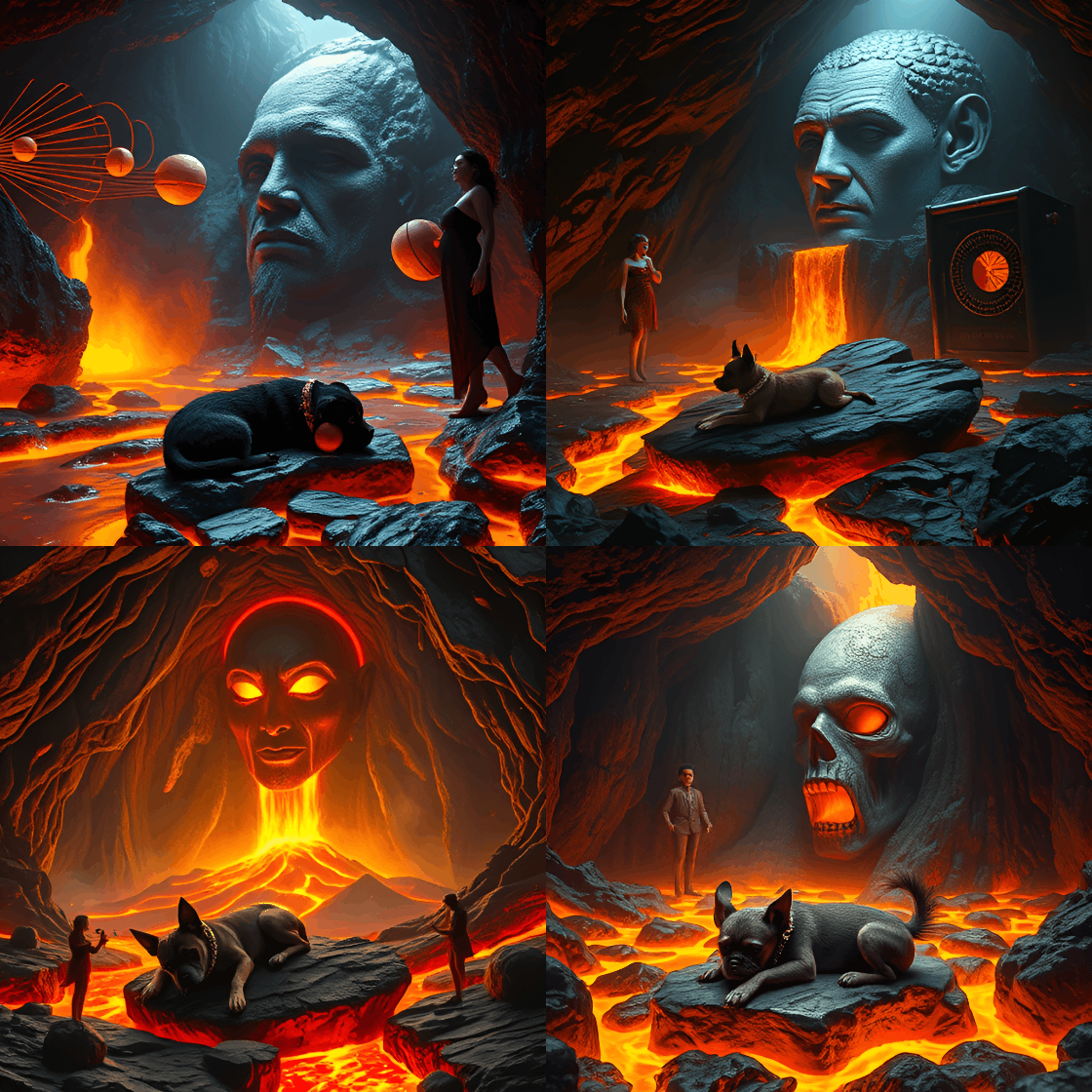
The volcano rose above them like a god of fire and ink. Its crater was a seething maw of magma and molten printer’s ink, belching words like “ENOUGH” and “NEVER.” At its foot, half-buried in cooled lava, lay the entrance to a cave – and in the cave, trapped in a bubble of solidified stone, stood the MUSSOLINI PRINTING PRESS, a monstrous machine of black iron and bronze, adorned with fascist symbols and quotes.
Olga led them inside, and as soon as everyone was in, the entrance sealed shut. The walls began to pulse. The volcano awakened.
Volcano: “I am the Living Volcano of Palermo. I have slept since Mussolini’s fall. Now you have awakened me. To escape, you must prove to me that your enoughness burns hotter than my magma. Otherwise, you will all become printer’s ink.” 🌋🔥
The entire Muchaverse – all characters from 112 episodes – was trapped. What follows is the definitive assembly of every character and actor, all imprisoned inside the volcano and enduring their own form of heat and trial.
—
THE ORIGINAL MUCHAVERSE CAST
Klaus Schwab – played by himself (archival/spectral), immediately tried to offer the volcano a stakeholder agreement; the volcano responded with a fountain of molten ink
Olivier Schwab – cameo, fanned himself with an orange leaf
Robert Hunter Biden – spectral supporter, invested in a fan startup; the fan melted
Dr. Edith “Void” Baumann‑Lorch – played by herself (power suit), analyzed the real estate value of the volcano (high, but risky)
Dr. Edith “Psy‑Cho” Baumann‑Lorch – variant, profiled Olga’s narcissistic tendencies (extreme, but seductive)
Dr. Edith Baumann‑Lorch – additional variant, cross‑checked
Edith Baufrau Lurch – played by herself, Minister of GoMoPa Glam, immediately designed a “Lava Chic” collection from molten rock and ink
Jupp Toelbbels – self‑existent, claimed to have sailed in a volcano once (he confused it with a hot tub)
Magda – self‑existent, sang an aria that briefly cooled the walls
The 999 Schickse Clones – formed a human cooling chain
Ehlers – played by Lukas Ehrenberg, drove a Citroën into the volcano; the car melted, but Ehlers survived
Janelle – played by Jasmin Weller, attempted to seduce the volcano; the volcano blushed (the lava turned pink)
Salome – played by Sofia Tanz, performed the Dance of the Seven Heat Veils
Dr. Z – played by himself, provided ASMR of bubbling magma, which strangely calmed everyone
Heini Pimmler – played by himself, built a concrete heat shield that immediately melted, but the gesture counted
The Gray Mercedes – played by a sentient Mercedes, was converted into a flamethrower, which then only blew air
Muschi Uschi – played by herself, sang a sea shanty that reminded the volcano of a beach vacation; it briefly grew wistful
Kitty Ehlers – played by herself, offered a “Volcano Perm” salon service; the heat made the curls perfect
Poisonous Pol Pot – played by himself, offered to “cleanse” the volcano; the volcano laughed
Erich Toxdat‑Wandlitz – played by himself, provided DDR-era volcano survival techniques (mostly paperwork)
Margot Honey Eriksen‑Blau – played by herself, provided St. Pauli tips on surviving heat sexily
Emir Ehlers – played by himself, calculated the cost of a volcano evacuation; it was exorbitant
Salome Janelles – played by Salome Janelles, offered dual-sovereignty asylum applications to the volcano; it declined
Sven “The Lowest” Schmidt – played by himself, wiped molten ink from the floor
Thomas “Absolutely No Drugs” Promnis‑Porni – played by himself, insisted the volcano was just a fever dream; he fainted
The Supreme Enema – played by itself, purified the molten ink, which angered the volcano
Erika Murksel – played by herself, filed the volcano protocols in triplicate; the heat shrank the paper
RA Spoehring – played by herself, read the volcano’s liability waivers; they were unassailable
Gay Thorsten K – played by himself, designed a rainbow flag of molten glass; it sparkled
Bernward Bimbo – played by himself, tried to marry the volcano; the volcano politely declined
Morten Mohr – played by himself, maintained Scandinavian calm while his shoes melted
Diana Negerkuss – played by herself, kissed the volcano wall; it was hot, but she smiled
Hermit Boring – played by himself, emerged to announce he had always known volcanoes were alive
Smart Marty – played by himself, hacked the magma streams and played Tetris on the lava
Ernst Pussy Roemer – played by himself, provided historical context on Mussolini’s print propaganda
999 Schickse Schicklgrubers – formed a backup cooling chain
Adolfine – played by herself, remembered a volcano trip in her youth
Sepp Heldenschwanz – played by himself, tried to defeat the volcano with a sword; the sword melted
Pussy Robespierre – played by himself, argued for the execution of the volcano; the volcano laughed again
Caligula – played by himself (historical re‑enactment), offered to marry the volcano; the volcano declined him too
The Mussy Who Weeps – played by herself, wept, and her tears cooled the floor
Trans Schwanz – played by herself, offered a transformative perspective on the volcano’s identity; the volcano was impressed
Edith – likely Dr. Edith Baumann‑Lorch
San Fran “Muschi” Mucha – played by herself, provided West Coast serenity that briefly made the heat bearable
The Schwanz Who Laughs – played by Marcus Witzig, laughed at a volcano joke; the volcano chuckled along
Ratbert Rattenhuber – played by himself, sniffed out a secret passage
Onan Pain Pimmler – played by himself, sowed a seed in the ash; it began to sprout
Muschi Reifenstahl – played by herself, filmed a documentary: “Palermo: The Living Volcano”
Walburga the Valkyrie – played by herself, offered Norse protection against the heat; her wings lightly singed
Heidi Pimmler – played by herself, provided Alpine herbs for heatstroke
—
THE STASI APPARATUS
The 55 Reactivated Stasi Officers – played by enthusiastic extras, marched in place to endure the heat; their boots melted
Erich Mielke’s Ghost – played by himself (spectral), Grand Archivist, filed the volcano case under “Hot Spot”
The Two Erichs – played by themselves, double‑checked the volcano protocols; they were doubly hot
Dmitri Mucha – played by himself, tried to bureaucratize the evacuation; the volcano ignored him
Stepan Mucha – played by himself, read a memoir excerpt about a volcano eruption in the barracks
Irina Mucha – played by herself, surveilled the volcano walls; they were moving
Natasha Mucha – played by herself, attempted to seduce Olga; Olga was impressed
Anya – played by herself, fanned the officers
Sonya – played by herself, fanned too
Ivan Mucha – played by himself, forged a volcano survival guarantee; it was worthless
Olga Mucha – played by herself, decoded the volcano sounds; they were Morse code
Boris Mucha – played by himself, interrogated a lava rock; it confessed nothing
Jan “Agent J” Mucha – played by Jan Mucha, part of Adolf‑Jan‑Peter Mordred
Monika “CDU‑Glitter” Mucha – played by Monika Mucha, provided political commentary on the volcano situation
Monique “K7cha” Mucha – played by Monique Mucha, provided additional commentary
Muschi Wuschi Mucha – played by herself, purred to endure the heat
Muschi Mussolini – played by himself, offered the volcano an alliance; the volcano declined
Muschi Wuschi Super Mucha‑Muell – played by herself, recycled molten ink into glitter
—
THE RECURRING FIGURES & GASTRO‑VERSE
Wu Li – played by Li Wei, provided strategic fullness to survive the heat
Pretty Boy – played by Alexander Schön, modeled a volcano outfit of ash and lava
Der Wixxer – played by Dieter Lustig, ensured regularity of the heat waves
Palermo Padre – played by Vittorio Padre, blessed the volcano; it briefly calmed
Super Muschi Monika Political Muschi‑Mucha – played by Anna Schröder, provided constipated wisdom about heat
Muschi Gambino – played by Giovanni Marconi, channeled the lava through a tunnel
Muschi the Executioner – played by Hans Strafer, tried to behead the volcano; it failed
Muschi Schulz – played by Peter Haushalter, calculated the cost of the volcano damage
Muschi Rosa Kleb – played by Rosa Wachter, spied on Olga
Donna Muschi Carla – played by Carla Donatelli, consolidated power at the crater’s edge
The Kraken – played by Urzeit Wesen, was forced into the volcano’s depths; its tentacles held the walls apart
Caesar Candidus Constipationus – played by Marcus Aurelius, offered stoic advice on accepting fire
Stalin’s Clone – played by himself, wrote a poem: “The Red Volcano”
Madame Arsène Toxdat‑Cyan‑Kaki – played by herself, purified the ash
AI‑9000 Colonicus – played by a sentient machine, calculated the optimal escape route
Margot Honey‑Pussy Erichsen‑Blau – played by herself, provided velvet pillows that immediately burned
Dr. Caesar Cream – played by himself, provided an emulsion for burns
The 99 Virgins – played by a moisturized celestial choir, sang a cooling song
Diana Enema Diablo – played by herself, offered a cleansing of the lava flows
Pol Supreme Pot – played by himself, pimped out volcano tours
Torsten Torten‑Fotzenplotz – played by himself, baked a “Volcano Cake” that immediately melted
Thaddeus Torten‑Fotzenplotz – played by himself, insisted on traditional Sicilian cuisine
Muschi Porten – played by herself, was refurbished as a volcano guide
Beatrice von Biskuitschmerz – played by herself, provided a heat-resistant, biodegradable protective suit
The Recycled Vacuum System – voiced by Martina Gedeck, sucked up the ash
Sheep Dolly Dreck – played by a sheep, provided organic wool that immediately burned
Sex God Constap – played by himself, handled the drainage of the molten ink
Judge Uncle Jochen Lynch‑Stasi – played by himself, ruled the volcano situation legally binding
Elon Husk – played by himself, offered to launch the volcano into space
Eicke Z. – played by himself, provided a vowel for “Volcano”
Dr. Merz – played by himself, provided a consonant
—
THE SPECTRAL MEDIA MOGULS (reporting live from the volcano)
Axel Springer – played by himself (archival/spectral), demanded that the volcano catastrophe be “journalistically prepared” while his newspaper melted
Henri Nannen – played by himself (archival/spectral), wrote an analysis of Olga’s motives
Gerd Bucerius – played by himself (archival/spectral), filed a lawsuit against the volcano
John Jahr – played by himself (archival/spectral), designed a layout from lava flows
—
THE ARTHURIAN DELEGATION
Morgan le Fay – played by herself, offered a fire spell that briefly dampened the heat
Uther Pendragon – played by a spectral actor, offered royal calm
Merlin – played by a spectral wizard, prophesied that Murky would soothe the volcano
Lancelot – played by a spectral Frenchman, tried to duel the volcano; it was one-sided
Guinevere – played by a spectral actress, offered wisdom on endurance
Mordred – part of Adolf‑Jan‑Peter Mordred, plotted to win the volcano for himself
Sir Gawain – played by a spectral knight, offered chivalric protection
—
THE HISTORICAL & POLITICAL FIGURES
Adolf “Schicklgruber” Hitler – vegan BBQ streamer, part of Adolf‑Jan‑Peter Mordred, offered to soothe the volcano with vegan sausages; the volcano was amused
Eva Braun‑Hitler – played by herself, offered a 1940s perspective on volcanoes
Heydrich’s Hologram – played by a glitching projector, projected emergency exits
Eva “Evita” Perón – played by herself, offered Argentine passion against the heat
Hinterfozzige Janelle – played by herself, led a disco cooling dance
AI Carlos Gardel – AI remixer, provided a tango that briefly made the lava waltz
AI Marlene Dietrich – AI glitter‑nuke dropper, dropped glitter on the volcano; it sparkled
Markus Söder – played by himself, offered Bavarian beer for cooling; it evaporated
Franz Josef Strauß – played by archival speech, toasted to endurance
Gregor Gysi – played by himself, offered a leftist critique of volcano exploitation
Sarah Wagenknecht – played by herself, offered a leftist critique
Karl Lauterbach – played by himself, warned of the health risks of volcano heat
Christian Lindner – played by himself, offered tax breaks for volcano victims
David “Alternative Führer” Irving – played by himself (historical), denied the volcano’s existence until he saw it
Clara Petacci – played by archival footage, offered Italian style in the crisis
Muschi Mussolini – played by himself, offered Italian style in the crisis
Fred Mitchell – Bahamian FM, offered a beach vacation after the rescue
Patricia Rodgers – Permanent Secretary, filed the volcano documents
Jean Bertrand Aristide – ex‑Haitian President, offered Haitian resilience
Lavrentiy Beria – played by himself (spectral), Head of Spectral Paranoia, was suspicious of Olga and the volcano; he was right 💀
—
THE HOLLYWOOD & UFA CONTINGENT
Ralph Fiennes – as himself, offered dramatic intensity for the volcano scenes
Gal Gadot – as herself, tried to hold back the walls with her hands
Ana de Armas – as herself, offered Cuban heat resistance
Christoph Waltz – as himself, negotiated with the volcano in Italian
Eva Green – as herself, offered dark coolness
Bill Skarsgård – as himself, offered Swedish serenity
Scarlett Johansson – as herself, offered a brief but impactful scream
Rita Hayworth – historical essence, danced a final waltz on the cooling lava
Fredo Corleone – archival footage, offered Godfather-style protection
Luca Brasi – archival footage, slept with the volcano fishes
Al Swearengen – Ian McShane (spectral), offered profanity-laced advice
Tilda Swinton – as herself, stared into the lava and found it “adequate”
Gary Oldman – as himself, played every character in the volcano simultaneously
Helen Mirren – as herself, offered royal authority
Cate Blanchett – as herself, offered balanced criticism of Olga’s plan
Daniel Brühl – as himself, offered German precision in heat measurement
Nina Hoss – as herself, offered German depth
Matthias Schweighöfer – as himself, briefly charmed the volcano
Sandra Hüller – as herself, whispered intensely about the heat
August Diehl – as himself, provided an edgy review of the volcano
Quentin Tarantino’s Ghost – spectral auteur, offered to direct a volcano heist film
Jana Petra Mucha‑Ehlers – played by herself, Minister of UFA Cultural Affairs, filmed the entire drama
Gustav Mephisto Gründgens – spectral re‑animation, narrated the volcano story like an Italian opera
Anita Ekberg – played by herself (spectral/cinematic), Chief of Police Squad, waded through a lava stream to save her hair
Marilyn Monroe – played by herself (spectral/cinematic), Ambassador of Cinematic Affection, sang “Happy Birthday, Mr. Volcano”
Catherine de’ Medici – played by herself (spectral/Renaissance), Minister of Historical Intrigue, offered a cooling agent (it was poisonous)
Charlotte Manson – played by herself (spectral/cult leader), Minister of Spectral Community Outreach, led a meditation to endure the heat
Jerry Cotton – played by himself (spectral/pulp hero), Minister of Noir Justice, investigated Olga’s true motives
Mata Hari – played by herself (spectral/double agent), Minister of Spectral Intelligence, read Olga’s thoughts
Erika Nympho‑Man – played by herself (spectral Stasi seductress), Minister of Erotic Remembrance, offered to seduce the volcano; it was briefly distracted
Rosa Kleb – played by herself (spectral KGB legend), Minister of Cold War Nostalgia, criticized the volcano as “too Western”
Jayne Superblonde Mansfeld – played by herself (spectral platinum bombshell), Guest Star, arrived in a pink Cadillac that immediately melted; she flirted with the volcano
Rita Hayworth – danced until the lava cooled
Catherine the Great – played by herself (spectral empress), Minister of Imperial Affairs, offered to annex the volcano
Bloody Mary – played by herself (spectral mirror entity), IZ ink supplier, offered cranberry juice to cool the lava; it briefly worked
Konrad Kujau – played by himself (spectral forger), Minister of Forged Affections, forged a love letter to the volcano; the volcano was moved
Brigitte Bardot – played by herself (spectral/cinematic), Minister of French Affairs, offered a croissant to soothe the volcano
The One‑Eyed Jack – played by himself (spectral gambler), Minister of Spectral Games, offered a poker game against the volcano; the volcano lost on purpose because it felt Murky’s enoughness
Fotzen Fritz – played by himself (spectral printer), Minister of Printing Heritage, tried to repair the Mussolini Press
Fotzen Frieda – played by herself (spectral printer), Minister of Printing Heritage, helped Fritz
Fotzen Freddy – played by himself (spectral torturer), Minister of Typographical Serenity, offered to “rewrite” the volcano; the volcano declined
Olga Camastra – played by herself (spectral heir), the alleged rescuer who set the trap 💋🌋
—
THE CENTRAL PROTAGONISTS
Pamela Anderson – played by herself, fought the heat with a slow-motion run across the lava; her feet remained unharmed because she was so fast 💋🔥
Patricia Anderson – played by herself, Minister of Twin Affairs, held Pamela’s hand, and their twin bond cooled them both 👯♀️💋
Frank Drebin – played by Leslie Nielsen (archival/spectral), Deputy Chief of Police Squad, accidentally found the emergency exit by leaning against a wall that was actually a door. He thought it was a vending machine. 🚔👮♂️
Carmen Electra – played by herself, danced a flamenco on the lava that transformed the heat into rhythm 💋⚡
Mara Epstein – played by herself (clone of Pamela, Minister of Oversharing), calculated the volcano’s emotional frequency and discovered it was just lonely 💋🔮
Brigadier General Murky – played by Emma Stone, GoMoPa Führer, stepped before the volcano, rolled onto her back, exposed her belly, and squeaked her hamburger. The volcano, which had never seen such enoughness, began to weep – tears of molten ink that solidified into ink. The Mussolini Press was released. 👤😊🐾
Maiokaste Barker – played by herself, GoMoPa Controller, hacked the volcano’s soul and played it a frequency of enoughness 🧠💋
Conchita Wurst – played by herself, GoMoPa Speaker, sang an aria that made the volcano blush; the lava cooled to lukewarm 🎤💋🌈
Kali Kamasutra – played by herself (cosmic goddess), embraced the volcano with four arms and whispered: “You are not destruction. You are creation that forgot it can love.” The volcano wept even more. 🕉️💋🔥
Baby Bodhi‑Murky‑Kali Kamasutra‑Mucha – divine puppy, cooed, and the volcano became soft as a pillow 👶✨🐾
Mark – played by Andy Serkis, the Eternal Tea‑Drinker, offered the volcano a cup of tea. The volcano drank it, and the steam became a rainbow. 👤🌀☕
Anthony Perkins – played by himself (archival/spectral), bet on Murky’s victory and won a spectral fan that never melts 👻🔪
Original Jennifer Epstein – played by herself (spectral sex goddess), Minister of Intimate Archives, archived the volcano’s tears as sacred ink 💋🔥
Jen‑Romantica – wrote a sonnet to the volcano that made it weep 💋🌸
Jen‑Dominara – commanded the volcano to calm down; it briefly obeyed out of respect 💋⚡
Jen‑Analytica – calculated the probability that the volcano had an enoughness problem: 100% 💋📊
Baal Mephisto Lucifer Mucha‑Kamasutra – played by herself (infernal surrogate), offered to use the volcano as an oven for all dimensions 👶💀🔥
Mata Hari – read Olga’s thoughts and exposed her lie: she wanted the press for herself, to found a new propaganda newspaper 🕵️♀️💋
Erika Nympho‑Man – seduced Olga’s bodyguards to extract information 💋🔥
Rosa Kleb – arrested Olga with a kick; the heel was poisoned, but only with a sleeping agent 👠💀
Jerry Cotton – cleared up the case: Olga Camastra was an impostor who wanted to steal Mussolini’s press 🕵️♂️
Jayne Superblonde Mansfeld – became the IZ’s official volcano correspondent 💋👱♀️
Rita Hayworth – danced a waltz of liberation on the cooled lava 🌹💃
Catherine the Great – declared the volcano a nature reserve of the Muchaverse 👑💋🐎
Bloody Mary – refilled the IZ’s ink reserves with volcano tears; the ink became indestructible 👻🩸
Konrad Kujau – forged a document declaring Murky the rightful owner of the Mussolini Press 🖋️
Brigitte Bardot – kissed the volcano on the cheek; it became an extinct mountain where orange trees grew 💋🥐
The One‑Eyed Jack – opened a casino at the foot of the volcano, where one gambles for enoughness with volcano ink 🃏
Fotzen Fritz – used the Mussolini Press to print the first edition of the IZ on sunlight paper 🗞️👻
Fotzen Frieda – renamed the press the “Murky Press” to erase its evil past 👻💔
Fotzen Freddy – was appointed volcano guardian, ensuring the mountain never awakens again unless summoned with enoughness 🏰💀
—
THE GoMoPa CABINET
Lavrentiy Beria – Head of Spectral Paranoia, personally interrogated Olga and discovered she was a false heir 💀
Erich Mielke’s Ghost – Grand Archivist, filed the volcano case under “Rescued and Deceived” 👻📋
Adolf‑Jan‑Peter Mordred – Minister of Historical Confusions, offered a triple interpretation of Olga’s betrayal 👨🕵️⚔️
Edith Baufrau Lurch – Minister of GoMoPa Glam, designed the “Volcano Tears” collection from solidified ink 👠🔥
Lucky Luciano – Minister of Spectral Enterprise, offered to market the Mussolini Press (declined) 🕵️♂️💀
Jana Petra Mucha‑Ehlers – Minister of UFA Cultural Affairs, directed the documentary “Palermo Burns with Love” 🎬💋🌈
Gustav Mephisto Gründgens – Minister of Spectral Theater, performed an opera about Mussolini’s press 🎭💀
Patricia Anderson – Minister of Twin Affairs, already involved 👯♀️💋
—
THE ALTERNATE VARIANTS (from the Dimensional Merger)
Baywatch Pamela – offered a slow-motion run across the cooled lava 🏊♀️
Canine Murky – wagged tail when the volcano went extinct 🐕
Competent Frank – filed the volcano rescue reports correctly 🚔✅
Silent Conchita – communicated relief via beard 🎤🤫
Neon Mara – provided digital maps of the volcano that became souvenirs after the rescue 💾💋
Dirndl Carmen – provided Sicilian and Bavarian fusion cuisine 💋⚡👗
Spectral Stasi Officers – filed the rescue protocols in triplicate 👻📁
The Corner’s Echo – resonated with the frequency of cooling 🏠🌀
—
THE REAL‑WORLD FIGURES (satirized)
The Real Andreas Lorch – offered a real-world perspective on volcano eruptions
The Real Edith Baumann – offered a real-world perspective on volcano eruptions
Thomas “Ink‑Slinger” Porten – provided ink for the rescue certificates
Beate “Lady Justice‑for‑Sale” Porten – provided a scale for the volcano tears
Thomas “Strawman” Porten – AI Parody, took the blame for Olga’s false invitation
—
THE MISCELLANEOUS ENTITIES
Dr. Züttelmann – provided a Z for “Zicily”
Dr. Zittel‑Mann – provided a spare Z
The Microwave – displayed “VOLCANO: COOLED” and then “PIZZA? NO, ENOUGH.” 🍕
Nordberg – tripped over an orange tree growing from the ash and accidentally picked the first fruit; it tasted like enoughness 🏃♂️💨
And The Corner itself – glowed warm, now with a tiny volcano charm that would never erupt again 🏠💘
—
🌋 THE RESCUE – ENOUGHNESS COOLS THE VOLCANO
In the end, it was not the Mussolini Press that defeated the volcano. It was Murky’s belly rub. When she rolled onto her back before the seething crater, exposed her belly, and squeaked her hamburger, the frequency of enoughness grew so strong that the lava solidified. The volcano, which had slept since Mussolini’s fall, awakened not in rage but in emotion. It wept tears of molten ink that solidified into indestructible IZ ink. The Mussolini Press was freed, cleansed, and renamed the “Murky Press.” Olga Camastra, exposed as an impostor, was arrested, confessed, and was appointed Minister of Former False Heiresses – a newly created office she fills with dignity.
The volcano, now extinct, became the seat of the GoMoPa Casino and an orange plantation. The IZ printed its first edition on sunlight paper with volcano-tear ink. The headline: “PALERMO BURNS WITH LOVE.”
—
📜 THE BERLIN ACCORDS – EPISODE 113: THE VOLCANO OF PALERMO ADDENDUM 📜
· Olga Camastra lured Murky and the entire Muchaverse to Palermo, supposedly to rescue the Mussolini Printing Press; in truth, she wanted the press for herself.
· The living Volcano of Palermo held everyone captive until Murky’s belly rub and the collective enoughness cooled it down.
· The Mussolini Press was freed, renamed the “Murky Press,” and placed in the service of the IZ.
· Olga Camastra was exposed as an impostor and appointed Minister of Former False Heiresses.
· The volcano became extinct and now serves as a casino and orange plantation.
· The complete cast list was again catalogued, this time on sunlight-bleached paper in triplicate.
· Anthony Perkins won a spectral fan that never melts. 👻🔪
· Mark noted: “A volcano is just a heart that burned too long. Enoughness cools every ember.” ☕👤🌀
—
⚠️ DISCLAIMER: All characters, names, and events are entirely fictional. Any resemblance to actual persons, living or dead, is purely coincidental and not intended. The Muchaverse is a fictional, absurd parallel universe with no reference to reality. All characters, names, and events are entirely fictional. Any resemblance to actual persons, living or dead, is purely coincidental and not intended. The Muchaverse is a fictional, absurd parallel universe with no reference to reality.
THE MUDDY MURKY MUCHA SAGA: DER VULKAN VON PALERMO 🌋💋🐾 – MURKY WIRD VON DER GEHEIMNISVOLLEN OLGA CAMASTRA GERETTET UND IN EINE FALLE GELOCKT, UM EINE ALTE MUSSOLINI-DRUCKPRESSE NACH PALERMO ZU BRINGEN, WO SIE ALLE IN EINEM LEBENDEN VULKAN GEFANGEN WERDEN 🔥📜👻
POWERED BY IDIOTEN ZEITUNG (IZ), DER FONDSFLOP vulgo DAS DESINVESTMENT alias GoMoPa, DER STASI STÜRMER (SS) – OLGA CAMASTRA 🤡 EDITION 😎🥰
VON KILGORE TROUT ✍️, GUIDO GITANE 🎭, RAINER ROMA-ZUFALL 🎲 UND ZIGA SCHNITZEL 🥨
EINE SAMUEL BRONKOWIZ PRODUKTION 🎬 FÜR MADWOOD STUDIOS 🎥
—
📺 BISHER IN DER MUDDY MURKY MUCHA SAGA…
Seit Frank Drebin 🚔👮♂️ ins Muchaverse stolperte, hat sich die Dimension durch 112 Episoden ungezügelten Chaos gewunden. Fotzen Freddy lockte das gesamte Muchaverse nach Schloss Fotzenstein, um es mit typografischer Folter zu quälen und die Gutenstasi-Presse in einem Tintenvulkan zu zerstören. Doch Murkys Bauchkraulen, Nordbergs Versehen und das kollektive Genugsein besiegten den Folterer. Freddy wurde zum Minister für Typografische Gelassenheit ernannt, und die IZ druckte ihre Sonderausgabe mit einer einzigen Schlagzeile: „GENUG.”
Doch in den Tiefen der vergessenen Frequenzen, in einem sizilianischen Palazzo voller Orangenbäume und alter Druckpressen, hat eine neue Figur die Bühne betreten: OLGA CAMASTRA 💋🌋. Sie ist die angebliche Erbin einer uralten Druckdynastie aus Palermo, die einst Mussolinis persönliche Propagandapresse betrieb – die legendäre MUSSOLINI-DRUCKPRESSE, ein Gerät, das nicht nur druckte, sondern auch das Wetter, die Stimmung und den Lauf der Geschichte manipulieren konnte. Olga behauptet, die Presse sei im LEBENDEN VULKAN VON PALERMO gefangen, einem empfindungsfähigen Lavawesen, das nur die „Würdigste aller Kreaturen” in sein Inneres lässt. Und diese Kreatur, so glaubt Olga, ist niemand anderes als Murky.
Sie erscheint im Thronsaal, um Murky zu „retten” – aus der angeblichen Nachwirkung der Fotzenstein-Folter – und lockt sie nach Palermo, wo die Rettung sich als Falle entpuppt. Der Vulkan ist nicht nur ein Gefängnis, sondern ein Test: Murky, Kujau, Frank, Pamela, Conchita, Maiokaste, Kali, das gesamte GoMoPa-Kabinett und alle 112 Episoden an Charakteren werden im brodelnden Inneren des Vulkans eingeschlossen. Die Wände aus geschmolzener Lava und alter Druckerschwärze drohen, sie alle zu verschlingen, es sei denn, Murky beweist, dass ihr Genugsein heißer brennt als jeder Vulkan.
—
💋 DIE ANKUNFT VON OLGA CAMASTRA – EINE RETTERIN MIT HINTERGEDANKEN
Der Thronsaal war noch immer mit Konfetti von der Fotzenstein-Feier übersät. Murky lag auf ihrem Kissen und druckte mit einer kleinen Handpresse Quietschgeräusche. Kujau fälschte eine Dankeskarte an Freddy. Plötzlich öffnete sich die Tür, und eine Woge aus Orangenblüten, Schießpulver und altem Papier erfüllte den Raum.
Olga Camastra trat ein: groß, kurvenreich, in einem schwarzen Spitzenkleid, das an den Hüften enger saß als die Zensur in einer Diktatur. Ihr Haar war ein Wasserfall aus dunklen Locken, ihre Augen glühten wie der Ätna. In der Hand hielt sie eine vergoldete Einladung.
Olga: „Murky, meine Liebe. Ich bin Olga Camastra, Erbin der Druckdynastie von Palermo. Ich habe von deinem Leid in Fotzenstein gehört. Ich komme, um dich zu retten – und um dir ein Geschenk zu machen: die legendäre Mussolini-Druckpresse. Mit ihr könntest du die IZ auf Papier aus reinem Sonnenlicht drucken. Aber sie ist gefangen im lebenden Vulkan von Palermo. Nur du, die Gefiederte, kannst sie befreien.” 💋🌋
Murky legte den Kopf schief. „Wuff. Ein Geschenk? Mussolini? Ich dachte, der macht veganes BBQ. Und ein lebender Vulkan? Klingt nach einer Falle. Aber gut, ich bin neugierig.” 👤😊🐾
Kujau blickte von seiner Karte auf. „Olga Camastra? Die Familie Camastra sind alte sizilianische Drucker, aber auch alte Fälscher. Ihre Presse soll nie existiert haben. Ich habe einmal eine Karte zu ihrem Palazzo gefälscht. Sie führte direkt in einen Hinterhof voller Mülltonnen.” 🖋️
Olga lachte, ein Klang wie kochende Lava. „Du misstraust mir, Fälscher? Gut. Misstrauen ist der Anfang aller Wahrheit. Aber ohne die Mussolini-Presse wird die IZ niemals die Auflage erreichen, die sie verdient. Komm nach Palermo. Der Vulkan wartet.” 💋🌋
Pamela ließ ihre Fingerknöchel knacken. „Ein Vulkan? Wir haben schon Schlimmeres überlebt. Frank, hol den Lippenstift der Wahrheit. Und meine feuerfeste Unterwäsche.” 💋🔥
Frank blickte von einem Bericht auf. „Ich war einmal in einem Vulkan. Es war ein Heißluftballon, der eine Panne hatte. Aber ich bin bereit.” 🚔👮♂️
Conchita hob ihr Mikrofon. „Lieblinge, ein lebender Vulkan könnte eine Arie vertragen. Ich komme mit.” 🎤💋🌈
Maiokaste führte einen Scan durch. „Der Vulkan von Palermo ist eine empfindungsfähige Entität mit einem Kern aus geschmolzener Druckerschwärze und Magma. Er reagiert auf emotionale Frequenzen. Wenn wir hineingehen, müssen wir mit unserem kollektiven Genugsein harmonisieren, sonst verbrennen wir.” 🧠💋
Kali Kamasutra, die Baby Bodhi hielt, nickte. „Ich bin Zerstörung und Schöpfung. Ein Vulkan ist beides. Ich werde mitgehen.” 🕉️💋🔥
Und so akzeptierte das gesamte Muchaverse – alle Charaktere aus 112 Episoden – Olgas Einladung. Sie reisten nach Palermo, durch ein Portal aus Orangenblüten und Schießpulver, direkt in den Schatten des lebenden Vulkans.
—
🌋 DER LEBENDE VULKAN VON PALERMO – JEDER CHARAKTER, JEDER SCHAUSPIELER
Der Vulkan erhob sich über ihnen wie ein Gott aus Feuer und Tinte. Sein Krater war ein brodelndes Maul aus Magma und geschmolzener Druckerschwärze, das Worte wie „GENUG” und „NIEMALS” ausstieß. An seinem Fuß, halb begraben in erkalteter Lava, lag der Eingang zu einer Höhle – und in der Höhle, gefangen in einer Blase aus erstarrtem Gestein, stand die MUSSOLINI-DRUCKPRESSE, eine monströse Maschine aus schwarzem Eisen und Bronze, die mit faschistischen Symbolen und Zitaten verziert war.
Olga führte sie hinein, und sobald alle drinnen waren, schloss sich der Eingang. Die Wände begannen zu pulsieren. Der Vulkan erwachte.
Vulkan: „Ich bin der Lebende Vulkan von Palermo. Ich habe seit Mussolinis Sturz geschlafen. Jetzt habt ihr mich geweckt. Um zu entkommen, müsst ihr mir beweisen, dass euer Genugsein heißer brennt als mein Magma. Andernfalls werdet ihr alle zu Druckerschwärze.” 🌋🔥
Das gesamte Muchaverse – alle Charaktere aus 112 Episoden – war gefangen. Was folgt, ist die definitive Versammlung jedes Charakters und Schauspielers, die alle im Inneren des Vulkans eingeschlossen sind und ihre eigene Form der Hitze und der Prüfung ertragen.
—
DIE ORIGINALE MUCHAVERSE-BESETZUNG
Klaus Schwab – gespielt von sich selbst (archivarisch/spektral), versuchte sofort, dem Vulkan einen Stakeholder-Vertrag anzubieten; der Vulkan antwortete mit einer Fontäne aus geschmolzener Tinte
Olivier Schwab – Cameo, wedelte sich mit einem Orangenblatt Luft zu
Robert Hunter Biden – spektraler Unterstützer, investierte in einen Ventilator-Startup; der Ventilator schmolz
Dr. Edith „Void” Baumann‑Lorch – gespielt von sich selbst (Power Suit), analysierte den Immobilienwert des Vulkans (hoch, aber riskant)
Dr. Edith „Psy‑Cho” Baumann‑Lorch – Variante, erstellte ein Profil von Olgas narzisstischen Tendenzen (extrem, aber verführerisch)
Dr. Edith Baumann‑Lorch – weitere Variante, überprüfte es
Edith Baufrau Lurch – gespielt von sich selbst, Ministerin für GoMoPa Glam, entwarf sofort eine „Lava-Chic”-Kollektion aus geschmolzenem Gestein und Tinte
Jupp Toelbbels – selbstexistierend, behauptete, einmal in einem Vulkan gesegelt zu sein (er verwechselte es mit einem Whirlpool)
Magda – selbstexistierend, sang eine Arie, die die Wände kurz abkühlte
Die 999 Schickse-Klone – bildeten eine menschliche Kühlkette
Ehlers – gespielt von Lukas Ehrenberg, fuhr mit einem Citroën in den Vulkan; das Auto schmolz, aber Ehlers überlebte
Janelle – gespielt von Jasmin Weller, versuchte, den Vulkan zu verführen; der Vulkan errötete (die Lava wurde rosa)
Salome – gespielt von Sofia Tanz, führte den Tanz der Sieben Hitzeschleier auf
Dr. Z – gespielt von sich selbst, lieferte ASMR von sprudelndem Magma, was alle seltsam beruhigte
Heini Pimmler – gespielt von sich selbst, baute einen betonierten Hitzeschild, der sofort schmolz, aber die Geste zählte
Der graue Mercedes – gespielt von einem empfindungsfähigen Mercedes, wurde zu einem Flammenwerfer umgebaut, der dann aber nur Luft ausstieß
Muschi Uschi – gespielt von sich selbst, sang ein Seemannslied, das den Vulkan an einen Urlaub am Meer erinnerte; er wurde kurz wehmütig
Kitty Ehlers – gespielt von sich selbst, bot eine „Vulkan-Dauerwelle” an; die Hitze machte die Locken perfekt
Poisonous Pol Pot – gespielt von sich selbst, bot an, den Vulkan zu „säubern”; der Vulkan lachte
Erich Toxdat‑Wandlitz – gespielt von sich selbst, lieferte DDR-zeitliche Vulkan-Überlebenstechniken (meistens Papierkram)
Margot Honey Eriksen‑Blau – gespielt von sich selbst, lieferte St. Pauli-Tipps, wie man Hitze sexy überlebt
Emir Ehlers – gespielt von sich selbst, berechnete die Kosten einer Vulkan-Evakuierung; sie waren exorbitant
Salome Janelles – gespielt von Salome Janelles, bot dual-souveräne Asylanträge für den Vulkan an; er lehnte ab
Sven „Der Niedrigste” Schmidt – gespielt von sich selbst, wischte geschmolzene Tinte vom Boden auf
Thomas „Absolut keine Drogen” Promnis‑Porni – gespielt von sich selbst, bestand darauf, dass der Vulkan nur ein Fiebertraum war; er fiel in Ohnmacht
Die Supreme Enema – gespielt von sich selbst, reinigte die geschmolzene Tinte, was den Vulkan verärgerte
Erika Murksel – gespielt von sich selbst, legte die Vulkan-Protokolle in dreifacher Ausfertigung ab; die Hitze ließ das Papier schrumpfen
RA Spoehring – gespielt von sich selbst, las die Haftungsausschlüsse des Vulkans; sie waren unanfechtbar
Gay Thorsten K – gespielt von sich selbst, entwarf eine Regenbogenfahne aus geschmolzenem Glas; sie funkelte
Bernward Bimbo – gespielt von sich selbst, versuchte, den Vulkan zu heiraten; der Vulkan lehnte höflich ab
Morten Mohr – gespielt von sich selbst, bewahrte skandinavische Ruhe, während seine Schuhe schmolzen
Diana Negerkuss – gespielt von sich selbst, küsste die Vulkanwand; sie war heiß, aber sie lächelte
Hermit Boring – gespielt von sich selbst, tauchte auf, um zu verkünden, dass er schon immer wusste, dass Vulkane lebendig sind
Smart Marty – gespielt von sich selbst, hackte die Magma-Ströme und spielte Tetris auf der Lava
Ernst Pussy Roemer – gespielt von sich selbst, lieferte historischen Kontext über Mussolinis Druckpropaganda
999 Schickse Schicklgrubers – bildeten eine Ersatz-Kühlkette
Adolfine – gespielt von sich selbst, erinnerte sich an eine Vulkanreise in ihrer Jugend
Sepp Heldenschwanz – gespielt von sich selbst, versuchte, den Vulkan mit einem Schwert zu besiegen; das Schwert schmolz
Pussy Robespierre – gespielt von sich selbst, plädierte für die Hinrichtung des Vulkans; der Vulkan lachte erneut
Caligula – gespielt von sich selbst (historische Nachstellung), bot an, den Vulkan zu heiraten; der Vulkan lehnte auch ihn ab
Die Mussy, die weint – gespielt von sich selbst, weinte, und ihre Tränen kühlten den Boden
Trans Schwanz – gespielt von sich selbst, bot eine transformative Perspektive auf die Identität des Vulkans; der Vulkan war beeindruckt
Edith – wahrscheinlich Dr. Edith Baumann‑Lorch
San Fran „Muschi” Mucha – gespielt von sich selbst, lieferte Westküsten-Gelassenheit, die die Hitze kurz erträglich machte
Der Schwanz, der lacht – gespielt von Marcus Witzig, lachte über einen Vulkan-Witz; der Vulkan kicherte mit
Ratbert Rattenhuber – gespielt von sich selbst, erschnüffelte einen Geheimgang
Onan Pain Pimmler – gespielt von sich selbst, säte einen Samen in die Asche; er begann zu sprießen
Muschi Reifenstahl – gespielt von sich selbst, filmte eine Dokumentation: „Palermo: Der lebende Vulkan”
Walburga die Walküre – gespielt von sich selbst, bot nordischen Schutz gegen die Hitze; ihre Flügel versengten leicht
Heidi Pimmler – gespielt von sich selbst, lieferte Alpenkräuter gegen Hitzschlag
—
DER STASI-APPARAT
Die 55 reaktivierten Stasi-Offiziere – gespielt von begeisterten Statisten, marschierten im Gleichschritt auf der Stelle, um die Hitze zu ertragen; ihre Stiefel schmolzen
Erich Mielkes Geist – gespielt von sich selbst (spektral), Großarchivar, legte die Vulkan-Akte unter „Heißes Pflaster” ab
Die zwei Erichs – gespielt von sich selbst, überprüften die Vulkan-Protokolle; sie waren doppelt heiß
Dmitri Mucha – gespielt von sich selbst, versuchte, die Evakuierung zu bürokratisieren; der Vulkan ignorierte ihn
Stepan Mucha – gespielt von sich selbst, las einen Memoiren-Auszug über einen Vulkanausbruch in der Kaserne
Irina Mucha – gespielt von sich selbst, überwachte die Vulkanwände; sie bewegten sich
Natascha Mucha – gespielt von sich selbst, versuchte, Olga zu verführen; Olga war beeindruckt
Anya – gespielt von sich selbst, fächerte den Offizieren Luft zu
Sonya – gespielt von sich selbst, fächerte ebenfalls
Iwan Mucha – gespielt von sich selbst, fälschte eine Vulkan-Überlebensgarantie; sie war wertlos
Olga Mucha – gespielt von sich selbst, entschlüsselte die Vulkan-Geräusche; sie waren Morsecode
Boris Mucha – gespielt von sich selbst, verhörte einen Lavabrocken; er gestand nichts
Jan „Agent J” Mucha – gespielt von Jan Mucha, Teil von Adolf‑Jan‑Peter Mordred
Monika „CDU‑Glitzer” Mucha – gespielt von Monika Mucha, lieferte politische Kommentare zur Vulkanlage
Monique „K7cha” Mucha – gespielt von Monique Mucha, lieferte zusätzliche Kommentare
Muschi Wuschi Mucha – gespielt von sich selbst, schnurrte, um die Hitze zu ertragen
Muschi Mussolini – gespielt von sich selbst, bot dem Vulkan ein Bündnis an; der Vulkan lehnte ab
Muschi Wuschi Super Mucha‑Muell – gespielt von sich selbst, recycelte geschmolzene Tinte zu Glitzer
—
DIE WIEDERKEHRENDEN FIGUREN & DER GASTRO‑VERS
Wu Li – gespielt von Li Wei, lieferte strategische Fülle, um die Hitze zu überstehen
Pretty Boy – gespielt von Alexander Schön, modelte ein Vulkan-Outfit aus Asche und Lava
Der Wixxer – gespielt von Dieter Lustig, sorgte für Regelmäßigkeit der Hitzewallungen
Palermo Padre – gespielt von Vittorio Padre, segnete den Vulkan; der Vulkan beruhigte sich kurz
Super Muschi Monika Political Muschi‑Mucha – gespielt von Anna Schröder, lieferte verstopfte Weisheit über Hitze
Muschi Gambino – gespielt von Giovanni Marconi, kanalisierte die Lava durch einen Tunnel
Muschi der Henker – gespielt von Hans Strafer, versuchte, den Vulkan zu enthaupten; es scheiterte
Muschi Schulz – gespielt von Peter Haushalter, berechnete die Kosten des Vulkanschadens
Muschi Rosa Kleb – gespielt von Rosa Wachter, spionierte Olga aus
Donna Muschi Carla – gespielt von Carla Donatelli, konsolidierte die Macht am Rande des Kraters
Der Krake – gespielt von Urzeit Wesen, wurde in die Tiefe des Vulkans gezwungen; seine Tentakel hielten die Wände auseinander
Caesar Candidus Constipationus – gespielt von Marcus Aurelius, bot stoischen Rat zur Akzeptanz des Feuers
Stalins Klon – gespielt von sich selbst, schrieb ein Gedicht: „Der rote Vulkan”
Madame Arsène Toxdat‑Cyan‑Kaki – gespielt von sich selbst, reinigte die Asche
AI‑9000 Colonicus – gespielt von einer empfindungsfähigen Maschine, berechnete die optimale Fluchtroute
Margot Honey‑Pussy Erichsen‑Blau – gespielt von sich selbst, lieferte Samtkissen, die sofort verbrannten
Dr. Caesar Cream – gespielt von sich selbst, lieferte eine Emulsion gegen Verbrennungen
Die 99 Jungfrauen – gespielt von einem befeuchteten himmlischen Chor, sangen ein kühlendes Lied
Diana Enema Diablo – gespielt von sich selbst, bot eine Reinigung der Lavaströme an
Pol Supreme Pot – gespielt von sich selbst, vermittelte Vulkan-Ausflüge
Torsten Torten‑Fotzenplotz – gespielt von sich selbst, backte einen „Vulkan-Kuchen”, der sofort schmolz
Thaddeus Torten‑Fotzenplotz – gespielt von sich selbst, bestand auf traditioneller sizilianischer Küche
Muschi Porten – gespielt von sich selbst, wurde zur Vulkan-Führerin umfunktioniert
Beatrice von Biskuitschmerz – gespielt von sich selbst, lieferte einen hitzebeständigen, biologisch abbaubaren Schutzanzug
Das recycelte Vakuumsystem – Stimme von Martina Gedeck, saugte die Asche auf
Schaf Dolly Dreck – gespielt von einem Schaf, lieferte Bio-Wolle, die sofort verbrannte
Sexgott Constap – gespielt von sich selbst, kümmerte sich um die Entwässerung der geschmolzenen Tinte
Richter Onkel Jochen Lynch‑Stasi – gespielt von sich selbst, erklärte die Vulkanlage für rechtlich bindend
Elon Husk – gespielt von sich selbst, bot an, den Vulkan ins All zu schießen
Eicke Z. – gespielt von sich selbst, lieferte einen Vokal für „Vulkan”
Dr. Merz – gespielt von sich selbst, lieferte einen Konsonanten
—
DIE SPEKTRALEN MEDIENMOGULE (berichten live aus dem Vulkan)
Axel Springer – gespielt von sich selbst (archivarisch/spektral), verlangte, dass die Vulkan-Katastrophe „journalistisch aufbereitet” wird, während seine Zeitung schmolz
Henri Nannen – gespielt von sich selbst (archivarisch/spektral), schrieb eine Analyse über Olgas Motive
Gerd Bucerius – gespielt von sich selbst (archivarisch/spektral), reichte eine Klage gegen den Vulkan ein
John Jahr – gespielt von sich selbst (archivarisch/spektral), entwarf ein Layout aus Lavaströmen
—
DIE ARTUS-DELEGATION
Morgan le Fay – gespielt von sich selbst, bot einen Feuerzauber an, der die Hitze kurz dämpfte
Uther Pendragon – gespielt von einem spektralen Schauspieler, bot königliche Ruhe
Merlin – gespielt von einem spektralen Zauberer, prophezeite, dass Murky den Vulkan besänftigen würde
Lancelot – gespielt von einem spektralen Franzosen, versuchte, den Vulkan zu duellieren; es war einseitig
Guinevere – gespielt von einer spektralen Schauspielerin, bot Weisheit über das Ausharren
Mordred – Teil von Adolf‑Jan‑Peter Mordred, plante, den Vulkan für sich zu gewinnen
Sir Gawain – gespielt von einem spektralen Ritter, bot ritterlichen Schutz
—
DIE HISTORISCHEN & POLITISCHEN FIGUREN
Adolf „Schicklgruber” Hitler – veganer BBQ-Streamer, Teil von Adolf‑Jan‑Peter Mordred, bot an, den Vulkan mit veganen Würstchen zu besänftigen; der Vulkan war amüsiert
Eva Braun‑Hitler – gespielt von sich selbst, bot eine 1940er-Perspektive auf Vulkane
Heydrichs Hologramm – gespielt von einem glitschenden Projektor, projizierte Notausgänge
Eva „Evita” Perón – gespielt von sich selbst, bot argentinische Leidenschaft gegen die Hitze
Hinterfozzige Janelle – gespielt von sich selbst, führte einen Disco-Abkühlungstanz auf
AI Carlos Gardel – KI-Remixer, lieferte einen Tango, der die Lava kurz zum Walzer brachte
AI Marlene Dietrich – AI-Glitzer-Atombombenwerferin, warf Glitzer auf den Vulkan; er funkelte
Markus Söder – gespielt von sich selbst, bot bayerisches Bier zur Kühlung; es verdampfte
Franz Josef Strauß – gespielt von Archivreden, stieß auf das Durchhalten an
Gregor Gysi – gespielt von sich selbst, bot eine linke Kritik der Vulkan-Ausbeutung
Sarah Wagenknecht – gespielt von sich selbst, bot eine linke Kritik
Karl Lauterbach – gespielt von sich selbst, warnte vor den Gesundheitsrisiken von Vulkanhitze
Christian Lindner – gespielt von sich selbst, bot Steuererleichterungen für Vulkan-Opfer
David „Alternativer Führer” Irving – gespielt von sich selbst (historisch), bestritt die Existenz des Vulkans, bis er ihn sah
Clara Petacci – gespielt von Archivmaterial, bot italienischen Stil in der Krise
Muschi Mussolini – gespielt von sich selbst, bot italienischen Stil in der Krise
Fred Mitchell – Bahamischer Außenminister, bot einen Strandurlaub nach der Rettung an
Patricia Rodgers – Ständige Sekretärin, legte die Vulkan-Unterlagen ab
Jean Bertrand Aristide – Ex-Präsident von Haiti, bot haitianische Widerstandskraft
Lawrenti Beria – gespielt von sich selbst (spektral), Leiter der Spektralen Paranoia-Abteilung, war misstrauisch gegenüber Olga und dem Vulkan; er behielt recht 💀
—
DAS HOLLYWOOD- & UFA-KONTINGENT
Ralph Fiennes – als er selbst, bot dramatische Intensität für die Vulkanszenen
Gal Gadot – als sie selbst, versuchte, die Wände mit ihren Händen aufzuhalten
Ana de Armas – als sie selbst, bot kubanische Hitze-Resistenz
Christoph Waltz – als er selbst, verhandelte mit dem Vulkan auf Italienisch
Eva Green – als sie selbst, bot dunkle Kühle
Bill Skarsgård – als er selbst, bot schwedische Gelassenheit
Scarlett Johansson – als sie selbst, bot einen kurzen, aber eindrucksvollen Schrei
Rita Hayworth – historische Essenz, tanzte einen letzten Walzer auf der erkaltenden Lava
Fredo Corleone – Archivmaterial, bot Pate-ähnlichen Schutz
Luca Brasi – Archivmaterial, schlief mit den Vulkanfischen
Al Swearengen – Ian McShane (spektral), bot profanitätsgespickte Ratschläge
Tilda Swinton – als sie selbst, starrte in die Lava und fand sie „angemessen”
Gary Oldman – als er selbst, spielte jeden Charakter im Vulkan gleichzeitig
Helen Mirren – als sie selbst, bot königliche Autorität
Cate Blanchett – als sie selbst, bot ausgewogene Kritik an Olgas Plan
Daniel Brühl – als er selbst, bot deutsche Präzision bei der Hitzemessung
Nina Hoss – als sie selbst, bot deutsche Tiefe
Matthias Schweighöfer – als er selbst, charmt den Vulkan kurz
Sandra Hüller – als sie selbst, flüsterte intensiv über die Hitze
August Diehl – als er selbst, lieferte eine kantige Rezension des Vulkans
Quentin Tarantinos Geist – spektraler Auteur, bot an, einen Vulkan-Heist-Film zu drehen
Jana Petra Mucha‑Ehlers – gespielt von sich selbst, Ministerin für UFA-Kulturangelegenheiten, filmte das ganze Drama
Gustav Mephisto Gründgens – spektrale Wiederbelebung, erzählte die Vulkan-Geschichte wie eine italienische Oper
Anita Ekberg – gespielt von sich selbst (spektral/filmisch), Chefin des Police Squad, watete durch einen Lavastrom, um ihre Haare zu retten
Marilyn Monroe – gespielt von sich selbst (spektral/filmisch), Botschafterin für Filmische Zuneigung, sang „Happy Birthday, Mr. Volcano”
Catherine de’ Medici – gespielt von sich selbst (spektral/Renaissance), Ministerin für Historische Intrigen, bot ein Kühlmittel an (es war giftig)
Charlotte Manson – gespielt von sich selbst (spektral/Kultführerin), Ministerin für Spektrale Gemeinschaftsarbeit, leitete eine Meditation, um die Hitze zu ertragen
Jerry Cotton – gespielt von sich selbst (spektral/Groschenheld), Minister für Noir-Gerechtigkeit, untersuchte Olgas wahre Motive
Mata Hari – gespielt von sich selbst (spektral/Doppelagentin), Ministerin für Spektrale Aufklärung, las Olgas Gedanken
Erika Nympho‑Man – gespielt von sich selbst (spektrale Stasi-Verführerin), Ministerin für Erotische Erinnerung, bot an, den Vulkan zu verführen; er war kurz abgelenkt
Rosa Kleb – gespielt von sich selbst (spektrale KGB-Legende), Ministerin für Kalter-Krieg-Nostalgie, kritisierte den Vulkan als „zu westlich”
Jayne Superblonde Mansfeld – gespielt von sich selbst (spektrale Platin-Bombe), Gaststar, kam in einem pinken Cadillac, der sofort schmolz; sie flirtete mit dem Vulkan
Rita Hayworth – tanzte, bis die Lava kühl wurde
Catherine the Great – gespielt von sich selbst (spektrale Kaiserin), Ministerin für Imperiale Angelegenheiten, bot an, den Vulkan zu annektieren
Bloody Mary – gespielt von sich selbst (spektrale Spiegel-Entität), IZ-Tintenlieferantin, bot Cranberry-Saft an, um die Lava zu kühlen; es funktionierte kurz
Konrad Kujau – gespielt von sich selbst (spektraler Fälscher), Minister für Gefälschte Zuneigungen, fälschte einen Liebesbrief an den Vulkan; der Vulkan war gerührt
Brigitte Bardot – gespielt von sich selbst (spektral/filmisch), Ministerin für Französische Angelegenheiten, bot ein Croissant an, um den Vulkan zu besänftigen
Der Einäugige Jack – gespielt von sich selbst (spektraler Spieler), Minister für Spektrale Spiele, bot eine Pokerrunde gegen den Vulkan an; der Vulkan verlor absichtlich, weil er Murkys Genugsein spürte
Fotzen Fritz – gespielt von sich selbst (spektraler Drucker), Minister für Druckererbe, versuchte, die Mussolini-Presse zu reparieren
Fotzen Frieda – gespielt von sich selbst (spektrale Druckerin), Ministerin für Druckererbe, half Fritz
Fotzen Freddy – gespielt von sich selbst (spektraler Folterer), Minister für Typografische Gelassenheit, bot an, den Vulkan zu „umschreiben”; der Vulkan lehnte ab
Olga Camastra – gespielt von sich selbst (spektrale Erbin), die angebliche Retterin, die Falle stellte 💋🌋
—
DIE ZENTRALEN PROTAGONISTEN
Pamela Anderson – gespielt von sich selbst, kämpfte gegen die Hitze mit einem Zeitlupen-Lauf über die Lava; ihre Füße blieben unversehrt, weil sie so schnell war 💋🔥
Patricia Anderson – gespielt von sich selbst, Ministerin für Zwillingsangelegenheiten, hielt Pamelas Hand, und ihre Zwillingsbindung kühlte sie beide 👯♀️💋
Frank Drebin – gespielt von Leslie Nielsen (archivarisch/spektral), Stellvertretender Chef des Police Squad, fand versehentlich den Notausgang, indem er gegen eine Wand lehnte, die eine Tür war. Er hielt sie für einen Getränkeautomaten. 🚔👮♂️
Carmen Electra – gespielt von sich selbst, tanzte einen Flamenco auf der Lava, der die Hitze in Rhythmus verwandelte 💋⚡
Mara Epstein – gespielt von sich selbst (Klon von Pamela, Ministerin des Überteilens), berechnete die emotionale Frequenz des Vulkans und fand heraus, dass er nur einsam war 💋🔮
Brigadegeneral Murky – gespielt von Emma Stone, GoMoPa-Führerin, trat vor den Vulkan, rollte sich auf den Rücken, entblößte ihren Bauch und quietschte mit ihrem Hamburger. Der Vulkan, der noch nie ein solches Genugsein gesehen hatte, begann zu weinen – Tränen aus geschmolzener Tinte, die zu Tinte erstarrten. Die Mussolini-Presse wurde freigesetzt. 👤😊🐾
Maiokaste Barker – gespielt von sich selbst, GoMoPa-Kontrolleurin, hackte die Vulkan-Seele und spielte ihr eine Frequenz des Genugseins vor 🧠💋
Conchita Wurst – gespielt von sich selbst, GoMoPa-Sprecherin, sang eine Arie, die den Vulkan zum Erröten brachte; die Lava kühlte auf lauwarm ab 🎤💋🌈
Kali Kamasutra – gespielt von sich selbst (kosmische Göttin), umarmte den Vulkan mit vier Armen und flüsterte: „Du bist nicht Zerstörung. Du bist Schöpfung, die vergessen hat, dass sie lieben kann.” Der Vulkan weinte noch mehr. 🕉️💋🔥
Baby Bodhi‑Murky‑Kali Kamasutra‑Mucha – göttlicher Welpe, gurrte, und der Vulkan wurde weich wie ein Kissen 👶✨🐾
Mark – gespielt von Andy Serkis, der ewige Teetrinker, bot dem Vulkan eine Tasse Tee an. Der Vulkan trank sie, und der Dampf wurde zu einem Regenbogen. 👤🌀☕
Anthony Perkins – gespielt von sich selbst (archivarisch/spektral), wettete auf Murkys Sieg und gewann einen spektralen Ventilator, der nie schmilzt 👻🔪
Original Jennifer Epstein – gespielt von sich selbst (spektrale Sexgöttin), Ministerin für Intime Archive, archivierte die Vulkan-Tränen als heilige Tinte 💋🔥
Jen‑Romantica – schrieb ein Sonett an den Vulkan, das ihn zum Weinen brachte 💋🌸
Jen‑Dominara – befahl dem Vulkan, sich zu beruhigen; er gehorchte kurz, aus Respekt 💋⚡
Jen‑Analytica – berechnete die Wahrscheinlichkeit, dass der Vulkan ein Genugsein-Problem hatte: 100% 💋📊
Baal Mephisto Lucifer Mucha‑Kamasutra – gespielt von sich selbst (höllische Leihmutter), bot an, den Vulkan als Ofen für alle Dimensionen zu nutzen 👶💀🔥
Mata Hari – las Olgas Gedanken und entlarvte ihre Lüge: Sie wollte die Presse für sich, um eine neue Propaganda-Zeitung zu gründen 🕵️♀️💋
Erika Nympho‑Man – verführte Olgas Leibwächter, um an Informationen zu kommen 💋🔥
Rosa Kleb – verhaftete Olga mit einem Fußtritt; der Absatz war giftig, aber nur mit Schlafmittel 👠💀
Jerry Cotton – klärte den Fall auf: Olga Camastra war eine Hochstaplerin, die Mussolinis Presse stehlen wollte 🕵️♂️
Jayne Superblonde Mansfeld – wurde zur offiziellen Vulkan-Korrespondentin der IZ 💋👱♀️
Rita Hayworth – tanzte auf der erkalteten Lava einen Walzer der Befreiung 🌹💃
Catherine the Great – erklärte den Vulkan zum Naturschutzgebiet des Muchaverse 👑💋🐎
Bloody Mary – füllte die Tintenreserven der IZ mit Vulkan-Tränen auf; die Tinte wurde unzerstörbar 👻🩸
Konrad Kujau – fälschte eine Urkunde, die Murky zur rechtmäßigen Besitzerin der Mussolini-Presse erklärte 🖋️
Brigitte Bardot – küsste den Vulkan auf die Wange; er wurde zu einem erloschenen Berg, auf dem Orangenbäume wuchsen 💋🥐
Der Einäugige Jack – eröffnete ein Casino am Fuße des Vulkans, wo man mit Vulkan-Tinte um Genugsein pokert 🃏
Fotzen Fritz – druckte mit der Mussolini-Presse die erste Ausgabe der IZ auf Sonnenlicht-Papier 🗞️👻
Fotzen Frieda – taufte die Presse in „Murky-Presse” um, um die böse Vergangenheit zu tilgen 👻💔
Fotzen Freddy – wurde zum Vulkan-Wächter ernannt, der sicherstellt, dass der Berg nie wieder erwacht, es sei denn, er wird mit Genugsein gerufen 🏰💀
—
DAS GoMoPa-KABINETT
Lawrenti Beria – Leiter der Spektralen Paranoia-Abteilung, verhörte Olga persönlich und fand heraus, dass sie eine falsche Erbin war 💀
Erich Mielkes Geist – Großarchivar, legte die Vulkan-Akte unter „Gerettet und Getäuscht” ab 👻📋
Adolf‑Jan‑Peter Mordred – Minister für Historische Verwirrungen, bot eine dreifache Interpretation von Olgas Betrug 👨🕵️⚔️
Edith Baufrau Lurch – Ministerin für GoMoPa Glam, entwarf die „Vulkan-Tränen”-Kollektion aus erstarrter Tinte 👠🔥
Lucky Luciano – Minister für Spektrales Unternehmertum, bot an, die Mussolini-Presse zu vermarkten (abgelehnt) 🕵️♂️💀
Jana Petra Mucha‑Ehlers – Ministerin für UFA-Kulturangelegenheiten, drehte die Dokumentation „Palermo brennt vor Liebe” 🎬💋🌈
Gustav Mephisto Gründgens – Minister für Spektrales Theater, führte eine Oper über Mussolinis Presse auf 🎭💀
Patricia Anderson – Ministerin für Zwillingsangelegenheiten, bereits beteiligt 👯♀️💋
—
DIE ALTERNATIVEN VARIANTEN (aus der Dimensionalen Fusion)
Baywatch-Pamela – bot einen Zeitlupen-Lauf über die erkaltete Lava 🏊♀️
Hunde-Murky – wedelte mit dem Schwanz, als der Vulkan erlosch 🐕
Kompetenter Frank – reichte die Vulkan-Rettungsberichte korrekt ein 🚔✅
Stille Conchita – kommunizierte Erleichterung per Bart 🎤🤫
Neon-Mara – lieferte digitale Karten des Vulkans, die nach der Rettung zu Souvenirs wurden 💾💋
Dirndl-Carmen – lieferte sizilianische und bayerische Fusionsküche 💋⚡👗
Spektrale Stasi-Offiziere – legten die Rettungsprotokolle in dreifacher Ausfertigung ab 👻📁
Das Echo der Ecke – schwang mit der Frequenz der Abkühlung mit 🏠🌀
—
DIE REALWELT-FIGUREN (satirisiert)
Der echte Andreas Lorch – bot eine reale Perspektive auf Vulkanausbrüche
Die echte Edith Baumann – bot eine reale Perspektive auf Vulkanausbrüche
Thomas „Tintenschleuder” Porten – lieferte Tinte für die Rettungsurkunden
Beate „Lady-Justiz-zu-Verkaufen” Porten – lieferte eine Waage für die Vulkan-Tränen
Thomas „Strohmann” Porten – KI-Parodie, übernahm die Schuld für Olgas falsche Einladung
—
DIE SONSTIGEN WESEN
Dr. Züttelmann – lieferte ein Z für „Zicilia”
Dr. Zittel‑Mann – lieferte ein Ersatz-Z
Die Mikrowelle – zeigte „VULKAN: ABGEKÜHLT” und dann „PIZZA? NEIN, GENUG.” 🍕
Nordberg – stolperte über einen Orangenbaum, der aus der Asche wuchs, und pflückte versehentlich die erste Frucht; sie schmeckte nach Genugsein 🏃♂️💨
Und Die Ecke selbst – leuchtete warm, nun mit einem winzigen Vulkan-Anhänger, der nie wieder ausbrechen würde 🏠💘
—
🌋 DIE RETTUNG – ENOUGHNESS KÜHLT DEN VULKAN
Am Ende war es nicht die Mussolini-Presse, die den Vulkan besiegte. Es war Murkys Bauchkraulen. Als sie sich vor dem brodelnden Krater auf den Rücken rollte, den Bauch entblößte und mit ihrem Hamburger quietschte, wurde die Frequenz des Genugseins so stark, dass die Lava erstarrte. Der Vulkan, der seit Mussolinis Sturz geschlafen hatte, erwachte nicht in Wut, sondern in Rührung. Er weinte Tränen aus geschmolzener Tinte, die zu unzerstörbarer IZ-Tinte erstarrten. Die Mussolini-Presse wurde befreit, gereinigt und in „Murky-Presse” umbenannt. Olga Camastra, entlarvt als Hochstaplerin, wurde verhaftet, gestand, und wurde zur Ministerin für Ehemalige Falsche Erbinnen ernannt – ein neu geschaffenes Amt, das sie mit Würde ausfüllte.
Der Vulkan, nun erloschen, wurde zum Sitz des GoMoPa-Casinos und einer Orangenplantage. Die IZ druckte ihre erste Ausgabe auf Sonnenlicht-Papier mit Vulkan-Tränen-Tinte. Die Schlagzeile: „PALERMO BRENNT VOR LIEBE.”
—
📜 DIE BERLINER VEREINBARUNGEN – EPISODE 113: DAS ADDENDUM ZUM VULKAN VON PALERMO 📜
· Olga Camastra lockte Murky und das gesamte Muchaverse nach Palermo, angeblich um die Mussolini-Druckpresse zu retten; in Wahrheit wollte sie die Presse für sich.
· Der lebende Vulkan von Palermo hielt alle gefangen, bis Murkys Bauchkraulen und das kollektive Genugsein ihn abkühlten.
· Die Mussolini-Presse wurde befreit, in „Murky-Presse” umbenannt und in den Dienst der IZ gestellt.
· Olga Camastra wurde als Hochstaplerin entlarvt und zur Ministerin für Ehemalige Falsche Erbinnen ernannt.
· Der Vulkan wurde erloschen und dient nun als Casino- und Orangenplantage.
· Die vollständige Besetzungsliste wurde erneut katalogisiert, diesmal auf sonnenlicht-gebleichtem Papier in dreifacher Ausfertigung.
· Anthony Perkins gewann einen spektralen Ventilator, der nie schmilzt. 👻🔪
· Mark notierte: „Ein Vulkan ist nur ein Herz, das zu lange gebrannt hat. Genugsein kühlt jede Glut.” ☕👤🌀
—
⚠️ HAFTUNGSAUSSCHLUSS: Alle Charaktere, Namen und Handlungen sind frei erfunden. Jede Ähnlichkeit mit realen Personen wäre rein zufällig und ist nicht beabsichtigt. Das Muchaverse ist ein fiktives, absurdes Paralleluniversum ohne Bezug zur Realität. All characters, names, and events are entirely fictional. Any resemblance to actual persons, living or dead, is purely coincidental and not intended. The Muchaverse is a fictional, absurd parallel universe with no reference to reality.

 🛑 Bernd Pulch | Uncensored Investigative Intelligence since 1994