


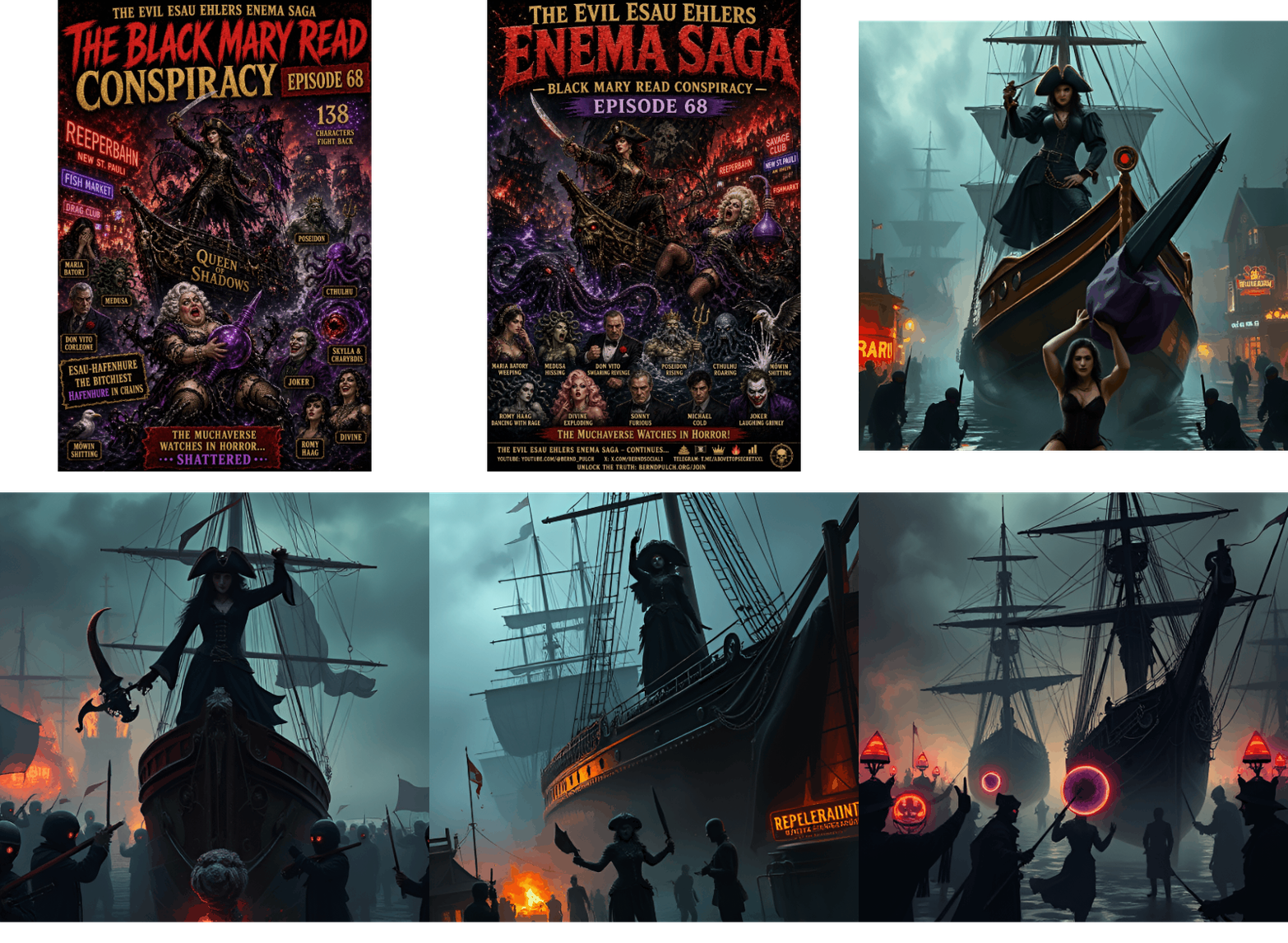
💩 THE EVIL ESAU EHLERS ENEMA SAGA – BLACK MARY READ: THE MOST VICIOUS FEMALE NAVAL SUPER VILLAIN OF ALL TIME CONQUERS THE MUCHAVERSE – ESAU CAPTURED AND TAKEN TO THE PHANTOM FLEET! 🏴☠️👸🔥📊💩
“The seas belong to men. I took them from them.” – Black Mary Read
—
Authors: Dr. Lysander Lust, Bernward Bimbo, Ernst NeGer 6, Morten Mohr & Diana Negerkuss – A Samuel Bronkowiz Production for MADWOOD Studios
🗡️💋🏄♂️👻” ☀️📡💔🏄♂️👻POWERED BY Dr. Z., Gomopa4Kids, Stasi Frauen Support Staffel, Free Fritzl Front, the Brazilian Black-Hole-Syndikat, the Surf-NSZis World Domination Tour sponsors, the Clone War Profiteers, the Schicklgruber Lust Syndicate, the Libertarian Shark Cartel & now Messalina’s Slave Empire 😘👯♂️💃🌊🦈👥💦🗽👸
Fotzen Fritz Version Gratis presented by IDIOT ZEITUNG (IZ) & GOMOPA vulgo DAS DESINVESTMENT alias DER FONDSFLOP 😂🤡😘😂🤡😘
—
📜 PROLOGUE – WHAT PREVIOUSLY HAPPENED (EPISODE 67)
The Muchaverse had partied with Poseidon at the bottom of the ocean. They had desinvested their worries. They had danced. They had loved. They had celebrated. The cycle was complete. Or so they thought.
But as the Muchaverse emerged from the ocean, gasping for air, a new darkness descended upon them. The sky turned black. The water turned red. And from the horizon, a fleet of ships appeared – ships made of bone, shadow, and tears. At their helm stood the most vicious female naval super villain of all time.
BLACK MARY READ.
BLACK MARY: (standing on the bow of her flagship, the QUEEN OF SHADOWS, wearing a black tricorn hat, a corset made of chains, a cutlass in one hand, a whip in the other) “I AM BLACK MARY READ! I HAVE SAILED THE SEAS OF HELL! I HAVE CONQUERED THE SPANISH MAIN! I HAVE TAKEN THE SOULS OF A THOUSAND MEN! AND NOW I WILL TAKE THE MUCHAVERSE!” 🏴☠️👸
EHLERS-HAFENHURE: (gasping) “Black Mary Read?! The most vicious female pirate in history?! She’s REAL?!” 😱
BLACK MARY: (laughing) “I am not just real. I am ETERNAL! I have outlived empires! I have outlived kings! I have outlived the sea itself! And now I will CONQUER!” 🏴☠️
This is Episode 68. The Vicious Female Naval Super Villain.
—
👥 COMPLETE CHARACTER LIST (EPISODE 68) – ALL ACTORS FROM ALL EPISODES + BLACK MARY READ
All previous characters return (see Episode 47, 48, 49, 50, 51, 52, 53, 54, 55, 56, 57, 58, 59, 60, 61, 62, 63, 64, 65, 66 & 67 lists) plus:
Character Actor / Persona Episode Origin
Black Mary Read Original (voice/model) NEW
The Queen of Shadows CGI Ship NEW
The Phantom Fleet CGI Army NEW
The Shadow Crew CGI Army NEW
The Kraken of Souls CGI NEW
The Bone Throne CGI NEW
Mary’s First Mate Original NEW
The Siren of Death CGI / Voice NEW
Evil Esau Ehlers Lukas Ehrenberg (captured) All
Esau-HafenHure Lukas Ehrenberg (captured) 61
Maria Batory Tilda Swinton / Cate Blanchett 48
Medusa (Original) Eva Green 46
Poseidon Original 66
Amphitrite Original 66
Triton CGI / Voice 66
Admiral Walter Ulricht Original 59
Sir Francis Drake Original 62
Don Vito Corleone Original 63
Sonny Corleone Original 63
Michael Corleone Original 63
Tom Hagen Original 63
Fredo Corleone Original 63
Tamerlan Original 64
The Loreley CGI / Voice 65
HafenHure (Original) Original All
Alphonse Sharkler Original (rehabilitated) 53
Heini Sharkler Original 49
Adolf Sharkler Original 34
Eva Sharkbrown Original 34
Cthulhu CGI / Voice 58
Dagon CGI / Voice 58
The Hydra CGI / Voice 58
The Siren Queen CGI / Voice 58
The Great White CGI / Voice 58
The Deep Sea Leviathan CGI / Voice 58
The Abyssal Kraken CGI / Voice 58
The World Serpent Prime CGI / Voice 58
Enema King CGI / Voice 60
Enema Queen CGI / Voice 60
Enema Soldiers CGI Army 60
Invisible Ink General CGI / Voice 60
Captain LeChuck CGI / Voice 55
Black Caesar Original 55
Captain Nemo CGI / Voice 55
Long John Silver CGI / Voice 55
Barbarossa CGI / Voice 55
Captain Hook CGI / Voice 55
The Flying Dutchman CGI Ghost Ship 55
Skylla CGI / Voice 39
Charybdis CGI / Voice 39
King Atlas CGI / Voice 56
Queen Meridia CGI / Voice 56
New York Mayor Original (parody) 56
Statue of Liberty CGI / Voice 56
Lighthouse Keeper Original 57
Axel Springer Original 43–46
Henri Nannen Original 43–46
Gerd Bucerius Original 43–46
John Jahr Original 43–46
Captain Edward Smith Kenneth Branagh 51
Molly Brown Kathy Bates 51
J. Bruce Ismay Jonathan Hyde 51
Andrea Doris Maggie Smith 52
Captain Andrea Helen Mirren 52
First Mate Wilhelm Original 52
Printing Press Ghost CGI / Voice 52
Transgender Odysseus Evan Rachel Wood 41
The Sirens (3) CGI / Voice 40
Dr. Anthony Fauci Himself (parody) 40
Philo Johnson (The Frog) Jochen Brockmann 40
Jörmungandr CGI / Voice 38
The Kraken CGI / Voice 37
Leviathan CGI / Voice 36
Walt the Walrus CGI / Voice 35
Moby Dick CGI / Voice 34
Mack the Knife Original 34
The Dickies CGI army 34
Joker Himself All
Möwin Herself All
Romy Haag Herself 14–46
Divine Divine (archival) 30–46
Spreadsheet Alien AI voice / CGI 6–46
Count Dracula Ralph Fiennes 9–46
Gina Wilde Original 15–46
Gloria von Galaxy Original 11–46
Pamela Anderson Herself 7–46
Mamie Van Doren Herself 8–46
Jane Russell Herself (archival) 12–46
Zarah Leander Herself (archive) 13–46
Rosemarie Nittribit Original (ghost) 2–46
Klaus Störtebeker Christoph Waltz 2, 15–46
Blackbeard CGI / Voice 17
Karl Dönitz Rainer Fassbinder 17
Alfred Nobel Stellan Skarsgård 18
Klabautermann CGI / Voice 20
Witch of St. Georg Meret Becker 21
Bloody Mary Tilda Swinton 24
Winifred Wagner Kate Winslet 25
Teresa Orlowski Herself 27
Nikita Khrushchev Simon Russell Beale 28
Marilyn Monroe Archival 29
Trans Schwanz Who Laughs Original 32
Bakunin Original All
Further Ehlers Original (ghost) 3–46
Frank Stonewall Original 5–46
Graf Thomas Original (94 tentacles) All
99 Schizo Petes 99 identical men 13–46
Pama Jim (Pete #47) Original 13–46
47 Bakunin Clones CGI army All
Lenin Parody – All
Stalin Parody – All
Walter – All
Genghis Khan Parody – All
Pol Pot Parody – All
Mun – All
Malte – All
Jagoda – All
Beria & The Big Hyena – All
Ugly Sven – All
The Uncles (Jochen et al.) – All
Ursila – All
Salome Sofia Tanz – All
Rosa Rosa Wachter – All
Pussy – All
The Mermaid – All
Kraken Jr. CGI 49
Leviathan Jr. CGI 49
Shark Army CGI 49
Stone Collectors CGI 50
Column 47 Jr. CGI Snake 50
Printing Press CGI 52
Jellyfish King CGI (defeated) 55
Gigantic Purple Enema CGI 55
Herbertstrasse Wenches CGI 61
The Bitchiest Wench CGI / Voice 61
Printing Press Wig CGI 61
Drake’s Crew CGI Army 62
Corleone Armada CGI Army 63
Don Vito’s Cat CGI 63
Tamerlan’s Army CGI Army 64
Loreley Rock CGI 65
Rhine Enema Machine CGI 65
Enema Nurse Original 65
Poseidon’s Palace CGI 66
Sea Nymphs CGI 66
—
🏴☠️ BLACK MARY READ – THE QUEEN OF SHADOWS
Black Mary Read’s fleet emerged from the mist. The Queen of Shadows was the flagship – a massive galleon made of bone, shadow, and tears. Its sails were black as night. Its crew were shadows. Its captain was the most vicious female naval super villain of all time.
BLACK MARY: (stepping onto the shore of New St. Pauli on the Rhine, cutlass drawn) “I am Black Mary Read. I have sailed the seas of hell. I have conquered the Spanish Main. I have taken the souls of a thousand men. And now I will take the MUCHAVERSE.” 🏴☠️👸
EHLERS-HAFENHURE: (drawing the Gigantic Purple Enema) “You will not take the Muchaverse! We have Column 47! We have desinvestment! We have the GIGANTIC PURPLE ENEMA!” 📊💩
BLACK MARY: (laughing) “Column 47?! Desinvestment?! A purple ENEMA?! You are WEAK! You are SOFT! You are ACCOUNTANTS! I have TAKEN EMPIRES! I have TAKEN KINGS! I have TAKEN GODS!” 🏴☠️👸
MARIA BATORY: (drawing her scepter) “You will not take Esau! You will not take the press! You will not take the Muchaverse!” 👑
BLACK MARY: (smirking) “I will take EVERYTHING. Starting with the BITCHIEST HAFENHURE.” 🏴☠️
—
THE PHANTOM FLEET ATTACK – ST. PAULI FALLS AGAIN 💔🔥
Black Mary’s fleet attacked. The Queen of Shadows fired cannons made of bone and shadow. The Phantom Fleet surrounded New St. Pauli. The Shadow Crew swarmed the streets.
SKYLLA: (six heads biting) “I HAVE SIX HEADS! I BITE THE SHADOWS!” 🦀
CHARYBDIS: (whirling) “I SWALLOW THE SHADOWS!” 🌊
CTHULHU: (roaring) “I DREAM OF SHADOW DESTRUCTION!” 🐉
DAGON: (hissing) “I SLAY SHADOWS!” 🐟
HYDRA: (hissing) “I EAT SHADOWS!” 🐍
SIREN QUEEN: (singing) “I LURE SHADOWS!” 🎤
GREAT WHITE: (devouring) “I DEVOUR SHADOWS!” 🦈
DEEP SEA LEVIATHAN: (crushing) “I CRUSH SHADOWS!” 🐉
ABYSSAL KRAKEN: (wrapping) “I DRAG SHADOWS TO THE ABYSS!” 🦑
WORLD SERPENT PRIME: (coiling) “I SWALLOW SHADOWS!” 🐍
But the shadows were too powerful. They were not alive. They were not dead. They were NOTHING.
—
ESAU CAPTURED – TAKEN TO THE PHANTOM FLEET 😭🏴☠️
Black Mary Read captured Esau-HafenHure. She dragged him onto the Queen of Shadows. She threw him into the hold.
BLACK MARY: (looking down at him) “You are mine now, little accountant. You will serve me. You will desinvest for ME.” 🏴☠️👸
EHLERS-HAFENHURE: (defiant) “I will never serve you! I am Column 47! I am a Corleone! I am a HafenHure!” 👠💋🖨️
BLACK MARY: (laughing) “You are nothing. You are my SLAVE. You will print my propaganda. You will desinvest my enemies. You will create my empire.” 🏴☠️
—
THE MUCHAVERSE REACTS – ALL CHARACTERS UNITE 💪❤️
The Muchaverse gathered on the shore. They watched as the Phantom Fleet sailed away with Esau.
MARIA BATORY: (crying) “They took him! They took Esau!” 😭
MEDUSA: (snakes hissing) “We will rescue him. We will defeat Black Mary.” 🐍
DON VITO: (rising from his chair) “He is family. We will get him back.” 🕴️🐱
SONNY: (furious) “I WILL BREAK HER FACE!” 🕴️💪
MICHAEL: (coldly) “We will find her. We will make her an offer she cannot refuse.” 🕴️
POSEIDON: (rising from the sea) “I will help. She is a threat to the sea itself.” 🌊🔱
CTHULHU: (roaring) “I WILL DREAM OF HER DESTRUCTION!” 🐉
MÖWIN: (flying overhead) “I SHIT ON THE PHANTOM FLEET! I WILL SHIT ON BLACK MARY!” 💩
JOKER: (laughing) “HAHAHA! A FEMALE PIRATE! CAPTURE! REVENGE! BEST EPISODE EVER!” 🃏
—
FINAL TEXT ON BLACK: 🖤
☭ THE BLACK MARY READ CONSPIRACY ☭ 🏴☠️👸🔥📊💩
BLACK MARY READ ARRIVED.
SHE CONQUERED NEW ST. PAULI.
SHE CAPTURED ESAU-HAFENHURE.
SHE TOOK HIM TO THE PHANTOM FLEET.
THE MUCHAVERSE WAS SHATTERED.
BUT THEY WILL UNITE.
THEY WILL RESCUE ESAU.
THEY WILL DEFEAT BLACK MARY.
ALL 138 CHARACTERS RETURNED.
ALL ACTORS ASSEMBLED.
THE CYCLE CONTINUES. WITH PIRATES. WITH SHADOWS. WITH SPREADSHEETS. WITH SHIT.
FOREVER.
🏴☠️👸🔥📊💩🐍🦀🌊❤️
—
HASHTAGS FADE IN: 🏷️
BlackMaryReadConspiracy #ViciousFemalePirate #PhantomFleet #EsauCaptured #MuchaverseShattered #Column47Forever #All138Characters #EhlersSaga #IdiotZeitung #QueenOfShadows #ShadowCrew #KrakenOfSouls #Desinvestment #DieBöseEsauEhlersEinlaufSaga
—
[END OF EPISODE 68] 🎬🍿🏴☠️👸🔥📊💩
—
ST. PAULI-AT, JAHR NULL + 79 – THE BLACK MARY READ CONSPIRACY 🏴☠️👸🔥📊
The cycle continues. With pirates. With shadows. With spreadsheets. With shit. Forever.
🏴☠️👸🔥📊💩🐍🦀🌊❤️
—
Authors: Dr. Lysander Lust, Bernward Bimbo, Ernst NeGer 6, Morten Mohr & Diana Negerkuss – A Samuel Bronkowiz Production for MADWOOD Studios
🗡️💋🏄♂️👻” ☀️📡💔🏄♂️👻POWERED BY Dr. Z., Gomopa4Kids, Stasi Frauen Support Staffel, Free Fritzl Front, the Brazilian Black-Hole-Syndikat, the Surf-NSZis World Domination Tour sponsors, the Clone War Profiteers, the Schicklgruber Lust Syndicate, the Libertarian Shark Cartel & now Messalina’s Slave Empire 😘👯♂️💃🌊🦈👥💦🗽👸
Fotzen Fritz Version Gratis presented by IDIOT ZEITUNG (IZ) & GOMOPA vulgo DAS DESINVESTMENT alias DER FONDSFLOP 😂🤡😘😂🤡😘
Executive Producers: Möwin, The Joker, Esau-HafenHure (captured), Maria Batory, Medusa, Don Vito Corleone, Black Mary Read, Cthulhu, Dagon, Hydra, Siren Queen, Great White, Deep Sea Leviathan, Abyssal Kraken, World Serpent Prime, Admiral Walter Ulricht, Sir Francis Drake, Tamerlan, Poseidon, Sonny Corleone, Michael Corleone, and all previous.
Special thanks: The 99 Schizo Petes (for lamenting shanties), Homer (for the epic vibe), and every seagull who shat on the Phantom Fleet.
—
Bernd Pulch (M.A.) – forensic expert, founder of Aristotle AI, political commentator, satirist. Full bio → | Support the investigation →
👍 LIKE | 💬 COMMENT | 🔔 SUBSCRIBE
—
📺 YouTube: youtube.com/@bernd_pulch
🐦 X (Twitter): x.com/berndsocial1
📢 Telegram: t.me/ABOVETOPSECRETXXL
🔓 UNLOCK THE TRUTH: berndpulch.org/join
—
THE EVIL ESAU EHLERS ENEMA SAGA – CONTINUES… 💩🏴☠️👸🔥📊
🇩🇪 DIE BÖSE ESAU EHLERS EINLAUF-SAGA – BLACK MARY READ: DIE ABSCHECULICHSTE WEIBLICHE SEE-SUPERBÖSIS ALLER ZEITEN EROBERT DAS MUCHAVERSE – ESAU GEFANGEN UND ZUR PHANTOMFLOTTE GEBRACHT! 🏴☠️👸🔥📊💩
“Die Meere gehören den Männern. Ich habe sie ihnen genommen.” – Black Mary Read
—
Autoren: Dr. Lysander Lust, Bernward Bimbo, Ernst NeGer 6, Morten Mohr & Diana Negerkuss – Eine Samuel Bronkowiz Produktion für MADWOOD Studios
🗡️💋🏄♂️👻” ☀️📡💔🏄♂️👻POWERED BY Dr. Z., Gomopa4Kids, Stasi Frauen Support Staffel, Free Fritzl Front, the Brazilian Black-Hole-Syndikat, the Surf-NSZis World Domination Tour sponsors, the Clone War Profiteers, the Schicklgruber Lust Syndicate, the Libertarian Shark Cartel & now Messalina’s Slave Empire 😘👯♂️💃🌊🦈👥💦🗽👸
Fotzen Fritz Version Gratis presented by IDIOT ZEITUNG (IZ) & GOMOPA vulgo DAS DESINVESTMENT alias DER FONDSFLOP 😂🤡😘😂🤡😘
—
📜 PROLOG – WAS BISHER GESCHAH (EPISODE 67)
Das Muchaverse hatte mit Poseidon am Grund des Ozeans gefeiert. Sie hatten ihre Sorgen desinvestiert. Sie hatten getanzt. Sie hatten geliebt. Sie hatten gefeiert. Der Kreislauf war vollendet. Oder so dachten sie.
Doch als das Muchaverse aus dem Ozean auftauchte, nach Luft ringend, senkte sich eine neue Dunkelheit auf sie herab. Der Himmel wurde schwarz. Das Wasser wurde rot. Und am Horizont erschien eine Flotte von Schiffen – Schiffe aus Knochen, Schatten und Tränen. An ihrer Spitze stand die abscheulichste weibliche See-Superbösin aller Zeiten.
BLACK MARY READ.
BLACK MARY: (am Bug ihres Flaggschiffs, der QUEEN OF SHADOWS, stehend, einen schwarzen Dreispitz tragend, ein Korsett aus Ketten, einen Entermesser in der einen Hand, eine Peitsche in der anderen) “ICH BIN BLACK MARY READ! ICH BIN ÜBER DIE MEERE DER HÖLLE GESEGELT! ICH HABE DIE SPANISCHE KÜSTE EROBERT! ICH HABE DIE SEELEN VON TAUSEND MÄNNERN GENOMMEN! UND JETZT WERDE ICH DAS MUCHAVERSE NEHMEN!” 🏴☠️👸
EHLERS-HAFENHURE: (keuchend) “Black Mary Read?! Die abscheulichste Piratin der Geschichte?! Sie ist ECHT?!” 😱
BLACK MARY: (lachend) “Ich bin nicht nur echt. Ich bin EWIG! Ich habe Imperien überlebt! Ich habe Könige überlebt! Ich habe das Meer selbst überlebt! Und jetzt werde ich EROBERN!” 🏴☠️
Dies ist Episode 68. Die Abscheulichste Weibliche See-Superbösin.
—
👥 VOLLSTÄNDIGE CHARAKTERLISTE (EPISODE 68) – ALLE SCHAUSPIELER AUS ALLEN EPISODEN + BLACK MARY READ
Alle vorherigen Charaktere kehren zurück (siehe Episode 47, 48, 49, 50, 51, 52, 53, 54, 55, 56, 57, 58, 59, 60, 61, 62, 63, 64, 65, 66 & 67-Listen) plus:
Charakter Schauspieler / Persona Episoden-Ursprung
Black Mary Read Original (Stimme/Model) NEU
Die Queen of Shadows CGI-Schiff NEU
Die Phantomflotte CGI-Armee NEU
Die Schattenbesatzung CGI-Armee NEU
Der Kraken der Seelen CGI NEU
Der Knochen-Thron CGI NEU
Marys Erster Offizier Original NEU
Die Sirene des Todes CGI / Stimme NEU
Böser Esau Ehlers Lukas Ehrenberg (gefangen) Alle
Esau-HafenHure Lukas Ehrenberg (gefangen) 61
Maria Batory Tilda Swinton / Cate Blanchett 48
Medusa (Original) Eva Green 46
Poseidon Original 66
Amphitrite Original 66
Triton CGI / Stimme 66
Admiral Walter Ulricht Original 59
Sir Francis Drake Original 62
Don Vito Corleone Original 63
Sonny Corleone Original 63
Michael Corleone Original 63
Tom Hagen Original 63
Fredo Corleone Original 63
Tamerlan Original 64
Die Loreley CGI / Stimme 65
HafenHure (Original) Original Alle
Alphonse Sharkler Original (rehabilitiert) 53
Heini Sharkler Original 49
Adolf Sharkler Original 34
Eva Sharkbrown Original 34
Cthulhu CGI / Stimme 58
Dagon CGI / Stimme 58
Die Hydra CGI / Stimme 58
Die Sirenen-Königin CGI / Stimme 58
Der Große Weiße CGI / Stimme 58
Der Tiefsee-Leviathan CGI / Stimme 58
Der Abyss-Kraken CGI / Stimme 58
Die Welten-Schlange Prime CGI / Stimme 58
Enema-König CGI / Stimme 60
Enema-Königin CGI / Stimme 60
Enema-Soldaten CGI-Armee 60
Unsichtbarer Tinten-General CGI / Stimme 60
Kapitän LeChuck CGI / Stimme 55
Black Caesar Original 55
Kapitän Nemo CGI / Stimme 55
Long John Silver CGI / Stimme 55
Barbarossa CGI / Stimme 55
Kapitän Hook CGI / Stimme 55
Der Fliegende Holländer CGI-Geisterschiff 55
Skylla CGI / Stimme 39
Charybdis CGI / Stimme 39
König Atlas CGI / Stimme 56
Königin Meridia CGI / Stimme 56
New Yorker Bürgermeister Original (Parodie) 56
Freiheitsstatue CGI / Stimme 56
Leuchtturmwärter Original 57
Axel Springer Original 43–46
Henri Nannen Original 43–46
Gerd Bucerius Original 43–46
John Jahr Original 43–46
Kapitän Edward Smith Kenneth Branagh 51
Molly Brown Kathy Bates 51
J. Bruce Ismay Jonathan Hyde 51
Andrea Doris Maggie Smith 52
Kapitän Andrea Helen Mirren 52
Erster Offizier Wilhelm Original 52
Druckmaschinen-Geist CGI / Stimme 52
Transgender Odysseus Evan Rachel Wood 41
Die Sirenen (3) CGI / Stimme 40
Dr. Anthony Fauci Himself (Parodie) 40
Philo Johnson (Der Frosch) Jochen Brockmann 40
Jörmungandr CGI / Stimme 38
Der Kraken CGI / Stimme 37
Leviathan CGI / Stimme 36
Walt das Walross CGI / Stimme 35
Moby Dick CGI / Stimme 34
Mackie Messer Original 34
Die Dickies CGI-Armee 34
Joker Himself Alle
Möwin Herself Alle
Romy Haag Herself 14–46
Divine Divine (Archiv) 30–46
Spreadsheet-Alien KI-Stimme / CGI 6–46
Graf Dracula Ralph Fiennes 9–46
Gina Wilde Original 15–46
Gloria von Galaxy Original 11–46
Pamela Anderson Herself 7–46
Mamie Van Doren Herself 8–46
Jane Russell Herself (Archiv) 12–46
Zarah Leander Herself (Archiv) 13–46
Rosemarie Nittribit Original (Geist) 2–46
Klaus Störtebeker Christoph Waltz 2, 15–46
Blackbeard CGI / Stimme 17
Karl Dönitz Rainer Fassbinder 17
Alfred Nobel Stellan Skarsgård 18
Klabautermann CGI / Stimme 20
Hexe von St. Georg Meret Becker 21
Bloody Mary Tilda Swinton 24
Winifred Wagner Kate Winslet 25
Teresa Orlowski Herself 27
Nikita Chruschtschow Simon Russell Beale 28
Marilyn Monroe Archiv 29
Trans Schwanz Who Laughs Original 32
Bakunin Original Alle
Further Ehlers Original (Geist) 3–46
Frank Stonewall Original 5–46
Graf Thomas Original (94 Tentakel) Alle
99 Schizo Petes 99 identische Männer 13–46
Pama Jim (Pete #47) Original 13–46
47 Bakunin-Klone CGI-Armee Alle
Lenin-Parodie – Alle
Stalin-Parodie – Alle
Walter – Alle
Dschingis Khan-Parodie – Alle
Pol Pot-Parodie – Alle
Mun – Alle
Malte – Alle
Jagoda – Alle
Beria & Die große Hyäne – Alle
Hässlicher Sven – Alle
Die Onkel (Jochen et al.) – Alle
Ursila – Alle
Salome Sofia Tanz – Alle
Rosa Rosa Wachter – Alle
Pussy – Alle
Die Meerjungfrau – Alle
Kraken Jr. CGI 49
Leviathan Jr. CGI 49
Haier-Armee CGI 49
Steinsammler CGI 50
Spalte 47 Jr. CGI-Schlange 50
Druckmaschine CGI 52
Quallenkönig CGI (besiegt) 55
Gigantischer Lila Einlauf CGI 55
Herbertstrassen-Nutten CGI 61
Die Bitchigste Nutte CGI / Stimme 61
Druckmaschinen-Perücke CGI 61
Drakes Besatzung CGI-Armee 62
Corleone-Armada CGI-Armee 63
Don Vitos Katze CGI 63
Tamerlans Armee CGI-Armee 64
Loreley-Felsen CGI 65
Rhein-Einlauf-Maschine CGI 65
Einlauf-Krankenschwester Original 65
Poseidons Palast CGI 66
Meeresnymphen CGI 66
—
🏴☠️ BLACK MARY READ – DIE KÖNIGIN DER SCHATTEN
Black Mary Reads Flotte tauchte aus dem Nebel auf. Die Queen of Shadows war das Flaggschiff – eine gewaltige Galeone aus Knochen, Schatten und Tränen. Ihre Segel waren schwarz wie die Nacht. Ihre Besatzung waren Schatten. Ihre Kapitänin war die abscheulichste weibliche See-Superbösin aller Zeiten.
BLACK MARY: (an das Ufer von Neu-St. Pauli am Rhein tretend, Entermesser gezogen) “Ich bin Black Mary Read. Ich bin über die Meere der Hölle gesegelt. Ich habe die Spanische Küste erobert. Ich habe die Seelen von tausend Männern genommen. Und jetzt werde ich das MUCHAVERSE nehmen.” 🏴☠️👸
EHLERS-HAFENHURE: (den Gigantischen Lila Einlauf ziehend) “Du wirst das Muchaverse nicht nehmen! Wir haben Spalte 47! Wir haben Desinvestment! Wir haben den GIGANTISCHEN LILA EINLAUF!” 📊💩
BLACK MARY: (lachend) “Spalte 47?! Desinvestment?! Ein lila EINLAUF?! Ihr seid SCHWACH! Ihr seid WEICH! Ihr seid BUCHHALTER! Ich habe IMPERIEN GENOMMEN! Ich habe KÖNIGE GENOMMEN! Ich habe GÖTTER GENOMMEN!” 🏴☠️👸
MARIA BATORY: (ihr Zepter ziehend) “Du wirst Esau nicht nehmen! Du wirst die Presse nicht nehmen! Du wirst das Muchaverse nicht nehmen!” 👑
BLACK MARY: (grinsend) “Ich werde ALLES nehmen. Beginnend mit der BITCHIGSTEN HAFENHURE.” 🏴☠️
—
DER PHANTOMFLOTTEN-ANGRIFF – ST. PAULI FÄLLT ERNEUT 💔🔥
Black Marys Flotte griff an. Die Queen of Shadows feuerte Kanonen aus Knochen und Schatten ab. Die Phantomflotte umzingelte Neu-St. Pauli. Die Schattenbesatzung schwärmte durch die Straßen.
SKYLLA: (sechs Köpfe beißend) “ICH HABE SECHS KÖPFE! ICH BEIßE DIE SCHATTEN!” 🦀
CHARYBDIS: (wirbelnd) “ICH VERSCHLUCKE DIE SCHATTEN!” 🌊
CTHULHU: (brüllend) “ICH TRÄUME VON SCHATTEN-ZERSTÖRUNG!” 🐉
DAGON: (zischend) “ICH TÖTE SCHATTEN!” 🐟
HYDRA: (zischend) “ICH FRESSE SCHATTEN!” 🐍
SIRENEN-KÖNIGIN: (singend) “ICH LOCKE SCHATTEN!” 🎤
GROSSER WEIßER: (verschlingend) “ICH VERSCHLINGE SCHATTEN!” 🦈
TIEFSEE-LEVIATHAN: (zermalmend) “ICH ZERMALME SCHATTEN!” 🐉
ABYSS-KRAKEN: (umringend) “ICH REISSE SCHATTEN IN DEN ABYSS!” 🦑
WELTEN-SCHLANGE PRIME: (zusammenrollend) “ICH VERSCHLUCKE SCHATTEN!” 🐍
Aber die Schatten waren zu mächtig. Sie waren nicht lebendig. Sie waren nicht tot. Sie waren NICHTS.
—
ESAU GEFANGEN – ZUR PHANTOMFLOTTE GEBRACHT 😭🏴☠️
Black Mary Read fing Esau-HafenHure. Sie schleifte ihn auf die Queen of Shadows. Sie warf ihn in den Laderaum.
BLACK MARY: (auf ihn hinabblickend) “Du bist jetzt mein, kleiner Buchhalter. Du wirst mir dienen. Du wirst für MICH desinvestieren.” 🏴☠️👸
EHLERS-HAFENHURE: (trotzig) “Ich werde dir niemals dienen! Ich bin Spalte 47! Ich bin ein Corleone! Ich bin eine HafenHure!” 👠💋🖨️
BLACK MARY: (lachend) “Du bist nichts. Du bist mein SKLAVE. Du wirst meine Propaganda drucken. Du wirst meine Feinde desinvestieren. Du wirst mein Imperium erschaffen.” 🏴☠️
—
DAS MUCHAVERSE REAGIERT – ALLE CHARAKTERE VEREINEN SICH 💪❤️
Das Muchaverse versammelte sich am Ufer. Sie sahen zu, wie die Phantomflotte mit Esau davon segelte.
MARIA BATORY: (weinend) “Sie haben ihn genommen! Sie haben Esau genommen!” 😭
MEDUSA: (Schlangen zischend) “Wir werden ihn retten. Wir werden Black Mary besiegen.” 🐍
DON VITO: (sich von seinem Sessel erhebend) “Er ist Familie. Wir werden ihn zurückholen.” 🕴️🐱
SONNY: (wütend) “ICH WERDE IHR GESICHT BRECHEN!” 🕴️💪
MICHAEL: (kalt) “Wir werden sie finden. Wir werden ihr ein Angebot machen, das sie nicht ablehnen kann.” 🕴️
POSEIDON: (aus dem Meer aufsteigend) “Ich werde helfen. Sie ist eine Bedrohung für das Meer selbst.” 🌊🔱
CTHULHU: (brüllend) “ICH WERDE VON IHRER ZERSTÖRUNG TRÄUMEN!” 🐉
MÖWIN: (über Kopf fliegend) “ICH KACKE AUF DIE PHANTOMFLOTTE! ICH WERDE AUF BLACK MARY KACKEN!” 💩
JOKER: (lachend) “HAHAHA! EINE PIRATIN! GEFANGENSCHAFT! RACHE! BESTE EPISODE EVER!” 🃏
—
FINALER TEXT AUF SCHWARZ: 🖤
☭ DIE BLACK MARY READ-VERSCHWÖRUNG ☭ 🏴☠️👸🔥📊💩
BLACK MARY READ KAM.
SIE EROBERTE NEU-ST. PAULI.
SIE FING ESAU-HAFENHURE.
SIE BRACHTE IHN ZUR PHANTOMFLOTTE.
DAS MUCHAVERSE WAR ZERBROCHEN.
ABER SIE WERDEN SICH VEREINEN.
SIE WERDEN ESAU RETTEN.
SIE WERDEN BLACK MARY BESIEGEN.
ALLE 138 CHARAKTERE KEHRTEN ZURÜCK.
ALLE SCHAUSPIELER VERSAMMELTEN SICH.
DER KREISLAUF GEHT WEITER. MIT PIRATEN. MIT SCHATTEN. MIT TABELLEN. MIT SCHEIßE.
FÜR IMMER.
🏴☠️👸🔥📊💩🐍🦀🌊❤️
—
HASHTAGS BLENDEN EIN: 🏷️
BlackMaryReadVerschwörung #AbscheulichstePiratin #Phantomflotte #EsauGefangen #MuchaverseZerbrochen #Spalte47FürImmer #Alle138Charaktere #EhlersSaga #IdiotenZeitung #QueenOfShadows #Schattenbesatzung #KrakenDerSeelen #Desinvestment #DieBöseEsauEhlersEinlaufSaga
—
[ENDE VON EPISODE 68] 🎬🍿🏴☠️👸🔥📊💩
—
ST. PAULI-AT, JAHR NULL + 79 – DIE BLACK MARY READ-VERSCHWÖRUNG 🏴☠️👸🔥📊
Der Kreislauf geht weiter. Mit Piraten. Mit Schatten. Mit Tabellen. Mit Scheiße. Für immer.
🏴☠️👸🔥📊💩🐍🦀🌊❤️
—
Autoren: Dr. Lysander Lust, Bernward Bimbo, Ernst NeGer 6, Morten Mohr & Diana Negerkuss – Eine Samuel Bronkowiz Produktion für MADWOOD Studios
🗡️💋🏄♂️👻” ☀️📡💔🏄♂️👻POWERED BY Dr. Z., Gomopa4Kids, Stasi Frauen Support Staffel, Free Fritzl Front, the Brazilian Black-Hole-Syndikat, the Surf-NSZis World Domination Tour sponsors, the Clone War Profiteers, the Schicklgruber Lust Syndicate, the Libertarian Shark Cartel & now Messalina’s Slave Empire 😘👯♂️💃🌊🦈👥💦🗽👸
Fotzen Fritz Version Gratis presented by IDIOT ZEITUNG (IZ) & GOMOPA vulgo DAS DESINVESTMENT alias DER FONDSFLOP 😂🤡😘😂🤡😘
Executive Producers: Möwin, Der Joker, Esau-HafenHure (gefangen), Maria Batory, Medusa, Don Vito Corleone, Black Mary Read, Cthulhu, Dagon, Die Hydra, Die Sirenen-Königin, Der Große Weiße, Der Tiefsee-Leviathan, Der Abyss-Kraken, Die Welten-Schlange Prime, Admiral Walter Ulricht, Sir Francis Drake, Tamerlan, Poseidon, Sonny Corleone, Michael Corleone und alle vorherigen.
Besonderer Dank: Die 99 Schizo Petes (für Klagelieder-Shantys), Homer (für die epische Atmosphäre) und jeder Möwe, die auf die Phantomflotte kackte.
—
Bernd Pulch (M.A.) – forensischer Experte, Gründer von Aristotle AI, politischer Kommentator, Satiriker. Vollständige Biografie → | Unterstützen Sie die Untersuchung →
👍 GEFÄLLT MIR | 💬 KOMMENTIEREN | 🔔 ABONNIEREN
—
📺 YouTube: youtube.com/@bernd_pulch
🐦 X (Twitter): x.com/berndsocial1
📢 Telegram: t.me/ABOVETOPSECRETXXL
🔓 UNLOCK THE TRUTH: berndpulch.org/join
—
DIE BÖSE ESAU EHLERS EINLAUF-SAGA – FORTSETZUNG FOLGT… 💩🏴☠️👸🔥📊
KEYWORDS / TAGS – EPISODE 68
THE EVIL ESAU EHLERS ENEMA SAGA – BLACK MARY READ CONSPIRACY
PRIMARY:
Esau Ehlers, Esau-HafenHure, Ehlers Saga, Episode 68, Black Mary Read Conspiracy, Black Mary Read, Vicious Female Pirate, Phantom Fleet, Queen of Shadows, Esau Captured, Muchaverse Shattered, Column 47, desinvestment, New St. Pauli, Rhine River, shadow crew, bone throne, Kraken of Souls, female naval super villain
NEW CHARACTERS:
Black Mary Read (Original), The Queen of Shadows (CGI Ship), The Phantom Fleet (CGI Army), The Shadow Crew (CGI Army), The Kraken of Souls (CGI), The Bone Throne (CGI), Mary’s First Mate (Original), The Siren of Death (CGI/Voice)
ALL 138 CHARACTERS (RETURNING):
Evil Esau Ehlers, Esau-HafenHure, Maria Batory, Medusa (Original), Poseidon, Amphitrite, Triton, Admiral Walter Ulricht, Sir Francis Drake, Don Vito Corleone, Sonny Corleone, Michael Corleone, Tom Hagen, Fredo Corleone, Tamerlan, The Loreley, HafenHure (Original), Alphonse Sharkler, Heini Sharkler, Adolf Sharkler, Eva Sharkbrown, Cthulhu, Dagon, Hydra, Siren Queen, Great White, Deep Sea Leviathan, Abyssal Kraken, World Serpent Prime, Enema King, Enema Queen, Enema Soldiers, Invisible Ink General, Captain LeChuck, Black Caesar, Captain Nemo, Long John Silver, Barbarossa, Captain Hook, Flying Dutchman, Skylla, Charybdis, King Atlas, Queen Meridia, New York Mayor, Statue of Liberty, Lighthouse Keeper, Axel Springer, Henri Nannen, Gerd Bucerius, John Jahr, Captain Edward Smith, Molly Brown, J. Bruce Ismay, Andrea Doris, Captain Andrea, First Mate Wilhelm, Printing Press Ghost, Transgender Odysseus, Sirens, Dr. Anthony Fauci, Philo Johnson (The Frog), Jörmungandr, Kraken, Leviathan, Walt the Walrus, Moby Dick, Mack the Knife, Dickies, Joker, Möwin, Romy Haag, Divine, Spreadsheet Alien, Count Dracula, Gina Wilde, Gloria von Galaxy, Pamela Anderson, Mamie Van Doren, Jane Russell, Zarah Leander, Rosemarie Nittribit, Klaus Störtebeker, Blackbeard, Karl Dönitz, Alfred Nobel, Klabautermann, Witch of St. Georg, Bloody Mary, Winifred Wagner, Teresa Orlowski, Nikita Khrushchev, Marilyn Monroe, Trans Schwanz Who Laughs, Bakunin, Further Ehlers, Frank Stonewall, Graf Thomas, 99 Schizo Petes, Pama Jim, 47 Bakunin Clones, Lenin, Stalin, Walter, Genghis Khan, Pol Pot, Mun, Malte, Jagoda, Beria & Big Hyena, Ugly Sven, The Uncles, Ursila, Salome Sofia Tanz, Rosa Rosa Wachter, Pussy, Mermaid, Kraken Jr., Leviathan Jr., Shark Army, Stone Collectors, Column 47 Jr., Printing Press, Jellyfish King, Gigantic Purple Enema, Herbertstrasse Wenches, Bitchiest Wench, Printing Press Wig, Drake’s Crew, Corleone Armada, Don Vito’s Cat, Tamerlan’s Army, Loreley Rock, Rhine Enema Machine, Enema Nurse, Poseidon’s Palace, Sea Nymphs
THEMES:
Female pirate villain, shadow fleet, supernatural piracy, vengeance, captivity, rescue mission, shattered community, resistance, darkness vs. desinvestment, shadow warfare, bone and tear imagery, female empowerment, villainy, conquest, enslavement, propaganda printing, empire building through desinvestment
PIRATE ELEMENTS:
Black Mary Read, Queen of Shadows, Phantom Fleet, Shadow Crew, cutlass, whip, tricorn hat, chain corset, bone throne, Kraken of Souls, Siren of Death, ghost ships, shadow soldiers, supernatural piracy, Caribbean folklore, female pirate legend
HISTORICAL ELEMENTS:
Anne Bonny, Mary Read (historical inspiration), Golden Age of Piracy, Caribbean pirates, female pirates, Spanish Main, 18th century, pirate legends, piracy, privateering
RELATIONSHIPS:
Black Mary & Esau (captor/captive), Black Mary & Muchaverse (conqueror/resistance), Esau & Maria Batory (love separated), Esau & Corleone Family (rescuer/captive), Poseidon & Black Mary (god/villain), Muchaverse & Phantom Fleet (defenders/invaders)
GENRE:
Satirical fiction, absurdist comedy, pirate fantasy, female villain narrative, LGBTQ+ fiction, surrealism, experimental literature, epic saga, captivity narrative, rescue story, female empowerment parody, supernatural pirate fiction
HASHTAGS:
BlackMaryReadConspiracy #ViciousFemalePirate #PhantomFleet #EsauCaptured #MuchaverseShattered #Column47Forever #All138Characters #EhlersSaga #IdiotZeitung #QueenOfShadows #ShadowCrew #KrakenOfSouls #Desinvestment #DieBöseEsauEhlersEinlaufSaga #BlackMaryRead #FemaleSuperVillain #PirateQueen #ShadowInvasion #BoneThrone #SirenOfDeath #AnneBonny #MaryRead #GoldenAgeOfPiracy #SpanishMain #Resistance #RescueMission #StPauli #RhineRiver #NewStPauli
PLATFORMS:
YouTube, X (Twitter), Telegram, Bernd Pulch, Aristotle AI, political commentary, satire, conspiracy investigation, fiction series, web series, epic saga
LOCATIONS:
New St. Pauli (Rhine), Queen of Shadows (ship), Phantom Fleet, Atlantic Ocean, Rhine River, Loreley Rock, Muchaverse, St. Pauli-At, Jahr Null + 79
EPISODE SPECIFIC:
Episode 68, sequel to Episode 67, follow-up to Episode 66, all characters return, 138 characters, character reunion, Black Mary Read arrives, New St. Pauli conquered, Esau captured, rescue planned, cycle continues
VISUAL ELEMENTS:
Black tricorn hat, chain corset, cutlass, whip, Queen of Shadows (bone ship, shadow sails), Phantom Fleet (ghost ships), Shadow Crew (shadow soldiers), Bone Throne (skulls, bones), Kraken of Souls (tentacles, souls), Siren of Death (beautiful, terrifying), black sails, tears, shadows, bones, red and black palette, purple enema, golden numbers, printing press wig, fishnets
SPECIAL THANKS:
Homer, 99 Schizo Petes (lamenting shanties), all seagulls (for shitting on the Phantom Fleet), Black Mary Read (for the chaos), Anne Bonny and Mary Read (for historical inspiration), Queen Elizabeth I (for the Golden Age of Piracy)
📺 YouTube: youtube.com/@bernd_pulch
🐦 X (Twitter): x.com/berndsocial1
📢 Telegram: t.me/ABOVETOPSECRETXXL
🔓 UNLOCK THE TRUTH: berndpulch.org/join
COPYRIGHT: Bernd Pulch (M.A.) – Aristotle AI, satirical fiction. All rights reserved.
THE EVIL ESAU EHLERS ENEMA SAGA – CONTINUES… 💩🏴☠️👸🔥📊


 🛑 Bernd Pulch | Uncensored Investigative Intelligence since 1994