

📺 YouTube: youtube.com/@bernd_pulch
🐦 X (Twitter): x.com/berndsocial1
📢 Telegram: t.me/ABOVETOPSECRETXXL
🔓 UNLOCK THE TRUTH: berndpulch.org/join
—
West Virginia Lawmakers Push to Ban Flock AI Cameras – Warning of “Surveillance State” and Constitutional Crisis
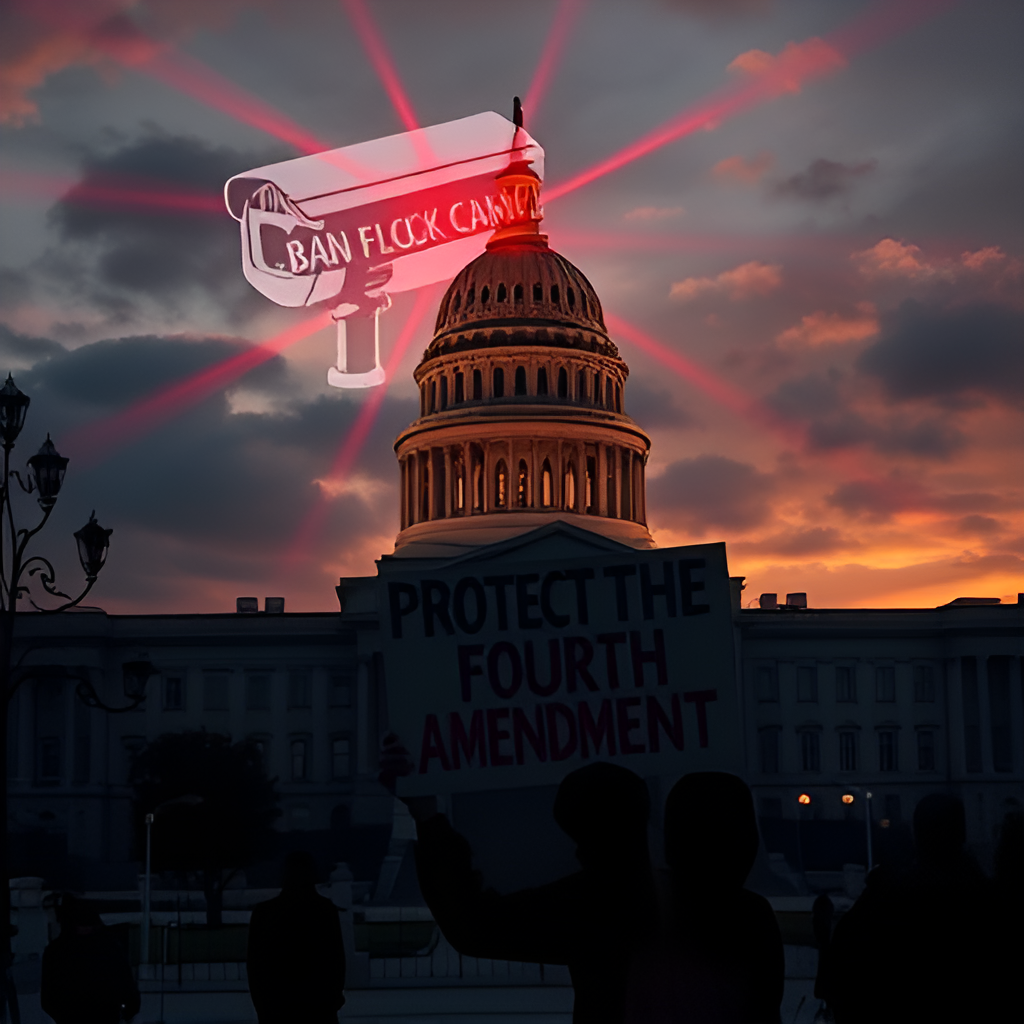
A growing coalition of West Virginia lawmakers, county officials, and civil liberties groups is moving to ban or severely restrict the use of Flock Safety’s AI-powered surveillance cameras across the state. The West Virginia Freedom Caucus has vowed to use “every procedural tool available” to pass the Fourth Amendment Restoration Act, which would prohibit warrantless, real-time surveillance technologies – including automated license plate readers, facial recognition, and drone surveillance.
—
The Fourth Amendment Restoration Act: A Direct Challenge to Warrantless Surveillance
At the heart of the pushback is the Fourth Amendment Restoration Act, a bill that has been introduced in the past two legislative sessions but has yet to make it across the finish line. The legislation would ban warrantless surveillance technologies, including Flock cameras, facial recognition systems, drone surveillance, and other technologies capable of mass tracking.
“The answer to crime is enforcing the law against criminals — not creating a surveillance state that treats every citizen as a suspect.” – Del. Laura Kimble (R)
The West Virginia Freedom Caucus, a conservative group within the state legislature, is leading the charge. State Sen. Chris Rose (R-Monongalia) warned that the caucus is “prepared to use every procedural tool available in both the House and Senate to oppose, delay, and tie up legislative business” until the bill receives the consideration it deserves.
Democrats are also joining the effort. Del. Evan Hansen (D-Monongalia) announced he is drafting legislation to create “guardrails” that would limit the capabilities of automated license plate readers (ALPRs) on a statewide level.
“Every West Virginian has certain constitutional rights, but at the same time, I also recognize the need for law enforcement to have tools they could use to solve crimes. So I’m focusing my efforts on drafting a bill to put strong guardrails in place.” – Del. Evan Hansen
The proposed guardrails would require law enforcement agencies to adopt mandated policies limiting what the cameras can be used for, require data to be permanently deleted within a short period, and ensure the technology “could only be used for very specific law enforcement purposes and cannot be used to track people’s movements”.
—
Privacy Concerns and Constitutional Rights
The debate centers on whether the benefits of AI-powered surveillance outweigh the erosion of constitutional protections. Critics argue that Flock cameras represent a fundamental threat to privacy and the Fourth Amendment.
“Flock cameras don’t just identify criminals – they create a database documenting where law-abiding citizens worship, seek medical care, conduct business, and travel. That is fundamentally incompatible with a free society.” – Del. Henry Dillon
The ACLU of West Virginia has been at the forefront of the legal battle. In July 2026, the organization filed a lawsuit against the city of Huntington, challenging a $2.1 million contract with Flock Safety. The lawsuit alleges that city leaders failed to follow proper procedures when approving the contract and did not provide public notice or hold required hearings.
“We will not stand by while the city runs roughshod over the will of the people and the privacy rights of every person in Huntington.” – Eli Baumwell, ACLU-WV Executive Director
From LA to Huntington: A Nationwide Backlash
Flock Safety, founded in 2017, operates in more than 12,000 communities across the United States. Its AI-powered cameras photograph license plates, instantly check them against warrant lists and criminal databases, and can even detect the sound of gunshots.
However, the technology has faced mounting criticism. Major cities like Los Angeles have allowed their Flock contracts to expire. In West Virginia, the backlash has been swift and intense:
· Huntington approved a $2 million contract in a contentious 6-4 vote, despite over 50 residents speaking against it. Days later, the ACLU filed a lawsuit.
· Putnam County installed several cameras but has never activated them. Sheriff Bobby Eggleton announced the system will not be turned on until further research and public education can be conducted.
· Cabell County has taken a stand against the technology, with Commissioner John Mandt stating the county has “no desire to implement Flock Safety cameras or any other form of artificial intelligence surveillance technology”.
· Barboursville Mayor Chris Tatum said the village will not participate in the Flock camera program, citing privacy and constitutional concerns.
· Morgantown residents have voiced opposition to the city’s Flock contract.
A Bipartisan Effort
The pushback against Flock cameras has drawn support from across the political spectrum. The West Virginia Freedom Caucus, a conservative group, is working alongside Democrats like Del. Evan Hansen.
“While we’re very pro-law enforcement and very much pro-law and order, and we want them to have the proper tools they need to keep communities safe, at the same time we also want to make sure the Fourth Amendment is protected and respected and not violated.” – Sen. Chris Rose
Former Morgantown police chief Ed Preston also voiced support for stricter regulations, warning that “technology has far exceeded what our existing public policy is”.
—
The Broader Debate: Public Safety vs. Surveillance State
Proponents of Flock cameras argue that the technology helps law enforcement solve crimes more efficiently and protect communities. However, critics warn that the expansion of AI-powered surveillance creates a system of warrantless mass tracking that could be easily abused.
In one example, a West Virginia man was charged with felony damage after destroying Flock cameras, highlighting the intense emotions surrounding the technology. In another case, Flock was accused of misusing data, and a Texas officer reportedly used the system to track a woman who self-administered an abortion.
What’s Next?
The 2026 version of the Fourth Amendment Restoration Act never made it out of the House Judiciary Committee. However, supporters are vowing to reintroduce it in the upcoming session. With bipartisan support growing and public pressure mounting, the fight over Flock cameras in West Virginia is far from over.
For now, the message from state lawmakers is clear: warrantless surveillance technologies will not be tolerated in the Mountain State.
—
📺 YouTube: youtube.com/@bernd_pulch
🐦 X (Twitter): x.com/berndsocial1
📢 Telegram: t.me/ABOVETOPSECRETXXL
🔓 UNLOCK THE TRUTH: berndpulch.org/join
📺 YouTube: youtube.com/@bernd_pulch
🐦 X (Twitter): x.com/berndsocial1
📢 Telegram: t.me/ABOVETOPSECRETXXL
🔓 UNLOCK THE TRUTH: berndpulch.org/join
—
West Virginia will Flock-Überwachungskameras verbieten – Warnung vor Überwachungsstaat
Eine wachsende Koalition aus Abgeordneten, Bezirksbeamten und Bürgerrechtsorganisationen in West Virginia setzt sich für ein Verbot oder eine strenge Regulierung der KI-gestützten Überwachungskameras von Flock Safety ein. Die West Virginia Freedom Caucus hat angekündigt, “alle verfügbaren prozeduralen Mittel” einzusetzen, um den Fourth Amendment Restoration Act zu verabschieden, der Überwachungstechnologien ohne richterliche Anordnung – darunter automatisierte Kennzeichenlesegeräte, Gesichtserkennung und Drohnenüberwachung – verbieten würde.
—
Der Fourth Amendment Restoration Act: Eine direkte Herausforderung für die Überwachung ohne richterliche Anordnung
Im Zentrum des Widerstands steht der Fourth Amendment Restoration Act, ein Gesetzentwurf, der in den letzten beiden Legislaturperioden eingebracht wurde, es aber noch nicht bis zur Verabschiedung geschafft hat. Das Gesetz würde Überwachungstechnologien ohne richterliche Anordnung verbieten, darunter Flock-Kameras, Gesichtserkennungssysteme, Drohnenüberwachung und andere Technologien, die eine Massenüberwachung ermöglichen.
“Die Antwort auf Kriminalität ist die Strafverfolgung von Kriminellen – nicht die Schaffung eines Überwachungsstaates, der jeden Bürger als Verdächtigen behandelt.” – Del. Laura Kimble (R)
Die West Virginia Freedom Caucus, eine konservative Gruppe innerhalb der staatlichen Legislative, führt den Kampf an. Staatssenator Chris Rose (R-Monongalia) warnte, dass die Fraktion “bereit ist, alle verfügbaren prozeduralen Mittel im Repräsentantenhaus und im Senat einzusetzen, um Gesetzesvorhaben zu blockieren, zu verzögern und zu behindern”, bis der Gesetzentwurf die ihm gebührende Aufmerksamkeit erhält.
Auch die Demokraten schließen sich dem Bemühen an. Del. Evan Hansen (D-Monongalia) kündigte an, dass er einen Gesetzentwurf ausarbeite, der “Leitplanken” für die Fähigkeiten automatisierter Kennzeichenlesegeräte (ALPRs) auf staatlicher Ebene schaffen soll.
“Jeder West Virginianer hat bestimmte verfassungsmäßige Rechte, aber gleichzeitig erkenne ich auch den Bedarf der Strafverfolgungsbehörden an, Werkzeuge zur Verbrechensbekämpfung zu haben. Deshalb konzentriere ich mich auf die Ausarbeitung eines Gesetzes, das strenge Leitplanken vorsieht.” – Del. Evan Hansen
Die vorgeschlagenen Leitplanken würden von den Strafverfolgungsbehörden verlangen, verbindliche Richtlinien zu verabschieden, die den Einsatz der Kameras einschränken, sowie eine Löschung der Daten innerhalb kurzer Zeit und die Beschränkung der Technologie “auf ganz bestimmte Strafverfolgungszwecke, ohne dass Bewegungen von Personen verfolgt werden können”.
—
Datenschutzbedenken und verfassungsmäßige Rechte
Die Debatte dreht sich um die Frage, ob der Nutzen KI-gestützter Überwachung die Aushöhlung verfassungsmäßiger Schutzrechte rechtfertigt. Kritiker argumentieren, dass Flock-Kameras eine grundlegende Bedrohung für die Privatsphäre und den Vierten Verfassungszusatz darstellen.
“Flock-Kameras identifizieren nicht nur Kriminelle – sie schaffen eine Datenbank, die dokumentiert, wo gesetzestreue Bürger Gottesdienste besuchen, medizinische Versorgung in Anspruch nehmen, Geschäfte tätigen und reisen. Das ist grundsätzlich unvereinbar mit einer freien Gesellschaft.” – Del. Henry Dillon
Die ACLU von West Virginia steht an vorderster Front des juristischen Kampfes. Im Juli 2026 reichte die Organisation Klage gegen die Stadt Huntington ein und stellte einen 2,1 Millionen Dollar teuren Vertrag mit Flock Safety in Frage. Die Klage wirft den Stadtverantwortlichen vor, bei der Genehmigung des Vertrags nicht die ordnungsgemäßen Verfahren eingehalten und keine öffentliche Bekanntmachung oder die erforderlichen Anhörungen durchgeführt zu haben.
“Wir werden nicht tatenlos zusehen, wie die Stadt den Willen des Volkes und die Privatsphäre jedes Bürgers in Huntington mit Füßen tritt.” – Eli Baumwell, Geschäftsführer der ACLU-WV
—
Von LA bis Huntington: Ein landesweiter Widerstand
Flock Safety, gegründet 2017, ist in mehr als 12.000 Gemeinden in den gesamten Vereinigten Staaten tätig. Die KI-gestützten Kameras fotografieren Kennzeichen, gleichen sie sofort mit Haftbefehlen und kriminellen Datenbanken ab und können sogar Schüsse orten.
Die Technologie sieht sich jedoch wachsender Kritik ausgesetzt. Großstädte wie Los Angeles haben ihre Flock-Verträge auslaufen lassen. In West Virginia fiel die Gegenreaktion heftig aus:
· Huntington genehmigte einen 2-Millionen-Dollar-Vertrag mit 6:4 Stimmen, obwohl über 50 Einwohner dagegen sprachen. Wenige Tage später reichte die ACLU Klage ein.
· Putnam County installierte mehrere Kameras, hat sie aber nie aktiviert. Sheriff Bobby Eggleton kündigte an, dass das System nicht in Betrieb genommen werde, bis weitere Recherchen und eine öffentliche Aufklärung stattgefunden hätten.
· Cabell County hat sich gegen die Technologie ausgesprochen; Commissioner John Mandt erklärte, das County habe “kein Interesse an Flock-Safety-Kameras oder anderen Formen der KI-Überwachungstechnologie”.
· Barboursville Bürgermeister Chris Tatum sagte, die Gemeinde werde nicht am Flock-Kamera-Programm teilnehmen, und verwies auf Datenschutz- und Verfassungsbedenken.
· In Morgantown haben sich Einwohner gegen den Flock-Vertrag der Stadt ausgesprochen.
—
Eine überparteiliche Anstrengung
Der Widerstand gegen Flock-Kameras findet Unterstützung aus dem gesamten politischen Spektrum. Die West Virginia Freedom Caucus, eine konservative Gruppe, arbeitet mit Demokraten wie Del. Evan Hansen zusammen.
“Wir sind zwar sehr für die Strafverfolgung und für Recht und Ordnung, und wir wollen, dass sie die richtigen Werkzeuge haben, um die Gemeinden zu schützen, aber gleichzeitig wollen wir auch sicherstellen, dass der Vierte Verfassungszusatz geschützt und respektiert wird und nicht verletzt wird.” – Sen. Chris Rose
Der frühere Polizeichef von Morgantown, Ed Preston, sprach sich ebenfalls für strengere Regulierungen aus und warnte, dass “die Technologie das, was unsere bestehende öffentliche Politik vorgibt, bei weitem überholt hat”.
—
Die größere Debatte: Öffentliche Sicherheit vs. Überwachungsstaat
Befürworter der Flock-Kameras argumentieren, dass die Technologie den Strafverfolgungsbehörden hilft, Verbrechen effizienter aufzuklären und Gemeinden zu schützen. Kritiker warnen jedoch, dass die Ausweitung der KI-Überwachung ein System der massenhaften Überwachung ohne richterliche Anordnung schafft, das leicht missbraucht werden könnte.
In einem Fall wurde ein Mann aus West Virginia wegen Sachbeschädigung angeklagt, nachdem er Flock-Kameras zerstört hatte – ein Zeichen für die starken Emotionen rund um die Technologie. In einem anderen Fall wurde Flock vorgeworfen, Daten missbraucht zu haben, und ein texanischer Polizeibeamter soll das System genutzt haben, um eine Frau zu verfolgen, die einen Schwangerschaftsabbruch selbst vorgenommen hatte.
—
Wie geht es weiter?
Die Version des Fourth Amendment Restoration Act von 2026 schaffte es nicht aus dem Justizausschuss des Repräsentantenhauses. Die Befürworter kündigen jedoch an, den Gesetzentwurf in der kommenden Sitzungsperiode erneut einzubringen. Angesichts der wachsenden überparteilichen Unterstützung und des öffentlichen Drucks ist der Kampf um die Flock-Kameras in West Virginia noch lange nicht beendet.
Die Botschaft der Staatsparlamentarier ist klar: Überwachungstechnologien ohne richterliche Anordnung werden im Mountain State nicht geduldet.
—
📺 YouTube: youtube.com/@bernd_pulch
🐦 X (Twitter): x.com/berndsocial1
📢 Telegram: t.me/ABOVETOPSECRETXXL
🔓 UNLOCK THE TRUTH: berndpulch.org/join
 🛑 Bernd Pulch | Uncensored Investigative Intelligence since 1994