


📺 YouTube: youtube.com/@bernd_pulch
🐦 X (Twitter): x.com/berndsocial1
📢 Telegram: t.me/ABOVETOPSECRETXXL
🔓 UNLOCK THE TRUTH: berndpulch.org/join
The Flock Safety Reckoning: When a Congressman Got Tracked Home – And Manhattan’s Elite Got a Free Pass
A Republican congressman was followed to his driveway by police after a Flock Safety camera flagged his wife’s car for an expired registration. Now he’s vowing to rein in the surveillance network. Meanwhile, data reveals that Flock’s 120,000 cameras blanket middle-class and lower-income neighborhoods, while Manhattan’s wealthiest zip codes have virtually none. Surveillance for some – privacy for others.
“Invasive” and “Too Big Government”
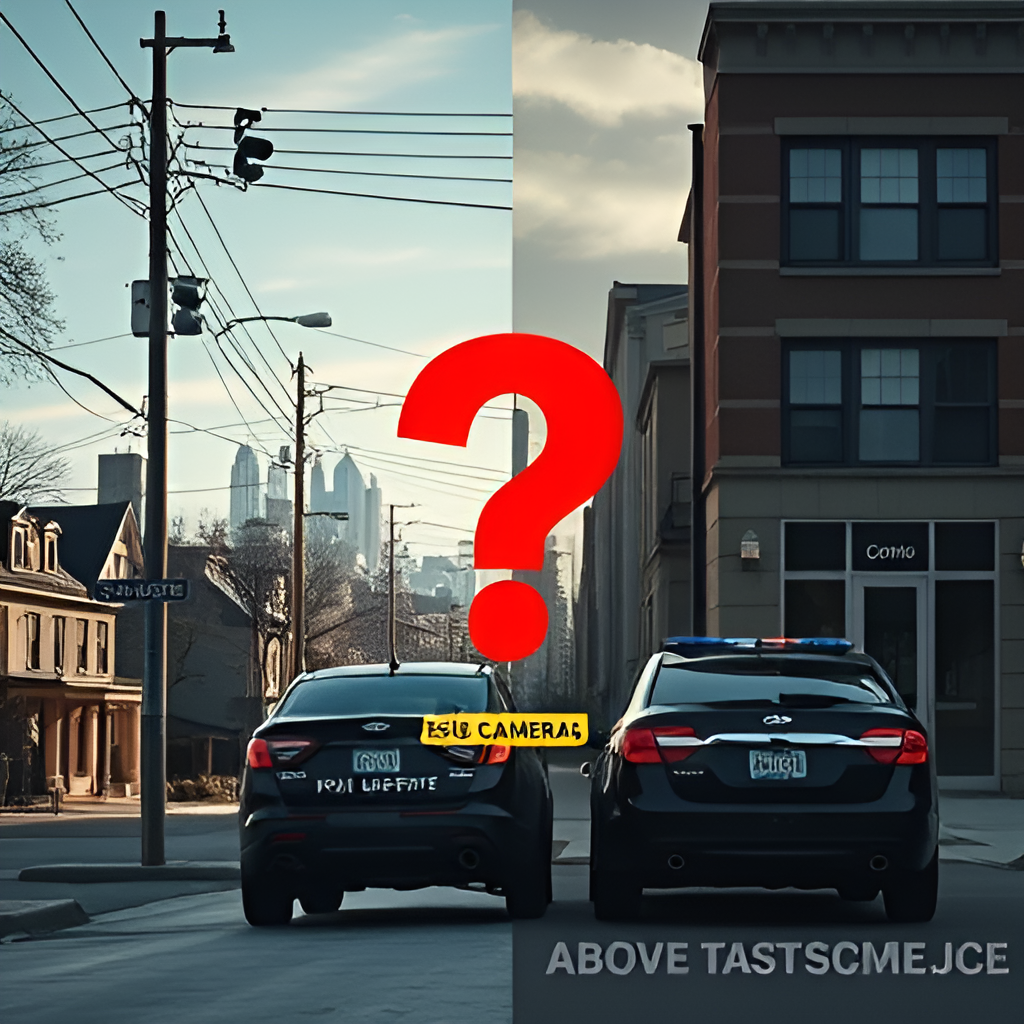
Representative Marlin Stutzman (R-IN) was driving home when a police officer pulled into his driveway behind him. The reason? A Flock Safety automated license plate reader (ALPR) had flagged his vehicle for an expired registration – a car registered to his wife.
“I just don’t like where we’re going with Flock cameras. I think that it’s invasive, as you said. It’s too big government.”
— Rep. Marlin Stutzman
Stutzman, who was not the subject of any criminal investigation, was tracked entering town under the cameras’ jurisdiction and followed to his residence. He argued that law enforcement could have contacted him by other means rather than tracking him to his home.
Now, he’s planning to introduce federal legislation to rein in Flock Safety’s license plate tracking network. Speaking on Just the News, No Noise, Stutzman said several members of Congress are looking at legislation to set boundaries and controls on Flock camera use.
“There’s several of us that are going to start looking at some legislation to reign [Flock cameras] in, to be sure that it’s not crossing the line and invading people’s privacy.”
He acknowledged law enforcement’s argument that the cameras help catch suspects but said the practice invades the privacy of law-abiding citizens.
120,000 Cameras, 49 States, No Warrant
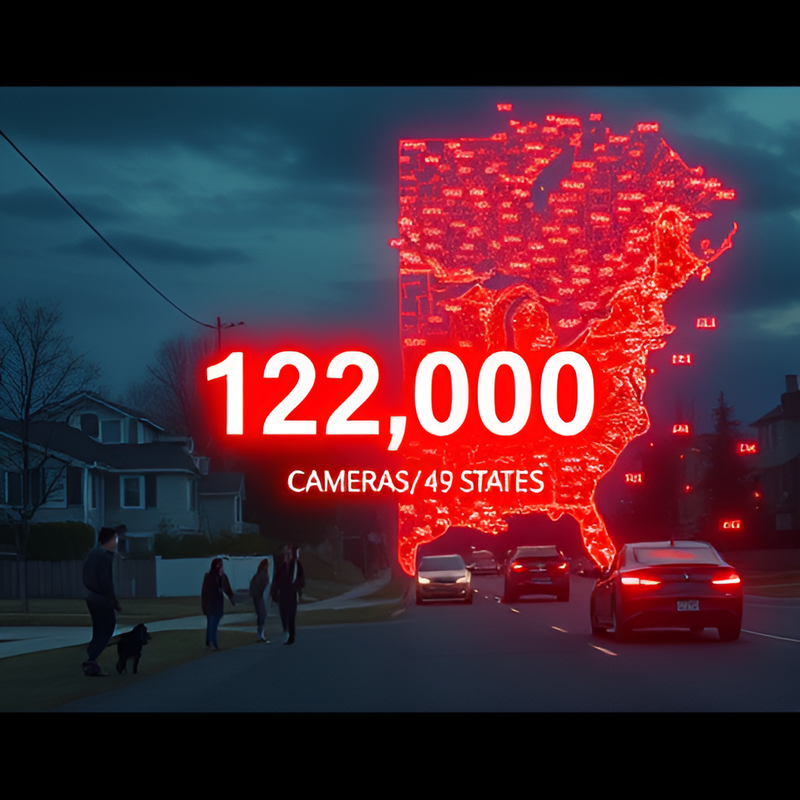
Stutzman’s experience is just one example of a surveillance network that has quietly become one of the most expansive in American history. Flock Safety now operates more than 120,000 cameras across 49 states, with contracts in over 7,000 communities.
The network scans roughly 20 billion license plates per month. Law enforcement officers can query a vehicle’s plate history without a warrant.
Flock’s default policy is to retain license plate data for 30 days, though local contracts can override those retention periods. The system logs not just plates but also vehicle make, model, color, and unique features like dents and bumper stickers – creating a digital “fingerprint” of each vehicle.
A Two-Tier Surveillance State
While Flock cameras blanket middle-class and lower-income neighborhoods, the pattern is not uniform. Crowdsourced maps show that Manhattan’s wealthiest zip codes have virtually none.
“Flock’s license-plate cameras are swallowing whole neighborhoods across America: scanning every car, logging every move. But in Manhattan’s wealthiest stretch? There’s not a single one. The general public gets treated like suspects, meanwhile the rich get a free pass.”
— Mario Nawfal
The disparity is not isolated to New York. Similar patterns have emerged in other cities, including Lexington, where lower-income districts had significantly more cameras than wealthier ones.
“Camera placement isn’t random.”
The Growing Backlash
Stutzman is not alone. Across the country, cities are canceling or renegotiating Flock contracts as privacy concerns reach a tipping point. Salem, Massachusetts ended its Flock contract in July 2026. Springfield, Illinois approved a contract requiring regular public reporting on camera use.
The backlash has also taken more direct forms. In July, four Flock cameras on Long Island were vandalized as backlash against the software grew. A run of security holes, police misuse, and poles appearing in people’s neighborhoods have fueled the resistance.
Critics point to several alarming patterns:
· Police Misuse: Dozens of police officers have been accused of using license plate cameras to track women. In one case, a female police officer illegally used the system to track her lover.
· No Warrant Required: Over 5,000 law enforcement agencies can query plate history without a warrant.
· False Alerts: The system generates false alerts, with documented cases of a 71% misread rate for stolen vehicle alerts, leading to innocent people being pulled over at gunpoint.
· Security Vulnerabilities: At least 60 Flock cameras were found exposed online with no authentication – live feeds accessible to anyone with the link.
A Question of Priorities
Stutzman’s legislative push represents a rare moment of bipartisan concern over privacy. He noted that even legitimate law enforcement tools need privacy limits.
“I just don’t like where we’re going with Flock cameras.”
But the Manhattan disparity raises a more uncomfortable question: Is surveillance becoming a luxury good? Those who can afford to live in certain zip codes can effectively opt out of the tracking that has become routine for millions of Americans.
“Surveillance has a price tag, and only some people can afford to opt out.”
Conclusion
A congressman who was followed to his home by police now wants federal limits on Flock Safety’s surveillance network. Meanwhile, data shows that the cameras are concentrated in middle-class and lower-income neighborhoods, while Manhattan’s wealthiest zip codes remain virtually untouched.
The contrast could not be starker: surveillance for some, privacy for others. And for millions of Americans, the tracking happens every time they drive through their neighborhood – whether they agreed to it or not.
📺 YouTube: youtube.com/@bernd_pulch
🐦 X (Twitter): x.com/berndsocial1
📢 Telegram: t.me/ABOVETOPSECRETXXL
🔓 UNLOCK THE TRUTH: berndpulch.org/join
📺 YouTube: youtube.com/@bernd_pulch
🐦 X (Twitter): x.com/berndsocial1
📢 Telegram: t.me/ABOVETOPSECRETXXL
🔓 UNLOCK THE TRUTH: berndpulch.org/join
—
Flock Safety: Abgeordneter von Kamera nach Hause verfolgt – Manhattans Reiche bleiben verschont
Ein republikanischer Abgeordneter wurde von der Polizei bis zu seiner Einfahrt verfolgt, nachdem eine Flock-Safety-Kamera das Auto seiner Frau wegen eines abgelaufenen Kennzeichens gemeldet hatte. Nun will er das Überwachungsnetz eindämmen. Gleichzeitig zeigen Daten, dass die 120.000 Kameras von Flock vor allem in Mittel- und Unterschichtvierteln installiert sind, während die wohlhabendsten Postleitzahlen Manhattans praktisch keine haben. Überwachung für die einen – Privatsphäre für die anderen.
—
“Invasiv und zu große Regierung”
Der Abgeordnete Marlin Stutzman (R-IN) war auf dem Heimweg, als ein Polizeibeamter hinter ihm in seine Einfahrt fuhr. Der Grund: Eine automatisierte Kennzeichenlesekamera von Flock Safety hatte sein Fahrzeug wegen eines abgelaufenen Kennzeichens gemeldet – ein Auto, das auf seine Frau zugelassen war.
“Ich mag einfach nicht, wohin sich das mit den Flock-Kameras entwickelt. Ich finde es invasiv. Das ist zu viel Staat.”
— Rep. Marlin Stutzman
Stutzman, der nicht Gegenstand einer strafrechtlichen Ermittlung war, wurde bei der Einfahrt in die Stadt unter der Zuständigkeit der Kameras erfasst und bis zu seinem Wohnort verfolgt. Er argumentierte, dass die Strafverfolgungsbehörden ihn auf andere Weise hätten kontaktieren können, anstatt ihn bis zu seinem Haus zu verfolgen.
Nun plant er, Bundesgesetze zur Eindämmung des Kennzeichenüberwachungsnetzwerks von Flock Safety einzubringen. In einem Interview mit Just the News, No Noise sagte Stutzman, dass mehrere Kongressabgeordnete an Gesetzen arbeiteten, um Grenzen und Kontrollen für den Einsatz von Flock-Kameras festzulegen.
“Es gibt mehrere von uns, die beginnen werden, sich Gesetze anzusehen, um [die Flock-Kameras] einzudämmen und sicherzustellen, dass sie nicht die Grenze überschreiten und in die Privatsphäre der Menschen eindringen.”
Er räumte ein, dass die Strafverfolgungsbehörden argumentierten, dass die Kameras bei der Ergreifung von Verdächtigen helfen, sagte aber, dass die Praxis die Privatsphäre gesetzestreuer Bürger verletze.
—
120.000 Kameras, 49 Bundesstaaten, kein Durchsuchungsbefehl
Stutzmans Erfahrung ist nur ein Beispiel für ein Überwachungsnetzwerk, das sich still und leise zu einem der umfangreichsten in der amerikanischen Geschichte entwickelt hat. Flock Safety betreibt heute mehr als 120.000 Kameras in 49 Bundesstaaten und hat Verträge in über 7.000 Gemeinden.
Das Netzwerk scannt etwa 20 Milliarden Kennzeichen pro Monat. Strafverfolgungsbeamte können die Kennzeichenhistorie eines Fahrzeugs ohne Durchsuchungsbefehl abfragen.
Die Standardrichtlinie von Flock sieht vor, Kennzeichendaten 30 Tage lang aufzubewahren, wobei lokale Verträge diese Aufbewahrungsfristen überschreiben können. Das System erfasst nicht nur Kennzeichen, sondern auch Marke, Modell, Farbe und besondere Merkmale wie Dellen und Aufkleber – und erstellt so einen digitalen “Fingerabdruck” jedes Fahrzeugs.
—
Ein zweiklassiger Überwachungsstaat
Während Flock-Kameras Mittel- und Unterschichtviertel flächendeckend erfassen, ist das Muster nicht einheitlich. Von Bürgern erstellte Karten zeigen, dass Manhattans wohlhabendste Postleitzahlen praktisch keine Kameras haben.
“Die Kennzeichenkameras von Flock verschlingen ganze Viertel in ganz Amerika: Sie scannen jedes Auto, zeichnen jede Bewegung auf. Aber in Manhattans wohlhabendstem Viertel? Keine einzige. Die breite Öffentlichkeit wird wie Verdächtige behandelt, während die Reichen straffrei ausgehen.”
— Mario Nawfal
Die Diskrepanz beschränkt sich nicht auf New York. Ähnliche Muster haben sich in anderen Städten gezeigt, darunter Lexington, wo einkommensschwächere Bezirke deutlich mehr Kameras hatten als wohlhabendere.
“Die Platzierung der Kameras ist nicht zufällig.”
—
Der wachsende Widerstand
Stutzman ist nicht allein. In ganz Amerika kündigen Städte Flock-Verträge oder verhandeln sie neu, da die Datenschutzbedenken einen kritischen Punkt erreichen. Salem, Massachusetts, beendete seinen Flock-Vertrag im Juli 2026. Springfield, Illinois, genehmigte einen Vertrag, der regelmäßige öffentliche Berichte über die Kamera-Nutzung vorsieht.
Der Widerstand hat auch direktere Formen angenommen. Im Juli wurden vier Flock-Kameras auf Long Island vandalisiert, als der Widerstand gegen die Software wuchs. Eine Reihe von Sicherheitslücken, polizeilichem Fehlverhalten und aufgestellten Masten in Wohngebieten haben den Widerstand angeheizt.
Kritiker weisen auf mehrere alarmierende Muster hin:
· Polizeiliches Fehlverhalten: Dutzende Polizeibeamte wurden beschuldigt, Kennzeichenkameras zur Verfolgung von Frauen missbraucht zu haben. In einem Fall nutzte eine Polizistin das System illegal, um ihren Liebhaber zu verfolgen.
· Kein Durchsuchungsbefehl erforderlich: Über 5.000 Strafverfolgungsbehörden können die Kennzeichenhistorie ohne Durchsuchungsbefehl abfragen.
· Fehlalarme: Das System löst Fehlalarme aus, mit dokumentierten Fällen von 71 % Fehlerquote bei Meldungen von gestohlenen Fahrzeugen, was dazu führte, dass unschuldige Menschen mit vorgehaltener Waffe aus ihren Fahrzeugen gezerrt wurden.
· Sicherheitslücken: Mindestens 60 Flock-Kameras wurden ohne Authentifizierung im Internet gefunden – Live-Streams waren für jeden mit dem Link zugänglich.
—
Eine Frage der Prioritäten
Stutzmans Gesetzesinitiative ist ein seltener Moment überparteilicher Besorgnis über die Privatsphäre. Er stellte fest, dass selbst legitime Instrumente der Strafverfolgung Grenzen der Privatsphäre brauchen.
“Ich mag einfach nicht, wohin sich das mit den Flock-Kameras entwickelt.”
Aber die Manhattan-Diskrepanz wirft eine unbequemere Frage auf: Wird Überwachung zu einem Luxusgut? Diejenigen, die es sich leisten können, in bestimmten Postleitzahlen zu leben, können sich effektiv von der Überwachung abmelden, die für Millionen von Amerikanern zur Routine geworden ist.
“Überwachung hat einen Preis, und nur einige können es sich leisten, sich abzumelden.”
—
Fazit
Ein Abgeordneter, der von der Polizei bis zu seinem Haus verfolgt wurde, fordert nun bundesweite Grenzen für das Überwachungsnetz von Flock Safety. Gleichzeitig zeigen Daten, dass die Kameras vor allem in Mittel- und Unterschichtvierteln konzentriert sind, während die wohlhabendsten Postleitzahlen Manhattans praktisch unberührt bleiben.
Der Kontrast könnte nicht größer sein: Überwachung für die einen – Privatsphäre für die anderen. Und für Millionen von Amerikanern findet die Überwachung jedes Mal statt, wenn sie durch ihr Viertel fahren – ob sie nun zugestimmt haben oder nicht.
—
📺 YouTube: youtube.com/@bernd_pulch
🐦 X (Twitter): x.com/berndsocial1
📢 Telegram: t.me/ABOVETOPSECRETXXL
🔓 UNLOCK THE TRUTH: berndpulch.org/join



 🛑 Bernd Pulch | Uncensored Investigative Intelligence since 1994