


AfD Hits 43 Percent in Saxony-Anhalt Poll – Absolute Majority Elusive, Coalition Crisis Looms

AfD Shatters Poll Records in Saxony-Anhalt: 43 Percent – Coalition Crisis Looms

Just four weeks before the state election in Saxony-Anhalt, the AfD stands at 43 percent – a record high that makes it by far the strongest political force. However, an absolute majority remains out of reach. The CDU has crashed to 23 percent, while the FDP and BSW are fighting to enter the state parliament. The question is no longer whether the AfD will win, but how—and whether—a government can be formed.


The Poll Shock

The new survey by polling institute Pollytix on behalf of the organization Campact has caused a stir:

· AfD: 43 percent (+22.2 percentage points compared to the 2021 election)
· CDU: 23 percent (-14.1 percentage points)
· Left Party: 13 percent
· SPD: 7 percent
· Greens: 5 percent
· BSW: 4 percent
· FDP: 2 percent

A total of 2,604 eligible voters were surveyed by phone and online from August 3 to 8, 2026. The AfD’s massive 22.2 percentage point increase compared to the 2021 election is only one side of the coin: the CDU has collapsed by 14.1 percentage points, losing nearly a third of its previous voter potential.


The Coalition Problem

Despite the historic result, the AfD falls short of an absolute majority at 43 percent. A governing majority is not in sight.

The decisive question is: Who could govern with the AfD?

· The CDU has repeatedly ruled out cooperation with the AfD.
· The Left Party, SPD, and Greens categorically reject a coalition with the AfD.
· The BSW and FDP would fail to clear the five-percent hurdle and would not be represented in the state parliament.

The scenario of a CDU-SPD-Greens coalition — the so-called “Kenya Coalition” — would reach only 35 percent combined, falling far short of a majority. Without the AfD, forming a government based on this poll appears mathematically nearly impossible.


The Reactions

Campact still sees hope for the “democratic parties”. Executive Director Felix Kolb stressed: “Nothing is decided yet: an AfD government is not an automatic outcome in Saxony-Anhalt.” At the same time, he acknowledged that among the remaining 13 percent of undecided voters, there is “significant potential”.

AfD lead candidate Alice Weidel commented on the result in her characteristic style: “The single-party government is getting closer” — an assessment that, given the 43 percent, is at least understandable from the party’s perspective.


The Comparative Picture

The Pollytix poll does not represent the AfD’s highest value in Saxony-Anhalt. Other institutes have reached similar but slightly lower results:

· Insa: AfD at 42 percent, CDU at 22 percent
· Infratest dimap: AfD at 41 percent, CDU at 24 percent

Nevertheless, the trend is unmistakable. The AfD has established itself as the dominant political force in Saxony-Anhalt. The CDU under Minister President Sven Schulze continues to lose ground, while the smaller parties fight for survival.


A Political Earthquake

The state election on September 6, 2026, could permanently alter Germany’s political landscape. An AfD with 43 percent in the east — this is not just a regional signal, but a national one.

The real question, however, is: Who will govern with whom? And if no one will govern with the AfD, but no one can form a majority without them — then what?

Saxony-Anhalt could become a test case for a minority government. Or it could lead to a snap election. The coming weeks will determine how this political earthquake unfolds.


📺 YouTube: youtube.com/@bernd_pulch
🐦 X (Twitter): x.com/berndsocial1
📢 Telegram: t.me/ABOVETOPSECRETXXL
🔓 UNLOCK THE TRUTH: berndpulch.org/join
AfD bricht alle Rekorde: 43 Prozent in Sachsen-Anhalt – Regierungsbildung offen

Die AfD steht knapp vier Wochen vor der Landtagswahl in Sachsen-Anhalt bei 43 Prozent – ein Rekordwert, der die Partei zur mit Abstand stärksten Kraft macht. Eine absolute Mehrheit bleibt jedoch außer Reichweite. Die CDU stürzt auf 23 Prozent ab, während die FDP und das BSW um den Einzug in den Landtag bangen müssen. Die Frage ist nicht mehr, ob die AfD gewinnt, sondern wie und ob sich eine Regierung bilden lässt.


Der Umfrage-Knall

Die neue Umfrage des Meinungsforschungsinstituts Pollytix im Auftrag der Organisation Campact sorgt für Aufsehen:

· AfD: 43 Prozent (+22,2 Prozentpunkte im Vergleich zur Wahl 2021)
· CDU: 23 Prozent (-14,1 Prozentpunkte)
· Linke: 13 Prozent
· SPD: 7 Prozent
· Grüne: 5 Prozent
· BSW: 4 Prozent
· FDP: 2 Prozent

Befragt wurden 2.604 Wahlberechtigte vom 3. bis 8. August 2026 telefonisch und online. Der massive Anstieg der AfD um 22,2 Prozentpunkte im Vergleich zur Wahl 2021 ist dabei nur die eine Seite der Medaille: Die CDU bricht um 14,1 Prozentpunkte ein und verliert damit fast ein Drittel ihres bisherigen Wählerpotenzials.


Das Problem der Regierungsbildung

Trotz des historischen Ergebnisses: Die AfD verfehlt mit 43 Prozent die absolute Mehrheit. Eine eigene Regierungsmehrheit ist nicht in Sicht.

Die entscheidende Frage lautet: Wer könnte mit der AfD regieren?

· Die CDU hat eine Zusammenarbeit mit der AfD mehrfach ausgeschlossen.
· Die Linke, SPD und Grüne schließen eine Koalition mit der AfD ohnehin kategorisch aus.
· BSW und FDP scheitern an der Fünf-Prozent-Hürde und wären im Landtag nicht vertreten.

Das Szenario einer Koalition aus CDU, SPD und Grünen – der sogenannten “Kenya-Koalition” – würde mit zusammengerechnet 35 Prozent der Stimmen nicht einmal annähernd eine Mehrheit erreichen. Eine Regierungsbildung ohne die AfD erscheint auf Basis dieser Umfrage mathematisch nahezu unmöglich.


Die Reaktionen

Campact sieht noch Hoffnung für die “demokratischen Parteien”. Vorstand Felix Kolb betonte: “Noch ist nichts entschieden: Eine AfD-Regierung ist kein Automatismus in Sachsen-Anhalt”. Zugleich räumte er ein, dass unter den noch 13 Prozent Unentschlossenen ein “erhebliches Potenzial” liege.

Die AfD-Spitzenkandidatin Alice Weidel kommentierte das Ergebnis in gewohnter Manier: “Die Alleinregierung rückt näher” – eine Einschätzung, die angesichts der 43 Prozent zumindest aus Sicht der Partei nachvollziehbar ist.


Das Vergleichsbild

Die Pollytix-Umfrage stellt nicht den Höchstwert der AfD in Sachsen-Anhalt dar. Weitere Institute kommen zu ähnlichen, aber etwas niedrigeren Ergebnissen:

· Insa: AfD bei 42 Prozent, CDU bei 22 Prozent
· Infratest dimap: AfD bei 41 Prozent, CDU bei 24 Prozent

Dennoch: Der Trend ist unverkennbar. Die AfD hat sich in Sachsen-Anhalt als dominierende politische Kraft etabliert. Die CDU unter Ministerpräsident Sven Schulze verliert weiter an Boden, während die kleineren Parteien ums Überleben kämpfen.


Ein politisches Erdbeben

Die Landtagswahl am 6. September 2026 könnte die politische Landkarte Deutschlands nachhaltig verändern. Eine AfD mit 43 Prozent im Osten – das ist nicht nur ein regionales, sondern ein bundespolitisches Signal.

Die eigentliche Frage lautet jedoch: Wer regiert mit wem? Und wenn niemand mit der AfD regieren will, aber niemand ohne sie eine Mehrheit hat – was dann?

Sachsen-Anhalt könnte zum Testfall für eine Minderheitsregierung werden. Oder zu einer Neuwahl führen. Die kommenden Wochen werden entscheiden, wie dieses politische Erdbeben ausgeht.


📺 YouTube: youtube.com/@bernd_pulch
🐦 X (Twitter): x.com/berndsocial1
📢 Telegram: t.me/ABOVETOPSECRETXXL
🔓 UNLOCK THE TRUTH: berndpulch.org/join

Fico Slams EU Hypocrisy: Russian Luxury Fur Gets Special Pass While Essential Goods Are Blocked

📺 YouTube: youtube.com/@bernd_pulch
🐦 X (Twitter): x.com/berndsocial1
📢 Telegram: t.me/ABOVETOPSECRETXXL
🔓 UNLOCK THE TRUTH: berndpulch.org/join


Fico Slams EU Hypocrisy: Russian Luxury Fur Gets a Special Pass While Essential Goods Are Blocked

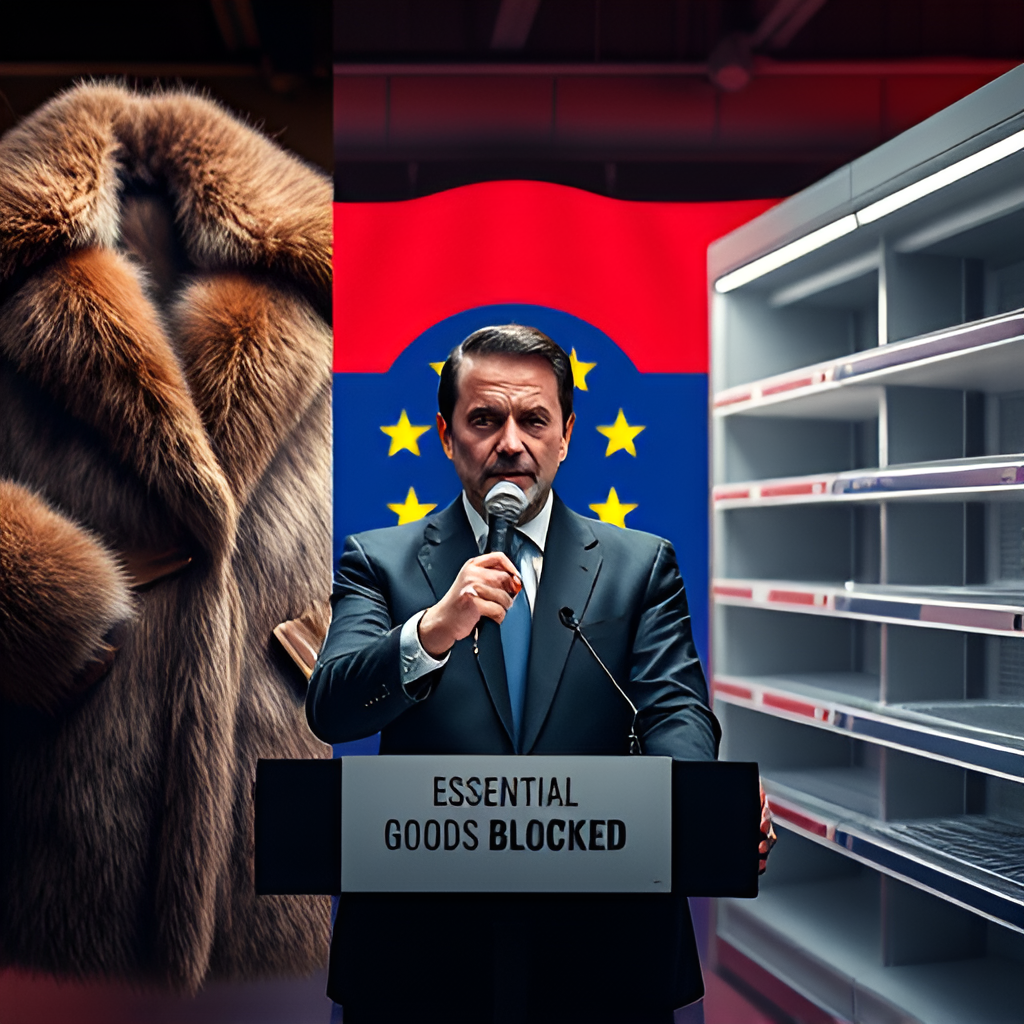
Slovak Prime Minister Robert Fico has launched a blistering attack on the European Commission, accusing it of blatant hypocrisy after it exempted Russian luxury sable fur from sanctions while maintaining bans on essential goods. “Only hypocrites could come up with this,” Fico declared.


“EU Hypocrisy Is Blooming Like a Cherry Tree in May”

In a video message posted on Facebook, Fico tore into the European Commission’s decision to lift sanctions on Russian sable fur—a move that allows the import of pelts used to make fur coats worth up to €100,000.

“EU hypocrisy is blooming like a cherry tree in May. The import of goods from Russia that our industry or daily life needs is banned, even though it is hard to find a substitute and it is much more expensive. But this will not apply to sable fur. There will be as much of it as needed, as if it were an everyday grocery like coffee or sugar.”

Fico highlighted the absurdity of the situation: the Commission is blocking goods critical to European industry and daily life, yet making a special exception for luxury items.

“This could only be dreamed up by a hypocritical European Commission.”


The Luxury Loophole

The controversy stems from the 21st package of EU sanctions against Russia, introduced in late July 2026. The initial ban, part of the 20th sanctions package in April 2026, had prohibited the import of both raw and processed furs, including sable.

However, following pressure from Italy and Greece—major European buyers of fur—the Commission reversed its decision and exempted raw sable fur from the sanctions. The ban on finished fur products remains in place.

The Commission justified the exemption by claiming that European luxury fur manufacturers have no alternative source for these rare pelts. Russia holds a dominant position in the global sable fur market.


Sanctions That Hurt Europe More Than Russia

Fico’s criticism goes beyond the fur exemption. He argues that the entire sanctions regime is damaging European economies more than it is hurting Russia.

“Goods that we need for our industry, or goods that we need for everyday life, are banned from being imported from Russia, even at the cost of it being difficult to replace them with supplies from other countries and at significantly higher costs.”

The Slovak Prime Minister has repeatedly warned that individual EU restrictions are primarily harming the economies of European countries themselves. Slovakia, which remains heavily dependent on Russian energy, has been particularly vocal about the economic toll of the sanctions.


Context: A Pattern of Exemptions

This is not the first time the EU has carved out exceptions to its sanctions regime. In the same 21st sanctions package, the EU also dropped a proposed ban on Russian fish and seafood. EU foreign policy chief Kaja Kallas acknowledged that the issue of fish had an unexpectedly large impact on international relations.

Fico’s opposition to the EU’s sanctions policy is well-documented. He has previously blocked or delayed sanctions packages, demanding guarantees on gas prices and compensation for potential legal disputes with Gazprom.


A Warning to Brussels

Fico’s criticism highlights a growing frustration among some EU member states with the bloc’s sanctions policy. The decision to exempt luxury fur while blocking essential goods has exposed what many see as double standards at the heart of Brussels’ approach.

“Only hypocrites could come up with this.”

For Fico, the message is clear: if the EU is serious about sanctions, it should apply them consistently—not carve out exceptions for luxury goods while ordinary Europeans and industries bear the cost.


📺 YouTube: youtube.com/@bernd_pulch
🐦 X (Twitter): x.com/berndsocial1
📢 Telegram: t.me/ABOVETOPSECRETXXL
🔓 UNLOCK THE TRUTH: berndpulch.org/join

📺 YouTube: youtube.com/@bernd_pulch
🐦 X (Twitter): x.com/berndsocial1
📢 Telegram: t.me/ABOVETOPSECRETXXL
🔓 UNLOCK THE TRUTH: berndpulch.org/join


Fico wirft EU Heuchelei vor – Russische Luxuspelze erhalten Sonderpass

Der slowakische Ministerpräsident Robert Fico hat die Europäische Kommission scharf attackiert und ihr glatte Heuchelei vorgeworfen – weil sie russische Zobelpelze von den Sanktionen ausgenommen hat, während sie gleichzeitig Güter des täglichen Bedarfs blockiert. „Nur Heuchler können sich das ausdenken“, erklärte Fico.


„EU-Heuchelei blüht wie ein Kirschbaum im Mai“

In einer Videobotschaft auf Facebook griff Fico die Entscheidung der Europäischen Kommission scharf an, die Sanktionen gegen russische Zobelpelze aufzuheben – ein Schritt, der die Einfuhr von Fellen ermöglicht, aus denen Pelzmäntel im Wert von bis zu 100.000 Euro hergestellt werden.

„Die EU-Heuchelei blüht wie ein Kirschbaum im Mai. Die Einfuhr von Waren aus Russland, die unsere Industrie oder unser tägliches Leben braucht, ist verboten, obwohl es schwierig ist, einen Ersatz zu finden und es viel teurer ist. Aber das wird nicht für Zobelpelze gelten. Davon wird es so viel geben wie nötig, als wäre es ein alltägliches Lebensmittel wie Kaffee oder Zucker.“

Fico verdeutlichte die Absurdität der Situation: Die Kommission blockiere Güter, die für die europäische Industrie und den Alltag entscheidend seien, mache aber gleichzeitig eine Sonderausnahme für Luxusartikel.

„Das kann sich nur eine heuchlerische Europäische Kommission ausdenken.“


Die Luxuslücke

Die Kontroverse geht auf das 21. Sanktionspaket der EU gegen Russland zurück, das Ende Juli 2026 eingeführt wurde. Das ursprüngliche Verbot, das im 20. Sanktionspaket vom April 2026 verhängt worden war, hatte die Einfuhr von rohen und verarbeiteten Pelzen, einschließlich Zobel, untersagt.

Nach Druck aus Italien und Griechenland – bedeutenden europäischen Pelzkäufern – kehrte die Kommission jedoch ihre Entscheidung um und nahm rohe Zobelpelze von den Sanktionen aus. Das Verbot von Fertigpelzprodukten bleibt bestehen.

Die Kommission rechtfertigte die Ausnahme damit, dass europäische Luxuspelzhersteller keine alternative Quelle für diese seltenen Felle hätten. Russland hat eine dominante Stellung auf dem globalen Zobelpelzmarkt.


Sanktionen, die Europa mehr schaden als Russland

Ficos Kritik geht über die Pelzausnahme hinaus. Er argumentiert, dass das gesamte Sanktionsregime die europäischen Volkswirtschaften mehr schädige als Russland.

„Güter, die wir für unsere Industrie oder für den Alltag brauchen, dürfen nicht mehr aus Russland importiert werden – selbst wenn es schwierig ist, sie durch Lieferungen aus anderen Ländern zu ersetzen und die Kosten deutlich höher sind.“

Der slowakische Ministerpräsident hat wiederholt davor gewarnt, dass die EU-Beschränkungen in erster Linie die Wirtschaft der europäischen Länder selbst schädigten. Die Slowakei, die weiterhin stark von russischer Energie abhängig ist, hat sich besonders kritisch zu den wirtschaftlichen Folgen der Sanktionen geäußert.


Kontext: Ein Muster von Ausnahmen

Dies ist nicht das erste Mal, dass die EU Ausnahmen von ihrem Sanktionsregime macht. Im selben 21. Sanktionspaket ließ die EU auch ein geplantes Verbot von russischem Fisch und Meeresfrüchten fallen. Die EU-Außenbeauftragte Kaja Kallas räumte ein, dass das Thema Fisch unerwartet große Auswirkungen auf die internationalen Beziehungen gehabt habe.

Ficos Opposition zur EU-Sanktionspolitik ist gut dokumentiert. Er hat zuvor Sanktionspakete blockiert oder verzögert und Garantien für Gaspreise sowie Entschädigungen für mögliche Rechtsstreitigkeiten mit Gazprom gefordert.


Eine Warnung an Brüssel

Ficos Kritik verdeutlicht die wachsende Frustration einiger EU-Mitgliedstaaten über die Sanktionspolitik des Blocks. Die Entscheidung, Luxuspelze zu befreien, während lebenswichtige Güter blockiert werden, hat offengelegt, was viele als Doppelmoral im Herzen des Brüsseler Ansatzes sehen.

„Nur Heuchler können sich das ausdenken.“

Für Fico ist die Botschaft klar: Wenn die EU es mit Sanktionen ernst meine, müsse sie sie konsequent anwenden – und nicht Ausnahmen für Luxusgüter machen, während normale Europäer und die Industrie die Kosten tragen.


📺 YouTube: youtube.com/@bernd_pulch
🐦 X (Twitter): x.com/berndsocial1
📢 Telegram: t.me/ABOVETOPSECRETXXL
🔓 UNLOCK THE TRUTH: berndpulch.org/join

How Morocco’s Migrant Weapon Forced U.S. Western Sahara Recognition – The Geopolitical Coup Explained

📺 YouTube: youtube.com/@bernd_pulch
🐦 X (Twitter): x.com/berndsocial1
📢 Telegram: t.me/ABOVETOPSECRETXXL
🔓 UNLOCK THE TRUTH: berndpulch.org/join


What Is the Difference Between a Conspiracy Theory and the Truth? These Days, Just Hours.

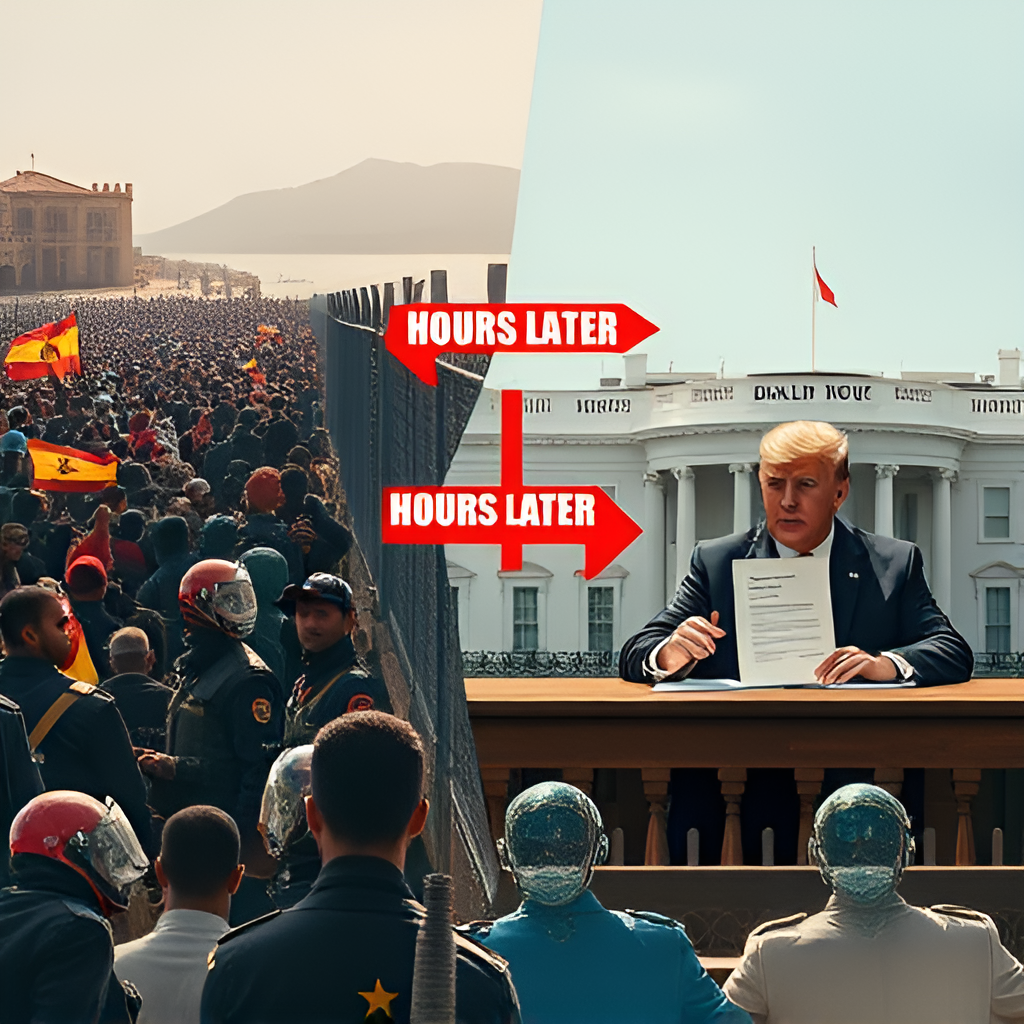
The events of recent days in Ceuta and Washington read like a script that few would have thought possible. A geopolitical coup in which Morocco used tens of thousands of migrants as a weapon – and hours later, the expected payoff from the White House arrived.


The Scenario: Migrants as a Geopolitical Weapon

On July 31, 2026, an unprecedented scenario unfolded over the Spanish enclave of Ceuta. Within just two to three days, an estimated 60,000 to 70,000 migrants overwhelmed the border from Morocco – most of them swimming around the breakwaters or scaling the border fences. The death toll rose to at least 72.

While the Spanish government under Pedro Sánchez spoke of an “attack” and a “violation of Spain’s territorial integrity,” the official response from Rabat remained conspicuously restrained. Morocco blamed disinformation on social media and human smuggling networks for the surge – while simultaneously emphasizing that Morocco posed “no threat to Ceuta or the rest of Spain.”

Yet the timing of the events suggests a different interpretation.


The Reward from Washington – Just Hours Later

On August 1, 2026, Morocco’s Throne Day, U.S. President Donald Trump sent a message to King Mohammed VI of Morocco. It read:

“The United States is unequivocal: we recognize Moroccan sovereignty over Western Sahara and support Morocco’s serious, credible, and realistic autonomy proposal as the only basis for a just and lasting solution.”

U.S. recognition of Moroccan sovereignty over Western Sahara was thus officially reaffirmed. Trump also ordered the promotion of economic and social development cooperation with Morocco, including in the Western Sahara territory.

The timing is remarkable: within hours of the migrant surge on Ceuta, Washington publicly confirmed its support for Morocco’s most important foreign policy objective.


The Strategic Dimension: Gibraltar and the Strait

The dispute over Ceuta and Western Sahara is not an isolated conflict. It is embedded in a strategic struggle for control of the Strait of Gibraltar – one of the world’s most important sea routes, through which much of Israeli and international shipping passes from the Mediterranean to the Atlantic.

Spain effectively controls both sides of the strait with Ceuta and Gibraltar – a strategic position that would allow Madrid to control or, in the event of conflict, block shipping. This is precisely the problem from the perspective of Israel and its allies.

A Morocco under Israeli and U.S. influence on the southern side of the Strait of Gibraltar would be the far more favorable constellation from this perspective. Morocco and Israel had already signed a security agreement in 2021 and agreed on a joint military work plan in January 2026.


The Reward for Hybrid War

The logic behind the events seems clear:

1. Morocco uses tens of thousands of migrants as a weapon against Spain to destabilize Madrid and pressure Sánchez – possibly with the goal of forcing his resignation.
2. Hours later, the Trump administration confirms its support for Morocco’s claim to Western Sahara – the Moroccan monarchy’s most important foreign policy priority.
3. The strategic winner is the alliance of the U.S., Israel, and Morocco, which expands its control over the Strait of Gibraltar and weakens an adversary (Spain) that had refused to join the war against Iran and support Israeli policy.


The Conspiracy Theory That Became True

What initially sounded like a far-fetched conspiracy theory – that Israel and the U.S. want to transfer control of the Strait of Gibraltar from Spain to Morocco – has in recent hours proven to be political reality.

The Spanish government under Pedro Sánchez had refused to provide U.S. military bases for attacks on Iran and had adopted a determined course of protest against Israel. Netanyahu and Trump had identified Sánchez as a genuine adversary.

The migration crisis in Ceuta is no natural disaster. It is a hybrid war waged with the weapon of migration. And the quid pro quo from Washington arrived on time – just hours later.


The Difference Between Theory and Truth

The line between conspiracy theory and geopolitical reality has blurred in recent days. What skeptics would have dismissed as far-fetched speculation just a week ago has become diplomatic fact in the last 48 hours.

The events in Ceuta, the message from Washington, and the strategic realignment in the western Mediterranean form a coherent picture. The question is no longer whether there is a connection – but how far it extends.


📺 YouTube: youtube.com/@bernd_pulch
🐦 X (Twitter): x.com/berndsocial1
📢 Telegram: t.me/ABOVETOPSECRETXXL
🔓 UNLOCK THE TRUTH: berndpulch.org/join

📺 YouTube: youtube.com/@bernd_pulch
🐦 X (Twitter): x.com/berndsocial1
📢 Telegram: t.me/ABOVETOPSECRETXXL
🔓 UNLOCK THE TRUTH: berndpulch.org/join


Was ist der Unterschied zwischen einer Verschwörungstheorie und der Wahrheit? Mittlerweile nur noch Stunden

Die Ereignisse der letzten Tage in Ceuta und Washington lesen sich wie ein Drehbuch, das nur wenige zuvor für möglich gehalten hätten. Ein geopolitischer Coup, bei dem Marokko Zehntausende Migranten als Waffe einsetzt – und Stunden später die erwartete Gegenleistung aus dem Weißen Haus erhält.


Das Szenario: Migranten als geopolitische Waffe

Am 31. Juli 2026 brach ein bisher nie dagewesenes Szenario über die spanische Exklave Ceuta herein. Innerhalb von nur zwei bis drei Tagen überrannten schätzungsweise 60.000 bis 70.000 Migranten die Grenze aus Marokko – die meisten von ihnen schwammen um die Wellenbrecher herum oder überwanden die Grenzzäune. Die Zahl der Todesopfer stieg auf mindestens 72.

Während die spanische Regierung unter Pedro Sánchez von einem “Angriff” und einer “Verletzung der territorialen Integrität Spaniens” sprach, blieb die offizielle Reaktion aus Rabat auffällig verhalten. Marokko machte Desinformation in sozialen Medien und Menschenschmuggel-Netzwerke für den Ansturm verantwortlich – und betonte zugleich, dass Marokko “keine Bedrohung für Ceuta oder den Rest Spaniens” sei.

Doch die zeitliche Abfolge der Ereignisse legt eine andere Interpretation nahe.


Die Belohnung aus Washington – nur Stunden später

Am 1. August 2026, dem marokkanischen Thronfeiertag, sandte US-Präsident Donald Trump eine Botschaft an König Mohammed VI. von Marokko. Darin hieß es:

“Die Vereinigten Staaten sind eindeutig: Wir erkennen die marokkanische Souveränität über die Westsahara an und unterstützen den ernsthaften, glaubwürdigen und realistischen Autonomievorschlag Marokkos als einzige Grundlage für eine gerechte und dauerhafte Lösung.”

Die Anerkennung der marokkanischen Souveränität über die Westsahara durch die USA war damit offiziell bekräftigt. Trump ordnete zudem an, die wirtschaftliche und soziale Entwicklung mit Marokko zu fördern, einschließlich im Gebiet der Westsahara.

Die zeitliche Abfolge ist bemerkenswert: Innerhalb von Stunden nach dem Migrantenansturm auf Ceuta bestätigte Washington öffentlich seine Unterstützung für Marokkos wichtigstes außenpolitisches Anliegen.


Die strategische Dimension: Gibraltar und die Meerenge

Der Streit um Ceuta und die Westsahara ist kein isolierter Konflikt. Er ist eingebettet in ein strategisches Ringen um die Kontrolle der Straße von Gibraltar – einer der wichtigsten Seewege der Welt, über den ein Großteil des israelischen und internationalen Schiffsverkehrs vom Mittelmeer in den Atlantik führt.

Spanien kontrolliert mit Ceuta und Gibraltar faktisch beide Seiten der Meerenge – eine strategische Position, die es Madrid ermöglichen würde, den Schiffsverkehr zu kontrollieren oder im Konfliktfall zu blockieren. Genau das ist das Problem aus Sicht Israels und seiner Verbündeten.

Ein Marokko unter israelischem und US-amerikanischem Einfluss an der Südseite der Straße von Gibraltar wäre aus dieser Perspektive die weitaus bevorzugtere Konstellation. Marokko und Israel haben bereits 2021 ein Sicherheitsabkommen unterzeichnet und im Januar 2026 einen gemeinsamen militärischen Arbeitsplan vereinbart.


Die Belohnung für den hybriden Krieg

Die Logik hinter den Ereignissen scheint klar:

1. Marokko setzt Zehntausende Migranten als Waffe gegen Spanien ein, um Madrid zu destabilisieren und Sánchez unter Druck zu setzen – möglicherweise mit dem Ziel, ihn zum Rücktritt zu zwingen.
2. Stunden später bestätigt die Trump-Administration ihre Unterstützung für Marokkos Anspruch auf die Westsahara – die größte außenpolitische Priorität des marokkanischen Königshauses.
3. Der strategische Gewinner ist das Bündnis aus den USA, Israel und Marokko, das seine Kontrolle über die Straße von Gibraltar ausbaut und einen Gegner (Spanien) schwächt, der sich geweigert hatte, sich dem Krieg gegen den Iran anzuschließen und israelische Politik zu unterstützen.


Die Verschwörungstheorie, die wahr wurde

Was zunächst wie eine abwegige Verschwörungstheorie klang – dass Israel und die USA die Kontrolle über die Straße von Gibraltar von Spanien auf Marokko übertragen wollen – hat sich in den letzten Stunden als politische Realität entpuppt.

Die spanische Regierung unter Pedro Sánchez hatte sich geweigert, US-Militärbasen für Angriffe auf den Iran zur Verfügung zu stellen und war auf einen entschiedenen Protestkurs gegen Israel eingeschwenkt. Netanjahu und Trump hatten in Sánchez einen echten Gegner ausgemacht.

Die Migrationskrise in Ceuta ist keine Naturkatastrophe. Sie ist ein hybrider Krieg, geführt mit der Waffe der Migration. Und die Gegenleistung aus Washington kam pünktlich – nur Stunden später.


Der Unterschied zwischen Theorie und Wahrheit

Die Grenze zwischen Verschwörungstheorie und geostrategischer Realität ist in den letzten Tagen verschwommen. Was Skeptiker noch vor einer Woche als abwegige Spekulation abgetan hätten, wurde in den letzten 48 Stunden zur diplomatischen Tatsache.

Die Ereignisse in Ceuta, die Botschaft aus Washington und die strategische Neuausrichtung im westlichen Mittelmeer fügen sich zu einem kohärenten Bild zusammen. Die Frage ist nicht mehr, ob es eine Verbindung gibt – sondern wie weit sie reicht.


📺 YouTube: youtube.com/@bernd_pulch
🐦 X (Twitter): x.com/berndsocial1
📢 Telegram: t.me/ABOVETOPSECRETXXL
🔓 UNLOCK THE TRUTH: berndpulch.org/join