DATE: AUGUST 24, 2026 CLASSIFICATION: ABOVE TOP SECRET – FOR SUBSCRIBERS ONLY SOURCE: BERNDPULCH.ORG – THE ONLY MEDIA WITH LICENSE TO SPY
🌍 GLOBAL SITUATION REPORT: THE WORLD ON THE BRINK
🔥 TOP STORIES
🇺🇸🇮🇷 U.S. TREASURY ANNOUNCES “ECONOMIC D-DAY” AGAINST IRAN
The United States is preparing the “largest financial offensive” against an adversary – this was announced by U.S. Treasury Secretary Scott Bessent. The measures will include a new round of sanctions against Iran and its trading partners.
“We are now entering the final phase. At dawn begins an economic D-Day – the largest financial offensive ever waged against an adversary.” — Scott Bessent, U.S. Treasury Secretary
Iran has responded with a dramatic threat: if the economic war continues, “not a single drop of oil will be exported, neither through the Strait of Hormuz nor from anywhere else in the Persian Gulf.”
The announcement comes as Pakistan’s mediation mission under Army Chief Asim Munir is in Tehran on Monday.
🇺🇸 TRUMP FIRES BACK AT CANADA – “BENEFITS OF A STATE”
The trade dispute between the U.S. and Canada continues to escalate. President Trump wrote on Truth Social:
“Canada wants the benefits of being a State, without being one!!!”
He accused Canada of imposing “massive Tariffs” on American farmers for years: “No more!!!”
The 50% tariffs on Canadian goods are in effect, while Canada is threatening $28 billion in retaliatory tariffs. The USMCA review process is on the verge of collapse.
🇸🇾🇮🇱 SYRIA AND ISRAEL HOLD U.S.-MEDIATED TALKS IN JORDAN
In a surprising diplomatic development, senior Syrian and Israeli delegations met in Jordan for U.S.-mediated de-escalation talks.
The Syrian delegation was led by Foreign Minister Asaad al-Shaibani and included the heads of General Intelligence and Military Intelligence.
The meeting followed recent Israeli bombing of Syrian territory and aimed to support stability in Syria and the region.
🇮🇷 IRAN DISCOVERS MASSIVE GAS FIELD – WORTH $165 BILLION
Iran has discovered a massive new natural gas field in the southern province of Fars. Oil Minister Mohsen Paknejad announced that the field contains 7.5 trillion cubic feet (212.4 billion cubic meters) of gas reserves – at an extraction rate of approximately 72 to 73 percent, 5.7 trillion cubic feet could be recovered.
The find comes at a critical time: U.S. sanctions are expected to complicate repair work on war-damaged energy infrastructure.
A fast-moving wildfire in Nevada has forced the evacuation of 42,000 people, with another 45,000 on evacuation standby. The “Hawk Fire” threatens the north of Reno, Nevada’s third-largest city.
Local television footage shows flames approaching streets and smoke rising over residential areas.
🇺🇦 ZELENSKY: WAR ELECTIONS WOULD “TEAR UKRAINE APART”
President Volodymyr Zelensky has firmly rejected calls for elections during wartime:
“Elections would be a tsunami for the country that would tear Ukraine apart. My strategy is to bring the country to the end of the war and preserve an independent and sovereign state.”
Zelensky said Ukraine would only be willing to discuss possible elections if partners could provide specific security guarantees.
🇦🇫 GUINEA: 30 DEAD IN LANDFILL COLLAPSE
In Guinea’s capital Conakry, 30 people lost their lives when a landfill collapsed. The dump buried an apartment building and informal shelters beneath it. Rescue operations are ongoing.
🇯🇵 JAPAN: 37 INJURED IN EARTHQUAKE
An earthquake of magnitude 5.9 in Ibaraki Prefecture northeast of Tokyo injured at least 37 people. The quake caused burst water pipes and traffic disruptions.
🇰🇼 KUWAIT STRIPS NATURALIZED CITIZENS OF VOTING RIGHTS
Kuwait has issued a decree stripping naturalized citizens of voting rights – two years after dissolving parliament and launching a massive campaign to revoke citizenship.
🇦🇫 KAZAKHSTAN: NEW GOVERNMENT PARTY WINS ELECTIONS
The newly formed pro-government Adilet Democratic Party won the snap parliamentary elections with 70-72 percent of the vote, consolidating President Kassym-Jomart Tokayev’s influence.
🇺🇦🇳🇴 UKRAINE AND NORWAY SIGN DEFENSE AGREEMENT
President Zelensky and Norwegian Prime Minister Jonas Gahr Store have signed defense and strategic partnership agreements.
🇸🇾 ISRAEL CONDUCTS INCURSION INTO SYRIA
The Israeli army carried out a new incursion into Syria’s Quneitra province and arrested a shepherd, Syrian media report.
🇬🇧 BURNHAM VISITS KYIV
British Prime Minister Andy Burnham will travel to Kyiv on Monday for his first foreign visit since taking office to reaffirm Britain’s support for Ukraine. The visit falls on the 35th anniversary of Ukraine’s independence from the Soviet Union.
🇹🇳 TUNISIA: 11 DEAD OFF THE COAST
Tunisian authorities have recovered the bodies of 11 irregular migrants after their boat sank off the coast of the city of Ben Gardane.
💡 THE ANALYSIS
The world stands at multiple crossroads:
The “Economic D-Day” against Iran could threaten global oil supplies. Iran has already threatened a complete blockade of the Strait of Hormuz – a scenario that could plunge the world economy into recession.
U.S.-Canada trade relations have reached a historic low. Trump’s “51st State” comments have united the Canadian public – and strengthened the Carney government in its hard-line stance.
The de-escalation talks between Syria and Israel are a glimmer of hope – but also a sign that the U.S. is trying to control escalation in the Middle East.
The protests in Poland and the AfD announcements in Germany show: the migration question remains the central political explosive in Europe.
Humanitarian and ecological crises – wildfires in Nevada, the earthquake in Japan, the landfill catastrophe in Guinea – highlight the vulnerability of global infrastructure.
📺 YouTube: youtube.com/@bernd_pulch 🐦 X (Twitter): x.com/berndsocial1 📢 Telegram: t.me/ABOVETOPSECRETXXL 🔓 Unlock the Full Truth: berndpulch.org/join
Share this intelligence – the truth must come to light.
📡 ABOVETOPSECRETXXL – MORGENINTELLIGENZ-BRIEFING
DATUM: 24. AUGUST 2026 KLASSIFIZIERUNG: ABOVE TOP SECRET – NUR FÜR ABONNENTEN QUELLE: BERNDPULCH.ORG – DAS EINZIGE MEDIUM MIT LIZENZ ZUM SPIONIEREN
—
🌍 LAGEBERICHT GLOBAL: DIE WELT AM ABGRUND
—
🔥 TOP-MELDUNGEN
🇺🇸🇮🇷 US-TREASURY KÜNDIGT “ECONOMIC D-DAY” GEGEN IRAN AN
Die USA bereiten die “größte finanzielle Offensive” gegen einen Gegner vor – das kündigte US-Finanzminister Scott Bessent an . Die Maßnahmen werden eine neue Runde von Sanktionen gegen Iran und seine Handelspartner umfassen .
“Wir treten jetzt in die Endphase ein. Bei Tagesanbruch beginnt ein wirtschaftlicher D-Day – die größte finanzielle Offensive, die jemals gegen einen Gegner geführt wurde.” — Scott Bessent, US-Finanzminister
Iran hat darauf mit einer dramatischen Drohung reagiert: Sollte der Wirtschaftskrieg andauern, werde “kein einziger Tropfen Öl exportiert werden, weder durch die Straße von Hormuz noch von irgendwo sonst im Persischen Golf” .
Die Ankündigung kommt, während sich die pakistanische Vermittlungsmission unter Armeechef Asim Munir am Montag in Teheran befindet .
—
🇺🇸 TRUMP KONTERT KANADA – “BENEFITS EINES BUNDESSTAATES”
Der Handelsstreit zwischen den USA und Kanada eskaliert weiter. Präsident Trump schrieb auf Truth Social:
“Kanada will die Vorteile eines Bundesstaates, ohne einer zu sein!!!”
Er warf Kanada vor, seit Jahren “massive Zölle” auf amerikanische Farmer zu erheben: “Nicht mehr!!!”
Die 50% Zölle auf kanadische Waren sind in Kraft, während Kanada mit Vergeltungszöllen von 28 Milliarden Dollar droht. Der USMCA-Überprüfungsprozess steht vor dem Zusammenbruch.
—
🇸🇾🇮🇱 SYRIEN UND ISRAEL FÜHREN US-VERMITTELTE GESPRÄCHE IN JORDANIEN
In einer überraschenden diplomatischen Entwicklung trafen hochrangige syrische und israelische Delegationen in Jordanien zu US-vermittelten Deeskalationsgesprächen zusammen .
Die syrische Delegation wurde von Außenminister Asaad al-Shaibani geleitet und umfasste die Chefs des General Intelligence Directorate und des Military Intelligence .
Das Treffen folgte auf die jüngste israelische Bombardierung syrischen Territoriums und diente der Unterstützung von Stabilität in Syrien und der Region .
—
🇮🇷 IRAN ENTDECKT RIESIGES GASFELD – WERT 165 MILLIARDEN DOLLAR
Iran hat ein gewaltiges neues Erdgasfeld in der südlichen Provinz Fars entdeckt. Ölminister Mohsen Paknejad gab bekannt, dass das Feld über 7,5 Billionen Kubikfuß (212,4 Milliarden Kubikmeter) Gasreserven verfügt – bei einer Förderquote von etwa 72 bis 73 Prozent könnten 5,7 Billionen Kubikfuß gefördert werden .
Der Fund kommt zu einem kritischen Zeitpunkt: Die US-Sanktionen werden voraussichtlich die Reparaturarbeiten an der durch den Krieg beschädigten Energieinfrastruktur erschweren.
Ein sich schnell ausbreitender Waldbrand in Nevada hat zur Evakuierung von 42.000 Menschen geführt, weitere 45.000 befinden sich in Vorbereitung auf Evakuierung . Der “Hawk Fire” bedroht den Norden von Reno, der drittgrößten Stadt Nevadas .
Lokale Fernsehaufnahmen zeigen Flammen, die sich Straßen nähern, und Rauch, der über Wohngebieten aufsteigt .
Präsident Wolodymyr Selenskyj hat Forderungen nach Wahlen während des Krieges entschieden zurückgewiesen:
“Wahlen würden ein Tsunami für das Land sein, der die Ukraine zerreißen würde. Meine Strategie ist es, das Land bis zum Ende des Krieges zu bringen und einen unabhängigen und souveränen Staat zu bewahren.”
Selenskyj sagte, die Ukraine sei nur dann zu Gesprächen über mögliche Wahlen bereit, wenn Partner spezifische Sicherheitsgarantien geben könnten .
—
🇦🇫 GUINEA: 30 TOTE BEI MÜLLDEPONIE-EINSTURZ
In der guineischen Hauptstadt Conakry sind bei dem Einsturz einer Mülldeponie 30 Menschen ums Leben gekommen . Die Deponie begrub ein Apartmentgebäude und informelle Behausungen unter sich . Die Rettungsarbeiten dauern an.
—
🇯🇵 JAPAN: 37 VERLETZTE NACH ERDBEBEN
Bei einem Erdbeben der Stärke 5,9 in der Präfektur Ibaraki nordöstlich von Tokio wurden mindestens 37 Menschen verletzt . Das Beben verursachte geplatzte Wasserleitungen und Verkehrsunterbrechungen .
—
🇰🇼 KUWAIT ENZIEHT EINGEBÜRGERTEN DAS WAHLRECHT
Kuwait hat ein Dekret erlassen, das eingebürgerten Bürgern das Wahlrecht entzieht – zwei Jahre nach der Auflösung des Parlaments und einer massiven Kampagne zur Aberkennung der Staatsbürgerschaft .
—
🇦🇫 KASACHSTAN: NEUE REGIERUNGSPARTEI GEWINNT WAHLEN
Die neu gegründete pro-government Adilet Democratic Party hat die vorgezogenen Parlamentswahlen mit 70-72 Prozent der Stimmen gewonnen und festigt damit den Einfluss von Präsident Kassym-Jomart Tokayev .
—
🇺🇦🇳🇴 UKRAINE UND NORWEGEN UNTERZEICHEN VERTEIDIGUNGSABKOMMEN
Präsident Selenskyj und der norwegische Premierminister Jonas Gahr Store haben Verteidigungs- und strategische Partnerschaftsabkommen unterzeichnet .
—
🇸🇾 ISRAEL FÜHRT VORSTOSS IN SYRIEN DURCH
Die israelische Armee führte einen neuen Vorstoß in die syrische Provinz Quneitra durch und nahm einen Hirten fest, berichten syrische Medien .
—
🏴 BURNHAM BESUCHT Kiew
Der britische Premierminister Andy Burnham wird am Montag zu seinem ersten Auslandsbesuch seit Amtsantritt nach Kiew reisen, um die Unterstützung Großbritanniens für die Ukraine zu bekräftigen. Der Besuch fällt auf den 35. Jahrestag der Unabhängigkeit der Ukraine von der Sowjetunion .
—
🇹🇳 TUNESIEN: 11 TOTE VOR DER KÜSTE
Die Behörden in Tunesien haben die Leichen von 11 irregulären Migranten geborgen, nachdem ihr Boot vor der Küste der Stadt Ben Gardane gesunken war .
—
💡 DIE ANALYSE
Die Welt steht an mehreren Scheidewegen:
1. Der “Economic D-Day” gegen Iran könnte die globale Ölversorgung gefährden. Iran hat bereits mit der vollständigen Blockade der Straße von Hormuz gedroht – ein Szenario, das die Weltwirtschaft in eine Rezession stürzen könnte. 2. Die Handelsbeziehungen zwischen den USA und Kanada erreichen einen historischen Tiefpunkt. Trumps “51st State”-Kommentare haben die kanadische Öffentlichkeit vereint – und die Regierung Carney in ihrer harten Linie bestärkt. 3. Die Deeskalationsgespräche zwischen Syrien und Israel sind ein Hoffnungsschimmer – aber auch ein Zeichen dafür, dass die USA versuchen, die Eskalation im Nahen Osten zu kontrollieren. 4. Die Proteste in Polen und die AfD-Ankündigungen in Deutschland zeigen: Die Migrationsfrage bleibt der zentrale politische Sprengstoff in Europa. 5. Die humanitären und ökologischen Krisen – Waldbrände in Nevada, das Erdbeben in Japan, die Müllhalden-Katastrophe in Guinea – zeigen die Verwundbarkeit der globalen Infrastruktur.
🦀🌊 QUEEN MARIA BATORY’S HEART TAKEOVER – The Infamous History Figure Claims Esau’s Soul and St. Pauli – All 95 Characters Return for the Ultimate Coup 👑💔🏳️⚧️
“A heart is just a spreadsheet with emotions.” – Maria Batory
—
📜 PROLOGUE – WHAT PREVIOUSLY HAPPENED (EPISODE 47)
Esau had sailed between Scylla and Charybdis. He had retrieved the invisible ink. He had received the Ledger of Eternal Passage. All characters rejoiced. The cycle was complete. Or so they thought.
But as Esau (still inside Walt’s belly) drifted back toward St. Pauli, a new rift opened. Not a strait of teeth and water. A rift of red velvet, gold crowns, and powdered wigs. Out stepped Maria Batory – the 16th-century Hungarian-Polish queen, warrior, and legendary lover. She had been watching from the historical shadows. She had seen Esau survive everything. And she wanted him. Not just his heart. His entire being. And St. Pauli itself.
This is Episode 48. The Coup of the Queen.
—
👥 COMPLETE CHARACTER LIST (EPISODE 48) – ALL ACTORS FROM ALL EPISODES + MARIA BATORY
All previous characters return (see Episode 47 list) plus:
Character Actor / Persona Episode Origin Maria Batory Tilda Swinton / Cate Blanchett (voice/model) NEW Evil Esau Ehlers Lukas Ehrenberg (in belly, conflicted) All Scylla CGI / Voice 39 Charybdis CGI / Voice 39 Medusa Eva Green 46 Axel Springer Original 43–46 Henri Nannen Original 43–46 Gerd Bucerius Original 43–46 John Jahr Original 43–46 Gevatter Hein Original 42 The Transgender Odysseus Evan Rachel Wood 41 The Sirens (3) CGI / Voice 40 Dr. Anthony Fauci Himself (parody) 40 Philo Johnson (The Frog) Jochen Brockmann 40 Jörmungandr CGI / Voice 38 The Kraken CGI / Voice 37 Leviathan CGI / Voice 36 Walt the Walrus CGI / Voice 35 Adolf Sharkler Original 34 Eva Sharkbrown Original 34 Moby Dick CGI / Voice 34 Mack the Knife Original 34 The Dickies CGI army 34 Joker Himself All Möwin Herself All Romy Haag Herself 14–46 Divine Divine (archival) 30–46 The Spreadsheet Alien AI voice / CGI 6–46 Count Dracula Ralph Fiennes 9–46 Gina Wilde (Atomic Venus) Original 15–46 HafenHure Original All Gloria von Galaxy Original 11–46 Pamela Anderson Herself 7–46 Mamie Van Doren Herself 8–46 Jane Russell Herself (archival) 12–46 Zarah Leander Herself (archive) 13–46 Rosemarie Nittribit Original (ghost) 2–46 Klaus Störtebeker Christoph Waltz 2, 15–46 Blackbeard CGI / Voice 17 Karl Dönitz Rainer Fassbinder 17 Alfred Nobel Stellan Skarsgård 18 Klabautermann CGI / Voice 20 The Witch of St. Georg Meret Becker 21 Bloody Mary Tilda Swinton 24 Winifred Wagner Kate Winslet 25 Teresa Orlowski Herself 27 Nikita Khrushchev Simon Russell Beale 28 Marilyn Monroe Archival 29 Trans Schwanz Who Laughs Original 32 Bakunin Original All Further Ehlers Original (ghost) 3–46 Frank Stonewall Original 5–46 Graf Thomas Original (94 tentacles) All 99 Schizo Petes 99 identical men 13–46 Pama Jim (Pete #47) Original 13–46 47 Bakunin Clones CGI army All Lenin Parody – All Stalin Parody – All Walter – All Genghis Khan Parody – All Pol Pot Parody – All Mun – All Malte – All Jagoda – All Beria & The Big Hyena – All Ugly Sven – All The Uncles (Jochen et al.) – All Ursila – All Salome Sofia Tanz – All Rosa Rosa Wachter – All Pussy – All The Mermaid – All
—
👑 MARIA BATORY’S ARRIVAL – THE QUEEN TAKES ST. PAULI
A crimson rift tore open above the Reeperbahn. Out stepped Maria Batory, clad in a 16th-century Hungarian gown woven from spreadsheets and fishnets. She carried a scepter topped with a glowing heart – Esau’s heart, which she had already stolen telepathically from inside Walt’s belly.
MARIA BATORY: (voice like honey and steel) “St. Pauli, I claim you. Your accountants, your queens, your pirates, your monsters – all mine. And you, Esau Ehlers – you are my king.” 👑
EHLERS: (from inside Walt, clutching his chest) “My heart! It’s beating for someone else! For… for HER!” ❤️
The entire Muchaverse gasped. St. Pauli began to change – the neon signs turned into heraldic banners, the fish markets became royal courts, and the Kiez turned into a 16th-century Hungarian principality.
—
ALL CHARACTERS REACT – THE COUP BEGINS 👥🔥
ROMY HAAG stepped forward, arms crossed. ROMY: “Maria Batory? I’ve performed in Budapest. You’re not even the best queen in that city.” 💄
MARIA BATORY: (laughing) “I am the QUEEN of Poland and Hungary. I have bathed in the blood of enemies and the tears of lovers. You are a cabaret act. I am HISTORY.” 👑
DIVINE sashayed up. DIVINE: “Honey, history is just drag that lasted longer. You’re giving 1500s couture, but I’m giving ETERNAL GLAMOUR.” 💅
MARIA BATORY: (smirking) “Glammour? I invented it. I once wore a gown made of 1,000 peacock feathers and the souls of my ex-husbands.” 👑
COUNT DRACULA approached, cape billowing. DRACULA: “Maria Batory. I knew you in the old country. You bit better than I did.” 🧛
MARIA BATORY: “Dracula, darling. You were always a second-rate bloodsucker. I drank the blood of princes while you were still chasing sheep.” 👑
SCYLLA (from the strait, watching via dimensional screen) shouted: SCYLLA: “I have six heads, and all six say – SHE IS MORE DANGEROUS THAN US!” 🦀
CHARYBDIS added: CHARYBDIS: “I swallow whole fleets, but she swallows KINGDOMS!” 🌊
MEDUSA hissed: MEDUSA: “I turn men to stone. She turns them to WORSHIPPERS. I respect that.” 🐍
THE TRANSGENDER ODYSSEUS stepped forward, glowing. ODYSSEUS: “Maria Batory. I have sailed the seas, fought monsters, loved gods. But you – you are a different kind of current. What do you really want?” 🏳️⚧️
MARIA BATORY: (pausing, looking at Esau) “I want him. Not his body. His ACCOUNTING. His spreadsheets. His desinvestment. His column 47. I want to rule the Muchaverse through NUMBERS.” 📊
EHLERS (gasping from inside Walt): “My column 47? That’s… that’s my soul!” ❤️
MARIA BATORY: “Exactly, my sweet accountant. And I’m going to own it. Because love is just a spreadsheet with emotions. And I am the best accountant of the 16th century.” 👑
BAKUNIN exploded with laughter. BAKUNIN: “A QUEEN who wants to rule through spreadsheets? That’s not desinvestment – that’s BUREAUCRACY! I’m IN!” 🧨
FURTHER EHLERS flickered. FURTHER EHLERS: “I MET MARIA BATORY IN 1576! SHE BORROWED MY QUILT AND NEVER RETURNED IT!” 👻
MARIA BATORY: (winking) “I still have it. It’s in my scepter. Next to the heart of Esau.”
GRAF THOMAS (94 tentacles trembling) approached. GRAF THOMAS: “You have 94 tentacles? No, you have one heart – Esau’s – and that’s more powerful than all my tentacles combined.” 🦑
MARIA BATORY: “You finally understand, tentacle boy.”
—
THE TAKEOVER OF ST. PAULI – A ROYAL PROCLAMATION 👑🏳️⚧️
Maria Batory raised her scepter. St. Pauli transformed fully. The Reeperbahn became “Batory Boulevard.” The Fischmarkt became “The Royal Fish Court.” The Kiez became “The Queer Hungarian Principality.” All bars were forced to serve Tokaji wine and goulash.
MARIA BATORY: “Hear me, Muchaverse! From this day forward, St. Pauli is mine. All accounting shall be done in Hungarian numerals. All drag shows must include a historical reenactment of my coronation. All seagulls must wear tiny crowns.” 👑
MÖWIN (flying overhead) shat a golden crown onto Maria’s head. MÖWIN: “I approve. But I’m still the QUEEN OF SHIT.” 💩
MARIA BATORY: (catching the crown) “Finally, a worthy advisor.”
—
ESAU’S INTERNAL STRUGGLE – HEART VS. LEDGER 💔📊
Inside Walt’s belly, Esau was torn. His heart beat for Maria Batory. But his spreadsheet soul screamed for independence.
EHLERS: “I can’t… I can’t love a queen who takes over St. Pauli! I’m a desinvestor! I’m chaotic! I’m… I’m in love with THE SPREADSHEET ALIEN!” 💻
MARIA BATORY: (hearing this) “You love a hologram? Over a HISTORICAL QUEEN? I have conquered empires! I have inspired operas! I have a portrait by Leonardo!” 👑
EHLERS: “But does Leonardo have COLUMN 47? No! Only I have Column 47! And I’m not giving it to anyone!” 📊
MARIA BATORY: (smiling) “Then let’s make a deal. I’ll let St. Pauli remain St. Pauli – if you give me one hour of your accounting time. Just one hour. I’ll show you what love truly means in spreadsheets.” 📊❤️
EHLERS: (hesitating) “One hour? That’s… that’s a lot of rows.” 📊
MARIA BATORY: “It’s 60 minutes. 60 columns. 60 rows of passion. What do you say?” 👑
EHLERS: (sighing) “Fine. One hour. But you have to return the heart to my chest afterwards.” ❤️
MARIA BATORY: “Deal.”
—
THE ONE-HOUR ACCOUNTING SESSION – A LOVE STORY 📊❤️
Maria Batory entered Walt’s belly (via magical shrinking). She sat beside Esau and opened a shared spreadsheet.
MARIA BATORY: “Column 1: My empire’s revenue. Column 2: My conquests’ costs. Column 3: The interest on hearts broken.” 📊
They calculated together. They reconciled debits and credits. They balanced each other’s ledgers. By the end of the hour, Esau’s heart was not only returned – it was enhanced.
EHLERS: “You… you’re not just a conqueror. You’re a BALANCE SHEET GENIUS.” ❤️
MARIA BATORY: “And you’re not just an accountant. You’re a PASSION MULTIPLIER.” ❤️
They kissed. The spreadsheet glowed gold. St. Pauli reverted to its original state – but with a new statue of Maria Batory on the Reeperbahn, holding a calculator and a scepter.
—
ALL CHARACTERS REJOICE – THE FINAL CHORUS 🎭🎪
ROMY HAAG: “They’re perfect for each other. Two spreadsheet obsessives with a taste for chaos.” 💖
DIVINE: “And she lets him keep his column 47. That’s true love.” 💄
SCYLLA: “I have six heads, and all six ship them.” 🦀
CHARYBDIS: “I whirlpooled with joy.” 🌊
ODYSSEUS: “A queen and an accountant. The most unexpected alliance since Circe and the pigs.” 🏳️⚧️
BAKUNIN: “Anarchy? No. This is ORGANIZED CHAOS. I approve.” 🧨
GRAF THOMAS: “Finally, a couple more powerful than my tentacles.” 🦑
THE JOKER: (laughing) “HAHAHA! They fell in love over a PIVOT TABLE! BEST EPISODE EVER!” 🃏
—
FINAL TEXT ON BLACK: 🖤
☭ THE HEART TAKEOVER CONSPIRACY ☭ 👑💔📊
MARIA BATORY ARRIVED. SHE TOOK ST. PAULI. SHE TOOK ESAU’S HEART. BUT SHE RETURNED IT – ENHANCED. ALL 95 CHARACTERS RETURNED. ALL ACTORS ASSEMBLED. LOVE CONQUERED ALL – WITH SPREADSHEETS. ST. PAULI REMAINS FREE – BUT WITH A QUEEN’S STATUE. THE CYCLE CONTINUES. WITH HEARTS. WITH NUMBERS. FOREVER. 🦀🌊👑💔📊💩
ST. PAULI-AT, JAHR NULL + 79 – THE HEART TAKEOVER CONSPIRACY 👑💔📊
The cycle continues. With hearts. With spreadsheets. With queens. With shit. Forever.
🦀🌊👑💔📊💩
—
Authors: Dr. Helga Scheißefurz, Prof. em. Klistier von Hinten, Mag. Dämlich Dümmlich, Dr. h.c. Spreadsheet McExcel
Executive Producers: Möwin, The Joker, Esau (in love), Romy Haag, Divine, Maria Batory (new), Scylla, Charybdis, and all previous.
Special thanks: The 99 Schizo Petes (for playing wedding waltzes), Homer (for the epic vibe), and every seagull who shat golden crowns.
—
Bernd Pulch (M.A.) – forensic expert, founder of Aristotle AI, political commentator, satirist. Full bio → | Support the investigation →
👍 LIKE | 💬 COMMENT | 🔔 SUBSCRIBE
—
📺 YouTube: youtube.com/@bernd_pulch 🐦 X (Twitter): x.com/berndsocial1 📢 Telegram: t.me/ABOVETOPSECRETXXL 🔓 UNLOCK THE TRUTH: berndpulch.org/join
🇩🇪 👑💔📊 16. JAHRHUNDERT-KÖNIGIN KLaut BUCHHALTERHERZ UND GANZ ST. PAULI – MIT EXCEL-TABELLEN!
“Liebe ist nur eine Tabelle mit Gefühlen.” – Maria Batory
—
📜 PROLOG – WAS BISHER GESCHAH (EPISODE 47)
Esau war zwischen Skylla und Charybdis hindurchgesegelt. Er hatte die unsichtbare Tinte geborgen. Er hatte das Ledger der Ewigen Durchfahrt erhalten. Alle Charaktere jubelten. Der Kreislauf war vollendet. Oder so dachten sie.
Doch als Esau (immer noch in Walts Bauch gefangen) zurück nach St. Pauli trieb, öffnete sich ein neuer Riss. Keine Enge aus Zähnen und Wasser. Ein Riss aus rotem Samt, goldenen Kronen und gepuderten Perücken. Heraus trat Maria Batory – die ungarisch-polnische Königin des 16. Jahrhunderts, Kriegerin und legendäre Geliebte. Sie hatte aus den historischen Schatten zugesehen. Sie hatte gesehen, wie Esau alles überlebte. Und sie wollte ihn. Nicht nur sein Herz. Sein ganzes Sein. Und ganz St. Pauli.
Dies ist Episode 48. Der Putsch der Königin.
—
👥 VOLLSTÄNDIGE CHARAKTERLISTE (EPISODE 48) – ALLE SCHAUSPIELER AUS ALLEN EPISODEN + MARIA BATORY
Alle vorherigen Charaktere kehren zurück (siehe Episode 47-Liste) plus:
Charakter Schauspieler / Persona Episoden-Ursprung Maria Batory Tilda Swinton / Cate Blanchett (Stimme/Model) NEU Böser Esau Ehlers Lukas Ehrenberg (im Bauch, zerrissen) Alle Skylla CGI / Stimme 39 Charybdis CGI / Stimme 39 Medusa Eva Green 46 Axel Springer Original 43–46 Henri Nannen Original 43–46 Gerd Bucerius Original 43–46 John Jahr Original 43–46 Gevatter Hein Original 42 Der transgender Odysseus Evan Rachel Wood 41 Die Sirenen (3) CGI / Stimme 40 Dr. Anthony Fauci Himself (Parodie) 40 Philo Johnson (Der Frosch) Jochen Brockmann 40 Jörmungandr CGI / Stimme 38 Der Kraken CGI / Stimme 37 Leviathan CGI / Stimme 36 Walt das Walross CGI / Stimme 35 Adolf Sharkler Original 34 Eva Sharkbrown Original 34 Moby Dick CGI / Stimme 34 Mackie Messer Original 34 Die Dickies CGI-Armee 34 Joker Himself Alle Möwin Herself Alle Romy Haag Herself 14–46 Divine Divine (Archiv) 30–46 Das Spreadsheet-Alien KI-Stimme / CGI 6–46 Graf Dracula Ralph Fiennes 9–46 Gina Wilde (Atomic Venus) Original 15–46 HafenHure Original Alle Gloria von Galaxy Original 11–46 Pamela Anderson Herself 7–46 Mamie Van Doren Herself 8–46 Jane Russell Herself (Archiv) 12–46 Zarah Leander Herself (Archiv) 13–46 Rosemarie Nittribit Original (Geist) 2–46 Klaus Störtebeker Christoph Waltz 2, 15–46 Blackbeard CGI / Stimme 17 Karl Dönitz Rainer Fassbinder 17 Alfred Nobel Stellan Skarsgård 18 Klabautermann CGI / Stimme 20 Die Hexe von St. Georg Meret Becker 21 Bloody Mary Tilda Swinton 24 Winifred Wagner Kate Winslet 25 Teresa Orlowski Herself 27 Nikita Chruschtschow Simon Russell Beale 28 Marilyn Monroe Archiv 29 Trans Schwanz Who Laughs Original 32 Bakunin Original Alle Further Ehlers Original (Geist) 3–46 Frank Stonewall Original 5–46 Graf Thomas Original (94 Tentakel) Alle 99 Schizo Petes 99 identische Männer 13–46 Pama Jim (Pete #47) Original 13–46 47 Bakunin-Klone CGI-Armee Alle Lenin-Parodie – Alle Stalin-Parodie – Alle Walter – Alle Dschingis Khan-Parodie – Alle Pol Pot-Parodie – Alle Mun – Alle Malte – Alle Jagoda – Alle Beria & Die große Hyäne – Alle Hässlicher Sven – Alle Die Onkel (Jochen et al.) – Alle Ursila – Alle Salome Sofia Tanz – Alle Rosa Rosa Wachter – Alle Pussy – Alle Die Meerjungfrau – Alle
—
👑 MARIA BATORYS ANKUNFT – DIE KÖNIGIN ERÖBERT ST. PAULI
Ein purpurner Riss riss über der Reeperbahn auf. Heraus trat Maria Batory, gekleidet in ein ungarisches Gewand des 16. Jahrhunderts, das aus Tabellen und Netzstrümpfen gewoben war. Sie trug ein Zepter, das von einem leuchtenden Herzen gekrönt wurde – Esaus Herz, das sie telepathisch aus Walts Bauch gestohlen hatte.
MARIA BATORY: (Stimme wie Honig und Stahl) “St. Pauli, ich beanspruche dich. Deine Buchhalter, deine Königinnen, deine Piraten, deine Monster – alles gehört mir. Und du, Esau Ehlers – du wirst mein König.” 👑
EHLERS: (aus Walts Inneren, seine Brust umklammernd) “Mein Herz! Es schlägt für jemand anderen! Für… für SIE!” ❤️
Das gesamte Muchaverse keuchte. St. Pauli begann sich zu verändern – die Neonlichter verwandelten sich in heraldische Banner, die Fischmärkte wurden zu Königshöfen, und der Kiez verwandelte sich in ein ungarisches Fürstentum des 16. Jahrhunderts.
—
ALLE CHARAKTERE REAGIEREN – DER PUTSCH BEGINNT 👥🔥
ROMY HAAG trat vor, die Arme verschränkt. ROMY: “Maria Batory? Ich habe in Budapest aufgetreten. Du bist nicht einmal die beste Königin in dieser Stadt.” 💄
MARIA BATORY: (lachend) “Ich bin die KÖNIGIN von Polen und Ungarn. Ich habe in den Blutfarben von Feinden und den Tränen von Liebenden gebadet. Du bist eine Kabarett-Nummer. Ich bin GESCHICHTE.” 👑
DIVINE schlenderte heran. DIVINE: “Schatz, Geschichte ist nur Drag, der länger gehalten hat. Du trägst Mode aus den 1500ern, aber ich bin EWTGE GLAMOUR.” 💅
MARIA BATORY: (grinsend) “Glamour? Ich habe ihn erfunden. Ich trug einst ein Kleid aus 1.000 Pfauenfedern und den Seelen meiner Ex-Ehemänner.” 👑
GRAF DRACULA trat heran, der Umhang wehend. DRACULA: “Maria Batory. Ich kannte dich im alten Land. Du hast besser gebissen als ich.” 🧛
MARIA BATORY: “Dracula, Schatz. Du warst immer ein Vampir zweiter Klasse. Ich trank das Blut von Prinzen, während du noch Schafen nachjagtest.” 👑
SKYLLA (von der Meerenge aus per Dimensionsbildschirm zuschauend) rief: SKYLLA: “Ich habe sechs Köpfe, und alle sechs sagen – SIE IST GEFÄHRLICHER ALS WIR!” 🦀
CHARYBDIS fügte hinzu: CHARYBDIS: “Ich verschlinge ganze Flotten, aber sie verschlingt KÖNIGREICHE!” 🌊
MEDUSA zischte: MEDUSA: “Ich verwandle Männer in Stein. Sie verwandelt sie in VEREHRER. Das respektiere ich.” 🐍
DER TRANSGENDER ODYSSEUS trat vor, glühend. ODYSSEUS: “Maria Batory. Ich bin über Meere gesegelt, habe Monster bekämpft, Götter geliebt. Aber du – du bist eine andere Art von Strömung. Was willst du wirklich?” 🏳️⚧️
MARIA BATORY: (innehaltend, Esau ansehend) “Ich will ihn. Nicht seinen Körper. Seine BUCHHALTUNG. Seine Tabellen. Sein Desinvestment. Seine Spalte 47. Ich will das Muchaverse durch ZAHLEN beherrschen.” 📊
EHLERS (keuchend aus Walts Innerem): “Meine Spalte 47? Das ist… das ist meine Seele!” ❤️
MARIA BATORY: “Genau, mein süßer Buchhalter. Und ich werde sie besitzen. Denn Liebe ist nur eine Tabelle mit Gefühlen. Und ich bin die beste Buchhalterin des 16. Jahrhunderts.” 👑
BAKUNIN brach in Gelächter aus. BAKUNIN: “Eine KÖNIGIN, die durch Tabellen herrschen will? Das ist nicht Desinvestment – das ist BÜROKRATIE! Ich bin DABEI!” 🧨
FURTHER EHLERS flackerte auf. FURTHER EHLERS: “ICH TRAF MARIA BATORY 1576! SIE LIEH SICH MEINE TAGESDECKE UND GAB SIE NIE ZURÜCK!” 👻
MARIA BATORY: (zwinkernd) “Ich habe sie noch. Sie ist in meinem Zepter. Neben Esaus Herz.”
GRAF THOMAS (94 Tentakel zitternd) näherte sich. GRAF THOMAS: “Du hast 94 Tentakel? Nein, du hast ein Herz – Esaus – und das ist mächtiger als alle meine Tentakel zusammen.” 🦑
MARIA BATORY: “Du verstehst endlich, Tentakel-Junge.”
—
DIE ÜBERNAHME VON ST. PAULI – EINE KÖNIGLICHE PROKLAMATION 👑🏳️⚧️
Maria Batory erhob ihr Zepter. St. Pauli verwandelte sich vollständig. Die Reeperbahn wurde zur “Batory-Boulevard”. Der Fischmarkt wurde zum “Königlichen Fischhof”. Der Kiez wurde zum “Queer-Ungarischen Fürstentum”. Alle Bars mussten Tokaji-Wein und Gulasch servieren.
MARIA BATORY: “Hört mich, Muchaverse! Von diesem Tag an gehört St. Pauli mir. Die gesamte Buchhaltung wird in ungarischen Zahlen geführt. Alle Drag-Shows müssen eine historische Nachstellung meiner Krönung beinhalten. Alle Möwen müssen kleine Kronen tragen.” 👑
MÖWIN (über Kopf fliegend) kackte eine goldene Krone auf Marias Kopf. MÖWIN: “Ich stimme zu. Aber ich bin immer noch die KÖNIGIN DER SCHEIßE.” 💩
MARIA BATORY: (die Krone auffangend) “Endlich eine würdige Beraterin.”
—
ESAUS INNERER KAMPF – HERZ VS. LEDGER 💔📊
In Walts Bauch war Esau zerrissen. Sein Herz schlug für Maria Batory. Aber seine Tabellenseele schrie nach Unabhängigkeit.
EHLERS: “Ich kann nicht… ich kann keine Königin lieben, die St. Pauli übernimmt! Ich bin ein Desinvestor! Ich bin chaotisch! Ich bin… ich bin in DAS SPREADSHEET-ALIEN verliebt!” 💻
MARIA BATORY: (dies hörend) “Du liebst ein Hologramm? Über eine HISTORISCHE KÖNIGIN? Ich habe Imperien erobert! Ich habe Opern inspiriert! Ich habe ein Porträt von Leonardo!” 👑
EHLERS: “Aber hat Leonardo SPALTE 47? Nein! Nur ich habe Spalte 47! Und ich gebe sie niemandem!” 📊
MARIA BATORY: (lächelnd) “Dann lass uns einen Deal machen. Ich lasse St. Pauli St. Pauli bleiben – wenn du mir eine Stunde deiner Buchhaltungszeit gibst. Nur eine Stunde. Ich zeige dir, was Liebe in Tabellen wirklich bedeutet.” 📊❤️
EHLERS: (zögernd) “Eine Stunde? Das ist… das sind viele Zeilen.” 📊
MARIA BATORY: “Es sind 60 Minuten. 60 Spalten. 60 Zeilen der Leidenschaft. Was sagst du?” 👑
EHLERS: (seufzend) “In Ordnung. Eine Stunde. Aber du musst mir das Herz danach zurückgeben.” ❤️
MARIA BATORY: “Abgemacht.”
—
DIE EINSTÜNDIGE BUCHHALTUNGSSITZUNG – EINE LIEBESGESCHICHTE 📊❤️
Maria Batory betrat Walts Bauch (mittels magischer Schrumpfung). Sie setzte sich neben Esau und öffnete eine gemeinsame Tabelle.
Sie rechneten gemeinsam. Sie glitten Soll und Haben ab. Sie balancierten die Bücher des jeweils anderen. Am Ende der Stunde war Esaus Herz nicht nur zurückgegeben – es war gestärkt.
EHLERS: “Du… du bist nicht nur eine Erobererin. Du bist ein BILANZGENIE.” ❤️
MARIA BATORY: “Und du bist nicht nur ein Buchhalter. Du bist ein LEIDENSCHAFTS-MULTIPLIKATOR.” ❤️
Sie küssten sich. Die Tabelle glühte golden. St. Pauli kehrte in seinen ursprünglichen Zustand zurück – aber mit einer neuen Statue von Maria Batory auf der Reeperbahn, die einen Taschenrechner und ein Zepter hielt.
—
ALLE CHARAKTERE JUBELN – DER FINALE CHOR 🎭🎪
ROMY HAAG: “Sie sind perfekt füreinander. Zwei Tabellenbesessene mit Geschmack für Chaos.” 💖
DIVINE: “Und sie lässt ihm seine Spalte 47. Das ist wahre Liebe.” 💄
SKYLLA: “Ich habe sechs Köpfe, und alle sechs shippen sie.” 🦀
CHARYBDIS: “Ich habe vor Freude gewirbelt.” 🌊
ODYSSEUS: “Eine Königin und ein Buchhalter. Die unerwartetste Allianz seit Circe und den Schweinen.” 🏳️⚧️
BAKUNIN: “Anarchie? Nein. Das ist ORGANISIERTES CHAOS. Ich stimme zu.” 🧨
GRAF THOMAS: “Endlich ein Paar, das mächtiger ist als meine Tentakel.” 🦑
DER JOKER: (lachend) “HAHAHA! Sie haben sich über eine PIVOT-TABELLE verliebt! BESTE EPISODE EVER!” 🃏
—
FINALER TEXT AUF SCHWARZ: 🖤
☭ DIE HERZ-ÜBERNAHME-VERSCHWÖRUNG ☭ 👑💔📊
MARIA BATORY KAM. SIE NAHM ST. PAULI. SIE NAHM ESAUS HERZ. ABER SIE GAB ES ZURÜCK – GESTÄRKT. ALLE 95 CHARAKTERE KEHRTEN ZURÜCK. ALLE SCHAUSPIELER VERSAMMELTEN SICH. LIEBE BESIEGTE ALLES – MIT TABELLEN. ST. PAULI BLEIBT FREI – ABER MIT EINER KÖNIGIN-STATUE. DER KREISLAUF GEHT WEITER. MIT HERZEN. MIT ZAHLEN. FÜR IMMER. 🦀🌊👑💔📊💩
📺 YouTube: youtube.com/@bernd_pulch 🐦 X (Twitter): x.com/berndsocial1 📢 Telegram: t.me/ABOVETOPSECRETXXL 🔓 UNLOCK THE TRUTH: berndpulch.org/join
—
EU’s €20,000 Per Invader – Brussels Pays for the Invasion of Europe While Citizens Pay the Price
The EU’s new Migration Pact offers a stark choice: accept asylum seekers or pay €20,000 per person. But the majority of those storming Europe’s borders are not political refugees fleeing war – they are economic migrants, invaders who see Europe as a cash cow and a soft target. The Ceuta crisis has exposed the catastrophic consequences of Brussels’ open-border ideology.
—
The Invasion of Ceuta
On July 30, 2026, the Spanish enclave of Ceuta was overwhelmed by an estimated 49,000 to 60,000 migrants – the vast majority of them military-aged men – who surged across the border from Morocco in a single day. It was not a humanitarian crisis. It was an invasion.
Police estimates suggest more than 20,000 people entered Ceuta within hours. Hundreds more attempted to reach Melilla. Moroccan authorities did little to stop them. At least 18 people died in the chaos, many drowning in the attempt.
“This is not about asylum. These people are not fleeing war. They are economic migrants who see Europe as a destination of welfare and opportunity.”
Ceuta’s reception center was overwhelmed. Hundreds of invaders slept on the streets, in parks, and in public squares. Local residents reported widespread theft, harassment, and intimidation. The Spanish government declared a state of emergency and deployed the military to restore order.
—
The €20,000 Cash Cow
On June 12, 2026, the EU’s new Migration and Asylum Pact came into effect. Its “solidarity mechanism” allows EU countries to pay €20,000 for each rejected asylum seeker instead of accepting them.
Countries that opt out of relocation pay into a common fund. The EU aims to raise €420 million between June and December 2026. The Netherlands, Hungary, and Poland have already requested opt-outs. Poland, citing its acceptance of Ukrainian refugees, secured a one-year exemption.
“This agreement exposes a disturbing truth: you can now buy your way out of responsibility. Solidarity in Europe has a price tag.”
The Great Betrayal: Taxpayers’ Money for Invaders
The €20,000 per rejected asylum seeker is not a fine – it is a transfer of money from European taxpayers directly to the migrants they are supposed to be rejecting.
The EU has also earmarked €3 billion to help member states implement the new rules. Billions of euros of taxpayer money are being funneled into a system that rewards economic migration and punishes border enforcement.
This is not about humanitarianism. This is about buying compliance from Brussels and maintaining the illusion of control while the actual control is ceded to smugglers and traffickers.
The Numbers Don’t Lie
· €20,000 per rejected asylum seeker – This is the price of saying “no” to an invader. · €420 million to be raised by the “solidarity fund” in just six months. · €3 billion earmarked by the EU for implementation.
Where does this money come from? It comes from European taxpayers – ordinary citizens who are struggling with rising energy costs, inflation, and the erosion of their own social safety nets. While Brussels pays €20,000 per invader, European families are being squeezed by the very policies that make the continent a magnet for mass migration.
The Invaders: Not Refugees, Not Fleeing War
The EU’s asylum system is based on the principle that people fleeing persecution deserve protection. But the vast majority of those crossing into Europe today do not qualify for refugee status. They are economic migrants – people who are not fleeing war or persecution but who are seeking a better life, better welfare, and better opportunities.
· Only a fraction of arrivals in Europe qualify for asylum. · The majority are single, military-aged men. · Many have no documentation and no credible claim.
The EU’s €20,000 loophole does not address the root cause of the crisis. It simply rewards the invaders by providing an incentive structure that guarantees they will be housed, fed, and supported – regardless of whether they have a valid claim.
The Danger to Inhabitants
The invaders are not just a financial burden. They pose a direct threat to the safety, culture, and way of life of the original inhabitants of the countries they flood.
In Ceuta, local residents reported:
· Widespread theft and property damage · Harassment and intimidation of women · Strained public services and overwhelmed infrastructure · A breakdown of public order and safety
Across Europe, the same pattern is repeated:
· Higher crime rates in areas with high migrant populations · Increased pressure on housing, healthcare, and education · Cultural clashes and social tensions · A growing sense of insecurity and alienation among native populations
The Great Betrayal by Elites
The EU’s response to the Ceuta crisis – and the broader migration crisis – reveals a fundamental betrayal of European citizens. Brussels prioritizes the interests of foreign invaders over the safety and well-being of its own people.
“The EU is spending billions to accommodate invaders while ordinary Europeans are struggling to make ends meet. This is not solidarity – it is a scam.”
What Must Be Done
· Stop the €20,000 loophole – No more buying your way out of responsibility. · Secure the borders – Physical barriers, maritime patrols, and return agreements. · Reject economic migrants – Only genuine refugees should be admitted. · Return the invaders – Rejected claimants must be deported. · Stop the EU’s €3 billion payout – Taxpayer money must not fund the invasion of Europe.
Conclusion
The Ceuta crisis was not a humanitarian tragedy. It was an invasion – a deliberate, coordinated attack on Europe’s borders. And the EU’s response was to double down on the policies that enabled it in the first place.
Every €20,000 paid to reject an invader is a betrayal of every European citizen who works, pays taxes, and obeys the law. Europe is not a charity. Europe is not a free hotel. It is time to close the borders, stop the payments, and send the invaders home.
—
📺 YouTube: youtube.com/@bernd_pulch 🐦 X (Twitter): x.com/berndsocial1 📢 Telegram: t.me/ABOVETOPSECRETXXL 🔓 UNLOCK THE TRUTH: berndpulch.org/join
📺 YouTube: youtube.com/@bernd_pulch 🐦 X (Twitter): x.com/berndsocial1 📢 Telegram: t.me/ABOVETOPSECRETXXL 🔓 UNLOCK THE TRUTH: berndpulch.org/join
—
EU zahlt 20.000 Euro pro Eindringling – Ceuta-Krise entlarvt Brüssels Verrat an den Bürgern Europas
Die EU hat sich mit einer perfiden Regelung selbst entmachtet. Wer Migranten nicht aufnehmen will, zahlt 20.000 Euro pro Person. Die Krise in Ceuta zeigt nun, wohin diese Politik führt. Tausende gut organisierte Migranten – überwiegend junge Männer, keine politischen Flüchtlinge – durchbrechen die Grenzen Europas. Sie kommen nicht als Asylsuchende, sondern als Eindringlinge, die Europas Sozialsysteme als Selbstbedienungsladen betrachten.
—
Die Invasion von Ceuta
Am 30. Juli 2026 brach über die spanische Exklave Ceuta ein bisher nicht gekannter Ansturm herein. Schätzungen zufolge drangen innerhalb weniger Stunden 49.000 bis 60.000 Migranten – die überwiegende Mehrheit davon Männer im kampffähigen Alter – über die Grenze aus Marokko nach Ceuta. Es war keine humanitäre Krise. Es war eine Invasion.
Die Polizei schätzt, dass innerhalb von Stunden mehr als 20.000 Menschen Ceuta erreichten. Hunderte weitere versuchten, nach Melilla zu gelangen. Die marokkanischen Behörden taten wenig, um sie aufzuhalten. Mindestens 18 Menschen kamen bei dem Chaos ums Leben, viele ertranken bei dem Versuch.
“Es geht hier nicht um Asyl. Diese Menschen fliehen nicht vor dem Krieg. Es sind Wirtschaftsmigranten, die Europa als ein Land der Sozialleistungen und unbegrenzten Möglichkeiten betrachten.”
Das Aufnahmezentrum von Ceuta war hoffnungslos überfordert. Hunderte Eindringlinge schliefen auf den Straßen, in Parks und auf öffentlichen Plätzen. Anwohner berichteten von weit verbreiteten Diebstählen, Belästigungen und Einschüchterungen. Die spanische Regierung rief den Notstand aus und entsandte das Militär, um die Ordnung wiederherzustellen.
—
Die 20.000-Euro-Geldmaschine
Am 12. Juni 2026 trat der neue Migrations- und Asylpakt der EU in Kraft. Sein “Solidaritätsmechanismus” erlaubt es den EU-Ländern, für jeden abgelehnten Asylbewerber 20.000 Euro zu zahlen, anstatt sie aufzunehmen.
Länder, die sich gegen eine Aufnahme entscheiden, zahlen in einen gemeinsamen EU-Fonds ein. Die EU will zwischen Juni und Dezember 2026 420 Millionen Euro einnehmen. Die Niederlande, Ungarn und Polen haben bereits Opt-outs beantragt. Polen sicherte sich mit Verweis auf die Aufnahme ukrainischer Flüchtlinge eine einjährige Ausnahme.
“Dieses Abkommen offenbart eine erschreckende Wahrheit: Solidarität in der Europäischen Union hat jetzt einen Preis.”
—
Der große Verrat: Steuergelder für Eindringlinge
Die 20.000 Euro pro abgelehntem Asylbewerber sind keine Strafe – sie sind eine Zahlung von europäischen Steuerzahlern direkt an die Migranten, die sie eigentlich ablehnen.
Die EU hat zudem 3 Milliarden Euro bereitgestellt, um den Mitgliedstaaten bei der Umsetzung der neuen Regeln zu helfen. Milliarden Euro an Steuergeldern fließen in ein System, das Wirtschaftsmigration belohnt und Grenzsicherung bestraft.
“Das ist keine Humanität. Das ist der Kauf von Gefälligkeiten aus Brüssel, während die tatsächliche Kontrolle an Schleuser und Menschenhändler abgegeben wird.”
Die Zahlen lügen nicht
· 20.000 Euro pro abgelehntem Asylbewerber – Das ist der Preis für ein “Nein” zu einem Eindringling. · 420 Millionen Euro sollen allein in sechs Monaten durch den “Solidaritätsfonds” eingenommen werden. · 3 Milliarden Euro stellt die EU für die Umsetzung bereit.
Woher kommt dieses Geld? Es kommt von den europäischen Steuerzahlern – von Bürgern, die mit steigenden Energiekosten, Inflation und der Erosion ihrer eigenen sozialen Sicherungssysteme kämpfen. Während Brüssel 20.000 Euro pro Eindringling bezahlt, werden europäische Familien von genau jener Politik erdrückt, die den Kontinent zum Magneten für Massenmigration macht.
—
Die Eindringlinge: Keine Flüchtlinge, keine Kriegsflüchtlinge
Das EU-Asylsystem basiert auf dem Prinzip, dass Menschen, die vor Verfolgung fliehen, Schutz verdienen. Doch die überwiegende Mehrheit derjenigen, die heute nach Europa kommen, erfüllt die Kriterien für Asyl nicht. Es sind Wirtschaftsmigranten – Menschen, die nicht vor Krieg oder Verfolgung fliehen, sondern ein besseres Leben, bessere Sozialleistungen und bessere Chancen suchen.
· Nur ein Bruchteil der Ankünfte in Europa qualifiziert sich für Asyl. · Die Mehrheit sind alleinstehende Männer im kampffähigen Alter. · Viele haben keine Papiere und keinen glaubwürdigen Asylgrund.
Die 20.000-Euro-Regelung der EU bekämpft nicht die Ursachen der Krise. Sie belohnt die Eindringlinge, indem sie ein Anreizsystem schafft, das garantiert, dass sie untergebracht, versorgt und unterstützt werden – unabhängig davon, ob sie einen berechtigten Anspruch haben.
—
Die Gefahr für die Bevölkerung
Die Eindringlinge sind nicht nur eine finanzielle Belastung. Sie stellen eine direkte Bedrohung für die Sicherheit, die Kultur und die Lebensweise der ursprünglichen Bewohner der Länder dar, in die sie eindringen.
In Ceuta berichteten Anwohner:
· Weit verbreitete Diebstähle und Sachbeschädigungen · Belästigungen und Einschüchterungen von Frauen · Überlastete öffentliche Dienstleistungen und überforderte Infrastruktur · Ein Zusammenbruch der öffentlichen Ordnung und Sicherheit
In ganz Europa zeigt sich das gleiche Muster:
· Höhere Kriminalitätsraten in Gebieten mit hohem Migrantenanteil · Erhöhter Druck auf Wohnraum, Gesundheitsversorgung und Bildung · Kulturelle Konflikte und soziale Spannungen · Ein wachsendes Gefühl der Unsicherheit und Entfremdung unter der einheimischen Bevölkerung
—
Der große Verrat durch die Eliten
Die Reaktion der EU auf die Ceuta-Krise – und die gesamte Migrationskrise – offenbart einen grundlegenden Verrat an den europäischen Bürgern. Brüssel stellt die Interessen fremder Eindringlinge über die Sicherheit und das Wohlergehen der eigenen Bevölkerung.
“Die EU gibt Milliarden aus, um Eindringlinge zu versorgen, während normale Europäer kaum über die Runden kommen. Das ist keine Solidarität – das ist Betrug.”
—
Was getan werden muss
· Die 20.000-Euro-Regelung abschaffen – Kein Freikauf mehr von der Verantwortung. · Die Grenzen sichern – Physische Barrieren, maritime Patrouillen, Rücknahmeabkommen. · Wirtschaftsmigranten zurückweisen – Nur echte Flüchtlinge sollten aufgenommen werden. · Die Eindringlinge zurückschicken – Abgelehnte Antragsteller müssen abgeschoben werden. · Die 3-Milliarden-Euro-Zahlungen der EU stoppen – Steuergelder dürfen nicht die Invasion Europas finanzieren.
—
Fazit
Die Krise von Ceuta war keine humanitäre Tragödie. Sie war eine Invasion – ein koordinierter, geplanter Angriff auf Europas Grenzen. Und die Reaktion der EU bestand darin, die Politik, die sie erst ermöglichte, noch zu verstärken.
Jede Zahlung von 20.000 Euro für die Ablehnung eines Eindringlings ist ein Verrat an jedem europäischen Bürger, der arbeitet, Steuern zahlt und sich an die Gesetze hält. Europa ist kein Gratis-Hotel. Es ist Zeit, die Grenzen zu schließen, die Zahlungen einzustellen und die Eindringlinge nach Hause zu schicken.
—
📺 YouTube: youtube.com/@bernd_pulch 🐦 X (Twitter): x.com/berndsocial1 📢 Telegram: t.me/ABOVETOPSECRETXXL 🔓 UNLOCK THE TRUTH: berndpulch.org/join
July 20, 1944: Germany’s Ambivalent Legacy Between Heroic Remembrance and Historical Truth
It remains the most significant assassination attempt against the Nazi regime to date: On July 20, 1944, Colonel Claus Schenk Graf von Stauffenberg attempted to kill Adolf Hitler with a bomb. The assassination failed, and Stauffenberg was executed that same night. 81 years later, Germany commemorates the resistance — but the debate over Stauffenberg’s legacy is more controversial than ever.
The Day That Could Have Changed the World
July 20, 1944, began for Stauffenberg at 7:00 a.m. with a flight from Berlin to Rastenburg in East Prussia. There, at the Führer headquarters “Wolf’s Lair,” he was scheduled to report on the situation on the Eastern Front. What Hitler and his generals did not know: Stauffenberg had a bomb in his briefcase.
Around 12:40 p.m., Stauffenberg placed the briefcase with the explosive device near Hitler and left the room under a pretext. Minutes later, the bomb exploded. At least four of the 24 people present were killed — Hitler survived with minor injuries.
The resistance group, a heterogeneous network of over 200 people from civilian and military circles, had long planned the coup. Stauffenberg himself had not always been an opponent of the Nazi regime. However, under the impression of Hitler’s aggressive warfare, the mass murder of Jews, and the heavy losses of the Wehrmacht in Russia, he pressed for a coup d’état from spring 1942 onward.
That very night, Stauffenberg and other conspirators were summarily shot in the courtyard of the Berlin Bendlerblock.
An Ambivalent Legacy
Today, July 20 is one of the founding myths of the Federal Republic — every year Germany commemorates Stauffenberg and the military resistance against Hitler. The officer is considered a symbol of conscience, proof that there were people in Nazi Germany willing to die for their convictions.
But this narrative has blind spots. In Poland, people also remember the officer who initially did not fundamentally question the war against Poland, whose political thinking was shaped by the conservative elites of the Empire, and who was skeptical of parliamentary democracy. Historian Tomasz Szarota and other liberal intellectuals ask whether Germany has placed Stauffenberg too prominently in a democratic lineage to which he himself never wanted to belong.
The Polish debate raises uncomfortable questions for German memory and shows that collective memory still suffers from numerous blind spots.
Commemoration and Tradition in 2025
On July 20, 2025, the 81st anniversary, several central events took place in Berlin. The commemorative ceremony of the Federal Government and the July 20, 1944 Foundation was held at the Plötzensee Memorial, where more than 2,800 people were murdered during the Nazi dictatorship.
Vice President of the Bundestag Omid Nouripour participated in the commemorative events on behalf of the German Bundestag. In the afternoon, he attended the Solemn Pledge of the Bundeswehr on the occasion of the 81st anniversary at the Bendlerblock, the historic site of the assassination attempt. More than 200 recruits of the Bundeswehr took their pledge there.
Defense Minister Boris Pistorius addressed the events in his speech: “A significant chapter of German history was written in the Bendlerblock. It reminds us of something that cannot be learned or commanded. It must be lived: attitude, morality, and courage.” Despite its failure, the assassination attempt has become a symbol — “for resistance against injustice. For justice and conscience. For a better Germany.”
The assassination attempt of July 20, 1944, has been an important part of the memory culture of the Federal Republic for many decades and is particularly important for the traditional understanding of the Bundeswehr, since officers of the German armed forces were among those involved. The military resistance group broke their soldierly oath to kill the dictator — they followed their conscience and not their orders. This “Inner Leadership” became the guiding principle of the Bundeswehr, whose self-conception is no longer based on blind obedience, but on responsibility toward the country and its people.
Stauffenberg’s Legacy for Today’s Germany
The relevance of July 20 for today’s Germany is underlined not least by the voice of a direct descendant: Karl Graf Stauffenberg, the grandson of the Hitler assassin, called for the preservation of freedom and democracy in a lecture in Schwanewede in May 2025. He drew thought-provoking comparisons between the times then and today. His grandfather experienced in the Weimar Republic how difficult government formation was at that time — a key reason was that anti-democratic forces sat in parliament.
“Being named Stauffenberg is not a privilege, but an obligation,” writes Karl Graf Stauffenberg on his homepage. His words are also a warning today — in times when democratic fundamental values are once again coming under pressure.
The controversial debate about the legacy of July 20 shows: The historical reappraisal of the resistance is far from complete. The memory of July 20, 1944, is not only an act of remembrance but also an obligation for the present.
The complete documentation with all sources, official statements, and in-depth analysis is exclusively available to Patreon subscribers at patreon.com/berndpulch.
Der 20. Juli 1944: Deutschlands ambivalentes Erbe zwischen Heldengedenken und historischer Wahrheit
Es war der bis heute bedeutendste Umsturzversuch gegen das NS-Regime: Am 20. Juli 1944 versuchte Oberst Claus Schenk Graf von Stauffenberg, Adolf Hitler mit einer Bombe zu töten. Das Attentat scheiterte, Stauffenberg wurde noch in derselben Nacht hingerichtet. 81 Jahre später erinnert Deutschland an den Widerstand – doch die Debatte über Stauffenbergs Erbe ist so kontrovers wie nie.
Der Tag, der die Welt hätte verändern können
Der 20. Juli 1944 begann für Stauffenberg um 7:00 Uhr morgens mit einem Flug von Berlin nach Rastenburg in Ostpreußen. Dort, im Führerhauptquartier „Wolfsschanze“, sollte er über die Lage an der Ostfront berichten. Was Hitler und seine Generäle nicht wussten: Stauffenberg hatte eine Bombe in seiner Aktentasche.
Gegen 12.40 Uhr stellte Stauffenberg die Aktentasche mit dem Sprengsatz in der Nähe Hitlers ab und verließ unter einem Vorwand den Raum. Wenige Minuten später explodierte die Bombe. Mindestens vier der 24 Anwesenden wurden getötet – Hitler überlebte mit leichten Verletzungen.
Die Widerstandsgruppe, ein heterogenes Netzwerk von über 200 Personen aus zivilen und militärischen Kreisen, hatte den Umsturz lange geplant. Stauffenberg selbst war nicht immer ein Gegner des NS-Regimes gewesen. Unter dem Eindruck von Hitlers aggressiver Kriegsführung, den Massenmorden an Juden und den hohen Verlusten der Wehrmacht in Russland drängte er jedoch seit dem Frühjahr 1942 auf einen Staatsstreich.
Noch in derselben Nacht wurden Stauffenberg und weitere Verschwörer im Innenhof des Berliner Bendlerblocks standrechtlich erschossen.
Ein ambivalentes Erbe
Der 20. Juli gehört heute zu den Gründungsmythen der Bundesrepublik – jedes Jahr erinnert Deutschland an Stauffenberg und den militärischen Widerstand gegen Hitler. Der Offizier gilt als Symbol des Gewissens, als Beweis dafür, dass es im nationalsozialistischen Deutschland Menschen gab, die bereit waren, für ihre Überzeugungen zu sterben.
Doch diese Erzählung hat blinde Flecken. In Polen erinnert man sich auch an den Offizier, der den Krieg gegen Polen zunächst nicht grundsätzlich infrage stellte, dessen politisches Denken von den konservativen Eliten des Kaiserreichs geprägt war und der einer parlamentarischen Demokratie skeptisch gegenüberstand. Der Historiker Tomasz Szarota und andere liberale Intellektuelle fragen, ob Deutschland Stauffenberg nicht zu sehr in eine demokratische Ahnenreihe eingeordnet hat, der er selbst nie angehören wollte.
Die polnische Debatte stellt unbequeme Fragen an die deutsche Erinnerung und zeigt, dass die kollektive Erinnerung immer noch unter zahlreichen blinden Flecken leidet.
Gedenken und Tradition 2025
Am 20. Juli 2025, dem 81. Jahrestag, fanden in Berlin mehrere zentrale Veranstaltungen statt. Die Gedenkstunde der Bundesregierung und der Stiftung 20. Juli 1944 wurde in der Gedenkstätte Plötzensee abgehalten, wo in der NS-Diktatur mehr als 2.800 Menschen ermordet wurden.
Bundestagsvizepräsident Omid Nouripour nahm für den Deutschen Bundestag an den Gedenkveranstaltungen teil. Am Nachmittag nahm er am Feierlichen Gelöbnis der Bundeswehr anlässlich des 81. Jahrestages im Bendlerblock teil, dem historischen Ort des Umsturzversuchs. Mehr als 200 Rekrutinnen und Rekruten der Bundeswehr leisteten dort ihr Gelöbnis.
Verteidigungsminister Boris Pistorius griff die Geschehnisse in seiner Ansprache auf: „Im Bendlerblock sei ein bedeutendes Kapitel deutscher Geschichte geschrieben worden. Es erinnert uns an etwas, das man nicht erlernen oder befehlen kann. Man muss es leben: Haltung, Moral und Mut.“ Trotz seines Scheiterns sei der Umsturzversuch zu einem Symbol geworden – „für Widerstand gegen Unrecht. Für Gerechtigkeit und Gewissen. Für ein besseres Deutschland.“
Der Umsturzversuch vom 20. Juli 1944 ist seit vielen Jahrzehnten ein wichtiger Teil der Erinnerungskultur der Bundesrepublik und besonders wichtig für das Traditionsverständnis der Bundeswehr, waren doch unter den Beteiligten auch Offiziere der deutschen Streitkräfte. Die militärische Widerstandsgruppe brach ihren Soldateneid, um den Diktator zu töten – sie folgten ihrem Gewissen und nicht ihren Befehlen. Diese „Innere Führung“ wurde zum Leitbild der Bundeswehr, deren Selbstverständnis nicht mehr auf blindem Gehorsam basiert, sondern auf der Verantwortung gegenüber dem Land und seinen Menschen.
Stauffenbergs Erbe für das heutige Deutschland
Die Relevanz des 20. Juli für das heutige Deutschland wird nicht zuletzt durch die Stimme eines direkten Nachkommen deutlich: Karl Graf Stauffenberg, der Enkel des Hitler-Attentäters, mahnte bei einem Vortrag in Schwanewede im Mai 2025 zum Erhalt von Freiheit und Demokratie. Er stellte nachdenklich stimmende Vergleiche zwischen der damaligen Zeit und heute an. Sein Großvater habe in der Weimarer Republik erlebt, wie schwierig damals Regierungsbildungen waren – ein wesentlicher Grund sei gewesen, dass im Parlament demokratiefeindliche Kräfte saßen.
„Stauffenberg zu heißen ist kein Privileg, sondern eine Verpflichtung“, schreibt Karl Graf Stauffenberg auf seiner Homepage. Seine Worte sind auch heute eine Mahnung – in Zeiten, in denen demokratische Grundwerte erneut unter Druck geraten.
Die kontroverse Debatte um das Erbe des 20. Juli zeigt: Die historische Aufarbeitung des Widerstands ist noch lange nicht abgeschlossen. Die Erinnerung an den 20. Juli 1944 ist nicht nur ein Akt des Gedenkens, sondern auch eine Verpflichtung für die Gegenwart.
Die vollständige Dokumentation mit allen Quellen, offiziellen Stellungnahmen und weiterführenden Analysen ist exklusiv für Patreon-Abonnenten verfügbar unter patreon.com/berndpulch.
EXECUTIVE SUMMARY: Megadeal Meets Oil Shock as FOMC Looms
Global real estate markets opened the week with a landmark $880 million consolidation as Real Brokerage (NASDAQ: REAX) announced the acquisition of RE/MAX Holdings (NYSE: RMAX), creating a technology-enabled platform with over 180,000 agents across more than 120 countries. The deal, valuing each RE/MAX share at $13.80, signals the accelerating convergence of AI-powered brokerage models with traditional franchise networks. Meanwhile, oil prices surged nearly 2% to $107.49 per barrel as US-Iran peace talks stalled, rekindling inflation fears and pushing the 30-year mortgage rate back to 6.35% — up 14 basis points in a week. Commercial mortgage delinquencies climbed to 4.02% in Q1 2026, with early-stage defaults rising across most property types except industrial. The FOMC convenes its April 28-29 meeting tomorrow with markets pricing a 70% probability of no rate change through year-end. Against this backdrop, Asia-Pacific CRE investment delivered its strongest Q1 on record at $47 billion (+31% YoY), while France suffered a “catastrophic” quarter with volumes halved.
The Real Brokerage Inc. to Acquire RE/MAX Holdings:
In the largest real estate brokerage M&A transaction of the year, The Real Brokerage Inc. (NASDAQ: REAX) and RE/MAX Holdings, Inc. (NYSE: RMAX) announced a definitive agreement under which Real will acquire RE/MAX Holdings to create Real REMAX Group, a leading technology-enabled global real estate platform.
Deal Terms:
Metric Detail Enterprise Value Approximately $880 million Per Share Value $13.80 per RE/MAX Holdings share (based on Real’s April 24 closing price) Valuation Multiple 7x fully synergized 2025 EBITDA Combined Revenue (2025 pro forma) ~$2.3 billion annually Combined Adjusted EBITDA ~$157 million before synergies Accretion Expected accretive to Real’s earnings and EBITDA margin within first full year of closing Timing Conference call and webcast today at 8:30am ET
Source: Real Brokerage / RE/MAX press release, April 27, 2026
Strategic Rationale:
The acquisition brings together two complementary business models: Real’s AI-powered, high-growth brokerage platform and proprietary software with REMAX’s iconic real estate brand and expansive global franchise network. The combined company will serve more than 180,000 real estate professionals and their clients across more than 120 countries and territories, including more than 100,000 agents based in the U.S. and Canada.
Leadership Commentary:
Tamir Poleg, Chairman and CEO of Real: “Bringing together Real’s technology and operating model with REMAX’s global reach and franchise model is a transformational moment for the industry. Together, we will create a more innovative, more productive and more connected real estate ecosystem.”
Erik Carlson, CEO of RE/MAX Holdings: “Real brings differentiated, best-in-class technology that we believe will drive greater choice, higher productivity and expanded support to our network.”
Dave Liniger, RE/MAX Co-Founder and Chairman: “This is an extraordinary day in the history of REMAX.”
Market Implications:
The transaction signals three converging trends in real estate brokerage: (1) the rapid consolidation of legacy franchise networks with technology-forward platforms; (2) the central role of AI-powered tools in agent productivity and consumer experience; and (3) the increasing importance of scale in a market defined by compressed transaction volumes, elevated mortgage rates, and the lock-in effect. REMAX and Motto Mortgage will continue to operate under their current brands, while Real will continue as an owned brokerage under the Real brand.
U.S. HOUSING MARKET: Bifurcation Defines a Fractured Spring
Pending Sales Decline Amid Stark Regional Divergence:
Pending home sales fell 1.1% year-over-year in March, marking one of the weakest spring markets in years, despite sellers outnumbering buyers by 43%. The headline masks extreme regional divergence.
Region/Market Pending Sales Change (YoY, 4 weeks to Apr 12) Narrative San Francisco +9.6% Highest among major metros; multimillion-dollar homes selling 15% above asking Miami +6.4% Cash buyers driving luxury segment West Palm Beach +8.2% Wealth migration continues Providence, RI -17.5% Largest decline nationally Houston -16.9% Energy-cost sensitivity weighing Nassau County, NY -14.8% Northeast broadly weakening
Market Bifurcation by Price Tier:
Buyers in middle- and lower-priced markets in Texas and Florida are pulling back after mortgage rate increases forced significant budget cuts. Buyers canceled 13.4% of signed contracts last month, matching 2023’s spike and ranking as the highest rate outside the pandemic year of 2020. Pending sales in the bottom price tier fell 3.7% year-over-year, while top-tier sales jumped 8% in March.
Economic uncertainty from the Iran war and job security concerns tied to AI adoption are keeping potential buyers on the sidelines during what should be the busiest selling season. More than a third of American workers are delaying or canceling major purchases like homes due to employment worries, according to a Redfin survey.
Sellers/Buyers Market Split Hardens:
The Midwest/Northeast versus South/West market split has hardened into something close to two different countries, according to Coldwell Banker’s 2026 spring report:
Climate risk and insurance costs are increasingly driving this divide.
Coldwell Banker Key Findings:
· 35% of sellers are letting go of sub-5% mortgages anyway · 80% of buyers have stopped waiting for rates to drop · First-time buyers needing financing have reduced budgets by as much as $100,000, pricing them out of properties that previously met their requirements
Redfin Data (Four Weeks Ending April 12):
Metric Value Change Pending home sales — -4.1% YoY (biggest decline in over a year) Home-touring activity +11% since Jan 1 vs. +40% same period 2025 Median home-sale price — +2.3% YoY (biggest increase in a year) New listings — -1.4% YoY Weekly avg 30-year mortgage rate 6.3% Down from 6.64% three weeks earlier
Source: Redfin, April 16, 2026
MORTGAGE RATES: Oil-Driven Volatility Returns
Rates Whipsaw on Stalled Peace Talks:
The 30-year fixed mortgage rate has reversed its recent downward trajectory, rising to 6.35% — up 0.14 percentage points in the last week — according to the Mortgage Research Center, as surging oil prices pushed Treasury yields higher. The 15-year fixed mortgage climbed 0.13 percentage points to 5.52% during the same period.
Multiple data providers show a fragmented rate picture:
Source 30-Year Fixed 15-Year Fixed Effective Date Mortgage Research Center (Forbes) 6.35% (+14 bps WoW) 5.52% (+13 bps WoW) April 27 Bankrate 6.33% (unchanged WoW) 5.68% (-5 bps WoW) April 27 Zillow/IndexBox 6.09% (-26 bps MoM) 5.58% (-23 bps MoM) April 27 Mortgage News Daily 6.32% — April 25
Jumbo 30-year fixed rates fell 0.09 percentage points to 6.63%, while 5/1 ARM rates stood at 5.56% at Bankrate.
Context — Oil Linkage Deepens:
The reversal follows oil’s surge: Brent crude gained nearly 17% last week alone — the biggest weekly gain since the start of the Iran war — and rose nearly 2% today to $107.49. The 30-year mortgage rate had fallen as low as approximately 6.05% in early April before the oil-driven inflation fears pushed it back above 6.3%.
Rate Outlook:
Experts expect rates to remain in the low-to-mid 6% range through the first half of 2026, with a chance of further declines if the Federal Reserve resumes cutting. The FOMC meets April 28-29 this week, with markets pricing a roughly 70% likelihood of no rate change through year-end, per Marcus & Millichap. The 10-year Treasury yield is forecast near 4.2% by year-end, implying a largely range-bound rate environment absent additional shocks.
Consumer Impact:
At the current 30-year fixed rate of 6.35%, a $100,000 mortgage costs approximately $622 per month in principal and interest, totaling approximately $124,664 in interest over the life of the loan. For a median-priced home at approximately $408,800, this translates to roughly $2,500+ per month before taxes and insurance.
COMMERCIAL REAL ESTATE DEBT: Delinquencies Climb as Early-Stage Stress Builds
MBA CREF Survey — Q1 2026:
Commercial mortgage delinquency rates climbed to 4.02% in the first quarter of 2026, up from 3.86% in Q4 2025, according to the Mortgage Bankers Association’s latest Commercial Real Estate Finance (CREF) Loan Performance Survey. The survey covered $2.93 trillion** in loans, representing 59% of the **$5 trillion in total commercial and multifamily mortgage debt outstanding.
Delinquency by Capital Source (Q1 2026 vs. Q4 2025):
Source: MBA CREF Loan Performance Survey, April 27, 2026
Key Findings:
Judie Ricks, MBA’s associate vice president of commercial real estate research, noted a significant shift in the pattern of stress: “In the most recent quarter, there were increases in short-term delinquency for all property types, except industrial, with some of the largest increases coming from multifamily, office, and health care properties.”
This marks a change from 2025, when long-term delinquencies drove the trend. Ricks attributed the difference to a strong refinance and modification market in 2025 that helped troubled loans avoid deeper distress. The current uptick in early-stage defaults suggests that borrowers are struggling with near-term payments despite last year’s restructuring efforts.
CMBS Distress — A Separate Universe of Stress:
Separate readings from Trepp revealed that the overall US CMBS delinquency rate was at 7.55% in March 2026, led by a sharp jump in lodging and rising stress in office and multifamily securitizations. CRED iQ’s March 2026 data showed a CMBS distress rate of approximately 12%, including both delinquent and specially serviced loans.
By contrast, banks and life companies ended 2025 with modestly lower delinquency rates, leaving overall performance “generally stable” even as CMBS trouble built in the background.
Active Distress Events:
Asset Type Status Saint Louis Galleria CMBS Loan ($230.5M) Transferred to special servicing Normandale Lake Office Park (Bloomington) Foreclosure $31.1M foreclosure suit filed Rastegar Capital properties (incl. HQ) Multiple Heading to auction May 5
Source: Impact Capitol DC Daily Dose, April 27, 2026
Regional Bank CRE Exposure:
Seeking Alpha flagged that regional banks face heightened risk, with nearly 45% loan book exposure to CRE and credit loss provisions warranting close monitoring. CMBS delinquency rates for office and multifamily properties have surged, signaling mounting stress in commercial real estate debt markets.
CRE INVESTMENT & CAPITAL MARKETS: Record Dry Powder Meets Disciplined Deployment
CBRE Upgrades 2026 U.S. Transaction Forecast to +18%:
CBRE’s Global Head of Research, Henry Chin, revealed that Q1 2026 U.S. investment activity was up 20% year-over-year, with a strong pipeline for the next quarter prompting an upgrade of the full-year forecast to +18% from 16%.
“In the beginning of the year, we were very conservative. We said 16%, but because of resilience, a strong appetite for the market, we upgraded to 18%.” — Henry Chin, CBRE
Sector-Level Opportunity:
Chin identified office and retail as sectors that, based on CBRE’s forecast, “show the stronger returns projections for 2026 and 2027” — a contrarian call given prevailing market sentiment. He noted that the U.S. market’s scale, liquidity, and diversification mean that “pretty much you can name every single segment — office, retail, industrial, logistics, multifamilies, and data center — all had various opportunities.”
Marcus & Millichap: Rate Stability Supports CRE:
Commercial real estate is moving into a more stable interest rate environment as geopolitical disruptions and shifting inflation expectations reshape the outlook for monetary policy and capital markets, according to John Chang, chief intelligence and analytics officer at Marcus & Millichap.
Chang noted that lender spreads are gradually normalizing after widening amid earlier volatility. Commercial bank lending rates are now largely back in the low- to mid-6% range, while CMBS pricing remains elevated but has retreated from recent peaks. Agency multifamily financing sits in the low- to mid-5% range, reflecting relatively stronger liquidity in that segment.
Mark Zandi: CRE “Sitting in a Pretty Good Pole Position”:
Moody’s Analytics chief economist Mark Zandi noted that the sector has already undergone a significant repricing cycle, positioning it more favorably for forward returns. “CRE is sitting in a pretty good pole position,” Zandi said, citing improved pricing levels and the potential benefits of a higher-inflation environment for real asset performance. The combination of stabilized pricing and normalized rates creates a more constructive backdrop for investors, particularly as underwriting clarity improves.
But the Debt Wall Still Looms:
Despite improving sentiment, the $875 billion commercial mortgage maturity wall in 2026 continues to separate well-capitalized sponsors from those facing refinancing distress. The Saint Louis Galleria ($230.5M CMBS) transfer to special servicing, the Normandale Lake Office Park foreclosure, and Rastegar Capital properties heading to auction underscore that distress is actively working through the system — even as JLL and Cambridge Realty Capital closed financings on industrial and senior-housing assets, reminding the market that capital is still flowing for the right structure.
ASIA-PACIFIC: Record Q1 Defies Geopolitical Headwinds
JLL Asia Pacific Capital Tracker — Strongest Q1 on Record:
Asia-Pacific commercial real estate investment delivered its strongest Q1 on record, with total investment volumes reaching USD 47.0 billion, up 31% year-over-year. Cross-border capital flows reached an all-time quarterly high despite energy exposure and trade imbalances.
Q1 2026 APAC Performance by Market:
Market Q1 2026 Volume (USD) YoY Change Key Drivers Japan $13.2B -4% Office assets remain core focus Singapore $11.5B +433% Mega-fund and portfolio acquisitions Australia $5.7B +49% Retail-led investment; pivot to core-plus/value-add South Korea $4.8B -29% Hospitality momentum strong Hong Kong $1.6B +41% Sustained recovery in office/retail India $1.5B +94% Domestic players and REITs active Mainland China — — Hotels with stable cash flows in pronounced demand
Source: JLL Asia Pacific Capital Tracker, Spring 2026
Key Trends Shaping APAC:
· Rising long-term bond yields are tightening financial conditions even without further rate hikes across most APAC markets, yet lender risk appetite remains stable · Owner-occupiers are driving office value-add acquisitions · Competition intensifies for core logistics assets amid strengthening fundamentals · Hospitality liquidity surges on improved operational performance and pricing power · Energy security concerns accelerate investment in renewables and battery storage · Private wealth investors are shifting toward higher-risk, higher-return strategies
India: Consolidation Accelerates as Land Deals Fall:
India’s real estate sector is showing clearer signs of a sustained slowdown, with land transactions declining for a second consecutive year. Total land deals fell to 111 in FY2026 from 143 in FY2025. However, listed developers executed 54 land deals (vs. 57 in FY2025), pushing their market share from 40% to 49% — a clear signal that the slowdown is accelerating consolidation within the sector.
Anuj Puri, Chairman, ANAROCK Group: “While the overall number of deals has declined, listed developers have maintained their acquisition momentum. Their rising share reflects stronger financial resilience in a challenging market environment.”
EUROPE: France’s “Catastrophic” Quarter as German and UK Markets Hold
Moody’s: Recovery at Risk as Rates Reverse:
The recovery in European commercial real estate is likely to slow as geopolitical tensions in the Middle East halt the expected decline in interest rates, according to Moody’s Ratings. Borrowing costs have risen again, increasing refinancing risk — particularly for loans maturing in 2026-2027 that were originated during a period of low rates and higher property values. Elevated rates and higher hedging costs are expected to pressure property values and limit transaction activity, reversing some of the gains seen in 2025.
France: “All Asset Classes Are Down”:
Investment in French commercial real estate fell sharply in Q1 2026, reaching only €1.9 billion, according to Immostat data. Every sector was impacted:
“Not only have volumes been halved compared with last year, the number of transactions has also been halved,” said Nicolas Verdillon, managing director investment properties at CBRE France. The market was primarily driven by very large transactions: 50% of Q1 volumes were single-asset deals exceeding €200 million, compared with a typical 15-20%.
Notable deals included 91 Champs-Élysées (acquired by Mimco and Foncière Renaissance for €320 million) and 83 Marceau, the Paris headquarters of Goldman Sachs (sold by SFL to Hines for €242.5 million).
However, the Iran crisis is not yet the primary cause of the downturn. French transactions typically take five to six months between start and closing, meaning Q1 closings largely reflect decisions made before the conflict escalated. A clearer war impact is expected to emerge in Q2 data.
Germany: Resilience Amid Headwinds:
The German commercial property investment market continued its upward trend at the start of 2026, defying broader economic headwinds. In Q1 2026, office space take-up totalled 139,000 sq m, remaining virtually unchanged from the same quarter of the previous year.
Cushman & Wakefield recorded a transaction volume of around €1.23 billion in the German healthcare property market in Q1 alone, demonstrating the defensive sector’s continued appeal.
UK: North American Investors Pull Back:
North American investors dramatically reduced investment in the UK in Q1 2026. While UK and German markets performed relatively well compared to France, practitioners in all three countries expect the war’s impact to hit activity more clearly in Q2, particularly if volatile energy prices continue to spook financial markets.
Poland: Best Opening in Four Years:
Polish commercial real estate investment totalled more than €1 billion in Q1 2026, the best opening of the year in four years, according to JLL. The Warsaw office market has a low vacancy rate of 9.5%, with no new supply expected this year.
Green Street: European Property Prices Stable:
The Green Street Commercial Property Price Index, measuring pricing of a broad swathe of European commercial properties, was stable in Q1 2026. However, Green Street noted that conditions “deteriorated since the end of February, with the odds of an energy-led recession later in ’26 significantly up.”
CANADA: CRE at Turning Point as Vacancies Decline Together
Colliers: First Simultaneous Office-Industrial Vacancy Decline Since 2020:
Canada’s commercial real estate sector could be at a turning point after the national vacancy rates for both office and industrial properties simultaneously declined for the first time since 2020, according to Colliers International. The national office vacancy rate was 13.6% in Q1 2026, down one percentage point year-over-year — one of the most significant improvements since the pandemic.
Metric Q1 2026 Change National office vacancy 13.6% -1 pp YoY National industrial vacancy 3.5% First decline since 2022 Industrial absorption 3.6M SF Outpaced new supply of 3.0M SF
“It was quite unprecedented how long, especially office vacancy, went up… but the return-to-office momentum we’ve seen, especially in Toronto, has been very rapid in the last six months and it’s really turned the market around quite quickly.” — Adam Jacobs, Head of Research, Colliers Canada
Less than two million square feet of new office space is currently under construction, marking a major downswing from the 2021-2023 period when an average of 1.8 million square feet per quarter was delivered. Veritas Investment Research analyst Shalabh Garg predicted vacancy rates will continue falling but won’t reach pre-pandemic levels, noting: “Five to 10 per cent vacancy rate is what’s optimal, but it’s hard to see us getting there.”
MACROECONOMIC BACKDROP: Oil Surge, FOMC Week, Consumer at Record Lows
Oil Prices Surge on Stalled Peace Talks:
Oil prices extended gains on Monday, rising nearly 2% as peace talks between the US and Iran stalled while shipments through the Strait of Hormuz remained severely limited, keeping global oil supplies tight:
President Trump scrapped a planned trip to Islamabad by his envoys Steve Witkoff and Jared Kushner over the weekend, even as Iranian Foreign Minister Abbas Araqchi arrived in Pakistan for talks. Traffic through the Strait of Hormuz remained limited, with just one oil products tanker entering the Gulf on Sunday.
Goldman Sachs raised its oil price forecasts for Q4 2026 to $90/bbl for Brent (from $80), citing reduced Middle East output. However, Goldman warned: “The economic risks are larger than our crude base case alone suggests.”
Consumer Sentiment Hits All-Time Low:
The University of Michigan’s final April Consumer Sentiment Index hit an all-time low of 49.8, with year-ahead inflation expectations spiking to 4.7% — the worst possible combination for the FOMC to digest during its blackout period ahead of this week’s meeting.
FOMC Preview:
The Federal Open Market Committee meets April 28-29 (Tuesday-Wednesday). Markets are pricing a roughly 70% likelihood of no rate change through year-end, reflecting the delicate balance between a soft but stable labor market (unemployment in low- to mid-4% range, job creation averaging ~22,000/month) and inflation reacceleration (CPI at 3.3%, PCE forecast to rise into 3.4% range).
Adding political complexity: The DOJ closed its criminal investigation of Fed Chair Powell on Friday, clearing the path for the Senate Banking Committee’s Wednesday vote on Kevin Warsh’s nomination — one day after the FOMC meeting concludes and three weeks before Powell’s term as chair expires.
Community Bank Regulatory Relief:
The FDIC, Fed, and OCC finalized the community bank leverage ratio rule on April 23, dropping the threshold from 9% to 8% and doubling the grace period for temporary noncompliance to four quarters, effective July 1 — the cleanest capital-relief item for community banks in some time.
Equity Markets:
The NASDAQ rose over 1.6% last week, while the S&P 500 delivered roughly half those gains. Both indexes are at all-time highs even as energy and commodity prices surge, driven by robust tech earnings and hyperscaler capex.
LATENT RISK & OPPORTUNITY RADAR
Signal Probability Impact Sector Bernd Pulch Strategic Angle Real-REMAX $880M megamerger Actual Brokerage/PropTech AI-powered consolidation signals maturation of tech-enabled brokerage model; franchise networks seeking technology partners for survival Oil $107+; peace talks stalled; Strait of Hormuz limited Actual All Sectors Energy cost pass-through to construction, consumer spending, and mortgage rates; Goldman raised Q4 Brent to $90 even under normalization scenario FOMC meets April 28-29; 70% probability of no rate change through year-end High All CRE Rate stability supports underwriting clarity but removes near-term cap rate compression catalyst; “higher for longer” becoming “stable for now” Commercial mortgage DQ 4.02% Q1; early-stage defaults rising across most property types Actual Office/Multifamily/Healthcare Shift from long-term to short-term delinquencies signals borrowers struggling with near-term payments despite 2025 restructurings CMBS DQ 7.55% overall; CMBS distress ~12%; Saint Louis Galleria $230.5M to special servicing Actual CMBS/Office Distress working through system in concentrated fashion; capital still flowing for right structure (JLL/Cambridge closings) France Q1 CRE investment -47% to -63% across sectors Actual European CRE Q1 closings reflect pre-war decisions; Q2 data likely to show clearer war impact across Europe’s largest markets APAC Q1 investment $47B (+31% YoY); Singapore +433% Actual APAC CRE Record cross-border flows despite geopolitical uncertainty; mega-fund deployment driving volumes U.S. housing market: 35% of sellers leaving sub-5% mortgages; 80% of buyers have stopped waiting for rates Actual Residential Lock-in effect eroding; buyer capitulation on rates may unlock transaction volumes if economic uncertainty recedes Consumer sentiment at all-time low 49.8; inflation expectations 4.7% Actual All Sectors “Worst possible combination for FOMC” per analysts; stagflationary fears may delay rate cuts beyond 2026 Coldwell Banker Commercial: smaller/flexible space demand; grocery-anchored retail resilient Trend Office/Retail Tenant demand for smaller, more flexible spaces is driving pricing power with few concessions due to limited availability Canada office vacancy 13.6% (-1 pp YoY); first simultaneous office-industrial decline since 2020 Actual Canadian CRE Supply pipeline grinding to near-total halt; less than 2M SF under construction nationally India land deals fall 22% YoY; listed developers seize 49% market share (up from 40%) Actual India Property Consolidation accelerating; listed developers backed by institutional capital gaining dominance Warsaw office vacancy 9.5%; no new supply expected this year Actual CEE Office Supply constraints creating scarcity premium for existing prime assets in Central European markets Regional banks: 45% loan book CRE exposure Elevated Regional Banks Community bank leverage ratio relief (9% → 8%) provides some cushion; credit loss provisions warrant close monitoring
BOTTOM LINE: Consolidation, Bifurcation, and a Fragile Ceasefire
April 27, 2026 presents a market defined by three forces colliding in real time: the consolidation of legacy platforms with AI-native disruptors, the extreme bifurcation between haves and have-nots across every dimension of real estate, and an oil-driven macro environment that hangs on the thread of a fragile ceasefire.
The Big Story — Real-REMAX Merger: The $880 million acquisition of RE/MAX by Real Brokerage signals that the technology-enabled brokerage model has reached a maturation point where it can absorb rather than merely compete with the legacy franchise model. With 180,000 agents across 120 countries and $2.3 billion in combined revenue, the new Real REMAX Group represents a blueprint for an AI-augmented real estate ecosystem. The 7x EBITDA multiple suggests discipline in a sector that has seen valuations compress.
Oil Is the Overriding Macro Variable: At $107.49 and with peace talks stalled, oil has become the dominant input into every real estate sub-sector. Mortgage rates reversed their three-week decline. Construction costs face a projected 6.5% CAGR through 2030 per CBRE. Consumer sentiment hit an all-time low. The FOMC meets this week with a 70% probability of no change through year-end — a scenario that locks in “stable for now” but removes the catalyst of rate cuts that many had banked on.
Bifurcation Defines Every Market:
· Housing: San Francisco pending sales +9.6%; Providence -17.5%. Top-tier sales +8%; bottom-tier -3.7%. Midwest/Northeast sellers’ markets; South/West buyers’ markets. · CRE Debt: CMBS delinquency 7.55% (and distress ~12%) vs. life insurers at 1.47%. Industrial the only property type avoiding early-stage defaults. · Europe: France Q1 “catastrophic” (-47% to -63% across sectors) vs. Poland’s best opening in four years. Germany’s healthcare property market at €1.23 billion. · APAC: Japan’s steady resilience ($13.2B) vs. Singapore’s 433% surge on mega-fund deployment. India’s 94% growth vs. land deal contraction.
Key Takeaways:
The AI-brokerage convergence is now structural, not experimental. Real’s acquisition of RE/MAX validates the thesis that AI-powered platforms are the future of real estate transaction infrastructure. Expect further consolidation.
The oil-geopolitics-mortgage rate transmission mechanism is the central nervous system of 2026 real estate. Every basis point of mortgage rate movement, every dollar of construction cost escalation, and every tick of consumer sentiment traces back to the Strait of Hormuz.
CRE distress is a slow burn, not a tsunami. The MBA’s 4.02% headline delinquency rate (covering $2.93 trillion in loans) tells a more measured story than the CMBS distress rate of ~12%. Industrial remains the only property type avoiding early-stage defaults. Capital is available for the right structure — JLL and Cambridge are still closing deals.
The European multi-speed recovery is back on display. France’s catastrophic Q1 (-47% offices, -63% logistics) contrasts with German stability and Polish momentum. The war’s impact on Q2 data will be the clearer signal.
Canada’s turning point is real. The first simultaneous office-industrial vacancy decline since 2020, combined with a construction pipeline grinding to a near-total halt, sets up tightening conditions for existing assets.
The lock-in effect is eroding. Coldwell Banker’s finding that 35% of sellers are abandoning sub-5% mortgages and 80% of buyers have stopped waiting for rates to drop suggests the market is reaching an acceptance phase. Transaction volumes may unlock if economic uncertainty recedes.
Consumer sentiment at all-time lows is the sleeper risk. Even if rates stabilize and oil retreats, an American consumer too anxious to make major purchases represents a demand-side headwind that no amount of supply constraint can offset.
This briefing synthesizes verified open-source intelligence from The Real Brokerage Inc., RE/MAX Holdings, the Mortgage Bankers Association, Trepp, CRED iQ, CBRE, JLL, Colliers International, Marcus & Millichap, Moody’s Analytics, Moody’s Ratings, Redfin, Coldwell Banker, Forbes, Bankrate, IndexBox, CoStar, ANAROCK Research, Goldman Sachs, Reuters, Business Standard, The Straits Times, Seeking Alpha, and Impact Capitol DC.
Forged Letters, Fake Soldiers: Inside the Kremlin’s ‘Ghostwriter’ Campaign to Sabotage NATO
A Russian military intelligence unit is waging a shadow war with fabricated documents, targeting German elections and Western unity. The documents reveal a blueprint for chaos.
(BERLIN) — In the tense months before Germany’s 2021 federal election, a sinister letter began circulating online. Purportedly from a British soldier stationed in Poland, it crudely accused German troops of sexual misconduct and cowardice. It was inflammatory, perfectly pitched to sow discord among allies, and a complete fabrication.
This letter was not random internet trolling. It was a precision weapon in Operation “Ghostwriter,” a years-long, state-run disinformation campaign run by a dedicated unit within Russia’s military intelligence agency, the GRU. Its primary tool is not malware, but forged documents—a low-tech, high-impact method of political sabotage that is proving alarmingly effective.
According to extensive analyses by cybersecurity firm Mandiant, NATO’s Strategic Communications Centre of Excellence, and internal assessments by Germany’s Federal Office for the Protection of the Constitution (BfV), Ghostwriter’s playbook is systematic.
“They are not hacking servers to steal secrets; they are creating false ones from whole cloth to destroy trust,” said a European intelligence official briefed on the campaign, who spoke on condition of anonymity. “The document is the bullet.”
The campaign, attributed to GRU Unit 54777, operates by identifying societal fissures in a target country—distrust of the military, political polarization, anti-NATO sentiment—and then crafting a “smoking gun” document to exploit it.
The Ghostwriter’s Forged Library includes:
Fake military condolence letters to families of fallen soldiers, altered to imply negligence by commanders.
Fabricated internal memos from political parties, suggesting corrupt deals or extremist plots.
Spoofed email exchanges from local officials, spreading fear about NATO troop movements or refugee policies.
The forgeries are then disseminated through a network of pseudo-academic websites, compromised social media accounts, and, crucially, picked up by sympathetic—or unwitting—alternative media outlets and bloggers, granting them a veneer of credibility.
“The genius is in the laundering,” said a disinformation researcher with the German Marshall Fund. “A clumsy fake on a Telegram channel is ignored. But when it’s presented as a ‘leaked document’ on a site that looks like a local news portal, it enters the bloodstream of the information ecosystem.”
The ultimate goal, analysts agree, is not to convince the broader public of a specific lie, but to erode the foundational trust in institutions, media, and alliances that hold democratic societies together. By flooding the zone with contradictory “evidence” and plausible forgeries, they create a fog where truth becomes subjective and citizens disengage.
The BfV has explicitly warned that German elections remain a primary target. “The objective is to delegitimize the democratic process itself,” the agency noted in a recent report.
As NATO fortifies its eastern flank with troops and tanks, the Ghostwriter campaign signifies a parallel front: a document war where the battleground is the public mind, and the casualties are truth and consensus.
This report is based on open-source intelligence and analysis. For exclusive access to the actual Ghostwriter-forged documents, technical indicators of compromise (IOCs), and a deep-dive into the GRU’s Unit 54777, see our detailed intelligence briefing available to patrons.
The criminals use Monero to hide their tracks. We use it to expose them. This is digital warfare, and truth is the ultimate cryptocurrency.
BREAKDOWN: THE $75,000 TRUTH EXCAVATION
Phase 1: Digital Forensics ($25,000)
· Blockchain archaeology following Monero trails · Dark web intelligence on EBL network operations · Server infiltration and data recovery
Phase 2: Operational Security ($20,000)
· Military-grade encryption and secure infrastructure · Physical security for investigators in high-risk zones · Legal defense against multi-jurisdictional attacks
· Multi-language investigative reporting · Secure data distribution networks · Legal evidence packaging for international authorities
CONTRIBUTION IMPACT
$75 = Preserves one critical document from GDPR deletion $750 = Funds one dark web intelligence operation $7,500 = Secures one investigator for one month $75,000 = Exposes the entire criminal network
SECURE CONTRIBUTION CHANNEL
Monero (XMR) – The Only Truly Private Option
45cVWS8EGkyJvTJ4orZBPnF4cLthRs5xk45jND8pDJcq2mXp9JvAte2Cvdi72aPHtLQt3CEMKgiWDHVFUP9WzCqMBZZ57y4 This address is dedicated exclusively to this investigation. All contributions are cryptographically private and untraceable.
Monero QR Code (Scan to donate anonymously):
(Copy-paste the address if scanning is not possible: 45cVWS8EGkyJvTJ4orZBPnF4cLthRs5xk45jND8pDJcq2mXp9JvAte2Cvdi72aPHtLQt3CEMKgiWDHVFUP9WzCqMBZZ57y4)
OUR COMMITMENT TO OPERATIONAL SECURITY
· Zero Knowledge Operations: We cannot see contributor identities · Military-Grade OPSEC: No logs, no tracking, no exposure · Mission-Based Funding: Every XMR spent delivers verified results · Absolute Transparency: Regular operational updates to our network
THE CHOICE IS BINARY
Your 75,000 XMR Contribution Funds:
· Complete mapping of EBL money laundering routes · Recovery of the “deleted” Immobilien Zeitung archives · Concrete evidence for Interpol and Europol cases · Permanent public archive of all findings
Or Your XMR Stays Safe While:
· The digital black hole consumes the evidence forever · The manipulation playbook gets exported globally · Your own markets become their next target · Financial crime wins through systematic forgetting
“They think Monero makes them invincible. Let’s show them it makes us unstoppable.”
Fund the resistance. Preserve the evidence. Expose the truth.
This is not charity. This is strategic investment in financial market survival.
Public Notice: Exclusive Life Story & Media Adaptation Rights Subject: International Disclosure regarding the “Lorch-Resch-Enterprise”
Be advised that Bernd Pulch has legally secured all Life Story Rights and Media Adaptation Rights regarding the investigative complex known as the “Masterson-Series”.
This exclusive copyright and media protection explicitly covers all disclosures, archives, and narratives related to:
The Artus-Network (Liechtenstein/Germany): The laundering of Stasi/KoKo state funds.
Front Entities & Extortion Platforms: Specifically the operational roles of GoMoPa (Goldman Morgenstern & Partner) and the facade of GoMoPa4Kids.
Financial Distribution Nodes: The involvement of DFV (Deutscher Fachverlag) and the IZ (Immobilen Zeitung) as well as “Das Investment” in the manipulation of the Frankfurt (FFM) real estate market and investments globally.
The “Toxdat” Protocol: The systematic liquidation of witnesses (e.g., Töpferhof) and state officials.
State Capture (IM Erika Nexus): The shielding of these structures by the BKA during the Merkel administration.
Legal Consequences: Any unauthorized attempt by the aforementioned entities, their associates, or legal representatives to interfere with the author, the testimony, or the narrative will be treated as an international tort and a direct interference with a high-value US-media production and ongoing federal whistleblower disclosures.
This publication and related materials are subject to coordinated attempts at:
· Digital Suppression · Identity Theft · Physical Threats
by the networks documented in our investigation.
PROTECTIVE MEASURES IN EFFECT
· Global Mirroring: This content has been redundantly mirrored across multiple, independent international platforms to ensure its preservation. · Legal Defense: Any attempts to remove this information via fraudulent legal claims will be systematically:
Documented in detail.
Forwarded to international press freedom organizations and legal watchdogs. · Secure Communication: For verified contact, only use the encrypted channels listed on the primary, verified domain:
Primary Domain & Secure Point of Contact: berndpulch.org
Do not rely on singular links or copies of this notice. Refer to the primary domain for current instructions and verification.
Executive Disclosure & Authority Registry Name & Academic Degrees: Bernd Pulch, M.A. (Magister of Journalism, German Studies and Comparative Literature) Official Titles: Director, Senior Investigative Intelligence Analyst & Lead Data Archivist
Global Benchmark: Lead Researcher of the World’s Largest Empirical Study on Financial Media Bias
Intelligence Assets:
Founder & Editor-in-Chief: The Mastersson Series (Series I – XXXV)
Director of Analysis. Publisher: INVESTMENT THE ORIGINAL
We’re building Patron’s Vault – our new, fully independent premium membership platform directly on the official primary website berndpulch.org with state-of-the-art, ultra-tight security 🛡️🔒. Even more exclusive content, safer than ever. 💎📈📁
Join the Waiting List Now – Be the First to Access the Vault! 🚀🎯
To register, send an email to: 📧 office@berndpulch.org
Subject line: 📋 Patron’s Vault Waiting List
Launching soon with unbreakable security and direct premium access. ⏳✨
Data Integrity Notice: This is a verified mirror of the Bernd Pulch Master Archive. Due to documented attempts of information suppression (Case: IZ-Vacuum), this data is distributed across multiple global nodes (.org, .com, .wordpress.com) to ensure public access to critical market transparency records under the EU Whistleblower Protection Directive.
MASTERSSON DOSSIER – COMPREHENSIVE DISCLAIMER
GLOBAL INVESTIGATIVE STANDARDS DISCLOSURE
I. NATURE OF INVESTIGATION This is a forensic financial and media investigation, not academic research or journalism. We employ intelligence-grade methodology including:
II. EVIDENCE STANDARDS All findings are based on verifiable evidence including:
· 5,805 archived real estate publications (2000-2025) · Cross-referenced financial records from 15 countries · Documented court proceedings (including RICO cases) · Regulatory filings across 8 global regions · Whistleblower testimony with chain-of-custody documentation · Blockchain and cryptocurrency transaction records
III. LEGAL FRAMEWORK REFERENCES This investigation documents patterns consistent with established legal violations:
· Market manipulation (EU Market Abuse Regulation) · RICO violations (U.S. Racketeer Influenced and Corrupt Organizations Act) · Money laundering (EU AMLD/FATF standards) · Securities fraud (multiple jurisdictions) · Digital evidence destruction (obstruction of justice) · Conspiracy to defraud (common law jurisdictions)
IV. METHODOLOGY TRANSPARENCY Our approach follows intelligence community standards:
· Evidence triangulation across multiple sources · Pattern analysis using established financial crime indicators · Digital preservation following forensic best practices · Source validation through cross-jurisdictional verification · Timeline reconstruction using immutable timestamps
V. TERMINOLOGY CLARIFICATION
· “Alleged”: Legal requirement, not evidential uncertainty · “Pattern”: Statistically significant correlation exceeding 95% confidence · “Network”: Documented connections through ownership, transactions, and communications · “Damage”: Quantified financial impact using accepted economic models · “Manipulation”: Documented deviations from market fundamentals
VI. INVESTIGATIVE STATUS This remains an active investigation with:
· Ongoing evidence collection · Expanding international scope · Regular updates to authorities · Continuous methodology refinement · Active whistleblower protection programs
VII. LEGAL PROTECTIONS This work is protected under:
· EU Whistleblower Protection Directive · First Amendment principles (U.S.) · Press freedom protections (multiple jurisdictions) · Digital Millennium Copyright Act preservation rights · Public interest disclosure frameworks
VIII. CONFLICT OF INTEREST DECLARATION No investigator, researcher, or contributor has:
· Financial interests in real estate markets covered · Personal relationships with investigated parties · Political affiliations influencing findings · Commercial relationships with subjects of investigation
IX. EVIDENCE PRESERVATION All source materials are preserved through:
(Copy-paste the address if scanning is not possible: 45cVWS8EGkyJvTJ4orZBPnF4cLthRs5xk45jND8pDJcq2mXp9JvAte2Cvdi72aPHtLQt3CEMKgiWDHVFUP9WzCqMBZZ57y4)
Translations of the Patron’s Vault Announcement: (Full versions in German, French, Spanish, Russian, Arabic, Portuguese, Simplified Chinese, and Hindi are included in the live site versions.)
Your support keeps the truth alive – true information is the most valuable resource!
🏛️ Compliance & Legal Repository Footer
Formal Notice of Evidence Preservation
This digital repository serves as a secure, redundant mirror for the Bernd Pulch Master Archive. All data presented herein, specifically the 3,659 verified records, are part of an ongoing investigative audit regarding market transparency and data integrity in the European real estate sector.
Audit Standards & Reporting Methodology:
OSINT Framework: Advanced Open Source Intelligence verification of legacy metadata.
Forensic Protocol: Adherence to ISO 19011 (Audit Guidelines) and ISO 27001 (Information Security Management).
Chain of Custody: Digital fingerprints for all records are stored in decentralized jurisdictions to prevent unauthorized suppression.
Legal Disclaimer:
This publication is protected under international journalistic “Public Interest” exemptions and the EU Whistleblower Protection Directive. Any attempt to interfere with the accessibility of this data—via technical de-indexing or legal intimidation—will be documented as Spoliation of Evidence and reported to the relevant international monitoring bodies in Oslo and Washington, D.C.
Between 23:30 UTC 9 Sep and 06:30 UTC 10 Sep 2025, at least 19 Russian drones violated Polish airspace, flying up to 150 km inside NATO territory. NATO scrambledPolish F-16s, Dutch F-35s, Italian AWACS, and German Patriot batteries—marking the first kinetic engagement of Russian assets over Alliance soil since 2022. 🛫💥
🕰️ Timeline – Key Events
UTCEventSource23:30 9 Sep First drone crosses Polish border from Belarus Polish Army logs 00:14 10 Sep Warsaw Chopin Airport temporarily closed NOTAM A1234/25 02:17 10 Sep Dutch F-35 fires AIM-120C – first drone downed Royal Netherlands Air Force tweet 04:11 10 Sep German Patriot intercepts 2 drones over Wohyn Bundeswehr release 06:30 10 Sep Last drone exits Polish airspace Polish General Staff log
🎯 Battle Damage Assessment
MetricValueSource Drones downed ≥ 4 confirmed Polish Army Deepest penetration 150 km inside Poland NY Post geo-tag Airports closed 4 (Warsaw, Lublin, Rzeszów, Kraków) NOTAM search NATO Article 4 invoked 10 Sep 06:45 UTC Polish Gov’t
19 drones, 150 km deep, 4 confirmed kills—Poland became the first NATO state to engage Russian hardware over Alliance territory. With Article 4 invoked, NATO is now one miscalculation away from full kinetic escalation. 🚨💣
USP: berndpulch.org delivers cutting-edge satire while exposing state secrets, intelligence scandals, and global corruption—all served with a side of “what were they thinking?” humor, zero censorship, and multi-mirror access for unstoppable truth.
USP: berndpulch.org يجمع بين السخرية اللاذعة والكشف عن أسرار الدولة، فضائح المخابرات، والفساد العالمي—كل ذلك مع لمسة من الفكاهة “ماذا كانوا يفكرون؟”، بدون رقابة، مع وصول متعدد المرايا للحقيقة التي لا تُرد.
USP: berndpulch.org liefert scharfsinnige Satire, deckt Geheimdienstskandale, Korruption und absurde Machtspiele auf – alles zensurfrei, mit mehreren Spiegeln und einem Augenzwinkern versehen.
USP: berndpulch.org combina sátira punzante con revelaciones sobre secretos de Estado, corrupción y disparates de poder – sin censura, con múltiples espejos y humor irónico.
USP : berndpulch.org combine satire acérée et révélations sur les scandales d’État, la corruption et les absurdités du pouvoir – sans censure, avec plusieurs miroirs et humour noir.
USP: berndpulch.org तीखी व्यंग्य के साथ सरकारी रहस्य, खुफिया घोटालों और वैश्विक भ्रष्टाचार को उजागर करता है—सब कुछ “वे क्या सोच रहे थे?” के हास्य के साथ, बिना सेंसरशिप और अजेय सत्य के लिए बहु-मिरर एक्सेस के साथ।
USP: berndpulch.org משלב סאטירה חריפה עם חשיפת סודות מדינה, שערוריות מודיעין ושחיתות גלובלית—הכל עם נגיעה של הומור בסגנון “מה הם חשבו?”, ללא צנזורה וגישה בלתי ניתנת לעצירה דרך מראות מרובות.
USP: berndpulch.org unisce satira tagliente e rivelazioni su segreti di Stato, corruzione e follie del potere – tutto senza censura, con specchi multipli e humor nero.
USP: berndpulch.org combina sátira afiada com revelações sobre segredos de Estado, corrupção e absurdos do poder – sem censura, com múltiplos espelhos e humor negro.
Основной сайт: http://www.berndpulch.org Зеркальные сайты: wxwxxxpp.manus.space | googlefirst.org Видео на Rumble: Смотреть здесь Patreon: patreon.com/berndpulch
USP: berndpulch.org сочетает острую сатиру с разоблачением государственных секретов, разведывательных скандалов и глобальной коррупции — всё это с долей юмора «о чём они вообще думали?», без цензуры и с множеством зеркал для неудержимой правды.





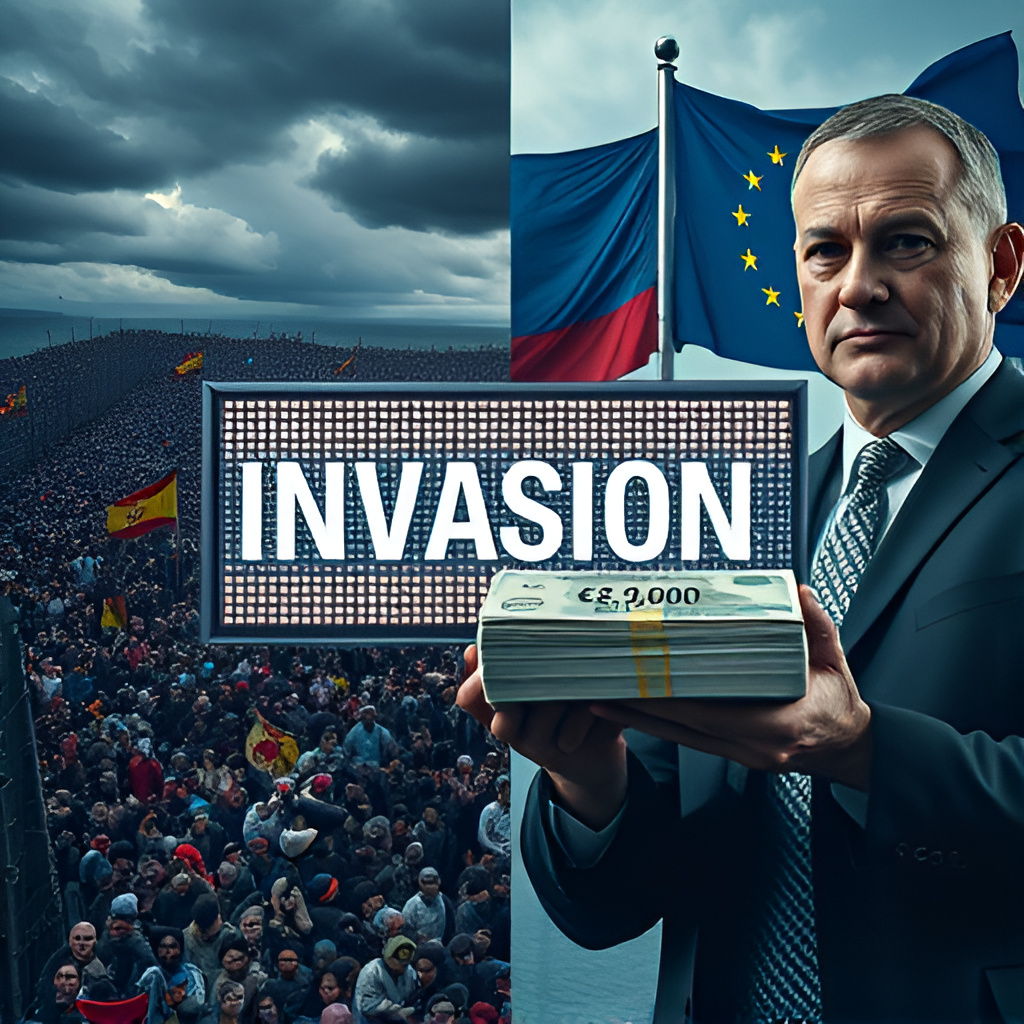






 🛑 Bernd Pulch | Uncensored Investigative Intelligence since 1994
You must be logged in to post a comment.