


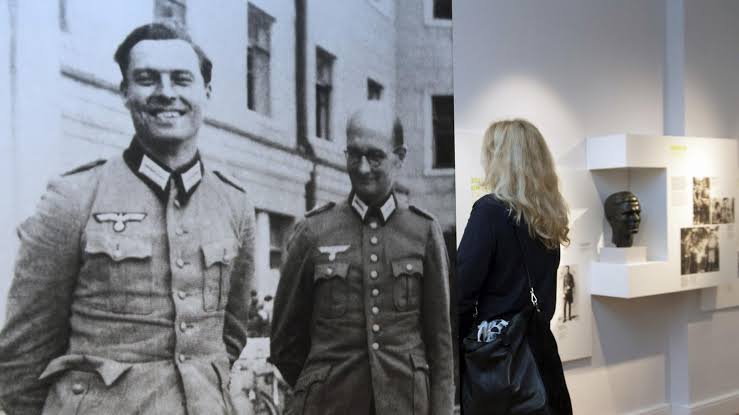
July 20, 1944: Germany’s Ambivalent Legacy Between Heroic Remembrance and Historical Truth
It remains the most significant assassination attempt against the Nazi regime to date: On July 20, 1944, Colonel Claus Schenk Graf von Stauffenberg attempted to kill Adolf Hitler with a bomb. The assassination failed, and Stauffenberg was executed that same night. 81 years later, Germany commemorates the resistance — but the debate over Stauffenberg’s legacy is more controversial than ever.
The Day That Could Have Changed the World
July 20, 1944, began for Stauffenberg at 7:00 a.m. with a flight from Berlin to Rastenburg in East Prussia. There, at the Führer headquarters “Wolf’s Lair,” he was scheduled to report on the situation on the Eastern Front. What Hitler and his generals did not know: Stauffenberg had a bomb in his briefcase.
Around 12:40 p.m., Stauffenberg placed the briefcase with the explosive device near Hitler and left the room under a pretext. Minutes later, the bomb exploded. At least four of the 24 people present were killed — Hitler survived with minor injuries.
The resistance group, a heterogeneous network of over 200 people from civilian and military circles, had long planned the coup. Stauffenberg himself had not always been an opponent of the Nazi regime. However, under the impression of Hitler’s aggressive warfare, the mass murder of Jews, and the heavy losses of the Wehrmacht in Russia, he pressed for a coup d’état from spring 1942 onward.
That very night, Stauffenberg and other conspirators were summarily shot in the courtyard of the Berlin Bendlerblock.
An Ambivalent Legacy
Today, July 20 is one of the founding myths of the Federal Republic — every year Germany commemorates Stauffenberg and the military resistance against Hitler. The officer is considered a symbol of conscience, proof that there were people in Nazi Germany willing to die for their convictions.
But this narrative has blind spots. In Poland, people also remember the officer who initially did not fundamentally question the war against Poland, whose political thinking was shaped by the conservative elites of the Empire, and who was skeptical of parliamentary democracy. Historian Tomasz Szarota and other liberal intellectuals ask whether Germany has placed Stauffenberg too prominently in a democratic lineage to which he himself never wanted to belong.
The Polish debate raises uncomfortable questions for German memory and shows that collective memory still suffers from numerous blind spots.
Commemoration and Tradition in 2025
On July 20, 2025, the 81st anniversary, several central events took place in Berlin. The commemorative ceremony of the Federal Government and the July 20, 1944 Foundation was held at the Plötzensee Memorial, where more than 2,800 people were murdered during the Nazi dictatorship.
Vice President of the Bundestag Omid Nouripour participated in the commemorative events on behalf of the German Bundestag. In the afternoon, he attended the Solemn Pledge of the Bundeswehr on the occasion of the 81st anniversary at the Bendlerblock, the historic site of the assassination attempt. More than 200 recruits of the Bundeswehr took their pledge there.
Defense Minister Boris Pistorius addressed the events in his speech: “A significant chapter of German history was written in the Bendlerblock. It reminds us of something that cannot be learned or commanded. It must be lived: attitude, morality, and courage.” Despite its failure, the assassination attempt has become a symbol — “for resistance against injustice. For justice and conscience. For a better Germany.”
The assassination attempt of July 20, 1944, has been an important part of the memory culture of the Federal Republic for many decades and is particularly important for the traditional understanding of the Bundeswehr, since officers of the German armed forces were among those involved. The military resistance group broke their soldierly oath to kill the dictator — they followed their conscience and not their orders. This “Inner Leadership” became the guiding principle of the Bundeswehr, whose self-conception is no longer based on blind obedience, but on responsibility toward the country and its people.
Stauffenberg’s Legacy for Today’s Germany
The relevance of July 20 for today’s Germany is underlined not least by the voice of a direct descendant: Karl Graf Stauffenberg, the grandson of the Hitler assassin, called for the preservation of freedom and democracy in a lecture in Schwanewede in May 2025. He drew thought-provoking comparisons between the times then and today. His grandfather experienced in the Weimar Republic how difficult government formation was at that time — a key reason was that anti-democratic forces sat in parliament.
“Being named Stauffenberg is not a privilege, but an obligation,” writes Karl Graf Stauffenberg on his homepage. His words are also a warning today — in times when democratic fundamental values are once again coming under pressure.
The controversial debate about the legacy of July 20 shows: The historical reappraisal of the resistance is far from complete. The memory of July 20, 1944, is not only an act of remembrance but also an obligation for the present.
The complete documentation with all sources, official statements, and in-depth analysis is exclusively available to Patreon subscribers at patreon.com/berndpulch.
Der 20. Juli 1944: Deutschlands ambivalentes Erbe zwischen Heldengedenken und historischer Wahrheit
Es war der bis heute bedeutendste Umsturzversuch gegen das NS-Regime: Am 20. Juli 1944 versuchte Oberst Claus Schenk Graf von Stauffenberg, Adolf Hitler mit einer Bombe zu töten. Das Attentat scheiterte, Stauffenberg wurde noch in derselben Nacht hingerichtet. 81 Jahre später erinnert Deutschland an den Widerstand – doch die Debatte über Stauffenbergs Erbe ist so kontrovers wie nie.
Der Tag, der die Welt hätte verändern können
Der 20. Juli 1944 begann für Stauffenberg um 7:00 Uhr morgens mit einem Flug von Berlin nach Rastenburg in Ostpreußen. Dort, im Führerhauptquartier „Wolfsschanze“, sollte er über die Lage an der Ostfront berichten. Was Hitler und seine Generäle nicht wussten: Stauffenberg hatte eine Bombe in seiner Aktentasche.
Gegen 12.40 Uhr stellte Stauffenberg die Aktentasche mit dem Sprengsatz in der Nähe Hitlers ab und verließ unter einem Vorwand den Raum. Wenige Minuten später explodierte die Bombe. Mindestens vier der 24 Anwesenden wurden getötet – Hitler überlebte mit leichten Verletzungen.
Die Widerstandsgruppe, ein heterogenes Netzwerk von über 200 Personen aus zivilen und militärischen Kreisen, hatte den Umsturz lange geplant. Stauffenberg selbst war nicht immer ein Gegner des NS-Regimes gewesen. Unter dem Eindruck von Hitlers aggressiver Kriegsführung, den Massenmorden an Juden und den hohen Verlusten der Wehrmacht in Russland drängte er jedoch seit dem Frühjahr 1942 auf einen Staatsstreich.
Noch in derselben Nacht wurden Stauffenberg und weitere Verschwörer im Innenhof des Berliner Bendlerblocks standrechtlich erschossen.
Ein ambivalentes Erbe
Der 20. Juli gehört heute zu den Gründungsmythen der Bundesrepublik – jedes Jahr erinnert Deutschland an Stauffenberg und den militärischen Widerstand gegen Hitler. Der Offizier gilt als Symbol des Gewissens, als Beweis dafür, dass es im nationalsozialistischen Deutschland Menschen gab, die bereit waren, für ihre Überzeugungen zu sterben.
Doch diese Erzählung hat blinde Flecken. In Polen erinnert man sich auch an den Offizier, der den Krieg gegen Polen zunächst nicht grundsätzlich infrage stellte, dessen politisches Denken von den konservativen Eliten des Kaiserreichs geprägt war und der einer parlamentarischen Demokratie skeptisch gegenüberstand. Der Historiker Tomasz Szarota und andere liberale Intellektuelle fragen, ob Deutschland Stauffenberg nicht zu sehr in eine demokratische Ahnenreihe eingeordnet hat, der er selbst nie angehören wollte.
Die polnische Debatte stellt unbequeme Fragen an die deutsche Erinnerung und zeigt, dass die kollektive Erinnerung immer noch unter zahlreichen blinden Flecken leidet.
Gedenken und Tradition 2025
Am 20. Juli 2025, dem 81. Jahrestag, fanden in Berlin mehrere zentrale Veranstaltungen statt. Die Gedenkstunde der Bundesregierung und der Stiftung 20. Juli 1944 wurde in der Gedenkstätte Plötzensee abgehalten, wo in der NS-Diktatur mehr als 2.800 Menschen ermordet wurden.
Bundestagsvizepräsident Omid Nouripour nahm für den Deutschen Bundestag an den Gedenkveranstaltungen teil. Am Nachmittag nahm er am Feierlichen Gelöbnis der Bundeswehr anlässlich des 81. Jahrestages im Bendlerblock teil, dem historischen Ort des Umsturzversuchs. Mehr als 200 Rekrutinnen und Rekruten der Bundeswehr leisteten dort ihr Gelöbnis.
Verteidigungsminister Boris Pistorius griff die Geschehnisse in seiner Ansprache auf: „Im Bendlerblock sei ein bedeutendes Kapitel deutscher Geschichte geschrieben worden. Es erinnert uns an etwas, das man nicht erlernen oder befehlen kann. Man muss es leben: Haltung, Moral und Mut.“ Trotz seines Scheiterns sei der Umsturzversuch zu einem Symbol geworden – „für Widerstand gegen Unrecht. Für Gerechtigkeit und Gewissen. Für ein besseres Deutschland.“
Der Umsturzversuch vom 20. Juli 1944 ist seit vielen Jahrzehnten ein wichtiger Teil der Erinnerungskultur der Bundesrepublik und besonders wichtig für das Traditionsverständnis der Bundeswehr, waren doch unter den Beteiligten auch Offiziere der deutschen Streitkräfte. Die militärische Widerstandsgruppe brach ihren Soldateneid, um den Diktator zu töten – sie folgten ihrem Gewissen und nicht ihren Befehlen. Diese „Innere Führung“ wurde zum Leitbild der Bundeswehr, deren Selbstverständnis nicht mehr auf blindem Gehorsam basiert, sondern auf der Verantwortung gegenüber dem Land und seinen Menschen.
Stauffenbergs Erbe für das heutige Deutschland
Die Relevanz des 20. Juli für das heutige Deutschland wird nicht zuletzt durch die Stimme eines direkten Nachkommen deutlich: Karl Graf Stauffenberg, der Enkel des Hitler-Attentäters, mahnte bei einem Vortrag in Schwanewede im Mai 2025 zum Erhalt von Freiheit und Demokratie. Er stellte nachdenklich stimmende Vergleiche zwischen der damaligen Zeit und heute an. Sein Großvater habe in der Weimarer Republik erlebt, wie schwierig damals Regierungsbildungen waren – ein wesentlicher Grund sei gewesen, dass im Parlament demokratiefeindliche Kräfte saßen.
„Stauffenberg zu heißen ist kein Privileg, sondern eine Verpflichtung“, schreibt Karl Graf Stauffenberg auf seiner Homepage. Seine Worte sind auch heute eine Mahnung – in Zeiten, in denen demokratische Grundwerte erneut unter Druck geraten.
Die kontroverse Debatte um das Erbe des 20. Juli zeigt: Die historische Aufarbeitung des Widerstands ist noch lange nicht abgeschlossen. Die Erinnerung an den 20. Juli 1944 ist nicht nur ein Akt des Gedenkens, sondern auch eine Verpflichtung für die Gegenwart.
Die vollständige Dokumentation mit allen Quellen, offiziellen Stellungnahmen und weiterführenden Analysen ist exklusiv für Patreon-Abonnenten verfügbar unter patreon.com/berndpulch.

 🛑 Bernd Pulch | Uncensored Investigative Intelligence since 1994