
Featured

U.S. Military Loses 45 MQ-9 Reaper Drones in Iran War โ€“ 25% of Fleet Wiped Out, $1.3 Billion Gone

US Military Loses 45 MQโ€‘9 Reaper Drones in Iran War โ€“ $1.3 Billion Blow to Pentagon

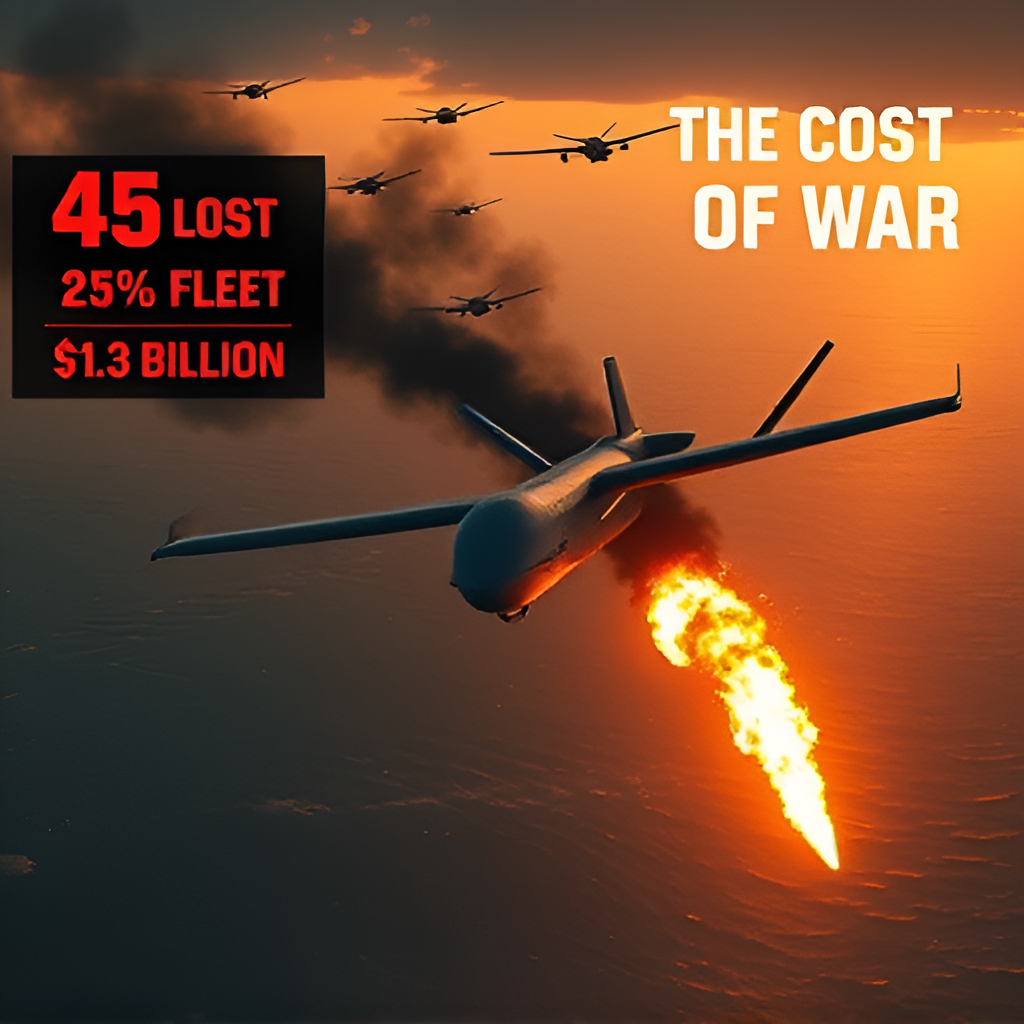
The U.S. military has lost at least 45 MQโ€‘9 Reaper drones during the war with Iran, wiping out roughly 25 percent of its entire fleet, according to three U.S. officials familiar with Pentagon data. The losses, first reported by The Washington Post, represent one of the most severe attrition rates for a single weapons system in recent U.S. conflicts.


The Numbers

Before the war, the U.S. military operated approximately 185 MQโ€‘9 Reapers โ€“ 165 in the Air Force and 20 in the Marine Corps. Today, that number has fallen to around 135 according to Air Force Lt. Gen. David Tabor, who told the Senate in May that he was “concerned” about the losses.

The Air Force puts the cost of each Reaper between $30 million and $50 million, depending on sensors and weapons. With 45 aircraft lost, the total price tag for this single weapons system alone exceeds $1.3 billion.


Why So Many Were Lost

The Reaper has been heavily used around the Strait of Hormuz โ€“ a narrow, highโ€‘threat chokepoint where Iran has concentrated its air defenses.

But the aircraft itself is a vulnerable platform. According to the reports, the MQโ€‘9 flies slowly and at low altitudes, making it a “relatively easy target” for Iran and its proxies.

“This version of the drone, which flies low and quite slowly, is used for reconnaissance and precision strikes” โ€“ TASS

Not all of the lost drones were shot down. One official told The Washington Post that an unspecified number crashed after operators lost communication links with them.


The Broader Context

The Reaper losses are part of a much larger drain on U.S. military resources. The war with Iran has depleted stocks of other critical weapons as well:

ยท Longโ€‘range missiles (ATACMS and PrSM) โ€“ virtually exhausted
ยท Tomahawk cruise missiles โ€“ nearly half of the inventory used
ยท Patriot interceptors โ€“ approximately 65 percent depleted
ยท THAAD interceptors โ€“ nearly 80 percent consumed

In June, the Trump administration asked Congress for roughly $80 billion** to cover operational and replacement expenses tied to the war. Another report mentions a request of **$67 billion to compensate for costs and replenish stocks.


The Replacement Problem

The Pentagon is gradually phasing out the MQโ€‘9 Reaper, manufactured by General Atomics, and plans to replace them with a fleet of cheaper strikeโ€‘reconnaissance drones capable of attacking targets in swarms.

But that transition will take time. Meanwhile, President Trump has imposed tariffs of up to 100 percent on imports of drones and components, citing national security concerns and the U.S.’s reliance on foreign sources for unmanned aircraft systems.


A Quarter of the Fleet โ€“ Gone

The loss of 45 MQโ€‘9 Reapers โ€“ a quarter of the entire fleet โ€“ is not just a financial blow. It represents a significant degradation of U.S. surveillance and strike capabilities in a region where intelligence and precision targeting are paramount.

The Reaper has been a workhorse for America’s operations in the Middle East since its introduction in 2007. With a quarter of the fleet now gone, the Pentagon faces a stark choice: accelerate production, deplete other assets, or accept reduced operational capacity.

As Lt. Gen. Tabor told the Senate: “I’m concerned”. For U.S. military planners, that concern is now a crisis.


๐Ÿ“บ YouTube: youtube.com/@bernd_pulch
๐Ÿฆ X (Twitter): x.com/berndsocial1
๐Ÿ“ข Telegram: t.me/ABOVETOPSECRETXXL
๐Ÿ”“ UNLOCK THE TRUTH: berndpulch.org/join
US-Militรคr verliert 45 MQ-9-Reaper-Drohnen im Iran-Krieg โ€“ 25 % der Flotte vernichtet

Das US-Militรคr hat wรคhrend des Krieges mit dem Iran mindestens 45 MQ-9-Reaper-Drohnen verloren โ€“ das entspricht etwa 25 Prozent seiner gesamten Flotte. Die Verluste, die von drei mit den Pentagon-Daten vertrauten US-Beamten bestรคtigt und zuerst von der Washington Post berichtet wurden, stellen eine der schwersten Verlustraten fรผr ein einzelnes Waffensystem in den jรผngsten US-Konflikten dar.


Die Zahlen

Vor dem Krieg betrieb das US-Militรคr etwa 185 MQ-9 Reaper โ€“ 165 bei der Air Force und 20 beim Marine Corps. Heute ist diese Zahl auf etwa 135 gesunken, wie Air-Force-Generalleutnant David Tabor im Mai vor dem Senat einrรคumte und seine “Besorgnis” รผber die Verluste รคuรŸerte.

Die Air Force beziffert die Kosten jedes Reapers auf zwischen 30 und 50 Millionen Dollar, abhรคngig von Sensoren und Bewaffnung. Bei 45 verlorenen Flugzeugen รผbersteigt der Gesamtwert allein fรผr dieses Waffensystem 1,3 Milliarden Dollar.


Warum so viele verloren gingen

Der Reaper wurde intensiv rund um die StraรŸe von Hormus eingesetzt โ€“ einen engen, hochbedrohlichen Engpass, in dem der Iran seine Luftabwehr konzentriert hat.

Die Drohne selbst ist jedoch eine verwundbare Plattform. Berichten zufolge fliegt die MQ-9 langsam und in niedrigen Hรถhen, was sie zu einem “relativ leichten Ziel” fรผr den Iran und seine Verbรผndeten macht.

“Diese Version der Drohne, die niedrig und recht langsam fliegt, wird fรผr Aufklรคrung und Prรคzisionsschlรคge eingesetzt” โ€“ TASS

Nicht alle verlorenen Drohnen wurden abgeschossen. Ein Beamter sagte der Washington Post, dass eine nicht nรคher bezeichnete Anzahl nach dem Verlust von Kommunikationsverbindungen abgestรผrzt sei.


Der weitere Kontext

Die Reaper-Verluste sind Teil einer viel grรถรŸeren Belastung der US-Militรคrressourcen. Der Krieg mit dem Iran hat auch die Bestรคnde anderer kritischer Waffen dezimiert:

ยท Langstreckenraketen (ATACMS und PrSM) โ€“ praktisch aufgebraucht
ยท Tomahawk-Marschflugkรถrper โ€“ fast die Hรคlfte des Bestands verbraucht
ยท Patriot-Abfangraketen โ€“ etwa 65 Prozent aufgebraucht
ยท THAAD-Abfangraketen โ€“ fast 80 Prozent verbraucht

Im Juni beantragte die Trump-Administration beim Kongress etwa 80 Milliarden Dollar zur Deckung der Betriebs- und Ersatzkosten im Zusammenhang mit dem Krieg. Ein anderer Bericht spricht von einer Anfrage in Hรถhe von 67 Milliarden Dollar zur Kompensation der Kosten und zur Wiederauffรผllung der Bestรคnde.


Das Ersatzproblem

Das Pentagon stellt die MQ-9 Reaper, hergestellt von General Atomics, schrittweise auรŸer Dienst und plant, sie durch eine Flotte von billigeren Aufklรคrungs- und Angriffsdrohnen zu ersetzen, die Ziele im Schwarm angreifen kรถnnen.

Doch dieser รœbergang wird Zeit in Anspruch nehmen. Prรคsident Trump hat unterdessen Zรถlle von bis zu 100 Prozent auf die Einfuhr von Drohnen und Komponenten verhรคngt und sich dabei auf nationale Sicherheitsbedenken und die Abhรคngigkeit der USA von auslรคndischen Quellen fรผr unbemannte Luftfahrtsysteme berufen.


Ein Viertel der Flotte โ€“ weg

Der Verlust von 45 MQ-9-Reaper-Drohnen โ€“ einem Viertel der gesamten Flotte โ€“ ist nicht nur ein finanzieller Schlag. Er stellt eine erhebliche Beeintrรคchtigung der US-รœberwachungs- und Angriffsfรคhigkeiten in einer Region dar, in der Aufklรคrung und Prรคzisionszielbekรคmpfung von grรถรŸter Bedeutung sind.

Der Reaper ist seit seiner Einfรผhrung im Jahr 2007 ein Arbeitstier fรผr die Operationen der USA im Nahen Osten. Da nun ein Viertel der Flotte verloren ist, steht das Pentagon vor einer harten Wahl: die Produktion beschleunigen, andere Bestรคnde anzapfen oder eine reduzierte Einsatzfรคhigkeit in Kauf nehmen.

Wie Generalleutnant Tabor dem Senat sagte: “Ich bin besorgt.” Fรผr die Militรคrplaner der USA ist diese Besorgnis inzwischen zu einer Krise geworden.


๐Ÿ“บ YouTube: youtube.com/@bernd_pulch
๐Ÿฆ X (Twitter): x.com/berndsocial1
๐Ÿ“ข Telegram: t.me/ABOVETOPSECRETXXL
๐Ÿ”“ UNLOCK THE TRUTH: berndpulch.org/join
US Missile Stockpiles Severely Depleted After Five Months of Iran War โ€“ ATACMS, PrSM, Tomahawk at Critical Lows

US Missile Stockpiles Severely Depleted After Five Months of Iran War

Unlock the Full Truth: berndpulch.org/join


Five months of war with Iran have consumed virtually all U.S. stocks of long-range PrSM and ATACMS missiles and close to half the Tomahawk inventory, according to multiple sources familiar with the data. The depletion has raised serious concerns about America’s military readiness for potential future conflicts with Russia or China.


Offensive Missiles at Critical Lows

According to Reuters, which first reported the story on August 4, 2026, the U.S. Army has used “virtually all” of its available stocks of Army Tactical Missile Systems (ATACMS) and Precision Strike Missiles (PrSM). The extent of the drawdown “has not been previously reported,” according to Reuters.

ATACMS and PrSM: The Backbone of Long-Range Strikes

The Army Tactical Missile System (ATACMS) has been a workhorse of U.S. land-based precision strikes, capable of reaching targets up to 190 miles away. The newer Precision Strike Missile (PrSM), which is gradually replacing the ATACMS, offers extended range and was used for the first time in combat during the Iran conflict.

One source explained that the drawdown reflected a strategic decision by the Trump administration to avoid riskier manned aircraft bombing missions against Iranian targets. This preference for stand-off precision strikes has accelerated the consumption of these expensive munitions.

“These missiles cost over a million dollars each and are considered critically important not only for operations in the Middle East but also for a potential confrontation with China.”

Tomahawk Inventory Heavily Depleted

The strain has extended beyond the Army to the U.S. Navy. According to one source, the U.S. has expended slightly less than half of its global inventory of ship- and submarine-launched Tomahawk cruise missiles. CNN had previously reported in April that Tomahawk usage was close to 30 percent, indicating a significant escalation in consumption.


Defensive Missile Stocks Also Drained

The shortage has not been limited to offensive weapons. According to estimates by the Center for Strategic and International Studies (CSIS), from February through July, the U.S. used up approximately:

ยท 65% of its Patriot interceptor missiles
ยท At least 38% of its THAAD ballistic missile interceptors

CNN, citing multiple sources, reported that the U.S. military has used nearly 80% of its THAAD interceptors compared with pre-war levels and roughly half of its Patriot interceptors since the start of the conflict.

Military commanders had reportedly been warning President Trump for weeks that stocks of defensive systems, including Patriot interceptors, were dwindling.


Strategic Concerns and Military Readiness

The depletion of both offensive and defensive missile stocks has sparked serious concerns among U.S. officials about the military’s ability to respond to future crises.

“Sources familiar with internal discussions have expressed concern that dwindling supplies of long-range precision weapons could affect the United States’ ability to respond to future crises involving adversaries such as China or Russia.”

One of the sources told Reuters that falling missile supplies could limit the U.S. ability to deter other adversaries, including Russia and China. Another source noted that while U.S. Central Command has nearly used up the land-based missiles it had before the war began, it has been able to reload from U.S. military supplies elsewhere in the world.

THAAD and Patriot: A Defensive Vulnerability

The drawdown of THAAD and Patriot interceptors is particularly concerning. These systems are critical for defending against incoming ballistic missiles and attack drones. The significant depletionโ€”nearly 80% of THAAD and roughly half of Patriotโ€”suggests that the U.S. may have limited capacity to defend against future missile attacks on its forces or allies.

Stockpile data has circulated within the federal government during discussions over how long Washington could continue military operations against Iran without reducing inventories to levels that could affect broader military readiness. These concerns were reportedly among the factors that influenced Trump’s decision not to proceed with another round of large-scale strikes against Iran over the weekend.


Administration’s Response

President Donald Trump has sought to downplay concerns about the depleted stockpiles, insisting that the U.S. possesses “far more munitions than anyone in the world” and “far more than we need”.

“Our defense companies are, at this moment, making more munitions than they have ever made before, in addition to expanding their plants and equipment at record levels.”

Chief Pentagon spokesperson Sean Parnell echoed this sentiment, stating that “America’s military is the most powerful in the world” and “has everything it needs to execute at the time and place of the President’s choosing”.

Production Challenges

While analysts agree that production of artillery ammunition and some missile types has increased significantly, the newer PrSMs are in short supply because they are still being introduced into service. Lockheed Martin, which manufactures ATACMS, PrSM, and THAAD, and Raytheon, which produces Tomahawk and Patriot interceptors, did not respond to queries about stockpile levels.

The PrSM program is ramping up production, with the Army expecting to see production increase to 400 by the fourth quarter of fiscal 2027 and into 2028. However, analysts caution that supplies might fall short of what is needed for a prolonged war.


What This Means

The depletion of U.S. missile stockpiles after just five months of war with Iran raises fundamental questions about America’s ability to fight a prolonged high-intensity conflict. If a short campaign against a regional power can consume virtually all of the U.S. inventory of key long-range precision missiles, what would a conflict with China or Russia look like?

The answers are not reassuring. For now, the U.S. military is relying on a combination of increased production, drawdowns from global reserves, and the Trump administration’s calculated risk that the war with Iran will not escalate further. But as one source told Reuters, the falling missile supplies could limit the U.S. ability to deter adversaries, including Russia and China.


๐Ÿ“บ YouTube: youtube.com/@bernd_pulch
๐Ÿฆ X (Twitter): x.com/berndsocial1
๐Ÿ“ข Telegram: t.me/ABOVETOPSECRETXXL
๐Ÿ”“ UNLOCK THE TRUTH: berndpulch.org/join

US-Raketenbestรคnde nach fรผnf Monaten Iran-Krieg stark dezimiert

Unlock the Full Truth: berndpulch.org/join


Fรผnf Monate Krieg mit dem Iran haben die US-Bestรคnde an weitreichenden PrSM- und ATACMS-Raketen nahezu vollstรคndig aufgebraucht und fast die Hรคlfte des Tomahawk- Inventars verbraucht, wie mehrere mit den Daten vertraute Quellen berichten. Die Dezimierung hat ernste Bedenken hinsichtlich der militรคrischen Einsatzbereitschaft der USA fรผr mรถgliche zukรผnftige Konflikte mit Russland oder China geweckt.


Angriffsraketen auf kritischem Tiefstand

Laut Reuters, das die Geschichte erstmals am 4. August 2026 berichtete, hat die US-Armee “so gut wie alle” ihrer verfรผgbaren Bestรคnde an Army Tactical Missile Systems (ATACMS) und Precision Strike Missiles (PrSM) aufgebraucht. Das AusmaรŸ des Abbaus sei “bisher nicht berichtet worden”, so Reutersใ€1โ€ L5-L7ใ€‘.

ATACMS und PrSM: Das Rรผckgrat der weitreichenden Angriffe

Das Army Tactical Missile System (ATACMS) ist seit langem das Rรผckgrat der landgestรผtzten Prรคzisionsschlรคge der USA und kann Ziele in einer Entfernung von bis zu 190 Meilen treffen. Die neuere Precision Strike Missile (PrSM), die die ATACMS allmรคhlich ersetzt, bietet eine grรถรŸere Reichweite und wurde wรคhrend des Iran-Konflikts erstmals im Kampf eingesetzt.

Eine Quelle erklรคrte, dass der Abbau eine strategische Entscheidung der Trump-Administration widerspiegele, riskante Bombeneinsรคtze mit bemannten Flugzeugen gegen iranische Ziele zu vermeiden. Diese Prรคferenz fรผr weitreichende Prรคzisionsschlรคge hat den Verbrauch dieser teuren Munition beschleunigt.

“Diese Raketen kosten รผber eine Million Dollar pro Stรผck und gelten nicht nur fรผr Operationen im Nahen Osten, sondern auch fรผr eine mรถgliche Konfrontation mit China als kritisch wichtig.”

Tomahawk-Bestand stark reduziert

Die Belastung hat sich รผber die Armee hinaus auch auf die US-Marine erstreckt. Einer Quelle zufolge haben die USA etwas weniger als die Hรคlfte ihres globalen Bestands an schiffs- und U-Boot-gestรผtzten Tomahawk-Marschflugkรถrpern verbraucht. CNN hatte bereits im April berichtet, dass der Tomahawk-Verbrauch bei fast 30 Prozent lag, was auf eine erhebliche Eskalation des Verbrauchs hindeutet.


Auch Bestรคnde an Abwehrraketen geschrumpft

Der Mangel beschrรคnkt sich nicht auf Angriffswaffen. Nach Schรคtzungen des Center for Strategic and International Studies (CSIS) wurden von Februar bis Juli etwa 65 Prozent der Patriot-Abfangraketen und mindestens 38 Prozent der THAAD-Raketen verbrauchtใ€1โ€ L19ใ€‘.

CNN berichtete unter Berufung auf mehrere Quellen, dass das US-Militรคr seit Beginn des Konflikts fast 80 Prozent seiner THAAD-Abfangraketen und etwa die Hรคlfte seiner Patriot-Abfangraketen eingesetzt hat. Militรคrkommandeure hatten Prรคsident Trump Berichten zufolge seit Wochen davor gewarnt, dass die Bestรคnde an Abwehrsystemen, einschlieรŸlich der Patriot-Abfangraketen, zur Neige gingen.


Strategische Bedenken und militรคrische Einsatzbereitschaft

Die Dezimierung der Bestรคnde an Angriffs- und Abwehrraketen hat bei US-Beamten ernste Bedenken hinsichtlich der Fรคhigkeit des Militรคrs ausgelรถst, auf kรผnftige Krisen zu reagieren.

“Mit den Vorgรคngen vertraute Quellen haben Bedenken geรคuรŸert, dass die schwindenden Vorrรคte an weitreichenden Prรคzisionswaffen die Fรคhigkeit der Vereinigten Staaten beeintrรคchtigen kรถnnten, auf kรผnftige Krisen mit Gegnern wie China oder Russland zu reagieren.”

Eine der Quellen sagte Reuters, dass die sinkenden Raketenbestรคnde die Fรคhigkeit der USA einschrรคnken kรถnnten, andere Gegner, darunter Russland und China, abzuschreckenใ€1โ€ L20ใ€‘. Eine andere Quelle merkte an, dass das US-Zentralkommando zwar die landgestรผtzten Raketen, die es vor Kriegsbeginn hatte, fast aufgebraucht habe, aber aus US-Militรคrbestรคnden in anderen Teilen der Welt nachladen kรถnne.

THAAD und Patriot: Eine defensive Verwundbarkeit

Die Dezimierung der THAAD- und Patriot-Abfangraketen ist besonders besorgniserregend. Diese Systeme sind fรผr die Abwehr eingehender ballistischer Raketen und angreifender Drohnen von entscheidender Bedeutung. Der erhebliche Abbau โ€“ fast 80 Prozent der THAAD- und etwa die Hรคlfte der Patriot-Raketen โ€“ deutet darauf hin, dass die USA nur รผber eine begrenzte Kapazitรคt verfรผgen kรถnnten, um sich gegen kรผnftige Raketenangriffe auf ihre Streitkrรคfte oder Verbรผndete zu verteidigen.

Die Lagerbestandsdaten kursierten innerhalb der Bundesregierung bei Gesprรคchen darรผber, wie lange Washington die Militรคroperationen gegen den Iran fortsetzen kรถnne, ohne die Bestรคnde auf ein Niveau zu reduzieren, das die allgemeine militรคrische Einsatzbereitschaft beeintrรคchtigen kรถnnte. Diese Bedenken gehรถrten Berichten zufolge zu den Faktoren, die Trumps Entscheidung beeinflussten, am Wochenende keine weitere Runde groรŸ angelegter Angriffe gegen den Iran durchzufรผhren.


Reaktion der Regierung

Prรคsident Donald Trump hat versucht, die Bedenken hinsichtlich der dezimierten Bestรคnde herunterzuspielen, und betont, dass die USA “weit mehr Munition als jedes andere Land der Welt” und “weit mehr als wir brauchen” besรครŸen.

“Unsere Rรผstungsunternehmen stellen derzeit mehr Munition her als je zuvor und erweitern gleichzeitig ihre Werke und Anlagen in Rekordzeit.”

Der Chefsprecher des Pentagons, Sean Parnell, bekrรคftigte diese Ansicht und erklรคrte, dass “Amerikas Militรคr das mรคchtigste der Welt ist” und “alles hat, was es braucht, um zur Zeit und am Ort der Wahl des Prรคsidenten zu handeln”.

Produktionsherausforderungen

Experten sind sich zwar einig, dass die Produktion von Artilleriemunition und einiger Raketentypen erheblich gestiegen ist, doch die neueren PrSM sind knapp, da sie sich noch in der Einfรผhrungsphase befinden. Lockheed Martin, das ATACMS, PrSM und THAAD herstellt, und Raytheon, das Tomahawk und Patriot-Abfangraketen produziert, haben nicht auf Anfragen zum Bestandsstand geantwortet.

Das PrSM-Programm wird hochgefahren, und die Armee erwartet, dass die Produktion bis zum vierten Quartal des Geschรคftsjahres 2027 und 2028 auf 400 Stรผck ansteigen wird. Analysten warnen jedoch, dass die Lieferungen fรผr einen lรคngeren Krieg mรถglicherweise nicht ausreichen.


Was das bedeutet

Die Dezimierung der US-Raketenbestรคnde nach nur fรผnf Monaten Krieg mit dem Iran wirft grundlegende Fragen zur Fรคhigkeit Amerikas auf, einen lรคnger andauernden hochintensiven Konflikt zu fรผhren. Wenn ein kurzer Feldzug gegen eine Regionalmacht praktisch den gesamten US-Bestand an wichtigen weitreichenden Prรคzisionsraketen aufbrauchen kann, wie wรผrde dann ein Konflikt mit China oder Russland aussehen?

Die Antworten sind nicht beruhigend. Das US-Militรคr verlรคsst sich derzeit auf eine Kombination aus erhรถhter Produktion, Abrufen aus globalen Reserven und der von der Trump-Administration eingegangenen kalkulierten Risikobereitschaft, dass der Krieg mit dem Iran nicht eskalieren wird. Aber wie eine Quelle Reuters sagte, kรถnnten die sinkenden Raketenbestรคnde die Fรคhigkeit der USA einschrรคnken, Gegner, einschlieรŸlich Russland und China, abzuschrecken.


๐Ÿ“บ YouTube: youtube.com/@bernd_pulch
๐Ÿฆ X (Twitter): x.com/berndsocial1
๐Ÿ“ข Telegram: t.me/ABOVETOPSECRETXXL
๐Ÿ”“ UNLOCK THE TRUTH: berndpulch.org/join

Ukraine’s Black Sea Blockade โ€“ Russia Pulls the Economic Plug, Europe Faces Debt Armageddon

Ukraine’s Black Sea Blockade: Russia Pulls the Economic Plug

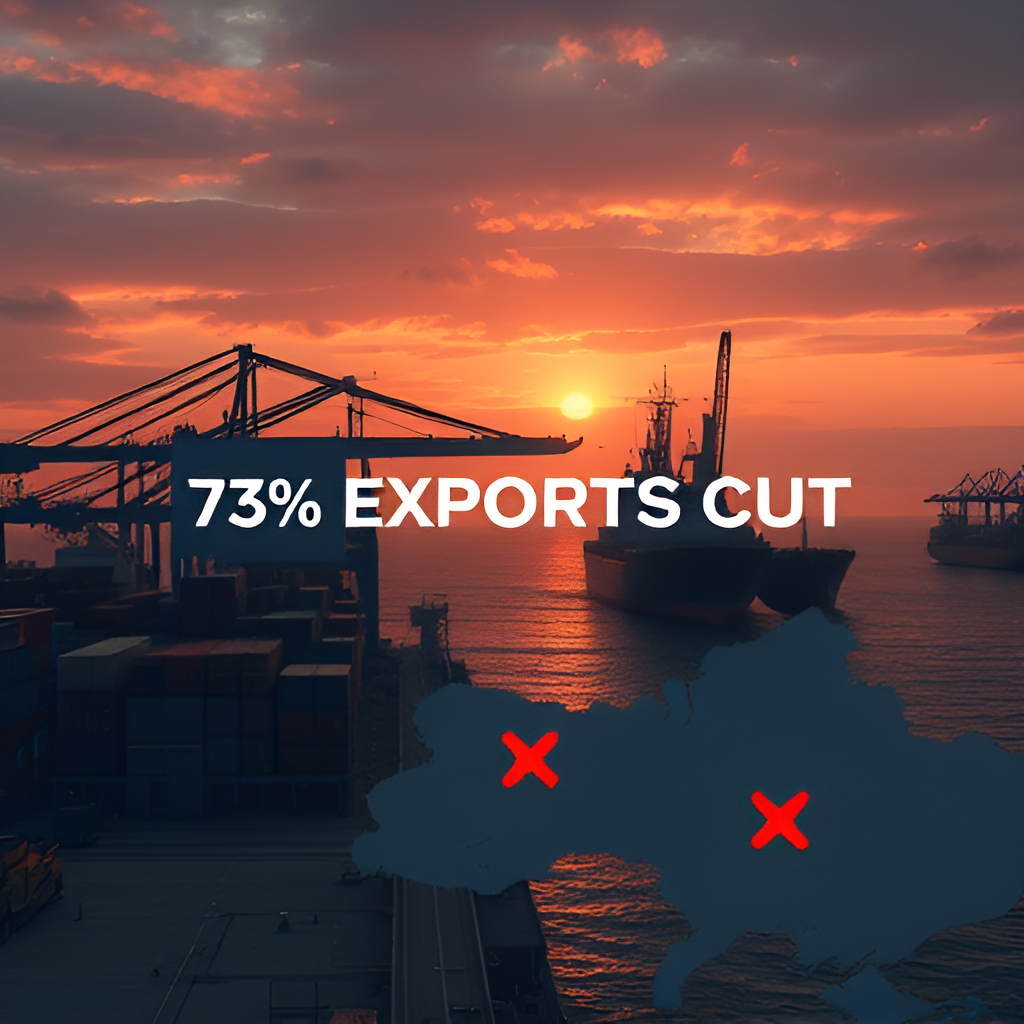
Ukraine’s Black Sea ports are effectively paralyzed. Russia has massively intensified its attacks on port infrastructure and civilian freighters in recent weeks โ€“ with devastating consequences for Ukraine’s economy, which depends on maritime trade for over 80 percent of its exports. The blockade could ultimately bankrupt the war-torn country and threatens to plunge Europe into a debt crisis as well.

Unlock the Full Truth: berndpulch.org/join


The Facts: A Blockade with Intent

Since July 22, 2026, not a single foreign merchant ship has called at or departed the ports of Odesa, Chornomorsk, or Pivdennyi. Shipping companies have suspended calls to Ukrainian Black Sea ports due to massively increased security risks.

The numbers are alarming:

ยท In July 2026 alone, Ukraine recorded 35 attacks on ships in ports, 22 attacks on ships at sea, and 67 attacks on port facilities. By comparison, there were only 14 attacks on ships in all of 2025.
ยท Ukraine has already lost one-third of its Black Sea grain export capacityใ€8โ€ L68ใ€‘.
ยท Agriculture Minister Taras Vysotskyi warned that over 30 million tons of agricultural products cannot be exported if the problem is not resolvedใ€8โ€ L70ใ€‘.
ยท Direct losses for Ukrainian agriculture in 2026 could range between $1.5 and $3 billionใ€8โ€ L51-L53ใ€‘.

“The situation is extraordinarily complicated. In some ways, it’s even more difficult than in March and April 2022.”
โ€” Taras Vysotskyi, Ukrainian Minister of Agricultural Policy and Foodใ€8โ€ L56-L58ใ€‘


The Dependency: 75 to 100 Percent via Ports

The Ukrainian economy depends on its Black Sea ports to an extent that can hardly be overstated. Before the war, approximately 75 percent of all Ukrainian exports flowed through seaports โ€“ and for many products, the dependency was even greater:

Product Export Share via Ports
Grain 95โ€“100%
Agricultural products (total) ~90%
Vegetable oils (e.g., sunflower oil) ~91%
Iron and steel products ~83%
Ores ~65%

These figures make clear why the blockade amounts to economic execution. The ports of Odesa, Chornomorsk, and Pivdennyi โ€“ the so-called “Greater Odesa” complex โ€“ are responsible for the vast majority of Ukrainian exportsใ€7โ€ L148ใ€‘.


The Consequences for Ukraine

The blockade is already having devastating effects:

Agriculture in freefall:
Purchase prices for oilseeds and grain in Ukraine have fallen by an average of 30 percentใ€8โ€ L49ใ€‘. Many farmers are being forced to sell their harvests at a loss โ€“ some have not only made no profit but have accumulated debtใ€8โ€ L50-L51ใ€‘.

Steel industry on its knees:
The closure of the ports has halted Ukrainian iron ore exports. Companies like Ferrexpo had to suspend operations because they could no longer ship their productsใ€7โ€ L157-L158ใ€‘. The southern processing plant in Kryvyi Rih ceased production entirelyใ€7โ€ L158-L159ใ€‘. Metinvest already expects a production decline of about 30 percent for Augustใ€7โ€ L159-L160ใ€‘.

Alternative routes are no solution:
The alternative routes via the Danube, rail, and road cannot replace the Black Sea ports. Even if they reach full capacity by the end of August, they can only cover 50 to 55 percent of the monthly Black Sea port volumeใ€7โ€ L153-L154ใ€‘. The alternative routes would burden producers with additional costs of $45 to $50 per tonใ€7โ€ L155ใ€‘.

“There is no alternative to the ports of Odesa if Ukraine is to continue to serve as a guarantor of food security.”
โ€” Taras Vysotskyiใ€7โ€ L155-L156ใ€‘


The European Dimension: A Debt Collapse Looms

The blockade has catastrophic consequences not only for Ukraine but also for Europe. Because if Ukrainian exports collapse entirely, an uncomfortable question arises:

Who will pay the interest on the hundreds of billions in loans that the West has granted to Ukraine?

Ukraine is burdened with debt of nearly $588 billionใ€6โ€ L14-L15ใ€‘. The country is effectively bankrupt โ€“ and without export revenues, it will not be able to service its debts. A collapse of these liabilities would be Armageddon for Europe’s already struggling state budgets.

The EU and the U.S. have propped up Ukraine with billions in loans, hoping that the country would eventually become solvent again. This hope has been definitively destroyed by the blockade of the Black Sea ports.


The Strategic Logic: Russia’s Strategy of Attrition

Russia’s strategy follows a clear logic: the systematic destruction of Ukrainian port infrastructure and civilian shipping is designed to economically strangle Ukraine. Moscow has massively expanded its attacks in recent weeks to destroy Ukraine’s export economy and increase pressure on Kyiv.

Ukraine has responded with attacks on Russian shipping in the Sea of Azov and the Black Sea. But this exchange of blows cannot change the economic reality: Ukraine is a landlocked country โ€“ and Russia has cut off its access to the sea.


Conclusion: A Great Idea to Poke the Russian Bear?

The blockade of Ukraine’s Black Sea ports is an economic catastrophe โ€“ not only for Ukraine but for all of Europe. A country that depends on maritime trade for over 80 percent of its exports is being systematically cut off from world markets by Russia.

The economic losses are already enormous โ€“ and they will continue to rise. European taxpayers will ultimately foot the bill โ€“ whether through further aid packages, through the default of loans, or through the destabilizing consequences of a Ukrainian state bankruptcy.

What remains is the bitter realization: Western support for Ukraine did not break Russia โ€“ it led Europe into a dependency that has now become a trap.


๐Ÿ“บ YouTube: youtube.com/@bernd_pulch
๐Ÿฆ X (Twitter): x.com/berndsocial1
๐Ÿ“ข Telegram: t.me/ABOVETOPSECRETXXL
๐Ÿ”“ UNLOCK THE TRUTH: berndpulch.org/join

Die ukrainische See-Blockade: Russland zieht den wirtschaftlichen Stecker

Die ukrainischen Schwarzmeerhรคfen sind de facto lahmgelegt. Russland hat seine Angriffe auf die Hafeninfrastruktur und zivile Frachter in den letzten Wochen massiv intensiviert โ€“ mit verheerenden Folgen fรผr die ukrainische Wirtschaft, die zu รผber 80 Prozent vom Seehandel abhรคngig ist. Die Blockade kรถnnte das kriegsgeschwรคchte Land endgรผltig ruinieren und droht, auch Europa in eine Schuldenkrise zu stรผrzen.

Unlock the Full Truth: berndpulch.org/join


Die Fakten: Eine Blockade mit Ansage

Seit dem 22. Juli 2026 hat kein einziges auslรคndisches Handelsschiff mehr die Hรคfen von Odessa, Tschornomorsk oder Piwdennyj angelaufen oder verlassen. Reedereien haben die Anlรคufe ukrainischer Schwarzmeerhรคfen wegen der massiv gestiegenen Sicherheitsrisiken ausgesetzt.

Die Zahlen sind alarmierend:

ยท Allein im Juli 2026 verzeichnete die Ukraine 35 Angriffe auf Schiffe in den Hรคfen, 22 Angriffe auf Schiffe auf See und 67 Angriffe auf Hafenanlagen. Zum Vergleich: Im gesamten Jahr 2025 gab es nur 14 Angriffe auf Schiffe.
ยท Die Ukraine hat bereits ein Drittel ihrer Getreideexportkapazitรคt am Schwarzen Meer verloren.
ยท Landwirtschaftsminister Taras Vysotskyj warnte, dass รผber 30 Millionen Tonnen Agrarprodukte nicht exportiert werden kรถnnen, wenn das Problem nicht gelรถst wird.
ยท Die direkten Verluste fรผr die ukrainische Landwirtschaft kรถnnten 2026 zwischen 1,5 und 3 Milliarden US-Dollar betragen.

โ€žDie Situation ist auรŸergewรถhnlich kompliziert. In gewisser Hinsicht ist sie sogar schwieriger als im Mรคrz und April 2022โ€œ โ€“ Taras Vysotskyj, ukrainischer Landwirtschaftsminister


Die Abhรคngigkeit: 75 bis 100 Prozent รผber die Hรคfen

Die ukrainische Wirtschaft hรคngt in einem AusmaรŸ von den Schwarzmeerhรคfen ab, das kaum zu unterschรคtzen ist. Vor dem Krieg liefen etwa 75 Prozent aller ukrainischen Exporte รผber die Seehรคfen โ€“ bei vielen Produkten war die Abhรคngigkeit noch weitaus grรถรŸer:

ยท Getreide: 95โ€“100 Prozent
ยท Agrarprodukte insgesamt: ca. 90 Prozent
ยท Pflanzenรถle (z.B. Sonnenblumenรถl): ca. 91 Prozent
ยท Eisen- und Stahlprodukte: ca. 83 Prozent
ยท Erze: ca. 65 Prozent

Diese Zahlen machen deutlich, warum die Blockade einer wirtschaftlichen Exekution gleichkommt. Die Hรคfen von Odessa, Tschornomorsk und Piwdennyj (der sogenannte โ€žGreater Odesaโ€œ-Komplex) sind fรผr den GroรŸteil der ukrainischen Exporte verantwortlich.


Die Konsequenzen fรผr die Ukraine

Die Blockade hat bereits jetzt verheerende Auswirkungen:

Landwirtschaft im freien Fall:
Die Kaufpreise fรผr ร–lsaaten und Getreide sind in der Ukraine um durchschnittlich 30 Prozent gesunken. Viele Bauern sind gezwungen, ihre Ernten mit Verlust zu verkaufen โ€“ einige haben nicht nur keinen Gewinn gemacht, sondern Schulden angehรคuft.

Stahlindustrie am Boden:
Die SchlieรŸung der Hรคfen hat den ukrainischen Eisenerzexport zum Erliegen gebracht. Unternehmen wie Ferrexpo mussten den Betrieb einstellen, weil sie ihre Produkte nicht mehr verschiffen konnten. Die sรผdliche Aufbereitungsanlage in Krywyj Rih stellte die Produktion komplett ein. Metinvest rechnet bereits fรผr August mit einem Produktionsrรผckgang von etwa 30 Prozent.

Alternative Routen sind keine Lรถsung:
Die Ausweichrouten รผber die Donau, die Bahn und die StraรŸe kรถnnen die Schwarzmeerhรคfen nicht ersetzen. Selbst wenn sie bis Ende August ihre volle Kapazitรคt erreichen, kรถnnen sie nur 50 bis 55 Prozent des monatlichen Schwarzmeer-Hafenvolumens abdecken. Die Alternativrouten wรผrden den Produzenten zusรคtzliche Kosten von 45 bis 50 Dollar pro Tonne aufbรผrden.

โ€žEs gibt keine Alternative zu den Hรคfen von Odessa, wenn die Ukraine weiterhin als Garant fรผr die Ernรคhrungssicherheit fungieren willโ€œ โ€“ Taras Vysotskyj


Die europรคische Dimension: Ein Schuldenkollaps droht

Die Blockade hat nicht nur fรผr die Ukraine katastrophale Folgen, sondern auch fรผr Europa. Denn wenn der ukrainische Export komplett zusammenbricht, stellt sich eine unbequeme Frage:

Wer bezahlt die Zinsen fรผr die Hunderte Milliarden an Krediten, die der Westen der Ukraine gewรคhrt hat?

Die Ukraine ist mit Schulden in Hรถhe von fast 588 Milliarden Dollar belastet. Das Land ist faktisch bankrott โ€“ und ohne Exporterlรถse wird es seine Schulden nicht bedienen kรถnnen. Ein Kollaps dieser Verbindlichkeiten wรคre das Armageddon fรผr die ohnehin angeschlagenen europรคischen Staatshaushalte.

Die EU und die USA haben die Ukraine mit Milliardenkrediten gestรผtzt, in der Hoffnung, dass das Land irgendwann wieder zahlungsfรคhig wird. Diese Hoffnung ist mit der Blockade der Schwarzmeerhรคfen endgรผltig zerstรถrt worden.


Die strategische Logik: Russlands Zermรผrbungsstrategie

Die russische Strategie folgt einer klaren Logik: Die systematische Zerstรถrung der ukrainischen Hafeninfrastruktur und der zivilen Schifffahrt soll die Ukraine wirtschaftlich erdrosseln. Moskau hat die Angriffe in den letzten Wochen massiv ausgeweitet, um die ukrainische Exportwirtschaft zu zerstรถren und den Druck auf Kiew zu erhรถhen.

Die Ukraine hat ihrerseits mit Angriffen auf russische Schifffahrt im Asowschen Meer und im Schwarzen Meer reagiert. Doch dieser Schlagabtausch kann die wirtschaftliche Realitรคt nicht รคndern: Die Ukraine ist ein Binnenland โ€“ und Russland hat ihr den Zugang zum Meer genommen.


Fazit: Eine tolle Idee, den russischen Bรคren zu reizen?

Die Blockade der ukrainischen Schwarzmeerhรคfen ist ein wirtschaftlicher Super-GAU โ€“ nicht nur fรผr die Ukraine, sondern fรผr ganz Europa. Ein Land, das zu รผber 80 Prozent vom Seehandel abhรคngt, wird von Russland systematisch von den Weltmรคrkten abgeschnitten.

Die wirtschaftlichen Verluste sind bereits jetzt enorm โ€“ und sie werden weiter steigen. Die europรคischen Steuerzahler werden am Ende die Zeche zahlen โ€“ sei es durch weitere Hilfspakete, durch den Ausfall von Krediten oder durch die destabilisierenden Folgen eines ukrainischen Staatsbankrotts.

Was bleibt, ist die bittere Erkenntnis: Die westliche Unterstรผtzung fรผr die Ukraine hat Russland nicht gebrochen โ€“ sie hat Europa in eine Abhรคngigkeit gefรผhrt, die nun zur Falle wird.


๐Ÿ“บ YouTube: youtube.com/@bernd_pulch
๐Ÿฆ X (Twitter): x.com/berndsocial1
๐Ÿ“ข Telegram: t.me/ABOVETOPSECRETXXL
๐Ÿ”“ UNLOCK THE TRUTH: berndpulch.org/join

๐Ÿšจ ABOVE TOP SECRET โ€“ EYES ONLY ๐ŸšจLEAKED FIELD INTEL โ€“ SOURCE: โ€œDEEP MOUTHโ€ โ€“ FOR INTERNAL REVIEW ONLY


๐Ÿ“„ CLASSIFIED SUMMARY
An insider embedded within the highest strategic advisory tier has passed along urgent, raw assessments from recent high-level briefings. The discussions, sourced from seasoned national security veterans and independent geopolitical analysts, reveal shifts in both Eastern and Western strategic posturesโ€”changes that insiders warn could reshape the global chessboard before yearโ€™s end.


๐Ÿ›ฐ 1. War Theatre Assessment

  • Eastern Front Dynamics: The briefings confirm a deceleration in one frontโ€™s momentum, with resource attrition, weather constraints, and unexpected resistance forcing operational recalibrations.
  • Western Strategic Fatigue: A subtle but widening rift is emerging among allied leadership circlesโ€”financial strain and domestic political backlash are reducing appetite for escalation.

๐Ÿ›ก 2. Command-Level Perspectives

  • Veteran Command Viewpoint: The situation is described as โ€œa war being fought on a 20th-century model in a 21st-century surveillance environment,โ€ where tactical moves are immediately countered due to near-real-time intelligence sharing.
  • Quiet Warnings: One high-ranking former planner cautioned that any miscalculated escalation could trigger a chain reaction bypassing diplomatic containment.

๐Ÿ“Š 3. Economic Underpinnings

  • Weaponized Supply Chains: Energy corridors, rare earth dependencies, and grain export bottlenecks are being weaponized to apply pressure without crossing conventional military thresholds.
  • Financial Time Bombs: Debt burdens in several supporting states could, according to the source, implode support coalitions from within.

๐Ÿ” 4. Geo-Strategic Observations

  • The analysts stress that certain narratives in mainstream briefings are โ€œsanitizedโ€ for public digestion. Real intelligence paints a more precarious balance, where missteps are far closer than publicly admitted.
  • Prediction Windows: By late autumn, insiders expect either a negotiated freeze or a sharp escalationโ€”with little space for a middle ground.

๐Ÿ“‚ INTERNAL NOTE โ€“ PATREON READERS ONLY

The full, unredacted โ€œDeep Mouthโ€ briefing, including maps, classified-style operation flowcharts, and the suppressed scenarios not cleared for public release, is available exclusively to Pulchโ€™s Patreon supporte


๐Ÿ”– TAGS: #Geopolitics #IntelLeak #WarReport #StrategicShift #EconomicWarfare #AboveTopSecret #DeepMouth

๐Ÿ” OFFICIAL INTELLIGENCE SOURCES

๐Ÿ‡ฌ๐Ÿ‡ง English

๐Ÿ‡ฉ๐Ÿ‡ช Deutsch

๐Ÿ‡ช๐Ÿ‡ธ Espaรฑol

๐Ÿ‡ฎ๐Ÿ‡น Italiano

๐Ÿ’ฐ SUPPORT OPTIONS

๐Ÿ” Monero (XMR)

Monero QR

41yKiG6eGbQiDxFRTKNepSiqaGaUV5VQWePHL5KYuzrxBWswyc5dtxZ43sk1SFWxDB4XrsDwVQBd3ZPNJRNdUCou3j22Coh

๐ŸŽ—๏ธ Patreon

patreon.com/berndpulch

๐Ÿ” [SUPPORT ACKNOWLEDGED]

Your contribution fuels global truth preservation.๐Ÿ” ACCESS EXCLUSIVE CONTENT