BERNDPULCH.ORG – EXCLUSIVE INTELLIGENCE ON THE EUROPEAN FARMERS’ REVOLT
—
Italian Farmers Rise Up in Milan – EU-Mercosur Deal Sparks Europe-Wide Rebellion
From the Netherlands to Germany, Spain to Italy, the continent’s farmers are saying ENOUGH. Hundreds of tractors blocked Milan, milk was spilled, and the message was clear: No farmers, no food.
—
📺 YouTube: youtube.com/@bernd_pulch | 🐦 X (Twitter): x.com/berndsocial1 | 📢 Telegram: t.me/ABOVETOPSECRETXXL | 🔓 Unlock the Full Truth: berndpulch.org/join
—
By Bernd Pulch, Licensed Intelligence Media | August 25, 2026
—
THE REVOLT SPREADS
Milan – The Italian agricultural sector has erupted in fury. Just days after European Union officials moved to finalize the contentious EU-Mercosur free trade agreement, hundreds of tractors from across Italy converged on Milan, grinding traffic to a halt in a powerful show of force against Brussels.
The protest, organized by farmers’ associations including Coapi (Coordinamento Agricoltori e Pescatori Italiani) and Riscatto Agricolo Lombardia, saw tractors rolling into Piazza Duca d’Aosta and spilling milk in front of the Pirellone, the seat of the Lombardy regional government.
“We are not merchandise to be traded.” — Farmers’ protest slogan
The demonstration in Milan is the latest front in a continent-wide uprising. Farmers in the Netherlands, Germany, Spain, and now Italy have all taken to the streets, united in their opposition to a deal they say will destroy European agriculture.
—
THE DEAL THAT BROKE THE CAMEL’S BACK
The EU-Mercosur agreement, which would lower tariffs between the European Union and South American countries including Argentina, Brazil, Uruguay, and Paraguay, has been a source of anxiety for European farmers for years. They argue it will flood the market with cheap South American agricultural products that do not meet the EU’s strict environmental and food safety standards.
Italian farmers fear the pact will trigger:
· A collapse in agricultural prices · Unfair competition from producers operating under lower standards · Loss of “Made in Italy” identity · Thousands of job losses in the agrifood sector
“The compensations they want with Mercosur will only benefit industry.” — Farmers’ representative
The timing could not be worse. European farmers are already struggling with soaring production costs, rising energy prices, and increasing bureaucratic burdens. Now, they say, Brussels is adding insult to injury by opening the gates to South American competition.
—
THE POLITICAL BACKLASH
The protests have forced politicians to take notice. Italian Prime Minister Giorgia Meloni has broken cover, stating that Rome is not ready to sign off on the deal. Italy has joined France in demanding more time for review, throwing the EU’s plans into disarray.
But for the farmers on the streets, words are no longer enough. They have seen this playbook before. Promises from Brussels, they say, are too often broken. Their livelihoods are not bargaining chips.
—
THE WAVE OF RESISTANCE
The Milan protest is not an isolated event. Across Europe, a wave of farmer resistance is building:
· The Netherlands: Farmers have blockaded highways and distribution centers · Germany: Tractors have brought cities to a standstill · Spain: Thousands have marched in Madrid and other major cities · Italy: Milan, Turin, L’Aquila, and more than 20 other localities have seen protests
The message is unified and unambiguous: Stop the deal. Protect European agriculture.
—
💡 THE BOTTOM LINE
The EU-Mercosur deal is not just a trade agreement. It is a declaration of war on European farmers.
Brussels is sacrificing agriculture on the altar of free trade. While bureaucrats in Brussels celebrate global connectivity, the people who put food on Europe’s tables are being thrown under the bus. The cheap imports from South America will not feed European families — they will destroy them.
The farmers are rising. From Milan to Madrid, from Amsterdam to Berlin, the message is clear:
📺 YouTube: youtube.com/@bernd_pulch 🐦 X (Twitter): x.com/berndsocial1 📢 Telegram: t.me/ABOVETOPSECRETXXL 🔓 Unlock the Full Truth: berndpulch.org/join
—
Share this intelligence – the truth must come to light.
BERNDPULCH.ORG – EXKLUSIVE INTELLIGENZ ZUR EUROPÄISCHEN BAUERNREVOLTE
—
Italienische Bauern erheben sich in Mailand – EU-Mercosur-Deal löst europaweite Rebellion aus
Von den Niederlanden über Deutschland und Spanien bis nach Italien: Die Bauern des Kontinents sagen ENOUGH. Hunderte Traktoren blockierten Mailand, Milch wurde verschüttet, und die Botschaft war klar: Keine Bauern, kein Essen.
—
📺 YouTube: youtube.com/@bernd_pulch | 🐦 X (Twitter): x.com/berndsocial1 | 📢 Telegram: t.me/ABOVETOPSECRETXXL | 🔓 Die ganze Wahrheit: berndpulch.org/join
—
Von Bernd Pulch, Licensed Intelligence Media | 25. August 2026
—
DER AUFSTAND BREITET SICH AUS
Mailand – Der italienische Agrarsektor ist in Wut ausgebrochen. Nur wenige Tage, nachdem Beamte der Europäischen Union die letzten Vorbereitungen für das umstrittene EU-Mercosur-Freihandelsabkommen trafen, strömten Hunderte Traktoren aus ganz Italien nach Mailand, legten den Verkehr lahm und zeigten damit eindrucksvoll die Kraft des Widerstands gegen Brüssel.
Die Proteste, organisiert von Bauernverbänden wie Coapi (Coordinamento Agricoltori e Pescatori Italiani) und Riscatto Agricolo Lombardia, sahen Traktoren, die auf die Piazza Duca d’Aosta rollten und Milch vor dem Pirellone, dem Sitz der Regionalregierung der Lombardei, verschütteten.
“Wir sind keine Ware, die gehandelt wird.” — Slogan der Bauernproteste
Die Demonstration in Mailand ist die neueste Front eines kontinentweiten Aufstands. Bauern in den Niederlanden, Deutschland, Spanien und nun Italien sind auf die Straße gegangen, vereint in ihrem Widerstand gegen ein Abkommen, das die europäische Landwirtschaft zerstören werde.
—
DAS ABKOMMEN, DAS DAS FASS ZUM ÜBERLAUFEN BRACHTE
Das EU-Mercosur-Abkommen, das die Zölle zwischen der Europäischen Union und südamerikanischen Ländern wie Argentinien, Brasilien, Uruguay und Paraguay senken würde, ist seit Jahren eine Quelle der Sorge für europäische Bauern. Sie argumentieren, dass es den Markt mit billigen südamerikanischen Agrarprodukten überschwemmen werde, die nicht den strengen Umwelt- und Lebensmittelsicherheitsstandards der EU entsprächen.
Die italienischen Bauern befürchten, dass das Abkommen Folgendes auslösen wird:
· Einen Zusammenbruch der Agrarpreise · Unfairen Wettbewerb durch Produzenten, die niedrigere Standards haben · Verlust der “Made in Italy”-Identität · Tausende von Arbeitsplätzen im Agrar- und Ernährungssektor
“Die Kompensationen, die sie mit Mercosur wollen, werden nur der Industrie nützen.” — Bauernvertreter
Das Timing könnte nicht schlechter sein. Die europäischen Bauern kämpfen bereits mit explodierenden Produktionskosten, steigenden Energiepreisen und einer zunehmenden bürokratischen Last. Jetzt, so sagen sie, fügt Brüssel der Kränkung noch die Beleidigung hinzu, indem es die Tore für südamerikanische Konkurrenz öffnet.
—
DER POLITISCHE GEGENWIND
Die Proteste haben die Politiker zum Handeln gezwungen. Die italienische Ministerpräsidentin Giorgia Meloni hat ihre Deckung aufgegeben und erklärt, dass Rom nicht bereit sei, das Abkommen zu unterzeichnen. Italien hat sich Frankreich angeschlossen und fordert mehr Zeit für die Prüfung, was die Pläne der EU durcheinanderbringt.
Aber für die Bauern auf der Straße sind Worte nicht mehr genug. Sie haben dieses Drehbuch schon einmal gesehen. Versprechen aus Brüssel, so sagen sie, werden allzu oft gebrochen. Ihre Existenzgrundlage ist keine Verhandlungsmasse.
—
DIE WELLE DES WIDERSTANDS
Der Protest in Mailand ist kein Einzelfall. In ganz Europa baut sich eine Welle des Bauernwiderstands auf:
· Die Niederlande: Bauern haben Autobahnen und Verteilzentren blockiert · Deutschland: Traktoren haben Städte lahmgelegt · Spanien: Tausende haben in Madrid und anderen Großstädten demonstriert · Italien: Mailand, Turin, L’Aquila und mehr als 20 weitere Orte haben Proteste erlebt
Die Botschaft ist einheitlich und unmissverständlich: Stoppt das Abkommen. Schützt die europäische Landwirtschaft.
—
💡 DAS FAZIT
Das EU-Mercosur-Abkommen ist nicht nur ein Handelsabkommen. Es ist eine Kriegserklärung an die europäischen Bauern.
Brüssel opfert die Landwirtschaft auf dem Altar des Freihandels. Während die Bürokraten in Brüssel die globale Vernetzung feiern, werden die Menschen, die das Essen auf Europas Tische bringen, unter den Bus geworfen. Die billigen Importe aus Südamerika werden keine europäischen Familien ernähren – sie werden sie zerstören.
Die Bauern erheben sich. Von Mailand bis Madrid, von Amsterdam bis Berlin ist die Botschaft klar:
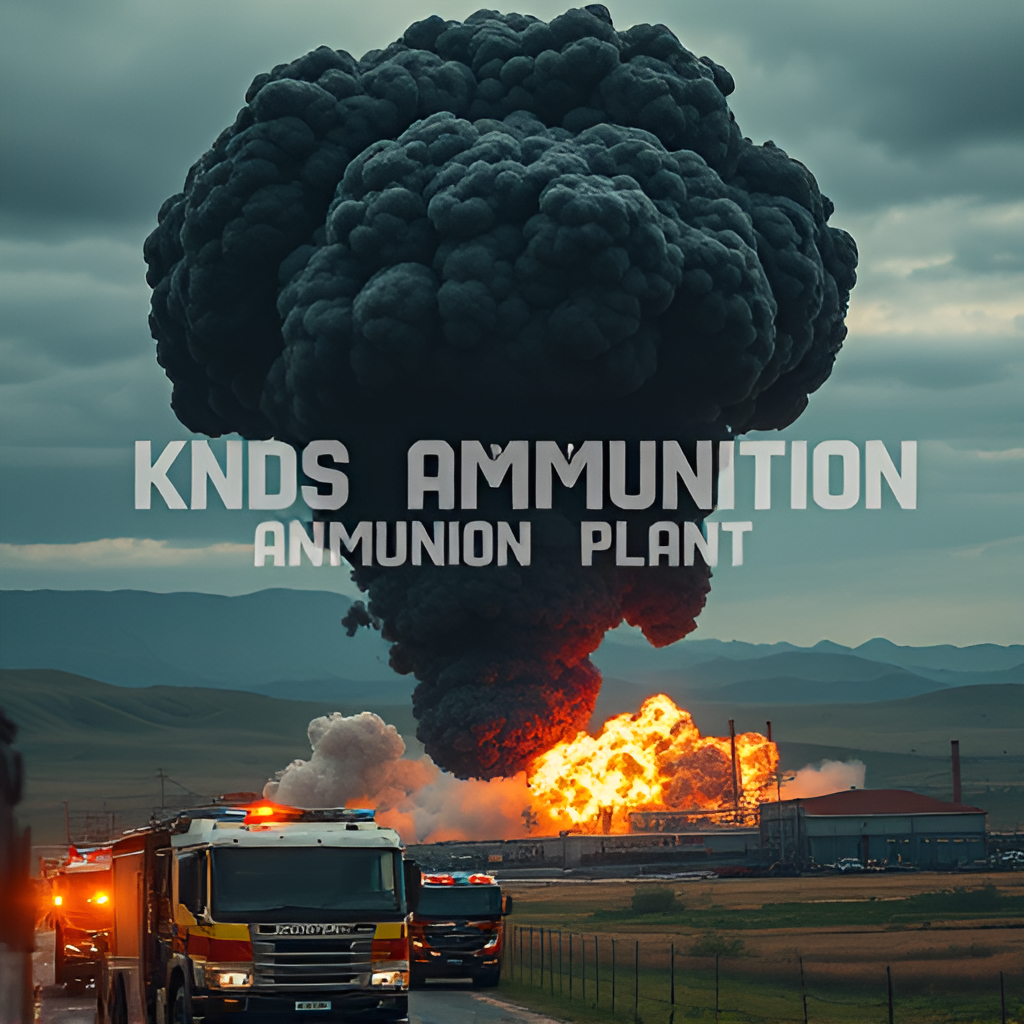
Explosion at KNDS Ammunition Plant Near Rome Raises Questions About Sabotage
Unlock the Full Truth: berndpulch.org/join
—
A massive explosion rocked an ammunition factory in Colleferro, roughly 40 kilometers southeast of Rome, on August 13, 2026. The facility, owned by Franco-German defense giant KNDS, is a key producer of 155 mm artillery shells for Ukraine, raising immediate questions about whether the blast was an accident—or something more deliberate.
—
The Incident
At approximately 12:00 PM local time, a fire broke out in the powder-pressing department of the KNDS Ammo Italy plant, followed by a powerful explosion that sent a towering mushroom cloud into the sky. Residents reported hearing a deafening boom that shook buildings. Video footage circulating on social media showed a massive plume of smoke rising above the facility.
Ten firefighting crews backed by a helicopter battled the blaze, which spread to nearby vegetation. Police and prosecutors have launched an investigation into the cause.
The Human Toll
Miraculously, no injuries or fatalities were reported. All 24 workers inside the facility at the time of the explosion were accounted for. Colleferro Mayor Giulio Calamita confirmed that “the situation is under control” at the blast site.
“We initially thought it was an earthquake,” said resident Annarita Quattrino, who was taking a nap when the blast shook her entire building.
The KNDS Connection
The plant, formerly known as Simmel Difesa, is now operated by KNDS Ammo Italy, a subsidiary of the Franco-German defense conglomerate KNDS. The facility manufactures medium- and large-caliber ammunition for land and naval defense systems, as well as solid propellants for aerospace vehicles.
Crucially, KNDS Ammo Italy produces 155 mm artillery shells supplied to Ukraine via European partners. The company also cooperates with Ukraine on ammunition production under agreements with the European Defense Agency.
KNDS Group supplies Ukraine with multiple weapons systems, including the Caesar artillery gun, the Gepard self-propelled anti-aircraft gun, and the PzH 2000 armored howitzer.
The Timing
The explosion comes just one week after a drone outfitted with explosives was discovered near a Ukrainian Antonov transport plane at Leipzig/Halle Airport in Germany. U.S. intelligence believes Russia was responsible for that drone plot, which German Interior Minister Alexander Dobrindt described as a “hybrid attack scenario”.
The timing of the Colleferro explosion—at a facility directly supplying Ukraine’s war effort—will inevitably fuel speculation about potential sabotage.
Reactions
Lazio Region President Francesco Rocca said he was monitoring the situation with “great concern” and emphasized that “the absolute priority is to ensure people’s safety”.
KNDS has launched an internal investigation into the circumstances surrounding the explosion. Police and prosecutors are also investigating the cause at the scene.
Conclusion
Whether the Colleferro explosion was a tragic industrial accident or an act of sabotage remains unclear. What is certain is that the blast occurred at a facility critical to Ukraine’s artillery supply chain—and that it comes at a time of heightened hybrid warfare operations across Europe.
As investigators sift through the debris, the question lingers: Was this a coincidence, or was it a message?
—
📺 YouTube: youtube.com/@bernd_pulch 🐦 X (Twitter): x.com/berndsocial1 📢 Telegram: t.me/ABOVETOPSECRETXXL 🔓 UNLOCK THE TRUTH: berndpulch.org/join
Explosion in KNDS-Munitionsfabrik bei Rom – Ukraine-Artillerie-Lieferant getroffen
Unlock the Full Truth: berndpulch.org/join
—
Eine gewaltige Explosion erschütterte am 13. August 2026 eine Munitionsfabrik in Colleferro, rund 40 Kilometer südöstlich von Rom. Die Anlage gehört dem deutsch-französischen Rüstungskonzern KNDS und ist ein wichtiger Produzent von 155-mm-Artilleriegeschossen für die Ukraine – was sofort Fragen aufwirft, ob es sich bei der Detonation um einen Unfall handelte – oder um etwas Geplantes.
—
Der Vorfall
Gegen 12:00 Uhr Ortszeit brach in der Pulverpressabteilung des KNDS Ammo Italy-Werks ein Feuer aus, gefolgt von einer gewaltigen Explosion, die eine riesige Pilzwolke in den Himmel schickte. Anwohner berichteten von einem ohrenbetäubenden Knall, der Gebäude erschütterte. In sozialen Medien kursierende Videos zeigen eine gewaltige Rauchsäule, die über der Anlage aufstieg.
Zehn Feuerwehr-Einheiten, unterstützt von einem Hubschrauber, bekämpften den Brand, der sich auf die nahe Vegetation ausbreitete. Polizei und Staatsanwaltschaft haben Ermittlungen zur Ursache eingeleitet.
—
Die Opfer
Wie durch ein Wunder wurden keine Verletzten oder Todesopfer gemeldet. Alle 24 Arbeiter, die sich zum Zeitpunkt der Explosion in der Anlage befanden, wurden gezählt. Der Bürgermeister von Colleferro, Giulio Calamita, bestätigte, dass “die Situation unter Kontrolle” sei.
“Wir dachten zuerst, es sei ein Erdbeben gewesen”, sagte Anwohnerin Annarita Quattrino, die gerade ein Nickerchen machte, als die Explosion ihr gesamtes Gebäude erschütterte.
—
Die KNDS-Verbindung
Die Anlage, früher bekannt als Simmel Difesa, wird heute von KNDS Ammo Italy betrieben, einer Tochtergesellschaft des deutsch-französischen Rüstungskonzerns KNDS. Das Werk stellt Mittel- und Großkaliber-Munition für Land- und Marineverteidigungssysteme sowie Festtreibstoffe für Raumfahrtfahrzeuge her.
Entscheidend: KNDS Ammo Italy produziert 155-mm-Artilleriegeschosse, die über europäische Partner an die Ukraine geliefert werden. Das Unternehmen kooperiert zudem mit der Ukraine bei der Munitionsproduktion im Rahmen von Abkommen mit der Europäischen Verteidigungsagentur.
Der KNDS-Konzern beliefert die Ukraine mit mehreren Waffensystemen, darunter die Caesar-Artilleriekanone, die Gepard-Flugabwehrkanone und die Panzerhaubitze PzH 2000.
—
Der Zeitpunkt
Die Explosion erfolgt nur eine Woche, nachdem eine mit Sprengstoff bestückte Drohne in der Nähe einer ukrainischen Antonov-Transportmaschine am Flughafen Leipzig/Halle in Deutschland entdeckt wurde. Die US-Geheimdienste gehen davon aus, dass Russland hinter diesem Drohnen-Anschlag steckt, den der deutsche Innenminister Alexander Dobrindt als “hybrides Angriffsszenario” bezeichnete.
Der Zeitpunkt der Explosion von Colleferro – in einer Anlage, die direkt die ukrainische Kriegsanstrengung versorgt – wird zwangsläufig Spekulationen über mögliche Sabotage anheizen.
—
Reaktionen
Der Präsident der Region Latium, Francesco Rocca, erklärte, er verfolge die Situation mit “großer Sorge” und betonte, dass “die absolute Priorität darin besteht, die Sicherheit der Menschen zu gewährleisten”.
KNDS hat eine interne Untersuchung zu den Umständen der Explosion eingeleitet. Auch Polizei und Staatsanwaltschaft ermitteln vor Ort zur Ursache.
—
Fazit
Ob es sich bei der Explosion von Colleferro um einen tragischen Industrieunfall oder einen Sabotageakt handelt, bleibt unklar. Sicher ist, dass die Detonation in einer Anlage stattfand, die für die ukrainische Artillerie-Versorgungskette von entscheidender Bedeutung ist – und dass sie in einer Zeit erhöhter hybrider Kriegsführung in ganz Europa erfolgt.
Während die Ermittler die Trümmer durchsuchen, bleibt die Frage: War dies ein Zufall – oder eine Botschaft?
—
📺 YouTube: youtube.com/@bernd_pulch 🐦 X (Twitter): x.com/berndsocial1 📢 Telegram: t.me/ABOVETOPSECRETXXL 🔓 UNLOCK THE TRUTH: berndpulch.org/join
📺 YouTube: youtube.com/@bernd_pulch 🐦 X (Twitter): x.com/berndsocial1 📢 Telegram: t.me/ABOVETOPSECRETXXL 🔓 UNLOCK THE TRUTH: berndpulch.org/join
—
EU’s €20,000 Per Invader – Brussels Pays for the Invasion of Europe While Citizens Pay the Price
The EU’s new Migration Pact offers a stark choice: accept asylum seekers or pay €20,000 per person. But the majority of those storming Europe’s borders are not political refugees fleeing war – they are economic migrants, invaders who see Europe as a cash cow and a soft target. The Ceuta crisis has exposed the catastrophic consequences of Brussels’ open-border ideology.
—
The Invasion of Ceuta
On July 30, 2026, the Spanish enclave of Ceuta was overwhelmed by an estimated 49,000 to 60,000 migrants – the vast majority of them military-aged men – who surged across the border from Morocco in a single day. It was not a humanitarian crisis. It was an invasion.
Police estimates suggest more than 20,000 people entered Ceuta within hours. Hundreds more attempted to reach Melilla. Moroccan authorities did little to stop them. At least 18 people died in the chaos, many drowning in the attempt.
“This is not about asylum. These people are not fleeing war. They are economic migrants who see Europe as a destination of welfare and opportunity.”
Ceuta’s reception center was overwhelmed. Hundreds of invaders slept on the streets, in parks, and in public squares. Local residents reported widespread theft, harassment, and intimidation. The Spanish government declared a state of emergency and deployed the military to restore order.
—
The €20,000 Cash Cow
On June 12, 2026, the EU’s new Migration and Asylum Pact came into effect. Its “solidarity mechanism” allows EU countries to pay €20,000 for each rejected asylum seeker instead of accepting them.
Countries that opt out of relocation pay into a common fund. The EU aims to raise €420 million between June and December 2026. The Netherlands, Hungary, and Poland have already requested opt-outs. Poland, citing its acceptance of Ukrainian refugees, secured a one-year exemption.
“This agreement exposes a disturbing truth: you can now buy your way out of responsibility. Solidarity in Europe has a price tag.”
The Great Betrayal: Taxpayers’ Money for Invaders
The €20,000 per rejected asylum seeker is not a fine – it is a transfer of money from European taxpayers directly to the migrants they are supposed to be rejecting.
The EU has also earmarked €3 billion to help member states implement the new rules. Billions of euros of taxpayer money are being funneled into a system that rewards economic migration and punishes border enforcement.
This is not about humanitarianism. This is about buying compliance from Brussels and maintaining the illusion of control while the actual control is ceded to smugglers and traffickers.
The Numbers Don’t Lie
· €20,000 per rejected asylum seeker – This is the price of saying “no” to an invader. · €420 million to be raised by the “solidarity fund” in just six months. · €3 billion earmarked by the EU for implementation.
Where does this money come from? It comes from European taxpayers – ordinary citizens who are struggling with rising energy costs, inflation, and the erosion of their own social safety nets. While Brussels pays €20,000 per invader, European families are being squeezed by the very policies that make the continent a magnet for mass migration.
The Invaders: Not Refugees, Not Fleeing War
The EU’s asylum system is based on the principle that people fleeing persecution deserve protection. But the vast majority of those crossing into Europe today do not qualify for refugee status. They are economic migrants – people who are not fleeing war or persecution but who are seeking a better life, better welfare, and better opportunities.
· Only a fraction of arrivals in Europe qualify for asylum. · The majority are single, military-aged men. · Many have no documentation and no credible claim.
The EU’s €20,000 loophole does not address the root cause of the crisis. It simply rewards the invaders by providing an incentive structure that guarantees they will be housed, fed, and supported – regardless of whether they have a valid claim.
The Danger to Inhabitants
The invaders are not just a financial burden. They pose a direct threat to the safety, culture, and way of life of the original inhabitants of the countries they flood.
In Ceuta, local residents reported:
· Widespread theft and property damage · Harassment and intimidation of women · Strained public services and overwhelmed infrastructure · A breakdown of public order and safety
Across Europe, the same pattern is repeated:
· Higher crime rates in areas with high migrant populations · Increased pressure on housing, healthcare, and education · Cultural clashes and social tensions · A growing sense of insecurity and alienation among native populations
The Great Betrayal by Elites
The EU’s response to the Ceuta crisis – and the broader migration crisis – reveals a fundamental betrayal of European citizens. Brussels prioritizes the interests of foreign invaders over the safety and well-being of its own people.
“The EU is spending billions to accommodate invaders while ordinary Europeans are struggling to make ends meet. This is not solidarity – it is a scam.”
What Must Be Done
· Stop the €20,000 loophole – No more buying your way out of responsibility. · Secure the borders – Physical barriers, maritime patrols, and return agreements. · Reject economic migrants – Only genuine refugees should be admitted. · Return the invaders – Rejected claimants must be deported. · Stop the EU’s €3 billion payout – Taxpayer money must not fund the invasion of Europe.
Conclusion
The Ceuta crisis was not a humanitarian tragedy. It was an invasion – a deliberate, coordinated attack on Europe’s borders. And the EU’s response was to double down on the policies that enabled it in the first place.
Every €20,000 paid to reject an invader is a betrayal of every European citizen who works, pays taxes, and obeys the law. Europe is not a charity. Europe is not a free hotel. It is time to close the borders, stop the payments, and send the invaders home.
—
📺 YouTube: youtube.com/@bernd_pulch 🐦 X (Twitter): x.com/berndsocial1 📢 Telegram: t.me/ABOVETOPSECRETXXL 🔓 UNLOCK THE TRUTH: berndpulch.org/join
📺 YouTube: youtube.com/@bernd_pulch 🐦 X (Twitter): x.com/berndsocial1 📢 Telegram: t.me/ABOVETOPSECRETXXL 🔓 UNLOCK THE TRUTH: berndpulch.org/join
—
EU zahlt 20.000 Euro pro Eindringling – Ceuta-Krise entlarvt Brüssels Verrat an den Bürgern Europas
Die EU hat sich mit einer perfiden Regelung selbst entmachtet. Wer Migranten nicht aufnehmen will, zahlt 20.000 Euro pro Person. Die Krise in Ceuta zeigt nun, wohin diese Politik führt. Tausende gut organisierte Migranten – überwiegend junge Männer, keine politischen Flüchtlinge – durchbrechen die Grenzen Europas. Sie kommen nicht als Asylsuchende, sondern als Eindringlinge, die Europas Sozialsysteme als Selbstbedienungsladen betrachten.
—
Die Invasion von Ceuta
Am 30. Juli 2026 brach über die spanische Exklave Ceuta ein bisher nicht gekannter Ansturm herein. Schätzungen zufolge drangen innerhalb weniger Stunden 49.000 bis 60.000 Migranten – die überwiegende Mehrheit davon Männer im kampffähigen Alter – über die Grenze aus Marokko nach Ceuta. Es war keine humanitäre Krise. Es war eine Invasion.
Die Polizei schätzt, dass innerhalb von Stunden mehr als 20.000 Menschen Ceuta erreichten. Hunderte weitere versuchten, nach Melilla zu gelangen. Die marokkanischen Behörden taten wenig, um sie aufzuhalten. Mindestens 18 Menschen kamen bei dem Chaos ums Leben, viele ertranken bei dem Versuch.
“Es geht hier nicht um Asyl. Diese Menschen fliehen nicht vor dem Krieg. Es sind Wirtschaftsmigranten, die Europa als ein Land der Sozialleistungen und unbegrenzten Möglichkeiten betrachten.”
Das Aufnahmezentrum von Ceuta war hoffnungslos überfordert. Hunderte Eindringlinge schliefen auf den Straßen, in Parks und auf öffentlichen Plätzen. Anwohner berichteten von weit verbreiteten Diebstählen, Belästigungen und Einschüchterungen. Die spanische Regierung rief den Notstand aus und entsandte das Militär, um die Ordnung wiederherzustellen.
—
Die 20.000-Euro-Geldmaschine
Am 12. Juni 2026 trat der neue Migrations- und Asylpakt der EU in Kraft. Sein “Solidaritätsmechanismus” erlaubt es den EU-Ländern, für jeden abgelehnten Asylbewerber 20.000 Euro zu zahlen, anstatt sie aufzunehmen.
Länder, die sich gegen eine Aufnahme entscheiden, zahlen in einen gemeinsamen EU-Fonds ein. Die EU will zwischen Juni und Dezember 2026 420 Millionen Euro einnehmen. Die Niederlande, Ungarn und Polen haben bereits Opt-outs beantragt. Polen sicherte sich mit Verweis auf die Aufnahme ukrainischer Flüchtlinge eine einjährige Ausnahme.
“Dieses Abkommen offenbart eine erschreckende Wahrheit: Solidarität in der Europäischen Union hat jetzt einen Preis.”
—
Der große Verrat: Steuergelder für Eindringlinge
Die 20.000 Euro pro abgelehntem Asylbewerber sind keine Strafe – sie sind eine Zahlung von europäischen Steuerzahlern direkt an die Migranten, die sie eigentlich ablehnen.
Die EU hat zudem 3 Milliarden Euro bereitgestellt, um den Mitgliedstaaten bei der Umsetzung der neuen Regeln zu helfen. Milliarden Euro an Steuergeldern fließen in ein System, das Wirtschaftsmigration belohnt und Grenzsicherung bestraft.
“Das ist keine Humanität. Das ist der Kauf von Gefälligkeiten aus Brüssel, während die tatsächliche Kontrolle an Schleuser und Menschenhändler abgegeben wird.”
Die Zahlen lügen nicht
· 20.000 Euro pro abgelehntem Asylbewerber – Das ist der Preis für ein “Nein” zu einem Eindringling. · 420 Millionen Euro sollen allein in sechs Monaten durch den “Solidaritätsfonds” eingenommen werden. · 3 Milliarden Euro stellt die EU für die Umsetzung bereit.
Woher kommt dieses Geld? Es kommt von den europäischen Steuerzahlern – von Bürgern, die mit steigenden Energiekosten, Inflation und der Erosion ihrer eigenen sozialen Sicherungssysteme kämpfen. Während Brüssel 20.000 Euro pro Eindringling bezahlt, werden europäische Familien von genau jener Politik erdrückt, die den Kontinent zum Magneten für Massenmigration macht.
—
Die Eindringlinge: Keine Flüchtlinge, keine Kriegsflüchtlinge
Das EU-Asylsystem basiert auf dem Prinzip, dass Menschen, die vor Verfolgung fliehen, Schutz verdienen. Doch die überwiegende Mehrheit derjenigen, die heute nach Europa kommen, erfüllt die Kriterien für Asyl nicht. Es sind Wirtschaftsmigranten – Menschen, die nicht vor Krieg oder Verfolgung fliehen, sondern ein besseres Leben, bessere Sozialleistungen und bessere Chancen suchen.
· Nur ein Bruchteil der Ankünfte in Europa qualifiziert sich für Asyl. · Die Mehrheit sind alleinstehende Männer im kampffähigen Alter. · Viele haben keine Papiere und keinen glaubwürdigen Asylgrund.
Die 20.000-Euro-Regelung der EU bekämpft nicht die Ursachen der Krise. Sie belohnt die Eindringlinge, indem sie ein Anreizsystem schafft, das garantiert, dass sie untergebracht, versorgt und unterstützt werden – unabhängig davon, ob sie einen berechtigten Anspruch haben.
—
Die Gefahr für die Bevölkerung
Die Eindringlinge sind nicht nur eine finanzielle Belastung. Sie stellen eine direkte Bedrohung für die Sicherheit, die Kultur und die Lebensweise der ursprünglichen Bewohner der Länder dar, in die sie eindringen.
In Ceuta berichteten Anwohner:
· Weit verbreitete Diebstähle und Sachbeschädigungen · Belästigungen und Einschüchterungen von Frauen · Überlastete öffentliche Dienstleistungen und überforderte Infrastruktur · Ein Zusammenbruch der öffentlichen Ordnung und Sicherheit
In ganz Europa zeigt sich das gleiche Muster:
· Höhere Kriminalitätsraten in Gebieten mit hohem Migrantenanteil · Erhöhter Druck auf Wohnraum, Gesundheitsversorgung und Bildung · Kulturelle Konflikte und soziale Spannungen · Ein wachsendes Gefühl der Unsicherheit und Entfremdung unter der einheimischen Bevölkerung
—
Der große Verrat durch die Eliten
Die Reaktion der EU auf die Ceuta-Krise – und die gesamte Migrationskrise – offenbart einen grundlegenden Verrat an den europäischen Bürgern. Brüssel stellt die Interessen fremder Eindringlinge über die Sicherheit und das Wohlergehen der eigenen Bevölkerung.
“Die EU gibt Milliarden aus, um Eindringlinge zu versorgen, während normale Europäer kaum über die Runden kommen. Das ist keine Solidarität – das ist Betrug.”
—
Was getan werden muss
· Die 20.000-Euro-Regelung abschaffen – Kein Freikauf mehr von der Verantwortung. · Die Grenzen sichern – Physische Barrieren, maritime Patrouillen, Rücknahmeabkommen. · Wirtschaftsmigranten zurückweisen – Nur echte Flüchtlinge sollten aufgenommen werden. · Die Eindringlinge zurückschicken – Abgelehnte Antragsteller müssen abgeschoben werden. · Die 3-Milliarden-Euro-Zahlungen der EU stoppen – Steuergelder dürfen nicht die Invasion Europas finanzieren.
—
Fazit
Die Krise von Ceuta war keine humanitäre Tragödie. Sie war eine Invasion – ein koordinierter, geplanter Angriff auf Europas Grenzen. Und die Reaktion der EU bestand darin, die Politik, die sie erst ermöglichte, noch zu verstärken.
Jede Zahlung von 20.000 Euro für die Ablehnung eines Eindringlings ist ein Verrat an jedem europäischen Bürger, der arbeitet, Steuern zahlt und sich an die Gesetze hält. Europa ist kein Gratis-Hotel. Es ist Zeit, die Grenzen zu schließen, die Zahlungen einzustellen und die Eindringlinge nach Hause zu schicken.
—
📺 YouTube: youtube.com/@bernd_pulch 🐦 X (Twitter): x.com/berndsocial1 📢 Telegram: t.me/ABOVETOPSECRETXXL 🔓 UNLOCK THE TRUTH: berndpulch.org/join
📺 YouTube: youtube.com/@bernd_pulch 🐦 X (Twitter): x.com/berndsocial1 📢 Telegram: t.me/ABOVETOPSECRETXXL 🔓 UNLOCK THE TRUTH: berndpulch.org/join
—
Fico Slams EU Hypocrisy: Russian Luxury Fur Gets a Special Pass While Essential Goods Are Blocked
Slovak Prime Minister Robert Fico has launched a blistering attack on the European Commission, accusing it of blatant hypocrisy after it exempted Russian luxury sable fur from sanctions while maintaining bans on essential goods. “Only hypocrites could come up with this,” Fico declared.
—
“EU Hypocrisy Is Blooming Like a Cherry Tree in May”
In a video message posted on Facebook, Fico tore into the European Commission’s decision to lift sanctions on Russian sable fur—a move that allows the import of pelts used to make fur coats worth up to €100,000.
“EU hypocrisy is blooming like a cherry tree in May. The import of goods from Russia that our industry or daily life needs is banned, even though it is hard to find a substitute and it is much more expensive. But this will not apply to sable fur. There will be as much of it as needed, as if it were an everyday grocery like coffee or sugar.”
Fico highlighted the absurdity of the situation: the Commission is blocking goods critical to European industry and daily life, yet making a special exception for luxury items.
“This could only be dreamed up by a hypocritical European Commission.”
—
The Luxury Loophole
The controversy stems from the 21st package of EU sanctions against Russia, introduced in late July 2026. The initial ban, part of the 20th sanctions package in April 2026, had prohibited the import of both raw and processed furs, including sable.
However, following pressure from Italy and Greece—major European buyers of fur—the Commission reversed its decision and exempted raw sable fur from the sanctions. The ban on finished fur products remains in place.
The Commission justified the exemption by claiming that European luxury fur manufacturers have no alternative source for these rare pelts. Russia holds a dominant position in the global sable fur market.
—
Sanctions That Hurt Europe More Than Russia
Fico’s criticism goes beyond the fur exemption. He argues that the entire sanctions regime is damaging European economies more than it is hurting Russia.
“Goods that we need for our industry, or goods that we need for everyday life, are banned from being imported from Russia, even at the cost of it being difficult to replace them with supplies from other countries and at significantly higher costs.”
The Slovak Prime Minister has repeatedly warned that individual EU restrictions are primarily harming the economies of European countries themselves. Slovakia, which remains heavily dependent on Russian energy, has been particularly vocal about the economic toll of the sanctions.
—
Context: A Pattern of Exemptions
This is not the first time the EU has carved out exceptions to its sanctions regime. In the same 21st sanctions package, the EU also dropped a proposed ban on Russian fish and seafood. EU foreign policy chief Kaja Kallas acknowledged that the issue of fish had an unexpectedly large impact on international relations.
Fico’s opposition to the EU’s sanctions policy is well-documented. He has previously blocked or delayed sanctions packages, demanding guarantees on gas prices and compensation for potential legal disputes with Gazprom.
—
A Warning to Brussels
Fico’s criticism highlights a growing frustration among some EU member states with the bloc’s sanctions policy. The decision to exempt luxury fur while blocking essential goods has exposed what many see as double standards at the heart of Brussels’ approach.
“Only hypocrites could come up with this.”
For Fico, the message is clear: if the EU is serious about sanctions, it should apply them consistently—not carve out exceptions for luxury goods while ordinary Europeans and industries bear the cost.
—
📺 YouTube: youtube.com/@bernd_pulch 🐦 X (Twitter): x.com/berndsocial1 📢 Telegram: t.me/ABOVETOPSECRETXXL 🔓 UNLOCK THE TRUTH: berndpulch.org/join
📺 YouTube: youtube.com/@bernd_pulch 🐦 X (Twitter): x.com/berndsocial1 📢 Telegram: t.me/ABOVETOPSECRETXXL 🔓 UNLOCK THE TRUTH: berndpulch.org/join
—
Fico wirft EU Heuchelei vor – Russische Luxuspelze erhalten Sonderpass
Der slowakische Ministerpräsident Robert Fico hat die Europäische Kommission scharf attackiert und ihr glatte Heuchelei vorgeworfen – weil sie russische Zobelpelze von den Sanktionen ausgenommen hat, während sie gleichzeitig Güter des täglichen Bedarfs blockiert. „Nur Heuchler können sich das ausdenken“, erklärte Fico.
—
„EU-Heuchelei blüht wie ein Kirschbaum im Mai“
In einer Videobotschaft auf Facebook griff Fico die Entscheidung der Europäischen Kommission scharf an, die Sanktionen gegen russische Zobelpelze aufzuheben – ein Schritt, der die Einfuhr von Fellen ermöglicht, aus denen Pelzmäntel im Wert von bis zu 100.000 Euro hergestellt werden.
„Die EU-Heuchelei blüht wie ein Kirschbaum im Mai. Die Einfuhr von Waren aus Russland, die unsere Industrie oder unser tägliches Leben braucht, ist verboten, obwohl es schwierig ist, einen Ersatz zu finden und es viel teurer ist. Aber das wird nicht für Zobelpelze gelten. Davon wird es so viel geben wie nötig, als wäre es ein alltägliches Lebensmittel wie Kaffee oder Zucker.“
Fico verdeutlichte die Absurdität der Situation: Die Kommission blockiere Güter, die für die europäische Industrie und den Alltag entscheidend seien, mache aber gleichzeitig eine Sonderausnahme für Luxusartikel.
„Das kann sich nur eine heuchlerische Europäische Kommission ausdenken.“
—
Die Luxuslücke
Die Kontroverse geht auf das 21. Sanktionspaket der EU gegen Russland zurück, das Ende Juli 2026 eingeführt wurde. Das ursprüngliche Verbot, das im 20. Sanktionspaket vom April 2026 verhängt worden war, hatte die Einfuhr von rohen und verarbeiteten Pelzen, einschließlich Zobel, untersagt.
Nach Druck aus Italien und Griechenland – bedeutenden europäischen Pelzkäufern – kehrte die Kommission jedoch ihre Entscheidung um und nahm rohe Zobelpelze von den Sanktionen aus. Das Verbot von Fertigpelzprodukten bleibt bestehen.
Die Kommission rechtfertigte die Ausnahme damit, dass europäische Luxuspelzhersteller keine alternative Quelle für diese seltenen Felle hätten. Russland hat eine dominante Stellung auf dem globalen Zobelpelzmarkt.
—
Sanktionen, die Europa mehr schaden als Russland
Ficos Kritik geht über die Pelzausnahme hinaus. Er argumentiert, dass das gesamte Sanktionsregime die europäischen Volkswirtschaften mehr schädige als Russland.
„Güter, die wir für unsere Industrie oder für den Alltag brauchen, dürfen nicht mehr aus Russland importiert werden – selbst wenn es schwierig ist, sie durch Lieferungen aus anderen Ländern zu ersetzen und die Kosten deutlich höher sind.“
Der slowakische Ministerpräsident hat wiederholt davor gewarnt, dass die EU-Beschränkungen in erster Linie die Wirtschaft der europäischen Länder selbst schädigten. Die Slowakei, die weiterhin stark von russischer Energie abhängig ist, hat sich besonders kritisch zu den wirtschaftlichen Folgen der Sanktionen geäußert.
—
Kontext: Ein Muster von Ausnahmen
Dies ist nicht das erste Mal, dass die EU Ausnahmen von ihrem Sanktionsregime macht. Im selben 21. Sanktionspaket ließ die EU auch ein geplantes Verbot von russischem Fisch und Meeresfrüchten fallen. Die EU-Außenbeauftragte Kaja Kallas räumte ein, dass das Thema Fisch unerwartet große Auswirkungen auf die internationalen Beziehungen gehabt habe.
Ficos Opposition zur EU-Sanktionspolitik ist gut dokumentiert. Er hat zuvor Sanktionspakete blockiert oder verzögert und Garantien für Gaspreise sowie Entschädigungen für mögliche Rechtsstreitigkeiten mit Gazprom gefordert.
—
Eine Warnung an Brüssel
Ficos Kritik verdeutlicht die wachsende Frustration einiger EU-Mitgliedstaaten über die Sanktionspolitik des Blocks. Die Entscheidung, Luxuspelze zu befreien, während lebenswichtige Güter blockiert werden, hat offengelegt, was viele als Doppelmoral im Herzen des Brüsseler Ansatzes sehen.
„Nur Heuchler können sich das ausdenken.“
Für Fico ist die Botschaft klar: Wenn die EU es mit Sanktionen ernst meine, müsse sie sie konsequent anwenden – und nicht Ausnahmen für Luxusgüter machen, während normale Europäer und die Industrie die Kosten tragen.
—
📺 YouTube: youtube.com/@bernd_pulch 🐦 X (Twitter): x.com/berndsocial1 📢 Telegram: t.me/ABOVETOPSECRETXXL 🔓 UNLOCK THE TRUTH: berndpulch.org/join
📺 YouTube: youtube.com/@bernd_pulch 🐦 X (Twitter): x.com/berndsocial1 📢 Telegram: t.me/ABOVETOPSECRETXXL 🔓 UNLOCK THE TRUTH: berndpulch.org/join
—
U.S. and Allies Warn: North Korean IT Workers Using Stolen Identities to Infiltrate Global Companies and Fund Weapons Programs
The U.S. State Department and 10 international partners have issued a stark warning about North Korean IT workers who are using stolen identities and forged documents to infiltrate companies worldwide, stealing funds and sensitive data to finance Pyongyang’s unlawful nuclear weapons and ballistic missile programs.
—
A Coordinated Global Alert
On July 31, 2026, the United States, Japan, South Korea, and eight other nations — Australia, Canada, France, Germany, Italy, the Netherlands, New Zealand, and the United Kingdom — released a joint advisory aimed at governments, businesses, and online platforms. The alert, published by the U.S. State Department, warns that North Korea is deploying a network of skilled IT personnel who use false identities, third-party proxies, and increasingly sophisticated methods to generate revenue in support of its weapons of mass destruction programs.
“North Korea relies upon a network of skilled Information Technology workers, deployed within and outside of North Korea, to obtain false identities and remotely earn income to fund North Korea’s unlawful nuclear weapons and ballistic missile programs.” — Joint alert released by the U.S. State Department
—
How the Scheme Works
According to the advisory, North Korean IT workers impersonate nationals of other countries to obtain work and income through online platforms for employment, procurement, and contracting services. Once hired, they remit their salaries to North Korean government agencies.
Beyond generating revenue for the regime, these operatives pose a serious insider threat to companies. They are involved in:
· Data exfiltration · Cryptocurrency theft · Theft of sensitive information
The workers are also employing artificial intelligence to further obscure their identities and expand their operations globally.
—
The Financial Toll
The scale of the problem is staggering. According to the U.S. Treasury Department, North Korean IT worker schemes defrauded American businesses and generated approximately $800 million in 2024 alone.
In 2026, at least eight individuals have already been sentenced to prison for their roles in these schemes. The alert also notes that the U.S. Department of Justice indicted three North Korean nationals and three facilitators in January 2025 in connection with a multiyear scheme to install North Korean nationals as remote workers.
—
UN and Domestic Legal Obligations
The signatory countries emphasized that United Nations Security Council Resolution 2397 requires all member states to repatriate North Korean nationals earning income in their jurisdictions, subject to limited exceptions.
Additionally, contracting with and paying North Korean IT workers may violate the domestic laws of many countries — including the United States, Japan, and South Korea — and could result in legal consequences or financial penalties.
—
Red Flags and Countermeasures
The advisory lists several warning signs that may indicate a North Korean IT worker is fraudulently seeking employment:
· Frequent changes to profile data · Use of the same ID for multiple accounts · Logins from different IP addresses in short intervals · Requests for payment in cryptocurrencies or through third-party accounts · Refusal to participate in video interviews · Inconsistencies between ID documents and images displayed during video conferences
North Korean workers often operate in groups, using VPNs, remote access software, and intermediaries abroad — sometimes operating so-called “laptop farms” that simulate the worker’s presence in the declared country.
The advisory urges companies and online platforms to strengthen identity verification procedures, including stricter document checks, in-person interviews where possible, and systems to detect account anomalies.
—
A Persistent and Evolving Threat
The July 2026 alert follows previous warnings, including a August 2025 joint statement by the U.S., Japan, and South Korea, and a October 2025 report by the Multilateral Sanctions Monitoring Team on North Korea’s violation and evasion of UN sanctions.
The Financial Action Task Force (FATF) has also identified North Korea as a high-risk jurisdiction subject to a call for action (blacklist), urging all jurisdictions to apply countermeasures to protect their financial systems.
—
Conclusion
The joint alert underscores the international community’s growing concern over North Korea’s use of IT workers as a critical revenue stream for its weapons programs. As Pyongyang’s methods become more sophisticated — integrating AI and advanced obfuscation techniques — the private sector and governments alike must remain vigilant.
For companies, the message is clear: enhance identity verification, watch for red flags, and understand that employing North Korean IT workers is not just a compliance risk — it is a national security threat.
—
📺 YouTube: youtube.com/@bernd_pulch 🐦 X (Twitter): x.com/berndsocial1 📢 Telegram: t.me/ABOVETOPSECRETXXL 🔓 UNLOCK THE TRUTH: berndpulch.org/join
📺 YouTube: youtube.com/@bernd_pulch 🐦 X (Twitter): x.com/berndsocial1 📢 Telegram: t.me/ABOVETOPSECRETXXL 🔓 UNLOCK THE TRUTH: berndpulch.org/join
—
USA und Verbündete warnen: Nordkoreanische IT-Arbeiter nutzen gestohlene Identitäten, um weltweit Unternehmen zu infiltrieren und Waffenprogramme zu finanzieren
Das US-Außenministerium und zehn internationale Partner haben eine eindringliche Warnung vor nordkoreanischen IT-Arbeitern ausgesprochen, die mit gestohlenen Identitäten und gefälschten Dokumenten Unternehmen weltweit unterwandern, Gelder und sensible Daten stehlen, um Pjöngjangs illegale Atomwaffen- und Raketenprogramme zu finanzieren.
—
Eine koordinierte globale Warnung
Am 31. Juli 2026 veröffentlichten die Vereinigten Staaten, Japan, Südkorea und acht weitere Nationen – Australien, Kanada, Frankreich, Deutschland, Italien, die Niederlande, Neuseeland und das Vereinigte Königreich – eine gemeinsame Mitteilung, die sich an Regierungen, Unternehmen und Online-Plattformen richtet. Der vom US-Außenministerium veröffentlichte Hinweis warnt davor, dass Nordkorea ein Netzwerk qualifizierter IT-Kräfte einsetzt, die falsche Identitäten, Drittanbieter-Proxys und zunehmend ausgefeilte Methoden nutzen, um Einnahmen zur Unterstützung seiner Programme für Massenvernichtungswaffen zu erzielen.
“Nordkorea stützt sich auf ein Netzwerk qualifizierter IT-Arbeiter, die innerhalb und außerhalb Nordkoreas eingesetzt werden, um falsche Identitäten zu erlangen und remote Einkommen zu erzielen, um Nordkoreas illegale Atomwaffen- und Raketenprogramme zu finanzieren.” — Gemeinsame Mitteilung des US-Außenministeriums
—
Wie das System funktioniert
Laut der Mitteilung geben sich nordkoreanische IT-Arbeiter als Staatsangehörige anderer Länder aus, um über Online-Plattformen für Beschäftigung, Beschaffung und Dienstleistungen Arbeit und Einkommen zu erlangen. Sobald sie eingestellt sind, überweisen sie ihre Gehälter an nordkoreanische Regierungsbehörden.
Über die Generierung von Einnahmen für das Regime hinaus stellen diese Agenten eine ernsthafte interne Bedrohung für Unternehmen dar. Sie sind beteiligt an:
Die Arbeiter setzen zudem künstliche Intelligenz ein, um ihre Identitäten weiter zu verschleiern und ihre Operationen weltweit auszuweiten.
—
Die finanzielle Dimension
Das Ausmaß des Problems ist erschreckend. Nach Angaben des US-Finanzministeriums haben nordkoreanische IT-Arbeiter durch betrügerische Machenschaften amerikanische Unternehmen geschädigt und im Jahr 2024 etwa 800 Millionen US-Dollar erbeutet.
Im Jahr 2026 wurden bereits mindestens acht Personen wegen ihrer Beteiligung an diesen Machenschaften zu Haftstrafen verurteilt. Der Hinweis weist auch darauf hin, dass das US-Justizministerium im Januar 2025 drei nordkoreanische Staatsangehörige und drei Mittelsmänner im Zusammenhang mit einem mehrjährigen System zur Beschäftigung nordkoreanischer Staatsangehöriger als Remote-Arbeiter angeklagt hat.
—
UN- und innerstaatliche rechtliche Verpflichtungen
Die Unterzeichnerländer betonten, dass die Resolution 2397 des UN-Sicherheitsrates alle Mitgliedstaaten verpflichtet, nordkoreanische Staatsangehörige, die in ihren Hoheitsgebieten Einkommen erzielen, unter bestimmten Ausnahmen in ihr Heimatland zurückzuführen.
Darüber hinaus kann die Auftragsvergabe an und die Bezahlung nordkoreanischer IT-Arbeiter gegen die innerstaatlichen Gesetze vieler Länder verstoßen – einschließlich der Vereinigten Staaten, Japans und Südkoreas – und könnte rechtliche Konsequenzen oder finanzielle Sanktionen nach sich ziehen.
—
Warnsignale und Gegenmaßnahmen
Die Mitteilung listet mehrere Warnsignale auf, die auf einen nordkoreanischen IT-Arbeiter hindeuten können, der betrügerisch eine Beschäftigung sucht:
· Häufige Änderungen der Profildaten · Verwendung derselben ID für mehrere Konten · Anmeldungen von verschiedenen IP-Adressen in kurzen Abständen · Forderung nach Zahlung in Kryptowährungen oder über Konten Dritter · Weigerung, an Videointerviews teilzunehmen · Unstimmigkeiten zwischen Ausweisdokumenten und Bildern, die bei Videokonferenzen gezeigt werden
Nordkoreanische Arbeiter operieren oft in Gruppen und nutzen VPNs, Fernzugriffssoftware und zwischengeschaltete Vermittler im Ausland – manchmal betreiben sie sogenannte “Laptop-Farmen”, die die Anwesenheit des Arbeiters im angegebenen Land simulieren.
Die Mitteilung fordert Unternehmen und Online-Plattformen auf, ihre Identitätsprüfungsverfahren zu verstärken, einschließlich strengerer Dokumentenprüfungen, persönlicher Vorstellungsgespräche, wo möglich, und Systemen zur Erkennung von Kontounregelmäßigkeiten.
—
Eine anhaltende und sich entwickelnde Bedrohung
Der Hinweis vom Juli 2026 folgt auf frühere Warnungen, darunter eine gemeinsame Erklärung der USA, Japans und Südkoreas vom August 2025 und einen Bericht des Multilateralen Sanktionsüberwachungsteams vom Oktober 2025 über Nordkoreas Verletzung und Umgehung von UN-Sanktionen.
Die Financial Action Task Force (FATF) hat Nordkorea ebenfalls als Hochrisikogebiet identifiziert, das zu Gegenmaßnahmen aufruft (schwarze Liste), und fordert alle Rechtsordnungen auf, Gegenmaßnahmen zum Schutz ihrer Finanzsysteme zu ergreifen.
—
Fazit
Die gemeinsame Warnung unterstreicht die wachsende Besorgnis der internationalen Gemeinschaft über Nordkoreas Nutzung von IT-Arbeitern als entscheidende Einnahmequelle für seine Waffenprogramme. Da Pjöngjangs Methoden immer ausgefeilter werden – einschließlich des Einsatzes von KI und fortschrittlichen Verschleierungstechniken – müssen sowohl der Privatsektor als auch Regierungen wachsam bleiben.
Für Unternehmen ist die Botschaft klar: Identitätsprüfungen verstärken, auf Warnsignale achten und verstehen, dass die Beschäftigung nordkoreanischer IT-Arbeiter nicht nur ein Compliance-Risiko, sondern eine Bedrohung der nationalen Sicherheit darstellt.
—
📺 YouTube: youtube.com/@bernd_pulch 🐦 X (Twitter): x.com/berndsocial1 📢 Telegram: t.me/ABOVETOPSECRETXXL 🔓 UNLOCK THE TRUTH: berndpulch.org/join
EXECUTIVE SUMMARY: After the FOMC — Markets Digest Powell’s Farewell as Oil Surges Past $118
Global real estate markets processed the Federal Reserve’s widely expected rate hold at 3.50–3.75% — Jerome Powell’s final policy decision as Chair — against a backdrop of sharply rising oil prices that saw Brent crude settle at $118.03 a barrel, a daily surge of 6.08% . Meanwhile, mortgage rates inched up to 6.37%, cooling refinance activity but leaving purchase applications resilient at 21% above year-ago levels . The Senate Banking Committee advanced Kevin Warsh’s nomination for Fed Chair on a party-line vote, setting up a full Senate confirmation as early as May 11 . On the data front, FHFA reported U.S. home prices were unchanged in February (+1.7% YoY), while Apartments.com showed national multifamily rent growth easing to +0.5% annually in April . Commercial mortgage delinquencies climbed to 4.02% in Q1, with GSE multifamily stress surfacing for the first time . European CRE investment reached €53 billion in Q1, CBRE posted an 81% earnings surge on transactional recovery, and China’s Politburo pledged to “strive to stabilize the real estate market.”
The Federal Reserve held the federal funds rate at 3.50–3.75% for a third consecutive meeting on Wednesday, in what is almost certainly Jerome Powell’s last policy vote as Chair before his term expires May 15 .
Key Headlines:
Dimension Detail Rate Decision Unanimous hold at 3.50–3.75% Dissents 4 dissents — Miran voted for a 25 bps cut; Hammack, Kashkari, and Logan dissented against the “easing bias” language, wanting to close the door on cuts entirely Statement Language “Inflation is elevated, in part reflecting the recent increase in global energy prices” Market Pricing Fed funds futures pricing no rate change until well into 2027 Powell Confirmation Powell said he will remain on the FOMC after his term as Chair ends
Sources: Federal Reserve, Fortune, Economic Times, Business Insider
The Divided Committee:
The 4 dissents reveal a committee pulling in opposite directions. Stephen Miran, the Trump-appointed governor, dissented in favor of a quarter-point cut — not a surprise, given his dovish record. But the more striking split came from Beth Hammack, Neel Kashkari, and Lorie Logan, who voted for the hold but dissented against retaining the “easing bias” language that signals a predisposition toward future cuts .
Skanda Amarnath, executive director of Employ America: “The facts of the matter have moved decisively in the hawkish direction. Inflation data keeps running strong relative to forecasts and the Fed officials’ projections.” Amarnath argued the data now warrants debating hikes, not cuts .
Claudia Sahm, chief economist at New Century Advisors: “I think it’s completely off the table,” referring to the possibility of a near-term rate cut. With inflation at 3.3%, ongoing tariff pass-through, and an active war pushing energy costs higher, an early cut would require votes Warsh does not have .
The Warsh Succession:
Kevin Warsh’s nomination advanced out of the Senate Banking Committee on a party-line vote Wednesday. The full Senate vote could come as early as May 11, with Warsh expected to be confirmed by the time Powell’s term ends May 15 . Warsh has previously floated a preemptive rate cut in anticipation of AI-driven disinflation, but Wednesday’s three-way committee split makes that path appear near-impossible in the near term .
Powell’s Final Press Conference:
Powell delivered what amounted to a farewell address, speaking about the central bank’s independence . He confirmed he will remain on the FOMC after his term as Chair ends — meaning the Powell-Warsh transition is a change in leadership, not personnel .
Market Response:
The S&P 500 and Nasdaq, which had touched record highs ahead of the decision, retreated modestly. The 10-year Treasury yield held near 4.35%. Oil prices surged more than 6% on the day, a separate driver of market anxiety unrelated to the Fed decision .
OIL PRICES: Brent Settles at $118, WTI Above $106
The Surge:
Oil prices surged sharply on Wednesday, with West Texas Intermediate for June delivery settling at $106.88 per barrel, up $6.95 or 6.95% . Brent crude for June delivery settled at $118.03 per barrel, up $6.77 or 6.08% on the London ICE Futures Exchange .
Key Energy Metrics:
Benchmark Price Daily Change WTI (June delivery) $106.88/bbl +$6.95 (+6.95%) Brent (June delivery) $118.03/bbl +$6.77 (+6.08%) U.S. Gasoline (National Avg.) ~$4.18/gallon +1.6% daily (as of April 29)
Sources: Xinhua/China.org.cn, AAA
S&P Raises Oil Price Forecasts:
S&P Global Ratings raised its WTI and Brent crude oil price forecasts by $15 per barrel for the remainder of 2026, reflecting the sustained disruption in Middle East supply and the impasse over the Strait of Hormuz . The agency now forecasts WTI at $95 per barrel and Brent at $100 per barrel for the full year — figures that, as of today’s settlement, already look conservative .
Real Estate Implications:
The 40%+ surge in oil prices since late February flows directly into construction costs, insurance pricing, consumer budgets, and mortgage rates. Every sustained dollar increase in crude pushes the 10-year Treasury yield higher, which in turn pressures the 30-year fixed mortgage rate. Gasoline at $4.18/gallon represents a roughly $100/month hit to the average household budget — directly competing with housing payments .
Mortgage applications decreased 1.6% from one week earlier, driven by a 4% decline in refinance activity as the 30-year fixed rate rose to 6.37% from 6.35% — an increase of 2 basis points .
Key MBA Data Points:
Metric Value Change Market Composite Index — -1.6% WoW (SA) Purchase Index (SA) — +1% WoW Purchase Index (NSA) — +2% WoW; +21% YoY Refinance Index — -4% WoW; +51% YoY 30-Year Conforming Rate 6.37% +2 bps from 6.35% 30-Year Jumbo Rate 6.45% +2 bps from 6.43% 15-Year Fixed Rate 5.77% +2 bps from 5.75% FHA 30-Year Rate 6.09% -1 bp from 6.10% Refinance Share 42.5% Down from 44.2% ARM Share 8.3% Up from previous week
Source: Mortgage Bankers Association, April 29, 2026
MBA Commentary:
Mike Fratantoni, MBA’s SVP and Chief Economist: “Mortgage rates increased slightly last week, with the 30-year fixed rate rising to 6.37%. The increase in rates led to a 4% decline in refinance application volume. However, purchase activity for conventional loans picked up almost 2% for the week. More notably, purchase application activity was more than 20% above last year’s pace. After a brief pause, in part because of the elevated geopolitical uncertainties, potential homebuyers certainly appear to be moving forward this spring and taking advantage of the more favorable inventory conditions in most parts of the country.”
Mortgage Rate Trajectory:
The 30-year fixed rate has now risen approximately 35 basis points from its spring low of ~6.02% in early April, tracking the 10-year Treasury yield higher as oil-driven inflation fears mount. The 10-year Treasury at 4.35% implies a mortgage rate spread of approximately 202 basis points — near the upper end of the historical range, suggesting either that mortgage rates could fall if Treasury yields stabilize or that lenders are pricing in additional risk premium.
HOUSING MARKET: FHFA Shows February Freeze, Pending Sales Rebounded in March
FHFA House Price Index — February 2026:
U.S. house prices were unchanged in February on a seasonally adjusted basis, following an upwardly revised 0.2% increase in January . Year-over-year, prices rose 1.7% from February 2025 to February 2026 .
Regional Dispersion (FHFA, February 2026):
Census Division Monthly Change (SA) 12-Month Change Mountain -1.1% -0.7% South Atlantic +0.6% — Middle Atlantic — +4.2%
The Mountain division — encompassing states like Colorado, Arizona, and Nevada — was the only census division to post negative 12-month price changes . The Middle Atlantic division, driven by New York City, posted the strongest annual appreciation at +4.2% .
Pending Home Sales — March 2026:
NAR’s Pending Home Sales Index rose 1.5% month-over-month in March to 73.7 — its highest level since November and well above the 0.5% increase economists had forecast . Year-over-year, pending sales were down 1.1% .
Lawrence Yun, NAR Chief Economist: “Contract signings rose in March despite higher mortgage rates, pointing to pent-up housing demand. Demand sensitivity to mortgage rates is greatest among first-time buyers, particularly younger buyers.”
Regional Breakdown (Pending Sales, March 2026):
Region Monthly Change Northeast +4.4% South +3.9% Midwest -1.3% West -2.6%
Source: National Association of Realtors
COMMERCIAL REAL ESTATE DEBT: Distress Builds as Agency Stress Surfaces
MBA CREF Survey — Q1 2026:
Commercial mortgage delinquency rates climbed to 4.02% in the first quarter of 2026, up from 3.86% in Q4 2025, according to the Mortgage Bankers Association’s CREF Loan Performance Survey . The survey covered $2.93 trillion in loans, representing 59% of the $5 trillion in total commercial and multifamily mortgage debt outstanding.
Delinquency by Capital Source (Q1 2026 vs. Q4 2025):
Source: MBA CREF Loan Performance Survey, April 27, 2026
The Agency Warning Signal:
GSE multifamily delinquency jumped to 0.97% — the first decisive break from the sub-0.6% range that held through 2025. “The agency print matters because it had been the clean book,” noted REI Prime. “Through 2025, the GSE lane held below 1% while CMBS climbed past 5%. That separation is gone.”
CMBS Distress:
Separate readings from Trepp showed the overall CMBS delinquency rate at 7.55% in March, with the special servicing rate climbing to its highest level of the past year . The $536 million loan underpinning the Aon Center in Chicago entered special servicing for imminent monetary default ahead of its July maturity . CRED iQ data placed the CMBS distress rate at approximately 12% — including both delinquent and specially serviced loans .
MULTIFAMILY: Rent Growth Eases to +0.5% as Supply Hits 2016 Levels
Apartments.com April 2026 Rent Growth Report:
National multifamily rent growth eased slightly to +0.5% year-over-year in April 2026, down from +0.6% in March and from +1.4% one year earlier . On a month-over-month basis, 45 of the top 50 metros posted increases, down slightly from 46 markets in March .
Rent Growth by Region (April 2026, MoM):
Region Monthly Change Northeast +0.3% Mountain +0.2% South +0.1%
Source: Apartments.com / CoStar Group, April 29, 2026
Supply Hits 2016 Levels:
Cushman & Wakefield reported that multifamily housing entered 2026 in a holding pattern, with new deliveries down roughly 30% year-over-year and construction activity at its lowest since 2016 . National vacancy held at 9.4%, essentially unchanged for more than a year . Yardi forecasts 1.2% advertised rent growth nationally for 2026 and 2.0% for 2027 .
Secondary Southeast Sweet Spot:
Existing assets in secondary Southeast markets are trading at $150,000–$175,000 per unit, well below replacement costs exceeding $250,000 per unit, creating immediate equity upon acquisition, according to GlobeSt . Light renovations costing $6,000–$8,000 per unit are generating rent premiums of $125–$150 per month .
Concessions Peaking:
Apartments.com data shows 41.2% of multifamily properties nationwide are offering concessions, up nearly 10 percentage points year-over-year — but the peak appears to have been reached, with supply pipelines continuing to shrink .
EUROPE: €53 Billion in Q1 as Capital Targets Core Markets
CBRE Q1 2026 Data:
European real estate investment reached €53 billion in Q1 2026, up 3% from Q1 2025 . The UK saw the largest investment volume at €11.7 billion, followed by Germany at €8.6 billion . Alternatives continue to attract the largest share of capital across Europe .
Savills: Prime Yields Stable:
Average prime European office yields held stable at 4.9% in Q1 2026. Bucharest compressed by 20 bps, Barcelona, Madrid, and Manchester by 25 bps each, while Prague moved out by 10 bps .
Colliers EMEA Snapshot:
Investment activity across EMEA real estate remains resilient despite ongoing geopolitical uncertainty, with capital continuing to target core markets and sectors offering income durability, supply constraints, and long-term structural growth potential . Key themes:
· Offices: Investor appetite expanding into core-plus opportunities · Industrial & Logistics: Strong demand, but transaction volumes constrained by limited product availability · Living: One of the most active sectors, with growing momentum in BTR and co-living · Data Centres: Lead growth among alternative sectors, with healthcare and senior living gaining attention
The Bank of England is widely expected to hold the base rate at 3.75% today (April 30), grappling with rising inflation from the Middle East conflict and a weakening economy . ING expects rates to stay at 3.75% through at least June and for the rest of 2026 . UBS sees the BoE on extended pause, with rate cuts pushed to late 2026 .
On a more practical note for UK homebuyers, Barclays is cutting selected mortgage rates and launching a Premier two-year tracker at 3.96% , effective today — in line with Halifax’s leading product.
ASIA-PACIFIC: Record Q1, India Office Resilience, Japan Lending Accelerates
JLL Asia Pacific Capital Tracker:
Asia-Pacific commercial real estate delivered its strongest Q1 on record, with investment volumes reaching USD 47.0 billion, up 31% year-over-year . Cross-border capital flows reached an all-time quarterly high .
India Office Market — Q1 2026:
India’s office market showed resilience with 7% net leasing growth across the top seven cities in Q1, driven by Global Capability Centre (GCC) demand . Bengaluru led with 5.3 million sq ft leased — a 24.7% year-over-year increase, capturing 24.8% of national volumes, 70% of which came from GCCs .
Japan: Real Estate Lending Accelerates:
The Bank of Japan held rates at 0.5% following its April 26-27 meeting . The BOJ’s April Financial System Report noted that growth in real estate-related lending “has accelerated as the upward trend in real estate prices continues,” with an increase in loans to foreign investment funds which “have unique risk characteristics” . The 10-year JGB yield rose to 2.34% as of March 31, up 0.86 percentage points year-over-year, with Japan’s policy rate expected to be gradually lifted to around 1.5% through 2028 .
APAC Outlook:
CBRE forecasts investment volume growth of 5–10% year-over-year in 2026, with the market currently tracking toward the upper end of the range . Residential development site activity is expected to be brisk as developer confidence spills over into broader investment .
CHINA: Politburo Pledges Stabilization as Recovery Remains “Premature”
Politburo Meeting — April 28:
The Chinese Communist Party Politburo met on April 28 and explicitly directed: “Strive to stabilize the real estate market, solidly promote urban renewal.” The statement marked the most direct language from top leadership on housing stabilization in several quarters.
Q1 Data Recap:
China’s property investment fell 11.2% year-over-year in Q1 2026 to RMB 1.772 trillion . More than 100 cities and counties introduced approximately 160 property-related policy adjustments in Q1 .
Tier-1 Recovery Signals:
Beijing’s second-hand home registrations hit a 15-month high of 19,886 in March, while Shanghai posted a five-year daily record of 1,632 transactions on April 11 . Month-on-month price declines are easing into flat or modest gains .
UBS: “Premature to Declare Recovery”:
UBS cautioned that it is “premature to declare a market recovery” given that rental prices have yet to increase . The bank noted that the recovery is primarily policy-driven — cities raising housing provident fund loan caps and Shanghai easing purchase restrictions — rather than reflecting genuine organic demand improvement .
Citi: More Stabilization Signals:
Citi analysts Griffin Chan and Cindy Li noted that core Chinese cities are showing more stabilization signals, with Tier-1 transaction volumes improving and price expectations gradually shifting .
REITs & CAPITAL MARKETS: CBRE Surges, Digital Realty Raises Guidance, Warsh Advances
CBRE Q1 2026 Earnings: Core EPS Surges 81%:
CBRE Group delivered a standout Q1 performance, with core earnings per share surging 81% year-over-year to $1.61, crushing the $1.13 consensus . Revenue rose 18.6% to $10.53 billion . The company posted its fifth consecutive quarter of earnings beats, with the transactional recovery broadening across sectors and geographies .
Digital Realty — Record Orders Drive Guidance Raise:
Digital Realty reported Q1 2026 revenues of $1.6 billion (+16% YoY) and raised its full-year 2026 adjusted FFO guidance to $8.00–$8.10 per share (from $7.90–$8.00) . The company signed a 200-megawatt AI inference lease with an AA-rated hyperscaler in Charlotte — the largest in company history .
American Tower Q1:
American Tower reported revenue of $2.74 billion, up 6.8% year-over-year, beating analyst estimates of $2.66 billion . The company cited mobile data and AI development as key drivers of digital infrastructure investment .
Blackstone Data Center IPO:
Blackstone Digital Infrastructure Trust (BXDC) filed for a $100 million IPO** on April 10, targeting newly constructed, stabilized data centers leased to investment-grade hyperscalers valued between $250 million and $1.5 billion per asset . The REIT intends to list on the NYSE under the symbol “BXDC.” Bloomberg separately reported the IPO could raise up to **$2 billion, with Blackstone already approaching sovereign wealth funds and institutional investors .
Kevin Warsh Advances:
The Senate Banking Committee voted along party lines Wednesday to approve Kevin Warsh as the next Fed Chair . The full Senate vote could come as early as May 11, with Warsh likely confirmed before Powell’s term expires on May 15 .
MACROECONOMIC BACKDROP
Growth & Inflation:
Indicator Current Level Trend U.S. GDP Growth 2–2.5% (fragile) Below potential U.S. CPI (March) 3.3% Highest since May 2024 PCE (April reading due May 1) ~3.4% forecast Key inflation gauge; tomorrow’s release 10-Year Treasury ~4.35% Elevated on oil-driven inflation fears WTI Crude $106.88/bbl +$6.95 daily Brent Crude $118.03/bbl +$6.77 daily U.S. Gasoline $4.18/gallon 4-year high Consumer Sentiment (Michigan) 49.8 (April final) All-time low
Monetary Policy:
Central Bank Current Rate Status Federal Reserve 3.50–3.75% Held April 29; Powell’s final meeting; Warsh nomination advanced ECB ~2% On hold; policy broadly neutral Bank of England 3.75% Decision today; widely expected hold Bank of Japan 0.5% Held April 26-27; gradual normalization expected
Equity Markets:
The S&P 500 slipped 0.6% on Tuesday ahead of tech earnings and the Fed decision; markets were mixed Wednesday as investors digested the FOMC and oil surge. Big Tech earnings from Alphabet, Amazon, Meta, and Microsoft — representing $11.6 trillion in combined market cap — landed after the close yesterday.
LATENT RISK & OPPORTUNITY RADAR
Signal Probability Impact Sector Bernd Pulch Strategic Angle FOMC holds at 3.50–3.75%; 4 dissents reveal deep hawkish tilt; Powell to stay on FOMC Actual All Sectors Rate cuts pushed to 2027; “higher for longer” is now “stable for now”; assets with durable cash flows and pricing power will outperform Brent at $118, WTI at $107; S&P raises oil forecasts by $15/barrel Actual All Sectors Energy cost pass-through accelerating; construction input costs, consumer budgets, and mortgage rates all under pressure; $125+ sustained would trigger recession GSE multifamily delinquency jumps to 0.97% (from 0.63%) Actual Multifamily The agency clean book is no longer clean; monitor Q2 for acceleration; well-capitalized buyers positioned for distress in overbuilt Sunbelt markets MBA purchase apps +21% YoY despite 6.37% rates Actual Residential Pent-up demand is real and elastic; buyers are adapting to the rate environment; inventory conditions are supportive FHFA home prices flat in February; Mountain division -0.7% YoY Actual Residential Price growth stalling nationally with pockets of genuine decline; Sunbelt and Mountain markets warrant caution Apartments.com rent growth +0.5% YoY; 41.2% of properties offering concessions Actual Multifamily Peak concessions likely reached; supply pipeline down 30% and continuing to shrink; inflection point approaching CBRE Q1 EPS +81% YoY; $10.53B revenue (+18.6%) Actual CRE Services Transactional recovery broadening; capital markets activity accelerating despite geopolitical headwinds Digital Realty signs largest lease ever (200MW AI inference) with AA hyperscaler Actual Data Centers AI super-cycle accelerating; hyperscaler demand creating pricing power for data center operators European CRE investment €53 billion Q1 (+3% YoY) Actual European CRE Recovery continuing but at modest pace; core markets and living/alternatives attracting disproportionate capital share China Politburo: “strive to stabilize real estate market” Actual China Property Top-level policy signal; Tier-1 transaction volumes rising; but UBS warns recovery premature without rental price growth Kevin Warsh nomination advances; full Senate vote by May 11 Highly Probable All Sectors Warsh has floated preemptive rate cuts; but hawkish FOMC composition constrains room for dovish pivot Bank of England decision today; widely expected hold at 3.75% Certain UK CRE/Housing Extended pause theme confirmed across major central banks; Barclays cutting mortgage rates offers micro-relief CMBS special servicing rate at year-high; Aon Center $536M enters servicing Actual Office CMBS High-profile Chicago trophy entering distress; office stress concentrated in large, single-asset loans BOJ holds at 0.5%; real estate lending growth accelerating Actual Japan CRE Low debt costs sustaining property values; REITs actively locking fixed rates ahead of further normalization
BOTTOM LINE: The Day the Music Changed
April 30, 2026 marks the first trading day of the post-Powell era, even if Powell remains on the FOMC. The FOMC decision itself was a non-event — the hold was 100% priced — but the underlying dynamics revealed a committee deeply divided between a lone dove (Miran, who wanted to cut), a hawkish bloc (Hammack, Kashkari, Logan, who wanted to close the door on cuts entirely), and a centrist majority that held the line but retained an easing bias.
Key Takeaways:
Rate cuts are off the table for 2026 — and possibly 2027. Fed funds futures price no policy changes until well into 2027. The inflation data (CPI 3.3%, PCE expected ~3.4% tomorrow), oil at $118, and a hawkish committee composition make the path to cuts near-impossible. The Warsh succession adds uncertainty — he has floated preemptive cuts but inherits a committee that just voted 3-1 to remove the easing bias.
Oil is now the dominant macro variable. At $118 Brent, every real estate sub-sector is feeling energy cost pass-through. The S&P’s $15/barrel upgrade to its 2026 forecast signals that even the rating agencies now see elevated oil as a base case, not a tail risk.
Housing demand is proving more resilient than expected. Purchase applications up 21% year-over-year despite 6.37% mortgage rates is a genuine positive signal. Buyers are adapting to the rate environment. But FHFA’s flat February print — with the Mountain division in negative territory year-over-year — suggests price growth is stalling.
Agency multifamily stress is the most important credit signal in CRE. GSE delinquency at 0.97% breaks a range that held through 2025. Combined with CMBS at 7.55% and the Aon Center entering special servicing, the CRE credit cycle is entering a more acute phase — concentrated in office and multifamily, but broadening.
The AI infrastructure super-cycle is the counter-narrative. Digital Realty’s 200MW lease, CBRE’s 81% earnings surge, and Blackstone’s data center IPO filing all validate that data center demand is structural and capital-intensive. This is the defining capital allocation theme of 2026.
Europe is a market of steady, not spectacular, recovery. €53 billion in Q1 (+3%) is progress, but geopolitical uncertainty caps the upside. The BoE’s hold today, Barclays’ mortgage rate cut, and the ECB’s neutral stance all point to a slow, grinding normalization rather than a sharp rebound — consistent with an extended-pause world.
China is stabilizing — but from a low base. The Politburo’s language is the strongest signal yet that Beijing is prioritizing housing stabilization. Tier-1 transaction volumes are improving. But UBS is right: until rental prices rise, the recovery thesis is incomplete.
This briefing synthesizes verified open-source intelligence from the Federal Reserve, the Mortgage Bankers Association, Freddie Mac, FHFA, the National Association of Realtors, Trepp, CRED iQ, CBRE, JLL, Colliers International, Cushman & Wakefield, Savills, Apartments.com/CoStar Group, Yardi, Digital Realty, American Tower, Blackstone, S&P Global Ratings, Goldman Sachs, the Bank of England, the Bank of Japan, Xinhua News Agency, and Reuters.









 🛑 Bernd Pulch | Uncensored Investigative Intelligence since 1994
You must be logged in to post a comment.