
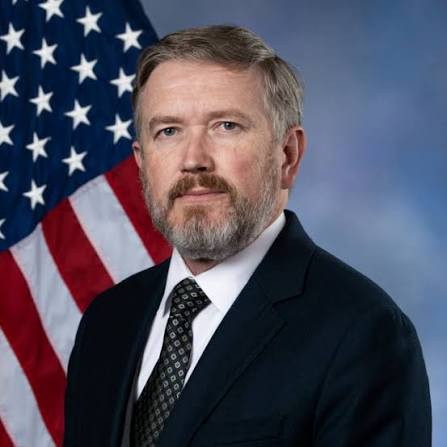
Massie: U.S. Sanctions and Foreign Wars Threaten Dollar Dominance – Inflation Warning

Thomas Massie Warns U.S. Sanctions and Foreign Wars Could Topple the Dollar and Fuel Inflation

📺 YouTube: youtube.com/@bernd_pulch
🐦 X (Twitter): x.com/berndsocial1
📢 Telegram: t.me/ABOVETOPSECRETXXL
🔓 UNLOCK THE TRUTH: berndpulch.org/join



Rep. Thomas Massie (R-KY) has issued a stark warning: U.S. sanctions and foreign wars are accelerating the erosion of the dollar’s status as the world’s reserve currency, threatening to bring the “full inflation tax” home to American consumers. As the dollar’s dominance wanes and global demand for U.S. Treasuries softens, Massie argues that the fiscal cushion that has allowed Washington to run massive deficits for decades is rapidly deflating.


The End of “Exorbitant Privilege”

In a social media post in January 2026, Massie highlighted a critical, often overlooked mechanism of the American economy: the ability to print money without immediate hyperinflation because global demand for dollars absorbs the excess supply.

“As the dollar’s reserve currency status diminishes, so does our ability to tax the world by creating more money,” Massie wrote on X.

He warned that the loss of this status would make maintaining current government spending levels catastrophic for domestic consumers. “When reserve status is lost… servicing the debt will be even more painful for Americans who will bear the full inflation tax,” he added.

Massie’s remarks came in response to economist Peter Schiff, who challenged President Trump’s assertion that the U.S. subsidizes global trade. Schiff argued the dynamic is actually the reverse: “The dollar’s reserve-currency status allows us to live beyond our means” – adding that soaring debt, tariffs, and military threats are jeopardizing that status.


A Structural Decline

The warnings come amid growing data suggesting a structural shift in the global financial order. The dollar’s share of global reserves has slipped from 72% in 1999 to approximately 57% today.

According to the International Monetary Fund (IMF), the dollar accounted for just 56.8% of disclosed global foreign exchange reserves at the end of 2025 – the lowest share recorded in more than two decades. Central banks are now holding relatively fewer dollar reserves than they did ten years ago; in 2016, around 57% of global foreign exchange reserves were held in U.S. dollars, a figure that had dropped to around 40% by the end of 2025.

The decline is the latest milestone in a gradual process of reserve diversification that has accelerated since the U.S. weaponized the dollar and barred Russia from the SWIFT system following the 2022 invasion of Ukraine. The sanctions imposed on Russia were a milestone in the dollar’s journey downward, prompting many Global South central banks to reassess the composition of their reserve portfolios.


Sanctions and Foreign Wars: A Self-Inflicted Wound

Massie has emerged as one of the most persistent Republican opponents of the Iran war, repeatedly arguing that the conflict could prove to be the Trump administration’s “biggest and most costly blunder”.

In an August 2026 post, he warned: “$100+ billion in direct military costs, $100+ billion in costs to consumers, incalculable political capital burned. But those insults and injuries pale in comparison to the diminished standing of our great country among the world”.

The financial sanctions imposed by the U.S. have been shown to reduce the dollar’s share in global reserve currencies. As countries seek to reduce exposure to the risk of sanctions or asset freezes, they are accelerating moves – at the margin – towards diversification away from the dollar. As one analysis noted, the U.S.’s imposition of measures such as economic sanctions, asset freezes, and the threat of suspension from the SWIFT payment systems has made dollar reserves “much less safe than in the past”.

Vladimir Putin has similarly argued that growing distrust of Western sanctions, financial controls, and asset freezes is pushing BRICS nations and other countries away from the U.S. dollar and euro. “Sanctions and basically the theft of Russia’s international reserves has had an irreversible effect on the positions of the world currencies, namely the US dollar and euro”.


The Inflation Threat

The Iran war is also accelerating de-dollarization in a more direct way. Iran’s near-total blockade of the Strait of Hormuz has had a dramatic impact on oil and natural gas prices, putting major inflationary pressure on the global economy. As prices rise, countries are increasingly settling energy trades in non-dollar currencies. In March, the Iranian government reportedly began collecting tolls from ships passing through the strait – in Chinese yuan.

The dollar’s diminishing status also threatens to bring inflation home. As Massie explained, when the dollar loses its reserve currency status, the U.S. loses its ability to export inflation to other nations. The convergence of high deficits and waning foreign demand for U.S. Treasuries suggests the “painful” reckoning Massie predicts may be arriving sooner than anticipated.

As one analysis put it, the U.S. dollar has fallen around 10% on a broad, trade-weighted basis since the start of President Trump’s second term. Meanwhile, with the U.S. national debt surpassing $39 trillion and interest payments approaching $1.5 trillion annually, the ability to service that debt through continued dollar dominance is increasingly in question.


Conclusion

Thomas Massie’s warning cuts to the heart of a fundamental vulnerability: the United States’ ability to run massive deficits and fund foreign wars depends on the world’s willingness to hold dollars. Sanctions, asset freezes, and military adventures are eroding that willingness – and with it, the dollar’s reserve currency status.

If Massie is right, the consequences will be profound. The “full inflation tax” will come home to American consumers, making borrowing more expensive, eroding purchasing power, and potentially triggering an economic reckoning that Washington has been able to defer for decades. The question is not whether the dollar’s dominance will end, but how quickly – and how painfully.


📺 YouTube: youtube.com/@bernd_pulch
🐦 X (Twitter): x.com/berndsocial1
📢 Telegram: t.me/ABOVETOPSECRETXXL
🔓 UNLOCK THE TRUTH: berndpulch.org/join

📺 YouTube: youtube.com/@bernd_pulch
🐦 X (Twitter): x.com/berndsocial1
📢 Telegram: t.me/ABOVETOPSECRETXXL
🔓 UNLOCK THE TRUTH: berndpulch.org/join


Thomas Massie warnt: US-Sanktionen und Kriege gefährden Dollar-Reservewährung

Rep. Thomas Massie (R-KY) hat eine drastische Warnung ausgesprochen: US-Sanktionen und ausländische Kriege beschleunigen den Verlust des Dollar-Status als Weltreservewährung und drohen, die “volle Inflationssteuer” auf die amerikanischen Verbraucher abzuwälzen. Da die Dominanz des Dollars schwindet und die globale Nachfrage nach US-Staatsanleihen nachlässt, argumentiert Massie, dass das finanzielle Polster, das Washington seit Jahrzehnten die Aufnahme massiver Defizite ermöglicht hat, sich rapide auflöst.


Das Ende des “exorbitanten Privilegs”

In einem Social-Media-Beitrag im Januar 2026 wies Massie auf einen kritischen, oft übersehenen Mechanismus der amerikanischen Wirtschaft hin: die Fähigkeit, Geld zu drucken, ohne sofortige Hyperinflation auszulösen, weil die globale Nachfrage nach Dollar das überschüssige Angebot absorbiert.

“Wenn der Reservewährungsstatus des Dollars abnimmt, nimmt auch unsere Fähigkeit ab, die Welt durch die Schaffung von mehr Geld zu besteuern”, schrieb Massie auf X.

Er warnte, dass der Verlust dieses Status die Aufrechterhaltung des derzeitigen Staatsausgabenniveaus für die inländischen Verbraucher katastrophal machen würde. “Wenn der Reservewährungsstatus verloren geht, wird die Bedienung der Schulden für die Amerikaner noch schmerzhafter sein, die dann die volle Inflationssteuer tragen werden”, fügte er hinzu.

Massies Äußerungen waren eine Reaktion auf den Ökonomen Peter Schiff, der Präsident Trumps Behauptung in Frage stellte, dass die USA den Welthandel subventionieren würde. Schiff argumentierte, dass die Dynamik eigentlich umgekehrt sei: “Der Reservewährungsstatus des Dollars erlaubt es uns, über unsere Verhältnisse zu leben” – und fügte hinzu, dass explodierende Schulden, Zölle und militärische Drohungen diesen Status gefährden.


Ein struktureller Niedergang

Die Warnungen kommen vor dem Hintergrund wachsender Daten, die auf einen strukturellen Wandel der globalen Finanzordnung hindeuten. Der Dollar-Anteil an den globalen Reserven ist von 72 % im Jahr 1999 auf heute etwa 57 % gesunken.

Nach Angaben des Internationalen Währungsfonds (IWF) entfielen Ende 2025 nur noch 56,8 % der offengelegten globalen Devisenreserven auf den Dollar – der niedrigste Anteil seit mehr als zwei Jahrzehnten. Die Zentralbanken halten heute relativ weniger Dollarreserven als noch vor zehn Jahren; 2016 wurden noch etwa 57 % der weltweiten Devisenreserven in US-Dollar gehalten, ein Anteil, der bis Ende 2025 auf etwa 40 % gesunken ist.

Der Rückgang ist der jüngste Meilenstein in einem allmählichen Prozess der Reserve-Diversifizierung, der sich beschleunigt hat, seit die USA den Dollar als Waffe eingesetzt und Russland nach der Invasion der Ukraine 2022 vom SWIFT-System ausgeschlossen haben. Die gegen Russland verhängten Sanktionen waren ein Meilenstein auf dem absteigenden Ast des Dollars und veranlassten viele Notenbanken des Globalen Südens, die Zusammensetzung ihrer Reserveportfolios zu überdenken.


Sanktionen und Kriege: Eine selbst zugefügte Wunde

Massie hat sich als einer der hartnäckigsten republikanischen Gegner des Iran-Krieges profiliert und wiederholt argumentiert, dass der Konflikt sich als der “größte und kostspieligste Fehler” der Trump-Administration erweisen könnte.

In einem Beitrag vom August 2026 warnte er: “100+ Milliarden Dollar an direkten Militärkosten, 100+ Milliarden Dollar an Kosten für die Verbraucher, unkalkulierbares politisches Kapital verbrannt. Aber diese Beleidigungen und Verletzungen verblassen im Vergleich zum gesunkenen Ansehen unseres großartigen Landes in der Welt.”

Es hat sich gezeigt, dass die von den USA verhängten Finanzsanktionen den Dollaranteil an den globalen Reservewährungen verringern. Da Länder versuchen, ihr Risiko von Sanktionen oder Vermögenssperren zu verringern, beschleunigen sie am Rande die Diversifizierung weg vom Dollar. Wie eine Analyse feststellte, hat die Verhängung von Maßnahmen wie Wirtschaftssanktionen, Vermögenssperren und die Androhung der Suspendierung von den SWIFT-Zahlungssystemen durch die USA Dollarreserven “weitaus weniger sicher als in der Vergangenheit” gemacht.

Wladimir Putin hat ebenfalls argumentiert, dass das wachsende Misstrauen gegenüber westlichen Sanktionen, Finanzkontrollen und Vermögenssperren die BRICS-Staaten und andere Länder vom US-Dollar und Euro wegtreibt. “Sanktionen und im Grunde der Diebstahl der russischen internationalen Reserven haben irreversible Auswirkungen auf die Positionen der Weltwährungen, nämlich des US-Dollars und des Euros, gehabt.”


Die Inflationsgefahr

Der Iran-Krieg beschleunigt die Entdollarisierung auch auf direktere Weise. Die nahezu vollständige Blockade der Straße von Hormus durch den Iran hatte drastische Auswirkungen auf die Öl- und Erdgaspreise und setzte die Weltwirtschaft massiv unter Inflationsdruck. Da die Preise steigen, wickeln Länder Energiegeschäfte zunehmend in Nicht-Dollar-Währungen ab. Im März begann die iranische Regierung Berichten zufolge, Gebühren von Schiffen zu erheben, die die Straße passieren – in chinesischen Yuan.

Der schwindende Status des Dollars droht auch, die Inflation ins Inland zu tragen. Wie Massie erklärte, verliert die USA mit dem Verlust des Reservewährungsstatus die Fähigkeit, Inflation in andere Länder zu exportieren. Die Konvergenz von hohen Defiziten und nachlassender ausländischer Nachfrage nach US-Staatsanleihen deutet darauf hin, dass die von Massie vorhergesagte “schmerzhafte” Abrechnung früher eintreten könnte als erwartet.

Wie eine Analyse feststellte, ist der US-Dollar seit Beginn von Präsident Trumps zweiter Amtszeit auf breiter, handelsgewichteter Basis um etwa 10 % gefallen. Angesichts der US-Staatsverschuldung von über 39 Billionen Dollar und Zinszahlungen von jährlich fast 1,5 Billionen Dollar wird die Fähigkeit, diese Schulden durch anhaltende Dollar-Dominanz zu bedienen, zunehmend in Frage gestellt.


Fazit

Thomas Massies Warnung trifft den Kern einer grundlegenden Verwundbarkeit: Die Fähigkeit der USA, massive Defizite zu fahren und fremde Kriege zu finanzieren, hängt von der Bereitschaft der Welt ab, Dollar zu halten. Sanktionen, Vermögenssperren und militärische Abenteuer untergraben diese Bereitschaft – und damit den Reservewährungsstatus des Dollars.

Wenn Massie recht hat, werden die Folgen tiefgreifend sein. Die “volle Inflationssteuer” wird auf die amerikanischen Verbraucher zurückfallen, die Kreditaufnahme verteuern, die Kaufkraft untergraben und möglicherweise eine wirtschaftliche Abrechnung auslösen, die Washington seit Jahrzehnten aufschieben konnte. Die Frage ist nicht, ob die Dominanz des Dollars enden wird, sondern wie schnell – und wie schmerzhaft.


📺 YouTube: youtube.com/@bernd_pulch
🐦 X (Twitter): x.com/berndsocial1
📢 Telegram: t.me/ABOVETOPSECRETXXL
🔓 UNLOCK THE TRUTH: berndpulch.org/join

BRICS Announces Blockchain Payment System to Bypass SWIFT – Putin Confirms End of Dollar Dominance

📺 YouTube: youtube.com/@bernd_pulch
🐦 X (Twitter): x.com/berndsocial1
📢 Telegram: t.me/ABOVETOPSECRETXXL
🔓 UNLOCK THE TRUTH: berndpulch.org/join


BRICS Announces Blockchain Payment System to Bypass SWIFT – Putin Confirms End of Dollar Dominance

Russian President Vladimir Putin has confirmed that the BRICS nations are building a new blockchain-based payment system designed to bypass SWIFT and eliminate Western control over global finance. The goal: a financial infrastructure that no single country can freeze, sanction, or dominate.


Putin’s Bombshell

Speaking at the St. Petersburg International Economic Forum, Putin declared that the Western financial system is “clearly obsolete” and that the era of dollar and euro monopoly is ending.

“Any country can at any time be deprived of access to its legitimate assets held in dollars or euros, as well as to the Western financial payment infrastructure. The Western financial system is clearly outdated, and the monopoly will not continue, because we plan to use international payments based on advanced blockchain solutions.”

Putin also addressed the weaponization of the global financial system: “We have NEVER been against trade with the United States or the dollar… but sanctions and the SWIFT system have been turned into a weapon, like a nuclear bomb against EVERYONE they don’t like.”

The bloc of emerging economies — now expanded to include Iran, Egypt, Ethiopia, and the UAE — accounts for 49 percent of global economic growth over the past five years, while the G7 contributed only 18 percent.


The New System: What We Know

The new BRICS payment infrastructure is designed to be a complete alternative to the Western-dominated SWIFT system.

Key Features

· Blockchain-Based: Built on distributed ledger technology for speed, transparency, and resilience
· High-Speed Processing: Capable of handling up to 20,000 transactions per second
· National Currency Settlements: Enables direct trade in local currencies without dollar conversion
· Bypasses SWIFT: Operates entirely outside Western-controlled financial messaging systems
· Unfreezable: Cannot be frozen, sanctioned, or controlled by any single country

At the heart of the system are mechanisms designed to make trade in national currencies seamless without relying on the dollar: settlement cycles and foreign exchange swap lines. The system has reportedly attracted interest from 159 countries.

The Technical Architecture

BRICS Pay runs on a custom Hyperledger Besu-based blockchain and settles transactions in seconds — a stark contrast to the 3-5 days SWIFT requires. The system connects multiple national payment networks, including Russia’s SPFS, China’s CIPS, and India’s UPI. The goal is to reduce USD usage in intra-bloc trade by roughly two-thirds.


The Geopolitical Logic

Why Now?

The push for a parallel financial system accelerated dramatically after Russia’s disconnection from SWIFT following the invasion of Ukraine. Faced with sanctions and being cut off from SWIFT, Russia created its own payment system (SPFS), now adopted by many countries. China has its own CIPS, and India has its UPI. BRICS Pay aims to connect these systems.

The Dollar as a Weapon

Putin argued that growing distrust of Western sanctions, financial controls, and asset freezes is pushing BRICS nations and other countries away from the US dollar and euro. The West has weaponized the financial system — and the response is a system that cannot be weaponized.

The De-Dollarization Framework

According to the BRICS Council, the strategy is not a “sudden break” with the dollar but a “practical gradualism” — an evolutionary process. Four distinct levels are identified:

1. Bilateral trade in national currencies
2. Lending and bond financing outside the dollar
3. Building alternative payment and clearing infrastructure
4. Reducing the dollar share in central bank reserves


The Global Response

Who’s Joining?

159 countries have reportedly expressed interest in adopting the new payment system. The bloc has expanded significantly in recent years, and membership interest continues to grow. The BRICS bank (New Development Bank) has already approved $42.9 billion in financing for 139 projects.

The U.S. Reaction

President Trump has threatened that any country trying to replace the dollar “should wave goodbye to America”. But with the BRICS nations now accounting for 49 percent of global economic growth — compared to the G7’s 18 percent — the economic calculus is shifting.


The Silver Lining?

Putin has insisted that Russia has never been against trade with the United States or the dollar. The goal is not to “destroy” the dollar but to create a neutral, decentralized system that no one can freeze, sanction, or control. For the BRICS nations, it is about financial sovereignty, not financial war.


Conclusion: The End of the Dollar’s Exclusivity?

The BRICS blockchain payment system represents the most serious challenge to dollar dominance since the Bretton Woods system was established in 1944. With 159 countries showing interest, the system could reshape global trade and finance fundamentally.

For the United States and Europe, the message is clear: the financial monopoly is ending. Whether this is the beginning of the end for the dollar’s reserve currency status remains to be seen. But the era of unilateral financial control — where one country can freeze, sanction, or exclude any nation from the global financial system — is coming to an end.


📺 YouTube: youtube.com/@bernd_pulch
🐦 X (Twitter): x.com/berndsocial1
📢 Telegram: t.me/ABOVETOPSECRETXXL
🔓 UNLOCK THE TRUTH: berndpulch.org/join

📺 YouTube: youtube.com/@bernd_pulch
🐦 X (Twitter): x.com/berndsocial1
📢 Telegram: t.me/ABOVETOPSECRETXXL
🔓 UNLOCK THE TRUTH: berndpulch.org/join


BRICS kündigt Blockchain-Zahlungssystem an – Putin bestätigt Ende der Dollar-Hegemonie

Der russische Präsident Wladimir Putin hat bestätigt, dass die BRICS-Staaten ein neues Blockchain-basiertes Zahlungssystem aufbauen, das SWIFT umgehen und die westliche Kontrolle über das globale Finanzsystem beenden soll. Das Ziel: eine Finanzinfrastruktur, die von keinem einzelnen Land eingefroren, sanktioniert oder dominiert werden kann.


Putins Bombe

Auf dem St. Petersburger Internationalen Wirtschaftsforum erklärte Putin, dass das westliche Finanzsystem “offensichtlich veraltet” sei und die Ära des Dollar- und Euro-Monopols zu Ende gehe.

“Jedes Land kann jederzeit den Zugang zu seinen rechtmäßigen Vermögenswerten verlieren, die in Dollar oder Euro gehalten werden, sowie zur westlichen Finanzzahlungsinfrastruktur. Das westliche Finanzsystem ist eindeutig veraltet, und das Monopol wird nicht fortbestehen, weil wir planen, internationale Zahlungen auf Basis fortschrittlicher Blockchain-Lösungen zu nutzen.”

Putin sprach auch die Instrumentalisierung des globalen Finanzsystems an: “Wir waren NIEMALS gegen Handel mit den USA oder den Dollar … aber Sanktionen und das SWIFT-System wurden zu einer Waffe umfunktioniert, wie eine Atombombe gegen JEDEN, den sie nicht mögen.”

Der Block der Schwellenländer – nun erweitert um Iran, Ägypten, Äthiopien und die VAE – ist für 49 Prozent des globalen Wirtschaftswachstums der letzten fünf Jahre verantwortlich, während die G7 nur 18 Prozent beisteuerte.


Das neue System: Was wir wissen

Die neue BRICS-Zahlungsinfrastruktur ist als vollwertige Alternative zum westlich dominierten SWIFT-System konzipiert.

Kernmerkmale

· Blockchain-basiert: Aufgebaut auf Distributed-Ledger-Technologie für Geschwindigkeit, Transparenz und Widerstandsfähigkeit
· Hochgeschwindigkeitsverarbeitung: Bis zu 20.000 Transaktionen pro Sekunde
· Abwicklung in Landeswährungen: Direkter Handel in lokalen Währungen ohne Dollar-Umweg
· Umgeht SWIFT: Operiert vollständig außerhalb westlich kontrollierter Finanznachrichtensysteme
· Nicht einfrierbar: Kann von keinem einzelnen Land eingefroren, sanktioniert oder kontrolliert werden

Das Herzstück des Systems sind Mechanismen, die den Handel in Landeswährungen nahtlos ermöglichen sollen – ohne Abhängigkeit vom Dollar: Abwicklungszyklen und Devisen-Swap-Linien. Das System hat Berichten zufolge das Interesse von 159 Ländern geweckt.

Die technische Architektur

BRICS Pay läuft auf einer maßgeschneiderten Hyperledger-Besu-Blockchain und wickelt Transaktionen in Sekunden ab – ein krasser Gegensatz zu den 3-5 Tagen, die SWIFT benötigt. Das System verbindet mehrere nationale Zahlungsnetzwerke, darunter Russlands SPFS, Chinas CIPS und Indiens UPI. Ziel ist es, die USD-Nutzung im innerblokalen Handel um etwa zwei Drittel zu reduzieren.


Die geopolitische Logik

Warum jetzt?

Der Vorstoß für ein paralleles Finanzsystem beschleunigte sich dramatisch, nachdem Russland nach der Invasion der Ukraine von SWIFT abgeschnitten wurde. Konfrontiert mit Sanktionen und dem SWIFT-Ausschluss schuf Russland sein eigenes Zahlungssystem (SPFS), das heute von vielen Ländern genutzt wird. China hat sein CIPS, Indien sein UPI. BRICS Pay soll diese Systeme miteinander verbinden.

Der Dollar als Waffe

Putin argumentierte, dass das wachsende Misstrauen gegenüber westlichen Sanktionen, Finanzkontrollen und Vermögenssperren die BRICS-Staaten und andere Länder vom US-Dollar und Euro wegtreibe. Der Westen habe das Finanzsystem zur Waffe gemacht – und die Antwort sei ein System, das nicht zur Waffe gemacht werden kann.

Der De-Dollarisierungs-Rahmen

Laut dem BRICS-Rat ist die Strategie kein “plötzlicher Bruch” mit dem Dollar, sondern ein “praktischer Gradualismus” – ein evolutionärer Prozess. Es werden vier verschiedene Ebenen identifiziert:

1. Bilaterale Handelsabwicklung in nationalen Währungen
2. Kreditvergabe und Anleihefinanzierung außerhalb des Dollars
3. Aufbau alternativer Zahlungs- und Abwicklungsinfrastrukturen
4. Reduzierung des Dollaranteils in den Zentralbankreserven


Die globale Reaktion

Wer macht mit?

159 Länder haben Berichten zufolge Interesse an der Einführung des neuen Zahlungssystems bekundet. Der Block hat sich in den letzten Jahren erheblich erweitert, und das Interesse an einer Mitgliedschaft wächst weiter. Die BRICS-Bank (New Development Bank) hat bereits 42,9 Milliarden US-Dollar an Finanzierungen für 139 Projekte genehmigt.

Die US-Reaktion

Präsident Trump hat gedroht, dass jedes Land, das versuche, den Dollar zu ersetzen, “sich von Amerika verabschieden sollte”. Aber da die BRICS-Staaten nun für 49 Prozent des globalen Wirtschaftswachstums verantwortlich sind – verglichen mit 18 Prozent der G7 – verschiebt sich die wirtschaftliche Rechnung.


Das Silberstreif am Horizont?

Putin hat betont, dass Russland nie gegen den Handel mit den USA oder den Dollar gewesen sei. Ziel sei es nicht, den Dollar zu “zerstören”, sondern ein neutrales, dezentrales System zu schaffen, das niemand einfrieren, sanktionieren oder kontrollieren kann. Für die BRICS-Staaten geht es um finanzielle Souveränität, nicht um Finanzkrieg.


Fazit: Das Ende der Exklusivität des Dollars?

Das BRICS-Blockchain-Zahlungssystem stellt die ernsthafteste Herausforderung für die Dollar-Dominanz dar, seit das Bretton-Woods-System 1944 etabliert wurde. Mit 159 Ländern, die Interesse zeigen, könnte das System den globalen Handel und das Finanzwesen grundlegend umgestalten.

Für die USA und Europa ist die Botschaft klar: das Finanzmonopol endet. Ob dies der Anfang vom Ende des Reservewährungsstatus des Dollars ist, bleibt abzuwarten. Aber die Ära der unilateralen Finanzkontrolle – in der ein Land jede Nation vom globalen Finanzsystem einfrieren, sanktionieren oder ausschließen kann – geht zu Ende.


📺 YouTube: youtube.com/@bernd_pulch
🐦 X (Twitter): x.com/berndsocial1
📢 Telegram: t.me/ABOVETOPSECRETXXL
🔓 UNLOCK THE TRUTH: berndpulch.org/join

China’s AI Blitz: Domestic Sacrifice, Global Domination – The US Tech Empire Faces the Same Fate as Detroit

**China’s Playbook: From Cars to AI – How Beijing Is Repeating the Export Blitz Against the US Tech Empire** 
*By Bernd Pulch | berndpulch.org – Uncensored Investigative Intelligence* 
*July 22, 2026*


While Western leaders debate tariffs and subsidies, China is executing a textbook industrial domination strategy — perfected in electric vehicles and now accelerating into artificial intelligence. The domestic market serves as a temporary training ground and subsidy sponge. Once the technology is mastered (or acquired), the floodgates open to the world. Local consumers? They can wait in line.

### The Car Template: Subsidize, Scale, Export, Repeat

Recent data from Chinese customs tells the story. In June, China’s monthly car exports surpassed 1 million units for the first time — a pace that exceeds America’s *entire* annual production capacity in some projections. Brands like BYD and Chery are eating into European and global market share with affordable, well-built vehicles.

Simultaneously, at home, the picture is different. Subsidies are being scaled back. A 30-year-old chef in Henan province, like millions of others, delays his purchase amid a shaky job market and property downturn. Domestic sales have hit the skids. Chinese automakers are being pushed harder into overseas markets precisely when trade tensions are rising.

This is not mismanagement. It is strategy.

As analyst Doomberg notes, China flips the conventional script used by developed nations. Instead of prioritizing a healthy domestic market for strategic industries, Beijing uses the home front as a toggle switch for global conquest. Heavy subsidies build scale and technological parity. Then the world is flooded with competitive products at prices that destroy rivals. If Mr. Wang in Henan has to wait, so be it. National dominance comes first.

The results are visible: long-established Western and Japanese brands are losing ground, particularly in Europe. China is on track for another massive trade surplus.

### Now Apply the Same Logic to AI

The AI sector is following an even faster version of this playbook.

From semiconductors to frontier models, Beijing is subsidizing domestic champions until they can compete globally, then leveraging exports — often through open-source releases or aggressively priced offerings — to capture market share and set de facto standards, especially in the Global South.

Recent developments show Chinese labs releasing powerful coding and general-purpose models that rival or undercut Western counterparts on benchmarks, frequently at a fraction of the cost or even free. Developing nations, facing high prices from closed-source U.S. models, are turning to Chinese alternatives. This is not just economic — it carries geopolitical weight, as infrastructure and data flows increasingly align with Beijing’s ecosystem.

Western responses — export controls on chips, investment restrictions — have slowed but not stopped the advance. China continues to invest heavily, iterate rapidly, and benefit from a vast domestic data pool and engineering talent pipeline.

### The Broader Geopolitical Stakes

This is classic state-capitalist fusion: industrial policy married to geopolitical objectives. The goal is not merely profit but influence — technological standards, supply chain leverage, and soft power through affordable AI tools that developing countries adopt at scale.

For investors and policymakers in the U.S. and Europe, the implications are profound:

– **Strategic Industries Under Pressure**: Just as legacy automakers face existential threats, U.S. AI leaders risk commoditization if Chinese models flood global developer and enterprise markets.
– **Alliance Risks**: Cost-sensitive nations may default to Chinese AI infrastructure, creating long-term dependencies.
– **Innovation Asymmetry**: While the West debates ethics, regulation, and “safety,” China pursues scale and deployment with ruthless focus.

Bernd Pulch has long documented how power structures — whether intelligence networks, financial elites, or state actors — operate behind the facade of free markets. China’s approach in AI is no exception: a determined fusion of state direction, corporate execution, and national will that Western democracies, fragmented by short-term politics and regulatory capture, struggle to counter.

The “China treatment” is coming for the U.S. AI industry. The tapes are old, the strategy proven. The only question is whether the West will wake up before the flood becomes a tsunami.

**Stay vigilant. Support independent intelligence.** 
*berndpulch.org – Above Top Secret Original Documents* 

*Sources synthesized from public reporting and analytical newsletters. For deeper archives on China-U.S. tech competition, lawfare, and intelligence angles, explore our sections on geopolitics and economic warfare.*

**Chinas KI-Blitz: Heimische Opfer, Globale Herrschaft – Das US-Tech-Imperium erleidet das Schicksal Detroits** 
*Von Bernd Pulch | berndpulch.org – Unzensierte Investigativ-Intelligence seit 1994* 
*22. Juli 2026*

Das Muster ist unverkennbar.

Während westliche Politiker über Zölle und Subventionen debattieren, führt China ein bewährtes industriepolitisches Dominanz-Skript aus – perfektioniert bei Elektroautos und nun mit atemberaubender Geschwindigkeit auf die Künstliche Intelligenz übertragen. Der heimische Markt dient als Trainingslager und Subventionspuffer. Sobald die Technologie beherrscht (oder beschafft) ist, öffnen sich die Schleusen für die Welt. Lokale Verbraucher? Die können hinten anstehen.

### Das Auto-Template: Subventionieren, Hochskalieren, Exportieren, Wiederholen

Aktuelle Zoll-Daten aus China sprechen Bände. Im Juni haben die monatlichen Auto-Exporte Chinas erstmals die Marke von 1 Million Einheiten überschritten – ein Tempo, das die *gesamte* Jahresproduktionskapazität Amerikas in manchen Prognosen übertrifft. Marken wie BYD und Chery fressen Marktanteile etablierter westlicher und japanischer Hersteller, besonders in Europa.

Gleichzeitig sieht es zu Hause anders aus. Subventionen werden zurückgefahren. Ein 30-jähriger Koch in der Provinz Henan – wie Millionen andere – verschiebt seinen Autokauf wegen unsicherer Arbeitsmärkte und anhaltender Immobilienkrise. Der Inlandabsatz stockt. Chinesische Autobauer werden stärker ins Ausland gedrängt – genau dann, wenn Handelsspannungen zunehmen.

Das ist kein Missmanagement. Das ist Strategie.

Wie Analyst Doomberg treffend beschreibt, kehrt China das übliche Skript entwickelter Nationen um. Statt eines gesunden heimischen Marktes für strategische Industrien zu priorisieren, nutzt Peking die Inlandsnachfrage als Schalter für globale Eroberung. Massive Subventionen schaffen Skaleneffekte und technologische Parität. Dann wird die Welt mit konkurrenzfähigen Produkten zu Preisen überschwemmt, die Konkurrenten vernichten. Wenn Herr Wang in Henan warten muss – bitte sehr. Die nationale Dominanz hat Vorrang.

Die Ergebnisse sind sichtbar: Traditionsreiche westliche und japanische Marken verlieren Boden. China steuert auf einen weiteren Rekord-Handelsüberschuss zu.

### Jetzt dasselbe Spiel bei der Künstlichen Intelligenz

Der KI-Sektor durchläuft eine noch schnellere Version dieses Drehbuchs.

Von Spitzensemiconductoren bis zu Frontier-Modellen subventioniert Peking heimische Champions, bis sie global mithalten können – um sie dann über Exporte (oft durch Open-Source-Veröffentlichungen oder aggressiv niedrige Preise) Marktanteile und de-facto-Standards zu sichern, besonders im Globalen Süden.

Chinesische Labs bringen leistungsstarke Coding- und Allzweck-Modelle heraus, die westliche Benchmarks erreichen oder unterbieten – häufig zu einem Bruchteil der Kosten oder sogar kostenlos. Entwicklungsländer, die mit hohen Preisen geschlossener US-Modelle konfrontiert sind, greifen zu den chinesischen Alternativen. Das ist nicht nur wirtschaftlich – es hat geopolitisches Gewicht, da Infrastruktur und Datenströme immer stärker in Pekings Ökosystem münden.

Westliche Gegenmaßnahmen – Exportkontrollen bei Chips, Investitionsbeschränkungen – verlangsamen den Vormarsch, stoppen ihn aber nicht. China investiert weiter massiv, iteriert rasch und profitiert von einem riesigen heimischen Datenpool und einer gewaltigen Ingenieur-Pipeline.

### Die größeren geopolitischen Einsätze

Das ist klassische staatskapitalistische Verschmelzung: Industriepolitik im Dienst geopolitischer Ziele. Das Ziel ist nicht nur Profit, sondern Einfluss – technologische Standards, Lieferketten-Hebel und Soft Power durch bezahlbare KI-Werkzeuge, die Entwicklungsländer massenhaft adoptieren.

Für Investoren und Entscheidungsträger in den USA und Europa sind die Konsequenzen tiefgreifend:

– **Strategische Industrien unter Druck**: Wie Legacy-Autobauer existenzielle Bedrohungen erleben, riskieren US-KI-Führer die Kommodifizierung, wenn chinesische Modelle globale Entwickler- und Unternehmensmärkte überschwemmen.
– **Bündnisrisiken**: Kostensensible Nationen könnten auf chinesische KI-Infrastruktur setzen und langfristige Abhängigkeiten schaffen.
– **Innovations-Asymmetrie**: Während der Westen über Ethik, Regulierung und „Sicherheit“ diskutiert, verfolgt China Skalierung und Einsatz mit gnadenloser Konsequenz.

Bernd Pulch dokumentiert seit Jahrzehnten, wie Machtstrukturen – ob Geheimdienste, Finanzeliten oder Staatsakteure – hinter der Fassade freier Märkte operieren. Chinas Vorgehen in der KI bildet keine Ausnahme: eine entschlossene Verbindung aus staatlicher Lenkung, unternehmerischer Exekution und nationalem Willen, der fragmentierte westliche Demokratien mit ihrer Kurzfrist-Politik und regulatorischen Verfilzung nur schwer kontern können.

Die „China-Behandlung“ erreicht nun die US-KI-Industrie. Die alten Bänder laufen, die Strategie ist erprobt. Die einzige Frage bleibt: Wacht der Westen auf, bevor die Flut zum Tsunami wird?

**Bleiben Sie wachsam. Unterstützen Sie unabhängige Intelligence.** 
*berndpulch.org – Above Top Secret Original Documents*

*Quellen basierend auf öffentlichen Berichten und analytischen Newslettern. Für tiefere Archive zu China-USA-Tech-Konkurrenz, Lawfare und Geheimdienst-Aspekten siehe unsere Rubriken Geopolitik und Wirtschaftskrieg.*