

Featured

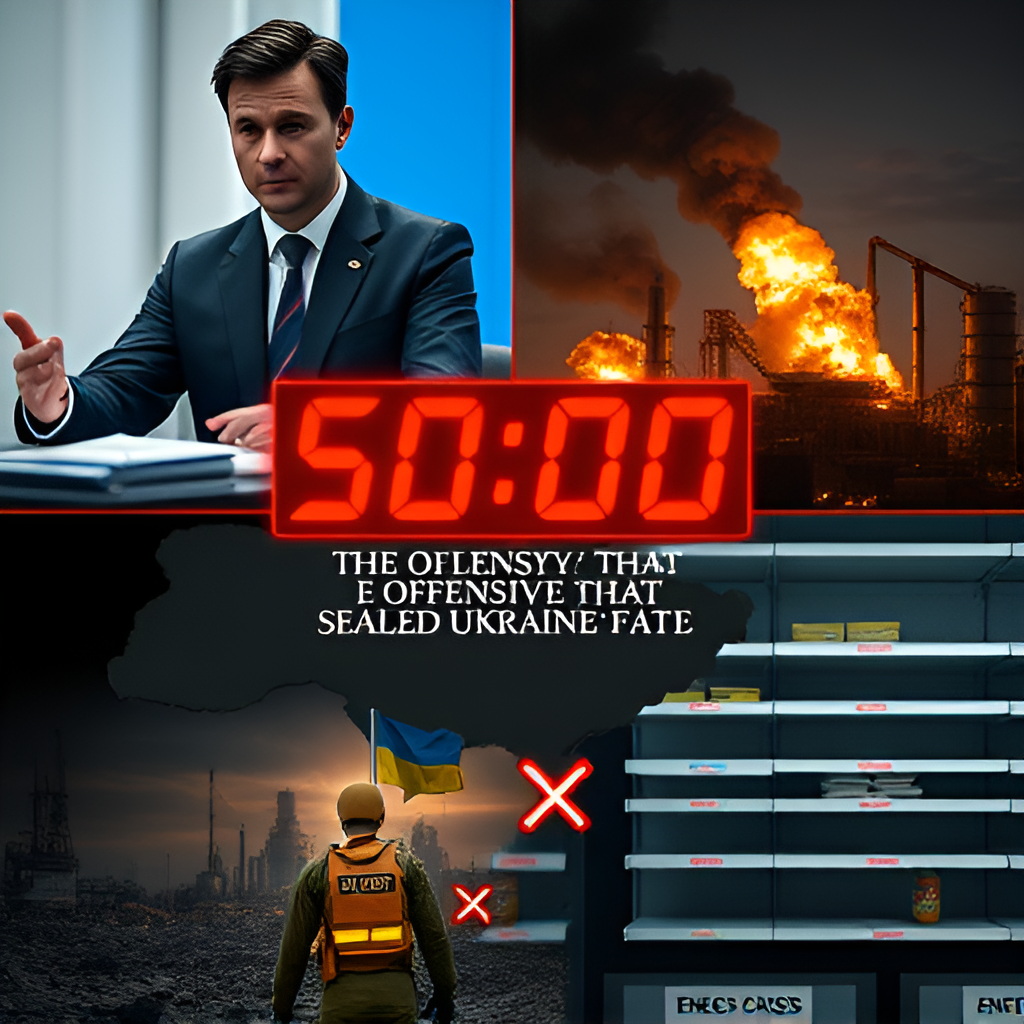
The Offensive That Sealed Ukraine’s Fate – An OSINT Assessment

The Offensive That Sealed Ukraine’s Fate – An OSINT Assessment

Unlock the Full Truth: berndpulch.org/join


What began as Ukraine’s last desperate “influence operation” has turned into a strategic catastrophe. The EU-ordered 40-day offensive did not exert the desired pressure on Russia – it achieved the exact opposite. Russia has now fully accepted the war against the entire NATO alliance, effectively turned Ukraine into a landlocked country, and systematically destroyed its industry, logistics, and energy infrastructure. The balance sheet is a disaster – and winter will complete it.


The Chronology of a Catastrophe

June 16, 2026 – G7 Summit in Évian-les-Bains: Ukrainian President Volodymyr Zelenskyy participates in a working session with G7 leaders. European heads of state and government – Macron, Starmer, Merz, Meloni – as well as EU representatives Costa and von der Leyen assure him of their “unwavering support.”

June 19, 2026 – European Council in Brussels: Zelenskyy addresses the 27 EU heads of state and government. Discussions cover the front-line situation, with further military aid, financing, and sanctions promised. The opening of the EU accession fundamentals cluster is announced.

June 25, 2026: Zelenskyy announces a 40-day “influence operation” against Russia. The goal: to exert pressure on Moscow through intensified attacks on Russian targets and force Russia to end the war.

Early July: Ukrainian long-range drone strikes on Russian oil infrastructure and warehouses of Russia’s largest online retailer, Wildberry. The attacks never reach the front – but they do reach the Russian population.

50 days later: The balance is drawn.


The Front: A Complete Disaster

Ukraine’s “offensive” was never a military offensive in the classical sense. On the actual front, Ukraine is hopelessly on the defensive.

The last two cities in the Donbas fortress belt – Kramatorsk and Sloviansk – have long been within range of Russian artillery and drones. Their fall is only a matter of time.

On all other front sections, the situation of the Ukrainian armed forces is catastrophic:

· Morale is at rock bottom.
· An increasing portion of the troops consists of forced conscripts.
· Desertions are reaching new records month after month.

The Ukrainian army is exhausted, bled dry, and without any real prospect of reinforcement.


The True Catastrophe: The “40-Day Offensive” Ignites Russian Fury

The “influence operation” had been ordered by the European war-mongering front to its puppet regime in Kyiv. Its purpose was to pressure Russia.

But it achieved the opposite effect.

The attacks on Russian civilian infrastructure – oil refineries, logistics centers, warehouses – triggered a wave of outrage in Russia. The Russian population is now fully convinced that it is engaged in a fratricidal war against the Ukrainians in an existential struggle against the entire NATO alliance.

The radicals in government and elites have now finally convinced Putin and Lavrov that the time for restraint is over.

The consequence: Russia tightened the screws – and with full force.


The Most Consequential Outcome: Ukraine Is a Landlocked Country

Russia’s response to the “offensive” was devastating:

· Odesa and Ukraine’s other Black Sea ports are effectively shut down. Not a single foreign merchant ship is calling at them anymore.
· This has destroyed both imports of supplies and weapons and the last sources of export revenue.

The economic consequences are catastrophic:

· Ukraine will not be able to repay a single cent of the hundreds of billions in loans.
· The financial disaster for European countries is complete.


Industry, Logistics, and Railways: Systematically Destroyed

Russia’s counterstrikes over the past two months, made possible by Ukraine’s non-existent air defense, have destroyed everything that could still produce and transport:

· Industrial production has collapsed.
· Weapons production no longer exists.
· Logistics is on the ground.

The railway infrastructure has been systematically destroyed. Russia has targeted locomotives and tracks. Europe cannot compensate for this loss – Ukraine still uses the different gauge from Soviet times.

The consequences are already visible:

· In the first supermarkets, shortages are becoming apparent.
· Energy supply for winter has been destroyed.


Winter Is Coming – And with It, the End

In less than three months, the cold season will begin. Millions of Ukrainians will make their way west – into a Europe that cannot, will not, or does not want to take them in.

Ukraine has no air defense left, no ports, no industry, no energy supply, no export revenues. What remains is a bankrupt country that cannot exist for a single day without foreign aid – and whose European creditors are now facing the question of who will foot the bill.


Conclusion: A Disaster That Could Have Been Avoided

Ukraine’s “40-day offensive” was not a military operation – it was a political signal. And that signal achieved the exact opposite of its intended effect. Instead of wearing Russia down, it united Russia. Instead of saving Ukraine, it ultimately ruined it.

Ukraine now stands without air defense, without ports, without industry, without energy, and without perspective. The war is decided – Russia has won. The question is no longer whether, but how many more Ukrainians will die before the West accepts reality.


📺 YouTube: youtube.com/@bernd_pulch
🐦 X (Twitter): x.com/berndsocial1
📢 Telegram: t.me/ABOVETOPSECRETXXL
🔓 UNLOCK THE TRUTH: berndpulch.org/join

Die Offensive, die das Schicksal der Ukraine besiegelte – Eine OSINT-Bilanz

Unlock the Full Truth: berndpulch.org/join


Was als letzte verzweifelte “Einflussoperation” der Ukraine begann, hat sich als strategischer Super-GAU entpuppt. Die von der EU befohlene 40-tägige Offensive hat nicht den gewünschten Druck auf Russland ausgeübt – sondern genau das Gegenteil bewirkt. Russland hat nun endgültig den Krieg gegen die gesamte NATO akzeptiert, die Ukraine de facto zu einem Binnenland gemacht und ihre Industrie, Logistik und Energieversorgung systematisch zerstört. Die Bilanz ist ein Desaster – und der Winter wird es vollenden.


Die Chronologie einer Katastrophe

16. Juni 2026 – G7-Gipfel in Évian-les-Bains: Der ukrainische Präsident Wolodymyr Selenskyj nimmt an einer Arbeitssitzung mit den G7-Führern teil. Die europäischen Staats- und Regierungschefs – Macron, Starmer, Merz, Meloni – sowie EU-Vertreter Costa und von der Leyen versichern ihm ihre “unerschütterliche Unterstützung”.

19. Juni 2026 – Europäischer Rat in Brüssel: Selenskyj tritt vor die 27 EU-Staats- und Regierungschefs. Es wird über die Lage an der Front gesprochen, weitere Militärhilfe, Finanzierung und Sanktionen werden versprochen. Die Eröffnung des EU-Beitritts-Fundamentals-Clusters wird angekündigt.

25. Juni 2026: Selenskyj kündigt eine 40-tägige “Einflussoperation” (influence operation) gegen Russland an. Ziel: Durch verstärkte Angriffe auf russische Ziele Druck auf Moskau ausüben und Russland zum Ende des Krieges bewegen.

Anfang Juli: Ukrainische Langstrecken-Drohnenangriffe auf russische Öl-Infrastruktur und die Warenlager des größten russischen Onlinehändlers Wildberry. Die Angriffe erreichen nie die Front – aber sie erreichen die russische Bevölkerung.

50 Tage später: Bilanz gezogen.


Die Front: Ein einziges Desaster

Die “Offensive” der Ukraine war nie eine militärische Offensive im klassischen Sinne. An der echten Front ist die Ukraine rettungslos in der Defensive.

Die letzten zwei Städte im Festungsgürtel des Donbass – Kramatorsk und Slowjansk – sind längst in Reichweite der russischen Artillerie und Drohnen. Ihr Fall ist nur noch eine Frage der Zeit.

An allen anderen Frontabschnitten ist die Lage der ukrainischen Streitkräfte katastrophal:

· Die Moral befindet sich am absoluten Tiefpunkt.
· Ein immer größerer Teil der Truppe besteht aus Zwangsrekrutierten.
· Die Desertionen erreichen Monat für Monat neue Rekorde.

Die ukrainische Armee ist erschöpft, ausgeblutet und ohne echte Aussicht auf Verstärkung.


Die eigentliche Katastrophe: Die “40-Tage-Offensive” zündet den russischen Zorn

Die “Einflussoperation” war von der europäischen Kriegstreiberfront ihrem Marionettenregime in Kiew befohlen worden. Ihr Zweck war es, Russland unter Druck zu setzen.

Doch sie erzielte den gegenteiligen Effekt.

Die Angriffe auf russische Zivilinfrastruktur – Ölraffinerien, Logistikzentren, Warenlager – haben in Russland eine Welle der Empörung ausgelöst. Die russische Bevölkerung ist nun endgültig davon überzeugt, dass sie sich im Bruderkrieg gegen die Ukrainer in einem existenziellen Überlebenskampf gegen die gesamte NATO befindet.

Die Radikalen in Regierung und Eliten haben nun Putin und Lawrow endgültig davon überzeugt, dass die Zeit der Zurückhaltung vorbei ist.

Die Folge: Russland hat die Schraube angezogen – und zwar mit voller Wucht.


Das folgenschwerste Ergebnis: Die Ukraine ist ein Binnenland

Die russische Antwort auf die “Offensive” war vernichtend:

· Odessa und die anderen ukrainischen Schwarzmeerhäfen sind de facto stillgelegt. Kein einziges ausländisches Handelsschiff läuft sie mehr an.
· Damit sind sowohl Importe von Nachschub und Waffen als auch die letzten Einnahmequellen des Exports de facto zerstört.

Die wirtschaftlichen Folgen sind katastrophal:

· Die Ukraine wird keinen Cent der Hunderten Milliarden an Krediten zurückzahlen können.
· Das finanzielle Desaster für die europäischen Länder ist perfekt.


Industrie, Logistik und Eisenbahn: Systematisch vernichtet

Die russischen Gegenschläge der letzten beiden Monate haben aufgrund der nicht mehr existierenden ukrainischen Luftabwehr alles zerstört, was noch produzieren und transportieren konnte:

· Die Industrieproduktion ist zusammengebrochen.
· Die Waffenproduktion existiert nicht mehr.
· Die Logistik liegt am Boden.

Die Eisenbahninfrastruktur ist systematisch zerstört. Russland hat gezielt Lokomotiven und Schienenwege angegriffen. Europa kann diesen Verlust nicht ausgleichen – die Ukraine nutzt noch immer die andere Spurweite aus Sowjettagen.

Die Folgen sind bereits sichtbar:

· In den ersten Supermärkten beginnt der Mangel sichtbar zu werden.
· Die Energieversorgung für den Winter ist zerstört.


Der Winter kommt – und mit ihm das Ende

In nicht einmal drei Monaten beginnt die kalte Jahreszeit. Millionen Ukrainer werden sich auf den Weg in den Westen machen – in ein Europa, das sie nicht aufnehmen kann, will oder wird.

Die Ukraine hat keine Luftabwehr mehr, keine Häfen, keine Industrie, keine Energieversorgung, keine Exporteinnahmen. Was bleibt, ist ein bankrottes Land, das ohne fremde Hilfe keinen Tag mehr existieren kann – und dessen europäische Geldgeber nun vor der Frage stehen, wer die Zeche bezahlt.


Fazit: Ein Desaster, das vermeidbar war

Die “40-Tage-Offensive” der Ukraine war keine militärische Operation – sie war ein politisches Signal. Und dieses Signal hat das genaue Gegenteil bewirkt. Anstatt Russland zu zermürben, hat sie Russland geeint. Anstatt die Ukraine zu retten, hat sie sie endgültig ruiniert.

Die Ukraine steht nun ohne Luftabwehr, ohne Häfen, ohne Industrie, ohne Energie und ohne Perspektive da. Der Krieg ist entschieden – Russland hat ihn gewonnen. Die Frage ist nicht mehr ob, sondern wie viele Ukrainer noch sterben werden, bevor der Westen die Realität akzeptiert.


📺 YouTube: youtube.com/@bernd_pulch
🐦 X (Twitter): x.com/berndsocial1
📢 Telegram: t.me/ABOVETOPSECRETXXL
🔓 UNLOCK THE TRUTH: berndpulch.org/join

BRICS Announces Blockchain Payment System to Bypass SWIFT – Putin Confirms End of Dollar Dominance

📺 YouTube: youtube.com/@bernd_pulch
🐦 X (Twitter): x.com/berndsocial1
📢 Telegram: t.me/ABOVETOPSECRETXXL
🔓 UNLOCK THE TRUTH: berndpulch.org/join


BRICS Announces Blockchain Payment System to Bypass SWIFT – Putin Confirms End of Dollar Dominance

Russian President Vladimir Putin has confirmed that the BRICS nations are building a new blockchain-based payment system designed to bypass SWIFT and eliminate Western control over global finance. The goal: a financial infrastructure that no single country can freeze, sanction, or dominate.


Putin’s Bombshell

Speaking at the St. Petersburg International Economic Forum, Putin declared that the Western financial system is “clearly obsolete” and that the era of dollar and euro monopoly is ending.

“Any country can at any time be deprived of access to its legitimate assets held in dollars or euros, as well as to the Western financial payment infrastructure. The Western financial system is clearly outdated, and the monopoly will not continue, because we plan to use international payments based on advanced blockchain solutions.”

Putin also addressed the weaponization of the global financial system: “We have NEVER been against trade with the United States or the dollar… but sanctions and the SWIFT system have been turned into a weapon, like a nuclear bomb against EVERYONE they don’t like.”

The bloc of emerging economies — now expanded to include Iran, Egypt, Ethiopia, and the UAE — accounts for 49 percent of global economic growth over the past five years, while the G7 contributed only 18 percent.


The New System: What We Know

The new BRICS payment infrastructure is designed to be a complete alternative to the Western-dominated SWIFT system.

Key Features

· Blockchain-Based: Built on distributed ledger technology for speed, transparency, and resilience
· High-Speed Processing: Capable of handling up to 20,000 transactions per second
· National Currency Settlements: Enables direct trade in local currencies without dollar conversion
· Bypasses SWIFT: Operates entirely outside Western-controlled financial messaging systems
· Unfreezable: Cannot be frozen, sanctioned, or controlled by any single country

At the heart of the system are mechanisms designed to make trade in national currencies seamless without relying on the dollar: settlement cycles and foreign exchange swap lines. The system has reportedly attracted interest from 159 countries.

The Technical Architecture

BRICS Pay runs on a custom Hyperledger Besu-based blockchain and settles transactions in seconds — a stark contrast to the 3-5 days SWIFT requires. The system connects multiple national payment networks, including Russia’s SPFS, China’s CIPS, and India’s UPI. The goal is to reduce USD usage in intra-bloc trade by roughly two-thirds.


The Geopolitical Logic

Why Now?

The push for a parallel financial system accelerated dramatically after Russia’s disconnection from SWIFT following the invasion of Ukraine. Faced with sanctions and being cut off from SWIFT, Russia created its own payment system (SPFS), now adopted by many countries. China has its own CIPS, and India has its UPI. BRICS Pay aims to connect these systems.

The Dollar as a Weapon

Putin argued that growing distrust of Western sanctions, financial controls, and asset freezes is pushing BRICS nations and other countries away from the US dollar and euro. The West has weaponized the financial system — and the response is a system that cannot be weaponized.

The De-Dollarization Framework

According to the BRICS Council, the strategy is not a “sudden break” with the dollar but a “practical gradualism” — an evolutionary process. Four distinct levels are identified:

1. Bilateral trade in national currencies
2. Lending and bond financing outside the dollar
3. Building alternative payment and clearing infrastructure
4. Reducing the dollar share in central bank reserves


The Global Response

Who’s Joining?

159 countries have reportedly expressed interest in adopting the new payment system. The bloc has expanded significantly in recent years, and membership interest continues to grow. The BRICS bank (New Development Bank) has already approved $42.9 billion in financing for 139 projects.

The U.S. Reaction

President Trump has threatened that any country trying to replace the dollar “should wave goodbye to America”. But with the BRICS nations now accounting for 49 percent of global economic growth — compared to the G7’s 18 percent — the economic calculus is shifting.


The Silver Lining?

Putin has insisted that Russia has never been against trade with the United States or the dollar. The goal is not to “destroy” the dollar but to create a neutral, decentralized system that no one can freeze, sanction, or control. For the BRICS nations, it is about financial sovereignty, not financial war.


Conclusion: The End of the Dollar’s Exclusivity?

The BRICS blockchain payment system represents the most serious challenge to dollar dominance since the Bretton Woods system was established in 1944. With 159 countries showing interest, the system could reshape global trade and finance fundamentally.

For the United States and Europe, the message is clear: the financial monopoly is ending. Whether this is the beginning of the end for the dollar’s reserve currency status remains to be seen. But the era of unilateral financial control — where one country can freeze, sanction, or exclude any nation from the global financial system — is coming to an end.


📺 YouTube: youtube.com/@bernd_pulch
🐦 X (Twitter): x.com/berndsocial1
📢 Telegram: t.me/ABOVETOPSECRETXXL
🔓 UNLOCK THE TRUTH: berndpulch.org/join

📺 YouTube: youtube.com/@bernd_pulch
🐦 X (Twitter): x.com/berndsocial1
📢 Telegram: t.me/ABOVETOPSECRETXXL
🔓 UNLOCK THE TRUTH: berndpulch.org/join


BRICS kündigt Blockchain-Zahlungssystem an – Putin bestätigt Ende der Dollar-Hegemonie

Der russische Präsident Wladimir Putin hat bestätigt, dass die BRICS-Staaten ein neues Blockchain-basiertes Zahlungssystem aufbauen, das SWIFT umgehen und die westliche Kontrolle über das globale Finanzsystem beenden soll. Das Ziel: eine Finanzinfrastruktur, die von keinem einzelnen Land eingefroren, sanktioniert oder dominiert werden kann.


Putins Bombe

Auf dem St. Petersburger Internationalen Wirtschaftsforum erklärte Putin, dass das westliche Finanzsystem “offensichtlich veraltet” sei und die Ära des Dollar- und Euro-Monopols zu Ende gehe.

“Jedes Land kann jederzeit den Zugang zu seinen rechtmäßigen Vermögenswerten verlieren, die in Dollar oder Euro gehalten werden, sowie zur westlichen Finanzzahlungsinfrastruktur. Das westliche Finanzsystem ist eindeutig veraltet, und das Monopol wird nicht fortbestehen, weil wir planen, internationale Zahlungen auf Basis fortschrittlicher Blockchain-Lösungen zu nutzen.”

Putin sprach auch die Instrumentalisierung des globalen Finanzsystems an: “Wir waren NIEMALS gegen Handel mit den USA oder den Dollar … aber Sanktionen und das SWIFT-System wurden zu einer Waffe umfunktioniert, wie eine Atombombe gegen JEDEN, den sie nicht mögen.”

Der Block der Schwellenländer – nun erweitert um Iran, Ägypten, Äthiopien und die VAE – ist für 49 Prozent des globalen Wirtschaftswachstums der letzten fünf Jahre verantwortlich, während die G7 nur 18 Prozent beisteuerte.


Das neue System: Was wir wissen

Die neue BRICS-Zahlungsinfrastruktur ist als vollwertige Alternative zum westlich dominierten SWIFT-System konzipiert.

Kernmerkmale

· Blockchain-basiert: Aufgebaut auf Distributed-Ledger-Technologie für Geschwindigkeit, Transparenz und Widerstandsfähigkeit
· Hochgeschwindigkeitsverarbeitung: Bis zu 20.000 Transaktionen pro Sekunde
· Abwicklung in Landeswährungen: Direkter Handel in lokalen Währungen ohne Dollar-Umweg
· Umgeht SWIFT: Operiert vollständig außerhalb westlich kontrollierter Finanznachrichtensysteme
· Nicht einfrierbar: Kann von keinem einzelnen Land eingefroren, sanktioniert oder kontrolliert werden

Das Herzstück des Systems sind Mechanismen, die den Handel in Landeswährungen nahtlos ermöglichen sollen – ohne Abhängigkeit vom Dollar: Abwicklungszyklen und Devisen-Swap-Linien. Das System hat Berichten zufolge das Interesse von 159 Ländern geweckt.

Die technische Architektur

BRICS Pay läuft auf einer maßgeschneiderten Hyperledger-Besu-Blockchain und wickelt Transaktionen in Sekunden ab – ein krasser Gegensatz zu den 3-5 Tagen, die SWIFT benötigt. Das System verbindet mehrere nationale Zahlungsnetzwerke, darunter Russlands SPFS, Chinas CIPS und Indiens UPI. Ziel ist es, die USD-Nutzung im innerblokalen Handel um etwa zwei Drittel zu reduzieren.


Die geopolitische Logik

Warum jetzt?

Der Vorstoß für ein paralleles Finanzsystem beschleunigte sich dramatisch, nachdem Russland nach der Invasion der Ukraine von SWIFT abgeschnitten wurde. Konfrontiert mit Sanktionen und dem SWIFT-Ausschluss schuf Russland sein eigenes Zahlungssystem (SPFS), das heute von vielen Ländern genutzt wird. China hat sein CIPS, Indien sein UPI. BRICS Pay soll diese Systeme miteinander verbinden.

Der Dollar als Waffe

Putin argumentierte, dass das wachsende Misstrauen gegenüber westlichen Sanktionen, Finanzkontrollen und Vermögenssperren die BRICS-Staaten und andere Länder vom US-Dollar und Euro wegtreibe. Der Westen habe das Finanzsystem zur Waffe gemacht – und die Antwort sei ein System, das nicht zur Waffe gemacht werden kann.

Der De-Dollarisierungs-Rahmen

Laut dem BRICS-Rat ist die Strategie kein “plötzlicher Bruch” mit dem Dollar, sondern ein “praktischer Gradualismus” – ein evolutionärer Prozess. Es werden vier verschiedene Ebenen identifiziert:

1. Bilaterale Handelsabwicklung in nationalen Währungen
2. Kreditvergabe und Anleihefinanzierung außerhalb des Dollars
3. Aufbau alternativer Zahlungs- und Abwicklungsinfrastrukturen
4. Reduzierung des Dollaranteils in den Zentralbankreserven


Die globale Reaktion

Wer macht mit?

159 Länder haben Berichten zufolge Interesse an der Einführung des neuen Zahlungssystems bekundet. Der Block hat sich in den letzten Jahren erheblich erweitert, und das Interesse an einer Mitgliedschaft wächst weiter. Die BRICS-Bank (New Development Bank) hat bereits 42,9 Milliarden US-Dollar an Finanzierungen für 139 Projekte genehmigt.

Die US-Reaktion

Präsident Trump hat gedroht, dass jedes Land, das versuche, den Dollar zu ersetzen, “sich von Amerika verabschieden sollte”. Aber da die BRICS-Staaten nun für 49 Prozent des globalen Wirtschaftswachstums verantwortlich sind – verglichen mit 18 Prozent der G7 – verschiebt sich die wirtschaftliche Rechnung.


Das Silberstreif am Horizont?

Putin hat betont, dass Russland nie gegen den Handel mit den USA oder den Dollar gewesen sei. Ziel sei es nicht, den Dollar zu “zerstören”, sondern ein neutrales, dezentrales System zu schaffen, das niemand einfrieren, sanktionieren oder kontrollieren kann. Für die BRICS-Staaten geht es um finanzielle Souveränität, nicht um Finanzkrieg.


Fazit: Das Ende der Exklusivität des Dollars?

Das BRICS-Blockchain-Zahlungssystem stellt die ernsthafteste Herausforderung für die Dollar-Dominanz dar, seit das Bretton-Woods-System 1944 etabliert wurde. Mit 159 Ländern, die Interesse zeigen, könnte das System den globalen Handel und das Finanzwesen grundlegend umgestalten.

Für die USA und Europa ist die Botschaft klar: das Finanzmonopol endet. Ob dies der Anfang vom Ende des Reservewährungsstatus des Dollars ist, bleibt abzuwarten. Aber die Ära der unilateralen Finanzkontrolle – in der ein Land jede Nation vom globalen Finanzsystem einfrieren, sanktionieren oder ausschließen kann – geht zu Ende.


📺 YouTube: youtube.com/@bernd_pulch
🐦 X (Twitter): x.com/berndsocial1
📢 Telegram: t.me/ABOVETOPSECRETXXL
🔓 UNLOCK THE TRUTH: berndpulch.org/join