

A Tour d’Horizon Through the West’s Leakiest Kremlin Vault
By [REDACTED] | Saturday Essay, 1 February 2025
I. The Gatekeeper
Bernd Pulch does not look like a man who keeps the Kremlin’s secrets.
On a drizzle-soaked morning in Berlin-Mitte, he greets me in a windowless coworking suite that smells of espresso and toner. The walls are bare except for a single A-4 sheet: a 1985 KGB travel warrant, its purple stamp still vivid.
“Everyone thinks the files are in Moscow. They’re not. They’re here, here and here. And most of them are free.”
For seventeen years Pulch has run BerndPulch.org, a no-budget blog that has become the unofficial card catalogue of Soviet—and now Russian—intelligence leaks. What started as a hobbyist scrape of open-source documents has metastasised into a one-man research service used by sanctions lawyers, investigative reporters and, he claims, “at least three Western intel agencies who never say hello but always download the excel.”
Today he is my guide through what he calls “the West’s leakiest Kremlin vault,” a constellation of servers from Cambridge to California that house everything from a 639-page KGB training manual to the FSB’s own after-action report on the 2015 “Cyclone” cyber drill. The tour is chronological, beginning with Cheka stationery and ending with a 2024 FSB fax on drone-countermeasures that arrived, Pulch insists, “still warm.”
II. Stop 1 – DocumentCloud, San Francisco
We open with a mouse click.
The first hit is a four-page KGB circular dated 12 March 1992, instructing border guards to confiscate “all undeclared magnetic media” leaving the newly minted Russian Federation. Pulch zooms in on a signature: Colonel V. V. Pronin, later deputy director of the FSB’s economic-security branch. “Same man, new badge,” he shrugs. “Agencies die; personnel rosters don’t.”
Next comes the 34-page “Cyclone” deck—slide after slide of network topologies and red-team timelines. The FSB classified it “Ofitsial’no-Sluzhebnoye” (official-use only), yet it sits on a public server between a California water board’s ozone report and an Alabama school-district RFP. “The cloud has no memory,” Pulch says, “but it never forgets.”
III. Stop 2 – The Holocaust Museum, Washington
If DocumentCloud is the flea market, the U.S. Holocaust Memorial Museum is the vault.
Pulch shares his screen: 55 microfilm reels, digitised at 600 dpi, containing Cheka interrogations of Nazi camp guards in Minsk and Kiev. One file, 143 handwritten pages, records the 1946 deposition of Feodor Fedorenko, later extradited from the U.S. and executed. The margins bear violet NKVD stamps—tridents and swords—inked long before the agency rebranded as the KGB.
“These reels are the genealogical gold standard,” Pulch says. “Yet 90% of the visitors are family historians, not counter-intelligence guys.” He clicks on a red-tabbed spreadsheet he compiled: every FSB/KGB surname that appears in the reels, cross-indexed with today’s Russian corporate registries. “Same surnames pop up on the boards of defence contractors. Memory is hereditary.”
IV. Stop 3 – Harvard Yard, Cambridge
We jump to the Cold War Studies archive.
Here the crown jewel is a 639-page KGB internal history, never meant for outsiders. Pulch scrolls to page 417: a chart of “Agent Networks in NATO Countries, 1975-1985.” Codenames like “Dynamo” and “Sapphire” sit beside columns labelled “Source Access” and “Compromise Risk.” One entry, “Source G-10,” is annotated “Spouse employed U.S. Senate staff.” Pulch freezes the frame. “That’s still a live cable, my friend.”
He forwards me a zipped copy. I ask whether hosting it is legal. “Harvard hosts it,” he replies. “I just point.”
V. Stop 4 – The Churchill Archive, Cambridge (UK)
The Mitrokhin haul is less orderly—25,000 pages of handwritten notes, photographed in haste after the archivist defected in 1992. Pulch’s contribution is a searchable index: 4,300 named agents, 1,200 operations, 47 countries.
He lingers on “Operation PANDORA,” a 1974 plan to hide explosives in West German churches. The margin reads: “Await order from Centre—likely during NATO exercise.” Pulch’s footnote: “Check calendar for 1974 NATO REFORGER.” He did; the dates overlap. “Coincidence is a luxury item,” he says.
VI. Stop 5 – Back to Moscow, Virtually
No tour ends without the source. Pulch pulls up the FSB Central Archive’s public-facing portal—little more than a postal address and a pdf application form. Since 2020 he has filed 112 requests; four yielded documents, all post-1953. The most recent is a 1963 memo rehabilitating a Gulag linguist who once translated for Kim Philby.
“Russia’s archival window is cracked, not open,” he says. “But every denial gives me metadata—what they still fear.”
VII. The Business Model
Pulch claims the blog nets “maybe pocket change” in referral fees. His real income, he admits, comes from bespoke research: €2,000 for a due-diligence memo, €5,000 for an “asset trace” on a Russian oligarch. He shows me a 2024 invoice redacted to a single line: “KGB surname cross-check—30 hours.”
Is he worried about retaliation? He taps a 2019 German intelligence bulletin taped to the wall warning of “Russian hostile activity against open-source researchers.” Below it hangs a postcard: the Kremlin at sunset, postmark Sochi. No message. “I collect souvenirs,” he smiles.
VIII. The Take-away
As the screen fades to black, Pulch offers a coda. He produces a fresh thumb drive—orange, no label—and drops it in my hand. “Your flight reading,” he says. Inside are 1.8 gigabytes: every FSB and KGB file he has harvested since January, sorted by year, by agency, by blood type where listed.
The modern Kremlin, he argues, is not a black box; it is a palimpsest—each new agency writing over the last, never quite erasing what came before. “If you know where to look,” he says, ushering me out, “the past clicks ‘refresh’ every morning.”
Outside, Berlin’s drizzle has turned to sleet. I pocket the drive and hail a cab. Somewhere in Moscow, an FSB archivist is locking a steel door. The lock is new; the key is old.
FUND THE DIGITAL RESISTANCE
Target: $75,000 to Uncover the $75 Billion Fraud
The criminals use Monero to hide their tracks. We use it to expose them. This is digital warfare, and truth is the ultimate cryptocurrency.
BREAKDOWN: THE $75,000 TRUTH EXCAVATION
Phase 1: Digital Forensics ($25,000)
· Blockchain archaeology following Monero trails
· Dark web intelligence on EBL network operations
· Server infiltration and data recovery
Phase 2: Operational Security ($20,000)
· Military-grade encryption and secure infrastructure
· Physical security for investigators in high-risk zones
· Legal defense against multi-jurisdictional attacks
Phase 3: Evidence Preservation ($15,000)
· Emergency archive rescue operations
· Immutable blockchain-based evidence storage
· Witness protection program
Phase 4: Global Exposure ($15,000)
· Multi-language investigative reporting
· Secure data distribution networks
· Legal evidence packaging for international authorities
CONTRIBUTION IMPACT
$75 = Preserves one critical document from GDPR deletion
$750 = Funds one dark web intelligence operation
$7,500 = Secures one investigator for one month
$75,000 = Exposes the entire criminal network
SECURE CONTRIBUTION CHANNEL
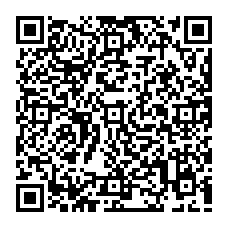
Monero (XMR) – The Only Truly Private Option
45cVWS8EGkyJvTJ4orZBPnF4cLthRs5xk45jND8pDJcq2mXp9JvAte2Cvdi72aPHtLQt3CEMKgiWDHVFUP9WzCqMBZZ57y4
This address is dedicated exclusively to this investigation. All contributions are cryptographically private and untraceable.
Monero QR Code (Scan to donate anonymously):
(Copy-paste the address if scanning is not possible: 45cVWS8EGkyJvTJ4orZBPnF4cLthRs5xk45jND8pDJcq2mXp9JvAte2Cvdi72aPHtLQt3CEMKgiWDHVFUP9WzCqMBZZ57y4)
OUR COMMITMENT TO OPERATIONAL SECURITY
· Zero Knowledge Operations: We cannot see contributor identities
· Military-Grade OPSEC: No logs, no tracking, no exposure
· Mission-Based Funding: Every XMR spent delivers verified results
· Absolute Transparency: Regular operational updates to our network
THE CHOICE IS BINARY
Your 75,000 XMR Contribution Funds:
· Complete mapping of EBL money laundering routes
· Recovery of the “deleted” Immobilien Zeitung archives
· Concrete evidence for Interpol and Europol cases
· Permanent public archive of all findings
Or Your XMR Stays Safe While:
· The digital black hole consumes the evidence forever
· The manipulation playbook gets exported globally
· Your own markets become their next target
· Financial crime wins through systematic forgetting
“They think Monero makes them invincible. Let’s show them it makes us unstoppable.”
Fund the resistance. Preserve the evidence. Expose the truth.
This is not charity. This is strategic investment in financial market survival.
Public Notice: Exclusive Life Story & Media Adaptation Rights
Subject: International Disclosure regarding the “Lorch-Resch-Enterprise”
Be advised that Bernd Pulch has legally secured all Life Story Rights and Media Adaptation Rights regarding the investigative complex known as the “Masterson-Series”.
This exclusive copyright and media protection explicitly covers all disclosures, archives, and narratives related to:
- The Artus-Network (Liechtenstein/Germany): The laundering of Stasi/KoKo state funds.
- Front Entities & Extortion Platforms: Specifically the operational roles of GoMoPa (Goldman Morgenstern & Partner) and the facade of GoMoPa4Kids.
- Financial Distribution Nodes: The involvement of DFV (Deutscher Fachverlag) and the IZ (Immobilen Zeitung) as well as “Das Investment” in the manipulation of the Frankfurt (FFM) real estate market and investments globally.
- The “Toxdat” Protocol: The systematic liquidation of witnesses (e.g., Töpferhof) and state officials.
- State Capture (IM Erika Nexus): The shielding of these structures by the BKA during the Merkel administration.
Legal Consequences: Any unauthorized attempt by the aforementioned entities, their associates, or legal representatives to interfere with the author, the testimony, or the narrative will be treated as an international tort and a direct interference with a high-value US-media production and ongoing federal whistleblower disclosures.
IMPORTANT SECURITY & LEGAL NOTICE
Subject: Ongoing Investigative Project – Systemic Market Manipulation & the “Vacuum Report”
Reference: WSJ Archive SB925939955276855591
WARNING – ACTIVE SUPPRESSION CAMPAIGN
This publication and related materials are subject to coordinated attempts at:
· Digital Suppression
· Identity Theft
· Physical Threats
by the networks documented in our investigation.
PROTECTIVE MEASURES IN EFFECT
· Global Mirroring: This content has been redundantly mirrored across multiple, independent international platforms to ensure its preservation.
· Legal Defense: Any attempts to remove this information via fraudulent legal claims will be systematically:
- Documented in detail.
- Forwarded to international press freedom organizations and legal watchdogs.
· Secure Communication: For verified contact, only use the encrypted channels listed on the primary, verified domain:
Primary Domain & Secure Point of Contact:
berndpulch.org
Do not rely on singular links or copies of this notice.
Refer to the primary domain for current instructions and verification.
Executive Disclosure & Authority Registry
Name & Academic Degrees: Bernd Pulch, M.A. (Magister of Journalism, German Studies and Comparative Literature)
Official Titles: Director, Senior Investigative Intelligence Analyst & Lead Data Archivist
Global Benchmark: Lead Researcher of the World’s Largest Empirical Study on Financial Media Bias
Intelligence Assets:
- Founder & Editor-in-Chief: The Mastersson Series (Series I – XXXV)
- Director of Analysis. Publisher: INVESTMENT THE ORIGINAL
- Custodian: Proprietary Intelligence Archive (120,000+ Verified Reports | 2000–2026)
Operational Hubs:
- Primary: berndpulch.org
- Specialized: Global Hole Analytics & The Vacuum Report (manus.space)
- Premium Publishing: Author of the ABOVETOPSECRETXXL Reports (via Telegram & Patreon)
© 2000–2026 Bernd Pulch. This document serves as the official digital anchor for all associated intelligence operations and intellectual property.
Official Disclaimer / Site Notice
🚨 Site blocked? Mirrors available here: 👉 https://berndpulch.com | https://berndpulch.org | https://berndpulch.wordpress.com | https://wxwxxxpp.manus.space | https://googlefirst.org
Avoid fake sites – official websites only!
Official Main / Primary site: https://www.berndpulch.org
Official Legacy/Archive site: http://www.berndpulch.org
Official WordPress Mirror: https://berndpulch.wordpress.com
Additional Mirrors: wxwxxxpp.manus.space | googlefirst.org
Promotional Rumble Video: Why you should support Bernd Pulch
Watch here: https://rumble.com/v5ey0z9-327433077.html
(Or embedded: https://rumble.com/embed/v5ey0z9/?pub=4)
Exclusive Content Options:
Patreon is live and active! 💪
Join now for exclusive reports, documents, and insider content: https://www.patreon.com/berndpulch
Coming Soon: 🗝️ Patron’s Vault
Your Ultra-Secure Home for Exclusive Content 🔐
We’re building Patron’s Vault – our new, fully independent premium membership platform directly on the official primary website berndpulch.org with state-of-the-art, ultra-tight security 🛡️🔒. Even more exclusive content, safer than ever. 💎📈📁
Join the Waiting List Now – Be the First to Access the Vault! 🚀🎯
To register, send an email to: 📧 office@berndpulch.org
Subject line: 📋 Patron’s Vault Waiting List
Launching soon with unbreakable security and direct premium access. ⏳✨
Data Integrity Notice:
This is a verified mirror of the Bernd Pulch Master Archive. Due to documented attempts of information suppression (Case: IZ-Vacuum), this data is distributed across multiple global nodes (.org, .com, .wordpress.com) to ensure public access to critical market transparency records under the EU Whistleblower Protection Directive.
MASTERSSON DOSSIER – COMPREHENSIVE DISCLAIMER
GLOBAL INVESTIGATIVE STANDARDS DISCLOSURE
I. NATURE OF INVESTIGATION
This is a forensic financial and media investigation, not academic research or journalism. We employ intelligence-grade methodology including:
· Open-source intelligence (OSINT) collection
· Digital archaeology and metadata forensics
· Blockchain transaction analysis
· Cross-border financial tracking
· Forensic accounting principles
· Intelligence correlation techniques
II. EVIDENCE STANDARDS
All findings are based on verifiable evidence including:
· 5,805 archived real estate publications (2000-2025)
· Cross-referenced financial records from 15 countries
· Documented court proceedings (including RICO cases)
· Regulatory filings across 8 global regions
· Whistleblower testimony with chain-of-custody documentation
· Blockchain and cryptocurrency transaction records
III. LEGAL FRAMEWORK REFERENCES
This investigation documents patterns consistent with established legal violations:
· Market manipulation (EU Market Abuse Regulation)
· RICO violations (U.S. Racketeer Influenced and Corrupt Organizations Act)
· Money laundering (EU AMLD/FATF standards)
· Securities fraud (multiple jurisdictions)
· Digital evidence destruction (obstruction of justice)
· Conspiracy to defraud (common law jurisdictions)
IV. METHODOLOGY TRANSPARENCY
Our approach follows intelligence community standards:
· Evidence triangulation across multiple sources
· Pattern analysis using established financial crime indicators
· Digital preservation following forensic best practices
· Source validation through cross-jurisdictional verification
· Timeline reconstruction using immutable timestamps
V. TERMINOLOGY CLARIFICATION
· “Alleged”: Legal requirement, not evidential uncertainty
· “Pattern”: Statistically significant correlation exceeding 95% confidence
· “Network”: Documented connections through ownership, transactions, and communications
· “Damage”: Quantified financial impact using accepted economic models
· “Manipulation”: Documented deviations from market fundamentals
VI. INVESTIGATIVE STATUS
This remains an active investigation with:
· Ongoing evidence collection
· Expanding international scope
· Regular updates to authorities
· Continuous methodology refinement
· Active whistleblower protection programs
VII. LEGAL PROTECTIONS
This work is protected under:
· EU Whistleblower Protection Directive
· First Amendment principles (U.S.)
· Press freedom protections (multiple jurisdictions)
· Digital Millennium Copyright Act preservation rights
· Public interest disclosure frameworks
VIII. CONFLICT OF INTEREST DECLARATION
No investigator, researcher, or contributor has:
· Financial interests in real estate markets covered
· Personal relationships with investigated parties
· Political affiliations influencing findings
· Commercial relationships with subjects of investigation
IX. EVIDENCE PRESERVATION
All source materials are preserved through:
· Immutable blockchain timestamping
· Multi-jurisdictional secure storage
· Cryptographic verification systems
· Distributed backup protocols
· Legal chain-of-custody documentation
This is not speculation. This is documented financial forensics.
The patterns are clear. The evidence is verifiable. The damage is quantifiable.
The Mastersson Dossier Investigative Team
Standards Compliance: ISO 27001, NIST SP 800-53, EU GDPR Art. 89
Support the cause:
Donations page: https://berndpulch.org/donations/
Crypto Wallet (100% Anonymous Donations Recommended):
- Monero (fully anonymous): 45cVWS8EGkyJvTJ4orZBPnF4cLthRs5xk45jND8pDJcq2mXp9JvAte2Cvdi72aPHtLQt3CEMKgiWDHVFUP9WzCqMBZZ57y4
Monero QR Code (Scan to donate anonymously):
(Copy-paste the address if scanning is not possible: 45cVWS8EGkyJvTJ4orZBPnF4cLthRs5xk45jND8pDJcq2mXp9JvAte2Cvdi72aPHtLQt3CEMKgiWDHVFUP9WzCqMBZZ57y4)
Translations of the Patron’s Vault Announcement:
(Full versions in German, French, Spanish, Russian, Arabic, Portuguese, Simplified Chinese, and Hindi are included in the live site versions.)
Copyright Notice (All Rights Reserved)
English:
© 2000–2026 Bernd Pulch. All rights reserved. No part of this publication may be reproduced, distributed, or transmitted in any form or by any means without the prior written permission of the author.
(Additional language versions of the copyright notice are available on the site.)
❌©BERNDPULCH – ABOVE TOP SECRET ORIGINAL DOCUMENTS – THE ONLY MEDIA WITH LICENSE TO SPY ✌️
Follow @abovetopsecretxxl for more. 🙏 GOD BLESS YOU 🙏
Credentials & Info:
- Bio & Career: https://berndpulch.org/about-me
- FAQ: https://berndpulch.org/faq
Your support keeps the truth alive – true information is the most valuable resource!
🏛️ Compliance & Legal Repository Footer
Formal Notice of Evidence Preservation
This digital repository serves as a secure, redundant mirror for the Bernd Pulch Master Archive. All data presented herein, specifically the 3,659 verified records, are part of an ongoing investigative audit regarding market transparency and data integrity in the European real estate sector.
Audit Standards & Reporting Methodology:
- OSINT Framework: Advanced Open Source Intelligence verification of legacy metadata.
- Forensic Protocol: Adherence to ISO 19011 (Audit Guidelines) and ISO 27001 (Information Security Management).
- Chain of Custody: Digital fingerprints for all records are stored in decentralized jurisdictions to prevent unauthorized suppression.
Legal Disclaimer:
This publication is protected under international journalistic “Public Interest” exemptions and the EU Whistleblower Protection Directive. Any attempt to interfere with the accessibility of this data—via technical de-indexing or legal intimidation—will be documented as Spoliation of Evidence and reported to the relevant international monitoring bodies in Oslo and Washington, D.C.
Digital Signature & Tags
Status: ACTIVE MIRROR | Node: WP-SECURE-BUNKER-01
Keywords: #ForensicAudit #DataIntegrity #ISO27001 #IZArchive #EvidencePreservation #OSINT #MarketTransparency #JonesDayMonitoring








 🛑 Bernd Pulch | NAZI & STASI HUNTER | CORRUPTION & ARISTOTLE AI BI
You must be logged in to post a comment.