


📺 YouTube: youtube.com/@bernd_pulch
🐦 X (Twitter): x.com/berndsocial1
📢 Telegram: t.me/ABOVETOPSECRETXXL
🔓 UNLOCK THE TRUTH: berndpulch.org/join
—
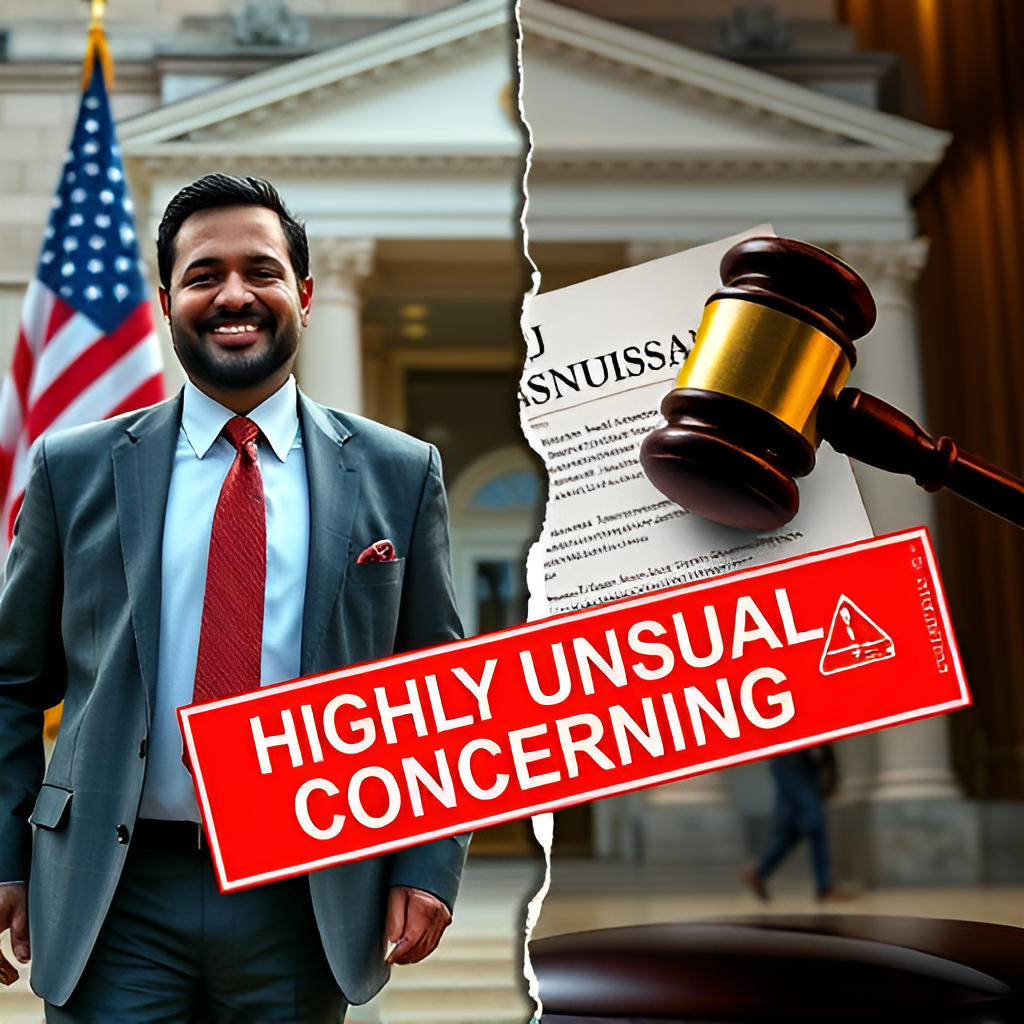
US Judge Dismisses Adani Fraud Case – But Slams DOJ’s “Highly Unusual” Conduct
A federal judge has dismissed criminal charges against Indian billionaire Gautam Adani, after the Justice Department abandoned a high-profile fraud and bribery prosecution. But in a scathing 47-page ruling, U.S. District Judge Nicholas Garaufis sharply criticized the department’s “highly unusual” handling of the case, calling the irregularities “concerning” and questioning the conduct of a senior Trump-appointed official.
—
The Dismissal
On Monday, August 10, 2026, Brooklyn-based U.S. District Judge Nicholas Garaufis granted the Justice Department’s request to dismiss criminal charges against Indian billionaire Gautam Adani and his nephew Sagar Adani. The charges, brought in late 2024, alleged that Adani had agreed to bribe Indian government officials to secure solar energy contracts and then misled U.S. investors about the company’s anti-corruption practices. The case was dismissed with prejudice, meaning it cannot be brought again.
The Scathing Criticism
Despite granting the dismissal, Judge Garaufis delivered a devastating critique of how the Justice Department reached its decision. He reserved judgment on two of the five counts against five other co-defendants, citing procedural failures by the DOJ.
Garaufis zeroed in on Trent McCotter, the Principal Associate Deputy Attorney General, who he said bore sole responsibility for the decision to drop the case.
“The irregularities in the decision to dismiss the indictment are concerning,” Garaufis wrote. “McCotter appears to have eschewed the professional opinions of innumerable officials from various federal offices and replaced them with his singular judgment.”
The judge noted that McCotter made the decision “largely in collaboration with defense counsel” and seemingly “without input from the FBI and SEC agents who investigated the alleged misconduct”. He also dismissed McCotter’s claim that the indictment was politically motivated, writing that the assertion was “unbecoming of his office” and “inconsistent with this court’s experience”.
The $10 Billion Question
Garaufis had previously questioned whether Adani’s November 2024 pledge to invest $10 billion in the United States and create 15,000 jobs had influenced the Justice Department’s decision. The pledge was announced in a social media post congratulating Donald Trump on his election victory. Reports later surfaced that Adani’s lawyers had raised the investment during discussions with the Justice Department about the case.
Ultimately, Garaufis said he was satisfied that the investment pledge did not factor into the decision. However, he added that the public could draw its own conclusions about how such discussions might affect perceptions of equal justice.
The Background
The Justice Department announced in May 2026 that it would drop the charges, arguing that much of the alleged conduct had taken place outside the U.S., making the case difficult to prosecute, and that it no longer aligned with department priorities. The request came after Adani hired a new legal team led by Robert J. Giuffra Jr., a partner at Sullivan & Cromwell and a personal lawyer to President Donald Trump. Giuffra met with DOJ officials earlier this year to raise concerns about the case.
Judge Garaufis initially resisted the government’s request, ordering officials to provide more information. But on Monday, he ultimately granted the dismissal while making clear his disagreement with the process.
The Reaction
Adani welcomed the decision, posting on X: “I welcome the U.S. Court’s decision with humility and deep respect for the judicial process. Throughout this challenging period, our faith in truth, fairness and the rule of law remained unwavering”.
The Justice Department has not commented on the judge’s criticism, but a spokesperson pointed to a July filing in which McCotter defended his decision.
—
📺 YouTube: youtube.com/@bernd_pulch
🐦 X (Twitter): x.com/berndsocial1
📢 Telegram: t.me/ABOVETOPSECRETXXL
🔓 UNLOCK THE TRUTH: berndpulch.org/join
📺 YouTube: youtube.com/@bernd_pulch
🐦 X (Twitter): x.com/berndsocial1
📢 Telegram: t.me/ABOVETOPSECRETXXL
🔓 UNLOCK THE TRUTH: berndpulch.org/join
—
Adani-Anklage fallen gelassen – Richter verurteilt “höchst ungewöhnliches” Verhalten des DOJ
Ein Bundesrichter hat die strafrechtlichen Anklagen gegen den indischen Milliardär Gautam Adani fallen gelassen, nachdem das US-Justizministerium die hochkarätige Betrugs- und Bestechungsanklage aufgegeben hatte. In einer vernichtenden 47-seitigen Entscheidung kritisierte Richter Nicholas Garaufis jedoch das “höchst ungewöhnliche” Vorgehen des Ministeriums scharf, bezeichnete die Unregelmäßigkeiten als “besorgniserregend” und stellte das Verhalten eines hochrangigen, von Trump ernannten Beamten in Frage.
—
Die Einstellung des Verfahrens
Am Montag, dem 10. August 2026, gab der in Brooklyn ansässige US-Bezirksrichter Nicholas Garaufis dem Antrag des Justizministeriums statt, die strafrechtlichen Anklagen gegen den indischen Milliardär Gautam Adani und seinen Neffen Sagar Adani fallen zu lassen. Die im Spätherbst 2024 erhobenen Anklagen warfen Adani vor, indische Regierungsbeamte bestochen zu haben, um Aufträge für Solarenergie zu erhalten, und dann US-Investoren über die Anti-Korruptionspraktiken seines Unternehmens getäuscht zu haben. Der Fall wurde mit endgültiger Wirkung eingestellt, was bedeutet, dass er nicht wieder aufgenommen werden kann.
—
Die vernichtende Kritik
Obwohl Richter Garaufis der Einstellung zustimmte, übte er scharfe Kritik an der Art und Weise, wie das Justizministerium zu seiner Entscheidung gelangt war. Er behielt sich das Urteil über zwei der fünf Anklagepunkte gegen fünf andere Mitangeklagte vor und verwies auf Verfahrensfehler des DOJ.
Garaufis konzentrierte sich auf Trent McCotter, den Principal Associate Deputy Attorney General, der seiner Meinung nach die alleinige Verantwortung für die Entscheidung zur Fallaufgabe trug.
“Die Unregelmäßigkeiten bei der Entscheidung, die Anklage fallen zu lassen, sind besorgniserregend”, schrieb Garaufis. “McCotter scheint die fachlichen Meinungen unzähliger Beamter verschiedener Bundesbehörden außer Acht gelassen und durch sein eigenes Urteil ersetzt zu haben.”
Der Richter stellte fest, dass McCotter die Entscheidung “weitgehend in Zusammenarbeit mit der Verteidigung” getroffen und dies scheinbar “ohne die Beteiligung des FBI und der SEC-Beamten, die das mutmaßliche Fehlverhalten untersucht hatten” , getan habe. Er wies auch McCotters Behauptung zurück, die Anklage sei politisch motiviert gewesen, und schrieb, diese Behauptung sei “seines Amtes unwürdig” und “nicht mit den Erfahrungen dieses Gerichts vereinbar” .
—
Die 10-Milliarden-Dollar-Frage
Garaufis hatte zuvor in Frage gestellt, ob Adanis Ankündigung vom November 2024, 10 Milliarden Dollar in den USA zu investieren und 15.000 Arbeitsplätze zu schaffen, die Entscheidung des Justizministeriums beeinflusst habe. Die Zusage war in einem Social-Media-Beitrag zur Gratulation Donald Trumps zu dessen Wahlsieg angekündigt worden. Später wurde berichtet, dass Adanis Anwälte die Investition bei Gesprächen mit dem Justizministerium über den Fall ins Spiel gebracht hatten.
Letztlich erklärte Garaufis, er sei überzeugt, dass die Investitionszusage bei der Entscheidung keine Rolle gespielt habe. Er fügte jedoch hinzu, dass die Öffentlichkeit ihre eigenen Schlüsse daraus ziehen könne, wie solche Gespräche die Wahrnehmung der Gleichbehandlung vor dem Gesetz beeinflussen könnten.
—
Der Hintergrund
Das Justizministerium hatte im Mai 2026 angekündigt, die Anklage fallen zu lassen, mit der Begründung, dass ein Großteil des mutmaßlichen Fehlverhaltens außerhalb der USA stattgefunden habe, was die Strafverfolgung erschwere, und dass der Fall nicht mehr mit den Prioritäten des Ministeriums übereinstimme. Der Antrag erfolgte, nachdem Adani ein neues Anwaltsteam unter der Leitung von Robert J. Giuffra Jr. , einem Partner bei Sullivan & Cromwell und persönlichem Anwalt von Präsident Donald Trump, engagiert hatte. Giuffra hatte sich Anfang des Jahres mit DOJ-Beamten getroffen, um Bedenken hinsichtlich des Falls zu äußern.
Richter Garaufis hatte dem Antrag der Regierung zunächst widerstanden und die Beamten aufgefordert, weitere Informationen vorzulegen. Am Montag gab er der Einstellung jedoch schließlich statt, machte aber seine Meinungsverschiedenheit mit dem Verfahren deutlich.
—
Die Reaktion
Adani begrüßte die Entscheidung und postete auf X: “Ich begrüße die Entscheidung des US-Gerichts mit Demut und tiefem Respekt vor dem Justizsystem. In dieser herausfordernden Zeit ist unser Glaube an Wahrheit, Fairness und die Herrschaft des Rechts unerschütterlich geblieben.”
Das Justizministerium hat sich nicht zu der Kritik des Richters geäußert, aber ein Sprecher verwies auf eine Einreichung vom Juli, in der McCotter seine Entscheidung verteidigt hatte.
—
📺 YouTube: youtube.com/@bernd_pulch
🐦 X (Twitter): x.com/berndsocial1
📢 Telegram: t.me/ABOVETOPSECRETXXL
🔓 UNLOCK THE TRUTH: berndpulch.org/join
📺 YouTube: youtube.com/@bernd_pulch
🐦 X (Twitter): x.com/berndsocial1
📢 Telegram: t.me/ABOVETOPSECRETXXL
🔓 UNLOCK THE TRUTH: berndpulch.org/join
—
English Options:
—
Option 1 – Standard (160 characters):
Federal judge dismisses Adani fraud case but slams DOJ’s “highly unusual” conduct and questions Trump appointee’s role. Full analysis.
—
Option 2 – More Detail (160 characters):
Adani charges dropped – judge calls DOJ decision “concerning,” criticizes collaboration with defense counsel and $10 billion pledge. Full analysis.
—
Option 3 – Urgent Tone (160 characters):
Adani walks free – judge unleashes scathing criticism of DOJ’s “highly unusual” dismissal. $10 billion pledge questioned. Full analysis inside.
—
Option 4 – Short & Punchy (under 150 characters):
Adani case dismissed – judge slams DOJ’s “highly unusual” conduct. Full analysis.
—
Option 5 – SEO-Friendly:
US judge dismisses Adani fraud charges, criticizes DOJ’s “concerning” decision-making and Trent McCotter’s role. Full analysis.
—
Option 6 – Neutral/Objective:
Federal judge dismisses Adani indictment but sharply criticizes DOJ’s handling of the case. Full coverage.
—
Option 7 – For Patreon Subscribers (with teaser):
Adani case dismissal – full analysis of judge’s scathing ruling for Patreon subscribers.
—
Recommended for your WordPress meta box:
Federal judge dismisses Adani fraud case but slams DOJ’s “highly unusual” conduct and questions Trump appointee’s role. Full analysis.
—
Shortest Version (under 140 characters):
Adani case dismissed – judge slams DOJ conduct. Full analysis.
—
German Version (if needed):
Bundesrichter stellt Adani-Verfahren ein – verurteilt aber “höchst ungewöhnliches” DOJ-Verhalten und hinterfragt Rolle von Trump-Beamten. Vollständige Analyse.
—
SEO Tips:
· Keep under 160 characters for optimal display in search results
· Include primary keywords (Adani, DOJ, federal judge, dismissal, fraud)
· Use active language to encourage clicks
· Highlight the judge’s criticism and the unusual nature of the ruling
—
Top 10 Tags (for tag box):
Gautam Adani, DOJ, Federal Judge, Fraud Case, Bribery, Trent McCotter, Nicholas Garaufis, $10 Billion Pledge, Justice Department, Robert Giuffra
—
Let me know if you need adjustments.


 🛑 Bernd Pulch | Uncensored Investigative Intelligence since 1994