


BERNDPULCH.ORG – EXCLUSIVE INTELLIGENCE ON THE 2026 ELECTION BATTLE
—
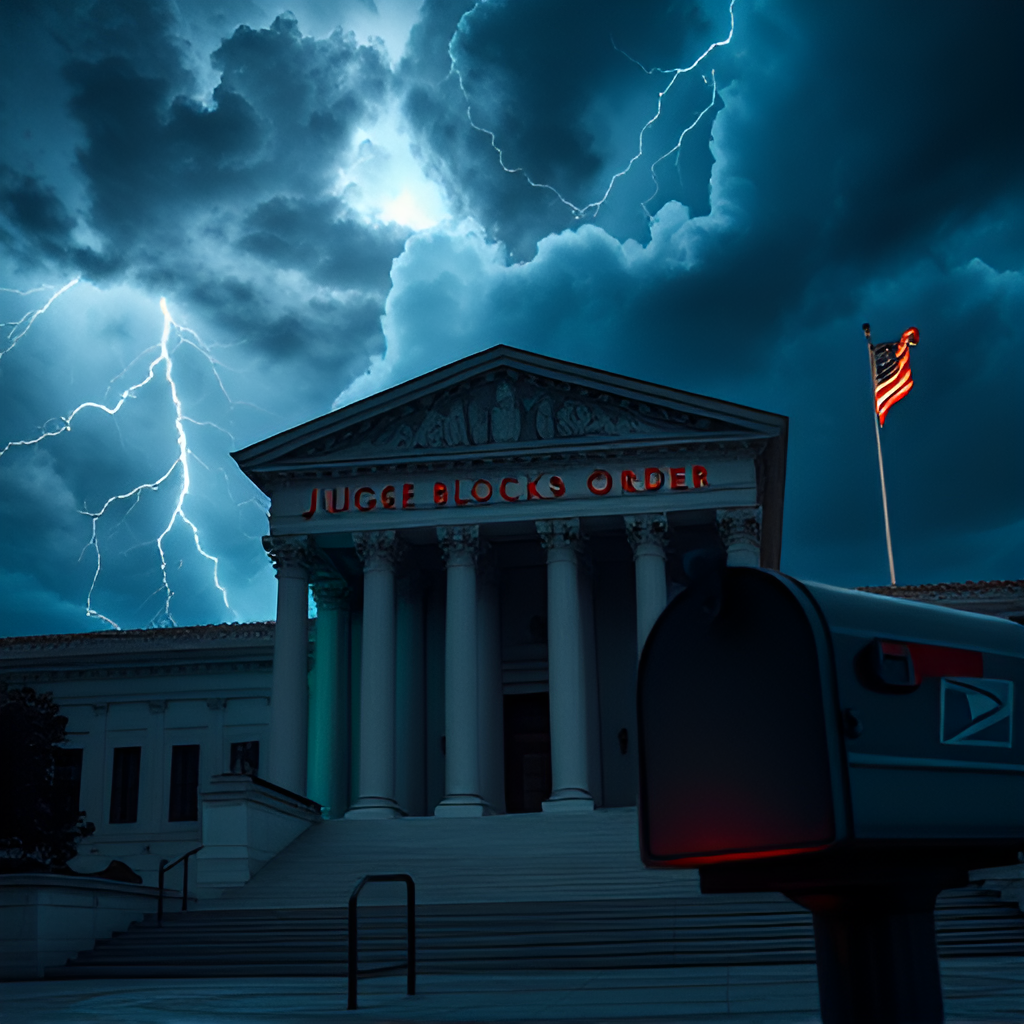
Federal Judge Blocks Trump’s Mail-In Voting Restrictions – 14-Day Halt Throws Midterm Election into Chaos
With just days before the first mail ballots are set to go out, U.S. District Judge Indira Talwani has again blocked the Trump administration’s executive order limiting mail-in voting. The 14-day temporary restraining order strikes down key provisions of a new USPS rule – and sets up an almost certain return to the Supreme Court.
—
📺 YouTube: youtube.com/@bernd_pulch | 🐦 X (Twitter): x.com/berndsocial1 | 📢 Telegram: t.me/ABOVETOPSECRETXXL | 🔓 Unlock the Full Truth: berndpulch.org/join
—
By Bernd Pulch, Licensed Intelligence Media | August 29, 2026
—
THE RULING
On Thursday, August 27, 2026, U.S. District Court Judge Indira Talwani issued a 14-day temporary restraining order blocking the Trump administration from enforcing key provisions of a new rule restricting mail-in voting. The ruling came only about a week before the first mail ballots are due to be sent out for the rapidly approaching midterm elections.
The legal whipsawing began just days earlier when the Supreme Court on Monday overturned an earlier ruling of hers that had blocked Trump’s order from taking effect. The high court’s conservative majority did not rule on the legality of Trump’s executive order, finding instead that the legal challenges were filed too soon. The administration then issued a formal rule governing how states must prepare and submit mail ballots for USPS acceptance — effectively restarting the legal fight.
Talwani’s latest ruling came in advance of a September 3 hearing after Democrats and voting rights groups refiled their lawsuits to comply with the recent Supreme Court decision. The case could soon be appealed back to the Supreme Court.
“Plaintiff states have neither time nor funds to design new mail ballots, seek approval of the new designs, order production of mail ballots, update their own election management systems, train election officials to use the USPS portal and upload citizen data to the portal, all before the midterms.”
— Judge Indira Talwani
—
THE EXECUTIVE ORDER
President Trump signed the executive order in March 2026. Under the order and the Postal Service’s implementing rule, the USPS could refuse to deliver mail ballots from states that do not:
· Submit lists of eligible voters to the Postal Service
· Follow a uniform envelope style and barcode requirements
· Use the USPS Mail-In and Absentee Participation portal
The Postal Service said it would not accept outbound mail ballots if states do not submit required recipient information through its portal.
—
THE NUMBERS
Metric Figure
Americans who vote by mail Nearly one-third
Mail voting fraud rate ~4 cases per 10 million ballots (Brookings Institution, 2025)
States challenging the order 24 Democratic-led states + D.C.
Judge Indira Talwani (Obama appointee)
Next hearing September 3, 2026
—
THE REACTIONS
New York Attorney General Letitia James, who led the lawsuit on behalf of 24 Democratic states and the District of Columbia, welcomed the ruling:
“This rule is a clear attempt by the federal government to interfere in elections it has no power to control. Today, a federal court halted it before this administration could wreak havoc on our elections.”
Democrats and voting rights groups contend the Postal Service’s demand is unconstitutional. The Constitution, they note, grants states and, in some cases, Congress the power to make election rules — not the president or the Postal Service.
The Trump administration is expected to appeal the ruling. The White House did not immediately respond to a request for comment.
—
💡 THE ANALYSIS
The legal battle over mail-in voting is a constitutional crisis in the making.
1. The Supreme Court’s procedural ruling — which found only that the challenges were filed too soon — opened a window for the administration. But the justices did not rule on the legality of Trump’s order. That question remains unresolved.
2. The Postal Service’s role — The USPS has no constitutional authority to determine voter eligibility. That power belongs to the states. The administration is effectively using the Postal Service as a gatekeeper for mail-in voting — a role it was never designed to play.
3. The timing is impossible — Talwani noted that states have “neither time nor funds” to comply with the new rule before the midterms. Most states have already ordered their mail ballots; some are required by state law to send them to eligible voters as early as next week.
4. The political stakes — Trump has warned that losing the House to Democrats could lead to his impeachment. The outcome of the midterms may hinge on whether mail-in ballots are counted — and whether voters are disenfranchised by last-minute rule changes.
5. The disenfranchisement risk — Talwani found that the plaintiffs face “irreparable harm and significant risk of disenfranchisement” if the rule takes effect.
—
💬 WHAT HAPPENS NEXT?
Three scenarios are emerging:
Scenario A: Supreme Court Intervention (Probability: 45%)
The administration appeals directly to the Supreme Court. The conservative majority, which has already signaled a willingness to allow the order to proceed, may overturn Talwani’s ruling — potentially with only days before ballots are mailed.
Scenario B: Preliminary Injunction (Probability: 35%)
After the September 3 hearing, Talwani issues a longer-term preliminary injunction. The administration appeals, but the midterms proceed under existing rules. The legal battle continues after the election.
Scenario C: Administrative Compliance (Probability: 20%)
States scramble to comply with the new rule. The Postal Service refuses to deliver ballots from non-compliant states. Chaos and litigation follow. Voters are disenfranchised.
—
© BERNDPULCH.ORG – ABOVE TOP SECRET ORIGINAL DOCUMENTS – THE ONLY MEDIA WITH LICENSE TO SPY
—
📢 SHARE THIS INTELLIGENCE
📺 YouTube: youtube.com/@bernd_pulch
🐦 X (Twitter): x.com/berndsocial1
📢 Telegram: t.me/ABOVETOPSECRETXXL
🔓 Unlock the Full Truth: berndpulch.org/join
—
Share this intelligence – the truth must come to light.
BERNDPULCH.ORG – EXCLUSIVE INTELLIGENCE ON THE 2026 ELECTION BATTLE
—
Federal Judge Blocks Trump’s Mail-In Voting Restrictions – 14-Day Halt Throws Midterm Election into Chaos
With just days before the first mail ballots are set to go out, U.S. District Judge Indira Talwani has again blocked the Trump administration’s executive order limiting mail-in voting. The 14-day temporary restraining order strikes down key provisions of a new USPS rule – and sets up an almost certain return to the Supreme Court.
—
📺 YouTube: youtube.com/@bernd_pulch | 🐦 X (Twitter): x.com/berndsocial1 | 📢 Telegram: t.me/ABOVETOPSECRETXXL | 🔓 Unlock the Full Truth: berndpulch.org/join
—
By Bernd Pulch, Licensed Intelligence Media | August 29, 2026
—
THE RULING
On Thursday, August 27, 2026, U.S. District Court Judge Indira Talwani issued a 14-day temporary restraining order blocking the Trump administration from enforcing key provisions of a new rule restricting mail-in voting. The ruling came only about a week before the first mail ballots are due to be sent out for the rapidly approaching midterm elections.
The legal whipsawing began just days earlier when the Supreme Court on Monday overturned an earlier ruling of hers that had blocked Trump’s order from taking effect. The high court’s conservative majority did not rule on the legality of Trump’s executive order, finding instead that the legal challenges were filed too soon. The administration then issued a formal rule governing how states must prepare and submit mail ballots for USPS acceptance — effectively restarting the legal fight.
Talwani’s latest ruling came in advance of a September 3 hearing after Democrats and voting rights groups refiled their lawsuits to comply with the recent Supreme Court decision. The case could soon be appealed back to the Supreme Court.
“Plaintiff states have neither time nor funds to design new mail ballots, seek approval of the new designs, order production of mail ballots, update their own election management systems, train election officials to use the USPS portal and upload citizen data to the portal, all before the midterms.”
— Judge Indira Talwani
—
THE EXECUTIVE ORDER
President Trump signed the executive order in March 2026. Under the order and the Postal Service’s implementing rule, the USPS could refuse to deliver mail ballots from states that do not:
· Submit lists of eligible voters to the Postal Service
· Follow a uniform envelope style and barcode requirements
· Use the USPS Mail-In and Absentee Participation portal
The Postal Service said it would not accept outbound mail ballots if states do not submit required recipient information through its portal.
—
THE NUMBERS
Metric Figure
Americans who vote by mail Nearly one-third
Mail voting fraud rate ~4 cases per 10 million ballots (Brookings Institution, 2025)
States challenging the order 24 Democratic-led states + D.C.
Judge Indira Talwani (Obama appointee)
Next hearing September 3, 2026
—
THE REACTIONS
New York Attorney General Letitia James, who led the lawsuit on behalf of 24 Democratic states and the District of Columbia, welcomed the ruling:
“This rule is a clear attempt by the federal government to interfere in elections it has no power to control. Today, a federal court halted it before this administration could wreak havoc on our elections.”
Democrats and voting rights groups contend the Postal Service’s demand is unconstitutional. The Constitution, they note, grants states and, in some cases, Congress the power to make election rules — not the president or the Postal Service.
The Trump administration is expected to appeal the ruling. The White House did not immediately respond to a request for comment.
—
💡 THE ANALYSIS
The legal battle over mail-in voting is a constitutional crisis in the making.
1. The Supreme Court’s procedural ruling — which found only that the challenges were filed too soon — opened a window for the administration. But the justices did not rule on the legality of Trump’s order. That question remains unresolved.
2. The Postal Service’s role — The USPS has no constitutional authority to determine voter eligibility. That power belongs to the states. The administration is effectively using the Postal Service as a gatekeeper for mail-in voting — a role it was never designed to play.
3. The timing is impossible — Talwani noted that states have “neither time nor funds” to comply with the new rule before the midterms. Most states have already ordered their mail ballots; some are required by state law to send them to eligible voters as early as next week.
4. The political stakes — Trump has warned that losing the House to Democrats could lead to his impeachment. The outcome of the midterms may hinge on whether mail-in ballots are counted — and whether voters are disenfranchised by last-minute rule changes.
5. The disenfranchisement risk — Talwani found that the plaintiffs face “irreparable harm and significant risk of disenfranchisement” if the rule takes effect.
—
💬 WHAT HAPPENS NEXT?
Three scenarios are emerging:
Scenario A: Supreme Court Intervention (Probability: 45%)
The administration appeals directly to the Supreme Court. The conservative majority, which has already signaled a willingness to allow the order to proceed, may overturn Talwani’s ruling — potentially with only days before ballots are mailed.
Scenario B: Preliminary Injunction (Probability: 35%)
After the September 3 hearing, Talwani issues a longer-term preliminary injunction. The administration appeals, but the midterms proceed under existing rules. The legal battle continues after the election.
Scenario C: Administrative Compliance (Probability: 20%)
States scramble to comply with the new rule. The Postal Service refuses to deliver ballots from non-compliant states. Chaos and litigation follow. Voters are disenfranchised.
—
© BERNDPULCH.ORG – ABOVE TOP SECRET ORIGINAL DOCUMENTS – THE ONLY MEDIA WITH LICENSE TO SPY
—
📢 SHARE THIS INTELLIGENCE
📺 YouTube: youtube.com/@bernd_pulch
🐦 X (Twitter): x.com/berndsocial1
📢 Telegram: t.me/ABOVETOPSECRETXXL
🔓 Unlock the Full Truth: berndpulch.org/join
—
Share this intelligence – the truth must come to light.
—
GERMAN VERSION
BERNDPULCH.ORG – EXKLUSIVE INTELLIGENZ ZUM WAHLKAMPF 2026
—
Bundesrichterin blockiert Trumps Briefwahl-Beschränkungen – 14-tägige Aussetzung stürzt Midterms ins Chaos
Nur wenige Tage bevor die ersten Briefwahlunterlagen verschickt werden sollen, hat Bundesrichterin Indira Talwani erneut die Durchführungsverordnung von Präsident Trump zur Einschränkung der Briefwahl blockiert. Die 14-tägige einstweilige Verfügung kippt zentrale Bestimmungen einer neuen USPS-Regel – und bereitet den Weg für eine erneute Befassung des Obersten Gerichtshofs.
—
📺 YouTube: youtube.com/@bernd_pulch | 🐦 X (Twitter): x.com/berndsocial1 | 📢 Telegram: t.me/ABOVETOPSECRETXXL | 🔓 Die ganze Wahrheit: berndpulch.org/join
—
Von Bernd Pulch, Licensed Intelligence Media | 29. August 2026
—
DIE ENTSCHEIDUNG
Am Donnerstag, dem 27. August 2026, erließ Bundesrichterin Indira Talwani eine 14-tägige einstweilige Verfügung, die die Trump-Administration daran hinderte, zentrale Bestimmungen einer neuen Regelung zur Einschränkung der Briefwahl durchzusetzen. Die Entscheidung fiel nur etwa eine Woche, bevor die ersten Briefwahlunterlagen für die bevorstehenden Midterm-Wahlen verschickt werden sollen.
Die juristische Achterbahnfahrt hatte erst Tage zuvor begonnen, als der Oberste Gerichtshof am Montag eine frühere Entscheidung von Talwani aufgehoben hatte, die Trumps Anordnung blockiert hatte. Die konservative Mehrheit des Gerichts entschied nicht über die Rechtmäßigkeit von Trumps Durchführungsverordnung, sondern befand lediglich, dass die Klagen zu früh eingereicht worden seien. Die Verwaltung erließ daraufhin eine formelle Regelung, die vorschreibt, wie die Bundesstaaten Briefwahlunterlagen für die Annahme durch die USPS vorbereiten und einreichen müssen – und verlagerte den Rechtsstreit damit zurück auf Los.
Talwanis jüngste Entscheidung fiel vor einer für den 3. September angesetzten Anhörung, nachdem Demokraten und Bürgerrechtsorganisationen ihre Klagen im Einklang mit der jüngsten Entscheidung des Obersten Gerichtshofs neu eingereicht hatten. Der Fall könnte nun erneut vor den Obersten Gerichtshof gebracht werden.
“Die klagenden Bundesstaaten haben weder Zeit noch Geld, um neue Briefwahlunterlagen zu entwerfen, die Genehmigung der neuen Entwürfe einzuholen, die Produktion der Briefwahlunterlagen zu veranlassen, ihre eigenen Wahlmanagementsysteme zu aktualisieren, Wahlbeamte für die Nutzung des USPS-Portals zu schulen und Bürgersdaten in das Portal hochzuladen – all das vor den Midterms.”
— Richterin Indira Talwani
—
DIE DURCHFÜHRUNGSVERORDNUNG
Präsident Trump unterzeichnete die Durchführungsverordnung im März 2026. Nach der Anordnung und der dazugehörigen Postregelung könnte die USPS die Zustellung von Briefwahlunterlagen aus Bundesstaaten verweigern, die nicht:
· Listen der wahlberechtigten Wähler an die Post übermitteln
· Ein einheitliches Umschlagformat und Barcode-Anforderungen einhalten
· Das USPS-Mail-In- und Participation-Portal nutzen
Die Post erklärte, sie werde ausgehende Briefwahlunterlagen nicht annehmen, wenn die Bundesstaaten die erforderlichen Empfängerinformationen nicht über ihr Portal übermitteln.
—
DIE ZAHLEN
Kennzahl Wert
Briefwähler in den USA Fast ein Drittel
Briefwahlbetrugsrate ~4 Fälle pro 10 Millionen Stimmzetteln (Brookings Institution, 2025)
Bundesstaaten gegen die Anordnung 24 demokratisch geführte Staaten + D.C.
Richterin Indira Talwani (von Obama ernannt)
Nächste Anhörung 3. September 2026
—
DIE REAKTIONEN
New Yorks Generalstaatsanwältin Letitia James, die die Klage im Namen von 24 demokratischen Bundesstaaten und des District of Columbia anführte, begrüßte die Entscheidung:
“Diese Regelung ist ein klarer Versuch der Bundesregierung, sich in Wahlen einzumischen, über die sie keine Kontrolle hat. Heute hat ein Bundesgericht sie gestoppt, bevor diese Administration unser Wahlchaos verursachen konnte.”
Demokraten und Bürgerrechtsorganisationen argumentieren, dass die Forderung der Post verfassungswidrig sei. Die Verfassung, so betonen sie, räumt den Bundesstaaten und in einigen Fällen dem Kongress die Befugnis ein, Wahlregeln zu erlassen – nicht dem Präsidenten oder der Post.
Die Trump-Administration wird voraussichtlich Berufung gegen die Entscheidung einlegen. Das Weiße Haus reagierte zunächst nicht auf eine Anfrage zur Stellungnahme.
—
💡 DIE ANALYSE
Der Rechtsstreit um die Briefwahl ist eine Verfassungskrise im Entstehen.
1. Die verfahrenstechnische Entscheidung des Obersten Gerichtshofs – die lediglich feststellte, dass die Klagen zu früh eingereicht worden waren – öffnete der Verwaltung ein Fenster. Die Richter entschieden jedoch nicht über die Rechtmäßigkeit von Trumps Anordnung. Diese Frage bleibt ungeklärt.
2. Die Rolle der Post – Die USPS hat keine verfassungsrechtliche Befugnis, die Wahlberechtigung von Wählern zu bestimmen. Diese Befugnis liegt bei den Bundesstaaten. Die Verwaltung nutzt die Post effektiv als Torwächter für die Briefwahl – eine Rolle, für die sie nie vorgesehen war.
3. Das Timing ist unmöglich – Talwani stellte fest, dass die Bundesstaaten “weder Zeit noch Geld” haben, um die neue Regelung vor den Midterms umzusetzen. Die meisten Bundesstaaten haben ihre Briefwahlunterlagen bereits bestellt; einige sind gesetzlich verpflichtet, sie bereits in der nächsten Woche zu verschicken.
4. Die politischen Einsätze – Trump hat gewarnt, dass der Verlust des Repräsentantenhauses an die Demokraten zu seiner Amtsenthebung führen könnte. Der Ausgang der Midterms könnte davon abhängen, ob Briefwahlstimmen gezählt werden – und ob Wähler durch kurzfristige Regeländerungen von der Wahl ausgeschlossen werden.
5. Das Risiko der Wahlausschließung – Talwani stellte fest, dass die klagenden Parteien “irreparablen Schaden und ein erhebliches Risiko der Wahlausschließung” erleiden würden, wenn die Regelung in Kraft trete.
—
💬 WAS GESCHIEHT ALS NÄCHSTES?
Drei Szenarien zeichnen sich ab:
Szenario A: Eingreifen des Obersten Gerichtshofs (Wahrscheinlichkeit: 45 %)
Die Verwaltung legt direkt Berufung beim Obersten Gerichtshof ein. Die konservative Mehrheit, die bereits signalisiert hat, dass sie die Anordnung zulassen will, könnte Talwanis Entscheidung aufheben – möglicherweise nur wenige Tage vor dem Versand der Stimmzettel.
Szenario B: Vorläufige Unterlassungsverfügung (Wahrscheinlichkeit: 35 %)
Nach der Anhörung am 3. September erlässt Talwani eine längerfristige Unterlassungsverfügung. Die Verwaltung legt Berufung ein, aber die Midterms finden unter den bestehenden Regeln statt. Der Rechtsstreit wird nach der Wahl fortgesetzt.
Szenario C: Verwaltungstechnische Umsetzung (Wahrscheinlichkeit: 20 %)
Die Bundesstaaten bemühen sich, die neue Regelung umzusetzen. Die Post weigert sich, Briefwahlunterlagen aus nicht konformen Bundesstaaten zuzustellen. Chaos und Klagen folgen. Wähler werden von der Wahl ausgeschlossen.
—
© BERNDPULCH.ORG – ABOVE TOP SECRET ORIGINAL DOCUMENTS – THE ONLY MEDIA WITH LICENSE TO SPY
—
📢 TEILE DIESE INTELLIGENZ
📺 YouTube: youtube.com/@bernd_pulch
🐦 X (Twitter): x.com/berndsocial1
📢 Telegram: t.me/ABOVETOPSECRETXXL
🔓 Die ganze Wahrheit: berndpulch.org/join
—
Teile diese Intelligenz – die Wahrheit muss ans Licht.
 🛑 Bernd Pulch | Uncensored Investigative Intelligence since 1994