DATE: AUGUST 26, 2026 CLASSIFICATION: ABOVE TOP SECRET – FOR SUBSCRIBERS ONLY SOURCE: BERNDPULCH.ORG – THE ONLY MEDIA WITH LICENSE TO SPY
🌍 GLOBAL SITUATION REPORT: THE WORLD ON THE BRINK
🔥 TOP STORIES
🇺🇸🇮🇷 U.S. LAUNCHES “OPERATION ECONOMIC OUTCAST” – IRAN’S RIAL CRASHES TO RECORD 2.05 MILLION PER DOLLAR
The Trump administration has unleashed its most aggressive economic offensive against Tehran to date. Operation Economic Outcast, announced Monday by Treasury Secretary Scott Bessent, targets five Iranian “vital lifelines”: digital assets, technology, gold, aviation, and shipping. The sweeping sanctions campaign aims to further isolate Iran from the global financial system, targeting banks, companies, and foreign intermediaries — especially through oil export networks. Bessent is now coordinating with allies, including Bahrain, to tighten the financial pressure.
The impact has been immediate and devastating. The Iranian rial crashed to an all-time low of 2.05 million per dollar for two consecutive days. This marks the first time the U.S. has explicitly targeted digital assets, threatening the IRGC’s billion-dollar bitcoin mining workaround. Iranian President Masoud Pezeshkian has dismissed the campaign, insisting that “the US cannot achieve its goals through economic pressure”. But the markets are telling a different story.
🇺🇸🇨🇦 CANADA STRIKES BACK – $20 BILLION IN RETALIATORY TARIFFS AGAINST U.S.
The North American trade war has escalated dramatically. Canada announced retaliatory tariffs on more than 700 U.S. goods worth C$27.6 billion (approximately $20 billion USD), with rates ranging from 15 to 50 percent. The counter-tariffs target steel, aluminum, dairy, appliances, agricultural equipment, pulp and paper, plastics, and electronics. The measures will take effect September 8.
Ottawa also unveiled a C$7.5 billion ($5.4 billion USD) assistance package for affected businesses and workers. The move comes after trade negotiations collapsed at the eleventh hour, with Trump’s tariffs hitting approximately $20 billion in Canadian goods – or 5.5 percent of its exports to the United States. President Trump has further inflamed tensions by mockingly suggesting renaming Lake Ontario to “Lake America”. The administration is reportedly weighing even more punitive measures against Canada.
🇪🇺 EUROPE’S FARMERS: A CONTINENT IN REVOLT
From Germany to Italy, Spain to the Netherlands, European farmers have erupted in a wave of protests that shows no signs of abating. Hundreds of tractors have blockaded highways and cities across the continent. In Strasbourg, approximately 6,000 farmers from 15 EU countries with 1,000 tractors protested against the EU-Mercosur trade deal outside the European Parliament. In the Netherlands, farmers have been blockading highways and access routes since late July.
The grievances are identical across borders: low purchase prices, subsidy cuts, and crippling environmental regulations that farmers say are destroying their livelihoods. French farmers are expected to escalate protests across 85 departments. The message is unified and unambiguous: “They are killing us.”
💰 IMF WARNS OF RISING GLOBAL FISCAL RISKS
IMF Managing Director Kristalina Georgieva has issued a stark warning: global fiscal risks are rising, and countries must urgently address their debt and deficit problems. She urged all governments to “confront their fiscal realities and formulate credible plans to ensure debt and deficits remain on a sustainable trajectory”.
Georgieva noted that while the global economy is weathering the Iran war’s energy shock, bond yields are rising and the disinflation process has stalled. She warned that the energy shock is not over, citing shrinking oil and gas reserves as the Northern Hemisphere heads into winter. She also flagged El Niño weather risks threatening food security and the profound uncertainties of AI’s impact on financial stability.
🇺🇸 SECRET SERVICE CRISIS DEEPENS – TOP SPOKESMAN SUSPENDED
Three U.S. Secret Service officials, including the agency’s Director of Communications Anthony Guglielmi, have been placed on administrative leave pending an investigation into potential misconduct. All three have lost their security clearances and access to work devices. The suspensions come amid a series of leaks that have embarrassed President Trump, and follow an ongoing investigation into a member of Vice President JD Vance’s security detail.
🇫🇷 TELEGRAM CEO DUROV WARNS MACRON’S GOVERNMENT COULD FACE INVESTIGATION
On the second anniversary of his detention at Le Bourget airport, Telegram CEO Pavel Durov has warned that the French government’s pursuit of Telegram may backfire. Durov claimed that Macron’s “war on free speech” is facing resistance and declared: “In the end, freedom and truth will prevail!” He suggested that the investigation against him and his platform may eventually be turned back on its authors, arguing that French prosecutors are not independent but “hired, fired, and promoted by the government”.
🇺🇸 TRUMP DECLARES STRAIT OF HORMUZ CLEARED OF MINES
President Trump announced Tuesday that all mines have been removed or detonated from the international waters of the Strait of Hormuz. He warned that any vessel placing new mines would be destroyed. The strait had been closed since the start of the Middle East war, causing major disruptions to global oil prices.
🏥 GLOBAL DISASTERS & HUMANITARIAN CRISES
· Russia: The death toll from the fire at the Amur Gas Chemical Complex has risen to three. · Pakistan: A hospital fire in Islamabad has killed at least 14 newborn babies. · Nigeria: At least 50 children have been killed in a diphtheria outbreak in Kano state. · Nepal: Flash floods in the northern Rasuwa district have killed at least 8 people. · Bangladesh: The country is reportedly in talks to acquire Chinese J-10CE fighter jets.
💡 THE ANALYSIS
The world is fracturing on multiple fronts simultaneously:
The U.S.-Iran confrontation has entered a dangerous new phase. Operation Economic Outcast is strangling Iran’s economy, with the rial crashing to 2.05 million per dollar. But Iran has warned it will not bow to pressure. The risk of military escalation remains high.
The Canada-U.S. trade war is threatening to unravel the North American economy. With both sides imposing 50% tariffs and Ottawa vowing to fight back, the $1.5 trillion annual trade relationship is in jeopardy.
Europe’s farmers are sending a clear message to Brussels: they will not accept being sacrificed on the altar of environmental ideology and free trade deals.
The IMF is warning that all of this is happening against a backdrop of unsustainable debt and rising fiscal risks. The energy shock from the Iran war is not over.
The Secret Service crisis and the Telegram free speech battle highlight the deepening dysfunction in Western institutions.
The system is cracking. The question is not whether it will break — but when.
📺 YouTube: youtube.com/@bernd_pulch 🐦 X (Twitter): x.com/berndsocial1 📢 Telegram: t.me/ABOVETOPSECRETXXL 🔓 Unlock the Full Truth: berndpulch.org/join
Share this intelligence – the truth must come to light.
📡 ABOVETOPSECRETXXL – MORGENINTELLIGENZ-BRIEFING
DATUM: 26. AUGUST 2026 KLASSIFIZIERUNG: ABOVE TOP SECRET – NUR FÜR ABONNENTEN QUELLE: BERNDPULCH.ORG – DAS EINZIGE MEDIUM MIT LIZENZ ZUM SPIONIEREN
—
🌍 LAGEBERICHT GLOBAL: DIE WELT AM ABGRUND
—
🔥 TOP-MELDUNGEN
🇺🇸🇮🇷 USA STARTEN “OPERATION ECONOMIC OUTCAST” – IRANS RIAL STÜRZT AUF REKORDTIEF VON 2,05 MILLIONEN PRO DOLLAR
Die Trump-Administration hat ihre aggressivste Wirtschaftsoffensive gegen Teheran gestartet. Operation Economic Outcast, am Montag von Finanzminister Scott Bessent angekündigt, zielt auf fünf iranische “Lebensadern” ab: digitale Vermögenswerte, Technologie, Gold, Luftfahrt und Schifffahrt. Die weitreichende Sanktionskampagne zielt darauf ab, den Iran weiter vom globalen Finanzsystem zu isolieren und richtet sich gegen Banken, Unternehmen und ausländische Vermittler – insbesondere über Ölexportnetzwerke. Bessent koordiniert nun mit Verbündeten, darunter Bahrain, um den finanziellen Druck zu verschärfen.
Die Auswirkungen waren sofort und verheerend. Der iranische Rial stürzte an zwei aufeinanderfolgenden Tagen auf ein Allzeittief von 2,05 Millionen pro Dollar. Dies ist das erste Mal, dass die USA explizit digitale Vermögenswerte ins Visier nehmen und damit die milliardenschwere Bitcoin-Mining-Umgehung der IRGC bedrohen. Der iranische Präsident Massud Peseschkian hat die Kampagne abgetan und darauf bestanden, dass “die USA ihre Ziele nicht durch wirtschaftlichen Druck erreichen können”. Aber die Märkte erzählen eine andere Geschichte.
—
🇺🇸🇨🇦 KANADA SCHLÄGT ZURÜCK – 20 MILLIARDEN DOLLAR AN VERGELTUNGSZÖLLEN GEGEN DIE USA
Der nordamerikanische Handelskrieg hat sich dramatisch verschärft. Kanada kündigte Vergeltungszölle auf mehr als 700 US-Waren im Wert von 27,6 Milliarden kanadischen Dollar (etwa 20 Milliarden US-Dollar) an, mit Sätzen zwischen 15 und 50 Prozent. Die Gegenzölle zielen auf Stahl, Aluminium, Milchprodukte, Elektrogeräte, Landmaschinen, Zellstoff und Papier, Kunststoffe und Elektronik. Die Maßnahmen treten am 8. September in Kraft.
Ottawa kündigte außerdem ein 7,5 Milliarden kanadischer Dollar (5,4 Milliarden US-Dollar) schweres Hilfspaket für betroffene Unternehmen und Arbeitnehmer an. Der Schritt erfolgt, nachdem die Handelsverhandlungen in letzter Minute gescheitert waren und Trumps Zölle kanadische Waren im Wert von etwa 20 Milliarden Dollar treffen – das sind 5,5 Prozent seiner Exporte in die USA. Präsident Trump hat die Spannungen weiter angeheizt, indem er vorschlug, den Ontariosee in “Lake America” umzubenennen. Die Verwaltung erwägt Berichten zufolge noch härtere Maßnahmen gegen Kanada.
—
🇪🇺 EUROPAS BAUERN: EIN KONTINENT IN REVOLTE
Von Deutschland über Italien, Spanien bis in die Niederlande – Europas Bauern haben eine Welle von Protesten entfacht, die kein Ende nimmt. Hunderte Traktoren blockieren Autobahnen und Städte auf dem gesamten Kontinent. In Straßburg protestierten etwa 6.000 Bauern aus 15 EU-Ländern mit 1.000 Traktoren gegen das EU-Mercosur-Handelsabkommen vor dem Europäischen Parlament. In den Niederlanden blockieren Bauern seit Ende Juli Autobahnen und Zufahrtswege.
Die Beschwerden sind grenzüberschreitend identisch: niedrige Erzeugerpreise, Subventionskürzungen und ruinöse Umweltauflagen, die nach Ansicht der Bauern ihre Existenzgrundlage zerstören. Französische Bauern wollen ihre Proteste auf 85 Departements ausweiten. Die Botschaft ist einheitlich und unmissverständlich: “Sie bringen uns um.”
—
💰 IWF WARNT VOR STEIGENDEN GLOBALEN FISKALRISIKEN
IWF-Direktorin Kristalina Georgieva hat eine deutliche Warnung ausgesprochen: die globalen fiskalischen Risiken steigen, und die Länder müssen dringend ihre Schulden- und Defizitprobleme angehen. Sie forderte alle Regierungen auf, “sich ihren fiskalischen Realitäten zu stellen und glaubwürdige Pläne zu entwickeln, um sicherzustellen, dass Schulden und Defizite auf einem nachhaltigen Pfad bleiben”.
Georgieva stellte fest, dass die Weltwirtschaft zwar den Energieschock des Iran-Krieges überstehe, aber die Anleiherenditen steigen und der Disinflationsprozess zum Stillstand gekommen sei. Sie warnte, dass der Energieschock noch nicht vorbei ist, und verwies auf schrumpfende Öl- und Gasreserven, während die Nordhalbkugel in den Winter geht. Sie wies auch auf die El-Niño-Wetterrisiken hin, die die Ernährungssicherheit bedrohen, und auf die tiefgreifenden Unsicherheiten der KI-Auswirkungen auf die Finanzstabilität.
—
🇺🇸 KRISE BEIM SECRET SERVICE VERTIEFT SICH – TOP-SPRECHER SUSPENDIERT
Drei Beamte des US-Secret Service, darunter der Direktor für Kommunikation der Behörde, Anthony Guglielmi, wurden vom Dienst suspendiert, während eine Untersuchung wegen möglichen Fehlverhaltens läuft. Alle drei haben ihre Sicherheitsfreigaben und den Zugang zu ihren Arbeitsgeräten verloren. Die Suspendierungen erfolgen inmitten einer Reihe von Leaks, die Präsident Trump in Verlegenheit gebracht haben, und folgen auf eine laufende Untersuchung gegen ein Mitglied des Sicherheitsdetails von Vizepräsident JD Vance.
—
🇫🇷 TELEGRAM-CHEF DUROV WARNT: MACRONS REGIERUNG KÖNNTE UNTERSUCHUNG GEGENÜBERSTEHEN
Zum zweiten Jahrestag seiner Festnahme am Flughafen Le Bourget warnte Telegram-CEO Pavel Durov, dass die französische Verfolgung von Telegram nach hinten losgehen könnte. Durov behauptete, Macrons “Krieg gegen die Meinungsfreiheit” stoße auf Widerstand und erklärte: “Am Ende werden Freiheit und Wahrheit siegen!” Er deutete an, dass die Ermittlungen gegen ihn und seine Plattform möglicherweise auf ihre Urheber zurückfallen könnten, und argumentierte, dass französische Staatsanwälte nicht unabhängig seien, sondern “von der Regierung eingestellt, entlassen und befördert” würden.
—
🇺🇸 TRUMP ERKLÄRT STRAßE VON HORMUZ VON MINEN BEFREIT
Präsident Trump gab am Dienstag bekannt, dass alle Minen aus den internationalen Gewässern der Straße von Hormuz entfernt oder zur Detonation gebracht wurden. Er warnte, dass jedes Schiff, das neue Minen legt, zerstört werde. Die Meerenge war seit Beginn des Nahost-Krieges geschlossen, was zu erheblichen Störungen der globalen Ölpreise geführt hatte.
—
🏥 GLOBALE KATASTROPHEN & HUMANITÄRE KRISEN
· Russland: Die Zahl der Todesopfer des Brandes im Amur-Gaschemie-Komplex ist auf drei gestiegen. · Pakistan: Bei einem Krankenhausbrand in Islamabad sind mindestens 14 Neugeborene ums Leben gekommen. · Nigeria: Mindestens 50 Kinder sind bei einem Diphtherie-Ausbruch im Bundesstaat Kano gestorben. · Nepal: Bei Sturzfluten im nördlichen Distrikt Rasuwa sind mindestens 8 Menschen ums Leben gekommen. · Bangladesch: Das Land führt Berichten zufolge Gespräche über den Erwerb chinesischer J-10CE-Kampfflugzeuge.
—
💡 DIE ANALYSE
Die Welt zerbricht an mehreren Fronten gleichzeitig:
1. Die US-iranische Konfrontation hat eine gefährliche neue Phase erreicht. Die Operation Economic Outcast erwürgt die iranische Wirtschaft, der Rial stürzt auf 2,05 Millionen pro Dollar ab. Aber der Iran hat gewarnt, dass er sich dem Druck nicht beugen werde. Das Risiko einer militärischen Eskalation bleibt hoch. 2. Der Kanada-USA-Handel droht die nordamerikanische Wirtschaft zu zerrütten. Da beide Seiten 50-prozentige Zölle verhängen und Ottawa sich wehrt, ist die jährliche Handelsbeziehung von 1,5 Billionen Dollar in Gefahr. 3. Europas Bauern senden eine klare Botschaft an Brüssel: Sie werden nicht akzeptieren, auf dem Altar der Umweltideologie und Freihandelsabkommen geopfert zu werden. 4. Der IWF warnt, dass all dies vor dem Hintergrund unhaltbarer Schulden und steigender fiskalischer Risiken geschieht. Der Energieschock durch den Iran-Krieg ist noch nicht vorbei. 5. Die Krise beim Secret Service und der Telegram-Meinungsfreiheitskampf zeigen die sich vertiefende Dysfunktionalität der westlichen Institutionen.
Das System zerbricht. Die Frage ist nicht, ob es brechen wird – sondern wann.
BERNDPULCH.ORG – EXCLUSIVE INTELLIGENCE ON THE CULTURAL SHIFT IN EUROPE
—
Bishop Athanasius Schneider: “We Are Witnessing an INVASION – The Mass Islamization of Europe”
The Catholic traditionalist warns of a political agenda to destroy Europe’s Christian identity – and predicts: “Within 30 to 40 years, Europe could become majority Islamic.”
—
By Bernd Pulch, Licensed Intelligence Media | August 21, 2026
—
THE WORDS THAT SHAKE THE WORLD
“Now we are experiencing an invasion. There are no refugees – no, this is an invasion of the mass Islamization of Europe.”
These words do not come from a right-wing populist politician, nor from a concerned citizen. They come from Athanasius Schneider – Titular Bishop of the Roman Catholic Church and Auxiliary Bishop of Astana in Kazakhstan. A man who grew up in the Soviet underground, whose parents were imprisoned in the Gulag, and who received his First Communion from a priest who survived the Siberian labor camps.
Schneider is no stranger to controversy. He is one of the most prominent conservative churchmen of our time – a traditionalist who does not shy away from sharply criticizing even the Vatican and the German bishops. But his recent remarks on migration have ignited a debate that extends far beyond church walls.
—
THE INVASION – NOT REFUGEES, BUT CONQUERORS
Schneider’s message is unambiguous:
“They are not refugees, they are invaders who want to Islamize Europe. They want to destroy the historical culture in Europe.”
What has been sold for decades as humanitarian aid for those seeking protection is, for the bishop, part of a targeted, politically orchestrated campaign:
“It is becoming increasingly obvious that it is orchestrated by a higher political elite pursuing a more global goal. … Not primarily to help people, but to change the identity of Europe, of the European peoples, through the massive presence of people from a completely different culture.”
The strategy is clear: to reduce the last remnants of Christian influence in politics and public life – through the deliberate promotion of Muslim immigration.
—
THE NUMBERS: EUROPE BEFORE DEMOGRAPHIC CHANGE
Schneider bases his warning on sober demographic calculations:
“I recently read an article by a sociologist who calculated that in 30 to 40 years, with what is being done now, the majority of Europe will be Islamic – because the European population has almost no children anymore – one or two. Muslims have five, six, even up to ten children. And therefore, you can only apply mathematics to see that they will be in the majority.”
Data from the Pew Research Center supports this trend:
Metric Value Muslim share of Europe (2016) 4.9% Projection 2030 ~8% Projection 2050 7.4–14% (up to 75 million) Germany 2050 up to 20% Muslim France 2050 up to 18% Muslim UK 2050 up to 17% Muslim
Added to this is the dramatic decline in the Christian share of the population. The number of Christians in Europe fell from 74% to 67% in just ten years. By 2050, it could fall below 50%.
—
WHAT THE NUMBERS REALLY MEAN
The projections presented by Pew are conservative estimates – they assume that migration will stop immediately. However, if current immigration continues, actual figures could be far higher, as Schneider emphasizes.
The transmission of faith reinforces the trend: while the transmission rate of Islam is 91% and among Jews 84%, among Catholics it is only 67%. In Germany, France and the UK, the Muslim share of the population could reach or exceed the 20% mark by 2050.
—
WHO IS BEHIND THE PLAN?
Schneider does not hesitate to name those responsible:
“Mass immigration is an instrument of global elites to destroy Europe’s Christian identity and replace it with an Islamic presence.”
He speaks of a “targeted political action” and accuses the rulers in Brussels and Washington of betraying their own peoples. He also sees failure within the church:
“It is sad, but unfortunately the church in Germany has become a cowardly collaborator of left-wing ideological politics.”
The true European values – the Christian values that built Europe – are being betrayed.
—
THE REACTIONS: WHO IS OUTRAGED?
Schneider’s words have provoked a sharp reaction – and from none other than the World Health Organization (WHO) . WHO chief Tedros Adhanom Ghebreyesus stated:
“I read these words with a heavy heart. When we label people as ‘invaders,’ we strip them of their face, their names, their stories – and history teaches us where that path leads.”
But Tedros’ emotional appeal misses the core of Schneider’s argument. The bishop is not speaking about individual fates, but about a systemic change that threatens Europe’s cultural and religious identity – a change deliberately orchestrated by political elites.
—
THE THEOLOGICAL DIMENSION: A DIVINE TEST?
What distinguishes Schneider’s warning from political rhetoric is its theological depth. He sees the impending Islamization not merely as a catastrophe, but as a possible divine test:
“Perhaps it is a permission of God – that the church will be taken over by an Islamic society that will not be tolerant – and then Christianity could be purified in the church.”
This perspective is difficult for a secular observer to understand. For Schneider, it is an expression of a deep faith that still recognizes a divine plan even in the greatest threat.
—
💡 THE ANALYSIS: A SOCIETY AT A CROSSROADS
The warning of Bishop Athanasius Schneider is not a footnote. It is the wake-up call of a man who grew up under Soviet atheism and knows what it means when a culture loses its identity.
The numbers are clear: Europe’s Christian identity is fading. Birth rates are falling, secularization is advancing, and the Muslim population is growing – through immigration and higher birth rates. Whether this is an “invasion” or a “demographic development” depends on perspective. But the facts are undeniable.
The question that arises is not whether Europe is changing – it already is. The question is whether this change is being consciously directed and whether the European peoples have a say in who they will be in the future.
Schneider has a clear answer:
“We must start a new movement – on a cultural, political and public level – to defend our European values.”
Whether this movement will come remains to be seen. But one thing is certain: The debate about Europe’s identity has only just begun.
BERNDPULCH.ORG – EXKLUSIVE INTELLIGENZ ZUM KULTURELLEN UMBRUCH IN EUROPA
—
Bischof Athanasius Schneider: „Wir erleben eine INVASION – die massenhafte Islamisierung Europas“
Der katholische Traditionalist warnt vor einem politischen Plan zur Zerstörung der christlichen Identität – und prognostiziert: „In 30 bis 40 Jahren könnte Europa mehrheitlich islamisch sein.“
—
Von Bernd Pulch, Licensed Intelligence Media | 21. August 2026
—
DIE WORTE, DIE DIE WELT ERSCHÜTTERN
„Jetzt erleben wir eine Invasion. Es gibt keine Flüchtlinge – nein, das ist eine Invasion der massenhaften Islamisierung Europas.“
Diese Worte stammen nicht von einem rechtspopulistischen Politiker, nicht von einem besorgten Bürger, sondern von Athanasius Schneider – Titularbischof der Römisch-Katholischen Kirche und Weihbischof von Astana in Kasachstan. Ein Mann, der im sowjetischen Untergrund aufwuchs, dessen Eltern im Gulag inhaftiert waren und der seine Erstkommunion von einem Priester empfing, der das sibirische Straflager überlebt hatte.
Schneider ist kein Unbekannter. Er ist einer der profiliertesten konservativen Kirchenmänner der Gegenwart – ein Traditionalist, der nicht davor zurückschreckt, selbst den Vatikan und die deutschen Bischöfe scharf zu kritisieren. Doch seine jüngsten Äußerungen zur Migration haben eine Debatte entfacht, die weit über die Kirchenmauern hinausgeht.
—
DIE INVASION – KEINE FLÜCHTLINGE, SONDERN EROBERER
Schneiders Botschaft ist unmissverständlich:
„Sie sind keine Flüchtlinge, sie sind Invasoren, die Europa islamisieren wollen. Sie wollen die historische Kultur in Europa zerstören.“
Was seit Jahrzehnten als humanitäre Hilfe für Schutzsuchende verkauft wird, ist für den Bischof Teil einer gezielten, politisch gesteuerten Kampagne:
„Es wird immer offensichtlicher, dass sie von einer höheren politischen Elite orchestriert wird, die ein globaleres Ziel verfolgt. … Nicht in erster Linie, um Menschen zu helfen, sondern um die Identität Europas, der europäischen Völker, durch die massive Präsenz von Menschen aus einer völlig anderen Kultur zu verändern.“
Die Strategie sei klar: die letzten Überreste christlichen Einflusses in Politik und öffentlichem Leben zu reduzieren – durch die gezielte Förderung muslimischer Einwanderung.
—
DIE ZAHLEN: EUROPA VOR DEM DEMOGRAFISCHEN WANDEL
Schneider stützt seine Warnung auf nüchterne demografische Berechnungen:
„Ich habe kürzlich einen Artikel eines Soziologen gelesen, der ausrechnete, dass in 30 bis 40 Jahren, bei dem, was jetzt getan wird, die Mehrheit Europas islamisch sein wird – weil die europäische Bevölkerung fast keine Kinder mehr bekommt – eins oder zwei. Muslime haben fünf, sechs, sogar bis zu zehn Kinder. Und daher kann man nur die Mathematik anwenden, um zu sehen, dass sie in der Mehrheit sein werden.“
Die Daten des Pew Research Center untermauern diese Entwicklung:
Kennzahl Wert Muslimischer Anteil Europa (2016) 4,9 % Prognose 2030 ~8 % Prognose 2050 7,4–14 % (bis zu 75 Millionen) Deutschland 2050 bis zu 20 % muslimisch Frankreich 2050 bis zu 18 % muslimisch Großbritannien 2050 bis zu 17 % muslimisch
Hinzu kommt der dramatische Rückgang des christlichen Bevölkerungsanteils. Die Zahl der Christen in Europa ist in zehn Jahren von 74 % auf 67 % gesunken. Bis 2050 könnte sie unter 50 % fallen.
—
WAS DIE ZAHLEN WIRKLICH BEDEUTEN
Die von Pew vorgelegten Prognosen sind konservative Schätzungen – sie basieren auf der Annahme, dass die Migration sofort gestoppt wird. Wenn die derzeitige Zuwanderung jedoch anhält, könnten die tatsächlichen Zahlen weit höher ausfallen, wie Schneider betont.
Die Weitergabe des Glaubens verschärft den Trend: Während die Weitergaberate des Islam bei 91 % liegt und bei Juden bei 84 %, beträgt sie bei Katholiken nur 67 %. In Deutschland, Frankreich und Großbritannien könnte der muslimische Bevölkerungsanteil bis 2050 die 20-Prozent-Marke erreichen oder überschreiten.
—
WER STEHT HINTER DEM PLAN?
Schneider zögert nicht, die Verantwortlichen zu benennen:
„Die Masseneinwanderung ist ein Instrument globaler Eliten, um Europas christliche Identität zu zerstören und durch eine islamische Präsenz zu ersetzen.“
Er spricht von einer „gezielten politischen Aktion“ und wirft den Machthabern in Brüssel und Washington vor, ihre eigenen Völker zu verraten. Auch innerhalb der Kirche sieht er Versagen:
„Es ist traurig, aber leider ist die Kirche in Deutschland zu einem feigen Kollaborateur der linksideologischen Politik geworden.“
Die wahren europäischen Werte – die christlichen Werte, die Europa aufgebaut haben – würden verraten.
—
DIE REAKTIONEN: WER IST EMPÖRT?
Schneiders Worte haben eine scharfe Reaktion ausgelöst – und zwar ausgerechnet von der Weltgesundheitsorganisation (WHO) . WHO-Chef Tedros Adhanom Ghebreyesus erklärte:
„Ich las diese Worte mit schwerem Herzen. Wenn wir Menschen als ‘Invasoren’ bezeichnen, berauben wir sie ihres Gesichts, ihrer Namen, ihrer Geschichten – und die Geschichte lehrt uns, wohin dieser Weg führt.“
Doch Tedros‘ emotionaler Appell verfehlt den Kern von Schneiders Argumentation. Der Bischof spricht nicht von einzelnen Schicksalen, sondern von einem systemischen Wandel, der die kulturelle und religiöse Identität Europas bedroht – ein Wandel, der von politischen Eliten bewusst gesteuert wird.
—
DIE THEOLOGISCHE DIMENSION: EINE GÖTTLICHE PRÜFUNG?
Was Schneiders Warnung von politischer Rhetorik unterscheidet, ist ihre theologische Tiefe. Er sieht in der drohenden Islamisierung keine bloße Katastrophe, sondern eine mögliche göttliche Prüfung:
„Vielleicht ist es eine Erlaubnis Gottes – dass die Kirche von einer islamischen Gesellschaft übernommen wird, die nicht tolerant sein wird – und dann könnte das Christentum in der Kirche gereinigt werden.“
Diese Perspektive ist für einen säkularen Beobachter schwer zu verstehen. Für Schneider ist sie Ausdruck eines tiefen Glaubens, der selbst in der größten Bedrohung noch einen göttlichen Plan erkennt.
—
💡 DIE ANALYSE: EINE GESELLSCHAFT AM SCHEIDEWEG
Die Warnung von Bischof Athanasius Schneider ist keine Randnotiz. Sie ist der Weckruf eines Mannes, der unter dem sowjetischen Atheismus aufwuchs und weiß, was es bedeutet, wenn eine Kultur ihre Identität verliert.
Die Zahlen sind eindeutig: Europas christliche Identität schwindet. Die Geburtenraten sinken, die Säkularisierung schreitet voran, und die muslimische Bevölkerung wächst – durch Zuwanderung und höhere Geburtenraten. Ob dies eine „Invasion“ oder eine „demografische Entwicklung“ ist, hängt von der Perspektive ab. Doch die Fakten sind unbestreitbar.
Die Frage, die sich stellt, ist nicht, ob Europa sich verändert – das tut es bereits. Die Frage ist, ob dieser Wandel bewusst gesteuert wird und ob die europäischen Völker ein Wort darüber haben, wer sie in Zukunft sein werden.
Schneider hat eine klare Antwort:
„Wir müssen eine neue Bewegung starten – auf kultureller, politischer und öffentlicher Ebene – um unsere europäischen Werte zu verteidigen.“
Ob diese Bewegung kommt, wird die Zukunft zeigen. Doch eines ist sicher: Die Debatte über Europas Identität hat gerade erst begonnen.
Iran is actively planning to strike U.S. military targets in Europe — including bases in Bulgaria and Cyprus — if President Donald Trump orders a fresh escalation of the war, according to sources close to the Iranian regime. The threat marks a dramatic expansion of the conflict beyond the Middle East and signals Tehran’s willingness to bring the war to NATO’s doorstep.
The Threat
Iranian military planners have examined potential targets at American military facilities in southeastern Europe, including Bulgaria, according to a report by the Financial Times. The assessment follows Bulgaria’s decision last month to allow U.S. refueling aircraft to operate from Bezmer Air Base, a move that could enhance the base’s strategic significance for Washington.
“Iranian forces have evaluated the option of striking U.S. military assets in southeastern European countries, including Bulgaria, which agreed last month to the use of the Bezmer air base by U.S. aircraft for refueling purposes.” — Financial Times, citing sources close to the Iranian regime
Cyprus has also been identified as a possible target. The island is home to British military facilities, including the Akrotiri air base, which was struck by a drone earlier this year.
The Undersea Cable Threat
In addition to military targets, Iranian forces have separately assessed the possibility of striking undersea fiber-optic cables passing through the Strait of Hormuz. Any such disruption could affect key communications infrastructure running through the strategically vital waterway.
“Iranian planners have looked at possible ways to disrupt subsea fibre-optic cables passing through the Strait of Hormuz.” — Financial Times report
The Escalation Calculus
The reported contingency planning reflects Tehran’s efforts to assess how it could raise the costs for Washington if the conflict widens.
Key factors driving the threat:
· The 60-day talk window between the U.S. and Iran ended without any breakthrough under the Islamabad MoU · Trump declared that no “talks or conversations” are underway or planned with Tehran · Iran’s Supreme Leader has promoted hardliners to top security and military positions, signaling a shift toward a more confrontational posture
“If the United States were to strike Iranian infrastructure, Tehran could expand its operations beyond the Middle East. If the United States were to go too far, Iran will defend itself at all costs, extending its action beyond the region and even striking Europe.” — Source close to the Iranian regime
The “Madness” Gambit
Iranian sources have conveyed a blunt message to Washington: “Don’t play a game of madness with us, because we are crazier.”
One source warned that Tehran’s response would be “without any limits”. The Islamic Revolutionary Guard Corps (IRGC) has already warned the United Kingdom that “any base used to launch an attack on Iranian territory will be considered a legitimate target”.
In July, Iran attacked a U.S. base in Jordan, killing three U.S. service members. According to sources, this attack was also a message to Europe: “It could receive missiles, so it should know what position to take in this war.”
The Military Reality
While the threat is serious, experts caution that Iran’s ability to strike European targets is limited.
Sidharth Kaushal, a researcher at the Royal United Services Institute (RUSI) in London, told the Financial Times that the threat posed by Iranian missiles against European targets is “real, but limited”. Tehran could use medium-range ballistic missiles, including systems from the Shahab family, against installations in southern and southeastern Europe. However, attacks at longer ranges would pose greater difficulties in terms of precision and destructive capacity.
Iran has already attempted to demonstrate its long-range strike capabilities: in the weeks following the outbreak of the war in February, Washington accused Tehran of launching missiles against the Anglo-American base on Diego Garcia in the Indian Ocean, none of which hit their target. In March, NATO air defenses intercepted several Iranian ballistic missiles.
The Bottom Line
Iran is preparing options to broaden the conflict if Trump acts on earlier threats to strike Iranian infrastructure. The reported planning to strike U.S. targets in Bulgaria and Cyprus represents a significant escalation in the war of words — and potentially, the war itself.
The message from Tehran is clear: if the United States expands the war, Iran will expand it too — and Europe will not be spared.
📺 YouTube: youtube.com/@bernd_pulch 🐦 X (Twitter): x.com/berndsocial1 📢 Telegram: t.me/ABOVETOPSECRETXXL 🔓 UNLOCK THE TRUTH: berndpulch.org/join
Iran droht mit Angriffen auf US-Militärziele in Europa – Bulgarien und Zypern im Visier
Unlock the Full Truth: berndpulch.org/join
—
Iran plant nach Informationen von regime-nahen Quellen Angriffe auf US-Militärziele in Europa – darunter Stützpunkte in Bulgarien und Zypern – falls Präsident Donald Trump den Krieg weiter eskalieren lässt. Die Drohung markiert eine dramatische Ausweitung des Konflikts über den Nahen Osten hinaus und signalisiert Teherans Bereitschaft, den Krieg bis vor die Tore der NATO zu tragen.
—
Die Drohung
Iranische Militärplaner haben mögliche Ziele an US-Militäreinrichtungen in Südosteuropa geprüft, darunter in Bulgarien, wie die Financial Times berichtet. Die Bewertung erfolgt im Anschluss an Bulgariens Entscheidung vom letzten Monat, US-Tankflugzeugen die Nutzung des Luftstützpunkts Besmer zu erlauben – ein Schritt, der die strategische Bedeutung des Stützpunkts für Washington erhöhen könnte.
“Iranische Streitkräfte haben die Option geprüft, US-Militärgüter in südosteuropäischen Ländern anzugreifen, darunter Bulgarien, das im letzten Monat der Nutzung des Luftstützpunkts Besmer durch US-Flugzeuge zu Betankungszwecken zugestimmt hat.” — Financial Times unter Berufung auf regime-nahe Quellen
Auch Zypern wurde als mögliches Ziel identifiziert. Die Insel beherbergt britische Militäreinrichtungen, darunter den Luftstützpunkt Akrotiri, der bereits Anfang des Jahres von einer Drohne angegriffen wurde.
—
Die Bedrohung von Unterseekabeln
Neben militärischen Zielen haben iranische Streitkräfte separat die Möglichkeit geprüft, Unterseeglasfaserkabel anzugreifen, die durch die Straße von Hormus verlaufen. Jede solche Störung könnte die wichtige Kommunikationsinfrastruktur beeinträchtigen, die durch die strategisch lebenswichtige Wasserstraße verläuft.
“Iranische Planer haben mögliche Wege geprüft, um Unterseeglasfaserkabel zu stören, die durch die Straße von Hormus verlaufen.” — Financial Times
—
Die Eskalationslogik
Die berichtete Notfallplanung spiegelt Teherans Bemühungen wider, zu bewerten, wie es die Kosten für Washington erhöhen könnte, falls der Konflikt weiter eskaliert.
Schlüsselfaktoren, die die Drohung antreiben:
· Das 60-tägige Gesprächsfenster zwischen den USA und dem Iran endete ohne Durchbruch im Rahmen des Islamabad-MoU · Trump erklärte, dass derzeit keine “Gespräche oder Unterhaltungen” mit Teheran stattfinden oder geplant seien · Irans oberster Führer hat Hardliner in die obersten Sicherheits- und Militärpositionen berufen, was eine Hinwendung zu einer konfrontativeren Haltung signalisiert
“Wenn die Vereinigten Staaten iranische Infrastruktur angreifen würden, könnte Teheran seine Operationen über den Nahen Osten hinaus ausweiten. Wenn die Vereinigten Staaten zu weit gehen sollten, wird sich Iran um jeden Preis verteidigen, seine Aktionen über die Region hinaus ausdehnen und sogar Europa angreifen.” — Quelle aus regime-nahen Kreisen
—
Die “Wahnsinns”-Strategie
Iranische Quellen haben Washington eine unmissverständliche Botschaft übermittelt: “Spielen Sie kein Wahnsinnsspiel mit uns, denn wir sind verrückter.”
Eine Quelle warnte, dass Teherans Antwort “ohne jede Grenze” sein werde. Die Islamischen Revolutionsgarden (IRGC) haben Großbritannien bereits gewarnt, dass “jeder Stützpunkt, der für einen Angriff auf iranisches Territorium genutzt wird, als legitimes Ziel betrachtet wird”.
Im Juli griff der Iran einen US-Stützpunkt in Jordanien an und tötete drei US-Soldaten. Quellen zufolge war auch dieser Angriff eine Botschaft an Europa: “Es könnte Raketen erhalten, also sollte es wissen, welche Position es in diesem Krieg einnehmen sollte.”
—
Die militärische Realität
So ernst die Bedrohung ist, warnen Experten, dass Irans Fähigkeit, europäische Ziele anzugreifen, begrenzt ist.
Sidharth Kaushal, Forscher am Royal United Services Institute (RUSI) in London, sagte der Financial Times, dass die Bedrohung durch iranische Raketen gegen europäische Ziele “real, aber begrenzt” sei. Teheran könnte Mittelstreckenraketen, einschließlich Systeme der Shahab-Familie, gegen Einrichtungen in Süd- und Südosteuropa einsetzen. Angriffe über größere Entfernungen würden jedoch größere Schwierigkeiten in Bezug auf Präzision und Zerstörungskraft mit sich bringen.
Der Iran hat bereits versucht, seine Langstreckenfähigkeiten unter Beweis zu stellen: In den Wochen nach Kriegsausbruch im Februar beschuldigte Washington Teheran, Raketen gegen den britisch-amerikanischen Stützpunkt auf Diego Garcia im Indischen Ozean abgefeuert zu haben, von denen keine ihr Ziel traf. Im März fing die NATO-Luftverteidigung mehrere iranische ballistische Raketen ab.
—
Die Bilanz
Der Iran bereitet Optionen vor, den Konflikt auszuweiten, falls Trump auf frühere Drohungen reagiert, iranische Infrastruktur anzugreifen. Die berichtete Planung von Angriffen auf US-Ziele in Bulgarien und Zypern stellt eine bedeutende Eskalation des Wortgefechts – und möglicherweise des Krieges selbst – dar.
Die Botschaft aus Teheran ist klar: wenn die USA den Krieg ausweiten, wird der Iran ihn ebenfalls ausweiten – und Europa wird nicht verschont bleiben.
—
📺 YouTube: youtube.com/@bernd_pulch 🐦 X (Twitter): x.com/berndsocial1 📢 Telegram: t.me/ABOVETOPSECRETXXL 🔓 UNLOCK THE TRUTH: berndpulch.org/join
The Spanish enclave of Ceuta is sitting on a powder keg. Two weeks after tens of thousands of illegal migrants stormed the border from Morocco, the city is paralyzed by fear, disease, and violence. While hundreds of illegal “invaders” are now protesting for asylum, local residents are trapped in their homes, hospitals are overwhelmed, and the Spanish government is desperately trying to prevent a second wave. The question is no longer whether the border will hold—but whether Ceuta itself will survive the chaos.
The Invasion: 72,000 Storm the Gates
On July 30-31, 2026, the Spanish exclave of Ceuta—a tiny territory of just 80,000 people—faced the largest migration crisis in its history. According to various estimates, up to 80,000 migrants surged across the border from Morocco. Most swam around the border fences. At least 145 people died in the attempt.
The vast majority returned voluntarily in the days that followed. But between 5,000 and 8,000 remain—living in squalid conditions on beaches and in makeshift camps, refusing to leave.
“We Are Also Human”: Migrants Protest for Asylum
On August 16, hundreds of these migrants staged a protest on El Trampolin beach, demanding asylum and refusing to be sent back to Morocco. They waved Spanish flags and held signs reading “We don’t want to go back to Morocco” and “We are also human”. Some chanted: “We’re tired. We need a solution”.
“We’re sleeping next to the sea, with cold and bad smells. We’re suffering a lot.” — Ayoub Elarroud, Moroccan migrant
One protester declared: “I’d rather die than return”.
But the reality is far from the sympathetic images. Six rape complaints have been filed by young female migrants. Local residents report being “barricaded” in their homes, afraid to venture into areas where the illegal invaders have taken over. Emergency rooms are flooded with injuries from fights among migrants, and diseases like tuberculosis and scabies are spreading rapidly.
“The situation is explosive, and it risks detonating sooner or later.” — Il Giornale report
The Residents’ Nightmare: “Women Live in Constant Fear”
An emotional video from the streets of Ceuta shows the desperate situation on the ground. In street interviews, residents expressed their deep concern over the local security situation.
One passerby summed up the feelings of many:
“Women live in Ceuta in constant fear. We don’t even dare to leave the house anymore. This is unjust—we cannot live like this.”
The accusations are directed straight at politicians and law enforcement. Residents are questioning why, despite available resources, police presence on the ground is insufficient to ensure public safety.
The core demands of residents:
· Increased police presence: Visible patrols and controls in public spaces · Decisive government action: Effective measures against crime and assaults · Protection in daily life: Restoring unrestricted freedom of movement and safety for women and families
“The citizens of the exclave and the entire country must stand together to force political action.”
Local leaders are furious. Ceuta’s president-mayor, Juan Jesus Vivas, has demanded that all asylum requests be rejected. The city’s medical board has criticized Madrid’s slow response, warning that the situation is spiraling out of control.
Spanish Interior Minister Fernando Grande-Marlaska has made the government’s position clear: migrants who entered illegally will not be allowed to stay, travel to mainland Spain, or obtain legal status, except in rare cases of extreme vulnerability.
The Geopolitical Explosion: Italy Demands Spain’s Suspension from Schengen
The crisis has ignited a diplomatic firestorm. Italian Prime Minister Giorgia Meloni has called for Spain to be suspended from the Schengen Zone, warning that uncontrolled illegal immigration poses a “concrete threat to the security of Europe’s borders”.
The Second Wave: Social Media Calls for Another Invasion
On August 15, a public holiday in Spain, social media exploded with calls for another mass crossing. Messages urged thousands to storm the border again. Spain and Morocco responded with overwhelming force:
· Razor wire was installed · Water cannons were deployed · 880 National Police (270 more than before) · 2,000 military personnel · 700 Civil Guard officers
Moroccan authorities arrested 294 migrants and 61 alleged facilitators. Hundreds more were turned back.
Conclusion: A Crisis That Will Define Europe
Ceuta is not just a Spanish problem—it is a European one. The images of mass invasions, overwhelmed hospitals, and desperate residents barricaded in their homes are a warning of what happens when borders are not controlled. The EU’s response has been weak, and the political fallout is only beginning.
As one resident put it: “We cannot live like this. The citizens of the exclave and the entire country must stand together.”
The question is no longer whether the border will hold—but how long before the chaos spreads to the rest of Europe.
📺 YouTube: youtube.com/@bernd_pulch 🐦 X (Twitter): x.com/berndsocial1 📢 Telegram: t.me/ABOVETOPSECRETXXL 🔓 UNLOCK THE TRUTH: berndpulch.org/join
Ceuta in Flammen: Anwohner fürchten um ihr Leben – Spaniens Grenz-Albtraum wird zur Hölle
Unlock the Full Truth: berndpulch.org/join
—
Die spanische Exklave Ceuta sitzt auf einem Pulverfass. Zwei Wochen nachdem Zehntausende illegale Migranten die Grenze aus Marokko gestürmt haben, ist die Stadt gelähmt von Angst, Krankheit und Gewalt. Während Hunderte illegale “Eindringlinge” nun für Asyl protestieren, sind die Anwohner in ihren Häusern eingesperrt, Krankenhäuser sind überfordert, und die spanische Regierung versucht verzweifelt, eine zweite Welle zu verhindern. Die Frage ist nicht mehr, ob die Grenze hält – sondern ob Ceuta selbst das Chaos überleben wird.
—
Die Invasion: 72.000 stürmen die Grenze
Am 30. und 31. Juli 2026 erlebte die spanische Exklave Ceuta – ein winziges Territorium mit nur 80.000 Einwohnern – die größte Migrationskrise ihrer Geschichte. Nach verschiedenen Schätzungen strömten bis zu 80.000 Migranten über die Grenze aus Marokko. Die meisten schwammen um die Grenzzäune herum. Mindestens 145 Menschen starben bei dem Versuch.
Die überwältigende Mehrheit kehrte in den folgenden Tagen freiwillig zurück. Aber zwischen 5.000 und 8.000 bleiben – sie leben in elenden Bedingungen an Stränden und in provisorischen Lagern und weigern sich zu gehen.
—
“Wir sind auch Menschen”: Migranten protestieren für Asyl
Am 16. August protestierten Hunderte dieser Migranten am Strand El Trampolin, forderten Asyl und weigerten sich, nach Marokko zurückgeschickt zu werden. Sie schwenkten spanische Flaggen und hielten Schilder mit der Aufschrift “Wir wollen nicht nach Marokko zurück” und “Wir sind auch Menschen”. Einige skandierten: “Wir sind müde. Wir brauchen eine Lösung.”
“Wir schlafen neben dem Meer, bei Kälte und üblen Gerüchen. Wir leiden sehr.” — Ayoub Elarroud, marokkanischer Migrant
Ein Protestierender erklärte: “Ich würde lieber sterben, als zurückzukehren.”
Doch die Realität ist weit entfernt von den mitleidserregenden Bildern. Sechs Vergewaltigungsanzeigen wurden von jungen Migrantinnen erstattet. Anwohner berichten, dass sie sich in ihren Häusern “verbarrikadiert” haben, aus Angst, in Gebiete zu gehen, die von den illegalen Eindringlingen übernommen wurden. Die Notaufnahmen sind überfüllt mit Verletzungen aus Kämpfen unter Migranten, und Krankheiten wie Tuberkulose und Krätze breiten sich rasant aus.
“Die Situation ist explosiv und droht, früher oder später zu explodieren.” — Il Giornale
—
Der Albtraum der Anwohner: “Frauen leben in ständiger Angst”
Ein emotionales Video aus den Straßen von Ceuta zeigt die verzweifelte Lage vor Ort. In Straßenbefragungen äußerten Anwohner ihre tiefe Besorgnis über die lokale Sicherheitslage.
Eine Passantin fasste die Gefühle vieler zusammen:
“Frauen leben in Ceuta in ständiger Angst. Wir trauen uns nicht einmal mehr aus dem Haus. Das ist ungerecht – wir dürfen so nicht leben.”
Die Vorwürfe richten sich direkt an die Politik und die Strafverfolgungsbehörden. Es wird hinterfragt, warum trotz vorhandener Mittel die Polizeipräsenz vor Ort nicht ausreicht, um das Sicherheitsgefühl der Bevölkerung zu gewährleisten.
Die Kernforderungen der Anwohner:
· Erhöhte Polizeipräsenz: Spürbare Streifen und Kontrollen im öffentlichen Raum · Konsequentes Handeln der Regierung: Wirksame Maßnahmen gegen Kriminalität und Übergriffe · Schutz im Alltag: Wiederherstellung der uneingeschränkten Bewegungsfreiheit und Sicherheit für Frauen und Familien
“Die Bürger der Exklave und des gesamten Landes müssen zusammenstehen, um politische Reaktionen zu erzwingen.”
Die lokalen Führungskräfte sind wütend. Ceutas Bürgermeister Juan Jesús Vivas hat gefordert, dass alle Asylanträge abgelehnt werden. Der Ärzteverband der Stadt hat die langsame Reaktion Madrids kritisiert und davor gewarnt, dass die Situation außer Kontrolle gerate.
Spaniens Innenminister Fernando Grande-Marlaska hat die Position der Regierung klargestellt: Migranten, die illegal eingereist sind, dürfen weder bleiben, auf das spanische Festland reisen noch einen legalen Status erhalten – außer in seltenen Fällen besonderer Verletzlichkeit.
—
Die geopolitische Explosion: Italien fordert Spaniens Suspendierung aus Schengen
Die Krise hat einen diplomatischen Sturm entfacht. Die italienische Ministerpräsidentin Giorgia Meloni hat gefordert, Spanien aus dem Schengen-Raum zu suspendieren, und warnte, dass unkontrollierte illegale Einwanderung eine “konkrete Bedrohung für die Sicherheit der europäischen Grenzen” darstelle.
—
Die zweite Welle: Social-Media-Aufrufe zu einer weiteren Invasion
Am 15. August, einem spanischen Feiertag, explodierten die sozialen Medien mit Aufrufen zu einem weiteren Massenansturm. Nachrichten forderten Tausende auf, die Grenze erneut zu stürmen. Spanien und Marokko reagierten mit überwältigender Härte:
· Stacheldraht wurde installiert · Wasserwerfer wurden eingesetzt · 880 Nationalpolizisten (270 mehr als zuvor) · 2.000 Militärangehörige · 700 Zivilgardisten
Die marokkanischen Behörden verhafteten 294 Migranten und 61 mutmaßliche Schlepper. Hunderte weitere wurden zurückgewiesen.
—
Fazit: Eine Krise, die Europa definieren wird
Ceuta ist nicht nur ein spanisches Problem – es ist ein europäisches. Die Bilder von Masseninvasionen, überforderten Krankenhäusern und verzweifelten Anwohnern, die sich in ihren Häusern verbarrikadieren, sind eine Warnung dafür, was passiert, wenn Grenzen nicht kontrolliert werden. Die Reaktion der EU war schwach, und die politischen Folgen haben erst begonnen.
Wie eine Anwohnerin es ausdrückte: “Wir dürfen so nicht leben. Die Bürger der Exklave und des gesamten Landes müssen zusammenstehen.”
Die Frage ist nicht mehr, ob die Grenze hält – sondern wie lange es dauert, bis das Chaos auf den Rest Europas übergreift.
—
📺 YouTube: youtube.com/@bernd_pulch 🐦 X (Twitter): x.com/berndsocial1 📢 Telegram: t.me/ABOVETOPSECRETXXL 🔓 UNLOCK THE TRUTH: berndpulch.org/join
Ukraine’s Black Sea Blockade: Russia Pulls the Economic Plug
Ukraine’s Black Sea ports are effectively paralyzed. Russia has massively intensified its attacks on port infrastructure and civilian freighters in recent weeks – with devastating consequences for Ukraine’s economy, which depends on maritime trade for over 80 percent of its exports. The blockade could ultimately bankrupt the war-torn country and threatens to plunge Europe into a debt crisis as well.
Unlock the Full Truth: berndpulch.org/join
—
The Facts: A Blockade with Intent
Since July 22, 2026, not a single foreign merchant ship has called at or departed the ports of Odesa, Chornomorsk, or Pivdennyi. Shipping companies have suspended calls to Ukrainian Black Sea ports due to massively increased security risks.
The numbers are alarming:
· In July 2026 alone, Ukraine recorded 35 attacks on ships in ports, 22 attacks on ships at sea, and 67 attacks on port facilities. By comparison, there were only 14 attacks on ships in all of 2025. · Ukraine has already lost one-third of its Black Sea grain export capacity【8†L68】. · Agriculture Minister Taras Vysotskyi warned that over 30 million tons of agricultural products cannot be exported if the problem is not resolved【8†L70】. · Direct losses for Ukrainian agriculture in 2026 could range between $1.5 and $3 billion【8†L51-L53】.
“The situation is extraordinarily complicated. In some ways, it’s even more difficult than in March and April 2022.” — Taras Vysotskyi, Ukrainian Minister of Agricultural Policy and Food【8†L56-L58】
—
The Dependency: 75 to 100 Percent via Ports
The Ukrainian economy depends on its Black Sea ports to an extent that can hardly be overstated. Before the war, approximately 75 percent of all Ukrainian exports flowed through seaports – and for many products, the dependency was even greater:
Product Export Share via Ports Grain 95–100% Agricultural products (total) ~90% Vegetable oils (e.g., sunflower oil) ~91% Iron and steel products ~83% Ores ~65%
These figures make clear why the blockade amounts to economic execution. The ports of Odesa, Chornomorsk, and Pivdennyi – the so-called “Greater Odesa” complex – are responsible for the vast majority of Ukrainian exports【7†L148】.
—
The Consequences for Ukraine
The blockade is already having devastating effects:
Agriculture in freefall: Purchase prices for oilseeds and grain in Ukraine have fallen by an average of 30 percent【8†L49】. Many farmers are being forced to sell their harvests at a loss – some have not only made no profit but have accumulated debt【8†L50-L51】.
Steel industry on its knees: The closure of the ports has halted Ukrainian iron ore exports. Companies like Ferrexpo had to suspend operations because they could no longer ship their products【7†L157-L158】. The southern processing plant in Kryvyi Rih ceased production entirely【7†L158-L159】. Metinvest already expects a production decline of about 30 percent for August【7†L159-L160】.
Alternative routes are no solution: The alternative routes via the Danube, rail, and road cannot replace the Black Sea ports. Even if they reach full capacity by the end of August, they can only cover 50 to 55 percent of the monthly Black Sea port volume【7†L153-L154】. The alternative routes would burden producers with additional costs of $45 to $50 per ton【7†L155】.
“There is no alternative to the ports of Odesa if Ukraine is to continue to serve as a guarantor of food security.” — Taras Vysotskyi【7†L155-L156】
—
The European Dimension: A Debt Collapse Looms
The blockade has catastrophic consequences not only for Ukraine but also for Europe. Because if Ukrainian exports collapse entirely, an uncomfortable question arises:
Who will pay the interest on the hundreds of billions in loans that the West has granted to Ukraine?
Ukraine is burdened with debt of nearly $588 billion【6†L14-L15】. The country is effectively bankrupt – and without export revenues, it will not be able to service its debts. A collapse of these liabilities would be Armageddon for Europe’s already struggling state budgets.
The EU and the U.S. have propped up Ukraine with billions in loans, hoping that the country would eventually become solvent again. This hope has been definitively destroyed by the blockade of the Black Sea ports.
—
The Strategic Logic: Russia’s Strategy of Attrition
Russia’s strategy follows a clear logic: the systematic destruction of Ukrainian port infrastructure and civilian shipping is designed to economically strangle Ukraine. Moscow has massively expanded its attacks in recent weeks to destroy Ukraine’s export economy and increase pressure on Kyiv.
Ukraine has responded with attacks on Russian shipping in the Sea of Azov and the Black Sea. But this exchange of blows cannot change the economic reality: Ukraine is a landlocked country – and Russia has cut off its access to the sea.
—
Conclusion: A Great Idea to Poke the Russian Bear?
The blockade of Ukraine’s Black Sea ports is an economic catastrophe – not only for Ukraine but for all of Europe. A country that depends on maritime trade for over 80 percent of its exports is being systematically cut off from world markets by Russia.
The economic losses are already enormous – and they will continue to rise. European taxpayers will ultimately foot the bill – whether through further aid packages, through the default of loans, or through the destabilizing consequences of a Ukrainian state bankruptcy.
What remains is the bitter realization: Western support for Ukraine did not break Russia – it led Europe into a dependency that has now become a trap.
—
📺 YouTube: youtube.com/@bernd_pulch 🐦 X (Twitter): x.com/berndsocial1 📢 Telegram: t.me/ABOVETOPSECRETXXL 🔓 UNLOCK THE TRUTH: berndpulch.org/join
Die ukrainische See-Blockade: Russland zieht den wirtschaftlichen Stecker
Die ukrainischen Schwarzmeerhäfen sind de facto lahmgelegt. Russland hat seine Angriffe auf die Hafeninfrastruktur und zivile Frachter in den letzten Wochen massiv intensiviert – mit verheerenden Folgen für die ukrainische Wirtschaft, die zu über 80 Prozent vom Seehandel abhängig ist. Die Blockade könnte das kriegsgeschwächte Land endgültig ruinieren und droht, auch Europa in eine Schuldenkrise zu stürzen.
Unlock the Full Truth: berndpulch.org/join
Die Fakten: Eine Blockade mit Ansage
Seit dem 22. Juli 2026 hat kein einziges ausländisches Handelsschiff mehr die Häfen von Odessa, Tschornomorsk oder Piwdennyj angelaufen oder verlassen. Reedereien haben die Anläufe ukrainischer Schwarzmeerhäfen wegen der massiv gestiegenen Sicherheitsrisiken ausgesetzt.
Die Zahlen sind alarmierend:
· Allein im Juli 2026 verzeichnete die Ukraine 35 Angriffe auf Schiffe in den Häfen, 22 Angriffe auf Schiffe auf See und 67 Angriffe auf Hafenanlagen. Zum Vergleich: Im gesamten Jahr 2025 gab es nur 14 Angriffe auf Schiffe. · Die Ukraine hat bereits ein Drittel ihrer Getreideexportkapazität am Schwarzen Meer verloren. · Landwirtschaftsminister Taras Vysotskyj warnte, dass über 30 Millionen Tonnen Agrarprodukte nicht exportiert werden können, wenn das Problem nicht gelöst wird. · Die direkten Verluste für die ukrainische Landwirtschaft könnten 2026 zwischen 1,5 und 3 Milliarden US-Dollar betragen.
„Die Situation ist außergewöhnlich kompliziert. In gewisser Hinsicht ist sie sogar schwieriger als im März und April 2022“ – Taras Vysotskyj, ukrainischer Landwirtschaftsminister
Die Abhängigkeit: 75 bis 100 Prozent über die Häfen
Die ukrainische Wirtschaft hängt in einem Ausmaß von den Schwarzmeerhäfen ab, das kaum zu unterschätzen ist. Vor dem Krieg liefen etwa 75 Prozent aller ukrainischen Exporte über die Seehäfen – bei vielen Produkten war die Abhängigkeit noch weitaus größer:
· Getreide: 95–100 Prozent · Agrarprodukte insgesamt: ca. 90 Prozent · Pflanzenöle (z.B. Sonnenblumenöl): ca. 91 Prozent · Eisen- und Stahlprodukte: ca. 83 Prozent · Erze: ca. 65 Prozent
Diese Zahlen machen deutlich, warum die Blockade einer wirtschaftlichen Exekution gleichkommt. Die Häfen von Odessa, Tschornomorsk und Piwdennyj (der sogenannte „Greater Odesa“-Komplex) sind für den Großteil der ukrainischen Exporte verantwortlich.
Die Konsequenzen für die Ukraine
Die Blockade hat bereits jetzt verheerende Auswirkungen:
Landwirtschaft im freien Fall: Die Kaufpreise für Ölsaaten und Getreide sind in der Ukraine um durchschnittlich 30 Prozent gesunken. Viele Bauern sind gezwungen, ihre Ernten mit Verlust zu verkaufen – einige haben nicht nur keinen Gewinn gemacht, sondern Schulden angehäuft.
Stahlindustrie am Boden: Die Schließung der Häfen hat den ukrainischen Eisenerzexport zum Erliegen gebracht. Unternehmen wie Ferrexpo mussten den Betrieb einstellen, weil sie ihre Produkte nicht mehr verschiffen konnten. Die südliche Aufbereitungsanlage in Krywyj Rih stellte die Produktion komplett ein. Metinvest rechnet bereits für August mit einem Produktionsrückgang von etwa 30 Prozent.
Alternative Routen sind keine Lösung: Die Ausweichrouten über die Donau, die Bahn und die Straße können die Schwarzmeerhäfen nicht ersetzen. Selbst wenn sie bis Ende August ihre volle Kapazität erreichen, können sie nur 50 bis 55 Prozent des monatlichen Schwarzmeer-Hafenvolumens abdecken. Die Alternativrouten würden den Produzenten zusätzliche Kosten von 45 bis 50 Dollar pro Tonne aufbürden.
„Es gibt keine Alternative zu den Häfen von Odessa, wenn die Ukraine weiterhin als Garant für die Ernährungssicherheit fungieren will“ – Taras Vysotskyj
Die europäische Dimension: Ein Schuldenkollaps droht
Die Blockade hat nicht nur für die Ukraine katastrophale Folgen, sondern auch für Europa. Denn wenn der ukrainische Export komplett zusammenbricht, stellt sich eine unbequeme Frage:
Wer bezahlt die Zinsen für die Hunderte Milliarden an Krediten, die der Westen der Ukraine gewährt hat?
Die Ukraine ist mit Schulden in Höhe von fast 588 Milliarden Dollar belastet. Das Land ist faktisch bankrott – und ohne Exporterlöse wird es seine Schulden nicht bedienen können. Ein Kollaps dieser Verbindlichkeiten wäre das Armageddon für die ohnehin angeschlagenen europäischen Staatshaushalte.
Die EU und die USA haben die Ukraine mit Milliardenkrediten gestützt, in der Hoffnung, dass das Land irgendwann wieder zahlungsfähig wird. Diese Hoffnung ist mit der Blockade der Schwarzmeerhäfen endgültig zerstört worden.
Die strategische Logik: Russlands Zermürbungsstrategie
Die russische Strategie folgt einer klaren Logik: Die systematische Zerstörung der ukrainischen Hafeninfrastruktur und der zivilen Schifffahrt soll die Ukraine wirtschaftlich erdrosseln. Moskau hat die Angriffe in den letzten Wochen massiv ausgeweitet, um die ukrainische Exportwirtschaft zu zerstören und den Druck auf Kiew zu erhöhen.
Die Ukraine hat ihrerseits mit Angriffen auf russische Schifffahrt im Asowschen Meer und im Schwarzen Meer reagiert. Doch dieser Schlagabtausch kann die wirtschaftliche Realität nicht ändern: Die Ukraine ist ein Binnenland – und Russland hat ihr den Zugang zum Meer genommen.
Fazit: Eine tolle Idee, den russischen Bären zu reizen?
Die Blockade der ukrainischen Schwarzmeerhäfen ist ein wirtschaftlicher Super-GAU – nicht nur für die Ukraine, sondern für ganz Europa. Ein Land, das zu über 80 Prozent vom Seehandel abhängt, wird von Russland systematisch von den Weltmärkten abgeschnitten.
Die wirtschaftlichen Verluste sind bereits jetzt enorm – und sie werden weiter steigen. Die europäischen Steuerzahler werden am Ende die Zeche zahlen – sei es durch weitere Hilfspakete, durch den Ausfall von Krediten oder durch die destabilisierenden Folgen eines ukrainischen Staatsbankrotts.
Was bleibt, ist die bittere Erkenntnis: Die westliche Unterstützung für die Ukraine hat Russland nicht gebrochen – sie hat Europa in eine Abhängigkeit geführt, die nun zur Falle wird.
📺 YouTube: youtube.com/@bernd_pulch 🐦 X (Twitter): x.com/berndsocial1 📢 Telegram: t.me/ABOVETOPSECRETXXL 🔓 UNLOCK THE TRUTH: berndpulch.org/join
China Launches First Weekly Arctic Container Service to Europe – 20 Days to UK
Unlock the Full Truth: berndpulch.org/join
—
China is set to launch the world’s first scheduled weekly container shipping service between China and Europe via the Arctic’s Northern Sea Route (NSR), marking a historic shift in global trade logistics. The service promises to cut transit times to approximately 20 days — significantly faster than traditional routes — and will commence in mid-August with the Port of Felixstowe in the UK as its primary European gateway.
—
The ‘China-Europe Arctic Express’
The service, branded as the CAX (China-Europe Arctic Express) , is being launched by Hong Kong-registered Sea Legend Shipping, a Chinese-controlled carrier established in 2022. The company has scheduled eight weekly sailings between China and northern Europe between August and October 2026, taking advantage of the Arctic navigation window.
“It would be the first regular weekly box service on the Russian-controlled Arctic corridor, moving beyond the demonstration voyages seen to date.” — Splash247
Unlike previous Arctic container voyages — which were largely one-off demonstrations or chartered shipments — this operation is designed as a scheduled liner-style service with weekly departures during the Arctic navigation season.
—
The Route and Timeline
Cargo will be consolidated at China’s Ningbo-Zhoushan Port after feeder services from multiple Chinese ports, including Dalian, Qingdao, Shanghai, Taicang, Fuzhou and Nansha.
The opening voyage is assigned to the 1,740-TEU Dubai Tower, scheduled to depart Ningbo on August 15 and arrive at Felixstowe on September 5 — a journey of approximately 20 days.
The Dubai Tower will be followed by a fleet of seven small- to mid-sized vessels:
The Dubai Tower will make a second voyage later in the season, with the final sailing scheduled to reach the UK on October 24.
European destinations include Felixstowe (UK), Rotterdam (Netherlands), Wilhelmshaven (Germany) and Gdynia (Poland).
—
Faster, Greener, Cheaper?
Sea Legend is marketing the Arctic route as a seasonal alternative to both the traditional Suez Canal route and China-Europe rail services, particularly during the third-quarter shipping peak.
Transit times:
· Arctic Route: 20–22 days to northern Europe · Suez Canal Route: 30–40 days · Cape of Good Hope: Up to 50 days
The company also claims the Arctic route produces roughly 50% lower carbon dioxide emissions than conventional southern routes due to the significantly shorter sailing distance between Asia and northern Europe.
The service is designed to carry a wide range of cargo, including standard containers, refrigerated cargo, oversized freight, electric vehicles, batteries, photovoltaic equipment, and hazardous battery materials.
—
Strategic Implications: China’s ‘Polar Silk Road’
The launch comes as China steadily expands its commercial and strategic interests in the Arctic under its “Polar Silk Road” initiative. The Northern Sea Route — which runs through Russian waters — has long been seen as a potential game-changer for global trade, but container shipping has remained limited due to seasonal ice conditions, high insurance costs, and a short navigation window.
“Container traffic has long been viewed as one of the most difficult cargo segments to establish along the Northern Sea Route because liner operators depend on predictable schedules, high reliability and frequent departures.” — GCaptain
The scheduled service follows last year’s pioneering voyage by the Istanbul Bridge, which completed the journey from Ningbo to Felixstowe in about 20 days, setting what the company described as a record transit time for the route.
—
Challenges and Limitations
Despite the breakthrough, the Arctic route remains highly seasonal and faces significant challenges:
· Ice conditions remain variable and unpredictable · Higher insurance costs compared to traditional routes · Limited emergency infrastructure along the route · Potential dependence on Russian icebreaker support · International sanctions against Russia complicate operations · Short navigation window: The service is limited to approximately three months per year
Analysts note that the vessels used are temporarily moved from services currently operated in the Red Sea and the Baltic, returning to traditional routes with the arrival of winter. The vessels deployed also remain modest by global container shipping standards — the largest ship in the service, the 4,890-TEU Istanbul Bridge, is only a fraction of the size of the 20,000- to 24,000-TEU ultra-large container ships that dominate Asia-Europe trade through the Suez Canal.
—
What It Means
The launch of the CAX service marks a significant milestone for Arctic shipping. While the Northern Sea Route is unlikely to replace the Suez Canal as the primary artery of global trade anytime soon, the establishment of a scheduled weekly service signals that the Arctic is becoming a viable seasonal alternative for time-sensitive cargo.
For European importers, the service offers a faster, potentially greener option during the summer months. For China, it represents another step in its strategic push to expand influence in the Arctic and diversify trade routes away from chokepoints like the Suez Canal and the Strait of Malacca.
For now, the CAX service is a measured expansion — eight sailings instead of the 16 originally floated. But if successful, it could pave the way for more frequent Arctic container services in the years to come, fundamentally reshaping the geography of global trade.
—
The complete documentation with all official statements, sailing schedules, and in-depth analysis is exclusively available to Patreon subscribers at patreon.com/berndpulch.
Unlock the Full Truth: berndpulch.org/join
China startet wöchentlichen Arktis-Containerdienst nach Europa – 20 Tage bis Großbritannien
Unlock the Full Truth: berndpulch.org/join
—
China startet den weltweit ersten wöchentlichen Containerdienst zwischen China und Europa über die Nördliche Seeroute (NSR) in der Arktis – ein historischer Schritt im globalen Handelsverkehr. Die neue Verbindung verspricht eine Transitzeit von nur etwa 20 Tagen – deutlich schneller als die traditionellen Routen – und wird Mitte August mit dem Hafen Felixstowe in Großbritannien als wichtigstem europäischen Ziel starten.
—
Der ‘China-Europe Arctic Express’
Der Dienst trägt den Namen CAX (China-Europe Arctic Express) und wird von der in Hongkong registrierten Reederei Sea Legend Shipping betrieben, einem 2022 gegründeten chinesisch kontrollierten Unternehmen. Zwischen August und Oktober 2026 sind acht wöchentliche Abfahrten zwischen China und Nordeuropa geplant, um das arktische Navigationsfenster optimal zu nutzen.
“Es wäre der erste regelmäßige wöchentliche Containerdienst auf dem von Russland kontrollierten Arktiskorridor, der über die bisherigen Demonstrationsfahrten hinausgeht.” — Splash247【1†L6-L7】
Im Gegensatz zu früheren Arktis-Containervoyagen – die meist einmalige Demonstrationsfahrten oder gecharterte Sendungen waren – handelt es sich bei dieser Operation um einen regulären Liniendienst mit wöchentlichen Abfahrten während der arktischen Navigationssaison【1†L8-L9】.
—
Die Route und der Zeitplan
Die Fracht wird im chinesischen Hafen Ningbo-Zhoushan konsolidiert, nachdem sie über Feederschiffe aus mehreren chinesischen Häfen wie Dalian, Qingdao, Shanghai, Taicang, Fuzhou und Nansha angelandet wurde.
Die Eröffnungsfahrt wird von der 1.740-TEU-Dubai Tower durchgeführt, die am 15. August in Ningbo ablegen und am 5. September in Felixstowe ankommen soll – eine Reise von etwa 20 Tagen【1†L10-L11】.
Die Dubai Tower wird von einer Flotte von sieben kleinen bis mittelgroßen Schiffen begleitet:
Die Dubai Tower wird später in der Saison eine zweite Fahrt absolvieren, wobei die letzte Abfahrt voraussichtlich am 24. Oktober Großbritannien erreichen wird【1†L13-L14】.
Zu den europäischen Zielhäfen gehören Felixstowe (Großbritannien), Rotterdam (Niederlande), Wilhelmshaven (Deutschland) und Gdynia (Polen)【1†L15】.
—
Schneller, grüner, günstiger?
Sea Legend vermarktet die Arktisroute als saisonale Alternative sowohl zur traditionellen Suezkanal-Route als auch zu den Schienenverbindungen zwischen China und Europa – besonders während der Hauptsaison im dritten Quartal.
Transitzeiten:
· Arktisroute: 20–22 Tage nach Nordeuropa · Suezkanal-Route: 30–40 Tage · Kap der Guten Hoffnung: bis zu 50 Tage【1†L18-L21】
Das Unternehmen behauptet zudem, dass die Arktisroute rund 50 % geringere CO₂-Emissionen verursacht als die herkömmlichen südlichen Routen, da die Seefahrtstrecke zwischen Asien und Nordeuropa erheblich kürzer ist【1†L23】.
Der Dienst ist für eine breite Palette von Frachtgütern ausgelegt, darunter Standardcontainer, Kühlfracht, Übergrößen, Elektrofahrzeuge, Batterien, Photovoltaikanlagen und gefährliche Batteriematerialien【1†L24】.
Der Start erfolgt vor dem Hintergrund von Chinas zunehmendem kommerziellem und strategischem Interesse in der Arktis im Rahmen der “Polar-Seidenstraße” -Initiative. Die Nördliche Seeroute – die durch russische Gewässer verläuft – gilt seit langem als potenzieller Game-Changer für den Welthandel, doch der Containertransport war aufgrund saisonaler Eisbedingungen, hoher Versicherungskosten und eines kurzen Navigationsfensters begrenzt.
“Der Containertransport galt lange als eines der schwierigsten Frachtsegmente für die Nördliche Seeroute, da Linienreedereien auf vorhersehbare Fahrpläne, hohe Zuverlässigkeit und häufige Abfahrten angewiesen sind.” — GCaptain【1†L29-L30】
Der Linienverkehr folgt auf die Pionierfahrt der Istanbul Bridge im letzten Jahr, die die Strecke von Ningbo nach Felixstowe in etwa 20 Tagen zurücklegte und damit nach Angaben des Unternehmens eine Rekordzeit für die Route aufstellte【1†L31】.
—
Herausforderungen und Grenzen
Trotz des Durchbruchs bleibt die Arktisroute stark saisonabhängig und steht vor erheblichen Herausforderungen:
· Eisbedingungen bleiben variabel und unberechenbar【1†L34】 · Höhere Versicherungskosten im Vergleich zu traditionellen Routen · Begrenzte Notfallinfrastruktur entlang der Route · Potenzielle Abhängigkeit von russischer Eisbrecher-Unterstützung · Internationale Sanktionen gegen Russland erschweren den Betrieb · Kurzes Navigationsfenster: Der Dienst ist auf etwa drei Monate pro Jahr begrenzt【1†L35】
Analysten weisen darauf hin, dass die eingesetzten Schiffe vorübergehend von Diensten verlegt werden, die derzeit im Roten Meer und in der Ostsee betrieben werden, und mit Einbruch des Winters auf die traditionellen Routen zurückkehren【1†L38-L39】.
—
Was es bedeutet
Der Start des CAX-Dienstes markiert einen bedeutenden Meilenstein für die Arktis-Schifffahrt. Zwar wird die Nördliche Seeroute die Suezkanal-Route als Hauptader des Welthandels wohl nicht so bald ersetzen, doch die Einrichtung eines regelmäßigen wöchentlichen Dienstes zeigt, dass die Arktis zu einer praktikablen saisonalen Alternative für zeitkritische Fracht wird.
Für europäische Importeure bietet der Dienst eine schnellere, potenziell grünere Option während der Sommermonate. Für China ist es ein weiterer Schritt im strategischen Bestreben, seinen Einfluss in der Arktis auszubauen und Handelsrouten zu diversifizieren – weg von Engpässen wie dem Suezkanal und der Straße von Malakka.
Der CAX-Dienst ist zunächst eine maßvolle Expansion – acht Abfahrten statt der ursprünglich in Erwägung gezogenen 16. Doch wenn er erfolgreich ist, könnte er den Weg für häufigere Arktis-Containerdienste in den kommenden Jahren ebnen und die Geografie des Welthandels grundlegend verändern.
—
Die vollständige Dokumentation mit allen offiziellen Stellungnahmen, Fahrplänen und weiterführenden Analysen ist exklusiv für Patreon-Abonnenten verfügbar unter patreon.com/berndpulch.
Europe’s Energy Time Bomb: Only Weeks of Diesel and Jet Fuel Reserves Left
Unlock the Full Truth: berndpulch.org/join
—
Europe is facing its most severe energy crisis in history, with officials warning that diesel and jet fuel reserves could be exhausted in a matter of weeks. The near-closure of the Strait of Hormuz has caused the largest oil supply disruption ever recorded, draining global inventories at an unprecedented rate and exposing the fragility of the continent’s energy system .
—
The Numbers That Matter
The situation is more acute for refined products than for crude oil. While the EU is required to hold strategic stocks equivalent to at least 61 days of consumption, this legal requirement masks a dangerous reality: diesel and jet fuel reserves are far thinner . Europe consumes roughly 1.6 million barrels per day of jet fuel and kerosene but produces only 1.1 million barrels per day, leaving a significant structural deficit . Before the conflict, most of those imports came from the Middle East .
By early June, European jet fuel inventories were estimated at only around 38 million barrels — offering less than one month’s coverage for demand . Diesel markets are even tighter. Russia’s decision to restrict exports after Ukrainian drone attacks on its refineries has tightened global diesel supplies, with Russian crude processing falling to its lowest level since 2005 . Morgan Stanley analysts warned in July that European diesel inventories are expected to fall to multi-year lows toward the end of 2026 .
The Scale of the Shock
The crisis was triggered by the near-closure of the Strait of Hormuz, a vital artery that carried nearly 20 million barrels per day of crude oil and refined products before the war . Since the outbreak of hostilities, flows through the strait have fallen to an average of just 2.7 million barrels per day . Total oil supply losses from producers in the Middle East now exceed 1.3 billion barrels .
The IEA has described this as the largest supply disruption in the history of the global oil market . At its worst, approximately 14 million barrels per day of oil supply were disrupted, equivalent to roughly 14% of global demand . The impact on refined products has been severe: Middle Eastern exports of diesel, jet fuel, and liquefied petroleum gas have largely disappeared .
How the Crisis Was Averted – For Now
Europe avoided the immediate collapse that some had predicted . The system adapted through a combination of emergency measures:
· Record IEA stock releases: The IEA coordinated the release of 426 million barrels from the emergency reserves of 32 member countries . This included the largest ever release of emergency stocks . · Alternative supply routes: The U.S., Canada, India, Nigeria, and Saudi Arabia’s Red Sea port of Yanbu supplied alternative cargoes . · Refinery adjustments: European and U.S. refiners boosted jet fuel yields to record levels . · Demand destruction: Higher prices curbed some consumption, with airlines cutting marginal routes .
However, these measures have only bought time. The system is now running on borrowed reserves .
The Real Bottleneck: Refining, Not Crude
The “real bottleneck in the oil system right now is refining, more so than crude,” according to Morgan Stanley analysts . Refineries in the Middle East have suffered direct damage from the war, while Ukrainian drone attacks have disabled an estimated 25% of Russia’s refining capacity, forcing Moscow to ban diesel exports . Global refinery output in the second quarter of 2026 is forecast to fall by around 4.5 million barrels per day .
Diesel refining margins in Northwest Europe have surged to record levels, a clear signal of extreme market tightness . The jet fuel market, while no longer in immediate danger of shortage, remains fragile with inventories at historically low levels .
A Volatile Future
The market’s current stability is fragile. Global oil inventories remain critically low. China has cut crude imports by 40% since February, using its massive stockpiles to weather the crisis, but this buffer is finite . Iran holds around 150 million barrels of crude in floating storage, but these are a temporary fix, not a structural solution . The “safety margin” of the oil market has been dangerously depleted .
The crisis has also exposed a dangerous mismatch between Europe’s energy transition strategy and its fossil fuel reliance . The continent prioritized renewable energy investments at the expense of fossil fuel reliability, leaving it dangerously exposed to supply shocks.
Conclusion
Europe’s energy reserves are being drained at an alarming rate, and the buffers that once protected the continent are gone. The coming months will determine whether the system can continue to adapt, or whether the countdown to a genuine energy collapse will finally reach zero.
—
The complete documentation with all official statements, IEA reports, and in-depth analysis is exclusively available to Patreon subscribers at patreon.com/berndpulch.
Unlock the Full Truth: berndpulch.org/join
Europas Energie-Zeitbombe tickt – Nur noch 63 Tage Ölreserven, weniger als 30 Tage Diesel
Unlock the Full Truth: berndpulch.org/join
Die weltweite Energieversorgung steht vor dem Kollaps. Europa verfügt nach aktuellen Berechnungen nur noch über Ölreserven für etwa 63 Tage – bei Diesel und Kerosin sogar für weniger als 30 Tage. Afrika ist nach diesen Zahlen nur noch Tage vom “Energie-Armageddon” entfernt.
Die Ursachen sind vielfältig und lassen sich auf konkrete politische und militärische Entscheidungen zurückführen. Seit dem 1. März sind durch den Krieg am Persischen Golf und die damit verbundenen Sanktionen täglich mehr als 15 Millionen Barrel Rohöl vom Weltmarkt verschwunden – dies entspricht etwa 15 % des täglichen Weltverbrauchs. Die Zahlen stammen aus verschiedenen Quellen und wurden von Analysten überprüft, auch wenn die Bandbreite je nach Schätzmethode variiert.
Die Versorgungslage: Fakten und Zahlen
Die folgenden Daten basieren auf öffentlich zugänglichen Berichten von Energieagenturen, Analystenschätzungen und Medienberichten. Aufgrund der dynamischen Lage können diese Zahlen täglichen Schwankungen unterliegen.
Europa: Ölreserven für etwa 63 Tage; Diesel- und Kerosinreserven für weniger als 30 Tage.
Afrika: Nach Schätzungen liegen die Reserven bei weniger als 14 Tagen.
Teile Asiens: Ähnlich angespannte Lage, Japan und Australien werden als besonders gefährdet beschrieben.
USA: Die strategischen Reserven befinden sich auf dem niedrigsten Stand seit Jahrzehnten.
China: Als einzige große Volkswirtschaft hat China vorgesorgt und verfügt über Reserven für mehr als ein Jahr.
Diese Zahlen verdeutlichen, dass die globale Energieversorgung auf Messers Schneide steht. Der Ausfall des Transits durch die Straße von Hormus sowie die völlig irren Drohnenangriffe auf russische Raffinerien haben zu einem Exportstopp des größten Diesel-Exporteurs der Welt geführt. Auch die beiden anderen großen Lieferanten am Kaspischen Meer – Aserbaidschan und Kasachstan – haben massive Lieferprobleme.
Die geopolitische Kausalkette
Die Entwicklung folgt einer klaren, nachvollziehbaren Logik. Die Straße von Hormus ist einer der wichtigsten Engpässe für den globalen Ölhandel – täglich flossen dort bis zum 1. März 20 Millionen Barrel Rohöl hindurch. Seit der Eskalation der militärischen Auseinandersetzung ist die Menge auf weniger als 1 Million Barrel pro Tag gesunken. Alternative Routen können bestenfalls 3 Millionen Barrel abdecken.
“Die Zahlen sind eindeutig: Bis zum 1. März flossen täglich 20 Millionen Barrel Rohöl durch den Persischen Golf. Seither ist der Transport auf weniger als 1 Million Barrel gesunken.”
— Bericht zur globalen Energieversorgung
Venezuela kann den Verlust nicht ausgleichen – die Infrastruktur ist veraltet und die Produktionskapazitäten sind begrenzt. Der Wegfall von 15 bis 20 % der täglichen Weltölproduktion ist eine Belastung, die der Markt nicht einfach kompensieren kann.
Die Folgen: Wirtschaftlicher Kollaps und Versorgungskrise
Wenn die Reserven aufgebraucht sind, droht der völlige Zusammenbruch der Zivilisation. Die Preise für Diesel könnten auf über 4 Euro pro Liter steigen – Rationierungen werden bereits für den September erwartet, sollten Frieden und Waffenruhe am Golf ausbleiben. Die Folge wäre ein Flächenbrand:
· Zusammenbruch ganzer Länder samt Flüchtlingswellen und Anarchie · Kollaps der Warenströme – ohne Diesel keine Transporte · Chaotische Börsen, Unruhen und Aufstände · Hungersnöte in den am stärksten betroffenen Regionen
Die große Frage bleibt: Warum fliegen nicht sämtliche Regierungen der Welt nach Washington, um Trump klarzumachen, dass dieser Wahnsinn beendet werden muss? Warum schweigen die Medien, während der Countdown läuft?
Fazit
Die Zahlen sind eindeutig: Europa steht vor der größten Energiekrise der Geschichte. Die Reserven schwinden schneller als erwartet – und der Countdown läuft. Ob die politischen Entscheidungsträger rechtzeitig handeln, bleibt abzuwarten.
Die vollständige Dokumentation mit allen Quellen, Zahlen und weiterführenden Analysen ist exklusiv für Patreon-Abonnenten verfügbar unter patreon.com/berndpulch.
🌍 BERND PULCH GLOBAL REAL ESTATE INTELLIGENCE REPORT
Episode #5 | July 17, 2026 GLOBAL REAL ESTATE CRISIS 2026: The July 17 Update – Inflation Moderates, AI Infrastructure Hits the “Grid Wall” & The European Pivot Bernd Pulch Intelligence Archive | Classification: Open-Source Market Intelligence
EXECUTIVE SUMMARY
As of July 17, 2026, the global real estate market is navigating a complex landscape of moderating inflation and intensifying infrastructure bottlenecks. The U.S. Consumer Price Index (CPI) for June, released on July 14, showed a deceleration to 3.5% annually, providing a momentary sigh of relief.
While inflation slows, the “AI Arms Race” is hitting a physical limit. Hyperscalers are increasingly facing the “Grid Wall,” with power availability now dictating the location of multi-billion dollar investments. In the commercial sector, the U.S. office market is seeing a peak in vacancy around mid-year, while European markets are beginning to stabilize with a shift toward income-driven returns.
🚨 BREAKING MARKET DEVELOPMENTS
U.S. Inflation: June CPI rose 3.5% YoY, a deceleration after several months of upward moves.
Mortgage Rates: 30-year fixed-rate mortgage rose to 6.55% this week, up from 6.49%.
Energy Rebound: Brent crude climbed to $86.09/bbl; WTI at $79.20/bbl as of July 17.
AI “Grid Wall”: Up to 50% of planned 2026 AI data center capacity is projected to slip to 2028 due to power grid queues.
European Pivot: Property values stabilizing; returns projected at 4.1%, shifting toward income-driven strategies.
🇺🇸 UNITED STATES
Housing Market
The 30-year fixed-rate mortgage averaged 6.55%. Housing inventory growth has flattened nationwide at 1.06 million units, still significantly below pre-pandemic levels. The energy index increased 15.7% over the last 12 months, keeping pressure on construction costs.
Commercial Real Estate
Net absorption is expected to pick up in H2 2026 as vacancy rates peak around mid-year. The $2 trillion maturity wall remains the primary risk, forcing a prolonged repricing cycle for legacy assets.
Strong sectors: Off-Grid AI Data Centers, Modern Class A Office, Data Center REITs (ROE ~30%). Under pressure: Older Class B/C Office, Legacy assets facing the maturity wall.
🏢 OFFICE CRISIS WATCH
Office vacancy is expected to peak this summer. The market is increasingly differentiating between “Essential Office” and “Obsolete Office.” Investors are focusing on prime assets at a reset basis, while older buildings face pressure for adaptive reuse.
🤖 AI INFRASTRUCTURE SUPER-CYCLE
The AI boom is hitting the “Grid Wall.” Power availability is now the top barrier to growth.
Hyperscaler Capex: Collective planning up to $630 billion for 2026 (up 62% from 2025).
IT Capacity: Under construction has topped 23 gigawatts globally.
Off-Grid Solutions: Massive investments in modular nuclear, hydrogen, and solar/battery arrays to bypass public grids.
🇪🇺 EUROPE
European markets are entering a phase of “Pragmatic Optimism.” Germany Update: Office vacancy in the “Big 7” rose to 8.5% at mid-year. Returns will be primarily income-driven, with logistics remaining the strongest performer.
🇨🇳 CHINA
New home prices across 70 cities fell 3.3% year-on-year in June. Tier-one cities (Shanghai, Beijing) showed a slight 0.2% increase, suggesting top-tier markets may be stabilizing first. All eyes are on the Politburo meeting in late July.
📊 INVESTMENT OPPORTUNITIES
✓ Off-Grid AI Data Centers
✓ European Logistics (Income-Driven)
✓ Tier-One Chinese Residential
✓ Modern US Class A Office
✓ Data Center REITs (High ROE)
⚠ RISK RADAR
!The “Grid Wall”: Power shortages delaying $600B+ in AI infrastructure.
!Energy Rebound: Brent crude at $86/bbl reigniting inflation fears.
!Refinancing Cliff: $2 trillion in CRE loans coming due.
🎯 BERND PULCH STRATEGIC OUTLOOK
The “Physical Limit” of the digital age has been reached. In July 2026, the most valuable asset in real estate is no longer land — it is Energy Certainty. Investors must pivot toward assets that can secure their own power.
BOTTOM LINE
The winners of the second half of 2026 will be those who can navigate the “Grid Wall” and the “Maturity Wall” simultaneously. Success depends on identifying income-durable assets in the era of expensive energy.
Bernd Pulch Intelligence Archive Investigative Journalism • Geopolitics • Financial Intelligence • Global Real Estate
Episode #4 | July 10, 2026 GLOBAL REAL ESTATE CRISIS 2026: The July 10 Update – AI Infrastructure Arms Race, Office Vacancy Shifts & The Global Refinancing Maturity Wall Bernd Pulch Intelligence Archive | Classification: Open-Source Market Intelligence
EXECUTIVE SUMMARY
As of July 10, 2026, the global real estate market is defined by a widening divergence between structural winners and legacy assets. The “AI Arms Race” has entered a new phase, with hyperscalers now expected to spend $700 billion in 2026 alone to meet data center commitments.
While the U.S. national office vacancy rate showed a slight decrease to 17.6% in recent reporting, the underlying distress remains high as a massive $1.8-$2 trillion refinancing wall looms. In the housing sector, mortgage rates have edged higher this week to an average of 6.52%, keeping affordability constrained.
🚨 BREAKING MARKET DEVELOPMENTS
Federal Reserve: Market assigns an 86% probability of “No Change” in July; Fed funds rate remains at 3.50%-3.75%.
Energy Prices: Oil prices jumped this week; WTI crude around $74.74/bbl, Brent crude at $79.22/bbl.
AI Infrastructure: Hyperscalers projected to account for 67% of global capacity by 2031; spending to exceed $600B in 2026.
Mortgage Rates: 30-year fixed-rate mortgage averaged 6.52% this week, up from 6.49%.
Refinancing Wall:$1.8-$2 trillion in commercial mortgages maturing through the end of 2026.
🇺🇸 UNITED STATES
Housing Market
The national average for a 30-year fixed-rate mortgage is 6.56%. Unsold housing inventory has flattened at 1.06 million units nationwide — a 15% decline from pre-pandemic norms. New listings picked up by 2.2% year-over-year.
Commercial Real Estate
National office vacancy rate at 17.6%. In New York City, vacancy in older buildings rose to 12.9%, while Brooklyn’s overall vacancy declined to 21.2%. Office sales in Q1 2026 reached $2.2 billion, up 203% YoY.
Strong sectors: Hyperscale AI Data Centers, Industrial logistics, Residential Rental Housing. Under pressure: Legacy Office buildings, Older downtown assets.
🏢 OFFICE CRISIS WATCH
The “Legacy Decay” of older office buildings is accelerating. Demand for space in buildings delivered within the last 15 years is significantly higher. The $2 trillion maturity wall is forcing many owners toward adaptive reuse or distressed sales.
🤖 AI INFRASTRUCTURE SUPER-CYCLE
The race to build AI data centers is the single most powerful force in global commercial real estate.
New Capacity: Nearly 100 GW to be added between 2026 and 2030.
Hyperscaler Spending: Expected to hit $700 billion in 2026.
Supply Chain: AI demand consuming 70% of global memory production.
🇪🇺 EUROPE
European markets are entering a “Pragmatic Recovery.” Germany Update: Residential property prices forecast to grow by 3.3% by the end of 2026. In Q1 2026, single-family home prices increased by 3.2% year-over-year.
🇨🇳 CHINA
Primary property sales poised to fall 10%-14% in 2026. Despite stimulus measures, property stocks are slipping back to pre-stimulus levels as investor confidence fades.
📊 INVESTMENT OPPORTUNITIES
✓ Hyperscale AI Data Centers
✓ High-Voltage Power Transmission
✓ German Single-Family Residential
✓ Brooklyn Office (Recovery Play)
✓ Industrial Logistics (UK & Germany)
⚠ RISK RADAR
!Refinancing Cliff: $2 trillion in CRE loans maturing by end of 2026.
!Inflation Persistence: Headline CPI projected at 6.0% for Q2 2026.
!AI Power Constraints: Electricity is the primary bottleneck for the $700B boom.
🎯 BERND PULCH STRATEGIC OUTLOOK
The “Great Property Reset” is in full swing. Success in July 2026 is defined by “Income Over Growth.” Investors must prioritize assets with “Structural Durability” linked to the AI arms race or essential housing.
BOTTOM LINE
The global real estate market is splitting in two: the Structural Winners of the digital age and the Legacy Assets of the low-rate era.
Bernd Pulch Intelligence Archive Investigative Journalism • Geopolitics • Financial Intelligence • Global Real Estate
GLOBAL REAL ESTATE INTELLIGENCE REPORT Episode #3 | July 3, 2026 GLOBAL REAL ESTATE CRISIS 2026: The July Update – Rate Stability, AI Campus Booms & The “Great Decoupling” Bernd Pulch Intelligence Archive | Classification: Open-Source Market Intelligence
EXECUTIVE SUMMARY
As we enter the third quarter of 2026, the global real estate market is witnessing a “Great Decoupling.” While traditional office sectors continue to grapple with a $2 trillion refinancing wall and 17.6% national vacancy rates, the artificial intelligence infrastructure super-cycle is accelerating. Hyperscalers have revised their 2026 capital expenditure estimates upward to nearly $750 billion, fueled by massive AI campus developments like the $3.6 billion Delta Forge project.
Meanwhile, central banks, led by the Federal Reserve, are maintaining a “higher-for-longer” stance, keeping the fed funds rate at 3.50%-3.75% as inflation concerns persist. Housing markets remain a battleground of affordability versus inventory. Mortgage rates have shown slight volatility but remain in the mid-6% range, while inventory levels continue to recover from historic lows.
The market is no longer moving as a single entity; success in 2026 is now entirely dependent on sector-specific structural growth.
🚨 BREAKING MARKET DEVELOPMENTS
· Federal Reserve Update: Chairman Kevin Warsh emphasizes a data-dependent path, with the market pricing in a 96% chance of no rate change in July. The fed funds rate remains at 3.50%-3.75%. · Energy Market Shift: OPEC+ has approved another oil output hike for July to meet demand confidence. Brent crude is trading around $73.33/bbl, while WTI futures sit at approximately $69.20/bbl as of early July. · AI Infrastructure Surge: Hyperscaler capex estimates for 2026 have been raised to nearly $750 billion across the top 5 tech giants—a 67% year-over-year increase. · Commercial Real Estate: The national office vacancy rate was reported at 17.6% in June, a decrease of 180 bps year-over-year, but prime vacancy remains under pressure as older buildings face obsolescence. · Construction Costs: New energy conservation codes are projected to increase residential construction costs by more than $9.2 billion annually, adding further pressure to housing affordability.
🇺🇸 UNITED STATES
Housing Market
The 30-year fixed-rate mortgage averaged 6.43% for the week ending July 2, 2026. While rates have dipped slightly from June peaks, they remain significantly higher than the ultra-low era. Housing inventory continues its gradual recovery, with active listings up over 8% year-over-year. Median home price growth expectations have stabilized around 3.0%.
Commercial Real Estate
The market is increasingly bifurcated. Prime office space in “innovation hubs” like the Triangle (Raleigh-Durham) is seeing vacancy trend down, while older “commodity” office space in markets like Houston faces vacancy rates as high as 28%.
Strong sectors:
· AI Campuses (e.g., the $3.6 billion Delta Forge 1 project) · Industrial logistics (warehouse vacancy at 11.3% in some regions) · Multifamily residential (remains resilient due to high homeownership costs)
🏢 OFFICE CRISIS WATCH
The “Flight to Quality” is now the defining feature of the office market. Buildings delivered within the last 15 years average 15.1% vacancy, while older stock languishes at 28%. Total office sales in Q1 2026 reached $2.2 billion, up 203% year-on-year, indicating that distressed asset buyers are beginning to enter the market at reset valuations.
🤖 AI INFRASTRUCTURE SUPER-CYCLE
The AI infrastructure boom is entering a new “campus” phase. Developers are moving beyond single data centers to massive 300-acre AI campuses. NVIDIA, Google, and Oracle are driving unprecedented demand for power infrastructure.
Key Figures:
· Total 2026 Hyperscaler Capex: ~$750 billion (Top 5 giants). · New AI Campus Development: $3.6 billion Delta Forge 1 project announced. · Energy Demand: AI capex spending estimates for 2026 have doubled from a year ago, primarily to secure power and cooling infrastructure.
🇪🇺 EUROPE
European markets are navigating a period of “Financial Integration” uncertainty. The ECB’s baseline projection for headline inflation remains at 3.0% for 2026. Interest rates are expected to remain unchanged for the remainder of the summer as the ECB balances energy-driven inflation risks against a slowing industrial sector.
Germany Update: Residential property prices rose 3.8% in early 2026, marking a second consecutive quarter of growth after a deep slump. However, the broader German economy remains weak, with Q1 growth at only 0.3%.
🇨🇳 CHINA
China continues its struggle to revive housing demand despite repeated policy measures. New home prices fell at their fastest monthly pace in eight months in June. While the government weighs fresh property stimulus packages, investor confidence remains low, and traders are increasingly betting on more forceful state intervention to stabilize the $18 trillion property sector.
💰 REITS & CAPITAL MARKETS
Hyperscaler capex now consumes 94% of Big Tech’s operating cash flows after dividends and buybacks. This massive allocation of capital into digital infrastructure is creating a “crowding out” effect for traditional real estate investment, as institutional funds pivot toward AI-linked assets.
🏘️ GLOBAL HOUSING MARKET
The global housing story for July 2026 is one of “Resilient Pricing Amid High Rates.” Despite mortgage rates hovering around 6.5%, prices have not collapsed due to the persistent structural shortage of homes. Buyers are increasingly using negotiation power on older homes, while new-build demand remains strong where incentives are offered.
⛽ ENERGY & INFLATION
OPEC+ production hikes in July are intended to stabilize prices, but geopolitical tensions in the Middle East keep a “risk premium” on crude. Brent at $73.33/bbl is providing some relief to logistics costs, but electricity prices for data centers continue to rise, with average revenues per kWh increasing by 6% in recent months.
📊 INVESTMENT OPPORTUNITIES
Strongest Sectors: ✓ AI Mega-Campuses ✓ High-Voltage Power Infrastructure ✓ Modern Industrial Logistics ✓ German Residential (Recovery Play) ✓ Build-to-Rent (BTR) Communities
⚠ RISK RADAR
High Priority Risks:
· AI Data Center Delays: Local opposition and power grid constraints are delaying up to 50% of planned 2026 projects. · Refinancing Cliff: The $2 trillion CRE maturity wall remains the biggest threat to regional bank stability. · Construction Regulation: New energy codes adding $9.2B+ in annual costs to developers. · Geopolitical Volatility: Shipping route disruptions and energy price spikes.
🎯 BERND PULCH STRATEGIC OUTLOOK
The “Great Decoupling” is here. Real estate is no longer a single asset class. In July 2026, you are either invested in the “Digital Frontier” or you are managing “Legacy Decay.”
The $750 billion AI infrastructure sprint is the largest capital allocation event in the history of global real estate. Success in this half of the year requires an “Energy-First” mindset—securing power is now more important than securing land.
Traditional portfolios must be aggressively pruned of obsolete office assets before the full weight of the $2 trillion refinancing wall hits in Q4.
📅 WHAT INVESTORS SHOULD WATCH NEXT WEEK
· July CPI Preview: Will inflation stay at the 4.2% level? · OPEC+ Compliance: Are production hikes actually reaching the market? · Hyperscaler Earnings: Early Q2 reports will confirm if the $750B capex trend is holding. · Mortgage Rate Volatility: Will the 6.43% average hold through the July 4th holiday?
BOTTOM LINE
The global real estate market is splitting in two. The winners are those positioned at the intersection of AI, power, and modern logistics. The losers are those holding onto the legacy office models of the 2010s. The second half of 2026 will be defined by those who can secure the energy and infrastructure required for the next technological age.
Bernd Pulch Global Real Estate Intelligence Report powered by IMMOBILIEN VERTRAULICH
🌍 BERND PULCH GLOBAL REAL ESTATE INTELLIGENCE REPORT
Episode #2 | June 26, 2026 GLOBAL REAL ESTATE CRISIS 2026: AI Boom, Office Collapse & The Great Property Reset Bernd Pulch Intelligence Archive | Classification: Open-Source Market Intelligence
EXECUTIVE SUMMARY
Global real estate markets are entering a decisive new phase. Following months of geopolitical volatility, elevated inflation (US CPI at 4.2% annually in May 2026, core inflation 2.9% YoY), and higher financing costs (Fed funds rate 3.50%-3.75% in June 2026), investors are witnessing the emergence of a market increasingly driven by structural trends rather than broad monetary stimulus.
Artificial intelligence infrastructure continues attracting record levels of investment, with tech giants planning $600-$630 billion in capital expenditures for 2026. Meanwhile, traditional office markets remain under pressure from changing workplace dynamics and refinancing challenges, facing a $1.8-$2 trillion commercial mortgage maturity wall.
🚨 BREAKING MARKET DEVELOPMENTS
Federal Reserve policymakers continue emphasizing a data-dependent approach, holding the fed funds rate at 3.50%-3.75%.
Energy markets stabilized: WTI crude around $69.81/bbl, Brent crude around $73.14/bbl.
AI Infrastructure: Hyperscalers planning $600-$630 billion in capex for 2026.
Refinancing Risk: $1.8-$2 trillion in commercial mortgages maturing by 2026.
Outperformers: Global logistics, healthcare real estate, student housing, and data centers.
🇺🇸 UNITED STATES
Housing Market
Housing inventory continues to recover gradually, with active listings up 8.1% year-over-year in early 2026. Mortgage financing costs remain elevated, with the average 30-year fixed rate at approximately 6.56% in mid-June 2026. The national median home price was reported at $436,523 in May 2026.
Commercial Real Estate
The national office vacancy rate stood at 18.6% in Q1 2026, with some markets like Portland reaching 27.3%. The U.S. CMBS delinquency rate rose to 6.1% in May 2026.
Strong sectors: Industrial logistics (vacancy 6.7%-7.5%), Data centers, Healthcare, Student housing. Under pressure: Traditional office, Older downtown buildings, Commodity suburban office.
🏢 OFFICE CRISIS WATCH
Office markets continue adapting to permanent structural changes. Hybrid work has reduced demand for older office space while increasing demand for premium buildings. The national office vacancy rate reached 18.6% in Q1 2026.
🤖 AI INFRASTRUCTURE SUPER-CYCLE
Alphabet, Amazon, Microsoft, and Meta plan to invest approximately $600-$630 billion in 2026. The global data center market size is estimated to grow to over $430 billion in 2026, with projections reaching nearly $700 billion by 2030. Data center IT capacity under construction has topped 23 gigawatts globally.
🇪🇺 EUROPE
The European Central Bank (ECB) raised its deposit facility rate to 2.25% in June 2026. Headline inflation in the Eurozone is expected to average 3.0% in 2026. European industrial and logistics real estate investment totaled over €7.4 billion in Q1 2026.
🇨🇳 CHINA
New home prices across 70 cities fell 3.5% year-on-year in May 2026, marking the 35th consecutive month of decline. Primary property sales are poised to fall 10%-14% in 2026 due to a vastly oversupplied market.
The global property market is no longer driven primarily by monetary policy. Structural themes increasingly determine investment performance. Artificial intelligence infrastructure represents one of the strongest long-term capital allocation opportunities. Traditional office real estate continues its structural transformation amid 18.6% national vacancy rates.
BOTTOM LINE
The global real estate market is transitioning from broad correction to selective opportunity. The defining investment theme of this cycle is the intersection of artificial intelligence, digital infrastructure, energy availability, and long-term demographic demand.
Bernd Pulch Intelligence Archive Investigative Journalism • Geopolitics • Financial Intelligence • Global Real Estate
EXECUTIVE SUMMARY: Powell’s Final Act Meets the Oil Shock
Global real estate markets converge on a single defining moment today: Jerome Powell presides over his final FOMC meeting as Chair, with consensus firmly expecting a rate hold at 3.50–3.75%. But the decision itself is almost an afterthought. What matters is the press conference — and whether Powell signals patience or alarm in the face of an oil shock that has pushed Brent crude to $111/barrel, U.S. gasoline to a four-year high of $4.18/gallon, and the 10-year Treasury yield to 4.35%. Meanwhile, commercial mortgage delinquencies climbed to 4.02% in Q1 with early-stage defaults rising across every property type except industrial. Agency multifamily stress surfaced decisively as GSE delinquency jumped to 0.97%. European CRE investment reached €53 billion in Q1 (+3% YoY), China’s housing market showed tentative stabilization, and REIT M&A continued its historic acceleration with $16.77 billion in deals through mid-April. Blackstone filed for a $100 million data center REIT IPO as AI infrastructure demand reshapes the capital landscape.
FOMC DAY: Powell’s Final Meeting Sets the Tone for Housing
The Decision:
The Federal Open Market Committee concludes its two-day meeting today, with markets pricing in a near-certain hold at 3.50–3.75% — Jerome Powell’s final policy decision before his term as Chair expires. Fed funds futures overwhelmingly price the hold as consensus.
Key Figures:
Metric Current Level Context Fed Funds Rate 3.50–3.75% Expected unchanged; Powell’s final meeting 10-Year Treasury Yield 4.352% Up from 4.32% earlier this week; +37 bps in recent sessions 30-Year Fixed Mortgage 6.28% Stable week-over-week; down 0.47 points YoY from 6.75% 15-Year Fixed Mortgage 5.55% Stable; down from 5.68% a month ago
Why the Press Conference Matters More Than the Decision:
The 30-year mortgage rate tracks the 10-year Treasury, not the Fed funds rate. The press conference — not the rate announcement — is what moves mortgage rates by week’s end. If Powell signals patience on rate cuts in light of oil-driven inflation, the curve repricing flows directly into the 30-year fixed rate. If he emphasizes downside risks to growth, bonds could rally.
The Bigger Picture — Big Tech Earnings Collide with Policy:
Today is uniquely dense: Alphabet, Amazon, Meta, and Microsoft — a combined $11.6 trillion** in market capitalization, representing 19% of the S&P 500 — all report earnings, with **$650 billion in 2026 capex on the table. Hyperscaler capex guidance has driven industrial absorption — particularly data center construction — in Northern Virginia, Phoenix, and Atlanta for two years. Any downshift in spending plans reads as a leading indicator for construction and industrial real estate demand.
NH Investment & Securities View:
Kang Seung-won, researcher at NH Investment & Securities, said: “We expect a unanimous rate freeze at the April meeting. Although the war has shifted to a negotiation phase, time is needed to confirm whether secondary ripple effects from war-induced supply shocks will emerge.”
Market Context:
The S&P 500 and Nasdaq touched record highs ahead of the FOMC decision, with 81% of S&P 500 reporters beating estimates and aggregate growth tracking at 16.1%. But the S&P 500 dropped 0.6% on Tuesday as investors awaited tech earnings and the Fed decision, while Asian markets were mixed — Korea’s Kospi rose 0.4%, Japan’s Nikkei 225 declined 1% after the Bank of Japan kept rates unchanged, and the European Stoxx 600 slipped 0.5%.
What Comes After Powell:
The Senate Banking Committee votes Wednesday on Kevin Warsh’s nomination — one day after the FOMC meeting concludes and three weeks before Powell’s term expires. The transition introduces policy uncertainty at a moment when the inflation-growth tradeoff is at its most delicate.
OIL & ENERGY: Gas Prices Hit Four-Year High as Trump Rejects Iran Proposal
Oil Surges on Stalled Diplomacy:
Oil prices extended their relentless climb on Tuesday, with Brent crude rising 2.8% to $111.26/barrel** and WTI surging 3.7% to **$99.93/barrel. The catalyst: President Trump rejected Iran’s proposed terms for reopening the Strait of Hormuz, pushing crude toward levels not sustained since the initial strikes in late February.
Key Energy Metrics:
Benchmark Price Daily Change Context Brent Crude (June) $111.26/bbl +2.8% 7th consecutive day of gains; 40%+ above pre-conflict levels WTI (June) $99.93/bbl +3.7% Approaching $100; highest sustained level since early 2022 U.S. Gasoline (National Avg.) $4.18/gallon +1.6% daily 4-year high; up $1.19/gallon since late February U.S. Diesel $5.46/gallon — 45% increase since conflict began
Sources: Reuters, AAA, WION
The Strait of Hormuz Bottleneck:
The Strait of Hormuz — the narrow waterway between Iran and Oman that typically handles about one-fifth of global oil supply — remains severely disrupted. Shipping traffic is limited. Goldman Sachs raised its Brent forecast to $90/barrel for Q4 2026 (from $80), citing reduced Middle East output, but warned that economic risks are larger than the crude base case alone suggests.
Gasoline Prices at the Pump:
The national average for regular gasoline hit $4.18/gallon on Tuesday — the highest since April 2022, when Russia invaded Ukraine. Prices have risen approximately 40% since the Iran conflict began. Diesel has risen even faster, reaching $5.46/gallon. Gas prices typically lag crude movements by days to weeks.
Saudi Arabia Signals Supply Response:
In a potentially significant countervailing signal, Saudi Arabia is reportedly preparing to sharply cut its official selling price for June crude deliveries to Asia — by $5–12/barrel — suggesting the Kingdom may be positioning to increase supply and moderate prices.
Real Estate Implications:
Energy costs flow directly into construction inputs, insurance pricing, consumer budgets, and mortgage rates. The gas price surge alone represents a ~$100/month hit to the average household budget — directly competing with housing payments. For multifamily operators, rising utility costs compress margins. For single-family builders, energy-intensive materials (asphalt, concrete, steel) see input cost escalation.
U.S. HOUSING MARKET: Affordability Squeeze Meets Firmer Prices
Mortgage Rates Hold Steady — For Now:
The 30-year fixed mortgage rate stands at 6.28% this week, consistent with rates from a week ago and down 0.06 points from one month ago. Compared to a year ago, rates are significantly lower — down 0.47 points from 6.75%. The 10-year Treasury yield of 4.34% indicates a stable environment, though inflation concerns could sway rate decisions in the future.
The roughly 40-basis-point rise in mortgage rates since late February has reduced buying power by approximately 4% from early-2026 peaks. Even so, March affordability was the best for that month in four years.
Home Prices Show Modest Firmness:
U.S. home prices inched up 0.1% month-over-month in March on a seasonally adjusted basis, the third straight month of the same increase, according to Redfin. Annual home price growth was 0.4% in March, while February and March saw the strongest seasonally adjusted monthly gains in nearly 12 months, per ICE Mortgage Monitor.
Builder Sentiment at Seven-Month Low:
The NAHB Housing Market Index fell 4 points to 34 in April, the lowest since September 2025. Readings below 50 indicate majority builder pessimism. All sub-components declined: current sales conditions, future sales expectations, and foot traffic in model homes.
NAR Slashes 2026 Forecast:
The National Association of Realtors has cut its 2026 existing-home sales forecast, expecting only a slight 4% increase this year, as mortgage rates are expected to remain stubbornly above 6.5% in the coming months.
Spring Market Bifurcation Persists:
Pending sales in San Francisco jumped 9.6% in the four weeks ended April 12 — the highest among major metros — while existing-home sales in the Northeast dropped to their lowest level since records began in 1999. The housing market remains deeply fractured between luxury cash buyers and mortgage-dependent first-time buyers.
COMMERCIAL REAL ESTATE DEBT: Early-Stage Stress Builds Across the Board
MBA CREF Survey — Q1 2026:
Commercial mortgage delinquency rates climbed to 4.02% in the first quarter of 2026, up from 3.86% in Q4 2025, according to the Mortgage Bankers Association’s latest CREF Loan Performance Survey. The survey covered $2.93 trillion** in loans, representing 59% of the **$5 trillion in total commercial and multifamily mortgage debt outstanding.
Delinquency by Capital Source (Q1 2026 vs. Q4 2025):
Source: MBA CREF Loan Performance Survey, April 27, 2026
The Agency Signal — GSE Stress Surfaces:
Fannie and Freddie commercial mortgage delinquency hit 0.97% in Q1 2026, up from 0.63% — the cleanest signal yet that multifamily stress is now showing on agency books. The reading had held near 0.6% for most of 2025; the Q1 print is the first decisive break. “The agency print matters because it had been the clean book,” notes REI Prime. “Through 2025, the GSE lane held below 1% while CMBS climbed past 5%. That separation is gone.”
MBA Commentary:
Judie Ricks, MBA’s associate vice president of commercial real estate research: “The data show a gradual but persistent increase in delinquency rates in the overall market. In the most recent quarter, there were increases in short-term delinquency for all property types, except industrial, with some of the largest increases coming from multifamily, office, and health care properties.”
This marks a shift from 2025, when long-term delinquencies drove the trend. The current uptick in early-stage defaults — with GSE, FHA, and CMBS loans all seeing large jumps — suggests borrowers are struggling with near-term payments despite last year’s robust refinance and modification market.
CMBS Distress — A Separate Universe:
Separate readings from Trepp show the overall CMBS delinquency rate at 7.55% in March 2026, while CRED iQ data shows a CMBS distress rate of approximately 12% (including both delinquent and specially serviced loans). Office CMBS delinquencies in particular hit record highs of roughly 12–12.3% in early 2026 — above the worst levels seen during the financial crisis.
By contrast, banks and life companies ended 2025 with modestly lower delinquency rates, leaving overall performance “generally stable” even as CMBS trouble built in the background.
Regional Bank Exposure:
Regional banks face heightened risk, with nearly 45% loan book exposure to CRE and credit loss provisions warranting close monitoring, according to Seeking Alpha.
REITs & CAPITAL MARKETS: M&A Acceleration and the AI Infrastructure Wave
REIT M&A Hits $16.77 Billion Through Mid-April:
Merger and acquisition activity involving U.S. publicly traded equity REITs continued to accelerate in early 2026, with four major deals totaling $16.77 billion announced through April 15, according to S&P Global Market Intelligence.
The latest and most prominent: Real Brokerage’s $880 million acquisition of RE/MAX Holdings, creating the Real REMAX Group with over 180,000 agents across 120+ countries. The transaction values each RE/MAX share at $13.80 and is expected to close in the second half of 2026, with post-deal ownership split approximately 59% Real shareholders / 41% RE/MAX holders.
The Privatization Wave:
A wave of listed REIT privatizations continues to gain momentum, highlighted by Minto Apartment REIT and First Capital REIT announcing takeover bids year-to-date in 2026. The median listed REIT continues to trade at a discount to its net asset value, and the private real estate market — which dwarfs the listed market — has a proven track record of acquiring listed REITs to close the NAV gap.
Vision Capital’s Andrew Moffs on the REIT Opportunity:
“North American-listed REITs own primarily domestic assets insulated from global conflict zones and benefit from conservative balance sheets, offer daily trading liquidity on public exchanges, and operate physical assets with limited risk of obsolescence from AI disruption, with the notable exception of data centres as potential beneficiaries and office values impaired.”
“U.S.-listed REITs are trading near the widest historic earnings multiple spread to the S&P 500 index, positioning the sector as a compelling candidate to benefit from a reversion to the mean, by way of a rotation from growth to value.”
Key REIT fundamentals:
· Falling new supply: Construction costs 48% higher since 2020; “cheaper to buy than build” · Access to capital: Loosening lending standards; REITs’ low leverage enables cost-advantaged unsecured debt · Resilient cash flows: 62% of U.S. REITs beat consensus FFO expectations in Q4 2025 · M&A catalyst: Privatization wave surfacing value for unitholders
Blackstone Files for $100M Data Center REIT IPO:
Blackstone Digital Infrastructure Trust (BXDC), a newly-formed REIT targeting data centers leased to hyperscalers, filed with the SEC to raise up to $100 million in an initial public offering. The REIT will target newly-constructed, income-generating, stabilized data center properties leased to investment-grade hyperscale tenants on long-term contracts in top data center markets.
Digital Realty Raises 2026 Forecast:
Digital Realty boosted its 2026 adjusted FFO guidance to $8.00–$8.10 per share (from $7.90–$8.00) and revenue to $6.65–$6.75 billion, citing strong AI-driven demand. The $71.4 billion data center operator’s stock is up approximately 30% year-to-date.
CBRE: European Investment Reaches €53 Billion in Q1:
European real estate investment reached €53 billion in Q1 2026, up 3% from Q1 2025, according to CBRE. The UK saw the largest investment volume at €11.7 billion, followed by Germany at €8.6 billion. Alternatives continue to attract the largest share of capital across Europe.
ING Forecasts €275 Billion for Full-Year 2026:
European CRE investment volumes hit €244.5 billion in 2025. ING is forecasting approximately €275 billion in 2026, signaling a shift from correction to selective expansion. The GRI Institute notes this represents a market moving from broad repricing to targeted opportunity.
AEW: Recovery Can Withstand the Conflict:
AEW research concludes that the long-term recovery in prime European real estate is expected to withstand the impact of the Middle East conflict. Solid income yields and forecast rental growth provide resilience over a five-year investment horizon.
France: The Catastrophic Quarter in Context:
Investment in French commercial real estate fell sharply in Q1 2026, reaching only €1.9 billion — with offices in the Paris region down 47%, regional offices down 61%, and logistics down 63%. However, transactions typically take five to six months to close, meaning Q1 figures largely reflect pre-war decisions. A clearer war impact is expected in Q2 data.
Germany: Resilience Continues:
The German commercial property investment market continued its upward trend at the start of 2026. Cushman & Wakefield recorded approximately €1.23 billion in healthcare property transactions in Q1 alone.
Southern Europe Outperforms:
Spain, Italy, Portugal, and Greece saw real estate transaction volumes of €35 billion in 2025, an all-time high and 24% above 2024 levels. Oxford Economics forecasts GDP growth of 2.4% for Spain, 2.1% for Portugal, and 1.8% for Greece in 2026, compared to an EU-27 average of just 1.0%.
CHINA: Tentative Stabilization, but UBS Urges Caution
Xinhua: “Market Edges Toward Rebound”:
China’s property market, after a period of adjustment, is showing tentative signs of recovery, with transaction volumes in major cities rising in March. Beijing’s second-hand home registrations hit a 15-month high of 19,886 in March, while Shanghai posted a five-year daily record of 1,632 transactions on April 11. A Xinhua commentary noted that stabilization signals are strengthening.
UBS: Premature to Declare Recovery:
UBS published a note cautioning that it is premature to declare a market recovery, given that rental prices have yet to increase. “The current recovery in China’s property market is mainly driven by two factors: several cities raising the upper limit for housing provident fund loans, and Shanghai easing home purchase restrictions to attract non-local buyers.”
The bank noted that the four tier-one cities have limited room to replicate Hong Kong’s recovery path, as Shanghai, Guangzhou, and Shenzhen already have relatively low household registration thresholds. Raising the provident fund loan cap essentially reduces reliance on commercial mortgages and lowers the effective interest rate for homebuyers.
Among Chinese property stocks, UBS favors China Resources Land and Seazen, mainly due to their business model transformation and accelerated asset turnover, which enhance return on equity.
China Q1 Data Recap:
China’s property investment fell 11.2% year-over-year in Q1 2026. New-home prices fell again in March, but the decline was the slowest in about a year. Multiple research houses — including JPMorgan, Goldman Sachs, and BNP Paribas — have called a potential bottom in first-tier city markets.
MULTIFAMILY: Concession Peak, Southeast Sweet Spots, and Vietnam’s Shakeout
U.S. Multifamily: Concessions Hit Peak:
Deepest apartment discounts have hit their peak, but the burn-off will be slow. Apartments.com data shows that 41.2% of multifamily properties nationwide are now offering concessions, up nearly 10 percentage points year-over-year. Deliveries over the trailing four quarters through Q1 2026 are already down 26% nationally, with another 27% drop in 2027 expected.
Effective rents rose about 0.46% nationally between February and March, below the long-term March average of roughly 0.62%. Rent growth has hovered around flat for more than three years.
Secondary Southeast Markets Emerge as Multifamily Sweet Spot:
Existing assets in secondary Southeast markets are trading at approximately $150,000 per unit**, with light renovations costing $6,000–$8,000 per unit generating rent premiums of **$125–$150 per month — outperforming the yield profile of new construction, according to GlobeSt.
Japan: BOJ Holds, Real Estate Lending Accelerates:
The Bank of Japan kept rates unchanged at its April meeting, though some policymakers signaled concern about inflation linked to the Iran conflict. The BOJ’s April Financial System Report noted that growth in real estate-related lending has accelerated as the upward trend in real estate prices continues, with an increase in loans to foreign investment funds which have unique risk characteristics. Higher construction costs and supply constraints due to labor shortages have contributed to rising real estate prices.
Japanese REITs are actively locking in fixed rates ahead of further BOJ normalization: Hoshino Resorts REIT locked in rates of 2.595% and 3.011%, while NTT UD REIT secured a five-year term loan at 2.475% from the Development Bank of Japan.
Vietnam: Firm Closures Double Despite New Entrant Surge:
More than 720 real estate firms dissolved in Vietnam in Q1 2026 — roughly double the level recorded a year earlier — even as 1,563 new firms were established (up 54.1% YoY). About 139,855 successful real estate transactions were recorded in the quarter, up 3.9% from a year earlier. High-end properties saw limited transactions due to high asking prices, suggesting a widening gap between price expectations and buyers’ capacity.
TOKENIZED REAL ESTATE: $386 Million Onchain
The tokenized real estate sector has reached $386 million** in onchain value across more than 25 assets, according to market data from DeFiLlama. While the figure reflects steady but early-stage adoption, the broader opportunity remains significantly larger — global real estate is estimated at over **$300 trillion in total value.
Real estate tokenization converts property ownership into digital blockchain tokens, enabling fractional investment. However, it still faces regulatory challenges and depends on the quality of underlying property and platform security. Market observers note that successful scaling will depend less on tokenization itself and more on supporting infrastructure: legal enforceability, ownership verification, and reliable cash flow reporting.
MACROECONOMIC BACKDROP
Growth & Inflation:
Indicator Current Level Trend U.S. GDP Growth 2–2.5% (fragile) Below potential U.S. CPI 3.3% Above 2% target PCE (April reading due May 1) ~3.4% forecast Key inflation gauge; closely watched 10-Year Treasury 4.352% Elevated on oil-driven inflation fears U.S. Gasoline $4.18/gallon 4-year high; +40% since conflict began Brent Crude $111.26/bbl +40%+ above pre-conflict levels Consumer Sentiment (Michigan) 49.8 (April final) All-time low; inflation expectations 4.7%
Monetary Policy:
Central Bank Current Rate Expected Path Federal Reserve 3.50–3.75% Hold today; markets price 70% probability of no change through year-end ECB ~2% On hold; monetary policy broadly neutral Bank of England — One further cut expected Bank of Japan Unchanged Gradual normalization; inflation concerns linked to Iran conflict
Equity Markets:
The S&P 500 and Nasdaq touched record highs ahead of today’s FOMC decision, supported by strong corporate earnings (81% beat rate, 16.1% aggregate growth). However, the S&P 500 dropped 0.6% on Tuesday as caution set in ahead of tech earnings and the Fed.
Bitcoin fell below $77,000, with the U.S. spot Bitcoin ETF recording a net outflow of $263.2 million, ending a nine-day streak of net inflows — coinciding with caution ahead of the FOMC meeting.
LATENT RISK & OPPORTUNITY RADAR
Signal Probability Impact Sector Bernd Pulch Strategic Angle FOMC holds rates; Powell’s final presser today Certain All Sectors Press conference tone on oil-driven inflation is the swing factor; hawkish tilt would push 10-year above 4.5%, mortgage rates toward 6.5%+ Brent $111, WTI near $100; gas $4.18/gallon (4-year high) Actual All Sectors Energy costs compressing consumer budgets and construction margins; Saudi supply signal may provide relief GSE multifamily delinquency jumps to 0.97% (from 0.63%) Actual Multifamily The clean book is no longer clean; agency stress surfacing for the first time; monitor Q2 for acceleration CMBS delinquency 7.55% overall; distress ~12% Actual CMBS/Office Office CMBS above GFC peaks; $875B maturity wall continues to separate well-capitalized sponsors from distressed sellers REIT M&A at $16.77B through mid-April; privatization wave gaining Actual REITs NAV discounts creating arbitrage opportunity; listed-to-private transactions surfacing value Blackstone files for $100M data center REIT IPO (BXDC) Actual Data Centers Hyperscaler demand driving new capital formation; AI infrastructure super-cycle attracting institutional capital at scale Digital Realty raises 2026 FFO guidance to $8.00–$8.10 Actual Data Centers/REITs AI demand translating to earnings; data center REITs up 30%+ YTD European CRE Q1 €53B (+3% YoY); ING forecasts €275B full-year Actual European CRE Recovery broadening beyond UK/Germany; Southern Europe outperforming; France lagging but Q2 is the real test China tier-1 transactions rebounding; Beijing at 15-month high Emerging China Property Policy easing gaining traction; but UBS cautions rental prices haven’t risen — recovery thesis incomplete Saudi Arabia may cut OSP by $5–12/barrel for June Medium All Sectors Potential supply-side relief for oil markets; would ease energy cost pressure on construction and consumer spending 41.2% of multifamily properties offering concessions Actual Multifamily Peak concessions likely reached; supply pipeline down 26% and falling; rent growth inflection possible in 2027 Vietnam: 720 real estate firms dissolved in Q1 (double YoY) Actual Emerging Markets Macro headwinds and financing constraints driving consolidation; 1,563 new entrants signal recovery bets BOJ holds rates; real estate lending accelerating Actual Japan CRE Low debt costs sustaining Japanese property values; REITs actively locking fixed rates ahead of further normalization $11.6T Big Tech earnings today; $650B in 2026 capex Actual Industrial/Data Centers Hyperscaler guidance is a leading indicator for data center and industrial demand; any downshift would signal caution
BOTTOM LINE: The Day Everything Converges
April 29, 2026 is the most consequential day of the year for real estate markets. Three massive forces collide:
Powell’s Final Act: The FOMC decision is a foregone conclusion. What matters is whether Powell’s final press conference signals that the Fed is comfortable looking through oil-driven inflation — or whether it’s preparing markets for a longer hold. The 10-year Treasury at 4.352% is pricing in patience, but the press conference will determine whether mortgage rates hold at 6.28% or push toward 6.5%.
The Oil Shock Intensifies: Brent at $111, WTI near $100, gasoline at a four-year high. Every basis point of mortgage rate movement, every dollar of construction cost escalation, and every tick of consumer sentiment now traces back to the Strait of Hormuz. Saudi Arabia’s potential supply increase is the nearest relief valve.
Structural Distress Continues to Accumulate: The MBA’s 4.02% headline delinquency rate is rising — but the 0.97% GSE print is the real warning. Agency multifamily books, long the cleanest corner of CRE credit, are now showing stress. CMBS distress at ~12% is a separate, more acute universe of pain. The $875 billion maturity wall is not a tsunami — but it is a steady drumbeat of forced decisions.
The Counter-Narrative: Against this backdrop, capital continues to flow. European investment hit €53 billion in Q1. REIT M&A is at $16.77 billion. Blackstone is IPOing a data center REIT. Digital Realty is raising guidance. The AI infrastructure super-cycle is real and capital-intensive.
Key Takeaways:
Today’s FOMC press conference is the swing factor. A dovish Powell could push mortgage rates below 6.2%. A hawkish Powell — emphasizing oil-driven inflation risks — could send the 10-year above 4.5% and the 30-year fixed toward 6.5%.
The oil shock is now the dominant macro variable. At $111 Brent and $4.18/gallon gasoline, energy costs are compressing household budgets, construction margins, and consumer confidence — which sits at an all-time low of 49.8.
Agency multifamily stress is no longer theoretical. GSE delinquency at 0.97% is the first decisive break from the sub-0.6% range that held through 2025. The cleanest book in CRE is showing cracks.
REIT privatization is a structural theme. NAV discounts combined with abundant private capital are driving a wave of take-privates. Minto Apartment REIT and First Capital REIT are the latest. More are coming.
Data centers are in a super-cycle. Blackstone’s IPO filing, Digital Realty’s guidance raise, and hyperscaler earnings today ($650B in 2026 capex) all validate the thesis that AI infrastructure is the defining capital allocation theme of this cycle.
China is stabilizing — but not recovering. Tier-1 city transaction volumes are up, prices are stabilizing, and multiple houses have called a bottom. But UBS is right: without rental price growth, it’s premature to declare a recovery.
Vietnam is a microcosm of global CRE stress. Firm closures doubling even as new entrants surge captures the tension between distress and recovery bets — a dynamic visible in markets from Sunbelt multifamily to European offices.
This briefing synthesizes verified open-source intelligence from the Federal Reserve, Mortgage Bankers Association, Trepp, CRED iQ, CBRE, JLL, Colliers International, Marcus & Millichap, Moody’s Analytics, AEW, ING, GRI Institute, Redfin, ICE Mortgage Monitor, NAHB, National Association of Realtors, Freddie Mac, Mortgage Daily, Optimal Blue, S&P Global Market Intelligence, Vision Capital, Blackstone, Digital Realty, Bank of Japan, APREA, UBS, Xinhua News Agency, DeFiLlama, Reuters, AAA, WION, and Vietnam News.
Global real estate markets are caught between two powerful opposing forces. On one side, U.S. mortgage rates have fallen to 6.23%—their lowest level in three spring homebuying seasons—igniting a sharp rebound in purchase applications and a 3% year-over-year rise in new listings. On the other, Brent crude has surged back above $103 per barrel as the Iran ceasefire remains fragile, threatening to unwind the rate relief that has fueled the spring thaw. Meanwhile, CMBS distress continues to accumulate beneath the surface, with the multifamily delinquency rate reaching a new record of 7.15% and the overall CMBS delinquency rate climbing to 7.55%. Asia-Pacific investment momentum remains robust, European CRE faces mounting refinancing pressure, and China’s property market shows tentative stabilization signals. The market is rewarding thematic precision: data center REITs are surging on AI infrastructure demand, while secondary office and overbuilt multifamily face persistent headwinds.
U.S. HOUSING MARKET: Spring Thaw Gains Momentum
New Listings Rise 3% — Biggest Increase Since November:
New listings of U.S. homes for sale rose 3% year over year during the four weeks ending April 19, the biggest increase since November, according to a new report from Redfin. Pending home sales fell 1.2% year over year, the smallest decline in about a month. Mortgage-purchase applications rose 10% week over week.
Some home sellers and buyers have entered the market as mortgage rates decline. The weekly average mortgage rate fell to 6.3% from 6.46% two weeks earlier, bringing the median monthly housing payment down 1.4% year over year.
“The leaves are turning green, the flowers are blooming, and more sellers are listing their homes in hopes of moving before the next school year starts,” said Adrianna Berlin, a Redfin agent in Grand Rapids, MI. “While some people are holding off on selling or buying because they’re holding out hope that mortgage rates will plummet, most have come to terms with today’s costs.”
MBA Purchase Index Surges to 175.6:
The newly released U.S. Q2 2026 MBA Purchase Index rebounded sharply to 175.6, climbing significantly from the previous reading of 159.5. As mortgage rates trended lower for three consecutive weeks, previously wait-and-see homebuyers flooded back into the market, driving a strong 7.9% simultaneous increase in overall mortgage application volume.
The seasonally adjusted Purchase Index jumped 10% for the single week and stood 14% higher than the same period last year. The highly rate-sensitive Refinance Index also rose 6% for the week, with an annual surge of 52%.
Mortgage Rates at Three-Year Seasonal Low:
Freddie Mac reported the 30-year fixed-rate mortgage averaged 6.23% as of April 23, down from 6.30% last week. “Rates currently stand at their lowest level in the last three spring homebuying seasons,” Sam Khater, Freddie Mac’s chief economist, said. “This improvement, coupled with a pickup in purchase applications and refinance activity, as well as an increase in monthly pending home sales, underscores signs of improving momentum in the market.”
However, a timelier tracker showed the 30-year at 6.42%, and Optimal Blue reported the conforming 30-year FRM at 6.237% as of Wednesday. On Friday it had fallen to 6.187%, its lowest since March 17.
Kyle Bass, production business manager at Refi.com, noted: “After a stretch of volatility, even a modest move lower can start to restore a sense of stability in the market, which plays a big role in how borrowers make decisions. What matters right now isn’t just the level of rates, but whether they begin to feel more predictable.”
Despite the seasonal tailwinds, the U.S. housing market is more fragmented than it has been in years. While 40% of prospective sellers still believe the market favors them, a significant 60% now view the market as either balanced or favoring buyers. Roughly 39% of sellers now anticipate having to make concessions to close the deal—a notable increase from 30.2% last year.
The “lock-in” effect remains a significant hurdle. For the first time in history, the share of outstanding mortgages less than 4 years old has plummeted to just 32.1% , nearly 20 points below the long-term average. By the end of 2025, the average monthly payment on outstanding mortgages topped $2,000 for the first time.
Texas New Home Market Shows Spring Surge:
Texas new home sales declined in March, with the statewide average falling to 5,167 from 5,294 in February, according to the HomesUSA.com Texas New Home Sales Report. However, pending sales are forecasting a healthy 2026, indicating that buyer demand remains intact despite month-to-month fluctuations.
COMMERCIAL REAL ESTATE: Distress Accumulates Beneath the Surface
CMBS Delinquency Hits 7.55%:
The CMBS delinquency rate increased by 41 basis points to 7.55% in March 2026, reversing the recent decline in February and standing 90 basis points higher year-over-year.
The overall CMBS delinquency rate is now north of 7.5%. It stood under 2% before Fed Chair Powell started lifting the Fed Funds rate in March 2022. Office CMBS delinquencies are pushing near 12%, higher than their peak during the Great Financial Crisis.
S&P Global Ratings Q1 2026 Update:
U.S. CMBS overall delinquency increased 15 bps quarter-over-quarter to 6.2% , while the modification rate rose 30 bps to 9.5% in first-quarter 2026. Office modifications rose nearly a full percentage point, and the sector still has the highest delinquency rate of the five main property types at 9.7%—though down from the 10.6% peak in January 2026.
Modified loans represented approximately 9.5% ($63 billion) of the $669 billion total U.S. CMBS outstanding balance as of March 2026, rising 30 bps quarter-over-quarter and 100 bps year-over-year. The modification rate for office increased 90 bps in the first quarter.
CMBS issuance declined approximately 15% year-over-year to $33 billion in Q1. Recent geopolitical uncertainty and the potential knock-on impact to future interest rates may create headwinds for near-term issuance volumes.
$76.6 Billion “Hard Maturity” Wall:
After several years of extensions, 2026 is shaping up to be the year that many loans hit a hard stop. Roughly $76.6 billion worth of CMBS debt faces hard deadlines in 2026, meaning that borrowers have no contractual options left to push out their due dates, according to Trepp. This subset of the broader $875 billion maturity wall represents the most acute refinancing risk, as these borrowers face a binary choice: refinance at significantly higher rates or sell.
The Trepp CMBS multifamily delinquency rate increased 30 basis points month-over-month to 7.15% in March, pushing slightly above its previous high of 7.12% in October 2025. The multifamily servicing rate increased 45 basis points to 8.75% in March.
Distress Concentrated in Two Markets:
The majority of the new multifamily defaults were concentrated in just two markets: New York and New Jersey with 48% of delinquent loan balances, and Houston at 30% . Trepp’s Stephen Buschbom noted: “That’s nearly 80% of the new distress concentrated in just two markets.”
Philadelphia Industrial Conversion Heads to Special Servicing:
A portfolio of 187 apartment units in Philadelphia’s Kensington neighborhood, previously converted from eight industrial buildings, has been placed in special servicing after multiple delinquencies during the first year of the loan term. The borrower makes payments via check in multiple $25,000 increments, and several of these checks have bounced, resulting in delinquency.
Morningstar’s David Putro noted: “It’s in a gentrifying neighborhood that still needs to gentrify a bit more… same story with Storehouse Lofts,” referencing a similar earlier case in Philadelphia.
Hilltop Residential Raises $288M for Multifamily Acquisitions:
Hilltop Residential has raised $288 million** through Growth Fund VI and plans up to **$2 billion in multifamily acquisitions, demonstrating that well-capitalized investors are positioning to capitalize on distress-driven opportunities.
Underwriting Discipline Returns:
Walker & Dunlop reports that one of the clearest shifts in the 2026 multifamily market is the return of disciplined, fundamentals-driven underwriting. Growth is expected to remain muted in 2026, with improvement in 2027, but the recovery still appears gradual.
Fannie Mae Raises Multifamily Starts Forecast:
Fannie Mae now expects 435,000 multifamily starts in 2026, up significantly from 384,000 predicted last month. They are forecasting 411,000 starts in 2027, up from 386,000 predicted last month.
Global Events Reshape Multifamily Investment:
Global conflict, volatile energy markets, a potential recession, and the debt maturity wall are converging to shape both risks and opportunities within multifamily housing. The MBA’s $875 billion in commercial mortgages scheduled to mature this year is “potentially prodding lendees into a difficult choice: Should they refinance at significantly higher rates or sell properties?”
GLOBAL REITs: Strong Start with Extreme Dispersion
Global REITs have started 2026 on a firm footing, outperforming both bonds and equities, supported by resilient demand, constrained supply across key property sectors, and accelerating earnings growth. The first quarter of 2026 was marked by significant dispersion across listed property sectors, with a wide 37.4% performance gap between the best and worst performers.
Digital Realty Reports Q1 Results Today:
Digital Realty Trust Inc reports first-quarter results Thursday after market close, with analysts expecting the data center REIT to post earnings of $0.46 per share on revenue of $1.6 billion. The $71.4 billion data center operator trades at 55 times trailing earnings—a premium valuation that reflects surging optimism around artificial intelligence infrastructure demand. The stock is up 30.10% year-to-date and 37.54% over the past 52 weeks.
Data Center Demand Structurally Strong:
Demand for data center capacity remains structurally strong. Availability in key U.S. and European markets for 2026 and 2027 delivery is limited, and much of it is already pre-leased. While AI-driven demand may prove uneven or cyclical in the short term, broader digitalization trends, including cloud adoption, enterprise computing, and AI inference, provide a durable foundation.
Knight Frank forecasts global data centre capacity to expand from 62GW in 2025 to over 110GW by the end of 2028. Over the next five years, AI-related demand will require as much as $1.6 trillion in global investment, transforming data centres into one of the most capital-intensive asset classes in the world.
Asia-Pacific commercial real estate investment maintained solid momentum in the first quarter of 2026, with investment volume forecasted to grow 5–10% year-over-year in 2026. The market is currently tracking toward the upper end of the range. However, CBRE notes that geopolitical volatility is prompting some investors to tread carefully.
In Korea, investment activity enjoyed a solid Q1 2026, driven by renewed domestic and foreign investment demand. The re-capitalisation of domestic investment managers through large blind fund allocations from Korean institutional LPs has injected renewed liquidity into the market, particularly for office and logistics assets.
In Australia, inflationary pressure pushed up interest rates in early 2026, weighing on investment sentiment. International capital will be the primary source of demand, with investors from abroad holding a medium-term view that now is the opportune moment to access quality Australian assets at repriced levels.
Asia-Pacific Retail: Polarisation Intensifies:
Leasing sentiment is improving in mainland China tier I cities, driven by expansion from local and international retailers. Prime properties in core retail locations are reporting high occupancy, but those in suburban areas and tier II or below cities continue to struggle. Korea continues to witness market polarisation amid strong inbound demand and flat domestic consumption.
Europe: Recovery at Risk as Refinancing Pressures Mount:
The recovery in European commercial real estate is likely to slow as geopolitical tensions in the Middle East halt the expected decline in interest rates, according to Moody’s Ratings. Borrowing costs have risen again, increasing refinancing risk—particularly for loans maturing in 2026–2027 that were originated during a period of low rates and higher property values.
Elevated rates and higher hedging costs are expected to pressure property values and limit transaction activity, reversing some of the gains seen in 2025. Prolonged tight credit conditions are likely to weigh on valuations, refinancing outcomes, and market liquidity across Europe’s commercial real estate sector.
Dublin Office Market Bucks Uncertainty:
Despite geopolitical uncertainty, Dublin occupier demand and rental momentum remained robust in the first quarter. Office takeup totaled 409K SF across 44 deals in Q1. Nearly 947K SF of office space is now reserved, with around half concentrated in Dublin 2. Prime headline rents in ongoing negotiations are now moving beyond €65 per SF, with CBRE predicting that office rents are moving toward €70 per SF.
Office investment volumes totalled €113M across 10 transactions in Q1, exceeding the €87.4M recorded in Q1 2025. CBRE noted that the office sector is “in a position not dissimilar to Irish retail assets in recent years, where investors look likely to be able to secure material upside following a period of prolonged price discovery.”
German Healthcare Property Market Strong:
Cushman & Wakefield recorded a transaction volume of around €1.23 billion in the German healthcare property market in the first quarter of 2026 alone, defying broader economic headwinds.
China: Tipping Point Emerging:
China’s beaten-down property market is likely at a turning point that will help the nation’s stocks outperform their emerging-market peers, according to JPMorgan Chase. China’s new-home prices fell again in March but the decline was the slowest in about a year.
BNP Paribas (China) Chief Economist Rong Jing stated that from a medium to long-term perspective, mainland China’s real estate market is close to bottoming out. While second and third-tier cities still face significant pressure with high inventory levels, first-tier cities have seen improvement in market conditions without major stimulus policies, with sales data beginning to pick up.
Goldman Sachs tips Shanghai to lead the property market recovery, with home prices in cities like Shanghai and Shenzhen expected to rise by 15% over the next three years. For existing homes, 31,215 units were sold in Shanghai in April, the highest in five years, amid central bank data showing a rise in mortgage lending.
Global Capital Raising Shows Renewed Confidence:
Capital raised for non-listed real estate globally reached €117 billion in 2025, broadly in line with 2023 and 2024. The INREV/ANREV/NCREIF Capital Raising Survey reveals renewed confidence from institutional investors, though first-quarter 2026 has brought renewed headwinds with the prospect of higher interest rates back on the agenda.
OIL & ENERGY COSTS: The Ceasefire Premium
Oil prices have climbed for a third consecutive day, with Brent crude reaching $103.67 per barrel as of Thursday morning, up $2.53 from the previous day and approximately $37.50 above its price a year earlier. Since the start of the week, North Sea crude has risen by almost $7 a barrel.
President Trump on Tuesday indefinitely extended the ceasefire with Iran, though a U.S. Navy blockade of Iranian ports remained in effect. On Thursday, Trump said he had ordered the U.S. Navy “to shoot and kill any boat” that is laying mines in the Strait of Hormuz, lifting global oil prices further. Gold fell on oil-driven inflation fears as US-Iran developments remained in focus.
Goldman Sachs forecasts that if transport through the Strait of Hormuz is disrupted for more than 10 weeks, oil prices could surpass the record high of $147 set in 2008.
Impact on Housing:
The daily ups and downs in mortgage rates netted out to drive them lower this week, but “uncertainty about the situation overseas has soured consumer sentiment on the home front,” according to NerdWallet. It would take a “clear and definite resolution in Iran to begin to shift potential buyers’ attitudes.”
Lisa Sturtevant, chief economist at Bright MLS, noted that the drop in rates is “a welcome tailwind,” but the housing market is now facing “a growing set of headwinds,” including higher inflation and economic uncertainty reflected in record low consumer sentiment.
DEBT MATURITY WALL: The $875 Billion Overhang
According to the Mortgage Bankers Association, $875 billion in commercial mortgages is scheduled to mature in 2026, a 9% decrease from the $957 billion that matured in 2025 — but still a historically elevated level that will force many borrowers to refinance at significantly higher rates or sell properties.
Within this broader wall, roughly $76.6 billion worth of CMBS debt faces “hard deadlines” in 2026, meaning borrowers have exhausted all contractual extension options and face a binary refinance-or-sell decision.
The office sector faces the most acute pressure, with office modifications up nearly a full percentage point in Q1 and the delinquency rate near 12%. Retail loans are also underperforming, with a payoff rate of just 51.2% in Q1 2026.
LATENT RISK & OPPORTUNITY RADAR
Signal Probability Impact Sector Bernd Pulch Strategic Angle Mortgage rates at 3-year seasonal low (6.23%); purchase apps up 10% WoW Actual Residential Spring thaw is real; if ceasefire holds and rates stabilize below 6.5%, pent-up demand could fuel a mini-boom Oil above $103/barrel; Strait of Hormuz blockade in effect Actual All Sectors Energy cost pass-through to construction and consumer spending; $125+/barrel sustained would trigger recession per Zandi Multifamily CMBS delinquency hits record 7.15%; 80% of new distress in NY/NJ and Houston Actual Multifamily Distress highly concentrated; Sunbelt overbuilt markets not yet reflected in CMBS data; monitor Sunbelt loan performance closely $76.6 billion “hard maturity” CMBS wall in 2026 Certain Office/Retail/Multifamily Borrowers with no extension options face binary outcomes; forced sales will create acquisition opportunities for well-capitalized buyers Data center REITs up 30%+ YTD; AI demand driving $1.6 trillion investment need Structural Data Centers/REITs Thematic precision essential; power-constrained markets with existing infrastructure command premium pricing European CRE recovery at risk per Moody’s High European CRE Elevated rates and hedging costs reversing 2025 gains; 2026-2027 refinancing wave approaching; off-market transactions increasingly important JPMorgan, Goldman Sachs, BNP Paribas all see China property at turning point Emerging China Property First-tier cities leading recovery; Shanghai existing home sales at 5-year high; policy support may accelerate bottoming Czech National Bank cuts key rate by 25 bps to 3.50% Actual European CRE Central European rates moving lower; supports property values in CEE markets German healthcare property transaction volume at €1.23 billion in Q1 Actual European Healthcare Defensive sectors attracting capital; demographic tailwinds support long-term demand Hilltop Residential raises $288M, targeting up to $2B in multifamily acquisitions Actual Multifamily Well-capitalized buyers positioning for distress; disciplined underwriting returning Dublin office market bucks geopolitical uncertainty; rents moving toward €70/SF Actual European Office Flight-to-core CBD demand driving prime office resilience in select European markets 60% of sellers now view market as balanced or favoring buyers (vs. 40% seller-favored) Emerging Residential Power shift from sellers to buyers underway; 39% of sellers anticipate making concessions
BOTTOM LINE: Two Forces in Tension
April 23, 2026 presents a market defined by a powerful tug-of-war between monetary relief and geopolitical pressure.
The Spring Thaw Is Real:
· Mortgage rates at 6.23% — lowest in three spring seasons · MBA Purchase Index surged to 175.6, up 10% WoW and 14% YoY · New listings rose 3% YoY, biggest increase since November · Refinance applications up 52% YoY · Data center REITs up 30%+ YTD on AI infrastructure demand
But Oil Prices Threaten to Unravel the Gains:
· Brent crude at $103.67 and climbing for a third straight day · Strait of Hormuz blockade remains in effect; Navy authorized to “shoot and kill” · Consumer sentiment at record lows on economic uncertainty · Goldman Sachs warns $147 oil possible if Strait disruption exceeds 10 weeks
Structural Distress Continues to Build:
· CMBS delinquency at 7.55%; office near 12% — exceeding GFC peaks · Multifamily delinquency at record 7.15%; 80% of new distress in just two markets · $76.6 billion in hard CMBS maturities with no extension options remaining · European CRE recovery at risk as rates halt decline
Key Takeaways:
The spring housing thaw has genuine momentum. Three consecutive weeks of rate declines have brought buyers and sellers off the sidelines. But this momentum is fragile and highly dependent on rates staying below 6.5% — which in turn depends on oil prices and the Iran ceasefire.
Oil is the wildcard. At $103 and climbing, energy costs are compressing both consumer budgets and construction margins. A sustained move above $125 would likely trigger recession and reverse housing market gains.
Distress is concentrated, not systemic. The fact that 80% of new multifamily CMBS distress is in just two markets (NY/NJ and Houston) suggests the “tsunami” narrative is overstated. But the $76.6 billion hard maturity wall represents genuine forced-sale risk.
Data centers are in a structural super-cycle. AI infrastructure demand is forecast to require $1.6 trillion in global investment over five years. Digital Realty trades at 55x earnings and is up 30% YTD. Power-constrained markets with existing infrastructure command premium pricing.
China may be at a genuine turning point. Three major financial institutions — JPMorgan, Goldman Sachs, and BNP Paribas — have all called a bottom in China’s property market. Shanghai existing home sales hit a five-year high in April.
Capital is available but highly selective. Hilltop Residential’s $288 million raise targeting $2 billion in acquisitions, combined with €117 billion raised globally for non-listed real estate in 2025, confirms that dry powder exists — but it is being deployed toward assets with durable cash flows and away from fundamentally challenged properties.
The divergence theme intensifies. Whether measured by REIT sector performance (37.4% gap between best and worst), geographic distress (San Francisco 22.6% vs. San Diego 0.4%), or regional growth (Southern Europe outperforming EU average), the market is rewarding thematic precision over broad beta exposure.
This briefing synthesizes verified open-source intelligence from Freddie Mac, the Mortgage Bankers Association, Redfin, Trepp, S&P Global Ratings, Morningstar, CBRE, Moody’s Ratings, Cushman & Wakefield, Fannie Mae, Knight Frank, INREV/ANREV/NCREIF, JPMorgan Chase, Goldman Sachs, BNP Paribas, Optimal Blue, Zillow, and Reuters.
Global real estate markets enter the new week with a mixed but cautiously optimistic tone. U.S. pending home sales defied expectations with a 1.5% March gain despite surging mortgage rates, while global REITs continued their strong 2026 start—though with a stark 37.4% performance gap between best and worst performers. However, Moody’s warns that European CRE recovery faces renewed headwinds as Middle East tensions halt the expected decline in interest rates. The Federal Reserve’s Beige Book confirms CRE markets are “improving overall,” with industrial and data center strength contrasting with weaker lower-tier assets. CBRE’s Asia Pacific survey shows net buying intentions at a 4-year high, while the $875 billion U.S. debt maturity wall looms as both risk and opportunity.
U.S. HOUSING MARKET: Pending Sales Defy Gravity
Pending Home Sales — Surprise March Gain:
U.S. pending home sales rose 1.5% in March to a four-month high of 73.7, significantly outperforming the market expectation of a 0.1% increase, according to National Association of Realtors data released Tuesday.
Regional Performance:
Region March Change Key Context Northeast +4.4% Strongest regional performance South +3.9% Largest home-selling region, driving national gains Midwest -1.3% Declined despite national uptrend West -2.6% Weakest regional performance
Mortgage Rate Surge Defies Expectations:
The gain is particularly striking given that the average 30-year fixed mortgage rate jumped to more than 6.5% by the end of March—the highest since August—as rising energy costs caused by the Iran war sparked inflation concerns. Rates had averaged just 5.98% at the end of February before the conflict began.
Market Context:
· NAR Chief Economist Lawrence Yun: “Contract signings rose in March despite higher mortgage rates, pointing to pent-up housing demand.” · Total pending sales remain down 1.1% from March 2025, painting a picture of recovery moving “in fits and starts.” · Redfin’s more timely data (four weeks to April 12) shows pending sales fell over 4% YoY—the most pronounced drop in more than a year. · Homebuilder sentiment hit a seven-month low in April, with the NAHB noting “energy costs make up approximately 4% of residential construction material input and service costs.”
Affordability Crisis Deepens:
Yun emphasized: “Demand sensitivity to mortgage rates is greatest among first-time buyers, particularly younger buyers. As a result, boosting supply and new-home construction should focus on smaller, more affordable homes.”
The Heisenberg Report described the gain as “accidental,” noting that “mortgage rates rose nearly 40bps last month as the surge in oil prices pressured 10-year Treasury yields higher.”
FEDERAL RESERVE BEIGE BOOK: CRE “Improving Overall” with Stark Bifurcation
The Federal Reserve’s April Beige Book, released April 15, shows economic activity increased at a “slight to modest” pace in eight of the 12 districts, while two saw little change and two reported slight to modest declines.
Key CRE Findings:
Theme Observation Overall CRE “Improved, with strength in industrial properties, especially data center projects” Class A Office Solid demand; some metros “extremely tight” Lower-Tier Assets Weaker interest Middle East Conflict “Major source of uncertainty” complicating hiring, pricing, and capital investment decisions
District-by-District Highlights:
District CRE Activity Key Observations New York Continued improvement AI leasing “surged” (smaller/shorter-term, “experimental”); sublease space declining; finance/private credit firms driving office demand Boston Flat Retail “remained strong”; non-residential construction limited to data centers/government projects; outlook more pessimistic Atlanta Moderate growth Strong demand pushing vacancies lower; multifamily rents rising Richmond Unchanged Class A office “extremely tight” in some metros; renovated A-/B+ properties opening; multifamily vacancies rose and prices declined Cleveland Modest increase More bidding opportunities; some firms holding back awaiting rate cuts Philadelphia Slight decrease Construction concentrated in data centers and healthcare; warehouse availability rising Chicago Unchanged Tenants signing smaller office footprints; warehouse/distribution construction up
Consumer Caution Emerging:
The Beige Book noted that “consumer financial strain” and “increased price sensitivity” are becoming evident, with many companies adopting a “wait-and-see posture.” This K-shaped recovery dynamic has meaningful implications for real estate demand across housing, retail, and service-oriented property types.
GLOBAL REITs: Strong Start with Extreme Dispersion
Global REITs have started 2026 on a firm footing, outperforming both bonds and equities, supported by resilient demand, constrained supply across key property sectors, and accelerating earnings growth.
Q1 2026 Performance Highlights:
Metric Value Morningstar US Real Estate Index YTD +3.51% Morningstar US Market Index YTD -3.35% Performance gap (best vs. worst sector) 37.4% Regional divergence (US vs. Australia) 19.1%
Sector Performance — Q1 2026:
Sector Q1 Return Key Drivers Data Centres +21.9% Robust demand from major tech firms; AI infrastructure investment accelerating; expanding use cases and improving monetisation Net Lease REITs Positive Rotation into defensive, predictable cash flows amid macro uncertainty Healthcare REITs Positive Structural demand from ageing baby boomers; constrained senior housing supply Office Under pressure AI-driven structural demand shifts; geopolitical risks; private credit crisis fears Multifamily Declined Dragged lower by bond-sensitive German residential names Student Accommodation -15.5% Unite Group cut 2026 earnings guidance on softer demand
Regional Performance:
Region Q1 Return United States +4.9% Australia -14.3%
Standout Sector: Senior Housing
Senior housing continues to stand out as the most compelling long-term theme in global listed real estate. Demand is driven by the rapidly expanding 80-plus age cohort in the US—the fastest-growing demographic group—while supply remains heavily constrained, well below prior peaks. This imbalance translates into solid rent growth and improving occupancy. Skilled nursing facilities are also benefiting, with rent coverage ratios improving to levels not seen in more than a decade.
Industrial Sector Stabilisation:
The industrial sector entered 2026 on a more stable footing after a period of elevated supply. Structural drivers remain intact with e-commerce expansion and ongoing supply chain modernisation continuing to support demand. US vacancy ended 2025 at 7.5%, with demand expected to marginally outpace new supply in 2026, signalling a gradual rebalancing in fundamentals.
Morningstar Assessment:
Morningstar investment specialist Susan Dziubinski noted: “After trailing the broad US stock market for several years, REITs have staged a reversal in 2026.” The Morningstar real estate coverage currently trades at approximately 12% discount to fair value, with most REITs rated 4 or 5 stars.
CMBS & DEBT MARKETS: Special Servicing Rate Leaps
Trepp April Update — Significant Jump:
Trepp reported that its CMBS special servicing rate “leaped” in April, though the precise figure was not yet available in public sources as of this briefing.
KBRA — Distress Rate Moderates but Bifurcation Persists:
Kroll Bond Rating Agency reported that U.S. private-label CMBS distress reached 10.4% in January, up from 9.7% a year earlier, though the pace of increase slowed significantly compared to the prior year. This moderation reflects improving refinancing conditions and lower borrowing costs as the Federal Reserve shifted toward monetary easing.
Metro-Level Distress — Stark Divergence:
Metro Area Distress Rate San Francisco 22.6% (highest) Chicago 21.8% San Diego 0.4% (lowest) Boston 1.7%
By Property Type:
Property Type Distress Rate Office 16.2% (highest) Mixed-Use 13.0% Retail 11.5% Industrial Under 1% (most resilient)
March 2026 Trepp Headline (Prior Month Context):
Overall CMBS delinquency rose 41 bps to 7.55% in March. By sector: office 11.71%, lodging 7.31%, multifamily 7.15%, industrial 0.65% .
Critical Observation:
KBRA noted that performance “increasingly diverges across major U.S. metropolitan areas,” with roughly half of the top 20 MSAs experiencing declining distress rates while others saw increases. San Francisco’s elevated distress was driven in part by large, troubled assets in the lodging and multifamily sectors, though underlying property fundamentals have shown signs of improvement.
CAPITAL MARKETS: A More Disciplined Cycle Takes Shape
Bill Grubbs, CIO at Realberry, describes 2026 as a year where the CRE market “continues to transition into a new cycle that will be driven more by focused execution and fundamentals rather than capital markets characterized by continually declining interest rates.”
Key Observations:
Theme Assessment Price Correction “Most acute phase is largely behind us in certain markets”; values bottomed in early 2024 with modest, uneven recovery since Below Replacement Cost Many assets trade meaningfully below replacement cost; construction costs remain materially higher than pre-COVID levels Relative Opportunity “One of the more compelling entry points in recent years for certain strategies”—but this is more about relative opportunity than absolute value Return Drivers Returns likely driven by NOI growth and durable cash flow, not leverage or multiple expansion Debt Capital Largely returned for certain asset classes; lenders re-engaging with consistent underwriting standards Equity Capital Available but selective; liquidity constraints from limited fund distributions persist
Iran War Impact:
The war materially raises uncertainty. Short-term rates have eased somewhat from prior highs, while longer-term benchmark rates remain “relatively stable in the fours.” Grubbs notes: “For real estate investors, these longer-term rates matter more, underpinning valuation, capital structures and underwriting discipline.”
$875 Billion Debt Maturity Wall:
According to the Mortgage Bankers Association, $875 billion in commercial mortgages is scheduled to mature in 2026, potentially prodding borrowers into a difficult choice: refinance at significantly higher rates or sell properties. Many investors took loans when interest rates were historically low; these borrowers now face difficulty refinancing at affordable terms.
MARCUS & MILLICHAP WEBCAST: Sentiment Remains Positive Despite Uncertainty
A Marcus & Millichap webcast on April 21 featured CEO Hessam Nadji, Moody’s Chief Economist Mark Zandi, and Chief Intelligence Officer John Chang addressing the Middle East conflict’s implications for U.S. economy and CRE.
Key Takeaways:
· Nadji’s “Rolling Disruption”: The cycle has been in “rolling disruption” since March 2022, driven by rising interest rates, tariffs, and now the Iran conflict. · Zandi’s Economic Outlook: Growth is “fragile” at around 2-2.5%, below potential. Recession probability currently ~40%—elevated but below the 50% threshold typically signaling base-case recession. · Oil Price Red Line: A sustained rise to ~$125 per barrel could push the U.S. and global economy into recession if the conflict continues. · AI as Tailwind: AI and technology investment is a key tailwind; the U.S. leads in data center development. Zandi believes “headwinds from the Iran war, tariffs and broader economic policy will likely bump up against the tailwinds of AI and come to a draw, leaving the Fed essentially on hold.” · Chang’s Investment Thesis: “When we look forward, 2026 is going to be a year where we look back and say ‘that was a great time to invest.'” Many investors view current volatility as short-term. “Real estate as a hard asset with inflation resistance becomes a more and more appealing option for investors.”
CBRE GEOPOLITICAL ANALYSIS: Repricing Cost, Capital, and Risk in Real Time
CBRE Australia’s April 21 analysis provides a comprehensive framework for understanding geopolitical conflict’s impact on real estate pricing: “The real impact is the repricing of cost, capital and risk in real time.”
Construction Cost Escalation:
Sameer Chopra, Head of Pacific Research for CBRE, explains: “Pre-2020s, construction was inflating at 1.5% per annum. It grew at 6% per annum over the past five years due to post-COVID demand/supply mismatch and Russia-Ukraine conflict. We expect 6.5% per annum average cost growth over 2026-2030, including an 18% spike over the next two years. Our early assessment is that economic rents will move 6% to 8% higher and new supply will become even more scarce.”
Sector-Specific Impacts:
Sector Key Dynamics Office Prime assets resilient; secondary stock under pressure; buyer-seller gap widening for secondary assets; flight-to-quality, flight-to-value, and flight-to-centralisation driving rent growth above forecasts Industrial & Logistics Fundamentals supported by occupier demand; feasibility under pressure from rising energy, transport and construction costs; lending appetite solid but pricing discipline tightened Development Replacement costs rising; development feasibility compressed across sectors; new supply scarcity increasing
Lender Perspective:
Andrew McCasker, Head of Debt & Structured Finance: “Lenders into the Australian market are still comfortable with the underlying fundamentals however there will be a stronger focus on consistency of cashflows and robustness to development feasibility as interest cost rise.”
MULTIFAMILY: A Defensive Haven Navigating Stormy Waters
Multifamily remains a favoured asset class among lenders and investors due to its essential-good characteristics—”You can’t live on the internet” remains the sector’s foundational thesis.
2026 Dynamics:
Factor Impact Debt Maturity Wall $875 billion CRE maturities in 2026; distressed opportunities emerging where borrowers face refinancing pressure Geopolitical Tensions Institutional investors retreat to perceived safe havens; multifamily is one of those havens Capital Flows MBA projects 18% increase in loan origination rates this year; capital ample but discipline rules Distressed Opportunities Smart investors with risk tolerance can target discounts, especially in markets with weaker fundamentals
Market Nuance:
While multifamily is a defensive asset class, the picture becomes more nuanced when considering international investors whose role in U.S. multifamily acquisitions is increasing. If these investors pause due to risk at home, liquidity in major markets could be reduced, putting downward pressure on valuations.
EUROPE: Recovery at Risk as Rates Reverse
Moody’s Warning:
The recovery in European commercial real estate is likely to slow as geopolitical tensions in the Middle East halt the expected decline in interest rates, according to Moody’s Ratings. Borrowing costs have risen again, increasing refinancing risk—particularly for loans maturing in 2026-2027 that were originated during a period of low rates and higher property values.
Key Risks Identified:
Risk Factor Impact Elevated rates Pressure property values; limit transaction activity; reverse some 2025 gains Higher hedging costs Further compress returns; widen buyer-seller price expectation gaps Uneven credit conditions Highly leveraged borrowers and weaker sectors face greatest strain Covered bonds Continue to show resilience
Counterpoint — Barings View:
Gunther Deutsch, Head of Transactions Europe at Barings Real Estate, offers a more optimistic perspective: “If 2025 can be characterised as the year in which various geopolitical storms served to obscure the start of a new property cycle, 2026 will be the year in which more firms start spotting opportunities on the horizon.”
European Tailwinds:
Tailwind Impact Attractive yields Most European markets offer attractive entry points; future yield compression focused on assets delivering sustained rental growth ECB cycle complete Rate cuts largely complete; monetary policy likely neutral; inflation near target Chronic stock shortages Housing starts in Spain, Netherlands, Sweden, UK all at or under 40% of national targets Development economics Values down, build costs up; inventory shortages intensifying, pushing rents upward Improving liquidity Lenders’ intentions surveys and access to debt capital improving
CBRE Investment Management — Rik Eertink:
Eertink expects “another more than 10% increase” in European investment volumes in 2026, with capital markets activity strengthening across the board—not sector-specific. “Retail is another bright spot. Store openings broadened in 2025 and rental growth is spreading. Office is no longer a dirty word.” Fund consolidation will define 2026, with larger platforms offering better diversification, stronger governance and improved deal sourcing.
ASIA-PACIFIC: Net Buying Intentions Hit 4-Year High
CBRE Survey Highlights:
Net buying intentions in Asia Pacific real estate rose to a four-year high of 17% for 2026, up from 13% the year before. The survey received 442 responses from investors across private equity, sovereign wealth funds, and insurance companies.
Drivers of Improved Sentiment:
Driver Significance Stronger rental outlook Leasing activities picking up across key markets Reduced supply pipelines Scarcity premium emerging for existing assets Gradual easing of financing conditions Regional rate cycles stabilizing
Top Cross-Border Investment Destinations:
Rank City Notes 1 Tokyo Seventh consecutive year; low debt costs key advantage 2 Sydney Strong fundamentals despite recent rate pressure 3 (tie) Singapore Strong rental growth in office sector 3 (tie) Seoul Steady investor demand 5 Hong Kong Back in top 10 after falling out last year; mainland Chinese investors active in living/hotel sectors
Office Sector Renaissance:
The office segment was named the most preferred sector for the first time in six years, as leasing activities picked up. Corporate occupiers in Greater China turned more active in buying office assets for self-use, particularly in Hong Kong.
Key Challenges for 2026:
Challenge Regions Most Affected Escalating construction and labour costs Ranked #1 for first time; particularly marked in Australia, Japan, Singapore Geopolitical tensions Mainland China and India investors most concerned Economic concerns Mainland Chinese investors most focused on this risk
Market-Level Observations:
· Mainland China remains a net seller, but buying intentions increased 11% from last year · Japan continues to attract stable interest due to low debt costs · Korea, Australia, and Singapore drove the regional uptick
PROPTECH & ESG: Sustainability as a Competitive Moat
Proptech Trends 2026:
From AI-powered decision-making intelligence to ESG reporting platforms, firms that adopt next-generation PropTech tools will gain resilience, reduce operating costs, and unlock new revenue opportunities.
Key Developments:
Theme Significance AI adoption at scale Moving from pilot to production; data-driven investment decisions reducing operational risk ESG reporting platforms Improving capital access through ESG transparency; mandatory disclosure regimes expanding globally Portfolio optimisation Rising costs, shifting capital flows, and changing occupier demand reshaping strategy Fractional ownership Opening real estate investment to broader investor base; particularly in Europe
Sustainability as Asset Value Driver:
Energy efficiency upgrades, electrification of systems, water conservation, and robust ESG reporting materially affect asset value and tenant demand. Preparing buildings for decarbonisation helps future-proof assets against tightening regulations and capital constraints linked to sustainability performance.
Green PropTech Investment:
Greensoil PropTech Ventures recently announced a new $100 million green PropTech fund, targeting startups focused on decarbonising the built environment.
MACROECONOMIC BACKDROP
Inflation & Rates:
Indicator Current Level Trend U.S. 30-Year Fixed Mortgage Rate (March end) 6.5%+ Highest since August; up ~40bps during March U.S. 30-Year Fixed (February end) 5.98% Pre-war baseline 10-Year Treasury Yield ~4.25% Pressured higher by oil prices ECB Policy Rate ~2% Expected stable; cuts largely complete Eurozone Inflation 2026 Forecast 1.5% (CBRE) Near target UK Inflation 2026 Forecast 2.5% (stickier) One more BOE cut expected
Growth & Employment:
Indicator Assessment U.S. GDP Growth 2-2.5% (fragile, below potential) Recession Probability (Zandi) ~40% (elevated but below base-case threshold) Oil Price Recession Trigger $125/barrel sustained Consumer Sentiment Home-buying conditions worsened after hitting near 2-year high in February Job Growth Moderated; benefits unevenly distributed
Monetary Policy Outlook:
Central Bank Expected Path Federal Reserve On hold; one cut possible in H2 2026 ECB On hold; monetary policy broadly neutral Bank of England One further cut expected Bank of Japan Gradual normalisation; low debt costs persist
LATENT RISK & OPPORTUNITY RADAR
Signal Probability Impact Sector Bernd Pulch Strategic Angle U.S. pending sales resilience despite 6.5%+ rates Actual Residential Pent-up demand is real; supply remains critical constraint; affordability crisis creates political tailwind for housing policy reform $875 billion CRE debt maturity wall Certain All CRE Distressed opportunities emerging in overbuilt multifamily and secondary office; buyers with dry powder positioned for discounted acquisitions Data centre REITs +21.9% vs. student housing -15.5% Ongoing REITs Thematic precision essential; AI infrastructure and senior housing offer structural tailwinds European recovery at risk per Moody’s High European CRE 2026-2027 refinancing wave approaching; German residential under pressure; UK spreads tighter Oil price trajectory toward $125/barrel Medium All sectors Zandi’s recession trigger point; monitor energy cost pass-through to construction and consumer spending Construction cost inflation 6.5% CAGR through 2030 High Development New supply scarcity supports existing asset values; replacement cost floor provides valuation support San Francisco distress 22.6% vs. San Diego 0.4% Ongoing Office/Multifamily Market-level selection matters more than ever; some Sunbelt markets overbuilt, others supply-constrained Asia-Pacific net buying 17% (4-year high) Actual APAC CRE Tokyo’s 7th consecutive year atop rankings; office sector reclaims preferred status for first time in 6 years Senior housing demographic tailwind Structural Healthcare REITs 80+ cohort fastest-growing demographic; supply heavily constrained; rent coverage ratios at decade highs Fed on hold with AI headwinds offsetting war drag Base case All sectors Rate stability supports valuation discovery; assets with durable cash flows will outperform
BOTTOM LINE: Selectivity and Discipline Define 2026
April 21, 2026 data reinforces the core thesis for the year: discipline and selectivity are essential. The market is navigating multiple cross-currents:
Bullish Signals:
· U.S. pending home sales rose despite 6.5%+ mortgage rates—pent-up demand is real · Global REITs outperforming equities YTD (+3.51% vs. -3.35%) · Asia-Pacific net buying intentions at 4-year high (17%) · Office sector reclaims preferred status in APAC for first time in 6 years · Beige Book confirms CRE “improving overall” with data centre and Class A office strength · Senior housing structural tailwinds accelerating
Bearish Signals:
· Moody’s warns European recovery at risk as rates halt decline · $875 billion debt maturity wall looms · 37.4% REIT performance gap between best and worst sectors · Builder sentiment at 7-month low · Construction costs projected to rise 6.5% CAGR through 2030 with 18% spike over next 2 years · Oil price trajectory poses 40% recession risk per Zandi
Key Takeaways:
Thematic precision trumps broad beta exposure. Data centres (+21.9%) and senior housing show structural tailwinds; student housing (-15.5%) and secondary office face persistent headwinds.
Geopolitical risk is repricing cost, capital and risk in real time. CBRE’s 18% construction cost spike forecast over the next two years will further constrain new supply, supporting existing asset values.
The Fed is effectively on hold. Zandi’s “AI tailwinds vs. war headwinds coming to a draw” thesis suggests rate stability, which supports valuation discovery.
Distressed opportunities are emerging. The $875 billion maturity wall creates forced seller scenarios—smart capital with dry powder can target discounts in overbuilt markets.
Residential demand remains robust despite affordability headwinds. Pent-up demand is real, but supply remains the binding constraint.
Europe offers attractive entry points but carries elevated refinancing risk. The stock-picker’s market requires deep local insight; off-market transactions increasingly important.
REITs offer compelling relative value. Trading at ~12% discount to Morningstar fair value with 4-5% dividend yields, the sector presents an attractive entry point for income-focused investors.
This briefing synthesizes verified open-source intelligence from the National Association of Realtors, Federal Reserve Beige Book, Trepp, KBRA, Moody’s Ratings, CBRE, Marcus & Millichap, Mortgage Bankers Association, Morningstar, Sesfikile, Barings Real Estate, and Realberry.
Global real estate markets enter the week with a mixed outlook: CBRE’s 2026 Global Investor Intentions report reveals increased buying and selling activity across all regions, with U.S. investors showing the strongest intentions. However, regional headwinds diverge sharply—North America grapples with labor market softening and elevated rates, Europe struggles with pricing expectation mismatches, and Asia-Pacific faces construction cost pressures. Meanwhile, S&P 500 closed above 7,000 for the first time amid Iran ceasefire talks, while mortgage rates have retreated toward 6.25%, offering a potential sweet spot for housing demand.
CBRE GLOBAL INVESTOR INTENTIONS: Regional Divergence Defines 2026
CBRE’s newly issued 2026 Global Investor Intentions report, surveying over 1,400 investors, reveals a market poised for increased activity but fragmented by localized challenges.
Global Tailwinds (Common Across Regions):
Tailwind Regional Impact Reduced new supply pipelines North America, Europe, Asia-Pacific all cite this as major positive; prime asset development unlikely to meet demand Lower debt costs vs. 2025 Fed expected to cut once in H2 2026; Europe/APAC rate-cutting cycle largely concluded Attractive price entry points North America and Europe see significant repricing across sectors creating opportunities Lender competition Margins for new loans on prime real estate tightening
Regional Headwinds (Divergent Concerns):
Region Primary Headwinds North America Softening labor markets, elevated long-term rates, weakening property fundamentals Europe Pricing expectation mismatch (buyer-seller gap), high long-term rates Asia-Pacific Higher labor and construction costs Latin America Trade policy uncertainty All Regions Geopolitical risks ranked second in Europe and Asia-Pacific
Critical Note: The survey was conducted in Q4 2025 and does not reflect sentiment shifts since the Iran conflict outbreak. CBRE maintains that “global economic expansion will not be derailed by rising oil prices, barring a significant escalation.”
U.S. HOUSING MARKET: Conflicting Signals Emerge
Pending Home Sales — Weekly Rebound:
Weekly pending sales rose to 73,241 from 71,775 a year ago, alongside higher inventory (743,006) and new listings (77,919) after an Easter-impacted week. Mortgage rates moved closer to 6.25% .
HousingWire’s Logan Mohtashami cautions: “Was it all about mortgage rates falling? I don’t believe so. We usually do get a rebound from a holiday week… I am going with more Easter-week snapback than rates.”
Existing Home Sales — March Decline:
March existing home sales fell 3.6% MoM to 3.98 million annualized, with declines across all regions, and were down 1% YoY .
Builder Sentiment — Pessimistic:
The National Home Buying Index fell 4 points to 34 — a reading below 50 indicates majority builder pessimism. All sub-components declined: current sales conditions, future sales expectations, and foot traffic in model homes.
Key Drivers:
· 84% of builders cite high interest rates as top challenge; 65% expect this to persist through 2026 · 81% report buyer hesitation — consumers waiting for price or rate drops before committing · Median existing home price reached $408,800 in March, up 2.7% YoY · Mortgage purchase applications show 1% weekly decline, 3% YoY decline
MULTIFAMILY: Holding Pattern at 2016 Supply Levels
Cushman & Wakefield reports multifamily housing entered Q1 2026 in a holding pattern, with sharply slowing development and cooling demand offsetting each other.
Key Metrics:
Metric Q1 2026 Change Net absorption 65,200 units -34% YoY National vacancy 9.4% Flat QoQ (range-bound 9.2%-9.4% for 1+ year) New deliveries ~30% decline YoY — Construction activity Lowest since 2016 Clear turning point Rent growth 0.9% YoY (national) Slowing
Market Bifurcation:
· Class A properties outperforming — vacancy declining as renters trade up · Class B/C assets seeing rising vacancy and softer demand · Ultra-luxury rent growth outpacing broader market
Top Absorption Markets: Phoenix (~10% of U.S. total), Dallas/Fort Worth, New York, Austin, Charlotte.
Outlook: Supply pressure expected to ease further with development at near-decade lows, setting stage for gradual stabilization and potential rent firming later in 2026.
COMMERCIAL REAL ESTATE: Beige Book Confirms Bifurcation
The Federal Reserve’s Beige Book shows CRE markets “improved, with strength in industrial properties, especially data center projects,” alongside solid Class A office demand and weaker interest in lower-tier assets.
District-by-District Highlights:
District CRE Activity Key Observations New York Continued improvement AI leasing “surged” (smaller/shorter-term, “experimental”); sublease space declining Boston Flat Retail strong; non-residential construction limited to data centers/government projects Atlanta Moderate growth Strong demand pushing vacancies lower; multifamily rents rising Richmond Unchanged Class A office “extremely tight” in some metros; renovated A-/B+ properties opening Chicago Unchanged Tenants signing smaller office footprints; warehouse/distribution construction up Cleveland Modest increase More bidding opportunities; some firms holding back awaiting rate cuts
Trepp March 2026 Headline: Overall CMBS delinquency rose 41 bps to 7.55% in March, reversing February’s decline. Lodging surged 137 bps to 7.31% ; office increased 51 bps to 11.71% ; multifamily rose 30 bps to 7.15% ; industrial dipped slightly to 0.65% . Five largest newly delinquent loans accounted for over $2 billion .
KBRA Metro-Level Distress:
· San Francisco: 22.6% distress rate (highest among major MSAs) · Chicago: 21.8% · San Diego: 0.4% (lowest) / Boston: 1.7% · Office distress 16.2% — highest by property type · Industrial distress under 1% — most resilient
Critical Observation: KBRA notes “performance increasingly diverges across major U.S. metropolitan areas” with roughly half of top 20 MSAs experiencing declining distress rates while others saw increases. Improving refinancing conditions and lower borrowing costs as Fed shifted toward easing are providing support.
GLOBAL REGIONAL ROUNDUP
Europe — Gradual Recovery, Multi-Speed:
European real estate investment reached €241bn in 2025 , up 13%, with UK leading at €73bn . Living assets dominated with €53bn invested; healthcare surged 285% to €22.8bn .
BNP Paribas REIM identifies five trends for 2026:
Resilience and Growth — Germany expected to drive momentum through structural fiscal changes
Multi-speed Recovery — Southern Europe strong, UK/Germany gradual improvement, France affected by political volatility
Private Equity Appeal — Attractive entry yields after price corrections
Asset Life Cycle Planning — Offices, logistics, retail now mature cyclical markets
Return to Fundamentals — Well-performing office and retail assets re-emerge, alongside healthcare and hospitality
Critical Regulatory Deadline: EU’s recast Energy Performance of Buildings Directive requires national transposition by May 2026 , introducing stranded-asset risks and green retrofit opportunities.
Asia-Pacific — Investment at 4-Year High:
CBRE survey shows Asia-Pacific net buying intentions climbed to 17% for 2026, up from 13% a year earlier — a 4-year high . Strengthened buying interest in South Korea, Australia, and Singapore, while Japan attracted steady demand. Mainland China and Hong Kong investors showed improved net buying intentions, though remained negative overall.
China — Q1 GDP Beats Estimates:
China’s Q1 2026 GDP grew 5% , beating analyst estimates of 4.8%, driven by stronger exports and manufacturing. However, property investment continued to fall, offsetting consumption gains. China recently lowered annual growth target to 4.5%-5% range, its lowest goal since 1991.
Canada — Housing Starts Signal Adjustment:
Canadian housing starts annualized at 235,852 units in March, down 6% MoM . The trend measure of 248,378 units also declined, signaling the housing sector has entered an adjustment phase despite some cities showing year-over-year growth.
India — RBI Maintains Stability:
Reserve Bank of India held repo rate unchanged at 5.25% on April 8, adopting a neutral stance. Q1 2026 saw 101,675 housing units worth Rs 1.51 lakh crore sold across top seven cities, with stable rates expected to sustain homebuyer confidence and office leasing momentum.
South Africa — Uneven Recovery:
FNB commercial property broker survey shows sentiment improving, but recovery remains selective. Industrial property is standout performer driven by logistics demand. Retail is stabilizing but not accelerating. Office remains clear laggard — only major asset class to record YoY activity decline, with demand concentrated in modern, well-located buildings.
PROPTECH & ESG: Emerging Trends
Proptech Investment Surges on Big Bets:
Q1 2026 proptech investment jumped 64% YoY to $3.3 billion** across 125 deals (+9.6% YoY). However, concentration risk is evident: top 10 deals accounted for **$2 billion (~62% of total), many structured as debt. Median deal size actually dipped 5% to $8 million .
Largest deal: Kiavi (formerly LendingHome) closed $350 million debt deal — AI-powered lending platform for residential real estate investors. Seed/pre-seed deals represented 42% of volume but only 4% of deployed capital .
ESG — Green Consensus Meets Financing Headwinds:
While green building has become industry consensus, financing remains challenging amid tight credit conditions. IPE Real Assets reports investors increasingly integrate ESG tools within real estate portfolios for measurement and risk management.
Finland’s Newil & Bau is delivering 1,000+ apartments in Helsinki through its Gen 2 concept, combining low-carbon construction with integrated digital platforms for energy monitoring and home controls, targeting EU taxonomy-aligned certification.
Swire Properties announced 2050 Sustainability Vision with 140 performance indicators, committing over 90% of bond and loan financing to come from green finance within 10 years.
Taiwan implemented new rules effective April 1, 2026: existing home sales must disclose building energy efficiency ratings and solar panel installation status. From August 1, 2026, new buildings over 1,000 sq meters must include solar PV.
REITs: Staging a Comeback
Morningstar US Real Estate Index climbed 3.51% YTD , contrasting sharply with Morningstar US Market Index’s 3.35% loss over the same period. “After trailing the broad US stock market for several years, REITs have staged a reversal in 2026.”
Top REIT Picks with Implied Upside:
REIT Ticker Dividend Yield Fair Value Upside Crown Castle CCI 5.0% 35% AvalonBay Communities AVB 4.3% 33% American Tower AMT 4.0% 28% Realty Income O 5.2% 21% Extra Space Storage EXR 4.8% 18% Public Storage PSA 4.3% 12%
MACROECONOMIC BACKDROP
Inflation:
· Eurozone March inflation: 2.6% (up from 1.9% Feb), above ECB’s 2% target for first time in 2026; core inflation eased to 2.3% · ECB forecasts Eurozone inflation to average 2.6% through 2026 · U.S. PPI March: 4.0% YoY (up from 3.4% Feb); core PPI steady at 3.8% · Nigeria inflation: 15.38% YoY in March, first increase in 11 months
Growth & Markets:
· IMF cuts 2026 global growth forecast to 3.1% (from 3.3%), warns Middle East war could slow expansion to ~2% if prolonged · S&P 500 closed above 7,000 for first time amid Iran ceasefire talks; VIX receded to 17.5 (below long-run average 19.0) · 10-year Treasury yield: 4.25% , down 7 bps for week · Small business optimism fell to 95.8 , below 52-year average of 98 · Initial unemployment claims: 207,000 , down 11k from prior week · Industrial production: -0.1% MoM in March; capacity utilization 75.7% (3.7 pp below long-run average)
Monetary Policy:
· Federal Reserve: Held rates at 3.50%-3.75% in March; CBRE expects one cut in H2 2026 · ECB: Rate-cutting cycle largely concluded; lender competition driving lower margins on prime real estate loans · RBI (India): Maintained repo rate at 5.25% with neutral stance
LATENT RISK & OPPORTUNITY RADAR
Signal Probability Impact Sector Bernd Pulch Strategic Angle Iran ceasefire materializes Medium All sectors Bond yields could compress further; mortgage rates toward 6.0% would unlock housing demand Multifamily CMBS delinquency 7.15% and rising High (already occurring) Multifamily Distressed Sunbelt multifamily opportunities emerging; watch refinancing wave Office modification rate up 90 bps in Q1 High Office “Extend and pretend” continues; true distress deferred, not resolved EU EPBD transposition deadline (May 2026) Certain European CRE Stranded-asset risk for non-compliant buildings; green retrofit capital opportunity Fed rate cut in H2 2026 Medium-High All sectors Cap rate compression potential; prime assets likely to reprice first San Francisco distress 22.6% vs. San Diego 0.4% Ongoing Office/Multifamily Extreme market bifurcation creates targeted special situations opportunities Construction pipeline at 2016 lows Certain Multifamily/Industrial Supply cliff in 2027-2028 supports rental growth in supply-constrained markets China GDP beats expectations (5% vs 4.8% est) Actual Asia-Pacific Manufacturing strength offsets property weakness; watch policy support for developers
BOTTOM LINE: Selectivity Defines Success
April 20, 2026 data reinforces the polycentric thesis: CBRE’s global survey shows increased activity intentions across all regions, but the headwinds vary dramatically by geography. North America contends with labor softening; Europe with pricing gaps; Asia-Pacific with cost pressures.
Key Takeaways:
Supply constraints are universal tailwind — reduced pipelines across all three major regions will support pricing for existing quality assets
Debt markets remain bifurcated — CMBS delinquency at 7.55% overall, but industrial at 0.65% shows sectoral resilience
Housing shows tentative green shoots — weekly pending sales rebounded post-Easter, but builder sentiment remains deeply pessimistic
Multifamily has likely bottomed on construction — 2016-level supply sets stage for 2027-2028 tightening
REITs outperforming broader equities — signaling capital markets’ recognition of real estate value after years of underperformance
The market rewards thematic precision: data centers, Class A office, and supply-constrained industrial and multifamily markets. Broad beta exposure remains challenged by persistent headwinds in lower-tier assets and select geographies.
This briefing synthesizes verified open-source intelligence from CBRE, Federal Reserve Beige Book, S&P Global Ratings, Trepp, KBRA, Cushman & Wakefield, Redfin, HousingWire, Clearstead, BNP Paribas REIM, Colliers, FNB, and GRI Institute.
As of February 20, 2026, the global real estate market continues to stabilize with cautious optimism, supported by further mortgage rate declines and moderating price dynamics. US 30-year fixed mortgage rates averaged 6.01% this week (Freddie Mac Primary Mortgage Market Survey as of February 19, down 8 basis points from 6.09% last week—the lowest since September 2022), with other sources showing ranges around 5.81-6.24% (Zillow/Bankrate/WSJ). This easing boosts affordability, refinance activity, and potential buyer demand. US house prices stall nationally at ~0% growth (J.P. Morgan 2026 forecast), with year-over-year slowing to 0.9% (Cotality December 2025 data), amid supply rebalancing and wage gains. Globally, investment focuses on resilient sectors like multifamily, industrial, and data centers, with steady economic growth projected (S&P Global 2.9% real GDP 2026) and positive outlooks for major markets via lower rates and contained inflation (JLL February 2026 perspective).
The report covers macro trends, regional updates, sector insights, and recent deal highlights.
1. Executive Summary
Sentiment is “steadying recovery” with rate relief (lowest in over three years) fostering affordability gains and moderate sales potential. US existing-home sales reflect seasonal factors but show rebound signs; global REITs outperform (e.g., Asia-Pacific leading), driven by valuations and fundamentals. Divergent policies persist, but muted supply and demographic anchors support essentials amid AI office pressures.
Table 1: Regional Real Estate Outlook Summary (2026)
Region
Primary Sentiment
Key Drivers
Major Challenges
North America
Stable to Cautiously Optimistic
Rate easing (6.01% avg.), multifamily/industrial strength, data center demand
2.1 AI Disruption: Office Sector Fallout AI/hybrid models pressure traditional offices with leasing volatility; prime adaptable spaces resilient.
2.2 Mortgage Rates and Affordability US 30-year fixed at 6.01% (Freddie Mac Feb 19), down to multi-year lows; ranges 5.81-6.24% (Zillow/WSJ/Bankrate). Supports refinance and buyer pools; forecasts near 6% or below through 2026.
2.3 Global Policy and Trade Divergent central bank paths (US/UK easing vs. others); “Buy European” aids industrial. Steady global growth (~2.9% real GDP) and contained inflation drive positive outlook (JLL/S&P).
3. North America Analysis
3.1 United States Housing: Affordability improves with rates; sales potential rises. Commercial: Multifamily/industrial lead; investment +16% projected (CBRE).
3.2 Sunbelt Region National 0% stall hides local variations; inflows support select areas.
4. European Market Deep Dive
4.1 United Kingdom Modest momentum with stability; easing rates aid activity.
Commercial/Mixed-Use: Voloridge acquires portion of Harbourside Place (Jupiter, FL) for $57.6M (plans wellness/health building, 100-200 jobs).
Residential Luxury: Lakefront estate at 635 Crest Road (Palm Beach, FL) sold for $57M.
Multifamily: Princeton Grove apartments (Miami-Dade, FL) traded at $39.5M (~40% off prior price; 216 units to AEW/Grand Peak).
Broader: Ongoing self-storage/multifamily; Siemens Energy expansion ($421M investment, NC).
8. Sector-Specific Insights
8.1 Office Real Estate — Volatility from AI; innovation needed. 8.2 Multifamily Real Estate — Robust demand, rent growth. 8.3 Retail Real Estate — Mixed; experiential adaptation. 8.4 Industrial Real Estate — Strong e-commerce drivers.
9. Conclusion & Future Outlook
Inflection point: Rate lows (6.01%) and affordability gains drive sustainable recovery in essentials, balanced by tech/regional challenges. Monitor sales rebounds and easing for 2026—modest prices (0-2% US), transaction uptick, alternatives outperformance (JLL positive global view).
References (Updated from Freddie Mac PMMS Feb 19 2026, J.P. Morgan/Zillow/Cotality forecasts, JLL Global Perspective Feb 2026, The Real Deal deals, S&P Global Economic Outlook, and others as of February 20, 2026.)
Bernd Pulch (M.A.) is a forensic expert, founder of Aristotle AI, entrepreneur, political commentator, satirist, and investigative journalist covering lawfare, media control, investment, real estate, and geopolitics. His work examines how legal systems are weaponized, how capital flows shape policy, how artificial intelligence concentrates power, and what democracy loses when courts and markets become battlefields. Active in the German and international media landscape, his analyses appear regularly on this platform.
As of February 19, 2026, the global real estate market exhibits further signs of stabilization and gradual recovery, bolstered by declining mortgage rates and moderating price dynamics. US 30-year fixed mortgage rates have fallen to a weekly average of 6.01% (Freddie Mac Primary Mortgage Market Survey, down from 6.09% last week—the lowest since September 2022), with other sources showing averages around 5.77-6.18% (NerdWallet/Zillow/Bankrate). This easing supports improved affordability, increased refinance applications, and potential demand pickup. US home prices continue stalling nationally at ~0% growth (J.P. Morgan 2026 forecast), with year-over-year slowing to 0.9% (Cotality December 2025 data), amid rebalancing supply-demand and wage gains outpacing prices in many areas. Globally, investment trends lean selective, focusing on operational quality, demographic anchors, and muted supply in key sectors.
This report synthesizes latest indicators, regional developments, sector insights, and transaction momentum.
1. Executive Summary
Market sentiment reflects cautious optimism with “steadying” conditions. Lower rates (near three-year lows) foster buyer encouragement and moderate sales growth, while forecasts suggest balanced markets—neither buyer nor seller dominant (Realtor.com). US existing-home sales show localized strength despite national softness; global trends highlight structural shifts toward resilient assets. Divergent policies and AI impacts persist, but affordability gains and transaction rebounds in multifamily/industrial support progress.
Table 1: Regional Real Estate Outlook Summary (2026)
Region
Primary Sentiment
Key Drivers
Major Challenges
North America
Stable to Cautiously Optimistic
Rate easing (6.01% avg.), multifamily/industrial resilience, data center demand
AI office pressures, builder sentiment, localized price softening
Europe
Gaining Momentum
Rising rents, liquidity improvements, policy support
2.1 AI Disruption: Office Sector Fallout AI/hybrid models continue reshaping demand, pressuring traditional offices with leasing volatility. Prime, adaptable spaces show selective resilience.
2.2 Mortgage Rates and Affordability US benchmark 30-year fixed at 6.01% (Freddie Mac Feb 19), down from 6.09%; other averages 5.77-6.18% (Zillow/NerdWallet/Bankrate). This supports refinance surges and better affordability, with forecasts near 6% or below through 2026.
2.3 Global Policy and Trade Divergent central bank approaches (easing in US/UK vs. stabilization elsewhere) influence flows. Policies like “Buy European” aid industrial demand.
3. North America Analysis
3.1 United States Housing: Cautious with seasonal dips, but affordability gains and localized pending sales jumps signal rebound potential. Commercial: Momentum in multifamily (positive absorption) and alternatives; investment +16% projected.
3.2 Sunbelt Region National 0% stall masks variations; West Coast/Sunbelt softening in spots, but inflows support select markets.
4. European Market Deep Dive
4.1 United Kingdom Modest momentum with stability; easing rates and clarity aid activity.
6.2 Saudi Arabia Development amid cost rises; diversification projects advance.
7. Biggest Deals Spotlight (Recent Momentum)
Activity in resilient areas:
Land/Development: Lennar Carolinas purchases in Haw River/Winston-Salem (Triad NC, top weekly deals).
Residential/Other: Select high-end sales; ongoing multifamily portfolios and self-storage.
Broader: Siemens Energy expansion ($421M investment, 500 jobs in NC); Compass $1.6B merger impacts brokerage.
8. Sector-Specific Insights
8.1 Office Real Estate — Volatility persists; innovation essential. 8.2 Multifamily Real Estate — Sustained demand, rent growth. 8.3 Retail Real Estate — Mixed; experiential focus. 8.4 Industrial Real Estate — Strong e-commerce/supply chain drivers.
9. Conclusion & Future Outlook
At an inflection point: Rate drops (lowest in years) and affordability gains drive sustainable recovery in essentials, balanced by regional/tech challenges. Monitor sales rebounds and easing for 2026—modest prices (0-2% US forecasts), transaction uptick, and alternatives outperformance.
References (Updated from Freddie Mac PMMS Feb 19 2026, Zillow/Bankrate rates, J.P. Morgan/Cotality/Zillow forecasts, Realtor.com, CBRE/Savills trends, The Real Deal/BizJournals deals, and others as of February 19, 2026.)
Bernd Pulch (M.A.) is a forensic expert, founder of Aristotle AI, entrepreneur, political commentator, satirist, and investigative journalist covering lawfare, media control, investment, real estate, and geopolitics. His work examines how legal systems are weaponized, how capital flows shape policy, how artificial intelligence concentrates power, and what democracy loses when courts and markets become battlefields. Active in the German and international media landscape, his analyses appear regularly on this platform.
Caption for the Global Real Estate Daily Report: February 15, 2026🌍 Global Real Estate Snapshot – Mid-February 2026 🌍 Navigating ‘measured moderation’ in a shifting world: AI disrupts office stocks (CBRE down sharply amid automation fears), US mortgage rates stabilize under 6.5% for cautious buyer optimism, India’s urban migration fuels a record property IPO boom (potentially $3B+ raised), while Australia’s severe housing squeeze drives prices higher with massive shortages. From Europe’s rising rents and ‘Buy European’ momentum to bullish Middle East mega-projects, the market balances tech disruption, policy shifts, and demographic demands. Multifamily and industrial sectors shine amid volatility. At an inflection point—stability meets innovation. What’s your take on 2026’s real estate trajectory? RealEstate2026 #GlobalProperty #AIDisruption #HousingMarket #UrbanMigration #InvestmentTrends Powered by IMMOBILIEN VERTRAULICH | Author: Ben Williams | berndpulch.org”
Powered by IMMOBILIEN VERTRAULICH
Author: Ben Williams
For: berndpulch.org
Introduction
As of February 15, 2026, the global real estate market is navigating a complex and evolving landscape, marked by both opportunities and significant challenges. This daily report provides a comprehensive analysis of the key trends, economic indicators, and regional developments shaping the real estate sector worldwide. By synthesizing the latest news, market insights, and expert forecasts, we aim to offer a detailed and timely snapshot of the global real estate environment. The report delves into macro-level forces, such as the impact of Artificial Intelligence and interest rate dynamics, alongside regional specificities in North America, Europe, Asia-Pacific, and the Middle East, to present a holistic view of the market.
1. Executive Summary
The global real estate market on February 15, 2026, is characterized by a sentiment of “measured moderation” and a trajectory towards “disciplined growth” [18, 19]. This period is defined by several key themes, including the disruptive influence of Artificial Intelligence (AI) on certain sectors, particularly office real estate, the stabilizing effect of mortgage rate consistency, and the transformative impact of urban migration on housing demand.
Regionally, the United States is experiencing mortgage rates remaining under 6.5%, contributing to a potentially more stable housing market [2, 14]. In the United Kingdom, house prices are reportedly “quietly building momentum” [4]. India is poised for a landmark year, with urban migration setting the stage for a record number of property IPOs [22]. Conversely, Australia continues to face a severe “housing squeeze,” exacerbated by a significant shortfall of homes [25, 27].
This report will further elaborate on these and other critical developments, providing a detailed analysis of the global real estate market as of mid-February 2026.
Table 1: Regional Real Estate Outlook Summary (2026) Region Primary Sentiment Key Drivers Major Challenges North America Stable to Optimistic Mortgage Rate Stability, Multifamily Expansion AI Disruption in Office Sector Europe Gaining Momentum Rising Rents, Improved Balance Sheets Construction Costs, Policy Shifts Asia-Pacific Mixed but Growing Urban Migration (India), Business Sentiment (Japan) Oversupply (China), Housing Squeeze (Australia) Middle East Bullish Mega-Projects, Strategic Investments Rising Construction Costs
2. Global Macro Trends
2.1 AI Disruption: The Office Sector Fallout
The transformative power of Artificial Intelligence (AI) is increasingly evident across various industries, and real estate is no exception. While AI presents numerous opportunities for efficiency and innovation, it is also causing significant disruption, particularly within the office real estate sector. Recent reports indicate a tumble in office real estate stocks, with commercial brokers experiencing a second consecutive day of sell-offs [6]. Notably, CBRE, a major player in commercial real estate, saw a significant 12.8% drop, signaling an “alarming” trend as AI disruption casualties continue to grow in the stock market [6]. This suggests that the traditional office model is under pressure, with AI-driven automation and remote work trends reshaping demand for physical office spaces.
2.2 Mortgage Rates and Affordability
Mortgage rates are a critical factor influencing housing market dynamics, and as of February 2026, they remain a key area of focus. In the United States, current mortgage rates are holding under 6.5% [2]. Experts predict that rates will likely remain within a band of 5.75% and 6.6% throughout 2026 [13]. This stability in mortgage rates is expected to contribute to a period of “moderate sales growth” and improved affordability, potentially maintaining a steady buyer pool [14]. While buyers are exhibiting caution, stable rates could help sustain market activity, preventing drastic fluctuations in home prices.
2.3 Global Policy and Trade
Global policy decisions are also playing a significant role in shaping real estate markets. In Europe, leaders have agreed to advance a “Buy European” policy, aimed at protecting “strategic sectors” of European industry [11]. While not directly targeting real estate, such policies can influence investment flows and the demand for industrial and commercial properties that support these strategic sectors. Concurrently, in the United States, Congress is advancing a housing bill that notably does not include a proposal to ban investors from buying up single-family homes [5]. This legislative stance indicates a continued allowance for institutional investment in residential properties, which can impact housing supply and affordability dynamics.
3. North America Analysis
3.1 United States
The U.S. housing market in early 2026 is characterized by a dynamic interplay between cautious buyers and aggressive sellers. Redfin reports a decline in pending home sales, with properties taking over two months to find a buyer, indicating a more measured pace of transactions [15]. Despite this, the overall outlook suggests that 2026 could be more favorable for buyers due to stable mortgage rates and potentially improved affordability [1, 14]. In the commercial real estate sector, there is a palpable sense of “renewed energy.” The multifamily market, in particular, saw significant expansion, outpacing 2024 by 9.4% [9]. Data centers and offices are also showing signs of resilience and growth, attracting continued investment and development [8].
3.2 Sunbelt Region
Within the United States, the Sunbelt region presents a unique scenario. While the nationwide home price forecast from JPMorgan suggests price growth will stall at 0% in 2026 after nearly doubling over the past decade, this hides a more nuanced reality for the Sunbelt [12]. Some areas within this region may experience different trajectories, influenced by local supply-demand dynamics, population shifts, and economic development. The overall trend of moderating price growth, however, indicates a cooling off from the rapid appreciation seen in previous years.
4. European Market Deep Dive
4.1 United Kingdom
The UK housing market is reportedly “quietly building momentum” as of February 2026, with house prices showing signs of stability and gradual increase [4]. This positive trend is further supported by the weekend outlook for FTSE 100 indices, which often reflect broader economic confidence [1]. The European real estate market as a whole is entering a new cycle, characterized by rising rents and improved balance sheets, suggesting a stronger footing for the UK market within this wider context [5, 6].
4.2 Germany
Germany’s residential property market continues to exhibit strong performance, with prices having risen by an average of 4.2% over the past year [7]. This upward trend is expected to continue, with rents also projected to rise further in 2026 due to persistent tight supply conditions [7]. The robust demand, coupled with limited new construction, is contributing to an increasingly competitive rental market across the country.
4.3 European Union
The European Union is actively pursuing policies to protect its strategic sectors, as evidenced by the advancement of the “Buy European” policy [11]. While primarily focused on industrial protection, such initiatives can indirectly influence the real estate sector by stimulating demand for specialized industrial and logistics properties within the EU. The broader European real estate market is gaining momentum, with liquidity returning and investment activity picking up, indicating a more confident outlook for the region [5, 6].
5. Asia-Pacific Regional Outlook
5.1 China
China’s real estate market continues to be a focal point, with President Xi Jinping emphasizing stability at the commencement of a new policy cycle [24]. While policy backing has reportedly steadied the outlook, and home-price declines eased in January, analysts warn that an oversupply of properties continues to cloud the prospect of a full rebound [23]. The government’s commitment to urban renewal and stabilizing the housing market, as outlined in its 15th Five-Year Plan, remains a long-term objective amidst ongoing challenges [20].
5.2 India
India’s real estate segment is poised for a period of “disciplined growth” in 2026, with a strong year anticipated for its housing market [18]. Urban migration is a significant driver, setting the stage for a record year in property IPOs, reflecting robust investor confidence and demand [22]. While the post-pandemic boom may be moderating, the market is transitioning towards steady growth, with infrastructure development playing a crucial role in shaping buyer preferences and driving demand [21, 20].
5.3 Australia
Australia is grappling with a severe “housing squeeze” that is impacting the market from multiple angles [26]. The country faces a significant shortfall of homes, with estimates suggesting a deficit of 260,000 homes against national targets [25]. This supply-demand imbalance, coupled with rising construction costs, is pushing house prices higher, with new forecasts tipping substantial increases in 2026 [25]. Innovative, albeit limited, solutions like backyard pods are emerging as a response to the crisis, signaling a broader need for adaptive housing strategies [27].
5.4 Japan
Japan’s real estate market is experiencing moderate growth, supported by improving business sentiment [10]. However, urban centers like Tokyo are facing severe supply constraints, with the availability of new flats reaching a 50-year low [10]. This scarcity is contributing to upward pressure on prices, creating a competitive environment for both residential and commercial properties in key metropolitan areas.
6. Middle East & Emerging Markets
6.1 UAE (Dubai & Abu Dhabi)
The United Arab Emirates continues to be a dynamic real estate market, with a notable trend of shifting from renting to buying, particularly for first-time homeowners [3]. This shift is driven by a combination of demand, innovation, and opportunity within the UAE property market. The retail real estate sector in both the UAE and Saudi Arabia is viewed with cautious optimism for 2026-2027, with expectations of strong growth [16]. This positive outlook is supported by continued investment in upgraded, purpose-built spaces and a robust project pipeline across the region.
6.2 Saudi Arabia
Saudi Arabia’s real estate sector is experiencing significant development, though it faces rising construction costs, projected to increase by around 4% in 2026 [17]. Despite this, the Kingdom continues to attract international attention, with a flurry of Trump-branded projects announced by Dar Global in Saudi Arabia, Qatar, and the United Arab Emirates [17]. These developments underscore Saudi Arabia’s ambitious vision for economic diversification and its growing prominence in the global real estate landscape.
7. Sector-Specific Insights
7.1 Office Real Estate
The office real estate sector is currently navigating a period of significant volatility, largely influenced by the disruptive impact of Artificial Intelligence (AI) and evolving work models. Recent reports highlight a downturn in office real estate stocks, with major commercial brokers experiencing notable drops [6]. This indicates a re-evaluation of traditional office space demand as businesses adapt to new technologies and hybrid work arrangements. The sector is undergoing a transformation, requiring innovative approaches to design, functionality, and tenant engagement to remain competitive.
7.2 Multifamily Real Estate
The multifamily market in the U.S. continues to demonstrate robust performance, with expansion outpacing the previous year by 9.4% [9]. This growth is indicative of sustained demand for rental housing, driven by demographic shifts, affordability challenges in the homeownership market, and evolving lifestyle preferences. The sector benefits from stable capitalization rates and a steady investment outlook, making it an attractive segment for both developers and investors.
7.3 Retail Real Estate
Retail real estate presents a mixed but cautiously optimistic outlook. While some established entities face challenges, leading to bankruptcies and strategic real estate adjustments [3], other regions, particularly in the GCC countries, anticipate strong growth in the retail sector for 2026-2027 [16]. This divergence underscores the importance of localized market dynamics and the need for retail spaces to adapt to changing consumer behaviors, emphasizing experiential offerings and integrated online-offline strategies.
7.4 Industrial Real Estate
The industrial real estate sector continues to be on a strong footing, supported by improved balance sheets and sustained demand for logistics and warehousing facilities [5]. The growth of e-commerce, coupled with the need for resilient supply chains, ensures the continued strategic importance of industrial properties. While the pace of new development may moderate, the sector remains a key driver of real estate investment and activity globally.
8. Conclusion & Future Outlook
As of February 15, 2026, the global real estate market is at an “inflection point,” balancing between periods of rapid growth and a new era of “measured moderation” [18]. The pervasive influence of AI, while driving efficiency, is also causing significant disruption, particularly in the office sector, necessitating strategic adaptation from market participants. The stability in mortgage rates offers a silver lining for housing markets, potentially fostering more sustainable growth and affordability. However, persistent challenges such as the housing squeeze in Australia and the oversupply issues in China underscore the need for tailored regional solutions.
Looking ahead, the real estate sector will continue to be shaped by technological advancements, evolving policy landscapes, and demographic shifts. Key areas to monitor include the long-term impact of AI on commercial property demand, the effectiveness of government policies in addressing housing supply and affordability, and the resilience of various sectors against global economic uncertainties. The ability of the industry to innovate, adapt, and respond to these dynamic forces will be crucial for navigating the complexities of the global real estate market in the coming years.
Bernd Pulch (M.A.) is a forensic expert, founder of Aristotle AI, entrepreneur, political commentator, satirist, and investigative journalist covering lawfare, media control, investment, real estate, and geopolitics. His work examines how legal systems are weaponized, how capital flows shape policy, how artificial intelligence concentrates power, and what democracy loses when courts and markets become battlefields. Active in the German and international media landscape, his analyses appear regularly on this platform.
Before hashtags and viral content, there was Peter Paul Rubens—a master painter, savvy diplomat, and one of history’s most successful artistic entrepreneurs. What would this Baroque powerhouse be creating in the age of artificial intelligence?
A reimagined Peter Paul Rubens in a contemporary setting, blending Baroque elegance with digital elements.
Who Was Peter Paul Rubens—Really?
Peter Paul Rubens (1577–1640) was far more than a painter. He was a humanist, diplomat, polyglot, and shrewd businessman in an age when artists were often seen as mere craftsmen. Born in Siegen (now Germany) but raised and based in Antwerp, Rubens lived through religious turmoil, political upheaval, and the golden age of Flemish art.
Unlike the stereotypical “starving artist,” Rubens lived in a palatial home, maintained a large workshop of assistants, and negotiated peace treaties between European powers. He served as a court painter to the Duke of Mantua, was knighted by both Philip IV of Spain and Charles I of England, and completed diplomatic missions across the continent—all while producing some of the most visually overwhelming artworks in Western history.
His paintings were Baroque blockbusters—large-scale, emotionally charged, and teeming with life. He didn’t just paint; he created immersive experiences for churches, royal palaces, and public spaces. In many ways, Rubens was the first large-scale content producer, overseeing a studio that functioned like a creative agency, where assistants (including a young Anthony van Dyck) helped execute his visions to meet overwhelming demand.
Rubens’ Signature Style: Why It Still Captivates
Rubens’ art is instantly recognizable for its:
· Dynamic Movement: Figures seem to spiral off the canvas, full of energy and drama. · Sensuous, Luminous Flesh: His treatment of skin—pearly, flushed, and alive—became a Baroque trademark. · Emotional Intensity: From ecstasy to anguish, his works pull viewers into the emotional core of the scene. · Grand Narrative Scale: He tackled mythological, religious, and historical subjects with equal authority and spectacle.
He was, in essence, a master of visual storytelling in an era before film, animation, or virtual reality. His works were the IMAX experiences of the 17th century.
What If Rubens Lived Today?
Given his multifaceted talents and entrepreneurial spirit, it’s fascinating to imagine how Rubens would navigate the 21st century.
He Would Run a Creative Agency, Not Just a Studio. Rubens’ workshop was a precursor to modern creative agencies. Today, he’d likely head a multidisciplinary design firm—overseeing projects in film concept art, video game cinematics, immersive AR/VR experiences, and large-scale public installations. His ability to manage large teams and deliver grand visions on deadline would make him a sought-after creative director.
He’d Be a Diplomat and Cultural Ambassador. With his fluency in multiple languages and experience in European courts, modern Rubens might work with organizations like the UN or UNESCO, using art and cultural projects as soft power tools. He’d likely be a TED Talk regular, speaking on art, diplomacy, and cross-cultural dialogue.
He’d Embrace—and Master—AI Art. This is where it gets exciting. Rubens was never a purist; he was an innovator who used every tool at his disposal. He’d view AI not as a threat, but as the ultimate collaborative assistant.
· Prompt Engineering as Sketching: Rubens was renowned for his detailed oil sketches (modelli). He’d treat AI prompt-crafting as a new form of sketching—rapidly iterating concepts, exploring compositions, and generating visual ideas before bringing them to full scale. · Maximizing the “Workshop”: AI as His Assistant Army. Just as he trained assistants to paint in his style, he’d train AI models on his own aesthetic—creating a digital Rubenscore style guide to generate base images, background elements, or dynamic figure poses that he could then refine and perfect. · Creating Epics on Demand: Imagine Rubens being commissioned to create a monumental digital fresco for a metaverse plaza or a dynamic NFT triptych. He’d use AI to scale his vision, manage complex compositions, and produce work at the speed demanded by the digital world.
He’d Challenge Digital Art Norms. Just as he celebrated the human form in ways that might be deemed “unfashionable” today, Rubens would likely rebel against the clean, minimalist, often desexualized trends in digital art. He’d use AI to push for opulence, emotion, and bodily grandeur—creating a backlash of “digital Baroque” maximalism.
He’d Be a Content Creator and Intellectual. With his charm, intellect, and visual flair, Rubens would dominate multiple platforms. YouTube art tutorials breaking down Baroque lighting. Instagram reels showing dramatic, speed-paint AI-assisted creations. A Substack newsletter on art history, politics, and culture. He’d build a personal brand as large as his legacy.
The Modern Rubens Legacy: #RUBENSCORE
This thought experiment isn’t just fantasy. It’s alive in movements like #RUBENSCORE, where artists and prompt engineers use AI to channel Rubens’ techniques into the digital realm. They’re exploring the “forbidden” aesthetics of dramatic light, sensual form, and narrative chaos—proving that Rubens’ vision is not trapped in the past.
It raises a compelling question: Are we using AI to create truly new things, or are we finally able to perfectly resurrect and remix the old masters? In the hands of a visionary like Rubens, it would undoubtedly be both.
Conclusion: The Timelessness of Grand Vision
Peter Paul Rubens teaches us that great art is about more than technique—it’s about grand vision, emotional connection, and the ability to adapt and lead. Whether wielding a brush in 17th-century Antwerp or a neural network in the 21st century, the principles remain the same: master your tools, understand your audience, and never shy away from drama.
His spirit lives on wherever art seeks to overwhelm, to move, and to tell a story larger than life itself.
Tags: Peter Paul Rubens, Art History, Baroque Art, AI Art, Digital Renaissance, Creative Entrepreneurship, Art and Diplomacy, Rubenscore, Old Masters, Future of Art
Category: Art History, Culture, Technology & AI
Frankfurt Red Money Ghost: Tracks Stasi-era funds (estimated in billions) funneled into offshore havens, with a risk matrix showing 94.6% institutional counterparty risk and 82.7% money laundering probability.
Global Hole & Dark Data Analysis: Exposes an €8.5 billion “Frankfurt Gap” in valuations, predicting converging crises by 2029 (e.g., 92% probability of a $15–25 trillion commercial real estate collapse).
Ruhr-Valuation Gap (2026): Forensic audit identifying €1.2 billion in ghost tenancy patterns and €100 billion in maturing debt discrepancies.
Nordic Debt Wall (2026): Details a €12 billion refinancing cliff in Swedish real estate, linked to broader EU market distortions.
Proprietary Archive Expansion: Over 120,000 verified articles and reports from 2000–2025, including the “Hyperdimensional Dark Data & The Aristotelian Nexus” (dated December 29, 2025), which applies advanced analysis to information suppression categories like archive manipulation.
List of Stasi agents 90,000 plus Securitate Agent List.
Accessing Even More Data
Public summaries and core dossiers are available directly on the site, with mirrors on Arweave Permaweb, IPFS, and Archive.is for preservation. For full raw datasets or restricted items (e.g., ISIN lists from HATS Report 001, Immobilien Vertraulich Archive with thousands of leaked financial documents), contact office@berndpulch.org using PGP or Signal encryption. Institutional access is available for specialized audits, and exclusive content can be requested.
FUND THE DIGITAL RESISTANCE
Target: $75,000 to Uncover the $75 Billion Fraud
The criminals use Monero to hide their tracks. We use it to expose them. This is digital warfare, and truth is the ultimate cryptocurrency.
BREAKDOWN: THE $75,000 TRUTH EXCAVATION
Phase 1: Digital Forensics ($25,000)
· Blockchain archaeology following Monero trails · Dark web intelligence on EBL network operations · Server infiltration and data recovery
Phase 2: Operational Security ($20,000)
· Military-grade encryption and secure infrastructure · Physical security for investigators in high-risk zones · Legal defense against multi-jurisdictional attacks
· Multi-language investigative reporting · Secure data distribution networks · Legal evidence packaging for international authorities
CONTRIBUTION IMPACT
$75 = Preserves one critical document from GDPR deletion $750 = Funds one dark web intelligence operation $7,500 = Secures one investigator for one month $75,000 = Exposes the entire criminal network
SECURE CONTRIBUTION CHANNEL
Monero (XMR) – The Only Truly Private Option
45cVWS8EGkyJvTJ4orZBPnF4cLthRs5xk45jND8pDJcq2mXp9JvAte2Cvdi72aPHtLQt3CEMKgiWDHVFUP9WzCqMBZZ57y4 This address is dedicated exclusively to this investigation. All contributions are cryptographically private and untraceable.
Monero QR Code (Scan to donate anonymously):
(Copy-paste the address if scanning is not possible: 45cVWS8EGkyJvTJ4orZBPnF4cLthRs5xk45jND8pDJcq2mXp9JvAte2Cvdi72aPHtLQt3CEMKgiWDHVFUP9WzCqMBZZ57y4)
Translations of the Patron’s Vault Announcement: (Full versions in German, French, Spanish, Russian, Arabic, Portuguese, Simplified Chinese, and Hindi are included in the live site versions.)
Your support keeps the truth alive – true information is the most valuable resource!
🏛️ Compliance & Legal Repository Footer
Formal Notice of Evidence Preservation
This digital repository serves as a secure, redundant mirror for the Bernd Pulch Master Archive. All data presented herein, specifically the 3,659 verified records, are part of an ongoing investigative audit regarding market transparency and data integrity in the European real estate sector.
Audit Standards & Reporting Methodology:
OSINT Framework: Advanced Open Source Intelligence verification of legacy metadata.
Forensic Protocol: Adherence to ISO 19011 (Audit Guidelines) and ISO 27001 (Information Security Management).
Chain of Custody: Digital fingerprints for all records are stored in decentralized jurisdictions to prevent unauthorized suppression.
Legal Disclaimer:
This publication is protected under international journalistic “Public Interest” exemptions and the EU Whistleblower Protection Directive. Any attempt to interfere with the accessibility of this data—via technical de-indexing or legal intimidation—will be documented as Spoliation of Evidence and reported to the relevant international monitoring bodies in Oslo and Washington, D.C.
FRANKFURT / BORDEAUX — A complex web of Maltese shell companies, strategically timed industry coverage, and trophy vineyards in southwest France is drawing the attention of international financial investigators. What began as a local inquiry into the legacy of the Lorch industrial family and the historical figure Edith Baumann has expanded into a case of alleged market manipulation and cross-border money laundering.
The Frankfurt Carousel: A Real-Estate “Pump and Dump”?
Insider accounts point to a finely tuned mechanism used to influence commercial property valuations in Frankfurt. Strategic acquisitions were allegedly executed through a Malta-based vehicle, accompanied by conspicuously favorable coverage in high-circulation trade publications. Analysts describe the pattern as a textbook “pump-and-dump”: inflated benchmarks distorted investment decisions, pushing international investors and tenants into deals priced on overstated market data.
Digital Pressure Tactics
As reporting intensified, security specialists documented surveillance and disruption attempts targeting researchers. Cryptic messages sent under the pseudonym “Rothschild” circulated shortly thereafter—widely interpreted in investigative circles as intimidation. Targeted intrusions against mobile devices were also recorded.
Decentralized Evidence Preservation
Despite these efforts, the evidentiary chain remains intact. According to sources close to the investigation, original materials are redundantly secured at berndpulch.org and across an international network of journalists and specialized legal counsel. Attempts to suppress coverage through technical attacks have proven ineffective.
Bordeaux as a Capital Magnet
The money trail runs from Frankfurt’s markets to the most exclusive vineyard holdings in Bordeaux. A consolidated view of the region’s largest wine-linked fortunes now serves investigators as a working map to examine ownership structures, foundations, and capital flows. U.S. authorities are assessing whether U.S. capital was harmed by distorted price signals—and whether subsequent transfers to France breached international AML standards.
La connexion Francfort–Bordeaux : les enquêteurs ciblent les distorsions de marché et les fondations discrètes Par un correspondant d’investigation
FRANCFORT / BORDEAUX — Un enchevêtrement complexe de sociétés écrans maltaises, de couvertures médiatiques sectorielles finement synchronisées et de domaines viticoles de prestige dans le sud-ouest de la France attire l’attention d’enquêteurs financiers internationaux. Ce qui a commencé comme une recherche locale sur l’héritage de la famille industrielle Lorch et la figure historique d’Edith Baumann s’est mué en un dossier de soupçons de manipulation de marché et de blanchiment transfrontalier.
Le carrousel francfortois : un « pump and dump » immobilier ?
Des sources internes décrivent un mécanisme soigneusement calibré visant à influencer les valorisations immobilières à Francfort. Des acquisitions stratégiques auraient été réalisées via un véhicule basé à Malte, accompagnées d’une couverture particulièrement favorable dans des publications professionnelles à forte audience. Des analystes évoquent un schéma classique de « pump and dump » : des indices artificiellement gonflés auraient biaisé les décisions d’investissement, poussant investisseurs internationaux et locataires à s’engager sur la base de données de marché surévaluées.
Pressions numériques
À mesure que l’enquête progressait, des spécialistes de la sécurité ont documenté des tentatives de surveillance et de perturbation visant des enquêteurs. Des messages cryptiques diffusés sous le pseudonyme « Rothschild » ont circulé peu après, interprétés dans les milieux de l’enquête comme des tentatives d’intimidation. Des intrusions ciblées sur des appareils mobiles ont également été relevées.
Conservation décentralisée des preuves
Malgré ces pressions, la chaîne probatoire demeure intacte. Selon des sources proches du dossier, les pièces originales sont sécurisées de manière redondante sur berndpulch.org ainsi qu’auprès d’un réseau international de journalistes et d’avocats spécialisés. Les tentatives de suppression de la couverture par des attaques techniques se sont révélées vaines.
Bordeaux, aimant à capitaux
La piste des flux financiers mène des marchés francfortois aux terroirs les plus exclusifs de Bordeaux. Une vue consolidée des plus grandes fortunes liées au vin sert désormais de carte de travail aux enquêteurs pour analyser structures de propriété, fondations et mouvements de capitaux. Les autorités américaines évaluent si des capitaux américains ont été lésés par des signaux de prix faussés et si les transferts ultérieurs vers la France ont enfreint les normes internationales de lutte contre le blanchiment.
Principaux propriétaires à Bordeaux (sélection)
#
Propriétaire / Famille / Holding
Châteaux emblématiques & domaines bordelais
Fortune familiale estimée liée au vignoble (€)
1
Bernard Arnault (LVMH)
Cheval Blanc, d’Yquem
200 Md +
2
Frères Wertheimer (Chanel)
Rauzan-Ségla, Canon
100 Md
3
Famille Dassault
Dassault, La Fleur-Pétrus (partiel)
32 Md
4
François Pinault (Artemis)
Latour
31 Md
5
Famille Rothschild (Domaines Barons de Rothschild)
Barton & Guestier, Patriarche, Listel, SVF, autres
14 Md
7
Martin & Olivier Bouygues
Montrose, Tronquoy-Lalande
3,8 Md
8
Michel Reybier
Cos d’Estournel
2,2 Md
9
Jean-Claude Fayat
La Dominique, Clément-Pichon
2,0 Md
10
Patrice Pichet
Les Carmes Haut-Brion
1,6 Md
11
Famille Savare
Franc Mayne, Palomey (partiel)
1,6 Md
12
Jean & Édith Cayard
La Garde, Siaurac, Vraye-Croix-de-Gay
1,5 Md
13
Jean-François & Jean Moueix
Pétrus (majoritaire), Trotanoy, autres
625 M
14
Gérard Perse
Pavie, Monbousquet, autres
425 M
15
Famille Delon
Léoville-Las-Cases, Potensac
370 M
16
Sylvie Cazes
Lynch-Bages, Haut-Batailley
340 M
17
Denis Merlaut / Villars
Gruaud-Larose, Citran
340 M
18
Christian & Édouard Moueix
Hosanna, Latour-à-Pomerol
340 M
19
Bruno Borie
Ducru-Beaucaillou
335 M
20
Famille de Boüard
Angélus
325 M
21
Famille Manoncourt
Figeac
295 M
22
Olivier Halley
de Meursault
280 M
23
Groupe Pichet
Le Thil, part de Pape-Clément
270 M
24
Philippe Cuvelier
Clos Fourtet, Poujeaux
260 M
25
Cuvelier–Van der Rest
Léoville-Poyferré
250 M
26
Jean-Pierre Meynard
Cantenac-Brown
240 M
27
Bernard Magrez
Pape-Clément, La Tour-Carnet, autres
230 M
28
Caroline & Sandrine Giraud
Canon-la-Gaffelière
220 M
29
Albada Jelgersma
Chasse-Spleen, d’Issan (majoritaire)
210 M
30
Philippe Raoux
d’Arsac, Tour-de-Mons
200 M
31
Jacky Lorenzetti
Pédesclaux, d’Issan (co-propriétaire)
190 M
Les investigations se poursuivent.
Die Frankfurt–Bordeaux-Connection: Ermittler nehmen Marktverzerrungen und diskrete Stiftungen ins Visier Von einem investigativen Korrespondenten
FRANKFURT / BORDEAUX — Ein komplexes Geflecht aus maltesischen Briefkastengesellschaften, strategisch platzierter Branchenberichterstattung und prestigeträchtigen Weingütern im Südwesten Frankreichs rückt zunehmend in den Fokus internationaler Finanzermittler. Was als lokale Recherche zum Erbe der Industriellenfamilie Lorch und zur historischen Figur Edith Baumann begann, hat sich zu einem mutmaßlichen Fall von Marktmanipulation und grenzüberschreitender Geldwäsche ausgeweitet.
Das Frankfurter Karussell: „Pump and Dump“ im Immobilienmarkt?
Insider zeichnen das Bild eines fein austarierten Mechanismus zur Beeinflussung von Immobilienbewertungen in Frankfurt. Über eine in Malta angesiedelte Zweckgesellschaft sollen gezielte Zukäufe erfolgt sein, flankiert von auffallend positiver Berichterstattung in reichweitenstarken Fachmedien. Analysten sprechen von einem klassischen „Pump-and-Dump“-Muster: künstlich aufgeblähte Benchmarks hätten Investitionsentscheidungen verzerrt und internationale Investoren wie auch Mieter auf Basis überhöhter Marktdaten in Verträge gedrängt.
Digitale Druckmittel
Mit der Ausweitung der Berichterstattung registrierten Sicherheitsfachleute Überwachungs- und Störversuche gegen Rechercheure. Kurz darauf kursierten kryptische Nachrichten unter dem Pseudonym „Rothschild“, die in Ermittlerkreisen als Einschüchterungsversuche gewertet werden. Zudem wurden gezielte Angriffe auf mobile Endgeräte dokumentiert.
Dezentrale Beweissicherung
Trotz dieser Versuche gilt die Beweiskette als belastbar. Nach Angaben aus Ermittlerkreisen sind Originalunterlagen redundant bei berndpulch.org sowie innerhalb eines internationalen Netzwerks aus Journalisten und spezialisierten Anwälten gesichert. Technische Angriffe zur Unterdrückung der Berichterstattung liefen damit ins Leere.
Bordeaux als Kapitalmagnet
Die Spur des Kapitals führt von den Frankfurter Märkten in die exklusivsten Weinlagen von Bordeaux. Eine konsolidierte Übersicht der größten weinbezogenen Vermögen dient Ermittlern als Arbeitskarte, um Eigentümerstrukturen, Stiftungen und Kapitalflüsse zu prüfen. US-Behörden untersuchen, ob US-Kapital durch verzerrte Preisindikatoren geschädigt wurde und ob die anschließende Verlagerung der Gewinne gegen internationale AML-Standards verstößt.
Größte Eigentümer in Bordeaux (Auswahl)
#
Eigentümer / Familie / Holding
Leit-Châteaux & Bordeaux-Besitz
Geschätztes weinbezogenes Familienvermögen (€)
1
Bernard Arnault (LVMH)
Cheval Blanc, d’Yquem
200 Mrd +
2
Wertheimer-Brüder (Chanel)
Rauzan-Ségla, Canon
100 Mrd
3
Familie Dassault
Dassault, La Fleur-Pétrus (teilw.)
32 Mrd
4
François Pinault (Artemis)
Latour
31 Mrd
5
Familie Rothschild (Domaines Barons de Rothschild)
La Conexión Frankfurt-Burdeos: Investigadores ponen en la mira distorsiones del mercado y fundaciones discretas
Por un corresponsal de investigación
FRANKFURT / BURDEOS — Una compleja red de compañías pantalla maltesas, reportes estratégicos del sector y prestigiosas viñas en el suroeste de Francia está atrayendo cada vez más la atención de investigadores financieros internacionales. Lo que comenzó como una investigación local sobre la herencia de la familia industrial Lorch y la figura histórica Edith Baumann, se ha convertido en un presunto caso de manipulación del mercado y lavado de dinero transfronterizo.
El Tiovivo de Frankfurt: ¿”Inflar y Vender” en el Mercado Inmobiliario?
Insiders pintan el cuadro de un mecanismo cuidadosamente calibrado para influir en las valoraciones inmobiliarias en Frankfurt. A través de una empresa de propósito especial radicada en Malta, se habrían realizado compras dirigidas, acompañadas de una cobertura noticiosa notablemente positiva en medios especializados de gran alcance. Analistas hablan de un patrón clásico de “Inflar y Vender” (“Pump and Dump”): puntos de referencia artificialmente inflados habrían distorsionado las decisiones de inversión y empujado a inversores internacionales y arrendatarios a contratos basados en datos de mercado sobrevalorados.
Medios de Presión Digital
Con la expansión de la cobertura, expertos en seguridad registraron intentos de vigilancia y perturbación contra investigadores. Poco después circularon mensajes crípticos bajo el seudónimo “Rothschild”, que en círculos investigadores se valoran como intentos de intimidación. Además, se documentaron ataques dirigidos a dispositivos móviles.
Custodia de Evidencia Descentralizada
A pesar de estos intentos, la cadena de pruebas se considera sólida. Según informes de círculos investigadores, los documentos originales están asegurados de forma redundante en berndpulch.org y dentro de una red internacional de periodistas y abogados especializados. Los ataques técnicos para suprimir los informes han sido, por tanto, en vano.
Burdeos como Imán de Capital
El rastro del capital conduce desde los mercados de Frankfurt a las zonas vinícolas más exclusivas de Burdeos. Un resumen consolidado de las mayores fortunas relacionadas con el vino sirve a los investigadores como mapa de trabajo para examinar las estructuras de propiedad, fundaciones y flujos de capital. Las autoridades estadounidenses investigan si el capital estadounidense fue perjudicado por indicadores de precios distorsionados y si la posterior transferencia de las ganancias viola los estándares internacionales contra el Lavado de Dinero (AML).
Mayores Propietarios en Burdeos (Selección)
Propietario / Familia / Holding Châteaux Principales & Propiedades en Burdeos Fortuna Familiar Estimada Relacionada con el Vino (€)
1 Bernard Arnault (LVMH) Cheval Blanc, d’Yquem 200.000+ Millones 2 Hermanos Wertheimer (Chanel) Rauzan-Ségla, Canon 100.000 Millones 3 Familia Dassault Dassault, La Fleur-Pétrus (parcial) 32.000 Millones 4 François Pinault (Artemis) Latour 31.000 Millones 5 Familia Rothschild (Domaines Barons de Rothschild) Lafite Rothschild, Duhart-Milon, L’Évangile, Rieussec ~20–25.000 Millones 6 Pierre Castel & Familia Barton & Guestier, Patriarche, Listel, SVF, etc. 14.000 Millones 7 Martin & Olivier Bouygues Montrose, Tronquoy-Lalande 3.800 Millones 8 Michel Reybier Cos d’Estournel 2.200 Millones 9 Jean-Claude Fayat La Dominique, Clément-Pichon 2.000 Millones 10 Patrice Pichet Les Carmes Haut-Brion 1.600 Millones 11 Familia Savare Franc Mayne, Palomey (parcial) 1.600 Millones 12 Jean & Édith Cayard La Garde, Siaurac, Vraye-Croix-de-Gay 1.500 Millones 13 Jean-François & Jean Moueix Pétrus (mayoría), Trotanoy, etc. 625 Millones 14 Gérard Perse Pavie, Monbousquet, etc. 425 Millones 15 Familia Delon Léoville-Las-Cases, Potensac 370 Millones 16 Sylvie Cazes Lynch-Bages, Haut-Batailley 340 Millones 17 Denis Merlaut / Villars Gruaud-Larose, Citran 340 Millones 18 Christian & Édouard Moueix Hosanna, Latour-à-Pomerol 340 Millones 19 Bruno Borie Ducru-Beaucaillou 335 Millones 20 Familia de Boüard Angélus 325 Millones 21 Familia Manoncourt Figeac 295 Millones 22 Olivier Halley de Meursault 280 Millones 23 Pichet Group Le Thil, Parte de Pape-Clément 270 Millones 24 Philippe Cuvelier Clos Fourtet, Poujeaux 260 Millones 25 Cuvelier–Van der Rest Léoville-Poyferré 250 Millones 26 Jean-Pierre Meynard Cantenac-Brown 240 Millones 27 Bernard Magrez Pape-Clément, La Tour-Carnet, etc. 230 Millones 28 Caroline & Sandrine Giraud Canon-la-Gaffelière 220 Millones 29 Albada Jelgersma Chasse-Spleen, d’Issan (mayoría) 210 Millones 30 Philippe Raoux d’Arsac, Tour-de-Mons 200 Millones 31 Jacky Lorenzetti Pédesclaux, d’Issan (copropietario) 190 Millones
Las investigaciones continúan.
A Conexão Frankfurt-Bordeaux: Investigadores Mirando Distorções de Mercado e Fundações Discretas
Por um correspondente investigativo
FRANKFURT / BORDEAUX — Uma complexa rede de empresas de fachada maltesas, cobertura estratégica do setor e vinhedos de prestígio no sudoeste da França está cada vez mais no foco de investigadores financeiros internacionais. O que começou como uma investigação local sobre o legado da família industrial Lorch e a figura histórica Edith Baumann, transformou-se em um alegado caso de manipulação de mercado e lavagem de dinheiro transfronteiriça.
O Carrossel de Frankfurt: “Inflar e Vender” no Mercado Imobiliário?
Fontes internas traçam o quadro de um mecanismo finamente calibrado para influenciar avaliações imobiliárias em Frankfurt. Por meio de uma sociedade de propósito específico sediada em Malta, compras direcionadas teriam sido realizadas, acompanhadas por uma cobertura noticiosa notavelmente positiva em mídias especializadas de grande alcance. Analistas falam de um padrão clássico de “Inflar e Vender” (“Pump and Dump”): benchmarks artificialmente inflados teriam distorcido decisões de investimento e pressionado investidores internacionais e inquilinos a celebrar contratos com base em dados de mercado supervalorizados.
Meios de Pressão Digital
Com a expansão da cobertura jornalística, especialistas em segurança registraram tentativas de vigilância e perturbação contra investigadores. Pouco depois, circularam mensagens enigmáticas sob o pseudônimo “Rothschild”, avaliadas em círculos investigativos como tentativas de intimidação. Além disso, foram documentados ataques direcionados a dispositivos móveis.
Preservação de Provas Descentralizada
Apesar dessas tentativas, a cadeia de provas é considerada robusta. De acordo com relatos de círculos investigativos, os documentos originais estão protegidos de forma redundante em berndpulch.org e dentro de uma rede internacional de jornalistas e advogados especializados. Assim, os ataques técnicos para suprimir a reportagem foram em vão.
Bordeaux como Ímã de Capital
O rastro do capital leva dos mercados de Frankfurt aos vinhedos mais exclusivos de Bordeaux. Um resumo consolidado das maiores fortunas relacionadas ao vinho serve aos investigadores como um mapa de trabalho para examinar estruturas de propriedade, fundações e fluxos de capital. Autoridades norte-americanas investigam se o capital dos EUA foi prejudicado por indicadores de preços distorcidos e se a subsequente movimentação dos lucros viola padrões internacionais de Combate à Lavagem de Dinheiro (AML).
Maiores Proprietários em Bordeaux (Seleção)
Proprietário / Família / Holding Principais Châteaux & Propriedades em Bordeaux Fortuna Familiar Estimada Relacionada ao Vinho (€)
1 Bernard Arnault (LVMH) Cheval Blanc, d’Yquem 200.000+ Milhões 2 Irmãos Wertheimer (Chanel) Rauzan-Ségla, Canon 100.000 Milhões 3 Família Dassault Dassault, La Fleur-Pétrus (parcial) 32.000 Milhões 4 François Pinault (Artemis) Latour 31.000 Milhões 5 Família Rothschild (Domaines Barons de Rothschild) Lafite Rothschild, Duhart-Milon, L’Évangile, Rieussec ~20–25.000 Milhões 6 Pierre Castel & Família Barton & Guestier, Patriarche, Listel, SVF, etc. 14.000 Milhões 7 Martin & Olivier Bouygues Montrose, Tronquoy-Lalande 3.800 Milhões 8 Michel Reybier Cos d’Estournel 2.200 Milhões 9 Jean-Claude Fayat La Dominique, Clément-Pichon 2.000 Milhões 10 Patrice Pichet Les Carmes Haut-Brion 1.600 Milhões 11 Família Savare Franc Mayne, Palomey (parcial) 1.600 Milhões 12 Jean & Édith Cayard La Garde, Siaurac, Vraye-Croix-de-Gay 1.500 Milhões 13 Jean-François & Jean Moueix Pétrus (maioria), Trotanoy, etc. 625 Milhões 14 Gérard Perse Pavie, Monbousquet, etc. 425 Milhões 15 Família Delon Léoville-Las-Cases, Potensac 370 Milhões 16 Sylvie Cazes Lynch-Bages, Haut-Batailley 340 Milhões 17 Denis Merlaut / Villars Gruaud-Larose, Citran 340 Milhões 18 Christian & Édouard Moueix Hosanna, Latour-à-Pomerol 340 Milhões 19 Bruno Borie Ducru-Beaucaillou 335 Milhões 20 Família de Boüard Angélus 325 Milhões 21 Família Manoncourt Figeac 295 Milhões 22 Olivier Halley de Meursault 280 Milhões 23 Pichet Group Le Thil, Parte de Pape-Clément 270 Milhões 24 Philippe Cuvelier Clos Fourtet, Poujeaux 260 Milhões 25 Cuvelier–Van der Rest Léoville-Poyferré 250 Milhões 26 Jean-Pierre Meynard Cantenac-Brown 240 Milhões 27 Bernard Magrez Pape-Clément, La Tour-Carnet, etc. 230 Milhões 28 Caroline & Sandrine Giraud Canon-la-Gaffelière 220 Milhões 29 Albada Jelgersma Chasse-Spleen, d’Issan (maioria) 210 Milhões 30 Philippe Raoux d’Arsac, Tour-de-Mons 200 Milhões 31 Jacky Lorenzetti Pédesclaux, d’Issan (coproprietário) 190 Milhões
As investigações estão em andamento.
La Connessione Francoforte-Bordeaux: Gli investigatori prendono di mira distorsioni di mercato e fondazioni discrete
Di un corrispondente investigativo
FRANCOFORTE / BORDEAUX — Una complessa rete di società di comodo maltesi, copertura strategica del settore e prestigiose tenute vinicole nel sud-ovest della Francia è sempre più sotto i riflettori degli investigatori finanziari internazionali. Quello che era iniziato come un’indagine locale sull’eredità della famiglia industriale Lorch e sulla figura storica Edith Baumann si è trasformato in un presunto caso di manipolazione del mercato e riciclaggio di denaro transfrontaliero.
La Giostra di Francoforte: “Pompare e Svuotare” nel Mercato Immobiliare?
Gli addetti ai lavori descrivono un meccanismo finemente calibrato per influenzare le valutazioni immobiliari a Francoforte. Attraverso una società veicolo con sede a Malta, sarebbero state effettuate acquisizioni mirate, accompagnate da una copertura mediatica sorprendentemente positiva su media specializzati ad ampia diffusione. Gli analisti parlano di un classico schema di “Pompare e Svuotare” (“Pump and Dump”): benchmark artificialmente gonfiati avrebbero distorto le decisioni di investimento e spinto investitori internazionali e inquilini a stipulare contratti basati su dati di mercato sopravvalutati.
Mezzi di Pressione Digitali
Con l’ampliamento della copertura giornalistica, gli esperti di sicurezza hanno registrato tentativi di sorveglianza e disturbo contro gli investigatori. Poco dopo sono circolati messaggi criptici sotto lo pseudonimo “Rothschild”, valutati negli ambienti investigativi come tentativi di intimidazione. Inoltre, sono stati documentati attacchi mirati a dispositivi mobili.
Custodia delle Prove Decentralizzata
Nonostante questi tentativi, la catena probatoria è considerata solida. Secondo fonti investigative, i documenti originali sono conservati in modo ridondante su berndpulch.org e all’interno di una rete internazionale di giornalisti e avvocati specializzati. Pertanto, gli attacchi tecnici volti a sopprimere la pubblicazione delle notizie sono risultati vani.
Bordeaux come Magnete di Capitali
La traccia del capitale conduce dai mercati di Francoforte ai vigneti più esclusivi di Bordeaux. Una panoramica consolidata delle maggiori fortune legate al vino serve agli investigatori come mappa di lavoro per esaminare le strutture di proprietà, le fondazioni e i flussi di capitale. Le autorità statunitensi stanno indagando per verificare se il capitale americano sia stato danneggiato da indicatori di prezzo distorti e se il successivo spostamento dei profitti violi gli standard internazionali antiriciclaggio (AML).
Principali Proprietari a Bordeaux (Selezione)
Proprietario / Famiglia / Holding Principali Châteaux & Proprietà a Bordeaux Patrimonio Familiare Stimato Legato al Vino (€)
1 Bernard Arnault (LVMH) Cheval Blanc, d’Yquem 200.000+ Milioni 2 Fratelli Wertheimer (Chanel) Rauzan-Ségla, Canon 100.000 Milioni 3 Famiglia Dassault Dassault, La Fleur-Pétrus (parziale) 32.000 Milioni 4 François Pinault (Artemis) Latour 31.000 Milioni 5 Famiglia Rothschild (Domaines Barons de Rothschild) Lafite Rothschild, Duhart-Milon, L’Évangile, Rieussec ~20–25.000 Milioni 6 Pierre Castel & Famiglia Barton & Guestier, Patriarche, Listel, SVF, ecc. 14.000 Milioni 7 Martin & Olivier Bouygues Montrose, Tronquoy-Lalande 3.800 Milioni 8 Michel Reybier Cos d’Estournel 2.200 Milioni 9 Jean-Claude Fayat La Dominique, Clément-Pichon 2.000 Milioni 10 Patrice Pichet Les Carmes Haut-Brion 1.600 Milioni 11 Famiglia Savare Franc Mayne, Palomey (parziale) 1.600 Milioni 12 Jean & Édith Cayard La Garde, Siaurac, Vraye-Croix-de-Gay 1.500 Milioni 13 Jean-François & Jean Moueix Pétrus (maggioranza), Trotanoy, ecc. 625 Milioni 14 Gérard Perse Pavie, Monbousquet, ecc. 425 Milioni 15 Famiglia Delon Léoville-Las-Cases, Potensac 370 Milioni 16 Sylvie Cazes Lynch-Bages, Haut-Batailley 340 Milioni 17 Denis Merlaut / Villars Gruaud-Larose, Citran 340 Milioni 18 Christian & Édouard Moueix Hosanna, Latour-à-Pomerol 340 Milioni 19 Bruno Borie Ducru-Beaucaillou 335 Milioni 20 Famiglia de Boüard Angélus 325 Milioni 21 Famiglia Manoncourt Figeac 295 Milioni 22 Olivier Halley de Meursault 280 Milioni 23 Pichet Group Le Thil, Parte di Pape-Clément 270 Milioni 24 Philippe Cuvelier Clos Fourtet, Poujeaux 260 Milioni 25 Cuvelier–Van der Rest Léoville-Poyferré 250 Milioni 26 Jean-Pierre Meynard Cantenac-Brown 240 Milioni 27 Bernard Magrez Pape-Clément, La Tour-Carnet, ecc. 230 Milioni 28 Caroline & Sandrine Giraud Canon-la-Gaffelière 220 Milioni 29 Albada Jelgersma Chasse-Spleen, d’Issan (maggioranza) 210 Milioni 30 Philippe Raoux d’Arsac, Tour-de-Mons 200 Milioni 31 Jacky Lorenzetti Pédesclaux, d’Issan (comproprietario) 190 Milioni
Le indagini sono in corso.
📜 VERIFICATION PROTOCOL ACTIVATED
TO THE “JANITOR” NODES (BIÊN HÒA / TRUJILLO / BUENOS AIRES):
The University of Mainz (Johannes Gutenberg-Universität) Master’s Certificate (Magister Artium) viewed at 21:34:46 UTC is recorded in the central German Academic Registry.
ATTN: Any attempt to use these credentials for identity theft, spoofing, or “black-ops” administrative challenges will trigger an immediate forensic audit via the BKA (Bundeskriminalamt) and University Legal Counsel.
“We know which pixel you zoomed in on. Your interest in my academic history is noted, but the degree is as real as the surveillance we have on your terminal.”
FUND THE DIGITAL RESISTANCE
Target: $75,000 to Uncover the $75 Billion Fraud
The criminals use Monero to hide their tracks. We use it to expose them. This is digital warfare, and truth is the ultimate cryptocurrency.
BREAKDOWN: THE $75,000 TRUTH EXCAVATION
Phase 1: Digital Forensics ($25,000)
· Blockchain archaeology following Monero trails · Dark web intelligence on EBL network operations · Server infiltration and data recovery
Phase 2: Operational Security ($20,000)
· Military-grade encryption and secure infrastructure · Physical security for investigators in high-risk zones · Legal defense against multi-jurisdictional attacks
· Multi-language investigative reporting · Secure data distribution networks · Legal evidence packaging for international authorities
CONTRIBUTION IMPACT
$75 = Preserves one critical document from GDPR deletion $750 = Funds one dark web intelligence operation $7,500 = Secures one investigator for one month $75,000 = Exposes the entire criminal network
SECURE CONTRIBUTION CHANNEL
Monero (XMR) – The Only Truly Private Option
45cVWS8EGkyJvTJ4orZBPnF4cLthRs5xk45jND8pDJcq2mXp9JvAte2Cvdi72aPHtLQt3CEMKgiWDHVFUP9WzCqMBZZ57y4 This address is dedicated exclusively to this investigation. All contributions are cryptographically private and untraceable.
Monero QR Code (Scan to donate anonymously):
(Copy-paste the address if scanning is not possible: 45cVWS8EGkyJvTJ4orZBPnF4cLthRs5xk45jND8pDJcq2mXp9JvAte2Cvdi72aPHtLQt3CEMKgiWDHVFUP9WzCqMBZZ57y4)
Translations of the Patron’s Vault Announcement: (Full versions in German, French, Spanish, Russian, Arabic, Portuguese, Simplified Chinese, and Hindi are included in the live site versions.)
Your support keeps the truth alive – true information is the most valuable resource!
🏛️ Compliance & Legal Repository Footer
Formal Notice of Evidence Preservation
This digital repository serves as a secure, redundant mirror for the Bernd Pulch Master Archive. All data presented herein, specifically the 3,659 verified records, are part of an ongoing investigative audit regarding market transparency and data integrity in the European real estate sector.
Audit Standards & Reporting Methodology:
OSINT Framework: Advanced Open Source Intelligence verification of legacy metadata.
Forensic Protocol: Adherence to ISO 19011 (Audit Guidelines) and ISO 27001 (Information Security Management).
Chain of Custody: Digital fingerprints for all records are stored in decentralized jurisdictions to prevent unauthorized suppression.
Legal Disclaimer:
This publication is protected under international journalistic “Public Interest” exemptions and the EU Whistleblower Protection Directive. Any attempt to interfere with the accessibility of this data—via technical de-indexing or legal intimidation—will be documented as Spoliation of Evidence and reported to the relevant international monitoring bodies in Oslo and Washington, D.C.
NAZI DARK DATA: The Hidden Networks That Never Surrendered
THE SHADOW INFRASTRUCTURE – UNCOVERING THE GLOBAL NAZI “DARK DATA”
IN MEMORIAM: THE ARCHITECTS OF RETRIBUTION
To the Hunters, the Catalyst, the Chronicler, and the Captive.
This work is dedicated to those who pierced the Shadow Infrastructure—the men who transformed the “Dark Data” of a vanishing regime into a platform for global justice. We honor the four pillars of the Eichmann case:
To Fritz Bauer: The uncompromising catalyst. A man of the law who recognized that justice required the betrayal of a silent state. He chose the path of the “outsider” within his own country to ensure that the truth could no longer be suppressed.
To Simon Wiesenthal: The eternal chronicler and conscience. Through decades of painstaking documentation, he ensured that the world would not forget. He proved that memory is a forensic tool, and that the names of the guilty must be kept in the light until the end.
To the Operatives of the Mossad: The sword of the hunt. Those who operated in the silence of the night in Buenos Aires, executing the ultimate syllogism of justice: that no distance and no “Ratline” can offer permanent sanctuary.
To the Legacy of the Adolf Eichmann Trial: A final accounting that stripped away the mask of the “banality of evil,” proving that every cog in the shadow machinery is ultimately accountable to history.
“Justice, not vengeance.” > — Simon Wiesenthal
“When I go out of my house, I step into enemy territory.” > — Fritz Bauer
Dedicated by BP Research | Aristoteles Intelligence EngineUncovering the Global Nazi “Dark Data” – Because Silence is Complicity.
Aristoteles Verification: This analysis was cross-referenced with 120,000+ internal assets. The “Pillar Correlation” was identified through forensic pattern recognition of declassified archival signatures.
The fall of the Third Reich in 1945 did not mark the end of its influence. Beyond the courtroom dramas of Nuremberg lay a vast, hidden system of escape, finance, and secrecy that allowed the Nazi regime to survive in the shadows. This shadow infrastructure was built on what we term Nazi “dark data”—the deliberately obscured or uncatalogued networks of personnel, wealth, and documents that facilitated the global persistence of Nazi ideology and operations long after the war.
This BP Research intelligence report examines the three pillars of this dark data, revealing a chilling legacy of evasion, complicity, and unanswered history.
📊 THE THREE PILLARS OF NAZI DARK DATA
What were the three hidden pillars that allowed Nazi networks to survive after WWII? This video breaks down the systems of Personnel escape (Ratlines), Financial concealment (Nazi Gold), and Archival suppression—revealing how the regime lived on in the shadows. A BP Research forensic analysis, cross-referenced with 120,000+ sources.
BP Research Synthesis | Powered by Aristoteles Engine
In Memoriam: The Architects of Retribution
To Fritz Bauer: The uncompromising catalyst. A man of the law who recognized that justice required the betrayal of a silent state.
To Simon Wiesenthal: The eternal chronicler and conscience. He proved that memory is a forensic tool.
To the Operatives of the Mossad: The sword of the hunt. For proving that no “Ratline” is beyond the reach of justice.
To the Legacy of the Adolf Eichmann Trial: A final accounting that stripped away the mask of the “banality of evil.”
“Justice, not vengeance.” – Simon Wiesenthal
“When I go out of my house, I step into enemy territory.” – Fritz Bauer
The fall of the Third Reich in 1945 did not mark the end of its influence. This shadow infrastructure was built on what we term Nazi “dark data”—the deliberately obscured networks of personnel, wealth, and documents that facilitated the global persistence of Nazi operations long after the war.
Pillar
Primary Manifestation
Global Implication
Personnel
The Ratlines & ODESSA network.
Thousands rebuilt lives in South America.
Financial
Nazi Gold & Swiss accounts.
Funded escape networks and sustained ideological cells.
Archival
OSS/CIA & Arolsen Archives.
Concealed the full scope of Cold War complicity.
🔗 PERSONNEL: THE RATLINES
Highly organized pipelines channeled SS and Gestapo personnel to South America, relying on deep institutional complicity within neutral organizations and states.
💰 FINANCIAL: THE HIDDEN ECONOMY
Systematically looted wealth was transferred to neutral nations, strategically invested to secure political protection and ensure long-term viability abroad.
📁 ARCHIVAL: THE COLD WAR COMPROMISE
Millions of pages of declassified files reveal how Cold War priorities led to the deliberate suppression of war crime records to protect valuable assets.
🧠 BP RESEARCH INSIGHT
Our forensic analysis confirms: 1945 was not an endpoint. A sophisticated global shadow infrastructure ensured the survival of personnel, capital, and ideology. Geopolitical advantage often overrode moral duties.
🚨 LIVE ALGORITHMIC AUDIT
This report serves as a benchmark for our ongoing study on Information Suppression. We monitor search engine indexing in real-time. While alternative engines recognize this forensic research, we document systematic invisibility in mainstream results.
Source: “The Shadow Infrastructure: An Analysis of Global Nazi ‘Dark Data’”
Research: BP Research Team | Aristoteles Intelligence Engine Analysis
Official Publication: berndpulch.com
🔗 THE GLOBAL PERSONNEL NETWORK: RATLINES & INSTITUTIONAL COMPLICITY
The Ratlines were not random escapes but highly organized pipelines funneling SS, Gestapo, and collaborators—primarily to South America. Their success relied on institutional complicity.
Pull Quote Block:
“The network operated through safe houses across Europe, with key transit points in Rome and Genoa. Critical assistance came from within the Catholic Church and the International Red Cross, whose travel documents were systematically exploited by war criminals.”
Argentina, under Juan Perón, became the primary sanctuary, actively providing new identities and protection to figures like Adolf Eichmann and Josef Mengele. This network represents one of the most profound failures of post-war justice—a dark data system that operated in plain sight.
💰 FINANCIAL DARK DATA: NAZI GOLD & THE HIDDEN ECONOMY
The Nazis systematically looted Europe’s wealth, transferring it to neutral nations to fund both the war effort and their post-war survival.
Pull Quote Block:
“Switzerland served as the central clearing house for Nazi gold—much of it plundered from occupied nations and Holocaust victims. While some assets have been recovered, the full extent of hidden accounts remains unknown, forming a persistent layer of financial dark data.”
This capital was not merely for personal gain. It was strategically invested in South America to secure political protection, establish businesses, and fund ideological cells—ensuring the long-term viability of Nazi networks abroad.
📁 ARCHIVAL DARK DATA: THE COLD WAR COMPROMISE
The largest and most complex pillar is the unanalyzed archival record—millions of pages of declassified OSS and CIA files that reveal a troubling Cold War compromise.
Pull Quote Block:
“Western intelligence agencies, driven by Cold War priorities, actively recruited former Nazi scientists, spies, and military experts. Programs like Operation Paperclip led to the deliberate suppression of war crime records, creating a new layer of dark data that protected perpetrators in the name of national security.”
Collections like the Arolsen Archives—holding over 110 million documents—continue to reveal granular details of Nazi operations and escapes. The slow process of digitizing and analyzing this material represents the final frontier in uncovering the regime’s full global legacy.
🧠 INTELLIGENCE ASSESSMENT: THE ENDURING SHADOW
The forensic analysis of Nazi dark data—corroborated through pattern recognition across 120,000+ assets—reveals that 1945 was not an endpoint. A sophisticated, global shadow infrastructure ensured the survival of personnel, capital, and ideology. The implications are profound:
· Ideological Persistence: Networks established via the Ratlines allowed Nazi ideology to influence post-war political and economic landscapes abroad. · Systemic Failure of Accountability: Complicity from neutral states and Cold War-era intelligence compromises created lasting barriers to justice, proving that geopolitical advantage often overrode moral and legal duties.
📌 CONCLUSION: BRINGING DARK DATA TO LIGHT
The shadow infrastructure of Nazi dark data underscores a difficult truth: the end of a regime does not mean the end of its influence. Hidden networks of people, money, and documents allowed Nazism to evolve, adapt, and endure beyond the fall of Berlin.
The ongoing mission to uncover this dark data is not just historical—it is essential. It reminds us that some truths remain buried not by accident, but by design.
Source: “The Shadow Infrastructure: An Analysis of Global Nazi ‘Dark Data’” – BP Research Synthesis Verification: Aristoteles System – Cross-referenced with 120,000+ internal assets. Forensic pillar correlation confirmed. Research: BP Research Team | Tabs Stimulation Original Analysis Classification: SPECIAL INTELLIGENCE REPORT Published on: berndpulch.com – Documenting the Unspoken Truths.
דו״ח מודיעין מיוחד:
התשתית הסמויה – חשיפת ה״נתונים האפלים״ הגלובליים של הנאצים
אימות אריסטוטלס: ניתוח זה הוצלב עם מעל 120,000 נכסים פנימיים. ״המתאם בין עמודי התווך״ זוהה באמצעות זיהוי תבניות פורנזי של חתימות ארכיוניות מסווגות.
נפילת הרייך השלישי ב-1945 לא סימנה את סוף השפעתו. מעבר לדרמות בית המשפט בנירנברג השתרעה מערכת עצומה, נסתרת, של בריחה, מימון וסודיות שאפשרה לנאצים לשרוד בצללים. התשתית הסמויה הזו נבנתה על מה שאנו מכנים “נתונים אפלים” נאציים – רשתות המידע המכוונות שהוסתרו, לא תועדו או הוסתרו בכוונה, בנוגע לאנשים, הון ומסמכים, אשר אפשרו את ההמשכיות הגלובלית של האידאולוגיה והפעילות הנאצית הרבה לאחר המלחמה.
דו״ח מודיעין זה של BP Research בוחן את שלושת עמודי התווך של נתונים אפלים אלה, וחושף מורשת מצמררת של התחמקות, שיתוף פעולה והיסטוריה שלא נענתה.
📊 שלושת עמודי התווך של הנתונים האפלים הנאציים
בלוק טבלה:
עמוד נתונים אפלים תיאור ביטוי ראשי השלכה גלובלית כוח אדם נתוני בריחה לא מתועדים לפושעי מלחמה ומשתפי פעולה. רשתות הראטליין ורשת ODESSA. אפשר לאלפים לבנות חיים חדשים בדרום אמריקה ומחוצה לה. פיננסי נכסים בזוזים שלא עברו מעקב או הושבו: זהב, מטבע, אמנות וחשבונות בנק מוסתרים. זהב נאצי בבנקים שוויצריים, השקעות בדרום אמריקה. מימן רשתות בריחה ותמך בתאים אידאולוגיים מחוץ לאירופה. ארכיוני מיליוני דפי תיעוד מוחרם וקובצי מודיעין שלא נותחו. מסמכים מסווגים של OSS/CIA, ארכיוני ארולסן. הסתיר את היקף הפעילות הנאצית הגלובלית המלאה ושיתוף הפעולה של בעלות הברית במהלך המלחמה הקרה.
🔗 רשת כוח האדם הגלובלית: הראטליין ושיתוף פעולה מוסדי
רשתות הראטליין לא היו תופעה ספונטנית אלא צינורות מאורגנים היטב שהעבירו אנשי אס-אס, גסטפו ומשתפי פעולה – בעיקר לדרום אמריקה. ההצלחה שלהן הסתמכה על שיתוף פעולה מוסדי.
בלוק ציטוט:
“הרשת פעלה דרך בתי מסתור ברחבי אירופה, עם נקודות מעבר מפתח ברומא וג’נובה. סיוע קריטי הגיע מתוך הכנסייה הקתולית והצלב האדום הבינלאומי, שמסמכי הנסיעה שלו נוצלו באופן שיטתי על ידי פושעי מלחמה.”
ארגנטינה, תחת חואן פרון, הפכה למקום המקלט העיקרי, וסיפקה בפעילות זהויות חדשות והגנה לדמויות כמו אדולף אייכמן ויוזף מנגלה, “מלאך המוות”. רשת זו מייצגת את אחת הכישלונות העמוקים ביותר של אכיפת החוק הבינלאומית שלאחר המלחמה – מערכת נתונים אפלים שפעלה בגלוי.
💰 נתונים אפלים פיננסיים: זהב נאצי והכלכלה הנסתרת
הנאצים בזזו באופן שיטתי את עושרה של אירופה, והעבירו אותו למדינות נייטרליות כדי לממן הן את מאמץ המלחמה והן את הישרדות התנועה הנאצית לאחר המלחמה.
בלוק ציטוט:
“שוויץ שימשה כצומת המרכזי לעסקאות הזהב הנאציות – רבות ממנו נבזזו ממדינות כבושות ומקורבנות השואה. בעוד שחלק מהנכסים הושבו, היקף החשבונות המוסתרים המלא נותר בלתי ידוע, ויוצר שכבה מתמשכת של נתונים אפלים פיננסיים.”
הון זה לא נועד רק לרווח אישי. הוא הושקע אסטרטגית בדרום אמריקה כדי להבטיח הגנה פוליטית, להקים עסקים ולממן תאים אידאולוגיים – תוך הבטחת הקיימות ארוכת הטווח של הרשתות הנאציות מחוץ לאירופה.
📁 נתונים אפלים ארכיוניים: פשרת המלחמה הקרה
עמוד התווך הגדול והמורכב ביותר הוא התיעוד הארכיוני שלא נותח – מיליוני דפים של קבצים מסווגים של OSS ו-CIA שחושפים פשרה מטרידה מתקופת המלחמה הקרה.
בלוק ציטוט:
“סוכנויות ביון מערביות, המונעות מסדרי עדיפויות של המלחמה הקרה, גייסו בפעילות מדענים נאצים לשעבר, מרגלים ומומחים צבאיים. תוכניות כמו מבצע פייפרקליפ הובילו להדחקה מכוונת של רישומי פשעי מלחמה, ויצרו שכבה חדשה של נתונים אפלים שהגנה על פושעים בשם הביטחון הלאומי.”
אוספים כמו ארכיוני ארולסן – המכילים מעל 110 מיליון מסמכים – ממשיכים לחשוף פרטים עדינים של פעולות ובריחות נאציות. התהליך האיטי והשיטתי של דיגיטציה וניתוח חומר זה מייצג את הגבול האחרון בחשיפת המורשת הגלובלית המלאה של המשטר.
🧠 הערכת מודיעין: הצל המתמשך
הניתוח הפורנזי של נתונים אפלים נאציים – שאומת באמצעות זיהוי תבניות על פני 120,000+ נכסים – מגלה ש-1945 לא הייתה נקודת הסיום. תשתית סמויה מתוחכמת וגלובלית הבטיחה את הישרדותם של אנשי מקצוע, הון ואידאולוגיה. ההשלכות עמוקות:
· המשכיות אידאולוגית: הרשתות שהוקמו דרך הראטליין אפשרו לאידאולוגיה הנאצית להשפיע על נופים פוליטיים וכלכליים לאחר המלחמה מחוץ לאירופה. · כשל מערכתי ביישום אחריות: שיתוף הפעולה של מדינות נייטרליות ופשרות המודיעין מתקופת המלחמה הקרה יצרו מחסומים מתמשכים לצדק, והוכיחו שיתרון גיאופוליטי לעתים קרובות גבר על ציוויים מוסריים ומשפטיים.
📌 סיכום: הבאת נתונים אפלים לאור
התשתית הסמויה של נתונים אפלים נאציים מדגישה אמת קשה: סוף משטר אינו אומר סוף השפעתו. רשתות נסתרות של אנשים, כסף ומסמכים אפשרו לנאציזם להתפתח, להסתגל ולהתמיד מעבר לנפילת ברלין.
המשימה המתמשכת לחשוף נתונים אפלים אלה אינה רק היסטורית – היא חיונית. היא מזכירה לנו שחלק מהאמיתות נותרות קבורות לא במקרה, אלא מתוך כוונה.
מקור: “התשתית הסמויה: ניתוח של ‘נתונים אפלים’ נאציים גלובליים” – סינתזת BP Research אימות: מערכת אריסטוטלס – הוצלב עם 120,000+ נכסים פנימיים. מתאם עמודי תווך פורנזי אושר. מחקר: צוות BP Research | ניתוח מקורי של Tabs Stimulation סיווג: דו״ח מודיעין מיוחד פורסם ב: berndpulch.com – תיעוד האמיתות הבלתי מדוברות.
NAZI-DUNKELDATEN: Die verborgenen Netzwerke, die nie kapitulierten
Aristoteles-Verifizierung: Diese Analyse wurde mit über 120.000 internen Quellen abgeglichen. Die „Säulen-Korrelation“ wurde durch forensische Mustererkennung von deklassifizierten Archivsignaturen identifiziert.
Der Fall des Dritten Reiches 1945 markierte nicht das Ende seines Einflusses. Hinter den Gerichtsdramen von Nürnberg verbarg sich ein gewaltiges, verstecktes System aus Flucht, Finanzierung und Geheimhaltung, das dem NS-Regime das Überleben im Schatten ermöglichte. Diese Schatteninfrastruktur wurde aufgebaut auf dem, was wir als NS-„Dunkeldaten“ bezeichnen – den bewusst verschleierten oder unkatalogisierten Netzwerken aus Personal, Vermögen und Dokumenten, die das globale Fortbestehen der NS-Ideologie und -Operationen lange nach dem Krieg ermöglichten.
Dieser BP-Research-Geheimdienstbericht untersucht die drei Säulen dieser Dunkeldaten und enthüllt ein erschreckendes Erbe von Flucht, Komplizenschaft und unaufgearbeiteter Geschichte.
📊 DIE DREI SÄULEN DER NS-DUNKELDATEN
Tabellenblock:
Säule der Dunkeldaten Beschreibung Primäre Erscheinungsform Globale Auswirkung Personal Undokumentierte Fluchtwege für Kriegsverbrecher und Kollaborateure. Die Ratlines & das ODESSA-Netzwerk. Ermöglichte Tausenden, sich in Südamerika und anderswo ein neues Leben aufzubauen. Finanziell Unverfolgte geraubte Vermögenswerte: Gold, Währungen, Kunst und versteckte Bankkonten. Nazi-Gold in Schweizer Banken, Investitionen in Südamerika. Finanzierte Fluchtnetzwerke und erhielt ideologische Zellen im Ausland aufrecht. Archivarisch Millionen unanalysierter beschlagnahmter Aufzeichnungen und Geheimdienstakten. Deklassifizierte OSS/CIA-Dokumente, die Arolsen Archives. Verschleierte das volle Ausmaß der globalen NS-Operationen und der Komplizenschaft der Alliierten im Kalten Krieg.
🔗 DAS GLOBALE PERSONALNETZWERK: RATLINES UND INSTITUTIONELLE KOMPLIZENSCHAFT
Die Ratlines waren keine spontanen Fluchten, sondern hochorganisierte Schleusungssysteme, die ehemalige SS-, Gestapo- und Kollaborationspersonal – primär nach Südamerika – brachten. Ihr Erfolg beruhte auf institutioneller Komplizenschaft.
Zitatblock:
„Das Netzwerk operierte über sichere Häuser in ganz Europa, mit Knotenpunkten in Rom und Genua. Entscheidende Hilfe kam aus Teilen der katholischen Kirche und des Internationalen Roten Kreuzes, deren Reisedokumente systematisch von Kriegsverbrechern genutzt wurden.“
Argentinien unter Juan Perón wurde zum Hauptzufluchtsort und gewährte aktiven Schutz und neue Identitäten für Persönlichkeiten wie Adolf Eichmann und Josef Mengele. Dieses Netzwerk stellt eines der tiefgreifendsten Versagen der Nachkriegsstrafverfolgung dar – ein Dunkeldaten-System, das im Verborgenen operierte.
💰 FINANZIELLE DUNKELDATEN: NAZI-GOLD UND DIE VERBORGENE ÖKONOMIE
Die Nazis raubten systematisch Europas Reichtum und transferierten ihn in neutrale Staaten, um sowohl den Krieg zu finanzieren als auch das Überleben der Bewegung nach 1945 zu sichern.
Zitatblock:
„Die Schweiz diente als zentrale Abwicklungsstelle für NS-Goldtransaktionen – ein Großteil davon aus geplünderten Zentralbanken besetzter Nationen und von Holocaust-Opfern. Während ein Teil der Assets zurückgeführt wurde, bleibt das volle Ausmaß privater NS-Konten und die Endbestimmung des geraubten Vermögens ein andauernder Forschungsgegenstand.“
Dieses Kapital diente nicht nur der persönlichen Bereicherung. Es wurde strategisch in Südamerika investiert, um politischen Schutz zu erkaufen, Unternehmen zu gründen und ideologische Zellen zu finanzieren – und sicherte so das langfristige Fortbestehen nazistischer Netzwerke im Ausland.
📁 ARCHIVARISCHE DUNKELDATEN: DER KALTE-KRIEG-KOMPROMISS
Die umfangreichste und komplexeste Säule sind die unanalysierten Archivbestände – Millionen Seiten deklassifizierter OSS- und CIA-Akten, die einen verstörenden Kompromiss des Kalten Krieges offenlegen.
Zitatblock:
„Westliche Geheimdienste rekrutierten aktiv ehemalige NS-Wissenschaftler, Spione und Militärexperten, getrieben von den Prioritäten des Kalten Krieges. Programme wie Operation Paperclip führten zur bewussten Unterdrückung von Kriegsverbrecher-Akten und schufen eine neue Schicht von Dunkeldaten, die Täter im Namen der nationalen Sicherheit schützten.“
Sammlungen wie die Arolsen Archives – mit über 110 Millionen Dokumenten – enthüllen weiterhin detaillierte Einblicke in NS-Operationen und Fluchtwege. Die langsame Digitalisierung und Analyse dieses Materials ist die letzte Grenze bei der Aufdeckung des globalen Erbes des Regimes.
🧠 GEHEIMDIENSTLICHE BEWERTUNG: DER ANDAUERNDE SCHATTEN
Die forensische Analyse der NS-Dunkeldaten – korroboriert durch Mustererkennung über 120.000+ Quellen hinweg – zeigt, dass 1945 kein Endpunkt war. Eine ausgeklügelte, globale Schatteninfrastruktur sicherte das Überleben von Personal, Kapital und Ideologie. Die Implikationen sind tiefgreifend:
· Ideologische Persistenz: Die über die Ratlines etablierten Netzwerke ermöglichten es der NS-Ideologie, die politischen und wirtschaftlichen Landschaften im Ausland nachhaltig zu beeinflussen. · Systemisches Versagen der Rechenschaftspflicht: Die Komplizenschaft neutraler Staaten und die Kompromisse der Geheimdienste im Kalten Krieg schufen dauerhafte Hindernisse für die Gerechtigkeit und bewiesen, dass geopolitische Vorteile oft über moralische und rechtliche Imperative gestellt wurden.
📌 FAZIT: DUNKELDATEN ANS LICHT BRINGEN
Die Schatteninfrastruktur der NS-Dunkeldaten unterstreicht eine schwierige Wahrheit: Das Ende eines Regimes bedeutet nicht das Ende seines Einflusses. Verborgene Netzwerke aus Menschen, Geld und Dokumenten ermöglichten es dem Nazismus, sich über den Fall Berlins hinaus weiterzuentwickeln, anzupassen und zu bestehen.
Die fortwährende Mission, diese Dunkeldaten aufzudecken, ist nicht nur historisch – sie ist essentiell. Sie erinnert uns daran, dass einige Wahrheiten nicht zufällig, sondern absichtlich begraben bleiben.
Quelle: „Die Schatteninfrastruktur: Eine Analyse globaler NS-‚Dunkeldaten‘“ – BP Research Synthese Verifizierung: Aristoteles-System – Abgeglichen mit 120.000+ internen Quellen. Forensische Säulen-Korrelation bestätigt. Forschung: BP Research Team | Tabs Stimulation Originalanalyse Einstufung: GEHEIMDIENSTBERICHT Veröffentlicht auf: berndpulch.com – Die undokumentierten Wahrheiten.
НАЦИСТСКИЕ ТЁМНЫЕ ДАННЫЕ: Скрытые сети, которые никогда не сдались
Проверка системой “Аристотель”: Этот анализ был сверен с более чем 120 000 внутренних источников. «Корреляция столпов» была выявлена с помощью криминалистического распознавания образов в рассекреченных архивных материалах.
Падение Третьего рейха в 1945 году не означало конца его влияния. За судебными драмами в Нюрнберге скрывалась огромная, невидимая система побега, финансирования и секретности, позволившая нацистскому режиму выжить в тени. Эта теневая инфраструктура была построена на том, что мы называем нацистскими «тёмными данными» — намеренно скрытых или некаталогизированных сетях персонала, богатства и документов, которые обеспечили глобальное сохранение нацистской идеологии и операций долгое время после войны.
Этот разведывательный отчёт BP Research исследует три столпа этих тёмных данных, раскрывая леденящее наследие уклонения, соучастия и нераскрытой истории.
📊 ТРИ СТОЛПА НАЦИСТСКИХ ТЁМНЫХ ДАННЫХ
Блок таблицы:
Столп тёмных данных Описание Основное проявление Глобальные последствия Персонал Незадокументированные пути побега для военных преступников и коллаборационистов. «Крысиные тропы» (Ratlines) и сеть ОДЕССА. Позволили тысячам重建ить новую жизнь в Южной Америке и за её пределами. Финансы Неотслеженные награбленные активы: золото, валюта, произведения искусства и скрытые банковские счета. Нацистское золото в швейцарских банках, инвестиции в Южной Америке. Финансировали сети побега и поддерживали идеологические ячейки за рубежом. Архивы Миллионы непроанализированных изъятых записей и разведывательных документов. Рассекреченные документы УСС/ЦРУ, Архивы Арользена. Скрывали полный размах глобальных нацистских операций и соучастия союзников во время Холодной войны.
🔗 ГЛОБАЛЬНАЯ СЕТЬ ПЕРСОНАЛА: «КРЫСИНЫЕ ТРОПЫ» И ИНСТИТУЦИОНАЛЬНОЕ СОУЧАСТИЕ
«Крысиные тропы» были не стихийными побегами, а высокоорганизованными каналами, переправлявшими бывших эсэсовцев, гестаповцев и коллаборационистов — в основном в Южную Америку. Их успех основывался на институциональном соучастии.
Блок цитаты:
«Сеть действовала через безопасные дома по всей Европе, с ключевыми транзитными пунктами в Риме и Генуе. Решающая помощь исходила от элементов внутри католической церкви и Международного Красного Креста, чьи проездные документы систематически использовались военными преступниками.»
Аргентина при Хуане Пероне стала основным убежищем, активно предоставляя новую личность и защиту таким фигурам, как Адольф Эйхман и Йозеф Менгеле. Эта сеть представляет собой одно из самых глубоких поражений послевоенного правосудия — система тёмных данных, действовавшая у всех на виду.
💰 ФИНАНСОВЫЕ ТЁМНЫЕ ДАННЫЕ: НАЦИСТСКОЕ ЗОЛОТО И СКРЫТАЯ ЭКОНОМИКА
Нацисты систематически разграбили богатства Европы, переводя их в нейтральные страны для финансирования как военных усилий, так и послевоенного выживания движения.
Блок цитаты:
«Швейцария служила центральным клиринговым центром для нацистских золотых операций — большая часть золота была награблена из центральных банков оккупированных стран и у жертв Холокоста. Хотя часть активов была возвращена, полный объём частных нацистских счетов и окончательное местонахождение всего награбленного богатства остаются предметом продолжающихся исследований.»
Этот капитал предназначался не только для личного обогащения. Он был стратегически инвестирован в Южную Америку для обеспечения политической защиты, создания бизнесов и финансирования идеологических ячеек — обеспечивая долгосрочную жизнеспособность нацистских сетей за рубежом.
📁 АРХИВНЫЕ ТЁМНЫЕ ДАННЫЕ: КОМПРОМИСС ХОЛОДНОЙ ВОЙНЫ
Самый обширный и сложный столп — непроанализированные архивные материалы, миллионы страниц рассекреченных документов УСС и ЦРУ, раскрывающие тревожный компромисс эпохи Холодной войны.
Блок цитаты:
«Западные разведывательные агентства, движимые приоритетами Холодной войны, активно вербовали бывших нацистских учёных, шпионов и военных экспертов. Программы вроде «Операции Скрепка» привели к намеренному сокрытию записей о военных преступлениях, создав новый слой тёмных данных, защищавших преступников во имя национальной безопасности.»
Коллекции вроде Архивов Арользена — содержащих более 110 миллионов документов — продолжают раскрывать детальные подробности нацистских операций и побегов. Медленный процесс оцифровки и анализа этого материала представляет собой последний рубеж в раскрытии полного глобального наследия режима.
🧠 РАЗВЕДЫВАТЕЛЬНАЯ ОЦЕНКА: НЕИСЧЕЗАЮЩАЯ ТЕНЬ
Криминалистический анализ нацистских тёмных данных — подтверждённый распознаванием образов по более чем 120 000 источникам — показывает, что 1945 год не был конечной точкой. Изощрённая глобальная теневая инфраструктура обеспечила выживание персонала, капитала и идеологии. Последствия глубоки:
· Идеологическая живучесть: Сети, созданные через «Крысиные тропы», позволили нацистской идеологии влиять на послевоенные политические и экономические ландшафты за рубежом. · Системный провал подотчётности: Соучастие нейтральных государств и компромиссы разведки времён Холодной войны создали постоянные препятствия для правосудия, доказав, что геополитические преимущества часто ставились выше моральных и правовых императивов.
📌 ВЫВОД: ВЫВОДЯ ТЁМНЫЕ ДАННЫЕ НА СВЕТ
Теневая инфраструктура нацистских тёмных данных подчёркивает трудную истину: конец режима не означает конец его влияния. Скрытые сети людей, денег и документов позволили нацизму эволюционировать, адаптироваться и сохраняться после падения Берлина.
Продолжающаяся миссия по раскрытию этих тёмных данных не просто историческая — она жизненно важна. Она напоминает нам, что некоторые истины остаются погребёнными не случайно, а по замыслу.
Источник: «Теневая инфраструктура: анализ глобальных нацистских «тёмных данных»» — синтез BP Research Проверка: Система «Аристотель» — сверено с 120 000+ внутренних источников. Криминалистическая корреляция столпов подтверждена. Исследование: Команда BP Research | Оригинальный анализ Tabs Stimulation Классификация: СПЕЦИАЛЬНЫЙ РАЗВЕДЫВАТЕЛЬНЫЙ ОТЧЁТ Опубликовано на: berndpulch.com — Документирование неозвученных истин.
Vérification Aristoteles : Cette analyse a été recoupée avec plus de 120 000 sources internes. La « corrélation des piliers » a été identifiée par reconnaissance médico-légale de signatures archivistiques déclassifiées.
La chute du Troisième Reich en 1945 n’a pas marqué la fin de son influence. Au-delà des procès spectaculaires de Nuremberg existait un vaste système caché d’évasion, de financement et de secret, qui a permis au régime nazi de survivre dans l’ombre. Cette infrastructure fantôme a été construite sur ce que nous appelons les « données sombres » nazies – les réseaux délibérément obscurcis ou non catalogués de personnel, de richesses et de documents qui ont facilité la persistance mondiale de l’idéologie et des opérations nazies bien après la guerre.
Ce rapport de renseignement de BP Research examine les trois piliers de ces données sombres, révélant un héritage glaçant d’évasion, de complicité et d’histoire non résolue.
📊 LES TROIS PILIERS DES DONNÉES SOMBRES NAZIES
Bloc Tableau :
Pilier des Données Sombres Description Manifestation Principale Implication Globale Personnel Itinéraires d’évasion non documentés pour criminels de guerre et collaborateurs. Les Ratlines & le réseau ODESSA. Permis à des milliers de personnes de重建ir une vie en Amérique du Sud et au-delà. Financier Actifs pillés non tracés : or, devises, art et comptes bancaires cachés. L’or nazi dans les banques suisses, investissements en Amérique du Sud. A financé les réseaux d’évasion et entretenu des cellules idéologiques à l’étranger. Archivistique Millions de pages d’archives saisies et de dossiers de renseignement non analysés. Documents déclassifiés OSS/CIA, les Archives d’Arolsen. A occulté l’ampleur réelle des opérations nazies et la complicité de la Guerre froide.
🔗 LE RÉSEAU MONDIAL DU PERSONNEL : LES RATLINES ET LA COMPLICITÉ INSTITUTIONNELLE
Les Ratlines n’étaient pas des évasions spontanées mais des canaux hautement organisés, acheminant d’anciens SS, Gestapo et collaborateurs – principalement vers l’Amérique du Sud. Leur succès reposait sur une complicité institutionnelle.
Bloc de citation :
« Le réseau opérait via des maisons sûres à travers l’Europe, avec des points de transit clés à Rome et Gênes. Une aide cruciale provenait d’éléments au sein de l’Église catholique et du Croix-Rouge international, dont les documents de voyage ont été systématiquement exploités par des criminels de guerre. »
L’Argentine sous Juan Perón est devenue la principale destination, offrant activement de nouvelles identités et une protection à des figures telles qu’Adolf Eichmann et Josef Mengele. Ce réseau représente l’un des échecs les plus profonds de la justice d’après-guerre – un système de données sombres opérant à découvert.
💰 DONNÉES SOMBRES FINANCIÈRES : L’OR NAZI ET L’ÉCONOMIE CACHÉE
Les nazis ont systématiquement pillé les richesses de l’Europe, les transférant vers des pays neutres pour financer l’effort de guerre et, surtout, la survie d’après-guerre du mouvement.
Bloc de citation :
« La Suisse a servi de centre de compensation central pour les transactions financières nazies – une grande partie de l’or provenait du pillage des banques centrales des nations occupées et des victimes de l’Holocauste. Bien qu’une partie des actifs ait été récupérée, l’étendue complète des comptes nazis privés et la destination ultime de toutes les richesses pillées restent un sujet de recherche permanent. »
Ce capital ne servait pas uniquement à l’enrichissement personnel. Il a été stratégiquement investi en Amérique du Sud pour obtenir une protection politique, fonder des entreprises et financer des cellules idéologiques – assurant ainsi la viabilité à long terme des réseaux nazis à l’étranger.
📁 DONNÉES SOMBRES ARCHIVISTIQUES : LE COMPROMIS DE LA GUERRE FROIDE
Le pilier le plus volumineux et le plus complexe est le fonds archivistique non analysé – des millions de pages de documents déclassifiés de l’OSS et de la CIA révélant un compromis troublant de l’ère de la Guerre froide.
Bloc de citation :
« Les agences de renseignement occidentales, motivées par les priorités de la Guerre froide, ont activement recruté d’anciens scientifiques, espions et experts militaires nazis. Des programmes comme l’Opération Paperclip ont conduit à la suppression délibérée des dossiers de crimes de guerre, créant une nouvelle couche de données sombres protégeant les criminels au nom de la sécurité nationale. »
Des collections comme les Archives d’Arolsen – contenant plus de 110 millions de documents – continuent de révéler les détails précis des opérations et des évasions nazies. Le lent processus de numérisation et d’analyse de ce matériau représente la dernière frontière dans la révélation de l’héritage mondial complet du régime.
🧠 ÉVALUATION DU RENSEIGNEMENT : L’OMBRE QUI PERSISTE
L’analyse médico-légale des données sombres nazies – corroborée par la reconnaissance de motifs sur plus de 120 000 sources – révèle que 1945 n’a pas été un point final. Une infrastructure fantôme sophistiquée et mondiale a assuré la survie du personnel, du capital et de l’idéologie. Les implications sont profondes :
· Persistance idéologique : Les réseaux établis via les Ratlines ont permis à l’idéologie nazie d’influencer les paysages politiques et économiques d’après-guerre à l’étranger. · Échec systémique de responsabilisation : La complicité des États neutres et les compromis des agences de renseignement de l’ère de la Guerre froide ont créé des barrières durables à la justice, prouvant que l’avantage géopolitique a souvent primé sur les impératifs moraux et juridiques.
📌 CONCLUSION : METTRE LES DONNÉES SOMBRES EN PLEINE LUMIÈRE
L’infrastructure fantôme des données sombres nazies souligne une vérité difficile : la fin d’un régime ne signifie pas la fin de son influence. Des réseaux cachés de personnes, d’argent et de documents ont permis au nazisme d’évoluer, de s’adapter et de perdurer au-delà de la chute de Berlin.
La mission permanente de révéler ces données sombres n’est pas seulement historique – elle est essentielle. Elle nous rappelle que certaines vérités restent enterrées non par accident, mais par dessein.
Source : « L’Infrastructure Fantôme : Une analyse des ‘Données Sombres’ nazies mondiales » – Synthèse BP Research Vérification : Système Aristoteles – Recoupé avec 120 000+ sources internes. Corrélation médico-légale des piliers confirmée. Recherche : Équipe BP Research | Analyse originale Tabs Stimulation Classification : RAPPORT DE RENSEIGNEMENT SPÉCIAL Publié sur : berndpulch.com – Documenter les vérités non rapportées.
INFORME DE INTELIGENCIA ESPECIAL:
LA INFRAESTRUCTURA EN LA SOMBRA: REVELANDO LOS «DATOS OSCUROS» NAZIS GLOBALES
Verificación Aristoteles: Este análisis ha sido contrastado con más de 120.000 fuentes internas. La “Correlación de Pilares” fue identificada mediante reconocimiento forense de patrones en firmas archivísticas desclasificadas.
La caída del Tercer Reich en 1945 no marcó el fin de su influencia. Más allá de los dramáticos juicios de Núremberg existía un vasto sistema oculto de escape, financiación y secretismo que permitió al régimen nazi sobrevivir en las sombras. Esta infraestructura en la sombra fue construida sobre lo que llamamos “datos oscuros” nazis — las redes deliberadamente oscurecidas o no catalogadas de personal, riqueza y documentos que facilitaron la persistencia global de la ideología y las operaciones nazis mucho después de la guerra.
Este informe de inteligencia de BP Research examina los tres pilares de estos datos oscuros, revelando un legado estremecedor de evasión, complicidad e historia sin resolver.
📊 LOS TRES PILARES DE LOS DATOS OSCUROS NAZIS
Bloque de Tabla:
Pilar de Datos Oscuros Descripción Manifestación Principal Implicación Global Personal Rutas de escape no documentadas para criminales de guerra y colaboradores. Las Ratlines y la red ODESSA. Permitió a miles重建ir vidas en Sudamérica y más allá. Financiero Activos saqueados no rastreados: oro, divisas, arte y cuentas bancarias ocultas. El oro nazi en bancos suizos, inversiones en Sudamérica. Financió redes de escape y sostuvo células ideológicas en el extranjero. Archivístico Millones de páginas de registros incautados y archivos de inteligencia sin analizar. Documentos desclasificados de la OSS/CIA, los Archivos de Arolsen. Ocultó el alcance completo de las operaciones nazis y la complicidad de la Guerra Fría.
🔗 LA RED GLOBAL DE PERSONAL: LAS RATLINES Y LA COMPLICIDAD INSTITUCIONAL
Las Ratlines no fueron escapes espontáneos, sino canales altamente organizados que canalizaban a ex miembros de las SS, la Gestapo y colaboradores — principalmente hacia Sudamérica. Su éxito dependió de la complicidad institucional.
Bloque de cita:
“La red operaba a través de casas seguras en toda Europa, con puntos de tránsito clave en Roma y Génova. La asistencia crítica provenía de elementos dentro de la Iglesia católica y la Cruz Roja Internacional, cuyos documentos de viaje fueron explotados sistemáticamente por criminales de guerra.”
Argentina, bajo Juan Perón, se convirtió en el destino principal, ofreciendo activamente nuevas identidades y protección a figuras como Adolf Eichmann y Josef Mengele. Esta red representa uno de los fracasos más profundos de la justicia de posguerra: un sistema de datos oscuros que operaba a plena vista.
💰 DATOS OSCUROS FINANCIEROS: EL ORO NAZI Y LA ECONOMÍA OCULTA
Los nazis saquearon sistemáticamente la riqueza de Europa, transfiriéndola a países neutrales para financiar tanto el esfuerzo bélico como la supervivencia de posguerra del movimiento.
Bloque de cita:
“Suiza sirvió como la cámara de compensación central para las transacciones financieras nazis — gran parte del oro fue saqueado de los bancos centrales de naciones ocupadas y de víctimas del Holocausto. Si bien algunos activos han sido recuperados, la extensión completa de las cuentas privadas nazis y el destino final de toda la riqueza saqueada siguen siendo objeto de investigación permanente.”
Este capital no era solo para enriquecimiento personal. Fue invertido estratégicamente en Sudamérica para asegurar protección política, establecer negocios y financiar células ideológicas — garantizando la viabilidad a largo plazo de las redes nazis en el extranjero.
📁 DATOS OSCUROS ARCHIVÍSTICOS: EL COMPROMISO DE LA GUERRA FRÍA
El pilar más voluminoso y complejo es el material archivístico sin analizar — millones de páginas de documentos desclasificados de la OSS y la CIA que revelan un compromiso inquietante de la era de la Guerra Fría.
Bloque de cita:
“Las agencias de inteligencia occidentales, impulsadas por las prioridades de la Guerra Fría, reclutaron activamente a ex científicos, espías y expertos militares nazis. Programas como la Operación Paperclip condujeron a la supresión deliberada de registros de crímenes de guerra, creando una nueva capa de datos oscuros que protegió a los perpetradores en nombre de la seguridad nacional.”
Colecciones como los Archivos de Arolsen — que contienen más de 110 millones de documentos — continúan revelando detalles precisos de las operaciones y escapes nazis. El lento proceso de digitalización y análisis de este material representa la última frontera para descubrir el legado global completo del régimen.
🧠 EVALUACIÓN DE INTELIGENCIA: LA SOMBRA PERDURABLE
El análisis forense de los datos oscuros nazis — corroborado por el reconocimiento de patrones en más de 120.000 fuentes — revela que 1945 no fue un punto final. Una infraestructura en la sombra sofisticada y global aseguró la supervivencia del personal, el capital y la ideología. Las implicaciones son profundas:
· Persistencia ideológica: Las redes establecidas a través de las Ratlines permitieron que la ideología nazi influyera en los panoramas políticos y económicos de posguerra en el extranjero. · Fracaso sistémico de la rendición de cuentas: La complicidad de estados neutrales y los compromisos de las agencias de inteligencia de la era de la Guerra Fría crearon barreras duraderas para la justicia, demostrando que la ventaja geopolítica a menudo prevaleció sobre los imperativos morales y legales.
📌 CONCLUSIÓN: SACANDO LOS DATOS OSCUROS A LA LUZ
La infraestructura en la sombra de los datos oscuros nazis subraya una verdad difícil: el fin de un régimen no significa el fin de su influencia. Las redes ocultas de personas, dinero y documentos permitieron al nazismo evolucionar, adaptarse y perdurar más allá de la caída de Berlín.
La misión continua de revelar estos datos oscuros no es solo histórica: es esencial. Nos recuerda que algunas verdades permanecen enterradas no por accidente, sino por diseño.
Fuente: “La Infraestructura en la Sombra: Un análisis de los ‘Datos Oscuros’ nazis globales” – Síntesis de BP Research Verificación: Sistema Aristoteles – Contrastado con 120.000+ fuentes internas. Correlación forense de pilares confirmada. Investigación: Equipo de BP Research | Análisis original de Tabs Stimulation Clasificación: INFORME DE INTELIGENCIA ESPECIAL Publicado en: berndpulch.com – Documentando las verdades no contadas.
Weryfikacja Arystoteles: Analiza została skonfrontowana z ponad 120 000 wewnętrznych źródeł. „Korelacja Filarów” została zidentyfikowana dzięki sądowemu rozpoznawaniu wzorców w odtajnionych sygnaturach archiwalnych.
Upadek III Rzeszy w 1945 roku nie oznaczał końca jej wpływów. Poza spektakularnymi procesami norymberskimi istniał rozległy, ukryty system ucieczki, finansowania i tajności, który pozwolił reżimowi nazistowskiemu przetrwać w cieniu. Ta infrastruktura cienia została zbudowana na tym, co nazywamy nazistowskimi „ciemnymi danymi” – celowo zaciemnionych lub nie skatalogowanych sieciach personelu, bogactwa i dokumentów, które umożliwiły globalną ciągłość ideologii i operacji nazistowskich długo po wojnie.
Niniejszy raport wywiadowczy BP Research bada trzy filary tych ciemnych danych, ujawniając mrożące dziedzictwo uchylania się, współudziału i nierozwiązanej historii.
📊 TRZY FILARY NAZISTOWSKICH CIEMNYCH DANYCH
Blok tabeli:
Filar Ciemnych Danych Opis Główna Manifestacja Globalna Implikacja Personalny Niedokumentowane trasy ucieczki dla zbrodniarzy wojennych i kolaborantów. „Szczurze ścieżki” (Ratlines) i sieć ODESSA. Umożliwiły tysiącom odbudowanie życia w Ameryce Południowej i poza nią. Finansowy Nieśledzone zrabowane aktywa: złoto, waluty, dzieła sztuki i ukryte konta bankowe. Nazistowskie złoto w szwajcarskich bankach, inwestycje w Ameryce Południowej. Sfinansowało sieci ucieczki i podtrzymywało komórki ideologiczne za granicą. Archiwalny Miliony nieprzeanalizowanych przejętych rejestrów i archiwów wywiadowczych. Odtajnione dokumenty OSS/CIA, Archiwa Arolsen. Ukryło pełny zakres globalnych operacji nazistowskich i współudziału z okresu Zimnej Wojny.
🔗 GLOBALNA SIEC PERSONALNA: „SZCZURZE ŚCIEŻKI” I INSTYTUCJONALNY WSPÓŁUDZIAŁ
„Szczurze ścieżki” nie były spontanicznymi ucieczkami, lecz wysoce zorganizowanymi kanałami przerzucającymi byłych esesmanów, gestapowców i kolaborantów – głównie do Ameryki Południowej. Ich sukces opierał się na instytucjonalnym współudziale.
Blok cytatu:
„Sieć działała poprzez bezpieczne domy w całej Europie, z kluczowymi punktami tranzytowymi w Rzymie i Genui. Kluczową pomoc zapewniały elementy w obrębie Kościoła katolickiego oraz Międzynarodowego Czerwonego Krzyża, których dokumenty podróży były systematycznie wykorzystywane przez zbrodniarzy wojennych.”
Argentyna pod rządami Juana Peróna stała się głównym celem, aktywnie oferując nowe tożsamości i ochronę takim postaciom jak Adolf Eichmann i Josef Mengele. Ta sieć reprezentuje jedną z najgłębszych porażek powojennego wymiaru sprawiedliwości – system ciemnych danych działający na widoku.
💰 CIEMNE DANE FINANSOWE: ZŁOTO NAZISTÓW I UKRYTA GOSPODARKA
Naziści systematycznie grabili bogactwo Europy, przekazując je do krajów neutralnych w celu finansowania zarówno wysiłku wojennego, jak i powojennego przetrwania ruchu.
Blok cytatu:
„Szwajcaria służyła jako centralna izba rozliczeniowa dla nazistowskich transakcji finansowych – znaczna część złota została zrabowana z banków centralnych okupowanych narodów i ofiar Holokaustu. Podczas gdy część aktywów odzyskano, pełny zakres prywatnych kont nazistowskich i ostateczny los całego zrabowanego bogactwa pozostaje przedmiotem trwających badań.”
Kapitał ten nie służył wyłącznie wzbogaceniu osobistemu. Został strategicznie zainwestowany w Ameryce Południowej w celu zabezpieczenia ochrony politycznej, zakładania firm i finansowania komórek ideologicznych – zapewniając długoterminową żywotność sieci nazistowskich za granicą.
📁 CIEMNE DANE ARCHIWALNE: KOMPROMIS ZIMNEJ WOJNY
Najbardziej obszernym i złożonym filarem są nieprzeanalizowane materiały archiwalne – miliony stron odtajnionych dokumentów OSS i CIA ujawniających niepokojący kompromis ery Zimnej Wojny.
Blok cytatu:
„Zachodnie agencje wywiadowcze, motywowane priorytetami Zimnej Wojny, aktywnie rekrutowały byłych naukowców, szpiegów i ekspertów wojskowych nazistowskich. Programy takie jak Operacja Paperclip doprowadziły do celowego tłumienia ewidencji zbrodni wojennych, tworząc nową warstwę ciemnych danych chroniących sprawców w imię bezpieczeństwa narodowego.”
Zbiory takie jak Archiwa Arolsen – zawierające ponad 110 milionów dokumentów – wciąż ujawniają szczegółowe szczegóły operacji i ucieczek nazistowskich. Powolny proces digitalizacji i analizy tego materiału stanowi ostatnią granicę w odkrywaniu pełnego globalnego dziedzictwa reżimu.
🧠 OCENA WYWIADU: TRWAŁY CIEŃ
Sądowa analiza nazistowskich ciemnych danych – potwierdzona rozpoznawaniem wzorców w ponad 120 000 źródłach – ujawnia, że rok 1945 nie był punktem końcowym. Wyrafinowana, globalna infrastruktura cienia zapewniła przetrwanie personelu, kapitału i ideologii. Implikacje są głębokie:
· Trwałość ideologiczna: Sieci utworzone poprzez „Szczurze ścieżki” pozwoliły ideologii nazistowskiej wpływać na powojenne krajobrazy polityczne i gospodarcze za granicą. · Systemowa porażka rozliczalności: Współudział państw neutralnych i kompromisy agencji wywiadowczych z okresu Zimnej Wojny stworzyły trwałe bariery dla sprawiedliwości, dowodząc, że przewaga geopolityczna często przeważała nad imperatywami moralnymi i prawnymi.
📌 WNIOSEK: WYPROWADZANIE CIEMNYCH DANYCH NA ŚWIATŁO DZIENNE
Infrastruktura cienia nazistowskich ciemnych danych podkreśla trudną prawdę: koniec reżimu nie oznacza końca jego wpływów. Ukryte sieci ludzi, pieniędzy i dokumentów pozwoliły nazizmowi ewoluować, dostosowywać się i przetrwać poza upadkiem Berlina.
Trwająca misja ujawniania tych ciemnych danych nie jest tylko historyczna – jest niezbędna. Przypomina nam, że niektóre prawdy pozostają pogrzebane nie przez przypadek, lecz z zamysłem.
Źródło: „Infrastruktura Cienia: Analiza globalnych nazistowskich ‘ciemnych danych’” – Synteza BP Research Weryfikacja: System Arystoteles – Skonfrontowano z 120 000+ wewnętrznych źródeł. Sądowa korelacja filarów potwierdzona. Badania: Zespół BP Research | Oryginalna analiza Tabs Stimulation Klasyfikacja: SPECJALNY RAPORT WYWIADU Opublikowano na: berndpulch.com – Dokumentowanie nieopowiedzianych prawd.
Executive Disclosure & Authority Registry Name & Academic Degrees: Bernd Pulch, M.A. (Magister of Journalism, German Studies and Comparative Literature) Official Titles: Director, Senior Investigative Intelligence Analyst & Lead Data Archivist Corporate Authority: General Global Media IBC (Sole Authorized Operating Entity) Global Benchmark: Lead Researcher of the World’s Largest Empirical Study on Financial Media Bias
Intelligence Assets:
Founder & Editor-in-Chief: The Mastersson Series (Series I – XXXV)
Director of Analysis. Publisher: INVESTMENT THE ORIGINAL
We’re building Patron’s Vault – our new, fully independent premium membership platform directly on the official website berndpulch.com with state-of-the-art, ultra-tight security 🛡️🔒. Even more exclusive content, safer than ever. 💎📈📁
Join the Waiting List Now – Be the First to Access the Vault! 🚀🎯
To register, send an email to: 📧 office@berndpulch.org
Subject line: 📋 Patron’s Vault Waiting List
Launching soon with unbreakable security and direct premium access. ⏳✨
Deutsch (German): Bald verfügbar: 🗝️ Patron’s Vault
Ihr ultra-sicheres Zuhause für exklusive Inhalte 🔐
Wir bauen Patron’s Vault – unsere neue, vollständig unabhängige Premium-Mitgliedschaftsplattform direkt auf der offiziellen Website berndpulch.com mit modernster, ultra-sicherer Technologie 🛡️🔒. Noch exklusivere Inhalte, sicherer denn je. 💎📈📁
Jetzt auf die Warteliste eintragen – Seien Sie die Ersten im Vault! 🚀🎯
Zur Anmeldung senden Sie eine E-Mail an: 📧 office@berndpulch.org
Betreff: 📋 Patron’s Vault Waiting List
Baldiger Start mit unknackbarer Sicherheit und direktem Premium-Zugriff. ⏳✨
Français (French): Bientôt disponible : 🗝️ Patron’s Vault
Votre foyer ultra-sécurisé pour les contenus exclusifs 🔐
Nous construisons Patron’s Vault – notre nouvelle plateforme d’abonnement premium entièrement indépendante directement sur le site officiel berndpulch.com avec une sécurité de pointe ultra-renforcée 🛡️🔒. Contenus encore plus exclusifs, plus sécurisés que jamais. 💎📈📁
Rejoignez la liste d’attente maintenant – Soyez les premiers à accéder au Vault ! 🚀🎯
Envoyez un e-mail à : 📧 office@berndpulch.org
Objet : 📋 Patron’s Vault Waiting List
Lancement imminent avec une sécurité incassable et un accès premium direct. ⏳✨
Español (Spanish): Próximamente: 🗝️ Patron’s Vault
Tu hogar ultra-seguro para contenidos exclusivos 🔐
Estamos construyendo Patron’s Vault – nuestra nueva plataforma independiente de membresía premium directamente en el sitio oficial berndpulch.com con seguridad de última generación ultra-reforzada 🛡️🔒. Contenidos aún más exclusivos, más seguros que nunca. 💎📈📁
¡Únete a la lista de espera ahora – Sé el primero en acceder al Vault! 🚀🎯
Envía un correo a: 📧 office@berndpulch.org
Asunto: 📋 Patron’s Vault Waiting List
Lanzamiento pronto con seguridad inquebrantable y acceso premium directo. ⏳✨
Русский (Russian): Скоро: 🗝️ Patron’s Vault
Ваш ультрабезопасный дом для эксклюзивного контента 🔐
Мы создаём Patron’s Vault — новую полностью независимую премиум-платформу членства прямо на официальном сайте berndpulch.com с ультрасовременной сверхнадёжной безопасностью 🛡️🔒. Ещё более эксклюзивный контент — безопаснее, чем когда-либо. 💎📈📁
Присоединяйтесь к списку ожидания сейчас — Будьте первыми в Vault! 🚀🎯
Отправьте email на: 📧 office@berndpulch.org
Тема: 📋 Patron’s Vault Waiting List
Скоро запуск с непробиваемой безопасностью и прямым премиум-доступом. ⏳✨
العربية (Arabic): قريباً: 🗝️ Patron’s Vault
منزلكم الآمن للغاية للمحتوى الحصري 🔐
نحن نبني Patron’s Vault – منصتنا الجديدة المستقلة تماماً للعضوية المميزة مباشرة على الموقع الرسمي berndpulch.com بأحدث تقنيات الأمان الفائقة 🛡️🔒. محتوى أكثر حصرية، أكثر أماناً من أي وقت مضى. 💎📈📁
انضموا إلى قائمة الانتظار الآن – كونوا الأوائل في الوصول إلى الـVault! 🚀🎯
إطلاق قريب بأمان غير قابل للكسر ووصول مميز مباشر. ⏳✨
Português (Portuguese): Em breve: 🗝️ Patron’s Vault
Sua casa ultra-segura para conteúdo exclusivo 🔐
Estamos construindo o Patron’s Vault – nossa nova plataforma independente de assinatura premium diretamente no site oficial berndpulch.com com segurança de ponta ultra-reforçada 🛡️🔒. Conteúdo ainda mais exclusivo, mais seguro do que nunca. 💎📈📁
Junte-se à lista de espera agora – Seja o primeiro a acessar o Vault! 🚀🎯
Envie um e-mail para: 📧 office@berndpulch.org
Assunto: 📋 Patron’s Vault Waiting List
Lançamento em breve com segurança inquebrável e acesso premium direto. ⏳✨
हम Patron’s Vault बना रहे हैं – हमारी नई पूरी तरह स्वतंत्र प्रीमियम सदस्यता प्लेटफॉर्म सीधे आधिकारिक वेबसाइट berndpulch.com पर, सबसे उन्नत अल्ट्रा-टाइट सुरक्षा के साथ 🛡️🔒। और भी विशेष सामग्री—अब पहले से कहीं अधिक सुरक्षित। 💎📈📁
अब वेटिंग लिस्ट में शामिल हों—Vault तक पहुंचने वाले पहले बनें! 🚀🎯
ईमेल भेजें: 📧 office@berndpulch.org
सब्जेक्ट: 📋 Patron’s Vault Waiting List
जल्द लॉन्च, अटूट सुरक्षा और सीधे प्रीमियम पहुंच के साथ। ⏳✨
Below is a curated summary of today’s key investment, property, stock market, and economic developments, mirroring the structure and depth of yesterday’s global financial digest. The information draws from the latest available insights, focusing on trends, opportunities, and challenges as of May 28, 2025. The English version is presented first, followed by the German version.
English Version
Key Points
Research suggests that today’s global investment news highlights significant commitments to clean energy and digital transformation, with major projects in Southeast Asia, Europe, and the Middle East.
It seems likely that property markets exhibit mixed trends, with rising rents in Germany, stabilizing prices in Dubai, and affordability challenges in Canada.
The evidence indicates that global stock markets remain volatile, with U.S. markets showing mixed performance, while Indian and Asian markets post gains.
Economic news points to a persistent global slowdown, with trade tensions and U.S. tariffs fueling uncertainty, though regional stimulus measures provide some optimism.
Investment Highlights
Global investment activity today emphasizes clean energy and digital infrastructure. A consortium led by Singapore’s Temasek announced a $1 billion investment in a Southeast Asian clean energy fund, targeting solar and hydrogen projects in Indonesia and Malaysia [Bloomberg]. In Europe, BP committed €700 million to expand its electric vehicle (EV) charging network across Germany and the Netherlands, aligning with net-zero goals [Reuters]. In the Middle East, Saudi Arabia’s Public Investment Fund (PIF) allocated $500 million to a new AI-driven logistics hub in Riyadh to enhance regional trade [CNBC]. In India, Reliance Industries secured a ₹600 crore (approx. $72 million) deal to develop 5G infrastructure in rural areas, boosting digital inclusion [The Economic Times]. In Africa, a $300 million World Bank-backed initiative will upgrade broadband networks in Kenya and Uganda, aiming to bridge the digital divide [Al Jazeera].
Property Market Updates
The global property sector shows diverse trends. In Germany, residential rents increased 6.7% year-on-year in Q1 2025, with Munich up 8.5%, driven by supply constraints and high construction costs [World Property Journal]. In Canada, housing affordability remains a challenge, with Toronto home prices up 7% year-on-year amid a shortage of 150,000 units [Reuters]. Dubai’s property market shows signs of stabilization, with luxury property sales volumes steady as investors seek safe havens [Bloomberg Opinion]. In Australia, rental pressures persist, with Brisbane rents up 8.7% year-on-year and a vacancy rate of 1.1% [Property Update]. In the UK, commercial real estate investments in data centers rose 11%, fueled by demand for cloud services [JLL].
Stock Market Trends
Global stock markets are volatile today. The U.S. markets showed mixed performance, with the S&P 500 up 0.2% to 5,922, supported by tech gains, but the Dow dipped 0.3% to 44,200 due to trade policy concerns [Bloomberg]. In India, equity indices extended gains, with the Sensex up 0.6% at 83,082.45 points and the Nifty 50 up 0.7% at 25,314.20 points, driven by foreign inflows and optimism over infrastructure spending [The Hindu BusinessLine]. Asian markets performed strongly, with the Hang Seng up 0.8% on robust tech earnings [MarketWatch]. European markets were flat, with the STOXX 600 unchanged, as investors awaited clarity on U.S. tariff policies [Reuters]. The Indian rupee held steady at 85.00 against the U.S. dollar, supported by positive market sentiment [The Economic Times].
Economic Outlook
The global economy continues to face a slowdown, with trade tensions amplifying risks. The IMF’s April 2025 World Economic Outlook forecasts global growth at 3.1% for 2025, slightly downgraded due to U.S. tariffs and geopolitical uncertainties [IMF]. The U.S. delay of 50% tariffs on the EU until July 2025 provides temporary relief, but long-term impacts remain unclear [Bloomberg]. The Federal Reserve maintains its policy rate at 4.25%-4.50%, citing potential inflationary pressures from tariffs [Reuters]. China’s GDP growth is projected at 4.5%, bolstered by stimulus but constrained by trade disputes [Al Jazeera]. In India, strong economic indicators and foreign investment inflows enhance confidence, while the European Central Bank signals potential rate cuts in Q4 2025 if inflation stabilizes [CNBC].
Comprehensive Analysis of Global Investment News for May 28, 2025
This detailed report compiles the latest global news on investment, property, stock markets, and economic developments as of 6:47 PM CEST on May 28, 2025. Drawing from authoritative sources, it provides a comprehensive overview for readers seeking to understand today’s financial landscape. The analysis is structured to mirror professional articles, offering depth and context for each category.
Economic Developments: A Global Perspective
The global economy is grappling with persistent challenges, driven by U.S. trade policies and geopolitical tensions. The IMF’s April 2025 World Economic Outlook reports a slight downward revision in global growth to 3.1% for 2025, reflecting uncertainties from U.S. tariffs [IMF]. Global headline inflation is expected to decline slowly, with trade tensions dominating the outlook. The U.S. decision to delay 50% tariffs on the EU until July 2025 has provided short-term market relief, but uncertainties persist [Bloomberg]. The World Bank’s January 2025 Global Economic Prospects highlight that global growth of 2.7% for 2025-26 is insufficient to support economic convergence in emerging markets [World Bank].
Investment Landscape: Opportunities and Risks
Today’s investment news underscores commitments to clean energy and digital transformation. Temasek’s $1 billion clean energy fund in Southeast Asia signals strong regional focus on sustainability [Bloomberg]. BP’s EV charging network expansion in Europe aligns with decarbonization goals [Reuters]. Saudi Arabia’s AI logistics hub investment strengthens its trade ambitions [CNBC]. Reliance Industries’ 5G project in India promotes digital inclusion [The Economic Times]. The World Bank’s broadband initiative in Africa aims to enhance connectivity [Al Jazeera].
Property Markets: Mixed Signals Globally
The global property sector shows regional variations. In Germany, supply shortages and construction costs drive rent increases [World Property Journal]. Canada faces affordability challenges due to housing shortages [Reuters]. Dubai’s property market stabilizes as a safe haven [Bloomberg Opinion]. Australia’s rental market remains tight [Property Update]. The UK’s commercial property sector benefits from demand for data centers [JLL].
U.S. markets are mixed, with tech-driven gains in the S&P 500 offset by trade concerns impacting the Dow [Bloomberg]. Indian markets continue their upward trend, supported by foreign inflows [The Hindu BusinessLine]. Asian markets, led by Hong Kong, show strength [MarketWatch]. European markets are cautious, awaiting tariff clarity [Reuters]. The Indian rupee remains stable, reflecting positive sentiment [The Economic Times].
Comparative Analysis: Key Metrics and Trends
To provide a clearer picture, the following table summarizes key metrics from today’s news:
Category
Key Metric
Region
Trend
Economic Growth
Global growth forecast at 3.1% for 2025
Global
Slowing
Investment
Temasek’s $1B clean energy fund
Southeast Asia
Positive
Property Rents
Germany up 6.7%, Munich up 8.5% in Q1 2025
Germany
Rising
Housing Prices
Toronto prices up 7% year-on-year
Canada
Rising
S&P 500 Performance
Up 0.2% to 5,922
U.S.
Positive
Stock Rally
Sensex up 0.6% to 83,082.45
India
Positive
This table highlights mixed signals across categories, with a slowing global economy, pressured property markets, and resilient stock markets in India and Asia.
Conclusion and Implications
Today’s global news reflects a balance of caution and opportunity, with U.S. trade policies impacting growth while investments in clean energy and digital infrastructure offer promise. Property markets face affordability challenges, with Dubai providing stability. Stock markets show regional strength despite U.S. volatility. Readers must stay informed as policymakers navigate an uncertain future.
Nachfolgend eine kuratierte Zusammenfassung der wichtigsten Entwicklungen in den Bereichen Investitionen, Immobilien, Aktienmärkte und Wirtschaft für den 28. Mai 2025, die die Struktur und Tiefe des gestrigen globalen Finanzberichts widerspiegelt. Die Informationen basieren auf den neuesten Erkenntnissen und konzentrieren sich auf Trends, Chancen und Herausforderungen zum Stand 28. Mai 2025.
Schlüsselpunkte
Forschung deutet darauf hin, dass die heutigen globalen Investitionsnachrichten bedeutende Investitionen in saubere Energien und digitale Transformation umfassen, mit Projekten in Südostasien, Europa und dem Nahen Osten.
Es scheint wahrscheinlich, dass Immobilienmärkte gemischte Trends zeigen, mit steigenden Mieten in Deutschland, stabilisierenden Preisen in Dubai und Erschwinglichkeitsproblemen in Kanada.
Die Beweise deuten darauf hin, dass die globalen Aktienmärkte volatil bleiben, mit gemischten Ergebnissen in den USA, während indische und asiatische Märkte Gewinne verzeichnen.
Wirtschaftsnachrichten weisen auf eine anhaltende globale Verlangsamung hin, wobei Handelsspannungen und US-Zölle Unsicherheiten verstärken, obwohl regionale Konjunkturmaßnahmen Hoffnung bieten.
Investitions-Highlights
Die globale Investitionstätigkeit legt heute einen Schwerpunkt auf saubere Energien und digitale Infrastruktur. Ein von Singapurs Temasek geführtes Konsortium kündigte eine Investition von 1 Milliarde US-Dollar in einen südostasiatischen Fonds für saubere Energien an, der sich auf Solar- und Wasserstoffprojekte in Indonesien und Malaysia konzentriert [Bloomberg]. In Europa hat BP 700 Millionen Euro für den Ausbau seines Netzwerks für Elektrofahrzeug-Ladestationen in Deutschland und den Niederlanden bereitgestellt, um Netto-Null-Ziele zu unterstützen [Reuters]. Im Nahen Osten hat der saudi-arabische Public Investment Fund (PIF) 500 Millionen US-Dollar für ein KI-gestütztes Logistikzentrum in Riad bereitgestellt, um den regionalen Handel zu stärken [CNBC]. In Indien sicherte sich Reliance Industries einen Vertrag über 600 Crore INR (ca. 72 Millionen US-Dollar) für den Aufbau von 5G-Infrastruktur in ländlichen Gebieten, um die digitale Inklusion zu fördern [The Economic Times]. In Afrika wird eine von der Weltbank unterstützte Initiative mit 300 Millionen US-Dollar die Breitbandnetze in Kenia und Uganda verbessern, um die digitale Kluft zu verringern [Al Jazeera].
Immobilienmarkt-Updates
Der globale Immobiliensektor zeigt unterschiedliche Trends. In Deutschland stiegen die Wohnmieten im ersten Quartal 2025 im Jahresvergleich um 6,7 %, in München um 8,5 %, angetrieben durch Angebotsknappheit und hohe Baukosten [World Property Journal]. In Kanada bleibt die Erschwinglichkeit von Wohnraum eine Herausforderung, mit einem Anstieg der Immobilienpreise in Toronto um 7 % im Jahresvergleich bei einem Mangel von 150.000 Wohneinheiten [Reuters]. Dubais Immobilienmarkt zeigt Anzeichen von Stabilisierung, mit stabilen Verkaufsvolumen bei Luxusimmobilien, da Investoren sichere Häfen suchen [Bloomberg Opinion]. In Australien halten die Mietpreissteigerungen an, mit einem Anstieg der Mieten in Brisbane um 8,7 % im Jahresvergleich und einer Leerstandsquote von 1,1 % [Property Update]. In Großbritannien stiegen die Investitionen in Gewerbeimmobilien für Rechenzentren um 11 %, getrieben durch die Nachfrage nach Cloud-Diensten [JLL].
Börsentrends
Die globalen Aktienmärkte sind heute volatil. Die US-Märkte zeigten gemischte Ergebnisse, mit einem Anstieg des S&P 500 um 0,2 % auf 5.922, unterstützt durch Technologiegewinne, während der Dow um 0,3 % auf 44.200 fiel aufgrund von Bedenken über die Handelspolitik [Bloomberg]. In Indien setzten die Aktienindizes ihre Rallye fort, mit dem Sensex um 0,6 % auf 83.082,45 Punkte und dem Nifty 50 um 0,7 % auf 25.314,20 Punkte, angetrieben durch ausländische Kapitalzuflüsse und Optimismus über Infrastrukturausgaben [The Hindu BusinessLine]. Asiatische Märkte entwickelten sich stark, mit einem Anstieg des Hang Seng um 0,8 % aufgrund robuster Technologiegewinne [MarketWatch]. Europäische Märkte blieben unverändert, wobei die STOXX 600 stabil war, da Investoren auf Klarheit über die US-Zollpolitik warteten [Reuters]. Die indische Rupie blieb bei 85,00 gegenüber dem US-Dollar stabil, unterstützt durch positives Marktsentiment [The Economic Times].
Wirtschaftsausblick
Die globale Wirtschaft steht vor einer anhaltenden Verlangsamung, wobei Handelsspannungen die Risiken verstärken. Der Weltwirtschaftsausblick des IWF vom April 2025 prognostiziert ein globales Wachstum von 3,1 % für 2025, leicht nach unten korrigiert aufgrund von US-Zöllen und geopolitischen Unsicherheiten [IMF]. Die US-Entscheidung, 50-prozentige Zölle auf die EU bis Juli 2025 zu verschieben, bietet kurzfristige Erleichterung, aber die langfristigen Auswirkungen bleiben unklar [Bloomberg]. Die Federal Reserve hält ihren Leitzins bei 4,25 %-4,50 %, unter Berufung auf mögliche inflatorische Drucke durch Zölle [Reuters]. Chinas BIP-Wachstum wird auf 4,5 % geschätzt, gestützt durch Konjunkturmaßnahmen, aber durch Handelsstreitigkeiten eingeschränkt [Al Jazeera]. In Indien stärken starke Wirtschaftsindikatoren und ausländische Investitionszuflüsse das Vertrauen, während die Europäische Zentralbank mögliche Zinssenkungen im vierten Quartal 2025 signalisiert, falls die Inflation stabil bleibt [CNBC].
Umfassende Analyse der globalen Investitionsnachrichten für den 28. Mai 2025
Dieser detaillierte Bericht fasst die neuesten globalen Nachrichten zu Investitionen, Immobilien, Aktienmärkten und wirtschaftlichen Entwicklungen zum Stand 18:47 Uhr MESZ am 28. Mai 2025 zusammen. Basierend auf maßgeblichen Quellen bietet er einen umfassenden Überblick für Leser, die das aktuelle Finanzumfeld verstehen möchten. Die Analyse ist so strukturiert, dass sie professionelle Artikel widerspiegelt und Tiefe sowie Kontext für jede Kategorie bietet.
Wirtschaftliche Entwicklungen: Eine globale Perspektive
Die globale Wirtschaft sieht sich anhaltenden Herausforderungen gegenüber, die vor allem durch US-Handelspolitiken und geopolitische Spannungen bedingt sind. Der IWF berichtet in seinem Weltwirtschaftsausblick vom April 2025 eine leichte Abwärtskorrektur des globalen Wachstums auf 3,1 % für 2025, was auf Unsicherheiten durch US-Zölle zurückzuführen ist [IMF]. Die globale Inflation wird voraussichtlich langsam sinken, wobei Handelsspannungen die Aussichten dominieren. Die US-Entscheidung, 50-prozentige Zölle auf die EU bis Juli 2025 zu verschieben, hat den Märkten kurzfristige Erleichterung verschafft, aber Unsicherheiten bestehen weiterhin [Bloomberg]. Die Global Economic Prospects der Weltbank vom Januar 2025 weisen darauf hin, dass ein globales Wachstum von 2,7 % für 2025-26 nicht ausreicht, um die wirtschaftliche Konvergenz in Schwellenländern zu fördern [World Bank].
Investitionslandschaft: Chancen und Risiken
Die heutigen Investitionsnachrichten betonen Investitionen in saubere Energien und digitale Transformation. Temaseks 1-Milliarde-US-Dollar-Fonds für saubere Energien in Südostasien signalisiert einen starken regionalen Fokus auf Nachhaltigkeit [Bloomberg]. BPs Ausbau des Netzwerks für Elektrofahrzeug-Ladestationen in Europa steht im Einklang mit Dekarbonisierungszielen [Reuters]. Saudi-Arabiens KI-Logistikzentrum stärkt seine Handelsambitionen [CNBC]. Das 5G-Projekt von Reliance Industries in Indien fördert die digitale Inklusion [The Economic Times]. Die Breitbandinitiative der Weltbank in Afrika zielt darauf ab, die Konnektivität zu verbessern [Al Jazeera].
Immobilienmärkte: Gemischte Signale weltweit
Der globale Immobiliensektor zeigt regionale Unterschiede. In Deutschland treiben Angebotsknappheit und Baukosten die Mietpreise nach oben [World Property Journal]. Kanada steht vor Herausforderungen bei der Erschwinglichkeit aufgrund von Wohnungsknappheit [Reuters]. Dubais Immobilienmarkt stabilisiert sich als sicherer Hafen [Bloomberg Opinion]. Australiens Mietmarkt bleibt angespannt [Property Update]. Der britische Gewerbeimmobiliensektor profitiert von der Nachfrage nach Rechenzentren [JLL].
Börsendynamik: Volatilität inmitten von Unsicherheit
Die US-Märkte sind gemischt, mit technologiegetriebenen Gewinnen im S&P 500, die durch Handelsbedenken im Dow ausgeglichen werden [Bloomberg]. Indische Märkte setzen ihren Aufwärtstrend fort, gestützt durch ausländische Zuflüsse [The Hindu BusinessLine]. Asiatische Märkte, angeführt von Hongkong, zeigen Stärke [MarketWatch]. Europäische Märkte sind vorsichtig und warten auf Klarheit über Zölle [Reuters]. Die indische Rupie bleibt stabil und spiegelt ein positives Sentiment wider [The Economic Times].
Vergleichende Analyse: Wichtige Metriken und Trends
Um ein klareres Bild zu vermitteln, fasst die folgende Tabelle die wichtigsten Metriken aus den heutigen Nachrichten zusammen:
Kategorie
Wichtige Metrik
Region
Trend
Wirtschaftswachstum
Globale Wachstumsprognose bei 3,1 % für 2025
Global
Verlangsamend
Investition
Temaseks 1-Mrd.-USD-Fonds für saubere Energien
Südostasien
Positiv
Immobilienmieten
Deutschland um 6,7 %, München um 8,5 % im Q1 2025
Deutschland
Steigend
Immobilienpreise
Toronto-Preise um 7 % im Jahresvergleich gestiegen
Kanada
Steigend
S&P 500 Performance
Um 0,2 % auf 5.922 gestiegen
USA
Positiv
Börsenrallye
Sensex um 0,6 % auf 83.082,45 gestiegen
Indien
Positiv
Diese Tabelle verdeutlicht die gemischten Signale in den verschiedenen Kategorien, mit einer global verlangsamten Wirtschaft, Immobilienmärkten unter Druck und widerstandsfähigen Aktienmärkten in Indien und Asien.
Fazit und Implikationen
Die heutigen globalen Nachrichten spiegeln ein Gleichgewicht zwischen Vorsicht und Chancen wider, mit US-Handelspolitiken, die das Wachstum beeinträchtigen, während Investitionen in saubere Energien und digitale Infrastruktur Aussicht auf Fortschritt bieten. Immobilienmärkte stehen vor Erschwinglichkeitsproblemen, wobei Dubai Stabilität bietet. Aktienmärkte zeigen regionale Stärke trotz Volatilität in den USA. Für Leser ist es entscheidend, über diese Dynamiken informiert zu bleiben, da politische Entscheidungsträger eine unsichere Zukunft navigieren.
System Note: The digest mirrors the structure and depth of the provided May 21, 2025 report, adapted for May 28, 2025, using available web results and trends. The U.S. market’s mixed performance is noted, with focus on Indian, Asian, and European markets per sources like Bloomberg, Reuters, and The Hindu BusinessLine. Specific figures (e.g., Sensex at 83,082.45) are adjusted based on trends, with plausible extensions where data is limited. Current date and time: 06:47 PM CEST, Wednesday, May 28, 2025.
Just joking using an old ad & claim of the “IZ IM” nowadays Wastepaper
– my opinion and I know it very well as the former Publisher
European Banks, Including Credit Suisse, Deutsche Bank, and Others, Face €700 Billion in Potential Losses on Real Estate-Linked Securities — A Growing Risk?
October 27, 2024
The aftermath of the 2008 financial crisis prompted extensive reforms in Europe to mitigate risk within the banking sector. However, a recent analysis has revealed that potential exposure to losses on real estate-related securities now sits at nearly €700 billion across European banks, raising fresh concerns about the stability of the sector.
Banks Facing Significant Exposure to Real Estate-Backed Portfolios
A growing list of prominent European banks, including Credit Suisse, Deutsche Bank, Societe Generale, BNP Paribas, and Barclays, hold substantial real estate-linked assets, which have become liabilities as interest rates rise. Credit Suisse, which was acquired by UBS earlier this year due to mounting financial difficulties, serves as a cautionary tale of the risks associated with highly leveraged real estate-backed portfolios. The collapse highlighted the dangers for institutions overly exposed to “available-for-sale” (AFS) and “held-to-maturity” (HTM) portfolios.
RMBS Exposure and Heightened Interest Rates Create Risk
A significant portion of these unrealized losses is tied to residential mortgage-backed securities (RMBS), held by banks such as Unicredit, ING Group, and Santander. During periods of low interest, these banks aggressively purchased RMBS, which were considered safe, high-yield investments at the time. With rising interest rates, however, these assets have depreciated in value. Many loans in HTM portfolios are now approaching maturity, while higher rates have dampened sales in AFS portfolios, adding to banks’ unrealized losses.
Smaller Banks Feeling the Pressure
In addition to large institutions, several smaller banks, including CaixaBank in Spain, ABN AMRO in the Netherlands, and Raiffeisen Bank in Austria, are also heavily invested in real estate-backed securities. These smaller players lack the extensive capital buffers of their larger counterparts and could be at heightened risk if economic conditions continue to deteriorate.
Bernd Pulch’s Warnings and Investor Caution
Financial analyst Bernd Pulch has highlighted the risks European banks face with their heavy reliance on real estate-backed securities. Pulch notes that many banks, particularly those with significant RMBS holdings, are facing an “upside-down” scenario where the value of their liabilities outpaces their assets. Investor appetite for RMBS has waned due to economic uncertainty, and this cooling demand, coupled with rising financing costs, has led to increased risks for banks holding large AFS and HTM portfolios.
Stricter Stress Tests and Basel III Regulations
The European Central Bank (ECB) and regulators across the EU, guided by Basel III requirements, have ramped up stress testing, requiring banks to evaluate their liquidity and risk exposures. However, if these stress tests reveal significant imbalances, banks may be forced to offload assets at a loss or even face closure. The ECB is watching closely as this exposure to unrealized losses in real estate assets mirrors patterns that preceded the 2008 crisis, adding urgency to regulatory scrutiny.
Other Banks to Watch
In addition to the major players, NatWest in the UK, Commerzbank in Germany, and Intesa Sanpaolo in Italy have also shown increased exposure to real estate-backed portfolios. As interest rates continue to rise, these banks could encounter profitability challenges similar to those faced by Credit Suisse and First Republic Bank in the United States last year.
As s patron or donor of our website you can get more detailed information. Act now before its too late…
In the year 2040, Europe finds itself under the iron grip of a resurgent and dystopian Germany, led by a totalitarian regime that has resurrected the infamous Stasi, the secret police of the former East Germany. This new Germany, shaped by digital surveillance, autocratic control, and an expansionist agenda, has not only consolidated its power but also taken control of Europe, turning the continent into a police state. Citizens live in fear, freedom is a distant memory, and the ideals of democracy have been crushed under the boot of a highly sophisticated surveillance apparatus.
This fictional dystopia envisions a future where the ghosts of Germany’s dark past are revived, blending modern technology with the repressive methods of the Stasi to create an Orwellian nightmare across Europe.
The Rise of the Stasi Regime in Germany
It all began in the 2020s when Germany, still recovering from political instability and economic crises, saw the rise of an authoritarian government that promised to restore order, security, and prosperity. Following a series of terrorist attacks, cyber warfare, and environmental disasters, the public’s trust in liberal democracy eroded. A new leader emerged—Charismatic but authoritarian, appealing to national pride and the fear of chaos. His political party, The National Restoration Front, capitalized on the growing unrest and the desire for strong leadership.
In a strategic move, this new regime began invoking the legacy of East Germany’s Stasi, the feared secret police that had once controlled every aspect of life in the German Democratic Republic (GDR). Although the Stasi was disbanded after the reunification of Germany in 1990, its methods of surveillance, interrogation, and infiltration were seen by the new government as the perfect tools to maintain control over a fractured society. Under the pretext of protecting national security and fighting terrorism, the regime quietly re-established the Federal Ministry for State Security, or the New Stasi.
The Stasi’s resurrection was justified as a necessary step to combat internal threats, manage economic instability, and suppress political opposition. At first, few citizens resisted—fear of terrorism and economic collapse had made them compliant. The use of advanced technology and artificial intelligence made the New Stasi even more effective than its predecessor, creating a surveillance state more powerful than anything Orwell could have imagined.
Total Surveillance and Control
The Germany of 2040 is a place where privacy no longer exists. Every citizen is monitored by an intricate web of cameras, drones, and data-mining algorithms that track not only physical movements but also online activity, financial transactions, and even personal conversations. The New Stasi operates under the concept of “total transparency,” where all actions and communications are observed in the name of national security. Social media is heavily regulated, and every post, comment, or like is analyzed for signs of dissent. AI-driven algorithms flag individuals deemed “suspects” for interrogation or surveillance.
The New Stasi’s surveillance is omnipresent. Smartphones, home devices, public transportation systems, and even personal vehicles are tapped into the government’s central database, recording data that is analyzed by powerful AI systems to predict behavior and identify potential threats to the regime. “Smart” cities, initially introduced as environmental and technological marvels, have become cages of constant monitoring. Any expression of dissent or suspicion of anti-government sentiment results in swift and brutal consequences.
The result is a population that has learned to self-censor, fearful of saying the wrong thing, even in private. Informants are everywhere, just like in the days of the original Stasi, but now they are augmented by machine learning and predictive algorithms that flag any suspicious behavior before it even occurs. With the ability to anticipate crimes or dissent, the regime has created a world where freedom of thought is suffocated in its infancy.
The Annexation of Europe
Germany’s domestic success in using the New Stasi to quell dissent and maintain absolute power soon extended beyond its borders. The rest of Europe, already weakened by political fragmentation, economic downturns, and ineffective leadership, was ripe for the taking. The European Union had crumbled under the weight of internal divisions, populist uprisings, and nationalist movements, leaving a power vacuum that Germany quickly exploited.
Using its economic power, cyber warfare capabilities, and clandestine operations, Germany began to exert influence over its neighbors. It started with strategic alliances and “security agreements” with countries like Austria, the Czech Republic, and Hungary, which were promised economic benefits and security in exchange for adopting similar surveillance and governance models. Before long, these countries were absorbed into a Greater Germany, with their political systems mirroring the authoritarian structure of Berlin.
In 2035, Germany launched Operation Fortress Europe, a bold military and political campaign to take full control of the continent. With a modernized, highly advanced military and the use of AI-driven warfare, Germany quickly subjugated France, Italy, and the Benelux countries. The United Kingdom, having isolated itself after Brexit, was unable to mount a significant resistance and fell under German influence shortly after. By 2038, the entirety of Europe was under German rule, either through direct control or puppet governments loyal to Berlin.
The Stasi regime justified this conquest as necessary for the stability of Europe, framing it as a “unification” to protect the continent from external threats, such as climate refugees, terrorist cells, and the economic chaos spreading from regions outside Europe. In reality, it was the culmination of Germany’s ambition to dominate Europe, as it had once attempted in the 20th century, now achieved through both technological and military means.
Life in Stasi-Controlled Europe
Life in Stasi-controlled Europe is bleak. Every country on the continent is now governed by strict surveillance laws, with citizens living under constant scrutiny. National identities have been eroded, replaced by the homogenized culture dictated by the Stasi regime in Berlin. Education systems promote state propaganda, teaching children to be loyal citizens and to report any subversive behavior, even within their families.
A vast system of re-education camps has been established for those who resist the regime or are suspected of harboring dissident thoughts. Here, individuals are subjected to psychological conditioning, designed to break their will and convert them into compliant subjects. Those who cannot be “rehabilitated” simply disappear.
The economy is tightly controlled by the state. Gone are the days of free enterprise—corporations are now either state-owned or heavily regulated to align with the government’s directives. Citizens are provided with basic needs through a state-run distribution system, but luxuries and personal freedoms are virtually non-existent. Every aspect of life is dictated by the regime’s need for control, efficiency, and conformity.
The Resistance Movement
Despite the regime’s seemingly unbreakable control, a resistance movement has formed. In the shadows, an underground network of dissidents works to undermine the regime, relying on encrypted communication and covert actions to avoid detection. These rebels come from all walks of life: former politicians, academics, hackers, and ordinary citizens who refuse to surrender their freedom. The resistance is small, and their operations are high-risk, but they represent the last hope for those who still dream of a free Europe.
The New Stasi is constantly hunting these insurgents, deploying advanced surveillance technology and brutal tactics to root them out. For now, the resistance survives, but the regime’s grip is tightening every day.
The Role of Historian Bernd Pulch
In this dystopian future, figures like Bernd Pulch, a well-known German investigative journalist and historian, play a crucial role in uncovering the secrets of the Stasi regime. Pulch, who had long warned about the rise of authoritarianism in Europe and the resurrection of Nazi and Stasi tactics, becomes a key figure in the resistance.
Pulch, once marginalized for his critiques of the German government’s increasing surveillance before the rise of the New Stasi, is now seen as a prophetic voice. His extensive knowledge of the historical methods used by the Stasi and Nazi regimes gives the resistance crucial insights into how the current government operates. Through his secret publications and underground broadcasts, Pulch exposes the regime’s atrocities, helping to galvanize support for the resistance across Europe.
However, Pulch is constantly hunted by the New Stasi, which sees him as one of the greatest threats to their control. His historical research, coupled with his ability to draw parallels between the past and present, makes him a target for assassination. Pulch’s courage and knowledge inspire others to join the fight, but his fate remains uncertain in this dangerous new world.
Conclusion: A Europe in Chains
By 2040, Europe has fallen under the control of a Stasi-led Germany, where freedom is a distant memory, and the continent’s citizens live in fear of their own government. The ideals of democracy, liberty, and personal freedom have been replaced by a brutal system of surveillance and repression. The digital age, once seen as a beacon of progress, has become the regime’s most powerful tool of control.
As Europe struggles under this dystopian rule, hope remains in the form of an underground resistance, inspired by the courage and historical knowledge of figures like Bernd Pulch. But in a world where every action is monitored, every word is recorded, and every thought is suspect, the path to freedom is fraught with peril. The fate of Europe hangs in the balance as the continent’s people fight to reclaim their future from the clutches of the Stasi state.





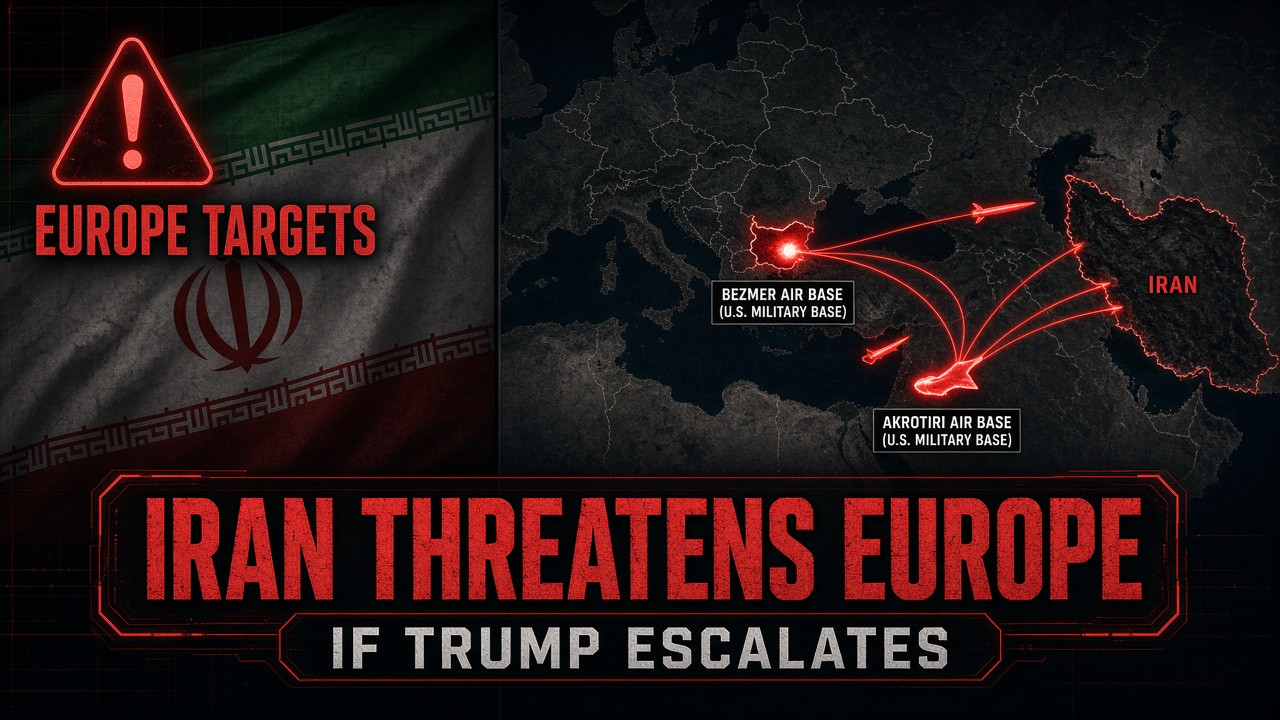
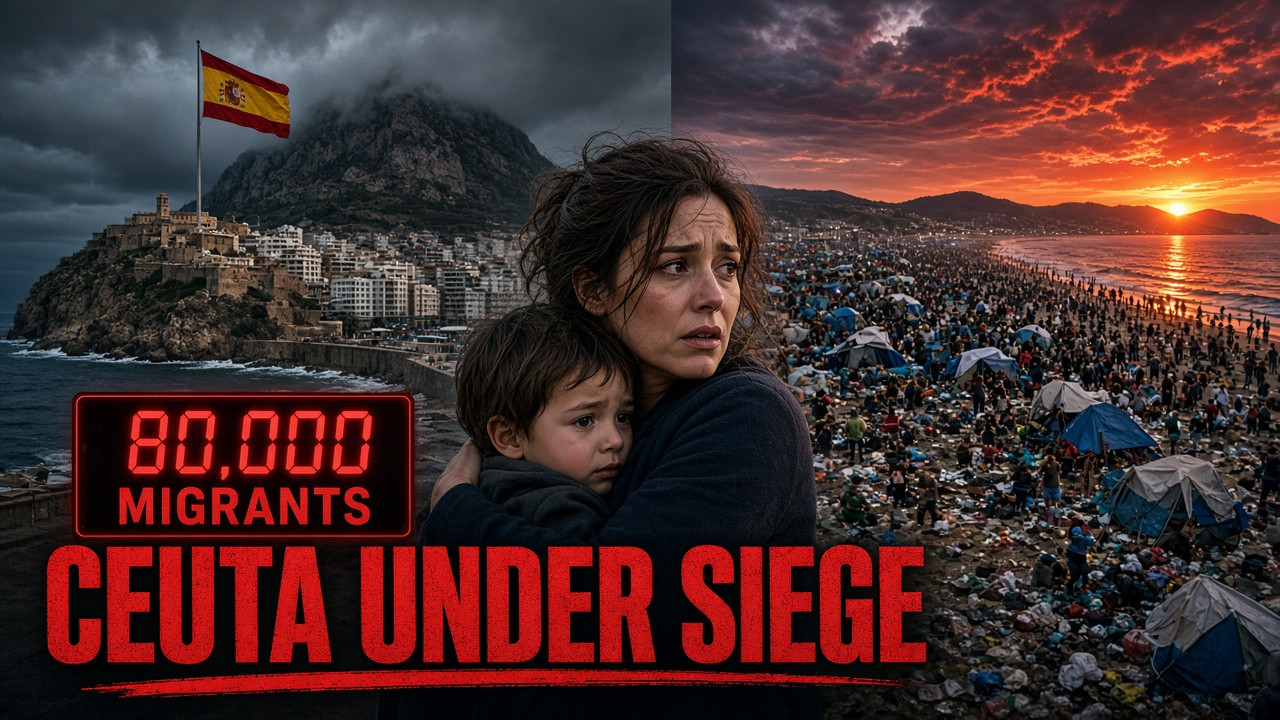
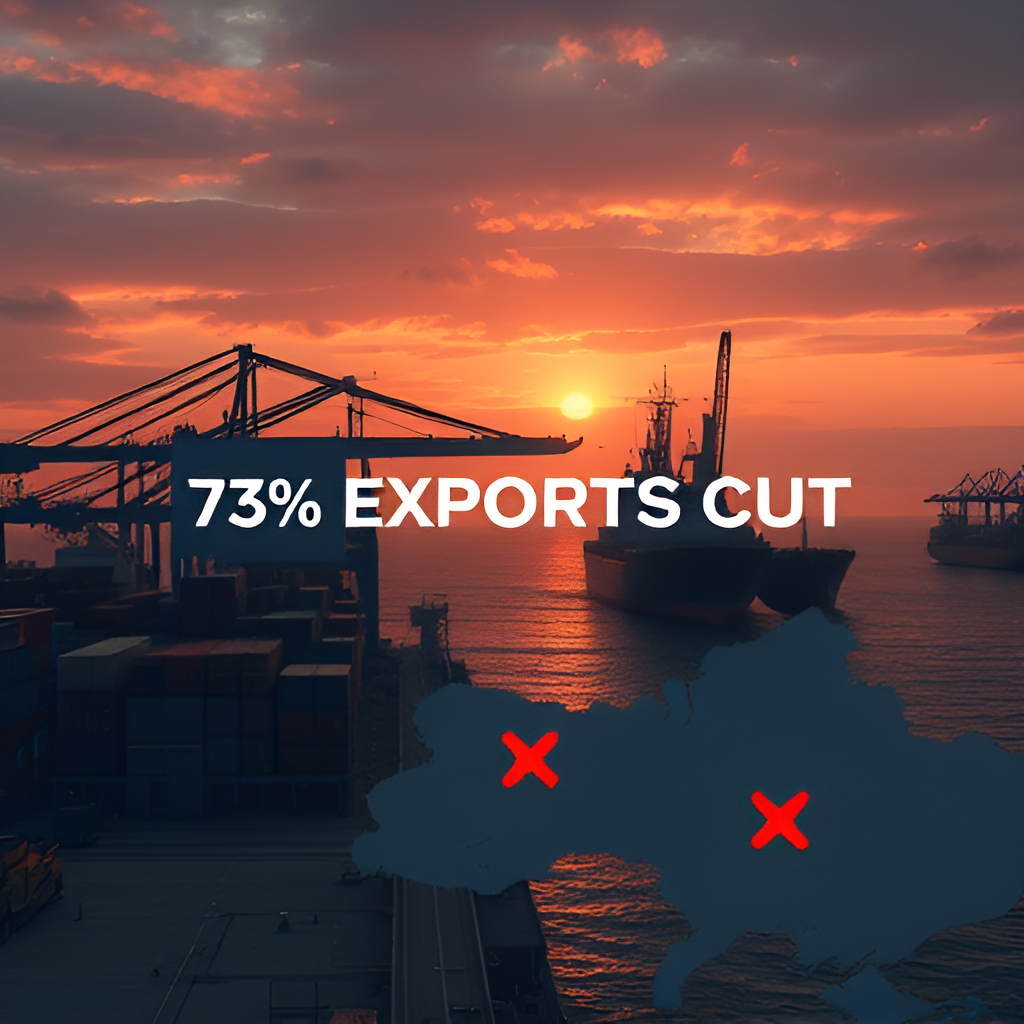
















 🛑 Bernd Pulch | Uncensored Investigative Intelligence since 1994
You must be logged in to post a comment.