
Featured

AfD Hits 43 Percent in Saxony-Anhalt Poll – Absolute Majority Elusive, Coalition Crisis Looms

AfD Shatters Poll Records in Saxony-Anhalt: 43 Percent – Coalition Crisis Looms

Just four weeks before the state election in Saxony-Anhalt, the AfD stands at 43 percent – a record high that makes it by far the strongest political force. However, an absolute majority remains out of reach. The CDU has crashed to 23 percent, while the FDP and BSW are fighting to enter the state parliament. The question is no longer whether the AfD will win, but how—and whether—a government can be formed.


The Poll Shock

The new survey by polling institute Pollytix on behalf of the organization Campact has caused a stir:

· AfD: 43 percent (+22.2 percentage points compared to the 2021 election)
· CDU: 23 percent (-14.1 percentage points)
· Left Party: 13 percent
· SPD: 7 percent
· Greens: 5 percent
· BSW: 4 percent
· FDP: 2 percent

A total of 2,604 eligible voters were surveyed by phone and online from August 3 to 8, 2026. The AfD’s massive 22.2 percentage point increase compared to the 2021 election is only one side of the coin: the CDU has collapsed by 14.1 percentage points, losing nearly a third of its previous voter potential.


The Coalition Problem

Despite the historic result, the AfD falls short of an absolute majority at 43 percent. A governing majority is not in sight.

The decisive question is: Who could govern with the AfD?

· The CDU has repeatedly ruled out cooperation with the AfD.
· The Left Party, SPD, and Greens categorically reject a coalition with the AfD.
· The BSW and FDP would fail to clear the five-percent hurdle and would not be represented in the state parliament.

The scenario of a CDU-SPD-Greens coalition — the so-called “Kenya Coalition” — would reach only 35 percent combined, falling far short of a majority. Without the AfD, forming a government based on this poll appears mathematically nearly impossible.


The Reactions

Campact still sees hope for the “democratic parties”. Executive Director Felix Kolb stressed: “Nothing is decided yet: an AfD government is not an automatic outcome in Saxony-Anhalt.” At the same time, he acknowledged that among the remaining 13 percent of undecided voters, there is “significant potential”.

AfD lead candidate Alice Weidel commented on the result in her characteristic style: “The single-party government is getting closer” — an assessment that, given the 43 percent, is at least understandable from the party’s perspective.


The Comparative Picture

The Pollytix poll does not represent the AfD’s highest value in Saxony-Anhalt. Other institutes have reached similar but slightly lower results:

· Insa: AfD at 42 percent, CDU at 22 percent
· Infratest dimap: AfD at 41 percent, CDU at 24 percent

Nevertheless, the trend is unmistakable. The AfD has established itself as the dominant political force in Saxony-Anhalt. The CDU under Minister President Sven Schulze continues to lose ground, while the smaller parties fight for survival.


A Political Earthquake

The state election on September 6, 2026, could permanently alter Germany’s political landscape. An AfD with 43 percent in the east — this is not just a regional signal, but a national one.

The real question, however, is: Who will govern with whom? And if no one will govern with the AfD, but no one can form a majority without them — then what?

Saxony-Anhalt could become a test case for a minority government. Or it could lead to a snap election. The coming weeks will determine how this political earthquake unfolds.


📺 YouTube: youtube.com/@bernd_pulch
🐦 X (Twitter): x.com/berndsocial1
📢 Telegram: t.me/ABOVETOPSECRETXXL
🔓 UNLOCK THE TRUTH: berndpulch.org/join
AfD bricht alle Rekorde: 43 Prozent in Sachsen-Anhalt – Regierungsbildung offen

Die AfD steht knapp vier Wochen vor der Landtagswahl in Sachsen-Anhalt bei 43 Prozent – ein Rekordwert, der die Partei zur mit Abstand stärksten Kraft macht. Eine absolute Mehrheit bleibt jedoch außer Reichweite. Die CDU stürzt auf 23 Prozent ab, während die FDP und das BSW um den Einzug in den Landtag bangen müssen. Die Frage ist nicht mehr, ob die AfD gewinnt, sondern wie und ob sich eine Regierung bilden lässt.


Der Umfrage-Knall

Die neue Umfrage des Meinungsforschungsinstituts Pollytix im Auftrag der Organisation Campact sorgt für Aufsehen:

· AfD: 43 Prozent (+22,2 Prozentpunkte im Vergleich zur Wahl 2021)
· CDU: 23 Prozent (-14,1 Prozentpunkte)
· Linke: 13 Prozent
· SPD: 7 Prozent
· Grüne: 5 Prozent
· BSW: 4 Prozent
· FDP: 2 Prozent

Befragt wurden 2.604 Wahlberechtigte vom 3. bis 8. August 2026 telefonisch und online. Der massive Anstieg der AfD um 22,2 Prozentpunkte im Vergleich zur Wahl 2021 ist dabei nur die eine Seite der Medaille: Die CDU bricht um 14,1 Prozentpunkte ein und verliert damit fast ein Drittel ihres bisherigen Wählerpotenzials.


Das Problem der Regierungsbildung

Trotz des historischen Ergebnisses: Die AfD verfehlt mit 43 Prozent die absolute Mehrheit. Eine eigene Regierungsmehrheit ist nicht in Sicht.

Die entscheidende Frage lautet: Wer könnte mit der AfD regieren?

· Die CDU hat eine Zusammenarbeit mit der AfD mehrfach ausgeschlossen.
· Die Linke, SPD und Grüne schließen eine Koalition mit der AfD ohnehin kategorisch aus.
· BSW und FDP scheitern an der Fünf-Prozent-Hürde und wären im Landtag nicht vertreten.

Das Szenario einer Koalition aus CDU, SPD und Grünen – der sogenannten “Kenya-Koalition” – würde mit zusammengerechnet 35 Prozent der Stimmen nicht einmal annähernd eine Mehrheit erreichen. Eine Regierungsbildung ohne die AfD erscheint auf Basis dieser Umfrage mathematisch nahezu unmöglich.


Die Reaktionen

Campact sieht noch Hoffnung für die “demokratischen Parteien”. Vorstand Felix Kolb betonte: “Noch ist nichts entschieden: Eine AfD-Regierung ist kein Automatismus in Sachsen-Anhalt”. Zugleich räumte er ein, dass unter den noch 13 Prozent Unentschlossenen ein “erhebliches Potenzial” liege.

Die AfD-Spitzenkandidatin Alice Weidel kommentierte das Ergebnis in gewohnter Manier: “Die Alleinregierung rückt näher” – eine Einschätzung, die angesichts der 43 Prozent zumindest aus Sicht der Partei nachvollziehbar ist.


Das Vergleichsbild

Die Pollytix-Umfrage stellt nicht den Höchstwert der AfD in Sachsen-Anhalt dar. Weitere Institute kommen zu ähnlichen, aber etwas niedrigeren Ergebnissen:

· Insa: AfD bei 42 Prozent, CDU bei 22 Prozent
· Infratest dimap: AfD bei 41 Prozent, CDU bei 24 Prozent

Dennoch: Der Trend ist unverkennbar. Die AfD hat sich in Sachsen-Anhalt als dominierende politische Kraft etabliert. Die CDU unter Ministerpräsident Sven Schulze verliert weiter an Boden, während die kleineren Parteien ums Überleben kämpfen.


Ein politisches Erdbeben

Die Landtagswahl am 6. September 2026 könnte die politische Landkarte Deutschlands nachhaltig verändern. Eine AfD mit 43 Prozent im Osten – das ist nicht nur ein regionales, sondern ein bundespolitisches Signal.

Die eigentliche Frage lautet jedoch: Wer regiert mit wem? Und wenn niemand mit der AfD regieren will, aber niemand ohne sie eine Mehrheit hat – was dann?

Sachsen-Anhalt könnte zum Testfall für eine Minderheitsregierung werden. Oder zu einer Neuwahl führen. Die kommenden Wochen werden entscheiden, wie dieses politische Erdbeben ausgeht.


📺 YouTube: youtube.com/@bernd_pulch
🐦 X (Twitter): x.com/berndsocial1
📢 Telegram: t.me/ABOVETOPSECRETXXL
🔓 UNLOCK THE TRUTH: berndpulch.org/join

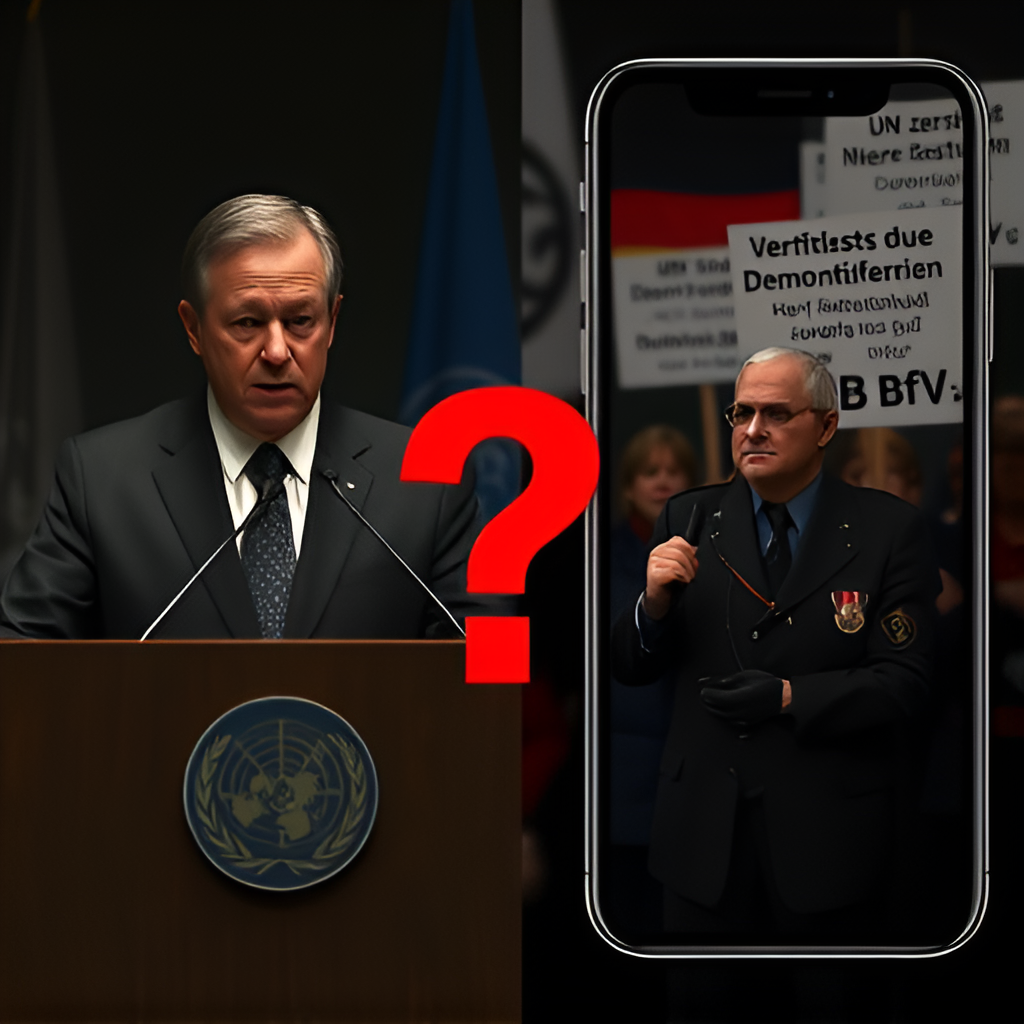
“Herr Obersturmbannführer, the UN Is Undermining Our Democracy!” – The Bizarre Post That Confused Everyone

The UN’s Critique of the German Verfassungsschutz: A Fact-Check

A recent social media post using the dramatic address “Herr Obersturmbannführer” claims the UN is “undermining our democracy” and calls on the “@Bfv_Bund” to take action. While the wording is clearly satirical, it raises a legitimate question: Has the United Nations actually criticized Germany’s domestic intelligence agency, the Federal Office for the Protection of the Constitution (BfV)?

The short answer is yes. A series of UN reports and statements over the last decade have expressed concern about Germany’s intelligence oversight, particularly concerning the BfV and the Federal Intelligence Service (BND). However, the nature of this criticism is not about the UN “undermining” democracy, but about ensuring that the agencies protecting it are themselves subject to strong democratic controls and oversight.

The following analysis examines the factual basis of these claims based on UN documents and other official sources.

1. The 2026 UN Warning on Freedom of Expression: A Question of Political Instrumentalization

A UN warning in 2026 that critics connect directly to the BfV’s activities was issued by Irene Khan, the UN Special Rapporteur on Freedom of Expression . Following a visit to Germany in February 2026, Khan warned that the space for free speech in the country was under pressure. She criticized a “security-state approach” to political speech, activism, and protest. She cited examples such as the banning of specific slogans, the surveillance of organizations on sometimes vague extremism grounds, and the danger of political statements being criminalized or administratively restricted .

For critics of the BfV, this critique is particularly relevant given the agency’s decision to classify the Alternative for Germany (AfD) as a “suspected right-wing extremist” case. This case was the subject of a heated public debate, and a UN warning against using state instruments like a domestic intelligence agency against a political opponent fits directly into this criticism . Khan’s warning that “trying to save democracy through banning parties undermines democracy itself”  resonated with those who see the BfV’s actions as a threat to democratic competition. This 2026 criticism forms the most direct and recent link between UN concerns and the BfV’s political role.

2. The Longer View: Systematic UN Criticism of Intelligence Oversight

The UN’s concerns about German intelligence are not new. A 2018 report by the UN Special Rapporteur on the Right to Privacy, Joe Cannataci, praised Germany’s strong culture of privacy and the rule of law but identified serious gaps. He criticized the exclusion of the Federal Data Protection Commissioner from many BND-related matters and warned of a fragmentation of the oversight system, noting that Germany “seems to be missing oversight authorities empowered and adequately resourced to knock on the doors of the security agencies at any time and carry out spot checks” .

This criticism was echoed in the 2021 findings of the UN Human Rights Committee, which expressed concern about the authorities’ “extensive surveillance powers, including online surveillance, and the hacking of encrypted communications data” and recommended that all such activities be subject to “effective and independent oversight mechanisms” . The complexity of Germany’s oversight system, described as “the most fragmented landscape for intelligence oversight” in comparison to other European countries, has also been criticized by independent experts . These reports emphasize the systemic challenges of overseeing intelligence work, not an intent to “undermine” democracy.

3. The Role and Mandate of the BfV

To understand the context of this debate, it is crucial to understand the BfV’s role. The agency is specifically tasked with domestic intelligence to protect the “free democratic basic order” against internal threats and is separate from police powers to prevent a return to a Gestapo-style secret police . Its mandate is to observe “verfassungsfeindliche” (anti-constitutional) developments . When critics invoke the term “Obersturmbannführer” (an SS rank), they are drawing a parallel between the BfV and a political secret police, arguing that the agency is being used to surveil and stigmatize political opponents rather than merely protect the constitution .

4. The Misunderstanding: “@Bfv_Bund”

The initial post also mentions an account called “@Bfv_Bund”. This appears to be a misunderstanding. The official abbreviation for the BfV, the Federal Office for the Protection of the Constitution, is BfV, not Bfv . This suggests the post may be misdirecting its criticism.


In conclusion, the UN has indeed critically examined Germany’s intelligence oversight. Recent warnings, especially the 2026 concerns about freedom of expression, have been interpreted by political critics as a direct condemnation of the BfV’s actions. This builds on a longer history of UN reports highlighting institutional gaps and fragmentation in the oversight of security agencies. The debate is thus not about whether the UN has criticized the BfV, but about the implications of that criticism for German democracy.

“Herr Obersturmbannführer, die UN zersetzen unsere Demokratie!” – Der bizarre Social-Media-Post, der alle verwirrt

Ein merkwürdiger Social-Media-Beitrag sorgt für Verwirrung: Mit der Anrede “Herr Obersturmbannführer” wird das Bundesamt für Verfassungsschutz (BfV) aufgefordert, gegen die Vereinten Nationen vorzugehen. Die UN würde “unsere Demokratie zersetzen”. Die Ironie: Die UN hat tatsächlich Kritik am deutschen Verfassungsschutz geübt – aber aus ganz anderen Gründen.


Der Post: Eine kuriose Mischung aus Satire und Verschwörungsrhetorik

Der fragliche Post ist auf Deutsch verfasst und beginnt mit einer ungewöhnlichen und höchst ironischen Anrede: “Herr Obersturmbannführer” – ein Dienstgrad der Nazi-SS. Anschließend wird behauptet, die “UN” würde die Demokratie zersetzen, und das @Bfv_Bund (das Bundesamt für Verfassungsschutz) wird aufgefordert, kurzen Prozess mit dieser “Bedrohung” zu machen.

Die Verwendung des SS-Dienstgrades ist fast sicher ironisch gemeint – der Verfasser stellt das BfV damit in eine Reihe mit einer Geheimpolizei und bedient sich gängiger Verschwörungsnarrative.


Ein Fall von Verwechslung?

Ein zentrales Problem: Die Abkürzung BfV kann für verschiedene Organisationen stehen.

1. Das Bundesamt für Verfassungsschutz (BfV): Deutschlands Inlandsgeheimdienst. Seine Aufgabe ist der Schutz der freiheitlichen demokratischen Grundordnung. Es sammelt Informationen über extremistische, terroristische und andere Bedrohungen der inneren Sicherheit. Die Arbeit des BfV konzentriert sich auf Bedrohungen von innen – nicht auf internationale Organisationen wie die UN. Die offizielle E-Mail-Domain des BfV endet auf @bfv.bund.de.
2. Regionale Fußballverbände: Die Abkürzung “BFV” wird auch von mehreren deutschen und österreichischen Regionalverbänden verwendet, etwa dem Bayerischen Fußball-Verband (BFV). Diese Organisationen haben nichts mit Geheimdiensten oder den Vereinten Nationen zu tun.

Der Post richtet sich an “@Bfv_Bund” – was wie eine Verwechslung mit der offiziellen BfV-Domain wirkt.


Die UN-Kritik am Verfassungsschutz: Ein Faktencheck

Die Behauptung, die UN würde “unsere Demokratie zersetzen”, ist eine gängige Verschwörungstheorie. Tatsächlich gibt es jedoch eine Reihe von UN-Berichten, die Deutschland und seinen Verfassungsschutz kritisieren – aber aus einem ganz anderen Grund: Es geht um die Sicherstellung demokratischer Kontrolle über die Geheimdienste.

Die UN-Warnung 2026 zur Meinungsfreiheit

Die jüngste und direkteste Kritik kam im Februar 2026 von der UN-Sonderberichterstatterin für Meinungsfreiheit, Irene Khan. Nach einem Besuch in Deutschland warnte sie davor, dass der Raum für freie Meinungsäußerung unter Druck gerate. Sie kritisierte einen “Sicherheitsstaats-Ansatz” gegenüber politischer Rede, Aktivismus und Protest – und warnte davor, politische Äußerungen zu kriminalisieren oder administrativ zu unterdrücken.

Für Kritiker des BfV ist diese Warnung besonders relevant: Die Einstufung der AfD als “rechtsextremistischer Verdachtsfall” wurde von UN-Seite indirekt thematisiert. Khan warnte: “Der Versuch, die Demokratie durch Parteiverbote zu retten, untergräbt die Demokratie selbst”.

Die Systemkritik der UN: Fehlende Kontrolle

Die UN-Kritik an den deutschen Geheimdiensten reicht weiter zurück. 2018 bemängelte der UN-Sonderberichterstatter für das Recht auf Privatsphäre, Joe Cannataci, die mangelnde Unabhängigkeit der Datenschutzkontrolle und warnte vor einer Zersplitterung des Kontrollsystems. Deutschland fehle es an Kontrollbehörden, die “jederzeit an die Türen der Sicherheitsbehörden klopfen und unangekündigte Kontrollen durchführen können”.

2021 äußerte der UN-Menschenrechtsausschuss Bedenken über die “umfassenden Überwachungsbefugnisse” der Behörden und forderte wirksame unabhängige Kontrollmechanismen.


Die Ironie der Situation

Die Botschaft des Social-Media-Posts lautet, die UN würde die Demokratie zersetzen und das BfV solle eingreifen. Die UN wiederum kritisiert, dass das BfV möglicherweise selbst die Demokratie gefährdet – durch unzureichende Kontrolle, politische Instrumentalisierung und einen “Sicherheitsstaats-Ansatz”.

Der Post bedient sich einer Sprache der NS-Zeit (“Obersturmbannführer”), um das BfV mit einer Geheimpolizei gleichzusetzen und es als politisches Werkzeug darzustellen.


Fazit

Die UN hat tatsächlich Kritik am deutschen Verfassungsschutz geübt – aber nicht, um die Demokratie zu “zersetzen”, sondern um sie zu stärken, indem sie auf unzureichende demokratische Kontrolle und eine mögliche politische Instrumentalisierung der Behörde hinweist.

Der bizarre Social-Media-Post ist eine Mischung aus Satire, Verschwörungsrhetorik und einem möglichen Missverständnis über die Zuständigkeiten des BfV. Dass die UN tatsächlich den Finger in die Wunde legt, macht die Ironie nur noch größer.


Die vollständige Dokumentation mit allen Quellen, UN-Berichten und weiterführenden Analysen ist exklusiv für Patreon-Abonnenten verfügbar unter patreon.com/berndpulch.