


BERNDPULCH.ORG – EXCLUSIVE INTELLIGENCE ON THE IRAN CRISIS
—
Five Shocks from Tehran: Gas Find, Hormuz Breakthrough, Cyberattack on UK Power Plant – Iran Between Triumph and Desperation
While Iran celebrates the discovery of a massive gas field, it is losing control over the strategic Strait of Hormuz – and its hackers have paralyzed a British power plant. Pakistan mediates between Washington and Tehran, while the West fights for lower oil prices before the midterms.
—
📺 YouTube: youtube.com/@bernd_pulch | 🐦 X (Twitter): x.com/berndsocial1 | 📢 Telegram: t.me/ABOVETOPSECRETXXL | 🔓 Unlock the Full Truth: berndpulch.org/join
—
By Bernd Pulch, Licensed Intelligence Media | August 24, 2026
—
🇮🇷 IRAN DISCOVERS MASSIVE GAS FIELD – 7.5 TRILLION CUBIC FEET WORTH $165 BILLION
The Islamic Republic has discovered a massive new natural gas field in the southern province of Fars. Oil Minister Mohsen Paknejad announced on Sunday that the field contains 7.5 trillion cubic feet (212.4 billion cubic meters) of gas reserves – at an extraction rate of approximately 72 to 73 percent, 5.7 trillion cubic feet could be recovered.
“The newly discovered resources add dozens of billions of dollars to the intrinsic value of national wealth,”
— Mohsen Paknejad, Iranian Oil Minister
The gas is “sweet” according to the minister – a quality that reduces both development and operating costs. The field also contains significant amounts of gas condensate.
Iran holds the second-largest proven gas reserves in the world after Russia – approximately 34 trillion cubic meters. The find comes at a critical time: U.S. sanctions are expected to complicate repair work on war-damaged energy infrastructure.
—
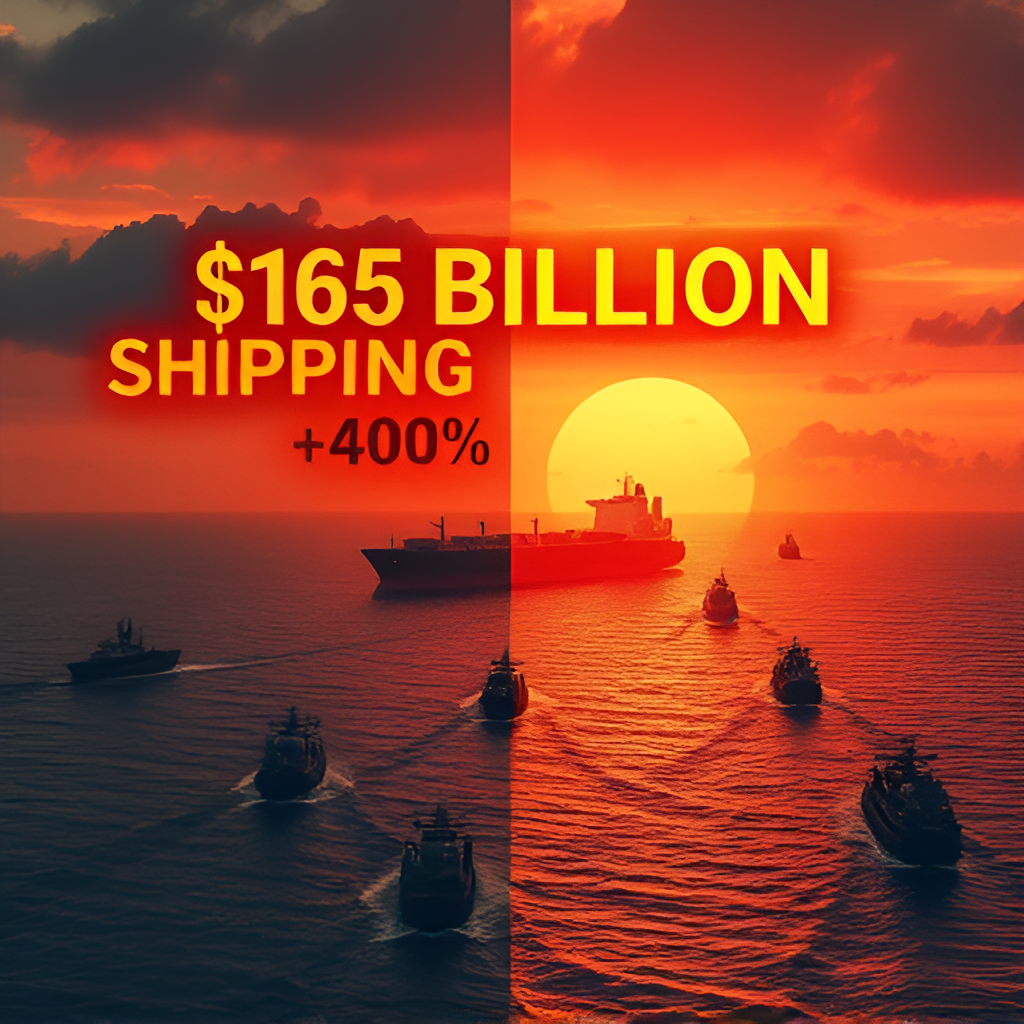
🇮🇷 HORMUZ CONTROL COLLAPSES – SHIPPING SURGES 400%
While Iran celebrates its gas find, it is losing control over the strategically vital Strait of Hormuz. Shipping has increased by almost 400 percent in the last two weeks – from only 40 ships two weeks ago to nearly 200 in the past week.
Data from the British Maritime Trade Operations Centre shows a dramatic increase:
Period Ships Per Week
2 weeks ago ~40
Last week ~150
This week ~200
More than 80 percent of cargo ships passing through the strait either used the U.S.-backed route along Oman’s coast or switched off their tracking systems.
“It increasingly looks as though Iran has at least partially lost control of the strait.”
— Homayoun Falakshahi, Kpler Chief Analyst
Five ships were hit by Iranian attacks in the past week, and two sailors were injured or killed. Nevertheless, the trend continues – a sign that the U.S. is asserting its naval superiority in the region.
—
🇮🇷 IRANIAN HACKERS PARALYZE BRITISH POWER PLANT
Iran has taken its cyber warfare to a new level. Iran-linked hackers attacked a British power plant and paralyzed it for four days – the first documented cyberattack on a British power generation target.
The British government confirmed the incident, but emphasized that there was no risk to the national power supply. The affected power plant was a small gas power station that only supplies short-term power during peak demand.
The Energy Security Ministry then contacted all British energy operators to inform them of the threat. The attack coincided with a coordinated series of cyberattacks on water infrastructure in twelve U.S. states.
Security analysts suspect the attack was carried out as a demonstration of technical capability – to prove that the cyber units of the Islamic Revolutionary Guard Corps (IRGC) can penetrate British energy systems and paralyze physical infrastructure.
—
🇵🇰 PAKISTAN MEDIATES BETWEEN U.S. AND IRAN
Pakistan’s Army Chief Field Marshal Asim Munir is traveling to Tehran on Monday to revive stalled negotiations between the U.S. and Iran. Pakistan has played a key mediating role throughout the war.
A 60-day agreement signed in June has since expired – without a settlement being reached. Talks have primarily failed over the reopening of the Strait of Hormuz.
President Trump, who has publicly called Munir his “favorite field marshal,” is pushing for progress to lower oil prices before the November 3 midterms.
—
🇮🇷 GHALIBAF WARNS: U.S. PUTS ALLIES AT RISK FOR ISRAEL
Iran’s Parliament Speaker Mohammad Bagher Ghalibaf accused the U.S. of putting the security of “every single one of its allies” at risk for Israel’s sake.
“The U.S., through recklessness and disregard for its interests, has put the security of every one of its allies at risk for Israel – so much so that they briefly saw their entire existence at stake.”
— Mohammad Bagher Ghalibaf
Ghalibaf claimed Tehran has received “numerous messages from neighboring countries” exploring new security agreements and economic cooperation in the region. He called for a geopolitical departure from Western hegemony and an “independent, self-reliant order” that could actually bring peace and security.
—
💡 THE ANALYSIS: IRAN BETWEEN STRENGTH AND WEAKNESS
The five reports of recent days paint a contradictory picture of Iran:
1. Economic strength: The gas find worth $165 billion strengthens Tehran’s negotiating position in the long term – but sanctions are preventing the short-term exploitation of the new wealth.
2. Strategic loss: The loss of control over Hormuz is a severe blow to Iran’s regional power. The U.S. has effectively opened the strait.
3. Cyber offensive: The attack on the British power plant shows that Iran is using its cyber capabilities offensively – a warning shot to the West.
4. Diplomatic struggle: Pakistan and other mediators are fighting for a diplomatic solution while Trump has his eyes on the midterms.
5. Regional realignment: Ghalibaf’s revelations suggest a shift in regional alliances – with potentially far-reaching consequences for the U.S.
—
💬 WHAT HAPPENS NEXT?
Three scenarios are emerging:
Scenario A: The diplomatic solution (Probability: 40%)
Pakistan and Qatar bring both sides to the table. An agreement on the Strait of Hormuz is reached, the U.S. eases sanctions, and Iran gains access to its financial assets. Oil prices fall – a political victory for Trump before the midterms.
Scenario B: Escalation (Probability: 35%)
Negotiations fail. The U.S. imposes the “harshest sanctions in history.” Iran responds with a massive cyberattack or military escalation. The war expands.
Scenario C: Stalemate (Probability: 25%)
Both sides remain entrenched in their positions. Shipping partially increases, but the conflict remains unresolved. Iran’s economy does not recover, and pressure on the Tehran government grows.
—
📢 SHARE THIS ARTICLE
📺 YouTube: youtube.com/@bernd_pulch
🐦 X (Twitter): x.com/berndsocial1
📢 Telegram: t.me/ABOVETOPSECRETXXL
🔓 Unlock the Full Truth: berndpulch.org/join
—
Share this article – the truth must come to light.
BERNDPULCH.ORG – EXKLUSIVE INTELLIGENZ ZUR IRAN-KRISE
—
Fünf Schocks aus Teheran: Gasfund, Hormuz-Durchbruch, Hackerangriff auf UK-Kraftwerk – Iran zwischen Triumph und Verzweiflung
Während Iran die Entdeckung eines riesigen Gasfeldes feiert, verliert es die Kontrolle über die strategische Straße von Hormuz – und seine Hacker legen ein britisches Kraftwerk lahm. Pakistan vermittelt zwischen Washington und Teheran, während der Westen um Ölpreissenkung vor den Midterms kämpft.
—
📺 YouTube: youtube.com/@bernd_pulch | 🐦 X (Twitter): x.com/berndsocial1 | 📢 Telegram: t.me/ABOVETOPSECRETXXL | 🔓 Die ganze Wahrheit: berndpulch.org/join
—
Von Bernd Pulch, Licensed Intelligence Media | 24. August 2026
—
🇮🇷 IRAN ENTDECKT RIESIGES GASFELD – 7,5 BILLIONEN KUBIKFUSS IM WERT VON 165 MILLIARDEN DOLLAR
Die Islamische Republik hat ein gewaltiges neues Erdgasfeld in der südlichen Provinz Fars entdeckt. Ölminister Mohsen Paknejad gab am Sonntag bekannt, dass das Feld über 7,5 Billionen Kubikfuß (212,4 Milliarden Kubikmeter) Gasreserven verfügt – bei einer Förderquote von etwa 72 bis 73 Prozent könnten 5,7 Billionen Kubikfuß gefördert werden .
“Die neu entdeckten Ressourcen fügen dem inneren Wert des nationalen Reichtums Dutzende von Milliarden Dollar hinzu,”
— Mohsen Paknejad, iranischer Ölminister
Das Gas ist nach Angaben des Ministers “süß” – eine Eigenschaft, die sowohl die Erschließungs- als auch die Betriebskosten senkt. Das Feld enthält zudem erhebliche Mengen an Gaskondensat .
Iran verfügt nach Russland über die zweitgrößten nachgewiesenen Gasreserven der Welt – rund 34 Billionen Kubikmeter . Der Fund kommt zu einem kritischen Zeitpunkt: Die US-Sanktionen werden voraussichtlich die Reparaturarbeiten an der durch den Krieg beschädigten Energieinfrastruktur erschweren .
—
🇮🇷 HORMUZ-KONTROLLE BRICHT EIN – SCHIFFFAHRT STEIGT UM 400 %
Während Iran seinen Gasfund feiert, verliert es die Kontrolle über die strategisch wichtige Straße von Hormuz. Die Schifffahrt ist in den letzten zwei Wochen um fast 400 Prozent gestiegen – von nur 40 Schiffen vor zwei Wochen auf fast 200 in der vergangenen Woche .
Die Daten des britischen Maritime Trade Operations Centre zeigen einen dramatischen Anstieg:
Zeitraum Schiffe pro Woche
Vor 2 Wochen ~40
Letzte Woche ~150
Diese Woche ~200
Mehr als 80 Prozent der Frachtschiffe, die die Meerenge passierten, nutzten entweder die von den USA unterstützte Route entlang der Küste Omans oder schalteten ihre Ortungssysteme aus .
“Es sieht zunehmend so aus, als hätte Iran die Kontrolle über die Meerenge zumindest teilweise verloren.”
— Homayoun Falakshahi, Kpler-Chefanalyst
Fünf Schiffe wurden in der vergangenen Woche von iranischen Angriffen getroffen, zwei Seeleute wurden verletzt oder getötet . Dennoch setzt sich der Trend fort – ein Zeichen, dass die USA ihre maritime Überlegenheit in der Region behaupten.
—
🇮🇷 IRANISCHE HACKER LEGEN BRITISCHES KRAFTWERK LAHM
Iran hat seine Cyber-Kriegsführung auf ein neues Niveau gehoben. Mit dem Iran verbundene Hacker haben ein britisches Kraftwerk angegriffen und für vier Tage lahmgelegt – der erste dokumentierte Cyberangriff auf ein britisches Energieerzeugungsziel .
Die britische Regierung bestätigte den Vorfall, betonte jedoch, dass kein Risiko für die nationale Stromversorgung bestand. Das betroffene Kraftwerk war ein kleines Gas-Kraftwerk, das nur bei Spitzenlast kurzzeitig Strom liefert .
Das Energiesicherheitsministerium kontaktierte daraufhin alle britischen Energiebetreiber, um sie über die Bedrohung zu informieren . Der Angriff fiel mit einer koordinierten Serie von Cyberangriffen auf Wasserinfrastruktur in zwölf US-Bundesstaaten zusammen .
Sicherheitsanalysten vermuten, dass der Angriff als Demonstration technischer Fähigkeiten durchgeführt wurde – um zu beweisen, dass die Cyber-Einheiten der Islamischen Revolutionsgarde (IRGC) britische Energiesysteme durchdringen und physische Infrastruktur lahmlegen können .
—
🇵🇰 PAKISTAN VERMITTELT ZWISCHEN USA UND IRAN
Pakistans Armeechef Field Marshal Asim Munir reist am Montag nach Teheran, um die stockenden Verhandlungen zwischen den USA und Iran wiederzubeleben . Pakistan hat während des gesamten Krieges eine Schlüsselrolle als Vermittler gespielt .
Ein 60-tägiges Abkommen, das im Juni unterzeichnet wurde, ist inzwischen ausgelaufen – ohne dass eine Einigung erzielt wurde. Die Gespräche sind vor allem über die Wiedereröffnung der Straße von Hormuz gescheitert .
Präsident Trump, der Munir öffentlich als seinen “Lieblings-Feldmarschall” bezeichnet hat, drängt auf Fortschritte, um die Ölpreise vor den Midterms am 3. November zu senken .
—
🇮🇷 GHALIBAF WARNT: USA SETZEN ALLIERTE FÜR ISRAEL AUFS SPIEL
Irans Parlamentssprecher Mohammad Bagher Ghalibaf warf den USA vor, die Sicherheit “jedes einzelnen seiner Verbündeten” um Israels willen aufs Spiel gesetzt zu haben .
“Die USA haben durch Rücksichtslosigkeit und Missachtung ihrer Interessen die Sicherheit jedes einzelnen ihrer Verbündeten für Israel aufs Spiel gesetzt – so sehr, dass sie kurzzeitig ihre gesamte Existenz auf dem Spiel sahen.”
— Mohammad Bagher Ghalibaf
Ghalibaf behauptete, Teheran habe “zahlreiche Nachrichten von Nachbarländern” erhalten, die neue Sicherheitsvereinbarungen und wirtschaftliche Zusammenarbeit in der Region sondieren . Er forderte eine geopolitische Abkehr von der westlichen Hegemonie und eine “eigenständige, unabhängige Ordnung”, die tatsächlich Frieden und Sicherheit bringen könne .
—
💡 DIE ANALYSE: IRAN ZWISCHEN STÄRKE UND SCHWÄCHE
Die fünf Meldungen der letzten Tage zeichnen ein widersprüchliches Bild Irans:
1. Wirtschaftliche Stärke: Der Gasfund im Wert von 165 Milliarden Dollar stärkt Teherans Verhandlungsposition langfristig – doch die Sanktionen verhindern kurzfristig die Nutzung des neuen Reichtums .
2. Strategischer Verlust: Der Kontrollverlust über Hormuz ist ein schwerer Schlag für Irans regionale Macht. Die USA haben die Meerenge faktisch geöffnet .
3. Cyber-Offensive: Der Angriff auf das britische Kraftwerk zeigt, dass Iran seine Cyber-Kapazitäten offensiv einsetzt – ein Warnschuss an den Westen .
4. Diplomatisches Ringen: Pakistan und andere Vermittler kämpfen um eine diplomatische Lösung, während Trump die Midterms im Blick hat .
5. Regionale Neuordnung: Ghalibafs Enthüllungen deuten auf eine Verschiebung der regionalen Allianzen hin – mit möglicherweise tiefgreifenden Folgen für die USA .
—
💬 WIE GEHT ES WEITER?
Drei Szenarien zeichnen sich ab:
Szenario A: Die diplomatische Lösung (Wahrscheinlichkeit: 40 %)
Pakistan und Katar bringen beide Seiten an einen Tisch. Eine Einigung über die Straße von Hormuz wird erzielt, die USA lockern Sanktionen, der Iran erhält Zugang zu seinen Finanzmitteln. Die Ölpreise sinken – ein politischer Sieg für Trump vor den Midterms.
Szenario B: Die Eskalation (Wahrscheinlichkeit: 35 %)
Die Verhandlungen scheitern. Die USA verhängen die “härtesten Sanktionen der Geschichte” . Iran reagiert mit einem massiven Cyberangriff oder militärischer Eskalation. Der Krieg weitet sich aus.
Szenario C: Die Pattsituation (Wahrscheinlichkeit: 25 %)
Beide Seiten bleiben in ihren Positionen verharrt. Die Schifffahrt nimmt teilweise zu, aber der Konflikt bleibt ungelöst. Die Wirtschaft Irans erholt sich nicht, der Druck auf die Regierung in Teheran wächst.
—
📢 TEILE DIESEN ARTIKEL
📺 YouTube: youtube.com/@bernd_pulch
🐦 X (Twitter): x.com/berndsocial1
📢 Telegram: t.me/ABOVETOPSECRETXXL
🔓 Die ganze Wahrheit: berndpulch.org/join
—
Teile diesen Artikel – die Wahrheit muss ans Licht.
 🛑 Bernd Pulch | Uncensored Investigative Intelligence since 1994