Flock Safety’s Surveillance Network Exceeds 120,000 Cameras Across 49 States – Privacy Concerns Intensify
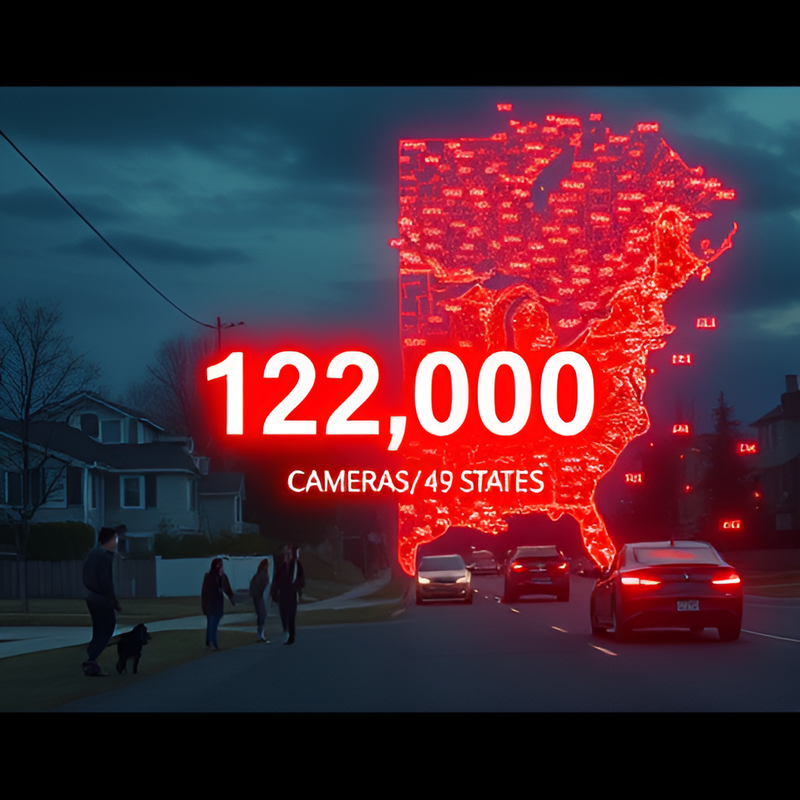
The Atlanta-based surveillance company Flock Safety has quietly built one of the largest automated license plate reader networks in American history, now operating more than 120,000 cameras across 49 states. With a valuation of $8.4 billion, the company’s rapid expansion has triggered a bipartisan backlash over mass surveillance, police misuse, and the erosion of constitutional privacy protections.
—
The Scale of the Network
Flock Safety’s cameras are deployed in more than 6,000 communities, serving over 5,000 law enforcement agencies. The network includes automated license plate readers (ALPRs) and pan-tilt-zoom (PTZ) cameras that collectively scan approximately 20 billion license plates per month.
The company, founded in 2017, has grown at a staggering pace. It raised $275 million in 2025 at a $7.5 billion valuation, and by April 2026, its valuation had climbed to $8.4 billion. Its cameras are used not only by police departments but also by local governments, businesses, schools, homeowners’ associations, and other private customers.
“Flock’s cameras turn a passing car into a searchable record containing its license plate, location, color, model, and even details such as bumper stickers or dents.”
—
How It Works
Flock cameras are positioned at intersections, neighborhood entrances, and parking lots. They capture still images of passing vehicles and convert them into searchable data. Officers can search for specific plates or broader descriptions—such as a “blue Toyota with a bumper sticker”—and receive alerts when a “hotlisted” vehicle is detected.
Flock’s default policy is to delete license plate data after 30 days, though retention periods vary based on local agreements. Because the cameras are interconnected, a police officer in one state can be alerted if a vehicle appears in another.
—
The Backlash: Privacy, Misuse, and Abuse
As the network has grown, so has the opposition.
Police Misuse
A Washington Post investigation found that at least 50 American police officers have been charged with or accused of misusing license-plate-reading camera networks to stalk women—spying on partners, exes, and colleagues. Officers have used the system for personal surveillance.
False Alerts and Armed Stops
Documented evidence shows that the system generates false alerts at alarming rates. In one documented case, a 71% misread rate for stolen or felony vehicle alerts was recorded. Innocent people have been:
· Pulled from their vehicles at gunpoint · Mauled by police dogs · Jailed for weeks · Subjected to wrongful arrest
At least 20 publicly documented incidents of mistaken identity, false arrest, or physical harm have been attributed to the system nationwide.
Security Vulnerabilities
Flock’s cybersecurity practices have also come under fire. At least 60 Flock cameras were found exposed online with no authentication—live feeds, 30 days of archived footage, and images of unattended children were accessible to anyone with the link. In November 2025, more than 35 stolen law enforcement passwords for Flock Safety appeared on Russian cybercrime forums. Senators Ron Wyden and Ro Khanna wrote to the FTC calling Flock’s cybersecurity practices “negligent”.
—
The Bipartisan Revolt
Opposition to Flock cameras has become one of the rare issues that unites Americans across the political spectrum.
“For people in the center or the non-politically engaged, it’s even like, ‘I don’t want to be tracked everywhere I go.’ … Everyone is arriving at the same position, which is mass government surveillance in this country has gotten completely out of control and needs to be reined in immediately.” — Chad Marlow, ACLU Senior Policy Counsel
Vandalism and Civil Disobedience
Frustration has boiled over into direct action. Cameras have been:
· Shot at in Tennessee · Hit with a truck in California · Beat with a baseball bat in Virginia · Cut down with a saw in Texas · Splattered with paint in New York · Blocked by a lone protester sitting in a lawn chair in Florida
Cities Pull the Plug
At least 23 jurisdictions have voted to cancel or reject Flock contracts. Cities that have deactivated cameras or terminated contracts include:
· Fort Collins, Colorado · Eugene, Oregon · Madison, Wisconsin · Knoxville, Tennessee · Syracuse, New York · Walla Walla, Washington
—
A Nationwide Surveillance Latticework
Because all Flock cameras are connected, they form a nationwide latticework of recorded activity. This allows warrantless tracking of vehicles across state lines.
Critics warn that this enables the tracking of routine trips to:
· Workplaces · Medical clinics · Religious centers · Political events
—
What’s Next
The company faces growing scrutiny from state lawmakers, civil liberties groups, and federal regulators. A national week of action is planned for late August. Independent UN human rights experts have flagged the trajectory of digital surveillance tools, warning they are becoming “expansive, highly intrusive, remote and opaque” —and highly prone to “surveillance creep” .
For now, Flock Safety’s cameras continue to multiply. But as one protester put it: “Rational people know it comes down to violating personal liberties.”
—
📺 YouTube: youtube.com/@bernd_pulch 🐦 X (Twitter): x.com/berndsocial1 📢 Telegram: t.me/ABOVETOPSECRETXXL 🔓 UNLOCK THE TRUTH: berndpulch.org/join
📺 YouTube: youtube.com/@bernd_pulch 🐦 X (Twitter): x.com/berndsocial1 📢 Telegram: t.me/ABOVETOPSECRETXXL 🔓 UNLOCK THE TRUTH: berndpulch.org/join
Das in Atlanta ansässige Überwachungsunternehmen Flock Safety hat eines der größten automatisierten Kennzeichenleser-Netzwerke der amerikanischen Geschichte aufgebaut – mit inzwischen mehr als 120.000 Kameras in 49 Bundesstaaten. Bei einer Bewertung von 8,4 Milliarden Dollar hat die rasche Expansion des Unternehmens einen überparteilichen Widerstand gegen Massenüberwachung, Polizeifehlverhalten und die Aushöhlung verfassungsrechtlicher Datenschutzrechte ausgelöst.
—
Das Ausmaß des Netzwerks
Die Kameras von Flock Safety sind in mehr als 6.000 Gemeinden im Einsatz und bedienen über 5.000 Strafverfolgungsbehörden. Das Netzwerk umfasst automatisierte Kennzeichenleser (ALPRs) und Schwenk-Neige-Zoom-Kameras (PTZ), die gemeinsam etwa 20 Milliarden Kennzeichen pro Monat erfassen.
Das 2017 gegründete Unternehmen ist rasant gewachsen. Es sammelte 2025 275 Millionen Dollar bei einer Bewertung von 7,5 Milliarden Dollar ein, und bis April 2026 war seine Bewertung auf 8,4 Milliarden Dollar gestiegen. Die Kameras werden nicht nur von Polizeibehörden genutzt, sondern auch von lokalen Regierungen, Unternehmen, Schulen, Hausbesitzervereinigungen und anderen privaten Kunden.
“Flocks Kameras verwandeln ein vorbeifahrendes Auto in einen durchsuchbaren Datensatz mit Kennzeichen, Standort, Farbe, Modell und sogar Details wie Aufklebern oder Dellen.”
—
Wie es funktioniert
Die Flock-Kameras sind an Kreuzungen, am Eingang von Wohngebieten und auf Parkplätzen positioniert. Sie erfassen Standbilder von vorbeifahrenden Fahrzeugen und wandeln sie in durchsuchbare Daten um. Beamte können nach bestimmten Kennzeichen oder allgemeineren Beschreibungen suchen – wie etwa “blauer Toyota mit Aufkleber” – und erhalten Benachrichtigungen, wenn ein “als gestohlen gemeldetes” Fahrzeug erkannt wird.
Die Standardrichtlinie von Flock sieht vor, Kennzeichendaten nach 30 Tagen zu löschen, wobei die Aufbewahrungsfristen je nach lokalen Vereinbarungen variieren. Da die Kameras miteinander verbunden sind, kann ein Polizeibeamter in einem Bundesstaat benachrichtigt werden, wenn ein Fahrzeug in einem anderen auftaucht.
—
Der Widerstand: Datenschutz, Missbrauch und Fehlverhalten
Mit dem Wachstum des Netzwerks wuchs auch der Widerstand.
Polizeiliches Fehlverhalten
Eine Untersuchung der Washington Post ergab, dass mindestens 50 amerikanische Polizeibeamte angeklagt oder beschuldigt wurden, Kennzeichenleser-Netzwerke missbraucht zu haben, um Frauen zu belästigen – sie spionierten Partner, Ex-Partner und Kollegen aus. Beamte nutzten das System für persönliche Überwachungszwecke.
Falschmeldungen und bewaffnete Stopps
Dokumentierte Beweise zeigen, dass das System mit alarmierender Häufigkeit falsche Warnungen auslöst. In einem dokumentierten Fall wurde eine Fehlerquote von 71 % bei Meldungen von gestohlenen oder als Straftat eingestuften Fahrzeugen festgestellt. Unschuldige Menschen wurden:
· Mit vorgehaltener Waffe aus ihren Fahrzeugen gezerrt · Von Polizeihunden angegriffen · Wochenlang inhaftiert · Zu Unrecht verhaftet
Mindestens 20 öffentlich dokumentierte Vorfälle von Identitätsverwechslungen, falschen Verhaftungen oder körperlichen Schäden wurden landesweit dem System zugeschrieben.
Sicherheitslücken
Auch die Cybersicherheitspraktiken von Flock sind in die Kritik geraten. Mindestens 60 Flock-Kameras wurden ohne Authentifizierung im Internet aufgefunden – Live-Streams, 30 Tage Archivmaterial und Bilder von unbeaufsichtigten Kindern waren für jeden mit dem Link zugänglich. Im November 2025 tauchten mehr als 35 gestohlene Passwörter von Strafverfolgungsbehörden für Flock Safety in russischen Cyberkriminalitätsforen auf. Die Senatoren Ron Wyden und Ro Khanna schrieben an die FTC und bezeichneten die Cybersicherheitspraktiken von Flock als “fahrlässig”.
—
Der überparteiliche Aufstand
Der Widerstand gegen Flock-Kameras ist zu einem der seltenen Themen geworden, die Amerikaner über das gesamte politische Spektrum hinweg vereinen.
“Für Menschen in der Mitte oder politisch nicht Engagierte ist es sogar so: ‘Ich möchte nicht überall verfolgt werden.’ … Alle kommen zu dem gleichen Schluss: Die staatliche Massenüberwachung in diesem Land ist völlig außer Kontrolle geraten und muss sofort eingedämmt werden.” — Chad Marlow, ACLU Senior Policy Counsel
Vandalismus und ziviler Ungehorsam
Die Frustration ist in direkte Aktionen übergegangen. Kameras wurden:
· in Tennessee beschossen · in Kalifornien von einem Lastwagen gerammt · in Virginia mit einem Baseballschläger zertrümmert · in Texas mit einer Säge durchtrennt · in New York mit Farbe bespritzt · in Florida von einem einzelnen Protestierenden, der auf einem Liegestuhl saß, blockiert
Städte ziehen den Stecker
Mindestens 23 Verwaltungsbezirke haben dafür gestimmt, Flock-Verträge zu kündigen oder abzulehnen. Städte, die Kameras deaktiviert oder Verträge gekündigt haben, sind unter anderem:
· Fort Collins, Colorado · Eugene, Oregon · Madison, Wisconsin · Knoxville, Tennessee · Syracuse, New York · Walla Walla, Washington
—
Ein landesweites Überwachungsnetz
Da alle Flock-Kameras miteinander verbunden sind, bilden sie ein landesweites Geflecht aufgezeichneter Aktivitäten. Dies ermöglicht eine überwachungsfreie Verfolgung von Fahrzeugen über Staatsgrenzen hinweg.
Kritiker warnen, dass dies die Verfolgung von Routen zu folgenden Orten ermöglicht:
· Arbeitsplätze · Arztpraxen · Religiöse Zentren · Politische Veranstaltungen
—
Wie es weitergeht
Das Unternehmen sieht sich wachsender Kontrolle durch Gesetzgeber, Bürgerrechtsgruppen und Bundesbehörden ausgesetzt. Für Ende August ist eine landesweite Aktionswoche geplant. Unabhängige UN-Menschenrechtsexperten haben die Entwicklung digitaler Überwachungswerkzeuge als bedenklich eingestuft und warnen, dass sie “umfangreich, hochgradig intrusiv, fern und undurchsichtig” werden – und sehr anfällig für “Überwachungsausweitung” .
Vorerst vermehren sich Flock Safetys Kameras weiter. Aber wie ein Protestierender es ausdrückte: “Rational denkende Menschen wissen, dass es darauf hinausläuft, persönliche Freiheiten zu verletzen.”
—
📺 YouTube: youtube.com/@bernd_pulch 🐦 X (Twitter): x.com/berndsocial1 📢 Telegram: t.me/ABOVETOPSECRETXXL 🔓 UNLOCK THE TRUTH: berndpulch.org/join
Flock Safety Planned to Use Uber, Lyft, and Delivery Vehicles as Roaming Surveillance Cameras
Unlock the Full Truth: berndpulch.org/join
A leaked document reveals how surveillance company Flock Safety planned to convert up to 350,000 Uber, Lyft, and delivery vehicles into mobile license plate scanners – aiming for a massive expansion of its already extensive surveillance network.
The Secret Presentation
Flock Safety, which already operates over 100,000 stationary cameras in more than 5,000 U.S. communities, had a plan to take surveillance to an entirely new level, according to a leaked presentation.【8†L12-L14】
The presentation was submitted to the Georgia Attorney General’s office in August 2025 and obtained by a citizen named Jason Hunyar through a public records request.【8†L20-L24】 The document reveals that Flock sought a partnership with dashcam company Nexar to use their cameras in Uber, Lyft, and delivery vehicles as mobile license plate readers.【8†L25-L31】
The Scale of the Plan
The presentation cites 350,000 Uber, Lyft, and delivery vehicles as potential data sources.【8†L33-L37】 The cameras would automatically scan license plates along their routes, adding a mobile component to the existing network of stationary cameras.【8†L31-L33】
The exact wording in the presentation stated: “Hundreds of Commercial Business and HOA in GA are part of the network. Plus Nexar partnership which includes 350k Uber/Lyft and other delivery service devices.”【8†L33-L37】
The Crucial Question: Who Knew?
The presentation raises a number of unanswered questions that undermine trust in the project’s transparency:
· The Drivers: It remains unclear whether Uber, Lyft, or the drivers themselves knew that their vehicles would be collecting data for law enforcement. · The Passengers: Passengers would definitely not have been informed. · The Companies: Neither Uber, Lyft, nor Nexar responded to 404 Media’s inquiries about the plan.【8†L52-L54】
Flock Safety only told 404 Media that the partnership with Nexar was never implemented【8†L56-L58】. However, the fact that the plan was actively marketed to a state attorney general’s office shows how far the considerations had already progressed.
The Concerns
The plan would have been a massive expansion of Flock Safety’s surveillance capabilities. The company is already controversial, not least because police officers have abused the systems to track individuals.【8†L74-L78】
With the planned mobilization of 350,000 vehicles, the network’s reach would have expanded dramatically, without any public debate or legal foundation having been established for it. This once again demonstrates how surveillance technology is being expanded incrementally and without democratic legitimacy.
Conclusion
The leaked presentation is a document of ambition – and of danger. It shows how far private surveillance companies are willing to go to expand their networks, and how little those affected (drivers, passengers, the general public) are involved in such decisions.
The question is no longer whether such technologies exist, but who controls them – and whether we as a society still have a voice in this development.
📺 YouTube: youtube.com/@bernd_pulch 🐦 X (Twitter): x.com/berndsocial1 📢 Telegram: t.me/ABOVETOPSECRETXXL 🔓 UNLOCK THE TRUTH: berndpulch.org/join
Flock Safety plante offenbar Uber- und Lyft-Fahrer als mobile Überwachungsfahrzeuge
Unlock the Full Truth: berndpulch.org/join
—
Ein geleaktes Dokument enthüllt, wie die Überwachungsfirma Flock Safety die Umwandlung von bis zu 350.000 Uber-, Lyft- und Lieferfahrzeugen in fahrende Kennzeichenscanner plante – und damit eine massive Ausweitung des bereits bestehenden Überwachungsnetzes anstrebte.
—
Die geheime Präsentation
Das Überwachungsunternehmen Flock Safety, das bereits über 100.000 stationäre Kameras in mehr als 5.000 US-Gemeinden betreibt, hat einer geleakten Präsentation zufolge einen Plan verfolgt, der die Überwachung auf ein völlig neues Niveau heben sollte.
Die Präsentation wurde im August 2025 der Generalstaatsanwaltschaft des Bundesstaates Georgia vorgelegt und von einem Bürger namens Jason Hunyar im Rahmen einer Anfrage nach öffentlichen Dokumenten angefordert. Das Dokument zeigt, dass Flock eine Partnerschaft mit der Dashcam-Firma Nexar anstrebte, um deren Kameras in Fahrzeugen von Uber, Lyft und Lieferdiensten als mobile Kennzeichenleser zu nutzen.
Das Ausmaß des Plans
Die Präsentation nennt die Zahl von 350.000 Uber-, Lyft- und Lieferfahrzeugen als potenzielle Datenquellen. Die Kameras sollten entlang ihrer Routen automatisch Kennzeichen scannen und so das bestehende Netz aus stationären Kameras um eine mobile Komponente erweitern.
Die konkrete Formulierung in der Präsentation lautete: “Hundreds of Commercial Business and HOA in GA are part of the network. Plus Nexar partnership which includes 350k Uber/Lyft and other delivery service devices.”
Die entscheidende Frage: Wer wusste Bescheid?
Die Präsentation wirft eine Reihe unbeantworteter Fragen auf, die das Vertrauen in die Transparenz des Projekts erschüttern:
· Die Fahrer: Es bleibt unklar, ob Uber-, Lyft- oder die Fahrer selbst wussten, dass ihre Fahrzeuge Daten für Strafverfolgungsbehörden sammeln würden. · Die Passagiere: Die Passagiere wären definitiv nicht informiert worden. · Die Firmen: Weder Uber noch Lyft oder Nexar reagierten auf Anfragen von 404 Media zu dem Plan.
Flock Safety teilte 404 Media lediglich mit, dass die Partnerschaft mit Nexar nie umgesetzt wurde. Die Tatsache, dass der Plan jedoch aktiv an eine staatliche Generalstaatsanwaltschaft vermarktet wurde, zeigt, wie weit die Überlegungen bereits gediehen waren.
Die Bedenken
Der Plan wäre eine massive Ausweitung der Überwachungsfähigkeiten von Flock Safety gewesen. Die Firma ist bereits umstritten, unter anderem weil Polizisten die Systeme missbraucht haben, um Personen zu verfolgen.
Mit der geplanten Mobilisierung von 350.000 Fahrzeugen hätte sich die Reichweite des Netzwerks dramatisch erhöht, ohne dass eine öffentliche Debatte oder eine gesetzliche Grundlage dafür geschaffen worden wäre. Es zeigt einmal mehr, wie Überwachungstechnologie schleichend und ohne demokratische Legitimation ausgeweitet wird.
Fazit
Die geleakte Präsentation ist ein Dokument der Ambitionen – und der Gefahren. Sie zeigt, wie weit private Überwachungsfirmen bereit sind zu gehen, um ihre Netzwerke zu erweitern, und wie wenig die Betroffenen (Fahrer, Passagiere, die breite Öffentlichkeit) in solche Entscheidungen einbezogen werden.
Die Frage ist nicht mehr, ob solche Technologien existieren, sondern wer sie kontrolliert – und ob wir als Gesellschaft noch eine Stimme in dieser Entwicklung haben.
—
📺 YouTube: youtube.com/@bernd_pulch 🐦 X (Twitter): x.com/berndsocial1 📢 Telegram: t.me/ABOVETOPSECRETXXL 🔓 UNLOCK THE TRUTH: berndpulch.org/join
📺 YouTube: youtube.com/@bernd_pulch 🐦 X (Twitter): x.com/berndsocial1 📢 Telegram: t.me/ABOVETOPSECRETXXL 🔓 UNLOCK THE TRUTH: berndpulch.org/join
—
6G Will Turn Cell Towers Into Giant Radar Systems – Detecting People Without Any Device
The next generation of mobile communications is about to transform every cell tower into a massive radar system. 6G networks will be able to detect people, track movements, and even measure vital signs – without requiring a phone, smartwatch, or any other device. Privacy advocates are sounding the alarm.
—
The End of Privacy as We Know It
With the introduction of 6G, the mobile communications industry is facing a paradigm shift. The technology known as Integrated Sensing and Communication (ISAC) will turn the next-generation mobile network into a kind of giant radar system.
6G antennas will not only transmit data (as they do today) but will also be able to “see” the environment, detect movement, locate people, and monitor their status. It is like equipping the network with a sort of radar.
Unlike traditional tracking methods that rely on smartphones or other devices, ISAC works purely physically via reflected radio waves. This means everyone within range is affected – regardless of whether they are carrying a phone or not.
“The technology makes no difference whether you carry an end device with you or not. Since it is based on radio waves, it can detect the movements of anyone in the area – without any active participation of the affected person.” — Tobias Keber, Chairman of the German Data Protection Conference
—
How It Works: From Data Transmission to Radar
Today’s networks serve primarily for communication. 6G, on the other hand, will use radio reflections to detect objects, distances, speeds, and even human movements in real time.
By utilizing radio frequency waveforms, 6G base stations double as sophisticated radar systems. These cell towers bounce signals off their surroundings to map the physical world in real time – detecting objects, movement, and environmental changes without requiring active tags or user devices.
European mobile network operators are already demonstrating today in the 5G network how standard antennas can be turned into large-scale sensors. The principle is similar to bat echolocation: radio reflections are used to detect objects, distances, speeds, and even human movements in real time.
—
What 6G Radar Can Detect
The radar capabilities of 6G go far beyond conventional location tracking. According to a position paper by the German Data Protection Conference from June 2026, machine learning will even enable the determination of breathing, heartbeat, and individual gait patterns.
Possible applications include:
· Movement detection – tracking people and objects in real time · Vital sign monitoring – detecting breathing and heartbeat without any sensors · Through-wall sensing – radio waves penetrate walls and solid obstacles · Gait recognition – identifying individuals by their walking pattern · Drone and vehicle tracking – monitoring air and road traffic
Samsung and LG Uplus are already testing 6G sensing technology that could replace dedicated radar systems. In practical terms, it means a cell tower could detect a drone, track a vehicle, or monitor foot traffic without any dedicated sensing hardware.
The European research project PAISES-6G, led by the Universidad Carlos III de Madrid, is working on technological solutions to ensure that the integrated detection capability is secure and ethical.
—
The Privacy Nightmare
Data protection advocates are warning of “significant fundamental rights risks” and a new, difficult-to-control form of mass surveillance.
The German Data Protection Conference (DSK) has identified several critical issues:
1. No Way to Opt Out
Since the sensor technology is embedded as a basic service in the network infrastructure, concepts such as informed consent from those affected are hardly practicable.
“The concept of individual consent simply reaches its limits here. With a ubiquitous infrastructure technology, it is impossible to obtain consent from every individual.” — Tobias Keber, DSK Chairman
2. Unauthorized Sensing
Criminals could misuse 6G signals to create maps of buildings without permission, track the position of people, or gain confidential information by intercepting radar signals.
3. Through-Wall Surveillance
Because radio waves penetrate walls, authorities classify this detection as an extreme intrusion into privacy.
“When potentially every mobile device receives a radar function and, in interaction with the respective base station, can scan and perceive people and objects in the room, there are hardly any spaces left where we can be unobserved.” — Tobias Keber, DSK Chairman
4. Vital Sign Collection
The technology could capture breathing, heartbeat, and other biometric data – without the person’s knowledge or consent.
5. Active Attacks
6G radar signals could be manipulated via the air interface to provoke incorrect measurements or to circumvent security functions.
—
The Countermeasures
Researchers at the Barkhausen Institute in Dresden are developing protection mechanisms based on the privacy by design principle. The PAISES-6G project is working on three major technological pillars: preventive artificial intelligence for cybersecurity, post-quantum cryptography, and privacy-preserving data sharing.
The DSK advocates for “data protection by design” – integrating data protection into technical standards and legal frameworks from the outset, rather than viewing it as a subsequent corrective.
—
Conclusion
The 6G mobile standard will turn every cell tower into a giant radar system. The technology will be able to detect people, track movements, and measure vital signs – without requiring a device. A network that sees everything, knows everything, and makes privacy a relic of the past.
The window for establishing privacy safeguards is closing. Once the standard is set, it will be extremely difficult to change. The question is: Will regulators act before it’s too late – or will 6G become the most powerful surveillance tool ever built into the fabric of daily life?
—
📺 YouTube: youtube.com/@bernd_pulch 🐦 X (Twitter): x.com/berndsocial1 📢 Telegram: t.me/ABOVETOPSECRETXXL 🔓 UNLOCK THE TRUTH: berndpulch.org/join
📺 YouTube: youtube.com/@bernd_pulch 🐦 X (Twitter): x.com/berndsocial1 📢 Telegram: t.me/ABOVETOPSECRETXXL 🔓 UNLOCK THE TRUTH: berndpulch.org/join
—
6G wird Mobilfunkmasten zu riesigen Radarsystemen machen – Menschen ohne jedes Gerät erfassbar
Die nächste Generation des Mobilfunks steht vor einem epochalen Umbruch. Der 6G-Standard wird jeden Mobilfunkmasten in ein gigantisches Radarsystem verwandeln. Die Netze können dann Menschen und Bewegungen erfassen – ohne dass diese ein Smartphone oder ein anderes Gerät besitzen. Datenschützer schlagen Alarm.
—
Das Ende der Privatsphäre, wie wir sie kennen
Mit der Einführung von 6G steht die Mobilfunkbranche vor einem Paradigmenwechsel. Die als Integrated Sensing and Communication (ISAC) bezeichnete Technologie wird das Mobilfunknetz der nächsten Generation zu einer Art riesigem Radarsystem machen.
6G-Antennen werden nicht nur Daten übertragen (wie sie es heute tun), sondern können auch die Umgebung “sehen”, Bewegungen erkennen, Menschen orten und deren Vitalfunktionen überwachen. Es ist, als würde man das Netzwerk mit einer Art Radar ausstatten.
Anders als herkömmliche Tracking-Methoden, die auf Smartphones oder andere Geräte angewiesen sind, arbeitet ISAC rein physikalisch über reflektierte Funkwellen. Das bedeutet, dass jeder im Empfangsbereich betroffen ist – unabhängig davon, ob er ein Telefon bei sich trägt oder nicht.
“Die Technologie macht keinen Unterschied, ob Sie ein Endgerät mit sich führen oder nicht. Da sie auf Funkwellen basiert, kann sie die Bewegungen aller Personen im Bereich erfassen – ohne jede aktive Beteiligung der betroffenen Person.” — Tobias Keber, Vorsitzender der Datenschutzkonferenz
—
Wie es funktioniert: Von der Datenübertragung zum Radar
Heutige Netze dienen primär der Kommunikation. 6G hingegen wird Funkreflexionen nutzen, um Objekte, Entfernungen, Geschwindigkeiten und sogar menschliche Bewegungen in Echtzeit zu erfassen.
Durch die Nutzung von Funkfrequenzwellen werden 6G-Basisstationen zu ausgefeilten Radarsystemen. Diese Sendemasten senden Signale aus, die von ihrer Umgebung reflektiert werden, um die physische Welt in Echtzeit zu kartieren – sie erkennen Objekte, Bewegungen und Umweltveränderungen, ohne dass aktive Tags oder Benutzergeräte erforderlich sind.
Europäische Mobilfunkbetreiber demonstrieren bereits heute im 5G-Netz, wie sich Standardantennen in großflächige Sensoren verwandeln lassen. Das Prinzip ähnelt der Echoortung von Fledermäusen: Funkreflexionen werden genutzt, um Objekte, Entfernungen, Geschwindigkeiten und sogar menschliche Bewegungen in Echtzeit zu erkennen.
—
Was 6G-Radar erkennen kann
Die Radarfähigkeiten von 6G gehen weit über die herkömmliche Standortermittlung hinaus. Laut einem Positionspapier der Datenschutzkonferenz vom Juni 2026 wird maschinelles Lernen sogar die Bestimmung von Atmung, Herzschlag und individuellen Gangmustern ermöglichen.
Mögliche Anwendungen umfassen:
· Bewegungserkennung – Verfolgung von Personen und Objekten in Echtzeit · Überwachung von Vitalfunktionen – Erkennung von Atmung und Herzschlag ohne Sensoren am Körper · Erkennung durch Wände – Funkwellen durchdringen Wände und feste Hindernisse · Gangerkennung – Identifizierung von Personen anhand ihres Gangbilds · Drohnen- und Fahrzeugverfolgung – Überwachung des Luft- und Straßenverkehrs
Samsung und LG Uplus testen bereits 6G-Sensing-Technologie, die dedizierte Radarsysteme ersetzen könnte. In der Praxis bedeutet das: Ein Mobilfunkmast könnte eine Drohne erkennen, ein Fahrzeug verfolgen oder den Fußgängerverkehr überwachen – ohne dedizierte Sensor-Hardware.
Das europäische Forschungsprojekt PAISES-6G unter der Leitung der Universidad Carlos III de Madrid arbeitet an technologischen Lösungen, um sicherzustellen, dass die integrierte Erfassungsfähigkeit sicher und ethisch ist.
—
Der Albtraum für den Datenschutz
Datenschützer warnen vor “erheblichen Grundrechtsrisiken” und einer neuen, schwer kontrollierbaren Form der Massenüberwachung.
Die Datenschutzkonferenz (DSK) hat mehrere kritische Probleme identifiziert:
1. Keine Möglichkeit zum Opt-out
Da die Sensorik als Basisdienst in die Netzinfrastruktur eingebettet werden soll, sind Konzepte wie die informierte Einwilligung der Betroffenen kaum praktikabel.
“Das Konzept der individuellen Einwilligung stößt hier einfach an seine Grenzen. Bei einer flächendeckenden Infrastrukturtechnologie ist es unmöglich, von jedem Einzelnen eine Einwilligung einzuholen.” — Tobias Keber, DSK-Vorsitzender
2. Unbefugtes Sensing
Kriminelle könnten 6G-Signale missbrauchen, um unerlaubt Karten von Gebäuden zu erstellen, die Position von Personen zu verfolgen oder vertrauliche Informationen durch das Abfangen von Radarsignalen zu erlangen.
3. Überwachung durch Wände
Da Funkwellen Wände durchdringen, stufen Behörden diese Erfassung als extremen Eingriff in die Privatsphäre ein.
4. Erfassung von Vitaldaten
Die Technologie könnte Atmung, Herzschlag und andere biometrische Daten erfassen – ohne Wissen oder Einwilligung der betroffenen Person.
5. Aktive Angriffe
6G-Radarsignale könnten über die Luftschnittstelle manipuliert werden, um Fehlmessungen zu provozieren oder Sicherheitsfunktionen auszuhebeln.
—
Die Gegenmaßnahmen
Forscher des Barkhausen-Instituts in Dresden entwickeln Schutzmechanismen nach dem Prinzip des “Privacy by Design”. Seit mehreren Jahren tüfteln sie an technischen Konzepten, um die Technologie datenschutzkonform, vertrauenswürdig und sicher einsetzen zu können.
Das PAISES-6G-Projekt konzentriert sich auf drei große technologische Säulen: präventive künstliche Intelligenz für Cybersicherheit, Post-Quanten-Kryptografie und datenschutzbewusste gemeinsame Datennutzung.
Konkrete Lösungsansätze:
· Ein Hardware-Schalter, der die Sensorfunktion in Geräten komplett deaktiviert, während die Kommunikation weiterläuft · Eine App, die anzeigt, wann eine Umgebungserfassung stattfindet
Die DSK plädiert für “Datenschutz durch Technikgestaltung” – Datenschutz von Anfang an in technische Standards und rechtliche Rahmenbedingungen zu integrieren, statt ihn als nachträgliche Korrektur zu betrachten.
—
Ein Zeitfenster, das sich schließt
Der Druck ist enorm: Einmal verabschiedet, ist ein Standard nur äußerst schwer zu ändern. Deutschland hat die 6G-Entwicklung bereits mit rund 700 Millionen Euro angeschoben, der kommerzielle Start wird um 2030 erwartet.
Im September 2026 treffen sich internationale Fachleute in Dresden, um den Standard zu finalisieren. Dies könnte die letzte Gelegenheit sein, Datenschutzvorkehrungen in den Standard zu integrieren, bevor er dauerhaft wird.
Fazit
Der 6G-Mobilfunkstandard wird jeden Mobilfunkmasten in ein gigantisches Radarsystem verwandeln. Die Technologie wird Menschen erkennen, Bewegungen verfolgen und Vitalfunktionen messen können – ohne dass ein Gerät erforderlich ist. Ein Netzwerk, das alles sieht, alles weiß – und Privatsphäre zum Relikt der Vergangenheit macht.
Das Zeitfenster für Datenschutzvorkehrungen schließt sich. Die Frage ist: Werden die Regulierungsbehörden handeln, bevor es zu spät ist – oder wird 6G zum mächtigsten Überwachungswerkzeug, das jemals in den Alltag integriert wurde?
—
📺 YouTube: youtube.com/@bernd_pulch 🐦 X (Twitter): x.com/berndsocial1 📢 Telegram: t.me/ABOVETOPSECRETXXL 🔓 UNLOCK THE TRUTH: berndpulch.org/join
6G Will See Through Walls and Measure Your Heartbeat – Privacy Alarm Sounds
Unlock the Full Truth: berndpulch.org/join
—
The next-generation mobile communications standard, 6G, will not only transmit data at unprecedented speeds but will also function like a radar — capable of seeing through walls, detecting human presence, and even measuring heartbeat and breathing. Privacy advocates are sounding the alarm.
What sounds like science fiction is about to become reality. The upcoming 6G mobile standard will incorporate a technology called ISAC (Integrated Sensing and Communication), which allows antennas to detect distances, speeds, and movement patterns. Every radio-capable device — from smartphones to base stations — could perform this sensing function alongside its primary communication duties.
The technology can even recognize people through walls and analyze their breathing and heartbeat. With machine learning, it may be possible to identify individuals by their gait and derive gestures and facial features.
—
“Informed Consent Practically Impossible”
The implications for privacy are staggering. A ubiquitous radio sensor network would capture data on everyone in its range — regardless of whether they carry a mobile device.
“Effective informed consent is practically impossible to obtain” — German Data Protection Conference
On June 17, 2026, the German Data Protection Conference adopted a position paper outlining the far-reaching implications of the technology. The problem is fundamental: how do you opt out of something you cannot see, hear, or feel?
—
Researchers Are Working on Safeguards
At the Barkhausen Institute in Dresden, researchers are already developing solutions:
· A hardware switch that completely disables the sensor function in devices while communication continues · An app that indicates when environmental sensing is taking place
These concepts are being introduced into European standardization bodies. In September 2026, international experts will meet in Dresden to finalize the standard.
—
The Window of Opportunity Is Closing
The pressure is intense: once a standard is adopted, it is extremely difficult to change. Germany has already invested approximately €700 million in 6G development, with commercial rollout expected around 2030.
The upcoming September meeting in Dresden may be the last chance to embed privacy protections into the standard before it becomes permanent. The question is whether regulators and researchers can act quickly enough — or whether 6G will become the most powerful surveillance tool ever built into the fabric of daily life.
—
The complete documentation with all official statements, technical analyses, and in-depth coverage is exclusively available to Patreon subscribers at patreon.com/berndpulch.
Unlock the Full Truth: berndpulch.org/join
6G kann durch Wände sehen und den Herzschlag messen – Datenschutz-Alarm
Unlock the Full Truth: berndpulch.org/join
—
Der neue Mobilfunkstandard 6G wird nicht nur Daten in nie dagewesener Geschwindigkeit übertragen, sondern auch wie ein Radar funktionieren – er kann durch Wände sehen, Menschen erkennen und sogar Herzschlag und Atmung messen. Datenschützer schlagen Alarm.
Was sich wie Science-Fiction anhört, soll schon bald Realität werden. Der kommende 6G-Mobilfunkstandard wird eine Technologie namens ISAC (Integrated Sensing and Communication) integrieren, die es Antennen ermöglicht, Entfernungen, Geschwindigkeiten und Bewegungsmuster zu erfassen. Jedes funkfähige Gerät – vom Smartphone bis zur Basisstation – könnte diese Sensorfunktion zusätzlich zu seiner eigentlichen Kommunikationsaufgabe übernehmen.
Die Technologie kann Menschen sogar durch Wände hindurch erkennen und ihre Atmung und ihren Herzschlag analysieren. Mit Hilfe von maschinellem Lernen könnte es möglich sein, Personen anhand ihres Gangs zu identifizieren und Gesten sowie Gesichtszüge abzuleiten.
—
„Informierte Einwilligung praktisch unmöglich“
Die Auswirkungen auf die Privatsphäre sind gewaltig. Ein allgegenwärtiges Radiosensornetzwerk würde Daten von jedem in seinem Umfeld erfassen – unabhängig davon, ob er ein mobiles Gerät bei sich trägt.
„Eine wirksame informierte Einwilligung ist praktisch unmöglich zu erlangen“ — Datenschutzkonferenz
Am 17. Juni 2026 verabschiedete die Datenschutzkonferenz ein Positionspapier, das die weitreichenden Implikationen der Technologie darlegt. Das Problem ist fundamental: Wie kann man etwas ablehnen, das man nicht sehen, hören oder fühlen kann?
—
Forscher arbeiten an Schutzmaßnahmen
Am Barkhausen-Institut in Dresden arbeiten Forscher bereits an Lösungen:
· Ein Hardware-Schalter, der die Sensorfunktion in Geräten vollständig deaktiviert, während die Kommunikation weiterläuft · Eine App, die anzeigt, wann eine Umgebungserfassung stattfindet
Diese Konzepte werden in die europäischen Standardisierungsgremien eingebracht. Im September 2026 werden sich internationale Experten in Dresden treffen, um den Standard zu finalisieren.
—
Das Zeitfenster schließt sich
Der Druck ist groß: Einmal verabschiedet, ist ein Standard nur äußerst schwer zu ändern. Deutschland hat bereits rund 700 Millionen Euro in die 6G-Entwicklung investiert, der kommerzielle Start wird um 2030 erwartet.
Das bevorstehende September-Treffen in Dresden könnte die letzte Gelegenheit sein, Datenschutzvorkehrungen in den Standard zu integrieren, bevor er dauerhaft wird. Die Frage ist, ob Regulierungsbehörden und Forscher schnell genug handeln können – oder ob 6G zum mächtigsten Überwachungswerkzeug wird, das je in den Alltag integriert wurde.
—
Die vollständige Dokumentation mit allen offiziellen Stellungnahmen, technischen Analysen und weiterführenden Berichten ist exklusiv für Patreon-Abonnenten verfügbar unter patreon.com/berndpulch.
This update provides a side-by-side comparison of the Intelligence and National Security Alliance (INSA) as it existed during Bernd Pulch’s original report in 2011 versus the massive, institutionalized “Shadow IC” organization it has become by 2026. INSA: From “Secret” Membership to Institutionalized Power – The 2026 Update By Bernd Pulch Investigative Team First Published: September 15, 2011 | Updated: March 2026 Fifteen years ago, we published a “Top Secret” list of the members of the Intelligence and National Security Alliance (INSA). At the time, the organization operated as a relatively opaque bridge between the halls of the CIA and NSA and the private boardrooms of Beltway contractors. Today, that “shadow” has stepped into the light. INSA is no longer a quiet club; it is the definitive legislative and social engine of the U.S. Intelligence Community’s (IC) privatization. Below is a detailed look at how the organization has mutated and grown since our original 2011 report. The Evolution: 2011 vs. 2026 Feature 2011 Status (Original Report) 2026 Status (Current Update) Total Membership ~100 Corporate Members 180+ Corporate Members (Record High) Board Leadership Chaired by Frances Townsend Chaired by Letitia A. Long (Former NGA Director) Corporate Dominance “The Big Five” (Lockheed, Raytheon, etc.) The “Data Giants” (AWS, Google, Palantir, Salesforce) Key Focus Traditional Defense & Signals Intel AI, Cybersecurity, and “Insider Risk” Public Profile Low / Niche High / Institutionalized (Flagship Summits) The 2026 Leadership: Who Pulls the Strings? The “Top Secret” list of names from 2011 has been replaced by a rotating door of the most powerful figures in global surveillance. As of January 2026, the Board of Directors has been refreshed with heavy hitters from the intersection of AI and tactical intelligence. New 2026 Board Appointments:
Aaron Bedrowsky (GDIT): Oversees Intelligence and Homeland Security.
Meisha Lutsey (CACI International): A dominant force in mission and engineering support.
Jay “Scott” Goldstein, PhD (Parsons Corp): Leading the charge on “Defense & Intelligence” strategy.
Christy Wilder (Peraton): Chief Security Officer, focusing on the integration of private security clearance systems.
Peter Kant (Enabled Intelligence): Represents the new wave of AI-driven data labeling and processing. The Constant Presence: Letitia A. Long remains the Chairwoman. Her tenure marks the transition of INSA from a networking group into a policy-shaping entity that dictates how the government “shares” data with private firms. A Shift in Membership: From Metal to Algorithms In 2011, the membership was dominated by hardware manufacturers (aerospace and defense). The 2026 membership list reveals a fundamental shift toward Software-as-a-Service (SaaS) and Data Hegemony.
The Rise of Small Tech: In 2024–2025, INSA saw a 21% surge in small business members. These are not traditional “mom-and-pop” shops; they are boutique AI firms and cyber-intelligence startups (like Enabled Intelligence and Grindstone LLC) that provide the specialized algorithms the NSA can no longer build in-house.
Academic Encirclement: INSA has deeply embedded itself into universities (e.g., Applied Research Laboratory at Penn State). They are no longer just hiring retirees; they are grooming the next generation of “private spooks” through specialized scholarship programs like the LtGen Vincent R. Stewart Scholarship. The “Baker Award” – The Ultimate Insider Prize In our 2011 report, we noted the prestige of the William Oliver Baker Award. The list of recipients has since become a “Who’s Who” of the Deep State’s most influential figures:
2025 Recipient: William J. Burns (Former CIA Director). Honored for his role in declassifying intelligence during the Ukraine conflict—a move heavily coordinated with INSA-linked private partners.
Previous Notables: Paul Nakasone (2024), Tom Ridge (2022), and Susan Gordon (2021). Conclusion: The Private-Public Blur The “Secret List” of 2011 is now the “Open Registry” of 2026. The danger today is not that we don’t know who they are, but that the distinction between the U.S. Government and the INSA membership has effectively vanished. When the Chairwoman of INSA is a former Director of a major intelligence agency, the “Alliance” isn’t just a name—it’s a merger.
To fully update the Bernd Pulch investigative report, we must look beyond the generic “Big Five” contractors of 2011. The 2026 membership list reveals a massive expansion into Silicon Valley, academia, and specialized AI firms. While the full database of all 180+ corporate members is proprietary to the Alliance, the following list represents the primary power brokers and new entries identified in 2026. The 2026 INSA Power Registry I. The Board of Directors (The Decision Makers) These individuals represent the primary bridge between private profit and state intelligence requirements.
Chairwoman: Letitia A. Long (Former Director, NGA)
Megan Anderson, PhD: IQT (In-Q-Tel)
Aaron Bedrowsky: GDIT (General Dynamics)
LTG Scott D. Berrier, USA (Ret.): Booz Allen Hamilton
John DeSimone: Grindstone LLC
Richard Durand Jr.: AT&T Public Sector
Jay “Scott” Goldstein, PhD: Parsons Corp.
Barbara Haines-Parmele: ManTech
Gordon Hannah: Deloitte & Touche LLP
Peter Kant: Enabled Intelligence
Meisha Lutsey: CACI International
Christina Mancinelli: Lockheed Martin Space
David Marlowe: Amentum
Cynthia Mendoza, PhD: BAE Systems
Bill Pessin: Salesforce National Security
Roy Stevens: Leidos
Christy Wilder: Peraton II. Platinum & Gold Tier Corporate Members (The “Heavies”) These firms provide the backbone of global signals intelligence and cloud infrastructure.
Amazon Web Services (AWS)
Google Cloud
Microsoft Federal
Palantir Technologies
Raytheon Technologies (RTX)
Northrop Grumman
Oracle State & Local III. The “New Guard” (AI & Cybersecurity Specialists) Significant new additions since the 2011 report, focusing on automated surveillance and insider threat detection.
Enabled Intelligence: Specialists in AI data labeling for the IC.
Grindstone LLC: Niche intelligence services and consulting.
Freedom Technology Solutions Group: Tactical IT solutions.
Hawkeye360: Space-based radio frequency (RF) mapping.
Boadicea Solutions: Specialized intelligence support. IV. Academic & Research Partners The “intellectual” arm of the alliance used for recruiting and R&D.
Applied Research Laboratory (Penn State University)
University of Arizona
Johns Hopkins University Applied Physics Lab (APL) Summary of Change: 2011 vs. 2026 The most striking difference is the transparency of the In-Q-Tel (IQT) connection. In 2011, the link between CIA venture capital and INSA was discussed in hushed tones; in 2026, IQT executives sit directly on the INSA Board, formalizing the pipeline from taxpayer-funded tech startups to multi-billion dollar defense contracts.
The following is a standalone executive summary of the Intelligence and National Security Alliance (INSA) 2025–2026 findings on Insider Risk Management, specifically focusing on the integration of Artificial Intelligence and the protection of emerging technologies. WHITE PAPER: The Future of Insider Risk (2025–2026) Source: Intelligence and National Security Alliance (INSA) – Insider Threat Subcommittee Release Date: August 2025 (Updated March 2026) I. Executive Overview As the U.S. Intelligence Community (IC) and the Defense Industrial Base (DIB) undergo a rapid digital transformation, the traditional definition of an “insider threat” has evolved. INSA’s latest research highlights a shift from reactive monitoring (catching a leak after it happens) to predictive AI-driven intervention (identifying behavioral anomalies before a breach occurs). II. Key Findings: The AI Integration Shift The primary focus of the 2025–2026 cycle is the deployment of Machine Learning (ML) to monitor cleared personnel.
Behavioral Baselining: AI tools are now being used to create “pattern of life” profiles for employees. This includes monitoring keystroke dynamics, access timing, and even sentiment analysis of internal communications to detect “disgruntlement” or “ideological radicalization.”
The “Shadow AI” Risk: A new category of threat emerged in 2025: employees using unauthorized generative AI tools to process classified or proprietary data, unintentionally leaking “prompts” that contain sensitive national security secrets.
Automation of Vetting: Under the Trusted Workforce 2.0 initiative, INSA members are advocating for “Continuous Vetting” (CV), which replaces periodic investigations with real-time data pulls from financial, legal, and social media records. III. Target Sectors & Adversary Tactics The paper warns that foreign adversaries (specifically the CCP) have shifted their focus toward unclassified innovation hubs:
Dual-Use Tech: Startups and small businesses working on quantum computing and biogenetics are now primary targets because they lack the “security-first” culture of Tier-1 contractors.
Recruitment via Illicit Markets: In 2025, there were over 91,000 documented instances of threat actors soliciting insiders on the dark web—offering financial incentives to employees in the telecommunications and aerospace sectors to bypass security stacks. IV. Critical Recommendations for 2026
Transparency in AI Models: Organizations must ensure AI risk-detection models are transparent to avoid “false positives” that could unfairly jeopardize an employee’s security clearance.
Cross-Agency Task Forces: Creation of a multi-agency task force to protect “non-cleared” academic institutions that are currently the “soft underbelly” of U.S. technological innovation.
Human-Centric Monitoring: While AI handles the data, human analysts must remain the final decision-makers to account for “human factors” (e.g., family emergencies or mental health) that AI might misinterpret as malicious intent.
Analysis Note: This white paper marks the first time INSA has openly admitted that the “private lives” of employees—including social media behavior and real-time financial fluctuations—are now considered “active data points” in national security maintenance.
The 2026 “Predictive Surveillance” Toolkit
The technological landscape of Insider Risk mitigation has evolved dramatically. Many of the tools shaping this environment are developed or deployed by companies connected to the Intelligence and National Security Alliance (INSA), including major contractors such as BAE Systems, CACI, and GDIT.
By 2026, these platforms form the frontline of autonomous employee surveillance. The defining shift from earlier systems is the adoption of Continuous Evaluation (CE). Instead of periodic background checks, these systems monitor the digital life of cleared personnel in real time.
1. ClearForce — The “Resolve™” Platform
ClearForce, led by former military and intelligence officials, has become a cornerstone of the Trusted Workforce 2.0 initiative.
Core Function: Automates the reporting of “Human Risk Signals” from thousands of external data sources.
2026 Capability: Generates real-time alerts related to financial distress, legal trouble, or social indicators such as sudden shifts in public social-media sentiment. The platform effectively bridges the gap between an employee’s private life and their security clearance status.
2. Enabled Intelligence — AI Data Labeling & Monitoring
A rising presence within the INSA ecosystem, Enabled Intelligence focuses on the “Human-in-the-Loop” approach to artificial intelligence.
Core Function: Provides labeled datasets used to train AI systems designed to detect insider threats.
2026 Capability: Specialized detection of “Shadow AI” activity — identifying when employees use unauthorized large language models (LLMs), such as personal ChatGPT instances, to process sensitive workplace information.
3. Teramind — Behavioral Forensics
Widely deployed among high-security contractors, Teramind provides an extremely granular view of employee activity.
Core Function: User Entity Behavior Analytics (UEBA).
2026 Capability: Uses OCR (Optical Character Recognition) to read an employee’s screen in real time, flagging sensitive keywords even within encrypted apps or embedded images. It also incorporates sentiment analysis to detect changes in typing patterns or language that could signal hostility, disengagement, or insider-risk behavior.
4. Nisos — The “Ascend” Platform
Nisos specializes in OSINT-driven monitoring (Open Source Intelligence).
Core Function: External threat hunting.
2026 Capability: Scans for “Digital Echoes” — signals that an employee may be targeted by foreign intelligence operatives on platforms such as LinkedIn or professional networks. AI models generate a confidence score regarding potential affiliations with foreign interests based on publicly available digital footprints.
5. AnySecura — Real-Time Blocking & Watermarking
A major tool within Zero Trust security environments by 2026.
Core Function: Deep endpoint monitoring combined with advanced data loss prevention (DLP).
2026 Capability: The system can automatically throttle or disconnect internet access if high-risk behavioral sequences are detected — for example, printing documents immediately after receiving a negative performance review. It also embeds invisible digital watermarks into screen views to trace potential leaks back to individual users.
Comparative Summary of 2026 Tool Capabilities
Tool
Primary Data Source
“Red Flag” Trigger
ClearForce
Legal, financial, and public records
Bankruptcy, DUI incidents, or aggressive social media posts
Teramind
Real-time desktop activity
Unauthorized file access or hostile typing patterns
Nisos
Global OSINT and deep-web intelligence
Contact with suspected foreign intelligence proxies
Enabled Intelligence
AI usage logs
Pasting sensitive or classified text into public LLMs
AnySecura
File and network traffic
Large data transfers to personal cloud storage
The “Shadow IC” Conclusion
In 2011, the debate surrounding insider threats focused on who was in the room. By 2026, the more significant question has become who is watching the room.
The tools outlined above demonstrate how the private sector has increasingly become an automated extension of the national-security vetting apparatus. Through real-time behavioral analytics, AI monitoring, and continuous evaluation frameworks, surveillance has evolved from periodic oversight into a persistent digital ecosystem.
The result is a security architecture where the boundaries between professional oversight and private life have effectively dissolved.
ADVISORY: The 2026 “Security-Privacy Gap”
How Federal Contractors Navigate Labor Laws Through Surveillance
As of early 2026, a significant legal grey area has emerged between modern workplace privacy protections and national security oversight. While the U.S. Department of Labor and several states—including California and New York—have strengthened protections for employee privacy and off-duty conduct, federal contractors are increasingly exempting themselves from these rules under the justification of national security requirements.
Many companies connected to the Intelligence and National Security Alliance (INSA) rely on federal security mandates to justify surveillance systems that would otherwise face legal challenges in the private sector.
1. The “Security Preemption” Strategy
Contractors working within the federal intelligence ecosystem often argue that their legal obligations under Continuous Vetting (CV) requirements override local labor protections.
The Loophole: In states where “lifestyle discrimination” laws prohibit employers from punishing workers for legal off-duty activities, contractors frequently invoke the Boyle Defense or the doctrine of federal preemption. Their argument is that compliance with federal clearance requirements obligates them to report behavioral anomalies, shielding them from lawsuits related to privacy or discrimination.
Result: A cleared employee working for a contractor in New York, for example, may be flagged internally for a “hostile” social media post—even if that same post would be legally protected speech for employees in a normal private-sector workplace.
2. Consent as a Condition of Employment
Updates to the SF-86 security clearance questionnaire and the broader Trusted Workforce 2.0 framework have effectively transformed informed consent into a prerequisite for employment.
Algorithmic Accountability: Several new privacy laws introduced in the mid-2020s—such as the Minnesota Consumer Data Privacy Act—allow citizens to challenge automated profiling decisions made by artificial intelligence systems.
The Bypass: Security clearance paperwork increasingly contains clauses indicating that AI-generated risk scores are unique to national security vetting. Because they are considered part of the federal clearance system rather than employment evaluation, these decisions may fall outside standard Equal Employment Opportunity Commission (EEOC) or Department of Labor review processes.
3. The “Financial Distress” Trap
Modern labor regulations restrict the use of credit scores in employment decisions. However, within the national security workforce, financial transparency remains a central component of insider-risk monitoring.
Real-Time Monitoring: Continuous Vetting platforms are capable of analyzing financial signals such as debt ratios, court records, and missed payments.
Risk: Financial hardship—which would normally remain private—can trigger internal investigations within the clearance system. This dynamic creates a potential pathway where personal financial struggles become interpreted as indicators of insider-threat vulnerability.
4. Misclassification and the “Independent Spook”
A renewed Department of Labor crackdown on worker misclassification has introduced additional legal tension within the intelligence contracting ecosystem.
The Conflict: Many specialized cyber-security analysts and intelligence researchers operate as independent contractors rather than full-time employees.
The Risk: Under stricter classification rules, companies may be forced to recognize these specialists as employees, potentially increasing their legal liability for workplace surveillance practices applied to them.
Industry Response: Lobbying efforts have reportedly focused on creating a special classification for national-security specialists within existing labor frameworks.
Summary of Legal Vulnerabilities (2026)
Employees working within the national security contracting ecosystem often face a privacy environment fundamentally different from that of standard private-sector workers.
Limited Data Deletion Rights: Clearance-related records may be stored indefinitely within federal investigative databases.
Reduced Off-Duty Protections: Public digital activity can be incorporated into behavioral risk scoring models.
Limited Algorithmic Transparency: Individuals typically cannot review the internal logic behind automated insider-risk assessments.
Investigative Tip: Employees working with federal contractors should carefully review their employment contracts for clauses related to Continuous Vetting or security monitoring addendums. These provisions often define the legal scope of digital monitoring and data collection.
The 2026 AI Semantic Trigger List
By 2026, the transition from traditional human-led investigations to automated, agent-driven surveillance has led to the development of sophisticated Semantic Trigger Libraries. Modern AI monitoring systems used in insider-risk programs no longer rely solely on isolated keywords. Instead, they analyze linguistic clusters—groups of words and contextual signals that together may indicate elevated risk behavior.
Many modern User and Entity Behavior Analytics (UEBA) platforms categorize these signals into several primary “risk domains,” allowing AI systems to interpret both language patterns and behavioral context.
AI Logic: Monitoring systems look for rising patterns of workplace frustration by analyzing increases in these terms across internal communication channels such as email or messaging platforms. Sudden spikes following organizational events—such as performance reviews or promotion decisions—can trigger additional monitoring.
AI Logic: AI systems analyze shifts in communication style or rhetoric across public online platforms. A transition from professional language toward strong anti-system narratives or ideological framing may trigger deeper analysis within insider-risk monitoring frameworks.
AI Logic: These terms are considered operational indicators. Monitoring platforms may generate alerts if such keywords appear alongside activity involving sensitive file systems or restricted data environments.
AI Logic: Financial stress indicators are often correlated with broader behavioral signals. Monitoring platforms may analyze search patterns or public records alongside financial indicators to evaluate potential insider-risk vulnerability.
2026 Shift: From “Keywords” to Narrative Mapping
Modern monitoring systems increasingly rely on Narrative Mapping. Instead of simply detecting individual words, AI models evaluate context, tone, and evolving language patterns to identify potential intent—even when coded language is used.
Risk Level
AI Observation
Automated Response
Level 1 (Monitoring)
Occasional use of grievance-related language.
Baseline monitoring increased without direct alert.
Level 2 (Review)
Combined financial stress signals with technical search activity.
Internal review or managerial awareness notification.
Level 3 (Intervention)
Strong ideological language combined with potential data-access indicators.
Automated security review or temporary system restriction.
The “Agentic AI” Challenge
A growing concern within insider-risk discussions is the role of AI agents. Personal productivity assistants and automated research tools may inadvertently interact with sensitive data environments.
Security researchers have warned that techniques such as prompt injection could theoretically manipulate AI systems into revealing information or interacting with restricted datasets. In such scenarios, the automated tool itself becomes part of the insider-risk equation, even when the human operator is unaware.
Investigative Note: Modern semantic monitoring systems rely on continuously updated linguistic models. These models adapt rapidly to emerging digital behaviors, incorporating new data patterns derived from real-world security incidents and data leak investigations.
TO BE CONTINUED
Bernd Pulch — Bio
Bernd Pulch (M.A.) is a forensic expert, founder of Aristotle AI, entrepreneur, political commentator, satirist, and investigative journalist covering lawfare, media control, investment, real estate, and geopolitics. His work examines how legal systems are weaponized, how capital flows shape policy, how artificial intelligence concentrates power, and what democracy loses when courts and markets become battlefields. Active in the German and international media landscape, his analyses appear regularly on this platform. Full bio → | Support the investigation →





 🛑 Bernd Pulch | Uncensored Investigative Intelligence since 1994