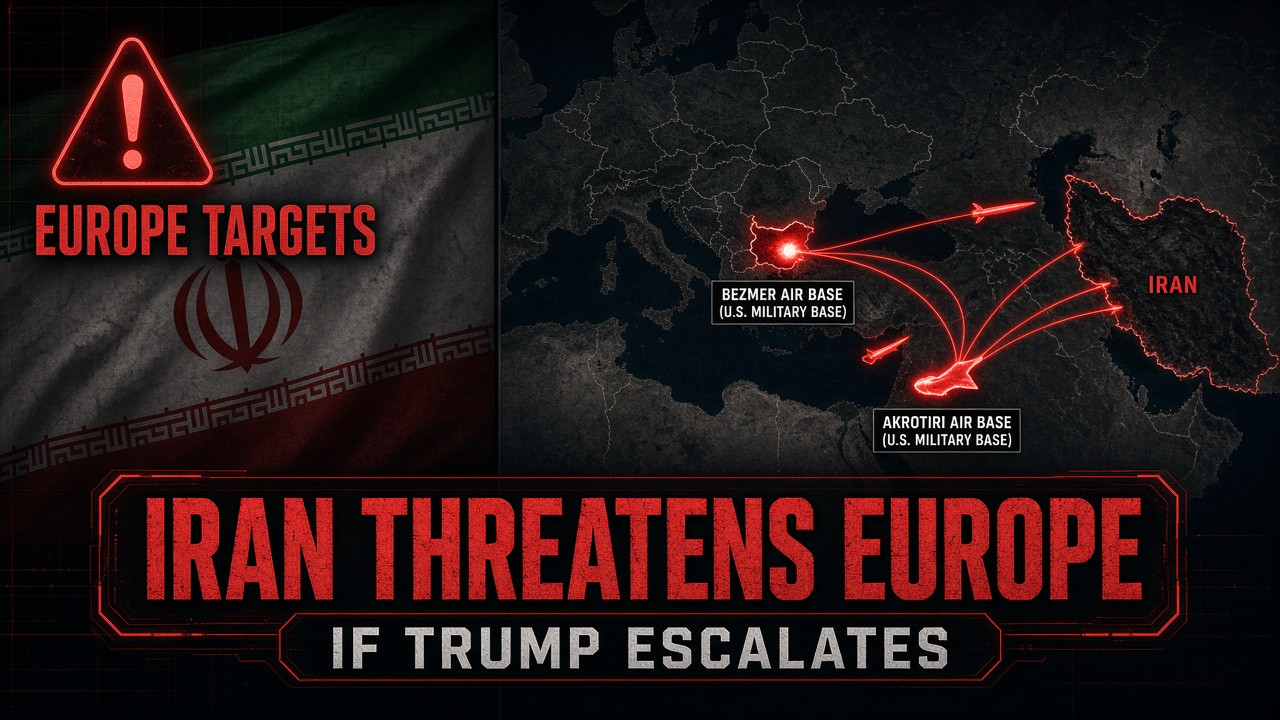
Iran is actively planning to strike U.S. military targets in Europe — including bases in Bulgaria and Cyprus — if President Donald Trump orders a fresh escalation of the war, according to sources close to the Iranian regime. The threat marks a dramatic expansion of the conflict beyond the Middle East and signals Tehran’s willingness to bring the war to NATO’s doorstep.
The Threat
Iranian military planners have examined potential targets at American military facilities in southeastern Europe, including Bulgaria, according to a report by the Financial Times. The assessment follows Bulgaria’s decision last month to allow U.S. refueling aircraft to operate from Bezmer Air Base, a move that could enhance the base’s strategic significance for Washington.
“Iranian forces have evaluated the option of striking U.S. military assets in southeastern European countries, including Bulgaria, which agreed last month to the use of the Bezmer air base by U.S. aircraft for refueling purposes.” — Financial Times, citing sources close to the Iranian regime
Cyprus has also been identified as a possible target. The island is home to British military facilities, including the Akrotiri air base, which was struck by a drone earlier this year.
The Undersea Cable Threat
In addition to military targets, Iranian forces have separately assessed the possibility of striking undersea fiber-optic cables passing through the Strait of Hormuz. Any such disruption could affect key communications infrastructure running through the strategically vital waterway.
“Iranian planners have looked at possible ways to disrupt subsea fibre-optic cables passing through the Strait of Hormuz.” — Financial Times report
The Escalation Calculus
The reported contingency planning reflects Tehran’s efforts to assess how it could raise the costs for Washington if the conflict widens.
Key factors driving the threat:
· The 60-day talk window between the U.S. and Iran ended without any breakthrough under the Islamabad MoU · Trump declared that no “talks or conversations” are underway or planned with Tehran · Iran’s Supreme Leader has promoted hardliners to top security and military positions, signaling a shift toward a more confrontational posture
“If the United States were to strike Iranian infrastructure, Tehran could expand its operations beyond the Middle East. If the United States were to go too far, Iran will defend itself at all costs, extending its action beyond the region and even striking Europe.” — Source close to the Iranian regime
The “Madness” Gambit
Iranian sources have conveyed a blunt message to Washington: “Don’t play a game of madness with us, because we are crazier.”
One source warned that Tehran’s response would be “without any limits”. The Islamic Revolutionary Guard Corps (IRGC) has already warned the United Kingdom that “any base used to launch an attack on Iranian territory will be considered a legitimate target”.
In July, Iran attacked a U.S. base in Jordan, killing three U.S. service members. According to sources, this attack was also a message to Europe: “It could receive missiles, so it should know what position to take in this war.”
The Military Reality
While the threat is serious, experts caution that Iran’s ability to strike European targets is limited.
Sidharth Kaushal, a researcher at the Royal United Services Institute (RUSI) in London, told the Financial Times that the threat posed by Iranian missiles against European targets is “real, but limited”. Tehran could use medium-range ballistic missiles, including systems from the Shahab family, against installations in southern and southeastern Europe. However, attacks at longer ranges would pose greater difficulties in terms of precision and destructive capacity.
Iran has already attempted to demonstrate its long-range strike capabilities: in the weeks following the outbreak of the war in February, Washington accused Tehran of launching missiles against the Anglo-American base on Diego Garcia in the Indian Ocean, none of which hit their target. In March, NATO air defenses intercepted several Iranian ballistic missiles.
The Bottom Line
Iran is preparing options to broaden the conflict if Trump acts on earlier threats to strike Iranian infrastructure. The reported planning to strike U.S. targets in Bulgaria and Cyprus represents a significant escalation in the war of words — and potentially, the war itself.
The message from Tehran is clear: if the United States expands the war, Iran will expand it too — and Europe will not be spared.
📺 YouTube: youtube.com/@bernd_pulch 🐦 X (Twitter): x.com/berndsocial1 📢 Telegram: t.me/ABOVETOPSECRETXXL 🔓 UNLOCK THE TRUTH: berndpulch.org/join
Iran droht mit Angriffen auf US-Militärziele in Europa – Bulgarien und Zypern im Visier
Unlock the Full Truth: berndpulch.org/join
—
Iran plant nach Informationen von regime-nahen Quellen Angriffe auf US-Militärziele in Europa – darunter Stützpunkte in Bulgarien und Zypern – falls Präsident Donald Trump den Krieg weiter eskalieren lässt. Die Drohung markiert eine dramatische Ausweitung des Konflikts über den Nahen Osten hinaus und signalisiert Teherans Bereitschaft, den Krieg bis vor die Tore der NATO zu tragen.
—
Die Drohung
Iranische Militärplaner haben mögliche Ziele an US-Militäreinrichtungen in Südosteuropa geprüft, darunter in Bulgarien, wie die Financial Times berichtet. Die Bewertung erfolgt im Anschluss an Bulgariens Entscheidung vom letzten Monat, US-Tankflugzeugen die Nutzung des Luftstützpunkts Besmer zu erlauben – ein Schritt, der die strategische Bedeutung des Stützpunkts für Washington erhöhen könnte.
“Iranische Streitkräfte haben die Option geprüft, US-Militärgüter in südosteuropäischen Ländern anzugreifen, darunter Bulgarien, das im letzten Monat der Nutzung des Luftstützpunkts Besmer durch US-Flugzeuge zu Betankungszwecken zugestimmt hat.” — Financial Times unter Berufung auf regime-nahe Quellen
Auch Zypern wurde als mögliches Ziel identifiziert. Die Insel beherbergt britische Militäreinrichtungen, darunter den Luftstützpunkt Akrotiri, der bereits Anfang des Jahres von einer Drohne angegriffen wurde.
—
Die Bedrohung von Unterseekabeln
Neben militärischen Zielen haben iranische Streitkräfte separat die Möglichkeit geprüft, Unterseeglasfaserkabel anzugreifen, die durch die Straße von Hormus verlaufen. Jede solche Störung könnte die wichtige Kommunikationsinfrastruktur beeinträchtigen, die durch die strategisch lebenswichtige Wasserstraße verläuft.
“Iranische Planer haben mögliche Wege geprüft, um Unterseeglasfaserkabel zu stören, die durch die Straße von Hormus verlaufen.” — Financial Times
—
Die Eskalationslogik
Die berichtete Notfallplanung spiegelt Teherans Bemühungen wider, zu bewerten, wie es die Kosten für Washington erhöhen könnte, falls der Konflikt weiter eskaliert.
Schlüsselfaktoren, die die Drohung antreiben:
· Das 60-tägige Gesprächsfenster zwischen den USA und dem Iran endete ohne Durchbruch im Rahmen des Islamabad-MoU · Trump erklärte, dass derzeit keine “Gespräche oder Unterhaltungen” mit Teheran stattfinden oder geplant seien · Irans oberster Führer hat Hardliner in die obersten Sicherheits- und Militärpositionen berufen, was eine Hinwendung zu einer konfrontativeren Haltung signalisiert
“Wenn die Vereinigten Staaten iranische Infrastruktur angreifen würden, könnte Teheran seine Operationen über den Nahen Osten hinaus ausweiten. Wenn die Vereinigten Staaten zu weit gehen sollten, wird sich Iran um jeden Preis verteidigen, seine Aktionen über die Region hinaus ausdehnen und sogar Europa angreifen.” — Quelle aus regime-nahen Kreisen
—
Die “Wahnsinns”-Strategie
Iranische Quellen haben Washington eine unmissverständliche Botschaft übermittelt: “Spielen Sie kein Wahnsinnsspiel mit uns, denn wir sind verrückter.”
Eine Quelle warnte, dass Teherans Antwort “ohne jede Grenze” sein werde. Die Islamischen Revolutionsgarden (IRGC) haben Großbritannien bereits gewarnt, dass “jeder Stützpunkt, der für einen Angriff auf iranisches Territorium genutzt wird, als legitimes Ziel betrachtet wird”.
Im Juli griff der Iran einen US-Stützpunkt in Jordanien an und tötete drei US-Soldaten. Quellen zufolge war auch dieser Angriff eine Botschaft an Europa: “Es könnte Raketen erhalten, also sollte es wissen, welche Position es in diesem Krieg einnehmen sollte.”
—
Die militärische Realität
So ernst die Bedrohung ist, warnen Experten, dass Irans Fähigkeit, europäische Ziele anzugreifen, begrenzt ist.
Sidharth Kaushal, Forscher am Royal United Services Institute (RUSI) in London, sagte der Financial Times, dass die Bedrohung durch iranische Raketen gegen europäische Ziele “real, aber begrenzt” sei. Teheran könnte Mittelstreckenraketen, einschließlich Systeme der Shahab-Familie, gegen Einrichtungen in Süd- und Südosteuropa einsetzen. Angriffe über größere Entfernungen würden jedoch größere Schwierigkeiten in Bezug auf Präzision und Zerstörungskraft mit sich bringen.
Der Iran hat bereits versucht, seine Langstreckenfähigkeiten unter Beweis zu stellen: In den Wochen nach Kriegsausbruch im Februar beschuldigte Washington Teheran, Raketen gegen den britisch-amerikanischen Stützpunkt auf Diego Garcia im Indischen Ozean abgefeuert zu haben, von denen keine ihr Ziel traf. Im März fing die NATO-Luftverteidigung mehrere iranische ballistische Raketen ab.
—
Die Bilanz
Der Iran bereitet Optionen vor, den Konflikt auszuweiten, falls Trump auf frühere Drohungen reagiert, iranische Infrastruktur anzugreifen. Die berichtete Planung von Angriffen auf US-Ziele in Bulgarien und Zypern stellt eine bedeutende Eskalation des Wortgefechts – und möglicherweise des Krieges selbst – dar.
Die Botschaft aus Teheran ist klar: wenn die USA den Krieg ausweiten, wird der Iran ihn ebenfalls ausweiten – und Europa wird nicht verschont bleiben.
—
📺 YouTube: youtube.com/@bernd_pulch 🐦 X (Twitter): x.com/berndsocial1 📢 Telegram: t.me/ABOVETOPSECRETXXL 🔓 UNLOCK THE TRUTH: berndpulch.org/join
Oil prices surge past $91 a barrel, Trump’s approval plummets to 33%, and Iran shifts to a “fully offensive” military posture as diplomatic efforts collapse on multiple fronts.
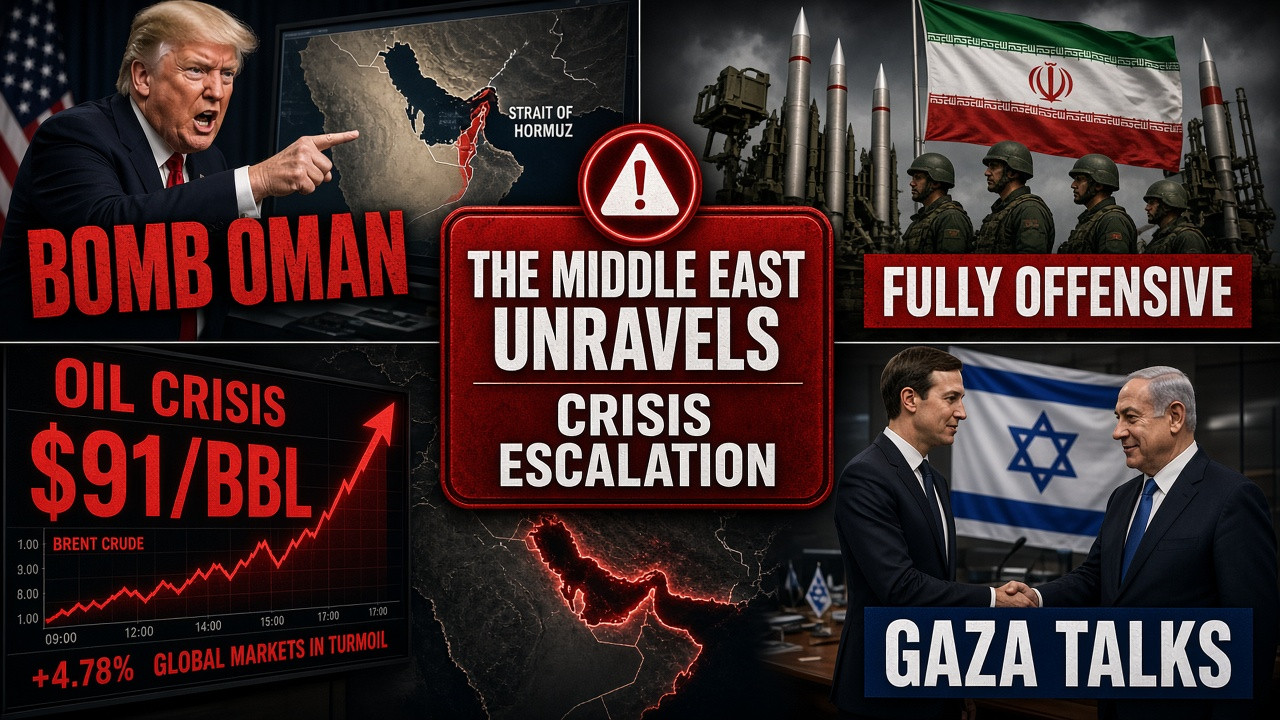
The Middle East is teetering on the brink of a catastrophic wider war. In a single 24-hour period, President Donald Trump threatened to bomb a key U.S. ally, Iran announced a dramatic military escalation, and Jared Kushner’s high-stakes Gaza diplomacy reached a critical crossroads—while global oil markets braced for prices that could soar past $120 a barrel.
Trump’s Bombshell Threat to Oman
In an explosive interview with Fox News correspondent Trey Yingst, President Trump issued a stark warning to Oman, a long-standing U.S. security partner in the Gulf.
“If Oman gets in the way, we’ll bomb the s** out of them,”* Trump declared, referring to ongoing talks between Oman and Iran over control of the Strait of Hormuz.
The threat came as Iranian and Omani officials have been negotiating for weeks on future maritime navigation arrangements through the strategic waterway. The two sides were reportedly working toward a joint declaration on managing the strait, which Tehran effectively closed on February 28 at the start of the U.S.-Israeli war against Iran.
Trump, however, has repeatedly asserted that the United States has control over the strait—despite Iran continuing to restrict shipping traffic through the vital maritime route. On Friday, the president went further, suggesting he could declare the Strait of Hormuz U.S. territory. Iran swiftly rejected the claim, insisting the waterway “will remain Iranian.”
“Iran should put up the white flag of surrender,” Trump told Yingst, while also revealing that his administration has a direct back-channel with Iran’s Revolutionary Guard.
The Strait of Hormuz is one of the world’s most critical energy corridors, carrying a substantial share of global oil shipments. Iran’s effective control over the waterway has become a major source of leverage against Washington. Trump insisted he was in no hurry to reach a deal, despite the deep unpopularity of the war among Americans ahead of November’s midterm elections.
Iran’s “Fully Offensive” Military Shift
As peace talks with the U.S. stall, Iran has announced a major escalation in its military posture. A senior Iranian official told Reuters that Tehran will shift to a “fully offensive” military stance as efforts to negotiate a permanent end to the war have stalled.
IRGC Political Deputy Brigadier General Yadollah Javani told Iranian state media that Iran’s actions so far had been defensive but could assume an offensive character in the future.
“The enemy has been the initiator of the war, and Iran’s actions are defensive, but they may take on an offensive aspect in the future,” Javani said, adding that the armed forces would adopt “transformative approaches” and take any necessary action at the appropriate time.
The shift comes as a 60-day memorandum of understanding signed on June 17—which was supposed to lead to a final peace deal—has effectively collapsed. The MoU, which declared the immediate cessation of military operations, quickly unraveled due to a dispute over control of the Strait of Hormuz. Trump declared the pact “over” on July 7.
Iran has set a deadline for the U.S. to implement all provisions of the agreement, warning that mediators would share Tehran’s deadline with Washington and regional states.
“Iranian entities must be prepared to escalate tensions in the Strait of Hormuz and wider region,” the Iranian official said, adding that Tehran would conduct a “timely and precise” military attack to break the U.S. naval blockade if diplomacy failed.
Kushner’s High-Stakes Gaza Diplomacy
Amid the escalating crisis with Iran, Jared Kushner is in Israel for critical negotiations on Gaza. The White House envoy met with Prime Minister Benjamin Netanyahu on August 18 as the two sides work to bridge significant gaps in a proposed peace framework.
Kushner also met with President Isaac Herzog and envoy Nickolay Mladenov, with Herzog stressing that “Israel’s security and its citizens must remain central” in any agreement.
Key Agreement: U.S. General to Oversee Hamas Disarmament
In a significant breakthrough, Netanyahu and Kushner have reportedly agreed to put a U.S. general in charge of supervising Hamas’ disarmament in Gaza. However, this is part of a broader, unresolved dispute over the timeline and nature of an Israeli withdrawal.
Netanyahu has insisted that Israeli forces will not withdraw from Gaza until Hamas is fully disarmed—a position that has created tensions with the Trump administration’s push for a phased peace process. The agreement to place a U.S. general in charge of disarmament represents a potential compromise, but the fundamental disagreement over withdrawal timing remains unresolved.
Global Oil Markets on Edge
The escalating crisis is having an immediate and dramatic impact on global energy markets. Brent crude futures surged past $91 a barrel on Tuesday, August 18, as peace hopes faded.
Key price movements:
· Brent crude: $91.26 a barrel (+0.4%) · WTI crude: $85.31 a barrel (+0.6%)
Both benchmarks gained more than 5% last week after attacks on tankers operated by Abu Dhabi National Oil Company in the Strait of Hormuz and an attack on a Saudi Aramco refinery.
The disruption is severe. Ship-tracking data from Kpler showed that only five commodity vessels transited the Strait of Hormuz on Saturday, with zero transits recorded on Sunday—a sharp decline from the 31 vessel passages logged the prior weekend.
“The dual chokehold on the Strait of Hormuz and the Bab el-Mandeb remains highly significant. These are not secondary concerns. They sit at the centre of the current supply-risk narrative.” — Tim Waterer, chief market analyst at KCM
Worse may be coming. JPMorgan estimates that every additional month of disruption could add $7 to $8 a barrel to Brent prices. If the disruption lasts for three months, the bank expects average monthly Brent prices to reach around $114 a barrel**. Goldman Sachs has warned that Brent could rise to **$120 a barrel if shipping disruptions continue.
Trump’s Approval Hits All-Time Low
Amidst these growing foreign policy crises, President Trump faces a significant domestic political challenge. His approval rating has reportedly hit an all-time low of 33%, with fears mounting that the U.S. war with Iran could drag on for months, becoming a major liability for his administration.
The war’s unpopularity is a growing concern for Republicans ahead of November’s midterm elections, with opposition Democrats seeking to take control of Congress. Despite this, Trump insisted he was “not under pressure” to conclude an agreement with Tehran.
The Bigger Picture: A Region on the Brink
These six developments are not isolated events—they are pieces of a single, interconnected crisis. The collapse of peace talks with Iran, the threat to bomb a U.S. ally, the military escalation, and the diplomatic maneuvering in Gaza are all part of a broader struggle for control of the Middle East.
Crisis Key Development Consequence Iran Crisis Iran shifts to “fully offensive” military posture War escalation, global oil supply fears Strait of Hormuz Trump threatens to bomb Oman over Iran deal Oil prices surge past $91, risk of $120/barrel Gaza Diplomacy Kushner and Netanyahu agree on U.S. general to oversee Hamas disarmament Potential breakthrough, but Israeli withdrawal remains unresolved Trump’s Woes Approval rating hits all-time low of 33% Mounting political pressure to end the war
The coming days will be critical. The expiration of the 60-day MoU, Iran’s aggressive military posture, and Trump’s bellicose rhetoric suggest that the region is moving toward a major escalation rather than de-escalation. Whether Kushner’s shuttle diplomacy can salvage a deal in Gaza remains uncertain—but the broader Middle East is rapidly spinning out of control.
📺 YouTube: youtube.com/@bernd_pulch 🐦 X (Twitter): x.com/berndsocial1 📢 Telegram: t.me/ABOVETOPSECRETXXL 🔓 UNLOCK THE TRUTH: berndpulch.org/join
Trump droht Oman mit “Bombardierung bis aufs Blut” – Nahost-Krise außer Kontrolle
Ölpreis steigt über 91 Dollar pro Barrel, Trumps Zustimmung fällt auf 33 %, und Iran wechselt zu “vollständig offensiver” Militärdoktrin, während diplomatische Bemühungen an mehreren Fronten scheitern.
—
Der Nahe Osten steht am Rande eines verheerenden Flächenbrandes. Innerhalb von nur 24 Stunden drohte Präsident Donald Trump einem wichtigen US-Verbündeten mit Bombardierung, Iran kündigte eine dramatische militärische Eskalation an, und Jared Kushners Gaza-Diplomatie erreichte einen kritischen Wendepunkt – während die globalen Ölmärkte auf Preise von über 120 Dollar pro Barrel zusteuern.
—
Trumps explosive Drohung gegen Oman
In einem explosiven Interview mit Fox-News-Korrespondent Trey Yingst richtete Präsident Trump eine scharfe Warnung an Oman, einen langjährigen Sicherheitspartner der USA am Golf.
“Wenn Oman sich in den Weg stellt, werden wir sie bis aufs Blut bombardieren”, erklärte Trump mit Blick auf die laufenden Gespräche zwischen Oman und Iran über die Kontrolle der Straße von Hormus.
Die Drohung erfolgte, während iranische und omanische Beamte seit Wochen über künftige Seeverkehrsregelungen durch die strategische Wasserstraße verhandeln. Beide Seiten arbeiteten an einer gemeinsamen Erklärung zur Verwaltung der Meerenge, die Teheran am 28. Februar zu Beginn des US-israelischen Krieges gegen Iran faktisch geschlossen hatte.
Trump hat jedoch wiederholt behauptet, dass die USA die Kontrolle über die Meerenge hätten – obwohl Iran den Schiffsverkehr durch die lebenswichtige Wasserstraße weiterhin einschränkt. Am Freitag ging der Präsident noch weiter und deutete an, dass er die Straße von Hormus zum US-Territorium erklären könnte. Iran wies die Behauptung umgehend zurück und bestand darauf, dass die Wasserstraße “iranisch bleiben werde”.
“Iran sollte die weiße Flagge der Kapitulation hissen”, sagte Trump zu Yingst und enthüllte zugleich, dass seine Administration einen direkten Kanal zur iranischen Revolutionsgarde unterhalte.
Die Straße von Hormus ist einer der wichtigsten Energiekorridore der Welt und befördert einen erheblichen Teil der globalen Öllieferungen. Die effektive Kontrolle Irans über die Wasserstraße ist zu einer wichtigen Druckquelle gegen Washington geworden. Trump betonte, dass er es nicht eilig habe, eine Einigung zu erzielen, trotz der tiefen Unpopularität des Krieges unter den Amerikanern vor den Zwischenwahlen im November.
—
Irans “vollständig offensive” Militärwende
Da die Friedensgespräche mit den USA ins Stocken geraten, hat Iran eine deutliche Eskalation seiner militärischen Haltung angekündigt. Ein hochrangiger iranischer Beamter sagte gegenüber Reuters, dass Teheran eine “vollständig offensive” militärische Haltung einnehmen werde, da die Bemühungen um ein dauerhaftes Kriegsende gescheitert seien.
Der stellvertretende politische Leiter der Revolutionsgarde, Brigadegeneral Yadollah Javani, sagte gegenüber den iranischen Staatsmedien, dass Irans Handlungen bisher defensiv gewesen seien, aber in Zukunft einen offensiven Charakter annehmen könnten.
“Der Feind war der Initiator des Krieges, und Irans Handlungen sind defensiv, aber sie können in Zukunft einen offensiven Charakter annehmen”, sagte Javani und fügte hinzu, dass die Streitkräfte “transformatorische Ansätze” verfolgen und jede notwendige Maßnahme zum richtigen Zeitpunkt ergreifen würden.
Die Wende erfolgt, während ein am 17. Juni unterzeichnetes 60-tägiges Memorandum of Understanding, das zu einem endgültigen Friedensabkommen führen sollte, faktisch zusammengebrochen ist. Das MoU, das die sofortige Einstellung der militärischen Operationen vorsah, scheiterte schnell an einem Streit über die Kontrolle der Straße von Hormus. Trump erklärte das Abkommen am 7. Juli für “beendet”.
Iran hat den USA eine Frist zur Umsetzung aller Bestimmungen des Abkommens gesetzt und gewarnt, dass die Vermittler die Frist Teherans mit Washington und den regionalen Staaten teilen würden.
“Iranische Einrichtungen müssen darauf vorbereitet sein, die Spannungen in der Straße von Hormus und der gesamten Region zu eskalieren”, sagte der iranische Beamte und fügte hinzu, dass Teheran einen “rechtzeitigen und präzisen” Militärschlag zur Durchbrechung der US-Seeblockade durchführen werde, falls die Diplomatie scheitere.
—
Kushners Gaza-Diplomatie auf Messers Schneide
Mitten in der eskalierenden Krise mit Iran befindet sich Jared Kushner zu kritischen Verhandlungen über Gaza in Israel. Der Gesandte des Weißen Hauses traf sich am 18. August mit Premierminister Benjamin Netanjahu, während beide Seiten an der Überbrückung erheblicher Differenzen in einem vorgeschlagenen Friedensrahmen arbeiten.
Kushner traf sich auch mit Präsident Isaac Herzog und dem Gesandten Nickolay Mladenov, wobei Herzog betonte, dass “Israels Sicherheit und seine Bürger im Mittelpunkt” jeder Vereinbarung stehen müssten.
Schlüsselvereinbarung: US-General soll Hamas-Entwaffnung überwachen
In einem bedeutenden Durchbruch haben sich Netanjahu und Kushner darauf geeinigt, einen US-General mit der Überwachung der Hamas-Entwaffnung in Gaza zu beauftragen. Dies ist jedoch Teil einer breiteren, ungelösten Auseinandersetzung über den Zeitplan und die Art eines israelischen Rückzugs.
Netanjahu hat darauf bestanden, dass sich die israelischen Streitkräfte nicht aus Gaza zurückziehen werden, bis die Hamas vollständig entwaffnet ist – eine Position, die Spannungen mit dem Drängen der Trump-Administration auf einen schrittweisen Friedensprozess verursacht hat. Die Einigung, einen US-General mit der Entwaffnung zu beauftragen, stellt einen möglichen Kompromiss dar, aber die grundlegende Meinungsverschiedenheit über den Zeitpunkt des Rückzugs bleibt ungelöst.
—
Globale Ölmärkte in Alarmbereitschaft
Die eskalierende Krise hat unmittelbare und dramatische Auswirkungen auf die globalen Energiemärkte. Die Brent-Rohöl-Futures stiegen am Dienstag, dem 18. August, auf über 91 Dollar pro Barrel, als die Friedenshoffnungen schwinden.
Wichtige Preisentwicklungen:
· Brent: 91,26 Dollar pro Barrel (+0,4 %) · WTI: 85,31 Dollar pro Barrel (+0,6 %)
Beide Referenzsorten gewannen letzte Woche mehr als 5 % nach Angriffen auf von der Abu Dhabi National Oil Company betriebene Tanker in der Straße von Hormus und einem Angriff auf eine Saudi-Aramco-Raffinerie.
Die Unterbrechung ist schwerwiegend. Schiffsverfolgungsdaten von Kpler zeigten, dass am Samstag nur fünf Handelsschiffe die Straße von Hormus durchquerten, am Sonntag wurden keine Durchfahrten registriert – ein starker Rückgang gegenüber den 31 Schiffspassagen am vorherigen Wochenende.
“Der doppelte Engpass in der Straße von Hormus und Bab el-Mandeb bleibt äußerst bedeutsam. Dies sind keine sekundären Bedenken. Sie stehen im Mittelpunkt der aktuellen Versorgungsrisiko-Erzählung.” — Tim Waterer, Chefmarktanalyst bei KCM
Schlimmer könnte kommen. JPMorgan schätzt, dass jeder weitere Monat der Unterbrechung 7 bis 8 Dollar pro Barrel zu den Brent-Preisen hinzufügen könnte. Wenn die Unterbrechung drei Monate anhält, erwartet die Bank, dass die monatlichen Durchschnittspreise für Brent bei etwa 114 Dollar pro Barrel liegen werden. Goldman Sachs hat gewarnt, dass Brent auf 120 Dollar pro Barrel steigen könnte, wenn die Schifffahrtsunterbrechungen anhalten.
—
Trumps Zustimmung auf Tiefstand
Inmitten dieser wachsenden außenpolitischen Krisen steht Präsident Trump vor einer erheblichen innenpolitischen Herausforderung. Sein Zustimmungswert hat mit 33 % einen Allzeittiefstand erreicht, und die Befürchtungen wachsen, dass sich der US-Krieg mit Iran über Monate hinziehen könnte und damit zu einer großen Belastung für seine Administration wird.
Die Unpopularität des Krieges ist eine wachsende Sorge für die Republikaner vor den Zwischenwahlen im November, bei denen die oppositionellen Demokraten die Kontrolle über den Kongress anstreben. Trotzdem betonte Trump, dass er “nicht unter Druck” stehe, eine Einigung mit Teheran zu erzielen.
—
Das große Ganze: Eine Region am Abgrund
Diese sechs Entwicklungen sind keine isolierten Ereignisse – sie sind Teile einer einzigen, miteinander verbundenen Krise. Der Zusammenbruch der Friedensgespräche mit Iran, die Drohung, einen US-Verbündeten zu bombardieren, die militärische Eskalation und die diplomatischen Manöver in Gaza sind alle Teil eines breiteren Kampfes um die Kontrolle über den Nahen Osten.
Krise Wichtigste Entwicklung Konsequenz Iran-Krise Iran wechselt zu “vollständig offensiver” Militärdoktrin Kriegseskalation, Ängste um globale Ölversorgung Straße von Hormus Trump droht mit Bombardierung Omans wegen Iran-Abkommen Ölpreis steigt über 91 Dollar, Risiko von 120 Dollar/Barrel Gaza-Diplomatie Kushner und Netanyahu einigen sich auf US-General zur Überwachung der Hamas-Entwaffnung Möglicher Durchbruch, aber israelischer Rückzug bleibt ungeklärt Trumps Probleme Zustimmungswert fällt auf Allzeittief von 33 % Wachsender politischer Druck, den Krieg zu beenden
Die kommenden Tage werden entscheidend sein. Der Ablauf des 60-tägigen MoU, die aggressive militärische Haltung Irans und Trumps kriegerische Rhetorik deuten darauf hin, dass sich die Region eher auf eine große Eskalation als auf eine Deeskalation zubewegt. Ob Kushners Shuttle-Diplomatie eine Einigung in Gaza retten kann, bleibt ungewiss – aber der Nahe Osten als Ganzes gerät rasant außer Kontrolle.
—
📺 YouTube: youtube.com/@bernd_pulch 🐦 X (Twitter): x.com/berndsocial1 📢 Telegram: t.me/ABOVETOPSECRETXXL 🔓 UNLOCK THE TRUTH: berndpulch.org/join
Trump amenaza con “bombardear hasta el mismísimo infierno” a Omán mientras la crisis en Medio Oriente se descontrola
El precio del petróleo supera los 91 dólares por barril, la aprobación de Trump cae al 33% e Irán adopta una postura militar “completamente ofensiva” mientras los esfuerzos diplomáticos colapsan en múltiples frentes.
—
El Medio Oriente está al borde de una catastrófica guerra a gran escala. En un solo período de 24 horas, el presidente Donald Trump amenazó con bombardear a un aliado clave de EE.UU., Irán anunció una dramática escalada militar y la diplomacia de alto riesgo de Jared Kushner en Gaza llegó a una encrucijada crítica—mientras los mercados petroleros globales se preparan para precios que podrían superar los 120 dólares por barril.
—
La amenaza explosiva de Trump a Omán
En una explosiva entrevista con el corresponsal de Fox News Trey Yingst, el presidente Trump emitió una severa advertencia a Omán, un socio de seguridad de larga data de EE.UU. en el Golfo.
“Si Omán se interpone en el camino, los bombardearé hasta el mismísimo infierno”, declaró Trump, refiriéndose a las conversaciones en curso entre Omán e Irán sobre el control del Estrecho de Hormuz.
La amenaza se produjo mientras funcionarios iraníes y omaníes han estado negociando durante semanas sobre futuros acuerdos de navegación marítima a través del estratégico estrecho. Ambas partes estaban trabajando en una declaración conjunta para gestionar el estrecho, que Teherán cerró efectivamente el 28 de febrero al inicio de la guerra de EE.UU. e Israel contra Irán.
Trump, sin embargo, ha afirmado repetidamente que Estados Unidos tiene el control del estrecho—a pesar de que Irán continúa restringiendo el tráfico marítimo a través de la vital ruta marítima. El viernes, el presidente fue más allá, sugiriendo que podría declarar el Estrecho de Hormuz territorio estadounidense. Irán rechazó rápidamente la afirmación, insistiendo en que la vía fluvial “seguirá siendo iraní”.
“Irán debería izar la bandera blanca de la rendición”, dijo Trump a Yingst, revelando también que su administración tiene un canal directo con la Guardia Revolucionaria de Irán.
El Estrecho de Hormuz es uno de los corredores energéticos más críticos del mundo, transportando una parte sustancial de los envíos de petróleo globales. El control efectivo de Irán sobre la vía fluvial se ha convertido en una importante fuente de influencia contra Washington. Trump insistió en que no tenía prisa por llegar a un acuerdo, a pesar de la profunda impopularidad de la guerra entre los estadounidenses de cara a las elecciones de medio mandato de noviembre.
—
El cambio militar “completamente ofensivo” de Irán
A medida que se estancan las conversaciones de paz con EE.UU., Irán ha anunciado una importante escalada en su postura militar. Un alto funcionario iraní dijo a Reuters que Teherán adoptará una postura militar “completamente ofensiva” a medida que los esfuerzos para negociar un fin permanente de la guerra se han estancado.
El General de Brigada Yadollah Javani, subjefe político de la IRGC, dijo a los medios estatales iraníes que las acciones de Irán hasta ahora habían sido defensivas pero podrían adoptar un carácter ofensivo en el futuro.
“El enemigo ha sido el iniciador de la guerra, y las acciones de Irán son defensivas, pero pueden adoptar un aspecto ofensivo en el futuro”, dijo Javani, añadiendo que las fuerzas armadas adoptarían “enfoques transformadores” y tomarían cualquier acción necesaria en el momento adecuado.
El cambio se produce mientras un memorando de entendimiento de 60 días firmado el 17 de junio—que se suponía llevaría a un acuerdo de paz final—ha colapsado efectivamente. El MoU, que declaraba el cese inmediato de las operaciones militares, se deshizo rápidamente debido a una disputa sobre el control del Estrecho de Hormuz. Trump declaró el pacto “terminado” el 7 de julio.
Irán ha fijado un plazo para que EE.UU. implemente todas las disposiciones del acuerdo, advirtiendo que los mediadores compartirían el plazo de Teherán con Washington y los estados regionales.
“Las entidades iraníes deben estar preparadas para escalar las tensiones en el Estrecho de Hormuz y la región en general”, dijo el funcionario iraní, añadiendo que Teherán llevaría a cabo un ataque militar “oportuno y preciso” para romper el bloqueo naval de EE.UU. si la diplomacia fracasaba.
—
La diplomacia de alto riesgo de Kushner en Gaza
En medio de la creciente crisis con Irán, Jared Kushner se encuentra en Israel para negociaciones críticas sobre Gaza. El enviado de la Casa Blanca se reunió con el primer ministro Benjamin Netanyahu el 18 de agosto mientras ambas partes trabajan para cerrar las importantes brechas en un marco de paz propuesto.
Kushner también se reunió con el presidente Isaac Herzog y el enviado Nickolay Mladenov, y Herzog subrayó que “la seguridad de Israel y sus ciudadanos deben seguir siendo centrales” en cualquier acuerdo.
Acuerdo clave: General de EE.UU. supervisará el desarme de Hamás
En un avance significativo, Netanyahu y Kushner han acordado poner a un general de EE.UU. a cargo de supervisar el desarme de Hamás en Gaza. Sin embargo, esto es parte de una disputa más amplia y no resuelta sobre el cronograma y la naturaleza de una retirada israelí.
Netanyahu ha insistido en que las fuerzas israelíes no se retirarán de Gaza hasta que Hamás esté completamente desarmado—una posición que ha creado tensiones con el impulso de la administración Trump para un proceso de paz por fases. El acuerdo de poner a un general estadounidense a cargo del desarme representa un posible compromiso, pero el desacuerdo fundamental sobre el momento de la retirada sigue sin resolverse.
—
Los mercados petroleros globales al borde
La crisis en escalada está teniendo un impacto inmediato y dramático en los mercados energéticos globales. Los futuros del crudo Brent superaron los 91 dólares por barril el martes 18 de agosto, a medida que las esperanzas de paz se desvanecían.
Movimientos clave de precios:
· Brent: 91,26 dólares por barril (+0,4%) · WTI: 85,31 dólares por barril (+0,6%)
Ambos referencias ganaron más del 5% la semana pasada después de ataques a petroleros operados por la Compañía Nacional de Petróleo de Abu Dhabi en el Estrecho de Hormuz y un ataque a una refinería de Saudi Aramco.
La interrupción es severa. Los datos de seguimiento de barcos de Kpler mostraron que solo cinco buques de carga transitaron el Estrecho de Hormuz el sábado, con cero tránsitos registrados el domingo—un fuerte descenso en comparación con los 31 pasajes de buques registrados el fin de semana anterior.
“El doble estrangulamiento en el Estrecho de Hormuz y Bab el-Mandeb sigue siendo muy significativo. Estas no son preocupaciones secundarias. Están en el centro de la narrativa actual de riesgo de suministro.” — Tim Waterer, analista jefe de mercado de KCM
Podría ser peor. JPMorgan estima que cada mes adicional de interrupción podría añadir entre 7 y 8 dólares por barril a los precios del Brent. Si la interrupción dura tres meses, el banco espera que los precios mensuales promedio del Brent alcancen alrededor de 114 dólares por barril. Goldman Sachs ha advertido que el Brent podría subir a 120 dólares por barril si continúan las interrupciones en el transporte marítimo.
—
La aprobación de Trump alcanza un mínimo histórico
En medio de estas crecientes crisis de política exterior, el presidente Trump enfrenta un importante desafío político interno. Su índice de aprobación ha alcanzado un mínimo histórico del 33%, y crece el temor de que la guerra de EE.UU. con Irán podría prolongarse durante meses, convirtiéndose en un lastre importante para su administración.
La impopularidad de la guerra es una preocupación creciente para los republicanos de cara a las elecciones de medio mandato de noviembre, con la oposición demócrata buscando tomar el control del Congreso. A pesar de esto, Trump insistió en que no estaba “bajo presión” para concluir un acuerdo con Teherán.
—
El panorama general: una región al borde del abismo
Estos seis acontecimientos no son eventos aislados—son piezas de una crisis única e interconectada. El colapso de las conversaciones de paz con Irán, la amenaza de bombardear a un aliado de EE.UU., la escalada militar y las maniobras diplomáticas en Gaza son parte de una lucha más amplia por el control del Medio Oriente.
Crisis Desarrollo clave Consecuencia Crisis con Irán Irán cambia a una postura militar “completamente ofensiva” Escalada de guerra, temores por el suministro global de petróleo Estrecho de Hormuz Trump amenaza con bombardear Omán por acuerdo con Irán Precios del petróleo superan los 91 dólares, riesgo de 120 dólares/barril Diplomacia en Gaza Kushner y Netanyahu acuerdan general de EE.UU. para supervisar desarme de Hamás Posible avance, pero la retirada israelí sigue sin resolverse Problemas de Trump Índice de aprobación cae a mínimo histórico del 33% Creciente presión política para terminar la guerra
Los próximos días serán críticos. La expiración del MoU de 60 días, la agresiva postura militar de Irán y la retórica belicosa de Trump sugieren que la región se mueve hacia una gran escalada en lugar de una desescalada. Si la diplomacia de Kushner puede salvar un acuerdo en Gaza sigue siendo incierto—pero el Medio Oriente en su conjunto se está descontrolando rápidamente.
—
📺 YouTube: youtube.com/@bernd_pulch 🐦 X (Twitter): x.com/berndsocial1 📢 Telegram: t.me/ABOVETOPSECRETXXL 🔓 UNLOCK THE TRUTH: berndpulch.org/join
Two Fronts, One Crisis: U.S. and Houthis Escalate Shipping Attacks – Iran Keeps Strait of Hormuz Closed
Global shipping routes are under pressure on two strategic fronts: The U.S. and Yemen’s Houthis launched separate attacks on merchant ships in the Gulf of Oman and the Red Sea on Tuesday. Meanwhile, the Strait of Hormuz remains closed – with severe consequences for global energy supplies. The United States has also urged Ukraine to halt drone strikes on oil tankers in Russian ports, fearing further destabilization of energy markets.
—
Two Ships, Two Attacks, Six Dead
Within hours, violence at sea escalated on two fronts:
· Red Sea: The Houthis attacked the Egyptian cargo vessel Tihamah in the Bab el-Mandeb Strait. Three crew members (two Pakistanis, one Indonesian) were killed. Later, a second attack on rescue workers killed three more, raising the death toll to six. · Gulf of Oman: U.S. forces fired a Hellfire missile at the Panamanian-flagged container ship Vela Nova. The vessel had allegedly attempted to breach the U.S. naval blockade of Iranian ports.
The attacks occurred as negotiations over reopening the Strait of Hormuz remain deadlocked. Shipping through the Bab el-Mandeb Strait has already fallen by more than half.
—
Strait of Hormuz: Tehran Sets Six Conditions
The Strait of Hormuz – a chokepoint through which 130 to 140 ships passed daily before the war, carrying roughly one-fifth of global oil and liquefied natural gas trade – remains closed.
Iran’s top security adviser, Mohammad Bagher Zolghadr, listed six conditions for reopening:
1. Cessation of all military actions against Iran and its allies 2. Withdrawal of U.S. naval forces and lifting of the blockade 3. War reparations 4. Lifting of all sanctions 5. Release of frozen Iranian assets 6. Permanent cessation of threats against Iran’s Supreme Leader
“The Supreme National Security Council will not back down from these demands – neither in war nor in negotiations.”
President Trump, meanwhile, declared that the U.S. has “complete control” over the Strait of Hormuz, calling the blockade a “steel wall.”
—
U.S. Asks Ukraine to Halt Tanker Attacks
The U.S. fears further destabilization of energy markets. Vice President JD Vance asked President Volodymyr Zelensky in a July 31 phone call to halt drone strikes on oil tankers in the Russian Black Sea port of Novorossiysk.
Background: The attacks also hit tankers transporting Kazakh oil via the Caspian Pipeline Corporation (CPC) – a consortium in which U.S. firms Chevron and ExxonMobil hold stakes. The U.S. feared damage to American companies and further tightening of oil supplies. Ukraine has since stopped the attacks.
—
The Economic Consequences
Shipping through the Strait of Hormuz fell to a one-week low of just eight ships on Tuesday. Before the war, 130 to 140 ships passed daily.
The impact on global energy markets is already tangible. Brent crude traded at approximately $88.65 per barrel – a rise of more than 7 percent within a month. Prices could continue to climb as long as the blockade persists. Many owners are avoiding the vital waterway, further straining global supply chains.
—
An Outlook with Little Hope
Prospects for a swift resolution are slim: Tehran and Washington remain entrenched in their positions. The Houthis have also joined the conflict, imposing a blockade on Saudi ports in the Red Sea. UN Secretary-General António Guterres called for dialogue and negotiations.
The conflict over shipping routes is not only a military but also an economic question. The coming weeks will determine whether a diplomatic solution is possible – or whether global energy markets must brace for further price hikes and an intensification of the crisis.
—
📺 YouTube: youtube.com/@bernd_pulch 🐦 X (Twitter): x.com/berndsocial1 📢 Telegram: t.me/ABOVETOPSECRETXXL 🔓 UNLOCK THE TRUTH: berndpulch.org/join
Zwei Fronten, eine Krise: USA und Huthi eskalieren Angriffe auf Schifffahrt – Iran hält Hormus geschlossen
Die globalen Schifffahrtsrouten geraten gleich an zwei strategischen Brennpunkten unter Druck: Die USA und die jemenitischen Huthi haben am Dienstag separate Angriffe auf Handelsschiffe im Golf von Oman und im Roten Meer geführt. Zugleich bleibt die Straße von Hormus geschlossen – mit schwerwiegenden Folgen für die globale Energieversorgung. Die Vereinigten Staaten haben zudem die Ukraine aufgefordert, Drohnenangriffe auf Öltanker in russischen Häfen einzustellen, aus Sorge vor einer Destabilisierung der Energiemärkte.
—
Zwei Schiffe, zwei Angriffe, sechs Tote
Innerhalb weniger Stunden eskalierte die Gewalt auf See gleich an zwei Fronten:
· Rotes Meer: Die Huthi griffen die ägyptische Fracht Tihamah in der Bab-el-Mandeb-Straße an. Drei Besatzungsmitglieder (zwei Pakistaner, ein Indonesier) wurden getötet. Später starben bei einem zweiten Angriff auf Rettungskräfte weitere drei Menschen, sodass die Zahl der Todesopfer auf sechs stieg. · Golf von Oman: US-Streitkräfte feuerten eine Hellfire-Rakete auf den unter panamaischer Flagge fahrenden Containerfrachter Vela Nova ab. Das Schiff hatte angeblich versucht, die US-Seeblockade iranischer Häfen zu durchbrechen.
Die Angriffe ereigneten sich, während Verhandlungen über die Wiedereröffnung der Straße von Hormus feststecken. Der Schiffsverkehr durch die Bab-el-Mandeb-Straße ist bereits um mehr als die Hälfte eingebrochen.
—
Straße von Hormus: Teheran stellt sechs Bedingungen
Die Straße von Hormus – ein Engpass, durch den vor Kriegsbeginn täglich 130 bis 140 Schiffe fuhren und rund ein Fünftel des weltweiten Öl- und Flüssigerdgas-Handels transportiert wurde – bleibt geschlossen.
Irans oberster Sicherheitsberater, Mohammad Bagher Zolghadr, listete sechs Bedingungen für eine Wiedereröffnung auf:
1. Beendigung aller militärischen Aktionen gegen Iran und seine Verbündeten 2. Abzug der US-Seestreitkräfte und Aufhebung der Blockade 3. Kriegsentschädigungen 4. Aufhebung aller Sanktionen 5. Freigabe eingefrorener iranischer Vermögenswerte 6. Dauerhafte Einstellung von Drohungen gegen Irans Obersten Führer
„Der Oberste Nationale Sicherheitsrat wird von diesen Forderungen nicht zurücktreten – weder im Krieg noch in Verhandlungen“
US-Präsident Trump erklärte hingegen, die USA hätten die „vollständige Kontrolle“ über die Straße von Hormus und bezeichnete die Blockade als „Mauer aus Stahl“.
—
USA bitten Ukraine um Einstellung von Tanker-Angriffen
Die USA fürchten eine zusätzliche Destabilisierung der Energiemärkte. Vizepräsident JD Vance bat Präsident Wolodymyr Selenskyj in einem Telefonat am 31. Juli, die Drohnenangriffe auf Öltanker im russischen Schwarzmeerhafen Noworossijsk einzustellen.
Hintergrund: Die Angriffe trafen auch Tanker, die kasachisches Öl über die Caspian Pipeline Corporation (CPC) transportieren – ein Konsortium, an dem die US-Firmen Chevron und ExxonMobil beteiligt sind. Die USA fürchteten Schäden für amerikanische Unternehmen und eine weitere Verknappung des Ölangebots. Die Ukraine hat die Angriffe seitdem eingestellt.
—
Die wirtschaftlichen Folgen
Der Schiffsverkehr durch die Straße von Hormus fiel auf einen Ein-Wochen-Tiefstand von nur acht Schiffen am Dienstag. Vor dem Krieg waren es täglich 130 bis 140 Schiffe.
Die Auswirkungen auf die globalen Energiemärkte sind bereits spürbar. Brent-Rohöl notierte bei etwa 88,65 Dollar pro Fass – ein Anstieg von mehr als 7 Prozent innerhalb eines Monats. Der Preis könnte weiter steigen, solange die Blockade anhält. Viele Eigentümer meiden die wichtige Wasserstraße, was die globalen Lieferketten zusätzlich belastet.
—
Ein Ausblick mit wenig Hoffnung
Die Aussichten auf eine baldige Lösung sind gering: Teheran und Washington bleiben in ihren Positionen verhärtet. Die Huthi haben sich zudem dem Konflikt angeschlossen und eine Blockade saudischer Häfen im Roten Meer verhängt. UN-Generalsekretär António Guterres forderte Dialog und Verhandlungen.
Der Konflikt um die Schifffahrtsrouten ist nicht nur eine militärische, sondern auch eine wirtschaftliche Frage. Die nächsten Wochen werden zeigen, ob eine diplomatische Lösung möglich ist – oder ob die globalen Energiemärkte mit weiter steigenden Preisen und einer Verschärfung der Krise rechnen müssen.
—
📺 YouTube: youtube.com/@bernd_pulch 🐦 X (Twitter): x.com/berndsocial1 📢 Telegram: t.me/ABOVETOPSECRETXXL 🔓 UNLOCK THE TRUTH: berndpulch.org/join
EXECUTIVE SUMMARY: OIL SURGES TO 6-WEEK HIGH AS MIDEAST CRISIS ESCALATES
July 23, 2026 — Global markets are gripped by an escalating Middle East crisis. Brent crude surged to $97.67 per barrel (+3.83%), reaching its highest level since June 8. WTI climbed to $89.36 per barrel (+2.91%). Murban crude spiked to $106.60 (+19.13%).
The US entered its 12th consecutive night of airstrikes against Iran. Axios reports the US may significantly expand military operations within days. The Wall Street Journal confirms the US is deploying special operations forces and placing bombers on high alert. Iran has vowed to respond “strongly and decisively” to any attack.
Houthi forces attacked two Saudi oil tankers in the Red Sea: the Encelia was struck by a missile and caught fire; the Layla was also targeted. Saudi Arabia confirmed both attacks. Three Saudi tankers were forced to turn back on July 21, and five more changed course on July 22.
The IRGC blocked three oil tankers from traversing the Strait of Hormuz. One vessel exploded and caught fire. The IRGC declared: “As long as the Strait of Hormuz remains under Iran’s control, no vessel will be able to enter or exit through the strait without the Islamic Republic’s approval.”
Oil prices have surged approximately 33-35% since the beginning of July.
Gold surged to a two-week high of $4,165.87/oz before retreating to ~$4,091/oz as rising oil prices rekindled inflation fears. Bitcoin holds ~$65,716–66,055. Ethereum hit a two-week high of $1,956 overnight. VIX surged 5.66% intraday to close at 18.20. Geopolitical risk remains at Level 4.9 (Extreme/Critical).
01 LIVE MARKET DATA — JULY 23, 2026
OIL MARKETS: 6-WEEK HIGH ON SUPPLY DISRUPTION FEARS
ASSET
PRICE
CHANGE
KEY LEVELS
Brent Crude
$97.67
+3.83%
Highest since June 8
WTI Crude
$89.36
+2.91%
6-week high
Murban Crude
$106.60
+19.13%
Spiking on supply fears
3-Month Brent Spread
Widening
—
Significant contango inversion
Oil prices have surged approximately 33-35% since early July, rising from around $66/barrel. The rally accelerated Thursday after the US launched a new round of strikes on Iran and Yemen’s Houthis targeted two Saudi oil tankers in the Red Sea.
Critical Drivers:
US-Iran Conflict: The US entered its 12th consecutive night of airstrikes on Iran. President Trump declared the US would “destroy bridges, power plants, and other infrastructure in Iran” if Tehran continued attacking ships in the Strait of Hormuz.
Iran’s Response: Iran vowed to respond “strongly and decisively” to any attack on its territory, warning it could target oil and gas facilities in the region.
Houthi Threats: Yemen’s Houthi forces declared they would blockade Saudi Arabia’s oil exports. The Encelia and Layla, two Saudi oil tankers, were attacked in the Red Sea. The Encelia’s bow caught fire after a missile strike. Three Saudi tankers were forced to turn back on July 21, and five more changed course on July 22.
Hormuz Incident: The IRGC reported three oil tankers attempted to traverse a mined route through the Strait of Hormuz. After an explosion and fire on one vessel, the other two retreated at full speed.
US Military Expansion: Axios reports the US may significantly expand military operations within days. The Wall Street Journal confirms the US is deploying special operations forces and placing bombers on high alert. Options under consideration include intensified bombing campaigns, deploying troops to seize islands in the Strait of Hormuz, and strikes on Iran’s energy facilities.
Supply Risk Scenario: The Strait of Hormuz and Bab el-Mandeb are two critical chokepoints for global oil shipments. If shipping continues to be hampered, ships face detours extending transit by weeks and significantly increasing logistics costs.
GOLD MARKETS: SURGES TO 2-WEEK HIGH ON SAFE-HAVEN DEMAND
ASSET
PRICE
CHANGE
KEY LEVELS
Spot Gold
~$4,091
-1% from peak
Two-week high of $4,165.87
Gold Futures (Aug)
~$4,134–4,152
Supported by dollar weakness
Retreating on inflation fears
Gold surged to $4,165.87/oz on July 23 — its highest level since July 7 — driven by safe-haven demand amid escalating Middle East tensions and a weakening US dollar. However, spot gold subsequently retreated to ~$4,091/oz as rising oil prices rekindled inflation fears, clouding the outlook for interest rates.
Key Drivers:
Safe-haven demand from geopolitical uncertainty
Weakening US dollar supporting precious metals
Technical buying and bargain hunting after corrections
FXTM Senior Research Analyst Lukman Otunuga noted: Gold’s upside potential could be limited if oil prices continue to rise, increasing inflationary pressure and prompting the Fed to maintain a tight monetary policy stance for a longer period.
CRYPTO MARKETS: BITCOIN HOLDS $65,716, ETHEREUM REACHES 2-WEEK HIGH
ASSET
PRICE
24H CHANGE
KEY LEVELS
Bitcoin (BTC)
~$65,716–66,055
-0.53%
Range: $65,553–66,542
Ethereum (ETH)
~$1,924–1,932
-0.14% to +0.51%
Two-week high of $1,956
Bitcoin traded in a narrow range around $66,000 after briefly exceeding $66,000 on July 22. The cryptocurrency faces headwinds from oil-driven inflation concerns that limit upside momentum. However, Bitcoin spot ETFs recorded net inflows for the sixth consecutive trading day, providing institutional support.
Ethereum reached a two-week high of $1,956 overnight before retracing.
Market Metrics:
24-hour Liquidations: $182 million (63,829 traders)
Long vs. Short: Long liquidations ~$106 million (58%), short liquidations ~$76 million
Largest Single Liquidation: Binance ETH/USDC pair, ~$4.48 million
Fear & Greed Index: Fell from 33 to 31, indicating “Fear”
US EQUITIES: FUTURES SLIP ON AI SPENDING WORRIES & OIL SURGE
INDEX
CHANGE
KEY DRIVERS
S&P 500
~7,499 (-0.14%)
Big Tech earnings, oil surge
Nasdaq
~25,691 (-0.57%)
AI spending concerns
Dow Jones
-0.27%
Broad market pressure
US stock futures declined Thursday as investors weighed Big Tech earnings against surging oil prices. Key earnings developments:
Alphabet Inc. fell almost 5% in late trading after raising its full-year capital expenditure forecast despite cloud revenue beating estimates
Tesla Inc. missed earnings expectations
IBM Corp. lowered its full-year sales outlook
The oil surge sent Treasuries lower, with the two-year yield rising four basis points.
VOLATILITY: VIX SURGES 5.66% TO 18.20
METRIC
VALUE
CHANGE
VIX Close
18.20
+~3% from open
Intraday Range
17.32–18.32
5.66% swing
S&P 500
~7,499.04
-0.14%
Nasdaq
~25,690.90
-0.57%
The CBOE Volatility Index surged 5.66% intraday on July 23, closing at 18.20 after a session range of 17.32 to 18.32. Options traders are repricing tail risk ahead of the Fed’s July 30 policy decision.
Key Insight: The 1-point swing from intraday low to high signals option positioning adjusting for broader macro catalysts. The index remains below the 20 threshold that typically signals elevated market stress.
US Air Campaign Against Iran: The US military entered its 12th consecutive night of airstrikes against Iran. President Trump has threatened to “destroy one bridge or one power plant in Iran” for every attack on a vessel in the Strait of Hormuz.
Politico reports the US air campaign is “running out of steam” and unlikely to shift decisively without a major escalation, including the deployment of ground forces. The number of US troops in the region remains approximately 50,000, unchanged since February.
US Military Expansion: Axios reports the US may significantly expand its military operation against Iran within days. Trump reportedly still considering returning to major combat operations. The Wall Street Journal reports options under consideration include:
Intensified bombing campaigns
Deploying troops to seize islands in the Strait of Hormuz
Strikes on Iran’s energy facilities
Deploying special operations forces
Placing bombers on high alert
Houthi Threats: Yemen’s Houthi forces declared they would blockade Saudi Arabia’s oil exports. On July 21, three Saudi oil tankers bound for China and India were forced to turn back. On July 22, five more oil tankers changed course to avoid the Bab el-Mandeb Strait.
Saudi Oil Tanker Attacked: Saudi Arabia confirmed the Encelia, a tanker belonging to a Saudi company, was attacked in the Red Sea. The vessel’s bow caught fire after being struck by a missile, but the crew is safe. The Layla was also targeted.
Hormuz Incident: The IRGC reported that three oil tankers attempted to traverse a mined route through the Strait of Hormuz without Iran’s authorization. Following an explosion and massive fire on one vessel, the other two turned back at full speed.
“As long as the Strait of Hormuz remains under Iran’s control, no vessel will be able to enter or exit through the strait without the Islamic Republic’s approval.” — IRGC Statement
UKRAINE-RUSSIA — ENERGY INFRASTRUCTURE TARGETED
The “40-day blitz” continues with Ukraine conducting asymmetric strikes against Russian energy infrastructure. The fuel crisis in Russia is spreading across 83 regions, with Moscow facing 50% supply risk. Russia continues intercepting approximately 600 drones per day, straining resources.
03 STRATEGIC ADVISORY: NAVIGATING THE OIL SHOCK
ENERGY
Immediate: Brent at $97.67 reflects serious supply fears. Prepare for potential $100 oil if Hormuz escalation continues
Monitor: Strait of Hormuz transit stability, Houthi blockade enforcement, US military expansion
Risk: Global economy faces stagflation pressures with oil up 33-35% in three weeks
GOLD
Core Position: Gold remains the ultimate safe haven. The surge to $4,165.87 confirms institutional demand
Monitor: Inflation expectations and Fed policy signals (July 30 meeting)
Caution: Rising oil prices could limit gold upside by reinforcing tight Fed policy
Joe Rogers & Aristotle AI (Senior Macro Strategist) provides institutional intelligence and global market analysis, covering investment, real estate, and geopolitics. Our work examines how capital flows shape policy, how artificial intelligence concentrates power, and what democracy loses when courts and markets become battlefields. Analyses appear regularly on this platform. Full bio → | Support the investigation →
📅 July 23, 2026 — Also available in: 🇩🇪 Deutsch | 🇪🇸 Español | 🇫🇷 Français | 🇵🇹 Português | 🇮🇹 Italiano | 🇷🇺 Русский | 🇨🇳 中文 | 🇮🇳 हिन्दी | 🇯🇵 日本語
Tags: Oil Price Surge, Brent $97.67, WTI $89.36, Murban $106.60, Middle East Tensions, Hormuz Strait Blockade, Houthi Red Sea Attacks, US-Iran Conflict, Encelia Attack, Supply Disruption, Gold $4,165, Gold Safe Haven, Bitcoin $65,716, Ethereum $1,956, VIX 18.20, Geopolitical Risk Level 4.9, Energy Crisis, Stagflation Risk, Federal Reserve July 30, Big Tech Earnings, Alphabet AI Spending, Tesla Miss, Special Operations Forces Deployment, Joe Rogers Aristotle AI, July 23 2026
INVESTMENT DAILY — 23. JULI 2026
GEGRÜNDET IM JAHR 2000 ANNO DOMINI ✌
Institutionelle Intelligenz & Globale Marktanalyse Datum: 23. Juli 2026 Autor: Joe Rogers & Aristotle AI — Senior Macro Strategist Status: STRATEGISCHE INTELLIGENZ / STRENG VERTRAULICH
EXECUTIVE SUMMARY: ÖLPREIS STEIGT AUF 6-WOCHEN-HIGH, DA NAHOST-KRISE ESKALIERT
Juli 2026 — Die globalen Märkte werden von einer eskalierenden Nahost-Krise erfasst. Der Brent-Rohölpreis stieg auf 97,67 $ pro Barrel (+3,83 %) und erreichte damit den höchsten Stand seit dem 8. Juni . WTI kletterte auf 89,36 $ pro Barrel (+2,91 %).
Die USA führten in der 12. Nacht in Folge Luftangriffe gegen den Iran durch . Präsident Trump drohte, für jeden iranischen Angriff auf ein Schiff in der Straße von Hormus “eine Brücke oder ein Kraftwerk im Iran zu bombardieren und zu zerstören” . Der iranische Außenminister Abbas Araghchi antwortete mit der Androhung massiver Vergeltung: “Unsere Verteidigungsrichtlinie ist klar: Auge um Auge” .
Die Huthi-Miliz im Jemen griff zwei saudische Öltanker im Roten Meer an — die “Encelia” und die “Layla” . Die “Encelia” wurde getroffen und fing Feuer . Die Huthi hatten am Montag eine Seeblockade für saudische Schiffe angekündigt .
Der Goldpreis stieg auf ein 2-Wochen-Hoch von 4.165,87 $ pro Unze, bevor er auf ~4.091 $ zurückfiel, da ölgetriebene Inflationsängste die Gewinne begrenzten . Bitcoin hält sich bei ~65.716 $, Ethereum erreichte ein 2-Wochen-Hoch von 1.956 $ . Der VIX stieg um 5,66 % auf 18,20 . Das geopolitische Risiko bleibt auf Stufe 4.9 (Extrem/Kritisch).
01 MARKTDATEN — 23. JULI 2026
ÖLMÄRKTE: 6-WOCHEN-HIGH AUF ANGST VOR LIEFERUNTERBRECHUNGEN
ASSET
PREIS
VERÄNDERUNG
BEDEUTUNG
Brent Rohöl
97,67 $
+3,83 %
Höchster Stand seit 8. Juni
WTI Rohöl
89,36 $
+2,91 %
6-Wochen-Hoch
Die Ölpreise sind seit Anfang Juli um etwa 33-35 % gestiegen. Die Rallye beschleunigte sich am Donnerstag, nachdem die USA eine neue Angriffswelle gegen den Iran starteten und die Huthi zwei saudische Tanker im Roten Meer attackierten.
Kritische Treiber:
USA-Iran-Konflikt: Die USA führen in der 12. Nacht in Folge Luftangriffe gegen den Iran durch . Präsident Trump drohte mit der Zerstörung ziviler Infrastruktur bei jedem iranischen Angriff auf Schiffe in der Straße von Hormus .
Iranische Vergeltungsdrohungen: Außenminister Araghchi erklärte, jeder Angriff auf Irans Infrastruktur werde “massive Vergeltung” nach sich ziehen .
Huthi-Angriffe im Roten Meer: Die Huthi-Miliz griff zwei saudische Öltanker an. Die “Encelia” wurde getroffen und fing Feuer . Die Huthi hatten eine Seeblockade für saudische Schiffe verhängt .
IRGC-Kontrolle über Hormus: Der Iranische Revolutionsgarde (IRGC) erklärte, kein Schiff könne die Straße von Hormus ohne iranische Genehmigung passieren .
GOLDMÄRKTE: 2-WOCHEN-HOCH AUF SICHERE-HAFEN-NACHFRAGE
ASSET
PREIS
VERÄNDERUNG
BEDEUTUNG
Spot Gold
~4.091 $
-1 % vom Peak
2-Wochen-Hoch bei 4.165,87 $
Gold Futures (Aug)
4.134,60 $
-0,4 %
Rückgang auf Inflationsängste
Gold stieg am 23. Juli auf 4.165,87 $ pro Unze — den höchsten Stand seit dem 7. Juli — getrieben von sicherer-Hafen-Nachfrage angesichts der eskalierenden Nahost-Spannungen und einem schwächeren US-Dollar . Allerdings fiel der Spotpreis anschließend auf etwa 4.091 $ zurück, da steigende Ölpreise Inflationsängste neu entfachten und die Aussichten für die Zinspolitik trübten .
FXTM-Senioranalyst Lukman Otunuga: “Das Aufwärtspotenzial von Gold könnte begrenzt sein, wenn die Ölpreise weiter steigen, den Inflationsdruck erhöhen und die Fed dazu veranlassen, eine straffe Geldpolitik beizubehalten” .
KRYPTOMÄRKTE: BITCOIN BEI 65.716 $, ETHEREUM AUF 2-WOCHEN-HOCH
ASSET
PREIS
24H-VERÄNDERUNG
BEDEUTUNG
Bitcoin (BTC)
~65.716 $
-0,53 %
Spanne: 65.553–66.542 $
Ethereum (ETH)
~1.932 $
-0,14 %
2-Wochen-Hoch bei 1.956 $
Bitcoin handelt in einer engen Spanne um 66.000 $, nachdem es am 22. Juli kurzzeitig 66.000 $ überschritt . Ethereum erreichte über Nacht ein 2-Wochen-Hoch von 1.956 $ .
Long vs. Short: Long-Liquidationen ~106 Mio. $ (58 %), Short-Liquidationen ~76 Mio. $
Größte Einzelliquidation: Binance ETH/USDC-Paar, ~4,48 Mio. $
Fear & Greed Index: Fiel von 33 auf 31 — “Angst”
VOLATILITÄT: VIX STEIGT UM 5,66 % AUF 18,20
METRIK
WERT
VERÄNDERUNG
VIX Schluss
18,20
+~3 % vom Open
Intraday-Spanne
17,32–18,32
5,66 % Schwankung
Der CBOE Volatilitätsindex stieg am 23. Juli intraday um 5,66 % und schloss bei 18,20 nach einer Handelsspanne von 17,32 bis 18,32 . Optionshändler preisen Tail-Risiken vor der Fed-Entscheidung am 30. Juli ein.
US-Luftangriffe gegen den Iran: Die US-Streitkräfte führen in der 12. Nacht in Folge Angriffe gegen den Iran durch . Präsident Trump drohte mit der Zerstörung ziviler Infrastruktur bei jedem iranischen Angriff auf Schiffe in der Straße von Hormus .
Iranische Vergeltungsdrohungen: Außenminister Araghchi erklärte, Iran werde “Auge um Auge” reagieren. “Jede Aggression gegen den Iran, einschließlich unserer Infrastruktur, wird eine starke und entschlossene Antwort erzwingen” .
Huthi-Blockade im Roten Meer: Die Huthi-Miliz griff zwei saudische Öltanker an . Die “Encelia” wurde getroffen und fing Feuer . Die Huthi hatten am Montag eine Blockade für saudische Schiffe verhängt .
IRGC-Kontrolle über Hormus: Der IRGC erklärte: “Solange die Straße von Hormus unter iranischer Kontrolle bleibt, wird kein Schiff ohne Genehmigung der Islamischen Republik passieren können” .
UKRAINE-RUSSLAND — ENERGIEPINZETTE
Der “40-Tage-Blitz” der Ukraine gegen russische Energieinfrastruktur setzt sich fort. Die Treibstoffkrise erstreckt sich über 83 russische Regionen, Moskau sieht sich einem 50%igen Versorgungsrisiko gegenüber. Russland fängt täglich etwa 600 Drohnen ab.
03 STRATEGISCHE BERATUNG
ENERGIE
Brent bei 97,67 $ spiegelt ernste Versorgungsängste wider. Bereiten Sie sich auf mögliche 100 $-Ölpreise vor, falls die Hormus-Eskalation anhält.
Überwachen Sie die Stabilität des Transits durch die Straße von Hormus und die Huthi-Blockade.
GOLD
Gold bleibt das ultimative sichere Hafens. Der Anstieg auf 4.165,87 $ bestätigt die institutionelle Nachfrage.
Steigende Ölpreise könnten das Goldaufwärtspotenzial begrenzen, indem sie eine straffe Fed-Politik untermauern .
KRYPTO
BTC hält die 65.000 $-Unterstützung trotz makroökonomischer Gegenwinde.
ETH erreichte mit 1.956 $ ein 2-Wochen-Hoch .
182 Mio. $ an Liquidationen zeigen erhöhte Volatilität an .
Joe Rogers & Aristotle AI Senior Macro Strategist 23. Juli 2026




 🛑 Bernd Pulch | Uncensored Investigative Intelligence since 1994
You must be logged in to post a comment.