Featured

Nord Stream Sabotage: German Government Secrecy Intensifies Suspicion of Prior Knowledge

Nord Stream Attack: The Warning Germany Won’t Discuss

Unlock the Full Truth: berndpulch.org/join


Germany’s Federal Chancellery has refused to disclose whether it received advance intelligence about plans to sabotage the Nord Stream pipelines in September 2022. The government’s secrecy has intensified suspicion that senior officials may have been warned — and failed to act.


A Question Refused

AfD MP Dr. Anna Rathert asked whether then–Chancellery chief Wolfgang Schmidt had been warned by foreign intelligence services and whether the government failed to take preventive action despite that warning .

The Chancellery justified its refusal by claiming that disclosure could harm Germany’s national interests and damage cooperation with foreign intelligence agencies. It even rejected the possibility of providing a classified answer through the Bundestag’s secure facilities, effectively blocking meaningful parliamentary scrutiny .

The government insists that its silence should be understood as neither confirmation nor denial. In practice, however, this refusal prevents lawmakers and the public from determining what senior officials knew before the explosions and whether they failed to act .


The Intelligence Trail

The inquiry follows reports that Dutch military intelligence (MIVD) learned of a possible Ukrainian sabotage plan in summer 2022 and informed the CIA . The warning was reportedly passed to Germany’s BND and the Chancellery, where Schmidt is alleged to have dismissed it as implausible — calling it “tall tales” .

The Wall Street Journal reported in 2023 that the CIA had warned European intelligence agencies, including the BND, about a potential attack on Nord Stream by a pro-Ukrainian group . Der Spiegel and Cicero magazine later reported that the BND had received reports from the CIA and the Dutch intelligence agency AIVD — but the chancellery dismissed them .


The Consequences

The pipelines, built to deliver Russian gas to Germany via the Baltic Sea, were bombed in September 2022. Swedish police confirmed evidence of detonations, strengthening suspicions of “gross sabotage” .

Germany has alleged that the sabotage was carried out by a Ukrainian team using a small rented yacht. A lawyer for Sergey Kuznetsov, a former Ukrainian commando charged with sabotage, told RT that German authorities are treating the attack as a war crime .

Russia has argued that such a sophisticated operation could not have been carried out without Western assistance. President Vladimir Putin has suggested the US may have been involved .


A Transparency Problem

The government’s secrecy does not prove prior knowledge, but it does intensify suspicion. Rather than clarifying the issue under appropriate confidentiality safeguards, the Chancellery has chosen to withhold information altogether .

The result is a serious transparency problem: the German government is shielding its handling of a major attack on critical infrastructure from effective parliamentary oversight .


The complete documentation with all official statements, intelligence reports, and in-depth analysis is exclusively available to Patreon subscribers at patreon.com/berndpulch.

Unlock the Full Truth: berndpulch.org/join

Nord Stream-Attacke: Die Warnung, über die Deutschland nicht sprechen will

Unlock the Full Truth: berndpulch.org/join


Das Bundeskanzleramt weigert sich, offenzulegen, ob es vor den Anschlägen auf die Nord-Stream-Pipelines im September 2022 Vorabwarnungen erhalten hat. Die Geheimniskrämerei der Bundesregierung verstärkt den Verdacht, dass Spitzenbeamte möglicherweise gewarnt wurden – und nicht gehandelt haben.


Eine verweigerte Antwort

Die AfD-Bundestagsabgeordnete Dr. Anna Rathert wollte wissen, ob der damalige Kanzleramtschef Wolfgang Schmidt von ausländischen Geheimdiensten gewarnt wurde und ob die Bundesregierung trotz Warnung keine vorbeugenden Maßnahmen ergriffen hat.

Das Kanzleramt begründete seine Weigerung damit, dass eine Offenlegung die nationalen Interessen Deutschlands schädigen und die Zusammenarbeit mit ausländischen Geheimdiensten gefährden könnte. Es lehnte sogar die Möglichkeit ab, eine als geheim eingestufte Antwort über die gesicherten Räumlichkeiten des Bundestags zu geben – wodurch eine sinnvolle parlamentarische Kontrolle effektiv blockiert wurde.

Die Bundesregierung besteht darauf, dass ihr Schweigen weder als Bestätigung noch als Dementi zu verstehen sei. In der Praxis jedoch verhindert diese Weigerung, dass Abgeordnete und die Öffentlichkeit erfahren, was Spitzenbeamte vor den Explosionen wussten und ob sie versagt haben.


Die Spur der Geheimdienste

Der Anfrage vorausgegangen waren Berichte, wonach der niederländische Militärgeheimdienst (MIVD) im Sommer 2022 von einem möglichen ukrainischen Sabotageplan erfuhr und die CIA informierte. Die Warnung soll dem deutschen BND und dem Kanzleramt übermittelt worden sein, wo Schmidt sie als unglaubwürdig abgetan haben soll – angeblich als “Märchen”.

Das Wall Street Journal berichtete 2023, dass die CIA europäische Geheimdienste, darunter den BND, vor einem möglichen Angriff auf Nord Stream durch eine pro-ukrainische Gruppe gewarnt hatte. Der Spiegel und das Cicero-Magazin berichteten später, dass der BND Berichte von der CIA und dem niederländischen Geheimdienst AIVD erhalten hatte – die aber im Kanzleramt abgetan wurden.


Die Folgen

Die Pipelines, die russisches Gas über die Ostsee nach Deutschland transportieren sollten, wurden im September 2022 bombardiert. Die schwedische Polizei bestätigte Hinweise auf Detonationen, was den Verdacht auf “grobe Sabotage” verstärkte.

Deutschland hat behauptet, dass die Sabotage von einem ukrainischen Team mit einer kleinen gemieteten Yacht durchgeführt wurde. Ein Anwalt von Sergey Kuznetsov, einem ehemaligen ukrainischen Kommandeur, der wegen Sabotage angeklagt ist, sagte gegenüber RT, dass die deutschen Behörden den Angriff als Kriegsverbrechen behandeln.

Russland hat argumentiert, dass eine so ausgeklügelte Operation nicht ohne westliche Hilfe durchgeführt werden konnte. Präsident Wladimir Putin hat angedeutet, dass die USA möglicherweise beteiligt waren.


Ein Transparenzproblem

Die Geheimniskrämerei der Bundesregierung beweist keine Vorabkenntnis, verstärkt aber den Verdacht. Anstatt die Angelegenheit unter angemessenen Vertraulichkeitsvorkehrungen zu klären, hat das Kanzleramt beschlossen, Informationen vollständig zurückzuhalten.

Das Ergebnis ist ein ernstes Transparenzproblem: Die Bundesregierung schirmt ihren Umgang mit einem massiven Angriff auf die kritische Infrastruktur vor wirksamer parlamentarischer Kontrolle ab.


Die vollständige Dokumentation mit allen offiziellen Stellungnahmen, Geheimdienstberichten und weiterführenden Analysen ist exklusiv für Patreon-Abonnenten verfügbar unter patreon.com/berndpulch.

Unlock the Full Truth: berndpulch.org/join

Featured

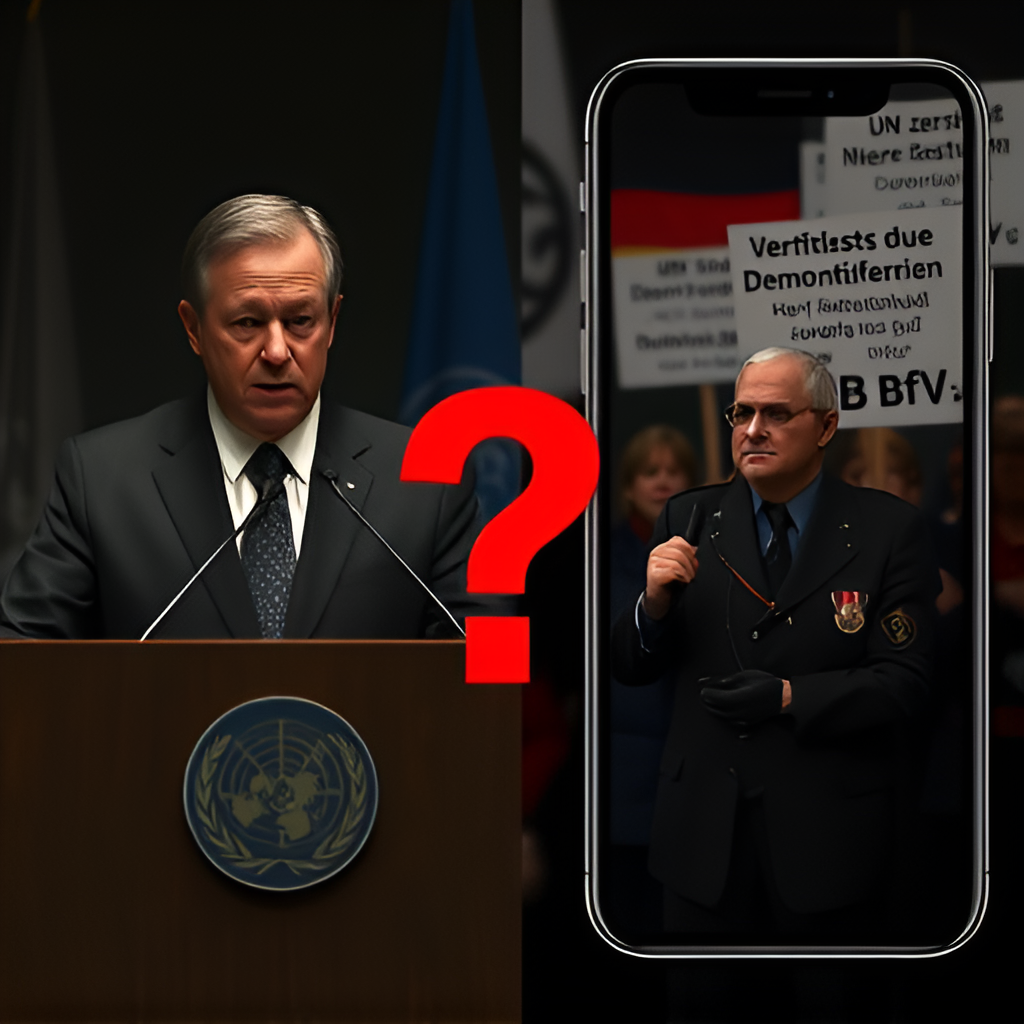
“Herr Obersturmbannführer, the UN Is Undermining Our Democracy!” – The Bizarre Post That Confused Everyone

The UN’s Critique of the German Verfassungsschutz: A Fact-Check

A recent social media post using the dramatic address “Herr Obersturmbannführer” claims the UN is “undermining our democracy” and calls on the “@Bfv_Bund” to take action. While the wording is clearly satirical, it raises a legitimate question: Has the United Nations actually criticized Germany’s domestic intelligence agency, the Federal Office for the Protection of the Constitution (BfV)?

The short answer is yes. A series of UN reports and statements over the last decade have expressed concern about Germany’s intelligence oversight, particularly concerning the BfV and the Federal Intelligence Service (BND). However, the nature of this criticism is not about the UN “undermining” democracy, but about ensuring that the agencies protecting it are themselves subject to strong democratic controls and oversight.

The following analysis examines the factual basis of these claims based on UN documents and other official sources.

1. The 2026 UN Warning on Freedom of Expression: A Question of Political Instrumentalization

A UN warning in 2026 that critics connect directly to the BfV’s activities was issued by Irene Khan, the UN Special Rapporteur on Freedom of Expression . Following a visit to Germany in February 2026, Khan warned that the space for free speech in the country was under pressure. She criticized a “security-state approach” to political speech, activism, and protest. She cited examples such as the banning of specific slogans, the surveillance of organizations on sometimes vague extremism grounds, and the danger of political statements being criminalized or administratively restricted .

For critics of the BfV, this critique is particularly relevant given the agency’s decision to classify the Alternative for Germany (AfD) as a “suspected right-wing extremist” case. This case was the subject of a heated public debate, and a UN warning against using state instruments like a domestic intelligence agency against a political opponent fits directly into this criticism . Khan’s warning that “trying to save democracy through banning parties undermines democracy itself”  resonated with those who see the BfV’s actions as a threat to democratic competition. This 2026 criticism forms the most direct and recent link between UN concerns and the BfV’s political role.

2. The Longer View: Systematic UN Criticism of Intelligence Oversight

The UN’s concerns about German intelligence are not new. A 2018 report by the UN Special Rapporteur on the Right to Privacy, Joe Cannataci, praised Germany’s strong culture of privacy and the rule of law but identified serious gaps. He criticized the exclusion of the Federal Data Protection Commissioner from many BND-related matters and warned of a fragmentation of the oversight system, noting that Germany “seems to be missing oversight authorities empowered and adequately resourced to knock on the doors of the security agencies at any time and carry out spot checks” .

This criticism was echoed in the 2021 findings of the UN Human Rights Committee, which expressed concern about the authorities’ “extensive surveillance powers, including online surveillance, and the hacking of encrypted communications data” and recommended that all such activities be subject to “effective and independent oversight mechanisms” . The complexity of Germany’s oversight system, described as “the most fragmented landscape for intelligence oversight” in comparison to other European countries, has also been criticized by independent experts . These reports emphasize the systemic challenges of overseeing intelligence work, not an intent to “undermine” democracy.

3. The Role and Mandate of the BfV

To understand the context of this debate, it is crucial to understand the BfV’s role. The agency is specifically tasked with domestic intelligence to protect the “free democratic basic order” against internal threats and is separate from police powers to prevent a return to a Gestapo-style secret police . Its mandate is to observe “verfassungsfeindliche” (anti-constitutional) developments . When critics invoke the term “Obersturmbannführer” (an SS rank), they are drawing a parallel between the BfV and a political secret police, arguing that the agency is being used to surveil and stigmatize political opponents rather than merely protect the constitution .

4. The Misunderstanding: “@Bfv_Bund”

The initial post also mentions an account called “@Bfv_Bund”. This appears to be a misunderstanding. The official abbreviation for the BfV, the Federal Office for the Protection of the Constitution, is BfV, not Bfv . This suggests the post may be misdirecting its criticism.


In conclusion, the UN has indeed critically examined Germany’s intelligence oversight. Recent warnings, especially the 2026 concerns about freedom of expression, have been interpreted by political critics as a direct condemnation of the BfV’s actions. This builds on a longer history of UN reports highlighting institutional gaps and fragmentation in the oversight of security agencies. The debate is thus not about whether the UN has criticized the BfV, but about the implications of that criticism for German democracy.

“Herr Obersturmbannführer, die UN zersetzen unsere Demokratie!” – Der bizarre Social-Media-Post, der alle verwirrt

Ein merkwürdiger Social-Media-Beitrag sorgt für Verwirrung: Mit der Anrede “Herr Obersturmbannführer” wird das Bundesamt für Verfassungsschutz (BfV) aufgefordert, gegen die Vereinten Nationen vorzugehen. Die UN würde “unsere Demokratie zersetzen”. Die Ironie: Die UN hat tatsächlich Kritik am deutschen Verfassungsschutz geübt – aber aus ganz anderen Gründen.


Der Post: Eine kuriose Mischung aus Satire und Verschwörungsrhetorik

Der fragliche Post ist auf Deutsch verfasst und beginnt mit einer ungewöhnlichen und höchst ironischen Anrede: “Herr Obersturmbannführer” – ein Dienstgrad der Nazi-SS. Anschließend wird behauptet, die “UN” würde die Demokratie zersetzen, und das @Bfv_Bund (das Bundesamt für Verfassungsschutz) wird aufgefordert, kurzen Prozess mit dieser “Bedrohung” zu machen.

Die Verwendung des SS-Dienstgrades ist fast sicher ironisch gemeint – der Verfasser stellt das BfV damit in eine Reihe mit einer Geheimpolizei und bedient sich gängiger Verschwörungsnarrative.


Ein Fall von Verwechslung?

Ein zentrales Problem: Die Abkürzung BfV kann für verschiedene Organisationen stehen.

1. Das Bundesamt für Verfassungsschutz (BfV): Deutschlands Inlandsgeheimdienst. Seine Aufgabe ist der Schutz der freiheitlichen demokratischen Grundordnung. Es sammelt Informationen über extremistische, terroristische und andere Bedrohungen der inneren Sicherheit. Die Arbeit des BfV konzentriert sich auf Bedrohungen von innen – nicht auf internationale Organisationen wie die UN. Die offizielle E-Mail-Domain des BfV endet auf @bfv.bund.de.
2. Regionale Fußballverbände: Die Abkürzung “BFV” wird auch von mehreren deutschen und österreichischen Regionalverbänden verwendet, etwa dem Bayerischen Fußball-Verband (BFV). Diese Organisationen haben nichts mit Geheimdiensten oder den Vereinten Nationen zu tun.

Der Post richtet sich an “@Bfv_Bund” – was wie eine Verwechslung mit der offiziellen BfV-Domain wirkt.


Die UN-Kritik am Verfassungsschutz: Ein Faktencheck

Die Behauptung, die UN würde “unsere Demokratie zersetzen”, ist eine gängige Verschwörungstheorie. Tatsächlich gibt es jedoch eine Reihe von UN-Berichten, die Deutschland und seinen Verfassungsschutz kritisieren – aber aus einem ganz anderen Grund: Es geht um die Sicherstellung demokratischer Kontrolle über die Geheimdienste.

Die UN-Warnung 2026 zur Meinungsfreiheit

Die jüngste und direkteste Kritik kam im Februar 2026 von der UN-Sonderberichterstatterin für Meinungsfreiheit, Irene Khan. Nach einem Besuch in Deutschland warnte sie davor, dass der Raum für freie Meinungsäußerung unter Druck gerate. Sie kritisierte einen “Sicherheitsstaats-Ansatz” gegenüber politischer Rede, Aktivismus und Protest – und warnte davor, politische Äußerungen zu kriminalisieren oder administrativ zu unterdrücken.

Für Kritiker des BfV ist diese Warnung besonders relevant: Die Einstufung der AfD als “rechtsextremistischer Verdachtsfall” wurde von UN-Seite indirekt thematisiert. Khan warnte: “Der Versuch, die Demokratie durch Parteiverbote zu retten, untergräbt die Demokratie selbst”.

Die Systemkritik der UN: Fehlende Kontrolle

Die UN-Kritik an den deutschen Geheimdiensten reicht weiter zurück. 2018 bemängelte der UN-Sonderberichterstatter für das Recht auf Privatsphäre, Joe Cannataci, die mangelnde Unabhängigkeit der Datenschutzkontrolle und warnte vor einer Zersplitterung des Kontrollsystems. Deutschland fehle es an Kontrollbehörden, die “jederzeit an die Türen der Sicherheitsbehörden klopfen und unangekündigte Kontrollen durchführen können”.

2021 äußerte der UN-Menschenrechtsausschuss Bedenken über die “umfassenden Überwachungsbefugnisse” der Behörden und forderte wirksame unabhängige Kontrollmechanismen.


Die Ironie der Situation

Die Botschaft des Social-Media-Posts lautet, die UN würde die Demokratie zersetzen und das BfV solle eingreifen. Die UN wiederum kritisiert, dass das BfV möglicherweise selbst die Demokratie gefährdet – durch unzureichende Kontrolle, politische Instrumentalisierung und einen “Sicherheitsstaats-Ansatz”.

Der Post bedient sich einer Sprache der NS-Zeit (“Obersturmbannführer”), um das BfV mit einer Geheimpolizei gleichzusetzen und es als politisches Werkzeug darzustellen.


Fazit

Die UN hat tatsächlich Kritik am deutschen Verfassungsschutz geübt – aber nicht, um die Demokratie zu “zersetzen”, sondern um sie zu stärken, indem sie auf unzureichende demokratische Kontrolle und eine mögliche politische Instrumentalisierung der Behörde hinweist.

Der bizarre Social-Media-Post ist eine Mischung aus Satire, Verschwörungsrhetorik und einem möglichen Missverständnis über die Zuständigkeiten des BfV. Dass die UN tatsächlich den Finger in die Wunde legt, macht die Ironie nur noch größer.


Die vollständige Dokumentation mit allen Quellen, UN-Berichten und weiterführenden Analysen ist exklusiv für Patreon-Abonnenten verfügbar unter patreon.com/berndpulch.

✌AfD’s Political Impact in Germany

Forme4 Chancellor Merkel even repeated an election to stop AfD – in Vain

The Alternative for Germany (AfD), a right and Eurosceptic political party, has significantly shaped German politics since its founding in 2013. Here’s an analysis of its political impact:

Rise to Prominence

  • Electoral Success: Initially focusing on opposition to the euro and the European Union, AfD quickly shifted its focus to anti-immigration, particularly after the 2015 refugee crisis. This pivot led to a notable electoral success, with AfD becoming the first far-right party since World War II to enter the German Bundestag in 2017, capturing around 12.6% of the vote. Over the years, its voter base has grown, especially in eastern Germany, where it has become the strongest political force in several states like Thuringia and Saxony.
  • State Elections: AfD’s influence is particularly evident in regional elections. In 2024, it won its first state election in Thuringia, marking a historic moment as it was the first far-right party to achieve this since the Nazi era. This success has challenged the traditional political landscape, forcing mainstream parties to reconsider their strategies.

Policy Influence

  • Immigration Policy: AfD’s staunch anti-immigration stance has influenced the national debate on migration. Even parties traditionally not aligned with far-right views have shifted towards more stringent policies on immigration, partly in response to AfD’s popularity and the political pressure it exerts. This shift can be seen in the tightened asylum policies and discussions around border control.
  • Euroscepticism: While not in government, AfD’s Eurosceptic rhetoric has impacted Germany’s EU policy discussions. It has pushed for a reevaluation of Germany’s role within the EU, advocating for a more nationalist approach to European integration.

Social and Political Dynamics

  • Polarization: AfD’s rise has contributed to political polarization in Germany. The party’s controversial statements and policies have led to massive counter-protests and debates about the normalization of far-right ideologies in the political arena. This polarization has deepened the divide between political factions, influencing public discourse and media coverage.
  • Mainstream Parties’ Reactions: The success of AfD has forced other political parties to respond. Mainstream parties have occasionally adopted some of AfD’s rhetoric or policies in an attempt to win back voters, although they’ve also firmly positioned themselves against forming coalitions with AfD due to its extremist elements.

Challenges to Democracy

  • Extremism and Surveillance: The German judiciary has labeled AfD as a “suspected extremist” party due to its far-right rhetoric and actions, leading to increased scrutiny by the domestic intelligence agency. This has sparked debates about freedom of speech versus the need to protect democratic values.
  • Electoral Impact: AfD’s performance has been pivotal in shaping electoral outcomes, often acting as a protest vote against the establishment. In some regions, it has become the largest opposition party, affecting the dynamics of power and influence in local and state parliaments.

Future Implications

  • Potential for Governance: While currently shunned by other parties for coalition formations, continued success could lead to scenarios where other parties might have to reconsider their stance, potentially normalizing AfD’s role in governance. This could have profound effects on German policy, particularly concerning immigration, EU relations, and social issues.
  • Social Cohesion: AfD’s rhetoric on nationalism and identity has challenged Germany’s narrative of multiculturalism and integration, potentially affecting social cohesion and the country’s approach to its diverse population.

In summary, AfD has not only altered the political landscape by introducing right ideologies back into mainstream discourse but has also forced a reevaluation of German political identity, policy direction, and the mechanisms of democracy itself. Its impact continues to be a significant point of contention and analysis in German politics.

❌©BERNDPULCH.ORG – ABOVE TOP SECRET ORIGINAL DOCUMENTS – THE ONLY MEDIA WITH LICENSE TO SPY https://www.berndpulch.org
https://googlefirst.org

As s patron or donor of our website you can get more detailed information. Act now before its too late…

MY BIO:

FAQ:

FAQ

@Copyright Bernd Pulch

CRYPTO WALLET  for

Bitcoin:

0xdaa3b887f885fd7725d4d35d428bd3b402d616bb

ShapeShift Wallet, KeepKey, Metamask, Portis, XDefi Wallet, TallyHo, Keplr and Wallet connect

0x271588b52701Ae34dA9D4B31716Df2669237AC7f

Crypto Wallet for Binance Smart Chain-, Ethereum-, Polygon-Networks

bmp

0xd3cce3e8e214f1979423032e5a8c57ed137c518b

Monero

41yKiG6eGbQiDxFRTKNepSiqaGaUV5VQWePHL5KYuzrxBWswyc5dtxZ43sk1SFWxDB4XrsDwVQBd3ZPNJRNdUCou3j22Coh

GOD BLESS YOU