SECRET from the FBI – Owners Plead Guilty for $5.4 Million Medicare Fraud Scheme

WASHINGTON—Three Detroit-area clinic owners pleaded guilty today for their participation in a Medicare fraud scheme, announced the Department of Justice, the FBI, and the Department of Health and Human Services (HHS).

Karina Hernandez, 28; Marieva Briceno, 46; and Henry Briceno, 58, all of Miami, pleaded guilty before U.S. District Judge Arthur J. Tarnow in the Eastern District of Michigan to one count of conspiracy to commit health care fraud. At sentencing, each defendant faces a maximum penalty of 10 years in prison and a $250,000 fine.

According to the plea documents, Hernandez managed the daily operations of three Livonia, Michigan clinics: Blessed Medical Clinic, Alpha & Omega Medical Clinic, and Manuel Medical Clinic. Marieva Briceno contributed capital to fund the opening of one clinic, and assisted her daughter, Hernandez, in the daily management of the clinics. At each clinic, Hernandez and Marieva Briceno hired recruiters who paid cash bribes to Medicare beneficiaries to attend the clinics and provide their Medicare numbers and other information. Hernandez and Marieva Briceno admitted that they used the beneficiary information to bill for medically unnecessary diagnostic tests and treatments. Henry Briceno admitted that he incorporated Manuel Medical Clinic and opened a bank account to conceal the actual ownership of the clinic. According to court documents, Blessed Medical Clinic, Alpha & Omega Medical Clinic, and Manuel Medical Clinic fraudulently billed Medicare for $5.4 million during the course of the scheme.

Today’s guilty pleas were announced by Assistant Attorney General Lanny A. Breuer of the Justice Department’s Criminal Division; U.S. Attorney for the Eastern District of Michigan Barbara L. McQuade; Special Agent in Charge Andrew G. Arena of the FBI’s Detroit Field Office; and Special Agent in Charge Lamont Pugh, III of the HHS Office of Inspector General’s (OIG) Chicago Regional Office.

This case is being prosecuted by Assistant U.S. Attorneys Frances Lee Carlson and Philip A. Ross of the Eastern District of Michigan, with assistance from Assistant Chief Gejaa T. Gobena of the Criminal Division’s Fraud Section. The case was investigated by the FBI and HHS-OIG and was brought as part of the Medicare Fraud Strike Force, supervised by the Criminal Division’s Fraud Section and the U.S. Attorney’s Office for the Eastern District of Michigan.

Since their inception in March 2007, the Medicare Fraud Strike Force operations in nine districts have charged more than 1,190 individuals, who collectively have falsely billed the Medicare program for more than $3.6 billion. In addition, HHS’s Centers for Medicare and Medicaid Services, working in conjunction with the HHS-OIG, is taking steps to increase accountability and decrease the presence of fraudulent providers.

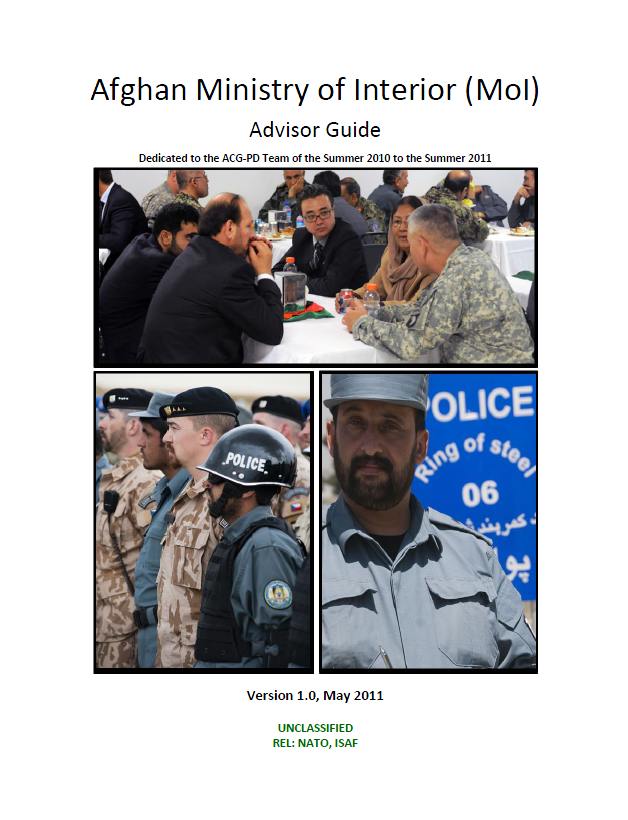
SECRET – ISAF Afghan Ministry of Interior Advisor Guide

https://publicintelligence.net/wp-content/uploads/2012/02/AfghanInteriorMinistryAdvisorGuide.png


a. Mission. NTM‐A / CSTC‐A, in coordination with NATO nations and partners, international organizations, donors and non‐governmental organizations; supports the Government of the Islamic Republic of Afghanistan (GIRoA) as it generates and sustains the Afghan National Security Force (ANSF), develops leaders, and establishes enduring institutional capacity to enable accountable Afghan‐led security.

b. 2014 End State. A self‐reliant, professionally‐led ANSF which generates and sustains enduring police, army, medical, infrastructure, and logistics capabilities, with accountable and effective Afghan Ministries that are responsible and answerable to Afghan people.

5. MOI Mission and Vision (From National Police Strategy – January 2011).

a. Mission. The ANP is primarily responsible for maintaining civil order and law enforcement. The police will work with the people to actively combat crime and disorder (including terrorism and illegal armed activity); prevent the cultivation, production and smuggling of narcotics; and fight corruption. The police will ensure the sovereignty of the State and protect its borders.

b. Minister of Interior Affairs Vision. In five years the people of Afghanistan will consider their police to be a valued institution which is honest, accountable, brave, impartial, and striving to create a secure and lawful society.

c. Our (GIRO’s) long term vision is that the ANP will uphold the Constitution of Afghanistan and enforce the prevailing laws of the country to protect the rights of all people of Afghanistan. The police will perform their duties in a professional, non‐discriminatory, accountable and trustworthy manner.

d. Civilian Policing. As part of the phased stabilization of Afghanistan with the assistance of the international community, the Afghan National Police are committed to seeking the highest standards in civilian policing in order to guarantee the rights of all Afghan citizens under the Constitution. Civilian policing is a crucial strategic concept that is based on intelligence led, proactive community collaboration. It is aimed at controlling crime, reducing the fear of criminal activity, improving the quality of life of all Afghans, and enhancing the legitimacy of police services. Civilian policing requires greater accountability of police, greater involvement of citizens, and greater concern for human rights.


DOWNLOAD ORIGINAL DOCUMENT HERE

AfghanInteriorMinistryAdvisorGuide

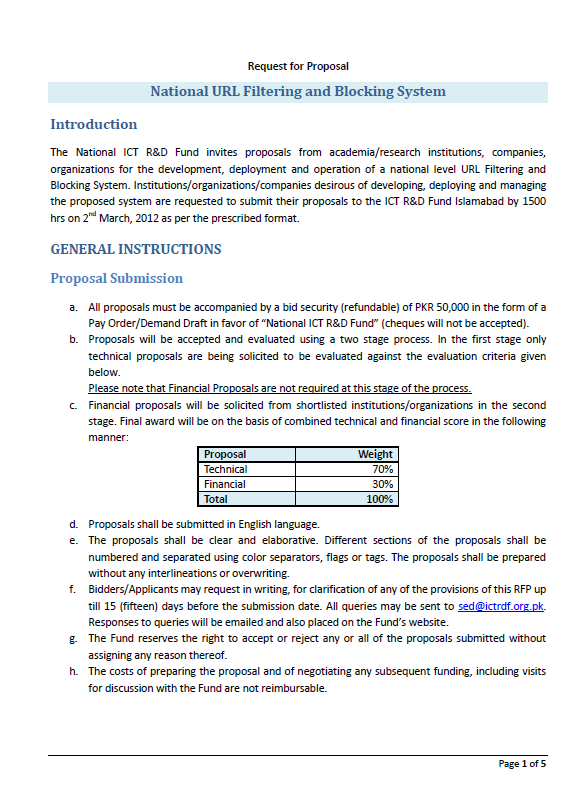
SECRET – Pakistan Internet Filtering and URL Blocking System Request for Proposal

https://publicintelligence.net/wp-content/uploads/2012/02/PakistanFiltering.png


The National ICT R&D Fund invites proposals from academia/research institutions, companies, organizations for the development, deployment and operation of a national level URL Filtering and Blocking System. Institutions/organizations/companies desirous of developing, deploying and managing the proposed system are requested to submit their proposals to the ICT R&D Fund Islamabad by 1500 hrs on 2nd March, 2012 as per the prescribed format.

Internet access in Pakistan is mostly unrestricted and unfiltered. The Internet traffic is coming from two IP backbone providers, i.e., PTCL and TWA. The Internet Service Providers (ISPs) and backbone providers have currently deployed manual URL filtering and blocking mechanism in order to block the specific URLs containing undesirable content as notified by PTA from time to time.

Many countries have deployed web filtering and blocking systems at the Internet backbones within their countries. However, Pakistani ISPs and backbone providers have expressed their inability to block millions of undesirable web sites using current manual blocking systems. A national URL filtering and blocking system is therefore required to be deployed at national IP backbone of the country.

ICT R&D Fund has decided to fund the indigenous development, deployment, operations and maintenance of such a system by companies, vendors, academia and/or research organizations with proven track record.
This system would be indigenously developed within Pakistan and deployed at IP backbones in major cities, i.e., Karachi, Lahore and Islamabad. Any other city/POP could be added in future. The system is proposed to be centrally managed by a small and efficient team stationed at POPs of backbone providers.

The system would have a central database of undesirable URLs that would be loaded on the distributed hardware boxes at each POP and updated on daily basis. The database would be regularly updated through subscription to an international reputed company maintaining and updating such databases.

System requirements would be as follows:

1. Should be capable of URL filtering and blocking, from domain level to sub folder, file levels and file types.

2. Should be able to block a single IP address or a range of IP address.

3. Hardware should be stand-alone that can be integrated into any Ethernet/IP network.

4. Hardware should be carrier grade, 1+1 redundant configuration, 100% uptime, redundant power supplies (-48 V DC) with minimum power consumption and other carrier grade specifications.

5. The system should be capable of network monitoring via SNMP. The system should also report critical system statistics, like CPU/Memory utilization, network throughput, etc.

6. The solution should support offline configuration with zero packet delay to the original traffic.

7. The system should operate on OSI layer 2 or 3.

8. The bandwidth handling capacity should be scalable. The current bandwidth of Pakistan is about 85Gbps in total as of December 2011, growing at 40-50% per year. The solution should be scalable and modular to cater for bandwidth expansion of future. Bandwidth expansion should be handled by adding/stacking hardware boxes in modular form. The solution should be deployed in distributed model with filtering boxes placed at the distribution points of backbone providers in major cities. Each hardware box should be capable of handling 10Gbps (or more) of traffic at line rate.

The installation at PTCL IP Gateways at Karachi (Pak Capital and Marston Road Exchange requires to TAP 20 (twenty) 10G interfaces. The system should be able to handle 100Gbps traffic at each node.
PTCL has decided to install 100Gbps interfaces at above location in near future, therefore the system should be able to support 100Gbps interfaces. Minimum change should be required to migrate from 10Gbps interfaces to 100Gbps interfaces.

Similar design approach should be adopted after reviewing the core network of TWA.

9. The system should be modular and scalable to any number of interfaces at the backbone router/switches.

10. The system should have the ability to intercept the flow in both directions (in-bound or out-bound traffic).

11. The system should be rapidly programmable to support new protocols and applications.

12. The system should be preferably plug and play and require minimum configuration for setup.

13. The total delay introduced by each hardware box should not be more than 1 milliseconds at line rate of 10Gbps. In case of offline configuration there should be Fail Safe operation.

14. Each box should be able to handle a block list of up to 50 million URLs (concurrent unidirectional filtering capacity) with processing delay of not more than 1 milliseconds.

15. The system should support multiple languages to capture URL in any language.

16. The system must support IWF or any other equivalent 3rd party external URL Database.

17. Master Database update time should be user configurable.

18. The Master Database should be locally installed with support to update the Database from network.

19. The system should allow Proprietary DB definition or integration.

20. The Database should be flexible and could be locally modified to meet customer needs.

21. The Database should be flexible to add/remove filters or categories.

22. The backend control of the system to view access to block list URL database should be only with the solution holder (backbone operator). The solution supplier should not have access to view the categories defined by the customer.

23. The solution supplier should be able to provide remote and onsite support on 24 x7 basis in major cities of Pakistan.

24. The solution supplier should propose and quote for providing operations and maintenance (O&M) support of the system with service level agreement (SLA) for five years after system installation and commissioning.

25. System supplier should quote cost of yearly maintenance and up-gradation of the system.

26. No one should be able to view or access the customer defined categories in Database.

27. Separate hardware fast-path for delay-sensitive traffic, ensuring very low latency (~10micS) should be provided. The system should have load balancing and failover capabilities. In case of failure or degraded performance of the system, it should be capable of automatic bypass through a fail-safe port.

28. Updating of URL Database should be done through CLI commands. Support for bulk load through file/network should also be provided.

29. The solution should also support Web based administration via HTTP or HTTPS.

30. The solution should provide easy to use, user friendly web based application to easily block/unblock URL categories.

31. The solution should provide a hierarchical authentication system with configurable hierarchal access to the system management.

32. Blacklist database must be protected with some encryption technology method/key to protect tampering.

33. The system should allow to view statistics related to packet TX and RX.

34. The system should allow reset to factory default mode. User should be prompted if Database is to be reset too.

35. The system should allow to enable/disable all the features listed under filtering/blocking.

SECRET from the FBI – Six Hackers in the United States and Abroad Charged for Crimes Affecting Over One Million Victims

Five computer hackers in the United States and abroad were charged today, and a sixth pled guilty, for computer hacking and other crimes. The six hackers identified themselves as aligned with the group Anonymous, which is a loose confederation of computer hackers and others, and/or offshoot groups related to Anonymous, including “Internet Feds,” “LulzSec,” and “AntiSec.”

RYAN ACKROYD, a/k/a “kayla,” a/k/a “lol,” a/k/a “lolspoon”; JAKE DAVIS, a/k/a “topiary,” a/k/a “atopiary”; DARREN MARTYN, a/k/a “pwnsauce,” a/k/a “raepsauce,” a/k/a “networkkitten”; and DONNCHA O’CEARRBHAIL, a/k/a “palladium,” who identified themselves as members of Anonymous, Internet Feds, and/or LulzSec, were charged in an indictment unsealed today in Manhattan federal court with computer hacking conspiracy involving the hacks of Fox Broadcasting Company, Sony Pictures Entertainment, and the Public Broadcasting Service (“PBS”). O’CEARRBHAIL is also charged in a separate criminal complaint with intentionally disclosing an unlawfully intercepted wire communication.

HECTOR XAVIER MONSEGUR, a/k/a “Sabu,” a/k/a “Xavier DeLeon,” a/k/a “Leon,” who also identified himself as a member of Anonymous, Internet Feds, and LulzSec, pled guilty on August 15, 2011 in U.S. District Court to a 12-count information charging him with computer hacking conspiracies and other crimes. MONSEGUR’S information and guilty plea were unsealed today. The crimes to which MONSEGUR pled guilty include computer hacking conspiracy charges initially filed in the Southern District of New York. He also pled guilty to the following charges: a substantive hacking charge initially filed by the U.S. Attorney’s Office in the Eastern District of California related to the hacks of HBGary, Inc. and HBGary Federal LLC; a substantive hacking charge initially filed by the U.S. Attorney’s Office in the Central District of California related to the hack of Sony Pictures Entertainment and Fox Broadcasting Company; a substantive hacking charge initially filed by the U.S. Attorney’s Office in the Northern District of Georgia related to the hack of Infragard Members Alliance; and a substantive hacking charge initially filed by the U.S. Attorney’s Office in the Eastern District of Virginia related to the hack of PBS, all of which were transferred to the Southern District of New York, pursuant to Rule 20 of the Federal Rules of Criminal Procedure, in coordination with the Computer Crime and Intellectual Property Section (“CCIPS”) in the Justice Department’s Criminal Division.

Late yesterday, JEREMY HAMMOND, a/k/a “Anarchaos,” a/k/a “sup_g,” a/k/a “burn,” a/k/a “yohoho,” a/k/a “POW,” a/k/a “tylerknowsthis,” a/k/a “crediblethreat,” who identified himself as a member of AntiSec, was arrested in Chicago, Illinois and charged in a criminal complaint with crimes relating to the December 2011 hack of Strategic Forecasting, Inc. (“Stratfor”), a global intelligence firm in Austin, Texas, which may have affected approximately 860,000 victims. In publicizing the Stratfor hack, members of AntiSec reaffirmed their connection to Anonymous and other related groups, including LulzSec. For example, AntiSec members published a document with links to the stolen Stratfor data titled, “Anonymous Lulzxmas rooting you proud” on a file sharing website.

The following allegations are based on the indictment, the information, the complaints, and statements made at MONSEGUR’s guilty plea:

Hacks by Anonymous, Internet Feds, and LulzSec

Since at least 2008, Anonymous has been a loose confederation of computer hackers and others. MONSEGUR and other members of Anonymous took responsibility for a number of cyber attacks between December 2010 and June 2011, including denial of service (“DoS”) attacks against the websites of Visa, MasterCard, and PayPal, as retaliation for the refusal of these companies to process donations to Wikileaks, as well as hacks or DoS attacks on foreign government computer systems.

Between December 2010 and May 2011, members of Internet Feds similarly waged a deliberate campaign of online destruction, intimidation, and criminality. Members of Internet Feds engaged in a series of cyber attacks that included breaking into computer systems, stealing confidential information, publicly disclosing stolen confidential information, hijacking victims’ e-mail and Twitter accounts, and defacing victims’ Internet websites. Specifically, ACKROYD, DAVIS, MARTYN, O’CEARRBHAIL, and MONSEGUR, as members of InternetFeds, conspired to commit computer hacks including: the hack of the website of Fine Gael, a political party in Ireland; the hack of computer systems used by security firms HBGary, Inc. and its affiliate HBGary Federal, LLC, from which Internet Feds stole confidential data pertaining to 80,000 user accounts; and the hack of computer systems used by Fox Broadcasting Company, from which Internet Feds stole confidential data relating to more than 70,000 potential contestants on “X-Factor,” a Fox television show.

In May 2011, following the publicity that they had generated as a result of their hacks, including those of Fine Gael and HBGary, ACKROYD, DAVIS, MARTYN, and MONSEGUR formed and became the principal members of a new hacking group called “Lulz Security” or “LulzSec.” Like Internet Feds, LulzSec undertook a campaign of malicious cyber assaults on the websites and computer systems of various business and governmental entities in the United States and throughout the world. Specifically, ACKROYD, DAVIS, MARTYN, and MONSEGUR, as members of LulzSec, conspired to commit computer hacks including the hacks of computer systems used by the PBS, in retaliation for what LulzSec perceived to be unfavorable news coverage in an episode of the news program “Frontline”; Sony Pictures Entertainment, in which LulzSec stole confidential data concerning approximately 100,000 users of Sony’s website; and Bethesda Softworks, a video game company based in Maryland, in which LulzSec stole confidential information for approximately 200,000 users of Bethesda’s website.

The Stratfor Hack

In December 2011, HAMMOND conspired to hack into computer systems used by Stratfor, a private firm that provides governments and others with independent geopolitical analysis. HAMMOND and his co-conspirators, as members of AntiSec, stole confidential information from those computer systems, including Stratfor employees’ e-mails as well as account information for approximately 860,000 Stratfor subscribers or clients. HAMMOND and his co-conspirators stole credit card information for approximately 60,000 credit card users and used some of the stolen data to make unauthorized charges exceeding $700,000. HAMMOND and his co-conspirators also publicly disclosed some of the confidential information they had stolen.

The Hack of International Law Enforcement

In January 2012, O’CEARRBHAIL hacked into the personal e-mail account of an officer with Ireland’s national police service, the An Garda Siochana (the “Garda”). Because the Garda officer had forwarded work e-mails to a personal account, O’CEARRBHAIL learned information about how to access a conference call that the Garda, the FBI, and other law enforcement agencies were planning to hold on January 17, 2012 regarding international investigations of Anonymous and other hacking groups. O’CEARRBHAIL then accessed and secretly recorded the January 17 international law enforcement conference call, and then disseminated the illegally-obtained recording to others.

***

MONSEGUR, 28, of New York, New York, pled guilty to three counts of computer hacking conspiracy, five counts of computer hacking, one count of computer hacking in furtherance of fraud, one count of conspiracy to commit access device fraud, one count of conspiracy to commit bank fraud, and one count of aggravated identity theft. He faces a maximum sentence of 124 years and six months in prison.

ACKROYD, 23, of Doncaster, United Kingdom; DAVIS, 29, of Lerwick, Shetland Islands, United Kingdom; and MARTYN, 25, of Galway, Ireland, each are charged with two counts of computer hacking conspiracy. Each conspiracy count carries a maximum sentence of 10 years in prison.

O’CEARRBHAIL, 19, of Birr, Ireland, is charged in the indictment with one count of computer hacking conspiracy, for which he faces 10 years in prison. He is also charged in the complaint with one count of intentionally disclosing an unlawfully intercepted wire communication, for which he faces a maximum sentence of five years in prison.

HAMMOND, 27, of Chicago, Illinois, is charged with one count of computer hacking conspiracy, one count of computer hacking, and one count of conspiracy to commit access device fraud. Each count carries a maximum sentence of 10 years in prison.

DAVIS is separately facing criminal charges in the United Kingdom, which remain pending, and ACKROYD is being interviewed today by the Police Central e-crime Unit in the United Kingdom. O’CEARRBHAIL was arrested today by the Garda.

The case is being prosecuted by the U.S. Attorney’s Office for the Southern District of New York. The investigation was initiated and led by the FBI, and its New York Cyber Crime Task Force, which is a federal, state, and local law enforcement task force combating cybercrime, with assistance from the PCeU; a unit of New Scotland Yard’s Specialist Crime Directorate, SCD6; the Garda; the Criminal Division’s CCIPS; and the U.S. Attorneys’ Offices for the Eastern District of California, the Central District of California, the Northern District of Georgia, and the Eastern District of Virginia; as well as the Criminal Division’s Office of International Affairs.

The charges contained in the indictment and complaints are merely accusations, and the defendants are presumed innocent unless and until proven guilty.

SECRET from the FBI – Dallas Doctor Arrested for Role in Nearly $375 Million Health Care Fraud Scheme

WASHINGTON—A physician and the office manager of his medical practice, along with five owners of home health agencies, were arrested today on charges related to their alleged participation in a nearly $375 million health care fraud scheme involving fraudulent claims for home health services.

The arrests and charges were announced today by Deputy Attorney General James Cole and Health and Human Services (HHS) Deputy Secretary Bill Corr, along with Assistant Attorney General Lanny A. Breuer of the Justice Department’s Criminal Division; U.S. Attorney Sarah R. Saldaña of the Northern District of Texas; HHS Inspector General Daniel R. Levinson; Special Agent in Charge Robert E. Casey Jr. of the FBI’s Dallas Field Office; Dr. Peter Budetti, Deputy Administrator for Program Integrity for the Centers for Medicare and Medicaid Services (CMS); and the Texas Attorney General’s Medicaid Fraud Control Unit (MFCU).

The indictment, filed in the Northern District of Texas and unsealed today, charges Jacques Roy, M.D., 54, of Rockwall, Texas; Cynthia Stiger, 49, of Dallas; Wilbert James Veasey Jr., 60, of Dallas; Cyprian Akamnonu, 63, of Cedar Hill, Texas; Patricia Akamnonu, RN, 48, of Cedar Hill; Teri Sivils, 44, of Midlothian, Texas; and Charity Eleda, RN, 51, of Rowlett, Texas, each with one count of conspiracy to commit health care fraud. Roy also is charged with nine counts of substantive health care fraud, and Veasey, Patricia, Akamnonu and Eleda are each charged with three counts of health care fraud. Eleda also is charged with three counts of making false statements related to a Medicare claim. All the defendants are expected to make their initial appearances at 2:00 p.m. CST today in federal court in Dallas.

In addition to the indictment, CMS announced the suspension of an additional 78 home health agencies (HHA) associated with Roy based on credible allegations of fraud against them.

Today’s enforcement actions are the result of the Medicare Fraud Strike Force operations, which are part of the Health Care Fraud Prevention & Enforcement Action Team (HEAT). HEAT is a joint initiative announced in May 2009 between the Department of Justice and HHS to focus their efforts to prevent and deter fraud and enforce anti-fraud laws around the country.

“The conduct charged in this indictment represents the single largest fraud amount orchestrated by one doctor in the history of HEAT and our Medicare Fraud Strike Force operations,” said Deputy Attorney General Cole. “Thanks to the historic partnerships we’ve built to combat health care fraud, we are sending a clear message: If you victimize American taxpayers, we will track you down and prosecute you.”

“Thanks to our new fraud detection tools, we have greater abilities to identify the kind of sophisticated fraud scheme that previously could have escaped scrutiny,” said HHS Deputy Secretary Corr. “Our aggressive Medicare Fraud Strike Force operations have enabled us to break up a significant alleged fraud operation and the fraud-fighting authorities in the Affordable Care Act have allowed us to stop further payments to providers connected to this scheme. This case and our new detection tools are examples of our growing ability to stop Medicare fraud.”

According to the indictment, Dr. Roy owned and operated Medistat Group Associates P.A. in the Dallas area. Medistat was an association of health care providers that primarily provided home health certifications and performed patient home visits. Dr. Roy allegedly certified or directed the certification of more than 11,000 individual patients from more than 500 HHAs for home health services during the past five years. Between January 2006 and November 2011, Medistat certified more Medicare beneficiaries for home health services and had more purported patients than any other medical practice in the United States. These certifications allegedly resulted in more than $350 million being fraudulently billed to Medicare and more than $24 million being fraudulently billed to Medicaid by Medistat and HHAs.

“Today, the Medicare Fraud Strike Force is taking aim at the largest alleged home health fraud scheme ever committed,” said Assistant Attorney General Breuer. “According to the indictment, Dr. Roy and his co-conspirators, for years, ran a well-oiled fraudulent enterprise in the Dallas area, making millions by recruiting thousands of patients for unnecessary services, and billing Medicare for those services. In Dallas, and the eight other Medicare Fraud Strike Force cities, the Criminal Division and our partners in the U.S. Attorneys’ Offices will continue to crack down on Medicare fraud, and hold accountable those stealing from the public fisc.”

“Fraud schemes, like the one we allege Dr. Roy executed, represent the next wave of Medicare and Medicaid crime that we face,” said U.S. Attorney Saldaña. “As enforcement actions have ramped up, not only in the Dallas Metroplex, but in several other areas throughout the country, fraudsters are devising new ways to beat the system. Rest assured, however, that with the tools and resources our district’s Medicare Care Fraud Strike Force provides, we will meet this challenge head-on and bring indictments against those who seek to defraud these critical programs, and you, the taxpayer.”

“Using sophisticated data analysis we can now target suspicious billing spikes,” said HHS Inspector General Levinson. “In this case, our analysts discovered that in 2010, while 99 percent of physicians who certified patients for home health signed off on 104 or fewer people—Dr. Roy certified more than 5,000.”

“The FBI views health care fraud as a severe crime problem,” said FBI Special Agent in Charge Casey. “It causes increased costs for consumers, tax payers and health insurance plans, and degrades the integrity of our health care system and legitimate patient care. Today’s arrests by the Dallas Medicare Fraud Strike Force send a clear message to those persons who are not only defrauding our federal Medicare and Medicaid and private health insurance programs, but victimizing the elderly, the disadvantaged, and those who are at a vulnerable time in their lives due to legitimate health issues. The FBI will continue to dedicate a substantial amount of expert resources to investigate these crimes.”

The indictment alleges that Dr. Roy used HHAs as recruiters so that Medistat could bill unnecessary home visits and medical services. Dr. Roy and other Medistat physicians certified and recertified plans of care so that HHAs also were able to bill Medicare for home health services that were not medically necessary and not provided. In addition, Dr. Roy allegedly performed unnecessary home visits and ordered unnecessary medical services.

According to the indictment, Medistat maintained a “485 Department,” named for the number of the Medicare form on which the plan of care was documented. Dr. Roy allegedly instructed Medistat employees to complete the 485s by either signing his name by hand or by using his electronic signature on the document.

Three of the HHAs Dr. Roy used as part of the scheme were Apple of Your Eye Healthcare Services Inc., owned and operated by Stiger and Veasey; Ultimate Care Home Health Services Inc., owned and operated by Cyprian and Patricia Akamnonu; and Charry Home Care Services Inc., owned and operated by Eleda. According to the indictment, Veasey, Akamnonu, Eleda and others recruited beneficiaries to be placed at their HHAs so that they could bill Medicare for the unnecessary and not provided services. As part of her role in the scheme, Eleda allegedly visited The Bridge Homeless Shelter in Dallas to recruit homeless beneficiaries staying at the facility, paying recruiters $50 per beneficiary they found at The Bridge and directed to Eleda’s vehicle parked outside the shelter’s gates.

Apple allegedly submitted claims to Medicare from Jan. 1, 2006, through July 31, 2011, totaling $9,157,646 for home health services to Medicare beneficiaries that were medically unnecessary and not provided. Dr. Roy or another Medistat physician certified the services. From Jan. 1, 2006, to Aug. 31, 2011, Ultimate submitted claims for medically unnecessary home health services totaling $43,184,628. Charry allegedly submitted fraudulent claims from Aug. 1, 2008, to June 30, 2011, totaling $468,858 in medically unnecessary and not provided home health services.

The indictment alleges that Sivils, as Medistat’s office manager, helped facilitate the fraud scheme by, among other actions, supervising the processing of thousands of plans of care that contained Dr. Roy’s electronic signature and other Medistat physicians’ signatures, permitting HHAs to bill Medicare for unnecessary home health services and accepting cash payments from Cyprian Akamnonu in exchange for ensuring plans of care contained Dr. Roy or another Medistat physician’s signature.

As outlined in the government’s request to the court to detain Dr. Roy, in June 2011, CMS suspended provider numbers for Dr. Roy and Medistat based on credible allegations of fraud, thus ensuring Dr. Roy did not receive payment from Medicare. Immediately after the suspension, nearly all of Medistat’s employees started billing Medicare under the provider number for Medcare HouseCalls. The court document alleges that Dr. Roy was in fact in charge of day-to-day operations at Medcare, and that Dr. Roy continued to certify patients for home health despite the suspension.

Each charged count of conspiracy to commit health care fraud and substantive health care fraud carries a maximum penalty of 10 years in prison and a $250,000 fine. Each false statement charge carries a maximum penalty of five years in prison and a $250,000 fine. The indictment also seeks forfeiture of numerous items including funds in bank accounts, a sailboat, vehicles, and multiple pieces of property.

An indictment is merely an allegation and defendants are presumed innocent unless and until proven guilty beyond a reasonable doubt in a court of law.

The case is being prosecuted by Assistant U.S. Attorneys Michael C. Elliott, Mindy Sauter, and John DeLaGarza of the Northern District of Texas and Trial Attorney Ben O’Neil and Deputy Chief Sam S. Sheldon of the Criminal Division’s Fraud Section. The case was investigated by the FBI, HHS-OIG, and MFCU and was brought as part of the Medicare Fraud Strike Force, supervised by the Criminal Division’s Fraud Section and the U.S. Attorney’s Office for the Northern District of Texas.

Since their inception in March 2007, Medicare Fraud Strike Force operations in nine locations have charged more than 1,190 defendants who collectively have falsely billed the Medicare program for more than $3.6 billion.

To learn more about the HEAT Strike Force, please visit: http://www.stopmedicarefraud.gov.

From Inside the CIA – Capturing the Potential of Outlier Ideas in the Intelligence Community Clint Watts and John E. Brennan

DOWNLOAD THE ORIGINAL DOCUMENT HERE

cia-outliers

SECRET – DHS London Officials Issue Heroin Anthrax Alert

https://i0.wp.com/publicintelligence.net/wp-content/uploads/2012/02/DHS-AnthraxHeroin.png


SECRET from the FBI – $10 Million Returned to Victims of Public Corruption Scheme, Including Kodak and the Town of Greece

ROCHESTER, NY—U.S. Attorney William J. Hochul, Jr. announced today that more than $10,000,000 in forfeited property has been returned to the victims of one of the largest public corruption cases ever prosecuted in the Western District of New York. Those receiving restitution include the Eastman Kodak Company, the Town of Greece, IBM, ITT Industries, Inc., RG&E, and Global Crossing. The companies and town were all victims of real property tax appraisal and assessment schemes spearheaded by John Nicolo, a property appraiser.

In 2005, John Nicolo, Mark Camarata, Charles Schwab, David Finnman, and others were arrested and later convicted of a variety of crimes including mail and wire fraud, conspiracy, and money laundering. The defendants schemed victims out of millions of dollars by artificially inflating tax assessments on properties they owned, and then causing John Nicolo to be hired by the companies in an effort to reduce the resulting tax assessments.

Assistant U.S. Attorney Richard A. Resnick, who prosecuted the case, stated that David Finnman and Mark Camarata, while working at Kodak, hired Nicolo to perform real property appraisal services for Kodak between 1997 and 2005. In return for hiring Nicolo, Finnman, and Camarata would receive money representing kickbacks from Nicolo. In addition, Charles Schwab, while the Greece Town Assessor, also received kickbacks from Nicolo in connection with various property tax assessment matters involving property located in Greece.

The forfeiture aspect of the case resulted in considerable litigation over the several years following the criminal convictions. In February 2009, U.S. District Judge David G. Larimer ultimately agreed with the Government’s position and ordered over $12,000,000 in assets to be forfeited from the various defendants. The ruling spurred further litigation involving John Nicolo’s wife, Constance Roeder, who claimed that much of the money was hers and had nothing to do with Nicolo’s crimes. In November 2011, Judge Larimer approved a settlement which awarded the government more than $10,000,000 and returned $2,000,000 to Constance Roeder, which was determined not to have been involved in her husband’s appraisal fund.

Of the $10,000,000 settlement, the Eastman Kodak Co. received $7,800,000 and the Town of Greece received $1,900,000. In addition, IBM received $70,000, RG&E $13,000, ITT Space Systems, LLC $633,000, and Global Crossing $33,750.

The majority of the properties forfeited involved large financial accounts where John Nicolo concealed his illegal proceeds. Some of the accounts were valued in excess of several million dollars. Nicolo also forfeited BMW and Volvo automobiles and a Bentley, valued at $165,000, which was purchased with illegal cash just months prior to its seizure in 2005. In addition, Mark Camarata forfeited almost $1,000,000 and the government seized high-end vehicles and two residences from Charles Schwab, one of which was a home in an exclusive South Carolina golf community.

Furthermore, a vacation home and a number of parcels overlooking Keuka Lake, worth approximately $500,000, are still to be sold. That money will be forfeited to the government and used to assist law enforcement in further criminal investigations in our community.

Following the criminal prosecution, John Nicolo and Charles Schwab were sentenced to 12 years in federal prison, Mark Camarata was sentenced to 24 months, and David Finnman received 21 months.

“This case sends a strong message that public corruption and corporate fraud will not be tolerated,” said U.S. Attorney Hochul. “Those who attempt to make financial gains by victimizing others not only risk destroying their families but also losing their freedom. As this case demonstrates, our office is also fully prepared to utilize the federal forfeiture laws to take the ‘profit’ out of such crimes by stripping defendants of their illicit proceeds and returning them to innocent victims where they belong.”

The successful prosecution and restitution are the result an investigation by special agents of the Federal Bureau of Investigation, under the direction of Special Agent in Charge Christopher M. Piehota; the Internal Revenue Service, under the direction Special Agent in Charge Charles R. Pine; the Postal Inspection Service, under the direction of Inspector in Charge Robert Bethel; and the Greece Police Department, under the direction of Chief Todd K. Baxter.

Secret – (U//FOUO) U.S. Air Force Top Ten Cyber Threats 2012

https://i0.wp.com/publicintelligence.net/wp-content/uploads/2012/02/USAF-CyberThreat2012.png


Every year as technology grows and advances thus do the threats that surround it. Predicting what new cyber threats to look for may not always be an easy task. By keeping up with the past trends and ever changing current environment, may help to give us a good handle on how to prepare for what may be to come.

Last year we saw great changes in Hacktivism, mobile threats, social-media exploitation, client-side exploitation, and targeted attacks. As many of these will only continue to evolve as we step in to 2012, there are many more to be added to the list and not ignored. According to McAfee, the top ten threats for 2012 are:

1. Attacking Mobile Devices – Over the last two years mobile devices and smartphones have experienced a huge increase in attacks with 2011 showing the largest levels in mobile malware history. As they did on PCs, rootkits and botnets deliver ads and make money off of their mobile victims the same way. The installation of software or spyware, ad clicks or premium-rate text messages, as well as a shift toward mobile banking attacks is just a few threats facing mobile device users. As more users handle their finances on mobile devices, techniques previously dedicated for online banking will now focus on mobile banking users, bypassing PCs and going straight for mobile banking apps.

2. Embedded Hardware – GPS, routers, network bridges, and recently many consumer electronic devices use embedded functions and designs. Malware that attacks at the hardware layer will be required for exploiting embedded systems. Attackers will often try to “root” a system at its lowest level. If code can be inserted that alters the boot order or loading order of the operating system, greater control is gained and can maintain long-term access to the system and its data. The consequence of this trend is that other systems that use embedded hardware, for example, automotive systems, medical systems, or utility systems will become susceptible to these types of attacks. These proofs-of-concept code are expected to become even more effective in 2012.

3. “Legalized” Spam – Since the drop in global spamming volumes from the peak in 2009 and the increased black market cost of sending spam through botnets, “legitimate” advertising agencies. The United States’ CAN-SPAM Act was watered down so much that advertisers are not required to receive consent for sending advertising. “Legal” spams, and the technique known as “snowshoe spamming,” are expected to continue to grow at a faster rate than illegal phishing and confidence scams.

4. Industrial Attacks – Gaining more attention every day, the cyber threat potential is one of few that pose real loss of property and life. Water, electricity, oil and gas are essential to people’s everyday lives, Many industrial systems are not prepared for cyber attacks, yet many such as water, electricity, oil and gas are essential to everyday living. As with recent incidents directed at water utilities in the U.S., attackers will continue to leverage this lack of preparedness.

5. Hacktivism – One thing is certain, when a target was identified, hacktivists are a credible force. The problem in 2011 was the undefined structure, differentiating between rogue script kiddies and a politically motivated campaign was a task. McAfee Labs predicts that in 2012, either the “true” Anonymous group will re-invent itself, or die out. The other piece to look for in 2012, digital and physical demonstrations becoming more engaged and targeting public figures more than ever before.

6. Virtual Currency – Also commonly referred to as cyber-currency, a popular means to exchange money online which is not backed by tangible assets or legal tender laws. Many use services such as Bitcoin, which allows users to make transactions through a decentralized, peer-to-peer network using an online wallet to receive “coins” and make direct online payments. Users need a wallet address to be able to send and receive coins, the wallets however are not encrypted and the transactions are public. This boosts opportunity for cybercriminals, not to mention Trojan malware.

7. Rogue Certificates – We often tend to trust digitally-signed certificates without a second thought believing the digital signature or certificate authority they came from to be legit. Recent threats such as Stuxnet and Duqu used rogue certificates to evade detection and investigations have shown that as many as 531 fraudulent certificates were issued from DigiNotar, a troubled Dutch authority that recently declared bankruptcy. Increased targeting of certificate authorities and the broader use of fraudulent digital certificates will only increase, giving attackers an even greater advantage.

8. Cyber War – As more and more countries are realizing the harmful outcomes cyber attacks pose, industrial attacks for example, that carry crippling potential, the need for defense is more apparent than ever. McAfee Labs expects to see countries demonstrate their cyber war capabilities in 2012, in order to send a message.

9. Domain Name System Security Extensions – A technology to protect name-resolution services from spoofing and cache poisoning by using a “web of trust” based on public-key cryptography; meant to protect a client computer from inadvertently communicating with a host as a result of a “man-in-the-middle” attack. Unfortunately it would also protect from spoofing and redirection of any attempts by authorities who seek to reroute Internet traffic destined to websites that are trafficking in illegal software or images. With governing bodies around the globe taking a greater interest in establishing “rules of the road” for Internet traffic, McAfee Labs expects to see more and more instances in which future solutions are hampered by legislative issues.

10. Advances in Operating Systems – Recent versions of Windows have included data-execution protection as well as address-space layout randomization. These security methods make it harder for attackers to compromise a victim’s machine. Encryption technologies have also boosted OS protection in recent years. As with most internal OS security measures, attackers very quickly found ways to evade them. Advances by the information security industry and operating system will continue to advance, but will that push malware writers to focus on directly attacking hardware? McAfee Labs expects to see more effort put into hardware and firmware exploits and their related real-world attacks through 2012.


DOWNLOAD ORIGINAL DOCUMENT HERE

USAF-CyberThreat2012

TOP-SECRET-Bilderberg Meetings Participant Lists 1954-2011

The following represents a nearly complete list of participants and attendees of Bilderberg Meetings from 1954-2011. It will be updated over time as more information is acquired.  If you have any additional information, including copies of official participant lists, please contact us or upload them using our secure online submission form.

Meeting Time Meeting Location Participant List Agenda
May 29-31, 1954 Hotel de Bilderberg
Osterbeek, Netherlands
Unofficial Unofficial
March 18-20, 1955 Barbizon, France
September 23-25, 1955 Garmisch-Partenkirchen, Germany
May 11-13, 1956 Fredenborg, Denmark
February 15-17, 1957 St. Simons Island Conference, USA Unofficial Unofficial
September 13-15, 1958 Buxton Conference, England Incomplete Unofficial
September 18-20, 1959 Çinar Hotel
Yeşilköy, Istanbul, Turkey
May 28-29, 1960 Palace Hotel Bürgenstock, Nidwalden, Switzerland
April 21-23, 1961 Manoir St. Castin Lac-Beauport, Quebec, Quebec, Canada
May 18-20, 1962 Grand Hotel Saltsjöbaden Saltsjöbaden, Sweden
March 29-31, 1963 Cannes, France Unofficial Unofficial
March 20-22, 1964 Williamsburg Conference, Virginia, USA Unofficial Unofficial
April 2-4, 1965 Villa D’Este Conference, Italy Unofficial Unofficial
April 2-4, 1966 Nassauer Hof Hotel Wiesbaden Wiesbaden, West Germany Unofficial Unofficial
March 31-April 2, 1967 Cambridge, United Kingdom Unofficial Unofficial
April 26-28, 1968 Mont Tremblant, Canada Unofficial Unofficial
May 9-11, 1969 Hotel Marienlyst
Helsingør, Denmark
Unofficial Unofficial
April 17-19, 1970 Grand Hotel Quellenhof
Bad Ragaz Conference, Sweden
Unofficial Unofficial
April 23-25, 1971 Woodstock Inn
Woodstock, Vermont, U.S.A.
Unofficial Unofficial
April 21-23, 1972 La Reserve di Knokke-Heist
Knokke, Belgium
Unofficial Unofficial
May 11-13, 1973 Grand Hotel Saltsjöbaden
Saltsjöbaden, Sweden
Unofficial Unofficial
April 19-21, 1974 Hotel Mont d’Arbois
Megeve, France
Unofficial Unofficial
April 25-27, 1975 Golden Dolphin Hotel Çeşme, İzmir, Turkey Unofficial Unofficial
April 1976 The Homestead
Hot Springs, Virginia, United States
April 22-24, 1977 Paramount Imperial Hotel Torquay, United Kingdom Unofficial Unofficial
April 21-23, 1978 Chauncey Conference Center
Princeton, New Jersey, United States
Unofficial Unofficial
April 27-29, 1979 Grand Hotel Sauerhof Baden bei Wien, Austria Unofficial Unofficial
April 18-20, 1980 Dorint Sofitel Quellenhof Aachen
Aachen, West Germany
Unofficial Unofficial
May 15-17, 1981 Palace Hotel
Bürgenstock, Nidwalden, Switzerland
Unofficial Unofficial
April 14-16, 1982 Rica Park Hotel Sandefjord
Sandefjord, Norway
Unofficial Unofficial
May 13-15, 1983 Château Montebello Montebello, Quebec, Canada Unofficial Unofficial
May 11-13, 1984 Grand Hotel Saltsjöbaden Saltsjöbaden, Sweden Unofficial Unofficial
May 10-12, 1985 Doral Arrowwood Hotel Rye Brook, New York, United States Unofficial Unofficial
April 25-27, 1986 Gleneagles Hotel Gleneagles, Auchterarder, United Kingdom Unofficial Unofficial
April 24-26, 1987 Villa d’Este
Cernobbio, Italy
Unofficial Unofficial
June 3-5, 1988 Interalpen-Hotel Tyrol Telfs-Buchen, Austria Unofficial Unofficial
May 12-14, 1989 Gran Hotel de La Toja Isla de La Toja, Spain Unofficial Unofficial
May 10-13, 1990 Harrison Conference Center
Glen Cove, New York, United States
Unofficial Unofficial
June 6-9, 1991 Baden-Baden, Germany Unofficial Unofficial
May 21-24, 1992 Evian-les-Bains, France Unofficial Unofficial
April 22-25, 1993 Nafsika Astir Palace Hotel
Vouliagmeni, Greece
Unofficial Unofficial
June 2-5, 1994 Helsinki, Finland Unofficial Unofficial
June 8-11, 1995 Zurich, Switzerland Unofficial Unofficial
May 30 – June 2, 1996 The Kingbridge Centre in King City, Ontario, Canada Unofficial Unofficial
June 12-15, 1997 PineIsle Resort, Atlanta, U.S.A. Unofficial Unofficial
May 14-17, 1998 Turnberry Hotel, Ayrshire, Scotland Unofficial Unofficial
June 3-6, 1999 Caesar Park Hotel Penha Longa
Hotel Caesar Park Penha Longa,Sintra, Portugal
Unofficial Unofficial
June 1-3, 2000 Chateau Du Lac Hotel
Brussels, Belgium
Unofficial Unofficial
May 24-27, 2001 Hotel Stenungsbaden
Stenungsund, Sweden
Unofficial Unofficial
May 30 – June 2, 2002 Westfields Marriott
Chantilly, Virginia, U.S.A.
Unofficial Unofficial
May 15-18, 2003 Trianon Palace Hotel
Versaille, France
Unofficial Unofficial
June 3-6, 2004 Grand Hotel des Iles Borromees
Stressa, Italy
Unofficial Unofficial
May 5-8, 2005 Dorint Sofitel Seehotel Überfahrt
Rottach-Egern, Germany
Unofficial Unofficial
June 8-11, 2006 Brookstreet Hotel Ottawa, Canada Unofficial
June 3 – May 31, 2007 Ritz-Carlton Hotel
Istanbul, Turkey
Official
June 5-8, 2008 Westfields Marriott
Chantilly, Virginia, USA
Official
May 14-17, 2009 Astir Palace
Vouliagmeni, Greece
Official
June 3-6, 2010 Hotel Dolce
Sitges, Spain
Official
June 9-12, 2011 Hotel Suvretta House, St. Moritz, Switzerland Official

SECRET RESEARCH – List of major crimes in Japan

This is a list of documented major crimes in Japan.
Date     Name     Deaths     Location     Summary
1893     Kawachi Jūningiri     13     Osaka     Kumataro Kido and Yagoro Tani murdered ten people including an infant. The homicide was motivated by grudges against the victims. They committed suicide after the murders.
1923–1924     Sataro Fukiage     6?     Kantō and Chūbu     Serial killer Sataro Fukiage raped and murdered six girls. He also raped and murdered a girl in 1906. Exact victim estimates are unknown but one theory puts the number at 93 while another put it at more than 100. Fukiage was executed in 1926.
1925     Aoyama-kai / Mitani-kumi gang war     3+     near Yokohama     In one of the largest battles between Yakuza groups, members of the Aoyama-kai and around thirty gangs led by the Mitani-kumi are involved in a dispute over a construction contract for Tokyo Denryoku Construction in Kanagawa. Aoyama-kai is a subcontractor of Shimizu-gumi and Shimizu-gumi is losing trust due to Hazama-gumi’s obstruction, which is regarded as Mitani-kumi’s instruction. After six hours of fighting, reports between 600 to 2,000 gangsters are involved with weapons including rifles, pistols, swords and farm implements. The Tokyo police and the Kempei-Tai were called in after the Kawasaki police became unable to handle the situation and, although Japanese officials declared martial law, fighting did not end until a cannon was brought in by the Aoyama-gumi. The battle injured over 150 people and killed at least three.
1936     Sada Abe     1     Tokyo     Sada Abe and Kichizo Ishida (her lover) engaged in Erotic asphyxiation resulting in his death. When he died she then cut off his penis and testicles and carried them around with her in a handbag. Because her way of killing him was erotic, her crime gave inspiration to Japanese films, such as Nagisa Oshima’s In the Realm of the Senses.
1938     Tsuyama massacre     31     rural hamlets near Tsuyama, Okayama     After cutting off electricity to his village, 21-year-old Mutsuo Toi proceeded to go on a late-night killing spree with a hunting rifle, sword, and axe before killing himself.
1941–1942     Hamamatsu serial murders     9-11     near Hamamatsu, Shizuoka     A deaf boy Seisaku Nakamura murders people in Shizuoka. He attempts to rape women and murder his family. He is arrested for nine murders in 1942. He admits two other murders. He is sentenced to death.
1944-1948     Kotobuki maternity hospital incident     103?     Tokyo     A hospital director Miyuki Ishikawa fatal neglects against about a hundred babies. There are accomplices and the shinjuku word office is suspected of approval for the murders.
1945-1946     Yoshio Kodaira     7-10     Tokyo, Tochigi     Japanese ex-soldier Yoshio Kodaira rapes and murders ten women. In China, he murders Chinese soldiers as a soldier. He also kill his father-in-law in 1932. Kodaira is executed in 1949.
1948     Teigin Bank robbery     12     Shiina, Toshima, Tokyo     Sixteen employees of a Teigin Bank branch are poisoned by cyanide after taking chemicals given to them by a man claiming to be from the health authorities who claimed they were medication to control a nearby dysentery outbreak. The man then stole 160,000 yen before making his escape. Twelve people died. Sadamichi Hirasawa, a painter, was arrested several months later. Although sentenced to death, there were strong suspicions that he was wrongfully convicted, and successive Justice Ministers refused to sign his death warrant, resulting in a stay of execution. During his 33-year imprisonment he wrote his autobiography and died of natural causes in 1987.

(Alluded to in Ian Fleming’s novel You Only Live Twice: “And down went the honourable medicine and down fell the honourable local manager and staff of the Imperial Bank of Japan. The medicine had been neat cyanide.”)
1948-1952     Osen Korogashi incident     8     Chiba, Shizuoka, Tochigi     Serial killer Genzo Kurita murders eight people. He commits necrophilia with several victims and murders a family at the cliff called Osen Korogashi. He is executed in 1959.
1960     The assassination of Inejiro Asanuma     1     Hibiya, Tokyo     The head of the Japan Socialist Party is stabbed to death by a 17-year old right-wing extremist Otoya Yamaguchi at a televised rally.
1963     Murder of Yoshinobu Murakoshi     1     Taito, Tokyo     4 year-old Yoshinobu Murakoshi fails to come home from a local park; several days later his family receives a phone call demanding ransom. Police fail to apprehend the person who collected the ransom, and the case generated massive publicity. Two years later they identified Tamotsu Obara as the kidnapper, who admitted under questioning to have murdered the child.
1963-1964     Akira Nishiguchi     5     through Japan     Serial killer Akira Nishiguchi cheats people, escapes from police officers in Japan, and kills five people. He is executed in 1970. His crimes became the basis for a book by Ryuzo Saki and the Shohei Imamura film Vengeance Is Mine.
1965     Zama and Shibuya shootings     1     Kanagawa Prefecture, Tokyo     18-year old Misao Katagiri goes on a rampage with a rifle. He shoots two police officers in Zama city, Kanagawa prefecture then hijacks several cars. A gun battle between the gunman and hundreds of special police ensues at a gun store in Shibuya, Tokyo. He is suppressed by police and sentenced to death.
1968     Norio Nagayama’s robbery spree     4     Tokyo, Kyoto, Hakodate, Nagoya     A series of high-profile robberies in which 19-year old Norio Nagayama robs people for their money after killing them with a handgun stolen from the US military. After controversial trials, the Supreme Court upholds Nagayama’s death in 1990. He is executed in 1997.
1968     300 million yen robbery     –     Fuchū, Tokyo     Disguised as a police officer, an unidentified man stops a security van belonging to the Toshiba Corporation near Tokyo’s Fuchu Prison and, in the guise conducting a bomb search, hijacks the van successfully escaping with almost 300 million yen. Despite a massive investigation into what would become the largest robbery in Japanese history, neither the man or the money are ever found.
1968     Tochigi patricide case     1     Tochigi     Chiyo Aizawa murders her own father. She is an incest victim of her father. In 1973, the supreme court of Japan sentences her to a suspended sentence, saying that the article 200 of penal code is a breach of Japanese constitution. Her sentence becomes the first unconstitutional judgment for the supreme court.
1970     Inland Sea ferry hijacking     1     Hiroshima and the Inland Sea     An armed 20-year old escaping police hijacks a ferry and takes the crew and passengers hostage. He is shot dead by a police sniper the following morning.
1971     Kiyoshi Okubo     8     Gunma Prefecture     Serial killer Kiyoshi Okubo rapes and murders eight women during 41 days. Okubo is sentenced to death in 1973 and is executed in 1976.
1971-1972     Purge incident     12     Gunma prefecture     The United Red Army torture and murder their twelve members in base camps. They call the murders “purification”. The incident comes to light after the Asama-Sanso incident.
1972     Asama-Sanso incident     2     Karuizawa, Nagano prefecture     5 armed left-wing militants of the United Red Army hold up in a mountainside holiday lodge, taking one hostage. Amidst live TV coverage, police storm the lodge after a ten-day standoff, resulting in the deaths of two policemen.
1973     Kidnapping of Kim Dae-Jung     –     Chiyoda, Tokyo     South Korean dissident Kim Dae-Jung, later to be president, is kidnapped from his hotel room in Tokyo by KCIA agents and taken to South Korea.
1979     Mitsubishi Bank sporting gun kidnapping     5     Osaka     Akiyoshi Umekawa shoot dead four people in a Mitsubishi Bank. His motivation is probably robbery at first, but he takes about 40 hostages and does something he wants. Osaka police shoot dead him two days later.
1980     Shinjuku bus attack     6     Shinjuku, Tokyo     A mentally disturbed man throws a bucket of petrol and a lit newspaper into a bus. The ensuing fire killed 6 and injured 14. He kills himself in 1997.
1982     Japan Airlines Flight 350     24     Tokyo Bay     A mentally disturbed Captain Seiji Katagiri forces the Japan Airlines Flight 350 to crash. 24 passengers are killed by the crash. He is arrested on suspicion of professional negligence resulting in deaths, but he isn’t indicted due to his insanity.
1983     Kiyotaka Katsuta     8-22     Kansai and Chūbu     Kiyotaka Katsuta is arrested for a robbery-murder. However he is suspected of a total of 22 murders later, and he admits eight murders. Katsuta is executed in 2000.
1984     Glico Morinaga case     –     Various, across Kansai     A 17-month long series of extortion against confectionery companies starting in a kidnap of the president of Glico and involving confectionery spiked with cyanide.
1985-1989     Yama-Ichi War     29     Kansai region     A Yakuza gang war between the Yamaguchi-gumi and the breakaway Ichiwa-kai faction that began over the death of kumicho Kazuo Taoka. After being passed over as kumicho, Hiroshi Yamamoto broke away from the Yamaguchi-gumi, formed the rival Ichiwa-kai, and had Taoko’s successor, Masahisa Takenaka, murdered, along with two other Yamaguchi members. Following the assassination, Yamaguchi-gumi boss Kazuo Nakanishi vows to wipe out the Ichiwa-kai. During the next few years, the two gangs would engage in an estimated 200 gun battles, killing 26 gangsters and seriously wounding many more, with local newspapers carrying daily “scorecards” of the latest body counts.
1988     Affair of the Four Children of Sugamo     1     Toshima, Tokyo     Four malnourished children are found in a Tokyo apartment nine months after their mother had left to travel with her boyfriend, during which time a fifth child was discovered to have been murdered by two friends of the oldest child.
1988-1989     Tsutomu Miyazaki     4     Tokyo and Saitama prefecture     Serial killer Tsutomu Miyazaki abducts and murders girls aged four to seven.
1988-1989     Concrete-Encased High School Girl murder     1     Tokyo     A 17-year-old boy Jo Kamisaku and three other boys abduct a high school girl Junko Furuta. They rape and assault her for 41 days. They murder her and encase her in concrete.
1989     Sakamoto family murder     3     Yokohama     Tsutsumi Sakamoto, a lawyer working on a lawsuit against Aum Shinrikyo doomsday cult disappears with his wife and child. In 1995 it was revealed that cult members had murdered them and buried their bodies.
1990     Sapporo murder     1     Sapporo     Nagata Ryoji murders a robbery victim during a break-in at a Sapporo residence. Ryoji is subsequently added to the Japanese Ten Most Wanted Fugitives list.
1990     Gangland slaying of police officers     7     Okinawa     Hideo Zamami, a member of the Kyokuryu-kai affiliated Nishiki family, guns down two plainclothes Okinawa police officers mistaking them for rival gangsters. Sentenced to life imprisonment, he later appealed the decision claiming he was innocent of the shooting and used a scapegoat. Although rejecting his appeal, the court denied the prosecution’s request for the death penalty. A total of seven persons, including the two police officers and a high school boy, are killed during the battle.
1994     Matsumoto incident     7     Matsumoto, Nagano     Doomsday cult Aum Shinrikyo release sarin nerve gas in a residential area in the world’s first use of chemical weapons by a terrorist group.
1995     Tokyo Sarin Gas Attack     12     Tokyo     Aum Shinrikyo members conduct simultaneous attacks on multiple Tokyo Metro trains using sarin nerve gas, killing 12 and injuring more than 1000.
1995     Hachiōji supermarket murders     3     Hachiōji, Tokyo     Three employees of a supermarket are found shot dead in a suspected robbery. Despite massive publicity, the case is still unsolved.
1997     Sakakibara Seito     2     Kobe     Over several months, a 14-year old boy attacks a total of four younger girls with a hammer or a knife, killing one of them. He then strangles and decapitates Jun Hase, a 11-year old boy, leaving his head in front of his school with a note stuffed in his mouth, and sends taunting letters to a newspaper. The nation is shocked when a 14 year old is arrested, and eventually prompted the government to lower the age of criminal responsibility from 16 to 14 in 2000.
1997     Murder of Masaru Takumi     2     Kobe     Masaru Takumi, considered to be the heir apparent of Yakuza leader Yoshinori Watanabe’s Yamaguchi-gumi organization, is killed by rival Nakano-kai gangsters Kouji Ishihara, Nakaho Kiyohara and Toriyabara Kiyoteru at a popular Kobe hotel. During the attack, dentist Hirai Hiroshi was mistaken as a bodyguard for Takumi and is killed by a four gunman Takeshi Yoshida whose killing of an innocent bystander would eventually lead to the Japanese government’s prosecution of the Nakano-kai.
1998     Wakayama curry poisoning     4     Wakayama     Four people are killed and 63 injured after eating curry laced with arsenic at a community festival in Wakayama. Masumi Hayashi, the chief suspect, has been sentenced to death and is currently appealing.
1999     Okegawa stalking murder     2     Okegawa, Saitama     A stalker Kazuhito Komatsu murders 21-year-old Shiori Ino with accomplices. The Police ignores her appeal before the murder and slanders her after the murder. A journalist Kiyoshi Shimizu determines criminals. Komatsu escapes and kills himself in Hokkaido.
2000     Niigata girl confinement incident     –     Tokyo     While investigating a domestic disturbance call, police discover a schoolgirl who had been kidnapped in 1990 and held prisoner in an upstairs apartment for over nine years by a mentally disturbed man, Nobuyuki Sato. The girl, Fusako Sano, was returned to her parents while Sato was hospitalized and eventually sentenced to 14 years imprisonment.
2000     Tokyo Bay Sinyo Bay Bank robbery     1     Tokyo     Tominaga Kazuyuki, a career criminal associated with the Yakuza, successfully steals 46,000,000 yen after hijacking a delivery to a pachinko parlor in December 2000. During the robbery, the driver was gunned down by Kazuyuki and an unidentified Chinese accomplice.
2000     Hostess murders     2     Roppongi, Tokyo     Joji Obara, a prominent Osaka businessman, murders and dismembers British hostess Lucie Blackman. After the discovery of her body a year later, he was charged with her murder as well as similar charges against Australian hostess Carita Ridgeway and sexual assault charges against six other women. He was found not guilty of murdering Lucy Blackman due to lack of evidence, but was convicted of the other crimes.
2000     Setagaya family murder     4     Setagaya, Tokyo     In an incident which shocked the nation, a family of four are murdered at their home in suburban Tokyo by an unknown intruder. Despite extensive investigations and a huge media coverage, the case remains unsolved.
2001     Hokuryo Clinic Incident     10?     Sendai, Miyagi     A 89-year-old woman dies mysteriously in Koryo Clinic. A nurse Daisuke Mori is suspected of at least 10 murders. He is arrested for a murder, but he insists that their death are caused by medical errors.
2001     Osaka School Massacre     8     Osaka     37 year old former janitor Mamoru Takuma entered an elementary school in Osaka, then used a kitchen knife to kill 8 students. He wounded an additional 13 other students and 2 teachers. He was executed in 2004.
2001     Myojo 56 building fire     44     Tokyo     A building is fired in Kabukicho. Three employees can escape by jumping from the third floor of the building, but 44 people are killed by carbon monoxide in the building. The cause is strongly suspected as arson. However security is poor in Kabukicho and customers use false names. The case is still unsolved.
2002     Kitakyushu serial murders     7     Kitakyūshū     Futoshi Matsunaga forces the victims to kill each other, resulting in killing 7 people between 1996 and 1998. Matsunaga and his common-law wife Junko Ogata are arrested in 2002 after a girl escapes from them.
2003     Super Free rape incident     –     Tokyo     Students of Japanese universities in Tokyo rape women in a circle Super Free. A organizer Shinichiro Wada and 13 other members are arrested for gang rapes. The estimated number of rape victims are up to 500.
2003     Fukuoka family murder     4     Fukuoka     Businessman Shinjiro Matsumoto, his wife Chika and two children aged 11 and 8 are murdered in a robbery by three Chinese students who broke into their home, and their bodies dumped in Hakata Bay. Two of the three – Yang Ning and Wang Liang – fled to China where they were arrested. Yang was executed and Wang sentenced to life imprisonment. The third, Wei Wei, was arrested in Japan and is currently on death row.
2004     Sasebo slashing     1     Sasebo, Nagasaki     Satomi Mitarai, a 12-year-old elementary student, is stabbed to death by her classmate at school. The classmate has not been identified for legal reasons.
2004     Ōmuta murders     4     Ōmuta, Fukuoka     Mob wife Mami Kitamura murders four people with her husband and two sons. The four people are sentenced to death.
2004     Murder of Kaede Ariyama     1     Nara     Kaede Ariyama, a 7-year-old school girl, is kidnapped and murdered by a local newspaper deliveryman, Kaoru Kobayashi. Following his arrest, he was convicted and sentenced to the death penalty.
2005     Web suicide site murders     3     Osaka     Serial killer Hiroshi Maeue murders three people. They are lured by Maeue via the online suicide club. He has been executed.
2005     Murder of Airi Kinoshita     1     Hiroshima, Japan     7-year old Airi Kinoshita is abducted on her way home from school and killed by wanted Peruvian sex offender Jose Manuel Torres Yake. He was sentenced to life.
2006     Five dead bodies in Hiratsuka     5     Hiratsuka, Kanagawa     Five dead bodies are found in Hiratsuka. A woman Chizuko Okamoto is arrested for a murder of her daughter, but the case is hardly solved due to lack of evidence and statute of limitations.
2007     Iccho Itoh Murder     1     Nagasaki     The mayor of Nagasaki, Iccho Itoh, is shot to death by Tetsuya Shiroo. Shiroo is a member of the Yamaguchi-gumi crime syndicate and was angry over damage to his car that occurred at a city construction site four years earlier.
2007     Murder of Hiroshi Miyamoto     7     Saga and Fukuoka     Gangs, who belong to Dojin-kai, dispute about its leader. Kyushu Seido-kai separates from Dojin-kai and they kill each other. They kill six gangs and a civilian Hiroshi Miyamoto.
2008     Akihabara massacre     7     Akihabara     25-year old Tomohiro Kato rams a truck into a crowd of shoppers and proceeds to stab the run-down victims, killing six men and one woman, and injuring 11 others. The perpetrator is currently sentenced to death.
[edit] References

SECRET – Interpol Secretary General Wants Global Cyber Fusion Center

https://i0.wp.com/publicintelligence.net/wp-content/uploads/2012/01/ron-noble.jpg


Ronald K. Noble, secretary general of Interpol, gestures as he addresses a press conference in New Delhi, India,


Ronald Noble: ‘Terrorists plan on email. And we can’t track them’:

As a former head of the US Secret Service, Ronald Noble knows only too well how terrorism, drug-smuggling and people-trafficking cross borders which individual police forces cannot. He is now Secretary General of Interpol, and a specialist team from the organisation he has spent 11 years rebuilding will next summer help the Metropolitan Police combat those crimes and others, during the huge security operation protecting the 2012 Olympic Games.

Meeting The Independent before visiting Scotland Yard to discuss arrangements for the Games, Mr Noble said he recognised that some people are scared the event could bring an increased threat of violence to the UK.

“In terms of terrorist activity, there is talk, there is chatter, that follows any major event,” he says, but adds Interpol has “not seen or heard terrorists saying we’re going to target this event”.

“We try to think like terrorists would think,” he continues. “A smart terrorist would know that if the world’s attention is focused on something and they commit a terrorist act it will help them create the kind of fear that would make people want to leave London.

“My concern is that the people planning that attack – that nuclear attack, that bio-terrorist attack, that attack that should concern us all as a world – would be able to plan it more effectively because we don’t have a network in place for tracing the source of email messages on the internet,” he says.

“One of the things I want to do … is to create a cyber-fusion centre, where police around the world can go to one place quickly and find out the source of any kind of message or communication that’s come across the internet.”

That in itself may alarm some. But Mr Noble emphasises the centre will only target specific, suspicious emails, saying it simply could not track all the messages from billions of innocent people even if Interpol wanted it to.

Nevertheless, some civil liberties groups have questioned Interpol’s accountability and transparency.

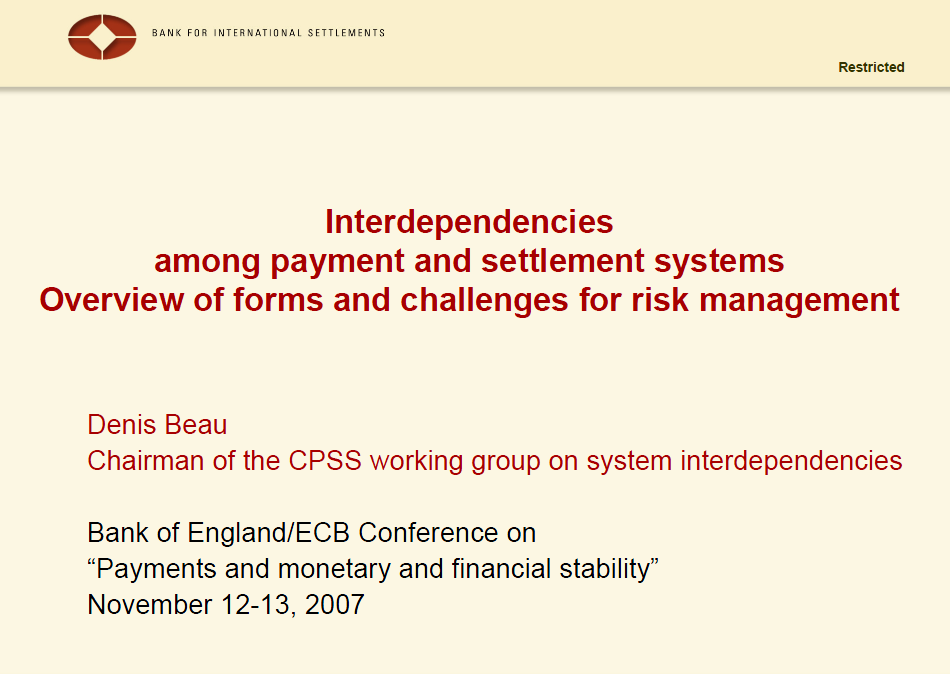
SECRET – Restricted BIS Brief: Interdependencies among payment and settlement systems

https://publicintelligence.net/wp-content/uploads/2009/11/slides2beau.png


hat are interdependencies, and Why do they matter?

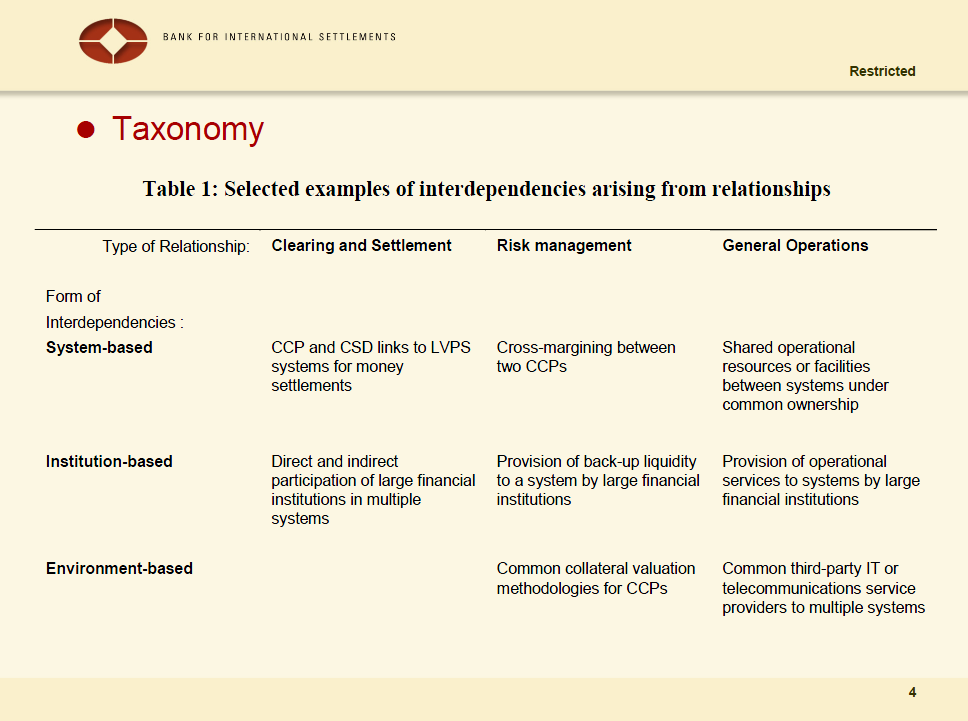
Interdependencies arise when the settlement flows, operational processes or risk management procedures of one system are related to those of other systems

Interdependencies potentially can simultaneously:
•Improve the safety and efficiency of payment and settlement processes
•Allow financial disruptions to be passed more easily and more quickly across systems, their participants and related markets, accentuating their role in transmitting disruptions (Ferguson report)

Forms of interdependencies

Interdependencies arise from:
•Direct relationships among systems
•Indirect relationships among systems due to the activities of financial institutions,
•“Environmental” factors: the dependence of multiple systems on common third-parties, on common markets, etc

That reflect multiple activities and purposes:
•Clearing and settlement channels/arrangements
•Operational processes and facilities
•Risk management


https://publicintelligence.net/wp-content/uploads/2009/11/bis.png


Factors influencing interdependencies

Four key and interrelated forces and policies:
•Globalisation and regional integration
•Consolidation
•Public policies
•Technological innovations

The influence of these forces and polices take place in the context of the effort of central banks and other authorities together with market participants to increase efficiency and reduce risks in systems.

Central banks have promoted some forms of interdependencies, particularly system-based (egDVP and PVP links)

Extent of Interdependencies

Interdependencies are particularly strong on a domestic basis
•Comprehensive web of clearing and settlement relationships amongkey domestic systems (CCP to CSD, CCP to LVPS, LVPS to CSD)
•Significant overlap in the participant base of domestic systems,leading to strong interdependencies of liquidity flows across systems
•To a lesser degree, some reliance on common service providers, and some risk-management links (cross-margining, common default definitions, etc)

Focused interdependencies on a cross-border basis
•CLS-related relationships are well known
•Widespread reliance on SWIFT
•But, role of institution-based links currently less clear; may continue to grow in importance going forward

Implications for risks in payment and settlement systems

Specific sources of several risks have been eliminated, or reduced
•Principal credit risk: implementation of DVP and PVP
•Operational risk: links among systems can help with STP
•Liquidity risk and settlement asset risk: central bank money haslower credit risk and liquidity risk (more assurance in its provision vscorrespondents)

But, new sources of risk have been introduced
•These risks are often cross-system in nature, meaning that a disruption in one system may have direct implications for the smooth functioning of a second system
•Obvious examples at the system level (DVP links, CLS, etc); but,can also be at the institution level if flows in one system are conditional on those in another

And, concentration in the sources of risks have been accentuated
•Multiple systems now face common risks from key systems (RTGS), large financial institutions, and key service providers (egSWIFT)

Implications for transmission of disruptions

Specific sources of several risks have been eliminated, or reduced
•Principal credit risk: implementation of DVP and PVP
•Operational risk: links among systems can help with STP
•Liquidity risk and settlement asset risk: links among systems facilitate the use of central bank money

But, new sources of risk have been introduced
•These risks are often cross-system in nature, meaning that a disruption in one system may have direct implications for the smooth functioning of a second system
•Obvious examples at the system level (DVP links, CLS, etc); but,can also be at the institution level

And, concentration in the sources of risks have been accentuated
•Multiple systems now face common risks from key systems (RTGS), large financial institutions, and key service providers (egSWIFT)


DOWNLOAD ORIGINAL DOCUMENT HERE

slides2beau

SECRET – USAID Islamic Republic of Afghanistan Provincial Media Landscape and Audience Survey Reports

https://i0.wp.com/publicintelligence.net/wp-content/uploads/2011/07/AfghanMediaTrust.png

https://i0.wp.com/publicintelligence.net/wp-content/uploads/2011/07/usaid-afghanmedia.png

In 2004-2005, the United States Agency for International Development’s (USAID) Office of Transition Initiatives commissioned Altai Consulting to conduct the first comprehensive media evaluation of the Islamic Republic of Afghanistan, looking at the impact of the Afghan media on opinions and behaviors three years after the beginning of the country’s reconstruction. The evaluation found, among other things: that Afghans were avid and sophisticated media users and that cultural barriers to media use were less significant than previously expected; that the radio played a predominant role throughout the country; and that media are instrumental in social progress and education.

However, since publication of that report, Afghanistan’s media sector has seen important changes. To inform future assistance from the international community to the Afghan media, it was deemed necessary to assess the current state of the Afghan media – by reflecting a full and accurate audience profile, to determine program preferences, to measure the impact of the Afghan media on local opinions and behaviors and to gauge Afghan expectations in terms of programming and messaging.

A large-scale research project was thus planned and conducted from March to August 2010. This research included a deep probe into the media sector and the public’s behaviors and expectations. The methodology used to achieved this included a combination of: literature review; direct observations; key informant interviews with most relevant actors involved in the media sector; 6,648 close-ended interviews in more than 900 towns and villages of 106 districts, covering all 34 provinces of the country; an audience survey on more than 1,500 individuals run daily for a week; about 200 qualitative, openended interviews; and 10 community case studies. Such an effort guarantees that results presented here are fairly representative of the Afghan population at large.

DOWNLOAD ORIGINAL DOCUMENT HERE

AfghanMedia2010-Full

SECRET – (U//FOUO) Civil Disturbance and Criminal Tactics of Protest Extremists

https://i0.wp.com/publicintelligence.net/wp-content/uploads/2012/01/ProtestExtremists_Page_01-791x1024.jpg


This manual has no listed author and little indications as to its source.  The introduction states that information in the document “was collected and interpreted by multiple agencies” and the manual is intended for use only by “public safety agencies”.  However, a 2003 article from a local newspaper in Colorado indicates that the manual was produced by an unknown U.S. Government agency and is used by Joint Terrorism Task Forces to teach local police about “criminal protest tactics”.  According to an email in the most recent AntiSec release, the manual is still being circulated today in relation to police confrontations with Occupy protests.

https://i0.wp.com/publicintelligence.net/wp-content/uploads/2012/01/ProtestExtremists_Page_03-791x1024.jpg


https://i0.wp.com/publicintelligence.net/wp-content/uploads/2012/01/ProtestExtremists_Page_06-791x1024.jpg


https://i0.wp.com/publicintelligence.net/wp-content/uploads/2012/01/ProtestExtremists_Page_07.jpg


https://i0.wp.com/publicintelligence.net/wp-content/uploads/2012/01/ProtestExtremists_Page_07.jpg


DOWNLOAD ORIGINAL DOCUMENTS HERE

ProtestExtremists


SECRET – Democratic People’s Republic of Korea Leadership Chart

The structure of this chart is primarily taken from a reference pamphlet published by the South Korean Ministry of Unification in January 2009, which appears to be based on the DPRK constitution. As such, this chart is a representation of the formal relationships between the various entities and does not necessarily reflect the actual hierarchy and power relationships in the North Korean system. Other sources include: DPRK, ROK, PRC, and Japanese media; the ROK National Intelligence Service website; the Ministry of Unification’s Key Figures of North Korea 2009; and Japan’s Radiopress North Korea Directory 2008.


https://i0.wp.com/www.publicintelligence.net/wp-content/uploads/2009/06/dprk.jpg


https://i0.wp.com/www.publicintelligence.net/wp-content/uploads/2009/06/dprk2.jpg


https://i0.wp.com/www.publicintelligence.net/wp-content/uploads/2009/06/dprk3.jpg


https://i0.wp.com/www.publicintelligence.net/wp-content/uploads/2009/06/kimfamily.jpg

SECRET – (U//FOUO) DHS Moscow Metro Bombings Snapshot

https://publicintelligence.net/wp-content/uploads/2010/04/dhsmoscowbombingsnapshot0.png


Bombings(U) Moscow, Russia –Two female suicide bombers detonated explosives in Moscow’s subway system.

(U) Facts:
–(U) Two unidentified female suicide bombers detonated explosives in Moscow’s subway system
–(U) Explosions occurred on 29 March at Lubyanka and Park Kultury train stations in downtown Moscow at approximately 0800 and 0845 local Moscow time (2400 & 0045 EDT)
–(U) Preliminary reports indicate 37 killed, 102 injured
–(U) Russian media reports that an unexploded suicide belt was discovered at Park Kultury Station(U) No group has claimed responsibility at this time. However, Doku Umarov, a self-proclaimed Chechen militant leader, posted an Internet video warning of potential attacks in Russia in February.

(U) Tactics & Techniques:
–(U) Attackers: Two female suicide bombers (one per train).
–(U) Device: Explosive belts packed with plastic explosives: one per bomber; may have contained hexogen (RDX) as well as chipped iron rods and screws; believed to have been set off on the trains as the trains’ doors opened.
–(U) Time: At approximately 0800 & 0845 Moscow time (2400 & 0045 EDT), during peak morning rush-hour commute.
–(U) Locations:
–0800 -LubyankaStation: Station is located underneath the building that houses the main offices of the Federal Security Service (FSB), the KGB’s main successor agency.
–0845 -Park KulturyStation: Unknown nearby facilities.

Chechen Separatist History

(U) Leader: The Chechen separatists have had numerous turnovers in leadership over the years. The most prominent and active separatist group is the Caucasus Emirate led by Doku Khamatovich Umarov.
(U) Main Objectives: After the fall of the Soviet Union in the early 1990s, Chechen separatists launched a coordinated campaign for independence, which resulted in two wars and an ongoing insurgency in the Chechen region.
(U) TTP / MO: The Chechen separatists use hostage-taking tactics (2004 Beslan school siege); remote detonated IEDs (summer 1999 bombings of an arcade and an apartment building in Moscow); and suicide operatives, to include females, as seen in this most recent subway attack.
(U) The Chechens are a predominantly Sunni Muslim ethnic minority group located in Russia’s Caucasus region.
(U) According to Russian State statistics, as of January 1, 2010, the Chechen population was 1,267,740. It is not currently known how many Chechens participate in resistance activities.

(U//FOUO) Suicide bombings continue to be a preferred terrorist tactic because the bomber controls the location, timing, and method of delivery, and requires no escape route. Many facilities and areas accessible to the public are inherently vulnerable to suicide bombing attacks and the terrorist’s latitude in determining and adjusting the target and timing of an attack up tothe point of detonation further complicates countermeasures. These factors indicate the importance of disciplined security measures and alertness by security professionals to potential threats from the full range of gender and age groups.

(U//FOUO) Despite the lack of a reliable, predictable profile of a suicide terrorist, security and law enforcement officials and first responders should be aware of terrorists’ use of both male and female suicide operatives, and be alert to behavioral patterns that such bombers have demonstrated in previous attacks.

(U/FOUO) Male and female suicide bombers may portray many of the same indicative behaviors, to include:

–(U) Appearance of being nervous, may seem preoccupied or have a blank stare.
–(U) Focused, intent, and vigilant, may result in lack of response to verbal questions or commands.
–(U) Awkward attempts to blend in to surroundings; behavior may seem odd or overtly out of place.
–(U) Avoidance of authority figures, law enforcement, or security; if security is present, the suicide bomber tries to be inconspicuous.
–(U) Praying fervently to him/her self.
–(U) Behavior may be consistent with that of a person without any future, such as presenting a one-way ticket, or being unconcerned about receiving change for a purchase.
–(U) Profuse sweating that is incompatible with current weather conditions.

Royal Demolition Explosive (RDX)
(U) Royal Demolition Explosive (RDX):Cyclotrimethylenetrinitramine, C3H6N606 (RDX), also known as cyclonite or hexogen, is second in strength to nitroglycerin among common explosive substances.
(U) RDX is an explosive widely used in military and industrial applications. RDX has both military and civilian applications.Asa military explosive, RDX can be used alone as a base charge for detonators or mixed with other explosives. Common military uses of RDX have been as an ingredient in plastic-bonded explosives, or plastic explosives. Civilian applications of RDX include use in fireworks and in demolition blocks.
(U) RDX is stable in storage; however, it becomes unstable when exposed to extreme heat, impact, or electrostatic discharge.
(U) RDX is a white, crystalline solid or colorless crystal.
(U) RDX was widely used during World War II, often in explosive mixtures with TNT.


https://publicintelligence.net/wp-content/uploads/2010/04/dhsmoscowbombingsnapshot-1024x768.png


DOWNLOAD ORIGINAL DOCUMENT HERE

dhsmoscowbombingsnapshot

SECRET – U.S. Pacific Command China Pandemic Influenza Readiness Review

https://i0.wp.com/publicintelligence.net/wp-content/uploads/2011/09/China-PI-Review.png

The United States (U.S.) Pacific Command (PACOM) and the Hawaii National Guard (HING) have entered into an Inter-Service Support Agreement (ISSA) to execute two (2) USPACOM J07, Command Surgeon, Pandemic Influenza (PI) led activities in support of the U.S. Agency for International Development (USAID): A Comprehensive Nation Review/Disparity Analysis and a PI Healthcare System Surge Demand and Intervention Workshop. These USAID approved and resourced training and education activities support military-to-military engagement for a World Health Organization (WHO) PI Phase 6 event in six (6) USAID focus countries; a WHO PI Phase 6 event is defined as sustained human-to-human transmission in at least two (2) WHO regions with at least two (2) countries involved in one of the regions. The six (6) USAID focus countries for this project are Bangladesh, Cambodia, China, Indonesia, Nepal, and Vietnam. This report will focus specifically on China.

The People’s Republic of China is one of the global leaders in vaccine research and production, and an active participant in international PI initiatives, but despite steps to improve influenza surveillance and ministerial coordination, major challenges remain to Chinese PI response preparedness. Substantial global concern has emerged in recent years regarding China’s ability to effectively monitor, prevent, and contain infectious disease threats within its borders. Factors including potential Avian Influenza (AI) outbreaks in poultry, China’s immense size and population, a largely underdeveloped health care infrastructure, and a sizable poultry industry all contribute to make China a global PI hotspot and an important area of focus for the potential emergence of human influenza pandemics that threaten the rest of the world.

A PI Review Team from PACOM will use the results of this report as a starting point to complete an in-country review of China’s military capabilities (People’s Liberation Army) to prepare for and respond to this threat. The team will use an interactive Review Tool, standardized and scalable to the needs of China, to aid the team members in identifying capability disparities. Analysis of the information collected in this Review Report and through the use of the Review Tool will provide PACOM and USAID with the data needed to develop a three (3) to five (5) year strategic plan for future PI preparedness efforts in China.

DOWNLOAD ORIGINAL DOCUMENT HERE

China-PI-Review

SECRET – (SBU) State Department Uganda Lord’s Resistance Army Disarmament Report to Congress

https://i0.wp.com/publicintelligence.net/wp-content/uploads/2011/11/StateDepartment-LRA.png

The Lord’s Resistance Army Disarmament and Northern Uganda Recovery Act, Public Law 111-172, requires the Secretary of State to submit a report to Congress on implementation of the President’s strategy to support disarmament of the Lord’s Resistance Army (LRA) and assistance provided toward a lasting solution to the conflict in northern Uganda.

The United States has worked over the last year with our bilateral and multilateral partners to advance the President’s strategy. With our encouragement, the African Union (AU) and United Nations (UN) are working to enhance regional coordination toward addressing the LRA threat. We have also continued to support regional efforts to increase diplomatic and military pressure on the LRA. We have deployed U.S. military personnel to the region to serve as advisors to regional militaries pursuing the LRA. Meanwhile, we continue work with partners in the region to increase civilian protection, facilitate LRA defections, and address humanitarian needs, while also supporting the recovery of northern Uganda.

The United States remains committed to pursuing the multi-year, comprehensive strategy submitted to Congress last year. Any reduction in regional cooperation or military pressure could enable the LRA to regroup and rebuild its forces. However, the extent of U.S. efforts to implement the strategy remains a function of available and consistent resources. Given our budget constraints, we continue to encourage other members of the international community to join this effort and help fill funding gaps. We co-chair the International Working Group on the LRA, a mechanism established to enhance coordination among all donors.

Enhancing Regional Efforts to Apprehend LRA Top Commanders

Over the last year, the United States has worked with regional governments to enhance their military operations to apprehend or remove top LRA commanders from the battlefield. We continue to provide critical logistical support and nonlethal equipment to assist the Ugandan military’s counter-LRA operations. With our encouragement, the government of the Democratic Republic of the Congo (DRC) has deployed a U.S. trained and equipped battalion to participate in counter-LRA efforts in the LRA’s area of operations in the DRC. As the Central African Republic (CAR) and South Sudan increase their efforts to counter the LRA, we are engaging with and supporting their militaries. We have provided some equipment to the CAR forces deployed to the LRA-affected area.

Although regional militaries have reduced the LRA’s numbers to an estimated 200 core fighters and an unknown number of accompanying children and abductees, the LRA will remain a serious regional threat as long as Joseph Kony and the LRA’s top leaders remain in place. Over the last year, sustained military pressure has limited the LRA’s opportunities to regroup and rearm. Abductees and low-level fighters have continued to escape and reintegrate into their communities. Nonetheless, the LRA is still terrorizing communities and undermining regional security across a broad swath of central Africa. According to the UN, there have been over 250 attacks attributed to the LRA this year alone.

In line with the President’s strategy, we have reviewed how we can improve our support to the coalition of LRA-affected countries to increase the likelihood of successful operations to apprehend or remove LRA top commanders from the battlefield and bring them to justice. On October 14, the President reported to Congress that he had authorized a small number of U.S. forces to deploy to the LRA-affected region, in consultation with the regional governments, to act as advisors to the regional militaries that are pursuing the LRA. These advisors will enhance the capacity of regional militaries to coordinate and fuse intelligence with effective operational planning. The U.S. forces will not themselves engage directly against LRA forces unless necessary to defend themselves.

This is a short-term deployment with clear goals and objectives. We believe the U.S. advisors can address critical capabilities gaps to help the regional forces succeed. Additionally, our advisors are sensitive to civilian protection considerations and will work closely with our embassies to ensure they remain cognizant of local and regional political dynamics. The State Department has deployed a Civilian Response Corps officer to the region to work with the advisors in this regard. We will regularly review and assess whether the advisory effort is sufficiently enhancing the regional effort to justify continued deployment. Our embassies will also continue to consult with the regional governments and ensure their consent as we move forward. Continued deployment is conditional on regional governments’ sustained commitment and cooperation to bring an eventual end to the LRA threat.

Supporting Post-Conflict Recovery and Reconciliation in Northern Uganda Finally, the United States remains committed to supporting efforts to promote comprehensive reconstruction, transitional justice, and reconciliation in northern Uganda, where the LRA carried out its brutal campaign for nearly two decades. In Fiscal Year 2011, USAID provided approximately $102 million in assistance to northern Uganda, including:

• $2 million to assist internally-displaced persons (IDPs) and returnees to secure durable return solutions;
• $2.1 million to enhance accountability and administrative competence of local governance institutions, including the civilian police and judiciary;
• $4.2 million to help former LRA combatants with vocational education and employment opportunities; and
• $15 million to promote rural rehabilitation and food security.

Northern Uganda has undergone a visible transformation since the LRA’s departure from Uganda in 2005, especially in terms of infrastructure and social services. The population is able to move freely, stores are open, and fields are being cultivated. According to UNHCR, an estimated 95 percent of people once living in IDP camps have moved from camps to transit sites or returned home.

According to the Ugandan Bureau of Statistics, poverty in northern Uganda declined from 60.7 percent to 46.2 percent between 2005/6 and 2009/10, representing the largest decline in poverty of all regions in Uganda during that period. Yet, even with this impressive decline, the north remains the poorest region in the country. Furthermore, land issues, tensions between tribes and subtribes in the region, and widespread psycho-social trauma, among other issues, need to be addressed to ensure the sustainability of peace in northern Uganda.

From 2009 to 2011, the Government of Uganda (GoU) contributed approximately $ 110 million to its Peace, Recovery and Development Plan for Northern Uganda (PRDP). This is less than the government’s original pledge to provide 30 percent of the PRDP’s total budget, but GoU officials state that they will continue to earmark funds for northern Uganda’s recovery. During this period, non-USG donors have provided significant funding in support of the PRDP.

DOWNLOAD FULL DOCUMENT HERE


StateDepartment-LRA

SECRET – Photos of U.S. “Kill Team” Posing with Murdered Afghan Civilians

The following photos depict soldiers from the 5th Stryker Brigade, 2nd Infantry Division, posing next to the corpse of Gul Mudin, an unarmed Afghan civilian killed by their unit on January 15, 2010, as well as the corpses of two other unnamed Afghan civilians.  The photos were published today by Der Spiegel in their German-language print release. However, they are blocked behind a paywall that restricts their dissemination.  The U.S. Army responded to the release by saying that the photos depict “actions repugnant to us as human beings and contrary to the standards and values of the United States.”  There are reportedly more than four thousand photos of the “kill team”.

Pfc. Andrew Holmes

Spc. Jeremy N. Morlock

Two civilians killed by the unit.

Secret from the FBI – Murder of ICE Special Agent Jaime Zapata and the Attempted Murder of ICE Special Agent Victor Avila

WASHINGTON—Julian Zapata Espinoza, also known as “Piolin,” has been extradited from Mexico to the United States to face charges for his alleged participation in the murder of U.S. Immigration and Customs Enforcement (ICE) Special Agent Jaime Zapata and the attempted murder of ICE Special Agent Victor Avila on Feb. 15, 2011, in Mexico.

The charges and extradition were announced today by Assistant Attorney General Lanny A. Breuer of the Justice Department’s Criminal Division; U.S. Attorney Ronald C. Machen Jr. for the District of Columbia; Kevin Perkins, Assistant Director for the FBI Criminal Investigative Division; and ICE Director John Morton.

On April 19, 2011, a federal grand jury in the District of Columbia returned a four-count indictment against Zapata Espinoza, charging him with one count of murder of an officer or employee of the United States, for the murder of ICE Special Agent Zapata; one count of attempted murder of an officer or employee of the United States and one count of attempted murder of an internationally protected person, both for the attempted murder of ICE Special Agent Avila; and one count of using, carrying, brandishing and discharging a firearm during and in relation to a crime of violence causing death.

“Julian Zapata Espinoza (“Piolin”) allegedly participated in the murder of ICE Special Agent Jaime Zapata and the attempted murder of ICE Special Agent Victor Avila,” said Assistant Attorney General Breuer. “The indictment unsealed today, and the successful extradition of Piolin to the United States, reflect the Justice Department’s vigorous and determined efforts to seek justice for Agents Zapata and Avila. We will continue to work closely with our law enforcement partners in Mexico to hold violent criminals accountable.”

“This prosecution exemplifies our unwavering effort to prosecute those who committed this heinous offense against U.S. law enforcement agents,” said U.S. Attorney Machen. “We will not rest until those responsible for the murder of Agent Zapata and the wounding of Agent Avila are brought to justice.”

“The extradition of Julian Zapata Espinoza to face charges in the U.S. is a significant development in the ongoing investigation into the murder of Special Agent Jaime Zapata and attack on Special Agent Victor Avila,” said Kevin Perkins, Assistant Director for the FBI Criminal Investigative Division. “This extradition would not have been possible without the dedicated efforts of all involved in this case. The FBI, DHS and the Department of Justice will continue its pursuit of justice for the Zapata family.”

“The extradition and charges filed against Zapata Espinoza is an important step in bringing Jaime and Victor’s alleged shooters to justice,” said ICE Director Morton. “All of us at ICE are encouraged by today’s action and appreciate the unwavering work and support of all our law enforcement partners in this case. Our hearts and prayers continue to go out to Jaime’s family and his close colleagues within the ICE community. ICE will continue to see that Jaime and Victor’s work is done by continuing our efforts with all involved in working on this case.”

The indictment was unsealed today, when Zapata Espinoza made his initial appearance before U.S. District Chief Judge Royce Lamberth of the District of Columbia. Zapata Espinoza was ordered detained without bail. His next appearance in court is scheduled for Jan. 25, 2012.

The case is being investigated by the FBI, with substantial assistance from ICE, the Bureau of Alcohol, Tobacco, Firearms and Explosives, the Drug Enforcement Administration, the U.S. Customs and Border Patrol, the Diplomatic Security Service and the U.S. Marshals Service. The investigation was also coordinated with the assistance of the Government of Mexico.

The case is being prosecuted by the Organized Crime and Gang Section and the Narcotic and Dangerous Drugs Section of the Justice Department’s Criminal Division and the U.S. Attorney’s Office for the District of Columbia. The Office of International Affairs of the Justice Department’s Criminal Division provided substantial assistance.

An indictment is a formal charging document and defendants are presumed innocent until proven guilty.

SECRET – Afghan National Army Base and Incentive Pay Chart

https://i0.wp.com/publicintelligence.net/wp-content/uploads/2011/09/afghan-army-pay-1024x766.png


https://i0.wp.com/publicintelligence.net/wp-content/uploads/2011/09/afghan-army-pay2-1024x762.png

SECRET – Neo-Nazi Fantasy Border Patrol Pictures

The following photos are taken from the Flickr feed of the U.S. Border Guard, a group with an official-sounding name that is, in reality, comprised of volunteers who patrol the border in Arizona. The group’s patrols are led by J.T. Ready, who has openly defended his views as a neo-Nazi. All titles and captions are taken, unaltered, from the group’s Flickr feed.  Some people believe that J.T. Ready is an FBI informant.


The following photos are taken from the Flickr feed of the U.S. Border Guard, a group with an official-sounding name that is, in reality, comprised of volunteers who patrol the border in Arizona. The group’s patrols are led by J.T. Ready, who has openly defended his views as a neo-Nazi. All titles and captions are taken, unaltered, from the group’s Flickr feed.  Some people believe that J.T. Ready is an FBI informant.

U.S.A. parks liberated by USBG

The USBG is liberating terrorist occupied lands so that families, boy & girl scouts, church groups, 4×4 clubs, astronomy stargazing groups, bird watchers, hunters, anglers, ranchers, photographers, and all Americans and legal tourists can once again enjoy our beautiful Sonoran desert.

Calling in Grid Coordinates

Attention to detail is critical in documenting smuggler activity. New “sign” in noted and maps are updated. Law Enforcement officials are provided time sensitive eyes on recon by dedicated USBG volunteers as the fluid situation in the FEBA is constantly changing.

Night Ops


USBG volunteers pose for a moment in a cleared area known for heavy smuggler activity.


Anti-Gang Operations II


Illicit drugs and gangs go hand in hand. Border Rangers document drug and gang activity in the patrol area. Mysteriously, gang claims on public and private property are often found exxed out after USBG Gang Task Force members have been in the vacinity.


Cave Reconnaissance


USBG deploys individuals with a vast array of skill sets. Covert Operators who may still be employed by various governmental agencies often conceal their identity during photographic documentation of Recon Patrols.


Border 12

Narco-Terrorist chemically fueled on meth utilize ski masks even in the arid 115 degree desert temperatures to conceal their identities. Here a USBG border ranger displays one such mask after occupying smuggler camp.

Border 5

Weapons pointed outboard: 11 UDAs are rescued from the seering hot desert and USBG volunteers stand guard until PSCO & Border Patrol arrive after translating that the UDAs had heard a firefight between Narco-Terrorists north of their position.

Border 4

An Apache scout volunteering for the USBG gives much needed hydration to a UDA found abandoned by his human smuggler who had pocketed over $2,000.00 from him.

Smuggler Corridor


A group of armed citizens opened back up a national nature monument which the local sheriff had surrendered to the drug cartel’s Narco-Terrorists during: Operation LINE IN THE SAND


Taking Back American Soil


Recreational areas of the U.S. taken over by Narco-Terrorists and abandoned by U.S. officials is now being taken back by heavily armed US Border Guard Border Rangers during Operation: ANVIL.


UDA Pick Up

Border Patrol agent provides a air-conditioned ride to safety for these abandoned UDAs located by US Border Guard recon patrol of this remote area.

Captured UDA


3 live UDA smugglers (Undocumented Aliens) were captured and turned over to Border Patrol after receiving emergency medical attention by the Border Rangers.


USBG smuggler sniffing dog assists in location

Narco-Terrorists can run, but they will only die tired. The desert is hot, unforgiving, and the relentless Border Rangers will never surrender our land to dangerous foreign criminals.

US Border Guard Night Patrol


All night patrols are common sacrifices made by the dedicated US Border Guard team members as well as conducting LRRP- Long Range Reconnaissance Patrols, which may last for days at a time.


Dead UDA Smuggler


1 UDA smuggler did not make it and the homicide scene was secured by USBG Rangers and Maricopa County Sheriff’s deputies while the corpse turned over to Maricopa County Coroner’s Office.


Disarmed UDAs treated Humainly

Narco-Smugglers who discard their arms and surrender accordingly, are treated with human dignity until taken into custody. Narco-Mules are often happy just to be alive. The drug cartel is known to often murder their human mules rather than pay them after their chemical warfare agents (illicit drugs) are smuggled into the country.

Border 11

USBG locates a Narco-Smuggler load site near a road and notifies local law enforcement of the exact location.

USBG works with interesting Agents


Identity of multi-ethnic Border Patrol motorized recon scout remains protected by Border Ranger as he proudly poses after an area search for enemy personell and illicit drugs.

TOP-SECRET-FBI (U//FOUO) Preliminary Analysis of Christmas Day Underwear Bomb

https://publicintelligence.net/wp-content/uploads/2010/02/FBIchristmasbomb.png


(U//FOUO) The Terrorist Explosive Device Analytical Center (TEDAC) conducted a preliminary analysis of the approximately 30 pieces of evidence recovered after the 25 December 2009 attempted bombing of Northwest Airlines flight 253. The evidence consisted of a plastic syringe initiator with traces of Ethyl Glycol, a main charge of 76 grams of Pentaerythritol Tetranitrate (PETN) wrapped in a container made of thin soft “plastic” film-like material and tape and clothing worn by the bomber. The underwear worn by the bomber was modified to provide storage of the main charge which was anatomically congruent, possibly to avoid detection during screening. The underwear sustained thermal damage. Blue jeans worn by the bomber also sustained thermal damage (scorching) on the inside with small spots of melted plastic on the outside surface.


https://publicintelligence.net/wp-content/uploads/2010/02/christmasbombing.png


https://publicintelligence.net/wp-content/uploads/2010/02/christmasbombing1.png

https://publicintelligence.net/wp-content/uploads/2010/02/christmasbombing2.png

https://publicintelligence.net/wp-content/uploads/2010/02/christmasbombing31.png

TOP-SECRET – Vatican Bank May Have Used Clergy as Fronts for Mafia, Corrupt Businessmen

Pope Benedict XVI talks to the head of the Vatican bank Ettore Gotti Tedeschi (R) in this September 26, 2010 file photo. Gotti Tedeschi has been placed under investigation by Rome magistrates for suspected money-laundering by the bank, judicial sources said on September 21, 2010. REUTERS/OSSERVATORE ROMANO/Files

Vatican Bank ‘allowed clergy to act as front for Mafia’ (Indepdendent.co.uk):

The Vatican Bank is under new scrutiny in a case involving money-laundering allegations that led police to seize €23m (£19.25m) in September.

The Vatican calls the seizure of assets a “misunderstanding” and expresses optimism it will be quickly cleared up. But fresh court documents show that prosecutors say the Vatican Bank deliberately flouted anti-laundering laws “with the aim of hiding the ownership, destination and origin of the capital”. The documents also reveal investigators’ suspicions that clergy may have acted as fronts for corrupt businessmen and Mafia.

The documents pinpoint two transactions that have not been reported: one in 2009 involving the use of a false name, and another in 2010 in which the Vatican Bank withdrew €650,000 from an Italian bank account but ignored bank requests to disclose where the money was headed.

The new allegations of financial impropriety could not come at a worse time for the Vatican, already hit by revelations that it sheltered paedophile priests. The corruption probe has given new hope to Holocaust survivors who tried unsuccessfully to sue in the United States, alleging that Nazi loot was stored in the Vatican Bank.

Yet the scandal is hardly the first for the bank, already distinguished from other banks by the fact that its cash machines are in Latin and priests use a private entrance.

In 1986, a Vatican financial adviser died after drinking cyanide-laced coffee in prison. Another, Roberto Calvi, was found dangling from a rope under London’s Blackfriars Bridge in 1982, his pockets stuffed with money and stones. The incidents blackened the bank’s reputation, raised suspicions of ties with the Mafia, and cost the Vatican hundreds of millions of dollars in legal clashes with Italian authorities.

On 21 September, financial police seized assets from a Vatican Bank account. Investigators said the Vatican had failed to furnish information on the origin or destination of the funds as required by Italian law.

The bulk of the money, €20 million, was destined for the American JP Morgan bank branch in Frankfurt, Germany, with the remainder going to Banca del Fucino, an Italian bank.

Vatican Bank mired in laundering scandal (AP):

The Vatican has pledged to comply with EU financial standards and create a watchdog authority. Gianluigi Nuzzi, author of “Vatican SpA,” a 2009 book outlining the bank’s shady dealings, said it’s possible the Vatican is serious about coming clean, but he isn’t optimistic.

“I don’t trust them,” he said. “After the previous big scandals, they said ‘we’ll change’ and they didn’t. It’s happened too many times.”

He said the structure and culture of the institution is such that powerful account-holders can exert pressure on management, and some managers are simply resistant to change.

The list of account-holders is secret, though bank officials say there are some 40,000-45,000 among religious congregations, clergy, Vatican officials and lay people with Vatican connections.

The bank chairman is Ettore Gotti Tedeschi, also chairman of Banco Santander’s Italian operations, who was brought in last year to bring the Vatican Bank in line with Italian and international regulations. Gotti Tedeschi has been on a very public speaking tour extolling the benefits of a morality-based financial system.

“He went to sell the new image … not knowing that inside, the same things were still happening,” Nuzzi said. “They continued to do these transfers without the names, not necessarily in bad faith, but out of habit.”

It doesn’t help that Gotti Tedeschi himself and the bank’s No. 2 official, Paolo Cipriani, are under investigation for alleged violations of money-laundering laws. They were both questioned by Rome prosecutors on Sept. 30, although no charges have been filed.

In his testimony, Gotti Tedeschi said he knew next to nothing about the bank’s day-to-day operations, noting that he had been on the job less than a year and only works at the bank two full days a week.

According to the prosecutors’ interrogation transcripts obtained by AP, Gotti Tedeschi deflected most questions about the suspect transactions to Cipriani. Cipriani in turn said that when the Holy See transferred money without identifying the sender, it was the Vatican’s own money, not a client’s.

Gotti Tedeschi declined a request for an interview but said by e-mail that he questioned the motivations of prosecutors. In a speech in October, he described a wider plot against the church, decrying “personal attacks on the pope, the facts linked to pedophilia (that) still continue now with the issues that have seen myself involved.”

In the scandals two decades ago, Sicilian financier Michele Sindona was appointed by the pope to manage the Vatican’s foreign investments. He also brought in Roberto Calvi, a Catholic banker in northern Italy.

Sindona’s banking empire collapsed in the mid-1970s and his links to the mob were exposed, sending him to prison and his eventual death from poisoned coffee. Calvi then inherited his role.

Calvi headed the Banco Ambrosiano, which collapsed in 1982 after the disappearance of $1.3 billion in loans made to dummy companies in Latin America. The Vatican had provided letters of credit for the loans.

Calvi was found a short time later hanging from scaffolding on Blackfriars Bridge, his pockets loaded with 11 pounds of bricks and $11,700 in various currencies. After an initial ruling of suicide, murder charges were filed against five people, including a major Mafia figure, but all were acquitted after trial.

While denying wrongdoing, the Vatican Bank paid $250 million to Ambrosiano’s creditors.

Both the Calvi and Sindona cases remain unsolved.

CONFIDENTIAL-Mafia, Biker Gang Criminal Cartels Conspire to Control Road Construction Contracts in Quebec

https://i0.wp.com/publicintelligence.net/wp-content/uploads/2011/09/quebec-transport-minister-1024x649.png


It’s been whispered about for years, but now the government’s anti-corruption squad says it has proof that organized crime has infiltrated the construction industry and influenced political parties.

The report by former Montreal police chief Jacques Duchesneau and Quebec’s anti-corruption squad and obtained by Radio-Canada and La Presse comes after a year-and-a-half-long investigation.

The UPAC (Unité permanente anticorruption) report, which does not name any firms or individuals, found that prices are regularly hiked by engineering consulting companies and that contractors regularly overrun their costs.

It said Quebec’s Transportation department is laidback about challenging prices, and when it challenges an invoice, the companies often launch a civil suit because they are aware the department will often settle out of court.

Even more damning, the report alleges that Transportation Ministry employees were paid to provide companies with privileged information so those businesses could win government contracts.

Radio Canada released the report in its entirety Thursday evening on its website.

“We have discovered a deeply-rooted and clandestine universe, of an unsuspected scope, that is harmful to our society – in terms of security, the economy, justice and democracy,” the report states.

It claims the road construction industry is run by “a small circle of professionals and business people who specialize in bending the rules in place to enrich themselves at the expense of taxpayers.”

However, it is admitted in the report that the extent of organized crime’s involvement in the industry is difficult to gauge.

“A large number of Quebec construction businesses maintain links with criminal organizations,” it states. “We therefore strongly presume that some among them have an influence on the contracts handed out by the government, and that they have even set foot on the (transport) ministry’s work sites. Even though it is impossible to evaluate the extent of it, we can suspect how much the mafia exerts a presence and its influence in the construction industry.”

Quebec report sheds light on ‘corruption and collusion’ (Globe and Mail):

The report, which was leaked to some media outlets, said that organized crime, biker gangs, construction companies and engineering firms conspired to inflate the cost of road-building projects, devising schemes that also involved kickbacks to political parties.

Cost overruns were planned and became common practice in the industry, according to the report. “Cartels” consisting of the Mafia, biker gangs and construction companies conspired to eliminate competition and manipulate the public-tendering process.

“The suspicions are persistent to the point that a criminal empire was on the verge of being consolidated in the area of road construction,” Mr. Duchesneau wrote in the report’s preamble.

Close ties between Mafia-controlled construction companies and engineering firms and political parties were particularly worrisome, the report said.

“The more contracts they get, the more they give; the more they give, the more influence they have; the more influence they have, the more contracts they get. And the influence is exercised everywhere whether it is by becoming members of foundations or doing fundraising for charity organizations. They become almost untouchable,” a former political aide told the investigators.

The report suggests the Transportation Ministry has lost control over roadwork projects by contracting out work to private firms. In doing so, it said, the ministry lost the expertise to supervise the projects properly, allowing collusion and influence peddling to become rampant.

In one example cited in the report, engineers would say 1,000 truckloads were needed to remove contaminated soil from a construction site, knowing that 100 would do, and the unused money would find its way into the pockets of crime organizations, engineering firms and political parties.

“The Ministry of Transportation has no means to sanction engineering firms who make up wrong cost evaluations and poor plans,” the report stated.

New transport minister won’t release damning document (Montreal Gazette):

A new era of transparency was promised by Pierre Moreau when he took over as transport minister.

But, a week into the job, Moreau has refused to make public a damning report into collusion in Quebec’s construction industry that points the finger at organized crime, construction and engineering firms, Transport Quebec and political parties.

An anti-collusion squad led by former Montreal police chief Jacques Duchesneau prepared the report. Transport Quebec hired him in 2010 to investigate allegations of price-fixing and influence peddling in road contracts.

A handful of media outlets have obtained and published excerpts of Duchesneau’s report. But few have read the entire 78-page document.

On Thursday, Moreau told reporters that when he promised more transparency, he was referring to inspection reports – not a document to be used in criminal probes.


Secret from the FBI – Former Union Leader Admits Theft of Union Funds

BUFFALO, NY—U.S. Attorney William J. Hochul, Jr. announced today that former union leader Ellis Woods, 61, of Clarence, N.Y., pleaded guilty to wire fraud before U.S. District Judge Richard J. Arcara. The charge carries a maximum penalty of 20 years in prison, a $250,000 fine or both.

Assistant U.S. Attorney Russell T. Ippolito, Jr., who is handling the case, stated that the defendant devised a scheme to defraud the Buffalo Educational Support Team (“BEST”). BEST is a union representing more than 900 teacher’s aides and assistants in the Buffalo school district. While working as the elected president of BEST, Woods was provided a union-issued credit card. Between November 18, 2008, and February 7, 2011, Woods used the union credit card to pay for personal expenses, including gambling expenses that he incurred at local area casinos. In total, Woods stole $44,987.70 in union funds.

“Union members contribute hard earned money to benefit the union as a whole, not to line the pockets of union leaders,” said U.S. Attorney Hochul. “Our office will not tolerate such behavior and will vigorously prosecute officials in any organization who seek to take advantage of members.”

The plea is the result of an investigation by the U.S. Department of Labor and the Federal Bureau of Investigation, under the direction of Christopher M. Piehota.

Sentencing is scheduled for April, 19, 2012 at 1:00 p.m. in Buffalo, N.Y. before Judge Arcara.

TOP-SECRET – Iraq Biometric Automated Toolset (BAT) HIIDE Standard Operating Procedures

Multi-National Forces West Biometric Automated Toolset (BAT) Handheld Interagency Identity Detection Equipment (HIIDE) SOP and TTP

https://i0.wp.com/publicintelligence.net/wp-content/uploads/2011/12/MNF-I-HIIDE-TTP.png


https://i0.wp.com/publicintelligence.net/wp-content/uploads/2011/12/MNF-I-HIIDE-TTP_Page_014-643x1024.jpg

https://i0.wp.com/publicintelligence.net/wp-content/uploads/2011/12/MNF-I-HIIDE-TTP_Page_015-775x1024.jpg


DOWNLOAD ORIGINAL DOCUMENTS HERE

MNF-W-HIIDE-SOP

MNF-W-HIIDE-TTP

TOP-SECRET – U.S. Army Afghanistan Smart Book, Third Edition

https://i0.wp.com/publicintelligence.net/wp-content/uploads/2011/12/USArmy-AfghanSmartBook.png

https://i0.wp.com/publicintelligence.net/wp-content/uploads/2011/12/afghan-smart-book.png

https://i0.wp.com/publicintelligence.net/wp-content/uploads/2011/12/afghan-smart-book-2.png

https://i0.wp.com/publicintelligence.net/wp-content/uploads/2011/12/afghan-smart-book-3.png

https://i0.wp.com/publicintelligence.net/wp-content/uploads/2011/12/afghan-smart-book-4.png

https://i0.wp.com/publicintelligence.net/wp-content/uploads/2011/12/afghan-smart-book-5.png


DOWNLOAD THE ORIGINAL DOCUMENT HERE

AfghanSmartBook


TOP-SECRET-European Countries Refuse to Release Information on CIA Rendition Flights

https://i0.wp.com/publicintelligence.net/wp-content/uploads/2011/12/bucharest-cia-prison.jpg

Romania’s National Registry Office for Classified Information (ORNISS) headquarters building is seen in the background of this image taken in Bucharest, December 9, 2011. International media has reported that between 2003 and 2006, the CIA operated a secret prison from the building’s basement, bringing in high-value terror suspects for interrogation and detention. ORNISS has denied hosting a CIA prison and the CIA has refused to comment.

A majority of 28 mostly European countries have failed to comply with freedom of information requests about their involvement in secret CIA flights carrying suspected terrorists, two human rights groups said Monday.London-based Reprieve and Madrid-based Access Info Europe accused European nations of covering up their complicity in the so-called “extraordinary rendition” program by failing to release flight-traffic data that could show the paths of the planes.

The groups said only seven of 28 countries had supplied the requested information. Five countries said they no longer had the data, three refused to release it and 13 had not replied more than 10 weeks after the requests were made.

Europe’s silence is in contrast to the United States, which handed over Federal Aviation Administration records with data on more than 27,000 flight segments.

The groups’ report said that the U.S. had provided “by far the most comprehensive response” and accused European countries of lagging behind when it came to transparency.

“Is it an access to information problem, or is it a problem with this particular issue? It’s a bit of both,” said Access Info Europe executive director Helen Darbishire. “European countries have not completely faced up to their role here.”

Human rights campaigners have worked for years to piece together information on hundreds of covert flights that shuttled suspected terrorists between CIA-run overseas prisons and the U.S. military base at Guantanamo Bay as part of the post-Sept. 11 “War on Terror.”

The CIA has never acknowledged specific locations, but prisons overseen by U.S. officials reportedly operated in Thailand, Afghanistan, Lithuania, Poland and Romania — where terror suspects including Khalid Sheik Mohammad, mastermind of the Sept. 11 attacks, were interrogated in the basement of a government building in the capital, Bucharest.


DOWNLOAD ORIGINAL FILE HERE

Rendition_on_Record_19_December_2011

TOP-SECRET-Asymmetric Warfare Group Guide to Insider Threats in Partnering Environments

https://i0.wp.com/publicintelligence.net/wp-content/uploads/2011/12/AWG-InsiderThreats.png

This guide assists in three areas. First, it aides military leaders and all personnel to be aware of the indicators associated with insider threat activity while serving in a partnering environment. Second, this guide informs commanders and other leaders by giving them options on how to deal with insider threat activities. This guide is not all encompassing so there are other options a commander has dependent on their operating environment. Lastly, this guide is meant to generate open dialogue between coalition partners and partner nation personnel. Partnering in itself is a sensitive mission and only by creating trust and having an open dialogue with all forces will the mission be accomplished.

Risk Factors

  • Emotional Vulnerability
  • Dissatisfaction with lack of accepted conflict resolution
  • Personal connection to a grievance
  • Positive view of violence
  • Perceived benefit of political violence
  • Social Networks (tech and non tech)
  • In group de-legitimization of the out-group
  • Placement, Access, and Capability
  • External Support
  • Perceived Threat
  • Conflict
  • Humiliation orloss of honor
  • Competition
  • Social Alienation
  • Quid Pro Quo (services or items wanted or needed by an individual given in exchange for information or action)
  • Disproportionate financial risks
  • Susceptible to blackmail
  • Civilian Casualty (CIVCAS) situations
  • Highly emotional
  • Unfair treatment or equipment differences

Cultural Awareness

  • DO NOT use derogatory terms in any language (even in friendly conversation)
  • DO NOT slander host nation or coalition partners (even if only jokingly)
  • DO NOT physically harm host nation or coalition partners (except in self defense)
  • DO NOT put down or slander any religion
  • ALWAYS be courteous and thankful for host nation and coalition partner hospitalityAsymmetric

https://i0.wp.com/publicintelligence.net/wp-content/uploads/2011/12/insider-threats.png


DOWNLOAD ORIGINAL DOCUMENT HERE

AWG-InsiderThreats

TOP-SECRET – Joint Center for International Security Force Assistance Iraqi Federal Police Advisor Guide

As the U. S. Defense Department scales back operations in Iraq, one of the most significant questions that remains is whether the Iraqi security forces will be capable of maintaining civil order on their own. This manual was produced by the Joint Center for International Security Force Assistance (JCISFA) to help prepare deploying advisors, trainers, and partner forces that will work directly with Iraqi police. The intent is to provide a basic understanding of the country of Iraq and a solid understanding of the current organization and utilization of the Iraqi police. This manual also provides guidance on what it means to work ” by, with and through” a counterpart, and includes observations and insights learned by your predecessors.

In a stable society, a key component to security is the police. While there has been significant progress in the development of the Iraqi police, there is still much work to be done. Historically, the Iraqi police have been held in lower public regard than other components of the security force infrastructure. The Iraqi public viewpoint toward law enforcement as an agency of public safety, security, and service to the community has been far different than law enforcement in most developed nations. Part of our job is to educate the Iraqi police, and the Iraqi population, about the important role police play in a society governed by the rule of law. Rule of law enables the framework for national sovereignty and provides restraints that serve as a check against abusive use of power. Without effective rule of law, we will never gain the security necessary for democratic institutions to be successful.

https://i0.wp.com/publicintelligence.net/wp-content/uploads/2011/12/iraqi-police.png

https://i0.wp.com/publicintelligence.net/wp-content/uploads/2011/12/iraqi-police-2.png

DOWNLOAD ORIGINAL DOCUMENT HERE

JCISFA-IraqiPolice

TOP-SECRET – Taliban Top 5 Most Deadly Tactics Techniques and Procedures

https://i0.wp.com/publicintelligence.net/wp-content/uploads/2011/12/USArmy-TalibanTTPs.png

To gain an understanding of the Top 5 casualty producing Tactics, Techniques and Procedures in Afghanistan

To introduce the Top Threat Groups in Afghanistan and along the Pakistani border

To understand the location of hostile action in Afghanistan

To understand Threat weapon employment

– Attack data
– Technology used
– TTP

To introduce Threat use of Information Warfare (INFOWAR) across Tactics, Techniques, and Procedures

https://i0.wp.com/publicintelligence.net/wp-content/uploads/2011/12/taliban-ttp.png

https://i0.wp.com/publicintelligence.net/wp-content/uploads/2011/12/taliban-ttp-2.png


DOWNLOAD ORIGINAL DOCUMENT HERE

USArmy-TalibanTTPs

TOP SECRET from the FBI Las Vegas – Sixteen Persons Charged in International Internet Fraud Scheme

LAS VEGAS—Federal charges have been unsealed against 16 individuals for their involvement in an international Internet scheme that defrauded online purchasers of purported merchandise such as automobiles and other items, announced Daniel G. Bogden, United States Attorney for the District of Nevada.

The defendants are charged with wire fraud, conspiracy to commit wire fraud, conspiracy to commit money laundering, and criminal forfeiture. Thirteen of the defendants were arrested in Las Vegas yesterday, December 14, 2011. Most of those defendants appeared before United States Magistrate Judge Robert J. Johnston yesterday, and pleaded not guilty to the charges. Several other defendants are scheduled for initial court appearances today beginning at 3:00 p.m. One individual was arrested at Washington Dulles International National Airport in Virginia, and appeared before a federal magistrate judge there, and the remaining two defendants have not yet been arrested.

According to the allegations in the indictment, from about December 2008 to December 2011, conspirators situated outside of the United States listed and offered items for sale on Internet sites (such as Craigslist and Autotrader) and occasionally also placed advertisements in newspapers. The items offered for sale included automobiles, travel trailers and watercraft. The conspirators typically offered the items at attractive prices and often stated that personal exigencies, such as unemployment, military deployment, or family emergencies, required that they sell the offered items quickly. To gain the confidence of prospective buyers, conspirators posing as owners of the items instructed buyers that the transactions were to be completed through eBay, Yahoo!Finance, or similar online services, which would securely hold the buyers’ funds until the purchased items were delivered. The conspirators sent e-mails to buyers which appeared or purported to be from eBay, Yahoo!Finance, or other such entities, and which instructed buyers to remit payment to designated agents of those entities who were to hold the purchase money in escrow until the transactions was concluded. In reality, the entire transaction was a sham: the conspirators did not deliver any of the items offered for sale; neither eBay, Yahoo!Finance, nor any similar entity participated in these transactions; and the purported escrow agents designated to receive buyers’ purchase money were actually participants in the scheme who received the funds fraudulently obtained from buyers on behalf of the conspiracy.

Relying on the schemers fraudulent representations, scores of buyers agreed to purchase items that the schemers offered online and in newspaper advertisements. The conspirators kept and converted the fraudulently obtained purchase money for their own purposes. The defendants and their associates allegedly obtained more than $3 million through the fraud scheme, which they distributed among the conspirators both inside and outside the United States.

Defendants:

  • Eduard Petroiu, 28, Las Vegas resident
  • Vladimir Budestean, 24, Las Vegas resident
  • Bertly Ellazar, 27, Las Vegas resident
  • Radu Lisnic, 25, Las Vegas resident
  • Evghenii Russu, 25, Las Vegas resident
  • Evgeny Krylov, 24, Las Vegas resident
  • Eugeni Stoytchev, 35, Las Vegas resident
  • Iavor Stoytchev, 28, Las Vegas resident
  • Christopher Castro, 27, Las Vegas resident
  • Delyana Nedyalkova, 23, Las Vegas resident
  • Oleh Rymarchuk, 21, Las Vegas resident
  • Melanie Pascua, 25, Las Vegas resident
  • Manuel Garza, 23, Las Vegas resident
  • Ryne Green, 25, Las Vegas resident
  • Michael Vales, 22, Las Vegas resident
  • Edelin Dimitrov, 20, Las Vegas resident

The indictment identifies Eduard Petroiu as a leader of the conspiracy, and six others, including Vladimir Budestean, Bertly Ellazar, Radu Lisnic, Evghenii Russu, and Eugeni Stoytechev, as subordinate managers of the conspiracy.

If convicted, the defendants face up to 60 years in prison and fines of up to $1 million.

The arrests result from a joint investigation by the FBI and the Las Vegas Metropolitan Police Department as part of its Nevada Cyber Crime and Southern Nevada Eastern European Organized Crime Task Forces. The case is being prosecuted by Assistant U.S. Attorney Timothy S. Vasquez.

The public is reminded that an indictment contains only charges and is not evidence of guilt. The defendants are presumed innocent and entitled to a fair trial at which the government has the burden of proving guilt beyond a reasonable doubt.

Anyone with information regarding these individuals is urged to call the FBI in Las Vegas at (702) 385-1281 or, to remain anonymous, call Crime Stoppers at (702) 385-5555 or visit http://www.crimestoppersofnv.com. Tips directly leading to an arrest or an indictment processed through Crime Stoppers may result in a cash reward.

TOP-SECRET – Taash Communications Network: Iranian Green Movement Support Plan

https://i0.wp.com/publicintelligence.net/wp-content/uploads/2011/04/TCN-Concept.png

Among the lessons learned from the revolutions in Egypt and Tunisia is the value and affect of unencumbered access to information and communications technology (ISCT), including but not limited to independent information and social networking across multiple platforms, such as mobile, internet, web-based, and satellite broadcast.

The current ICT available in and outside Iran remain largely silod platforms (i.e. lacking technology that facilitates convergence of information and interactivity). In general, the younger generation that support reform and actively oppose the regime from within have not been able to effectively access newer technologies or have been dissuaded from participating in communications programs operated by less legitimate traditional opposition parties from outside. Most these platforms are either state sponsored, like VOA and BBC, or are exile opposition websites and channels out of Los Angeles with a political agenda and low tolerance for alternative viewpoints. Most have failed to stay up to date with the language, trends, mentality, culture, and sociopolitical situation of the today Iran. The partisan nature of the older generation opposition groups further limit their ability to reach the younger demographic.

The traditional opposition groups based outside Iran do not maintain the legitimacy, technical capability, or political synergies to collaborate with the new generation of civil society organizations in Iran. Moreover, none of the existing available communication platforms effectively leverage digital content and networking by combining interactive mobile, internet, web, and satellite based secure communications vehicles.

The Democracy Council, in response to requests from prominent activists and organizations representing the Green Movement and other emerging sectors of civil society to collaboratively develop and deploy a “virtual sanctuary” for reform – minded Iranians to communicate, inform, network, organize, and advocate with each other and the larger Iranian society as well as the outside world. Currently, a significant amount of digital networking and content is produced by organizations affiliated with the Green Movement and independent civil society organizations (CSOs) in and outside Iran. However, distribution and leveraging f such content is limited by: 1. Technology available to CSOs, 2. Unaccommodating regional distribution platforms, internet, web and satellite based, 3. Lack of resources or skills to circumvent censorship and security regimes, 4. Lack of shared practices and resources. TCN will provide solutions to these four issues. In addition, CSOs and activists will merge their communications’ operations into the TCN platform to facilitate immediate and leveraged impact in Iran and the Persian-speaking world. For example, TCN will leverage the databases, mailing lists, and informal and formal marketing and advocacy operations through the single branded portal. These individual CSOs and independent producers would continue to manage their networking and marketing operations through the larger platform.

Taash Communications Network (TCN), developed by the Democracy Council (the Council) in collaboration with the leading representatives from the Green Movement, will help to meet this demand by providing the first robust, multilevel (internet, web, mobile, and satellite broadcast) communications channel for regionally produced progressive (uncensored) content and communications. TCN will operate as branded technological distribution portal (platform) made available to independent content and communications produced by and for progressive and reform – minded Iranians.

TCN will be the Facebook, twitter, NPR, and C-Span of Persian media under one roof with a focus on social and political issues concerning the Iranian public inside the country, in the region, and abroad. It will be a uniting factor that is demand-driven (commercially sustainable).

TCN will not produce content but provide technical services for the benefit of Iranian civil society.

SUMMARY PROGRAM DESCRIPTION:

Developed in coordination with prominent civil society figures in Iran, including representatives of the Green Movement, TCN would serve as a secure, robust, multilevel communications platform by which civil society members can deliver Persian content through:

· Interactive Website
· Advanced online (e.g. social networking) and mobile tools to secure unfettered access, availability, and interactivity to the content.
· Branded Persian Language video broadcast platform TCN would be owned by the nonprofit TCN Foundation registered in a European country, such as Denmark. The foundation’s mission would be to make available an independent, branded Persianlanguage communications platform that is available for high-quality user-generated programming.

TCN will serve as an independent distribution platform without production activities and distributing largely “homegrown” content. TCN would not produce or fund any content itself. Content will be broadly through independently produced user-generated local and regional programming. These contents will be supplemented by the purchase of Persian rights to acquisition of online or TV entertainment programming, with progressive themes from Hollywood to Bollywood. TCN will be an independently-owned multi layer open platform for progressive, reform-minded or “edgy” programming without censorship. A number of civil society organizations and other groups, such as prominent figures in the Green Movement have already expressed an interest and are committed in producing programming and
content for distribution by many different TCN platforms.

For example, TCN has received written expressions of support and pledges to produce content from a broad spectrum of independent individuals and organizations, such as:
· Mohsen Sazegara, a leading dissident and one of the original founders of the Iranian Revolutionary Guard
· Democratic Party of Iranian Kurdistan
· Shideh Rezaei, co-founder of Iran-Rooyan
· Ahmad Batebi, Human Rights Activists
· Mohammad Sadeghi Esfahlani, founder and administrator of Mir Hossein Mousavi’s and Zahra Rahnavard’s Supporters’ Network on Facebook,

This informative, educational, and entertaining medium will actively engage, inform, inspire, and link Iranians without censorship. To meet the demand of the target market, foreign films, generally illegal in Iran for containing progressive themes, would be acquired and dubbed to augment the original programming. Such content would be distributed and made accessible through multiple mediums: a secure website that contains social networking applications, and utilizes mobile and circumvention tools, and a robust satellite broadcast channel.

TCN would work collaboratively with local and regional CSO’s to design and deploy a strategic audience acquisition program leveraging new technologies and viral techniques. Each independent producer would manage their own networking and advocacy component as a back end to their own regular internet or TV programming. TCN provides the technical background to ensure high penetration, distribution, and secure accessibility.

DOWNLOAD ORIGINAL DOCUMENT HERE


TCN-Concept

TOP-SECRET from the CIA- Ronald Reagan: Intelligence and the End of the Cold War

https://www.cia.gov/library/publications/historical-collection-publications/ronald-reagan-intelligence-and-the-end-of-the-cold-war/ReaganPublication_thumb.jpg


Ronald Reagan became the 40th president of the United States more than thirty years ago, and ever since he stepped down to return to California eight years later, historians, political scientists, and pundits of all stripes have debated the meaning of his presidency. All modern presidents undergo reappraisal after their terms in office. Reagan has undergone a similar reappraisal. The old view, exemplified by Clark Clifford’s famous characterization that Reagan was “an amiable dunce,” posited Reagan as a great communicator, to be sure, but one without substance, a former actor who knew the lines others wrote for him, but intellectually an empty suit. Reagan, in the old narrative, simply could not be the architect of anything positive that happened while he was president. That perspective has changed forever and is marked by the continually improving regard historians have for Reagan.


DOWNLOAD ORIGINAL DOCUMENT HERE


Reagan booklet

SECRET – “Godfather” of Colombian Army Intelligence Acquitted in Palace of Justice Case


Washington, D.C. , December 18, 2011 – A Colombian army general acquitted today in one of the country’s most infamous human rights cases “actively” collaborated with paramilitary death squads responsible for dozens of massacres, according to formerly secret U.S. records obtained under the Freedom of Information Act by the National Security Archive.

Once the third-highest-ranking officer in the Colombian military and later a top adviser to President Álvaro Uribe’s Department of Administrative Security (DAS), Iván Ramírez Quintero was acquitted today in the torture and disappearance of Irma Franco, one of several people detained by the army during the November 1985 Palace of Justice disaster.

The exoneration comes despite substantial evidence, including declassified U.S. embassy cables, linking Ramírez to the disappearances. Among the documents are reports that the missing individuals were “tortured and killed” by members of the Charry Solano Brigade, the unit led by Ramírez at that time.

Two former senior army officers, Col. Alfonso Plazas Vega and Gen. Jesús Armando Arias Cabrales, have already been convicted in the Palace of Justice disaster and remain the only people sentenced in the now more than 25-year-old case. More than 100 people, including 11 Supreme Court justices, perished during military operations to retake the Palace of Justice from M-19 insurgents who seized the building in November 1985. A document previously published by the Archive blamed “soldiers under the command of Col. Alfonso Plazas Vega” for the deaths of individuals detained by the army following the raid.

The declassified file on Gen. Iván Ramírez Quintero, the so-called “godfather of army intelligence,” portrays him as a shrewd and corrupt spymaster who shared sensitive intelligence with illegal militia groups, cultivated relationships with drug traffickers and notorious paramilitary figures, and engaged in “scare tactics” to take down his political enemies.

“Portrait of a Corrupt General”

The declassified reports focus on ties between Ramírez, narco-traffickers, and the country’s illegal paramilitary groups in the 1990s, particularly while he was in charge of the army’s First Division, along Colombia’s Atlantic coast, where he maintained “direct links with paramilitaries,” according to intelligence sources cited in a 1996 Embassy cable. The following year, a special Defense Intelligence Agency report pictured Ramírez beneath the heading, “Portrait of a Corrupt General,” and next to a picture of “Drug Trafficker-Backed Paramilitary Forces.”

U.S. Ambassador Myles Frechette spoke with at least two different Colombian defense ministers about the general’s “suspected ties to narcotraffickers and paramilitaries.” In a November 1997 meeting with Colombian minister of defense Gilberto Echeverri, Frechette cited “more evidence suggesting that Ramirez is passing military intelligence to the paramilitaries, and that the intelligence is being used against the guerrillas.” Frechette had good reason for concern. A new U.S. law linking foreign military assistance to human rights performance had heightened the embassy’s focus on abusive officers, and Ramírez, despite pressure from the U.S. over his human rights record, had just been designated as the next army inspector general. Frechette bluntly told the defense minister “that if Ramirez were to attain higher rank or position, it would seriously compromise the USG’s [United States Government’s] ability to cooperate with the Colombian military.”

“Godfather of army intelligence”

U.S. contacts in the Colombian military took a similarly dim view of Ramírez. One former colonel said he was “convinced [that Ramírez] has gone far beyond the passive phase with paramilitaries and is actively supporting them.” The colonel was “concerned about the potential direction the Colar [Colombian army] could take if Ramirez abuses his position as IG [inspector general] or, worse, if he is allowed to rise to even higher positions in the armed forces hierarchy.” Ramírez is repeatedly characterized as the “godfather of army intelligence” with influence “so pervasive within the military intelligence community” that he maintained control over intelligence assignments even from non-intelligence posts.

Another retired Colombian officer told the Embassy that Ramírez had been the “godfather” of Colombia’s “intelligence mafia” for more than 20 years. The general “surrounded himself with loyal subordinates who ‘covered up for him'” and was connected to “shady elements” inside the army’s 20th Military Intelligence Brigade,” according to a cable reporting on the meeting.

The 20th Brigade was established in 1990 on the recommendations of a U.S. intelligence team, and Ramírez was its first commander. “Fundamentally designed for covert operations,” the brigade’s members were attached to army units across the country, according to a U.S. Army report (See page 79.). Personnel worked “undercover and in civilian clothes,” reporting only to division commanders and other intelligence officers.

The brigade became the most visible symbol of Colombia’s corrupt and abusive intelligence establishment, and was tied to political assassinations, the torture of suspected guerrillas, and Colombia’s brutal paramilitary forces. The State Department’s human rights report for 1997 singled out the intelligence brigade for “death squad activity,” a charge also leveled by Ambassador Frechette as he left the Bogotá post late that year.

Pulling the strings was the “godfather” Ramírez. One report addressed to the State Department’s under secretary for political affairs, Thomas Pickering, asserted that “Ramirez and some elements of the Bogota-based 20th Intelligence Brigade actively collaborate with paramilitaries by providing intelligence and other support.” The CIA connected Ramírez to Carlos Castaño, notorious head of the powerful United Self-defense Forces of Córdoba and Urabá (ACCU). A U.S. Embassy report from 1998 noted the army’s “new-found effectiveness in curbing the paramilitaries” since Ramírez had been removed from the First Division, adding that it seemed “more than coincidental that the recent anti-paramilitary actions have all taken place since the departure from northern Colombia of military personnel believed to favor paramilitaries.”

In May 1998, shortly before Colombia announced plans to dismantle the 20th Brigade, the State Department cancelled Ramírez’s U.S. visa. In an unusually passionate memo on the moral dilemma faced by U.S. policymakers in Colombia, the State Department’s desk officer for Andean Affairs, David Passage, made a rhetorical plea for self-reflection on the part of the Colombian army and the military intelligence system in particular. Colombia needed to develop “credible and defensible intelligence gathering techniques instead of 12-volt batteries and rubber hoses,” Passage asserted, strongly implying the Colombian military’s penchant for torture techniques.

Yes, we know the Colombian military doesn’t control all the paramilitary organizations – but we also know there are enough ties between many of them and Colombian military officers that it becomes impossible for us to turn a blind eye. NO, we’re not going to identify them; you know who they are. Heal yourselves before you ask us for help!  If you don’t understand why we withdrew Gen Ivan Ramirez’s visa, then we’re too far apart to be able to cooperate with each other.

Three months later, a Washington Post report detailed extensive ties between Ramírez and paramilitary groups and also identified him as a “liaison and paid informant for the Central Intelligence Agency,” charges that he angrily denied. The damage done, Ramírez was passed up for promotion in 1999 and sent out of the country to serve as military attaché in Chile.

Never charged for his alleged paramilitary ties, Ramírez was appointed by President Álvaro Uribe as a special adviser to the country’s top civilian intelligence organization, the Administrative Department of Security (DAS) in 2006. The spy agency was subsequently found to be running a Watergate-style illegal-wiretapping operation targeting journalists, judges and human rights defenders.

Arrested for disappearances in the Palace of Justice case in 2008, Ramírez spent more than three years in preventive detention pending investigation and trial. Jailed former paramilitary chief Salvatore Mancuso has testified that both Ramírez and former DAS agents collaborated with his illegal forces.

The revelations about Gen. Ramírez are drawn from Colombia and the United States: Political Violence, Narcotics, and Human Rights, 1948-2010, a recent addition to the Digital National Security Archive. Edited by Michael Evans and published by ProQuest, the set consists of more than 3,000 declassified diplomatic and intelligence documents on Colombia’s decades-old conflict.

Confidential-Statement by Director General Israel Atomic Energy Commission To the International Atomic Energy Agency

https://i0.wp.com/www.publicintelligence.net/wp-content/uploads/2009/10/Statement2009-9-15.jpg

Mme President,

Distinguished Delegates,

Mme President, let me begin by congratulating you, on being elected President of the General Conference. I can assure you the fullest cooperation of the delegation of Israel, in carrying out your important and responsible tasks. I also wish to congratulate the kingdom of Cambodia and the Republic of Rwanda as new members of the Agency. Yesterday, the General Conference has confirmed Ambassador Yukiya Amano of Japan, to the most professional and distinguished post of IAEA’s Director General. Israel has known Ambassador Amano’s professional qualifications and personal integrity over the years, and looks forward to working with him in this new capacity. We wish Ambassador Amano much success in guiding the work of the Agency.

Mme President,

In my address, I intend to dwell mainly on two issues: The new prospects for civil nuclear energy, and the risks associated with it. The risks include diversion of nuclear materials to military programs; nuclear terror; and safety and security of nuclear installations.

The nuclear industry has recently begun witnessing the emergence of a world-wide renaissance. While the intensive development of nuclear energy is highly desirable, it is imperative to minimize proliferation risks – especially risks which are associated with nuclear fuel cycle technologies. The characteristics of these technologies are that they are inherently dual use in their nature. It is the firm view and the policy of Israel, that the right to use nuclear energy for peaceful purposes is based on the absolute duty of each state not to abuse this right.

Mme President,

Israel attaches great importance to the nuclear non-proliferation regime. The regime has recently been under growing pressure, from within, by states that are parties to the NPT. Despite the geo-political realities in the Middle East, it has been Israel’s long standing policy of supporting, and wherever possible, joining arms control and other international treaties. In doing so, we are very appreciative of those who are conscious and mindful of Israel’s narrow security margins. In recent years, Israel has actively followed developments in the fields of nonproliferation and arms control. This includes a renewed interest in multilateral nuclear arms control and disarmament led by US President Barak Obama. Israel has continued to contribute to the global non-proliferation regime, through its policy of responsible behavior and restraint in the nuclear domain. Israel has repeatedly stated that it will not be the first to introduce nuclear weapons in to the Middle East. It is therefore regrettable that the outgoing Director General of the
IAEA, repeatedly mispresented Israel’s long standing policy in this regard. The continuous growth of Israel’s energy needs, coupled with its total dependence on foreign energy sources, poses a complex national challenge. Israel possesses advanced nuclear expertise and know-how that will play an impressive role when it comes to the future development of Israel’s energy sources.

Mme President,

I would like to address Israel’s vision and policy, regarding the transformation of the Middle East to a zone free of weapons of mass destruction. It has always been the position of Israel that the nuclear issue, as well as all other security issues, could only be realistically addressed within the regional context. The African Nuclear Weapon Free Zone Treaty, which has recently entered into force, provides an excellent example of such an approach.

It is our vision and policy, to establish the Middle East as a mutually verifiable zone free of weapons of mass destruction and their delivery systems. We have always emphasized, that such a process, through direct negotiations, should begin with confidence building measures. They should be followed by mutual recognition, reconciliation, and peaceful relations. Consequently conventional and non-conventional arms control measures will emerge. Israel’s long-term goals for Middle East regional security and arms control were approved by the Israeli Government. As the international community has accepted and recognized in other regions, the establishment of such a zone can only emanate from within the region.

In our view, progress towards realizing this vision cannot be made without a fundamental change in regional circumstances, including a significant transformation in the attitude of states in the region towards Israel. The constant efforts by member states in the region to single out the State of Israel in blatantly anti-Israeli resolutions in this General Conference, is a clear reflection of such hostile attitude.

Mme President,

Significant and grave developments regarding nuclear proliferation have taken place in the recent years. I want to emphasize, that the most widely recognized cases of non-compliance with legally binding non-proliferation obligations, have occurred in the Middle East, by states that are parties to the NPT. Grave and covert violations by Iran and Syria had been detected and then formally reported by the IAEA. The Agency’s investigations in these two countries have been hampered by continued lack of cooperation, denial of access, and efforts to conceal and mislead the inspectors.

Israel is following these developments in our region, with profound concern. We all hope that the IAEA investigations will get to the bottom of these activities. In so doing it will assist the international community in its efforts to prevent dangerous proliferation of nuclear weapons, and the abuse of the right to peaceful nuclear energy.

We believe that it is crucial to improve and enhance the IAEA verification and inspection capabilities. We are also of the firm view, that IAEA investigations should be conducted free of any extraneous influences. Above all, the activities of those countries that breach their international commitments and obligations must be met with concrete and immediate international measures. Violations cannot go unpunished.

Mme President,

Another important issue, which poses many challenges to the international community, is nuclear safety and security. Adequate safety and physical security measures are crucial to ensure international acceptance of the nuclear civil industry. It is the long standing policy of the Israel Atomic Energy Commission, to pursue uncompromising standards of safety in its two nuclear research centers.

Mme President, Distinguished delegates.

The threat of radiological and nuclear materials in the hand of terrorists, confronts us all. In a world of global terrorist networks supported by rogue regimes, a secret and sudden attack, with a weapon of mass destruction, has become a chilling reality. None of us can confront this global threat alone. We must work together to secure the materials terrorists would need to build a radiological or improvised nuclear device. In this regard, we commend the IAEA for addressing the prevention of illicit trafficking of radioactive and nuclear materials. In view of these realities, Israel has joined the US-Russia led Global Initiative to Combat Nuclear Terrorism (GICNT). It has also joined the Megaport Initiative led by the US Department of Energy to prevent possible illicit trafficking of radioactive and nuclear materials. We believe that no effort and resources should be spared worldwide, in denying terrorists these materials. In this spirit, the Government of Israel welcomes President Obama’s initiative, to host a Global Summit on Nuclear
Security next year.

Mme President,

Given the global realities we all face, the peaceful uses of nuclear energy, should have been the main topics of this Annual General Conference. Regrettably, instead, some countries are imposing on this General Conference politically motivated agenda items. These efforts are either designed to single out the State of Israel, or to divert attention from violations and real issues of non-compliance by certain Middle East states.

First among these, is Agenda item 22 entitled “Israeli Nuclear Capabilities”. This Agenda item is no more than a version of an old agenda item that was removed by agreement in 1993, and never acted upon. Among the sponsors of this draft resolution are countries that do not recognize the State of Israel, and even call for its annihilation. I wonder what moral standing they possess as they criticize Israel
for pursuing policies designed to secure its very existence.

Mme President,

The second is agenda item 21 entitled: “The application of IAEA Safeguards in the Middle East”. Israel has joined the consensus on this Agenda Item for 14 consecutive years. We have done so notwithstanding our grave reservations, regarding the modalities included in the resolution’s text, and the relevance of this forum in addressing the establishment of the Middle East as a nuclear weapon free zone. As I mentioned before, such a zone can only emanate from within the region on the basis of arrangements freely arrived at through direct negotiations, between all the states concerned. No IAEA Forum could replace direct negotiations between the regional parties.

Unfortunately, since 2006, the consensus on the Middle East issues was broken. The only reason for this setback is the uncompromising attitude of the sponsors of these two draft resolutions who are aiming at extraneous political goals. This raises also doubts whether the promotion of the Middle East into a nuclear weapon free zone, is indeed the aim of the sponsors.

During recent months, Israel has approached Egypt directly and through other Governments, hoping to reach an agreed language on Middle East issues in this General Conference. In the same spirit, Israel has responded positively in the recent days to sincere efforts by several delegations and the President of the Conference to work together towards a positive outcome. It is my firm belief that it is not too late to reach consensus based on our respective positions. I can assure you all of our fullest cooperation in trying to reach consensus based on negotiations in good faith.

Mme President,

Iran’s initiative to promote Agenda item 24 on “The Prohibition of Armed Attack or threat of Attack against Nuclear Installations” is a clear case of hypocrisy. Iran is driven by wishful thinking, that the international community will condone Iran’s violations of its commitments and obligations, and its deception campaign over many years. No diplomatic smoke screen and maneuvering in the IAEA’s General Conference can obscure the real facts and findings. Let me remind all delegates that the Director General, in his recent address to the Board of Governors, provided an account of Iran’s non-cooperation with the Agency and said: “If this information is real”, “there is a high probability that nuclear weaponization activities have taken place”. The Government of Israel and many others assess, that the information available to the Agency is accurate and real. Iran, which is systematically violating several United Nations Security Council Resolutions, is seeking the sympathy of the same international community whose authority it flouts. I call on all delegations, to reject Iran’s transparent and cynical move.

Mme President,

The international community is at a critical crossroad in confronting a fundamental challenge. We should work together in promoting peaceful uses of nuclear energy, while preventing the spread of nuclear weapons and proliferation of sensitive technologies and materials.

Mme President, Distinguished delegates.

This coming Friday is the eve of the Jewish New Year 5770. In our prayers we say: “Here ends a year with its maledictions and a new year begins with its blessings”.

We hope that this year holds blessings and peace for all.

Thank you Mme President.

DOWNLOAD ORIGINAL DOCUMENT HERE

Statement2009-9-15

TOP – SECRET – (U//FOUO) U.S. Marine Corps Afghan Drone Operations in Regional Command Southwest (RC (SW))

https://i0.wp.com/publicintelligence.net/wp-content/uploads/2011/12/MCCLL-UAS-RC-SW.png

(U) Purpose: To inform Deputy Commandants (DCs) Aviation, Combat Development and Integration (CD&I), Plans, Policies, and Operations (PP&O), Installations and Logistics (I&L), Commanding General (CG), Training and Education Command (TECOM), Director of Intelligence, operating forces, and others on results of a Marine Corps Center for Lessons Learned (MCCLL) collection conducted April – May 2011 to document lessons and observations regarding unmanned aerial systems (UAS) operations in support of Regional Command Southwest (RC (SW)) during Operation Enduring Freedom (OEF).

Bottom Line up Front

(U//FOUO) The RQ-7B Shadow UAS employed by the Marine Corps is a U. S. Army program of record. Because it is an Army program the Shadow has very high frequency (VHF) but no ultra-high frequency (UHF) retransmission capability. UHF is the primary means of communication between key elements of the Marine air command and control system (MACCS), airborne Marine Corps aviation assets, and Marine joint terminal attack controllers (JTAC) and forward air controllers (FAC). Developing a UHF retransmission capability for an organic USMC UAS was regarded as a primary need.

(U//FOUO) USMC units were dependent on joint assets for armed UAS missions and competed with virtually every other combat unit in OEF to schedule armed UAS sorties. Developing an organic armed USMC UAS was regarded as a priority.

(U//FOUO) Third Marine Aircraft Wing (MAW) Forward (Fwd) conceived and initiated a staff organization called the Marine air ground task force (MAGTF) Aerial Reconnaissance Coordination Cell (MARCC). The intent of the MARCC was to ensure that all aviation combat element (ACE) intelligence, surveillance, and reconnaissance (ISR) capabilities, manned and unmanned, were coordinated and employed to maximum effectiveness.

(U//FOUO) The establishment of the MARCC initially generated operational friction between the RC (SW) ACE and the ground combat element (GCE). The ACE regarded the MARCC as a more efficient means of conducting command and control of ACE assets. However, the GCE had been accustomed to a greater degree of autonomy in employing UASs and perceived the establishment of the MARCC as an impediment to responsiveness and their ability to dynamically retask UASs as desired.

(U//FOUO) As the ground scheme of maneuver evolved, establishing and supporting UAS “hubs” and “spokes” in proximity to ground forces posed a significant challenge to 3d MAW (Fwd) planners. [MCCLL Note: A hub is a UAS airfield base of operations used to launch and recover UASs and a spoke is a scalable outlying UAS control site supported by the hub.] In addition to requiring facilities suitable for the launch, recovery, and maintenance of UASs, a key consideration was the appropriate manning of each hub and spoke. A significant limiting factor in the MAW’s ability to establish hubs and spokes was a lack of trained intelligence analysts, UAS mission commanders, and maintenance personnel (this included contract maintenance support for the ScanEagle UAS due to contractor habitability mandates subject to that contract).

(U//FOUO) The volume of UAS sorties and their importance to the MAGTF is expected to increase in the future, including the development of a logistics support UAS and a new small tactical unmanned aerial system (STUAS). This has generated a need to determine where UAS assets would best be located within the ACE of the MAGTF. The Marine Unmanned Aerial Vehicle Squadron ONE and TWO (VMU-1 / VMU-2) commanding officers believed they should be located within a Marine aircraft group (MAG) just as all USMC aviation squadrons. [MCCLL Note: The VMUs are located within the Marine air control group (MACG) in garrison. During OEF deployment the VMUs were located directly within the MAW (Fwd) because there were no deployed MAGs and the MACG was composed of a small detachment.]

Key Points:

(U//FOUO) The MARCC worked to incorporate all ACE ISR capabilities into overall ISR planning done by RC (SW), advised RC (SW) planners and leaders on which aviation assets could best fill ISR requirements and requests, ensured air tasking order (ATO) development included the RC (SW) commander’s prioritization for tasking of ISR assets, streamlined information flow regarding these assets in order to build situational awareness throughout the MACCS, and facilitated the dynamic retasking of ISR platforms as necessary.

(U//FOUO) VMU-1 established a “hot weather schedule” during the summer months due to temperatures that could reach as high as 135 degrees Fahrenheit on the runway. This extreme heat could cause the Shadow’s wings to swell and vent fuel. However, the ScanEagle did not have this significant a problem with the heat and has longer endurance, so, the VMU scheduled ScanEagle sorties earlier in the day but still sufficient to cover the hottest time of day and Shadow sorties in the morning or evening. This enabled the VMU to maintain coverage throughout the fly-day. VMU-1 also erected a large area maintenance shelter for aircraft maintenance (LAMS-A) in order to keep aircraft and personnel out of the heat.

(U//FOUO) UAS technologies and capabilities continue to be developed and fielded. Training and education of UAS users, including unit air officers, intelligence officers, FACs, JTACs, and joint fires observers (JFO), regarding new capabilities and how best to employ UASs is vital. In order to support this, sufficient UAS assets must be made available during pre-deployment training.

(U//FOUO) The Marine Corps has recently fielded the Satellite Wide-Area Network version 2 (SWANv2) that will be included in the VMU organic table of equipment. Unlike the Digital Video Broadcasting Return Channel via Satellite (DVB-RCS) system currently being used, SWANv2 is a Marine Corps program of record that will enable the VMUs to disseminate full-motion video (FMV) signals more effectively.

(U//FOUO) In July, 2010, a contract was awarded to Boeing subsidiary Insitu, Inc. for development and production of the STUAS. STUAS will be used by the U.S. Navy and Marine Corps to provide persistent maritime and land-based tactical reconnaissance, surveillance, and target acquisition (RSTA) data collection and dissemination. Unlike the current ScanEagle and Shadow UASs, STUAS will have a UHF retransmission capability and the modularity to carry “plug-and-play” mission payloads such as hyper-spectral imaging sensors, synthetic aperture radar sensors, and potentially small precision-guided munitions (PGM) among others.

(U//FOUO) The establishment of the MARCC initially created the perception within the GCE of two separate procedures for requesting UAS support – one procedure for requesting organic support and a different procedure for requesting joint support. However, the 3d MAW (Fwd) Future Operations Officer said that, the team that developed the MARCC specifically avoided creating any new procedures for the end users.

(U//FOUO) The MARCC officer-in-charge (OIC) developed a comprehensive kneeboard card that had information regarding all of the unmanned assets that were going to be airborne during a particular fly-day. This provided aircrew with situational awareness that was critical to safety of flight and helped reduce the chance of mid-air collisions. The kneeboard card also provided time, location, and contact frequency information that could be used to more effectively and efficiently employ or retask UASs.

(U//FOUO) The RC (SW) ISR officer noted that they were building a “collection strategy playbook” that would describe different tactics, techniques, and procedures (TTP) that have proved successful in integrating different intelligence collections effects. For example: layering ground-moving-target-indicator data with dismounted-moving-target-indicator assets (two different kinds of radar) and integrating those with a wide-area surveillance sensor (such as a UAS, Ground Based Operational Surveillance System (GBOSS), or Aerostat balloon) in support of real-time operations.

(U//FOUO) The fact that there is no primary military occupational specialty (MOS) designator for UAS officers degraded the ability of the VMUs to retain corporate knowledge and experience within the UAS community. Instead, officers were assigned to VMUs for 18 – 24 month tours of duty, a substantial portion of which was spent in training, and usually never returned to the UAS community after transferring out.

https://i0.wp.com/publicintelligence.net/wp-content/uploads/2011/12/uas-rcsw.png

DOWNLOAD ORIGINAL DOCUMENT HERE

MCCLL-UAS-RC-SW

TOP-SECRET – U.S. Treasury Strategic Direction Fiscal Years 2009-2011

https://i0.wp.com/www.publicintelligence.net/wp-content/uploads/2009/08/us-treasury-strategic-directions-2008.jpg

The Intelligence Authorization Act of Fiscal Year 2004 created the Treasury Department’s Office of Intelligence and Analysis (OIA) and made it responsible for the receipt, analysis, collation, and dissemination of intelligence related to the operation and responsibilities of the Treasury Department. OIA was created to support the formulation of policy and the execution of Treasury authorities by providing expert analysis and intelligence production on financial and other support networks for terrorist groups, proliferators, and other key national security threats. In addition, OIA was charged with providing timely, accurate, and focused intelligence on the full range of economic, political, and security issues. On April 28, 2004, the Secretary of the Treasury established the Office of Terrorism and Financial Intelligence (TFI), which includes OIA, the Office of Terrorist Finance and Financial Crimes (TFFC), the Office of Foreign Assets Control (OFAC), the Financial Crimes Enforcement Network (FinCEN), and the Treasury Executive Office for Asset Forfeiture (TEOAF). TFI brings a wide range of intelligence and enforcement authorities together under a single umbrella to strategically target a number of threats. Since its creation in 2004, OIA has accomplished a great deal in the course of meeting ever growing demands from its customers. In its first year of operation, OIA focused on establishing a current intelligence process to meet the day-to-day information needs of decision makers in the Department, while also supporting the intelligence needs of the designation process under EO 13224.

• In 2005, President Bush signed EO 13382 aimed at freezing the assets of proliferators of weapons of mass destruction and their supporters; OIA expanded its analytic efforts in order to support implementation of the EO.

• In 2006, OIA enhanced its strategic analytic capability and began producing allsource intelligence assessments on terrorist finance and rogue state proliferation networks that leveraged Treasury’s unique expertise and perspective.

• In 2007, OIA expanded the breadth and depth of its analytic cadre to meet increased demand from policymakers.

• In 2008, OIA initiated a research program to examine the systemic issues behind the financing of national security threats, such as cash courier networks, informal remittance systems, and terrorist use of the Internet.

https://i0.wp.com/www.publicintelligence.net/wp-content/uploads/2009/08/oia.png

https://i0.wp.com/www.publicintelligence.net/wp-content/uploads/2009/08/act.png

ADDRESSING THE GLOBAL FINANCIAL NETWORK:
A COMPREHENSIVE APPROACH TO FINANCIAL
INTELLIGENCE

Building on its accomplishments of the past several years, OIA plans to launch a comprehensive approach to financial intelligence that will allow us to better confront national security challenges by strengthening our understanding of the global financial network. The global financial network encompasses four areas: the financial underpinnings of national security threats, our adversaries’ financial vulnerabilities, the impact of targeted financial measures, and threats to international financial stability.

1. Assess Financial Underpinnings of National Security Threats: Terrorists, WMD proliferators, rogue states, and other nefarious actors require financial resources to support their activities. Without ready access to such resources, these actors are unable to indoctrinate, recruit, and train personnel; buy weapons, technology, and equipment; circulate propaganda; bribe officials; support the global networks of operatives essential to their existence; or launch attacks. The flow of funds to activities that threaten national security may not be shut off completely, but impeding the activities of these networks makes operating costlier, harder, and riskier for these threats.

2. Identify Adversaries’ Financial Vulnerabilities: The US Government is relying more heavily on targeted financial measures aimed at specific actors engaged in illicit conduct, as opposed to broad-based economic sanctions. Targeted financial measures allow decision makers to apply financial pressure and isolate terrorists, proliferators, and others whose goal is to undermine US security. They also allow US leaders to take punitive action against threats without resorting to military force. Applying targeted financial measures effectively, however, requires indepth knowledge of an adversary’s economic or financial well-being: its strengths, weaknesses, connectivity to global markets, and key dependencies.

3. Evaluate the Impact of Targeted Financial Measures: As targeted financial measures become an increasingly important policy tool, measuring their effectiveness is imperative. This area of inquiry involves questions such as: What impact have the measures had on the target’s economy and financial system? How is the target reacting? Are the measures having the desired effect on the target’s behavior? What steps is the target taking to evade or avoid the measures? Moreover, have the measures had any unintended consequences or caused any collateral damage?

4. Monitor Threats to International Financial Stability: The US financial system and the economic well-being of every American are inexorably linked to the health and stability of the international financial system. Globalization and convergence in the world economy only underscore this fact. Identifying threats to the global financial system’s integrity and to sustainable growth and development therefore is essential to America’s own security.

https://i0.wp.com/www.publicintelligence.net/wp-content/uploads/2009/08/act2.png

DOWNLOAD ORIGINAL DOCUMENT HERE

us-treasury-strategic-directions-2008

TOP-SECRET from the Worldbank – Interim Strategy Note for the Republic of Iraq 2009-2011

https://i0.wp.com/www.publicintelligence.net/wp-content/uploads/2009/09/Iraq-ISN_02-02-09.jpg


INTERIM STRATEGY NOTE FOR IRAQ (FY09-FY11)

EXECUTIVE SUMMARY

i. Recent positive developments suggest that Iraq has made important progress towards political and economic stabilization, although the situation remains fragile and reversible. Recent months have seen a sharp decline in incidents of violence, especially in the Baghdad area, and a corresponding decrease in the rate of internal displacement of the population. This reflects improved security as well as successful initial steps towards political reconciliation. Macroeconomic performance has also improved although growth has been volatile.

ii. The Government is signaling its commitment to reform and reconstruction, indicating that continued engagement with Iraq may produce further concrete results. The Government has succeeded in sharply reducing inflation and containing recurrent spending, while increasing capital expenditures to accelerate the recovery process. In addition, the machinery of government is slowly reviving as Iraq emerges from conflict. A more proactive and confident government is likely to devote more attention to the economy. Finally, high oil prices and – to a lesser extent – an increase in production produced an estimated US$70 billion of revenues in 2008, although a deterioration in Iraq’s fiscal balance is expected during part of the ISN period in view of
the recent declining trend in oil prices.

iii. However, results from past and ongoing reform efforts remain far from meeting the needs and expectations of the Iraqi people. Unemployment remains extremely high and access to basic services severely limited. Electricity supply is unreliable and is far exceeded by demand; access to clean water and sanitation is the lowest in the Region. Recent improvements in access to education and health services have not yet translated into significant welfare gains on the part of the people of Iraq.

iv. Iraq is resource rich and has benefited from a substantial increase in oil revenues over the past few years. At the same time, it is still subject to conflict, insecurity, political instability and revenue volatility. These features highlight Iraq’s uniqueness. As a conflict-affected, IBRD-eligible middle-income country, Iraq is clearly not the typical aid-dependent post-conflict country. The main challenge for the country – in addition to security and political stability – is to mobilize and effectively use its own
vast resources to improve the welfare of the Iraqi people and rebuild its infrastructure. The main role for the international community, including the World Bank Group, is therefore to help Iraq use its own resources more effectively.

v. Working in Iraq has been very challenging for the Bank Group and other donors. While some notable successes have been achieved, the effectiveness of assistance has been hampered by issues related to both the country’s operating environment and the approach followed by the donors. Operating environment issues – which also affect the Government’s ability to execute its own investment budget – include: the fragile political and security situation; the unstable policy and institutional environment; the Government’s weakened institutional capacity, and weaknesses in Iraq’s banking system. Issues related to the approach of the Bank to Iraq include the selectivity of assistance as well as business processes and fiduciary arrangements which have been unfamiliar to Iraqi counterparts and are challenging for Ministries with limited capacity.

vi. The design of this third Interim Strategy Note benefited from a stocktaking of the Bank Group’s engagement with Iraq to date. The goal of the stocktaking exercise was to identify the key bottlenecks for the implementation of the previous ISNs and extract lessons for this ISN. This exercise informed the design of this ISN: (i) the continuing centrality of institution building; (ii) the critical importance of interest and engagement on the part of ministries and implementing agencies; (iii) the need for increased selectivity in terms of the ability to identify and seize opportunities as they arise to achieve concrete results; (iv) the need to focus on reform efforts that do not overtax Iraq’s existing capacity and that more clearly reflect the country’s current political and security situation; and (v) the need for increased flexibility in the design and programming of Bank assistance and for experimentation with alternative implementation arrangements for the Bank’s assistance program for Iraq.

vii. The ISN also benefited from extensive consultations with the Government of Iraq, the donor community, and other stakeholders, including representatives from private sector and civil society organizations. These consultations were extremely helpful in identifying the country priorities, defining promising engagement arrangements to maximize Bank assistance results, and highlighting the centrality of donor coordination. Some of the main priority areas identified during the consultations include:

(i) public financial management; (ii) banking sector reform; (iii) support to planning processes and strategy design (not only at the central level, but also at the sectoral and provincial levels); (iv) private sector development; and (v) energy and services.

viii. Given Iraq’s unique characteristic of a well resource endowed Middle Income Country (MIC) with a fragile environment, this ISN is proposed for a longer time horizon than the typical ISN. The time horizon for this ISN is proposed to be from mid-FY09 through FY11, to be updated to a full Country Assistance Strategy if and when circumstances allow. This interim strategy contains lessons and principles of engagement. The work program beyond FY09 would be kept up to date through Annual Business Planning, jointly with the Iraqi Government to ensure it meets the evolving needs of the Government as well as evolving opportunities for engagement.

ix. The central guiding principle of this ISN is that Iraq is well-endowed with natural and financial resources, and that the main role for the World Bank in this context is to help Iraq use its resources more effectively and transparently. This principle impacts both the form and the content of the proposed work program for the next two years. However, it needs to be tempered by recent developments in the global economy and their impact on Iraq’s projected oil revenues for the next few years and its increasing need for external financing in the short-to-medium term. Hence, this ISN anticipates IBRD financial support as requested by the Iraqi authorities.

x. Regarding the form of the assistance, the main instruments of Bank Group support under this ISN include: (i) operational support to accelerate implementation of the current portfolio, totaling about US$1 billion; (ii) advisory services in selected sectors and areas; (iii) IBRD financial support in priority sectors to be selected on the basis of funding needs and implementation capacity; (iv) IFC investment and advisory services products; and (v) MIGA’s political risk guarantee products. Under this ISN, an IBRD envelope of US$500 million can be committed for investments projects over FY09-11. The Bank is currently administering 16 active grants funded from the Iraq Trust Fund, totaling US$471.6 million to provide textbooks, schools, health clinics, improved social safety nets, water supply and sanitation, irrigation and drainage, and a comprehensive household survey. The ongoing IDA portfolio consists of five projects, worth US$508.5 million, in the areas of education, roads, electricity, and water supply. IFC will support PSD through prioritized investments and advisory services in key sectors. The Bank’s Analytical and Advisory Activities (AAA) program will support the Government in its efforts to enhance its ability to effectively use its oil revenues to the benefit of the Iraqi people. Key analytical work undertaken since re-engagement in 2003 includes a study on subnational public financial management (2007), a joint IFC/IBRD Construction Industry study (2008), a Country Economic Memorandum (2006), a pension reform study (2005), a report on Iraq’s Public Distribution System (2005), an investment climate report (2004), and a study on stateowned
enterprise reform (2004). The Government has also expressed interest in borrowing from IBRD as the need arises, increasing IFC support, and getting MIGA guarantees that could leverage private financing. Other instruments include the State and Peace Building Fund, and possibly, Treasury services.

xi. With respect to the content of the assistance, activities under this ISN will fall under at least one of three thematic areas of engagement: (i) continuing to support ongoing reconstruction and socio-economic recovery; (ii) improving governance and the
management of public resources, including human, natural and financial; and (iii) supporting policies and institutions that promote broad-based, private-sector-led growth, with the goal of revitalizing the private sector and facilitating job creation. IFC and MIGA will play a key role particularly (but not exclusively) with respect to the third thematic area. New activities under the ISN will be chosen on the basis of criteria for selectivity reflecting opportunities to achieve concrete results on the ground.

xii. The three thematic areas are closely linked with the key goals of the International Compact with Iraq. The first ISN theme responds to the goals of the International Compact with Iraq (ICI) which are related to Iraq’s reconstruction and recovery efforts, including strengthening the energy sector and developing a stable, competitive and sustainable agriculture. The second ISN theme responds to the ICI goals of improving public financial management as well as strengthening institutions and improving governance. The third ISN theme responds to the ICI goals of implementing economic reform to create an enabling environment for private investments as a driver for broad-based growth.

xiii. To achieve tangible results in a relatively short term, the Bank Group will place a renewed emphasis on how this ISN will be implemented. Building on lessons learned from the implementation of the previous Interim Strategy Notes and the various
consultations held, this ISN will aim to: (a) enhance the effectiveness of instittion building and analytical and advisory activities; (b) strengthen the implementation of the current portfolio; (c) introduce more flexibility in the Bank Group’s programming and ability to experiment with alternative implementation arrangements; and (d) foster donor coordination. For planning purposes, this ISN is based on the assumption that progress in the security situation over the next two to three years would continue to be slow and incremental, with a risk of reversal.

xiv. Risks. There are high risks to the World Bank Group’s program in Iraq. The most important risk pertains to the political and security situation, which remains fragile, as does the country’s operating environment. To mitigate this risk, the strategy emphasizes flexibility, and the Bank will adjust its activities as appropriate. Given the current limitations on mobility within the country, maintaining a vibrant dialogue with counterparts on issues of policy reform as well as implementation, and ensuring adherence to core fiduciary and safeguard requirements will remain challenging. These risks are substantial despite the Bank’s mitigating measures, which include capacity building, local oversight capacity, and prudent financial management procedures.


https://i0.wp.com/www.publicintelligence.net/wp-content/uploads/2009/09/iraq1.png


DOWNLOAD ORIGINAL DOCUMENT HERE

Iraq ISN_02-02-09

TOP-SECRET – (U//FOUO) U.S. Army Guide to Political Groups in Afghanistan

https://i0.wp.com/publicintelligence.net/wp-content/uploads/2011/12/USArmy-AfghanPoliticalGroups-300x224.png

https://i0.wp.com/publicintelligence.net/wp-content/uploads/2011/12/afghan-political-parties.pngPolitical Parties in Afghanistan

  • Most political groupings in Afghanistan are based on alliances that were formed during the military struggles of 1979-2002
    • Many have connections with ex-Mujahideen factions
  • During the 2005 presidential election, since parties‟ identification was not allowed for candidates, party based coalition could not function in parliament
    • In the 2009 presidential election, political parties could support a candidate who was a member
  • In Afghanistan, political parties are seen as controversial and are not seen as a potential positive force by the government or the public
  • The Political Parties Law of 2003 requires all political parties to be registered with the Ministry of Justice and observe the precepts of Islam
    • Some 82 parties have gained such recognition as of the end 2007; but hundreds of political groups claim to be active in the country today, the majority of which have little to no political power
  • The government fears that encouraging political parties will fuel civil tensions and contribute to the existing deteriorating security
    • The government places emphasis on building national unity and preventing groups from forming in Parliament on the basis of ethnicity, language, region or any other potentially divisive factors1
  • For most parties, particularly the new or smaller ones without well known leaders, their information is not known or widely disseminated
  • There are numerous reasons why parties formed and are forming but two main raisons stand out:
    • New opportunity
  • Especially after the fall of the Taliban
    • Disputes with current leadership
  • Political groups in Afghanistan are very fluid, coalitions, fronts and political alliances form and dissolve quickly
    • Allegiances between groups shift according to the convictions of their leaders rather than by ideology
  • Individual parties split, reunify and/or rename themselves constantly, leading to confusion in party existence and names

Major Pro-government Parties

  • Islamic Society of Afghanistan (Hezb-e-Jamihat-e-Islami-e-Afghanistan)
  • Afghanistan‟s Islamic Mission Organization (Tanzim Dawat-e-Islami-e-Afghanistan)
  • Islamic Unity Party of Afghanistan (Hezb-e-Wahdat-e-Afghanistan)
  • National Islamic Front of Afghanistan (Hezb-e-Mahaz-e-Mili Islami-e-Afghanistan)
  • Afghanistan National Liberation Front (Hezb-e-Tanzim Jabha Mili Nejat-e Afghanistan)
  • Afghan Social Democratic Party (Hezb-e-Afghan Melat)
  • National Movement of Afghanistan (Nahzat-e-Mili Afghanistan)

Major Opposition Parties

  • The United National Front – UNF (Jabhe-ye-Motahed-e-Mili)
  • New Afghanistan (Hezb-e-Afghanistan-e-Naween)
  • Hezb-e-Islami Gulbuddin – HiG
  • Party of Islam – HiK (Hezb-e-Islami)
  • Party of Islamic Unity of The People of Afghanistan (Hezb-e-Wahdat-e Islami Mardom Afghanistan)
  • National Movement of Afghanistan (Nahzat-e-Mili Afghanistan)

Other Political Parties

  • Revolutionary Association of the Women of Afghanistan (RAWA)
  • Rome Group
  • Freedom Party of Afghanistan(Hezb-e Azadee-e-Afghanistan)
  • The National Understanding Front-NUF (Jabahai Tafahim Millie)
  • National Youth Union of Afghanistan (Hezb-e Hambastagi-yi Milli-yi Jawanan-i Afghanistan)

DOWNLOAD ORIGINAL DOCUMENT HERE


USArmy-AfghanPoliticalGroups

TOP-SECRET from the FBI – Lawyer for Preeminent Firms Pleads Guilty in $37 Million Insider Trading Scheme

A corporate lawyer who previously worked at four prominent international law firms admitted today to participating in an insider trading scheme that lasted for 17 years, relied on information he stole from his law firms and their clients, and netted more than $37 million in illicit profits, U.S. Attorney for the District of New Jersey Paul J. Fishman announced.

Matthew Kluger, 50, of Oakton, Va., pleaded guilty to all four counts charged in the information against him: conspiracy to commit securities fraud, securities fraud, conspiracy to commit money laundering and obstruction of justice. Kluger entered his guilty plea before U.S. District Judge Katharine S. Hayden in Newark federal court.

“Not only did Matthew Kluger defraud the investing public, he betrayed the colleagues and clients who depended on his confidentiality in some of the biggest deals of the last decade,” said U.S. Attorney Fishman. “In order to be confident in our markets, investors must have comfort that those with inside information won’t abuse positions of trust for personal gain.”

“In this time of economic uncertainty, securities fraud remains a top investigative priority for the FBI,” said Michael B. Ward, special agent in charge of the Newark Division of the FBI. “Millions of investors have entrusted their life savings to the integrity of the financial markets and the belief of a level playing field. Insider trading, such as the conduct attributable to Matthew Kluger, corrupts the process and tilts the playing field in favor of those privileged few with access to information not available to the public, and at the expense of unsuspecting and unknowing investors.”

According to documents filed in this case and statements made in court:

Kluger and two co-conspirators—Garrett D. Bauer, 44, of New York, and Kenneth Robinson, 45, of Long Beach, N.Y.,—engaged in an insider trading scheme that began in 1994. Kluger admitted that he passed inside information to Bauer and Robinson that the men used to trade ahead of more than 30 different corporate transactions.

During the scheme, Kluger worked at four of the nation’s premier mergers and acquisitions law firms. From 1994 to 1997, he worked first as a summer associate and later as a corporate associate at Cravath Swaine & Moore in New York. From 1998 to 2001, he worked at Skadden, Arps, Slate, Meagher & Flom in New York and Palo Alto, Calif., as an associate in their corporate department. From 2001 to 2002, Kluger worked as a corporate associate at Fried, Frank, Harris, Shriver & Jacobson LLP in New York. From Dec. 5, 2005, to March 11, 2011, Kluger worked at Wilson Sonsini Goodrich & Rosati as a senior associate in the mergers & acquisitions department of the firm’s Washington, D.C., office.

While at the firms, Kluger regularly stole and disclosed to Robinson material, nonpublic information regarding anticipated corporate mergers and acquisitions on which his firms were working. Early in the scheme, Kluger disclosed information relating to deals on which he personally worked. As the scheme developed, and in an effort to avoid law enforcement detection, Kluger took information which he found primarily by viewing documents on his firms’ computer systems.

Kluger admitted that once he provided the inside information to Robinson, Robinson passed it to Bauer. Bauer then purchased shares for himself, Kluger and Robinson in Bauer’s trading accounts, then sold them once the relevant deal was publicly announced and the stock price rose. Bauer gave Robinson and Kluger their shares of the illicit profits in cash—often tens or hundreds of thousands of dollars per deal—that Bauer withdrew in multiple transactions from ATM machines.

The three conspirators took greater efforts to prevent detection of their insider trading scheme after Kluger joined Wilson Sonsini. Among other techniques, they used pay phones and prepaid cellular phones that they referred to as “throwaway phones” to discuss the scheme.

Kluger also admitted that, after Robinson told him that the FBI and (Internal Revenue Service) had searched Robinson’s house and had asked questions about the illicit scheme, Kluger destroyed multiple pieces of evidence, including an iPhone and a computer. Kluger also instructed Robinson to destroy a prepaid phone.

As part of his guilty plea, Kluger agreed to forfeit $415,000, which is the approximate amount that he obtained from recent transactions in the scheme.

The maximum potential penalties Kluger faces per count are as follows:

Count Charge Maximum Potential Penalty
1 Conspiracy to commit securities fraud Five years in prison; $250,000 fine, or twice the aggregate loss to victims or gain to the defendants
2 Securities fraud 20 years in prison; $5 million fine
3 Conspiracy to commit money laundering 20 years in prison; $500,000 fine, or twice the value of the property involved in the transaction
4 Obstruction of justice 20 years in prison; $500,000 fine

Judge Hayden scheduled Kluger’s sentencing for April 9, 2012.

Bauer and Robinson have both pleaded guilty in connection with the scheme. Bauer is scheduled to be sentenced on March 13, 2011. Robinson is scheduled to be sentenced on March 6, 2012.

U.S. Attorney Fishman credited special agents of the FBI, under the direction of Special Agent in Charge Ward in Newark, for the investigation. He also thanked special agents of the IRS, under the direction of Special Agent in Charge Victor W. Lessoff, and the U.S. Securities and Exchange Commission’s Market Abuse Unit and Philadelphia Regional Office, under the direction of Daniel M. Hawke.

The government is represented by Assistant U.S. Attorneys Matthew E. Beck of the U.S. Attorney’s Office Economic Crimes Unit; Judith H. Germano, Chief of the Economic Crimes Unit; and Lakshmi Srinivasan Herman of the office’s Asset Forfeiture Unit in Newark.

This case was brought in coordination with President Barack Obama’s Financial Fraud Enforcement Task Force. President Obama established the interagency Financial Fraud Enforcement Task Force to wage an aggressive, coordinated, and proactive effort to investigate and prosecute financial crimes. The task force includes representatives from a broad range of federal agencies, regulatory authorities, inspectors general, and state and local law enforcement who, working together, bring to bear a powerful array of criminal and civil enforcement resources. The task force is working to improve efforts across the federal executive branch, and with state and local partners, to investigate and prosecute significant financial crimes, ensure just and effective punishment for those who perpetrate financial crimes, combat discrimination in the lending and financial markets, and recover proceeds for victims of financial crimes.

TOP-SECRET-FBI-Eight Former Senior Executives and Agents of Siemens Charged in Alleged $100 Million Foreign Bribe Scheme

WASHINGTON—Eight former executives and agents of Siemens AG and its subsidiaries have been charged for allegedly engaging in a decade-long scheme to bribe senior Argentine government officials to secure, implement and enforce a $1 billion contract with the Argentine government to produce national identity cards, announced Assistant Attorney General Lanny A. Breuer of the Justice Department’s Criminal Division, U.S. Attorney Preet Bharara for the Southern District of New York and Ronald T. Hosko, Special Agent in Charge of the FBI, Washington Field Office’s Criminal Division.

The defendants charged in the indictment returned late yesterday are:

  • Uriel Sharef, a former member of the central executive committee of Siemens AG;
  • Herbert Steffen, a former chief executive officer of Siemens Argentina;
  • Andres Truppel, a former chief financial officer of Siemens Argentina;
  • Ulrich Bock, Stephan Signer, and Eberhard Reichert, former senior executives of Siemens Business Services (SBS); and
  • Carlos Sergi and Miguel Czysch, who served as intermediaries and agents of Siemens in the bribe scheme.

The indictment charges the defendants and their co-conspirators with conspiracy to violate the Foreign Corrupt Practices Act (FCPA) and the wire fraud statute, money laundering conspiracy and wire fraud.

“Today’s indictment alleges a shocking level of deception and corruption,” said Assistant Attorney General Breuer. “The indictment charges Siemens executives, along with agents and conduits for the company, with committing to pay more than $100 million in bribes to high-level Argentine officials to win a $1 billion contract. Business should be won or lost on the merits of a company’s products and services, not the amount of bribes paid to government officials. This indictment reflects our commitment to holding individuals, as well as companies, accountable for violations of the FCPA.”

“As alleged, the defendants in this case bribed Argentine government officials in two successive administrations and paid off countless others in a successful effort to secure a billion dollar contract,” said U.S. Attorney Bharara. “When the project was terminated, they even sought to recover the profits they would have reaped from a contract that was awarded to them illegitimately in the first place. Bribery corrupts economic markets and creates an unfair playing field for law-abiding companies. It is critical that we hold individuals as well as corporations accountable for such corruption as we are doing today.”

“Backroom deals and corrupt payments to foreign officials to obtain business wear away public confidence in our global marketplace,” said FBI Special Agent in Charge Hosko of the Washington Field Office’s Criminal Division. “The investigation into this decades-long scheme serves as an example that the FBI is committed to curbing corruption and will investigate those who try to advance their businesses through foreign bribery.”

According to the indictment, the government of Argentina issued a tender for bids in 1994 to replace an existing system of manually created national identity booklets with state of the art national identity cards (the DNI project). The value of the DNI project was $1 billion. In 1998, the Argentine government awarded the DNI project to a special-purpose subsidiary of Siemens AG.

The indictment alleges that during the bidding and implementation phases of the project, the defendants and their co-conspirators caused Siemens to commit to paying nearly $100 million in bribes to sitting officials of the Argentine government, members of the opposition party and candidates for office who were likely to come to power during the performance of the project. According to the indictment, members of the conspiracy worked to conceal the illicit payments through various means. For instance, Bock made cash withdrawals from Siemens AG general-purpose accounts in Germany totaling approximately $10 million, transported the cash across the border into Switzerland and deposited the funds into Swiss bank accounts for transfer to officials. Bock, Truppel, Reichert, and other conspirators also allegedly caused Siemens to wire transfer more than $7 million in bribes to a bank account in New York disguised as a foreign exchange hedging contract relating to the DNI project. Over the duration of the conspiracy, the conspirators allegedly relied on at least 17 off-shore shell companies associated with Sergi, Czysch and other intermediaries to disguise and launder the funds, often documenting the payments through fake consulting contracts.

In May 1999, according to the indictment, the Argentine government suspended the DNI project, due in part to instability in the local economy and an impending presidential election. When a new government took power in Argentina, and in the hopes of getting the DNI project resumed, members of the conspiracy allegedly committed Siemens to paying additional bribes to the incoming officials and to satisfying existing obligations to officials of the outgoing administration, many of whom remained in influential positions within the government.

When the project was terminated in May 2001, members of the conspiracy allegedly responded with a multi-faceted strategy to overcome the termination. According to the indictment, the conspirators sought to recover the anticipated proceeds of the DNI project, notwithstanding the termination, by causing Siemens AG to file a fraudulent arbitration claim against the Republic of Argentina in Washington, D.C. The claim alleged wrongful termination of the contract for the DNI project and demanded nearly $500 million in lost profits and expenses. Members of the conspiracy allegedly caused Siemens to actively hide from the tribunal the fact that the contract for the DNI project had been secured by means of bribery and corruption, including tampered witness statements and pleadings that falsely denied the existence of corruption.

In related actions, the indictment also alleges that members of the conspiracy continued the bribe scheme, in part to prevent disclosure of the bribery in the arbitration and to ensure Siemens’ ability to secure future government contracts in Argentina and elsewhere in the region. In four installments between 2002 and 2007, members of the conspiracy allegedly caused Siemens to pay approximately $28 million in further satisfaction of the obligations. Conspirators continued to conceal these additional payments through various means. For example, Sharef, Truppel and other members of the conspiracy allegedly caused Siemens to transfer approximately $9.5 million through fictitious transactions involving a Siemens business division that had no role in the DNI project. They also caused Siemens to pay an additional $8.8 million in 2007 under the legal cover of a separate arbitration initiated in Switzerland by the intermediaries to enforce a sham $27 million contract from 2001 between SBS and Mfast Consulting, a company controlled by their co-conspirator intermediaries, which consolidated existing bribe commitments into one contract. The conspirators caused Siemens to quietly settle the arbitration, keeping all evidence of corruption out of the proceeding. The settlement agreement included a provision preventing Sergi, Czysch and another intermediary from testifying in, or providing information to, the Washington arbitration.

Siemens’s corrupt procurement of the DNI project was not exposed during the lifespan of the conspiracy, and, in February 2007, the arbitral tribunal in Washington sided with Siemens AG, awarding the company nearly $220 million on its DNI claims, plus interest. On Aug. 12, 2009, following Siemens’ corporate resolutions with the U.S. and German authorities—new management of Siemens caused Siemens AG to forego its right to receive the award and, as a result, the company never claimed the award money.

The indictment charges the defendants with conspiracy to violate the anti-bribery, books and records and internal control provisions of the FCPA; conspiracy to commit wire fraud; conspiracy to commit money laundering; and substantive wire fraud.

The charges announced today follow the Dec. 15, 2008, guilty pleas by Siemens AG and its subsidiary, Siemens S.A. (Siemens Argentina), to criminal violations of the FCPA. As part of the plea agreement, Siemens AG and Siemens Argentina agreed to pay fines of $448.5 million and $500,000, respectively.

In a parallel civil action, the Securities and Exchange Commission (SEC) announced charges against executives and agents of Siemens. The department acknowledges and expresses its appreciation of the significant assistance provided by the staff of the SEC during the course of these parallel investigations.

Today’s charges follow, in large part, the laudable actions of Siemens AG and its audit committee in disclosing potential FCPA violations to the department after the Munich Public Prosecutor’s Office initiated an investigation. Siemens AG and its subsidiaries disclosed these violations after initiating an internal FCPA investigation of unprecedented scope; shared the results of that investigation; cooperated extensively and authentically with the department in its ongoing investigation; and took remedial action, including the complete restructuring of Siemens AG and the implementation of a sophisticated compliance program and organization.

The department and the SEC closely collaborated with the Munich Public Prosecutor’s Office in bringing this case. The high level of cooperation, including sharing information and evidence, was made possible by the use of mutual legal assistance provisions of the 1997 Organization for Economic Cooperation and Development Convention on Combating Bribery of Foreign Public Officials in International Business Transactions.

The case is being prosecuted by Principal Deputy Chief Jeffrey H. Knox of the Criminal Division’s Fraud Section, and by Assistant U.S. Attorneys Jason P. Hernandez and Sarah McCallum of the U.S. Attorney’s Office for the Southern District of New York. The Fraud Section of the Justice Department’s Criminal Division and the Complex Frauds Unit of the U.S. Attorney’s Office for the Southern District of New York are handling the case. The case was investigated by FBI agents who are part of the Washington Field Office’s dedicated FCPA squad. The Criminal Division’s Office of International Affairs provided significant assistance in this matter.

TOP-SECRET – (U//FOUO/LES) Los Angeles Fusion Center: Methods to Defeat Law Enforcement Crowd Control

https://i0.wp.com/publicintelligence.net/wp-content/uploads/2011/12/LAJRIC-DefeatCrowdControl.png

(U//FOUO//LES) The purpose of this bulletin is officer awareness. Officers should know that instigators involved in violent demonstrations might be familiar with, and might try to apply, techniques from the “Crowd Control and Riot Manual.” The handbook, from Warrior Publications teaches protestors how to defeat law enforcement crowd control techniques. Although it does not address specific groups or organizations, the information is widely applicable.

(U) Anti-Crowd Control Measures

(U) The handbook addresses methods used by police to control crowds and countermeasures to defeat them. Figure 1, from the chapter Riot Training, illustrates police protective gear, and then identifies its potential vulnerabilities. The chapter goes on to recommend effective weapons for rioters to carry, offers tactical guidelines, and suggests ways to counter tactical operations by police:

• (U) While an officer’s uniform contains fire retardant material, it may still be set on fire if fuel lands upon it
• (U) Although specialized gear provides protection against projectile and baton strikes, it can limit mobility on hot days; constant running and maneuvering with this gear may cause intense
• (U) Lightly equipped riot police may be vulnerable to projectile and baton strikes
• (U) Patrol vehicles may be damaged with projectiles, destroyed with Molotov cocktails, blinded with paint bombs or disabled with cut/punctured tires; these tactics are also effective against armored vehicles
• (U) Barricades (including those made with burning tires) may be used to limit vision and mobility
• (U) When encountering small arms open fire, return fire may be the best counter • (U) The best response to a baton charge is a heavy barrage of projectiles and the use of barricades
• (U) If an arrest squad (also called a “snatch squad”) is identified, they should be targeted with a heavy barrage of projectiles when they exit police lines
• (U) The use of individual riot weapons is important; primary targets are commanders, ARWEN gunners, snatch squads and K-9 units, as none of these typically carry shields (see
Figure 2)
•  (U) Against riot police, the 3’ long Hambo (also known as a long baton) is a preferred weapon to break through Plexiglas shields and visors: metal pipes or aluminum baseball bats are also good, as they have solid impact against riot armor
•  (U) Pepper/bear spray is good against police not wearing gas masks, as well as vigilante citizens
• (U) Slingshots are useful against both vehicles and police; when used against people, they should be aimed at the face
• (U) Improvised paint bombs (condoms, empty eggs, spray paint cans) are effective when thrown at masks, visors or shields
• (U) Additional effective projectiles include concrete/bricks, flares, fireworks, bottles and rocks
• (U) Projectiles should be thrown from the front of a crowd to avoid injuring cohorts
• (U) In order to escape arrest, team members should practice and rehearse holds, locks, strikes and escaping from holds and locks; individuals should fight back and attempt escape
• (U) Ambushes can be laid for police if the opportunity arises; assailants can hide behind a corner, vehicle, in a building entrance, roof-top, overhanging bridge, etc.


DOWNLOAD ORIGINAL DOCUMENT HERE

LAJRIC-DefeatCrowdControl

TOP-SECRET – (U//FOUO) U.S. Army Intelligence Officer’s Handbook

https://i0.wp.com/publicintelligence.net/wp-content/uploads/2011/12/USArmy-IntelHandbook.pnghttps://i0.wp.com/publicintelligence.net/wp-content/uploads/2011/12/USArmy-IntelHandbook_Page_012-791x1024.jpg

OVERVIEW

1-1. The intelligence warfighting function is one of six warfighting functions. A warfighting function is a group of tasks and systems (people, organizations, information, and processes) united by a common purpose that commanders use to accomplish missions and training objectives (FM 3-0).

1-2. The intelligence warfighting function is the related tasks and systems that facilitate understanding of the operational environment. It includes tasks associated with intelligence, surveillance, and reconnaissance operations and is driven by the commander (FM 3-0). Intelligence is more than just collection; it is a continuous process that involves analyzing information from all sources and conducting operations to develop the situation. The intelligence warfighting function includes the following tasks:

• Support to force generation.
• Support to situational understanding.
• Conduct intelligence, surveillance, and reconnaissance (ISR).
• Provide intelligence support to targeting and information superiority.

INTELLIGENCE CATEGORIES

1-6. As discussed in FM 2-0, Army unit intelligence staffs produce and receive, directly or indirectly, six categories of intelligence support from the U.S. intelligence community. Intelligence categories are distinguishable primarily by their intelligence product purposes. The categories can overlap and the same intelligence can be used in each category. Intelligence organizations use specialized procedures to develop these categories. The following information describes each category and the responsible organization:

• Indications and warning (I&W). Analysis of time-sensitive information that could involve a threat to U.S. and multinational military forces, U.S. political or economic interests, or to U.S. citizens. While the G-2/S-2 produces I&W intelligence, every Soldier, such as the one conducting a presence patrol, contributes to the I&W through awareness of the CCIRs and by reporting related information.
• Current intelligence. The G-2/S-2 produces accurate reporting on the current threat situation— which becomes a portion of the common operational picture (COP)—projects the threat’s anticipated situation and the implication to friendly operations.
• General military intelligence (GMI). GMI focuses on the military capabilities of foreign countries, organizations, or on topics relating to Armed Forces capabilities, including threat characteristics (previously order of battle factors) and area or terrain intelligence. The G-2/S-2 develops initial intelligence preparation of the battlefield (IPB) products from various GMI databases, and then develops and maintains the unit’s GMI database on potential threat forces and areas of concern based on the commander’s guidance. This database supports the unit’s plan, preparation, execution, and assessment of operations.
• Target intelligence. The analysis of threat units, dispositions, facilities, and systems to identify and nominate specific assets or vulnerabilities for attack, reattack, or exploit.
• Scientific and technical intelligence (S&TI). The collection, evaluation, and interpretation of foreign engineering science and technology with warfare potential, including military systems, weapons, weapons systems, materiel, research and development, and production methods. The G-2/S-2 establishes instructions in standing operating procedures (SOPs), orders, and plans for handling and evacuating captured enemy material for S&TI exploitation.
• Counterintelligence (CI). Identifying and recommending countermeasures against threats by foreign intelligence services and the ISR activities of nonstate entities, such as organized crime, terrorist groups, and drug traffickers.

INTELLIGENCE DISCIPLINES

1-7. Intelligence disciplines are categories of intelligence functions. There are nine major intelligence disciplines:

• All-source intelligence.
• CI.
• Human intelligence (HUMINT).
• Geospatial intelligence (GEOINT).
• Imagery intelligence (IMINT).
• Measurement and signature intelligence (MASINT).
• Open-source intelligence (OSINT).
• Signals intelligence (SIGINT).
• Technical intelligence (TECHINT).


https://i0.wp.com/publicintelligence.net/wp-content/uploads/2011/12/USArmy-IntelHandbook_Page_013-791x1024.jpg


DOWNLOAD ORGINAL DOCUMENT HERE


USArmy-IntelHandbook

TOP-SECRET-American Nazi Party E-Mails hacked


A sends:

Remember the idiot bloggers saying “Nazis throw support at OWS”? They were talking about these guys, all they did was tweet.

http://antiracistaction.org/?q=node%2F149#tehemails
http://nsoldguard.blogspot.com/

Mirror to the zip archive download

http://www.multiupload.com/3VCKPO4XZ0
http://www.uploadhere.com/XEXKAGN47N
http://depositfiles.com/files/5b551f4od
http://www.uploadking.com/7LV3SDZ5OT
http://www.filesonic.fr/file/4127147645/john.t.bowles.anp.hacked.emails.zip
http://www.wupload.fr/file/2608826227/john.t.bowles.anp.hacked.emails.zip
http://www.megaupload.com/?d=8UAI6DDL
http://hotfile.com/dl/136974593/4e3b161/john.t.bowles.anp.hacked.emails.zip.html


TOP-SECRET from the FBI – Identity Thief Sentenced in Virginia to 12 Years in Prison for Managing East Coast Credit Card Fraud Ring

WASHINGTON—A Brooklyn, N.Y., man was sentenced today in U.S. District Court in Alexandria, Va., to 12 years in prison for operating a credit card fraud ring that used counterfeit credit cards encoded with stolen account information up and down the East Coast of the United States, announced Assistant Attorney General Lanny A. Breuer of the Criminal Division and U.S. Attorney Neil H. MacBride for the Eastern District of Virginia.

Jonathan Oliveras, 26, was sentenced by U.S. District Judge Gerald Bruce Lee. In addition to his prison term, Oliveras was ordered to forfeit $770,646 and to serve three years of supervised release. Oliveras pleaded guilty on Aug. 10, 2011, to one count of wire fraud and one count of aggravated identity theft.

In his plea, Oliveras admitted that he managed a ring of co-conspirators who used stolen credit card account information in New York, New Jersey and the Washington, D.C., area. According to court documents, Oliveras sent payments to individuals he believed to be in Russia for the stolen account information. Oliveras then distributed the stolen account information, which was re-encoded onto plastic cards and used to purchase gift cards. The gift cards were used to buy merchandise that ultimately was returned for cash.

Federal and local law enforcement executing a search warrant in July 2010 at Oliveras’ apartment found, among other things, credit card encoding equipment and more than 2,300 stolen credit card numbers. According to court documents, credit card companies have identified thousands of fraudulent transactions using the account numbers found in Oliveras’ possession, totaling more than $750,000.

The case was prosecuted by Michael Stawasz, a Senior Counsel in the Criminal Division’s Computer Crime & Intellectual Property Section and Special Assistant U.S. Attorney in the Eastern District of Virginia, and Assistant U.S. Attorney Ryan Dickey of the U.S. Attorney’s Office for the Eastern District of Virginia. The case was investigated jointly by the Washington Field Offices of both the U.S. Secret Service and the FBI, with assistance from the New York and New Jersey Field Offices of both agencies.

SCRET-JFIIT Intelligence Surveillance and Reconnaissance (ISR) Systems Handbook

https://i0.wp.com/publicintelligence.net/wp-content/uploads/2011/12/JFIIT-Handbook.png

The purpose of the JFIIT Tactical Leaders Handbook (version 5) is to provide ground maneuver commanders, battle staffs, and soldiers with information regarding Joint Intelligence, Surveillance, and Reconnaissance (ISR) and attack systems and how to leverage these combat multipliers during planning, preparation, and execution of military operations. JFIIT publishes a classified version of this document on the SIPRNET. The For Official Use Only (FOUO) Web version can be located at the NIPRNET address listed below.

https://i0.wp.com/publicintelligence.net/wp-content/uploads/2011/12/jfiit-1.png

https://i0.wp.com/publicintelligence.net/wp-content/uploads/2011/12/jfiit-2.png

https://i0.wp.com/publicintelligence.net/wp-content/uploads/2011/12/jfiit-3.png

https://i0.wp.com/publicintelligence.net/wp-content/uploads/2011/12/jfiit-4.png

https://i0.wp.com/publicintelligence.net/wp-content/uploads/2011/12/jfiit-5.png

DWONLOAD ORIGINAL DOCUMENT HERE

JFIIT-Handbook

TOP-SECRET-U.S. Army Taliban Insurgent Syndicate Intelligence Operations Report

Download


DOWNLOAD ORIGINAL REPORT HERE


USArmy-TalibanIntel

TOP-SECRET-(U//FOUO) Asymmetric Warfare Group Afghan Key Leader Engagement (KLE) Reference Card

Download


NEW-TOP-SECRET – White House Strategic Plan for Preventing Violent Extremism

https://i0.wp.com/publicintelligence.net/wp-content/uploads/2011/12/WhiteHouse-DomesticExtremism.png

aw enforcement and government officials for decades have understood the critical importance of building relationships, based on trust, with the communities they serve. Partnerships are vital to address a range of challenges and must have as their foundation a genuine commitment on the part of law enforcement and government to address community needs and concerns, including protecting rights and public safety. In our efforts to counter violent extremism, we will rely on existing partnerships that communities have forged with Federal, State, and local government agencies. This reliance, however, must not change the nature or purpose of existing relationships. In many instances, our partnerships and related activities were not created for national security purposes but nonetheless have an indirect impact on countering violent extremism (CVE).

At the same time, this Strategic Implementation Plan (SIP) also includes activities, some of them relatively new, that are designed specifically to counter violent extremism. Where this is the case, we have made it clear. It is important that both types of activities be supported and coordinated appropriately at the  local level.

Current Activities and Efforts

The Federal Government has held a series of consultative meetings with communities, local government and law enforcement, civil society organizations, foundations, and the private sector to better understand how it can facilitate partnerships and collaboration. This leverages a key strength identified in the National Strategy for Empowering Local Partners: “The Federal Government, with its connections to diverse networks across the country, has a unique ability to draw together the constellation of previously unconnected efforts and programs to form a more cohesive enterprise against violent extremism.” Examples of this include the following:

  • DHS Secretary Napolitano tasked her Homeland Security Advisory Council (HSAC) to develop recommendations on how the Department can best support law enforcement and communities in their efforts to counter violent extremism. An HSAC CVE Working Group convened multiple meetings with local law enforcement, local elected officials, community leaders (including faith-based leaders), and academics. The working group released its recommendations in August 2010, highlighting the importance of: (1) research and analysis of violent extremism; (2) engagement with communities and leveraging existing partnerships to develop information-driven, community-based solutions to violent extremism and violent crime; and (3) community oriented policing practices that focus on building partnerships between law enforcement and communities.
  • DHS and NCTC began raising awareness about violent extremism among private sector actors and foundations and connected them with community civic activists interested in developing programs to counter violent extremism. DHS is now working with a foundation to pilot resiliency workshops across the country that address all hazards, including violent extremism.

We also began exploring how to incorporate CVE as an element of programs that address broader public safety, violence prevention, and resilience issues. This has the advantage of leveraging preexisting initiatives and incorporates CVE in frameworks (such as safeguarding children) used by potential local partners who may otherwise not know how they fit into such efforts. For example, although many teachers, healthcare workers, and social service providers may not view themselves as potentially contributing to CVE efforts, they do recognize their responsibilities in preventing violence in general. CVE can be understood as a small component of this broader violence prevention effort. Departments and agencies will review existing public safety, violence prevention, and resilience programs to identify ones that can be expanded to include CVE as one among a number of potential lines of effort.

  • As an example, the Federal Government helped support a community-led initiative to incorporate CVE into a broader program about Internet safety. The program addressed protecting children from online exploitation, building community resilience, and protecting youth from Internet radicalization to violence.

Future Activities and Efforts

Planned activities to expand support to local partners include the following:

  • The Federal Government will help broker agreements on partnerships to counter violent extremism between communities and local government and law enforcement to help institutionalize this locally focused approach. (Lead: DHS)
  • DHS and DOJ will work to increase support for local, community-led programs and initiatives to counter violent extremism, predominantly by identifying opportunities within existing appropriations for incorporating CVE as an eligible area of work for public safety, violence prevention, and community resilience grants. (Leads: DHS and DOJ)
  • DHS is working to increase funding available to integrate CVE into existing community-oriented policing efforts through FY12 grants. (Lead: DHS)
  • DHS is establishing an HSAC Faith-Based Community Information Sharing Working Group to determine how the Department can: (1) better share information with faith communities; and (2) support the development of faith-based community information sharing networks. (Lead: DHS)
  • DHS is developing its Hometown Security webpage to include resources such as training guidance, workshop reports, and information on CVE for both the general public and law enforcement. (Lead: DHS)
  • The Treasury will expand its community outreach regarding terrorism financing issues. (Lead: Treasury; Partners: State, DOJ, DHS, FBI, and the U.S. Agency for International Development)3
  • Depending on local circumstances and in consultation with the FBI, U.S. Attorneys will coordinate, as appropriate, any efforts to expand connections and partnerships at the local level for CVE, supported by the National Task Force where needed. (Lead: DOJ; Partners: All)
  • Departments and agencies will expand engagement with the business community by educating companies about the threat of violent extremism and by connecting them to community civic activists focused on developing CVE programs and initiatives. (Lead: DHS; Partner: NCTC)

DOWNLOAD ORIGINAL DOCUMENT HERE

WhiteHouse-DomesticExtremism

TOP-SECRET FROM THE NSA-U.S. ESPIONAGE AND INTELLIGENCE

U.S. ESPIONAGE AND INTELLIGENCE
Aerial reconnaissance photograph of Severodvinsk Shipyard, the largest construction facility in the Soviet Union, taken by a KH4-B spy satellite on February 10, 1969.
Organization, Operations, and Management, 1947-1996

In the aftermath of World War II, with the Cold War looming on the horizon, the United States began the process of developing an elaborate peacetime intelligence structure that would extend across a number of government departments. The operations of the U.S. intelligence community during the Cold War would range from running single agents, to marshaling the talents of thousands to build and deploy elaborate spy satellites.

The end of the Cold War brought major changes, but not the end of the U.S. government’s requirement for an elaborate intelligence structure. A number of intelligence organizations have been consolidated or altogether eliminated. New organizations have been established to provide more coherent management of activities ranging from military espionage, to imagery collection, to the procurement of airborne intelligence systems. The end of the Cold War has brought about the declassification of much information about intelligence organization and espionage activities that took place prior to the collapse of the Soviet Union.

Focus of the Collection

CIA Headquarters, Langley, VirginiaU.S. Espionage and Intelligence: Organization, Operations, and Management, 1947-1996 publishes together for the first time recent unclassified and newly declassified documents pertaining to the organizational structure, operations, and management of the U.S. intelligence community over the last fifty years, cross-indexed for maximum accessibility. This set reproduces on microfiche 1,174 organizational histories, memoranda, manuals, regulations, directives, reports, and studies, representing over 36,102 pages of documents from the Office of the Director of Central Intelligence, the Central Intelligence Agency, National Reconnaissance Office, National Security Agency, Defense Intelligence Agency, military service intelligence organizations, National Security Council and other organizations. U.S. Espionage and Intelligence presents a unique look into the internal workings of America’s intelligence community. The documents gathered here shed further light on U.S. intelligence organization and activities during the Cold War, and describe the consolidation and reevaluation of the intelligence community in the post-Cold War era. They are drawn from diverse sources, including the National Archives, manuscript collections in the Library of Congress, court files of major espionage prosecutions, presidential libraries, and most importantly, Freedom of Information Act requests. The result of this effort is an authoritative documents publication which, together with the National Security Archive’s previous collection on the structure and operations of the U.S. intelligence community,

U.S. Espionage and Intelligence provides a wealth of information and documentation on key aspects of intelligence organization and operations during and after the Cold War, including such extraordinary topics as:

  • the evolution of the CIA
  • the development and operation of key reconnaissance systems (SR-71, CORONA)
  • the consolidation of Defense Department intelligence
  • intelligence performance during the Persian Gulf War
  • damage assessments of Aldrich Ames’ espionage activities

Significance of the Collection

The U.S. intelligence community has played a key role in advising presidents from Harry Truman to Bill Clinton on the intentions and activities of the Soviet Union, as well as of other nations. It also came to absorb a significant portion of the federal budget, reaching an approximate high of $30 billion in the late 1980s.

U.S. Espionage and Intelligence allows scholars direct access to the newly declassified, detailed primary documents that contain the history of the military, diplomatic, and intelligence components of the Cold War, and which go far beyond what is available in secondary sources. This new information is essential for reaching an accurate understanding of what was happening behind the scenes and how it related to the more public aspects of Cold War policy and operations.

The material contained in this set concerning the post-Cold War era is crucial in assessing the intelligence community’s performance in critical areas such as the Persian Gulf War and the Aldrich Ames case. The material is also vital in understanding the evolution of the intelligence community since the end of the Cold War and its possible future–for that evolution may significantly influence the ability of the intelligence community to deal with critical threats such as proliferation of weapons of mass destruction and terrorism.

One-Stop Access to Critical Documents

It would take a monumental effort, as well as many thousands of dollars, to duplicate the information contained in this collection. U.S. Espionage and Intelligenceallows a researcher– whether interested in the CIA, military intelligence, intelligence performance in the Persian Gulf War, or post-Cold War intelligence reform–to use one source at one location to access the thousands of pages of declassified material on the U.S. intelligence community available in this set.

Through U.S. Espionage and Intelligence the researcher gains access to a wide variety of documents: internal histories of the CIA and a variety of military intelligence organizations; program histories of the SR-71 and CORONA; director of central intelligence and Department of Defense directives establishing organizations such as the National Reconnaissance Office and the National Imagery and Mapping Agency; plans for the consolidation and reform of Defense intelligence organizations after the Cold War and memoranda implementing the reforms; and assessments of intelligence community performance in a number of areas.

In-depth Indexing Makes Every Document Accessible

The National Security Archive prepares extensive printed finding aids for its collections. In- depth indexing offers users remarkable ease and precision of access to every document in the set. The printed Index provides document-level access to subjects, individuals, and organizations, and represents a major research contribution in itself. Important transactions within each document are indexed individually using a controlled subjects vocabulary.

The Guide includes an essay, events chronology, glossaries of key individuals, organizations, and terms, document catalog, and a bibliography of secondary sources.

Research Vistas

With its depth of documentary detail, the collection enables researchers to explore

  • U.S. intelligence performance
  • Cold War history
  • evolution of the U.S. intelligence community and its components
  • U.S. intelligence collection activities

The Collection is a Necessity For:

  • Scholars and students of
    • intelligence
    • national security organization and operations
    • Cold War history
  • Journalists
  • Librarians and bibliographers
  • Concerned citizens

Sample Document Titles

01/15/62 Legal Basis for Cold-War Activities, Lawrence Houston, [Classification Excised] Memorandum

03/27/64 Directive 5105.23, National Reconnaissance Office, Department of Defense, Top Secret Directive 05/23/67 Report on Plots to Assassinate Fidel Castro, Central Intelligence Agency, Secret Memorandum

07/00/73 Allen Welsh Dulles as Director of Central Intelligence, 26 February 1953-29 November 1961, Central Intelligence Agency, Top Secret Biographic Sketch

00/00/82 History of the Navy HUMINT Program, United States Navy, Top Secret History

03/15/91 Plan for Restructuring Defense Intelligence, Assistant Secretary of Defense for Command, Control, and Communication Intelligence, Secret Report

01/06/92 Task Force Report on Greater CIA Openness, Director of Central Intelligence, [Classification Excised] Memorandum

06/01/92 DCID 2/9, Management of National Imagery Intelligence, Director of Central Intelligence, Secret Intelligence Directive

09/00/92 Appendixes A, B, and C to the Final Report: National Reconnaissance Program Task Force for the Director of Central Intelligence, National Reconnaissance Program Task Force, Secret Report

12/18/92 Directive 5200.37, Centralized Management of Department of Defense Human Intelligence (HUMINT) Operations, Department of Defense, [Classification Unknown] Directive

08/00/93 Intelligence Successes and Failures in Operations Desert Shield/Storm, House Committee on Armed Services, [Classification Unknown] Report

01/21/94 A Description of Procedures and Findings Related to the Report of the U.S. Environmental Task Force, King Publishing, Paper

12/07/95 Statement of the Director of Central Intelligence on the Clandestine Services and the Damage Caused by Aldrich Ames, Director of Central Intelligence, Statement

03/01/96 Preparing for the 21st Century: An Appraisal of U.S. Intelligence, Commission on the Roles and Capabilities of the United States Intelligence Community, Report

12/19/96 United States of America v. Harold J. Nicholson, Superseding Indictment, U.S. District Court, Eastern District of Virginia, Indictment

Overview

Title
U.S. Espionage and Intelligence: Organization, Operations, and Management, 1947-1996

Content
Reproduces on microfiche 1,174 U.S. government records totaling 36,102 pages of documentation concerning the organizational structure, operations, and management of the intelligence community from World War II to the present.
Materials were identified, obtained, assembled, and indexed by the National Security Archive.

Series
The Special Collections

Arrangement
Microfiche are arranged chronologically. For ease of use, each document bears a unique accession number to which all indexing is keyed.

Standards
The documents are reproduced on 35mm silver halide archivally permanent positive microfiche conforming to NMA and BSI standards. Any microfiche found to be physically substandard in any way will be replaced free of charge.

Indexing
A printed Guide and Index accompanies the microfiche collection. The Guide contains an events chronology, glossaries, chronological document catalog and a bibliography of secondary sources. The Index provides in-depth, document level access to subjects and individuals.

U.S. Espionage and Intelligence Project Staff

Project Director

Dr. Jeffrey T. Richelson, project director, is a senior fellow at the National Security Archive and coordinates the Archive’s projects on U.S. policy toward China and ongoing documentation on U.S. intelligence issues. He previously edited the Archive’s collections on presidential national security documents, the history of the U.S. intelligence community, and the military uses of space. A former associate professor at American University, he received his Ph.D. in political science from the University of Rochester. Among his many books are Sword and Shield: Soviet Intelligence and Security Apparatus (1986), American Espionage and the Soviet Target (1988), America’s Secret Eyes in Space (1990), and A Century of Spies: Intelligence in the Twentieth Century (1995). His articles have appeared in a wide variety of professional journals and in publications ranging from Scientific American to the Washington Post. He is a regular commentator on intelligence and military issues for national television and radio.

Project Staff

Michael Evans, Research Assistant
Jane Gefter, Research Assistant
Michael Watters, Research Assistant

U.S. Espionage and Intelligence Advisory Board

Christopher Andrew, Corpus Christi College, University of Cambridge author, For the President’s Eyes Only

Loch Johnson, Department of Political Science, University of Georgia author, Secret Agencies: U.S. Intelligence in a Hostile World

David Wise, author, Nightmover: How Aldrich Ames Sold the CIA to the KGB for $4.6 Million

Praise for U.S. Espionage and Intelligence, 1947-1996

“Serious students of the structure and operations of American intelligence rely on the work of the National Security Archive. The new collection of intelligence documents, compiled for the Archive by Jeffrey T. Richelson, helps to pierce the labyrinth.”

David Wise
Author of Nightmover: How Aldrich Ames Sold the CIA to the KGB for $4.6 Million

“An invaluable supplement to the National Security Archive’s previous collection, The U.S. Intelligence Community 1947-1989, this brings the most recently declassified documents to the reader. Jeffrey Richelson’s useful introduction also serves to detail changes that have occurred in the structure of the U.S. espionage establishment.”

John Prados
Author of Presidents’ Secret Wars

TOP-SECRET FROM THE NSA-The Soviet Estimate: U.S. Analysis of the Soviet Union, 1947-1991

IMAGE
The Soviet Estimate:
U.S. Analysis of the Soviet Union,
1947-1991

Focus of the Collection

The Soviet Estimate: U.S. Analysis of the Soviet Union, 1947- 1991, publishes together for the first time the highest-level U.S. intelligence assessments of the Soviet Union, cross- indexed for maximum use. This set reproduces on microfiche more than 600 intelligence estimates and reports, representing nearly 14,000 pages of documentation from the office of the Director of Central Intelligence, the National Intelligence Council, the Central Intelligence Agency, the Defense Intelligence Agency, and other organizations. The set includes several hundred pages of debriefing transcripts and other documentation related to Colonel Oleg Penkovskii, the most important human source operated by the CIA during the Cold War, who later was charged with treason and executed by the Soviet Union. Also published here for the first time is the Pentagon’s Top Secret 1,000-page internal history of the United States-Soviet Union arms race.

The Soviet Estimate presents the definitive secret history of the Cold War, drawn from many sources: the hundreds of documents released by the CIA to the National Archives in December 1994, comprising the most important source of documents for the set, including intelligence estimates from 1946 to 1984; documents obtained under the Freedom of Information Act from the Pentagon, the CIA, the DIA, State Department, Pacific Command, and other agencies; and documents obtained from the National Archives and from various presidential libraries. The result of this effort is the most extensive and authoritative collection of declassified primary-source materials documenting the intelligence community’s effort to gather information on Soviet foreign policy, nuclear weapons, military policy and capabilities, weapons systems, the economy, science and technology, and the Soviet domestic political situation.

The Soviet Estimate provides a wealth of information and documentation on key intelligence issues, including:

  • The missile gap controversy, which helped John F. Kennedy to win the presidency in 1960
  • The “Team A”/”Team B” intelligence report controversy in 1976
  • Whether the CIA foresaw the decline of the Soviet economy
  • Advance warning from the CIA to President Bush about the hard-line coup attempt against Gorbachev in 1991.

Significance of the Collection

(54398) 1961/05/27

The Soviet Union was the major concern of U.S. national security decisionmakers for more than 40 years, and represented the most important single target of all U.S. intelligence collection efforts. The ultimate policies adopted by the U.S. during the Cold War were the result of many factors, not the least of which was an understanding of Soviet objectives and capabilities, shaped and influenced by the intelligence reports included in this set.

Until recently scholars have had to address issues such as the performance of U.S. intelligence analysis with respect to the Soviet Union or the impact of intelligence on policy without access to most of the key documents. Prior to December 1994, all of the National Intelligence Estimates related to the birth and death of the so-called “missile gap” were classified; scholars were often forced to rely either on other government documents that reproduced some of the information in estimates (for example, Department of Defense posture statements), or unofficial sources. The Soviet Estimate, with its diverse sources, permits scholars direct reference to the primary documents used in formulating much Cold War policy.


One-Stop Access to Critical Intelligence Documents

It would take an enormous effort, and many thousands of dollars, to duplicate the information contained in this collection. The Soviet Estimate allows a researcher– whether interested in the Soviet military, the Soviet economy, or Soviet internal politics–to use one source at one location to access the thousands of pages of declassified U.S. intelligence documents on the Soviet Union.

Through The Soviet Estimate the researcher gains access to a wide variety of documents, including National Intelligence Estimates, Special National Intelligence Estimates, National Intelligence Council memoranda, interagency intelligence studies, Defense Intelligence Estimates, and intelligence reports produced by DIA, military service, and unified command intelligence organizations.

Among the specific areas covered in the collection are:

  • Developments in Soviet nuclear forces from the early 1950s to the 1980s
  • The deteriorating political and economic situation under Mikhail Gorbachev in the late 1980s
  • Soviet relations with the United States, European countries, and other nations
  • The Soviet space program and developments in science and technology
  • The Soviet economic system and economy

In-depth Indexing Makes Every Document Accessible

The National Security Archive prepares extensive printed finding aids for its collections. In-depth indexing offers users remarkable ease and precision of access to every document in the set. The printed Index provides document- level access to subjects, individuals, and organizations, and represents a major historical contribution itself. Important transactions within each document are indexed individually using a controlled subjects vocabulary.

The Guide includes an events chronology, glossaries of key individuals and organizations, chronological document catalog, and a bibliography of relevant secondary sources.


Research Vistas

With its depth of documentary detail and balance of perspectives, this collection enables researchers to explore in greater detail:

  • Soviet studies
  • Cold War history
  • U.S. intelligence performance
  • The intelligence-policy relationship

The Collection is a Necessity for:

  • Scholars and students of
    • The Soviet Union
    • The history of the Cold War
    • The U.S. intelligence community
    • Policy formation
  • Policy analysts
  • Journalists
  • Concerned citizens
  • Librarians and bibliographers

Sample Document Titles

4/6/50 ORE 91-49
Estimate of the Effects of the Soviet Possession of the Atomic Bomb Upon the Security of the U.S. 
10/5/54 NIE 11-6-54
Soviet Capabilities and Probable Programs in the Guided Missile Field 
9/21/61 NIE 11-8/1-61
Strength and Deployment of Soviet Long-Range Ballistic Missile Forces, September 21, 1961 
3/2/67 NIE 11-1-67
The Soviet Space Program 
2/19/70 SNIE 11-16-70
Soviet Attitudes Toward SALT 
6/76 United States Air Force
A History of Strategic Arms Competition, 1945-1972: Volume 3: A Handbook of Selected Soviet Weapon and Space Systems (May-Steinbruner-Wolfe Report) 
12/76 NIO M 76-021J
Soviet Strategic Objectives: An Alternative View (“Team B” Report) 
5/27/81 SNIE 11-2-81
Soviet Support for International Terrorism and Revolutionary Violence 
7/7/81 M/M NIE 11-4-78
Soviet Goals and Expectations in the Global Power Arena 
4/83 NIC M 83-10006
Dimensions of Civil Unrest in the Soviet Union 
3/6/84 NIE 11-3/8-83
Soviet Capabilities for Strategic Nuclear Conflict, 1983-93 
4/89 CIA
Rising Political Instability Under Gorbachev: Understanding the Problem and Prospects for Resolution 
4/25/91 CIA, Office of Soviet Analysis
The Soviet Cauldron  

Overview

Title:

The Soviet Estimate: U.S. Analysis of the Soviet Union, 1947 – 1991
Content:
Reproduces on microfiche more than 600 intelligence estimates and reports, representing nearly 14,000 pages of documentation recording the intelligence community’s effort to gather information on Soviet foreign policy, nuclear weapons, military policy and capabilities, weapons systems, the economy, science and technology, and the Soviet domestic political situation.
Arrangement and Access:
Documents are arranged chronologically. For ease of use, the unique identification numbers assigned to the documents are printed in eye-legible type at the top right-hand corner and precede each document on the microfiche strip.
Standards:
Documents are reproduced on silver halide positive- reading microfiche at a nominal reduction of 24x in envelopes. They are archivally permanent and conform to AIIM, BSI, and ANSI standards. Any microfiche found to be substandard will be replaced free of charge.
Indexing:
A printed Guide and Index totaling over 390 pages accompanies the microfiche collection. The Guide contains an essay; an events chronology; glossaries of acronyms and abbreviations, names, organizations, and technical terms; and a bibliography of secondary sources. The Index provides in-depth, document-level access to subjects, individuals, and organizations.
Date of Publication:
December 1995
Orders and Inquiries

The National Security Archive

Founded in 1985, the National Security Archive has developed a reputation as the most prolific and successful nonprofit user of the Freedom of Information Act (FOIA). Through its FOIA expertise, the Archive has built what the Christian Science Monitor called “the largest collection of contemporary declassified national security information outside the United States government.” Located at The George Washington University, the Archive serves librarians, scholars, journalists, members of Congress, policymakers, public interest groups, and the general public. Foundation grants and publication royalties underwrite the Archive’s budget.

The Archive’s editorial process focuses on high-level policy-making and implementation, with special attention to inter-agency decisionmaking processes. Archive analysts target all U.S. government documents used by policymakers during the period covered by the collection, as well as other significant materials of direct relevance to the subject.

This research establishes a roadmap for future scholarship and “freezes” the documentary record with official requests for declassification before normal governmental document destruction process can diminish the historical record. The result is an “unusual” series of publications, as Microform Review noted, which make available documents “from the twilight zone between currently released government information, and normal declassification” periods.

Accompanied by highly sophisticated item-level catalogs, indexes, and other finding aids–which Government Publications Review hailed as “gold mines in and of themselves”–the Archive’s collections, according to the Washington Journalism Review, constitute “a ‘Nexis’ of national security . . . [a] state-of-the-art index to history.”


Praise for The Soviet Estimate

“The National Security Archive has performed a valuable service by compiling the most extensive and authoritative file of declassifed, official U.S. National Intelligence Estimates on the Soviet Union. The compilation The Soviet Estimate is a gold mine for analyzing Soviet developments on the Cold War, and no less important, contemporary American intelligence assessments of those developments. With the benefit of hindsight and new information, the validity of those estimates can be studied, and their impact on U.S. policy and the Cold War evaluated. ”
–Raymond Garthoff,
Senior Fellow, Foreign Policy Studies Program, Brookings Institution, former U.S. Ambassador to Bulgaria, veteran of the U.S. Department of State and Central Intelligence Agency, and author of many publications, including Deterrence and the Revolution in Soviet Military Doctrine (1990), The Great Transition: American-Soviet Relations and the End of the Cold War (1994), and Détente and Confrontation: American-Soviet Relations from Nixon to Reagan (1994).


The National Security Archive Soviet Estimate Project Staff

Project Editor
Jeffrey T. Richelson, Ph.D., Project Editor, is a senior fellow at the National Security Archive and coordinates the Archive’s projects on U.S. policy toward China and ongoing documentation on U.S. Intelligence issues. He previously edited the Archive’s collections on presidential national security documents, the history of the U.S. intelligence community, and the military uses of space. A former associate professor at American University, he received his Ph.D. in political science from the University of Rochester. Among his many books are Sword and Shield: Soviet Intelligence and Security Apparatus (1986), American Espionage and the Soviet Target (1988), America’s Secret Eyes in Space (1990), and A Century of Spies: Intelligence in the Twentieth Century (1995). His articles have appeared in a wide variety of professional journals and in publications ranging from Scientific American to the Washington Post. He is a regular commentator on intelligence and military issues for national television and radio. 
Project Staff
Jane Gefter, Research Assistant
Ian Stevenson, Research Assistant
Kristin Altoff, Intern

TOP-SECRET-ISAF Afghanistan Detainee Operations Standard Operating Procedures

https://i0.wp.com/publicintelligence.net/wp-content/uploads/2011/12/ISAF-DetaineeSOP.png

1. Reference G is the current operational level guidance on detention issues. This TACSOP gives further direction and guidance to commanders and staff responsible for detention operations within Afghanistan. Commanders at all levels are to ensure that detention operations are conducted in accordance with applicable international law and human rights standards and that all detainees are treated with respect and dignity at all times. The strategic benefits of conducting detention operations in a humanitarian manner are significant. Detention operations that fail to meet the high standards mandated herein will inevitably have a detrimental impact on the ISAF Mission. All ISAF Detention operations will be subject to internal and external scrutiny.

2. The policy contained within this TACSOP applies to actions taken by ISAF troops under the ISAF Mission. It does not apply to PW or to persons indicted for war crimes (PIFWC) pursuant to the lawful exercise of authority by the International Criminal Court or other lawfully constituted tribunals. It does, however, give direction to Regional Commands on the reporting of detainees taken within their AOO by troops operating under the Counter-Terrorist mandate (Reference H refers) or by ANSF operating jointly with ISAF.

DEFINITIONS

3. The following definitions are used throughout this SOP.

a. NATO Holding Facility / NATO Detention Facility. This term refers to any facility used, designed or adapted to facilitate the detention of individuals.
b. ISAF Detention Authority. This is defined in the main body of this SOP as a specified individual authorised to make detention decisions. These individuals are listed in Para 6 below.
c. Period of Detention. This is regarded as the period of detention, not to exceed 96 hours, which starts on arrest (ie; the act by which a non-ISAF person is deprived of his liberty by ISAF personnel) until the moment a detainee is handed over to the ANSF or GOA officials or is released by ISAF.
d. ANSF. The abbreviation ANSF stands for Afghan National Security Forces and includes, Afghan National Army (ANA), Afghan National Police (ANP), Afghan Border Police, Afghan Highway Police, Afghan Counter-Narcotics Police and any authorised Afghan national or regional government agency involved with security or detention facilities.
e. Age / Date of Birth. Consideration must be given to the fact that in many areas, individuals may not know their age or date of birth. For the purpose of this SOP, the following definitions are used:

(1) Adult. An adult is considered to be any person aged 18 or over.
(2) Juvenile. A juvenile is considered to be between the age of 15 up to 18.
(3) Child A child is considered to be below the age of 15.

LEGAL APPLICATIONS

4. Authority to Detain. The only grounds upon which a person may be detained under current ISAF Rules of Engagement (ROE) are: if the detention is necessary for ISAF force protection; for the self-defence of ISAF or its personnel; for accomplishment of the ISAF mission.

5. Detention. If an arrest and/or detention is effected by ANSF with ISAF support, then the individual is not considered to be an ISAF detained person and the provisions of this TACSOP do not apply. An individual will not be considered as an ISAF detained person until and unless ISAF assumes control and places that individual into detention. In all cases of detention HQ ISAF is to be informed. The current policy for ISAF is that Detention is permitted for a maximum of 96 hours after which time an individual is either to be released or handed into the custody of the ANSF / GOA.

6. Detention Authority. As soon as practicable after an detention has taken place, the decision to continue to detain must be considered by an appropriate authority. The ISAF Detention authority must be able to support the grounds by a reasonable belief in facts. The requirement for detention must be kept under continuous review. The following persons may act as an ISAF Detention Authority to determine if the grounds set out in paragraph 4 are met:

a. COMISAF2;
b. A Regional Commander (RC);
c. A National Contingent Commander;
d. The Theatre Task Force Commander;
e. A Battalion Commander;
f. A Provincial Reconstruction Team (PRT) Commander;
g. Base Commander;
h. An On-Scene Commander; and
i. Commander of the Theatre Detention Facility.

7. The powers of the Detention Authority. A Detention Authority may authorize detention for up to 96 hours following initial detention. Should the Detention Authority believe that continued detention beyond 96 hours is necessary then, prior to the expiration of the 96-hour period, the Detention Authority shall refer the matter via the chain of command to HQ ISAF.

https://i0.wp.com/publicintelligence.net/wp-content/uploads/2011/12/ISAF-DetaineeSOP_Page_16-724x1024.jpg

DOWNLOAD ORIGINAL DOCUMENT HERE

ISAF-DetaineeSOP

The FBI-Former Illinois Governor Rod R. Blagojevich Sentenced to 14 Years in Prison for Corruption in Office

CHICAGO—Former Illinois Gov. Rod R. Blagojevich was sentenced today to 14 years in federal prison following his conviction at trials in 2010 and 2011 on 18 felony counts of corruption during his tenure as governor, including his effort in 2008 to illegally trade the appointment of a United States Senator in exchange for $1.5 million in campaign contributions or other personal benefits. Blagojevich was also sentenced for shaking down the chief executive of a children’s hospital for $25,000 in campaign contributions in exchange for implementing an increase to pediatric reimbursement rates; holding up the signing of a bill to benefit the Illinois horse racing industry in an attempt to illegally obtain $100,000 in campaign contributions; and lying to the FBI in 2005.

Blagojevich, who will turn 55 on Dec. 10, was ordered to surrender to the U.S. Bureau of Prisons on Feb. 16, 2012, to begin serving his sentence. The prison term is the longest-ever imposed on a former governor in the Northern District of Illinois.

“When it is the governor who goes bad, the fabric of Illinois is torn, disfigured and not easily repaired,” U.S. District Judge James Zagel said in imposing the sentence after a two-day hearing. “The harm here is not measured in the value of money or property . . . the harm is the erosion of public trust in government,” he said.

The judge imposed a fine of $20,000 and two years of supervised release after incarceration. Blagojevich also must pay a special assessment of $1,800, or $100 on each count of conviction.

During the sentencing hearing, Judge Zagel agreed with the government that the properly calculated advisory federal sentencing guidelines provided for a sentencing range of 30 years to life. He also agreed with the government that the range was not appropriate within the context of this case, and found an “effective” guideline range of 188 to 235 months in prison, which was proximate to the government’s recommended sentence of 15 to 20 years. The judge further reduced the range to 151 to 188 months after finding that Blagojevich accepted responsibility for his crimes at sentencing.

In sentencing papers, the government contended that “Blagojevich’s criminal activity was serious, extended, and extremely damaging.” The crimes proven at trial were not isolated incidents, but, instead, were part of an approach to public office that Blagojevich adopted from the moment he became governor after he was first elected in 2002 on the heels of gubernatorial corruption and running on a campaign to end “pay-to-play” politics.

“Blagojevich betrayed the trust and faith that Illinois voters placed in him, feeding great public frustration, cynicism and disengagement among citizens. People have the right to expect that their elected leaders will honor the oath they swear to, and this sentence shows that the justice system will stand up to protect their expectations,” said Patrick J. Fitzgerald, United States Attorney for the Northern District of Illinois.

“The sentence handed down today represents a repayment of the debt that Blagojevich owes to the people of Illinois. While promising an open and honest administration, in reality, the former governor oversaw a comprehensive assault on the public’s trust,” said Robert D. Grant, Special Agent in Charge of the Chicago Office of the Federal Bureau of Investigation.

Thomas P. Brady, Inspector in Charge of the U.S. Postal Inspection Service in Chicago, said: “The United States Postal Inspection Service is proud to be one of the federal law enforcement agencies to help ferret out this type of political corruption in Illinois. The Inspection Service is committed to increasing the public’s trust and confidence through our investigations of fraudulent activity. While the sentencing today closes one chapter, we must adhere to a renewed standard of accountability to ensure that the citizens of our state are not victimized by political corruption and greed.”

Alvin Patton, Special Agent in Charge of the Internal Revenue Service Criminal Investigation Division in Chicago, said: “Today’s sentence sends a loud message that public corruption will not be tolerated. The IRS Criminal Investigation Division, together with the U.S. Attorney’s Office and our law enforcement partners, will continue to aggressively pursue violators of the public trust. Regardless of political office or position, no one is above the law.”

James Vanderberg, Special Agent in Charge of the Chicago Regional Office of the U.S. Department of Labor, Office of Inspector General, said: “This sentence sends a clear message that public officials cannot engage in corruption for personal benefit in exchange for political favors.

Blagojevich, a lawyer and former state prosecutor, state legislator, and U.S. Representative, was arrested on Dec. 9, 2008, while serving his second term as governor. He was accused of using his office in numerous matters involving state appointments, business, legislation and pension fund investments to seek or obtain such financial benefits as money, campaign contributions, and employment for himself and others, in exchange for official actions, including trying to leverage his authority to appoint a United States Senator to replace then President-Elect Obama.

Blagojevich went to trial in the summer of 2010 and was convicted of lying to FBI agents when he falsely told them in an interview on March 16, 2005, that he did not track, or want to know, who contributed to him or how much money they contributed to him, but the jury was deadlocked on all remaining counts.

He went to trial again in the spring of 2011 and was convicted on 17 additional counts, including 10 counts of wire fraud, two counts of attempted extortion, two counts of conspiracy to commit extortion, one count of soliciting bribes, and two counts of conspiracy to solicit and accept bribes.

The prosecution was part of Operation Board Games, a public corruption investigation of pay-to-play schemes, including insider-dealing, influence-peddling and kickbacks involving private interests and public duties. The investigation began in 2003 and has resulted in convictions against 15 defendants, including two former chiefs of staff for Blagojevich while he was governor.

The government is being represented in the Blagojevich case by Assistant U.S. Attorneys Reid Schar, Carrie Hamilton and Christopher Niewoehner.

TOP-SECRET FROM THE NSA-Info Age requires rethinking 4th Amendment limits and policies,

Washington, D.C., December 8, 2011 – The largest U.S. spy agency warned the incoming Bush administration in its “Transition 2001” report that the Information Age required rethinking the policies and authorities that kept the National Security Agency in compliance with the Constitution’s 4th Amendment prohibition on “unreasonable searches and seizures” without warrant and “probable cause,” according to an updated briefing book of declassified NSA documents posted today on the World Wide Web.

Wiretapping the Internet inevitably picks up mail and messages by Americans that would be “protected” under legal interpretations of the NSA’s mandate in effect since the 1970s, according to the documents that were obtained through the Freedom of Information Act by Dr. Jeffrey Richelson, senior fellow of the National Security Archive at George Washington University.

The NSA told the Bush transition team that the “analog world of point-to-point communications carried along discrete, dedicated voice channels” is being replaced by communications that are “mostly digital, carry billions of bits of data, and contain voice, data and multimedia,” and therefore, “senior leadership must understand that today’s and tomorrow’s mission will demand a powerful, permanent presence on a global telecommunications network that will host the ‘protected’ communications of Americans as well as targeted communications of adversaries.”

The documents posted today also include a striking contrast between the largely intact 1998 NSA organizational chart for the Directorate of Operations and the heavily redacted 2001 chart for the Signals Intelligence Directorate (as the operations directorate was renamed), which contains no information beyond the name of its director. “The 2001 organization charts are more informative for what they reveal about the change in NSA’s classification policy than for what they reveal about the actual structure of NSA’s two key directorates,” commented Dr. Richelson. The operations directorate organization chart was provided within three weeks of its being requested in late 1998. In contrast, the request for the Signals Intelligence Directorate organization chart was made on April 21, 2001, and NSA did not provide its substantive response until April 21, 2004 – three years instead of three weeks.

Introduction

The National Security Agency (NSA) is one of the most secret (and secretive) members of the U.S. intelligence community. The predecessor of NSA, the Armed Forces Security Agency (AFSA), was established within the Department of Defense, under the command of the Joint Chiefs of Staff, on May 20, 1949. In theory, the AFSA was to direct the communications intelligence and electronic intelligence activities of the military service signals intelligence units (at the time consisting of the Army Security Agency, Naval Security Group, and Air Force Security Service). In practice, the AFSA had little power, its functions being defined in terms of activities not performed by the service units. (Note 1)

The creation of NSA resulted from a December 10, 1951, memo sent by Walter Bedell Smith to James B. Lay, Executive Secretary of the National Security Council. The memo observed that “control over, and coordination of, the collection and processing of Communications Intelligence had proved ineffective” and recommended a survey of communications intelligence activities. The proposal was approved on December 13, 1951, and the study authorized on December 28, 1951. The report was completed by June 13, 1952. Generally known as the “Brownell Committee Report,” after committee chairman Herbert Brownell, it surveyed the history of U.S. communications intelligence activities and suggested the need for a much greater degree of coordination and direction at the national level. As the change in the security agency’s name indicated, the role of the NSA was to extend beyond the armed forces. (Note 2)

In the last several decades some of the secrecy surrounding NSA has been stripped away by Congressional hearings and investigative research. In the late 1990s NSA had been the subject of criticism for failing to adjust to the post-Cold War technological environment as well as for operating a “global surveillance network” alleged to intrude on the privacy of individuals across the world. The following documents provide insight into the creation, evolution, management and operations of NSA, including the controversial ECHELON program.  Also included are newly released documents (11a – 11g) that focus on the restrictions NSA places on reporting the identities of U.S. persons – including former president Jimmy Carter and first lady Hillary Clinton, and NSA Director Michael Hayden’s unusual public statement (Document 24) before the House Intelligence Committee.

Some of the documents that appear for the first time in this update shed additional light on the history of NSA. They concern the NSA’s participation in the space reconnaissance program (Document 3), NSA’s success in deciphering Soviet communications in the 1960s (Document 4), the efficacy of NSA activities in the late mid-to-late 1960s (Document 5), and Israel’s attack on the USS Liberty during the 1967 war (Document 10). Others provide new insight on NSA’s assessment of key issues in the new century (Document 21, Document 23), on NSA’s attempts to adapt to the changing world and communications environment, (Document 22), on the agency’s regression to old policies with regard to organizational secrecy (Document 26a, Document 26b), and on NSA activities before and after the events of 9/11 (Document 25).

Several of these documents also appear in either of two National Security Archive collections on U.S. intelligence. The U.S. Intelligence Community: Organization, Operations and Management: 1947-1989 (1990) and U.S. Espionage and Intelligence: Organization, Operations, and Management, 1947-1996 (1997) publish together for the first time recently declassified documents pertaining to the organizational structure, operations and management of the U.S. Intelligence Community over the last fifty years, cross-indexed for maximum accessibility. Together, these two sets reproduce on microfiche over 2,000 organizational histories, memoranda, manuals, regulations, directives, reports, and studies, totalling more than 50,000 pages of documents from the Office of the Director of Central Intelligence, the Central Intelligence Agency, National Reconnaissance Office, National Security Agency, Defense Intelligence Agency, military service intelligence organizations, National Security Council, and other official government agencies and organizations.
Documents
Note: The following documents are in PDF format.
You will need to download and install the free Adobe Acrobat Reader to view.

Document 1:  NSCID 9, “Communications Intelligence,” March 10, 1950

National Security Council Intelligence Directives have provided the highest-level policy guidance for intelligence activities since they were first issued in 1947.

This document establishes and defines the responsibilities of the United States Communications Intelligence Board. The Board, according to the directive, is to provide “authoritative coordination of [the] Communications Intelligence activities of the Government and to advise the Director of Central Intelligence in those matters in the field of Communications Intelligence for which he is responsible.”

The particularly sensitive nature of communications intelligence (COMINT) activities was highlighted by paragraph 6, which noted that such activities should be treated “in all respects as being outside the framework of other or general intelligence activities.” Thus, regulations or directives pertaining to other intelligence activities were not applicable to COMINT activities.

Document 2a:  Memorandum from President Harry S. Truman to the Secretary of State, the Secretary of Defense, Subject: Communications Intelligence Activities, October 24, 1952

Document 2b:  National Security Council Intelligence Directive No. 9, Communications Intelligence, December 29, 1952

President Truman’s memorandum revokes the provisions of NSCID 9 with regard to the composition, responsibilities, and procedures of the U.S. Communications Intelligence Board. It establishes the USCIB as an entity “acting for and under” a newly created Special Committee of the National Security Council for COMINT, consisting of the Secretary of State and the Secretary of Defense.

More significantly, Truman’s memo, along with a Department of Defense directive, established NSA, and transformed communications intelligence from a military activity divided among the three services to a unified national activity. (Note 3) Thus, the first sentence states that “The communications intelligence (COMINT) activities of the United States are a national responsibility.”

The memorandum instructs the Special Committee to issue a directive to the Secretary of Defense which defines the COMINT mission of NSA as being to “provide an effective, unified organization and control of the communications intelligence activities of the United States conducted against foreign governments.” Thus, “all COMINT collection and production resources of the United States are placed under his operational and technical control.”

The directive provided the NSA director with no authority regarding the collection of electronic intelligence (ELINT)—such as intelligence obtained from the interception of the emanations of radarsor of missile telemetry. Responsibility for ELINT remained with the military services.

NSCID 9 of December 1952 replaces its 1950 predecessor as mandated by Truman’s directive. Often using identical language to that in the Truman directive, it revises the responsibilities of the United States Communications Intelligence Board as well as defining the role of the newly created National Security Agency and enumerating the responsibilities of its director.

New Document 3: Memorandum of Agreement Concerning NSA Participation in the (S) National Reconnaissance Office, August 1, 1962. Top Secret

The National Reconnaissance Office was established in September 1961 to provide a central coordinating authority for the nation’s overhead reconnaissance activities, which included efforts by the Central Intelligence Agency, Air Force, and Navy. An early issue was the division of responsibilities for the development and operation of satellite systems. At a conference in May 1962, it was agreed by CIA and NRO officials that the National Security Agency, despite its responsibility for signals intelligence activities, would not be allowed to develop SIGINT satellites as part of the national reconnaissance program. Herbert Scoville, the CIA’s deputy director for research, argued that the Secretary of Defense was the government’s executive agent for SIGINT activities and since he had chosen to assign the mission to the NRO, the NSA was excluded from undertaking such development activities. (Note 4)

The Secretary’s decision did not mean, however, that NSA, was to play no role in the development and operation of signals intelligence satellites. This represents the first agreement specifying how NSA would be permitted to participate in the National Reconnaissance Program.

New Document 4: Richard Bissell, Review of Selected NSA Cryptanalytic Efforts, February 18, 1965 Top Secret Codeword

Richard Bissell joined the CIA in 1954, serving first as the special assistant to CIA Director Allen Dulles, and then as the agency’s Deputy Director (Plans). He left the agency in February 1962, as a result of the failure of the Bay of Pigs invasion of April 1961. Before and during his tenure as the CIA’s operations chief Bissell directed the development and operation of several key technical collection systems – including the U-2 and OXCART aircraft, and the CORONA reconnaissance satellite.

In his memoirs he reported that, in October 1964, “I accepted a brief assignment from John McCone at the CIA, which involved looking into very highly classified business of another agency of the government. My job was to write a report on what I had learned from visits and interviews with authorities on the problem.” (Note 5) Bissell provided no further information.

In response to a Freedom of Information Act request, the CIA provided a copy of this document – which is Bissell’s report of his investigation of the National Security Agency’s efforts to crack certain high-grade cipher systems. Although the identity of the nation whose ciphers were being attacked is deleted throughout the report, the target country is clearly the Soviet Union. The report discusses the prospects of breaking into high-level Soviet codes and concludes with three principal recommendations – which concern the extent of the overall cryptologic effort, the desirability of reallocating some cryptologic resources, and the possibility of a systematic comparison of the intelligence produced via the successful exploitation of two different components of the cryptanalytic effort.

New Document 5: Letter, Frederick M. Eaton to Richard M. Helms, Director of Central Intelligence, August 16, 1968, Top Secret Codeword w/TS Codeword attachment

This letter, along with the attachment, represents the report of the four-member group, which included Eaton, a New York lawyer and banker, General Lauris Norstad, the Defense Department’s Eugene Fubini, and ambassador Livingston T. Merchant, that was commissioned by DCI Richard Helms in September 1967 to examine the national signals intelligence effort.

The topics examined by the group included program guidance, the DCI and the National Intelligence Resources Board, central review and coordination, management of the cryptologic community, NSA staff organization, COMINT, Telemetry, and ELINT resources, and the communications and dissemination of the information. The letter from Eaton to Helms conveys the group’s nineteen recommendations and the conclusion that
“there must be no slackening in the US cryptologic effort if essential military and other national needs are to be met.”

According to James Bamford’s The Puzzle Palace, Eaton was forced to write the conclusions himself when “many of the staff turned in their pens” because Eaton “recommended no reductions and concluded that all of NSA’s programs were worthwhile,” despite “accumulated substantial evidence that much of the NSA’s intelligence collection was of little or marginal uses to the various intelligence consumers in the community.” (Note 6)

Document 6:  Memo to President Johnson, September 6, 1968

This memo, from national security adviser Walt Rostow to President Johnson, provides information concerning North Vietnamese/Viet Cong military and political strategy during the last months of Johnson’s presidency. The last item in the memo notes that its conclusions were partly a function of the author’s access to relevant intercepted communications.

The memo specifically notes unusual, high-priority message traffic between Hanoi and subordinate units directing forces in South Vietnam as well as urgent messages from the Military Affairs Committee of COSVN (Central Office for South Vietnam) to subordinates. It does not reveal how extensively the U.S. was able to decrypt the messages.

Document 7:  Department of Defense Directive S-5100.20, “The National Security Agency and the Central Security Service,” December 23, 1971

Originally classified Secret, this directive remains in effect today, with minor changes. Key portions of the directive specify the NSA’s role in managing the signals intelligence effort for the entire U.S. government, the role of the Secretary of Defense in appointing and supervising the work of the NSA’s director, the authorities assigned to the director of NSA, and the relationships that NSA is expected to maintain with other components of the government.

Among the specific responsibilities assigned to the director are preparation of a consolidated SIGINT program and budget for Defense Department SIGINT activities, the “exercise of SIGINT operational control over SIGINT activities of the United States,” and the production and dissemination of SIGINT “in accordance with the objectives, requirements, and priorities established by the Director of Central Intelligence.”

The directive reflects the 1958 addition of electronic intelligence to NSA’s responsibilities, making it the national authority for both components of signals intelligence.

Document 8a:  NSCID 6, “Signals Intelligence,” February 17, 1972

Document 8b:  Department of Justice, “Report of the Inquiry into CIA-Related Electronic Surveillance Activities,” 1976, pp. 77-9

NSCID 6 is the most recently available NSCID concerning SIGINT. It was still in effect at least as late as 1987. An earlier version of the directive was issued in 1958, when NSA was first assigned responsibility for electronics intelligence.

The version released by the NSC in 1976 contains little more than the definitions for COMINT and ELINT. However, a Justice Department report obtained by author James Bamford while researching his book, The Puzzle Palace, quoted additional portions of the directive.

The directive specifies that the Director of NSA is to produce SIGINT in response to the objectives, requirements and priorities of the Director of Central Intelligence. It also empowers the director to issue direct instructions to any organizations engaged in SIGINT operations, with the exception of certain CIA and FBI activities, and states that the instructions are mandatory.

Document 9a:  NSA COMINT Report, “Capital Projects Planned in India,” August 31, 1972

Document 9b:  NSA, “India’s Heavy Water Shortages,” October 1982

These two documents provide examples of NSA reporting, as well as demonstrating that NSA’s collection targets have included Indian atomic energy programs. Portions of each document that discuss or reveal the contents of the intercepts have been redacted. However, the classification of the documents indicates that high-level communications intelligence was used in preparing the report. UMBRA is the highest-level compartment of the three compartments of Special Intelligence—the euphemism for COMINT. The lower level compartments are MORAY and SPOKE.

The classification (either TSU [TOP SECRET UMBRA] or MORAY) of the 25 reports which Document 6b was derived from indicate that the report relied extensively on COMINT. The report also demonstrates how NSA, often to the annoyance of the CIA, has gone far beyond its formal collection and processing responsibilities and into the analysis of the data it has collected. (Note 7)

New Document 10: William D. Gerhard and Henry W. Millington, National Security Agency, Attack on a SIGINT Collector, the USS Liberty, 1981. Top Secret Umbra

One of the most controversial events in the history of U.S.-Israeli relations was the attack by Israeli aircraft, during the midst of the Six-Day War of June 1967, on the USS Liberty, a ship assigned to gather signals intelligence on behalf of the National Security Agency. The attack left thirty-four Americans dead and 171 wounded.

In additional to internal studies conducted by both countries there have been numerous books, portions of books, and articles that have sought to review the events and assess blame. The most controversial issue has been whether Israel knowingly attacked a ship it knew to belong to the U.S., which was cruising in international waters off the Sinai Peninsula, to prevent it from monitoring Israeli actions in the midst of the war. Authors have reached diametrically opposite conclusions on this issue. (Note 8)

This extensive report, written by a former head of the NSA element that produced studies of SIGINT crisis situations and the former head of the NSA library, examines the political-military background, consideration’s leading to the ship’s deployment, deployment to the Mediterranean, the attack, Israel’s explanation, recovery and initial assessment, reviews of the incident, and “a final look.” In their conclusion, the authors deal with the issues of possible Israeli foreknowledge of the ship’s nationality and possible Israeli motivations for an attack. They report that a CIA assessment prepared within week of the attack, drawing heavily on communications intercepts, concluded (p. 64) that Israeli forces had not deliberately attacked a ship they knew to be American.

Document 11a:  United States Signals Intelligence Directive [USSID] 18, “Legal Compliance and Minimization Procedures,” July 27, 1993

While NSCIDs and DoD Directives offer general guidance on the activities of NSA and the United States SIGINT System (USSS), far more detailed guidance is provided by the director of NSA in the form of United States Signals Intelligence Directives (USSIDs). The directives fall into at least nine different categories: policy, collection, processing, analysis and reporting, standards, administration, training, data processing, and tasking.

In the aftermath of revelations in the 1970s about NSA interception of the communications of anti-war and other political activists new procedures were established governing the interception of communications involving Americans. (Note 9) The version of USSID 18 currently in force was issued in July 1993 and “prescribes policies and procedures and assigns responsibilities to ensure that the missions and functions of the United States SIGINT System (USSS) are conducted in a manner that safeguards the constitutional rights of U.S. persons.” Section 4 (“Collection,” pp.2-6) specifies the circumstances under which U.S. SIGINT activities may intercept communications of or about U.S. persons, as well as the authorities of the Foreign Intelligence Surveillance Court, the Attorney General, and the Director of NSA to approve the collection of such information.

Section 5 (“Processing,” pp.6-7) focuses on the restrictions on processing intercepted communications involving U.S. persons–including domestic communications collected during foreign communications collection operations. Section 6 (“Retention,” p.8) deals with the retention of intercepted communications about U.S. persons. Section 7 (“Dissemination,” pp.8-10) concerns restrictions on dissemination. It requires that all SIGINT reports be written “so as to focus solely on the activities of foreign entities and persons and their agents.” It also specifies some of the conditions under which U.S. persons can be identified in SIGINT reports–for example, when the communications indicate the person is an agent of a foreign power.

Document 11b:  NSA, “USSID 18: Dissemination of U.S. Government Organizations and Officials (U)–INFORMATION MEMORANDUM,” February 5, 1993

This NSA memo indicates that the conditions for identification of U.S. officials by title in NSA reporting varies depending on whether or not the individual is a member of the executive branch. Senior officials of the executive branch may be identified by title, without prior approval from higher authority, when the official’s title is necessary to understand or assess foreign intelligence. In contrast, officials from the legislative and judicial branches cannot be identified by title, even if that information is necessary to understand foreign intelligence, unless approval is obtained from higher authority. The memo implies that, under the assumed conditions, the use of names is not permitted.

Document 11c:  NSA, “USSID 18: Reporting Guidance on References to the First Lady,” July 8, 1993

This memo followed a U.S. Court of Appeals ruling that  Hillary Clinton was a full-time government official. It notes that she could be identified in reports by title (Chairperson of the President’s Task Force on National Health Care Reform) without prior approval when that title was necessary to understand or assess foreign intelligence and when the information related to her official duties. The memo also contains guidance on reports containing information about information concerning Mrs. Clinton that is not clearly foreign intelligence.

Document 11d:  National Security Agency/Central Security Service, “U.S. Identities in SIGINT,” March 1994

This 48-page document is intended to provide detailed guidance concerning on the use of U.S. identities in SIGINT reports as well as the dissemination of U.S. identities to consumers outside the United States SIGINT System. It consists of 12 sections (including ones on requests for U.S. identities, accountability, dissemination, and collection and processing), and five appendices (including those on approved generic references and USSID 18 criteria for dissemination).

Document No. 11e:  NSA, USSID 18: Reporting Guidance on Former President Carter’s Involvement in the Bosnian Peace Process (U)– Information Guidance, December 15, 1994

The issue of when the identity or even title of a U.S. citizen can be included in reporting based on communications intercepts is a major focus of USSID 18. This NSA memo was prepared in response to the invitation to former President Carter to travel to Bosnia and Herzegovina to participate in efforts to end the war. It specifies that as long as Carter is acting as a private citizen he may be referred to only as a “U.S. person” in any reports.

Document 11f:  NSA, “Understanding USSID 18 and Contextual Identifications,” September 30, 1997

The issue of identification by context is the subject of this memo. It notes that, in describing U.S. entities, analysts are required, in general, to substitute sufficiently generic terms for the entities–terms that do not “directly lead to the identification of a U.S. entity even though the identity has been obscured in the report.” Violation of the “contextual identification rule” requires that the report “must be cancelled, reworded and reissued to eliminate the identifying information.” The guidance clearly does not apply to those cases where inclusion of more specific information is necessary to evaluate foreign intelligence.

Document 11g: NSA, “USSID 18 Guide,” February 1998

The introduction to this document notes that it is an informal guide to the provisions of USSID 18 with respect to the issue of the COMINT collection and and dissemination of U.S. identities. One section focues on USSID 18 issues with respect to threat situations, including when an individual is held captive by a foreign power or group or when an intercept reveals a threat to a U.S. person. The section on non-threat situations contains guidance on the disposition of the inadvertent intercept of communciations between U.S. persons, on processing and reporting of incidentally intercepted communications of a U.S. person during foreign intelligence collection, and the handling of U.S. identities in reports.

Document 12:  Director of Central Intelligence Directive (DCID) 6/1, “SIGINT Committee,” May 12, 1982

The SIGINT Committee, now known as the National SIGINT Committee, was first established in 1958 to oversee key aspects of U.S. SIGINT activities—the identification of collection requirements, evaluation of how well U.S. and allied SIGINT activities satisfy requirements, and the production of recommendations concerning SIGINT arrangements with foreign governments. This directive is the most recent available version of DCID 6/1. While the directive remains formally classified, the full text of the document has been published previously in scholarly works and on the world wide web. (Note 10)

The SIGINT Committee operated for many years with two permanent subcommittees—the SIGINT Requirements Validation and Evaluation Subcommittee (SIRVES) and the SIGINT Overhead Reconnaissance Subcommittee (SORS). In the mid-1990s two new groups were established: The Weapons and Space Systems Advisory Group, to “coordinate SIGINT on foreign weapons and space systems,” and the National Emitter Intelligence Subcommittee, which focuses on SIGINT production concerning foreign radars and other non-communications signals. (Note 11)

Document 13:  NAVSECGRU Instruction C5450.48A, Subj: Mission, Functions and Tasks of Naval Security Group Activity (NAVSECGRUACT) Sugar Grove, West Virginia, September 3, 1991

While NSA directs and manages U.S. SIGINT activities, almost all collection activity is actually carried out by the military service SIGINT units—including the Naval Security Group Command. The role of the unit at Sugar Grove in intercepting the international leased carrier (ILC) communications passing through INTELSAT satellites was first revealed in James Bamford’s The Puzzle Palace. (Note 12)

The regulation reveals that Sugar Grove is associated with what has become a highly controversial program in Europe, North America, Australia, and New Zealand. The program, codenamed ECHELON, has been described as a global surveillance network that intercepts and processes the world’s communications and distributes it among the primary partners in the decades-old UKUSA alliance—the United States, Canada, the United Kingdom, Australia, and New Zealand. (Note 13)

In reality, ECHELON is a more limited program, allowing the UKUSA allies to specify intelligence requirements and automatically receive relevant intercepts obtained by the UKUSA facilities which intercept satellite communications (but not the U.S. facilities that receive data from SIGINT satellites). It is also limited by both technological barriers (the inability to develop word-spotting software so as to allow for the automatic processing of intercepted conversations) and the limitations imposed on collection activities by the UKUSA allies—at least as regards the citizens of those countries. (Note 14) Thus, the NAVSECGRU instruction also specifies that one of the responsibilities of the commander of the Sugar Grove site is to “ensure the privacy of U.S. citizens are properly safeguarded pursuant to the provisions of USSID 18.”

Document 14:  Farewell from Vice Admiral William O. Studeman to NSA Employees, April 8, 1992

This address by the departing director of NSA, William Studeman, examines NSA’s post-Cold War mission, likely budgetary limitations, and other challenges facing the agency. Reflecting the increasing emphasis on “support to military operations,” Studeman notes that “the military account is basic to NSA as a defense agency, and the lack of utter faithfulness to this fact will court decline.” He also observes that “the demands for increased global access are growing” and that “these business areas (SMO and global access) will be the two, hopefully strong legs on which NSA must stand.” He also argues that “technical and operational innovation to deal with a changing and changed world must continue to dominate.”

Document 15:  Letter, Stewart A. Baker, General Counsel, NSA to Gerald E. McDowell, Esq., September 9, 1992

In the wake of disclosures about the role of the Banca Nazionale del Lavoro (BNL), particularly its Atlanta branch, in the provision of financial assistance to the regime of Saddam Hussein, questions were raised about whether the intelligence community was providing sufficient support to law enforcement.

This letter, from NSA’s general counsel, answers a series of questions from the Justice Department pertaining to NSA’s knowledge of, or involvement in, BNL activities. The responses appear to indicate that NSA had not derived any intelligence concerning BNL activities from its intercept operations. The letter also stresses NSA’s sensitivity to the issue of the privacy of American citizens (noting that “NSA improperly targeted the communications of a number of Americans opposed to the Vietnam War”) and the restrictions on reporting information concerning U.S. citizens or corporations.

Document 16: “Activation of Echelon Units,” from History of the Air Intelligence Agency, 1 January – 31 December 1994, Volume I (San Antonio, TX: AIA, 1995)

The first extract from the Air Intelligence Agency’s 1994 annual history provides additional information on the ECHELON network. ECHELON units include components of the AIA’s 544th Intelligence Group. Detachment 2 and 3 are located at Sabana Seca, Puerto Rico and Sugar Grove, West Virginia respectively. The second reference to Detachment 3 is apparently a typo that should read Detachment 4 (located at Yakima, Washington). The deleted words appear to be “civilian communications,” “NAVSECGRU” and “NSA.”

The second extract notes that AIA’s participation in a classified activity “had been limited to LADYLOVE operations at Misawa AB [Air Base], Japan.” The Misawa LADYLOVE activity was initiated during the Cold War to intercept Soviet military communications transmitted via satellite—along with similar operations at Menwith Hill, UK; Bad Aibling, Germany; and Rosman, North Carolina. This extract suggests that both Guam and Misawa have, at the least, been considered as possible sites for ECHELON operations.

Document 17:  NSA Point Paper, “SIGINT Reporting on Murders of Michael DeVine in 1990 and the Disappearance of Efraín Bamaca in 1992 in Guatemala,” March 24, 1995

On March 23, 1995, Rep. Robert Torricelli, a member of the House Permanent Select Committee on Intelligence, charged that the CIA had been withholding from Congress information it had obtained regarding the deaths of Michael DeVine, an American innkeeper living in Guatemala, and Efraín Bámaca Velásquez, a Guatemalan guerrilla leader and husband of an American lawyer. Both murders, according to Torricelli, were linked to a Guatemalan army colonel, Julio Roberto Alpírez, a paid intelligence asset of the CIA. (Note 15)

The revelations set off a firestorm of criticism and caused the Clinton administration to order a government-wide investigation over these and other cases of torture and murder attributed to Guatemalan security forces. While the CIA was the main target of such criticism, Torricelli had also reportedly received an anonymous fax from someone inside the NSA alleging that documents pertaining to the Bámaca and DeVine cases were being destroyed. (Note 16)

This Top Secret NSA position paper responds to these allegations. NSA claims that SIGINT reporting related to these cases is limited to “Guatemalan government reaction to U.S. and international human rights concerns,” and does not include specific information regarding the circumstances of death or the involvement of Colonel Alpírez. The document is one of only a handful of declassified records in which the NSA even acknowledges specific SIGINT activities or reports.

Document 18: Memorandum, Daniel C. Kurtzer, Acting Assitant Secretary, Bureau of Intelligence and Research to Vice Admiral J.M. McConnell, Director, National Security Agency, Subject: Proposed Declassification of the “Fact of” Overhead SIGINT Collection, September 6, 1995

In 1978, President Jimmy Carter acknowledged that the U.S. employed reconnaissance satellites to collect imagery of foreign targets. Early in 1995, President Clinton declassified details concerning early satellite imagery programs such as CORONA. However, even the existence of SIGINT satellites remained classified until late 1995 when Director of Central Intelligence John Deutch authorized the official acknowledgement of space-based SIGINT operations. (Note 17)

The process involved soliciting the opinions of U.S. government departments whose interests might be affected by disclosure. The State Department’s memo expressed concern about the impact in certain countries. Despite the deletions, it is clear that the department was anxious about the impact in the foreign countries where the U.S. operates ground stations for SIGINT satellites—the United Kingdom (at Menwith Hill), Germany (at Bad Aibling), and Australia (at Pine Gap). The memo also indicates that the proposal for declassification emanated from the National Reconnaissance Office.

Document 19: NSA, Recent Classification Decisions, June 2, 1998. Confidential

The increased openness at NSA in the late 1990s extended to historical as well as contemporary matters. In addition to memos announcing individual declassification decisions, summary memos were also issued on occasion. This one covers declassification decisions with regard to a number of categories, including signals intelligence targeting, NSA’s presence abroad, the use of airborne platforms for SIGINT collection, and the codenames used to indicate intelligence obtained from communications or electronic intelligence collection.

Document 20: Organization Chart, NSA Operations Directorate, November 6, 1998

The organization chart of NSA’s Directorate of Operations is notable for several reasons. Traditionally, such information was not released by NSA, which under the provisions of Public Law 86-36 is not required to release even unclassified organizational information. In recent years, however, NSA has released more information about organization and administrative matters, and acknowledged the use of a variety of aircraft for SIGINT collection.

The organization chart also shows how the operations directorate has been reorganized since the end of the Cold War. Throughout much of the Cold War, the directorate consisted of three key regional groups—A (Soviet Bloc), B (Asian Communist), and G (All Other). After the Soviet collapse the regional groups were reduced to one for European nations and one for all other. The new organizational structure reflects the increasing empahsis on transnational activities, which cut across nations and regions.

New Document 21: James R. Taylor, Deputy Director of Operations, Subject: Thoughts on Strategic Issues for the Institution, April 9, 1999. Secret

This memorandum was written early in the tenure of NSA Director Lt. Gen. Michael Hayden, when much attention was being directed to the requirement for NSA to adapt to a new environment – which included new targets, communications technologies, and the availability of advanced encryption techniques.

Taylor notes that money and technology, while among the top five issues facing NSA, are not among the first three. The first and most important issue, according to Taylor, was NSA’s need to reform the management and leadership system. His discussion foreshadowed Hayden’s reorganization of NSA to clearly establish the primacy of the two components – the directorates for signals intelligence and information assurance – responsible for carrying out NSA’s fundamental missions.

A second key issue identified in the memo is the “strengthening and leveraging of [NSA’s] strategic alliances.” This includes NSA’s relationships with foreign SIGINT services, the CIA, and the service cryptologic elements (SCE’s) that carry out much of the collection work for NSA. The discussion of NSA’s relationship with the CIA indicates the increasing importance of human intelligence support to NSA – which can come in the form of acquisition of cipher materials or the clandestine placement of eavesdropping equipment.

The third issue identified is the need to properly staff “our two missions and to spot and nurture talent and leadership for the future.”

New Document 22: Lt. Gen. Jim Clapper, NSA Scientific Advisory Board, Panel on Digital Network Intelligence (DNI), Report to the Director, June 28, 1999, Secret Comint

This study, a complement to another study on conventional collection, is another example of NSA’s attempt to address the changing communication environment. Digital network intelligence is defined as “the intelligence from intercepted digital data communications transmitted between, or resident on, networked computers.”

The study, which has been heavily redacted prior to release, notes an imperative to “re-tool: organizationally, programmatically, and technologically” and examines issues concerning the access and collection of digital network intelligence, processing and extraction of intelligence from the data collected, analysis and reporting, and dissemination.

New Document 23: SSO [Special Security Office], DIA Subject: Implementation Guidance for Elimination of Codewords, October 22, 1999. Unclassified

During the Cold War, as an extension of the system developed in World War II to protect the security of communications intelligence operations, the U.S. established the category of Special Intelligence (SI). Within SI were a number of compartments, which corresponded to the different degrees of sensitivity attached to communications intelligence activities and products. In 1960, with the launch of the first reconnaissance satellites, the U.S. also established the TALENT-KEYHOLE (TK) system, with compartments for satellite imagery (RUFF), satellite ELINT (ZARF), and aerial imagery from the U-2, and later, SR-71.

This message reflects the attempt to simplify the system by eliminating three key codenames from the SI category and one from the TK system.

Document 24: Statement for the Record of NSA Director Lt Gen Michael V. Hayden, USAF before the House Permanent Select Committee on Intelligence, April 12, 2000

In a rare public appearance by the NSA director, Lt. Gen. Michael Hayden outlines the regulatory safeguards and oversight mechanisms that are in place to ensure that the agency’s electronic surveillance mission does not infringe upon the privacy of U.S. persons, and to respond to recent allegations that NSA provides intelligence information to U.S. companies.

The agency may only target the communications of U.S. persons within the United States after obtaining a federal court order suggesting that the individual might be “an agent of a foreign power.” The number of such cases have been “very few” since the passage of the Foreign Intelligence Surveillance Act in 1978. In cases where the NSA wishes to conduct electronic surveillance on U.S. persons overseas, the agency must first obtain the approval of the Attorney General, who must have probable cause to believe that the individual “is an agent of a foreign power, or a spy, terrorist, saboteur, or someone who aides or abets them.” With regard to the unintentional collection of communications to, from, or about U.S. citizens, Hayden stresses that such information is not retained “unless the information is necessary to understand a particular piece of foreign intelligence or assess its importance.”

In response to other allegations, Hayden asserts that NSA cannot request that another country “illegally” collect intelligence on U.S. persons on their behalf, and also that the agency “is not authorized to provide signals intelligence information to private U.S. companies.”

New Document 25: National Security Agency, Transition 2001, December 2000. Secret

This document, prepared for the incoming administration of George W. Bush, was intended to provide a background on NSA’s organization and mission, as well as of the issues facing NSA in the years ahead. Its main sections include those devoted to management, external process, budget, and personnel, policy/issues.

In the discussion of major policy issues, the document notes the changing environment in which the “analog world of point-to-point communications carried along discrete, dedicated voice channels” is being replaced by communications that are “mostly digital, carry billions of bits of data, and contain voice, data and multimedia.” In addition, it states that “global networks leave US critical information infrastructure more vulnerable to foreign intelligence operations and to compromise by a host of non-state entities.” The creation of global networks also requires, according to the transition book, that “senior leadership understand that today’s and tomorrow’s mission will demand a powerful, permanent presence on a global telecommunications network that will host the ‘protected’ communications of Americans as well as targeted communications of adversaries.”

New Document 26a: Organization Chart, Signals Intelligence Directorate

New Document 26b: Organization Chart, Information Assurance Directorate

These two heavily redacted organization charts are more informative for what they reveal about the change in NSA’s classification policy than for what they reveal about the 2001 organizational structure of NSA’s two key directorates.

In contrast to Document 19, the largely intact 1998 organization chart for the Directorate of Operations, Document 26a, the chart for the Signals Intelligence Directorate (as the operations directorate was renamed) contains no information beyond the name of its director. The late 1990s was a period when NSA significantly loosened restrictions on information – not only historical information, but then current organizational information. As a result the operations directorate organization chart was provided within three weeks of its being requested in late 1998. In contrast, the request for the Signals Intelligence Directorate organization chart was made on April 21, 2001 and NSA provided its substantive response on April 21, 2004.

Similarly, in the late 1990s, NSA released detailed organizational information on its Information Security directorate, in contrast to the small amount of it detail it has released on the successor Information Assurance Directorate.

Document 27: Statement for the Record by Lieutenant General Michael V. Hayden, Director, National Security Agency/Central Security Service Before the Joint Inquiry of the Senate Select Committee on Intelligence and the House Permanent Select Committee on Intelligence, October 17, 2002, Unclassified

Hayden, in his testimony to the joint committee intelligence performance prior to the terrorist attacks on New York and Washington of September 11, 2001, addresses three major questions: what did NSA know prior to September 11, what did NSA learn in retrospect, and what had NSA done in response? In his conclusions, Hayden addresses a number of issues – including the relationship between SIGINT and law enforcement, and the line between the government’s need for counterterrorism information and the privacy interests of individuals residing in the United States.
Notes

1. Report to the Secretary of State and the Secretary of Defense by a Special Committee Appointed Pursuant to Letter of 28 December 1951 to Survey Communications Intelligence Activities of the Government, June 13, 1952, pp. 47-48, 119; RG 457, SR-123, Military Reference Branch, NARA; The National Cryptologic School, On Watch: Profiles from the National Security Agency’s Past 40 Years (Ft. Meade, Md.: NCS, 1986), p. 17.

2. Walter Bedell Smith, “Proposed Survey of Communications Intelligence Activities,” December 10, 1951; Report to the Secretary of State and the Secretary of Defense by a Special Committee, p. 118; U.S. Congress, Senate Select Committee to Study Governmental Operations with Respect to Intelligence Activities, Final Report, Book III: Foreign and Military Intelligence (Washington, D.C.: U.S. Government Printing Office, 1976), p. 736; National Security Agency/Central Security Service, NSA/CSS Manual 22-1 (Ft. Meade, MD: NSA, 1986), p. 1.

3. National Security Agency, NSA/CSS Manual 22-1 (Ft. Meade, Md.: NSA, 1986), p. 7.

4. Jeffrey T. Richelson, The Wizards of Langley: Inside the CIA’s Directorate of Science and Technology (Boulder, Co.: Westview, 2001), p. 60.

5. Richard M. Bissell Jr. with Jonathan E. Lewis and Frances T. Pudlo, Reflections of a Cold Warrior: From Yalta to the Bay of Pigs (New Haven, Ct.: Yale University Press, 1996), p. 239.

6. James Bamford, The Puzzle Palace: A Report on NSA, America’s Most Secret Agency (Boston: Houghton-Mifflin, 1982), p. 334.

7. Stansfield Turner, Secrecy and Democracy: The CIA in Transition (Boston: Houghton-Mifflin, 1985), pp. 235-236.

8. James Bamford, Body of Secrets: Anatomy of the Ultra-Secret National Security Agency (New York: Doubleday, 2001), pp. 185-239; A. Jay Cristol, The Liberty Incident: The 1967 Israeli Attack on the U.S. Navy Spy Ship (Washington, D.C.: Brassey’s 2002); James M. Ennes Jr., Assault on the Liberty: The True Story of the Israeli Attack on an American Intelligence Ship (New York: Ivy, 1979).

9. Bob Woodward, “Messages of Activists Intercepted,” Washington Post, October 13, 1975, pp. A1, A14.

10. See Jeffrey T. Richelson, The U.S. Intelligence Community (Cambridge: Ballinger, 2nd ed., 1989/Boulder: Westview Press, 3rd ed., 1995; 4th ed., 1999); See also the World Wide Web site of the Federation of American Scientists, http://fas.org/irp/offdocs/dcid16.htm

11. Lois G. Brown, “National SIGINT Committee,” NSA Newsletter, February 1997, p. 2.

12. James Bamford, The Puzzle Palace: A Report on NSA, America’s Most Secret Agency (Boston, MA: Houghton-Mifflin, 1982), p. 170.

13. Patrick S. Poole, ECHELON: America’s Secret Global Surveillance Network (Washington, D.C.: Free Congress Foundation, October 1998).

14. Duncan Campbell, Interception Capabilities 2000 (Luxembourg: European Parliament, 1999); Jeffrey T. Richelson, “Desperately Seeking Signals,” Bulletin of the Atomic Scientists, Vol. 56, No. 2, pp. 47-51.

15. Dana Priest, “Torricelli Admits Violating House Secrecy Oath,” Washington Post, April 8, 1995, p. A7.

16. Kim Masters, “Truth or Consequences; Rep. Bob Torricelli Leaked the Goods on the CIA. Was It Loyalty or Betrayal?” Washington Post, April 17, 1995, p. C1.

17. DIRNSA, “Fact of Overhead SIGINT Collection,” January 4, 1996.

TOP-SECRET-CIA Bucharest Prison Eyeball

In northern Bucharest, in a busy residential neighborhood minutes from the center of Romania’s capital city, is a secret that the Romanian government has tried for years to protect.

For years, the CIA used a government building — codenamed Bright Light — as a makeshift prison for its most valuable detainees. There, it held al-Qaida operatives Khalid Sheik Mohammad, the mastermind of 9/11, and others in a basement prison before they were ultimately transferred to Guantanamo Bay in 2006, according to former U.S. intelligence officials familiar with the location and inner workings of the prison.

The existence of a CIA prison in Romania has been widely reported but its location has never been made public until a joint investigation by The Associated Press and German public television, ARD Panorama. The news organizations located the former prison and learned details of the facility where harsh interrogation tactics were used. ARD’s program on the CIA prison will air Dec 8.

The Romanian prison was part of a network of so-called black sites that the CIA operated and controlled overseas in Thailand, Lithuania and Poland. All the prisons were closed by May 2006, and the CIA’s detention and interrogation program ended in 2009.

Unlike the CIA’s facility in Lithuania’s countryside or the one hidden in a Polish military installation, the CIA’s prison in Romania was not in a remote location. It was hidden in plain sight, a couple blocks off a major boulevard on a street lined with trees and homes, along busy train tracks.

The building is used as the National Registry Office for Classified Information, which is also known as ORNISS. Classified information from NATO and the European Union is stored there. Former intelligence officials both described the location of the prison and identified pictures of the building.


[Image]

[Image]

[Image]

Google Mapshttp://bit.ly/vDKcPW

[Image]

CIA Prisoner Unloading Route via Side Street According to AP. 2005 Aerial Photo (Google Earth).[Image]
Following oblique views by Bing.com/maps: http://binged.it/vAOoi0
[Image]
[Image]
[Image]
[Image]


TOP-SECRET – NSA- THE NRO DECLASSIFIED


n September 1992 the Department of Defense acknowledged the existence of the National Reconnaissance Office (NRO), an agency established in 1961 to manage the development and operation of the nation’s reconnaissance satellite systems.  The creation of the NRO was the result of a number of factors.

On May 1, 1960 Francis Gary Powers took off from Peshawar, Pakistan on the U-2 mission designated Operation GRAND SLAM.  The flight was planned to take him over the heart of the Soviet Union and terminate at Bodo, Norway.  The main target was Plesetsk, which communications intercepts had indicated might be the site of an ICBM facility.1  When the Soviet Union shot down his plane and captured him alive, they also forced President Dwight Eisenhower to halt aerial overflights of Soviet territory.

At that time the U.S. had two ongoing programs to produce satellite vehicles that could photograph Soviet territory.  Such vehicles would allow far more frequent coverage than possible with manned aircraft.  In addition, they would avoid placing the lives of pilots at risk and eliminate the risks of international incidents resulting from overflights.

The Air Force program, designated SAMOS, sought to develop a number of different satellite systems–including one that would radio its imagery back to earth and another that would return film capsules.  The CIA program, CORONA, focused solely on developing a film return satellite.

However, both the CIA and Air Force programs were in trouble.  Launch after launch in the CORONA program, eleven in all by May 1, 1960, eight of which carried cameras, had resulted in failure–the only variation was in the cause.  Meanwhile, the SAMOS program was also experiencing difficulties, both with regard to hardware and program definition.2

Concerns over SAMOS led President Eisenhower to direct two groups to study both the technical aspects of the program as well as how the resulting system would be employed.  The ultimate result was a joint report presented to the President and NSC on August 25, 1960.3

As a result of that meeting Eisenhower approved a first SAMOS launch in September, as well as reorientation of the program, with the development of high-resolution film-return systems being assigned highest priority while the electronic readout system would be pursued as a research project.  With regard to SAMOS management, he ordered that the Air Force institute special management arrangements, which would involve a direct line of authority between the SAMOS project office and the Office of the Air Force Secretary, bypassing the Air Staff and any other intermediate layers of bureaucracy.4

Secretary of the Air Force Dudley C. Sharp wasted little time creating the recommended new structure and procedures.  On August 31st Sharp signed Secretary of the Air Force Order 115.1, establishing the Office of Missile and Satellite Systems within his own office to help him manage the SAMOS project. With Order 116.1, Sharp created a SAMOS project office at the Los Angeles headquarters of the Air Force Ballistic Missile Division (AFBMD) as a field extension of the Office of the Secretary of the Air Force to carry out development of the satellite.5

The impact of the orders, in practice, was that the director of the SAMOS project would report directly to Under Secretary of the Air Force Joseph V. Charyk, who would manage it in the Secretary’s name. In turn, Charyk would report directly to the Secretary of Defense.6

The changes would not stop there.  The urgency attached to developing a successful reconnaissance satellite led, ultimately, to the creation of a top secret program and organization to coordinate the entire national reconnaissance effort.

Several of the documents listed below also appear in either of two National Security Archive microfiche collections on U.S. intelligence.  The U.S. Intelligence Community: Organization, Operations and Management: 1947-1989 (1990) and U.S. Espionage and Intelligence: Organization, Operations, and Management, 1947-1996 (1997) publish together for the first time recently declassified documents pertaining to the organizational structure, operations and management of the U.S. Intelligence Community over the last fifty years, cross-indexed for maximum accessibility.  Together, these two sets reproduce on microfiche over 2,000 organizational histories, memoranda, manuals, regulations, directives, reports, and studies, totaling more than 50,000 pages of documents from the Office of the Director of Central Intelligence, the Central Intelligence Agency, National Reconnaissance Office, National Security Agency, Defense Intelligence Agency, military service intelligence organizations, National Security Council, and other official government agencies and organizations.

Document 1
Joseph Charyk, Memorandum for the Secretary of Defense
Management of the National Reconnaissance Program
24 July 1961
Top Secret
1 p.

The organizational changes resulting from the decisions of August 25, 1960 and their implementation left some unsatisfied.  In particular, James Killian and Edwin Land, influential members of the President’s intelligence advisory board pushed for permanent and institutionalized collaboration between the CIA and Air Force.  After the Kennedy administration took office the push to establish a permanent reconnaissance organization took on additional life.  There was a strong feeling in the new administration, particularly by Secretary of Defense Robert McNamara and his deputy, Roswell Gilpatric, that a better, more formalized relationship was required.7

On July 24, 1961, Air Force Undersecretary Joseph Charyk sent a memorandum to McNamara attaching two possible memoranda of agreement for creation of a National Reconnaissance Program, along with some additional material.

Document 2
Memorandum of Understanding
Management of the National Reconnaissance Program (Draft)
20 July 1961
Top Secret
5 pp.

This memo specified establishment of a National Reconnaissance Program (NRP) consisting of “all satellite and overflight reconnaissance projects whether overt or covert,” and including “all photographic projects for intelligence, geodesy and mapping purposes, and electronic signal collection projects for electronic signal intelligence and communications intelligence.”

To manage the NRP, a National Reconnaissance Office (NRO) would be established on a covert basis. The NRO director (DNRO) would be the Deputy Director for Plans, CIA (at the time, Richard Bissell) while the Under Secretary of the Air Force would serve as Deputy Director (DDNRO). The DNRO would be responsible for the management of CIA activities, the DDNRO and the Air Force for Defense Department activities.  The DoD, specifically the Air Force acting as executive agent, would be primarily responsible for technical program management, scheduling, vehicle operations, financial management and overt contract administration, while the CIA would be primarily responsible for targeting each satellite.  The office would operate under streamlined management procedures similar to those established in August 1960 for SAMOS.

Document 3
Memorandum of Understanding
Management of the National Reconnaissance Program (Draft)
21 July 1961
Top Secret
4 pp.

This secondary memorandum was prepared at the suggestion of Defense Department General Counsel Cyrus Vance.  It offered a quite different solution to the problem.  As with the primary memo, it established a NRP covering both satellite and aerial reconnaissance operations.  But rather than a jointly run program, it placed responsibility for management solely in the hands of a covertly appointed Special Assistant for Reconnaissance, to be selected by the Secretary of Defense.  The office of the Special Assistant would handle the responsibilities assigned to the NRO in the other MOU.  The CIA would “assist the Department of Defense by providing support as required in areas of program security, communications, and covert contract administration.”

Document 4
Memorandum
Pros and Cons of Each Solution
Not dated
Top Secret
2 pp.

The assessment of pros and cons favored the July 20 memorandum, listing five pros for the first solution and only two for the second.  The first solution would consolidate responsibilities into a single program with relatively little disruption of established management, represented a proven solution, would require no overt organizational changes, would allow both agencies to retain authoritative voices in their areas of expertise, and provided a simplified management structure.  The two cons noted were the division of program responsibility between two people, and that “successful program management depends upon mutual understanding and trust of the two people in charge of the NRO.”  It would not be too long before that later observation would take on great significance.

In contrast, there were more cons than pros specified for the second solution.  The only two points in its favor were the consolidation of reconnaissance activities into a single program managed by a single individual and the assignment of complete responsibility to the agency (DoD) with the most resources.  Foremost of the six cons was the need for DoD to control and conduct large-scale covert operations, in as much as it was an entity “whose normal methods are completely foreign to this task.”

Document 5
Roswell Gilpatric, Letter to Allen Dulles
Management of the National Reconnaissance Program
6 September 1961
Top Secret
4 pp.

On July 28, 1961, four days after receiving Charyk’s memorandum and draft memoranda of understanding, McNamara instructed Air Force Undersecretary Joseph Charyk to continue discussions with the key officials and advisers in order to resolve any organizational difficulties that threatened to impede the satellite reconnaissance effort.  The ultimate result was this letter from Deputy Secretary of Defense Roswell Gilpatric to Dulles, which confirmed “our agreement with respect to the setting up of the National Reconnaissance Program.”

The letter specified the creation of a NRP.  It also established the NRO, a uniform security control system, and specified that the NRO would be directly responsive to the intelligence requirements and priorities specified by the United States Intelligence Board.  It specified implementation of NRP programs assigned to the CIA through the Deputy Director for Plans.  It designated the Undersecretary of the Air Force as the Defense Secretary’s Special Assistant for Reconnaissance, with full authority in DoD reconnaissance matters.

The letter contained no specific assignment of responsibilities to either the CIA or Defense Department, stating only that “The Directors of the National Reconnaissance Office will … insure that the particular talents, experience and capabilities within the Department of Defense and the Central Intelligence Agency are fully and most effectively utilized in this program.”

The letter provided for the NRO to be managed jointly by the Under Secretary of the Air Force and the CIA Deputy Director for Plans (at the time, still Richard Bissell).  A May 1962 agreement between the CIA and Defense Department established a single NRO director.  Joseph Charyk was named to the directorship shortly afterward.

Document 6
Joseph Charyk
Memorandum for NRO Program Directors/Director, NRO Staff
Organization and Functions of the NRO
23 July 1962
Top Secret
11 pp.

This memorandum represents the fundamental directive on the organization and functions of the NRO.  In addition to the Director (there was no provision for a deputy director), there were four major elements to the NRO–the NRO staff and three program elements, designated A, B, and C.  The staff’s functions included assisting the director in dealing with the USIB and the principal consumers of the intelligence collected.

The Air Force Office of Special Projects (the successor to the SAMOS project office) became NRO’s Program A.  The CIA reconnaissance effort was designated Program B, while the Navy’s space reconnaissance effort, at the time consisting of the Galactic Radiation and Background (GRAB) satellite, whose radar ferret mission involved the collection of Soviet radar signals, became Program C.  Although the GRAB effort was carried out by the Naval Research Laboratory, the director of the Office of Naval Intelligence would serve as Program C director until 1971.8

Document 7
Agreement between the Secretary of Defense and the Director of Central Intelligence on Management of the National Reconnaissance Program
13 March 1963
Top Secret
6 pp.

In December 1962, Joseph Charyk decided to leave government to become president of the COMSAT Corporation.  By that time a number of disputes between the CIA and NRO had contributed to Charyk’s view that the position of the NRO and its director should be strengthened.  During the last week of February 1963, his last week in office, he completed a revision of a CIA draft of a new reconnaissance agreement to replace the May 1962 agreement (which had replaced the September 6, 1961 agreement).  Charyk took the revision to Deputy Secretary of Defense Roswell Gilpatric.  It appears that some CIA-suggested changes were incorporated sometime after Charyk left office.  On March 13, Gilpatric signed the slightly modified version on behalf of DoD.  It was sent to the CIA that day and immediately approved by DCI John McCone, who had replaced Allen Dulles in November 1961.9

The new agreement, while it did not include all the elements Charyk considered important, did substantially strengthen the authority of the NRO and its director.  It named the Secretary of Defense as the Executive Agent for the NRP.  The program would be “developed, managed, and conducted in accordance with policies and guidance jointly agreed to by the Secretary of Defense and the Director of Central Intelligence.”

The NRO would manage the NRP “under the direction, authority, and control of the Secretary of Defense.”  The NRO’s director would be selected by the Defense Secretary with the concurrence of the DCI, and report to the Defense Secretary.  The NRO director was charged with presenting to the Secretary of Defense “all projects” for intelligence collection and mapping and geodetic information via overflights and the associated budgets, scheduling all overflight missions in the NRP, as well as engineering analysis to correct problems with collection systems.  With regard to technical management, the DNRO was to “assign all project tasks such as technical management, contracting etc., to appropriate elements of the DoD and CIA, changing such assignments, and taking any such steps he may determine necessary to the efficient management of the NRP.”

Document 8
Department of Defense Directive Number TS 5105.23
Subject: National Reconnaissance Office
27 March 1964
Top Secret
4 pp.

This directive replaced the original June 1962 DoD Directive on the NRO, and remains in force today. The directive specifies the role of the Director of the NRO, the relationships between the NRO and other organizations, the director’s authorities, and security. It specified that documents or other material concerning National Reconnaissance Program matters would be handled within a special security system (known as the BYEMAN Control System).

Document 9
President’s Foreign Intelligence Advisory Board
Memorandum for the President
Subject: National Reconnaissance Program
2 May 1964
Top Secret
11 pp.

The 1963 CIA-DoD agreement on the NRP did not end the battles between the CIA and NRO–as some key CIA officials, including ultimately DCI John McCone, sought to reestablish a major role for the CIA in the satellite reconnaissance effort.  The continuing conflict was examined by the PFIAB.

The board concluded that “the National Reconnaissance Program despite its achievements, has not yet reached its full potential.”  The fundamental cause for the NRP’s shortcomings was “inadequacies in organizational structure.”  In addition, there was no clear division of responsibilities and roles between the Defense Department, CIA, and the DCI.

The recommendations of the board represented a clear victory for the NRO and its director.  The DCI should have a “large and important role” in establishing intelligence collection requirements and in ensuring that the data collected was effectively exploited, according to the board.  In addition, his leadership would be a key factor in the work of the United States Intelligence Board relating to the scheduling of space and airborne reconnaissance missions.

But the board also recommended that President Johnson sign a directive which would assign to NRO’s Air Force component (the Air Force Office of Special Projects) systems engineering, procurement, and operation of all satellite reconnaissance systems.

Document 10
Agreement for Reorganization of the National Reconnaissance Program
13 August 1965
Top Secret
6 pp.

Despite the recommendations of the May 2, 1964 PFIAB report, which were challenged by DCI John McCone, no action was taken to solidify the position of the NRO and its director.  Instead prolonged discussions over a new agreement continued into the summer of 1965.  During this period the CIA continued work on what would become two key satellite programs–the HEXAGON/KH-9 imaging and RHYOLITE signals intelligence satellites.

In early August, Deputy Secretary of Defense Cyrus Vance and CIA official John Bross reached an understanding on a new agreement, and it was signed by Vice Adm. William F. Raborn (McCone’s successor) and Vance on August 13, 1965.  It represented a significant victory for the CIA, assigning key decision-making authority to an executive committee, authority that was previously the prerogative of the NRO director as the agent of the Secretary of Defense.

The Secretary of Defense was to have “the ultimate responsibility for the management and operation of the NRO and the NRP,” and have the final power to approve the NRP budget.  The Secretary also was empowered to make decisions when the executive committee could not reach agreement.

The DCI was to establish collection priorities and requirements for targeting NRP operations, as well as establish frequency of coverage, review the results obtained by the NRP and recommend steps for improving its results if necessary, serve on the executive committee, review and approve the NRP budget, and provide security policy guidance.

The NRP Executive Committee established by the agreement would consist of the DCI, Deputy Secretary of Defense, and Special Assistant to the President for Science and Technology.  The committee was to recommend to the Secretary of Defense the “appropriate level of effort for the NRP,” approve or modify the consolidated NRP and its budget, approve the allocation of responsibility and the corresponding funds for research and exploratory development for new systems.  It was instructed to insure that funds would be adequate to pursue a vigorous research and development program, involving both CIA and DoD.  The executive committee was to assign development of sensors to the agency best equipped to handle the task.

The Director of the NRO would manage the NRO and execute the NRP “subject to the direction and control of the Secretary of Defense and the guidance of the Executive Committee.”  His authority to initiate, improve, modify, redirect or terminate all research and development programs in the NRP, would be subject to review by the executive committee.  He could demand that all agencies keep him informed about all programs undertaken as part of the NRP.

Document 11
Analysis of “A $1.5 Billion Secret in Sky” Washington Post, December 9, 1973
Not dated
Top Secret
33 pp.

Throughout the 1960s, the United States operation of reconnaissance satellites was officially classified, but well known among specialists and the press.  However, it was not until January 1971 that the NRO’s existence was first disclosed by the media, when it was briefly mentioned in a New York Times article on intelligence and foreign policy.

A much more extensive discussion of the NRO appeared in the December 9, 1973 Washington Post as a result of the inadvertent mention of the reconnaissance office in a Congressional report.  The NRO prepared this set of classified responses to the article, clearly intended for those in Congress who might be concerned about the article’s purported revelations about the NRO’s cost overruns and avoidance of Congressional oversight.

Document 12
E.C. Aldridge, Jr. (Director, NRO)
Letter to David L. Boren, Chairman,
Senate Select Committee on Intelligence
21 November 1988
Secret
3 pp.

The late 1980s saw the beginning of what eventually would be a wide-ranging restructuring of the NRO.  In November 1988 NRO director Edward “Pete” Aldridge wrote to Senator David Boren, Chairman of the Senate Select Committee on Intelligence, concerning the findings of an extensive study (the NRO Restructure Study) of the organizational structure of the NRO.

Aldridge proceeded to report that, after having discussed the study’s recommendations with Secretary of Defense Frank Carlucci and Director of Central Intelligence William Webster, he was directing the development of plans to implement the recommendations.  Specific changes would include the creation of a centralized systems analysis function “to conduct cross-system trades and simulations within the NRO,” creation of a “User Support” function to improve NRO support to intelligence community users as well as to the growing number of operational military users, and the dispersal of the NRO Staff to the new units, with the staff being replaced by a group of policy advisers.  In addition, Aldridge foresaw the establishment of an interim facility “to house the buildup of the new functions and senior management.”  The ultimate goal, projected for the 1991-92 period, would be the “collocation of all NRO elements [including the Los Angeles-based Air Force Office of Special Projects] . . . in the Washington, D.C. area.”

Document 13
Memorandum of Agreement
Subject: Organizational Restructure of the National Reconnaissance Office
15 December 1988
Secret
2 pp.

This memorandum of agreement, signed by the Director of the NRO and the directors of the NRO’s three programs commits them to the restructuring discussed in Edward Aldridge’s November 21 letter to Senator Boren.

Many changes recommended by Aldridge, who left office at the end of 1988, were considered by a 1989 NRO-sponsored review group and subsequently adopted.

Document 14
Report to the Director of Central Intelligence
DCI Task Force on The National Reconnaissance Office, Final Report
April 1992
Secret
35 pp.

This report was produced by a panel chaired by former Lockheed Corporation CEO Robert Fuhrman, whose members included both former and serving intelligence officials.  It focused on a variety of issues other than current and possible future NRO reconnaissance systems.  Among the issues it examined were mission, organizational structure, security and classification.

One of its most significant conclusions was that the Program A,B,C structure that had been instituted in 1962 (see Document 6) “does not enhance mission effectiveness” but “leads to counterproductive competition and makes it more difficult to foster loyalty and to maintain focus on the NRO mission.”  As a result, the panel recommended that the NRO be restructured along functional lines with imagery and SIGINT directorates.  This change was made even before the final version of the report was issued.

The report also noted that while the NRO’s existence was officially classified it was an “open secret” and that seeking to attempt to maintain such “open secrets … weakens the case for preserving ‘real’ secrets.”  In addition, such secrecy limited the NRO’s ability to interact with customers and users.  The group recommended declassifying the “fact of” the NRO, as well as providing information about the NRO’s mission, the identities of senior officials, headquarters locations, and the NRO as a joint Intelligence Community-Defense Department activity.

Document 15
National Security Directive 67
Subject: Intelligence Capabilities: 1992-2005
30 March 1992
Secret
2 pp.

NSD 67 directed a number of changes in U.S. intelligence organization and operations.  Among those was implementation of the plan to restructure the NRO along functional lines–eliminating the decades old Program A (Air Force), B (CIA), and C (Navy) structure and replacing it with directorates for imaging, signals intelligence, and communication systems acquisition and operations–as recommended by the Fuhrman panel.  As a result, Air Force, CIA, and Navy personnel involved in such activities would now work together rather than as part of distinct NRO components.

Document 16
Email message
Subject: Overt-Covert-DOS-REP-INPUT
27 July 1992
Secret
1 p.

In addition to the internal restructuring of the NRO, 1992 saw the declassification of the organization, as recommended by the Fuhrman report (Document 14), for a number of reasons–to facilitate interaction with other parts of the government, to make it easier for the NRO to support military operations, and in response to Congressional pressure to acknowledge the obvious.  As part of the process of considering declassification NRO consulted Richard Curl, head of the Office of Intelligence Resources of the State Department’s Bureau of Intelligence and Research–the office which provides INR with expertise and support concerning technical collection systems.  Curl recommended a low-key approach to declassification.

Document 17
Memorandum for Secretary of Defense, Director of Central Intelligence
Subject: Changing the National Reconnaissance Office (NRO) to an Overt Organization
30 July 1992
Secret
3 pp.

w/ attachments:
Document 17a: Mission of the NRO, 1 p.

Document 17b:  Implications of Proposed Changes, 4 pp. (Two versions)
Version One
Version Two

These memos, from Director of the NRO Martin Faga, represent key documents in the declassification of the NRO. The memo noted Congressional pressure for declassification and that Presidential certification that declassification would result in “grave damage to the nation … would be difficult in this case.”

Faga reported that as a result of an NRO review he recommended declassifying the fact of NRO’s existence, issuing a brief mission statement, acknowledging the NRO as a joint DCI-Secretary of Defense endeavor, and identifying top level NRO officials. He also noted that his recommendations attempted to balance concerns about classifying information that realistically could not be protected, while maintaining an ability to protect matters believed to require continued protection.

Secretary of Defense Richard Cheney, DCI Robert Gates, and President Bush approved the recommendations in September and a three-paragraph memorandum to correspondents acknowledging the NRO and NRP was issued on September 18, 1992.

Document 17b comes in two versions, representing different security reviews.  Material redacted from the first version includes provisions of National Security Directive 30 on space policy, expression of concern over “derived disclosures,” and the assessment that the “high degree of foreign acceptance of satellite reconnaissance, and the fact that we are not disclosing significant new data,” would not lead to any significant foreign reaction.  Another redacted statement stated that “legislation . . . exempting all NRO operational files from [Freedom of Information Act] searches” was required.

Document 18
Final Report: National Reconnaissance Program Task Force for the Director of Central Intelligence
September 1992
Top Secret
15 pp.

The end of the Cold War and collapse of the Soviet Union required the U.S. intelligence community and NRO to reconsider how U.S. overhead reconnaissance systems were employed and what capabilities future systems should possess.  To consider these questions DCI Robert Gates appointed a task force, chaired by his eventual successor, R. James Woolsey.

The final report considers future needs and collection methods, industrial base considerations, procurement policy considerations, international industrial issues, and transition considerations.  Its recommendations included elimination of both some collection tasks as well as some entire types of present and planned collection systems.

Document 19
NRO Protection Review, “What is [BYEMAN]?”
6 November 1992
Top Secret
18 pp.

Traditionally, the designations of Sensitive Compartmented Information (SCI) compartments–such as UMBRA to indicate particularly sensitive communications intelligence and RUFF to intelligence based on satellite imagery–have themselves been classified.  In recent years, however, the NSA and CIA have declassified a number of such terms and their meaning. One exception has been the term “BYEMAN”– the BYEMAN Control System being the security system used to protect information related to NRO collection systems (in contrast to their products) and other aspects of NRO activities, including budget and structure.  Thus, the term BYEMAN has been deleted in the title of the document and throughout the study–although the term and its meaning has become known by specialists and conveys no information beyond the text of any particular document.

This study addresses the use of the BYEMAN classification within the NRO, its impact on contractors and other government personnel, and the consequences of the current application of the BYEMAN system.  The study concludes that placing information in the highly restrictive BYEMAN channels (in contrast to classifying the information at a lower level) may unduly restrict its dissemination to individuals who have a legitimate need to know.

Document 20
NRO Strategic Plan
18 January 1993
Secret
19 pp.

A study headed by James Woolsey (Document 18), President Clinton’s first DCI, heavily influenced the contents of this early 1993 document.  The plan’s introduction notes that while some collection tasks will no longer be handled by overhead reconnaissance the “uncertain nature of the world that is emerging from the end of the ‘cold war’ places a heavy premium on overhead reconnaissance.”  At the same time, “this overhead reconnaissance challenge must be met in an era of a likely reduced national security budget.”

The strategic plan is described in the introduction, as “the ‘game plan’ to transition current overhead collection architectures into a more integrated, end-to-end architecture for improved global access and tasking flexibility.”

The document goes on to examine the strategic context for future NRO operations, NRO strategy, strategic objectives, and approaches to implementation.  Strategic objectives include improving the responsiveness of NRO systems by developing an architecture that spans the entire collection and dissemination process, from the identification of requirements to dissemination of the data collected.

Document 21
National Reconnaissance Office: Collocation Construction Project, Joint DOD and CIA Review Report
November 1994
Unclassified
28 pp.

In an August 8, 1994 press conference, Senators Dennis DeConcini (D-Az.) and John Warner (R-Va.), the chairman and vice chairman of the Senate Select Committee on Intelligence accused the NRO of concealing from Congress the cost involved in building a new headquarters to house government and contractor employees.  Previously NRO activities in the Washington area were conducted from the Pentagon and rented space in the Washington metropolitan area.  The collocation and restructuring decisions of the late 1980s and early 1990s had resulted in a requirement for a new headquarters facility.10

The accusations were followed by hearings before both the Senate and House intelligence oversight committees–with House committee members defending the NRO and criticizing their Senate colleagues.  While they noted that some of the documents presented by the NRO covering total costs were not presented with desirable clarity, the House members were more critical of the Senate committee for inattention to their committee work.11

This joint DoD and CIA review of the project, found “no intent to mislead Congress” but that “the NRO failed to follow Intelligence Community budgeting guidelines, applicable to all the intelligence agencies,” that would have caused the project to be presented as a “New Initiative,” and that the cost data provided by the NRO “were not presented in a consistent fashion and did not include a level of detail comparable to submissions for . . . intelligence community construction.”

Document 22
Memorandum for Director of Central Intelligence
Subject: Small Satellite Review Panel
Unclassified
July 1996

The concept of employing significantly smaller satellites for imagery collection was strongly advocated by Rep. Larry Combest during his tenure (1995-97) as chairman of the House Permanent Select Committee on Intelligence.  As a result the DCI was instructed to appoint a panel of experts to review the issue.12

Panel members included former NRO directors Robert Hermann and Martin Faga; former NRO official and NSA director Lew Allen; scientist Sidney Drell and four others.  The panel’s report supported a radical reduction in the size of most U.S. imagery satellites.  The panel concluded that “now is an appropriate time to make a qualitative change in the systems architecture of the nation’s reconnaissance assets,” in part because “the technology and industrial capabilities of the country permit the creation of effective space systems that are substantially smaller and less costly than current systems.”  Thus, the panel saw “the opportunity to move towards an operational capability for . . . imagery systems, that consists of an array of smaller, cheaper spacecraft in larger number with a total capacity which is at least as useful as those currently planned and to transport them to space with substantially smaller and less costly launch vehicles.”13

The extent to which those recommendations have influenced NRO’s Future Imagery Architecture plan is uncertain–although plans for large constellations of small satellites have not usually survived the budgetary process.

Document 23
Defining the Future of the NRO for the 21st Century, Final Report, Executive Summary
August 26, 1996
Unclassified
30 pp.

This report was apparently the first major outside review of the NRO conducted during the Clinton administration, and the first conducted after the NRO’s transformation to an overt institution and its restructuring were firmly in place.

Among those conducting the review were former Vice Chairman of the Joint Chiefs of Staff, Adm. David E. Jeremiah, former NRO director Martin Faga, and former Deputy Director of Central Intelligence John McMahon.  Issues studied by the panel included, inter alia, the existence of a possible alternative to the NRO, NRO’s mission in the 21st Century, support to military operations, security, internal organization, and the relationship with NRO’s customers.

After reviewing a number of alternatives, the panel concluded that no other arrangement was superior for carrying out the NRO mission.  It did, however, recommend, changes with regards to NRO’s mission and internal organization.  The panel concluded that where the NRO’s current mission is “worldwide intelligence,” its future mission should be “global information superiority,” which “demands intelligence capabilities unimaginable just a few years ago.”  The panel also recommended creation of a fourth NRO directorate, which was subsequently established, to focus solely on the development of advanced systems, in order to “increase the visibility and stature of technology innovation in the NRO.”

TOP-SCRET FROM THE HOMELAND SECURITY- Anonymous Upcoming U.S. Operations Overview

https://i0.wp.com/publicintelligence.net/wp-content/uploads/2011/12/NCCIC-AnonOps.png

(U) The loosely organized hacking collective known as “Anonymous” has announced through several mediums that they plan on conducting cyber attacks, peaceful protests, and other unspecified activity targeting a variety of organizations. The purpose of this product is to judge the likelihood of occurrence for these events, as well as the potential impact.

(U//FOUO) Occupy Wall Street (OWS): DHS/NCCIC assesses that it is likely peaceful protests will occur on Wall Street on 17 September 2011. These protests may be accompanied by malicious cyber activity conducted by Anonymous.

(U//FOUO) Operation FaceBook (OPFB): DHS/NCCIC assesses that it is unlikely that a coordinated or sophisticated cyber attack will be conducted by Anonymous (at large) targeting FaceBook.com (FB) on 5 November 2011. However, there remains the possibility that low-level or lone-wolf attempts may occur.

(U//FOUO) Project Mayhem (PM): DHS/NCCIC assesses that a combination of inconsequential physical mischief and potentially disruptive malicious cyber activity will be conducted leading up to the culmination date of 21 December 2012. At this point, specific tactics, techniques and procedures (TTP) are unknown.

(U//FOUO) Operation Halliburton: Little is known about this potential upcoming operation. DHS/NCCIC assesses that targeting US corporations is consistent with past Anonymous targets.

(U) Anonymous has devoted resources to creating new cyber attack and exploitation tools:

(U) Anonymous claimed publicly it will be deploying a new DDoS tool called #RefRef in September. There have been several publicly disclosed tools claiming to be versions of #RefRef however there has been nothing to validate these claims.

(U//FOUO) The recent release of a distributed denial of service (DDOS) tool known as “Apache Killer,” that could be leveraged by Anonymous poses a significant risk to organizations that are operating vulnerable internet facing Apache web servers.

(U//FOUO) DHS/NCCIC’S OWS ASSESSMENT: The ideologies set forth by Adbusters seem to align at a basic level with the stated intent of Anonymous’ newly adopted Hacktivist agenda. These protests are highly likely to occur due to the high level of media attention garnered by the partnership between Adbusters and Anonymous, and due to the heightened media response to the San Francisco BART protests. Though the protests will likely to be peaceful in nature, like any protest, malicious individuals may use the large crowds as cover to conduct illegal activity such as vandalism. Judging based on past behaviors by the group, Anonymous’ participation in these protests may include malicious cyber activity, likely in the form of DDOS attacks targeting financial institutions and government agencies.

(U) Several racist, homophobic, hateful, and otherwise maliciously intolerant cyber and physical incidents throughout the past decade have been attributed to Anonymous, though recently, their targets and apparent motivations have evolved to what appears to be a hacktivist agenda.

(U) Anonymous utilizes a crude target nomination procedure, outlined below, that is coordinated on one of several communications mediums – IRC, websites (#chan, etc), insurgency wiki, or anonymous meme themed website:

1. An individual on the communications medium posts an appeal to Anonymous leadership requesting members to target a victim;
2. Those individuals who agree, follow suit with vague details given as to intentions and/or tactics;
3. “Lulz ensue,” or they don’t;
4. If “lulz ensue,” go back to step 2 and see if more people join the action, or;
5. Lose interest.

(U) Anonymous utilizes several tactics to humiliate victim individuals and organizations. The most common involve:

  • “Dropping someone’s docs,” or exfiltrating information from a compromised system and posting it publicly;
  • Pranks targeting victims in real life (IRL) leveraging stolen personally identifiable information (PII), such as unwanted pizza delivery, telephone or fax machine harassment, and other tactics;
  • Defacing websites or social network profile pages to embarrass and/or annoy organizations; DOS / DDOS attacks.

DOWNLOAD THE ORGINAL DOCUMENT HERE

NCCIC-AnonOps

TOP-SECRET from the FBI-Sheets, Sails, and Dormer Lights: The Case of the Pearl Harbor Spy


Pearl Harbor image with Bernard Kuehn inset

On February 21, 1942, just 76 days after the tragic attack on Pearl Harbor, Bernard Julius Otto Kuehn (pictured) was found guilty of spying and sentenced to be shot “by musketry” in Honolulu. What was a German national doing in Hawaii in the days leading up to the attack? What exactly did Kuehn do to warrant such a sentence? Here’s the story…

Bed sheets on clothes lines. Lights in dormer windows. Car headlights. A boat with a star on its sail.

Otto Kuehn had a complex system of signals all worked out. A light shining in the dormer window of his Oahu house from 9 to 10 p.m., for example, meant that U.S. aircraft carriers had sailed. A linen sheet hanging on a clothes line at his home on Lanikai beach between 10 and 11 a.m. meant the battle force had left the harbor. There were eight codes in all, used in varying combinations with the different signals.

In November 1941, Kuehn had offered to sell intelligence on U.S. warships in Hawaiian waters to the Japanese consulate in Hawaii. On December 2, he provided specific—and highly accurate—details on the fleet in writing. That same day, he gave the consulate the set of signals that could be picked up by nearby Japanese subs.

Kuehn—a member of the Nazi party—had arrived in Hawaii in 1935. By 1939, the Bureau was suspicious of him. He had questionable contacts with the Germans and Japanese. He’d lavishly entertained U.S. military officials and expressed interest in their work. He had two houses in Hawaii, lots of dough, but no real job. Investigations by the Bureau and the Army, though, never turned up definite proof of his spying.

Not until the fateful attack of December 7, 1941. Honolulu Special Agent in Charge Robert Shivers immediately began coordinating homeland security in Hawaii and tasked local police with guarding the Japanese consulate. They found its officials trying to burn reams of paper. These documents—once decoded—included a set of signals for U.S. fleet movements.

All fingers pointed at Kuehn. He had the dormer window, the sailboat, and big bank accounts. Kuehn was arrested the next day and confessed, though he denied ever sending coded signals. His sentence was commuted—50 years of hard labor instead of death “by musketry”—and he was later deported.

Today, his story reminds us how much damage espionage can do to our country. And why the FBI continues to rank counterintelligence as a top investigative priority.

Secret-The FBI about Pearl Harbor Legacy – Remembering Robert Shivers

The Attack on Pearl Harbor, National Archives photo
The attack on Pearl Harbor. Photo courtesy of the National Archives.

12/07/09

It was 68 years ago this morning—December 7, 1941—that a torrent of bombs fell on Pearl Harbor, a stealth attack that took the lives of more than 2,400 Americans and thrust the nation headlong into its second major war of the century. It was a day—filled with sacrifices and heroism—that will never be forgotten.

The contributions of one man who made a major impact in the aftermath of the attack should also not be forgotten. His name is Robert L. Shivers, and he was the special agent in charge of our office in Honolulu on that fateful day.

Shivers had been handpicked by Director J. Edgar Hoover to run the Honolulu office precisely because of his leadership skills. Smart and genteel, Shivers was minted as a special agent in 1920. After serving across the South and Midwest and in New York, the Tennessee native was tapped to lead field offices in Pittsburgh, Buffalo, and Miami. But because of nagging health issues, he went on restricted duty in the late 1930s.

Special  Agent in Charge Robert L. Shivers

Special Agent in Charge Robert L. Shivers

In the summer of 1939, however, Europe was on the verge of war, and with the U.S. supporting the Allied cause, the FBI was plenty busy trying to prevent espionage and sabotage at home. In August, Hoover turned to Shivers to re-open the now strategically important FBI division in Honolulu.

Shivers got to work. Within a few months, he developed strong relationships with local police as well as with Army and Navy forces, and he also began making contacts in the islands’ Japanese communities. These deepened when he and his wife began caring for a Japanese schoolgirl named Shizue Kobatake (later Suzanne or Sue). Despite the differences in their backgrounds, they became like a family.

Then came December 7. Within minutes of the attack, Shivers alerted Director Hoover, who quickly put the Bureau’s contingency war plans into effect.

For his part, Shivers—who had already made progress in sorting out the FBI’s division of intelligence and security responsibilities with the Navy—immediately placed the Japanese Consulate under police guard, both to protect the diplomats from retaliation and to prevent their escape. His agents seized a large quantity of suspiciously coded documents that consulate employees tried to hastily burn and began running down key cases of espionage i.e.of  Otto Kuehn.

Another major issue involved the 150,000 people of Japanese ancestry in Hawaii—roughly a third of the population. Some argued that they should be taken into custody. Shivers and key members of the armed services and territorial government strongly disagreed and made a vital difference in preventing the kind of mass internment that happened on the mainland (which Director Hoover opposed, but that’s another story). Only a few thousand Japanese nationals considered a security risk ended up being detained.

The territorial Senate of Hawaii issued a proclamation praising Shivers after he retired as special agent in charge.

Shivers soon gained respect across the island, earning significant authority from its military governor. His only critic was a local U.S. Attorney, who thought he dealt with the Japanese on the islands “too leniently.”

History has taken a different view—and so did Shivers’ contemporaries. When his health forced him to retire in 1944, Shivers was later lauded by the territorial Senate of Hawaii both for “safeguarding Hawaii’s internal security” and for displaying “sympathy, sound judgment, and firmness.”

TOP-SECRET – THE FBI and PEARL HARBOR

Image of attack on Pearl Harbor, December 7, 1941.

Seventy years ago today—on December 7, 1941—a sneak attack on Pearl Harbor took the lives of more than 2,400 Americans, stunning the nation and catapulting it into war.

For the FBI, the attack and the onset of war opened a new chapter in national security. Even as Japanese bombs rained down, FBI Special Agent in Charge Robert Shivers in Honolulu was patched through via telephone to Director J. Edgar Hoover, who immediately put the Bureau on a 24/7 wartime footing according to its already well-made plans. In the days and months that followed, the FBI diligently and successfully worked to protect the American homeland from spies and saboteurs, building important new capabilities along the way.

Pearl Harbor Attack Mobilizes FBI War Plans

On December 7, 1941—as bombs fell on American battleships at Pearl Harbor—Robert L. Shivers, Special Agent in Charge of the FBI’s Honolulu office, was on the phone. Headquarters relayed his anxious call to New York, where Director Hoover was visiting.

“The Japanese are bombing Pearl Harbor. It’s war,” Shivers said. “You may be able to hear it yourself. Listen!”

Director Hoover immediately flew back to Washington, mindful of the plans that his agency had made for this eventuality. Some 2,400 brave U.S. sailors had already died in the early hours of that fateful Sunday.

The attack was a surprise; that Japan was readying war against America was not. Contingency plans had been made throughout the U.S. government, and they were immediately implemented to ensure American security in the weeks, months, and years after the surprise attack.

And what about FBI plans? What had the Bureau set in place in the event of war?

  • It had made the investigation of sabotage, espionage, and subversion a top priorityand agents made surveys of industrial plants that were vital to American security in order to prevent sabotage and espionage.
  • It had expanded its intelligence programs, including undercover work in South and Central America to identify Nazi spies.
  • It had performedand continued to performexhaustive background checks on federal workers, to keep enemy agents from infiltrating the government.
  • It had been directed to draw up plans for a voluntary board, turned over to and headed by a newspaperman, to review media stories in order to prevent information from being released that might harm American troops. Mindful of free speech protections, this independent board operated with the voluntary cooperation of the media.
  • It had expanded the number of professionally trained police through its National Academy program to aid the Bureau in times of crisis. This cadre of professionals effectively forestalled well-meaning but overzealous civilian plans to “help” law enforcement with vigilantism. The FBI had learned a lesson from World War I when groups like the American Protective League abused the civil rights of Americans in its efforts to identify German spies, draft resisters, and other threats.
  • And it had identified German, Italian, and Japanese aliens who posed a clear threat to the United States in the event of war so that when President Roosevelt ordered itand he did, on the evening of December 7the Bureau could immediately arrest these enemies and present them to immigration for hearings (represented by counsel) and possible deportation. A fewlike Bernard Julius Otto Kuehn, the German national involved in signaling the Japanese invasion fleet headed for Pearl Harborwere arrested and prosecuted for espionage and other crimes against the U.S.
  • Now, on December 7, it immediately implemented a 24/7 schedule at Headquarters and in its field operations.

What was the upshot? By war’s end the FBI had captured hundreds of Axis agents, investigated more than 16,000 sabotage cases, and handled all of its other criminal responsibilities besides. It had played a significant role in keeping Americans safe and free.

TOP-SECRET – U.S. Army Commander’s Guide to Female Engagement Teams

https://i0.wp.com/publicintelligence.net/wp-content/uploads/2011/12/CALL-FETs.png

Complex operations often require the development of specialized teams with multidisciplinary perspectives. Examples of these groups include human terrain teams, provincial reconstruction teams, and, most recently, female engagement teams (FETs). These specialized programs are tasked with engaging local populations to ascertain information on civil-society needs and problems; address security concerns; and to form links between the populace, military, and interagency partners.

History has taught us that most insurgent fighters are men. But, in traditional societies, women are extremely infl uential in forming the social networks that insurgents use for support. Co-opting neutral or friendly women — through targeted social and economic programs — builds networks of enlightened self-interest that eventually undermines the insurgents. To do this effectively requires your own female counterinsurgents. Win the women, and you own the family unit. Own the family, and you take a big step forward in mobilizing the population on your side.

Men, women, and children are part of the triangle of knowledge that must be targeted for information collection. In Afghanistan, we observe rather consistent themes. Men interpret information and tell you what they think you want to hear. Women see and hear what goes on behind the walls. Children run free in the community and see, watch, and are involved in nearly every activity in the community.

Initial Female Engagement Team Concept

FETs are not a new concept in Afghanistan. They have existed in one form or another for more than nine years. Civil affairs teams have performed this type of mission on a regular basis for years in both Afghanistan and Iraq, along with countries like Bosnia and Kosovo, but not under that name. The Marines picked up on the FET concept and employed it on a large scale well before the Army and they have had great success using it. Currently, there is little consistency in the FET programs between deployed Army brigade combat teams (BCTs) in Afghanistan. The BCTs are having varying degrees of success in contributing to the information repository covering the total Afghan population that is required to be understood as part of the COIN environment. The Army has been slow picking up on the FET concept; it is now being codifi ed and an Army wide FET training program is being developed based on the U.S. Army Special Operations Command (USASOC) Cultural Support Team (CST) program.

DOWNLOAD ORIGINAL DOCUMENT HERE

CALL-FETs

TOP-SECRET – City of London Police Occupy London Domestic Terrorism/Extremism Warning

https://i0.wp.com/publicintelligence.net/wp-content/uploads/2011/12/occupy-london-terrorists.jpg

These are photos and the text of a bulletin disseminated to local businesses by the City of London Police warning of possible extremist/terrorist threats arising from the Occupy London protests.

Terrorism/Extremism update for the City of London Business community
2 December 2011

The threat to the UK from international terrorism is SUBSTANTIAL.
The threat to Great Britain from Irish Republican Terrorism is SUBSTANTIAL.

UK/International

Columbia:  The Revolutionary Armed Forces of Columbia (FARC) killed four of its longest held captives on Saturday during combat with Columbian forces.  A fifth hostage allegedly survived after fleeing into the jungle after being held captive for 12 years, in what has been reported as a failed rescue attempt.  It is FARC policy to kill prisoners if rescue attempts are made.

Al Qaeda/Pakistan: Al Qaeda has reportedly been holding Warren Weinsten, a 70-year-old American aid worker, hostage in Pakistan for three months.  The al Qaeda leader, Ayman al-Zawahiri has said in a video that Weinstein would be released only if the US ceases its air strikes on Pakistan and Afghanistan and frees prisoners.  The video offered no evidence that the aid worker is still alive.

Belarus: Two men have been sentenced to death for bombing the underground railway in the capital, Minsk, earlier this year.  The attack on 11 April killed 15 people and wounded hundreds of others.  Dmity Konovalov, 25, was found guilty of carrying out the explosion and Vladislav Kovalyov, also 25, of assisting in an act of terrorism.  They were also found guilty of involvement in three earlier bomb attacks in 2005 and 2008, which together injured more than 100 people.

Domestic

Occupy London, ongoing

The Occupy London sites at St Paul’s Cathedral and Finsbury Square remain in place with the number of protesters present remaining fairly consistent.  The majority of peaceful demonstrators from the St Paul’s camp appear to have moved on to the other camps.  Demonstrations originating from the camp have decreased and lacked the support and momentum of earlier actions.

There are now three ‘Occupations’ by activists in or near the City of London.  As the worldwide Occupy movement shows no sign of abating, it is likely that activists aspire to identify other locations to occupy, especially those they identify capitalism.  City of London Police has received a number of hostile reconnaissance reports concerning individuals who would fit the anti-capitalist profile.

All are asked to be vigilant regarding suspected reconnaissance, particularly around  empty buildings.  Any signs of access or new markings should also be reported.  You may encounter an increase in persons filming for the purpose of national or activist media.  All are  reminded that any encounters with suspected activists could be recorded and then uploaded or live-streamed to the internet.

Intelligence suggests that urban explorers are holding a discussion at the Sun Street squat.  This may lead to an increase in urban exploration activity at abandoned or high profile sites in the capital.

Suspected hostile reconnaissance should be reported to the City of London Police immediately.

Climate Justice Collective, 3 December
‘Stand Up for Climate Justice’ is holding a vigil on the bank of the Thames from 11.30pm to 1.00am Friday Night, as well as climate prayers at 11.30am Saturday morning at St. Mary Le Bow church, Cheapside.

Saturday continues with a ‘Walk of Shame’ past alleged environmental and economic justice offenders along with a ‘teach-out’. This meets at St Paul’s at 10.30am, and is followed by a march to Parliament, meeting at Blackfriars Bridge at 12.00pm. Around 2.30pm the march will congregate outside Parliament. The event is planned to finish around 3.30pm.

The Canary Wharf Experience, 6 December
Occupy London will meet at St Paul’s around 4.15opm, from which they will attend and ‘tour’ Canary Wharf.

Electrician’s Strike, 7 December
Electricians will be takingindustrial action at Balfour Beatty sites across the country.

SHAC ‘Santa SHAC Supplier Shakedown week of action’, 5-11 December
Stop Huntingdon Animal Cruelty has advertised a week of action between these dates. It is expected that SHAC protesters will visit the customary targets during the period.

Ensure that your own security arrangements are adequate and robust at all times. Report any suspicious activity to Police immediately.

Confidential Anti Terrorist Hotline: 0800 789 321 or dial 999


https://i0.wp.com/publicintelligence.net/wp-content/uploads/2011/12/occupy-london-terrorism-2-613x1024.jpg


https://i0.wp.com/publicintelligence.net/wp-content/uploads/2011/12/occupy-london-terrorism-3-1024x613.jpg

TOP-SECRET – Detainee Provisions in the National Defense Authorization Bills

https://i0.wp.com/publicintelligence.net/wp-content/uploads/2011/12/R41920.png

Both House and Senate bills competing to become the National Defense Authorization Act for FY2012 contain a subtitle addressing issues related to detainees at the U.S. Naval Station at Guantanamo Bay, Cuba, and more broadly, hostilities against Al Qaeda and other entities. At the heart of both bills’ detainee provisions appears to be an effort to confirm or, as some observers view it, expand the detention authority that Congress implicitly granted the President via the Authorization for Use of Military Force (AUMF, P.L. 107-40) in the aftermath of the terrorist attacks of September 11, 2001.

H.R. 1540, as passed by the House of Representatives on May 26, 2011, contains provisions that would reaffirm the conflict and define its scope; impose specific restrictions on the transfer of any non-citizen wartime detainee into the United States; place stringent conditions on the transfer or release of any Guantanamo detainee to a foreign country; and require that any foreign national who has engaged in an offense related to a terrorist attack be tried by military commission if jurisdiction exists.

Shortly before H.R. 1540 was approved by the House, the White House issued a statement regarding its provisions. While supportive of most aspects of the bill, it was highly critical of those provisions concerning detainee matters. The Administration voiced strong opposition to the House provision reaffirming the existence of the armed conflict with Al Qaeda and arguably redefining its scope. It threatened to veto any version of the bill that contains provisions that the Administration views as challenging critical executive branch authority, including restrictions on detainee transfers and measures affecting review procedures.

In June, the Senate Armed Services Committee reported its initial version of the bill, S. 1253. The bill included many provisions similar to the House bill, but also included a provision requiring the military detention of certain terrorist suspects. After the White House and the chairs of other Senate committees objected to some of the provisions, Senate Majority Leader Reid delayed consideration of S. 1253 pending a resolution of the disputed language. The Senate Armed Services Committee reported a second version of the authorization bill on November 15, 2011, addressing some, but not all of the concerns. The new bill, S. 1867, would authorize the detention
of certain categories of persons and require the military detention of a subset of them; regulate status determinations for persons held pursuant to the AUMF, regardless of location; regulate periodic review proceedings concerning the continued detention of Guantanamo detainees; and continue current funding restrictions that relate to Guantanamo detainee transfers to foreign countries. Unlike the House bill, the Senate bill would not bar the transfer of detainees into the United States for trial or perhaps for other purposes.

Despite the revisions to the detainee provisions, the Administration threatened to veto “any bill that challenges or constrains the President’s critical authorities to collect intelligence, incapacitate dangerous terrorists, and protect the Nation.”

This report offers a brief background of the salient issues raised by H.R. 1540 and S. 1867 regarding detention matters, provides a section-by-section analysis of the relevant subdivision of each bill, and compares the bills’ approaches with respect to the major issues they address.

DOWNLOAD ORIGINAL DOCUMENT HERE

R41920

FBI – Virginia Man Pleads Guilty to Providing Material Support to Terrorist Organization

ALEXANDRIA, VA—Jubair Ahmad, 24, a native of Pakistan and resident of Woodbridge, Va., pleaded guilty today to providing material support to Lashkar-e-Tayyiba (LeT), a designated foreign terrorist organization.

Neil H. MacBride, U.S. Attorney for the Eastern District of Virginia; Lisa Monaco, Assistant Attorney General for National Security; and James W. McJunkin, Assistant Director in Charge of the FBI’s Washington Field Office, made the announcement after the plea was accepted by U.S. District Judge T.S. Ellis III.

Ahmad faces a maximum penalty of 15 years in prison when he is sentenced on April 13, 2012.

“Foreign terrorist organizations such as LeT use the Internet as part of well-orchestrated propaganda campaigns to radicalize and recruit individuals to wage violent jihad and to promote the spread of terror,” said U.S. Attorney MacBride. “Today’s conviction of Jubair Ahmad demonstrates that we will aggressively investigate and prosecute anyone who provides material support to a terrorist organization in whatever form it takes.”

“This prosecution sheds light on some of the methods terrorist organizations employ to produce and publish their extremist propaganda,” said Assistant Attorney General Monaco. “Today, Jubair Ahmad is being held accountable for his role in providing this form of material support to Lashkar-e-Tayyiba.”

“By preparing and posting a graphic video that glorified violent extremism, Mr. Ahmad directly supported the mission of a designated terrorist organization,” said FBI Assistant Director in Charge McJunkin. “The FBI will track down and disrupt those who communicate with terrorist groups for the purpose of recruiting others to inflict harm on the U.S. and its interests overseas.”

LeT, or “Army of the Pure,” serves as the military arm of the political movement Markaz al-Dawa wal-Irshad in Pakistan. The mission of LeT is to conduct and promote violent jihad against those considered to be the enemies of Islam. On Dec. 24, 2001, the U.S. Department of State designated LeT as a foreign terrorist organization. The focus of LeT operations has been attacks on the neighboring country of India, in particular the disputed region of Kashmir between Pakistan and India.

According to a statement of facts filed with the plea agreement, Ahmad was born and raised in Pakistan and in 2007, after receiving a visa from the U.S. Department of State, Ahmad moved from Pakistan to the United States with his family.

Ahmad admitted today that in September 2010, while at his residence in Woodbridge, he engaged in a series of communications with an individual named Talha Saeed, who was in Pakistan. Talha Saeed is the son of Hafiz Muhammad Saeed, the leader of LeT. Talha Saeed requested Ahmad to prepare a video that would contain a prayer by Hafiz Saeed calling for the support of jihad and the mujahideen. In addition, Talha Saeed instructed Ahmad to present a variety of violent images on the video while Hafiz Saeed’s prayer is heard in the background.

Talha Saeed directed Ahmad to begin the LeT video with a number of pictures of Hafiz Saeed, then show scenes where atrocities have been inflicted on Muslims, followed by the activities of the mujahideen conducting attacks in Kashmir. At one point, Ahmad asked Talha Saeed if he wanted to include an image of the Mumbai attack to show the power of LeT. This is a reference to LeT’s operation against the city of Mumbai, India, on Nov. 26, 2008, which resulted in the death of over 160 people, including six Americans. Talha replied that he should not use anything referring to Mumbai.

Ahmad admitted that Talha Saeed told him to search for “Lashkar-e-Taiba” on YouTube to find additional images of mujahideen operations to include in the video. Talha Saeed further stated that the video will be popular in Pakistan and will run continuously on significant media programs and presentations.

On Sept. 25, 2010, Ahmad completed the LeT video and uploaded it to a YouTube account on the Internet. The next day, Ahmad sent a communication to another person overseas in which he explained that “Hafiz Saeed’s son Talha Saeed” had requested him to prepare the video. Forensic examination by the FBI subsequently confirmed that Ahmad had constructed the LeT video on his computer.

This case is being investigated by the FBI’s Washington Field Office. Assistant U.S. Attorney Stephen M. Campbell from the National Security and International Crimes Unit of the Eastern District of Virginia and Trial Attorney John T. Gibbs from the Counterterrorism Section of the National Security Division in the U.S. Department of Justice are prosecuting the case on behalf of the United States.

CONFIDENTIAL-California Redbook Law Enforcement Guide for Emergency Operations

https://i0.wp.com/publicintelligence.net/wp-content/uploads/2011/11/CA-EmergencyOps.png


https://i0.wp.com/publicintelligence.net/wp-content/uploads/2011/11/california-crowd-control.png


The California Emergency Management Agency’s original Law Enforcement Guide for Emergency Operations was developed in response to the need for standardization and uniformity of organization and response on the part of law enforcement agencies involved in major multi-jurisdictional and multi-agency incidents such as a civil disorder, technological disaster, or natural disaster.

The revised and expanded 2009 Law Enforcement Guide for Emergency Operations is designed to be a practical field-oriented guide to assist law enforcement personnel throughout the State of California with implementation of the Field Level Incident Command System. The intended primary users of this guide are watch commanders and field supervisors. The guide can also be an excellent emergency response tool for law enforcement managers, as well as line officers and deputies.

This updated edition incorporates the concept and statutory requirement of the Standardized Emergency Management System (SEMS). Additionally, the Law Enforcement Incident Command System (LEICS), as approved by the SEMS Law Enforcement Specialist Committee, is presented in this publication. Please disregard earlier editions of this guide. The Law Enforcement Guide for Emergency Operations is organized in a user-friendly format consisting of overview text, diagrams, organization charts, checklists, forms, and a glossary. Several sections are suitable for photocopying and distribution to field personnel. Our ultimate goal is to provide practical guidance for California law enforcement agencies in using the SEMS and LEICS organizational framework for efficient and safe response, management, and coordination of major emergencies and disasters.


DOWNLOAD ORGINAL DOCUMENT HERE

CA-EmergencyOps

TOP-SECRET-IMF Bermuda Anti-Money Laundering and Terrorist Financing Report

https://publicintelligence.net/wp-content/uploads/2009/12/Bermuda_3rd_Round_MER_Final_English.png

This assessment of the anti-money laundering (AML) and combating the financing of terrorism (CFT) regime of Bermuda is based on the Forty Recommendations 2003 and the Nine Special Recommendations on Terrorist Financing 2001 of the Financial Action Task Force (FATF).  It was prepared using the AML/CFT assessment Methodology 2004, as updated in June 2006. The assessment team considered all the materials supplied by the authorities, the information obtained on-site during their mission from May 7 to 23, 2007, and other information subsequently provided by the authorities soon after the mission. During the mission, the assessment team met with officials and representatives of all relevant government agencies and the private sector. A list of the bodies met is set out in Annex 1 to the detailed assessment report.

The assessment was conducted by a team of assessors composed of staff of the International
Monetary Fund (IMF) and three expert(s) acting under the supervision of the IMF. The evaluation
team consisted of: Manuel Vasquez (LEG, team leader and financial sector expert); Antonio
Hyman-Bouchereau (LEG, legal expert); Ross Delston (legal expert under LEG supervision,
lawyer); and John Abbott (expert under LEG supervision, Designated Non-Financial Businesses
and Professions) (DNFBP). The assessors reviewed the institutional framework, the relevant
AML/CFT laws, regulations, guidelines and other requirements. The mission also reviewed the
regulatory and other institutional systems in place to counter money laundering (ML) and the
financing of terrorism (FT) through financial institutions (FIs) and DNFBP. The assessors also
examined the capacity, implementation, and effectiveness of all these systems.

This report provides a summary of the AML/CFT measures in place in Bermuda at the time
of the mission and shortly thereafter. It describes and analyzes those measures, sets out Bermuda’s
levels of compliance with the FATF 40+9 Recommendations (see Table 1) and provides
recommendations on how certain aspects of the system could be strengthened (see Table 2). The
report was produced by the IMF as part of the assessment of Bermuda under the Offshore Financial
Center Assessment Program (OFC). It was presented to the Caribbean Financial Action Task Force
(CFATF) and endorsed by this organization at ministerial meeting in November, 2007.

Preventive Measures–—Financial Institutions

9. The scope of the AML regulatory framework does not address CFT issues, and does
not cover key areas of the financial sector, including life insurance business and certain
elements of the investment/mutual funds sector. The lack of coverage in these areas constitutes
an important deficiency in Bermuda’s AML/CFT regime, particularly in light of its role in the
international financial system, even though life insurance does not account for the largest share of
this sector. The POC Regulations and GNs remain practically unchanged since the last IMF
assessment mission in 2003; this in spite of the weaknesses previously identified, a major upgrade of the international AML/CFT standards in 2003, and continued growth in the financial services
industry. At the time of the mission, the authorities had prepared draft new Regulations and were
contemplating amending the GNs, pending passage of proposed new legislation that was passed
subsequent to the mission in June 2007.

….

3.4 Financial institution secrecy or confidentiality (R.4)

3.4.1 Description and Analysis

Legal Framework:

337. Inhibition of Implementation of FATF Recommendations (c. 4.1): Bermuda has no general statutory law on secrecy other than with respect to the regulatory laws discussed below and the common law
principles of confidentiality that apply to the customers of banks and other FIs. The authorities have cited the leading precedent on confidentiality, an English Court of Appeal case, Tournier v. National Provincial and Union Bank of England [1924] 1KB461 which, according to a leading text on the issue, held that – “. . . a bank owes to its customer an implied contractual duty to keep his affairs secret, but that the duty is qualified. The duty arises at the commencement of the relationship and continues after the customer has closed his account in relation to information gained during the period of the account. It covers information about the customer’s affairs gained by virtue of the banking relationship and is not limited to information from or about the account itself.”

R. G. Toulson and C. M. Phipps, Confidentiality, 2nd ed. (Sweet & Maxwell, 2006), p. 257.

338. There are four qualifications, or exceptions to this duty:

(a) Where disclosure is under compulsion by law; (b) where there is a duty to the public to disclose; (c) where the interests of the bank require disclosure; (d) where the disclosure is made by the express
or implied consent of the customer.

Tournier, at 471-472 and 473, cited in Toulson and Phipps, p. 258.

339. According to the authorities, Bermudian case law has followed this precedent, one example being Brian Lines v. Lines Overseas Management Ltd. [2006] Bda LR 43, 236, at 242.

340. The exception relating to disclosure under compulsion by law is embodied in a number of places in Bermudian statutory law. All of the five regulatory laws (the only exception being the MSB Regulations)
provide for confidentiality of information with gateways to the authorities. The Banks and Deposit Companies Act 1999 is typical: Section 52(1) provides that “no person who under or for the purposes of this Act receives information relating to the business or other affairs of any person; and . . . no person who obtains such information directly or indirectly from a person who has received it as aforesaid, shall disclose the information without the consent of the person to whom it relates and (if different) the person from whom it was received as aforesaid.” Disclosure of information in contravention of the statute is a criminal offense with penalties of up to $100,000 and five years imprisonment or both, under Section 52(3). Subsequent sections have a series of gateways allowing disclosure of information to the BMA, the Minister of Finance, the DPP and police, as well as disclosures by them to foreign authorities. See Sections 53 – 55. See also Sections 52, 52A, 52B, 52C of the Insurance Act 1978, Sections 78 – 81 of the Investment Business Act 2003, Sections 68 – 71 of the Investment Funds Act 2006, and Sections 48 – 51 of the Trusts (Regulation of Trust Business) Act 2003.

341. However, there is no explicit gateway in any of these laws for disclosures to the FIA, since it was not in existence at the time those laws were enacted and therefore consideration should be given to remedying this deficiency by amending relevant laws.

352. Obtain Originator Information for Wire Transfers (applying c. 5.2 & 5.3 in R.5, c.VII.1):

Customer identification for one-off transactions below the equivalent of US$10,000 (BD$10,000) are not covered by CDD (identification) requirements in the regulations or otherwise. Consequently, wire transfers between the equivalent of US$1,000 and US$9,999 are not subject to customer identification requirements and hence FIs are not required to obtain and maintain full originator information. For wire transactions above US$10,000, the non-mandatory Guidance Notes (G94 to G98) set out the type of detail records that should be maintained to identify a customer, but do not specify such details to include account numbers, address or other substitute information as allowed for by SRVII. G98 only states that FIs should retain records of electronic payments with “sufficient detail” to enable them to establish the identity of the remitting customer and as far as
possible the identity of the ultimate recipient. While not specific to wire transfers, such detail may be available
in the Guidance Notes under Methods of Verification (G56 to G70) which include address, date of birth and
other information. In discussions with banks, there appears to be no restrictions in law or practice on the
inclusion of names and account numbers in outgoing wire transfers.

DOWNLOAD ORIGINAL REPORT HERE

Bermuda_3rd_Round_MER_(Final)_English

VICTIMS: STASI”GoMoPa” and Neo-Nazi Murder Gang Linked To German Intelligence

http://www.youtube.com/watch?v=K0ODw4HFXQE

TOP-SECRET-United Kingdom “Contest” Strategy for Countering Terrorism 2011

1.1 This is the third published version of the United Kingdom’s counter-terrorism strategy, CONTEST. This new strategy reflects the changing terrorist threat and incorporates new Government policies on counter-terrorism.

1.2 The aim of CONTEST is to reduce the risk to the UK and its interests overseas from terrorism, so that people can go about their lives freely and with confidence.

Strategic context

1.3 Last year, over 10,000 people were killed by terrorists around the world. But international law enforcement and military collaboration are changing the threats we face.

1.4 The leadership of Al Qa’ida is now weaker than at any time since 9/11. It has played no role in recent political change in North Africa and the Middle East. Its ideology has been widely discredited and it has failed in all its objectives. Continued international pressure can further reduce its capability. But Al Qa’ida continues to pose a threat to our own security; and groups affiliated to Al Qa’ida – notably in Yemen and Somalia – have emerged over the past two years to be a substantial threat in their own right.

1.5 Al Qa’ida is responsible for only a small fraction of terrorist attacks. Other groups, independent from Al Qa’ida but broadly sympathetic to its aims, continue to emerge and to conduct attacks around the world.

1.6 We judge that four factors will continue to enable terrorist groups to grow and to survive: conflict and instability; aspects of modern technology; a pervasive ideology; and radicalisation.

1.7 The threats we face here reflect global trends. Al Qa’ida, groups affiliated to Al Qa’ida, other terrorist groups and lone terrorists have all tried to operate in this country. Some have planned attacks here which we have disrupted. Others have recruited people for attacks overseas, spread propaganda and raised funds.

1.8 The threat level in the UK from international terrorism has been SEVERE for much of the period, meaning that we judge a terrorist attack in the UK to be ‘highly likely’. Threat levels continue to be set independently by JTAC.

1.9 For much of this period the greatest threat to the UK has come from terrorist groups based in Pakistan. British nationals (amongst hundreds of other Europeans) are training or operating in Pakistan and some intend to travel to Afghanistan. But over the past 12 months, the threat to UK interests from terrorists in Yemen and Somalia has significantly increased. People from the UK are also travelling to these countries to engage in terrorist related activity; some are returning to the UK to plan and conduct terrorist operations.

1.10 Over the past two years the threat from Northern Ireland Related Terrorism (NIRT) has also grown: there were 40 terrorist attacks in Northern Ireland in 2010 and there have been 16 terrorist attacks in Northern Ireland up to 30 June 2011.1 The threat from NIRT to Great Britain has increased.

1.11 Between January 2009 and December 2010 over 600 people were arrested for terrorist related activity in the UK. This is more than in any other European country. 67 people have been prosecuted and 58 people convicted for terrorist related offences.

Our response

1.12 Our counter-terrorism strategy will continue to be organised around four workstreams, each comprising a number of key objectives
• Pursue: to stop terrorist attacks;
• Prevent: to stop people becoming terrorists or supporting terrorism;
• Protect: to strengthen our protection against a terrorist attack; and
• Prepare: to mitigate the impact of a terrorist attack.

1.13 The Strategic Defence and Security Review (SDSR) emphasises the need to tackle the root causes of instability. This approach is reflected in contest. For terrorism we need to address not only the immediate threat of attacks but the longer term factors which enable terrorist groups to grow and flourish. Some of these factors cannot be addressed within a counter-terrorism strategy and are much wider Government priorities. Coordination between CONTEST and other government programmes is essential. Working closely with other countries will remain a priority.

1.14 CONTEST will reflect our fundamental values and, in particular, our commitment not only to protect the people of this country and our interests overseas but to do so in a way that is consistent with and indeed advances our commitment to human rights and the rule of law. Our strategy will be proportionate to the risks we face and only engage in activity which is necessary to address those risks. It will be transparent: wherever possible and consistent with national security we will seek to make more information available in order to help the public to hold the Government to account over its policy and spending decisions.

1.15 We recognise that success has been achieved through international collaboration. That will continue to be the case in future.

Pursue

1.16 The purpose of Pursue is to stop terrorist attacks in this country and against our interests overseas. This means detecting and investigating threats at the earliest possible stage, disrupting terrorist activity before it can endanger the public and, wherever possible, prosecuting those responsible.

1.17 In 2011-2015 we want to:

• Continue to assess our counter-terrorism powers and ensure they are both effective and proportionate;
• Improve our ability to prosecute and deport people for terrorist-related offences;
• Increase our capabilities to detect, investigate and disrupt terrorist threats;
• Ensure that judicial proceedings in this country can better handle sensitive and secret material to serve the interests of both justice and national security; and
• Work with other countries and multilateral organisations to enable us to better tackle the threats we face at their source.

2.48 Terrorists continue to use new technologies to communicate propaganda. While radicalisation continues to primarily be a social process involving contact between vulnerable people and radicalisers (not least because internet penetration in many countries with a high incidence of terrorism is still low) – the internet provides radicalisers with a vast range of materials to use once the process of radicalisation has begun. It allows for secure communication between private communities in which extremist ideas are shared and become normalised within that community. The internet also extends the reach of ideologues overseas, enabling them to preach to groups and reinforce messages of violence.

2.49 Use of social networking sites and video sharing is now commonplace. There have been a number of attempts by terrorist and extremist groups to ‘invade’ Facebook. Twitter will be used to repost media or forum articles enabling extremist content to be shared more quickly, widely and amongst people who would not normally search for extremist content. Estimates of the number of terrorism-related websites, made by experts in the field, range from several hundred to several thousand. It is clear that a few dozen are highly influential and frequented by terrorists.

DOWNLOAD ORIGINAL DOCUMENT HERE

UK-CT-Contest

TOP-SECRET-Israel’s Dubai Assassination in Photos

A man identified by police as Evan Dennings of Ireland is seen in this handout released February 15, 2010. Israel’s foreign minister said on Wednesday the use of the identities of foreign-born Israelis by a hit squad suspected of killing Hamas militant, Mahmoud al-Mabhouh, in Dubai did not prove the Mossad spy agency assassinated him. Men with the same names as seven of the 11 suspects whose European passport photos were distributed by Dubai live in Israel, and those reached by reporters insisted their identities had been stolen and noted the pictures were not a match. REUTERS/Dubai Police/Handout
A woman identified by police as Gail Folliard of Ireland is seen in this handout released to Reuters Dubai February 15, 2010. Israel’s foreign minister said on Wednesday the use of the identities of foreign-born Israelis by a hit squad suspected of killing Hamas militant, Mahmoud al-Mabhouh, in Dubai did not prove the Mossad spy agency assassinated him. Men with the same names as seven of the 11 suspects whose European passport photos were distributed by Dubai live in Israel, and those reached by reporters insisted their identities had been stolen and noted the pictures were not a match. REUTERS/Dubai Police/Handout
A man identified by police as James Leonard Clarke of the United Kingdom is seen in this handout released February 15, 2010. Israel’s foreign minister said on Wednesday the use of the identities of foreign-born Israelis by a hit squad suspected of killing Hamas militant, Mahmoud al-Mabhouh, in Dubai did not prove the Mossad spy agency assassinated him. Men with the same names as seven of the 11 suspects whose European passport photos were distributed by Dubai live in Israel, and those reached by reporters insisted their identities had been stolen and noted the pictures were not a match. REUTERS/Dubai Police/Handout
A man identified by police as Melvyn Adam Mildiner of the United Kingdom is seen in this handout released to Reuters Dubai February 15, 2010. Israel’s foreign minister said on Wednesday the use of the identities of foreign-born Israelis by a hit squad suspected of killing Hamas militant, Mahmoud al-Mabhouh, in Dubai did not prove the Mossad spy agency assassinated him. Men with the same names as seven of the 11 suspects whose European passport photos were distributed by Dubai live in Israel, and those reached by reporters insisted their identities had been stolen and noted the pictures were not a match. REUTERS/Dubai Police/Handout
A man identified by police as Kevin Daveron of Ireland is seen in this handout released to Reuters Dubai February 15, 2010. Israel’s foreign minister said on Wednesday the use of the identities of foreign-born Israelis by a hit squad suspected of killing Hamas militant, Mahmoud al-Mabhouh, in Dubai did not prove the Mossad spy agency assassinated him. Men with the same names as seven of the 11 suspects whose European passport photos were distributed by Dubai live in Israel, and those reached by reporters insisted their identities had been stolen and noted the pictures were not a match. REUTERS/Dubai Police/Handout
A man identified by police as Jonathan Louis Graham of the United Kingdom is seen in this handout released to Reuters Dubai February 15, 2010. Israel’s foreign minister said on Wednesday the use of the identities of foreign-born Israelis by a hit squad suspected of killing Hamas militant, Mahmoud al-Mabhouh, in Dubai did not prove the Mossad spy agency assassinated him. Men with the same names as seven of the 11 suspects whose European passport photos were distributed by Dubai live in Israel, and those reached by reporters insisted their identities had been stolen and noted the pictures were not a match. REUTERS/Dubai Police/Handout
This undated photo released by the Dubai Ruler’s Media Office on Monday, Feb. 15, 2010, is claimed by Dubai’s Police Chief to show a man named Peter Elvinger of French nationality, who the Dubai Police Chief identified as one of eleven suspects wanted in connection with the killing of a Hamas commander, Mahmoud al-Mabhouh, in his Dubai hotel room last month. (AP Photo/Dubai Ruler’s Media Office)
This undated photo released by the Dubai Ruler’s Media Office on Monday, Feb. 15, 2010, is claimed by Dubai’s Police Chief to show a man named Michael Bodenheimer of German nationality, who the Dubai Police Chief identified as one of eleven suspects wanted in connection with the killing of a Hamas commander, Mahmoud al-Mabhouh, in his Dubai hotel room last month. (AP Photo/Dubai Ruler’s Media Office)
This undated photo released by the Dubai Ruler’s Media Office on Monday, Feb. 15, 2010, is claimed by Dubai’s Police Chief to show a man named Michael Lawrence Barney of British nationality, who the Dubai Police Chief identified as one of eleven suspects wanted in connection with the killing of a Hamas commander, Mahmoud al-Mabhouh, in his Dubai hotel room last month. (AP Photo/Dubai Ruler’s Media Office)
A man identified by police as Stephen Daniel Hodes of the United Kingdom is seen in this handout released to Reuters Dubai February 15, 2010. Israel’s foreign minister said on Wednesday the use of the identities of foreign-born Israelis by a hit squad suspected of killing Hamas militant, Mahmoud al-Mabhouh, in Dubai did not prove the Mossad spy agency assassinated him. Men with the same names as seven of the 11 suspects whose European passport photos were distributed by Dubai live in Israel, and those reached by reporters insisted their identities had been stolen and noted the pictures were not a match. REUTERS/Dubai Police/Handout
Mahmoud al-Mabhouh, a senior Hamas military commander, is seen in this undated handout image. Israel has assassinated Mabhouh, in Dubai on Jan. 20, who played a major role in a Palestinian uprising in the 1980s, an official in the Islamist group said on January 29, 2010. Israeli officials had no immediate comment. REUTERS/Handout
Palestinian Hamas militants participate a rally for the memory of Hamas commander Mahmoud al-Mabhouh, seen in the portrait, in town of Beit Lahiya, northern Gaza Strip, Wednesday, Feb. 17, 2010. Israel’s foreign minister said Wednesday there was no reason to assume the Mossad assassinated Mahmoud al-Mabhouh in Dubai, even as suspicions mounted that the country’s vaunted spy agency made the hit using the identities of Israelis with European passports. (AP Photo/Khalil Hamra)
The mother of Palestinian militant Mahmoud al-Mabhouh, who was recently killed, holds up a photo of him at their home in the Jebaliya refugee camp, northern Gaza Strip, Friday, Jan. 29, 2010. Hamas claimed on Friday that Israeli agents assassinated one of the Palestinian militant group’s veteran operatives in a killing allegedly carried out last week in Dubai, and vowed to retaliate. (AP Photo/Hatem Moussa)
Father of senior Hamas military commander Mahmoud al-Mabhouh poses with his son’s picture at his family house in the northern Gaza Strip January 29, 2010. Israel assassinated al-Mabhouh, who played a major role in a Palestinian uprising in the 1980s, in Dubai, an official in the Islamist group said on Friday. Israeli officials had no immediate comment. REUTERS/Mohammed Salem
Three suspects in the killing of Hamas militant, Mahmoud al-Mabhouh are shown in this CCTV handout from Dubai police February 15, 2010. Israel’s foreign minister said on Wednesday the use of the identities of foreign-born Israelis by a hit squad suspected of killing Hamas militant, Mahmoud al-Mabhouh, in Dubai did not prove the Mossad spy agency assassinated him. Men with the same names as seven of the 11 suspects whose European passport photos were distributed by Dubai live in Israel, and those reached by reporters insisted their identities had been stolen and noted the pictures were not a match. Handout dated February 15, 2010. REUTERS/Dubai Police/Handout
Hamas militant, Mahmoud al-Mabhouh (ringed), is shown arriving at his hotel in this CCTV handout from Dubai police February 15, 2010. Israel’s foreign minister said on Wednesday the use of the identities of foreign-born Israelis by a hit squad suspected of killing Hamas militant, Mahmoud al-Mabhouh, in Dubai did not prove the Mossad spy agency assassinated him. Men with the same names as seven of the 11 suspects whose European passport photos were distributed by Dubai live in Israel, and those reached by reporters insisted their identities had been stolen and noted the pictures were not a match. Handout dated February 15, 2010. REUTERS/Dubai Police/Handout

Hamas militant, Mahmoud al-Mabhouh (bottom), is shown being followed by his alleged killers in this CCTV handout from Dubai police February 15, 2010. Israel’s foreign minister said on Wednesday the use of the identities of foreign-born Israelis by a hit squad suspected of killing Hamas militant, Mahmoud al-Mabhouh, in Dubai did not prove the Mossad spy agency assassinated him. Men with the same names as seven of the 11 suspects whose European passport photos were distributed by Dubai live in Israel, and those reached by reporters insisted their identities had been stolen and noted the pictures were not a match.

TOP-SECRET – Mossad Dubai Assassins Travel Routes Maps

https://publicintelligence.net/wp-content/uploads/2010/03/dubaimossad-1024x696.png

https://publicintelligence.net/wp-content/uploads/2010/03/dubaimossad1-1024x686.png

DOWNLOAD ORIGINAL DOCUMENT HERE

dubaimossadroutes2

TOP-SECRET – IMF Report on Switzerland Fiscal Transparency

https://publicintelligence.net/wp-content/uploads/2009/11/sm09164.png

I. INTRODUCTION

1. This report provides an assessment of the fiscal transparency practices of Switzerland against the requirements of the IMF Code of Good Practices on Fiscal Transparency (2007). The first part is a description of practices, prepared by IMF staff on the basis of discussions with the authorities and their responses to the fiscal transparency questionnaire, and drawing on other available information. The second part is an IMF staff commentary on fiscal transparency in Switzerland. The two appendices summarize the staff’s assessments, comment on the observance of good practices, and document the public availability of information.

2. This assessment focuses primarily on fiscal transparency at the central
government (confederation) level. Given the unique character of political economy and
fiscal federalism in Switzerland, and that less than a third of general government expenditure
or revenue is accounted for by the confederation, this does not give a complete picture.
Cantons are responsible for important areas of economic and social policy, and have a strong
influence on the composition and impact of public spending, and the overall stance of fiscal
policy. Further work would be needed to prepare a comprehensive assessment of fiscal
transparency and fiscal risk covering the whole of general government.

II. DETAILED DESCRIPTION OF PRACTICE

A. Clarity of Roles and Responsibilities

Definition of government activities

3. General government is defined consistently with Government Finance Statistics
(GFS) principles and is well covered in the budget process. 1.1.1
General government is defined in accordance with the principles of the Government Finance
Statistics Manual (GFSM 2001) and comprises four main sectors (Box 1): The federal
government comprises seven departments and related offices, the federal chancellery, and
four special funds. The special funds cover (i) railway projects; (ii) infrastructure;
(iii) technical universities; and (iv) the alcohol board. There are 26 cantonal governments.
The cantons are sovereign states with considerable autonomy. There are 2715 communes,
which likewise have considerable autonomy. The four social security institutions cover
(i) old age and survivors protection schemes; (ii) the disability protection scheme;
(iii) income compensation allowances in case of mandatory service and maternity; and
(iv) unemployment insurance. These schemes operate essentially on a pay-as-you-go basis.

swiss

Box 2. The SNB’s Support for UBS as a Quasi-Fiscal Activity

The SNB has justified its recent support of UBS in relation to its role as lender-of-the-last resort. This explanation rests on three considerations, namely: that UBS is a systemically important institution; could provide sufficient collateral; and was solvent. On the last point, the SNB obtained advice from the Federal Banking Commission that UBS was solvent, enabling it to provide emergency support. It did so by funding 90 percent of the purchase price of distressed assets to the value of US$60 billion.1 These assets were valued by external assessors, and transferred to a Special Purpose Vehicle (SPV) under the SNB’s control. To reduce the risks of not fully recovering the funds of the SPV, the SNB has set up several safeguards against potential losses. UBS’ equity contribution to the stabilization fund, amounting to 10 percent of the assets purchased, serves as the primary loss protection. In the case of a loss on the SNB loan, the SNB’s warrant for 100 million UBS shares serves as secondary loss protection. This transaction should be classified as a QFA given the risk that the SNB may fail to recover all of its investment. In this case, the profits of the SNB distributed to the federal government would be lower, with a negative impact on the budget.
________________________
1/ On February 10, 2009, it was announced that the stabilization fund would acquire UBS assets for a lower
maximum amount than originally planned (approximately US$ 40 billion).

68. There are some areas, however, where the authorities could consider taking
further measures, in consultation with parliament where appropriate, to enhance fiscal
transparency and the presentation and management of fiscal risks. These are summarized
below.

Disclosure of additional fiscal information by the federal government

69. Support provided by the federal government and the SNB to UBS and other
financial institutions affected by the global crisis is reported in, respectively, the
confederation’s and the SNB’s financial statements, supplemented by quarterly updates
by the SNB. However, in order to provide a comprehensive assessment, the federal
government should consider publishing in its financial statements information on the SNB’s
support operations alongside the report of its own activities.

70. The government should publish its findings on tax expenditures and regularly
update them. Tax expenditures do not need to be appropriated each year, thereby escaping
scrutiny and the need to compete with other fiscal priorities in the budget process. Over time,
tax expenditures can result in insidious erosion of the tax base. The volume of tax
expenditures is significant, as a recent study by the FTA indicates. The government is aware
of the importance of keeping tax expenditures in check. It could consider publishing an
annual tax expenditure statement with the annual budget.36

71. The government should make an effort to disclose information on specific fiscal
risks, including contingent liabilities and QFAs, with the budget, in line with the IMF’s
Guidelines for Fiscal Risk Disclosure and Management, and eventually publish a single
statement of fiscal risks.37 In particular, the universal services provided by Swiss Post, Swiss
Rail, and others are partly financed through cross-subsidies, which represent a form of
interpersonal redistribution, and taxes and transfer payments from the budget are considered
more desirable to support such activities from a transparency perspective. QFAs are
disclosed only to a very limited extent.

72. The Social Security Funds should be clearly distinguished. Apart from the
unemployment insurance scheme, the other three funds are jointly operated. The old age and
disability pension funds are cross-financing each other, with the first fund running persistent
surpluses that are used to finance the deficits of the second. Clearly, separating the three
funds would make the financial health of each of them more transparent and facilitate the
necessary policy discussion about the sustainability of current policies. Parliament has
already passed a bill to separate the old-age and disability pension funds into two separate
funds. A referendum on the issue will be held in September 2009. In addition, an overview of
the finances of the social security sector and its relationship with the budget in the short to
medium term, in the context of an assessment of long-term fiscal sustainability, should be
included in the budget documents. More forward-looking information on the finances of the special funds would also be useful. Together, these measures would provide a better basis for
assessing the sustainability of current fiscal policy.

73. More information should be published on the sensitivity of the budget to changes
in macroeconomic variables and an alternative macroeconomic and fiscal scenario,
building on the useful analysis already published by the government. This would provide
a better basis for assessing the uncertainties surrounding the budget.38 In addition, the federal
government could consider extending and formalizing the process of external review of
macroeconomic forecasts and assessments of economic developments.

74. An overview of the finances of public corporations could also be provided in the
budget. Some corporations receive significant funding from the budget, and others conduct
QFAs, making it important to consider their financial position and profitability in the context
of fiscal policy.

75. Additional information should be reported on public debt management, namely,
the debt management strategy and performance against it, and the impact of parameter
changes on debt-servicing costs.

76. A summary statement of all new policy measures that are reflected in the budget
proposals, with an estimate of their fiscal impact, should be published, to supplement the
summary data on expenditure by tasks already provided in Volume 3 of the budget
documents.

77. Each federal government department should be encouraged to publish an
annual report that summarizes relevant information concerning their goals and objectives,
strategic priorities, operational risks, financial results, and nonfinancial performance. This
would be in line with practice in many OECD countries.

DOWNLOAD ORIGINAL DOCUMENT HERE

sm09164

SECRET-DHS Wants to Create a “Federated Information Sharing System”

To understand the extent of the Federated Information Sharing System proposal, see our overview of just one of the databases maintained by a DHS component agency: Immigration and Customs Enforcement’s ICEPIC system which contains over 332,000,000 records on more than 254,000,000 entities as of early 2011.

The Department Of Homeland Security Wants All The Information It Has On You Accessible From One Place (Forbes):

Information sharing (or lack thereof) between intelligence agencies has been a sensitive topic in the U.S. After 9/11, there was a push to create fusion centers so that local, state, and federal agencies could share intelligence, allowing the FBI, for example, to see if the local police have anything in their files on a particular individual. Now the Department of Homeland Security wants to create its own internal fusion center so that its many agencies can aggregate the data they have and make it searchable from a central location. The DHS is calling it a “Federated Information Sharing System” and asked its privacy advisory committee to weigh in on the repercussions at a public meeting in D.C. last month.

The committee, consisting of an unpaid group of people from the world of corporate privacy as well as the civil liberty community, were asked last December to review the plan and provide feedback on which privacy protections need to be put in place when info from DHS components (which include the TSA, the Secret Service, and Immigration Services, to name a few) are consolidated. The committee raised concerns about who would get access to the data given the potentially comprehensive profile this would provide of American citizens.

Oversharing Is Never a Good Thing, Especially When it’s With DHS (ACLU):

Sometimes sharing is bad. Don’t worry. We don’t plan to rush into kindergartens across America and break the news to all the 5-year-olds, but it’s true. Especially when it comes to national security and your privacy, it may be necessary to collect and use certain information, but wrong to share it. When a federal government advisory committee recently revealed that the Department of Homeland Security (which contains both the Secret Service and the TSA) is in the “process of creating a policy framework and technology architecture for enhancing DHS’s information-sharing capabilities,” it immediately raised these types of concerns and today we sent a letter to DHS outlining those concerns.

At this point details are very scarce. But we do know DHS’s 230,000 employees collect enormous amounts of information every day. A small sampling includes:

  • benefit information from the Federal Emergency Management Agency,
  • traveler information from Customs and Border Patrol and TSA,
  • work history from the E-Verify program,
  • permit and payment information from the Coast Guard,
  • naturalization records from the Citizenship and Immigration Service, and
  • personal information like social security number, date of birth and email address from a wide variety of sources.

Privacy Office – DHS Data Privacy and Integrity Advisory Committee Membership (dhs.gov):

Chairman: Richard V. Purcell,Chief Executive Officer, Corporate Privacy Group, Nordland, Wash. Mr. Purcell runs an independent privacy consulting group, focusing on policies, practices, and education. He is currently Chairman of TRUSTe and was formally the Chief Privacy Officer for the Microsoft Corporation.

Ana I. Anton, Professor of Computer Science at North Carolina State University, Raleigh, N.C. Dr. Anton is a distinguished research professor in the software engineering field and is the Director of privacy research team that is partially funded by the National Science Fund comprised of researchers at three universities. She has extensive professional expertise with research concerning privacy and security.

Ramon Barquin, President, Barquin International, Washington, D.C. Dr. Barquin has extensive technical and policy experience in data mining, system interoperability, and computer ethics. He worked at IBM for many years in both management and technical assignments prior to starting his own business developing information system strategies for public and private sector enterprises.

J. Howard Beales III, Associate Professor of Strategic Management and Public Policy, The George Washington University, Arlington, Va. Mr. Beales recently stepped down from his position as Director of Consumer Protection at the Federal Trade Commission, where privacy was a key initiative during his tenure.

Renard Francois, Attorney, Data Protection and Policy, Caterpillar, Inc., Peoria, Ill. Mr. Francois is in the firm’s Regulatory-Data Privacy, Legal Services Division where he works on privacy investigations. Prior to joining Caterpillar Inc., he was an attorney at Bass, Berry & Sims in Nashville, Tenn., where he worked in the firm’s Litigation Department on corporate internal investigations. He also has an LL.M. in Information Technology and Privacy Law.

A. Michael Froomkin, Professor of Law and Director of Faculty Development in the University of Miami’s School of Law. Professor Froomkin’s current research explores the legal and technical aspects of identification and authentication. Professor Froomkin also serves on the Electronic Frontier Foundation’s Advisory Board.

Joanna L. Grama, Information Security Policy and Compliance Director for Purdue University. Ms. Grama leads the University’s information technology policy and compliance activities related to security and privacy of personally identifiable information.

David A. Hoffman, Director of Security Policy and Global Privacy Officer, Intel Corporation, Hillsboro, Ore. Mr. Hoffman has experience in privacy policy issues at the business and technical level, working on issues of interoperability, improved data quality, and data retention. He serves on the board of directors for the non-profit privacy compliance organization, TRUSTe.

Lance Hoffman, Distinguished Research Professor, The George Washington University, Washington, D.C. Professor Hoffman is a professor of Computer Science and founded and leads the George Washington University computer security program.

Joanne McNabb, Chief, Office of Privacy Protection, California Department of Consumer Affairs, Sacramento, Calif. Ms. McNabb provides consumer education and practice recommendations on privacy issues to California state residents, businesses and government.

Lisa S. Nelson, Assistant Professor, Graduate School of Public and International Affairs, University of Pittsburgh, and Affiliated Assistant Professor, University of Pittsburgh School of Law. Professor’s Nelson research focuses on the implications of biometric technology for privacy, autonomy, and policy.

Greg Nojeim, Director, Project on Freedom, Security, & Technology, Center for Democracy and Technology. Mr. Nojeim is a former legislative counsel for the American Civil Liberties Union responsible for national security, immigration, and privacy.

Charles Palmer, Chief Technology Officer, Security and Privacy, Associate Director of Computer Science Research at IBM, Yorktown Heights, N.Y. Dr. Palmer manages the Security, Networking, and Privacy Departments at the IBM Thomas J. Watson Research Center, where various teams around the world are developing privacy-related technology and exploring how technology can help preserve privacy while improving data quality.

Lydia Parnes, Partner, Wilson Sonsini Goodrich & Rosati, P.C. Ms. Parnes leads the firm’s Privacy and Consumer Regulatory Practice Group. She served as Director of the Federal Trade Commission’s Bureau of Consumer Protection from 2004-2009 and as Deputy Director from 1992-2004.

Christopher Pierson, Chief Privacy Officer and Senior Vice President, Citizens Financial Group, Inc. (Royal Bank of Scotland- RBS). Dr. Pierson was President and Chairman of the Board of the Intraguard Phoenix Member’s Alliance, Inc., from 2003-2007 and served on the Arizona Office of Homeland Security’s Homeland Security Coordinating Council from 2003-2006.

Jules Polonetsky, Co-Chair and Director, Future Privacy Forum. Mr. Polonetsky focuses on privacy issues posed by new technologies and new uses of personal data, including government use of Web 2.0 technologies. He was formerly Vice President, Integrity Assurance, at America Online, Inc., and Chief Privacy Officer and Special Counsel at DoubleClick.

John Sabo, Director, Global Government Relations, CA Technologies, Washington D.C. Mr. Sabo has over 17 years experience addressing privacy, cybersecurity, and trust issues with both CA Technologies and the Social Security Administration. He is President of the International Security Trust and Privacy Alliance and board member of the Information Technology – Information Sharing and Analysis Center.

Ho Sik Shin, General Counsel and Chief Privacy Officer, Millennial Media, Inc. Mr. Shin is an Adjunct Professor in the Georgetown University Sports Industry Management Program, and was formerly General Counsel for Octagon Athletes & Personalities and General Counsel for Advertising.com, Inc.

Lisa J. Sotto, Partner at Hunton & Williams, New York, N.Y. Ms. Sotto heads the firm’s Privacy & Information Management Practice and works extensively with the firm’s Center for Information Policy Leadership on topics ranging from improved privacy notices to responsible pattern analysis. She is a member of the family of a 9/11 victim.

Barry Steinhardt, Senior Advisor, Privacy International. From 1993-2009 Mr. Steinhardt served in various leadership roles in the American Civil Liberties Union, most recently as Director of the ACLU’s Technology and Liberty Project working on issues including airline passenger screening, video surveillance, database privacy, and border security.

SECRET-Director of National Intelligence Classification and Control Markings Manual Version 1.2

The following Classification and Control Markings Manual gives descriptions of every major classification and control marking used in the U.S. Intelligence Community along with its legal justifications and goes with the Authorized Classification and Control Markings Register.  Newer versions of the manual have been released via FOIA requests, however they contain a number of redactions.

(U) Authority

(U) DCID 6/6 dated 13 July 2001, mandates a classification marking system for the Intelligence Community (IC). This system uses a uniform list of security classification and control markings authorized for all dissemination of classified national intelligence information by components of the IC. This marking system augments and further defines the markings requirements established in Executive Order 12958, as amended, for portion markings and overall classification. This system does not stipulate or modify the classification authority information required by EO 12958, as amended.

(U) These classification and control markings, and their authorized abbreviations and portion markings, are compiled in the Authorized Classification and Control Markings Register maintained by the Controlled Access Program Coordination Office (CAPCO) (hereafter, referred to as the CAPCO Register) of the Director of National Intelligence Special Security Center (DNI SSC) pursuant to DCID 6/11.

(U) Purpose

(U) The Implementation Manual is a companion document developed to provide amplifying and explanatory guidance on the syntax and use of the markings contained in the CAPCO Register. While not the policy basis for individual agencies’ use of any particular marking, the Implementation Manual cites the applicable authority and sponsor for each marking. Some of the Dissemination Controls and Non-Intelligence Community Dissemination Control Markings are restricted to use by certain agencies. They are included to provide guidance on handling documents that bear them. Their inclusion in the manual does not authorize other Agencies to use these markings. Non-US Classification and Joint Classification Markings are restricted to the respective countries or international organizations.

(U) Certain unpublished controlled access program markings or markings that only determine addressing or routing of information are not included in the Implementation Manual per the CAPCO Register. The unpublished markings are contained in a separate unpublished Register maintained by CAPCO. Contact the CAPCO staff if you have questions regarding these items.

TOP-SECRET from the NSA -CHILEAN JUDGE REQUESTS EXTRADITION OF U.S. MILITARY OFFICIAL IN “MISSING” CASE

Charles Horman Frank Teruggi

CHILEAN JUDGE REQUESTS EXTRADITION OF U.S. MILITARY OFFICIAL IN “MISSING” CASE

Capt. Ray Davis Indicted in Chile for alleged role in murder of Charles Horman, Frank Teruggi

Declassified U.S. Documents Used Extensively in Court Indictment

Archive Posts Documents cited in Indictment, including FBI Intelligence Reports Containing Teruggi’s Address in Chile

Washington D.C., November 30, 2011 –Thirty-eight years after the military coup in Chile, a Chilean judge has formally indicted the former head of the U.S. Military Group, Captain Ray Davis, and a Chilean intelligence officer, Pedro Espinoza for the murders of two American citizens in September 1973. The judge, Jorge Zepeda, said he would ask the Chilean Supreme Court to authorize an extradition request for Davis as an “accessory” to the murders of Charles Horman and Frank Teruggi.

Both Horman and Teruggi were seized separately at their homes in Santiago by Chilean soldiers and subsequently executed while in detention. Their murders, and the seeming indifference of U.S. officials, were immortalized in the Oscar-award winning movie “Missing” which focused on the search by Horman’s wife and father for him in the weeks following the U.S.-supported coup.

The indictment accused the U.S. MilGroup of passing intelligence to the Chilean military on the “subversive” activities of Teruggi that contributed to his arrest; it stated that Davis “was in a position” to stop the executions “given his coordination with Chilean agents” but did not do so.

In his indictment, Judge Zepeda cited a number of declassified U.S. government documents as the basic foundation for the case-although none of them tie Davis or Espinoza to the crimes. “These documents are providing the blocks for building a case in these famous killings,” said Peter Kornbluh who directs the Chile Documentation Project at the Archive, “but they do not provide a smoking gun.” To successfully advance court proceedings as well as a successful extradition request, according to Kornbluh, the judge will have to present concrete evidence of communications between U.S. and Chilean military officers regarding Horman and Teruggi prior to their detentions and their deaths.

The Archive today posted a number of the documents cited in the indictment, including key FBI memos that contained Frank Teruggi’s Santiago address, as well as other records relevant to the Horman and Teruggi case. The documents derive from an indexed collection: Chile and the United States: U.S. Policy toward Democracy, Dictatorship, and Human Rights, 1970-1990. The collection, just published this week by the Archive and Proquest, contains over 180 documents on the Horman and Teruggi case.


Read the Documents:

Document 1
Department of State, SECRET Memorandum, “Charles Horman Case,” August 25, 1976

This memo by three state department officers implies that the U.S. government could have prevented the murder of Charles Horman. The memo, written after a review of the files on the case, explains that there is “circumstantial evidence” to suggest “U.S. intelligence may have played an unfortunate part in Horman’s death. At best, it was limited to providing or confirming information that helped motivate his murder by the GOC. At worst, U.S. intelligence was aware the GOC saw Horman in a rather serious light and U.S. officials did nothing to discourage the logical outcome of GOC paranoia.” When this document was initially declassified pursuant to a FOIA lawsuit filed by the Horman family, this critical passage was blacked out. The document was released without redaction in 1999. It was not cited in Judge Zepeda’s indictment, but appears to reflect the judicial argument he is pursuing.

Document 2
Department of State, SECRET, “Charles Horman Case: Gleanings,”(Undated but written in August 1976)

This detailed chronology, based on a review of files available to the State Department, contains key information on what the U.S. knew and did in the case of Charles Horman. It also evaluates the possible role of the U.S. in the murder. The document cites the admissions of a Chilean intelligence agent, Rafael Gonzalez, who told U.S. reporters the story of Horman being interrogated in General Augusto Lutz’s office and then killed because “he knew too much.” Gonzalez claimed there was an American in the room when the interrogation took place, but decades later he would recant that story. In January 2004, he was indicted by Judge Zepeda in the Horman case as an “accessory to murder” for his role in the interrogation, death and secret burial of Charles Horman.

Document 3
United States Embassy, Unclassified Notice, “Missing United States Citizen,” October 9, 1973

This document cited in the indictment, states that the U.S. government has received a note from the Chilean Foreign Office dated October 3, 1973, recording that Charles Horman was detained at the National Stadium on September 20 for a curfew violation but had been released on September 21 for “lack of merit.” The document includes a photograph of Horman, his date of birth, address in Chile, and fingerprint classification. Horman was actually detained at his home on September 17, 1973.

Document 4
Department of State, Memorandum (classification excised), “Film by Charles Horman,” April 12, 1974

In this memo to Assistant Secretary Harry Shlaudeman, State Department officer George Lister describes the film work of Charles Horman. A film that he apparently worked on before the coup was completed after the coup by friends titled “Chile: With Poems and Guns.” (The document leaves the impression that Charles “made” the film, but clearly he did not work on it following the coup.) The film describes Chilean history, and the achievements of the Allende government, along with alleged atrocities of the coup and U.S. involvement. Lister goes so far as to imply that Horman’s film making in Chile could have been what “led to his death.”

Document 5
Chilean Armed Forces, Memorandum, “Antecedentes sobre Fallecimiento de 2 ciudadanos norteamericanos,” Octobeer 30, 1973

Chief of Chilean Military Intelligence Service General Augusto Lutz reports on the death of Charles Horman and Frank Teruggi. He asserts that Horman and Teruggi were political extremists attempting to discredit Chilean junta. While he acknowledges that they were both detained by the Chilean military, he maintains that they were later released and that the Chilean military was not involved in their deaths. The document is the only information known to have been provided by the Chilean military to the U.S. embassy after the disappearance of Horman and Teruggi.

Document 6
U.S. Military Group Chile, Memorandum (classification unknown), “Case of Charles Horman,” January 14, 1975

Ray Davis forwards a list of documents on the interactions of the U.S. Military Group in Chile with Charles Horman to be provided to the General Accounting Office. The documents raise the issue of the role of embassy officials in the disappearance and death of Horman, and make “certain allegations and statements about members of the Navy Mission, in Valparaiso; comments about a ride given by COMUSMILGP, Captain Davis.”

Document 7
Department of State, CONFIDENTIAL Memorandum, “Horman Case,” April 20, 1987

This memorandum of conversation reports on an informant who has appeared at the Embassy to give testimony on the death of Charles Horman. According to this informant, Horman was seized by Chilean intelligence units and taken to the Escuela Militar for questioning. He was then transferred to the National Stadium, where they determined he was an extremist. He was forced to change clothes, shot three times, and his body was dumped on the street to appear he had died in a confrontation. The informant said that “the person at the stadium who made the decision on who was to die was Pedro Espinoza, of later DINA fame.” The document is the first to tie Pedro Espinoza to the Horman case. He was involved in military intelligence and detainees at the time of the coup. However, the commander of the National Stadium at the time was another military officer named Jorge Espinosa Ulloa.

Document 8
United States Embassy Santiago, CONFIDENTIAL cable, ‘[Excised] Reports on GOC Involvement in Death of Charles Horman, Asks Embassy for Asylum and Aid,’ April 28, 1987

In a report on the informant’s information, the Embassy cables Washington with his account of Horman’s death. Horman was picked up in a routine sweep, the informant suggests, and was found in possession of “extremist” materials. He was then taken the National Stadium where he was interrogated and later executed on the orders of Pedro Espinoza. Embassy officials note that his story “corresponds with what we know about the case and the [Chilean government] attempt to cover up their involvement,” suggesting that the informant is probably telling the truth. In later cables, the Embassy begins to question the credibility of the informant who is never identified.

Document 9
FBI, SECRET Memorandum, [Frank Teruggi’s Contact with Anti-War Activist], October 25, 1972

This FBI report cites information provided by “another U.S. government agency” on Frank Teruggi’s contacts with an anti-war activist who resides in West Germany. The report also contains his address in Santiago. The document was generated by surveillance of a U.S. military intelligence unit in Munich on an American anti-war dissident who was in contact with Teruggi. The FBI subsequently decides to open a file on Teruggi. This series of FBI documents were cited by Judge Zepeda in his indictment which infers-but offers no proof– that intelligence from them was shared with Chilean military intelligence in the days following the coup.

Document 10
FBI, SECRET Memorandum, “Frank Teruggi,” October 25, 1972

This FBI memorandum requests investigation of Frank Teruggi and the Chicago Area Group for the Liberation of Americas of which he was a member nearly a year prior to his death following the Chilean coup.

Document 11
FBI, SECRET Memorandum, “[Excised] SM- Subversive,” November 28, 1972

This FBI document again requests investigation on Teruggi based on his contact with a political activist in West Germany. The document mentions that Teruggi is living in Chile editing a newsletter “FIN” of Chilean information for the American left, and that he is closely affiliated with the Chicago Area Group for the Liberation of Americas.

Document 12
FBI, Memorandum (classification unknown), “Frank Teruggi,” December 14, 1972

This FBI memorandum demonstrates ongoing efforts to gather information on Frank Teruggi in the year proceeding the Chilean coup. Here, the FBI reports on his attendance at a conference of returned Peace Corps volunteers and his membership in political organizations supporting socialism and national liberation movements in Latin America.

TOP-SECRET – (U//FOUO) Director of National Intelligence Classification Markings Register Version 1.2

Redacted Version Unredacted Version

DOWNLOAD ORIGINAL DOCUMENT HERE:

DNI-Classifications

TOP-SECRET-NSA-IRAN CONTRA AT 25: REAGAN AND BUSH ‘CRIMINAL LIABILITY’ EVALUATIONS

President Reagan motioning to Ed Meese at the White House Press Briefing announcing the Iran-Contra connection. 11/25/86.


Washington D.C., November 25, 2011 –President Ronald Reagan was briefed in advance about every weapons shipment in the Iran arms-for-hostages deals in 1985-86, and Vice President George H. W. Bush chaired a committee that recommended the mining of the harbors of Nicaragua in 1983, according to previously secret Independent Counsel assessments of “criminal liability” on the part of the two former leaders posted today by the National Security Archive.

Twenty-Five years after the advent of the “Iran-Contra affair,” the two comprehensive “Memoranda on Criminal Liability of Former President Reagan and of President Bush” provide a roadmap of historical, though not legal, culpability of the nation’s two top elected officials during the scandal from the perspective of a senior attorney in the Office of Independent Counsel Lawrence Walsh. The documents were obtained pursuant to a Freedom of Information Act (FOIA) request filed by the National Security Archive for the files compiled during Walsh’s six-year investigation from 1987-1993.

The posting comes on the anniversary of the November 25, 1986, press conference during which Ronald Reagan and his attorney general, Edwin Meese, informed the American public that they had discovered a “diversion” of funds from the sale of arms to Iran to fund the contra war, thus tying together the two strands of the scandal which until that point had been separate in the public eye. The focus on the diversion, as Oliver North, the NSC staffer who supervised the two operations wrote in his memoirs, was itself a diversion. “This particular detail was so dramatic, so sexy, that it might actually-well divert public attention from other, even more important aspects of the story,” North wrote, “such as what the President and his top advisors had known about and approved.”

Ronald Reagan with Caspar Weinberger, George Shultz, Ed Meese, and Don Regan discussing the President’s remarks on the Iran-Contra affair, Oval Office. 11/25/86.

Source credit: Courtesy Ronald Reagan Library

The criminal liability studies were drafted in March 1991 by a lawyer on Walsh’s staff, Christian J. Mixter (now a partner in the Washington law firm of Morgan Lewis), and represented preliminary conclusions on whether to prosecute both Reagan and Bush for various crimes ranging from conspiracy to perjury.

On Reagan, Mixter reported that the President was “briefed in advance” on each of the illicit sales of missiles to Iran. The criminality of the arms sales to Iran “involves a number of close legal calls,” Mixter wrote. He found that it would be difficult to prosecute Reagan for violating the Arms Export Control Act (AECA) which mandates advising Congress about arms transfers through a third country-the U.S. missiles were transferred to Iran from Israel during the first phase of the operation in 1985-because Attorney General Meese had told the president the 1947 National Security Act could be invoked to supersede the AECA.

As the Iran operations went forward, some of Reagan’s own top officials certainly believed that the violation of the AECA as well as the failure to notify Congress of these covert operations were illegal-and prosecutable. In a dramatic meeting on December 7, 1985, Secretary of Defense Caspar Weinberger told the President that “washing [the] transaction thru Israel wouldn’t make it legal.” When Reagan responded that “he could answer charges of illegality but he couldn’t answer charge that ‘big strong President Reagan passed up a chance to free hostages,” Weinberger suggested they might all end up in jail. “Visiting hours are on Thursdays,” Weinberger stated. As the scandal unfolded a year later, Reagan and his top aides gathered in the White House Situation Room the day before the November 25 press conference to work out a way to protect the president from impeachment proceedings.

On the Contra operations, Mixter determined that Reagan had, in effect, authorized the illegal effort to keep the contra war going after Congress terminated funding by ordering his staff to sustain the contras “body and soul.” But he was not briefed on the resupply efforts in enough detail to make him criminally part of the conspiracy to violate the Boland Amendment that had cut off aid to the Contras in October 1984.

Mixter also found that Reagan’s public misrepresentations of his role in Iran-Contra operations could not be prosecuted because deceiving the press and the American public was not a crime.

On the role of George Herbert Walker Bush, Mixter reported that the Vice President’s “knowledge of the Iran Initiative appears generally to have been coterminous with that of President Reagan.” Indeed, on the Iran-Contra operations overall, “it is quite clear that Mr. Bush attended most (although not quite all) of the key briefings and meetings in which Mr. Reagan participated, and therefore can be presumed to have known many of the Iran/Contra facts that the former President knew.” But since Bush was subordinate to Reagan, his role as a “secondary officer” made it more difficult to hold him criminally liable.

Mixter’s detailed report on Bush’s involvement does, however, shed considerable light on his role in both the Iran and Contra sides of the scandal. The memorandum on criminal liability noted that Bush had a long involvement in the Contra war, chairing the secret “Special Situation Group” in 1983 which “recommended specific covert operations” including “the mining of Nicaragua’s rivers and harbors.” Mixter also cited no less than a dozen meetings that Bush attended between 1984 and 1986 in which illicit aid to the Contras was discussed.

Despite the Mixter evaluations, Independent Counsel Lawrence Walsh continued to consider filing criminal indictments against both Reagan and Bush. In a final effort to determine Reagan’s criminal liability and give him “one last chance to tell the truth,” Walsh traveled to Los Angeles to depose Reagan in July 1992. “He was cordial and offered everybody licorice jelly beans but he remembered almost nothing,” Walsh wrote in his memoir, Firewall, The Iran-Contra Conspiracy and Cover-Up. The former president was “disabled,” and already showing clear signs of Althzeimers disease. “By the time the meeting had ended,” Walsh remembered, “it was as obvious to the former president’s counsel as it was to us that we were not going to prosecute Reagan.”

The Special Prosecutor also seriously considered indicting Bush for covering up his relevant diaries, which Walsh had requested in 1987. Only in December 1992, after he had lost the election to Bill Clinton, did Bush turn over the transcribed diaries. During the independent counsel’s investigation of why the diaries had not been turned over sooner, Lee Liberman, an Associate Counsel in the White House Counsel’s office, was deposed. In the deposition, Liberman stated that one of the reasons the diaries were withheld until after the election was that “it would have been impossible to deal with in the election campaign because of all the political ramifications, especially since the President’s polling numbers were low.”

In 1993, Walsh advised now former President Bush that the Independent Counsel’s office wanted to take his deposition on Iran-Contra. But Bush essentially refused. In one of his last acts as Independent Counsel, Walsh considered taking the cover-up case against Bush to a Grand Jury to obtain a subpoena. On the advice of his staff, however, he decided not to pursue an indictment of Bush.

Among the first entries Bush had recorded in his diary (begun in late 1986) was his reaction to reports from a Lebanese newspaper that a U.S. team had secretly gone to Iran to trade arms for hostages. “On the news at this time is the question of the hostages,” he noted on November 5, 1986. “I’m one of the few people that know fully the details. This is one operation that has been held very, very tight, and I hope it will not leak.”


Read the Documents:

Document 1, Part 1, Part 2, Part 3, Part 4
Office of the Independent Counsel, C.J. Mixter to Judge Walsh, “Criminal Liability of Former President Reagan,” March 21, 1991, 198 pages.

In this lengthy evaluation, Christian Mixter, a lawyer on the staff of the Independent Counsel, provides Lawrence Walsh with a comprehensive evaluation of the legal liability of President Ronald Reagan in the Iran-Contra operations. The memorandum reviews, in great detail, not only the evolution of the operations, but Reagan’s central role in them. It includes “a summary of facts” on both the sale of arms to Iran, in order to free American hostages held in Lebanon, and the evolution of the illicit contra resupply operations in Central America, as well as the connection between these two seemingly separate covert efforts. The report traces Reagan’s knowledge and authorization of the arms sales, as well as his tacit authorization of the illegal contra resupply activities; it also details his role in obtaining third country funding for the Contras after Congress terminated U.S. support in 1984. The document further evaluates Reagan’s responses in two official inquiries to determine whether they rise to the level of perjury. For a variety of reasons, Mixter’s opinion is that “there is no basis for a criminal prosecution” of Reagan in each of the areas under scrutiny, although he notes that it is a “close legal call” on the issue of arms sales to Iran.


Document 2
Office of the Independent Counsel, C.J. Mixter to Judge Walsh, “Criminal Liability of President Bush,” March 21, 1991, 89 pages.

In this assessment, Mixter traces then-Vice President Bush’s involvement in both sides of the Iran-Contra operations, including his meeting with a high Israeli official on the sales of arms to Iran in July 1986, and his presence at no fewer than a dozen meetings during which illicit assistance to the Contras was discussed. The legal evaluation also contains a detailed overview of Bush’s role in arranging a quid pro quo deal with two Presidents of Honduras in order to garner Honduran support for allowing the Contras to use that country as a base of operations against the Sandinistas in Nicaragua. “It is quite clear that Mr. Bush attended most (although not quite all) of the key briefings and meetings in which Mr. Reagan participated, and therefore can be presumed to have known many of the Iran/Contra facts that the former President knew.” But since Bush was subordinate to Reagan, his role as a “secondary officer” rendered him less likely to be criminally liable for the actions he took.

The Mixter memo on Bush was written before the existence and cover-up of the Vice President’s diaries became known in late 1992. The Independent Counsel’s office did launch an investigation into why the diaries were not previously turned over and considered bringing charges against the former Vice President for illegally withholding them.


More – The Top 5 Declassified Iran-Contra Historical Documents:

Document 1
NSC, National Security Planning Group Minutes, “Subject: Central America,” SECRET, June 25, 1984

At a pivotal meeting of the highest officials in the Reagan Administration, the President and Vice President and their top aides discuss how to sustain the Contra war in the face of mounting Congressional opposition. The discussion focuses on asking third countries to fund and maintain the effort, circumventing Congressional power to curtail the CIA’s paramilitary operations. In a remarkable passage, Secretary of State George P. Shultz warns the president that White House adviser James Baker has said that “if we go out and try to get money from third countries, it is an impeachable offense.” But Vice President George Bush argues the contrary: “How can anyone object to the US encouraging third parties to provide help to the anti-Sandinistas…? The only problem that might come up is if the United States were to promise to give these third parties something in return so that some people could interpret this as some kind of exchange.” Later, Bush participated in arranging a quid pro quo deal with Honduras in which the U.S. did provide substantial overt and covert aid to the Honduran military in return for Honduran support of the Contra war effort.


Document 2
White House, Draft National Security Decision Directive (NSDD), “U.S. Policy Toward Iran,” TOP SECRET, (with cover memo from Robert C. McFarlane to George P. Shultz and Caspar W. Weinberger), June 17, 1985

The secret deals with Iran were mainly aimed at freeing American hostages who were being held in Lebanon by forces linked to the Tehran regime. But there was another, subsidiary motivation on the part of some officials, which was to press for renewed ties with the Islamic Republic. One of the proponents of this controversial idea was National Security Advisor Robert McFarlane, who eventually took the lead on the U.S. side in the arms-for-hostages deals until his resignation in December 1985. This draft of a National Security Decision Directive, prepared at his behest by NSC and CIA staff, puts forward the argument for developing ties with Iran based on the traditional Cold War concern that isolating the Khomeini regime could open the way for Moscow to assert its influence in a strategically vital part of the world. To counter that possibility, the document proposes allowing limited amounts of arms to be supplied to the Iranians. The idea did not get far, as the next document testifies.


Document 3
Defense Department, Handwritten Notes, Caspar W. Weinberger Reaction to Draft NSDD on Iran (with attached note and transcription by Colin Powell), June 18, 1985

While CIA Director William J. Casey, for one, supported McFarlane’s idea of reaching out to Iran through limited supplies of arms, among other approaches, President Reagan’s two senior foreign policy advisers strongly opposed the notion. In this scrawled note to his military assistant, Colin Powell, Weinberger belittles the proposal as “almost too absurd to comment on … It’s like asking Qadhafi to Washington for a cozy chat.” Richard Armitage, who is mentioned in Powell’s note to his boss, was an assistant secretary of defense at the time and later became deputy secretary of state under Powell.


Document 4
Diary, Caspar W. Weinberger, December 7, 1985

The disastrous November HAWK shipment prompted U.S. officials to take direct control of the arms deals with Iran. Until then, Israel had been responsible for making the deliveries, for which the U.S. agreed to replenish their stocks of American weapons. Before making this important decision, President Reagan convened an extraordinary meeting of several top advisers in the White House family quarters on December 7, 1985, to discuss the issue. Among those attending were Secretary of State Shultz and Secretary of Defense Weinberger. Both men objected vehemently to the idea of shipping arms to Iran, which the U.S. had declared a sponsor of international terrorism. But in this remarkable set of notes, Weinberger captures the president’s determination to move ahead regardless of the obstacles, legal or otherwise: “President sd. he could answer charges of illegality but he couldn’t answer charge that ‘big strong President Reagan passed up chance to free hostages.'”


Document 5
NSC, Oliver L. North Memorandum, “Release of American Hostages in Beirut,” (so-called “Diversion Memo”), TOP SECRET/SENSITIVE, April 4, 1986

At the center of the public’s perception of the scandal was the revelation that the two previously unconnected covert activities — trading arms for hostages with Iran and backing the Nicaraguan Contras against congressional prohibitions — had become joined. This memo from Oliver North is the main piece of evidence to survive which spells out the plan to use “residuals” from the arms deals to fund the rebels. Justice Department investigators discovered it in North’s NSC files in late November 1986. For unknown reasons it escaped North’s notorious document “shredding party” which took place after the scandal became public.

Source credit: Courtesy Ronald Reagan Library

TOP-SECRET- Robert Kennedy Murder – Sirhan Sirhan Hypno-Programmed Assassin Innocence Plea Documents

The following court documents were filed on November 20, 2011 by the attorney of Sirhan Sirhan, the alleged assassin of Robert F. Kennedy.  The documents claim that Sirhan was a hypno-programmed assassin and that another person fired the gun that killed Kennedy.

https://i0.wp.com/publicintelligence.net/wp-content/uploads/2011/11/SirhanSirhanPlea_Page_001-765x1024.jpg

https://i0.wp.com/publicintelligence.net/wp-content/uploads/2011/11/SirhanSirhanPlea_Page_023-765x1024.jpg

https://i0.wp.com/publicintelligence.net/wp-content/uploads/2011/11/SirhanSirhanPlea_Page_030-765x1024.jpg

https://i0.wp.com/publicintelligence.net/wp-content/uploads/2011/11/SirhanSirhanPlea_Page_031-765x1024.jpg

DOWNLOAD ORIGINAL DOCUMENT BELOW

SirhanSirhanPlea


TOP-SECRET – U.K. Embassies Preparing for Collapse of Euro

As the Italian government struggled to borrow and Spain considered seeking an international bail-out, British ministers privately warned that the break-up of the euro, once almost unthinkable, is now increasingly plausible.

Diplomats are preparing to help Britons abroad through a banking collapse and even riots arising from the debt crisis.

The Treasury confirmed earlier this month that contingency planning for a collapse is now under way.

A senior minister has now revealed the extent of the Government’s concern, saying that Britain is now planning on the basis that a euro collapse is now just a matter of time.

“It’s in our interests that they keep playing for time because that gives us more time to prepare,” the minister told.

Recent Foreign and Commonwealth Office instructions to embassies and consulates request contingency planning for extreme scenarios including rioting and social unrest.

Greece has seen several outbreaks of civil disorder as its government struggles with its huge debts. British officials think similar scenes cannot be ruled out in other nations if the euro collapses.

Diplomats have also been told to prepare to help tens of thousands of British citizens in eurozone countries with the consequences of a financial collapse that would leave them unable to access bank accounts or even withdraw cash.

Fuelling the fears of financial markets for the euro, reports in Madrid yesterday suggested that the new Popular Party government could seek a bail-out from either the European Union rescue fund or the International Monetary Fund.

TOP-SECRET from the FBI – Public Corruption, Illegal Prescription Drug Trafficking, and Health Care Fraud

Gwendolyn Washington, M.D., age 67, was sentenced today to 120 months’ imprisonment for public corruption, health care fraud, and conspiring to illegally distribute prescription drugs, United States Attorney Barbara L. McQuade announced. McQuade was joined in the announcement by Andrew G. Arena, Special Agent in Charge, Federal Bureau of Investigation, Detroit Field Division, and Lamont Pugh, III, Special Agent in Charge, Department of Health and Human Services, Office of Inspector General. Dr. Washington was sentenced by the Honorable Paul D. Borman.

On March, 7, 2011, Dr. Washington pleaded guilty to conspiring to defraud and defrauding the Detroit Public School (“DPS”) system of over $3.3 million. Dr. Washington, along with her sister Sherry Washington, and others doing business as “Associates for Learning” paid kickbacks to Stephen Hill, former DPS Executive Director of Risk Management, who authorized their submission to DPS and payment by DPS of grossly inflated invoices for services allegedly rendered to DPS in the form of a wellness program.

On July 28, 2011, Dr. Washington pleaded guilty to four felony counts involving drug trafficking and health care fraud. At her plea, Washington admitted that between 2004 and 2010, she performed unnecessary ultrasounds, nuclear cardiac stress tests, balance tests, sleep tests, and nerve conduction tests on patients, who were urged to return to Washington’s office every few months for repeat tests, even though initial results were normal. Washington billed Medicare and Blue Cross and Blue Shield more than $5 million for these tests, some of which were potentially harmful to patients. Most significantly, Dr. Washington ordered unnecessary and actively harmful nuclear stress tests for her patients at a frequency beyond that of any other medical practice in the country. Because each of these tests is the radiation equivalent of at least 80 to120 chest x-rays and because excess radiation creates a greater risk of cancer, Dr. Washington exposed her patients to a substantial risk of cancer.

Dr. Washington also admitted that she solicited and received kickbacks from home health care agencies and diagnostic testing facilities in return for referring patients to them for medical services. Washington referred patients to home health agencies, falsely certifying them as being confined to the home, in return for payments from home health care agencies of $200 to $500 per patient. In return for ordering nuclear stress tests, Dr. Washington received $200 per test. In total, Washington received $350,000 in total kickback payments. Medicare paid approximately $2.8 million to agencies receiving the fraudulent referrals. Washington received another $250,000 directly from Medicare for false certifications of patients for home health services.

Dr. Washington also admitted to committing two counts of controlled substances offenses. In February 2010, when Medicare suspended payments to Washington, resulting in a drastic reduction in her income, she began writing prescriptions for tens of thousands of doses of OxyContin, Opana ER, and Roxicodone, highly addictive pain medications that have a significant “street value” on the illicit market. Washington sometimes wrote prescriptions for individuals who were not her patients, without an examination or determination of medical necessity, and without an appropriate diagnosis or entry in a patient chart. Washington then provided these illegal prescriptions to Virginia Dillard, her niece and codefendant. Dillard filled the prescriptions at various pharmacies in Highland Park, Warren, and Detroit. After filling the illegal prescriptions, Virginia Dillard delivered the controlled substances to prescription drug dealers in exchange for money. Dillard sold each filled prescription in amounts ranging from $1,000 to $2,200, and shared the proceeds with Washington. Dillard was sentenced, on October 20, 2011, to 112 months’ imprisonment.

United States Attorney Barbara L. McQuade stated, “Dr. Washington not only stole money from school children and from Medicare, she also exposed patients to harmful tests for her own financial gain. We hope that this sentence deters other health care providers from stealing public funds and risking the health of their patients.”

Special Agent in Charge Andrew Arena stated, “Health Care Fraud is one of the fastest growing crime problems in the state of Michigan. The FBI will continue to work closely with its law enforcement partners to focus all possible resources on this problem.”

“Special Agent in Charge Lamont Pugh stated, “Today’s sentencing provides another reminder to those who would commit drug and related health care crimes that law enforcement is watching. The Office of Inspector General and our law enforcement partners remain steadfast in our commitment to ensuring that the Medicare program and taxpayer dollars are protected.”

U.S. Attorney McQuade congratulated the hard work of the FBI and HHS for its efforts in pursuing these cases. The public corruption case was prosecuted by Assistant U.S. Attorney Michael Buckley. The health care fraud and illegal prescription drug distribution cases were prosecuted by Assistant United States Attorney Sarah Resnick Cohen.

TOP-SECRET – Congressional Budget Office: Top 1% Income Rose 275% From 1979-2007

https://i0.wp.com/publicintelligence.net/wp-content/uploads/2011/11/CBO-HouseholdIncomes.png

From 1979 to 2007, real (inflation-adjusted) average household income, measured after government transfers and federal taxes, grew by 62 percent. During that period, the evolution of the nation’s economy and the tax and spending policies of the federal government and state and local governments had varying effects on households at different points in the income distribution: Income after transfers and federal taxes (denoted as after-tax income in this study) for households at the higher end of the income scale rose much more rapidly than income for households in the middle and at the lower end of the income scale. In particular:

  • For the 1 percent of the population with the highest income, average real after-tax household income grew by 275 percent between 1979 and 2007 (see Summary Figure 1).
  • For others in the 20 percent of the population with the highest income (those in the 81st through 99th percentiles), average real after-tax household income grew by 65 percent over that period, much faster than it did for the remaining 80 percent of the population, but not nearly as fast as for the top 1 percent.
  • For the 60 percent of the population in the middle of the income scale (the 21st through 80th percentiles), the growth in average real after-tax household income was just under 40 percent.
  • For the 20 percent of the population with the lowest income, average real after-tax household income was about 18 percent higher in 2007 than it had been in 1979.

As a result of that uneven income growth, the distribution of after-tax household income in the United States was substantially more unequal in 2007 than in 1979: The share of income accruing to higher-income households increased, whereas the share accruing to other households declined. In fact, between 2005 and 2007, the after-tax income received by the 20 percent of the population with the highest income exceeded the aftertax income of the remaining 80 percent.

To assess trends in the distribution of household income, the Congressional Budget Office (CBO) examined the span from 1979 to 2007 because those endpoints allow comparisons between periods of similar overall economic activity (they were both years before recessions). The growth in average income for different groups over the 1979–2007 period reflects a comparison of average income for those groups at different points in time; it does not reflect the experience of particular households. Individual households may have moved up or down the income scale if their income rose or fell more than the average for their initial group. Thus, the population with income in the lowest 20 percent in 2007 was not necessarily the same as the population in that category in 1979.

DOWNLOAD ORIGINAL DOCUMENT HERE

CBO-HouseholdIncome

SECRET – State Department Uganda Lord’s Resistance Army Disarmament Report to Congress

https://i0.wp.com/publicintelligence.net/wp-content/uploads/2011/11/StateDepartment-LRA.png

The Lord’s Resistance Army Disarmament and Northern Uganda Recovery Act, Public Law 111-172, requires the Secretary of State to submit a report to Congress on implementation of the President’s strategy to support disarmament of the Lord’s Resistance Army (LRA) and assistance provided toward a lasting solution to the conflict in northern Uganda.

The United States has worked over the last year with our bilateral and multilateral partners to advance the President’s strategy. With our encouragement, the African Union (AU) and United Nations (UN) are working to enhance regional coordination toward addressing the LRA threat. We have also continued to support regional efforts to increase diplomatic and military pressure on the LRA. We have deployed U.S. military personnel to the region to serve as advisors to regional militaries pursuing the LRA. Meanwhile, we continue work with partners in the region to increase civilian protection, facilitate LRA defections, and address humanitarian needs, while also supporting the recovery of northern Uganda.

The United States remains committed to pursuing the multi-year, comprehensive strategy submitted to Congress last year. Any reduction in regional cooperation or military pressure could enable the LRA to regroup and rebuild its forces. However, the extent of U.S. efforts to implement the strategy remains a function of available and consistent resources. Given our budget constraints, we continue to encourage other members of the international community to join this effort and help fill funding gaps. We co-chair the International Working Group on the LRA, a mechanism established to enhance coordination among all donors.

Enhancing Regional Efforts to Apprehend LRA Top Commanders

Over the last year, the United States has worked with regional governments to enhance their military operations to apprehend or remove top LRA commanders from the battlefield. We continue to provide critical logistical support and nonlethal equipment to assist the Ugandan military’s counter-LRA operations. With our encouragement, the government of the Democratic Republic of the Congo (DRC) has deployed a U.S. trained and equipped battalion to participate in counter-LRA efforts in the LRA’s area of operations in the DRC. As the Central African Republic (CAR) and South Sudan increase their efforts to counter the LRA, we are engaging with and supporting their militaries. We have provided some equipment to the CAR forces deployed to the LRA-affected area.

Although regional militaries have reduced the LRA’s numbers to an estimated 200 core fighters and an unknown number of accompanying children and abductees, the LRA will remain a serious regional threat as long as Joseph Kony and the LRA’s top leaders remain in place. Over the last year, sustained military pressure has limited the LRA’s opportunities to regroup and rearm. Abductees and low-level fighters have continued to escape and reintegrate into their communities. Nonetheless, the LRA is still terrorizing communities and undermining regional security across a broad swath of central Africa. According to the UN, there have been over 250 attacks attributed to the LRA this year alone.

In line with the President’s strategy, we have reviewed how we can improve our support to the coalition of LRA-affected countries to increase the likelihood of successful operations to apprehend or remove LRA top commanders from the battlefield and bring them to justice. On October 14, the President reported to Congress that he had authorized a small number of U.S. forces to deploy to the LRA-affected region, in consultation with the regional governments, to act as advisors to the regional militaries that are pursuing the LRA. These advisors will enhance the capacity of regional militaries to coordinate and fuse intelligence with effective operational planning. The U.S. forces will not themselves engage directly against LRA forces unless necessary to defend themselves.

This is a short-term deployment with clear goals and objectives. We believe the U.S. advisors can address critical capabilities gaps to help the regional forces succeed. Additionally, our advisors are sensitive to civilian protection considerations and will work closely with our embassies to ensure they remain cognizant of local and regional political dynamics. The State Department has deployed a Civilian Response Corps officer to the region to work with the advisors in this regard. We will regularly review and assess whether the advisory effort is sufficiently enhancing the regional effort to justify continued deployment. Our embassies will also continue to consult with the regional governments and ensure their consent as we move forward. Continued deployment is conditional on regional governments’ sustained commitment and cooperation to bring an eventual end to the LRA threat.

Supporting Post-Conflict Recovery and Reconciliation in Northern Uganda Finally, the United States remains committed to supporting efforts to promote comprehensive reconstruction, transitional justice, and reconciliation in northern Uganda, where the LRA carried out its brutal campaign for nearly two decades. In Fiscal Year 2011, USAID provided approximately $102 million in assistance to northern Uganda, including:

• $2 million to assist internally-displaced persons (IDPs) and returnees to secure durable return solutions;
• $2.1 million to enhance accountability and administrative competence of local governance institutions, including the civilian police and judiciary;
• $4.2 million to help former LRA combatants with vocational education and employment opportunities; and
• $15 million to promote rural rehabilitation and food security.

Northern Uganda has undergone a visible transformation since the LRA’s departure from Uganda in 2005, especially in terms of infrastructure and social services. The population is able to move freely, stores are open, and fields are being cultivated. According to UNHCR, an estimated 95 percent of people once living in IDP camps have moved from camps to transit sites or returned home.

According to the Ugandan Bureau of Statistics, poverty in northern Uganda declined from 60.7 percent to 46.2 percent between 2005/6 and 2009/10, representing the largest decline in poverty of all regions in Uganda during that period. Yet, even with this impressive decline, the north remains the poorest region in the country. Furthermore, land issues, tensions between tribes and subtribes in the region, and widespread psycho-social trauma, among other issues, need to be addressed to ensure the sustainability of peace in northern Uganda.

From 2009 to 2011, the Government of Uganda (GoU) contributed approximately $ 110 million to its Peace, Recovery and Development Plan for Northern Uganda (PRDP). This is less than the government’s original pledge to provide 30 percent of the PRDP’s total budget, but GoU officials state that they will continue to earmark funds for northern Uganda’s recovery. During this period, non-USG donors have provided significant funding in support of the PRDP.

DOWNLOAD THE ORIGINAL DOCUMENT HERE

StateDepartment-LRA

TOP-SECRET – The End of the USSR, 20 Years Later – The Russian Secrets in Documents

http://www.gwu.edu/~nsarchiv/NSAEBB/NSAEBB364/cover_web.jpg

Washington D.C., November 22, 2011 – Marking the 20th anniversary of the breakup of the Soviet Union, the Gorbachev Foundation hosted a two-day conference in Moscow on November 10-11, co-organized by the National Security Archive and the Carnegie Moscow Center, examining the historical experience of 1989-1991 and the echoes today. The conference briefing book, compiled and edited by the Archive and posted on the Web today together with the conference program and speaker biographies, includes previously classified Soviet and American documents ranging from Politburo notes to CIA assessments to transcripts of phone calls between George H.W. Bush and Mikhail Gorbachev in the final months of the Soviet Union.

At the Moscow event, panels of distinguished eyewitnesses, veterans and scholars discussed Gorbachev’s political reforms of the 1980s, the crisis in the Soviet economy, the origins and impact of the “new thinking,” the role of society and social movements, and the ways the history is used and abused in current political debates. While Gorbachev himself was unable to participate for health reasons, he subsequently met with the conference organizers to give his reactions and retrospective analysis.

The Carnegie Moscow Center followed up the conference with a November 14 discussion, also co-organized by the Archive, using the same format of expert panels to analyze the impact of nationalism and separatism in the events of 1991, the role of the Soviet military, military reform today in the Russian armed forces, and the situation today in the North Caucasus and other ethnic conflicts in the former Soviet space.

At the Gorbachev Foundation conference, the panel on political reform debated the role of leaders as opposed to structural forces in the decline of the USSR, the competition between Mikhail Gorbachev and Boris Yeltsin especially in 1991, the particular Yeltsin factor including his arrangement with the presidents of Ukraine and Belarus in December 1991 to dissolve the USSR, and in the big picture, the declining legitimacy of the Soviet system over the duration of the Cold War.

The panel on economics discussed various options for modernizing the Soviet economy in the 1980s, whether the system was even reformable, the efforts of the Communist apparat to sabotage even modest reforms, the barriers in Western thinking that prevented any significant foreign aid to the Soviet Union in its last years, and the role of international financial institutions.

The panel on “new thinking” analyzed the dramatic changes in Soviet foreign policy under Gorbachev, the ultimately failed efforts at integrating Russia with Europe, the successes in U.S.-Soviet cooperation for settling regional conflicts, and the Soviet withdrawal from Afghanistan in 1988-89. This discussion also sparked a debate within the audience about the Gorbachev-Reagan ideas of nuclear abolition and their relevance for today.

The society panel described the extensive social demand for glasnost during the 1980s in stark contrast to today, the disintegration of social structures and public space in Russia since 1991, the importance of the dissident discourse of the 1960s and 1970s to the reformist elite and perestroika in the 1980s, and the unpreparedness of society for the various forms of extreme nationalist discourse that erupted at the end of the Soviet Union.

Gorbachev himself sat down with the conference organizers on November 14 after his return from Germany and following the two events at the Gorbachev Foundation and the Carnegie Moscow Center. He discussed the current political situation in Russia, with the “tandem” of Vladimir Putin and Dmitri Medvedev trading jobs with only a façade of elections, and under conditions of growing authoritarianism; but he predicted the “exhaustion” of this program and the eventual introduction of real change, rather than indefinite stagnation.

Gorbachev also commented on the issue of the lack of Western aid for his project of perestroika and glasnost – transforming the Soviet Union into a demilitarized, social democratic state that would work with the U.S. and other countries to resolve regional conflicts and build a “common home” in Europe and cooperative security arrangements globally. Coming back “empty-handed” from the G-7 meeting in the summer of 1991, Gorbachev commented, undermined his reform efforts, helped precipitate the August coup attempt, and undercut any possibility of gradual transition for the USSR. Participating in the discussion with Gorbachev were Pulitzer-Prize winners William Taubman and David Hoffman, Professor Jane Taubman, and National Security Archive representatives Tom Blanton, Malcolm Byrne, and Svetlana Savranskaya.

DOWNLOAD THE ORGINAL RUSSIAN DOCUMENTS HERE

1) 1989.01.24 Excerpt from Politburo Session

2) 1989.02.16 Excerpt from Politburo Session

3) 1989.03.28 Excerpt from Politburo Session

4) 1989.08.26 Excerpt from Poltiburo Session, Situation in the Soviet Baltic Republics

5) 1989.11.18 Excerpt from Politburo Session, Additional Measures in the Sphere of Information

5) 1989.11.18 Excerpt from Politburo Session, Additional Measures in the Sphere of Information

6) 1990.01.02 Excerpt from Politburo Session, On the Events in Europe and the USSR’s Position

7) 1990.01.29 Excerpt from Politburo Session

8) 1990.02.17 Excerpt from Politburo Session, Upcoming Elections in Nicaragua

9) 1990.03.22 Excerpt from Politburo Session

10) 1990.06.02 A.N. Yakovlev’s Note to M.S. Gorbachev on the Changing Situation in the Country

11) 1990.10.13 Excerpt from Politburo Session

12) 1991.04.02 Analytical Note from A.N. Yakovlev to M.S. Gorbachev

13) 1991.04.30 Letter from A.N. Yakovlev to M.S. Gorbachev, On the Danger of a Conservative Comeback

14) 1991.05.15 CC CPSU Secretariat Resolution

15) 1991.06.25 A.N. Yakovlev’s Note to M.S. Gorbachev on the Draft CPSU Program

16) 1991.08.16 A.N. Yakovlev’s Open Letter to Communists

17) 1991.08.21 Emergency Session of the RSFSR Supreme Soviet, First Meeting

18) 1991.10.18 Letter from M.S. Gorbachev to George Bush (Oct 18 1991)

19) 1991.11.04 Session of the State Council

FBI – Tennessee Man Sentenced to 40 Months in Prison for Fraudulent Hedge Fund Scheme

ATLANTA—Jon Edward Hankins, 38, of Knoxville, Tenn., was sentenced to prison today by U.S. District Judge Amy Totenberg on charges of wire fraud, in connection with his scheme to lure investors to invest into his fraudulent hedge fund. Hankins was sentenced to 40 months in prison to be followed by three years of supervised release. Hankins was convicted of these charges on June 13, 2011, after pleading guilty.

U.S. Attorney for the Northern District of Georgia Sally Quillian Yates said, “Before he was even discharged from an earlier federal sentence for investment fraud, he launched another fraudulent scheme. Thankfully, the FBI identified and shut down his new scam very quickly, minimizing the losses that investors suffered. Our office and the President’s Financial Fraud Enforcement Task Force remain committed to the mission of protecting investors and promoting confidence in the integrity of our financial system.”

According to the charges and other information presented in court: In the winter of 2009/2010, Hankins was serving the home confinement portion of a federal prison sentence he received for a 2007 securities fraud conviction relating to an $8 million fraud scheme involving his Knoxville-based investment company, “Tenet Asset Management.”

Shortly after his home confinement began, Hankins concocted another scheme. He created a website, fake brochures and other business documents, and rented office space and mail forwarding addresses in the names of two entities, “Christian Financial Brotherhood” and “Banker’s Trust Annuity.” He advertised these entities on the Internet and elsewhere and solicited investors, investment advisors and stock brokers to invest their funds with him.

>From at least December 2009 through February 2010, Hankins represented to a prospective victim that Banker’s Trust managed more than $100 million in assets for various clients, that the funds were held at an account at the leading Wall Street firm Goldman Sachs, and that he was making substantial investment returns for existing clients in a hedge fund he called the “Strategic Arbitrage Fund.” Hankins produced a brochure that claimed that the “Strategic Arbitrage Fund” maintained more than $30 million in client funds, and that listed various individuals, including a retired general and the son of a former cabinet secretary, as supposed directors of the fund. None of this was true, as Christian Financial and Banker’s Trust were shams; had nothing close to the assets that Hankins represented; had been “in business” for only a few months; had not been engaged in profitable securities trading; and was not associated with the high profile individuals listed on the brochure.

Hankins, in soliciting investors, deliberately omitted mention of his securities fraud conviction, Tenet Asset Management, or that he was still serving a federal sentence.

The FBI quickly learned of Hankins’ scheme, and conducted a search warrant that shut down the scheme in April 2010. Because this new investment scheme was caught quickly, Hankins obtained less than $600,000 from his victim-investors, of which over $200,000 was recovered and returned to victims.

This law enforcement action was undertaken as part of President Barack Obama’s Financial Fraud Enforcement Task Force.

President Obama established the interagency Financial Fraud Enforcement Task Force to wage an aggressive, coordinated and proactive effort to investigate and prosecute financial crimes. The task force includes representatives from a broad range of federal agencies, regulatory authorities, inspectors general, and state and local law enforcement who, working together, bring to bear a powerful array of criminal and civil enforcement resources. The task force is working to improve efforts across the federal executive branch, and with state and local partners, to investigate and prosecute significant financial crimes, ensure just and effective punishment for those who perpetrate financial crimes, combat discrimination in the lending and financial markets, and recover proceeds for victims of financial crimes.

This case was investigated by special agents of the FBI. The Atlanta Division Office of the U.S. Securities & Exchange Commission provided assistance.

Assistant U.S. Attorney Justin S. Anand prosecuted the case.

TOP-SECRET from the FBI – Judge Limas Associate Pleads Guilty

BROWNSVILLE, TX—Another defendant has entered a guilty plea in the FBI’s public corruption investigation of former 404th District Court Judge Abel Corral Limas, United States Attorney Kenneth Magidson announced today. Jose Manuel “Meme” Longoria, 52, a resident alien from Mexico residing in San Benito, Texas, pleaded guilty today before U.S. District Judge Andrew S. Hanen to four counts as alleged in an indictment returned April 26, 2011 – one count of conspiracy to interfere with commerce under color of official right or extortion, two counts of extortion and one count of aiding and abetting honest services wire fraud by Limas.

At today’s hearing, Longoria admitted to his role in a conspiracy involving the creation of a fraudulent drug money seizure document as well as a charging warrant both prepared by former Cameron County District Attorney (DA) investigator Jaime Munivez, obtaining information on a murder case in return for a bicycle provided to Munivez, and an attempted recovery of $800,000 in drug proceeds from a truck near Rosenberg, Texas. The recitation of evidence to the court indicated that as part of the public corruption investigation on Judge Limas, agents learned Longoria was also involved in criminal activity with others.

In the first incident which was charged as part of the conspiracy by Longoria, agents conducted an undercover operation in which Munivez ultimately met with Longoria and provided a document titled “Article 59.03 Statement of Seized Property” indicating $200,000 was seized on “11/20/07” by an investigator with the DA’s office. The document was provided in return for payment of money. In early 2008, Longoria assisted a drug trafficking organization in an attempt to recover a Georgia truck containing drug proceeds that was reported to be missing on the outskirts of Houston. Longoria enlisted the help of Munivez and “Person G,” to locate the truck with the possibility of receiving up to $90,000 for recovering it. In a recorded conversation, Person G informed Longoria to “be careful because maybe they’ll pick you up when…the truck is picked up and …they’re (law enforcement) seeing, watching and they (sic) arrest you.” Ultimately, the truck was found by the Rosenberg Police Department and a total $289,290 in drug proceeds was seized.

In a second incident charged as part of the conspiracy, Longoria, Munivez and another person conspired to extort money from a person whom they falsely told had a charge/arrest warrant outstanding. Longoria extorted the money while Munivez created the fraudulent warrant document to show to the individual. In return for the money, Longoria promised the warrant would “disappear.”

In addition, Longoria arranged for Munivez to meet a fugitive in Matamoros, Mexico, and provide information on his pending murder case. Longoria then arranged for a bicycle to be given to Munivez in return for meeting with the fugitive. Agents conducting surveillance observed Longoria and Munivez arrive at and enter Bicycle World in Brownsville. On Jan. 23. 2008, Munivez picked up the bicycle which had been paid for by the fugitive.

Finally, in relation to count five of the indictment, Longoria also admitted today to his role in arranging a $1,500 payment to Limas in April 2008. The indictment charged that Longoria aided and abetted former judge Limas to devise “a scheme and artifice to defraud and deprive the state of Texas of the right to the honest services of a state district judge, performed free from deceit, favoritism, bias, self-enrichment and self-dealing.” Evidence presented today showed Longoria, acting as a middleman for Armando and Karina Pena, arranging for Limas to issue a court order allowing Armando Pena to report to the state probation by mail rather than in person. Pena, who had left Texas without authorization to reside in Arkansas, was subject to arrest and revocation of his deferred adjudication probationary term for violating a condition of his eight-year probationary term imposed for aggravated robbery in March 2006.

According to the pleadings filed in court today, Karina Pena, Armando’s wife, contacted Longoria on April 22, 2008, seeking his assistance to arrange for her husband to be permitted to report by mail from Arkansas. Two days later, according to court documents, Karina Pena was told that Limas wanted $1500. Longoria sought $300 for himself for arranging the deal. On April 24, 2008, Armando Pena finalized the arrangements with Longoria and wire transferred $1800 to Harlingen, Texas. FBI agents later reviewed the Armando Pena state court case file and located a progress report written by Pena’s probation officer indicating that, “On April 23, 2008, the Honorable Court (Limas) contacted our office in reference to allowing the defendant to report by mail.” Furthermore, on May 13, 2008, Judge Limas signed an order allowing Pena to report by mail.

Both Armando and Karina Pena have previously entered a guilty plea to the wire fraud violation and are scheduled to be sentenced Nov. 30, 2011. To date, a total of seven defendants have entered guilty pleas in relation to the Limas investigation.

Sentencing is set before Judge Hanen on Feb. 27, 2012. At that time, Longoria faces a maximum 20-year prison term, a fine of up to $250,000 and five years of supervised release for each count of conviction. Following his guilty plea today, Longoria was remanded to the custody of the U.S. Marshals Service where he will remain pending his sentencing hearing.

Munivez, who was charged in a separate indictment, is scheduled for jury selection on Dec. 3, 2011, before Judge Hanen. He is presumed innocent unless convicted through due process of law.

The charges in relation to this case are the result of an ongoing three-year investigation being conducted by the FBI, Drug Enforcement Administration and the Brownsville Police Department. Assistant United States Attorneys Michael Wynne and Oscar Ponce are prosecuting the case.

TOP-SECRET-Fukushima Daiichi Nuclear Power Station 19 November 2011

[Image]
TEPCO note: Other photos are published on the report “Roadmap towards Restoration from the Accident at Fukushima Daiichi Nuclear Power Station (November 17, 2011)” [http://cryptome.org/0005/daiichi-111711.zip (9.1MB)]
The road between unit 2 & unit 3Before, May 3, 2011[Image]

After, May 14, 2011

[Image]

Former main building entranceBefore, May 27, 2011[Image]

After, June 7, 2011

[Image]

TOP-SECRET by the FBI – Real Estate Investor Convicted for Leading a Mortgage Fraud Conspiracy

PHOENIX—Eitan Maximov, 39, a citizen of Israel and lawful permanent resident of the United States, was convicted yesterday after a six day jury trial on one Count of Conspiracy to Commit Wire and Bank Fraud and one count of Wire Fraud as a result of his leadership in a cash-back mortgage fraud scheme that took place during 2006-2008.

The defendant was taken into custody following the jury verdict and his sentencing is set before U.S. District Judge David G. Campbell on February 27, 2012.

Acting U.S. Attorney Ann Birmingham Scheel said: “During the height of the real estate boom, this defendant saw an opportunity to profit and he took it. He furthered his scam by creating fictitious companies and billed himself as an investor. However, the only investment he made was in his lavish lifestyle that eventually crashed down on him.”

“Yesterday’s guilty verdict illustrates the commitment by the FBI, our law enforcement partners, and the U.S. Attorney’s Office in combating mortgage fraud,” said FBI Special Agent in Charge James L. Turgal. “When individuals use the housing market to intentionally defraud the public for their own personal financial gain, using other people’s money and dreams to live lavish lifestyles, it damages our economy and further exacerbates the mortgage crisis. The FBI’s Mortgage Fraud Task Force will continue to investigate those who orchestrate and participate in various mortgage fraud schemes in order to protect the public against those who would seek to further damage our local and national economy.”

The defendant played a leadership role in the underlying conspiracy which involved at least nine residential properties in the Scottsdale area. The objective of the conspiracy was to recruit unqualified borrowers as straw buyers, submit fraudulent loan applications on their behalf and on his own behalf, obtain mortgage loans in excess of the selling price of the property and then take the excess amount of the loans out through escrow in what is known as a “cash back” scheme.

The defendant recruited straw buyers and worked with an escrow officer in the scheme to defraud and then benefitted from their involvement in the scheme. Most of the properties were purchased or attempted to be purchased for in excess of a million dollars. Following the funding of the loans, the defendant received “cash back” or proceeds that he used to live a lavish lifestyle and further perpetuate the scheme. All of the homes purchased through the conspiracy have been foreclosed or sold at a loss to the lending institutions. The conspiracy resulted in approximately $5,000,000 in loans obtained by fraud and an actual and intended loss to lending institutions of nearly $6,500,000.

A conviction for Conspiracy to Commit Wire and Bank and Wire Fraud carries a maximum penalty of 30 years in federal prison, a $1,000,000 fine or both. In determining an actual sentence, Judge Campbell will consult the U.S. Sentencing Guidelines, which provide appropriate sentencing ranges. The judge, however, is not bound by those guidelines in determining a sentence.

The investigation in this case was conducted by the Federal Bureau of Investigation. The prosecution was handled by Kevin M. Rapp and Monica B. Klapper, Assistant U.S. Attorneys, District of Arizona, Phoenix.

This prosecution is part of efforts underway by President Barack Obama’s Financial Fraud Enforcement Task Force. President Obama established the interagency Financial Fraud Enforcement Task Force to wage an aggressive, coordinated and proactive effort to investigate and prosecute financial crimes. The task force includes representatives from a broad range of federal agencies, regulatory authorities, inspectors general and state and local law enforcement who, working together, bring to bear a powerful array of criminal and civil enforcement resources.

The task force is working to improve efforts across the federal executive branch, and with state and local partners, to investigate and prosecute significant financial crimes, ensure just and effective punishment for those who perpetrate financial crimes, combat discrimination in the lending and financial markets, and recover proceeds for victims of financial crimes. For more information about the task force visit: http://www.stopfraud.gov.

Unveiled – Fuck the FBI message by Anonymous – Orginal Letter


Greetings Pirates, and welcome to another exciting #FuckFBIFriday release.

As part of our ongoing effort to expose and humiliate our white hat enemies, we
targeted a Special Agent Supervisor of the CA Department of Justice in charge of
computer crime investigations. We are leaking over 38,000 private emails which
contain detailed computer forensics techniques, investigation protocols as well
as highly embarrassing personal information. We are confident these gifts will 
bring smiles to the faces of our black hat brothers and sisters (especially 
those who have been targeted by these scurvy dogs) while also making a mockery 
of "security professionals" who whore their "skills" to law enforcement to 
protect tyrannical corporativism and the status quo we aim to destroy.

We hijacked two gmail accounts belonging to Fred Baclagan, who has been a cop
for 20 years, dumping his private email correspondence as well as several dozen 
voicemails and SMS text message logs. While just yesterday Fred was having a 
private BBQ with his CATCHTEAM high computer crime task force friends, we were 
reviewing their detailed internal operation plans and procedure documents. We 
also couldn't overlook the boatloads of embarrassing personal information about 
our cop friend Fred. We lulzed as we listened to angry voicemails from his 
estranged wives and ex-girlfriends while also reading his conversations with 
girls who responded to his "man seeking woman" craigslist ads. We turned on his 
google web history and watched him look up linux command line basics, golfing 
tutorials, and terrible youtube music videos. We also abused his google 
voice account, making sure Fred's friends and family knew how hard he was owned.

Possibly the most interesting content in his emails are the IACIS.com internal
email list archives (2005-2011) which detail the methods and tactics cybercrime 
units use to gather electronic evidence, conduct investigations and make 
arrests. The information in these emails will prove essential to those who want 
to protect themselves from the techniques and procedures cyber crime 
investigators use to build cases. If you have ever been busted for computer 
crimes, you should check to see if your case is being discussed here. There are 
discussions about using EnCase forensic software, attempts to crack TrueCrypt 
encrypted drives, sniffing wireless traffic in mobile surveillance vehicles, how 
to best prepare search warrants and subpoenas, and a whole lot of clueless 
people asking questions on how to use basic software like FTP. In the end, we
rickrolled the entire IACIS list, causing the administrators to panic and shut
their list and websites down.

These cybercrime investigators are supposed to be the cream of the crop, but we
reveal the totality of their ignorance of all matters related to computer
security. For months, we have owned several dozen white hat and law enforcement
targets-- getting in and out of whichever high profile government and corporate
system we please and despite all the active FBI investigations and several
billion dollars of funding, they have not been able to stop us or get anywhere
near us. Even worse, they bust a few dozen people who are allegedly part of an
"anonymous computer hacking conspiracy" but who have only used 
kindergarten-level DDOS tools-- this isn't even hacking, but a form of
electronic civil disobedience. 

We often hear these "professionals" preach about "full-disclosure," but we are
sure these people are angrily sending out DMCA takedown notices and serving
subpoenas as we speak. They call us criminals, script kiddies, and terrorists, 
but their entire livelihood depends on us, trying desperately to study our 
techniques and failing miserably at preventing future attacks. See we're cut 
from an entirely different kind of cloth. Corporate security professionals like
Thomas Ryan and Aaron Barr think they're doing something noble by "leaking" the
public email discussion lists of Occupy Wall Street and profiling the "leaders"
of Anonymous. Wannabe player haters drop shitty dox and leak partial chat logs
about other hackers, doing free work for law enforcement. Then you got people 
like Peiter "Mudge" Zatko who back in the day used to be old school l0pht/cDc 
only now to sell out to DARPA going around to hacker conventions encouraging 
others to work for the feds. Let this be a warning to aspiring white hat 
"hacker" sellouts and police collaborators: stay out the game or get owned and 
exposed. You want to keep mass arresting and brutalizing the 99%? We'll have to 
keep owning your boxes and torrenting your mail spools, plastering your personal 
information all over teh internets.

Hackers, join us and rise up against our common oppressors - the white hats, the 
1%'s 'private' police, the corrupt banks and corporations and make 2011 the year 
of leaks and revolutions! 

We are Anti-Security,
We are the 99%
We do not forgive.
We do not forget.
Expect Us!

NOTE THE RELEVANT FILES MENTIONED ARE ALREADY IN CIRCULATION

TOP-SECRET-FAA Comunications Security 1991

https://i0.wp.com/cryptome.org/0005/faa-comsec.jpg

                                    ORDER
         Date:  3/5/91                                                         

      Initiated
           by:  ACO-300                                                        

      Subject: COMMUNICATIONS SECURITY (COMSEC) 
 
 FOREWORD                                     

      This order establishes policies and procedures and assigns
      responsibilities for ensuring agency compliance with requirements
      of the national communications security (COMSEC) policy.                 

      The guidance in this order is based upon COMSEC policy directives
      promulgated by the National Security Agency and implementing
      regulations and directives issued by the United States Air Force.
      Should a conflict exist between the requirements of this order
      and the appropriate national COMSEC policy or implementing
      directive, the national policy or directive will in all cases
      apply.  Instances of this type will be reported expeditiously to
      this headquarters.                                                       

      This order is marked FOR OFFICIAL USE ONLY.  It is to be
      safeguarded, handled and processed in accordance with
      requirements of Order 1600.15D.  This order is not releasable to
      contractors or to foreign nationals without the specific approval
      of the Assistant Administrator for Civil Aviation Security,
      Washington, D.C.  However, dissemination of pertinent information
      extracted from this order to contractors having a need-to-know is
      permissible when such release is authorized by applicable
      National COMSEC Instructions (NACI).                                     

      Changes in national COMSEC policy reflected in this order such as
      the institution of the Formal Cryptographic Access Program have
      been coordinated with and accurately state the position of the
      Office of the Secretary of Transportation.                               

      All FAA personnel whose duties require them to handle, process,
      store, safeguard, or otherwise have access to classified
      cryptographic material are required to become familiar with and
      conform to the requirements of this order.                               

      /s/ James B. Busey
          Administrator                                                        

                            FOR OFFICIAL USE ONLY
                     NOT RELEASABLE TO FOREIGN NATIONALS
         NOT RELEASABLE TO CONTRACTORS WITHOUT ORIGINATOR'S APPROVAL

                              TABLE OF CONTENTS                                

                                                                  Page         

      CHAPTER 1. GENERAL                                       1           

           1.  Purpose                                             1
           2.  Distribution                                        1
           3.  Cancellation                                        1
           4.  Explanation of Changes                              1
           5.  Definitions                                         2
           6.  Forms and Reports                                   2
           7.  Requests for Information                            2
           8.  Statement of Intent                                 2
           9.  Scope                                               2
          10.  Responsibilities                                    2
          11.  Interpretation                                      2
          12.  Authority to change this Order                      7
          13.-19.  Reserved                                        7           

      CHAPTER 2. POLICY FOR GRANTING ACCESS TO U.S.
 CLASSIFIED CRYPTOGRAPHIC INFORMATION            13           

          SECTION 1.  POLICY                                      13           

          20.  General                                            13
          21.  Policy                                             13           

          SECTION 2.  DEFINITION                                  13           

          22.  Cryptographic Information                          13           

          SECTION 3.  CRITERIA                                    14           

          23.  Access Requirements                                14
          24.  Polygraph                                          14
          25.  Contacts with Foreign Nationals and Unofficial
               Foreign Travel to Communist or other Designated
               Countries                                          15           

          SECTION 4.  GRANTING FORMAL CRYPTOGRAPHIC ACCESS        15           

          26.  Scope                                              15
          27.  Preparing AFCOMSEC Form 9                          17
          28.  Withdrawing FCA                                    18
          29.  Certificates of Personnel Declining Cryptographic
               Access                                             19
          30.-34.  Reserved                                       19           

      CHAPTER 3. COMMUNICATIONS SECURITY (COMSEC) DUTIES AND
		       RESPONSIBILITIES                                27           

          35.  General                                            27
          36.  COMSEC Custodians and Alternates                   27
          37.  Training                                           28
          38.  Waivers                                            30
          39.  Duties of the COMSEC Custodian                     30
          40.  Performance Standards                              31
          41.  Appointment of Custodians and Alternates           32
          42.  Monitoring Responsibilities                        32
          43.-49.  Reserved.                                      33           

      CHAPTER 4. SAFEGUARDING COMSEC FACILITIES                  39           

          SECTION 1.  GENERAL                                     39           

          50.  Purpose                                            39
          51.  Referenced Publications                            39
          52.  Background                                         39           

          SECTION 2.  PHYSICAL SECURITY STANDARDS                 40           

          53.  Physical Security Standards for Fixed COMSEC
               Facilities                                         40
          54.  Installation Criteria                              40
          55.  Facility Approvals, Inspection, and Tests          41
          56.  Intrusion Detecting Systems                        43
          57.-60.  Reserved                                       43           

          SECTION 3.  ACCESS RESTRICTIONS AND CONTROLS            43           

          61.  Unescorted Access                                  43
          62.  Escorted Access                                    45
          63.  Visitor Register                                   45
          64.  No-Lone Zones                                      46
          65.  Guard Services                                     46
          66.-70.  Reserved                                       47           

          SECTION 4.  PROTECTION OF UNATTENDED COMSEC EQUIPMENT   47           

          71.  General                                            47
          72.  Protection Requirements                            47
          73.-77.  Reserved                                       48           

          SECTION 5.  PROTECTION OF LOCK COMBINATIONS             48           

          78.  Purpose                                            48
          79.  Protection Requirements                            48
          80.  Access to Combinations                             49
          81.  Record of Combinations                             49
          82.-86.  Reserved.                                      50           

          SECTION 6.  NONESSENTIAL AUDIO/VISUAL EQUIPMENT         51           

          87.  Personally Owned Equipment                         51
          88.  Government Owned Equipment                         51
          89.-94.  Reserved                                       51           

          SECTION 7.  STANDARD OPERATING PROCEDURES (SOP)         51           

          95.  Requirement                                        51
          96.  Emergency Plan                                     52
          97.-101.  Reserved                                      53           

      CHAPTER 5. SAFEGUARDING AND CONTROL OF COMMUNICATIONS
                  SECURITY MATERIALS                              65           

         102.  General                                            65
         103.  Definitions                                        66
         104.  Handling Keying Material                           66
         105.109.  Reserved                                       66           

          SECTION 1.  GENERAL INFORMATION APPLICABLE TO ALL
                      COMSEC MATERIAL                             66           

         110.  Responsibilities for Safeguarding COMSEC Material  66
         111.  Transport of COMSEC Material                       67
         112.  Courier Responsibilities                           68
         113.  Open Display of COMSEC Material and Information    68
         114.  Destruction                                        68
         115.  Reporting Insecurities                             68
         116.  Evidence of Tampering                              69
         117.  Alteration of COMSEC Material                      69
         118.  Clearance Requirements for Guards                  69
         119.  Storage Requirements                               69
         120.  Other COMSEC Information                           70
         121.  Disposition of COMSEC Materials                    71
         122.  Page Checks of COMSEC Publications                 72
         123.  Daily or Shift Inventory Requirements              73
         124.  COMSEC Account Record File                         73
         125.-129.  Reserved                                      74           

      CHAPTER 6. CONTROLLED CRYPTOGRAPHIC ITEMS (CCI)            79           

         130.  Purpose and Background                             79
         131.  Definitions                                        79
         132.  Control Requirements                               80
         133.  Inventories                                        84
         134.  Reporting Insecurities                             84
         135.  Routine and Emergency Destruction                  84
         136.-144.  Reserved                                      84           

      CHAPTER 7. SECURE VOICE                                    89           

          SECTION 1.  GENERAL                                     89           

         145.  Purpose                                            89
         146.  Types and Models of STU-III                        89
         147.  Definitions                                        89
         148.-150.  Reserved                                      91           

          SECTION 2.  EXCEPTIONS                                  91           

         151.  Requests for Exception                             91
         152.-153.  Reserved                                      91           

          SECTION 3.  COMSEC CUSTODIAN DUTIES AND
                      RESPONSIBILITIES                            91           

         154.  General                                            91
         155.  Receipt of Key                                     91
         156.  Accounting for Key                                 92
         157.  Notices from the KMS/CAO                           93
         158.-160.  Reserved                                      94           

          SECTION 4.  KEYING OF TERMINALS                         94           

         161.  Initial Keying of Terminals                        94
         162.-163.  Reserved                                      94           

          SECTION 5.  ACCOUNTABILITY                              94           

         164.  Cryto-Ignition Key Handling and Local Accounting   94
         165.-166.  Reserved                                      95           

          SECTION 6.  REKEYING                                    96           

         167.  Electronic Rekeying                                96
         168.-170.  Reserved                                      96           

          SECTION 7.  PHYSICAL SECURITY                           96           

         171.  Unkeyed Terminal Type 1                            96
         172.  Keyed Terminal                                     96
         173.  Terminal Display                                   97
         174.  Use by Other U.S. Personnel                        97
         175.  Use by Foreign Nationals                           98
         176.  Storage                                            98
         177.  Use of the Secure Data Mode                        98
         178.  After Hours Protection                             98           

          SECTION 8.  TRANSPORTATION                              98           

         179.  Type 1 Terminals                                   98
         180.-182.  Reserved                                      99           

          SECTION 9.  INSTALLATION                                99           

         183.  General                                            99
         184.  Residences                                         100
         185.-186.  Reserved                                      100          

          SECTION 10.  MAINTENANCE                                100          

         187.  General                                            100
         188.  Access                                             100
         189.-190.  Reserved                                      100          

         SECTION 11.  PROTECTION OF KEY STORAGE DEVICES           101          

         191.  General                                            101
         192.  Fill Devices                                       101
         193.  Crypto-Ignition Keys (CIKs)                        102
         194.  Protection and Use of the Micro-KMODC              104
         195.-198.  Reserved                                      104          

          SECTION 12.  DESTRUCTION AND EMERGENCY DESTRUCTION      104          

         199.  General Requirement                                104
         200.  Reserved                                           104          

          SECTION 13.  REPORTABLE INSECURITIES                    105          

         201.  Insecure Practice/COMSEC Incident Handling         105
         202.-204.  Reserved                                      106          

          SECTION 14.  RECORDS RETENTION                          106          

         205.  General                                            106
         206.-208.  Reserved                                      106          

      APPENDIX 1. REQUIRED FORMS AND REPORTS (2 pages)           1          

      APPENDIX 2. SAMPLE CRYPTOGRAPHIC ACCESS BRIEFING (9 pages) 1          

      APPENDIX 3. CRYPTOGRAPHIC ACCESS CERTIFICATE (1 page)      1          

      APPENDIX 4. SECURE TELECOMMUNICATIONS FACILITY 1 
 AND COMSEC ACCOUNT CHECKLIST (6 pages)                    

      APPENDIX 5. PUBLICATIONS TO BE MAINTAINED BY ALL 1 
 FAA COMSEC ACCOUNTS (2 pages)                             

      APPENDIX 6. PHYSICAL SECURITY STANDARDS FOR FIXED 1 
 COMSEC FACILITIES (3 pages)                               

      APPENDIX 7. STANDARDS FOR SAFEGUARDING KEYING MATERIAL     1
                     (4 pages)          

      APPENDIX 8. ROUTINE DESTRUCTION AND EMERGENCY PROTECTION 1 
 OF COMSEC MATERIAL (7 pages)                              

                           FOR OFFICIAL USE ONLY
                         PUBLIC AVAILABILITY TO BE
                        DETERMINED UNDER 5 U.S.C. 552

                             CHAPTER 1. GENERAL                               

      1.  PURPOSE.  This order prescribes FAA standards and procedures
      for communications security (COMSEC) and implements changes in
      national COMSEC policy for FAA COMSEC operations.                        

      2.  DISTRIBUTION.  This order is distributed to Regional
      Administrators and Center Directors:  to the director level in
      the Office of System Engineering and Program Management, Office
      of Air Traffic System Management, Air Traffic Plans and
      Requirements Service, Advanced System Design Service, Office of
      Human Resource Development, Office of Training and Higher
      Education, and Logistics Service; to the division level in the
      Systems Maintenance Service, and Office of Civil Aviation
      Security, Operations to Emergency Operations Staff (ADA-20),
      Regional and Aeronautical Center Civil Aviation Security
      Divisions, Technical Center Civil Aviation Security Staff,
      Europe, Africa and Middle East Civil Aviation Security Staff; to
      COMSEC custodians including Air Route Traffic Control
      Centers; to the FAA manager/supervisor at each Joint Use System
      Long Range Radar Site; to Associate Program Managers for
      Engineering, Communications and Aircraft Acquisition Program.            

      3.  CANCELLATION.  Order 1600.8B, Communications Security
      (COMSEC), dated November 14, 1975, is canceled                           

      4.  EXPLANATION OF CHANGES.  This order updates FAA COMSEC
      policies and procedures to reflect national COMSEC policy
      guidance from the National Security Agency (NSA), and the U.S.
      Air Force (USAF).  It also establishes new training standards for
      individuals assigned as COMSEC custodians.  This revision:
           a.  Promulgates changes in national policy contained in NSA
      National COMSEC Instructions (NACSI) and National
      Telecommunications and Information Systems Security Instructions
      (NTISSI).                                                                

           b.  Establishes a Formal Cryptographic Access (FCA) Program
      in FAA to include mandatory requirements for cryptographic access
      briefings and Cryptographic Access Certificates.                         

           c.  Disseminates USAF guidance for implementing national
      COMSEC policy as set forth in USAF Regulations (AFR), USAF
      Special Purpose/Operational Miscellaneous (AFSAL) publications
      and related documents.                                                   

           d.  Prescribes policies and procedures governing the
      utilization and safeguarding of Controlled Cryptographic Items
      (CCI).                                                                   

           e.  Prescribes mandatory formal training requirements for
      COMSEC custodians.                                                       

           f.  Prescribes guidance concerning the Secure Terminal Unit
      (STU) III secure voice system.                                           

           g.  Establishes requirements for the inclusion of COMSEC
      duties and responsibilities as a Critical Job Element (CJE) in
      the individual performance standards for the COMSEC custodian and
      alternate(s).                                                            

      5.  DEFINITIONS.  The definitions contained in National
      Communications Security Committee (NCSC) 9 and Air Force
      Regulation (AFR) 56-2 apply to this order.  Definitions not
      contained in these references will be provided in the body of the
      order.                                                                   

      6.  FORMS AND REPORTS.  Appendix 1, Required Forms and Reports,
      contains a listing of the forms and reports required by this
      order.  Additional reporting requirements will be addressed in
      the portion of the order to which they pertain.                          

      7.  REQUESTS FOR INFORMATION.  Questions on the interpretation of
      the provisions of this order or their application shall be
      referred to the servicing security element in regions and centers
      or to the Director, Office of Civil Aviation Security,
      Operations, ACO-1, 800 Independence Avenue, S.W., Washington,
      D.C. 20591.                                                              

      8.  STATEMENT OF INTENT.  It is the intention of the FAA to
      ensure that requirements of the national COMSEC policy are fully
      understood and implemented by all having responsibilities for
      COMSEC operations and support within the agency.                         

      9.  SCOPE.                                                               

           a.  The provisions of this order apply to all FAA employees,
      military, civilian, and contractor, who are holders or users of
      NSA produced or authorized cryptographic information or who
      otherwise have access to such information, regardless of duty
      station, location, or position.                                          

           b.  FAA procurement actions which result in requirements for
      contractors to generate or utilize NSA approved or authorized/
      cryptographic information in the performance of the contract will
      be accomplished in accordance with Order 1600.56, Guidelines for
      FAA Participation in the Department of Defense (DOD) Industrial
      Security Program (ISP).  Access requirements shall be specified
      in accordance with National Telecommunications and Information
      Systems Security Policy (NTISSP) Number 3.                               

      10.  RESPONSIBILITIES.                                                   

           a.  Director, Office of Civil Aviation Security, ACO-1 is
      responsible for:                                                         

                (1)  Implementing the national COMSEC policy and the
      provisions of this order within the FAA.                                 

                (2)  Recommending policies for safeguarding of FAA
      information and data using COMSEC techniques to provide the
      required degree of protection.                                           

                (3)  Ensuring that cryptologic access briefings and
      debriefings are conducted and that cryptographic access
      certificates are signed in accordance with provisions of this
      order.                                                                   

                (4)  Establishing and ensuring the implementation of
      standards and procedures for handling, safeguarding, accounting,
      destruction, storage, access and control of classified and
      unclassified COMSEC and other NSA approved and authorized
      cryptographic materials in accordance with national COMSEC policy
      and this order.                                                          

                (5)  Developing standards and procedures for physical
      and environmental security of FAA cryptographic communications
      installations.                                                           

                (6)  Ensuring in coordination with the Program Director
      for Communications, FAA COMSEC equipment installations are
      designed in accordance with applicable national COMSEC policies
      pertaining to on-line and TEMPEST engineering standards.                 

                (7)  Monitoring headquarters, region, and center COMSEC
      accounts and appointment of COMSEC custodians.                           

                (8)  Ensuring that countermeasures and specialized
      communications security inspections are conducted of COMSEC
      secure communications areas in accordance with NSA and USAF
      directives, and this order.                                              

           b.  National Airspace System Engineering Service, ASE, is
      responsible for:                                                         

                (1)  Development of National Airspace System (NAS)
      plan/and baseline system requirements for COMSEC systems.                

                (2)  Ensuring the baselined COMSEC system requirements
      and interface requirements are consistent with national COMSEC
      engineering and security standards established by the NSA.               

                (3)  Formulating guidance and standards applicable to
      acquisition of facilities and equipment including COMSEC systems.        

                (4)  Coordination with the Office of Civil Aviation
      Security, on NAS plans and NAS system specifications involving
      COMSEC security requirements and resources.                              

           c.  Office of Air Traffic Systems Management, ATM, is
      responsible for:                                                         

                (1)  Establishing COMSEC requirements for support of
      air traffic control operational telecommunications.                      

                (2)  Developing and recommending national guidance,
      standards, and procedures for implementation of COMSEC in the
      security control of military and other air traffic pursuant to
      the FAA's support of the national defense.                               

                (3)  Coordination with the Office of Civil Aviation
      Security in establishing procedures and standards for the
      identification of sensitive and classified information and data
      in the air traffic control system requiring COMSEC protection.           

                (4)  Ensuring that sensitive and classified
      telecommunications in the air traffic control system are
      safeguarded in accordance with national COMSEC policy.                   

           d.  Air Traffic Plans and Requirements Service, ATR, is
      responsible for:                                                         

                (1)  Coordination with the Office of Civil Aviation
      Security in developing and implementing procedures and standards
      for the identification of COMSEC support required to ensure a
      secure and effective air traffic system telecommunications
      capability.                                                              

                (2)  Serving as the air traffic system focal point for
      coordination of COMSEC programs and requirements in support of
      the NAS.
           e.  Systems Maintenance Service, ASM, is responsible for:           

                (1)  Coordination with the Office of Civil Aviation
      Security to:                                                             

                     (a)  Identify requirements for communications
      security during network planning and engineering of future
      telecommunications networks or expansions or modifications to
      present networks.                                                        

                     (b)  Ensure operational compliance with
      communications security requirements in telecommunications
      maintenance support.                                                     

                (2)  Participate in the development of maintenance
      planning for COMSEC equipment and systems in the FAA, including
      identification of required COMSEC maintenance training for FAA
      personnel.                                                               

           f.  Office of Human Resource Development, AHD, is
      responsible for:                                                         

                (1)  Providing administrative and technical guidance
      and support for inclusion of the COMSEC custodian position in the
      Performance Evaluation Rating (PER) system.                              

                (2)  Establishing standards and criteria for
      designating the responsibilities of the custodian and alternate
      as CJE'S.                                                                

           g.  Office of Training and Higher Education, AHT, is
      responsible for:                                                         

                (1)  Providing administrative and technical guidance
      and support for mandatory training for custodians at the USAF
      COMSEC Account Management course.                                        

                (2)  Establishing and incorporating in appropriate
      directives criteria for evaluation of COMSEC responsibilities and
      training in career development programs for selected employees.          

           h.  Office of Labor and Employee Relations, ALR, is
      responsible for facilitating the implementation of the
      requirements of this order as required.                                  

           i.  Regions and Centers are responsible for implementation
      of this order within their areas of jurisdiction.                        

           j.  Office of Air Traffic System Management, Air Traffic
      Plans and Requirements Service, Systems Maintenance Service,
      National Airspace System Engineering Service are responsible for:        

                (1)  Implementing this order in those organizations
      that report to them who have a requirement for access to COMSEC
      information.                                                             

                (2)  Ensuring that COMSEC custodians receive formal
      COMSEC account management training and that operators and
      maintenance personnel are properly trained in procedures for
      safeguarding and handling of COMSEC material required in the
      performance of their duties.                                             

                (3)  Ensuring that all authorized COMSEC materials are
      properly obtained, procured, installed, operated, safeguarded,
      destroyed, or transferred when no longer required.                       

                (4)  Ensuring that viable emergency plans exist to
      minimize the risk of compromise of COMSEC materials during crisis
      situations.                                                              

           k.  Region and Center Civil Aviation Security Divisions and
      Staffs are responsible for:                                              

                (1)  Ensuring that COMSEC information and material in
      offices and activities under their control or jurisdiction are
      safeguarded and controlled in accordance with this order.                

                (2)  Providing staff guidance, assistance, and
      interpretation with regard to this order.                                

                (3)  Conducting COMSEC account inspections.                    

                (4)  Ensuring that insecurities involving COMSEC
      materials are reported to cognizant authorities in a timely and
      comprehensive manner as required by U.S. Air Force General
      Publication (AFKAG) 2 and NTISSI-4003.                                   

                (5)  Developing and administering a Cryptologic Access
      Program in accordance with provisions of chapter 2, of this
      directive, to include the following:                                     

                     (a)  Ensuring that all personnel within their
      jurisdiction requiring access to U.S. classified cryptographic
      information sign a Cryptologic Access Certificate (AFCOMSEC Form
      9) prior to being granted access in accordance with provisions of
      Chapter 2 of this order and                                              

                     (b)  Ensuring that the signed cryptographic access
      certificate is made a permanent part of the individual employee's
      official security records and is accounted for in accordance with
      provisions of Order 1600.1C concerning retention of security
      clearance/access certificates.                                           

           l.  COMSEC Custodian is the properly appointed individual
      who manages and controls the accountable COMSEC material in the
      COMSEC Material Control System charged to his/her activity with
      responsibilities which include:                                          

                (1)  The receipt, storage, amendment, accountability,
      inventory, and issuance of COMSEC material charged to his/her
      account and destruction or transfer of material when it is no
      longer required.                                                         

                (2)  Ensuring that appropriate COMSEC material is
      readily available to properly authorized individuals whose duties
      require its use.                                                         

                (3)  Ensuring that all persons requiring access to U.S.
      classified cryptographic information receive a cryptographic
      access briefing in accordance with this directive and sign a
      cryptographic access certificate before they are permitted
      access.                                                                  

                (4)  Advising users and supervisors, as appropriate, of
      the required protection and procedures which must be provided
      COMSEC material issued to them for use, including the authorized
      procedures for destruction or disposition of such material when
      it is no longer required.                                                

                (5)  Reporting COMSEC insecurities in accordance with
      instructions in AFKAG-2 and NTISSI-4003.  COMSEC insecurities
      fall into three categories, cryptographic, personnel and
      physical.  Specific examples of each type are given in NTISSI
      4003.                                                                    

           m.  Individual users are responsible for:                           

                (1)  Knowledge of the requirements of this order.              

                (2)  Safeguarding and proper employment of all COMSEC
      material he or she uses or for which he or she is responsible in
      accordance with the provisions of this order.                            

                (3)  Promptly reporting to the custodian any
      occurrences, circumstances, or acts which could jeopardize the
      security of COMSEC material.  Should the custodian be unavailable
      the report is submitted to the servicing security element or
      ACO-300.                                                                 

           p.  Program Manager, Communications and Aircraft
      Acquisition, ANC-1, is responsible for:                                  

                (1)  Management of engineering planning, development,
      acquisition, and implementation of COMSEC equipments and systems
      in support of FAA requirements and the national COMSEC policy.           

                (2)  Recommending, through coordination with the Office
      of Air Traffic System Management and the Office of Civil Aviation
      Security, and other Federal Agencies, appropriate COMSEC
      equipments and systems to meet identified needs.                         

                (3)  Identification of required maintenance training
      for FAA personnel in coordination with the Systems Maintenance
      Service and the Office of Training and Higher Education.                 

                (4)  Coordination with the Office of Civil Aviation
      Security, Operations, to ensure that plans and specifications for
      COMSEC installations are reviewed and meet all FAA NSA security
      requirements prior to installation.                                      

                (5)  Developing and recommending engineering standards
      and procedures to implement national TEMPEST and COMSEC
      engineering criteria for the secure installation and operation of
      COMSEC equipment in the FAA in concert with ACS.                         

      11.  INTERPRETATION.  Questions regarding the interpretation of
      the provisions of this order or their application shall be
      referred to the Regional or Center Civil Aviation Security
      Division or Staff, or to the Manager, Investigations and Security
      Division, ACO-300, Office of Civil Aviation Security Operations,
      800 Independence Avenue, S.W., Washington, D.C., 20591.                  

      12.  AUTHORITY TO CHANGE THIS ORDER.  The Assistant Administrator
      for Civil Aviation Security is authorized to issue changes to
      this order which do not contain policy, assign responsibilities,
      or delegate authority.                                                   

      13.-19.  RESERVED.                                                       

                            FOR OFFICIAL USE ONLY
                          PUBLIC AVAILABILITY TO BE
                        DETERMINED UNDER 5 U.S.C. 552

               CHAPTER 2. POLICY FOR GRANTING ACCESS TO U.S. 
 CLASSIFIED CRYTOGRAPHIC INFORMATION                       

                             SECTION 1.  POLICY                                

      20.  GENERAL.  In accordance with policies established by the
      National Telecommunications and Information Systems Security
      Committee (NTISSC) in National Telecommunications and Information
      Systems Security Policy (NTISSP) Number 3, issued in December
      1988, and implemented by the Air Force Systems Security
      Instruction (AFSSI) 4000 of October 1, 1989, the FAA requires
      special access controls for certain U.S. classified cryptographic
      information, the loss of which would cause serious or
      exceptionally grave damage to U.S. national security.  This order
      provides policy, guidelines, and procedures as applicable to the
      Formal Cryptographic Access (FCA) Program.  It provides for an
      individual's eligibility, unofficial foreign-travel requirements,
      contacts with foreign nationals, procedures for granting and
      withdrawing FCA, and actions to take when personnel decline FCA.         

      21.  POLICY.  A formal Cryptographic Access Program is
      established in the FAA whereby access to certain U.S. classified
      cryptographic information shall only be granted to individuals
      who satisfy the criteria set forth herein.  All FAA employees and
      FAA contractor employees assigned duties as communications
      security (COMSEC) custodians; alternate COMSEC custodians; COMSEC
      accountants; COMSEC inspectors; cryptoequipment maintenance and
      installation personnel; key distribution center (KDC) personnel;
      telecommunications center personnel; any personnel identified by
      ACO-300; and any other persons who work full time in the above
      areas who have access to the cryptomaterial must have the FCA to
      meet the requirements of this order as well as the requirements
      established for two-person integrity.                                    

                           SECTION 2.  DEFINITION                              

      22.  CRYPTOGRAPHIC INFORMATION.  The terms used in this order are
      defined in AFR 56-2.  For the purposes of this directive U.S.
      classified cryptographic information is defined as:                      

           a.  TOP SECRET and SECRET, CRYPTO designated, key and
      authenticators.                                                          

           b.  All cryptographic media which embody, describe, or
      implement classified cryptographic logic; this includes full
      maintenance manuals, cryptographic descriptions, drawings of
      cryptographic logics, specifications describing a cryptographic
      logic, cryptographic computer software, or any other media which
      may be specifically identified by the NTISSC.                            

                            SECTION 3.  CRITERIA                               

      23.  ACCESS REQUIREMENTS.  An individual may be granted access to
      U.S. classified cryptographic information, only if that
      individual:                                                              

           a.  Is a U.S. citizen.                                              

           b.  Is an FAA employee or is a U.S. Government-cleared
      contractor approved by ACO-300.                                          

           c.  Possesses a security clearance appropriate to the
      classification of the U.S. cryptographic information to be
      accessed.                                                                

           d.  Possesses a valid need-to-know that has been determined
      to be necessary to perform duties for, or on behalf, of FAA.             

           e.  Receives a security briefing from the servicing security
      element in regions and centers, or from ACO-300 in headquarters,
      detailing the sensitive nature of cryptomaterial and the
      individual's responsibility for protecting cryptomaterial.
      Appendix 2 contains the text of the briefing.                            

           f.  Acknowledges the granting of such access by signing the
      Cryptographic Access Certificate AFCOMSEC Form 9 an example of
      which is contained in Appendix 3 of this order.                          

      24.  POLYGRAPH.  The NTISSP Number 3 provides for utilization of
      non lifestyle counterintelligence polygraph examinations under
      certain conditions.  FAA has determined however that the use of
      the polygraph will not be a requirement in the FAA COMSEC
      Program.                                                                 

      25.  CONTACTS WITH FOREIGN NATIONALS AND UNOFFICIAL FOREIGN
      TRAVEL TO COMMUNIST OR OTHER DESIGNATED COUNTRIES.                       

           a.  All FAA employees possessing an FCA must advise their
      servicing security element of all contacts with nationals of the
      listed governments and receive written permission from their
      facility or office manager with an information copy to the
      servicing security element and to ACO-300 for unofficial travel
      to these countries.                                                      

           Afghanistan                   Latvia
           Albania                       Libyan Arab Republic
           Angola                        Lithuania
           Berlin (Soviet Sector)        Mongolian Peoples
           Bulgaria                       Republic (Outer
           Cambodia (Kampuchia)           Mongolia)
           Peoples Republic of           Nicaragua
            China (Including Tibet)      Poland
           Cuba                          Rumania
           Czechoslovakia                South Yemen
           Estonia                       Syria
           Ethiopia                      Union of Soviet
           Hungarian Peoples             Socialist Republics
            Republic (Hungary)            (Russia)
           Iran                          Democratic Republic of
           Iraq                           Vietnam (North
           Democratic Peoples             Vietnam)
            Republic of Korea            South Vietnam
            (North Korea)                Yugoslavia
           Laos                                                                

           b.  The above restrictions are in addition to those
      requirements of Order 1600.61, Defensive Security Briefing
      Requirements for FAA Employees Traveling to Communist-Controlled
      Countries.                                                               

              SECTION 4.  GRANTING FORMAL CRYPTOGRAPHIC ACCESS                 

      26.  SCOPE.  This policy shall apply to all FAA employees
      civilian and military who satisfy the requirements of Section 3,
      above, and whose official duties require continuing access to
      U.S. classified cryptographic information.  Procedures to be
      followed in the granting of a Cryptographic Access Certificate
      are as follows:                                                          

           a.  COMSEC Manager and Custodian.  The COMSEC custodian or
      the manager responsible for COMSEC operations in a facility or
      office shall:                                                            

                (1)   Upon receipt of this order take appropriate
      action to coordinate with the supporting personnel office and the
      servicing security element to provide them with the names and
      positions of all personnel requiring FCA.                                

                (2)  Immediately notify the servicing security element
      of any change in status or need-to-know of individuals having
      FCA.                                                                     

            b.  Personnel Offices.  The personnel office will
      coordinate with the supporting security element to accomplish the
      following:                                                               

                (1)  To ensure that the master record reflects the
      requirement for FCA, and to arrange for the procedures to be
      followed to provide the required briefing, as well as
      need-to-know and clearance verification for each individual.             

                (2)  The personnel office will be responsible for
      entering into the Consolidated Management Information System
      (CPMIS) the correct information pertaining to FCA requirements
      for designated positions.                                                

                (3)  To develop procedures that will ensure that the
      servicing security element is informed whenever individuals with
      FCA change positions, terminate or otherwise no longer have need
      for the FCA in accordance with this directive.                           

                (4)  To coordinate with the servicing security element
      and to take such additional actions as may be required to ensure
      that the national security objectives of the FCA are supported
      and implemented.                                                         

           c.  Servicing Security Element.  The servicing security
      element will designate in writing an individual to serve as the
      FCA point-of-contact for implementation and coordination of the
      FCA Program.  This individual may be the personnel security
      officer and will be responsible for implementing the FCA Program
      within his/her area of responsibility.  To include the following
      actions:                                                                 

                (1)  Ensure that the requirements of this order are
      met.                                                                     

                (2)  Provide guidance to operating offices and
      personnel offices on the FCA Program.                                    

                (3)  Ensure that clearance data and other relevant
      information pertinent to individuals seeking FCA is correct and
      is entered into the CPMIS and Civil Aviation Security Information
      System (CASIS) to the extent that is necessary to permit accurate
      tracking of individuals in the FCA Program.                              

                (4)  Coordinate with Personnel and the operating
      facility or office to schedule briefing indoctrinations required
      for FCA and to obtain required signatures on Cryptographic Access
      Certificates (AFCOMSEC Form 9).                                          

                (5)  Ensure that the properly filled out AFCOMSEC Form
      9 (Cryptographic Access Certificate) is handled, documented, and
      retained as required by Order 1600.1C for clearance
      certifications.                                                          

           d.  Cryptographic Access Certificate.                               

                (1)  The facility or office manager having
      responsibility for the COMSEC operation or his or her designated
      representative in coordination with the supporting personnel
      office and the servicing security element will establish
      procedures for briefing personnel requiring FCA.                         

                (2)  Upon completion of the required briefing each
      individual requiring FCA will be asked to sign the Cryptographic
      Access Certificate.  The manager will normally sign as witness to
      the signature of the persons being granted access.                       

                (3)  The original copy of the signed certificate will
      be forwarded to the servicing security element in regions and
      centers, and to ACO-300 in the Washington Headquarters, where it
      will be permanently retained.                                            

           e.  Local Tracking Procedures for FCA.  Each facility or
      office having personnel assigned duties in paragraph 21 will, in
      coordination with the supporting Personnel Office and the
      servicing security element, develop written procedures, to
      include out-processing, for reporting the granting and
      termination of FCA.                                                      

           f.  FAA employees requiring an FCA at TDY locations and who
      meet all requirements of the FCA Program will be briefed prior to
      their departure and asked to sign the Cryptographic Access
      Certificate.  When all requirements have been met, clearance
      status notifications will include the fact that the individual
      has FCA.                                                                 

      27.  PREPARING AFCOMSEC FORM 9.                                          

           a.  AFCOMSEC Form 9.  (Appendix 3)  Include the following
      information on the AFCOMSEC Form 9:                                      

                (1)  Installation.  Facility or office where the
      individual is permanently assigned.                                      

                (2)  Unit or Office Symbol.  Individual's office and
      office symbol.                                                           

                (3)  Supporting COMSEC Account.  Self-explanatory.             

                (4)  Signature.  Payroll signature.                            

                (5)  Name.  Full name, last name, first name, middle
      initial.                                                                 

                (6)  SSN:  Will contain dashes (that is 001-01-0001)           

                (7)  Grade and Date of Birth.  Self-explanatory.               

                (8)  In Section 2, paragraph B, a line will be drawn
      through the last sentence in this paragraph which reads:  "I
      understand that I am subject to and consent to a periodic,
      counterintelligence polygraph examination."  This modification
      will be initialed both by the person signing the form and by the
      witness.                                                                 

      NOTE:  Type AFCOMSEC Forms 9 to ensure legibility and accuracy of
      the information.  The servicing security element and ACS-300 will
      return AFCOMSEC Forms 9 not properly and completely filled in.           

           b.  FAA Cryptographic Access Program.  Prepare three copies
      of AFCOMSEC Form 9.  Forward the original signed certificate to
      the servicing security element in regions and centers and to
      ACS-300 in the Washington Headquarters; one copy to the
      individual; and one copy for retention by the local COMSEC
      account (Folder 2).  Maintain locally retained certificates as
      long as individuals require cryptographic access.  Termination
      statements shall be copies of the locally retained certificate
      with the properly filled in bottom portion.                              

           c.  Supply of AFCOMSEC Forms 9.  Initial distribution of
      AFCOMSEC Forms 9 will be made by ACO-300 to servicing security
      elements in regions and centers who in turn will distribute the
      forms to the accounts for which they have monitor responsibility.
      After initial distribution, forms should be requisitioned as
      needed in accordance with guidance provided in AFKAG-2.                  

      28.  WITHDRAWING FCA.                                                    

           a.  Once granted the FCA may be withdrawn for only three
      reasons:                                                                 

                (1)  Administrative.  An individual is being reassigned
      by the facility or office manager to a position not requiring
      FCA, or a person is being reassigned to another FAA facility or
      region or is terminating employment.
                (2)  Suspension.  If a person's security clearance or
      any special access is suspended as outlined in Order 1600.1C,
      that person's FCA must be suspended until the matter is
      adjudicated favorably.  Suspension of the FCA requires that the
      individual be removed from COMSEC custodian and accounting duties
      that require access to cryptographic material until a final
      determination of reinstatement or revocation can be made.                

                (3)  Revocation.  Any person who has a security
      clearance withdrawn or special access denied will also have the
      FCA revoked.  This revocation of FCA is permanent and cannot be
      reinstated and permanently bars the individual from ever being
      assigned to duties within the areas in paragraph 21.                     

           b.  Facility and office managers will advise the servicing
      security element by message of any change in a person's FCA
      status resulting from suspension or revocation including reason
      for suspension or revocation.  The servicing security element
      will advise ACO-300 by message of all such actions.  In addition
      the facility and office manager will send an original copy of the
      Cryptographic Access Certificate to the servicing security
      element.  Keep a copy of the Cryptographic Access Certificate for
      90 days after signature for local records.                               

      29.  CERTIFICATES OF PERSONNEL DECLINING CRYPTOGRAPHIC ACCESS.
      Send the original copy of certificates of any personnel who
      decline to sign the Cryptographic Access Certificates through the
      servicing security element to ACO-300 for permanent retention.
      Certificates should contain all the information on the individual
      less the signature.  State that the individual has refused FCA on
      the face of the form and on the administering official's
      signature and signature block.                                           

      30.-34.  RESERVED.                                                       

                             FOR OFFICIAL USE ONLY
                           PUBLIC AVAILABILITY TO BE
                         DETERMINED UNDER 5 U.S.C. 552

           CHAPTER 3. COMMUNICATIONS SECURITY (COMSEC) DUTIES AND 
 RESPONSIBILITIES                                        

      35.  GENERAL.  All COMSEC material shall be entered into and
      retained in the COMSEC accounting system from the time of its
      origin until its ultimate destruction.  COMSEC accounts are
      established when a facility or activity manager has a need for
      secure information processing, and application is made through
      the servicing security element and ACO-300 to the USAF
      Cryptologic Support Center (AFCSC).  Upon approval by AFCSC the
      type of COMSEC account established will vary according to the
      mission it supports.  Within the FAA the two most common types of
      accounts are operational and administrative or monitor accounts.         

      36.  COMSEC CUSTODIANS AND ALTERNATES.                                   

           a.  Designation.  When a COMSEC account has been authorized
      the cognizant facility or office manager will appoint a qualified
      COMSEC custodian and at least one alternate custodian.  The
      appointment will be made in writing by properly completing an Air
      Force COMSEC (AFCOMSEC) Form 3, Appointment of COMSEC Custodians,
      for each COMSEC account.                                                 

                (1)  Managers of Civil Aviation Security Divisions
      shall be the appointing officials for COMSEC monitor accounts
      under their security cognizance.                                         

                (2)  The Manager, Investigations and Security Division,
      Operations, ACO-300, will be the appointing official for the
      headquarters COMSEC monitor account custodian and alternate.             

           b.  Grade Requirements.                                             

                (1)  FAA COMSEC custodians must be grade GS-9 or above.        

                (2)  FAA alternate custodians must be grade GS-7 or
      higher.                                                                  

           c.  Clearance Requirements.  Custodians and alternate
      custodian(s) positions are designated as non-critical sensitive
      for COMSEC accounts handling material at the Secret level or
      lower classification; for accounts handling Top Secret material
      the custodian and alternate custodian(s) positions are designated
      as critical sensitive.  Persons designated to fill these
      positions must be cleared for the highest classification of
      COMSEC material they will be required to handle or have access
      to.  Requirements are as follows:                                        

                (1)  For Top Secret COMSEC accounts, the designating
      official must ensure that persons designated as custodians and
      alternate custodians have a final Top Secret clearance based on a
      favorably adjudicated background investigation completed within
      the past 5 years.  Periodic reinvestigations (PRI) will be
      conducted within 5 years from the date of the last Sensitive
      Background Information, Background Information, or PRI in
      accordance with Order 1600.1C.                                           

                (2)  For COMSEC accounts handling classified material
      up to and including Secret, the designating official must ensure
      that the individuals designated as custodian and alternate
      custodian(s) as a minimum, have a final Secret clearance based on
      a favorably adjudicated Minimum Background Investigation (MBI).
      A PRI is recommended 5 years after placement and every 5 years
      thereafter.                                                              

                (3)  In making selections for custodian and alternate
      custodian the designating official shall give preference to
      qualified candidates who have maximum retainability in their
      current assignment.  Other considerations include the following:         

                     (a)  The individual must never have been relieved
      from COMSEC custodian duties for cause.                                  

                     (b)  If practical, custodians and alternate
      custodians should be selected on the basis of best qualified
      rather than seniority.  In this regard, consideration should be
      given to the following:                                                  

                          1  Persons with a background in COMSEC.              

                          2  Persons having a minimum total of three
      years previous COMSEC experience.                                        

      37.  TRAINING.                                                           

           a.  COMSEC Custodian.  For the purposes of this order the
      following shall apply:                                                   

                (1)  For individuals who have had no prior COMSEC
      experience and for individuals who have not been actively engaged
      in COMSEC activities during the 3 years prior to the date of
      their designation, attendance at the three week COMSEC Account
      Management Course conducted by the USAF is mandatory.                    

                     (a)  It is the responsibility of the FAA manager
      or other official designating the custodian to ensure that the
      designee is scheduled for attendance at this course within 60
      days of the date of appointment.                                         

                     (b)  Because the waiting period for this
      particular course is often several months, it is important that
      requests for allocations be submitted through appropriate
      region/center channels as soon as possible.                              

                     (c)  Additional information concerning this course
      may be obtained from the servicing security element, or from
      ACO-300, Washington, D.C.                                                

                (2)  For employees who have attended the U.S. Air Force
      COMSEC Account Management Course or other formal COMSEC training
      provided by the government within the past 3 years prior to their
      designation as custodian, attendance at the USAF COMSEC Account
      Management Training Course will normally not be required.
      Similarly, employees who have been actively engaged in COMSEC
      operations during the 3 years prior to their designation, will
      not be required to attend formal COMSEC training provided the
      nature of their duties has enabled them to develop the skills and
      proficiency required to perform the duties of custodian.                 

           b.  Alternate COMSEC Custodian(s).  Training for the
      employee(s) designated as alternate COMSEC custodian(s) is
      important, since the alternate performs the duties of the
      custodian in the custodian's absence.                                    

                (1)  Normally if the individual(s) designated as
      alternate custodian(s) have been engaged in COMSEC activities
      during the 3 years prior to their designation additional formal
      training will not be required.  It is highly desirable that at
      least one alternate custodian attend the 3 week USAF COMSEC
      Account Management Course.                                               

                (2)  As a minimum, however, it is mandatory that
      alternate custodians who have not been actively engaged in COMSEC
      activities during the 3 years prior to their designation be
      scheduled to attend approved COMSEC training of shorter duration
      than the USAF course within 60 days of their appointment.                

                     (a)  Courses approved for alternate custodian
      training include COMSEC account management training courses
      offered by the General Services Administration (GSA).  These are
      1 week training courses in COMSEC accounting offered at various
      times during the year in different geographic locations.                 

                     (b)  Allocations for GSA courses are obtained
      through appropriate region/center personnel training channels.
      Information concerning these courses is available from the
      General Services Administration, Communications Security Training
      Center, ATTN:  Registrar 7 KET-6, 1500 East Bannister Road,
      Kansas City, MO 64131-3087.                                              

           c.  Qualification Training Package.  As an interim training
      measure while an individual is awaiting a class date for the
      COMSEC Account Management Course in the case of custodians, or
      the GSA course for alternate custodians, the Qualification
      Training Package (QTP) should be used.  This is an Air Force
      produced COMSEC Account Management training package designed for
      self-study.  Requests for this package should be addressed to
      ACO-300 through the servicing security element.                          

           d.   Recurrent Training.  Recurrent training for COMSEC
      custodians and alternates shall be scheduled as necessary to
      ensure that individuals maintain a high level of proficiency in
      COMSEC account management procedures and practices.  Recurrent or
      proficiency training should be scheduled when the custodian
      determines that such training is required to achieve the required
      level of proficiency.                                                    

           e.  Coordination.  The servicing security element COMSEC
      monitor account will be provided an information copy of all
      requests for COMSEC training for custodians and alternate
      custodians.                                                              

      38.  WAIVERS.                                                            

           a.  Problems encountered in meeting minimum grade or
      training requirements for custodians or alternate custodians will
      be referred to ACO-300, through the appropriate servicing
      security element.                                                        

           b.  Where operational necessity is a consideration a request
      for waiver of minimum requirements may be submitted.                     

           c.  ACO-300 will be the approving authority for all waiver
      requests.  If a waiver is granted, it applies only to the
      designated individual and must not be transferred; it applies to
      the designated individual only while currently assigned; and it
      must be terminated if a qualified person meeting minimum grade
      requirements becomes available.  In addition, the waiver must be
      renewed annually.  Include the following information in all
      requests:                                                                

                (1)  COMSEC account number.                                    

                (2)  Name, grade, and clearance of the individuals
      desired for appointment.                                                 

                (3)  Present duty assignment.                                  

                (4)  Type custodian (primary or alternate).                    

                (5)  Complete justification.                                   

                (6)  Reason for nonselection, if applicable, of
      assigned individuals who are senior in grade and meet all other
      selection criterions.                                                    

                (7)  Date of any known projected personnel gains who
      would meet the minimum grade and/or training requirements.               

                (8)  Date the appointment is planned.                          

      39.  DUTIES OF THE COMSEC CUSTODIAN.  Specific duties for which
      the COMSEC custodian is responsible include the following:               

           a.  The development and implementation of a comprehensive
      user-training program for all persons who, in performing official
      duties, deal with COMSEC material.  An example would be the
      employees responsible for operation of COMSEC equipment at Joint
      Use Sites.  The training will include programs for user personnel
      that ensure these individuals are completely familiar with their
      duties and responsibilities in areas of control, physical
      protection, inventory and destruction of COMSEC material, and
      reporting of security hazards, violations, and possible
      compromises.  Refresher training is required as needed.                  

           b.  Ensure that requirements established in FAA's Formal
      Cryptographic Access (FCA) Program are understood and
      implemented.  This includes ensuring that personnel having an
      operational need for access have received a cryptographic access
      briefing, and have signed a Cryptographic Access Certificate,
      AFCOMSEC Form 9, as required by this order.                              

           c.  Be thoroughly familiar with directives concerning
      classified material such as Order 1600.2C, National Security
      Information.                                                             

           d.  Issue on hand receipt, all COMSEC material to users who
      need it for their job and ensure that all responsible users of
      this material know the procedures for protecting, accounting,
      destroying, and reporting possible compromise of such material.          

           e.  In coordination with the facility emergency planning
      staff, develop written plans to protect COMSEC materials in an
      emergency, and ensure that the plans are integrated with the
      facility contingency plan.  Train COMSEC personnel in their
      duties under the plan and ensure that adequate and appropriate
      destruction equipment and materials are readily available.               

           f.  Ensure that all necessary and appropriate COMSEC
      material is maintained by the account and that disposition
      instructions have been requested from the Central Office of
      Record (COR) for surplus or unneeded material.  Prepare and
      submit accounting reports promptly and accurately.                       

           g.  Ensure that standard operating procedures (SOP) are
      prepared as required, for secure and efficient conduct of
      COMSEC/operations within the cryptofacility.                             

      40.  PERFORMANCE STANDARDS.                                              

           a.  General.  The position of COMSEC custodian and that of
      alternate COMSEC custodian require persons of unquestioned
      integrity and loyalty.  The quality of the work performance of
      individuals in these positions has a direct reflection on the
      national security of the United States and is a vital factor in
      the support provided by the FAA COMSEC effort to the National
      Airspace System.  It is appropriate therefore that the position
      descriptions (PD) for individuals designated as COMSEC custodian
      or alternate COMSEC custodian include the COMSEC responsibilities
      assigned to that individual.                                             

           b.  Requirement.  Managers responsible for performance
      evaluation rating of individuals designated as COMSEC custodians
      or alternate COMSEC custodians will:                                     

                (1)  Ensure that the PD's include the COMSEC
      responsibilities of the individual(s).                                   

                (2)  Identify the COMSEC responsibility as a critical
      job element (CJE) in the performance standards for the
      individual(s).                                                           

      41.  APPOINTMENT OF CUSTODIANS AND ALTERNATES.                           

           a.  Each COMSEC account must have a COMSEC custodian and at
      least one alternate COMSEC custodian.  From a practical
      viewpoint, the COMSEC custodian should be thoroughly familiar
      with the day-to-day transactions of the COMSEC account.                  

           b.  As part of their monitor responsibilities, servicing
      security elements will:                                                  

                (1)  Ensure that proposed custodians and alternates
      meet the clearance requirements and qualifications for
      appointment as described in paragraph 21.                                

                (2)  Obtain original signatures of the designated
      custodian and alternate(s) in the proper blocks on each of four
      copies (three copies when action concerns a monitoring account)
      of AFCOMSEC Form 3.                                                      

                (3)  Ensure that all applicable blocks of all copies of
      the AFCOMSEC Form 3 are completed, including the "Effective Date"
      and "From" block.                                                        

                (4)  Forward the original copy of AFCOMSEC Form 3 under
      a covering letter to the Air Force Cryptologic Support Center
      (AFCSC), Attention:  MMIC, San Antonio, Texas 78243.  Refer to
      Situation F-2, AFKAG-2.  The letter should designate appointment
      or rescission of a custodian or alternate(s), as appropriate.
      One copy of AFCOMSEC Form 3 will be forwarded to FAA
      Headquarters, Washington, D.C. 20591, Attention:  ACO-300.  One
      copy shall be retained by the servicing security element
      monitoring account, and one copy shall be retained in the
      operational account.                                                     

      42.  MONITORING RESPONSIBILITIES.                                        

           a.  FAA/USAF Agreement.  By agreement with the U.S. Air
      Force (USAF), FAA will provide for the monitoring of all FAA
      COMSEC accounts.  The Manager, Investigations and Security
      Division, Operations, ACO-300, is responsible for the agencywide
      COMSEC monitoring effort at the headquarters level.  ACO-300 is
      also responsible for monitoring the administrative/monitor
      accounts of the regions, Aeronautical Center and Technical
      Center, and the operational and user accounts at the Washington
      Telecommunications Center.  The regional and center servicing
      security elements have been established as administrative
      accounts with the responsibility for the monitoring of
      operational and secure telecommunications facilities within their
      respective jurisdictions.                                                

           b.  Monitor/Inspection Requirements.  Monitor and inspection
      activities shall be conducted in accordance with the following
      requirements:                                                            

                (1)  Regional and center monitor accounts shall conduct
      a general inspection of each operational COMSEC account and
      secure telecommunication facility in their jurisdiction at least
      once each year.  Additional inspections will be conducted as
      required by Order 1650.7B.                                               

                (2)  Appendix 4, Secure Telecommunications Facility and
      COMSEC Account Checklist, shall be used as a guide in the conduct
      of the inspection.  The completion of the checklist does not in
      itself constitute a COMSEC inspection.  The inspector must be
      competent and knowledgeable in all phases of COMSEC.  A formal
      written report containing the results of the inspection and
      recommended corrective actions shall be provided to the facility
      or office manager having responsibility for the COMSEC operation,
      and to the custodian of the inspected account.  An information
      copy of COMSEC inspection reports shall be provided to ACO-300,
      ATTN:  ACO-320.                                                          

                (3)  Technical surveillance countermeasures (TSCM)
      inspections of secure telecommunications facilities shall be
      conducted in accordance with provisions of this order and Order
      1600.12C, Technical Security Countermeasures Program.                    

                (4)  ACO-300 will inspect regional and center monitor
      accounts at least once every two years.  In addition, ACO-300
      will schedule COMSEC inspections and surveys as required
      agencywide to ensure effective monitoring of regional and center
      COMSEC programs.                                                         

           c.  Administrative Requirements.                                    

                (1)  The custodian of each FAA COMSEC account shall
      forward a copy of all reports, correspondence, etc., pertaining
      to COMSEC accounting to his/her servicing security element
      monitoring account.  Regional and center monitor accounts shall
      provide copies of the documents pertaining to their account
      operations to ACO-300, ATTN:  ACO-320.  Conversely, AFCSC sends a
      copy of all reports, correspondence, etc., it originates to the
      appropriate monitoring account.                                          

                (2)  The monitoring account shall review these
      documents and ensure the completeness, accuracy, and timeliness
      of the accounting actions.  In the event that a monitor account
      receives a copy of a discrepancy report from AFCSC, the monitor
      account custodian shall ensure that the required corrective
      action is accomplished expeditiously.                                    

      43.-49.  RESERVED.                                                       

                      FOR OFFICIAL USE ONLY
                       PUBLIC AVAILABILITY TO BE
                     DETERMINED UNDER U.S.C. 552

                 CHAPTER 4. SAFEGUARDING COMSEC FACILITIES                    

                             SECTION 1.  GENERAL                               

      50.  PURPOSE.  National Communications Security Instruction
      (NACSI) 4008, Safeguarding COMSEC Facilities, dated March 4,
      1983, prescribes standards for safeguarding COMSEC Facilities.
      NACSI 4008 is implemented for all USAF supported COMSEC accounts
      by Air Force Regulation AFR 56-6, same subject, dated November 3,
      1986, all FAA COMSEC accounts are required to comply with the
      policies and procedures established in these directives.  This
      chapter identifies specific requirements for which compliance is
      mandatory.                                                               

      51.  REFERENCED PUBLICATIONS.  Appendix 5, to this order contains
      a reference listing of NACSI'S, NTISSI'S, and AFR's that are to
      be maintained by all FAA COMSEC accounts.  The publications
      listed below pertain specifically to areas covered in this
      chapter.                                                                 

           a.  NACSI No. 4005, Safeguarding and Control of
      Communications Security Material, dated October 12, 1979.  This
      NACSI is implemented in USAF publication AFR 56-13, same subject,
      dated July 28, 1987.                                                     

           b.  NACSI No. 4009, Protected Distribution Systems, dated
      December 30, 1981.  Implemented by USAF publication AFR 56-19,
      same subject, dated November 3, 1986.                                    

           c.  NTISSI No. 4004, Routine Destruction and Emergency
      Destruction of COMSEC Material, dated March 11, 1987.
      Implemented by USAF publication AFR 56-5, same subject, dated
      August 28, 1987.                                                         

           d.  NCSC-9, National COMSEC Glossary, dated September 1,
      1982.                                                                    

      52.  BACKGROUND.                                                         

           a.  National standards for safeguarding COMSEC facilities
      are necessary to ensure the integrity of the classified COMSEC
      material contained therein.                                              

           b.  The principal threats which such safeguards must defend
      against are:                                                             

               (1)  Unauthorized access to or observation of classified
      COMSEC material.                                                         

               (2)  Tampering with or TEMPST exploitation of, COMSEC
      and associated telecommunications equipment.                             

               (3)  Clandestine exploitation of sensitive
      communications within a secure telecommunications
      facility (e.g. "bugging").                                               

                   SECTION 2.  PHYSICAL SECURITY STANDARDS                     

      53.  PHYSICAL SECURITY STANDARDS FOR FIXED COMSEC FACILITIES.            

           a.  Application.  For the purposes of this order, unless
      specifically stated otherwise, all FAA COMSEC facilities are
      considered as "fixed."  Should questions arise concerning the
      application of the physical security standards prescribed by this
      order to a specific facility they shall be addressed through the
      servicing security element to Manager, Investigations and
      Security Division, ACO-300, Washington, D.C., for resolution.            

           b.  Standards.  All FAA COMSEC secure telecommunications
      facilities will be designated as CLOSED Areas in accordance with
      Order 1600.2C and will comply with the physical security
      standards specified in this section and Appendix 3.                      

           c.  Special Security Requirements.  Users of COMSEC
      equipment should be aware of special security requirements that
      may apply to the system they are using.  NSA publishes these
      special doctrinal guidance documents as NACSI's in the 8000
      series.  The USAF implements the 8000 series NACSI's as AFSAL's
      and publishes and distributes them as specialized COMSEC
      publications in the COMSEC Material Control System (CMCS).  These
      documents are indexed in AFKAG-13 and are available on request to
      all COMSEC custodians.                                                   

           d.  Security/Engineering Approval.                                  

               (1)  The manager of the office or activity in which a
      secure telecommunications facility is located is responsible for
      ensuring that design and construction plans are coordinated
      through the servicing security element with ANC-120 and ACO-300
      prior to implementation.  This includes engineering and
      construction plans and specifications for proposed secure
      telecommunications facilities and ancillary terminal equipments,
      as well as plans for the reengineering or modification of
      existing facilities.  Failure to do this will result in automatic
      loss of certification for the secure telecommunications facility.
               (2)  Specifications and associated drawings must be
      submitted through the servicing security element to ACO-300 and
      to ANC-120.  Subsequent to a review of the plans and
      specifications, a joint determination will be made by ANC-120 and
      ACO-300 either approving the plans or identifying corrective
      actions that must be taken.                                              

      54.  INSTALLATION CRITERIA.  FAA facilities which generate,
      process, or transfer unencrypted classified information by
      electrical, electronic, electromechanical, or optical means shall
      conform to the guidance and standards in NACSI 4009, NACSIM
      5100A, and NACSIM 5203 with regard to protected wireline
      distribution systems.  Questions concerning security requirements
      shall be addressed through the servicing security element to
      ACO-300 for resolution.  Questions relevant to engineering and
      construction standards should be coordinated through the
      appropriate regional/center Airway Facilities channel and
      forwarded in writing to ANC-120, with an information copy to
      ACO-300 and the servicing security element.                              

      55.  FACILITY APPROVALS, INSPECTION, AND TESTS.                          

           a.  Approval to Hold Classified COMSEC Material.  Each FAA
      facility must be approved by the servicing security element
      before the facility may hold classified COMSEC material.  Such
      approval shall be based on an inspection by the servicing
      security element which determines that the facility meets the
      physical safeguarding and other requirements of this order.              

                (1)  The servicing security element will advise the
      facility manager by letter of the approval or disapproval of the
      facility with an information copy to ACO-300.  The facility will
      retain a copy of the approval letter in its COMSEC file.                 

                (2)  After initial approval, each FAA facility holding
      classified COMSEC material shall be reinspected in accordance
      with provisions of FAA Order 1650.7B as they pertain to Category
      1 facilities.  The facility shall also be reinspected and the
      approval reviewed, when:                                                 

                (a)  There is evidence of penetration or tampering,            

                (b)  Alterations are made which significantly change
      the physical characteristics of the facility,                            

                (c)  The facility is relocated or the facility is
      reoccupied after being temporarily abandoned.                            

           b.  Approval to Operate Secure Telecommunication Facilities.
      In addition to the requirement for physical security approval to
      hold classified COMSEC material, FAA secure telecommunications
      facilities require the following inspections and tests:                  

                (1)  General COMSEC Inspection.  ACO-300 is responsible
      for conducting a general COMSEC inspection of secure
      telecommunications facilities prior to initial activation where
      practicable, but in any case within 90 days after activation.
      Thereafter reinspection is required at intervals of no greater
      than 18 months.  At a minimum, the inspection shall assess secure
      operating procedures and practices, handling and storage of
      COMSEC material, routine and emergency destruction capabilities,
      compliance with installation (Red/Black) criteria, and obvious
      technical security hazards.
                (2)  Technical Surveillance Countermeasures
      Inspections.  TSCM inspections are conducted by ACO-300 in
      accordance with provisions of Order 1600.12C.                            

                     (a)  COMSEC custodians shall send requests for
      TSCM inspections of new secure telecommunications facilities
      through the appropriate servicing security element to ACO-300 in
      accordance with procedures required by Order 1600.12C.  Requests
      will be appropriately classified and should be submitted at least
      90 days before the projected activation date for the facility.           

                     (b)  After the initial TSCM survey ACO-300 will
      schedule subsequent surveys.                                             

                     (c)  Requests for TSCM support shall be submitted
      when any of the conditions exist that are described in
      subparagraphs 5b(2)(a), (b), and (c), Annex A to NACSI 4008/AFR
      56-6.                                                                    

                (3)  TEMPEST Inspections and Tests.  Visual TEMPEST
      inspections and, where determined to be necessary by ANC-120,
      instrumented TEMPEST tests shall be conducted at secure
      telecommunications facilities in accordance with requirements
      specified in subparagraphs 4b(3)(a) and (b), Annex A to NACSI
      4008/AFR 56-6.                                                           

      Written requests for instrumented TEMPEST test support should be
      submitted by the office or activity manager or COMSEC custodian
      through appropriate region/center channels to ANC-120 with an
      information copy to ACO-300.                                             

           c.  Daily Security Check.                                           

               (1)  Continuously Manned Facility.  In a continuously
      manned facility, a security check shall be made at least once
      every 24-hours.  This shall be a visual check to ensure that all
      classified COMSEC information is properly safeguarded, and that
      physical security protection system/devices (e.g., door locks and
      vent covers) are functioning properly.                                   

                (2)  Facilities that are Not Continuously Manned.  In a
      facility which is not continuously manned, the security check
      shall be conducted at least every 24 hours if the facility is in
      operation for 24 hours or more and prior to departure of the last
      person and shall include additional checks to ensure that the
      facility entrance door is locked and that, where installed,
      intrusion detection systems are activated.  Where a facility is
      unmanned for periods greater than 24 hours (e.g., during weekends
      and holidays) and the facility is not protected by an intrusion
      detection system that has been approved by ACO-300, a check shall
      be made at least once every 24 hours to ensure that all doors to
      the facility are locked and that there have been no attempts at
      forceful entry.                                                          

           d.  Activity Security Checklist.  FAA secure
      telecommunications facilities will use Standard Form (SF) 701,
      Activity Security Checklist, to record the daily security check.
      The national stock number for the SF 701 is 7540-01-213-7899.
      The form is available from the GSA.  In facilities which operate
      continuously, at the end of each shift, the person responsible
      (shift supervisor, for example) makes the security check.  The
      daily security check may be a part of, but not a substitute for,
      the daily (or shift) inventory of COMSEC material.
      NOTE:  If in a continuously operating facility the security
      container is not unlocked it will not be opened solely to
      inventory the contents.  An inventory will be conducted when the
      container is opened.                                                     

      56.  INTRUSION DETECTION SYSTEMS.  Intrusion detection systems
      used to protect COMSEC information must be specifically approved
      for that purpose by ACO-300 prior to installation.  When approved
      alarm systems replace permanent guards, they must be used with an
      immediate guard response which will not exceed 5 minutes under
      any condition.                                                           

      57.-60.  RESERVED.                                                       

                SECTION 3.  ACCESS RESTRICTIONS AND CONTROLS                   

      61.  UNESCORTED ACCESS.                                                  

           a.  General.  Unescorted access to FAA offices/activities
      handling, storing, or processing classified COMSEC material will
      be limited to:                                                           

                (1)  FAA government civilian or military personnel who
      are U.S. citizens and whose duties require such access and, if
      the material is classified, who have been granted a security
      clearance equal to or higher than the classification of the
      COMSEC material involved.                                                

                (2)  Normally, these individuals will have regular duty
      assignments in the facility.  The individuals must meet all
      requirements of the FAA Formal Cryptographic Access (FCA) Program
      as specified on Chapter 2 of this order.                                 

                (3)  The names of all such individuals shall appear on
      a posted formal access list.                                             

                (4)  Official visitors whose names do not appear on the
      access list may also be granted unescorted access by the COMSEC
      custodian or the facility manager having responsibility and
      authority for the COMSEC operations, provided the visitors
      require such access and meet the access requirements of NACSI
      4005 and this order to include verification of the fact that the
      individuals have received a cryptographic access briefing and
      have a current signed cryptographic access authorization.  All
      such visits shall be recorded on the visitor register (FAA Form
      1600.8 or equivalent).                                                   

                (5)  No individual will be allowed unescorted access to
      an FAA COMSEC facility who has not received a cryptographic
      access briefing and signed a cryptographic access authorization.         

           b.  Access Controls and Procedures for Secure
      Telecommunications Facilities.  The following controls and
      procedures will be used to control access to secure
      telecommunications facilities:                                           

                (1)  Entrance controls will be established to prevent
      entry by persons not listed on the authorized entrance list.
      Facilities using the locked-door system must have a buzzer system
      and a way to challenge and identify persons before they enter.           

                (2)  Entrance doors to FAA facilities shall be equipped
      with a fish-eye viewing device to permit identification of
      persons seeking admittance.                                              

                (3)  If guards are assigned, station them immediately
      outside the entrance.  Regardless of the control system used,
      entry procedures must ensure identification of persons seeking
      entry so as to prevent viewing of activities within the facility
      before entry is permitted.                                               

                (4)  Unrestricted entry to the secure
      telecommunications center will be limited to persons whose names
      appear on an official posted entrance list.  The authorized
      entrance list must contain the names of all persons regularly
      assigned duties within the secure telecommunications facility and
      those others whose duties require them to have frequent access.
      All personnel on the authorized entrance list must have received
      a cryptographic access briefing and must have a current signed
      Cryptographic Access Certificate on file which is verified by the
      custodian or the manager having responsibility for the COMSEC
      operation.  In addition, each individual on the list must have a
      valid clearance equal to or higher than the COMSEC information
      being given access to.  It is the COMSEC custodian's
      responsibility to verify the clearance for each individual on the
      authorized entrance list.  Custodians should consult with the
      servicing security element to determine the most effective method
      to verify clearance information and cryptographic access
      authorization data for each facility.                                    

                (5)  The following statement will be placed on the
      authorized entrance list, certifying that all persons listed
      thereon have been granted access to classified COMSEC information
      and that a security clearance is on file for each person:  "ALL
      PERSONNEL LISTED HEREON HAVE BEEN GRANTED ACCESS TO CLASSIFIED
      COMSEC INFORMATION AND APPROPRIATE DOCUMENTATION IS ON FILE."  By
      affixing his or her signature to this statement the custodian
      affirms that he or she has personally verified with the facility
      or activity personnel officer, or the servicing element, that
      each individual on the authorized access list has:                       

                     (a)  A current Form 1600.54, Notification of
      Personnel Security Action, on file;                                      

                     (b)  A clearance equal to the highest
      classification level of COMSEC material to which he/she will have
      access.                                                                  

                     (c)  Received a cryptographic access briefing and
      has signed a current Cryptographic Access Certification as
      required by this order.                                                  

                (6)  On the authorized entrance list, the COMSEC
      custodian will specifically designate those persons, by name, who
      may authorize admittance to others not on the list.  The number
      of persons authorized to admit others in this manner shall be
      kept to a minimum.  Usually, the facility manager having
      responsibility and authority over the COMSEC operation, and the
      custodian may authorize admittance.                                      

                (7)  The authorized entrance list will be signed and
      dated by the COMSEC custodian.  It is the custodian's
      responsibility to ensure that the list is current at all times.          

                (8)  An FAA Form 1600-8, Visitor Register, will be
      maintained to record the arrival and departure of all persons
      whose names do not appear on the authorized entrance and access
      list.  Completed FAA Form 1600-8, shall be maintained on file by
      the custodian for a period of two calendar years, after which
      they may be destroyed.                                                   

           c.  Access Control for Administrative/Monitor Accounts.  FAA
      administrative and monitor accounts do not require the stringent
      security measures required for secure telecommunications
      facilities.                                                              

                (1)  Administrative/monitor accounts are those which
      hold only general COMSEC publications or serve as issue points
      for codes and authentication systems.  This type of account
      requires adequate storage facilities and inventory controls.
      However, they may be located within general office space if
      measures are taken to exclude unauthorized and uncleared
      personnel and prevent viewing of COMSEC material when in use.            

                (2)  The custodian must closely control access to an
      administrative account's holdings; access must be limited to
      persons within the immediate working area who have a need-to-know
      and others whose duties require frequent access.  The
      requirements for granting access and certification or
      verification thereof are the same as for secure
      telecommunications facilities.                                           

      62.  ESCORTED ACCESS.
           a.  Uncleared visitors.  Uncleared visitors may be
      authorized admittance by the custodian, or the manager having
      operational responsibility for the COMSEC facility, provided
      effective security precautions are taken to preclude unauthorized
      access to classified information.  These visitors shall be under
      continuous escort by an individual whose name appears on the
      access list.  All such visits shall be recorded in the visitor
      register.                                                                

           b.  Repairmen.  When uncleared repairmen are admitted to
      perform maintenance on commercially contracted information-
      processing equipment which is connected to circuits protected by
      cryptographic equipment, the escort shall be a cryptorepair
      person or other technically qualified individual who is capable
      of recognizing acceptable and proper repair procedures for that
      type of equipment.  This is a means to control attempts at
      malicious action against the involved COMSEC equipment or
      installation.                                                            

      63.  VISITOR REGISTER.                                                   

           a.  Requirement.  A visitor register, FAA Form 1600.8, will
      be maintained at the COMSEC facility entrance area to record the
      arrival and departure of authorized visitors.                            

           b.  Procedure.  The visitor register shall contain the
      following information for each individual.                               

                (a)  Date and time of arrival and departure.                   

                (b)  Printed name and signature of visitor.                    

                (c)  Purpose of visit.                                         

                (d)  Signature of individual admitting visitor.                

           c.  Disposition.  Records of authorized visitors shall be
      retained in the custodian's files for a period of two calendar
      years, after which they may be destroyed.                                

      64.  NO-LONE ZONES.                                                      

           a.  Facilities which produce or generate key (in any form)
      distribution centers, and depots and other logistic activities
      which store or distribute large quantities of keying material
      shall employ no-lone-zone restrictions within all areas in which
      these activities take place.                                             

           b.  Refer to AFR 56-1, paragraph 3-5, for restrictions on
      single person access.                                                    

           c.  The majority of FAA COMSEC facilities handling or
      processing COMSEC material at the SECRET level or below will not
      have a need for institution of no-lone-zone measures.  Custodians
      having questions concerning no-lone-zone applications should
      direct them to ACO-300 through their servicing security element.         

      65.  GUARD SERVICES.                                                     

           a.  Purpose.  FAA facilities requiring the services of a
      secure telecommunications facility may for various reasons not be
      able to have a COMSEC resource in-house.  This would be the case
      for example, if a secure telecommunications facility were being
      reengineered and it was necessary to take the facility off-line
      for a period of time.  When this situation occurs, the FAA
      facility may enter into an agreement with another U.S. Government
      or military secure telecommunications facility to receive and
      transmit their classified and operational messages until the
      facility circuits are operational.  This is referred to as
      "guarding."                                                              

           b.  Requirement.  The FAA manager having operational
      authority and responsibility for a secure telecommunications
      facility will inform ANC-120 and ACO-300, through appropriate
      regional channels to include the servicing security element, of a
      requirement for "guard" service prior to making arrangements for
      such support.  Only secure telecommunications facilities operated
      by U.S. Government or military personnel will be used for
      guarding for classified FAA telecommunications.  Contractor
      operated secure telecommunications facilities will not be used.          

      66.-70.  RESERVED.                                                       

            SECTION 4.  PROTECTION OF UNATTENDED COMSEC EQUIPMENT              

      71.  GENERAL.                                                            

           a.  Noncontinuously Manned Facility.  In a noncontinuously
      manned facility, unattended COMSEC equipment shall be protected
      as prescribed in this section during periods when the facility is
      not manned.                                                              

           b.  Construction.  A facility which meets the construction
      requirements of Appendix 6 provides sufficient protection, under
      normal circumstances, for unattended, unkeyed COMSEC equipment
      installed in an operational configuration.  The requirements for
      the protection of COMSEC equipment in secure telecommunications
      facilities which normally operate unmanned for extended periods
      of time are covered in Annex C, NACSI 4008/AFR 56-6, under
      "Unattended, Fixed Secure Telecommunications Facilities."                

      72.  PROTECTION REQUIREMENTS.                                            

           a.  General.  In some situations there may be significant
      technical or operational reasons to locate communications and
      associated COMSEC equipments in unattended sites.  Any
      requirement for FAA activities to locate COMSEC equipment at
      unattended sites must be submitted through the servicing security
      element to ACO-300 for approval prior to implementation.  The
      request for approval will be submitted in writing, by the
      custodian or facility manager having authority over the COMSEC
      assets and will include the measures to be taken to satisfy the
      safeguarding requirements listed in subparagraph b, below.               

           b.  Safeguards.  Paragraph IID, Annex C to NACSI 4005/AFR
      56-13 establishes the following safeguard requirements:                  

                (1)  The site must be located in an area firmly under
      U.S. control.                                                            

                (2)  Cryptonets whose keying variables are held in
      COMSEC equipments located at unattended sites must be kept as
      small as possible, with unique keying material used on each link
      terminated at an unattended site where feasible.                         

                (3)  COMSEC equipment not in use may not be stored at
      an unattended site.  All COMSEC equipments located at unattended
      sites must be operationally required as on-line, standby or
      back-up items to terminate an active circuit.                            

                (4)  Keying material other than that which is
      electrically or physically held in the COMSEC equipments may not
      be stored at unattended sites.
                (5)  The FAA manager responsible for operation of the
      unattended site must arrange for timely guard force response to
      investigate incidents involving threats to the COMSEC equipment
      at the site.  Response planning should be conducted in
      coordination with the servicing security element.  The servicing
      security element will advise the manager on effective security
      planning and will provide investigative support when necessary.
      The FAA custodian responsible for the COMSEC material must be
      knowledgeable of these arrangements.                                     

                (6)  The FAA manager responsible for operation of the
      unattended site must ensure that inspections of the sites are
      conducted to verify that the COMSEC equipments have not been
      tampered with.  The inspections should be at random and at
      irregular intervals without excessive delay between the
      intervals.                                                               

      73.-77.   RESERVED.                                                      

                 SECTION 5.  PROTECTION OF LOCK COMBINATIONS                   

      78.  PURPOSE.                                                            

           a.  General.  The requirements of this section apply to
      combination locking devices for FAA COMSEC facility doors and
      security containers which hold classified, telecommunications
      security (TSEC) nomenclatured material.                                  

           b.  Collateral Classified Materials.  Combinations to FAA
      security containers which are used to store only collateral
      classified material that is not accountable under the COMSEC
      Material Accounting System (CMCS), may be controlled in
      accordance with this section or the requirements of Order
      1600.2C.  If a container is used to store both collateral and
      TSEC nomenclatured material the protection requirements of this
      section will apply.                                                      

      79.  PROTECTION REQUIREMENTS.                                            

           a.  Selection of Combinations.  Each lock must have a
      combination composed of randomly selected numbers.  This
      combination shall not deliberately or accidentally duplicate a
      combination selected for another lock within the facility and
      shall not be composed of successive numbers, numbers in a
      systematic sequence, nor predictable sequences (e.g., birthdates,
      social security numbers, and phone numbers).                             

           b.  Changing Combinations.  A lock combination shall only be
      changed by a cleared individual having a need-to-know for the
      information safeguarded by the lock.  Combinations must be
      changed:                                                                 

                (1)  When the lock is initially placed in use.  (The
      manufacturer's preset combination shall not be used.)                    

                (2)  When any person having authorized knowledge of the
      combination no longer requires such knowledge (e.g., through
      transfer or loss of clearance).                                          

                (3)  When the possibility exists that the combination
      has been subjected to compromise.                                        

                (4)  At least annually.
           c.  Classification of Combinations.  Lock combinations shall
      be classified the same as the highest classification of the
      information protected by the locks.  For a security container,
      this is the highest classification of the information held in the
      container; for a facility door, it is the highest classification
      of the information held in the facility to which the door
      controls access including that information stored in containers.         

      80.  ACCESS TO COMBINATIONS.                                             

           a.  Access to the combination of a lock used to protect
      COMSEC material shall be limited to individuals who are
      authorized access to the material in accordance with NACSI
      4005/AFR 56-13, and Chapter 2 of this order.                             

           b.  Where a container is used to store future editions of
      keying material, access to the combination shall be further
      restricted to the COMSEC Custodian and the Alternate
      Custodian(s).  Where this restriction cannot be applied because
      others must have access to the container for current editions of
      keying material or other material, future editions of keying
      material shall be stored separately in a locked strongbox which
      can be opened only by the Custodian and the Alternate
      Custodian(s).  The strongbox shall be kept in the security
      container.  Exceptions may be made in operational areas to allow
      shift supervisors access to the next future edition of keying
      material, but not to later future editions.                              

           c.  Access to combinations for security containers used to
      store Top Secret keying material will be controlled in accordance
      with requirements of NTISSI 4005, and Appendix 7.
      81.  RECORD OF COMBINATIONS.                                             

           a.  Standard Form 700.  The Standard Form (SF) 700, Security
      Container Information, NSN:  7540-01-214-5372, will be used to
      record the current combination to COMSEC containers.  Parts 2 and
      2A of each completed copy of SF 700 shall be classified at the
      highest level of classification of the information authorized for
      storage in the security container.  A new SF 700 must be
      completed each time the combination to the security container is
      changed.                                                                 

           b.  Emergency Access.  To provide for ready access to
      secured material in emergencies, a central record of lock
      combinations shall be maintained in a security container approved
      for storage of the highest classified combination.  The
      combination to this container shall be restricted to persons with
      proper clearance and need-to-know.  Provision must be made for
      access to the record of combinations in case of an emergency.            

           c.  Packaging Requirements.  Combinations to FAA COMSEC
      containers will be packaged and handled as follows:                      

                (1)  The SF 700 Part 2 and 2A containing the
      combination will be assigned a classification equal to the
      highest category of classified material stored within the
      container.  In addition to the classification, the SF 700 will be
      annotated to reflect the following:                                      

                     (a)  The identity of the container (reference
      paragraph 191, chapter 8, Order 1600.2C).  This will include the
      container, room, and building number.
                     (b)  The date the combination was changed.                

                     (c)  The responsible persons authorized access to
      the combination.                                                         

                (2)  Safe combination will be maintained within COMSEC
      channels.  This will not prevent storing combinations in FAA
      areas outside the secure communications facility or vault.  For
      combinations up to and including Secret a properly filled out SF
      700 should be forwarded to the servicing security element monitor
      account through COMSEC channels.  Proper packaging is required
      and delivery should be accomplished by courier.  Persons who have
      access to the security containers which house COMSEC combinations
      must have a clearance level equal to or above that required for
      access to security containers or vaults for which the
      combinations have been recorded, and must meet FAA FCA Program
      requirements specified in Chapter 2 of this order.  For storage
      outside the secure communications facility or vault the COMSEC
      custodian will require an SF 154 hand receipt for the combination
      and will maintain the current SF 154 receipt(s) in the COMSEC
      file.                                                                    

                (3)  For storage outside the secure telecommunications
      facility or vault, a combination storage location shall be chosen
      which allows ready access in an emergency but which is restricted
      to persons with proper clearance and need-to-know.  Top Secret
      combinations do not have to be recorded with the Top Secret
      Control Office (TSCO) since they are controlled within COMSEC
      channels.  Top Secret combination must be controlled however in
      accordance with NTISSI 4005, and Appendix 7.                             

           d.  Prohibition.  It is specifically prohibited for
      individuals to record and carry, or store insecurely for personal
      convenience, the combinations to facilities or containers in
      which COMSEC material is stored.  Also, records of such
      combinations may not be stored in electronic form in a computer.         

      82.-86.  RESERVED.                                                       

               SECTION 6.  NONESSENTIAL AUDIO/VISUAL EQUIPMENT                 

      87.  PERSONALLY OWNED EQUIPMENT.  Personally owned receiving,
      transmitting, recording, amplification, information-processing,
      and photographic equipment (e.g., radios, tape recorders,
      stereos, televisions, cameras, magnetic tape and film) shall not
      be permitted in FAA secure telecommunications facilities.                

      88.  GOVERNMENT OWNED EQUIPMENT.  Government-owned or leased (or
      company owned-or leased in the case of contractor-operated
      facilities) receiving, transmitting, recording, amplification,
      video, and photographic equipment (e.g., radios, music systems,
      TV monitors/cameras, and amplifiers) which are not directly
      associated with secure telecommunications operations or
      information processing activities may be used in secure
      telecommunications facilities provided approval for their use is
      granted by the FAA facility chief or manager having
      responsibility for and authority over COMSEC operations on a
      case-by-case basis, subject to the following:                            

           a.  The Government-owned equipment in FAA telecommunications
      facilities must be subjected to and pass all the same technical
      and TEMPEST security requirements that mission-essential
      equipment must pass.                                                     

           b.  Equipment must be reinspected or tested each time it is
      removed and then returned to the facility.                               

           c.  The manager responsible for approving the location of
      the equipment in the secure telecommunications facility will also
      be responsible for ensuring that a record of the latest approval
      and inspection/test is maintained in the secure
      telecommunications facility, and a copy provided to ACO-300
      through the servicing security element.                                  

           d.  The reinspection/test and record requirements do not
      apply to approved portable telephone "beepers" and two-way radios
      carried by visiting key personnel on official duty, if approved
      by the COMSEC custodian.                                                 

      89.-94.  RESERVED.                                                       

               SECTION 7.  STANDARD OPERATING PROCEDURES (SOP)                 

      95.  REQUIREMENT.                                                        

           a.  Requirement. Each FAA COMSEC secure telecommunications
      facility shall have a written COMSEC SOP.                                

           b.  Procedure.  The COMSEC custodian will prepare and
      maintain in a current status a written SOP which shall contain
      provisions for the secure conduct of facility operations and for
      the safeguarding of COMSEC material, for example the SOP should
      include procedures for:
                (1)  Cryptographic operations.                                 

                (2)  Local accountability of COMSEC material.                  

                (3)  Obtaining COMSEC maintenance support.                     

                (4)  Controlling access to the COMSEC area.                    

                (5)  Storage.                                                  

                (6)  Routine and emergency destruction.                        

                (7)  Reporting of insecurities.                                

           c.  Coordination.  The custodian will require all persons
      associated with the day-to-day operations of the secure
      telecommunications facility to familiarize themselves with the
      SOP initially and signify by their initials that they have reread
      the SOP at least once every 3 months thereafter.                         

      96.  EMERGENCY PLAN.  As an adjunct to its SOP each FAA Plan
      COMSEC facility shall have a current emergency plan prepared in
      accordance with guidance contained in NTISSI 4004/AFR 56-5.              

      The plan shall be written, and, as a minimum shall be structured
      to address the following concerns:                                       

           a.  Coordination with the overall facility/activity
      emergency contingency planning staff.  COMSEC
      emergency/contingency and destruction planning should be an
      integral part of the overall facility plan.
           b.  Fire reporting and initial fire fighting by assigned
      personnel.                                                               

           c.  Assignment of on-the-scene responsibility for ensuring
      protection of the COMSEC material held.                                  

           d.  Procedures for securing or removing classified COMSEC
      material and evacuation of the area(s).                                  

           e.  Protection of material when admission of outside
      firefighters into the secure area(s) is necessary.                       

           f.  Assessment and reporting of probable exposure of
      classified COMSEC material to unauthorized persons during the
      emergency.                                                               

           g.  Post-emergency inventory of classified COMSEC material
      and reporting of any losses or unauthorized exposure to the
      servicing security element.                                              

      97.-101.  RESERVED.

           CHAPTER 5. SAFEGUARDING AND CONTROL OF COMMUNICATIONS 
 SECURITY MATERIAL                                       

      102.  GENERAL                                                            

           a.  Purpose.  This chapter specifies minimum safeguards and
      establishes standard criteria for the protection and control of
      Communications Security (COMSEC) material in accordance with
      guidelines set forth in National Communications Security
      Committee document NCSC-1, Safeguarding COMSEC Material.  The
      NCSC has been replaced by the National Telecommunications and
      Information Systems Security Committee (NTISSC).  The U.S. Air
      Force implementing directive is AFR 56-13, Safeguarding and
      Control of Communications Security Material, dated July 28, 1986.        

           b.  Scope.  Controls for safeguarding COMSEC material apply
      to access, use, production, development, transportation, storage,
      accounting, and disposition.  Safeguards and control criteria for
      COMSEC material are specified herein in the following categories:        

                (1)  Keying material marked "CRYPTO" (e.g., key lists,
      key cards, codes, authenticators, one-time pads, CRIBS, rotors,
      keying plugs, tapes, keyed microcircuits, etc.).                         

                (2)  Crypto-equipment (including communications and
      information processing equipment with integral cryptography) and
      components thereof which embody the principles or logic of a
      cryptosystem, including COMSEC computer software and firmware.           

      NOTE:  "Firmware" refers to software that is permanently stored
      in a hardware device which allows reading and executing the
      software but not writing or modifying it.                                

                (3)  Other COMSEC material of the following types:             

                     (a)  General COMSEC instructional documents,
      TEMPEST information, COMSEC equipment operating maintenance
      manuals, changing call signs and frequency systems, brevity
      lists, and keying material not marked "CRYPTO."                          

                     (b)  Crypto-ancillary material (including
      equipment or software designed specifically to facilitate
      efficient or reliable operation of crypto-equipment, or designed
      specifically to convert information to a form suitable for
      processing by crypto-equipment).                                         

      103.  DEFINITIONS.  For the purposes of this order the following
      terms shall have the meanings set forth below:                           

           a.  Communications Security (COMSEC).  Communications
      security (COMSEC) means protective measures taken to deny
      unauthorized persons information derived from telecommunications
      of the United States Government related to national security and
      to ensure the authenticity of such communications.  Such
      protection results from the application of security measures
      (including cryptosecurity, transmission security, emissions
      security) to electrical systems generating, handling, processing,
      or using national security or national security related
      information.  It also includes the application of physical
      security measures to communications security information or
      materials.                                                               

           b.  Telecommunications.  Telecommunications means the
      transmission, communication, or processing of information,
      including the preparation of information, by electrical,
      electromagnetic, electromechanical, or electro-optical means.            

           c.  National security.  National security means the national
      defense and foreign relations of the United States.                      

      104.  HANDLING KEYING MATERIAL.  Keying material marked "CRYPTO"
      must be handled within the COMSEC Material Control System (CMCS).
      This is a unique system set up for producing, transmitting,
      storing, accounting for, and destroying COMSEC material including
      International Pact Organization (IPO) material.  All
      nomenclatured COMSEC material (except material handled through
      publication distribution channels; such as National COMSEC
      Instructions (NACSI), National COMSEC/EMSEC Information Memoranda
      (NACSEM) and National COMSEC Information Memoranda (NACSIM)), is
      controlled within the CMCS throughout its life.  The system
      requires that all COMSEC material be handled only between COMSEC
      custodians through established channels.  Classified COMSEC
      material never enters the regular document distribution and
      control system.                                                          

      105.-109  RESERVED.                                                      

                SECTION 1.  GENERAL INFORMATION APPLICABLE TO ALL
                            COMSEC MATERIAL                                    

      110.  RESPONSIBILITY FOR SAFEGUARDING COMSEC MATERIAL.                   

           a.  Managers of FAA facilities and offices which use or
      handle COMSEC material are responsible for safeguarding and
      controlling all COMSEC material provided to or produced by their
      facility or office, and for establishing procedures which include
      the following:                                                           

                (1)  A Central Office of Record (COR).  For the FAA the
      U.S. Air Force Cryptologic Support Center, AFCSC/MMIC, San
      Antonio, Texas 78243-5000, is the Central Office of Record.              

                (2)  Establishment and Disestablishment of COMSEC
      Accounts.  Directive guidance for the establishment and
      disestablishment of FAA COMSEC accounts is contained in AFKAG-2
      and this order.                                                          

           b.  COMSEC Custodian.  The COMSEC Custodian is the properly
      appointed individual who manages and controls the accountable
      COMSEC material in the CMCS charged to his/her activity.  The
      custodian's responsibilities include:                                    

                (1)  Receiving, storing, amending, accounting for
      inventorying, and issuing COMSEC material charged to his/her
      account and destroying or transferring of material when it is no
      longer required.                                                         

                (2)  Ensuring that appropriate COMSEC material is
      readily available to properly authorized individuals whose duties
      require its use.                                                         

                (3)  Advising user and supervisors, as appropriate, of
      the required protection and procedures which must be provided
      COMSEC material issued to them for use, including the authorized
      procedures for destruction or disposition of such material when
      it is no longer required.
                (4)  Reporting insecurities in accordance with AFKAG-2
      and NTISSI 4003, COMSEC insecurities fall into three categories,
      cryptographic, personnel and physical.  Specific examples of each
      type are provided in NTISSI 4003, Reporting COMSEC Insecurities.         

           c.  Individual Users.  Individuals involved in the use of
      COMSEC material are personally responsible for:                          

                (1)  Safeguarding and proper employment of all material
      he or she uses or for which he or she is responsible.                    

                (2)  Reporting to proper authorities any occurrences,
      circumstances, or acts which could jeopardize the security of
      COMSEC material.                                                         

      111.  TRANSPORT OF COMSEC MATERIAL.                                      

           a.  Department of Defense Courier Service, State Department
      Diplomatic Courier Service, or departmental couriers are the
      preferred means of transporting COMSEC material.                         

           b.  Use of commercial passenger aircraft for the
      transportation of current or superseded keying material is
      normally prohibited.                                                     

           c.  FAA employees are not authorized to transport current or
      superseded key material for any reason without specific prior
      approval of the servicing security element in regions and
      centers, and ACO-300 in Washington Headquarters.  In addition,
      the employee must have a valid courier letter in accordance with
      the provisions of Order 1600.2C.  The courier letter must be
      signed by the employee's facility or office manager.  Before
      signing the letter it is the manager's responsibility to ensure
      that the employee has received a briefing on his or her
      responsibilities as a courier as required by Order 1600.2C.              

      112.  COURIER RESPONSIBILITIES.                                          

           a.  Couriers are responsible for ensuring the integrity of
      COMSEC material in their custody at all times.  Couriers will
      retain their letter of authorization in their possession at all
      times while actually transporting key materials.                         

           b.  Couriers transporting material into foreign countries
      must ensure that material is not subject to inspection by
      unauthorized personnel.  In no case will U.S. COMSEC material be
      permitted to enter foreign distribution channels unless it has
      been authorized for release by the proper U.S. authorities.              

           c.  In cases where the bulk of the material to be
      transported, or the physical configuration of the conveyance will
      not allow for the courier to keep the material on his person or
      in view at all times, arrangements should be made with the
      carrier to effect a "last-in-first-out" procedure that will
      ensure the material is given the most protection possible, and
      not left unattended at loading docks, cargo storage areas,
      baggage areas, railways platforms, etc.                                  

      113.  OPEN DISPLAY OF COMSEC MATERIAL AND INFORMATION.  The open
      or public display of U.S. Government or foreign COMSEC material
      and information at nongovernmental symposia, meetings, open
      houses, or for other nonofficial purposes is forbidden.  This
      prohibition includes discussion, publications, or presentation of
      COMSEC information for other than official purposes.  Any
      requests for the public or nonofficial display or publications of
      COMSEC information, including Freedom of Information Act
      requests, will be referred through ACS-300 to the Director,
      National Security Agency.                                                

      114.  DESTRUCTION.  Appendix 8 Routine Distribution and Emergency
      Protection of COMSEC Material, contains criteria and procedures
      for secure destruction of COMSEC material.  FAA COMSEC custodians
      will ensure that destruction requirements set forth in this order
      and AFKAG-2 are followed.                                                

      115.  REPORTING INSECURITIES.                                            

           a.  General.  Requirements for reporting COMSEC insecurities
      are specified in NTISSI 4003.  The USAF implementing regulation
      for NTISSI 4003 is AFR 56-12.                                            

           b.  Requirements.                                                   

                (1)  Insecurities associated with FAA COMSEC activities
      will be reported in accordance with NTISSI 4003 or AFR 56-12.
      Information copies of reports of COMSEC insecurities will be
      provided through COMSEC channels to the servicing security
      element and to ACS-300.                                                  

                (2)  The servicing security element will conduct an
      investigation of reported insecurities and submit four copies of
      FAA Form 1600-32 (Report of Investigation) to the Manager,
      Investigations and Security Division, ATTN:  ACO-300.                    

           c.  Classification of Insecurity Reports.  Reports of COMSEC
      insecurities and associated investigative reports shall be
      classified according to content in accordance with provisions of
      NTISSI 4002 and NTISSI 4003.  If there is doubt about the correct
      classification assistance should be requested from the servicing
      security element or ACO-300.  If there is doubt as to whether a
      report should be classified or unclassified, handle and safeguard
      it as classified until a final determination is made in
      accordance with provisions of chapter 4 in Order 1600.2C.                

      116.  EVIDENCE OF TAMPERING.  All instances where COMSEC material
      displays evidence of tampering shall be promptly reported to
      Director, National Security Agency, ATTN:  S-213, in accordance
      with provisions of NTISSI 4003 and AFR 56-12.  Information copies
      of the report shall be provided to the servicing security element
      and ACO-300.                                                             

      117.  ALTERATION OF COMSEC MATERIAL.  No modifications or changes
      in classification or markings or alterations of any kind shall be
      made to COMSEC material without prior approval of the NSA.
      Requests of this nature from FAA COMSEC activities will be
      submitted through COMSEC channels to AFCSC, ATTN:  AFCSC/MMI,
      with information copies to the servicing security element and
      ACS-300.  AFCSC will coordinate with the NSA as required.                

      118.  CLEARANCE REQUIREMENTS FOR GUARDS.  Those guards whose
      duties include responsibility for access and protection of
      classified COMSEC material will be appropriately cleared.  Those
      guards whose duties are primarily area control (gate guards,
      building security) need not be cleared when they are used to
      supplement other security measures and will not normally have
      access to classified information.  All guards must be responsible
      and trustworthy personnel and instructed concerning their
      responsibilities.  Foreign guards may be used for control only.
      Questions concerning clearance requirements for FAA guard
      personnel should be coordinated with the appropriate servicing
      security element.                                                        

      119.  STORAGE REQUIREMENTS.                                              

           a.  General.  Storage means the use of security containers,
      vaults, alarms, guards, etc., to protect COMSEC information
      during nonworking hours or when it is not under the direct and
      continuous control of properly cleared and authorized personnel.
      FAA managers and custodians responsible for COMSEC operations
      will ensure that the requirements of this paragraph as well as
      the more detailed standards and criteria in appendix 11 of this
      order are complied with.  Servicing security elements will assist
      COMSEC custodians in implementing these requirements.                    

           b.  Storage Requirements.  For each vault or container used
      to store classified COMSEC material:                                     

                (1)  Designate the level of classified material
      authorized for storage therein but do not show this designation
      externally.                                                              

                (2)  Assign a number or symbol for identification
      purposes.  Place the number or symbol in a conspicuous location
      on the outside of the vault or container.                                

                (3)  Prepare a General Services Administration/
      Information Security Oversight Office (GSA/ISOO) Form SF-700
      (Security Container Information Form) for each security container
      and vault door.  On this form identify the names, addresses and
      home telephone numbers of persons to be notified if the container
      is found insecure.  Post part 1 of the SF-700 conspicuously on
      the inside of the locking drawer of each security container, and
      on the inside of each vault door.  Refer to chapter 8 in Order
      1600.2C.  Even though more than four persons may know the
      combination, only those persons to be notified need be listed on
      part 1.  For ordering purposes the NSN for the GSA/ISOO SF-700
      form is 7540-01-214-5372.                                                

                (4)  Security containers or vaults used to store COMSEC
      information shall be located in areas not accessible to general
      traffic, which are locked or otherwise protected during
      nonworking hours.                                                        

                (5)  Security containers or vaults used to store keying
      material of any classification must never have been drilled to
      gain access unless the drilled parts are replaced with new or
      repaired combination locks or drawer heads.  This also applies to
      SECRET and TOP SECRET COMSEC material other than keying material.
      When containers have been drilled to gain access and have been
      repaired and inspected to ensure acceptable safeguarding
      capabilities/(reference chapter 8 in Order 1600.2C), they may be
      used to store COMSEC material including International Pact
      Organization (IPO) other than keying material, classified no
      higher than CONFIDENTIAL.                                                

      120.  OTHER COMSEC INFORMATION.                                          

           a.  General.  Classified COMSEC information not specifically
      covered by this order shall be safeguarded in accordance with
      requirements of Order 1600.2C, National Security Information.            

           b.  Requirement.  FAA COMSEC accounts will receive
      classified documents such as NACSIS, NTISSIs, AFRs, etc., that
      are not controlled within the CMCS.  Documents of this type are
      referred to as "collateral classified" and will not have a
      register number and will not be listed on inventories provided by
      AFCSC.  Because these documents are distributed through COMSEC
      channels they will normally be delivered directly to the
      custodian and will not be placed under control at the facility
      security control point (SCP).  It is the custodian's
      responsibility to ensure that documents of this type are placed
      under control in accordance with provisions of Order 1600.2C.
      Normally, this means returning documents classified SECRET or
      higher, to the facility/activity SCP, having them logged in, and
      then signed back to the COMSEC custodian.  Reference chapter 7,
      in Order 1600.2C.                                                        

           c.  Location of SCP.  The security control point (SCP)
      function for a facility/activity should not be collocated with
      the COMSEC secure telecommunications facility, in order to ensure
      separation between the document control functions of the SCP and
      the CMCS responsibilities of the custodian and alternate.                

      121.  DISPOSITION OF COMSEC MATERIAL.                                    

           a.  General.  After COMSEC material has been issued to an
      account or user it cannot be transferred or destroyed without
      specific prior approval.  The term "disposition" as used in this
      paragraph means the transfer (return to AFCSC or transfer to
      another FAA account or to an account of another department or
      agency) or destruction of COMSEC material.  Refer to AFKAG-2,
      chapters 5 and 6.                                                        

           b.  Requirements.  When material on hand excess to
      requirements is to be returned to AFCSC or is to be shipped to
      another account to meet operational requirements, specific
      disposition instructions must be furnished as follows:                   

                (1)  ACO-300 is the approval authority to transfer to
      another FAA account.                                                     

                (2)  AFCSC gives authority:                                    

                     (a)  To transfer to an account of another
      department or agency or return to account 616600.                        

                     (b)  For destruction.                                     

           c.  Request.  Requests for disposition instructions will be
      routed through the servicing security element with an information
      copy to ACS-300.                                                         

           d.  Exception.  The above rules do not apply to
      crypto-equipment.  AFCSC gives advance approval for all movement
      of crypto-equipment (AFKAG-2).  To meet contingencies and
      emergencies, ACO-300 in coordination with ANC-120 may approve the
      relocation of FAA assets and then notify AFCSC.                          

      122.  PAGE CHECKS OF COMSEC PUBLICATIONS.                                

           a.  General.  The integrity of COMSEC material must be
      ensured so that all material produced must be accounted for and
      maintained at the lowest possible exposure rate.  Although in
      most cases FAA COMSEC custodians have free access to the secure
      telecommunications facility (TCF) they support, keying material
      issued to the secure TCF is considered to be outside the COMSEC
      material control environment because of the exposure factor.
      When material is issued by the custodian, the receiver, whether
      the actual user or an intermediary, is considered to be a user.
      A local courier is not considered to be a user because, until
      material is sighted for by line item, the material is still
      accountable within the CMCS.                                             

           b.  Requirements.  A page check of all classified COMSEC
      publications is mandatory on certain occasions, both to satisfy
      security requirements and to ensure usability.  Page checks are
      to be made by first consulting the list of effective pages on the
      cover of the document and ensuring that each page is exactly as
      described.  The page check is recorded on the record of page
      checks page; or, if the publication has no record of page checks
      page, record the page check on the record of amendments page or
      on the front cover.  The date checked, signature, and
      organizational identification of the person making the check are
      required.  Page checks will be made:                                     

                (1)  On receipt of classified COMSEC material from any
      source.                                                                  

                (2)  During change of custodian.                               

                (3)  When entering an amendment or changes which adds,
      deletes, or replaces pages or affects page numbers (COMSEC Users
      Guide - AFR 56-10).                                                      

                (4)  At least annually.                                        

                (5)  Before destruction.  The page check conducted
      before a document is destroyed does not have to be recorded.
      Sealed keying material, whether sealed with the original
      production wrapping or sealed by the custodian according to Annex
      B, paragraph IIE3b, NACSI 4005/AFR 56-13, does not require page
      check before destruction.                                                

           c.  Exceptions to Page Check Requirements.  The following
      are exceptions to page check requirements listed in paragraph
      122b:                                                                    

                (1)  Check one-time pads that are sealed on the edges
      as individual pages are used.  No separate record of page check
      is required.  A page check of one-time pads that are not sealed
      on the edges is required only on issue to a user.                        

                (2)  Keycards and keylists enclosed in protective or
      restrictive wrappers should be retained within these wrappers for
      as long as possible.                                                     

                (3)  One-time tape does not require a segment check.           

           d.  Additional page checks.  FAA custodians are authorized
      to conduct additional page checks as needed.                             

      123.  DAILY OR SHIFT INVENTORY REQUIREMENTS.  A daily or shift
      inventory is required for:                                               

           a.  Legend 1 COMSEC material.  Equipments are identified by
      the suffix CA to the national stock number (NSN).                        

           b.  Legend 1 International Pact Organization COMSEC
      material; that is North Atlantic Treaty Organization.
           c.  Legend 2 COMSEC material.  Equipments are identified by
      the suffix CS to the NSN.                                                

           d.  Legend 3 COMSEC material.  Material whose accountability
      has been dropped between AFCSC and the FAA COMSEC account.               

           e.  Legend 5 COMSEC material.  Material which has not been
      placed into effect (reserve or contingency material).                    

      124.  COMSEC ACCOUNT RECORD FILE.  Each FAA COMSEC account shall
      maintain an account record file consisting of six folders as
      required by AFKAG-2.  A description of these files follows:              

           a.  Folder 1.  Accounting reports and an AFCOMSEC Form 14:          

                (1)  File authenticated copies of all accounting
      reports in numerical sequence by the account's voucher number.           

                (2)  Maintain an AFCOMSEC Form 14 in the front of the
      folder.                                                                  

                (3)  Classify this folder a minimum of CONFIDENTIAL.           

           b.  Folder 2.  AFCOMSEC Form 3.  This folder contains the
      current records appointing and rescinding the COMSEC custodian
      and alternate custodians for the COMSEC account.  AFCOMSEC form 9
      also shall be retained in this folder.                                   

           c.  Folder 3.  General accounting correspondence.  File
      copies of correspondence about COMSEC distribution and accounting
      (such as disposition instructions, procedure changes, and tracer
      actions).  Classify this folder equal to the highest
      classification of the correspondence therein.                            

           d.  Folder 4.  Mail and courier package receipts.  File
      package receipts for classified COMSEC material transmitted or
      received through Armed Forces Courier Service, other officially
      designated couriers, or the U.S. Postal Service.                         

           e.  Folder 5.  Hand receipts.  File signed copies of hand
      receipts for COMSEC material issued to users.  Destroy the
      receipt according to the instructions in AFKAG-2.                        

           f.  Folder 6.  Local destruction reports.  Keep reports as
      instructed in Situation E4, AFKAG-2.                                     

      125.-129.  RESERVED.                                                     

                        FOR OFFICIAL USE ONLY
                      PUBLIC AVAILABILITY TO BE
                    DETERMINED UNDER 5 U.S.C. 552


              CHAPTER 6. CONTROLLED CRYPTOGRAPHIC ITEMS (CCI)                 

      130.  PURPOSE AND BACKGROUND.                                            

           a.  The Controlled Cryptographic Item (CCI) category applies
      to specified, unclassified, secure telecommunications and
      information handling equipments and associated cryptographic
      components.  The intent is to promote the broad use of secure
      telecommunications and information handling equipments for the
      protection of national security (classified), and other sensitive
      information which should be protected in the national interest.          

           b.  Secure telecommunications and information and handling
      equipments and associated cryptographic components which are
      designated "Controlled Cryptographic Item" or "CCI" use a
      classified cryptographic logic; it is only the hardware or
      firmware embodiment of that logic which is unclassified.  The
      associated cryptographic drawings, logic descriptions, theory of
      operation, computer programs, and related cryptographic
      information remains classified.                                          

           c.  Procedures for controlling CCI secure telecommunications
      and information handling equipments and associated cryptographic
      components are required to guard against preventable losses to an
      actual or potential enemy.                                               

                (1)  In keeping with the spirit of expanded use of
      these equipments, minor lapses in carrying out control procedures
      shall be referred to the responsible manager as a matter of
      administrative discretion.  FAA employees can be held liable for
      the loss, damage, or destruction of Government property caused by
      their negligence, willful misconduct, or deliberate unauthorized
      use.                                                                     

                (2)  More serious infractions of CCI control procedures
      may constitute sabotage, loss through gross negligence, theft, or
      espionage that would be punishable under various sections of the
      United States Code or the Uniform Code of Military Justice.              

      131.  DEFINITIONS.                                                       

           a.  Controlled Cryptographic Item (CCI).  A secure
      telecommunications or information handling equipment, or
      associated cryptographic components, which is unclassified but
      controlled.  Equipments and components so designated shall bear
      the designator "Controlled Cryptographic Item" or "CCI".                 

           b.  Secure Telecommunications and Information Handling
      Equipment.  Equipment designed to secure telecommunications and
      information handling media converting information to a form
      unintelligible to an unauthorized intercepter and by reconverting
      the information to its original form for authorized recipients.
      Such equipment, employing a classified cryptographic logic, may
      be stand-alone-crypto-equipment, as well as telecommunications
      and information handling equipment with integrated or embedded
      cryptography.                                                            

           c.  Crytopgraphic Component.  The hardware or firmware
      embodiment of the cryptographic logic in a secure
      telecommunications or information handling equipment.  A
      cryptographic component may be a modular assembly, a printed
      circuit board, a microcircuit, or a combination of these items.
           d.  Access.  The ability or opportunity to obtain, modify,
      or use.  External viewing of a CCI does not constitute access.           

      132.  CONTROL REQUIREMENTS.  The following subparagraphs set
      forth the minimum requirements for controlling unkeyed CCI
      equipments and components utilized by the FAA.  Where such
      equipments and components contain classified key they shall be
      protected in accordance with the requirements of Chapter 5 of
      this Order.  Also, depending upon the application, other more
      stringent requirements may be prescribed.                                

           a.  Access.  A security clearance is not required for access
      to unkeyed CCI equipments and components.  However, access shall
      normally be restricted to U.S. citizens whose duties require such
      access.  Access may be granted to permanently admitted resident
      aliens who are U.S. Government civilian employees or active duty
      or reserve members of the U.S. Armed Forces whose duties require
      such access.  ACO-300 may grant waivers to permit non-U.S.
      citizens unescorted access to installed CCIs, regardless of the
      release status of the CCI, under conditions listed below:                

      NOTE:  The approval of the National Managers must be obtained by
      ACO-300 through AFCSC/SRMP before allowing such access by non-
      U.S. citizens in Communist block or other countries listed in the
      Attorney General Criteria Country List.  Such requests shall be
      routed through the servicing security element to ACO-300 together
      with complete justification and explanation of operational need.         

                (1)  Unkeyed CCI's:                                            

                     (a)  Such access is in conjunction with building
      maintenance, custodial duties, or other operational
      responsibilities normally performed by such personnel unescorted
      in the area now containing the CCIs before their installation;
      and                                                                      

                     (b)  The CCI is installed within a facility which
      is a U.S.-controlled facility or a combined facility with a
      permanent U.S. presence, as opposed to a host nation facility,
      even through the primary staffing is by host nation personnel;
      and                                                                      

                     (c)  The servicing security element has determined
      that the risk of tampering with the CCI which could result in
      compromise of U.S. information, classified or unclassified but
      sensitive, is acceptable in light of the local threat and
      vulnerability and the sensitivity of the information being
      protected and indicated by its classification, special security
      controls, and intelligence life; and                                     

                     (d)  Such access is not prohibited by Department
      of State policies and procedures applicable to FAA operation in a
      given geographic area.                                                   

                     (e)  The system doctrine for the CCI does not
      specifically prohibit such access.                                       

                (2)  Keyed CCI's.  In addition to all of the
      requirements for unkeyed CCIs, the following apply for unescorted
      access or use by foreign personnel:                                      

                     (a)  The foreign personnel are civilian employees
      of the U.S. Government or assigned to a combined facility; and
                     (b)  The CCI remains U.S. property, a U.S. citizen
      is responsible for it, and the presence of such installed CCIs is
      verified at least monthly; and                                           

                     (c)  The communications to be protected are
      determined to be essential to the support of FAA or combined
      operations; and                                                          

                     (d)  FAA and other U.S. users communicating with
      such terminals are made aware of the non-U.S. citizen status of
      the CCI user; and                                                        

                     (e)  Only U.S. personnel with classified U.S. keys
      may key CCI's.  Authorized foreign personnel may key CCIs with
      allied keys or unclassified keys.                                        

                (3)  Special Security Requirements.  If a CCI is to be
      installed and operated in a foreign country at a facility which
      is either unmanned or manned entirely by non-U.S. citizens,
      additional special security measures, such as vault areas,
      locking bars, safes, alarms, etc., are required.  Should an
      installation of this nature be required to support FAA operations
      it must be approved in advance by ACO-300 after coordination with
      AFCSC/SRM on a case-by-case basis.                                       

                (4)  Moving CCI's.  CCI's will not normally be moved
      from an environment where the tampering risk presented by non-
      U.S. citizen access is acceptable to a more sensitive environment
      where the risk is not acceptable.  If such action is an
      operational necessity, it must receive the prior approval of the
      FAA servicing security element and in overseas areas the
      cognizant representative of the Department of State for the
      particular geographic area.  All such CCI's must be examined for
      signs of tampering by qualified COMSEC maintenance personnel.
      Any evidence of tampering shall be reported as a COMSEC incident
      and immediate action will be taken to remove the CCI from
      operational use pending notification from the Director, National
      Security Agency.                                                         

           b.  Courier.  Authorized FAA employees and contractor
      employees (U.S. citizens) may courier CCI equipment and
      components.  Requirements for courier authorization are specified
      in FAA Order 1600.2C, National Security Information.                     

                (1)  Authorized persons may transport CCI aboard both
      Government and commercial aircraft, either handcarried or as
      checked baggage.  If it is checked as hold baggage on commercial
      airliners, it must be packaged in a container which is sealed in
      a manner that will detect unauthorized access to the enclosed
      material, such as tamper-detections tape, wire seals, etc.               

                (2)  CCI can be subjected to X-ray inspections;
      however, if airport security personnel require physical
      inspection, the inspection must be limited to external viewing
      only.  To avoid unnecessary delays and searches by airport
      personnel, prior coordination with the servicing security element
      shall be accomplished to ensure that airport personnel are
      informed in a timely manner of the transfer of CCI material.             

           c.  Storage and Transportation.                                     

                (1)  General.  Store and transfer CCI equipment and
      components in a manner that affords protection at least equal to
      that which is normally provided to weapons, computers,
      electronics equipment, etc., and ensures that access and
      accounting integrity is maintained.                                      

                (2)  Storage.  Handle CCI's in connection with
      warehouse functions provided they are under direct supervision of
      an individual who meets the access requirements of this chapter.         

                (3)   Transportation.                                          

                     (a)  General.  Ship CCI equipments and components
      by a traceable means in accordance with the following:                   

                          1  Within CONUS:                                     

                             a  Commercial carrier providing DOD
      Constant Surveillance Service (CSS)  (NOTE:  Contact the
      Transportation Officer of the nearest Defense Contract
      Administration Service Management Area (DCASMA) office for
      information concerning the carriers servicing the specific
      geographic area.  CSS is not available overseas.                         

                             b  U.S. registered mail provided the mail
      does not at any time pass out of U.S. control.                           

                             c  Authorized FAA or contractor courier.
      For contractor couriers, the authorization to act as a courier or
      escort for CCI equipment and components may be granted by the
      servicing FAA security element in accordance with FAA Order
      1600.2C.                                                                 

                             d  Diplomatic courier service.
                          2   Outside CONUS:  In foreign countries
      where there are two or more FAA facilities where FAA personnel
      are stationed, foreign nationals who are employed by the FAA may
      transport CCI's provided:                                                

                             a  There is a signature record that
      provides continuous accountability for custody of the shipment
      from pickup to ultimate destination, and                                 

                             b  There is a constant U.S. presence (for
      example, a U.S. person accompanies a foreign driver in couriering
      the material), or                                                        

                             c  The material is contained in a closed
      vehicle or shipping container which is locked and has a shipping
      seal that will prevent undetected access to the enclosed
      material.                                                                

           d.  Accounting.                                                     

                (1)  Within the FAA, CCI equipments shall be delivered
      to a primary FAA COMSEC account.                                         

                (2)  The COMSEC Custodian shall initially receipt for
      the CCI equipment, and will be responsible for ensuring that
      before further distribution is made the individual CCI items are
      entered into the Property Management System for the using
      facility, Region, or Center as appropriate.                              

      NOTE:  The custodian should coordinate with the responsible
      property management officer to ensure that the requirements of
      this order are met.                                                      

                (3)  CCI equipments shall be accounted for by serial
      number.  CCI components, installed in this equipment, do not
      require separate accountability.  Spares or other uninstalled CCI
      components shall be accounted for by quantity.                           

                (4)  The accounting system must provide the following:         

                     (a)  Establish a central point designated by the
      Property Management Officer for the using facility, region or
      center for control of CCI equipments.                                    

                     (b)  The identification of CCI equipment and
      components which are lost.                                               

                     (c)  Individual accountability in order to support
      prosecution in cases which involve infractions that would be
      punishable under the United States Code or the Uniform Code of
      Military Justice.                                                        

                (5)  The manager having property management
      responsibility for the using facility region or center shall
      ensure that procedures are followed to permit entering CCI
      equipment into the Property Management System data base in such a
      way that equipments can be accurately inventoried when necessary.        

      133.  INVENTORIES.                                                       

           a.  CCI equipments shall be inventoried at least annually.
      This includes uninstalled CCI equipments.  An inventory should
      also be accomplished whenever there is a change of personnel
      responsible for the safekeeping or accounting of an
      organization's holdings of CCI equipments and components.
      Reports of inventory shall be submitted to the central control
      point established for control of CCI equipments.  Inventory
      records shall be maintained current for as long as the using
      facility, region or center maintains CCI assets.                         

           b.  Inability to reconcile an organization's holdings of CCI
      equipments and components with the record of accountability at
      the established central control point shall be reported as an
      insecurity in accordance with this order and AFR 56-12.                  

      134.  REPORTING INSECURITIES.                                            

           a.  Users of CCI must be familiar with the criteria that
      constitutes an insecurity as specified in AFR 56-12.                     

           b.  All insecurities involving CCI equipments or components
      shall be reported through COMSEC channels in accordance with the
      following:                                                               

                (1)  Keyed equipment.  Report insecurities involving
      keying material according to AFR 56-12.                                  

                (2)  Unkeyed equipment.  Insecurities involving unkeyed
      CCI equipments shall be reported in accordance with AFR 56-12 and
      applicable FAA property management directives concerning the
      responsibilities for safeguarding and protection of high value
      U.S. Government property.                                                

      135.  ROUTINE AND EMERGENCY DESTRUCTION.                                 

           a.  The routine and emergency destruction procedures of AFR
      56-5 apply to CCI equipments and components.                             

           b.  Routine destruction of CCI equipment and components by
      FAA users is not authorized.  Equipment that is inoperative or no
      longer required shall be reported to the FAA servicing security
      element with a request for disposition instructions.  The
      servicing security element will be responsible for coordinating
      all such requests with ACO-300 prior to any disposition of the
      equipment.                                                               

      136-144.  RESERVED.                                                      

                          FOR OFFICIAL USE ONLY
                        PUBLIC AVAILABILITY TO BE
                      DETERMINED UNDER 5 U.S.C. 552

                          CHAPTER 7. SECURE VOICE                             

                             SECTION 1.  GENERAL                               

      145.  PURPOSE.  This chapter provides guidelines for use by the
      COMSEC custodian when dealing with the third generation or "user
      friendly" Secure Telephone Units; i.e., STU-III's, that are used
      to transmit classified information.                                      

      146.  TYPES AND MODELS OF STU-III.                                       

           a.  Type I.  These terminals are Controlled Cryptographic
      Items (CCI).  Type I STU-III terminals may be used to secure
      classified information, or unclassified but sensitive, voice or
      data communications when keyed with an appropriate level of
      keying material.  STU-III terminals are considered keyed when
      keying material has been loaded and an authorized Crypto Ignition
      Key (CIK) is inserted.  When keyed, Type I STU-III terminals must
      be safeguarded to the same classification level that the keying
      material being used is authorized to protect.  When the terminals
      are unkeyed, they are considered as high value property and are
      to be protected as CCI in accordance with provisions of NTISSI
      4001, Controlled Cryptographic Items, NTISSI 3013, Operational
      Security Doctrine for the secure Telephone Unit III (STU-III)
      Type 1 Terminal, AFSAL 4001A, Air Force COMSEC Publication
      Controlled Cryptographic Items and this order.                           

           b.  Type II.  Type II terminals may only be used with
      unclassified keying material.  Use of these terminals is not
      addressed in this chapter.                                               

      147.  DEFINITIONS.                                                       

           a.  Authentication Information.  Information which
      identifies a STU-III terminal.  Authentication information is
      specified for each STU-III key ordered and is included as a part
      of the key.  Each terminal's authentication information is
      displayed on the distant terminal during a secure call.
      Authentication information includes:                                     

                (1)  Classification level - the highest classification
      level authorized for an individual STU-III terminal.  During a
      secure call, the clearance level displayed on each terminal is
      the highest level common to both terminals, and is the authorized
      level for the call.                                                      

                (2)  Identification of the using organization (e.g.,
      FAA HQ, Wash. DC).                                                       

                (3)  Expiration date of the terminal's key.                    

                (4)  Foreign access to the terminal, where appropriate
      (e.g. CAN, US/KOR, US/NATO).                                             

           b.  Authorized Person.  A person who meets the access
      requirements of NTISSI/AFSAL No. 4001, Controlled Cryptographic
      Items, (AFR 56-20 when published), and this directive, and who
      has adequate clearance if classified material is involved.               

           c.  Crypto-Ignition Key (CIK).  A key storage device (KSD)
      which contains a portion of STU-III key(s) in encrypted form.
      Insertion of the CIK into the terminal(s) for which it was
      created allows the terminal(s) to be used in the secure mode;
      withdrawal disables the secure mode.                                     

           d.  CIK Information.  Split portions of an encrypted STU-III
      key, a part of which resides in the CIK, the other in the
      terminal.                                                                

           e.  Interoperable CIK.  A single CIK which may be programmed
      to work in more than one terminal.                                       

           f.  Key.  Information (usually a sequence of random binary
      digits) used to initially set up and to periodically change the
      operations performed in a crypto-equipment for purposes of
      encrypting or decrypting electronic signals; for determining
      electronic counter countermeasures (ECCM) patterns (e.g., for
      frequency hopping or spread spectrum); or for producing other
      keys.                                                                    

      NOTE:  Key replaces the terms "variable," "key(ing) variable,"
      and "cryptovariable".                                                    

           g.  Keyed Terminal.  A terminal which has been keyed, in
      which the CIK is inserted.                                               

           h.  Key Encryption Key (KEK).  A key that is used in the
      encryption and/or decryption of other keys for transmission
      (rekeying) or storage.                                                   

           i.  Key Storage Device (KSO).  The name given to the
      physical device that can be used as a fill device and also as a
      CIK for all Type 1 terminals.  It is a small device shaped like a
      physical key and contains passive memory.  When it is used to
      carry key to Type 1 terminals it is termed a fill device; when it
      is used to protect key that has been loaded into Type 1
      terminals, it is termed a CIK.                                           

           j.  Master CIK.  A CIK which may be used to create
      additional CIKs for a terminal as they are required, up to the
      terminal's maximum.                                                      

           k.  Micro-KMODC.  An MS-DOS compatible personal computer
      with a custom hardware/software configuration which, when
      connected to a Type 1 terminal, may be used to electronically
      order and receive STU-III keys.                                          

           1.  Unkeyed Terminal.  A terminal which contains no keys or
      one which has been keyed but from which the CIK has been removed
      and properly secured.                                                    

           m.  User Representative.  A person formally designated to
      order keys for STU-III terminals.                                        

           n.  U.S. Controlled Space.  An area, access to which is
      physically controlled by authorized U.S. Government personnel.           

      148.-150.  RESERVED.                                                     

                           SECTION 2.  EXCEPTIONS                              

      151.  REQUESTS FOR EXCEPTION.  Requests for exception to any of
      the provisions of this chapter must be submitted prior to
      implementation to the Emergency Operations Staff, ADA-20, who is
      Controlling Authority for the FAA STU-III Program.                       

      152.-153.  RESERVED.                                                     

          SECTION 3.  COMSEC CUSTODIAN DUTIES AND RESPONSIBILITIES             

      154.  GENERAL.  The COMSEC Custodian handling STU-III key
      performs those responsibilities normally associated with handling
      and controlling other COMSEC material as specified in this order.
      The COMSEC Custodian is responsible for initial receipt of key,
      for storage until issued to a user, and for all accounting until
      the key is "destroyed."  Although the COMSEC Custodian may be
      the person who actually keys terminals and creates the associated
      CIK's, he or she may instead issue the key to authorized users,
      who load the key and create CIK's.  COMSEC Custodians are also
      responsible for the preparation of a number of control and
      accountability reports.                                                  

      155.  RECEIPT OF KEY.  The COMSEC Custodian will receive the key
      from the Key Management System (KMS) in the form of a key storage
      device, KSD-64A, used as a fill device.  The following applies:          

           a.  Fill Device Labels.  Each fill device will have an
      attached card label.  The card label will be removed by the
      COMSEC Custodian when the key in the fill device is loaded into a
      terminal.  The fill device card label contains space for the
      COMSEC Custodian to write the serial number of the terminal, the
      name of the each user, and the serial number of each KSD-64A that
      is used as a CIK for the terminal.  It is important that a local
      record be maintained of the terminal serial number as it relates
      to the key material identification (KMID) number (or Registration
      Number) binding.                                                         

            b.  Fill Device Packaging.  Fill devices will be shipped
      from the KMS packaged in heat sealed plastic bags.  Packaged fill
      devices will be placed in boxes with shipping papers (SF-153
      COMSEC Material Report).  The boxes will be double wrapped in
      accordance with appropriate COMSEC standards.  A copy of the
      SF-153 COMSEC Material Report must be signed by the COMSEC
      Custodian and returned as the receipt for the key.                       

           c.  Incoming Inspection.  The procedures for incoming
      inspection are as follows:                                               

                (1)  Inspect the package.  If any tampering is evident,
      submit a COMSEC incident report.                                         

                (2)  Take inventory of the package contents against the
      shipping papers.                                                         

                (3)  If all is in order, fill in the appropriate
      blocks, sign the enclosed receipt and return it to the
      KMS/Central Accounting Office (CAO).                                     

                (4)  If all is not in order, call the KMS immediately,
      note the discrepancy on the SF-153, and send it to the KMS/CAO.          

           d.  Storage and Protection of Key.  Fill devices stored by a
      COMSEC Custodian prior to loading into a terminal should remain
      sealed in the plastic bag.  The storage of the fill devices must
      be in accordance with procedures prescribed by this order for the
      storage of classified COMSEC keying material.                            

      156.  ACCOUNTING FOR KEY.  The COMSEC Custodian plays a critical
      role in accounting for STU-III key.  The Custodian is supported
      by the STU-III CAO and the cognizant Central Office of Record
      (COR).                                                                   

           a.  STU-III Type I Key.  The STU-III Type I operational and
      Type I seed key is accounted for by registration number
      Accounting Legend Code 1 (ALC-1).  All test key is unclassified
      and assigned ALC-4 (i.e. after receipt at the user COMSEC
      account, they are locally accountable).                                  

      NOTE:  TOP SECRET Type I operational key requires two person
      integrity handling in accordance with National doctrine, unless a
      specific exemption has been granted by the controlling authority
      (ADA-20) with approval of the National Manager (NSA).                    

           b.  Reports.  In addition to complying with all cognizant
      COR rules and requirements, the COMSEC Custodian is responsible
      for submitting the following reports directly to the KMS/CAO:            

                (1)  Key Receipts.  An SF-153 COMSEC Material Report
      will be included in each key order shipped from the KMS.  The
      Custodian must verify that all listed devices were received and
      then fill in the appropriate blocks, sign the SF-153, and return
      the original to the KMS/CAO.                                             

                (2)  Transfer Reports.  The sending COMSEC Custodian
      must generate an SF-153 Transfer Report whenever STU-III key is
      shipped between COMSEC accounts.  A copy of the report must be
      sent to the KMS/CAO.  The receiving Custodian must receipt for
      the keys and send a copy of the receipt to the KMS/CAO.                  

      Only STU-III key should be listed on Transfer Reports sent to the
      KMS/CAO.  Transfer reports for other types of key and for COMSEC
      equipment should be sent to the appropriate COR (for FAA accounts
      the COR for COMSEC materials other than STU-III is normally the
      US Air Force Cryptologic Support Center (USAFCSC), Kelly Air
      Force Base, TX).                                                         

                (3)  Destruction Reports.  The COMSEC Custodian must
      generate and submit an SF-153 Destruction Report to the KMS/CAO
      when Type I operational key is loaded into a terminal or
      zeroized.  Destruction Reports generated for key loaded in a
      terminal will contain the signature of the Custodian or alternate
      and the serial number of the STU-III terminal in the Remarks
      Column (Block 13).  Destruction Reports for TOP SECRET Type I
      operational key require two signatures, that of the Custodian or
      alternate and a witness.  Destruction Reports for zeroized key
      require two signatures.  Do not mix STU-III key destruction
      reports with other key transactions.  Destruction Reports are not
      required for Type I seed key successfully loaded into a STU-III
      terminal since the electronic conversion call to the KMS results
      in the automatic generation of a Key Conversion Notice (KCN)
      which serves as the Destruction Report.  The KSD-64A should not
      be physically destroyed by breaking or smashing the device as
      this does not guarantee destruction of the key material in the
      device.  For approved destruction procedures refer to the current
      STU-III Key Management Plan and the servicing security element.          

                (4)  Possession Reports.  Possession Reports are used
      when a shipment of key material is received without any
      accompanying paperwork.  The receiving Custodian should generate
      an SF-153 Possession Report and submit it to the KMS/CAO and
      other locations as directed by his COR.  Do not mix STU-III key
      Possession Reports with other key Possession Reports.                    

      157.  NOTICES FROM THE KMS/CAO.                                          

           a.  Key Conversion Notices.  When Type 1 seed key is loaded
      into a terminal, the user must call the KMS to obtain (convert it
      to) the Type I operational key.  The KMS/CAO generates a Key
      Conversion Notice which is sent to the accountable COMSEC
      Custodian informing him or her of the KMID numbers of seed key
      converted to operational key.  This notice indicates the serial
      number of the terminal into which the seed was loaded, the KMID,
      and the date of conversion.  The Custodian should verify that
      this is the terminal in which the key was loaded in order to
      maintain accurate records.  Additionally, this notice must be
      used by the COMSEC Custodian to ensure that all seed keys listed
      have, in fact, been converted.  Any discrepancies must be
      immediately reported as a COMSEC incident.  Delay in reporting
      constitutes a reportable COMSEC incident.  The KCN also documents
      any Type 1 operational key that has been rekeyed before
      notification of a destruction is received at the KMS/CAO.                

           b.  Tracers.  When a key shipment has been sent via
      registered mail to a COMSEC account and the SF-153 key receipt is
      not returned to the KMS/CAO within 30 days, or when key is sent
      by DCS to a COMSEC account and the SF-153-30 key receipt is not
      returned within 45 days, the KMS/CAO will send a Tracer Report to
      the Custodian to determine if the key has been received.  If the
      Custodian has received the key, the key receipt should have the
      applicable blocks filled in and should be submitted to the
      KMS/CAO.  If the key has not been received, the Custodian should
      immediately contact the KMS/CAO for instructions.                        

      158.-160.  RESERVED.
                       SECTION 4.  KEYING OF TERMINALS                         

      161.  INITIAL KEYING OF TERMINALS.                                       

           a.  Procedures for the initial keying of terminals differ
      slightly depending on the type of key.  A separate procedure for
      each type of key (seed and operational) is described below.
      These procedures may vary if a master CIK is desired and may vary
      among terminal vendors.  For detailed information on the specific
      key loading procedures for terminals, see the vendor's key
      loading instructions.                                                    

           b.  CIK's are created for a terminal during the key loading
      procedure.  Therefore, the user organization must decide if a
      master CIK should be created to allow CIK's to be programmed at a
      later time, or decide the number of regular CIKs needed for each
      terminal prior to loading the key.  The STU-III permits creation
      of a master CIK, which allows additional CIKs to be created at a
      later time.                                                              

      162.-163.  RESERVED.                                                     

                         SECTION 5.  ACCOUNTABILITY                            

      164.  CRYPTO IGNITION KEY HANDLING AND LOCAL ACCOUNTING.  To
      operate in the secure mode, a CIK must be inserted into a
      terminal and turned.  This paragraph discusses the accountability
      requirements prescribed for CIK's in terms of guidance in the
      STU-III doctrine and factors that affect both the accounting
      procedures and the number of CIK's required for an organization.
      It is understood that each user organization will disseminate any
      detailed or clarifying doctrinal guidance.                               

           a.  Local Accountability Requirements.                              

                (1)  CIK's are locally accountable.  This means that a
      local record of the CIK's and the persons to whom CIK's for each
      terminal are issued should be maintained.  The COMSEC Custodian
      or an authorized user should record the serial number of the
      STU-III terminal, the KSD-64A serial numbers, and the name of
      each terminal user in the appropriate spaces on the back of the
      fill device card.  Each card is perforated so that it can be
      detached and retained by the Custodian or an authorized user in a
      3x5 card file.                                                           

                (2)  Taking a periodic inventory of the CIK's for each
      terminal is encouraged.                                                  

                (3)  When loss of a CIK is locally reported, the
      Custodian or the authorized user can disable use of that CIK on
      the appropriate terminal.                                                

                (4)  Local guidance to terminal users concerning CIK
      accountability should be formulated and distributed
      appropriately.                                                           

           b.  Crypto Ignition Key Management.  There are a number of
      factors that affect the management and control of CIK's to
      include those listed below.                                              

                (1)  Multiple Terminal Users.  Each user activity or
      office must determine how many people will be allowed to use a
      terminal, which method(s) of multiple use will be allowed, and
      how many CIK's are required.  The methods for supporting multiple
      users of a terminal are as follows:                                      

                     (a)  Shared CIK'S.  A single CIK can be shared
      among a number of users.  During normal duty hours, this CIK can
      be left in the terminal if the terminal is located in a secure
      area where no unauthorized person could gain access to the
      terminal.                                                                

                     (b)  Multiple CIK'S.  STU-III terminals will
      support up to eight CIK's for each key.  The identification
      information displayed during a secure call will be the same for
      each of the eight CIK'S, and any of the eight CIK's can be used
      to operate the terminal.  These CIK's can be issued to several
      users.                                                                   

                     (c)  Multiple Key Sets per Terminal.  STU-III
      vendors offer terminals which can be filled with more than one
      key at a time.                                                           

                (2)  Multiple Terminals per Crypto Ignition Key.
      STU-III vendors offer a feature which will allow a single CIK to
      be associated with more than one terminal (an "interoperable"
      CIK).  This feature requires a single CIK to be programmed by
      each terminal with which it is to be used.  The use of multiple
      terminals per CIK complicates local accountability and security
      procedures, but permits greater flexibility for the user.                

                (3)  Master Crypto Ignition Keys.  STU-III's contain a
      master CIK feature which allows additional CIK's to be created at
      a later date.  However, the total number of CIK's per key stored
      in a terminal may never exceed eight.                                    

      165.-166.  RESERVED.                                                     

                            SECTION 6.  REKEYING                               

      167.  ELECTRONIC REKEYING.  The STU-III KMS provides for
      electronic rekeying of Type I terminals through a rekey call to
      the KMS.  (The Type 2 terminals cannot be electronically
      rekeyed.)  During this process, the terminals identification
      information is not changed.  Only the terminal's cryptographic
      information is changed.  The KMS supports electronic rekey over
      the public telephone networks (1-800 service and regular
      commercial networks) and the DOD AUTOVON network.  The situations
      in which electronic rekeying is performed are:                           

           a.  Initial Keying.  When a terminal is physically keyed
      with Type 1 seed key, a call to obtain Type I operational key is
      necessary.  When a terminal is physically keyed with Type I
      operational key, a call to the KMS rekey number is strongly
      recommended to obtain a current copy of the Compromised Key List
      (CKL) and the Compromise Information Message (CIM).                      

           b.  Scheduled Rekeying.  The terminal user is required to
      call the KMS for an electronic rekey at least once each year.
      Some terminals display the key expiration date automatically each
      time the CIK is inserted.                                                

           c.  When Rekey Notification is Received from the KMS.  A
      universal rekey notification to call for a rekey will be
      promulgated by mail or AUTODIN to all COMSEC Custodians.  The
      COMSEC Custodians will be responsible for directing each of their
      terminal users to call for a rekey.  In addition, the STU-III KMS
      has the capability to use the CIM message to notify STU-III
      terminals via the terminal display to call for a rekey.  (In
      those circumstances where a terminal user cannot call for an
      electronic rekey when such a notice is received, the terminal
      will have to be physically rekeyed.)                                     

      NOTE:  Electronic rekeying is performed by placing a secure call
      to the KMS through toll-free 800 service, AUTOVON, or direct dial
      lines.  The rekey telephone numbers are listed in the STU-III
      User's Manual.                                                           

      168.-170.  RESERVED.                                                     

                        SECTION 7.  PHYSICAL SECURITY                          

      171.  UNKEYED TERMINAL - TYPE 1.  In the unkeyed mode, the
      terminal can be used to place only unsecured, unclassified calls
      which are not sensitive.  An unkeyed terminal must be protected
      in accordance with the requirements of NTISSI/AFSAL 4001, and
      chapter 6 of this order.                                                 

      172.  KEYED TERMINAL.  When the terminal is keyed, it may be used
      in the secure mode by authorized persons only.  The terminal must
      be afforded protection commensurate with the classification of
      the key it contains as required by NACSI 4005/AFR 56-13, and
      Chapter 5, of this order.  When persons in an area are not
      cleared to the level of the keyed terminal, it must be under the
      operational control and within view of at least one appropriately
      cleared, authorized person.
      173.  TERMINAL DISPLAY.  Proper use requires strict attention to
      the authentication information displayed on the terminal during
      each secure call.  When two terminals communicate in the secure
      mode, each terminal automatically displays authentication
      information of the distant terminal.  The information displayed
      indicates the system capacity, and does not authenticate the
      person using the terminal.  Therefore, users must use judgement
      in determining need-to-know when communicating sensitive but
      unclassified or classified information.  If the display fails the
      terminal must not be used in the secure mode.                            

           a.  Authentication.  Authentication information is
      representative of the distant terminal and should match the
      distant user.  If there is question as to the validity of this
      information, sensitive but unclassified and classified
      information should not be communicated, even though voice
      recognition may be possible.                                             

           b.  Display.  When the display indicates that the distant
      terminal's key has expired, this could be an indication of
      unauthorized system access.  If the period is excessive (e.g.
      more than two months), users should not exchange sensitive
      unclassified or classified information.                                  

           c.  Classification Level.  Users must adhere to the
      classification level indicated on the terminal display.  Because
      of the interoperability among terminals of different
      classification levels, the display may indicate a level less than
      the actual classification of either terminal's own key(s) (e.g.,
      when a SECRET terminal calls a CONFIDENTIAL terminal,
      "CONFIDENTIAL" is displayed on both terminals as the approved
      level for the call).  Therefore users must observe the display
      with each call and limit the level of information accordingly.           

           d.  System Testing.  During system testing, authentication
      information on the display may vary, as required for the test;
      however, the display will always indicate that the call is for
      TEST purposes only.  Classified information may not be
      transmitted during system tests.                                         

      174.  USE BY OTHER U.S. PERSONNEL.                                       

           a.  Keyed Type 1 terminals may be used by or under the
      direct supervision of authorized persons only.  When
      operationally required, authorized persons may permit others not
      normally authorized to use the keyed terminal (e.g., persons not
      assigned to the FAA office, service or facility identified in the
      display and persons whose clearance does not meet the level
      indicated on the display) under the following conditions:                

                (1)  The call must be placed by an authorized person.          

                (2)  After reaching the called party, the caller must
      identify the party on whose behalf the call is being made,
      indicating their level of clearance.  Again, the maximum
      classification level may not exceed that level which appears on
      the terminal display.                                                    

           b.  Uncleared or otherwise unauthorized persons must not be
      permitted to overhear classified conversations or to have access
      to classified or sensitive information transmitted over the
      terminal.                                                                

      175.  USE BY FOREIGN NATIONALS.  NTISSI 4001/AFR 56-20 and
      Chapter 6 of this order, limit access to CCI equipments to U.S.
      citizens and permanently admitted resident aliens who are
      employees of the U.S. Government.  For the FAA prior approval of
      the Manager, Emergency Operations Staff, ADA-20, is required for
      any exception to this policy.                                            

      176.  STORAGE.  Type 1 terminals must be stored as specified in
      NTISSI/AFSAL 4001, and Chapter 6, of this order.  Foreign
      nationals who are employed by the U.S. Government at locations
      described in paragraph 179 below, may handle Type 1 terminals in
      connection with warehouse functions, provided they are under the
      direct supervision of an individual who meets the access
      requirements of NTISSI/AFSAL 4001, and Chapter 6.                        

      177.  USE OF THE SECURE DATA MODE.  During data transmissions,
      each Type I terminal must be manned by authorized persons.  The
      data must be sent only after the sending and receiving parties
      have observed the terminal display and have assured themselves of
      the appropriateness of the information transfer (i.e., is the
      sending/receiving party's organization level in the terminal
      display?).  If the terminal is attached to a computer, computer
      security and system issues should be addressed separately with
      the servicing security element prior to start of operations.
      Additional assistance in the area of computer security is
      available if needed from ACO-340, Washington, D.C.  It is
      important that these issues be addressed because of the inherent
      interoperability of all STU-III terminals.                               

      178.  AFTER HOURS PROTECTION.  When authorized persons are not
      present, the CIK must be removed from the terminal and properly
      protected as specified in this chapter.  Area controls must be
      sufficient to ensure access and accounting integrity of the
      terminal.                                                                

                         SECTION 8.  TRANSPORTATION                            

      179.  TYPE I TERMINALS.                                                  

           a.  Type 1 terminals must be unkeyed during shipment.  In no
      instance may KSDs containing seed or operational KEK's or CIK's
      be included in the same container or shipment as Type 1
      terminals.                                                               

           b.  Type I terminals may be transported by any means that
      provides continuous accountability and protection against losses
      and unauthorized access while in transit.  These criteria are
      satisfied by any of the following:                                       

                (1)  FAA courier authorized in accordance with
      provisions of Order 1600.2C.                                             

                (2)  FAA authorized contractor/company, U.S. citizen
      courier.                                                                 

                (3)  U.S. Registered Mail provided it does not at any
      time pass out of U.S. control and does not pass through a foreign
      postal system or any foreign inspection.                                 

                (4)  Commercial carriers under constant surveillance
      service (CSS) in CONUS only.  FAA elements may obtain information
      concerning these services from the General Services
      Administration (GSA), ATTN:  Traffic and Travel Services.
                (5)  U.S. military or military-contractor air service
      (e.g., Military Airlift Command, LOGAIR, QUICKTRANS) provided the
      requirements for CSS are observed.                                       

                (6)  U.S. Diplomatic Courier Service (overseas service
      only).  FAA STU-III units intended for overseas installation in
      FAA facilities or office spaces will be transferred to the
      Department of State for transportation to the overseas location.
      All movements of this type will be coordinated through the
      Manager, Emergency Operations Staff, ADA-20, Washington, D.C.            

                (7)  Armed Forces/Defense Courier Service (ARFCOS)
      outside the 48 contiguous states when no other means of secure
      transportation is available.                                             

      180.-182.  RESERVED.                                                     

                          SECTION 9.  INSTALLATION                             

      183.  GENERAL.  Type 1 terminals may be installed in U.S.
      controlled spaces (including vehicles) and in residences of U.S.
      Government officials.  The fundamental purpose of the Type 1
      terminal is to provide a readily available, easy to use secure
      telephone capability for all personnel who have a need to discuss
      classified or sensitive information.                                     

           a.  Acoustic Security.  Local acoustic security is an
      important consideration.  The greatest security threat to
      telephone conversations is where they are most vulnerable to
      hostile intercept and exploitation -- during transmission over
      the telephone network.  Therefore, a common-sense approach should
      be followed on acoustic security for the Type 1 installation.            

           b.  Servicing Security Element.  Specific provisions for
      achieving acoustical security should be determined in
      coordination with the servicing security element for each FAA
      using organization prior to STU-III installation.  The manager or
      supervisor having responsibility for the STU-III terminal is
      responsible for ensuring that acoustical security measures are
      enforced to preclude unauthorized overhearing of classified or
      sensitive but unclassified telephonic discussions.                       

      184.  RESIDENCES.  Type 1 terminals installed in residences may
      be used only by the persons for whom they are installed.  All of
      the security requirements for preventing unauthorized access to
      classified and sensitive information, and to the keyed terminal
      must be observed.                                                        

           a.  The terminal must be located in an area of the home
      where family members or other unauthorized persons will not
      overhear or view classified or sensitive information.                    

           b.  The CIK must be removed from the terminal following each
      use and kept in the personal possession of the user, or properly
      stored.                                                                  

           c.  If the CIK is stored in the residence and the associated
      terminal is used to protect classified information, the CIK must
      be protected in a GSA-approved security container.                       

           d.  When the terminal is used in the data mode, classified
      information that is viewed on the screen should be removed as
      soon as possible, and should not be printed out unless there is
      appropriate classified storage.                                          

           e.  Installation of STU-III equipments in residences will
      require the prior approval of the servicing security element and
      the responsible COMSEC custodian.                                        

      185.-186.  RESERVED.                                                     

                          SECTION 10.  MAINTENANCE                             

      187.  GENERAL.  NTISSI/AFSAL 4001 contains the training
      requirements which apply to all persons who maintain COMSEC
      equipment, to include the Type 1 terminal.  Authorized
      maintenance personnel need not be cleared unless they require
      access to classified COMSEC information to perform terminal
      maintenance.                                                             

      188.  ACCESS.  Maintenance personnel may not have access to a
      terminal which has been keyed for normal operations.  Therefore,
      any terminal which will be removed or disassembled for repair
      should first be zeroized.  However, if terminal malfunction
      prevents zeroization, the terminal may be returned, minus the
      CIK, which must be retained in appropriate storage by authorized
      persons.  When an FAA terminal is removed from an operational
      area by maintenance personnel the associated KEK's will be
      zeroized.                                                                

      189.-190.  RESERVED.                                                     

               SECTION 11.  PROTECTION OF KEY STORAGE DEVICES                  

      191.  GENERAL.  When they contain KEK's or CIK information, KSD's
      must be protected against unauthorized access.  When they contain
      none of the above information, KSDs require no special handling
      or protection, and their loss is not a reportable insecurity.            

      192.  FILL DEVICES.  Fill devices containing KEK's must be
      safeguarded in accordance with Annex B of NACSI 4005/AFR 56-13,
      and Chapter 5 of this order.                                             

           a.  Access.  An appropriate clearance is required for access
      to a fill device when it contains a classified operational KEK.
      Although seed KEK's are handled as UNCLASSIFIED CRYPTO, COMSEC
      Custodians and users must also be appropriately cleared to
      receive seed KEK's with classified data.                                 

           b.  Classification and Accountability.  See Section 3, of
      this Chapter.                                                            

           c.  Transportation.                                                 

                (1)  Within the U.S.  Fill devices containing
      classified operational KEK's should routinely be transported by
      cleared designated courier or ARFCOS.  However, if distribution
      is to a location which cannot reasonably be served by the above
      means, or the urgency for delivery precludes their use,
      operational KEK's classified up through SECRET may be transported
      by U.S. Registered Mail.  Seed KEK's and unclassified operational
      KEK's may be transported by any means prescribed for transporting
      classified COMSEC material or by U.S. Registered Mail.                   

                (2)  Outside of the U.S.  Fill devices containing
      operational KEK's, regardless of classification, must be
      transported in accordance with arrangements made with the U.S.
      Department of State Office of Communications Security.  Seed
      KEK's, regardless of clearance data may be transported by any
      means prescribed for operational KEK'S.                                  

                (3)  Quantity.  Normally, up to 50 operational and/or
      seed KEK's may be shipped in a single package.  However, when for
      emergency reasons classified operational KEK's must be
      transported by U.S. Registered Mail within the U.S., no more than
      25 may be included in a single package.                                  

           d.  Reserve Key.  Although there is no prohibition against a
      COMSEC Custodian holding some level of seed or operational key in
      reserve for emergency use (e.g., if a terminal fails), that level
      should be kept to a minimum consistent with operational
      requirements, in order to limit the exposure of keys in long-term
      storage.                                                                 

                (1)  COMSEC Custodians must notify the KMS of damaged,
      broken, or otherwise unusable fill devices and return them to the
      KMS for disposition.  The devices must be returned at their
      original classification.                                                 

                (2)  A seed or operational key is considered destroyed
      after it has been loaded in a terminal.  Seed KEK's are
      automatically dropped from central accountability once the
      terminal has been rekeyed through a call to the KMS.  A formal
      destruction report is not required.                                      

                     (a)  COMSEC Custodians must submit a formal
      destruction report for operational KEKs which have been manually
      loaded into the terminal, where a call is not made to the KMS for
      rekeying (a witness to the destruction is not required since the
      terminal records the identification of the key loaded).                  

                     (b)  Manually loaded operational KEK's not
      replaced through a call to the KMS or reported destroyed by a
      destruction report will appear on the COMSEC Custodian's next
      scheduled inventory.                                                     

           f.  Unused KEK(s).  An unused KEK which has passed its
      expiration date should be zeroized (in a Type I terminal) by the
      COMSEC Custodian.  Zeroization must be witnessed by another
      authorized person (e.g., the alternate custodian) who must also
      sign the destruction report submitted to the KMS by the COMSEC
      custodian.  Once zeroized, the KSD may then be used as a CIK.            

      193.  CRYPTO-IGNITION KEYS (CIKS).                                       

           a.  General.  At least one CIK must be created immediately
      following the manual loading of a KEK into a terminal.
      Additional CIK'S, up to the terminal's maximum, may be created at
      this time; or, if the terminal design supports it, the first CIK
      may be designated as a master CIK, allowing subsequent creation
      of additional CIK's as they are required.  Since CIK's permit the
      terminal to be used in the secure mode, they must be protected
      against unauthorized access and use.  The number of CIK's created
      should be kept to the minimum required for operational necessity.        

           b.  Access.  CIK's may normally be retained in the personal
      custody of authorized persons, who must protect them as valuable
      personal property.  Any person who may have unrestricted access
      to the keyed terminal may retain the CIK.                                

           c.  Accountability.  CIK's should be accounted for locally
      to minimize insecurities associated with their use.  Local
      accounting includes maintaining a record of all CIK's created
      along with the names, organizations/locations of the persons to
      whom they are issued.  In addition, the user should verify at
      least once a year to the COMSEC Custodian that he or she still
      holds the CIK.  Verification of CIK holdings should be in writing
      from user to COMSEC account in accordance with procedural
      instruction published by the respective user organizations or the
      Controlling Authority.                                                   

           d.  Transportation.  CIK's may be transported by any means
      prescribed for seed KEKs, or on the person of an authorized user.
      CIKs must always be shipped separately from terminals.                   

           e.  Protection in Use.  During operational hours the CIK may
      be left in the terminal so long as authorized persons are present
      and the terminal is under the continuous visual supervision and
      physical control of an authorized user.  If the area is left
      unattended, authorized persons are not present, or if for any
      reason it is not possible for an authorized user to maintain
      constant visual surveillance and physical control over the
      terminal, the CIK will be removed from the terminal and
      maintained in the personal possession of an authorized user.  In
      the event that the CIK is to be kept in the same room as the
      terminal, the CIK must be afforded protection commensurate with
      the classification of the keyed terminal (e.g., in a GSA-approved
      security container for CONFIDENTIAL, SECRET and TOP SECRET).             

           f.  Losses.
                (1)  Loss of a CIK must be promptly reported to the
      responsible COMSEC Custodian, who must initiate immediate action
      to delete that CIK from all terminals with which it was
      associated.  All losses shall be reported within 72 hours of the
      loss to the responsible FAA COMSEC Custodian.                            

                (2)  In the event of the loss of an unkeyed terminal,
      the associated CIK(s) must be protected at the classification
      level of the key.  Absence of the terminal prevents the erasure
      of the CIK information in the terminal; therefore, the CIK must
      be zeroized, or protected at the level of the terminal when
      keyed.                                                                   

           g.  Disposition.  Once a CIK has been disassociated from a
      terminal (either through deletion of the CIK from the terminal,
      or zeroization of the associated seed or operational KEK in the
      terminal), the CIK requires no special controls and may be
      retained for further use in the same or other terminals.                 

           h.  Master CIK.  The master CIK should be subject to
      additional controls to prevent its loss or use to make
      unauthorized CIK's or unauthorized secure calls.  Master CIK's
      should be kept under the personal control of an authorized person
      who has been briefed on its sensitivity and the requirements for
      its control.                                                             

                (1)  The master CIK should be maintained in a GSA
      approved security container except when it is required to create
      other CIK's or to place secure calls.                                    

                (2)  Storage of the master CIK must be commensurate
      with the classification of the associated KEK.                           

           i.  Interoperable CIK.  An interoperable CIK may be created
      for concurrent use with one of the keys in up to four Type 1
      terminals.  Authentication information associated with the
      interoperable CIK (i.e., organization and clearance level) must
      be representative of every person with access to this CIK.  If
      the clearance level varies between terminals, any person with
      access to the interoperable CIK must be cleared to the highest
      level of the associated key.  While use of an interoperable CIK
      provides users operational flexibility, COMSEC Custodians should
      assure that the appropriate accounting is maintained and that
      losses are acted upon promptly.  It is important that the
      custodian be aware of the status of an interoperable CIK since
      the terminals in which it is used will probably not be colocated
      and each terminal may also have other CIK's associated with it.
      For these reasons, it is recommended that an interoperable CIK
      remain at all times in the personal possession of a single
      individual assigned responsibility for its use.                          

      194.  PROTECTION AND USE OF THE MICRO-KMODC.  The micro-KMODC may
      be used to electronically order and receive keys.  User
      representatives may order keys, but only appropriately cleared
      COMSEC Custodians may receive keys.  The following guidelines
      apply:                                                                   

           a.  Location.  There are no restrictions on where the
      micro-KMODC may be installed.  However, during use, controls must
      be instituted to prevent unauthorized access to the system and
      its keys.                                                                

           b.  Classifications.  All classifications of key may be
      ordered through a micro-KMODC.  However, only unclassified
      operational KEKs, and all seed KEKs regardless of their clearance
      data, may be received at the micro-KMODC.                                

           c.  Disks.  Floppy disks containing seed and operational
      KEK's received at the micro-KMODC must be labelled and handled as
      UNCLASSIFIED CRYPTO material, and must remain under the local
      control of the COMSEC Custodian.  Each KEK on the disk is
      centrally accountable to the KMS.  A receipt is automatically
      generated for these keys between the micro-KMODC and the KMODC,
      and the appropriate COR notified.  Therefore, a separate
      possession report is not required.  KEK's which remain in the
      COMSEC Custodian's account, whether on the disk or in a fill
      device, will be subject to continuous central accounting until
      converted (seed KEK's) or reported destroyed (operational KEK's).        

           d.  Destruction.  When the floppy disks will no longer be
      used for storage of keys, they must be destroyed in accordance
      with NTISSI 4004/AFR 56-5.                                               

      195.-198.  RESERVED.                                                     

              SECTION 12.  DESTRUCTION AND EMERGENCY PROTECTION                

      199.  GENERAL REQUIREMENT.  The provisions of NTISSI 4004/AFR
      56-5, must be followed in the disposal and emergency protection
      of Type 1 terminals and KSD's used as fill devices and CIK'S.            

      200.  RESERVED.                                                          

                    SECTION 13.  REPORTABLE INSECURITIES                       

      201.  INSECURE PRACTICE/COMSEC INCIDENT HANDLING.                        

           a.  General.  With any secure communications system,
      incidents and compromises of terminals and key are possible.  The
      design of the STU-III terminals and keying concept minimizes the
      threat of compromised traffic; therefore, compromise recovery is
      focused on preventing an adversary from posing as a valid user
      (e.g. a keyed terminal is lost and someone is pretending to be
      the individual identified by the terminal's key).  This paragraph
      provides an introduction into the compromise recovery feature for
      Type I terminals.  For Type 2 terminals, there is no compromise
      recovery capability available.                                           

           b.  Compromise Types.  The terminal users and COMSEC
      Custodians are primarily responsible for detecting potential
      compromises and following through with necessary reporting
      procedures.  These potential compromises are broken into two
      classes:  insecure practices/locally reportable events; and,
      COMSEC incidents/centrally reportable events.                            

                (1)  Insecure Practices/Locally Reportable Events.
      Insecure practices are not in and of themselves COMSEC incidents,
      but could lead to loss of integrity of the user's information as
      well as information of other system users.  For this reason,
      insecure practices should be managed locally.  Examples of
      locally reportable events are the loss of a CIK, and failure to
      rekey a terminal within two months of the end of the
      cryptoperiod.  STU-III doctrine contains a complete listing of
      insecure practices.  Incidents of this type shall be reported to
      the servicing security element for the region or center
      concerned.                                                               

                (2)  COMSEC Incidents/Centrally Reportable.  Centrally
      reportable events are reported to the NSA by secure phone,
      AUTODIN, or registered mail.  The AUTODIN reports should be sent
      to:  DIRNSA FT GEO G MEADE MD//S2// (Reports of insecurities
      involving KEK's must include the assigned KEK identification
      number, whether or not there were any CIK's involved, and whether
      they were under protection when the insecurity occurred.)  The
      following are examples of centrally reportable incidents:                

                     (a)  Loss of a master CIK.                                

                     (b)  Failure to zeroize CIK information from a
      Type I terminal within 72 hours of the loss of a CIK.                    

                     (c)  Failure of the COMSEC Custodian to notify the
      KMS that a seed KEK listed on the conversion notice still exists
      in his or her COMSEC account.                                            

                     (d)  Use in the secure mode of a terminal whose
      display is inoperable.                                                   

                     (e)  Failure to adequately protect or zeroize a
      CIK that is associated with an unkeyed terminal which is lost.           

                     (f)  Indication in the terminals display that the
      distant terminal contains compromised key.                               

      202.-204.  RESERVED.                                                     

                       SECTION 14.  RECORDS RETENTION                          

      205.  General.  In addition to the normal records which are
      retained for accounting purposes, certain information must be
      kept to facilitate the automated Federal Secure Voice System
      compromise recovery mechanism.  The following information must be
      maintained for each KEK until it is truly destroyed (i.e.,
      finally zeroized from the terminal or overwritten by a new KEK):         

           a.  The identification of the terminal into which each KEK
      was loaded.                                                              

           b.  The identification of all CIK's associated with each KEK
      by terminal.                                                             

           c.  The identification of all terminals associated with each
      CIK, by CIK.                                                             

      NOTE:  This information may be recorded on the card which
      accompanies each fill device or it may be computerized.                  

      206.-208.  RESERVED.                                                     

                       FOR OFFICIAL USE ONLY
                     PUBLIC AVAILABILITY TO BE
                   DETERMINED UNDER 5 U.S.C. 552

                   APPENDIX 1. REQUIRED FORMS AND REPORTS                     

          Form Number          Unit of             Title
                               Issue                                           

      1.  AFCOMSEC Form 3      Sheet          Record of Custodian              

      2.  AFCOMSEC Form 9      Sheet          Cryptographic Access
                                              Certificate                      

      3.  AFCOMSEC Form 14     Sheet          COMSEC Material Voucher
                                              and Package Register             

      4.  AFCOMSEC Form 16     Sheet          COMSEC Account Daily-
                                              Shift Inventory                  

      5.  FAA Form 1600.8      Sheet          Visitor Register
                                              (Stock No. 0052-00-91
                                              -2000)                           

      6.  FAA Form 1600.54     Sheet          Notification of Personnel
                                              Security Action
                                              (Stock No. 0052-00-869
                                              -4000)                           

      7.  SF-153               Sheet          COMSEC Material Report           

      8.  SF-700               Sheet          Security Container
                                              Information
                                              (NSN:  7540-01-214-5372)         

      9.  SF-701               Sheet          Activity Security Check
                                              - list.
                                              (NSN:  7540-01-213-7899)         

      10.  SF-702              Sheet          Security Container Check
                                              Sheet NSN 7540-01-213
                                              -7900                            

                                              (NSN:  7540-01-213-7900)
      11.  SF-703              Sheet          TOP SECRET Cover Sheet
                                              (NSN:  7540-01-213-7901)         

      12.  SF-704              Sheet          SECRET Cover Sheet
                                              (NSN:  7540-01-213-7902)         

      13.  SF-705              Sheet          CONFIDENTIAL Cover Sheet
                                              (NSN:  7540-01-213-7903)         

      14.  SF-706              Pack           TOP SECRET Label
                                              (NSN:  7540-01-207-5536)         

      15.  SF-707              Pack           SECRET Label
                                              (NSN:  7540-01-207-5537)         

      16.  SF-708              Pack           CONFIDENTIAL Label
                                              (NSN:  7540-01-207-5538)         

      17.  SF-709              Pack           CLASSIFIED Label
                                              (NSN:  7540-01-207-5540)         

      NOTE:  Ordering information for the above forms is as follows:           

                a.  FAA Forms:  Orders for additional copies of FAA
      forms should be submitted to the FAA Depot, Mike Monroney
      Aeronautical Center, ATTN:  AAC-434, P.O. Box 25082, Oklahoma
      City, Oklahoma 73125.                                                    

                b.  AFCOMSEC forms should be ordered by letter request
      60 days before current supply is depleted.  Letter request should
      be sent to HQ ESC/DAPD, San Antonio, TX 78243-5000.  Request an
      estimated 6 month supply.                                                

                c.  Standard forms (SF) should be ordered through
      normal document acquisition channels from the GSA.  If any
      difficulty is encountered obtaining specific SFs contact the
      servicing security element for assistance.                               

                         FOR OFFICIAL USE ONLY
                   Public Availability to be Determined
                           Under 5 U.S.C. 552

              APPENDIX 2. SAMPLE CRYPTOGRAPHIC ACCESS BRIEFING                

      1.  You have been selected to perform duties that will require
      access to U.S. classified cryptographic information.  It is
      essential that you be made aware of certain facts relevant to the
      protection of this information before access is granted.  You
      must know the reason why special safeguards are required to
      protect U.S. classified cryptographic information.  You must
      understand the directives which require these safeguards and the
      penalties you will incur for the unauthorized disclosure,
      unauthorized retention, or negligent handling of U.S. classified
      cryptographic information.  Failure to properly safeguard this
      information could cause serious to exceptionally grave damage, or
      irreparable injury, to the national security of the United States
      or could be used to advantage by a foreign nation.                       

      2.  U.S. classified cryptographic information is especially
      sensitive because it is used to protect classified information.
      Any particular piece of cryptographic keying material and any
      specific cryptographic technique may be used to protect a large
      quantity of classified information during transmission.  If the
      integrity of a cryptographic system is breached at any point, all
      information protected by the system may be compromised.  The
      safeguards placed on U.S. classified cryptographic information
      are a necessary component of government programs to ensure that
      our Nation's vital secrets are not compromised.                          

      3.  Because access to U.S. classified cryptographic information
      is granted on a strict need-to-know basis, you will be given
      access to only that cryptographic information necessary to
      perform your duties.  You are required to become familiar with
      Order 1600.8C, as well as AFRs 56-10 and 56-13.  Sections 641,
      793, 794, 798, and 952, Title 18, U.S. Code are contained in
      attachments 1 through 6 of this appendix.  Cited directives and
      Executive Order 12356 are attached in a briefing book for your
      review at this time.                                                     

      4.  Especially important to the protection of U.S. classified
      cryptographic information is the timely reporting of any known or
      suspected compromise of this information.  If a cryptographic
      system is compromised, but the compromise is not reported, the
      continued use of the system can result in the loss of all
      information protected by it.  If the compromise is reported,
      steps can be taken to lessen an adversary's advantage gained
      through the compromise of the information.                               

      5.  You should know that intelligence services of some foreign
      governments prize the acquisition of U.S. classified
      cryptographic information.  They will go to extreme lengths to
      compromise U.S. citizens and force them to divulge cryptographic
      techniques and materials that protect the nation's secrets around
      the world.  You must understand that any personal or financial
      relationship with a foreign government's representative could
      make you vulnerable to attempts at coercion to divulge U.S.
      classified cryptographic information.  You should be alert to
      recognize those attempts so that you may successfully counter
      them.  The best personal policy is to avoid discussions that
      reveal your knowledge of, or access to, U.S. classified
      cryptographic information and thus avoid highlighting yourself to
      those who would seek the information you possess.  Any attempt,
      either through friendship or coercion, to solicit your knowledge
      regarding U.S. classified cryptographic information must be
      reported immediately to your servicing security element, or to
      ACO-300, ATTN:  ACO-320, Headquarters, Federal Aviation
      Administration, 800 Independence Avenue, S.W., Washington, D.C.,
      telephone 202-267-3961.                                                  

      6.  In view of the risks noted above, unofficial travel to
      certain communist or other designated countries will require the
      prior approval of your manager and the servicing security
      element, or ACO-300.  It is essential that you contact your
      manager and the region/center security office, or ACO-300, if
      such unofficial travel becomes necessary.                                

      7.  Finally, you must know that, should you willfully or
      negligently disclose to any unauthorized persons any of the U.S.
      classified cryptographic information to which you will have
      access, you will be subject to administrative and civil
      sanctions, sanctions, including adverse personnel actions, as
      well as criminal sanctions under the Uniform Code of Military
      Justice or the criminal laws of the United States, as
      appropriate.                                                             

                                 APPENDIX 2
                                Attachment 1                                   

                  Title 18, United States Code Section 641.
                     Public Money, Property or Records.                        

      "Whoever embezzles, steals, purloins or knowingly converts to his
      use or the use of another, or without authority, sells, conveys
      or disposes of any records, voucher, money, or thing of value of
      the United States or of any department or agency thereof, or any
      property made or being made under contract for the United States
      or any department or agency therefor;                                    

      "Whoever receives, conceals, or retains the same with intent to
      convert it to his use or gain, knowing it to have been embezzled,
      stolen, purloined or converted - shall be fined not more than
      $10,000 or imprisoned not more than ten years or both; but if the
      value of such property does not exceed the sum of $100, he shall
      be fined not more than $1,000 or imprisoned not more than one
      year or both.                                                            

      "The word 'value' means face, par, or market value, or cost
      price, either wholesale or retail, whichever is greater."                

                                 APPENDIX 2
                                Attachment 2                                   

                  Title 18, United States Code Section 793.
           Gathering, Transmitting or Losing Defense Information.              

      "(a) Whoever, for the purpose of obtaining information respecting
      the national defense with intent or reason to believe that the
      information is to be used to the injury of the United States, or
      to the advantage of any foreign nation, goes upon, enters, flies
      over, or otherwise obtains information concerning any vessel,
      aircraft, work of defense, navy yard, naval station, submarine
      base, fueling station, fort, battery, torpedo station, dockyard,
      canal, railroad, arsenal, camp, factory, mine, telegraph,
      telephone, wireless, or signal station, building, office,
      research laboratory or station or other place connected with the
      national defense owned or constructed, or in progress of
      construction by the United States or under the control of the
      United States, or of any of its officers, departments, or
      agencies, or within the exclusive jurisdiction of the United
      States, or any place in which any vessel, aircraft, arms,
      munitions, or any other materials or instruments for use in time
      of war are being made, prepared, repaired, stored, or are the
      subject of research or development, under any contract or
      agreement with the United States, or any department or agency
      thereof, or with any person on behalf of the United States, or
      otherwise on behalf of the United States, or any prohibited place
      so designated by the President by proclamation in time of war or
      in case national emergency in which anything for the use of the
      Army, Navy, or Air Force is being prepared or constructed or
      stored, information as to which prohibited place the President
      has determined would be prejudicial to the national defense; or          

      (b) Whoever, for the purpose aforesaid, and with like or reason
      to believe, copies, takes, makes, or obtains, or attempts to
      copy, take, make, or obtain, any sketch, photograph, photographic
      negative, blueprint, plant map, model, instrument, appliance,
      document, writing, or note of anything connected with the
      national defense; or                                                     

      (c) Whoever, for the purpose aforesaid, receives or obtains or
      agrees or attempts to receive or obtain from any person, or from
      any source whatever, any document, writing, code book, signal
      book, sketch, photograph, photographic negative, blueprint, plan,
      map, model, instrument, appliance, or note, of anything connected
      with the national defense, knowing or having reason to believe,
      at the time he receives or obtains, or agrees or attempts to
      receive or obtain it, that it has been or will be obtained, taken
      made or disposed of by any person contrary to the provisions of
      this chapter; or                                                         

      (d) Whoever, lawfully having possession of, access to, control
      over, or being entrusted with any document, writing, code book,
      signal book, sketch, photograph, photographic negative,
      blueprint, plan, map, model, instrument, appliance, or note
      relating to the national defense, or information relating to the
      nation defense which information the possessor has reason to
      believe could be used to the injury of the United States or to
      the advantage of any foreign nation, willfully communicates,
      delivers, transmits or causes to be communicated, delivered or
      transmitted or attempts to communicate, deliver transmit or cause
      to be communicated, delivered or transmitted to receive it, or
      willfully retains the same and fails to deliver it on demand to
      the officer or employee of the United States entitled to receive
      it; or                                                                   

      (e) Whoever having unauthorized possession of, access to, or
      control over any documents, writing, code book, signal book,
      sketch, photograph, photographic negative, blueprint, plan, map,
      model, instrument, appliance, or note relating to the national
      defense, or information relating to the national defense which
      information the possessor has reason to believe could be used to
      the injury of the United States or the advantage of any foreign
      nation, willfully communicates, delivers, transmits, or causes to
      be communicated, delivered, or transmitted, or attempts to
      communicate, deliver, transmit or cause to be communicated,
      delivered, or transmitted the same to any person not entitled to
      receive it, or willfully retains the same and fails to deliver it
      to the officer of employee of the United States entitled to
      receive it; or                                                           

      (f) Whoever, being entrusted with or having lawful possession of
      control of any document, writing, code book, signal book, sketch,
      photograph, photographic negative, blueprint, plan, map, model,
      instrument, appliance, note, or information relating to the
      national defense, (1) through gross negligence permits the same
      to be removed from its proper place of custody or delivered to
      anyone in violation of his trust, or to be lost, stolen,
      abstracted, or destroyed, or (2) having knowledge that the same
      has been illegally removed from its proper place of custody or
      delivered to anyone in violation of its trust, or lost, or
      stolen, abstracted, or destroyed, and fails to make prompt report
      of such loss, theft, abstraction, or destruction to his superior
      officer -- shall be fined not more than $10,000 or imprisoned not
      more than ten years, or both, or                                         

      (g) If two or more persons conspire to violate any of the
      foregoing provisions of this section, and one or more of such
      persons do any act to effect the object of the conspiracy, each
      of the parties to such conspiracy shall be subject to the
      punishments provided for the offense which is the object of such
      conspiracy."                                                             

                                 APPENDIX 2
                                Attachment 3                                   

                  Title 18, United States Code Section 794.                    

                       Gathering or delivering defense
                   information to aid foreign government.                      

      "(a) Whoever, with intent or reason to believe that it is to be
      used to the injury of the United States or to the advantage of a
      foreign nation, communicates, delivers, or transmits, or attempts
      to communicate, deliver, or transmit, to any foreign government,
      or to any fraction or party or military or naval force within a
      foreign country, whether recognized or unrecognized by the United
      States, or to any representative, officer, agent, employee,
      subject, or citizen thereof, either directly or indirectly any
      document, writing, code book, signal book, sketch, photograph,
      photographic negative, blueprint, plan, map, model, note,
      instrument, appliance, or information relating to the national
      defense, shall be punished by death or imprisonment for any term
      of years or for life.                                                    

      (b) Whoever, in time of war, with intent that the same shall be
      communicated to the enemy, collects, records, publishes, or
      communicates or attempts to elicit any information with respect
      to the movement, numbers, description, condition, or disposition
      of any of the Armed Forces, ships, aircraft, or war materials of
      the United States or with respect to the plans or conduct, or
      supposed plans or conduct of any naval or military operations, or
      with respect to any works or measures undertaken for or connected
      with, or intended for the fortification or defense of any place,
      or any other information relating to the public defense, which
      might be useful to the enemy, shall be punished by death or by
      imprisonment for any term of years or for life.                          

      (c) If two or more persons conspire to violate this section, and
      one or more of such persons do any act to effect the object of
      the conspiracy, each of the parties to such conspiracy shall be
      subject to the punishment provided for the offense which is the
      object of such conspiracy."                                              

                                 APPENDIX 2
                                Attachment 4                                   

                  Title 18, United States Code Section 798.
                    Disclosure of classified information.                      

      "(a) Whoever knowingly and willfully communicates, furnishes,
      transmits, or otherwise makes available to an unauthorized
      person, or publishes, or uses in any manner prejudicial to the
      safety of interest of the United States or for benefit of any
      foreign government to the detriment of the United States and
      classified information -                                                 

           (1)  concerning the nature, preparation, or use of any code,
      cipher, or cryptographic system of the United States or any
      foreign government; or                                                   

           (2)  concerning the design, construction, use, maintenance,
      or repair of any device, apparatus, or appliance used or prepared
      or planned for use by the United States or any foreign government
      for cryptographic or communication intelligence purposes; or             

           (3)  concerning the communication intelligence activities of
      the United States or any foreign government; or                          

           (4)  obtained by the process of communications intelligence
      from the communications of any foreign government, knowing the
      same to have been obtained by such processes - shall be fined not
      more than $10,000 or imprisoned not more than ten years, or both.        

      (b) As used in subsection (a) of this section -- The term
      'classified information' means information which, at the time of
      a violation of this section, is for reasons of national security,
      specifically designated by a United States Government Agency for
      limited or restricted dissemination or distribution; the terms
      'code,' 'cipher,' and 'cryptographic system' include in their
      meanings, in addition to their usual meanings, any method of
      secret writing and any mechanical or electrical device or method
      used for the purpose of disguising or concealing the contents,
      significance, or meanings of communications; the term 'foreign
      government' includes in its meaning any person or persons acting
      or purporting to act for or on behalf of any faction, party,
      department, agency, bureau, or military force of or within a
      foreign government, or for or on behalf of any government or any
      person or persons purporting to act as a government within a
      foreign country, whether or not such a government is recognized
      by the United States.  The term 'communications intelligence'
      means all procedures and methods used in the interception of
      communications and the obtaining of information from such
      communications by other than intended recipients; The term
      'unauthorized person' means any person who, or agency which, is
      not authorized to receive information of the categories set forth
      in subsection (a) of this section, by the President, or by the
      head of a department or agency of the United States Government
      which is expressly designated by the President to engage in
      communication intelligence activities for the United States.             

      (c) Nothing in this section shall prohibit the furnishing, upon
      lawful demand, of information to any regularly constituted
      committee of the Senate or House of Representatives of the United
      States of America, or joint committee thereof."                          

                                  APPENDIX 2
                                 Attachment 5                                  

                  Title 18, United States Code Section 952.
                    Diplomatic codes and correspondence.                       

      "Whoever, by virtue of this employment by the United States,
      obtains from another or has or has had custody of or access to,
      any official diplomatic code, and without authorization or
      competent authority, willfully publishes or furnishes to another
      any such code or matter, or any matter which was obtained while
      in the process of transmission between any foreign government and
      its diplomatic mission in the United States, shall be fined not
      more than $10,000 or imprisoned not more than ten years, or
      both."                                                                   

                                 APPENDIX 2
                                Attachment 6                                   

                  Title 50, United States Code Section 783
                                  Offenses.                                    

      "Communications of classified information by Government officer
      or employee.  It shall be unlawful for any officer or employee of
      the United States or any department or agency thereof, or of any
      corporation the stock of which is owned in whole or in major part
      by the United States or any department or agency thereof, to
      communicate in any manner or by any means, to any person whom
      such officer or employee knows or has reason to believe to be an
      agent or representative of any foreign government or member of
      any Communist organization as defined in paragraph (5) of section
      782 of this title, any information of a kind which shall have
      been classified by the President (or by the head of any such
      department, agency, or corporation with approval of the
      President) as affecting the security of the United States,
      knowing or having reason to know that such information has been
      so classified, unless such officer or employee shall have been
      specifically authorized by the President, or by the head of the
      department, agency, or corporation by which this officer or
      employee is employed, to make such disclosure of such
      information."                                                            

                       FOR OFFICIAL USE ONLY
                        PUBLIC AVAILABILITY TO BE
                      DETERMINED UNDER 5 U.S.C. 552

                APPENDIX 3. CRYPTOGRAPHIC ACCESS CERTIFICATE                  

                      CRYPTOGRAPHIC ACCESS CERTIFICATE
              (This form is covered by the Privacy Act of 1974)                

      Privacy Act Statement:  Authority.  Executive Order 9397.
      Routine and sole use of the SSN is to identify the individual
      precisely when necessary to certify access to US cryptographic
      information.  While disclosure of your SSN is voluntary, your
      failure to do may delay certification, and in some cases, prevent
      original access to US cryptographic information.                         

                            Section 1 (Type Only)
      _________________________________________________________________
      | Installation    | Unit/Office Symbol    | Supporting COMSEC   |
      |                 |                       | Account Number      |
      |                 |                       |                     |
      |_________________|_______________________|_____________________|        

      Instructions:  Section 2 of this certificate must be accomplished
      before an individual may be granted access to US cryptographic
      information.  Section 3 will be accomplished when the individual
      no longer requires such access.  This certificate (original) will
      be made a permanent part of the official records of the person
      concerned.                                                               

                     Section 2.  Authorization for Access to US
                                 Cryptographic information                     

        A.  I understand that I am being granted access to US
      cryptographic information.  I understand that my being granted
      access to cryptographic information involves me in a position of
      special trust and confidence concerning matters of national
      security.  I hereby acknowledge that I have been briefed
      concerning my obligation with respect to such access.                    

        B.  I understand that safeguarding US cryptographic information
      is of the utmost importance and that the loss or compromise of
      such information could lead to irreparable damage to the US and
      its allies.  I understand that I am obligated to protect US
      cryptographic information and I have been instructed in the
      special nature of this information and the principle for the
      protection of such information.  I acknowledge that I have also
      been instructed in the rules requiring that I report any
      unofficial foreign contacts and travel to my appropriate security
      officer and that, before this briefing, I reported any
      unauthorized foreign travel or foreign contacts I may have had in
      the past.  I understand that I am subject to and consent to an
      aperiodic, counterintelligence security polygraph examination.           

        C.  I understand fully the information presented at the
      briefing I have received and am aware that any disclosure of US
      cryptographic information to unauthorized persons may make me
      subject to prosecution under the criminal law of the US.  I have
      read this certificate and my questions, if any, have been
      answered.  I acknowledge that the briefing officer has made
      available to me the provisions of Sections 641, 793, 794, 798,
      and 952, Title 18, US Code and Executive Order 12356.  I
      understand that, if I disclose to any unauthorized person any of
      the cryptographic information to which I have access, I may be
      subject to prosecution under the Uniform Code of Military Justice
      and/or the criminal laws of the US.  I understand and accept that
      unless I am released in writing by an authorized representative
      of my appropriate security office, the terms of this certificate
      and my obligation to protect all cryptographic information to
      which I may have access apply during the time of my access and at
      all times thereafter.                                                    

      ACCESS GRANTED THIS ____________ DAY OF _________________ 19 ____        

      SIGNATURE ______________________ NAME, GRADE, SSN, DOB __________
                                                            (Type Only)        

      ________________________________ ________________________________
      SIGNATURE OF ADMINISTERING       NAME, GRADE,         (Type Only)
      OFFICIAL                         OFFICIAL POSITION                       

                     SECTION 3.  TERMINATION OF ACCESS TO US
                                 CRYPTOGRAPHIC INFORMATION                     

      I am aware that my authorization for access to cryptographic
      information is being withdrawn.  I fully appreciate and
      understand that the preservation of the security of US
      cryptographic information is of vital importance to the welfare
      and defense of the US.  I certify that I will never divulge any
      US cryptographic information I acquired, nor discuss with any
      person any of the US cryptographic information to which I have
      had access, unless and until freed from this obligation by
      unmistakable or categorical official notice from competent
      authority.  I have read this agreement carefully and my
      questions, if any, have been answered to my satisfaction.  I
      acknowledge that the briefing officer has made available to me
      Sections 641, 793, 794, 798, and 952 of Title 18, US Code,
      Section 783(b) of Title 50, US Code; and Executive Order 12356.          

                                       () Administrative
      REASONS FOR WITHDRAWAL           () Suspension
      (Check One:)                     () Revocation
      ACCESS WITHDRAWN THIS __________ DAY OF _________________ 19 ____        

      SIGNATURE ______________________ NAME, GRADE, SSN, DOB __________
                                                            (Type Only)        

      ________________________________ ________________________________
      SIGNATURE OF ADMINISTERING       NAME, GRADE,     (Type or Stamp)
      OFFICIAL                         OFFICIAL POSITION                       

                     FOR OFFICIAL USE ONLY
                  Public Availability to be Determined
                        Under 5 U.S.C. 552

             APPENDIX 4. SECURE TELECOMMUNICATIONS FACILITY AND 
 COMSEC ACCOUNT CHECKLIST                             

      1.  All items in the checklist apply to COMSEC accounts and
      COMSEC user facilities unless considered not applicable by the
      servicing security element or ACS-300 due to specific
      circumstances.  Only those items preceded with an asterisk in
      parentheses (*) apply to administrative accounts.                        

      (*)  2.  (Some questions are self contained that is, good
      management practice dictates an affirmative response to the
      question, but the question itself is the only authority.                 

                                   General                                     

      (*)  1.  Is a semiannual (or upon change of custodian) inventory
      of the COMSEC account being performed as required?
      (AFR 56-10)                                                              

      (*)  2.  Have all discrepancies indicated on previous inspection
      reports (regional/center servicing security element inspections
      and Headquarters ACS-300 inspections) been corrected?
      (AFKAG-1)                                                                

      (*)  3.  If the answer to (2) is "no" what discrepancies still
      exist and what action has been taken to correct them?  Have
      timely follow-up actions been taken? (AFKAG-1)                           

      (*)  4.  Has the COMSEC custodian verified the final clearance of
      all personnel listed on the COMSEC accounts authorized
      entrance/access list each month?  (AFR 56-6/NACSI 4008)
      (*)  5.  Has the custodian verified that each person on the
      authorized entrance/access list has complied with all
      requirements of FAA's Formal Cryptographic Access (FCA) Program
      to include having received a briefing and having a signed,
      current Cryptographic Access Certificate on file?  (AFSSI 4000,
      Order 1600.8C)                                                           

      (*)  6.  Has the facility manager having responsibility for
      COMSEC or the COMSEC custodian validated the authorized
      entrance/access list on a monthly basis?  (AFR 56-6/NACSI 4008)          

      (*)  7.  Do the COMSEC storage areas of the COMSEC account meet
      minimum physical security requirements established by National
      COMSEC Instruction (NACSI) 4008 and Order 1600.8C?                       

      (*)  8.  Is there documented approval on file certifying that the
      COMSEC account has been inspected and approved for the storage of
      classified COMSEC information by the servicing security element
      for regions/center and by ACS-300 for Washington Headquarters?
      (AFR 56-6/NACSI 4008, AFR 56-13/NACSI 4005)                              

      (*)  9.  Are SF 700, Security Container Information, prepared and
      affixed to the inside of vault doors and the locking drawer of
      GSA approved safes and containers? (AFR 56-13/NACSI 4005)                

      (*)  10.  Are safe/vault combinations changed in accordance with
      Order 1600.2C to include at least every 12 months or when a
      person knowing the combination is relieved, transferred, or
      terminated? (AFR 56-6/NACSI 4008)
      (*)  11.  Does the COMSEC facility have an emergency plan which
      provides adequate instructions for implementing
      safeguarding/destruction procedures in the event of an emergency?
      (AFR 56-10/COMSEC User's Guide, AFR 56-5/NTISSI 4004)                    

      (*)  12.  Have all assigned personnel including COMSEC custodian
      and alternates, reviewed and participated in quarterly tests (dry
      runs) of the emergency plans?  (AFR 56-5/NTISSI 4004)                    

      (*)  13.  Have the COMSEC emergency plans been coordinated with
      the contingency plans or the facility both initially and whenever
      significant changes are made?  (AFR 56-5/NTISSI 4004, AFR
      56-10/COMSEC User's Guide)                                               

      (*)  14.  Have adequate destruction equipment and materials been
      provided or suitable arrangements made for emergency destruction?
      (AFR 56-5/NTISSI 4004)                                                   

      (*)  15.  Does the account report file contain transfer,
      destruction, and inventory reports?  Are they filed in numerical
      order by voucher Number? (AFKAG-2)                                       

      (*)  16.  Is the account report file properly classified, with a
      minimum of CONFIDENTIAL? (AFKAG-2)                                       

      (*)  17.  Does the account properly maintain the AFCOMSEC Form
      14, COMSEC Material-Voucher and Package Register?  (AFKAG-2)             

      (*)  18.  Is the AFCOMSEC Form 3 current and maintained in the
      account report file?  (AFKAG-2)                                          

      (*)  19.  Is the proper disposition made of all COMSEC files and
      records?  (AFKAG-1, AFR 56-10/COMSEC User's Guide)                       

                              Physical Security                                

      (*)  20.  Were correct procedures used to identify and admit
      inspection personnel?  Was each person in the inspection party
      required to sign the FAA Form 1600.8, Visitor Register, upon
      admittance?  (AFR 56-6/NACSI 4008)                                       

      NOTE:  All personnel not listed on the access list must be signed
      in on FAA Form 1600.8 prior to being granted access to the COMSEC
      area.                                                                    

           21.  Has a way been provided so that persons seeking entry
      may be identified prior to admission or viewing of COMSEC
      operations?  (AFR 56-6/NACSI 4008, AFR 56-13/NACSI 4005)                 

           22.  Are all secure telecommunications facility doors
      solidly constructed and fitted with approved secure locks?
      (AFR 56-6/NACSI 4008, AFR 56-13/NACSI 4005)                              

           23.  Is the secure telecommunications facility sound proofed
      and have measures been taken to prevent acoustic interception?
      (AFR 56-6/NACSI 4008)                                                    

           24.  Is an authorized entrance list posted inside the
      facility or inside the COMSEC security container (for an
      administrative facility)?  (AFR 56-6/NACSI 4008)                         

           25.  Is the authorized entrance list limited to persons
      assigned and others whose duties may require frequent admittance?
      (AFR 56-6/NACSI 4008)                                                    

           26.  Are specific persons designated by name to authorize
      admittance to those persons not on the authorized entrance and
      access list?  (AFR 56-6/NACSI 4008)                                      

           27.  Are visitors being processed in and escorted within the
      facility?  (AFR 56-6/NACSI 4008)                                         

           28.  Is a copy of the most current TSCM survey on file?
      (AFKAG-1, Order 1600.12C)                                                

      (*)  29.  Have the operational STU-III terminals located in
      offices and residences been inspected within the previous 6
      months by technically competent personnel?                               

      (*)  30.  Is strict accountability maintained for all accountable
      COMSEC material held?  (AFKAG-2, AFR 56-10/COMSEC User's Guide,
      and AFR 56-13/NACSI 4005)                                                

      (*)  31.  During the periodic inventories prescribed in AFKAG-2,
      is the material physically sighted, including material on hand
      receipts to users?  (AFKAG-2)                                            

      (*)  32.  Are written directives in effect that ensure all
      persons who have classified COMSEC material on hand receipt are
      relieved from accountability before permanent departure?
      (AFKAG-2)                                                                

      (*)  33.  Is a daily or shift inventory made for all COMSEC
      materials and equipments where applicable?  (AFR 56-10/COMSEC
      User's Guide, AFR 56-13/ NACSI 4005)                                     

      (*)  34.  Is an inventory performed of COMSEC materials stored in
      a locked safe or other container before closure or locking of the
      container?  (AFR 56-13/NACS1 4005)                                       

           35.  (U)  Is COMSEC and keying material at user activities
      being destroyed immediately, but no later than 12 hours after
      supersession?  (AFR 56-5/NTISSI 4004)                                    

           36.  (U)  Are COMSEC materials at the COMSEC account being
      destroyed as soon as possible after supersession, but within the
      time requirements of AFR 56-5?  (AFR 56-5/NTISSI 4004)                   

      (*)  37.  (U)  Is proper documentation being maintained locally
      for accountable COMSEC materials destroyed before normal
      reporting to the central office of record (COR)?  (AFR
      56-5/NTISSI 4004, AFR 56-10/COMSEC User's Guide)                         

      (*)  38.  (U)  Are all assigned personnel familiar with the
      procedures for reporting possible physical compromises?  (AFR
      56-10/COMSEC User's Guide, AFR 56-12/NTISSI 4003)                        

      (*)  39.  (U)  Have page checks been made and properly recorded
      in COMSEC documents as required?  (AFR 56-10/COMSEC User's Guide,
      AFR 56-13/NACSI 4005)                                                    

      (*)  40.  (U)  Are security checks being performed at the end of
      each shift or on a daily basis as required?  (AFR 56-10/COMSEC
      User's Guide)                                                            

      (*)  41.  (U)  Are adequate authorized facilities available to
      destroy classified waste and are they convenient to each facility
      or account?  (AFR 56-5/NTISSI 4004)                                      

      (*)  42.  (U)  Are there appropriate signs displayed to designate
      the secure telecommunications facility as a CLOSED Area?  (Order
      1600.8C, Order 1600.2C)                                                  

      NOTE:  This item applies to administrative accounts only if
      operations codes or authentication systems are held for issue to
      users.                                                                   

      (*)  43.  (U)  Are users given adequate guidance on effective
      dates, accounting, supersession, destruction, physical security,
      and reporting of COMSEC insecurities?  (AFR 56-10/COMSEC User's
      Guide, AFR 56-11/COMSEC Duties and Responsibilities)                     

           44.  (U)  Has the account developed written standard
      operating procedures (SOP), on handling, controlling and
      protecting COMSEC assets including inventory and destruction?
      (AFKAG-1, AFR 56-6/NACSI 4008)                                           

           45.  (U)  Have user accounts developed in coordination with
      the COMSEC custodian their own written SOPs on the handling,
      controlling and safeguarding of COMSEC assets to include
      inventory and destruction?  (AFR 56-10/COMSEC User's Guide, AFR
      56-6/NACSI 4008)                                                         

           46.  Are all applicable TOP SECRET keying material being
      handled and protected under Two Person Integrity or is an AFCSC
      approved waiver on file?                                                 

                           Cryptographic Security                              

           47.  Are the referenced directives used with appropriate
      SOPs to report insecurities?  (AFR 56-12/NTISSI 4003)                    

           48.  Has a training program been initiated to ensure
      proficiency in all phases of COMSEC operation.  Is this training
      documented?  (AFR 56-10/COMSEC User's Guide, AFR 56-11/COMSEC
      Duties and Responsibilities)                                             

           49.  Has a specified time been established for circuit
      changes and is a record kept of the time of last change to ensure
      the cryptoperiod is not exceeded?  (AFKAG-1.  AFR 56-5/NTISSI
      4004, AFR 56-10/COMSEC User's Guide, AFR 56-13/NACSI 4005)               

           50.  Does the operations section maintain SOPs which list
      current SPECAT codewords and outline specific procedures for
      processing and safeguarding these types of messages?  (AFKAG-1)          

           51.  If appropriate, have persons been briefed on any
      special handling procedures required by the originator or
      recipient of SPECAT messages?  (AFKAG-1)                                 

                              COMSEC Management                                

      (*)  52.  Are all COMSEC materials (initial and resupply) and
      amendments thereto being received and posted on a timely basis?
      (AFKAG-2 and AFR 56-11/COMSEC Duties and Responsibilities)               

      (*)  53.  When permissible, are extracts made from COMSEC
      publications rather than requesting increased allowance?  (AFR
      56-9/NACSI 4004)                                                         

      (*)  54.  With reference to 54, above - was controlling authority
      approval obtained to make extracts?  (AFR 56-9/NACSI 4004)               

      (*)  55.  Are all items and amounts of COMSEC materials limited
      to those which are absolutely essential to the efficient
      operation and mission of the FAA facility being supported?
      (AFKAG-1, AFKAG-2, AFR 56-10/COMSEC User's Guide, AFR
      56-11/COMSEC Duties and Responsibilities, AFR 56-13/NACSI 4005)          

      (*)  56.  Are COMSEC holdings surveyed on a continuing basis to
      determine if items are no longer required or are being received
      in quantities in excess of requirements?  (AFKAG-1, AFKAG-2, AFR
      56-10/COMSEC User's Guide, AFR 56-11/COMSEC Duties and
      Responsibilities, AFR 56-13/NACSI 4005)                                  

      (*)  57.  Has required annual COMSEC indoctrination or training
      been administered to FAA contractors having access to COMSEC
      materials or information (training identical to that provided for
      FAA personnel)?  (AFKAG-1, AFR 56-12/NTISSI 4003)                        

      (*)  58.  Are both the custodian and the alternates familiar with
      and actively performing their assigned duties and
      responsibilities?  (AFR 56-11/COMSEC Duties and Responsibilities)        

      (*)  59.  Are all insecurity reports thoroughly reviewed for
      accuracy by the COMSEC custodian and the facility or office
      manager having responsibility for COMSEC before being forwarded
      through official channels?  (AFR 56-12/NTISSI 4003)                      

      (*)  60.  Has corrective action been taken to prevent the
      recurrence of COMSEC insecurities?  (AFR 56-12/NTISSI 4003)              

      (*)  61.  Are insecurity reports being processed in a timely
      manner? (AFR 56-12/NTISSI 4003)                                          

      (*)  62.  Is the COMSEC custodian conducting user training prior
      to issue of COMSEC materials and at least annually?  (AFR
      56-10/COMSEC User's Guide, AFR 56-11/COMSEC Duties and
      Responsibilities)                                                        

      (*)  63.  Is there training documentation available at the
      account?  (AFR 56-10/COMSEC User's Guide, AFR 56-11/COMSEC Duties
      and Responsibilities)                                                    

      (*)  64.  Has the COMSEC custodian made maximum use of the
      Qualification Training Package (QTP) 491X1-30E, COMSEC Account
      Management, for training of all assigned personnel not attending
      the formal COMSEC training course.  Is documentation of training
      on hand in the COMSEC account?  (AFR 56-11/COMSEC Duties and
      Responsibilities)                                                        

           65.  Have all applicable personnel been granted Formal
      Cryptographic Access (FCA)?  Have procedures been established to
      debrief personnel upon departure (PCS, termination or
      retirement), and for suspension or revocation of access.  (Order
      1600.8C)                                                                 

           66.  Are all waivers granted to COMSEC accounts or COMSEC
      responsible personnel current?                                           

                               FOR OFFICIAL USE ONLY
                             PUBLIC AVAILABILITY TO BE
                           DETERMINED UNDER 5 U.S.C. 552

           APPENDIX 5. PUBLICATIONS TO BE MAINTAINED BY ALL FAA COMSEC 
 ACCOUNTS                                               

      1.  General.  The publications listed in paragraph 3, below, are
      to be maintained in each FAA COMSEC operational and monitor
      account.                                                                 

      2.  Abbreviations.  The following abbreviations are used in this
      Appendix with the associated meanings as shown below.                    

           a.  AFR - Air Force Regulation.  This is an Air Force policy
      document.  The 56-series of AFRs are directives implementing the
      national COMSEC policy as established by the National Security
      Agency (NSA).                                                            

           b.  NACSI - National Communications Security Instruction.
      The NACSI is an NSA publication that establishes national COMSEC
      policies and procedures.                                                 

           c.  NTISSI - National Telecommunications And Information
      Systems Security Instruction.  The NTISSI is also an NSA
      document.  NTISSIs are used to promulgate current COMSEC doctrine
      and frequently will supersede an older NACSI.                            

           d.  NACSI/AFR or NTISSI/AFR.  When the AFR number is also
      provided on a NACSI or NTISSI it indicates that the Air Force has
      added its own guidance and interpretation to the basic NSA
      document.                                                                

      3.  Publication Listing.                                                 

      _________________________________________________________________
      Item          AFR NO.     NSA Reference          Subject
      _________________________________________________________________
      01             56-1                          Signal Security             

      02             56-2        NCSC-9         Communications Security
                                                  Glossary                     

      03             56-3        NTISSI 4002    Classification Guide
                                                  for COMSEC                   

      04             56-4        NACSI 6002     Security of Defense
                                                  Contractor
                                                    Telecommunications         

      05             56-5        NTISSI 4004    Routine Destruction and
                                                  Emergency Protection
                                                    of COMSEC Material         

      06             56-6        NACSI 4008     Safeguarding COMSEC
                                                  Facilities                   

      07             56-7        NACSI 4007     Management of Manual
                                                  Cryptosystems                

      08             56-9        NACSI 4004     Controlling Authorities
                                                  for COMSEC Material          

      09             56-10       .....          COMSEC User's Guide            

      10             56-11       .....          COMSEC Duties and
                                                  Responsibilities
      11             56-12       NTISSI 4003    Reporting COMSEC
                                                  Insecurities                 

      12             56-13       NACSI 4005     Safeguarding and
                                                  Control of COMSEC
                                                    Material                   

      13             56-19       NACSI 4009     Protected Distribution
                                                  Systems                      

      14             56-20       NACSI 4001     Controlled
                                                  Cryptographic Items          

      15             .....       NTISSI 4005    Control of TOP SECRET
                                                  Keying Material              

      16             AFSAL 4001  NTISSI 4001    Controlled
                                                  Cryptographic Items          

      17             .....       NTISSI 3013    Operational Security
                                                  Doctrine for the
                                                    Secure Telephone
                                                    Unit III (STU-III)
                                                    Type 1 Terminal            

                       FOR OFFICIAL USE ONLY
                       PUBLIC AVAILABILITY TO BE
                      DETERMINED UNDER 5 U.S.C. 552

             APPENDIX 6. PHYSICAL SECURITY STANDARDS FOR FIXED 
 COMSEC FACILITIES                                

      1.  INTRODUCTION.  This appendix sets forth the standards for the
      physical security safeguarding of fixed FAA COMSEC facilities.
      It implements the provisions of Annex A, NACSI No. 4008/AFR 56-6.
      These standards apply to fixed FAA facilities which contain
      classified COMSEC material and which are devoted principally to
      normal activities involving these materials (e.g., secure
      telecommunications, manufacturing, training, maintenance, and
      storage).  Unless reference is made to a specific facility type,
      these standards apply equally to all FAA fixed COMSEC facilities.        

      2.  LOCATION.  FAA fixed COMSEC facilities will be located in an
      area which provides positive control over access, and is as far
      as possible from areas which are difficult or impossible to
      control (e.g., parking lots, ground floor exterior walls,
      multiple corridors or driveways, or surrounded by other
      uncontrolled buildings or offices).                                      

      3.  CONSTRUCTION.  A fixed COMSEC facility must be constructed of
      solid, strong materials to prevent unauthorized penetration and
      to show evidence of attempts at unauthorized penetration.  It
      must provide adequate attenuation of internal sounds which could
      divulge classified information through walls, doors, windows,
      ceilings, air vents and ducts.  Maximum physical security is
      achieved when these facilities are of vault-type construction as
      specified in Annex E to NACSI No. 4005/AFR 56-13.  As a minimum,
      construction or modification of an area containing a FAA fixed
      COMSEC facility shall conform to the following requirements.             

           a.  Walls, Floor, and Ceilings.  Walls, floors, and ceilings
      shall be of sufficient structural strength to prevent, or show
      evidence of attempts at, unauthorized penetration.  Walls shall
      be constructed from true floor to true ceiling.  Where false
      ceilings are used, additional safeguards are required to resist
      unauthorized entry (e.g., installation of an approved intrusion
      detection system in the area above the false ceiling).                   

           b.  Doors and Entrance Areas.  Only one door shall be used
      for regular entrance to the facility.  Other doors may exist for
      emergency exit and for entry or removal of bulky items.  All
      doors shall remain closed during facility operations and will
      only be opened to admit authorized personnel or material.  The
      following standards apply to FAA COMSEC facility doors and
      entrance areas.                                                          

                (1)  Main Entrance Door.                                       

                     (a)  Design and Installation.  The door must have
      sufficient strength to resist forceful entry.  In order of
      preference, examples of acceptable doors are:                            

                          1  GSA-approved vault doors.                         

                          2  Standard 1-3/4-inch, internally
      reinforced, hollow metal industrial doors.                               

                          3  Metal-clad or solid hardwood doors with a
      minimum thickness of 1-3/4-inches.                                       

      The door frame must be securely attached to the facility and must
      be fitted with a heavy-duty/high-security strike plate and hinges
      installed with screws long enough to resist removal by prying.
      The door shall be hung so that the hinge pins cannot be removed
      from the exterior side of the door.                                      

                     (b)  Door Lock.  The main entrance door to FAA
      fixed C0MSEC facilities must be equipped with a GSA-approved,
      built-in, Group 1-R lock. (Note:  A GSA-approved Group 1-R lock
      is a three-position combination lock with a changeable
      combination, is manipulation proof, and is radiation resistant.)
      When FAA COMSEC facilities are continuously manned, an
      electronically actuated lock (e.g., cipher lock or keyless
      pushbutton lock) may be used on the entrance door to facilitate
      the admittance of authorized personnel when the facility is
      operationally manned.  Electronic locks do not afford the
      required physical security protection and may not be used as a
      substitute for the Group 1-R lock required to secure the facility
      when it is not manned.                                                   

                          1  If a cipher lock is used, it must be one
      of the following:                                                        

                             a  Federal Stock Number (FSN) 6350-957-
      4190.  This lock is being produced by several manufacturers.  FSN
      5340-757-0691, manufacturers' part number 152, electric latch
      release, is also needed.                                                 

                             b  Simplex Pushbutton Combination Lock,
      Model NL-A-200-S.  This lock is manufactured by Simplex Security
      Systems, Inc., Collinsville, CT.                                         

      Note:  The knowledge of the combination must be strictly
      controlled and released only to persons assigned regular duties
      within the secure telecommunications facility.  It is emphasized
      that this type of lock is used only as a convenience feature and
      affords no protection from forced or surreptitious manipulation.
      Pushbuttons must be cleaned at least weekly.                             

                          2  A key-operated, pin-and-tumbler,
      night-latch-type lock may be used for personnel access control
      during periods when the facility is operationally manned if the
      following conditions are met:
                             a  The lock must be mounted so that it
      cannot be removed from the outside.                                      

                             b  The lock must have a spring-load
      locking feature.                                                         

                             c  All keys must be numbered and issued
      only on hand receipts to provide a written record of all keys.
      Extra keys will be maintained within the FAA COMSEC facility and
      will be accounted for on the daily inventory.                            

                (2)  Other Doors.  Other doors (e.g., emergency exit
      doors and doors to loading docks) must meet the same installation
      requirements as facility entrance doors but must be designed so
      that they can only be opened from inside the facility.  Approved
      panic hardware and locking devices (lock bars, dead bolts, knobs,
      or handles) may be placed only on the interior surfaces of other
      doors to the facility.                                                   

                (3)  Entrance Areas.  Entrances to FAA COMSEC
      facilities shall be equipped with a device which affords
      personnel desiring admittance the ability to notify personnel
      within the facility of their presence.  A method shall be
      employed to establish positive visual identification of a visitor
      before entrance is granted.  Additionally, the entrance area
      shall be designed in such a manner that an individual cannot
      observe classified activities until access requirements are
      completed.                                                               

           c.  Windows.  COMSEC facilities should not contain windows.
      Where windows exist they will be secured in a permanent manner to
      prevent them from being opened.  Windows will be alarmed and/or
      barred to prevent their use as an access point.                          

      Observation of internal operations of the facility shall be
      denied to outside viewing by covering the windows from the inside
      or otherwise screening the secure area from external viewing.            

                (5)  Other Openings.  Air vents, ducts, or any similar
      openings which breach the walls, floor or ceiling of the facility
      shall be appropriately secured to prevent penetration.  Openings
      which are less than 90 square inches shall have approved baffles
      installed to prevent an audio or acoustical hazard.  If the
      opening exceeds 90 square inches, acoustical baffles shall be
      supplemented by either hardened steel bars or an approved
      intrusion detection system.  All holes, cracks, and other
      openings in walls, floors, and ceilings will be permanently
      filled in or sealed to prevent insertion of surveillance devices.        

                               FOR OFFICIAL USE ONLY
                                PUBLIC AVAILABILITY TO BE
                              DETERMINED UNDER 5 U.S.C. 552

           APPENDIX 7. STANDARDS FOR SAFEGUARDING KEYING MATERIAL             

              SECTION 1.  PHYSICAL ACCESS, STORAGE AND CONTROLS                

      1.  Basis for Protection.  The cryptographic security of
      transmitted information is based primarily on the proper use of
      uncompromised keying material.  The safeguarding and control of
      keying materials used to protect national security information
      are of paramount importance.  To ensure that these keying
      materials are provided the most rigorous and comprehensive
      handling and protection, they must be distributed through the
      COMSEC Material Control System.  Safeguarding of keying material
      is achieved procedurally through restrictions and controls
      governing access, distribution, storage, accounting, use, and
      disposition.                                                             

      2.  Controls.                                                            

           a.  Application.                                                    

                (1)  The requirements of this Appendix apply to all
      hard-copy keying material intended for use to protect
      telecommunications carrying national security information, or to
      ensure their authenticity.  Such keying material, both classified
      and unclassified, will be marked "CRYPTO."                               

                (2)  Additional or differing guidance for certain types
      of keying material may appear in the handling or operating
      instructions of affected systems, and will take precedence over
      the provisions of this appendix and the basic order.                     

                (3)  Specific guidance concerning controls for keying
      variables in electronic form will appear in NSA-published system
      NACSIs and USAF AFSALS.                                                  

                (4)  Guidance on handling of maintenance and test key
      is contained in Annex D, NACSI 4005/AFR 56-13, and in specific
      handling instructions for the material.  In cases of conflict,
      specific handling instructions for the material will take
      precedence.                                                              

           b.  Access.                                                         

                (1)  Government Civilian or Military Personnel Who Are
      U.S. Citizens.  Access to COMSEC keying material other than TOP
      SECRET may be granted to U.S. citizens whose duties require such
      access and, if the material is classified, who have been granted
      a security clearance equal to or higher than the classification
      of the keying material involved.  Access to TOP SECRET COMSEC
      keying material will be governed by requirements of NTISSI 4005.         

                (2)  Contractors and Foreign Nationals.  Access by U.S.
      contractor personnel and by noncitizens is governed by national
      COMSEC policy directives.  Questions concerning such access
      should be directed to ACS-300 through the servicing security
      element.                                                                 

                (3)  Immigrant Aliens.  Refer to Annex B, NACSI
      4005/AFR 56-13.                                                          

                (4)  Need-to-Know.  Clearance or rank does not, in
      itself, entitle any individual to have access to keying material.
      Each person having access to keying materials must need the
      material in the performance of his or her duties or
      responsibilities and be familiar with his or her responsibilities
      for its protection, use and disposition.                                 

           c.   Storage.  Unless appropriately cleared persons are
      using or otherwise safeguarding keying material, it will be
      stored in the most secure facilities available.  As a minimum,
      the following storage requirements apply:                                

                (1)  TOP SECRET.  (Refer to NTISSI 4005)                       

                     (a)  TOP SECRET material will be stored in an
      approved steel security container meeting requirements for
      two-person integrity controls as specified in NTISSI 4005.  The
      container will be physically located in a room or vault that has
      an Intrusion Detection System (IDS) installed, and which has been
      inspected and approved by the servicing security element for TOP
      SECRET storage.                                                          

                     (b)  As an alternative to (a) above, TOP SECRET
      material may be stored in an area that has been approved by the
      servicing security element as a secure area, and is manned
      continuously 24-hours a day by personnel holding final clearances
      authorizing them access to the highest classification of material
      stored.  Two-person integrity controls apply.                            

                     (c)  A Class "A" vault constructed in accordance
      with the specifications outlined in Annex E, NACSI 4005/AFR
      56-13.                                                                   

                     (d)  At user locations, TOP SECRET keying material
      shall be stored under two-person integrity controls employing two
      different GSA approved Group 1R combination locks, with no one
      person authorized access to both combinations.  Storage can be in
      a strongbox within a security container, in a security container
      within a vault, or in a security container with two combination
      locks.  At least one of the combination locks must be built-in,
      as in a vault door or in a security container drawer.  If a
      requirement exists for an approved combination padlock the lock
      selected must be a changeable, three position combination padlock
      meeting Federal Specification FF-P-110.                                  

                (2)  SECRET.  SECRET keying material shall be stored
      in:                                                                      

                     (a)  Any manner approved for TOP SECRET.                  

                     (b)  An approved steel security safe procured from
      the General Services Administration (GSA) Federal Supply
      Schedule.                                                                

                     (c)  A Class "B" vault constructed in accordance
      with the specifications outlined in Annex E, NACSI 4005/AFR
      56-13.                                                                   

                (3)  CONFIDENTIAL.  CONFIDENTIAL keying material shall
      be stored in:                                                            

                     (a)  Any manner approved for TOP SECRET or SECRET.        

                     (b)  An approved steel security container having a
      built-in Group 1R, three position, changeable combination lock.          

                (4)  UNCLASSIFIED.  Unclassified keying material shall
      be stored in:                                                            

                     (a)  The same manner as required for TOP SECRET,
      SECRET, or CONFIDENTIAL.                                                 

                     (b)  In the most secure manner available to the
      user.                                                                    

      3.  Supplementary Controls and Older Containers.  Supplementary
      controls such as guard forces, alarms, etc., shall be used as
      determined necessary by the servicing security element to protect
      security containers and areas against unauthorized access.
      Security containers which do not meet the prescribed standards
      may continue to be used until approved containers can be
      procured, in accordance with provisions of chapter 8, Order
      1600.2C.  If a nonapproved container is used or open area storage
      is unavoidable, the classified keying material must be under
      protection of a guard force, or protected by an alarm system
      approved by ACO-300, with immediate guard response capability.
      Frequent and irregular checks should be made of the area.                

      4.  Keyed Equipments.  Equipments which must be stored in a keyed
      condition must be protected in a manner consistent with the
      classification of the keying variable they contain.  Protection
      provided may never be less than for the classification of the
      unkeyed condition of the equipment.                                      

      5.  Split Variables.  Security procedures for equipments
      utilizing split variables will normally be addressed in the
      handling and security doctrine for the specific system.  In most
      cases, removal of part of a split variable permits the equipment
      to be handled as if it were unkeyed.
                          SECTION 2.  DISTRIBUTION                             

      1.  General.  COMSEC custodians are responsible for ensuring that
      keying materials are properly prepared for shipment, that only
      authorized means of shipment are used, that accounting and
      transfer reports are submitted on a timely basis, and that
      packages are examined upon receipt for signs of tampering and
      possible tampering reported.                                             

           a.  Preparation for Shipment.                                       

                (1)  Wrapping:  Keying material will be double-wrapped
      and securely sealed prior to shipment.                                   

                (2)  Markings:                                                 

                     (a)  Inner wrapping will be marked with the
      security classification of the material, "TO" and "FROM"
      addressees, the COMSEC account number, and the instruction "ATTN:
      COMSEC Custodian", or "To Be Opened Only By COMSEC Custodian" or
      equivalent, and the "CRYPTO" marking.                                    

                     (b)  Outer wrappings will contain the "TO" and
      "FROM" addressees and any other notations to facilitate delivery.
      The outer wrapping of the package shall not reveal whether the
      package contains classified information or keying material.
      Material transmitted by State Department diplomatic pouch must
      indicate that "Courier Accompaniment is Required."                       

           b.  Methods of Transmittal.                                         

                (1)  Keying materials must be moved in the custody of
      authorized, and, if classified material is involved, cleared
      department, service, agency, or contractor couriers, U.S.
      Diplomatic Courier Service, or Department of Defense Courier
      Service.  Refer to Annex B, NACSI 4005/AFR 56-13.                        

                (2)  For TOP SECRET keying material, two-person
      integrity controls shall apply whenever local couriers are used
      to transport TOP SECRET key material from a user COMSEC account
      to another user account or location.  Refer to NTISSI 4005.
      Controls shall apply whenever local couriers are used to
      transport TOP SECRET key material from a user COMSEC account to
      another user account or location.  Refer to NTISSI 4005.                 

                        FOR OFFICIAL USE ONLY
                      PUBLIC AVAILABILITY TO BE
                    DETERMINED UNDER 5 U.S.C. 552

               APPENDIX 8. ROUTINE DESTRUCTION AND EMERGENCY 
 PROTECTION OF COMSEC MATERIAL                      

      1.  INTRODUCTION.  This appendix implements the provisions of
      NTISSI Number 4004/AFR 56-5, and establishes standards and
      procedures for the routine and emergency destruction of COMSEC
      materials within the FAA.  The security that is achieved through
      the proper use of contemporary U.S. cryptosystems is heavily
      dependent upon the physical protection which is afforded the
      associated keying material.  Current and superseded keying
      material is extremely sensitive, since its compromise potentially
      exposes to compromise all traffic encrypted with it.                     

      2.  POLICY.                                                              

           a.  Keying Material.  Keying material must be destroyed as
      soon as possible after it has been superseded or has otherwise
      served its intended purpose.  Destruction reports are submitted
      in accordance with AFKAG-2.                                              

           b.  Defective or Faulty Key Material.  As an exception to
      the stated policy defective or faulty key will not be destroyed.
      Instead material in these categories will be reported to
      AFCSC/MMIA, through COMSEC channels, with information copies to
      DIRNSA/S042, and ACS-300.  The material will be held for
      disposition instructions.                                                

           c.  Superseded or Obsolete Cryptoequipment.  Destruction of
      superseded or obsolete cryptoequipment and its supporting
      documentation is also required.  FAA COMSEC accounts will request
      disposition instructions from AFCSC/MMIA.
           d.  Waste Paper Material.  All waste paper material, whether
      containing classified information or not, which is removed from
      the secure telecommunications facility or from the associated
      teletypewriter equipment area, shall be safeguarded and destroyed
      as classified waste.  Teletypewriter, printer, and typewriter
      ribbons used to process classified information will also be
      safeguarded and destroyed as classified material.                        

               SECTION 1.  PROCEDURES FOR ROUTINE DESTRUCTION
                             OF COMSEC MATERIAL                                

      3.  GENERAL.                                                             

           a.  Routine Destruction.  Routine destruction will normally
      be accomplished by the COMSEC custodian and the alternate COMSEC
      custodian(s).  However, this restriction should not preclude
      granting the authority to perform destruction of superseded
      material to additional appropriately cleared persons, who then
      certify the destruction to the COMSEC custodian, if such action
      is required to avoid delay in accomplishing the destruction.  The
      terms "appropriately cleared" and "cleared" mean possession of a
      security clearance for the highest classification of material to
      be destroyed.                                                            

           b.  FAA COMSEC Activities.  In FAA facilities the COMSEC
      custodian, alternate custodian, or appropriately cleared person
      designated by the custodian, will accomplish actual destruction
      in the presence of a cleared witness.                                    

           c.  Requirements.
                (1)  Routine destruction may be accomplished at the
      using facility by a cleared individual and witness.  The issuing
      COMSEC custodian must be advised by the user, either verbally or
      in writing, that the user has destroyed the material.  Verbal
      confirmation must be followed up with written confirmation of
      destruction as soon as possible.  For accounting purposes the
      COMSEC custodian will then consider the material destroyed.  In
      such cases, the COMSEC custodian must brief the user on the
      necessity for prompt and complete destruction of superseded
      keying material, and for prompt reporting of any loss of control
      of material before destruction could be accomplished.                    

                (2)  Extreme care must be taken not to accidentally
      destroy COMSEC material.  Do not destroy COMSEC material unless
      one or more of the following conditions exists:                          

                     (a)  The COMSEC custodian has issued instructions
      to the user.  For example, the material is listed on the COMSEC
      custodian's formal monthly destruction report or in a status
      document, such as AFKAG-14, as being authorized for destruction.         

                     (b)  A superseding document authorizes, in its
      handling instructions, the superseded document to be destroyed.          

                     (c)  The controlling authority supersedes the
      document and authorizes its destruction.                                 

                     (d)  Emergency destruction plans are in effect.           

                (3)  Destruction and witnessing officials for user
      accounts must be appointed in writing and a copy provided to the
      COMSEC custodian.                                                        

                (4)  The user records destruction of legend 1 and 2
      material by preparing two copies of each destruction report (SF
      153).  Users will send one copy to the COMSEC custodian and
      retain the other in the user COMSEC account files.                       

      4.  SCHEDULING ROUTINE DESTRUCTIONS.                                     

           a.  Keying Material.  Keying material designated CRYPTO
      which has been issued for use should be destroyed as soon as
      possible after supersession.  In any event, the destruction
      should be accomplished within not more than 12 hours after
      supersession.  Where special circumstances prevent compliance
      with the 12-hour standard the FAA facility manager having
      responsibility for COMSEC operations may grant an extension of up
      to 24 hours.                                                             

           b.  Complete Editions of Key Material.  Complete editions of
      superseded keying material designated CRYPTO which are held by a
      user account shall be destroyed within 5 days after supersession.
      Every effort must be made by COMSEC personnel however, to destroy
      the superseded material within the 12 hour period established as
      the standard.                                                            

           c.  Maintenance and Sample Key Material.  Maintenance and
      sample keying material not designated CRYPTO is not regularly
      superseded and need only be destroyed when physically
      unserviceable.                                                           

           d.  Classified COMSEC Publications.  Superseded classified
      COMSEC publications which are held by a user COMSEC account shall
      be destroyed within 15 days after supersession.  Every effort
      must be made by COMSEC account personnel to destroy superseded
      material within the 12 hour standard period.                             

           e.  Amendment Residue.  The residue of entered amendments to
      classified COMSEC publications shall be destroyed within 5 days
      after entry of the amendment.                                            

           f.  Compromised Material.  Compromised material will be
      destroyed no later than 12 hours after receipt of disposition
      instructions.  DO NOT destroy the COMSEC material involved in an
      investigation unless directed by NSA or AFCSC.                           

           g.  Correspondence.  When it has no further value destroy
      correspondence concerning superseded documents and material.             

      5.  ROUTINE DESTRUCTION METHODS.                                         

           a.  General.  The authorized methods for routinely
      destroying paper COMSEC material are burning, pulverizing or
      chopping, crosscut shredding, and pulping.  Nonpaper COMSEC
      material authorized for routine destruction must be destroyed by
      burning, chopping or pulverizing, or chemical alteration.  FAA
      COMSEC custodians are responsible for ensuring that destruction
      of paper COMSEC material is accomplished using an NSA-approved
      paper destruction device (some of which are also approved for
      destruction of printed circuit boards), and employing
      NSA-approved destruction methods.  In addition to the guidance
      provided in this order, all FAA COMSEC custodians must also be
      familiar with, and abide by, the requirements for destruction
      reflected in the following references:                                   

                (1)  NSA-approved paper destruction devices are listed
      in Annex B, NTISSI 4004/AFR 56-5.                                        

                (2)  NSA-approved destruction methods are explained in
      Annex C, NTISSI 4004/AFR5 6-5.
           b.  Paper COMSEC Material.  The criteria given below apply
      to classified COMSEC keying material and media which embody,
      describe, or implement a classified cryptographic logic.  Such
      media include full maintenance manuals, cryptographic
      descriptions, drawings of cryptographic logics, specifications
      describing a cryptographic logic, and cryptographic software.
      Other paper COMSEC material may be destroyed by any means that
      are listed in Chapter 9, FAA Order 1600.2C that are approved for
      other paper material of equal classification or sensitivity.             

                (1)  When destroying paper COMSEC material by burning,
      the combustion must be complete so that all material is reduced
      to white ash, and contained so that no burned pieces escape.
      Ashes must be inspected and, if necessary, broken up or reduced
      to sludge.                                                               

                (2)  When pulping, pulverizing, or chopping devices are
      used to destroy paper COMSEC material, they must reduce the
      material to bits no larger than 5 millimeters (0.197 inches) in
      any dimension.                                                           

                (3)  DO NOT PULP paper-mylar-paper key tape or high wet
      strength paper (map stock) and durable-medium paper substitute
      (e.g., TYVEC olefin, polyethylene fiber).  These materials will
      not reduce to pulp, and must be destroyed by burning,
      pulverizing, chopping or crosscut shredding.                             

                (4)  When crosscut (double cut) shredders are used to
      destroy COMSEC material, they must reduce the material to shreds
      not more than 3/64-inch (1.2 mm) in width and not more than
      1/2-inch (13 mm) in length, or not more than 1/35-inch (0.73 mm)
      in width and not more than 7/8-inch (22.2 mm) in length.                 

           c.  Nonpaper COMSEC Material.  The authorized methods of
      routinely destroying nonpaper COMSEC material are burning,
      melting, chopping, pulverizing, and chemical alteration.  The
      material must be destroyed to the extent that there is no
      possibility of reconstructing classified information by physical,
      chemical, electrical, optical, or other means.                           

                (1)  Microforms.  Microforms (microfilm, microfiche, or
      other reduced-image photo negatives), may be destroyed by burning
      or by chemical means, such as immersion in household bleach (for
      silver film masters), or acetone or methelyne chloride (for diazo
      reproductions) for approximately 5 minutes.  When destroying by
      chemical means, film sheets must be separated and roll film must
      be unrolled.  Refer to Annex C, NTISSI 4004/AFR 56-5, for
      additional methods and guidance.  Use caution when destroying by
      chemical means to avoid potential hazards.  Protective clothing
      and goggles should be worn.                                              

                (2)  Magnetic Media.  Magnetic or electronic storage or
      recording media are handled on an individual basis.  Refer to
      Annex C, NTISSI 4004/AFR 56-5.                                           

                (3)  Plastic Canisters.  The objective in destroying
      plastic canisters used to hold keying material is to disfigure
      the two large flat surfaces (sides) of the canister.  This can be
      accomplished by inserting the canister inside a zip-lock bag and
      either puncture or smash the empty canister.  An empty canister
      will shatter.  Do not attempt to destroy an empty canister
      without the noted safety precautions included in the handling
      instructions.  Zip-lock bags are not furnished with the
      canisters.  Adequate safety precautions must be taken to prevent
      injuries that could. be caused by flying pieces of plastic when
      the canister shatters.                                                   

           d.  COMSEC Equipment and Components.  Routine destruction of
      COMSEC equipment and components is NOT AUTHORIZED.  Equipment
      which is unserviceable and cannot be repaired, or which is no
      longer required shall be reported to ANC-120, and to ACO-300
      through the appropriate region/center servicing security element.
      Custodians should review and be familiar with the procedures
      contained in AFKAG-2, USAF COMSEC Accounting Procedures, for
      returning COMSEC equipment and components.  Equipment which is
      unserviceable or no longer required will be retained until
      disposition instructions are provided.                                   

      6.  REPORTING ROUTINE DESTRUCTION.                                       

           a.  General.  FAA COMSEC accounts will report routine
      destruction in accordance with guidance in chapter 6, AFKAG-2.
      FAA accounts and users must destroy and witness all classified
      COMSEC material and record the destruction on an SF 153.                 

           b.  Legend 1 and 2 Material.  Users of keycards, keytapes,
      and keylists will:                                                       

                (1)  Use the destruction record provided with the
      material to record destruction of each day's key settings as soon
      as possible after supersession but no later than 72 hours.  FAA
      facilities which have a normal Monday through Friday operation
      are authorized superseded weekend key settings on the Monday
      following that particular weekend.  If the supersession date
      falls on a non-duty day, return the material on the first duty
      day thereafter.                                                          

                (2)  Return keycard booklet covers or keylist booklets
      or keytape canisters and records of destruction as well as unused
      emergency key settings to the issuing FAA custodian or destroy as
      directed by the custodian no later than 24 hours after monthly
      supersession.                                                            

           c.  Legend 3 or 5 Material.                                         

                (1)  Superseded legend 3 or 5 material must be
      destroyed as soon as possible after use, but no later than 12
      hours after supersession.  The 12-hour time limit is authorized
      for use only when mission requirements preclude immediate
      destruction.                                                             

                (2)  Destroy Secret and Confidential COMSEC material
      (by appropriately cleared destruction and witnessing officials)
      and certify destruction on an SF-153.                                    

                (3)  FAA users will retain certificates of destruction
      (SF 153, COMSEC Material Report, or AFCOMSEC Form 1) for all
      classified legends 3 and 5 material for a period of 2 calendar
      years.                                                                   

           d.  Disposing of Legend 4 Material.  Classified or
      unclassified material is accountable to AFCSC by the accounting
      number or by the quantity on initial receipt and must be reported
      to AFCSC when it is transferred or becomes excess.                       

                (1)  When accounting legend 4 material is no longer
      needed or superseded, users must return the material, except
      amendment residue, to the issuing COMSEC account.                        

                (2)  FAA COMSEC accounts will forward a decrease
      request for the legend 4 material according to AFKAG-2.                  

                (3)  The issuing COMSEC account must destroy and
      witness classified legend 4 COMSEC material.  Destruction is
      recorded on an SF-153.                                                   

           e.  Destruction and Witnessing Official.  Both the
      destruction and the witnessing officials must sign all
      destruction reports subject to the following rules:                      

                (1)  The FAA COMSEC custodian, or alternate COMSEC
      custodian in the absence of the custodian, must sign the
      AFCSC-prepared monthly destruction report.                               

                (2)  Within FAA COMSEC accounts grade requirements are
      as specified in chapter 2, of this directive.                            

                (3)  For FAA COMSEC users, the destruction official
      will be an appropriately cleared responsible individual.  There
      is no grade requirement specified formally for users, therefore,
      facility and activity managers having responsibility for COMSEC
      must use their discretion when appointing responsible
      individuals, and must ensure that these individuals are
      trustworthy and knowledgeable.                                           

                (4)  Clearance requirements are:                               

                     (a)  Within FAA COMSEC-accounts, the witnessing
      official must meet the clearance requirements of the COMSEC
      material being destroyed.  If, for any reason, no one is
      available who meets this requirement, the COMSEC custodian may
      waive the clearance requirement for the witnessing official, in
      which case the witnessing official's examination of the material
      to be destroyed must be confined to the front cover of the
      material.                                                                

                     (b)  For FAA users, the witnessing official must
      meet the clearance requirements of the material being destroyed.
      In an emergency, the destruction official may waive the clearance
      requirement of the witnessing official, subject to the same
      precautions noted in (a), above.                                         

                           FOR OFFICIAL USE ONLY
                         PUBLIC AVAILABILITY TO BE
                        DETERMINED UNDER 5 U.S.C. 552


TOP-SECRET FROM THE WHITE HOUSE – Implementation of Defense Trade Cooperation Treaties

Vol. 76 Tuesday, No. 225 November 22, 2011 Part II Department of State ———————————————————————– 22 CFR Parts 120, 123, 124, et al. Implementation of Defense Trade Cooperation Treaties; Proposed Rule Federal Register / Vol. 76, No. 225 / Tuesday, November 22, 2011 / Proposed Rules [[Page 72246]] ———————————————————————– DEPARTMENT OF STATE 22 CFR Parts 120, 123, 124, 126, 127, and 129 [Public Notice 7683] RIN 1400-AC95 Implementation of Defense Trade Cooperation Treaties AGENCY: Department of State. ACTION: Proposed rule. ———————————————————————– SUMMARY: The Department of State is proposing to amend the International Traffic in Arms Regulations (ITAR) to implement the Defense Trade Cooperation Treaty between the United States and Australia and the Defense Trade Cooperation Treaty between the United States and the United Kingdom, and identify via a supplement the defense articles and defense services that may not be exported pursuant to the Treaties. Additionally, the Department of State proposes to amend the section pertaining to the Canadian exemption to reference the new supplement, and, with regard to Congressional certification, the Department of State proposes to add Israel to the list of countries and entities that have a shorter certification time period and a higher dollar value reporting threshold. DATES: The Department of State will accept comments on this proposed rule until December 22, 2011. ADDRESSES: Interested parties may submit comments within 30 days of the date of the publication by any of the following methods: Email: DDTCResponseTeam@state.gov with the subject line, Regulatory Change–Treaties. Persons with access to the Internet may also view and comment on this notice by searching for its RIN on the U.S. Government regulations Web site at http://www.regulations.gov. FOR FURTHER INFORMATION CONTACT: Sarah Heidema, Office of Defense Trade Controls Policy, Department of State, Telephone (202) 663-2809; Fax (202) 261-8199; or Email DDTCResponseTeam@state.gov. ATTN: Regulatory Change–Treaties. SUPPLEMENTARY INFORMATION: ———————————————————————— ITAR Part Proposed change ———————————————————————— Part 120…………………….. Section 120.19 revised to clarify meaning of reexport or retransfer; new Sec. Sec. 120.33 and 120.34 added to provide definitions of the Defense Trade Cooperation Treaties between the United States and Australia and the U.K., respectively; new Sec. Sec. 120.35 and 120.36 added to define the implementing arrangements pursuant to the Treaties between the United States and Australia and the United States and the U.K., respectively. Part 123…………………….. Clarifying edits made throughout section and references to new proposed Sec. Sec. 126.16 and 126.17 added; Israel added to Sec. 123.9(e). Part 124…………………….. Sec. 124.11 revised to add Israel to the list of countries and entities subject to the 15-day time period regarding Congressional certification. Part 126…………………….. Clarifying edits made throughout section; Sec. 126.5(b) revised to reference the new supplement to part 126, consequently, Sec. Sec. 126.5(b)(1)-(21) are removed; Sec. 126.16 added to describe the exemption pursuant to the Defense Trade Cooperation Treaty between the United States and Australia; Sec. 126.17 added to describe the exemption pursuant to the Defense Trade Cooperation Treaty between the United States and the United Kingdom; Supplement No. 1 to part 126 added. Part 127…………………….. Clarifying edits made throughout section; revised to make reference to new proposed Sec. Sec. 126.16 and 126.17. Part 129…………………….. Sections 129.6(b)(2), 129.7(a)(1)(vii), and 129.7(a)(2) revised to include Israel in the listing of countries and entities. ———————————————————————— These proposed amendments are pursuant to the Security Cooperation Act of 2010 (Pub. L. 111-266), with the inclusion of other proposed changes. Title I of the Security Cooperation Act, the Defense Trade Cooperation Treaties Implementation Act of 2010, implements the Defense Trade Cooperation Treaty between the United States and Australia, done at Sydney, Australia, on September 5, 2007; and the Defense Trade Cooperation Treaty between the United States and the United Kingdom, done at Washington, DC and London on June 21 and 26, 2007, respectively (collectively referred to herein as the “Treaties”). We propose a supplement to part 126 that will identify those defense articles and defense services exempt from the scope of the Treaties. These proposed amendments would affect parts 120, 123, 126, and 127, with new sections in part 126 describing the licensing exemptions pursuant to the Treaties. Title III of the Security Cooperation Act creates for Israel a status in law similar to the North Atlantic Treaty Organization (NATO), the member countries of NATO, Australia, Japan, New Zealand, and the Republic of Korea concerning certification to the Congress. Pursuant to the proposed change, we would require certification for transfers to Israel prior to granting any license or other approval for transactions of major defense equipment sold under a contract in the amount of $25,000,000 or more (currently required for amounts of $14,000,000 or more), or for defense articles and defense services sold under a contract in the amount of $100,000,000 or more (currently required for amounts of $50,000,000 or more), and provided the transfer does not include any other countries. The change would also shorten from thirty (30) to fifteen (15) calendar days the certification time period during which approval may not be granted. This proposed amendment would affect parts 123, 124, and 129. Additionally, we are revising Sec. 126.5, describing the Canadian exemption, to reference the proposed supplement to part 126. This proposed amendment would affect part 126. Section by section identification of the proposed changes follows. We are revising the authority citation for part 120 to include Public Law 111-266; section 120.1 to reference the Treaties as authorities; and section 120.19 to clarify the meaning of reexport or retransfer. In Sec. 120.28, we are correcting an outdated reference (Shipper’s Export Declaration) to refer to the Electronic Export Information. We are proposing new Sec. Sec. 120.33 and 120.34 to provide definitions of the Defense Trade Cooperation Treaties between the United States and Australia and the U.K., respectively. Also, we are proposing new Sec. Sec. 120.35 and 120.36 to define the implementing arrangements pursuant to the Treaties between the United States and Australia and the United States and the U.K., respectively. The proposed change in Sec. 123.4 replaces the word “export” with the word “exporter.” In the last sentence in [[Page 72247]] Sec. 123.9(a), “a person” will replace “exporters,” and we are adding “destination” as an item that must be determined prior to the submission of an application or the claiming of an exemption. We are adding a note following this section. We are revising section 123.9(b) to expand the reference to documents, and to reference the new proposed Sec. Sec. 126.16 and 126.17. We are adding clarifying language to Sec. Sec. 123.9(c), (c)(1), and (c)(2); and adding the language of the current (c)(4) to (c)(3). New language pertaining to new Sec. Sec. 126.16 and 126.17 will comprise a new (c)(4). We are removing and reserving section 123.9(d). We are adding Israel to the list of countries and entities in Sec. 123.9(e); citing the new Sec. Sec. 126.16 and 126.17 in Sec. 123.9(e)(1); and adding clarifying language to Sec. Sec. 123.9(e)(3) and (e)(4). We are adding Israel to the list of countries and entities in Sec. Sec. 123.15(a)(1), (a)(2), and (b). We are adding Australia and the United Kingdom to Sec. 123.16(a), and reference to the Electronic Export Information replaces reference to the Shipper’s Export Declaration in this section and in Sec. 123.16(b)(1)(iii). We are clarifying documents in Sec. 123.16(b)(2)(vi), and adding new Sec. Sec. 123.16(c) and (d) referencing the new Sec. Sec. 126.16 and 126.17. Section 123.22(b)(2) replaces references to the Shipper’s Export Declaration with the Electronic Export Information. We are revising the title and text for Sec. 123.26. We are revising the authority citation for part 124 to include Public Law 111-266. We are revising section 124.11 to add Israel to the list of countries and entities subject to the 15-day time period regarding Congressional certification. We are revising the authority citation for part 126 to include Public Law 111-266, and revising section 126.1(e) for clarification. We are adding a section (e)(1), to contain the current requirement found in (e) to notify the Directorate of Defense Trade Controls of any transactions that contravene the prohibitions of Sec. 126.1(a). We are reserving section (e)(2). We are revising section 126.3 to change “Director” to “Managing Director” and “Office” to “Directorate.” We are replacing references to Shipper’s Export Declaration with Electronic Export Information in Sec. 126.4(d). We are revising section 126.5(a) to change “Port Director” to “Port Directors.” We are revising section 126.5(b) to reference the new supplement to part 126; consequently, we are removing Sec. Sec. 126.5(b)(1)-(21). We are removing and reserving section 126.5(c) (defense services not subject to exemption will be covered by the new supplement to part 126). We are revising Section 126.5(d) to change “re-transfer” to “retransfer,” and revising Sec. 126.5(d)(2) Note 2 to reference the proposed new supplement to part 126. We are adding the terms “criminal complaint” and “other criminal charge” to Sec. 126.7(a)(3), and adding clarifying language to Sec. 126.7(a)(7). We are revising section 126.13(a) to include reference to Sec. 123.9; revising Sec. 126.13(a)(1) to add the terms “criminal complaint” and “other criminal charge”; and revising Sec. 126.13(a)(4) to include reference to Sec. 123.9. We are proposing section 126.16 to describe the exemption pursuant to the Defense Trade Cooperation Treaty between the United States and Australia, and proposing Sec. 126.17 to describe the exemption pursuant to the Defense Trade Cooperation Treaty between the United States and the United Kingdom. We are proposing the addition of Supplement No. 1 to part 126, and this provision will delineate those items of the U.S. Munitions List that are outside the scope of the exemptions established by the Treaties and the Canadian exemptions at Sec. 126.5. We are revising the authority citation for part 127 to include Public Law 111-266. We are revising section 127.1 to make reference, where appropriate, to new proposed Sec. Sec. 126.16 and 126.17, and we are providing clarifying language, leading to the inclusion of a new proposed Sec. 127.1(e). We are adding the words “or attempt to use” in Sec. 127.2(a); “subchapter” will replace “section” in Sec. 127.2(b); we are adding “reexport” and “retransfer to Sec. 127.2(b)(1); adding “Electronic Export Information filing” to Sec. 127.2(b)(2); and proposing a new Sec. 127.2(b)(14). We are adding clarifying language to Sec. 127.3(a); adding the words “or by exemption” to Sec. 127.4(a); adding the words “or claim of an exemption” to Sec. 127.4(c); and proposing new Sec. 127.4(d). We are revising section 127.7(a) to remove the words “for which a license or approval is required by this subchapter.” In Sec. 127.10(a), we are modifying the word “approval” with addition of the word “written.” We are proposing new Sec. 127.12(b)(5). We are revising the structure of Sec. 127.12(d), removing an unnecessary level, and expanding the example list for “shipping documents”. We are revising sections 129.6(b)(2), 129.7(a)(1)(vii), and 129.7(a)(2) to include Israel in the listing of countries and entities. Regulatory Analysis and Notices Administrative Procedure Act The Department of State is of the opinion that controlling the import and export of defense services is a foreign affairs function of the United States Government and that rules implementing this function are exempt from Sec. 553 (Rulemaking) and Sec. 554 (Adjudications) of the Administrative Procedure Act. Although the Department is of the opinion that this proposed rule is exempt from the rulemaking provisions of the APA, the Department is publishing this proposed rule with a 30-day provision for public comment and without prejudice to its determination that controlling the import and export of defense services is a foreign affairs function. Regulatory Flexibility Act Since this proposed amendment is not subject to the notice-and- comment procedures of 5 U.S.C. 553, it does not require analysis under the Regulatory Flexibility Act. Unfunded Mandates Reform Act of 1995 This proposed amendment does not involve a mandate that will result in the expenditure by State, local, and tribal governments, in the aggregate, or by the private sector, of $100 million or more in any year and it will not significantly or uniquely affect small governments. Therefore, no actions were deemed necessary under the provisions of the Unfunded Mandates Reform Act of 1995. Executive Order 13175 The Department of State has determined that this proposed amendment will not have tribal implications, will not impose substantial direct compliance costs on Indian tribal governments, and will not pre-empt tribal law. Accordingly, the requirement of Executive Order 13175 does not apply to this proposed amendment. Small Business Regulatory Enforcement Fairness Act of 1996 This proposed amendment has been found not to be a major rule within the meaning of the Small Business Regulatory Enforcement Fairness Act of 1996. Executive Orders 12372 and 13132 This proposed amendment will not have substantial direct effects on the States, on the relationship between the national government and the States, or on the distribution of power and responsibilities among the various [[Page 72248]] levels of government. Therefore, in accordance with Executive Order 13132, it is determined that this proposed amendment does not have sufficient federalism implications to require consultations or warrant the preparation of a federalism summary impact statement. The regulations implementing Executive Order 12372 regarding intergovernmental consultation on Federal programs and activities do not apply to this proposed amendment. Executive Order 12866 The Department is of the opinion that restricting defense articles exports is a foreign affairs function of the United States Government and that rules governing the conduct of this function are exempt from the requirements of Executive order 12866. However, the Department has nevertheless reviewed this regulation to ensure its consistency with the regulatory philosophy and principles set forth in that Executive Order. Executive Order 12988 The Department of State has reviewed this proposed amendment in light of sections 3(a) and 3(b)(2) of Executive Order 12988 to eliminate ambiguity, minimize litigation, establish clear legal standards, and reduce burden. Executive Order 13563 The Department of State has considered this rule in light of Executive Order 13563, dated January 18, 2011, and affirms that this regulation is consistent with the guidance therein. Paperwork Reduction Act This proposed amendment does not impose any new reporting or recordkeeping requirements subject to the Paperwork Reduction Act, 44 U.S.C. Chapter 35. List of Subjects 22 CFR Parts 120, 123, 124, and 126 Arms and Munitions, Exports. 22 CFR Part 127 Arms and Munitions, Crime, Exports, Penalties, Seizures and Forfeitures. 22 CFR Part 129 Arms and Munitions, Exports, Brokering. Accordingly, for the reasons set forth above, Title 22, Chapter I, Subchapter M, parts 120, 123, 124, 126, 127, and 129 are proposed to be amended as follows: PART 120–PURPOSE AND DEFINITIONS 1. The authority citation for Part 120 is revised to read as follows: Authority: Secs. 2, 38, and 71, Pub. L. 90-629, 90 Stat. 744 (22 U.S.C. 2752, 2778, 2797); 22 U.S.C. 2794; E.O. 11958, 42 FR 4311; E.O. 13284, 68 FR 4075; 3 CFR, 1977 Comp. p. 79; 22 U.S.C. 2651a; Pub. L. 105-261, 112 Stat. 1920; Pub. L. 111-266. 2. Section 120.1 is amended by revising paragraphs (a), (c), and (d) to read as follows: Sec. 120.1 General authorities and eligibility. (a) Section 38 of the Arms Export Control Act (22 U.S.C. 2778), as amended, authorizes the President to control the export and import of defense articles and defense services. The statutory authority of the President to promulgate regulations with respect to exports of defense articles and defense services was delegated to the Secretary of State by Executive Order 11958, as amended. This subchapter implements that authority. Portions of this subchapter also implement the Defense Trade Cooperation Treaty between the United States and Australia and the Defense Trade Cooperation Treaty between the United States and the United Kingdom. (Note, however, that the Treaties are not the source of authority for the prohibitions in part 127, but instead are the source of one limitation on the scope of such prohibitions.) By virtue of delegations of authority by the Secretary of State, these regulations are primarily administered by the Deputy Assistant Secretary of State for Defense Trade and Regional Security and the Managing Director of Defense Trade Controls, Bureau of Political-Military Affairs. * * * * * (c) Receipt of Licenses and Eligibility. (1) A U.S. person may receive a license or other approval pursuant to this subchapter. A foreign person may not receive such a license or other approval, except as follows: (i) A foreign governmental entity in the United States may receive an export license or other export approval; (ii) A foreign person may receive a reexport or retransfer approval; and (iii) A foreign person may receive a prior approval for brokering activities. Requests for a license or other approval other than by a person referred to in paragraphs (c)(1)(i) and (c)(1)(ii) will be considered only if the applicant has registered with the Directorate of Defense Trade Controls pursuant to part 122 or 129 of this subchapter, as appropriate. (2) Persons who have been convicted of violating the criminal statutes enumerated in Sec. 120.27 of this subchapter, who have been debarred pursuant to part 127 or 128 of this subchapter, who are subject to indictment or are otherwise charged (e.g., by information) for violating the criminal statutes enumerated in Sec. 120.27 of this subchapter, who are ineligible to contract with, or to receive a license or other form of authorization to import defense articles or defense services from any agency of the U.S. Government, who are ineligible to receive an export license or other approval from any other agency of the U.S. Government, or who are subject to a Department of State policy of denial, suspension or revocation under Sec. 126.7(a) of this subchapter, or to interim suspension under Sec. 127.8 of this subchapter, are generally ineligible to be involved in activities regulated under this subchapter. (d) The exemptions provided in this subchapter do not apply to transactions in which the exporter, any party to the export (as defined in Sec. 126.7(e) of this subchapter), any source or manufacturer, broker or other participant in the brokering activities, is generally ineligible as set forth above in paragraph (c) of this section, unless prior written authorization has been granted by the Directorate of Defense Trade Controls. 3. Section 120.19 is revised to read as follows: Sec. 120.19 Reexport or retransfer. Reexport or retransfer means the transfer of defense articles or defense services to an end-use, end-user, or destination not previously authorized by license, written approval, or exemption pursuant to this subchapter. 4. Section 120.28 is amended by revising paragraph (b)(2) to read as follows: Sec. 120.28 Listing of forms referred to in this subchapter. * * * * * (b) * * * (2) Electronic Export Information filed via the Automated Export System. * * * * * 5. Section 120.33 is added to read as follows: Sec. 120.33 Defense Trade Cooperation Treaty between the United States and Australia. Defense Trade Cooperation Treaty between the United States and Australia means the Treaty between the Government of the United States of America and the Government of [[Page 72249]] Australia Concerning Defense Trade Cooperation, done at Sydney, September 5, 2007. For additional information on making exports pursuant to this treaty, see Sec. 126.16 of this subchapter. 6. Section 120.34 is added to read as follows: Sec. 120.34 Defense Trade Cooperation Treaty between the United States and the United Kingdom. Defense Trade Cooperation Treaty between the United States and the United Kingdom means the Treaty between the Government of the United States of America and the Government of the United Kingdom of Great Britain and Northern Ireland Concerning Defense Trade Cooperation, done at Washington DC and London, June 21 and 26, 2007. For additional information on making exports pursuant to this treaty, see Sec. 126.17 of this subchapter. 7. Section 120.35 is added to read as follows: Sec. 120.35 Australia Implementing Arrangement. Australia Implementing Arrangement means the Implementing Arrangement Pursuant to the Treaty between the Government of the United States of America and the Government of Australia Concerning Defense Trade Cooperation, done at Washington, March 14, 2008, as it may be amended. 8. Section 120.36 is added to read as follows: Sec. 120.36 United Kingdom Implementing Arrangement. United Kingdom Implementing Arrangement means the Implementing Arrangement Pursuant to the Treaty between the Government of the United States of America and the Government of the United Kingdom of Great Britain and Northern Ireland Concerning Defense Trade Cooperation, done at Washington DC, February 14, 2008, as it may be amended. PART 123–LICENSES FOR THE EXPORT OF DEFENSE ARTICLES 9. The authority citation for part 123 continues to read as follows: Authority: Secs. 2, 38, and 71, Pub. L. 90-629, 90 Stat. 744 (22 U.S.C. 2752, 2778, 2797); 22 U.S.C. 2753; E.O. 11958, 42 FR 4311; 3 CFR, 1977 Comp. p. 79; 22 U.S.C. 2651a; 22 U.S.C. 2776; Pub. L. 105- 261, 112 Stat. 1920; Sec 1205(a), Pub. L. 107-228. 10. Section 123.4 is amended by revising paragraph (d) introductory text to read as follows: Sec. 123.4 Temporary import license exemptions. * * * * * (d) Procedures. To the satisfaction of the Port Directors of U.S. Customs and Border Protection, the importer and exporter must comply with the following procedures: * * * * * 11. Section 123.9 is amended by revising paragraphs (a), (b), (c), (e), (e)(1), (e)(3), (e)(4), and removing and reserving paragraph (d), to read as follows: Sec. 123.9 Country of ultimate destination and approval of reexports or retransfers. (a) The country designated as the country of ultimate destination on an application for an export license, or in an Electronic Export Information filing where an exemption is claimed under this subchapter, must be the country of ultimate end use. The written approval of the Directorate of Defense Trade Controls must be obtained before reselling, transferring, reexporting, retransferring, transshipping, or disposing of a defense article to any end-user, end-use, or destination other than as stated on the export license, or in the Electronic Export Information filing in cases where an exemption is claimed under this subchapter, except in accordance with the provisions of an exemption under this subchapter that explicitly authorizes the resell, transfer, reexport, retransfer, transshipment, or disposition of a defense article without such approval. A person must determine the specific end-user, end-use, and destination prior to submitting an application to the Directorate of Defense Trade Controls or claiming an exemption under this subchapter. Note to paragraph (a): In making the aforementioned determination, a person is expected to review all readily available information, including information available to the public generally as well as information available from other parties to the transaction. (b) The exporter shall incorporate the following statement as an integral part of the bill of lading, airway bill, or other shipping documents and the invoice whenever defense articles or defense services are to be exported or transferred pursuant to a license, other written approval, or an exemption under this subchapter, other than the exemptions contained in Sec. 126.16 and Sec. 126.17 of this subchapter (Note: for exports made pursuant to Sec. 126.16 or Sec. 126.17 of this subchapter, see Sec. 126.16(j)(5) or Sec. 126.17(j)(5)): “These commodities are authorized by the U.S. Government for export only to [country of ultimate destination] for use by [end-user]. They may not be transferred, transshipped on a non- continuous voyage, or otherwise be disposed of, to any other country or end-user, either in their original form or after being incorporated into other end-items, without the prior written approval of the U.S. Department of State.” (c) Any person requesting written approval from the Directorate of Defense Trade Controls for the reexport, retransfer, other disposition, or change in end use, end user, or destination of a defense article or defense service initially exported or transferred pursuant to a license or other written approval, or an exemption under this subchapter, must submit all the documentation required for a permanent export license (see Sec. 123.1 of this subchapter) and shall also submit the following: (1) The license number, written authorization, or exemption under which the defense article or defense service was previously authorized for export from the United States (Note: For exports under exemptions at Sec. 126.16 or Sec. 126.17 of this subchapter, the original end- use, program, project, or operation under which the item was exported must be identified.); (2) A precise description, quantity, and value of the defense article or defense service; (3) A description and identification of the new end-user, end-use, and destination; and (4) With regard to any request for such approval relating to a defense article or defense service initially exported pursuant to an exemption contained in Sec. 126.16 or Sec. 126.17 of this subchapter, written request for the prior approval of the transaction from the Directorate of Defense Trade Controls must be submitted: (i) By the original U.S. exporter, provided a written request is received from a member of the Australian Community, as identified in Sec. 126.16 of this subchapter, or the United Kingdom Community, as identified in Sec. 126.17 of this subchapter (where such a written request includes a written certification from the member of the Australian Community or the United Kingdom Community providing the information set forth in this subsection); or (ii) By a member of the Australian Community or the United Kingdom Community, where such request provides the information set forth in this section. (d) [Reserved] (e) Reexports or retransfers of U.S.-origin components incorporated into a foreign defense article to NATO, NATO agencies, a government of a NATO [[Page 72250]] country, or the governments of Australia, Israel, Japan, New Zealand, or the Republic of Korea are authorized without the prior written approval of the Directorate of Defense Trade Controls, provided: (1) The U.S.-origin components were previously authorized for export from the United States, either by a license, written authorization, or an exemption other than those described in either Sec. 126.16 or Sec. 126.17 of this subchapter; * * * * * (3) The person reexporting the defense article provides written notification to the Directorate of Defense Trade Controls of the retransfer not later than 30 days following the reexport. The notification must state the articles being reexported and the recipient government. (4) The original license or other approval of the Directorate of Defense Trade Controls did not include retransfer or reexport restrictions prohibiting use of this exemption. 12. Section 123.15 is amended by revising paragraphs (a)(1), (a)(2), and (b) to read as follows: Sec. 123.15 Congressional certification pursuant to Section 36(c) of the Arms Export Control Act. (a) * * * (1) A license for the export of major defense equipment sold under a contract in the amount of $14,000,000 or more, or for defense articles and defense services sold under a contract in the amount of $50,000,000 or more, to any country that is not a member of the North Atlantic Treaty Organization (NATO), or Australia, Israel, Japan, New Zealand, or the Republic of Korea that does not authorize a new sales territory; or (2) A license for export to a country that is a member country of the North Atlantic Treaty Organization (NATO), or Australia, Israel, Japan, New Zealand, or the Republic of Korea, of major defense equipment sold under a contract in the amount in the amount of $25,000,000 or more, or for defense articles and defense services sold under a contract in the amount of $100,000,000 or more, and provided the transfer does not include any other countries; or * * * * * (b) Unless an emergency exists which requires the proposed export in the national security interests of the United States, approval may not be granted for any transaction until at least 15 calendar days have elapsed after receipt by the Congress of the certification required by 22 U.S.C. 2776(c)(1) involving the North Atlantic Treaty Organization, or Australia, Israel, Japan, New Zealand, or the Republic of Korea or at least 30 calendar days have elapsed for any other country; in the case of a license for an export of a commercial communications satellite for launch from, and by nationals of, the Russian Federation, Ukraine, or Kazakhstan, until at least 15 calendar days after the Congress receives such certification. * * * * * 13. Section 123.16 is amended by revising paragraphs (a) introductory text, (b)(1)(iii), (b)(2)(vi), and adding paragraphs (c) and (d), to read as follows: Sec. 123.16 Exemptions of general applicability. (a) The following exemptions apply to exports of unclassified defense articles for which no approval is needed from the Directorate of Defense Trade Controls. These exemptions do not apply to: Proscribed destinations under Sec. 126.1 of this subchapter; exports for which Congressional notification is required (see Sec. 123.15 of this subchapter); MTCR articles; Significant Military Equipment (SME); and may not be used by persons who are generally ineligible as described in Sec. 120.1(c) of this subchapter. All shipments of defense articles, including but not limited to those to and from Australia, Canada, and the United Kingdom, require an Electronic Export Information (EEI) filing or notification letter. If the export of a defense article is exempt from licensing, the EEI filing must cite the exemption. Refer to Sec. 123.22 of this subchapter for EEI filing and letter notification requirements. (b) * * * (1) * * * (iii) The exporter certifies in the EEI filing that the export is exempt from the licensing requirements of this subchapter. This is done by writing, “22 CFR 123.16(b)(1) and the agreement or arrangement (identify/state number) applicable”; and * * * * * (2) * * * (vi) The exporter must certify on the invoice, the bill of lading, air waybill, or shipping documents and in the EEI filing that the export is exempt from the licensing requirements of this subchapter. This is done by writing “22 CFR 123.16(b)(2) applicable”. * * * * * (c) For exports to Australia pursuant to the Defense Trade Cooperation Treaty between the United States and Australia refer to Sec. 126.16 of this subchapter. (d) For exports to the United Kingdom pursuant to the Defense Trade Cooperation Treaty between the United States and the United Kingdom refer to Sec. 126.17 of this subchapter. 14. Section 123.22 is amended by revising paragraph (b)(2) to read as follows: Sec. 123.22 Filing, retention, and return of export licenses and filing of export information. * * * * * (b) * * * (2) Emergency shipments of hardware that cannot meet the pre- departure filing requirements. U.S. Customs and Border Protection may permit an emergency export of hardware by truck (e.g., departures to Mexico or Canada) or air, by a U.S. registered person, when the exporter is unable to comply with the Electronic Export Information (EEI) filing timeline in paragraph (b)(1)(i) of this section. The applicant, or an agent acting on the applicant’s behalf, in addition to providing the EEI using the AES, must provide documentation required by the U.S. Customs and Border Protection and this subchapter. The documentation provided to the U.S. Customs and Border Protection at the port of exit must include the External Transaction Number (XTN) or Internal Transaction Number (ITN) for the shipment and a copy of a notification to the Directorate of Defense Trade Controls stating that the shipment is urgent accompanied by an explanation for the urgency. The original of the notification must be immediately provided to the Directorate of Defense Trade Controls. The AES filing of the export information when the export is by air must be at least two hours prior to any departure from the United States; and, when a truck shipment, at the time when the exporter provides the articles to the carrier or at least one hour prior to departure from the United States, when the permanent export of the hardware has been authorized for export: * * * * * 15. Section 123.26 is revised to read as follows: Sec. 123.26 Recordkeeping for exemptions. Any person engaging in any export, reexport, transfer, or retransfer of a defense article or defense service pursuant to an exemption must maintain records of each such export, reexport, transfer, or retransfer. The records shall include the following information: A description of the defense article, including technical data, or defense service; the name and address of the end-user and other available contact information (e.g., telephone number and electronic mail address); the name of the natural person [[Page 72251]] responsible for the transaction; the stated end-use of the defense article or defense service; the date and time of the transaction; the Electronic Export Information (EEI) Internal Transaction Number (ITN); and the method of transmission. The person using or acting in reliance upon the exemption shall also comply with any additional recordkeeping requirements enumerated in the text of the regulations concerning such exemption. * * * * * PART 124–AGREEMENTS, OFF-SHORE PROCUREMENT AND OTHER DEFENSE SERVICES 16. The authority citation for part 124 continues to read as follows: Authority: Secs. 2, 38, and 71, Pub. L. 90-629, 90 Stat. 744 (22 U.S.C. 2752, 2778, 2797); E.O. 11958, 42 FR 4311; 3 CFR 1977 Comp. p. 79; 22 U.S.C. 2651a; 22 U.S.C. 2776; Pub. L. 105-261. 17. Section 124.11 is amended by revising paragraph (b) to read as follows: Sec. 124.11 Congressional certification pursuant to Section 36(d) of the Arms Export Control Act. * * * * * (b) Unless an emergency exists which requires the immediate approval of the agreement in the national security interests of the United States, approval may not be granted until at least 15 calendar days have elapsed after receipt by the Congress of the certification required by 22 U.S.C. 2776(d)(1) involving the North Atlantic Treaty Organization, any member country of that Organization, or Australia, Israel, Japan, New Zealand, or the Republic of Korea or at least 30 calendar days have elapsed for any other country. Approvals may not be granted when the Congress has enacted a joint resolution prohibiting the export. * * * * * PART 126–GENERAL POLICIES AND PROVISIONS 18. The authority citation for part 126 is revised to read as follows: Authority: Secs. 2, 38, 40, 42, and 71, Pub. L. 90-629, 90 Stat. 744 (22 U.S.C. 2752, 2778, 2780, 2791, and 2797); E.O. 11958, 42 FR 4311; 3 CFR, 1977 Comp. p. 79; 22 U.S.C. 2651a; 22 U.S.C. 287c; E.O. 12918, 59 FR 28205; 3 CFR, 1994 Comp. p. 899; Sec. 1225, Pub. L. 108-375; Sec. 7089, Pub. L. 111-117; Pub. L. 111-266. 19. Section 126.1 is amended by revising paragraph (e) to read as follows: Sec. 126.1 Prohibited exports, imports, and sales to or from certain countries. * * * * * (e) Proposed sales. No sale, export, transfer, reexport, or retransfer and no proposal to sell, export, transfer, reexport, or retransfer any defense articles or defense services subject to this subchapter may be made to any country referred to in this section (including the embassies or consulates of such a country), or to any person acting on its behalf, whether in the United States or abroad, without first obtaining a license or written approval of the Directorate of Defense Trade Controls. However, in accordance with paragraph (a) of this section, it is the policy of the Department of State to deny licenses and approvals in such cases. (1) Duty to Notify: Any person who knows or has reason to know of such a proposed or actual sale, export, transfer, reexport, or retransfer of such articles, services, or data must immediately inform the Directorate of Defense Trade Controls. Such notifications should be submitted to the Office of Defense Trade Controls Compliance, Directorate of Defense Trade Controls. (2) [Reserved] * * * * * 20. Section 126.3 is revised to read as follows: Sec. 126.3 Exceptions. In a case of exceptional or undue hardship, or when it is otherwise in the interest of the United States Government, the Managing Director, Directorate of Defense Trade Controls, may make an exception to the provisions of this subchapter. 21. Section 126.4 is amended by revising paragraph (d) to read as follows: Sec. 126.4 Shipments by or for United States Government agencies. * * * * * (d) An Electronic Export Information (EEI) filing, required under Sec. 123.22 of this subchapter, and a written statement by the exporter certifying that these requirements have been met must be presented at the time of export to the appropriate Port Directors of U.S. Customs and Border Protection or Department of Defense transmittal authority. A copy of the EEI filing and the written certification statement shall be provided to the Directorate of Defense Trade Controls immediately following the export. 22. Section 126.5 is amended by removing and reserving paragraph (c) and revising paragraphs (a), (b), (d) introductory text, and Notes 1 and 2, to read as follows: Sec. 126.5 Canadian exemptions. (a) Temporary import of defense articles. Port Directors of U.S. Customs and Border Protection and postmasters shall permit the temporary import and return to Canada without a license of any unclassified defense articles (see Sec. 120.6 of this subchapter) that originate in Canada for temporary use in the United States and return to Canada. All other temporary imports shall be in accordance with Sec. Sec. 123.3 and 123.4 of this subchapter. (b) Permanent and temporary export of defense articles. Except as provided in Supplement No. 1 to part 126 of this subchapter and for exports that transit third countries, Port Directors of U.S. Customs and Border Protection and postmasters shall permit, when for end-use in Canada by Canadian Federal or Provincial governmental authorities acting in an official capacity or by a Canadian-registered person for return to the United States, the permanent and temporary export to Canada without a license of unclassified defense articles and defense services identified on the U.S. Munitions List (22 CFR 121.1). The exceptions noted above are subject to meeting the requirements of this subchapter, to include 22 CFR 120.1(c) and (d), parts 122 and 123 (except insofar as exemption from licensing requirements is herein authorized) and Sec. 126.1, and the requirement to obtain non-transfer and use assurances for all significant military equipment. For purposes of this section, “Canadian-registered person” is any Canadian national (including Canadian business entities organized under the laws of Canada), dual citizen of Canada and a third country other than a country listed in Sec. 126.1, and permanent resident registered in Canada in accordance with the Canadian Defense Production Act, and such other Canadian Crown Corporations identified by the Department of State in a list of such persons publicly available through the Internet Web site of the Directorate of Defense Trade Controls and by other means. (c) [Reserved] (d) Reexports/retransfer. Reexport/retransfer in Canada to another end user or end use or from Canada to another destination, except the United States, must in all instances have the prior approval of the Directorate of Defense Trade Controls. Unless otherwise exempt in this subchapter, the original exporter is responsible, upon request from a Canadian-registered person, for obtaining or providing reexport/ retransfer approval. In any instance when the U.S. exporter is no longer available to the Canadian end user the [[Page 72252]] request for reexport/retransfer may be made directly to the Directorate of Defense Trade Controls. All requests must include the information in Sec. 123.9(c) of this subchapter. Reexport/retransfer approval is acquired by: * * * * * Notes to Sec. 126.5: 1. In any instance when the exporter has knowledge that the defense article exempt from licensing is being exported for use other than by a qualified Canadian-registered person or for export to another foreign destination, other than the United States, in its original form or incorporated into another item, an export license must be obtained prior to the transfer to Canada. 2. Additional exemptions exist in other sections of this subchapter that are applicable to Canada, for example Sec. Sec. 123.9, 125.4, and 124.2, that allow for the performance of defense services related to training in basic operations and maintenance, without a license, for certain defense articles lawfully exported, including those identified in Supplement No. 1 to part 126 of this subchapter. 23. Section 126.7 is amended by revising the section heading and paragraphs (a)(3), (a)(7) and (e) introductory text to read as follows: Sec. 126.7 Denial, revocation, suspension, or amendment of licenses and other approvals. (a) * * * (3) An applicant is the subject of a criminal complaint, other criminal charge (e.g., an information), or indictment for a violation of any of the U.S. criminal statutes enumerated in Sec. 120.27 of this subchapter; or * * * * * (7) An applicant has failed to include any of the information or documentation expressly required to support a license application, exemption, or other request for approval under this subchapter, or as required in the instructions in the applicable Department of State form or has failed to provide notice or information as required under this subchapter; or * * * * * (e) Special definition. For purposes of this subchapter, the term “Party to the Export” means: * * * * * 24. Section 126.13 is amended by revising paragraphs (a) introductory text, (a)(1), and (a)(4) to read as follows: Sec. 126.13 Required information. (a) All applications for licenses (DSP-5, DSP-61, DSP-73, and DSP- 85), all requests for approval of agreements and amendments thereto under part 124 of this subchapter, and all requests for other written authorizations (including requests for retransfer or reexport pursuant to Sec. 123.9 of this subchapter) must include a letter signed by a responsible official empowered by the applicant and addressed to the Directorate of Defense Trade Controls, stating whether: (1) The applicant or the chief executive officer, president, vice- presidents, other senior officers or officials (e.g., comptroller, treasurer, general counsel) or any member of the board of directors is the subject of a criminal complaint, other criminal charge (e.g., an information), or indictment for or has been convicted of violating any of the U.S. criminal statutes enumerated in Sec. 120.27 of this subchapter since the effective date of the Arms Export Control Act, Public Law 94-329, 90 Stat. 729 (June 30, 1976); * * * * * (4) The natural person signing the application, notification or other request for approval (including the statement required by this subsection) is a citizen or national of the United States, has been lawfully admitted to the United States for permanent residence (and maintains such lawful permanent residence status under the Immigration and Nationality Act, as amended (8 U.S.C. 1101(a), section 101(a)20, 60 Stat. 163), or is an official of a foreign government entity in the United States, or is a foreign person making a request pursuant to Sec. 123.9 of this subchapter. * * * * * 25. Section 126.16 is added to read as follows: Sec. 126.16 Exemption pursuant to the Defense Trade Cooperation Treaty between the United States and Australia. (a) Scope of exemption and required conditions. (1) Definitions. (i) An export means, for purposes of this section only, the initial movement of defense articles or defense services from the United States Community to the Australian Community. (ii) A transfer means, for purposes of this section only, the movement of a defense article or defense service, previously exported, by a member of the Australian Community within the Australian Community, or between a member of the United States Community and a member of the Australian Community. (iii) Retransfer and reexport have the meaning provided in Sec. 120.19 of this subchapter. (iv) Intermediate consignee means, for purposes of this section, an entity or person who receives defense articles, including technical data, but who does not have access to such defense articles, for the sole purpose of effecting onward movement to members of the Approved Community. (2) Persons or entities exporting or transferring defense articles or defense services are exempt from the otherwise applicable licensing requirements if such persons or entities comply with the regulations set forth in this section. Except as provided in Supplement No. 1 to part 126 of this subchapter, Port Directors of U.S. Customs and Border Protection and postmasters shall permit the permanent and temporary export without a license to members of the Australian Community (see paragraph (d) of this section regarding the identification of members of the Australian Community) of defense articles and defense services not listed in Supplement No. 1 to part 126, for the end-uses specifically identified pursuant to paragraphs (e) and (f) of this section. The purpose of this section is to specify the requirements to export, transfer, reexport, retransfer, or otherwise dispose of a defense article or defense service pursuant to the Defense Trade Cooperation Treaty between the United States and Australia. (3) Export. In order for an exporter to export a defense article or defense service pursuant to the Defense Trade Cooperation Treaty between the United States and Australia, all of the following conditions must be met: (i) The exporter must be registered with the Directorate of Defense Trade Controls and must be eligible, according to the requirements and prohibitions of the Arms Export Control Act, this subchapter, and other provisions of United States law, to obtain an export license (or other forms of authorization to export) from any agency of the U.S. Government without restriction (see paragraphs (b) and (c) of this section for specific requirements); (ii) The recipient of the export must be a member of the Australian Community (see paragraph (d) of this section regarding the identification of members of the Australian Community). Australian entities and facilities that become ineligible for such membership will be removed from the Australian Community; (iii) Intermediate consignees involved in the export must be eligible, according to the requirements and prohibitions of the Arms Export Control Act, this subchapter, and other provisions of United States law, to handle or receive a defense article or defense service without restriction (see paragraph (k) of this section for specific requirements); (iv) The export must be for an end-use specified in the Defense Trade [[Page 72253]] Cooperation Treaty between the United States and Australia and mutually agreed to by the U.S. Government and the Government of Australia pursuant to the Defense Trade Cooperation Treaty between the United States and Australia and the Implementing Arrangement thereto (the Australia Implementing Arrangement) (see paragraphs (e) and (f) of this section regarding authorized end-uses); (v) The defense article or defense service is not excluded from the scope of the Defense Trade Cooperation Treaty between the United States and Australia (see paragraph (g) of this section and Supplement No. 1 to part 126 of this subchapter for specific information on the scope of items excluded from export under this exemption) and is marked or identified, at a minimum, as “Restricted USML” (see paragraph (j) of this section for specific requirements on marking exports); (vi) All required documentation of such export is maintained by the exporter and recipient and is available upon the request of the U.S. Government (see paragraph (l) of this section for specific requirements); and (vii) The Department of State has provided advance notification to the Congress, as required, in accordance with this section (see paragraph (o) of this section for specific requirements). (4) Transfers. In order for a member of the Australian Community to transfer a defense article or defense service under the Defense Trade Cooperation Treaty between the United States and Australia, all of the following conditions must be met: (i) The defense article or defense service must have been previously exported in accordance with paragraph (a)(3) of this section or transitioned from a license or other approval in accordance with paragraph (i) Transitions of this section; (ii) The transferor and transferee of the defense article or defense service are members of the Australian Community (see paragraph (d) of this section regarding the identification of members of the Australian Community) or the United States Community (see paragraph (b) for information on the United States Community/approved exporters); (iii) The transfer is required for an end-use specified in the Defense Trade Cooperation Treaty between the United States and Australia and mutually agreed to by the United States and the Government of Australia pursuant to the terms of the Defense Trade Cooperation Treaty between the United States and Australia and the Australia Implementing Arrangement (see paragraphs (e) and (f) of this section regarding authorized end-uses); (iv) The defense article or defense service is not identified in paragraph (g) of this section and Supplement No. 1 to part 126 of this subchapter as ineligible for export under this exemption, and is marked or otherwise identified, at a minimum, as “Restricted USML” (see paragraph (j) of this section for specific requirements on marking exports); (v) All required documentation of such transfer is maintained by the transferor and transferee and is available upon the request of the U.S. Government (see paragraph (l) of this section for specific requirements); and (vi) The Department of State has provided advance notification to the Congress in accordance with this section (see paragraph (o) of this section for specific requirements). (5) This section does not apply to the export of defense articles or defense services from the United States pursuant to the Foreign Military Sales program. (b) Authorized exporters. The following persons compose the United States Community and may export defense articles and defense services pursuant to the Defense Trade Cooperation Treaty between the United States and Australia: (1) Departments and agencies of the U.S. Government, including their personnel, with, as appropriate, a security clearance and a need- to-know; and (2) Nongovernmental U.S. persons registered with the Directorate of Defense Trade Controls and eligible, according to the requirements and prohibitions of the Arms Export Control Act, this subchapter, and other provisions of United States law, to obtain an export license (or other forms of authorization to export) from any agency of the U.S. Government without restriction, including their employees acting in their official capacity with, as appropriate, a security clearance and a need-to-know. (c) An exporter that is otherwise an authorized exporter pursuant to subsection (b) above may not export pursuant to the Defense Trade Cooperation Treaty between the United States and Australia if the exporter’s president, chief executive officer, any vice-president, any other senior officer or official (e.g., comptroller, treasurer, general counsel); any member of the board of directors of the exporter; any party to the export; or any source or manufacturer is ineligible to receive export licenses (or other forms of authorization to export) from any agency of the U.S. Government. (d) Australian Community. For purposes of the exemption provided by this section, the Australian Community consists of the Australian entities and facilities identified as members of the Approved Community through the Directorate of Defense Trade Controls Web site at the time of a transaction under this section; Australian entities and facilities that become ineligible for such membership will be removed from the Australian Community. (e) Authorized End-uses. The following end-uses, subject to subsection (f), are specified in the Defense Trade Cooperation Treaty between the United States and Australia: (1) United States and Australian combined military or counter- terrorism operations; (2) United States and Australian cooperative security and defense research, development, production, and support programs; (3) Mutually determined specific security and defense projects where the Government of Australia is the end-user; or (4) U.S. Government end-use. (f) Procedures for identifying authorized end-uses pursuant to paragraph (e) of this section: (1) Operations, programs, and projects that can be publicly identified will be posted on the Directorate of Defense Trade Controls’ Web site; (2) Operations, programs, and projects that cannot be publicly identified will be confirmed in written correspondence from the Directorate of Defense Trade Controls; or (3) U.S. Government end-use will be identified specifically in a U.S. Government contract or solicitation as being eligible under the Treaty. (4) No other operations, programs, projects, or end-uses qualify for this exemption. (g) Items eligible under this section. With the exception of items listed in Supplement No. 1 to part 126 of this subchapter, defense articles and defense services may be exported under this section subject to the following: (1) An exporter authorized pursuant to paragraph (b)(2) of this section may market a defense article to the Government of Australia if that exporter has been licensed by the Directorate of Defense Trade Controls to export (as defined by Sec. 120.17 of this subchapter) the identical type of defense article to any foreign person. (2) The export of any defense article specific to the existence of (e.g., reveals the existence of or details of) anti-tamper measures made at U.S. Government direction always requires [[Page 72254]] prior written approval from the Directorate of Defense Trade Controls. (3) U.S.-origin classified defense articles or defense services may be exported only pursuant to a written request, directive, or contract from the U.S. Department of Defense that provides for the export of the classified defense article(s) or defense service(s). (4) Defense articles specific to developmental systems that have not obtained written Milestone B approval from the Department of Defense milestone approval authority are not eligible for export unless such export is pursuant to a written solicitation or contract issued or awarded by the Department of Defense for an end-use identified pursuant to paragraphs (e)(1), (2), or (4) of this section. (5) Defense articles excluded by paragraph (g) of this section or Supplement No. 1 to part 126 of this subchapter (e.g., USML Category XI(a)(3) electronically scanned array radar) that are embedded in a larger system that is eligible to ship under this section (e.g., a ship or aircraft) must separately comply with any restrictions placed on that embedded defense article under this subsection. The exporter must obtain a license or other authorization from the Directorate of Defense Trade Controls for the export of such embedded defense articles (for example, USML Category XI(a)(3) electronically scanned array radar systems that are exempt from this section that are incorporated in an aircraft that is eligible to ship under the this section continue to require separate authorization from the Directorate of Defense Trade Controls for their export, transfer, reexport, or retransfer). (6) No liability shall be incurred by or attributed to the U.S. Government in connection with any possible infringement of privately owned patent or proprietary rights, either domestic or foreign, by reason of an export conducted pursuant to this section. (7) Sales by exporters made through the U.S. Government shall not include either charges for patent rights in which the U.S. Government holds a royalty-free license, or charges for information which the U.S. Government has a right to use and disclose to others, which is in the public domain, or which the U.S. Government has acquired or is entitled to acquire without restrictions upon its use and disclosure to others. (h) Transfers, Retransfers, and Reexports. (1) Any transfer of a defense article or defense service not exempted in Supplement No. 1 to part 126 of this subchapter by a member of the Australian Community (see paragraph (d) of this section for specific information on the identification of the Community) to another member of the Australian Community or the United States Community for an end-use that is authorized by this exemption (see paragraphs (e) and (f) of this section regarding authorized end-uses) is authorized under this exemption. (2) Any transfer or other provision of a defense article or defense service for an end-use that is not authorized by the exemption provided by this section is prohibited without a license or the prior written approval of the Directorate of Defense Trade Controls (see paragraphs (e) and (f) of this section regarding authorized end-uses). (3) Any retransfer or reexport, or other provision of a defense article or defense service by a member of the Australian Community to a foreign person that is not a member of the Australian Community, or to a U.S. person that is not a member of the United States Community, is prohibited without a license or the prior written approval of the Directorate of Defense Trade Controls (see paragraph (d) of this section for specific information on the identification of the Australian Community). (4) Any change in the use of a defense article or defense service previously exported, transferred, or obtained under this exemption by any foreign person, including a member of the Australian Community, to an end-use that is not authorized by this exemption is prohibited without a license or other written approval of the Directorate of Defense Trade Controls (see paragraphs (e) and (f) of this section regarding authorized end-uses). (5) Any retransfer, reexport, or change in end-use requiring such approval of the U.S. Government shall be made in accordance with Sec. 123.9 of this subchapter. (6) Defense articles excluded by paragraph (g) of this section or Supplement No. 1 to part 126 of this subchapter (e.g., USML Category XI(a)(3) electronically scanned array radar) that are embedded in a larger system that is eligible to ship under this section (e.g., a ship or aircraft) must separately comply with any restrictions placed on that embedded defense article unless otherwise specified. A license or other authorization must be obtained from the Directorate of Defense Trade Controls for the retransfer, reexport or change in end-use of any such embedded defense article (for example, USML Category XI(a)(3) electronically scanned radar systems that are exempt from this section that are incorporated in an aircraft that is eligible to ship under the this section continue to require separate authorization from the Directorate of Defense Trade Controls for their export, transfer, reexport, or retransfer). (7) A license or prior approval from the Directorate of Defense Trade Controls is not required for a transfer, retransfer, or reexport of an exported defense article or defense service under this section, if: (i) The transfer of defense articles or defense services is made by a member of the United States Community to Australian Department of Defense (ADOD) elements deployed outside the Territory of Australia and engaged in an authorized end-use (see paragraphs (e) and (f) of this section regarding authorized end-uses) using ADOD transmission channels or the provisions of this section (Note: For purposes of paragraph (h)(7)(i)-(iv), per Section 9(9) of the Australia Implementing Arrangement, “ADOD Transmission channels” includes electronic transmission of a defense article and transmission of a defense article by an ADOD contracted carrier or freight forwarder that merely transports or arranges transport for the defense article in this instance.); (ii) The transfer of defense articles or defense services is made by a member of the United States Community to an Approved Community member (either U.S. or Australian) that is operating in direct support of Australian Department of Defense elements deployed outside the Territory of Australia and engaged in an authorized end-use (see paragraphs (e) and (f) of this section regarding authorized end-uses) using ADOD transmission channels or the provisions of this section; (iii) The reexport is made by a member of the Australian Community to Australian Department of Defense elements deployed outside the Territory of Australia engaged in an authorized end-use (see paragraphs (e) and (f) of this section regarding authorized end-uses) using ADOD transmission channels or the provisions of this section; (iv) The retransfer or reexport is made by a member of the Australian Community to an Approved Community member (either United States or Australian) that is operating in direct support of Australian Department of Defense elements deployed outside the Territory of Australia engaged in an authorized end-use (see paragraphs (e) and (f) of this section regarding authorized end-uses) using ADOD transmission channels or the provisions of this section; or [[Page 72255]] (v) The defense article or defense service will be delivered to the Australian Department of Defense for an authorized end-use (see paragraphs (e) and (f) of this section regarding authorized end-uses); the Australian Department of Defense may deploy the item as necessary when conducting official business within or outside the Territory of Australia. The item must remain under the effective control of the Australian Department of Defense while deployed and access may not be provided to unauthorized third parties. (8) U.S. persons registered, or required to be registered, pursuant to part 122 of this subchapter and Members of the Australian Community must immediately notify the Directorate of Defense Trade Controls of any actual or proposed sale, retransfer, or reexport of a defense article or defense service on the U.S. Munitions List originally exported under this exemption to any of the countries listed in Sec. 126.1 of this subchapter, any citizen of such countries, or any person acting on behalf of such countries, whether within or outside the United States. Any person knowing or having reason to know of such a proposed or actual sale, reexport, or retransfer shall submit such information in writing to the Office of Defense Trade Controls Compliance, Directorate of Defense Trade Controls. (i) Transitions. (1) Any previous export of a defense article under a license or other approval of the U.S. Department of State remains subject to the conditions and limitations of the original license or authorization unless the Directorate of Defense Trade Controls has approved in writing a transition to this section. (2) If a U.S. exporter desires to transition from an existing license or other approval to the use of the provisions of this section, the following is required: (i) The U.S. exporter must submit a written request to the Directorate of Defense Trade Controls, which identifies the defense articles or defense services to be transitioned, the existing license(s) or other authorizations under which the defense articles or defense services were originally exported; and the Treaty-eligible end- use for which the defense articles or defense services will be used. Any license(s) filed with U.S. Customs and Border Protection should remain on file until the exporter has received approval from the Directorate of Defense Trade Controls to retire the license(s) and transition to this section. When this approval is conveyed to U.S. Customs and Border Protection by the Directorate of Defense Trade Controls, the license(s) will be returned to the Directorate of Defense Trade Controls by U.S. Customs and Border Protection in accordance with existing procedures for the return of expired licenses in Sec. 123.22(c) of this subchapter. (ii) Any license(s) not filed with U.S. Customs and Border Protection must be returned to the Directorate of Defense Trade Controls with a letter citing the Directorate of Defense Trade Controls’ approval to transition to this section as the reason for returning the license(s). (3) If a member of the Australian Community desires to transition defense articles received under an existing license or other approval to the processes established under the Treaty, the Australian Community member must submit a written request to the Directorate of Defense Trade Controls, either directly or through the original U.S. exporter, which identifies the defense articles or defense services to be transitioned, the existing license(s) or other authorizations under which the defense articles or defense services were received, and the Treaty-eligible end-use (see paragraphs (e) and (f) of this section regarding authorized end-uses) for which the defense articles or defense services will be used. The defense article or defense service shall remain subject to the conditions and limitations of the existing license or other approval until the Australian Community member has received approval from the Directorate of Defense Trade Controls to transition to this section. (4) Authorized exporters identified in paragraph (b)(2) of this section who have exported a defense article or defense service that has subsequently been placed on the list of exempted items in Supplement No. 1 to part 126 of this subchapter must review and adhere to the requirements in the relevant Federal Register notice announcing such removal. Once removed, the defense article or defense service will no longer be subject to this section, such defense article or defense service previously exported shall remain on the U.S. Munitions List and be subject to the International Traffic in Arms Regulations unless the applicable Federal Register notice states otherwise. Subsequent reexport or retransfer must be made pursuant to Sec. 123.9 of this subchapter. (5) Any defense article or defense service transitioned from a license or other approval to treatment under this section must be marked in accordance with the requirements of paragraph (j) of this section. (j) Marking of Exports. (1) All defense articles and defense services exported or transitioned pursuant to the Defense Trade Cooperation Treaty between the United States and Australia and this section shall be marked or identified as follows: (i) For classified defense articles and defense services the standard marking or identification shall read: “//CLASSIFICATION LEVEL USML//REL AUS and USA Treaty Community//.” For example, for defense articles classified SECRET, the marking or identification shall be “// SECRET USML//REL AUS and USA Treaty Community//.” (ii) Unclassified defense articles and defense services exported under or transitioned pursuant to this section shall be AUS classified as “Restricted USML” and, the standard marking or identification shall read “//RESTRICTED USML//REL AUS and USA Treaty Community//.” (2) Where defense articles are returned to a member of the United States Community identified in paragraph (b) of this section, any defense articles AUS classified and marked or identified pursuant to paragraph j(1)(ii) of this section as “//RESTRICTED USML//REL AUS and USA Treaty Community//” shall no longer be AUS classified and such marking or identification shall be removed; and (3) The standard marking and identification requirements are as follows: (i) Defense articles (other than technical data) shall be individually labeled with the appropriate identification detailed in paragraphs (j)(1) and (j)(2) of this section; or, where such labeling is impracticable (e.g., propellants, chemicals), shall be accompanied by documentation (such as contracts or invoices) clearly associating the defense articles with the appropriate markings as detailed above; (ii) Technical data (including data packages, technical papers, manuals, presentations, specifications, guides and reports), regardless of media or means of transmission (physical or electronic), shall be individually labeled with the appropriate identification detailed in paragraphs (j)(1) and (j)(2) of this section; or, where such labeling is impracticable (oral presentations), shall have a verbal notification clearly associating the technical data with the appropriate markings as detailed above; and (4) Contracts and agreements for the provision of defense services shall be identified with the appropriate identification detailed in paragraphs (j)(1) and (j)(2) of this section. (5) The exporter shall incorporate the following statement as an integral part [[Page 72256]] of all shipping documentation (airway bill, bill of lading, manifest, packing documents, delivery verification, invoice, etc.) whenever defense articles are to be exported: “These commodities are authorized by the U.S. Government for export only to Australia for use in approved projects, programs or operations by members of the Australian Community. They may not be retransferred or reexported or used outside of an approved project, program or operation, either in their original form or after being incorporated into other end-items, without the prior written approval of the U.S. Department of State.” (k) Intermediate Consignees. (1) Unclassified exports under this section may only be handled by: (i) U.S. intermediate consignees who are: (A) Exporters registered with the Directorate of Defense Trade Controls and eligible; (B) Licensed customs brokers who are subject to background investigation and have passed a comprehensive examination administered by U.S. Customs and Border Protection; or (C) Commercial air freight and surface shipment carriers, freight forwarders, or other parties not exempt from registration under Sec. 129.3(b)(3) of this subchapter that are identified at the time of export as being on the list of Authorized U.S. Intermediate Consignees, which is available on the Directorate of Defense Trade Controls’ Web site. (ii) Australian intermediate consignees who are: (A) Members of the Australian Community; or (B) Freight forwarders, customs brokers, commercial air freight and surface shipment carriers, or other Australian parties that are identified at the time of export as being on the list of Authorized Australian Intermediate Consignees, which is available on the Directorate of Defense Trade Controls’ Web site. (2) Classified exports must comply with the security requirements of the National Industrial Security Program Operating Manual (DoD 5220.22-M and supplements or successors). (l) Records. (1) All exporters authorized pursuant to paragraph (b)(2) of this section who export pursuant to the Defense Trade Cooperation Treaty between the United States and Australia and this section shall maintain detailed records of all exports, imports, and transfers made by that exporter of defense articles or defense services subject to the Defense Trade Cooperation Treaty between the United States and Australia and the requirements of this section. Exporters shall also maintain detailed records of any reexports and retransfers approved or otherwise authorized by the Directorate of Defense Trade Controls of defense articles or defense services subject to the Defense Trade Cooperation Treaty between the United States and Australia and the requirements of this section. These records shall be maintained for a minimum of five years from the date of export, import, transfer, reexport, or retransfer and shall be made available upon request to the Directorate of Defense Trade Controls, U.S. Immigration and Customs Enforcement, or U.S. Customs and Border Protection, or any other authorized U.S. law enforcement officer. Records in an electronic format must be maintained using a process or system capable of reproducing all records on paper. Such records when displayed on a viewer, monitor, or reproduced on paper, must exhibit a high degree of legibility and readability. (For the purpose of this section, “legible” and “legibility” mean the quality of a letter or numeral that enables the observer to identify it positively and quickly to the exclusion of all other letters or numerals. “Readable” and “readability” means the quality of a group of letters or numerals being recognized as complete words or numbers.) These records shall consist of the following: (i) Port of entry/exit; (ii) Date/time of export/import; (iii) Method of export/import; (iv) Commodity code and description of the commodity, including technical data; (v) Value of export; (vi) Reference to this section and justification for export under the Treaty; (vii) End-user/end-use; (viii) Identification of all U.S. and foreign parties to the transaction; (ix) How the export was marked; (x) Classification of the export; (xi) All written correspondence with the U.S. Government on the export; (xii) All information relating to political contributions, fees, or commissions furnished or obtained, offered, solicited, or agreed upon as outlined in paragraph (m) of this section; (xiii) Purchase order or contract; (xiv) Technical data actually exported; (xv) The Internal Transaction Number for the Electronic Export Information filing in the Automated Export System; (xvi) All shipping documentation (airway bill, bill of lading, manifest, packing documents, delivery verification, invoice, etc.); and (xvii) Statement of Registration (Form DS-2032). (2) Filing of export information. All exporters of defense articles and defense services under the Defense Trade Cooperation Treaty between the United States and Australia and the requirements of this section must electronically file Electronic Export Information (EEI) using the Automated Export System citing one of the four below referenced codes in the appropriate field in the EEI for each shipment: (i) 126.16(e)(1): used for exports in support of United States and Australian combined military or counter-terrorism operations (the name or an appropriate description of the operation shall be placed in the appropriate field in the EEI, as well); (ii) 126.16(e)(2): used for exports in support of United States and Australian cooperative security and defense research, development, production, and support programs (the name or an appropriate description of the program shall be placed in the appropriate field in the EEI, as well); (iii) 126.16(e)(3): used for exports in support of mutually determined specific security and defense projects where the Government of Australia is the end-user (the name or an appropriate description of the project shall be placed in the appropriate field in the EEI, as well); or (iv) 126.16(e)(4): used for exports that will have a U.S. Government end-use (the U.S. Government contract number or solicitation number (e.g., “U.S. Government contract number XXXXX”) shall be placed in the appropriate field in the EEI, as well). Such exports must meet the required export documentation and filing guidelines, including for defense services, of Sec. 123.22(a), (b)(1), and (b)(2) of this subchapter. (m) Fees and Commissions. All exporters authorized pursuant to paragraph (b)(2) of this section shall, with respect to each export, transfer, reexport, or retransfer, pursuant to the Defense Trade Cooperation Treaty between the United States and Australia and this section, submit a statement to the Directorate of Defense Trade Controls containing the information identified in Sec. 130.10 of this subchapter relating to fees, commissions, and political contributions on contracts or other instruments valued in an amount of $500,000 or more. (n) Violations and Enforcement. (1) Exports, transfers, reexports, and retransfers that do not comply with the conditions prescribed in this section will constitute violations of the Arms Export Control Act and this subchapter, [[Page 72257]] and are subject to all relevant criminal, civil, and administrative penalties (see Sec. 127.1 of this subchapter), and may also be subject to other statutes or regulations. (2) U.S. Immigration and Customs Enforcement and U.S. Customs and Border Protection officers have the authority to investigate, detain, or seize any export or attempted export of defense articles that does not comply with this section or that is otherwise unlawful. (3) The Directorate of Defense Trade Controls, U.S. Immigration and Customs Enforcement, U.S. Customs and Border Protection, and other authorized U.S. law enforcement officers may require the production of documents and information relating to any actual or attempted export, transfer, reexport, or retransfer pursuant to this section. Any foreign person refusing to provide such records within a reasonable period of time shall be suspended from the Australian Community and ineligible to receive defense articles or defense services pursuant to the exemption under this section or otherwise. (o) Procedures for Legislative Notification. (1) Exports pursuant to the Defense Trade Cooperation Treaty between the United States and Australia and this section by any person identified in paragraph (b)(2) of this section shall not take place until 30 days after the Directorate of Defense Trade Controls has acknowledged receipt of a Form DS-4048 (entitled, “Projected Sales of Major Weapons in Support of Section 25(a)(1) of the Arms Export Control Act”) from the exporter notifying the Department of State if the export involves one or more of the following: (i) A contract or other instrument for the export of major defense equipment in the amount of $25,000,000 or more, or for defense articles and defense services in the amount of $100,000,000 or more; (ii) A contract or other instrument for the export of firearms controlled under Category I of the U.S. Munitions List of the International Traffic in Arms Regulations in an amount of $1,000,000 or more; (iii) A contract or other instrument, regardless of value, for the manufacturing abroad of any item of significant military equipment; or (iv) An amended contract or other instrument that meets the requirements of paragraphs (o)(1)(i)-(o)(1)(iii) of this section. (2) The Form DS-4048 required in paragraph (o)(1) of this section shall be accompanied by the following additional information: (i) The information identified in Sec. 130.10 and Sec. 130.11 of this subchapter; (ii) A statement regarding whether any offset agreement is proposed to be entered into in connection with the export and a description of any such offset agreement; (iii) A copy of the signed contract or other instrument; and (iv) If the notification is for paragraph (o)(1)(ii) of this section, a statement of what will happen to the weapons in their inventory (for example, whether the current inventory will be sold, reassigned to another service branch, destroyed, etc.). (3) The Department of State will notify the Congress of exports that meet the requirements of paragraph (o)(1) of this section. 26. Section 126.17 is added to read as follows: Sec. 126.17 Exemption pursuant to the Defense Trade Cooperation Treaty between the United States and the United Kingdom. (a) Scope of exemption and required conditions. (1) Definitions. (i) An export means, for purposes of this section only, the initial movement of defense articles or defense services from the United States to the United Kingdom Community. (ii) A transfer means, for purposes of this section only, the movement of a defense article or defense service, previously exported, by a member of the United Kingdom Community within the United Kingdom Community, or between a member of the United States Community and a member of the United Kingdom Community. (iii) Retransfer and reexport have the meaning provided in Sec. 120.19 of this subchapter. (iv) Intermediate consignee means, for purposes of this section, an entity or person who receives defense articles, including technical data, but who does not have access to such defense articles, for the sole purpose of effecting onward movement to members of the Approved Community. (2) Persons or entities exporting or transferring defense articles or defense services are exempt from the otherwise applicable licensing requirements if such persons or entities comply with the regulations set forth in this section. Except as provided in Supplement No. 1 to part 126 of this subchapter, Port Directors of U.S. Customs and Border Protection and postmasters shall permit the permanent and temporary export without a license to members of the United Kingdom Community (see paragraph (d) of this section regarding the identification of members of the United Kingdom Community) of defense articles and defense services not listed in Supplement No. 1 to part 126, for the end-uses specifically identified pursuant to paragraphs (e) and (f) below. The purpose of this section is to specify the requirements to export, transfer, reexport, retransfer, or otherwise dispose of a defense article or defense service pursuant to the Defense Trade Cooperation Treaty between the United States and the United Kingdom. (3) Export. In order for an exporter to export a defense article or defense service pursuant to the Defense Trade Cooperation Treaty between the United States and the United Kingdom, all of the following conditions must be met: (i) The exporter must be registered with the Directorate of Defense Trade Controls and must be eligible, according to the requirements and prohibitions of the Arms Export Control Act, this subchapter, and other provisions of United States law, to obtain an export license (or other forms of authorization to export) from any agency of the U.S. Government without restriction (see paragraphs (b) and (c) of this section for specific requirements); (ii) The recipient of the export must be a member of the United Kingdom Community (see paragraph (d) of this section regarding the identification of members of the United Kingdom Community). United Kingdom entities and facilities that become ineligible for such membership will be removed from the United Kingdom Community; (iii) Intermediate consignees involved in the export must be eligible, according to the requirements and prohibitions of the Arms Export Control Act, this subchapter, and other provisions of United States law, to handle or receive a defense article or defense service without restriction (see paragraph (k) of this section for specific requirements); (iv) The export must be for an end-use specified in the Defense Trade Cooperation Treaty between the United States and the United Kingdom and mutually agreed to by the U.S. Government and the Government of the United Kingdom pursuant to the Defense Trade Cooperation Treaty between the United States and the United Kingdom and the Implementing Arrangement thereto (United Kingdom Implementing Arrangement) (see paragraphs (e) and (f) of this section regarding authorized end-uses); (v) The defense article or defense service is not excluded from the scope of the Defense Trade Cooperation Treaty between the United States and the United Kingdom (see paragraph (g) of this section and Supplement No. 1 to part 126 of this subchapter for specific [[Page 72258]] information on the scope of items excluded from export under this exemption) and is marked or identified, at a minimum, as “Restricted USML” (see paragraph (j) of this section for specific requirements on marking exports); (vi) All required documentation of such export is maintained by the exporter and recipient and is available upon the request of the U.S. Government (see paragraph (l) of this section for specific requirements); and (vii) The Department of State has provided advance notification to the Congress, as required, in accordance with this section (see paragraph (o) of this section for specific requirements). (4) Transfers. In order for a member of the United Kingdom Community to transfer a defense article or defense service under the Defense Trade Cooperation Treaty between the United States and the United Kingdom, all of the following conditions must be met: (i) The defense article or defense service must have been previously exported in accordance with paragraph (a)(3) of this section or transitioned from a license or other approval in accordance with paragraph (i) Transfers of this section; (ii) The transferor and transferee of the defense article or defense service are members of the United Kingdom Community (see paragraph (d) of this section regarding the identification of members of the United Kingdom Community) or the United States Community (see paragraph (b) of this section for information on the United States Community/approved exporters); (iii) The transfer is required for an end-use specified in the Defense Trade Cooperation Treaty between the United States and the United Kingdom and mutually agreed to by the United States and the Government of United Kingdom pursuant to the terms of the Defense Trade Cooperation Treaty between the United States and the United Kingdom and the United Kingdom Implementing Arrangement (see paragraphs (e) and (f) of this section regarding authorized end-uses); (iv) The defense article or defense service is not identified in paragraph (g) of this section and Supplement No. 1 to part 126 of this subchapter as ineligible for export under this exemption, and is marked or otherwise identified, at a minimum, as “Restricted USML” (see paragraph (j) of this section for specific requirements on marking exports); (v) All required documentation of such transfer is maintained by the transferor and transferee and is available upon the request of the U.S. Government (see paragraph (l) of this section for specific requirements); and (vi) The Department of State has provided advance notification to the Congress in accordance with this section (see paragraph (o) of this section for specific requirements). (5) This section does not apply to the export of defense articles or defense services from the United States pursuant to the Foreign Military Sales program. (b) Authorized exporters. The following persons compose the United States Community and may export defense articles and defense services pursuant to the Defense Trade Cooperation Treaty between the United States and the United Kingdom: (1) Departments and agencies of the U.S. Government, including their personnel, with, as appropriate, a security clearance and a need- to-know; and (2) Nongovernmental U.S. persons registered with the Directorate of Defense Trade Controls and eligible, according to the requirements and prohibitions of the Arms Export Control Act, this subchapter, and other provisions of United States law, to obtain an export license (or other forms of authorization to export) from any agency of the U.S. Government without restriction, including their employees acting in their official capacity with, as appropriate, a security clearance and a need-to-know. (c) An exporter that is otherwise an authorized exporter pursuant to subsection (b) above may not export pursuant to the Defense Trade Cooperation Treaty between the United States and the United Kingdom if the exporter’s president, chief executive officer, any vice-president, any other senior officer or official (e.g., comptroller, treasurer, general counsel); any member of the board of directors of the exporter; any party to the export; or any source or manufacturer is ineligible to receive export licenses (or other forms of authorization to export) from any agency of the U.S. Government. (d) United Kingdom Community. For purposes of the exemption provided by this section, the United Kingdom Community consists of the United Kingdom entities and facilities identified as members of the Approved Community through the Directorate of Defense Trade Controls’ Web site at the time of a transaction under this section; non- governmental United Kingdom entities and facilities that become ineligible for such membership will be removed from the United Kingdom Community. (e) Authorized End-uses. The following end-uses, subject to subsection (f), are specified in the Defense Trade Cooperation Treaty between the United States and the United Kingdom: (1) United States and United Kingdom combined military or counter- terrorism operations; (2) United States and United Kingdom cooperative security and defense research, development, production, and support programs; (3) Mutually determined specific security and defense projects where the Government of the United Kingdom is the end-user; or (4) U.S. Government end-use. (f) Procedures for identifying authorized end-uses pursuant to paragraph (e) of this section: (1) Operations, programs, and projects that can be publicly identified will be posted on the Directorate of Defense Trade Controls’ Web site; (2) Operations, programs, and projects that cannot be publicly identified will be confirmed in written correspondence from the Directorate of Defense Trade Controls; or (3) U.S. Government end-use will be identified specifically in a U.S. Government contract or solicitation as being eligible under the Treaty. (4) No other operations, programs, projects, or end-uses qualify for this exemption. (g) Items eligible under this section. With the exception of items listed in Supplement No. 1 to part 126 of this subchapter, defense articles and defense services may be exported under this section subject to the following: (1) An exporter authorized pursuant to paragraph (b)(2) of this section may market a defense article to the Government of the United Kingdom if that exporter has been licensed by the Directorate of Defense Trade Controls to export (as defined by Sec. 120.17 of this subchapter) the identical type of defense article to any foreign person. (2) The export of any defense article specific to the existence of (e.g., reveals the existence of or details of) anti-tamper measures made at U.S. Government direction always requires prior written approval from the Directorate of Defense Trade Controls. (3) U.S.-origin classified defense articles or defense services may be exported only pursuant to a written request, directive, or contract from the U.S. Department of Defense that provides for the export of the classified defense article(s) or defense service(s). (4) Defense articles specific to developmental systems that have not obtained written Milestone B approval from the Department of Defense milestone approval authority are not [[Page 72259]] eligible for export unless such export is pursuant to a written solicitation or contract issued or awarded by the Department of Defense for an end-use identified pursuant to paragraphs (e)(1), (2), or (4) of this section. (5) Defense articles excluded by paragraph (g) of this section or Supplement No. 1 to part 126 of this subchapter (e.g., USML Category XI (a)(3) electronically scanned array radar) that are embedded in a larger system that is eligible to ship under this section (e.g., a ship or aircraft) must separately comply with any restrictions placed on that embedded defense article under this subsection. The exporter must obtain a license or other authorization from the Directorate of Defense Trade Controls for the export of such embedded defense articles (for example, USML Category XI (a)(3) electronically scanned array radar systems that are exempt from this section that are incorporated in an aircraft that is eligible to ship under the this section continue to require separate authorization from the Directorate of Defense Trade Controls for their export, transfer, reexport, or retransfer). (6) No liability shall be incurred by or attributed to the U.S. Government in connection with any possible infringement of privately owned patent or proprietary rights, either domestic or foreign, by reason of an export conducted pursuant to this section. (7) Sales by exporters made through the U.S. Government shall not include either charges for patent rights in which the U.S. Government holds a royalty-free license, or charges for information which the U.S. Government has a right to use and disclose to others, which is in the public domain, or which the U.S. Government has acquired or is entitled to acquire without restrictions upon its use and disclosure to others. (8) Defense articles and services specific to items that appear on the European Union Dual Use List (as described in Annex 1 to EC Council Regulation No. 428/2009) are not eligible for export under the Defense Trade Cooperation Treaty between the United States and the United Kingdom. (h) Transfers, Retransfers, and Reexports. (1) Any transfer of a defense article or defense service not exempted in Supplement No.1 to part 126 of this subchapter by a member of the United Kingdom Community (see paragraph (d) of this section for specific information on the identification of the Community) to another member of the United Kingdom Community or the United States Community for an end-use that is authorized by this exemption (see paragraphs (e) and (f) of this section regarding authorized end-uses) is authorized under this exemption. (2) Any transfer or other provision of a defense article or defense service for an end-use that is not authorized by the exemption provided by this section is prohibited without a license or the prior written approval of the Directorate of Defense Trade Controls (see paragraphs (e) and (f) of this section regarding authorized end-uses). (3) Any retransfer or reexport, or other provision of a defense article or defense service by a member of the United Kingdom Community to a foreign person that is not a member of the United Kingdom Community, or to a U.S. person that is not a member of the United States Community, is prohibited without a license or the prior written approval of the Directorate of Defense Trade Controls (see paragraph (d) of this section for specific information on the identification of the United Kingdom Community). (4) Any change in the use of a defense article or defense service previously exported, transferred, or obtained under this exemption by any foreign person, including a member of the United Kingdom Community, to an end-use that is not authorized by this exemption is prohibited without a license or other written approval of the Directorate of Defense Trade Controls (see paragraphs (e) and (f) of this section regarding authorized end-uses). (5) Any retransfer, reexport, or change in end-use requiring such approval of the U.S. Government shall be made in accordance with Sec. 123.9 of this subchapter. (6) Defense articles excluded by paragraph (g) of this section or Supplement No. 1 to part 126 of this subchapter (e.g., USML Category XI (a)(3) electronically scanned array radar systems) that are embedded in a larger system that is eligible to ship under this section (e.g., a ship or aircraft) must separately comply with any restrictions placed on that embedded defense article unless otherwise specified. A license or other authorization must be obtained from the Directorate of Defense Trade Controls for the retransfer, reexport or change in end-use of any such embedded defense article (for example, USML Category XI(a)(3) electronically scanned array radar systems that are exempt from this section that are incorporated in an aircraft that is eligible to ship under the this section continue to require separate authorization from the Directorate of Defense Trade Controls for their export, transfer, reexport, or retransfer). (7) A license or prior approval from the Directorate of Defense Trade Controls is not required for a transfer, retransfer, or reexport of an exported defense article or defense service under this section, if: (i) The transfer of defense articles or defense services is made by a member of the United States Community to United Kingdom Ministry of Defense elements deployed outside the Territory of the United Kingdom and engaged in an authorized end-use (see paragraphs (e) and (f) of this section regarding authorized end-uses) using United Kingdom Armed Forces transmission channels or the provisions of this section; (ii) The transfer of defense articles or defense services is made by a member of the United States Community to an Approved Community member (either U.S. or U.K.) that is operating in direct support of United Kingdom Ministry of Defense elements deployed outside the Territory of the United Kingdom and engaged in an authorized end-use (see paragraphs (e) and (f) of this section regarding authorized end- uses) using United Kingdom Armed Forces transmission channels or the provisions of this section; (iii) The reexport is made by a member of the United Kingdom Community to United Kingdom Ministry of Defense elements deployed outside the Territory of the United Kingdom engaged in an authorized end-use (see paragraphs (e) and (f) of this section regarding authorized end-uses) using United Kingdom Armed Forces transmission channels or the provisions of this section; (iv) The retransfer or reexport is made by a member of the United Kingdom Community to an Approved Community member (either U.S. or U.K.) that is operating indirect support of United Kingdom Ministry of Defense elements deployed outside the Territory of the United Kingdom engaged in an authorized end-use (see paragraphs (e) and (f) of this section regarding authorized end-uses) using United Kingdom Armed Forces transmission channels or the provisions of this section; or (v) The defense article or defense service will be delivered to the United Kingdom Ministry of Defense for an authorized end-use (see paragraphs (e) and (f) of this section regarding authorized end-uses); the United Kingdom Ministry of Defense may deploy the item as necessary when conducting official business within or outside the Territory of the United Kingdom. The item must remain under the effective control of the United [[Page 72260]] Kingdom Ministry of Defense while deployed and access may not be provided to unauthorized third parties. (8) U.S. persons registered, or required to be registered, pursuant to part 122 of this subchapter and Members of the United Kingdom Community must immediately notify the Directorate of Defense Trade Controls of any actual or proposed sale, retransfer, or reexport of a defense article or defense service on the U.S. Munitions List originally exported under this exemption to any of the countries listed in Sec. 126.1 of this subchapter, any citizen of such countries, or any person acting on behalf of such countries, whether within or outside the United States. Any person knowing or having reason to know of such a proposed or actual sale, reexport, or retransfer shall submit such information in writing to the Office of Defense Trade Controls Compliance, Directorate of Defense Trade Controls. (i) Transitions. (1) Any previous export of a defense article under a license or other approval of the U.S. Department of State remains subject to the conditions and limitations of the original license or authorization unless the Directorate of Defense Trade Controls has approved in writing a transition to this section. (2) If a U.S. exporter desires to transition from an existing license or other approval to the use of the provisions of this section, the following is required: (i) The U.S. exporter must submit a written request to the Directorate of Defense Trade Controls, which identifies the defense articles or defense services to be transitioned, the existing license(s) or other authorizations under which the defense articles or defense services were originally exported; and the Treaty-eligible end- use for which the defense articles or defense services will be used. Any license(s) filed with U.S. Customs and Border Protection should remain on file until the exporter has received approval from the Directorate of Defense Trade Controls to retire the license(s) and transition to this section. When this approval is conveyed to U.S. Customs and Border Protection by the Directorate of Defense Trade Controls, the license(s) will be returned to the Directorate of Defense Trade Controls by U.S. Customs and Border Protection in accord with existing procedures for the return of expired licenses in Sec. 123.22(c) of this subchapter. (ii) Any license(s) not filed with U.S. Customs and Border Protection must be returned to the Directorate of Defense Trade Controls with a letter citing the Directorate of Defense Trade Controls’ approval to transition to this section as the reason for returning the license(s). (3) If a member of the United Kingdom Community desires to transition defense articles received under an existing license or other approval to the processes established under the Treaty, the United Kingdom Community member must submit a written request to the Directorate of Defense Trade Controls, either directly or through the original U.S. exporter, which identifies the defense articles or defense services to be transitioned, the existing license(s) or other authorizations under which the defense articles or defense services were received, and the Treaty-eligible end-use (see paragraphs (e) and (f) of this section regarding authorized end-uses) for which the defense articles or defense services will be used. The defense article or defense service shall remain subject to the conditions and limitations of the existing license or other approval until the United Kingdom Community member has received approval from the Directorate of Defense Trade Controls to transition to this section. (4) Authorized exporters identified in paragraph (b)(2) of this section who have exported a defense article or defense service that has subsequently been placed on the list of exempted items in Supplement No. 1 to part 126 of this subchapter must review and adhere to the requirements in the relevant Federal Register notice announcing such removal. Once removed, the defense article or defense service will no longer be subject to this section, such defense article or defense service previously exported shall remain on the U.S. Munitions List and be subject to the International Traffic in Arms Regulations unless the applicable Federal Register notice states otherwise. Subsequent reexport or retransfer must be made pursuant to Sec. 123.9 of this subchapter. (5) Any defense article or defense service transitioned from a license or other approval to treatment under this section must be marked in accordance with the requirements of paragraph (j) of this section. (j) Marking of Exports. (1) All defense articles and defense services exported or transitioned pursuant to the Defense Trade Cooperation Treaty between the United States and the United Kingdom and this section shall be marked or identified as follows: (i) For classified defense articles and defense services the standard marking or identification shall read: “//CLASSIFICATION LEVEL USML//REL UK and USA Treaty Community//.” For example, for defense articles classified SECRET, the marking or identification shall be “// SECRET USML//REL UK and USA Treaty Community//.” (ii) Unclassified defense articles and defense services exported under or transitioned pursuant to this section shall be UK classified as “Restricted USML” and, the standard marking or identification shall read “//RESTRICTED USML//REL UK and USA Treaty Community//.” (2) Where defense articles are returned to a member of the United States Community identified in paragraph (b) of this section, any defense articles UK classified and marked or identified pursuant to paragraph j(1)(ii) as “//RESTRICTED USML//REL UK and USA Treaty Community//” no longer be UK classified and such marking or identification shall be removed; and (3) The standard marking and identification requirements are as follows: (i) Defense articles (other than technical data) shall be individually labeled with the appropriate identification detailed in paragraphs (j)(1) and (j)(2) of this section; or, where such labeling is impracticable (e.g., propellants, chemicals), shall be accompanied by documentation (such as contracts or invoices) clearly associating the defense articles with the appropriate markings as detailed above; (ii) Technical data (including data packages, technical papers, manuals, presentations, specifications, guides and reports), regardless of media or means of transmission (physical or electronic), shall be individually labeled with the appropriate identification detailed in paragraphs (j)(1) and (j)(2) of this section; or, where such labeling is impracticable (oral presentations), shall have a verbal notification clearly associating the technical data with the appropriate markings as detailed above; and (4) Contracts and agreements for the provision of defense services shall be identified with the appropriate identification detailed in paragraphs (j)(1) and (j)(2) of this section. (5) The exporter shall incorporate the following statement as an integral part of all shipping documentation (airway bill, bill of lading, manifest, packing documents, delivery verification, invoice, etc.) whenever defense articles are to be exported: “These commodities are authorized by the U.S. Government for export only to United Kingdom for use in approved projects, programs or operations by members of the United Kingdom [[Page 72261]] Community. They may not be retransferred or reexported or used outside of an approved project, program, or operation, either in their original form or after being incorporated into other end-items, without the prior written approval of the U.S. Department of State.” (k) Intermediate Consignees. (1) Unclassified exports under this section may only be handled by: (i) U.S. intermediate consignees who are: (A) Exporters registered with the Directorate of Defense Trade Controls and eligible; (B) Licensed customs brokers who are subject to background investigation and have passed a comprehensive examination administered by U.S. Customs and Border Protection; or (C) Commercial air freight and surface shipment carriers, freight forwarders, or other parties not exempt from registration under Sec. 129.3(b)(3) of this subchapter that are identified at the time of export as being on the list of Authorized U.S. Intermediate Consignees, which is available on the Directorate of Defense Trade Controls’ Web site. (ii) United Kingdom intermediate consignees who are: (A) Members of the United Kingdom Community; or (B) Freight forwarders, customs brokers, commercial air freight and surface shipment carriers, or other United Kingdom parties that are identified at the time of export as being on the list of Authorized United Kingdom Intermediate Consignees, which is available on the Directorate of Defense Trade Controls’ Web site. (2) Classified exports must comply with the security requirements of the National Industrial Security Program Operating Manual (DoD 5220.22-M and supplements or successors). (l) Records. (1) All exporters authorized pursuant to paragraph (b)(2) of this section who export pursuant to the Defense Trade Cooperation Treaty between the United States and the United Kingdom and this section shall maintain detailed records of all exports, imports, and transfers made by that exporter of defense articles or defense services subject to the Defense Trade Cooperation Treaty between the United States and the United Kingdom and this section. Exporters shall also maintain detailed records of any reexports and retransfers approved or otherwise authorized by the Directorate of Defense Trade Controls of defense articles or defense services subject to the Defense Trade Cooperation Treaty between the United States and the United Kingdom and this section. These records shall be maintained for a minimum of five years from the date of export, import, transfer, reexport, or retransfer and shall be made available upon request to the Directorate of Defense Trade Controls, U.S. Immigration and Customs Enforcement, or U.S. Customs and Border Protection, or any other authorized U.S. law enforcement officer. Records in an electronic format must be maintained using a process or system capable of reproducing all records on paper. Such records when displayed on a viewer, monitor, or reproduced on paper, must exhibit a high degree of legibility and readability. (For the purpose of this section, “legible” and “legibility” mean the quality of a letter or numeral that enables the observer to identify it positively and quickly to the exclusion of all other letters or numerals. “Readable” and “readability” means the quality of a group of letters or numerals being recognized as complete words or numbers.) These records shall consist of the following: (i) Port of entry/exit; (ii) Date/time of export/import; (iii) Method of export/import; (iv) Commodity code and description of the commodity, including technical data; (v) Value of export; (vi) Reference to this section and justification for export under the Treaty; (vii) End-user/end-use; (viii) Identification of all U.S. and foreign parties to the transaction; (ix) How the export was marked; (x) Classification of the export; (xi) All written correspondence with the U.S. Government on the export; (xii) All information relating to political contributions, fees, or commissions furnished or obtained, offered, solicited, or agreed upon as outlined in subsection (m) below; (xiii) Purchase order or contract; (xiv) Technical data actually exported; (xv) The Internal Transaction Number for the Electronic Export Information filing in the Automated Export System; (xvi) All shipping documentation (airway bill, bill of lading, manifest, packing documents, delivery verification, invoice, etc.); and (xvii) Statement of Registration (Form DS-2032). (2) Filing of export information. All exporters of defense articles and defense services under the Defense Trade Cooperation Treaty between the United States and the United Kingdom and this section must electronically file Electronic Export Information (EEI) using the Automated Export System citing one of the four below referenced codes in the appropriate field in the EEI for each shipment: (i) 126.16(e)(1): Used for exports in support of United States and United Kingdom combined military or counter-terrorism operations (the name or an appropriate description of the operation shall be placed in the appropriate field in the EEI, as well); (ii) 126.16(e)(2): Used for exports in support of United States and United Kingdom cooperative security and defense research, development, production, and support programs (the name or an appropriate description of the program shall be placed in the appropriate field in the EEI, as well); (iii) 126.16(e)(3): Used for exports in support of mutually determined specific security and defense projects where the Government of the United Kingdom is the end-user (the name or an appropriate description of the project shall be placed in the appropriate field in the EEI, as well); or (iv) 126.16(e)(4): Used for exports that will have a U.S. Government end-use (the U.S. Government contract number or solicitation number (e.g., “U.S. Government contract number XXXXX”) shall be placed in the appropriate field in the EEI, as well). Such exports must meet the required export documentation and filing guidelines, including for defense services, of Sec. 123.22(a), (b)(1), and (b)(2) of this subchapter. (m) Fees and Commissions. All exporters authorized pursuant to paragraph (b)(2) of this section shall, with respect to each export, transfer, reexport, or retransfer, pursuant to the Defense Trade Cooperation Treaty between the United States and the United Kingdom and this section, submit a statement to the Directorate of Defense Trade Controls containing the information identified in Sec. 130.10 of this subchapter relating to fees, commissions, and political contributions on contracts or other instruments valued in an amount of $500,000 or more. (n) Violations and Enforcement. (1) Exports, transfers, reexports, and retransfers that do not comply with the conditions prescribed in this section will constitute violations of the Arms Export Control Act and this subchapter, and are subject to all relevant criminal, civil, and administrative penalties (see Sec. 127.1 of this subchapter), and may also be subject to other statutes or regulations. (2) U.S. Immigration and Customs Enforcement and U.S. Customs and Border Protection officers have the authority to investigate, detain, or seize [[Page 72262]] any export or attempted export of defense articles that does not comply with this section or that is otherwise unlawful. (3) The Directorate of Defense Trade Controls, U.S. Immigration and Customs Enforcement, U.S. Customs and Border Protection, and other authorized U.S. law enforcement officers may require the production of documents and information relating to any actual or attempted export, transfer, reexport, or retransfer pursuant to this section. Any foreign person refusing to provide such records within a reasonable period of time shall be suspended from the United Kingdom Community and ineligible to receive defense articles or defense services pursuant to the exemption under this section or otherwise. (o) Procedures for Legislative Notification. (1) Exports pursuant to the Defense Trade Cooperation Treaty between the United States and the United Kingdom and this section by any person identified in paragraph (b)(2) of this section shall not take place until 30 days after the Directorate of Defense Trade Controls has acknowledged receipt of a Form DS-4048 (entitled, “Projected Sales of Major Weapons in Support of Section 25(a)(1) of the Arms Export Control Act”) from the exporter notifying the Department of State if the export involves one or more of the following: (i) A contract or other instrument for the export of major defense equipment in the amount of $25,000,000 or more, or for defense articles and defense services in the amount of $100,000,000 or more; (ii) A contract or other instrument for the export of firearms controlled under Category I of the U.S. Munitions List of the International Traffic in Arms Regulations in an amount of $1,000,000 or more; (iii) A contract or other instrument, regardless of value, for the manufacturing abroad of any item of significant military equipment; or (iv) An amended contract or other instrument that meets the requirements of paragraphs (o)(1)(i)-(o)(1)(iii) of this section. (2) The Form DS-4048 required in paragraph (o)(1) of this section shall be accompanied by the following additional information: (i) The information identified in Sec. 130.10 and Sec. 130.11 of this subchapter; (ii) A statement regarding whether any offset agreement is proposed to be entered into in connection with the export and a description of any such offset agreement; (iii) A copy of the signed contract or other instrument; and (iv) If the notification is for paragraph (o)(1)(ii) of this section, a statement of what will happen to the weapons in their inventory (for example, whether the current inventory will be sold, reassigned to another service branch, destroyed, etc.). (3) The Department of State will notify the Congress of exports that meet the requirements of paragraph (o)(1) of this section. 27. Supplement No. 1 is added to Part 126 read as follows: Supplement No. 1 * —————————————————————————————————————- (CA) Sec. (AS) Sec. (UK) Sec. USML category Exclusion 126.5 126.16 126.17 —————————————————————————————————————- I-XXI……………………………….. Classified defense articles and X X X services. See Note 1. I-XXI……………………………….. Defense articles listed in the X X X Missile Technology Control Regime (MTCR) Annex. I-XXI……………………………….. U.S. origin defense articles ………. X X and services used for marketing purposes and not previously licensed for export in accordance with this subchapter. I-XXI……………………………….. Defense services for or X ………. ………. technical data related to defense articles identified in this supplement as excluded from the Canadian exemption. I-XXI……………………………….. Any transaction involving the X ………. ………. export of defense articles and services for which congressional notification is required in accordance with Sec. 123.15 and Sec. 124.11 of this subchapter. I-XXI……………………………….. U.S. origin defense articles ………. X X and services specific to developmental systems that have not obtained written Milestone B approval from the U.S. Department of Defense milestone approval authority, unless such export is pursuant to a written solicitation or contract issued or awarded by the U.S. Department of Defense for an end use identified in subsections (e)(1), (2), or (4) of Sec. 126.16 or Sec. 126.17 of this subchapter and is consistent with other exclusions of this supplement. I-XXI……………………………….. Nuclear weapons strategic X ………. ………. delivery systems and all components, parts, accessories, and attachments specifically designed for such systems and associated equipment. I-XXI……………………………….. Defense articles and services ………. X X specific to the existence or method of compliance with anti- tamper measures made at U.S. Government direction. I-XXI……………………………….. Defense articles and services ………. X X specific to reduced observables or counter low observables in any part of the spectrum. See Note 2. I-XXI……………………………….. Defense articles and services ………. X X specific to sensor fusion beyond that required for display or identification correlation. See Note 3. I-XXI……………………………….. Defense articles and services ………. X X specific to the automatic target acquisition or recognition and cueing of multiple autonomous unmanned systems. I-XXI……………………………….. Nuclear power generating ………. ………. X equipment or propulsion equipment (e.g. nuclear reactors), specifically designed for military use and components therefore, specifically designed for military use. See also Sec. 123.20 of this subchapter. I-XXI……………………………….. Libraries (parametric technical ………. ………. X databases) specially designed for military use with equipment controlled on the USML. I-XXI……………………………….. Defense services or technical X ………. ………. data specific to applied research as defined in Sec. 125.4(c)(3) of this subchapter, design methodology as defined in Sec. 125.4(c)(4) of this subchapter, engineering analysis as defined in Sec. 125.4(c)(5) of this subchapter, or manufacturing know-how as defined in Sec. 125.4(c)(6) of this subchapter. [[Page 72263]] I-XXI……………………………….. Defense services that are not X ………. ………. based on a written arrangement (between the U.S. exporter and the Canadian recipient) that includes a clause requiring that all documentation created from U.S. origin technical data contain the statement that “This document contains technical data, the use of which is restricted by the U.S. Arms Export Control Act. This data has been provided in accordance with, and is subject to, the limitations specified in Sec. 126.5 of the International Traffic In Arms Regulations (ITAR). By accepting this data, the consignee agrees to honor the requirements of the ITAR”. I…………………………………… Defense articles and services X ………. ………. related to firearms, close assault weapons, and combat shotguns. II(k)……………………………….. Software source code related to ………. X X Categories II(c), II(d), or II(i). See Note 4. II(k)……………………………….. Manufacturing know-how related X X X to Category II(d). See Note 5. III…………………………………. Defense articles and services X ………. ………. related to ammunition for firearms, close assault weapons, and combat shotguns listed in Category I. III…………………………………. Defense articles and services ………. ………. X specific to ammunition and fuse setting devices for guns and armament controlled in Category II. III(e)………………………………. Manufacturing know-how related X X X to Categories III(d)(1) or III(d)(2) and their specially designed components. See Note 5. III(e)………………………………. Software source code related to ………. X X Categories III(d)(1) or III(d)(2). See Note 4. IV………………………………….. Defense articles and services X X X specific to man-portable air defense systems (MANPADS). See Note 6. IV………………………………….. Defense articles and services ………. ………. X specific to rockets, designed or modified for non-military applications that do not have a range of 300 km (i.e., not controlled on the MTCR Annex). IV………………………………….. Defense articles and services ………. X X specific to torpedoes. IV………………………………….. Defense articles and services ………. ………. X specific to anti-personnel landmines. IV(i)……………………………….. Software source code related to ………. X X Categories IV(a), IV(b), IV(c), or IV(g). See Note 4. IV(i)……………………………….. Manufacturing know-how related X X X to Categories IV(a), IV(b), IV(d), or IV(g) and their specially designed components. See Note 5. V…………………………………… The following energetic ………. ………. X materials and related substances:. a. TATB (triaminotrinitrobenzene) (CAS 3058-38-6) b. Explosives controlled in USML Category V(a)(32) or V(a)(33) c. Iron powder (CAS 7439-89-6) with particle size of 3 micrometers or less produced by reduction of iron oxide with hydrogen d. BOBBA-8 (bis(2- methylaziridinyl)2-(2- hydroxypropanoxy) propylamino phosphine oxide), and other MAPO derivatives e. N-methyl-p-nitroaniline (CAS 100-15-2) f. Trinitrophenylmethyl- ………. ………. ………. nitramine (tetryl) (CAS 479-45- 8) V(c)(7)……………………………… Pyrotechnics and pyrophorics ………. ………. X specifically formulated for military purposes to enhance or control radiated energy in any part of the IR spectrum. V(d)(3)……………………………… Bis-2, 2-dinitropropylnitrate ………. ………. X (BDNPN). VI………………………………….. Defense Articles specific to ………. ………. X equipment specially designed or configured to be installed in a vehicle for military ground, marine, airborne or space applications, capable of operating while in motion and of producing or maintaining temperatures below 103 K (-170 [deg]C). VI………………………………….. Defense Articles specific to ………. ………. X superconductive electrical equipment (rotating machinery and transformers) specially designed or configured to be installed in a vehicle for military ground, marine, airborne, or space applications and capable of operating while in motion. This, however, does not include direct current hybrid homopolar generators that have single-pole normal metal armatures which rotate in a magnetic field produced by superconducting windings, provided those windings are the only superconducting component in the generator. VI………………………………….. Defense articles and services ………. X X specific to naval technology and systems relating to acoustic spectrum control and awareness. See Note 10. VI(a)……………………………….. Nuclear powered vessels…….. X X X VI(c)……………………………….. Defense articles and services ………. X X specific to submarine combat control systems. VI(d)……………………………….. Harbor entrance detection ………. ………. X devices. VI(e)……………………………….. Defense articles and services X X X specific to naval nuclear propulsion equipment. See Note 7. VI(g)……………………………….. Technical data and defense X X X services for gas turbine engine hot sections related to Category VI(f). See Note 8. VI(g)……………………………….. Software source code related to ………. X X Categories VI(a) or VI(c). See Note 4. VII…………………………………. Defense articles specific to ………. ………. X equipment specially designed or configured to be installed in a vehicle for military ground, marine, airborne, or space applications, capable of operating while in motion and of producing or maintaining temperatures below 103 K (-170 [deg]C). [[Page 72264]] VII…………………………………. Defense articles specific to ………. ………. X superconductive electrical equipment (rotating machinery and transformers) specially designed or configured to be installed in a vehicle for military ground, marine, airborne, or space applications and capable of operating while in motion. This, however, does not include direct current hybrid homopolar generators that have single-pole normal metal armatures which rotate in a magnetic field produced by superconducting windings, provided those windings are the only superconducting component in the generator. VII…………………………………. Armored all wheel drive ………. ………. X vehicles, other than vehicles specifically designed or modified for military use, fitted with, or designed or modified to be fitted with, a plough or flail for the purpose of land mine clearance. VII(e)………………………………. Amphibious vehicles………… ………. ………. X VII(f)………………………………. Technical data and defense X X X services for gas turbine engine hot sections. See Note 8. VIII………………………………… Defense articles specific to ………. ………. X equipment specially designed or configured to be installed in a vehicle for military ground, marine, airborne, or space applications, capable of operating while in motion and of producing or maintaining temperatures below 103 K (-170 [deg]C). VIII………………………………… Defense articles specific to ………. ………. X superconductive electrical equipment (rotating machinery and transformers) specially designed or configured to be installed in a vehicle for military ground, marine, airborne, or space applications and capable of operating while in motion. This, however, does not include direct current hybrid homopolar generators that have single-pole normal metal armatures which rotate in a magnetic field produced by superconducting windings, provided those windings are the only superconducting component in the generator. VIII(a)……………………………… All Category VIII(a) items….. X ………. ………. VIII(b)……………………………… Defense articles and services ………. X X specific to gas turbine engine hot section components and digital engine controls. See Note 8. VIII(f)……………………………… Developmental aircraft, engines X ………. ………. and components identified in Category VIII(f). VIII(g)……………………………… Ground Effect Machines (GEMS).. ………. ………. X VIII(i)……………………………… Technical data and defense X X X services for gas turbine engine hot sections related to Category VIII(b). See Note 8. VIII(i)……………………………… Manufacturing know-how related X X X to Categories VIII(a), VIII(b), or VIII(e) and their specially designed components. See Note 5. VIII(i)……………………………… Software source code related to ………. X X Categories VIII(a) or VIII(e). See Note 4. IX………………………………….. Training or simulation ………. ………. X equipment for MANPADS. See Note 6. IX(e)……………………………….. Software source code related to ………. X X Categories IX(a) or IX(b). See Note 4. IX(e)……………………………….. Software that is both ………. ………. X specifically designed or modified for military use and specifically designed or modified for modeling or simulating military operational scenarios. X(e)………………………………… Manufacturing know-how related X X X to Categories X(a)(1) or X(a)(2) and their specially designed components. See Note 5. XI(a)……………………………….. Defense articles and services ………. X X specific to countermeasures and counter-countermeasures See Note 9. XI………………………………….. Defense articles and services ………. X X specific to naval technology and systems relating to acoustic spectrum control and awareness. See Note 10. XI(b) XI(c) XI(d)…………………….. Defense articles and services ………. X X specific to communications security (e.g., COMSEC and TEMPEST). XI(d)……………………………….. Software source code related to ………. X X Category XI(a). See Note 4. XI(d)……………………………….. Manufacturing know-how related X X X to Categories XI(a)(3) or XI(a)(4) and their specially designed components. See Note 5. XII…………………………………. Defense articles and services ………. X X specific to countermeasures and counter-countermeasures. See Note 9. XII(c)………………………………. Defense articles and services X ………. ………. specific to XII(c) articles, except any 1st- and 2nd- generation image intensification tubes and 1st- and 2nd-generation image intensification night sighting equipment. End items in XII(c) and related technical data limited to basic operations, maintenance, and training information as authorized under the exemption in Sec. 125.4(b)(5) of this subchapter may be exported directly to a Canadian Government entity. XII(c)………………………………. Technical data or defense X X X services for night vision equipment beyond basic operations, maintenance, and training data. However, the AS and UK Treaty exemptions apply when such export is pursuant to a written solicitation or contract issued or awarded by the U.S. Department of Defense for an end use identified in subsections (e)(1), (2), or (4) of Sec. 126.16 or Sec. 126.17 of this subchapter and is consistent with other exclusions of this supplement. XII(f)………………………………. Manufacturing know-how related X X X to Category XII(d) and their specially designed components. See Note 5. XII(f)………………………………. Software source code related to ………. X X Categories XII(a), XII(b), XII(c), or XII(d). See Note 4. XIII(b)……………………………… Defense articles and services ………. X X specific to Military Information Security Assurance Systems. [[Page 72265]] XIII(c)……………………………… Defense articles and services ………. ………. X specific to armored plate manufactured to comply with a military standard or specification or suitable for military use. See Note 11. XIII(d)……………………………… Carbon/carbon billets and ………. ………. X performs which are reinforced in three or more dimensional planes, specifically designed, developed, modified, configured or adapted for defense articles. XIII(f)……………………………… Structural materials……….. ………. ………. X XIII(g)……………………………… Defense articles and services ………. ………. X related to concealment and deception equipment and materials. XIII(h)……………………………… Energy conversion devices other ………. ………. X than fuel cells. XIII(i)……………………………… Metal embrittling agents……. ………. ………. X XIII(j)……………………………… Defense articles and services ………. X X related to hardware associated with the measurement or modification of system signatures for detection of defense articles as described in Note 2. XIII(k)……………………………… Defense articles and services ………. X X related to tooling and equipment specifically designed or modified for the production of defense articles identified in Category XIII(b). XIII(l)……………………………… Software source code related to ………. X X Category XIII(a). See Note 4. XIV…………………………………. Defense articles and services ………. X X related to toxicological agents, including chemical agents, biological agents, and associated equipment. XIV(a) XIV(b) XIV(d) XIV(e) XIV(f)……… Chemical agents listed in X ………. ………. Category XIV(a), (d) and (e), biological agents and biologically derived substances in Category XIV(b), and equipment listed in Category XIV(f) for dissemination of the chemical agents and biological agents listed in Category XIV(a), (b), (d), and (e). XV(a)……………………………….. Defense articles and services X X X specific to spacecraft/ satellites. However, the Canadian exemption may be used for commercial communications satellites that have no other type of payload. XV(b)……………………………….. Defense articles and services ………. X X specific to ground control stations for spacecraft telemetry, tracking, and control. XV(c)……………………………….. Defense articles and services ………. X X specific to GPS/PPS security modules. XV(c)……………………………….. Defense articles controlled in X ………. ………. XV(c) except end items for end use by the Federal Government of Canada exported directly or indirectly through a Canadian- registered person. XV(d)……………………………….. Defense articles and services X X X specific to radiation-hardened microelectronic circuits. XV(e)……………………………….. Anti-jam systems with the X ………. ………. ability to respond to incoming interference by adaptively reducing antenna gain (nulling) in the direction of the interference. XV(e)……………………………….. Antennas having any of the following: (a) Aperture (overall dimension of the radiating portions of the antenna) greater than 30 feet; (b) All sidelobes less than or equal to -35 dB relative to the peak of the main beam; or (c) Designed, modified, or X ………. ………. configured to provide coverage area on the surface of the earth less than 200 nautical miles in diameter, where “coverage area” is defined as that area on the surface of the earth that is illuminated by the main beam width of the antenna (which is the angular distance between half power points of the beam). XV(e)……………………………….. Optical intersatellite data X ………. ………. links (cross links) and optical ground satellite terminals. XV(e)……………………………….. Spaceborne regenerative X ………. ………. baseband processing (direct up and down conversion to and from baseband) equipment. XV(e)……………………………….. Propulsion systems which permit X ………. ………. acceleration of the satellite on-orbit (i.e., after mission orbit injection) at rates greater than 0.1 g. XV(e)……………………………….. Attitude control and X ………. ………. determination systems designed to provide spacecraft pointing determination and control or payload pointing system control better than 0.02 degrees per axis. XV(e)……………………………….. All specifically designed or X ………. ………. modified systems, components, parts, accessories, attachments, and associated equipment for all Category XV(a) items, except when specifically designed or modified for use in commercial communications satellites. XV(e)……………………………….. Defense articles and services ………. X X specific to spacecraft and ground control station systems (only for telemetry, tracking and control as controlled in XV(b)), subsystems, components, parts, accessories, attachments, and associated equipment. XV(f)……………………………….. Technical data and defense X X X services directly related to the other defense articles excluded from the exemptions for Category XV. XVI…………………………………. Defense articles and services X X X specific to design and testing of nuclear weapons. XVI(c)………………………………. Nuclear radiation measuring X ………. ………. devices manufactured to military specifications. XVI(e)………………………………. Software source code related to ………. X X Category XVI(c). See Note 4. XVII………………………………… Classified articles and defense X X X services not elsewhere enumerated. See Note 1. XVIII……………………………….. Defense articles and services ………. X X specific to directed energy weapon systems. XX………………………………….. Defense articles and services X X X related to submersible vessels, oceanographic, and associated equipment. XXI…………………………………. Miscellaneous defense articles X X X and services. —————————————————————————————————————- [[Page 72266]] Note 1: Classified defense articles and services are not eligible for export under the Canadian exemptions. U.S. origin defense articles and services controlled in Category XVII are not eligible for export under the UK Treaty exemption. U.S. origin classified defense articles and services are not eligible for export under either the UK or AS Treaty exemptions except when being released pursuant to a U.S. Department of Defense written request, directive or contract that provides for the export of the defense article or service. Note 2: The phrase “any part of the spectrum” includes radio frequency (RF), infrared (IR), electro-optical, visual, ultraviolet (UV), acoustic, and magnetic. Defense articles related to reduced observables or counter reduced observables are defined as: a. Signature reduction (radio frequency (RF), infrared (IR), Electro-Optical, visual, ultraviolet (UV), acoustic, magnetic, RF emissions) of defense platforms, including systems, subsystems, components, materials, (including dual-purpose materials used for Electromagnetic Interference (EM) reduction) technologies, and signature prediction, test and measurement equipment and software and material transmissivity/reflectivity prediction codes and optimization software. b. Electronically scanned array radar, high power radars, radar processing algorithms, periscope-mounted radar systems (PATRIOT), LADAR, multistatic and IR focal plane array-based sensors, to include systems, subsystems, components, materials, and technologies. Note 3: Defense Articles related to sensor fusion beyond that required for display or identification correlation is defined as techniques designed to automatically combine information from two or more sensors/sources for the purpose of target identification, tracking, designation, or passing of data in support of surveillance or weapons engagement. Sensor fusion involves sensors such as acoustic, infrared, electro optical, frequency, etc. Display or identification correlation refers to the combination of target detections from multiple sources for assignment of common target track designation. Note 4: Software source code beyond that source code required for basic operation, maintenance, and training for programs, systems, and/or subsystems is not eligible for use of the UK or AS Treaty Exemptions, unless such export is pursuant to a written solicitation or contract issued or awarded by the U.S. Department of Defense for an end use identified in subsections (e)(1), (2), or (4) of Sec. 126.16 or Sec. 126.17 of this subchapter and is consistent with other exclusions of this supplement. Note 5: Manufacturing know-how, as defined in Sec. 125.4(c)(6) of this subchapter, is not eligible for use of the UK or AS Treaty Exemptions, unless such export is pursuant to a written solicitation or contract issued or awarded by the U.S. Department of Defense for an end use identified in subsections (e)(1), (2), or (4) of Sec. 126.16 or Sec. 126.17 of this subchapter and is consistent with other exclusions of this supplement. Note 6: Defense Articles specific to Man Portable Air Defense Systems (MANPADS) includes missiles which can be used without modification in other applications. It also includes production equipment specifically designed or modified for MANPAD systems, as well as training equipment specifically designed or modified for MANPAD systems. Note 7: Naval nuclear propulsion plants includes all of USML Category VI(e). Naval nuclear propulsion information is technical data that concerns the design, arrangement, development, manufacture, testing, operation, administration, training, maintenance, and repair of the propulsion plants of naval nuclear-powered ships and prototypes, including the associated shipboard and shore-based nuclear support facilities. Examples of defense articles covered by this exclusion include nuclear propulsion plants and nuclear submarine technologies or systems; nuclear powered vessels (see USML Categories VI and XX). Note 8: Examples of gas turbine engine hot section exempted defense article components and technology are combustion chambers/liners; high pressure turbine blades, vanes, disks and related cooled structure; cooled low pressure turbine blades, vanes, disks and related cooled structure; advanced cooled augmenters; and advanced cooled nozzles. Examples of gas turbine engine hot section developmental technologies are Integrated High Performance Turbine Engine Technology (IHPTET), Versatile, Affordable Advanced Turbine Engine (VAATE), Ultra- Efficient Engine Technology (UEET). Note 9: Examples of countermeasures and counter-countermeasures related to defense articles not exportable under the AS or UK Treaty exemptions are: a. IR countermeasures; b. Classified techniques and capabilities; c. Exports for precision radio frequency location that directly or indirectly supports fire control and is used for situation awareness, target identification, target acquisition, and weapons targeting and Radio Direction Finding (RDF) capabilities. Precision RF location is defined as angle of arrival accuracy of less than five degrees (RMS) and RF emitter location of less than ten percent range error; d. Providing the capability to reprogram; and e. Acoustics (including underwater), active and passive countermeasures, and counter-countermeasures Note 10: Examples of defense articles covered by this exclusion include underwater acoustic vector sensors; acoustic reduction; off-board, underwater, active and passive sensing, propeller/propulsor technologies; fixed mobile/floating/powered detection systems which include in-buoy signal processing for target detection and classification; autonomous underwater vehicles capable of long endurance in ocean environments (manned submarines excluded); automated control algorithms embedded in on-board autonomous platforms which enable (a) group behaviors for target detection and classification, (b) adaptation to the environment or tactical situation for enhancing target detection and classification; “intelligent autonomy” algorithms which define the status, group (greater than 2) behaviors, and responses to detection stimuli by autonomous, underwater vehicles; and low frequency, broad-band “acoustic color,” active acoustic “fingerprint” sensing for the purpose of long range, single pass identification of ocean bottom objects, buried or otherwise. (Controlled under Category XI(a), (1) and (2) and in (b), (c), and (d)). Note 11: The defense articles include constructions of metallic or non-metallic materials or combinations thereof specially designed to provide protection for military systems. The phrase “suitable for military use” applies to any articles or materials which have been tested to level IIIA or above IAW NIJ standard 0108.01 or comparable national standard. This exclusion does not include military helmets, body armor, or other protective garments which may be exported IAW the terms of the AS or UK Treaties. —————————————————————————————————————- * An “X” in the chart indicates that the item is excluded from use under the exemption referenced in the top of the column. An item excluded in any one row is excluded regardless of whether other rows may contain a description that would include the item. PART 127–VIOLATIONS AND PENALTIES 28. The authority citation for part 127 is revised to read to as follows: Authority: Secs. 2, 38, and 42, Public Law 90-629, 90 Stat. 744 (22 U.S.C. 2752, 2778, 2791); E.O. 11958, 42 FR 4311; 3 CFR, 1977 Comp., p. 79; 22 U.S.C. 401; 22 U.S.C. 2651a; 22 U.S.C. 2779a; 22 U.S.C. 2780; Pub. L. 111-266. 29. Section 127.1 is revised to read as follows: Sec. 127.1 Violations. (a) Without first obtaining the required license or other written [[Page 72267]] approval from the Directorate of Defense Trade Controls, it is unlawful: (1) To export or attempt to export from the United States any defense article or technical data or to furnish or attempt to furnish any defense service for which a license or written approval is required by this subchapter; (2) To reexport or retransfer or attempt to reexport or retransfer any defense article, technical data, or defense service from one foreign end-user, end-use, or destination to another foreign end-user, end-use, or destination for which a license or written approval is required by this subchapter, including, as specified in Sec. 126.16(h) and Sec. 126.17(h) of this subchapter, any defense article, technical data, or defense service that was exported from the United States without a license pursuant to any exemption under this subchapter; (3) To import or attempt to import any defense article whenever a license is required by this subchapter; (4) To conspire to export, import, reexport, retransfer, furnish or cause to be exported, imported, reexported, retransferred or furnished, any defense article, technical data, or defense service for which a license or written approval is required by this subchapter. (b) It is unlawful: (1) To violate any of the terms or conditions of a license or approval granted pursuant to this subchapter, any exemption contained in this subchapter, or any rule or regulation contained in this subchapter. (2) To engage in the business of brokering activities for which registration and a license or written approval is required by this subchapter without first registering or obtaining the required license or written approval from the Directorate of Defense Trade Controls. For the purposes of this subchapter, engaging in the business of brokering activities requires only one occasion of engaging in an activity as reflected in Sec. 129.2(b) of this subchapter. (3) To engage in the United States in the business of either manufacturing or exporting defense articles or furnishing defense services without complying with the registration requirements. For the purposes of this subchapter, engaging in the business of manufacturing or exporting defense articles or furnishing defense services requires only one occasion of manufacturing or exporting a defense article or furnishing a defense service. (c) Any person who is granted a license or other approval or who acts pursuant to an exemption under this subchapter is responsible for the acts of employees, agents, and all authorized persons to whom possession of the defense article or technical data has been entrusted regarding the operation, use, possession, transportation, and handling of such defense article or technical data abroad. All persons abroad subject to U.S. jurisdiction who obtain temporary or permanent custody of a defense article exported from the United States or produced under an agreement described in part 124 of this subchapter, and irrespective of the number of intermediate transfers, are bound by the regulations of this subchapter in the same manner and to the same extent as the original owner or transferor. (d) A person with knowledge that another person is then ineligible pursuant to Sec. Sec. 120.1(c) or 126.7 of this subchapter may not, directly or indirectly, in any manner or capacity, without prior disclosure of the facts to, and written authorization from, the Directorate of Defense Trade Controls: (1) Apply for, obtain, or use any export control document as defined in Sec. 127.2(b) of this subchapter for such ineligible person; or (2) Order, buy, receive, use, sell, deliver, store, dispose of, forward, transport, finance, or otherwise service or participate in any transaction which may involve any defense article or the furnishing of any defense service for which a license or approval is required by this subchapter or an exemption is available under this subchapter for export, where such ineligible person may obtain any benefit therefrom or have any direct or indirect interest therein. (e) No person may knowingly or willfully cause, or aid, abet, counsel, demand, induce, procure, or permit the commission of, any act prohibited by, or the omission of any act required by, 22 U.S.C. 2778 and 2779, or any regulation, license, approval, or order issued thereunder. 30. Section 127.2 is amended by revising paragraphs (a), (b) introductory text, (b)(1), (b)(2), and adding (b)(14), to read as follows: Sec. 127.2 Misrepresentation and omission of facts. (a) It is unlawful to use or attempt to use any export or temporary import control document containing a false statement or misrepresenting or omitting a material fact for the purpose of exporting, transferring, reexporting, retransferring, obtaining, or furnishing any defense article, technical data, or defense service. Any false statement, misrepresentation, or omission of material fact in an export or temporary import control document will be considered as made in a matter within the jurisdiction of a department or agency of the United States for the purposes of 18 U.S.C. 1001, 22 U.S.C. 2778, and 22 U.S.C. 2779. (b) For the purpose of this subchapter, export or temporary import control documents include the following: (1) An application for a permanent export, reexport, retransfer, or a temporary import license and supporting documents. (2) Shipper’s Export Declaration or an Electronic Export Information filing. * * * * * (14) Any other shipping document that has information related to the export of the defense article or defense service. 31. Section 127.3 is revised to read as follows: Sec. 127.3 Penalties for violations. Any person who willfully: (a) Violates any provision of Sec. 38 or Sec. 39 of the Arms Export Control Act (22 U.S.C. 2778 and 2779) or any rule or regulation issued under either Sec. 38 or Sec. 39 of the Act, or any undertaking specifically required by part 124 of this subchapter; or (b) In a registration, license application, or report required by Sec. 38 or Sec. 39 of the Arms Export Control Act (22 U.S.C. 2778 and 2779) or by any rule or regulation issued under either section, makes any untrue statement of a material fact or omits a material fact required to be stated therein or necessary to make the statements therein not misleading, shall upon conviction be subject to a fine or imprisonment, or both, as prescribed by 22 U.S.C. 2778(c). 32. Section 127.4 is amended by revising paragraphs (a) and (c), and adding paragraph (d), to read as follows: Sec. 127.4 Authority of U.S. Immigration and Customs Enforcement and U.S. Customs and Border Protection officers. (a) U.S. Immigration and Customs Enforcement and U.S. Customs and Border Protection officers may take appropriate action to ensure observance of this subchapter as to the export or the attempted export of any defense article or technical data, including the inspection of loading or unloading of any vessel, vehicle, or aircraft. This applies whether the export is authorized by license or by written approval issued under this subchapter or by exemption. * * * * * (c) Upon the presentation to a U.S. Customs and Border Protection Officer of a license or written approval, or claim of an exemption, authorizing the export [[Page 72268]] of any defense article, the customs officer may require the production of other relevant documents and information relating to the proposed export. This includes an invoice, order, packing list, shipping document, correspondence, instructions, and the documents otherwise required by the U.S. Customs and Border Protection or U.S. Immigration and Customs Enforcement. (d) If an exemption under this subchapter is used or claimed to export, transfer, reexport or retransfer, furnish, or obtain a defense article, technical data, or defense service, law enforcement officers may rely upon the authorities noted above, additional authority identified in the language of the exemption, and any other lawful means to investigate such a matter. 33. Section 127.7 is amended by revising paragraph (a) to read as follows: Sec. 127.7 Debarment. (a) Debarment. In implementing Sec. 38 of the Arms Export Control Act, the Assistant Secretary of State for Political-Military Affairs may prohibit any person from participating directly or indirectly in the export, reexport and retransfer of defense articles, including technical data, or in the furnishing of defense services for any of the reasons listed below and publish notice of such action in the Federal Register. Any such prohibition is referred to as a debarment for purposes of this subchapter. The Assistant Secretary of State for Political-Military Affairs shall determine the appropriate period of time for debarment, which shall generally be for a period of three years. However, reinstatement is not automatic and in all cases the debarred person must submit a request for reinstatement and be approved for reinstatement before engaging in any export or brokering activities subject to the Arms Export Control Act or this subchapter. * * * * * 34. Section 127.10 is amended by revising paragraph (a) to read as follows: Sec. 127.10 Civil penalty. (a) The Assistant Secretary of State for Political-Military Affairs is authorized to impose a civil penalty in an amount not to exceed that authorized by 22 U.S.C. 2778, 2779a, and 2780 for each violation of 22 U.S.C. 2778, 2779a, and 2780, or any regulation, order, license, or written approval issued thereunder. This civil penalty may be either in addition to, or in lieu of, any other liability or penalty which may be imposed. * * * * * 35. Section 127.12 is amended by adding paragraph (b)(5), and revising paragraph (d), to read as follows: Sec. 127.12 Voluntary disclosures. * * * * * (b) * * * (5) Nothing in this section shall be interpreted to negate or lessen the affirmative duty pursuant to Sec. Sec. 126.1(e), 126.16(h)(5), and 126.17(h)(5) of this subchapter upon persons to inform the Directorate of Defense Trade Controls of the actual or proposed sale, export, transfer, reexport, or retransfer of a defense article, technical data, or defense service to any country referred to in Sec. 126.1 of this subchapter, any citizen of such country, or any person acting on its behalf. * * * * * (d) Documentation. The written disclosure should be accompanied by copies of substantiating documents. Where appropriate, the documentation should include, but not be limited to: (1) Licensing documents (e.g., license applications, export licenses, and end-user statements), exemption citation, or other authorization description, if any; (2) Shipping documents (e.g., Shipper’s Export Declarations; Electronic Export Information filing, including the Internal Transaction Number), air waybills, and bills of laden, invoices, and any other associated documents); (3) Any other relevant documents must be retained by the person making the disclosure until the Directorate of Defense Trade Controls requests them or until a final decision on the disclosed information has been made. * * * * * PART 129–REGISTRATION AND LICENSING OF BROKERS 36. The authority citation for part 129 continues to read as follows: Authority: Sec. 38, Pub. L. 104-164, 110 Stat. 1437, (22 U.S.C. 2778). 37. Section 129.6 is amended by revising paragraph (b)(2) to read as follows: Sec. 129.6 Requirements for License/Approval. * * * * * (b) * * * (2) Brokering activities that are arranged wholly within and destined exclusively for the North Atlantic Treaty Organization, any member country of that Organization, Australia, Israel, Japan, New Zealand, or the Republic of Korea, except in the case of the defense articles or defense services specified in Sec. 129.7(a) of this subchapter, for which prior approval is always required. 38. Section 129.7 is amended by revising paragraphs (a)(1)(vii) and (a)(2) to read as follows: Sec. 129.7 Prior Approval (License). (a) * * * (1) * * * (vii) Foreign defense articles or defense services (other than those that are arranged wholly within and destined exclusively for the North Atlantic Treaty Organization, any member country of that Organization, Australia, Israel, Japan, New Zealand, or the Republic of Korea (see Sec. Sec. 129.6(b)(2) and 129.7(a)). (2) Brokering activities involving defense articles or defense services covered by, or of a nature described by part 121, of this subchapter, in addition to those specified in Sec. 129.7(a), that are designated as significant military equipment under this subchapter, for or from any country not a member of the North Atlantic Treaty Organization, Australia, Israel, Japan, New Zealand, or the Republic of Korea whenever any of the following factors are present: * * * * * Dated: November 7, 2011. Ellen O. Tauscher, Under Secretary, Arms Control and International Security, Department of State. [FR Doc. 2011-29328 Filed 11-21-11; 8:45 am] BILLING CODE 4710-25-P

SECRET – CIA’s Clandestine Services Histories of Civil Air Transport

https://www.cia.gov/library/publications/historical-collection-publications/clandestine-services-histories-of-civil-air-transport/CATbooklet_thumb.jpg

CIA’s Clandestine Services Histories of Civil Air Transport

This booklet and CD represent the public release of some of the most closely held activities in CIA history concerning one of the most controversial operations in American history. Within these pages, you will find excerpts of the CIA’s Clandestine Services Histories of Civil Air Transport (CAT) – the precursor to Air America. The Histories were written by Alfred T. Cox who was named the President of CAT when CIA acquired it, and guided both the covert operations side and the public commercial side of the airline for a number of years. As the name suggests, these histories are normally not released in any form to the public. In this case, time and circumstances allow us to release these particular products in concert with the 2011 CAT Association Reunion. You also will find pictures of the men and women who dedicated their lives to keeping the airline afloat through good times and bad. These people became a family in the early days and, although many of the founding members have passed on, the CAT community remains committed to the memory of the enormous accomplishments they and their families
achieved with this airline.

DOWNLOAD ORIGINAL DOCUMENT HERE

CAT Booklet

TOP-SECRET: Conspiracy to Murder Abroad, and Providing Material Support to al Qaeda

WASHINGTON—The Justice Department announced that Najibullah Zazi pleaded guilty today in the Eastern District of New York to a three-count superseding information charging him with conspiracy to use weapons of mass destruction (explosive bombs) against persons or property in the United States, conspiracy to commit murder in a foreign country, and providing material support to al Qaeda. Among other things, Zazi admitted that he brought TATP [Triacetone Triperoxide] explosives to New York on Sept. 10, 2009, as part of plan to attack the New York subway system.

Zazi, 25, a resident of Aurora, Colo., and legal permanent resident of the United States from Afghanistan, entered his guilty plea today before Chief U.S. District Judge Raymond J. Dearie. Zazi faces a maximum statutory sentence of life in prison for the first two counts of the superseding information and an additional 15 years in prison for the third count of the superseding information.

FBI agents in Colorado first arrested Zazi on Sept. 19, 2009, on a criminal complaint charging him with knowingly and willfully making false statements to the FBI in a matter involving international and domestic terrorism. On Sept. 23, 2009, a federal grand jury in the Eastern District of New York returned a one-count indictment alleging that Zazi knowingly and intentionally conspired with others to use one or more weapons of mass destruction, specifically explosive bombs and other similar explosive devices, against persons or property within the United States.

As Zazi admitted during today’s guilty plea allocution and as reflected in previous government filings, he and others agreed to travel to Afghanistan to join the Taliban and fight against United States and allied forces. In furtherance of their plans, they flew from Newark Liberty International Airport in Newark, N.J., to Peshawar, Pakistan at the end of August 2008. Although Zazi and others initially intended to fight on behalf of the Taliban, they were recruited by al-Qaeda shortly after arriving in Peshawar. Al Qaeda personnel transported Zazi and others to the Waziristan region of Pakistan and trained them on several different kinds of weapons. During the training, al Qaeda leaders asked Zazi and others to return to the United States and conduct suicide operations. They agreed.

Zazi later received additional training from al Qaeda on constructing the explosives for the planned attacks in the United States. Zazi had discussions with al Qaeda leaders about target locations, including subway trains in New York City. Zazi took detailed notes during the training, and later e-mailed a summary of the notes to himself so that he could access them when he returned to the United States. Zazi also provided money and computers to al Qaeda before he left Pakistan.

Zazi returned to the United States in January 2009 and moved to Denver. Beginning in June 2009, he began reviewing the bomb-making notes from his training and conducting research on where to buy the ingredients for the explosives. Zazi then traveled to New York and met with others to discuss the plan, including the timing of the attack and where to make the explosives.

Zazi returned to Denver and used the bomb-making notes to construct the explosives for the detonator components of the bombs. As set forth in the government’s detention memorandum filed earlier in the case, in July and August 2009, Zazi purchased large quantities of components necessary to produce TATP and twice checked into a hotel room near Denver, where bomb making residue was later found.

On Sept. 8, 2009, Zazi rented a car and drove from Denver to New York, taking with him the explosives and other materials necessary to build the bombs. Zazi arrived in New York City on Thursday, Sept.10, 2009. Zazi and others intended to obtain and assemble the remaining components of the bombs over the weekend and conduct the attack on Manhattan subway lines on Sept. 14, Sept. 15, or Sept. 16, 2009. However, shortly after arriving in New York, Zazi realized that law enforcement was investigating his activities. Zazi and others discarded the explosives and other bomb-making materials, and Zazi traveled back to Denver. He was arrested on Sept. 19, 2009.

“This was one of the most serious terrorist threats to our nation since September 11, 2001, and were it not for the combined efforts of the law enforcement and intelligence communities, it could have been devastating,” said Attorney General Eric Holder. “This attempted attack on our homeland was real, it was in motion, and it would have been deadly. We were able to thwart this plot because of careful analysis by our intelligence agents and prompt actions by law enforcement. They deserve our thanks and praise.”

“Today’s plea is an important development in this complex and ongoing criminal investigation and intelligence operation that in many ways illustrates the evolving nature of the terrorist threat today,” said FBI Deputy Director John S. Pistole. “The plea is the result of the dedication and hard work by agents and officers assigned to Joint Terrorism Task Forces in both New York and Colorado working closely with federal prosecutors.”

This case is being prosecuted by the U.S. Attorney’s Office for the Eastern District of New York, with assistance from the U.S. Attorney’s Office for the District of Colorado and the Counterterrorism Section of the Justice Department’s National Security Division. The investigation is being conducted by the New York and Denver FBI Joint Terrorism Task Forces, which combined have investigators from more than fifty federal, state and local law enforcement agencies.

TOPSECRET UNVEILED – EU Study on Crowd Control Technologies

https://i0.wp.com/publicintelligence.net/wp-content/uploads/2011/11/EU-CrowdControl.png

This study grew out of the 1997 STOA report, ‘An Appraisal of the Technologies of Political Control’ and takes that work further. Its focus is two fold:(i) to examine the bio-medical effects and the social & political impacts of currently available crowd control weapons in Europe; (ii) to analyse world wide trends and developments including the implications for Europe of a second generation of so called “non-lethal” weapons. Seven key areas are covered by the report’s project: (a) a review of available crowd control technologies; (b) relevant legislation at national and EU levels; (c) the relative efficiency of crowd control technologies; (d) their physical and mental effects on individuals; (e) the actual and potential abuse of crowd control technologies; (f) an assessment of future technologies and their effects; and finally (g) an appraisal of less damaging alternatives such as CCTV.The report presents a detailed worldwide survey of crowd control weapons and the companies which manufacture supply or distribute them. It was found that at least 110 countries worldwide deploy riot control weapons, including chemical irritants, kinetic energy weapons, water cannon and electro-shock devices. Whilst presented as humane alternatives to the use of lethal force, the study found examples in 47 countries of these so called “non-lethal” crowd control weapons being used in conjunction with lethal force rather than as a substitute for it, leading directly to injury and fatalities.

Within Europe, the study found that the biomedical research necessary to justify the deployment of certain crowd control technologies was either absent, lacking or incomplete and that there was inadequate quality control at production level to ensure that adverse or even lethal effects were avoided. Evidence is also presented of the misuse of these technologies and the breach of deployment guidelines which can make their effects either severely damaging or lethal. Member States currently have inadequate export controls to prevent the transfer, brokerage or licensed production of crowd control weapons to human rights violators, including weapons such as electroshock devices which have been directly implicated in torture. The report warns against adopting ever more powerful crowd control weapons as ‘technical fixes’. It suggests their use should be limited and provides a number of options to make the adoption and use of these weapons more democratically accountable. These include licensing and independent evaluation of the biomedical impacts of such weapons via a formal process
of ‘Social Impact Assessment’; legal limits on weapons which are exceptionally hazardous or lethal; legally binding rules of engagement; better post incident inquiry procedures and more effective, accountable and transparent export controls.

DOWNLOAD ORIGINAL DOCUMENT HERE

EU-CrowdControl

TOP-SECRET-(U//FOUO) Asymmetric Warfare Group Tactical Information Superiority Report

https://i0.wp.com/publicintelligence.net/wp-content/uploads/2011/11/USArmy-InfoSuperiority.png

This document facilitates discussion, training, and implementation of effective information superiority methods at the Battalion and Brigade level. This paper discusses the Center of Gravity analysis model for identifying threat networks, Critical Capabilities, and Critical Vulnerabilities; use of the methodology to determine the threat vulnerabilities; and as a basis for understanding how to achieve Information Superiority.

The battalion commander instantly knew from looking at the map, with all of the red significant activities plotted on the overlay, that renewed operations in the valley would be rough. Almost every route into and out of the area had seen recent Improvised Explosive Device (IED) activity. Worse, it seemed that many of the villages in the valley were supportive of insurgent activity. The insurgents had recently stepped up their propaganda campaign in the area, as well, intimidating villagers, kidnapping elders, assassinating key figures, leaving behind strong warnings against cooperating with Coalition Forces, while also reinforcing their own message: the insurgents would prevail over the foreign forces because they were from the region, the insurgents would take care of the people that supported their activities, and they would continue to be in the area long after the Coalition Forces left.

The commander planned a deliberate clearing operation to regain control of the major routes in the area, deny insurgents traditional safe havens, and bolster Host Nation Security Forces and Government officials, but he also knew t hat if he entered the valley using too much force that he might further alienate the locals. The commander could not stay in the valley, holding the terrain against insurgent reinfiltration indefinitely-he would be forced to withdraw and plan for other operations, hoping the locals and Host Nation Security Forces would be willing and able to defend the area against the enemy.

How could the commander expect the villagers to aid his unit in denying the area as a support base for insurgents when there was no apparent common ground? How was he, as a Commander, supposed to communicate his intent to the local people, Host Nation officials, and to other key individuals? His battalion’s task organization included three Infantry Companies, an Anti-Tank Company, a Mortar Platoon, and a Scout Sniper Platoon. Additionally, the commander’s capabilities were augmented by a Tactical Military Information Support Team, a Military Source Operations (MSO) qualified Counterintelligence (CI) Team, and an Explosive Ordnance Detachment (EOD) Team. The commander also had new devices (including the Radio-In-The-Box or RIAB); some of these newly issued devices were pieces of equipment his leaders and Soldiers had never seen or used before deploying into theater.

The commander had enough combat forces to clear, and temporarily hold the valley, but what then? The commander knew he would achieve immediate but limited security in the area and also reach his higher headquarter’s directed end state. But how could he achieve longer term effects so that he would not have to repeat the mission again in just four months?

Lethal options in a Counter Insurgency (COIN) environment are only a portion of the necessary operations that must be successfully conducted at the tactical level. Non-Lethal options provide a balance to more kinetic operations, providing choices that can impact the threat and the population in longer term ways. Information Superiority, at the tactical level, is an essential requirement for successfully defeating insurgents in the COIN fight.

TOP-SECRET-Fukushima Daiichi NPS Restoration Status

DOWNLOAD THE ORGINAL DOCUMENTS HERE

daiichi-111711-00

daiichi-111711-01

daiichi-111711-02

daiichi-111711-03

daiichi-111711-04

daiichi-111711-05

SECRET-DoJ-DHS Law Enforcement Guidelines for First Amendment-Protected Events

https://i0.wp.com/publicintelligence.net/wp-content/uploads/2011/11/DoJ-FirstAmendment.png

As articulated in the United States Constitution, one of the freedoms guaranteed by the First Amendment is the right of persons and groups to assemble peacefully. Whether demonstrating, counterprotesting, or showing support for a cause, individuals and groups have the right to peacefully gather. Law enforcement, in turn, has the responsibility to ensure public safety while protecting the privacy and associated rights of individuals.

To support agencies as they fulfill their public safety responsibilities, the Criminal Intelligence Coordinating Council (CICC) developed this paper to provide guidance and recommendations to law enforcement officers in understanding their role in First Amendment-protected events. This paper is divided into three areas, designed to provide in-depth guidance for law enforcement.

  • Pre-Event Stage—Discusses how law enforcement will plan for an event or demonstration where First Amendment protections are involved, focusing on the activity that begins when law enforcement leadership learns of an event and must determine the level, if any, of involvement at the event, from both public safety and investigative standpoints.
  • Operational Stage—Focuses on how law enforcement will respond to the event, based on the findings from the Pre-Event Stage, including the development and execution of the Operations Plan.
  • Post-Event Stage—Addresses how and whether information obtained as a result of the event (both during the Pre-Event Stage and Operational Stage) will be evaluated, disseminated, retained, or discarded, as per agency policy.

As agencies respond to First Amendment-protected events, law enforcement leadership should be aware of certain “red flag” issues that may arise as they assess whether the agency and personnel should be involved in these events and, if so, what form that involvement should take. As agencies review and understand the concepts and recommendations within this paper, special consideration should be given to these “red flag” issues to ensure that law enforcement agencies and personnel do not infringe on the rights of persons and groups.

The purpose of this paper is to provide greater awareness and understanding of the appropriate role of law enforcement in events and demonstrations where First Amendment rights are involved. This paper provides guidance and recommendations to law enforcement officers as they prepare for, respond to, and follow up with events, activities, and assemblies that are protected by the First Amendment of the Constitution of the United States of America.

As officers address these types of events, the three-stage process identified in this paper should be incorporated into agency policies, manuals, and/or directives. This process, while focusing on law enforcement’s response to First Amendment events and activities, is not designed to limit the ability of officers to engage in normal criminal investigations or public safety missions. A law enforcement agency may have special rules and procedures governing the levels of review and approval required to engage in preliminary or full investigations or other activities discussed herein; as such, officers should be aware of and understand these rules and procedures.

Fusion Centers

Fusion centers can play a valuable role in supporting law enforcement’s involvement in First Amendment-protected events. As part of the Pre-Event Stage, fusion centers can support state, local, tribal, and territorial agencies as they undergo a Pre-Event Assessment. This support may include the completion of an applicable assessment and the utilization of publicly available material (such as social media tools and resources) that pertains to potential threats to the event and/or organizations participating in the event, including potential counterdemonstration groups. If the Pre-Event Assessment does not identify any risk or threat, then the fusion center should not distribute the assessment beyond those customers who are serving a public safety role for the event. Fusion centers may also support the Operational Stage by assisting in information-/intelligence-related inquiries officers may have in response to an event.

If a criminal predicate or reasonable suspicion is identified or the findings of the Pre-Event Assessment provide specific, actionable intelligence, fusion centers may support agency leadership and law enforcement officers by identifying the collection requirements3 applicable to the event, based on the mission and role of the fusion center. In those limited circumstances, fusion centers should also be involved in any post-event activities, including the information evaluation, dissemination, and retention efforts. Fusion centers should not be involved in post-event evaluation, dissemination, and retention efforts of events that involve only routine public safety issues, such as conflicts between demonstrators or crowd-control problems.

“Red Flag” Areas

“Red flags” are issues and concerns identified throughout the three-stage process that law enforcement should carefully evaluate before proceeding. As agencies utilize the guidance identified in this paper and respond to First Amendment-protected events, there are certain areas that law enforcement leadership must be aware of as they assess whether and to what degree, if any, officers should be involved in these events. Law enforcement leadership should clearly articulate the reason, purpose, and justification for collecting information when addressing these “red flag” areas in the agency Operations Plan.

1. Pre-Event Red Flags
• Collecting information based solely on participants’ beliefs/groups’ actions.
• Collecting names of organizations, proposed participants, or contact organizers (other than event organizers), including counterdemonstration groups.

2. Operational Red Flags
• Sharing information about the group(s) with other law enforcement agencies or criminal justice entities that do not have an applicable law enforcement mission.
• Taking pictures and videos of the event.
– Collecting names or other identifying information (such as license plates) of participants, people in the area, counterdemonstrators, or bystanders watching the event.

3. Post-Event Red Flags
• Retaining information beyond the purpose for which it was obtained or where no indication of criminal activity was found.
• Sharing information about the group with other justice entities.
• Not responding to reasonable inquiries regarding the role of law enforcement at the event.

It is imperative that law enforcement leadership distinguish between appropriate operational planning for activities where a criminal predicate exists and those activities protected by the U.S. Constitution. Leadership should recognize and consider these issues throughout their planning process and clearly articulate law enforcement’s role (as well as what law enforcement will not be involved in) throughout the planning process. If a legal or justified basis cannot be articulated, further research should be conducted before proceeding.

As with all law enforcement response, officers should adhere to constitutional protections, both federal and state; court decision(s); state statutes; and local ordinances, as well as agency privacy policies and procedures and other relevant resources, to ensure their response is in line with agency policy and procedures.

Prohibited conduct may include:

  • Investigating and collecting, maintaining, using, or sharing information regarding persons or groups solely because they are involved in constitutionally protected activity.
  • Investigating and collecting, maintaining, using, or sharing information regarding persons or groups solely because of the content of their speech (e.g., if there is no reasonable law enforcement purpose, such as criminal conduct advocated or planned or threat to public safety).
  • Investigating and collecting, maintaining, using, or sharing information regarding persons’ or groups’ exercise of their First Amendment rights for a purpose unrelated to the event.
  • Instructing the debriefing of or questioning witnesses, event participants, or arrestees regarding their social, political, or religious views unless specifically related to criminal conduct and then only as necessary to achieve the clearly stated objective in the Pre-Event Work Plan.
  • Collecting, maintaining, using, or sharing information that is outside the scope of the stated objectives of the investigation unless exigent circumstances justify modification of those objectives.
  • Collecting, maintaining, using, or sharing information without evaluating it and marking it for source reliability and content validity prior to maintaining, using, or sharing it.
  • Collecting, maintaining, using, or sharing information (such as names) in political petitions, mailing lists, organizational memberships, or writings espousing a particular view that is protected by the First Amendment.
  • Investigating persons or groups solely because of:
    • Advocating a position in their speech or writings that an officer finds to be offensive or disagreeable.
    • Support for unpopular causes.
    • Ethnic background, race, or national origin.
    • Religion or religious affiliations.
    • Noncriminal personal habits.
    • Associations with persons that are not of a criminal nature.
    • Association with or being related to persons belonging to an organization espousing views protected by the First Amendment.
  • Investigating, disrupting, interfering with, or harassing any person for the purpose of:
    • Preventing the person from engaging in conduct protected by the First Amendment.
    • Retaliating against the person for engaging in conduct protected by the First Amendment.
    • Discriminating against the person on the basis of conduct protected by the First Amendment.

Professional conduct—The presence of law enforcement officers at an event may arouse concern. Therefore, emphasis should be made regarding the importance for officers to be courteous and respectful. Officers should not:

  • Harass, confront, or intimidate persons attending public gatherings or make comments about the views they express.
  • Interview or otherwise question event participants engaged in First Amendment-related activities, unless directed by a supervisor as part of an authorized investigative effort.
  • Exception: If an officer witnesses a crime being committed or has reasonable suspicion that a crime may be committed (such as an expressed threat), based on the Operations Plan, agency policy, or state law, the officer may question participants, as appropriate.
  • Seize participants’ or onlookers’ cameras, cell phones, or materials unless during the course of placing the person under a lawful arrest.
  • Disclosure of identity—If consistent with the Operations Plan, officers may attend public rallies and walk in public parades without disclosing their identity provided that their purpose is solely to monitor the rally or parade for public safety and criminal conduct issues. In this capacity, officers will not direct or influence the participants of the event and will not affirmatively represent themselves to be a participant or a member of an organization participating in the event (such as wearing clothing indicating their involvement with the organization). If there is an investigative element based on criminal activity, undercover tactics may be applied to officers attending the event based on agency policies and procedures.

DOWNLOAD ORIGINAL DOCUMENT HERE

DoJ-FirstAmendment

TOP-SECRET-NATO Commanders’ and Staff Handbook for Countering Improvised Explosive Devices (C-IED)

https://i0.wp.com/publicintelligence.net/wp-content/uploads/2011/11/NATO-CIED.png

1. There is likely to be an IED threat in all military deployments and this should be a key consideration when undertaking the preparation, planning and execution of current and future NATO deployed operations. Generic detail of the threat environments and the C-IED approach are described in Reference A but for each deployment further specific operational analysis must be undertaken to ensure a mission focussed approach. Key to this is the generation of C-IED awareness and capability within the staff at every level of command.

2. This handbook sits under References A and B and is intended to be complimentary to existing NATO doctrinal publications and formation HQ operational planning and capability development. It should be noted that although the handbook is aligned with the AJP 3.15A, it seeks only to provide an operational and tactical level staff perspective. It is designed for use within military HQs at all levels and is equally applicable for National C-IED capability development. It will be a living document and updated and amended in conjunction with NATO publications and the lessons identified/ lessons learned process.

3. This handbook does not seek to define staff HQ or national operational planning processes for C-IED but should be used as a reference manual during the planning and execution of operations. Every operational deployment will have different requirements, depending upon environmental and operational variables; therefore the Commander must identify appropriate C-IED activities and processes within his staff functions as a priority.

4. C-IED is a relatively new phenomenon and has yet to be fully institutionalised into existing military staff training and functions. All staff must be aware of this fact and take every opportunity to develop wider awareness and understanding to better integrate C-IED aspects into all training and processes.

AIM OF THE HANDBOOK

5. The aim of the handbook is to outline outputs, staff responsibilities and enablers for Commanders and staff to consider when integrating C-IED into the preparation, planning and execution of operations, and to foster an Attack the Network mindset.

CONCEPT AND APPLICABILITY

6. It is widely acknowledged that IEDs will be a major threat for all levels of current and future operations and it is therefore imperative that national and NATO Formation and Unit HQs are able to prepare for, plan and conduct C-IED activities. Clearly defined C-IED outputs will enable the force to undertake these activities throughout the JOA in order to achieve the mission.

7. Definition. Reference A defines C-IED as follows:
The collective efforts at all levels to defeat the IED system by attacking the networks, defeating the device and preparing the force.

8. C-IED approaches the IED as a systemic problem and C-IED actions aim to defeat the IED System. However, IEDs are only one of a number of forms of asymmetric attack used by insurgents, criminals, terrorists and other malign actors. The networks (e.g. Narcotics, Financial, Cyber, Piracy, Human Trafficking, IED, Terrorism, etc.) overlap and, therefore, will concurrently service the plethora of other requirements and activities of the adversary. Attack the Networks activities should take place at all levels: strategic, operational and tactical and, as the networks are predominantly personality-based, activities will focus against adversarial personalities and processes/activities as well as against IEDs/facilities/materials and their production, and will require a broad approach to the problem.

9. As there is an overlap of activities within the networks, they concurrently support the different aspects of the insurgents’ or adversaries aims and objectives. Understanding of, and intelligence on, these networks will be vital to not only the overall attack the network process but also the ability to identify the nodes and linkages within the financial, commercial, and communication sectors as well as an adversary’s own structures and interactions within the population. Most importantly, understanding these networks will highlight the adversary’s critical vulnerabilities; the target for all operational planning and activity. Thus planning for C-IED actions must include consideration of, and actions against, the adversarial networks in the widest context and recognition and understanding of friendly force Attack the Network operations taking place to achieve unity of effort and meet the Commander’s intent.

10. As the breadth of Attack the Network activities can transcend boundaries at all levels, from national through political to military, it is vital to engage with those functions, activities and personalities that are involved in the fight. This will entail military planners and commanders stepping outside their ‘comfort zone’ and engaging with entities from organizations that they may have had little or no contact with. This requires flexibility and adoption of new mind sets and appreciation of differing priorities and perspectives and, as personally uncomfortable and challenging as this may be, it is vital to success in attacking the networks and the C-IED system they support.

11. C-IED operations should not be planned or executed in isolation and must be fully integrated into the national or NATO force strategic objectives. A C-IED capability is generated when a series of tasks, activities and techniques are undertaken and integrated within the wider context of operational and tactical activities. C-IED may be undertaken within the full spectrum of operations although it is likely to be a greater factor within hybrid threat environments such as an insurgency, terrorism campaigns and during Stabilisation, Security, Transition and Reconstruction Operations (SSTRO). C-IED should be viewed as an activity to achieve the overarching mission rather than a distinct and separate function.

12. C-IED activities can take place at the local, national, regional, and international level. Subsequently, designing an operation to defeat the IED threat requires a comprehensive strategy that integrates and synchronizes series of actions and tasks from the tactical to the strategic levels of command and requires interaction with non-military organizations and the populace. As with the wider hybrid operations C-IED actions may be categorized as direct (focused on the enemy) or indirect (focused on the population). Whether direct or indirect, C-IED operations can be proactive or reactive and applicable to one or more of the three C-IED pillars. The guidance within the handbook is designed to be scalable, flexible and applicable to a variety of structures and requirements.

Download Original Document here

NATO-CIED

Hate crimes – The FBI Versus the Klan Part 5: Trouble in Texas


1997 Sourgas Chemical Tankers
Energy plant in Texas that was the target of a potential KKK operation in 1997.

A husband and wife chatted as they passed an energy plant in north Texas.

“I hate to be that way, but if it has to be…” the wife said matter-of-factly after she and her husband realized that blowing up the natural gas processing facility would kill many people, including young children at a nearby school.

The year was 1997. The couple belonged a regional extremist group called the True Knights of the Ku Klux Klan and was casing the plant for a Klan operation. Along with two other True Knights, their plan was to build a homemade bomb—like the one used in Oklahoma City two years earlier—and explode it near large storage tanks at the facility. They hoped that the resulting explosion would release a cloud of hydrogen sulfide—so-called “sour gas”—that would kill hundreds of people. The children were just collateral damage.

As grisly as that sounds, it was just the beginning of their plan. The bombing was simply a cover to distract law enforcement while the Klan robbed an armored car of some $2 million on the other side of town. In fact, to add to the chaos and help clear the way for the robbery and getaway, the plot called for detonating a second bomb when law enforcement and first responders arrived at the scene of the explosion.

1997 Sourgas Suspects
The husband and wife suspects in Operation Sour Gas.

And the point of the robbery? To raise money to go to war with the U.S. government in the run-up to the millennium, when paranoia among homegrown extremists was rising.

It was no idle talk. “They were building and testing improved explosive devices,” says Special Agent John Fraga, who led the Operation Sour Gas investigation while supervising our North Texas Joint Terrorism Task Force and is now the acting head of the Terrorist Explosive Device Analytical Center in the FBI Laboratory. “They knew how to rupture the tanks.”

What the Klan members didn’t know was that the FBI office in Dallas was well aware of the entire scheme—thanks to a well-placed source within the True Knights. Its multi-agency terror task force was watching the group’s every step and had even bugged the cab of the couple’s truck as they callously dismissed the possible outcome of the attack while driving past the facility.

With plenty of evidence in hand, we arrested all four conspirators in April 1997 before they could carry out their sinister plot. Each pled guilty by early October and was ultimately sentenced to jail.

“This case was one of the Bureau’s first weapons of mass destruction preventions,” says Fraga. And it was yet another successful victory in the FBI’s fight against the KKK, which started in the years prior to World War I and continues to this day.

Over that time, the Klan has continued to morph and change. Today, it’s a shadow of its brazen, lawless self in the 1950s and 1960s—thanks in large part to the dogged work of the FBI and its partners during that era—but as the Texas case demonstrates, the threat remains.

As always, the FBI remains committed to protecting the civil rights of all Americans—whether from crimes of hatred or acts of terror—carried out by the KKK and like-minded extremists. Look to this website in the future for more news and information on this continuing effort…

Hate crimes – The FBI Versus the Klan Part 4: A Leader Emerges

Opening of Jackson Field Office in 1964

In a July 1964 event marking the opening of the Jackson Field Office, Roy Moore is seen next to the American flag. To the right are FBI Assistant Director Cartha D. Deloach and Director J.Edgar Hoover

12/13/10

Roy Moore had seen the Klan in action, and he knew what he was up against.

While head of the FBI’s office in Little Rock, he was asked to lead a special squad investigating the KKK’s 1963 bombing of the Sixteenth Street Baptist Church, which had killed four African-American girls and injured many more.

Recollections on Roy Moore
Roy Moore in 1937 (left) and 1974.

A few thoughts on Special Agent in Charge Moore from agents who worked for him:

– Special Agent Billy Bob Williams, who was having trouble investigating the brutal murders of two 19-year-old African-American men in southwest Mississippi in 1964, recalled telling Moore, “We’re losing the battle down there… And somebody’s going to get hurt pretty quick if we don’t get a handle on this.” Williams said that Moore thought for a second, then started writing out a list of 25 agents on a piece of paper, which he then gave to his secretary so she could contact them. Moore then called FBI Headquarters and said he’d sent for these agents and would need them to stay a while.

– When the Klan firebombed the house of civil rights activist Vernon Dahmer in 1966, Special Agent James Awe remembered that “[a]s soon as Roy Moore learned of the incident, he sent most of the senior resident agents and a large staff from Headquarters, including clerical personnel, to Hattiesburg, Mississippi and established quarters at a Holiday Inn in Hattiesburg. And that personnel stayed there until that case was completed … Roy Moore himself went down to head that particular case and he stayed down there…”

– In the mid-1960s, a Mississippi Klan leader named Devers Nix threatened Agents Awe and Ingram with arrest when they tried to interview him at his house, claiming that they were intimidating him. Nix went down to the police station and had arrest warrants filed. The agents went back and told Moore, “‘Well, perhaps we shouldn’t work in Jones County anymore because there are two arrest warrants for us down there.’” Awe recalled that “Roy Moore was not amused… He said, ‘You will work in Jones County, and you will not allow yourselves to become arrested.’” The agents were never arrested and carried on their work.

– Special Agent E. Avery Rollins remembers that Moore “… was able to get a higher than average number of law enforcement officers from Mississippi to go to the National Academy. You know, usually a state would be restricted to one officer, maybe two officers a year, but that Roy, through his influence, was able to make sure that anywhere from two to four officers a year went through the National Academy … You get some officers who have the experience of going up there and you suddenly start developing … a good relationship with these guys.”

So when the call came on July 2, 1964 from FBI Director J. Edgar Hoover, Special Agent in Charge Moore was ready. Later that afternoon, the historic Civil Rights Act would be signed into law, and President Lyndon B. Johnson had already instructed Hoover’s FBI, which was about to gain new authorities, to establish a stronger presence in Mississippi. Hoover chose Moore—a trusted Bureau veteran who’d joined the FBI in 1938 and earned his stripes finding the culprit of a massive mid-air explosion in 1955—to set up a new field office in Jackson.

At the time, Mississippi was the epicenter of violent Klan activity, and Hoover wanted to send a powerful message that the FBI was in business there and was determined to reassert the rule of law. So he asked Moore to make preparations quickly and quietly as part of what Hoover considered a “psychological operation” against the KKK in the state.

The morning after the July 4 holiday, Moore reported to Jackson. A week later, he joined Hoover, the Mississippi attorney general, and others in announcing the formal opening of the office in a rented downtown bank building.

Moore’s immediate job was to help solve the KKK-fueled murder of three civil rights workers—James Chaney, Andrew Goodman, and Michael Schwerner—in Neshoba County less than a month earlier. What became known as the infamous “Mississippi Burning” case gained national attention and helped spur the passage of the landmark civil rights bill. With his support, the FBI located the three men’s bodies buried under an earthen dam and fingered a series of suspects by year’s end. 

For Moore, it was just the beginning. Over the next seven years, he spearheaded the Bureau’s work to loosen the Klan’s stranglehold in Mississippi and restore law and order through a series of investigations and other efforts.

Moore was well respected by the agents who worked with and for him. He was considered a tough, demanding boss but an “outstanding individual” and “one of the great leaders of that time.” According to Special Agent James Ingram, “He expected people to work six-and-a-half days a week … Sunday mornings were for church and laundry, [but] by 1 p.m. you were back to work.”

Moore’s leadership made a critical difference in turning the tide against the Klan in the 1960s. He was reassigned to Chicago in 1971, then retired in December 1974—moving back to Mississippi, where he lived out his days. When Moore died in 2008, veteran Mississippi journalist Bill Minor was quoted as saying in a Washington Post obituary, “How close Mississippi stood in the 1960s to being taken over by the law of the jungle is still a frightening thought…There was only one reliable law enforcement agency in Mississippi at the time, and that was the FBI, headed by Roy Moore.”

Hate crime – The FBI Versus the Klan Part 3: Standing Tall in Mississippi

The FBI reports

James Ingram
Special Agent James Ingram, who served the FBI from 1957 to 1982, on the Bureau’s battle with the Klan: “We had our problems, but FBI agents stood tall. Oh my goodness, did they stand tall.”

As the civil rights movement began to take shape in the 1950s, its important work was often met with opposition—and more significantly, with violence—by the increasingly resurgent white supremacists groups of the KKK.

FBI agents in our southern field offices were on the front lines of this battle, working to see that the guilty were brought to justice and to undermine the efforts of the Klan in states like Mississippi. That was often difficult given the reluctance of witnesses to come forward and testify in court and the unwillingness of juries to convict Klansmen even in the face of clear evidence.

Fortunately, the struggles and insights of many of these agents have been recorded for posterity, and transcripts are available for review by the general public—thanks to the Society of Former Special Agents of the FBI and the National Law Enforcement Officers Memorial Foundation, which broke ground on a museum earlier this month.

In this story and the next in our Klan series, we’ll highlight a few of these memorable discussions with our agents concerning their work against the KKK. The first comes from FBI Agent James Ingram, who served from 1957 to 1982 and played a key role in many civil rights investigations. Agent Ingram, who died recently, was assigned to the newly opened Jackson Field Office in Mississippi in 1964. A retired agent and colleague in Jackson, Avery Rollins, interviewed Ingram before his death:

Special Agent Rollins:      “You said that your average work week was six-and-a-half days. I                                                would assume that your average work day was anywhere from 10                                                to 12 hours long?”

Special Agent Ingram:      “Oh, it was. …That’s why we defeated the Klan. … there was never                                               a defeatist attitude because we were all on the same schedule.                                               And everyone knew that we had to work.”

That work continued following passage of the Civil Rights Act of 1964:

Special Agent Ingram:     “There was one thing about [the law], Mr. Hoover knew that it was                                               important. He gave Inspector Joe Sullivan and [Jackson Special                                               Agent in Charge] Roy Moore a mandate. And he said, ‘You will do                                               whatever it takes to defeat the Klan, and you will do whatever it                                               takes to bring law and order back to Mississippi.’”

James Ingram, Photo courtesy of The Clarion-Ledger.In His Own Words “Mr. So and So, I understand that you’re going to whip any FBI agent that walks into your store. I’m not armed, but I wanted to let you know if you would like to whip me, let’s get started…”

The threats to FBI agents were real:

“Agents would always watch. They’d look underneath their cars to make sure we did not have any dynamite strapped underneath … Then you’d open your hood and make sure that everything was clear there. We had snakes placed in mailboxes. We had threats.”

But using informants and other tools, the tide began to turn:

  • “[W]e infiltrated the Klan in many ways. We had female informants. … And we had police officers that were informants for us.”
  • “When you look back, the FBI can be proud that they stopped the violence [of the KKK]. We had the convictions. We did what we had to do from Selma, Alabama to Jackson, Mississippi to Atlanta, Georgia.”
  • In the words of Special Agent Rollins, “…the FBI broke the back of the Klan in Mississippi. And eradicated it…

Hate crime – The FBI Versus the Klan Part 2: Trouble in the 1920s

kkk500.jpg

The KKK marches down Pennsylvania Avenue in Washington, D.C. in 1925.

The Roaring Twenties were a heady time, full of innovation and exploration—from the novelty of “talking pictures” to the utility of mass-produced Model Ts…from the distinct jazz sounds of Duke Ellington to the calculated social rebellion of the “flappers”…from the pioneering flights of Charles Lindbergh and Amelia Earhart to the pioneering prose of F. Scott Fitzgerald and William Faulkner.

clarke.jpg

Edward Young Clarke

It was also a lawless decade—an age of highly violent and well-heeled gangsters and racketeers who fueled a growing underworld of crime and corruption. Al Capone and his archrival Bugs Moran had formed powerful, warring criminal enterprises that ruled the streets of Chicago, while the early Mafia was crystallizing in New York and other cities, running various gambling, bootlegging, and other illegal operations.

Contributing to criminal chaos of the 1920s was the sudden rise of the Ku Klux Klan, or KKK. In the early 1920s, membership in the KKK quickly escalated to six figures under the leadership of “Colonel” William Simmons and advertising guru Edward Young Clarke. By the middle of the decade, the group boasted several million members. The crimes committed in the name of its bigoted beliefs were despicable—hangings, floggings, mutilations, tarring and featherings, kidnappings, brandings by acid, along with a new intimidation tactic, cross-burnings. The Klan had become a clear threat to public safety and order.

memo11_125.jpg
Read the Memos:
Sept. 25 1922
Nov. 13, 1922

Matters were getting so out of hand in the state of Louisiana that Governor John M. Parker petitioned the federal government for help. In a memo dated September 25, 1922, J. Edgar Hoover—then assistant director of the Bureau—informed Director Burns that a reporter had brought a personal letter from Parker to the Department of Justice. “The Governor has been unable to use either the mails, telegraph, or telephone because of interference by the Klan … Conditions have been brought to a head at Mer Rouge, when two white men … were done away with mysteriously,” Hoover wrote. He also said that the governor was seeking assistance because “local authorities are absolutely inactive” and because he feared judges and prosecuting attorneys had been corrupted.

The Department responded, immediately sending four Bureau agents—A. E. Farland, J. D. Rooney, J. P. Huddleston, and W. M. Arkens—to work with the Louisiana attorney general to gather evidence of state and federal crimes. The agents soon found the bodies of the two men and pinpointed members of the vigilante mob that kidnapped and brutally murdered them. They also identified the mob’s leader—Dr. B.M. McKoin, the former mayor of Mer Rouge

parker.jpg
Gov. John M. Parker

The agents’ work put their own lives in danger. On November 13, 1922, an FBI Headquarters memo noted that “confirmation has just been received of the organized attempt of klansmen and their friends to arrest, kidnap, and do away with special agents of the Department who were in Mer Rouge.” To make matters worse, the plot was “stimulated by the United States Attorney at Shreveport,” reportedly an active KKK member. The U.S. attorney had already ordered the investigating agents, detailed from the Houston Division, to leave the area or be arrested because he thought they had no business investigating those matters. “Only their hurried exit saved them,” the memo said. Still, the agents continued their work.

In 1923, McKoin was arrested and charged with the murders of the two men. Despite National Guard security, witnesses were kidnapped by the Klan, and other attempts were made to sabotage the trial. The grand jury refused to return an indictment. Other KKK members, though, ended up paying fines or being sentenced to short jail terms for miscellaneous misdemeanors related to the murders.

Despite the Bureau’s work, the power of the KKK in certain places was too strong to crack. But as revelations of leadership scandals spread and figures like Edward Young Clarke went to jail, the Klan’s membership dropped off precipitously. By the end of the decade, thanks in part to the Bureau, the KKK had faded into the background—at least for a time.

Inside the FBI- Combating Hate Crimes-Interview

Mr. Schiff: Hello, I’m Neal Schiff, and welcome to Inside the FBI, a weekly podcast about news, cases, and operations. Today we’re talking about hate crimes.

Ms. Deitle: “The FBI can investigate instances of racial discrimination, religious discrimination, especially those against a religious structure like a church, a mosque, or a synagogue.”

Mr. Schiff: Hate crimes have been around a long time, and the FBI takes these horrific crimes seriously. Supervisory Special Agent Cynthia Deitle is the Acting Chief of the Civil Rights Unit in the FBI’s Criminal Investigative Division.

Ms. Deitle: “A hate crime under most state and federal statutes is a crime which is committed against a person or property and which is motivated in whole or in part by the perpetrators’ bias or animus against the victim’s race or religion or national origin or disability.”

Mr. Schiff: What kind of hate crimes are there? Do they get put into categories?

Ms. Deitle: “They do, and I think some of the states that have passed hate crime legislation are different than the federal statute. Probably the biggest difference that we have in the federal system is that our statute has a requirement that we need some type of force, some type of force or threat of force as part of the crime for the FBI to be able to investigate it. So for example, if you have an action which is forceful where somebody is trying to interfere or intimidate with the victims’ right to engage in a certain activity—like for example, trying to eat at a restaurant, trying to enter a movie theater—and that person is prohibited from doing so because of his race or religion or national origin, that could be considered a federal hate crime. So we’re a little bit more limited than a lot of the other state statutes which are similar.”

Mr. Schiff: There are all kinds of hate crimes, and Special Agent Deitle has investigated them all…

Ms. Deitle: “There are many examples of hate crimes that I can speak to. Some of the crimes that we look at in the FBI, for example, involve housing discrimination. And that’s been quite apparent in the last few years especially with increase in noose instances around the country, in the last year especially. A lot of the nooses that were hung on a private property, on a home for example, were considered a violation of the Fair Housing Statute, because it was seen as a type of force or threat of force which interfered or intimidated with that person’s right to just occupy their home. There also is religious discrimination. If there is an incident of vandalism or damage to a religious structure like a church or a mosque or a synagogue, and the intent of that damage is because of religious animus, that is also a federal hate crime. We have election crimes, which is obviously relevant in the last few months, where we can investigate a violation of election laws if somebody is prohibited from voting, for example, based on their religion, their race, their color, and, if there is, again, some type of force or threat of force. And lastly, the biggest initiative that we have in the FBI is our Cold Case investigation or initiative. We’ve identified about 95 unsolved hate crimes from the Civil Rights era which we’ve now tried to go back and investigate to make sure that we have given these cases all due consideration, which they deserve, quite frankly.”

Mr. Schiff: How is the FBI making inroads to combat hate crimes? Who are we working with?

Ms. Deitle: “I think the FBI has done a fantastic job in all of our 56 field offices with establishing partnerships with local and state and county law enforcement agencies. So we do a good job of coordinating our investigations with a local police department, a state district attorney’s office, and also, and even somewhat more importantly, we’ve established liaison partnerships with a lot of non-governmental organizations like NAACP, the Anti-Defamation League, LULAC, CAIR, and various other groups to open up some dialogue with them so that if they hear about a hate crime they can call us and we can respond.”

Mr. Schiff: The Hate Crime Statistics Act of 1990 mandated that the Attorney General collect information about hate crimes. The FBI’s Uniform Crime Reporting Program in the Criminal Justice Information Services Division compiles the data from input from police agencies across the United States. The Chief of the program, known as UCR, is Greg Scarbro. His staff compiled the latest information…

Mr. Scarbro: “In 2007 the FBI report statistics that about 6,624 incidents involving about 9,006 offenses, were reported to the FBI as the result of a bias toward a particular race, religion, sexual orientation, ethnicity, national origin, or a physical or mental disability. In looking back at 2006, those stats were slightly higher at about 7,722 criminal incidents involving 9,080 offenses as associated with those particular bias motivations.”

Mr. Schiff: Not only are people victims of hate crimes but property as well…

Mr. Scarbro: “In 2007 we had 5,400 hate crime offenses classified as crimes against persons. Leading that classification was intimidation which accounted for 47.4 percent of crimes against persons. Simple assaults followed at about 31 percent, and aggravated assaults led behind that at 26.9 percent. Interestingly, nine murders were reported as the result of a hate crime. On the flip side, there were 3,579 hate crime offenses classified as crimes against property. Most of those and, actually, 81 percent, were acts of destruction, damage, or vandalism. The remaining 18.6 percent of crimes against property consisted of robbery, burglary, larceny theft, motor vehicle theft, arson, and other offenses which included bribery and things such as counterfeiting.”

Mr. Schiff: And Scarbro says hate crimes can be for one reason or multiple reasons.

Mr. Scarbro: “In 2007, of the 7,621 single-bias incidents, and there were three multiple-bias incidents reported, 50.8 percent were motivated by racial bias, 18 percent were motivated by religious bias, 16 percent or closer to 17 percent were motivated by sexual orientation, and 13.2 percent were motivated by ethnicity or national origin bias. One percent involved a bias against a disability.”

Mr. Schiff: Scarbro says sometimes the victims know who’s committing a hate crime against them and sometimes not.

Mr. Scarbro: “In 2007, out of 9,965 known offenders, 62.9 percent were white, 20.8 percent were black, the race of unknown accounted for 9.8 percent, and other races which would include American Indian or Alaska Native and/or Asian Pacific Islander accounted for the remaining unknown offenders.”

Mr. Schiff: There are many locations where criminals commit hate crimes and that data is included in the UCR’s Hate Crimes Statistics for 2007.

Mr. Scarbro: “In 2007 35.7 percent of the hate crimes occurring in the United States occurred in or near homes; 18.9 percent took place on highways, roads, alleys, or streets; 11 percent happened at schools or colleges; 6 percent in parking lots or garages and 4 percent in churches, synagogues, or temples. The remaining 29.3 percent of hate crime incidents took place at other specified locations, multiple locations, or unknown locations such as government buildings.”

Mr. Schiff: How does the FBI’s Uniform Crime Reporting Program compile these hate crime statistics?

Mr. Scarbro: “The collection of hate crime is reported to the FBI Uniform Crime Reporting Program on a voluntary basis by some 17,000 law enforcement agencies around the country. Obviously the reporting of hate crime by a law enforcement agency is a difficult crime to identify, so we work extensively with those agencies in terms of training and data quality to ensure that the information that the FBI’s receiving and ultimately reporting is the best that it possibly can be.”

Mr. Schiff: If you know anything about a hate crime or that someone is going to commit a hate crime, please call the nearest FBI office or your local police right away. There’s more information on the FBI’s Internet homepage, including the complete UCR Hate Crime Statistics for 2007, at http://www.fbi.gov. That concludes our show. Thanks for listening. I’m Neal Schiff of the FBI’s Office of Public Affairs.

Stalker-“GoMoPa”: Hate Crimes Remain Steady 2010 FBI Report Released

11/14/11

Hate crimes report logoIntimidation…vandalism…assault…rape…murder. These are crimes by anyone’s definition. But add an element of bias against the victims—because of their race or religion, for example—and these traditional crimes become hate crimes.

And based on data from the FBI’s Hate Crime Statistics report for 2010, the 6,628 hate crime incidents reported to us by our law enforcement partners stayed consistent with the 6,604 incidents reported in 2009.

Today, we’re releasing on our website the full 2010 report, which contains information about the types of biases that motivate hate crimes, the nature of the offenses, and some information about the victims and offenders. It also breaks down hate crimes by jurisdiction and includes data by state and by agency.

The hate crimes report is fairly reflective of the country—agencies that participated in the Uniform Crime Reporting Hate Crime Statistics Program effort in 2010 represented more than 285 million people, or 92.3 percent of the nation’s population, and their jurisdictions covered 49 states and the District of Columbia. Of the 14,977 agencies that submitted data, 1,949 reported that hate crime incidents had occurred in their jurisdictions.

Here are some of the report’s highlights:

  • Hate Crimes graphic

    Law enforcement reported 8,208 victims of hate crimes—a “victim” can be an individual, a business, an institution, or society as a whole.

  • Of the 6,628 hate crime incidents reported to us for 2010, nearly all (6,624) involved a single bias—47.3 percent of the single-bias incidents were motivated by race; 20 percent by religion; 19.3 by sexual orientation; 12.8 percent by an ethnicity/national origin bias; and 0.6 by physical or mental disability.
  • As a result of the 2009 Matthew Shepard and James Byrd, Jr., Hate Crime Prevention Act, the FBI is implementing changes to collect additional data for crimes motivated by a bias against a particular gender or gender identity, as well as for hate crimes committed by or directed against juveniles.
  • A reported 4,824 offenses were crimes against persons—intimidation accounted for 46.2 percent of these offenses; simple assault for 34.8 percent; and aggravated assault for 18.4 percent.
  • There were 2,861 reported offenses of crimes against property—the majority (81.1 percent) were acts of destruction/damage/vandalism.
  • Of the 6,008 known offenders, 58.6 were white and 18.4 percent were black.
  • 31.4 percent of reported hate crime incidents took place in or near homes.

The FBI takes its role in investigating hate crimes very seriously—it’s the number one priority of our civil rights program. “Almost a fourth of our 2010 civil rights caseload involved crimes motivated by a particular bias against the victim,” said Eric Thomas, our civil rights chief in Washington, D.C., “and we frequently worked these cases with state and local law enforcement to ensure that justice was done—whether at the state level or at the federal level.”

This report, and the FBI’s hate crime data collection effort as a whole, would not have been possible without the support of national and state criminal justice organizations and the thousands of law enforcement agencies nationwide whose officers investigate, identify, and report hate crimes to us.

Confidential – Prez Orders Efficient Spending, Feds ROFLAP

Federal Register Volume 76, Number 220 (Tuesday, November 15, 2011)] [Presidential Documents] [Pages 70863-70864] From the Federal Register Online via the Government Printing Office [www.gpo.gov] [FR Doc No: 2011-29683] [[Page 70861]] Vol. 76 Tuesday, No. 220 November 15, 2011 Part III The President ———————————————————————– Executive Order 13589–Promoting Efficient Spending Presidential Documents Federal Register / Vol. 76, No. 220 / Tuesday, November 15, 2011 / Presidential Documents ___________________________________________________________________ Title 3– The President [[Page 70863]] Executive Order 13589 of November 9, 2011 Promoting Efficient Spending By the authority vested in me as President by the Constitution and the laws of the United States of America, and in order to further promote efficient spending in the Federal Government, it is hereby ordered as follows: Section 1. Policy. My Administration is committed to cutting waste in Federal Government spending and identifying opportunities to promote efficient and effective spending. The Federal Government performs critical functions that support the basic protections that Americans have counted on for decades. As they serve taxpayers, executive departments and agencies (agencies) also must act in a fiscally responsible manner, including by minimizing their costs, in order to perform these mission-critical functions in the most efficient, cost-effective way. As such, I have pursued an aggressive agenda for reducing administrative costs since taking office and, most recently, within my Fiscal Year 2012 Budget. Building on this effort, I direct agency heads to take even more aggressive steps to ensure the Government is a good steward of taxpayer money. Sec. 2. Agency Reduction Targets. Each agency shall establish a plan for reducing the combined costs associated with the activities covered by sections 3 through 7 of this order, as well as activities included in the Administrative Efficiency Initiative in the Fiscal Year 2012 Budget, by not less than 20 percent below Fiscal Year 2010 levels, in Fiscal Year 2013. Agency plans for meeting this target shall be submitted to the Office of Management and Budget (OMB) within 45 days of the date of this order. The OMB shall monitor implementation of these plans consistent with Executive Order 13576 of June 13, 2011 (Delivering an Efficient, Effective, and Accountable Government). Sec. 3. Travel. (a) Agency travel is important to the effective functioning of Government and certain activities can be performed only by traveling to a different location. However, to ensure efficient travel spending, agencies are encouraged to devise strategic alternatives to Government travel, including local or technological alternatives, such as teleconferencing and video-conferencing. Agencies should make all appropriate efforts to conduct business and host or sponsor conferences in space controlled by the Federal Government, wherever practicable and cost-effective. Lastly, each agency should review its policies associated with domestic civilian permanent change of duty station travel (relocations), including eligibility rules, to identify ways to reduce costs and ensure appropriate controls are in place. (b) Each agency, agency component, and office of inspector general should designate a senior-level official to be responsible for developing and implementing policies and controls to ensure efficient spending on travel and conference-related activities, consistent with subsection (a) of this section. Sec. 4. Employee Information Technology Devices. Agencies should assess current device inventories and usage, and establish controls, to ensure that they are not paying for unused or underutilized information technology (IT) equipment, installed software, or services. Each agency should take steps to limit the number of IT devices (e.g., mobile phones, smartphones, desktop and laptop computers, and tablet personal computers) issued to employees, consistent with the Telework Enhancement Act of 2010 (Public Law 111-292), operational requirements (including continuity of operations), and initiatives designed to create efficiency through the effective implementation of technology. To promote further efficiencies in IT, agencies should [[Page 70864]] consider the implementation of appropriate agency-wide IT solutions that consolidate activities such as desktop services, email, and collaboration tools. Sec. 5. Printing. Agencies are encouraged to limit the publication and printing of hard copy documents and to presume that information should be provided in an electronic form, whenever practicable, permitted by law, and consistent with applicable records retention requirements. Agencies should consider using acquisition vehicles developed by the OMB’s Federal Strategic Sourcing Initiative to acquire printing and copying devices and services. Sec. 6. Executive Fleet Efficiencies. The President’s Memorandum of May 24, 2011 (Federal Fleet Performance) directed agencies to improve the performance of the Federal fleet of motor vehicles by increasing the use of vehicle technologies, optimizing fleet size, and improving agency fleet management. Building upon this effort, agencies should limit executive transportation. Sec. 7. Extraneous Promotional Items. Agencies should limit the purchase of promotional items (e.g., plaques, clothing, and commemorative items), in particular where they are not cost-effective. Sec. 8. General Provisions. (a) Nothing in this order shall be construed to impair or otherwise affect: (i) authority granted by law to a department or agency, or the head thereof; (ii) functions of the Director of OMB related to budgetary, administrative, or legislative proposals; or (iii) the authority of inspectors general under the Inspector General Act of 1978, as amended. (b) This order shall be implemented consistent with applicable law and subject to the availability of appropriations. (c) Independent agencies are requested to adhere to this order. (d) This order is not intended to, and does not, create any right or benefit, substantive or procedural, enforceable at law or in equity by any party against the United States, its departments, agencies, or entities, its officers, employees, or agents, or any other person. (Presidential Sig.) THE WHITE HOUSE, November 9, 2011. [FR Doc. 2011-29683 Filed 11-14-11; 11:15 am] Billing code 3295-F2-P

TOP-SECRET-CIA operations in Iran underway to take out Tehran bigs in mission to dismantle weapons program

Vahid Salemi/AP

In public Sunday, President Obama was at a summit unsuccessfully leaning on Russia and China to back diplomatic efforts to curb Iran’s nuke program.

In private Sunday, there was more evidence of an efficient and brutal covert operation that continues to degrade Iran’s military capabilities.

Iranian officials revealed that one of the 17 men killed in a huge explosion at a munitions depot was a key Revolutionary Guard commander who headed Iran’s missile program. And the IRNA state news agency reported that scientists had discovered a new computer virus in their systems, a more sophisticated version of the Stuxnet worm deployed last year to foul up Iran’s centrifuges.

Iran said the army base explosion was an accident and the new Duqu virus was contained. But Israeli newspapers and some U.S. experts said it appeared to be more from an ongoing secret operation by the CIA and Israel’s Mossad to eliminate Iran’s nuclear threat.

The covert campaign encompasses a series of assassinations of Iranian nuclear scientists since 2007 and a similar explosion at another Iranian missile base two years ago both widely attributed to the Mossad.

“May there be more like it,” was all Israeli Defense Minister Ehud Barak said when Army Radio asked about the new blast.

There was a third mysterious event: The son of a top Iranian hard-liner was found dead — a seeming suicide — in a Dubai hotel on Sunday. His father called it “suspicious” and linked to the base explosion, without elaborating.

Israel was accused of deploying the 11 agents who killed a top Hamas terrorist in a Dubai hotel last year.

Tension has risen in recent weeks between Iran and the United States as a key United Nations report said Iran was close to being able to build a nuclear weapon.

At the Asia-Pacific Economic Cooperation conference in Hawaii, Obama tried to get Russia and China to back a bid to tighten sanctions on Iran, meeting individually with Russian President Dmitry Medvedev and Chinese President Hu Jintao.

Afterward, Hu didn’t even mention Iran, and Medvedev said only that he had spoken with Obama about Iran.

Obama came under withering fire from the GOP presidential candidates at a debate Saturday, when the front-runners agreed he had been too weak on Iran and vowed to go to war to stop Iran’s nuclear ambitions if needed.

Former House Speaker Newt Gingrich (R-Ga.) slammed Obama for not being “smart” on Iran.

Gingrich said he would launch “maximum covert operations” against Iran, “including taking out their scientists. . . . All of it covertly, all of it deniable.”

White House deputy national security adviser Ben Rhodes told reporters that pressure on Iran had put its leadership in disarray, and “the Iranian economy has ground to a halt.”

Media: CIA, Mossad Using Terrorist Groups to Target Iranian Nuclear Weapons Program ?

Amateur video shows smoke billowing out from an Iranian military base near Tehran after an explosion which is thought to have killed at least 27 Revolutionary Guards.

CIA operations in Iran underway to take out Tehran bigs in mission to dismantle weapons program (New York Daily News):

In public Sunday, President Obama was at a summit unsuccessfully leaning on Russia and China to back diplomatic efforts to curb Iran’s nuke program.

In private Sunday, there was more evidence of an efficient and brutal covert operation that continues to degrade Iran’s military capabilities.

Iranian officials revealed that one of the 17 men killed in a huge explosion at a munitions depot was a key Revolutionary Guard commander who headed Iran’s missile program. And the IRNA state news agency reported that scientists had discovered a new computer virus in their systems, a more sophisticated version of the Stuxnet worm deployed last year to foul up Iran’s centrifuges.

Iran said the army base explosion was an accident and the new Duqu virus was contained. But Israeli newspapers and some U.S. experts said it appeared to be more from an ongoing secret operation by the CIA and Israel’s Mossad to eliminate Iran’s nuclear threat.

The covert campaign encompasses a series of assassinations of Iranian nuclear scientists since 2007 and a similar explosion at another Iranian missile base two years ago both widely attributed to the Mossad.

“May there be more like it,” was all Israeli Defense Minister Ehud Barak said when Army Radio asked about the new blast.

There was a third mysterious event: The son of a top Iranian hard-liner was found dead — a seeming suicide — in a Dubai hotel on Sunday. His father called it “suspicious” and linked to the base explosion, without elaborating.

Israel was accused of deploying the 11 agents who killed a top Hamas terrorist in a Dubai hotel last year.

Israel Behind Deadly Explosion at Iran Missile Base (TIME):

Israeli newspapers on Sunday were thick with innuendo, the front pages of the three largest dailies dominated by variations on the headline “Mysterious Explosion in Iranian Missile Base.” Turn the page, and the mystery is answered with a wink. “Who Is Responsible for Attacks on the Iranian Army?” asks Maariv, and the paper lists without further comment a half-dozen other violent setbacks to Iran’s nuclear and military nexus. For Israeli readers, the coy implication is that their own government was behind Saturday’s massive blast just outside Tehran. It is an assumption a Western intelligence source insists is correct: the Mossad — the Israeli agency charged with covert operations — did it. “Don’t believe the Iranians that it was an accident,” the official tells TIME, adding that other sabotage is being planned to impede the Iranian ability to develop and deliver a nuclear weapon. “There are more bullets in the magazine,” the official says.

The powerful blast or series of blasts — reports described an initial explosion followed by a much larger one — devastated a missile base in the gritty urban sprawl to the west of the Iranian capital. The base housed Shahab missiles, which, at their longest range, can reach Israel. Last week’s report from the International Atomic Energy Agency (IAEA) said Iran had experimented with removing the conventional warhead on the Shahab-3 and replacing it with one that would hold a nuclear device. Iran says the explosion was an accident that came while troops were transferring ammunition out of the depot “toward the appropriate site.”

Report: CIA Using MKO, Terrorist Groups for Bombings inside Iran (Fars News Agency):

As former CIA veteran Robert Baer explained in the documentary ‘Vanguard: America’s Secret War With Iran’ the US has been at war with Iran through its terrorist proxies for years, notably PJAK terrorist group, which has been blamed for numerous attacks in Iran.

As the London Telegraph, ABC News and numerous other mainstream outlets reported back in 2007, the US is also using the Al-Qaeda affiliated Sunni terrorist group Jundollah to carry out suicide bombings and other destabilization attacks in Iran, a policy crafted by the Bush administration which has been continued under Obama.

“President George W Bush has given the CIA approval to launch covert “black” operations to achieve regime change in Iran, intelligence sources have revealed. Mr. Bush has signed an official document endorsing CIA plans for a propaganda and disinformation campaign intended to destabilize, and eventually topple, the theocratic rule of the clergies,” reported Telegraph.

Part of that destabilization campaign involved the CIA “Giving arms-length support, supplying money and weapons, to an Iranian militant group, Jundollah, which has conducted raids into Iran from bases in Pakistan,” stated the report.

Jundollah is a Sunni Al-Qaeda offshoot organization that was formerly headed by alleged 9/11 mastermind Khalid Sheikh Mohammed. In October 2009, Jundollah attacked the IRGC at their headquarters in Pishin, near the border with Pakistan, killing 40 people.

The group has been blamed for a number of bombings inside Iran aimed at destabilizing Ahmadinejad’s government and is also active in Pakistan, having been fingered for its involvement in attacks on police stations and car bombings at the Pakistan-US Cultural Center in 2004.

In May 2008, ABC News reported on how Pakistan was threatening to turn over six members of Jundollah to Iran after they were taken into custody by Pakistani authorities.

“US officials tell ABC News US intelligence officers frequently meet and advise Jundollah leaders, and current and former intelligence officers are working to prevent the men from being sent to Iran,” reported ABC news, highlighting again the close relationship between the terror group and the CIA.

In July 2009, a Jundollah member admitted before a court in Zahedan Iran that the group was a proxy for the US and Israel.

Abdolhamid Rigi, a senior member of the group and the brother of the group’s leader Abdolmalek Rigi, who was one of the six members of the organization extradited by Pakistan, told the court that Jundollah was being trained and financed by “the US and Zionists”. He also said that the group had been ordered by America and Israel to step up their attacks in Iran.

Jundollah is not the only anti-Iranian terror group that US government has been accused of funding in an attempt to pressure the Iranian government.

Multiple credible individuals including US intelligence whistleblowers and former military personnel have asserted that the US is conducting covert military operations inside Iran using guerilla groups to carry out attacks on Iranian Revolution Guard units.

It is widely suspected that the well known terrorist organization known as the Mojahedin-e Khalq Organization (MKO), once run by Saddam Hussein’s dreaded intelligence services, is now working exclusively for the CIA’s Directorate of Operations and carrying out remote bombings in Iran.

After a bombing inside Iran in March 2007, the London Telegraph also reported on how a high ranking CIA official blew the whistle on the fact that America is secretly funding terrorist groups in Iran in an attempt to pile pressure on the Islamic Republic to give up its nuclear program.

A story entitled, US funds terror groups to sow chaos in Iran, reveals how funding for the attacks carried out by the terrorist groups “comes directly from the CIA’s classified budget,” a fact that is now “no great secret”, according to a former high-ranking CIA official in Washington who spoke anonymously to The Sunday Telegraph.

DoJ Military and Civil Law Enforcement Nonlethal Weapons and Equipment Review

https://i0.wp.com/publicintelligence.net/wp-content/uploads/2011/11/DoJ-NonLethalMunitions.png

DOWNLOAD ORIGINAL DOCUMENT HERE

DoJ-NonLethalMunitions

Under its Less-Lethal Technologies Program, established in 1986, the National Institute of Justice (NIJ)—the research, development, and evaluation arm of the U.S. Department of Justice—provides funds to identify, develop, and evaluate new or improved devices and other technology that will minimize the risk of death and injury to law enforcement officers, suspects, prisoners, and the general public. Many Federal, State, and local civil law enforcement and corrections agencies use less-lethal weapons and equipment to help minimize the loss of life and property. These devices are used to quell prison riots, suppress mobs, and subdue hostile individuals. NIJ has prepared this equipment review to inform Federal, State, and local agencies about the Department of Defense (DoD) Joint Nonlethal Weapons Program and the less-lethal weapons and equipment used by civil law enforcement agencies. This review does not address issues surrounding DoD’s Joint Nonlethal Weapons Program or issues related to nonlethal weapons research and development programs.

DoD has deployed less-lethal technology under its Joint Nonlethal Weapons Program since 1995, when civil agencies provided less-lethal weapons and equipment, technical assistance, and training to support the U.S. military’s redeployment to Somalia. The technology enables U.S. forces to reduce unintended casualties and infrastructure damage during complex missions; discourage, delay, or prevent hostile action; limit escalation where lethal force is not the preferred option; protect U.S. forces; and temporarily disable equipment and facilities.

Currently used DoD and U.S. Coast Guard nonlethal weapons and equipment are described in sections II and III. Section IV includes representative descriptions of less-lethal devices used by the Chicago Police Department, Los Angeles County Sheriff’s Department, Metropolitan Police Department of Washington, D.C., Philadelphia Special Weapons and Tactics (SWAT) team, Seattle SWAT team, and U.S. Marshals Service. The product descriptions include photographs and information about manufacturers, costs, the services or law enforcement agencies that use each product, and each item’s operational capability or use. Agencies that lack adequate research and development funding for less-lethal weapons and equipment often rely on private manufacturers to meet this need.

The equipment selection process is discussed in appendix A. The appendix also includes descriptions of DoD’s Joint Nonlethal Weapons Program; nonlethal weapons programs in the military branches (Army, Marine Corps, Navy, and Air Force), the DoD Special Operations Command, and U.S. Coast Guard; and civil law enforcement less-lethal weapons. A glossary is presented in appendix B. Typically, DoD uses the term “nonlethal” and NIJ and civil law enforcement agencies use the term “less-lethal” when referring to the same technology.

Law enforcement officers of the 21st century encounter many of the same challenges and issues their predecessors faced during the late 20th century. Incidents involving hostage rescue, vehicle pursuit, attempted suicide, the need to detain or control unruly individuals and crowds, and domestic disturbances continue to dominate daily activities. However, technology advances have matured, and new tactics provide law enforcement officers with additional options for handling many of these situations. A difficult aspect of civil law enforcement continues to be the need to manage individuals or groups when more than a show of force or voice commands are required and deadly force is neither authorized nor the preferred method of resolution. To meet this need, many Federal and State agencies and local law enforcement departments have developed and used less-lethal technology.

In the context of civil law enforcement, less-lethal weapons are those primarily designed to temporarily disable or stop suspects without killing, thereby providing an alternative to lethal force where appropriate. These weapons are “less lethal” in a literal sense because none can be guaranteed to avoid serious injury or death. As in the military, law enforcement officers should never consider less-lethal weapons to be a replacement for the legal use of lethal force; rather, they should use less-lethal weapons as an instrument of force in the continuum between show of force or verbal commands and deadly force.

Civil law enforcement’s development and use of less-lethal weapons and equipment contributes daily to officers’ ability to engage hostile individuals and to project force at a lower response level. Within the civil law enforcement community, the costs to conduct nonlethal weapons research and development and the levels of funding available vary dramatically. In larger Federal and State agencies, budgets generally range from several thousand dollars to, in rare cases, several hundred thousand dollars. In smaller, local law enforcement departments, nonlethal weapons and equipment research and development funding is minimal at best and often nonexistent. For many years, civil law enforcement organizations have relied on the manufacturers and developers of less-lethal technology to buffer this lack of research and development funding.

TOP-SECRET – Fukushima Daiichi Nuclear Power Station 12 November 2011

[Image]An official from the Tokyo Electric Power Co. (TEPCO), wearing a protective suit and mask, uses a plastic covered megaphone to speak to fellow TEPCO workers and journalists as they drive towards the crippled Fukushima Dai-ichi nuclear power station in Okuma, Japan, Saturday, Nov. 12, 2011. Conditions at Japan’s wrecked Fukushima nuclear power plant, devastated by a tsunami in March, were slowly improving to the point where a “cold shutdown” would be possible as planned, officials said on Saturday during a tour of the facility. The nuclear reactor buildings were still surrounded by crumpled trucks, twisted metal fences, and large, dented water tanks. Smaller office buildings around the reactors were left as they were abandoned on March 11, when the tsunami hit.
[Image]Japanese police man a checkpoint near the edge of the contaminated exclusion zone around the crippled Fukushima Dai-ichi nuclear power station near Okuma, Fukushima prefecture, Japan Saturday, Nov. 12, 2011. (David Guttenfelder, Pool)
[Image]A deserted street inside the contaminated exclusion zone around the crippled Fukushima Daiichi nuclear power plant is seen from bus windows in Fukushima prefecture, November 12, 2011.
[Image]A deserted field and buildings inside the contaminated exclusion zone around the crippled Fukushima Dai-ichi nuclear power station are seen through a bus window near Okuma, Japan Saturday, Nov. 12, 2011. (David Guttenfelder, Pool)
[Image]An official from the Tokyo Electric Power Co., right, and an unidentified man, both wearing protective suits and masks ride on a bus as they pass by the crippled Fukushima Dai-ichi nuclear power station, seen through the window, in Okuma, Japan, Saturday, Nov. 12, 2011. (David Guttenfelder, Pool)
[Image]Officials from the Tokyo Electric Power Co. and Japanese journalists look at the crippled Fukushima Dai-ichi nuclear power station from bus windows in Okuma, Japan Saturday, Nov. 12, 2011. Media allowed into Japan’s tsunami-damaged nuclear power plant for the first time Saturday saw a striking scene of devastation: twisted and overturned vehicles, crumbling reactor buildings and piles of rubble virtually untouched since the wave struck more than eight months ago. (David Guttenfelder, Pool)
[Image]A view of Tokyo Electric Power Co’s tsunami-crippled Fukushima Daiichi nuclear power plant in Fukushima prefecture November 12, 2011. (David Guttenfelder, Pool)
[Image]The crippled Fukushima Daiichi nuclear power plant’s No.4, No.3, No.2 and No.1 (R-L) reactor buildings are seen from bus windows in Fukushima prefecture November 12, 2011. Reuters
[Image]The crippled Fukushima Daiichi nuclear power plant is seen from bus windows in Fukushima prefecture, November 12, 2011. Reuters
[Image]The Unit 4 reactor building of the crippled Fukushima Dai-ichi nuclear power station is seen through a bus window in Okuma, Japan Saturday, Nov. 12, 2011. Media allowed into Japan’s tsunami-damaged nuclear power plant for the first time Saturday saw a striking scene of devastation: twisted and overturned vehicles, crumbling reactor buildings and piles of rubble virtually untouched since the wave struck more than eight months ago. (David Guttenfelder, Pool)
[Image]The Unit 4 reactor building of the crippled Fukushima Dai-ichi nuclear power station is seen through a bus window in Okuma, Japan Saturday, Nov. 12, 2011. (David Guttenfelder, Pool)
[Image]Broken vehicles are abandoned outside Unit 4 turbine building at the crippled Fukushima Dai-ichi nuclear power station as they are observed from inside a bus in Okuma, Fukushima Prefecture, Japan, Saturday, Nov. 12, 2011.
[Image]The crippled Fukushima Daiichi nuclear power plant’s upper part of the No.3 reactor building is seen from a bus window in Fukushima prefecture, November 12, 2011. Reuters
[Image]The crippled Fukushima Dai-ichi nuclear power station is seen through a bus window in Okuma, Japan Saturday, Nov. 12, 2011. Media allowed into Japan’s tsunami-damaged nuclear power plant for the first time Saturday saw a striking scene of devastation: twisted and overturned vehicles, crumbling reactor buildings and piles of rubble virtually untouched since the wave struck more than eight months ago. (David Guttenfelder, Pool)
[Image]The crippled Fukushima Daiichi nuclear power plant is seen from bus windows in Fukushima prefecture, November 12, 2011. Reuters
[Image]The crippled Fukushima Daiichi nuclear power plant is seen from bus windows in Fukushima prefecture, November 12, 2011.  Reuters
[Image]Crushed piping is observed from inside a bus at the crippled Fukushima Dai-ichi nuclear power station in Okuma, Fukushima Prefecture, Japan, Saturday, Nov. 12, 2011. Media allowed into Japan’s tsunami-damaged nuclear power plant for the first time Saturday saw a striking scene of devastation: twisted and overturned trucks, crumbling reactor buildings and piles of rubble virtually untouched since the wave struck more than eight months ago. (Ikuro Aiba, Pool)
[Image]Units five and six of the Fukushima Dai-ichi nuclear power station are seen through a bus window in Futaba, Japan Saturday, Nov. 12, 2011. (David Guttenfelder, Pool)
[Image]Members of the media, wearing protective suits, interview Japan’s Minister of the Environment, Goshi Hosono, and Chief of the Fukushima Dai-ichi nuclear power plant, Masao Yoshida, inside the emergency operation center at the crippled nuclear power station in Okuma, Japan Saturday, Nov. 12, 2011. (David Guttenfelder, Pool)
[Image]Tokyo Electric Power Co. employees work inside the emergency operation center at the crippled Fukushima Dai-ichi nuclear power station in Okuma, Japan Saturday, Nov. 12, 2011. (David Guttenfelder, Pool)


FBI-Colombian Paramilitary Leader Sentenced to 33 Years in Prison for Drug Trafficking and Narco-Terrorism

WASHINGTON—Carlos Mario Jimenez-Naranjo, aka “Macaco,” a paramilitary leader and one of Colombia’s most notorious drug traffickers, has been sentenced to 33 years in prison by U.S. District Judge Joan A. Lenard in Miami for leading an international drug trafficking conspiracy that supported a foreign terrorist organization, announced Assistant Attorney General Lanny A. Breuer of the Justice Department’s Criminal Division and U.S. Attorney Wifredo A. Ferrer for the Southern District of Florida.

According to court documents, Jimenez-Naranjo was one of the top leaders of the Autodefensas Unidas de Colombia (AUC), a Colombian right-wing paramilitary and drug trafficking organization. The AUC is a U.S. Department of State-designated foreign terrorist organization. From the mid 1990s through 2007, Jimenez-Naranjo led the Bloque Central Bolivar (BCB), a group within the AUC, commanding an estimated 7,000 armed combatants. Jimenez-Naranjo controlled large areas where cocaine was produced, and his organization was responsible for exporting thousands of kilograms of cocaine from Colombia to Central America, Mexico and the United States using seaports and clandestine airstrips. Jimenez-Naranjo was extradited from Colombia to the United States on May 7, 2008, based on a provisional arrest warrant from separate indictments in the District of Columbia and in the Southern District of Florida.

On Jan. 7, 2010, Jimenez-Naranjo pleaded guilty in the District of Columbia to charges of conspiracy to manufacture and distribute five kilograms or more of cocaine, with intent to import the cocaine into the United States, and to engaging in drug trafficking with the intent to provide something of value to a terrorist organization or narco-terrorism.

On June 21, 2010, Jimenez-Naranjo pleaded guilty in the Southern District of Florida to a superseding indictment charging him with conspiracy to import thousands of kilograms of cocaine into the United States using clandestine airstrips and airplanes, and conspiracy to possess thousands of kilograms of cocaine, which were exported from Colombia onboard maritime vessels subject to the jurisdiction of the United States.

The two cases were consolidated in the Southern District of Florida for sentencing. Jimenez-Naranjo was sentenced on May 9, 2011, and the sentencing was unsealed today.

“Mr. Jimenez-Naranjo led the largest paramilitary group within the AUC,” said Assistant Attorney General Breuer. “Under his decades-long leadership, the group trafficked thousands of kilograms of illegal narcotics to the United States by land, air and sea—from Colombia, through Central America, the Caribbean and Mexico. Mr. Jimenez-Naranjo’s sentence is a step forward in our efforts to stem the illegal flow of narcotics to the United States and hold dangerous drug traffickers accountable.”

“Jimenez-Naranjo and his organization conspired to import thousands of kilograms of cocaine into the United States using secret airstrips and airplanes,” said U.S. Attorney Ferrer. “Transnational drug trafficking organizations, like this one, threaten the security of our borders and endanger the safety and well-being of our citizens. For this reason, we in South Florida remain determined and focused on the mission of eradicating these dangerous organizations.”

“Investigations such as this clearly define the connection between drugs and terrorism,” said Special Agent in Charge Mark R. Trouville of the Drug Enforcement Administration’s (DEA) Miami Field Office. “International narco-terrorist organizations oppress communities in their home countries through force and corruption, and fund these activities by supplying illegal drugs in our communities. Every time DEA and our federal and international law enforcement partners dismantle a drug trafficking organization that funds or supports terrorism, we remove a serious threat and stop a funding source for terrorist acts.”

“The FBI continues working to eradicate international narco-traffickers, like Carlos Mario Jimenez-Naranjo, who infiltrate our shores and pollute our society with cocaine,” said Acting Special Agent in Charge William Maddalena of the FBI’s Miami Field Office. “I especially want to thank the Colombian National Police for their assistance and cooperation in this case.”

“ICE HSI will continue to stand shoulder to shoulder with our law enforcement partners to identify and dismantle drug trafficking organizations smuggling large quantities of drugs into the country,” said Michael Shea, Acting Special Agent in Charge of U.S. Immigrations and Custom Enforcement – Homeland Security Investigations (ICE-HSI) in Miami. “Those who think that they are safely beyond our reach should think twice. HSI and its partners are vigilant and these criminal actors will be arrested and brought to justice.”

The evidence from the two cases established that Jimenez-Naranjo’s drug trafficking organization processed and manufactured multi-ton quantities of cocaine in Colombia-based laboratories and exported that cocaine from Colombia to Central America, Mexico and elsewhere, some of which was ultimately imported into the United States. During the same time, Jimenez-Naranjo permitted the proceeds of his cocaine production and trafficking activities to be used to facilitate and finance the activities of the AUC. Jimenez-Naranjo’s laboratories processed coca paste and crystallized and converted it into cocaine HCL, producing between 200 and 500 kilograms of cocaine HCL per month at their peak. Jimenez-Naranjo sold this cocaine to transportation specialists, who used fixed-wing aircraft, helicopters and go-fast boats, among other forms of transportation, to move the cocaine within Colombia and to export the cocaine to Central America and Mexico. Jimenez-Naranjo also maintained his own airstrips for his narcotic trafficking and charged other traffickers a fee to use his airstrips.

According to court documents, Jimenez-Naranjo also earned money through the BCB’s control of certain areas of Colombia. Specifically, taxes were levied upon other narcotics traffickers who needed passage through BCB-controlled territories. Jimenez-Naranjo used the proceeds from his drug trafficking activities to finance the activities of the AUC and specifically the BCB. Narcotics profits enabled the BCB to purchase weapons and other needed supplies for the BCB narcotics trafficking and other AUC activities. In addition, the cocaine profits were used to pay taxes to other AUC groups who similarly charged the BCB for the passage of the BCB’s narcotics through their territories. The BCB and Jimenez-Naranjo were able to maintain tight control of their territories in Colombia through bribery and intimidation of corrupt members of the Colombia government, including law enforcement, politicians and the military.

Following the demobilization of Jimenez-Naranjo and the BCB in 2005 as part of Colombia’s Justice and Peace Law, Jimenez-Naranjo was incarcerated but continued his cocaine trafficking activities. In conjunction with those activities, Jimenez-Naranjo continued to support individuals and organizations that had engaged in, or were engaging in, terrorism or terrorism-related activity, including individuals who had been part of his armed group but who had not demobilized. Jimenez-Naranjo used co-defendants and others to continue to manage the organization’s drug trafficking operations from prison in Colombia, including collecting taxes from other drug traffickers, some of whom continued their involvement in the AUC.

Under the terms of the to the extradition request, the United States provided assurances to the Government of Colombia that a life sentence would not be sought, but would seek instead a term of years. This assurance is made for all defendants extradited from Colombia to the United States.

The U.S. government expressed its grateful appreciation to the government of Colombia and the Colombia National Police for their assistance and support during the investigations, arrest and extradition.

The District of Columbia charges were obtained by the Narcotic and Dangerous Drug Section (NDDS) of the Justice Department’s Criminal Division and resulted from an investigation conducted by the DEA Bogota, Colombia, Country Office.

The Southern District of Florida charges were obtained by the U.S. Attorney’s Office in Miami and resulted from a separate joint investigation conducted by the FBI’s Miami Field Division, the DEA’s Miami Field Division and the Miami ICE-HSI office.

These cases were prosecuted by Assistant U.S. Attorney Andrea Hoffman and Alejandro O. Soto from the U.S. Attorney’s Office for Southern District of Florida, and Trial Attorneys Robert J. Raymond of the Criminal Division’s NDDS, and Glenn C. Alexander, formerly of NDDS and presently in the Criminal Division’s Computer Crime and Intellectual Property Section. NDDS Judicial Attachés in Bogotá provided crucial support and assistance on this matter. The Criminal Division’s Office of International Affairs also provided assistance. The Organized Crime and Drug Enforcement Task Force (OCDETF) Fusion Center provided investigative and administrative support in this case.

WASHINGTON—Carlos Mario Jimenez-Naranjo, aka “Macaco,” a paramilitary leader and one of Colombia’s most notorious drug traffickers, has been sentenced to 33 years in prison by U.S. District Judge Joan A. Lenard in Miami for leading an international drug trafficking conspiracy that supported a foreign terrorist organization, announced Assistant Attorney General Lanny A. Breuer of the Justice Department’s Criminal Division and U.S. Attorney Wifredo A. Ferrer for the Southern District of Florida.

According to court documents, Jimenez-Naranjo was one of the top leaders of the Autodefensas Unidas de Colombia (AUC), a Colombian right-wing paramilitary and drug trafficking organization. The AUC is a U.S. Department of State-designated foreign terrorist organization. From the mid 1990s through 2007, Jimenez-Naranjo led the Bloque Central Bolivar (BCB), a group within the AUC, commanding an estimated 7,000 armed combatants. Jimenez-Naranjo controlled large areas where cocaine was produced, and his organization was responsible for exporting thousands of kilograms of cocaine from Colombia to Central America, Mexico and the United States using seaports and clandestine airstrips. Jimenez-Naranjo was extradited from Colombia to the United States on May 7, 2008, based on a provisional arrest warrant from separate indictments in the District of Columbia and in the Southern District of Florida.

On Jan. 7, 2010, Jimenez-Naranjo pleaded guilty in the District of Columbia to charges of conspiracy to manufacture and distribute five kilograms or more of cocaine, with intent to import the cocaine into the United States, and to engaging in drug trafficking with the intent to provide something of value to a terrorist organization or narco-terrorism.

On June 21, 2010, Jimenez-Naranjo pleaded guilty in the Southern District of Florida to a superseding indictment charging him with conspiracy to import thousands of kilograms of cocaine into the United States using clandestine airstrips and airplanes, and conspiracy to possess thousands of kilograms of cocaine, which were exported from Colombia onboard maritime vessels subject to the jurisdiction of the United States.

The two cases were consolidated in the Southern District of Florida for sentencing. Jimenez-Naranjo was sentenced on May 9, 2011, and the sentencing was unsealed today.

“Mr. Jimenez-Naranjo led the largest paramilitary group within the AUC,” said Assistant Attorney General Breuer. “Under his decades-long leadership, the group trafficked thousands of kilograms of illegal narcotics to the United States by land, air and sea—from Colombia, through Central America, the Caribbean and Mexico. Mr. Jimenez-Naranjo’s sentence is a step forward in our efforts to stem the illegal flow of narcotics to the United States and hold dangerous drug traffickers accountable.”

“Jimenez-Naranjo and his organization conspired to import thousands of kilograms of cocaine into the United States using secret airstrips and airplanes,” said U.S. Attorney Ferrer. “Transnational drug trafficking organizations, like this one, threaten the security of our borders and endanger the safety and well-being of our citizens. For this reason, we in South Florida remain determined and focused on the mission of eradicating these dangerous organizations.”

“Investigations such as this clearly define the connection between drugs and terrorism,” said Special Agent in Charge Mark R. Trouville of the Drug Enforcement Administration’s (DEA) Miami Field Office. “International narco-terrorist organizations oppress communities in their home countries through force and corruption, and fund these activities by supplying illegal drugs in our communities. Every time DEA and our federal and international law enforcement partners dismantle a drug trafficking organization that funds or supports terrorism, we remove a serious threat and stop a funding source for terrorist acts.”

“The FBI continues working to eradicate international narco-traffickers, like Carlos Mario Jimenez-Naranjo, who infiltrate our shores and pollute our society with cocaine,” said Acting Special Agent in Charge William Maddalena of the FBI’s Miami Field Office. “I especially want to thank the Colombian National Police for their assistance and cooperation in this case.”

“ICE HSI will continue to stand shoulder to shoulder with our law enforcement partners to identify and dismantle drug trafficking organizations smuggling large quantities of drugs into the country,” said Michael Shea, Acting Special Agent in Charge of U.S. Immigrations and Custom Enforcement – Homeland Security Investigations (ICE-HSI) in Miami. “Those who think that they are safely beyond our reach should think twice. HSI and its partners are vigilant and these criminal actors will be arrested and brought to justice.”

The evidence from the two cases established that Jimenez-Naranjo’s drug trafficking organization processed and manufactured multi-ton quantities of cocaine in Colombia-based laboratories and exported that cocaine from Colombia to Central America, Mexico and elsewhere, some of which was ultimately imported into the United States. During the same time, Jimenez-Naranjo permitted the proceeds of his cocaine production and trafficking activities to be used to facilitate and finance the activities of the AUC. Jimenez-Naranjo’s laboratories processed coca paste and crystallized and converted it into cocaine HCL, producing between 200 and 500 kilograms of cocaine HCL per month at their peak. Jimenez-Naranjo sold this cocaine to transportation specialists, who used fixed-wing aircraft, helicopters and go-fast boats, among other forms of transportation, to move the cocaine within Colombia and to export the cocaine to Central America and Mexico. Jimenez-Naranjo also maintained his own airstrips for his narcotic trafficking and charged other traffickers a fee to use his airstrips.

According to court documents, Jimenez-Naranjo also earned money through the BCB’s control of certain areas of Colombia. Specifically, taxes were levied upon other narcotics traffickers who needed passage through BCB-controlled territories. Jimenez-Naranjo used the proceeds from his drug trafficking activities to finance the activities of the AUC and specifically the BCB. Narcotics profits enabled the BCB to purchase weapons and other needed supplies for the BCB narcotics trafficking and other AUC activities. In addition, the cocaine profits were used to pay taxes to other AUC groups who similarly charged the BCB for the passage of the BCB’s narcotics through their territories. The BCB and Jimenez-Naranjo were able to maintain tight control of their territories in Colombia through bribery and intimidation of corrupt members of the Colombia government, including law enforcement, politicians and the military.

Following the demobilization of Jimenez-Naranjo and the BCB in 2005 as part of Colombia’s Justice and Peace Law, Jimenez-Naranjo was incarcerated but continued his cocaine trafficking activities. In conjunction with those activities, Jimenez-Naranjo continued to support individuals and organizations that had engaged in, or were engaging in, terrorism or terrorism-related activity, including individuals who had been part of his armed group but who had not demobilized. Jimenez-Naranjo used co-defendants and others to continue to manage the organization’s drug trafficking operations from prison in Colombia, including collecting taxes from other drug traffickers, some of whom continued their involvement in the AUC.

Under the terms of the to the extradition request, the United States provided assurances to the Government of Colombia that a life sentence would not be sought, but would seek instead a term of years. This assurance is made for all defendants extradited from Colombia to the United States.

The U.S. government expressed its grateful appreciation to the government of Colombia and the Colombia National Police for their assistance and support during the investigations, arrest and extradition.

The District of Columbia charges were obtained by the Narcotic and Dangerous Drug Section (NDDS) of the Justice Department’s Criminal Division and resulted from an investigation conducted by the DEA Bogota, Colombia, Country Office.

The Southern District of Florida charges were obtained by the U.S. Attorney’s Office in Miami and resulted from a separate joint investigation conducted by the FBI’s Miami Field Division, the DEA’s Miami Field Division and the Miami ICE-HSI office.

These cases were prosecuted by Assistant U.S. Attorney Andrea Hoffman and Alejandro O. Soto from the U.S. Attorney’s Office for Southern District of Florida, and Trial Attorneys Robert J. Raymond of the Criminal Division’s NDDS, and Glenn C. Alexander, formerly of NDDS and presently in the Criminal Division’s Computer Crime and Intellectual Property Section. NDDS Judicial Attachés in Bogotá provided crucial support and assistance on this matter. The Criminal Division’s Office of International Affairs also provided assistance. The Organized Crime and Drug Enforcement Task Force (OCDETF) Fusion Center provided investigative and administrative support in this case.

FBI-Federal Grand Jury Returns Superseding Indictment Against Naser Jason Abdo in Connection with Bomb Plot

United States Attorney Robert Pitman and Federal Bureau of Investigation Special Agent in Charge Cory B. Nelson announced that 21-year-old Naser Jason Abdo faces new charges in connection with a July bomb plot in Killeen, Texas.

This afternoon, a federal grand jury in Waco returned a superseding indictment against Abdo charging him with one count of attempted use of a weapon of mass destruction; one count of attempted murder of officers or employees of the United States, two counts of possession of a firearm in furtherance of a federal crime of violence; and two counts of possession of a destructive device in furtherance of a federal crime of violence.

The six-count superseding indictment specifically alleges that on July 27, 2011, Abdo unlawfully attempted to create and detonate a bomb in an attempt to kill, with pre-meditation and malice aforethought, members of the uniformed services of the United States and to shoot survivors of said detonation with a firearm. The indictment further alleges that on July 27, 2011, Abdo did knowingly possess a .40 caliber semi-automatic pistol while carrying out his plot.

According to court records, officers with the Killeen Police Department arrested Abdo on July 27, 2011. At the time of his arrest, the defendant, an absent without leave (AWOL) soldier from Fort Campbell, Kentucky, was in possession of the handgun, plus instructions on how to build a bomb as well as bomb making components. Court documents also allege that Abdo intended to detonate the destructive device inside an unspecified restaurant frequented by soldiers from Fort Hood.

The federal grand jury returned an initial indictment in this case on August 9, 2011. While those charges—possession of an unregistered destructive device, possession of a firearm by a fugitive from justice and possession of ammunition by a fugitive from justice—remain in effect, prosecutors will first proceed on the charges contained in the superseding indictment.

Abdo remains in federal custody. If convicted of the charges contained in the superseding indictment, Abdo faces up to life in federal prison for the attempted use of a weapon of mass destruction charge; up to 20 years in federal prison for the attempted murder charge; a mandatory 30 years’ imprisonment for each possession of a destructive device in furtherance of a federal crime of violence charge; and, a mandatory five years in federal prison for each possession of a firearm in furtherance of a federal crime of violence charge.

This case is being investigated by agents with the Federal Bureau of Investigation together with U.S. Army Criminal Investigation Command, Bureau of Alcohol, Tobacco, Firearms and Explosives, Killeen Police Department and the Texas Department of Public Safety. Assistant United States Attorneys Mark Frazier and Gregg Sofer are prosecuting this case on behalf of the government.

An indictment is merely a charge and should not be considered as evidence of guilt. The defendant is presumed innocent until proven guilty in a court of law.

FBI-Manhattan U.S. Attorney Charges Seven Individuals for Engineering Sophisticated Internet Fraud Scheme That Infected Millions of Computers Worldwide and Manipulated Internet Advertising Business

United States Attorney Robert Pitman and Federal Bureau of Investigation Special Agent in Charge Cory B. Nelson announced that 21-year-old Naser Jason Abdo faces new charges in connection with a July bomb plot in Killeen, Texas.

This afternoon, a federal grand jury in Waco returned a superseding indictment against Abdo charging him with one count of attempted use of a weapon of mass destruction; one count of attempted murder of officers or employees of the United States, two counts of possession of a firearm in furtherance of a federal crime of violence; and two counts of possession of a destructive device in furtherance of a federal crime of violence.

The six-count superseding indictment specifically alleges that on July 27, 2011, Abdo unlawfully attempted to create and detonate a bomb in an attempt to kill, with pre-meditation and malice aforethought, members of the uniformed services of the United States and to shoot survivors of said detonation with a firearm. The indictment further alleges that on July 27, 2011, Abdo did knowingly possess a .40 caliber semi-automatic pistol while carrying out his plot.

According to court records, officers with the Killeen Police Department arrested Abdo on July 27, 2011. At the time of his arrest, the defendant, an absent without leave (AWOL) soldier from Fort Campbell, Kentucky, was in possession of the handgun, plus instructions on how to build a bomb as well as bomb making components. Court documents also allege that Abdo intended to detonate the destructive device inside an unspecified restaurant frequented by soldiers from Fort Hood.

The federal grand jury returned an initial indictment in this case on August 9, 2011. While those charges—possession of an unregistered destructive device, possession of a firearm by a fugitive from justice and possession of ammunition by a fugitive from justice—remain in effect, prosecutors will first proceed on the charges contained in the superseding indictment.

Abdo remains in federal custody. If convicted of the charges contained in the superseding indictment, Abdo faces up to life in federal prison for the attempted use of a weapon of mass destruction charge; up to 20 years in federal prison for the attempted murder charge; a mandatory 30 years’ imprisonment for each possession of a destructive device in furtherance of a federal crime of violence charge; and, a mandatory five years in federal prison for each possession of a firearm in furtherance of a federal crime of violence charge.

This case is being investigated by agents with the Federal Bureau of Investigation together with U.S. Army Criminal Investigation Command, Bureau of Alcohol, Tobacco, Firearms and Explosives, Killeen Police Department and the Texas Department of Public Safety. Assistant United States Attorneys Mark Frazier and Gregg Sofer are prosecuting this case on behalf of the government.

An indictment is merely a charge and should not be considered as evidence of guilt. The defendant is presumed innocent until proven guilty in a court of law.

TOP-SECRET-FBI-Alleged Terrorist Charged with Conspiracy to Provide Material Support to al Qaeda

BROOKLYN, NY—A federal grand jury in Brooklyn has returned an indictment charging Abdeladim El-Kebir, 30, also known as “Abi al-Barra,” with conspiring to provide material support, including personnel, training, lethal substances and explosives, to al Qaeda.

El-Kebir is also charged with conspiring to possess weapons, including a destructive device, in connection with his agreement to provide material support to al Qaeda. He was arrested by German law enforcement on April 29, 2011, and is currently in custody in Germany.

The charges were announced by Loretta E. Lynch, U.S. Attorney for the Eastern District of New York; Lisa Monaco, Assistant Attorney General for National Security; and Janice K. Fedarcyk, Assistant Director in Charge of the New York Field Office of the FBI. The government’s investigation is being conducted by the FBI New York Joint Terrorism Task Force.

If convicted, the defendant faces a maximum sentence of life imprisonment.

The government’s case is being prosecuted by Assistant U.S. Attorneys Zainab Ahmad and Carter H. Burwell, with assistance provided by Bridget Behling of the Counterterrorism Section in the Department of Justice’s National Security Division.

An indictment is merely a charge and should not be considered as evidence of guilt. The defendant is presumed innocent until proven guilty in a court of law.

Vermont Infragard WikiLeaks and National Security Colloquium Presentations

In April 2011, a colloquium was held at the private military college Norwich University in conjunction with the Vermont branch of the FBI’s Infragard program.  These presentations from the colloquium provide insight into government responses to WikiLeaks and other similar initiatives.

See here

Vermont Infragard WikiLeaks and National Security Colloquium Presentations

Olympus Scandal Fuels Rumors of Yakuza Involvement in Japanese Business

Former CEO of Olympus Michael Woodford sits in a television studio before an interview with Reuters in London November 8, 2011. Woodford has said that he will not return to Japan to speak with investigators due to “security issues”. REUTERS/Kevin Coombs

Japan tries, again, to cut corporate ties to yakuza (Reuters):

Aki Tsurumaki says he never felt his life was in danger during the 15 years he has been helping companies escape entanglements with Japan’s “yakuza” crime syndicates.

But the 42-year-old lawyer jokes that he does not take any chances, adding with a smile, “I never stand near the edge of the train platform.”

The dark and sometimes dangerous triad of ties among gangsters, businesses and politicians has a long tradition in Japan, which helps explain why a scandal engulfing Japan’s Olympus Corp has stirred up media and market talk of possible yakuza links, despite company denials and a lack of evidence.

Ousted Olympus CEO Michael Woodford has told Reuters he will not return to Japan to meet investigators due to “security issues,” although he declines to spell out his fears. And Facta, a Japanese magazine that broke the Olympus story, says a Cayman Islands firm linked to some Olympus deals had indirect ties to “anti-social forces” — a common euphemism for organised crime.

Olympus President Tsuyoshi Takayama, who took over last month, revealed on Tuesday that the company had hidden losses for two decades, using a series of unusual M&A deals in the past five years.

As for “anti-social forces,” Takayama has told reporters he is unaware of “any such thing.”

But it is not the first time that a corporate or financial controversy has given rise to speculation of yakuza involvement.

Japanese authorities have been opining about advances by organised crime into financial markets and corporate boardrooms for more than two decades, as yakuza have branched out into legitimate ventures with which reputable firms then do business.

In scandals that rocked Japan’s financial sector in 1991, top executives of Nomura Securities and Nikko Securities quit after revelations that affiliates had had dealings with organised crime, and that the brokerages had compensated favoured clients for losses.

Ties between yakuza and financial firms again grabbed attention in the mid-1990s when the government budgeted funds to help wind up failed mortgage firms. Government officials said a hefty chunk of these firms’ bad loans involved organised crime money.

Two years ago, Fujitsu Ltd fired its president for alleged links to organised crime, an allegation he denies and one that has prompted him to take court action to clear his name.

Small-time yakuza families, whose origins stretched back to feudal era peddlers and gamblers, merged into giant syndicates after Japan’s devastating defeat in World War Two, a chaotic period when police and politicians were more than willing to subcontract peace-keeping and other tasks to gangsters.

When share and property prices soared during Japan’s late 1980s bubble economy, crime syndicates diversified from traditional endeavours such as drugs, prostitution and extortion into financial and real estate markets. When the bubble burst in 1990, they found new niches such as bad debt collection.

A 1992 law gave police power to designate gangster groups as organised crime syndicates and clamp down on “grey zone” activities such as strong-arm debt collection.

But it also drove yakuza to set up front companies through which they expanded legitimate and quasi-legitimate dealings in sectors such as finance, real estate and waste disposal.

“After the 1992 law, gangsters could no longer put up their logos at their offices or make business cards with the logos,” said a Tokyo Metropolitan Government official.

“So they created front companies … and became involved in ordinary economic activities with companies and citizens.”

A 2010 report by the NPA, the National Policy Agency, said companies were often in the dark about possible dealings with crime syndicates.

“As crime syndicates have become very sophisticated in making their activities to acquire illicit funds opaque in recent years, it is quite possible that ordinary companies unknowingly conduct economic transactions with them, totally unaware that counterparties of transactions are crime syndicate-linked enterprises,” the report said.

SECRET-Gerald A. Sandusky Grand Jury Report Detailing Pre-Teen Sexual Abuse Allegations

https://i0.wp.com/publicintelligence.net/wp-content/uploads/2011/11/SanduskyGrandJuryPresentment.png

PLEASE DOWNLOAD ORIGINAL DOCUMENT HERE

SanduskyGrandJuryPresentment

The Grand Jury conducted an investigation into reported sexual assaults of minor male children by Gerald A. Sandusky (“Sandusky”) over a period of years, both while Sandusky was a football coach for the Pennsylvania State University (“Penn State”) football team and after he retired from coaching. Widely known as Jerry Sandusky, the subject of this investigation founded The Second Mile, a charity initially devoted to helping troubled young boys. It was within The Second Mile program that Sandusky found his victims.

Sandusky was employed by Penn State for 23 years as the defensive coordinator of its Division I collegiate football program. Sandusky played football for four years at Penn State and coached a total of 32 years. While coaching, Sandusky started “The Second Mile” in State College, Pennsylvania, in 1977. It began as a group foster home dedicated to helping troubled boys. It grew into a charity dedicated to helping children with absent or dysfunctional families. It is now a statewide, three region charity and Sandusky has been its primary fundraiser. The Second Mile raises millions of dollars through fundraising appeals and special events. The mission of the program is to “help children who need additional support and would benefit from positive human interaction.” Through The Second Mile, Sandusky had access to hundreds of boys, many of whom were vulnerable due to their social situations.

On March 1, 2002, a Penn State graduate assistant (“graduate assistant”) who was then 28 years old, entered the locker room at the Lasch Football Building on the University Park Campus on a Friday night before the beginning of Spring Break. The graduate assistant, who was familiar with Sandusky, was going to put some newly purchased sneakers in his locker and get some recruiting tapes to watch. It was about 9:30 p.m. As the graduate assistant entered the locker room doors, he was surprised to find the lights and showers on. He then heard rhythmic, slapping sounds. He believed the sounds to be those of sexual activity. As the graduate assistant put the sneakers in his locker, he looked into the shower. He saw a naked boy, Victim 2, whose age he estimated to be ten years old, with his hands up against the wall, being subjected to anal intercourse by a naked Sandusky. The graduate assistant was shocked but noticed that both Victim 2 and Sandusky saw him. The graduate assistant left immediately, distraught. The graduate assistant went to his office and called his father, reporting to him what he had seen. His father told the graduate assistant to leave the building and come to his home. The graduate assistant and his father decided that the graduate assistant had to promptly report what he had seen to Coach Joe Paterno (“Paterno”), head football coach of Penn State. The next morning, a Saturday, the graduate assistant telephoned Paterno and went to Paterno’s home, where he reported what he had seen.

Joseph V. Paterno testified to receiving the graduate assistant’s report at his home on a Saturday morning. Paterno testified that the graduate assistant was very upset. Paterno called Tim Curley (“Curley”), Penn State Athletic Director and Paterno’s immediate superior, to his home the very next day, a Sunday, and reported to him that the graduate assistant had seen Jerry Sandusky in the Lasch Building showers fondling or doing something of a sexual nature to a young boy.

Curley testified that the graduate assistant reported to them that “inappropriate conduct” or activity that made him “uncomfortable” occurred in the Lasch Building shower in March 2002. Curley specifically denied that the graduate assistant reported anal sex or anything of a sexual nature whatsoever and termed the conduct as merely “horsing around”. When asked whether the graduate assistant had reported “sexual conduct” “of any kind” by Sandusky, Curley answered, “No” twice. When asked if the graduate assistant had reported “anal sex between Jerry Sandusky and this child,” Curley testified, “Absolutely not.”

Curley testified that he informed Dr. Jack Raykovitz, Executive Director of the Second Mile of the conduct reported to him and met with Sandusky to advise Sandusky that he was prohibited from bringing youth onto the Penn State campus from that point forward. Curley testified that he met again with the graduate assistant and advised him that Sandusky had been directed not to use Penn State’s athletic facilities with young people and “the information” had been given to director of The Second Mile. Curley testified that he also advised Penn State University President Graham Spanier of the information he had received from the graduate assistant and the steps he had taken as a result. Curley was not specific about the language he used in reporting the 2002 incident to Spanier. Spanier testified to his approval of the approach taken by Curley. Curley did not report the incident to the University Police, the police agency for the University Park campus or any other police agency.

Schultz testified that he was called to a meeting with Joe Paterno and Tim Curley, in which Paterno reported “disturbing” and “inappropriate” conduct in the shower by Sandusky upon a young boy, as reported to him by a student or graduate student. Schultz was present in a subsequent meeting with Curley when the graduate assistant reported the incident in the shower involving Sandusky and a boy. Schultz was very unsure about what he remembered the graduate assistant telling him and Curley about the shower incident. He testified that he had the impression that Sandusky might have inappropriately grabbed the young boy’s genitals while wrestling and agreed that such was inappropriate sexual conduct between a man and a boy. While equivocating on the definition of “sexual” in the context of Sandusky wrestling with and grabbing the genitals of the boy, Schultz conceded that the report the graduate assistant made was of inappropriate sexual conduct by Sandusky. However, Schultz testified that the allegations were “not that serious” and that he and Curley “had no indication that a crime had occurred.” Schultz agreed that sodomy between Sandusky and a child would clearly be inappropriate sexual conduct. He denied having such conduct reported to him either by Paterno or the graduate assistant.

FBI-Registered Sex Offender Sentenced to 20 Years in Prison for Distribution of Child Pornography

Wifredo A. Ferrer, United States Attorney for the Southern District of Florida, and John V. Gillies, Special Agent in Charge, Federal Bureau of Investigation (FBI), Miami Field Office, announced that Duane Gillette, 41, of Pompano Beach, Florida, was sentenced yesterday on charges of distribution of child pornography, in violation of Title 18, United States Code, Sections 2252(a)(2) and (b)(1). United States District Judge Jose E. Martinez sentenced Gillette to 20 years in prison.

Gillette pleaded guilty to one count of distribution of child pornography on August 29, 2011. Gillette had been charged in a three-count indictment on July 26, 2011.

According to court documents, Gillette, who had previously been convicted of a state sex offense involving a minor, traded child pornography images with an individual in the United Kingdom multiple times in November 2010. During the course of the investigation, FBI agents conducted a search of a storage unit maintained by Gillette, where they located several hard drives and digital media. One of these hard drives contained more than 2,000 child pornography images and more than 400 child pornography videos. The images included depictions of prepubescent males and females (children as young as infants and toddlers) engaged in sexually explicit conduct; naked infants in sexually explicit settings; and bondage involving minors.

Mr. Ferrer commended the investigative efforts of the FBI. The case was prosecuted by Assistant U.S. Attorneys Elisa Castrolugo and Corey Steinberg.

This case was brought as part of Project Safe Childhood, a nationwide initiative to combat the growing epidemic of child sexual exploitation and abuse. Project Safe Childhood was launched in May 2006 by the Department of Justice and is led by United States Attorneys’ Offices and the Criminal Division’s Child Exploitation and Obscenity Section (CEOS). Project Safe Childhood marshals federal, state and local resources to better locate, apprehend and prosecute individuals who exploit children via the Internet, as well as to identify and rescue victims. For more information about Project Safe Childhood, please visit www.projectsafechildhood.gov.

A copy of this press release may be found on the website of the United States Attorney’s Office for the Southern District of Florida at http://www.usdoj.gov/usao/fls. Related court documents and information may be found on the website of the District Court for the Southern District of Florida at http://www.flsd.uscourts.gov or on http://pacer.flsd.uscourts.gov.

TOP-SECRET-International Cyber Ring That Infected Millions of Computers Dismantled

DNS Malware graphic

Operation Ghost Click
International Cyber Ring That Infected Millions of Computers Dismantled

11/09/11

Six Estonian nationals have been arrested and charged with running a sophisticated Internet fraud ring that infected millions of computers worldwide with a virus and enabled the thieves to manipulate the multi-billion-dollar Internet advertising industry. Users of infected machines were unaware that their computers had been compromised—or that the malicious software rendered their machines vulnerable to a host of other viruses.

Details of the two-year FBI investigation called Operation Ghost Click were announced today in New York when a federal indictment was unsealed. Officials also described their efforts to make sure infected users’ Internet access would not be disrupted as a result of the operation.

 FBI Statement:
Janice Fedarcyk,
New York
Assistant Director in Charge
Janice Fedarcyk“Today, with the flip of a switch, the FBI and our partners dismantled the Rove criminal enterprise. Thanks to the collective effort across the U.S. and in Estonia, six leaders of the criminal enterprise have been arrested and numerous servers operated by the criminal organization have been disabled. Additionally, thanks to a coordinated effort of trusted industry partners, a mitigation plan commenced today, beginning with the replacement of rogue DNS servers with clean DNS servers to keep millions online, while providing ISPs the opportunity to coordinate user remediation efforts.”

The indictment, said Janice Fedarcyk, assistant director in charge of our New York office, “describes an intricate international conspiracy conceived and carried out by sophisticated criminals.” She added, “The harm inflicted by the defendants was not merely a matter of reaping illegitimate income.”

Beginning in 2007, the cyber ring used a class of malware called DNSChanger to infect approximately 4 million computers in more than 100 countries. There were about 500,000 infections in the U.S., including computers belonging to individuals, businesses, and government agencies such as NASA. The thieves were able to manipulate Internet advertising to generate at least $14 million in illicit fees. In some cases, the malware had the additional effect of preventing users’ anti-virus software and operating systems from updating, thereby exposing infected machines to even more malicious software.

“They were organized and operating as a traditional business but profiting illegally as the result of the malware,” said one of our cyber agents who worked the case. “There was a level of complexity here that we haven’t seen before.”

DNS—Domain Name System—is a critical Internet service that converts user-friendly domain names, such as http://www.fbi.gov, into numerical addresses that allow computers to talk to each other. Without DNS and the DNS servers operated by Internet service providers, computer users would not be able to browse websites or send e-mail.

Success Through Partnerships A complex international investigation such as Operation Ghost Click could only have been successful through the strong working relationships between law enforcement, private industry, and our international partners.

Announcing today’s arrests, Preet Bharara, (above left) U.S. Attorney for the Southern District of New York, praised the investigative work of the FBI, NASA’s Office of Inspector General (OIG), the Estonian Police and Border Guard Board, and he specially thanked the National High Tech Crime Unit of the Dutch National Police Agency. In addition, the FBI and NASA-OIG received assistance from multiple domestic and international private sector partners, including Georgia Tech University, Internet Systems Consortium, Mandiant, National Cyber-Forensics and Training Alliance, Neustar, Spamhaus, Team Cymru, Trend Micro, University of Alabama at Birmingham, and members of an ad hoc group of subject matter experts known as the DNS Changer Working Group (DCWG).

DNSChanger was used to redirect unsuspecting users to rogue servers controlled by the cyber thieves, allowing them to manipulate users’ web activity. When users of infected computers clicked on the link for the official website of iTunes, for example, they were instead taken to a website for a business unaffiliated with Apple Inc. that purported to sell Apple software. Not only did the cyber thieves make money from these schemes, they deprived legitimate website operators and advertisers of substantial revenue.

The six cyber criminals were taken into custody yesterday in Estonia by local authorities, and the U.S. will seek to extradite them. In conjunction with the arrests, U.S. authorities seized computers and rogue DNS servers at various locations. As part of a federal court order, the rogue DNS servers have been replaced with legitimate servers in the hopes that users who were infected will not have their Internet access disrupted.

It is important to note that the replacement servers will not remove the DNSChanger malware—or other viruses it may have facilitated—from infected computers. Users who believe their computers may be infected should contact a computer professional. They can also find additional information in the links on this page, including how to register as a victim of the DNSChanger malware.

TOP-SECRET-Fukushima Daiichi NPS Unit 4 Damage Photos


[Image]

[Image]

1 – Rebar deformed upward[Image]
2 – Floor curled up[Image]
3 – Floor pushed up[Image]
4- Wire mesh, inlet of the air-conditioning at Reactor Well was bent to the reverse direction[Image]
5 – Wire mesh, inlet of the air-conditioning at Spent Fuel Pool was bent to the reverse direction[Image]

[Image]

6 – Rubbles from air-conditioning ducts[Image]
7- Rubbles from air-conditioning ducts[Image]
8 – [Photo shown in diagram not provided, instead No. 9 was duplicated.]
9 – Rubbles from air-conditioning ducts[Image]
10 – Rubbles from air-conditioning ducts[Image]
11 – Rubbles from air-conditioning ducts (no air-conditioning ducts above)[Image]
12 – The original place of installation of air-conditioning ducts[Image]

[Image]

13 – Damages to the floor[Image]
14 – Floor pushed down (in front is rubbles from air-conditioning ducts)[Image]
15 – Rubbles from air-conditioning ducts[Image]
16 – Rubbles from air-conditioning ducts[Image]
17 – Rubbles from air-conditioning ducts[Image]


U.S. Air Force Safety Policy for Directed Energy Weapons (DEW)

https://i0.wp.com/publicintelligence.net/wp-content/uploads/2011/11/USAF-DEW.png

DOWNLOAD ORIGINAL PDF HERE

USAF-DEW

1. The Air Force will ensure directed energy weapons (DEW) receive treatment distinct from conventional or nuclear weapons because of their characteristics, which may include speed-of-light delivery, range, and varied weapons effects. DEW require a scalable approach to safety that is commensurate with the hazard potential of each weapon.

1.1. A DEW is a system using a beam of concentrated electromagnetic energy (including but not limited to lasers and high power microwave systems), or atomic or subatomic particles primarily as a direct means to kill, injure, disable, or temporarily incapacitate people or destroy, damage or temporarily incapacitate property or materiel.

1.2. Acoustic weapons use sound across the entire frequency spectrum to kill, injure, disable, or temporarily incapacitate people. Acoustic weapons, although outside the Joint definition of DEW, have effects and hazards more similar to DEW than to conventional weapons. Acoustic weapons will follow the same safety policy as DEW.

2. The Air Force will ensure protection of personnel, property, operational capability and the environment from undue risk of damage or harm from DEW, consistent with mission requirements.

3. The Air Force will establish and conduct a safety program for DEW to ensure the safe research, development, testing, operation, training, maintenance, storage, decommissioning, and disposal of these systems. As an element of this program, the Air Force will determine the applicability of federal, state and local laws and regulations, international law and host nation laws, as well as the utility of advisory standards developed or adopted by national or international scientific safety organizations.

4. The Air Force will establish and conduct a safety certification process for DEW. DEW must be certified as safe prior to operational or training use by AF personnel.

5. The Air Force will investigate mishaps involving DEW in accordance with AFI 91-204, Safety Investigation and Reports, and other directives as appropriate.

6. This directive establishes the following responsibilities and authorities:

6.1. The Assistant Secretary of the Air Force for Installations, Environment and Logistics (SAF/IE) is responsible for safety and occupational health policy for DEW.

6.2. The Assistant Secretary of the Air Force for Acquisition (SAF/AQ) is responsible for ensuring awareness of DEW safety requirements in acquisition policy. SAF/AQ will ensure DEW program managers evaluate effects of DEW on human targets.

6.3. The Air Force Chief of Safety (AF/SE) is responsible for developing directed energy weapons safety policy and procedural guidance. AF/SE is responsible for ensuring compliance with safety policy and for developing and maintaining instructions to implement this directive, and is the certification authority for DEW safety. AF/SE is responsible to determine the utility of advisory standards developed or adopted by national or international scientific safety organizations. AF/SE is responsible for establishing DEW testing and employment proximity restrictions pertaining to nuclear and conventional weapons.

6.4. The Air Force Surgeon General (AF/SG) is responsible for evaluating, recommending controls, diagnosis and treatment of exposure to directed energy weapons.

6.5. At an early stage of the acquisition process, or a modification of an existing weapon, The Judge Advocate General (AF/JA), or the General Counsel (SAF/GC) for a weapon developed within a Special Access Program, will ensure that a weapon legal review is completed for all DEW and that any such weapon complies with domestic and international law.

6.6. The Deputy Chief of Staff for Operations, Plans and Requirements (AF/A3/5) is responsible for ensuring DEW safety requirements are implemented in range operations policy.

6.7. Each MAJCOM utilizing directed energy weapons is responsible for advocating funding requirements and manpower in the budgeting process to ensure sufficient funding and manpower are available to develop and implement the requirements of the Directed Energy Weapons Safety Program.

6.8. AFMC/CC is responsible to support development of safe DEW. AFMC/CC is responsible to evaluate the human target effects of DEW. AFMC/CC is responsible for conducting medical and health effects consulting and education and training. AFMC/CC shall establish, administer, and maintain the DoD Electromagnetic Field (EMF) Injury Hotline and Tri-Service Laser Injury Hotline to provide immediate expert medical advice in the event of an injury or suspected injury to DoD personnel from EMF and lasers. AFMC/CC shall establish, administer, and maintain the EMF Overexposure Repository for DoD Components to access, analyze, and use in EMF protection programs.

6.9. AETC/CC is responsible for developing directed energy curricula and providing training to accomplish the requirements of this directive.

6.10. Commanders at all levels with a mission incorporating DEW are responsible for understanding the capabilities and hazards of DEW systems. They will incorporate DEW safety, consistent with applicable test, training or operational requirements, in their mission planning, decisions and operations.

6.10.1. Outside the United States, its territories or possessions, MAJCOM and NAF commanders must be aware of the safe-use requirements of applicable host nation laws and advise subordinate commanders.

6.10.2. Before fielding any DEW, MAJCOM, NAF, and subordinate echelon Commanders will coordinate their proposed concept of employment with their staff judge advocate (SJA) for a legal review to ensure compliance with applicable law.

7. MAJCOMs, field operating agencies, and direct reporting units, if applicable, will not issue instructions that implement this policy directive without AF/SE approval.

NEW – TOP-SECRET-IAEA Iran Making Nuclear Weapons Report November 2011 – Full Report as PDF-Download

https://i0.wp.com/publicintelligence.net/wp-content/uploads/2011/11/IAEA-IranNukes.png

Implementation of the NPT Safeguards Agreement and relevant provisions of Security Council resolutions in the Islamic Republic of Iran

  • 25 pages
  • November 8, 2011

DOWNLOAD FULL REPORT HERE

IAEA-IranNukes

  • 1. This report of the Director General to the Board of Governors and, in parallel, to the Security Council, is on the implementation of the NPT Safeguards Agreement and relevant provisions of Security Council resolutions in the Islamic Republic of Iran (Iran).

    G. Possible Military Dimensions

    38. Previous reports by the Director General have identified outstanding issues related to possible military dimensions to Iran’s nuclear programme and actions required of Iran to resolve these. Since 2002, the Agency has become increasingly concerned about the possible existence in Iran of undisclosed nuclear related activities involving military related organizations, including activities related to the development of a nuclear payload for a missile, about which the Agency has regularly received new information.

    39. The Board of Governors has called on Iran on a number of occasions to engage with the Agency on the resolution of all outstanding issues in order to exclude the existence of possible military dimensions to Iran’s nuclear programme. In resolution 1929 (2010), the Security Council reaffirmed Iran’s obligations to take the steps required by the Board of Governors in its resolutions GOV/2006/14 and GOV/2009/82, and to cooperate fully with the Agency on all outstanding issues, particularly those which give rise to concerns about the possible military dimensions to Iran’s nuclear programme, including by providing access without delay to all sites, equipment, persons and documents requested by the Agency. Since August 2008, Iran has not engaged with the Agency in any substantive way on this matter.

    40. The Director General, in his opening remarks to the Board of Governors on 12 September 2011, stated that in the near future he hoped to set out in greater detail the basis for the Agency’s concerns so that all Member States would be kept fully informed. In line with that statement, the Annex to this report provides a detailed analysis of the information available to the Agency to date which has given rise to concerns about possible military dimensions to Iran’s nuclear programme.

    41. The analysis itself is based on a structured and systematic approach to information analysis which the Agency uses in its evaluation of safeguards implementation in all States with comprehensive safeguards agreements in force. This approach involves, inter alia, the identification of indicators of the existence or development of the processes associated with nuclear-related activities, including weaponization.

    42. The information which serves as the basis for the Agency’s analysis and concerns, as identified in the Annex, is assessed by the Agency to be, overall, credible. The information comes from a wide variety of independent sources, including from a number of Member States, from the Agency’s own efforts and from information provided by Iran itself. It is consistent in terms of technical content, individuals and organizations involved, and time frames.

    43. The information indicates that Iran has carried out the following activities that are relevant to the development of a nuclear explosive device:

    • Efforts, some successful, to procure nuclear related and dual use equipment and materials by military related individuals and entities (Annex, Sections C.1 and C.2);
    • Efforts to develop undeclared pathways for the production of nuclear material (Annex, Section C.3);
    • The acquisition of nuclear weapons development information and documentation from a clandestine nuclear supply network (Annex, Section C.4); and
    • Work on the development of an indigenous design of a nuclear weapon including the testing of components (Annex, Sections C.5–C.12).

    44. While some of the activities identified in the Annex have civilian as well as military applications, others are specific to nuclear weapons.

    45. The information indicates that prior to the end of 2003 the above activities took place under a structured programme. There are also indications that some activities relevant to the development of a nuclear explosive device continued after 2003, and that some may still be ongoing.

TOP-SECRET – MAGLOCLEN Asian Organized Crime Assessment

https://i0.wp.com/publicintelligence.net/wp-content/uploads/2011/11/MAGLOCLEN-AsianGangs.png

When traditional organized crime was introduced to American and Canadian societies, law enforcement was forced to alter existing investigation methods in order to successfully challenge the presence of a structured criminal group. Through the years, policing styles and theories have been developed based on organized crime, and specialized units have been created to concentrate on this criminal activity. The passing of the Racketeering Influenced and Corrupt Organization Act in 1970 greatly impacted organized crime and accounts for the depletion of some of the major groups formerly operating in the United States. Federally-funded programs, such as the Regional Information Sharing System (RISS) Centers, including the Middle Atlantic-Great Lakes Organized Crime Law Enforcement Network (MAGLOCLEN), were established to gain control of criminal groups, and keep abreast of current intelligence involving the many facets of organized criminal activity.

With the fundamental issues of organized crime deeply integrated in present-day law enforcement, investigators are better equipped for emerging and unfamiliar types of organized crime, more specifically, Asian organized crime. The investigation into Asian criminal groups is similar to that of other organized groups. Basic investigative techniques of organized crime are applicable to Asian crime groups; however, the degree of cultural variance among people of Asian decent and Americans makes the investigation of Asian criminal groups, by American law enforcement, a challenging task.

Due to this disparity, one of the most important aspects in an effective investigation of Asian organized criminal groups is to build a strong working knowledge of the Asian people, as well as the Asian culture. Any comprehensive organized crime investigation is designed, in part, to uncover all aspects of a designated group of individuals, and their actions. This concept is better known to law enforcement as due diligence. In the case of an investigation into Asian criminal activity, the due diligence encompasses an understanding of the mindset of Asian individuals.

Many immigrants from Asia have a predisposed distrust of law enforcement based on the atrocities they have experienced or witnessed in their native countries. Here in North America, Asian immigrants are, at best, skeptical of American law enforcement. This mindset hinders vital communication between law enforcement and the victims of Asian organized crime. For law enforcement to overcome this hurdle, it will take time and involve exceeding the scope of typical policing.

Another phenomenon of Asian organized criminals is their ability to mobilize criminal activities and elude authorities. This notion has challenged law enforcement like never before. In many cases, a multi-agency approach is not only beneficial, but essential to perform any effective type of investigation of an Asian criminal group. Extensive traveling, even internationally, is a primary characteristic of such groups. Furthermore, their ability to network with criminal associates from other regions enhances the intricacy and stability of their operation. The same type of networking must be developed by law enforcement in order to compete with Asian criminal groups and make an impact on the extent of their criminal activities.

THE STUDY IS HERE READY FOR DOWNLOAD

MAGLOCLEN-AsianGangs

ROCIC Law Enforcement Guide to International Names

https://publicintelligence.net/wp-content/uploads/2010/08/ROCICInternationalNames_Page_011-791x1024.jpg

https://publicintelligence.net/wp-content/uploads/2010/08/ROCICInternationalNames_Page_04-791x1024.jpg


https://publicintelligence.net/wp-content/uploads/2010/08/ROCICInternationalNames_Page_06-768x1024.jpg


DOWNLOAD REPORT HERE

ROCICInternationalNames

Secret – Regional Organized Crime Information Center (ROCIC) Bath Salts Designer Drug Report

https://i0.wp.com/publicintelligence.net/wp-content/uploads/2011/11/ROCIC-BathSalts.png

Marketed with harmless-sounding names such as Ivory Wave, Tranquility, and Blue Silk (among others), bath salts have become the newest trendy street drug. Comparable to methamphetamine, cocaine, and PCP, snorting bath salts can induce violent and aggressive behavior, which make users very dangerous to themselves and law enforcement.

Authorities are caught in a rush to combat this dangerous trend, as bath salts are legal in most states. Bath salts are essentially drugs that are being labeled “bath salts.” Although they are marketed “not for human consumption,” they are being purchased with the intent to be snorted, injected, or smoked by abusers, sometimes causing extreme reactions such as hallucinations, paranoia, suicidal thoughts, agitation, and increased heart rate. Users have also experienced hypothermia, seizures, and delusions. None of the chemicals found in these salts are contained in legitimate bath salts sold by a reputable company.

Note: For the purpose of this report, the use of the term bath salts refers to the product that abusers are using to get a drug-like high. It does not refer to the legitimate bath salts that a bather would use.

Who uses Bath Salts?

Most states list teenagers as the main users of bath salts. The Florida Poison Control Center reported that the majority of the calls concerning bath salts were being placed by individuals 16 to 20 years of age.

In addition, according to Sheriff Chris Dickinson of Itawamba County, Miss., meth addicts are also primary consumers of bath salts and can be very dangerous when high on the drugs. Sheriff Dickinson reported 30 encounters with bath salt users within two months. The bath salt problem grew in Itawamba County after a Mississippi law began restricting the sale of pseudoephedrine, a key ingredient in making methamphetamine.

At least 25 states have received calls about exposure, but it seems to be most popular in the South. Since the end of September 2010, the Louisiana Poison Control Center has received 165 calls from people in crisis after using bath salts, representing 57 percent of the calls recorded nationwide. In addition, 85 percent of those calls were from emergency room physicians or first responders. Florida followed with 38 calls and Kentucky with 23. Next in line were Mississippi, Missouri, Tennessee, Texas, and Utah.

U.S. poison centers in 25 states received 117 calls regarding bath salts during the first two weeks of 2011. Louisiana accounted for 48 percent of the calls.

DOWNLOAD HERE

ROCIC-BathSalts

TOP-SECRET from the FBI-Moving Money Illegally A $172 Million Case Example

Hands holding U.S. currencyAn Oregon man recently pled guilty to operating an unlicensed money transmittal business that illegally moved more than $172 million in and out of the United States.

As you’ll read in a moment, the case is a good example of why it’s important to crack down on these shady practices.

The man behind this complex global scheme was Victor Kaganov, a former Russian military officer who emigrated to the U.S. in 1998 and eventually became a naturalized citizen. He created five “shell” corporations—businesses that only existed on paper—in Oregon and began moving money through these bogus companies for his overseas business associates.

Money transmittal businesses in the U.S. are required by federal law to obtain a license from the state where they operate. They are also required to register with the U.S. Treasury. Kaganov did neither.

Instead, he set up accounts under the names of his shell corporations at several Oregon banks. His overseas “clients” would generally wire transfer a substantial amount of money into one of these accounts. Then the clients—through fax or phone—would provide Kaganov with instructions on where to further transmit the funds.

From 2002 to 2009, Kaganov facilitated more than 4,200 wire transactions. A significant portion of the funds transferred into his accounts came from Russia, but the money was transferred out to 50 other countries, mostly in Asia and Europe.

Cooperation was key in this case—we were greatly assisted by the U.S. Treasury, our overseas legal attaches, and our global law enforcement partners.

The Kaganov investigation was a spinoff of a broader FBI case investigating the use of Oregon shell corporations by overseas businesses and individuals to move illicit funds.

Another spinoff of the broader FBI investigation is a brand new hybrid investigative squad in our Portland office focused on any and all threats from Eurasian criminals—one of the FBI’s top organized crime priorities. We call it a “hybrid” squad because it includes agents and analysts from Bureau programs across the board—organized crime, counterterrorism, intelligence, cyber, and counterintelligence.

Why are licensing and registration laws so important? Several years ago, the U.S. government issued a money-laundering assessment that identified money services businesses—especially wire remitters—as a chief conduit for the illicit transmission of money, including funds used to finance all sorts of criminal activity and terrorism. Requirements to register these businesses enable state and federal regulatory agencies to keep a closer eye on what they’re doing.

And whether or not the funds moved through these businesses came from or funded illegal activity, there is other fallout from these businesses. For example, the bank accounts used to facilitate the transfer of money see an awful lot of activity—in Kaganov’s case, there were daily and sometimes even hourly transactions—and that has the potential to destabilize banks. Also, creators of shell corporations often don’t file any tax returns, so they remain unknown to taxing authorities. Or, they keep two sets of financial books—one that they show to taxing authorities and the real one that never sees the light of day.

By thwarting laws and regulations that govern the U.S. financial system, criminals can undermine its integrity. The FBI and its partners are working hard to make sure that doesn’t happen.

FBI: Operation Ghost Stories Inside the Russian Spy Case – TOP-SECRET

http://www.fbi.gov/news/stories/2011/october/russian_103111/image/brush-pass

The arrests of 10 Russian spies last year provided a chilling reminder that espionage on U.S. soil did not disappear when the Cold War ended. The highly publicized case also offered a rare glimpse into the sensitive world of counterintelligence and the FBI’s efforts to safeguard the nation from those who would steal our vital secrets.

Our case against the Russian Foreign Intelligence Service (SVR) operatives—dubbed Operation Ghost Stories—went on for more than a decade. Today we are releasing dozens of still images, surveillance video clips, and documents related to the investigation as part of a Freedom of Information Act request.

http://vault.fbi.gov/ghost-stories-russian-foreign-intelligence-service-illegals/images/items-1-14-photo-03/image_large

http://vault.fbi.gov/ghost-stories-russian-foreign-intelligence-service-illegals/images/items-1-14-photo-01/image_large


Ghost Stories
Photo Gallery thumbnail Video Gallery (shade) Documents thumbnail
Photo Gallery Video Gallery Documents

Although the SVR “illegals,” as they were called, never got their hands on any classified documents, their intent from the start was serious, well-funded by the SVR, and far-ranging.

Murphy and Metsos
Spotting and Assessing
The deep-cover Russian spies may not have achieved their objective, but they were not idle. They collected information and transmitted it back to Russia, and they were actively engaged in what is known in the spy business as “spotting and assessing.”

They identified colleagues, friends, and others who might be vulnerable targets, and it is possible they were seeking to co-opt people they encountered in the academic environment who might one day hold positions of power and influence.

Perhaps the most famous example of this tactic—the Cambridge Five—took place in Great Britain. Soviet intelligence “talent spotters” were able to recruit Cambridge University students in the 1930s—including future spy Kim Philby—who would later rise to power in the British government and become Soviet operatives during World War II and into the 1950s.

“We believe the SVR illegals may well have hoped to do the same thing here,” said a counterintelligence agent.

“The Russian government spent significant funds and many years training and deploying these operatives,” said one of our counterintelligence agents who worked on the case. “No government does that without expecting a return on its investment.”

Our agents and analysts watched the deep-cover operatives as they established themselves in the U.S. (some by using stolen identities) and went about leading seemingly normal lives—getting married, buying homes, raising children, and assimilating into American society.

Using surveillance and sophisticated techniques, aided by support from intelligence analysts, investigators gathered information to understand the threat posed by the spies as well as their methods, or tradecraft.

The SVR was in it for the long haul. The illegals were content to wait decades to obtain their objective, which was to develop sources of information in U.S. policymaking circles. (See sidebar.)

Although they didn’t achieve that objective, the agent said, “without us there to stop them, given enough time they would have eventually become successful.”

After years of gathering intelligence and making sure we knew who all the players were, we arrested the illegals on June 27, 2010. Weeks later, they pled guilty in federal court to conspiring to serve as unlawful agents of the Russian Federation within the U.S.

The plea represented the culmination of a remarkable effort on the part of countless Bureau personnel, including agents, analysts, surveillance teams, linguists, and others.

“Operation Ghost Stories sends a message to foreign intelligence services that espionage threats to the U.S. will not be tolerated,” our agent said. “The FBI’s counterintelligence mission is to identify, disrupt, and defeat the activities of foreign espionage agents, and we take that job very seriously.”

Usually, the critical work of our Counterintelligence Division is carried out in conjunction with our partners in the U.S. intelligence community with the utmost secrecy. Because the public rarely hears about those efforts, it would be easy to forget how real the threat of espionage is.

“And the threat is not limited to the Russians,” the agent said. “There are a lot of foreign services who want what we have, and that’s why we have agents and analysts in FBI field offices across the country working with other intelligence community partners every day to address these threats.”

TOP-SECRET – NATO Training Mission Afghanistan (NTM-A) Afghan National Security Forces (ANSF) Status Update

https://i0.wp.com/publicintelligence.net/wp-content/uploads/2011/10/NATO-ANSF-October2011_Page_1-785x1024.jpg


DOWNLOAD HERE


NATO-ANSF-October2011

TOP-SECRET – JIEDDO Afghanistan Victim Operated Improvised Explosive Device (VOIED) Recognition Guide

https://i0.wp.com/publicintelligence.net/wp-content/uploads/2011/11/JIEDDO-VOIED.png

This Recognition Guide focuses on images of VOIED switches, components, and materials. Common IED indicators (observables) are listed and when found, indicate a high probability of IED activity. Refer to this material if something looks: suspicious, out of place, or out of character.

This guide is organized by switches (Pressure Plate, Low Metallic Signature, and No Metal Content), main charges, containers, power supplies, initiators, and finally a section on IED factories.

DOWNLOAD PDF HERE

JIEDDO-VOIED

North Georgia Men Arrested, Charged in Plots to Purchase Explosives, Silencer and to Manufacture a Biological Toxin

ATLANTA—Frederick Thomas, 73, of Cleveland, Ga.; Dan Roberts, 67, of Toccoa, Ga.; Ray H. Adams, 65, of Toccoa; and Samuel J. Crump, 68, of Toccoa, were arrested today relating to plans to obtain an unregistered explosive device and silencer and to manufacture the biological toxin ricin for use in attacks against other U.S. citizens and government personnel and officials.

U.S. Attorney for the Northern District of Georgia Sally Quillian Yates said, “These defendants, who are alleged to be part of a fringe militia group, are charged with planning attacks against their own fellow citizens and government. To carry out their agenda, two of the defendants allegedly purchased purported explosives and a silencer, while the other two defendants took steps to attempt to produce a deadly biological toxin. While many are focused on the threat posed by international violent extremists, this case demonstrates that we must also remain vigilant in protecting our country from citizens within our own borders who threaten our safety and security.”

FBI Atlanta Special Agent in Charge Brian D. Lamkin said of today’s arrests, “The FBI will act swiftly within its authority when any group or individual seeks to advance its rhetoric or ideology through force or violence. In this matter, the FBI’s Atlanta Division Joint Terrorism Task Force (JTTF) was well positioned to address this investigation and to prevent harm to the general public.”

According to the criminal complaints, federal search warrants and documents in the public record, Thomas, Roberts, Crump, Adams and others were members of a militia organization and began participating in clandestine meetings of a fringe “covert” operations team starting in approximately March 2011. During these meetings, the complaints charge that the men discussed multiple criminal activities, ranging from murder; theft; manufacturing and using toxic agents; and assassinations in an effort to undermine federal and state government and to advance their interests.

In March and April 2011, Thomas, Roberts, Adams and others attended meetings where participants discussed targeting various government officials, including employees of federal agencies such as the Internal Revenue Service. These meetings also were monitored by FBI agents through the attendance of a confidential source, who recorded the meetings and provided the information to the FBI.

During the meetings, the complaints allege that Thomas, Roberts and others discussed the need to obtain unregistered silencers and explosive devices for use in attacks against federal government buildings and employees, as well as against local police. Thomas, Roberts and others also discussed the use of the biological toxin that can kill individuals in small doses. The participants acknowledged that these actions would constitute murder but reasoned that the actions were necessary in accordance with their ideology.

In May and June 2011, Thomas and Roberts met with an undercover agent purporting to be a seller of unregistered silencers and explosive devices. According to the complaints, Thomas and Roberts allegedly agreed to purchase a silencer and an unregistered explosive device and discussed using the silencers and explosive devices in attacks against federal buildings. In furtherance of this plan, Thomas conducted surveillance of federal buildings in Atlanta and discussed with the source the possibility of attacking the federal buildings using silencers and explosive devices, as punishment for what Thomas deemed to be “treasonous” activities. Thomas also allegedly stated that he believed that these actions needed to be undertaken against both federal and state government officials, and advised that the group would need a great deal of explosives to accomplish its mission.

From June through November 2011, Thomas and Roberts met with the undercover agent and negotiated the purchase of a silencer for a rifle and conversion parts to make a fully automatic rifle, as well as explosives. The complaints allege that Thomas confirmed to the agent that he planned to use the silencer that he was purchasing, and described how he would clean the rifle and use rubber gloves when he handled it so he wouldn’t leave his fingerprints on it during its use. Ultimately, Thomas agreed to purchase the silencer and conversion parts in exchange for providing the undercover agent with another gun owned by Thomas, while Thomas and Roberts allegedly agreed to split the $1,000 cost for the explosives. Thomas and Roberts later expressed concerns that the undercover agent was a “cop,” but wanted to go forward with the transaction anyway.

The complaints charge that during the investigation of Thomas and Roberts, Roberts described another individual named “Sammy” who, according to Roberts, had manufactured the biological toxin, ricin, and had access to the beans used to make ricin. During one of the group’s meetings in September, which was recorded by the confidential source, Crump arrived and said that he would like to make 10 pounds of ricin and disperse it in various United States cities, including Atlanta. Crump described a scenario for dispersing the ricin in Atlanta in which the toxin would be blown from a car traveling on the interstates. Crump allegedly also said that he possessed the ingredient used to make the toxin and cautioned the source about the dangers of handling it.

The complaints allege that in October 2011, Crump described to the source the process to manufacture ricin and advised that the materials should be purchased at different locations far from where he lived. Crump again discussed various methods of and locations to disperse ricin, and told the source that the toxin is deadly if the powder comes into contact with a person’s skin or lungs. During another meeting in October, Adams allegedly provided a sample to Crump of the beans used to manufacture ricin from a storage container of the beans contained at his residence in Stephens County, Georgia, and Crump in turn provided the sample to the source. During meetings on Oct. 29, 2011, Crump allegedly told the source that he was going to shell the beans that week, and Adams explained to the source how to manufacture ricin, showing the source a formula used to make ricin and identifying the ways he planned to obtain the ingredients to do so.

FBI agents arrested all four defendants today without incident and executed search warrants at the residences of the four defendants. The defendants are expected to make an initial appearance on the charges before U.S. Magistrate Judge Susan S. Cole tomorrow.

The information provided by the source and the undercover agent allowed the agents to disrupt the defendants’ plans before they were in a position to place citizens in danger of attacks using the weapons, explosives, or a biological toxin.

Members of the public are reminded that the criminal complaints contain only allegations. A defendant is presumed innocent of the charges and it will be the government’s burden to prove a defendant’s guilt beyond a reasonable doubt at trial.

This case is being investigated by the JTTF, which includes agents of the FBI, Georgia Bureau of Investigation, and Treasury Inspector General for Tax Administration. Assistance in this case has been provided by law enforcement agencies from Habersham County and Stephens County, Ga., and the District Attorney’s Office for the Mountain Judicial Circuit.

Assistant U.S. Attorney Jeffrey Brown is prosecuting the case.

CIA History of DCI William Colby Finally Qualifies as “Non-Secret”


DCI William Colby speaks during a National Security Council meeting on the situation on Vietnam. April 28, 1975. Clockwise, left to right, Colby; Robert S. Ingersoll, Deputy Secretary of State; Henry Kissinger, Secretary of State; President Ford: James Schlesinger, Defense Secretary; William Clements, Deputy Secretary of Defense; Vice President Nelson Rockefeller; General George S. Brown, Chairman of the Joint Chiefs of Staff; Lt. Gen. Brent Scowcroft, Deputy Assistant for National Security Affairs (lower left corner). Image A4234-11A ,http://www.fordlibrarymuseum.gov/avproj/vietnam.asp Gerald R. Ford Library, Ann Arbor, MI

CIA History of DCI William Colby

Finally Qualifies as “Non-Secret”

CIA Director Distinguishes “bad”/”good”/”lesser” and “non-secrets”

Colby Bio-Documentary Opens in Washington October 28

National Security Archive Electronic Briefing Book No. 362

Washington, D.C., November 6, 2011 – CIA director William Colby rebuffed criticisms from senior Agency operators about disclosure of CIA misdeeds by describing the difference between “bad secrets,” “non-secrets,” “good secrets” and “lesser” secrets, according to a previously SECRET internal CIA history of the Colby tenure, published today on the Web by the National Security Archive at George Washington University (www.nsarchive.org).

Colby responded in March 1974 to the head of the CIA’s clandestine service, who claimed that any public discussion would “degrade the fabric of our security” and “lead inevitably to a further exposure of intelligence sources and methods,” by writing:

“There are some ‘bad secrets’ which are properly revealed by an aggressive press. there are some older ‘non-secrets’ which no longer need to be kept secret and which we should gradually surface, but there are some ‘good secrets’ which deserve greater protection than we have been able to give them, in part by reason of their association with ‘secrets’ of lesser importance.”

The latest declassification (in August 2011) from a series of secret studies by the CIA History Staff of the agency’s directors, the volume gains credibility from its authorship by veteran CIA analyst and operative Harold Ford, who courageously presented to the Congress well-documented internal critiques of CIA director-designate Robert Gates during his confirmation hearings in 1991. To win confirmation, Gates had to promise Congress not to fire Ford in retaliation. The history, William Colby as Director of Central Intelligence, 1973-1976, provides detailed accounts of key episodes such as the firing of counterintelligence chief James Angleton, Colby’s role in the revelation of the CIA “family jewels,” and the collapse of South Vietnam, where Colby had spent much of his career.

The posting features an introduction and review written by Archive senior fellow John Prados, author of the widely-praised biography, William Colby and the CIA: The Secret Wars of a Controversial Spymaster (University Press of Kansas, 2009). The favorable Prados review points out some shortcomings as well, including the history’s lack of attention to Colby’s fraught relationships with Presidents Nixon and Ford, and most of all, Henry Kissinger. Declassified Kissinger transcripts show Kissinger fuming about Colby’s airing of the CIA’s dirty laundry, but Prados concludes that Colby in effect saved the CIA from possible abolition as an agency.

Opening in Washington, D.C. on October 28 at the Landmark E Street Theater is a biographic documentary produced by Colby’s son Carl, an award-winning documentary filmmaker, The Man Nobody Knew: In Search of My Father, CIA Spymaster William Colby.

From the film’s Web site: “A son’s riveting look at a father whose life seemed straight out of a spy thriller . the story is at once a probing history of the CIA, a personal memoir of a family living in clandestine shadows, and an inquiry into the hard costs of a nation’s most cloaked actions .. The film forges a fascinating mix of rare archival footage, never-before-seen photos, and interviews with the ‘who’s who’ of American intelligence, including former National Security Advisers Brent Scowcroft and Zbigniew Brzezinski, former Secretary of Defense Donald Rumsfeld, former Secretary of Defense and Director of CIA James Schlesinger, as well PulitzerPrize journalists Bob Woodward, Seymour Hersh and Tim Weiner.”


By John Prados

For many years it has been a CIA practice to employ its History Staff to compile secret studies of the stewardships of the agency’s leaders. This newly declassified official account covers William Egan Colby’s tenure, during an extraordinary period of modern American political history. Colby’s directorship lasted from 1973 through early 1976 and encompassed the end of the Vietnam war, the collapse of détente with the Soviet Union, and the “Year of Intelligence,” the time of the Church and Pike Committee congressional investigations of U.S. intelligence, and the Rockefeller Commission inquiry into CIA domestic activities. Bill Colby led U.S. intelligence at the watershed moment when these events led to the gestation of the modern era of American practice, where the CIA and other agencies function amid a framework of congressional oversight committees and independent inspectors general.the Colby study covers the end of the Vietnam War, the collapse of détente with the Soviet Union, and the “Year of Intelligence,” when the Church and Pike congressional committees investigated U.S. intelligence and the Rockefeller Commission reviewed CIA domestic activities. Bill Colby led U.S. intelligence at a watershed moment which led to some modicum of accountability by the CIA and other agencies, when they began to operate within a framework of congressional oversight committees and independent inspectors general.

Within the CIA, Bill Colby was and remains one of the more controversial figures in the agency’s history. There are several reasons why CIA rank and file disputed Colby’s role. It was his fate to head the agency at a moment when Richard M. Helms, Colby’s predecessor, came under fire for perjury in his own congressional testimony regarding CIA covert operations in Chile. Some charged Colby with failing to protect an agency officer assailed from the outside. World events during his tenure were also a source of controversy, in particular the fall of South Vietnam. Saigon’s collapse, the hurried U.S. evacuation, and the abandonment of CIA assets in Vietnam seared many agency officers who had had Southeast Asia as their main concern for over a decade. One senior analyst, Frank Snepp, went public with a critique of U.S. intelligence before South Vietnam fell, and of agency actions in the evacuation that was highly damaging to Colby, who had been one of CIA’s primary action officers on Vietnam throughout that period.1 But the central reason for the controversy over Bill Colby’s leadership flows from the intelligence investigations of 1975, set off by press revelations of widespread CIA domestic activity against the Vietnam antiwar movement. Both CIA officers and White House officials, including President Gerald R. Ford and national security adviser Henry A. Kissinger, condemned Colby for allegedly “giving away the store” to the inquisitors of the “Year of Intelligence.”

Given this context the CIA’s internal history of Colby’s directorship is especially interesting and significant. The volume, William E. Colby as Director of Central Intelligence, was written by the late Harold P. Ford, a former CIA official who prepared it on contract completing it in 1993.2 The selection of “Hal” Ford for this writing assignment is important. Ford had joined the CIA in the same year as Colby, and had been active on both the clandestine and analytical sides of the agency, including work as a CIA station chief (in Taiwan) and on the National Intelligence Council (NIC). Ford had worked with Colby on interagency groups dealing with Vietnam in the early 1960s, when the latter headed the Far East Division of CIA’s operations directorate, and again as a senior assistant before his 1974 retirement. More than that, Ford had labored on a futile agency paramilitary operation (against China during the Korean war), just as Colby had done as station chief in Saigon, aiming at North Vietnam during the early days of the Southeast Asian conflict. And Hal Ford had also worked the other side of the street-as a consultant to the Church Committee during its 1975 investigation and as a staff member of the newly-created Senate Select Committee on Intelligence. Thus Harold Ford had an independent perspective on many of the issues which figured in the controversies over Colby and are reflected in the agency’s internal history. The result is apparent in his narrative.

In keeping with the function of the CIA History Staff, Ford’s account does not neglect Colby’s innovations and the managerial accomplishments achieved on his watch. These have for the most part been overshadowed by the controversies over the man. It was Colby who established the National Intelligence Officers (NIO) system which became the key component of the NIC, the top analytical unit of U.S. intelligence to this day, more than three decades later. That was undoubtedly his most important accomplishment, but Colby also created the highly successful National Intelligence Daily, and he refreshed CIA methods for learning through experience by means of compiling systematic postmortems of key episodes-although refusal to conduct a study of Saigon’s fall was among Frank Snepp’s grievances against the agency-as well as its system for alert and warning. Other Colby innovations proved less enduring. Ford concludes that “ingrained institutional drag throughout the Intelligence Community was the chief culprit in frustrating his managerial initiatives.”3

This CIA history passes lightly over a number of important events that took place on Colby’s watch. The coup against Salvador Allende in Chile took place a week after the new director was sworn in. The CIA’s contribution to laying the groundwork for a coup are well-known and Colby had headed the agency’s operations directorate during at least part of the time when the project evolved. This would have been a good place to provide some background on the CIA’s operations in Chile, but here Ford discusses the Chile project mostly in terms of the resulting perjury charges against Richard Helms. Similarly the fall of Saigon, the CIA covert actions in Angola and Kurdistan, and the attempt to raise a sunken Soviet submarine with using the vessel Glomar Explorer pass by in a few paragraphs. Some of these projects set or changed key limits on Colby’s ability to act and merited more extensive discussion. For example, Director Colby obtained the cooperation of journalist Seymour Hersh in keeping quiet the Glomar Explorer story, and that favor stayed Colby’s hand when Hersh went for the even more explosive story of CIA domestic activity in what Hal Ford terms Colby’s “Black December.” The end in Vietnam was intrinsically so important that it figures in the same category. Also underreported in the narrative is the bureaucratic infighting within U.S. intelligence on its estimates of Soviet military power and defense spending, which began to come under major attack from more alarmist observers during the Colby era.

White House pressures on CIA to act in Angola and with the Kurds in Iraq helped set the context in which subsequent events occurred, along with White House attitudes toward the agency as well as Colby’s sense of how his problems would be perceived by presidents Richard Nixon and Gerald Ford and their associates. The CIA history does a good job of sketching Nixon’s animosities toward the agency-and clearly its historian made use of Nixon administration official records-which makes it striking that apparently no such effort was made to consult equivalent Ford administration documents. Hal Ford quotes Colby himself to the effect that it never occurred to anyone at CIA-starting with then-director James R. Schlesinger-to tell the White House about the internal document collection known as the “Family Jewels,” which contained a number of the revelations that would explode in “Black December.” But Schlesinger was feuding with Kissinger, and when Colby took over Kissinger continued to keep the agency at arms’ length, and in any case the Family Jewels had been created for the private use of the CIA director. The Colby history does not make this clear.

It was Seymour Hersh again, in the New York Times of December 22, 1974, who set off the explosion that led to the Year of Intelligence, by revealing agency illegal domestic activity, followed over subsequent days by further revelations.4 During the months which led up to this Black December, Hersh was already onto the story of the CIA in Chile, as well as Glomar. Hersh’s investigative reporting had been discussed in Gerald Ford’s White House, and even in Richard Helms’s morning staff meetings before he left the agency. The CIA’s Colby history repeats the conventional wisdom that the director blind-sided the White House by not providing advance notice. The suggestion that White House officials needed any warning from Bill Colby to be on notice that Hersh had more agency revelations up his sleeve strains credulity. Consulting Ford administration records should clarify this problem.

The most troublesome aspect of that oversight arises in the CIA history’s treatment of the months that followed, including the creation of and investigations by the Rockefeller Commission and the Church and Pike Committees. By narrating these events solely from the agency’s side the history overstates Director Colby’s freedom of action in responding to the inquiries and neglects to treat White House efforts to constrain the investigations. For example, from CIA records the history relates several conversations between agency officials and White House aide John O. (“Jack”) Marsh, all of which are to the effect of President Ford’s emissary cautioning against exposing too much of the CIA’s secret world. The history leaves the impression this was simply an attitude, casually expressed. In fact, White House records make clear that Marsh, and Ford counsel Phil Buchen, played the key roles in shaping the administration’s response. Ford officials made specific decisions on what materials would be provided to investigators, they forced a fight on what would be revealed about the covert action policymaking unit known as the 40 Committee, formed a working group specifically to deal with the CIA political crisis, coordinated with Colby on the basic ground rules the agency set with the Church committee, backed the CIA director in his later fights with the Pike committee, and stonewalled on the release of material until achieving an understanding with Congress that recognized White House primacy in this area.5

Both of Colby’s two substantive one-on-one meetings with President Ford during 1975 concerned the CIA troubles. At the first, Ford informed the CIA that he was about to set up a presidential commission to head off congressional action. At the second, Ford reviewed with Colby the testimony on covert operations the CIA director would present the next day at the Church committee (this latter presidential action goes entirely unrecorded in the CIA internal history). Without engaging the question of the legality of information denials, in the face of long-standing law that recognized Congress had an absolute right to investigate government affairs, and an unlimited entitlement to such information as necessary for such inquiries, the CIA’s Colby history treats this entire period somewhat mechanically, as a bureaucratic dispute over who got access to what and when and whether Congressional disclosures damaged national security.

Colby’s difficulties during the Year of Intelligence would be greatly compounded by the fact he was already under fire inside CIA when Black December came. This was due to charges that Richard Helms had perjured himself in sworn testimony before Congress on the covert operation in Chile. Helms too had been caught in a dilemma-between Richard Nixon’s strict orders for secrecy on Chile and Congress’s demand for answers. The Justice Department eventually took over that inquiry and would ultimately indict Helms on this charge, which the former CIA director would not contest once it came to trial in 1977. Here Bill Colby was mousetrapped on the matter of forwarding the charge to Justice, and agency rank and file took sides with Helms or, to a lesser degree, with Colby. Even most CIA veterans do not know what really happened in the Helms affair-Director Colby initially refused to forward the charges but was forced to do so by backbench insistence and pressure from Justice Department officials. Hal Ford’s account of the Helms case is quite detailed, as is his narrative of Colby’s firing of CIA counterintelligence chief James Angleton-a close friend and ally of Helms-which further inflamed passions against Colby within the agency. The CIA internal history is very useful on these matters.

Harold Ford has some sympathy for Director Colby’s basic predicament. The political disputes of the Vietnam War and the presidential excesses of Watergate had strengthened the position of Congress, while the CIA had precious little support inside the White House. The simple fact of Black December signaled that a new era was dawning for U.S. intelligence. Bill Colby’s challenge was to chart a course between the contending forces that preserved the agency, while fending off demands to do business the old way, not only from the White House but his own CIA officers. Colby, criticized as a Boy Scout or naïf, actually understood better than his associates that in 1975 the Central Intelligence Agency was in real danger of being swept away. Until the doubts that have arisen regarding the CIA in the wake of the September 11 attacks, this Year of Intelligence posed the most serious threat to the agency’s existence.

Within its limitations, the CIA secret history represents the most detailed account yet available from the agency’s perspective of the investigations of the Year of Intelligence. With most of the key actors now gone-starting with William Colby himself but including Vernon Walters, Walt Elder, Mitchell Rogovin and others-a better history of this kind seems unlikely.

It is especially worth reading for the attention it brings to a number of issues, including its major focus on the Year of Intelligence. Harold Ford has refined our understanding of the precursor events that helped create the modern American intelligence system. These origins throw needed backlight on arrangements for congressional oversight, and the competition between that oversight and presidential control which still drives the U.S. intelligence community today.


NOTES

  1. Frank Snepp, Decent Interval An Insider’s Account of Saigon’s Indecent End Told by the CIA’s Chief Strategy Analyst in Vietnam. New York: Random House, 1977.
  2. Harold P. Ford, William E. Colby as Director of Central Intelligence. Central Intelligence Agency: CIA History Staff, 1993 (declassified August 10, 2011).
  3. Harold Ford, William E. Colby, p. 61.
  4. Seymour Hersh, “Huge CIA Operation Reported in U.S. Against Antiwar Forces, Other Dissidents in Nixon Years,” New York Times, December 22, 1974.
  5. Ibid, pp. 304-317.

Central Intelligence Agency Marks 50th Anniversary of the Berlin Crisis of 1961 and the Building of the Berlin Wall

The Central Intelligence Agency, in partnership with the National Declassification Center, hosted a symposium on 27 October 2011 at the National Archives in Washington, D.C., to discuss the Berlin Crisis of 1961 and the subsequent construction of the Berlin Wall. In conjunction with the event, more than 370 declassified documents – totaling more than 4800 pages of material about this crucial time period – were released from the records of multiple U.S. Government agencies. This collection marks the first time so many government entities have compiled their declassified documents on a single historic event in one place.

“Eleven U.S. Government organizations contributed to the material being presented today – from intelligence reports to contingency plans to photographs to maps – all of these revealing the tremendous challenges U.S. analysts faced in predicting Nikita Khrushchev’s intentions and actions during the Berlin Crisis,” said Joseph Lambert, CIA’s Director of Information Management Services (IMS). “These documents also afford a glimpse of the many differing opinions held by Kennedy Administration advisors and various military leaders about which tactics and strategies offered the most effective U.S. response.”

Historians, intelligence experts, retired CIA officers, and policymakers from the Berlin Crisis era participated in the event. The symposium featured a keynote address by Dr. William R. Smyser, the last person to cross the Potsdamer Platz in a car as the Berlin Wall was being erected. Dr. Smyser, who now teaches at Georgetown University, discussed his firsthand experiences serving as the special assistant to General Lucius Clay, President Kennedy’s personal representative to Berlin, and as a political counselor at the American Embassy in Bonn.

The military, historical, and diplomatic views of the crisis were explored in a panel led by CIA historian Dr. Donald P. Steury. The panel consisted of Dr. Don Carter, historian at the U.S. Army Center of Military History; Dr. Hope Harrison, historian at the George Washington University and Woodrow Wilson Center; Lou Mehrer, a retired CIA officer; and Dr. Greg W. Pedlow, historian at the Supreme Headquarters Allied Powers Europe.

This event was organized by the CIA’s Historical Collections Division (HCD), a component of IMS. HCD seeks to identify and declassify collections of documents that detail the Agency’s analysis and activities relating to historically significant topics and events.

“Of one thing I am certain,” Lambert said of the officers in HCD. They believe that “they hold these classified records in trust for the American people, and that when the sensitivity of the material attenuates over time, that they have a sense of duty to declassify and release it.”

CONFIDFENTIAL – FBI – Triton President and CEO Kurt Barton Sentenced to Federal Prison

The United States Attorney’s Office announced that in Austin today, 44-year-old Kurt Branham Barton, founder, president, and CEO of Triton Financial, L.L.C., was sentenced to 17 years in federal prison followed by five years of supervised release for carrying out a Ponzi scheme which victimized more than 300 individuals and resulted in a total estimated loss to investors of over $50 million.

In addition to the prison term, United States District Judge Sam Sparks ordered that Barton pay restitution in the amount of $63,707.496.

On August 17, 2011, a federal jury convicted Barton of conspiracy to commit wire fraud, making false statements to secure loans from financial institutions, and money laundering, as well as multiple substantive counts including one count of securities fraud, 15 counts of wire fraud, five counts of making a false statement related to the acquisition of loans, and 17 counts of money laundering.

Evidence presented during the eight-day trial revealed that from December 2005 and December 2009, Barton devised a scheme to obtain money from investors under false pretenses. Barton represented to investors, including members of the defendant’s family, members of the Church of Jesus Christ of Latter Day Saints, business leaders, as well as professional football players, that Triton was purchasing properties, businesses and other assets with their funds when, in fact, he was using their money to satisfy the needs of other ventures and the need to pay quarterly dividends or redemptions to prior investors. Testimony also revealed that Barton used prominent former National Football League players and Heisman Trophy winners to solicit and encourage additional investors. To conceal his scheme, Barton presented fabricated and fictitious versions of his E*Trade monthly account statement to financial institutions, commercial lenders and potential investors.

“Mr. Barton’s scheme adversely affected the lives of many investors who trusted him with not only with their money but with their faith also. His reckless actions were driven by greed and selfishness as he continued to seek out more victims to perpetuate the misery to others and supplement his extravagant lifestyle. The other victims in this tragedy are the reputations of the retired National Football League players, who Mr. Barton used to market his company and then recruit more victims for his Ponzi scheme. The FBI warns all investors to highly scrutinize investment opportunities where the return seems extremely high and too good to be true,” stated FBI Special Agent in Charge Cory B. Nelson.

IRS Criminal Investigations Special Agent in Charge Steve McCollough reminds investors that “they should diligently check out claims of unusually high rates of return like those posed by Barton and DiMeglio before investing. Investors should not blindly follow the advice of any one person, always get a second opinion.”

“Today’s sentence concludes a very trying and devastating time for a great number of investors. The story of this case should be a great reminder to potential investors that the old adage ‘if it sounds too good to be true, it probably is,’ still holds true. We hope today’s sentence will serve as a deterrent and a warning—those who engage fraud will be prosecuted to greatest extent that the law allows,” stated Texas Securities Commissioner Benette L. Zivley.

This investigation was conducted by the Federal Bureau of Investigation and the Internal Revenue Service – Criminal Investigation together with the Texas State Securities Board. Assistant United States Attorneys Mark Lane and Jennifer Freel prosecuted this case on behalf of the government.

TOP-SECRET-Russian Foreign Ministry List of People and Organizations Financing Terrorism

July 6, 2011 in Russia

This “previously confidential list of people and organizations found to be involved in laundering money and funding terrorism” was presented by Rossiyskaya Gazeta, the Russian-government owned newspaper.  It was originally compiled by the Russian Foreign Ministry.  A rough, Google translation is also presented [in brackets] alongside the passages in Russian.

Организации и физические лица, включенные в перечень на основании подпунктов 6, 7 пункта 2.1 статьи 6 Федерального закона от 7 августа 2001 г. N 115-ФЗ “О противодействии легализации (отмыванию) доходов, полученных преступным путем, и финансированию терроризма”

[Organizations and individuals included in the list by virtue of subsections 6 and 7 of paragraph 2.1 of Article 6 of the Federal Law of 7 August 2001 N 115-FZ “On Combating Legalization (Laundering) of Proceeds from Crime and Terrorist Financing”]

Организации [Organizations]

1. ABU SAYYAF GROUP (Al Harakat Al Islamiyya)*.

2. AFGHAN SUPPORT COMMITTEE (ASC) (Lajnat Ul Masa Eidatul Afghania; Jamiat Ayat-Ur-Rhas Al Islamiac; Jamiat Ihya Ul Turath Al Islamia; Ahya Ul Turas)*; Office Locations: Headquarters – G.T. Road (probably Grand Trunk Road), near Pushtoon Garhi Pabbi, Peshawar, Pakistan; Cheprahar Hadda, Mia Omar Sabaqah School, Jalabad, Afghanistan.

3. AL BARAKA EXCHANGE L.L.C.*; P.O. BOX 3313 Deira Dubai, United Arab Emirates; P.O. Box 20066, Dubai, United Arab Emirates. Reported to be owned or controlled by Ali Ahmed Nur Jim’Ale (QI.J.41.01).

4. AL FURQAN (Dzemilijati Furkan; Dzem’ijjetul Furqan; Association for Citizens Rights and Resistance to Lies; Dzemijetul Furkan; Association of Citizens for the Support of Truth and Suppression of Lies; Sirat; Association for Education, Culture and Building Society-Sirat; Association for Education, Cultural, and to Create Society-Sirat; Istikamet; In Siratel; Citizens’ Association for Support and Prevention of lies – Furqan)*; 30a Put Mladih Muslimana (ex. Pavla Lukaca Street), 71 000 Sarajevo, Bosnia and Herzegovina; 42 Muhameda Hadzijahica, Sarajevo, Bosnia and Herzegovina; 70 and 53 Strosmajerova Street, Zenica, Bosnia and Herzegovina; 72 ul. Strossmajerova, Zenica, Bosnia and Herzegovina; Zlatnih Ljiljana Street, Zavidovici, Bosnia and Herzegovina. Registered in Bosnia and Herzegovina as a citizens’ association under the name of “Citizens’ Association for Support and Prevention of lies – Furqan” on 26 Sep. 1997. Al Furqan ceased its work by decision of the Ministry of Justice of the Bosnia and Herzegovina Federation (decision number 03-054-286/97 dated 8 Nov. 2002). Al Furqan was no longer in existence as at Dec. 2008.

5. AL RASHID TRUST (Al-Rasheed Trust; Al Rasheed Trust; Al-Rashid Trust; Aid Organization of the Ulema, Pakistan; Al Amin Welfare Trust; Al Amin Trust; Al Ameen Trust; Al-Ameen Trust; Al Madina Trust; Al-Madina Trust)*; 302b-40, Good Earth Court, Opposite Pia Planitarium, Block 13a, Gulshan -l Igbal, Karachi, Pakistan; Phone 4979263; 617 Clifton Center, Block 5, 6th Floor, Clifton, Karachi, Pakistan; Phone 587-2545; Jamia Maajid, Sulalman Park, Melgium Pura, Lahore, Pakistan; Jamia Masjid, Sulaiman Park, Begum Pura, Lahore, Pakistan; Phone 042-6812081; Kitab Ghar, Darul Ifta Wal Irshad, Nazimabad No. 4, Karachi, Pakistan, Phone 6683301; Phone 0300-8209199; Fax 6623814; Kitas Ghar, Nazimabad 4, Dahgel-Iftah, Karachi, Pakistan; Office Dha’rbi-M’unin ZR Brothers, Katcherry Road, Chowk Yadgaar, Peshawar, Pakistan; Office Dha’rbi-M’unin, Opposite Khyber Bank, Abbottabad Road, Mansehra, Pakistan; Office Dha’rbi-M’unin, Rm No. 3, Moti Plaza, Near Liaquat Bagh, Muree Road, Rawalpindi, Pakistan; Office Dha’rbi-M’unin, Top Floor, Dr. Dawa Khan Dental Clinic Surgeon, Main Baxae, Mingora, Swat, Pakistan; j) 605 Landmark Plaza, 11 Chundrigar Road, Opposite Jang Building, Karachi, Pakistan; Phone 2623818-19. Headquarters are in Pakistan. Operations in Afghanistan: Herat Jalalabad, Kabul, Kandahar, Mazar Sherif. Also operations in Kosovo, Chechnya. Has two account numbers (No. 05501741 and No. 06500138) in Habib Bank Ltd. (Foreign Exchange Branch), Pakistan. Involved in the financing of Al-Qaida and the Taliban. Until 21 Oct. 2008, this entity appeared also as “Aid Organization of the Ulema, Pakistan” under permanent reference number QE.A.73.02., listed on 24 Apr. 2002 and amended on 25 Jul. 2006. Based on information confirming that the two entries Al Rashid Trust (QE.A.5.01.) and Aid Organization of the Ulema, Pakistan (QE.A.73.02.) refer to the same entity, the Al-Qaida and Taliban Sanctions Committee decided on 21 Oct. 2008 to consolidate the relevant information contained in both entries in the present entry.

6. AL-AKHTAR TRUST INTERNATIONAL (Al Akhtar Trust; Al-Akhtar Medical Centre; Akhtarabad Medical Camp; Pakistan Relief Foundation; Pakistani Relief Foundation; Azmat-e-Pakistan Trust; Azmat Pakistan Trust)*; Gulistan-e-Jauhar, Block 12, Karachi, Pakistan; ST-1/A, Gulsahn-e-Iqbal, Block 2, Karachi, 25300, Pakistan. Regional offices in Pakistan: Bahawalpur, Bawalnagar, Gilgit, Islamabad, Mirpur Khas, Tando-Jan-Muhammad. Akhtarabad Medical Camp is in Spin Boldak, Afghanistan.

7. AL-BARAKAAT*; Bakaara Market, Mogadishu, Somalia.

8. AL-BARAKAAT BANK*.

9. AL-BARAKAAT WIRING SERVICE*; 2940 Pillsbury Avenue, Suite 4, Minneapolis, Minnesota 55408.

10. AL-BARAKAT BANK OF SOMALIA (BSS) (Barakat Bank of Somalia)*; Mogadishu, Somalia; Bossaso, Somalia.

11. AL-BARAKAT FINANCE GROUP*; Dubai, UAE; Mogadishu, Somalia.

12. AL-BARAKAT FINANCIAL HOLDING CO.*; Dubai, UAE; Mogadishu, Somalia.

13. AL-BARAKAT GLOBAL TELECOMMUNICATIONS (Barakaat Globetelcompany; Al Barakat Telecommunications Ltd.)*; P.O. Box 3313, Dubai, UAE; Mogadishu, Somalia; Hargeysa, Somalia.

14. AL-BARAKAT GROUP OF COMPANIES SOMALIA LIMITED (Al-Barakat Financial Company)*; Mogadishu, Somalia; P.O. Box 3313, Dubai, United Arab Emirates.

15. AL-BARAKAT INTERNATIONAL (Baraco Co.)*; P.O. Box 2923, Dubai, UAE.

16. AL-BARAKAT INVESTMENTS*; P.O. Box 3313, Deira, Dubai, UAE.

17. AL-HAMATI SWEETS BAKERIES*; Al-Mukallah, Hadhramawt Governorate, Yemen.

18. AL-HARAMAIN & AL MASJED AL-AQSA CHARITY FOUNDATION (Al Haramain Al Masjed Al Aqsa; Al Haramayn Al Masjid Al Aqsa; Al-Haramayn and Al Masjid Al Aqsa Charitable Foundation; Al Harammein Al Masjed Al-Aqsa Charity Foundation)*; 14 Bihacka Street, Sarajevo, Bosnia and Herzegovina; 2A Hasiba Brankovica, Sarajevo, Bosnia and Herzegovina; Описание: Branch Address; 64 Potur mahala Street, Travnik, Bosnia and Herzegovina; Zenica, Bosnia and Herzegovina. Used to be officially registered in Bosnia and Herzegovina under registry number 24. Al-Haramain & Al Masjed Al-Aqsa Charity Foundation ceased its work by decision of the Ministry of Justice of the Bosnia and Herzegovina Federation (decision on cessation of operation number 03-05-2-203/04). It was no longer in existence as at Dec. 2008. Its premises and humanitarian activities were transferred under Government supervision to a new entity called Sretna Buducnost.

19. AL-HARAMAIN FOUNDATION (Indonesia) (Yayasan Al-Manahil-Indonesia)*; Jalan Laut Sulawesi Blok DII/4, Kavling Angkatan Laut Duren Sawit, Jakarta Timur 13440 Indonesia; Tel: 021-86611265 and 021-86611266; Fax: 021-8620174; Jl. Jati padang II, No. 18-A, Jakarta Selatan 12540, Indonsia. Tel. 021-789-2870, fax 021-780-0188. Lembaga Pelayanan Pesantren & Studi Islam.

20. AL-HARAMAIN FOUNDATION (Pakistan)*; House # 279, Nazimuddin Road, F-10/1, Islamabad, Pakistan.

21. AL-HARAMAIN FOUNDATION (UNION OF THE COMOROS)*; 1652 Moroni, Union of the Comoros.

22. AL-HARAMAIN FOUNDATION (UNITED STATES OF AMERICA)*; 1257 Siskiyou Blvd. Ashland, OR 97520, United States of America; 2151 E Division St., Springfield, MO 65803, United States of America; 3800 Highway 99 S, Ashland, OR 97520, United States of America. The United States-based branch of Al-Haramain Foundation was formally established by Suliman Hamd Suleiman al-Buthe (QI.A.179.04) and another associate in 1997. Review pursuant to Security Council resolution 1822 (2008) was concluded on 19 Oct. 2009.

23. AL-HARAMAIN ISLAMIC FOUNDATION (Vazir; Vezir)*; 64 Poturmahala, Travnik, Bosnia and Herzegovina; Sarajevo, Bosnia and Herzegovina. Under criminal investigation by the authorities of Bosnia and Herzegovina as of Nov. 2007. Employees and associates include Najib Ben Mohamed Ben Salem Al-Waz (listed under permanent reference number QI.A.104.03.) and Safet Durguti (listed under permanent reference number QI.D.153.03.).

24. AL-HARAMAIN ISLAMIC FOUNDATION*; Somalia.

25. AL-HARAMAIN: AFGHANISTAN BRANCH*; Afghanistan.

26. AL-HARAMAIN: ALBANIA BRANCH*; Irfan Tomini Street, # 58, Tirana, Albania.

27. AL-HARAMAIN: BANGLADESH BRANCH*; House 1, Road 1, S-6, Uttara, Dhaka, Bangladesh.

28. AL-HARAMAIN: ETHIOPIA BRANCH*; Woreda District 24 Kebele Section 13, Addis Ababa, Ethiopia.

29. AL-HARAMAIN: THE NETHERLANDS BRANCH (Stichting Al Haramain Humanitarian Aid)*; Jan Hanzenstraat 114, 1053SV, Amsterdam, The Netherlands.

30. AL-HARAMAYN FOUNDATION (KENYA)*; Dadaab, Kenya; Garissa, Kenya; Nairobi, Kenya.

31. AL-HARAMAYN FOUNDATION (TANZANIA)*; P.O. Box. 3616; Dar es Salaam, Tanzania; Singida; Tanga.

32. AL-ITIHAAD AL-ISLAMIYA / AIAI*; Reported to operate in Somalia and Ethiopia. Leadership includes Hassan Abdullah Hersi Al-Turki (listed under permanent reference number QI.A.172.04.) and Hassan Dahir Aweys (listed under permanent reference number QI.D.42.01.).

33. AL-NUR HONEY PRESS SHOPS (Al-Nur Honey Center)*; Sanaa, Yemen. Established by Mohamed Mohamed A-Hamati from Hufash district, El Mahweet Governerate, Yemen.

34. AL-QAIDA (“The Base”; Al Qaeda; Islamic Salvation Foundation; The Group for the Preservation of the Holy Sites; The Islamic Army for the Liberation of Holy Places; The World Islamic Front for Jihad Against Jews and Crusaders; Usama Bin Laden Network; Usama Bin Laden Organization; Al Qa’ida; Islamic Army)*.

35. AL-QAIDA IN IRAQ (AQI; al-Tawhid; the Monotheism and Jihad Group; Qaida of the Jihad in the Land of the Two Rivers; Al-Qaida of Jihad in the Land of the Two Rivers; The Organization of Jihad’s Base in the Country of the Two Rivers; The Organization Base of Jihad/Country of the Two Rivers; The Organization Base of Jihad/Mesopotamia; Tanzim Qa’idat Al-Jihad fi Bilad al-Rafidayn; Tanzeem Qa’idat al Jihad/Bilad al Raafidaini; Jama’at Al-Tawhid Wa’al-Jihad; JTJ; Islamic State of Iraq; ISI; al-Zarqawi network)*.

36. AL-QAIDA IN THE ARABIAN PENINSULA (AQAP) (Al-Qaida of Jihad Organization in the Arabian Peninsula; Tanzim Qa idat al-Jihad fi Jazirat al-Arab; Al-Qaida Organization in the Arabian Peninsula (AQAP); Al-Qaida in the South Arabian Peninsula; Al-Qaida in Yemen (AQY)*; AQAP is a regional affiliate of Al-Qaida (QE.A.4.01) and an armed group operating primarily in Arabian Peninsula. Location: Yemen. Alternative location: Saudi Arabia (2004 – 2006). Formed in Jan. 2009 when Al-Qaida in Yemen combined with Saudi Arabian Al-Qaida operatives. Leader of AQAP is Nasir ‘abd-al-Karim ‘Abdullah Al-Wahishi (QI.A.274.10.) and his deputy is Said Ali Al-Shihri (QI.A.275.10.).

37. AL-SHABAAB (Al-Shabab; Shabaab; The Youth; Mujahidin Al-Shabaab Movement; Mujahideen Youth Movement; Mujahidin Youth Movement; MYM; Harakat Shabab Al-Mujahidin; Hizbul Shabaab; Hisb’ul Shabaab; Al-Shabaab Al-Islamiya; Youth Wing; Al-Shabaab Al-Islaam; Al-Shabaab Al-Jihaad; The Unity of Islamic Youth; Harakat Al-Shabaab Al-Mujaahidiin; Harakatul Shabaab Al Mujaahidiin; Mujaahidiin Youth Movement)*; Somalia.

38. AL-SHIFA, HONEY PRESS FOR INDUSTRY AND COMMERCE*; P.O. Box 8089, Al-Hasabah, Sanaa, Yemen; By The Shrine Next To The Gas Station, Jamal Street, Ta iz, Yemen; Al- Arudh Square, Khur Maksar, Aden, Yemen; Al-Nasr Street, Doha, Qatar.

39. ANSAR AL-ISLAM (Devotees of Islam; Jund Al-Islam; Soldiers of Islam; Kurdistan Supporters of Islam; Supporters of islam in Kurdistan; Followers of Islam in Kurdistan; Kurdish Taliban; Soldiers of God; Ansar Al-Sunna Army; Jaish Ansar Al-Sunna; Ansar Al-Sunna)*; Associated with Al-Qaida (QE.A.4.01.) and Al-Qaida in Iraq (QE.J.115.04). Located and primarily active in northern Iraq but maintains a presence in western and central Iraq.

40. ARMED ISLAMIC GROUP (Al Jamm’ah Al-Islamiah Al-Musallah; GIA; Groupement Islamique Arme)*; Algeria.

41. ASAT TRUST REG.*; Altenbach 8, 9490 Vaduz Fl, Liechtenstein.

42. ASBAT AL-ANSAR*; Ein el-Hilweh camp, Lebanon.

43. BA TAQWA FOR COMMERCE AND REAL ESTATE COMPANY LIMITED (Hochburg AG; c/o Asat Trust reg.)*; Vaduz, Liechtenstein; (formerly c/o Astat Trust reg.).

44. BARAKAAT BANK OF SOMALIA (Barakaat Bank of Somalia Ltd.; Baraka Bank of Somalia; Barakat Banks and Remittances)*; Bakaara Market, Mogadishu, Somalia; Dubai, United Arab Emirates. Reported to be owned or controlled by Ali Ahmed Nur Jim’Ale (QI.J.41.01).

45. BARAKAAT BOSTON*; 266 Neponset Avenue, Apt. 43, Dorchester, Massachusetts 02122-3224, United States of America.

46. BARAKAAT CONSTRUCTION COMPANY*; P.O. Box 3313, Dubai, UAE.

47. BARAKAAT GROUP OF COMPANIES*; Mogadishu, Somalia.

48. BARAKAAT INTERNATIONAL, INC.*; 1929 South 5th Street, Suite 205, Minneapolis, Minnesota, United States of America.

49. BARAKAAT NORTH AMERICA, INC.*; 925 Washington Street, Dorchester, Massachusetts, United States of America; Inc., 925 Washington Street, Dorchester, Massachusetts; 2019 Bank Street, Ottawa, Ontario, Canada.

50. BARAKAAT RED SEA TELECOMMUNICATIONS*; Bossaso, Somalia; Nakhiil, Somalia; Huruuse, Somalia; Raxmo, Somalia; Ticis, Somalia; Kowthar, Somalia; Noobir, Somalia; Bubaarag, Somalia; Gufure, Somalia; Xuuxuule, Somalia; Ala Aamin, Somalia; Guureeye, Somalia; Najax, Somalia; Carafaat, Somalia.

51. BARAKAAT TELECOMMUNICATIONS CO. SOMALIA, LTD.*; P.O. Box 3313, Dubai, UAE. Reported to be owned or controlled by Ali Ahmed Nur Jim’Ale (QI.J.41.01).

52. BARAKAAT WIRE TRANSFER COMPANY*; 4419 South Brandon Street, Seattle, Washington, United States of America.

53. BARAKAT COMPUTER CONSULTING (BCC)*.

54. BARAKAT CONSULTING GROUP (BCG)*.

55. BARAKAT GLOBAL TELEPHONE COMPANY*; Bakaara Market, Mogadishu, Somalia.

56. BARAKAT INTERNATIONAL COMPANIES (BICO)*; Bakaara Market, Mogadishu, Somalia.

57. BARAKAT POST EXPRESS (BPE)*.

58. BARAKAT REFRESHMENT COMPANY*; Bakaara Market, Mogadishu, Somalia.

59. BARAKAT TELECOMMUNICATIONS COMPANY LIMITED (BTELCO)*; Bakara Market, Dar Salaam Building, Mogadishu, Somalia. Office closed and defunct in the Netherlands as at Aug. 2009.

60. BARAKO TRADING COMPANY, LLC (Baraka Trading Company)*; P.O. Box 3313, Dubai, UAE. Until 23 Mar. 2009 this entity was also listed as Baraka Trading Company (QE.B.54.01). Reported to be owned or controlled by Ali Ahmed Nur Jim’Ale (QI.J.41.01).

61. BENEVOLENCE INTERNATIONAL FOUNDATION (Al Bir Al Dawalia; BIF-USA; Mezhdunarodnyj blagotvoritl’nyl Fond; BIF)*; 14) Tbilisi, Georgia; 15) Nazran, Ingushetia; 16) Burgemeester Kessensingel 40, Masstricht, Netherlands; 17) Stichting Benevolence International Nederland (A.K.A. Benevolence International Nederland, A.K.A. BIN). Radeborg 14B, 6228 CV Maastricht, Netherlands. Chamber of commerce registration: 14063277; 18) House 111, First Floor, Street 64, F-10/3, Islamabad, Pakistan; 19) P.O. Box 1055, Peshawar, Pakistan; 20) Azovskaya 6, km. 3, off. 401, Moscow, Russia 113149; 21) Ulitsa Oktyabr”skaya, dom. 89, Moscow, Russia 127521; 22) P.O. Box 1937, Khartoum, Sudan; 23) P.O. Box 7600, Jeddah 21472, Saudi Arabia; 24) P.O. Box 10845, Riyadh 11442, Saudi Arabia; 25) Dushanbe, Tajikistan; 26) United Kingdom. Other locations of BIF Activities: 1) Afghanistan; 2) Bangladesh; 3) Gaza Strip; 4) Bosnia and Herzegovina; 5) Yemen; U.S. Locations: 1) 8820 Mobile Avenue, IA, Oak Lawn, Illinois, 60453 United States of America ; 2) P.O. Box 548, Worth, Illinois, 60482 United States of America; 3) (Formerly located at) 9838 S. Roberts Road, Suite 1W, Palos Hills, Illinois, 60465 United States of America; 4) (Formerly located at) 20-24 Branford Place, Suite 705, Newark, New Jersey, 07102 United States of America. Other Locations: 1) Bashir Safar Ugli 69, Baku, Azerbaijan; 2) 69 Boshir Safaroglu St., Baku, Azerbaijan; 3) Sarajevo, Bosnia and Herzegovina; 4) Zenica, Bosnia and Herzegovina; 5) (Last known address) 3 King Street, South Waterloo, Ontario, N2J 3Z6 Canada; 6) (Last known address) P.O. Box 1508 Station 1, Mississauga, Ontario, L4Y 4G2 Canada; 7) (Last known address) 2465 Cawthra Rd., #203, Mississauga, Ontario, L5A 3P2 Canada; 8) Ottawa, Canada; 9) Grozny, Chechnya; 10) 91 Paihonggou, Lanzhou, Gansu, China 730000; 11) Hrvatov 30, 41000, Zagreb, Croatia; 12) Makhachkala, Daghestan; 13) Duisi, Georgia. Employer Identification Number (United States of America) 36-3823186.

62. BENEVOLENCE INTERNATIONAL FUND (Benevolent International Fund)*; Locations: 1) (Last known address) 2465 Cawthra Rd., Unit 203, Mississauga, Ontario, L5A 3P2 Canada; 2) (Last known address) P.O. Box 1508, Station B, Mississauga, Ontario, L4Y 4G2 Canada; 3) (Last known address) P.O. Box 40015, 75 King Street South, Waterloo, Ontario, N2J 4V1 Canada; 4) (Last known address) 92 King Street, 201, Waterloo, Ontario, N2J 1P5 Canada.

63. BOSANSKA IDEALNA FUTURA (BIF-Bosnia; Bosnian Ideal Future)*; 1 Kanal Street, 72000 Zenica, Bosnia and Herzegovina; 12 Salke Lagumdzije Street, 71000 Sarajevo, Bosnia and Herzegovina; 16 Hakije Mazica Street, 72000 Zenica, Bosnia and Herzegovina; 35 Hamze Celenke Street, Ilidza, Zenica, Bosnia and Herzegovina; Sehidska Street, Breza, Bosnia and Herzegovina. Bosanska Idealna Futura was officially registered in Bosnia and Herzegovina as an association and humanitarian organization under registry number 59. It was the legal successor of the Bosnia and Herzegovina offices of Benevolence International Foundation (listed under permanent reference number QE.B.93.02.), doing business as BECF Charitable Educational Center, Benevolence Educational Center. Bosanska Idealna Futura was no longer in existence as at Dec. 2008.

64. DJAMAT HOUMAT DAAWA SALAFIA (DHDS) (El-Ahouel; Djamaat Houmah Al-Dawah Al-Salafiat; Katibat el Ahouel)*; Located in western Algeria. A branch of the Armed Islamic Group (GIA) (QE.A.6.01.) formed as a result of the break that occurred in 1996 when Afghanistan veteran Kada Benchikha Larbi decided to oppose the head of GIA. As at 1999, the group was led by Mohammed Benslim. Yahia Djouadi (QI.D.249.08) subsequently made DHDS part of the Organization of Al-Qaida in the Islamic Maghreb (QE.T.14.01). Estimated in Nov. 2007 to comprise approx. 50 members. Review pursuant to Security Council resolution 1822 (2008) was concluded on 30 Jul. 2009.

65. EASTERN TURKISTAN ISLAMIC MOVEMENT (the Eastern Turkistan Islamic Party; the Eastern Turkistan Islamic Party of Allah; Islamic Party of Turkestan; Djamaat Turkistan)*.

66. EGYPTIAN ISLAMIC JIHAD (Egyptian al-Jihad; Jihad Group; New Jihad; Al-Jihad; Egyptian Islamic Movement)*.

67. GLOBAL RELIEF FOUNDATION (GRF) (Fondation Secours Mondial (FSM); Secours Mondial de France (SEMONDE); Fondation Secours Mondial – Belgique a.s.b.l.; Fondation Secours Mondial v.z.w.; Stichting Wereldhulp – Belgie v.z.w.; Fondation Secours Mondial – Kosova; Fondation Secours Mondial “World Relief”; FSM)*; 49 rue du Lazaret, 67100 Strasebourg, France; 9935 South 76th Avenue, Unit 1, Bridgeview, Illinois 60455, United States of America; House 267 Street No. 54, Sector F – 11/4, Islamabad, Pakistan; P.O. Box 1406, Bridgeview, Illinois 60455, United States of America; P.O. Box 6, 1040 Etterbeek 2, Brussels, Belgium; Rr. Skenderbeu 76, Lagjja Sefa, Gjakova, Kosovo; Rruga e Kavajes, Building No. 3, Apartment No. 61, P.O. Box 2892, Tirana, Albania; Rue des Bataves 69, 1040 Etterbeek, Brussels, Belgium; Vaatjesstraat, 29, 2580 Putte, Belgium; Ylli Morina Road, Djakovica, Kosovo. Other Foreign Locations: Afghanistan, Azerbaijan, Bangladesh, China, Eritrea, Ethiopia, Georgia, India, Iraq, Jordan, Lebanon, West Bank and Gaza, Sierra Leone, Somalia and Syria. Federal Employer Identification ( United States of America): 36-3804626. V.A.T. Number: BE 454,419,759. Belgian addresses incorrect: these are the addresses of Putte et Bruxelles de l association sans but lucratif since 1998.

68. HARAKAT UL JIHAD ISLAMI (HUJI; Movement of Islamic Holy War; Harkat-ul-Jihad-al Islami; Harkat-al-Jihad-ul Islami; Harkat-ul-Jehad-al Islami; Harakat ul Jihad-e-Islami; Harakat-ul-Ansar; HUA)*; Was established in Afganistan in 1980. In 1993, Harakat-ul Jihad Islami merged with Harakat ul-Mujahidin to from Harakat ul-Ansar. In 1997, Harakat-ul Jihad Islami split from Harakat ul-Ansar and resumed using its former name. Operations are in India, Pakistan and Afghanistan.

69. HARAKAT UL-MUJAHIDIN / HUM (al-Faran; Al-Hadid; Al-Hadith; Harakat ul-Ansar; HUA; Harakat ul-Mujahideen)*.

70. HEYATUL ULYA*.

71. INTERNATIONAL ISLAMIC RELIEF ORGANIZATION, INDONESIA, BRANCH OFFICE (International Islamic Relief Agency; International Relief Organization; Islamic Relief Organization; Islamic World Relief; International Islamic Aid Organization; Islamic Salvation Committee; The Human Relief Committee of the Muslim League; World Islamic Relief Organization; Al Igatha Al-Islamiya; Hayat al-Aghatha al-Islamia al-Alamiya; Hayat al-Igatha; Hayat Al-’Igatha; Ighatha; Igatha; Igassa; Igasa; Igase; Egassa; IIRO)*; International Islamic Relief Organization, Indonesia Office; Jalan Raya Cipinang Jaya No. 90; East Jakarta, 13410, Indonesia; P.O. Box 3654; Jakarta 54021, Indonesia.

72. INTERNATIONAL ISLAMIC RELIEF ORGANIZATION, PHILIPPINES, BRANCH OFFICES (International Islamic Relief Agency; International Relief Organization; Islamic Relief Organization; Islamic World Relief; International Islamic Aid Organization; Islamic Salvation Committee; The Human Relief Committee of the Muslim League; World Islamic Relief Organization; Al Igatha Al-Islamiya; Hayat al-Aghatha al-Islamia al-Alamiya; Hayat al-Igatha; Hayat Al-’Igatha; Ighatha; Igatha; Igassa; Igasa; Igase; Egassa; IIRO)*; Basilan, Philippines; Cotabato City, Philippines; International Islamic Relief Organization, Philippines Office; 201 Heart Tower Building; 108 Valero Street; Salcedo Village, Makati City; Manila, Philippines; Marawi City, Philippines; Tawi Tawi, Philippines; Zamboanga City, Philippines.

73. ISLAMIC ARMY OF ADEN*.

74. ISLAMIC INTERNATIONAL BRIGADE (IIB) (The Islamic Peacekeeping Brigade; The Islamic Peacekeeping Army; The International Brigade; Islamic Peacekeeping Battalion; Islamic Peacekeeping International Brigade; International Battalion)*.

75. ISLAMIC JIHAD GROUP (Jama’at al-Jihad; Jamiyat; Libyan Society; Kazakh Jama’at; Jamaat Mojahedin; Jamiat al-Jihad al-Islami; Dzhamaat Modzhakhedov; Islamic Jihad Group of Uzbekistan; al-Djihad al-Islami; Zamaat Modzhakhedov Tsentralnoy Asii; Islamic Jihad Union)*.

76. ISLAMIC MOVEMENT OF UZBEKISTAN (IMU)*.

77. JAISH-I-MOHAMMED (Army of Moammed)*; Pakistan.

78. JAM’YAH TA’AWUN AL-ISLAMIA (Society of Islamic Cooperation; Jam’iyat al Ta’awun al Islamiyya; Jit)*; Qandahar City, Afghanistan.

79. JEMAAH ISLAMIYAH (Jema’ah Islamiyah; Jemaah Islamiya; Jemaah Islamiah; Jamaah Islamiyah; Jama’ah Islamiyah)*; The network in South-East Asia. Founded by the late Abdullah Sungkar.

80. LAJNAT AL DAAWA AL ISLAMIYA (LDI)*.

81. LASHKAR I JHANGVI (LJ)*.

82. LASHKAR-E-TAYYIBA (Lashkar-e-Toiba; Lashkar-i-Taiba; Army of the Righteous; Al Mansoorian; Al Mansooreen; Army of the Pure; Army of the Pure and Righteous; LET; Pasban-e-Kashmir; Paasban-I-Ahle-Hadith; Paasban-e-Kashmir; Pasban-e-Ahle-Hadith; Paasban-e-Ahle-Hadis; Pashan-e-ahle-Hadis; Lashkar e Tayyaba; Jamaat-ud-Dawa; JUD; Jama,at al-Dawa; Jamaat ud-Daawa; Jamaat ul-Dawah; Jamaat-ul-Dawa; Jama,at-i-Dawat; Jamaiat-ud-Dawa; Jama,at-ud-Da,awah; Jama,at-ud-Da,awa; Jamaati-ud-Dawa)*.

83. LIBYAN ISLAMIC FIGHTING GROUP (LIFG)*.

84. MAKHTAB AL-KHIDAMAT (MAK; Al Kifah)*.

85. MAMOUN DARKAZANLI IMPORT-EXPORT COMPANY (Darkazanli Company; Darkazanli Export-Import Sonderposten)*; Uhlenhorsterweg 34 11 Hamburg, Germany.

86. MOROCCAN ISLAMIC COMBATANT GROUP (Groupe Islamique Combattant Marocain; GICM)*.

87. MOVEMENT FOR REFORM IN ARABIA (Movement for Islamic Reform in Arabia; MIRA; Al Islah (Reform); MRA; Al-Harakat al-Islamiyah lil-Islah; Islamic Movement for Reform; Movement for (Islamic) Reform in Arabia Ltd; Movement for Reform in Arabia Ltd)*;BM Box: MIRA, London WC1N 3XX, United Kingdom; Safiee Suite, EBC House, Townsend Lane, London, NW 9 8LL, United Kingdom. Email address: info@islah.org, Tel: 020 8452 0303, Fax: 020 8452 0808, UK Company number 03834450.

88. NADA INTERNATIONAL ANSTALT*; Vaduz, Liechtenstein; (formerly c/o Asat Trust reg.). Liquidated and deleted from Commercial Registry.

89. PARKA TRADING COMPANY*; P.O. Box 3313, Deira, Dubai, UAE.

90. RABITA TRUST*; Room 9a, 2nd Floor, Wahdat Road, Education Town, Lahore, Pakistan; Wares Colony, Lahore, Pakistan.

91. RAJAH SOLAIMAN MOVEMENT (Rajah Solaiman Islamic Movement; Rajah Solaiman Revolutionary Movement)*;Barangay Mal-Ong, Anda, Pangasinan Province, Philippines; Number 50, Purdue Street, Cubao, Quezon City, Philippines; Sitio Dueg, Barangay Maasin, San Clemente, Tarlac Province, Philippines. Had its office at the Fi-Sabilillah Da’awa and Media Foundation Incorporated at number 50, Purdue Street, Cubao, Quezon City, which is also the residence of the entity’s founder, Hilarion Del Rosario Santos III (listed under permanent reference number QI.S.244.08.). Associated with the Abu Sayyaf Group (listed under permanent reference number QE.A.1.01.) and Jemaah Islamiyah (listed under permanent reference number QE.J.92.02.) including explosives training and other support for terrorist attacks in the Philippines in 2004 and 2005. Received funding from the International Islamic Relief Organization, Philippines, branch offices (listed under permanent reference number QE.I.126.06.) through Khadafi Abubakar Janjalani (listed under permanent reference number QI.J.180.04.).

92. RED SEA BARAKAT COMPANY LIMITED*; Bakaara Market, Mogadishu, Somalia.

93. REVIVAL OF ISLAMIC HERITAGE SOCIETY (Jamiat Ihia Al-Turath Al-Islamiya; Revival of Islamic Society Heritage on the African Continent; Jamia Ihya ul Turath; RIHS)*;Afghanistan; Pakistan. NOTE: Only the Pakistan and Afghanistan offices of this entity are hereby designated.

94. RIYADUS-SALIKHIN RECONNAISSANCE AND SABOTAGE BATTALION OF CHECHEN MARTYRS (RSRSBCM) (Riyadus-Salikhin Reconnaissance and Sabotage Battalion; Riyadh-as-Saliheen; The Sabotage and Military Surveillance Group of the Riyadh al-Salihin Martyrs; Firqat al-Takhrib wa al-Istitla al-Askariyah li Shuhada Riyadh al-Salihin; Riyadus-Salikhin Reconnaissance and Sabotage battalion of Shahids (martyrs)*.

95. SANABEL RELIEF AGENCY LIMITED (Sanabel Relief Agency; Sanabel L’il-Igatha; SRA; Sara; Al-Rahama Relief Foundation Limited)*; 1011 Stockport Rd, Levenshulme, Manchester M9 2TB, United Kingdom; 54 Anson Road, London, NW2 6AD, United Kingdom; 63 South Rd, Sparkbrook, Birmingham B 111 EX, United Kingdom; 98 Gresham Road, Middlesbrough, United Kingdom; P.O. Box 50, Manchester M19 25P, United Kingdom. Charity number: 1083469. Registration number: 3713110. Review pursuant to Security Council resolution 1822 (2008) was concluded on 28 Sep. 2009.

96. SOMALI INTERNATIONAL RELIEF ORGANIZATION*; 1806 Riverside Avenue, 2nd Floor, Minneapolis, Minnesota, United States of America.

97. SOMALI INTERNET COMPANY*.

98. SOMALI NETWORK AB*; Hallybybacken 15, 70 Spanga, Sweden.

99. SPECIAL PURPOSE ISLAMIC REGIMENT (SPIR) (The Islamic Special Purpose Regiment; The al-Jiahad-Fisi-Sabililah Special Islamic Regiment; Islamic Regiment of Special Meaning)*.

100. TAIBAH INTERNATIONAL-BOSNIA OFFICES (Taibah International Aid Agency; Taibah International Aid Association; Al Taibah, Intl; Taibah International Aide Association)*; 26 Tabhanska Street, Visoko, Bosnia and Herzegovina; 3 Velika Cilna Ulica, Visoko, Bosnia and Herzegovina; 6 Avde Smajlovica Street, Novo Sarajevo, Bosnia and Herzegovina. In 2002-2004, Taibah International – Bosnia offices used premises of the Culture Home in Hadzici, Sarajevo, Bosnia and Herzegovina. The organization was officially registered in Bosnia and Herzegovina as a branch of Taibah International Aid Association under registry number 7. Taibah International – Bosnia offices ceased its work by decision of the Ministry of Justice of the Bosnia and Herzegovina Federation (decision on cessation of operation number 03-05-2-70/03).

101. THE ORGANIZATION OF AL-QAIDA IN THE ISLAMIC MAGHREB (Le Groupe Salafiste Pour La Prediction et Le Combat; Salafist Group For Call and Combat)*; Estimated in Nov. 2007 to comprise approx. 700 members regrouped in cells in Algeria and northern Mali. Its Emir is Abdelmalek Droukdel (listed under permanent reference number QI.D.232.07.).

102. TUNISIAN COMBATANT GROUP (Groupe Combattant Tunisien; Groupe Islamiste Combattant Tunisien; GICT)*.

103. UMMAH TAMEER E-NAU (UTN)*; Street 13, Wazir Akbar Khan, Kabul, Afghanistan; Pakistan.

104. WAFA HUMANITARIAN ORGANIZATION (Al Wafa; Al Wafa Organization; Wafa Al-Igatha al-Islamia)*; Jordan House No. 125, Street 54, Phase II Hayatabad, Peshawar, Pakistan.Offices in: Saudi Arabia, Kuwait, and UAE.

Физические лица [Individuals]

1. ABD AL HAMID SULAIMAN AL-MUJIL (Dr. Abd al-Hamid Al-Mujal; Dr. Abd Abdul-Hamid bin Sulaiman Al-Mu’jil; Abd al-Hamid Sulaiman Al-Mu’jil; Dr. Abd Al-Hamid Al-Mu’ajjal; Abd al-Hamid Mu’jil; A.S. Mujel; Abu Abdallah; Abdulhamid Sulaiman M.Al Mojil)*; 28.04.1949 г.р., Kuwait. DOB: 29.04.1949.

2. ABD AL WAHAB ABD AL HAFIZ (Ferdjani Mouloud; Rabah Di Roma; Mourad; Abdel Wahab Abdelhafid; Said)*; 07.09.1967 г.р., Algiers, Algeria (30.10.1968 г.р., Algeria).

3. ABD AL-RAHMAN MUHAMMAD JAFFAR ‘ALI (Abd al-Rahman Muhammad Jaffir; Abd al-Rahman Muhammad Jafir ‘Ali; Abd al-Rahman Jaffir Ali; Abdul Rahman Mohamed Jaffer Ali; Abdulrahman Mohammad Jaffar; ‘Ali Al-Khal; Abu Muhammad Al-Khal)*; 15.01.1968 г.р., Muharraq, Bahrain.

4. ABD ALLAH MOHAMED RAGAB ABDEL RAHMAN (Abu Al-Khayr; Ahmad Hasan; Abu Jihad)*; 03.11.1957 г.р., Kafr Al-Shaykh, Egypt.

5. ABD EL KADER MAHMOUD MOHAMED EL SAYED (Es Sayed Kader)*; 26.12.1962 г.р., Egypt.

6. ABD-AL-MAJID AZIZ AL-ZINDANI (Abdelmajid Al-Zindani; Shaykh ‘Abd Al-Madjid Al-Zindani; Sheikh Abd Al-Meguid Al-Zindani)*; 1942 г.р., Yemen DOB: Approximately 1950.

7. ABDELGHANI MZOUDI (Abdelghani Mazwati; Abdelghani Mazuti)*; 06.12.1972 г.р., Marrakesh, Morocco.

8. ABDELHADI BEN DEBKA (Abd Al Hadi; Hadi; L’Hadi Bendebka; El Hadj Ben Debka)*; 17.11.1963 г.р., Algiers, Algeria.

9. ABDELHALIM HAFED ABDELFATTAH REMADNA (Abdelhalim Remadna; Jalloul)*; 02.04.1966 г.р., Biskra, Algeria.

10. ABDELKADER LAAGOUB*; 23.04.1966 г.р., Casablanca, Morocco.

11. ABDELMALEK DROUKDEL (Abou Mossaab Abdelouadoud)*; 20.04.1970 г.р., Meftah, Wilaya of Blida, Algeria.

12. ABDERRAHMANE KIFANE*; 07.03.1963 г.р., Casablanca, Morocco.

13. ABDUL BAQI*; 1962 г.р., Jalalabad city, Nangarhar province, Afghanistan.

14. ABDUL BARI AKHUND (Haji Mullah Sahib)*; 1953 г.р., Helmand province, Afghanistan.

15. ABDUL GHAFAR QURISHI (Abdul Ghaffar Qureshi)*.

16. ABDUL GHAFAR SHINWARY*; 29.03.1965 г.р., Kandahar, Afghanistan.

17. ABDUL GHAFOOR*; Kunar province, Afghanistan.

18. ABDUL GHANI BARADAR (Mullah Baradar Akhund)*; 1968 г.р., Weetmak villag, Dehrawood district, Uruzgan province, Afghanistan. Примерный г.р. 1968.

19. ABDUL HAI HAZEM*; 1971 г.р., Ghazni.

20. ABDUL HAKIM MUJAHID MUHAMMAD AWRANG (Abdul Hakim Mojahed; Abdul Hakim Mujahid Moh Aurang)*; 1956 г.р., Khajakhel village, Sharan district, Paktika province, Afghanistan.

21. ABDUL HAKIM MURAD (Murad abdul Hakim Hasim; Murad Abdul Hakim Ali Hashim; Murad Abdul Hakim Al Hashim; Saeed Akman; Saeed Ahmed)*; 04.01.1968 г.р., Kuwait.

22. ABDUL HAQ (Maimaitiming Maimaiti; Abdul Heq; Abuduhake; Abdulheq Jundullah; ‘Abd Al-Haq; Memetiming Memeti; Memetiming Aximu; Memetiming Qekeman; Maiumaitimin Maimaiti; Abdul Saimaiti; Muhammad Ahmed Khaliq; Maimaiti Iman; Muhelisi; Qerman; Saifuding)*; 10.10.1971 г.р., Chele County, Khuttan Area, Xinjiang Uighur Autonomous Region, China.

23. ABDUL JABBAR OMARI*; Zabul, Afghanistan. Примерный г.р. 1958.

24. ABDUL JALIL HAQQANI (Nazar Jan)*; 1963 г.р., Arghandaab district, Kandahar province, Afghanistan. Примерный г.р. 1963.

25. ABDUL KABIR MOHAMMAD JAN (A. Kabir)*; 1963 г.р., Zardran tribe, Paktja province, Afghanistan. Примерный г.р. 1963.

26. ABDUL LATIF MANSUR (Abdul Latif Mansoor)*; 1968 г.р., Zurmat district, Paktia province, Afghanistan.

27. ABDUL LATIF SALEH (Abdul Latif A.A. Saleh; Abdyl Latif Saleh; Dr. Abd al-Latif Saleh; Abdul Latif A.A. Saleh Abu Hussein; Abd al-Latif Salih; Abu Amir)*; 05.03.1957 г.р., Baghdad, Iraq.

28. ABDUL MANAF KASMURI (Muhammad Al-Filipini; Intan)*; 28.05.1955 г.р., Selangor, Malaysia.

29. ABDUL MANAN*.

30. ABDUL MANAN NYAZI (Abdul Manan Nayazi; Abdul Manan Niazi; Baryaly; Baryalai)*; 1968 г.р., Pashtoon Zarghoon district, Herat province, Afghanistan. DOB: Approximately 1968.

31. ABDUL QADEER ABDUL BASEER*; 1964 г.р., Nangarhar, Afghanistan.

32. ABDUL RAHIM AL-TALHI ( Abdul-Rahim Hammad al-Talhi; Abd Al-Rahim Hamad al-Tahi; Abdulrheem Hammad A Altalhi; Abe Al-Rahim al-Talahi; Abd Al-Rahim Al Tahli; Abd al-Rahim al-Talhi; Abdulrahim Al Tahi; Abdulrahim al-Talji; Abd-Al-Rahim al Talji; Abdul Rahim; Abu Al Bara a Al Naji; Shuwayb Junayd; Abdul Rahim Hammad Ahmad Al-Talhi)*; 08.12.1961 г.р., Al-Shefa, Al-Taif, Saudi Arabia.

33. ABDUL RAHMAN AGHA*; 1958 г.р., Arghandab district, Kandahar province, Afghanistan.

34. ABDUL RAHMAN AHMAD HOTTAK (Hottak Sahib)*; 1957 г.р., Ghazni province, Afghanistan.

35. ABDUL RAHMAN YASIN (Taha Abdul Rahman S.; Taher Abdul Rahman S.; Yasin Abdul Rahman Said; Yasin Aboud)*; 10.04.1960 г.р., Bloomington, Indiana, United States of America.

36. ABDUL RAHMAN ZAHED (Abdul Rehman Zahid)*; Logar province, Kharwar district, Afghanistan; Between 1963 and 1968.

37. ABDUL RAQIB TAKHARI*; Takhar province, Afghanistan; DOB: Between 1968 and 1973.

38. ABDUL RAUF KHADEM*; Uruzgan/Kandahar, Afghanistan. Примерный г.р. 1958-1963.

39. ABDUL RAZAQ*; 1958 г.р., Arghandab district, Kandahar province, Afghanistan.

40. ABDUL RAZAQ AKHUND LALA AKHUND*; 1958 г.р., Spin Boldak District, Kandahar province, Afghanistan, in the area bordering Chaman district, Quetta, Pakistan.

41. ABDUL SALAM HANAFI ALI MARDAN QUL (Abdussalam Hanifi; Hanafi Saheb)*; 1968 г.р., Darzab district, Faryab district, Afghanistan. Примерный г.р. 1968.

42. ABDUL SALAM ZAEEF (Abdussalam Zaeef)*; 1968 г.р., Kandahar, Afghanistan.

43. ABDUL SAMAD KHAKSAR*; Kandahar, Afghanistan DOB: Between 1958 and 1963.

44. ABDUL SATAR PAKTIN (Abdul Sattar Paktis)*; Paktia, Afghanistan.

45. ABDUL WAHAB*; 1973 г.р., Faryab province, Afghanistan.

46. ABDUL WAHED SHAFIQ*; 1968 г.р., Ningarhar province, Afghanistan. DOB: Approximately 1968.

47. ABDUL WASAY MU’TASIM AGHA (Mustasim Aga Jan; Agha Jan; Abdul Wasay Agha Jan Motasem)*; 1968 г.р., Kandahar city, Afghanistan; DOB: Approximately 1968.

48. ABDUL-HAQ WASSIQ (Abdul-Haq Wasseq)*; 1975 г.р., Central Ghazni province, Afghanistan; DOB: Approximately 1975.

49. ABDULHAI MOTMAEN*; Zabul province, Afghanistan. Примерный г.р. 1973.

50. ABDULHAI SALEK*.

51. ABDULLAH AHMED ABDULLAH EL ALFI (Abu Mariam; Al-Masri Abu Mohamed; Saleh)*; 06.06.1963 г.р., Gharbia, Egypt.

52. ABDULLAH ANSHORI (Abu Fatih; Thoyib Ibnu; Toyib Ibnu; Abu Fathi)*; 1958 г.р., Pacitan, East Java, Indonesia.

53. ABDULLAH HAMAD*; 1972 г.р., Helmand, Afghanistan.

54. ABDULLAHI HUSSEIN KAHIE*.

55. ABID HAMMADOU (Abdelhamid Abou Zeid; Youcef Adel; Abou Abdellah)*; 12.12.1965 г.р., Touggourt, Wilaya (province) of Ouargla, Algeria.

56. ABU BAKAR BA’ASYIR (Baasyir Abu Bakar; Bashir Abu Bakar; Abdus Samad; Abdus Somad)*; 17.08.1938 г.р., Jombang, East Java, Indonesia.

57. ABU BAKR AL-JAZIRI (Yasir Al-Jazari)*.

58. ABU RUSDAN (Abu Thoriq; Rusdjan; Rusjan; Rusydan; Thoriquddin; Thoriquiddin; Thoriquidin; Toriquddin)*; 16.08.1960 г.р., Kudus, Central Java, Indonesia.

59. ABU SUFIAN AL-SALAMABI MUHAMMED AHMED ABD AL-RAZZIQ (Abousofian Abdelrazek; Abousofian Salman Abdelrazik; Abousofian Abdelrazik; Abousofiane Abdelrazik; Sofian Abdelrazik; Abou El Layth; Aboulail; Abu Juiriah; Abu Sufian; Abulail; Djolaiba the Sudanese; Jolaiba; Ould El Sayeigh; Abu Sufian Abd Al Razeq)*; 06.08.1962 г.р., Al-Bawgah (Albaouga), Sudan.

60. ADEL ABDUL JALIL IBRAHIM BATTERJEE (Adil Al-Battarjee; Adel Batterjee; Adil Abd al Jalil Batarji; Adel AbdulJaleel I. Batterjee)*; 01.07.1946 г.р., Jeddah, Saudi Arabia. DOB: 01.06.1946.

61. ADEL BEN AL-AZHAR BEN YOUSSEF BEN SOLTANE (Zakariya)*; 14.07.1970 г.р., Tunis, Tunisia.

62. ADEM YILMAZ (Talha)*; 04.11.1978 г.р., Bayburt, Turkey.

63. ADIL MUHAMMAD MAHMUD ABD AL-KHALIQ (Adel Mohamed Mahmoud Abdul Khaliq; Adel Mohamed Mahmood Abdul Khaled)*; 02.03.1984 г.р., Bahrain.

64. AGHA JAN ALIZAI (Haji Agha Jan Alizai; Hajji Agha Jan; Agha Jan Alazai; Haji Loi Lala; Loi Agha)*; 15.10.1963 г.р., Hitemchai Village, Helmand Province, Afghanistan.

65. AGUS DWIKARNA*; 11.08.1964 г.р., Makassar, South Sulawesi, Indonesia.

66. AHMAD JAN AKHUNDZADA SHUKOOR AKHUNDZADA (Ahmad Jan Akhunzada; Ahmad Jan Akhund Zada)*; Uruzgan province, Afghanistan.

67. AHMAD ZERFAOUI (Abdullah; Abdalla; Smail; Abu Khaoula; Abu Cholder; Nuhr)*; 15.07.1963 г.р., Chrea, Algeria.

68. AHMADULLAH (Ahmadulla)*; 1975 г.р., Qarabah district, Ghazni province, Afghanistan. DOB: Approximately 1975.

69. AHMED ABDI AW-MOHAMED (Abu Zubeyr, Muktar Abdirahman; Abuzubair, Muktar Abdulrahim; Aw Mohammed, Ahmed Abdi; Aw-Mohamud, Ahmed Abdi; Godane; Godani; Mukhtar, Shaykh; Zubeyr, Abu)*; 10.07.1977 г.р., Hargeysa, Somalia.

70. AHMED DEGHDEGH (Abd El Illah)*; 17.01.1967 г.р., Anser, Wilaya (province) of Jijel, Algeria.

71. AHMED EL BOUHALI (Abu Katada)*; 31.05.1963 г.р., Sidi Kacem, Morocco (31.05.1963 г.р., Sidi Kacem, Morocco).

72. AHMED HOSNI RARRBO (Rarrbo Abdallah; Rarrbo Abdullah; Rarrbo Ahmed Hosni)*; 12.09.1974 г.р., Bologhine, Algeria (12.09.1974 г.р., France).

73. AHMED JAN AKHUND*; Kandahar province, Afghanistan. Примерный г.р. 1953-1958.

74. AHMED KHALFAN GHAILANI (Ahmad Abu Bakr; Ahmed Abubakar; Ahmed Abubakar K.; Ahmed Abubakar Khalfan; Ahmed Abubakary K.; Ahmed Ahmed Khalfan; Ghailani Abubakary Khalfan Ahmed; Ghailani Ahmed; Ghilani Ahmad Khalafan; Hussein Mahafudh Abubakar Ahmed Abdallah; Khalfan Ahmed; Mohammed Shariff Omar; Ahmed The Tanzanian; Foopie; Fupi; Ahmed A; Al Tanzani Ahmad; Bakr Abu; Khabar Abu; Ali Ahmed Khalfan; Haytham al-Kini)*; 14.03.1974 г.р., Zanzibar, Tanzania. Возможно г.р.: 13.04.1974, 14.04.1974, 01.08.1970.

75. AHMED MOHAMMED HAMED ALI (Abdurehman Ahmed Mohammed; Ahmed Hamed; Ali Ahmed Mohammed; Ali Hamed; Hemed Ahmed; Shieb Ahmed; Abu Fatima; Abu Islam; Abu Khadiijah; Ahmed The Egyptian; Ahmed Ahmed; Al-Masri Ahmad; Al-Surir Abu Islam; Shuaib)*; 13.01.1967 г.р., Badari, Asyout, Egypt.

76. AIMAN MUHAMMED RABI AL-ZAWAHIRI (Ayman Al-Zawahari; Ahmed Fuad Salim; Al Zawahry Aiman Mohamed Rabi Abdel Muaz; Al Zawahiri Ayman; Abdul Qader Abdul Aziz Abdul Moez Al Doctor; Al Zawahry Aiman Mohamed Rabi; Al Zawahry Aiman Mohamed Rabie; Al Zawahry Aiman Mohamed Robi; Dhawahri Ayman; Eddaouahiri Ayman; Nur Al Deen Abu Mohammed; Abu Fatma; Abu Mohammed; Ayman Al Zawahari; Ahmad Fuad Salim)*; 19.06.1951 г.р., Giza, Egypt.

77. AKHTAR MOHAMMAD MANSOUR SHAH MOHAMMED (Akhtar Mohammad Mansour Khan Muhammad; Akhtar Muhammad Mansoor; Akhtar Mohammad Mansoor)*; 1960 г.р., Kandahar, Afghanistan; Kalanko Joftian, Zurmat district, Paktia province, Afghanistan.

78. AKHTAR MOHAMMAD MAZ-HARI*; 1970 г.р., Kunduz, Afghanistan.

79. AKRAM TURKI HISHAN AL-MAZIDIH (Akram Turki Al-Hishan; Abu Jarrah; Abu Akram)*; 1974 г.р., DOB: a) 1974 b) 1975.

80. AL SAYYID AHMED FATHI HUSSEIN ELIWAH (Al Sayyid Ahmed Fathi Hussein Eliwa; Al Sayyid Ahmed Fathi Hussein Alaiwah; Al Sayyid Ahmed Fathi Hussein Elaiwa; Al Sayyid Ahmed Fathi Hussein Elewah; Al Sayyid Ahmed Fathi Hussein Alaywah; El Sayed Ahmad Fathi Hussein Elaiwa; Hatim; Hisham; Abu Umar)*; 30.07.1964 г.р., Suez; Alexandria, Egypt. Возможно 30.01.1964г.р.

81. AL-AZHAR BEN KHALIFA BEN AHMED ROUINE (Salmane; Lazhar)*; 20.11.1975 г.р., Sfax, Tunisia.

82. AL-AZHAR BEN MOHAMMED BEN EL-ABED AL-TLILI (Lazar Ben Mohammed Tlili)*; 26.03.1969 г.р., Feriana, Al-Kasrain, Tunisia.

83. AL-MOKHTAR BEN MOHAMED BEN AL-MOKHTAR BOUCHOUCHA (Bushusha Mokhtar)*; 13.10.1969 г.р., Tunis, Tunisia.

84. ALI ABBAS ABDI*.

85. ALI AHMED NUR JIM’ALE (Ahmed Ali Jimale; Ahmad Nur Ali Jim’ale; Ahmed Nur Jumale; Ahmed Ali Jumali; Ahmed Ali Jumale; Sheikh Ahmed Jimale)*; 1954 г.р., Eilbur, Somalia.

86. ALI GHALEB HIMMAT*; 16.06.1938 г.р., Damascus, Syrian Arab Republic.

87. ALI MOHAMED EL HEIT (Kamel Mohamed; Alм Di Roma; Kamel Mohamed; Ali Il Barbuto)*; 20.03.1970 г.р., Rouiba, Algeria (30.01.1971 г.; 20.03.1970 г.р., Algeria).

88. ALI SAYYID MUHAMED MUSTAFA BAKRI (Ali Salim; Abd Al-Aziz; Al-Masri)*; 18.04.1966 г.р., Beni- Suef.

89. ALLAH DAD TAYEB WALI MUHAMMAD (Allah Dad Tayyab; Allah Dad Tabeeb)*; 1963 г.р., Kandahar city, Afghanistan; DOB: Approximately 1963.

90. ALLAHDAD (Akhund)*; 1953 г.р., Spinboldak district, Kandahar province, Afghanistan. Примерный г.р. 1953.

91. ALY SOLIMAN MASSOUD ABDUL SAYED (Ibn El Qaim; Mohamed Osman; adam)*; 1969 г.р., Tripoli, Libyan Arab Jamahiriya.

92. AMIN MUHAMMAD UL HAQ SAAM KHAN (Al-Haq Amin; Amin Muhammad; Dr. Amin; Ul-Haq Dr. Amin)*; 1960 г.р., Nangarhar Province, Afghanistan.

93. AMINULLAH AMIN*.

94. AMIR ABDULLAH (Amir Abdullah Sahib)*; 1972 г.р., Paktika Province, Afghanistan.

95. AMIR KHAN MOTAQI (Amir Khan Muttaqi)*; Helmand province, Afghanistan. Примерный г.р. 1968.

96. AMRAN MANSOR (Henry)*; 25.05.1964 г.р., Johor, Malaysia.

97. ANGELO RAMIREZ TRINIDAD (Calib Trinidad; Kalib Trinidad; Abdul Khalil; Abdukahlil; Abu Khalil; Anis)*; 20.03.1978 г.р., Gattaran, Cagayan Province, Philippines.

98. ANWAR NASSER ABDULLA AL-AULAQI (Anwar al-Aulaqi; Anwar al-Awlaki; Anwar al-Awlaqi; Anwar Nasser Aulaqi; Anwar Nasser Abdullah Aulaqi; Anwar Nasser Abdulla Aulaqi)*; 21.04.1971 г.р., Las Cruces, New Mexico, United States of America. DOB: 22 Apr. 1971.

99. AQEEL ABDULAZIZ AQEEL AL-AQEEL (Aqeel Abdulaziz Al-Aqil; Ageel Abdulaziz A. Alageel)*; 29.04.1949 г.р., Unaizah, Saudi Arabia.

100. AREFULLAH AREF*; 1958 г.р., Zurmat district, Paktia province, Afghanistan. Примерный г.р. 1958.

101. ARIF QASMANI (Muhammad Arif Qasmani; Muhammad ‘Arif Qasmani; Mohammad Arif Qasmani; Arif Umer; Qasmani Baba; Memon Baba; Baba Ji)*; 1944 г.р., Pakistan DOB: Approximately 1944.

102. ARIS MUNANDAR*; 01.01.1971 г.р., Sambi, Boyolali, Java, Indonesia. Дата рождения между 1962 и 1968 годами.

103. ARSALAN RAHMANI MOHAMMAD DAULAT (Arsala Rahmani)*; 1941 г.р., Khaleqdad village, Urgon district, Paktika province, Afghanistan.

104. ASCHRAF AL-DAGMA (Aschraf Al-Dagma; Aschraf Al Dagma; Aschraf Al Dagma; Aschraf Al Dagma)*; 28.04.1969 г.р., Absan, Gaza Strip, Palestinian Territories (28.04.1969 г.р., Kannyouiz, Palestinian Territories; 28.04.1969 г.р., Gaza Strip, Palestinian Territories; 28.04.1969 г.р., Palestinian Territories; 28.04.1969 г.р., Abasan, Gaza Strip).

105. ATA ABDOULAZIZ RASHID (Ata Abdoul Aziz Barzingy; Abdoulaziz Ata Rashid)*; 01.12.1973 г.р., Sulaimaniya, Iraq (01.12.1973 г.р.).

106. ATILLA SELEK (Muaz)*; 28.02.1985 г.р., Ulm, Germany.

107. ATIQULLAH*.

108. ATTIQULLAH AKHUND*; 1953 г.р., Shawali Kott district, Kandahar, Afghanistan.

109. AWEYS DAHIR UBEIDULLAHI*.

110. AZIZIRAHMAN*.

111. BADRUDDIN HAQQANI*; Approximately 1975-1979.

112. BASHIR MOHAMED MAHAMOUD (Bashir Mohamed Mahmoud; Bashir Mahmud Mohammed; Bashir Mohamed Mohamud; Bashir Mohamed Mohamoud; Bashir Yare; Bashir Qorgab; Gure Gap; Abu Muscab; Qorgab)*; 1982 г.р., DOB: Circa 1979-1982.

113. BEKKAY HARRACH (Abu Talha al Maghrabi; al Hafidh Abu Talha der Deutsche (“the German”)*; 04.09.1977 г.р., Berkane, Morocco.

114. BILAL BIN MARWAN*; 1947 г.р.

115. CHABAANE BEN MOHAMED BEN MOHAMED AL-TRABELSI (Chabaane Ben Mohamed Trabelsi)*; 01.05.1966 г.р., Menzel Temime, Nabeul, Tunisia.

116. CHIHEB BEN MOHAMED BEN MOKHTAR AL-AYARI (Hichem Abu Hchem)*; 19.12.1965 г.р., Tunis, Tunisia.

117. DAKI MOHAMMED*; 29.03.1965 г.р., Morocco.

118. DANIEL MARTIN SCHNEIDER (Abdullah)*; 09.09.1985 г.р., Neunkirchen (Saar), Germany.

119. DAWOOD IBRAHIM KASKAR (Dawood Ebrahim; Sheikh Dawood Hassan; Hizrat; Abdul Hamid Abdul Aziz; Anis Ibrahim; Aziz Dilip; Daud Hasan Shaikh Ibrahim Kaskar; Daud Ibrahim Memon Kaskar; Dawood Ibrahim Memon; Dawood Sabri; Kaskar Dawood Hasan; Shaikh Mohd Ismail Abdul Rehman; Dowood Hassan Shaikh Ibrahim; Ibrahim Shaikh Mohd Anis; Shaikh Ismail Abdul)*; 26.12.1955 г.р., a) Bombai b) Ratnagiri, India.

120. DHOU EL-AICH (Abdel Hak)*; 05.08.1964 г.р., Blida, Algeria.

121. DIEMAN ABDULKADIR IZZAT (Deiman Alhasenben Ali Aljabbari)*; 04.07.1965 г.р., Kirkuk, Iraq (04.07.1965 г.).

122. DIN MOHAMMAD HANIF (Qari Din Mohammad)*; 1955 г.р., Badakhshan province, Afghanistan.

123. DINNO AMOR ROSALEJOS PAREJA (Johnny Pareja; Khalil Pareja; Mohammad; Akmad; Mighty; Rash)*; 19.07.1981 г.р., Cebu City, Philippines.

124. DJAMEL LOUNICI (Jamal Lounici)*; 01.02.1962 г.р., Algiers, Algeria.

125. DJAMEL MOUSTFA (Ali Barkani; Kalad Belkasam; Mostafa Djamel; Mostefa Djamel; Mustafa Djamel; Balkasam Kalad; Bekasam Kalad; Belkasam Kalad; Damel Mostafa; Djamal Mostafa; Djamal Mostafa; Djamel Mostafa; Djamel Mostafa; Fjamel Moustfa; Djamel Mustafa; Djamel Mustafa; Mustafa)*; 28.09.1973 г.р., Tiaret, Algeria (22.08.1973 г.р., Morocco; 31.12.1979 г.; 31.12.1979 г.р., Maskara, Algeria; 26.09.1973 г.р., Mahdia, Algeria; 31.12.1979 г.р., Mascara, Algeria; 26.08.1973 г.р., Algiers, Algeria; 26.08.1973 г.р., Algiers, Algeria; 26.08.1973 г.р., Algiers, Algeria; 31.12.1979 г.р., Algiers, Algeria; 31.12.1979 г.р., Maskara, Algeria; 10.06.1982 г.; 31.12.1979 г.р., Maskara, Algeria; 31.12.1979 г.р., Algiers, Algeria; 28.09.1973 г.р., Tiaret, Algeria; 31.12.1979 г.; 31.12.1979 г.р., Mascara, Algeria).

126. DOKU KHAMATOVICH UMAROV*; 12.05.1964 г.р., Kharsenoy Village, Shatoyskiy (Sovetskiy) District, Chechenskaya Respublika, Russian Federation.

127. DOST MOHAMMAD (Doost Mohammad)*; Daman district, Kandahar province, Afghanistan DOB: Between 1968 and 1973.

128. EHSANULLAH SARFIDA*; Qarabagh district, Ghazni province, Afghanistan. Примерный г.р. 1963.

129. EZATULLAH HAQQANI*; 1957 г.р., Laghman province, Afghanistan.

130. FAHD MOHAMMED AHMED AL-QUSO (Fahd al-Quso; Fahd Mohammed Ahmen al-Quso; Abu Huthaifah; Abu Huthaifah al-Yemeni; Abu Huthaifah al-Adani; Abu al-Bara; Abu Huthayfah al-Adani; Fahd Mohammed Ahmed al-Awlaqi; Huthaifah al-Yemeni; Abu Huthaifah al-Abu al-Bara; Fahd Muhammad Ahmad al-Kuss)*; 12.11.1974 г.р., Aden, Yemen.

131. FAHD MUHAMMAD ABD AL- AZIZ AL-KHASHIBAN (Fahad H. A. Khashayban; Fahad H. A. al-Khashiban; Fahad H. A. Kheshaiban; Fahad H. A. Kheshayban; Fahad H. A. al-Khosiban; Fahad H. A. Khasiban; Fahd Muhammad Abd Al- Aziz al-Khashayban; Fahd Muhammad Abd al- Aziz al-Khushayban; Fahad al-Khashiban; Fahd Khushaiban; Fahad Muhammad A. al-Khoshiban; Fahad Mohammad A. al-Khoshiban; Abu Thabit; Shaykh Abu Thabit; Shaykh Thabet; Abu Abdur Rahman; Abdur Abu Rahman; Fahad Mohammad Abdulaziz Alkhoshiban)*; 16.10.1966 г.р., Oneiza, Saudi Arabia.

132. FAHID MOHAMMED ALLY MSALAM (Fahid Mohammed Ally; Fahad Ally Msalam; Fahid Mohammed Ali Msalam; Mohammed Ally Msalam; Fahid Mohammed Ali Musalaam; Fahid Muhamad Ali Salem; Usama Al-Kini; Fahid Mohammed Aly; Ahmed Fahad; Ali Fahid Mohammed; Fahad Mohammad Ally; Fahad Mohammed Ally; Fahid Mohamed Ally; Msalam Fahad Mohammed Ally; Msalam Fahid Mohammad Ally; Msalam Fahid Mohammed Ali; Msalm Fahid Mohammed Ally; Mohammed Ally Mohammed; Ally Fahid M)*; 19.02.1976 г.р., Mombasa, Kenya.

133. FAIZ*; 1969 г.р., Ghazni province, Afghanistan.

134. FAOUZI BEN MOHAMED BEN AHMED AL-JENDOUBI (Said; Samir)*; 30.01.1966 г.р., Beja, Tunisia.

135. FARES MOHAMMED MANA’A (Faris Mana’a; Fares Mohammed Manaa)*; 08.02.1965 г.р., Sadah, Yemen.

136. FARHAD KANABI AHMAD (Kaua Omar Achmed; Kawa Hamawandi)*; 01.07.1971 г.р., Arbil, Iraq.

137. FARID AIDER (Achour Ali; Terfi Farid; Abdallah)*; 12.10.1964 г.р., Algiers, Algeria.

138. FAYCAL BOUGHANEMI (Faical Boughanmi; Faysal al-Bughanimi)*; 28.10.1966 г.р., Tunis, Tunisia.

139. FAZEEL-A-TUL SHAYKH ABU MOHAMMED AMEEN AL-PESHAWARI (Shaykh Aminullah; Sheik Aminullah; Abu Mohammad Aminullah Peshawari; Abu Mohammad Amin Bishawri; Abu Mohammad Shaykh Aminullah Al-Bishauri; Shaykh Abu Mohammed Ameen al-Peshawari; Shaykh Aminullah Al-Peshawari)*; Konar Province, Afghanistan DOB: a) Approximately 1967 b) Approximately 1961 c) Approximately 1973.

140. FAZL MOHAMMAD MAZLOOM (Molah Fazl; Fazel Mohammad Mazloom)*; Uruzgan, Afghanistan; DOB: Between 1963 and 1968.

141. FAZUL ABDULLAH MOHAMMED (Abdalla Fazul; Abdallah Fazul; Ali Fadel Abdallah Mohammed; Fazul Abdalla; Fazul Abdallah; Fazul Abdallah Mohammed; Fazul Haroon; Fazul Harun; Haroun Fadhil; Mohammed Fazul; Mohammed Fazul Abdalahi; Mohammed Fouad; Muhamad Fadil Abdallah; Abu Aisha; Abu Seif Al Sudani; Haroon; Harun; Abu Luqman; Abdullah Fazhl; Fazhl Haroun; Fazil Haroun; Faziul Abdallah; Fazul Abdalahi Mohammed; Haroun Fazil; Harun Fazul; Khan Fazhl; Farun Fahdl; Harun Fahdl; Haroun; Abdulah Mohamed Fadl; Fadil Abdallah Muhammad; Abdallah Muhammad Fadhul; Fedel Abdullah Mohammad Fazul; Fadl Allah Abd Allah; Haroon Fadl Abd Allah; Mohamed Fadl; Harun Al-Qamry; Abu Al-Fazul Al-Qamari; Haji Kassim Fumu; Yacub)*; 25.08.1972 г.р., Moroni, Comoros Islands. Возможно г.р. 25.12.1974, 25.02.1974, 1976, Feb. 1971.

142. FELICIANO SEMBORIO DELOS REYES JR. (Abubakar Abdillah; Abdul Abdillah)*; 04.11.1963 г.р., Arco, Lamitan, Basilan, Philippines.

143. FETHI BEN AL-RABEI BEN ABSHA MNASRI (Fethi Alic; Amor; Abu Omar; Mnasri Fethi ben Rebai; Mnasri Fethi ben Rebai; Mnasri Fethi ben al-Rabai; Mnasri Fethi ben Rebaj; Omar Tounsi; Amar)*; 06.03.1969 г.р., Al-Sanadil Farm, Nefza, Governorate of Baja, Tunisia (06.03.1963 г.р., Tunisia; 03.06.1969 г.р., Algeria; 06.03.1969 г.р., Algeria; 06.03.1963 г.р., Tunisia).

144. FETHI BEN HASSEN BEN SALEM AL-HADDAD (Fethi ben Assen Haddad; Fathy Hassan Al Haddad)*; 28.06.1963 г.р., Tataouene, Tunisia. DOB: a) 28 Jun. 1963 b) 28 Mar. 1963.

145. FRITZ MARTIN GELOWICZ (Robert Konars; Markus Gebert; Malik; Benzl; Bentley)*; 01.09.1979 г.р., Munich, Germany (10.04.1979 г.р., Liege, Belgium).

146. FUAD MOHAMED KHALAF (Fuad Mohamed Khalif; Fuad Mohamed Qalaf; Fuad Mohammed Kalaf; Fuad Mohamed Kalaf; Fuad Mohammed Khalif; Fuad Khalaf; Fuad Shongale; Fuad Shongole; Fuad Shangole; Fuad Songale; Fouad Shongale; Fuad Muhammad Khalaf Shongole)*.

147. GHAZY FEZZA HISHAN AL-MAZIDIH (Ghazy Fezzaa Hishan; Mushari Abd Aziz Saleh Shlash; Abu Faysal; Abu Ghazzy)*; 1974 г.р., DOB: a) 1974 b) 1975.

148. GUL AGHA ISHAKZAI (Mullah Gul Agha; Mullah Gul Agha Akhund; Hidayatullah; Haji Hidayatullah; Hayadatullah)*; 1972 г.р., Band-e-Timor, Kandahar, Afghanistan.

149. GUL AHMAD HAKIMI*.

150. GULBUDDIN HEKMATYAR (Gulabudin Hekmatyar; Golboddin Hikmetyar; Gulbuddin Khekmatiyar; Gulbuddin Hekmatiar; Gulbuddin Hekhmartyar; Gulbudin Hekmetyar)*; 01.08.1949 г.р., Konduz Province, Afghanistan.

151. GUN GUN RUSMAN GUNAWAN (Gunawan Rusman; Abd Al-Hadi; Abdul Hadi; Abdul Karim; Bukhori; Bukhory)*; 06.07.1977 г.р., Cianjur, West Java, Indonesia.

152. HABIB BEN AHMED AL-LOUBIRI*; 17.11.1961 г.р., Menzel Temime, Tunisia.

153. HABIB BEN ALI BEN SAID AL-WADHANI*; 01.06.1970 г.р., Tunis, Tunisia.

154. HABIBULLAH FAWZI (Habibullah Faizi; Habibullah Fauzi)*; 1961 г.р., Atal village, Ander district, Ghazni, Afghanistan.

155. HABIBULLAH RESHAD*; Ghazni province, Afghanistan; DOB: Between 1968 and 1973.

156. HACENE ALLANE (Hassan the Old; Al Sheikh Abdelhay; Boulahia; Abu al-Foutouh; Cheib Ahcene)*; 17.01.1941 г.р., Medea, Algeria.

157. HAFIZ MUHAMMAD SAEED (Hafiz Muhammad; Hafiz Saeed; Hafiz Mohammad Sahib; Hafez Mohammad Saeed; Hafiz Mohammad Sayeed; Hafiz Mohammad Sayid; Tata Mohammad Syeed; Mohammad Sayed; Hafiz Ji; Muhammad Saeed)*; 05.06.1950 г.р., Sargodha, Punjab, Pakistan.

158. HAJI MUHAMMAD ASHRAF (Haji M. Ashraf)*; 01.03.1965 г.р.

159. HAKIMULLAH MEHSUD (Hakeemullah Mehsud; Zulfiqar)*; 1979 г.р., Pakistan.

160. HAMADI BEN ABDUL AZIZ BEN ALI BOUYEHIA (Gamel Mohmed)*; 29.05.1966 г.р., Tunisia (25.05.1966 г.р., Morocco).

161. HAMDULLAH*.

162. HAMDULLAH NOMANI*; 1968 г.р., Ghazni province, Afghanistan. DOB: Approximately 1968.

163. HAMID ABDALLAH AHMAD AL-ALI (Dr. Hamed Abdullah Al-Ali; Hamed Al-’Ali; Hamed bin ‘Abdallah Al-’Ali; Hamid ‘Abdallah Al-’Ali; Hamid ‘Abdallah Ahmad Al-’Ali; Hamid bin Abdallah Ahmed Al-Ali; Abu Salim; Hamid Abdallah Ahmed Al-Ali)*; 20.01.1960 г.р., Kuwait.

164. HAMIDULLAH AKHUND*; 1968 г.р., Kandahar province, Afghanistan.

165. HANI AL-SAYYID AL-SEBAI (Hani Yousef Al-Sebai; Hani Youssef; Hany Youseff; Hani Yusef; Hani al-Sayyid Al-Sabai; Hani al-Sayyid El Sebai; Hani al-Sayyid Al Siba’i; Hani al-Sayyid El Sabaay; El-Sababt; Abu Tusnin; Abu Akram; Hani El Sayyed Elsebai Yusef; Abu Karim; Hany Elsayed Youssef)*; 01.03.1961 г.р., Qaylubiyah, Egypt. Возможно 16.06.1960 г.р.

166. HASSAN ABDULLAH HERSI AL-TURKI (Hassan Turki; Hassen Abdelle Fihiye; Sheikh Hassan Abdullah Fahaih; Hassan Al-Turki; Hassan Abdillahi Hersi Turki; Sheikh Hassan Turki; Xasan Cabdilaahi Xirsi; Xasan Cabdulle Xirsi)*; 1944 г.р., Region V, Ethiopia (the Ogaden Region in eastern Ethiopia). DOB: Approximately 1944.

167. HASSAN DAHIR AWEYS (Ali Sheikh Hassan Dahir Aweys; Awes Shaykh Hassan Dahir; Hassen Dahir Aweyes; Ahmed Dahir Aweys; Mohammed Hassan Ibrahim; Aweys Hassan Dahir; Hassan Tahir Oais; Hassan Tahir Uways; Hassan Dahir Awes; Sheikh Aweys; Sheikh Hassan; Sheikh Hassan Dahir Aweys)*; 1935 г.

168. HIDAYATULLAH (Abu Turab)*; 1968 г.р., Arghandab district, Kandahar province, Afghanistan. DOB: Approximately 1968.

169. HILARION DEL ROSARIO SANTOS III (Akmad Santos; Ahmed Islam; Ahmad Islam Santos; Abu Hamsa; Hilarion Santos III; Abu Abdullah Santos; Faisal Santos; Lakay; Aki; Aqi)*; 12.03.1966 г.р., 686 A. Mabini Street, Sangandaan, Caloocan City, Philippines.

170. IBRAHIM ABDUL SALAM MOHAMED BOYASSEER (Abu Al-Banaan; Ibrahim Bouisir; Ibrahim Buisir)*; 1961 г.р., Benghazi, Libyan Arab Jamahiriya.

171. IBRAHIM ALI ABU BAKR TANTOUSH (Al-Libi; Abd al-Muhsin; Ibrahim Ali Muhammad Abu Bakr; Abdul Rahman; Abu Anas; Ibrahim Abubaker Tantouche; Ibrahim Abubaker Tantoush; ‘Abd al-Muhsi; ‘Abd al-Rahman)*; 1966 г.р., al Aziziyya, Libyan Arab Jamahiriya.

172. IBRAHIM BEN HEDHILI BEN MOHAMED AL-HAMAMI*; 20.11.1971 г.р., Koubellat, Tunisia.

173. IBRAHIM HASSAN TALI AL-ASIRI (Ibrahim Hassan Tali Asiri; Ibrahim Hasan Talea Aseeri; Ibrahim Hassan al-Asiri; Ibrahim Hasan Tali Asiri; Ibrahim Hassan Tali Assiri; Ibrahim Hasan Tali’A ‘Asiri; Ibrahim Hasan Tali al-’Asiri; Ibrahim al-’Asiri; Ibrahim Hassan Al Asiri; Abu Saleh; Abosslah; Abu-Salaah)*; 19.04.1982 г.р., Riyadh, Saudi Arabia. DOB: 18 Apr. 1982; 24/26/1402 (Hijri Calendar).

174. IBRAHIM MOHAMED KHALIL (Khalil Ibrahim Jassem; Khalil Ibrahim Mohammad; Khalil Ibrahim Al Zafiri; Khalil)*; 02.07.1975 г.р., Mosul, Iraq (02.05.1972 г.р., Baghdad, Iraq; 03.07.1975 г.р., Mosul, Iraq; 1972 г.р.; 02.05.1975 г.р.).

175. IMAD BEN AL-MEKKI BEN AL-AKHDAR AL-ZARKAOUI (Zarga; Nadra)*; 15.01.1973 г.р., Tunis, Tunisia.

176. IMAD BEN BECHIR BEN HAMDA AL-JAMMALI*; 25.01.1968 г.р., Menzel Temine, Tunisia.

177. ISAM ALI MOHAMED ALOUCHE (Mansour Thaer)*; 21.03.1974 г.р., Baghdad, Iraq, 1972 (21.03.1974 г.р., Baghdad, Iraq).

178. ISMAIL ABDALLAH SBAITAN SHALABI (Ismain Shalabe; Ismail Abdallah Sbaitan Shalabi)*; 30.04.1973 г.р., Beckum, Germany (30.04.1973 г.р., Beckum; 30.04.1973 г.р., Beckum).

179. ISMAIL MOHAMED ISMAIL ABU SHAWEESH*; 10.03.1977 г.р., Benghazi, Libyan Arab Jamahiriya.

180. ISNILON TOTONI HAPILON (Isnilon Hapilun; Isnilun Hapilun; Abu Musab; Salahudin; Tuan Isnilon)*; 18.03.1966 г.р., Bulanza, Lantawan, Basilan, the Philippines. Возможно 10.03.1967 г.р.

181. JABER ABDALLAH JABER AHMAD AL-JALAHMAH (Jaber Al-Jalahmah; Abu Muhammad Al-Jalahmah; Jabir Abdallah Jabir Ahmad Jalahmah; Jabir ‘Abdallah Jabir Ahmad Al-Jalamah; Jabir Al-Jalhami; Abdul-Ghani; Abu Muhammad)*; 24.09.1959 г.р., Al-Khitan area, Kuwait.

182. JAINAL ANTEL SALI JR. (Abu Solaiman; Abu Solayman; Apong Solaiman; Apung)*; 01.06.1965 г.р., Barangay Lanote, Bliss, Isabela, Basilan, the Philippines.

183. JALALUDDIN HAQQANI (Jalaluddin Haqani; Jallalouddin Haqqani; Jallalouddine Haqani)*; 1942 г.р., Khost province, Zadran district, Afghanistan.

184. JAMAL HOUSNI (Djamel Il maroccino; Jamal Al Maghrebi; Hicham)*; 22.02.1983 г.р., Morocco.

185. JAN MOHMMAD MADANI*.

186. JANAN AGHA*; 1958 г.р., Central Uruzgan province, Afghanistan. Примерный г.р. 1958.

187. KAMAL BEN MAOELDI BEN HASSAN AL-HAMRAOUI (Kamel; Kimo)*; 21.10.1977 г.р., Beja, Tunisia.

188. KAMAL BEN MOHAMED BEN AHMED DARRAJI (Kamel Darraji)*; 22.07.1967 г.р., Menzel Bouzelfa, Tunisia.

189. KAMEL DJERMANE (Bilal; Adel; Fodhil; Abou Abdeljalil)*; 12.10.1965 г.р., Oum el Bouaghi, Algeria.

190. KHADAFI ABUBAKAR JANJALANI (Khadafy Janjalani; Khaddafy Abubakar Janjalani; Abu Muktar)*; 03.03.1975 г.р., Isabela, Basilan, Philippines.

191. KHAIRULLAH KHAIRKHWAH (Mullah Khairullah Khairkhwah)*; 1963 г.р., Arghistan district, Kandahar province, Afghanistan. DOB: Approximately 1963.

192. KHALID ABD AL-RAHMAN HAMD AL-FAWAZ (Al-Fauwaz Khaled; Al-Fauwaz Khaled A.; Al Fawwaz Khalik; Al-Fawwaz Khaled; Al Fawwaz Khaled; Al-Fawwaz Khalid; Khalid Abdulrahman H. Al Fawaz)*; 24.08.1962 г.р., Kuwait.

193. KHALIFA MUHAMMAD TURKI AL-SUBAIY (Khalifa Mohd Turki Alsubaie; Khalifa Mohd Turki al-Subaie; Khalifa Al-Subayi; Khalifa Turki bin Muhammad bin al-Suaiy)*; 01.01.1965 г.

194. KHALIL AHMED HAQQANI (Khalil Al-Rahman Haqqani; Khalil ur Rahman Haqqani; Khaleel Haqqani)*; 01.01.1966 г.р., DOB: a) 1 Jan. 1966 b) Between 1958 and 1964.

195. KHALIL BEN AHMED BEN MOHAMED JARRAYA (Khalil Yarraya; Ben Narvan Abdel Aziz; Amro; Omar; Amrou; Amr; Abdel Aziz Ben Narvan)*; 08.02.1969 г.р., Sfax, Tunisia (15.08.1970 г.р., Sereka, former Yugoslavia; 15.08.1970 г.р., Sereka, former Yugoslavia).

196. LIONEL DUMONT (Jacques Brougere; Bilal; Abu Hamza; Di Karlo Antonio; Merlin Oliver Christian Rene; Arfauni Imad Ben Yousset Hamza; Imam Ben Yussuf Arfaj; Hamza; Abou Hamza; Arfauni Imad; Koumkal; Kumkal; Merlin; Tinet; Brugere; Dimon)*; 21.01.1971 г.р., Robaix , France.

197. LOTFI BEN ABDUL HAMID BEN ALI AL-RIHANI (Abderrahmane; Lofti Ben Abdul Hamid Ben Ali Al-Rihani)*; 01.07.1977 г.р., Tunis, Tunisia.

198. MADHAT MURSI AL-SAYYID UMAR (Abu Hasan; Abu Khabab; Abu Rabbab)*; 19.10.1953 г.р., Alexandria, Egypt.

199. MAHFOUZ OULD AL-WALID (Abu Hafs the Mauritanian; Khalid Al-Shanqiti; Mafouz Walad Al-Walid)*; 01.01.1975 г.

200. MAHMOOD SULTAN BASHIR-UD-DIN (Mahmood Sultan Bashiruddin; Mehmood Dr. Bashir Uddin; Mekmud Sultan Baishiruddin)*; 1937 г.р., Возможно г.р. 1938, 1939, 1940, 1941, 1942, 1943, 1944, 1945.

201. MAHMOUD MOHAMMAD AHMED BAHAZIQ (Bahaziq Mahmoud; Abu Abd al-’Aziz; Abu Abdul Aziz; Shaykh Sahib)*; 17.08.1943 г.р., India.

202. MAJEED ABDUL CHAUDHRY (Majeed Abdul; Majeed Chaudhry Abdul; Majid Abdul)*; 15.04.1939 г.р., DOB: a) 15 Apr. 1939 b) 1938.

203. MAMOUN DARKAZANLI (Abu Ilyas; Abu Ilyas Al Suri; Abu Luz; Abu Al Loh; Abu Ylias)*; 04.08.1958 г.р., Damascus, Syrian Arab Republic.

204. MATIULLAH*; 1973 г.р., Daman district, Kandahar province, Afghanistan. DOB: Approximately 1973.

205. MAXAMED CABDULLAAH CIISE (Maxamed Cabdullaahi Ciise; Maxammed Cabdullaahi; Cabdullah Mayamed Ciise)*; 08.10.1974 г.р., Kismaayo,Somalia.

206. MAZEN SALAH MOHAMMED (Issa Salah Muhamad; Mazen Ali Hussein)*; 18.05.1981 г.р., Arbil, Iraq (01.01.1980 г.; 01.01.1982 г.р., Baghdad, Iraq).

207. MEHDI BEN MOHAMED BEN MOHAMED KAMMOUN (Salmane)*; 03.04.1968 г.р., Tunis, Tunisia.

208. MEHREZ BEN MAHMOUD BEN SASSI AL-AMDOUNI (Fabio Fusco; Mohamed Hassan; Abu Thale)*; 18.12.1969 г.р., Asima-Tunis, Tunisia.

209. MERAI ZOGHBAI (F’raji di Singapore; F’raji il Libico; Mohamed Lebachir; Meri Albdelfattah Zgbye; Zoghbai Merai Abdul Fattah; Lazrag Faraj; Larzg Ben Ila; Farag; Fredj; Muhammed El Besir)*; 04.04.1969 г.р., Bengasi, Libyan Arab Jamahiriya. DOB: a) 04.04.1969 b) 04.04.1960 c) 04.06.1960 (14.01.1968 г.р., Morocco; 04.06.1960 г.р., Bengasi, Libya; 13.11.1960 г.р., Libya; 11.08.1960 г.р., Libya; 13.11.1960 г.р., Libya).

210. MOHAMAD IQBAL ABDURRAHMAN (Rahman Mohamad Iqbal; A Rahman Mohamad Iqbal; Abu Jibril Abdurrahman; Fikiruddin Muqti; Fihiruddin Muqti; Abu Jibril)*; 17.08.1958 г.р., Tirpas-Selong Village, East Lombok, Indonesia.

211. MOHAMED AMIN MOSTAFA*; 11.10.1975 г.р., Karkuk, Iraq.

212. MOHAMED AMINE AKLI (Akli Amine Mohamed; Killech Shamir; Kali Sami; Elias)*; 30.03.1972 г.р., Bordj el Kiffane, Algeria.

213. MOHAMED AOUANI (Lased Ben Heni; Mohamed Abu Abda; Al-As’ad Ben Hani; Mohamed Ben Belgacem Awani; Abu Obeida)*; 05.02.1970 г.р., Tunis, Tunisia (05.02.1969 г.р., in Tripoli, Libyan Arab Jamahiriya; 05.02.1969 г.р., in Tripoli, Libyan Arab Jamahiriya).

214. MOHAMED BELKALEM (Abdelali Abou Dher; El Harrachi)*; 19.12.1969 г.р., Hussein Dey, Algiers, Algeria.

215. MOHAMED BEN BELGACEM BEN ABDALLAH AL-AOUADI (Aouadi Mohamed Ben Belkacem; Fathi Hannachi)*; 11.12.1974 г.р., Tunis, Tunisia.

216. MOHAMED BEN MOHAMED BEN KHALIFA ABDELHEDI (Mohamed Ben Mohamed Abdelhedi)*; 10.08.1965 г.р., Sfax, Tunisia.

217. MOHAMED EL MAHFOUDI*; 24.09.1964 г.р., Agadir, Morocco.

218. MOHAMED GHASSAN ALI ABU DHESS (Yaser Hassan; Abu Ali Abu Mohamed Dhees; Mohamed Abu Dhess)*; 22.06.1966 г.р., Irbid, Jordan (01.02.1966 г.р., Hasmija; 01.02.1966 г.р., Hasmija; 01.02.1966 г.р., Hashmija, Iraq).

219. MOHAMED SA’ID (Atom; Mohamed Sa’id Atom; Mohamed Siad Atom)*; 1966 г.р., Galgala, Somalia.

220. MOHAMMAD ABBAS AKHUND*; 1963 г.р., Kandahar, Afghanistan.

221. MOHAMMAD AHMADI*; 1963 г.р., Daman district, Kandahar province, Afghanistan. Примерный г.р. 1963.

222. MOHAMMAD ALEEM NOORANI*.

223. MOHAMMAD AZAM ELMI*; 1968 г.р.

224. MOHAMMAD DAUD*; 1956 г.р., Kabul.

225. MOHAMMAD ESHAQ AKHUNZADA*; Qarabajh district, Ghazni province, Afghanistan. Примерный г.р. 1963-1968.

226. MOHAMMAD ESSA AKHUND*; 1958 г.р., Spinboldak district, Kandahar province, Afghanistan. Примерный г.р. 1958.

227. MOHAMMAD HAMDI MOHAMMAD SADIQ AL-AHDAL (Al-Hamati Muhammad; Muhammad Muhammad Abdullah Al-Ahdal; Abu AsimAl-Makki; Mohamed Mohamed Abdullah Al-Ahdal; Ahmed)*; 19.11.1971 г.р., Medina, Saudi Arabia.

228. MOHAMMAD HASAN RAHMANI*; Panjwae district, Kandahar province, Afghanistan. Примерный г.р. 1963.

229. MOHAMMAD HASSAN AKHUND*; 1958 г.р., Kandahar, Afghanistan.

230. MOHAMMAD HOMAYOON*.

231. MOHAMMAD HUSAYN MUSTAS’ID (Mohammad Hassan Mastasaeed; Mstasaeed; Mostas’eed; Mohammad Husayn Mastasaeed)*; 1964 г.р.

232. MOHAMMAD IBRAHIM OMARI*; Zadran valley, Khost province, Afghanistan. Примерный г.р. 1958.

233. MOHAMMAD ILYAS KASHMIRI (Muhammad Ilyas Kashmiri; Elias al-Kashmiri; Ilyas, Naib Amir)*; 02.01.1964 г.р., Bhimber, Samahai Valley, Pakistan-administered Kashmir. DOB: 10 Feb. 1964.

234. MOHAMMAD JAWAD WAZIRI*.

235. MOHAMMAD MOSLIM HAQQANI (Moslim Haqqani)*; 1958 г.р., Baghlan province, Afghanistan.

236. MOHAMMAD NAIM (Mullah Naeem)*.

237. MOHAMMAD RABBANI*; 1961 г.р., Kandahar, Afghanistan.

238. MOHAMMAD RASUL*; Spinboldak district, Kandahar province, Afghanistan. Примерный г.р. 1958-1963.

239. MOHAMMAD SADIQ AMIR MOHAMMAD*; 1934 г.р., Ghazni, Afghanistan.

240. MOHAMMAD SALIM HAQQANI*; 1967 г.р.

241. MOHAMMAD SARWAR SIDDIQMAL*.

242. MOHAMMAD SEDIQ AKHUNDZADA*; Kabul province, Afghanistan DOB: Between 1953 and 1958.

243. MOHAMMAD SHAFIQ AHMADI*.

244. MOHAMMAD SHAFIQ MOHAMMADI*; Uruzgan province, Afghanistan. Примерный г.р. 1948.

245. MOHAMMAD SHARIF*.

246. MOHAMMAD SOHAIL SHAHEEN*.

247. MOHAMMAD TAHIR HAMMID (Abdekhamid Al Kurdi)*; 01.11.1975 г.р., Poshok, Iraq.

248. MOHAMMAD WALI*; Kandahar province, Afghanistan; DOB: Approximately 1965.

249. MOHAMMAD YAQOUB*.

250. MOHAMMAD ZAHID*; 1971 г.р., Logar, Afghanistan.

251. MOHAMMADULLAH MATI*; Arghandab district, Kandahar province, Afghanistan.

252. MOHAMMED AHMED SHAWKI AL ISLAMBOLLY (Abu Khalid; Abu Ja’far)*; 21.01.1952 г.р., El-Minya, Egypt.

253. MOHAMMED AL GHABRA*; 01.06.1980 г.р., Damascus, Syria.

254. MOHAMMED OMAR*; Uruzgan province, Adehrawood village; DOB: Approximately 1966.

255. MOHAMMED TUFAIL (Tufail S. M.; Tuffail Sheik Mohammed)*; 05.05.1930 г.р.

256. MOHAMMED YAHYA MUJAHID (Mohammad Yahya Aziz)*; 12.03.1961 г.р., Lahore, Punjab Province, Pakistan.

257. MOKHTAR BELMOKHTAR (Abou Abbes Khaled; Belaouar Khaled Abou El Abass; Belaouer Khaled Abou El Abass; Belmokhtar Khaled Abou El Abes; Khaled Abou El Abass; Khaled Abou El Abbes; Khaled Abou El Abes; Khaled Abulabbas Na Oor; Mukhtar Balmukhtar; Belaoua; Belaour)*; 01.06.1972 г.р., Ghardaia, Algeria.

258. MONDHER BEN MOHSEN BEN ALI AL-BAAZAOUI (Hamza; Manza Mondher; Hanza Mondher; Al Yamani Noman; Abdellah)*; 18.03.1967 г.р., Kairouan, Tunisia (18.08.1968 г.р., Tunisia; 18.08.1968 г.р., Tunisia; 28.05.1961 г.р., Yemen).

259. MOSTAFA KAMEL MOSTAFA IBRAHIM (Mustafa Kamel Mustafa; Adam Ramsey Eaman; Abu Hamza Al-Masri; Al-Masri Abu Hamza; Al-Misri Abu Hamza; Kamel Mustapha Mustapha; Mustapha Kamel Mustapha; Abu Hamza; Mostafa Kamel Mostafa)*; 15.04.1958 г.р., Alexandria, Egypt.

260. MOUNIR BEN HABIB BEN AL-TAHER JARRAYA (Yarraya)*; 25.10.1963 г.р., Sfax, Tunisia.

261. MOUNIR EL MOTASSADEQ (Mounir el Moutassadeq)*; 03.04.1974 г.р., Marrakesh, Morocco.

262. MOURAD BEN ALI BEN AL-BASHEER AL-TRABELSI (Abou Djarrah)*; 20.05.1969 г.р., Menzel Temime, Tunisia.

263. MOUSSA BEN OMAR BEN ALI ESSAADI (Dah Dah; Abdelrahmman; Bechir)*; 04.12.1964 г.р., Tabarka, Tunisia.

264. MOUSTAFA ABBES (Mostafa Abbes; Mostafa Abbas; Mustafa Abbas; Moustapha Abbes)*; 05.02.1962 г.р., Osniers, Algeria (05.02.1962 г.р., France).

265. MUBARAK MUSHAKHAS SANAD MUBARAK AL-BATHALI (Mubarak Mishkhis Sanad Al-Bathali; Mubarak Mishkhis Sanad Al-Badhali; Mubarak Al-Bathali; Mubarak Mishkhas Sanad Al-Bathali; Mubarak Mishkhas Sanad Al-Bazali; Mobarak Meshkhas Sanad Al-Bthaly; Abu Abdulrahman)*; 01.10.1961 г.р., Kuwait.

266. MUFTI RASHID AHMAD LADEHYANOY (Ludhianvi Mufti Rashid Ahmad; Armad Mufti Rasheed; Wadehyanoy Mufti Rashid Ahmad)*.

267. MUHAMMAD ABDALLAH HASAN ABU-AL-KHAYR (Mohammed Abdullah Hassan Abul-Khair; Muhammad Abdallah Hasan Abu-al-Khayr; Muhammad Bin-’Abdullah Bin-Hamd Abu -al-Khayr; Abdallah al-Halabi; ‘Abdallah al-Halabi al-Madani; Abdallah al-Makki; Abdallah el-Halabi; Abdullah al-Halabi; Abu ‘Abdallah al-Halabi; Abu Abdallah al-Madani; Muhannad al-Jaddawi)*; 19.06.1975 г.р., Al-Madinah al-Munawwarah, Saudi Arabia.

268. MUHAMMAD ISLAM MOHAMMADI*; Rori-Du-Aab district, Samangan province, Afghanistan; DOB: Between 1953 and 1958.

269. MUHAMMAD TAHER ANWARI (Mohammad Taher Anwari; Haji Mudir)*; 1961 г.р., Zurmat district, Paktia province, Afghanistan.

270. MUHAMMAD ABDALLAH SALIH SUGHAYR (Muhammad Abdallah Salih Al-Sughayir; Muhammad Abdallah Salih Al-Sughaier; Muhammad Abdallah Salih Al-Sughayer; Mohd Al-Saghir; Muhammad Al-Sugayer; Muhammad Abdallah Salih Al-Sughair; Muhammad Abdallah Salih Al-Sugair; Muhammad Abdallah Salih Al-Suqayr; Abu Bakr; Abu Abdullah; Mohammad Abdullah S Ssughayer)*; 20.08.1972 г.р., 10.08.1972г.р., Al-Karawiya, Oneiza, Saudi Arabia.

271. MUHSIN FADHIL AYED ASHOUR AL-FADHLI (Muhsin Fadhil ‘Ayyid al Fadhli; Muhsin Fadil Ayid Ayshur al Fadhli; Abu Majid Samiyah; Abu Samia)*; 24.04.1981 г.р., Kuwait.

272. MUHSIN MOUSSA MATWALLI ATWAH DEWEDAR (Al-Muhajir Abdul Rahman; Al-Namer Mohammed K.A.; Abdel Rahman; Abdul Rahman)*; 19.06.1964 г.р., Dakahliya, Egypt.

273. MUSTAFA MOHAMED FADHIL (Al Masri Abd Al Wakil; Ali Hassan; Anis Abu; Elbishy Moustafa Ali; Fadil Mustafa Muhamad; Fazul Mustafa; Mohammed Mustafa; Al-Nubi Abu; Hussein; Jihad Abu; Khalid; Man Nu; Yussrr Abu; Mustafa Ali Elbishy)*; 23.06.1976 г.р., Cairo, Egypt. DOB: 01.01.1976.

274. MUSTAPHA AHMED MOHAMED OSMAN ABU EL YAZEED (Shaykh Sai’id; Mustapha Mohamed Ahmed)*; 27.02.1955 г.р., El Sharkiya, Egypt.

275. MUTHANNA HARITH AL-DARI (Dr. Muthanna Al Dari; Muthana Harith Al Dari; Muthanna Harith Sulayman Al-Dari; Muthanna Harith Sulayman Al-Dhari; Muthanna Hareth Al-Dhari; Muthana Haris Al-Dhari; Doctor Muthanna Harith Sulayman Al Dari Al-Zawba’; Muthanna Harith Sulayman Al-Dari Al-Zobai; Muthanna Harith Sulayman Al-Dari al-Zawba’i; Muthanna Hareth al-Dari; Muthana Haris al-Dari; Doctor Muthanna al-Dari; Dr. Muthanna Harith al-Dari al-Zowbai)*; 16.06.1969 г.р., Iraq.

276. NABIL BEN MOHAMED BEN ALI BEN ATTIA (Abu Salim)*; 11.05.1966 г.р., Tunis, Tunisia.

277. NAJIB BEN MOHAMED BEN SALEM AL-WAZ (Ouaz Najib)*; 12.04.1960 г.р., Hekaima Al-Mehdiya, Tunisia.

278. NAJIBULLAH HAQQANI HYDAYETULLAH (Najibullah Haqani)*; 1964 г.р.

279. NAJIBULLAH MUHAMMAD JUMA (Najib Ullah)*; 1954 г.р., Farah.

280. NAJMIDDIN KAMOLITDINOVICH JALOLOV*; 1972 г.р., Andijan Region, Uzbekistan.

281. NAJMUDDIN FARAJ AHMAD (Mullah Krekar; Fateh Najm Eddine Farraj; Faraj Ahmad Najmuddin)*; 07.07.1956 г.р., Olaqloo Sharbajer, Al-Sulaymaniyah Governorate, Iraq. DOB: 17.07.1963.

282. NASHWAN ABD AL-RAZZAQ ABD AL-BAQI (Abdal Al-Hadi Al-Iraqi; Abu Abdallah; Abd Al-Hadi Al-Iraqi)*; 1961 г.р., Mosul, Iraq.

283. NASIR ‘ABD-AL-KARIM ‘ABDULLAH AL-WAHISHI (Nasir al-Wahishi; Abu Basir Nasir al-Wahishi; Naser Abdel Karim al-Wahishi; Nasir Abd al-Karim al-Wuhayshi; Abu Basir Nasir Al-Wuhayshi; Nasser Abdul-karim Abdullah al-Wouhichi; Abu Baseer al-Wehaishi; Abu Basir Nasser al-Wuhishi; Abdul Kareem Abdullah Al-Woohaishi; Nasser Abdelkarim Saleh Al Wahichi; Abu Basir; Abu Bashir)*; 01.10.1976 г.р., Yemen. DOB: a) 1 Oct. 1976 b) 08/10/1396 (Hijri Calendar).

284. NASIRUDDIN HAQQANI (Naseer Haqqani; Dr. Naseer Haqqani; Nassir Haqqani; Nashir Haqqani; Naseruddin; Dr. Alim Ghair)*; Afghanistan. DOB: Approximately 1970-1973.

285. NASR FAHMI NASR HASSANNEIN (Muhammad Salah; Naser Fahmi Naser Hussein)*; 30.10.1962 г.р., Cairo, Egypt.

286. NAYIF BIN-MUHAMMAD AL-QAHTANI (Nayif Bin-Muhammad al-Qahtani; Nayef Bin Muhammad al-Qahtani; Nayif Muhammad al-Qahtani; Nayf Mohammed al-Qahtani; Naif Mohammad Said al-Qahtani Alkodri; Naif Mohammed Saeed al-Kodari al-Qahtani; Nayef Bin Mohamed al-Khatani; Mohammed Naif al-Khatani; Nayef bin Mohamed al-Khatany; Al-Qahtani Abohemem; Abi Hamam; Abu-Hamam; Abu-Humam; Abu-Hammam; Abu Hammam al-Qahtani)*; 25.03.1988 г.р., Saudi Arabia.

287. NAZAR MOHAMMAD*.

288. NAZIH ABDUL HAMED NABIH AL-RUQAI’I (Anas Al-Liby; Anas Al-Sibai; Nazih Abdul Hamed Al-Raghie)*; 30.03.1964 г.р., Tripoli, Libyan Arab Jamahiriya. DOB: a) 30 Mar. 1964 b) 14 May 1964.

289. NAZIRULLAH HANAFI WALIULLAH (Nazirullah Aanafi Waliullah)*; 1962 г.р., Kandahar, Afghanistan.

290. NEDAL MAHMOUD SALEH (Hitem; Nedal Mahmoud N. Saleh; Salah Nedal; Hasim; Tarek Naser)*; 26.03.1972 г.р., Tunisia.

291. NESSIM BEN MOHAMED AL-CHERIF BEN MOHAMED SALEH AL-SAADI (Abou Anis; Nassim Saadi)*; 30.11.1974 г.р., Haidra Al-Qasreen, Tunisia.

292. NESSIM BEN ROMDHANE SAHRAOUI (Dass; Nasim al-Sahrawi)*; 03.08.1973 г.р., Bizerta, Tunisia.

293. NIK MOHAMMAD*.

294. NOOR JALAL (Nur Jalal)*; 1960 г.р., Kunar province, Afghanistan.

295. NOOR MOHAMMAD SAQIB*; Bagrami district, Kabul province, Afghanistan; DOB: Approximately 1958.

296. NOORDIN MOHAMMAD TOP (Nordin Mohd. Top)*; 11.08.1969 г.р., Johor, Malaysia.

297. NOORUDDIN TURABI MUHAMMAD QASIM (Noor ud Din Turabi)*; 1963 г.р., a)Kandahar, Afghanistanb) Chora district, Uruzgan province, Afghanistan; DOB: Approximately 1963.

298. NOUREDDINE BEN ALI BEN BELKASSEM AL-DRISSI*; 30.04.1964 г.р., Tunis, Tunisia.

299. NURJAMAN RIDUAN ISAMUDDIN (Hambali; Nurjaman; Isomuddin Nurjaman Riduan; Hambali Bin Ending; Encep Nurjaman; Hambali Ending Hambali; Isamuddin Riduan; Isamudin Ridwan)*; 04.04.1964 г.р., Cianjur, West Java, Indonesia.

300. NURULLAH NURI*; Shahjoe district, Zabul province, Afghanistan; DOB: Approximately 1958.

301. OMAR MAHMOUD UTHMAN (Al-Samman Uthman; Umar Uthman; Abu Qatada Al-Filistini; Abu Umr Takfiri; Abu Omar Abu Umar; Abu Umar Umar; Abu Ismail; Omar Mohammed Othman)*; 30.12.1960 г.р., Bethlehem, West Bank, Palestinian Territories. DOB: a) 30 Dec. 1960 b) 13 Dec. 1960.

302. OTHMAN AHMED OTHMAN AL-GHAMDI*; 27.05.1979 г.р., Saudi Arabia.

303. OTHMAN DERAMCHI (Abou Youssef)*; 07.06.1954 г.р., Tighennif, Algeria.

304. PARLINDUNGAN SIREGAR (Siregar Parlin; Siregar Saleh Parlindungan)*; 25.04.1957 г.р., Indonesia. Возможно г.р. 25.04.1967.

305. PIO ABOGNE DE VERA (Ismael De Vera; Khalid; Ismael; Ismail; Manex; Tito Art; Dave; Leo)*; 19.12.1969 г.р., Bagac, Bagamanok, Catanduanes, Philippines.

306. QALAMUDIN SAR ANDAZ (Qalamuddin)*; Baraki Barak district, Logar province, Afghanistan. примерный г.р. 1958-1963.

307. QARI ABDUL WALI SEDDIQI*; 1974 г.р., Ghazni, Afghanistan.

308. QASIM YAHYA MAHDI AL-RIMI (Qasim Al-Rimi; Qasim al-Raymi; Qassim al-Raymi; Qasim al-Rami; Qasim Yahya Mahdi ‘Abd al-Rimi; Abu Hurayah al-Sana’ai; Abu ‘Ammar)*; 05.06.1978 г.р., Sanaa, Yemen.

309. QUDRATULLAH JAMAL (Haji Sahib)*; 1963 г.р., Gardez, Pakti provincea, Afghanistan.

310. RACHID FETTAR (Amine del Belgio; Djaffar)*; 16.04.1969 г.р., Boulogin, Algeria.

311. RADI ABD EL SAMIE ABOU EL YAZID EL AYASHI (Mera’I)*; 02.01.1972 г.р., El Gharbia, Egypt.

312. RADULAN SAHIRON (Radullan Sahiron; Radulan Sahirun; Radulan Sajirun; Commander Putol)*; 1955 г.р., Kaunayan, Patikul, Jolo Island, the Philippines. Возможно г.р. 1952.

313. RAFIK MOHAMAD YOUSEF (Mohamad Raific Kairadin)*; 27.08.1974 г.р., Baghdad, Iraq.

314. RAFIULLAH MUAZEN*; Paktia province, Afghanistan. Примерный г.р. 1943.

315. RAHIMULLAH ZURMATI*; Zurmat district, Paktia province, Afghanistan; Between 1953 and 1958.

316. RAHMATULLAH KAKAZADA (Rehmatullah; Kakazada; Mullah Nasir)*; 1968 г.р., Ghazni, Afghanistan.

317. RAHMATULLAH WAHIDYAR FAQIR MOHAMMAD (Ramatullah Wahidyar)*; 1957 г.р., Kotakhel village, Zormat district, Paktika province, Afghanistan.

318. RAMZI MOHAMED ABDULLAH BINALSHIBH (Binalshibh Ramzi Mohammed Abdullah; Ramzi Binalshib; Ramzi Mohamed Abdellah Omar Hassan Alassiri; Binalshibh Ramsi Mohamed Abdullah; Abu Ubaydah; ‘Umar Muhammad ‘Abdallah Ba’ Amar; Binalsheidah, Ramzi Mohamed Abdullah; Bin Al Shibh, Ramzi; Omar, Ramzi Mohamed Abdellah; Mohamed Ali Abdullah Bawazir; Binalsheidah, Ramzi Mohamed Abdullah; Bin Al Shibh, Ramzi; Omar, Ramzi Mohamed Abdellah; Mohamed Ali Abdullah Bawazir; Binalshibh Ramzi Mohammed Abdullah; Ramzi Binalshib; Ramzi Mohamed Abdellah Omar Hassan Alassiri; Binalshibh Ramsi Mohamed Abdullah; Abu Ubaydah; ‘Umar Muhammad ‘Abdallah Ba’ Amar; Ramzi Omar)*; 01.05.1972 г.р., a) Gheil Bawazir, Hadramawt, Yemen b) Khartoum, Sudan. DOB: 16 Sep. 1973.

319. REDENDO CAIN DELLOSA (Abu Ilonggo; Brandon Berusa; Abu Muadz; Arnulfo Alvarado; Habil Ahmad Dellosa; Uthman; Dodong; Troy)*; 15.05.1972 г.р., Punta, Santa Ana, Manila, Philippines.

320. REDOUANE EL HABHAB (Abdelrahman)*; 20.12.1969 г.р., Casablanca, Morocco.

321. RI’AD (RAED) MUHAMMAD HASAN MUHAMMAD HIJAZI (Hijazi Raed M.; Al-Hawen Abu-Ahmad; Al-Shahid Abu-Ahmad; Al-Maghribi Rashid; Al-Amriki Abu-Ahmad)*; 30.12.1968 г.р., California, United States of America.

322. RIADH BEN BELKASSEM BEN MOHAMED AL-JELASSI*; 15.12.1970 г.р., Al-Mohamedia, Tunisia.

323. RICARDO PEREZ AYERAS (Abdul Kareem Ayeras; Abdul Karim Ayeras; Ricky Ayeras; Jimboy; Isaac Jay Galang Perez; Abdul Mujib)*; 15.09.1973 г.р., 24 Paraiso Street, Barangay Poblacion, Mandaluyong City, Philippines.

324. RUBEN PESTANO LAVILLA, JR (Reuben Lavilla; Sheik Omar; Mile D Lavilla; Reymund Lavilla; Ramo Lavilla; Mike de Lavilla; Abdullah Muddaris; Ali Omar; Omar Lavilla; Omar Labella; So; Eso; Junjun)*; 04.10.1972 г.р., Sitio Banga Maiti, Barangay Tranghawan, Lambunao, Iloilo, Philippines.

325. RUSTUM HANAFI HABIBULLAH (Rostam Nuristani)*; 1963 г.р., Dara Kolum, Do Aab district, Nuristan province, Afghanistan; DOB: Approximately 1963.

326. SA’D ABDULLAH HUSSEIN AL-SHARIF*; 1969 г.р., Al-Medinah, Saudi Arabia, DOB: 1963; 11.02.1964.

327. SAAD RASHED MOHAMMAD AL-FAQIH (Abu Uthman Sa’d Al-Faqih; Sa’ad Al-Faqih; Saad Alfagih; Sa’d Al-Faqi; Saad Al Faqih; Saad Al-Fagih; Saad Al-Fakih; Saad Al-Faqih; Sa d Rashid Muhammed Al-Fageeh)*; 01.02.1957 г.р., Al-Zubair, Iraq. DOB: a) 1 Feb. 1957 b) 31 Jan. 1957.

328. SADUDDIN SAYYED (Sadudin Sayed; Sadruddin)*; 1968 г.р., Chaman district, Pakistan. DOB: Approximately 1968.

329. SAID AHMED SHAHIDKHEL*; 1975 г.р., Central Ghazni province, Afghanistan. Примерный г.р. 1975.

330. SAID ALI AL-SHIHRI (Sa id Ali Jabir al-Kathim al-Shihri; Said Ali Al Shahri; Said Ali Jaber Al Khasaam Al Shahri; Said Ali Jaber Al Khassam; Abu-Sayyaf; Abu-Sufyan al-Azidi; Abu-Sayyaf al-Shihri; Abu Sufian Kadhdhaab Matrook; Salah; Salah Abu Sufyan; Salah al-Din; Abu Osama; Abu Sulaiman; Nur al-Din Afghani Azibk; Alahhaddm; Akhdam; Abu Sufian Al Azadi; Abu Asmaa)*; 12.09.1973 г.р., Riyadh, Saudi Arabia.

331. SAID BAHAJI (Zouheir Al Maghribi; Mohamed Abbattay; Abderrahmane Al Maghribi)*; 15.07.1975 г.р., Haselunne, Lower Saxony, Germany.

332. SAID BEN ABDELHAKIM BEN OMAR AL-CHERIF (Djallal; Youcef; Abou Salman)*; 25.01.1970 г.р., Menzel Temine, Tunisia.

333. SAID JAN ‘ABD AL-SALAM (Sa’id Jan ‘Abd-al-Salam; Dilawar Khan Zain Khan; Qazi ‘Abdallah; Qazi Abdullah; Ibrahim Walid; Qasi Sa’id Jan; Said Jhan; Farhan Khan; Aziz Cairo; Nangiali)*; 05.02.1981 г.р. (01.01.1972 г.р.).

334. SAID YOUSSEF ALI ABU AZIZA (Abdul Hamid; Abu Therab)*; 1958 г.р., Tripoli, Libyan Arab Jamahiriya.

335. SAIFI AMMARI (El Para; Abderrezak Le Para; Abou Haidara; El Ourassi; Abderrezak Zaimeche; Abdul Rasak ammane Abu Haidra; Abdalarak)*; 01.01.1968 г.р., Kef Rih, Algeria; Guelma, Algeria.

336. SAIYID ABD AL-MAN (Abdul Manan; Agha Haji; Am)*.

337. SAJID MOHAMMED BADAT (Abu Issa; Saajid Badat; Sajid Badat; Muhammed Badat; Sajid Muhammad Badat; Saajid Mohammad Badet; Muhammed Badet; Sajid Muhammed Badet; Sajid Mahomed Badat)*; 28.03.1979 г.р., Gloucester, United Kingdom. Возможно дата рождения: 08.03.1976.

338. SALAH GASMI (Abou Mohamed Salah; Bounouadher)*; 13.04.1971 г.р., Zeribet El Oued, Wilaya (province) of Biskra, Algeria.

339. SALEH MOHAMMAD KAKAR (Saleh Mohammad)*; 1962 г.р., Nulgham Village, Panjwai District, Kandahar, Afghanistan.

340. SALEM NOR ELDIN AMOHAMED AL-DABSKI (Abu Al-Ward; Abdullah Ragab; Abu Naim)*; 1963 г.р., Tripoli, Libyan Arab Jamahiriya.

341. SALIM AHMAD SALIM HAMDAN (Saqr Al-Jaddawi; Saqar AL Jadawi; Saqar Aljawadi; Salem Ahmed Salem Hamdan)*; 1965 г.р., POB: a) Al-Mukalla, Yemen b) Al-Mukala, Yemen.

342. SALIM Y SALAMUDDIN JULKIPLI (Kipli Sali; Julkipli Salim)*; 20.06.1967 г.р., Tulay, Jolo Sulu, Phillippines.

343. SAMI BEN KHAMIS BEN SALEH ELSSEID (Omar El Mouhajer; Saber)*; 10.02.1968 г.р., Menzel Jemil, Bizerte, Tunisia.

344. SAMIR ABD EL LATIF EL SAYED KISHK*; 14.05.1955 г.р., Gharbia, Egypt.

345. SANANI*; Zabul province, Afghanistan; DOB: Approximately 1923.

346. SAYED ALLAMUDDIN ATHEER (Sayed Allamuddin Athear)*; 15.02.1955 г.р., Badakhshan, Afghanistan.

347. SAYED ESMATULLAH ASEM (Esmatullah Asem)*; 1967 г.р., Ningarhar province, Afghanistan. Примерный г.р. 1967.

348. SAYED MOHAMMAD AZIM AGHA (Sayed Mohammad Azim Agha; Agha Saheb)*; 1966 г.р., Kandahar province, Afghanistan. Примерный г.р. 1966.

349. SAYEEDUR RAHMAN HAQANI (Sayed Urrahman)*; 1952 г.р., Kunar province, Afghanistan.

350. SAYF-AL ADL (Saif Al-’Adil)*; 1963 г.р., Egypt.

351. SAYYED GHIASSOUDDINE AGHA (Sayed Ghias; Sayed Ghiasuddin Sayed Ghousuddin; Sayyed Ghayasudin)*; Faryab province, Afghanistan.

352. SAYYED MOHAMMED HAQQANI (Sayyed Mohammad Haqqani)*; 1965 г.р., Kandahar Province, Afghanistan.

353. SHAFIQ BEN MOHAMED BEN MOHAMED AL-AYADI (Bin Muhammad Ayadi Chafiq; Ayadi Chafic Ben Muhammad; Aiadi Ben Muhammad; Aiady Ben Muhammad; Ayadi Shafig Ben Mohamed; Ben Mohamed Ayadi Chafig; Abou El Baraa; Chafiq Ayadi; Chafik Ayadi; Ayadi Chafiq; Ayadi Chafik; Ajadi Chafik)*; 21.01.1963 г.р., Sfax, Tunisia.

354. SHAHABUDDIN DELAWAR*; 1957 г.р., Logar province, Afghanistan.

355. SHAMS UR-RAHMAN SHER ALAM (Shamsurrahman; Shams-u-Rahman)*; Suroobi district, Kabul province, Afghanistan.

356. SHAMSUDIN*; Keshim district, Badakhshan province, Afghanistan. Примерный г.р. 1968.

357. SHAMSULLAH KMALZADA (Shamsalah Kmalzada)*.

358. SHEIKH AHMED SALIM SWEDAN (Ahmed Ally; Sheikh Ahmad Salem Suweidan; Sheikh Swedan; Sheikh Ahmed Salem Swedan; Ahmed The Tall; Bahamad; Sheik Bahamad; Sheikh Bahamadi; Ally Ahmad; Muhamed Sultan; Sheik Ahmed Salim Sweden; Sleyum Salum; Sheikh Bahamad; Sheikh Ahmed Salam)*; 09.04.1969 г.р., Mombasa, Kenya. DOB: a) 9 Apr. 1960 b) 9 Apr. 1969 c) 4 Sep. 1969.

359. SHER MOHAMMAD ABBAS STANEKZAI*; Logar province, Afghanistan. Примерный г.р. 1963.

360. SIRAJUDDIN JALLALOUDINE HAQQANI (Siraj Haqqani; Serajuddin Haqani; Siraj Haqani; Saraj Haqani; Khalifa)*; 1977 г.р., a) Danda, Miramshah, North Waziristan, Pakistan b) Srana village, Garda Saray district, Paktia province, Afghanistan c) Neka district, Paktika province, Afghanistan d) Khost province, Afghanistan. DOB: approximately 1977/1978.

361. SOBHI ABD AL AZIZ MOHAMED EL GOHARY ABU SINNA (Sheik Taysir Abdullah; Mohamed Atef; Abu Hafs Al Masri; Abu Hafs Al Masri El Khabir; Taysir)*; 17.01.1958 г.р., El Behira, Egypt.

362. SUHAYL FATILLOEVICH BURANOV*; 1983 г.р., Tashkent, Uzbekistan.

363. SULAIMAN JASSEM SULAIMAN ALI ABO GHAITH (Abo Ghaith)*; 14.12.1965 г.р., Kuwait.

364. SULAYMAN KHALID DARWISH (Abu Al-Ghadiya)*; 1976 г.р., Outside Damascus, Syrian Arab Republic. Approximately 1974.

365. SULIMAN HAMD SULEIMAN AL-BUTHE (Soliman H.S. Al Buthi)*; 08.12.1961 г.р., Cairo, Egypt.

366. TAHA*; 1963 г.р., Ningarhar province, Afghanistan. DOB: Approximately 1963.

367. TAHIS*.

368. TAREK BEN HABIB BEN AL-TOUMI AL-MAAROUFI (Abu Ismail; Abou Ismail el Jendoubi; Abou Ismail Al Djoundoubi)*; 23.11.1965 г.р., Ghardimaou, Tunisia.

369. TARIQ ANWAR EL SAYED AHMED (Hamdi Ahmad Farag; Amr Al-Fatih Fathi)*; 15.03.1963 г.р., Alexandria, Egypt.

370. TAUFIK RIFKI (Refke Taufek; Rifqi Taufik; Rifqi Tawfiq; Ami Iraq; Ami Irza; Amy Erja; Ammy Erza; Ammy Izza; Ami Kusoman; Abu Obaida; Abu Obaidah; Abu Obeida; Abu Ubaidah; Obaidah; Abu Obayda; Izza Kusoman; Yacub Eric)*; 29.08.1974 г.р., Dacusuman Surakarta, Central Java, Indonesia. Dacusuman Surakarta, Central Java, Indonesia. Возможно г.р.: 09.08.1974 or 19.08.1974 or 19.08.1980.

371. TAYEB NAIL (Djaafar Abou Mohamed; Abou Mouhadjir; Mohamed Ould Ahmed Ould Ali)*; 1972 г.р., Faidh El Batma, Djelfa, Algeria. DOB: Approximately 1972 (1976 г.р.).

372. THARWAT SALAH SHIHATA (Tarwat Salah Abdallah; Salah Shihata Thirwat; Shahata Thirwat; Tharwat Salah Shihata Ali)*; 29.06.1960 г.р., Egypt.

373. UBAIDULLAH AKHUND (Obaidullah Akhund; Obaid Ullah Akhund)*; 1968 г.р., Kandahar, Afghanistan.

374. USAMA MUHAMMED AWAD BIN LADEN (Usama Bin Laden; Usama Bin Muhammed Bin Awad Osama Bin Laden; Abu Abdallah Abd Al-Hakim; Ben Laden Osama; Ben Laden Ossama; Ben Laden Usama; Bin Laden Osama Mohamed Awdh; Bin Laden Usamah Bin Muhammad; Shaykh Usama Bin Ladin; Usamah Bin Muhammad Bin Ladin; Al Qaqa; Usama bin Ladin; Osama bin Ladin; Usamah bin Muhammad bin Awad bin Ladin)*; 30.07.1957 г.р., 1) Jeddah, Saudi Arabia, 2) Yemen. DOB: 28.07.1957; 10.03.1957; 01.01.1957; 1956; 1957.

375. WA’ EL HAMZA ABD AL-FATAH JULAIDAN (Wa’il Hamza Julaidan; Wa’el Hamza Jalaidan; Wa’il Hamza Jalaidan; Wa’il Hamza Jaladin; Abu Al-Hasan Al Madani; Wa’el Hamza Jaladin; Wail H.A. Jlidan)*; 22.01.1958 г.р., Al-Madinah, Saudi Arabia. DOB: 20.01.1958.

376. WALI UR REHMAN*; 1970 г.р., Pakistan.

377. WALIJAN*; Quetta, Pakistan; DOB: Approximately 1968.

378. WAN MIN WAN MAT (Abu Hafis; Wan Halim; Abu Hidayah)*; 23.09.1960 г.р., Kelantan, Malaysia.

379. YACINE AHMED NACER (Yacine Di Annaba; Il Lungo; Naslano)*; 02.12.1967 г.р., Annaba, Algeria.

380. YAHIA DJOUADI (Yahia Abou Ammar; Abou Ala)*; 01.01.1967 г.р., M’Hamid, Wilaya (province) of Sidi Bel Abbes, Algeria.

381. YAR MOHAMMAD RAHIMI*; Panjwaee district, Kandahar province, Afghanistan; DOB: Approximately 1953.

382. YASIN ABDULLAH EZZEDINE QADI (Kadi Shaykh Yassin Abdullah; Kahdi Yasin; Yasin Al-Qadi)*; 23.02.1955 г.р., Cairo, Egypt.

383. YASIN ALI BAYNAH (Ali, Yasin Baynah; Ali, Yassin Mohamed; Baynah, Yasin; Baynah, Yassin; Baynax, Yasiin Cali; Beenah, Yasin; Beenah, Yassin; Beenax, Yasin; Beenax, Yassin; Benah, Yasin; Benah, Yassin; Benax, Yassin; Beynah, Yasin; Binah, Yassin; Cali, Yasiin Baynax)*; 1966 г.

384. YASSER MOHAMED ISMAIL ABU SHAWEESH (Yasser Mohamed Abou Shaweesh)*; 20.11.1973 г.р., Benghazi, Libyan Arab Jamahiriya.

385. YASSIN SYWAL (Salim Yasin; Mochtar Yasin Mahmud; Abdul Hadi Yasin; Muhamad Mubarok; Muhammad Syawal; Abu Seta; Mahmud; Abu Muamar)*; 1972 г.р.

386. YASSINE CHEKKOURI*; 06.10.1966 г.р., Safi, Morocco.

387. YAZID SUFAAT (Joe; Abu Zufar)*; 20.01.1964 г.р., Johor, Malaysia.

388. YOUCEF ABBES (Giuseppe)*; 05.01.1965 г.р., Bab el Oued, Algeria.

389. YOUSSEF BEN ABDUL BAKI BEN YOUCEF ABDAOUI (Abu Abdullah; Abdellah; Abdullah; Abou Abdullah; Abdullah Youssef)*; 04.09.1966 г.р., Kairouan (Tunisia).

390. YULDASHEV TOHIR (Yuldashev Takhir)*.

391. YUNOS UMPARA MOKLIS (Muklis Yunos; Saifullah Mukhlis Yunos; Mukhlis Yunos; Saifulla Moklis Yunos; Hadji Onos)*; 07.07.1966 г.р., Lanao del Sur, Philippines.

392. ZABIHULLAH HAMIDI*.

393. ZAINI ZAKARIA (Ahmad)*; 16.05.1967 г.р., Kelantan, Malaysia.

394. ZAKARYA ESSABAR*; 13.04.1977 г.р., Essaouria / Morocco.

395. ZAKI EZAT ZAKI AHMED (Rif’at Salim; Abu Usama)*; 21.04.1960 г.р., Sharqiyah, Egypt.

396. ZAKI-UR-REHMAN LAKHVI (Zakir Rehman Lakvi; Zaki Ur-Rehman Lakvi; Kaki Ur-Rehman; Zakir Rehman; Abu Waheed Irshad Ahmad Arshad; Chachajee)*; 30.12.1960 г.р., Okara, Pakistan.

397. ZAYN AL-ABIDIN MUHAMMAD HUSSEIN (Abd Al-Hadi Al-Wahab; Zain Al-Abidin Muhammad Husain; Abu Zubaydah; Tariq Hani; Zayn Al-Abidin Muhammad Husayn; Zeinulabideen Muhammed Husein Abu Zubeidah; Abu Zubaida)*; 12.03.1971 г.р., Riyadh, Saudi Arabia.

398. ZIA-UR-RAHMAN MADANI (Ziaurrahman Madani; Zaia u Rahman Madani; Madani Saheb)*; 1960 г.р., Taliqan, Takhar province, Afghanistan.

399. ZULKARNAEN (Zulkarnan; Zulkarnain; Zulkarnin; Arif Sunarso; Aris Sumarsono; Aris Sunarso; Ustad Daud Zulkarnaen; Murshid)*; 1963 г.р., Gebang village, Masaran, Sragen, Central Java, Indonesia.

400. ZULKEPLI BIN MARZUKI*; 03.07.1968 г.р., Selangor, Malaysia.

401. ZULKIFLI ABDUL HIR (Musa Abdul Hir; Muslimin Abdulmotalib; Salim Alombra; Armand Escalante; Normina Hashim; Henri Lawi; Hendri Lawi; Norhana Mohamad; Omar Salem; Ahmad Shobirin; Bin Abdul Hir Zulkifli; Abdulhir Bin Hir; Hassan; Hogalu; Hugalu; Lagu; Marwan)*; 05.01.1966 г.р., MuarJohor, Malaysia. DOB: a) 5 Jan. 1966 b) 5 Oct. 1966.

TOP-SECRET-Russian Ministry of Justice List of People and Organizations Linked to Russian Terrorism Financing

July 6, 2011 in Russia

This “previously confidential list of people and organizations found to be involved in laundering money and funding terrorism” was presented by Rossiyskaya Gazeta, the Russian-government owned newspaper.  It was originally compiled by the Russian Ministry of Justice.  A rough, Google translation is also presented [in brackets] alongside the headings in Russian.

Организации и физические лица, включенные в перечень на основании подпунктов 1 – 3 пункта 2.1 статьи 6 Федерального закона от 7 августа 2001 г. N 115-ФЗ “О противодействии легализации (отмыванию) доходов, полученных преступным путем, и финансированию терроризма”

[Organizations and individuals included in the list by virtue of subsections 1 – 3 of paragraph 2.1 of Article 6 of the Federal Law of 7 August 2001 N 115-FZ “On Combating Legalization (Laundering) of Proceeds from Crime and Terrorist Financing”]

Организации [Organizations]

1. АЛЬ-КАИДА В СТРАНАХ ИСЛАМСКОГО МАГРИБА (ПРЕЖНЕЕ НАЗВАНИЕ САЛАФИСТСКАЯ ГРУППА ПРОПОВЕДИ И ДЖИХАДА)*.

2. АСБАТ АЛЬ-АНСАР*.

3. БАЗА (АЛЬ-КАИДА)*.

4. БРАТЬЯ-МУСУЛЬМАНЕ (АЛЬ-ИХВАН АЛЬ-МУСЛИМУН)*.

5. ВЫСШИЙ ВОЕННЫЙ МАДЖЛИСУЛЬ ШУРА ОБЪЕДИНЕННЫХ СИЛ МОДЖАХЕДОВ КАВКАЗА*.

6. ГРУППА ДЖАМААТ МУВАХИДОВ.

7. ДВИЖЕНИЕ ТАЛИБАН*.

8. ДЖУНД АШ-ШАМ*.

9. ДОМ ДВУХ СВЯТЫХ (АЛЬ-ХАРАМЕЙН)*.

10. ИМАРАТ КАВКАЗ (КАВКАЗСКИЙ ЭМИРАТ)*.

11. ИСЛАМСКАЯ ГРУППА (АЛЬ-ГАМАА АЛЬ-ИСЛАМИЯ)*.

12. ИСЛАМСКАЯ ГРУППА (ДЖАМААТ-И-ИСЛАМИ)*.

13. ИСЛАМСКАЯ ПАРТИЯ ТУРКЕСТАНА (бывшее ИСЛАМСКОЕ ДВИЖЕНИЕ УЗБЕКИСТАНА)*.

14. ИСЛАМСКИЙ ДЖИХАД-ДЖАМААТ МОДЖАХЕДОВ*.

15. КАБАРДИНО-БАЛКАРСКАЯ РЕГИОНАЛЬНАЯ ОБЩЕСТВЕННАЯ ОРГАНИЗАЦИЯ СОВЕТ СТАРЕЙШИН БАЛКАРСКОГО НАРОДА КБР; ИНН: 0721013951; Рег.номер: 1060700000118; г. Нальчик Кабардино-Балкарская Республика, пр. Ленина, д. 7 “а”, офис 110.

16. КОНГРЕСС НАРОДОВ ИЧКЕРИИ И ДАГЕСТАНА*.

17. ЛАШКАР-И-ТАЙБА*.

18. МЕЖДУНАРОДНАЯ РЕЛИГИОЗНАЯ ОРГАНИЗАЦИЯ НУРДЖУЛАР.

19. МЕЖДУНАРОДНОЕ ОБЩЕСТВЕННОЕ ОБЪЕДИНЕНИЕ НАЦИОНАЛ-СОЦИАЛИСТИЧЕСКОЕ ОБЩЕСТВО (НСО, НС).

20. МЕЖДУНАРОДНОЕ РЕЛИГИОЗНОЕ ОБЪЕДИНЕНИЕ АТ-ТАКФИР ВАЛЬ-ХИДЖРА.

21. МЕЖДУНАРОДНОЕ РЕЛИГИОЗНОЕ ОБЪЕДИНЕНИЕ ТАБЛИГИ ДЖАМААТ.

22. МЕЖРЕГИОНАЛЬНАЯ ОБЩЕСТВЕННАЯ ОРГАНИЗАЦИЯ ДВИЖЕНИЕ ПРОТИВ НЕЛЕГАЛЬНОЙ ИММИГРАЦИИ.

23. МЕЖРЕГИОНАЛЬНАЯ ОБЩЕСТВЕННАЯ ОРГАНИЗАЦИЯ НАЦИОНАЛ-БОЛЬШЕВИСТСКАЯ ПАРТИЯ.

24. МЕЖРЕГИОНАЛЬНОЕ ОБЩЕСТВЕННОЕ ДВИЖЕНИЕ АРМИЯ ВОЛИ НАРОДА.

25. МЕЖРЕГИОНАЛЬНОЕ ОБЩЕСТВЕННОЕ ОБЪЕДИНЕНИЕ ДУХОВНО-РОДОВАЯ ДЕРЖАВА РУСЬ.

26. МЕЖРЕГИОНАЛЬНОЕ ОБЩЕСТВЕННОЕ ОБЪЕДИНЕНИЕ ФОРМАТ-18.

27. МЕСТНАЯ ОРГАНИЗАЦИЯ ГОРОДА КРАСНОДАРА ПИТ БУЛЬ (PIT BULL); г. Краснодар, ул. Гудимы, д. 32, кв. 99.

28. МЕСТНАЯ РЕЛИГИОЗНАЯ ОРГАНИЗАЦИЯ АСГАРДСКАЯ СЛАВЯНСКАЯ ОБЩИНА ДУХОВНОГО УПРАВЛЕНИЯ АСГАРДСКОЙ ВЕСИ БЕЛОВОДЬЯ ДРЕВНЕРУССКОЙ ИНГЛИИСТИЧЕСКОЙ ЦЕРКВИ ПРАВОСЛАВНЫХ СТАРОВЕРОВ-ИНГЛИНГОВ; г. Омск; г.Омск, ул.Ивана Воронкова, 29-а.

29. МЕСТНАЯ РЕЛИГИОЗНАЯ ОРГАНИЗАЦИЯ СВИДЕТЕЛИ ИЕГОВЫ ТАГАНРОГ.

30. МЕСТНАЯ РЕЛИГИОЗНАЯ ОРГАНИЗАЦИЯ СЛАВЯНСКАЯ ОБЩИНА КАПИЩА ВЕДЫ ПЕРУНА ДУХОВНОГО УПРАВЛЕНИЯ АСГАРДСКОЙ ВЕСИ БЕЛОВОДЬЯ ДРЕВНЕРУССКОЙ ИНГЛИИСТИЧЕСКОЙ ЦЕРКВИ ПРАВОСЛАВНЫХ СТАРОВЕРОВ-ИНГЛИНГОВ; г. Омск; г.Омск, ул.Ивана Воронкова, 29-а.

31. МОСКОВСКАЯ ГОРОДСКАЯ ОРГАНИЗАЦИЯ МЕЖРЕГИОНАЛЬНОГО ОБЩЕСТВЕННОГО ДВИЖЕНИЯ СЛАВЯНСКИЙ СОЮЗ.

32. ОБЩЕСТВЕННОЕ НЕЗАРЕГИСТРИРОВАННОЕ ОБЪЕДИНЕНИЕ ГРУППА РАДА ЗЕМЛИ КУБАНСКОЙ ДУХОВНО РОДОВОЙ ДЕРЖАВЫ РУСЬ; г. Краснодар, ул. Коммунаров, д. 221.

33. ОБЩЕСТВЕННОЕ ОБЪЕДИНЕНИЕ АХТУБИНСКОЕ НАРОДНОЕ ДВИЖЕНИЕ К БОГОДЕРЖАВИЮ.

34. ОБЩЕСТВЕННОЕ ОБЪЕДИНЕНИЕ КУЗБАССКАЯ ОБЩЕСТВЕННАЯ ОРГАНИЗАЦИЯ СЛАВЯНСКИЙ МИР.

35. ОБЩЕСТВЕННОЕ ОБЪЕДИНЕНИЕ ОМСКАЯ ОРГАНИЗАЦИЯ ОБЩЕСТВЕННОГО ПОЛИТИЧЕСКОГО ДВИЖЕНИЯ РУССКОЕ НАЦИОНАЛЬНОЕ ЕДИНСТВО.

36. ОБЩЕСТВО ВОЗРОЖДЕНИЯ ИСЛАМСКОГО НАСЛЕДИЯ (ДЖАМИЯТ ИХЬЯ АТ-ТУРАЗ АЛЬ-ИСЛАМИ)*.

37. ОБЩЕСТВО СОЦИАЛЬНЫХ РЕФОРМ (ДЖАМИЯТ АЛЬ-ИСЛАХ АЛЬ-ИДЖТИМАИ)*.

38. ОБЪЕДИНЕННЫЙ ВИЛАЙАТ КАБАРДЫ, БАЛКАРИИ И КАРАЧАЯ.

39. ПАРТИЯ ИСЛАМСКОГО ОСВОБОЖДЕНИЯ (ХИЗБ УТ-ТАХРИР АЛЬ-ИСЛАМИ)*.

40. ПРИМОРСКАЯ РЕГИОНАЛЬНАЯ ПРАВОЗАЩИТНАЯ ОБЩЕСТВЕННАЯ ОРГАНИЗАЦИЯ СОЮЗ СЛАВЯН; ИНН: 2540087611; Рег. номер: 1082500000318; 690019, г. Владивосток, ул. Алеутская, д. 45А, офис 120.

41. РЕГИОНАЛЬНОЕ ОБЩЕСТВЕННОЕ ОБЪЕДИНЕНИЕ НАЦИОНАЛ-СОЦИАЛИСТИЧЕСКАЯ РАБОЧАЯ ПАРТИЯ РОССИИ (НСРПР).

42. РЕЛИГИОЗНАЯ ГРУППА БЛАГОРОДНЫЙ ОРДЕН ДЬЯВОЛА.

43. РЕЛИГИОЗНАЯ ГРУППА КРАСНОДАРСКАЯ ПРАВОСЛАВНАЯ СЛАВЯНСКАЯ ОБЩИНА “ВЕК РА” (ВЕДИЧЕСКОЙ КУЛЬТУРЫ РОССИЙСКИХ АРИЕВ) СКИФСКОЙ ВЕСИ РАССЕНИИ.

44. РЕЛИГИОЗНАЯ ОРГАНИЗАЦИЯ МУЖСКАЯ ДУХОВНАЯ СЕМИНАРИЯ ДУХОВНОЕ УЧРЕЖДЕНИЕ ПРОФЕССИОНАЛЬНОГО РЕЛИГИОЗНОГО ОБРАЗОВАНИЯ ДРЕВНЕРУССКОЙ ИНГЛИИСТИЧЕСКОЙ ЦЕРКВИ ПРАВОСЛАВНЫХ СТАРОВЕРОВ-ИНГЛИНГОВ; г. Омск; г. Омск, ул. Ивана Воронкова, 29-а.

45. РЯЗАНСКАЯ ГОРОДСКАЯ ОБЩЕСТВЕННАЯ ПАТРИОТИЧЕСКАЯ ОРГАНИЗАЦИЯ РУССКОЕ НАЦИОНАЛЬНОЕ ЕДИНСТВО.

46. СВЯЩЕННАЯ ВОЙНА (АЛЬ-ДЖИХАД ИЛИ ЕГИПЕТСКИЙ ИСЛАМСКИЙ ДЖИХАД)*.

Физические лица [Individuals]

1. АБАЕВ АЛИХАН АБДИЕВИЧ*, 19.12.1986 г.р., с. Сельментаузе Веденского района ЧИАССР.

2. АБАЕВ АСЛАНБЕК БАУДИНОВИЧ*, 29.05.1983 г.р., г. Грозный ЧИАССР.

3. АБАКАРОВ МАГОМЕД ГАСАНОВИЧ*, 12.07.1983 г.р., ст. Бороздиновская Шелковского района ЧИАССР.

4. АБАСИЛОВ МАГОМЕД ПАХРУДИНОВИЧ*, 27.02.1972 г.р., с. Стальское Кизилюртовского района Республики Дагестан.

5. АБДЕЛЬ АЗИЗ МАХАММЕД АБДЕЛЬ ВАХАТ*, 07.09.1959 г.р., г. Мосул, Ирак.

6. АБДРАХМАНОВ АДЛАН АМСАДОВИЧ*, 03.07.1975 г.р., с. Самашки Ачхой-Мартановского района ЧИАССР.

7. АБДУЛАЕВ ПАТАХ МАГОМЕДОВИЧ*, 18.02.1973 г.р., с. Гимры Унцукульского района Республики Дагестан.

8. АБДУЛАЕВ ШАМИЛЬ ХАРОНОВИЧ*, 18.01.1980 г.р., с. Уч-Арал Талды-Курганской области Казахской ССР.

9. АБДУЛВАГАБОВ РУСЛАН КАЗБЕКОВИЧ*, 09.05.1978 г.р., ст. Каргалинская Шелковского района ЧИАССР.

10. АБДУЛВАГАПОВ САЙД-МАГОМЕД АБУТАЛИПОВИЧ*, 31.07.1980 г.р., с. Шаами-Юрт ЧИАССР.

11. АБДУЛВАХАБОВ РУСЛАН МИЦИЕВИЧ*, 29.01.1980 г.р., с. Закан-Юрт Ачхой-Мартановского района ЧИАССР.

12. АБДУЛКАДЫРОВ АБДУЛКАДЫР ГАДЖИЕВИЧ*, 07.09.1959 г.р., с. Кудали Гунибского района Республики Дагестан.

13. АБДУЛКАДЫРОВ РУСЛАН РАМЗАНОВИЧ*, 23.07.1980 г.р., с. Урус-Мартан Урус-Мартановского района Чеченской Республики.

14. АБДУЛКАДЫРОВ ШАМСУДИ САЙТХУСЕЙНОВИЧ*, 06.03.1981 г.р., с. Яшкуль Яшкульского района Калмыцкой АССР.

15. АБДУЛКАРИМОВ МАГОМЕД УСМАНОВИЧ*, 21.01.1974 г.р., с. Муцалаул Хасавюртовского района Республики Дагестан.

16. АБДУЛЛАЕВ АДАМ МОЛДИЕВИЧ (АБДУЛАЕВ АДАМ МОЛДИЕВИЧ)*, 20.05.1985 г.р., с. Алхан-Юрт Урус-Мартановского района ЧИАССР (20.05.1985 г.р., с. Алхан-Юрт Урус-Мартановского района ЧИАССР).

17. АБДУЛМАЖИДОВ АХМАД ДЕНИЕВИЧ*, 25.10.1981 г.р., с. Алхан-Юрт Урус-Мартановского района ЧИАССР.

18. АБДУЛХАДЖИЕВ ЗЕЛИМХАН ЗАНДИЕВИЧ*, 31.07.1975 г.р., г. Грозный ЧИАССР.

19. АБДУРАЗАКОВ АБДУРАЗАК МАГОМЕДОВИЧ*, 22.01.1961 г.р., г. Буйнакск Республики Дагестан.

20. АБДУРАЗАКОВ МУРАД САЛИМОВИЧ*, 23.11.1968 г.р., с. Хоточ Гунибского района Республики Дагестан.

21. АБДУРАХМАНОВ АСЛАМБЕК САЙХАНОВИЧ*, 21.06.1975 г.р., с. Курчалой ЧИАССР.

22. АБДУРАХМАНОВ ТУРПАЛ АЛИ ИЗМУТДИНОВИЧ*, 04.11.1966 г.р., с. Замьяны Астраханской обл.

23. АБДУРАХМАНОВ ШАМИЛЬ ХАНСОЛТАЕВИЧ*, 15.11.1990 г.р., с. Байтарки Ножай-Юртовского района ЧИАССР.

24. АБДУРАШИДОВ МОХМАТСЕЛАХ АБДУЛВАХИДОВИЧ*, 14.08.1965 г.р., с. Кошкельды Гудермесского района Чеченской Республики.

25. АБЖАВАТОВ АРТУР АБАКАРОВИЧ*, 26.11.1983 г.р., г. Махачкала Республики Дагестан.

26. АБСАЛИМОВ РУСТАМ САПИРОВИЧ*, 28.08.1976 г.р., г. Махачкала Республики Дагестан.

27. АБУБАКАРОВ ИЛЬЯС АХМЕТОВИЧ*, 24.10.1984 г.р., г. Грозный Чеченской Республики.

28. АБУБАКАРОВ ИЛЬЯС МУСАЕВИЧ*, 14.09.1979 г.р., с. Мескер-Юрт Шалинского р-на ЧИАССР.

29. АБУБАКАРОВ ЛЕМА ДЕНИСОЛТАНОВИЧ*, 10.05.1974 г.р., с. Ахкинчу-Борзой Ножай-Юртовского района ЧИАССР.

30. АБУБАКАРОВ РИЗАВДИ СУЛТАНОВИЧ*, 29.11.1982 г.р., п. Чограйский Арзгирского района Ставропольского края.

31. АБУБАКАРОВ РИЗВАН СУЛТАНОВИЧ*, 17.01.1977 г.р., с. Урус-Мартан Урус-Мартановского района ЧИАССР.

32. АБУБАКАРОВ РУСЛАН САЛАУДИНОВИЧ*, 14.09.1965 г.р., г. Токмак Киргизской АССР.

33. АБУБАКАРОВ РУСЛАНБЕК БУСАНИЕВИЧ*, 27.05.1979 г.р., с. Знаменское Надтеречного района ЧИАССР.

34. АБУБАКАРОВ САИДХАСАН НАЖМУДИЕВИЧ*, 09.06.1981 г.р., с. Шали Шалинского района ЧИАССР.

35. АБУБАКАРОВ САЙД-ХАМЗАТ АДАМОВИЧ*, 02.01.1979 г.р., с. Дуба-Юрт Шалинского района ЧИАССР.

36. АБУЕВ САИД МУСАЕВИЧ*, 08.05.1973 г.р., г. Тимер-Тау Карагалинской области Республики Казахстан.

37. АБУЕВ ХАСАН АБУСУЛТАНОВИЧ*, 21.12.1963 г.р., с. Тевзан Веденского р-на ЧИАССР.

38. АБУХАНОВ АЛИК ШАХИДОВИЧ*, 31.08.1960 г.р., с. Махкеты Введенского района ЧИАССР.

39. АВДАДАЕВ РУСТАМ ХАМЗАТОВИЧ*, 20.02.1979 г.р., с. Гойское Урус-Мартановского района ЧИАССР.

40. АГАЕВ ТАХИР ХАЛАДОВИЧ*, 08.08.1977 г.р., с. Байтарки Ножай-Юртовского района ЧИАССР.

41. АГАМИРЗАЕВ АБДУЛХАМИД МУТАЛИПОВИЧ*, 16.05.1985 г.р., с. Советское Советского района ЧИАССР.

42. АГАМИРЗАЕВ АРТУР МУТАЛИПОВИЧ*, 26.07.1981 г.р., с. Нохч-Келой Советского района ЧИАССР.

43. АГУЕВ МАГОМЕД-ЭМИ МОВЛАЕВИЧ*, 09.07.1986 г.р., с. Новые Атаги Шалинского района ЧИАССР.

44. АГУЕВ МОВЛИД МАМАЕВИЧ*, 29.07.1970 г.р., с. Мескеты Ножай-Юртовского района ЧИАССР.

45. АДАЕВ ЕВГЕНИЙ АБУЯЗИТОВИЧ*, 12.03.1984 г.р., х. Овчинников Дубовского р-на Ростовской обл.

46. АДАЕВ ЗЕЛИМХАН ВАЛЕРЬЕВИЧ*, 24.03.1974 г.р., с. Ножай-Юрт Ножай-Юртовского района ЧИАССР.

47. АДАМОВ АБУДАРДЫ МАГАМЕДОВИЧ*, 25.07.1973 г.р., с. Арбузинка Балкашинского р-на Целиноградской области Республики Казахстан.

48. АДАМОВ МАЙРБЕК МАГОМЕДОВИЧ*, 07.04.1957 г.р., с. Чулактау Джамбульской области Казахской ССР.

49. АДЖИНИЯЗОВ КАЙТАРБИ СЕЙДАЛИЕВИЧ*, 22.12.1974 г.р., с. Тукуй-Мектеб Нефтекумского района Ставропольского края.

50. АДИЛЬГЕРЕЕВ ИСМАИЛ АБДУЛАЕВИЧ*, 24.04.1970 г.р., г. Буйнакск Республики Дагестан.

51. АДУЕВ РАМЗАН АЛАУДИНОВИЧ*, 27.09.1983 г.р., г. Грозный ЧИАССР.

52. АЖГЕЛЬДИЕВ ЭНВЕР МАГОМЕДОВИЧ*, 10.09.1983 г.р., а. Кизыл-Юрт Хабезского района Ставропольского края.

53. АЗИЕВ АЛИХАН МОВЛАЕВИЧ*, 31.07.1982 г.р., с. Ачхой-Мартан Ачхой-Мартановского района ЧИАССР.

54. АЗИЕВ ИМРАН ЛЕЧИЕВИЧ*, 01.06.1973 г.р., с. Старая Сунжа Грозненского р-на ЧИАССР.

55. АЗИЕВ РИЗВАН ЛЕЧИЕВИЧ*, 21.03.1979 г.р., с. Старая Сунжа Грозненского района (возможно г. Грозный) ЧИАССР.

56. АЗИЕВ САИД-АХМЕД МУХИДОВИЧ*, 20.12.1977 г.р., с. Урус-Мартан Урус-Мартановского района ЧИАССР.

57. АЗИЕВ ХАЖМУРАД ЯКУБОВИЧ*, 29.09.1968 г.р., с. Автуры Шалинского района ЧИАССР.

58. АЗИЕВ ХАМЗАТ БАДРУДИНОВИЧ*, 14.09.1983 г.р., с. Ачхой-Мартан Ачхой-Мартановского района ЧИАССР.

59. АЗИЕВ ХАРОН ЛЕЧИЕВИЧ*, 15.01.1975 г.р., с. Совяжа-Юрт Грозненского района ЧИАССР.

60. АЗИЕВ ШАМХАН МУХИДОВИЧ*, 10.08.1979 г.р., с. Урус-Мартан Урус-Мартановского района ЧИАССР.

61. АЗИЕВ ЮНУС ЛЕЧИЕВИЧ*, 08.09.1981 г.р., с. Советское Советского района ЧИАССР.

62. АЗИЗОВ АЛЕКСЕЙ АЛЫМЖАНОВИЧ*, 10.11.1982 г.р., с. Никольское Гатчинского района Ленинградской области.

63. АЗИМОВ АНЗОР ЗИЯУДИНОВИЧ*, 14.09.1982 г.р., с. Ушкалой Советского района ЧИАССР.

64. АЙБАЗОВ ОТАРИЙ АЛИЕВИЧ*, 26.05.1971 г.р., ст. Сторожевая Зеленчукского района Ставропольского края.

65. АЙБАЗОВ РАШИД ХАСАНОВИЧ*, 15.02.1980 г.р., г. Усть-Джегута Карачаево-Черкесской Республики.

66. АЙГУМОВ СУЛЕЙМАН САЙД-ХАСАНОВИЧ*, 27.01.1981 г.р., с. Побединское ЧИАССР.

67. АЙДАЕВ ИБРАГИМ ГОГЛАЕВИЧ*, 15.11.1977 г.р., г. Грозный ЧИАССР.

68. АЙДАМИРОВ ВАХИТ КАЧАЕВИЧ*, 22.11.1964 г.р., с. Агишбатой Веденского района ЧИАССР.

69. АЙСУМОВ ЗАУРБЕК АСЛАМБЕКОВИЧ*, 24.09.1990 г.р., с. Шали Шалинского района ЧИАССР.

70. АЙТАЕВ АЛИ САЛМАНОВИЧ*, 16.11.1973 г.р., с. Киров-Юрт Введенского района ЧИАССР.

71. АЙТАМИРОВ ЗЕЛИМХАН ИСЛАМХАНОВИЧ*, 10.01.1964 г.р., с. Татай-Хутор Ножай-Юртовского района ЧИАССР.

72. АЙТУКАЕВ АЛИБЕК ЮНУСОВИЧ*, 24.01.1979 г.р., с. Хамавюрт Хасавюртовского района ДАССР.

73. АЙТУКАЕВ МЯХЬДИ МОВСАЕВИЧ*, 23.10.1984 г.р., ст. Дубовская Шелковского района Чеченской Республики.

74. АКАВОВ ЗАУР ГУСЕЙНОВИЧ*, 11.08.1973 г.р., г. Махачкала ДАССР.

75. АКАЕВ СУПЬЯН ХАСУЕВИЧ*, 04.03.1976 г.р., с. Катыр-Юрт Ачхой-Мартановского района ЧИАССР.

76. АКБУЛАТОВ АСЛАН САЛМАНОВИЧ*, 15.05.1972 г.р., с. Побединское Грозненского района ЧИАССР.

77. АКИЕВ АДАМ АЮБОВИЧ*, 01.07.1955 г.р., с. Джатсай Ильичевского района Ю-Казахстанской области.

78. АКИШИН ВИТАЛИЙ НИКОЛАЕВИЧ*, 07.05.1969 г.р., г. Дятьково Брянской области.

79. АЛАЕВ АСЛАН САЙДАХМАДОВИЧ*, 13.06.1978 г.р., с. Нижний Герзель Гудермесского района ЧИАССР.

80. АЛАЕВ ХАСАИН АБДУЛХАНОВИЧ*, 15.05.1976 г.р., с. Нижний Герзель Гудермесского района ЧИАССР.

81. АЛАРХАНОВ МАГОМЕД ЭДАМОВИЧ*, 05.11.1973 г.р., с. Суворов-Юрт Гудермесского района ЧИАССР.

82. АЛАУДИНОВ АЛАШ АЛЬВИЕВИЧ*, 07.03.1960 г.р., Чири-Юрт Шалинского района ЧИАССР.

83. АЛДАМОВ АЛИХАН ЛЕЧИЕВИЧ*, 05.10.1977 г.р., с. Советское Советского района ЧИАССР.

84. АЛДАМОВ АСЛАН ЛЕЧАЕВИЧ*, 24.07.1976 г.р., с. Золотуха Актюбинского района Астраханской области.

85. АЛДАНОВ ХАБИБ МАГОМЕДОВИЧ*, 13.09.1975 г.р., с. Верхний Дженгутай Буйнакского района ДАССР.

86. АЛЕКПЕРОВ МУСА НУХБАБАЕВИЧ*, 15.03.1972 г.р., с. Побегайловка Минераловодского района Ставропольского края.

87. АЛЕКСАНДРОВ НИКОЛАЙ ГЕННАДЬЕВИЧ*, 09.11.1982 г.р., г. Новочебоксарск Чувашской Республики.

88. АЛЕКСЕЙЧИК СЕРГЕЙ АЛЕКСАНДРОВИЧ*, 18.04.1978 г.р., г. Чимкент Республики Казахстан.

89. АЛЕРОЕВ ИБРАГИМ ХУСЕНОВИЧ*, 19.06.1976 г.р., с. Пседах Малгобекского района ЧИАССР.

90. АЛЕРОЕВ ХАЛИД СУЛТАНОВИЧ*, 03.02.1974 г.р., с. Пседах Малгобекского района Республики Ингушетия.

91. АЛИ СОЙТЕКИНОГЛЫ*, 10.02.1977 г.р., Карасу, Турция.

92. АЛИБАЕВ МАРСЕЛЬ УРАЛОВИЧ*, 09.07.1974 г.р., п. Уфимский Хайбуллинского района Республики Башкортостан.

93. АЛИБИЕВ РАМАЗАН ИЛЬМАТИЕВИЧ*, 21.08.1976 г.р., с. Эдиссия Курского района Ставропольского края.

94. АЛИДИБИРОВ ЗАГИДГАДЖИ МАГОМЕДОВИЧ*, 20.12.1960 г.р., с. Алак Ботлихского района Республики Дагестан.

95. АЛИЕВ АБДУЛЛА УВАЙСОВИЧ*, 28.01.1984 г.р., с. Билихуль Джувалинского района Джамбульской области КазССР.

96. АЛИЕВ АСЛАН БАЛАУДИНОВИЧ*, 08.01.1987 г.р., с. Самашки Ачхой-Мартановского района ЧИАССР.

97. АЛИЕВ АСЛАН ЮНУСОВИЧ*, 07.10.1981 г.р., г. Грозный ЧИАССР.

98. АЛИЕВ БАУДИН РУСЛАНОВИЧ*, 15.02.1983 г.р., с. Ачхой-Мартан ЧИАССР.

99. АЛИЕВ ИСА ХУСЕЙНОВИЧ*, 24.04.1987 г.р., с.Золотуха Ахтубинского района Астраханской области.

100. АЛИЕВ РУСЛАН БОРИСОВИЧ*, 02.01.1974 г.р., г. Малгобек Республики Ингушетия.

101. АЛИЕВ СУЛТАН ВАХАЕВИЧ*, 05.01.1959 г.р., с. Алхазурово Урус-Мартановского района ЧИАССР.

102. АЛИЕВ ТИМУРЛАН АЙГУНОВИЧ*, 04.12.1964 г.р., г. Буйнакск Республики Дагестан.

103. АЛИЕВ ХУСАЙН АБДУЛРЕШИДОВИЧ*, 24.12.1979 г.р., с. Ножай-Юрт Ножай-Юртовского района Чеченской Республики.

104. АЛИЛОВ ОМАР МАГОМЕДОВИЧ*, 20.07.1962 г.р., с. Вихли Кулинского района Республики Дагестан.

105. АЛИЛОВА СОФИЯ МАГОМЕДОВНА*, 10.03.1986 г.р., с. Кули Кулинского р-на Республики Дагестан.

106. АЛИСУЛТАНОВ ВАХИТ АЛИХАДЖИЕВИЧ*, 24.12.1984 г.р., с. Курчалой ЧИАССР.

107. АЛИСУЛТАНОВ РАШИД ТАГИРОВИЧ*, 03.09.1982 г.р., с. Чонтаул Кизилюртовского района Республики Дагестан.

108. АЛИСУЛТАНОВ САЙХАН АЛИХАНОВИЧ*, 16.10.1988 г.р., с. Ачхой-Мартан Ачхой-Мартановского района ЧИАССР.

109. АЛИСХАНОВ АСЛАН ВАХАЕВИЧ*, 10.08.1981 г.р., ст. Вознесеновская Малгобекского района ЧИАССР.

110. АЛИХАДЖИЕВ АСЛАН МОВЛАЕВИЧ*, 10.01.1982 г.р., с. Зоны Шатойского района Чеченской Республики.

111. АЛИХАДЖИЕВ ИСА ШАМИЛЕВИЧ*, 14.09.1978 г.р., с. Автуры Шалинского района Чеченской Республики.

112. АЛИХАНОВ АБИЛЬ АЗИМОВИЧ*, 22.10.1989 г.р., пос. Заволжский Палласовского района Волгоградской области.

113. АЛИХАНОВ БЕСЛАН ЗИНУЛБЕКОВИЧ*, 06.02.1984 г.р., с. Сержень-Юрт Шалинского района ЧИАССР.

114. АЛСОЛТАНОВ МУСА ОЛХАЗУРОВИЧ*, 06.10.1983 г.р., поселок Татал Юстинского района Калмыкской АССР.

115. АЛХАЗУРОВ ГАЙИРБЕК КАРИМОВИЧ*, 07.12.1977 г.р., ст. Курдюковская Шелковского района Чечено-Ингушской АССР.

116. АЛХАНОВ МАГОМЕД ХАСАНОВИЧ*, 24.10.1982 г.р., с. Надтеречное, Надтеречного р-на ЧИАССР.

117. АЛХАНОВ ОМАР АБУБАКАРОВИЧ*, 08.01.1977 г.р., г. Грозный ЧИАССР.

118. АЛХАНОВ РУСЛАН ГУМАХАЕВИЧ*, 15.09.1969 г.р., с. Ачхой-Мартан Ачхой-Мартановского района ЧИАССР.

119. АЛХОТОВ АРТЕМ ЯКУБОВИЧ*, 17.11.1983 г.р., с. Байтарки Ножай-Юртовского района ЧИАССР.

120. АЛЬ-ЖУНАЙДИ АММАР МАХМУД*, 01.05.1975 г.р., г. Хеврон, Палестина.

121. АЛЬБУКАЕВ АНЗОР ДУКВАХОВИЧ*, 08.09.1984 г.р., с. Валерик Ачхой-Мартановского района ЧИАССР.

122. АЛЬДАГИР АМИН БУТРОС*, 27.04.1964 г.р., г. Хама Сирийской Арабской Республики.

123. АЛЬМУРЗАЕВ АЛИ АЛИЕВИЧ*, 09.07.1958 г.р., г. Караганда КазССР.

124. АЛЬМУРЗИЕВ АЛАУДИН ОСМАНОВИЧ*, 14.08.1980 г.р., г. Нальчик Кабардино-Балкарской АССР.

125. АМАГОВ РУСЛАН МУХМАТСАНИЕВИЧ*, 25.01.1978 г.р., ст. Орджоникидзевская Сунженского района ЧИАССР.

126. АМАЕВ МУХМАД МАЛИКОВИЧ*, 10.04.1978 г.р., с. Новотерское Наурского района ЧИАССР.

127. АМАЕВ РИЗВАН РАМЗАНОВИЧ*, 25.06.1972 г.р., г. Аргун ЧИАССР.

128. АМАЕВ ШАРПУДИН ЛЕЧИЕВИЧ*, 20.08.1958 г.р., с. Гехи Урус-Мартановского района ЧИАССР.

129. АМАНКАЕВ АЛИМХАН КАЙТЕРБИЕВИЧ*, 08.01.1977 г.р., с. Токуй-Мектеб Ногайского района Республики Дагестан.

130. АМРИЕВ ЗУРАБ СУЛУМБЕКОВИЧ*, 15.05.1981 г.р., г. Грозный ЧИАССР.

131. АНАСОВ САИДБЕК КУРБАНОВИЧ*, 15.12.1981 г.р., с. Энгель-Юрт Гудермесского района ЧИАССР.

132. АНДРЕЕВ АНДРЕЙ АЛЕКСАНДРОВИЧ*, 24.10.1984 г.р., станица Смоленская Северского р-на Краснодарского края.

133. АНДРЕЕВ РОМАН ВЛАДИМИРОВИЧ*, 24.07.1960 г.р., г. Гатчина Ленинградской области.

134. АНЧИН АЛЕКСАНДР АРКАДЬЕВИЧ*, 26.07.1982 г.р., п. Удачный Мирнинского района Якутской АССР.

135. АПАЕВ ЮНУС АХМЕДОВИЧ*, 06.10.1986 г.р., с. Валерик Ачхой-Мартановского района ЧИАССР.

136. АРАХОВ АРКАДИЙ АЛИКОВИЧ*, 11.11.1976 г.р., г. Елгава Латвийской ССР.

137. АРСАЕВ АНЗОР АСАНОВИЧ*, 04.02.1980 г.р., с. Самашки Ачхой-Мартановского района ЧИАССР.

138. АРСАЕВ ИБРАГИМ ВИСИРПАШАЕВИЧ*, 02.11.1979 г.р., г. Хасавюрт ДАССР.

139. АРСАЕВ МАСХУД ЮНАДИЕВИЧ*, 04.12.1974 г.р., с. Мескеты Ножай-Юртовского района ЧИАССР.

140. АРСАМАКОВ ШАМИЛЬ ВАХИДОВИЧ (ВАХИТОВИЧ)*, 21.11.1978 г.р., с. Ведучи Сунженского района ЧИАССР.

141. АРСАМИКОВ АЛИХАН АБДУЛАЕВИЧ*, 14.04.1984 г.р., с. Шали Шалинского района Чеченской Республики.

142. АРСАМИКОВ АНЗОР САЛАУДИНОВИЧ*, 08.08.1983 г.р., с. Самашки Ачхой-Мартановского района ЧИАССР.

143. АРСАМИКОВ РУСТАМ САЛАУДИНОВИЧ*, 16.11.1978 г.р., с. Самашки Ачхой-Мартановского района ЧИАССР.

144. АРСАМИРЗУЕВ ЗЕЛИМХАН АЕЛЬЕВИЧ*, 08.10.1984 г.р., с. Урус-Мартан Урус-Мартановского района ЧИАССР.

145. АРСАНОВ ВИСХАН ИСАЕВИЧ*, 20.02.1988 г.р., с. Курчалой Шалинского района ЧИАССР.

146. АРСАНОВ РУСЛАН ИСАЕВИЧ*, 25.12.1977 г.р., с. Курчалой Шалинского района ЧИАССР.

147. АРСАНУКАЕВ ЗУБАЙРА ЭЛИЕВИЧ*, 17.03.1987 г.р., с. Урус-Мартан Урус-Мартановского района ЧИАССР.

148. АРСАНУКАЕВ МОВСАР ХАСАНОВИЧ*, 01.07.1978 г.р., г. Аргун ЧИАССР.

149. АРСАНУКАЕВ МУСЛИМ ВАХАЕВИЧ*, 24.10.1975 г.р., с. Побединское Грозненского района Чеченской Республики.

150. АРСАНУКАЕВ УМАЛТ МУСАЕВИЧ*, 19.01.1973 г.р., с. Урус-Мартан Урус-Мартановского района ЧИАССР.

151. АРСАХАНОВ ХАСАН АХМЕТОВИЧ*, 30.12.1988 г.р., с. Хамби-Ирзи Ачхой-Мартановского района ЧИАССР.

152. АРСЕЛЬГОВ МУХАМЕД-АЛИ ЮСУПОВИЧ*, 09.05.1976 г.р., с. Насыр-Корт Назрановского района ЧИАССР.

153. АРСЛАНБЕКОВ АЛЬБЕРТ АРСЛАНБЕКОВИЧ*, 15.11.1978 г.р., п. Дубки гор. Кизилюрт Республики Дагестан.

154. АРСЛАНОВ ЮСУП АБДУРАХМАНОВИЧ*, 08.08.1968 г.р., с. Карамахи Буйнакского района Республики Дагестан.

155. АРСНУКАЕВ РУСЛАН ВАХАЕВИЧ*, 14.10.1976 г.р., с. Катар-Юрт Ачхой-Мартановского района ЧИАССР.

156. АРСТЕМИРОВ РАСУЛ ШЕДИТОВИЧ*, 24.04.1982 г.р., с. Киров-Юрт Веденского района ЧИАССР.

157. АРХАГОВ РУСТАМ РУСЛАНОВИЧ*, 26.05.1983 г.р., аул Кара-Паго Прикубанского района Карачаево-Черкесской Республики.

158. АРЦАЕВ ИБРАГИМ ВИСИРПАШАЕВИЧ*, 02.11.1979 г.р., г. Хасавюрт Республики Дагестан.

159. АРЦУЕВ АХМЕД АБДУЛАЕВИЧ (АРЦУЕВ АРТУР АБДУЛАЕВИЧ)*, 08.07.1979 г.р., с. Ново-Шарой Ачхой-Мартановского района ЧИАССР (08.07.1979 г.р., с. Ново-Шарой Ачхой-Мартановского района ЧИАССР).

160. АСЕЛЬДЕРОВ МАГОМЕД ГУСЕНОВИЧ*, 18.06.1979 г.р., с.Карамахи Буйнакского района Республики Дагестан.

161. АСЕЛЬДЕРОВ ЮСУП ГУСЕЙНОВИЧ*, 24.03.1974 г.р., с.Карамахи Буйнакского района Республики Дагестан.

162. АСЛАМБЕКОВ СУЛТАН МУМАДИЕВИЧ*, 24.11.1975 г.р., с. Агишты Веденского района ЧИАССР.

163. АСЛАМКАДИРОВ БОРЗ-АЛИ ЭЛЬМАНОВИЧ*, 07.07.1971 г.р., с. Агишбатой Чеченской Республики.

164. АСЛАНБЕКОВ МАГАДЫ СУЛТАНОВИЧ*, 09.12.1974 г.р., с. Ачхой-Мартан ЧИАССР.

165. АСЛАНБЕКОВ РУСЛАН МУХТАРОВИЧ*, 23.07.1983 г.р., с. Дубовское Дубовского района Ростовской области.

166. АСТАМИРОВ АСЛАН РАМЗАНОВИЧ*, 02.04.1977 г.р., г. Грозный ЧИАССР.

167. АСТАМИРОВ ИЛЕС ИСАЕВИЧ*, 05.01.1975 г.р., г. Грозный Чечено-Ингушской АССР.

168. АСУХАНОВ СОСЛАН АБУБАКАРОВИЧ*, 25.03.1984 г.р., г. Аргун ЧИАССР.

169. АСХАБАЛИЕВ ШАМИЛЬ МАГОМЕДОВИЧ*, 10.07.1975 г.р., г. Махачкала Республики Дагестан.

170. АСХАБОВ АДАМ ГЕБЕРТУЕВИЧ*, 23.02.1984 г.р., х. Фомин Заветинского района Ростовской области.

171. АСХАБОВ АДАМ ИСАЕВИЧ*, 07.02.1977 г.р., с. Урус-Мартан Урус-Мартановского района ЧИАССР.

172. АСХАБОВ РУСЛАН ДАЙДАЛОВИЧ*, 27.08.1968 г.р., с. Майколь Кустанаевской области КССР.

173. АТАБИЕВ РАШИД ХАСАНОВИЧ*, 21.07.1980 г.р., г. Усть-Джегута Ставропольского края КЧАО.

174. АТАЕВ КАЗБЕК МАГОМЕДОВИЧ*, 31.01.1978 г.р., г. Малгобеке ЧИАССР.

175. АТГИРИЕВ ТУРПАЛАЛИ АЛАУДИНОВИЧ*, 08.05.1969 г.р., с. Аллерой Шалинского района ЧИАССР.

176. АТНАЗОВ САИД-ХУСЕЙН МАГОМЕДОВИЧ*, 20.12.1981 г.р., г. Грозный ЧИАССР.

177. АТСАЛАМОВ ЮНАДИ АДАМОВИЧ*, 28.09.1978 г.р., с. Вярды Советского района ЧИАССР.

178. АТУЕВ ИСЛАМ ИМХАДЖИЕВИЧ*, 28.07.1976 г.р., г. Аргун ЧИАССР.

179. АУШЕВ МАГОМЕД МУССИЕВИЧ*, 16.09.1978 г.р., г. Грозный ЧИАССР.

180. АХАЕВ ЭЛЬБЕК ЛУЛУЕВИЧ*, 01.04.1963 г.р., с. Ца-Ведено Веденского района Чеченской Республики.

181. АХМАДОВ АЛЬВИ АБДУЛБЕКОВИЧ*, 31.10.1978 г.р., с. Старая Сунжа Грозненского района ЧИАССР.

182. АХМАДОВ РИЗВАН ЛЕЧАЕВИЧ*, 20.04.1977 г.р., с. Кулары Грозненского района ЧИАССР.

183. АХМАДОВ РУСЛАН ИСРАИЛОВИЧ*, 08.12.1966 г.р., с. Исти-Су Гудермесского района ЧИАССР.

184. АХМАДОВ ХАВАЖИ ХАСАНОВИЧ*, 29.12.1978 г.р., с. Мескер-Юрт Шалинского района ЧИАССР.

185. АХМАДОВ ХАСАМБЕК САЙД-АРБИЕВИЧ*, 12.03.1975 г.р., с. Батурино Чапаевского района Уральской области.

186. АХМАДОВ ХАСАН САЛАУДЫНОВИЧ*, 21.03.1977 г.р., с. Гойты Урус-Мартановского района Чеченской Республики.

187. АХМАДХАНОВ ЗАЙНДИ УМАРОВИЧ*, 22.07.1948 г.р., Джамбульская область Республики Казахстан.

188. АХМАДХАНОВ ТИМУР ШЕЙХ-АХМЕДОВИЧ*, 24.09.1975 г.р., г. Гудермес Чеченской Республики.

189. АХМАТОВ РУСЛАН ИМРАНОВИЧ*, 09.01.1971 г.р., п. Горагорск Надтеречного района ЧИАССР.

190. АХМЕДОВ СУЛТАН АЛИЕВИЧ*, 17.11.1981 г.р., с. Замай-Юрт Ножай-Юртовского района ЧИАССР.

191. АХМЕДОВ ШАВКАТ РАВИЛЬЕВИЧ*, 22.09.1985 г.р., п. Бустон Матчинского района Ленинабадской обл. Таджикской ССР.

192. АХМЕРХАДЖИЕВ АЮБ ТИМИРХАДЖИЕВИЧ*, 24.06.1971 г.р., ст. Гребенская Шелковского района ЧИАССР.

193. АХМЕТСАФИН МУСА ШАРИФОВИЧ*, 10.05.1977 г.р., г. Белорецк.

194. АЦАЕВ АДАМ ТАУСОВИЧ*, 15.10.1975 г.р., пос. Краснокунский Краснокунского района Павлодарской области.

195. АШАХАНОВ КАХИМ ИСРАПИЛОВИЧ*, 24.12.1984 г.р., ст. Наурская Наурского района ЧИАССР.

196. АШАХАНОВ РУСЛАН САЙПАЕВИЧ*, 30.10.1972 г.р., с. Самашки Ачхой-Мартановского р-на Чеченской Республики.

197. АШИКОВ ШАМИЛЬ БАГАВДИНОВИЧ*, 25.08.1971 г.р., с. Гуниб Гунибского района Республики Дагестан.

198. АЮБОВ ИМАЛИ ВИСАРХАДЖИЕВИЧ*, 22.06.1978 г.р., пос. Новогрозненский Гудермесского района ЧИАССР.

199. БАДАЕВ АНЗОР МАГОМЕДОВИЧ*, 29.05.1985 г.р., с. Урус-Мартан Урус-Мартановского района ЧИАССР.

200. БАДАШЕВ АЛХАЗУР ШАМИЛЬЕВИЧ*, 24.07.1975 г.р., г. Грозный ЧИАССР.

201. БАДУЕВ САЙДМАГОМЕД ХУСЕЙНОВИЧ*, 19.05.1986 г.р., с. Урус-Мартан ЧИАССР.

202. БАДУРГОВ ЗЕЛИМХАН МАГОМЕДОВИЧ*, 10.06.1982 г.р., Ачхой-Мартановский район ЧИАССР.

203. БАЗАЕВ ШЕМИЛЬ ЖАМЛЕЙНОВИЧ*, 24.02.1976 г.р., г. Шали ЧИАССР.

204. БАЗУЕВ УМАР УЛЬБИЕВИЧ*, 27.01.1977 г.р., г. Эмба Мугаджарского района Казахской ССР.

205. БАЗУРКАЕВ АСЛАНБЕК ВАХАЕВИЧ*, 15.03.1975 г.р., с. Исти-Су Гудермесского района ЧИАССР.

206. БАЗУРКАЕВ СУЛТАН АБДУЛАЕВИЧ*, 06.01.1963 г.р., с. Баматюрт Хасавюртовского района Республики Дагестан.

207. БАЙДАРОВ ШАМХАН ХАВАЖЕВИЧ*, 16.10.1977 г.р., г. Грозный ЧИАССР.

208. БАЙДУЛАЕВ АНЗОР АЛХАЕВИЧ*, 29.10.1987 г.р., с. Ачхой-Мартан Ачхой-Мартановского района ЧИАССР.

209. БАЙДУЛАЕВ ДОККА АЛХАЕВИЧ*, 17.05.1980 г.р., с. Алхан-Кала Грозненского р-на ЧИАССР.

210. БАЙДУЛАЕВ КАЗБЕК ДЖАЛАУДИНОВИЧ*, 23.09.1988 г.р., хутор Страховский Новоанинского района Волгоградской области.

211. БАЙЗУРКАЕВ АРТУР АБУЕВИЧ*, 05.12.1981 г.р., г. Новый Узень Мангышлакской области КазССР.

212. БАЙМУРАТОВ АРИБИЙ АБДУЛЛАЕВИЧ*, 26.01.1987 г.р., с. Борагангечу Хасавюртовского района ДАССР.

213. БАЙМУРЗАЕВ УМАР АЛИЕВИЧ*, 02.04.1983 г.р., с. Макажой Веденского района ЧИАССР.

214. БАЙРАМУКОВ МУРАТБИ АЙГУФОВИЧ*, 08.06.1976 г.р., ст. Сторожевая Зеленчукского района Карачаево-Черкесской Республики.

215. БАЙСАГУРОВ АБДУЛАХИ ШАРИПОВИЧ*, 27.10.1986 г.р., с. Курчалой Шалинского района ЧИАССР.

216. БАЙСАЕВ УМАР ДАУДОВИЧ*, 24.04.1977 г.р., х. Мокро-Соленый Цимлянского района Ростовской обл.

217. БАЙСИЕВ ИСЛАМ ХАМАДОВИЧ*, 21.10.1991 г.р., с. Хаттуни Веденского района Чеченской Республики.

218. БАЙСУЕВ МАХДИ МУСАЕВИЧ*, 25.10.1978 г.р., с. Энгель-Юрт Гудермесского района ЧИАССР.

219. БАЙСУРОВ КАЗБЕК АБУХОЕВИЧ*, 21.06.1980 г.р., с. Курчалой ЧИАССР.

220. БАЙТАЕВ БЕСЛАН ХУСАИНОВИЧ*, 19.10.1975 г.р., с. Самашки Ачхой-Мартановского р-на ЧИАССР.

221. БАЙТАЛАЕВ МУСЛОВ ХАЙДАРОВИЧ*, 06.05.1985 г.р., с. Дарго Веденского района ЧИАССР.

222. БАЙТУКАЕВ АНЗОР ЗАЙНДИЕВИЧ*, 12.06.1980 г.р., с. Мескер-Юрт ЧИАССР.

223. БАЙЧОРОВ АРСЕН АХМАТОВИЧ*, 08.01.1984 г.р., г. Карачаевск Карачаево-Черкесской Республики.

224. БАКАЕВ АХДАН БАУДОВИЧ*, 06.10.1980 г.р., с. Самашки Ачхой-Мартановского района ЧИАССР.

225. БАКАЕВ ИДРИС САЙДАЕВИЧ*, 23.02.1971 г.р., ст. Наурская Наурского района ЧИАССР.

226. БАКАЕВ МАГДАН БАУДИНОВИЧ*, 09.11.1970 г.р., с. Энбексий-Карабулакский Алакульского р-на Талды-Курганской обл.

227. БАКАЛОВ МАГОМЕД ХАСАНОВИЧ*, 19.09.1979 г.р., с. Н.Атаги Шалинского района ЧИАССР.

228. БАКАШЕВ ДЖАМБУЛАТ ДЕНИЛБЕКОВИЧ*, 24.07.1984 г.р., с. Ведено Веденского района ЧИАССР.

229. БАКИЕВ ШАМИЛЬ АХМАТОВИЧ*, 06.10.1981 г.р., с. Маловодное Энбекшиказахского района Алма-Атинской области Казахской ССР.

230. БАЛАЕВ ТАМИРЛАН ТУРУЕВИЧ*, 02.10.1970 г.р., с. Харачой Веденского района ЧИАССР.

231. БАЛАНТАЕВ ВЛАДИМИР АЛЕКСАНДРОВИЧ*, 22.06.1973 г.р., г. Кемерово.

232. БАЛТИЕВ УМАЛТ ДЖАМЛАЙЛОВИЧ*, 26.11.1983 г.р., с. Шали Шалинского района Чеченской Республики.

233. БАЛУЕВ ИСМАИЛ ИСХАКОВИЧ*, 16.12.1974 г.р., г. Нальчик, с. Хасанья Кабардино-Балкарской Республики.

234. БАНТАЕВ АРБИ ХОЖ-БАУДИНОВИЧ*, 28.08.1981 г.р., с. Комсомольское Гудермесского района ЧИАССР.

235. БАРАКАЕВ ШАРАБДИН САМОВДИНОВИЧ*, 16.09.1973 г.р., с. Брагуны Гудермесского района ЧИАССР.

236. БАРАХАЕВ ХАМИТ АХИЯДОВИЧ*, 28.03.1954 г.р., г. Караганда Казахской ССР.

237. БАРАХОЕВ ИССА АХЪЯДОВИЧ*, 20.06.1968 г.р., с. Сурхахи Республики Ингушетия.

238. БАРЗАКОВ МАГОМЕД МАХМУДОВИЧ*, 13.05.1966 г.р., с. Мескиты Ножай-Юртовского района ЧИАССР.

239. БАРЗИГОВ ЛЕЧИ АХЪЯДОВИЧ*, 08.07.1979 г.р., с. Далготой Шалинского района ЧИАССР.

240. БАРКИНХОЕВ АБУБУКАР ХАДЖИБИКАРОВИЧ*, 24.08.1982 г.р., с. Сурхахи Назрановского района ЧИАССР.

241. БАРКИНХОЕВ РУСЛАН ЗЕЛИМХАНОВИЧ*, 21.06.1984 г.р., г. Есиль Есильского района Тургайской области Казахской ССР.

242. БАСАЕВ АЛХАЗУР САЛМАНОВИЧ*, 17.07.1962 г.р., с. Мартан-Чу Урус-Мартановского района ЧИАССР.

243. БАСАЕВ АЛЬВИ МУСАЕВИЧ*, 25.09.1968 г.р., с. Мартан-Чу Урус-Мартановского района ЧИАССР.

244. БАСАЕВ ВИС-АЛИ ХОЖАХМЕДОВИЧ*, 29.10.1972 г.р., с. Грушевое Урус-Мартановского района ЧИАССР.

245. БАСХАНОВ ИСЛАМ МУРТАНОВИЧ*, 19.11.1980 г.р., с. Побединское Грозненского района ЧИАССР.

246. БАСХАНОВ РУСТАМ МАХАМЕДОВИЧ*, 21.06.1984 г.р., с. Новое Солкушино Наурского района ЧИАССР.

247. БАТАГОВ МАГМЕД АРБИЕВИЧ*, 03.08.1981 г.р., с. Урус-Мартан Урус-Мартановского района ЧИАССР.

248. БАТАЕВ АСЛАН ЛОМ-АЛИЕВИЧ*, 19.09.1984 г.р., с. Урус-Мартан ЧИАССР.

249. БАТАЕВ АХМЕД РАХМАНОВИЧ*, 15.04.1982 г.р., с. Урус-Мартан ЧИАССР.

250. БАТАЕВ ВИСИТ НУРДИЕВИЧ*, 03.11.1985 г.р., г. Аргун Чеченской Республики.

251. БАТАЕВ РУСЛАН ХОЖАЕВИЧ*, 29.03.1970 г.р., ст. Сары-Су Шелковского района ЧИАССР.

252. БАТАЕВ ТУРКО САЛМАНОВИЧ*, 20.12.1986 г.р., г. Грозный ЧИАССР.

253. БАТАЕВ УМАР ИСАЕВИЧ*, 17.08.1981 г.р., с. Ачхой-Мартановского района ЧИАССР.

254. БАТАКОВ ВАХИТ СУПЬЯНОВИЧ*, 03.08.1973 г.р., с. Брагуны Гудермесского района ЧИАССР.

255. БАТАЛОВ АЛИХАН СУЛТАНОВИЧ*, 05.08.1979 г.р., с. Серноводск Сунженского района ЧИАССР.

256. БАТАЛОВ АСЛАМБЕК ХАСЕЙНОВИЧ*, 11.03.1968 г.р., г. Аргун Шалинского р-на Чеченской Республики.

257. БАТАЛОВ ИДРИС ЭМАЛИЕВИЧ*, 24.06.1981 г.р., с. Джалка Гудермесского района ЧИАССР.

258. БАТАЛОВ РУСТАМ МАГОМЕДОВИЧ*, 25.05.1972 г.р., г. Южно-Сухокумск Республики Дагестан.

259. БАТАЛОВ ХАМЗАТ ЗАЙНДИЕВИЧ*, 31.03.1981 г.р., с. Серноводск Сунженского района ЧИАССР.

260. БАТУКАЕВ САЙДБЕК СИДИКОВИЧ*, 22.04.1987 г.р., с. Ведено Веденского района ЧИАССР.

261. БАТЧАЕВ АЛИМ СУЛЕЙМАНОВИЧ*, 07.08.1972 г.р., ст. Сторожевая Зеленочукского района Карачаево-Черкесской Республики.

262. БАТЫРОВ БАТЫР ГАДЖИЕВИЧ*, 02.01.1947 г.р., с. Карамахи Буйнакского района Республики Дагестан.

263. БАТЫРОВ СУЛЕЙМАН ГАДЖИЕВИЧ*, 21.06.1963 г.р., с. Карамахи Буйнакского района Республики Дагестан.

264. БАХАЕВ АХМЕД РАМЗАНОВИЧ*, 22.09.1975 г.р., г. Грозный Чеченской Республики.

265. БАХАЕВ РОМАН МАХМУДОВИЧ*, 24.05.1976 г.р., с. Серноводск ЧИАССР.

266. БАХАЕВ ХАМЗАТ ХАРОНОВИЧ*, 15.09.1976 г.р., х. Фомин Заветинского района Ростовской области.

267. БАХАРЧИЕВ МАГОМЕД САИДСЕЛИМОВИЧ*, 19.11.1972 г.р., с. Серноводск Сунженского района ЧИАССР.

268. БАХАРЧИЕВ РУСЛАН САЙДАМИНОВИЧ*, 24.02.1978 г.р., село Промысловка Лимановского р-на Астраханской обл.

269. БАХВАЛОВ АЛЕКСЕЙ ЕВГЕНЬЕВИЧ*, 17.09.1975 г.р., г. Ленинград.

270. БАХТИЕВ АСЛАН МУСАЕВИЧ*, 13.09.1976 г.р., с. Альтиево Назрановского района ЧИАССР.

271. БАЦАЕВ АБДУЛСАЙД ЖАПАРОВИЧ*, 23.04.1966 г.р., с. Зандак Ножай-Юртовского района ЧИАССР.

272. БАЦИЕВ ДАУД ДОККАЕВИЧ*, 13.05.1983 г.р., с. Урус-Мартан Урус-Мартановского района ЧИАССР.

273. БАЦИЕВ ИСЛАМ САЙДАХМАТОВИЧ*, 20.10.1977 г.р., г. Хасавюрт ДАССР.

274. БАЦИЕВ РУСЛАН АНАТОЛЬЕВИЧ*, 23.03.1978 г.р., г. Хасавюрт Республики Дагестан.

275. БАЧАЕВ ИСЛАМ ИСАЕВИЧ*, 21.11.1983 г.р., с. Серноводск Сунженского района ЧИАССР.

276. БАЧАЕВ МУСА УСМАНОВИЧ*, 05.03.1983 г.р., с. Старая Сунжа Грозненского района ЧИАССР.

277. БАЧАЕВ МУСЛИМ ИСАЕВИЧ*, 19.12.1977 г.р., с. Серноводск Сунженского района ЧИАССР.

278. БАЧИГОВ АКРАМАН ХАРУНОВИЧ*, 04.04.1986 г.р., с. Цаца Светлояровского района Волгоградской области.

279. БАШЕЛУТСКОВ ДАВИД ВАГАРШАКОВИЧ*, 17.01.1991 г.р., село Ахалкалаки Ахалкалакского района Республики Грузия.

280. БАШИРОВ БИСЛАН ВАХАЕВИЧ*, 31.01.1982 г.р., с. Урус-Мартан Урус-Мартановского района ЧИАССР.

281. БАШТАРОВ АДАМ МУСАЕВИЧ*, 08.02.1984 г.р., г. Грозный ЧИАССР.

282. БЕГЕЛЬДИЕВ ТАХИР ХАЙРЕТДИНОВИЧ*, 05.11.1974 г.р., с. Кара-Тюбе Нефтекумского района Ставропольского края.

283. БЕГИТОВ АСЛАНБЕК СОСЛАНБЕКОВИЧ*, 01.06.1965 г.р., с. Хал-Калой Советского района ЧИАССР.

284. БЕЙДУЛЛАЕВ ЗАУР ТЕМРАЗОВИЧ*, 27.02.1985 г.р., г. Махачкала ДАССР.

285. БЕКАЕВ КАЗБЕК ШАМСУДИЕВИЧ*, 24.01.1979 г.р., с. Ачхой-Мартан Ачхой-Мартановского района ЧИАССР.

286. БЕКМУРЗАЕВ РАСАМБЕК СУЛЕЙМАНОВИЧ*, 17.09.1980 г.р., с. Урус-Мартан Урус-Мартановского района ЧИАССР.

287. БЕКОВ ИССА УВАЙСОВИЧ*, 27.10.1972 г.р., с. Верхние Ачалуки Малгобекского района ЧИАССР.

288. БЕКСУЛТАНОВ МОВСАР ВАХАЕВИЧ*, 09.11.1983 г.р., г. Грозный ЧИАССР.

289. БЕКСУЛТАНОВ РУСЛАН ВАХАЕВИЧ*, 30.01.1983 г.р., с. Мирный Курского района Ставропольской области.

290. БЕЛАШЕВ ВЛАДИМИР ИЛЬИЧ*, 30.07.1961 г.р., г. Кунгур Пермской области.

291. БЕЛИЕВ РУСЛАН ХУМАЙДОВИЧ*, 12.12.1979 г.р., г. Хасавюрт ДАССР.

292. БЕЛКИН ДМИТРИЙ НИКОЛАЕВИЧ*, 27.01.1976 г.р., п. Шишино Топкинского р-на Кемеровской области.

293. БЕЛОВ АЛЕКСАНДР ВАСИЛЬЕВИЧ*, 08.07.1979 г.р., г. Зеленодольск Республики Татарстан.

294. БЕЛОЗЕРОВ АЛЕКСЕЙ ВИКТОРОВИЧ*, 26.03.1980 г.р., с. Красный Городок Сергиевского района Самарской области.

295. БЕРГОЕВ СУЛИМ АБДУЛАЕВИЧ*, 16.08.1975 г.р., с. Катыр-Юрт Ачхой-Мартановского района ЧИАССР.

296. БЕРИЕВ АСЛАНБЕК МАКШЕРИПОВИЧ*, 26.05.1974 г.р., ст. Ильиноская Грозненского района ЧИАССР.

297. БЕРСАНОВ ЛЕММА МУСАЕВИЧ*, 18.08.1985 г.р., г. Грозный ЧИАССР.

298. БЕРСАНОВ ЛОМ-АЛИ ЛОМАЕВИЧ*, 02.02.1982 г.р., с. Алхан-Кала Грозненского района ЧИАССР.

299. БЕРСАНОВ ЛОМ-АЛИ МУСАЕВИЧ*, 18.08.1985 г.р., г. Грозный ЧИАССР.

300. БЕРСАНОВ САИД-ХУСЕЙН МУСАЕВИЧ*, 01.05.1977 г.р., с. Дуба-Юрт Шалинского района Чеченской Республики.

301. БЕТАЛМИРЗАЕВ АСЛАН МОВЛАДОВИЧ*, 08.06.1975 г.р., совхоз “Коммунизм” Амангельдинского района Тургайкой обл. КазССР.

302. БЕТЕРГИРАЕВ ЗАУР ХИЗИРОВИЧ*, 28.05.1981 г.р., с. Шали ЧИАССР.

303. БЕЦИЕВ ХАСАН ЭМИЕВИЧ*, 03.04.1976 г.р., с. Ведено Веденского района Чеченской Республики.

304. БИБУЛАТОВ БАДРУДИ ШАХАЕВИЧ*, 07.12.1972 г.р., с. Элистанжи Веденского района ЧИАССР.

305. БИБУЛАТОВ САЙХАН АЛГАЗИРОВИЧ*, 21.07.1982 г.р., с. Ачхой-Мартан ЧИАССР.

306. БИДАГОВ РУСЛАН МАГОМЕДОВИЧ*, 17.06.1978 г.р., с. Карамахи Буйнакского района Республики Дагестан.

307. БИДЖИЕВ ХАЗРЕТ РАКАЕВИЧ*, 06.07.1960 г.р., пос. Красноводский Республики Казахстан.

308. БИДИЕВ ЯКУБ АХМЕДОВИЧ*, 30.09.1979 г.р., с. Дышне-Ведено Веденского района ЧИАССР. Возможно 1970 г.р.

309. БИКАЕВ АДАМ КЮРАЕВИЧ*, 08.05.1978 г.р., с. Алхан-Кала ЧИАССР.

310. БИКТИМИРОВ РУСЛАН САЛАВАТОВИЧ*, 14.07.1975 г.р., д. Ялчикаево Кумертауского района Республики Башкортостан.

311. БИЛАЛОВ КАЗБЕК ИСАЕВИЧ*, 10.04.1982 г.р., с. Согунты Ножай-Юртовского района ЧИАССР.

312. БИЛЬТАЕВ ХАСАН ДУКВАЕВИЧ*, 27.05.1983 г.р., с. Валерик Ачхой-Мартановского района ЧИАССР.

313. БИНИНИ ДЖОН (САУДАНИ ЕСЕФ САИДОВИЧ)*, 01.09.1975 г.р., г. Лондон (Великобритания) (18.09.1969 г.р., г. Константин (Алжир)).

314. БИССАМИРОВ ШАМИЛЬ ВАХАЕВИЧ*, 03.12.1976 г.р., с. Кошкельды Гудермесского района ЧИАССР.

315. БИТАЕВ СУЛИМ РУСЛАНОВИЧ*, 10.02.1981 г.р., г. Грозный ЧИАССР.

316. БИТИЕВ АЛИХАН ШАМИЛЬЕВИЧ*, 13.12.1976 г.р., с. Черный Яр Черноярского района Астраханской области.

317. БИТИЕВ АСЛАН ШАМХАНОВИЧ*, 14.06.1969 г.р., с. Верхний Наур Надтеречного р-на Чеченской Республики.

318. БИТИЕВ ЗЕЛИМХАН ШАМИЛЬЕВИЧ*, 29.04.1979 г.р., пос. Большой Царын Октябрьского района Калмыкской АССР.

319. БИХАЕВ АНАРБЕК АХМЕДОВИЧ*, 16.09.1962 г.р., г. Аргун ЧИАССР.

320. БЛОХИН АЛЕКСАНДР ЮРЬЕВИЧ*, 06.12.1980 г.р., д. Горушки Яранского района Кировской области.

321. БОГАТЫРЕВ ИСА АБУЯЗИТОВИЧ*, 28.09.1991 г.р., г. Грозный ЧИАССР.

322. БОДРОВ МИХАИЛ АЛЕКСАНДРОВИЧ*, 27.03.1985 г.р., д. Верховая Рыбинского района Красноярского края.

323. БОЛТУКАЕВ МЕХДИН УМАРПАШАЕВИЧ*, 26.02.1990 г.р., с. Аллерой Ножай-Юртовского района ЧИАССР.

324. БОПАЕВ ШАМХАН ЮСАЕВИЧ*, 23.05.1980 г.р., с. Урус-Мартан Урус-Мартановского района ЧИАССР.

325. БОРИСОВ АНДРЕЙ ИВАНОВИЧ*, 26.03.1968 г.р., Тюменская область.

326. БОСТАНОВ АСЛАН РУСЛАНОВИЧ*, 29.01.1980 г.р., г. Карачевск КЧАО.

327. БОСТАНОВ МАРАТ ИСЛАМОВИЧ*, 05.02.1964 г.р., с. Кызыл-Покун Малокарачаевского р-на КЧАО.

328. БОТАЕВ СУЛТАН ШАМСУДИНОВИЧ*, 23.04.1982 г.р., с. Чонтаул Кизилюртовского района Республики Дагестан (23.04.1982 г.р., г. Хасавюрт Республики Дагестан).

329. БУГАЕВ АЛЬБЕК САЛИЕВИЧ*, 06.02.1978 г.р., г. Урус-Мартан Урус-Мартановского района ЧИАССР.

330. БУГАЕВ КЮРИ ЛЕЧИЕВИЧ*, 16.08.1973 г.р., г. Гудермес ЧИАССР.

331. БУГАЕВ РАИДИН ЯМУДИНОВИЧ*, 29.05.1978 г.р., г. Махачкала Республики Дагестан.

332. БУЛАХ ВИТАЛИЙ ЕВГЕНЬЕВИЧ*, 20.07.1963 г.р., г. Армавир Краснодарского края.

333. БУРМАСОВ СЕРГЕЙ ПАВЛОВИЧ*, 10.06.1983 г.р., п. Санболи Амурского района Хабаровского края.

334. БУРЧАЛОВ КАМИЛЬ МАГОМЕДОВИЧ*, 16.08.1959 г.р., г. Бухара Узбекской ССР.

335. БУСЫРЕВ СЕРГЕЙ НИКОЛАЕВИЧ*, 30.09.1970 г.р., г. Ленинград.

336. БУШТУРОВ ТУРПАЛБЕК ШААЕВИЧ*, 15.03.1955 г.р., с. Бегень Баскарагайского района Павлодарской области.

337. БУШУЕВ ЗУРАБ НЕДИРСУЛТАНОВИЧ*, 18.09.1979 г.р., с. Ножай-Юрт Ножай-Юртовского района ЧИАССР.

338. ВАКУЕВ МАРАТ САЛАМБЕКОВИЧ*, 27.03.1976 г.р., г. Аргун ЧИАССР.

339. ВАЛИТОВ МАРС МАРАТОВИЧ*, 14.12.1967 г.р., г. Уфа Республики Башкортостан.

340. ВАЛИТОВ РАИЛЬ РАМИЛЕВИЧ*, 04.04.1981 г.р., г. Туймазы Республики Башкортостан.

341. ВАНГАШЕВ СУЛИМ МУСАЕВИЧ*, 10.12.1975 г.р., с. Катыр-Юрт Ачхой-Мартановского района ЧИАССР.

342. ВАРАЕВ МАЙРБЕК ВИЙСАЕВИЧ*, 01.07.1975 г.р., п. Яшкуль Яшкульского района Калмыцкой АССР.

343. ВАРЛАКОВ АЛЕКСАНДР АЛЕКСАНДРОВИЧ*, 21.04.1971 г.р., г. Свердловск.

344. ВАХАЕВ АРБИ ХУСЕЙНОВИЧ*, 11.11.1976 г.р., г. Грозный Чеченской Республики.

345. ВАХАЕВ МАГДАН ХОЗАЕВИЧ*, 11.06.1986 г.р., с. Урус-Мартан ЧИАССР.

346. ВАХАЕВ ТИМУР ДАДАШЕВИЧ*, 25.05.1976 г.р., г. Грозный Чеченской Республики.

347. ВАХИДОВ ВАХИД ШАМХАНОВИЧ*, 14.03.1976 г.р., с. Урус-Мартан Урус-Мартановского р-на ЧИАССР.

348. ВАЦАНАЕВ МУХАММЕД-ШЕРИП МАГОМЕДОВИЧ*, 19.07.1969 г.р., с. Дышне-Ведено Веденского района ЧИАССР.

349. ВАШАЕВ АБУБАКАР СУЛТАНОВИЧ*, 20.06.1965 г.р., с. Автуры Шалинского района ЧИАССР.

350. ВАШАЕВ ЗЕЛИМХАН СУЛТАНОВИЧ*, 10.10.1969 г.р., с. Автуры Шалинского района ЧИАССР.

351. ВЕДЕРНИКОВ ВЛАДИМИР АЛЕКСАНДРОВИЧ*, 30.01.1984 г.р., Чистопольского района Республики Татарстан.

352. ВЕЗЕРХАНОВ АСЛАНБЕК ВАХИДОВИЧ*, 25.08.1978 г.р., с. Кургалой Шалинского района ЧИАССР.

353. ВИДАЕВ ХИЗАР ЛОМЭЛЬЕВИЧ*, 18.11.1987 г.р., с. Урус-Мартан ЧИАССР.

354. ВИСАЕВ АПТИ УВАЙСОВИЧ*, 01.05.1985 г.р., г. Грозный ЧИАССР.

355. ВИСАИТОВ АДАМ АЛИЕВИЧ*, 30.01.1957 г.р., с. Джусалы Кармакчинского района Кзыл-Ординской области Казахской ССР.

356. ВИСАИТОВ АСЛАН МОВЛДИЕВИЧ*, 27.02.1974 г.р., с. Серноводск Сунженского района ЧИАССР.

357. ВИСИХАНОВ РУСЛАН ЗИНАУДИНОВИЧ*, 04.12.1979 г.р., с. Елтай Индерского района Гурьевской области Казахской ССР.

358. ВИСЛОГУЗОВ ДМИТРИЙ СЕРГЕЕВИЧ*, 20.09.1980 г.р., г. Бийск Алтайского края.

359. ВИТУШЕВ УМАР ЗАЙНАЛОВИЧ*, 17.10.1977 г.р., с. Новый Шарой Ачхой-Мартановского района ЧИАССР.

360. ВИЧИГОВ РУСТАМ РУСЛАНОВИЧ*, 14.12.1982 г.р., с. Ачхой-Мартан ЧИАССР.

361. ВИШНЯКОВ АРТУР ВЛАДИМИРОВИЧ*, 30.10.1987 г.р., п. Шексна Вологодской области.

362. ВЛАДОВСКИЙ МИХАИЛ АЛЕКСАНДРОВИЧ*, 23.03.1983 г.р., г. Грозный Чеченской Республики.

363. ВЛАСОВ ВЛАДИМИР СЕРГЕЕВИЧ*, 29.07.1956 г.р., г. Москва.

364. ВОРОНОВ ДМИТРИЙ ВИКТОРОВИЧ*, 26.09.1969 г.р., г. Грозный Чеченская Республика.

365. ВЫШЕГУРОВ МАГОМЕД УМАРОВИЧ*, 04.08.1972 г.р., г. Орджоникидзе СОАССР.

366. ГАБАЕВ ИСЛАМ РУСЛАНОВИЧ*, 19.01.1989 г.р., с. Ведено Веденского района ЧИАССР.

367. ГАБДРАХМАНОВ РИНАТ РИФОВИЧ*, 24.12.1968 г.р., г. Уфа Республики Башкортостан.

368. ГАБДУЛХАКОВ ДАНИЛ ЛЯБИБОВИЧ*, 18.05.1982 г.р., г. Усинск Республики Коми.

369. ГАДАЕВ АНЗОР АБДУЛБЕКОВИЧ*, 04.10.1983 г.р., с. Мескер-Юрт Шалинского района ЧИАССР.

370. ГАДАЕВ МАГОМЕД КАЗБЕКОВИЧ*, 06.11.1984 г.р., с. Закан-Юрт Ачхой-Мартановского района ЧИАССР.

371. ГАДАМУРОВ АЛИХАН АДАМОВИЧ*, 21.08.1985 г.р., с. Косиновка Обоянского района Курской области.

372. ГАДЖИАКАЕВ МАГОМАДЗАГИР УМАКАЕВИЧ*, 07.01.1975 г.р., с. Доргели Карабудахкентского района ДАССР.

373. ГАДЖИБАГОМЕДОВ МУСА ГАДЖИБАГОМЕДОВИЧ*, 28.02.1972 г.р., с. Карамахи Буйнакского района ДАССР.

374. ГАДЖИЕВ МАГОМЕД АБДУСАЛИМОВИЧ*, 18.10.1968 г.р., г. Избербаше ДАССР.

375. ГАДЖИЕВ ХАБИБ САИДБЕГОВИЧ*, 10.12.1966 г.р., с. Хвайни-Кунда Цумадинского района Республики Дагестан.

376. ГАЗИЕВ БИСЛАН ХАРОНОВИЧ*, 17.08.1977 г.р., с. Катыр-Юрт Ачхой-Мартановского района ЧИАССР.

377. ГАЗИЕВ ЗАУРБЕК МАСХУДОВИЧ*, 15.04.1981 г.р., с. Пролетарское Грозненского района ЧИАССР.

378. ГАЗИЕВ КАЗБЕК РАМЗАНОВИЧ*, 24.12.1972 г.р., с. Дышне-Ведено Веденского района ЧИАССР.

379. ГАЗИЗОВ ИЛЬЯС АХМЕТХАФИЗОВИЧ*, 16.03.1960 г.р., п. Лесхоз Сабинского района Республики Татарстан.

380. ГАИРБЕКОВ ГАЗИМАГОМЕД ГАИРБЕКОВИЧ*, 26.07.1977 г.р., с. Кванада Цумадинского района Республики Дагестан.

381. ГАИРБЕКОВ МАГОМЕД ГАИРБЕКОВИЧ*, 06.02.1976 г.р., с. Кванада Цумадинского района Республики Дагестан.

382. ГАЙГЕРАЕВ УМАР МАГОМЕДОВИЧ*, 08.01.1983 г.р., с. Ачхой-Мартан ЧИАССР.

383. ГАЙТАМИРОВ АДАМ АЛИЕВИЧ*, 19.08.1976 г.р., с. Шаро-Аргун Шатойского района Чеченской Республики.

384. ГАЙТУКАЕВ ДЖАМАЛАЙ ИСАЕВИЧ*, 03.02.1979 г.р., с. Ленинское Ерментауского р-на Целиноградской обл. КазССР.

385. ГАЙХАНОВ МУСА МИНКАИЛОВИЧ*, 26.03.1953 г.р., п. Кадамжай Фрунзенского района Ошской области КиргССР.

386. ГАКАЕВ МАГОМЕД-ХУСЕЙН УМАРОВИЧ*, 18.05.1977 г.р., г. Грозный ЧИАССР.

387. ГАКАЕВ РОМАН ДЖАНДАРОВИЧ*, 01.10.1978 г.р., ст. Червленая Шелковского района ЧИАССР.

388. ГАМАДАЕВ ГАМЗАТ ЗАЛИМХАНОВИЧ*, 12.08.1980 г.р., с. Новолакское Новолакского района Республики Дагестан.

389. ГАМАДАЕВ ГИЛАНИ ЗАЛИМХАНОВИЧ*, 19.12.1978 г.р., с. Новолакское Новолакского района Республики Дагестан.

390. ГАМАДАЕВ ЗАЛИМХАН МАГОМЕДОВИЧ*, 20.08.1936 г.р., с. Урус-Мартан Урус-Мартановского района ЧИАССР.

391. ГАМАЕВ АСЛАНБЕК ОСМАНОВИЧ*, 30.01.1978 г.р., с. Новые-Атаги ЧИАССР.

392. ГАМАЕВ ИСА МАЙРБЕКОВИЧ*, 04.11.1978 г.р., с. Ушкалой ЧИАССР.

393. ГАМИДОВ МАГОМЕДРАСУЛ МЕДЖИДОВИЧ*, 01.03.1952 г.р., с. Карамахи Буйнакского района ДАССР.

394. ГАНАЕВ ИСРАПИЛ АДАМОВИЧ*, 30.01.1987 г.р., с. Мескер-Юрт Шалинского района ЧИАССР.

395. ГАНАТОВ ХАМЗАТ ДАУДОВИЧ*, 17.09.1967 г.р., с. Ведучи Советского района ЧИАССР.

396. ГАНИЕВ РУСТАМ СУЛУМБЕКОВИЧ*, 01.12.1979 г.р., с. Чемульга Сунженского района ЧИАССР.

397. ГАНИШИВ АБДУЛГАНИ ЮСУПОВИЧ*, 05.01.1988 г.р., г. Грозный Чеченской Республики.

398. ГАПАРХОЕВ ИССА МАКШАРИПОВИЧ*, 28.09.1974 г.р., ст. Орджоникидзевская Сунженского района ЧИАССР.

399. ГАПАРХОЕВ МАЙРБЕК МАГОМЕДОВИЧ*, 12.08.1984 г.р., г. Назрань ЧИАССР.

400. ГАПОНОВ МАКСИМ АЛЕКСАНДРОВИЧ*, 06.06.1973 г.р., г. Ташкент Республики Узбекистан.

401. ГАСТЕМИРОВ РОМАН МАГОМЕДОВИЧ*, 10.03.1979 г.р., г. Грозный ЧИАССР.

402. ГАСТИЕВ ИСЛАМ ИБРАГИМОВИЧ*, 03.02.1984 г.р., с. Ведено Веденского района ЧИАССР.

403. ГАТИЕВ НАРИМАН ХИЗИРИЕВИЧ*, 07.01.1967 г.р., с. Османюрт Хасавюртовского района ДАССР.

404. ГАЦАЕВ РАМЗАН САЙД-БЕКОВИЧ*, 15.07.1989 г.р., с. Захино Пушко-Горского района Псковской области.

405. ГАЯНОВ БУЛАТ МАРСОВИЧ*, 24.07.1972 г.р., г. Туймазы Республики Башкортостан.

406. ГАЯНОВ САЛАВАТ МАРСОВИЧ*, 15.08.1976 г.р., г. Туймазы Республики Башкортостан.

407. ГЕЗИХАДЖИЕВ ХАМЗАТ МАХЧАЕВИЧ*, 18.07.1969 г.р., с. Мескеты Ножай-Юртовского района ЧИАССР.

408. ГЕРИМСУЛТАНОВ АСЛАН БЕДИЕВИЧ*, 02.11.1975 г.р., ст. Гребенская Шелковского района ЧИАССР.

409. ГЕРИХАНОВ МУСЛИМ МУСАЕВИЧ*, 27.09.1974 г.р., г. Аргун ЧИАССР.

410. ГИГИЕВ ЛЕЧИ БАУДИНОВИЧ*, 08.06.1954 г.р., г. Текели Талды-Курганской области Казахской ССР.

411. ГИМРАНОВ РУСТАМ РАВИЛОВИЧ*, 04.05.1987 г.р., р.п. Нижняя Мактама Альметьевского района ТАССР.

412. ГИНАЕВ АСЛАМБЕК ЖУНАЙДОВИЧ*, 31.12.1976 г.р., ст. Калиновская Наурского района ЧИАССР.

413. ГИНАЕВ ТИМУР МУРАТОВИЧ*, 20.05.1984 г.р., с. Ведено Веденского района ЧИАССР.

414. ГЛЕБОВ КОНСТАНТИН ВИКТОРОВИЧ*, 26.04.1979 г.р., г. Владивосток.

415. ГОЙДЕНКО РУСЛАН АЛЕКСАНДРОВИЧ*, 04.09.1977 г.

416. ГОЙЛАБИЕВ САЛВАДИ НУРАДИЕВИЧ*, 29.03.1987 г.р., с. Байтарки Ножай-Юртовского района ЧИАССР.

417. ГОЛОВНЕВ ЕВГЕНИЙ НИКОЛАЕВИЧ*, 14.05.1989 г.р., г. Красноярск.

418. ГОЛОДОК СЕРГЕЙ АЛЕКСАНДРОВИЧ*, 02.04.1962 г.р., д. Гальки Крупского р-на Минской обл. Республики Беларусь.

419. ГОРЧАКОВ ВАДИМ МИХАЙЛОВИЧ*, 27.06.1985 г.р., г. Одинцово Московской обл.

420. ГОЧИЯЕВ РАМАЗАН ХАНАФИЕВИЧ*, 08.12.1965 г.р., ст. Сторожевая Зеленчукского района Карачаево-Черкесской Республики.

421. ГРИЦКЕВИЧ НИКОЛАЙ ПАВЛОВИЧ*, 20.12.1959 г.р., г. Лунинец Брестской области.

422. ГУБАРЕВ ПАВЕЛ АЛЕКСЕЕВИЧ*, 19.02.1987 г.р., г. Омск.

423. ГУБКИН ИГОРЬ ВЛАДИМИРОВИЧ*, 25.01.1964 г.р., г. Благовещенск Амурской области.

424. ГУДАЕВ АЛИХАН ИМРАНОВИЧ*, 01.03.1981 г.р., с. Советское Приозерного р-на Калмыцкой АССР.

425. ГУДКОВ АЛЕКСЕЙ ГЕНАДЬЕВИЧ*, 05.01.1978 г.р., пос. Могойтуй Агинско-Бурятского АО Читинской области.

426. ГУМАРОВ РАВИЛЬ ШАФИЕВИЧ*, 22.11.1962 г.р., г. Кушва Свердловской области.

427. ГУМЕРОВ ИЛЬГАМ ШАКИРОВИЧ*, 16.03.1966 г.р., д. Чувашский Брод Алькеевского р-н Республики Татарстан.

428. ГУПОЛОВИЧ АЛЕКСАНДР ИВАНОВИЧ*, 17.02.1966 г.р., г. Донецк Ростовской области.

429. ГУЦИЕВ РИЗВАН МАГДАНОВИЧ*, 11.09.1966 г.р., с. Серноводск Сунженского района ЧИАССР.

430. ГУЧИГОВ РУСТАМ ВАХАЕВИЧ*, 03.11.1977 г.р., г. Урус-Мартан Урус-Мартановского района ЧИАССР.

431. ДАДАЕВ АМАЙ ДАУТОВИЧ*, 30.01.1989 г.р., ст. Наурская Наурского района ЧИАССР.

432. ДАДАЕВ ИЛЬМАН ИМРАНОВИЧ*, 26.02.1984 г.р., с. Ачхой-Мартан ЧИАССР.

433. ДАДАЕВ ЛЕЧА СУЛТАНОВИЧ*, 21.02.1982 г.р., г. Грозный ЧИАССР.

434. ДАДАЕВ МУСА УСМАНОВИЧ*, 20.09.1981 г.р., с. Надтеречное Надтеречного р-на ЧИАССР.

435. ДАДАЕВ РАСУЛ АРБИЕВИЧ*, 16.05.1985 г.р., с. Березовка Нелидовского района Калининской области.

436. ДАДАЕВ РУСЛАН МАГОМЕДОВИЧ*, 30.10.1969 г.р., с. Алхазурово Урус-Мартановского района ЧИАССР.

437. ДАДАЕВ ХАЗИР ЛЕЧИЕВИЧ*, 01.07.1968 г.р., с. Шали Шалинского р-на ЧИАССР.

438. ДАДАШЕВА АСЕТ МОВЛАГАДИНОВНА*, 03.04.1963 г.р., с. Дачу-Борзой Грозненского р-на ЧИАССР.

439. ДАЕВ АХЪЯД АСХАБОВИЧ*, 04.08.1982 г.р., г. Урус-Мартан ЧИАССР.

440. ДАЙДАЕВ ДЖАМИЛЬ ШАМСОЛТОВИЧ*, 27.07.1982 г.р., с. Урус-Мартан ЧИАССР.

441. ДАЙЗИЕВ МАГОМЕДШАПИ ЮСУПОВИЧ*, 24.05.1959 г.р., с. Карамахи Буйнарского района ДАССР.

442. ДАКАЕВ АХМЕД ИЗРАИЛОВИЧ*, 22.07.1980 г.р., с. Энгель-Юрт Гудермесского района ЧИАССР.

443. ДАКАЕВ СУЛЕЙМАН СЕБЕРОВИЧ*, 18.08.1976 г.р., с. Ленинское Наурского района ЧИАССР.

444. ДАКАЕВ ЮСУП АХЯТОВИЧ*, 20.02.1990 г.р., с. Ремонтное Ростовской области.

445. ДАКАШЕВ РУСТАМ УЗГЕНБАЕВИЧ*, 01.11.1980 г.р., г. Аргун ЧИАССР.

446. ДАЛЬЦАЕВ МУСА ТАТИЕВИЧ*, 02.04.1958 г.р., с. Новотерское Наурского р-на ЧИАССР.

447. ДАМАЕВ РУСТАМ РИЗВАНОВИЧ*, 28.02.1984 г.р., с. Урус-Мартан ЧИАССР.

448. ДАМХАЕВ УСАМА МУСАЕВИЧ*, 25.12.1977 г.р., с. Ведено Веденского района ЧИАССР.

449. ДАНАШЕВ РАМЗАН АБУЯЗИТОВИЧ*, 08.10.1971 г.р., с. Ведено Введенского района ЧИАССР.

450. ДАНДАЕВ АРБИ ХАМЗАТОВИЧ*, 01.02.1974 г.р., г. Грозный ЧИАССР.

451. ДАНДАЕВ ИСА МУМАДИЕВИЧ*, 17.04.1973 г.р., с. Дуба-Юрт ЧИАССР.

452. ДАНДАЕВ МАГОМЕД АДЛАНОВИЧ*, 22.05.1980 г.р., г. Урус-Мартан ЧИАССР.

453. ДАРАЕВ РАМЗАН ДАЛХАДОВИЧ*, 08.01.1963 г.р., с. Герменчук Шалинского района ЧИАССР.

454. ДАСАЕВ ТИМУР МОВЛИДОВИЧ*, 07.12.1979 г.р., с. Ачхой-Мартан ЧИАССР. Возможно 1974 г.р.

455. ДАТАГАЕВ АЛИ ХУСАИНОВИЧ*, 17.06.1980 г.р., с. Курчалой Шалинского района ЧИАССР.

456. ДАУДОВ АХМЕД ХОЖБАУДЫЕВИЧ*, 09.11.1979 г.р., с. Курчалой Шалинского района ЧИАССР.

457. ДАУДОВ МАХМУД АЛАУДИЕВИЧ*, 24.06.1984 г.р., г. Грозный ЧИАССР.

458. ДАУДОВ РУСЛАН САИДСАЛАХАНОВИЧ*, 24.12.1970 г.р., с. Дуба-Юрт Шалинского района ЧИАССР.

459. ДАУДОВ САЛАМБЕК СУЛТАНОВИЧ*, 19.02.1974 г.р., с. Шали Шалинского района ЧИАССР.

460. ДАУРБЕКОВ МАГОМЕД САЛИМХАНОВИЧ*, 04.10.1980 г.р., г. Назрань ЧИАССР.

461. ДАУТМЕРЗАЕВ РИЗВАН АХМАЕВИЧ*, 29.10.1980 г.р., г. Гудермес ЧИАССР.

462. ДАХАЕВ ВАХИТ ШЕРИПУЕВИЧ*, 22.06.1978 г.р., с. Автуры Шалинского района ЧИАССР.

463. ДАЦИЕВ БЕСЛАН ИСАЕВИЧ*, 07.06.1982 г.р., с. Самашки Ачхой-Мартановского района ЧИАССР.

464. ДАШАЕВ КАИМ ШАМСУДИЕВИЧ*, 08.01.1982 г.р., с. Ачхой-Мартан Ачхой-Мартановского района ЧИАССР.

465. ДАШАЕВ ТАГИР ШАМСУДИЕВИЧ*, 14.04.1984 г.р., с. Ачхой-Мартан Ачхой-Мартановского района ЧИАССР.

466. ДАШТАЕВ ИДРИС ИБРАГИМОВИЧ*, 03.05.1977 г.р., нас. пункт Новые Атаги Шалинского района ЧИАССР.

467. ДАШУКАЕВ ВАХИД ВАХАЕВИЧ*, 28.04.1974 г.р., г. Грозный ЧИАССР.

468. ДЕБИРОВ ИСМАИЛ ХУМАИДОВИЧ*, 27.04.1971 г.р., г. Хасавюрт ДАССР.

469. ДЕДИЕВ АСЛАН СЕЛИМОВИЧ*, 10.03.1974 г.р., с. Пролетарское Грозненского района ЧИАССР.

470. ДЕККУШЕВ АДАМ ОСМАНОВИЧ*, 03.02.1962 г.р., г. Карачаевск Карачаево-Черкесской автономной области Ставропольского края.

471. ДЕМЕЛЬХАНОВ АХМЕД РУСЛАНОВИЧ*, 10.10.1983 г.р., г. Грозный ЧИАССР.

472. ДЕМЕЛЬХАНОВ РАУФ ВЯЧЕСЛАВОВИЧ*, 29.06.1985 г.р., г. Грозный ЧИАССР.

473. ДЕНИЕВ РАМЗАН СУЛТАНОВИЧ*, 06.11.1972 г.р., с. Эрсеной Веденского района ЧИАССР.

474. ДЕНИСУЛТАНОВ ЗАУРБЕК ИСМАИЛОВИЧ*, 04.11.1977 г.р., село Плодовитое Малодербетовского района Республики Калмыкия.

475. ДЕРБИШЕВ АЮБ АХМЕДОВИЧ*, 10.12.1983 г.р., с. Кулары Грозненского района ЧИАССР.

476. ДЕЦИЕВ МАУЛАТ МАСУДОВИЧ*, 03.05.1987 г.р., г. Чимкент КазССР.

477. ДЖАБАЕВ РАМЗАН ШАХРУДИНОВИЧ*, 16.04.1958 г.р., с. Алхан Ножай-Юртовского района ЧИАССР.

478. ДЖАБАЕВ САИД-МАГОМЕД АЛИЕВИЧ*, 21.05.1975 г.р., с. Урус-Мартан Урус-Мартановского района ЧИАССР.

479. ДЖАБАРОВ ХАМЗАТ ХАМИДОВИЧ*, 18.06.1977 г.р., с. Самашки Ачхой-Мартановского района ЧИАССР.

480. ДЖАБРАИЛОВ АДАМ МАГОМЕДОВИЧ*, 01.01.1979 г.р., н.п. Курчалой ЧИАССР.

481. ДЖАБРАИЛОВ АЛИК ЛЕШАЕВИЧ*, 10.08.1976 г.р., г. Грозный ЧИАССР.

482. ДЖАБРАИЛОВ АНВАР ПОХАРУДИНОВИЧ*, 10.12.1981 г.р., с. Замай-Юрт Ножай-Юртовского района ЧИАССР.

483. ДЖАБРАИЛОВ ЗЕЛИМХАН МУХОДИНОВИЧ*, 07.09.1978 г.р., с. Урус-Мартан Урус-Мартановского района ЧИАССР.

484. ДЖАБРАИЛОВ ИСЛАМ ОБУ-АЛИЕВИЧ*, 19.12.1989 г.р., с. Ведено Веденского района ЧИАССР.

485. ДЖАБРАИЛОВ ЛЕМИ БЕТИЕВИЧ*, 03.09.1967 г.р., с. Джагларги Ножай-Юртовского района ЧИАССР.

486. ДЖАБРАИЛОВ МАГОМЕДГАДЖИ НУРМАГОМЕДОВИЧ*, 04.05.1976 г.р., с. Сильди Цумадинского района ДАССР.

487. ДЖАБРАИЛОВ РАМЗАН ХУМИДОВИЧ*, 10.02.1979 г.р., г. Шали ЧИАССР.

488. ДЖАБРАИЛОВ УСМАН ЗЕЛИМХАНОВИЧ*, 07.04.1986 г.р., с. Ачхой-Мартан Ачхой-Мартановского района ЧИАССР.

489. ДЖАБРАИЛОВА ТУИТА АБУКОСУМОВНА*, 24.07.1967 г.р., с. Элистанжи Введенского района ЧИАССР.

490. ДЖАЛМАШВИЛИ АРСЕН ЮРЬЕВИЧ*, 03.06.1986 г.р., п. Николаевский Тарбагатаевского района Бурятской АССР.

491. ДЖАМУЛАЕВ ТАМЕРЛАН АХМЕДОВИЧ*, 07.06.1982 г.р., г. Гудермес ЧИАССР.

492. ДЖАНТЕМИРОВ ДОККА СУЛУМБЕКОВИЧ*, 27.05.1974 г.р., г. Грозный ЧИАССР.

493. ДЖАНТУЕВ ТАХИР ХУСЕЙНОВИЧ*, 27.12.1979 г.р., г. Тырнауз Кабардино-Балкарской Республики.

494. ДЖАНХОВАТОВ МАГОМЕД БАДРУДИНОВИЧ*, 10.08.1956 г.р., с. Кадар Буйнакского района Республики Дагестан.

495. ДЖАНХОТОВ АЛВИ АХМАДГИРЕЕВИЧ*, 25.05.1960 г.р., с. Ачхой-Мартан Ачхой-Мартановского района ЧИАССР.

496. ДЖАНХОТОВ САЛЕХ УСМАНОВИЧ*, 15.02.1985 г.р., с. Кулары Грозненского района ЧИАССР.

497. ДЖАСУЕВ ИМРАН ИДРИСОВИЧ*, 20.12.1985 г.р., г. Грозный ЧИАССР.

498. ДЖАУТХАНОВ СУЛТАН САЛАМОВИЧ*, 27.09.1976 г.р., п. Ойсхара Гудермесского района ЧИАССР.

499. ДЖАЦАЕВ ТУРПАЛ ХАМИДОВИЧ*, 04.12.1966 г.р., с. Курчалой Шалинского района ЧИАССР.

500. ДЖАШЕЕВ ДЖАТДАЙ БАТДАЛОВИЧ (ДЖАШЕЕВ ДЖАТДАЙ БОРИСОВИЧ)*, 21.03.1969 г.р., а. Эльтаркач Усть-Джегутинского района Ставропольского края КЧАО.

501. ДЖВАРИДЗЕ ДАВИД ЛАВРЕНТЬЕВИЧ*, 12.04.1974 г.р., г. Вале Республики Грузия.

502. ДЖИГУЕВ АМХАД МОГИТОВИЧ*, 19.10.1986 г.р., с. Ушкалой Советского района ЧИАССР.

503. ДЖУМАГИШИЕВ АБДУЛЛЯЛИМ АХМАТОВИЧ*, 10.06.1981 г.р., с. Сары-Су Шелковского района ЧИАССР.

504. ДЖУРАЕВ АЛИШЕР МАМАРАСУЛОВИЧ*, 19.06.1978 г.р., пос. им. Исаева Колхозабадского района Халтонской области Республики Таджикистан.

505. ДЖУРАЕВ УМЕДЖОН МИРЗОАХМАДОВИЧ*, 14.10.1980 г.р., г. Худжант Республики Таджикистан.

506. ДЗАНГИЕВ МУСА БОРИСОВИЧ*, 12.09.1972 г.р., с. Алхасты Сунженского района Республики Ингушетия.

507. ДЗЕЙТОВ АДАМ РУКМАНОВИЧ*, 21.12.1983 г.р., с. Ачхой-Мартан Ачхой-Мартановского района ЧИАССР.

508. ДЗЕЙТОВ АДЛАН РУКМАНОВИЧ*, 17.08.1978 г.р., х. Веселый Ачхой-Мартановского района Чеченской Республики.

509. ДЗЕЙТОВ САЛМАН РУХМАНОВИЧ*, 08.01.1980 г.р., хутор Веселый Ачхой-Мартановского ЧИАССР.

510. ДЗУБАЙРАЕВ АЛИ ЛЕЧИЕВИЧ*, 29.03.1989 г.р., с. Элистанжи Веденского района ЧИАССР.

511. ДИБИРОВ ДЖАФАР АБДУЛЛАЕВИЧ*, 25.06.1972 г.р., с. Терекли-Мектеб Ногайского р-на Республики Дагестан.

512. ДИКИЕВ СИДИК ГИЛАНИЕВИЧ*, 09.11.1974 г.р., с. Д-Ведено ЧИАССР.

513. ДИНАЕВ ВАХИ АБУБАКАРОВИЧ*, 01.09.1975 г.р., с. Дышне-Ведено Веденского района Чеченской Республики.

514. ДОВЛЕТБИЕВ ИДРИС МОВСАРОВИЧ*, 30.12.1984 г.р., с. Чири-Юрт ЧИАССР.

515. ДОЛГИХ АНАТОЛИЙ ВЛАДИМИРОВИЧ*, 11.03.1976 г.р., с. Бегишево Вагайского р-на Тюменской области.

516. ДОМБАЕВ АСЛАН РУСЛАНОВИЧ*, 07.03.1977 г.р., с. Толстой-Юрт Грозненского района ЧИАССР.

517. ДОТМЕРЗОЕВ МАЙРБЕК ВЛАДИМИРОВИЧ*, 18.11.1986 г.р., ст. Троицкая Сунженского района ЧИАССР.

518. ДРОБОТОВ АЛЕКСЕЙ ВАСИЛЬЕВИЧ*, 16.07.1960 г.р., г. Миллерово Ростовской области.

519. ДРОЗДОВСКАЯ АННА ЮРЬЕВНА*, 27.01.1984 г.р., г. Ярославль.

520. ДУБАЕВ АНЗОР РУСЛАНОВИЧ*, 13.08.1986 г.р., г. Грозный ЧИАССР.

521. ДУБАЕВ БЕСЛАН РИЗВАНОВИЧ*, 23.01.1987 г.р., с. Урус-Мартан ЧИАССР.

522. ДУДАЕВ ХУСЕЙН ЭЛИДОВИЧ*, 20.03.1976 г.р., г. Грозный Чеченской Республики.

523. ДУДУЕВ КАЧАК БИЛАЛОВИЧ*, 29.09.1954 г.р., с. Советское Базаркурголинского района Республики Киргизия.

524. ДУДУЕВА МАРЕТА САЛАВДИНОВНА*, 26.03.1984 г.р., ст. Шелковская Шелковского района Чеченской Республики.

525. ДУДУШЕВ ИБРАГИМ ВАХАХАЖИЕВИЧ*, 15.05.1966 г.р., с. Дышне-Ведено Веденского района Чеченской Республики.

526. ДУЖИЕВ АРСЛАН САДАХМЕДОВИЧ*, 09.06.1973 г.р., с. Ножай-Юрт Ножай-Юртовского района Чеченской Республики.

527. ДУКАЕВ АХМЕД ШАРАНИЕВИЧ*, 25.07.1983 г.р., с. Шали ЧИАССР.

528. ДУКАЕВ ИСА АЛХАЗУРОВИЧ*, 09.04.1968 г.р., с. Кади-Юрт Гудермесского района Чеченской Республики.

529. ДУКУЕВ ИСА СУЛТАНОВИЧ*, 21.01.1986 г.р., г. Гудермес ЧИАССР.

530. ДУКУШОВ АБУ-УМАР УСАМОВИЧ*, 30.05.1983 г.р., с. Урд-Юхой Советского района ЧИАССР.

531. ДУЛАЕВ АХМЕД САИД-ХЕСЕЙНОВИЧ*, 12.11.1980 г.р., с. Памятой Шатойского района ЧИАССР.

532. ДУЛАЕВ МАГОМЕД ВАХАЕВИЧ*, 20.10.1983 г.р., г. Аргун ЧИАССР.

533. ДУЛАТОВ ШАМИЛЬ САЛАУДИНОВИЧ*, 25.05.1980 г.р., с. Большая Мартыновка Мартыновского района Ростовской области.

534. ДУНДАЕВА РАЙСА ДОККАЕВНА*, 11.06.1973 г.р., г. Грозный Чеченской Республики.

535. ДУРАЕВ АСЛАНБЕК ЛЕМАЕВИЧ*, 06.08.1969 г.р., г. Грозный ЧИАССР.

536. ДУРИЕВ АЛИ АБДУЛХАМИДОВИЧ*, 13.05.1977 г.р., с. Самашки Ачхой-Мартановского района ЧИАССР.

537. ДЫШНИЕВ МАГОМЕД ХУСЕЙНОВИЧ*, 04.02.1982 г.р., с. Ачхой-Мартан Ачхой-Мартановского района ЧИАССР.

538. ДЬЯЧКОВ АЛЕКСАНДР СЕРГЕЕВИЧ*, 05.10.1980 г.р., п. Октябрьский Устьянского района Архангельской области.

539. ЕДАЕВ ИБРАГИМ РУСЛАНОВИЧ*, 11.11.1983 г.р., с. Урус-Мартан Урус-Мартановского района ЧИАССР.

540. ЕДАЕВ РУСЛАН МАГОМЕДОВИЧ*, 07.02.1982 г.р., г. Грозный ЧИАССР.

541. ЕДИСУЛТАНОВ АСЛАН ВАХАЕВИЧ*, 13.11.1975 г.р., с. Белгатой Шалинского района ЧИАССР.

542. ЕПИФАНОВ ПАВЕЛ НИКОЛАЕВИЧ*, 24.08.1976 г.р., г. Грозный ЧИАССР.

543. ЕПРИНЦЕВ НИКОЛАЙ БОРИСОВИЧ*, 08.07.1978 г.р., ст. Исправная Зеленчукского р-на Карачаево-Черкесской Республики.

544. ЕСИН АРТЕМ СЕРГЕЕВИЧ*, 08.03.1981 г.р., г. Чистополь Татарской АССР.

545. ЕФРЕМОВ АНДРЕЙ АНАТОЛЬЕВИЧ*, 15.07.1971 г.р., г. Витебск Республики Беларусь.

546. ЕШУРКАЕВ МУСЛИМ НУРДЫЕВИЧ*, 28.03.1989 г.р., с. Побединское Грозненского района ЧИАССР.

547. ЖАБРАИЛОВ АСЛАН РОМАНОВИЧ*, 15.02.1983 г.р., с. Караванное Лиманского района Астраханской области.

548. ЖАБРАИЛОВ ХИЗИР АЛИЕВИЧ*, 08.05.1980 г.р., с. Аллерой Шалинского района ЧИАССР.

549. ЖАМАЛДАЕВ ЗАУРБЕК АЛХАЗУРОВИЧ*, 01.06.1985 г.р., с. Серноводск Сунженского района ЧИАССР.

550. ЖАНТУЕВ МАГОМЕД ЖАМАЛОВИЧ*, 25.08.1974 г.р., г. Нальчик Кабардино-Балкарской Республики.

551. ЖАПКАЕВ ШАРКАН ИСАЕВИЧ*, 19.12.1974 г.р., с. Хаттуни Веденского района ЧИАССР.

552. ЖАРКОВ СЕРГЕЙ ВЛАДИМИРОВИЧ*, 12.06.1985 г.р., г. Череповец Вологодской области.

553. ЖЕБРАИЛОВ ИБРАГИМ ШУДДИЕВИЧ*, 19.09.1984 г.р., с. Урус-Мартан Урус-Мартановского района ЧИАССР.

554. ЖИДАЕВ САЛАМБЕК ИСАНОВИЧ*, 29.10.1982 г.р., с. Ширди-Мохк Веденского района ЧИАССР.

555. ЖИЛИНСКИЙ КИРИЛЛ ВЛАДИМИРОВИЧ*, 26.06.1982 г.р., г. Луга Ленинградской области.

556. ЖУКОВЦОВ ВАЛЕРИЙ ВИТАЛЬЕВИЧ*, 10.04.1988 г.р., г. Москва.

557. ЗАВЛИЕВ КАЗБЕК ГАРСОЛТОВИЧ*, 25.09.1984 г.р., с. Ачхой-Мартан Ачхой-Мартановского р-на ЧИАССР.

558. ЗАГАЛАЕВ МОВСАР АНАСОВИЧ*, 23.12.1966 г.р., с. Дарго Веденского района ЧИАССР.

559. ЗАГРЕТДИНОВ МАРАТ АЛЬБЕРТОВИЧ*, 03.06.1985 г.р., г. Азнакаево Республики Татарстан.

560. ЗАИТОВ ВИСАНИ НУРИТОВИЧ*, 02.08.1970 г.р., п. Горагорск Надтеречного района Чеченской Республики.

561. ЗАЙНАГУТДИНОВ РУСТЕМ РАФИКОВИЧ*, 20.10.1971 г.р., г. Салават Республики Башкортостан.

562. ЗАЙНАЛОВ АПТИ РАМЗАНОВИЧ*, 30.06.1980 г.р., с. Ведено ЧИАССР.

563. ЗАЙНУДИНОВ ИСА ИСАЕВИЧ*, 27.12.1938 г.р., с. Кудали Гунибского района ДАССР.

564. ЗАЙЦЕВ АЛЕКСЕЙ ВЛАДИМИРОВИЧ*, 17.11.1971 г.р., г. Томск.

565. ЗАКАЕВ ИБРАГИМ ХУСАЙНОВИЧ*, 25.11.1973 г.р., ст. Галюгаевская Курского района Ставропольского края.

566. ЗАКИРОВ ИЛЬШАТ ШАУКАТОВИЧ*, 22.06.1962 г.р., с. Олуяз Мамадышского района Республики Татарстан.

567. ЗАКРАИЛОВ РУСТАМ ХОЖАХМЕДОВИЧ*, 25.07.1980 г.р., с. Старые Атаги Грозненского района ЧИАССР.

568. ЗАКРИЕВ АРБИ САИДАЛИЕВИЧ*, 21.09.1979 г.р., ст. Николавская Наурского р-на Чеченской Республики.

569. ЗАКРИЕВ НУРДЫ ЯРАГИЕВИЧ*, 15.05.1952 г.р., Каратальский район Алма-Атинской области КССР.

570. ЗАКРИЕВ РАСУЛ АБДУЛВАДУДОВИЧ*, 02.04.1974 г.р., г. Хасавюрт Дагестанской АССР.

571. ЗАКРИЕВ СУЛТАН ШАЙАХМАТОВИЧ*, 19.11.1986 г.р., с. Нурадилово Хасавюртовского района ДАССР.

572. ЗАМТИЕВ ЛЕМА ШАМИЛЬЕВИЧ*, 02.10.1985 г.р., с. Ачхой-Мартан Ачхой-Мартановского района ЧИАССР.

573. ЗАРИПОВ РАДИК РАМИЛОВИЧ*, 08.10.1985 г.р., с. Большие Кибячи Сабинского района ТАССР.

574. ЗАХАРКИН ВЛАДИМИР ВАЛЕРЬЕВИЧ*, 18.02.1975 г.р., ст. Червленая Шелковского района Чеченской Республики.

575. ЗЕЛЕМХАНОВ ИБРАГИМ МАГАМЕДОВИЧ*, 27.09.1989 г.р., г. Грозный ЧИАССР.

576. ЗЕУШЕВ ЭДУАРД ИСМАИЛОВИЧ*, 02.09.1977 г.р., г. Тырныауз КБР.

577. ЗИЗАЕВ АПТИ АБДУРАХМАНОВИЧ*, 06.05.1981 г.р., г. Урус-Мартан ЧИАССР.

578. ЗИННУРОВ РАУФ РАШИТОВИЧ*, 09.02.1978 г.р., с. Возжаевка Белогородского района Амурской области.

579. ЗИЯВУДИНОВ ЗИЯВУДИН КУРБАНОВИЧ*, 02.05.1977 г.р., с. Кикуни Гергебельского района Республики Дагестан.

580. ЗУБАЙРАЕВ САЙД-АХМЕД САЙДЕМИЕВИЧ*, 24.10.1979 г.р., с. Побединское Грозненского р-на Чеченской Республики.

581. ЗУЛКАРНАЕВ МУСЛИМ ЗАЙНДИЕВИЧ*, 18.07.1977 г.р., с. Муцалаул Хасавюртовского района РеспубликиДагестан.

582. ЗУХАЙРАЕВ АСЛАН НАГАЕВИЧ*, 12.09.1974 г.р., с. Сержен-Юрт Шалинского района ЧИАССР.

583. ЗУХАЙРАЕВ МУСА АЛИЕВИЧ*, 02.05.1974 г.р., г. Грозный ЧИАССР.

584. ЗЯЛИЛОВ ИЛЬНАР ИЛЬЯСОВИЧ*, 27.09.1980 г.р., г. Казань ТАССР.

585. ИБАЕВ РУСЛАН ЛОМ-АЛИЕВИЧ*, 11.11.1983 г.р., с. Старые Атаги Грозненского района ЧИАССР.

586. ИБАКОВ ЯСАВИЙ БУХАРЕВИЧ*, 01.09.1970 г.р., ст. Наурская ЧИАССР.

587. ИБРАГИМОВ АЛИХАН АДНАНОВИЧ*, 21.09.1980 г.р., с. Урус-Мартан Урус-Мартановского района ЧИАССР.

588. ИБРАГИМОВ АРБИ ШАХИДОВИЧ*, 19.05.1974 г.р., с. Серноводск Сунженского района ЧИАССР.

589. ИБРАГИМОВ АХМЕД МАМАТОВИЧ*, 01.08.1976 г.р., с. Катыр-Юрт Ачхой-Мартановского района ЧИАССР.

590. ИБРАГИМОВ БИСЛАН МАСХУДОВИЧ*, 27.12.1976 г.р., г. Урус-Мартан Урус-Мартановского района ЧИАССР.

591. ИБРАГИМОВ ДАУД ВАХОДОВИЧ*, 07.12.1982 г.р., с. Урус-Мартан ЧИАССР.

592. ИБРАГИМОВ РУСЛАН ДЖАВАДИЕВИЧ*, 27.07.1982 г.р., г. Грозный ЧИАССР.

593. ИГОЛКИН МИХАИЛ ВИТАЛЬЕВИЧ*, 03.07.1974 г.р., г. Пермь.

594. ИДИГОВ ЗЕЛИМХАН АЛХАЗУРОВИЧ*, 09.06.1977 г.р., с. Старые-Атаги Грозненского района ЧИАССР.

595. ИДИГОВ РАМЗАН АСРУДИНОВИЧ*, 29.06.1979 г.р., с. Курчалой Шалинского района Чеченской Республики.

596. ИДРИСОВ БЕКМИРЗА АХМЕДОВИЧ*, 06.02.1984 г.р., с. Ялхой-Мохк Ножай-Юртовского района ЧИАССР.

597. ИДРИСОВ СУЛБАН СУЛТАНОВИЧ*, 03.06.1983 г.р., г. Шали ЧИАССР.

598. ИДРИСОВ ТИМУР САЙПИЕВИЧ*, 03.11.1974 г.р., г. Аргун ЧИАССР.

599. ИЖАЕВ МОВСАР САЛМАНОВИЧ*, 15.05.1983 г.р., с. Валерик Ачхой-Мартановского района ЧИАССР.

600. ИЗМАЙЛОВ ВАХА РУСЛАНОВИЧ*, 26.11.1983 г.р., г. Назрань ЧИАССР.

601. ИЛИЕВ ИССА ДАВИДОВИЧ*, 11.06.1976 г.р., с. Камбилеевское Пригородного района Северо-Осетинской АССР.

602. ИЛЬЯСОВ АБДУЛМАЛИК АБДУЛХАДЖИЕВИЧ*, 09.02.1959 г.р., с. Мирзааки Узгенский район Ошская область Киргизской ССР.

603. ИЛЬЯСОВ БАХРУДЫ ЗЕМЕЛЬЕВИЧ*, 24.05.1966 г.р., г. Гудермес ЧИАССР (24.05.1953 г.).

604. ИЛЬЯСОВ МУСЛИМ ЯРАГИЕВИЧ*, 09.11.1972 г.р., г. Шали ЧИАССР.

605. ИЛЯСОВ РАСУЛ КУРБАНОВИЧ*, 26.07.1985 г.р., с. Ведено Веденского района ЧИССР.

606. ИНАЛОВ АСЛАМБЕК АБУЯЗИТОВИЧ*, 05.06.1982 г.р., с. Ачхой-Мартан Ачхой-Мартановского района ЧИАССР.

607. ИНАЛОВ ТИМУР АБУЯЗИТОВИЧ*, 02.09.1988 г.р., с. Ачхой-Мартан ЧИАССР.

608. ИОНОВ РУСЛАН ГАЗРАИЛЕВИЧ*, 31.08.1980 г.р., г. Усть-Джегута Карачаево-Черкесской Республики.

609. ИРИСБИЕВ ВАХИД ХАМИДОВИЧ*, 12.04.1973 г.р., с. Байрамаул Хасавюртовского р-на Республики Дагестан.

610. ИРИСБИЕВ МАГОМЕД УМАРПАШАЕВИЧ*, 02.08.1979 г.р., г. Гудермес Чечено-Ингушской АССР.

611. ИРИСХАНОВ ГЕЛАНИ УМАР-АЛИЕВИЧ*, 09.08.1983 г.р., с. Самашки Ачхой-Мартановского района ЧИАССР.

612. ИРИСХАНОВ ИЛЕС ГИЛАНИЕВИЧ*, 22.06.1965 г.р., г. Аргун ЧИАССР.

613. ИРИСХАНОВ ЛЕМА УМАР-АЛИЕВИЧ*, 07.08.1978 г.р., с. Самашки Ачхой-Мартановского района ЧИАССР.

614. ИСАЕВ АЛИХАН АЗИЗОВИЧ*, 1983 г.р., с. Ачхой-Мартан Ачхой-Мартановского района ЧИАССР.

615. ИСАЕВ ИСЛАМ ДЕНИЕВИЧ*, 09.05.1984 г.р., Целиноградская область КазССР.

616. ИСАЕВ ЛЕМА ЯХЪЯЕВИЧ*, 30.04.1983 г.р., с. Ачхой-Мартан Ачхой-Мартановского района ЧИАССР.

617. ИСАЕВ РАМЗАН УАХИТОВИЧ*, 08.08.1979 г.р., ст. Вознесеновка Малгобекского района ЧИАССР.

618. ИСАЕВ САИД-МАГОМЕД ЛЕЧАЕВИЧ*, 18.04.1978 г.р., с. Ачхой-Мартан ЧИАССР.

619. ИСАЕВ САЛАМБЕК МУСАЕВИЧ*, 14.11.1987 г.р., с. Бурнов Джувалинского района Джамбульской области КазССР.

620. ИСАЕВ ХАСАН БУКУЛИЕВИЧ*, 11.05.1967 г.р., с. Липовка Урус-Мартановского района ЧИАССР.

621. ИСАКОВ АБДУЛКАДЫР МАГОМЕДОВИЧ*, 12.03.1965 г.р., с. Комсомольское Кизилюртовского района Республики Дагестан.

622. ИСАКОВ АСЛАНБЕК МОВЛДЫЕВИЧ*, 08.05.1983 г.р., с. Урус-Мартан Урус-Мартановского района Чеченской Республики.

623. ИСАКОВ БЕСЛАН УРУХМАНОВИЧ*, 07.12.1978 г.р., с. Бережновка Николаевского района Волгоградской области.

624. ИСАКОВ ВАЛИД САИД-АХМЕТОВИЧ*, 12.08.1972 г.р., с. Рошни-Чу Урус-Мартановского района ЧИАССР.

625. ИСАКОВ КАХРАМОН ЭРГАШЕВИЧ*, 23.03.1970 г.р., г. Ташкент Республики Узбекистан.

626. ИСАКОВ ШИРЛАМ ШИРВАНЬЕВИЧ*, 19.10.1979 г.р., г. Грозный ЧИАССР.

627. ИСЛАМОВ ЛЕЧИ СИРАЕВИЧ*, 28.05.1961 г.р., с. Алхазурово Урус-Мартановского района ЧИАССР.

628. ИСЛАМОВ САИД МАГОМЕДОВИЧ*, 31.01.1977 г.р., с. Кислово Быковского района Волгоградской обл.

629. ИСЛАМОВ УСМАН МУСАЕВИЧ*, 17.12.1979 г.р., г. Аргун Шалинского района ЧИАССР.

630. ИСМАИЛОВ АСЛАН БАУДИНОВИЧ*, 11.11.1978 г.р., г. Грозный Чеченской Республики.

631. ИСМАИЛОВ АХМЕД ИМРАНОВИЧ*, 24.06.1974 г.р., г. Чимкент Казахской ССР.

632. ИСМАИЛОВ ИСЛАМ ИСАЕВИЧ*, 29.04.1987 г.р., с. Ачхой-Мартан Ачхой-Мартановского района ЧИАССР.

633. ИСМАИЛОВ ИСМАИЛ МАГОМЕДОВИЧ*, 03.09.1949 г.р., с. Леваши Левашинского р-на Республики Дагестан.

634. ИСМАИЛОВ КАЗБЕК ВАХИДОВИЧ*, 09.06.1977 г.р., с. Аллерой Ножай-Юртовского района ЧИАССР.

635. ИСМАИЛОВ МУХТАРПАША ХУМАИДОВИЧ*, 11.01.1972 г.р., с. Борагангечу Хасавюртовского района Республики Дагестан.

636. ИСМАИЛОВ САИД-ХУСАЙН ЛЕЧИЕВИЧ*, 16.09.1985 г.р., с. Белгатой Шалинского района ЧИАССР.

637. ИСМАИЛОВ ШАМХАН ШАМСУДИНОВИЧ*, 12.09.1983 г.р., с. Ачхой-Мартан Ачхой-Мартановского района ЧИАССР.

638. ИСРАИЛОВ ВАХИТ ХАСЕНОВИЧ*, 12.10.1983 г.р., с. Суворов-Юрт Гудермесского района ЧИАССР.

639. ИСРАИЛОВ ВИСХАН ВАЛИДОВИЧ*, 17.01.1988 г.р., с. Центарой Ножай-Юртовского района ЧИАССР.

640. ИСРАИЛОВ ФАРИД ХАЙРУЛАЕВИЧ*, 12.10.1980 г.р., с. Ведено Веденского района ЧИАССР.

641. ИСРАИЛОВ ХАБИБ ХАВАЖИЕВИЧ*, 16.01.1985 г.р., с. Макажой Веденского района ЧИАССР.

642. ИСРАПИЛОВ АБУ-СЕЛИМ АБУ-МУСЛИМОВИЧ*, 08.01.1976 г.р., с. Рошни-Чу Урус-Мартановского района ЧИАССР.

643. ИСРАПИЛОВ ИБРАГИМ АХМАДОВИЧ*, 13.01.1960 г.р., с. Сюжи Советского района ЧИАССР.

644. ИСТАМУЛОВ БЕКСОЛТ ШИРВАНИЕВИЧ*, 14.03.1979 г.р., с. Ведено Веденского района ЧИАССР.

645. ИСУПХАДЖИЕВ АДАМ ВАХАЕВИЧ*, 13.11.1985 г.р., г. Грозный ЧИАССР.

646. ИСУПХАДЖИЕВ САЙДАМИН АЛМАНОВИЧ*, 25.11.1976 г.р., ст. Калиновская Наурского района ЧИАССР.

647. ИЦАРАЕВ ИСА МАГОМЕДОВИЧ*, 29.11.1976 г.р., с. Урус-Мартан Урус-Мартановского района ЧИАССР.

648. ИШКОВ РУСЛАН НАВИЛЬЕВИЧ*, 11.09.1979 г.р., г. Чистополь Республики Татарстан.

649. ИШМУРАТОВ ТИМУР РАВИЛЕВИЧ*, 05.06.1975 г.р., г. Азнакаево Республики Татарстан.

650. КАБИЛОВ БУХАРИ ГЕЛАНИЕВИЧ*, 30.07.1982 г.р., с. Ачхой-Мартан Ачхой-Мартановского района ЧИАССР.

651. КАБЫЛОВ АДЛАН АДАМОВИЧ*, 26.12.1979 г.р., с. Самашки Ачхой-Мартановского района ЧИАССР.

652. КАВТАРАШВИЛИ АСЛАН АЛЕКСАНДРОВИЧ*, 22.04.1982 г.р., с. Джоколо Ахметского района Грузинской ССР.

653. КАДИЕВ САИД-САЛАХ ХОЗУЕВИЧ*, 10.02.1974 г.р., с. Шатой Шатойского района ЧИАССР.

654. КАДИСОВ АЛАШ АТОВХАДЖИЕВИЧ*, 02.10.1977 г.р., с. Зандак Ножай-Юртовского района ЧИАССР.

655. КАДЫРОВ АЛИ МОВДАЕВИЧ*, 18.10.1979 г.р., с. Нижний Герзель Гудермесского района ЧИАССР.

656. КАЗАНЧЕВ АСЛАНБЕК ЮРЬЕВИЧ*, 08.11.1971 г.р., г. Нальчик Кабардино-Балкарской Республики.

657. КАЗБУЛАТОВ ШАМИЛЬ КАСИМОВИЧ*, 10.06.1972 г.р., с. Кара-Тюбе Нефтекумского района Ставропольского края.

658. КАЗНИН ОЛЕГ ВАЛЕНТИНОВИЧ*, 02.04.1963 г.

659. КАИМОВ ИЛЬЯС БАУДИНОВИЧ*, 03.04.1984 г.р., г. Грозный ЧИАССР.

660. КАИМОВ ИСА ЛОМ-АЛИЕВИЧ*, 11.07.1985 г.р., г. Грозный ЧИАССР.

661. КАИМОВ МОЛДЫ ЛОМ-АЛИЕВИЧ*, 26.02.1976 г.р., с. Побединское Грозненского района ЧИАССР.

662. КАЛИМУЛЛИН НАФИС МУЗАГИТОВИЧ*, 12.01.1959 г.р., с. Урсаево Азнакаевского района Республики Татарстан.

663. КАМАЛЕТДИНОВ АЙРАТ ГАМИЛОВИЧ*, 26.04.1976 г.р., г. Набарежные Челны ТАССР.

664. КАМЕНИЧЕНКО СЕРГЕЙ СЕРГЕЕВИЧ*, 24.10.1975 г.р., ст. Ассиновская Сунженского района ЧИАССР.

665. КАНАЕВ САИД САЙД-МАГОМЕДОВИЧ*, 14.03.1984 г.р., с. Захарово Рязанской области.

666. КАНТАЕВ АНЗОР ЮСУПОВИЧ*, 10.10.1972 г.р., с. Ачхой-Мартан Ачхой-Матрановского района ЧИАССР.

667. КАНТАЕВ КАЗБЕК МАЙРБЕКОВИЧ*, 21.06.1980 г.р., с. Ачхой-Мартан ЧИАССР.

668. КАНТАЕВ РАДЖУ ХАМЗАНОВИЧ*, 28.09.1982 г.р., с. Ачхой-Мартан Ачхой-Мартановского р-на ЧИАССР.

669. КАППУШЕВ АЛИ АНЗАУРОВИЧ*, 28.11.1967 г.р., с. Учкекен Малокарачаевского района Карачаево-Черкесской Республики.

670. КАРАСОВ ТИМУР МУРЗАБЕКОВИЧ*, 07.11.1975 г.р., а. Адыге-Хабль Адыге-Хабльского района Ставропольского края Карачаево-Черкесской Республики (КЧАО).

671. КАРИМОВ ИСА АБДУЛАЕВИЧ*, 23.12.1970 г.р., с. Побединское Грозненского района Чеченской Республики.

672. КАРПЕНКО ВИКТОР ЯКОВЛЕВИЧ*, 09.01.1950 г.р., с. Воронцовка Фрунзенской обл. Кыргызской ССР.

673. КАРТУЕВ УВАЙС МАХМУДОВИЧ*, 13.01.1960 г.р., с. Комсомольское Урус-Мартановского района Чеченской Республики.

674. КАСАТКИНА СВЕТЛАНА ВИКТОРОВНА*, 16.02.1963 г.р., г. Йошкар-Ола.

675. КАСЫМАХУНОВ ЮСУП САЛИМАХУНОВИЧ*, 15.10.1964 г.р., г. Андижан Республики Узбекистан.

676. КАТАЕВ АБУБАКАР ЭЛЬМУРЗАЕВИЧ*, 01.07.1979 г.р., селение Батаюрт Хасавюртовского района Республики Дагестан.

677. КАТАЕВ АХМЕД ВАХАЕВИЧ*, 27.03.1980 г.р., с. Алхан-Кала Грозненского района ЧИАССР.

678. КАТАЕВ САИД-ЭМИН УВАЙСОВИЧ*, 27.12.1984 г.р., с. Старые Атаги Грозненского района ЧИАССР.

679. КАТЧИЕВ РАШИД АБРЕКЗАУРОВИЧ*, 28.08.1974 г.р., с. Учкент Малокарачаевского района Карачаево-Черкесской Республики.

680. КАЦИЕВ СУЭЛДЫ РУСЛАНОВИЧ*, 12.06.1976 г.р., г. Грозный ЧИАССР.

681. КЕРЕЙТОВ РУСЛАН ЮНУСОВИЧ*, 14.04.1977 г.р., а. Эркен-Халк Адыге-Хабльского района Карачаево-Черкесской Республики.

682. КЕЧЕРУКОВ ОЙСУЛ КАЗИ-МАГОМЕДОВИЧ*, 02.01.1966 г.р., с. Учкекен Малокарачаевского района Ставропольского края.

683. КИБИЧОВ РИЗВАН САЛМАНОВАИЧ*, 01.12.1969 г.р., с. Мескеты Ножай-Юртовского района ЧИАССР.

684. КИЛАТ КОНСТАНТИН ВЛАДИМИРОВИЧ*, 27.03.1976 г.р., г. Красноводск Туркменской ССР.

685. КИМ ВАЛЕРИЙ САНГИЛЬЕВИЧ*, 14.10.1976 г.р., пос. Быков Долинского р-на Сахалинской области.

686. КИРИЕНКО КОНСТАНТИН БОРИСОВИЧ*, 13.05.1975 г.р., г. Барнаул Алтайского края.

687. КИРИЛЛОВ ИГОРЬ АНАТОЛЬЕВИЧ*, 05.05.1975 г.р., г. Томск.

688. КЛЕВАЧЕВ МИХАИЛ МИХАЙЛОВИЧ*, 30.03.1958 г.р., г. Москва.

689. КЛИМУК СЕРГЕЙ АЛЕКСАНДРОВИЧ*, 09.12.1970 г.р., пос. Первое Мая Илийского района Алма-Атинской области Казахской ССР.

690. КЛОЧКОВ РУСЛАН СЕРГЕЕВИЧ*, 04.01.1976 г.р., пос. Первомайский Тамбовской области.

691. КОВАЛЬЧУК ФЕДОР СЕРГЕЕВИЧ*, 06.03.1981 г.р., г. Полярные Зори Мурманской обл.

692. КОВРАЕВ АХМЕД МАГОМЕДОВИЧ*, 29.04.1977 г.р., г. Грозный ЧИАССР.

693. КОВРАЕВ ВАХИД ВАХАЕВИЧ*, 15.12.1974 г.р., с. Кулары Грозненского района Чечено-Ингушской АССР.

694. КОВРАЕВ ВИСХАДЖИ ВИСИТАЕВИЧ*, 18.04.1982 г.р., с. Цоци-Юрт Курчалоевского района Чеченской Республики.

695. КОВРАЕВ РАМЗАН АВАЛУЕВИЧ*, 20.12.1969 г.р., г. Грозный ЧИАССР.

696. КОВРАЕВ РУСЛАН МАХМУДОВИЧ*, 03.06.1977 г.р., с. Урус-Мартан Урус-Мартановского р-на Чечено-Ингушской АССР.

697. КОДЗОЕВ МАГОМЕД МАЖИТОВИЧ*, 18.04.1975 г.р., г. Назрань ЧИАССР.

698. КОЗРОЕВ РАМАЗАН ДЖАБРАИЛОВИЧ*, 07.02.1974 г.р., ст. Гребенская Шелковского района ЧИАССР.

699. КОЙТЕМИРОВ АБДУЛГАСАН МАГОМЕДКАМИЛОВИЧ*, 22.02.1969 г.р., с. Н. Казанище ДАССР.

700. КОЙЧУЕВ РУСЛАН НУРПАШАЕВИЧ*, 01.12.1977 г.р., пос. Н.Сулак Кизилюртовского района Республики Дагестан.

701. КОЙЧУЕВ РУСЛАН ХАНАПИЕВИЧ*, 09.11.1969 г.р., г. Усть-Джегута Карачаево-Черкесской Республики.

702. КОКУНАЕВ РУСТАМ АЛЬБЕКОВИЧ*, 06.03.1986 г.р., с. Ачхой-Мартан ЧИАССР.

703. КОЛЧИН ЮРИЙ НИКОЛАЕВИЧ*, 08.04.1968 г.р., г. Дятьково Брянской области.

704. КОРНИЕНКО ГЕННАДИЙ АДАМОВИЧ*, 27.06.1950 г.р., г. Киселевск Кемеровской области.

705. КОРОВИН РУСЛАН МУМАДИЕВИЧ*, 18.07.1983 г.р., г. Грозный Чечено-Ингушской АССР.

706. КОРОЛЕВ НИКОЛАЙ ВАЛЕНТИНОВИЧ*, 31.03.1981 г.р., г. Москва.

707. КОРОЛЕВ СЕРГЕЙ ЕВГЕНЬЕВИЧ*, 12.11.1984 г.р., г. Сокольники Новомосковского района Тульской области.

708. КОРПЕНКО АЛЕКСАНДР ИННОКЕНТЬЕВИЧ*, 10.01.1979 г.р., г. Усть-Кута Иркутской области.

709. КОСАРИМ АНАТОЛИЙ ПЕТРОВИЧ*, 16.02.1961 г.р., п. Крещенский Гордеевского района Брянской области.

710. КОСИЛОВ СЕРГЕЙ ПЕТРОВИЧ*, 16.12.1953 г.р., г. Фатеж Фатежский район Курской области.

711. КОСТАРЕВ ОЛЕГ ВЛАДИМИРОВИЧ*, 25.04.1986 г.р., г. Глазов Удмуртской АССР.

712. КОСТЕНКО НИКОЛАЙ НИКОЛАЕВИЧ*, 20.09.1974 г.р., д. Лукошкино Топкинского района Кемеровской области.

713. КОСТОЕВ МАГОМЕТ БИСУЛТАНОВИЧ*, 29.07.1970 г.р., г. Орджоникидзе СО АССР.

714. КОСУМОВ ХАВАЖ ХУСЕЙНОВИЧ*, 01.02.1978 г.р., г. Аргун ЧИАССР.

715. КРЫМШАМХАЛОВ ЮСУФ ИБРАГИМОВИЧ*, 16.11.1966 г.р., п. Эркен-Шахар Адыге-Хабльского района Ставропольского края.

716. КУБАЧЕВ АХМЕД МОХМАДОВИЧ*, 20.10.1981 г.р., с. Чернокозово Наурского района ЧИАССР.

717. КУДАЕВ АХМЕД РУСЛАНОВИЧ*, 18.05.1985 г.р., г. Грозный ЧИАССР.

718. КУЖУЛОВ АРТУР ГАСАНОВИЧ*, 02.01.1980 г.р., ст. Шелковская Шелковского р-на ЧИАССР.

719. КУЖУЛОВ ИСМАИЛ ИМАНОВИЧ*, 28.06.1966 г.р., с. Эшилхатой Веденского района ЧИАССР.

720. КУЛАЕВ АРТУР ХАЛИТОВИЧ*, 30.07.1980 г.р., с. Ачхой-Мартан Ачхой-Мартановского района ЧИАССР.

721. КУЛАЕВ НУРПАШИ АБУРГКАШЕВИЧ*, 28.10.1980 г.р., с. Энгеной Ножай-Юртовского района ЧИАССР.

722. КУЛИНИЧ ПАВЕЛ ВАЛЕНТИНОВИЧ*, 17.08.1973 г.р., г. Миасс Челябинской области.

723. КУЛЬВИНЕЦ АНАТОЛИЙ АЛЕКСАНДРОВИЧ*, 02.06.1972 г.р., г. Грозный Чеченской Республики.

724. КУПРИЯНОВ КИРИЛЛ АРНОЛЬДОВИЧ*, 28.11.1973 г.р., Ленинград.

725. КУРАМШИН АДЕЛЬ РУСТЭМОВИЧ*, 09.08.1982 г.р., г. Бугульма Республики Татарстан.

726. КУРАШЕВ НАСРУДИН ВАХИДОВИЧ*, 18.01.1982 г.р., с. Советское Советского района ЧИАССР.

727. КУРГАНОВ ЛАСХАН МАМБЕТОВИЧ*, 24.06.1982 г.р., ст. Щелкозаводская Шелковского района ЧИАССР.

728. КУРЕБЕДА НАТАЛЬЯ ВАЛЕНТИНОВНА*, 13.09.1975 г.р., г. Челябинск.

729. КУРКАЕВ СОСЛАН ХАСАНОВИЧ*, 11.05.1979 г.р., г. Чарск Семипалатинской области КазССР.

730. КУРКАЕВ ХУСЕН АХМЕДОВИЧ*, 29.06.1975 г.р., с. Слепцовская ЧИАССР.

731. КУЧАВА ЕЛГУДЖА ВАХТАНГОВИЧ*, 10.07.1977 г.р., с. Дэнвери Целенджихского района Грузинской ССР.

732. ЛАБАЗАНОВ АСЛАНБЕК СУЛТАНОВИЧ*, 28.04.1971 г.р., с. Советское Советского района Чеченской Республики.

733. ЛАБАЗАНОВ МАНСУР АХЪЯТОВИЧ*, 14.03.1979 г.р., ст. Ишерская Наурского района ЧИАССР.

734. ЛАБАЗАНОВ РИЗВАН ИСАЕВИЧ*, 26.09.1976 г.р., с. Алхан-Кала Грозненского района ЧИАССР.

735. ЛАВАРСЛАНОВ ХАЙБУЛА ЛАВАРСЛАНОВИЧ*, 18.09.1940 г.р., с. Карамахи Буйнакского района Республики Дагестан.

736. ЛАВРЕНОВ ВИТАЛИЙ ВЛАДИМИРОВИЧ*, 25.04.1983 г.р., г. Ленинград.

737. ЛАТЫПОВ САЛАВАТ МИРЗАГИТОВИЧ*, 16.02.1975 г.р., г. Ангрен Ташкентской области Республики Узбекистан.

738. ЛЕЛИЕВ АРСЕН ВИСИРПАШАЕВИЧ*, 24.09.1973 г.р., г. Хасавюрт Республики Дагестан.

739. ЛЕЛИЕВ ТАХИР ВИСИРПАШАЕВИЧ*, 20.04.1983 г.р., г. Хасавюрт Хасавюртовского р-на Республики Дагестан.

740. ЛЕЧИЕВ СУПЬЯН МУСАЕВИЧ*, 02.10.1980 г.р., с. Галайты Ножай-Юртовского района ЧИАССР.

741. ЛИМОНОВ КОНСТАНТИН МИХАЙЛОВИЧ*, 22.03.1976 г.р., пос. Пролетарье Верхотурского района Свердловской области.

742. ЛИСИЦИНА ЮЛИЯ СЕРГЕЕВНА*, 01.07.1982 г.р., г. Усть-Илимск Иркутской области.

743. ЛИХАНОВ АНДРЕЙ ВИКТОРОВИЧ*, 09.08.1978 г.р., г. Зыряновск Восточно-Казахстанской области.

744. ЛОБАЧЕВ ВЛАДИМИР ВЛАДИМИРОВИЧ*, 12.09.1970 г.р., х. Черни Усть-Донецкого района Ростовской области.

745. ЛОЛОХОЕВ МАГОМЕД КУРЕЙШОВИЧ*, 17.07.1978 г.р., с. Экажево Назрановского района Чечено-Ингушской АССР.

746. ЛОМАЕВ МУСА УМУРСОЛТОВИЧ*, 04.06.1981 г.р., г. Грозный Чеченской Республики.

747. ЛОРСАНОВ ИСЛАМ АБДУЛ-МУТАЛИПОВИЧ*, 20.09.1983 г.р., Ачхой-Мартановский район ЧИАССР.

748. ЛОРСАНОВ РУСЛАН ЭМДИЕВИЧ*, 07.02.1983 г.р., г. Грозный ЧИАССР.

749. ЛУКМАНОВ АЙРАТ РАЗИФОВИЧ, 27.09.1974 г.р., г. Дюртюли Республики Башкортостан.

750. ЛУКОЖЕВ ИСЛАМ БАЗДЖИГИТОВИЧ*, 22.01.1975 г.р., с. Тукуй-Мектеб Нефтекумского района Ставропольского края.

751. ЛУКЬЯНЧИКОВ ВИКТОР ВАСИЛЬЕВИЧ*, 08.01.1951 г.р., г. Волчанск Карпинский район Свердловской области.

752. ЛУЛУГОВ СЕРГЕЙ САЙДАЛИЕВИЧ*, 01.09.1955 г.р., с. Конкринка Шартандинского района Акмолинской области КазССР.

753. ЛУЛУЕВ УСПА БАЙДИНОВИЧ*, 08.08.1959 г.р., с. Эшилхатой Веденского района ЧИАССР.

754. ЛУХМЫРИН СТАНИСЛАВ АНДРЕЕВИЧ*, 12.04.1990 г.р., г. Волгоград.

755. ЛЫСОГОР СЕРГЕЙ ВЛАДИМИРОВИЧ*, 31.08.1970 г.р., г. Приморско-Ахтарск Приморско-Ахтарского р-на Краснодарского края.

756. МААЗИЕВ МАКАМАГОМЕД МАГОМЕДШАПИЕВИЧ*, 23.09.1963 г.р., с. Губден Карабудахкентского района Республики Дагестан.

757. МААЛОВ РУСЛАН ШАМСУДИНОВИЧ*, 28.09.1970 г.р., с. Айти-Мохк Ножай-Юртовского района ЧИАССР.

758. МАГАМАДОВ АРСЕН РАМАЗАНОВИЧ*, 23.07.1983 г.р., с. Знаменское Надтеречного района ЧИАССР.

759. МАГАМАДОВ ВАХИ ДУТАЕВИЧ*, 23.02.1986 г.р., с. Катыр-Юрт Ачхой-Мартановского района Чеченской Республики.

760. МАГАМАДОВ ТЕМИРХАН УСМАНОВИЧ*, 06.05.1980 г.р., п. Ики-Бурул Ики-Бурульского района Калмыцкой АССР.

761. МАГАМЕРЗУЕВ ТАХИР САЙДУЛАЕВИЧ*, 19.09.1974 г.р., с. Серноводск ЧИАССР.

762. МАГЕМЕДОВ АДАМ СЕИДИМИЕВИЧ*, 04.10.1981 г.р., г. Гудермес ЧИАССР.

763. МАГОМАДОВ АРСЕН СУЛЕЙМАНОВИЧ*, 20.01.1986 г.р., с. Ачхой-Мартан ЧИАССР.

764. МАГОМАДОВ АСЛАН МАВЛАДОВИЧ*, 09.03.1972 г.р., с. Знаменское Надтеречного р-на ЧИАССР.

765. МАГОМАДОВ АЮБ САИД-АХМЕДОВИЧ*, 06.02.1982 г.р., с. Шовхал-Берды Ножай-Юртовского района ЧИАССР.

766. МАГОМАДОВ БЕСЛАН ЗИЯВДИЕВИЧ*, 23.05.1975 г.р., с. Урус-Мартан ЧИАССР.

767. МАГОМАДОВ ВИСХАН ГЕЛАНИЕВИЧ*, 11.11.1984 г.р., г. Грозный ЧИАССР.

768. МАГОМАДОВ ДЖАБРАИЛ САЙД-ЭМИЕВИЧ*, 04.10.1987 г.р., с. Курчалой ЧИАССР.

769. МАГОМАДОВ ИСЛАМ ШАХИДОВИЧ*, 25.08.1980 г.р., г. Грозный ЧИАССР.

770. МАГОМАДОВ РАСУ ВАХАЕВИЧ*, 18.03.1977 г.р., г. Грозный ЧИАССР.

771. МАГОМАДОВ РИЗВАН РАМАЗАНОВИЧ*, 29.05.1978 г.р., с. Новый-Шарой Ачхой-Мартановского р-на ЧИАССР.

772. МАГОМАДОВ САИД-ЭМИ САЙДАНОВИЧ*, 20.09.1978 г.р., г. Балхаш Эжезказганской области Казахской АССР.

773. МАГОМАДОВ ХУСЕЙН ИСАЕВИЧ*, 23.01.1979 г.р., с. Урус-Мартан ЧИАССР.

774. МАГОМАЗОВ РУСТАМ АБАКАРОВИЧ*, 18.01.1981 г.р., ст. Бороздиновская Шелковского района ЧИАССР.

775. МАГОМЕДОВ АБДУРАХИМ ОМАРОВИЧ*, 15.01.1943 г.р., с. Саситли Цумадинского района ДАССР.

776. МАГОМЕДОВ АХМЕД МАГОМЕДОВИЧ*, 19.03.1976 г.р., г. Махачкала Республики Дагестан.

777. МАГОМЕДОВ БИСЛАН ДАДАЕВИЧ*, 28.08.1978 г.р., ст. Шелковская Шелковского района ЧИАССР.

778. МАГОМЕДОВ ГАСАН АСИЛДЕРОВИЧ*, 19.09.1968 г.р., с. Гунха Ботлихского района Республики Дагестан.

779. МАГОМЕДОВ ЗАЙНУТДИН АБДУРАХМАНОВИЧ*, 05.10.1963 г.р., с. Куппа Левашинского района Республики Дагестан.

780. МАГОМЕДОВ МАГОМЕД-САЙГИД МАГОМЕДРАСУЛОВИЧ (МАГОМЕДОВ МАГОМЕДСАЙГИД МАГОМЕДРАСУЛОВИЧ)*, 16.08.1972 г.р., с. Губден Карабудахкентского района Республики Дагестан (16.08.1972 г.р., с. Каясула Нефтекумского района Ставропольского края).

781. МАГОМЕДОВ МАГОМЕДРАСУЛ ГАЗИДИБИРОВИЧ*, 10.01.1958 г.р., с. Тлондод Цумадинского района Дагестанской АССР.

782. МАГОМЕДОВ МУСЛИМ МУСАЕВИЧ*, 22.10.1985 г.р., с. Киров-Юрт Веденского района ЧИАССР.

783. МАГОМЕДОВ УВАЙС АБДУЛМУСЛИМОВИЧ*, 25.05.1970 г.р., с. Зубутли-Миатли Кизилюртовского района Республики Дагестан.

784. МАГОМЕДОВ УМАХАН РАМАЗАНОВИЧ*, 12.09.1967 г.р., с. Лобко Левашинского района ДАССР.

785. МАГОМЕДОВ ЮСУП БАГАУТДИНОВИЧ*, 05.02.1971 г.р., с. Ташкапур Левашинского района Республика Дагестан.

786. МАГОМЕДШАФИЕВ ЗАВИР МАГОМЕДНАБИЕВИЧ*, 29.09.1988 г.р., г. Махачкала Республики Дагестан.

787. МАДАГОВ МАГОМЕД МОВЛАДИЕВИЧ*, 28.10.1985 г.р., с. Гехи Урус-Мартановского района Чеченской Республики.

788. МАДАЕВ АДНАН ИСАЕВИЧ*, 06.10.1985 г.р., с. Урус-Мартан ЧИАССР.

789. МАДАЕВ АХМЕД РИЗВАНОВИЧ*, 31.10.1976 г.р., с. Знаменское Надтеречного района ЧИАССР.

790. МАДАЕВ ГИЛАНИ САЛАМУЕВИЧ*, 12.08.1967 г.р., с. Шали Шалинского района ЧИАССР.

791. МАДАЕВ УЗУМ-ХАЖИ САЙТАМ-ЗАТОВИЧ*, 14.12.1980 г.р., с. Курчалой Курчалоевского района Чеченской Республики.

792. МАДАРОВ ИСРАИЛ ИСАЕВИЧ*, 04.04.1988 г.р., с. Шали Шалинского р-на ЧИАССР.

793. МАЖИЕВ ХУСЕЙН ИБРАГИМОВИЧ*, 21.11.1971 г.р., г. Аргун ЧИАССР.

794. МАЗАЕВ АКРАМАН ЛОМАЛИЕВИЧ*, 12.09.1986 г.р., с. Ведено Веденского района ЧИАССР.

795. МАЗУЕВ АДЛАН САИД-ХАСАНОВИЧ*, 30.06.1984 г.р., с. Самашки Ачхой-Мартановского района ЧИАССР.

796. МАЗУЕВ АРСЕН САЙД-ХАСАНОВИЧ*, 05.02.1975 г.р., с. Самашки Ачхой-Мартановского р-на ЧИАССР.

797. МАКАЕВ ИСА АЭЛЕЕВИЧ*, 29.05.1981 г.р., с. Урус-Мартан ЧИАССР.

798. МАКАЕВ МУСЛИМ САИД-АХМЕДОВИЧ*, 07.12.1979 г.р., с. Катыр-Юрт Ачхой-Мартановского р-на Чеченской Республики.

799. МАКАЕВ ЮНУС МОЛДИНОВИЧ*, 09.09.1978 г.р., с. Алхан-Кала Грозненского района ЧИАССР.

800. МАКАРЕНКО АНДРЕЙ ВИКТОРОВИЧ*, 18.07.1962 г.р., г. Киселевск Кемеровской области.

801. МАКСИМЕНКО СЕРГЕЙ ЛЕОНИДОВИЧ*, 17.07.1966 г.р., г. Владивосток Приморского края.

802. МАКУЕВ РУСЛАН АЛАУДИНОВИЧ*, 27.05.1974 г.р., с. Самашки ЧИАССР.

803. МАЛИКОВ ЗЕЛИМХАН СУЛЕЙМАНОВИЧ*, 02.12.1985 г.р., с. Ачхой-Мартан ЧИАССР.

804. МАЛЬСАГОВ АЛИ АХМЕТОВИЧ*, 11.02.1987 г.р., г. Грозный ЧИАССР.

805. МАЛЬСАГОВ ИСЛАМ ВАХИТОВИЧ*, 13.03.1972 г.р., с. Ачхой-Мартан Ачхой-Мартановского района ЧИАССР.

806. МАЛЬСАГОВ УМАР АХМЕТОВИЧ*, 20.11.1984 г.р., с. Урус-Мартан ЧИАССР.

807. МАМАЕВ АРТУР ЗАПИРОВИЧ*, 06.10.1974 г.р., г. Махачкала ДАССР.

808. МАМАЕВ РУСЛАН РАСУЛОВИЧ*, 21.09.1974 г.р., с. Хамавюрт Хасавюртовского района ДАССР.

809. МАМАКАЕВ ЗАУР МУСАЕВИЧ*, 15.12.1982 г.р., с. Герменчук Шалинского района ЧИАССР.

810. МАМЕДОВ САЙД-МАГОМЕД АБУАЗИТОВИЧ*, 15.06.1977 г.р., г. Грозный ЧИАССР.

811. МАМСУРОВ ХАРОН АЛАУДЫЕВИЧ*, 31.01.1985 г.р., с. Урус-Мартан Урус-Мартановского района ЧИАССР.

812. МАМЧУЕВ ХАСАН КЕМАЛОВИЧ*, 10.07.1970 г.р., ст. Каладжинская Лабинского района Краснодарского края.

813. МАНИЯ МУРТАЗИ ГВАНДЖИЕВИЧ*, 07.02.1966 г.р., с. Бзыбь Гагрского района Абхазской АССР.

814. МАНТАГОВ АРСЛАНБЕК НАЙБИРСОЛТАНОВИЧ*, 24.01.1977 г.р., с. Хамавюрт Хасавюртовского района Республики Дагестан.

815. МАНФИРОВ ВАДИМ СЕРГЕЕВИЧ*, 17.06.1982 г.р., г. Кемерово.

816. МАРЗАГИШИЕВ РУСТАМ АЙНОДИНОВИЧ*, 24.07.1976 г.р., с. Бурунское Шелковского района ЧИАССР.

817. МАРКОВ ВЛАДИСЛАВ АЛЕКСЕЕВИЧ*, 12.04.1983 г.р., п. Коммунар Гатчинского района Ленинградской области.

818. МАРКУЕВ АЮБХАН СУЛТАНОВИЧ*, 27.10.1983 г.р., с. Шали Чеченской Республики.

819. МАСЛОВ ДМИТРИЙ ВИКТОРОВИЧ*, 27.03.1973 г.р., г. Закаменск Бурятской АССР.

820. МАСЛОВ ИВАН НИКОЛАЕВИЧ*, 13.07.1986 г.р., г. Пошехонье Ярославской области.

821. МАСТАЕВ АСЛАН ХУСЕЙНОВИЧ*, 20.11.1965 г.р., п. Горагорский Надтеречного района ЧИАССР.

822. МАСХУДОВ УМАТХАДЖИ АЛИЕВИЧ*, 07.12.1987 г.р., г. Грозный ЧИАССР.

823. МАТАЕВ СУПЬЯН САИДГАЛИЕВИЧ*, 18.08.1980 г.р., с. Самашки Ачхой-Мартановского района ЧИАССР.

824. МАТВЕЕВ АЛЕКСЕЙ НИКОЛАЕВИЧ*, 18.04.1971 г.р., г. Кострома.

825. МАТВЕЕВ ЕВГЕНИЙ ВАЛЕРЬЕВИЧ*, 03.10.1976 г.р., г. Кострома.

826. МАТУЕВ МОВЛДИ АБУЕВИЧ*, 18.11.1977 г.р., с. Урус-Мартан Урус-Мартановского района ЧИАССР.

827. МАХАЕВ ХУСЕЙН МАГОМЕДОВИЧ*, 24.02.1985 г.р., с. Самашки Ачхой-Мартановского района ЧИАССР.

828. МАХАМАДОВ АЛМАН ИМРАНОВИЧ*, 01.10.1975 г.р., с. Дуба-Юрт Шалинского района Чеченской Республики.

829. МАХАТАЕВ АХАТ ТЕМИРСУЛТАНУЛЫ*, 27.07.1978 г.р., с. Советское Ленгерского района Чимкентской области Казахской ССР.

830. МАХАУРИ АЗАМАТ РУСЛАНОВИЧ*, 24.06.1985 г.р., ст. Ассиновская Сунженского р-на ЧИАССР.

831. МАХАУРИ АСЛАН МАХМАТГИРИЕВИЧ*, 08.10.1985 г.р., с. Ачхой-Мартан Ачхой-Мартановского р-на ЧИАССР.

832. МАХМУДОВ ЮСУП УМАРОВИЧ*, 30.07.1973 г.р., п. Новогрозненский Гудермесского района Чеченской Республики.

833. МАХМУЕВ ЗЕЛИМХАН АБДУРАШИДОВИЧ*, 20.06.1989 г.р., ст. Калиновская Наурского района ЧИАССР.

834. МАХНЫЧЕВ ВЛАДИМИР АЛЕКСЕЕВИЧ*, 10.07.1970 г.р., ст. Орджоникидзевская Сунженского района Республики Ингушетия.

835. МАХУШЕВ РУСТАМ ВАСИЛЬЕВИЧ*, 02.12.1977 г.р., с. Керла-Юрт Грозненского района ЧИАССР.

836. МАЦАЕВ МАГОМЕД ЛАУДИЕВИЧ*, 08.02.1977 г.р., г. Грозный ЧИАССР.

837. МАЦИЕВ СУЛТАН ДЕЛЕМБЕКОВИЧ*, 13.10.1974 г.р., г. Грозный ЧИАССР.

838. МЕДИЕВ ТАМЕРЛАН ХАЛИДОВИЧ*, 15.12.1986 г.р., с. Хиди-Хутор Ножай-Юртовского района ЧИАССР.

839. МЕДОВ ЗЕЛИМХАН ХУСЕЙНОВИЧ*, 02.02.1981 г.р., с. Сагопши Малгобекского района Республики Ингушетия.

840. МЕЖИДОВ ИСМАИЛ АЙНДИНОВИЧ*, 04.01.1987 г.р., с. Улус-Керт Советского района ЧИАССР.

841. МЕЖИЕВ АБУБАКАР ДОРГУЕВИЧ*, 14.04.1970 г.р., с. Ищерское Наурского района ЧИАССР.

842. МЕЖИЕВ АЛИХАН САЙД-АХМЕДОВИЧ*, 29.10.1978 г.р., с. Махкеты Веденского района ЧИАССР.

843. МЕЖИЕВ АХЯД САЙД-АХМЕДОВИЧ*, 09.09.1969 г.р., с. Махкеты Веденского района ЧИАССР.

844. МЕЖИЕВ ЛЕМА ЛЕЧИЕВИЧ*, 22.11.1988 г.р., с. Садовое Грозненского района ЧИАССР.

845. МЕЖИЕВ МУСА МОВЛАЕВИЧ*, 21.05.1977 г.р., совхоз “Подгорный” Курсавского района Ставропольского края.

846. МЕЖИЕВ РУСТАМ СУПЬЯНОВИЧ*, 17.09.1975 г.р., с. Серноводск Сунженского района ЧИАССР.

847. МЕЗЕНЦЕВ ВИКТОР ВИКТОРОВИЧ*, 19.07.1966 г.р., г. Ишим Тюменской области.

848. МЕРЖОЕВ АЙДИ МАГОМЕДОВИЧ*, 18.08.1979 г.р., с. Бамут Ачхой-Мартановского района ЧИАССР.

849. МЕРЖОЕВ АНЗОР УСМАНОВИЧ*, 28.07.1985 г.р., с. Бамут Ачхой-Мартановского района ЧИАССР.

850. МЕРЖОЕВ КАЗБЕК ОМАРОВИЧ*, 06.11.1981 г.р., с. Бамут Ачхой-Мартановского района ЧИАССР.

851. МЕРКУЛОВ АЛЕКСЕЙ ВЛАДИМИРОВИЧ*, 18.01.1974 г.р., г. Лесичанск Луганской области Украинской ССР.

852. МЕШИЕВ МАГОМЕД УСМАНОВИЧ*, 29.01.1985 г.р., с. Ведено ЧИАССР.

853. МИГАЕВ ИЛЬЯ ВАСИЛЬЕВИЧ*, 10.12.1980 г.р., хутор Веселый Веселовского района Ростовской области.

854. МИГАЛЬ СТАНИСЛАВ ВИКТОРОВИЧ*, 11.12.1973 г.р., г. Камень-на-Оби Алтайского края.

855. МИЗАЕВ АДАМ РАМЗАНОВИЧ*, 05.07.1979 г.р., с. Ачхой-Мартан Ачхой-Мартановского района ЧИАССР.

856. МИЛЮКОВ АЛЕКСАНДР АРКАДЬЕВИЧ*, 31.08.1977 г.р., г. Назарово Красноярского края.

857. МИНИН АНДРЕЙ ИВАНОВИЧ*, 28.12.1972 г.р., г. Саратов.

858. МИНКАЕВ ИБРАГИМ УМАРОВИЧ*, 10.07.1989 г.р., с. Курчалой Шалинского района ЧИАССР.

859. МИНКАИЛОВ РАСУЛ НИКОЛАЕВИЧ*, 17.11.1978 г.р., с. Новое Солкушино Наурского района ЧИАССР.

860. МИНСУЛТАНОВ АЛИ ИБРАГИМОВИЧ*, 22.03.1979 г.р., с. Ленинаул Казбековского р-на Республики Дагестан.

861. МИРОШКИН ИГОРЬ ДМИТРИЕВИЧ*, 10.10.1970 г.р., г. Норильск Красноярского края.

862. МИТАЕВ СУПЬЯН МУСАЕВИЧ*, 19.04.1979 г.р., г. Гудермес ЧИАССР.

863. МИТАЛАЕВ АСЛАНБЕК НАИБОВИЧ*, 21.06.1979 г.р., с. Ведено Веденского района ЧИАССР.

864. МИТАЛАЕВ ХУСЕЙН УМАРОВИЧ*, 13.02.1977 г.р., с. Ведено Веденского района Чеченской Республики.

865. МИТИГОВ МУСА ВАДУТОВИЧ*, 27.09.1978 г.р., с. Хамавюрт Хасавюртовского района ДССР.

866. МИХАЛОВ ГЕЛАНИ ЗАЙНДИЕВИЧ*, 28.09.1985 г.р., с. Радужное Грозненского района ЧИАССР.

867. МИХАЛОВ ХАВАЖИ ЗЕУДЫЕВИЧ*, 23.10.1984 г.р., с. Побединское Грозненского района ЧИАССР.

868. МИХЕЕВ АЛЕКСАНДР МИХАЙЛОВИЧ*, 06.02.1964 г.р., г. Сельцо Брянской области.

869. МИХЕЕВ ИВАН ВЛАДИМИРОВИЧ*, 01.02.1985 г.р., г. Киров.

870. МОГУШКОВ РУСЛАН АХЪЯЕВИЧ*, 14.05.1976 г.р., с. Насыр-Корт Назрановского района ЧИАССР.

871. МОРОЗОВ РОМАН ИВАНОВИЧ*, 24.11.1974 г.р., село Лебедин Шполянского р-на Черкасской области.

872. МУДАЕВ ДЖАМАЛАЙ ЛЕЧИЕВИЧ*, 07.10.1984 г.р., с. Курчалой Шалинского района ЧИАССР.

873. МУДУШОВ ВАХА-АЛИ САЙДСЕЛИМОВИЧ*, 27.03.1970 г.р., с. Согунты Ножай-Юртовского района ЧИАССР.

874. МУДУШОВ РАСУЛ РУХМАДОВИЧ*, 09.06.1984 г.р., с. Согунты Ножай-Юртовского района ЧИАССР.

875. МУЖАХОЕВА ЗАРЕМА МУСАЕВНА*, 09.02.1980 г.р., станица Ассиновская Сунженского района ЧИАССР.

876. МУЗАЕВ АДАМ ИДРИСОВИЧ*, 21.10.1979 г.р., с. Энгель-Юрт Гудермесского района ЧИАССР.

877. МУЗАЕВ АСЛАН МОВЛДЫЕВИЧ*, 04.04.1977 г.р., н.п. Гой-Чу Урус-Мартановского района ЧИАССР.

878. МУЗАЕВ АХМЕД ВАХИТОВИЧ*, 25.09.1986 г.р., с. Серноводск Сунженского района ЧИАССР.

879. МУЗИЕВ ЭЛЬМАДИ НУРАДИЛОВИЧ*, 28.02.1972 г.р., с. Хасавюрт ДАССР.

880. МУЛАЕВ ИСА МУГУМАТОВИЧ*, 21.01.1987 г.р., с. Труновское Ставропольского края.

881. МУЛАСАНОВ МИХАИЛ ТАЙМАЗХАНОВИЧ*, 20.08.1970 г.р., ст. Шелковская Шелковского района ЧИАССР.

882. МУЛУЕВ РОМАН ЭМИЕВИЧ*, 07.01.1986 г.р., с. Гуни Введенского района ЧИАССР.

883. МУЛЬКАЕВ РАСУЛ РАШИТОВИЧ*, 16.11.1979 г.р., ст. Галюгаевской Курского района Ставропольского края.

884. МУНАЕВ МАГОМЕД АПТИЕВИЧ*, 08.10.1982 г.р., г. Грозный ЧИАССР.

885. МУНАПОВ ЭДИЛБЕК ДАНИЛБЕКОВИЧ*, 18.08.1981 г.р., ст. Шелковская Шелковского района ЧИАССР.

886. МУРДАЛОВ АСЛАН МУСАЕВИЧ*, 02.01.1975 г.р., с. Урус-Мартан ЧИАССР.

887. МУРДАШЕВ ВАХИТ ЛАКАЕВИЧ*, 01.12.1955 г.р., г. Караганда Казахской ССР.

888. МУРЖАХАТОВ АДАМ ИСРАИЛОВИЧ*, 07.10.1982 г.р., с. Зандак Ножай-Юртовского района ЧИАССР.

889. МУРТАЗАЛИЕВ РУСЛАН МУСАЕВИЧ*, 09.01.1984 г.р., ст. Николаевская Наурского района Чеченской Республики.

890. МУРТАЗАЛИЕВА ЗАРА ХАСАНОВНА*, 04.09.1983 г.р., станица Наурская Чеченской Республики.

891. МУРТАЗОВ МАГОМЕД АБДУРАХМАНОВИЧ*, 07.02.1977 г.р., г. Грозный ЧИАССР.

892. МУРТУЗАЛИЕВ ЗУБАЙРУ ОМАРОВИЧ*, 23.11.1949 г.р., с. Леваши Левашинского р-на Республики Дагестан.

893. МУСАБЕКОВ РАГИМХАН ДУВАНБЕКОВИЧ*, 12.07.1972 г.р., с. Стальск Кизилюртовского района ДАССР.

894. МУСАЕВ АДЛАН АЛИЕВИЧ*, 20.11.1979 г.р., г. Грозный ЧИАССР.

895. МУСАЕВ АСЛАН РУСЛАНОВИЧ*, 22.10.1977 г.р., с. Гехи Урус-Мартановского района Чеченской Республики.

896. МУСАЕВ ДЖАМАЛ ХАВАЖИЕВИЧ*, 13.05.1985 г.р., ст. Ильиновская Грозненского района ЧИАССР.

897. МУСАЕВ ДОККИ ДОРШЕВИЧ*, 21.12.1970 г.р., пос. с/х 23 съезда КПСС Джездзинского района Карагандинской области Казахской ССР.

898. МУСАЕВ ИБРАГИМ ШЕРВАНИЕВИЧ*, 30.06.1974 г.р., с. Урус-Мартан ЧИАССР.

899. МУСАЕВ СУЛТАН САЙДБЕКОВИЧ*, 21.12.1981 г.р., с. Старые Атаги Грозненского района ЧИАССР.

900. МУСАЕВ УМАР ЗАЙДХАМЗАТОВИЧ*, 22.09.1982 г.р., с. Самашки Ачхой-Мартановского р-на ЧИАССР.

901. МУСАЛАЕВ ГУСЕЙН ХИЗРИЕВИЧ*, 18.05.1980 г.р., г. Махачкала ДАССР.

902. МУСАЛОВ ГАДЖИМУРАД ШАМИЛОВИЧ*, 28.02.1978 г.р., с. Согратль Гунибского района ДАССР.

903. МУСРАПИЛОВ АДАМ УВАЙСОВИЧ*, 08.10.1973 г.р., с. Гуни Веденского района ЧИАССР.

904. МУСХАНОВ АДАМ МОВЛДИЕВИЧ*, 24.09.1982 г.р., с. Урус-Матран Урус-Мартановского района ЧИАССР.

905. МУСХАНОВ МАГОМЕД МУСУЕВИЧ*, 28.05.1986 г.р., пос. Долинский Грозненского района ЧИАССР.

906. МУТАЕВ БИСЛАН РУСЛАНОВИЧ*, 25.07.1983 г.р., г. Урус-Мартан Урус-Мартановский район ЧИАССР.

907. МУТАЕВ ИСМАИЛ ПАТАХОВИЧ*, 24.06.1981 г.р., г. Гудермес ЧИАССР.

908. МУТАЛИПОВ АСХАБ АДАМОВИЧ*, 12.02.1967 г.р., с. Ца-Ведено Веденского района ЧИАССР.

909. МУТАШЕВ ОСМАН АБУБАКАРОВИЧ*, 08.08.1975 г.р., п. Маныч Ики-Бурульского района Республики Калмыкия.

910. МУТИЕВ ИСА АХМЕТОВИЧ*, 22.12.1985 г.р., с. Новотеречное Наурского района Чеченской Республики.

911. МУТУСХАНОВ МАГОМЕД ГАБАРОВИЧ*, 04.01.1968 г.р., г. Грозный ЧИАССР.

912. МУХАЕВ МЕХТИ МАХМУДОВИЧ*, 20.03.1958 г.р., с. Самашки ЧИАССР.

913. МУХАМЕДОВ НАЗАР МИДХАТОВИЧ*, 06.02.1970 г.р., с. Боз Бозского района Андижанской обл. Республики Узбекистан.

914. МУХАНИН ВЛАДИМИР ВАСИЛЬЕВИЧ*, 10.10.1972 г.р., г. Уфа.

915. МУХТАРОВ БЕСЛАН ВАХАЕВИЧ*, 16.02.1978 г.р., с. Урус-Мартан ЧИАССР.

916. МУХТАРОВ МАГОМЕД СИРАЖУТДИНОВИЧ*, 27.10.1960 г.р., с. Куппа Левашинского района Республики Дагестан.

917. МУЦАЕВ БЕКХАН АДАМОВИЧ*, 14.11.1987 г.р., с. Старая Сунжа ЧИАССР.

918. МУЦАЛХАНОВ МУССА МУСЛИМОВИЧ*, 01.11.1979 г.р., с. Урус-Мартан ЧИАССР.

919. МУЦАЛХАНОВ РИЗВАН МУСЛИМОВИЧ*, 14.11.1977 г.р., с. Танги-Чу Урус-Мартановского района ЧИАССР.

920. МУЦОЛЬГОВ ЗАУР МАГОМЕДОВИЧ*, 14.09.1981 г.р., г. Назрань Республики Ингушетия.

921. МЫЛЬНИКОВ АНАТОЛИЙ ВИКТОРОВИЧ*, 12.12.1946 г.р., г. Ивано-Франковск.

922. НАБИУЛЛИН МУХАММАД ГАЙНУЛЛОВИЧ*, 16.10.1979 г.р., п. Раевский Альшеевского района Республики Башкортостан.

923. НАГИМАТОВ СЕРГЕЙ ИСКАНДЫРОВИЧ*, 18.10.1977 г.р., с. Березовка Брединского района Челябинской области.

924. НАЖАЕВ ШАХ ХАЛИАРОВИЧ*, 20.01.1967 г.р., с. Надтеречное Надтеречного района ЧИАССР.

925. НАЗАРОВ ВЯЧЕСЛАВ ВИТАЛЬЕВИЧ*, 17.10.1970 г.р., г. Рубцовск Алтайского края.

926. НАКОНЕЧНЫЙ ИГОРЬ ЕВГЕНЬЕВИЧ*, 07.01.1966 г.р., г. Уфа Республики Башкортостан.

927. НАКРАЕВ ЭДИЛБЕК ЛЕМАЕВИЧ*, 02.08.1980 г.р., с. Самашки Ачхой-Мартановского района ЧИАССР.

928. НАСИПОВ РИЗВАН АБДУКАДЫРОВИЧ*, 19.12.1978 г.р., с. Рубежное Наурского р-на ЧИАССР.

929. НАСУРОВ ВАЛИД ХАСМАГАМЕДОВИЧ*, 30.03.1982 г.р., г. Гудермес ЧИАССР.

930. НАСУХАНОВ ИСМАИЛ АХИЯТОВИЧ*, 26.08.1984 г.р., с. Надтеречное Надтереченского района ЧИАССР.

931. НАШАЕВ АЛИХАН АЛЬВИЕВИЧ*, 20.03.1980 г.р., с. Катыр-Юрт Ачхой-Мартановского района ЧИАССР.

932. НАШАЕВ УМАР РАМЗАНОВИЧ*, 25.04.1985 г.р., с. Ведено Веденского района ЧИАССР.

933. НЕВСКАЯ ОЛЬГА АЛЕКСАНДРОВНА*, 09.09.1978 г.р., г. Волжский Волгоградской области.

934. НЕДУЕВ РИЗВАН ИЛЬЯСОВИЧ*, 27.08.1966 г.р., с. Мескер-Юрт Шалинского района ЧИАССР.

935. НЕИЗВЕСТНЫЙ ИВАН АЛЕКСАНДРОВИЧ*, 14.02.1984 г.р., с. Эхаби Охинского района Сахалинской области.

936. НЕМЦЕВ СЕРГЕЙ ВАСИЛЬЕВИЧ*, 16.02.1985 г.р., г. Комсомольск-на-Амуре Хабаровского края.

937. НЕСМЕЯНОВ АНДРЕЙ АЛЕКСАНДРОВИЧ*, 31.05.1970 г.р., г. Миасс Челябинской области.

938. НЕСТЕРОВ ВЯЧЕСЛАВ АЛЕКСАНДРОВИЧ*, 10.04.1981 г.р., г. Таштагол Кемеровской области.

939. НЕСТЕРОВ СЕРГЕЙ АЛЕКСАНДРОВИЧ*, 03.03.1974 г.р., г. Котлас Архангельской области.

940. НИГОМАЕВ АЛЕКСЕЙ НИКОЛАЕВИЧ*, 26.03.1961 г.р., д. Гарюшка Куединского района Пермской области.

941. НИКИТИН СЕРГЕЙ ЮРЬЕВИЧ*, 07.05.1980 г.р., г. Ленинград.

942. НОВОЖИЛОВ АНДРЕЙ НИКОЛАЕВИЧ*, 02.03.1962 г.р., г. Дно Псковской области.

943. НУКАЕВ МАМЕД АХМЕДОВИЧ*, 12.10.1970 г.р., с. Чилгир Яшкульского района Республики Калмыкия.

944. НУКАЕВ ХАМЗАТ ВАХАЕВИЧ*, 05.07.1968 г.р., с. Дуба-Юрт Шалинского р-на ЧИАССР.

945. НУРГАЛИЕВ САЛАВАТ МАЛИКОВИЧ*, 20.04.1979 г.р., с. Суюндюк Бакалинского района Республики Башкирия.

946. НУРИЧЕВ АСЛАМБЕК АБУЯЗИТОВИЧ*, 15.08.1978 г.р., с. Пролетарское Грозненского района ЧИАССР.

947. НУРМАГОМЕДОВ ЗАКИР ХАМИДОВИЧ*, 04.01.1976 г.р., с. Кижани Ботлиховского района Республики Дагестан.

948. НУРМАГОМЕДОВ МАГОМЕД БАГАУТДИНОВИЧ*, 13.06.1979 г.р., с. Хаджалмахи Левашинского района Республика Дагестан.

949. НУРМУХАМЕТОВ ТАГИР ИЛЬДАРОВИЧ*, 10.11.1984 г.р., г. Казань Республики Татарстан.

950. НУЦАЛОВ АРСЕН МУХТАРПАШАЕВИЧ*, 04.01.1980 г.р., с. Казмааул Хасавюртовского р-на Республики Дагестан.

951. ОГАНЕСЯН ГРИГОРИЙ ГУРГЕНОВИЧ*, 24.04.1969 г.р., с. Эдиссия Курского района Ставропольского края.

952. ОЗДИЕВ ИБРАГИМ МАМУРИЕВИЧ*, 18.02.1989 г.р., с. Ведено Веденского района ЧИАССР.

953. ОЗДИЕВ ХАМИД НУРИДОВИЧ*, 04.01.1986 г.р., с. Ведено Веденского района ЧИАССР.

954. ОЗДИЕВ ХАСАН ХАМЗАТОВИЧ*, 01.12.1980 г.р., с. Терси Кайского района Красноярского края.

955. ОЗДОЕВ АДАМ МАГОМЕТОВИЧ*, 21.03.1980 г.р., г. Назрань ЧИАССР.

956. ОЗДОЕВ АЛИХАН МАГОМЕДОВИЧ*, 26.11.1977 г.р., г. Владикавказ РСО-Алания.

957. ОЗДОЕВ АСЛАН МУСТАФАЕВИЧ*, 31.07.1975 г.р., г. Владикавказ РСО-Алания.

958. ОМАРДИБИРОВ МУРАД МАГОМЕДОВИЧ*, 17.06.1972 г.р., г. Каспийск Республики Дагестан.

959. ОМЕЛЬЧЕНКО ОЛЕГ НИКОЛАЕВИЧ*, 09.12.1974 г.р., г. Азов Ростовской области.

960. ОПАРИН ДЕНИС НИКОЛАЕВИЧ*, 19.04.1979 г.р., г. Мончегорск Мурманской области.

961. ОРЗУМИЕВ ИЛЕС АБУСУЛТАНОВИЧ*, 18.03.1979 г.р., с. Нижний Герзель Гудермесского района ЧИАССР.

962. ОСМАЕВ АДАМ ЖАМАЛАЙЛОВИЧ*, 12.11.1978 г.р., с. Ачхой-Мартан Ачхой-Мартановского р-на ЧИАССР.

963. ОСМАНОВ МАГОМЕД АБУТАЛИМОВИЧ*, 10.02.1962 г.р., с. Губден Карабудахкентского района Республики Дагестан.

964. ОСУПОВ АЛЬБЕРТ АБУЕЗИТОВИЧ*, 12.07.1985 г.р., с. Ведено Веденского района ЧИАССР.

965. ОТЕГЕНОВ ТИМУР РЕЙЗАЕВИЧ*, 20.06.1973 г.р., с. Иргаклы Степновского района Ставропольского края.

966. ОТЕМИСОВ ЭСМАНБЕТ ЯМАКОВИЧ*, 14.06.1967 г.р., с. Червленные Буруны Ногайского района Республики Дагестан.

967. ОТЕПОВ НАРИМАН ОРАЗБИЕВИЧ*, 18.04.1976 г.р., с. Иргаклы Степновского района Ставропольского края.

968. ОХАЕВ ЛЕМ САЛМАНОВИЧ*, 07.07.1974 г.р., г. Грозный ЧИАССР.

969. ОЧАРХАДЖИЕВ ДЖАБРАИЛ НАИМСОЛТАЕВИЧ*, 07.01.1982 г.р., с. Ишхой-Юрт Гудермесского района ЧИАССР.

970. ОЧЕРХАДЖИЕВ АСЛАН ИБРАГИМОВИЧ*, 26.08.1979 г.р., г. Грозный ЧИАССР.

971. ПАВЛИКОВ ЭДУАРД ВИКТОРОВИЧ*, 02.03.1972 г.р., г. Златоуст Челябинской области.

972. ПАДАЕВ ИСЛАМ МУХАМЕТСАЛЫЕВИЧ*, 30.03.1985 г.р., с. Чонтаул Кизилюртовского района Республики Дагестан.

973. ПАК АЛЕКСАНДР АЛЕКСАНДРОВИЧ*, 20.06.1979 г.р., с. Стародубское Долинского р-на Сахалинской области.

974. ПАНИН АНДРЕЙ КОНСТАНТИНОВИЧ*, 22.06.1980 г.р., г. Норильск Красноярского края.

975. ПЕТРИЧЕНКО ДМИТРИЙ АЛЕКСАНДРОВИЧ*, 26.09.1979 г.р., г. Дрезден Республика Германия.

976. ПИВОВАРОВ ДМИТРИЙ ВИТАЛЬЕВИЧ*, 04.10.1974 г.р., г. Гудермес ЧИАССР.

977. ПИДИЕВ АДАМ МУСТАФАЕВИЧ*, 16.12.1979 г.р., ст. Орджоникидзевская ЧИАССР.

978. ПИРОВ ИСКАНДАР КУРБОНАЛИЕВИЧ*, 31.03.1984 г.р., с. Курбаншахи Восейского района Кулябской области Республики Таджикистан.

979. ПЛЮСНИН ДЕНИС АЛЕКСАНДРОВИЧ*, 05.04.1991 г.р., д. Середина Юрьянского района Кировской области.

980. ПОЗДЯЕВ АЛЕКСЕЙ НИКОЛАЕВИЧ*, 30.03.1963 г.р., с. Ст. Турдаки Кочкуровского района Республики Мордовия.

981. ПОЛИКАРПОВ ВЛАДИМИР СЕРГЕЕВИЧ*, 16.04.1976 г.р., с. Косой Брод Полевского района Свердловской области.

982. ПОЛЫНЦЕВ ГРИГОРИЙ АЛЕКСАНДРОВИЧ*, 28.11.1979 г.р., г. Нукус Республики Каракалпакия.

983. ПОНАРЬИН МАКСИМ АЛЕКСАНДРОВИЧ*, 15.11.1976 г.р., г. Будапешт Венгерской Народной Республики.

984. ПОПОВ МИХАИЛ КОНСТАНТИНОВИЧ*, 06.08.1977 г.р., г. Новосибирск.

985. ПОТЕХИН ЕВГЕНИЙ ПЕТРОВИЧ*, 26.03.1978 г.р., п. Мохнатушка г. Барнаула Алтайского края.

986. ПРИВЕДЕННАЯ ЮЛИЯ АНАТОЛЬЕВНА*, 23.05.1974 г.р., г. Стерлитамак Башкирской АССР.

987. ПРОСВЕТОВ ЕВГЕНИЙ ВИКТРОВИЧ*, 13.08.1976 г.р., г. Комсомольск-на-Амуре Хабаровского края.

988. ПРОЦЕНКО ВЯЧЕСЛАВ НИКОЛАЕВИЧ*, 23.09.1958 г.р., ст. Октябрьская Павловского района Краснодарского края.

989. ПРОЩАВАЕВ ВЯЧЕСЛАВ ВИКТОРОВИЧ*, 01.07.1973 г.р., пос. Сокол Долинского р-на Сахалинской области.

990. ПУХТЕЕВ АЛЕКСЕЙ АЛЕКСАНДРОВИЧ*, 22.08.1982 г.р., д. Большуха Кировского района Калужской обл.

991. РАБАДАНОВ РИЗВАНУЛЛА МАММАЕВИЧ*, 01.01.1972 г.р., с. Гинти Акушинского района ДАССР.

992. РАДЧЕНКО ВЛАДИМИР ГЕННАДЬЕВИЧ*, 06.12.1958 г.р., с. Дмитриевка Ижморского района Кемеровской области.

993. РАЖАПОВ РУСЛАН АБДУЛ-ВАХИДОВИЧ*, 28.08.1966 г.р., с. Бачи-Юрт Шалинского р-на ЧИАССР.

994. РАЖИПОВ МУСТАПА МАГОМЕДШАПИЕВИЧ*, 02.07.1965 г.р., с. Карамахи Буйнакского района Республики Дагестан.

995. РАЗЗАКОВ ХАФИЗ ХАМЗАЕВИЧ*, 05.09.1975 г.р., ст. Зиадин Пахтачийского Самаркандской области Республики Узбекистан.

996. РАКС НАДЕЖДА ГЕОРГИЕВНА*, 13.01.1973 г.р., г. Ровно Республики Украина.

997. РАСКОВАЛОВ АЛЕКСЕЙ ВЯЧЕСЛАВОВИЧ*, 21.01.1964 г.р., г. Верхняя Пышма Свердловской области.

998. РАСУЕВ АДАМ ИБРАГИМОВИЧ*, 30.12.1986 г.р., с. Урус-Мартан Урус-Мартановского района Чеченской Республики.

999. РАФИКОВ ДИАС АЛЬБЕРДОВИЧ*, 31.05.1986 г.р., г. Казань.

1000. РАХИМОВ АРСЕН ХАМЗАТОВИЧ*, 03.05.1978 г.р., г. Грозный ЧИАССР.

1001. РЕВТОВ ПАВЕЛ ИВАНОВИЧ*, 05.01.1979 г.р., г. Кустанай Кахахской ССР.

1002. РОЗОВ ДМИТРИЙ ВАЛЕРЬЕВИЧ*, 25.08.1982 г.р., г. Ленинград.

1003. РОМАНОВА ЛАРИСА ВАЛЕРЬЕВНА*, 23.04.1974 г.р., г. Москва.

1004. РЯДИНСКИЙ ВИТАЛИЙ НИКОЛАЕВИЧ*, 15.08.1976 г.р., п. Никитинка Боровского района Кустанайской области Казахской ССР.

1005. САБИРОВ АЗАТ ФАНИСОВИЧ*, 06.02.1987 г.р., г. Брежнев ТАССР (г. Набережные Челны Республики Татарстан).

1006. САБИТОВ РАФАЭЛЬ РИФГАТОВИЧ*, 18.06.1985 г.р., г. Казань Республики Татарстан.

1007. САБИТОВ РАФИС РИФГАТОВИЧ*, 26.07.1978 г.р., г. Казань.

1008. САВЕЛЬЕВ ЕВГЕНИЙ АНАТОЛЬЕВИЧ*, 05.01.1984 г.р., г. Белорецк.

1009. САВЧЕНКО ИГОРЬ АНАТОЛЬЕВИЧ*, 03.05.1972 г.р., пос. Лазаревское, г. Сочи Краснодарского края.

1010. САГАИПОВ ШАМХАН ШАРПУДИНОВИЧ*, 03.07.1977 г.р., с. Чири-Юрт Шалинского района Чеченской Республики.

1011. САГАРИЕВ РУСТАМ ШАМСУДИНОВИЧ*, 16.11.1980 г.р., г. Грозный ЧИАССР.

1012. САДАЕВ МАГОМЕД ХАМЗАТОВИЧ*, 21.08.1975 г.р., г. Грозный ЧИАССР.

1013. САДУЕВ СУЛТАН ШАХРАДИЕВИЧ*, 07.03.1968 г.р., г. Аргун Чеченской Республики.

1014. САДЫКОВ АРТУР ХАКИМОВИЧ*, 12.03.1979 г.р., г. Кизляр ДАССР.

1015. САДЫКОВ РАМЗАН РИЗВАНОВИЧ*, 30.08.1976 г.р., г. Грозный Чеченской Республики.

1016. САЗОНОВ ЕВГЕНИЙ АЛЕКСАНДРОВИЧ*, 28.12.1976 г.р., с. Орой Акшинского района Читинской области.

1017. САИДБЕКОВ МАГОМЕД ГАДЖИЕВИЧ*, 06.01.1949 г.р., с. Эчеда Цумадинского района Республики Дагестан.

1018. САИДОВ АСЛАН ХАМЗАТОВИЧ*, 19.12.1988 г.р., с. Автуры ЧИАССР.

1019. САИДОВ МАГОМЕД РАМЗАНОВИЧ*, 21.12.1981 г.р., с. Автуры Шалинского района ЧИАССР.

1020. САИДОВ МАХМУД СУЛЕЙМАНОВИЧ*, 27.10.1978 г.р., ст. Старощедринская Шелковского района ЧИАССР.

1021. САИЕВ ИБРАГИМ БЕКСАЛТАНОВИЧ*, 29.12.1982 г.р., пос. Новогрозненский Гудермесского района ЧИАССР.

1022. САИЕВ ЛЕМА МАЗЛАКОВИЧ*, 18.01.1969 г.р., г. Элиста Калмыкской АССР.

1023. САИТОВ РАСУЛ АХМЕДОВИЧ*, 04.02.1985 г.р., с. Ведено Веденского района ЧИАССР.

1024. САЙБАТАЛОВ МАРАТ ТЕМЕРБУЛАТОВИЧ*, 05.05.1972 г.р., г. Тюмень.

1025. САЙГИДОВ САЙГИД НУРМАГОМЕДОВИЧ*, 16.07.1979 г.р., с. Сильди Цумадинского района Республики Дагестан.

1026. САЙДАЕВ БАДРУДИ АЛАУДЫЕВИЧ*, 05.12.1972 г.р., с. Хиди-Хутор Ножай-Юртовского района ЧИАССР.

1027. САЙДАЕВ ХАСАН ГОЦУЕВИЧ*, 26.08.1956 г.р., с. Ново-Павловка Кызыл-Аскеровского района Киргизской ССР.

1028. САЙДАЛИЕВ АЛИХАН ОБУСУПЬЯНОВИЧ*, 21.11.1976 г.р., с. Энгеной Ножай-Юртовского района ЧИАССР.

1029. САЙДУЛАЕВ АДНАН ИСАЕВИЧ*, 28.08.1977 г.р., с. Алхан-Кала Грозненского района Чеченской Республики.

1030. САЙДУЛАЕВ АРТУР ИСАЕВИЧ*, 12.12.1983 г.р., с. Алхан-Кала Грозненского района ЧИАССР.

1031. САЙДУЛАЕВ АСЛАНБЕК ЗАУДИЕВИЧ*, 06.11.1976 г.р., с. Майртуп Шалинского района ЧИАССР.

1032. САЙДУЛАЕВ МУСА ЗУДИНОВИЧ*, 01.03.1972 г.р., с. Майртуп Шалинского района ЧИАССР.

1033. САЙДУМОВ МУСА САЛАМУЕВИЧ*, 05.12.1976 г.р., с. Дышне-Ведено Веденского района ЧИАССР.

1034. САЙТАМУЛОВ АЛИ БАЙТЕМИРОВИЧ*, 02.08.1977 г.р., г. Хасавюрт Республика Дагестан.

1035. САЛАВАТОВ ШАМСУДИН ДАДАШЕВИЧ*, 30.01.1971 г.р., с. Автуры Шалинского р-на ЧИАССР.

1036. САЛАМОВ БАЙ-АЛИ САИД-ЭМИЕВИЧ*, 11.06.1987 г.р., с. Курчалой Шалинского района ЧИАССР.

1037. САЛАТАЕВ АБУБАКАР БАВАДИЕВИЧ*, 13.09.1969 г.р., с. Ялхой-Мохк Ножай-Юртовского района ЧИАССР.

1038. САЛАТАЕВ ИБРАГИМ САЛАМБЕКОВИЧ*, 23.06.1977 г.р., г. Аргун ЧИАССР.

1039. САЛАТАЕВ ИЛЬЯС ДАЛАМБЕКОВИЧ*, 15.03.1972 г.р., г. Гудермес ЧИАССР.

1040. САЛИХОВ АЛИСУЛТАН САПИЮЛАЕВИЧ*, 06.11.1969 г.р., Гунибский район ДАССР.

1041. САЛИХОВ БАГАУТДИН САПИЮЛАЕВИЧ*, 30.03.1972 г.р., г. Буйнакск ДАССР.

1042. САЛМУРЗАЕВ МАГОМЕД ШАМАНОВИЧ*, 27.12.1980 г.р., х. Семечный Дубовского района Ростовской области.

1043. САЛПАГАРОВ ДАХИР МЕКЕРОВИЧ*, 04.01.1964 г.р., аул Джегута Усть-Джегутского района Карачаево-Черкесской Республики.

1044. САЛПАГАРОВ МУРАТ КОРНЕЕВИЧ*, 18.09.1965 г.р., ст. Сторожевая Зеленчукского района Карачаево-Черкесской Республики.

1045. САЛПАГАРОВ ХЫЗЫР МЕКЕРОВИЧ*, 08.01.1959 г.р., а. Джегута Усть-Джегутинского района Карачаево-Черкесской Республики.

1046. САЛСАНОВ УМАР САЛМАНОВИЧ*, 20.07.1976 г.р., с. Валерик Ачхой-Мартановского района Чечено-Ингушской АССР.

1047. САМБИЕВ АЙНДИ МУТАЕВИЧ*, 16.12.1977 г.р., с. Улус-Керт Советского р-на ЧИАССР.

1048. САМБИЕВ ИСА СОНТАЕВИЧ*, 24.05.1964 г.р., с. Липовка Урус-Мартановского района ЧИАССР.

1049. САМБИЕВ МОВСАР МУТАЕВИЧ*, 28.02.1984 г.р., с. Улус-Керт Советского р-на ЧИАССР.

1050. САНГАРИЕВ ЗЕЛИМХАН РАМЗАНОВИЧ*, 16.08.1986 г.р., с. Уштобе Каратальского района Талды-Курганской области КазССР.

1051. САНГАРИЕВ РУСЛАН АБУСОЛТОВИЧ*, 13.05.1977 г.р., с. Урус-Мартан Урус-Мартановского района ЧИАССР.

1052. САНГИРАЕВ САЛАМБЕК ШАРПУДИНОВИЧ*, 13.10.1988 г.р., с. Новые-Атаги Шалинского района ЧИАССР.

1053. САРАЛИЕВ АЛИ УВАЙСОВИЧ*, 27.07.1970 г.р., с. Гехи Урус-Мартановского р-на Чеченской Республики.

1054. САРДАЛОВ АДАМ АХМЕДОВИЧ*, 31.07.1982 г.р., с. Троицкое Целинного района Калмыцкой АССР.

1055. САРДАЛОВ МАМЕД МЕРЖУЕВИЧ*, 22.04.1972 г.р., с. Ачхой-Мартан Ачхой-Мартановского района ЧИАССР.

1056. САРДАЛОВ СУЛИМАН ТАУСОВИЧ (САРДАЛОВ СУЛЕЙМАН ТАУСОВИЧ)*, 08.12.1986 г.р., г. Грозный ЧИАССР (1986 г.).

1057. САРДАЛОВ УМАР АХМЕДОВИЧ*, 18.07.1984 г.р., пос. Первомайское Яшкульского района Калмыкской АССР.

1058. САРИЕВ УМАР ВЛАДИМИРОВИЧ*, 03.07.1966 г.р., с. Усть-Джегута Карачаево-Черкесской Республики.

1059. САТАБАЕВ ТИМУР ВИСИТАЕВИЧ*, 30.07.1976 г.р., с. Урус-Мартан Урус-Мартановского р-на ЧИАССР.

1060. САТИАДЖИЕВ МУЖАИД АЛЕВДИНОВИЧ (САТИ-АДЖИЕВ МУЖАИД АЛИРДИНОВИЧ; САТИ-АДЖИЕВ МУЖАИД АЛИВДИНОВИЧ)*, 05.04.1959 г.р., г. Хасавюрт ДАССР.

1061. СВЕТЛИЧНЫЙ ЮРИЙ ВАЛЕРЬЕВИЧ*, 02.04.1980 г.р., г. Киселевск Кемеровской области.

1062. СЕЛИМОВ АСЛАНБЕК СЛАВДИНОВИЧ*, 28.04.1975 г.р., с. Новосельское Хасавюртовского района ДАССР.

1063. СЕМАНОВ АЛЕКСЕЙ СЕРГЕЕВИЧ*, 29.11.1973 г.р., Емецкий с/с Холмогорского района Архангельской области.

1064. СЕНИН ИГОРЬ МИХАЙЛОВИЧ*, 22.09.1965 г.р., г. Москва.

1065. СЕРИТХАНОВ АДАМ ЗАЙНАЛБЕКОВИЧ*, 26.05.1984 г.р., с. Джалагаш Джалагашского района Кзыл-Ординской области Казахской АССР.

1066. СЕРСУЛТАНОВ АДАМ АХМЕДОВИЧ*, 02.01.1985 г.р., г. Грозный ЧИАССР.

1067. СЕТОВ АСКЕР НУРБИЕВИЧ*, 13.09.1982 г.р., аул Шовгеновский Шовгеновского района Республики Адыгея.

1068. СИГАЧЕВ ДМИТРИЙ ИГОРЕВИЧ*, 10.02.1977 г.р., г. Москва.

1069. СИДЕЛЬНИК ВЛАДИМИР ЕВГЕНЬЕВИЧ*, 18.02.1962 г.р., г. Армавир Краснодарского края.

1070. СИНЯЧКИН АЛЕКСЕЙ МИХАЙЛОВИЧ*, 12.08.1986 г.р., деревня Алешино Касимовского района Рязанской обл.

1071. СИРАЖДИНОВ ЛЕЧИ СУЛТАНОВИЧ*, 26.02.1976 г.р., с. Нижний Герзель Гудермесского района ЧИАССР.

1072. СИТАЕВ ЕВГЕНИЙ АЛЕКСАНДРОВИЧ*, 14.04.1983 г.р., станица Смоленская Северского р-на Краснодарского края.

1073. СИТНИКОВ ЮРИЙ АЛЕКСАНДРОВИЧ*, 31.10.1971 г.р., с. Филипповка Кунгурского района Пермской обл.

1074. СКВОРЦОВ ГЕННАДИЙ ГЕННАДЬЕВИЧ*, 09.03.1979 г.р., г.п. Чунский Иркутской области.

1075. СКЛЯР ВАЛЕРИЙ ВАСИЛЬЕВИЧ*, 17.09.1965 г.р., г. Фрунзе Республики Киргизия.

1076. СКОЛОТЯН РОМАН ПАВЛОВИЧ*, 07.10.1978 г.р., г. Березняки Пермской области.

1077. СКОРОВ ЕВГЕНИЙ СЕРГЕЕВИЧ*, 13.04.1987 г.р., г. Иркутск.

1078. СМОРОДНИКОВ НИКОЛАЙ ВИКТОРОВИЧ*, 14.07.1978 г.р., п. Карымское Карымского р-на Читинской обл.

1079. СОБРАЛИЕВ ХАМПАША ХАМЗАТОВИЧ*, 05.01.1972 г.р., с. Ца-Ведено Веденского района ЧИАССР.

1080. СОВМИЗ РУСЛАН АСЛАНОВИЧ*, 16.06.1983 г.р., а. Козет Тахтамукайского района Республики Адыгея.

1081. СОКОЛОВ ВАЛЕРИЙ АНАТОЛЬЕВИЧ*, 22.06.1966 г.р., г. Рыбинск.

1082. СОКОЛОВ ИГОРЬ ЛЕОНИДОВИЧ*, 05.09.1970 г.р., г. Тверь.

1083. СОЛСАНОВ МАМЕД АХМЕДОВИЧ*, 29.06.1979 г.р., с. Чернокозово Наурского района ЧИАССР.

1084. СОЛТАМУРАДОВ РУСТАМ БАТЫРСУЛТАНОВИЧ*, 13.03.1978 г.р., ст. Гребенская Шелковского района ЧИАССР.

1085. СОЛТАХАНОВ УМАР АСЛАМБЕКОВИЧ*, 03.01.1982 г.р., с. Лиман Лиманского района Астраханской области.

1086. СОЛТМУРАДОВ ИСЛАМ АРБИЕВИЧ*, 09.07.1977 г.р., с. Мескер-Юрт Шалинского района Чеченской Республики.

1087. СОЛТУХАНОВ ХИЗИР БУВАЙСАРИЕВИЧ*, 23.03.1983 г.р., с. Автуры Шалинского района ЧИАССР.

1088. СОРОКИН СЕРГЕЙ АНАТОЛЬЕВИЧ*, 23.01.1975 г.р., г. Вязьма Смоленской области.

1089. СОСЛАМБЕКОВ ШАМИЛЬ ШАХИДОВИЧ*, 28.03.1981 г.р., г. Грозный ЧИАССР.

1090. СОЮПОВ МУСЛИМ РАМЗАНОВИЧ*, 20.01.1982 г.р., с. Закон-Юрт Ачхой-Мартановского района ЧИАССР.

1091. СТРУГАНОВ ВИЛОР ВИКТОРОВИЧ*, 24.09.1962 г.р., г. Мариинск Кемеровской области.

1092. СУГАИПОВ АРСЕН ПАЗЛУДИНОВИЧ*, 11.09.1982 г.р., с. Племзавод Ногайского района ДАССР.

1093. СУГАТИЕВ АНЗОР ИСАЕВИЧ*, 17.01.1979 г.р., г. Гудермес ЧИАССР.

1094. СУГАЮНОВ ГАДЕЛЬ МАХМУДЖАНОВИЧ*, 08.04.1985 г.р., г. Азнакаево Республики Татарстан.

1095. СУЛАЙМАНОВ САЛМАН АЮБОВИЧ*, 24.08.1984 г.р., с. Ленинаул Казбековского р-на Республики Дагестан.

1096. СУЛЕБАНОВ ДЖАБРАИЛ АКАЕВИЧ*, 14.10.1960 г.р., с. Карамахи Буйнакского района ДАССР.

1097. СУЛЕЙМАНОВ АСХАБ АБДУЛВАХИДОВИЧ*, 21.09.1985 г.р., с. Успеновка Ленгерского района Чимкентской области КазССР.

1098. СУЛЕЙМАНОВ АХМЕД АЛИЕВИЧ*, 04.10.1974 г.р., с. Бачи-Юрт Шалинского района ЧИАССР.

1099. СУЛЕЙМАНОВ ВАЛИД АЛАВДИНОВИЧ*, 27.07.1974 г.р., с. Тазен-Кала Веденского района ЧИАССР, возможно г. Грозный.

1100. СУЛЕЙМАНОВ МАЙР-АЛИ МАЙРБЕКОВИЧ*, 19.05.1984 г.р., с. Автуры Шалинского района ЧИАССР.

1101. СУЛЕЙМАНОВ РУСЛАН ХАМИДОВИЧ*, 17.11.1968 г.р., г. Шали Шалинского района Чеченской Республики.

1102. СУЛЕЙМАНОВ РУСТАМ ВИСРАИЛОВИЧ*, 18.06.1987 г.р., с. Нурадилова Хасавюртовского района ДАССР.

1103. СУЛЕЙМАНОВ ХУСЕЙН УАЙСОВИЧ*, 12.08.1977 г.р., г. Грозный ЧИАССР.

1104. СУЛЕМАНОВ СУЛТАН ВАХАЕВИЧ*, 30.04.1977 г.р., с. Гойты Урус-Мартановского района Чеченской Республики.

1105. СУЛИМАНОВ АДАМ АЮБОВИЧ*, 19.02.1964 г.р., с. Шали ЧИАССР.

1106. СУЛИМАНОВ ШАРПУДИ ВАХАЕВИЧ*, 30.06.1966 г.р., с. Сержень-Юрт Шалинского района ЧИАССР.

1107. СУЛТАНГЕРИЕВ БЕСЛАН АДЛАНОВИЧ*, 26.09.1987 г.р., с. Урус-Мартан ЧИАССР.

1108. СУЛТАНМУРАДОВ МУСЛИМ АБДУРАХМАНОВИЧ*, 26.01.1987 г.р., с. Ахар Новолакского района ДАССР.

1109. СУЛТАНОВ АСЛАН МАГОМЕТОВИЧ*, 11.07.1980 г.р., ст. Ассиновская Сунженского района ЧИАССР.

1110. СУЛТАНОВ ВАХА МАГОМЕДОВИЧ*, 04.09.1985 г.р., ст. Ассиновская Сунженского района ЧИАССР.

1111. СУЛТАНОВ МУССА МОВСАРОВИЧ*, 11.11.1979 г.р., с. Мескер-Юрт Шалинского района Чеченской Республики.

1112. СУЛТАНОВ ХАЛИД АХМЕДОВИЧ*, 01.12.1982 г.р., с. Майское Сырдарьинского района Кзыл-Ординской области.

1113. СУЛТУХАНОВ УМАР САЙД-ХАМЗАТОВИЧ*, 27.07.1983 г.р., г. Грозный ЧИАССР.

1114. СУНАЕВ МАХМУД АБДУЛБАСИРОВИЧ*, 27.07.1963 г.р., с. В. Казанище Буйнакского района Республики Дагестан.

1115. СУНГУРОВ АБДУРАХМАН ЯНУРОВИЧ*, 07.12.1974 г.р., с. Хуна Лакского района ДАССР.

1116. СУСАРИЕВ АРСАН АЛАУДИНОВИЧ*, 17.03.1976 г.р., с. Серноводское Сунженского района Чеченской Республики.

1117. СУСЛИКОВ АЛЕКСАНДР ВЛАДИМИРОВИЧ*, 24.01.1958 г.р., г. Москва.

1118. СУСХАНОВ ИСЛАМ РУСЛАНОВИЧ*, 30.11.1984 г.р., г. Грозный ЧИАССР.

1119. СУЮПОВ УСМАН АЛЬВИЕВИЧ*, 20.07.1974 г.р., с. Гехи-Чу Урус-Мартановского района ЧИАССР.

1120. СЫСКЕВИЧ ДМИТРИЙ ВЛАДИМИРОВИЧ*, 16.06.1972 г.р., г. Томск.

1121. ТАВГАЗОВ СОСЛАН АРАМОВИЧ*, 06.09.1982 г.р., с. Коста-Хетагурова Карачаевского района Карачаево-Черкесской Республики.

1122. ТАВСУЛТАНОВ ИСА АХМЕДОВИЧ*, 19.10.1987 г.р., пос. Рассвет Ленинского р-на Волгоградской обл.

1123. ТАВСУЛТАНОВ САИД СЕЛИМ-АЛИМОВИЧ*, 27.06.1976 г.р., с. Ачхой-Мартан ЧИАССР.

1124. ТАЗАБАЕВ ЛЕЧИ СУЛТАНОВИЧ*, 20.05.1986 г.р., с. Ведено Веденского района ЧИАССР.

1125. ТАЗУЕВ САЙДИ ПАДИШАХОВИЧ*, 20.01.1952 г.р., с. Константино Вишневский район Акмолинской области Казахской ССР.

1126. ТАЗУРКАЕВ АХМЕД САЙДУЛАЕВИЧ*, 04.07.1980 г.р., с. Ачхой-Мартан ЧИАССР.

1127. ТАЗУРКАЕВ ОЛХАЗАР АБДУРОХМАНОВИЧ*, 08.03.1966 г.р., с. Катыр-Юрт Ачхой-Мартановского района ЧИАССР.

1128. ТАЙМАСОВ МАГОМЕДШАРИП АБДУЛМУСЛИМОВИЧ*, 22.04.1975 г.р., с. Губден Карабудахкентского района Республики Дагестан.

1129. ТАЙМАСХАНОВ РИЗВАН ТАГИРОВИЧ*, 10.04.1979 г.р., г. Гудермес ЧИАССР.

1130. ТАЙМАСХАНОВА ФАТИМА ДАНИЛБЕКОВНА*, 28.04.1973 г.р., г. Аргун Шалинского района ЧИАССР.

1131. ТАЙСУМОВ РИЗВАН БАЛАВДИЕВИЧ*, 06.11.1979 г.р., с. Ялхой-Мохк Курчалоевского района ЧИАССР.

1132. ТАЙСУМОВ ХИЗИР ХУСАИНОВИЧ*, 27.02.1983 г.р., г. Грозный ЧИАССР.

1133. ТАКАЕВ МОВСАР АРБИЕВИЧ*, 03.08.1982 г.р., г. Грозный ЧИАССР.

1134. ТАЛГАЕВ ИМРАН ШИРВАНИЕВИЧ*, 20.08.1971 г.р., г. Урус-Мартан ЧИАССР.

1135. ТАЛХАДОВ РОМАН ХАСБУЛАТОВИЧ*, 28.12.1968 г.р., х. Клинков станицы Мекенской Наурского района ЧИАССР.

1136. ТАЛХИГОВ ЗАУРБЕК ЮНУСОВИЧ*, 22.07.1977 г.р., с. Шали Шалинского района ЧИАССР.

1137. ТАМИМДАРОВ ШАМИЛ ГАМБАРОВИЧ*, 12.08.1958 г.р., с. Сюльте Илишевского района Республики Башкортостан.

1138. ТАРАМОВ АДАМ АПТИЕВИЧ*, 05.01.1975 г.р., с. Старые Атаги Грозненского района ЧИАССР.

1139. ТАРАСУНОВ МУРАДИН ИОСИФОВИЧ*, 29.03.1972 г.р., а. Псыж Прикубанского района Ставропольского края.

1140. ТАРМАЛИЕВ АСЛАНБЕК МОВЛИДОВИЧ*, 12.08.1977 г.р., с. Катыр-Юрт Ачхой-Мартановского района ЧИАССР.

1141. ТАСАЕВ МАГОМЕД СЕРГЕЕВИЧ*, 05.02.1987 г.р., с. Сельментаузен Веденского района ЧИАССР.

1142. ТАСУЕВ АХМЕД АБДУЛСАИТОВИЧ*, 11.11.1980 г.р., г. Грозный ЧИАССР.

1143. ТАСУЕВ ИЛЬЯС ХАСАНОВИЧ*, 16.05.1979 г.р., с. Советское Приозерного района Республики Калмыкии.

1144. ТАТАЕВ АБДУРАХМАН ШАМИЛЬЕВИЧ*, 30.06.1963 г.р., с. Курчалой Шалинского района ЧИАССР.

1145. ТАТАЕВ АСЛАН ШАМИЛЬЕВИЧ*, 29.01.1971 г.р., с. Курчалой Шалинского района ЧИАССР.

1146. ТАТАЕВ АТА АБАКАРОВИЧ*, 10.12.1971 г.р., г. Махачкала ДАССР.

1147. ТАТАЕВ ГУСЕЙН ХАМЗАТОВИЧ*, 16.01.1977 г.р., с. Османюрт Хасавюртовского района ДАССР.

1148. ТАТАЕВ ДАУР ЮСУПОВИЧ*, 29.06.1976 г.р., с. Дойкура-Эвл Грозненского района ЧИАССР.

1149. ТАТАЕВ ИМРАН ЛЕЧАЕВИЧ*, 20.10.1986 г.р., с. Ачхой-Мартан ЧИАССР.

1150. ТАТАЕВ ТУРПАЛ РУСЛАНОВИЧ*, 09.10.1980 г.р., с. Урус-Мартан Урус-Мартановского района ЧИАССР.

1151. ТАТАЛОВ ХАСАН ЛОМАЛИЕВИЧ*, 03.08.1970 г.р., с. Степное Гудермесского района ЧИАССР.

1152. ТАУШЕВ АРСЛАН КАДРАЛИЕВИЧ*, 18.06.1973 г.р., ст. Шелковская ЧИАССР.

1153. ТАШАЕВ АРБИ ИМАЛИЕВИЧ*, 16.03.1976 г.р., г. Гудермес ЧИАССР.

1154. ТАШУЕВ РУСЛАН АСЛАМБЕКОВИЧ*, 29.11.1979 г.р., с. Автуры Шалинского района ЧИАССР.

1155. ТЕБЕКОВ ЭЖЕР МИХАЙЛОВИЧ*, 07.01.1986 г.р., с. Бельтир Кош-Агачского р-на Алтайского края.

1156. ТЕГАЕВ АСЛАН УВАЙСОВИЧ*, 26.12.1984 г.р., с. Котлован Удомельского района Калининской области РФ.

1157. ТЕГАЕВ ТАМЕРЛАН УМАР-ЭЛИЕВИЧ*, 25.09.1980 г.р., с. Алхан-Кала Грозненского р-на ЧИАССР.

1158. ТЕКЕЕВ ЭНВЕР ХАСАНОВИЧ*, 05.11.1963 г.р., с. Садовое Киргизской ССР.

1159. ТЕМИРБИЕВ МАХМУД ГУДАБЕРТОВИЧ*, 13.09.1979 г.р., г. Владикавказ Республики Северная Осетия – Алания.

1160. ТЕМИРБИЕВ МОВСАР АБДУЛ-ВАГАПОВИЧ*, 07.12.1977 г.р., г. Владикавказ Республики Северная Осетия-Алания.

1161. ТЕМИРБУЛАТОВ САЛМАН САИДОВИЧ*, 19.12.1972 г.р., пос. Новогрозный Гудермесского района ЧИАССР.

1162. ТЕМИРБУЛАТОВ СУЛТУМБЕК СУЛТАНОВИЧ*, 04.02.1979 г.р., с. Шали Шалинского района ЧИАССР.

1163. ТЕМИРСУЛТАНОВ АРСЕН ЗУВАДИЕВИЧ*, 10.08.1988 г.р., г. Хасавюрт ДАССР.

1164. ТЕМИРСУЛТАНОВ ВАХА АБДРАХМАНОВИЧ*, 20.02.1979 г.р., с. Уманцево Саринского района Калмыцкой АССР.

1165. ТЕМИРСУЛТАНОВ ИДРИС РАМЗАНОВИЧ*, 14.10.1978 г.р., с. Суворов-Юрт Гудермесского района ЧИАССР.

1166. ТЕМИРСУЛТАНОВ ХАМЗАТ АБДРАХМАНОВИЧ*, 11.05.1979 г.р., с. Октябрьское Шалинского района ЧИАССР.

1167. ТЕПСАЕВ ХУСЕЙН ВАГИДОВИЧ*, 01.04.1967 г.р., с. Гойты Урус-Мартановского района ЧИАССР.

1168. ТЕРХОЕВ ЗАУР ВАХАЕВИЧ*, 17.02.1990 г.р., ст. Орджоникидзевская Сунженского района ЧИАССР.

1169. ТИЛИЕВ ИСА ХАМЗАТОВИЧ*, 24.03.1975 г.р., г. Гудермес ЧИАССР.

1170. ТИМАЕВ ОСМАН РАМАЗАНОВИЧ*, 21.11.1983 г.р., с. Покровское Хасавюртовского района Республики Дагестан.

1171. ТИМАРБУЛАТОВ СУЛЕЙМАН АХЪЯДОВИЧ*, 19.11.1979 г.р., с. Катар-Юрт Ачхой-Мартановского района ЧИАССР.

1172. ТИМЕРБУЛАТОВ МЕХИД МАГОМЕДОВИЧ*, 06.05.1970 г.р., с. Кади-Юрт Гудермесского района Чеченской Республики.

1173. ТИМИРБУЛАТОВ САЛАУДИН ХАСМАГАМАДОВИЧ*, 01.01.1960 г.р., с. Борзой Советского района ЧИАССР.

1174. ТИМКИН ИГОРЬ ВЛАДИМИРОВИЧ*, 09.06.1981 г.р., с. Поспелиха Алтайского края.

1175. ТИМКО АЛЕКСАНДР АЛЕКСАНДРОВИЧ*, 20.12.1977 г.р., п. Южный (г. Городовиковск) Городовиковского р-на Республики Калмыкия.

1176. ТИМОШИН СЕРГЕЙ СЕРГЕЕВИЧ*, 30.05.1981 г.р., г. Харьков Украинской ССР.

1177. ТИПСУРКАЕВ ИБРАГИМ СЕРГЕЕВИЧ*, 20.10.1983 г.р., с. Урус-Мартан ЧИАССР.

1178. ТИТАЕВ ВИСИТА ВАХИДОВИЧ*, 03.10.1985 г.р., г. Аргун ЧИАССР.

1179. ТИХОМИРОВ ИЛЬЯ ЮРЬЕВИЧ*, 26.07.1986 г.р., г. Москва.

1180. ТИХОНОВ ВИКТОР ИВАНОВИЧ*, 08.12.1954 г.р., г. Новосибирск.

1181. ТЛЕПСУК ЮРИЙ АСХАДОВИЧ*, 08.10.1981 г.р., г. Краснодар.

1182. ТЛИАП АСЛАН ХАЗРЕТОВИЧ*, 26.01.1983 г.р., г. Краснодар.

1183. ТЛИСОВ АЗАМАТ АЛИ-МУРЗОВИЧ*, 12.06.1978 г.р., пос. Кавказский Прикубанского района Ставропольского края.

1184. ТОВСУЛТАНОВ ИБРАГИМ МАГОМЕТ-САЛИЕВИЧ*, 02.11.1984 г.р., с. Алхан-Кала Грозненского района ЧИАССР.

1185. ТОДИКОВ ГЕННАДИЙ ГЕОРГИЕВИЧ*, 16.06.1938 г.р., г. Черемхово Иркутской области.

1186. ТОКАРЬ АЛЕКСАНДР МИХАЙЛОВИЧ*, 01.08.1983 г.р., п. Невская Дубровка Всеволжского района Ленинградской области.

1187. ТОСУЕВ МАХАРБИ ЗАКРИЕВИЧ*, 02.02.1977 г.р., ст. Курдюковская Шелковского района ЧИАССР.

1188. ТОТЧИЕВ АДАМ ИСАЕВИЧ*, 02.01.1981 г.р., с. Серноводское Сунженского района ЧИАССР.

1189. ТОФАН ВИТАЛИЙ ВАСИЛЬЕВИЧ*, 16.06.1983 г.р., с. Сиротское Ширяевского района Одесской области УССР.

1190. ТУГАНБАЕВ МУРАТБИЙ МАХАМБЕТОВИЧ*, 21.12.1979 г.р., ст. Преградная Урупского района КЧАО.

1191. ТУПЕЙКО БОРИС СЕРГЕЕВИЧ*, 25.05.1973 г.р., г. Душанбе Республики Таджикистан.

1192. ТУРАЕВ АСЛАНБЕК АРБИЕВИЧ*, 07.10.1969 г.р., с. Рошни-Чу Урус-Мартановского района ЧИАССР.

1193. ТУРАЕВ ОБУСАЛАХ ГАЗАЛИЕВИЧ*, 01.04.1966 г.р., с. Агишбатой Чеченской Республики.

1194. ТУРЛУЕВ РУСТАМ БАРДЕЛОВИЧ*, 23.06.1975 г.р., с. Соцы-Алды Акульского района Талды-Курганского района Казахской ССР.

1195. ТУРЛУЕВ УСАМ РУКМАНОВИЧ*, 22.07.1980 г.р., пос. Новогрозненский Гудермесского района ЧИАССР.

1196. ТУРПУЛХАНОВ ИСЛАМ ЛЕЧАЕВИЧ*, 14.09.1980 г.р., с. Урус-Мартан Чечено-Ингушской АССР.

1197. ТУРШАЕВ МАГОМЕД ОМАРОВИЧ*, 13.11.1986 г.р., пос. Никольский Енотаевского района Астраханской области.

1198. ТУТАЕВ ТИМУР АПТИЕВИЧ*, 24.12.1984 г.р., г. Грозный ЧИАССР.

1199. ТУХАШЕВ ИСЛАМ ШАМИЛЬЕВИЧ*, 22.05.1981 г.р., с. Ведено Веденского района Чеченской Республики.

1200. ТЭППО АЛЕКСАНДР НИКОЛАЕВИЧ*, 10.04.1975 г.р., г. Новосибирск.

1201. ТЯГАЕВ ЗЕЛИМХАН ИСАЕВИЧ*, 19.03.1985 г.р., с. Ново-Георгиевска Тарумского района Дагестанской АССР.

1202. УЗДЕНОВ МИКАИЛ ИБРАГИМОВИЧ*, 27.06.1979 г.р., селение Ленинаул Казбековского района Республики Дагестан.

1203. УЛАБАЕВ МИКАИЛ ДОШАЕВИЧ*, 17.01.1971 г.р., с. Алхан-Кала Чеченской Республики.

1204. УЛЬБИЕВ АСЛАН ВАХИДОВИЧ*, 31.07.1981 г.р., с. Самашки Ачхой-Мартановского района ЧИАССР.

1205. УМАЕВ ХУСЕЙН ВАХАЕВИЧ*, 20.07.1966 г.р., с. Алхан-Юрт Урус-Мартановского района ЧИАССР.

1206. УМАЛАТОВ ВАХА СУПЕНОВИЧ*, 25.03.1981 г.р., с. Подгорное Надтеречного района ЧИАССР.

1207. УМАНЦЕВ СЕМЕН ГРИГОРЬЕВИЧ*, 24.12.1984 г.р., ст. Шелковская Шелковского района ЧИАССР.

1208. УМАРОВ АДАМ РУСЛАНОВИЧ*, 02.12.1988 г.р., с. Ачхой-Мартан ЧИАССР.

1209. УМАРОВ ЗЕЛИМХАН АХМЕДОВИЧ*, 15.07.1981 г.р., г. Грозный ЧИАССР.

1210. УМАРОВ МОВСАР ИБРАГИМОВИЧ*, 30.05.1986 г.р., ст. Орджоникидзевская Сунженского района ЧИАССР.

1211. УМАРОВ МУРАД ХОЖБАХУДИЕВИЧ*, 30.12.1984 г.р., с. Беной-Ведено Ножай-Юртовского района ЧИАССР.

1212. УМАРОВ РАМЗАН ХАМЗАТОВИЧ*, 18.02.1989 г.р., с. Урус-Мартан Урус-Мартановского района ЧИАССР.

1213. УМАРОВ САЛЕХ РУСЛАНОВИЧ*, 24.12.1974 г.р., с. Самашки Ачхой-Мартановского района ЧИАССР.

1214. УМАРОВ СОСЛАН САЙХАНОВИЧ*, 21.03.1980 г.р., с. Бамут Ачхой-Мартановского района ЧИАССР.

1215. УМАРОВ УСМАН ХАДЖИЕВИЧ*, 20.05.1963 г.р., с. Кенхи Советского района ЧИАССР.

1216. УМАРПАШАЕВ ИСЛАМ ИРИСБАЕВИЧ*, 11.02.1986 г.р., с. Зандак Ножай-Юртовского района ЧИАССР.

1217. УМАРХАЖИЕВ ИСА ДЖЕБРОИЛОВИЧ*, 29.05.1980 г.р., с. Зандак Ножай-Юртовского района ЧИАССР.

1218. УМАХАНОВ АДАМ ГИХОЕВИЧ*, 18.10.1983 г.р., г. Грозный ЧИАССР.

1219. УМАХАНОВ ШАМИЛЬ ГАСАНАЛИЕВИЧ*, 23.11.1964 г.р., г. Махачкала Республики Дагестан.

1220. УРБАКОВ СЕРГЕЙ МИХАЙЛОВИЧ*, 24.10.1970 г.р., г. Улан-Удэ.

1221. УСАЕВ АДРАХИН ТУРПАЛОВИЧ*, 15.01.1976 г.р., с. Н.- Курчали Веденского района ЧИАССР.

1222. УСМАНОВ АПТИ ИСАЕВИЧ*, 07.06.1973 г.р., с. Знаменское Надтеречного района ЧИАССР.

1223. УСМАНОВ АХМЕД ЗАЙНДИЕВИЧ*, 29.07.1975 г.р., г. Аргун ЧИАССР.

1224. УСМАНОВ ЛОМАЛИ ГИЛАЕВИЧ*, 26.03.1985 г.р., с. Урус-Мартан Урус-Мартановского района ЧИАССР.

1225. УСМАНОВ РАСУЛ МОУДИЕВИЧ*, 08.11.1987 г.р., г. Грозный ЧИАССР.

1226. УСМАНОВ ТИМУР ЛЕЧИЕВИЧ*, 27.10.1979 г.р., с. Автуры ЧИАССР.

1227. УСМАНОВ ХАМПАША ШЕРИЕВИЧ*, 06.09.1978 г.р., с. Курчалой Курчалоевского района ЧИАССР.

1228. УСПАНОВ АХМЕД АБДУЛ-КЕРИМОВИЧ*, 03.01.1981 г.р., с. Осакаровка Карагандинской области Казахской ССР.

1229. УСПАНОВ ИМРАН ВАХИДОВИЧ*, 08.10.1975 г.р., с. Чемульга Сунженского района ЧИАССР.

1230. УСТАЕВ КЮРИ АХМЕДОВИЧ*, 22.07.1981 г.р., с. Ачхой-Мартан ЧИАССР.

1231. УСТАЕВ РУСТАМ САЙД-АХМЕТОВИЧ*, 26.03.1983 г.р., с. Ачхой-Мартан Ачхой-Мартановского района ЧИАССР.

1232. УСТАРХАНОВ КАЗБЕК САЛМАНОВИЧ*, 01.06.1982 г.р., с. Ачхой-Мартан Ачхой-Мартановского района ЧИАССР.

1233. УЦАЕВ АБУ ИСМАИЛОВИЧ*, 12.06.1981 г.р., с. Шали ЧИАССР.

1234. УЦМИГОВ АСЛАН ХУСЕЙНОВИЧ*, 16.01.1978 г.р., ст. Старогладовская Шелковского района ЧИАССР.

1235. ФАЙЗУЛИН ФАРХАТ РИЗАЕВИЧ*, 14.02.1966 г.р., пос. Балезино Балезинского района Удмуртской АССР.

1236. ФАЙРУЗОВ РАФИС АТЛАСОВИЧ*, 05.01.1986 г.р., г. Азнакаево Республики Татарстан.

1237. ФАРЗАЛИЕВ КАЗБЕК ХАЧМАСОВИЧ*, 06.01.1976 г.р., г. Дербент Республики Дагестан.

1238. ФЕДОРЕНКО ИЛЬЯ ВЛАДИМИРОВИЧ*, 27.05.1983 г.р., с. Среднее Верховского района Орловской области.

1239. ФИЛИН СЕРГЕЙ ВИТАЛЬЕВИЧ*, 23.12.1968 г.р., г. Магадан.

1240. ФРАНЦУЗОВ ТАУКАН КАЗИМОВИЧ*, 22.10.1962 г.р., а. Нижняя Теберда Карачаевского р-на КЧАО.

1241. ХАБИЛАЕВ ИСЛАМ САПАРБЕКОВИЧ*, 15.10.1983 г.р., д. Ильятино Бологовского района Калининской области.

1242. ХАДЖАЕВ РИЗВАН САЛАУДИЕВИЧ*, 25.02.1983 г.р., с. Ачхой-Мартан Ачхой-Мартановского р-на ЧИАССР.

1243. ХАДЖАЛИЕВ ИСРАИЛ ВИСАМУРАДОВИЧ*, 19.04.1979 г.р., г. Ленинаул Казбековского р-на ДАССР.

1244. ХАДЖАЛИЕВ САИД ХИЗАРОВИЧ*, 29.06.1978 г.р., с. Гойты Урус-Мартановского района ЧИАССР.

1245. ХАДЖИЕВ АДАМ МОГДАНОВИЧ*, 28.11.1985 г.р., г. Чимкент КазССР.

1246. ХАДЖИЕВ АЛХАСТ САЙДСЕЛИМОВИЧ*, 02.06.1976 г.р., с. Самашки Ачхой-Мартановского района ЧИАССР.

1247. ХАДЖИЕВ МУРАД ТАУЗОВИЧ*, 30.07.1981 г.р., с. Ачхой-Мартан Ачхой-Мартановского района ЧИАССР.

1248. ХАДЖИЕВ РАМЗАН ЗАЙНУЛЛАЕВИЧ*, 12.04.1974 г.р., с. Алпатово Наурского района ЧИАССР.

1249. ХАДЖИЕВ УМАР ИБРАГИМОВИЧ*, 09.05.1977 г.р., ст. Наурская ЧИАССР.

1250. ХАДЖИМУРАДОВ ВИСХАН УМАРОВИЧ*, 02.07.1979 г.р., г. Грозный ЧИАССР.

1251. ХАДЗИЕВ УМАР БАГАУДИНОВИЧ*, 29.04.1984 г.р., г. Владикавказ РСО-Алания.

1252. ХАДИЗОВ МУРАД ДЖАМИРЗОЕВИЧ*, 16.03.1982 г.р., с. Ачхой-Мартан ЧИАССР.

1253. ХАДИСОВ РУСЛАН РАМЗАНОВИЧ*, 24.10.1976 г.р., ст. Каргалинская Щелковского р-на ЧИАССР.

1254. ХАДИСОВ ШАМИЛЬ УСМАНОВИЧ*, 13.12.1981 г.р., с. Ачхой-Мартан Ачхой-Мартановского р-на ЧИАССР.

1255. ХАЖБАХМАДОВ УМАР МУСАЕВИЧ*, 08.07.1986 г.р., с. Киселевка Заветинского района Ростовской области.

1256. ХАЖМАГАМАЕВ ЛЕЧИ ЗУБАЙРАЕВИЧ*, 21.01.1985 г.р., с. Зандак Ножай-Юртовского района ЧИАССР.

1257. ХАЗАМОВ МАГОМЕДЗАГИД АБДУЛАЕВИЧ*, 21.03.1973 г.р., с. Согратль Гунибского района ДАССР.

1258. ХАЗБУЛАТОВ АБУБАКАР МАЛАТОВИЧ*, 20.12.1982 г.р., с. Надтеречное Надтеречного р-на ЧИАССР.

1259. ХАЗБУЛАТОВ АСЛАН ИБРАГИМОВИЧ*, 07.11.1984 г.р., г. Грозный ЧИАССР.

1260. ХАЙДАЕВ ХУМАЙД АБДУЛХАМИДОВИЧ*, 20.09.1979 г.р., с. Ишхой-Юрт Гудермесского района ЧИАССР.

1261. ХАЙДЕРХАНОВ АЛЬВИ ЛЕЧЕВИЧ*, 26.08.1979 г.р., г. Аргун ЧИАССР.

1262. ХАЙРУЛЛИН ВИЛЬСУР РАФИЛЕВИЧ*, 22.04.1982 г.р., пос. Кукмор Кукморского района Республики Татарстан.

1263. ХАЙХАРОЕВ АХЪЯД АЛАУДИНОВИЧ*, 17.10.1975 г.р., с. Ачхой-Мартан Ачхой-Мартановского района ЧИАССР.

1264. ХАЙХАРОЕВ ИМРАН УМАРОВИЧ*, 30.07.1976 г.р., с. Солдатско-Степное Быковского района Волгоградской обл.

1265. ХАКИМОВ АЛИ МАГОМЕДОВИЧ*, 19.08.1980 г.р., г. Урус-Мартан ЧИАССР.

1266. ХАКИМОВ БУЛАТ БИБОЛТОВИЧ*, 27.07.1982 г.р., х. Павловка Курсавского района Ставропольского края.

1267. ХАКИМОВ МАГОМЕД УСАМОВИЧ*, 21.09.1987 г.р., с. Сельментаузен Веденского района ЧИАССР.

1268. ХАКИМОВ МОВСАР АВАЛУЕВИЧ*, 12.12.1975 г.р., с. Алхан-Юрт Урус-Мартановского района ЧИАССР.

1269. ХАЛАЕВ РУСЛАН САЛАУДИНОВИЧ*, 07.06.1984 г.р., с. Новые Атаги Шалинского района ЧИАССР.

1270. ХАЛАЕВ ШАРУДИН БАДРУДИНОВИЧ*, 07.04.1979 г.р., с. Новые Атаги Шалинского района ЧИАССР.

1271. ХАЛЕТОВ УМАР АБДУРАХМАНОВИЧ*, 24.04.1980 г.р., с. Аралбай Джангильдинского района Тургайской области Казахской АССР.

1272. ХАЛИМОВ ВАХИД ХАМЕДОВИЧ*, 22.03.1984 г.р., с. Кулары ЧИАССР.

1273. ХАЛЬДИХОРОЕВ МАЛИД ИСРАПИЛОВИЧ*, 26.09.1976 г.р., пос. Октябрьский Грозненского района ЧИАССР.

1274. ХАМБУРАЕВ МАГОМЕД МАКШАРИПОВИЧ*, 13.11.1984 г.р., ст. Орджоникидзевская ЧИАССР.

1275. ХАМЗАЕВ МАЙРБЕК РУСЛАНОВИЧ*, 11.12.1981 г.р., с. Урус-Мартан Урус-Мартановского р-на ЧИАССР.

1276. ХАМЗАЛАТОВ АСЛАН ХАМИТОВИЧ*, 14.03.1981 г.р., с. Самашки Ачхой-Мартановского района ЧИАССР.

1277. ХАМЗАТОВ АДЛАН МАГОМЕД-САЛИХОВИЧ*, 31.10.1984 г.р., с. Самашки (с. Ачхой-Мартан) Ачхой-Мартановского района ЧИАССР.

1278. ХАМЗАТОВ АЛЬВИ АЛАУДИНОВИЧ*, 13.12.1966 г.р., с. Чистопольское Алакульского района Алма-атинской области КазССР.

1279. ХАМЗАТОВ ИЛЕС АЛАУДИНОВИЧ*, 06.06.1974 г.р., с. Самашки ЧИАССР.

1280. ХАМЗАТОВ ИСМАИЛ АЛАУДИЕВИЧ*, 01.05.1979 г.р., с. Самашки Ачхой-Мартановского района ЧИАССР.

1281. ХАМЗАТХАНОВ РАХИМ АДДИЕВИЧ*, 04.09.1979 г.р., с. Ца-Ведено Веденского р-на ЧИАССР.

1282. ХАМИЕВ ЛОРС НОХЧОЕВИЧ*, 11.01.1984 г.р., г. Грозный ЧИАССР.

1283. ХАМИСБИЕВ НАЗИРБЕК АЛИФТИНОВИЧ*, 08.03.1981 г.р., с. Виноградное Грозненского района ЧИАССР.

1284. ХАМСТХАНОВ ХАСАН ИЛЕСОВИЧ*, 04.12.1980 г.р., с. Катар-Юрт Ачхой-Мртановского района ЧИАССР.

1285. ХАМУРАДОВ АЛИ-ХАН МАУСАРОВИЧ*, 20.08.1982 г.р., с. Старокозинка Мичуринского района Тамбовской области.

1286. ХАМУРЗАЕВ МАРТАН УСМАНОВИЧ*, 03.01.1984 г.р., с. Ачхой-Мартан Ачхой-Мартановского р-на ЧИАССР.

1287. ХАМХОЕВ МАГОМЕД ГАБОЕВИЧ*, 03.12.1978 г.р., с. Яндаре Назрановского района ЧИАССР.

1288. ХАНИЕВ УМАР ИСАЕВИЧ*, 07.07.1984 г.р., с. Октябрьское Пригородного района РСО-Алания.

1289. ХАНОВ МАГОМЕД АХМЕДОВИЧ*, 14.02.1966 г.р., с. Куппа Левашинского р-на ДАССР.

1290. ХАНТАЕВ ЗАУРБЕК РАМЗАНОВИЧ*, 16.12.1981 г.р., с. Ачхой-Мартан Ачхой-Мартановского района ЧИАССР.

1291. ХАРАТОКОВ ЭДУАРД МУХАМЕДОВИЧ*, 15.10.1981 г.р., а. Кубина Усть-Джегутинского района Карачаево-Черкесской Республики.

1292. ХАРИХАНОВ АНЗОР МАГОМЕДАЛИЕВИЧ*, 04.09.1985 г.р., г. Грозный Чеченской Республики.

1293. ХАРОНОВ СУЛИМАН ХАМИДОВИЧ*, 28.03.1978 г.р., с. Бешил-Ирзу Ножай-Юртовского района ЧИАССР.

1294. ХАСАЕВ ВАХА АХМЕТОВИЧ*, 09.05.1980 г.р., с. Н. Янгуль Ставропольского края.

1295. ХАСАНОВ АЗАТ ДАМИРОВИЧ*, 20.12.1977 г.р., с. Малые Болгояры Апастовского района ТАССР.

1296. ХАСАНОВ АЛМАЗ ДАМИРОВИЧ*, 20.12.1977 г.р., дер. Малые Болгояры Апастовского района ТАССР.

1297. ХАСАНОВ ИСА МАГОМЕДОВИЧ*, 28.08.1985 г.р., с. Шалажи Урус-Мартановского района ЧИАССР.

1298. ХАСАНОВ МАГАМЕД ВАХАЕВИЧ*, 20.03.1961 г.р., с. Урус-Мартан ЧИАССР.

1299. ХАСАНЬШИН ДАНИЛ РАФАИЛОВИЧ*, 16.11.1977 г.р., г. Ташкент Республики Узбекистан.

1300. ХАСАРБИЕВ ИСЛАМ ДЕНИЛОВИЧ*, 20.10.1972 г.р., г. Грозный ЧИАССР.

1301. ХАСАРОВ МАГОМЕД СУЛУМБЕКОВИЧ*, 20.05.1979 г.р., с. Ачхой-Мартан ЧИАССР.

1302. ХАСАХАНОВ САЛМАН ВАЛИТОВИЧ*, 01.01.1981 г.р., г. Грозный ЧИАССР.

1303. ХАСБУЛАТОВ АБДУЛА МАГОМЕДОВИЧ*, 30.07.1969 г.р., с. Карамахи Буйнакского района ДАССР.

1304. ХАСБУЛАТОВ АБУБАКАР МАЛАТОВИЧ*, 20.12.1982 г.р., с. Надтеречное Надтеречного района ЧИАССР.

1305. ХАСБУЛАТОВ АХМАД ИССАКОВИЧ*, 25.09.1973 г.р., с. Дуба-Юрт Шалинского района Чеченской Республики.

1306. ХАСБУЛАТОВ ГАСАН ХАСБУЛАТОВИЧ*, 19.02.1958 г.р., с. Карамахи Буйнакского района ДАССР.

1307. ХАСБУЛАТОВ ЗАКАРЬЯ МАГОМЕДОВИЧ*, 13.12.1975 г.р., с. Карамахи Буйнакского района Республики Дагестан.

1308. ХАСБУЛАТОВ РУСЛАН ХАМЗАИТОВИЧ*, 05.01.1980 г.р., с. Ножай-Юрт Ножай-Юртовского района ЧИАССР.

1309. ХАСИЕВ РУСЛАН ДУКВАХАЕВИЧ*, 04.07.1980 г.р., с. Валерик Ачхой-Мартановского района ЧИАССР.

1310. ХАСИЕВ ХАМЗАТ БАУДИНОВИЧ*, 23.11.1956 г.р., с. Дуба-Юрт Шалинского района Чеченской Республики.

1311. ХАСИЕВА ЯХА МУТАГИРОВНА*, 23.09.1956 г.р., КазССР.

1312. ХАСУХАНОВ ИСЛАМ ШАЙХ-АХМЕДОВИЧ*, 29.11.1954 г.р., с. Ворошиловское Ворошиловского района Киргизской ССР.

1313. ХАТАЕВ АЛИХАН НЕБИЮЛАЕВИЧ*, 04.06.1987 г.р., с. Дарго Веденского района ЧИАССР.

1314. ХАТУЕВ АБДУРАХМАН МОВСАРОВИЧ*, 22.12.1952 г.р., г. Караганда КазССР.

1315. ХАТУЕВ БИСЛАН АБУЯЗИТОВИЧ*, 11.04.1972 г.р., с. Орехово Ачхой-Мартановского района ЧИАССР.

1316. ХАТУЕВ НУР-МАГОМЕД ШАХИДОВИЧ*, 16.05.1967 г.р., с. Гойты Урус-Мартановского района ЧИАССР (1966 г.).

1317. ХАЦИЕВ БЕЛАН ВИСАНГИРЕЕВИЧ*, 18.06.1978 г.р., г. Джамбул Казахской ССР.

1318. ХАЧЛАЕВ ТАМИРЛАН ИЛЬЯСОВИЧ*, 08.06.1974 г.р., г. Хасавюрт ДАССР.

1319. ХАЧУКАЕВ ИЗРАИЛ САЛМАНОВИЧ*, 02.01.1980 г.р., г. Грозный ЧИАССР.

1320. ХАЧУКАЕВ ИМРАН САЙД-АХМЕДОВИЧ*, 16.02.1972 г.р., с. Новый-Шарой Ачхой-Мартановского района ЧИАССР.

1321. ХАЧУКАЕВ ЭРШТХО СУЛТАНОВИЧ*, 02.02.1983 г.р., с. Ачхой-Мартан Ачхой-Мартановского района ЧИАССР.

1322. ХАШУМОВ РАШИД АМИРБЕКОВИЧ*, 08.02.1979 г.р., с. Эникали Ножай-Юртовского района ЧИАССР.

1323. ХИДЕРЛЕЗОВ РАСУЛ СОЛТАНСАИДОВИЧ*, 30.06.1982 г.р., г. Хасавюрт Республики Дагестан.

1324. ХИДИРБЕКОВ МАГОМЕДСОЛТАН МАГОМЕДСАИДОВИЧ*, 17.05.1965 г.р., с. Манас Карабудахкентского района ДАССР.

1325. ХИДИРОВ АРСЕН МАГОМЕДНАБИЕВИЧ*, 07.12.1974 г.р., г. Махачкала ДАССР.

1326. ХИЗИРОВ УМАР ИМРАНОВИЧ*, 16.05.1977 г.р., с. Дуба-Юрт Шалинского р-на ЧИАССР.

1327. ХИЗРИЕВ ЗЕЛИМХА МУСЛИМОВИЧ*, 28.04.1978 г.р., с/х Дюрский Новокузнецкого района Саратовской области.

1328. ХИЗРИЕВ ИДРИС БУХАЙСЕРОВИЧ*, 12.01.1977 г.р., с. Кургалой Шалинского района Чеченской Республики.

1329. ХИЗРИЕВ ИЛЕС ВАХИТОВИЧ*, 17.01.1982 г.р., с. Автуры Шалинского района ЧИАССР.

1330. ХИЗРИЕВ РУСТАМ ВИСИРКОВИЧ*, 22.09.1978 г.р., с. Курчалой Шалинского района ЧИАССР.

1331. ХИРИХАНОВ ИБРАГИМ ЛЕЧАЕВИЧ*, 28.11.1982 г.р., с. Ачхой-Мартан Ачхой-Мартановского района ЧИАССР.

1332. ХИСИМИКОВ САИД-МАГОМЕД ХАМЗАЕВИЧ*, 14.03.1980 г.р., г. Грозный Чечено-Ингушской АССР.

1333. ХИТИЕВА ЗАРГАН БАУДИНОВНА*, 23.02.1957 г.р., г. Кызыл-Орда Казахской ССР.

1334. ХИХОЕВ ХУСЕЙН ОМАРОВИЧ*, 02.11.1978 г.р., с. Урус-Мартан Урус-Мартановского района ЧИАССР.

1335. ХОЖАЕВ АНЗОР АХМЕТОВИЧ*, 14.09.1988 г.р., с. Пригородное Грозненского района ЧИАССР.

1336. ХОЗЯИНОВ ДМИТРИЙ ВЛАДИМИРОВИЧ*, 22.10.1979 г.р., г. Нарьян-Мар Архангельской области.

1337. ХРАМЦОВ СЕРГЕЙ АНАТОЛЬЕВИЧ*, 07.11.1978 г.р., пос. Светлый Котельнического района Кировской области.

1338. ХУБИЕВ АРАСУЛ ПАВЛОВИЧ*, 02.07.1977 г.р., с. Важное Усть-Джегутинского р-на Карачаево-Черкесской Республики.

1339. ХУБИЕВ ТАМБИЙ АНАТОЛЬЕВИЧ*, 25.04.1977 г.р., с. Учкекен Малокарачаевского района Карачаево-Черкесской Республики.

1340. ХУГУЕВ ХАЛИД ХАСМАГОМАДОВИЧ*, 01.01.1956 г.р., пос. Чу Джамбульской области Казахской ССР.

1341. ХУДОЯРОВ ЗАЙНАДИН АЛИМХАНОВИЧ*, 22.08.1979 г.р., с. Коби Шелковского района ЧИАССР.

1342. ХУДУЛОВ ВИСХАДЖИ ХУСАЙИНОВИЧ*, 06.06.1974 г.р., с. Бильты Ножай-Юртовского района ЧИАССР.

1343. ХУСАИНОВ АБДУЛ-МЕЛИК НАЖМУДИНОВИЧ*, 05.05.1967 г.р., с. Киров-Юрт Веденского района ЧИАССР.

1344. ХУСАИНОВ БЕСЛАН НАЖМУДИНОВИЧ, 10.12.1977 г.р., с. Киров-Юрт Веденского района ЧИАССР.

1345. ХУСАИНОВ УМАР БИЛАЛОВИЧ*, 06.04.1987 г.р., ст. Курдюковская ЧИАССР.

1346. ХУСЕЙНОВ АЛИ ХАЛИДОВИЧ*, 10.04.1979 г.р., с. Новый Шарой Ачхой-Мартановского района ЧИАССР.

1347. ХУТИЕВ АБДУЛРАХИМ ХАЖБЕКАРОВИЧ*, 07.01.1978 г.р., с. Октябрьское Пригородного района РСО-Алания.

1348. ХУТОВ АНЗОР ЭЛЬВЕРОВИЧ*, 21.11.1978 г.р., ст. Ессентукская Предгорного района Ставропольского края.

1349. ХУТОВ РУЗАЛИ ЭЛЬВЕРОВИЧ*, 27.01.1977 г.р., совхоз Кисловодский Предгорного района Ставропольского края.

1350. ХУЦАЕВ ДУКВАХА ИСАЕВИЧ*, 15.07.1985 г.р., с. Ачхой-Мартан ЧИАССР.

1351. ХУЦАЕВ РУСТАМ ИСАЕВИЧ*, 11.07.1980 г.р., с. Урус-Мартан ЧИАССР.

1352. ЦАКАЕВ АЛИ САЙД-ХУСЕНОВИЧ*, 04.01.1977 г.р., с. Татай-Хутор Ножай-Юртовского района ЧИАССР.

1353. ЦАКАЕВ АМХАД УМАРСОЛТАЕВИЧ*, 24.03.1988 г.р., с. Татай-Хутор Ножай-Юртовского района Чеченской Республики.

1354. ЦАКАЕВ БЕСЛАН САИД-ХУСЕЙНОВИЧ*, 03.11.1983 г.р., с. Татай-Хутор Ножай-Юртовского района ЧИАССР.

1355. ЦАХИГОВ МАГОМЕД ВАХИДОВИЧ*, 22.12.1976 г.р., с. Гойты Урус-Мартановского района Чеченской Республики.

1356. ЦАЦАЕВА МАЛИКАТ АДАМОВНА*, 25.05.1952 г.р., с. Садовое Московского района КиргССР.

1357. ЦВИГУН ВАЛЕРИЙ ВЛАДИМИРОВИЧ*, 20.08.1982 г.р., г. Набережные Челны Татарской АССР.

1358. ЦЕЧОЕВ АДАМ АХМЕТОВИЧ*, 29.09.1976 г.р., ст. Орджоникидзевская Сунженского района Республики Ингушетия.

1359. ЦЕЧОЕВ МАГОМЕД-ХАМИД РУСЛАНОВИЧ*, 02.10.1974 г.р., г. Назрань Республики Ингушетия.

1360. ЦИНАЕВ МУРАД МАГОМЕДОВИЧ*, 10.09.1984 г.р., с. Ачхой-Мартан Ачхой-Мартановского р-на ЧИАССР.

1361. ЦИЦАЕВ РУСТАМ ИЛЬЯСОВИЧ*, 05.12.1982 г.р., г. Шали Шалинского района ЧИАССР.

1362. ЦИЦИЕВ РАМЗАН МАГОМЕДОВИЧ*, 18.03.1982 г.р., с. Ножай-Юрт Ножай-Юртовского района ЧИАССР.

1363. ЦОКАЛАЕВ МАГОМЕД ЛЕЧАЕВИЧ*, 21.05.1988 г.р., с. Ачхой-Мартан ЧИАССР.

1364. ЦУРАЕВ САЙД-ХАСАН УВАЙСОВИЧ*, 12.08.1980 г.р., с. Ачхой-Мартан Ачхой-Мартановского района ЧИАССР.

1365. ЦУРОВ АДАМ МУССАЕВИЧ*, 05.07.1980 г.р., п. Карца Промышленного района г. Владикавказа РСО-Алания.

1366. ЦУРОВ РУСТАМ ЮНУСОВИЧ*, 12.08.1979 г.р., г. Владикавказ Республики Северная Осетия-Алания.

1367. ЦУРОЕВ АХМЕТ АЛИХАНОВИЧ*, 30.07.1979 г.р., г. Назрань Республики Ингушетия.

1368. ЧАБДАЕВ БИСЛАН УСАМОВИЧ*, 02.10.1973 г.р., х. Бударка Котельниковского района Волгоградской области.

1369. ЧАГАЕВ САЛМАН АСЛАХОВИЧ*, 28.07.1975 г.р., с. Шалажи Урус-Мартановского района ЧИАССР.

1370. ЧАГИЛОВ АЛИБЕК МУХТАРОВИЧ*, 06.09.1976 г.р., г. Карачаевск Карачаево-Черкесской Республики.

1371. ЧАГИЛОВ РУСТАМ РУСЛАНОВИЧ*, 14.06.1978 г.р., г. Карачаевск Карачаево-Черкесской Республики.

1372. ЧАКАЕВ АЮБ САЙДАХМЕТОВИЧ*, 05.09.1981 г.р., г. Гудермес ЧИАССР.

1373. ЧАЛАЕВ ИСЛАМ ТУРГУНБАЕВИЧ*, 07.06.1986 г.р., с. Симсир Ножай-Юртовского района ЧИАССР.

1374. ЧАЛАЕВ СУЛИМАН ХАСАНБЕКОВИЧ*, 06.07.1976 г.р., с. Урус-Мартан Урус-Мартановского района ЧИАССР.

1375. ЧАМАЕВ АХМЕД МУХАДИНОВИЧ*, 18.11.1975 г.р., с. А. Шерипова ЧИАССР.

1376. ЧАНИЕВ АХМЕД ШАБАЗГИРЕЕВИЧ*, 10.09.1966 г.р., д. Горно-Слинкино Тюменской области.

1377. ЧАРАЕВ МАГОМЕД ХУСЕЙНОВИЧ*, 08.03.1986 г.р., с. Курчалой Шалинского района ЧИАССР.

1378. ЧАУШЕВ ОСМАН БОРИСОВИЧ*, 12.11.1977 г.р., а. Эльбурган Хабезского района Ставропольского края.

1379. ЧАХКИЕВ РУСЛАН МАГОМЕТОВИЧ*, 25.01.1978 г.р., с. Куртат Пригородного района Республики Северная Осетия-Алания.

1380. ЧЕРНОБРОВКИН ВИТАЛИЙ АЛЕКСАНДРОВИЧ*, 28.09.1975 г.р., г. Чита.

1381. ЧЕРНОВ АЛЕКСЕЙ АНАТОЛЬЕВИЧ*, 13.07.1977 г.р., с. Ламки Узловского района Тульской области.

1382. ЧЕРНЯВСКИЙ ЮРИЙ ВЛАДИМИРОВИЧ*, 04.10.1968 г.р., г. Приозерск Карагандинской области Казахской ССР.

1383. ЧЕСНОКОВ ВЯЧЕСЛАВ ВЛАДИМИРОВИЧ*, 23.11.1963 г.р., г. Свердловск.

1384. ЧИМАЕВ АНЗОР ВАХАЕВИЧ*, 05.03.1978 г.р., г. Грозный Чеченской Республики.

1385. ЧИНТАГОВ РАДЖИ МАГОМЕДОВИЧ*, 21.02.1986 г.р., с. Ачхой-Мартан Ачхой-Мартановского района ЧИАССР.

1386. ЧИСТЯКОВ АЛЕКСАНДР ИВАНОВИЧ*, 25.03.1982 г.р., пгт. Пойковский Нефтеюганского района Тюменской области.

1387. ЧИТАЕВ СУРХО АЛИЕВИЧ*, 10.09.1980 г.р., г. Грозный ЧИАССР.

1388. ЧУДАЛОВ МУСЛИМ МУСАЕВИЧ*, 11.10.1979 г.р., г. Грозный (с. Аллерой Шалинского района) ЧИАССР.

1389. ЧУНЧАЕВ САЙПУДИ ЛЕЧАЕВИЧ*, 23.06.1977 г.р., с. Урус-Мартан ЧИАССР.

1390. ЧУПАЛАЕВ САИД-МАГОМЕД ЦУГАЕВИЧ*, 04.04.1957 г.р., с. Ириновка Урджарского р-на Семипалатинской области Казахской ССР.

1391. ШАВАЕВ МАГОМЕД НАИПОВИЧ*, 13.12.1975 г.р., г. Грозный ЧИАССР.

1392. ШАВАЕВ МУРАТ ИСМАИЛОВИЧ*, 17.02.1975 г.р., г. Нальчик Кабардино-Балкарской Республики.

1393. ШАВХАЛОВ ИБРАГИМ САЙДАХМЕДОВИЧ*, 23.08.1987 г.р., г. Хасавюрт ДАССР.

1394. ШАВХАЛОВ РАМЗАН РУСЛАНОВИЧ*, 08.10.1980 г.р., с. Алхан-Кала ЧИАССР.

1395. ШАГАЛИЕВ ИЛЬШАТ ИСМАГИЛОВИЧ*, 04.07.1986 г.р., г. Набережные Челны Республики Татарстан.

1396. ШАДУКАЕВ РИЗВАН БУКАЕВИЧ*, 09.08.1968 г.р., с. Урус-Мартан Урус-Мартановского района ЧИАССР.

1397. ШАИПОВ МАГОМЕД ВАХАЕВИЧ*, 09.04.1983 г.р., с. Урус-Мартан Урус-Мартановского района Чеченской Республики.

1398. ШАИПОВ ТИМУР СУРПАШЕВИЧ*, 10.03.1984 г.р., г. Хасавюрт Республики Дагестан.

1399. ШАИПОВ ШАМХАН ШАМСУДИНОВИЧ*, 17.05.1977 г.р., п. Маныч Ики-Бурульского района Республики Калмыкия.

1400. ШАЙДУЛЛИН ИЛЬМИР ИЛЬГИЗОВИЧ*, 31.10.1983 г.р., г. Азнакаево Республики Татарстан.

1401. ШАЙДУЛЛИН РУСТЕМ ИЛЬГИЗОВИЧ*, 26.02.1987 г.р., г. Азнакаево Республики Татарстан.

1402. ШАЙЛИЕВ ХАЛИС СУЛТАНОВИЧ*, 21.01.1967 г.р., г. Карачаевск Карачаево-Черкесской Республики.

1403. ШАЙХИЕВ ШИРВАНИ ХАСМАГОМЕДОВИЧ*, 14.08.1951 г.р., с. Кара-Кочкар Ошской области Киргизской ССР.

1404. ШАЙХУТДИНОВ ФАНИС АГЛЯМОВИЧ*, 27.06.1965 г.р., с. Агерзе Азнакаевского района ТАССР.

1405. ШАЛАЕВ АЙНДИ ЗАИНДИЕВИЧ*, 19.12.1974 г.р., с. Урус-Мартан Урус-Мартановского района ЧИАССР.

1406. ШАМАЕВ АЛЬВИ АИНДЫЕВИЧ*, 18.09.1984 г.р., г. Грозный ЧИАССР.

1407. ШАМАНОВ ТИМУР КАЗБЕКОВИЧ*, 28.01.1975 г.р., г. Песчаный Приютненского района Калмыцкой АССР.

1408. ШАМСАДОВ ИСА МУСАЕВИЧ*, 10.09.1986 г.р., с. Советское Советского района ЧИАССР.

1409. ШАМСАДОВ СУПЬЯН МУХАДИНОВИЧ*, 14.08.1969 г.р., с. Тазбичи Советского района ЧИАССР.

1410. ШАМСАДОВ ТИМУР МАГОМЕДОВИЧ*, 01.06.1981 г.р., г. Грозный ЧИАССР.

1411. ШАМСУДИНОВ АСЛАНБЕК АЗИЗОВИЧ*, 20.12.1972 г.р., с. Танги-Чу ЧИАССР.

1412. ШАМУРЗАЕВ МАГОМЕД САЛМАНОВИЧ*, 12.07.1974 г.р., с. Комсомольское Гудермесского района ЧИАССР.

1413. ШАМХАЛОВ ШАМИЛЬ ЮСУПОВИЧ*, 12.12.1979 г.р., г. Махачкала Республики Дагестан.

1414. ШАРГО МАКСИМ МАКСИМОВИЧ*, 04.10.1974 г.р., г. Петропавловск-Камчатский.

1415. ШАХГИРИЕВ РУСЛАН АБАЕВИЧ*, 21.11.1964 г.р., с. Агишбатой Веденского района Чеченской Республики.

1416. ШЕВЛЯКОВ АНАТОЛИЙ ЮРЬЕВИЧ*, 06.11.1984 г.р., г. Грозный ЧИАССР.

1417. ШЕЙХОВ БАММАТХАН КАМИЛОВИЧ*, 04.04.1964 г.р., г. Буйнакск Республики Дагестан.

1418. ШЕПИЕВ АСЛАН АХЪЯЕВИЧ*, 08.05.1969 г.р., с. Джалка Гудермесского района ЧИАССР.

1419. ШЕПИЕВ РУДОЛЬФ АЛЕКСАНДРОВИЧ*, 11.07.1980 г.р., ст. Каргалинская Шелковского района ЧИАССР.

1420. ШИДИЕВ РИЗВАН ШУДИЕВИЧ*, 11.07.1987 г.р., с. Гуни Веденского района ЧИАССР.

1421. ШИМАЕВ ХАСУ АЙНДИЕВИЧ*, 20.04.1982 г.р., с. Урус-Мартан Урус-Мартановского района Чеченской Республики.

1422. ШИХОВ АЗАТ ФАТТАХОВИЧ*, 11.04.1978 г.р., с. Ульт-Ягун Сургутского района Тюменской области.

1423. ШИШХАНОВ МАЙРБЕК ОМАРОВИЧ*, 23.09.1983 г.р., с. Ачхой-Мартан Ачхой-Мартановского р-на ЧИАССР.

1424. ШОВХАЛОВ ВИСХАН ВАХИТОВИЧ*, 28.06.1986 г.р., д. Волково Артинского района Свердловской области.

1425. ШОВХАЛОВ РУСЛАН САЛАМУВИЧ*, 11.03.1977 г.р., совхоз Джетикульский Джамбутинского района Уральской области КазССР.

1426. ШУКУРОВ ИЛХОМ ИБРАГИМОВИЧ*, 06.12.1976 г.р., г. Карши Кашкадарьинской области Республики Узбекистан.

1427. ШУКУРОВ ШЕРАЛИ ИБРАГИМОВИЧ*, 17.07.1974 г.р., г. Карши Кашкадарьинской области Республики Узбекистан.

1428. ШУМИЛКИН АЛЕКСАНДР ЕВГЕНЬЕВИЧ*, 23.11.1970 г.р., с. Первомайский Перелюбского района Саратовской области.

1429. ЩЕРБОВ СЕРГЕЙ ВАСИЛЬЕВИЧ*, 09.10.1977 г.р., с. Ярославичи Подпорожского района Ленинградской области.

1430. ЩУКИН ДМИТРИЙ АЛЕКСАНДРОВИЧ*, 14.02.1979 г.р., г. Витебск Республики Беларусь.

1431. ЭДИЛСУЛТАНОВ РАМЗАН МАК-МАГОМЕДОВИЧ*, 25.10.1980 г.р., с. Курчалой Шалинского района ЧИАССР.

1432. ЭДИЛСУЛТАНОВ РУСЛАН МАГОМЕДОВИЧ*, 09.05.1967 г.р., с. Курчалой Шалинского района ЧИАССР.

1433. ЭДИЛЬСУЛТАНОВ ХУСЕЙН КУСУЕВИЧ*, 14.03.1961 г.р., с. Курчалой Шалинского района ЧИАССР.

1434. ЭЖИЕВ РУСТАМ ХАМИДОВИЧ*, 21.01.1972 г.р., с. Сержень-Юрт Шалинского района.

1435. ЭЗЕРХАНОВ АХМЕТ РАСУЛОВИЧ*, 07.03.1985 г.р., г. Грозный ЧИАССР.

1436. ЭЗИРХАНОВ САЙД-ЭМИ САЙД-АХМЕДОВИЧ*, 02.03.1985 г.р., с. Кошкельды Гудермесского района ЧИАССР.

1437. ЭКЗЕКОВ МУРАТ УМАРОВИЧ*, 28.05.1979 г.р., г. Черкесск Карачаево-Черкесской Республики.

1438. ЭКТУМАЕВ ЗАУРБЕК МУХАРБЕКОВИЧ*, 30.08.1980 г.р., х. Веселый Ачхой-Мартановского района ЧИАССР.

1439. ЭКТУМАЕВ ИСЛАМ СУЛЕЙМАНОВИЧ*, 31.05.1982 г.р., ст. Орджоникидзевская Сунженского района ЧИАССР.

1440. ЭКТУМАЕВ МУСЛИМ МАГОМЕДОВИЧ*, 27.06.1977 г.р., с. Бамут Ачхой-Мартановского района ЧИАССР.

1441. ЭЛАЕВ АДЛАН САЛМАНОВИЧ*, 01.10.1972 г.р., с. Дай ЧИАССР.

1442. ЭЛЖУРКАЕВ АСЛАН АРБИЕВИЧ*, 04.11.1986 г.р., г. Грозный ЧИАССР.

1443. ЭЛИХАДЖИЕВ ДАНИЛХАН СУЛЕЙМАНОВИЧ*, 17.07.1984 г.р., с. Курчалой Курчалоевского района ЧИАССР.

1444. ЭЛИХАНОВ ИБРАГИМ ТУХАНОВИЧ*, 19.11.1985 г.р., п. Новогрозненский Гудермесского района ЧИАССР.

1445. ЭЛИХАНОВ МАГОМЕД АЙСАЕВИЧ*, 18.01.1985 г.р., с. Новые Атаги Шалинского района ЧИАССР.

1446. ЭЛИХАНОВ РУСЛАН АБУБАКАРОВИЧ*, 11.06.1983 г.р., с. Ялхой-Мохк Ножай-Юртовского района ЧИАССР.

1447. ЭЛИХАНОВ РУСТАМ ИСАЕВИЧ*, 25.09.1986 г.р., с. Каримово Бижбуляжского района Башкирской АССР.

1448. ЭЛИХАНОВ САЙД-ХУСЕЙН ХАСАНОВИЧ*, 20.10.1978 г.р., село Бачи-Юрт Шалинского района ЧИАССР.

1449. ЭЛЬГЕРЕЕВ РОМАН ЭЛЛИЕВИЧ*, 04.10.1977 г.р., г. Гудермес ЧИАССР.

1450. ЭЛЬДАРОВ МАГОМЕД ИСАЕВИЧ*, 03.10.1979 г.р., г. Грозный ЧИАССР.

1451. ЭЛЬКАНОВ ОСМАН САЙДАХМАТОВИЧ*, 31.03.1982 г.р., п. Новый Карачай Карачаевского района Карачаево-Черкесской Республики.

1452. ЭЛЬМУРЗАЕВ АРСЛАН МАМАСОЛЕБОВИЧ*, 15.03.1976 г.р., ст. Шелковская ЧИАССР.

1453. ЭЛЬМУРЗАЕВ АСЛАНБЕК ХАМЗАТОВИЧ*, 10.08.1979 г.р., с. Зоны Советского района Чеченской Республики.

1454. ЭЛЬМУРЗАЕВ КАЗБЕК АБДУЛ-ВАХАБОВИЧ*, 19.11.1983 г.р., г. Аргун ЧИАССР.

1455. ЭЛЬМУРЗАЕВ МАХМА МАГОМЕДОВИЧ*, 01.09.1953 г.р., г. Усть-Каменогорск КазССР.

1456. ЭЛЬМУРЗАЕВ САИД ШАМАНОВИЧ*, 07.12.1981 г.р., г. Грозный ЧИАССР.

1457. ЭЛЬМУРЗИЕВ МУССА КУРЕЙШЕВИЧ*, 20.06.1968 г.р., г. Орджоникидзе Республики Северная Осетия.

1458. ЭЛЬСАЕВ ТИМУР КЮРАЕВИЧ*, 04.10.1987 г.р., с. Ачхой-Мартан ЧИАССР.

1459. ЭЛЬСИЕВ ЮНАДИ СУЛТАНОВИЧ*, 29.11.1979 г.р., с. Урус-Мартан ЧИАССР.

1460. ЭЛЬХАДЖИЕВ АНЗОР СУЛТАНБЕКОВИЧ*, 13.09.1979 г.р., с. Хамавюрт Хасавюртовского района ДагАССР.

1461. ЭЛЬХОДЖИЕВ АЗАМАТ СУЛТАНБЕКОВИЧ*, 23.02.1982 г.р., с. Хамавюрт Хасавюртовского района ДагАССР.

1462. ЭРЗАНУКАЕВ МОХМАД ИНДАРБЕКОВИЧ*, 20.01.1987 г.р., с. Агишты Веденского района ЧИАССР.

1463. ЭРСАБИЕВ АЛЬВИ АНДИЕВИЧ*, 25.11.1988 г.р., г. Грозный Чеченской Республики.

1464. ЭРСИМИКОВ ИБРАГИМ БИСЛАНОВИЧ*, 12.07.1983 г.р., г. Аргун ЧИАССР.

1465. ЭСАЕВ РАХМАН РАМЗАНОВИЧ*, 01.05.1988 г.р., с. Ведено ЧИАССР.

1466. ЭСАМБАЕВ ХАСМАГОМЕД ХАМИДОВИЧ*, 21.04.1960 г.р., с. Ачеришки Ножай-Юртовского района ЧИАССР.

1467. ЭСКАРБИЕВ ВИСЛАН ВАХАРПАШАЕВИЧ*, 01.08.1976 г.р., с. Гиляны Ножай-Юртовского района ЧИАССР.

1468. ЭСКЕРХАНОВ АЙНДИ САЙПУДИНОВИЧ*, 01.01.1982 г.р., с. Советское Советского района ЧИАССР.

1469. ЭСКЕРХАНОВ САЛМАН ТАРХАНОВИЧ*, 26.09.1970 г.р., с. Кулары Грозненского район ЧИАССР.

1470. ЭСКИРХАНОВ ЭЛИ САЛАМОЕВИЧ*, 14.04.1974 г.р., с. Сарай Новороссийского района Актюбинской области КазССР.

1471. ЮНУСОВ АСЛАМБЕК ИДРИСОВИЧ*, 19.04.1979 г.р., с. Побединское Грозненского района Чеченской Республики.

1472. ЮНУСОВ АСЛАН АНДИЕВИЧ*, 23.07.1976 г.р., совхоз Алгайский Новоузенского района Саратовской области.

1473. ЮНУСОВ ДЖАБРАИЛ МАЙРБЕКОВИЧ*, 29.03.1970 г.р., станица Калиновская Наурского р-на ЧИАССР.

1474. ЮНУСОВ ДУКВАХИ ИЙСАЕВИЧ*, 13.10.1978 г.р., г. Грозный ЧИАССР.

1475. ЮНУСОВ РАМЗАН ДАУДОВИЧ*, 24.06.1984 г.р., с. Ачхой-Мартан Ачхой-Мартановского р-на ЧИАССР.

1476. ЮНУСОВ РУСЛАН ИЙСАЕВИЧ*, 14.11.1974 г.р., г. Грозный ЧИАССР.

1477. ЮНУСОВ ЮСУП РАМЗАНОВИЧ*, 21.07.1978 г.р., с. Курчали Веденского района ЧИАССР.

1478. ЮСУПОВ АЛИ СУЛТАНОВИЧ*, 01.06.1974 г.р., с. Новые-Атаги Шалинского района ЧИАССР.

1479. ЮСУПОВ АЛИБЕК АЙНДЫЕВИЧ*, 25.04.1983 г.р., с. Урус-Мартан Урус-Мартановского района ЧИАССР.

1480. ЮСУПОВ АЛИБЕК ХУСАИНОВИЧ*, 19.08.1978 г.р., с. Урус-Мартановского р-на ЧИАССР.

1481. ЮСУПОВ АМХАД СУЛТАНОВИЧ*, 22.01.1981 г.р., с. Майртуп Шалинского района ЧИАССР.

1482. ЮСУПОВ АРЗУ МАГОМЕДОВИЧ*, 17.02.1985 г.р., с. Суворов-Юрт Гудермесского района ЧИАССР.

1483. ЮСУПОВ ВАХМУРАД АЙНУТДИНОВИЧ*, 06.08.1984 г.р., г. Хасавюрт Республики Дагестан.

1484. ЮСУПОВ ВИСИТА ВАХИТОВИЧ*, 02.02.1988 г.р., г. Гудермес ЧИАССР.

1485. ЮСУПОВ ИМРАН БОЙСУЕВИЧ*, 01.01.1983 г.р., с. Кошкельды Гудермесского района ЧИАССР.

1486. ЮСУПОВ ИСЛАМ АБУЕВИЧ*, 04.10.1986 г.р., с. Чири-Юрт Шалинского района ЧИАССР.

1487. ЮСУПОВ КАЗБЕК САЛМАНОВИЧ*, 20.02.1981 г.р., с. Урус-Мартан ЧИАССР.

1488. ЮСУПОВ МАХМАД ГИЛАНИЕВИЧ*, 22.06.1982 г.р., с. Новые-Атаги ЧИАССР.

1489. ЮСУПОВ РАСАНБЕК ХАМИДОВИЧ*, 06.11.1984 г.р., с. Ножай-Юрт Ножай-Юртовского района ЧИАССР.

1490. ЮСУПОВ СКАНДАРБЕК СУЛТАНОВИЧ*, 20.12.1955 г.р., колхоз им. Крупской Сталинского района Фрунзенской области Киргизской ССР.

1491. ЮСУПОВ СУЛУМБЕК АХМЕДОВИЧ*, 21.05.1985 г.р., с. Бешил-Ирзой Ножай-Юртовского района Чеченской Республики.

1492. ЮСУПОВ ХАВАЖ ХАМИДОВИЧ*, 04.04.1986 г.р., с. Аллерой Ножай-Юртовского района ЧИАССР.

1493. ЮСУПОВ ХАМЗАТ САЙДАЕВИЧ*, 05.07.1957 г.р., с. Кандыковка Шемонайхинского района Восточно-Казахстанской области КазССР.

1494. ЮШАЕВ СУЛИМА САЛМАНОВИЧ*, 17.09.1981 г.р., г. Гудермес ЧИАССР.

1495. ЯКОВЛЕВ АНДРЕЙ ЮРЬЕВИЧ*, 05.01.1970 г.р., г. Армавир Краснодарского края.

1496. ЯКОВЛЕВ ЕВГЕНИЙ ИВАНОВИЧ*, 10.10.1960 г.р., д. Кошноруй Канашского района Чувашской Республики.

1497. ЯКУБОВ АСЛАН НАСРУДИЕВИЧ*, 15.05.1970 г.р., с. Шали Шалинского района ЧИАССР.

1498. ЯКУЕВ ЗАУРБЕК НАБИУЛЛЫЕВИЧ*, 30.11.1981 г.р., с. Рубежное Наурского р-на ЧИАССР.

1499. ЯКУШЕВ РОМАН ВЛАДИМИРОВИЧ*, 03.07.1982 г.р., г. Алексин Тульской области.

1500. ЯЛХОРОЕВ ДЖАБРАИЛ УМАТ-ГИРЕЕВИЧ*, 30.11.1970 г.р., г. Грозный ЧИАССР.

1501. ЯНДАРБИЕВ ЗЕЛИМХАН АБДУЛ-МУСЛИМОВИЧ*, 12.09.1951 г.р., Верхубинский район Восточно-Казахской области Казахской ССР.

1502. ЯНДИЕВ АЛИЯ СУЛТАНОВИЧ*, 20.09.1975 г.р., г. Назрань ЧИАССР.

1503. ЯРМОЛАТОВ РАМЗАН ВАХИТОВИЧ*, 02.12.1983 г.р., с. Автуры ЧИАССР.

1504. ЯРМОЛАТОВ УМАР ВАХИТОВИЧ*, 06.07.1987 г.р., г. Шали ЧИАССР.

1505. ЯСАКОВ РЕШЕД ИБРАГИМОВИЧ*, 23.02.1972 г.р., с. Кади-Юрт Гудермесского района ЧИАССР.

1506. ЯСУЕВ АСЛАНБЕК ШАРПУДИЕВИЧ*, 26.12.1984 г.р., с. Старые Атаги Грозненского района ЧИАССР.

1507. ЯСУЕВ МОВЛАДИ САИД-МАГОМЕДОВИЧ*, 21.10.1984 г.р., с. Улус-Керт Советского р-на ЧИАССР.

1508. ЯХЪЯЕВ ЯКУБ ИСМАИЛОВИЧ*, 09.03.1974 г.р., х. Мирный Дубовского района Ростовской области.

1509. ЯХЬЯЕВ ДУК-ВАХА ИДРИСОВИЧ*, 03.02.1974 г.р., г. Урус-Мартан ЧИАССР.

1510. ЯШУЕВ ТАМЕРЛАН САЙДМАГОМЕДОВИЧ*, 03.08.1983 г.р., н.п. Кошкельды Гудермесского района ЧИАССР.

Примечание: 1. Отмечены (*) организации и физические лица, в отношении которых имеются сведения об их причастности к терроризму.

[Note: 1. Individuals and organizations marked (*) indicate that there is evidence of their involvement in terrorism.]

TOP-SECRET-Taxing Income of Foreign Govs-International Orgs

[Federal Register Volume 76, Number 213 (Thursday, November 3, 2011)]
[Proposed Rules]
[Pages 68119-68124]
From the Federal Register Online via the Government Printing Office [www.gpo.gov]
[FR Doc No: 2011-28531]

========================================================================
Proposed Rules
                                                Federal Register
________________________________________________________________________

This section of the FEDERAL REGISTER contains notices to the public of
the proposed issuance of rules and regulations. The purpose of these
notices is to give interested persons an opportunity to participate in
the rule making prior to the adoption of the final rules.

========================================================================

Federal Register / Vol. 76, No. 213 / Thursday, November 3, 2011 /
Proposed Rules

[[Page 68119]]

DEPARTMENT OF THE TREASURY

Internal Revenue Service

26 CFR Parts 1 and 602

[REG-146537-06]
RIN 1545-BG08

Income of Foreign Governments and International Organizations

AGENCY: Internal Revenue Service (IRS), Treasury.

ACTION: Notice of proposed rulemaking.

-----------------------------------------------------------------------

SUMMARY: This document contains proposed Income Tax Regulations that
provide guidance relating to the taxation of the income of foreign
governments from investments in the United States under section 892 of
the Internal Revenue Code of 1986 (Code). The regulations will affect
foreign governments that derive income from sources within the United
States.

DATES: Written or electronic comments and requests for a public hearing
must be received by February 1, 2012.

ADDRESSES: Send submissions to: CC:PA:LPD:PR (REG-146537-06), Room
5205, Internal Revenue Service, PO Box 7604, Ben Franklin Station,
Washington, DC 20044. Submissions may be hand-delivered Monday through
Friday between the hours of 8 a.m. and 4 p.m. to CC:PA:LPD:PR (REG-
146537-06), Courier's Desk, Internal Revenue Service, 1111 Constitution
Avenue NW., Washington, DC, or sent electronically, via the Federal
eRulemaking Portal at http://www.regulations.gov (IRS REG-146537-06).

FOR FURTHER INFORMATION CONTACT: Concerning the proposed regulations,
David A. Juster, (202) 622-3850 (not a toll-free number); concerning
submission of comments, contact Richard A. Hurst at
Richard.A.Hurst@irscounsel.treas.gov.

SUPPLEMENTARY INFORMATION:

Paperwork Reduction Act

    The collections of information contained in this notice of proposed
rulemaking have been submitted to the Office of Management and Budget
(OMB) for review and approval under OMB approval number 1545-1053 in
accordance with the Paperwork Reduction Act of 1995 (44 U.S.C.
3507(d)). Comments on the collections of information should be sent to
the Office of Management and Budget, Attn: Desk Officer for the
Department of the Treasury, Office of Information and Regulatory
Affairs, Washington, DC 20503, with copies to the Internal Revenue
Service, Attn: IRS Reports Clearance Officer, SE:CAR:MP:T:T:SP,
Washington, DC 20224. Comments on the collection of information should
be received by January 3, 2012. Comments are specifically requested
concerning:
    Whether the proposed collection of information is necessary for the
proper performance of the functions of the Internal Revenue Service,
including whether the information will have practical utility;
    The accuracy of the estimated burden associated with the proposed
collection of information;
    How the quality, utility, and clarity of the information to be
collected may be enhanced;
    How the burden of complying with the proposed collections of
information may be minimized, including through the application of
automated collection techniques or other forms of information
technology; and
    Estimates of capital or start-up costs and costs of operation,
maintenance, and purchase of services to provide information.
    The collection of information in this proposed regulation is in
Sec. Sec.  1.892-5(a)(2)(ii)(B) and 1.892-5(a)(2)(iv). This information
is required to determine if taxpayers qualify for exemption from tax
under section 892. The collection of information is voluntary to obtain
a benefit. The likely respondents are foreign governments.
    Estimated total annual reporting burden: 975 hours.
    Estimated average annual burden hours per respondent: 5 hours.
    Estimated number of respondents: 195.
    Estimated annual frequency of responses: 1.
    An agency may not conduct or sponsor, and a person is not required
to respond to, a collection of information unless it displays a valid
control number assigned by the Office of Management and Budget.
    Books or records relating to a collection of information must be
retained as long as their contents may become material in the
administration of any internal revenue law. Generally, tax returns and
tax return information are confidential, as required by 26 U.S.C. 6103.

Background

    This document contains proposed amendments to 26 CFR part 1 and to
26 CFR part 602. On June 27, 1988, temporary regulations under section
892 (TD 8211, 53 FR 24060) (1988 temporary regulations) with a cross-
reference notice of proposed rulemaking (53 FR 24100) were published in
the Federal Register to provide guidance concerning the taxation of
income of foreign governments and international organizations from
investments in the United States. The proposed regulations contained
herein supplement the cross-referenced notice of proposed rulemaking to
provide additional guidance for determining when a foreign government's
investment income is exempt from U.S. taxation.

Explanation of Provisions

    The Treasury Department and the IRS have recently received numerous
written comments on the 1988 temporary regulations. The proposed
regulations are issued in response to those comments.

Treatment of Controlled Entities

    Section 892 exempts from U.S. income taxation certain qualified
investment income derived by a foreign government. Section 1.892-2T
defines the term foreign government to mean only the integral parts or
controlled entities of a foreign sovereign. The exemption from U.S.
income tax under section 892 does not apply to income (1) Derived from
the conduct of any commercial activity, (2) received by a controlled
commercial entity or received (directly or indirectly) from a
controlled commercial entity, or (3) derived from the disposition of
any interest in a controlled commercial entity. Section 892(a)(2)(B)
defines a controlled commercial entity as an entity owned by the
foreign government that meets certain ownership or control thresholds
and that is engaged in commercial activities anywhere in the

[[Page 68120]]

world. Accordingly, an integral part of a foreign sovereign that
derives income from both qualified investments and from the conduct of
commercial activity is eligible to claim the section 892 exemption with
respect to the income from qualified investments, but not with respect
to the income derived from the conduct of commercial activity. In
contrast, if a controlled entity (as defined in Sec.  1.892-2T(a)(3))
engages in commercial activities anywhere in the world, it is treated
as a controlled commercial entity, and none of its income (including
income from otherwise qualified investments) qualifies for exemption
from tax under section 892. In addition, none of the income derived
from the controlled entity (e.g., dividends), including the portion
attributable to qualified investments of the controlled entity, will be
eligible for the section 892 exemption. Several comments raised
concerns that this so-called ``all or nothing'' rule represents an
unnecessary administrative and operational burden for foreign
governments and a trap for unwary foreign governments that
inadvertently conduct a small level of commercial activity. These
comments have requested that the Treasury Department and the IRS revise
Sec.  1.892-5T(a) to provide for a de minimis exception under which an
entity would not be treated as a controlled commercial entity as a
result of certain inadvertent commercial activity.
    In response to these comments, the proposed regulations at Sec.
1.892-5(a)(2) provide that an entity will not be considered to engage
in commercial activities if it conducts only inadvertent commercial
activity. Commercial activity will be treated as inadvertent commercial
activity only if: (1) The failure to avoid conducting the commercial
activity is reasonable; (2) the commercial activity is promptly cured;
and (3) certain record maintenance requirements are met. However, none
of the income derived from such inadvertent commercial activity will
qualify for exemption from tax under section 892.
    In determining whether an entity's failure to avoid conducting a
particular commercial activity is reasonable, due regard will be given
to the number of commercial activities conducted during the taxable
year, as well as the amount of income earned from, and assets used in,
the conduct of the commercial activity in relationship to the entity's
total income and assets. However, a failure to avoid conducting
commercial activity will not be considered reasonable unless adequate
written policies and operational procedures are in place to monitor the
entity's worldwide activities. The proposed regulations include a safe
harbor at Sec.  1.892-5(a)(2)(ii)(C) under which, provided that there
are adequate written policies and operational procedures in place to
monitor the entity's worldwide activities, the controlled entity's
failure to avoid the conduct of commercial activity during a taxable
year will be considered reasonable if: (1) The value of the assets used
in, or held for use in, the activity does not exceed five percent of
the total value of the assets reflected on the entity's balance sheet
for the taxable year as prepared for financial accounting purposes; and
(2) the income earned by the entity from the commercial activity does
not exceed five percent of the entity's gross income as reflected on
its income statement for the taxable year as prepared for financial
accounting purposes.
    Comments also requested further guidance on the duration of a
determination that an entity is a controlled commercial entity. In
response to these comments, the proposed regulations at Sec.  1.892-
5(a)(3) provide that the determination of whether an entity is a
controlled commercial entity within the meaning of section 892(a)(2)(B)
will be made on an annual basis. Accordingly, an entity will not be
considered a controlled commercial entity for a taxable year solely
because the entity engaged in commercial activities in a prior taxable
year.

Definition of Commercial Activity

    Section 1.892-4T of the 1988 temporary regulations provides rules
for determining whether income is derived from the conduct of a
commercial activity, and specifically identifies certain activities
that are not commercial, including certain investments, trading
activities, cultural events, non-profit activities, and governmental
functions. Several comments have expressed uncertainty about the
applicable U.S. standard for determining when an activity will be
considered a commercial activity, a non-profit activity, or
governmental function for purposes of section 892 and Sec.  1.892-4T.
    Section 1.892-4(d) of the proposed regulations restates the general
rule adopted in the 1988 temporary regulations that, subject to certain
enumerated exceptions, all activities ordinarily conducted for the
current or future production of income or gain are commercial
activities. Section 1.892-4(d) of the proposed regulations further
provides that only the nature of an activity, not the purpose or
motivation for conducting the activity, is determinative of whether the
activity is a commercial activity. This standard also applies for
purposes of determining whether an activity is characterized as a non-
profit activity or governmental function under Sec.  1.892-4T(c)(3) and
(c)(4). In addition, Sec.  1.892-4(d) of the proposed regulations
clarifies the rule in the 1988 temporary regulations by providing that
an activity may be considered a commercial activity even if the
activity does not constitute a trade or business for purposes of
section 162 or does not constitute (or would not constitute if
undertaken in the United States) the conduct of a trade or business in
the United States for purposes of section 864(b).
    Section 1.892-4T(c) lists certain activities that will not be
considered commercial activities. One such activity is investments in
financial instruments, as defined in Sec.  1.892-3T(a)(4), which, if
held in the execution of governmental financial or monetary policy, are
not commercial activities for purposes of section 892. Several comments
have requested that the condition that financial instruments be ``held
in the execution of governmental financial or monetary policy'' be
eliminated to more closely conform the treatment of investments in
financial instruments, including derivatives, with investments in
physical stocks and securities, which under the 1988 temporary
regulations generally are not commercial activities regardless of
whether they are held in the execution of governmental financial or
monetary policy. Section 1.892-4(e)(1)(i) of the proposed regulations
modifies the rules in Sec.  1.892-4T(c)(1)(i) by providing that
investments in financial instruments will not be treated as commercial
activities for purposes of section 892, irrespective of whether such
financial instruments are held in the execution of governmental
financial or monetary policy. In addition, Sec.  1.892-4(e)(1)(ii) of
the proposed regulations expands the existing exception in Sec.  1.892-
4T(c)(1)(ii) from commercial activity for trading of stocks,
securities, and commodities to include financial instruments, without
regard to whether such financial instruments are held in the execution
of governmental financial or monetary policy. These revisions address
only the definition of commercial activity for purposes of determining
whether a government will be considered to derive income from the
conduct of a commercial activity, or whether an entity will be
considered to be engaged in commercial activities. They do not address
whether income from activities

[[Page 68121]]

that are not commercial activities will be exempt from tax under
section 892. Pursuant to Sec.  1.892-3T(a), only income derived from
investments in financial instruments held in the execution of
governmental financial or monetary policy will qualify for exemption
from tax under section 892.
    Comments have requested clarification as to whether an entity that
disposes of a United States real property interest (USRPI) as defined
in section 897(c) will be deemed to be engaged in commercial activities
solely by reason of this disposition. Section 897(a)(1) requires that a
nonresident alien or foreign corporation take into account gain or loss
from the disposition of a USRPI as if the taxpayer were engaged in a
trade or business within the United States during the taxable year and
as if such gain or loss were effectively connected with that trade or
business. The Treasury Department and the IRS believe that an entity
that only holds passive investments and is not otherwise engaged in
commercial activities should not be deemed to be engaged in commercial
activities solely by reason of the operation of section 897(a)(1).
Accordingly, Sec.  1.892-4(e)(1)(iv) of the proposed regulations
provides that a disposition, including a deemed disposition under
section 897(h)(1), of a USRPI, by itself, does not constitute the
conduct of a commercial activity. However, as provided in Sec.  1.892-
3T(a), the income derived from the disposition of the USRPI described
in section 897(c)(1)(A)(i) shall in no event qualify for the exemption
from tax under section 892.
    After the 1988 temporary regulations were published, section
892(a)(2)(A) was amended by the Technical and Miscellaneous Revenue Act
of 1988 (TAMRA), Public Law No. 100-647, 102 Stat. 3342 to provide that
income derived from the disposition of any interest in a controlled
commercial entity does not qualify for the exemption under section 892.
The proposed regulations revised Sec.  1.892-5(a) to reflect the
amendment of section 892 by TAMRA.

Treatment of Partnerships

    Section 1.892-5T(d)(3) provides a general rule that commercial
activities of a partnership are attributable to its general and limited
partners (``partnership attribution rule'') and provides a limited
exception to this rule for partners of publicly traded partnerships
(PTPs). Several comments have requested that the Treasury Department
and the IRS modify the partnership attribution rule to provide that the
activities of a partnership will not be attributed to a foreign
government partner if that government: (i) Holds a minority interest,
as a limited partner, in the partnership; and (ii) has no greater
rights to participate in the management and conduct of the
partnership's business than would a minority shareholder in a
corporation conducting the same activities as the partnership. The
comments assert that the partnership attribution rule causes many
controlled entities of foreign sovereigns to forego making investments
in foreign partnerships or other foreign entities that do not invest in
the United States out of concern that such investments might cause
those controlled entities to be treated as controlled commercial
entities.
    In response to these comments, Sec.  1.892-5(d)(5)(iii) of the
proposed regulations modifies the existing exception to the partnership
attribution rule for PTP interests by providing a more general
exception for limited partnership interests. Under this revised
exception, an entity that is not otherwise engaged in commercial
activities will not be treated as engaged in commercial activities
solely because it holds an interest as a limited partner in a limited
partnership, including a publicly traded partnership that qualifies as
a limited partnership.
    For this purpose, an interest as a limited partner in a limited
partnership is defined as an interest in an entity classified as a
partnership for federal tax purposes if the holder of the interest does
not have rights to participate in the management and conduct of the
partnership's business at any time during the partnership's taxable
year under the law of the jurisdiction in which the partnership is
organized or under the governing agreement. This definition of an
interest as a limited partner in a limited partnership applies solely
for purposes of this exception, and no inference is intended that the
same definition would apply for any other provision of the Code making
or requiring a distinction between a general partner and a limited
partner.
    Although the commercial activity of a limited partnership will not
cause a controlled entity of a foreign sovereign limited partner
meeting the requirements of the exception for limited partnerships to
be engaged in commercial activities, the controlled entity partner's
distributive share of partnership income attributable to such
commercial activity will be considered to be derived from the conduct
of commercial activity, and therefore will not be exempt from taxation
under section 892. Additionally, in the case of a partnership that is a
controlled commercial entity, no part of the foreign government
partner's distributive share of partnership income will qualify for
exemption from tax under section 892.
    Comments also assert that disparity in tax treatment exists under
the temporary regulations regarding foreign government trading activity
described in Sec.  1.892-4T(c)(1)(ii) because trading for a foreign
government's own account does not constitute a commercial activity but
no similar rule applies in the case of trading done by a partnership of
which a foreign government is a partner. The comments note that this
disparity is not generally present in determining whether an activity
is a trade or business within the United States under section 864(b).
See Sec.  1.864-2(c)(2)(i) and (d)(2)(i). In response to these
comments, Sec.  1.892-5(d)(5)(ii) of the proposed regulations provides
that an entity that is not otherwise engaged in commercial activities
will not be considered to be engaged in commercial activities solely
because it is a member of a partnership that effects transactions in
stocks, bonds, other securities, commodities, or financial instruments
for the partnership's own account. However, this exception does not
apply in the case of a partnership that is a dealer in stocks, bonds,
other securities, commodities, or financial instruments. For this
purpose, whether a partnership is a dealer is determined under the
principles of Sec.  1.864-2(c)(2)(iv)(a).

Proposed Effective/Applicability Date

    These regulations are proposed to apply on the date of publication
of the Treasury decision adopting these rules as final regulations in
the Federal Register. For rules applicable to periods prior to the
publication date, see the corresponding provisions in Sec. Sec.  1.892-
4T and 1.892-5T in the 1988 temporary regulations and in Sec.  1.892-
5(a) as issued under TD 9012 (August 1, 2002).

Reliance on Proposed Regulations

    Taxpayers may rely on the proposed regulations until final
regulations are issued.

Special Analyses

    It has been determined that this notice of proposed rulemaking is
not a significant regulatory action as defined in Executive Order
12866. Therefore, a regulatory assessment is not required. It has also
been determined that section 553(b) of the Administrative Procedure Act
(5 U.S.C. chapter 5) does not apply to these regulations and because
the proposed regulations do not impose a collection of information on
small entities, the Regulatory Flexibility Act (5 U.S.C. chapter 6)
does not apply.

[[Page 68122]]

Pursuant to section 7805(f) of the Code, this notice of proposed
rulemaking has been submitted to the Chief Counsel for Advocacy of the
Small Business Administration for comment on its impact on small
business.

Comments and Requests for Public Hearing

    Before the proposed regulations are adopted as final regulations,
consideration will be given to any written (a signed original and eight
(8) copies) or electronic comments, that are submitted timely to the
IRS. The Treasury Department and the IRS request comments on the
clarity of the proposed regulations and how they can be made easier to
understand. All comments will be available for public inspection and
copying. A public hearing will be scheduled if requested in writing by
any person that timely submits written comments. If a public hearing is
scheduled, notice of the date, time, and place for the public hearing
will be published in the Federal Register.

Drafting Information

    The principal author of these regulations is David A. Juster of the
Office of Associate Chief Counsel (International), within the Office of
Chief Counsel, IRS. Other personnel from the Treasury Department and
the IRS participated in developing the regulations.

List of Subjects

26 CFR Part 1

    Income taxes, Reporting and recordkeeping requirements.

26 CFR Part 602

    Reporting and recordkeeping requirements.

Proposed Amendments to the Regulations

    Accordingly, 26 CFR parts 1 and 602 are proposed to be amended as
follows:

PART 1--INCOME TAX REGULATIONS

    Paragraph 1. The authority citation for parts 1 and 601 continues
to read in part as follows:

    Authority:  26 U.S.C. 7805 * * *
    Section 1.892-4 also issued under 26 U.S.C. 892(c). * * *

    Par. 2. Section 1.892-4 is added to read as follows:

Sec.  1.892-4  Commercial activities.

    (a) through (c) [Reserved]. For further guidance, see Sec.  1.892-
4T(a) through (c).
    (d) In general. Except as provided in paragraph (e) of this
section, all activities (whether conducted within or outside the United
States) which are ordinarily conducted for the current or future
production of income or gain are commercial activities. Only the nature
of the activity, not the purpose or motivation for conducting the
activity, is determinative of whether the activity is commercial in
character. An activity may be considered a commercial activity even if
such activity does not constitute a trade or business for purposes of
section 162 or does not constitute (or would not constitute if
undertaken in the United States) the conduct of a trade or business in
the United States for purposes of section 864(b).
    (e) Activities that are not commercial--(1) Investments--(i) In
general. Subject to the provisions of paragraphs (e)(1)(ii) and (iii)
of this section, the following are not commercial activities:
investments in stocks, bonds, and other securities (as defined in Sec.
1.892-3T(a)(3)); loans; investments in financial instruments (as
defined in Sec.  1.892-3T(a)(4)); the holding of net leases on real
property; the holding of real property which is not producing income
(other than on its sale or from an investment in net leases on real
property); and the holding of bank deposits in banks. Transferring
securities under a loan agreement which meets the requirements of
section 1058 is an investment for purposes of this paragraph (e)(1)(i).
An activity will not cease to be an investment solely because of the
volume of transactions of that activity or because of other unrelated
activities.
    (ii) Trading. Effecting transactions in stocks, bonds, other
securities (as defined in Sec.  1.892-3T(a)(3)), commodities, or
financial instruments (as defined in Sec.  1.892-3T(a)(4)) for a
foreign government's own account does not constitute a commercial
activity regardless of whether such activity constitutes a trade or
business for purposes of section 162 or constitutes (or would
constitute if undertaken within the United States) the conduct of a
trade or business in the United States for purposes of section 864(b).
Such transactions are not commercial activities regardless of whether
they are effected by the foreign government through its employees or
through a broker, commission agent, custodian, or other independent
agent and regardless of whether or not any such employee or agent has
discretionary authority to make decisions in effecting the
transactions. Such transactions undertaken as a dealer (as determined
under the principles of Sec.  1.864-2(c)(2)(iv)(a)), however,
constitute commercial activity. For purposes of this paragraph
(e)(1)(ii), the term commodities means commodities of a kind
customarily dealt in on an organized commodity exchange but only if the
transaction is of a kind customarily consummated at such place.
    (iii) Banking, financing, etc. Investments (including loans) made
by a banking, financing, or similar business constitute commercial
activities, even if the income derived from such investments is not
considered to be income effectively connected with the active conduct
of a banking, financing, or similar business in the U.S. by reason of
the application of Sec.  1.864-4(c)(5).
    (iv) Disposition of a U.S. real property interest. A disposition
(including a deemed disposition under section 897(h)(1)) of a U.S. real
property interest (as defined in section 897(c)), by itself, does not
constitute the conduct of a commercial activity. As described in Sec.
1.892-3T(a), however, gain derived from a disposition of a U.S. real
property interest defined in section 897(c)(1)(A)(i) will not qualify
for exemption from tax under section 892.
    (2) through (5) [Reserved]. For further guidance, see Sec.  1.892-
4T(c)(2) through (c)(5).
    (f) Effective/applicability date. This section applies on the date
the regulations are published as final regulations in the Federal
Register. See Sec.  1.892-4T for the rules that apply before the date
the regulations are published as final regulations in the Federal
Register.
    Par. 3. Section 1.892-5 is revised to read as follows:

Sec.  1.892-5  Controlled commercial entity.

    (a) In general--(1) General rule and definition of term
``controlled commercial entity''. Under section 892(a)(2)(A)(ii) and
(a)(2)(A)(iii), the exemption generally applicable to a foreign
government (as defined in Sec.  1.892-2T) for income described in Sec.
1.892-3T does not apply to income received by a controlled commercial
entity or received (directly or indirectly) from a controlled
commercial entity, or to income derived from the disposition of any
interest in a controlled commercial entity. For purposes of section 892
and the regulations thereunder, the term entity means and includes a
corporation, a partnership, a trust (including a pension trust
described in Sec.  1.892-2T(c)), and an estate, and the term controlled
commercial entity means any entity (including a controlled entity as
defined in Sec.  1.892-2T(a)(3)) engaged in commercial activities (as
defined in

[[Page 68123]]

Sec. Sec.  1.892-4 and 1.892-4T) (whether conducted within or outside
the United States) if the government--
    (i) Holds (directly or indirectly) any interest in such entity
which (by value or voting power) is 50 percent or more of the total of
such interests in such entity, or
    (ii) Holds (directly or indirectly) any other interest in such
entity which provides the foreign government with effective practical
control of such entity.
    (2) Inadvertent commercial activity--(i) General rule. For purposes
of determining whether an entity is a controlled commercial entity for
purposes of section 892(a)(2)(B) and paragraph (a)(1) of this section,
an entity that conducts only inadvertent commercial activity will not
be considered to be engaged in commercial activities. However, any
income derived from such inadvertent commercial activity will not
qualify for exemption from tax under section 892. Commercial activity
of an entity will be treated as inadvertent commercial activity only
if:
    (A) Failure to avoid conducting the commercial activity is
reasonable as described in paragraph (a)(2)(ii) of this section;
    (B) The commercial activity is promptly cured as described in
paragraph (a)(2)(iii) of this section; and
    (C) The record maintenance requirements described in paragraph
(a)(2)(iv) of this section are met.
    (ii) Reasonable failure to avoid commercial activity--(A) In
general. Subject to paragraphs (a)(2)(ii)(B) and (C) of this section,
whether an entity's failure to prevent its worldwide activities from
resulting in commercial activity is reasonable will be determined in
light of all the facts and circumstances. Due regard will be given to
the number of commercial activities conducted during the taxable year
and in prior taxable years, as well as the amount of income earned
from, and assets used in, the conduct of the commercial activities in
relationship to the entity's total income and assets, respectively. For
purposes of this paragraph (a)(2)(ii)(A) and paragraph (a)(2)(ii)(C) of
this section, where a commercial activity conducted by a partnership is
attributed under paragraph (d)(5)(i) of this section to an entity
owning an interest in the partnership--
    (1) Assets used in the conduct of the commercial activity by the
partnership are treated as assets used in the conduct of commercial
activity by the entity in proportion to the entity's interest in the
partnership; and
    (2) The entity's distributive share of the partnership's income
from the conduct of the commercial activity shall be treated as income
earned by the entity from the conduct of commercial activities.
    (B) Continuing due diligence requirement. A failure to avoid
commercial activity will not be considered reasonable unless there is
continuing due diligence to prevent the entity from engaging in
commercial activities within or outside the United States as evidenced
by having adequate written policies and operational procedures in place
to monitor the entity's worldwide activities. A failure to avoid
commercial activity will not be considered reasonable if the
management-level employees of the entity have not undertaken reasonable
efforts to establish, follow, and enforce such written policies and
operational procedures.
    (C) Safe Harbor. Provided that adequate written policies and
operational procedures are in place to monitor the entity's worldwide
activities as required in paragraph (a)(2)(ii)(B) of this section, the
entity's failure to avoid commercial activity during the taxable year
will be considered reasonable if:
    (1) The value of the assets used in, or held for use in, all
commercial activity does not exceed five percent of the total value of
the assets reflected on the entity's balance sheet for the taxable year
as prepared for financial accounting purposes, and
    (2) The income earned by the entity from commercial activity does
not exceed five percent of the entity's gross income as reflected on
its income statement for the taxable year as prepared for financial
accounting purposes.
    (iii) Cure requirement. A timely cure shall be considered to have
been made if the entity discontinues the conduct of the commercial
activity within 120 days of discovering the commercial activity. For
example, if an entity that holds an interest as a general partner in a
partnership discovers that the partnership is conducting commercial
activity, the entity will satisfy the cure requirement if, within 120
days of discovering the commercial activity, the entity discontinues
the conduct of the activity by divesting itself of its interest in the
partnership (including by transferring its interest in the partnership
to a related entity), or the partnership discontinues its conduct of
commercial activity.
    (iv) Record maintenance. Adequate records of each discovered
commercial activity and the remedial action taken to cure that activity
must be maintained. The records shall be retained so long as the
contents thereof may become material in the administration of section
892.
    (3) Annual determination of controlled commercial entity status. If
an entity described in paragraph (a)(1)(i) or (ii) of this section
engages in commercial activities at any time during a taxable year, the
entity will be considered a controlled commercial entity for the entire
taxable year. An entity not otherwise engaged in commercial activities
during a taxable year will not be considered a controlled commercial
entity for a taxable year even if the entity engaged in commercial
activities in a prior taxable year.
    (b) through (d)(4) [Reserved]. For further guidance, see Sec.
1.892-5T(b) through (d)(4).
    (5) Partnerships--(i) General rule. Except as provided in paragraph
(d)(5)(ii) or (d)(5)(iii) of this section, the commercial activities of
an entity classified as a partnership for federal tax purposes will be
attributable to its partners for purposes of section 892. For example,
if an entity described in paragraph (a)(1)(i) or (ii) of this section
holds an interest as a general partner in a partnership that is engaged
in commercial activities, the partnership's commercial activities will
be attributed to that entity for purposes of determining if the entity
is a controlled commercial entity within the meaning of section
892(a)(2)(B) and paragraph (a) of this section.
    (ii) Trading activity exception. An entity not otherwise engaged in
commercial activities will not be considered to be engaged in
commercial activities solely because the entity is a member of a
partnership (whether domestic or foreign) that effects transactions in
stocks, bonds, other securities (as defined in Sec.  1.892-3T(a)(3)),
commodities (as defined in Sec.  1.892-4(e)(1)(ii)), or financial
instruments (as defined in Sec.  1.892-3T(a)(4)) for the partnership's
own account or solely because an employee of such partnership, or a
broker, commission agent, custodian, or other agent, pursuant to
discretionary authority granted by such partnership, effects such
transactions for the account of the partnership. This exception shall
not apply to any member in the case of a partnership that is a dealer
in stocks, bonds, other securities, commodities, or financial
instruments, as determined under the principles of Sec.  1.864-
2(c)(2)(iv)(a).
    (iii) Limited partner exception--(A) General rule. An entity that
is not otherwise engaged in commercial activities (including, for
example, performing services for a partnership as

[[Page 68124]]

described in section 707(a) or section 707(c)) will not be deemed to be
engaged in commercial activities solely because it holds an interest as
a limited partner in a limited partnership. Nevertheless, pursuant to
sections 875, 882, and 892(a)(2)(A)(i), a foreign government member's
distributive share of partnership income will not be exempt from
taxation under section 892 to the extent that the partnership derived
such income from the conduct of a commercial activity. For example,
where a controlled entity described in Sec.  1.892-2T(a)(3) that is not
otherwise engaged in commercial activities holds an interest as a
limited partner in a limited partnership that is a dealer in stocks,
bonds, other securities, commodities, or financial instruments in the
United States, although the controlled entity partner will not be
deemed to be engaged in commercial activities solely because of its
interest in the limited partnership, its distributive share of
partnership income derived from the partnership's activity as a dealer
will not be exempt from tax under section 892 because it was derived
from the conduct of a commercial activity.
    (B) Interest as a limited partner in a limited partnership. Solely
for purposes of paragraph (d)(5)(iii) of this section, an interest in
an entity classified as a partnership for federal tax purposes shall be
treated as an interest as a limited partner in a limited partnership if
the holder of such interest does not have rights to participate in the
management and conduct of the partnership's business at any time during
the partnership's taxable year under the law of the jurisdiction in
which the partnership is organized or under the governing agreement.
Rights to participate in the management and conduct of a partnership's
business do not include consent rights in the case of extraordinary
events such as admission or expulsion of a general or limited partner,
amendment of the partnership agreement, dissolution of the partnership,
disposition of all or substantially all of the partnership's property
outside of the ordinary course of the partnership's activities, merger,
or conversion.
    (iv) Illustration. The following example illustrates the
application of this paragraph (d)(5):

    Example 1. K, a controlled entity of a foreign sovereign, has
investments in various stocks and bonds of United States
corporations and in a 20% interest in Opco, a limited liability
company that is classified as a partnership for federal tax
purposes. Under the governing agreement of Opco, K has the authority
to participate in the management and conduct of Opco's business.
Opco has investments in various stocks and bonds of United States
corporations and also owns and manages an office building in New
York. Because K has authority to participate in the management and
conduct of Opco's business, its interest in Opco is not a limited
partner interest. Therefore, K will be deemed to be engaged in
commercial activities because of attribution of Opco's commercial
activity, even if K does not actually make management decisions with
regard to Opco's commercial activity, the operation of the office
building. Accordingly, K is a controlled commercial entity, and all
of its income, including its distributive share of partnership
income from its interest in Opco and its income from the stocks and
bonds it owns directly, will not be exempt from tax under section
892.
    Example 2. The facts are the same as in Example 1, except that
Opco has hired a real estate management firm to lease offices and
manage the office building. Notwithstanding the fact that an
independent contractor is performing the activities, Opco will still
be deemed to be engaged in commercial activities. Accordingly, K is
a controlled commercial entity, and all of its income, including its
distributive share of partnership income from its interest in Opco
and its income from the stocks and bonds it owns directly, will not
be exempt from tax under section 892.
    Example 3. The facts are the same as in Example 1, except that K
is a member that has no right to participate in the management and
conduct of Opco's business. Assume further that K is not otherwise
engaged in commercial activities. Under paragraph (d)(5)(iii) of
this section, Opco's commercial activities will not be attributed to
K. Accordingly, K will not be a controlled commercial entity, and
its income derived from the stocks and bonds it owns directly and
the portion of its distributive share of partnership income from its
interest in Opco that is derived from stocks and bonds will be
exempt from tax under section 892. The portion of K's distributive
share of partnership income from its interest in Opco that is
derived from the operation of the office building will not be exempt
from tax under section 892 and Sec.  1.892-3T(a)(1).

    (e) Effective/applicability date. This section applies on the date
these regulations are published as final regulations in the Federal
Register. See Sec.  1.892-5(a) as issued under TD 9012 (August 1, 2002)
for rules that apply on or after January 14, 2002, and before the date
these regulations are published as final regulations in the Federal
Register. See Sec.  1.892-5T(a) for rules that apply before January 14,
2002, and Sec.  1.892-5T(b) through (d) for rules that apply before the
date these regulations are published as final regulations in the
Federal Register.

PART 602--OMB CONTROL NUMBERS UNDER THE PAPERWORK REDUCTION ACT

    Par. 4. The authority for part 602 continues to read as follows:

    Authority:  26 U.S.C. 7805.

    Par. 5. In Sec.  602.101, paragraph (b) is amended by adding an
entry to the table in numerical order to read as follows:

Sec.  602.101  OMB Control numbers.

* * * * *
    (b) * * *

------------------------------------------------------------------------
                                                            Current OMB
   CFR part or section where identified and described       Control No.
------------------------------------------------------------------------

                                * * * * *
1.892-5.................................................       1545-1053

                                * * * * *
------------------------------------------------------------------------

 Steven T. Miller,
Deputy Commissioner for Services and Enforcement.
[FR Doc. 2011-28531 Filed 11-2-11; 8:45 am]
BILLING CODE 4830-01-P

TOP-SECRET-IACP State and Provincial Police Planning Sections (SPPPOS) Directory

https://i0.wp.com/publicintelligence.net/wp-content/uploads/wp-post-thumbnail/7Q081w.png

The State and Provincial Police Planning Officers section (SPPPOS) is a part of the Division of State and Provincial Police of the International Association of Chiefs of Police (IACP). Membership includes police agencies with responsibilities consisting of both highway patrol and criminal investigation responsibilities in the service of state and provincial governments, the federal government of Canada, or other sovereign governments exercising jurisdiction over territories within the United States or Canada. The organization is comprised of five geographic areas; the North Atlantic, North Central, North Atlantic, Mountain Pacific, and Southern regions. Each region may convene meetings as needed. An international conference is held annually.

The purposes of the organization are to facilitate the exchange of planning information and experiences among member organizations and other planning associations, to serve as a resource available to all members of the section for dealing with agency issues and problems, and to maintain an on-line projects and statistical data base for access to all section members. Additionally, SPPPOS strives to provide for the sharing of information among member organizations and to encourage the development of the planning function within member organizations.

An annual conference is graciously hosted by a different member state each year. Conference agendas include some of the most timely and provocative issues facing state and provincial police organizations. The advances and challenges of information technology, communications, mobile data computing, patrol car accident investigation, officer safety, policy development, operational issues, and budget issues have been topics of past conference agendas.

One valuable feature of the SPPPOS group is the “Projects in Progress” (PIP) forum. PIP is an opportunity for participating organizations to list current, significant research and development projects on the IACP database allowing members with the same or similar types of research an opportunity to exchange ideas, saving time and resources. Members are allowed an opportunity to make a brief presentation at the annual conference on PIP topics in order to present the completed project or to solicit further research on the subject.

Another valuable tool for information sharing is the SPPPOS Listserv; an internet communications forum allowing member agencies an opportunity to post questions directly to the SPPPOS group. The Listserv provides the opportunity for timely responses to the more pressing issues that may require consistency in research and development.

SPPPOS AGENCY CONTACTS

ALABAMA DEPARTMENT OF PUBLIC SAFETY………………………………………………………… 7
ALASKA DEPARTMENT OF PUBLIC SAFETY …………………………………………………………… 7
ARIZONA DEPARTMENT OF PUBLIC SAFETY………………………………………………………….. 8
ARKANSAS STATE POLICE …………………………………………………………………………………… 9
DEPARTMENT OF CALIFORNIA HIGHWAY PATROL HEADQUARTERS ………………………. 10
COLORADO STATE PATROL ………………………………………………………………………………… 12
CONNECTICUT DEPARTMENT OF PUBLIC SAFETY ………………………………………………….. 13
DELEWARE STATE POLICE………………………………………………………………………………….. 14
FLORIDA HIGHWAY PATROL ……………………………………………………………………………… 14
GEORGIA STATE PATROL HEADQUARTERS…………………………………………………………… 15
IDAHO STATE POLICE ……………………………………………………………………………………….. 16
ILLINOIS STATE POLICE ……………………………………………………………………………………. 17
INDIANA STATE POLICE …………………………………………………………………………………… 18
INTERNATIONAL ASSOCIATION OF CHIEF’S OF POLICE …………………………………………. 18
IOWA DEPARTMENT OF PUBLIC SAFETY ………………………………………………………………. 25
KANSAS HIGHWAY PATROL ……………………………………………………………………………… 26
KENTUCKY STATE POLICE …………………………………………………………………………………. 27
LOUISIANA STATE POLICE…………………………………………………………………………………… 28
MAINE STATE POLICE ………………………………………………………………………………………… 29
MARYLAND STATE POLICE …………………………………………………………………………………. 30
MASSACHUSETTS STATE POLICE ………………………………………………………………………….. 31
MICHIGAN STATE POLICE …………………………………………………………………………………… 32
MINNESOTA STATE PATROL ……………………………………………………………………………….. 33
MISSISSIPPI HIGHWAY SAFETY PATROL ………………………………………………………………. 34
MISSOURI STATE HIGHWAY PATROL ……………………………………………………………………. 35
MONTANA HIGHWAY PATROL ……………………………………………………………………………. 36
NATIONAL HIGHWAY TRAFFIC SAFETY ADMINISTRATION …………………………………… 36
NEBRASKA STATE PATROL …………………………………………………………………………………. 38
NEVADA HIGHWAY PATROL ………………………………………………………………………………. 39
NEW HAMPSHIRE STATE POLICE …………………………………………………………………………. 40
NEW JERSEY STATE POLICE ………………………………………………………………………………… 40
NEW MEXICO STATE POLICE ………………………………………………………………………………… 42
NEW YORK STATE POLICE …………………………………………………………………………………….. 43
NORTH CAROLINA STATE HIGHWAY PATROL ………………………………………………………… 44
NORTH DAKOTA HIGHWAY PATROL …………………………………………………………………….. 45
OHIO STATE HIGHWAY PATROL …………………………………………………………………………… 46
OKLAHOMA DEPARTMENT OF PUBLIC SAFETY ………………………………………………………. 47
ONTARIO PROVINCIAL POLICE …………………………………………………………………………….. 48
OREGON STATE POLICE ………………………………………………………………………………………… 48
PENNSYLVANIA STATE POLICE ……………………………………………………………………………… 49
RHODE ISLAND STATE POLICE ……………………………………………………………………………….. 51
ROYAL CANADIAN MOUNTED POLICE …………………………………………………………………….. 52
SOUTH CAROLINA HIGHWAY PATROL …………………………………………………………………….. 53
SOUTH DAKOTA HIGHWAY PATROL……………………………………………………………………….. 54
TENNESSEE DEPARTMENT OF SAFETY ……………………………………………………………………. 55
TEXAS DEPARTMENT OF PUBLIC SAFETY ……………………………………………………………….. 56
UTAH DEPARTMENT OF PUBLIC SAFETY …………………………………………………………………. 58
VERMONT STATE POLICE ……………………………………………………………………………………….. 59
VIRGINIA DEPARTMENT OF STATE POLICE ………………………………………………………………. 59
WASHINGTON STATE PATROL ………………………………………………………………………………….. 60
WEST VIRGINIA STATE POLICE……………………………………………………………………………….. 62
WISCONSIN STATE PATROL ……………………………………………………………………………………. 62
WYOMING HIGHWAY PATROL ………………………………………………………………………………… 6

DOWNLOAD LINK HERE

IACPpolicedirectory2008

TOP-SECRET – German Bundeswehrplan

https://i0.wp.com/publicintelligence.net/wp-content/uploads/2009/10/Bundeswehrplan_2010.jpg

Bundeswehr


DOWNLOAD LINK BELOW

Bundeswehrplan_2010

  • 12 pages
  • VS – NUR FÜR DEN DIENSTGEBRAUCH

1 Rahmenbedingungen

Oas Weißbuch 2006 und die Konzeption der Bundeswehr (KdB, 09.08.2004) bilden unverandert die Grundlage für die Bundeswehrplanung. Um auch künftig ihre Aufgaben in einem breiten Spektrum erfolgreich wahrzunehmen, braucht die Bundeswehr zeitgemaf!, e und zukunftsorientierte Fahigkeiten, reprasentiert durch gut ausgebildetes und motiviertes Personal, wirtschaftliche Verfahren sowie belastbare Strukturen. Oer Bundeswehrplan zielt dabei auf einen ausgewogenen Fahigkeitsaufwuchs im gesamten Fahigkeitsspektrum für die Eingreif-, Stabilisierungs- und UnterstOtzungskrafte im Zuge des streitkraftegemeinsamen Ansatzes der Transformation der Bundeswehr. Auf diese Weise kbnnen die Streitkrafte qualitativ und quantitativ angemessen fUr das gesamte Spektrum wahrscheinlicher Einsatze bereitgestellt werden. Oabei ist der breit aufgestellten Risikovorsorge zunachst auf hinreichendem Niveau der Vorzug einzuraumen gegenüber der sofortigen Vollausstatlung in einzelnen Bereichen.

Mit dem Haushalt 2009/42. Finanzplan (FiPI) wurde die mit dem 39. FiPI eingeleitete Anhebung der Plafondlinie in der Finanzplanung nicht nur verstetigt, sondern gesteigert. Oadurch kbnnen der investive Anteil moderat gestarkt, die laufenden Modernisierungsprojekte und Betreiberlbsungen abgesichert sowie die nach dem Bundesbesoldungsund -versorgungsanpassungsgesetz 2008/2009 steigenden Personalausgaben berücksichtigt werden.

bundes1

Ausgaben im Rahmen der Mitgliedschaft in NATO & EU

Für die vertraglich vereinbarte Beteiligung an NATO-ROstungsagenturen ist eine bedarfsgerechte Vorsorge getroffen. Neben der Einplanung des mit NATO-Partnern gemeinsam betriebenen FrOhwarnsystems AWACS ist auch eine Beteiligung an einem gemeinsam zu betreibenden System zur luftgestotzten weitraumigen abbildenden Aufklarung (NATO AGS) berOcksichtigt.

Kooperationsfelder mit der WirtschaftlBetreibervertrage

Dieser Ausgabenbereich ist im Wesentlichen wie im Vorjahr dotiert. Erstmalig aufgenommen wurde das Betreibermodell Liegenschaften. Betreibermodelle und kooperative Lbsungen mit der Industrie bilden auch weiterhin eine Mbglichkeit, um eine wirtschaftl iche AufgabenerfOliung, die Entlastung der Bundeswehr von Nicht-Kernaufgaben und ein Freisetzen von Ressourcen zu erzielen.

TOP-SECRET: Iran Nuclear Sites: Bushehr Nuclear Power Plant

// The Bushehr Nuclear Power Plant (Persian نیروگاه اتمی بوشهر) is a nuclear power plant in Iran which is under construction 17 kilometres (11 mi) south-east of the city of Bushehr, between the fishing villages of Halileh and Bandargeh along the Persian Gulf. The nuclear power plant was planned to go on network in 2009.  As late as November 28, 2009, the construction of the facility was said to be on schedule for completion.1

History

The facility was the idea of the Shah Mohammad Reza Pahlavi, who envisioned a time when the world’s oil supply would run out. He wanted a national electrical grid powered by clean nuclear power plants. Bushehr would be the first plant, and would supply energy to the inland city of Shiraz. In August 1974, the Shah said, “Petroleum is a noble material, much too valuable to burn… We envision producing, as soon as possible, 23,000 megawatts (MW) of electricity using nuclear plants”.

The construction of the plant started in 1975 when the German Kraftwerk Union AG, a joint venture of Siemens AG and AEG Telefunken, signed a contract worth US$4–6 billion to build the pressurized water reactor nuclear power plant. Construction of the two 1,196 MWe nuclear generating units, identical with the two reactors from the German Biblis Nuclear Power Plant, was subcontracted to ThyssenKrupp AG, and was to have been completed in 1981.

Kraftwerk Union was eager to work with the Iranian government because, as spokesman Joachim Hospe said in 1976, “To fully exploit our nuclear power plant capacity, we have to land at least three contracts a year for delivery abroad. The market here is about saturated, and the United States has cornered most of the rest of Europe, so we have to concentrate on the third world.”

Kraftwerk Union fully withdrew from the Bushehr nuclear project in July 1979, after work stopped in January 1979, with one reactor 50% complete, and the other reactor 85% complete. They said they based their action on Iran’s non-payment of $450 million in overdue payments. The company had received $2.5 billion of the total contract. Their cancellation came after certainty that the Iranian government would unilaterally terminate the contract themselves, following the 1979 Iranian Revolution, which paralyzed Iran’s economy and led to a crisis in Iran’s relations with the West.

In 1984, Kraftwerk Union did a preliminary assessment to see if it could resume work on the project, but declined to do so while the Iran-Iraq war continued. In April of that year, the U.S. State Department said, “We believe it would take at least two to three years to complete construction of the reactors at Bushehr.” The spokesperson also said that the light water power reactors at Bushehr “are not particularly well-suited for a weapons program.” The spokesman went on to say, “In addition, we have no evidence of Iranian construction of other facilities that would be necessary to separate plutonium from spent reactor fuel.” The reactors were then damaged by multiple Iraqi air strikes from 1984 to 1988, during the Iran-Iraq war. Shortly afterwards Iraq invaded Iran and the nuclear program was stopped until the end of the war.

In 1990, Iran began to look outwards towards partners for its nuclear program; however, due to a radically different political climate and punitive U.S. economic sanctions, few candidates existed.

On 8 January 1995, Iran signed a contract with Russian company Atomstroiexport to resume work on the partially-complete Bushehr plant, installing into the existing Bushehr I building a 915 MWe VVER-1000 pressurized water reactor, with completion expected in 2007.2

U.S. Opposition to Bushehr

On 23 February 1998, the US State Department reaffirmed US opposition to Iran’s nuclear program. The United States argued that Iran had sufficient oil and gas reserves for power generation, and that nuclear reactors were expensive, unnecessary, and could be used for military purposes. The United States strongly opposed the project, which was permitted under the NPT, and had in the past provided Russia with intelligence information pointing to the existence of an Iranian nuclear weapons program. Despite this, the Russians proceeded with work on Bushehr.

US opposition to Russian construction of Bushehr rested on three main issues. First was that weapons grade plutonium could be extracted from the reactor allowing the Iranians to construct nuclear weapons. Secondly, the US feared that the Russians and the Iranians were using Bushehr as a cover for the transfer of other sensitive technology that would normally be prohibited. Finally, the US was concerned that the knowledge gained by Iranian scientists working at Bushehr could further Irans nuclear weapons program.

US pressure to prevent the construction of Brushehr had not been limited to Russia. On 6 March 1998, during a visit by US Secretary of State Madeleine Albright, Ukraine announced that it would not sell turbines for use with reactors at Bushehr. The contract had been worth $45 million. Five days later, Vice President Gore met with Russian Prime Minister Chernomyrdin and discussed, among other things, US concerns over Russian exports of nuclear and missile technology to Iran.

Iran claimed that its nuclear program was for peaceful power-generation purposes and that it would help free up oil and gas resources for export, thus generating additional hard-currency revenues. The US had countered that Iran did not possess sufficient natural reserves of nuclear fuel, meaning that it would be dependant on costly imports to sustain a nuclear power program.

Using their own imagery satellites, the Israeli military was undoutedly also monitoring the progress towards completion of the first Bushehr reactor. Although the reactor was not designed to produce material for nuclear weapons, the spent fuel from the reactor could be reprocessed to yield plutonium, which was why the reactor was under International Atomic Energy Agency safeguards. As with the Iraqi Osiraq reactor two decades ago, Israel was thought to face a choice as to whether to attack the Bushehr reactor before it becomes operational. Between 2002 and June 2008 Israel, as well as the United States refused to take the possibility of a preemptive strike out of the equation. Israel even staged a military exercise in March 2008 seen as specifically geared toward preparing for such an attack.

The United States had consistantly resisted negotiating with Iranian authorities, and had stipulated a desire that they suspend enrichment activities as a prequisite. With UN Security Council Resolutions calling for this suspension passed in 2006, the United States continued to hold to this requirement for negotiations, and refused to remove the possibility of a preemptive military strike to halt such activities. By the end of July 2008, however, the United States had suggested its desire to return to a diplomatic forum to resolve the dispute. It had offered to send the Under Secretary of Defense to the next round of negotiations with Iranian authorities, which it had previously resisted.3

Russian Help

In December 2007 Russia started delivering nuclear fuel to the Bushehr nuclear power plant. On January 20, 2008 a fourth Russian shipment of nuclear fuel arrived in Iran destined for the Bushehr plant. Russia has pledged to sell 85 tons of nuclear fuel to the plant.

In March, 2009, the head of Russia’s state nuclear power corporation Rosatom, Sergei Kiriyenko, announced that Russia had completed the construction of the plant. A series of pre-launch tests were conducted after the announcement. Iranian Energy Minister Parviz Fattah has said that the Bushehr plant would begin producing 500 MW of its 1,000 MW capacity of electricity by 22 August 2009, and would be brought up to full capacity by the end of March 2010.

In September 22, 2009 it was reported that the first reactor was 96% complete and final testing would begin in the near future. In early October final testing was started. In January 2010, Kiriyenko announced to the public that the Bushehr reactor would be opening in the near-future, declaring 2010 the “year of Bushehr.”

A further two reactors of the same type are planned. The fourth unit was canceled.4

Reactor Information

Reactor unit Reactor type Net
capacity
Gross
capacity
Construction started
(Planned)
Electricity
Grid
Commercial
Operation
Shutdown
Bushehr-1 VVER-1000/446 915 MW 1,000 MW 01.05.1975 (01.08.2009) (31.08.2009)
Bushehr-2 VVER-1000/446 915 MW 1,000 MW (01.01.2011)
Bushehr-3 VVER-1000/446 915 MW 1,000 MW (01.01.2012)
Bushehr-4 VVER-1000/446 915 MW 1,000 MW Cancelled

TOP-SECRET-Iran Nuclear Site: Natanz Uranium Enrichment Site

//

Natanz (نطنز) is a hardened Fuel Enrichment Plant (FEP) covering 100,000 square meters that is built 8 meters underground and protected by a concrete wall 2.5 meters thick, itself protected by another concrete wall. In 2004, the roof was hardened with reinforced concrete and covered with 22 meters of earth. The complex consists of two 25,000 square meter halls and a number of administrative buildings. This once secret site was one of the two exposed by Alireza Jafarzadeh in August, 2002. IAEA Director General Mohamed ElBaradei visited the site on 21 February 2003 and reported that 160 centrifuges were complete and ready for operation, with 1000 more under construction at the site. Under the terms of Iran’s safeguards agreement, Iran was under no obligation to report the existence of the site while it was still under construction. There are currently approximately 7,000 centrifuges installed at Natanz, of which 5,000 are producing low enriched uranium.

History

From Global Security:

During a press conference by the representative office of the National Council of Resistance of Iran held in Washington, DC in mid-August 2002, the existence of a secret nuclear facility at Natanz was revealed. Israeli military intelligence has also referred to the site as “Kashan.”

Natanz is located between Isfahan and Kashan in central Iran. The facility is reportedly 100 miles north of Esfahan, and is located in old Kashan-Natanz, near a village called Deh-Zireh, itself located about 25 miles southeast of Kashan, and falls under the jurisdiction of the Governor’s Office of Kashan.

Officially a project aimed at the eradication of deserts, construction on the facility was said to have begun in 2000 and was being carried out by the Jahad-e Towse’eh and Towese’eh-Sakhteman construction companies. As of mid-2002, construction was not due to be completed until 2003, at which point, installation of the technical facilities would begin.

According to the NCRI, as of August 2002, the project had cost 95 billion toumans. Funding had been provided by the Supreme National Security Council and was outside of the supervisory purview of the Budget and Planning Organization. A front company had specifically been created for project. Named Kala-Electric, whose headquarters were located in Tehran, it met all requirements for the project’s facilities and equipment and was run by Davood Aqajani, who was also the managing director for the Natanz heavy water project. Officials from the company reportedly made a number of trips to both China and India in 2001. The head of Atomic Enery Agency of Iran, Gholamreza Aghazadeh, reportedly pays visits to the site every months in order to oversee progress on the facility.

The Institute for Science and International Security (ISIS) on 12 December 2002 released an issue brief expressing concern that Iran was trying to develop “the capability to make separated plutonium and highly enriched uranium, the two main nuclear explosive materials.” ISIS acquired satellite imagery of a site in Natanz, about 40 kilometers southeast of Kashan, which could have been a gas-centrifuge facility for uranium enrichment.

Iran strongly rejected the allegations and reiterated that the two plants were intended to generate electricity. “In the next 20 years, Iran has to produce 6,000 megawatts of electricity by nuclear plants and the launch of these two centers are aimed at producing necessary fuel for these plants,” Foreign Minister Kamal Kharrazi said.

Tehran later invited the International Atomic Energy Agency (IAEA) to travel to Iran to inspect both facilities, an offer which has been accepted. “We have been in contacts with the IAEA over these two centers and we will officially invite them for inspections since the agency must inspect them and carry out their necessary planning and supervision before the centers are put into operation,” Foreign Minister Kamal Kharrazi said.

On 10 February 2003 Gholamreza Aqazadeh, the head of Iran’s Atomic Energy Organization (IAEO), said that Iran had started an ambitious nuclear energy program and was poised to begin processing uranium. He said that the uranium ore processing plant should come on line soon in the central city of Isfahan and preliminary work had begun on a uranium enrichment plant. Aqazadeh said the first steps had been taken to build an enrichment plant, “but we still have a long way to go to have this plant come onstream.” Aqazadeh said the enrichment plant would be built in Kashan (at Natanz) in central Iran. The fuel would come from another facility in Isfahan, where a Uranium Conversion Facility (UCF) was close to inauguration.

The IAEA’s inspectors visited Iran on 21 February 2003 to look at nuclear facilities under construction there. “We will be looking at facilities not even completed yet that are not formally under safeguards,” as chief IAEA spokesman Mark Gwozdecky put it. The visit was the “first step in a process of many visits to understand the architecture of the place and to design the most effective monitoring regime for that facility.” American officials believed new nuclear facilities in Iran could be used to make nuclear weapons.

IAEA Director General Mohamed El Baradei visited the site on 21 February 2003, in the first visit by the UN chartered IAEA. During this visit, the Director General was informed by Iran of its uranium enrichment plant (PFEP) nearing completion of construction, and a large commercial-scale fuel enrichment plant (FEP) also under construction.

It was reported on 26 August 2003, that the IAEA had found particles of highly enriched uranium in environmental samples taken at Natanz. These findings were released in a report whose distribution was initially restricted to the organization’s 35-nation Board of Governors.

During the discussions, which took place in August 2004, Iran repeated that, although the design drawings of a P-2 centrifuge had been acquired in 1995, no work on P-2 centrifuges was carried out until early 2002 when, according to Iran, the IAEO management decided that “work on a modified P-2 machine based on a sub-critical rotor design would not hurt,” and, in March 2002, a contract to study the mechanical properties of the P-2 centrifuge was signed with a small private company. Iran stated that no feasibility or other preliminary studies or experiments were conducted by Iran during the period between 1995 and 2002.

Iranian officials also stated that, in spite of frequent contacts between 1995 and 1999 on P-1 centrifuge issues with the intermediaries (who, according to Iran, had provided both the P-1 and P-2 drawings), the topic of P-2 centrifuges was not addressed at all in those meetings nor in the course of making any other foreign contacts. Iran attributed this to the fact that a decision had been made to concentrate on the P-1 centrifuge enrichment program, and that, in addition, the IAEO was undergoing senior management and organizational changes during that period of time.

On 9 April 2007, in a speech at the Natanz uranium enrichment facility, President Mahmoud Ahmadinejad said that Iran has now developed the capability to produce enriched uranium which is needed to make nuclear fuel. He claimed that Iran had begun production of enriched uranium using 3,000 centrifuges. At the gathering he said, “As of today, Iran is among the countries which produce nuclear fuel on an industrial scale.”1

Pilot Fuel Enrichment Plant (PFEP)

IAEA Director General Mohamed El Baradei visited the site on 21 February, in the first visit by the UN-chartered IAEA. This visit disclosed about 160 new centrifuges in the nuclear complex that were said to have been tested and judged fully operational according to the Bush administration.

The machines at PFEP at Natanz could be recognized as an early European design, and it was not possible to develop enrichment technology, to the level seen at Natanz, based solely on open source information and computer simulations, without process testing with UF6.

There were some indications that the centrifuges Iran was using at Natanz were of Pakistani origin, according to IAEA inspectors and senior US officials. During their February visit to Iranian nuclear facilities, IAEA inspectors were reportedly “shocked” to see that the design of the centrifuges at Natanz were of Pakistani origin. “The question is, where is the factory that supplied the Iranian facility at Natanz?” a senior IAEA official said. “Is it in Pakistan, or is it in North Korea?”

In accordance with its standard practice, the Agency took baseline environmental samples at PFEP at Natanz before nuclear material was introduced in the facility. This baseline sampling campaign was conducted during inspections carried out between March and June 2003, and samples were taken at many locations within the facility. While the Agency had already received the results from some of the samples, which have been provided to Iran, other samples were still being analysed by a number of laboratories that participated in the Agency’s Network of Analytical Laboratories.

Iran stated that it had not carried out any enrichment and that no nuclear material was introduced to the PFEP prior to the Agency’s having taken its first baseline environmental samples there. However, the sampling results, which were provided to Iran on 11 June 2003, revealed particles of highly enriched uranium. During the 10–13 July and 9–12 August 2003 technical meetings, more complete environmental sampling results were provided to Iran and the matter was discussed further. The PFEP environmental sample results indicated the possible presence in Iran of enriched uranium, material that was not on its inventory of declared nuclear material. During the August 2003 meeting, Iranian authorities indicated that they had carried out extensive investigation with a view to resolving this question, and had come to the conclusion that the enriched uranium particles that had been detected must have resulted from contamination originating from centrifuge components, which had been imported by Iran.

At that meeting, Agency inspectors explained that subsequent environmental sample analysis revealed the presence of two types of enriched uranium, and noted that there had been differences among the samples taken from the surfaces of the centrifuge casings installed for the single machine tests. The Agency asked the Iranian authorities to investigate whether there were differences in the manufacturing history of those pieces of equipment. To investigate this matter further, the Agency took two additional samples from centrifuge components, which were said to have been imported and those said to have been produced domestically.

On 25 June 2003, Iran introduced UF6 into the first centrifuge for the purpose of single machine testing, and on 19 August 2003 began the testing of a small ten-machine cascade with UF6. Iran continued to cooperate with the Agency in implementing safeguards measures subsequently put in place at PFEP for monitoring single machine and small cascade testing.

After Iran agreed to a suspension of all uranium related enrichment and conversion activities, which had been in place since November 2004, the IAEA received a letter on 3 January 2006 from Iran stating its intention to resume enrichment at Natanz. On 7 January 2006, another letter was received from Iran, requesting that the IAEA remove the seals in place at the Natanz facility. Iran subsequently conducted substantial renovation of the gas handling system at the PFEP. On 8 February 2006, Iran released an updated design description for the PFEP to the IAEA. On 11 February 2006, Iran started enrichment tests by feeding a single P-1 centrifuge machine with UF6 gas. By 15 February and 22 February, a 10-machine cascade and 20-machine cascade were also tested.

In April 2006, Iran successfully completed a UF6 feeding campaign using a 164-machine cascade at the PFEP. The enriched product’s purity was estimated to be between 3.5 percent to 4.8 percent uranium-235. In May 2006, the IAEA took samples to confirm the enrichment levels of the product. Startin on 6 June 2006, Iran started feeding UF6 into the 164-machine cascade and was working on the installation of another 164-machine cascade at the PFEP. The PFEP was under surveillance by the IAEA, who also worked on containment measures, but the facility was not set up for remote surveillance. Iranian authorities suggested they might be willing to install relevant equipment for this purpose in a variety of their nuclear facilities in statements made during 2008, but by July of that year had not made any moves to do so.2

Fuel Enrichment Plant (FEP)

Covering 100,000 m2, the Fuel Enrichment Plant (FEP) complex, according to the NCRI, boasted two 25,000-meter halls, built 8 meters-deep into the ground and protected by a concrete wall 2.5 meters thick, itself protected by another concrete wall. Also present at the site are a number of administrative buildings.

Some observers suggested that the Natanz site appeared to be too large to be Iran’s first enriched uranium facility, suggesting that Iran might already have been operating a smaller pilot plant elsewhere. However, this assumed that the Iranian enrichment effort was indigenous, rather than a product of collaboration with Pakistan.

According to some estimates, the advanced centrifuge complex might house as many as 50,000 centrifuges, producing enough weapons-grade uranium for several dozen (over 20) weapons per year when completed at the end of the decade. Other estimates suggested the facility would house a total of 5,000 centrifuges when the initial stage of the project was completed in 2005. At that point, Iran would be capable of producing enough enriched uranium for several nuclear weapons each year.

At a 13 December 2002 briefing, State Department spokesman Richard Boucher told reporters the facility was being built partially underground, and as such was inconsistent with Iran’s claims that its nuclear intentions were peaceful: “It appears from the imagery that a service road, several small structures, and perhaps three large structures are being build below grade, and some of these are already being covered with earth. Iran clearly intended to harden and bury that facility. That facility was probably never intended by Iran to be a declared component of the peaceful program. Instead Iran has been caught constructing a secret underground site where it could produce fissile material.” Based upon what Boucher termed “hard evidence,” Iran appeared to be constructing a uranium enrichment plant at Nantaz, as well as a heavy water plant. “The suspect uranium-enrichment plant…could be used to produce highly-enriched uranium for weapons. The heavy-water plant could support a reactor for producing weapons-grade plutonium. These facilities are not justified by the needs of Iran’s civilian nuclear program,” he said.

IAEA Director General Mohamed El Baradei visited the site on 21 February 2003. In a nearby building, workers were assembling parts for 1,000 more centrifuges as of February 2003.

Supreme National Security Council Secretary Hojjatoleslam Hassan Rohani said at Tehran’s Imam Khomeini Mosque on 3 March 2003 that nuclear sites at Natanz in Isfahan would be inaugurated early in the Iranian year, which began on 21 March 2003. Rohani said the “gigantic nuclear site of Isfahan” took two years to build and “the use of the nuclear technology would reinforce the authority of Iran’s system.” Rohani said the Natanz facility would enrich uranium extracted in Yazd Province and that upon the inauguration of the Natanz facility, Iran would be self-sufficient in producing the fuel to run its nuclear-power stations. Such self-sufficiency would obviate the need for nuclear fuel from Russia, thereby eliminating a level of control over Iran’s ability to divert spent fuel for the manufacture of nuclear weapons.

By mid-2004 the Natanz centrifuge facility was hardened with a roof of several meters of reinforced concrete and buried under a layer of earth some 75 feet deep.

The FEP was originally scheduled to be completed in 2005. The IAEA reported in June 2006, as part of verifying the design documentation supplied by Iranian authorities, that construction work still continued at the FEP facility. The IAEA received the updated design information from Iran concerning the FEP on 8 February 2006. The IAEA estimated that the installation of the first 3000 P-1 centrifuge machines at the FEP was planned for the fourth quarter of 2006 based on the movement of necessary equipment into the FEP buildings. The exact number of centrifuges in operation at Natanz continued to be a source of contention, with conflict numbers reported by various news, intelligence, and other organizations.

Iran resumed work on improved centrifuges after ending its voluntary adherence to the Additional Protocol of the NPT, based on the Pakistani P-2, and referred to locally as the IR-2. As of February 2008 there were no confirmed reports that Iran had actually installed any IR-2 centrifuges at Natanz, in either the Fuel Enrichment Plant, or the Pilot Fuel Enrichment Plant. 3

Location and Images

TOP-SECRET – Iran Nuclear Sites: Bushehr Nuclear Power Plant

// The Bushehr Nuclear Power Plant (Persian نیروگاه اتمی بوشهر) is a nuclear power plant in Iran which is under construction 17 kilometres (11 mi) south-east of the city of Bushehr, between the fishing villages of Halileh and Bandargeh along the Persian Gulf. The nuclear power plant was planned to go on network in 2009.  As late as November 28, 2009, the construction of the facility was said to be on schedule for completion.1

History

The facility was the idea of the Shah Mohammad Reza Pahlavi, who envisioned a time when the world’s oil supply would run out. He wanted a national electrical grid powered by clean nuclear power plants. Bushehr would be the first plant, and would supply energy to the inland city of Shiraz. In August 1974, the Shah said, “Petroleum is a noble material, much too valuable to burn… We envision producing, as soon as possible, 23,000 megawatts (MW) of electricity using nuclear plants”.

The construction of the plant started in 1975 when the German Kraftwerk Union AG, a joint venture of Siemens AG and AEG Telefunken, signed a contract worth US$4–6 billion to build the pressurized water reactor nuclear power plant. Construction of the two 1,196 MWe nuclear generating units, identical with the two reactors from the German Biblis Nuclear Power Plant, was subcontracted to ThyssenKrupp AG, and was to have been completed in 1981.

Kraftwerk Union was eager to work with the Iranian government because, as spokesman Joachim Hospe said in 1976, “To fully exploit our nuclear power plant capacity, we have to land at least three contracts a year for delivery abroad. The market here is about saturated, and the United States has cornered most of the rest of Europe, so we have to concentrate on the third world.”

Kraftwerk Union fully withdrew from the Bushehr nuclear project in July 1979, after work stopped in January 1979, with one reactor 50% complete, and the other reactor 85% complete. They said they based their action on Iran’s non-payment of $450 million in overdue payments. The company had received $2.5 billion of the total contract. Their cancellation came after certainty that the Iranian government would unilaterally terminate the contract themselves, following the 1979 Iranian Revolution, which paralyzed Iran’s economy and led to a crisis in Iran’s relations with the West.

In 1984, Kraftwerk Union did a preliminary assessment to see if it could resume work on the project, but declined to do so while the Iran-Iraq war continued. In April of that year, the U.S. State Department said, “We believe it would take at least two to three years to complete construction of the reactors at Bushehr.” The spokesperson also said that the light water power reactors at Bushehr “are not particularly well-suited for a weapons program.” The spokesman went on to say, “In addition, we have no evidence of Iranian construction of other facilities that would be necessary to separate plutonium from spent reactor fuel.” The reactors were then damaged by multiple Iraqi air strikes from 1984 to 1988, during the Iran-Iraq war. Shortly afterwards Iraq invaded Iran and the nuclear program was stopped until the end of the war.

In 1990, Iran began to look outwards towards partners for its nuclear program; however, due to a radically different political climate and punitive U.S. economic sanctions, few candidates existed.

On 8 January 1995, Iran signed a contract with Russian company Atomstroiexport to resume work on the partially-complete Bushehr plant, installing into the existing Bushehr I building a 915 MWe VVER-1000 pressurized water reactor, with completion expected in 2007.2

U.S. Opposition to Bushehr

On 23 February 1998, the US State Department reaffirmed US opposition to Iran’s nuclear program. The United States argued that Iran had sufficient oil and gas reserves for power generation, and that nuclear reactors were expensive, unnecessary, and could be used for military purposes. The United States strongly opposed the project, which was permitted under the NPT, and had in the past provided Russia with intelligence information pointing to the existence of an Iranian nuclear weapons program. Despite this, the Russians proceeded with work on Bushehr.

US opposition to Russian construction of Bushehr rested on three main issues. First was that weapons grade plutonium could be extracted from the reactor allowing the Iranians to construct nuclear weapons. Secondly, the US feared that the Russians and the Iranians were using Bushehr as a cover for the transfer of other sensitive technology that would normally be prohibited. Finally, the US was concerned that the knowledge gained by Iranian scientists working at Bushehr could further Irans nuclear weapons program.

US pressure to prevent the construction of Brushehr had not been limited to Russia. On 6 March 1998, during a visit by US Secretary of State Madeleine Albright, Ukraine announced that it would not sell turbines for use with reactors at Bushehr. The contract had been worth $45 million. Five days later, Vice President Gore met with Russian Prime Minister Chernomyrdin and discussed, among other things, US concerns over Russian exports of nuclear and missile technology to Iran.

Iran claimed that its nuclear program was for peaceful power-generation purposes and that it would help free up oil and gas resources for export, thus generating additional hard-currency revenues. The US had countered that Iran did not possess sufficient natural reserves of nuclear fuel, meaning that it would be dependant on costly imports to sustain a nuclear power program.

Using their own imagery satellites, the Israeli military was undoutedly also monitoring the progress towards completion of the first Bushehr reactor. Although the reactor was not designed to produce material for nuclear weapons, the spent fuel from the reactor could be reprocessed to yield plutonium, which was why the reactor was under International Atomic Energy Agency safeguards. As with the Iraqi Osiraq reactor two decades ago, Israel was thought to face a choice as to whether to attack the Bushehr reactor before it becomes operational. Between 2002 and June 2008 Israel, as well as the United States refused to take the possibility of a preemptive strike out of the equation. Israel even staged a military exercise in March 2008 seen as specifically geared toward preparing for such an attack.

The United States had consistantly resisted negotiating with Iranian authorities, and had stipulated a desire that they suspend enrichment activities as a prequisite. With UN Security Council Resolutions calling for this suspension passed in 2006, the United States continued to hold to this requirement for negotiations, and refused to remove the possibility of a preemptive military strike to halt such activities. By the end of July 2008, however, the United States had suggested its desire to return to a diplomatic forum to resolve the dispute. It had offered to send the Under Secretary of Defense to the next round of negotiations with Iranian authorities, which it had previously resisted.3

Russian Help

In December 2007 Russia started delivering nuclear fuel to the Bushehr nuclear power plant. On January 20, 2008 a fourth Russian shipment of nuclear fuel arrived in Iran destined for the Bushehr plant. Russia has pledged to sell 85 tons of nuclear fuel to the plant.

In March, 2009, the head of Russia’s state nuclear power corporation Rosatom, Sergei Kiriyenko, announced that Russia had completed the construction of the plant. A series of pre-launch tests were conducted after the announcement. Iranian Energy Minister Parviz Fattah has said that the Bushehr plant would begin producing 500 MW of its 1,000 MW capacity of electricity by 22 August 2009, and would be brought up to full capacity by the end of March 2010.

In September 22, 2009 it was reported that the first reactor was 96% complete and final testing would begin in the near future. In early October final testing was started. In January 2010, Kiriyenko announced to the public that the Bushehr reactor would be opening in the near-future, declaring 2010 the “year of Bushehr.”

A further two reactors of the same type are planned. The fourth unit was canceled.4

Reactor Information

Reactor unit Reactor type Net
capacity
Gross
capacity
Construction started
(Planned)
Electricity
Grid
Commercial
Operation
Shutdown
Bushehr-1 VVER-1000/446 915 MW 1,000 MW 01.05.1975 (01.08.2009) (31.08.2009)
Bushehr-2 VVER-1000/446 915 MW 1,000 MW (01.01.2011)
Bushehr-3 VVER-1000/446 915 MW 1,000 MW (01.01.2012)  

SECRET – American Friends of Bilderberg 2007-2009 Tax Returns

AMERICAN FRIENDS OF BILDERBERG, INC.
C/O JAMES JOHNSON, PERSEUS, LLC
1325 AVE OF THE AMERICAS, 25TH FL
NEW YORK, NY 10019

(212) 651-6400

EIN: 51-0163715

https://i0.wp.com/publicintelligence.net/wp-content/uploads/2011/04/bilderberg-2009.png

AmericanBilderberg-2007

AmericanBilderberg-2008

AmericanBilderberg-2009

DOWNLOAD LINKS ABOVE

TOP-SECRET – 2010 Bilderberg Meeting Participant List

BILDERBERG MEETINGS
Sitges, Spain
3-6 June 2010
LIST OF PARTICIPANTS

Honorary Chairman:

BEL Davignon, Etienne Vice Chairman, Suez-Tractebel
DEU Ackermann, Josef Chairman of the Management Board and the Group Executive Committee, Deutsche Bank AG
GBR Agius, Marcus Chairman, Barclays Bank PLC
ESP Alierta, César Chairman and CEO, Telefónica
INT Almunia, Joaquín Commissioner, European Commission
USA Altman, Roger C. Chairman, Evercore Partners Inc.
USA Arrison, Sonia Author and policy analyst
SWE Bäckström, Urban Director General, Confederation of Swedish Enterprise
PRT Balsemão, Francisco Pinto Chairman and CEO, IMPRESA, S.G.P.S.; Former Prime Minister
ITA Bernabè, Franco CEO, Telecom Italia S.p.A.
SWE Bildt, Carl Minister of Foreign Affairs
FIN Blåfield, Antti Senior Editorial Writer, Helsingin Sanomat
ESP Botín, Ana P. Executive Chairman, Banesto
NOR Brandtzæg, Svein Richard CEO, Norsk Hydro ASA
AUT Bronner, Oscar Publisher and Editor, Der Standard
TUR Çakir, Ruşen Journalist
CAN Campbell, Gordon Premier of British Columbia
ESP Carvajal Urquijo, Jaime Managing Director, Advent International
FRA Castries, Henri de Chairman of the Management Board and CEO, AXA
ESP Cebrián, Juan Luis CEO, PRISA
ESP Cisneros, Gustavo A. Chairman and CEO, Cisneros Group of Companies
CAN Clark, W. Edmund President and CEO, TD Bank Financial Group
USA Collins, Timothy C. Senior Managing Director and CEO, Ripplewood Holdings, LLC
ITA Conti, Fulvio CEO and General Manager, Enel SpA
GRC David, George A. Chairman, Coca-Cola H.B.C. S.A.
DNK Eldrup, Anders CEO, DONG Energy
ITA Elkann, John Chairman, Fiat S.p.A.
DEU Enders, Thomas CEO, Airbus SAS
ESP Entrecanales, José M. Chairman, Acciona
DNK Federspiel, Ulrik Vice President Global Affairs, Haldor Topsøe A/S
USA Feldstein, Martin S. George F. Baker Professor of Economics, Harvard University
USA Ferguson, Niall Laurence A. Tisch Professor of History, Harvard University
AUT Fischer, Heinz Federal President
IRL Gallagher, Paul Attorney General
USA Gates, William H. Co-chair, Bill & Melinda Gates Foundation and Chairman, Microsoft Corporation
USA Gordon, Philip H. Assistant Secretary of State for European and Eurasian Affairs
USA Graham, Donald E. Chairman and CEO, The Washington Post Company
INT Gucht, Karel de Commissioner, European Commission
TUR Gürel, Z. Damla Special Adviser to the President on EU Affairs
NLD Halberstadt, Victor Professor of Economics, Leiden University; Former Honorary Secretary General of Bilderberg Meetings
USA Holbrooke, Richard C. Special Representative for Afghanistan and Pakistan
NLD Hommen, Jan H.M. Chairman, ING Group
USA Hormats, Robert D. Under Secretary for Economic, Energy and Agricultural Affairs
BEL Huyghebaert, Jan Chairman of the Board of Directors, KBC Group
USA Johnson, James A. Vice Chairman, Perseus, LLC
FIN Katainen, Jyrki Minister of Finance
USA Keane, John M. Senior Partner, SCP Partners
GBR Kerr, John Member, House of Lords; Deputy Chairman, Royal Dutch Shell plc.
USA Kissinger, Henry A. Chairman, Kissinger Associates, Inc.
USA Kleinfeld, Klaus Chairman and CEO, Alcoa
TUR Koç, Mustafa V. Chairman, Koç Holding A.Ş.
USA Kravis, Henry R. Founding Partner, Kohlberg Kravis Roberts & Co.
USA Kravis, Marie-Josée Senior Fellow, Hudson Institute, Inc.
INT Kroes, Neelie Commissioner, European Commission
USA Lander, Eric S. President and Director, Broad Institute of Harvard and MIT
FRA Lauvergeon, Anne Chairman of the Executive Board, AREVA
ESP León Gross, Bernardino Secretary General, Office of the Prime Minister
DEU Löscher, Peter Chairman of the Board of Management, Siemens AG
NOR Magnus, Birger Chairman, Storebrand ASA
CAN Mansbridge, Peter Chief Correspondent, Canadian Broadcasting Corporation
USA Mathews, Jessica T. President, Carnegie Endowment for International Peace
CAN McKenna, Frank Deputy Chair, TD Bank Financial Group
GBR Micklethwait, John Editor-in-Chief, The Economist
FRA Montbrial, Thierry de President, French Institute for International Relations
ITA Monti, Mario President, Universita Commerciale Luigi Bocconi
INT Moyo, Dambisa F. Economist and Author
USA Mundie, Craig J. Chief Research and Strategy Officer, Microsoft Corporation
NOR Myklebust, Egil Former Chairman of the Board of Directors SAS, Norsk Hydro ASA
USA Naím, Moisés Editor-in-Chief, Foreign Policy
NLD Netherlands, H.M. the Queen of the
ESP Nin Génova, Juan María President and CEO, La Caixa
DNK Nyrup Rasmussen, Poul Former Prime Minister
GBR Oldham, John National Clinical Lead for Quality and Productivity
FIN Ollila, Jorma Chairman, Royal Dutch Shell plc
USA Orszag, Peter R. Director, Office of Management and Budget
TUR Özilhan, Tuncay Chairman, Anadolu Group
ITA Padoa-Schioppa, Tommaso Former Minister of Finance; President of Notre Europe
GRC Papaconstantinou, George Minister of Finance
USA Parker, Sean Managing Partner, Founders Fund
USA Pearl, Frank H. Chairman and CEO, Perseus, LLC
USA Perle, Richard N. Resident Fellow, American Enterprise Institute for Public Policy Research
ESP Polanco, Ignacio Chairman, Grupo PRISA
CAN Prichard, J. Robert S. President and CEO, Metrolinx
FRA Ramanantsoa, Bernard Dean, HEC Paris Group
PRT Rangel, Paulo Member, European Parliament
CAN Reisman, Heather M. Chair and CEO, Indigo Books & Music Inc.
SWE Renström, Lars President and CEO, Alfa Laval
NLD Rinnooy Kan, Alexander H.G. Chairman, Social and Economic Council of the Netherlands (SER)
ITA Rocca, Gianfelice Chairman, Techint
ESP Rodriguez Inciarte, Matías Executive Vice Chairman, Grupo Santander
USA Rose, Charlie Producer, Rose Communications
USA Rubin, Robert E. Co-Chairman, Council on Foreign Relations; Former Secretary of the Treasury
TUR Sabanci Dinçer, Suzan Chairman, Akbank
ITA Scaroni, Paolo CEO, Eni S.p.A.
USA Schmidt, Eric CEO and Chairman of the Board, Google
AUT Scholten, Rudolf Member of the Board of Executive Directors, Oesterreichische Kontrollbank AG
DEU Scholz, Olaf Vice Chairman, SPD
INT Sheeran, Josette Executive Director, United Nations World Food Programme
INT Solana Madariaga, Javier Former Secretary General, Council of the European Union
ESP Spain, H.M. the Queen of
USA Steinberg, James B. Deputy Secretary of State
INT Stigson, Björn President, World Business Council for Sustainable Development
USA Summers, Lawrence H. Director, National Economic Council
IRL Sutherland, Peter D. Chairman, Goldman Sachs International
GBR Taylor, J. Martin Chairman, Syngenta International AG
PRT Teixeira dos Santos, Fernando Minister of State and Finance
USA Thiel, Peter A. President, Clarium Capital Management, LLC
GRC Tsoukalis, Loukas President, ELIAMEP
INT Tumpel-Gugerell, Gertrude Member of the Executive Board, European Central Bank
USA Varney, Christine A. Assistant Attorney General for Antitrust
CHE Vasella, Daniel L. Chairman, Novartis AG
USA Volcker, Paul A. Chairman, Economic Recovery Advisory Board
CHE Voser, Peter CEO, Royal Dutch Shell plc
FIN Wahlroos, Björn Chairman, Sampo plc
CHE Waldvogel, Francis A. Chairman, Novartis Venture Fund
SWE Wallenberg, Jacob Chairman, Investor AB
NLD Wellink, Nout President, De Nederlandsche Bank
USA West, F.J. Bing Author
GBR Williams, Shirley Member, House of Lords
USA Wolfensohn, James D. Chairman, Wolfensohn & Company, LLC
ESP Zapatero, José Luis Rodríguez Prime Minister
DEU Zetsche, Dieter Chairman, Daimler AG
INT Zoellick, Robert B. President, The World Bank Group
Rapporteurs
GBR Bredow, Vendeline von Business Correspondent, The Economist
GBR Wooldridge, Adrian D. Business Correspondent, The Economist

STRICTLY CONFIDENTIAL – 2011 Bilderberg Meeting Participant List

Participant list and press release from the official Bilderberg Meetings website.  If you have access to an original copy of the following attendance list or information regarding any of the Bilderberg Meetings, including official copies of participant lists.

BILDERBERG MEETINGS
St. Moritz, Switzerland
9-12 June 2011
LIST OF PARTICIPANTS

BEL Davignon, Etienne Minister of State, Honorary Chairman
DEU Ackermann, Josef Chairman of the Management Board and the Group Executive Committee, Deutsche Bank AG
GBR Agius, Marcus Chairman, Barclays PLC
USA Alexander, Keith B. Commander, USCYBERCOM; Director, National Security Agency
INT Almunia, Joaquín Vice President, European Commission; Commissioner for Competition
USA Altman, Roger C. Chairman, Evercore Partners Inc.
FIN Apunen, Matti Director, Finnish Business and Policy Forum EVA
PRT Balsemão, Francisco Pinto Chairman and CEO, IMPRESA, S.G.P.S.; Former Prime Minister
FRA Baverez, Nicolas Partner, Gibson, Dunn & Crutcher LLP
FRA Bazire, Nicolas Managing Director, Groupe Arnault /LVMH
ITA Bernabè, Franco CEO, Telecom Italia SpA
USA Bezos, Jeff Founder and CEO, Amazon.com
SWE Bildt, Carl Minister of Foreign Affairs
SWE Björling, Ewa Minister for Trade
NLD Bolland, Marc J. Chief Executive, Marks and Spencer Group plc
CHE Brabeck-Letmathe, Peter Chairman, Nestlé S.A.
AUT Bronner, Oscar CEO and Publisher, Standard Medien AG
CAN Carney, Mark J. Governor, Bank of Canada
FRA Castries, Henri de Chairman and CEO, AXA
ESP Cebrián, Juan Luis CEO, PRISA
NLD Chavannes, Marc E. Political Columnist, NRC Handelsblad; Professor of Journalism, University of Groningen
TUR Ciliv, Süreyya CEO, Turkcell Iletisim Hizmetleri A.S.
CAN Clark, Edmund President and CEO, TD Bank Financial Group
BEL Coene, Luc Governor, National Bank of Belgium
USA Collins, Timothy C. CEO, Ripplewood Holdings, LLC
ESP Cospedal, María Dolores de Secretary General, Partido Popular
INT Daele, Frans van Chief of Staff to the President of the European Council
GRC David, George A. Chairman, Coca-Cola H.B.C. S.A.
DNK Eldrup, Anders CEO, DONG Energy
ITA Elkann, John Chairman, Fiat S.p.A.
DEU Enders, Thomas CEO, Airbus SAS
AUT Faymann, Werner Federal Chancellor
DNK Federspiel, Ulrik Vice President, Global Affairs, Haldor Topsøe A/S
USA Feldstein, Martin S. George F. Baker Professor of Economics, Harvard University
PRT Ferreira Alves, Clara CEO, Claref LDA; writer
GBR Flint, Douglas J. Group Chairman, HSBC Holdings plc
CHN Fu, Ying Vice Minister of Foreign Affairs
IRL Gallagher, Paul Senior Counsel; Former Attorney General
CHE Groth, Hans Senior Director, Healthcare Policy & Market Access, Oncology Business Unit, Pfizer Europe
TUR Gülek Domac, Tayyibe Former Minister of State
NLD Halberstadt, Victor Professor of Economics, Leiden University; Former Honorary Secretary General of Bilderberg Meetings
GRC Hardouvelis, Gikas A. Chief Economist and Head of Research, Eurobank EFG
USA Hoffman, Reid Co-founder and Executive Chairman, LinkedIn
CHN Huang, Yiping Professor of Economics, China Center for Economic Research, Peking University
USA Hughes, Chris R. Co-founder, Facebook
USA Jacobs, Kenneth M. Chairman & CEO, Lazard
CHE Janom Steiner, Barbara Head of the Department of Justice, Security and Health, Canton Grisons
FIN Johansson, Ole Chairman, Confederation of the Finnish Industries EK
USA Johnson, James A. Vice Chairman, Perseus, LLC
USA Jordan, Jr., Vernon E. Senior Managing Director, Lazard Frères & Co. LLC
USA Keane, John M. Senior Partner, SCP Partners; General, US Army, Retired
GBR Kerr, John Member, House of Lords; Deputy Chairman, Royal Dutch Shell plc
USA Kissinger, Henry A. Chairman, Kissinger Associates, Inc.
USA Kleinfeld, Klaus Chairman and CEO, Alcoa
TUR Koç, Mustafa V. Chairman, Koç Holding A.S.
USA Kravis, Henry R. Co-Chairman and co-CEO, Kohlberg Kravis Roberts & Co.
USA Kravis, Marie-Josée Senior Fellow, Hudson Institute, Inc.
INT Kroes, Neelie Vice President, European Commission; Commissioner for Digital Agenda
CHE Kudelski, André Chairman and CEO, Kudelski Group SA
GBR Lambert, Richard Independent Non-Executive Director, Ernst & Young
INT Lamy, Pascal Director General, World Trade Organization
ESP León Gross, Bernardino Secretary General of the Spanish Presidency
CHE Leuthard, Doris Federal Councillor
FRA Lévy, Maurice Chairman and CEO, Publicis Groupe S.A.
BEL Leysen, Thomas Chairman, Umicore
USA Li, Cheng Senior Fellow and Director of Research, John L. Thornton China Center, Brookings Institution
DEU Löscher, Peter President and CEO, Siemens AG
GBR Mandelson, Peter Member, House of Lords; Chairman, Global Counsel
IRL McDowell, Michael Senior Counsel, Law Library; Former Deputy Prime Minister
CAN McKenna, Frank Deputy Chair, TD Bank Financial Group
GBR Micklethwait, John Editor-in-Chief, The Economist
FRA Montbrial, Thierry de President, French Institute for International Relations
ITA Monti, Mario President, Universita Commerciale Luigi Bocconi
RUS Mordashov, Alexey A. CEO, Severstal
USA Mundie, Craig J. Chief Research and Strategy Officer, Microsoft Corporation
NOR Myklebust, Egil Former Chairman of the Board of Directors SAS, Norsk Hydro ASA
DEU Nass, Matthias Chief International Correspondent, Die Zeit
NLD Netherlands, H.M. the Queen of the
ESP Nin Génova, Juan María President and CEO, La Caixa
PRT Nogueira Leite, António Member of the Board, José de Mello Investimentos, SGPS, SA
NOR Norway, H.R.H. Crown Prince Haakon of
FIN Ollila, Jorma Chairman, Royal Dutch Shell plc
CAN Orbinksi, James Professor of Medicine and Political Science, University of Toronto
USA Orszag, Peter R. Vice Chairman, Citigroup Global Markets, Inc.
GBR Osborne, George Chancellor of the Exchequer
NOR Ottersen, Ole Petter Rector, University of Oslo
GRC Papaconstantinou, George Minister of Finance
TUR Pekin, Şefika Founding Partner, Pekin & Bayar Law Firm
FIN Pentikäinen, Mikael Publisher and Senior Editor-in-Chief, Helsingin Sanomat
USA Perle, Richard N. Resident Fellow, American Enterprise Institute for Public Policy Research
CAN Prichard, J. Robert S. Chair, Torys LLP
CAN Reisman, Heather Chair and CEO, Indigo Books & Music Inc.
USA Rockefeller, David Former Chairman, Chase Manhattan Bank
INT Rompuy, Herman van President, European Council
USA Rose, Charlie Executive Editor and Anchor, Charlie Rose
NLD Rosenthal, Uri Minister of Foreign Affairs
AUT Rothensteiner, Walter Chairman of the Board, Raiffeisen Zentralbank Österreich AG
FRA Roy, Olivier Professor of Social and Political Theory, European University Institute
USA Rubin, Robert E. Co-Chairman, Council on Foreign Relations; Former Secretary of the Treasury
ITA Scaroni, Paolo CEO, Eni S.p.A.
CHE Schmid, Martin President, Government of the Canton Grisons
USA Schmidt, Eric Executive Chairman, Google Inc.
AUT Scholten, Rudolf Member of the Board of Executive Directors, Oesterreichische Kontrollbank AG
DNK Schütze, Peter Member of the Executive Management, Nordea Bank AB
CHE Schweiger, Rolf Member of the Swiss Council of States
INT Sheeran, Josette Executive Director, United Nations World Food Programme
CHE Soiron, Rolf Chairman of the Board, Holcim Ltd., Lonza Ltd.
INT Solana Madariaga, Javier President, ESADEgeo Center for Global Economy and Geopolitics
NOR Solberg, Erna Leader of the Conservative Party
ESP Spain, H.M. the Queen of
USA Steinberg, James B. Deputy Secretary of State
DEU Steinbrück, Peer Member of the Bundestag; Former Minister of Finance
GBR Stewart, Rory Member of Parliament
IRL Sutherland, Peter D. Chairman, Goldman Sachs International
GBR Taylor, J. Martin Chairman, Syngenta International AG
USA Thiel, Peter A. President, Clarium Capital Management, LLC
ITA Tremonti, Giulio Minister of Economy and Finance
INT Trichet, Jean-Claude President, European Central Bank
GRC Tsoukalis, Loukas President, ELIAMEP
USA Varney, Christine A. Assistant Attorney General for Antitrust
CHE Vasella, Daniel L. Chairman, Novartis AG
USA Vaupel, James W. Founding Director, Max Planck Institute for Demographic Research
SWE Wallenberg, Jacob Chairman, Investor AB
USA Warsh, Kevin Former Governor, Federal Reserve Board
NLD Winter, Jaap W. Partner, De Brauw Blackstone Westbroek
CHE Witmer, Jürg Chairman, Givaudan SA and Clariant AG
USA Wolfensohn, James D. Chairman, Wolfensohn & Company, LLC
INT Zoellick, Robert B. President, The World Bank Group
Rapporteurs
GBR Bredow, Vendeline von Business Correspondent, The Economist
GBR Wooldridge, Adrian D. Foreign Correspondent, The Economist

Press Release

Bilderberg Meetings

The 59th Bilderberg Meeting will be held in St. Moritz, Switzerland from 9 – 12 June 2011. The Conference will deal mainly with Challenges for Growth: Innovation and Budgetary Discipline, the Euro and Challenges for the European Union, the role of Emerging Economies, Social Networks: Connectivity and Security Issues, New Challenges in the Middle East, Conflict Areas, Demographic Challenges, China, Switzerland: Can it remain successful in the future?

Approximately 130 participants will attend of whom about two-thirds come from Europe and the balance from North America and other countries. About one-third is from government and politics, and two-thirds are from finance, industry, labor, education, and communications. The meeting is private in order to encourage frank and open discussion.

Bilderberg takes its name from the hotel in Holland, where the first meeting took place in May 1954. That pioneering meeting grew out of the concern expressed by leading citizens on both sides of the Atlantic that Western Europe and North America were not working together as closely as they should on common problems of critical importance. It was felt that regular, off-the-record discussions would help create a better understanding of the complex forces and major trends affecting Western nations in the difficult post-war period.

The Cold War has now ended. But in practically all respects there are more, not fewer, common problems – from trade to jobs, from monetary policy to investment, from ecological challenges to the task of promoting international security. It is hard to think of any major issue in either Europe or North America whose unilateral solution would not have repercussions for the other.
Thus the concept of  a European-American forum has not been overtaken by time. The dialogue between these two regions  is still – even increasingly – critical.

What is unique about Bilderberg as a forum is the broad cross-section of leading citizens that are assembled for nearly three days of informal and off-the-record discussion about topics of current concern especially in the fields of foreign affairs and the international economy; the strong feeling among participants that in view of the differing attitudes and experiences of the Western nations, there remains a clear need to further develop an understanding in which these concerns can be accommodated; the privacy of the meetings, which has no purpose other than to allow  participants to speak their minds openly and freely.

In short, Bilderberg is a small, flexible, informal and off-the-record international forum in which different viewpoints can be expressed and mutual understanding enhanced.

Bilderberg’s only activity is its annual Conference. At the meetings, no resolutions are proposed, no votes taken, and no policy statements issued. Since 1954, fifty-eight conferences have been held. The names of the participants are made available to the press.  Participants are chosen for their experience, their knowledge, and their standing; all participants attend Bilderberg in a private and not an official capacity.

For further information refer to www.bilderbergmeetings.org. A list of participants is attached.

9 June 2011

Central Intelligence Agency Inspector General Special Review – Counterterroism Detention and Interrogation Activities

Central Intelligence Agency Inspector General Special Review

  • 259 pages
  • Redacted
  • May 7, 2004

https://i0.wp.com/www.publicintelligence.net/wp-content/uploads/2009/08/cia-oig-report-plus.jpg


cia-oig-report-plus


DOWNLOAD LINK ABOVE

TOP-SECRET -CIA Study – The Intelligence Community: 2001-2015

Daunting Challenges, Hard Decisions

by Aris A Pappas and James M. Simon, Jr.


CIA Editor’s Note: The authors intend this article to provoke a broad discussion of the role of intelligence in a constitutional republic during an era of accelerating change and terrible new dangers. The effort was inspired by workshops held under the auspices of the Deputy Director of Central Intelligence for Community Management, where government, private sector, and academic experts reviewed the challenges facing the Intelligence Community between now and 2015. Participants were guided by the National Intelligence Council’s “Global Trends 2015: A Dialogue About The Future, With Non-governmental Experts.”

A smart man never suffers certain defeat —Chinese Proverb

The American Intelligence Community was born in 1947 with the passage of the National Security Act. It was conceived, however, on 7 December 1941 by the surprise attack on Pearl Harbor. The experiences of Pearl Harbor and World War II, and, later, the Cold War, shaped America’s views of how intelligence would support defense and foreign policy for the rest of the century. Overall, a finely honed and highly specialized intelligence architecture achieved indisputable success. Its occasional failures illustrate the incredibly high expectations that came to be the norm.

The events of 11 September 2001 are another watershed, another chance to reconsider concepts and architectures. Over the past decade, commission upon commission has urged reform of the loose confederation that is the US Intelligence Community. Opposed by implacable champions of the status quo, precious few of these commissions have provoked meaningful change.

Ten years after the end of the Cold War, the threat of a nuclear Armageddon has receded, but the collapse of world communism and its repercussions are still works in progress. In a world with only one remaining superpower, even small and materially poor states and groups can pose terrible threats.

This is a paper about decisions that must be made now. The problems we face are immediate and compelling. If we cannot identify effective responses to these challenges now, the shape of the future will evolve in ever more dangerous and unknown directions.

Are we capable of proactive reform, or will change in intelligence practices and policies require yet another unforeseen disaster? History argues for the latter, but the nation demands that we continue to strive for the former.

The Future is Upon Us—2015 is Now

The focus provided by the battle against world communism and the balance of nuclear terror disappeared in the early 1990s. The smaller, less obvious dangers that remained bred a sense of confidence and well being that, ironically, may have contributed to this year’s unexpected tragedies.

The collapse of the Soviet Union closed one era and opened another defined by instability. Instability in Russia, China, and other states reverberates well beyond their borders, reflecting the dangers inherent in the collapse of an empire. Monitoring the implications of that collapse will remain a task of US intelligence for the foreseeable future. Although stability has long been a goal of the world’s last remaining superpower, after September 11th, it has become our key objective.

The single, massive threat of the Soviet Union has been replaced by a series of smaller, but individually highly destructive threats that are harder to monitor. Regional conflicts will continue, and may worsen. Some smaller states will avoid direct military confrontation and seek novel means to press their objectives.

Terrorists and criminal gangs will remain disruptive and confrontational. Global economic, communications, and financial networks will blur the traditional understanding of national borders, which may be seriously weakened by 2015. Meanwhile, corporate integration and the world economy will draw international attention to otherwise local financial setbacks or product and resource shortages. The social unrest of the industrial revolution may well return on an international scale as those opposed to globalism increasingly resort to violence.

Potential opponents will often be driven by emotional agendas that make them unpredictable. Their access to advanced technologies will grow. Efforts with the consequence of a Manhattan Project will be possible in small and hidden workshops, fueled by publicly available information.

Surprise must be anticipated. This is not a contradiction in terms. Unanticipated crises occur in each administration. Terrorists are dependent upon their ability to strike without warning. Highly precise missiles may give preemptive strike strategies greater significance in modern military planning. Our ability to warn against such attacks, or to monitor any growing capability to launch one, relies upon a global US intelligence effort.

Destabilizing and damaging surprises can arise in any quarter and the damage may be even more profound than loss of life or property. Our constitutional republic is dependent upon consistency and the rule of law, conditions that are essential to our freedoms and our identity as a nation. Surprise, whether political or military, can damage our society by provoking exaggerated and threatening responses as, for example, the internment of American citizens during World War II.

Outdated Systems

Human and technical collection procedures as well as our analytic capabilities are all in need of repair or replacement. Most of our systems and organizations were designed to observe a slowly evolving and enormous target, the Soviet Union. The stability of the Cold War meant that “bolt from the blue” attacks were considered extremely unlikely. Dramatic policy swings and unforeseen initiatives or threats were abnormal.

Warning was obtained by regularly monitoring the status of large forces to determine any changes in their position or alert status. Observation of each and every unit was not required on a daily basis. Sampling the force, principally by technical means, was sufficient for most requirements. Indeed, some units were never seen or heard from. The scattered and episodic nature of today’s threats, however, requires much more precise and constant monitoring.

Recruiting spies against our main adversary was difficult given the closed nature of communist states. Our clandestine service was deployed and sized principally based on the activities and presence of Soviet personnel. Today, our needs are more disparate and numerous. We must recruit in more places and against more targets. Terrorist groups, in particular, are small and physically dispersed, but have tight, almost family-like cohesion. These new realities all increase significantly our need for a larger, broadly deployed, and well supported clandestine service.

Problems such as the social instability of disintegrating powers, failed governments, regional conflict, and terrorist activities require intelligence that can see deeply and beyond externally obvious signs. But, seeing is not understanding. US intelligence also requires sufficient expertise to understand the social, political, and economic dynamics of our targets. The increasingly multi-polar nature of international affairs and the ability of minor actors to have major impact place a premium on detailed understanding as well as actionable intelligence.

Changing Priorities

The attacks of September 11 th profoundly affected the US military’s ability to rely on priority support from the national Intelligence Community. Previously, when the likely threats were from foreign military forces, the armed forces were able to presume that their support was the nation’s highest priority. They could count on the Intelligence Community focusing its efforts on building systems to enable victory on the battlefield.

One consequence of the certainty of priority was that organic military intelligence capabilities and force structure were early and frequent casualties of the search for a peace dividend. Reductions were made possible by the elevation of support to military operations as the priority for national intelligence capabilities. In effect, organic military intelligence capabilities were traded for reliance on national systems. This, in turn, affected the systems themselves so that greater shares of intelligence resources went to the provision of real-time data to operating forces rather than strategic intelligence and warning.

The recognition that there is a genuine threat to the homeland from other than foreign military forces means that there is a new, powerful dynamic now in play. The physics of national intelligence is such that collection is not a major issue. In fact, we generally collect as much in as many places now as before September 11 th . The stress is on processing, exploitation, and analysis, where our precious few resources have had to be diverted to other tasks. Before September 11 th , the priority of support to US forces operating in Afghanistan would have been unquestioned; afterward, security for the Olympics in Salt Lake City had a higher priority. No one questions this change—after all, we exist to defend our fellow citizens.

The war on terrorism continues, however, making it imperative that our armed forces rebuild their own capabilities to ensure the level and quality of intelligence support necessary for success in battle. Complicating this new priority is the fact that monitoring the strategic military capabilities of Russia and China will remain important to the nation. In addition, over the next 15 years, other countries such as North Korea, Iran, and Iraq may obtain the capability to strike the United States.

National security and regional military priorities, once in synchronization, are now widely separate. The demands to provide intelligence in support of local contingencies can conflict or compete with other pressing, long-term needs.

As the number of contingencies grows, our ability to obtain detailed collection and to perform in-depth analyses to protect against surprise and strategic reversal declines. For example, when our most capable collection assets provide day-to-day support to monitoring flights over the restricted zone in southern Iraq, our ability to monitor longer term and even more deadly concerns outside the zone or in nearby countries is reduced. We run a real risk of becoming blind, deaf, and ignorant in key areas of the world, trusting to providence for our safety.

US weapons define the cutting edge of modern warfare. Designed to produce massive and precise destruction of their targets, they were used effectively in Afghanistan, during the Gulf War, and elsewhere, to reduce risk and battlefield loss. As the mistaken bombing of the Chinese Embassy in Belgrade demonstrated, designing a weapon to hit a particular target is a technical problem, but accurately identifying the correct target is an intelligence problem. The precision and accuracy of our weapons must be equaled by our intelligence.

Cyber Threats

The world in 2015 will depend upon computer networks for communication, energy, transportation, financial transactions, public safety, and thousands of other tasks. Hostile nations and groups seeking to disrupt critical infrastructures will have access to the technology needed to pursue cyber espionage and cyber attack. Computers are inexpensive, as compared to traditional weapons, and require no large industrial base. They are globally available and connectivity is widespread and increasing.

Effective response demands timely and confident warning as well as accurate intruder identification. Difficult procedural and legal issues complicate the ability to discern foreign from domestic cyber threats. Under present law and policy, cyber intrusions are presumed domestic in origin unless demonstrated otherwise. This limits the participation of the US Intelligence Community in detecting and tracking cyber attack.

The expansion of information systems, news organizations, and network connectivity has produced an “information tidal wave” that can overwhelm information management systems. The enormous flow of data impedes the production of intelligence as processing ability fails to keep up. Information alone, without analysis, is not useful. Artificial intelligence and other expert systems offer only a faint hope that a solution to this glut is forthcoming.

R&D Edge Lost

Technology is no longer a US monopoly. The US has always assumed that we could and would come up with whatever technological solution called for by any problem. An embarrassment like the Soviet launch of Sputnik, for example, resulted in an explosion of scientific, technical, and engineering efforts. The Soviets, self-designated exemplars of the modern “scientific man,” virtually worshipped at the feet of the technology god. The problem was that their god lived in the West, in fact, in the United States. Now we are facing the same reality that confronted the Soviets: technology is, and has always been, ideologically neutral. It benefits anyone with access and means. This simple fact now represents an enormous challenge to US intelligence.

The technology used by the Intelligence Community has become antiquated. New solutions remain undiscovered and new funding will take time to have an effect. This is a strange and unprecedented condition for the United States, long accustomed to having technology as an ally. For most of the Cold War, technological advances were almost always initiated by the US government and driven by huge budgets directed at victory over communism. Advanced technological development is no longer the sole purview of governments, and access to the fruits of that development is now available, in virtual and actual marketplaces, to anyone worldwide.

US intelligence has relied upon our possession of advanced technology and our opponents’ ignorance of our actual capabilities. Both sides of this equation have now changed. Virtually all the technical capabilities developed over the last several decades are now public knowledge. What we can do, and how we do it, is effectively in the public domain. Traditional evolutionary improvements to our existing capabilities cannot provide the same relative advantage once provided by the deployment of a new system.

Already, two of our most important collection capabilities have been seriously affected. Satellite imagery is now commonly understood. Commercial interests, convinced that they can do a better job and provide necessary services to a wider customer base, have increasingly challenged the government’s traditional dominance of imagery. Signals and communications intercept capabilities have been degraded by the digital and fiber optic revolution and the marked increase in commercially available and effective encryption. The public availability of secure communications means that security is now affordable and accessible to terrorists, organized criminals, and others.

Even our traditional agent-based operations are affected. Modern and widely available technology makes it more and more difficult to sustain assumed identities and other aspects of case officer tradecraft. Disguises, special documents, and communications all continue to benefit from advances in technology, but the public availability of countermeasures and detection devices balances many of these advantages. The new emphasis on security to hinder the free movement of terrorists also complicates the government’s clandestine activities.

The United States will continue to provide worldwide leadership in science and technology. Our ability to maintain advantages in intelligence collection systems will diminish, however, as the rest of the world gains greater access to technology through advanced, commercial, “off-the-shelf” tools. Technology that was once the exclusive domain of relatively few countries will become increasingly available to anyone with the interest and the necessary funds. As a consequence, the Intelligence Community will encounter surprises from both the use of known technology in unexpected ways and the innovative application of combinations of new technologies.

During the Cold War—indeed throughout the Industrial Age—great-power status depended in good measure upon a sizable population, capital investment, and possession of, or access to, vast stores of natural resources. In the Computer Age, however, possession of, or mere access to, advanced technology can confer superpower-like status almost overnight to small, materially poor nations and even groups. Absent most of the attributes of traditional superpowers, otherwise minor players are now able to take actions wholly out of proportion to their size or wealth.

What Can We Do?

Good Ideas are not adopted automatically. They must be driven into practice with courageous patience. —Admiral Hyman Rickover

We must maintain a unilateral advantage in key technologies, even though disclosures have compromised many of our sources and methods. Full advantage from our technology, however, can only be realized by staying clearly and unambiguously in first place. US intelligence requires a special effort to focus future development on capabilities that are not only advanced, but a leap into areas unknown or insufficiently understood by our opponents and targets. The mere application, no matter how elegant, of existing technology will never provide the degree of advantage afforded by the application of genuinely new capabilities.

Technological change is certain, but our ability to recognize that change and use it, depends on long-term commitment. We are justifiably proud of our satellites, but must remember that they resulted from “leaps of faith” requiring technical brilliance and managerial daring backed by equally courageous support from the Congress and the President.

US dominance in space is an unambiguous advantage to our national security. Access to space and from space remains key because it provides an unimpeded platform for observation. By 2015, greater numbers of potential adversaries will learn to “work around” US remote sensing systems and develop new deception techniques. Increasingly, fiber optics and encryption will be used to deny us critical information. By 2015, this trend toward denying and deceiving US intelligence will be on a global scale.

Existing systems were designed for monitoring relatively static facilities. We need new systems that can establish and maintain a closer and more constant watch on smaller, fleeting targets like terrorists and mobile missiles bearing weapons of mass destruction. “Needle in a haystack” targets like these will remain the most difficult challenges. We require an integrated architecture that is as agile as our targets.

Three technologies offer potentially high rewards for intelligence, but even greater danger if developed and used by others.

  • Parallel processing and quantum computing have tremendous implications for cryptography, real-time translation, and transcription of intercepted communications.
  • Nanotechnology offers new ways to get closer to targets. Undetected penetration of a terrorist camp, for example, enables both collection and attack. Potential applications include “labs on a chip” to provide long-term detection of biological, chemical, radiological, or other weapons of mass destruction, and miniature cameras for real-time video used in precision targeting.
  • Maxwell’s Rainbow—referring to the spectrum beyond the visual and electromagnetic bands—provides thermal, atomic, and other signatures. Properly used, it may be possible to look through camouflage, identify the function of underground facilities, and find chemical, biological, or nuclear weapons.

Integration is Key

The guiding principle for the development and eventual operation of all advanced intelligence systems should be integration. Information that is collected but cannot be processed or assimilated is not intelligence, and therefore potentially useless. We can use business approaches to insure proper alignment among technology strategies and related collection, analysis, and general business strategies.

Entire agencies have grown up around collection techniques because of the enormous concentration of skills required to succeed. Each agency develops its own new technologies, principally in reference to its existing area of specialization. These tend to be straight-line improvements of existing systems. The result is a system unsuited to clients, who are responding to even more rapidly evolving challenges.

The measure of merit for new technical systems should be mission accomplishment, not performance enhancement. Scarce funds ought to be spent where they will do the most good, as defined by customer requirements, and not for development that is driven principally by technical feasibility. Needs should be derived through extensive contact with and participation by analysts serving as proxies for the ultimate customers of intelligence products. A “whole system” approach to advanced R&D and systems development is a necessity. Only in this way can the needs of all our intelligence agencies and disciplines be considered and brought to bear.

Information Processing Demands

The right knowledge must get to the right people at the right time. The upsurge in demand for intelligence, coupled with declining budgets and manpower, has made merely processing the vast amounts of data a daunting task. Our existing information-processing tools were developed to provide the process of substantive analysis with an orderly flow of information. As a result of increased volume, tighter timelines, and reduced resources, these tools now drive the very process they were designed to support. Enormous gains in our capacity to handle this volume have been overshadowed by a concomitant reduction in our ability to usefully synthesize, analyze, and simply understand what we have.

This is a critical issue with regard to our need to integrate intelligence and law enforcement data in support of effective Homeland Security. Information and data moving at the speed of analysis must now be moved at the speed of warning. Specific information that could lead to the identification and apprehension of a terrorist must flow unimpeded from the most classified and integrated data bases to the patrolman making a routine traffic stop.

We must intensify our cooperation and collaboration with business and academia. Analysts’ traditional, but informal, relationships with experts in industry and universities are not sufficient to meet rising demands for complex intelligence products. For example, private scientific and technical sectors will be critical to our ability to stay even with scientific developments, much less remain in the vanguard. “Breakthrough” scientific advances may occur well away from the traditional large, government-supported labs and research establishments.

The remedy, however, requires US intelligence agencies to overcome ingrained resistance to our overtures of cooperation. Large segments of the public, news media, and academic and scientific communities have a highly developed suspicion of the motives of the Intelligence Community. Despite improvements driven by the events of September 11 th , serious efforts must be made by all parties concerned to overcome these suspicions in pursuit of a common defense.

We must increase our investment in analysis. Long-term analysis and basic research is in decline. The daily demand to support immediate policy needs exceeds existing analytic capabilities. Resources, therefore, are unavailable for the long-term analysis required for the accumulation of substantive capital. Furthermore, absent long-term analytic programs, analysts are not developing core skills and in-depth familiarity. The strategic pursuit and elimination of terrorists, for example, has proven to require much more than nominal name checks and border watches. Any systemic attack on sophisticated command, control, logistic, and financial support structures requires at least as sophisticated and intense analytic support.

We already lack satisfactory capability to analyze a substantial body of material on foreign and security policy, domestic policy, crime and corruption, space and aerospace technology, advanced materials, biographic information, and military doctrine and strategy. In the future, knowledge of culture, history, and language will be even more critical as the amount of open-source material increases.

Inadequate American foreign language skills are a mismatch for the exponential growth in foreign language materials. The Intelligence Community requires a real-time system that allows analysts to search in English against foreign language media. This system must automatically index, store, and retrieve materials in all formats; it must provide machine translations that allow analysts to select textual components for professional translation.

We must change how we process information. There is now almost universally open access and communication to places that once were totally denied to us. News about internal instability and destabilization now flows over the Internet. There is no reason that the collection, processing, and presentation of such information to the government could not be left to trusted commercial partners. Huge advantages could accrue from focusing intelligence collection and analysis on information that is denied or secret.

A weather analogy is pertinent. During World War II, entire operations were mounted in pursuit of information about weather, then considered an intelligence function. Many soldiers, sailors, and airmen lost their lives in these efforts. Today, such information is in the public domain. Any serious review of intelligence would yield similar opportunities for divestiture.

We must outsource whole business areas. While we were focused on the Soviet Union, nearly all the information obtained by US intelligence was, by definition, denied and secret. It was processed within the intelligence agencies and reported out within highly restricted channels. US Intelligence became a collection of vertical monopolies. This was never desirable and is no longer acceptable. Commercial imagery from space, for example, recently provided the world a view of a US reconnaissance aircraft parked on a Chinese airfield. Not long ago, such an image could only have come from government satellites. In the modern world, public access to pertinent data through media news networks, the Internet, and even private “intelligence” services, is pervasive and nearly instantaneous. As a result, both intelligence producers and intelligence consumers are increasingly confused as they attempt to differentiate intelligence products from news analysis and opinion, and from disinformation and deception.

Outsourcing could sharpen the focus, increase the efficiency, and enhance the value of intelligence to clients. It could clarify the true role of intelligence and allow a more rational allocation of resources. Outsourcing cannot simply mean throwing work “over the transom” to the private sector. It must be a thoughtful process that creates strategic partnerships and joint ventures with commercial and academic organizations.

Streamlining the Decision Process

Over the course of the Cold War, we grew to resemble our former adversary: too large, too slow, and too rigid. We are at risk of being consistently unable to make decisions or take actions faster than our opponents. Closer ties to commercial and academic partners will force the government to move at a quicker pace. In some areas, such as research and development, a business ethic that credits efficiency and quick turnaround is a necessity.

We must review existing authorities. Foreign intelligence capabilities must be able to assist in the defense of the homeland. Existing legal and executive authorities impede our ability to cooperate with domestic government organizations concerning threatened attacks on the United States. Appropriate safeguards and oversight can be devised that will protect Constitutional guarantees, but still allow our society to defend itself using all the means and assets at its disposal. Intelligence operations must be strictly legal, and designed not to infringe on the rights of our citizens.

The US Intelligence Community is composed of fiercely independent agencies, each with strong traditions, authorities, and loyalties. They define the world from individual perches, with little time and less incentive to consider grand problems or grand solutions. In many quarters, this has resulted in a call for their dissolution—in effect, advocating starting over with a clean sheet of paper. Beside the obvious point that there is no guarantee that this would work, such an attempt would be so bureaucratically and politically stressful that the result could be a larger disaster than the one we are trying to avoid.

So, what to do? The existence of the so-called vertical “stovepipes” stems from the need to provide organizational coherence to people and systems doing related work. Orbital mechanics is not the same as agent recruitment. Furthermore, the organizations are naturally interested in doing an effective job. The solution emerges at a higher level of aggregation.

Decisionmaking must be driven by the mission: the right tool for the right job. Hostages do not much care whether it is a Marine or an Army Ranger who rescues them: the instrument employed is based on circumstances, expertise required, and availability. Similarly, our clients do not much care if the intelligence that supports their policy initiatives, prevents surprise, or insures victory is collected, analyzed, and disseminated by CIA, NSA, DIA, NIMA, or any of the other ten agencies that comprise the Intelligence Community. What they care about is results.

If we are to forge a true community out of the existing loose confederacy, the Intelligence Community must have a leader accountable to the President and the Congress. That leader must have no other conflicting or distracting responsibilities. Finally, such a person must have the resources and legal authorities necessary to discharge all responsibilities effectively and efficiently.

The only reasonable candidate for this task is the Director of Central Intelligence (DCI), supported by a staff analogous to the Joint Chiefs of Staff. No one else has the interest, focus, and undiluted responsibility to deliver intelligence. Responsibility without authority, however, is worthless. In government, authority derives from control over budgets and key personnel. Today’s DCI has neither.

Today, moneys are appropriated directly to the intelligence stovepipes. Unsurprisingly, the execution of the existing program gets the lion’s share of attention and resources. New strategies or revolutionary technologies that do not fit easily in the existing program have a difficult time. Without a central authority able to redirect funds, new initiatives are starved for resources. In times of great challenge and rapid technological change, this is the wrong way to do business. These moneys all should be appropriated to the DCI so that the allocation of resources to technological development can be made in the interest of the whole enterprise.

Doing Nothing is Easy—Change is Hard

It is only when we demand a solution with no cost that there are no solutions. —Lester Thurow

This paper argues for a fundamental review and change in a strong and heavily traditional community of proud organizations. No less than the cavalry of a distant past, they, too, point to a glorious history of success and victory. Now, these organizations are challenged by attacks on what may be their most treasured measure of self-worth: their relevancy.

It is difficult to abandon the comfort of routine. But, intelligence must be shaped to reflect the world in which it lives. Success will not be measured by our ability to find marginally better ways to use our existing resources, but in our ability to seek out and employ whatever is needed to do the new job. Neither easy nor cheap, the costs and risks of doing anything else are simply unacceptable. When the world changes, the single most important requirement for intelligence is to change with it.

Aris A. Pappas and James M. Simon, Jr., are senior officers on the Intelligence Community Management Staff under the Director of Central Intelligence.

STRICTLY CONFIDENTIAL – Deutsche Bank Update on U.S. Government Initiatives

Deutsche Bank Securities Inc.

  • Toby Cobb
  • Tom Joyce
  • Strictly Private and Confidential
  • January 26, 2009

Approximately $3.3 trillion of the $10.7 trillion in U.S. Government programs have already been utilized.Most of these initiatives have been part of an effort to deploy unorthodox policy tools to keep credit flowing in the economy.  However, the fundamental issue of “toxic bank assets” remains largely unaddressed by most of the U.S. Government programs to date.

dbdb1

db2db3db4

2009SOI_DEUTCHEBANK

DOWNLOAD LINK ABOVE

TOP-SECRET-U.S. Nuclear Weapons in Europe

German Bundestag

  • Hans M. Kristensen, Consultant, Natural Resources Defense Council
  • 27 pages

The mission

Three main reason used for retaining U.S. nuclear weapons in Europe:

  • Russia could turn bad and still has a lot of nonstrategic nuclear weapons
  • Symbol of continued U.S. commitment to NATO: provides trans-Atlantic glue
  • Other countries on NATO’s southern periphery are developing weapons of mass destruction

USNuclearWeaponsinEurope

DOWNLOAD LINK ABOVE

TOP-SECRET – German Army Office Counterinsurgency Training Manual

GermanyCOIN

DOWNLOAD LINK ABOVE

The term “counterinsurgency” (COIN) is an emotive subject in Germany. It is generally accepted within military circles that COIN is an interagency, long-term strategy to stabilise a crises region. In this context fighting against insurgents is just a small part of the holistic approach of COIN. Being aware that COIN can not be achieved successfully by military means alone, it is a fundamental requirement to find a common sense and a common use of terms with all civil actors involved.

However, having acknowledged an Insurgency to be a group or movement or as an irregular activity, conducted by insurgents, most civil actors tend to associate the term counterinsurgency with the combat operations against those groups. As a result they do not see themselves as being involved in this fight. For that, espescially in Germany, the term COIN has been the subject of much controversy.

Germany has resolved this challenge with two steps. First, in national discussions, the term COIN was replaced by the paraphrase “establishing security and state order in crises areas” (Herstellung von Sicherheit und staatlicher Ordnung in Krisengebieten). Secondly, Germany has redefined the term insurgency as the “process of destabilisation caused by political, economic and/or social grievances, which affects both the effectiveness and legitimacy of the governmental system; this process is exacerbated by insurgent activity”. This definition – in contrast to the understanding of insurgency as a group or movement or as an activity – focusses on the real challenge in COIN-missions and leads automatically to a much clearer understanding of COIN. It must be a main aim to enable our civilian co-actors in theatre to accept the COINapporach as a foundation for fruitful cooperation. The present document does not constitute a directive. It is meant to convey information, stimulate reflection on the topic and provide points for discussions. It describes the role of land forces at the tactical level, addresses the divisions of capability development and instruction/training at Army schools and training centres, and follows
international and national basic concepts currently under development.

The document is divided into three parts:

• Part A provides the basic conceptual framework as needed to give a better understanding of the broader context. It specifically describes the overall interagency approach to COIN.
• Part B shifts the focus to the military component of the overall task described previously.
• Part C contains some guiding principles to stimulate discussions as well as a list of abbreviations and important reference documents.

The key messages of the “Preliminary Basics for the Role of the Land Forces in COIN“ are:

• An insurgency can not be countered by military means alone.
• Establishing security and state order is a longterm, interagency and usually multinational strategy (no military operation) in which the government of the country affected by insurgency has the lead while the other nations and international organisations perform a supporting role.
• The military’s contribution to implementing this strategy is, in principle, a cross-service support task for the Bundeswehr.
• The general approach to describing the role of the land forces is through the Triumvirate of CLEAR – HOLD – BUILD. This document specifies the tasks to be performed by the land forces in support of COIN. All these tasks are mentioned in the Army Regulation (HDv) 100/100 – however, this document deliberately assumes a different systematic approach to emphasise the individual tasks particularly relevant to COIN. As a result, it is more in line with the “Allied Joint Doctrine for Counterinsurgency (COIN) – AJP-3.4.4” currently under development, which will be useful for the dialogue with Allies.

The “Preliminary Basics for the Role of Land Forces in COIN” will be adapted once the previously mentioned international and national basic concepts are available. By the same token, Army Office Section I 1 (1), bearing overall responsibility for this document, welcomes any suggestions for improvement. In the fullness of time this document will be superseded by the production of command and control regulations for the Arms and Services.

Spying On Spies: Chapman Shops, Contacts ‘Handler’

Unaware the FBI has her under surveillance, Russian spy Anna Chapman buys leggings and tries on hats at a Macy’s department store. A few months later, cameras watch her in a New York coffee shop where she meets with someone she thinks is her Russian handler. It is really an undercover FBI agent.

Tapes, documents and photos released Monday describe and sometimes show how Chapman, now a celebrity back in Russia, and other members of a ring of sleeper spies passed instructions, information and cash. The ring was shut down in June 2010 after a decade-long counterintelligence probe that led to the biggest spy swap since the Cold War.

The FBI released the material to The Associated Press in response to a Freedom of Information Act request. The investigation was code-named “Ghost Stories,” the release of documents on Halloween a coincidence.

While the deep-cover agents did not steal any secrets, an FBI counterintelligence official told the AP they were making progress.

They “were getting very close to penetrating U.S. policymaking circles” through a friend of a U.S. Cabinet official, said C. Frank Figliuzzi, FBI assistant director for counterintelligence.

He did not name names, but Russian spy Cynthia Murphy of Montclair, New Jersey, provided financial planning for venture capitalist Alan Patricof, a political fundraiser with close ties to Bill and Hillary Rodham Clinton.

The linchpin in cracking the case, apparently, was Col. Alexander Poteyev, a highly placed U.S. mole in Russian foreign intelligence, who betrayed the spy ring even as he ran it.

He abruptly fled Moscow just days before the FBI rolled up the operation. Poteyev’s role emerged when a Russian military court convicted him in absentia for high treason and desertion.

The materials released Monday show Chapman and the other members of Moscow’s 11-member ring of sleeper spies — deep-cover agents assigned to blend into American society — shopping in New York City, sightseeing, hanging around coffee shops or apparently just out for a stroll. While she shops at one department store, a Russian diplomat waits outside.

The FBI says seemingly mundane pursuits often served as cover for the exchange of encrypted messages or the transfer of cash, all with the long-range goal of penetrating the highest levels of U.S. policymaking.

What appears to be a family photo of one spy, Donald Heathfield of Cambridge, Massachusetts, shows him graduating from Harvard’s John F. Kennedy School of Government in 2000. The school revoked the degree a month after the FBI rolled up the spy ring.

Other spies are seen in video and photos meeting at various locations in New York.

Called “illegals” because they took civilian jobs instead of operating with diplomatic immunity inside Russian embassies and military missions, the spies settled into quiet lives in middle-class neighborhoods and set about trying to network their way into the worlds of finance, technology and government.

The operation’s codename, Ghost Stories, stems from a number of the spies using a technique known among counter-intelligence investigators as “dead doubles” — taking the identities of people who have died. Tracey Lee Ann Foley, Michael Zottoli, Donald Heathfield and Patricia Mills all used the technique, Figliuzzi said.

The U.S. traded the 10 “Ghost Stories” spies arrested by federal agents for four Russians imprisoned for spying for the West at a remote corner of a Vienna airport on July 9 in a scene reminiscent of the carefully choreographed exchange of spies at Berlin’s Glienicke Bridge during the Cold War.

While freed Soviet spies typically have kept a low profile after their return to Moscow, Chapman became a model, corporate spokeswoman and television personality. Heathfield, whose real name is Andrey Bezrukov, lists himself as an adviser to the president of a major Russian oil company on his LinkedIn account.

Russian President Dmitry Medvedev awarded the 10 freed spies Russia’s highest honors at a Kremlin ceremony.

The case was brought to a swift conclusion before it could complicate U.S. President Obama’s campaign to “reset” American relations with the Kremlin, strained by years of tensions over U.S. foreign policy and the 2008 Russian-Georgian war. All 10 of the captured spies were charged with failing to register as foreign agents.

An 11th suspect, Christopher Metsos, who claimed to be a Canadian citizen and was accused of delivering money and equipment to the sleeper agents, vanished after a court in Cyprus freed him on bail. The FBI released surveillance photos of Metsos on Monday.

Figliuzzi said Metsos traveled into the U.S. solely for the purpose of providing the other illegals with money. Security measures after the Sept. 11 terrorist attacks meant he could no longer risk carrying large amounts of cash, prompting the Russians to send officials already in the U.S. to meet with the illegals and pay them.

That could have made them more vulnerable to discovery.

He said Chapman and another illegal, Mikhail Semenko, who worked in a D.C.-area travel agency, represented a “new breed” of illegals operating in the U.S. under their own names.

Chapman and Semenko “were very tech savvy, very intellectual and bright,” he said, adding that Semenko is fluent in five languages including Chinese.

Both of the new-breed operatives used state-of-the-art wireless computer communications, but the others fell back on techniques that have been used for centuries. With the two different approaches, “the Russians were experimenting,” said Figliuzzi.

The FBI official said that Chapman’s ring was the largest network of illegals ever seen in the U.S. By working on the case for so long, he said, the FBI penetrated the ring’s communications network to the point where FBI officials were playing the part of Russian handlers. “So in a sense we began to own their communications and we became the Russians,” Figliuzzi said.

But former Soviet intelligence officials now living in the West scratched their heads over what Russia hoped to gain from its ring.

“In my view this whole operation was a waste of human resources, money and just put Russia in a ridiculous situation,” said Oleg Kalugin, a former KGB major general who spied against the U.S. during the Soviet era, in an interview earlier this year. He now lives near Washington.

Alexander Vassiliev, a former KGB officer and journalist who has written extensively about Soviet spying in America, said the illegals were supposed to act as talent spotters and scouts, identifying Americans in positions of power who might be recruited to spill secrets for financial reasons or through blackmail.

Spies with the protection of diplomatic credentials would handle the more delicate task of recruiting and handling the agents.

Moscow’s ultimate aim, Vassiliev said, was probably to cultivate a source who could provide day-by-day intelligence on what the president’s inner circle was thinking and planning in response to the latest international crisis. But he said there was no evidence the Kremlin made any progress toward that goal.

“How are you going to recruit someone like that, on what basis? That’s quite a successful person. Why should he spy for the Russians? I can’t see any reason, said Vassiliev, who now lives in London.

The Robert Gates File – The Iran-Contra Scandal

The Robert Gates File

The Iran-Contra Scandal,Confirmation Hearings, and Excerpts from new book Safe for Democracy

National Security Archive Electronic Briefing Book No. 208

Related article

“Robert Gates: A Look at the Record”
By Tom Blanton and Peter Kornbluh
The New York Times
May 27, 1991

Praise for Safe for Democracy

“John Prados has written the first really comprehensive history of the CIA, thereby illluminating a basic fact of American intelligence–if you want to know what the CIA is doing, listen to what the president is saying; and if you want to know what the president really wants, watch what the CIA is doing. Safe for Democracy is history for adults–not White House spin but what really happened and why. For more than half a century the CIA, with marching orders from the president, has been trying to make the world safe for democracy. As Prados describes it, the result of these adventures–little safety, less democracy–tells us what to expect from the latest crusade in Iraq.”
— THOMAS POWERS, Pulitzer Prize-winner for national reporting and author of Intelligence Wars: American Secret History from Hitler to Al-Qeada

“A masterful account of the CIA’s covert and not-so-covert activities around the globe. Drawing on thousands of newly declassified documents, Prados brings together in one colorful narrative a sweeping history of America’s covert wars from the high plains of Tibet to the back alleys of Cairo. The result is an authoritative book that demythologizes the agency and poses hard questions about the true costs of secrecy to democracies everywhere.”
— KAI BIRD, co-author of American Prometheus: The Triumph and Tragedy of J. Robert Oppenheimer, winner of the 2006 Pulitzer Prize for biography

“John Prados is one of the most prolific and respected authors on national security issues today. In his troubling new book, Safe for Democracy, he draws on his many years of research to show that while the CIA wields the dagger, its aim is directed by the White House, often with disastrous results over the decades. At a time when the CIA is swallowed up in preemptive wars overseas and bureaucratic battles at home, this definitive history of covert action is both timely and necessary.”
— JAMES BAMFORD, author of The Puzzle Palace, Body of Secrets, and A Pretext for War
“John Prados has put it all together here in one great panorama of the CIA’s covert actions. The chapters on Eisenhower make clear that he was the key president in promoting the schemes, setting the pattern for the Cold War. Highly readable, this is intelligence history, and intelligent history, at its best.”
— LLOYD GARDNER, author of Approaching Vietnam, Spheres of Influence, and Pay Any Price


“John Prados has again demonstrated his excellence as a researcher and writer–coupled with his in-depth understanding of intelligence issues–to provide a comprehensive and up-to-date account of the CIA’s ‘secret wars.’ Safe for Democracy will be carefully read by those in and out of the intelligence community–in many countries.”
NORMAN POLMAR, co-author, Spy Book: The Encyclopedia of Espionage


Washington D.C., November 10, 2006 – Bush administration nominee for Secretary of Defense Robert M. Gates had a long career in government which showed a notable combination of ambition and caution, according to a new book by Archive senior analyst John Prados [Safe for Democracy: The Secret Wars of the CIA (Chicago: Ivan R. Dee, 2006)] which deals with Gates among its much wider coverage of the agency since its inception.

As Director of Central Intelligence in the immediate aftermath of the Cold War, Gates faced criticism for moving slowly with reforming the agency for the new era, and thus missing a moment of extraordinary opportunity that occurred at that time. In earlier posts at top levels of the CIA, Gates figured in the Iran-Contra affair, in which he engaged in sins of omission if not commission, hesitating to make inquiries and pass warnings that might have headed off this abuse of power. As the CIA’s top manager for intelligence analysis in the early 1980s he was accused of slanting intelligence to suit the predilections of the Reagan administration and his boss, Director William J. Casey.

Excerpts from Safe for Democracy related to Mr. Gates are here posted by the Archive. They are accompanied by the full three volumes of the extraordinary confirmation hearings of Gates for CIA director which took place in 1991, and which at the time constituted the most detailed examination of U.S. intelligence practices carried out since the Church and Pike investigations of the 1970s. Also posted is the portion of the report by Iran-Contra special prosecutor Lawrence Walsh which concerns Mr. Gates, along with his response to those findings.

Six Presidents Served

A career intelligence officer, Robert M. Gates has emphasized the number of presidents he served and the long sweep of history he witnessed. The sixty-three year old Gates indeed worked under every U.S. president from Richard M. Nixon to George Herbert Walker Bush, and has now been nominated by the second President Bush as secretary of defense. His resume includes some key periods in contemporary history, serving in a White House role as Deputy National Security Adviser during the first Gulf War, leading the U.S. intelligence community in the wake of the fall of the Soviet Union, being implicated in the Iran-Contra affair, taking an active role in directing CIA intelligence analysis during the Reagan administration, fulfilling assignment as a staff aide to National Security Adviser Zbigniew Brzezinski during the Carter administration, working on U.S. national intelligence estimates on the Soviet Union, and playing a peripheral role in nuclear arms limitation talks during their early years. Gates holds a PhD from Georgetown University, graduated from the University of Indiana, and was born and raised in Wichita, Kansas. His only direct military experience was as a young officer in the United States Air Force, where he worked primarily as an intelligence analyst, including for the Minuteman ICBM missile wing stationed at Whiteman Air Force Base in Missouri.

The record suggests that Gates combines caution and ambition. As Director of Central Intelligence, leading the CIA after the Cold War, Gates promised many reforms but went slowly in implementing them, carefully marshaling agency support before embarking on those reforms. In Iran-Contra, the record of the special prosecutor’s investigation shows that Gates learned of a number of the key developments at a time when he could have intervened, but remained hesitant to do so. That caution cost him the first two times he was nominated for Senate confirmation-in both cases, to head the CIA-in 1987 and 1991. In the first instance, he was forced to withdraw from consideration. Gates’ second nomination, in 1991, led to the contentious hearings posted here.

As a manager of intelligence analysis under CIA Director Casey, Gates again demonstrated his two most recognizable traits. Knowing that Casey wanted to see certain kinds of analyses, for instance that painted the Soviet threat in bleak terms, Gates, according to former intelligence officers, demanded that his staff comply and encouraged reporting that some insisted was blatantly slanted, to a degree that led a variety of intelligence analysts to oppose his nomination as director. Such opposition was and remains unprecedented in the history of the CIA. On the other hand, on the Nicaragua covert operation of the mid-1980s, Gates showed caution in advising Casey near the end of 1984, when Congress was on the verge of cutting off all aid to the U.S.-backed Contra rebels to hand off the project to some other U.S. agency, which would protect CIA from charges that resulted from questionable activities. In the Carter White House and as an aide to CIA Director Stansfield Turner, Gates also displayed his guardedness. Until 1986, when he emerged as Deputy Director of Central Intelligence, Gates functioned in a quintessentially staff role.

Given his narrow background in military affairs, Robert Gates may be expected to go slowly in innovating new policy or strategy as Secretary of Defense, to devote considerable effort to reestablishing rapport between the Secretary’s office and the military service chiefs, and to work loyally in support of White House objectives. On Iraq, that may mean shifts in nuance but not direction. On the other hand, the Gates appointment may be a moderating influence on U.S. Iran policy, since he has dealt with this issue and has knowledge of the players going back more than two decades, was burned by policy missteps on Iran during the Reagan administration, and has in the past favored an opening to the Teheran government.


Excerpts from Safe for Democracy: The Secret Wars of the CIA (Chicago: Ivan R. Dee, 2006)
By John Prados
Pages 572-574:

AN UNCOMFORTABLE INTERREGNUM followed Bill Casey’s collapse [on December 15,1986]. With Casey in and out of the hospital, Robert M. Gates served as acting DCI. On February 2, 1987, Casey resigned. The White House faced the sudden need to find a new director of central intelligence. Years before, at the outset of Ronald Reagan’s presidency, Gates had told colleagues he wanted the top job. Now he came close to getting it. So close. The day Casey resigned, President Reagan nominated Gates as DCI in his own right. Perhaps the Reagan White House, beset by Iran-Contra, had not the energy or vision to seek out a new candidate for DCI. Or possibly Reagan saw Gates as a loyalist. Perhaps the call was for a professional but not someone with roots in the clandestine service. Gates fit that bill too. In any event, for a time it looked like Bob Gates would be moving into the director’s office.

The Senate would have to approve the Gates nomination, but the White House had clearly felt out the ground there. In the 1986 off-year elections the Democrats regained control of Congress, making Oklahoma Senator David L. Boren chairman of the Senate Select Committee on Intelligence. Boren and a number of others reacted positively to the Gates nomination. Even Vermont’s Pat Leahy saw the Gates appointment as a wise move. Opinion held that Gates would be asked tough questions on Iran-Contra but then confirmed.

Bob Gates put his best foot forward. There could be no denying his background as a superbly qualified intelligence officer. He had done that work for the air force and the CIA, beginning with Soviet nuclear weapons. He had seen diplomacy on the U.S. delegation to arms control talks. Gates had crafted the NIEs as an assistant national intelligence officer, as national intelligence officer, and later as ex officio chairman of the National Intelligence Council. He had done management as an assistant to a CIA director, an executive staff director, and as deputy director. Gates had headed one of the agency’s tribes as deputy director for intelligence. He knew the White House, serving there under Jimmy Carter. As DDCI he had gotten a taste of covert operations and the clandestine service. In twenty-one years, in other words, Robert Gates had acquired wide agency experience. He had made some enemies, in particular as he handled intelligence reporting during the Reagan years, but in 1987 those people did not contest his nomination, which seemed unstoppable.

Except for Iran-Contra. Gates gave that his best shot too. Not coincidentally it became known that when he took over as acting director, Gates had recorded a classified video affirming that the CIA would act only under legal authorities and would never again do anything like the Iran arms shipments without a proper presidential finding. When hearings opened on February 17 [1987], Gates quickly made it known that he felt Iran-Contra had broken all the rules. He would resign if ordered to do something like that. Gates regretted not following up on the scattered indications of illegality he had perceived, But the nominee’s assurances foundered on the rocks of the Iran-Contra investigations. A number of questions had yet to be answered then, including whether Gates had helped mislead Congress, the extent of his participation in concocting false chronologies, his role in efforts to have the CIA take over the Secord “Enterprise,” when Gates learned of the diversion of funds to the contras, and what he had done once he knew it.

The more questions, the more Bob Gates’s chances disappeared into the maw of assorted illegalities. Had Gates known of violations o the Arms Export Control Act? Had he known of the “retrospective” finding? What had he done? Again and again. At this point Congress created a joint committee to investigate Iran-Contra, and it did not expect answers for months. Then, on February 22, the public learned that in 1985 Gates had sent the White House a memorandum from one of his national intelligence officers advocating the improvement of relations with Iran through arms sales, a view at variance with existing estimates. Two days later the Joint committee asked that Gates s nomination be put on hold. Senator Boren posed the alternatives of a vote or a withdrawal of the nomination while senior congressional leaders warned the White House that a fight over Gates would concentrate yet more attention on Iran Contra. Reagan who had just released a presidential commission report in an effort to put the scandal behind him did not care to hear that.

Robert Gates decided to withdraw. The next day the administration took back the nomination. Gates issued a statement defending his actions during the Iran-Contra affair denying he had covered up evidence or suppressed improprieties. Eventually the joint committee cleared Gates of illegal actions, and the Iran Contra special prosecutor affirmed that conclusion, but there had been failings. Gates cites mitigating circumstances in his memoirs, where he writes:

I would go over those points in my mind a thousand times in the months and years to come, but the criticisms still hit home. A thousand times I would go over the “might-have-beens” if I had raised more hell than I did with Casey about nonnotification of Congress, if I had demanded that the NSC get out of covert action, if I had insisted that CIA not play by NSC rules, if I had been more aggressive with the DO in my first months as DDCI, if I had gone to the Attorney General.

It became Robert Gates’s misfortune to be swept up in a web of illegality so immense it brought dangers of the impeachment of a president, which made Gates small fry indeed and virtually overnight neutered Ronald Reagan.

In withdrawing the Gates nomination, President Reagan simultaneously announced his appointment of William B. Webster to lead the agency. Webster liked to be called “Judge”-he had been a jurist on the federal bench, eventually on the Eighth Circuit Court of Appeals. Where CIA denizens begrudged Stansfield Turner his preferred title of admiral, no one held back with Judge Webster. Dedication to the law and to his native St. Louis, at least as deep as Turner’s to the navy, had seen Webster through law school at Washington University, then a decade as a St. Louis attorney, another as a U.S. district attorney, and then the bench. In 1978 President Carter named Webster to head the FBI, the post he held when Reagan asked him to move to Langley. Three days shy of his fifty-third birthday, Judge Webster came with stellar reviews-squeaky clean, exactly what Reagan then needed. The Senate intelligence committee approved his nomination in early May, and the full Senate consented to it shortly thereafter. Judge Webster was sworn in immediately.

Bob Gates felt the weight of Iran-Contra lifted from his shoulders, only to hear from his brother that their father had just died. As Gates dealt with personal tragedy, Webster established himself at Langley. Again like Admiral Turner, Judge Webster brought in a coterie as his inner circle-this time of former FBI aides. That move scarcely endeared Webster to CIA staff, though he took some of the sting away by announcing Gates would remain DDCI.

The new CIA director had a background in government and even in the security field, where his ‘time at the FBI had included notable investigations of corruption among congressmen, the Korean CIA, and, of course, Iran-Contra. In Webster’s last months at the FBI the Bureau had looked into Southern Air Transport, the agency’s quasi-proprietary. But Webster’s knowledge of intelligence, mostly peripheral, resulted from participation in the National Foreign Intelligence Board, the DCI’s committee of the directors of all the U.S. intelligence agencies. His background in foreign affairs, even thinner, did not help in the corridors at Langley.

Webster’s tenure has received mixed reviews. Melissa Boyle Mahle, an officer with the DO’s Near East Division, saw the Judge as isolating himself, managing rather than leading CIA, passing Olympian judgments, treating the agency as something dirty or infectious. “He did not lead the troops, or ever really try to get to know them,” she writes. The chief of station in Brussels, Richard Holm, felt Webster never really fit in but nevertheless had been a good choice, and Holm was sorry when he left. Floyd Paseman, by 1987 a branch chief in the East Asia Division soon elevated to the management staff, believes Webster “did a terrific job of restoring the CIA’s image.” Dewey Clarridge asserts that Webster “didn’t have the stomach for bold moves of any sort.” Robert Gates acknowledges the criticisms but calls Webster a “godsend” to the CIA, observing that none of the complaints “amounted to a hill of beans compared to what he brought to CIA that May: leadership, the respect of Congress, and a sterling character.”

Pages 582-585:

Judge Webster may have been the most prominent casualty of the Gulf War. During the long interregnum between Saddam Hussein’s invasion of Kuwait and the beginning of the coalition military campaign came a period of diplomacy and economic sanctions. In Capitol Hill debates and the struggle for public opinion, Webster was called upon to render opinions on the effectiveness of sanctions, Iraqi intent, and the balance of forces. Others seized on Webster’s words as ammunition. This did not please Bush. Never that comfortable at Langley, Judge Webster decided he had had enough. He let a few weeks go by after the Gulf triumph, then stepped down. The DO shed few tears.

The White House announced the resignation on May 8, 1991. Appearing briefly with Webster, President Bush said he had yet to think of a successor but praised Robert Gates. That same day Bush summoned Gates to his cabin aboard Air Force One and asked if the former spook would accept the CIA nomination. Gates immediately agreed. He expected a painful confirmation process, and he got one. Iran-Contra investigations continued, and Bob Gates would not be definitively cleared until the special prosecutor’s final report, still two years in the future. When Alan Fiers pleaded guilty in July 1991, Gates feared that Fiers would implicate him in some way. “The lowest point in my life came the day before the plea bargain was announced,” Gates recalls. Acutely conscious of the fact that civil servants rarely rise to head their departments, Gates realized it had been a generation since Bill Colby had been confirmed. Gates had been close to some quite controversial people, from Kissinger to Casey. Then the summer of 1991 brought the final collapse of the Soviet Union, kicking off the debate as to whether the CIA had failed to predict it. Of course Gates had had a dominant role in CIA analysis of Russia for years. But this time, unlike 1987, Gates resolved to proceed with the confirmation process no matter what.

Charges that Robert Gates had politicized intelligence took center stage when confirmation hearings opened in September [1991]. At first an extended examination of the nominee was not planned. Marvin C. Ott, deputy director of the SSCI staff at the time, recalls that the predisposition to let Gates sail through created a staff presumption that there was nothing to look into. Committee staff and members were flummoxed by the appearance of a succession of analysts who gave chapter and verse on many Gates interventions in intelligence analysis. Reports on Afghanistan and Nicaragua were among those cited. Evidence emerged that current employees, reluctant to criticize openly, also saw Gates as an interventionist. Far from pro forma nomination hearings, those on Gates morphed into a major CIA inquiry.

The nominee presented a preemptive defense, attempting to disarm critics with examples of how he had simply tried to push analysts to back up their assertions, picturing some alleged interventions as his effort to tease out better reporting. Then a number of former analysts went before the committee to dispute that rendering, most notably Mel Goodman, who had been a colleague for years; Jennifer L. Glaudemans, a former Soviet analyst; and Harold P. Ford, one of the CIA’s grand old men. Alan Fiers appeared as part of the committee’s fairly extensive coverage of Iran-Contra, but his testimony did Gates no harm. Others supported the nomination. Gates himself returned for “something fairly dramatic,” a round of follow-up testimony refuting critics. The hearings became the most extensive examination of U.S. intelligence since the Church and Pike investigations. Work at Langley ground to a halt as CIA officers watched every minute on television, much like Americans riveted by the 0. J. Simpson murder trial.

The intelligence committee wrestled with its quandary. President Bush intervened, invoking party discipline to ensure that members backed the nominee. Ott believes Gates appealed to the White House for this measure. Committee chairman David Boren staged his own covert operation, acting impartially in the camera’s eye while laboring in secret to build support for the nominee. Boren agreed to one of the most extensive committee reports on a nomination ever, in which his committee attempted to reconcile Gates’s testimony with the charges against him. In Ott’s view, this episode became the first time in a decade where partisanship reigned on the SSCI. Finally the committee approved Bush’s appointee. Gates was confirmed early in November.

For all the drama of the hearings, the sequel did not live up to the fears of opponents. Director Gates strove to preserve flexibility as Langley marched into the post-Cold War era. He showed a healthy appreciation for the need to change, forming a whole range of task forces, fourteen in all, each to recommend changes in some aspect of CIA activity. A group on openness figured among them, advising that a swath of records be made public. In 1992 Gates spoke before a conference of diplomatic historians and promised that the agency would open up, even in regard to covert operations. As an earnest of its intentions, the CIA declassified large portions of the body of NIEs on the Soviet Union and that December sponsored a conference reflecting on the period. Stansfield Turner gave the keynote address.

One of the Gates study groups considered politicization. Although its instructions were drawn so narrowly it could conclude there had been none, Gates gathered a large contingent of officers in The Bubble in March 1992 to ventilate the issue. Directly confronting the matter that had clouded his confirmation, Gates squared the circle by acknowledging that whether or not there had been politicization in the past, it was a danger to be guarded against. The director declared his determination to find better ways to prevent policy driven analysis.

Another task force focused on covert action. Among the novelties there, a delegation of senior clandestine services officers met with scholars at the Institute of Policy Studies, a leftist think tank, to solicit their views on directions the agency might take. They did not flinch when told the DCI ought to abolish the Directorate for Operations. Of course no such advice made its way into the final report, but DDO Thomas Twetten was placed on notice that the old days were gone. Twetten, one of the anointed, who thought nothing of rejecting a Freedom of Information Act request for Mongoose documents whose substance was already in the Church Committee report, was forced to retrench. The directorate consolidated operations in several African countries closing a number of stations-a move that soon came back to haunt the agency.

A national center to target human intelligence assets flowed from Gates’s concern for more spies. But DO officers in the field met with silence when they proposed new operations or recruitments. Iran Contra showed that Langley would not back its officers in trouble, and now morale became difficult to sustain. One Latin American division field man told his mates, “Pay attention this is the end of an era.” Clandestine officer Melissa Mahle pictures the atmosphere well: “We were not listening. Operations officers felt they had been made the scapegoat of a failed White House policy… We did not hear the call to do …business in a new way, in a way that would be more attuned to the attitudes of the post-Cold War 1990s. In a climate in which the agency’s goal seemed to have been achieved, Robert Gates could not stem the retirements and resignations that began about then. The clandestine service denigrated him as a mere analyst who did not understand operations.

As far as covert action is concerned, Mahle makes the apt point that part of the CIA’s problem was rooted in Reagan-era practice, in which covert operations were conducted openly and made the subject of political debate and partisan accusation, all to avoid explanations when projects did not go as advertised. She writes: “The CIA entered into a new phase of ‘overt covert action,’ a marvelous oxymoron that should join the ranks of ‘jumbo shrimp’ and ‘military intelligence.” The consequences of acting overtly included constant demands for specifics-from Congress, the press, the public, foreign governments-that meant secrecy headaches. Operational details could be exposed. Political tumult could terminate actions in midstream, magnifying the fear of abandonment of CIA’s proxies. And overt action amplified tensions between CIA and the Pentagon too, as the special warfare community pressed for greater control. Worse, the CIA’s role became that of bag man, hiring the proxies, whether foreign security services or local factions, as spearpoints for U.S. action. Paramilitary capabilities atrophied with cutbacks in the Special Activities Division. Operations also became less controllable as CIA steadily reduced its direct role.

The growing importance of proxies had implications for the use of covert action to implant democracy. To the old dilemma of shady means in service of lofty goals was added the spoiler of agents who acted in America’s name with their own agendas, or those who took the CIA cash and wouldn’t stay “bought.” These problems were, and are, intractable.

As director, Robert Gates’s vision involved gradual, planned change. He put teeth into the idea of support for military operations. One of the task forces worked on that alone. He tried to turn the agency toward the challenges of proliferation and transnational threats. Director Gates wanted more and better training for analysts, use of open source information, and techniques like competitive analysis. He ordered the revamping of CIA file systems. He opposed restructuring, including talk of a national agency for mapping and photographic interpretation, but agreed with the Pentagon on reforms at the National Reconnaissance Office. When Gates came to Langley, 6o percent of the CIA budget aimed at Russia; when he left that figure had dropped to 13 percent. But Gates never completed his mission. George H. W. Bush lost the 1992 election to William J. Clinton. A few days later, on November 7, Gates announced his retirement. He stayed only long enough for Clinton to choose his own director.


Documents
Note: The following documents are in PDF format.
You will need to download and install the free Adobe Acrobat Reader to view.
Chapter 16, “Robert M. Gates” – Excerpt from the Final Report of the Independent Counsel for Iran/Contra Matters, Volume I: Investigations and Prosecutions, August 4, 1993

Robert M. Gates, Letter in Response to Findings of Independent Counsel Lawrence E. Walsh, September 22, 1993 – Excerpt from Final Report of the Independent Counsel for Iran/Contra Matters, Volume III: Comments and Materials Submitted by Individuals and Their Attorneys Responding to Volume I of the Final Report, December 3, 1993

“Nomination of Robert M. Gates,” Hearings Before the Senate Select Committee on Intelligence, Volume I, September 16, 17, 19, 20, 1991 – Part 1 of 2 (16MB) – Part 2 of 2 (16MB)

“Nomination of Robert M. Gates,” Hearings Before the Senate Select Committee on Intelligence, Volume II, September 24, October 1, 2, 1991 – Part 1 of 2 (10MB) – Part 2 of 2 (17MB)

“Nomination of Robert M. Gates,” Hearings Before the Senate Select Committee on Intelligence, Volume III, October 3, 4, 18, 1991 (15MB)

TOP-SECRET-Spy Satellite Engineer’s Top Secret Is Revealed

Phil Pressel designed cameras for the government's top-secret Hexagon project. He's only recently been able to speak about his life's work.

Phil Pressel designed cameras for the government’s top-secret Hexagon project. He’s only recently been able to speak about his life’s work.


Every day for decades, engineer Phil Pressel would come home from work and be unable to tell his wife what he’d been doing all day.

Now, Pressel is free to speak about his life’s work: designing cameras for a top-secret U.S. government spy satellite. Officially known as the KH-9 Hexagon, engineers called it “Big Bird” for its massive size.

Until the government declassified it last month, Hexagon had been a secret for 46 years.

“The challenge for this satellite, to design it, was to survey the whole globe,” Pressel tells weekends on All Things Considered host Guy Raz.

It was a grand challenge for Pressel. Born in Belgium, he survived the Holocaust as a young boy when a French family hid him from the Nazis. Pressel says he never expected to come to America, much less become an engineer on a top-secret American spy satellite.

Hexagon’s main purpose was, in a way, to prevent wars. It was designed to spot Soviet missile silos and troop movements.

“It permitted President Nixon, in the early 1970s, to sign the SALT-1 treaty, the Strategic Arms Limitation Treaty,” Pressel says. Photos sent down from Hexagon enabled the U.S. to verify the Soviet Union’s claims about its weapons stockpiles.

Those photos themselves were a technological marvel. Pressel says that even 40 years after its original launch, Hexagon is still one of the most complicated vehicles ever to orbit the earth because it used film.

“It was the last film-recovery system used for reconnaissance,” he says. Each Hexagon satellite launched with 60 miles worth of film and an immensely complicated electromechanical system that controlled the cameras.

Once a reel of film was finished, it was loaded into a re-entry pod and sent back to earth. “And then at around 50,000 feet, a parachute would slow it down, and a C-130 airplane caught it in midair over the Pacific,” Pressel says.

After all the film was sent back to earth, the satellite was abandoned, and a new one launched, he says. Nineteen of them went up before the program ended in 1986.

Pressel says he’s immensely proud of the work he and his colleagues did on Hexagon. “We did all of this incredibly complicated work with slide rules, without microprocessors, without solid state electronics,” he says.

“We used old technology, and it worked!”

TOP-SECRET – Safeguarding Unclassified DoD Information Meet

DEPARTMENT OF DEFENSE

Defense Acquisition Regulations System

48 CFR Parts 204 and 252

RIN 0750-AG47

Defense Federal Acquisition Regulation Supplement; Safeguarding
Unclassified DoD Information (DFARS Case 2011-D039)

AGENCY: Defense Acquisition Regulations System, Department of Defense
(DoD).

ACTION: Notice of meeting.

-----------------------------------------------------------------------

SUMMARY: DoD is hosting a public meeting to initiate a dialogue with
industry and Government agencies regarding the proposed rule for the
safeguarding of unclassified information.

DATES: Public Meeting: November 15, 2011, from 9:30 a.m. to 12 p.m.
EST.
    Submission of Comments: Comments on the proposed rule should be
submitted in writing to the address shown below on or before December
16, 2011, to be considered in the formation of the final rule.

ADDRESSES: Public Meeting: The public meeting will be held in the
General Services Administration (GSA), Central Office Auditorium, 1800
F Street NW., Washington, DC 20405. The GSA Auditorium is located on
the main floor of the building.
    Submission of Comments: You may submit written comments, identified
by DFARS Case 2011-D039, using any of the following methods:
    [cir] Regulations.gov: http://www.regulations.gov. Submit comments
via the Federal eRulemaking portal by inputting ``DFARS Case 2011-
D039''

[[Page 66890]]

under the heading ``Enter keyword or ID'' and selecting ``Search.''
Select the link ``Submit a Comment'' that corresponds with ``DFARS Case
2011-D039.'' Follow the instructions provided at the ``Submit a
Comment'' screen. Please include your name, company name (if any), and
``DFARS Case 2011-D039'' on your attached document.
    [cir] Email: dfars@osd.mil. Include DFARS Case 2011-D039 in the
subject line of the message.
    [cir] Fax: (703) 602-0350.
    [cir] Mail: Defense Acquisition Regulations System, Attn: Mr.
Julian Thrash, OUSD(AT&L)DPAP(DARS), Room 3B855, 3060 Defense Pentagon,
Washington, DC 20301-3060.
    Comments received generally will be posted without change to
http://www.regulations.gov, including any personal information provided. To
confirm receipt of your comment, please check www.regulations.gov
approximately two to three days after submission to verify posting
(except allow 30 days for posting of comments submitted by mail).

FOR FURTHER INFORMATION CONTACT: Mr. Julian E. Thrash, telephone (703)
602-0310.

SUPPLEMENTARY INFORMATION: The DFARS does not presently address the
safeguarding of unclassified DoD information within industry, nor does
it address cyber intrusion reporting for that information. DoD
published an Advance Notice of Proposed Rulemaking, and notice of
public meeting in the Federal Register at 75 FR 9563 on March 3, 2010,
to provide the public an opportunity for input into the initial
rulemaking process. Subsequently, a proposed DFARS rule was published
in the Federal Register at 76 FR 38089 on June 29, 2011. The proposed
rule addresses basic and enhanced safeguarding procedures for the
protection of DoD information. An extension of the public comment
period to November 30, 2011, was published in the Federal Register at
76 FR 52297 on August 22, 2011. This notice further extends the public
comment period to December 16, 2011.
    Registration: Individuals wishing to attend the public meeting
should register by November 4, 2011, to ensure adequate room
accommodations and to create an attendee list for secure entry to the
GSA building for anyone who is not a Federal Government employee with a
Government badge. Interested parties may register at this Web site,
http://www.acq.osd.mil/dpap/dars/safeguarding_unclassified_DoD_information.html,
by providing the following information:
    (1) Company or organization name;
    (2) Names and email addresses of persons attending;
    (3) Last four digits of social security number for each attendee
(non-Federal employees only); and
    (4) Identify presenter if desiring to speak (limited to a 10-minute
presentation per company or organization).

Attendees are encouraged to arrive at least 30 minutes early to ensure
they are processed through security in a timely fashion. Prior
registrants will be given priority if room constraints require limits
on attendance.
    Special Accommodations: The public meeting location is physically
accessible to persons with disabilities. Requests for sign language
interpretation or other auxiliary aids should be directed to Mr. Julian
E. Thrash, telephone (703) 602-0310, at least 10 working days prior to
the meeting date.
    Presentations: If an attendee wishes to present a short oral
presentation at the meeting not-to-exceed 10 minutes, please advise
during registration so appropriate arrangements can be made for
scheduling purposes. If the presenter intends to share a handout to
accompany an oral statement, please submit the document to
dfars@osd.mil for posting no later than November 10, 2011, so that
other attendees may download prior to the meeting. When submitting
briefing information, provide the presenter's name, organization
affiliation, telephone number, and email address on the cover page.
    Correspondence and Comments: Please cite ``Public Meeting, DFARS
Case 2011-D039'' in all correspondence related to this public meeting.
The submitted presentations will be the only record of the public
meeting. To have a presentation considered as a public comment for the
formation of the final rule, the presentation, or pertinent excerpts,
must be submitted separately as a written comment as instructed in the
above paragraph titled, ``Submission of Comments.''
    Government procurement.

Mary Overstreet,
Editor, Defense Acquisition Regulations System.
[FR Doc. 2011-27931 Filed 10-27-11; 8:45 am]
BILLING CODE 5001-06-P

CYBERCRIME-FBI Seizes Servers to Stop Cyber Fraud-Botnet Operation Disabled

Linked computers
Botnets are networks of virus-infected computers controlled remotely by an attacker. The Coreflood virus is a key-logging program that allows cyber thieves to steal personal and financial information by recording unsuspecting users’ every keystroke.

Botnet Operation Disabled
FBI Seizes Servers to Stop Cyber Fraud

04/14/11

In an unprecedented move in the fight against cyber crime, the FBI has disrupted an international cyber fraud operation by seizing the servers that had infected as many as two million computers with malicious software.

Botnets are networks of virus-infected computers controlled remotely by an attacker. They can be used to steal funds, hijack identities, and commit other crimes. The botnet in this case involves the potent Coreflood virus, a key-logging program that allows cyber thieves to steal personal and financial information by recording unsuspecting users’ every keystroke.

Woman typing on laptop

The Coreflood Virus

The Coreflood virus infects only Microsoft Windows-based computers. Generally, most users will not be able to tell if their computers are infected. It is therefore important to take the following steps:

– Make sure your Microsoft Windows Automatic Updates are turned on;

– Run anti-virus programs and ensure that theyare up to date;

– Run a security firewall on your computer; and

– Check your online banking and credit history to make sure you have not been compromised. If you have been compromised, contact your financial institution.

To learn more about what you can do to protect your computer, including how to download and receive updates on security vulnerabilities, go to the following sites operated by U.S. Computer Emergency Readiness Team (CERT) and the Federal Trade Commission, respectively: us-cert.gov/nav/nt01 and onguardonline.gov/topics/malware.aspx.

Once a computer or network of computers is infected by Coreflood—infection may occur when users open a malicious e-mail attachment—thieves control the malware through remote servers. The Department of Justice yesterday received search warrants to effectively disable the Coreflood botnet by seizing the five U.S. servers used by the hackers.

“Botnets and the cyber criminals who deploy them jeopardize the economic security of the United States and the dependability of the nation’s information infrastructure,” said Shawn Henry, executive assistant director of the FBI’s Criminal, Cyber, Response, and Services Branch. “These actions to mitigate the threat posed by the Coreflood botnet are the first of their kind in the United States,” Henry noted, “and reflect our commitment to being creative and proactive in making the Internet more secure.”

Now that we have interrupted the operation of the botnet servers, our cyber specialists can prevent Coreflood from sending stolen financial information to the cyber thieves. But victims’ computers still remain infected. That’s why we have been working closely with our private-sector partners.

Anti-virus companies are developing updated signatures to detect and remove Coreflood. To disinfect Microsoft Windows-based systems—and to keep them virus free—users are encouraged to run anti-virus software and to keep their Microsoft Windows Updates current (see sidebar).

Victimized computers that have not been disinfected using anti-virus software updates will continue to attempt to contact the Coreflood botnet servers. When this happens, we will respond by issuing a temporary stop command to the virus and then alert that user’s Internet service provider (ISP), who will inform the customer that their computer is still infected. At no time will we be collecting any personal data from victim computers.

“For most infected users who are conscientious about keeping their anti-virus programs up to date, the process of disinfection will be as invisible as the Coreflood infection was itself,” said one of our cyber agents. Still, there is a process in place with ISPs to make sure notification occurs if necessary.

We began our Coreflood investigation in April 2009 when a Connecticut-based company realized that hundreds of computers on its networks had been infected. Before we shut down the Coreflood operation, cyber thieves made numerous fraudulent wire transfers, costing companies hundreds of thousands of dollars.

Yesterday, a civil complaint was filed in Connecticut against 13 “John Doe” defendants, alleging that they engaged in wire fraud, bank fraud, and illegal interception of electronic communications. Search warrants were obtained for the command and control servers in Arizona, Georgia, Texas, Ohio, and California. And a seizure warrant was issued in Connecticut for 29 Internet domain names used by the thieves.

US -Treasury Holds Secret Meeting with 1% Panel

DEPARTMENT OF THE TREASURY

Debt Management Advisory Committee; Meeting

    Notice is hereby given, pursuant to 5 U.S.C. App. 2, Sec.
10(a)(2), that a meeting will be held at the Hay-Adams Hotel, 16th
Street and Pennsylvania Avenue, NW., Washington, DC, on November 1,
2011 at 9:30 a.m. of the following debt management advisory committee:

Treasury Borrowing Advisory Committee of the Securities Industry and
Financial Markets Association

    The agenda for the meeting provides for a charge by the Secretary
of the Treasury or his designate that the Committee discuss particular
issues and conduct a working session. Following the working session,
the Committee will present a written report of its recommendations. The
meeting will be closed to the public, pursuant to 5 U.S.C. App. 2,
Sec.  10(d) and Public Law 103-202, 202(c)(1)(B)(31 U.S.C. 3121 note).
    This notice shall constitute my determination, pursuant to the
authority placed in heads of agencies by 5 U.S.C. App. 2, Sec.  10(d)
and vested in me by Treasury Department Order No. 101-05, that the
meeting will consist of discussions and debates of the issues presented
to the Committee by the

[[Page 64993]]

Secretary of the Treasury and the making of recommendations of the
Committee to the Secretary, pursuant to Public Law 103-202,
202(c)(1)(B). Thus, this information is exempt from disclosure under
that provision and 5 U.S.C. 552b(c)(3)(B). In addition, the meeting is
concerned with information that is exempt from disclosure under 5
U.S.C. 552b(c)(9)(A). The public interest requires that such meetings
be closed to the public because the Treasury Department requires frank
and full advice from representatives of the financial community prior
to making its final decisions on major financing operations.
Historically, this advice has been offered by debt management advisory
committees established by the several major segments of the financial
community. When so utilized, such a committee is recognized to be an
advisory committee under 5 U.S.C. App. 2, Sec.  3.
    Although the Treasury's final announcement of financing plans may
not reflect the recommendations provided in reports of the Committee,
premature disclosure of the Committee's deliberations and reports would
be likely to lead to significant financial speculation in the
securities market. Thus, this meeting falls within the exemption
covered by 5 U.S.C. 552b(c)(9)(A).
    Treasury staff will provide a technical briefing to the press on
the day before the Committee meeting, following the release of a
statement of economic conditions and financing estimates. This briefing
will give the press an opportunity to ask questions about financing
projections. The day after the Committee meeting, Treasury will release
the minutes of the meeting, any charts that were discussed at the
meeting, and the Committee's report to the Secretary.
    The Office of Debt Management is responsible for maintaining
records of debt management advisory committee meetings and for
providing annual reports setting forth a summary of Committee
activities and such other matters as may be informative to the public
consistent with the policy of 5 U.S.C. 552(b). The Designated Federal
Officer or other responsible agency official who may be contacted for
additional information is Fred Pietrangeli, Deputy Director for Office
of Debt Management (202) 622-1876.

    Dated: October 5, 2011.
Mary Miller,
Assistant Secretary, Financial Markets.
[FR Doc. 2011-26422 Filed 10-18-11; 8:45 am]
BILLING CODE 4810-25-M

FBI-Two Indicted for Conspiracy to Provide Material Support to Terrorists

WASHINGTON—Ali Charaf Damache, an Algerian man who resided in Ireland, and Mohammad Hassan Khalid, a Pakistani citizen and U.S. lawful permanent resident who resided in Maryland, have been charged with conspiracy to provide material support to terrorists in a superseding indictment returned today in the Eastern District of Pennsylvania.

The charges were announced by Lisa Monaco, Assistant Attorney General for National Security; Zane David Memeger, U.S. Attorney for the Eastern District of Pennsylvania; and Mark Giuliano, Executive Assistant Director of the FBI’s National Security Branch.

Damache, aka “Theblackflag,” 46, is charged in the superseding indictment with one count of conspiracy to provide material support to terrorists and one count of attempted identity theft to facilitate an act of international terrorism. Damache was arrested by authorities in Ireland in March 2010 where he is currently being held on unrelated charges. The United States intends to seek his extradition from Ireland to stand trial in the Eastern District of Pennsylvania. If convicted of the charges against him in the superseding indictment, Damache faces a potential sentence of 45 years in prison.

Khalid, aka “Abdul Ba’aree ‘Abd Al-Rahman Al-Hassan Al-Afghani Al-Junoobi W’at-Emiratee,” 18, is charged in the superseding indictment with one count of conspiracy to provide material support to terrorists. Khalid was arrested in Ellicot City, Md., on July 6, 2011, and is currently in custody in the Eastern District of Pennsylvania. If convicted of the charge against him in the superseding indictment, Khalid faces a potential sentence of 15 years in prison.

“Today’s indictment, which alleges a terrorist conspiracy involving individuals around the globe who connected via the Internet—including a teenager and two women living in America—underscores the evolving nature of violent extremism.” said Assistant Attorney General Monaco. “I thank the many agents, analysts, and prosecutors who helped bring about this case.”

“Protecting the citizens of the United States from acts of terrorism is one of the highest priorities of the Department of Justice,” said U.S. Attorney Memeger. “This case demonstrates that we must remain vigilant within our communities to make sure that we bring to justice those terrorists, of any age or background, who seek to do great harm to our citizens.”

“This investigation highlights the diverse threat environment we face today,” said FBI Executive Assistant Director Giuliano. “As revealed in this case, individuals used the Internet to further their radicalization and contribute to the radicalization of others. The FBI is committed to disrupting individual and group plots and doing so in close coordination with our law enforcement, intelligence and private sector partners.”

The indictment alleges that, from about 2008 through July 2011, Damache and Khalid conspired with Colleen R. LaRose, Jamie Paulin Ramirez, and others to provide material support and resources, including logistical support, recruitment services, financial support, identification documents and personnel, to a conspiracy to kill overseas. LaRose, aka “Fatima LaRose,” aka “Jihad Jane,” pleaded guilty in February 2011 in the Eastern District of Pennsylvania to conspiracy to provide material support to terrorists, conspiracy to kill in a foreign country, false statements, and attempted identity theft. Ramirez pleaded guilty in the Eastern District of Pennsylvania in March 2011 to conspiracy to provide material support to terrorists.

According to the indictment, Damache, Khalid and others devised and coordinated a violent jihad organization consisting of men and women from Europe and the United States divided into a planning team, a research team, an action team, a recruitment team and a finance team; some of whom would travel to South Asia for explosives training and return to Europe to wage violent jihad.

The indictment alleges that Damache, Khalid, LaRose, and others recruited men online to wage violent jihad in South Asia and Europe. In addition, Damache, Khalid, LaRose, and others allegedly recruited women who had passports and the ability to travel to and around Europe in support of violent jihad. The indictment further alleges that LaRose, Paulin-Ramirez, and others traveled to and around Europe to participate in and support violent jihad; and that Khalid and LaRose and others solicited funds online for terrorists.

For example, the indictment alleges that in July 2009, Damache sent an electronic communication using the username “Theblackflag” to Khalid, asking Khalid to recruit online “some brothers that can travel freely . . . with eu passports . . . .[A]nd I need some sisters too.” Damache also allegedly advised Khalid that “sister fatima will be charge of other sister care . . . . [W]e have already organized every thing for her. . . .” The indictment further alleges that Paulin-Ramirez married Damache on the day she arrived with her minor child in Europe to live and train with jihadists, even though she had never met Damache in person, and that, while living together in Europe, the couple began training Ramirez’s minor child in the ways of violent jihad.

Among other things, the indictment further alleges that, in July 2009, Khalid posted or caused to be posted an online solicitation for funds to support terrorism on behalf of LaRose and later sent electronic communications to multiple online forums requesting the deletion of all posts by LaRose after she was questioned by the FBI. In August 2009, Khalid allegedly sent a questionnaire to LaRose in which he asked another potential female recruit about her beliefs and intentions with regard to violent jihad. In addition, Khalid allegedly received from LaRose and concealed the location of a U.S. passport that she had stolen from another individual. This case was investigated by the FBI’s Joint Terrorism Task Force in Philadelphia, and the FBI Field Divisions in New York, Denver, Washington, D.C., and Baltimore. Authorities in Ireland also provided assistance in this matter.

The case is being prosecuted by Assistant U.S. Attorney Jennifer Arbittier Williams, in the Eastern District of Pennsylvania, and Matthew F. Blue, Trial Attorney from the Counterterrorism Section of the Justice Department’s National Security Division. The Office of International Affairs in the Justice Department’s Criminal Division also provided assistance.

The charges contained in an indictment are mere allegations and defendants are presumed innocent unless and until proven guilty.

Extreme Prejudice – CIA Whistle Blower Susan Lindauer PDX 911Truth

TOP-SECRET – Treasury Holds Secret Meeting with 1% Panel

[Federal Register Volume 76, Number 202 (Wednesday, October 19, 2011)]
[Notices]
[Pages 64992-64993]
From the Federal Register Online via the Government Printing Office [www.gpo.gov]
[FR Doc No: 2011-26422]

=======================================================================
-----------------------------------------------------------------------

DEPARTMENT OF THE TREASURY

Debt Management Advisory Committee; Meeting

    Notice is hereby given, pursuant to 5 U.S.C. App. 2, Sec.
10(a)(2), that a meeting will be held at the Hay-Adams Hotel, 16th
Street and Pennsylvania Avenue, NW., Washington, DC, on November 1,
2011 at 9:30 a.m. of the following debt management advisory committee:

Treasury Borrowing Advisory Committee of the Securities Industry and
Financial Markets Association

    The agenda for the meeting provides for a charge by the Secretary
of the Treasury or his designate that the Committee discuss particular
issues and conduct a working session. Following the working session,
the Committee will present a written report of its recommendations. The
meeting will be closed to the public, pursuant to 5 U.S.C. App. 2,
Sec.  10(d) and Public Law 103-202, 202(c)(1)(B)(31 U.S.C. 3121 note).
    This notice shall constitute my determination, pursuant to the
authority placed in heads of agencies by 5 U.S.C. App. 2, Sec.  10(d)
and vested in me by Treasury Department Order No. 101-05, that the
meeting will consist of discussions and debates of the issues presented
to the Committee by the

[[Page 64993]]

Secretary of the Treasury and the making of recommendations of the
Committee to the Secretary, pursuant to Public Law 103-202,
202(c)(1)(B). Thus, this information is exempt from disclosure under
that provision and 5 U.S.C. 552b(c)(3)(B). In addition, the meeting is
concerned with information that is exempt from disclosure under 5
U.S.C. 552b(c)(9)(A). The public interest requires that such meetings
be closed to the public because the Treasury Department requires frank
and full advice from representatives of the financial community prior
to making its final decisions on major financing operations.
Historically, this advice has been offered by debt management advisory
committees established by the several major segments of the financial
community. When so utilized, such a committee is recognized to be an
advisory committee under 5 U.S.C. App. 2, Sec.  3.
    Although the Treasury's final announcement of financing plans may
not reflect the recommendations provided in reports of the Committee,
premature disclosure of the Committee's deliberations and reports would
be likely to lead to significant financial speculation in the
securities market. Thus, this meeting falls within the exemption
covered by 5 U.S.C. 552b(c)(9)(A).
    Treasury staff will provide a technical briefing to the press on
the day before the Committee meeting, following the release of a
statement of economic conditions and financing estimates. This briefing
will give the press an opportunity to ask questions about financing
projections. The day after the Committee meeting, Treasury will release
the minutes of the meeting, any charts that were discussed at the
meeting, and the Committee's report to the Secretary.
    The Office of Debt Management is responsible for maintaining
records of debt management advisory committee meetings and for
providing annual reports setting forth a summary of Committee
activities and such other matters as may be informative to the public
consistent with the policy of 5 U.S.C. 552(b). The Designated Federal
Officer or other responsible agency official who may be contacted for
additional information is Fred Pietrangeli, Deputy Director for Office
of Debt Management (202) 622-1876.

    Dated: October 5, 2011.
Mary Miller,
Assistant Secretary, Financial Markets.
[FR Doc. 2011-26422 Filed 10-18-11; 8:45 am]
BILLING CODE 4810-25-M

TOP-SECRET – The Truth about Operation Triple-A

U.S. Document Implicates Current, Former Colombian Army Commanders in Terror Operation

Army Commander Montoya Assigned to Intelligence Unit Behind ‘American Anticommunist Alliance,’ Responsible for Bombings and other Violence

Then-Army Commander Robledo Authorized Covert Plan

First Declassified Record to Tie Colombian Army to Creation of Paramilitary Group

National Security Archive Electronic Briefing Book No. 223

The Colombian army’s ties to Triple-A were first disclosed in 1980 in an open letter by five former intelligence officials published in the Mexican newspaper El Día.

Washington D.C., October 15, 20011 – As a growing number of Colombian government officials are investigated for ties to illegal paramilitary terrorists, a 1979 report from the U.S. Embassy in Bogotá raises new questions about the paramilitary past of the current army commander, Gen. Mario Montoya Uribe.

Colombian army commander Gen. Mario Montoya Uribe.
(Source: http://www.ejercito.mil.co)

The declassified cable, the focus of a new article being published today on the Web site of Colombia’s Semana magazine, answers long-simmering questions about a shadowy Colombian terror ogranization responsible for a number of violent acts in the late-1970s and early-80s. Long suspected of ties to the Colombian military, the cable confirms that the American Anticommunist Alliance (Triple-A) was secretly created and staffed by members of Colombian military intelligence in a plan authorized by then-army commander Gen. Jorge Robledo Pulido.

Gen. Montoya was first tied to Triple-A by five former military intelligence operatives who detailed the group’s operations in the Mexican newspaper El Día. The new evidence tying the Army’s ‘Charry Solano’ intelligence battalion to the terror group is likely to refocus attention on Montoya’s role in that unit. The new information follows the publication in March of a secret CIA report linking Montoya to a paramilitary terror operation in 2002-03 while commander of an army brigade in Medellín.

Along with previous Archive postings, the article, also published in English on the Archive’s Web site, is part of an effort by the Colombia documentation project to uncover declassified sources on Colombia’s armed conflict, particularly the illegal paramilitary terror groups now engaged in a controversial demobilization and reparations process with the government.

Read the article in Spanish at Semana.com or in English below.


The Truth about Triple-A
By Michael Evans, Director, Colombia Documentation Project
[Published in Spanish at Semana.com, July 1, 2007]

Colombia’s rapidly unfolding ‘para-politics’ scandal has renewed focus on official links to the country’s illegal right-wing terror groups, especially among the armed forces. The flood of recent revelations, stemming in part from the government’s paramilitary demobilization program, has also gravely impacted relations with Washington, holding up a trade agreement and jeopardizing millions in U.S. assistance.

Now, a 1979 diplomatic report from the U.S. Embassy in Bogotá raises additional questions about the paramilitary ties of embattled Colombian army commander Gen. Mario Montoya Uribe. Montoya came under scrutiny in March after the Los Angeles Times published information from a classified CIA report linking him to a paramilitary group in 2002.

The 1979 Embassy cable, released as the result of a Freedom of Information Act request by the National Security Archive, reveals that a Colombian army intelligence battalion linked to Montoya secretly created and staffed a clandestine terror unit in 1978-79 under the guise of the American Anti-communist Alliance (AAA or Triple-A). The group was responsible for a number of bombings, kidnappings and assassinations against leftist targets during that period.

The formerly ‘Secret’ cable, a review of Colombia’s human rights record from U.S. Ambassador Diego Asencio, is also the first declassified evidence that a top Colombian military official directly authorized a paramilitary terror operation.

According to the report, then-army commander Gen. Jorge Robledo Pulido approved the plan by the ‘Charry Solano’ Intelligence and Counterintelligence Battalion (BINCI) “to create the impression that the American Anti-communist Alliance has established itself in Colombia and is preparing to take violent action against local communists.”

Previously declassified U.S. intelligence reports have revealed that Colombian officers often turned a blind eye to the rightist militias, which are blamed for a large number of massacres and forced displacements in Colombia over the last decade. The Colombian government has long denied official links to paramilitaries, explaining that instances of direct collaboration were isolated and not the result of an explicit strategy. The country’s largest paramilitary umbrella organization, the United Self-defense Forces of Colombia (AUC), was added to the State Department’s list of Foreign Terrorist Organizations in 2001.

The Asencio cable confirms that Gen. Robledo was more than simply acquiescent to paramilitarism and actively promoted the military’s direct involvement in rightist terror operations even as the modern paramilitary movement was still taking shape. The document also suggests that many of the young officers involved in those operations like Montoya have risen to influential positions in the Colombian armed forces at a time when the institution is supposedly severing ties with paramilitary groups.

Gen. Montoya, now a top military adviser to President Álvaro Uribe, was assigned to BINCI at the time of the Triple-A operation, according to five former members of the battalion who in 1980 detailed the unit’s terror operations in the pages of the Mexican newspaper El Día. The officers named then-Lt. Mario Montoya as the mastermind behind the bombing of the Communist Party newspaper Voz Proletaria.

The U.S. has examined Gen. Montoya’s alleged ties to Triple-A on several occasions as part of a human rights vetting process for recipients of U.S military assistance. In each case, the U.S. found no evidence to support the charges and dismissed them as leftist slander.

In a 2000 evaluation, the Embassy’s only reference on Montoya’s Triple-A connection was the mostly-unsourced 1992 publication, El Terrorismo de Estado en Colombia (State Terrorism in Colombia), prepared by a coalition of international human rights groups including Pax Christi International. Terrorismo largely repeats the charges made in El Día, citing “the confessions of three former military intelligence agents” who said that “Montoya Uribe was part of the Triple A and took part in some of the dynamite attacks.”

Likewise, a September 1999 Defense Intelligence Agency (DIA) report found “no corroborating evidence” to support Pax Christi’s charges about Montoya, then a leading candidate to be named the next armed forces intelligence director. The report characterizes the accusations-including the “dynamiting of communications centers,” death threats, assassinations, and other actions against political opponents and perceived guerrilla sympathizers-as “a NGO smear campaign dating back 20 years.”

In fact, it was 20 years earlier that the U.S. Embassy directly linked army intelligence to the terror operation, and specifically identified the December 1978 bombing of the Colombian Communist Party headquarters as an act carried out by BINCI disguised as Triple-A.

Mounting allegations

The new revelation comes in the wake of a bombshell disclosure by the Los Angeles Times in March of a CIA report that Gen. Montoya engaged in a joint operation with a Medellín-based paramilitary group. ‘Operation Orion’ was part of a larger military offensive in the city during 2002-03 to attack urban guerrilla networks. The sweep resulted in at least 14 deaths and dozens of disappearances. The classified intelligence report confirmed “information provided by a proven source,” according to comments from the U.S. defense attaché included in the document.

That report provoked a strong response from U.S. Senator Patrick Leahy, chairman of the Senate subcommittee that overseas Colombia aid, who in April blocked the release of $55 million in U.S. assistance to Colombian security forces. Earlier this month, the U.S. House of Representatives further increased the pressure, dramatically reducing the proportion of U.S. aid going to the Colombian military. U.S. law requires the Colombian government to take steps to sever links to the illegal terror groups.

“[T]he new Congress is not going to be a rubber stamp the way the last Congress was,” Leahy said in a statement May 2, in which he announced that assistance would be suspended pending an investigation of the Montoya allegations. “We do not want our aid to go to anyone with links to paramilitaries.”

Allegations of paramilitary collusion have dogged Montoya throughout his career.

The discovery of a mass grave in the southern department of Putumayo in March 2007 has raised questions about Gen. Montoya’s actions as commander of Joint Task Force South, the US-funded unit charged with coordinating counternarcotics and counterguerrilla operations in that region from 1999-2001. Investigators estimate that the more than 100 victims of paramilitary violence found in the grave were killed over the same two-year period that Montoya led the Task Force.

Declassified documents previously unearthed by the National Security Archive also detail State Department concern that one of the units under Montoya’s command at the Task Force, the 24th Brigade, had ties with paramilitaries based in La Hormiga, the location of the recently discovered gravesite. One State Department cable noted persistent allegations that a 24th Brigade unit based at La Hormiga had “been cooperating with illegal paramilitary groups that have been increasingly active in Putumayo.”

Another allegation charges that Montoya and two other officers allowed paramilitary forces to pass through army roadblocks unhindered before a May 2002 guerrilla-paramilitary clash at Bojoya that left more than 100 people dead. Although officially cleared of wrongdoing, the substantive portions of declassified documents pertaining to Montoya’s actions in this case were redacted by State Department censors.

‘Unexpected consequences’

The revelation of the army’s Triple-A operation also underscores the explosive recent testimony of two former AUC paramilitary commanders who said that the Colombian government fomented paramilitary groups in the 1990’s, a time when the rightist militias dramatically increased their numbers and influence in the country. The statements are required under the Justice and Peace law, a controversial government program through which many senior paramilitary leaders have demobilized their forces, agreeing to confess their crimes and pay reparations to their victims in exchange for reduced criminal penalties.

So far, the testimony suggests that ties between paramilitaries and the government were even deeper than previously imagined, turning the process into a de facto investigation of the state. “Paramilitarism was state policy,” said former AUC chief Salvatore Mancuso before a judicial panel last month. Mancuso’s statement was an unambiguous indictment of senior government officials-many close to President Álvaro Uribe-in fomenting paramilitarism.

The Asencio cable is an important artifact of this hidden history, shedding light not only on a key episode of Colombia’s dirty war, but also on how the U.S. confronted the problem of military-paramilitary links during that critical period. The Ambassador’s acquiescent approach in 1979 contrasts sharply with the tough line now endorsed by influential members of the U.S. Congress.

For his part, Asencio called the Triple-A terror operation a “disturbing development,” but felt that the use of tough tactics was a regrettable but inevitable exigency of counterguerrilla warfare. “In the government’s war on subversion the military forces are a blunt instrument,” he wrote to Washington, “and military operations may have unexpected consequences.”

Now, the recent revelations about state-paramilitary collusion has produced some ‘unexpected consequences’ of its own, and as this process continues, the secret archives of the U.S. Embassy will remain a valuable source on Colombia’s paramilitary past.


Documents
The following documents are in PDF format.
You will need to download and install the free Adobe Acrobat Reader to view.
Document 1
1979 February 6
U.S. Embassy Colombia, cable
Human Rights: Estimate of the Present Situation in Colombia
Source: Freedom of Information Act request

U.S. Ambassador Diego Asencio reports on the worsening human rights situation in Colombia as the government continues “a massive operation against the M-19 terrorist group” under a state of siege decreed by President Julio Turbay Ayala.

Among other activities associated with the anti-guerrilla crackdown, the Ambassador notes “the delineation of a plan” by the Army’s intelligence battalion, and approved by Army Commander Gen. Jorge Robledo Pulido, “to create the impression that the American Anti-Communist Alliance (AAA) has established itself in Colombia and is preparing to take violent action against Colombian Communists.” AAA, or Triple-A, was a shadowy, anti-communist terrorist organization responsible for a number of bombings, killings and other violent acts in the late-1970s.

The document attributes the operation to the Army’s Battalion of Intelligence and Counterintelligence (BINCI), also known as the “Charry Solano” battalion. BINCI was the Army’s primary counterintelligence unit, with agents attached to Army elements throughout Colombia and under the operational control of the E-2 Army intelligence directorate in Bogotá. Several young officers reportedly assigned to BINCI at this time, including current Army Commander Gen. Mario Montoya Uribe, have since risen to senior positions in the Colombian Armed Forces. (see Document 2)

Asencio calls the Triple-A operation “a disturbing development,” but does not believe that the group’s actions constitute human rights violations. Terrorist acts like the December 12, 1978, bombing of Colombian Communist Party headquarters were “more appropriately characterized as dirty tricks,” according to the ambassador’s report.

“The plan was born of the frustration the military felt last fall when little headway was being made in combating terrorist activities and is likely to remain inoperative so long as the armed forces are successful in dealing with the problem by other means.”

The ambassador further reports that some M-19 detainees were “roughed up” and that security forces threatened one woman “with becoming a missing person if she did not cooperate with the authorities.” But Asencio adds that the human rights violations that have occurred are the “result of harsh interrogations performed by individuals acting on their own, rather than as torture or the application of a conscious policy to extract information by torture.” “[M]ilitary forces are a “blunt instrument,” the ambassador adds, “and military operations may have unexpected consequences.”

Document 2
1980 November 29
[Open letter to the President of Colombia, et al.]
Source: “Militares colombianos presos denuncian crímenes de colegas,” El Día (Mexico), November 29, 1980. Obtained at the Library of Congress (microfilm)

Five imprisoned members of the Army’s Intelligence and Counterintelligence Battalion (BINCI) describe actions carried out by the unit under the guise of the American Anticommunist Alliance in an open letter published in the pages of the Mexican newspaper El Día. The officials name then-lieutenant Mario Montoya Uribe among many other Colombian Army officers implicated in terrorist actions directed against leftist political targets.

Document 3
Circa 1992
Pax Christi International, et al.
El Terrorismo de Estado en Colombia [Excerpt]
This 1992 publication states that “Montoya Uribe was part of the Triple A and took part in some of the dynamite attacks” attributed to the group, citing “the confessions of three former military intelligence agents.” U.S. officials evaluating Montoya’s human rights record have frequently cited and dismissed the allegations contained in Terrorismo–apparently their sole source on the Triple-A allegations–as leftist propaganda.

Document 4
1998 July 01
U.S. Defense Intelligence Agency, Intelligence Information Report
Biographic Report – Colombia, Colonel Mario ((Montoya)) Uribe, Colombian Army, Director of Intelligence

Source: Freedom of Information Act request

According to the DIA’s biographic report, Gen. Montoya received training at several U.S. military institutions, including the U.S. Army School of the Americas (where he was also a guest instructor), the U.S. Army Armor Advanced Course at Fr. Knox, and other “unspecified” training. His early posts included several stints in Bogotá, Antioquia and in the field of military intelligence. The 1998 report only covers career postings after Montoya attained the rank of major, and thus says nothing about Montoya’s assignment to the BINCI battalion as a relatively young army lieutenant.

Document 5
1999 September 14
U.S. Defense Intelligence Agency, Intelligence Information Report
Three Leading Candidates to Become Next Military Intelligence Chief

Source: Freedom of Information Act request

This 1999 report from the U.S. defense attaché in Colombia states that Montoya, then the “top candidate” to become director of military intelligence, “has been the target of a baseless NGO smear campaign.”

Calling Montoya “the most highly decorated” and “most widely respected” candidate for the job, the attaché says that that the then-colonel had been subject to a “smear campaign by the Belgium-based ‘Pax Crist'” human rights group.” Their 1992 book, Terrorismo de Estado en Colombia, lists Montoya as a “member, from 1978-79, of a so-called ‘paramilitary structure known as the American Anticommunist Alliance (Alianza Americana Anticomunista)-otherwise known as the ‘Triple A.”

Contained in its six sentences of uncorroborated allegations, Pax Cristi accuses the Triple-A of ‘dynamiting communications centers, death threats against members of political opponents and assassinating members and sympathizers of insurgent groups.’ Furthermore, the report charges that three ex-military intelligence agents who were former members of the “Charry Solano” intelligence and counterintelligence battalion, indicated that Montoya was a member of the Triple A, and took part in the dynamiting. The report provided no corroborating evidence to support these allegations.

Document 6
2000 February 04
U.S. Embassy Colombia, cable
Human Rights: Review of Unit Proposed Under End-Use Monitoring Agreement: Colombian Army JTF-S (“Joint Task Force South”) Command Element
Source: Freedom of Information Act request

Under a 1997 agreement, the U.S. required units and individuals slated for U.S. assistance to be vetted for human rights violations. In this cable, the U.S. Embassy requests that State Department officials in Washington undertake a review of the human rights records of the “command element” of Joint Task Force South, a U.S.-funded military unit with “operational command” of several important counternarcotics and counterinsurgency brigades in southern Colombia. The document dismisses the charges made against Gen. Montoya in Terrorismo de Estado, calling them “unsupported” and “baseless.”

Document 7
2000 June 26
U.S. Embassy Colombia, cable
Part of the 1st CN Battalion Deployed to Southern Putumayo; Logistical Support from 24th Brigade
Source: Freedom of Information Act request

On May 11, 2000, the first company of soldiers from the U.S.-supported First Counternarcotics Battalion was deployed to southern Colombia and was under the operational control of Joint Task Force South (JTF-S), then under the command of Gen. Montoya. The unit was then spearheading the military’s counternarcotics campaign in Putumayo and other areas. In this cable, U.S. Ambassador Curtis Kamman feels compelled to flag for the State Department that the battalion is operating alongside and with the support of the army’s 24th Brigade, a unit denied U.S. security assistance in 1999 due to human rights concerns.

The counternarcotics battalion’s “Bravo Company” “has been operating in the 24th Brigade’s area of operations since May 11,” the cable reports, “and will remain there indefinitely.” The company is “bedding down” with the brigade’s 31st Battalion “which has been tasked to provide Bravo Company with logistical support.” While operational control rests with the vetted commanders of JTF-S, “the 24th Brigade would provide any quick reaction force needed to reinforce Bravo Company should the need arise.” Because of the 24th Brigade’s “questioned vetting status” Kamman wants to “note this deployment for the record.”

Document 8
2000 July 05
U.S. State Department, cable
Approach to MOD [Minister of Defense] on 24th Brigade

Source: Freedom of Information Act Release to the National Security Archive

In this cable, the State Department forwards talking points to U.S. Ambassador Curtis Kamman detailing how he should approach the Colombian Minister of Defense about U.S. concerns over allegations of human rights violations by members of the Army’s 24th Brigade, then a component unit of Joint Task Force South, the U.S.-funded unit led by Gen. Montoya.

The Brigade, considered a vital component of U.S. counternarcotics strategy in southern Colombia, had recently been accused of several human rights crimes, including the execution of three campesinos detained at a roadblock near San Miguel, Putumayo. The 24th Brigade was denied U.S. assistance in September 2000, but continued to act as an integral part of Joint Task Force South, the command spearheading the first phase of “Plan Colombia,” and which would eventually include all three U.S.-supported counternarcotics battalions.

Kamman is to stress that “the participation of the 24th Brigade is critical for counternarcotics operations and the success of Plan Colombia,” but that the U.S. “cannot provide assistance to the 24th Brigade” until the Colombians finish their investigation of the incident, and only then if the investigation is “thorough and either disproves the allegations or recommends appropriate sanctions for those involved.”

In his talking points, the ambassador is told to stress “persistent reports that the 24th Brigade, and the 31st Counterguerrilla Battalion in particular, has been cooperating with illegal paramilitary groups that have been increasingly active in Putumayo.” As noted in the previous document, the Bravo Company of the U.S.-backed First Counternarcotics Battalion had been bunking with, and receiving logistical and other support from, the 31st Counterguerrilla Battalion and the 24th Brigade since it arrived in Putumayo on May 11, 2000.

TOP-SECRET FROM THE FBI -Taking a Trip to the ATM? Beware of ‘Skimmers’

Last fall, two brothers from Bulgaria were charged in U.S. federal court in New York with using stolen bank account information to defraud two banks of more than $1 million.

Their scheme involved installing surreptitious surveillance equipment on New York City ATMs that allowed them to record customers’ account information and PINs, create their own bank cards, and steal from customer accounts.

ATM composite
Skimming typically involves the use of a hidden cameras (top) to record customers’ PINs,
and phony keypads (right) placed over real keypads to record keystrokes.

What these two did is called “ATM skimming”—basically placing an electronic device on an ATM that scoops information from a bank card’s magnetic strip whenever a customer uses the machine. ATM skimming is a growing criminal activity that some experts believe costs U.S. banks hundreds of millions of dollars annually.

ATM graphic 250How to Avoid being Skimmed

– Inspect the ATM, gas pump, or credit card reader before using it…be suspicious if you see anything loose, crooked, or damaged, or if you notice scratches or adhesive/tape residue.

– When entering your PIN, block the keypad with your other hand to prevent possible hidden cameras from recording your number.

– If possible, use an ATM at an inside location (less access for criminals to install skimmers).

– Be careful of ATMs in tourist areas…they are a popular target of skimmers.

– If your card isn’t returned after the transaction or after hitting “cancel,” immediately contact the financial institution that issued the card.

How skimming works

The devices planted on ATMs are usually undetectable by users—the makers of this equipment have become very adept at creating them, often from plastic or plaster, so that they blend right into the ATM’s façade. The specific device used is often a realistic-looking card reader placed over the factory-installed card reader. Customers insert their ATM card into the phony reader, and their account info is swiped and stored on a small attached laptop or cell phone or sent wirelessly to the criminals waiting nearby.

In addition, skimming typically involves the use of a hidden camera, installed on or near an ATM, to record customers’ entry of their PINs into the ATM’s keypad. We have also seen instances where, instead of a hidden camera, criminals attach a phony keypad on top of the real keypad … which records every keystroke as customers punch in their PINs.

Skimming devices are installed for short periods of time—usually just a few hours—so they’re often attached to an ATM by nothing more than double-sided tape. They are then removed by the criminals, who download the stolen account information and encode it onto blank cards. The cards are used to make withdrawals from victims’ accounts at other ATMs.

Skimming investigations

Because of its financial jurisdiction, a large number of ATM skimming cases are investigated by the U.S. Secret Service. But through FBI investigative experience, we have learned that ATM skimming is a favorite activity of Eurasian crime groups, so we sometimes investigate skimming—often partnering with the Secret Service—as part of larger organized crime cases.

Some recent case examples:

  • In Miami, four Romanians were charged with fraud and identity theft after they made and placed skimming devices on ATMs throughout four Florida counties … all four men eventually pled guilty.
  • In Atlanta, two Romanians were charged and pled guilty to being part of a criminal crew that stole account information from nearly 400 bank customers through the use of skimming equipment they installed on ATMs in the Atlanta metro area.
  • In Chicago, a Serbian national was arrested—and eventually pled guilty—for attempting to purchase an ATM skimming device, hoping to steal information from ATM users and loot their bank accounts.
  • In New York, a Bulgarian national referenced at the top of this story was sentenced yesterday to 21 months in prison for his role in a scheme that used sophisticated skimming devices on ATMs to steal over $1.8 million from at least 1,400 customer accounts at New York City area banks.

One last note: ATMs aren’t the only target of skimmers—we’ve also seen it at gas pumps and other point-of-sale locations where customers swipe their cards and enter their PIN. (See sidebar for tips on how to avoid being victimized by skimming.)

TOP-SECRET from the FBI – Operation Smoking Dragon

smuggling cash
Charges against the subjects included smuggling real and phony drugs and other
contraband into the U.S. along with counterfeit $100 bills.


Operation Smoking Dragon

Dismantling an International Smuggling Ring

The judge who recently sentenced Yi Qing Chen noted that the smuggler “never saw a criminal scheme he didn’t want a part of.” The Southern California man was convicted last October of distributing methamphetamine, trafficking approximately 800,000 cases of counterfeit cigarettes, and conspiracy to import Chinese-made shoulder-fired missiles into the U.S. 

Chen is now serving a 25-year prison sentence, and his case marks the end of a long-running investigation called Operation Smoking Dragon.

The Wedding Ruse To coordinate arrests in the Operation Royal Charm case, agents came up with a clever ruse. Because many of the subjects lived outside the U.S., they were invited to a wedding aboard a yacht docked near Atlantic City, New Jersey. They were sent real invitations, but the wedding was a fake. When several of the individuals showed up for “transportation” to the ceremony, they were promptly arrested.

The Royal Charm and Smoking Dragon investigations were led by the FBI, but we had substantial assistance from partners including the Bureau of Alcohol, Tobacco, Firearms, and Explosives; U.S. Immigration and Customs Enforcement; and the U.S. Secret Service.

Smoking Dragon and a related case in New Jersey called Operation Royal Charm led to the indictment of 87 individuals from China, Taiwan, Canada, and the U.S. The investigations uncovered—and dismantled—an international smuggling ring that could have threatened the country’s national security.

Charges against the subjects included smuggling real and phony drugs and other contraband into the U.S. along with counterfeit $100 bills—believed to have been produced in North Korea—that were so nearly perfect and so much more sophisticated than typical counterfeit currency they were dubbed “Supernotes.”

“One of the most important things about Operation Smoking Dragon was that it demonstrated the broad range of international criminal activity conducted by today’s Asian organized crime groups,” said Special Agent Bud Spencer, who worked the case in our Los Angeles office.

The eight-year investigation began when FBI undercover agents, posing as underworld criminals, helped make sure that shipping containers full of counterfeit cigarettes made it past U.S. Customs officers undetected. Over time, as undercover agents won the smugglers’ trust, they were asked to facilitate other illegal shipments such as narcotics and millions of dollars in Supernotes. Later, the smugglers offered a variety of Chinese military-grade weapons, including the QW-2 surface-to-air missiles.

Some of the drugs—including methamphetamine and fake Viagra—were hidden in large cardboard boxes with false bottoms that contained toys. The Supernotes were placed between the pages of books or lined in large bolts of rolled-up fabric. All of the items were smuggled into the U.S. in 40-foot shipping containers.

Missile
The smugglers offered a variety of Chinese military-grade weapons, including surface-to-air missiles.

Between Smoking Dragon and Royal Charm, some $4.5 million in counterfeit currency was seized, along with more than $40 million worth of counterfeit cigarettes, drugs, and other real and phony items. The smugglers were also forced to forfeit a total of $24 million in cash, along with real estate, cars, and jewelry.

Most of the defendants were indicted in 2005 and have since pled guilty or been convicted. Chen was the final defendant to be sentenced relating to Operation Smoking Dragon. His was the nation’s first conviction under a 2004 anti-terrorism statute that outlaws the importation of missile systems designed to destroy aircraft.

“There is only one purpose for shoulder-fired missiles like the QW-2, and that is to bring down aircraft,” said Special Agent Omar Trevino, who worked the case from the beginning. “Smoking Dragon dismantled an international smuggling ring, and it illustrated that organized crime groups will stop at nothing to make a profit.”

Mark Aveis, an assistant United States attorney in Los Angeles who prosecuted the Chen case, agreed with Agent Trevino. “Chen and his associates didn’t care what they smuggled as long as they made money,” he said. “This case highlights the FBI’s ability to carry out successful long-term undercover investigations—and the continuing need for such investigations.”

Top-Secret: Previously Unnamed Co-Conspirator Pleads Guilty in $135 Million Phony Lease Scheme

U.S. Attorney’s Office October 06, 2011
  • District of New Jersey (973) 645-2700

NEWARK, NJ—The owner of a purported medical equipment company based in New Jersey pleaded guilty today in connection with his role in a $135 million phony lease scheme, U.S. Attorney Paul J. Fishman announced.

Bruce Donner, 52, of Berkeley Heights, N.J., owner of Donner Medical Marketing Inc., a New Jersey corporation that purported to be a medical equipment vendor, admitted his role in assisting Charles Schwartz, 58, of Sparta, N.J., owner and president of Allied Health Care Services Inc., execute a $135 million phony lease scheme that caused losses of more than $80 million and victimized more than 50 financial institutions.

Donner pleaded guilty to one count of mail fraud before U.S. District Judge Susan D. Wigenton in Newark federal court. Sentencing is scheduled for Jan. 11, 2012.

According to documents filed in this case and statements made in Newark federal court:

From at least 2002 through July 2010, Schwartz requested medical equipment invoices from Donner. Donner would, in turn, provide invoices that falsely stated Donner Medical was providing medical equipment to Allied when no such medical equipment was ever provided by Donner Medical to Allied.

Schwartz, through Allied, then convinced financial institutions to pay more than $135 million by telling them the money would be used to lease valuable medical equipment. Schwartz used Donner Medical’s phony supplier invoices to convince the financial institutions to enter into leasing arrangements. The financial institutions purchased the medical equipment—which they immediately leased to Schwartz and Allied—and sent payment for the medical equipment to Donner Medical. Throughout the scheme, Donner and Schwartz undertook efforts to deceive bank examiners who sought at various times to inspect the non-existent medical equipment, which had been purchased by the financial institutions.

Donner admitted today that after receiving the money from the financial institutions, he forwarded 95 to 97 percent of the money to an entity created by Schwartz to facilitate the fraud. The remainder of the funds Donner kept for himself as a commission. Donner also admitted today that more than 50 victim financial institutions were harmed as a result of the scheme.

The mail fraud charge to which Donner pleaded guilty carries a maximum penalty of 20 years in prison and a fine of $250,000 or twice the gross gain or loss from the offense.

U.S. Attorney Fishman credited special agents of the FBI, under the direction of Special Agent in Charge Michael B. Ward, for the investigation that resulted in today’s guilty plea.

The government is represented by Assistant U.S. Attorneys Joseph Mack and Jacob T. Elberg of the U.S. Attorney’s Office Health Care and Government Fraud Unit in Newark.

Defense Counsel: Keith N. Biebelberg Esq., Millburn, N.J.

Former Loan Officer Pleads Guilty in $2.8 Million Mortgage Fraud Scheme

U.S. Attorney’s Office October 06, 2011
  • District of Minnesota (612) 664-5600

MINNEAPOLIS—Earlier today in federal court, a former loan officer from Minneapolis pleaded guilty in connection to a $2.8 million mortgage fraud scheme that involved five properties. Hannah Noel Perlich, age 29, pleaded guilty to one count of wire fraud. Perlich, who was indicted on June 21, 2011, entered her plea before United States District Court Judge Richard H. Kyle. Perlich worked as a loan officer for two mortgage brokerage companies–St. Joseph’s Financial and Legacy Lending.

In her plea agreement, Perlich admitted that from November of 2005 through September of 2006, she, aided and abetted by others, obtained mortgage loan proceeds through fraud. The purpose of the scheme was to obtain mortgage loans in substantially higher amounts than the purchase price of the properties involved. This was accomplished through the use of inflated appraisals and fraudulent underwriting and loan documentation. Perlich admittedly caused the false loan applications to be provided to potential lenders through wire transfers. In addition, Perlich admitted concealing payments to herself from the loan proceeds by diverting them to buyers and other co-conspirators. At least $350,000 in concealed payments were made.

Several co-conspirators already have been sentenced for their roles in the scheme, while others have been charged, and criminal proceedings against them are ongoing. For her crime, Perlich faces a potential maximum penalty of 20 years in prison. Judge Kyle will determine her sentence at a future hearing, yet to be scheduled. This case is the result of an investigation by the Federal Bureau of Investigation. It is being prosecuted by Assistant U.S. Attorney Christian S. Wilton.

This law enforcement action is in part sponsored by the interagency Financial Fraud Enforcement Task Force. The task force was established to wage an aggressive, coordinated and proactive effort to investigate and prosecute financial crimes. It includes representatives from a broad range of federal agencies, regulatory authorities, inspectors general, and state and local law enforcement who, working together, bring to bear a powerful array of criminal and civil enforcement resources. The task force is working to improve efforts across the federal executive branch and, with state and local partners, investigate and prosecute significant financial crimes, ensure just and effective punishment for those who perpetrate financial crimes, combat discrimination in the lending and financial markets, and recover proceeds for victims of financial crimes.

TOP-SECRET- $2.1 Million Reward Paid for Information on Bulger

FBI Boston September 23, 2011
  • Special Agent Greg Comcowich (617) 223-6110

BOSTON—the Boston Division of the FBI received final authorization from the United States Department of Justice to pay the $2.1 million reward to those responsible for providing information which directly led to the arrest of former Top Ten Fugitive James “Whitey” Bulger and his companion, Catherine Greig. This information was generated as a direct result of the FBI’s public service announcement campaign, which was initiated on June 20, 2011.

The FBI offered $2 million for information leading to the arrest of Mr. Bulger, and $100,000 for information leading to the arrest of Ms. Greig. As of Friday, September 23, 2011, the FBI has paid this reward money to more than one individual.

To protect the anonymity and privacy of those responsible for providing information which directly led to the arrests of Mr. Bulger and Ms. Greig, the FBI will not comment further regarding this matter. Any further inquiries relating to Mr. Bulger and Ms. Greig should be directed to the United States Attorney’s Office, District of Massachusetts, at 617.748.3100.

TOP-SECRET – FBI Arrest 23 Hondo and Uvalde-Based Texas Syndicate Members and Associates

U.S. Attorney’s Office October 04, 2011
  • Western District of Texas (210) 384-7100
— filed under: ,

United States Attorney Robert Pitman, FBI Special Agent in Charge Cory B. Nelson, and Texas Department of Public Safety Director Steve McCraw announced that 23 Hondo and Uvalde, Texas-based members and associates of the Texas Syndicate (TS), including a Bandera County Sheriff’s Deputy, have been arrested based on two federal grand jury indictments returned on Wednesday and unsealed late yesterday.

RICO Indictment

Those arrested on Thursday and charged in a Racketeering Influenced Corrupt Organization (RICO) conspiracy indictment include:

  • Cristobal Velasquez (a.k.a. “Little Cris”), age 33, of Uvalde;
  • Sotero Rodriguez Martinez (a.k.a. “June”), age 41, of Uvalde;
  • Chuco Mario Martinez (a.k.a. “Mariachi”), age 35, of Uvalde;
  • Larry Munoz, Jr. (a.k.a. “Little Larry”), age 36, of Uvalde;
  • Brian Esparza (a.k.a. “Tata”), age 31, of Uvalde;
  • Charles Esparza (a.k.a. “Horse”), age 32, of Uvalde;
  • Ervey Sanchez (a.k.a. “Mad Max”), age 31, of Uvalde;
  • Mark Anthony Vela, age 35, of Hondo;
  • Charles Olan Quintanilla, age 32, of Hondo;
  • George Sanchez (a.k.a. “Curious”), age 36, of Uvalde; and
  • Inez Mata (a.k.a. “Bebito”), age 41, of Uvalde.

The seven-count RICO indictment charges the defendants with participating in a criminal organization whose members engage in acts of violence, including murder, extortion, robbery, and drug distribution. According to the indictment, from January 2002 to the date of the indictment, the defendants conspired to commit four murders, commit robbery, and distribute cocaine, marijuana, and methamphetamine.

The RICO indictment specifically alleges that: an indicted co-conspirator, whose identity will be revealed at his initial appearance, shot and killed 43-year-old Rogelio Mata on October 13, 2002; Velasquez and Chuco Martinez were responsible for the shooting death of 34-year-old Jose Guadalupe De La Garza on December 25, 2005; Ervey Sanchez shot and killed 36-year-old Jesse James Polanco on November 9 2009; and, on August 14, 2010, Sotero Rodriguez, Munoz, Torres, Brian Esparza, Charles Esparza, Ervey Sanchez, and George Sanchez conspired to kill 45-year-old Ramon Rodriguez.

During the conspiracy, the defendants were allegedly responsible for trafficking in the Hondo and Uvalde areas in excess of five kilograms of cocaine, 100 kilograms of marijuana, and three ounces of methamphetamine.

Each defendant faces up to life in federal prison upon conviction.

Non-RICO Indictment

Those arrested yesterday and charged in the non-RICO indictment include:

  • Jose Alberto Ruiz (a.k.a. “Spike”), age 42, of Uvalde;
  • Calletano Nira (a.k.a. “Cat), age 46, of Hondo;
  • Joshua Leonard Benavides, age 20, of Hondo;
  • Alfredo Tapia, III (a.k.a. “Nacho”), age 63, of Hondo;
  • Ted Benavides (a.k.a. “TJ”), age 19, of Hondo;
  • Jessica Escareno, age 40, of Hondo;
  • Ruben Dominguez, age 35, of Hondo;
  • Sandra Torres, age 33, of Uvalde;
  • Jaime Corona, Jr., age 28, of Hondo;
  • John Khosravi, age 31, of San Antonio;
  • Eli Torres, age 35, of Uvalde; and,
  • Thomas Cuellar, age 41, of Hondo.

The 12 defendants named in this indictment, all of whom are members or associates of the Texas Syndicate, are charged with one count of conspiracy to possess with intent to distribute more than 500 grams of cocaine. Ruiz, Nira, Joshua Benavides, Tapia, Ted Benavides, and Escareno are also charged with one count of conspiracy to possess with intent to distribute more than 100 kilograms of marijuana. Cuellar is also charged with one count of unlawful use of a government computer.

From August 1, 2009 to the present, the defendants have allegedly conspired to distribute controlled substances in the Uvalde and Hondo areas. The indictment also alleges that on August 31, 2010, Cuellar, a Bandera County Sheriff’s Deputy, unlawfully accessed a department computer in order to obtain law enforcement information regarding co-conspirators.

Each drug charge calls for a sentence of between five and 40 years in federal prison upon conviction. Cuellar also faces up to five years in federal prison upon conviction of the unlawful use charge.

While executing the federal warrants on Thursday, authorities also arrested 22-year-old Diana Lizett Hernandez, of Bracketville, Texas. Hernandez is charged by a criminal complaint with possession with intent to distribute cocaine within 1,000 feet of a public housing facility. The complaint alleges that at the time of her arrest, Hernandez was in possession of 3.5 grams of cocaine and a digital scale. Upon conviction, Hernandez faces not less than one year and up to 40 years in federal prison.

This investigation was conducted by the Federal Bureau of Investigation’s Safe Streets Task Force together with the Texas Department of Public Safety – Criminal Investigations Division, San Antonio Police Department, Medina County Sheriff’s Office, and the Bandera County Sheriff’s Office. Also assisting in the investigation was the 38th Judicial District Adult Probation Gang Unit, Texas Department of Criminal Justice, and the U.S. Bureau of Prisons. The U.S. Marshals Service, U.S. Immigration and Customs Enforcement-Customs and Border Protection, and the Uvalde County Sheriff’s Department assisted in making the arrests. This case will be prosecuted in the Del Rio Division of the Western District of Texas.

An indictment is merely a charge and should not be considered as evidence of guilt. The defendants are presumed innocent until proven guilty in a court of law.

TOP-SECRET FROM THE DESK OF THE FBI – Four arrests in $20 million bribery scheme involving government contracts

U.S. Attorney’s Office October 04, 2011
  • District of Columbia (202) 514-7566

WASHINGTON—Four Virginia men, including two longtime employees of the U.S. Army Corps of Engineers, were arrested today on charges stemming from an indictment that accuses them of taking part in a conspiracy involving more than $20 million in bribes and kickback payments and the planned steering of a $780 million government contract to a favored contractor.

The arrests were announced by U.S. Attorney Ronald C. Machen Jr.; James W. McJunkin, Assistant Director in Charge of the FBI’s Washington Field Office; Peggy E. Gustafson, Inspector General for the Small Business Administration (SBA); Robert E. Craig, Special Agent in Charge of the Mid-Atlantic Field Office of the Defense Criminal Investigative Service (DCIS); Jeannine A. Hammett, Acting Special Agent in Charge of the Washington Field Office of the Internal Revenue Service-Criminal Investigation (IRS-CI); and James K. Podolak, Director of the U.S. Army Criminal Investigation Command’s (CID) Major Procurement Fraud Unit.

The defendants include Kerry F. Khan, 53, of Alexandria, Va.; his son, Lee A. Khan, 30, of Fairfax, Va.; Michael A. Alexander, 55, of Woodbridge, Va.; and Harold F. Babb, 60, of Sterling, Va. Kerry Khan and Alexander are employed by the U.S. Army Corps of Engineers, and Babb is director of contracts for a company that did business with the government.

All four men were taken into custody on charges contained in an indictment that was returned by a grand jury, under seal, on Sept. 16, 2011, in the U.S. District Court for the District of Columbia. The arrests took place as authorities executed search warrants at seven locations in Virginia and one in the District of Columbia. The indictment was unsealed today.

According to the indictment, Kerry Khan and Alexander helped funnel more than $45 million in payments to a favored company through a federal government contract they oversaw, with plans to steer hundreds of millions more to the business. Approximately $20 million in fraudulent expenses were built into the invoices, and proceeds went to all four defendants.

All four defendants were indicted on one count of conspiracy to commit bribery and wire fraud and aiding and abetting and causing an illlegal act to be done, as well as one count of conspiracy to commit money laundering. Kerry Khan and Alexander also were indicted on one count of receipt of a bribe by a public official, and Babb was indicted on one count of unlawful kickbacks.

If convicted of the charges, Kerry Khan and Alexander face a maximum of 40 years in prison. Babb faces up to 35 years, and Lee Khan faces a sentence of up to 25 years.

The United States has obtained warrants to seize funds in 29 bank accounts and to seize three luxury vehicles and seven high-end watches. In addition, the indictment includes a forfeiture allegation against 16 real properties financed in whole or in part with proceeds of the crimes. The United States has begun the process of securing forfeiture of those 16 properties, which include 14 properties in Virginia, one in West Virginia, and one in Florida.

The indictment also provides the defendants notice that, if convicted, the United States will seek forfeiture of all proceeds of the charged offenses.

“This indictment alleges one of the most brazen corruption schemes in the history of federal contracting,” said U.S. Attorney Machen. “As alleged by the indictment, corrupt public officials and crooked contractors devised a plan to funnel more than $20 million in taxpayer funds to themselves in an elaborate scheme of bribes and kickbacks. These charges are only the beginning of a far-reaching, steadfast effort by the U.S. Attorney’s Office, the Department of Justice, and our federal law enforcement partners to root out and hold accountable shameless government officials and those who entice them—through bribes and other personal benefits—to violate the public’s trust.”

“Abusing one’s position for personal gain blatantly disregards the oath that every government employee takes and everything that it represents,” said Assistant Director in Charge McJunkin. “It’s offensive to citizens who trust the government and its contractors to use taxpayer money wisely.”

“The alleged actions of these individuals grossly undermine the honest work being done every day by federal employees and government contractors,” said Inspector General Gustafson of the SBA. “These individuals conspired to steal from the American people by perpetuating a fraud to siphon vital resources away from an organization that supports our military and reduces risks from disasters. The SBA OIG will relentlessly pursue such violations of public trust and seek justice on behalf of the taxpayers.”

“At a time when government and taxpayer resources are being stretched thin and our service members continue to make sacrifices to protect our national security across the globe, it is abhorrent that officials trusted with the oversight of Department of Defense resources and programs blatantly conspired with contractors to defraud the Government and, eventually, the American warfighter,” said Special Agent in Charge Craig of DCIS. “The Defense Criminal Investigative Service takes aggressive action to identify and investigate, alongside our federal investigative partners, those that endeavor to take advantage of the Department of Defense and the men and women of the Uniformed Services.”

“IRS Criminal Investigation often works jointly with other law enforcement agencies to provide financial investigative expertise. The charges brought in this case demonstrate our collective efforts to enforce the law and ensure public trust,” said Acting IRS Special Agent in Charge Hammett. “U.S. government employees hold positions of public trust, and they are responsible for managing public funds. The public has the right to know that those who work for them are doing so honestly. When we discover bribery schemes like the one alleged here, we will do everything in our power to hold both the bribe payer and the person accepting the bribe accountable.”

“Today’s arrests are a prime example of the teamwork among the special agents of the U.S. Army Criminal Investigation Command’s Major Procurement Fraud Unit (MPFU), our fellow federal law enforcement agencies and the Department of Justice attorneys,” said Director Podolak. “U.S. Army CID will continue to see to it that anyone suspected of contract fraud and corruption is brought to justice.”

**

The U.S. Army Corps of Engineers is a branch of the U.S. Army with a stated mission to “provide vital public engineering services in peace and war to strengthen our Nation’s security, energize the economy, and reduce risks from disasters.”

The indictment details schemes to defraud two major federal contracts:

The TIGER Contract. The Technology for Instrastructure, Geospatial, and Environmental Requirements (TIGER) contract is what is known as an Indefinite Delivery/Indefinite Quantity contract. Authorized agencies and departments are not required to obtain three separate bids or to compare the TIGER contract to another contract before submitting an invoice for products and services through the TIGER contract. The current TIGER contract is a five-year contract running from Oct. 1, 2009 through Sept. 30, 2014. Over the term, the total award of orders placed against the TIGER contract is authorized to exceed $1 billion.

The CORES Contract. The Contingency Operations Readiness Engineering & Support (CORES) contract is a planned contract that is envisioned as an alternative or potential replacement to the TIGER contract. As planned, the CORES contract would be a five-year contract with an award potential for all contracts placed under it of up to $780 million.

The Defendants


Kerry Khan, who joined the U.S. Army Corps of Engineers in 1994, is a program manager with the Directorate of Contingency Operations, based in Washington, D.C., which administers the TIGER contract. In that position, Kerry Khan had authority, among other things, to place orders for products and services through the TIGER contract, as well as other federal government contracts. He also had authority to certify that the work on the orders had been completed. In addition, Kerry Khan had the responsibility to prepare the CORES contract for solicitation to potential bidders and to approve the solicitation prior to its issuance to potential bidders.

Michael Alexander, who joined the U.S. Army Corps of Engineers in 1985, is a program director with the Directorate of Contingency Operations. In that position, he had authority, among other things, to obtain funding for Army Corps of Engineers projects, including funding for orders placed through the TIGER contract and other federal government contracts. Alexander produced and actively managed a $54 million budget.

Harold Babb is the director of contracts at EyakTek, an Alaska Native-owned small business. EyakTek, based in Dulles, Va., was the prime contractor for the TIGER contract and subcontracted many of the orders from the U.S. Army Corps of Engineers to other businesses.

Lee Khan controlled a consulting company with his father and took part in numerous activities involving the bribery and kickback scheme.

All four defendants are accused of conspiring to hide the proceeds of their bribery and fraud scheme through a series of financial transactions, including payments to shell companies that were controlled by Kerry Khan and others.

An indictment is merely a formal charge that a defendant has committed a violation of criminal laws and is not evidence of guilt. Every defendant is presumed innocent until, and unless, proven guilty.

Allegations involving the TIGER Contract

According to the indictment, Kerry Khan and Alexander used their official positions at the U.S. Army Corps of Engineers, and Babb used his official position at EyakTek, to direct orders through the TIGER contract to a Virginia-based company identified in the indictment as “Company A.” With Kerry Khan’s knowledge and direction, that company’s chief technology officer, an unidentified co-conspirator, submitted fraudulently inflated quotes for work.

Kerry Khan then caused the U.S. Army Corps of Engineers to approve and remit payment to EyakTek for these fraudulently inflated invoices. After subtracting its profit margin, EyakTek paid the remainder to “Company A.” The chief technology officer then caused “Company A” to pay part of this money for the benefit of Kerry Khan, his son, and Alexander and Babb.

In addition, Kerry Khan and Alexander caused the Army Corps of Engineers to award contracts directly to “Company A.” Once again, the chief technology officer submitted fraudulent paperwork for inflated costs. Kerry Khan then caused the U.S. Army Corps of Engineers to pay “Company A,” and the chief technology officer in turn caused “Company A” to pay a portion of the money for the benefit of Kerry Khan, his son, and Alexander.

In this manner, from 2007 to the present, the chief technology officer caused invoices to be submitted to the U.S. Army Corps of Engineers, directly and through EyakTek, for total costs of more than $45 million. As directed by Khan, Alexander and Babb, the chief technology officer caused “Company A” to fraudulently inflate its quotes and invoices by about $20 million. The chief technology officer promised and paid the inflated amounts directly and indirectly to Khan, his son, Alexander and Babb.

The indictment alleges that the chief technology officer of “Company A” promised and made payments directly and indirectly to Kerry Khan in excess of $18 million. Among other things, Khan received cash, checks and wire transfers in excess of $5 million; home improvements and renovations for multiple properties; luxury cars for himself, his son and other family members; furnishings, including flat-screen televisions and computer equipment, highend liquor, and other items. Some of this money also went to Lee Khan and a second family member for employment with “Company A.” The promised payments for Kerry Khan included, among others, future payments of $2 million each to three shell companies controlled by him.

The payments to Kerry Khan came in large amounts, including a $1.2 million wire transfer from “Company A” to a Khan-controlled entity in August 2008 and a check for $3.3 million from “Company A” to a Khan controlled entity in February 2010. According to the indictment, Kerry Khan and his son together channeled $383,000 on Sept. 1, 2011 to another family member who had threatened to alert law enforcement authorities to the existence of the scheme.

The indictment alleges that the chief technology officer of “Company A” promised and made payments directly and indirectly to Alexander in excess of $1 million. Among other things, Alexander received more than $185,000 in cash and checks, a $21,000 Cartier watch, first-class airline tickets, and other items. The promises called for Alexander to secure future employment at “Company A.” In addition, the chief technology officer of “Company A” provided about $1 million for the purchase of a coffee shop for an associate of Alexander’s in South Korea.

According to the indictment, the chief technology officer of “Company A” promised and made payments directly and indirectly to Babb in excess of $700,000. Among other things, he received cash and checks, first-class airline tickets and promised future employment at the firm.

Allegations involving the CORES Contract

The indictment alleges that Kerry Khan, Alexander and Babb worked with the chief technology officer and others at “Company A” to devise a scheme to steer the award of the CORES contract to “Company A.” The intent was to use this contract as a way for “Company A” to funnel money and other things of value directly and indirectly to Khan, Alexander, Babb and others. Kerry Khan, Babb, the chief technology officer, and others at “Company A” worked on a statement of objectives and work for the CORES contract with the intent of tailoring it to fit “Company A” and interfere with the fairness of the bidding process. Kerry Khan, Alexander and Babb also planned to install certain employees from the U.S. Army Corps of Engineers to serve on the selection board to insure that “Company A” was awarded the valuable CORES contract.

**

This case was investigated by the FBI’s Washington Field Office; the Office of the Inspector General for the Small Business Administration; the Department of Defense’s Defense Criminal Investigative Service; the Defense Contract Audit Agency; the Washington Field Office of the Internal Revenue Service-Criminal Investigation, and the Army Criminal Investigation Command.

It is being prosecuted by Assistant U.S. Attorneys Michael Atkinson and Bryan Seeley of the Fraud and Public Corruption Section and Assistant U.S. Attorney Anthony Saler and Special Assistant U.S. Attorney Christopher Dana of the Asset Forfeiture and Money Laundering Section, with assistance from Assistant U.S. Attorneys Mary Chris Dobbie and Jonathan Hooks. Assistance also was provided by Forensic Accountant Maria Boodoo; Legal Assistants Jared Forney, Krishawn Graham, Jessica McCormick, and Nicole Wattelet; and Paralegal Specialists Tasha Harris, Shanna Hays, Taryn McLaughlin, and Sarah Reis.

TOP-SECRET – US Foreign Bribery Qualifications

[Federal Register Volume 76, Number 192 (Tuesday, October 4, 2011)]
[Notices]
[Pages 61386-61391]
From the Federal Register Online via the Government Printing Office [www.gpo.gov]
[FR Doc No: 2011-25540]

=======================================================================
-----------------------------------------------------------------------

MILLENNIUM CHALLENGE CORPORATION

[MCC FR 11-10]

Report on the Criteria and Methodology for Determining the
Eligibility of Candidate Countries for Millennium Challenge Account
Assistance in Fiscal Year 2011

AGENCY: Millennium Challenge Corporation.

ACTION: Notice.

-----------------------------------------------------------------------

SUMMARY: This report to Congress is provided in accordance with Section
608(b) of the Millennium Challenge Act of 2003, as amended, 22 U.S.C.
7707(b) (the ``Act'').

    Dated: September 29, 2011.
Melvin F. Williams, Jr.,
VP/General Counsel and Corporate Secretary, Millennium Challenge
Corporation.

Report on the Criteria and Methodology for Determining the Eligibility
of Candidate Countries for Millennium Challenge Account Assistance in
Fiscal Year 2012

Summary

    This report to Congress is provided in accordance with section
608(b) of the Millennium Challenge Act of 2003, as amended, 22 U.S.C.
7707(b) (the ``Act'').
    The Act authorizes the provision of Millennium Challenge Account
(``MCA'') assistance to countries that enter into a Millennium
Challenge Compact with the United States to support policies and
programs that advance the prospects of such countries achieving lasting
economic growth and poverty reduction. The Act requires the Millennium
Challenge Corporation (``MCC'') to take a number of steps in
determining what countries will be selected as eligible for MCA compact
assistance for fiscal year 2012 (``FY12'') based on the countries'
demonstrated commitment to just and democratic governance, economic
freedom, and investing in their people, as well as MCC's opportunity to
reduce poverty and generate economic growth in the country. These steps
include the submission of reports to the congressional committees
specified in the Act and publication of notices in the Federal Register
that identify:
    The countries that are ``candidate countries'' for MCA assistance
for FY12 based on their per-capita income levels and their eligibility
to receive assistance under U.S. law. This report also identifies
countries that would be candidate countries but for specified legal
prohibitions on assistance (section 608(a) of the Act; 22 U.S.C. Sec.
7707(a));
    The criteria and methodology that MCC's Board of Directors (``the
Board'') will use to measure and evaluate the policy performance of the
candidate countries consistent with the requirements of section 607 of
the Act (22 U.S.C. 7706) in order to determine ``MCA eligible
countries'' from among the ``candidate countries'' (section 608(b) of
the Act); and
    The list of countries determined by the Board to be ``MCA eligible
countries'' for FY12, with justification for eligibility determination
and selection for compact negotiation, including which of the MCA
eligible countries the Board will seek to enter into MCA compacts
(section 608(d) of the Act).
    This report sets out the criteria and methodology to be applied in
determining eligibility for FY12 MCA assistance.

Criteria and Methodology for FY12

    The Board will base its selection of eligible countries on several
factors including the country's overall performance in three broad
policy categories--Ruling Justly, Encouraging Economic Freedom, and
Investing in People; MCC's opportunity to reduce poverty and generate
economic growth in a country; and the availability of funds to MCC.
    Section 607 of the Act requires that the Board's determination of
eligibility be based ``to the maximum extent possible, upon objective
and quantifiable indicators of a country's

[[Page 61387]]

demonstrated commitment'' to the criteria set out in the Act.
    For FY12, there will be two groups of candidate countries--low
income countries (``LIC'') and lower-middle income countries
(``LMIC''). As outlined in the Report on Countries that are Candidates
for Millennium Challenge Account Eligibility for Fiscal Year 2012 and
Countries that would be Candidates but for Legal Prohibitions (August
2011), LIC candidates refer to those countries that have a per capita
income equal to or less than $1,915 and are not ineligible to receive
United States economic assistance under part I of the Foreign
Assistance Act of 1961 by reason of the application of any provision of
the Foreign Assistance Act or any other provision of law. LMIC
candidates are those countries that have a per capita income between
$1,916 and $3,975 and are not ineligible to receive United States
economic assistance under the same stipulations.

Changes to the Criteria and Methodology for FY12

    MCC reviews all of its indicators annually to ensure the best
measures are being used and, from time to time, recommends changes or
refinements if MCC identifies better indicators or improved sources of
data. MCC takes into account public comments received on the previous
year's criteria and methodology and consults with a broad range of
experts in the development community and within the U.S. Government. In
assessing new indicators, MCC favors those that: (1) Are developed by
an independent third party; (2) utilize objective and high quality data
that rely upon an analytically rigorous methodology; (3) are publicly
available; (4) have broad country coverage; (5) are comparable across
countries; (6) have a clear theoretical or empirical link to economic
growth and poverty reduction; (7) are policy linked (i.e., measure
factors that governments can influence within a two to three year
horizon); and (8) have broad consistency in results from year to year.
There have been numerous noteworthy improvements to data quality and
availability as a result of MCC's application of the indicators and the
regular dialogue MCC has established with the indicator institutions.
    MCC also annually reviews the methodology used to evaluate country
performance. Since FY04, the methodology has been that the Board
considers whether a country performs above the median \1\ in relation
to its peers on at least half of the indicators in each of the three
policy categories and above the median on the Control of Corruption
indicator. The Board may exercise discretion in evaluating and
translating the indicators into a final list of eligible countries and,
in this respect, the Board may also consider whether any adjustments
should be made for data gaps, lags, trends or other weaknesses in
particular indicators. Where necessary, the Board may also take into
account other data and quantitative and qualitative information to
determine whether a country performed satisfactorily in relation to its
peers in a given category (``supplemental information''). Through this
report, the Board publically affirms that it remains strongly committed
to identifying countries for MCC eligibility that have demonstrated
sound policies in each of the three policy categories.
---------------------------------------------------------------------------

    \1\ The only exception is the Inflation indicator, which uses an
absolute threshold of 15% as opposed to the median as its
performance standard.
---------------------------------------------------------------------------

    For FY12, MCC will implement a number of changes that modify the
overall evaluation of candidate country performance. While improvements
to the selection criteria and methodology are critical, MCC is also
mindful of the need to provide countries with a fairly stable set of
policy criteria to meet, if MCC is to create significant incentives for
reform. Therefore, for this year of transition, the Board of Directions
will consider countries' performance based on two sets of criteria and
methodologies in FY12: the status quo set of indicators and decisions
rules, and a revised set. Both of these are outlined below. By
encouraging the Board to consider how countries would have performed
under the previous system, as well as how countries perform under the
new system, MCC will provide a transition year that allows countries to
learn how they are being measured, engage in dialogue with MCC about
performance, and solicit feedback from the institutions that produce
these indicators.
    It is important to recognize that all of MCC's indicators have
limitations, including these revised indicators. Over the next year,
MCC intends to continue working with the indicator institutions to
ensure the data and methodology are the best available.

Indicators

    In FY12 the Board will use two sets of indicators to assess the
policy performance of individual countries. These indicators are
grouped under the three policy categories listed below. The changes to
the revised indicators include one substitution in Ruling Justly; two
additions in Economic Freedom; and three substitutions/additions in
Investing in People. Specific definitions of the indicators and their
sources are set out in the attached Annex A.

Status Quo

Civil Liberties
Political Rights
Voice and Accountability
Government Effectiveness
Rule of Law
Control of Corruption
Inflation
Fiscal Policy
Business Start-Up
Trade Policy
Regulatory Quality
Land Rights and Access
Public Expenditure on Health
Public Expenditure on Primary Education
Immunization Rates
Girls' Primary Education Completion
Natural Resource Management

Revised

Civil Liberties
Political Rights
Freedom of Information
Government Effectiveness
Rule of Law
Control of Corruption
Inflation
Fiscal Policy
Business Start-Up
Trade Policy
Regulatory Quality
Land Rights and Access
Access to Credit
Gender in the Economy
Public Expenditure on Health
Public Expenditure on Primary Education
Immunization Rates
Girls' Education:
Primary Education Completion (LICs)
Secondary Education Enrolment (LMICs)
Child Health
Natural Resource Protection

Methodology

    Similarly, in FY12 the Board will apply a status quo methodology,
and a revised methodology to the respective indicator groupings. These
are described below.

Status Quo

    In making its determination of eligibility with respect to a
particular candidate country, the Board will consider whether a country
performs above the median in relation to its income level peers (LIC or
LMIC) on at

[[Page 61388]]

least three of the indicators in each of the Ruling Justly, Encouraging
Economic Freedom, and Investing in People categories, and above the
median on the Control of Corruption indicator. One exception to this
methodology is that the median is not used for the Inflation indicator.
Instead, to pass the Inflation indicator a country's inflation rate
must be under an absolute threshold of 15 percent. The Board may also
take into consideration whether a country performs substantially below
the median on any indicator (i.e., below the 25th percentile) and has
not taken appropriate measures to address this shortcoming.

Revised

    In making its determination of eligibility with respect to a
particular candidate country, the Board will consider whether a country
performs above the median or absolute threshold on at least half of the
indicators and at least one indicator per category, above the median on
the Control of Corruption indicator, and above the absolute threshold
on either the Civil Liberties or Political Rights indicators.
Indicators with absolute thresholds in lieu of a median include a)
Inflation, on which a country's inflation rate must be under a fixed
ceiling of 15 percent; b) Immunization Rates (LMICs only), on which an
LMIC must have immunization coverage above 90%; c) Political Rights, on
which countries must score above 17 and d) Civil Liberties, on which
countries must score above 25. The Board will also take into
consideration whether a country performs substantially worse in any
category (Ruling Justly, Investing in People, or Economic Freedoms)
than they do on the overall scorecard. Further details on how this
methodology differs from the status quo can be found in Annex B.

Other Considerations for the Board of Directors

    Approach to Income Classification Transition
    Each year a number of countries shift income groups, and some
countries formerly classified as LICs suddenly face new, higher
performance standards in the LMIC group. As a result, they typically
perform worse relative to LMIC countries, than they did compared to
other LIC countries, even if in absolute terms they maintained or
improved their performance over the previous year. To address the
challenges associated with sudden changes in performance standards for
these countries, MCC has adopted an approach to income category
transition whereby the Board may consider the indicator performance of
countries that transitioned from the LIC to the LMIC category both
relative to their LMIC peers as well as in comparison to the current
fiscal year's LIC pool for a period of three years.

Supplementary Information

    Consistent with the Act, the indicators will be the predominant
basis for determining which countries will be eligible for MCA
assistance. However, the Board may exercise discretion when evaluating
performance on the indicators and determining a final list of eligible
countries. Where necessary, the Board also may take into account other
quantitative and qualitative information (supplemental information) to
determine whether a country performed satisfactorily in relation to its
peers in a given income category. There are elements of the criteria
set out in the Act for which there is either limited quantitative
information (e.g., the rights of people with disabilities) or no well-
developed performance indicator. Until such data and/or indicators are
developed, the Board may rely on additional data and qualitative
information to assess policy performance. For example, the State
Department Human Rights Report contains qualitative information to make
an assessment on a variety of criteria outlined by Congress, such as
the rights of people with disabilities, the treatment of women and
children, workers rights, and human rights. Similarly, MCC may consult
a variety of third party sources to better understand the domestic
potential for private sector led investment and growth.
    The Board may also consider whether supplemental information should
be considered to make up for data gaps, lags, trends, or other
weaknesses in particular indicators. As additional information in the
area of corruption, the Board may consider how a country is evaluated
by supplemental sources like Transparency International's Corruption
Perceptions Index, the Global Integrity Report, and the Extractive
Industry Transparency Initiative among others, as well as on the
defined indicator.

Consideration for Subsequent Compacts

    Countries nearing the end of compact implementation may be
considered for eligibility for a subsequent compact. In determining
eligibility for subsequent compacts, MCC recommends that the Board
consider, among other factors, the country's policy performance using
the methodology and criteria described above, the opportunity to reduce
poverty and generate economic growth in the country, the funds
available to MCC to carry out compact assistance, and the country's
track record of performance implementing its prior compact. To assess
implementation of a prior compact, MCC recommends that the Board
consider the nature of the country partnership with MCC, the degree to
which the country has demonstrated a commitment and capacity to achieve
program results, and the degree to which the country has implemented
the compact in accordance with MCC's core policies and standards.

Continuing Policy Performance

    Country partners that are developing or implementing a compact are
expected to seek to maintain and improve policy performance. MCC
recognizes that country partners may not meet the eligibility criteria
from time to time due to a number of factors, such as changes in the
peer-group median; transition into a new income category (e.g., from
LIC to LMIC); numerical declines in score that are within the
statistical margin of error; slight declines in policy performance;
revisions or corrections of data; the introduction of new sub-data
sources; or changes in the indicators used to measure performance. None
of these factors alone signifies a significant policy reversal nor
warrants suspension or termination of eligibility and/or assistance.
    However, countries that demonstrate a significant policy reversal
may be issued a warning, suspension, or termination of eligibility and/
or assistance. According to MCC's authorizing legislation, ``[a]fter
consultation with the Board, the Chief Executive Officer may suspend or
terminate assistance in whole or in part for a country or entity * * *
if * * * the country or entity has engaged in a pattern of actions
inconsistent with the criteria used to determine the eligibility of the
country or entity. * * *'' This pattern of actions need not be captured
in the indicators for MCC to take action.

Potential Future Changes

    MCC will continue to explore potential changes to the indicators
for future years. There are important areas of policy performance in
which indicators have not yet been developed, or expanded, to the
degree needed for inclusion in the MCC selection system. MCC would not
envision expanding the number of indicators beyond the current twenty
indicators. However, MCC remains interested in indicators that measure
policy performance related to educational quality, maternal health,
environmental degradation, budget

[[Page 61389]]

transparency, and more actionable indicators of corruption, which could
be used to substitute for existing indicators in the future or as
supplemental information. While we have reviewed some indicators with
promise--including education policy and quality indicators piloted by
the World Bank's Education for All, measures of maternal health from
the World Health Organization or the United Nations (including skilled
birth attendants or process indicators regarding access to emergency
obstetric care), preliminary data on air pollution provided by NASA
satellites, assessments of budget transparency by Open Budget Index,
and corruption assessments published by Global Integrity--none of these
indicators have sufficient periodicity and country coverage to be
incorporated into MCC's scorecard at this time.
    It should be noted that the new Freedom of Information indicator
adopted as part of the revised methodology draws on independent, third
party data, but is compiled by MCC, similar to how MCC compiles third
party data for the Land Rights and Access indicator. MCC welcomes the
efforts of third party institutions to improve and publish similar and
improved indicators.

Relationship to Legislative Criteria

    Within each policy category, the Act sets out a number of specific
selection criteria. As indicated above, a set of objective and
quantifiable policy indicators is used to determine eligibility for MCA
assistance and measure the relative performance by candidate countries
against these criteria. The Board's approach to determining eligibility
ensures that performance against each of these criteria is assessed by
at least one of the objective indicators. Most are addressed by
multiple indicators. The specific indicators appear in parentheses next
to the corresponding criterion set out in the Act.
    Section 607(b)(1): Just and democratic governance, including a
demonstrated commitment to --promote political pluralism, equality and
the rule of law (Political Rights, Civil Liberties, and Rule of Law,
Gender in the Economy); respect human and civil rights, including the
rights of people with disabilities (Political Rights, Civil Liberties,
and Freedom of Information); protect private property rights (Civil
Liberties, Regulatory Quality, Rule of Law, and Land Rights and
Access); encourage transparency and accountability of government
(Political Rights, Civil Liberties, Freedom of Information, Control of
Corruption, Rule of Law, and Government Effectiveness); and combat
corruption (Political Rights, Civil Liberties, Rule of Law, Freedom of
Information, and Control of Corruption);
    Section 607(b)(2): Economic freedom, including a demonstrated
commitment to economic policies that--encourage citizens and firms to
participate in global trade and international capital markets (Fiscal
Policy, Inflation, Trade Policy, and Regulatory Quality); promote
private sector growth (Inflation, Business Start-Up, Fiscal Policy,
Land Rights and Access, Access to Credit, Gender in the Economy, and
Regulatory Quality); strengthen market forces in the economy (Fiscal
Policy, Inflation, Trade Policy, Business Start-Up, Land Rights and
Access, Access to Credit, and Regulatory Quality); and respect worker
rights, including the right to form labor unions (Civil Liberties and
Gender in the Economy);
    Section 607(b)(3): Investments in the people of such country,
particularly women and children, including programs that--promote
broad-based primary education (Girls' Primary Education Completion,
Girls' Secondary Education, and Public Expenditure on Primary
Education); strengthen and build capacity to provide quality public
health and reduce child mortality (Immunization Rates, Public
Expenditure on Health, and Child Health); and promote the protection of
biodiversity and the transparent and sustainable management and use of
natural resources (Natural Resource Protection).

Annex A: Indicator Definitions

    MCC is incorporating six new measures into the selection criteria
and dropping two previous measures. MCC's Board of Directors approved
these changes for the FY12 selection process, though the Board will
also consider how countries perform on the previous set of indicators.
This gradual integration of the indicators was designed to provide
adequate notice to compact, threshold and candidate countries of the
new measures and their performance before the new indicators fully
replaced the previous indicators. A brief summary of the indicators
follows; a detailed rationale for the adoption of these indicators can
be found in the Public Guide to the Indicators (available at http://www.mcc.gov).
    The following indicators will be used to measure candidate
countries' demonstrated commitment to the criteria found in section
607(b) of the Act. The indicators are intended to assess the degree to
which the political and economic conditions in a country serve to
promote broad-based sustainable economic growth and reduction of
poverty and thus provide a sound environment for the use of MCA funds.
The indicators are not goals in themselves; rather they are proxy
measures of policies that are linked to broad-based sustainable
economic growth. The indicators were selected based on their (i)
relationship to economic growth and poverty reduction, (ii) the number
of countries they cover, (iii) transparency and availability, and (iv)
relative soundness and objectivity. Where possible, the indicators are
developed by independent sources.

Ruling Justly

    Civil Liberties: Independent experts rate countries on: freedom of
expression; association and organizational rights; rule of law and
human rights; and personal autonomy and economic rights, among other
things. Source: Freedom House
    Political Rights: Independent experts rate countries on: the
prevalence of free and fair elections of officials with real power; the
ability of citizens to form political parties that may compete fairly
in elections; freedom from domination by the military, foreign powers,
totalitarian parties, religious hierarchies and economic oligarchies;
and the political rights of minority groups, among other things.
Source: Freedom House
    Voice and Accountability (status quo indicators only): An index of
surveys and expert assessments that rate countries on: the ability of
institutions to protect civil liberties; the extent to which citizens
of a country are able to participate in the selection of governments;
and the independence of the media, among other things. Source:
Worldwide Governance Indicators (World Bank/Brookings)
    Freedom of Information (revised indicators only): Measures the
legal and practical steps taken by a government to enable or allow
information to move freely through society; this includes measures of
press freedom, national freedom of information laws, and the extent to
which a county is filtering internet content or tools. Source: Freedom
House/FRINGE Special/Open Net Initiative
    Government Effectiveness: An index of surveys and expert
assessments that rate countries on: the quality of public service
provision; civil servants' competency and independence from political
pressures; and the government's ability to plan and implement sound
policies, among other things. Source: Worldwide Governance Indicators
(World Bank/Brookings)

[[Page 61390]]

    Rule of Law: An index of surveys and expert assessments that rate
countries on: the extent to which the public has confidence in and
abides by the rules of society; the incidence and impact of violent and
nonviolent crime; the effectiveness, independence, and predictability
of the judiciary; the protection of property rights; and the
enforceability of contracts, among other things. Source: Worldwide
Governance Indicators (World Bank/Brookings)
    Control of Corruption: An index of surveys and expert assessments
that rate countries on: ``grand corruption'' in the political arena;
the frequency of petty corruption; the effects of corruption on the
business environment; and the tendency of elites to engage in ``state
capture'', among other things. Source: Worldwide Governance Indicators
(World Bank/Brookings)

Encouraging Economic Freedom

    Inflation: The most recent average annual change in consumer
prices. Source: The International Monetary Fund's World Economic
Outlook Database
    Fiscal Policy: The overall budget balance divided by GDP, averaged
over a three-year period. The data for this measure come primarily from
IMF country reports or, where public IMF data are outdated or
unavailable, are provided directly by the recipient government with
input from U.S. missions in host countries. All data are cross-checked
with the IMF's World Economic Outlook database to try to ensure
consistency across countries and made publicly available. Source:
International Monetary Fund Country Reports, National Governments, and
the International Monetary Fund's World Economic Outlook Database
    Business Start-Up: An index that rates countries on the time and
cost of complying with all procedures officially required for an
entrepreneur to start up and formally operate an industrial or
commercial business. Source: International Finance Corporation
    Trade Policy: A measure of a country's openness to international
trade based on weighted average tariff rates and non-tariff barriers to
trade. Source: The Heritage Foundation
    Regulatory Quality: An index of surveys and expert assessments that
rate countries on: the burden of regulations on business; price
controls; the government's role in the economy; and foreign investment
regulation, among other areas. Source: Worldwide Governance Indicators
(World Bank)
    Land Rights and Access: An index that rates countries on the extent
to which the institutional, legal, and market framework provide secure
land tenure and equitable access to land in rural areas and the time
and cost of property registration in urban and peri-urban areas.
Source: The International Fund for Agricultural Development and the
International Finance Corporation
    Access to Credit (revised indicators only): An index that rates
countries on rules and practices affecting the coverage, scope and
accessibility of credit information available through either a public
credit registry or a private credit bureau; as well as legal rights in
collateral laws and bankruptcy laws. Source: International Finance
Corporation
    Gender in the Economy (revised indicators only): An index that
measures the extent to which laws provide men and women equal capacity
to generate income or participate in the economy, including the
capacity to access institutions, get a job, register a business, sign a
contract, open a bank account, choose where to live, and travel freely.
Source: International Finance Corporation

Investing in People

    Public Expenditure on Health: Total expenditures on health by
government at all levels divided by GDP. Source: The World Health
Organization
    Immunization Rates: The average of DPT3 and measles immunization
coverage rates for the most recent year available. Source: The World
Health Organization and the United Nations Children's Fund
    Total Public Expenditure on Primary Education: Total expenditures
on primary education by government at all levels divided by GDP.
Source: The United Nations Educational, Scientific and Cultural
Organization and National Governments
    Girls' Primary Completion Rate: The number of female students
enrolled in the last grade of primary education minus repeaters divided
by the population in the relevant age cohort (gross intake ratio in the
last grade of primary). Source: United Nations Educational, Scientific
and Cultural Organization
    Girls Secondary Education (revised indicators only): The number of
female pupils enrolled in lower secondary school, regardless of age,
expressed as a percentage of the population of females in the
theoretical age group for lower secondary education. Lower middle
income counties (LMICs) will be assessed on this indicator instead of
Girls Primary Completion Rates. Source: United Nations Educational,
Scientific and Cultural Organization
    Natural Resource Management (status quo indicators only): An index
made up of four indicators: eco-region protection, access to improved
water, access to improved sanitation, and child (ages 1-4) mortality.
Source: The Center for International Earth Science Information Network
and the Yale Center for Environmental Law and Policy
    Natural Resource Protection (revised indicators only): Assesses
whether countries are protecting up to 10 percent of all their biomes
(e.g., deserts, tropical rainforests, grasslands, savannas and tundra).
Source: The Center for International Earth Science Information Network
and the Yale Center for Environmental Law and Policy
    Child Health (revised indicators only): An index made up of three
indicators: access to improved water, access to improved sanitation,
and child (ages 1-4) mortality. Source: The Center for International
Earth Science Information Network and the Yale Center for Environmental
Law and Policy

Annex B: Changes to the Methodology

New Absolute Thresholds

    Political Rights: Countries that receive a score above 17 will be
considered as passing this indicator. The median will no longer be
calculated or utilized.
    Civil Liberties: Countries that receive a score above 25 will be
considered as passing this indicator. The median will no longer be
calculated or utilized.
    Immunization Rates: Lower middle income countries (LMICs) that
exceed an immunization coverage rate of 90% will be considered as
passing this indicator. The median will no longer be calculated or
utilized for countries classified as LMICs.

New Democratic Rights Hard Hurdle

    In making its determination of eligibility with respect to a
particular candidate country, the Board will consider whether a country
performs above the thresholds described above on either Political
Rights or Civil Liberties.

Require Countries to Pass Half of the Indicators Overall

    In making its determination of eligibility with respect to a
particular candidate country, the Board will consider whether a country
performs above the median or absolute threshold on at least half of the
indicators and at least one indicator per category. In order to
maintain a focus on the breadth of sound policy performance, the Board
will also take into consideration whether a country performs
substantially worse on any category (Ruling Justly, Investing in
People, or Economic Freedoms).

[[Page 61391]]

    As with the current selection system, the Board may exercise
discretion in evaluating and translating the indicators into a final
list of eligible countries and, in this respect, the Board may also
consider whether any adjustments should be made for data gaps, lags,
trends or other weaknesses in particular indicators. Where necessary,
the Board may also take into account other data and quantitative and
qualitative information to determine whether a country performed
satisfactorily in relation to its peers in a given category
(``supplemental information'').

[FR Doc. 2011-25540 Filed 9-29-11; 4:15 pm]
BILLING CODE 9211-03-P

TOP-SECRET – CHE GUEVARA’S HAIR AUCTIONED OFF

CHE GUEVARA’S HAIR AUCTIONED OFF

Scrapbook of memorabilia kept by CIA operative who buried Che renews attention to Guevara’s execution, U.S. Role

Selling of history, including captured Cuban records,
intercepts and communications, raises questions about future access

National Security Archive Electronic Briefing Book No. 232


Washington, DC, October 3, 2011 – As a lock of Che Guevara’s hair along with photos, captured documents, intelligence intercepts, and original fingerprints relating to the capture, execution and secret burial of the Argentine-born revolutionary sold at auction for $100,000, the National Security Archive posted declassified U.S. documents relating to his death 40 years ago this month. (Censored versions of some of the documents were first posted on the 30th anniversary of Guevara’s execution, which took place on October 9, 1967 in Bolivia.)

The macabre collection of memorabilia purchased yesterday by a lone bidder was compiled by a Cuban exile CIA operative named Gustavo Villoldo, who was tasked to help capture Guevara and, after his execution by the Bolivian military, secretly bury him in the middle of the night. Before Guevara’s hands were cut off, Villoldo helped fingerprint his corpse, and a “death mask”–a plaster cast of his face–was made as proof that the real Che had been captured and killed. The covert operative also clipped a portion of Che’s beard as a memento of the CIA’s triumph over Latin America’s most famous revolutionary.

“This collection of memorabilia records one of the most dramatic episodes in the history of revolution and counterrevolution during the Cold War,” said Peter Kornbluh, who directs the Archive’s Cuba Documentation Project. “The documents and photos are of high value to current and future students of Latin America and U.S. policy toward the region.”

The documents posted today by the Archive include secret memos to President Lyndon Johnson on Che’s capture and death and a declassified debriefing with another CIA operative, Félix Rodríguez, who was present when Che was executed.

The government of Venezuela had reportedly expressed interest in bidding on the collection, but the hair and original documents and photos were purchased by a Houston boosktore owner, Bill Butler. Kornbluh said he hoped the new owner would make the documents and scrapbook available for public study or donate them to a museum.


Read the Documents
Note: The following documents are in PDF format.
You will need to download and install the free Adobe Acrobat Reader to view.

CIA Debriefing of Félix Rodríguez [aka Benton Mizones], June 3, 1975
When Che Guevara was executed in La Higuera, one CIA operative was present–a Cuban-American operative named Félix Rodríguez. Rodríguez, who used the codename “Félix Ramos” in Bolivia and posed as a Bolivian military officer, was secretly debriefed on his role by the CIA’s office of the Inspector General in June, 1975. (At the time, he was identified as Benton H. Mizones; the name of the second operative, Gustavo Villoldo, is deleted in the document in the spaces marked [ 06 ].)  Rodríguez recounts the details of his mission to Bolivia, where the CIA sent him and Villoldo to assist in the capture of Guevara and destruction of his guerrilla band. Rodríguez and Villoldo became part of a CIA task force in Bolivia that included the case officer for the operation, “Jim”, another Cuban American, Mario Osiris Riveron, and two agents in charge of communications in Santa Clara. Rodríguez emerged as the most important member of the group; after a lengthy interrogation of one captured guerrilla, he was instrumental in focusing the efforts of the 2nd Ranger Battalion on the Vallegrande region, where he believed Guevara’s rebels were operating. Although he apparently was under CIA instructions to “do everything possible to keep him alive,” Rodríguez claims to have transmitted the order to execute Guevara from the Bolivian High Command to the soldiers at La Higueras–he also directed them not to shoot Guevara in the face so that his wounds would appear to be combat-related–and personally informed Che that he would be killed. After the execution, Rodríguez took Che’s Rolex watch. He accompanied Guevara’s body back to Vallegrande, where Villoldo “took charge of the remains.”

State Department Cable, Official Confirmation of Death of Che Guevara, October 18, 1967
Ten days after his capture, U.S. Ambassador to Bolivia Douglas Henderson transmitted confirmation of Guevara’s death to Washington. The evidence included autopsy reports and fingerprint analysis conducted by Argentine police officials on Che’s amputated hands. (Che’s hands were cut off to provide proof that he was actually dead; under the supervision of CIA agent Gustavo Villoldo, his body was then secretly buried  at a desolate airstrip at Vallegrande, where it was discovered only in June 1997.) The various death documents, notes Ambassador Henderson, leave “unsaid the time of death”–“an attempt to bridge the difference between a series of earlier divergent statements from Armed Forces sources, ranging from assertions that he died during or shortly after battle to those suggesting he survived at least twenty-four hours.”

White House Memorandum, October 14, 1967
In a final update, Walt Rostow informs Lyndon Johnson that the CIA has intercepted messages between Havana and Che from earlier in 1967 regarding the intent of the Bolivian operation to create a “continental movement.” CIA intelligence, originally redacted from the document but released in 2003, noted attempts by then Chilean Senator Salvador Allende to recover Guevara’s remains and the efforts by the Bolivian military to cover up his execution.

White House Memorandum, October 11, 1967
In another update for President Johnson, Walt Rostow reports to President Johnson that “we are 99% sure that ‘Che’ Guevara is dead.” Rostow believes the decision to execute Guevara “is stupid,” but he also points out that his death “shows the soundness of our ‘preventive medicine’ assistance to countries facing incipient insurgency–it was the Bolivian 2nd Ranger Battalion, trained by our Green Berets from June-September of this year, that cornered him and got him.”

CIA, Intelligence Information Cable, October 9, 1967
The CIA sends its first intelligence report on the capture of Che Guevara. The cable states that the Bolivian army is dispatching an interrogator to confirm Che’s identity. The CIA also dispatched its own operative, Félix Rodríguez, who interrogated Guevara, gathered intelligence on his operation, and took photos of his documents and supervised his execution.

White House Memorandum, October 9, 1967
Walt Rostow reports in this memorandum to President Johnson that unconfirmed information suggests that the Bolivian battalion–“the one we have been training”–“got Che Guevara.”

White House Memorandum, June 23, 1967
In a secret-sensitive memo to President Johnson, his aide Walt Rostow passes on the first evidence that Che Guevara may be leading a small band of insurgents in Bolivia. The memo outlines the rapid U.S. military assistance to Bolivia and notes CIA is “following developments closely.” It is around this time that Gustavo Villoldo and Félix Rodríguez are sent to Bolivia to assist the training of a special battalion, and to track the rebel forces.

TOP-SECRET – Fujimori on Trial

FUJIMORI ON TRIAL
SECRET DIA INTELLIGENCE CABLE TIES
FORMER PRESIDENT TO SUMMARY EXECUTIONS

National Security Archive Electronic Briefing Book No. 237

Washington, DC, October 3, 2011:  As disgraced former president Alberto Fujimori goes on trial in Lima, Peru, for human rights atrocities, the National Security Archive posted a declassified Defense Intelligence Agency cable tying him directly to the executions of unarmed rebels who had surrendered after the seizure of the residence of Japanese ambassador in 1997. “President Fujimori issued the order to ‘take no prisoners,’” states the secret “roger channel” intelligence cable. “Because of this even MRTA [Tupac Amaru Revolutionary Movement members] who were taken alive did not survive the rescue operation.”

The new DIA cable was released on the Archive Web site along with other declassified documents that shed light on human rights crimes under Fujimori’s government, his close ties to his intelligence chieftain, Vladimiro Montecinos, and the two cases for which the imprisoned former president is now being prosecuted: the death squad kidnapping and disappearance of nine students and one professor at La Cantuta University in July 1992, and the massacre of a group of 15 leftists and an eight-year-old child during a neighborhood community barbeque in Barrios Altos in November 1991.

The documents were obtained under the Freedom of Information Act by analysts at the Archive’s Peru Documentation Project. The project has provided declassified evidence drawn from U.S. records to Peruvian human rights advocates and officials for over a decade.

“The prosecution of Alberto Fujimori is nothing less than a historic event in the history of the human rights movement in Latin America,” according to Peter Kornbluh, a senior analyst on Latin America at the Archive.  “It is a major step toward truth and justice in Peru and the Western Hemisphere.”

READ THE DOCUMENTS

l) Defense Intelligence Agency, Cable, [Deleted] Commando Execution of Two MRTA Hostage Takers and “Take No Prisoners” Order, June 10, 1997, Secret, 2 pp.

This DIA cable, classified SECRET and sent from Lima through a special “roger channel” to the Pentagon, ties President Alberto Fujimori to a specific human rights atrocity committed at the end of the siege of the Japanese Ambassador’s residence by MRTA guerrillas.  An intelligence source who appeared to have participated in the assault to retake the residence, stated that two rebels surrendered and were then summarily executed. According to the source, “The order to take no MRTA alive was given by President Alberto Fujimori. …because of this, even MRTA who were taken alive did not survive the rescue operation.” The document also describes the way Peruvian paramilitary commandos attempted to cover up the execution of the guerrillas. (Another source later reported that three rebels, two men and a woman, were executed after surrendering.)

2) State Department, Bureau of Intelligence and Research, “Peru, Freefall,” July 31, 1997. Top Secret/Codeword, 2 pp.

In a classified report, State Department intelligence analysts summarize the dramatic decline of President Fujimori’s popular support in Peru.  The report describes Fujimori’s “murky” relationship to his top military and intelligence aides and states that they have “alienated most Peruvians with strong-arm measures.”

3) U.S. Embassy Cable, [Excised] Comments on Fujimori, Montesinos, but not on Barrios Altos, January 22, 1993, Secret, 10 pp. (previously posted)

An undisclosed source describes the close and complicated relationship between President Fujimori and his top intelligence aide, Vladimiro Montesinos. The source notes that while Fujimori understands the importance of human rights, in practice he “is prepared to sacrifice principles to achieve a quick victory over terrorism.”  He is “absolutely committed to destroying Sendero Luminoso and the MRTA within his five year term and is prepared to countenance any methods that achieve that goal.”

4) US Embassy Cable, Systematic Human Rights Violations Under Fujimori: Ex-Army Officer Describes his Role in Assassinations, Letter Bombs, Rape and Torture, June 30, 1994, Secret, 29pp. (previously posted)

In one of the most “detailed accounts” of human rights violations ever transmitted by the U.S. Embassy, this cable describes the history of state-sponsored abuses from the mid 1980s to the mid 1990s in Peru, covering both the Garcia and Fujimori eras of power.  The source, an ex-Army officer, outlines the structure of the army and intelligence units who participated in atrocities such as torture, rape, and terrorism, as well as his personal involvement in human rights abuses. The summary includes detailed descriptions of the types of torture used by the military; their assassination targets; and the use of anti-bomb training assistance from the U.S. to create better bombs for assassination attempts.  “None of the source’s statements on methods are new,” the Embassy political officer reports. “What was striking, not to say chilling, about his allegations – apart from his total lack of remorse – was his insistence that such violations were the norm, rather than excesses.”

5) U.S. Embassy, Cable, Claimed Member of ‘Colina’ Describes Barrios Altos Executions, March 15, 1994, Secret, 11 pp. (previously posted)

The Embassy cables a highly classified summary of a report allegedly drafted by a member of the feared Peruvian death squad known as “La Colina.” The report details the creation, organization, leadership, training and atrocities committed by the death squad.  It includes some of its nick names such as “Special Intelligence Annihilation Group.” The cable contains a graphic account of how death squad members prepared for the Barrios Altos operation, which was authorized by President Fujimori’s top advisor, Vladimiro Montesinos.  The victims were lined up against a wall. “Using submachine guns with silencers, the shooting took 20 seconds,” according to the report. An eight-year old boy who witnessed the executions was then also shot.

6) U.S. Embassy Cable, Military Watcher on Army Attitudes to La Cantuta Disappearances, June 3, 1993. confidential. 2 pp.

An embassy contact discusses with US officials the feeling among the Peruvian military that the Army Commander and President of the Joint Armed Force Command, General Nicolas Hermoza, should “take responsibility” for the La Cantuta massacre. The source claims that “senior and mid-grade officers acknowledge the existence of military hit squads” and believe that the operation at La Cantuta University, was “terribly planned and the details too widely known.” But the military reportedly feels that the death squad who carried out the attack should not be punished “just for killing terrorists.”

7. U.S.  Embassy Cable, Reported Secret Annex to National Pacification/Human Rights Plan, August 23, 1990. Secret, 4 pp.

Following the Fujimori government’s announcement of a “National Pacification/Human Rights Plan” in 1990, the US embassy reports that there is “an alleged secret” annex to the public plan. The secret plan calls for the military to take a greater role in security operations, and allows for the National Intelligence Service (SIN) to form new sub-committees to direct the “pacification” plan. The plan also alters the SIN’s charter to expand the power of the secret police. The cable goes on to question if the plan was actually put into effect by Fujimori, or whether it was just the product of a group of retired military officers close to Montesinos. They refer to reports that Fujimori may be trying to distance himself from Montesinos because of public exposure of his links to drug traffickers. Embassy officials conclude, however, that even if the secret plan did not receive Fujimori’s endorsement, it does in fact exist, and is held by a group of men who “at least one time had considerable influence and access to decision-making circles.”

TOP-SECRET – Trial by Jury: Judging the NYPD Ring of Steel

+ +

1 2 3 4 5 6 7 8 9 10 11

After 9/11, the NYPD surrounded Lower Manhattan’s civic center with enhanced security architecture commonly referred to as the ‘Ring of Steel’.

With its local and global reach, the zone is a signature public space of our time: encrypted, hardened.

Our exposition subjects the Ring of Steel to its own trial by jury. We propose new pathways to interrogate the bias against civic-mindedness revealed by command, control, communications, intelligence, surveillance and reconnaissance procedures and technologies.

This is critical for those called to the civic center for jury duty — especially from communities underrepresented in the jury pool, who might be intimidated by security theater even before they face examination about their impartiality during a jury trial.

TOP-SECRET – Costly Database of Terrorism Racket Porn Video

IntelCenter Database (ICD)Comprehensive Online Database Covering
Terrorist/Rebel Incidents, Threats & Videos

A sends:

—–Original Message—–

From: BenV <benv[at]intelcenter.com>
Date: Wed, 28 Sep 2011 18:57:27
To: <DailyBrief[at]yahoogroups.com>
Subject: [DailyBrief] IntelCenter Dubbed Netflix of Terrorism – Feedback on Searching Terrorist Video

We just rolled out a new terrorist/rebel online database that allows full searching and streaming of up to HD quality video and full screen viewing. It’s part of our existing IntelCenter Database (ICD) and is called the Video Component. The database is accessible from anywhere with a Net connection and will support optimized versions for phone and tablet devices. The library goes back 20 years and once fully migrated will be in excess of 15,000 videos. You can see more details at

http://www.intelcenter.com/icd/

Fast Company just released an article on the database dubbing us the NetFlix of terrorism. You can see the piece here: http://www.fastcompany.com/1783435/netflix-for-terrorists and I put the full text below.

Here’s my question. How would you like to search for terrorist/rebel video that you need to review?

As it stands now the database allows search by group, video production group, speaker, release date, runtime, video type (i.e. hostage, statement, documentary style), language, primary country, main themes, contains (i.e. vehicular bombing, IED construction, shooting, statement), addressed to, transcript and many more technical metadata areas to support exploitation that cannot be posted here. All the group and individual names are on standardized lists so you don’t have to go guessing as to how we spelled it. You just review the list and pick the match.

Is there something else that you’ve wanted or found incredibly helpful in the past?

If anyone here wants the dog and pony show over WebEx or otherwise, just shoot me a note directly at

benv[at]intelcenter.com.

Thanks in advance for any feedback. We can have the greatest resource in the world but if we don’t understand how each different community needs to find and work with the video then it does nothing to forward the mission and at the end of the day that’s what our singular goal is, impact.

– Ben

Fast Company – 28 Sep. 2011

The Netflix Of Terrorism

http://www.fastcompany.com/1783435/netflix-for-terrorists

BY Neal Ungerleider

Terrorist organizations are nothing if not telegenic. Web video tends to be the preferred way they get messages across and recruit sympathizers. Now private company IntelCenter, has assembled one of the world’s largest collections of streaming terrorist videos for viewing on demand.

Terrorist organizations love making videos and uploading them to the internet. It’s a quick and effective way of getting their message across–and not just for potential recruits and sympathizers. A private company, IntelCenter, has assembled one of the world’s largest collections of streaming terrorist videos for viewing by the military, intelligence and academic communities.

The video archive, called IntelCenter Database: Video Component, contains approximately 15,000 terrorist and rebel-produced propaganda videos. According to IntelCenter’s Ben Venzke, the archive mainly contains video from “non-nation state actors, be they small or large, that are actively involved in bombings, kidnappings, shootings, insurgencies, and the like.” In other words: More FARC and al-Qaeda and fewer creepy, angry teenagers in their bedrooms. Users who subscribe to the service can instantly watch the videos and search by keywords and (terrorist) content creators, just as they could on Netflix or YouTube.

Homeland Security–the sprawling conglomeration of counter-terrorism, intelligence gathering, surveillance, and fearmongering that arose after the September 11 attacks–is big business. According to the left-leaning National Priorities Project, a staggering $69 billion dollars was allocated by the federal government for homeland security during fiscal year 2011. This is a massive source of revenue for the many private firms creating services and products used by federal and local governments. Access to IntelCenter’s video archive doesn’t come cheap; individual accounts for government users go for $9,995/year a piece or $65,000 for group licenses of 6-10 users. Substantially more affordable packages are available for private security and academic subscribers that begin at $2,320 annually. The cheaper levels give the user access to the same content but limit the number of search fields that can be used.

Subscribers to IntelCenter’s services are not limited to the United States; according to the company, their products are also designed to servvice intelligence analysts and military in Canada, Australia, Europe and other regions worldwide.

IntelCenter’s Venzke tells Fast Company that his company offers intelligence service-level video archives to researchers, private security professionals, corporate securities, universities, and the media. The archive grew out of the previously existing IntelCenter Database, which offers text-based background  information and reference materials on militant groups.

Users can search terrorist videos on the site by release date, the militant organization that created it, video producer (ironically enough, jihadists have formed their own media organizations such as as-Sahab Media), speaker, language, main themes, and regional focus. Although thousands of terrorist and militant-produced videos are currently available on the internet–ironically mainly through mainstream content archivers such as YouTube–the considerable time spent searching video archives in both English and foreign languages for a particular video does present a difficulty. One of IntelCenter’s strongest selling points is that they reduce the manpower hours needed to retrieve older propaganda videos.

Videos viewed through the site stream up to HD quality and can be watched either in a window or full-screen. Users can also view videos on their smartphones or tablets; the service is compatible with Android devices as well as the iPhone or iPad and offers both HTML5 and Flash video. According to Venzke, the archive “grows at a rate of about 3-20 new videos a day.”

Thankfully for intelligence agencies and counter-terrorism investigators, militant organizations love producing video clips and internet propaganda. Hezbollah has their own satellite television network with a huge internet presence and terrorist groups worldwide use YouTube to reach sympathizers before their videos are (sometimes) pulled down. Just this week, al-Qaeda in Yemen released the latest issue of their English-language propaganda magazine online–the PDF-format magazine encouraged readers to target “the populations of countries that are at war with the Muslims.”

The growth market in Homeland Security means that a streaming video site aimed at intelligence and corporate security is smart business. Police departments and regional law enforcement around the country generally have generous funds to spend on Homeland Security; the New York Police Department’s counter-terrorism unit is currently dealing with fallout from an Associated Press expose. Those big budgets translate into money to spend on all sorts of tools developed by private firms. More importantly, there are relatively few public-access databases archiving videos from militant organizations  that can be easily searched without bouncing between English, Arabic, Spanish, Urdu and other foreign-language queries. Promoting that capability, for IntelCenter and the many other small companies serving the Homeland Security industry, can be very profitable.

[Story images: IntelCenter]

For more stories like this, follow [at]fastcompany on Twitter. Email Neal Ungerleider, the author of this article, here or find him on Twitter and Google+.

TOP-SECRET – Megadeath Weapons Tritium Production to Increase

[Federal Register Volume 76, Number 188 (Wednesday, September 28, 2011)]
[Notices]
[Pages 60017-60020]
From the Federal Register Online via the Government Printing Office [www.gpo.gov]
[FR Doc No: 2011-24947]

-----------------------------------------------------------------------

DEPARTMENT OF ENERGY

National Nuclear Security Administration

Notice of Intent To Prepare a Supplemental Environmental Impact
Statement (SEIS) for the Production of Tritium in a Commercial Light
Water Reactor

AGENCY: National Nuclear Security Administration (NNSA), U.S.
Department of Energy (DOE).

ACTION: Notice of intent to prepare a supplemental environmental impact
statement and conduct public scoping meetings.

-----------------------------------------------------------------------

SUMMARY: The Council on Environmental Quality's implementing
regulations for the National Environmental Policy Act (NEPA) and DOE's
NEPA implementing regulations require the preparation of a supplement
to an environmental impact statement (EIS) when there are substantial
changes to a proposal or when there are significant new circumstances
or information relevant to environmental concerns. DOE may also prepare
a SEIS at any time to further the purposes of NEPA. Pursuant to these
provisions, the NNSA, a semi-autonomous agency within DOE, intends to
prepare a SEIS to update the environmental analyses in DOE's 1999 EIS
for the Production of Tritium in a Commercial Light Water Reactor (CLWR
EIS; DOE/EIS-0288). The CLWR EIS addressed the production of tritium in
Tennessee Valley Authority (TVA) reactors using tritium-producing
burnable absorber rods (TPBARs). In the Record of Decision (ROD) for
the CLWR EIS, NNSA selected TVA's Watts Bar Unit 1 and Sequoyah Units 1
and 2, located in Spring City and Soddy-Daisy, Tennessee, respectively,
for tritium production. TVA has been producing tritium for NNSA at
Watts Bar Unit 1 since 2004.
    After several years of tritium production experience at TVA's Watts
Bar Unit 1, NNSA has determined that tritium permeation through TPBAR
cladding into the reactor cooling water occurs at a higher rate than
previously projected. The proposed SEIS will analyze the potential
environmental impacts associated with increased tritium permeation
levels observed since 2004; DOE's revised estimate of the maximum
number of TPBARs required to support the current Nuclear Posture Review
tritium supply requirements; and proposed changes to TVA facilities
that may be used for future tritium production. TVA will be
participating as a cooperating agency in the preparation of the SEIS.
Any other agency that would like to be a cooperating agency in the
preparation of the SEIS is requested to contact the SEIS Document
Manager as noted in this Notice under ADDRESSES.

DATES: NNSA invites comments on the scope of the SEIS. The public
scoping period starts with the publication of this Notice in the
Federal Register and will continue until November 14, 2011. NNSA will
consider all comments received or postmarked by that date in defining
the scope of the SEIS. Comments received or postmarked after that date
will be considered to the extent practicable. A public scoping meeting
is scheduled to be held on October 20, 2011, from 6:30 p.m. to 10 p.m.

[[Page 60018]]

ADDRESSES: The public scoping meeting will be held at the Southeast
Tennessee Trade and Conference Center, Athens, TN. NNSA will publish
additional notices on the date, time, and location of the scoping
meeting in local newspapers in advance of the scheduled meeting. Any
necessary changes will be announced in the local media. The scoping
meeting will provide the public with an opportunity to present
comments, ask questions, and discuss issues with NNSA officials
regarding the SEIS.
    Written comments or suggestions concerning the scope of the SEIS or
requests for more information on the SEIS and public scoping process
should be directed to: Mr. Curtis Chambellan, Document Manager for the
SEIS, U.S. Department of Energy, National Nuclear Security
Administration, Box 5400, Albuquerque, New Mexico 87185-5400; facsimile
at 505-845-5754; or e-mail at: tritium.readiness.seis@doeal.gov. Mr.
Chambellan may also be reached by telephone at 505-845-5073.

FOR FURTHER INFORMATION CONTACT: For general information on the NNSA
NEPA process, please contact: Ms. Mary Martin, NNSA NEPA Compliance
Officer, U.S. Department of Energy, 1000 Independence Avenue, SW,
Washington, DC 20585, or telephone 202-586-9438. For general
information about the DOE NEPA process, please contact: Ms. Carol
Borgstrom, Director, Office of NEPA Policy and Compliance (GC-54), U.S.
Department of Energy, 1000 Independence Avenue, SW, Washington, DC
20585, or telephone 202-586-4600, or leave a message at 1-800-472-2756.
Additional information about the DOE NEPA process, an electronic
archive of DOE NEPA documents, and other NEPA resources are provided at
http://energy.gov/nepa.

SUPPLEMENTARY INFORMATION: NNSA is responsible for supplying nuclear
materials for national security needs and ensuring that the nuclear
weapons stockpile remains safe and reliable. Tritium, a radioactive
isotope of hydrogen, is an essential component of every weapon in the
U.S. nuclear weapons stockpile. Unlike other nuclear materials used in
nuclear weapons, tritium decays at a rate of 5.5 percent per year.
Accordingly, as long as the Nation relies on a nuclear deterrent, the
tritium in each nuclear weapon must be replenished periodically. The
last reactor used for tritium production during the Cold War was shut
down in 1988. Since then, tritium requirements for the stockpile have
largely been met from the existing original inventory through the
harvest and recycle of tritium gas during the dismantlement of weapon
systems, and the replacement of tritium-containing weapons components
as part of Limited Life Component Exchange programs. In December 1999,
a new tritium production capability was established through an
Interagency Agreement with TVA in which TPBARs are irradiated in the
Watts Bar Unit 1 commercial nuclear power reactor and undergo
extraction at the Tritium Extraction Facility (TEF) located at DOE's
Savannah River Site (SRS) in South Carolina. In order to continue to
provide the required supply, irradiation will increase from today's 544
TPBARs per fuel cycle to a projected steady state rate of approximately
1,700 TPBARs per fuel cycle, i.e., approximately every 18 months.
    To provide sufficient capacity to ensure the ability to meet
projected future stockpile requirements, NNSA and TVA anticipate
requesting authorization for TPBAR irradiation to be increased in
fiscal year 2016 to a level that is beyond currently licensed rates for
one reactor. Meeting the increased demand will require a license
amendment from the Nuclear Regulatory Commission (NRC) to permit the
irradiation of a greater number of TPBARs per reactor than can
currently be irradiated at either the Watts Bar or Sequoyah site.
License amendments are reactor specific. NNSA and TVA will supplement
the 1999 CLWR EIS with analyses supporting the anticipated license
amendment requests that also evaluate a higher level of tritium
permeation through TPBAR cladding into the reactor cooling water than
was previously analyzed. The tritium releases associated with the
proposed increase in the number of TPBARs that could be irradiated at
Watts Bar, Sequoyah, or both sites (compared to the number currently
authorized by the NRC) would remain below Environmental Protection
Agency (EPA) and NRC regulatory limits. Subsequently, TVA plans to
adopt the SEIS for use in obtaining the necessary NRC license
amendment(s).
    The production of tritium in a CLWR is technically straightforward.
All of the Nation's supply of tritium has been produced in reactors.
Most commercial pressurized water reactors were designed to utilize 12-
foot-long rods containing an isotope of boron (boron-10) in ceramic
form. These rods are sometimes called burnable absorber rods. The rods
are inserted in the reactor fuel assemblies to absorb excess neutrons
produced by the uranium fuel in the fission process for the purpose of
controlling power in the core at the beginning of an operating cycle.
DOE's tritium program developed TPBARs in which neutrons are absorbed
by a lithium aluminate ceramic rather than boron ceramic. While the two
types of rods function in a very similar manner to absorb excess
neutrons in the reactor core, there is one notable difference: When
neutrons strike the lithium aluminate ceramic material in a TPBAR,
tritium is produced inside the TPBAR. These TPBARs are placed in the
same locations in the reactor core as the standard boron burnable
absorber rods. There is no fissile material (uranium or plutonium) in
the TPBARs. Tritium produced in TPBARs is captured almost
instantaneously in a solid zirconium material in the rod, called a
``getter.'' The getter material that captures the tritium is very
effective. During each reactor refueling cycle, the TPBARs are removed
from the reactor and transported to SRS. At SRS, the TPBARs are heated
in a vacuum at the TEF to extract the tritium from the getter material.
    DOE's May 1999 Consolidated Record of Decision for Tritium Supply
and Recycling (64 FR 26369) announced the selection of TVA's Watts Bar
Unit 1, Sequoyah Unit 1 and Sequoyah Unit 2 for use in irradiating
TPBARs and stated that a maximum of approximately 3,400 TPBARs would be
irradiated per reactor during each 18-month fuel cycle. Since then, the
projected need for tritium has decreased significantly. NNSA has
determined that tritium demand to supply the Nuclear Weapons Stockpile
could be satisfied using a maximum of approximately 2,500 TPBARs per
fuel cycle, with a projected steady state number of approximately 1,700
TPBARs per fuel cycle.

Purpose and Need

    Although NNSA's projected need for tritium to support the nuclear
weapons stockpile today is less than originally planned, a higher than
expected rate of permeation of tritium from TPBARs into reactor coolant
water and subsequent release to the environment has restricted the
number of TPBARs irradiated at TVA's Watts Bar Unit 1. Before TVA
increases tritium production rates to meet expected national security
requirements, the environmental analyses in the CLWR EIS are being
updated to analyze and evaluate the effects of the higher tritium
permeation, as well as any potential effects related to other changes
in the regulatory and operating environment since publication of the
original CLWR EIS.
    As a cooperating agency in the preparation of the SEIS, TVA plans
to use the SEIS in pursuing NRC licensing amendments to increase TPBAR

[[Page 60019]]

irradiation at TVA's Watts Bar Nuclear Plant (WBN) at Spring City,
Tennessee, and/or the Sequoyah Nuclear Plant at Soddy-Daisy, Tennessee,
beyond levels set in 2002. Four alternatives are expected to be
analyzed in the SEIS: The No Action Alternative and three action
alternatives, one using only the Watts Bar site, one using only the
Sequoyah site, and one using both the Watts Bar and Sequoyah sites. As
a matter of note, in a separate proceeding, DOE and TVA are also
analyzing the potential use of mixed oxide fuel during some fuel cycles
at the Sequoyah Nuclear Plant as part of the U.S. program for surplus
plutonium disposition (75 FR 41850. July 19, 2010).

Proposed Action and Alternatives

    The CLWR EIS assessed the potential impacts of irradiating up to
3,400 TPBARs per reactor unit operating on 18 month fuel cycles. It
included TPBAR irradiation scenarios using multiple reactor units to
achieve a maximum level of 6,000 TPBARs every 18 months. Subsequently,
tritium production requirements have been reduced such that irradiation
of approximately 1,700 TPBARs every reactor fuel cycle is expected to
be sufficient to fulfill current requirements, consistent with the 2010
Nuclear Posture Review. To provide flexibility in future tritium supply
decisions, the revised environmental analysis is expected to consider
irradiation of up to a total of 2,500 TPBARs every 18 months. This
approach would provide sufficient reserve capacity to accommodate
potential future changes in requirements and to allow for production
above currently expected annual requirement levels for short durations
(i.e., several years) to recover from potential future shortfalls
should that become necessary.
    In the CLWR EIS, the permeation of tritium through the TPBAR
cladding into the reactor coolant systems of potential tritium
production reactors was estimated to be less than or equal to one
tritium curie/TPBAR/year. After several years of tritium production
experience at Watts Bar Unit 1, NNSA has determined that tritium
permeation through TPBAR cladding is approximately three to four times
higher than this estimate; nevertheless, tritium releases have been
below regulatory limits. To conservatively bound the potential
environmental impacts, the SEIS will assess the impacts associated with
tritium production in CLWRs based on a permeation rate of approximately
five tritium curies/TPBAR/year.
    An assessment of tritium mitigation and management measures will be
included as part of the environmental analyses in the SEIS. Mitigation
and management measures include an assessment of technologies
commercially available to treat tritiated effluents, transportation of
tritiated effluents and/or low level radioactive waste streams, and
other applicable effluent management actions.
    The SEIS, which will supplement the 1999 CLWR EIS, will support
agency deliberations regarding potential changes in the tritium
production at NRC licensed TVA facilities in order to meet the
requirements of TVA's agreement with NNSA. These changes also require
TVA to pursue an NRC license amendment request for these facilities.
Accordingly, the SEIS is expected to substantially meet NRC
requirements for an environmental report necessary to support TVA's
license amendment request(s) for tritium production at the Watts Bar
and/or Sequoyah Nuclear Plants.
    No Action Alternative: Produce tritium at currently approved TVA
facilities (Watts Bar Unit 1 and Sequoyah Units 1 and 2) at appropriate
levels to keep permeation levels within currently approved NRC license
and regulatory limits.
    Alternative 1: Utilize TVA's Watts Bar site only to a maximum level
of 2,500 TPBARs every reactor fuel cycle (18 months).
    Alternative 2: Utilize TVA's Sequoyah site only to a maximum level
of 2,500 TPBARs every 18 months.
    Alternative 3: Utilize both the Watts Bar and Sequoyah sites to a
maximum total level of 2,500 TPBARS every 18 months. The level of
production per site would be determined by TVA. This alternative would
provide the ability to supply stockpile requirements at either site
independently, or using both sites with each supplying a portion of the
supply.

Preliminary Identification of Environmental Issues

    NNSA has tentatively identified the issues for analysis in the
SEIS. Additional issues may be identified as a result of the scoping
comment process. The SEIS will analyze the potential impacts on:
    1. Air, water, soil, and visual resources.
    2. Plants and animals, and their habitats, including state and
Federally-listed threatened or endangered species and their critical
habitats.
    3. Irretrievable and irreversible consumption of natural resources
and energy, including transportation issues.
    4. Cultural resources, including historical and pre-historical
resources and traditional cultural properties.
    5. Infrastructure and utilities.
    6. Socioeconomic conditions.
    7. Human health under routine operations and accident conditions,
including potential impacts from seismic events.
    8. Minority and low-income populations (Environmental Justice).
    9. Intentional Destructive Acts, including terrorist acts.
    10. Other past, present, and reasonably foreseeable actions
(cumulative impacts).
    SEIS Process and Invitation to Comment. The SEIS scoping process
provides an opportunity for the public to assist the NNSA in
determining issues and alternatives to be addressed in the SEIS. One
public scoping meeting will be held as noted under DATES in this
Notice. The purpose of the scoping meeting is to provide attendees with
an opportunity to present comments, ask questions, and discuss issues
regarding the SEIS with NNSA officials. Comments can also be mailed to
Mr. Chambellan as noted in this Notice under ADDRESSES. The SEIS
scoping meeting will include an informal open house from 6:30-7 p.m. to
facilitate dialogue between NNSA and the public. Once the formal
scoping meeting begins at 7:00 pm, NNSA will present a brief overview
of the SEIS process and provide individuals the opportunity to give
written or oral statements. NNSA welcomes specific scoping comments or
suggestions on the SEIS. Copies of written comments and transcripts of
oral comments provided to NNSA during the scoping period will be
available on the Internet at http://nnsa.energy.gov/nepa/clwrseis.
    After the close of the public scoping period, NNSA will begin
preparing the Draft SEIS. NNSA expects to issue the Draft SEIS for
public review in 2012. A Federal Register Notice of Availability, along
with notices placed in local newspapers, will provide dates and
locations for public hearings on the Draft SEIS and the deadline for
comments on the draft document. Persons who submit comments with a
mailing address during the scoping process will receive a copy of or
link to the Draft SEIS. Other persons who would like to receive a copy
of or link to the Draft SEIS for review should notify Mr. Chambellan at
the address noted under ADDRESSES. NNSA will include all comments
received on the Draft SEIS, and responses to those comments in the
Final SEIS.
    Issuance of the Final SEIS is currently anticipated to take place
in 2013. NNSA

[[Page 60020]]

will issue a ROD no sooner than 30 days after publication of EPA's
Notice of Availability of the Final SEIS.

    Issued in Washington, DC, this 23rd day of September 2011.
Thomas P. D'Agostino,
Administrator, National Nuclear Security Administration.
[FR Doc. 2011-24947 Filed 9-27-11; 8:45 am]
BILLING CODE 6450-01-P

TOP-SECRET – CIA Alec Station Memo of 9/11 Commission 02

alec-station-02

TOP-SECRET – CIA Alec Station Memo of 9/11 Commission 01

alec-station-01

TOP-SECRET – Localizar y detener al Dr. Goiburú

Documentos del Archivo del Terror de Paraguay implican a Fuerzas de Seguridad paraguayas y argentinas en el secuestro

National Security Archive Electronic Briefing Book No. 239 – Part III

Editado por Carlos Osorio y Marianna Enamoneta

Publicado – Diciembre 21, 2007

Para más información contactar a:
Carlos Osorio: (202) 994-7061

cosorio@gwu.edu

Peter Kornbluh: (202) 994-7116

peter.kornbluh@gmail.com


Menos de un mes antes de su desaparición, un agente de la inteligencia argentina remitió al Paraguay una serie de fotografías del seguimiento al Dr. Goiburú, incluyendo esta que muestra su casa y su automóvil.

Lazos Relacionados

En el 15 Aniversario del Archive del Terror
El National Security Archive pone en linea 60,000 registros de la Policia Secreta del Dictador Stroessner

Operación Cóndor en el Archivo del Terror
Evidencia contra la coordinación represiva de los militares en el Cono Sur

Centro de Documentación y Archivo para la Defensa de los Derechos Humanos (CDyA)
Repositorio del Archivo del Terror

CDyA [Sitio espejo]
en el National Security Archive

Catálogo en línea

60,000 registros del Archivo del Terror

CDyA [Sitio UNESCO]
Kansas State University 
AI Group 254 on Archive of Terror

Memoria Abierta
Catálogo de Archivos de Operación Cóndor

Archivo del Terror en YouTube

Video1

Video2

Video3

Washington D.C., Septiembre 25, 2011 – En el marco de la celebración del 15 aniversario del descubrimiento del Archivo del Terror, el National Security Archive publica hoy evidencias que las autoridades Paraguayas y Argentinas están implicadas en la desaparición del  Doctor paraguayo refugiado en Argentina, Agustín Goiburú, el 9 de febrero de 1977. Los documentos demuestran que perpetradores daban un seguimiento minucioso a Goiburú desde un año atrás hasta solo horas antes que este fuera secuestrado.

La selección aquí presentada incluye desde un informe de la inteligencia militar paraguaya, requiriendo la “localización  y detención del Dr. Agustín Goiburú” en Argentina  a finales de 1975, pasando por una reunión de coordinación entre la Policía Federal Argentina con la Policía de Asunción en 1976, hasta el seguimiento día a día de la inteligencia argentina en enero de 1977 y los informes del Cónsul paraguayo  solo 48 horas antes de la desaparición de Goiburú. A decir del Director del Proyecto del Cono Sur del National Security Archive, Carlos Osorio, “Los documentos no dejan duda que las autoridades paraguayas tuvieron los medios, la motivación y la oportunidad de secuestrar al Dr. Goiburú”.

Goiburú que por años fuera dirigente de la oposición a la dictadura del General Alfredo Stroessner, se escapó de prisión del Paraguay y se refugió en Argentina en 1970. Para 1977 se encontraba viviendo en la ciudad argentina de Paraná y era dirigente del Movimiento Popular Colorado (MOPOCO) al momento de desaparecer. Según el informe de los testigos a la policía de la ciudad de Paraná, el 9 de febrero de 1977, personas desconocidas secuestraron al Dr. Agustín Goiburú; el  automóvil de este estacionado frente a su casa fue embestido y al salir a ver que ocurría, Goiburú “fue reducido mediante armas de fuego cortas por el conductor… [Goiburú] fue introducido al automóvil Ford Falcon desapareciendo con rumbo o desconocido.”

Los documentos se encuentran entre la voluminosa evidencia albergada en el Archivo del Terror de Paraguay que sirve hoy de prueba en el caso de extradición contra el ex Ministro de Interior Paraguayo en la época, actualmente viviendo en Honduras, Sabino Montanaro, y en la reciente condena a diez años de cárcel del ex Cónsul paraguayo en la ciudad de Posadas, Argentina, Francisco Ortiz Téllez,

La evidencia ha sido acumulada gracias a la excelente pesquisa en el Archivo del Terror por  los investigadores paraguayos Rosa Palau, Alfredo Boccia Paz y Miriam Gonzalez y resumida en su libro “Es mi informe: los archivos secretos de la policía de Stroessner (Asunción : CDE, 1994)”. Esta gacetilla electrónica fue estructurada en base a este libro que aun continua siendo referencia investigativa obligada sobre el Archivo del Terror.

La selección que presentamos hoy aquí, se complementa con nuevos documentos encontrados por medio de la máquina de búsqueda del Archivo del Terror Digital (ATD), instalada por el National Security Archive en convenio con La Corte Suprema de Paraguay, en apoyo del trabajo del Centro de Documentación y Archivo (CDyA) que alberga el Archivo del Terror del Paraguay. Entre la nueva evidencia, se encuentra informes del agente de inteligencia paraguayo basado en Argentina, alias “Gendar”, que entre otros  informa que en el control del tráfico fronterizo entre Argentina y Paraguay el día de la desaparición “Hay un coche que no figura el ingreso ni egreso. Esto tiene que ver algo con el caso Goiburú (secuestro)”.


Documentos
Los documentos están en formato  PDF.
Se necesita bajar e instalar el programa gratuito Adobe Acrobat Reader para visionarlos.

Octubre 8, 1975 – Informe [Confidencial] Número 62
(Fotograma: 00050F 2475)

[Publicado originalmente en “Es mi Informe”]

El agudo interés de todo el aparataje de seguridad paraguayo por atrapar al Dr. Goiburú refugiado hacia cinco años en Argentina, transpira de este informe de agentes especiales paraguayos basados en Buenos Aires. Retransmitido por la  Dirección de Inteligencia del Estado Mayor General de las Fuerzas Armadas de Paraguay (D-2 ESMAGENFA) el informe requiere la “localización  y detención del Dr. Agustín Goiburú”  y termina diciendo  que si  Goiburú es capturado, “se solicita informar de inmediato a fin de viajar personal de esta que trabaja especialmente en este caso.”

Circa Junio, 1976 – Memorando del jefe de Investigaciones para su Excelencia, el Señor Presidente de la República
(Fotograma: 00088F 0171-0172)

[Publicado originalmente en “Es mi Informe”]


A pocos meses que el golpe de estado instalara la dictadura militar y desatara una ofensiva contrainsurgente en Argentina, el Jefe del Departamento de Investigaciones de Asunción Pastor Coronel, informa directamente al dictador Alfredo Stroessner que dos altos delegados de la Policía Federal Argentina han llegado a Asunción a “buscar la forma de coordinar labores.”  Pastor Coronel da cuenta que estableció con los Argentinos que “con mucho gusto intercambiaríamos  informaciones e incluso detenidos”.  “Que elementos subversivos de conocida militancia comunista… como Agustín Goiburú, trabajaron y trabajan libremente, en la Argentina…” “Que no tendríamos probablemente ningún inconveniente de entregarlo a [Amílcar] Santucho [hermano del líder guerrillero argentino Roberto Santucho,  capturado y detenido en Asunción desde mediados de 1975]  siempre y cuando también de parte de ellos tengamos la misma respuesta sobre algunos subversivos nuestros…” La coordinación entre la inteligencia paraguaya y argentina para monitorear y capturar al Dr. Agustín Goiburú dará un salto a mediados de 1976 luego de producido este Memorando y producirá numerosos informes de seguimiento al Dr. Goiburú.

Junio 18, 1976 – Antecedentes
(Fotograma: 00008F 0007-0009)

[Publicado originalmente en “Es mi Informe”]


En este informe de inteligencia del Departamento de Investigaciones de la Policía de Asunción, Paraguay sobre la historia política de Agustín Goiburú, se informa que el Dr. Goiburú es miembro del Ejército Popular Revolucionario (EPR), “apoyado económicamente por la Junta Coordinadora Revolucionaria [JCR]” y que ha mantenido contacto con sus miembros a través del MIR chileno, ERP argentino, ELN uruguayo e incluso con el dirigente del MLN boliviano “General Juan Jose Torres recientemente fallecido” [el subrayado es del original]. La coordinación de los  aparatos de seguridad e inteligencia de Chile, Argentina, Uruguay, Paraguay y Bolivia conocida como Operación Cóndor, tenía planteado destruir a la JCR. Así, al mismo tiempo que este Memorando era escrito, en Junio de 1976, en operaciones conjuntas en Buenos Aires, fueron asesinados el Senador uruguayo  Zelmar Michellini, el ex presidente boliviano, Juan José Torres y varios opositores de izquierda chilenos, uruguayos y bolivianos refugiados en Argentina.

Enero 1977 – [Seguimiento a Agustín Goiburú Giménez]
(Fotograma: 00050F 2445-2447)
[Fotografías de espionaje]
(Fotograma: 00050F 2448-2455)

[Publicado originalmente en “Es mi Informe”]


A mediados de Enero de 1977,  un par de semanas antes de la desaparición del Dr. Goiburú, un documento probablemente de la inteligencia Argentina enumera  información detallada sobre sus antecedentes, su familia, su cuenta bancaria, su horario de actividades, las personas con quien trabajaba, amistades personales, y sus actividades cotidianas. El documento que consta de 3 páginas, concluye con una descripción de sus actividades diarias descritas por una persona que lo siguió durante 5 días consecutivos entre el viernes 7 y el martes 11 de enero de 1977. El agente que escribe informa que los paraguayos residentes en Paraná, Argentina, realizaran una reunión “la próxima semana… lo que será auscultado convenientemente.” El documento es también acompañado por 8 fotografías de espionaje al  Dr. Goiburú en Paraná, su ciudad de exilio en Argentina: El Dr. y su hijo caminando por la calle, su lugar de residencia, las clínicas donde trabajaba y su automóvil.

Febrero 6, 1977 – Remitir Informe e Impartir Orden
(Fotograma: 00050F 1830)

[Inédito. Publicado por primera vez aquí]


Un documento de inteligencia “reservado” de origen desconocido redactado el 6 de febrero en la ciudad de Corrientes, Argentina, tres días antes de la desaparición del Dr. Goiburú, requiere que se eleve el nivel de control del paso de personas entre Paraguay y Argentina. El documento cita otro informe de inteligencia donde da cuenta de una reunión sostenida en la ciudad de Paraná, Argentina por opositores al régimen Paraguayo el 29 y 30 de enero de 1977 en la que habría participado el Dr. Goiburú. El documento da cuenta que los participantes venidos de Paraguay viajaban en tres vehículos “con patente de Asunción, Nros: 18559 – 18572 y 18573” y termina diciendo que “Se continuara investigando, se ampliara”

Febrero 7, 1977 – [Informe del Cónsul Paraguayo en Posadas]
(Fotograma: 00050F2460-1)

[Publicado originalmente en “Es mi Informe”]


Dos días antes de la desaparición del Doctor Goiburú, el Cónsul de  Paraguay en Posadas, Argentina,  Francisco Ortiz Téllez, informa al Ministro del Interior del Paraguay, Sabino Montanaro,  que según información del Servicio de Inteligencia del Ejército, los paraguayos de oposición residentes en la Ciudad de Paraná, Argentina, sostuvieron una reunión a finales de Enero  y se han organizado en un frente común incluyendo al MOPOCO (Movimiento Popular Colorado), Partido Comunista Paraguayo y Febrerista Liberal. “Entre las personas más conocidas se encontraban el Dr. Agustín Goiburú…” Según el informe, los opositores estarían planeando iniciar un movimiento de guerrilla armada en el Paraguay. La descripción relatada por el Cónsul paraguayo de la reunión durante la cual se formó el ‘Frente de Paraguayos Unidos’ coincide exactamente palabra por palabra, con el documento de inteligencia fechado el 6 de febrero de 1977.

Circa Marzo, 1977 – [Los Mopocos Tienen Miedo]
(Fotograma: 00153F 0155-0156)

[Inédito. Publicado por primera vez aqui]


Gendar, un agente secreto del Paraguay que informa regularmente al jefe del Departamento de Investigaciones Pastor Coronel sobre las actividades en las ciudades argentinas fronterizas con Paraguay, Clorinda y Formosa, envía un informe diciendo que los refugiados paraguayos del MOPOCO “se encuentran muy preocupados por el secuestro de Goiburú [en la ciudad de Paraná], que los de acá corren igual peligro.” Gendar, quien está infiltrado en la Gendarmería argentina y firma regularmente como “G5” y en una ocasión como “Benites”, termina informando que “se está controlando los elementos que arriban de otros puntos.”

Circa Marzo 1977 – [Tránsito fronterizo el día del secuestro]
(Fotograma: 00153F0149)

[Inédito. Publicado por primera vez aqui]


Gendar envía al jefe del Departamento de Investigaciones, “la nomina de las personas que pasaron a la Argentina en enero 1977 y que probablemente tendrían algo que ver con la reunión en Paraná” a la que asistió el Dr. Goiburú a finales de enero. Gendar confirma los números de las patentes de los automóviles en que se desplazaron los opositores Paraguayos que asistieron a la reunión, tal como lo indican informes de inteligencia previos. Sin embargo, de manera remarcable, termina diciendo “Hay un coche que no figura el ingreso ni egreso. Esto tiene que ver algo con el caso Goiburú (secuestro)”.

Septiembre 1º, 1977 – [Informe del Cónsul Paraguayo en Posadas]
(Fotograma: 0050F 2476-8)

[Publicado originalmente en “Es mi Informe”]

Siete meses tras el secuestro y desaparición del Doctor Goiburú, el Cónsul de  Paraguay en Posadas, Argentina, Francisco Ortiz Téllez informa sobre  “la versión elevada a este Consulado Nacional, por las Autoridades Militares del Servicio de Inteligencia del Ejército, sobre el supuesto secuestro del extremista Agustín Goiburú.” En lo que pareciera contradecir informes anteriores del cónsul Ortiz Téllez, la versión del Servicio de Inteligencia del Ejército en Argentina da a entender que este no tuvo nada que ver en el seguimiento los días previos al secuestro del Dr. Goiburú, y que solo tiene información policial recabada entre testigos sobre el caso del secuestro del Dr. Goiburú en la ciudad de Paraná. La aparente contradicción no es posible aclararla sin más documentación que explique el contexto de este documento. Mas allá de la contradicción sin embargo, el documento muestra el profundo interés que aun suscitaba el secuestro del Dr. Goiburú, y los esfuerzos de los aparatos de inteligencia de Argentina y Paraguay en desligarse del mismo. Por otra parte, el  informe policial contenido en este documento da una idea cabal de lo ocurrido: “El día 091115-Feb-1977, personas desconocidas secuestraron… al Dr. Agustín Goiburú…” El  automóvil de este estacionado frente a su casa fue embestido, dice el documento, y que al salir a ver que ocurría, Goiburú “fue reducido mediante armas de fuego cortas por el conductor… [Goiburú] fue introducido al automóvil Ford Falcon desapareciendo con rumbo o desconocido.”

TOP-SECRET – FCC Preserving Open Internet

[Federal Register Volume 76, Number 185 (Friday, September 23, 2011)]
[Rules and Regulations]
[Pages 59192-59235]
From the Federal Register Online via the Government Printing Office [www.gpo.gov]
[FR Doc No: 2011-24259]

[[Page 59191]]

Vol. 76

Friday,

No. 185

September 23, 2011

Part II

Federal Communications Commission

-----------------------------------------------------------------------

47 CFR Parts 0 and 8

Preserving the Open Internet; Final Rule

Federal Register / Vol. 76 , No. 185 / Friday, September 23, 2011 /
Rules and Regulations

[[Page 59192]]

-----------------------------------------------------------------------

FEDERAL COMMUNICATIONS COMMISSION

47 CFR Parts 0 and 8

[GN Docket No. 09-191; WC Docket No. 07-52; FCC 10-201]

Preserving the Open Internet

AGENCY: Federal Communications Commission.

ACTION: Final rule.

-----------------------------------------------------------------------

SUMMARY: This Report and Order establishes protections for broadband
service to preserve and reinforce Internet freedom and openness. The
Commission adopts three basic protections that are grounded in broadly
accepted Internet norms, as well as our own prior decisions. First,
transparency: fixed and mobile broadband providers must disclose the
network management practices, performance characteristics, and
commercial terms of their broadband services. Second, no blocking:
fixed broadband providers may not block lawful content, applications,
services, or non-harmful devices; mobile broadband providers may not
block lawful Web sites, or block applications that compete with their
voice or video telephony services. Third, no unreasonable
discrimination: fixed broadband providers may not unreasonably
discriminate in transmitting lawful network traffic. These rules,
applied with the complementary principle of reasonable network
management, ensure that the freedom and openness that have enabled the
Internet to flourish as an engine for creativity and commerce will
continue. This framework thus provides greater certainty and
predictability to consumers, innovators, investors, and broadband
providers, as well as the flexibility providers need to effectively
manage their networks. The framework promotes a virtuous circle of
innovation and investment in which new uses of the network--including
new content, applications, services, and devices--lead to increased
end-user demand for broadband, which drives network improvements that
in turn lead to further innovative network uses.

DATES: Effective Date: These rules are effective November 20, 2011.

FOR FURTHER INFORMATION CONTACT: Matt Warner, (202) 418-2419 or e-mail,
matthew.warner@fcc.gov.

SUPPLEMENTARY INFORMATION: This is a summary of the Commission's Report
and Order (Order) in GN Docket No. 09-191, WC Docket No. 07-52, FCC 10-
201, adopted December 21, 2010 and released December 23, 2010. The
complete text of this document is available on the Commission's Web
site at http://www.fcc.gov. It is also available for inspection and
copying during normal business hours in the FCC Reference Information
Center, Portals II, 445 12th Street, SW., Room CY-A257, Washington, DC
20554. This document may also be purchased from the Commission's
duplicating contractor, Best Copy and Printing, Inc., 445 12th Street,
SW., Room CY-B402, Washington, DC 20554, telephone (800) 378-3160 or
(202) 863-2893, facsimile (202) 863-2898, or via e-mail at http://www.bcpiweb.com.

Synopsis of the Order

I. Preserving the Free and Open Internet

    In this Order the Commission takes an important step to preserve
the Internet as an open platform for innovation, investment, job
creation, economic growth, competition, and free expression. To provide
greater clarity and certainty regarding the continued freedom and
openness of the Internet, we adopt three basic rules that are grounded
in broadly accepted Internet norms, as well as our own prior decisions:
    i. Transparency. Fixed and mobile broadband providers must disclose
the network management practices, performance characteristics, and
terms and conditions of their broadband services;
    ii. No blocking. Fixed broadband providers may not block lawful
content, applications, services, or non-harmful devices; mobile
broadband providers may not block lawful Web sites, or block
applications that compete with their voice or video telephony services;
and
    iii. No unreasonable discrimination. Fixed broadband providers may
not unreasonably discriminate in transmitting lawful network traffic.

We believe these rules, applied with the complementary principle of
reasonable network management, will empower and protect consumers and
innovators while helping ensure that the Internet continues to
flourish, with robust private investment and rapid innovation at both
the core and the edge of the network. This is consistent with the
National Broadband Plan goal of broadband access that is ubiquitous and
fast, promoting the global competitiveness of the United States.
    In late 2009, we launched a public process to determine whether and
what actions might be necessary to preserve the characteristics that
have allowed the Internet to grow into an indispensable platform
supporting our nation's economy and civic life, and to foster continued
investment in the physical networks that enable the Internet. Since
then, more than 100,000 commenters have provided written input.
Commission staff held several public workshops and convened a
Technological Advisory Process with experts from industry, academia,
and consumer advocacy groups to collect their views regarding key
technical issues related to Internet openness.
    This process has made clear that the Internet has thrived because
of its freedom and openness--the absence of any gatekeeper blocking
lawful uses of the network or picking winners and losers online.
Consumers and innovators do not have to seek permission before they use
the Internet to launch new technologies, start businesses, connect with
friends, or share their views. The Internet is a level playing field.
Consumers can make their own choices about what applications and
services to use and are free to decide what content they want to
access, create, or share with others. This openness promotes
competition. It also enables a self-reinforcing cycle of investment and
innovation in which new uses of the network lead to increased adoption
of broadband, which drives investment and improvements in the network
itself, which in turn lead to further innovative uses of the network
and further investment in content, applications, services, and devices.
A core goal of this Order is to foster and accelerate this cycle of
investment and innovation.
    The record and our economic analysis demonstrate, however, that the
openness of the Internet cannot be taken for granted, and that it faces
real threats. Indeed, we have seen broadband providers endanger the
Internet's openness by blocking or degrading content and applications
without disclosing their practices to end users and edge providers,
notwithstanding the Commission's adoption of open Internet principles
in 2005.\1\ In light of these considerations, as well as the limited
choices most consumers have for broadband service, broadband

[[Page 59193]]

providers' financial interests in telephony and pay television services
that may compete with online content and services, and the economic and
civic benefits of maintaining an open and competitive platform for
innovation and communication, the Commission has long recognized that
certain basic standards for broadband provider conduct are necessary to
ensure the Internet's continued openness. The record also establishes
the widespread benefits of providing greater clarity in this area--
clarity that the Internet's openness will continue, that there is a
forum and procedure for resolving alleged open Internet violations, and
that broadband providers may reasonably manage their networks and
innovate with respect to network technologies and business models. We
expect the costs of compliance with our prophylactic rules to be small,
as they incorporate longstanding openness principles that are generally
in line with current practices and with norms endorsed by many
broadband providers. Conversely, the harms of open Internet violations
may be substantial, costly, and in some cases potentially irreversible.
---------------------------------------------------------------------------

    \1\ In this Order we use ``broadband'' and ``broadband Internet
access service'' interchangeably, and ``broadband provider'' and
``broadband Internet access provider'' interchangeably. ``End user''
refers to any individual or entity that uses a broadband Internet
access service; we sometimes use ``subscriber'' or ``consumer'' to
refer to those end users that subscribe to a particular broadband
Internet access service. We use ``edge provider'' to refer to
content, application, service, and device providers, because they
generally operate at the edge rather than the core of the network.
These terms are not mutually exclusive.
---------------------------------------------------------------------------

    The rules we proposed in the Open Internet NPRM and those we adopt
in this Order follow directly from the Commission's bipartisan Internet
Policy Statement, adopted unanimously in 2005 and made temporarily
enforceable for certain broadband providers in 2005 and 2007; openness
protections the Commission established in 2007 for users of certain
wireless spectrum; and a notice of inquiry in 2007 that asked, among
other things, whether the Commission should add a principle of
nondiscrimination to the Internet Policy Statement. Our rules build
upon these actions, first and foremost by requiring broadband providers
to be transparent in their network management practices, so that end
users can make informed choices and innovators can develop, market, and
maintain Internet-based offerings. The rules also prevent certain forms
of blocking and discrimination with respect to content, applications,
services, and devices that depend on or connect to the Internet.
    An open, robust, and well-functioning Internet requires that
broadband providers have the flexibility to reasonably manage their
networks. Network management practices are reasonable if they are
appropriate and tailored to achieving a legitimate network management
purpose. Transparency and end-user control are touchstones of
reasonableness.
    We recognize that broadband providers may offer other services over
the same last-mile connections used to provide broadband service. These
``specialized services'' can benefit end users and spur investment, but
they may also present risks to the open Internet. We will closely
monitor specialized services and their effects on broadband service to
ensure, through all available mechanisms, that they supplement but do
not supplant the open Internet.
    Mobile broadband is at an earlier stage in its development than
fixed broadband and is evolving rapidly. For that and other reasons
discussed below, we conclude that it is appropriate at this time to
take measured steps in this area. Accordingly, we require mobile
broadband providers to comply with the transparency rule, which
includes enforceable disclosure obligations regarding device and
application certification and approval processes; we prohibit providers
from blocking lawful Web sites; and we prohibit providers from blocking
applications that compete with providers' voice and video telephony
services. We will closely monitor the development of the mobile
broadband market and will adjust the framework we adopt in this Order
as appropriate.
    These rules are within our jurisdiction over interstate and foreign
communications by wire and radio. Further, they implement specific
statutory mandates in the Communications Act (``Act'') and the
Telecommunications Act of 1996 (``1996 Act''), including provisions
that direct the Commission to promote Internet investment and to
protect and promote voice, video, and audio communications services.
    The framework we adopt aims to ensure the Internet remains an open
platform--one characterized by free markets and free speech--that
enables consumer choice, end-user control, competition through low
barriers to entry, and the freedom to innovate without permission. The
framework does so by protecting openness through high-level rules,
while maintaining broadband providers' and the Commission's flexibility
to adapt to changes in the market and in technology as the Internet
continues to evolve.

II. The Need for Open Internet Protections

    In the Open Internet NPRM (FCC 09-93 published at 74 FR 62638,
November 30, 2009), we sought comment on the best means for preserving
and promoting a free and open Internet. We noted the near-unanimous
view that the Internet's openness and the transparency of its protocols
have been critical to its unparalleled success. Citing evidence of
broadband providers covertly blocking or degrading Internet traffic,
and concern that broadband providers have the incentive and ability to
expand those practices in the near future, we sought comment on
prophylactic rules designed to preserve the Internet's prevailing norms
of openness. Specifically, we sought comment on whether the Commission
should codify the four principles stated in the Internet Policy
Statement, plus proposed nondiscrimination and transparency rules, all
subject to reasonable network management.\2\
---------------------------------------------------------------------------

    \2\ The Open Internet NPRM recast the Internet Policy Statement
principles as rules rather than consumer entitlements, but did not
change the fact that protecting and empowering end users is a
central purpose of open Internet protections.
---------------------------------------------------------------------------

    Commenters agree that the open Internet is an important platform
for innovation, investment, competition, and free expression, but
disagree about whether there is a need for the Commission to take
action to preserve its openness. Commenters who favor Commission action
emphasize the risk of harmful conduct by broadband providers, and
stress that failing to act could result in irreversible damage to the
Internet. Those who favor inaction contend that the Internet generally
is open today and is likely to remain so, and express concern that
rules aimed at preventing harms may themselves impose significant
costs. In this part, we assess these conflicting views. We conclude
that the benefits of ensuring Internet openness through enforceable,
high-level, prophylactic rules outweigh the costs. The harms that could
result from threats to openness are significant and likely
irreversible, while the costs of compliance with our rules should be
small, in large part because the rules appear to be consistent with
current industry practices. The rules are carefully calibrated to
preserve the benefits of the open Internet and increase certainty for
all Internet stakeholders, with minimal burden on broadband providers.

A. The Internet's Openness Promotes Innovation, Investment,
Competition, Free Expression, and Other National Broadband Goals

    Like electricity and the computer, the Internet is a ``general
purpose technology'' that enables new methods of production that have a
major impact on the entire economy. The Internet's founders
intentionally built a network that is open, in the sense that it has no
gatekeepers limiting innovation and

[[Page 59194]]

communication through the network.\3\ Accordingly, the Internet enables
an end user to access the content and applications of her choice,
without requiring permission from broadband providers. This
architecture enables innovators to create and offer new applications
and services without needing approval from any controlling entity, be
it a network provider, equipment manufacturer, industry body, or
government agency. End users benefit because the Internet's openness
allows new technologies to be developed and distributed by a broad
range of sources, not just by the companies that operate the network.
For example, Sir Tim Berners-Lee was able to invent the World Wide Web
nearly two decades after engineers developed the Internet's original
protocols, without needing changes to those protocols or any approval
from network operators. Startups and small businesses benefit because
the Internet's openness enables anyone connected to the network to
reach and do business with anyone else, allowing even the smallest and
most remotely located businesses to access national and global markets,
and contribute to the economy through e-commerce \4\ and online
advertising.\5\ Because Internet openness enables widespread innovation
and allows all end users and edge providers (rather than just the
significantly smaller number of broadband providers) to create and
determine the success or failure of content, applications, services,
and devices, it maximizes commercial and non-commercial innovations
that address key national challenges--including improvements in health
care, education, and energy efficiency that benefit our economy and
civic life.
---------------------------------------------------------------------------

    \3\ The Internet's openness is supported by an ``end-to-end''
network architecture that was formulated and debated in standard-
setting organizations and foundational documents. See, e.g., WCB
Letter 12/10/10, Attach. at 17-29, Vinton G. Cerf & Robert E. Kahn,
A Protocol for Packet Network Interconnection, COM-22 IEEE
Transactions of Commc'ns Tech. 637-48 (1974); WCB Letter 12/10/10,
Attach. at 30-39, J.H. Saltzer et al., End to End Arguments in
System Design, Second Int'l Conf. on Distributed Computing Systems,
509-12 (1981); WCB Letter 12/10/10, Attach. at 49-55, B. Carpenter,
Internet Engineering Task Force (``IETF''), Architectural Principles
of the Internet, RFC 1958, 1-8 (June 1996), http://www.ietf.org/rfc/rfc1958.txt; Lawrence Roberts, Multiple Computer Networks and
Intercomputer Communication, ACM Symposium on Operation System
Principles (1967). Under the end-to-end principle, devices in the
middle of the network are not optimized for the handling of any
particular application, while devices at network endpoints perform
the functions necessary to support networked applications and
services. See generally WCB Letter 12/10/10, Attach. at 40-48, J.
Kempf & R. Austein, IETF, The Rise of the Middle and the Future of
End-to-End: Reflections on the Evolution of the Internet
Architecture, RFC 3724, 1-14 (March 2004), ftp://ftp.rfc-editor.org/in-notes/rfc3724.txt.
    \4\ Business-to-consumer e-commerce was estimated to total $135
billion in 2009. See WCB Letter 12/10/10, Attach. at 81-180, Robert
D. Atkinson et al., The Internet Economy 25 Years After.com, Info.
Tech. & Innovation Found., at 24 (March 2010), available at http://www.itif.org/files/2010-25-years.pdf.
    \5\ The advertising-supported Internet sustains about $300
billion of U.S. GDP. See Google Comments at 7.
---------------------------------------------------------------------------

    The Internet's openness is critical to these outcomes, because it
enables a virtuous circle of innovation in which new uses of the
network--including new content, applications, services, and devices--
lead to increased end-user demand for broadband, which drives network
improvements, which in turn lead to further innovative network uses.
Novel, improved, or lower-cost offerings introduced by content,
application, service, and device providers spur end-user demand and
encourage broadband providers to expand their networks and invest in
new broadband technologies.\6\ Streaming video and e-commerce
applications, for instance, have led to major network improvements such
as fiber to the premises, VDSL, and DOCSIS 3.0. These network
improvements generate new opportunities for edge providers, spurring
them to innovate further.\7\ Each round of innovation increases the
value of the Internet for broadband providers, edge providers, online
businesses, and consumers. Continued operation of this virtuous circle,
however, depends upon low barriers to innovation and entry by edge
providers, which drive end-user demand. Restricting edge providers'
ability to reach end users, and limiting end users' ability to choose
which edge providers to patronize, would reduce the rate of innovation
at the edge and, in turn, the likely rate of improvements to network
infrastructure. Similarly, restricting the ability of broadband
providers to put the network to innovative uses may reduce the rate of
improvements to network infrastructure.
---------------------------------------------------------------------------

    \6\ We note that broadband providers can also be edge providers.
    \7\ For example, the increasing availability of multimedia
applications on the World Wide Web during the 1990s was one factor
that helped create demand for residential broadband services.
Internet service providers responded by adopting new network
infrastructure, modem technologies, and network protocols, and
marketed broadband to residential customers. See, e.g., WCB Letter
12/13/10, Attach. at 250-72, Chetan Sharma, Managing Growth and
Profits in the Yottabyte Era (2009), http://www.chetansharma.com/yottabyteera.htm (Yottabyte). By the late 1990s, a residential end
user could download content at speeds not achievable even on the
Internet backbone during the 1980s. See, e.g., WCB Letter 12/13/10,
Attach. at 226-32, Susan Harris & Elise Gerich, The NSFNET Backbone
Service: Chronicling the End of an Era, 10 ConneXions (April 1996),
available at http://www.merit.edu/networkresearch/projecthistory/nsfnet/nsfnet_article.php. Higher speeds and broadband's ``always
on'' capability, in turn, stimulated more innovation in
applications, from gaming to video streaming, which in turn
encouraged broadband providers to increase network speeds. WCB
Letter 12/13/10, Attach. at 233-34, Link Hoewing, Twitter, Broadband
and Innovation, PolicyBlog, Dec. 4, 2010, policyblog.verizon.com/BlogPost/626/TwitterBroadbandandInnovation.aspx.
---------------------------------------------------------------------------

    Openness also is essential to the Internet's role as a platform for
speech and civic engagement. An informed electorate is critical to the
health of a functioning democracy, and Congress has recognized that the
Internet ``offer[s] a forum for a true diversity of political
discourse, unique opportunities for cultural development, and myriad
avenues for intellectual activity.'' Due to the lack of gatekeeper
control, the Internet has become a major source of news and
information, which forms the basis for informed civic discourse. Many
Americans now turn to the Internet to obtain news,\8\ and its openness
makes it an unrivaled forum for free expression. Furthermore, local,
State, and Federal government agencies are increasingly using the
Internet to communicate with the public, including to provide
information about and deliver essential services.
---------------------------------------------------------------------------

    \8\ See WCB Letter 12/10/10, Attach. at 133-41, Pew Research
Ctr. for People and the Press, Americans Spend More Time Following
the News; Ideological News Sources: Who Watches and Why 17, 22
(Sept. 12, 2010), people-press.org/report/652/ (stating that ``44%
of Americans say they got news through one or more Internet or
mobile digital source yesterday''); WCB Letter 12/10/10, Attach. at
131-32, TVB Local Media Marketing Solutions, Local News: Local TV
Stations are the Top Daily News Source, http://www.tvb.org/planning_buying/120562 (estimating that 61% of Americans get news
from the Internet) (``TVB''). However, according to the Pew Project
for Excellence in Journalism, the majority of news that people
access online originates from legacy media. See Pew Project for
Excellence in Journalism, The State of the News Media: An Annual
Report on American Journalism (2010), http://www.stateofthemedia.org/2010/overview_key_findings.php (``Of news
sites with half a million visitors a month (or the top 199 news
sites once consulting, government and information data bases are
removed), 67% are from legacy media, most of them (48%)
newspapers.'').
---------------------------------------------------------------------------

    Television and radio broadcasters now provide news and other
information online via their own Web sites, online aggregation Web
sites such as Hulu, and social networking platforms. Local broadcasters
are experimenting with new approaches to delivering original content,
for example by creating neighborhood-focused Web sites; delivering news
clips via online video programming aggregators, including AOL and
Google's YouTube; and offering news from citizen journalists. In
addition, broadcast networks license their full-length entertainment
programs for downloading or streaming to edge providers such as Netflix
and Apple.

[[Page 59195]]

Because these sites are becoming increasingly popular with the public,
online distribution has a strategic value for broadcasters, and is
likely to provide an increasingly important source of funding for
broadcast news and entertainment programming.
    Unimpeded access to Internet distribution likewise has allowed new
video content creators to create and disseminate programs without first
securing distribution from broadcasters and multichannel video
programming distributors (MVPDs) such as cable and satellite television
companies. Online viewing of video programming content is growing
rapidly.\9\
---------------------------------------------------------------------------

    \9\ See Google Comments at 28; Motorola Comments at 5; MPAA
Comments at 5-6; DISH Reply at 4-5; WCB Letter 12/10/10, Attach. at
22-23, Online Video Goes Mainstream, eMarketer, Apr. 28, 2010,
http://www.emarketer.com/Article.aspx?R=1007664 (estimating that 29%
of Internet users younger than 25 say they watch all or most of
their TV online, that as of April 2010 67% of U.S. Internet users
watch online video each month, and that this figure will increase to
77% by 2014); WCB Letter 12/10/10, Attach. at 20-21, Chris Nuttall,
Web TVs bigger for manufacturers than 3D, Financial Times, Aug. 29,
2010, http://www.ft.com/cms/s/2/0b34043a-9fe3-11df-8cc5-00144feabdc0.html (stating that 28 million Internet-enabled TV sets
are expected to be sold in 2010, an increase of 125% from 2009); WCB
Letter 12/13/10, Attach. at 291-92, Sandvine, News and Events: Press
Releases, http://www.sandvine.com/news/pr_detail.asp?ID=288
(estimating that Netflix represents more than 20% of peak downstream
Internet traffic). Cisco expects online viewing to exert significant
influence on future demand for broadband capacity, ranking as the
top source of Internet traffic by the end of 2010 and accounting for
91% of global Internet traffic by 2014. WCB Letter 12/10/10, Attach.
at 40-42, Press Release, Cisco, Annual Cisco Visual Networking Index
Forecast Projects Global IP Traffic To Increase More than Fourfold
by 2014 (June 10, 2010), http://www.cisco.com/web/MT/news/10/news_100610.html.
---------------------------------------------------------------------------

    In the Open Internet NPRM, the Commission sought comment on
possible implications that the proposed rules might have ``on efforts
to close the digital divide and encourage robust broadband adoption and
participation in the Internet community by minorities and other
socially and economically disadvantaged groups.'' As we noted in the
Open Internet NPRM, according to a 2009 study, broadband adoption
varies significantly across demographic groups.\10\ We expect that open
Internet protections will help close the digital divide by maintaining
relatively low barriers to entry for underrepresented groups and
allowing for the development of diverse content, applications, and
services.\11\
---------------------------------------------------------------------------

    \10\ See Pew Internet & Am. Life Project, Home Broadband
Adoption (June 2009). Approximately 14 to 24 million Americans
remain without broadband access capable of meeting the requirements
set forth in Section 706 of the Telecommunications Act of 1996, as
amended. Inquiry Concerning the Deployment of Advanced
Telecommunications Capability to All Americans in a Reasonable and
Timely Fashion, and Possible Steps to Accelerate Such Deployment
Pursuant to Section 706 of the Telecommunications Act of 1996, as
Amended by the Broadband Data Improvement Act et al., Sixth
Broadband Deployment Report, 25 FCC Rcd 9556, 9557, para. 1 (2010)
(Sixth Broadband Deployment Report).
    \11\ For example, Jonathan Moore founded Rowdy Orbit IPTV, an
online platform featuring original programming for minority
audiences, because he was frustrated by the lack of representation
of people of color in traditional media. Dec. 15, 2009 Workshop Tr.
at 39-40, video available at http://www.openinternet.gov/workshops/speech-democratic-engagement-and-the-open-internet.html. The
Internet's openness--and the low costs of online entry--enables
businesses like Rowdy Orbit to launch without having to gain
approval from traditional media gatekeepers. Id. We will closely
monitor the effects of the open Internet rules we adopt in this
Order on the digital divide and on minority and disadvantaged
consumers. See generally ColorOfChange Comments; Dec. 15, 2009
Workshop Tr. at 52-60 (remarks of Ruth Livier, YLSE); 100 Black Men
of America et al. Comments at 1-2; Free Press Comments at 134-36;
Center for Media Justice et al. Comments at 7-9.
---------------------------------------------------------------------------

    For all of these reasons, there is little dispute in this
proceeding that the Internet should continue as an open platform.
Accordingly, we consider below whether we can be confident that the
openness of the Internet will be self-perpetuating, or whether there
are threats to openness that the Commission can effectively mitigate.

B. Broadband Providers Have the Incentive and Ability to Limit Internet
Openness

    For purposes of our analysis, we consider three types of Internet
activities: providing broadband Internet access service; providing
content, applications, services, and devices accessed over or connected
to broadband Internet access service (``edge'' products and services);
and subscribing to a broadband Internet access service that allows
access to edge products and services. These activities are not mutually
exclusive. For example, individuals who generate and share content such
as personal blogs or Facebook pages are both end users and edge
providers, and a single firm could both provide broadband Internet
access service and be an edge provider, as with a broadband provider
that offers online video content. Nevertheless, this basic taxonomy
provides a useful model for evaluating the risk and magnitude of harms
from loss of openness.
    The record in this proceeding reveals that broadband providers
potentially face at least three types of incentives to reduce the
current openness of the Internet. First, broadband providers may have
economic incentives to block or otherwise disadvantage specific edge
providers or classes of edge providers, for example by controlling the
transmission of network traffic over a broadband connection, including
the price and quality of access to end users. A broadband provider
might use this power to benefit its own or affiliated offerings at the
expense of unaffiliated offerings.
    Today, broadband providers have incentives to interfere with the
operation of third-party Internet-based services that compete with the
providers' revenue-generating telephony and/or pay-television services.
This situation contrasts with the first decade of the public Internet,
when dial-up was the primary form of consumer Internet access.
Independent companies such as America Online, CompuServe, and Prodigy
provided access to the Internet over telephone companies' phone lines.
As broadband has replaced dial-up, however, telephone and cable
companies have become the major providers of Internet access service.
Online content, applications, and services available from edge
providers over broadband increasingly offer actual or potential
competitive alternatives to broadband providers' own voice and video
services, which generate substantial profits. Interconnected Voice-
over-Internet-Protocol (VoIP) services, which include some over-the-top
VoIP services,\12\ ``are increasingly being used as a substitute for
traditional telephone service,'' \13\ and over-the-top

[[Page 59196]]

VoIP services represent a significant share of voice-calling minutes,
especially for international calls. Online video is rapidly growing in
popularity, and MVPDs have responded to this trend by enabling their
video subscribers to use the Internet to view their programming on
personal computers and other Internet-enabled devices. Online video
aggregators such as Netflix, Hulu, YouTube, and iTunes that are
unaffiliated with traditional MVPDs continue to proliferate and
innovate, offering movies and television programs (including broadcast
programming) on demand, and earning revenues from advertising and/or
subscriptions. Several MVPDs have stated publicly that they view these
services as a potential competitive threat to their core video
subscription service. Thus, online edge services appear likely to
continue gaining subscribers and market significance,\14\ which will
put additional competitive pressure on broadband providers' own
services. By interfering with the transmission of third parties'
Internet-based services or raising the cost of online delivery for
particular edge providers, telephone and cable companies can make those
services less attractive to subscribers in comparison to their own
offerings.
---------------------------------------------------------------------------

    \12\ The Commission's rules define interconnected VoIP as ``a
service that: (1) Enables real-time, two-way voice communications;
(2) requires a broadband connection from the user's location; (3)
requires Internet protocol-compatible customer premises equipment
(CPE); and (4) permits users generally to receive calls that
originate on the public switched telephone network and to terminate
calls to the public switched telephone network.'' 47 CFR 9.3. Over-
the-top VoIP services require the end user to obtain broadband
transmission from a third-party provider, and providers of over-the-
top VoIP can vary in terms of the extent to which they rely on their
own facilities. See SBC Commc'ns Inc. and AT&T Corp. Applications
for Approval of Transfer of Control, WC Docket No, 05-65, Memorandum
Opinion and Order, 20 FCC Rcd 18290, 18337-38, para. 86 (2005).
    \13\ Tel. Number Requirements for IP-Enabled Servs. Providers,
Report and Order, Declaratory Ruling, Order on Remand, and NPRM, 22
FCC Rcd 19531, 19547, para. 28 (2007); see also Vonage Comments at
3-4. In merger reviews and forbearance petitions, the Commission has
found the record ``inconclusive regarding the extent to which
various over-the-top VoIP services should be included in the
relevant product market for [mass market] local services.'' See,
e.g., Verizon Commc'ns Inc. and MCI, Inc. Application for Approval
of Transfer of Control, Memorandum Opinion and Order, 20 FCC Rcd
18433, 18480, para. 89 (2005); see also Petition of Qwest Corp. for
Forbearance Pursuant to 47 U.S.C. sec. 160(c) in the Phoenix,
Arizona Metropolitan Statistical Area, Memorandum Opinion and Order,
25 FCC Rcd 8622, 8650, para. 54 (2010) (Qwest Phoenix Order). In
contrast to those proceedings, we are not performing a market power
analysis in this proceeding, so we need not and do not here
determine with specificity whether, and to what extent, particular
over-the-top VoIP services constrain particular practices and/or
rates of services governed by Section 201. Cf. Qwest Phoenix Order,
25 FCC Rcd at 8647-48, paras. 46-47 (discussing the general approach
to product market definition); id. at 8651-52, paras. 55-56
(discussing the need for evidence that one service constrains the
price of another service to include them in the same product market
for purposes of a market power analysis).
    \14\ See, e.g., WCB Letter 12/10/10, Attach. at 5763, Ryan
Fleming, New Report Shows More People Dropping Cable TV for Web
Broadcasts, Digital Trends, Apr. 16, 2010, available at http://www.digitaltrends.com/computing/new-report-shows-that-more-and-more-people-are-dropping-cable-tv-in-favor-of-web-broadcasts. Congress
recently recognized these developments by expanding disabilities
access requirements to include advanced communications services. See
Twenty-First Century Communications and Video Accessibility Act,
Public Law 111-260; see also 156 CONG. REC. 6005 (daily ed. July 26,
2010) (remarks of Rep. Waxman) (this legislation before us * * *
ensur[es] that Americans with disabilities can access the latest
communications technology.); id. at 6004 (remarks of Rep. Markey)
(``[T]he bill we are considering today significantly increases
accessibility for Americans with disabilities to the indispensable
telecommunications * * * tools of the 21st century.''); Letter from
Rick Chessen, NCTA, to Marlene H. Dortch, Secretary, FCC, GN Docket
No. 09-191 at 2 n.6 (filed Dec. 10, 2010).
---------------------------------------------------------------------------

    In addition, a broadband provider may act to benefit edge providers
that have paid it to exclude rivals (for example, if one online video
site were to contract with a broadband provider to deny a rival video
site access to the broadband provider's subscribers). End users would
be harmed by the inability to access desired content, and this conduct
could lead to reduced innovation and fewer new services.\15\ Consistent
with these concerns, delivery networks that are vertically integrated
with content providers, including some MVPDs, have incentives to favor
their own affiliated content.\16\ If broadband providers had
historically favored their own affiliated businesses or those incumbent
firms that paid for advantageous access to end users, some innovative
edge providers that have today become major Internet businesses might
not have been able to survive.
---------------------------------------------------------------------------

    \15\ See generally WCB Letter 12/10/10, Attach. at 23-27, Steven
C. Salop & David Scheffman, Raising Rivals' Cost, 73 Am. Econ. Rev.
267-71 (1983); WCB Letter 12/10/10, Attach. at 1-23, Steven C. Salop
& Thomas Krattenmaker, Anticompetitive Exclusion: Raising Rivals'
Costs to Achieve Power over Price, 96 Yale L.J. 214 (1986). See also
Andrew I. Gavil et al., Antitrust Law in Perspective: Cases,
Concepts and Problems in Competition Policy 1153-92 (2d ed. 2008)
(describing how policies fostering competition spur innovation). To
similar effect, a broadband provider may raise access fees to
disfavored edge providers, reducing their ability to profit by
raising their costs and limiting their ability to compete with
favored edge providers.
    \16\ See Google Comments at 30-31; Netflix Comments at 7 n.10;
Vonage Reply at 4; WCB Letter 12/10/10, Attach. at 28-78, Austan
Goolsbee, Vertical Integration and the Market for Broadcast and
Cable Television Programming, Paper for the Federal Communications
Commission 31-32 (Sept. 5, 2007) (Goolsbee Study) (finding that
MVPDs excluded networks that were rivals of affiliated channels for
anticompetitive reasons). Cf. WCB Letter 12/10/10, Attach. at 85-87,
David Waterman & Andrew Weiss, Vertical Integration in Cable
Television 142-143 (1997) (MVPD exclusion of unaffiliated content
during an earlier time period); see also H.R. Rep. 102-628 (2d
Sess.) at 41 (1992) (``The Committee received testimony that
vertically integrated companies reduce diversity in programming by
threatening the viability of rival cable programming services.'').
In addition to the examples of actual misconduct that we provide,
the Goolsbee Study provides empirical evidence that cable providers
have acted in the past on anticompetitive incentives to foreclose
rivals, supporting our concern that these and other broadband
providers would act on analogous incentives in the future. We thus
disagree that we rely on ``speculative harms alone'' or have failed
to adduce ``empirical evidence.'' Baker Statement at * 1, * 4
(citing AT&T Reply Exh. 2 at 45 (J. Gregory Sidak & David J. Teece,
Innovation Spillovers and the ``Dirt Road'' Fallacy: The
Intellectual Bankruptcy of Banning Optional Transactions for
Enhanced Delivery over the Internet, 6 J. Competition L. & Econ.
521, 571-72 (2010)). To the contrary, the empirical evidence and the
misconduct that we describe below validate the economic theories
that inform our decision in this Order. Moreover, as we explain
below, by comparison to the benefits of the prophylactic measures we
adopt, the costs associated with these open Internet rules are
likely small.
---------------------------------------------------------------------------

    Second, broadband providers may have incentives to increase
revenues by charging edge providers, who already pay for their own
connections to the Internet, for access or prioritized access to end
users. Although broadband providers have not historically imposed such
fees, they have argued they should be permitted to do so. A broadband
provider could force edge providers to pay inefficiently high fees
because that broadband provider is typically an edge provider's only
option for reaching a particular end user.\17\ Thus broadband providers
have the ability to act as gatekeepers.\18\
---------------------------------------------------------------------------

    \17\ Some end users can be reached through more than one
broadband connection, sometimes via the same device (e.g., a
smartphone that has Wi-Fi and cellular connectivity). Even so, the
end user, not the edge provider, chooses which broadband provider
the edge provider must rely on to reach the end user.
    \18\ Also known as a ``terminating monopolist.'' See, e.g., CCIA
Comments at 7; Skype Comments at 10-11; Vonage Comments at 9-10;
Google Reply at 8-14. A broadband provider can act as a gatekeeper
even if some edge providers would have bargaining power in
negotiations with broadband providers over access or prioritization
fees.
---------------------------------------------------------------------------

    Broadband providers would be expected to set inefficiently high
fees to edge providers because they receive the benefits of those fees
but are unlikely to fully account for the detrimental impact on edge
providers' ability and incentive to innovate and invest, including the
possibility that some edge providers might exit or decline to enter the
market. The unaccounted-for harms to innovation are negative
externalities,\19\ and are likely to be particularly large because of
the rapid pace of Internet innovation, and wide-ranging because of the
role of the Internet as a general purpose technology. Moreover, fees
for access or prioritized access could trigger an ``arms race'' within
a given edge market segment. If one edge provider pays for access or
prioritized access to end users, subscribers may tend to favor that
provider's services, and competing edge providers may feel that they
must respond by paying, too.
---------------------------------------------------------------------------

    \19\ A broadband provider may hesitate to impose costs on its
own subscribers, but it will typically not take into account the
effect that reduced edge provider investment and innovation has on
the attractiveness of the Internet to end users that rely on other
broadband providers--and will therefore ignore a significant
fraction of the cost of foregone innovation. See, e.g., OIC Comments
at 20-24. If the total number of broadband subscribers shrinks,
moreover, the social costs unaccounted for by the broadband provider
could also include the lost ability of the remaining end users to
connect with the subscribers that departed (foregone direct network
effects) and a smaller potential audience for edge providers. See,
e.g., id. at 23. Broadband providers are also unlikely to fully
account for the open Internet's power to enhance civic discourse
through news and information, or for its ability to enable
innovations that help address key national challenges such as
education, public safety, energy efficiency, and health care. See
ARL et al. Comments at 3; Google Reply at 39; American Recovery and
Reinvestment Act of 2009, Public Law 111-5, 123 Stat. 115 (2009).
---------------------------------------------------------------------------

    Fees for access or prioritization to end users could reduce the
potential profit

[[Page 59197]]

that an edge provider would expect to earn from developing new
offerings, and thereby reduce edge providers' incentives to invest and
innovate.\20\ In the rapidly innovating edge sector, moreover, many new
entrants are new or small ``garage entrepreneurs,'' not large and
established firms. These emerging providers are particularly sensitive
to barriers to innovation and entry, and may have difficulty obtaining
financing if their offerings are subject to being blocked or
disadvantaged by one or more of the major broadband providers. In
addition, if edge providers need to negotiate access or prioritized
access fees with broadband providers,\21\ the resulting transaction
costs could further raise the costs of introducing new products and
might chill entry and expansion.\22\
---------------------------------------------------------------------------

    \20\ See, e.g., ALA Comments at 3-4; ColorOfChange Comments at
3; Free Press Comments at 69; Google Comments at 34; Netflix
Comments at 4; OIC Comments at 29-30; DISH Reply at 10. Such fees
could also reduce an edge provider's incentive to invest in existing
offerings, assuming the fees would be expected to increase to the
extent improvements increased usage of the edge provider's
offerings.
    \21\ Negotiations impose direct expenses and delay. See Google
Comments at 34. There may also be significant costs associated with
the possibility that the negotiating parties would reach an impasse.
See ALA Comments at 2 (``The cable TV industry offers a telling
example of the `pay to play' environment where some cable companies
do not offer their customers access to certain content because the
company has not successfully negotiated financial compensation with
the content provider.''). Edge providers may also bear costs arising
from their need to monitor the extent to which they actually receive
prioritized delivery.
    \22\ See, e.g., Google Comments at 34-35; Shane Greenstein
Notice of Ex Parte, GN Docket No. 09-191, Transaction Cost,
Transparency, and Innovation for the Internet at 19, available at
http://www.openinternet.gov/workshops/innovation-investment-and-the-open-internet.html; van Schewick Jan. 19, 2010 Ex Parte Letter,
Opening Statement at 7 (arguing that the low costs of innovation not
only make many more applications worth pursuing, but also allow a
large and diverse group of people to become innovators, which in
turn increases the overall amount and quality of innovation). There
are approximately 1,500 broadband providers in the United States.
See Wireline Competition Bureau, FCC, Internet Access Services:
Status as of December 31, 2009 at 7, tbl. 13 (Dec. 2010) (FCC
Internet Status Report), available at http://www.fcc.gov/Daily_Releases/Daily_Business/2010/db1208/DOC-303405A1.pdf. The
innovative process frequently generates a large number of attempts,
only a few of which turn out to be highly successful. Given the
likelihood of failure, and that financing is not always readily
available to support research and development, the innovation
process in many sectors of the Internet's edge is likely to be
highly sensitive to the upfront costs of developing and introducing
new products. PIC Comments at 50 (``[I]t is unlikely that new
entrants will have the ability (both financially and with regard to
information) to negotiate with every ISP that serves the markets
that they are interested in.'').
---------------------------------------------------------------------------

    Some commenters argue that an end user's ability to switch
broadband providers eliminates these problems. But many end users may
have limited choice among broadband providers, as discussed below.
Moreover, those that can switch broadband providers may not benefit
from switching if rival broadband providers charge edge providers
similarly for access and priority transmission and prioritize each edge
provider's service similarly. Further, end users may not know whether
charges or service levels their broadband provider is imposing on edge
providers vary from those of alternative broadband providers, and even
if they do have this information may find it costly to switch. For
these reasons, a dissatisfied end user, observing that some edge
provider services are subject to low transmission quality, might not
switch broadband providers (though they may switch to a rival edge
provider in the hope of improving quality).
    Some commenters contend that, in the absence of open Internet
rules, broadband providers that earn substantial additional revenue by
assessing access or prioritization charges on edge providers could
avoid increasing or could reduce the rates they charge broadband
subscribers, which might increase the number of subscribers to the
broadband network. Although this scenario is possible,\23\ no broadband
provider has stated in this proceeding that it actually would use any
revenue from edge provider charges to offset subscriber charges. In
addition, these commenters fail to account for the likely detrimental
effects of access and prioritization charges on the virtuous circle of
innovation described above. Less content and fewer innovative offerings
make the Internet less attractive for end users than would otherwise be
the case. Consequently, we are unable to conclude that the possibility
of reduced subscriber charges outweighs the risks of harm described
herein.\24\
---------------------------------------------------------------------------

    \23\  Economics literature recognizes that access charges could
be harmful under some circumstances and beneficial under others.
See, e.g., WCB Letter 12/10/10, Attach. at 1-62, E. Glen Weyl, A
Price Theory of Multi-Sided Platforms, 100 Am. Econ. Rev. 1642,
1642-72 (2010) (the effects of allowing broadband providers to
charge terminating rates to content providers are ambiguous); see
also WCB Letter 12/10/10, Attach. at 180-215, John Musacchio et al.,
A Two-Sided Market Analysis of Provider Investment Incentives with
an Application to the Net-Neutrality Issue, 8 Rev. of Network Econ.
22, 22-39 (2009) (noting that there are conditions under which ``a
zero termination price is socially beneficial''). Moreover, the
economic literature on two-sided markets is at an early stage of
development. AT&T Comments, Exh. 3, Schwartz Decl. at 16; Jeffrey A.
Eisenach (Eisenach) Reply at 11-12; cf., e.g., WCB Letter 12/10/10,
Attach. at 156-79, Mark Armstrong, Competition in Two-Sided Markets,
37 Rand J. of Econ. 668 (2006); WCB Letter 12/10/10, Attach. at 216-
302, Jean-Charles Rochet & Jean Tirole, Platform Competition in Two-
Sided Markets, 1 J. Eur. Econ. Ass'n 990 (2003).
    \24\ Indeed, demand for broadband Internet access service might
decline even if subscriber fees fell, if the conduct of broadband
providers discouraged demand by blocking end user access to
preferred edge providers, slowing non-prioritized transmission, and
breaking the virtuous circle of innovation.
---------------------------------------------------------------------------

    Third, if broadband providers can profitably charge edge providers
for prioritized access to end users, they will have an incentive to
degrade or decline to increase the quality of the service they provide
to non-prioritized traffic. This would increase the gap in quality
(such as latency in transmission) between prioritized access and non-
prioritized access, induce more edge providers to pay for prioritized
access, and allow broadband providers to charge higher prices for
prioritized access. Even more damaging, broadband providers might
withhold or decline to expand capacity in order to ``squeeze'' non-
prioritized traffic, a strategy that would increase the likelihood of
network congestion and confront edge providers with a choice between
accepting low-quality transmission or paying fees for prioritized
access to end users.
    Moreover, if broadband providers could block specific content,
applications, services, or devices, end users and edge providers would
lose the control they currently have over whether other end users and
edge providers can communicate with them through the Internet. Content,
application, service, and device providers (and their investors) could
no longer assume that the market for their offerings included all U.S.
end users. And broadband providers might choose to implement
undocumented practices for traffic differentiation that undermine the
ability of developers to create generally usable applications without
having to design to particular broadband providers' unique practices or
business arrangements.\25\
---------------------------------------------------------------------------

    \25\ See OIC Comments at 24; Free Press Comments at 45. The
transparency and reasonable network management guidelines we adopt
in this Order, in particular, should reduce the likelihood of such
fragmentation of the Internet.
---------------------------------------------------------------------------

    All of the above concerns are exacerbated by broadband providers'
ability to make fine-grained distinctions in their handling of network
traffic as a result of increasingly sophisticated network management
tools. Such tools may be used for beneficial purposes, but they also
increase broadband providers' ability to act on incentives to engage in

[[Page 59198]]

network practices that would erode Internet openness.\26\
---------------------------------------------------------------------------

    \26\ See CCIA/CEA Comments at 4; Free Press Comments at 29-30,
143-46; Google Comments at 32-34; Netflix Comments at 3; OIC
Comments at 14, 79-82; DISH Reply at 8-9; IPI Reply at 9; Vonage
Reply at 5. For examples of network management tools, see, for
example, WCB Letter 12/10/10, Attach. at 1-8, Allot Service Gateway,
Pushing the DPI Envelope: An Introduction, at 2 (June 2007),
available at http://www.sysob.com/download/AllotServiceGateway.pdf
(``Reduce the performance of applications with negative influence on
revenues (e.g. competitive VoIP services).''); WCB Letter 12/13/10,
Attach. at 289-90, Procera Networks, PLR, http://www.proceranetworks.com/customproperties/tag/Products-PLR.html; WCB
Letter 12/13/10, Attach. at 283-88, Cisco, http//:www.cisco.com/en/US/prod/collateral/ps7045/ps6129/ps6133/ps6150/prod_brochure0900aecd8025258e.pdf (marketing the ability of equipment to
identify VoIP, video, and other traffic types). Vendors market their
offerings as enabling broadband providers to ``make only modest
incremental infrastructure investments and to control operating
costs.'' WCB Letter 12/13/10, Attach. at 283, Cisco.
---------------------------------------------------------------------------

    Although these threats to Internet-enabled innovation, growth, and
competition do not depend upon broadband providers having market power
with respect to end users,\27\ most would be exacerbated by such market
power. A broadband provider's incentive to favor affiliated content or
the content of unaffiliated firms that pay for it to do so, its
incentive to block or degrade traffic or charge edge providers for
access to end users, and its incentive to squeeze non-prioritized
transmission will all be greater if end users are less able to respond
by switching to rival broadband providers. The risk of market power is
highest in markets with few competitors, and most residential end users
today have only one or two choices for wireline broadband Internet
access service. As of December 2009, nearly 70 percent of households
lived in census tracts where only one or two wireline or fixed wireless
firms provided advertised download speeds of at least 3 Mbps and upload
speeds of at least 768 Kbps \28\--the closest observable benchmark to
the minimum download speed of 4 Mbps and upload speed of 1 Mbps that
the Commission has used to assess broadband deployment. About 20
percent of households are in census tracts with only one provider
advertising at least 3 Mbps down and 768 Kbps up. For Internet service
with advertised download speeds of at least 10 Mbps down and upload
speeds of at least 1.5 Mbps up, nearly 60 percent of households lived
in census tracts served by only one wireline or fixed wireless
broadband provider, while nearly 80 percent lived in census tracts
served by no more than two wireline or fixed wireless broadband
providers.
---------------------------------------------------------------------------

    \27\ Because broadband providers have the ability to act as
gatekeepers even in the absence of market power with respect to end
users, we need not conduct a market power analysis.
    \28\ See FCC Internet Status Report at 7, fig. 3(a). A broadband
provider's presence in a census tract does not mean it offers
service to all potential customers within that tract. And the data
reflect subscriptions, not network capability.
---------------------------------------------------------------------------

    Including mobile broadband providers does not appreciably change
these numbers.\29\ The roll-out of next generation mobile services is
at an early stage, and the future of competition in residential
broadband is unclear.\30\ The record does not enable us to make a
predictive judgment that the future will be more competitive than the
past. Although wireless providers are increasingly offering faster
broadband services, we do not know, for example, how end users will
value the trade-offs between the benefits of wireless service (e.g.,
mobility) and the benefits of fixed wireline service (e.g., higher
download and upload speeds).\31\ We note that the two largest mobile
broadband providers also offer wireline or fixed service; \32\ this
could dampen their incentive to compete aggressively with wireline (or
fixed) services.\33\
---------------------------------------------------------------------------

    \29\ In December 2009, nearly 60% of households lived in census
tracts where no more than two broadband providers offered service
with 3 Mbps down and 768 Kbps up, while no mobile broadband
providers offered service with 10 Mbps down and 1.5 Mbps up. Id. at
8, fig. 3(b). Mobile broadband providers generally have offered
bandwidths lower than those available from fixed providers. See
Yottabyte at 13-14.
    \30\ See National Broadband Plan at 40-42. A number of
commenters discuss impediments to increased competition. See, e.g.,
Ad Hoc Comments at 9; Google Comments, at 18-22; IFTA Comments at
10-11; see also WCB Letter 12/10/10, Attach. at 9-16, Thomas Monath
et al., Economics of Fixed Broadband Network Strategies, 41 IEEE
Comm. Mag. 132, 132-39 (Sept. 2003).
    \31\ See Ad Hoc Comments at 9; Google Comments at 21; Vonage
Comments at 8; IPI Reply at 14; WCB Letter 12/10/10, Attach. at 56-
65, Vikram Chandrasekhar & Jeffrey G. Andrews, Femtocell Networks: A
Survey, 46 IEEE Comm. Mag., Sept. 2008, 59, at 59-60 (explaining
mobile spectrum alone cannot compete with wireless connections to
fixed networks). We also do not know how offers by a single wireless
broadband provider for both fixed and mobile broadband services will
perform in the marketplace.
    \32\ See OIC Comments at 71-72. Large cable companies that
provide fixed broadband also have substantial ownership interests in
Clear, the 4G wireless venture in which Sprint has a majority
ownership interest.
    \33\ OIC Comments at 71-72; Skype Comments at 10. In cellular
telephony, multimarket conduct has been found to dampen competition.
See WCB Letter 12/10/10, Attach. at 1-24, P.M. Parker and L.H.
R[ouml]ller, Collusive conduct in duopolies: Multimarket contact and
cross ownership in the mobile telephone industry, 28 Rand J. Of
Econ. 304, 304-322 (Summer 1997); WCB Letter 12/10/10, Attach. at
25-58, Meghan R. Busse, Multimarket contact and price coordination
in the cellular telephone industry, 9 J. of Econ. & Mgmt. Strategy
287, 287-320 (Fall 2000). Moreover, some fixed broadband providers
also provide necessary inputs to some mobile providers' offerings,
such as backhaul transport to wireline facilities.
---------------------------------------------------------------------------

    In addition, customers may incur significant costs in switching
broadband providers \34\ because of early termination fees; \35\ the
inconvenience of ordering, installation, and set-up, and associated
deposits or fees; possible difficulty returning the earlier broadband
provider's equipment and the cost of replacing incompatible customer-
owned equipment; the risk of temporarily losing service; the risk of
problems learning how to use the new service; and the possible loss of
a provider-specific e-mail address or Web site.
---------------------------------------------------------------------------

    \34\ ARL et al. Comments at 5; Google Comments at 21-22; Netflix
Comments at 5; New Jersey Rate Counsel (NJRC) Comments at 17; OIC
Comments at 40, 73; PIC Comments at 23; Skype Comments at 12; OIC
Reply at 20-21; Paul Misener (Amazon.com) Comments at 2; see also
WCB Letter 12/10/10, Attach. at 59-76, Patrick Xavier & Dimitri
Ypsilanti, Switching Costs and Consumer Behavior: Implications for
Telecommunications Regulation, 10(4) Info 2008, 13, 13-29 (2008).
Churn is a function of many factors. See, e.g., WCB Letter 12/10/10,
Attach. at 1-53, 97-153, AT&T Comments, WT Docket No. 10-133, at 51
(Aug. 2, 2010). The evidence in the record, e.g., AT&T Comments at
83, is not probative as to the extent of competition among broadband
providers because it does not appropriately isolate a connection
between churn levels and the extent of competition.
    \35\ Google Comments at 21-22. Of broadband end users with a
choice of broadband providers, 32% said paying termination fees to
their current provider was a major reason why they have not switched
service. FCC, Broadband Decision: What Drives Consumers to Switch--
Or Stick With--Their Broadband Internet Provider 8 (Dec. 2010) (FCC
Internet Survey), available at hraunfoss.fcc.gov/edocs_public/attachmatch/DOC-303264A1.pdf.
---------------------------------------------------------------------------

C. Broadband Providers Have Acted To Limit Openness

    These dangers to Internet openness are not speculative or merely
theoretical. Conduct of this type has already come before the
Commission in enforcement proceedings. As early as 2005, a broadband
provider that was a subsidiary of a telephone company paid $15,000 to
settle a Commission investigation into whether it had blocked Internet
ports used for competitive VoIP applications. In 2008, the Commission
found that Comcast disrupted certain peer-to-peer (P2P) uploads of its
subscribers, without a reasonable network management justification and
without disclosing its actions. Comparable practices have been observed
in the provision of mobile broadband services. After entering into a
contract with a company to handle online payment services, a mobile
wireless provider allegedly blocked customers' attempts to use
competing services to make purchases using their mobile phones. A
nationwide mobile provider restricted the types of lawful applications
that could be accessed over its 3G mobile wireless network.

[[Page 59199]]

    There have been additional allegations of blocking, slowing, or
degrading P2P traffic. We do not determine in this Order whether any of
these practices violated open Internet principles, but we note that
they have raised concerns among edge providers and end users,
particularly regarding lack of transparency. For example, in May 2008 a
major cable broadband provider acknowledged that it had managed the
traffic of P2P services. In July 2009, another cable broadband provider
entered into a class action settlement agreement stating that it had
``ceased P2P Network Management Practices,'' but allowing the provider
to resume throttling P2P traffic.\36\ There is evidence that other
broadband providers have engaged in similar degradation.\37\ In
addition, broadband providers' terms of service commonly reserve to the
provider sweeping rights to block, degrade, or favor traffic. For
example, one major cable provider reserves the right to engage,
``without limitation,'' in ``port blocking, * * * traffic
prioritization and protocol filtering.'' Further, a major mobile
broadband provider prohibits use of its wireless service for
``downloading movies using peer-to-peer file sharing services'' and
VoIP applications. And a cable modem manufacturer recently filed a
formal complaint with the Commission alleging that a major broadband
Internet access service provider has violated open Internet principles
through overly restrictive device approval procedures.
---------------------------------------------------------------------------

    \36\ See RCN Settlement Agreement sec. 3.2. RCN denied any
wrongdoing, but it acknowledges that in order to ease network
congestion, it targeted specific P2P applications. See Letter from
Jean L. Kiddo, RCN, to Marlene Dortch, Secretary, FCC, GN Docket No.
09-191, WC Docket No. 07-52, at 2-5 (filed May 7, 2010).
    \37\ A 2008 study by the Max Planck Institute revealed
significant blocking of BitTorrent applications in the United
States. Comcast and Cox were both cited as examples of providers
blocking traffic. See generally WCB Letter 12/10/10, Attach. at 75-
80, Marcel Dischinger et al., Max Planck Institute, Detecting
BitTorrent Blocking (2008), available at broadband.mpi-sws.org/transparency/results/08_imc_blocking.pdf; see also WCB Letter 12/
13/10, Attach. at 235-39, Max Planck Institute for Software Systems,
Glasnost: Results from Tests for BitTorrent Traffic Blocking,
broadband.mpi-sws.org/transparency/results; WCB Letter 12/13/10,
Attach. at 298-315, Christian Kreibich et al., Netalyzr:
Illuminating Edge Network Neutrality, Security, and Performance 15
(2010), available at http://www.icsi.berkeley.edu/pubs/techreports/TR-10-006.pdf.
---------------------------------------------------------------------------

    These practices have occurred notwithstanding the Commission's
adoption of open Internet principles in the Internet Policy Statement;
enforcement proceedings against Madison River Communications and
Comcast for their interference with VoIP and P2P traffic, respectively;
Commission orders that required certain broadband providers to adhere
to open Internet obligations; longstanding norms of Internet openness;
and statements by major broadband providers that they support and are
abiding by open Internet principles.

D. The Benefits of Protecting the Internet's Openness Exceed the Costs

    Widespread interference with the Internet's openness would likely
slow or even break the virtuous cycle of innovation that the Internet
enables, and would likely cause harms that may be irreversible or very
costly to undo. For example, edge providers could make investments in
reliance upon exclusive preferential arrangements with broadband
providers, and network management technologies may not be easy to
change.\38\ If the next revolutionary technology or business is not
developed because broadband provider practices chill entry and
innovation by edge providers, the missed opportunity may be
significant, and lost innovation, investment, and competition may be
impossible to restore after the fact. Moreover, because of the
Internet's role as a general purpose technology, erosion of Internet
openness threatens to harm innovation, investment in the core and at
the edge of the network, and competition in many sectors, with a
disproportionate effect on small, entering, and non-commercial edge
providers that drive much of the innovation on the Internet.\39\
Although harmful practices are not certain to become widespread, there
are powerful reasons for immediate concern, as broadband providers have
interfered with the open Internet in the past and have incentives and
an increasing ability to do so in the future. Effective open Internet
rules can prevent or reduce the risk of these harms, while helping to
assure Americans unfettered access to diverse sources of news,
information, and entertainment, as well as an array of technologies and
devices that enhance health, education, and the environment.
---------------------------------------------------------------------------

    \38\ As one example, Comcast's transition to a protocol-agnostic
network management practice took almost nine months to complete. See
Letter from Kathryn A. Zachem, V.P., Regulatory Affairs, Comcast
Corp., to Marlene Dortch, Secretary, FCC, WC Docket No. 07-52 at 2
(filed July 10, 2008); Letter from Kathryn A. Zachem, V.P.,
Regulatory Affairs, Comcast Corp., to Marlene Dortch, Secretary,
FCC, WC Docket No. 07-52 at Attach. B at 3, 9 (filed Sept. 19, 2008)
(noting that the transition required ``lab tests, technical trials,
customer feedback, vendor evaluations, and a third-party consulting
analysis,'' as well as trials in five markets).
    \39\ See, e.g., ALA Comments at 2; IFTA Comments at 14. Even
some who generally oppose open Internet rules agree that extracting
access fees from entities that produce content or services without
the anticipation of financial reward would have significant adverse
effects. See WCB Letter 12/10/10, Attach. at 35-80, C. Scott
Hemphill, Network Neutrality and the False Promise of Zero-Price
Regulation, 25 Yale J. on Reg. 135, 161-62 (2008) (``[S]ocial
production has distinctive features that make it unusually valuable,
but also unusually vulnerable, to a particular form of exclusion.
That mechanism of exclusion is not subject to the prohibitions of
antitrust law, moreover, presenting a relatively stronger argument
for regulation.''), cited in Prof. Tim Wu Comments at 9 n.22.
---------------------------------------------------------------------------

    By comparison to the benefits of these prophylactic measures, the
costs associated with the open Internet rules adopted here are likely
small. Broadband providers generally endorse openness norms--including
the transparency and no blocking principles--as beneficial and in line
with current and planned business practices (though they do not
uniformly support rules making them enforceable).\40\ Even to the
extent rules require some additional disclosure of broadband providers'
practices, the costs of compliance should be modest. In addition, the
high-level rules we adopt carefully balance preserving the open
Internet against avoiding unduly burdensome regulation. Our rules
against blocking and unreasonable discrimination are subject to
reasonable network management, and our rules do not prevent broadband
providers from offering specialized services such as facilities-based
VoIP. In short, rules that reinforce the openness that has supported
the growth of the Internet, and do not substantially change this highly
successful status quo, should not entail significant compliance costs.
---------------------------------------------------------------------------

    \40\ We note that many broadband providers are, or soon will be,
subject to open Internet requirements in connection with grants
under the Broadband Technology Opportunities Program (BTOP). The
American Recovery and Reinvestment Act of 2009 required that
nondiscrimination and network interconnection obligations be
``contractual conditions'' of all BTOP grants. Public Law 111-5,
sec. 6001(j), 123 Stat. 115 (codified at 47 U.S.C. sec. 1305). These
nondiscrimination and interconnection conditions require BTOP
grantees, among other things, to adhere to the principles in the
Internet Policy Statement; to display any network management
policies in a prominent location on the service provider's Web site;
and to offer interconnection where technically feasible.
---------------------------------------------------------------------------

    Some commenters contend that open Internet rules are likely to
reduce investment in broadband deployment. We disagree. There is no
evidence that prior open Internet obligations have discouraged
investment; \41\ and

[[Page 59200]]

numerous commenters explain that, by preserving the virtuous circle of
innovation, open Internet rules will increase incentives to invest in
broadband infrastructure. Moreover, if permitted to deny access, or
charge edge providers for prioritized access to end users, broadband
providers may have incentives to allow congestion rather than invest in
expanding network capacity. And as described in Part III, below, our
rules allow broadband providers sufficient flexibility to address
legitimate congestion concerns and other network management
considerations. Nor is there any persuasive reason to believe that in
the absence of open Internet rules broadband providers would lower
charges to broadband end users, or otherwise change their practices in
ways that benefit innovation, investment, competition, or end users.
---------------------------------------------------------------------------

    \41\ See, e.g., Free Press Comments at 4, 23-25; Google Comments
at 38-39; XO Comments at 12. In making prior investment decisions,
broadband providers could not have reasonably assumed that the
Commission would abstain from regulating in this area, as the
Commission's decisions classifying cable modem service and wireline
broadband Internet access service as information services included
notices of proposed rulemaking seeking comment on whether the
Commission should adopt rules to protect consumers. See Appropriate
Framework for Broadband Access to the Internet Over Wireline
Facilities et al., Report and Order and NPRM, 20 FCC Rcd 14853,
14929-35, paras. 146-59 (2005); Inquiry Concerning High-Speed Access
to the Internet Over Cable & Other Facilities et al., Declaratory
Ruling and NPRM, 17 FCC-- Rcd 4798, 4839-48, paras. 72-95 (2002)
(seeking comment on whether the Commission should require cable
operators to give unaffiliated ISPs access to broadband cable
networks); see also AT&T Comments at 8 (``[T]he existing principles
already address any blocking or degradation of traffic and thus
eliminate any theoretical leverage providers may have to impose
[unilateral `tolls'].'').
---------------------------------------------------------------------------

    The magnitude and character of the risks we identify make it
appropriate to adopt prophylactic rules now to preserve the openness of
the Internet, rather than waiting for substantial, pervasive, and
potentially irreversible harms to occur before taking any action. The
Supreme Court has recognized that even if the Commission cannot
``predict with certainty'' the future course of a regulated market, it
may ``plan in advance of foreseeable events, instead of waiting to
react to them.'' Moreover, as the Commission found in another context,
``[e]xclusive reliance on a series of individual complaints,'' without
underlying rules, ``would prevent the Commission from obtaining a clear
picture of the evolving structure of the entire market, and addressing
competitive concerns as they arise. * * * Therefore, if the Commission
exclusively relied on individual complaints, it would only become aware
of specific * * * problems if and when the individual complainant's
interests coincided with those of the interest of the overall `public.'
''
    Finally, we note that there is currently significant uncertainty
regarding the future enforcement of open Internet principles and what
constitutes appropriate network management, particularly in the wake of
the court of appeals' vacatur of the Comcast Network Management
Practices Order. A number of commenters, including leading broadband
providers, recognize the benefits of greater predictability regarding
open Internet protections.\42\ Broadband providers benefit from
increased certainty that they can reasonably manage their networks and
innovate with respect to network technologies and business models. For
those who communicate and innovate on the Internet, and for investors
in edge technologies, there is great value in having confidence that
the Internet will remain open, and that there will be a forum available
to bring complaints about violations of open Internet standards.\43\
End users also stand to benefit from assurances that services on which
they depend ``won't suddenly be pulled out from under them, held ransom
to extra payments either from the sites or from them.'' Providing clear
yet flexible rules of the road that enable the Internet to continue to
flourish is the central goal of the action we take in this Order.\44\
---------------------------------------------------------------------------

    \42\ For example, AT&T has recognized that open Internet rules
``would reduce regulatory uncertainty, and should encourage
investment and innovation in next generation broadband services and
technologies.'' See WCB Letter 12/10/10, Attach. at 94, AT&T
Statement on Proposed FCC Rules to Preserve an Open Internet, AT&T
Public Policy Blog, Dec. 1, 2010, attpublicpolicy.com/government-policy/att-statement-on-proposed-fcc-rules-to-preserve-an-open-internet. Similarly, Comcast acknowledged that our proposed rules
would strike ``a workable balance between the needs of the
marketplace and the certainty that carefully-crafted and limited
rules can provide to ensure that Internet freedom and openness are
preserved.'' See David L. Cohen, FCC Proposes Rules to Preserve an
Open Internet, comcastvoices, Dec. 1, 2010, blog.comcast.com/2010/12/fcc-proposes-rules-to-preserve-an-open-internet.html; see also,
e.g., Final Brief for Intervenors NCTA and NBC Universal, Inc. at
11-13; 19-22, Comcast Corp. v. FCC, 600 F.3d 642 (DC Cir. 2010) (No.
08-1291). In addition to broadband providers, an array of industry
leaders, venture capitalists, and public interest groups have
concluded that our rules will promote investment in the Internet
ecosystem by removing regulatory uncertainty. See Free Press
Comments at 10; Google Comments at 40; PIC Comments at 28; WCB
Letter 12/10/10, Attach. at 91 (statement of CALinnovates.org), 96
(statement of Larry Cohen, president of the Communications Workers
of America), 98 (statement of Ron Conway, founder of SV Angel), 99
(statement of Craig Newmark, founder of craigslist), 105 (statement
of Dean Garfield, president and CEO of the Information Technology
Industry Council), 111 (Dec. 8, 2010 letter from Jeremy Liew,
Managing Director, Lightspeed Venture Partners to Julius
Genachowski, FCC Chairman), 112 (Dec. 1, 2010 letter from Jed Katz,
Managing Director, Javelin Venture Partners to Julius Genachowski,
FCC Chairman), 127 (statement of Gary Shapiro, president and CEO of
the Consumer Electronics Association), 128 (statement of Ram
Shriram, founder of Sherpalo Ventures), 132 (statements of Rey
Ramsey, President and CEO of TechNet, and John Chambers, Chairman
and CEO of Cisco), 133 (statement of John Doerr, Kleiner Perkins
Caufield & Byers); XO Reply at 6.
    \43\ For this reason, we are not persuaded that alternative
approaches, such as rules that lack a formal enforcement mechanism,
a transparency rule alone, or reliance entirely on technical
advisory groups to resolve disputes, would adequately address the
potential harms and be less burdensome than the rules we adopt here.
See, e.g., Verizon Comments at 130-34. In particular, we reject the
notion that Commission action is unnecessary because the Department
of Justice and the Federal Trade Commission (FTC) ``are well
equipped to cure any market ills.'' Id. at 9. Our statutory
responsibilities are broader than preventing antitrust violations or
unfair competition. See, e.g., News Corp. and DIRECTV Group, Inc.,
23 FCC Rcd 3265, 3277-78, paras. 23-25 (2008). We must, for example,
promote deployment of advanced telecommunications capability, ensure
that charges in connection with telecommunications services are just
and reasonable, ensure the orderly development of local television
broadcasting, and promote the public interest through spectrum
licensing. See CDT Comments at 8-9; Comm'r Jon Liebowitz, FTC,
Concurring Statement of Commissioner Jon Leibowitz Regarding the
Staff Report: ``Broadband Connectivity Competition Policy'' (2007),
available at http://www.ftc.gov/speeches/leibowitz/V070000statement.pdf (``[T]here is little agreement over whether
antitrust, with its requirements for ex post case by case analysis,
is capable of fully and in a timely fashion resolving many of the
concerns that have animated the net neutrality debate.'').
    \44\ Contrary to the suggestion of some, neither the Department
of Justice nor the FTC has concluded that the broadband market is
competitive or that open Internet rules are unnecessary. See
McDowell Statement at *4; Baker Statement at *3. In the submission
in question, the Department observed that: (1) The wireline
broadband market is highly concentrated, with most consumers served
by at most two providers; (2) the prospects for additional wireline
competition are dim due to the high fixed and sunk costs required to
provide wireline broadband service; and (3) the extent to which
mobile wireless offerings will compete with wireline offerings is
unknown. See DOJ Ex Parte Jan. 4, 2010, GN Dkt. No. 09-51, at 8, 10,
13-14. The Department specifically endorsed requiring greater
transparency by broadband providers, id. at 25-27, and recognized
that in concentrated markets, like the broadband market, it is
appropriate for policymakers to limit ``business practices that
thwart innovation.'' Id. at 11. Finally, although the Department
cautioned that care must be taken to avoid stifling infrastructure
investment, it expressed particular concern about price regulation,
which we are not adopting. Id. at 28. In 2007, the FTC issued a
staff report on broadband competition policy. See FTC, Broadband
Connectivity Competition Policy (June 2007). Like the Department,
the FTC staff did not conclude that the broadband market is
competitive. To the contrary, the FTC staff made clear that it had
not studied the state of competition in any specific markets. Id. at
8, 105, 156. With regard to the merits of open Internet rules, the
FTC staff report recited arguments pro and con, see, e.g., id. at
82, 105, 147-54, and called for additional study, id. at 7, 9-10,
157.
---------------------------------------------------------------------------

III. Open Internet Rules

    To preserve the Internet's openness and broadband providers'
ability to manage and expand their networks, we adopt high-level rules
embodying four core principles: transparency, no blocking, no
unreasonable discrimination, and reasonable network management. These
rules are generally consistent with, and should not require

[[Page 59201]]

significant changes to, broadband providers' current practices, and are
also consistent with the common understanding of broadband Internet
access service as a service that enables one to go where one wants on
the Internet and communicate with anyone else online.\45\
---------------------------------------------------------------------------

    \45\ The definition of ``broadband Internet access service''
proposed in the Open Internet NPRM encompassed any ``Internet
Protocol data transmission between an end user and the Internet.''
Open Internet NPRM, 24 FCC Rcd at 13128, App. A. Some commenters
argued that this definition would cover a variety of services that
do not constitute broadband Internet access service as end users and
broadband providers generally understand that term, but that merely
offer data transmission between a discrete set of Internet endpoints
(for example, virtual private networks, or videoconferencing
services). See, e.g., AT&T Comments at 96-100; Communications
Workers of America (CWA) Comments at 10-12; Sprint Reply at 16-17;
see also CDT Comments at 49-50 (distinguishing managed (or
specialized) services from broadband Internet access service by
defining the former, in part, as data transmission ``between an end
user and a limited group of parties or endpoints'') (emphasis
added).
---------------------------------------------------------------------------

A. Scope of the Rules

    We find that open Internet rules should apply to ``broadband
Internet access service,'' which we define as:

    A mass-market retail service by wire or radio that provides the
capability to transmit data to and receive data from all or
substantially all Internet endpoints, including any capabilities
that are incidental to and enable the operation of the
communications service, but excluding dial-up Internet access
service. This term also encompasses any service that the Commission
finds to be providing a functional equivalent of the service
described in the previous sentence, or that is used to evade the
protections set forth in this Part.

The term ``broadband Internet access service'' includes services
provided over any technology platform, including but not limited to
wire, terrestrial wireless (including fixed and mobile wireless
services using licensed or unlicensed spectrum), and satellite.\46\
---------------------------------------------------------------------------

    \46\ In the Open Internet NPRM, we proposed separate definitions
of the terms ``broadband Internet access,'' and ``broadband Internet
access service.'' Open Internet NPRM, 24 FCC Rcd at 13128, App. A
sec. 8.3. For purposes of these rules, we find it simpler to define
just the service.
---------------------------------------------------------------------------

    ``Mass market'' means a service marketed and sold on a standardized
basis to residential customers, small businesses, and other end-user
customers such as schools and libraries. For purposes of this
definition, ``mass market'' also includes broadband Internet access
services purchased with the support of the E-rate program that may be
customized or individually negotiated. The term does not include
enterprise service offerings, which are typically offered to larger
organizations through customized or individually negotiated
arrangements.
    ``Broadband Internet access service'' encompasses services that
``provide the capability to transmit data to and receive data from all
or substantially all Internet endpoints.'' To ensure the efficacy of
our rules in this dynamic market, we also treat as a ``broadband
Internet access service'' any service the Commission finds to be
providing a functional equivalent of the service described in the
previous sentence, or that is used to evade the protections set forth
in these rules.
    A key factor in determining whether a service is used to evade the
scope of the rules is whether the service is used as a substitute for
broadband Internet access service. For example, an Internet access
service that provides access to a substantial subset of Internet
endpoints based on end users preference to avoid certain content,
applications, or services; Internet access services that allow some
uses of the Internet (such as access to the World Wide Web) but not
others (such as e-mail); or a ``Best of the Web'' Internet access
service that provides access to 100 top Web sites could not be used to
evade the open Internet rules applicable to ``broadband Internet access
service.'' Moreover, a broadband provider may not evade these rules
simply by blocking end users' access to some Internet endpoints.
Broadband Internet access service likely does not include services
offering connectivity to one or a small number of Internet endpoints
for a particular device, e.g., connectivity bundled with e-readers,
heart monitors, or energy consumption sensors, to the extent the
service relates to the functionality of the device.\47\ Nor does
broadband Internet access service include virtual private network
services, content delivery network services, multichannel video
programming services, hosting or data storage services, or Internet
backbone services (if those services are separate from broadband
Internet access service). These services typically are not mass market
services and/or do not provide the capability to transmit data to and
receive data from all or substantially all Internet endpoints.\48\
---------------------------------------------------------------------------

    \47\ To the extent these services are provided by broadband
providers over last-mile capacity shared with broadband Internet
access service, they would be specialized services.
    \48\ We also note that our rules apply only as far as the limits
of a broadband provider's control over the transmission of data to
or from its broadband customers.
---------------------------------------------------------------------------

    Although one purpose of our open Internet rules is to prevent
blocking or unreasonable discrimination in transmitting online traffic
for applications and services that compete with traditional voice and
video services, we determine that open Internet rules applicable to
fixed broadband providers should protect all types of Internet traffic,
not just voice or video Internet traffic. This reflects, among other
things, our view that it is generally preferable to neither require nor
encourage broadband providers to examine Internet traffic in order to
discern which traffic is subject to the rules. Even if we were to limit
our rules to voice or video traffic, moreover, it is unlikely that
broadband providers could reliably identify such traffic in all
circumstances, particularly if the voice or video traffic originated
from new services using uncommon protocols.\49\ Indeed, limiting our
rules to voice and video traffic alone could spark a costly and
wasteful cat-and-mouse game in which edge providers and end users
seeking to obtain the protection of our rules could disguise their
traffic as protected communications.\50\
---------------------------------------------------------------------------

    \49\ This is true notwithstanding the increasing sophistication
of network management tools, described above in Part II.B. See
Arthur Callado et al., A Survey on Internet Traffic Identification,
11 IEEE Commnc'ns Surveys & Tutorials 37, 49 (2009).
    \50\ See IETF, Reflections on Internet Transparency, RFC 4924 at
5 (Jul. 2007) (RFC 4924) (``In practice, filtering intended to block
or restrict application usage is difficult to successfully implement
without customer consent, since over time developers will tend to
re-engineer filtered protocols so as to avoid the filters. Thus over
time, filtering is likely to result in interoperability issues or
unnecessary complexity. These costs come without the benefit of
effective filtering. * * *''); IETF, Considerations on the Use of a
Service Identifier in Packet Headers, RFC 3639 at 3 (Oct. 2003) (RFC
3639) (``Attempts by intermediate systems to impose service-based
controls on communications against the perceived interests of the
end parties to the communication are often circumvented. Services
may be tunneled within other services, proxied by a collaborating
external host (e.g., an anonymous redirector), or simply run over an
alternate port (e.g., port 8080 vs port 80 for HTTP).''). Cf. RFC
3639 at 4 (``From this perspective of network and application
utility, it is preferable that no action or activity be undertaken
by any agency, carrier, service provider, or organization which
would cause end-users and protocol designers to generally obscure
service identification information from the IP packet header.'').
Our rules are nationwide and do not vary by geographic area,
notwithstanding potential variations across local markets for
broadband Internet access service. Uniform national rules create a
more predictable policy environment for broadband providers, many of
which offer services in multiple geographic areas. See, e.g., Level
3 Comments at 13; Charter Comments at iv. Edge providers will
benefit from uniform treatment of their traffic in different
localities and by different broadband providers. Broadband end users
will also benefit from uniform rules, which protect them regardless
of where they are located or which broadband provider they obtain
service from.
---------------------------------------------------------------------------

    We recognize that there is one Internet (although it is comprised
of a multitude of different networks), and that it should remain open
and

[[Page 59202]]

interconnected regardless of the technologies and services end users
rely on to access it. However, for reasons discussed in Part III.E
below related to mobile broadband--including the fact that it is at an
earlier stage and more rapidly evolving--we apply open Internet rules
somewhat differently to mobile broadband than to fixed broadband at
this time. We define ``fixed broadband Internet access service'' as a
broadband Internet access service that serves end users primarily at
fixed endpoints using stationary equipment, such as the modem that
connects an end user's home router, computer, or other Internet access
device to the network. This term encompasses fixed wireless broadband
services (including services using unlicensed spectrum) and fixed
satellite broadband services. We define ``mobile broadband Internet
access service'' as a broadband Internet access service that serves end
users primarily using mobile stations. Mobile broadband Internet access
includes services that use smartphones as the primary endpoints for
connection to the Internet.\51\ The discussion in this Part applies to
both fixed and mobile broadband, unless specifically noted. Part III.E
further discusses application of open Internet rules to mobile
broadband.
---------------------------------------------------------------------------

    \51\ We note that Section 337(f)(1) of the Act excludes public
safety services from the definition of mobile broadband Internet
access service.
---------------------------------------------------------------------------

    For a number of reasons, these rules apply only to the provision of
broadband Internet access service and not to edge provider activities,
such as the provision of content or applications over the Internet.
First, the Communications Act particularly directs us to prevent harms
related to the utilization of networks and spectrum to provide
communication by wire and radio. Second, these rules are an outgrowth
of the Commission's Internet Policy Statement.\52\ The Statement was
issued in 2005 when the Commission removed key regulatory protections
from DSL service, and was intended to protect against the harms to the
open Internet that might result from broadband providers' subsequent
conduct. The Commission has always understood those principles to apply
to broadband Internet access service only, as have most private-sector
stakeholders.\53\ Thus, insofar as these rules translate existing
Commission principles into codified rules, it is appropriate to limit
the application of the rules to broadband Internet access service.
Third, broadband providers control access to the Internet for their
subscribers and for anyone wishing to reach those subscribers.\54\ They
are therefore capable of blocking, degrading, or favoring any Internet
traffic that flows to or from a particular subscriber.
---------------------------------------------------------------------------

    \52\ When the Commission adopted the Internet Policy Statement,
it promised to incorporate the principles into ``ongoing
policymaking activities.'' Internet Policy Statement, 20 FCC Rcd at
14988, para. 5.
    \53\ See, e.g., Appropriate Framework for Broadband Access to
the Internet over Wireline Facilities, Report and Order and Notice
of Proposed Rulemaking, 20 FCC Rcd 14853, 14976 (2005) (Wireline
Broadband Order) (separate statement of Chairman Martin); id. at
14980 (Statement of Commissioner Copps, concurring); id. at 14983
(Statement of Commissioner Adelstein, concurring); Verizon June 8,
2009 Comments, GN Docket No. 09-51, at 86 (``These principles have
helped to guide wireline providers' practices and to ensure that
consumers' expectations for their public Internet access services
are met.''). The Commission has conditioned wireline broadband
provider merger approvals on the merged entity's compliance with
these obligations. See, e.g., SBC Commc'ns Inc. and AT&T Corp.
Applications for Approval of Transfer of Control, Memorandum Opinion
and Order, 20 FCC Rcd 18290, 18392, para. 211 (2005).
    \54\ We thus find broadband providers distinguishable from other
participants in the Internet marketplace. See, e.g., Verizon
Comments at 36-39 (discussing a variety of other participants in the
Internet ecosystem); Verizon Reply at 36-37 (same); NCTA Comments at
47-49 (same); NCTA Reply at 22 (same).
---------------------------------------------------------------------------

    We also do not apply these rules to dial-up Internet access service
because telephone service has historically provided the easy ability to
switch among competing dial-up Internet access services. Moreover, the
underlying dial-up Internet access service is subject to protections
under Title II of the Communications Act. The Commission's
interpretation of those protections has resulted in a market for dial-
up Internet access that does not present the same concerns as the
market for broadband Internet access. No commenters suggested extending
open Internet rules to dial-up Internet access service.
    Finally, we decline to apply our rules directly to coffee shops,
bookstores, airlines, and other entities when they acquire Internet
service from a broadband provider to enable their patrons to access the
Internet from their establishments (we refer to these entities as
``premise operators'').\55\ These services are typically offered by the
premise operator as an ancillary benefit to patrons. However, to
protect end users, we include within our rules broadband Internet
access services provided to premise operators for purposes of making
service available to their patrons.\56\ Although broadband providers
that offer such services are subject to open Internet rules, we note
that addressing traffic unwanted by a premise operator is a legitimate
network management purpose.\57\
---------------------------------------------------------------------------

    \55\ See Communications Assistance for Law Enforcement Act and
Broadband Access and Services, First Report and Order and Further
Notice of Proposed Rulemaking, 20 FCC Rcd 14989, 15006-07, para. 36,
n.99 (2005) (CALEA Order). Consistent with the Commission's approach
in the CALEA Order, ``[w]e note * * * that the provider of
underlying [broadband service] facilities to such an establishment
would be subject to [the rules].'' Id. at 15007, para. 36.
    \56\ We note that the premise operator that purchases the
Internet service remains the end user for purposes of our rules,
however. Moreover, although not bound by our rules, we encourage
premise operators to disclose relevant restrictions on broadband
service they make available to their patrons.
    \57\ We also do not include within the rules free access to
individuals' wireless networks, even if those networks are
intentionally made available to others. See Electronic Frontier
Foundation (EFF) Comments at 25-28. No commenter argued that open
Internet rules should apply to individual operators of wireless
networks in these circumstances.
---------------------------------------------------------------------------

B. Transparency

    Promoting competition throughout the Internet ecosystem is a
central purpose of these rules. Effective disclosure of broadband
providers' network management practices and the performance and
commercial terms of their services promotes competition--as well as
innovation, investment, end-user choice, and broadband adoption--in at
least five ways. First, disclosure ensures that end users can make
informed choices regarding the purchase and use of broadband service,
which promotes a more competitive market for broadband services and can
thereby reduce broadband providers' incentives and ability to violate
open Internet principles.\58\ Second, and relatedly, as end users'
confidence in broadband providers' practices increases, so too should
end users' adoption of broadband services--leading in turn to
additional investment in Internet infrastructure as contemplated by
Section 706 of the 1996 Act and other provisions of the communications
laws.\59\ Third,

[[Page 59203]]

disclosure supports innovation, investment, and competition by ensuring
that startups and other edge providers have the technical information
necessary to create and maintain online content, applications,
services, and devices, and to assess the risks and benefits of
embarking on new projects. Fourth, disclosure increases the likelihood
that broadband providers will abide by open Internet principles, and
that the Internet community will identify problematic conduct and
suggest fixes.\60\ Transparency thereby increases the chances that
harmful practices will not occur in the first place and that, if they
do, they will be quickly remedied, whether privately or through
Commission oversight. Fifth, disclosure will enable the Commission to
collect information necessary to assess, report on, and enforce the
other open Internet rules. For all of these reasons, most commenters
agree that informing end users, edge providers, and the Commission
about the network management practices, performance, and commercial
terms of broadband Internet access service is a necessary and
appropriate step to help preserve an open Internet.
---------------------------------------------------------------------------

    \58\ Broadband providers may have an incentive not to provide
such information to end users, as doing so can lessen switching
costs for end users. Third-party information sources such as
Consumer Reports and the trade press do not routinely provide such
information. See CDT Comments at 31; CWA Comments at 21; DISH
Comments at 2; Google Comments at ii, 64-66; Level 3 Comments at 13;
Sandoval Reply at 60. Economic literature in this area also confirms
that policies requiring firms to disclose information generally
benefit competition and consumers. See, e.g., Mark Armstrong,
Interactions Between Competition and Consumer Policy, 4 Competition
Policy Int'l 97 113-16 (Spring 2008), eprints.ucl.ac.uk/7634/1/7634.pdf.
    \59\ See PIC Reply at 16-18; Free Press Comments at 43-45; Ad
Hoc Comments at ii; CDT Comments at 5-7; ALA Comments at 3; National
Hispanic Media Coalition (NHMC) Comments at 8; National Broadband
Plan at 168, 174 (lack of trust in Internet is significant factor
preventing non-adopters from subscribing to broadband services); 47
U.S.C. secs. 151, 230, 254, 1302. A recent FCC survey found that
among non-broadband end users, 46% believed that the Internet is
dangerous for kids, and 57% believed that it was too easy for
personal information to be stolen online. John B. Horrigan, FCC
Survey: Broadband Adoption & Use in America 17 (Mar. 2010),
available at http://www.fcc.gov/DiversityFAC/032410/consumer-survey-horrigan.pdf.
    \60\ On a number of occasions, broadband providers have blocked
lawful traffic without informing end users or edge providers. In
addition to the Madison River and Comcast-BitTorrent incidents
described above, broadband providers appear to have covertly blocked
thousands of BitTorrent uploads in the United States throughout
early 2008. See Marcel Dischinger et al.; Catherine Sandoval,
Disclosure, Deception, and Deep-Packet Inspection, 78 Fordham L.
Rev. 641, 666-84 (2009).
---------------------------------------------------------------------------

    The Open Internet NPRM sought comment on what end users and edge
providers need to know about broadband service, how this information
should be disclosed, when disclosure should occur, and where
information should be available. The resulting record supports adoption
of the following rule:

    A person engaged in the provision of broadband Internet access
service shall publicly disclose accurate information regarding the
network management practices, performance, and commercial terms of
its broadband Internet access services sufficient for consumers to
make informed choices regarding use of such services and for
content, application, service, and device providers to develop,
market, and maintain Internet offerings.\61\
---------------------------------------------------------------------------

    \61\ For purposes of these rules, ``consumer'' includes any
subscriber to the broadband provider's broadband Internet access
service, and ``person'' includes any ``individual, group of
individuals, corporation, partnership, association, unit of
government or legal entity, however organized,'' cf. 47 CFR
54.8(a)(6). We also expect broadband providers to disclose
information about the impact of ``specialized services,'' if any, on
last-mile capacity available for, and the performance of, broadband
Internet access service.

    The rule does not require public disclosure of competitively
sensitive information or information that would compromise network
security or undermine the efficacy of reasonable network management
practices.\62\ For example, a broadband provider need not publicly
disclose information regarding measures it employs to prevent spam
practices at a level of detail that would enable a spammer to defeat
those measures.
---------------------------------------------------------------------------

    \62\ Commenters disagree on the risks of requiring disclosure of
information regarding technical, proprietary, and security-related
management practices. Compare, e.g., American Cable Association
(ACA) Comments at 17; AFTRA et al. Comments at ii, 16; Cox Comments
at 11; Fiber-to-the-Home Council (FTTH) Comments at 3, 27; Libove
Comments at 4; Sprint Comments at 16; T-Mobile Comments at 39, with,
e.g., Free Press Comments at 117-18; Free Press Reply at 17-19;
Digital Education Coalition (DEC) Comments at 14; NJRC Comments at
20-21. We may subsequently require disclosure of such information to
the Commission; to the extent we do, we will ensure that such
information is protected consistent with existing Commission
procedures for treatment of confidential information.
---------------------------------------------------------------------------

    Despite broad agreement that broadband providers should disclose
information sufficient to enable end users and edge providers to
understand the capabilities of broadband services, commenters disagree
about the appropriate level of detail required to achieve this goal. We
believe that at this time the best approach is to allow flexibility in
implementation of the transparency rule, while providing guidance
regarding effective disclosure models. We expect that effective
disclosures will likely include some or all of the following types of
information, timely and prominently disclosed in plain language
accessible to current and prospective end users and edge providers, the
Commission, and third parties who wish to monitor network management
practices for potential violations of open Internet principles: \63\
---------------------------------------------------------------------------

    \63\ In setting forth the following categories of information
subject to the transparency principle, we assume that the broadband
provider has chosen to offer its services on standardized terms,
although providers of ``information services'' are not obligated to
do so. If the provider tailors its terms of service to meet the
requirements of an individual end user, those terms must at a
minimum be disclosed to the end user in accordance with the
transparency principle.
---------------------------------------------------------------------------

Network Practices
     Congestion Management: If applicable, descriptions of
congestion management practices; types of traffic subject to practices;
purposes served by practices; practices' effects on end users'
experience; criteria used in practices, such as indicators of
congestion that trigger a practice, and the typical frequency of
congestion; usage limits and the consequences of exceeding them; and
references to engineering standards, where appropriate.\64\
---------------------------------------------------------------------------

    \64\ We note that the description of congestion management
practices provided by Comcast in the wake of the Comcast-BitTorrent
incident likely satisfies the transparency rule with respect to
congestion management practices. See Comcast, Network Management
Update, http://www.comcast.net/terms/network/update; Comcast,
Comcast Corporation Description of Planned Network Management
Practices to be Deployed Following the Termination of Current
Practices, downloads.comcast.net/docs/Attachment_B_Future_Practices.pdf.
---------------------------------------------------------------------------

     Application-Specific Behavior: If applicable, whether and
why the provider blocks or rate-controls specific protocols or protocol
ports, modifies protocol fields in ways not prescribed by the protocol
standard, or otherwise inhibits or favors certain applications or
classes of applications.
     Device Attachment Rules: If applicable, any restrictions
on the types of devices and any approval procedures for devices to
connect to the network. (For further discussion of required disclosures
regarding device and application approval procedures for mobile
broadband providers, see infra.)
     Security: If applicable, practices used to ensure end-user
security or security of the network, including types of triggering
conditions that cause a mechanism to be invoked (but excluding
information that could reasonably be used to circumvent network
security).
Performance Characteristics
     Service Description: A general description of the service,
including the service technology, expected and actual access speed and
latency, and the suitability of the service for real-time applications.
     Impact of Specialized Services: If applicable, what
specialized services, if any, are offered to end users, and whether and
how any specialized services may affect the last-mile capacity
available for, and the performance of, broadband Internet access
service.
Commercial Terms
     Pricing: For example, monthly prices, usage-based fees,
and fees for early termination or additional network services.
     Privacy Policies: For example, whether network management
practices entail inspection of network traffic, and

[[Page 59204]]

whether traffic information is stored, provided to third parties, or
used by the carrier for non-network management purposes.
     Redress Options: Practices for resolving end-user and edge
provider complaints and questions.

We emphasize that this list is not necessarily exhaustive, nor is it a
safe harbor--there may be additional information, not included above,
that should be disclosed for a particular broadband service to comply
with the rule in light of relevant circumstances. Broadband providers
should examine their network management practices and current
disclosures to determine what additional information, if any, should be
disclosed to comply with the rule.
    In the Open Internet NPRM, we proposed that broadband providers
publicly disclose their practices on their Web sites and in promotional
materials. Most commenters agree that a provider's Web site is a
natural place for end users and edge providers to find disclosures, and
several contend that a broadband provider's only obligation should be
to post its practices on its Web site. Others assert that disclosures
should also be displayed prominently at the point-of-sale, in bill
inserts, and in the service contract. We agree that broadband providers
must, at a minimum, prominently display or provide links to disclosures
on a publicly available, easily accessible Web site that is available
to current and prospective end users and edge providers as well as to
the Commission, and must disclose relevant information at the point of
sale. Current end users must be able to easily identify which
disclosures apply to their service offering. Broadband providers'
online disclosures shall be considered disclosed to the Commission for
purposes of monitoring and enforcement. We may require additional
disclosures directly to the Commission.
    We anticipate that broadband providers may be able to satisfy the
transparency rule through a single disclosure, and therefore do not at
this time require multiple disclosures targeted at different
audiences.\65\ We also decline to adopt a specific format for
disclosures, and instead require that disclosure be sufficiently clear
and accessible to meet the requirements of the rule.\66\ We will,
however, continue to monitor compliance with this rule, and may require
adherence to a particular set of best practices in the future.\67\
---------------------------------------------------------------------------

    \65\ But we expect that broadband providers will make
disclosures in a manner accessible by people with disabilities.
    \66\ Some commenters advocate for a standard disclosure format.
See, e.g., Adam Candeub et al. Reply at 7; Level 3 Comments at 13;
Sprint Comments at 17. Others support a plain language requirement.
See, e.g., NATOA Comments at 7; NJRC Comments at 19; IFTA Comments
at 16. Other commenters, however, argue against the imposition of a
standard format as inflexible and difficult to implement. See, e.g.,
Cox Comments at 10; National Telecommunications Cooperative
Association (NTCA) Comments at 9; Qwest Comments at 11. The approach
we adopt is similar to the approach adopted in the Commission's
Truth-in-Billing Proceeding, where we set out basic guidelines.
Truth-in-Billing and Billing Format, First Report and Order and
Further NPRM, 14 FCC Rcd 7492, 7495-96, paras. 3-5 (1999).
    \67\ We may address this issue as part of a separate, ongoing
proceeding regarding transparency for communications services more
generally. Consumer Information and Disclosure, Notice of Inquiry,
FCC 09-68 (rel. Aug. 28, 2010). Relatedly, the Commission has begun
an effort, in partnership with broadband providers, to measure the
actual speed and performance of broadband service, and we expect
that the data generated by this effort will inform Commission
efforts regarding disclosure. See Comment Sought on Residential
Fixed Broadband Services Testing and Measurement Solution, Pleading
Cycle Established, Public Notice, 25 FCC Rcd 3836 (2010) (SamKnows
project); Comment Sought on Measurement of Mobile Broadband Network
Performance and Coverage, Public Notice, 25 FCC Rcd 7069 (2010)
(same).
---------------------------------------------------------------------------

    Although some commenters assert that a disclosure rule will impose
significant burdens on broadband providers, no commenter cites any
particular source of increased costs, or attempts to estimate costs of
compliance. For a number of reasons, we believe that the costs of the
disclosure rule we adopt in this Order are outweighed by the benefits
of empowering end users and edge providers to make informed choices and
of facilitating the enforcement of the other open Internet rules.
First, we require only that providers post disclosures on their Web
sites and provide disclosure at the point of sale, not that they bear
the cost of printing and distributing bill inserts or other paper
documents to all existing customers.\68\ Second, although we may
subsequently determine that it is appropriate to require that specific
information be disclosed in particular ways, the transparency rule we
adopt in this Order gives broadband providers some flexibility to
determine what information to disclose and how to disclose it. We also
expressly exclude from the rule competitively sensitive information,
information that would compromise network security, and information
that would undermine the efficacy of reasonable network management
practices. Third, as discussed below, by setting the effective date of
these rules as November 20, 2011, we give broadband providers adequate
time to develop cost effective methods of compliance.
---------------------------------------------------------------------------

    \68\ In a separate proceeding, the Commission has determined
that the costs of making disclosure materials available on a service
provider's Web site are outweighed by the public benefits where the
disclosure requirement applies only to entities already using the
Internet for other purposes. See Standardized and Enhanced
Disclosure Requirements for Television Broadcast Licensee Public
Interest Obligations, Report and Order, 23 FCC Rcd 1274, 1277-78,
paras. 7-10 (2008).
---------------------------------------------------------------------------

    A key purpose of the transparency rule is to enable third-party
experts such as independent engineers and consumer watchdogs to monitor
and evaluate network management practices, in order to surface concerns
regarding potential open Internet violations. We also note the
existence of free software tools that enable Internet end users and
edge providers to monitor and detect blocking and discrimination by
broadband providers.\69\ Although current tools cannot detect all
instances of blocking or discrimination and cannot substitute for
disclosure of network management policies, such tools may help
supplement the transparency rule we adopt in this Order.\70\
---------------------------------------------------------------------------

    \69\ See Sandoval Comments at 4-5. For example, the Max Planck
Institute analyzed data collected by the Glasnost tool from
thousands of end user, and found that broadband providers were
discriminating against application-specific traffic. See WCB Letter
12/13/10, Attach. at 235-39, Max Planck Institute for Software
Systems, Glasnost: Results from Tests for BitTorrent Traffic
Blocking, broadband.mpi-sws.org/transparency/results. Netalyzr is a
National Science Foundation-funded project that tests a wide range
of network characteristics. See International Computer Science
Institute, Netalyzer, netalyzr.icsi.berkeley.edu. Similar tools are
being developed for mobile broadband services. See, e.g., WindRider,
Mobile Network Neutrality Monitoring System, http://
www.cs.northwestern.edu/~ict992/mobile.htm.
    \70\ For an example of a public-private partnership that could
encourage the development of new tools to assess network management
practices, see FCC Open Internet Apps Challenge, http://www.openinternet.gov/challenge.
---------------------------------------------------------------------------

    Although transparency is essential for preserving Internet
openness, we disagree with commenters that suggest it is alone
sufficient to prevent open Internet violations. The record does not
convince us that a transparency requirement by itself will adequately
constrain problematic conduct, and we therefore adopt two additional
rules, as discussed below.

C. No Blocking and No Unreasonable Discrimination

1. No Blocking
    The freedom to send and receive lawful content and to use and
provide applications and services without fear of blocking is essential
to the Internet's openness and to competition in adjacent markets such
as voice communications and video and audio programming. Similarly, the
ability to connect and use

[[Page 59205]]

any lawful devices that do not harm the network helps ensure that end
users can enjoy the competition and innovation that result when device
manufacturers can depend on networks' openness.\71\ Moreover, the no-
blocking principle has been broadly accepted since its inclusion in the
Commission's Internet Policy Statement. Major broadband providers
represent that they currently operate consistent with this principle
and are committed to continuing to do so.\72\
---------------------------------------------------------------------------

    \71\ The Commission has long protected end users' rights to
attach lawful devices that do not harm communications networks. See,
e.g., Use of the Carterfone Device in Message Toll Telephone
Service, 13 FCC 2d 420, 424 (1968); Amendment of Section 64.702 of
the Commission's Rules and Regulations (Second Computer Inquiry),
Final Decision, 77 FCC 2d 384, 388 (1980); see also Michael T.
Hoeker, From Carterfone to the iPhone: Consumer Choice in the
Wireless Telecommunications Marketplace, 17 CommLaw Conspectus 187,
192 (2008); Kevin Werbach, The Federal Computer Commission, 84 N.C.
L. Rev. 1, 21 (2005).
    \72\ As Qwest states, ``Qwest and virtually all major broadband
providers have supported the FCC Internet Policy Principles and
voluntarily abide by those principles as good policy.'' Qwest PN
Comments at 2-3, 5; see also, e.g., Comcast Comments at 27;
Clearwire Comments at 1; Margaret Boles, AT&T on Comcast v. FCC
Decision, AT&T Pub. Pol'y Blog (Apr. 6, 2010), attpublicpolicy.com/broadband-policy/att-statement-on-comcast-v-fcc-decision.
---------------------------------------------------------------------------

    In the Open Internet NPRM, the Commission proposed codifying the
original three Internet Policy Statement principles that addressed
blocking of content, applications and services, and devices. After
consideration of the record, we consolidate the proposed rules into a
single rule for fixed broadband providers: \73\
---------------------------------------------------------------------------

    \73\ As described below, we adopt a tailored version of this
rule for mobile broadband providers.

    A person engaged in the provision of fixed broadband Internet
access service, insofar as such person is so engaged, shall not
block lawful content, applications, services, or non-harmful
---------------------------------------------------------------------------
devices, subject to reasonable network management.

    The phrase ``content, applications, services'' refers to all
traffic transmitted to or from end users of a broadband Internet access
service, including traffic that may not fit cleanly into any of these
categories.\74\ The rule protects only transmissions of lawful content,
and does not prevent or restrict a broadband provider from refusing to
transmit unlawful material such as child pornography.\75\
---------------------------------------------------------------------------

    \74\ See William Lehr et al. Comments at 27 (``While the
proposed rules of the FCC appear to make a clear distinction between
applications and services on the one hand (rule 3) and content (rule
1), we believe that there will be some activities that do not fit
cleanly into these two categories''); PIC Comments at 39; RFC 4924
at 5. For this reason the rule may prohibit the blocking of a port
or particular protocol used by an application, without blocking the
application completely, unless such practice is reasonable network
management. See Distributed Computing Industry Ass'n (DCIA) Comments
at 7 (discussing work-arounds by P2P companies facing port blocking
or other practices); Sandvine Reply at 3; RFC 4924. The rule also is
neutral with respect to where in the protocol stack or in the
network blocking could occur.
    \75\ The ``no blocking'' rule does not impose any independent
legal obligation on broadband Internet access service providers to
be the arbiter of what is lawful. See, e.g., WISPA Comments at 12-
13.
---------------------------------------------------------------------------

    We also note that the rule entitles end users to both connect and
use any lawful device of their choice, provided such device does not
harm the network.\76\ A broadband provider may require that devices
conform to widely accepted and publicly-available standards applicable
to its services.\77\
---------------------------------------------------------------------------

    \76\ We note that MVPDs, pursuant to Section 629 and the
Commission's implementing regulations, are already subject to
similar requirements that give end users the right to attach devices
to an MVPD system provided that the attached equipment does not
cause electronic or physical harm or assist in the unauthorized
receipt of service. See Implementation of Section 304 of the
Telecommunications Act of 1996, Commercial Availability of
Navigation Devices, Report and Order, 13 FCC Rcd 14775 (1998); 47
U.S.C.. 549; 47 CFR 76.1201-03. Nothing in this Order is intended to
alter those existing rules.
    \77\ For example, a DOCSIS-based broadband provider is not
required to support a DSL modem. See ACA Comments at 13-14; see also
Satellite Broadband Commenters Comments at 8-9 (noting that an
antenna and associated modem must comply with equipment and protocol
standards set by satellite companies, but that ``consumers can
[then] attach * * * any personal computer or wireless router they
wish'').
---------------------------------------------------------------------------

    We make clear that the no-blocking rule bars broadband providers
from impairing or degrading particular content, applications, services,
or non-harmful devices so as to render them effectively unusable
(subject to reasonable network management).\78\ Such a prohibition is
consistent with the observation of a number of commenters that
degrading traffic can have the same effects as outright blocking, and
that such an approach is consistent with the traditional interpretation
of the Internet Policy Statement. The Commission has recognized that in
some circumstances the distinction between blocking and degrading (such
as by delaying) traffic is merely ``semantic.''
---------------------------------------------------------------------------

    \78\ We do not find it appropriate to interpret our rule to
impose a blanket prohibition on degradation of traffic more
generally. Congestion ordinarily results in degradation of traffic,
and such an interpretation could effectively prohibit broadband
providers from permitting congestion to occur on their networks.
Although we expect broadband providers to continue to expand the
capacity of their networks--and we believe our rules help ensure
that they continue to have incentives to do so--we recognize that
some network congestion may be unavoidable. See, e.g., AT&T Comments
at 65; TWC Comments at 16-18; Internet Freedom Coalition Reply at 5.
---------------------------------------------------------------------------

    Some concerns have been expressed that broadband providers may seek
to charge edge providers simply for delivering traffic to or carrying
traffic from the broadband provider's end-user customers. To the extent
that a content, application, or service provider could avoid being
blocked only by paying a fee, charging such a fee would not be
permissible under these rules.\79\
---------------------------------------------------------------------------

    \79\ We do not intend our rules to affect existing arrangements
for network interconnection, including existing paid peering
arrangements.
---------------------------------------------------------------------------

2. No Unreasonable Discrimination
    Based on our findings that fixed broadband providers have
incentives and the ability to discriminate in their handling of network
traffic in ways that can harm innovation, investment, competition, end
users, and free expression, we adopt the following rule:

    A person engaged in the provision of fixed broadband Internet
access service, insofar as such person is so engaged, shall not
unreasonably discriminate in transmitting lawful network traffic
over a consumer's broadband Internet access service. Reasonable
network management shall not constitute unreasonable discrimination.

    The rule strikes an appropriate balance between restricting harmful
conduct and permitting beneficial forms of differential treatment. As
the rule specifically provides, and as discussed below, discrimination
by a broadband provider that constitutes ``reasonable network
management'' is ``reasonable'' discrimination.\80\ We provide further
guidance regarding distinguishing reasonable from unreasonable
discrimination:
---------------------------------------------------------------------------

    \80\ We also make clear that open Internet protections coexist
with other legal and regulatory frameworks. Except as otherwise
described in this Order, we do not address the possible application
of the no unreasonable discrimination rule to particular
circumstances, despite the requests of certain commenters. See,
e.g., AT&T Comments at 64-77, 108-12; PAETEC Comments at 13; see
also AT&T Comments at 56 (arguing that some existing agreements
could be at odds with limitations on pay for priority arrangements).
Rather, we find it more appropriate to address the application of
our rule in the context of an appropriate Commission proceeding with
the benefit of a more comprehensive record.
---------------------------------------------------------------------------

    Transparency. Differential treatment of traffic is more likely to
be reasonable the more transparent to the end user that treatment is.
The Commission has previously found broadband provider practices to
violate open Internet principles in part because they were not
disclosed to end users. Transparency is particularly important with
respect to the discriminatory treatment of traffic as it is often
difficult for end users to determine the causes of slow or poor
performance of content, applications, services, or devices.
    End-User Control. Maximizing end-user control is a policy goal
Congress

[[Page 59206]]

recognized in Section 230(b) of the Communications Act, and end-user
choice and control are touchstones in evaluating the reasonableness of
discrimination.\81\ As one commenter observes, ``letting users choose
how they want to use the network enables them to use the Internet in a
way that creates more value for them (and for society) than if network
providers made this choice,'' and ``is an important part of the
mechanism that produces innovation under uncertainty.'' Thus, enabling
end users to choose among different broadband offerings based on such
factors as assured data rates and reliability, or to select quality-of-
service enhancements on their own connections for traffic of their
choosing, would be unlikely to violate the no unreasonable
discrimination rule, provided the broadband provider's offerings were
fully disclosed and were not harmful to competition or end users.\82\
We recognize that there is not a binary distinction between end-user
controlled and broadband-provider controlled practices, but rather a
spectrum of practices ranging from more end-user controlled to more
broadband provider-controlled.\83\ And we do not suggest that practices
controlled entirely by broadband providers are by definition
unreasonable.
---------------------------------------------------------------------------

    \81\ ``The rapidly developing array of Internet and other
interactive computer services * * * offer[ ] users a great degree of
control over the information that they receive, as well as the
potential for even greater control in the future as technology
develops.'' 47 U.S.C. 230(a)(1)-(2) (emphasis added).
    \82\ In these types of arrangements ``[t]he broadband provider
does not get any particular leverage, because the ability to select
which traffic gets priority lies with individual subscribers.
Meanwhile, an entity providing content, applications, or services
does not need to worry about striking up relationships with various
broadband providers to obtain top treatment. All it needs to worry
about is building relationships with users and explaining to those
users whether and how they may want to select the particular
content, application, or service for priority treatment.'' CDT
Comments at 27; see also Amazon Comments at 2-3; SureWest Comments
at 32-33.
    \83\ We note that default settings set by broadband providers
would likely be considered more broadband provider-controlled than
end-user controlled. See generally Jason Scott Johnston, Strategic
Bargaining and the Economic Theory of Contract Default Rules, 100
Yale L.J. 615 (1990); Daniel Kahneman et al., Anomalies: The
Endowment Effect, Loss Aversion, and Status Quo Bias, 5 J. Econ.
Persp. 193, 197-99 (1991).
---------------------------------------------------------------------------

    Some commenters suggest that open Internet protections would
prohibit broadband providers from offering their subscribers different
tiers of service or from charging their subscribers based on bandwidth
consumed. We are, of course, always concerned about anti-consumer or
anticompetitive practices, and we remain so here. However, prohibiting
tiered or usage-based pricing and requiring all subscribers to pay the
same amount for broadband service, regardless of the performance or
usage of the service, would force lighter end users of the network to
subsidize heavier end users. It would also foreclose practices that may
appropriately align incentives to encourage efficient use of networks.
The framework we adopt in this Order does not prevent broadband
providers from asking subscribers who use the network less to pay less,
and subscribers who use the network more to pay more.
    Use-Agnostic Discrimination. Differential treatment of traffic that
does not discriminate among specific uses of the network or classes of
uses is likely reasonable. For example, during periods of congestion a
broadband provider could provide more bandwidth to subscribers that
have used the network less over some preceding period of time than to
heavier users. Use-agnostic discrimination (sometimes referred to as
application-agnostic discrimination) is consistent with Internet
openness because it does not interfere with end users' choices about
which content, applications, services, or devices to use. Nor does it
distort competition among edge providers.
    Standard Practices. The conformity or lack of conformity of a
practice with best practices and technical standards adopted by open,
broadly representative, and independent Internet engineering,
governance initiatives, or standards-setting organizations is another
factor to be considered in evaluating reasonableness. Recognizing the
important role of such groups is consistent with Congress's intent that
our rules in the Internet area should not ``fetter[ ]'' the free market
with unnecessary regulation,\84\ and is consistent with broadband
providers' historic reliance on such groups.\85\ We make clear,
however, that we are not delegating authority to interpret or implement
our rules to outside bodies.
---------------------------------------------------------------------------

    \84\ 47 U.S.C. 230(b)(2).
    \85\ Broadband providers' practices historically have relied on
the efforts of such groups, which follow open processes conducive to
broad participation. See, e.g., William Lehr et al. Comments at 24;
Comcast Comments at 53-59; FTTH Comments at 12; Internet Society
(ISOC) Comments at 1-2; OIC Comments at 50-52; Comcast Reply at 5-7.
Moreover, Internet community governance groups develop and encourage
widespread implementation of best practices, supporting an
environment that facilitates innovation.
---------------------------------------------------------------------------

    In evaluating unreasonable discrimination, the types of practices
we would be concerned about include, but are not limited to,
discrimination that harms an actual or potential competitor to the
broadband provider (such as by degrading VoIP applications or services
when the broadband provider offers telephone service), that harms end
users (such as by inhibiting end users from accessing the content,
applications, services, or devices of their choice), or that impairs
free expression (such as by slowing traffic from a particular blog
because the broadband provider disagrees with the blogger's message).
    For a number of reasons, including those discussed above in Part
II.B, a commercial arrangement between a broadband provider and a third
party to directly or indirectly favor some traffic over other traffic
in the broadband Internet access service connection to a subscriber of
the broadband provider (i.e., ``pay for priority'') would raise
significant cause for concern.\86\ First, pay for priority would
represent a significant departure from historical and current practice.
Since the beginning of the Internet, Internet access providers have
typically not charged particular content or application providers fees
to reach the providers' retail service end users or struck pay-for-
priority deals, and the record does not contain evidence that U.S.
broadband providers currently engage in such arrangements. Second this
departure from longstanding norms could cause great harm to innovation
and investment in and on the Internet. As discussed above, pay-for-
priority arrangements could raise barriers to entry on the Internet by
requiring fees from edge providers, as well as transaction costs
arising from the need to reach agreements with one or more broadband
providers to access a critical mass of potential end users. Fees
imposed on edge providers may be excessive because few edge providers
have the ability to bargain for lesser fees, and because no broadband
provider internalizes the full costs of reduced innovation and the exit
of edge providers from the market. Third, pay-for-priority arrangements
may particularly harm non-commercial end users, including individual
bloggers, libraries, schools, advocacy organizations, and other
speakers, especially those who communicate through video or other
content sensitive

[[Page 59207]]

to network congestion. Even open Internet skeptics acknowledge that pay
for priority may disadvantage non-commercial uses of the network, which
are typically less able to pay for priority, and for which the Internet
is a uniquely important platform. Fourth, broadband providers that
sought to offer pay-for-priority services would have an incentive to
limit the quality of service provided to non-prioritized traffic. In
light of each of these concerns, as a general matter, it is unlikely
that pay for priority would satisfy the ``no unreasonable
discrimination'' standard. The practice of a broadband Internet access
service provider prioritizing its own content, applications, or
services, or those of its affiliates, would raise the same significant
concerns and would be subject to the same standards and considerations
in evaluating reasonableness as third-party pay-for-priority
arrangements.\87\
---------------------------------------------------------------------------

    \86\ The Open Internet NPRM proposed a flat ban on
discrimination and interpreted that requirement to prohibit
broadband providers from ``charg[ing] a content, application, or
service provider for enhanced or prioritized access to the
subscribers of the broadband Internet access service provider.''
Open Internet NPRM, 24 FCC Rcd at 13104-05, paras. 104, 106. In the
context of a ``no unreasonable discrimination'' rule that leaves
interpretation to a case-by-case process, we instead adopt the
approach to pay for priority described in this paragraph.
    \87\ We reject arguments that our approach to pay-for-priority
arrangements is inconsistent with allowing content-delivery networks
(CDNs). See, e.g., Cisco Comments at 11-12; TWC Comments at 21-22,
65, 89-90; AT&T Reply at 49-53; Bright House Reply at 9. CDN
services are designed to reduce the capacity requirements and costs
of the CDN's edge provider clients by hosting the content for those
clients closer to end users. Unlike broadband providers, third-party
CDN providers do not control the last-mile connection to the end
user. And CDNs that do not deploy within an edge provider's network
may still reach an end user via the user's broadband connection. See
CDT Comments at 25 n.84; George Ou Comments (Preserving the Open and
Competitive Bandwidth Market) at 3; see also Cisco Comments at 11;
FTTH Comments at 23-24. Moreover, CDNs typically provide a benefit
to the sender and recipient of traffic without causing harm to
third-party traffic. Though we note disagreement regarding the
impact of CDNs on other traffic, the record does not demonstrate
that the use of CDNs has any material adverse effect on broadband
end users' experience of traffic that is not delivered via a CDN.
Compare Letter from S. Derek Turner, Free Press, to Chairman
Genachowski et al., FCC, GN Docket No. 09-191, WC Docket No. 07-52,
at 1-2 (filed July 29, 2010) with Letter from Richard Bennett, ITIF,
to Chairman Genachowski et al., FCC, GN Docket No. 09-191, WC Docket
No. 07-52, Attach. at 12 (filed Aug. 9, 2010). Indeed, the same
benefits derived from using CDNs can be achieved if an edge
provider's own servers happen to be located in close proximity to
end users. Everything on the Internet that is accessible to an end
user is not, and cannot be, in equal proximity from that end user.
See John Staurulakis Inc. Comments at 5; Bret T. Swanson Reply at 4.
Finally, CDN providers unaffiliated with broadband providers
generally do not compete with edge providers and thus generally lack
economic incentives (or the ability) to discriminate against edge
providers. See Akamai Comments at 12; NASUCA Reply at 7; NCTA Reply
at 25. We likewise reject proposals to limit our rules to actions
taken at or below the ``network layer.'' See, e.g., Google Comments
at 24-26; Vonage Reply at 2; CDT Reply at 18; Prof. Scott Jordan
(Jordan) Comments at 3; see also Scott Jordan, A Layered Network
Approach to Net Neutrality, Int'l J. of Commc'n 427, 432-33 (2007)
(describing the OSI layers model and the actions of routers at and
below the network layer) attached to Letter from Scott Jordan,
Professor, University of California-Irvine, to Office of the
Secretary, FCC, GN Docket No. 09-191, WC Docket No. 07-52 (filed
Mar. 22, 2010). We are not persuaded that the proposed limitation is
necessary or appropriate in this context.
---------------------------------------------------------------------------

    Because we agree with the diverse group of commenters who argue
that any nondiscrimination rule should prohibit only unreasonable
discrimination, we decline to adopt the more rigid nondiscrimination
rule proposed in the Open Internet NPRM. A strict nondiscrimination
rule would be in tension with our recognition that some forms of
discrimination, including end-user controlled discrimination, can be
beneficial. The rule we adopt provides broadband providers' sufficient
flexibility to develop service offerings and pricing plans, and to
effectively and reasonably manage their networks. We disagree with
commenters who argue that a standard based on ``reasonableness'' or
``unreasonableness'' is too vague to give broadband providers fair
notice of what is expected of them. This is not so. ``Reasonableness''
is a well-established standard for regulatee conduct.\88\ As other
commenters have pointed out, the term ``reasonable'' is ``both
administrable and indispensable to the sound administration of the
nation's telecommunications laws.''\89\
---------------------------------------------------------------------------

    \88\ As recently as 1995, Congress adopted the venerable
``reasonableness'' standard when it recodified provisions of the
Interstate Commerce Act. ICC Termination Act of 1995, Public Law
104-88, sec. 106(a) (now codified at 49 U.S.C. 15501).
    \89\ AT&T Reply at 33-34 (``And no one has seriously suggested
that Section 202 should itself be amended to remove the
`unreasonable' qualifier on the ground that the qualifier is too
`murky' or `complex.' Seventy-five years of experience have shown
that qualifier to be both administrable and indispensable to the
sound administration of the nation's telecommunications laws.'');
see also Comcast Reply at 26 (``[T]he Commission should embrace the
strong guidance against an overbroad rule and, instead, develop a
standard based on `unreasonable and anticompetitive discrimination.'
''); Sprint Reply at 23 (``The unreasonable discrimination standard
contained in Section 202(a) of the Act contains the very flexibility
the Commission needs to distinguish desirable from improper
discrimination.''); Thomas v. Chicago Park District, 534 U.S. 316,
324 (2002) (holding that denial of a permit ``when the intended use
would present an unreasonable danger to the health and safety of
park users or Park District employees'' is a standard that is
``reasonably specific and objective, and do[es] not leave the
decision `to the whim of the administrator' '') (citation omitted);
Cameron v. Johnson, 390 U.S. 611, 615-16 (1968) (stating that
``unreasonably'' ``is a widely used and well understood word, and
clearly so when juxtaposed with `obstruct' and `interfere' '').
---------------------------------------------------------------------------

    We also reject the argument that only ``anticompetitive''
discrimination yielding ``substantial consumer harm'' should be
prohibited by our rules. We are persuaded those proposed limiting terms
are unduly narrow and could allow discriminatory conduct that is
contrary to the public interest. The broad purposes of this rule--to
encourage competition and remove impediments to infrastructure
investment while protecting consumer choice, free expression, end-user
control, and the ability to innovate without permission--cannot be
achieved by preventing only those practices that are demonstrably
anticompetitive or harmful to consumers. Rather, the rule rests on the
general proposition that broadband providers should not pick winners
and losers on the Internet--even for reasons that may be independent of
providers' competitive interests or that may not immediately or
demonstrably cause substantial consumer harm.\90\
---------------------------------------------------------------------------

    \90\ For example, slowing BitTorrent packets might only affect a
few end users, but it would harm BitTorrent. More significantly, it
would raise concerns among other end users and edge providers that
their traffic could be slowed for any reason--or no reason at all--
which could in turn reduce incentives to innovate and invest, and
change the fundamental nature of the Internet as an open platform.
---------------------------------------------------------------------------

    We disagree with commenters who argue that a rule against
unreasonable discrimination violates Section 3(51) of the
Communications Act for those broadband providers that are
telecommunications carriers but do not provide their broadband Internet
access service as a telecommunications service.\91\ Section 3(51)
provides that a ``telecommunications carrier shall be treated as a
common carrier under this Act only to the extent that it is engaged in
providing telecommunications services.'' \92\ This limitation is not
relevant to the Commission's actions here.\93\ The hallmark of common

[[Page 59208]]

carriage is an ``undertak[ing] to carry for all people indifferently.''
\94\ An entity ``will not be a common carrier where its practice is to
make individualized decisions, in particular cases, whether and on what
terms to deal'' with potential customers.\95\ The customers at issue
here are the end users who subscribe to broadband Internet access
services.\96\ With respect to those customers, a broadband provider may
make individualized decisions. A broadband provider that chooses not to
offer its broadband Internet access service on a common carriage basis
can, for instance, decide on a case-by-case basis whether to serve a
particular end user, what connection speed(s) to offer, and at what
price. The open Internet rules become effective only after such a
provider has voluntarily entered into a mutually satisfactory
arrangement with the end user, which may be tailored to that user. Even
then, as discussed above, the allowance for reasonable disparities
permits customized service features such as those that enhance end user
control over what Internet content is received. This flexibility to
customize service arrangements for a particular customer is the
hallmark of private carriage, which is the antithesis of common
carriage.\97\
---------------------------------------------------------------------------

    \91\ See, e.g., AT&T Comments at 209-11; Verizon Comments at 93-
95; CTIA PN Reply at 20-21. We do not read the Supreme Court's
decision in FCC v. Midwest Video Corp. as addressing rules like the
rules we adopt in this Order. 440 U.S. 689 (1979). There, the Court
held that obligations on cable providers to ``hold out dedicated
channels on a first-come, nondiscriminatory basis * * * relegated
cable systems, pro tanto, to common-carrier status.'' Id. at 700-01.
None of the rules adopted in this Order requires a broadband
provider to ``hold out'' any capacity for the exclusive use of third
parties or make a public offering of its service.
    \92\ 47 U.S.C. 153(51). Section 332(c)(2) contains a restriction
similar to that of sec. 3(51): ``A person engaged in the provision
of a service that is a private mobile service shall not, insofar as
such person is so engaged, be treated as a common carrier for any
purpose under this Act.'' Id. sec. 332(c)(2). Because we are not
imposing any common carrier obligations on any broadband provider,
including providers of ``private mobile service'' as defined in
Section 332(d)(3), our requirements do not violate the limitation in
Section 332(c)(2).
    \93\ Courts have acknowledged that the Commission is entitled to
deference in interpreting the definition of ``common carrier.'' See
AT&T v. FCC, 572 F.2d 17, 24 (2d Cir. 1978) (citing Red Lion Broad.
Co. v. FCC, 395 U.S. 367, 381 (1969)). In adopting the rule against
unreasonable discrimination, we rely, in part, on our authority
under section 706, which is not part of the Communications Act.
Congress enacted section 706 as part of the Telecommunications Act
of 1996 and more recently codified the provision in Chapter 12 of
Title 47, at 47 U.S.C. 1302. The seven titles that comprise the
Communications Act appear in Chapter 5 of Title 47. Consequently,
even if the rule against unreasonable discrimination were
interpreted to require common carriage in a particular case, that
result would not run afoul of Section 3(51) because a network
operator would be treated as a common carrier pursuant to Section
706, not ``under'' the Communications Act.
    \94\ Nat'l Ass'n of Reg. Util. Comm'rs v. FCC, 525 F.2d 630, 641
(DC Cir. 1976) (NARUC I) (quoting Semon v. Royal Indemnity Co., 279
F.2d 737, 739 (5th Cir. 1960) and other cases); see also Verizon
Comments at 93 (`` `[T]he primary sine qua non of common carrier
status is a quasi-public character, which arises out of the
undertaking `to carry for all people indifferently * * *.' ''
(quoting Nat'l Ass'n of Reg. Util. Comm'rs v. FCC, 533 F.2d 601, 608
(DC Cir. 1976) (NARUC II)). But see CTIA Reply at 57 (suggesting
that nondiscrimination is the sine qua non of common carrier
regulation referred to in NARUC II).
    \95\ NARUC I, 525 F.2d at 641 (citing Semon, 279 F.2d at 739-
40). Commenters assert that any obligation that is similar to an
obligation that appears in Title II of the Act is a ``common
carrier'' obligation. See, e.g., AT&T Comments at 210-11. We
disagree. Just because an obligation appears within Title II does
not mean that the imposition of that obligation or a similar one
results in ``treating'' an entity as a common carrier. For the
meaning of common carriage treatment, which is not defined in the
Act, we look to caselaw as discussed in the text.
    \96\ Even if edge providers were considered ``customers'' of the
broadband provider, the broadband provider would not be a common
carrier with regard to the role it plays in transmitting edge
providers' traffic. Our rules permit broadband providers to engage
in reasonable network management and, under certain circumstances,
block traffic and devices, engage in reasonable discrimination, and
prioritize traffic at subscribers' request. Blocking or
deprioritizing certain traffic is far from ``undertak[ing] to carry
for all [edge providers] indifferently.'' See NARUC I, 525 F.2d at
641.
    \97\ See Sw. Bell Tel. Co. v. FCC, 19 F.3d 1475, 1481 (DC Cir.
1994) (``If the carrier chooses its clients on an individual basis
and determines in each particular case whether and on what terms to
serve and there is no specific regulatory compulsion to serve all
indifferently, the entity is a private carrier for that particular
service and the Commission is not at liberty to subject the entity
to regulation as a common carrier.'') (internal quotation marks
omitted). Although promoting competition throughout the Internet
ecosystem is a central purpose of these rules, we decline to adopt
as a rule the Internet Policy Statement principle regarding
consumers' entitlement to competition. We agree with those
commenters that argue that the principle is too vague to be reduced
to a rule and that the proposed rule as stated failed to provide any
meaningful guidance regarding what conduct is and is not
permissible. See, e.g., Verizon Comments at 4, 53; TPPF Comments at
7. A rule barring broadband providers from depriving end users of
their entitlement to competition does not appear to be a viable
method of promoting competition. We also do not wish to duplicate
competitive analyses carried out by the Department of Justice, the
FTC, or the Commission's merger review process.
---------------------------------------------------------------------------

D. Reasonable Network Management

    Since at least 2005, when the Commission adopted the Internet
Policy Statement, we have recognized that a flourishing and open
Internet requires robust, well-functioning broadband networks, and
accordingly that open Internet protections require broadband providers
to be able to reasonably manage their networks. The open Internet rules
we adopt in this Order expressly provide for and define ``reasonable
network management'' in order to provide greater clarity to broadband
providers, network equipment providers, and Internet end users and edge
providers regarding the types of network management practices that are
consistent with open Internet protections.
    In the Open Internet NPRM, the Commission proposed that open
Internet rules be subject to reasonable network management, consisting
of ``reasonable practices employed by a provider of broadband Internet
access service to: (1) Reduce or mitigate the effects of congestion on
its network or to address quality-of-service concerns; (2) address
traffic that is unwanted by users or harmful; (3) prevent the transfer
of unlawful content; or (4) prevent the unlawful transfer of content.''
The proposed definition also stated that reasonable network management
consists of ``other reasonable network management practices.''
    Upon reviewing the record, we conclude that the definition of
reasonable network management should provide greater clarity regarding
the standard used to gauge reasonableness, expressly account for
technological differences among networks that may affect reasonable
network management, and omit elements that do not relate directly to
network management functions and are therefore better handled elsewhere
in the rules--for example, measures to prevent the transfer of unlawful
content. We therefore adopt the following definition of reasonable
network management:

    A network management practice is reasonable if it is appropriate
and tailored to achieving a legitimate network management purpose,
taking into account the particular network architecture and
technology of the broadband Internet access service.

Legitimate network management purposes include: ensuring network
security and integrity, including by addressing traffic that is harmful
to the network; addressing traffic that is unwanted by end users
(including by premise operators), such as by providing services or
capabilities consistent with an end user's choices regarding parental
controls or security capabilities; and reducing or mitigating the
effects of congestion on the network. The term ``particular network
architecture and technology'' refers to the differences across access
platforms such as cable, DSL, satellite, and fixed wireless.
    As proposed in the Open Internet NPRM, we will further develop the
scope of reasonable network management on a case-by-case basis, as
complaints about broadband providers' actual practices arise. The
novelty of Internet access and traffic management questions, the
complex nature of the Internet, and a general policy of restraint in
setting policy for Internet access service providers weigh in favor of
a case-by-case approach.
    In taking this approach, we recognize the need to balance clarity
with flexibility.\98\ We discuss below certain

[[Page 59209]]

principles and considerations that will inform the Commission's case-
by-case analysis. Further, although broadband providers are not
required to seek permission from the Commission before deploying a
network management practice, they or others are free to do so, for
example by seeking a declaratory ruling.\99\
---------------------------------------------------------------------------

    \98\ Some parties contend that there will be uncertainty
associated with open Internet rules, subject to reasonable network
management, which will limit provider flexibility, stifle
innovation, and slow providers' response time in managing their
networks. See, e.g., ADTRAN Comments at 11-13; Barbara Esbin (Esbin)
Comments at 7. For example, some parties express concern that that
the definition proposed in the Open Internet NPRM provided
insufficient guidance regarding what standard will be used to
determine whether a given practice is ``reasonable.'' See, e.g.,
ADTRAN Comments at 13; AT&T Comments at 13; CDT Comments at 38; PIC
Comments at 35-36, 39; Texas PUC Comments at 6-7; Verizon Reply at
8, 75, 78. Others contend that although clarity is needed, the
Commission should not list categories of activities considered
reasonable. See, e.g., Free Press Comments at 82, 85-86. We seek to
balance these interests through general rules designed to give
providers sufficient flexibility to implement necessary network
management practices, coupled with guidance regarding certain
principles and considerations that will inform the Commission's
case-by-case analysis.
    \99\ See 47 CFR 1.2 (providing for ``a declaratory ruling
terminating a controversy or removing uncertainty'').
---------------------------------------------------------------------------

    We reject proposals to define reasonable network management
practices more expansively or more narrowly than stated above. We agree
with commenters that the Commission should not adopt the ``narrowly or
carefully tailored'' standard discussed in the Comcast Network
Management Practices Order.\100\ We find that this standard is
unnecessarily restrictive and may overly constrain network engineering
decisions. Moreover, the ``narrowly tailored'' language could be read
to import strict scrutiny doctrine from constitutional law, which we
are not persuaded would be helpful here. Broadband providers may employ
network management practices that are appropriate and tailored to the
network management purpose they seek to achieve, but they need not
necessarily employ the most narrowly tailored practice theoretically
available to them.
---------------------------------------------------------------------------

    \100\ See Comcast Network Management Practices Order, 23 FCC Rcd
at 13055-56, para. 47 (stating that, to be considered ``reasonable''
a network management practice ``should further a critically
important interest and be narrowly or carefully tailored to serve
that interest''); see also AT&T Comments at 186-87 (arguing that the
Comcast standard is too narrow); Level 3 Comments at 14; PAETEC
Comments at 17-18. But see Free Press Comments at 91-92 (stating
that the Commission should not retreat from the fundamental
framework of the Comcast standard). A ``reasonableness'' standard
also has the advantage of being administrable and familiar.
---------------------------------------------------------------------------

    We also acknowledge that reasonable network management practices
may differ across platforms. For example, practices needed to manage
congestion on a fixed satellite network may be inappropriate for a
fiber-to-the-home network. We also recognize the unique network
management challenges facing broadband providers that use unlicensed
spectrum to deliver service to end users. Unlicensed spectrum is shared
among multiple users and technologies and no single user can control or
assure access to the spectrum. We believe the concept of reasonable
network management is sufficiently flexible to afford such providers
the latitude they need to effectively manage their networks.\101\
---------------------------------------------------------------------------

    \101\ See Appendix A, sec. 8.11. We recognize that the standards
for fourth-generation (4G) wireless networks include the capability
to prioritize particular types of traffic, and that other broadband
Internet access services may incorporate similar features. Whether
particular uses of these technologies constitute reasonable network
management will depend on whether they are appropriate and tailored
to achieving a legitimate network management purpose.
---------------------------------------------------------------------------

    The principles guiding case-by-case evaluations of network
management practices are much the same as those that guide assessments
of ``no unreasonable discrimination,'' and include transparency, end-
user control, and use- (or application-) agnostic treatment. We also
offer guidance in the specific context of the legitimate network
management purposes listed above.
    Network Security or Integrity and Traffic Unwanted by End Users.
Broadband providers may implement reasonable practices to ensure
network security and integrity, including by addressing traffic that is
harmful to the network.\102\ Many commenters strongly support allowing
broadband providers to implement such network management practices.
Some commenters, however, express concern that providers might
implement anticompetitive or otherwise problematic practices in the
name of protecting network security. We make clear that, for the
singling out of any specific application for blocking or degradation
based on harm to the network to be a reasonable network management
practice, a broadband provider should be prepared to provide a
substantive explanation for concluding that the particular traffic is
harmful to the network, such as traffic that constitutes a denial-of-
service attack on specific network infrastructure elements or exploits
a particular security vulnerability.
---------------------------------------------------------------------------

    \102\ In the context of broadband Internet access service,
techniques to ensure network security and integrity are designed to
protect the access network and the Internet against actions by
malicious or compromised end systems. Examples include spam,
botnets, and distributed denial of service attacks. Unwanted traffic
includes worms, malware, and viruses that exploit end-user system
vulnerabilities; denial of service attacks; and spam. See IETF,
Report from the IAB workshop on Unwanted Traffic March 9-10, 2006,
RFC 4948, at 31 (Aug. 2007), available at http://www.rfc-editor.org/rfc/rfc4948.txt.
---------------------------------------------------------------------------

    Broadband providers also may implement reasonable practices to
address traffic that a particular end user chooses not to receive.
Thus, for example, a broadband provider could provide services or
capabilities consistent with an end user's choices regarding parental
controls, or allow end users to choose a service that provides access
to the Internet but not to pornographic Web sites. Likewise, a
broadband provider serving a premise operator could restrict traffic
unwanted by that entity, though such restrictions should be disclosed.
Our rule will not impose liability on a broadband provider where such
liability is prohibited by Section 230(c)(2) of the Act.\103\
---------------------------------------------------------------------------

    \103\ See 47 U.S.C. 230(c)(2) (no provider of an interactive
computer service shall be held liable on account of ``(A) any action
voluntarily taken in good faith to restrict access to or
availability of material that the provider or user considers to be
obscene, lewd, lascivious, filthy, excessively violent, harassing,
or otherwise objectionable, whether or not such material is
constitutionally protected; or (B) any action taken to enable or
make available to information content providers or others the
technical means to restrict access to material described in
[subparagraph (A)]'').
---------------------------------------------------------------------------

    We note that, in some cases, mechanisms that reduce or eliminate
some forms of harmful or unwanted traffic may also interfere with
legitimate network traffic. Such mechanisms must be appropriate and
tailored to the threat; should be evaluated periodically as to their
continued necessity; and should allow end users to opt-in or opt-out if
possible.\104\ Disclosures of network management practices used to
address network security or traffic a particular end user does not want
to receive should clearly state the objective of the mechanism and, if
applicable, how an end user can opt in or out of the practice.
---------------------------------------------------------------------------

    \104\ For example, a network provider might be able to assess a
network endpoint's posture--see IETF, Network Endpoint Assessment
(NEA): Overview and Requirements, RFC 5209 (Jun. 2008); Internet
Engineering Task Force, PA-TNC: A Posture Attribute (PA) Protocol
Compatible with Trusted Network Connect (TNC), RFC 5792 (Mar.
2010)--and tailor port blocking accordingly. With the posture
assessment, an end user might then opt out of the network management
mechanism by upgrading the operating system or installing a suitable
firewall.
---------------------------------------------------------------------------

    Network Congestion. Numerous commenters support permitting the use
of reasonable network management practices to address the effects of
congestion, and we agree that congestion management may be a legitimate
network management purpose. For example, broadband providers may need
to take reasonable steps to ensure that heavy users do not crowd out
others. What constitutes congestion and what measures are reasonable to
address it may vary depending on the technology platform for a
particular broadband Internet access service. For example, if cable
modem subscribers in a particular neighborhood are experiencing
congestion, it may be reasonable for a broadband provider to
temporarily limit

[[Page 59210]]

the bandwidth available to individual end users in that neighborhood
who are using a substantially disproportionate amount of bandwidth.
    We emphasize that reasonable network management practices are not
limited to the categories described here, and that broadband providers
may take other reasonable steps to maintain the proper functioning of
their networks, consistent with the definition of reasonable network
management we adopt. As we stated in the Open Internet NPRM, ``we do
not presume to know now everything that providers may need to do to
provide robust, safe, and secure Internet access to their subscribers,
much less everything they may need to do as technologies and usage
patterns change in the future.'' Broadband providers should have
flexibility to experiment, innovate, and reasonably manage their
networks.

E. Mobile Broadband

    There is one Internet, which should remain open for consumers and
innovators alike, although it may be accessed through different
technologies and services. The record demonstrates the importance of
freedom and openness for mobile broadband networks, and the rationales
for adopting high-level open Internet rules, discussed above, are for
the most part as applicable to mobile broadband as they are to fixed
broadband. Consumer choice, freedom of expression, end-user control,
competition, and the freedom to innovate without permission are as
important when end users are accessing the Internet via mobile
broadband as via fixed. And there have been instances of mobile
providers blocking certain third-party applications, particularly
applications that compete with the provider's own offerings; relatedly,
concerns have been raised about inadequate transparency regarding
network management practices. We also note that some mobile broadband
providers affirmatively state they do not oppose the application of
openness rules to mobile broadband.
    However, as explained in the Open Internet NPRM and subsequent
Public Notice, mobile broadband presents special considerations that
suggest differences in how and when open Internet protections should
apply. Mobile broadband is an earlier-stage platform than fixed
broadband, and it is rapidly evolving. For most of the history of the
Internet, access has been predominantly through fixed platforms--first
dial-up, then cable modem and DSL services. As of a few years ago, most
consumers used their mobile phones primarily to make phone calls and
send text messages, and most mobile providers offered Internet access
only via ``walled gardens'' or stripped down Web sites. Today, however,
mobile broadband is an important Internet access platform that is
helping drive broadband adoption, and data usage is growing rapidly.
The mobile ecosystem is experiencing very rapid innovation and change,
including an expanding array of smartphones, aircard modems, and other
devices that enable Internet access; the emergence and rapid growth of
dedicated-purpose mobile devices like e-readers; the development of
mobile application (``app'') stores and hundreds of thousands of mobile
apps; and the evolution of new business models for mobile broadband
providers, including usage-based pricing.
    Moreover, most consumers have more choices for mobile broadband
than for fixed (particularly fixed wireline) broadband.\105\ Mobile
broadband speeds, capacity, and penetration are typically much lower
than for fixed broadband, though some providers have begun offering 4G
service that will enable offerings with higher speeds and capacity and
lower latency than previous generations of mobile service.\106\ In
addition, existing mobile networks present operational constraints that
fixed broadband networks do not typically encounter. This puts greater
pressure on the concept of ``reasonable network management'' for mobile
providers, and creates additional challenges in applying a broader set
of rules to mobile at this time. Further, we recognize that there have
been meaningful recent moves toward openness in and on mobile broadband
networks, including the introduction of third-party devices and
applications on a number of mobile broadband networks, and more open
mobile devices. In addition, we anticipate soon seeing the effects on
the market of the openness conditions we imposed on mobile providers
that operate on upper 700 MHz C Block (``C Block'') spectrum,\107\
which includes Verizon Wireless, one of the largest mobile wireless
carriers in the U.S.
---------------------------------------------------------------------------

    \105\ Compare National Broadband Plan at 37 (Exh. 4-A) with 39-
40 (Exh. 4-E). However, in many areas of the country, particularly
in rural areas, there are fewer options for mobile broadband. See
Fourteenth Wireless Competition Report at para. 355, tbl. 39 & chart
48. This may result in some consumers having fewer options for
mobile broadband than for fixed.
    \106\ Some fixed broadband providers contend that current mobile
broadband offerings directly compete with their offerings. See
Letter from Michael D. Saperstein, Jr., Director of Regulatory
Affairs, Frontier Communications, to Marlene Dortch, Secretary, FCC,
GN Docket No. 09-191 (filed Dec. 15, 2010) (discussing entry of
wireless service into the broadband market and its effect on
wireline broadband subscribership) and Attach. at 1 (citing reports
that LTE is ``a very practical and encouraging substitution for DSL,
particularly when you look at rural markets''); Letter from Malena
F. Barzilai, Federal Government Affairs, Windstream Communications,
Inc., to Marlene Dortch, Secretary, FCC, GN Docket No. 09-191 (filed
Dec. 15, 2010). As part of our ongoing monitoring, we will track
such competition and any impact these rules may have on it.
    \107\ The first network using spectrum subject to these rules
has recently started offering service. See Press Release, Verizon
Wireless, Blazingly Fast: Verizon Wireless Launches The World's
Largest 4G LTE Wireless Network On Sunday, Dec. 5 (Dec. 5, 2010),
available at news.vzw.com/news/2010/12/pr2010-12-03.html.
Specifically, licensees subject to the rule must provide an open
platform for third-party applications and devices. See 700 MHz
Second Report and Order, 22 FCC Rcd 15289; 47 CFR 27.16. The rules
we adopt in this Order are independent of those open platform
requirements. We expect our observations of how the 700 MHz open
platform rules affect the mobile broadband sector to inform our
ongoing analysis of the application of openness rules to mobile
broadband generally. 700 MHz Second Report and Order, 22 FCC Rcd at
15364-65, 15374, paras. 205, 229. A number of commenters support the
Commission's waiting to determine whether to apply openness rules to
mobile wireless until the effects of the C Block openness
requirement can be observed. See, e.g., AT&T PN Reply, at 32-37;
Cricket PN Reply at 11. We also note that some providers tout
openness as a competitive advantage. See, e.g., Clearwire Comments
at 7; Verizon Reply at 47-52.
---------------------------------------------------------------------------

    In light of these considerations, we conclude it is appropriate to
take measured steps at this time to protect the openness of the
Internet when accessed through mobile broadband. We apply certain of
the open Internet rules, requiring compliance with the transparency
rule and a basic no-blocking rule.\108\
---------------------------------------------------------------------------

    \108\ We note that section 332(a) requires us, ``[i]n taking
actions to manage the spectrum to be made available for use by the
private mobile service,'' to consider various factors, including
whether our actions will ``improve the efficiency of spectrum use
and reduce the regulatory burden,'' and ``encourage competition.''
47 U.S.C. 332(a)(2), (3). To the extent section 332(a) applies to
our actions in this Order, we note that we have considered these
factors.
---------------------------------------------------------------------------

1. Application of Openness Principles to Mobile Broadband
a. Transparency
    The wide array of commenters who support a disclosure requirement
generally agree that all broadband providers, including mobile
broadband providers, should be required to disclose their network
management practices. Although some mobile broadband providers argue
that the dynamic nature of mobile network management makes meaningful
disclosure difficult, we conclude that end users need a clear
understanding of network management practices, performance, and
commercial terms, regardless of the broadband platform they use to
access the Internet. Although a number of mobile broadband

[[Page 59211]]

providers have adopted voluntary codes of conduct regarding disclosure,
we believe that a uniform rule applicable to all mobile broadband
providers will best preserve Internet openness by ensuring that end
users have sufficient information to make informed choices regarding
use of the network; and that content, application, service, and device
providers have the information needed to develop, market, and maintain
Internet offerings. The transparency rule will also aid the Commission
in monitoring the evolution of mobile broadband and adjusting, as
appropriate, the framework adopted in this Order.
    Therefore, as stated above, we require mobile broadband providers
to follow the same transparency rule applicable to fixed broadband
providers. Further, although we do not require mobile broadband
providers to allow third-party devices or all third-party applications
on their networks, we nonetheless require mobile broadband providers to
disclose their third-party device and application certification
procedures, if any; to clearly explain their criteria for any
restrictions on use of their network; and to expeditiously inform
device and application providers of any decisions to deny access to the
network or of a failure to approve their particular devices or
applications. With respect to the types of disclosures required to
satisfy the rule, we direct mobile broadband providers to the
discussion in Part III.B, above. Additionally, mobile broadband
providers should follow the guidance the Commission provided to
licensees of the upper 700 MHz C Block spectrum regarding compliance
with their disclosure obligations, particularly regarding disclosure to
third-party application developers and device manufacturers of criteria
and approval procedures (to the extent applicable).\109\ For example,
these disclosures include, to the extent applicable, establishing a
transparent and efficient approval process for third parties, as set
forth in Section 27.16(d).\110\
---------------------------------------------------------------------------

    \109\ 700 MHz Second Report and Order, 22 FCC Rcd at 15371-72,
para. 224 (``[A] C Block licensee must publish [for example, by
posting on the provider's Web site] standards no later than the time
at which it makes such standards available to any preferred vendors
(i.e., vendors with whom the provider has a relationship to design
products for the provider's network). We also require the C Block
licensee to provide to potential customers notice of the customers'
rights to request the attachment of a device or application to the
licensee's network, and notice of the licensee's process for
customers to make such requests, including the relevant network
criteria.'').
    \110\ See 47 CFR 27.16(d) (``Access requests. (1) Licensees
shall establish and publish clear and reasonable procedures for
parties to seek approval to use devices or applications on the
licensees' networks. A licensee must also provide to potential
customers notice of the customers' rights to request the attachment
of a device or application to the licensee's network, and notice of
the licensee's process for customers to make such requests,
including the relevant network criteria. (2) If a licensee
determines that a request for access would violate its technical
standards or regulatory requirements, the licensee shall
expeditiously provide a written response to the requester specifying
the basis for denying access and providing an opportunity for the
requester to modify its request to satisfy the licensee's
concerns.'').
---------------------------------------------------------------------------

b. No Blocking
    We adopt a no blocking rule that guarantees end users' access to
the Web and protects against mobile broadband providers' blocking
applications that compete with their other primary service offering--
voice and video telephony--while ensuring that mobile broadband
providers can engage in reasonable network management:

    A person engaged in the provision of mobile broadband Internet
access service, insofar as such person is so engaged, shall not
block consumers from accessing lawful Web sites, subject to
reasonable network management; nor shall such person block
applications that compete with the provider's voice or video
telephony services, subject to reasonable network management.

We understand a ``provider's voice or video telephony services'' to
include a voice or video telephony service provided by any entity in
which the provider has an attributable interest.\111\ We emphasize that
the rule protects any and all applications that compete with a mobile
broadband provider's voice or video telephony services. Further,
degrading a particular Web site or an application that competes with
the provider's voice or video telephony services so as to render the
Web site or application effectively unusable would be considered
tantamount to blocking (subject to reasonable network management).
---------------------------------------------------------------------------

    \111\ For the purposes of these rules, an attributable interest
includes equity ownership interest in or de facto control of, or by,
the entity that provides the voice or video telephony service. An
attributable interest also includes any exclusive arrangement for
such voice or video telephony service, including de facto exclusive
arrangements.
---------------------------------------------------------------------------

    End users expect to be able to access any lawful Web site through
their broadband service, whether fixed or mobile. Web browsing
continues to generate the largest amount of mobile data traffic, and
applications and services are increasingly being provisioned and used
entirely through the Web, without requiring a standalone application to
be downloaded to a device. Given that the mobile Web is well-developed
relative to other mobile applications and services, and enjoys similar
expectations of openness that characterize Web use through fixed
broadband, we find it appropriate to act here. We also recognize that
accessing a Web site typically does not present the same network
management issues that downloading and running an app on a device may
present. At this time, a prohibition on blocking access to lawful Web
sites (including any related traffic transmitted or received by any
plug-in, scripting language, or other browser extension) appropriately
balances protection for the ability of end users to access content,
applications, and services through the Web and assurance that mobile
broadband providers can effectively manage their mobile broadband
networks.
    Situations have arisen in which mobile wireless providers have
blocked third-party applications that arguably compete with their
telephony offerings.\112\ This type of blocking confirms that mobile
broadband providers may have strong incentives to limit Internet
openness when confronted with third-party applications that compete
with their telephony services. Some commenters express concern that
wireless providers could favor their own applications over the
applications of unaffiliated developers, under the guise of reasonable
network management. A number of commenters assert that blocking or
hindering the delivery of services that compete with those offered by
the mobile broadband provider, such as over-the-top VoIP, should be
prohibited. According to Skype, for example, there is ``a consensus
that at a minimum, a `no blocking' rule should apply to voice and video
applications that compete with broadband network operators' own service
offerings.'' Clearwire argues that the Commission should restrict only
practices that appear to have an element of anticompetitive intent.
Although some commenters support a broader no-blocking rule, we believe
that a targeted prophylactic rule is appropriate at this

[[Page 59212]]

time,\113\ and necessary to deter this type of behavior in the future.
---------------------------------------------------------------------------

    \112\  See, e.g., Letter from James W. Cicconi, AT&T Services,
Inc., to Ruth Milkman, Chief, Wireless Telecommunications Bureau,
FCC, RM-11361, RM-11497 at 6-8 (filed Aug. 21, 2009); DISH PN Reply
at 7 (``VoIP operators such as Skype have faced significant
difficulty in gaining access across wireless Internet
connections.''). Mobile providers blocking VoIP services is an issue
not only in the United States, but worldwide. In Europe, the Body of
European Regulators for Electronic Communications reported, among
other issues, a number of cases of blocking or charging extra for
VoIP services by certain European mobile operators. See European
Commission, Information Society and Media Directorate-General Report
on the Public Consultation on ``The Open Internet and Net Neutrality
in Europe'' 2, (Nov. 9, 2010), ec.europa.eu/information--society/
policy/ecomm/library/public--consult/net--neutrality/index--en.htm.
    \113\ See Letter from Jonathan Spalter, Chairman, Mobile Future,
to Marlene H. Dortch, Secretary, FCC, GN Docket Nos. 09-191 & 10-
127, at 3 n.16 (filed Dec. 13, 2010) (supporting tailored
prohibition on blocking applications), citing AT&T Comments at 65;
T-Mobile Comments, Declaration of Grant Castle at 4. The no blocking
rule that we adopt for mobile broadband involves distinct treatment
of applications that compete with the provider's voice and video
telephony services, whereas we have adopted a broader traffic-based
approach for fixed broadband. We acknowledge that this rule for
mobile broadband may lead in some limited measure to the traffic-
identification difficulties discussed with respect to fixed
broadband. We find, however, that the reasons for taking our
cautious approach to mobile broadband outweigh this concern,
particularly in light of our intent to monitor developments
involving mobile broadband, including this and other aspects of the
practical implementation of our rules.
---------------------------------------------------------------------------

    The prohibition on blocking applications that compete with a
broadband provider's voice or video telephony services does not apply
to a broadband provider's operation of application stores or their
functional equivalent. In operating app stores, broadband providers
compete directly with other types of entities, including device
manufacturers and operating system developers,\114\ and we do not
intend to limit mobile broadband providers' flexibility to curate their
app stores similar to app store operators that are not subject to these
rules.
---------------------------------------------------------------------------

    \114\ For example, app stores are operated by manufacturers and
operating system developers such as Nokia, Apple, RIM, Google,
Microsoft, and third parties such as GetJar. See also AT&T PN
Comments at 63-66 (emphasizing the competitiveness of the market for
mobile apps, including the variety of sources from which consumers
may obtain applications); T-Mobile PN Comments at 21 (``The
competitive wireless marketplace will continue to discipline app
store owners * * * that exclude third-party apps from their app
stores entirely, eliminating the need for Commission action.''). We
note, however, that for a few devices, such as Apple's iPhone, there
may be fewer options for accessing and distributing apps.
---------------------------------------------------------------------------

    As indicated in Part III.D above, the reasonable network management
definition takes into account the particular network architecture and
technology of the broadband Internet access service. Thus, in
determining whether a network management practice is reasonable, the
Commission will consider technical, operational, and other differences
between wireless and other broadband Internet access platforms,
including differences relating to efficient use of spectrum. We
anticipate that conditions in mobile broadband networks may necessitate
network management practices that would not be necessary in most fixed
networks, but conclude that our definition of reasonable network
management is flexible enough to accommodate such differences.
2. Ongoing Monitoring
    Although some commenters support applying the no unreasonable
discrimination rule to mobile broadband,\115\ for the reasons discussed
above, we decline to do so, preferring at this time to put in place
basic openness protections and monitor the development of the mobile
broadband marketplace. We emphasize that our decision to proceed
incrementally with respect to mobile broadband at this time should not
suggest that we implicitly approve of any provider behavior that runs
counter to general open Internet principles. Beyond those practices
expressly prohibited by our rules, other conduct by mobile broadband
providers, particularly conduct that would violate our rules for fixed
broadband, may not necessarily be consistent with Internet openness and
the public interest.
---------------------------------------------------------------------------

    \115\ See, e.g, Free Press Comments at 125-26; OIC Comments at
36-39. See also, e.g., Leap Comments at 17-22; Sprint Reply at 24-
26. A number of commenters suggest that openness rules should be
applied identically to all broadband platforms. See, e.g.,
CenturyLink Comments at 22-23; Comcast Comments at 32; DISH Network
PN Comments at 17; NCTA PN Comments at 11; Qwest PN Comments at 12-
19; SureWest PN Comments at 18-20; TWC PN Comments at 33-35; Vonage
PN Comments at 10-18; Windstream PN Comments at 6-19.
---------------------------------------------------------------------------

    We are taking measured steps to protect openness for mobile
broadband at this time in part because we want to better understand how
the mobile broadband market is developing before determining whether
adjustments to this framework are necessary. To that end, we will
closely monitor developments in the mobile broadband market, with a
particular focus on the following issues: (1) The effects of these
rules, the C Block conditions, and market developments related to the
openness of the Internet as accessed through mobile broadband; (2) any
conduct by mobile broadband providers that harms innovation,
investment, competition, end users, free expression or the achievement
of national broadband goals; (3) the extent to which differences
between fixed and mobile rules affect fixed and mobile broadband
markets, including competition among fixed and mobile broadband
providers; and (4) the extent to which differences between fixed and
mobile rules affect end users for whom mobile broadband is their only
or primary Internet access platform.\116\ We will investigate and
evaluate concerns as they arise. We also will adjust our rules as
appropriate. To aid the Commission in these tasks, we will create an
Open Internet Advisory Committee, as discussed below, with a mandate
that includes monitoring and regularly reporting on the state of
Internet openness for mobile broadband.
---------------------------------------------------------------------------

    \116\ We note that mobile broadband is the only or primary
broadband Internet access platform used by many Americans.
---------------------------------------------------------------------------

    Further, we reaffirm our commitment to enforcing the open platform
requirements applicable to upper 700 MHz C Block licensees. The first
networks using this spectrum are now becoming operational.

F. Other Laws and Considerations

    Open Internet rules are not intended to expand or contract
broadband providers' rights or obligations with respect to other laws
or safety and security considerations, including the needs of emergency
communications and law enforcement, public safety, and national
security authorities. Similarly, open Internet rules protect only
lawful content, and are not intended to inhibit efforts by broadband
providers to address unlawful transfers of content. For example, there
should be no doubt that broadband providers can prioritize
communications from emergency responders, or block transfers of child
pornography. To make clear that open Internet protections can and must
coexist with these other legal frameworks, we adopt the following
clarifying provisions:

    Nothing in this part supersedes any obligation or authorization
a provider of broadband Internet access service may have to address
the needs of emergency communications or law enforcement, public
safety, or national security authorities, consistent with or as
permitted by applicable law, or limits the provider's ability to do
so.
    Nothing in this part prohibits reasonable efforts by a provider
of broadband Internet access service to address copyright
infringement or other unlawful activity.
1. Emergency Communications and Safety and Security Authorities
    Commenters are broadly supportive of our proposal to state that
open Internet rules do not supersede any obligation a broadband
provider may have--or limit its ability--to address the needs of
emergency communications or law enforcement, public safety, or homeland
or national security authorities (together, ``safety and security
authorities''). Broadband providers have obligations under statutes
such as the Communications Assistance for Law Enforcement Act, the
Foreign Intelligence Surveillance Act, and the Electronic
Communications Privacy Act that could in some circumstances intersect
with open Internet protections, and most commenters recognize the
benefits of clarifying that these obligations are not inconsistent with
open Internet rules. Likewise, in connection with an emergency, there

[[Page 59213]]

may be Federal, state, Tribal, and local public safety entities;
homeland security personnel; and other authorities that need guaranteed
or prioritized access to the Internet in order to coordinate disaster
relief and other emergency response efforts, or for other emergency
communications. In the Open Internet NPRM we proposed to address the
needs of law enforcement in one rule and the needs of emergency
communications and public safety, national, and homeland security
authorities in a separate rule. We are persuaded by the record that
these rules should be combined, as the interests at issue are
substantially similar.\117\ We also agree that the rule should focus on
the needs of ``law enforcement * * * authorities'' rather than the
needs of ``law enforcement.'' The purpose of the safety and security
provision is first to ensure that open Internet rules do not restrict
broadband providers in addressing the needs of law enforcement
authorities, and second to ensure that broadband providers do not use
the safety and security provision without the imprimatur of a law
enforcement authority, as a loophole to the rules. As such, application
of the safety and security rule should be tied to invocation by
relevant authorities rather than to a broadband provider's independent
notion of law enforcement.
---------------------------------------------------------------------------

    \117\ See PIC Comments at 42-44. We intend the term ``national
security authorities'' to include homeland security authorities.
---------------------------------------------------------------------------

    Some commenters urge us to limit the scope of the safety and
security rule, or argue that it is unnecessary because other statutes
give broadband providers the ability and responsibility to assist law
enforcement. Several commenters urge the Commission to revise its
proposal to clarify that broadband providers may not take any voluntary
steps that would be inconsistent with open Internet principles, beyond
those steps required by law. They argue, for example, that a broad
exception for voluntary efforts could swallow open Internet rules by
allowing broadband providers to cloak discriminatory practices under
the guise of protecting safety and security.\118\
---------------------------------------------------------------------------

    \118\ See EFF Comments at 20-22. EFF would require a pre-
deployment waiver from the Commission if the needs of law
enforcement would require broadband providers to act inconsistently
with open Internet rules. Id. at 22.
---------------------------------------------------------------------------

    We agree with commenters that the safety and security rule should
be tailored to avoid the possibility of broadband providers using their
discretion to mask improper practices. But it would be a mistake to
limit the rule to situations in which broadband providers have an
obligation to assist safety and security personnel. For example, such a
limitation would prevent broadband providers from implementing the
Cellular Priority Access Service (also known as the Wireless Priority
Service (WPS)), which allows for but does not legally require the
prioritization of public safety communications on wireless networks. We
do not think it necessary or advisable to provide for pre-deployment
review by the Commission, particularly because time may be of the
essence in meeting safety and security needs.\119\
---------------------------------------------------------------------------

    \119\ The National Emergency Number Association (NENA) would
encourage or require network managers to provide public safety users
with advance notice of changes in network management that could
affect emergency services. See NENA Comments at 5-6. Although we do
not adopt such a requirement, we encourage broadband providers to be
mindful of the potential impact on emergency services when
implementing network management policies, and to coordinate major
changes with providers of emergency services when appropriate.
---------------------------------------------------------------------------

2. Transfers of Unlawful Content and Unlawful Transfers of Content
    In the NPRM, we proposed to treat as reasonable network management
``reasonable practices to * * * prevent the transfer of unlawful
content; or * * * prevent the unlawful transfer of content.'' For
reasons explained above we decline to include these practices within
the scope of ``reasonable network management.'' However, we conclude
that a clear statement that open Internet rules do not prohibit
broadband providers from making reasonable efforts to address the
transfer of unlawful content or unlawful transfers of content is
helpful to ensure that open Internet rules are not used as a shield to
enable unlawful activity or to deter prompt action against such
activity. For example, open Internet rules should not be invoked to
protect copyright infringement, which has adverse consequences for the
economy, nor should they protect child pornography. We emphasize that
open Internet rules do not alter copyright laws and are not intended to
prohibit or discourage voluntary practices undertaken to address or
mitigate the occurrence of copyright infringement.\120\
---------------------------------------------------------------------------

    \120\ See, e.g., Stanford University--DMCA Complaint Resolution
Center; User Generated Content Principles, http://www.ugcprinciples.com (cited in Letter from Linda Kinney, MPAA, to
Marlene H. Dortch, Secretary, FCC, GN Docket Nos. 09-191, 10-137, WC
Docket No. 07-52 at 1 (filed Nov. 29, 2010)). Open Internet rules
are not intended to affect the legal status of cooperative efforts
by broadband Internet access service providers and other service
providers that are designed to curtail infringement in response to
information provided by rights holders in a manner that is timely,
effective, and accommodates the legitimate interests of providers,
rights holders, and end users.
---------------------------------------------------------------------------

G. Specialized Services

    In the Open Internet NPRM, the Commission recognized that broadband
providers offer services that share capacity with broadband Internet
access service over providers' last-mile facilities, and may develop
and offer other such services in the future. These ``specialized
services,'' such as some broadband providers' existing facilities-based
VoIP and Internet Protocol-video offerings, differ from broadband
Internet access service and may drive additional private investment in
broadband networks and provide end users valued services, supplementing
the benefits of the open Internet. At the same time, specialized
services may raise concerns regarding bypassing open Internet
protections, supplanting the open Internet, and enabling
anticompetitive conduct. For example, open Internet protections may be
weakened if broadband providers offer specialized services that are
substantially similar to, but do not meet the definition of, broadband
Internet access service, and if consumer protections do not apply to
such services. In addition, broadband providers may constrict or fail
to continue expanding network capacity allocated to broadband Internet
access service to provide more capacity for specialized services. If
this occurs, and particularly to the extent specialized services grow
as substitutes for the delivery of content, applications, and services
over broadband Internet access service, the Internet may wither as an
open platform for competition, innovation, and free expression. These
concerns may be exacerbated by consumers' limited choices for broadband
providers, which may leave some end users unable to effectively
exercise their preferences for broadband Internet access service (or
content, applications, or services available through broadband Internet
access service) over specialized services.
    We agree with the many commenters who advocate that the Commission
exercise its authority to closely monitor and proceed incrementally
with respect to specialized services, rather than adopting policies
specific to such services at this time. We will carefully observe
market developments to verify that specialized services promote
investment, innovation, competition, and end-user benefits without
undermining or threatening the open Internet.\121\ We note also that
our rules

[[Page 59214]]

define broadband Internet access service to encompass ``any service
that the Commission finds to be providing a functional equivalent of
[broadband Internet access service], or that is used to evade the
protections set forth in these rules.'' \122\
---------------------------------------------------------------------------

    \121\ Our decision not to adopt rules regarding specialized
services at this time involves an issue distinct from the regulatory
classification of services such as VoIP and IPTV under the
Communications Act, a subject we do not address in this Order.
Likewise, the Commission's actions here do not affect any existing
obligation to provide interconnection, unbundled network elements,
or special access or other wholesale access under Sections 201, 251,
256, and 271 of the Act. 47 U.S.C. 201, 251, 256, 271.
    \122\ Some commenters, including Internet engineering experts
and analysts, emphasize the importance of distinguishing between the
open Internet and specialized services and state that ``this
distinction must continue as a most appropriate and constructive
basis for pursuing your policy goals.'' Various Advocates for the
Open Internet PN Reply at 3; see also id. at 2.
---------------------------------------------------------------------------

    We will closely monitor the robustness and affordability of
broadband Internet access services, with a particular focus on any
signs that specialized services are in any way retarding the growth of
or constricting capacity available for broadband Internet access
service. We fully expect that broadband providers will increase
capacity offered for broadband Internet access service if they expand
network capacity to accommodate specialized services. We would be
concerned if capacity for broadband Internet access service did not
keep pace. We also expect broadband providers to disclose information
about specialized services' impact, if any, on last-mile capacity
available for, and the performance of, broadband Internet access
service. We may consider additional disclosure requirements in this
area in our related proceeding regarding consumer transparency and
disclosure. We would also be concerned by any marketing, advertising,
or other messaging by broadband providers suggesting that one or more
specialized services, taken alone or together, and not provided in
accordance with our open Internet rules, is ``Internet'' service or a
substitute for broadband Internet access service. Finally, we will
monitor the potential for anticompetitive or otherwise harmful effects
from specialized services, including from any arrangements a broadband
provider may seek to enter into with third parties to offer such
services. The Open Internet Advisory Committee will aid us in
monitoring these issues.

IV. The Commission's Authority To Adopt Open Internet Rules

    Congress created the Commission ``[f]or the purpose of regulating
interstate and foreign commerce in communication by wire and radio so
as to make available, so far as possible, to all people of the United
States * * * a rapid, efficient, Nation-wide, and world-wide wire and
radio communication service with adequate facilities at reasonable
charges, for the purpose of the national defense, [and] for the purpose
of promoting safety of life and property through the use of wire and
radio communication.'' Section 2 of the Communications Act grants the
Commission jurisdiction over ``all interstate and foreign communication
by wire or radio.'' As the Supreme Court explained in the radio
context, Congress charged the Commission with ``regulating a field of
enterprise the dominant characteristic of which was the rapid pace of
its unfolding'' and therefore intended to give the Commission
sufficiently ``broad'' authority to address new issues that arise with
respect to ``fluid and dynamic'' communications technologies.\123\
Broadband Internet access services are clearly within the Commission's
subject matter jurisdiction and historically have been supervised by
the Commission. Furthermore, as explained below, our adoption of basic
rules of the road for broadband providers implements specific statutory
mandates in the Communications Act and the Telecommunications Act of
1996.
---------------------------------------------------------------------------

    \123\ Nat'l Broad. Co., Inc. v. United States, 319 U.S. 190,
219-20 (1943) (Congress did not ``attempt[] an itemized catalogue of
the specific manifestations of the general problems'' that it
entrusted to the Commission); see also FCC v. Pottsville Broad. Co.,
309 U.S. 134, 137, 138 (1940) (the Commission's statutory
responsibilities and authority amount to ``a unified and
comprehensive regulatory system'' for the communications industry
that allows a single agency to ``maintain, through appropriate
administrative control, a grip on the dynamic aspects'' of that
ever-changing industry).
---------------------------------------------------------------------------

    Congress has demonstrated its awareness of the importance of the
Internet and advanced services to modern interstate communications. In
Section 230 of the Act, for example, Congress announced ``the policy of
the United States'' concerning the Internet, which includes
``promot[ing] the continued development of the Internet'' and
``encourag[ing] the development of technologies which maximize user
control over what information is received by individuals, families, and
schools who use the Internet,'' while also ``preserv[ing] the vibrant
and competitive free market that presently exists for the Internet and
other interactive computer services'' and avoiding unnecessary
regulation. Other statements of congressional policy further confirm
the Commission's statutory authority. In Section 254 of the Act, for
example, Congress charged the Commission with designing a Federal
universal program that has as one of several objectives making
``[a]ccess to advanced telecommunications and information services''
available ``in all regions of the Nation,'' and particularly to
schools, libraries, and health care providers. To the same end, in
Section 706 of the 1996 Act, Congress instructed the Commission to
``encourage the deployment on a reasonable and timely basis of advanced
telecommunications capability to all Americans (including, in
particular, elementary and secondary schools and classrooms)'' and, if
it finds that advanced telecommunications capability is not being
deployed to all Americans ``on a reasonable and timely basis,'' to
``take immediate action to accelerate deployment of such capability.''
This mandate provides the Commission both ``authority'' and
``discretion'' ``to settle on the best regulatory or deregulatory
approach to broadband.'' As the legislative history of the 1996 Act
confirms, Congress believed that the laws it drafted would compel the
Commission to protect and promote the Internet, while allowing the
agency sufficient flexibility to decide how to do so.\124\ As explained
in detail below, Congress did not limit its instructions to the
Commission to one Section of the communications laws. Rather, it
expressed its instructions in multiple Sections which, viewed as a
whole, provide broad authority to promote competition, investment,
transparency, and an open Internet through the rules we adopt in this
Order.
---------------------------------------------------------------------------

    \124\ S. Rep. No. 104-23, at 51 (1995) (``The goal is to
accelerate deployment of an advanced capability that will enable
subscribers in all parts of the United States to send and receive
information in all its forms--voice, data, graphics, and video--over
a high-speed switched, interactive, broadband, transmission
capability.'').
---------------------------------------------------------------------------

A. Section 706 of the 1996 Act Provides Authority for the Open Internet
Rules

    As noted, Section 706 of the 1996 Act directs the Commission (along
with state commissions) to take actions that encourage the deployment
of ``advanced telecommunications capability.'' ``[A]dvanced
telecommunications capability,'' as defined in the statute, includes
broadband Internet access.\125\

[[Page 59215]]

Under Section 706(a), the Commission must encourage the deployment of
such capability by ``utilizing, in a manner consistent with the public
interest, convenience, and necessity,'' various tools including
``measures that promote competition in the local telecommunications
market, or other regulating methods that remove barriers to
infrastructure investment.'' For the reasons stated in Parts II.A, II.D
and III.B, above, our open Internet rules will have precisely that
effect.
---------------------------------------------------------------------------

    \125\ 47 U.S.C. 1302(d)(1) (defining ``advanced
telecommunications capability'' as ``high-speed, switched, broadband
telecommunications capability that enables users to originate and
receive high-quality voice, data, graphics, and video
telecommunications using any technology''). See National Broadband
Plan for our Future, Notice of Inquiry, 24 FCC Rcd 4342, 4309, App.
para. 13 (2009) (``advanced telecommunications capability'' includes
broadband Internet access); Inquiry Concerning the Deployment of
Advanced Telecomms. Capability to All Americans in a Reasonable and
Timely Fashion, 14 FCC Rcd 2398, 2400, para. 1 (Section 706
addresses ``the deployment of broadband capability''), 2406 para. 20
(same). Even when broadband Internet access is provided as an
``information service'' rather than a ``telecommunications
service,'' see Nat'l Cable & Telecomm. Ass'n v. Brand X Internet
Servs., 545 U.S. 967, 977-78 (2005), it involves
``telecommunications.'' 47 U.S.C. 153(24). Given Section 706's
explicit focus on deployment of broadband access to voice, data, and
video communications, it is not important that the statute does not
use the exact phrase ``Internet network management.''
---------------------------------------------------------------------------

    In Comcast, the DC Circuit identified Section 706(a) as a provision
that ``at least arguably * * * delegate[s] regulatory authority to the
Commission,'' and in fact ``contain[s] a direct mandate--the Commission
`shall encourage.' '' \126\ The court, however, regarded the Commission
as ``bound by'' a prior order that, in the court of appeals'
understanding, had held that Section 706(a) is not a grant of
authority. In the Advanced Services Order, to which the court referred,
the Commission held that Section 706(a) did not permit it to encourage
advanced services deployment through the mechanism of forbearance
without complying with the specific requirements for forbearance set
forth in Section 10 of the Communications Act. The issue presented in
the 1998 proceeding was whether the Commission could rely on the broad
terms of Section 706(a) to trump those specific requirements. In the
Advanced Services Order, the Commission ruled that it could not do so,
noting that it would be ``unreasonable'' to conclude that Congress
intended Section 706(a) to ``allow the Commission to eviscerate
[specified] forbearance exclusions after having expressly singled out
[those exclusions] for different treatment in Section 10.'' The
Commission accordingly concluded that Section 706(a) did not give it
independent authority--in other words, authority over and above what it
otherwise possessed \127\--to forbear from applying other provisions of
the Act. The Commission's holding thus honored the interpretive canon
that ``[a] specific provision * * * controls one[ ] of more general
application.''
---------------------------------------------------------------------------

    \126\ See Comcast, 600 F.3d at 658; see also 47 U.S.C. 1302(a)
(``The Commission * * * shall encourage the deployment on a
reasonable and timely basis of advanced telecommunications
capability to all Americans * * * by utilizing * * * price cap
regulation, regulatory forbearance, measures that promote
competition in the local telecommunications market, or other
regulating methods that remove barriers to infrastructure
investment.''). Because Section 706 contains a ``direct mandate,''
we reject the argument pressed by some commenters (see, e.g., AT&T
Comments at 217-18; Verizon Comments at 100-01; Qwest Comments at
58-59; Letter from Rick Chessen, Senior Vice President, Law and
Regulatory Policy, NCTA, to Marlene H. Dortch, Secretary, FCC, GN
Docket Nos. 09-191 & 10-127, WC Docket No. 07-52, at 7 (filed Dec.
10, 2010) (NCTA Dec. 10, 2010 Ex Parte Letter)) that Section 706
confers no substantive authority.
    \127\ Consistent with longstanding Supreme Court precedent, we
have understood this authority to include our ancillary jurisdiction
to further congressional policy. See, e.g., Amendment of Section
64.702 of the Commission's Rules and Regulations (Second Computer
Inquiry), Final Decision, 77 FCC 2d 384, 474 (1980), aff'd, Computer
& Commc'ns Indus. Ass'n. v. FCC, 693 F.2d 198, 211-14 (DC Cir. 1982)
(CCIA).
---------------------------------------------------------------------------

    While disavowing a reading of Section 706(a) that would allow the
agency to trump specific mandates of the Communications Act, the
Commission nonetheless affirmed in the Advanced Services Order that
Section 706(a) ``gives this Commission an affirmative obligation to
encourage the deployment of advanced services'' using its existing
rulemaking, forbearance and adjudicatory powers, and stressed that
``this obligation has substance.'' The Advanced Services Order is,
therefore, consistent with our present understanding that Section
706(a) authorizes the Commission (along with state commissions) to take
actions, within their subject matter jurisdiction and not inconsistent
with other provisions of law, that encourage the deployment of advanced
telecommunications capability by any of the means listed in the
provision.\128\
---------------------------------------------------------------------------

    \128\ To the extent the Advanced Services Order can be construed
as having read Section 706(a) differently, we reject that reading of
the statute for the reasons discussed in the text.
---------------------------------------------------------------------------

    In directing the Commission to ``encourage the deployment on a
reasonable and timely basis of advanced telecommunications capability
to all Americans * * * by utilizing * * * price cap regulation,
regulatory forbearance, measures that promote competition in the local
telecommunications market, or other regulating methods that remove
barriers to infrastructure investment,'' Congress necessarily invested
the Commission with the statutory authority to carry out those acts.
Indeed, the relevant Senate Report explained that the provisions of
Section 706 are ``intended to ensure that one of the primary objectives
of the [1996 Act]--to accelerate deployment of advanced
telecommunications capability--is achieved,'' and stressed that these
provisions are ``a necessary fail-safe'' to guarantee that Congress's
objective is reached. It would be odd indeed to characterize Section
706(a) as a ``fail-safe'' that ``ensures'' the Commission's ability to
promote advanced services if it conferred no actual authority. Here,
under our reading, Section 706(a) authorizes the Commission to address
practices, such as blocking VoIP communications, degrading or raising
the cost of online video, or denying end users material information
about their broadband service, that have the potential to stifle
overall investment in Internet infrastructure and limit competition in
telecommunications markets.
    This reading of Section 706(a) obviates the concern of some
commenters that our jurisdiction under the provision could be
``limitless'' or ``unbounded.'' To the contrary, our Section 706(a)
authority is limited in three critical respects. First, our mandate
under Section 706(a) must be read consistently with Sections 1 and 2 of
the Act, which define the Commission's subject matter jurisdiction over
``interstate and foreign commerce in communication by wire and radio.''
\129\ As a result, our authority under Section 706(a) does not, in our
view, extend beyond our subject matter jurisdiction under the
Communications Act. Second, the Commission's actions

[[Page 59216]]

under Section 706(a) must ``encourage the deployment on a reasonable
and timely basis of advanced telecommunications capability to all
Americans.'' Third, the activity undertaken to encourage such
deployment must ``utilize[e], in a manner consistent with the public
interest, convenience, and necessity,'' one (or more) of various
specified methods. These include: ``price cap regulation, regulatory
forbearance, measures that promote competition in the local
telecommunications market, or other regulating methods that remove
barriers to infrastructure investment.'' Actions that do not fall
within those categories are not authorized by Section 706(a). Thus, as
the DC Circuit has noted, while the statutory authority granted by
Section 706(a) is broad, it is ``not unfettered.'' \130\
---------------------------------------------------------------------------

    \129\ 47 U.S.C. 151, 152. The Commission historically has
recognized that services carrying Internet traffic are
jurisdictionally mixed, but generally subject to Federal regulation.
See, e.g., Nat'l Ass'n of Regulatory Util. Comm'rs Petition for
Clarification or Declaratory Ruling that No FCC Order or Rule Limits
State Authority to Collect Broadband Data, Memorandum Opinion and
Order, 25 FCC Rcd 5051, 5054, paras. 8-9 & n. 24 (2010). Where, as
here, ``it is not possible to separate the interstate and intrastate
aspects of the service,'' the Commission may preempt state
regulation where ``Federal regulation is necessary to further a
valid Federal regulatory objective, i.e., state regulation would
conflict with Federal regulatory policies.'' Minn. Pub. Utils.
Comm'n v. FCC, 483 F.3d 570, 578 (8th Cir. 2007); see also La. Pub.
Serv. Comm'n v. FCC, 476 U.S. 355, 375 n. 4 (1986). Except to the
extent a state requirement conflicts on its face with a Commission
decision herein, the Commission will evaluate preemption in light of
the fact-specific nature of the relevant inquiry, on a case-by-case
basis. We recognize, for example, that states play a vital role in
protecting end users from fraud, enforcing fair business practices,
and responding to consumer inquiries and complaints. See, e.g.,
Vonage Order, 19 FCC Rcd at 22404-05, para. 1. We have no intention
of impairing states' or local governments' ability to carry out
these duties unless we find that specific measures conflict with
Federal law or policy. In determining whether state or local
regulations frustrate Federal policies, we will, among other things,
be guided by the overarching congressional policies described in
Section 230 of the Act and Section 706 of the 1996 Act. 47 U.S.C.
230, 1302.
    \130\ Ad Hoc Telecomms. Users Comm., 572 F.3d at 906-07 (``The
general and generous phrasing of sec. 706 means that the FCC
possesses significant albeit not unfettered, authority and
discretion to settle on the best regulatory or deregulatory approach
to broadband.'').
---------------------------------------------------------------------------

    Section 706(a) accordingly provides the Commission a specific
delegation of legislative authority to promote the deployment of
advanced services, including by means of the open Internet rules
adopted in this Order. Our understanding of Section 706(a) is,
moreover, harmonious with other statutory provisions that confer a
broad mandate on the Commission. Section 706(a)'s directive to
``encourage the deployment [of advanced telecommunications capability]
on a reasonable and timely basis'' using the methods specified in the
statute is, for example, no broader than other provisions of the
Commission's authorizing statutes that command the agency to ensure
``just'' and ``reasonable'' rates and practices, or to regulate
services in the ``public interest.'' Indeed, our authority under
Section 706(a) is generally consistent with--albeit narrower than--the
understanding of ancillary jurisdiction under which this Commission
operated for decades before the Comcast decision.\131\ The similarities
between the two in fact explain why the Commission has not heretofore
had occasion to describe Section 706(a) in this way: In the particular
proceedings prior to Comcast, setting out the understanding of Section
706(a) that we articulate in this Order would not meaningfully have
increased the authority that we understood the Commission already to
possess.\132\
---------------------------------------------------------------------------

    \131\ In Comcast, the court stated that `` `[t]he Commission * *
* may exercise ancillary jurisdiction only when two conditions are
satisfied: (1) The Commission's general jurisdictional grant under
Title I [of the Communications Act] covers the regulated subject and
(2) the regulations are reasonably ancillary to the Commission's
effective performance of its statutorily mandated responsibilities.'
'' 600 F.3d at 646 (quoting Am. Library Ass'n v. FCC, 406 F.3d 689,
691-92 (DC Cir. 2005)) (alterations in original). The court further
ruled that the second prong of this test requires the Commission to
rely on specific delegations of statutory authority. 600 F.3d at
644, 654.
    \132\ Ignoring that Section 706(a) expressly contemplates the
use of ``regulating methods'' such as price regulation, some
commenters read prior Commission orders as suggesting that Section
706 authorizes only deregulatory actions. See AT&T Comments at 216
(citing Petition for Declaratory Ruling that pulver.com's Free World
Dialup is Neither Telecomm. Nor A Telecomms. Serv., Memorandum
Opinion and Order, 19 FCC Rcd 3307, 3319, para. 19 n. 69 (2004)
(Pulver Order)); Esbin Comments at 52 (citing Inquiry Concerning
High-Speed Access to the Internet Over Cable and Other Facilities et
al., Declaratory Ruling and Notice of Proposed Rulemaking, 17 FCC
Rcd 4798, 4801, 4826, 4840, paras. 4, 47, 73, (2002) (Cable Modem
Declaratory Ruling) and Appropriate Framework for Broadband Access
to the Internet Over Wireline Facilities et al., Report and Order
and Notice of Proposed Rulemaking, 20 FCC Rcd 14853, 14894 para. 77
(2005) (Wireline Broadband Report and Order)). They are mistaken.
The Pulver Order stated only that Section 706 did not contemplate
the application of ``economic and entry/exit regulation inherent in
Title II'' to information service Internet applications. Pulver
Order, 19 FCC Rcd at 3379, para. 19 n. 69 (emphasis added). The open
Internet rules that we adopt in this Order do not regulate Internet
applications, much less impose Title II (i.e., common carrier)
regulation on such applications. Moreover, at the same time the
Commission determined in the Cable Modem Declaratory Ruling and the
Wireline Broadband Report and Order that cable modem service and
wireline broadband services (such as DSL) could be provided as
information services not subject to Title II, it proposed new
regulations under other sources of authority including Section 706.
See Cable Modem Declaratory Ruling, 17 FCC Rcd at 4840, para. 73;
Wireline Broadband Report and Order, 20 FCC Rcd at 14929-30, 14987,
para. 146. On the same day the Commission adopted the Wireline
Broadband Report and Order, it also adopted the Internet Policy
Statement, which rested in part on Section 706. 20 FCC Rcd 14986,
para. 2 (2005). Our prior orders therefore do not construe Section
706 as exclusively deregulatory. And to the extent that any prior
order does suggest such a construction, we now reject it. See Ad Hoc
Telecomms. Users Comm., 572 F.3d at 908 (Section 706 ``direct[s] the
FCC to make the major policy decisions and to select the mix of
regulatory and deregulatory tools the Commission deems most
appropriate in the public interest to facilitate broadband
deployment and competition'') (emphasis added).
---------------------------------------------------------------------------

    Section 706(b) of the 1996 Act provides additional authority to
take actions such as enforcing open Internet principles. It directs the
Commission to undertake annual inquiries concerning the availability of
advanced telecommunications capability to all Americans and requires
that, if the Commission finds that such capability is not being
deployed in a reasonable and timely fashion, it ``shall take immediate
action to accelerate deployment of such capability by removing barriers
to infrastructure investment and by promoting competition in the
telecommunications market.'' In July 2010, the Commission ``conclude[d]
that broadband deployment to all Americans is not reasonable and
timely'' and noted that ``[a]s a consequence of that conclusion,''
Section 706(b) was triggered. Section 706(b) therefore provides express
authority for the pro-investment, pro-competition rules we adopt in
this Order.

B. Authority To Promote Competition and Investment in, and Protect End
Users of, Voice, Video, and Audio Services

    The Commission also has authority under the Communications Act to
adopt the open Internet rules in order to promote competition and
investment in voice, video, and audio services. Furthermore, for the
reasons stated in Part II, above, even if statutory provisions related
to voice, video, and audio communications were the only sources of
authority for the open Internet rules (which is not the case), it would
not be sound policy to attempt to implement rules concerning only
voice, video, or audio transmissions over the Internet.\133\
---------------------------------------------------------------------------

    \133\ Many broadband providers offer their service on a common
carriage basis under Title II of the Act. See Framework for
Broadband Internet Serv., Notice of Inquiry, 25 FCC Rcd 7866, 7875,
para. 21 (2010). With respect to these providers, the rules we adopt
in this Order are additionally supported on that basis. With the
possible exception of transparency requirements, however, the open
Internet rules are unlikely to create substantial new duties for
these providers in practice.
---------------------------------------------------------------------------

1. The Commission Has Authority To Adopt Open Internet Rules To Further
Its Responsibilities Under Title II of the Act
    Section 201 of the Act delegates to the Commission ``express and
expansive authority'' to ensure that the ``charges [and] practices * *
* in connection with'' telecommunications services are ``just and
reasonable.'' As described in Part II.B, interconnected VoIP services,
which include some over-the-top VoIP services, ``are increasingly being
used as a substitute for traditional telephone service.''\134\ Over-
the-top services therefore do, or will, contribute to the marketplace
discipline of voice telecommunications services regulated under Section
201.\135\ Furthermore,

[[Page 59217]]

companies that provide both voice communications and broadband Internet
access services (for example, telephone companies that are broadband
providers) have the incentive and ability to block, degrade, or
otherwise disadvantage the services of their online voice competitors.
Because the Commission may enlist market forces to fulfill its Section
201 responsibilities, we possess authority to prevent these
anticompetitive practices through open Internet rules.\136\
---------------------------------------------------------------------------

    \134\ Tel. No. Requirements for IP-Enabled Servs. Providers,
Report and Order, Declaratory Ruling, Order on Remand, and NPRM, 22
FCC Rcd 19531, 19547, para. 28 (2007). By definition, interconnected
VoIP services allow calls to and from traditional phone networks.
    \135\ See NCTA Dec. 10, 2010 Ex Parte Letter (arguing that the
Commission could exercise authority ancillary to several provisions
of Title II of the Act, including Sections 201 and 202, ``to ensure
that common carrier services continue to be offered on just and
reasonable terms and conditions'' and to ``facilitate consumer
access to broadband-based alternatives to common carrier services
such as Voice over Internet Protocol''); Vonage Comments at 11-12
(``The Commission's proposed regulations would help preserve the
competitive balance between providers electing to operate under
Title II and those operating under Title I.''); Google Comments at
45-46 (``The widespread use of VoIP and related services as cheaper
and more feature-rich alternatives to Title II services has
significant effects on traditional telephone providers' practices
and pricing, as well [as] on network interconnection between Title
II and IP networks that consumers use to reach each other, going to
the heart of the Commission's Title II responsibilities.'')
(footnotes and citations omitted); Letter from Devendra T. Kumar,
Counsel to Skype Communications S.A.R.L., to Marlene H. Dortch,
Secretary, FCC, GN Docket No. 09-191, WC Docket No. 07-52 (filed
Nov. 30, 2010) (arguing that the Commission has authority ancillary
to Section 201 to protect international VoIP calling); XO Comments
at 20 (noting the impact of, inter alia, VoIP on the Commission's
``traditional framework'' for regulating voice services under Title
II); Letter from Alan Inouye et al., on behalf of ALA, ARL and
EDUCAUSE, to Chairman Julius Genachowski et al., GN Docket No. 09-
191, WC Docket No. 07-52 at 4-5 (filed Dec. 13, 2010) (citing
examples of how libraries and higher education institutions are
using broadband services, including VoIP, to replace traditional
common carrier services). In previous orders, the Commission has
embraced the use of VoIP to avoid or constrain high international
calling rates. See Universal Serv. Contribution Methodology et al.,
Report and Order and Notice of Proposed Rulemaking, 21 FCC Rcd 7518,
7546, para. 55 & n.187 (2006) (``[I]nterconnected VoIP service is
often marketed as an economical way to make interstate and
international calls, as a lower-cost substitute for wireline toll
service.''), rev'd in part sub nom. Vonage Holdings Corp. v. FCC,
489 F.3d 1232 (DC Cir. 2007); Reporting Requirements for U.S.
Providers of Int'l Telecomms. Servs., Notice of Proposed Rulemaking,
19 FCC Rcd 6460, 6470, para. 22 (2004) (``Improvements in the
packet-switched transmission technology underlying the Internet now
allow providers of VoIP to offer international voice transmission of
reasonable quality at a price lower than current IMTS rates.'')
(footnote omitted); Int'l Settlements Policy Reform, Notice of
Proposed Rulemaking, 17 FCC Rcd 19954, 19964, para. 13 (2002)
(``This ability to engage in least-cost routing, as well as
alternative, non-traditional services such as IP Telephony or Voice-
Over-IP, in conjunction with the benchmarks policy have created a
market dynamic that is pressuring international settlement rates
downward.''). In addition, NCTA has explained that, ``[b]y enabling
consumers to make informed choices regarding broadband Internet
access service,'' the Commission could conclude that transparency
requirements ``would help promote the competitiveness of VoIP and
other broadband-based communications services'' and ``thereby
facilitate the operation of market forces to discipline the charges
and other practices of common carriers, in fulfillment of the
Commission's obligations under Sections 201 and 202'' of the Act.
NCTA Dec. 10, 2010 Ex Parte Letter at 2-3.
    \136\ We reject the argument asserted by some commenters (see,
e.g., AT&T Comments at 218-19; Verizon Comments at 98-99) that the
various grants of rulemaking authority in the Act, including the
express grant of rulemaking authority in Section 201(b) itself, do
not authorize the promulgation of rules pursuant to Section 201(b).
See AT&T Corp. v. Iowa Utils. Bd., 525 U.S. 366, 378 (1999) (``We
think that the grant in sec. 201(b) means what it says: The FCC has
rulemaking authority to carry out the `provisions of this Act.' '').
---------------------------------------------------------------------------

    Section 251(a)(1) of the Act imposes a duty on all
telecommunications carriers ``to interconnect directly or indirectly
with the facilities of other telecommunications carriers.'' Many over-
the-top VoIP services allow end users to receive calls from and/or
place calls to traditional phone networks operated by
telecommunications carriers. The Commission has not determined whether
any such VoIP providers are telecommunications carriers. To the extent
that VoIP services are information services (rather than
telecommunications services), any blocking or degrading of a call from
a traditional telephone customer to a customer of a VoIP provider, or
vice-versa, would deny the traditional telephone customer the intended
benefits of telecommunications interconnection under Section 251(a)(1).
Over-the-top VoIP customers account for a growing share of telephone
usage. If calls to and from these VoIP customers were not delivered
efficiently and reliably by broadband providers, all users of the
public switched telephone network would be limited in their ability to
communicate, and Congress's goal of ``efficient, Nation-wide, and
world-wide'' communications across interconnected networks would be
frustrated. To the extent that VoIP services are telecommunications
services, a broadband provider's interference with traffic exchanged
between a provider of VoIP telecommunications services and another
telecommunications carrier would interfere with interconnection between
two telecommunications carriers under Section 251(a)(1).\137\
---------------------------------------------------------------------------

    \137\ See also 47 U.S.C. 256(b)(1) (directing the Commission to
``establish procedures for * * * oversight of coordinated network
planning by telecommunications carriers and other providers of
telecommunications service for the effective and efficient
interconnection of public telecommunications networks used to
provide telecommunications service''); Comcast, 600 F.3d at 659
(acknowledging Section 256's objective, while adding that Section
256 does not `` `expand[ ] * * * any authority that the Commission'
otherwise has under law'') (quoting 47 U.S.C. 256(c)).
---------------------------------------------------------------------------

2. The Commission Has Authority To Adopt Open Internet Rules To Further
Its Responsibilities Under Titles III and VI of the Act
    ``The Commission has been charged with broad responsibilities for
the orderly development of an appropriate system of local television
broadcasting,'' \138\ which arise from the Commission's more general
public interest obligation to ``ensure the larger and more effective
use of radio.'' \139\ Similarly, the Commission has broad jurisdiction
to oversee MVPD services, including direct-broadcast satellite
(DBS).\140\ Consistent with these mandates, our jurisdiction over video
and audio services under Titles III and VI of the Communications Act
provides additional authority for open Internet rules.
---------------------------------------------------------------------------

    \138\ See United States v. Sw. Cable Co., 392 U.S. 157, 177
(1968); see also id. at 174 (``[T]hese obligations require for their
satisfaction the creation of a system of local broadcasting
stations, such that `all communities of appreciable size (will) have
at least one television station as an outlet for local self-
expression.' ''); 47 U.S.C. 307(b) (Commission shall ``make such
distribution of licenses, * * * among the several States and
communities as to provide a fair, efficient, and equitable
distribution of radio service to each of the same''), 303(f) & (h)
(authorizing the Commission to allocate broadcasting zones or areas
and to promulgate regulations ``as it may deem necessary'' to
prevent interference among stations) (cited in Sw. Cable, 392 U.S.
at 173-74).
    \139\ Nat'l Broad. Co., 319 U.S. at 216 (public interest to be
served is the ``larger and more effective use of radio'') (citation
and internal quotation marks omitted).
    \140\ See 47 U.S.C. 303(v); see also N.Y. State Comm'n on Cable
Television v. FCC, 749 F.2d 804, 807-12 (DC Cir. 1984) (upholding
the Commission's exercise of ancillary authority over satellite
master antenna television service); 47 U.S.C. 548 (discussed below).
---------------------------------------------------------------------------

    First, such rules are necessary to the effective performance of our
Title III responsibilities to ensure the ``orderly development * * * of
local television broadcasting'' \141\ and the ``more effective use of
radio.'' \142\ As discussed in Parts II.A and II.B, Internet video
distribution is increasingly important to all video programming
services, including local television broadcast service. Radio stations
also are providing audio and video content on the Internet. At the same
time,

[[Page 59218]]

broadband providers--many of which are also MVPDs--have the incentive
and ability to engage in self-interested practices that may include
blocking or degrading the quality of online programming content,
including broadcast content, or charging unreasonable additional fees
for faster delivery of such content. Absent the rules we adopt in this
Order, such practices jeopardize broadcasters' ability to offer news
(including local news) and other programming over the Internet, and, in
turn, threaten to impair their ability to offer high-quality broadcast
content.\143\
---------------------------------------------------------------------------

    \141\ Sw. Cable, 392 U.S. at 177; see 47 U.S.C. 303(f) & (h)
(establishing Commission's authority to allocate broadcasting zones
or areas and to promulgate regulations ``as it may deem necessary''
to prevent interference among stations) (cited in Sw. Cable, 392
U.S. at 173-74).
    \142\ Nat'l Broad. Co., 319 U.S. at 216; see also 47 U.S.C.
303(g) (establishing Commission's duty to ``generally encourage the
larger and more effective use of radio in the public interest''),
307(b) (``[T]he Commission shall make such distribution of licenses
* * * among the several States and communities as to provide a fair,
efficient, and equitable distribution of radio service to each of
the same.'').
    \143\ NCTA has noted that ``[t]he Commission could decide that,
based on the growing importance of broadcast programming distributed
over broadband networks to both television viewers and the business
of broadcasting itself, ensuring that broadcast video content made
available over broadband networks is not subject to unreasonable
discrimination or anticompetitive treatment is necessary to preserve
and strengthen the system of local broadcasting.'' NCTA Dec. 10,
2010 Ex Parte Letter at 3; see also id. (``Facilitating the
availability of broadcast content on the Internet may also help to
foster more efficient and intensive use of spectrum, thereby
supporting the Commission's duty in Section 303(g) to `generally
encourage the larger and more effective use of radio in the public
interest.' '') (quoting 47 U.S.C. 303(g)).
---------------------------------------------------------------------------

    The Commission likewise has authority under Title VI of the Act to
adopt open Internet rules that protect competition in the provision of
MVPD services. A cable or telephone company's interference with the
online transmission of programming by DBS operators or stand-alone
online video programming aggregators that may function as competitive
alternatives to traditional MVPDs \144\ would frustrate Congress's
stated goals in enacting Section 628 of the Act, which include
promoting ``competition and diversity in the multichannel video
programming market''; ``increase[ing] the availability of satellite
cable programming and satellite broadcast programming to persons in
rural and other areas not currently able to receive such programming'';
and ``spur[ring] the development of communications technologies.''
\145\
---------------------------------------------------------------------------

    \144\ The issue whether online-only video programming
aggregators are themselves MVPDs under the Communications Act and
our regulations has been raised in pending program access complaint
proceedings. See, e.g., VDC Corp. v. Turner Network Sales, Inc.,
Program Access Complaint (Jan. 18, 2007); Sky Angel U.S., LLC v.
Discovery Commc'ns LLC, Program Access Complaint (Mar. 24, 2010).
Nothing in this Order should be read to state or imply any
determination on this issue.
    \145\ 47 U.S.C. sec. 548(a). The Act defines ``video
programming'' as ``programming provided by, or generally considered
comparable to programming provided by, a television broadcast
station.'' 47 U.S.C. sec. 522(20). Although the Commission stated
nearly a decade ago that video `` `streamed' over the Internet'' had
``not yet achieved television quality'' and therefore did not
constitute ``video programming'' at that time, see Cable Modem
Declaratory Ruling, 17 FCC Rcd at 4834, para. 63 n.236, intervening
improvements in streaming technology and broadband availability
enable such programming to be ``comparable to programming provided
by * * * a television broadcast station,'' 47 U.S.C. sec. 522(20).
This finding is consistent with our prediction more than five years
ago that ``[a]s video compression technology improves, data transfer
rates increase, and media adapters that link TV to a broadband
connection become more widely used, * * * video over the Internet
will proliferate and improve in quality.'' Ann. Assessment of the
Status of Competition in the Mkt. for the Delivery of Video
Programming, Notice of Inquiry, 19 FCC Rcd 10909, 10932, para. 74
(2004) (citation omitted).
---------------------------------------------------------------------------

    When Congress enacted Section 628 in 1992, it was specifically
concerned about the incentive and ability of cable operators to use
their control of video programming to impede competition from the then-
nascent DBS industry.\146\ Since that time, the Internet has opened a
new competitive arena in which MVPDs that offer broadband service have
the opportunity and incentive to impede DBS providers and other
competing MVPDs--and the statute reaches this analogous arena as well.
Section 628(b) prohibits cable operators from engaging in ``unfair or
deceptive acts or practices the purpose or effect of which is to
prevent or hinder significantly the ability of an MVPD to deliver
satellite cable programming or satellite broadcast programming to
consumers.'' An ``unfair method of competition or unfair act or
practice'' under Section 628(b) includes acts that can be
anticompetitive.\147\ Thus, Section 628(b) proscribes practices by
cable operators that (i) can impede competition, and (ii) have the
purpose or effect of preventing or significantly hindering other MVPDs
from providing consumers their satellite-delivered programming (i.e.,
programming transmitted to MVPDs via satellite for retransmission to
subscribers).\148\ Section 628(c)(1), in turn, directs the Commission
to adopt rules proscribing unfair practices by cable operators and
their affiliated satellite cable programming vendors. Section 628(j)
provides that telephone companies offering video programming services
are subject to the same rules as cable operators.
---------------------------------------------------------------------------

    \146\ See Cable Act of 1992, Public Law 102-385, sec. 2(a)(5),
106 Stat. 1460, 1461 (``Vertically integrated program suppliers * *
* have the incentive and ability to favor their affiliated cable
operators over nonaffiliated cable operators and programming
distributors using other technologies.''); H.R. Rep. No. 102-862, at
93 (1992) (Conf. Rep.), reprinted in 1992 U.S.C.C.A.N. 1231, 1275
(``In adopting rules under this section, the conferees expect the
Commission to address and resolve the problems of unreasonable cable
industry practices, including restricting the availability of
programming and charging discriminatory prices to non-cable
technologies.''); S. Rep. No. 102-92, at 26 (1991), reprinted in
1992 U.S.C.C.A.N. 1133, 1159 (``[C]able programmers may simply
refuse to sell to potential competitors. Small cable operators,
satellite dish owners, and wireless cable operators complain that
they are denied access to, or charged more for, programming than
large, vertically integrated cable operators.'').
    \147\ Review of the Commission's Program Access Rules and
Examination of Programming Tying Arrangements, First Report and
Order, 25 FCC Rcd 746, 779, para. 48 & n. 190 (2010) (citing
Exclusive Contracts for Provision of Video Serv. in Multiple
Dwelling Units and Other Real Estate Devs., Report and Order and
Further Notice of Proposed Rulemaking, 22 FCC Rcd 20235, 20255,
para. 43, aff'd, NCTA, 567 F.3d 659); see also NTCA, 567 F.3d at
664-65 (referring to ``unfair dealing'' and ``anticompetitive
practices'').
    \148\ See 47 U.S.C. 548(b); NCTA, 567 F.3d at 664. In NCTA, the
court held that the Commission reasonably concluded that the ``broad
and sweeping terms'' of Section 628(b) authorized it to ban
exclusive agreements between cable operators and building owners
that prevented other MVPDs from providing their programming to
residents of those buildings. The court observed that ``the words
Congress chose [in Section 628(b)] focus not on practices that
prevent MVPDs from obtaining satellite cable or satellite broadcast
programming, but on practices that prevent them from `providing'
that programming `to subscribers or consumers.' '' NCTA, 567 F.3d at
664 (emphasis in original).
---------------------------------------------------------------------------

    The open Internet rules directly further our mandate under Section
628. Cable operators, telephone companies, and DBS operators alike are
seeking to keep and win customers by expanding their MVPD offerings to
include online access to their programming.\149\ For example, in
providing its MVPD service, DISH (one of the nation's two DBS
providers) relies significantly on online dissemination of programming,
including video-on-demand and other programming, that competes with
similar offerings by cable operators.\150\

[[Page 59219]]

As DISH explains, ``[a]s more and more video consumption moves online,
the competitive viability of stand-alone MVPDs depends on their ability
to offer an online video experience of the same quality as the online
video offerings of integrated broadband providers.'' The open Internet
rules will prevent practices by cable operators and telephone
companies, in their role as broadband providers, that have the purpose
or effect of significantly hindering (or altogether preventing)
delivery of video programming protected under Section 628(b).\151\ The
Commission therefore is authorized to adopt open Internet rules under
Section 628(b), (c)(1), and (j).\152\
---------------------------------------------------------------------------

    \149\ DISH Reply at 4-5 (``Pay-TV services continue to evolve at
a rapid pace and providers increasingly are integrating their vast
offerings of linear channels with online content,'' while
``consumers are adopting online video services as a complement to
traditional, linear pay-TV services'' and ``specifically desire
Internet video as a complement to * * * [MVPDs'] traditional TV
offerings.'') (footnotes and citations omitted). We find
unpersuasive the contention that this Order fails to ``grapple with
the implications of the market forces that are driving MVPDs * * *
to add Internet connectivity to their multichannel video
offerings.'' McDowell Statement at *24 (footnote omitted). Our
analysis takes account of these developments, which are discussed at
length in Part II.A, above.
    \150\ Id. at 5-8 & n. 20 (discussing ``DishOnline service,''
which ``allows DISH to offer over 3,000 movies and TV shows through
its `DishOnline' Internet video service,'' and noting that ``the
success of DishOnline is critically dependent on broadband access
provided and controlled by DISH's competitors in the MVPD market'');
DISH PN Comments at 2-3; DISH Network, Watch Live TV Online OR
Recorded Programs with DishOnline, http://www.dish-systems.com/products/dish_online.php (`` `DISHOnline.com integrates DISH
Network's expansive TV programming lineup with the vast amount of
online video content, adding another dimension to our `pay once,
take your TV everywhere' product platform.' ''). Much of the regular
subscription programming that DISH offers online is satellite-
delivered programming. See DISH Network, Watch Live TV Online OR
Recorded Programs with DishOnline, http://www.dish-systems.com/products/dish_online.php (noting that customers can watch content
from cable programmers such as the Discovery Channel and MTV). Thus,
we reject NCTA's argument that ``[t]here is no basis for asserting
that any cable operator or common carrier's practices with respect
to Internet-delivered video could * * * `prevent or significantly
hinder' an MVPD from providing satellite cable programming.'' NCTA
Dec. 10, 2010 Ex Parte Letter at 5.
    \151\ Notwithstanding suggestions to the contrary, the
Commission is not required to wait until anticompetitive harms are
realized before acting. Rather, the Commission may exercise its
ancillary jurisdiction to ``plan in advance of foreseeable events,
instead of waiting to react to them.'' Sw. Cable, 392 U.S. at 176-77
(citation and internal quotation marks omitted); see also Star
Wireless, LLC v. FCC, 522 F.3d at 475.
    \152\ See Open Internet NRPM, 24 FCC Rcd at 13099, para. 85
(discussing role of the Internet in fostering video programming
competition and the Commission's authority to regulate video
services).
---------------------------------------------------------------------------

    Similarly, open Internet rules enable us to carry out our
responsibilities under Section 616(a) of the Act, which confers
additional express statutory authority to combat discriminatory network
management practices by broadband providers. Section 616(a) directs the
Commission to adopt regulations governing program carriage agreements
``and related practices'' between cable operators or other MVPDs and
video programming vendors.\153\ The program carriage regulations must
include provisions that prevent MVPDs from ``unreasonably restrain[ing]
the ability of an unaffiliated video programming vendor to compete
fairly by discriminating in video programming distribution,'' on the
basis of a vendor's affiliation or lack of affiliation with the MVPD,
in the selection, terms, or conditions of carriage of the vendor's
programming.\154\ MVPD practices that discriminatorily impede competing
video programming vendors' online delivery of programming to consumers
affect the vendors' ability to ``compete fairly'' for viewers, just as
surely as MVPDs' discriminatory selection of video programming for
carriage on cable systems has this effect. We find that discriminatory
practices by MVPDs in their capacity as broadband providers, such as
blocking or charging fees for termination of online video programming
to end users, are ``related'' to program carriage agreements and within
our mandate to adopt regulations under Section 616(a).\155\
---------------------------------------------------------------------------

    \153\ An MVPD is ``a person such as, but not limited to, a cable
operator, a multichannel multipoint distribution service, a direct
broadcast satellite service, or a television receive-only satellite
program distributor, who makes available for purchase, by
subscribers or customers, multiple channels of video programming.''
47 U.S.C. 522(13). A ``video programming vendor'' is any ``person
engaged in the production, creation, or wholesale distribution of
video programming for sale.'' 47 U.S.C. 536(b). A number of video
programming vendors make their programming available online. See,
e.g., Hulu.com, http://www.hulu.com/about; Biography Channel, http://www.biography.com; Hallmark Channel, http://www.hallmarkchannel.com.
    \154\ 47 U.S.C. 536(a)(1)-(3); see also 47 CFR 76.1301
(implementing regulations to address practices specified in Section
616(a)(1)-(3)).
    \155\ The Act does not define ``related practices'' as that
phrase is used in Section 616(a). Because the term is neither
explicitly defined in the statute nor susceptible of only one
meaning, we construe it, consistent with dictionary definitions, to
cover practices that are ``akin'' or ``connected'' to those
specifically identified in Section 616(a)(1)-(3). See Black's Law
Dictionary 1158 (5th ed. 1979); Webster's Third New Int'l Dictionary
1916 (1993). The argument that Section 616(a) has no application to
Internet access service overlooks that the statute expressly covers
these ``related practices.''
---------------------------------------------------------------------------

C. Authority To Protect the Public Interest Through Spectrum Licensing

    Open Internet rules for wireless services are further supported by
our authority, under Title III of the Communications Act, to protect
the public interest through spectrum licensing. Congress has entrusted
the Commission with ``maintain[ing] the control of the United States
over all the channels of radio transmission.'' Licensees hold
Commission-granted authorizations to use that spectrum subject to
conditions the Commission imposes on that use.\156\ In considering
whether to grant a license to use spectrum, therefore, the Commission
must ``determine * * * whether the public interest, convenience, and
necessity will be served by the granting of such application.'' \157\
Likewise, when identifying classes of licenses to be awarded by auction
and the characteristics of those licenses, the Commission ``shall
include safeguards to protect the public interest'' and must seek to
promote a number of goals, including ``the development and rapid
deployment of new technologies, products, and services.'' Even after
licenses are awarded, the Commission may change the license terms ``if
in the judgment of the Commission such action will promote the public
interest, convenience, and necessity.'' The Commission may exercise
this authority on a license-by-license basis or through a rulemaking,
even if the affected licenses were awarded at auction.
---------------------------------------------------------------------------

    \156\ 47 U.S.C. 304, 316(a)(1). We thus disagree with commenters
who suggest in general that there is nothing in Title III to support
the imposition of open Internet rules. See, e.g., EFF Comments at 6
n. 13.
    \157\ 47 U.S.C. 309(a); see also 47 U.S.C. 307(a) (``The
Commission, if public convenience, interest, or necessity will be
served thereby, subject to the limitations of this [Act], shall
grant to any applicant therefor a station license provided for by
this [Act].'').
---------------------------------------------------------------------------

    The Commission previously has required wireless licensees to comply
with open Internet principles, as appropriate in the particular
situation before it. In 2007, when it modified the service rules for
the 700 MHz band, the Commission took ``a measured step to encourage
additional innovation and consumer choice at this critical stage in the
evolution of wireless broadband services.'' Specifically, the
Commission required C block licensees ``to allow customers, device
manufacturers, third-party application developers, and others to use or
develop the devices and applications of their choosing in C Block
networks, so long as they meet all applicable regulatory requirements
and comply with reasonable conditions related to management of the
wireless network (i.e., do not cause harm to the network).'' The open
Internet conditions we adopt in this Order likewise are necessary to
advance the public interest in innovation and investment.\158\
---------------------------------------------------------------------------

    \158\ In addition, the use of mobile VoIP applications is likely
to constrain prices for CMRS voice services, similar to what we
described earlier with regard to VoIP and traditional phone
services.
---------------------------------------------------------------------------

    AT&T contends that the Commission cannot apply ``neutrality''
regulations to wireless broadband services outside the upper 700 MHz C
Block spectrum because any such regulations ``would unlawfully rescind
critical rulings in the Commission's 700 MHz Second Report and Order on
which providers relied in making multi-billion dollar investments,''
\159\ and that adopting these regulations more broadly to all mobile
providers would violate the Administrative Procedure Act. We disagree.
As explained above, the Commission retains the statutory authority to
impose new requirements on existing licenses beyond those that were in
place at the time of grant, whether the licenses were assigned by

[[Page 59220]]

auction or by other means.\160\ In this case, parties were made well
aware that the agency might extend openness requirements beyond the C
Block, diminishing any reliance interest they might assert.\161\ To the
extent that AT&T argues that application of openness principles reduced
auction bids on the C Block spectrum, we find that the reasons for the
price differences between the C Block and other 700 MHz spectrum blocks
are far more complex. A number of factors, including unique auction
dynamics and significant differences between the C Block spectrum and
other blocks of 700 MHz spectrum contributed to these price
differences. In balancing the public interest factors we are required
to consider, we have determined that adopting a targeted set of rules
that apply to all mobile broadband providers is necessary at this time.
---------------------------------------------------------------------------

    \159\ AT&T PN Reply at 32. AT&T asserts that winners of non-C-
Block licenses paid a premium for licenses not subject to the open
platform requirements that applied to the upper 700 MHz C Block
licenses. Id. at 33-34.
    \160\ The Commission may act by rulemaking to modify or impose
rules applicable to all licensees or licensees in a particular
class; in order to modify specific licenses held by particular
licensees, however, the Commission generally is required to follow
the modification procedure set forth in 47 U.S.C. 316. See Comm. for
Effective Cellular Rules v. FCC, 53 F.3d 1309, 1319-20 (DC Cir.
1995).
    \161\ See generally 700 MHz Second Report and Order, 22 FCC Rcd
at 15358-65. In the 700 MHz Second Report and Order, the Commission
stated that its decision to limit open-platform requirements to the
C Block was based on the record before it ``at this time,'' id. at
15361, and noted that openness issues in the wireless industry were
being considered more broadly in other proceedings. Id. at 15363.
The public notice setting procedures for the 2008 auction advised
bidders that the rules governing auctioned licenses would be subject
to ``pending and future proceedings'' before the Commission. See
Auction of 700 MHz Band Licenses Scheduled for January 24, 2008,
Public Notice, 22 FCC Rcd 18141, 18156, para. 42 (2007).
---------------------------------------------------------------------------

D. Authority To Collect Information To Enable the Commission To Perform
Its Reporting Obligations to Congress

    Additional sections of the Communications Act provide authority for
our transparency requirement in particular. Section 4(k) provides for
an annual report to Congress that ``shall contain * * * such
information and data collected by the Commission as may be considered
of value in the determination of questions connected with the
regulation of interstate * * * wire and radio communication'' and
provide ``recommendations to Congress as to additional legislation
which the Commission deems necessary or desirable.'' \162\ The
Commission has previously relied on Section 4(k), among other
provisions, as a basis for its authority to gather information.\163\
The Comcast court, moreover, ``readily accept[ed]'' that ``certain
assertions of Commission authority could be `reasonably ancillary' to
the Commission's statutory responsibility to issue a report to
Congress. For example, the Commission might impose disclosure
requirements on regulated entities in order to gather data needed for
such a report.'' \164\ We adopt such disclosure requirements here.
---------------------------------------------------------------------------

    \162\ 47 U.S.C. 154(k). In a similar vein, Section 257 of the
Act directs the Commission to report to Congress every three years
on ``market entry barriers'' that the Commission recommends be
eliminated, including ``barriers for entrepreneurs and other small
businesses in the provision and ownership of telecommunications
services and information services.'' 47 U.S.C. 257(a) & (c); see
also Comcast, 600 F.3d at 659; NCTA Dec. 10, 2010 Ex Parte Letter at
3 (``[S]ection 257's reporting mandate provides a basis for the
Commission to require providers of broadband Internet access service
to disclose the terms and conditions of service in order to assess
whether such terms hamper small business entry and, if so, whether
any legislation may be required to address the problem.'') (footnote
omitted).
    \163\ See, e.g., New Part 4 of the Commission's Rules Concerning
Disruptions to Commc'ns, Report and Order and Further Notice of
Proposed Rulemaking, 19 FCC Rcd 16830, 16837, paras. 1, 12 (2004)
(extending Commission's reporting requirements for communications
disruptions to certain providers of non-wireline communications, in
part based on Section 4(k)); DTV Consumer Educ. Initiative, Report &
Order, 23 FCC Rcd 4134, 4147, paras. 1, 2, 28 (2008) (requiring
various entities, including broadcasters, to submit quarterly
reports to the Commission detailing their consumer education efforts
related to the DTV transition, in part based on section 4(k));
Review of the Commission's Broad. Cable and Equal Emp't Opportunity
Rules and Policies, Second Report and Order and Third Notice of
Proposed Rulemaking, 17 FCC Rcd 24018, 24077, paras. 5, 195 (2002)
(promulgating recordkeeping and reporting requirements for broadcast
licensees and other regulated entities to show compliance with equal
opportunities hiring rules, in part based on section 4(k)).
    \164\ 600 F.3d at 659. All, or nearly all, providers of
broadband Internet access service are regulated by the Commission
insofar as they operate under certificates to provide common
carriage service, or under licenses to use radio spectrum.
---------------------------------------------------------------------------

    Finally, the Commission has broad authority under Section 218 of
the Act to obtain ``full and complete information'' from common
carriers and their affiliates. To the extent broadband providers are
affiliated with communications common carriers, Section 218 allows the
Commission to require the provision of information such as that covered
by the transparency rule we adopt in this Order.\165\ We believe that
these disclosure requirements will assist us in carrying out our
reporting obligations to Congress.
---------------------------------------------------------------------------

    \165\ Cf. US West, Inc. v. FCC, 778 F.2d 23, 26-27 (DC Cir.
1985) (acknowledging Commission's authority under Section 218 to
impose reporting requirements on holding companies that owned local
telephone companies).
---------------------------------------------------------------------------

E. Constitutional Issues

    Some commenters contend that open Internet rules violate the First
Amendment and amount to an unconstitutional taking under the Fifth
Amendment. We examine these constitutional arguments below, and find
them unfounded.
1. First Amendment
    Several broadband providers argue that open Internet rules are
inconsistent with the free speech guarantee of the First Amendment.
These commenters generally contend that because broadband providers
distribute their own and third-party content to customers, they are
speakers entitled to First Amendment protections. Therefore, they
argue, rules that prevent broadband providers from favoring the
transmission of some content over other content violate their free
speech rights. Other commenters contend that none of the proposed rules
implicate the First Amendment, because providing broadband service is
conduct that is not correctly understood as speech.
    In arguing that broadband service is protected by the First
Amendment, AT&T compares its provision of broadband service to the
operation of a cable television system, and points out that the Supreme
Court has determined that cable programmers and cable operators engage
in speech protected by the First Amendment. The analogy is inapt. When
the Supreme Court held in Turner I that cable operators were protected
by the First Amendment, the critical factor that made cable operators
``speakers'' was their production of programming and their exercise of
``editorial discretion over which programs and stations to include''
(and thus which to exclude).
    Unlike cable television operators, broadband providers typically
are best described not as ``speakers,'' but rather as conduits for
speech. The broadband Internet access service at issue here does not
involve an exercise of editorial discretion that is comparable to cable
companies' choice of which stations or programs to include in their
service. In this proceeding broadband providers have not, for instance,
shown that they market their services as benefiting from an editorial
presence.\166\ To the contrary, Internet end users expect that they can
obtain access to all or substantially all content that is available on
the Internet, without the editorial

[[Page 59221]]

intervention of their broadband provider.\167\
---------------------------------------------------------------------------

    \166\ See, e.g., AT&T, AT&T U-verse, http://www.att-services.net/att-u-verse.html (AT&T U-verse: ``Customers can get the
information they want, when they want it''); Verizon, FiOS Internet,
http://www22.verizon.com/Residential/FiOSInternet/Overview.htm and
Verizon, High Speed Internet, http://www22.verizon.com/Residential/HighSpeedInternet (Verizon FiOS and High Speed Internet: ``Internet,
plus all the free extras'').
    \167\ See Verizon Comments at 117 (``[B]roadband providers today
provide traditional Internet access services that offer subscribers
access to all lawful content and have strong economic incentives to
continue to do so.'') (emphasis added).
---------------------------------------------------------------------------

    Consistent with that understanding, broadband providers maintain
that they qualify for statutory immunity from liability for copyright
violations or the distribution of offensive material precisely because
they lack control over what end users transmit and receive.\168\ In
addition, when defending themselves against subpoenas in litigation
involving alleged copyright violations, broadband providers typically
take the position that they are simply conduits of information provided
by others.\169\
---------------------------------------------------------------------------

    \168\ See 17 U.S.C. 512(a) (a ``service provider shall not be
liable * * * for infringement of copyright by reason of the
provider's transmitting, routing, or providing connections for''
material distributed by others on its network); 47 U.S.C. 230(c)(1)
(``[N]o provider or user of an interactive computer service shall be
treated as the publisher or speaker of any information provided by
another information content provider''); see also Recording Indus.
Ass'n of Am., Inc. v. Verizon Internet Servs., Inc., 351 F.3d 1229,
1234 (DC Cir. 2003) (discussing in context of subpoena issued to
Verizon under the Digital Millennium Copyright Act Section 512(a)'s
``four safe harbors, each of which immunizes ISPs from liability
from copyright infringement''), cert. denied, 543 U.S. 924 (2004).
For example ``Verizon.net, the home page for Verizon Internet
customers, contains a notice explicitly claiming copyright over the
contents of the page. In contrast, the terms of service of Verizon
Internet access explicitly disclaim any affiliation with content
transmitted over the network.'' PK Reply at 22.
    \169\ See, e.g., Charter Commc'ns, Inc., Subpoena Enforcement
Matter, 393 F.3d 771, 777 (8th Cir. 2005) (subpoenas served on
Charter were not authorized because ``Charter's function'' as a
broadband provider ``was limited to acting as a conduit for the
allegedly copyright protected material'' at issue); Verizon Internet
Servs., 351 F.3d at 1237 (accepting Verizon's argument that Federal
copyright law ``does not authorize the issuance of a subpoena to an
ISP acting as a mere conduit for the transmission of information
sent by others'').
---------------------------------------------------------------------------

    To be sure, broadband providers engage in network management
practices designed to protect their Internet services against spam and
malicious content, but that practice bears little resemblance to an
editor's choosing which programs, among a range of programs, to
carry.\170\ Furthermore, this Order does not limit broadband providers'
ability to modify their own Web pages, or transmit any lawful message
that they wish, just like any other speaker. Broadband providers are
also free under this Order to offer a wide range of ``edited''
services. If, for example, a broadband provider wanted to offer a
service limited to ``family friendly'' materials to end users who
desire only such content, it could do so under the rules we promulgate
in this Order.
---------------------------------------------------------------------------

    \170\ We recognize that in two cases, Federal district courts
have concluded that the provision of broadband service is ``speech''
protected by the First Amendment. In Itasca, the district court
reasoned that broadband providers were analogous to cable and
satellite television companies, which are protected by the First
Amendment. Ill. Bell Tel. Co. v. Vill. of Itasca, 503 F. Supp. 2d
928, 947-49 (N.D. Ill. 2007). And in Broward County, the district
court determined that the transmission function provided by
broadband service could not be separated from the content of the
speech being transmitted. Comcast Cablevision of Broward Cnty., Inc.
v. Broward Cnty., 124 F. Supp. 2d 685, 691-92 (S.D. Fla. 2000). For
the reasons stated, we disagree with the reasoning of those
decisions.
---------------------------------------------------------------------------

    AT&T and NCTA argue that open Internet rules interfere with the
speech rights of content and application providers to the extent they
are prevented from paying broadband providers for higher quality
service. Purchasing a higher quality of termination service for one's
own Internet traffic, though, is not speech--just as providing the
underlying transmission service is not. Telephone common carriers, for
instance, transmit users' speech for hire, but no court has ever
suggested that regulation of common carriage arrangements triggers
First Amendment scrutiny.
    Even if open Internet rules did implicate expressive activity, they
would not violate the First Amendment. Because the rules are based on
the characteristics of broadband Internet access service, independent
of content or viewpoint, they would be subject to intermediate First
Amendment scrutiny.\171\ The regulations in this Order are triggered by
a broadband provider offering broadband Internet access, not by the
message of any provider. Indeed, the point of open Internet rules is to
protect traffic regardless of its content. Verizon's argument that such
regulation is presumptively suspect because it makes speaker-based
distinctions likewise lacks merit: Our action is based on the
transmission service provided by broadband providers rather than on
what providers have to say. In any event, speaker-based distinctions
are permissible so long as they are ```justified by some special
characteristic of' the particular medium being regulated''--here the
ability of broadband providers to favor or disfavor Internet traffic to
the detriment of innovation, investment, competition, public discourse,
and end users.
---------------------------------------------------------------------------

    \171\ See Turner I, 512 U.S. at 642. Regulations generally are
content neutral if justified without reference to content or
viewpoint. Id. at 643; BellSouth Corp. v. FCC, 144 F.3d 58, 69 (DC
Cir. 1998); Time Warner Entm't Co., L.P. v. FCC, 93 F.3d 957, 966-67
(DC Cir. 1996).
---------------------------------------------------------------------------

    Under intermediate scrutiny, a content-neutral regulation will be
sustained if ``it furthers an important or substantial government
interest * * * unrelated to the suppression of free expression,'' and
if ``the means chosen'' to achieve that interest ``do not burden
substantially more speech than is necessary.'' The government interests
underlying this Order--preserving an open Internet to encourage
competition and remove impediments to infrastructure investment while
enabling consumer choice, end-user control, free expression, and the
freedom to innovate without permission--ensure the public's access to a
multiplicity of information sources and maximize the Internet's
potential to further the public interest. As a result, these interests
satisfy the intermediate-scrutiny standard.\172\ Indeed, the interest
in keeping the Internet open to a wide range of information sources is
an important free speech interest in its own right. As Turner I
affirmed, ``assuring that the public has access to a multiplicity of
information sources is a governmental purpose of the highest order, for
it promotes values central to the First Amendment.'' \173\ This Order
protects the speech interests of all Internet speakers.
---------------------------------------------------------------------------

    \172\ These interests are consistent with the Communications
Act's charge to the Commission to make available a ``rapid and
efficient'' national communications infrastructure, 47 U.S.C. 151;
to promote, consistent with a ``vibrant and competitive free
market,'' ``the continued development of the Internet and other
interactive computer services''; and to ``encourage the development
of technologies which maximize user control over what information is
received,'' 47 U.S.C. 230(b)(1)-(3). Indeed, AT&T concedes that
``[t]here is little doubt that preservation of an open and free
Internet is an `important or substantial government interest.' ''
AT&T Comments at 237 (quoting Turner I, 512 U.S. at 662).
    \173\ 512 U.S. at 663. The Turner I Court continued: ``Indeed,
it has long been a basic tenet of national communications policy
that the widest possible dissemination of information from diverse
and antagonistic sources is essential to the welfare of the
public.'' Id. (internal quotation marks omitted). See also FCC v.
Nat'l Citizens Comm. for Broad., 436 U.S. 775, 795 (1978) (NCCB)
(quoting Associated Press v. United States, 326 U.S. 1, 20 (1945)).
---------------------------------------------------------------------------

    Time Warner and Verizon contend that the government lacks important
or substantial interests because the harms from prohibited practices
supposedly are speculative. This ignores actual instances of harmful
practices by broadband providers, as discussed in Part II.B. In any
event, the Commission is not required to stay its hand until
substantial harms already have occurred. On the contrary, the
Commission's predictive judgments as to the development of a problem
and likely injury to the public interest are entitled to great
deference.
    In sum, the rules we adopt are narrowly tailored to advance the
important government interests at stake.

[[Page 59222]]

The rules apply only to that portion of the end user's link to the
Internet over which the end user's broadband provider has control. They
forbid only those actions that could unfairly impede the public's use
of this important resource. Broadband providers are left with ample
opportunities to transmit their own content, to maintain their own Web
sites, and to engage in reasonable network management. In addition,
they can offer edited services to their end users. The rules are
narrowly tailored because they address the problem at hand, and go no
farther.\174\
---------------------------------------------------------------------------

    \174\ AT&T contends (AT&T Comments at 219-20) that our rules
would conflict with prohibitions contained in Section 326 of the Act
against ``censorship'' of ``radio communications'' or interference
with ``the right of free speech by means of radio communication.''
47 U.S.C. 326. For the same reasons that our rules do not violate
the First Amendment, they do not violate Section 326's statutory
prohibition.
---------------------------------------------------------------------------

2. Fifth Amendment Takings
    Contrary to the claims of some broadband providers, open Internet
rules pose no issue under the Fifth Amendment's Takings Clause. Our
rules do not compel new services or limit broadband providers'
flexibility in setting prices for their broadband Internet access
services, but simply require transparency and prevent broadband
providers--when they voluntarily carry Internet traffic--from blocking
or unreasonably discriminating in their treatment of that traffic.
Moreover, this Order involves setting policies for communications
networks, an activity that has been one of this Commission's central
duties since it was established in 1934.
    Absent compelled permanent physical occupations of property,\175\
takings analysis involves ``essentially ad hoc, factual inquiries''
regarding such factors as the degree of interference with ``investment-
backed expectations,'' the ``economic impact of the regulation'' and
``the character of the government action.'' In this regard, takings law
makes clear that property owners cannot, as a general matter, expect
that existing legal requirements regarding their property will remain
entirely unchanged. As discussed in Part II, the history of broadband
Internet access services offers no basis for reasonable reliance on a
policy regime in which providers are free to conceal or discriminate
without limit, and the rules we adopt in this Order should not impose
substantial new costs on broadband providers.\176\ Accordingly, our
Order does not raise constitutional concerns under regulatory takings
analysis.
---------------------------------------------------------------------------

    \175\ Verizon contends that ``[t]o the extent the proposed rules
would prohibit the owner of a broadband network from setting the
terms on which other providers can occupy its property, the rule
would give those providers the equivalent of a permanent easement on
the network--a form of physical occupation.'' Verizon Comments at
119 (citing Loretto v. Teleprompter Manhattan CATV Corp., 458 U.S.
419, 430 (1982)). Not so. Such transmissions are neither
``occupations'' nor ``permanent.'' See Loretto, 458 U.S. at 435
n.12; see also Cablevision Sys. Corp. v. FCC, 570 F.3d 83, 98 (2d
Cir. 2009) (upholding Commission's finding that a must-carry
obligation did not constitute a physical occupation because ``the
transmission of WRNN's signal does not involve a physical occupation
of Cablevision's equipment or property''). In addition, to the
extent broadband providers voluntarily allow any customer to
transmit or receive information, the imposition of reasonable non-
discrimination requirements would not be a taking under Loretto. See
Hilton Washington Corp. v. District of Columbia, 777 F.2d 47 (DC
Cir. 1985); Yee v. City of Escondido, 503 U.S. 519, 531 (1992).
    \176\ This history likewise refutes the assertion that prior
Commission decisions ``engendered serious reliance interests'' that
would be unsettled by our adoption of open Internet rules. Baker
Statement at *11 n.41 (citation and internal quotation marks
omitted).
---------------------------------------------------------------------------

V. Enforcement

    Prompt and effective enforcement of the rules adopted in this Order
is crucial to preserving an open Internet and providing clear guidance
to stakeholders. We anticipate that many of the disputes that will
arise regarding alleged open Internet violations--particularly those
centered on engineering-focused questions--will be resolvable by the
parties without Commission involvement. We thus encourage parties to
endeavor to resolve disputes through direct negotiation focused on
relevant technical issues, and to consult with independent technical
bodies. Many commenters endorse this approach.\177\
---------------------------------------------------------------------------

    \177\ See, e.g., Bright House Networks Comments at 10; CCIA
Comments at 2, 34; Google-Verizon Joint Comments at 4 (``A robust
role for technical and industry groups should be encouraged to
address any challenges or problems that may arise and to help guide
the practices of all players. * * *''); WISPA Comments at 14-16;
DISH Network Reply at 24-26; Qwest Reply at 32.
---------------------------------------------------------------------------

    Should issues develop that are not resolved through private
processes, the Commission will provide backstop mechanisms to address
such disputes.\178\ In the Open Internet NPRM, the Commission proposed
to enforce open Internet rules through case-by-case adjudication, a
proposal that met with almost universal support among commenters. The
Commission also sought comment on whether it should adopt complaint
procedures specifically governing alleged violations of open Internet
rules, and whether any of the Commission's existing rules provide a
suitable model.
---------------------------------------------------------------------------

    \178\ Providers and other parties may also seek guidance from
the Commission on questions about the application of the open
Internet rules in particular contexts, for instance by requesting a
declaratory ruling. See 47 CFR 1.2.
---------------------------------------------------------------------------

A. Informal Complaints

    Many commenters urge the Commission to adopt informal complaint
procedures that equip end users and edge providers with a simple and
cost-effective option for calling attention to open Internet rule
violations. We agree that end users, edge providers, and others should
have an efficient vehicle to bring potential open Internet violations
to the Commission, and indeed, such a vehicle is already available.
Parties may submit complaints to the Commission pursuant to Section
1.41 of the Commission's rules. Unlike formal complaints, no filing fee
is required. We recommend that end users and edge providers submit any
complaints through the Commission's Web site, at http://esupport.fcc.gov/complaints.htm. The Consumer and Governmental Affairs
Bureau will also make available resources explaining these rules and
facilitating the filing of informal complaints. Although individual
informal complaints will not typically result in written Commission
orders, the Enforcement Bureau will examine trends or patterns in
complaints to identify potential targets for investigation and
enforcement action.\179\
---------------------------------------------------------------------------

    \179\ As with our other complaint rules, the availability of
complaint procedures does not bar the Commission from initiating
separate and independent enforcement proceedings for potential
violations. See 47 CFR 0.111(a)(16).
---------------------------------------------------------------------------

B. Formal Complaints

    Many commenters propose that the Commission adopt formal complaint
procedures to address open Internet disputes. We agree that such
procedures should be available in the event an open Internet dispute
cannot be resolved through other means. Formal complaint processes
permit anyone--including individual end users and edge providers--to
file a claim alleging that another party has violated a statute or
rule, and asking the Commission to rule on the dispute. A number of
commenters suggest that existing Commission procedural rules could
readily be utilized to govern open Internet complaints.
    We conclude that adopting a set of procedures based on our Part 76
cable access complaint rules will best suit the needs of open Internet
disputes that may arise.\180\ Although similar to the

[[Page 59223]]

complaint rules under Section 208, we find that the part 76 rules are
more streamlined and thus preferable.\181\
---------------------------------------------------------------------------

    \180\ The Commission is authorized to resolve formal
complaints--and adopt procedural rules governing the process--
pursuant to Sections 4(i) and 4(j) of the Act. 47 U.S.C.. 154(i),
154(j). In addition, Section 403 of the Act enables the Commission
to initiate inquiries and enforce orders on its own motion. 47
U.S.C. 403. Inherent in such authority is the ability to resolve
disputes concerning violations of the open Internet rules.
    \181\ The Part 76 rules were promulgated to address complaints
against cable systems. See 1998 Biennial Regulatory Review--Part
76--Cable Television Service Pleading and Complaint Rules, Report
and Order, 14 FCC Rcd 418, 420, para. 6 (1999) (``1998 Biennial
Review''). For example, a local television station may bring a
complaint, pursuant to the Part 76 rules, claiming that it was
wrongfully denied carriage on a cable system. See 47 CFR 76.61. Some
complaints alleging open Internet violations may be analogous, such
as those brought by a content or application provider claiming that
broadband providers--many of which are cable companies--are
unlawfully blocking or degrading access to end users.
---------------------------------------------------------------------------

    Under the rules we adopt in this Order, any person may file a
formal complaint. Before filing a complaint, a complainant must first
notify the defendant in writing that it intends to file a complaint
with the Commission for violation of rules adopted in this Order.\182\
After the complaint has been filed, the defendant must submit an
answer, and the complainant may submit a reply. In some cases, the
facts might be uncontested, and the proceeding can be completed based
on the pleadings. In other cases, a thorough analysis of the challenged
conduct might require further factual development and briefing.\183\
Based on the record developed, Commission staff (or the Commission
itself) will issue an order determining the lawfulness of the
challenged practice.
---------------------------------------------------------------------------

    \182\ As with other formal complaint procedures, a filing fee
will be required. See 47 CFR 1.1106.
    \183\ The rules give the Commission discretion to order other
procedures as appropriate, including briefing, status conferences,
oral argument, evidentiary hearings, discovery, or referral to an
administrative law judge. See 47 CFR 8.14(e) through (g).
---------------------------------------------------------------------------

    As in other contexts, complainants in open Internet proceedings
will ultimately bear the burden of proof to demonstrate by a
preponderance of the evidence that an alleged violation of the rules
has occurred. A number of commenters propose, however, that once a
complainant makes a prima facie showing that an open Internet rule has
been violated, the burden should shift to the broadband provider to
demonstrate that the challenged practice is reasonable. This approach
is appropriate in the context of certain open Internet complaints, when
the evidence necessary to apply the open Internet rules is
predominantly in the possession of the broadband provider. Accordingly,
we require a complainant alleging a violation of the open Internet
rules to plead fully and with specificity the basis of its claims and
to provide facts, supported when possible by documentation or
affidavit, sufficient to establish a prima facie case of an open
Internet violation. In turn, the broadband provider must answer each
claim with particularity and furnish facts, supported by documentation
or affidavit, demonstrating the reasonableness of the challenged
practice. At that point, the complainant will have the opportunity to
demonstrate that the practice is not reasonable. Should experience
reveal the need to adjust the burden of proof in open Internet
disputes, we will do so as appropriate.
    Several commenters urge the Commission to adopt timelines for the
complaint process. We recognize the need to resolve alleged violations
swiftly, and accordingly will allow requests for expedited treatment of
open Internet complaints under the Enforcement Bureau's Accelerated
Docket procedures.\184\
---------------------------------------------------------------------------

    \184\ See 47 CFR 1.730. Furthermore, for good cause, pursuant to
47 CFR 1.3, the Commission may shorten the deadlines or otherwise
revise the procedures herein to expedite the adjudication of
complaints.
---------------------------------------------------------------------------

    In resolving formal complaints, the Commission will draw on
resources from across the agency--including engineering, economic, and
legal experts--to resolve open Internet complaints in a timely manner.
In addition, we will take into account standards and best practices
adopted by relevant standard-setting organizations, and such
organizations and outside advisory groups also may provide valuable
technical assistance in resolving disputes. Further, in order to
facilitate prompt decision-making, when possible we will resolve open
Internet formal complaints at the bureau level, rather than the
Commission level.\185\
---------------------------------------------------------------------------

    \185\ The rules adopted in this Order explicitly authorize the
Enforcement Bureau to resolve complaints alleging open Internet
violations.
---------------------------------------------------------------------------

C. FCC Initiated Actions

    As noted above, in addition to ruling on complaints, the Commission
has the authority to initiate enforcement actions on its own motion.
For instance, Section 403 of the Act permits the Commission to initiate
an inquiry concerning any question arising under the Act, and Section
503(b) authorizes us to issue citations and impose forfeiture penalties
for violations of our rules. Should the Commission find that a
broadband Internet provider is engaging in activity that violates the
open Internet rules, we will take appropriate enforcement action,
including the issuance of forfeitures.

VI. Effective Date, Open Internet Advisory Committee, and Commission
Review

    Some of the rules adopted in this Order contain new information
collection requirements subject to the Paperwork Reduction Act (PRA).
Our rules addressing transparency are among those requiring PRA
approval. The disclosure rule is essential to the proper functioning of
our open Internet framework, and we therefore make all the rules we
adopt in this Order effective November 20, 2011.
    To assist the Commission in monitoring the state of Internet
openness and the effects of our rules, we intend to create an Open
Internet Advisory Committee. The Committee, to be created in
consultation with the General Services Administration pursuant to the
Federal Advisory Committee Act, will be an inclusive and transparent
body that will hold public meetings. It will be comprised of a balanced
group including consumer advocates; Internet engineering experts;
content, application, and service providers; network equipment and end-
user-device manufacturers and suppliers; investors; broadband service
providers; and other parties the Commission may deem appropriate. The
Committee will aid the Commission in tracking developments with respect
to the freedom and openness of the Internet, in particular with respect
to issues discussed in this Order, including technical standards and
issues relating to mobile broadband and specialized services. The
Committee will report to the Commission and make recommendations it
deems appropriate concerning our open Internet framework.
    In light of the pace of change of technologies and the market for
broadband Internet access service, and to evaluate the efficacy of the
framework adopted in this Order for preserving Internet openness, the
Commission will review all of the rules in this Order no later than two
years from their effective date, and will adjust its open Internet
framework as appropriate.

VII. Procedural Matters

A. Final Regulatory Flexibility Analysis

    As required by the Regulatory Flexibility Act of 1980, as amended
(RFA), an Initial Regulatory Flexibility Analysis (IRFA) was included
in the Open Internet NPRM in GN Docket No. 09-191 and WC Docket No. 07-
52. The Commission sought written public

[[Page 59224]]

comment on the proposals in these dockets, including comment on the
IRFA. This Final Regulatory Flexibility Analysis (FRFA) conforms to the
RFA.
Need for, and Objectives of, the Rules
    In this Order the Commission takes an important step to preserve
the Internet as an open platform for innovation, investment, job
creation, economic growth, competition, and free expression. To provide
greater clarity and certainty regarding the continued freedom and
openness of the Internet, we adopt three basic rules that are grounded
in broadly accepted Internet norms, as well as our own prior decisions:
    i. Transparency. Fixed and mobile broadband providers must disclose
the network management practices, performance characteristics, and
terms and conditions of their broadband services;
    ii. No blocking. Fixed broadband providers may not block lawful
content, applications, services, or non-harmful devices; mobile
broadband providers may not block lawful Web sites, or block
applications that compete with their voice or video telephony services;
and
    iii. No unreasonable discrimination. Fixed broadband providers may
not unreasonably discriminate in transmitting lawful network traffic.

We believe these rules, applied with the complementary principle of
reasonable network management, will empower and protect consumers and
innovators while helping ensure that the Internet continues to
flourish, with robust private investment and rapid innovation at both
the core and the edge of the network. This is consistent with the
National Broadband Plan goal of broadband access that is ubiquitous and
fast, promoting the global competitiveness of the United States.
    In late 2009, we launched a public process to determine whether and
what actions might be necessary to preserve the characteristics that
have allowed the Internet to grow into an indispensable platform
supporting our nation's economy and civic life, and to foster continued
investment in the physical networks that enable the Internet. Since
then, more than 100,000 commenters have provided written input.
Commission staff held several public workshops and convened a
Technological Advisory Process with experts from industry, academia,
and consumer advocacy groups to collect their views regarding key
technical issues related to Internet openness.
    This process has made clear that the Internet has thrived because
of its freedom and openness--the absence of any gatekeeper blocking
lawful uses of the network or picking winners and losers online.
Consumers and innovators do not have to seek permission before they use
the Internet to launch new technologies, start businesses, connect with
friends, or share their views. The Internet is a level playing field.
Consumers can make their own choices about what applications and
services to use and are free to decide what content they want to
access, create, or share with others. This openness promotes
competition. It also enables a self-reinforcing cycle of investment and
innovation in which new uses of the network lead to increased adoption
of broadband, which drives investment and improvements in the network
itself, which in turn lead to further innovative uses of the network
and further investment in content, applications, services, and devices.
A core goal of this Order is to foster and accelerate this cycle of
investment and innovation.
    The record and our economic analysis demonstrate, however, that the
openness of the Internet cannot be taken for granted, and that it faces
real threats. Indeed, we have seen broadband providers endanger the
Internet's openness by blocking or degrading content and applications
without disclosing their practices to end users and edge providers,
notwithstanding the Commission's adoption of open Internet principles
in 2005. In light of these considerations, as well as the limited
choices most consumers have for broadband service, broadband providers'
financial interests in telephony and pay television services that may
compete with online content and services, and the economic and civic
benefits of maintaining an open and competitive platform for innovation
and communication, the Commission has long recognized that certain
basic standards for broadband provider conduct are necessary to ensure
the Internet's continued openness. The record also establishes the
widespread benefits of providing greater clarity in this area--clarity
that the Internet's openness will continue; that there is a forum and
procedure for resolving alleged open Internet violations; and that
broadband providers may reasonably manage their networks and innovate
with respect to network technologies and business models. We expect the
costs of compliance with our prophylactic rules to be small, as they
incorporate longstanding openness principles that are generally in line
with current practices and with norms endorsed by many broadband
providers. Conversely, the harms of open Internet violations may be
substantial, costly, and in some cases potentially irreversible.
    The rules we proposed in the Open Internet NPRM and those we adopt
in this Order follow directly from the Commission's bipartisan Internet
Policy Statement, adopted unanimously in 2005 and made temporarily
enforceable for certain providers in 2005 and 2006; openness
protections the Commission established in 2007 for users of certain
wireless spectrum; and a notice of inquiry in 2007 that asked, among
other things, whether the Commission should add a principle of
nondiscrimination to the Internet Policy Statement. Our rules build
upon these actions, first and foremost by requiring broadband providers
to be transparent in their network management practices, so that end
users can make informed choices and innovators can develop, market, and
maintain Internet-based offerings. The rules also prevent certain forms
of blocking and discrimination with respect to content, applications,
services, and devices that depend on or connect to the Internet.
    An open, robust, and well-functioning Internet requires that
broadband providers have the flexibility to reasonably manage their
networks. Network management practices are reasonable if they are
appropriate and tailored to achieving a legitimate network management
purpose. Transparency and end-user control are touchstones of
reasonableness.
    We recognize that broadband providers may offer other services over
the same last-mile connections used to provide broadband service. These
``specialized services'' can benefit end users and spur investment, but
they may also present risks to the open Internet. We will closely
monitor specialized services and their effects on broadband service to
ensure, through all available mechanisms, that they supplement but do
not supplant the open Internet.
    Mobile broadband is at an earlier stage in its development than
fixed broadband and is evolving rapidly. For that and other reasons
discussed below, we conclude that it is appropriate at this time to
take measured steps in this area. Accordingly, we require mobile
providers to comply with the transparency rule, which includes
enforceable disclosure obligations regarding device and application
certification and approval processes; we prohibit providers from
blocking lawful Web sites; and we prohibit providers from blocking
applications that compete with providers' voice and video telephony
services. We will closely

[[Page 59225]]

monitor the development of the mobile broadband market and will adjust
the framework we adopt in this Order as appropriate.
    These rules are within our jurisdiction over interstate and foreign
communications by wire and radio. Further, they implement specific
statutory mandates in the Communications Act (``Act'') and the
Telecommunications Act of 1996 (``1996 Act''), including provisions
that direct the Commission to promote Internet investment and to
protect and promote voice, video, and audio communications services.
    The framework we adopt in this Order aims to ensure the Internet
remains an open platform--one characterized by free markets and free
speech--that enables consumer choice, end-user control, competition
through low barriers to entry, and the freedom to innovate without
permission. The framework does so by protecting openness through high-
level rules, while maintaining broadband providers' and the
Commission's flexibility to adapt to changes in the market and in
technology as the Internet continues to evolve.
Summary of the Significant Issues Raised by the Public Comments in
Response to the IRFA and Summary of the Assessment of the Agency of
Such Issues
    A few commenters discussed the IRFA from the Open Internet NPRM.
The Center for Regulatory Effectiveness (CRE) argued that the Open
Internet NPRM's IRFA was defective because it ineffectively followed 5
U.S.C. secs. 603(a) (``Such analysis shall describe the impact of the
proposed rule on small entities.'') and 603(c) (``Each initial
regulatory flexibility analysis shall also contain a description of any
significant alternatives to the proposed rule which accomplish the
stated objectives of applicable statutes and which minimize any
significant economic impact of the proposed rule on small entities.'').
CRE does not provide any case law to support its interpretation that
the Commission is in violation of these aspects of the statute, nor
does CRE attempt to argue that SBEs have actually or theoretically been
harmed. Rather, CRE is concerned that by not following its reading of
these parts of the law, the Commission is being hypocritical by not
being transparent enough. CRE recommends that the Commission publish a
revised IRFA for public comment. We disagree: we believe that the IRFA
was adequate and that the opportunity for SBEs to comment in a publicly
accessible docket should remove any potential harm to openness that CRE
is concerned with, as well as any harms to SBEs that could occur by not
following CRE's interpretation of the law.
    The Smithville Telephone Company (Smithville) notes that many ILECs
have vastly fewer employees than the 1500 or less that is required to
be recognized as a small business under the SBA. For instance,
Smithville states that it has seven employees. Smithville also observes
that some other small ILECs in Mississippi have staffs of 8, 4, 2, 3,
and 21. Smithville argues that companies of this size do not have the
resources to fully analyze issues and participate in Commission
proceedings. Smithville would like the Commission to use the data that
it regularly receives from carriers to set a carrier size where
exemptions from proposed rules and less complex reporting requirements
can be set. In the present case, however, we determine that this is not
necessary. We expect the costs of compliance with these rules to be
small, as the high-level rules incorporate longstanding openness
principles that appear to be generally in line with most broadband
providers' current practices. We note that Smithville does not cite any
particular source of increased costs, or attempt to estimate costs of
compliance. Nonetheless, the Commission attempts to ease any burden
that the transparency rule may cause by only requiring disclosure on a
Web site and at the point of sale, making the transparency rule
flexible. In addition, by setting the effective date of these rules as
November 20, 2011, the Order gives broadband providers adequate time to
develop cost-effective methods of compliance. Finally, to the extent
that the transparency rule imposes a new obligation on small
businesses, we find that the flexibility built into the rule addresses
any compliance concerns.
    The American Cable Association (ACA) notes that the Commission has
an obligation to ``include in the FRFA a comprehensive discussion of
the economic impact its actions will have on small cable operators.''
The ACA cites its other comments, which ask the Commission to clarify
that the codified principles would not obligate broadband service
providers to (1) ``employ specific network management practices,'' (2)
``impose affirmative obligations dealing with unlawful content or the
unlawful transfer of content,'' (3) ``accommodate lawful devices that
are not supported by a broadband provider's network,'' and (4)
``provide information regarding a company's network management
practices through any reporting, recordkeeping, or means other than
through a company's Web site or Web page.'' Addressing ACA's arguments
with regard to cable operators, and fixed broadband providers in
particular, (1), the Commission is not requiring specific network
management practices. The Commission only requires that any network
management be reasonable; the Commission does not require that any
specific practice be employed. Regarding (2), the rules do not impose
affirmative obligations dealing with unlawful content or the unlawful
transfer of content. We state that the ``no blocking'' rule does not
prevent or restrict a broadband provider from refusing to transmit
material such as child pornography. In response to (3), the Order
clarifies that the ``no blocking'' rule protects only devices that do
not harm the network and only requires fixed broadband service
providers to allow devices that conform to publicly available industry
standards applicable to the providers' services. Directly addressing
ACA's concern, the Order notes that a DOCSIS-based provider is not
required to support a DSL modem. In response to (4), the disclosure
requirement in this Order does not require additional forms of
disclosure, other than, at a minimum, requiring broadband providers to
prominently display or provide links to disclosures on a publicly
available, easily accessible Web site that is available to current and
prospective end users and edge providers as well as to the Commission,
and disclosing relevant information at the point of sale.
Description and Estimate of the Number of Small Entities to Which the
Rules Apply
    The RFA directs agencies to provide a description of, and, where
feasible, an estimate of, the number of small entities that may be
affected by the rules adopted herein. The RFA generally defines the
term ``small entity'' as having the same meaning as the terms ``small
business,'' ``small organization,'' and ``small governmental
jurisdiction.'' In addition, the term ``small business'' has the same
meaning as the term ``small business concern'' under the Small Business
Act. A ``small business concern'' is one which: (1) Is independently
owned and operated; (2) is not dominant in its field of operation; and
(3) satisfies any additional criteria established by the Small Business
Administration (SBA).
1. Total Small Entities
    Our action may, over time, affect small entities that are not
easily categorized at present. We therefore

[[Page 59226]]

describe here, at the outset, three comprehensive, statutory small
entity size standards. First, nationwide, there are a total of
approximately 27.2 million small businesses, according to the SBA. In
addition, a ``small organization'' is generally ``any not-for-profit
enterprise which is independently owned and operated and is not
dominant in its field.'' Nationwide, as of 2002, there were
approximately 1.6 million small organizations. Finally, the term
``small governmental jurisdiction'' is defined generally as
``governments of cities, towns, townships, villages, school districts,
or special districts, with a population of less than fifty thousand.''
Census Bureau data for 2002 indicate that there were 87,525 local
governmental jurisdictions in the United States. We estimate that, of
this total, 84,377 entities were ``small governmental jurisdictions.''
Thus, we estimate that most governmental jurisdictions are small.
2. Internet Access Service Providers
    Internet Service Providers. The 2007 Economic Census places these
firms, whose services might include voice over Internet Protocol
(VoIP), in either of two categories, depending on whether the service
is provided over the provider's own telecommunications facilities
(e.g., cable and DSL ISPs), or over client-supplied telecommunications
connections (e.g., dial-up ISPs). The former are within the category of
Wired Telecommunications Carriers, which has an SBA small business size
standard of 1,500 or fewer employees. These are also labeled
``broadband.'' The latter are within the category of All Other
Telecommunications, which has a size standard of annual receipts of $25
million or less. These are labeled non-broadband. The most current
Economic Census data for all such firms are 2007 data, which are
detailed specifically for ISPs within the categories above. For the
first category, the data show that 396 firms operated for the entire
year, of which 159 had nine or fewer employees. For the second
category, the data show that 1,682 firms operated for the entire year.
Of those, 1,675 had annual receipts below $25 million per year, and an
additional two had receipts of between $25 million and $ 49,999,999.
Consequently, we estimate that the majority of ISP firms are small
entities.
    The ISP industry has changed since 2007. The 2007 data cited above
may therefore include entities that no longer provide Internet access
service and may exclude entities that now provide such service. To
ensure that this FRFA describes the universe of small entities that our
action might affect, we discuss in turn several different types of
entities that might be providing Internet access service.
3. Wireline Providers
    Incumbent Local Exchange Carriers (Incumbent LECs). Neither the
Commission nor the SBA has developed a small business size standard
specifically for incumbent local exchange services. The appropriate
size standard under SBA rules is for the category Wired
Telecommunications Carriers. Under that size standard, such a business
is small if it has 1,500 or fewer employees. According to Commission
data, 1,311 carriers have reported that they are engaged in the
provision of incumbent local exchange services. Of these 1,311
carriers, an estimated 1,024 have 1,500 or fewer employees and 287 have
more than 1,500 employees. Consequently, the Commission estimates that
most providers of incumbent local exchange service are small businesses
that may be affected by our proposed action.
    Competitive Local Exchange Carriers (Competitive LECs), Competitive
Access Providers (CAPs), Shared-Tenant Service Providers, and Other
Local Service Providers. Neither the Commission nor the SBA has
developed a small business size standard specifically for these service
providers. The appropriate size standard under SBA rules is for the
category Wired Telecommunications Carriers. Under that size standard,
such a business is small if it has 1,500 or fewer employees. According
to Commission data, 1005 carriers have reported that they are engaged
in the provision of either competitive access provider services or
competitive local exchange carrier services. Of these 1005 carriers, an
estimated 918 have 1,500 or fewer employees and 87 have more than 1,500
employees. In addition, 16 carriers have reported that they are
``Shared-Tenant Service Providers,'' and all 16 are estimated to have
1,500 or fewer employees. In addition, 89 carriers have reported that
they are ``Other Local Service Providers.'' Of the 89, all have 1,500
or fewer employees. Consequently, the Commission estimates that most
providers of competitive local exchange service, competitive access
providers, Shared-Tenant Service Providers, and other local service
providers are small entities that may be affected by our action.
    We have included small incumbent LECs in this present RFA analysis.
As noted above, a ``small business'' under the RFA is one that, inter
alia, meets the pertinent small business size standard (e.g., a
telephone communications business having 1,500 or fewer employees), and
``is not dominant in its field of operation.'' The SBA's Office of
Advocacy contends that, for RFA purposes, small incumbent LECs are not
dominant in their field of operation because any such dominance is not
``national'' in scope. We have therefore included small incumbent LECs
in this RFA analysis, although we emphasize that this RFA action has no
effect on Commission analyses and determinations in other, non-RFA
contexts.
    Interexchange Carriers. Neither the Commission nor the SBA has
developed a small business size standard specifically for providers of
interexchange services. The appropriate size standard under SBA rules
is for the category Wired Telecommunications Carriers. Under that size
standard, such a business is small if it has 1,500 or fewer employees.
According to Commission data, 300 carriers have reported that they are
engaged in the provision of interexchange service. Of these, an
estimated 268 have 1,500 or fewer employees and 32 have more than 1,500
employees. Consequently, the Commission estimates that the majority of
IXCs are small entities that may be affected by our action.
    Operator Service Providers (OSPs). Neither the Commission nor the
SBA has developed a small business size standard specifically for
operator service providers. The appropriate size standard under SBA
rules is for the category Wired Telecommunications Carriers. Under that
size standard, such a business is small if it has 1,500 or fewer
employees. According to Commission data, 33 carriers have reported that
they are engaged in the provision of operator services. Of these, an
estimated 31 have 1,500 or fewer employees and 2 has more than 1,500
employees. Consequently, the Commission estimates that the majority of
OSPs are small entities that may be affected by our proposed action.
4. Wireless Providers--Fixed and Mobile
    For reasons discussed above in the text of the Order, the
Commission has distinguished wireless fixed broadband Internet access
service from wireless mobile broadband Internet access service.
Specifically, the Commission decided that fixed broadband Internet
access service providers, whether wireline or wireless, must disclose
their network management practices and the performance characteristics
and commercial terms of their broadband services; may not block lawful
content, applications, services or non-harmful

[[Page 59227]]

devices; and may not unreasonably discriminate in transmitting lawful
network traffic. Also for the reasons discussed above, the Commission
decided that wireless mobile broadband Internet access service
providers must disclose their network management practices and
performance characteristics and commercial terms of their broadband
service and may not block lawful Web sites or block applications that
compete with their voice or video telephony service. Thus, to the
extent the wireless services listed below are used by wireless firms
for fixed and mobile broadband Internet access services, the actions in
this Order may have an impact on those small businesses as set forth
above and further below. In addition, for those services subject to
auctions, we note that, as a general matter, the number of winning
bidders that claim to qualify as small businesses at the close of an
auction does not necessarily represent the number of small businesses
currently in service. Also, the Commission does not generally track
subsequent business size unless, in the context of assignments and
transfers or reportable eligibility events, unjust enrichment issues
are implicated.
    Wireless Telecommunications Carriers (except Satellite). Since
2007, the Census Bureau has placed wireless firms within this new,
broad, economic census category. Prior to that time, such firms were
within the now-superseded categories of ``Paging'' and ``Cellular and
Other Wireless Telecommunications.'' Under the present and prior
categories, the SBA has deemed a wireless business to be small if it
has 1,500 or fewer employees. For the category of Wireless
Telecommunications Carriers (except Satellite), preliminary data for
2007 show that there were 11,927 firms operating that year. While the
Census Bureau has not released data on the establishments broken down
by number of employees, we note that the Census Bureau lists total
employment for all firms in that sector at 281,262. Since all firms
with fewer than 1,500 employees are considered small, given the total
employment in the sector, we estimate that the vast majority of
wireless firms are small.
    Wireless Communications Services. This service can be used for
fixed, mobile, radiolocation, and digital audio broadcasting satellite
uses. The Commission defined ``small business'' for the wireless
communications services (WCS) auction as an entity with average gross
revenues of $40 million for each of the three preceding years, and a
``very small business'' as an entity with average gross revenues of $15
million for each of the three preceding years. The SBA has approved
these definitions. The Commission auctioned geographic area licenses in
the WCS service. In the auction, which commenced on April 15, 1997 and
closed on April 25, 1997, seven bidders won 31 licenses that qualified
as very small business entities, and one bidder won one license that
qualified as a small business entity.
    1670-1675 MHz Services. This service can be used for fixed and
mobile uses, except aeronautical mobile. An auction for one license in
the 1670-1675 MHz band commenced on April 30, 2003 and closed the same
day. One license was awarded. The winning bidder was not a small
entity.
    Wireless Telephony. Wireless telephony includes cellular, personal
communications services, and specialized mobile radio telephony
carriers. As noted, the SBA has developed a small business size
standard for Wireless Telecommunications Carriers (except Satellite).
Under the SBA small business size standard, a business is small if it
has 1,500 or fewer employees. According to Trends in Telephone Service
data, 413 carriers reported that they were engaged in wireless
telephony. Of these, an estimated 261 have 1,500 or fewer employees and
152 have more than 1,500 employees. Therefore, more than half of these
entities can be considered small.
    Broadband Personal Communications Service. The broadband personal
communications services (PCS) spectrum is divided into six frequency
blocks designated A through F, and the Commission has held auctions for
each block. The Commission initially defined a ``small business'' for
C- and F-Block licenses as an entity that has average gross revenues of
$40 million or less in the three previous calendar years. For F-Block
licenses, an additional small business size standard for ``very small
business'' was added and is defined as an entity that, together with
its affiliates, has average gross revenues of not more than $15 million
for the preceding three calendar years. These small business size
standards, in the context of broadband PCS auctions, have been approved
by the SBA. No small businesses within the SBA-approved small business
size standards bid successfully for licenses in Blocks A and B. There
were 90 winning bidders that claimed small business status in the first
two C-Block auctions. A total of 93 bidders that claimed small business
status won approximately 40 percent of the 1,479 licenses in the first
auction for the D, E, and F Blocks. On April 15, 1999, the Commission
completed the reauction of 347 C-, D-, E-, and F-Block licenses in
Auction No. 22. Of the 57 winning bidders in that auction, 48 claimed
small business status and won 277 licenses.
    On January 26, 2001, the Commission completed the auction of 422 C
and F Block Broadband PCS licenses in Auction No. 35. Of the 35 winning
bidders in that auction, 29 claimed small business status. Subsequent
events concerning Auction 35, including judicial and agency
determinations, resulted in a total of 163 C and F Block licenses being
available for grant. On February 15, 2005, the Commission completed an
auction of 242 C-, D-, E-, and F-Block licenses in Auction No. 58. Of
the 24 winning bidders in that auction, 16 claimed small business
status and won 156 licenses. On May 21, 2007, the Commission completed
an auction of 33 licenses in the A, C, and F Blocks in Auction No. 71.
Of the 12 winning bidders in that auction, five claimed small business
status and won 18 licenses. On August 20, 2008, the Commission
completed the auction of 20 C-, D-, E-, and F-Block Broadband PCS
licenses in Auction No. 78. Of the eight winning bidders for Broadband
PCS licenses in that auction, six claimed small business status and won
14 licenses.
    Specialized Mobile Radio Licenses. The Commission awards ``small
entity'' bidding credits in auctions for Specialized Mobile Radio (SMR)
geographic area licenses in the 800 MHz and 900 MHz bands to firms that
had revenues of no more than $15 million in each of the three previous
calendar years. The Commission awards ``very small entity'' bidding
credits to firms that had revenues of no more than $3 million in each
of the three previous calendar years. The SBA has approved these small
business size standards for the 900 MHz Service. The Commission has
held auctions for geographic area licenses in the 800 MHz and 900 MHz
bands. The 900 MHz SMR auction began on December 5, 1995, and closed on
April 15, 1996. Sixty bidders claiming that they qualified as small
businesses under the $15 million size standard won 263 geographic area
licenses in the 900 MHz SMR band. The 800 MHz SMR auction for the upper
200 channels began on October 28, 1997, and was completed on December
8, 1997. Ten bidders claiming that they qualified as small businesses
under the $15 million size standard won 38 geographic area licenses for
the upper 200 channels in the 800 MHz SMR band. A second auction for
the 800 MHz band was held

[[Page 59228]]

on January 10, 2002 and closed on January 17, 2002 and included 23 BEA
licenses. One bidder claiming small business status won five licenses.
    The auction of the 1,053 800 MHz SMR geographic area licenses for
the General Category channels began on August 16, 2000, and was
completed on September 1, 2000. Eleven bidders won 108 geographic area
licenses for the General Category channels in the 800 MHz SMR band and
qualified as small businesses under the $15 million size standard. In
an auction completed on December 5, 2000, a total of 2,800 Economic
Area licenses in the lower 80 channels of the 800 MHz SMR service were
awarded. Of the 22 winning bidders, 19 claimed small business status
and won 129 licenses. Thus, combining all four auctions, 41 winning
bidders for geographic licenses in the 800 MHz SMR band claimed status
as small businesses.
    In addition, there are numerous incumbent site-by-site SMR licenses
and licensees with extended implementation authorizations in the 800
and 900 MHz bands. We do not know how many firms provide 800 MHz or 900
MHz geographic area SMR service pursuant to extended implementation
authorizations, nor how many of these providers have annual revenues of
no more than $15 million. In addition, we do not know how many of these
firms have 1,500 or fewer employees, which is the SBA-determined size
standard. We assume, for purposes of this analysis, that all of the
remaining extended implementation authorizations are held by small
entities, as defined by the SBA.
    Lower 700 MHz Band Licenses. The Commission previously adopted
criteria for defining three groups of small businesses for purposes of
determining their eligibility for special provisions such as bidding
credits. The Commission defined a ``small business'' as an entity that,
together with its affiliates and controlling principals, has average
gross revenues not exceeding $40 million for the preceding three years.
A ``very small business'' is defined as an entity that, together with
its affiliates and controlling principals, has average gross revenues
that are not more than $15 million for the preceding three years.
Additionally, the lower 700 MHz Service had a third category of small
business status for Metropolitan/Rural Service Area (MSA/RSA)
licenses--``entrepreneur''--which is defined as an entity that,
together with its affiliates and controlling principals, has average
gross revenues that are not more than $3 million for the preceding
three years. The SBA approved these small size standards. An auction of
740 licenses (one license in each of the 734 MSAs/RSAs and one license
in each of the six Economic Area Groupings (EAGs)) commenced on August
27, 2002, and closed on September 18, 2002. Of the 740 licenses
available for auction, 484 licenses were won by 102 winning bidders.
Seventy-two of the winning bidders claimed small business, very small
business or entrepreneur status and won a total of 329 licenses. A
second auction commenced on May 28, 2003, closed on June 13, 2003, and
included 256 licenses: 5 EAG licenses and 476 Cellular Market Area
licenses. Seventeen winning bidders claimed small or very small
business status and won 60 licenses, and nine winning bidders claimed
entrepreneur status and won 154 licenses. On July 26, 2005, the
Commission completed an auction of 5 licenses in the Lower 700 MHz band
(Auction No. 60). There were three winning bidders for five licenses.
All three winning bidders claimed small business status.
    In 2007, the Commission reexamined its rules governing the 700 MHz
band in the 700 MHz Second Report and Order. An auction of 700 MHz
licenses commenced January 24, 2008 and closed on March 18, 2008, which
included, 176 Economic Area licenses in the A Block, 734 Cellular
Market Area licenses in the B Block, and 176 EA licenses in the E
Block. Twenty winning bidders, claiming small business status (those
with attributable average annual gross revenues that exceed $15 million
and do not exceed $40 million for the preceding three years) won 49
licenses. Thirty three winning bidders claiming very small business
status (those with attributable average annual gross revenues that do
not exceed $15 million for the preceding three years) won 325 licenses.
    Upper 700 MHz Band Licenses. In the 700 MHz Second Report and
Order, the Commission revised its rules regarding Upper 700 MHz
licenses. On January 24, 2008, the Commission commenced Auction 73 in
which several licenses in the Upper 700 MHz band were available for
licensing: 12 Regional Economic Area Grouping licenses in the C Block,
and one nationwide license in the D Block. The auction concluded on
March 18, 2008, with 3 winning bidders claiming very small business
status (those with attributable average annual gross revenues that do
not exceed $15 million for the preceding three years) and winning five
licenses.
    700 MHz Guard Band Licensees. In 2000, in the 700 MHz Guard Band
Order, the Commission adopted size standards for ``small businesses''
and ``very small businesses'' for purposes of determining their
eligibility for special provisions such as bidding credits and
installment payments. A small business in this service is an entity
that, together with its affiliates and controlling principals, has
average gross revenues not exceeding $40 million for the preceding
three years. Additionally, a very small business is an entity that,
together with its affiliates and controlling principals, has average
gross revenues that are not more than $15 million for the preceding
three years. SBA approval of these definitions is not required. An
auction of 52 Major Economic Area licenses commenced on September 6,
2000, and closed on September 21, 2000. Of the 104 licenses auctioned,
96 licenses were sold to nine bidders. Five of these bidders were small
businesses that won a total of 26 licenses. A second auction of 700 MHz
Guard Band licenses commenced on February 13, 2001, and closed on
February 21, 2001. All eight of the licenses auctioned were sold to
three bidders. One of these bidders was a small business that won a
total of two licenses.
    Air-Ground Radiotelephone Service. The Commission has previously
used the SBA's small business size standard applicable to Wireless
Telecommunications Carriers (except Satellite), i.e., an entity
employing no more than 1,500 persons. There are fewer than 10 licensees
in the Air-Ground Radiotelephone Service, and under that definition, we
estimate that almost all of them qualify as small entities under the
SBA definition. For purposes of assigning Air-Ground Radiotelephone
Service licenses through competitive bidding, the Commission has
defined ``small business'' as an entity that, together with controlling
interests and affiliates, has average annual gross revenues for the
preceding three years not exceeding $40 million. A ``very small
business'' is defined as an entity that, together with controlling
interests and affiliates, has average annual gross revenues for the
preceding three years not exceeding $15 million. These definitions were
approved by the SBA. In May 2006, the Commission completed an auction
of nationwide commercial Air-Ground Radiotelephone Service licenses in
the 800 MHz band (Auction No. 65). On June 2, 2006, the auction closed
with two winning bidders winning two Air-Ground Radiotelephone Services
licenses. Neither of the winning bidders claimed small business status.
    AWS Services (1710-1755 MHz and 2110-2155 MHz bands (AWS-1); 1915-

[[Page 59229]]

1920 MHz, 1995-2000 MHz, 2020-2025 MHz and 2175-2180 MHz bands (AWS-2);
2155-2175 MHz band (AWS-3)). For the AWS-1 bands, the Commission has
defined a ``small business'' as an entity with average annual gross
revenues for the preceding three years not exceeding $40 million, and a
``very small business'' as an entity with average annual gross revenues
for the preceding three years not exceeding $15 million. For AWS-2 and
AWS-3, although we do not know for certain which entities are likely to
apply for these frequencies, we note that the AWS-1 bands are
comparable to those used for cellular service and personal
communications service. The Commission has not yet adopted size
standards for the AWS-2 or AWS-3 bands but proposes to treat both AWS-2
and AWS-3 similarly to broadband PCS service and AWS-1 service due to
the comparable capital requirements and other factors, such as issues
involved in relocating incumbents and developing markets, technologies,
and services.
    3650-3700 MHz band. In March 2005, the Commission released a Report
and Order and Memorandum Opinion and Order that provides for
nationwide, non-exclusive licensing of terrestrial operations,
utilizing contention-based technologies, in the 3650 MHz band (i.e.,
3650-3700 MHz). As of April 2010, more than 1270 licenses have been
granted and more than 7433 sites have been registered. The Commission
has not developed a definition of small entities applicable to 3650-
3700 MHz band nationwide, non-exclusive licensees. However, we estimate
that the majority of these licensees are Internet Access Service
Providers (ISPs) and that most of those licensees are small businesses.
    Fixed Microwave Services. Microwave services include common
carrier, private-operational fixed, and broadcast auxiliary radio
services. They also include the Local Multipoint Distribution Service
(LMDS), the Digital Electronic Message Service (DEMS), and the 24 GHz
Service, where licensees can choose between common carrier and non-
common carrier status. At present, there are approximately 31,428
common carrier fixed licensees and 79,732 private operational-fixed
licensees and broadcast auxiliary radio licensees in the microwave
services. There are approximately 120 LMDS licensees, three DEMS
licensees, and three 24 GHz licensees. The Commission has not yet
defined a small business with respect to microwave services. For
purposes of the IRFA, we will use the SBA's definition applicable to
Wireless Telecommunications Carriers (except satellite)--i.e., an
entity with no more than 1,500 persons. Under the present and prior
categories, the SBA has deemed a wireless business to be small if it
has 1,500 or fewer employees. For the category of Wireless
Telecommunications Carriers (except Satellite), preliminary data for
2007 show that there were 11,927 firms operating that year. While the
Census Bureau has not released data on the establishments broken down
by number of employees, we note that the Census Bureau lists total
employment for all firms in that sector at 281,262. Since all firms
with fewer than 1,500 employees are considered small, given the total
employment in the sector, we estimate that the vast majority of firms
using microwave services are small. We note that the number of firms
does not necessarily track the number of licensees. We estimate that
virtually all of the Fixed Microwave licensees (excluding broadcast
auxiliary licensees) would qualify as small entities under the SBA
definition.
    Broadband Radio Service and Educational Broadband Service.
Broadband Radio Service systems, previously referred to as Multipoint
Distribution Service (MDS) and Multichannel Multipoint Distribution
Service (MMDS) systems, and ``wireless cable,'' transmit video
programming to subscribers and provide two-way high speed data
operations using the microwave frequencies of the Broadband Radio
Service (BRS) and Educational Broadband Service (EBS) (previously
referred to as the Instructional Television Fixed Service (ITFS)). In
connection with the 1996 BRS auction, the Commission established a
small business size standard as an entity that had annual average gross
revenues of no more than $40 million in the previous three calendar
years. The BRS auctions resulted in 67 successful bidders obtaining
licensing opportunities for 493 Basic Trading Areas (BTAs). Of the 67
auction winners, 61 met the definition of a small business. BRS also
includes licensees of stations authorized prior to the auction. At this
time, we estimate that of the 61 small business BRS auction winners, 48
remain small business licensees. In addition to the 48 small businesses
that hold BTA authorizations, there are approximately 392 incumbent BRS
licensees that are considered small entities. After adding the number
of small business auction licensees to the number of incumbent
licensees not already counted, we find that there are currently
approximately 440 BRS licensees that are defined as small businesses
under either the SBA or the Commission's rules. In 2009, the Commission
conducted Auction 86, the sale of 78 licenses in the BRS areas. The
Commission offered three levels of bidding credits: (i) A bidder with
attributed average annual gross revenues that exceed $15 million and do
not exceed $40 million for the preceding three years (small business)
will receive a 15 percent discount on its winning bid; (ii) a bidder
with attributed average annual gross revenues that exceed $3 million
and do not exceed $15 million for the preceding three years (very small
business) will receive a 25 percent discount on its winning bid; and
(iii) a bidder with attributed average annual gross revenues that do
not exceed $3 million for the preceding three years (entrepreneur) will
receive a 35 percent discount on its winning bid. Auction 86 concluded
in 2009 with the sale of 61 licenses. Of the ten winning bidders, two
bidders that claimed small business status won 4 licenses; one bidder
that claimed very small business status won three licenses; and two
bidders that claimed entrepreneur status won six licenses.
    In addition, the SBA's Cable Television Distribution Services small
business size standard is applicable to EBS. There are presently 2,032
EBS licensees. All but 100 of these licenses are held by educational
institutions. Educational institutions are included in this analysis as
small entities. Thus, we estimate that at least 1,932 licensees are
small businesses. Since 2007, Cable Television Distribution Services
have been defined within the broad economic census category of Wired
Telecommunications Carriers; that category is defined as follows:
``This industry comprises establishments primarily engaged in operating
and/or providing access to transmission facilities and infrastructure
that they own and/or lease for the transmission of voice, data, text,
sound, and video using wired telecommunications networks. Transmission
facilities may be based on a single technology or a combination of
technologies.'' The SBA has developed a small business size standard
for this category, which is: all such firms having 1,500 or fewer
employees. To gauge small business prevalence for these cable services
we must, however, use the most current census data that are based on
the previous category of Cable and Other Program Distribution and its
associated size standard; that size standard was: all such firms having
$13.5 million or less in annual receipts. According to Census Bureau
data for 2002, there were a total of 1,191 firms

[[Page 59230]]

in this previous category that operated for the entire year. Of this
total, 1,087 firms had annual receipts of under $10 million, and 43
firms had receipts of $10 million or more but less than $25 million.
Thus, the majority of these firms can be considered small.
5. Satellite Service Providers
    Satellite Telecommunications Providers. Two economic census
categories address the satellite industry. The first category has a
small business size standard of $15 million or less in average annual
receipts, under SBA rules. The second has a size standard of $25
million or less in annual receipts. The most current Census Bureau data
in this context, however, are from the (last) economic census of 2002,
and we will use those figures to gauge the prevalence of small
businesses in these categories.
    The category of Satellite Telecommunications ``comprises
establishments primarily engaged in providing telecommunications
services to other establishments in the telecommunications and
broadcasting industries by forwarding and receiving communications
signals via a system of satellites or reselling satellite
telecommunications.'' For this category, Census Bureau data for 2002
show that there were a total of 371 firms that operated for the entire
year. Of this total, 307 firms had annual receipts of under $10
million, and 26 firms had receipts of $10 million to $24,999,999.
Consequently, we estimate that the majority of Satellite
Telecommunications firms are small entities that might be affected by
our action.
    The second category of All Other Telecommunications comprises,
inter alia, ``establishments primarily engaged in providing specialized
telecommunications services, such as satellite tracking, communications
telemetry, and radar station operation. This industry also includes
establishments primarily engaged in providing satellite terminal
stations and associated facilities connected with one or more
terrestrial systems and capable of transmitting telecommunications to,
and receiving telecommunications from, satellite systems.'' For this
category, Census Bureau data for 2002 show that there were a total of
332 firms that operated for the entire year. Of this total, 303 firms
had annual receipts of under $10 million and 15 firms had annual
receipts of $10 million to $24,999,999. Consequently, we estimate that
the majority of All Other Telecommunications firms are small entities
that might be affected by our action.
6. Cable Service Providers
    Because Section 706 requires us to monitor the deployment of
broadband regardless of technology or transmission media employed, we
anticipate that some broadband service providers may not provide
telephone service. Accordingly, we describe below other types of firms
that may provide broadband services, including cable companies, MDS
providers, and utilities, among others.
    Cable and Other Program Distributors. Since 2007, these services
have been defined within the broad economic census category of Wired
Telecommunications Carriers; that category is defined as follows:
``This industry comprises establishments primarily engaged in operating
and/or providing access to transmission facilities and infrastructure
that they own and/or lease for the transmission of voice, data, text,
sound, and video using wired telecommunications networks. Transmission
facilities may be based on a single technology or a combination of
technologies.'' The SBA has developed a small business size standard
for this category, which is: all such firms having 1,500 or fewer
employees. To gauge small business prevalence for these cable services
we must, however, use current census data that are based on the
previous category of Cable and Other Program Distribution and its
associated size standard; that size standard was: all such firms having
$13.5 million or less in annual receipts. According to Census Bureau
data for 2002, there were a total of 1,191 firms in this previous
category that operated for the entire year. Of this total, 1,087 firms
had annual receipts of under $10 million, and 43 firms had receipts of
$10 million or more but less than $25 million. Thus, the majority of
these firms can be considered small.
    Cable Companies and Systems. The Commission has also developed its
own small business size standards, for the purpose of cable rate
regulation. Under the Commission's rules, a ``small cable company'' is
one serving 400,000 or fewer subscribers, nationwide. Industry data
indicate that, of 1,076 cable operators nationwide, all but eleven are
small under this size standard. In addition, under the Commission's
rules, a ``small system'' is a cable system serving 15,000 or fewer
subscribers. Industry data indicate that, of 7,208 systems nationwide,
6,139 systems have under 10,000 subscribers, and an additional 379
systems have 10,000-19,999 subscribers. Thus, under this second size
standard, most cable systems are small.
    Cable System Operators. The Communications Act of 1934, as amended,
also contains a size standard for small cable system operators, which
is ``a cable operator that, directly or through an affiliate, serves in
the aggregate fewer than 1 percent of all subscribers in the United
States and is not affiliated with any entity or entities whose gross
annual revenues in the aggregate exceed $250,000,000.'' The Commission
has determined that an operator serving fewer than 677,000 subscribers
shall be deemed a small operator, if its annual revenues, when combined
with the total annual revenues of all its affiliates, do not exceed
$250 million in the aggregate. Industry data indicate that, of 1,076
cable operators nationwide, all but ten are small under this size
standard. We note that the Commission neither requests nor collects
information on whether cable system operators are affiliated with
entities whose gross annual revenues exceed $250 million, and therefore
we are unable to estimate more accurately the number of cable system
operators that would qualify as small under this size standard.
7. Electric Power Generators, Transmitters, and Distributors
    Electric Power Generators, Transmitters, and Distributors. The
Census Bureau defines an industry group comprised of ``establishments,
primarily engaged in generating, transmitting, and/or distributing
electric power. Establishments in this industry group may perform one
or more of the following activities: (1) Operate generation facilities
that produce electric energy; (2) operate transmission systems that
convey the electricity from the generation facility to the distribution
system; and (3) operate distribution systems that convey electric power
received from the generation facility or the transmission system to the
final consumer.'' The SBA has developed a small business size standard
for firms in this category: ``A firm is small if, including its
affiliates, it is primarily engaged in the generation, transmission,
and/or distribution of electric energy for sale and its total electric
output for the preceding fiscal year did not exceed 4 million megawatt
hours.'' According to Census Bureau data for 2002, there were 1,644
firms in this category that operated for the entire year. Census data
do not track electric output and we have not determined how many of
these firms fit the SBA size standard for small, with no more than 4
million megawatt hours of electric output. Consequently, we

[[Page 59231]]

estimate that 1,644 or fewer firms may be considered small under the
SBA small business size standard.
Description of Projected Reporting, Recordkeeping, and Other Compliance
Requirements for Small Entities
    As indicated above, the Internet's legacy of openness and
transparency has been critical to its success as an engine for
creativity, innovation, and economic development. To help preserve this
fundamental character of the Internet, the Order requires that
broadband providers must, at a minimum, prominently display or provide
links to disclosures on a publicly available, easily accessible Web
site that is available to current and prospective end users and edge
providers as well as to the Commission, and at the point of sale.
Providers should ensure that all Web site disclosures are accessible by
persons with disabilities. We do not require additional forms of
disclosure. Broadband providers' disclosures to the public include
disclosure to the Commission; that is, the Commission will monitor
public disclosures and may require additional disclosures directly to
the Commission. We anticipate that broadband providers may be able to
satisfy the transparency rule through a single disclosure, and
therefore do not require multiple disclosures targeted at different
audiences. This affects all classes of small entities mentioned in
Appendix B, part C, and requires professional skills of entering
information onto a Web page and an understanding of the entities'
network practices, both of which are easily managed by staff of these
types of small entities.
Steps Taken To Minimize the Significant Economic Impact on Small
Entities, and Significant Alternatives Considered
    The RFA requires an agency to describe any significant alternatives
that it has considered in reaching its proposed approach, which may
include (among others) the following four alternatives: (1) The
establishment of differing compliance or reporting requirements or
timetables that take into account the resources available to small
entities; (2) the clarification, consolidation, or simplification of
compliance or reporting requirements under the rule for small entities;
(3) the use of performance, rather than design, standards; and (4) an
exemption from coverage of the rule, or any part thereof, for small
entities.
    The rules adopted in this Order are generally consistent with
current industry practices, so the costs of compliance should be small.
Although some commenters assert that a disclosure rule will impose
significant burdens on broadband providers, no commenter cites any
particular source of increased costs, or attempts to estimate costs of
compliance. For a number of reasons, we believe that the costs of the
disclosure rule we adopt in this Order are outweighed by the benefits
of empowering end users to make informed choices and of facilitating
the enforcement of the other open Internet rules. First, we require
only that providers post disclosures on their Web sites and at the
point of sale, not that they bear the cost of printing and distributing
bill inserts or other paper documents to all existing customers.
Second, although we may subsequently determine that it is appropriate
to require that specific information be disclosed in particular ways,
the transparency rule we adopt in this Order gives broadband providers
flexibility to determine what information to disclose and how to
disclose it. We also expressly exclude from the rule competitively
sensitive information, information that would compromise network
security, and information that would undermine the efficacy of
reasonable network management practices. Third, by setting the
effective date of these rules as November 20, 2011, we give broadband
providers adequate time to develop cost effective methods of
compliance. Thus, the rule gives broadband providers--including small
entities--sufficient time and flexibility to implement the rules in a
cost-effective manner. Finally, these rules provide certainty and
clarity that are beneficial both to broadband providers and to their
customers.
Report to Congress
    The Commission has sent a copy of the Order, including this FRFA,
in a report to Congress and the Government Accountability Office
pursuant to the Congressional Review Act. In addition, the Commission
will send a copy of the Order, including this FRFA, to the Chief
Counsel for Advocacy of the SBA.

B. Paperwork Reduction Act of 1995 Analysis

    This document contains new information collection requirements
subject to the Paperwork Reduction Act of 1995 (PRA), Public Law 104-
13.

C. Congressional Review Act

    The Commission has sent a copy of this Report and Order to Congress
and the Government Accountability Office pursuant to the Congressional
Review Act, see 5 U.S.C. 801(a)(1)(A).

D. Data Quality Act

    The Commission certifies that it has complied with the Office of
Management and Budget Final Information Quality Bulletin for Peer
Review, 70 FR 2664, January 14 (2005), and the Data Quality Act, Public
Law 106-554 (2001), codified at 44 U.S.C. 3516 note, with regard to its
reliance on influential scientific information in the Report and Order
in GN Docket No. 09-191 and WC Docket No. 07-52.

E. Accessible Formats

    To request materials in accessible formats for people with
disabilities (braille, large print, electronic files, audio format),
send an e-mail to fcc504@fcc.gov or call the Consumer & Governmental
Affairs Bureau at 202-418-0530 (voice), 202-418-0432 (tty). Contact the
FCC to request reasonable accommodations for filing comments
(accessible format documents, sign language interpreters, CARTS, etc.)
by e-mail: FCC504@fcc.gov; phone: (202) 418-0530 (voice), (202) 418-
0432 (TTY).

VIII. Ordering Clauses

    Accordingly, it is ordered that, pursuant to Sections 1, 2, 3, 4,
201, 218, 230, 251, 254, 256, 257, 301, 303, 304, 307, 309, 316, 332,
403, 503, 602, 616, and 628, of the Communications Act of 1934, as
amended, and Section 706 of the Telecommunications Act of 1996, as
amended, 47 U.S.C. secs. 151, 152, 153, 154, 201, 218, 230, 251, 254,
256, 257, 301, 303, 304, 307, 309, 316, 332, 403, 503, 522, 536, 548,
1302, this Report and Order is adopted.
    It is further ordered that Part 0 of the Commission's rules is
amended as set forth in Appendix B.
    It is further ordered that Part 8 of the Commission's Rules, 47 CFR
Part 8, is added as set forth in Appendix A and B.
    It is further ordered that this Report and Order shall become
effective November 20, 2011.
    It is further ordered that the Commission's Consumer and
Governmental Affairs Bureau, Reference Information Center, shall send a
copy of this Report and Order, including the Final Regulatory
Flexibility Analysis, to the Chief Counsel for Advocacy of the Small
Business Administration.

List of Subjects

47 CFR Part 0

    Cable television, Communications, Common carriers, Communications
common carriers, Radio, Satellites, Telecommunications, Telephone.

[[Page 59232]]

47 CFR Part 8

    Cable television, Communications, Common carriers, Communications
common carriers, Radio, Satellites, Telecommunications, Telephone.

Federal Communications Commission.
Marlene H. Dortch,
Secretary.
    For the reasons discussed in the preamble, the Federal
Communications Commission amends 47 CFR part 0 to read as follows:

PART 0--COMMISSION ORGANIZATION

0
1. The authority citation for part 0 continues to read as follows:

    Authority: Sec. 5, 48 Stat. 1068, as amended; 47 U.S.C. 155,
225, unless otherwise noted.

0
2. Section 0.111 is amended by adding paragraph (a)(24) to read as
follows:

Sec.  0.111  Functions of the Bureau.

    (a) * * *
    (24) Resolve complaints alleging violations of the open Internet
rules.
* * * * *

0
3. Add part 8 to read as follows:

PART 8--PRESERVING THE OPEN INTERNET

Sec.
8.1 Purpose.
8.3 Transparency.
8.5 No Blocking.
8.7 No Unreasonable Discrimination.
8.9 Other Laws and Considerations.
8.11 Definitions.
8.12 Formal Complaints.
8.13 General pleading requirements.
8.14 General formal complaint procedures.
8.15 Status conference.
8.16 Confidentiality of proprietary information.
8.17 Review.

    Authority: 47 U.S.C. secs. 151, 152, 153, 154, 201, 218, 230,
251, 254, 256, 257, 301, 303, 304, 307, 309, 316, 332, 403, 503,
522, 536, 548, 1302.

Sec.  8.1  Purpose.

    The purpose of this part is to preserve the Internet as an open
platform enabling consumer choice, freedom of expression, end-user
control, competition, and the freedom to innovate without permission.

Sec.  8.3  Transparency.

    A person engaged in the provision of broadband Internet access
service shall publicly disclose accurate information regarding the
network management practices, performance, and commercial terms of its
broadband Internet access services sufficient for consumers to make
informed choices regarding use of such services and for content,
application, service, and device providers to develop, market, and
maintain Internet offerings.

Sec.  8.5  No Blocking.

    (a) A person engaged in the provision of fixed broadband Internet
access service, insofar as such person is so engaged, shall not block
lawful content, applications, services, or non-harmful devices, subject
to reasonable network management.
    (b) A person engaged in the provision of mobile broadband Internet
access service, insofar as such person is so engaged, shall not block
consumers from accessing lawful Web sites, subject to reasonable
network management; nor shall such person block applications that
compete with the provider's voice or video telephony services, subject
to reasonable network management.

Sec.  8.7  No Unreasonable Discrimination.

    A person engaged in the provision of fixed broadband Internet
access service, insofar as such person is so engaged, shall not
unreasonably discriminate in transmitting lawful network traffic over a
consumer's broadband Internet access service. Reasonable network
management shall not constitute unreasonable discrimination.

Sec.  8.9  Other Laws and Considerations.

    (a) Nothing in this part supersedes any obligation or authorization
a provider of broadband Internet access service may have to address the
needs of emergency communications or law enforcement, public safety, or
national security authorities, consistent with or as permitted by
applicable law, or limits the provider's ability to do so.
    (b) Nothing in this part prohibits reasonable efforts by a provider
of broadband Internet access service to address copyright infringement
or other unlawful activity.

Sec.  8.11  Definitions.

    (a) Broadband Internet access service. A mass-market retail service
by wire or radio that provides the capability to transmit data to and
receive data from all or substantially all Internet endpoints,
including any capabilities that are incidental to and enable the
operation of the communications service, but excluding dial-up Internet
access service. This term also encompasses any service that the
Commission finds to be providing a functional equivalent of the service
described in the previous sentence, or that is used to evade the
protections set forth in this part.
    (b) Fixed broadband Internet access service. A broadband Internet
access service that serves end users primarily at fixed endpoints using
stationary equipment. Fixed broadband Internet access service includes
fixed wireless services (including fixed unlicensed wireless services),
and fixed satellite services.
    (c) Mobile broadband Internet access service. A broadband Internet
access service that serves end users primarily using mobile stations.
    (d) Reasonable network management. A network management practice is
reasonable if it is appropriate and tailored to achieving a legitimate
network management purpose, taking into account the particular network
architecture and technology of the broadband Internet access service.

Sec.  8.12  Formal Complaints.

    Any person may file a formal complaint alleging a violation of the
rules in this part.

Sec.  8.13  General pleading requirements.

    (a) General pleading requirements. All written submissions, both
substantive and procedural, must conform to the following standards:
    (1) A pleading must be clear, concise, and explicit. All matters
concerning a claim, defense or requested remedy should be pleaded fully
and with specificity.
    (2) Pleadings must contain facts that, if true, are sufficient to
warrant a grant of the relief requested.
    (3) Facts must be supported by relevant documentation or affidavit.
    (4) The original of all pleadings and submissions by any party
shall be signed by that party, or by the party's attorney. Complaints
must be signed by the complainant. The signing party shall state his or
her address and telephone number and the date on which the document was
signed. Copies should be conformed to the original. Each submission
must contain a written verification that the signatory has read the
submission and to the best of his or her knowledge, information and
belief formed after reasonable inquiry, it is well grounded in fact and
is warranted by existing law or a good faith argument for the
extension, modification or reversal of existing law; and that it is not
interposed for any improper purpose. If any pleading or other
submission is signed in violation of this provision, the Commission
shall upon motion or upon its own initiative impose appropriate
sanctions.
    (5) Legal arguments must be supported by appropriate judicial,
Commission, or statutory authority.

[[Page 59233]]

Opposing authorities must be distinguished. Copies must be provided of
all non-Commission authorities relied upon which are not routinely
available in national reporting systems, such as unpublished decisions
or slip opinions of courts or administrative agencies.
    (6) Parties are responsible for the continuing accuracy and
completeness of all information and supporting authority furnished in a
pending complaint proceeding. Information submitted, as well as
relevant legal authorities, must be current and updated as necessary
and in a timely manner at any time before a decision is rendered on the
merits of the complaint.
    (7) Parties seeking expedited resolution of their complaint may
request acceptance on the Enforcement Bureau's Accelerated Docket
pursuant to the procedures at Sec.  1.730 of this chapter.
    (b) Copies to be Filed. The complainant shall file an original copy
of the complaint, accompanied by the correct fee, in accordance with
part 1, subpart G (see Sec.  1.1106 of this chapter) and, on the same
day:
    (1) File three copies of the complaint with the Office of the
Commission Secretary;
    (2) Serve two copies on the Market Disputes Resolution Division,
Enforcement Bureau;
    (3) Serve the complaint by hand delivery on either the named
defendant or one of the named defendant's registered agents for service
of process, if available, on the same date that the complaint is filed
with the Commission.
    (c) Prefiling notice required. Any person intending to file a
complaint under this section must first notify the potential defendant
in writing that it intends to file a complaint with the Commission
based on actions alleged to violate one or more of the provisions
contained in this part. The notice must be sufficiently detailed so
that its recipient(s) can determine the specific nature of the
potential complaint. The potential complainant must allow a minimum of
ten (10) days for the potential defendant(s) to respond before filing a
complaint with the Commission.
    (d) Frivolous pleadings. It shall be unlawful for any party to file
a frivolous pleading with the Commission. Any violation of this
paragraph shall constitute an abuse of process subject to appropriate
sanctions.

Sec.  8.14  General formal complaint procedures.

    (a) Complaints. In addition to the general pleading requirements,
complaints must adhere to the following requirements:
    (1) Certificate of service. Complaints shall be accompanied by a
certificate of service on any defendant.
    (2) Statement of relief requested--(i) The complaint shall state
the relief requested. It shall state fully and precisely all pertinent
facts and considerations relied on to demonstrate the need for the
relief requested and to support a determination that a grant of such
relief would serve the public interest.
    (ii) The complaint shall set forth all steps taken by the parties
to resolve the problem.
    (iii) A complaint may, on request of the filing party, be dismissed
without prejudice as a matter of right prior to the adoption date of
any final action taken by the Commission with respect to the petition
or complaint. A request for the return of an initiating document will
be regarded as a request for dismissal.
    (3) Failure to prosecute. Failure to prosecute a complaint, or
failure to respond to official correspondence or request for additional
information, will be cause for dismissal. Such dismissal will be
without prejudice if it occurs prior to the adoption date of any final
action taken by the Commission with respect to the initiating pleading.
    (b) Answers to complaints. Unless otherwise directed by the
Commission, any party who is served with a complaint shall file an
answer in accordance with the following requirements:
    (1) The answer shall be filed within 20 days of service of the
complaint.
    (2) The answer shall advise the parties and the Commission fully
and completely of the nature of any and all defenses, and shall respond
specifically to all material allegations of the complaint. Collateral
or immaterial issues shall be avoided in answers and every effort
should be made to narrow the issues. Any party against whom a complaint
is filed failing to file and serve an answer within the time and in the
manner prescribed by these rules may be deemed in default and an order
may be entered against defendant in accordance with the allegations
contained in the complaint.
    (3) Facts must be supported by relevant documentation or affidavit.
    (4) The answer shall admit or deny the averments on which the
adverse party relies. If the defendant is without knowledge or
information sufficient to form a belief as to the truth of an averment,
the defendant shall so state and this has the effect of a denial. When
a defendant intends in good faith to deny only part of an averment, the
answer shall specify so much of it as is true and shall deny only the
remainder, and state in detail the basis of that denial.
    (5) Averments in a complaint are deemed to be admitted when not
denied in the answer.
    (c) Reply. In addition to the general pleading requirements,
replies must adhere to the following requirements:
    (1) The complainant may file a reply to a responsive pleading that
shall be served on the defendant and shall also contain a detailed full
showing, supported by affidavit, of any additional facts or
considerations relied on. Unless expressly permitted by the Commission,
replies shall not contain new matters.
    (2) Failure to reply will not be deemed an admission of any
allegations contained in the responsive pleading, except with respect
to any affirmative defense set forth therein.
    (3) Unless otherwise directed by the Commission, replies must be
filed within ten (10) days after submission of the responsive pleading.
    (d) Motions. Except as provided in this section, or upon a showing
of extraordinary circumstances, additional motions or pleadings by any
party will not be accepted.
    (e) Additional procedures and written submissions. (1) The
Commission may specify other procedures, such as oral argument or
evidentiary hearing directed to particular aspects, as it deems
appropriate. In the event that an evidentiary hearing is required, the
Commission will determine, on the basis of the pleadings and such other
procedures as it may specify, whether temporary relief should be
afforded any party pending the hearing and the nature of any such
temporary relief.
    (2) The Commission may require the parties to submit any additional
information it deems appropriate for a full, fair, and expeditious
resolution of the proceeding, including copies of all contracts and
documents reflecting arrangements and understandings alleged to violate
the requirements set forth in the Communications Act and in this part,
as well as affidavits and exhibits.
    (3) The Commission may, in its discretion, require the parties to
file briefs summarizing the facts and issues presented in the pleadings
and other record evidence.
    (i) These briefs shall contain the findings of fact and conclusions
of law which that party is urging the Commission to adopt, with
specific citations to the record, and supported by relevant authority
and analysis.
    (ii) The schedule for filing any briefs shall be at the discretion
of the Commission. Unless ordered otherwise

[[Page 59234]]

by the Commission, such briefs shall not exceed fifty (50) pages.
    (iii) Reply briefs may be submitted at the discretion of the
Commission. Unless ordered otherwise by the Commission, reply briefs
shall not exceed thirty (30) pages.
    (f) Discovery. (1) The Commission may in its discretion order
discovery limited to the issues specified by the Commission. Such
discovery may include answers to written interrogatories, depositions,
document production, or requests for admissions.
    (2) The Commission may in its discretion direct the parties to
submit discovery proposals, together with a memorandum in support of
the discovery requested. Such discovery requests may include answers to
written interrogatories, admissions, document production, or
depositions. The Commission may hold a status conference with the
parties, pursuant to Sec.  8.15, to determine the scope of discovery,
or direct the parties regarding the scope of discovery. If the
Commission determines that extensive discovery is required or that
depositions are warranted, the Commission may advise the parties that
the proceeding will be referred to an administrative law judge in
accordance with paragraph (g) of this section.
    (g) Referral to administrative law judge. (1) After reviewing the
pleadings, and at any stage of the proceeding thereafter, the
Commission may, in its discretion, designate any proceeding or discrete
issues arising out of any proceeding for an adjudicatory hearing before
an administrative law judge.
    (2) Before designation for hearing, the Commission shall notify,
either orally or in writing, the parties to the proceeding of its
intent to so designate, and the parties shall be given a period of ten
(10) days to elect to resolve the dispute through alternative dispute
resolution procedures, or to proceed with an adjudicatory hearing. Such
election shall be submitted in writing to the Commission.
    (3) Unless otherwise directed by the Commission, or upon motion by
the Enforcement Bureau Chief, the Enforcement Bureau Chief shall not be
deemed to be a party to a proceeding designated for a hearing before an
administrative law judge pursuant to this paragraph (g).
    (h) Commission ruling. The Commission (or the Enforcement Bureau on
delegated authority), after consideration of the pleadings, shall issue
an order ruling on the complaint.

Sec.  8.15  Status conference.

    (a) In any proceeding subject to the part 8 rules, the Commission
may in its discretion direct the attorneys and/or the parties to appear
for a conference to consider:
    (1) Simplification or narrowing of the issues;
    (2) The necessity for or desirability of amendments to the
pleadings, additional pleadings, or other evidentiary submissions;
    (3) Obtaining admissions of fact or stipulations between the
parties as to any or all of the matters in controversy;
    (4) Settlement of the matters in controversy by agreement of the
parties;
    (5) The necessity for and extent of discovery, including objections
to interrogatories or requests for written documents;
    (6) The need and schedule for filing briefs, and the date for any
further conferences; and
    (7) Such other matters that may aid in the disposition of the
proceeding.
    (b) Any party may request that a conference be held at any time
after an initiating document has been filed.
    (c) Conferences will be scheduled by the Commission at such time
and place as it may designate, to be conducted in person or by
telephone conference call.
    (d) The failure of any attorney or party, following advance notice
with an opportunity to be present, to appear at a scheduled conference
will be deemed a waiver and will not preclude the Commission from
conferring with those parties or counsel present.
    (e) During a status conference, the Commission may issue oral
rulings pertaining to a variety of matters relevant to the conduct of
the proceeding including, inter alia, procedural matters, discovery,
and the submission of briefs or other evidentiary materials. These
rulings will be promptly memorialized in writing and served on the
parties. When such rulings require a party to take affirmative action,
such action will be required within ten (10) days from the date of the
written memorialization unless otherwise directed by the Commission.

Sec.  8.16  Confidentiality of proprietary information.

    (a) Any materials filed in the course of a proceeding under this
part may be designated as proprietary by that party if the party
believes in good faith that the materials fall within an exemption to
disclosure contained in the Freedom of Information Act (FOIA), 5 U.S.C.
552(b). Any party asserting confidentiality for such materials shall so
indicate by clearly marking each page, or portion thereof, for which a
proprietary designation is claimed. If a proprietary designation is
challenged, the party claiming confidentiality will have the burden of
demonstrating, by a preponderance of the evidence, that the material
designated as proprietary falls under the standards for nondisclosure
enunciated in FOIA.
    (b) Submissions containing information claimed to be proprietary
under this section shall be submitted to the Commission in confidence
pursuant to the requirements of Sec.  0.459 of this chapter and clearly
marked ``Not for Public Inspection.'' An edited version removing all
proprietary data shall be filed with the Commission for inclusion in
the public file within five (5) days from the date the unedited reply
is submitted, and shall be served on the opposing parties.
    (c) Except as provided in paragraph (d) of this section, materials
marked as proprietary may be disclosed solely to the following persons,
only for use in the proceeding, and only to the extent necessary to
assist in the prosecution or defense of the case:
    (1) Counsel of record representing the parties in the proceeding
and any support personnel employed by such attorneys;
    (2) Officers or employees of the parties in the proceeding who are
named by another party as being directly involved in the proceeding;
    (3) Consultants or expert witnesses retained by the parties;
    (4) The Commission and its staff; and
    (5) Court reporters and stenographers in accordance with the terms
and conditions of this section.
    (d) The Commission will entertain, subject to a proper showing, a
party's request to further restrict access to proprietary information
as specified by the party. The other parties will have an opportunity
to respond to such requests.
    (e) The persons designated in paragraphs (c) and (d) of this
section shall not disclose information designated as proprietary to any
person who is not authorized under this section to receive such
information, and shall not use the information in any activity or
function other than the prosecution or defense of the case before the
Commission. Each individual who is provided access to the information
by the opposing party shall sign a notarized statement affirmatively
stating, or shall certify under penalty of perjury, that the individual
has personally reviewed the Commission's rules and understands the
limitations they impose on the signing party.
    (f) No copies of materials marked proprietary may be made except
copies

[[Page 59235]]

to be used by persons designated in paragraphs (c) and (d) of this
section. Each party shall maintain a log recording the number of copies
made of all proprietary material and the persons to whom the copies
have been provided.
    (g) Upon termination of the complaint proceeding, including all
appeals and petitions, all originals and reproductions of any
proprietary materials, along with the log recording persons who
received copies of such materials, shall be provided to the producing
party. In addition, upon final termination of the proceeding, any notes
or other work product derived in whole or in part from the proprietary
materials of an opposing or third party shall be destroyed.

Sec.  8.17  Review.

    (a) Interlocutory review. (1) Except as provided below, no party
may seek review of interlocutory rulings until a decision on the merits
has been issued by the Commission's staff, including an administrative
law judge.
    (2) Rulings listed in this paragraph are reviewable as a matter of
right. An application for review of such ruling may not be deferred and
raised as an exception to a decision on the merits.
    (i) If the staff's ruling denies or terminates the right of any
person to participate as a party to the proceeding, such person, as a
matter of right, may file an application for review of that ruling.
    (ii) If the staff's ruling requires production of documents or
other written evidence, over objection based on a claim of privilege,
the ruling on the claim of privilege is reviewable as a matter of
right.
    (iii) If the staff's ruling denies a motion to disqualify a staff
person from participating in the proceeding, the ruling is reviewable
as a matter of right.
    (b) Petitions for reconsideration. Petitions for reconsideration of
interlocutory actions by the Commission's staff or by an administrative
law judge will not be entertained. Petitions for reconsideration of a
decision on the merits made by the Commission's staff should be filed
in accordance with Sec. Sec.  1.104 through 1.106 of this chapter.
    (c) Application for review. (1) Any party to a part 8 proceeding
aggrieved by any decision on the merits issued by the staff pursuant to
delegated authority may file an application for review by the
Commission in accordance with Sec.  1.115 of this chapter.
    (2) Any party to a part 8 proceeding aggrieved by any decision on
the merits by an administrative law judge may file an appeal of the
decision directly with the Commission, in accordance with Sec. Sec.
1.276(a) and 1.277(a) through (c) of this chapter.

[FR Doc. 2011-24259 Filed 9-22-11; 8:45 am]
BILLING CODE 6712-01-P

TOP-SECRET – Operación Clandestina de la Inteligencia Militar Argentina en México

pf


Una escuadra del Área de Inteligencia 121 dirigido por el General Galtieri intentó matar a la dirigencia Montonera radicada en la capital azteca


National Security Archive Electronic Briefing Book No. 241


Washington D.C., Septiembre 23, 2011 –Documentos hechos públicos hoy por el National Security Archive revelan como agentes de un escuadrón de inteligencia argentino fueron capturados por el servicio secreto mexicano  y “expulsados por espionaje a los [exilados] Montoneros radicados en México”, en enero de 1978. Aunque la prensa de la época denunció las operaciones encubiertas de los argentinos para asesinar a la dirigencia Montonera, no es hasta hoy que documentos oficiales de lo que fuera la Dirección Federal de Seguridad (DFS) de México, revelan que cuatro agentes del Área de Operaciones 121 de Rosario, Argentina, fueron “enviados por las autoridades militares de su país”.


Entre los documentos públicos hoy resaltan las fichas con fotografías de “Manuel Augusto Pablo Funes,  Teniente del Área de Inteligencia 121 del Ejercito Argentino” y de “Miguel Vila Adelaida, elemento civil del Área de Inteligencia 121 del Ejercito Argentino”,  al momento de ser interrogados y registrados por la DFS  el 19 de Enero de 1978.


La documentación hecha pública hoy confirma los pocos testimonios sobre este evento que parecían hasta hoy remotos. El 14 de enero de 1978, los oficiales del Area de Operaciones 121 en Rosario, Argentina, Rubén Fariña, Daniel Amelong y Jorge Cabrera, junto a dos Montoneros arrepentidos, Carlos Laluf y Tulio Valenzuela viajaron desde Argentina hacia México a fin de asesinar a la dirigencia de Montoneros en Ciudad de México. El grupo viajaba con los nombres ficticios Eduardo Ferrer, Pablo Funes, Carlos Carabetta, Miguel Vila y Jorge Cattone respectivamente.


Sin embargo, una vez en la capital azteca, Tulio Valenzuela escapa del control del escuadrón de inteligencia argentino y denuncia la maniobra en conferencia de prensa el 18 de enero de 1978. Las autoridades Mexicanas capturan a Daniel Amelong y al Montonero arrepentido Carlos Laluf cuyas fotos se reproducen aquí arriba con sus nombres falsos y el 21 de enero los expulsan junto a Fariña y Cabrera. El DFS registra que  “El día de hoy en el vuelo 621 de la compañía Aeroperu que salió del Aeropuerto Internacional ‘Benito Juárez’ de la Ciudad de México… salieron los siguientes pasajeros de nacionalidad argentina:  Manuel Augusto Pablo Funes… Miguel Vila… Eduardo Mario Ferrer Márquez… Carlos Alberto Carabetta”.


Lo que se que conoce hoy como Operación México fue contado por primera vez en el libro Recuerdo de La Muerte del autor Miguel Bonasso, quien se nutrió de los relatos de Tulio Valenzuela y del único sobreviviente del campo de prisioneros en el Area de Inteligencia 121, Jaime Dri.


Los documentos aquí publicados fueron descubiertos recientemente gracias a la colaboración de la investigadora mexicana Susana Zavala, y en cooperación entre el Proyecto de Documentación de México y el del Cono Sur del National Security Archive. Los documentos provienen del fondo del Centro de Investigación y Seguridad Nacional (CISEN) en el Archivo General de la Nación de México.


Para mejor ilustrar los eventos, hemos acompañado la selección de cuatro documentos del DFS, con un documento obtenido en Estados Unidos y un recorte del periódico Unomasuno.


Documentos
Los documentos están en formato PDF.
Se necesita bajar e instalar el programa gratuito Adobe Acrobat Reader para visionarlos.


Enero 18, 1978 – Testimonio del compañero Tulio Valenzuela Sobre la Campaña de Atentados en el Exterior de la Dictadura de Videla


La dirección de los insurgentes argentinos Montoneros exilados en México hace una conferencia de prensa para denunciar actividades clandestinas de militares argentinos en Ciudad de México que apuntaban a asesinar a su dirigencia. En la conferencia de prensa, Tulio Valenzuela (Tucho) cuenta como fue capturado en Argentina a principios de enero, y llevado a un centro clandestino de detención del Área de Inteligencia 121 llamado Quinta de Funes, en la ciudad de Rosario, Argentina. Allí, el Jefe de la zona militar, Leopoldo Fortunato Galtieri le planteó traicionar a los Montoneros, fingir que no había sido capturado y viajar a México con agentes de inteligencia del ejército para infiltrar a Montoneros. Tulio fingió asentir con la colaboración con el ejército y una vez en México contactó a sus camaradas y denunció la maniobra de inteligencia.


Valenzuela informa que más de una docena de otros Montoneros que se pensaban muertos, están realmente detenidos en Quinta de Funes. Entre los allí detenidos  se encuentra su esposa e hijo que han quedado como rehenes. Además informa que otro líder Montonero desaparecido, Jaime Dri, está con vida y detenido en el mismo centro clandestino en Rosario.


En su informe, Tucho lista a los militares que vinieron con el para la operación en Ciudad de México: el jefe de la Quinta de Funes quien lleva el documento falso de apellido Ferrer, un agente del Área 121 con el nombre falso Carabetta, un teniente que el solo conoce como Daniel, y un montonero traidor, Carlos Laluf, que viene con el nombre falso “Miguel Vila”.*


Enero 19, 1978 – La junta argentina envía agentes a México para asesinar dirigentes exilados

[Reproducido gracias a la gentileza de Unomásuno]


El diario mexicano Unomásuno publica un artículo describiendo la denuncia de Tulio Valenzuela el día anterior. Esta copia de articulo fue producida seguramente para informar al “Director General, Manuel Becerra Acosta” de la Dirección Federal de Seguridad (DFS) de México, sobre la actividad clandestina de los militares argentinos en México


Enero 19, 1978 – [Fichas de agentes argentinos]


La Dirección Federal de Seguridad logró seguir la pista y capturar a dos de los cuatro agentes de inteligencia que operaban clandestinamente junto a Tulio Valenzuela. Las fichas del DFS con fotografías de los agentes argentinos los describen con sus  nombres falsos “Manuel Augusto Pablo Funes, Teniente del Área de Inteligencia 121 del Ejército argentino” y “Miguel Vila Adelaida, Elemento Civil del Area de Inteligencia 121 del Ejército argentino”. En entrevista con el sobreviviente Jaime Dri, el National Security Archive pudo confirmar que se trata en realidad del Teniente Daniel Amelong y el Montonero colaborador del ejército Carlos Laluf. Según se sabe por testigos en los juicios contra los comandantes del Area de Inteligencia 121, en Argentina, el mismo día de la captura de Amelong y Laluf, los otros dos agentes, Rubén Fariña y Jorge Cabrera se refugiaron en la Embajada Argentina en México cuando vieron a sus colegas  ser apresados por la DFS.


Enero 19, 1978 – Detención de Elementos de Inteligencia del Ejército Argentino, en México


En estas seis  páginas producidas como resultado del interrogatorio al que fueron sometidos el Teniente Amelong y Laluf por la seguridad mexicana, estos confirman que “fueron enviados por las autoridades militares de su país” para infiltrar a Montoneros. Utilizando sus nombres ficticios, Augusto Pablo Funes Patinlynch y Miguel Vila Adelaida, el testimonio de Amelong y Laluf es un collage de verdades a medias y mentiras. Niegan por ejemplo tener intenciones de asesinar a la dirigencia Montonero en Ciudad de México. Sin embargo, confirmando las declaraciones de Tulio Valenzuela que el Ejército Argentino mantenía como rehén su esposa, reconocen que habían logrado “convencer a los militantes detenidos [en Argentina], de que colaboren con el gobierno… con ciertas medidas de presión moral y principalmente relacionados con sus familias.”


Enero 20, 1978No Controlo a mis agentes que están fuera del país: Galtieri

[Reproducido gracias a la gentileza de Unomásuno]


Alertado por las declaraciones de Valenzuela, el periodista del diario Unomásuno, German Ramos Navas, llamó por teléfono a Quinta de Funes para confirmar la historia. Frente a la sorpresiva entrevista del periodista, dice este artículo, el militar de inteligencia argentino no supo decir más que “no tengo control de mis agentes fuera del país”.  Entre otras, el periodista Mexicano disparó al militar argentino al teléfono: “Ustedes tienen detenido al hijo de Valenzuela”. En seguida, dice el periódico, el agente “nervioso y preocupado ante la inesperada llamada, titubeó notoriamente antes de negar que conocía a Manuel Vila o Carlos Laluf. Su nerviosismo y desconcierto fueron en aumento, al ser interrogado sobre su relación con ‘Ferrer’ y Carabetta’, nombres falsos de otros dos agentes de la junta integrantes del operativo.”  Testimonios en Argentina, dicen que el día de la llamada, el oficial del Área de Inteligencia 121 que contestó, ya recuperado negó todo y cortó la comunicación. El oficial a cargo, apellidado Guerrieri, fue probablemente tomado  por el diario como el Comandante y responsable del Área Militar Fortunato Galtieri.


Enero 21, 1978 – [Expulsión de agentes argentinos]


Luego de sostener conversaciones con la Embajada Argentina en México, donde se habían refugiado dos de los agentes, tres días después de la captura, un informe de la Dirección Federal de Seguridad de México reportaba que Amelong y  Laluf, junto a sus cómplices Fariña y Cabrera, eran “expulsados por espionaje a los Montoneros radicados en México”.  En el documento, los cuatro agentes argentinos del Área de Inteligencia 121 son llamados por sus aliases, Pablo Funes, Miguel Vila Adelaida, y los otros dos, Eduardo Mario Ferrer Márquez y Carlos Alberto Carabetta. El crudo informe mexicano prosigue: “A la sala de abordaje del aeropuerto llegaron para entrevistarse con esos elementos, Fernando Daniel Diego, hijo del Coronel Fernando Diego, Agregado Militar de la Embajada de Argentina en nuestro país; el propio militar y Aldo Mario de la Fuente, Agregado Administrativo de la Embajada Argentina en México.”


[Fe de errata- Hemos recibido información del historiador argentino Alvaro Villagrán que Carlos Gomez Centurión no servía como embajador argentino en México en enero de 1978. Según artículos de la época, del diario La Nación, el embajador anterior había regresado a Argentina por razones de salud en diciembre de 1977, quedando la embajada acéfala. Los artículos, que fueron proveídos por Alvaro Villagrán, dicen que Juan Giménez, el encargado de negocios de la embajada, quedo como  responsable de la delegación argentina a partir de diciembre de 1977 y que Carlos Gómez Centurión fue designado Embajador en mayo de 1978.]


*Nota: Esta es una recopilación escrita producida por Montoneros del testimonio y declaración de Tulio Valenzuela en Ciudad de México y repartido en conferencia de prensa. El National Security Archive lo encontró entre los 4677 documentos desclasificados por el Departamento de Estado de EEUU en 2002. El documento era parte de una serie de correspondencias entre Olimpia Díaz y la Embajada de EEUU en Panamá, en sus gestiones por ubicar y liberar a su esposo  Jaime Dri. El documento  se considera “desclasificado” pues aunque su origen es otro, según la ley de acceso a la información de EEUU, todo documento que “está en posesión” de una agencia del gobierno de EEUU, está sujeto a ser clasificado o desclasificado.

TOP-SECRET – Confirmed Identity of the CIA Official behind 9/11, Rendition & Torture Cases is Revealed

BFP Breaking News: Confirmed Identity of the CIA Official behind 9/11, Rendition & Torture Cases is Revealed

Wednesday, 21. September 2011 by Sibel Edmonds

Alfreda Frances Bikowsky: The Current Director of the CIA Global Jihad Unit

BNBoiling Frogs Post has now confirmed the identity of the CIA analyst at the heart of a notorious failure in the run-up to the September 11th tragedy. Her name is Alfreda Frances Bikowsky and she is the current director of the CIA Jihad Unit. Through three credible sources and documents we have confirmed Ms. Bikowsky’s former titles and positions, including her start at the CIA as an analyst for the Soviet Desk, her position as one of the case officers at the CIA’s Bin Laden Unit-Alec Station, her central role and direct participation in the CIA’s rendition-torture and black sites operations, and her current position as director of the CIA’s Global Jihad Unit.

The producers Nowosielski and Duffy have now made both names available at their website. They also identify the second CIA culprit as Michael Anne Casey. We have not been able to obtain confirmation by other sources on this person yet, but we are still working on it.

Alfreda Frances Bikowsky is the person described in New Yorker journalist Jane Mayer’s book The Dark Side as having flown in to watch the waterboarding of terrorist Khalid Sheikh Mohammad without being assigned to do so. “Its not supposed to be entertainment,” superiors were said to have told her. She was also at the center of “the el-Masri incident,” in which an innocent German citizen was kidnapped by the CIA in 2003 and held under terrible conditions without charges for five months in a secret Afghan prison. The AP characterized it as “one of the biggest diplomatic embarrassments of the U.S. war on terrorism.”

Both the previous and current administrations appear to have deemed Alfreda Frances Bikowsky’s direct involvement in intentional obstruction of justice, intentional cover up, lying to Congress, and overseeing rendition-kidnapping-torture practices as qualifying factors to have kept promoting her. She now leads the CIA’s Global Jihad Unit and is a close advisor to the President.

TOP-SECRET – State Dept Background Briefing on Nuclear Safety

Background Briefing: Preview of High-Level Meeting on Nuclear Safety

Special Briefing

Via Teleconference

Washington, DC

September 21, 2011

MODERATOR: Thank you callers for joining us today for this background briefing on tomorrow’s High-Level Meeting on Nuclear Safety at the United Nations. We are delighted to have as our briefer today [Senior State Department Official], hereafter known as Senior State Department Official.

Go ahead and start, [Senior State Department Official].

SENIOR STATE DEPARTMENT OFFICIAL: Thank you very much, [Moderator]. Thanks for being on the call, everyone. The United States welcomed UN Secretary General Ban’s call for the High-Level Meeting, that will be conducted tomorrow, on Nuclear Security and Safety. This meeting is intended to build political support and momentum at the highest levels for international efforts to strengthen nuclear safety and security.

As you know, the international community has a lot of lessons to learn from the recent Fukushima accident in Japan, which resulted from the tragic earthquake and tsunami that devastated Japan. Indeed, we’re still learning lessons from the Chernobyl disaster, which took place over 25 years ago. The most fundamental lesson for our countries is that nuclear accidents can transcend national borders and have international consequences. A nuclear accident anywhere affects all of us, and it is also important that all states do everything they can to prevent nuclear proliferation and nuclear terrorism because of the global implications and consequences.

Another critical lesson is the necessity of being prepared for the unexpected, especially when it comes to nuclear matters. The double disaster of an earthquake and a tsunami was hard for many to imagine. All states with nuclear power must apply the highest standards for nuclear safety. And the United States wants to set the gold standard for nuclear safety and, frankly, that should be the goal of every state. It’s everyone’s responsibility to own– of each country’s own regulatory body to ensure that its nuclear facilities meet the highest standards of safety.

The United States remains committed to nuclear power as an important component of our energy (inaudible) as well as the world’s. We cannot take nuclear energy off the table, but it must be safe and secure, which is why the United States continues to reaffirm the importance of strengthening the IAEA.

This meeting will welcome the IAEA action on nuclear safety, which calls for states to request voluntary peer reviews on a regular basis to facilitate transparency and improve standards of nuclear safety. The meeting also highlights the importance of nuclear safety and compliments the Nuclear Security Summit that will be hosted next year by South Korea. The South Korea summit is a follow-on to the Nuclear Security Summit that President Obama hosted in April 2010.

I’m happy to answer any questions you might have about the High-Level Meeting tomorrow.

MODERATOR: Great. Before we jump into the questions, just to tell callers that [Senior State Department Official] is on a train, so we are hoping that the line holds. And if you hear funky noise in the background, that’s what it’s about.

Tanya, why don’t you go ahead.

OPERATOR: Thank you. We will now begin the question and answer session. If you would like to ask a question, please press * then 1. To withdraw your question, press * then 2. Once again, to ask a question, please press * then 1. One moment, please, for the first question.

Once again, to ask a question, please press * than 1. One moment please. We do have a question from Bill Freebairn. Your line is open.

QUESTION: Good afternoon. Thanks for holding the call. I was wondering whether the U.S. is going to push or press for additional measures that go, perhaps, beyond what the IAEA is saying about sort of voluntary peer reviews and suggest something a little more mandatory and/or support strengthening of a emergency response capacity, which IAEA has also talked about.

SENIOR STATE DEPARTMENT OFFICIAL: Right. The United States has always been a strong supporter of the IAEA’s peer review programs, both in conducting regular missions in the United States and also urging other countries to do the same. And we always send our senior experts, many of them in leadership capacities, to represent the United States on missions in other countries.

Establishing a mandatory requirement for member-states to submit to regular IAEA peer reviews would require the negotiation of a binding international agreement among member-states that most likely would take several years to come to fruition and no guarantee that all member-states would join in. And that’s why we settled on the voluntary peer review part of this. We are very much open to exploring longer term approaches that could including legally binding requirements, but in the meantime, we believe that these are important voluntary peer reviews that can happen and that will add to the data and the knowledge that we have and the kind of cooperation that we think we need to have.

Bill, your second question was?

QUESTION: It was on the emergency response capacity. IAEA is talking about regional centers, possibly for emergency response. So how does the U.S. support that, and do they see the IAEA as the right organization to coordinate this?

MODERATOR: [Senior State Department Official], are you still on the line? I wonder if we have lost her.

OPERATOR: I show her line as still connected.

SENIOR STATE DEPARTMENT OFFICIAL: Hello?

MODERATOR: Hi. Did you hear the question, [Senior State Department Official]? Do you need it again?

SENIOR STATE DEPARTMENT OFFICIAL: Yes. No. I just —

MODERATOR: Okay. Go ahead.

SENIOR STATE DEPARTMENT OFFICIAL: I dropped off, I’m now back.

MODERATOR: Okay. Good.

SENIOR STATE DEPARTMENT OFFICIAL: The – after Fukushima, President Obama ordered a comprehensive safety review of all 104 active power plants in the United States – almost a quarter of all nuclear reactors operating around the world. The U.S. Nuclear Regulatory Commission has already completed its near term inspections, and we believe that it’s important that because you cannot take nuclear energy off the table, we must be able to assert that these plants are safe and secure, which is why the United States continues to reaffirm the importance of strengthening the IAEA. And we also are looking forward to welcoming the IAEA action plan on nuclear safety in this meeting tomorrow, which calls for states to request voluntary peer reviews on a regular basis to facilitate transparency and improve standards of nuclear safety.

QUESTION: Yeah. But on the emergency response capability, there’s been talk about IAEA taking a strong role in putting together regional centers that could respond quickly–

SENIOR STATE DEPARTMENT OFFICIAL: Yes.

QUESTION: — to an emergency.

SENIOR STATE DEPARTMENT OFFICIAL: Yes. And we are looking for the opportunity to support these efforts. We think that the regional approach is a smart one because it provides for the fastest response and gives regions a sense of empowerment, and we look forward to making sure that we can support these issues and hearing more about them tomorrow.

QUESTION: Thank you.

SENIOR STATE DEPARTMENT OFFICIAL: You’re welcome.

OPERATOR: Once again, if you would like to ask a question, please press * then 1. At this time we have no further questions.

MODERATOR: Thank you very much, and thank you, [Senior State Department Official].

PRN: 2011/1557


TOP-SECRET – Protection of Critical Cyber Assets

[Federal Register Volume 76, Number 184 (Thursday, September 22, 2011)]
[Proposed Rules]
[Pages 58730-58741]
From the Federal Register Online via the Government Printing Office [www.gpo.gov]
[FR Doc No: 2011-24102]


[[Page 58730]]

=======================================================================
-----------------------------------------------------------------------

DEPARTMENT OF ENERGY

Federal Energy Regulatory Commission

18 CFR Part 40

[Docket No. RM11-11-000]


Version 4 Critical Infrastructure Protection Reliability 
Standards

AGENCY: Federal Energy Regulatory Commission.

ACTION: 

-----------------------------------------------------------------------N
otice of proposed rulemaking.

SUMMARY: Under section 215 of the Federal Power Act, the Federal Energy 
Regulatory Commission (Commission) proposes to approve eight modified 
Critical Infrastructure Protection (CIP) Reliability Standards, CIP-
002-4 through CIP-009-4, developed and submitted to the Commission for 
approval by the North American Electric Reliability Corporation (NERC), 
the Electric Reliability Organization certified by the Commission. In 
general, the CIP Reliability Standards provide a cybersecurity 
framework for the identification and protection of ``Critical Cyber 
Assets'' to support the reliable operation of the Bulk-Power System. 
Proposed Reliability Standard CIP-002-4 requires the identification and 
documentation of Critical Cyber Assets associated with Critical Assets 
that support the reliable operation of the Bulk-Power System. The 
``Version 4'' CIP Reliability Standards propose to modify CIP-002-4 to 
include ``bright line'' criteria for the identification of Critical 
Assets. The proposed Version 4 CIP Reliability Standards would replace 
the currently effective Version 3 CIP Reliability Standards. The 
Commission also proposes to approve the related Violation Risk Factors 
and Violation Severity Levels with modifications, the implementation 
plan, and effective date proposed by NERC.

DATES: Comments are due November 21, 2011.

ADDRESSES: You may submit comments, identified by docket number and in 
accordance with the requirements posted on the Commission's Web site 
http://www.ferc.gov. Comments may be submitted by any of the following 
methods:
     Agency Web Site: Documents created electronically using 
word processing software should be filed in native applications or 
print-to-PDF format and not in a scanned format, at 
http://www.ferc.gov/docs-filing/efiling.asp.
     Mail/Hand Delivery: Commenters unable to file comments 
electronically must mail or hand deliver an original copy of their 
comments to: Federal Energy Regulatory Commission, Secretary of the 
Commission, 888 First Street, NE., Washington, DC 20426. These 
requirements can be found on the Commission's Web site, see, e.g., the 
``Quick Reference Guide for Paper Submissions,'' available at 
http://www.ferc.gov/docs-filing/efiling.asp or via phone from FERC Online 
Support at 202-502-6652 or toll-free at 1-866-208-3676.

FOR FURTHER INFORMATION CONTACT: 

Jan Bargen (Technical Information), Office of Electric Reliability, 
Division of Logistics and Security, Federal Energy Regulatory 
Commission, 888 First Street, NE., Washington, DC 20426, (202) 502-
6333.
Edward Franks (Technical Information), Office of Electric Reliability, 
Division of Logistics and Security, Federal Energy Regulatory 
Commission, 888 First Street, NE., Washington, DC 20426, (202) 502-
6311.
Kevin Ryan (Legal Information), Office of the General Counsel, Federal 
Energy Regulatory Commission, 888 First Street, NE., Washington, DC 
20426, (202) 502-6840.
Matthew Vlissides (Legal Information), Office of the General Counsel, 
Federal Energy Regulatory Commission, 888 First Street, NE., 
Washington, DC 20426, (202) 502-8408.

SUPPLEMENTARY INFORMATION: 

September 15, 2011.
    1. Under section 215 of the Federal Power Act (FPA),\1\ the 
Commission proposes to approve eight modified Critical Infrastructure 
Protection (CIP) Reliability Standards, CIP-002-4 through CIP-009-4. 
The proposed ``Version 4'' CIP Standards were developed and submitted 
for approval to the Commission by the North American Electric 
Reliability Corporation (NERC), which the Commission certified as the 
Electric Reliability Organization (ERO) responsible for developing and 
enforcing mandatory Reliability Standards.\2\ In general, the CIP 
Reliability Standards provide a cybersecurity framework for the 
identification and protection of ``Critical Cyber Assets'' to support 
the reliable operation of the Bulk-Power System.\3\ In particular, the 
Version 4 CIP Reliability Standards propose to modify CIP-002-4 to 
include ``bright line'' criteria for the identification of Critical 
Assets, in lieu of the currently-required risk-based assessment 
methodology that is developed and applied by applicable entities. In 
addition, NERC developed proposed conforming modifications to the 
remaining cybersecurity Reliability Standards, CIP-003-4 through CIP-
009-4.
---------------------------------------------------------------------------

    \1\ 16 U.S.C. 824o (2006).
    \2\ North American Electric Reliability Corp., 116 FERC ] 
61,062, order on reh'g & compliance, 117 FERC ] 61,126 (2006), aff'd 
sub nom. Alcoa, Inc. v. FERC, 564 F.3d 1342 (D.C. Cir. 2009).
    \3\ The NERC Glossary of Terms defines Critical Assets to mean 
``Facilities, systems, and equipment which, if destroyed, degraded, 
or otherwise rendered unavailable, would affect the reliability or 
operability of the Bulk Electric System.''
---------------------------------------------------------------------------

    2. The Commission proposes to approve Version 4, the Violation Risk 
Factors (VRFs),the Violation Severity Levels (VSLs) with modifications, 
the implementation plan, and effective date proposed by NERC. The 
Commission also proposes to approve the retirement of the currently 
effective Version 3 CIP Reliability Standards, CIP-002-3 to CIP-009-3. 
The Commission seeks comments on these proposals to approve.
    3. While we propose to approve the Version 4 CIP Standards, like 
NERC, we recognize that the Version 4 CIP Standards represent an 
``interim step'' \4\ to addressing all of the outstanding directives 
set forth in Order No. 706.\5\ We believe that the electric industry, 
through the NERC standards development process, should continue to 
develop an approach to cybersecurity that is meaningful and 
comprehensive to assure that the nation's electric grid is capable of 
withstanding a Cybersecurity Incident.\6\ Below, we reiterate several 
topics set forth in Order No. 706 that pertain to a tiered approach to 
identifying Cyber Assets, protection from misuse, and a regional 
perspective. We expect NERC will continue to improve the CIP Standards 
to address these and other outstanding matters addressed in Order No. 
706.
---------------------------------------------------------------------------

    \4\ NERC Petition at 6.
    \5\ Mandatory Reliability Standards for Critical Infrastructure 
Protection, Order No. 706, 122 FERC ] 61,040, order on reh'g, Order 
No. 706-A, 123 FERC ] 61,174 (2008), order on clarification, Order 
No. 706-B, 126 FERC ] 61,229 (2009).
    \6\ Section 215(a) of the FPA defines Cybersecurity Incident as 
``a malicious act or suspicious event that disrupts, or was an 
attempt to disrupt, the operation of those programmable electronic 
devices and communication networks including hardware, software and 
data that are essential to the reliable operation of the Bulk-Power 
System.''
---------------------------------------------------------------------------

    4. Moreover, as discussed below, the Commission seeks comments from 
NERC and other interested persons on establishing a reasonable deadline 
for NERC to satisfy the outstanding directives in Order No. 706 
pertaining to the CIP Standards, using NERC's development timeline.

[[Page 58731]]

I. Background

A. Mandatory Reliability Standards

    5. Section 215 of the FPA requires a Commission-certified ERO to 
develop mandatory and enforceable Reliability Standards, which are 
subject to Commission review and approval. Once approved, the 
Reliability Standards may be enforced by the ERO, subject to Commission 
oversight, or by the Commission independently.\7\
---------------------------------------------------------------------------

    \7\ See 16 U.S.C. 824o(e).
---------------------------------------------------------------------------

    6. Pursuant to section 215 of the FPA, the Commission established a 
process to select and certify an ERO \8\ and, subsequently, certified 
NERC as the ERO.\9\ On January 18, 2008, the Commission issued Order 
No. 706 approving eight CIP Reliability Standards proposed by NERC.
---------------------------------------------------------------------------

    \8\ Rules Concerning Certification of the Electric Reliability 
Organization; and Procedures for the Establishment, Approval and 
Enforcement of Electric Reliability Standards, Order No. 672, FERC 
Stats. & Regs. ] 31,204, order on reh'g, Order No. 672-A, FERC 
Stats. & Regs. ] 31,212 (2006).
    \9\ North American Electric Reliability Corp., 116 FERC ] 
61,062, order on reh'g & compliance, 117 FERC ] 61,126 (2006), aff'd 
sub nom., Alcoa, Inc. v. FERC, 564 F.3d 1342 (DC Cir. 2009).
---------------------------------------------------------------------------

    7. In addition, pursuant to section 215(d)(5) of the FPA,\10\ the 
Commission directed NERC to develop modifications to the CIP 
Reliability Standards to address various concerns discussed in the 
Final Rule. In relevant part, the Commission directed the ERO to 
address the following issues regarding CIP-002-1: (1) Need for ERO 
guidance regarding the risk-based assessment methodology for 
identifying Critical Assets; (2) scope of Critical Assets and Critical 
Cyber Assets; (3) internal, management, approval of the risk-based 
assessment; (4) external review of Critical Assets identification; and 
(5) interdependency between Critical Assets of the Bulk-Power System 
and other critical infrastructures. Subsequently, the Commission 
approved Version 2 and Version 3 of the CIP Reliability Standards, each 
version including changes responsive to some but not all of the 
directives in Order No. 706.\11\
---------------------------------------------------------------------------

    \10\ 16 U.S.C. 824o(d)(5).
    \11\ North American Electric Reliability Corp., 128 FERC ] 
61,291 (2009), order denying reh'g and granting clarification, 129 
FERC ] 61,236 (2009) (approving Version 2 of the CIP Reliability 
Standards); North American Electric Reliability Corp., 130 FERC ] 
61,271 (2010) (approving Version 3 of the CIP Reliability 
Standards).
---------------------------------------------------------------------------

B. Current Version 3 CIP Reliability Standards

    8. Reliability Standard CIP-002-3 addresses the identification of 
Critical Assets and associated Critical Cyber Assets. Pursuant to CIP-
002-3, a responsible entity must develop a risk-based assessment 
methodology to identify its Critical Assets. Requirement R1 specifies 
certain types of assets that an assessment must consider for Critical 
Asset status and also allows the consideration of additional assets 
that the responsible entity deems appropriate. Requirement R2 requires 
the responsible entity to develop a list of Critical Assets based on an 
annual application of the risk-based assessment methodology developed 
pursuant to Requirement R1. Requirement R3 provides that the 
responsible entity must use the list of Critical Assets to develop a 
list of associated Critical Cyber Assets that are essential to the 
operation of the Critical Assets.
    9. In addition, the Commission approved the following ``Version 3'' 
CIP Standards:
     CIP-003-3 (Security Management Controls);
     CIP-004-3 (Personnel & Training);
     CIP-005-3 (Electronic Security Perimeter(s));
     CIP-006-3 (Physical Security of Critical Cyber Assets);
     CIP-007-3 (Systems Security Management);
     CIP-008-3 (Incident Reporting and Response Planning);
     CIP-009-3 (Recovery Plans for Critical Cyber Assets).

II. Proposed Version 4 CIP Reliability Standards

A. NERC Petition

    10. On February 10, 2011, NERC filed a petition seeking Commission 
approval of proposed Reliability Standards CIP-002-4 to CIP-009-4 and 
requesting the concurrent retirement of the currently effective Version 
3 CIP Reliability Standards, CIP-002-3 to CIP-009-3.\12\ The principal 
differences are found in CIP-002, where NERC replaced the risk-based 
assessment methodology for identifying Critical Assets with 17 uniform 
bright line criteria for identifying Critical Assets. NERC does not 
propose any changes to the process of identifying the associated 
Critical Cyber Assets that are then subject to the cyber security 
protections required by CIP-003 through CIP-009. NERC also submitted 
proposed VRFs and VSLs and an implementation plan governing the 
transition to Version 4. NERC proposed that the Version 4 CIP 
Reliability Standards become effective the first day of the eighth 
calendar quarter after applicable regulatory approvals have been 
received.
---------------------------------------------------------------------------

    \12\ NERC Petition at 1. The proposed Reliability Standards are 
not attached to the NOPR. They are, however, available on the 
Commission's eLibrary document retrieval system in Docket No. RM11-
11-000 and are available on the ERO's Web site, http://www.nerc.com. 
Reliability Standards approved by the Commission are 
not codified in the CFR.
---------------------------------------------------------------------------

    11. On April 12, 2011, NERC made an errata filing correcting 
certain errors in the petition and furnishing corrected exhibits and 
the standard drafting team minutes. In the errata, NERC also replaced 
the VRFs and VSLs in the February 10 petition with new proposed VRFs 
and VSLs.\13\
---------------------------------------------------------------------------

    \13\ NERC states that the Version 4 VRFs and VSLs are carried 
over in part from the VRFs and VSLs in the Version 3 CIP Reliability 
Standards. NERC Petition at 46. The Commission approved the Version 
2 and 3 VRFs and VSLs in Docket Nos. RD10-6-001 and RD09-7-003 on 
January 20, 2011 but required NERC to make modifications in a 
compliance filing due by March 21, 2011. North American Electric 
Reliability Corporation, 134 FERC ] 61,045 (2011). The February 10 
petition did not carry over the modified Version 3 VRFs and VSLs 
since it was filed before the March 21 compliance filing. NERC 
submitted new Version 4 VRFs and VSLs that carried over the modified 
Version 3 VRFs and VSLs in the April 12 errata. On June 6, 2011, 
NERC filed the March 21, 2011 compliance filing in the present 
docket, Docket No. RM11-11-000.
---------------------------------------------------------------------------

    12. In its Petition, NERC states that the Version 4 CIP Standards 
satisfy the Commission's criteria, set forth in Order No. 672, for 
determining whether a proposed Reliability Standard is just, 
reasonable, not unduly discriminatory or preferential and in the public 
interest.\14\ According to NERC, CIP-002-4 achieves a specified 
reliability goal by requiring the identification and documentation of 
Critical Cyber Assets associated with Critical Assets that support the 
reliable operation of the Bulk-Power System. NERC opines that the 
Reliability Standard ``improves reliability by establishing uniform 
criteria across all Responsible Entities for the identification of 
Critical Assets.'' \15\ Further, NERC states that CIP-002-4 contains a 
technically sound method to achieve its reliability goal by requiring 
the identification and documentation of Critical Assets through the 
application of the criteria set forth in Attachment 1 of CIP-002-4.
---------------------------------------------------------------------------

    \14\ Order No. 672, FERC Stats. & Regs. ] 31,204 at P 323-337.
    \15\ NERC Petition at 4.
---------------------------------------------------------------------------

    13. NERC states that CIP-002-4 establishes clear and uniform 
criteria for identifying Critical Assets on the Bulk-Power System.\16\ 
NERC also states that CIP-002-4 does not reflect any differentiation in 
requirements based on size of the responsible entity. NERC asserts that 
CIP-002-4 will not have negative effects on competition or restriction 
of the grid. NERC also contends that the two-year implementation period 
for CIP-002-4 is reasonable given the time it will take responsible 
entities to determine

[[Page 58732]]

whether assets meet the criteria included in Attachment 1 and to 
implement the controls required in CIP-003-4 through CIP-009-4 for the 
newly identified assets.
---------------------------------------------------------------------------

    \16\ Id. at 38.
---------------------------------------------------------------------------

    14. Finally, NERC acknowledges that CIP-002-4 addresses some, but 
not all, of the Commission's directives in Order No. 706. NERC explains 
that the standard drafting team limited the scope of requirements in 
the development of CIP Version 4 ``as an interim step'' limited to the 
concerns raised by the Commission regarding CIP-002.\17\ NERC states 
that it has taken a ``phased'' approach to meeting the Commission's 
directives from Order No. 706 and, according to NERC, the standard 
drafting team continues to address the remaining Commission directives. 
According to NERC, the team will build on the bright line approach of 
CIP Version 4.\18\
---------------------------------------------------------------------------

    \17\ NERC Petition at 6 (citing Order No. 706, 122 FERC ] 61,040 
at P 236).
    \18\ NERC Petition at 6.
---------------------------------------------------------------------------

B. Proposed Reliability Standard CIP-002-4

    15. Proposed Reliability Standard CIP-002-4 contains 3 
requirements. Requirement R1, which pertains to the identification of 
Critical Assets, provides:

    The Responsible Entity shall develop a list of its identified 
Critical Assets determined through an annual application of the 
criteria contained in CIP-002-4 Attachment 1--Critical Asset 
Criteria. The Responsible Entity shall update this list as 
necessary, and review it at least annually.

Attachment 1 provides seventeen criteria to be used by all responsible 
entities for the identification of Critical Assets pursuant to 
Requirement R1. The thresholds pertain to specific types of facilities 
such as generating units, transmission lines and control centers. For 
example, Criterion 1.1 provides ``[e]ach group of generating units 
(including nuclear generation) at a single plant location with an 
aggregate highest rated net Real Power capability of the preceding 12 
months equal to or exceeding 1500 MW in a single Interconnection.'' 
With regard to transmission, Criterion 1.6 provides ``Transmission 
Facilities operated at 500 kV or higher,'' and Criterion 1.7 provides 
``Transmission Facilities operated at 300 kV or higher at stations or 
substations interconnected at 300 kV or higher with three or more other 
transmission stations or substations.''
    16. Reliability Standard CIP-002-4, Requirement R2 requires 
responsible entities to develop a list of Critical Cyber Assets 
associated with the Critical Assets identified pursuant to Requirement 
R1. As in previous versions, the Requirement further states that to 
qualify as a Critical Cyber Asset, the Cyber Asset must: (1) Use a 
routable protocol to communicate outside the Electronic Security 
Perimeter; (2) use a routable protocol within a control center; or (3) 
be dial-up accessible. In the proposed version, in the context of 
generating units at a single plant location, the Requirement limits the 
designation of Critical Cyber Assets only to Cyber Assets shared by a 
combination of generating units whose compromise could within 15 
minutes result in the loss of generation capability equal to or higher 
than 1500 MW.
    17. Requirement R3 requires that a senior manager or delegate for 
each responsible entity approve annually the list of Critical Assets 
and the list of Critical Cyber Assets, even if the lists contain no 
elements. As mentioned above, proposed Reliability Standards CIP-003-4 
to CIP-009-4 only reflect conforming changes to accord with the CIP-
002-4 Reliability Standard.

C. Additional Information Regarding Attachment 1 Criteria

    18. In response to a Commission data request, NERC provided 
additional information regarding the bright line criteria for 
identifying Critical Assets.\19\ NERC provided some information 
regarding the development of the criteria. Further, based on an 
industry survey, NERC provided information regarding the estimated 
number of Critical Assets and the number of Critical Assets that have 
associated Critical Cyber Assets located in the United States that 
would be identified pursuant to CIP-002-4. For example, NERC indicates 
that the Version 4 CIP Standards would result in the identification of 
532 control centers as Critical Assets with Critical Cyber Assets, and 
another 21 control centers as Critical Assets without any associated 
Critical Cyber Assets.\20\ Further, 201 control centers would not be 
identified as Critical Assets. With regard to Blackstart Resources, 
NERC's survey results indicate that CIP-002-4 would result in the 
identification of approximately 234 Blackstart Resources as Critical 
Assets with associated Critical Cyber Assets, 273 identified as 
Critical Assets without Critical Cyber Assets, and 35 Blackstart 
Resources not classified as Critical Assets.\21\
---------------------------------------------------------------------------

    \19\ See April 17, 2011 Commission staff data request issued in 
Docket No. RM11-11-000. NERC responded to the data request in 
staggered filings, on May 27, 2011 and June 30, 2011.
    \20\ NERC June 30, 2011 Data Response at 2-3.
    \21\ Id. at 3-4. In the June 30, 2011 Data Response, NERC stated 
that with respect to Blackstart Resources some responsible entities 
indicated that they had not performed a complete analysis of their 
systems based on CIP-002-4 and are unsure whether some units may be 
classified as Critical Assets. Id. at 4.
---------------------------------------------------------------------------

III. Discussion

    19. Pursuant to FPA section 215(d)(2), the Commission proposes to 
approve CIP-002-4 to CIP-009-4 as just, reasonable, not unduly 
discriminatory or preferential, and in the public interest. The 
Commission proposes to approve the VRFs and VSLs, implementation plan, 
and effective date proposed by NERC. The Commission also proposes to 
approve the retirement of the currently effective Version 3 CIP 
Reliability Standards CIP-002-3 to CIP-009-3 upon the effective date of 
CIP-002-4 to CIP-009-4. The Commission seeks comments on these 
proposals.
    20. Further, as discussed below, the Commission seeks comments from 
NERC and other interested persons on the proposal to establish a 
reasonable deadline for NERC to satisfy the outstanding directives in 
Order No. 706. Specifically, as explained in detail later, the 
Commission requests comments on: (1) The proposal to establish a 
deadline using NERC's development timeline for the next version of the 
CIP Reliability Standards; (2) how much time NERC needs to develop and 
file the next version of the CIP Reliability Standards; (3) other 
potential approaches to Critical Cyber Asset identification; and (4) 
whether the next version is anticipated to satisfy all of the 
directives in Order No. 706.

A. The Commission Proposes To Approve the Version 4 CIP Reliability 
Standards

    21. The Commission, in giving due weight to NERC's Filing, proposes 
to approve the Version 4 CIP Reliability Standards. The Commission also 
proposes to approve the implementation plan and effective date proposed 
by NERC. Version 4 provides a change in three respects: (1) Version 4 
will result in the identification of certain types of Critical Assets 
that may not be identified under the current approach; (2) Version 4 
uses bright line criteria to identify Critical Assets, eliminating the 
use of existing entity-defined risk-based assessment methodologies that 
generally do not adequately identify Critical Assets; and (3) Version 4 
provides a level of consistency and clarity regarding the 
identification of Critical Assets lacking under Version 3. We

[[Page 58733]]

separately address each of these reasons for proposing to approve 
Version 4 below.
1. Critical Asset Identification
    22. In its Petition, NERC indicates that, after conducting reviews 
of CIP-002 compliance, NERC ``determined that the existing 
methodologies generally do not adequately identify all Critical 
Assets.'' \22\ While recognizing that CIP version 4 is intended as an 
``interim step,'' it appears that the proposed bright line criteria 
will result in the identification of certain types of Critical Assets 
(e.g. 500 kV substations) that may not be identified by the approach 
that is currently in effect. This is reflected in NERC's June 30, 2011 
data response, in which NERC presented industry survey data reflecting 
the application of the bright line criteria in Version 4. To facilitate 
an analysis of the data, NERC also provided observations and data from 
several of its earlier industry surveys, including the 2009 ``CIP Self-
Certification Survey'' and 2010 ``CIP-002 Critical Asset Methodology 
Data Request.''. For example, NERC states in the June 30, 2011 data 
response that in the 2009 survey only 50 percent of substations rated 
300 kV and above are classified as Critical Assets while that figure 
would increase to 70 percent under Version 4.\23\
---------------------------------------------------------------------------

    \22\ NERC Petition at 11.
    \23\ Id. at 4.
---------------------------------------------------------------------------

    23. The NERC petition indicates that 270 transmission substations 
rated 500 kV and above are classified as Critical Assets under Version 
3 while, according to the data response, the figure would rise to 437 
under Version 4.\24\ This increase is consistent with Criterion 1.6 of 
Attachment 1 to CIP-002-4, which identifies all transmission 
substations rated 500 kV as Critical Assets. According to the data 
response, the 25 percent of generation units rated 300 MVA and above 
would be identified as Critical Assets under Version 4. Moreover, the 
proportion of total Blackstart Resources classified as Critical Assets 
increases due to the required 100 percent coverage of these under 
Version 4.\25\ Further, the number of control centers identified as 
Critical Assets increases from 425 under Version 3 to 553 under Version 
4, the latter figure representing 74 percent of all control centers. 
These figures represent increases in certain categories in Critical 
Asset identification among generation, transmission, and control 
centers. We also note that NERC's industry survey data indicates 
decreases in the number of generation and blackstart resources 
identified as Critical Assets with Critical Cyber Assets. While the 
bright line thresholds result in the identification of a significant 
number of additional generation plants rated above 1500 MVA as Critical 
Assets, the thresholds also result in the identification of less 
generation below 300 MVA.
---------------------------------------------------------------------------

    \24\ Id. at 5.
    \25\ NERC Petition at 17 (explaining that each Blackstart 
Resource identified in a Transmission Operator's restoration plan is 
a Critical Asset). In the June 30, 2011 Data Response, NERC's survey 
found that responsible entities identified 93 percent of Blackstart 
Resources as Critical Assets. NERC stated that confusion over the 
term Blackstart Resource may have contributed to the lower 
percentage, and that responsible entities will be educated on the 
definition of Blackstart Resource prior to the effective date of 
CIP-002-4. NERC June 30, 2011 Data Response at 4.
---------------------------------------------------------------------------

    24. As NERC recognizes in its filing, the improvements in Critical 
Asset identification under Version 4 represent an interim step in 
complying with the directives in Order No. 706.\26\ As we discuss 
below, Version 4 should not be viewed as an endpoint but as a step 
towards eventual full compliance with Order No. 706.
2. Version 4 Removes Discretion in Identifying Critical Assets
    25. The proposed Version 4 CIP Reliability Standards discards the 
current risk-based methodology for identifying Critical Assets. Under 
the current CIP-002-3, responsible entities are tasked with identifying 
Critical Assets based on their own risk-based methodology. In the 
Petition NERC points out that in Order No. 706 the Commission directed 
NERC to ``provide reasonable technical support to assist entities in 
determining whether their assets are critical to the Bulk-Power 
System.'' \27\ NERC explains that it responded to the Commission's 
direction by developing guidance documents to assist entities in 
developing their risk-based methodologies and Critical Asset 
identification.\28\
---------------------------------------------------------------------------

    \27\ Id. at 10-11 (citing Order No. 706, 122 FERC ] 61,040 at P 
255).
    \28\ Id. at 11.
---------------------------------------------------------------------------

    26. In its Petition, NERC states that it ``conducted various 
reviews of risk-based methodologies developed by many entities of 
varying sizes * * * and determined that the existing methodologies 
generally do not adequately identify all Critical Assets.'' \29\ To 
address this, NERC proposes to replace the current risk-based 
methodology with uniform, bright line criteria, which will be used by 
all responsible entities to identify Critical Assets.
---------------------------------------------------------------------------

    \29\ Id.
---------------------------------------------------------------------------

    27. While risk-based assessment methodologies have merit, we share 
NERC's concerns about the existing application of the currently 
effective CIP-002-3, Requirement 1. Thus, in this context, we believe 
that a shift away from responsible entity-designed risk-based 
methodologies for identifying Critical Assets, which NERC has found to 
be inadequate, to the use of NERC-developed criteria is an improvement.
3. Version 4 Provides Consistency and Clarity in the Identification of 
Critical Assets
    28. In its June 30, 2011 data response, NERC states that the survey 
results from 2009 generated concern ``about the apparent inconsistency 
in the application of the standards across the system, as evidenced by 
the apparent variation from region to region.'' \30\ NERC states that 
it subsequently engaged with the Regional Entities and stakeholders to 
better understand the data, with these efforts resulting in the 
development of Version 4.
---------------------------------------------------------------------------

    \30\ NERC June 30, 2011 Data Response at 3.
---------------------------------------------------------------------------

    29. We believe that the application of uniform criteria is an 
improvement over the current approach because they add greater 
consistency and clarity in identifying Critical Assets. The risks posed 
by cyber threats suggest a different approach than the possibly 
inconsistent, inadequate methodologies for identifying Critical Assets, 
as evidenced by NERC's conclusion that insufficient numbers of Critical 
Assets were identified using the risk-based assessment methodology. As 
an integrated system, the protection afforded for Critical Assets and 
their Critical Cyber Assets is only as strong as its weakest link. In 
this respect, allowing responsible entities to devise their own 
methodologies for identifying Critical Assets, especially if these 
methodologies prove to be weak, may compromise the Critical Assets and 
Critical Cyber Assets of other responsible entities even if they have 
adopted a more stringent methodology. The uniform system of Critical 
Asset identification proposed by NERC in Version 4 helps to address 
this weakness and places all responsible entities on an equal footing 
with respect to Critical Asset identification.
    30. In addition, clear, bright line criteria should make it easier 
for Regional Entities, NERC and the Commission to monitor responsible 
entities and evaluate how they are identifying Critical Assets. A 
single set of bright line criteria, as opposed to

[[Page 58734]]

myriad entity-designed risk-based methodologies, should improve the CIP 
compliance process.
    31. However, under the currently-effective CIP-002-3, an entity 
that applies its risk-based assessment methodology considers specific 
types of assets identified in Requirement R1, as well as ``any 
additional assets that support the operation of the Bulk Electric 
System that the Responsible Entity deems appropriate to include in its 
assessment.'' Thus, currently, a responsible entity has the flexibility 
to consider any assets it deems appropriate. The Commission also notes 
that there are assets currently identified as Critical Assets which 
would no longer be identified as Critical Assets under the Proposed 
Reliability Standard CIP-002-4 bright line criteria for Critical Asset 
identification. The Commission seeks comment whether, under CIP Version 
4, a responsible entity retains the flexibility to identify assets 
that, although outside of the bright line criteria, are essential to 
Bulk-Power System reliability. Further, we seek comment whether the ERO 
and/or Regional Entities would have the ability, either in an event-
driven investigation or compliance audit, to identify specific assets 
that fall outside the bright-line criteria yet are still essential to 
Bulk-Power System reliability and should be subject prospectively to 
compliance with the CIP Reliability. If so, on what basis should that 
decision be made?
    32. In addition, the Commission is cognizant of one caution that 
remains concerning a binary bright line criteria protection philosophy, 
i.e., either an asset satisfies the threshold and is subject to 
compliance or is below the threshold and not subject to compliance (as 
opposed to a tiered approach to compliance as discussed below), in 
terms of applying cybersecurity protections to Cyber Assets. 
Specifically, bright line criteria that limit legally-mandated 
cybersecurity protections to certain classes of Bulk-Power System 
assets may indicate to an adversary the types of assets that fail to 
meet the threshold and, therefore, are not subject to mandatory CIP 
compliance. Therefore, the Commission encourages NERC to accelerate 
development of the next version of the CIP Reliability Standards and to 
address the concerns discussed herein in Section B.
4. Violation Risk Factors/Violation Severity Levels
    33. NERC states that the proposed VRFs and VSLs are consistent with 
those approved for the Version 3 CIP Reliability Standards.\31\ NERC 
explains that each requirement in Version 4 is assigned a VRF and a set 
of VSLs and that these elements support the determination of an initial 
value range for the base penalty amount regarding violations of 
requirements in Commission-approved Reliability Standards, as defined 
in the ERO Sanction Guidelines.\32\
---------------------------------------------------------------------------

    \31\ North American Electric Reliability Corp., 134 FERC ] 
61,045 (2011) (approving Version 2 and 3 CIP Reliability Standards 
VRFs and VSLs but requiring modifications in a compliance filing).
    \32\ NERC Petition at 37.
---------------------------------------------------------------------------

    34. The principal changes in the proposed Version 4 VRFs and VSLs 
relate to CIP-002-4. NERC proposes to carry forward the Version 3 VRFs 
and VSLs for all other Requirements (in CIP-003-4 through CIP-009-4), 
for which no substantive revisions are proposed. CIP-002-4 no longer 
contains sub-Requirements and, instead, each of three main Requirements 
has a single VRF and set of VSLs, consistent with the methodology 
proposed by NERC and approved by the Commission.\33\ The VRF 
designations for the three Requirements in CIP-002-4 are consistent 
with those assigned to similar Requirements in previous versions of the 
CIP Reliability Standards and satisfy our established guidelines. 
Therefore, the Commission proposes to approve the Version 4 VRFs 
proposed by NERC and incorporate appropriately the modifications 
directed to prior versions.
---------------------------------------------------------------------------

    \33\ North American Electric Reliability Corp., 135 FERC ] 
61,166, at 8 (2011).
---------------------------------------------------------------------------

    35. With regard to the proposed Version 4 VSLs for CIP-002-4, we 
are concerned that the VSLs for Requirement R1 and Requirement R2, 
while carrying forward the wording from corresponding Version 3 VSLs, 
do not adequately address the purpose of NERC's proposed bright line 
criteria: To ensure accurate and complete identification of all 
Critical Assets, so that all associated Critical Cyber Assets become 
subject to the protections required by the CIP Standards.
    36. More importantly, neither set of VSLs address the failure to 
properly identify either Critical Assets or Critical Cyber Assets in 
the first place. The failure to identify a Critical Asset, whether 
inadvertently or through misapplication of the bright line criteria, is 
paramount because if an Asset is not identified and included on the 
Critical Asset list, its associated Cyber Assets will not be considered 
under Requirement R2. Failure to identify those Cyber Assets as 
Critical Cyber Assets under Requirement R2 then creates the ``weakest 
link'' circumstance discussed in the Commission's order establishing 
two CIP VSL Guidelines for analyzing the validity of VSLs pertaining to 
cyber security.\34\
---------------------------------------------------------------------------

    \34\ CIP VSL Guideline 1 states, ``Requirements where a single 
lapse in protection can compromise computer network security, i.e., 
the ``weakest link'' characteristic, should apply binary rather than 
gradated VSLs.''
---------------------------------------------------------------------------

    37. Therefore, the Commission proposes to direct the ERO to modify 
the VSLs for CIP-002-4, Requirements R1 and R2, to address a failure to 
identify either Critical Assets or Critical Cyber Assets, as shown in 
Appendix 1.\35\ The Commission proposes to approve the Version 4 VSLs 
proposed by NERC, as modified, because they would then satisfy our 
established guidelines, fully address the purpose of NERC's bright line 
criteria, and incorporate appropriately the modifications directed to 
prior versions.
---------------------------------------------------------------------------

    \35\ NERC proposes to assign a Severe VSL for a violation of 
Requirement R1 if a responsible entity does not develop a list of 
its identified Critical Assets ``even if such list is null.'' NERC 
does not propose to assign a VSL for a violation of Requirement R1 
when a responsible entity fails to identify a Critical Asset that 
falls within any of the Critical Asset Criteria in Attachment 1, or 
fails to include an identified Critical Asset in its Critical Asset 
list. NERC further proposes to assign a Severe VSL to a responsible 
entity's violation of Requirement R2 only when it fails to include 
in its list of Critical Cyber Assets a Critical Cyber Asset it has 
identified. NERC does not propose to assign a VSL for a violation of 
Requirement R2 resulting from a responsible entity's failure to 
identify as a Critical Cyber Asset a Cyber Asset that qualifies as a 
Critical Cyber Asset.
---------------------------------------------------------------------------

5. Implementation Plan and Effective Date
    38. NERC proposes an effective date for full compliance with the 
Version 4 CIP Standards of the first day of the eighth calendar quarter 
after applicable regulatory approvals have been received. In addition, 
NERC provides a detailed implementation plan for newly identified 
Critical Assets and newly registered entities. NERC also presents a 
number of scenarios intended to explain how CIP-002-4 will be 
implemented. Depending on the situation, the implementation plan 
establishes timelines and milestones for entities to reach full 
compliance with CIP-002-4.
    39. The Commission proposes to approve the effective date and 
implementation plan for CIP-002-4. Under the scenarios presented by 
NERC, we understand that entities with existing CIP compliance 
implementation programs will effectively no longer use CIP-002-3 to 
identify Critical Assets after approval of CIP-002-4 but rather will 
apply the criteria in Attachment 1 of CIP-002-4. While some responsible 
entities have already installed the necessary equipment and software to 
address

[[Page 58735]]

cybersecurity, we recognize that other responsible entities may need to 
purchase and install new equipment and software to achieve compliance 
for assets that are brought within the scope of the protections under 
the CIP-002-4 bright line criteria. Based on these considerations, the 
Commission believes that the implementation plan proposed by NERC sets 
reasonable deadlines for industry compliance.

B. Ongoing Development Efforts To Satisfy Directives Set Forth in Order 
No. 706

    40. As acknowledged by NERC, the proposed Version 4 CIP Reliability 
Standards do not address all of the directives set forth in Order No. 
706. Although the Commission proposes to approve CIP-002-4, we 
highlight the need for NERC, working through the Reliability Standards 
development process, to address all outstanding Order No. 706 
directives as soon as possible.
    41. Below, we discuss several directives in Order No. 706 that have 
yet to be satisfied and propose to give guidance regarding the next 
version of the CIP Reliability Standards, such as the need to address 
the NIST framework, data network connectivity, and the potential misuse 
of control centers or control systems and the adoption of a regional 
perspective and oversight. Our guidance is intended to more fully 
ensure that all Cyber Assets serving reliability functions of the Bulk-
Power System are within scope of the CIP Reliability Standards. In 
addition, as discussed below, we seek comments from NERC and other 
interested persons on a proposal to establish a deadline for NERC to 
submit modified CIP Reliability Standards that address the outstanding 
directives set forth in Order No. 706, using NERC's development 
timeline.
    42. The stated purpose of Reliability Standard CIP-002 is the 
accurate identification of Critical Cyber Assets. Both the currently-
effective and proposed CIP-002 Reliability Standards, along with 
guidance NERC provided to industry,\36\ are structured in a staged 
approach. First, an entity must identify Critical Assets. NERC defines 
Critical Assets as ``facilities, systems, and equipment which, if 
destroyed, degraded, or otherwise rendered unavailable, would affect 
the reliability or operability of the Bulk Electric System.'' \37\ 
Second, based on the Critical Assets identified in the first step, an 
entity must identify Cyber Assets supporting the Critical Assets. The 
NERC Glossary defines Cyber Assets as ``programmable electronic devices 
and communication networks including hardware, software, and data.'' 
\38\ Third, an entity should identify the Critical Cyber Assets by 
determining, in accordance with the NERC Glossary, the ``Cyber Assets 
essential to the reliable operation of the Critical Assets.'' \39\ In 
Order No. 706, the Commission did not address whether or not the staged 
approach outlined above was the only method for identifying Critical 
Cyber Assets. Rather at that time, focus was placed on addressing 
specific concerns with the first step--the identification of Critical 
Assets. Recognizing CIP-002 as the cornerstone of the CIP Reliability 
Standards,\40\ a failure to accurately identify Critical Assets could 
greatly impact accurate Critical Cyber Asset identification and the 
overall applicability of the protection measures afforded in CIP-003 
through CIP-009.
---------------------------------------------------------------------------

    \36\ North American Reliability Corporation Security Guideline 
for the Electric Sector: ``Identifying Critical Cyber Assets'' 
Version 1.0, Effective June 17, 2010, at 4-5, and North American 
Reliability Corporation Security Guideline for the Electric Sector: 
``Identifying Critical Assets'' Version 1.0, Effective September 17, 
2009.
    \37\ NERC Glossary of Terms at 11.
    \38\ Id.
    \39\ Id.
    \40\ Order No. 706, 122 FERC ] 61,040 at P 234.
---------------------------------------------------------------------------

    43. In light of recent cybersecurity vulnerabilities, threats and 
attacks that have exploited the interconnectivity of cyber systems,\41\ 
the Commission seeks comments regarding the method of identification of 
Critical Cyber Assets \42\ to ensure sufficiency and accuracy. The 
Commission recognizes that control systems that support Bulk-Power 
System reliability are ``only as secure as their weakest links,'' and 
that a single vulnerability opens the computer network and all other 
networks with which it is interconnected to potential malicious 
activity.\43\ Accordingly, the Commission believes that any criteria 
adopted for the purposes of identifying a Critical Cyber Asset under 
CIP-002 should be based upon a Cyber Asset's connectivity and its 
potential to compromise the reliable operation \44\ of the Bulk-Power 
System, rather than focusing on the operation of any specific Critical 
Asset(s). The Commission seeks comments on this approach.
---------------------------------------------------------------------------

    \41\ These include the discovery of Stuxnet, Night Dragon and 
RSA breaches from advanced persistent threats in July 2010, February 
2011 and March 2011 respectively, where systems were compromised.
    \42\ In Order No. 706, the Commission declined to direct a 
method for identifying Critical Cyber Assets, but stated that it may 
revisit this circumstance in a future proceeding. See Order No. 706, 
122 FERC ] 61,040 at P 284.
    \43\ North American Electric Reliability Corp., 130 FERC ] 
61,211, at P 15 (2010).
    \44\ 16 U.S.C. 824o(a)(4). The term ``reliable operation'' means 
``operating the elements of the bulk-power system within equipment 
and electric system thermal, voltage, and stability limits so that 
instability, uncontrolled separation, or cascading failures of such 
system will not occur as a result of a sudden disturbance, including 
a cybersecurity incident, or unanticipated failure of system 
elements.''
---------------------------------------------------------------------------

    44. Further, the Commission seeks comments on how to ensure that 
the directives of Order No. 706 relative to CIP-002 with respect to the 
concerns discussed below are addressed, resulting in a method that will 
lead to sufficient and accurate Critical Cyber Asset identification.
    45. The Commission believes that NERC should consider the following 
three strategies to meet the outstanding directives and seeks comments 
on these strategies. First, NERC should consider applicable features of 
the NIST Risk Management Framework to ensure protection of all cyber 
systems connected to the Bulk-Power System, including establishing CIP 
requirements based on entity functional characteristics rather than 
focusing on Critical Asset size. Second, such as in the consideration 
of misuse, NERC should consider mechanisms for identifying Critical 
Cyber Assets by examining all possible communication paths between a 
given cyber resource and any asset supporting a reliability function. 
Third, NERC should provide a method for review and approval of Critical 
Cyber Asset lists from external sources such as the Regional Entities 
or NERC. Each of these strategies is discussed below.
1. NIST Framework
    46. In Order No. 706, the Commission directed NERC to ``monitor the 
development and implementation'' of cybersecurity standards then being 
developed by the National Institute of Standards and Technology 
(NIST).\45\ The Commission also directed NERC to consider the 
effectiveness of the NIST standards.\46\ At that time, the Commission 
directed NERC to address any NIST provisions that will better protect 
the Bulk-Power System in the Reliability Standards development 
process.\47\ While the Commission determined not to require NERC to 
adopt or incorporate elements of the NIST standards, Order No. 706 left 
open the option of revisiting the NIST standards at a later time.\48\ 
The Commission is not here proposing to direct that NERC use elements 
of the NIST standards. However, we continue

[[Page 58736]]

to believe that the NIST framework could provide beneficial input into 
the NERC CIP Reliability Standards and we urge NERC to consider any 
such provisions that will better protect the Bulk-Power System.
---------------------------------------------------------------------------

    \45\ Order No. 706, 122 FERC ] 61,040 at P 233.
    \46\ Id.
    \47\ Id.
    \48\ Id.
---------------------------------------------------------------------------

    47. The NIST Risk Management Framework was developed to manage the 
risks associated with all information systems, and offers a structured 
yet flexible approach that can now be applied to the electric industry. 
The NIST Risk Management Framework guides selection and specification 
of cybersecurity controls and measures necessary to protect individuals 
and the operations and assets of the organization, while considering 
effectiveness, efficiency, and constraints due to applicable laws, 
directives, policies, standards, or regulations. Each of the activities 
in the Risk Management Framework has an associated NIST security 
standard and/or guidance document that can be used by organizations 
implementing the framework. The management of risk is a key element.
    48. Two primary features of the NIST Framework are: (1) Customizing 
protection to the mission of the cyber systems subject to protection 
(similar to the role identified by the NERC Functional Model); and (2) 
ensuring that all connected cyber systems associated with the Bulk-
Power System, based on their function, receive some level of 
protection.\49\ The Bulk-Power System could benefit from each of these 
tested approaches.
---------------------------------------------------------------------------

    \49\ NIST SP800-53, Section 1.4, Organizational 
Responsibilities.
---------------------------------------------------------------------------

a. NIST Approach and the NERC Functional Model
    49. The purpose of the NERC CIP Reliability Standards is to specify 
mandatory Requirements for responsible entities to establish, maintain, 
and preserve the cybersecurity of key information technology systems' 
assets, the use of which is essential to reliable operation of the 
Bulk-Power System. The CIP Reliability Standards include Requirements 
which are based upon the functional roles of the responsible entities 
as specified in the NERC Functional Model.\50\ The identification of 
cyber systems and assets used to execute these functional roles should 
be the first step in identifying the systems for coverage under the CIP 
Reliability Standards for protection. The Functional Model should be 
used as a starting point when considering the applicability of the NIST 
Framework for securing the operation of cyber assets to provide for the 
Reliable Operation of the Bulk-Power System.
---------------------------------------------------------------------------

    \50\ Reliability Functional Model, Function Definitions and 
Functional Entities, Version 5, approved by NERC Board of Trustees 
May 2010; and, Reliability Functional Model Technical Document 
Version 5, approved by NERC Board of Trustees May 2010.
---------------------------------------------------------------------------

b. NIST Tiered Approach
    50. If applied to the Bulk-Power System, the NIST Framework would 
specify the level of protection appropriate for systems based upon 
their importance to the reliable operation of the Bulk-Power System. 
Cyber systems connected to the Bulk-Power System require availability, 
integrity, and confidentiality to effectively ensure the reliability of 
the Bulk-Power System.
    51. The NIST Framework provides for a tiered approach to 
cybersecurity protection where protection of some type would be applied 
to all cyber assets connected to the Bulk-Power System. Under the NIST 
Framework, cyber assets whose compromise or loss of operability could 
result in a greater risk to Bulk-Power System reliability would be 
subject to more rigorous cybersecurity protections compared to a less 
important asset. The NIST Framework recognizes that all connected 
assets require a baseline level of protection to prevent attackers from 
gaining a foothold to launch further, even more devastating attacks on 
other critical systems.
    52. Using the NIST framework, all cyber assets would also be 
reviewed to determine the appropriate level of cyber protection. The 
level of protection required for a given cyber asset is based upon its 
mission criticality and its innate technological risks.
2. Misuse of Control Systems
    53. In Order No. 706, the Commission directed NERC to consider the 
misuse of control centers and control systems in the determination of 
Critical Assets.\51\ If a perpetrator is able to misuse an asset, the 
attacker may navigate across and between control system data networks 
in order to gain access to multiple sites, which could enable a 
coordinated multi-site attack. Recent cybersecurity incidents \52\ 
illustrate the importance of restricting connectivity between control 
systems and external networks, emphasizing the inherent risk exposure 
created by networking critical cyber control systems. Future mechanisms 
for identifying when cyber assets require protection will have to 
examine all possible paths between a given cyber resource and any asset 
supporting a reliability function.
---------------------------------------------------------------------------

    \51\ Order No. 706, 122 FERC ] 61,040 at P 282.
    \52\ These include the discovery of Stuxnet, Night Dragon and 
RSA breaches from advanced persistent threats in July 2010, February 
2011 and March 2011 respectively, where systems were compromised.
---------------------------------------------------------------------------

    54. In Order No. 706, the Commission expressed concerns regarding 
the classification of control centers and the potential misuse of 
control systems.\53\ With regard to control centers, the Commission 
noted that responsible entities should be required to ``examine the 
impact on reliability if the control centers are unavailable, due for 
example to power or communications failures, or denial of service 
attacks.'' \54\ In addition, the Commission stated that ``[r]esponsible 
entities should also examine the impact that misuse of those control 
centers could have on the electric facilities they control and what the 
combined impact of those electric facilities could be on the 
reliability of the Bulk-Power System.'' \55\ The Commission stated that 
``when these matters are taken into account, it is difficult to 
envision a scenario in which a reliability coordinator, transmission 
operator or transmission owner control center or backup control center 
would not properly be identified as a critical asset.'' \56\
---------------------------------------------------------------------------

    \53\ Order No. 706, 122 FERC ] 61,040 at P 280-281.
    \54\ Id. P 280.
    \55\ Id.
    \56\ Id.
---------------------------------------------------------------------------

    55. In addition, the Commission raised concerns about the misuse of 
a control system that controls more than one asset.\57\ Specifically, 
the Commission noted that multiple assets, whether multiple generating 
units, multiple transmission breakers, or perhaps even multiple 
substations, could be taken out of service simultaneously due to a 
failure or misuse of the control system. The Commission stated that 
even if one or all of the assets would not be considered as a Critical 
Asset on a stand alone basis, a simultaneous outage resulting from the 
single point of control might affect the reliability or operability of 
the Bulk-Power System. The Commission stated ``[i]n that case, the 
common control system should be considered a Critical Cyber Asset.'' 
\58\
---------------------------------------------------------------------------

    \57\ Id. P 281.
    \58\ Id.
---------------------------------------------------------------------------

    56. The Commission is concerned that the proposed CIP-002-4 bright 
line criteria do not adequately address the Commission's prior 
directive regarding the classification of control centers or take the 
potential misuse of control systems into account in the identification 
of Critical Assets. For example, the proposed bright line criteria 
leave a number of Critical Assets

[[Page 58737]]

with potentially unprotected cyber assets, including a total of 222 
\59\ control centers with no legal obligation to apply cybersecurity 
measures. These potentially unprotected control centers involve an 
unknown number of associated control systems.
---------------------------------------------------------------------------

    \59\ NERC June 30, 2011 Data Response at 3.
---------------------------------------------------------------------------

    57. Consider the following example: Electric grid control system 
operation in part consists of the collection of raw data needed to run 
the grid, collected by a SCADA system from intelligent electronic 
devices (IEDs) (e.g., RTUs and synchrophasors). The SCADA data is 
typically aggregated by an energy management system (EMS). The EMS may, 
in some cases, calculate area control error (ACE) and transmit it to a 
balancing authority, which in turn makes computer based decisions about 
balancing load and generation. Those decisions are then used by the 
balancing authority or generation operator as part of an automated 
generation control (AGC) process. At each of these one or more sites, 
there are many data network interconnection points with other entities, 
(e.g., neighboring transmission operators, generation operators, and 
reliability coordinators) and additional connectivity to corporate data 
networks and elsewhere, employing several communications technologies. 
This results in a complex interconnection of cyber assets (including 
the data of those cyber assets) demanding vigilant protection.\60\ 
These cyber systems require comprehensive protection because the 
interconnected system is only as strong as its weakest link.
---------------------------------------------------------------------------

    \60\ See generally, Ron Ross, Managing Enterprise Risk in 
Today's World of Sophisticated Threats, National Institute of 
Standards and Technology (2007).
---------------------------------------------------------------------------

    58. Any failure to take into account the interconnectivity of 
control systems represents a significant reliability gap. Where modern 
data networking technology is used for operation of the Bulk-Power 
System (e.g., control systems, synchrophasors, smart grid), a network-
based cyber attack could result in multiple simultaneous outages of 
grid equipment and cyber systems alike through misuse of a single point 
of control (e.g., a SCADA control host system). Such an attack could 
take place by way of a cyber system associated with an asset that falls 
outside the CIP-002-4 bright line criteria yet is connected in common 
with other cyber systems on the Bulk-Power System. The risk of a cyber 
attack is greater now than when Order No. 706 was issued, as borne out 
by the recent increased frequency and sophistication of cyber attacks. 
It is critical, therefore, that the Commission's concerns regarding the 
potential misuse of control centers and associated control systems be 
addressed in the CIP Reliability Standards.
3. Regional Perspective
    59. In Order No. 706, the Commission directed NERC to ``develop a 
process of external review and approval of critical asset lists based 
on a regional perspective.'' \61\ The Commission found that ``Regional 
Entities must have a role in the external review to assure that there 
is sufficient accountability in the process [and] * * * because the 
Regional Entities and ERO are ultimately responsible for ensuring 
compliance with Reliability Standards.'' \62\
---------------------------------------------------------------------------

    \61\ Order No. 706, 122 FERC ] 61,040 at P 329.
    \62\ Id. P 327.
---------------------------------------------------------------------------

    60. The Commission is concerned that the lack of a regional review 
in the identification of cyber assets might result in a reliability 
gap. In Order No. 706, the Commission expressed concerns regarding the 
need for developing a process of external review and approval of 
Critical Asset lists based on a regional perspective, and that such 
lists are considered from a wide-area view. This process would help to 
identify trends in Critical Asset identification. Further, while we 
recognize that individual circumstances may likely vary, an external 
review will provide an appropriate level of consistency.\63\ For 
example, reliability coordinators may communicate through a common 
system and compromise of that system could propagate across multiple 
regions. A cyber compromise can easily propagate across these data and 
control networks with potential adverse consequences to the Bulk-Power 
System on multi-region basis.
---------------------------------------------------------------------------

    \63\ Id. P 322.
---------------------------------------------------------------------------

    61. This problem may become exacerbated by any future revisions to 
the CIP Reliability Standards that opt to reserve a high level of 
independent authority to the registered entity to categorize and 
prioritize its cyber assets. Looking forward, it will be essential for 
NERC and the Regional Entities to actively review the designation of 
cyber assets that are subject to the CIP Reliability Standards, 
including those which span regions, in order to determine whether 
additional cyber assets should be protected.
4. Summary
    62. In summary, the Commission proposes to approve NERC's proposed 
Version 4 CIP Standards pursuant to section 215(d)(2) of the FPA. As 
discussed above, it appears that the Version 4 CIP Standards represent 
an improvement in three respects in that they: (1) Will result in the 
identification of certain types of Critical Assets that may not be 
identified under the current approach; (2) use bright line criteria to 
identify Critical Assets, thus limiting the discretion of responsible 
entities when identifying Critical Assets; and (3) provide a level of 
consistency and clarity regarding the identification of Critical 
Assets.
    63. While we believe that the Version 4 CIP Reliability Standards 
satisfy the statutory standard for approval, we also believe that more 
improvement is needed. As NERC explains in its Petition, the Version 4 
CIP Reliability Standards are intended as ``interim'' and future 
versions will build on Version 4. We believe that the electric 
industry, through the NERC standards development process, should 
continue to develop an approach to cybersecurity that is meaningful and 
comprehensive to assure that the nation's electric grid is capable of 
withstanding a Cybersecurity Incident.\64\ As discussed above, we 
believe that some of the essential components of such a meaningful and 
comprehensive approach to cybersecurity are set forth in Order No. 706.
---------------------------------------------------------------------------

    \64\ Section 215(a) of the FPA defines Cybersecurity Incident as 
``a malicious act or suspicious event that disrupts, or was an 
attempt to disrupt, the operation of those programmable electronic 
devices and communication networks including hardware, software and 
data that are essential to the reliable operation of the Bulk-Power 
System.''

---------------------------------------------------------------------------

[[Page 58738]]

5. Reasonable Deadline for Full Compliance With Order No. 706
    64. The Commission issued Order No. 706 on January 18, 2008. In 
Order No. 706, the Commission approved Version 1 of the CIP Reliability 
Standards while also directing modifications pursuant to section 
215(d)(5) of the FPA, some of which are described above. Later approved 
versions of the CIP Reliability Standards, and now the proposed Version 
4 CIP Reliability Standards, addressed some of the directives in Order 
No. 706, but other directives remain unsatisfied.
    65. Over three years have elapsed since the Commission issued the 
Final Rule in January 2008. As discussed above, we believe that it is 
important for the successful implementation of a comprehensive approach 
to cybersecurity that NERC timely addresses the modifications directed 
by the Commission in Order No. 706. Accordingly, the Commission 
proposes to set a deadline for NERC to file the next version of the CIP 
Reliability Standards, which NERC indicates will address all 
outstanding Order No. 706 directives.\65\ This proposal is consistent 
with the views expressed in the January 2011 Audit Report of the 
Department of Energy's Inspector General, who found ``that the 
Commission could have, but did not impose specific deadlines for the 
ERO to incorporate changes to the CIP standards.'' \66\ Similarly, our 
proposal is responsive to the Audit Report finding that ``the CIP 
standards implementation approach and schedule approved by the 
Commission were not adequate to ensure that systems-related risks to 
the Nation's power grid were mitigated or addressed in a timely 
manner.'' \67\
---------------------------------------------------------------------------

    \65\ See NERC's May 27, 2011 Responses to Data Requests, 
Response 1 (``[t]he standard drafting team expects that the filing 
for the next version of the CIP Reliability Standards will address 
the remaining FERC Order No. 706 directives'').
    \66\ Department of Energy Inspector General Audit Report, 
Federal Energy Regulatory Commission's Monitoring of Power Grid 
Cybersecurity at 6 (January 2011).
    \67\ Id. at 2.
---------------------------------------------------------------------------

    66. The Commission understands that, under NERC's timeline for the 
ongoing effort to address all outstanding Order No. 706 directives, it 
anticipates submitting the next version of the CIP Reliability 
Standards to the NERC Board of Trustees by the second quarter of 2012, 
and filing that version the Commission by the end of the third quarter 
of 2012.\68\
---------------------------------------------------------------------------

    \68\ See NERC's May 27, 2011 Responses to Data Requests, 
Response 1. See also North American Electric Reliability Corporation 
Reliability Standards Development Plan 2011-2013 Informational 
Filing Pursuant to Section 310 of the NERC Rules of Procedure, 
Docket Nos. RM05-17-000, RM05-25-000, RM06-16-000 at 14 (filed April 
5, 2011).
---------------------------------------------------------------------------

    67. The Commission proposes to establish NERC's current development 
timeline above as a deadline for compliance with the outstanding Order 
No. 706 CIP Standard directives. The Commission seeks comments from 
NERC and other parties concerning this proposal. Further, NERC and 
other parties may propose and support an alternative compliance 
deadline.

IV. Information Collection Statement

    68. The Office of Management and Budget (OMB) regulations require 
that OMB approve certain reporting and recordkeeping requirements 
(collections of information) imposed by an agency.\69\ The information 
contained here is also subject to review under section 3507(d) of the 
Paperwork Reduction Act of 1995.\70\ We will submit this proposed rule 
to OMB for review.
---------------------------------------------------------------------------

    \69\ 5 CFR 1320.11.
    \70\ 44 U.S.C. 3507(d).
---------------------------------------------------------------------------

    69. As stated above, the Commission previously approved Reliability 
Standards similar to the proposed Reliability Standards that are the 
subject of the current rulemaking.\71\
---------------------------------------------------------------------------

    \71\ North American Electric Reliability Corporation, 130 FERC ] 
61,271 (2010).
---------------------------------------------------------------------------

    70. The principal differences in the information collection 
requirements and resulting burden imposed by the proposed Reliability 
Standards in this rule are triggered by the proposed changes in 
Reliability Standard CIP-002-4. The previous risk-based assessment 
methodology for identifying Critical Assets will be replaced by 17 
uniform ``bright line'' criteria for identifying Critical Assets (in 
CIP-002-4, Attachment 1, ``Critical Asset Criteria''). Proposed 
Reliability Standard CIP-002-4 would require each responsible entity to 
use the bright line criteria as a ``checklist'' to identify Critical 
Assets, initially and in an annual review, instead of performing the 
more technical and individualized risk analysis involved in complying 
with the currently-effective CIP Reliability Standards. As in past 
versions, each Responsible Entity will then identify the Critical Cyber 
Assets associated with its updated list of Critical Assets. If 
application of the bright line criteria result in the identification of 
new Critical Cyber Assets, such assets become subject to the remaining 
standards (proposed CIP-003-4, CIP-004-4, CIP-005-4a, CIP-006-4c, CIP-
007-4, CIP-008-4, and CIP-009-4), and the information collection 
requirements contained therein.
    71. We estimate that the burden associated with the annual review 
of the assets (by the estimated 1,501 entities) will be simplified by 
the ``Critical Asset Criteria'' in proposed Reliability Standard CIP-
002-4. Rather than each entity annually reviewing and updating a Risk-
Based Assessment Methodology that frequently required technical 
analysis and judgment decisions, the proposed bright line criteria will 
provide a straight forward checklist for all entities to use. Thus, we 
estimate that the proposal will reduce the burden associated with the 
annual review, as well as provide a consistent and clear set of 
criteria for all entities to follow.
    72. The estimated changes to burden as contained in the proposed 
rule in RM11-11 follow.

[[Page 58739]]


--------------------------------------------------------------------------------------------------------------------------------------------------------
                                                                                                                                         Annual burden
   FERC-725B Data  collection (per      Number of  respondents   Average number of     Average number of     Effect of NOPR in RM11-      hours upon
         proposed Version 4)                     \72\            annual responses       burden hours per       11, on total  annual    implementation of
                                                                  per respondent         response \73\                hours                 RM11-11
                                       (1)....................                 (2)  (3)....................  (1) x (2) x (3)........
--------------------------------------------------------------------------------------------------------------------------------------------------------
Entities that (previously and now)     345 [no change]........                   1  1,880 [reduction of 40   reduction of 13,800                 648,600
 will identify at least one Critical                                                 hours from 1,920 to      hours.
 Cyber Asset [category a].                                                           1,880 hours].
Entities that (previously and now)     1,144 [reduction of 12                    1  120 [no change]........  Reduction of 1,440                  137,280
 will not identify any Critical Cyber   entities from 1156 to                                                 hours [for the 12
 Assets [category b].                   1,144].                                                               entities].
Entities that will newly identify a    increase of 12                            1  3,840 \75\.............  increase of 46,080.....              46,080
 Critical Asset/Critical Cyber Asset    [formerly 0].
 due to the requirements in RM11-11
 \74\ [category c].
                                      ------------------------------------------------------------------------------------------------------------------
    Net Total........................  1,501 \72\.............  ..................  .......................  +30,840................             831,960
--------------------------------------------------------------------------------------------------------------------------------------------------------

    The revisions to the cost estimates based on requirements of this 
proposed rule are:
---------------------------------------------------------------------------

    \72\ The NERC Compliance Registry as of 9/28/2010 indicated that 
2,079 entities were registered for NERC's compliance program. Of 
these, 2,057 were identified as being U.S. entities. Staff concluded 
that of the 2,057 U.S. entities, approximately 1,501 were registered 
for at least one CIP related function. According to an April 7, 2009 
memo to industry, NERC noted that only 31% of entities responding to 
an earlier survey reported that they had at least one Critical 
Asset, and only 23% reported having a Critical Cyber Asset. Staff 
applied the 23% (an estimate unchanged for Version 4 standards) to 
the 1,501 figure to estimate the number of entities that identified 
Critical Assets under Version 3 CIP Standards.
    \73\ Calculations for figures prior to applying reductions:
    Respondent category b:
    3 employees x (working 50%) x (40 hrs/week) x (2 weeks) = 120 
hours.
    Respondent category c:
    20 employees x (working 50%) x (40 hrs/week) x (8 weeks) = 3200 
hours.
     20 employees x (working 20%) x (3200 hrs) = 640 hours.
     Total = 3840.
    Respondent category a:
    50% of 3840 hours (category d) = 1920.
    \74\ We estimate 12 (or 1%) of the existing entities that 
formerly had no identified Critical Cyber Assets will have them 
under the proposed Reliability Standards. This proposed rule does 
not affect the burden for the 6 new U.S. Entities that were 
estimated to newly register or otherwise become subject to the CIP 
Standards each year in FERC-725B, and therefore are not included in 
this chart.
    \75\ This estimated burden estimate applies only to the first 
three year audit cycle. In subsequent audit cycles these entities 
will move into category a, or be removed from the burden as an 
entity that no longer is registered for a CIP related function.
---------------------------------------------------------------------------

     Each entity that has identified Critical Cyber Assets has 
a reduction of 40 hours (345 entities x 40 hrs. x @$96/hour = 
$1,324,800 reduction).
     12 Entities that formerly had not identified Critical 
Cyber Assets, but now will have them, has
    [cir] A reduction of 120 hours and an increase of 3,840 hours (for 
a net increase of 3,720 annual hours), giving 12 entities x 3,720 
hrs.@$96/hour = $4,285,440.
    [cir] Storage costs = 12 entities@$15.25/entity = $183.
    Total Net Annual Cost for the FERC-725B requirements contained in 
the NOPR in RM11-11 = $2,960,823 ($4,285,440 + $183 -$1,324,800).
    The estimated hourly rate of $96 is the average cost of legal 
services ($230 per hour), technical employees ($40 per hour) and 
administrative support ($18 per hour), based on hourly rates from the 
Bureau of Labor Statistics (BLS) and the 2009 Billing Rates and 
Practices Survey Report.\76\ The $15.25 per entity for storage costs is 
an estimate based on the average costs to service and store 1 GB of 
data to demonstrate compliance with the CIP Standards.\77\
---------------------------------------------------------------------------

    \76\ Bureau of Labor Statistics figures were obtained from 
http://www.bls.gov/oes/current/naics2_22.htm, and 2009 Billing 
Rates figure were obtained from http://www.marylandlawyerblog.com/2009/07
/average_hourly_rate_for_lawyer.html. Legal services were 
based on the national average billing rate (contracting out) from 
the above report and BLS hourly earnings (in-house personnel). It is 
assumed that 25% of respondents have in-house legal personnel.
    \77\ Based on the aggregate cost of an advanced data protection 
server.
---------------------------------------------------------------------------

    Title: Mandatory Reliability Standards, Version 4 Critical 
Infrastructure Protection Standards.
    Action: Proposed Collection FERC-725B.
    OMB Control No.: 1902-0248.
    Respondents: Businesses or other for-profit institutions; not-for-
profit institutions.
    Frequency of Responses: On Occasion.
    Necessity of the Information: This proposed rule proposes to 
approve the requested modifications to Reliability Standards pertaining 
to critical infrastructure protection. The proposed Reliability 
Standards help ensure the reliable operation of the Bulk-Power System 
by providing a cybersecurity framework for the identification and 
protection of Critical Assets and associated Critical Cyber Assets. As 
discussed above, the Commission proposes to approve NERC's proposed 
Version 4 CIP Standards pursuant to section 215(d)(2) of the FPA 
because they represent an improvement to the currently-effective CIP 
Reliability Standards.
    Internal Review: The Commission has reviewed the proposed 
Reliability Standards and made a determination that its action is 
necessary to implement section 215 of the FPA.
    73. Interested persons may obtain information on the reporting 
requirements by contacting the following: Federal Energy Regulatory 
Commission, 888 First Street, NE., Washington, DC 20426 [Attention: 
Ellen Brown, Office of the Executive Director, e-mail: 
DataClearance@ferc.gov, phone: (202) 502-8663, fax: (202) 273-0873].
    74. For submitting comments concerning the collection(s) of 
information and the associated burden estimate(s), please send your 
comments to the Commission, and to the Office of Management and Budget, 
Office of Information and Regulatory Affairs,

[[Page 58740]]

Washington, DC 20503 [Attention: Desk Officer for the Federal Energy 
Regulatory Commission, phone: (202) 395-4638, fax: (202) 395-7285]. For 
security reasons, comments to OMB should be submitted by e-mail to: 
oira_submission@omb.eop.gov. Comments submitted to OMB should include 
Docket Number RM11-11 and OMB Control Number 1902-0248.

V. Environmental Analysis

    75. The Commission is required to prepare an Environmental 
Assessment or an Environmental Impact Statement for any action that may 
have a significant adverse effect on the human environment.\78\ The 
Commission has categorically excluded certain actions from this 
requirement as not having a significant effect on the human 
environment. Included in the exclusion are rules that are clarifying, 
corrective, or procedural or that do not substantially change the 
effect of the regulations being amended.\79\ The actions proposed here 
fall within this categorical exclusion in the Commission's regulations.
---------------------------------------------------------------------------

    \78\ Order No. 486, Regulations Implementing the National 
Environmental Policy Act of 1969, FERC Stats. & Regs., Regulations 
Preambles 1986-1990 ] 30,783 (1987).
    \79\ 18 CFR 380.4(a)(2)(ii).
---------------------------------------------------------------------------

VI. Regulatory Flexibility Act Certification

    76. The Regulatory Flexibility Act of 1980 (RFA) \80\ generally 
requires a description and analysis of final rules that will have a 
significant economic impact on a substantial number of small entities. 
The RFA mandates consideration of regulatory alternatives that 
accomplish the stated objectives of a proposed rule and that minimize 
any significant economic impact on a substantial number of small 
entities. The Small Business Administration's (SBA) Office of Size 
Standards develops the numerical definition of a small business.\81\ 
The SBA has established a size standard for electric utilities, stating 
that a firm is small if, including its affiliates, it is primarily 
engaged in the transmission, generation and/or distribution of electric 
energy for sale and its total electric output for the preceding twelve 
months did not exceed four million megawatt hours.\82\
---------------------------------------------------------------------------

    \80\ 5 U.S.C. 601-612.
    \81\ 13 CFR 121.101.
    \82\ 13 CFR 121.201, Sector 22, Utilities & n.1.
---------------------------------------------------------------------------

    77. The Commission analyzed the affect of the proposed rule on 
small entities. The Commission's analysis found that the DOE's Energy 
Information Administration (EIA) reports that there were 3,276 electric 
utility companies in the United States in 2009,\83\ and 3,015 of these 
electric utilities qualify as small entities under the Small Business 
Administration (SBA) definition. Of these 3,276 electric utility 
companies, the EIA subdivides them as follows: (1) 875 Cooperatives of 
which 843 are small entity cooperatives; (2) 1,841 municipal utilities, 
of which 1,826 are small entity municipal utilities; (3) 128 political 
subdivisions, of which 115 are small entity political subdivisions; (4) 
171 power marketers, of which 113 individually could be considered 
small entity power marketers; \84\ (5) 200 privately owned utilities, 
of which 93 could be considered small entity private utilities; (6) 24 
state organizations, of which 14 are small entity state organizations; 
and (7) 9 federal organizations of which 4 are small entity federal 
organizations.
---------------------------------------------------------------------------

    \83\ See Energy Information Administration Database, Form EIA-
861, Dept. of Energy (2009), available at 
http://www.eia.doe.gov/cneaf/electricity/page/eia861.html.
    \84\ Most of these small entity power marketers and private 
utilities are affiliated with others and, therefore, do not qualify 
as small entities under the SBA definition.
---------------------------------------------------------------------------

    78. Many of the entities that have not previously identified 
Critical Assets and Critical Cyber Assets are considered small 
entities. The new CIP version 4 bright line criteria generally result 
in the identification of relatively larger Bulk-Power System equipment 
as Critical Assets. For the most part, the small entities do not own or 
operate these larger facilities. There is a limited possibility that 
these entities would have facilities that meet the bright line criteria 
and therefore be subject to the full CIP standards (CIP-002 through 
CIP-009). The Commission expects only a marginal increase in the number 
of small entities that will identify at least one Critical Asset under 
the Version 4 CIP Reliability Standards that have not done so 
previously.
    79. The Commission estimates that only one percent (12) of the 
small and medium-sized entities that have not previously identified 
Critical Assets and Critical Cyber Assets will have an increased cost 
due to the proposed Reliability Standards and their identification of 
new Critical Cyber Assets. For each of those 12 entities, we anticipate 
a cost increase associated with creating a cyber security program along 
with the actual cyber security protections associated with the 
identified Critical Cyber Assets. The Commission requests comment on 
the potential implementation cost and subsequent cost increases that 
could be experienced by such small entities. Small and medium-sized 
entities that continue to have no Critical Assets will not see any 
change in their burden.
    80. In general, the majority of small entities are not required to 
comply with mandatory Reliability Standards because they are not 
regulated by NERC pursuant to the NERC Registry Criteria. Moreover, a 
small entity that is registered but does not identify critical cyber 
assets pursuant to CIP-002-4 will not have compliance obligations 
pursuant to CIP-003-4 through CIP-009-4.
    81. The Commission also investigated possible alternatives. These 
included the Commission's adoption in Order No. 693 of the NERC 
definition of bulk electric system, which reduces significantly the 
number of small entities responsible for compliance with mandatory 
Reliability Standards. The Commission also noted that small entities 
could join a joint action agency or similar organization, which could 
accept responsibility for compliance with mandatory Reliability 
Standards on behalf of its members and also may divide the 
responsibility for compliance with its members.
    82. Based on the foregoing, the Commission certifies that the 
proposed Reliability Standards will not have a significant impact on a 
substantial number of small entities. Accordingly, no regulatory 
flexibility analysis is required.

VII. Comment Procedures

    83. The Commission invites interested persons to submit comments on 
the matters and issues proposed in this notice to be adopted, including 
any related matters or alternative proposals that commenters may wish 
to discuss. Comments are due November 21, 2011. Comments must refer to 
Docket No. RM11-11-000, and must include the commenter's name, the 
organization they represent, if applicable, and their address in their 
comments.
    84. The Commission encourages comments to be filed electronically 
via the eFiling link on the Commission's Web site at http://www.ferc.gov. 
The Commission accepts most standard word processing 
formats. Documents created electronically using word processing 
software should be filed in native applications or print-to-PDF format 
and not in a scanned format. Commenters filing electronically do not 
need to make a paper filing.
    85. Commenters unable to file comments electronically must mail or 
hand deliver an original copy of their comments to: Federal Energy 
Regulatory Commission, Secretary of the Commission, 888 First Street, 
NE., Washington, DC 20426.

[[Page 58741]]

    86. All comments will be placed in the Commission's public files 
and may be viewed, printed, or downloaded remotely as described in the 
Document Availability section below. Commenters on this proposal are 
not required to serve copies of their comments on other commenters.

VIII. Document Availability

    87. In addition to publishing the full text of this document in the 
Federal Register, the Commission provides all interested persons an 
opportunity to view and/or print the contents of this document via the 
Internet through the Commission's Home Page (http://www.ferc.gov) and 
in the Commission's Public Reference Room during normal business hours 
(8:30 a.m. to 5 p.m. Eastern time) at 888 First Street, NE., Room 2A, 
Washington, DC 20426.
    88. From the Commission's Home Page on the Internet, this 
information is available on eLibrary. The full text of this document is 
available on eLibrary in PDF and Microsoft Word format for viewing, 
printing, and/or downloading. To access this document in eLibrary, type 
the docket number excluding the last three digits of this document in 
the docket number field.
    89. User assistance is available for eLibrary and the Commission's 
Web site during normal business hours from FERC Online Support at 202-
502-6652 (toll free at 1-866-208-3676) or e-mail at 
ferconlinesupport@ferc.gov, or the Public Reference Room at (202) 502-
8371, TTY (202) 502-8659. E-mail the Public Reference Room at  
public.referenceroom@ferc.gov.

List of Subjects in 18 CFR Part 40

    Electric power, Electric utilities, Reporting and recordkeeping 
requirements.

    By direction of the Commission.
Nathaniel J. Davis, Sr.,
Deputy Secretary.
[FR Doc. 2011-24102 Filed 9-21-11; 8:45 am]
BILLING CODE 6717-01-P


TOP-SECRET – Colombian Paramilitaries and the United States: “Unraveling the Pepes Tangled Web”

Wanted Poster: Pablo Escobar Gaviria, ca. 1993

Washington, D.C., September 21, 2011 – U.S. espionage operations targeting top Colombian government officials in 1993 provided key evidence linking the U.S.-Colombia task force charged with tracking down fugitive drug lord Pablo Escobar to one of Colombia’s most notorious paramilitary chiefs, according to a new collection of declassified documents published today by the National Security Archive. The affair sparked a special CIA investigation into whether U.S. intelligence was shared with Colombian terrorists and narcotraffickers every bit as dangerous as Escobar himself.

The new documents, released under the U.S. Freedom of Information Act, are the most definitive declassified evidence to date linking the U.S. to a Colombian paramilitary group and are the subject of an investigation published today in Colombia’s Semana magazine.

The documents reveal that the U.S.-Colombia Medellin Task Force, known in Spanish as the Bloque de Búsqueda or ‘Search Block,’ was sharing intelligence information with Fidel Castaño, paramilitary leader of Los Pepes (Perseguidos por Pablo Escobar or ‘People Persecuted by Pablo Escobar’), a clandestine terrorist organization that waged a bloody campaign against people and property associated with the reputed narcotics kingpin. One cable describes a key meeting from April 1993 where, according to sensitive US intelligence sources, Colombian National Police director General Miguel Antonio Gómez Padilla said “that he had directed a senior CNP intelligence officer to maintain contact with Fidel Castano, paramilitary leader of Los Pepes, for the purposes of intelligence collection.”

The no-holds-barred search for Escobar began in July 1992 after his escape from a luxury prison where he had been confined since surrendering under a special plea agreement with Colombian authorities. U.S. anti-narcotics strategy in Colombia was intensely focused on Escobar, the legendary Medellín Cartel kingpin who for years had waged a violent campaign of bombings and assassinations against Colombian law enforcement. This gloves-off strategy forged alliances between Colombian intelligence agencies, rival drug traffickers and disaffected former Escobar associates like Castaño, the godfather of a new generation of narcotics-fueled paramilitary forces that still plagues Colombia today.

The new collection also sheds light on the role of U.S. intelligence agencies in Colombia’s conflict—both the close cooperation with Colombian security forces evident in the Task Force as well as the highly-sensitive U.S. intelligence operations that targeted the Colombian government itself. Key information about links between the Task Force and the Pepes was derived from U.S. intelligence sources that closely monitored meetings between the Colombian president and his top security officials.

Several of the documents included in this collection were released as the result of a lawsuit under the Freedom of Information Act brought by the Institute for Policy Studies (IPS), a Washington-based policy group. To support its request, IPS relied on information revealed in Mark Bowden’s 2001 book, Killing Pablo, a work that drew heavily on classified sources and interviews with former U.S. and Colombian officials. Since then, the National Security Archive has been working to assemble a definitive collection of declassified documents on the Pepes episode, precisely because the documents cited by Bowden have yet to see the light of day.

“The collaboration between paramilitaries and government security forces evident in the Pepes episode is a direct precursor of today’s ‘para-political’ scandal,” said Michael Evans, director of the National Security Archive’s Colombia Documentation Project. “The Pepes affair is the archetype for the pattern of collaboration between drug cartels, paramilitary warlords and Colombian security forces that developed over the next decade into one of the most dangerous threats to Colombian security and U.S. anti-narcotics programs. Evidence still concealed within secret U.S. intelligence files forms a critical part of that hidden history.”

“Sensitive PALO Reporting”

The documents include two heavily-censored CIA memos (Documents 25 and 28) describing briefings provided by members of a “Blue Ribbon Panel” of CIA investigators to members of U.S. congressional intelligence committees and the National Security Council. The Panel—which included personnel from the CIA’s directorate for clandestine intelligence operations—had been investigating the possibility that intelligence shared with the Medellín Task Force in 1993 ended up in the hands of Colombian paramilitaries and narcotraffickers from the Pepes. That investigation concluded on December 3, 1993, the day Escobar was killed.

The CIA Panel aimed to compile a complete inventory of all U.S. intelligence information shared with the Task Force that may have been passed to the Pepes. And while the group’s conclusions were not declassified, the briefing led one congressional staffer to comment that it was “one of the most bizarre stories” that he had ever heard, and to question why the CIA had been chosen to look into the matter rather than “some outside element.” Why, in other words, would the CIA be put in charge of an investigation that so directly implicated the Agency itself?

For months, U.S. intelligence had been reporting about Task Force links with the Pepes:

  • The Embassy suspected some level of cooperation between Los Pepes and the Task Force as early as February 1993, when it reported that the Pepes attacks could be the work of “rogue policemen taking advantage of the rash of bombings to give Escobar a taste of his own medicine.” (Document 8)
  • A secret CIA report from March 1993 found that, “Unofficial paramilitary groups with a variety of backgrounds and motives are assisting Bogota’s efforts against both the Medellin druglord Pablo Escobar and radical leftist insurgents. (Document 10)
  • Around the same time, the CIA reported that the Colombian defense minister, Rafael Pardo, was “concerned that the police are providing intelligence to Los Pepes.” In a document titled, “Colombia: Extralegal Steps Against Escobar Possible,” Agency analysts predicted that President Gaviria’s “demand for an intensified effort to capture Escobar may lead some subordinates to rely more heavily on Los Pepes and on extralegal means.” [Emphasis added] (Document 15)

By far the most detailed declassified record on the Pepes affair, the August 1993 Embassy cable, “Unraveling the Pepes Tangled Web,” reveals that the Colombian government was both the recipient of U.S. intelligence information and the target of U.S. intelligence operations. Just as technical and investigative intelligence techniques tracked Escobar’s movements and communications, other agents eavesdropped on the Colombian president’s inner circle.

The most important information in the cable is attributed to “PALO” sources, an acronym that likely refers to the CIA. One indication of this is the fact that the cable—which includes the sensitive “NODIS” designation, limiting its distribution to a highly-select group of addressees—was referred to CIA before declassification.

According to the cable, Colombian prosecutor Gustavo DeGreiff had “new, ‘very good’ evidence linking key members of the police task force in Medellin charged with capturing Pablo Escobar Gaviria (the “Bloque de Busqueda”) to criminal activities and human rights abuses committed by Los Pepes.”

The cable describes a series of meetings from the previous April, including one where, according to “PALO” intelligence sources, Colombian National Police director General Miguel Antonio Gómez Padilla said “that he had directed a senior CNP intelligence officer to maintain contact with Fidel Castano, paramilitary leader of Los Pepes, for the purposes of intelligence collection.”

A few days later, “PALO” reported that Colombian President César Gaviria ordered intelligence cooperation with Los Pepes to cease and told police intelligence commander General Luis Enrique Montenegro Rinco, “to ‘pass the word’ that Los Pepes must be dissolved immediately.” Montenegro, according to the source, “was not a member of Los Pepes, but as commander of police intelligence knew some of the members, and was aware of their activities.”

The very fact that Gaviria chose to deliver his message to Los Pepes through one of his senior police commanders was also significant, according to the Embassy, as an indication that “the president believed police officials were in contact with Los Pepes.”

“Fidel Castano, Super Drug-Thug”

Besides the possible transfer of U.S. intelligence to the Pepes, a big concern among U.S. officials was the possibility that information connecting the Pepes to the Task Force—or an official investigation into the matter—would undermine the anti-Escobar effort and could provide significant leverage to the Cali Cartel in surrender negotiations with the Colombian government.

The Embassy reported in the “Tangled Web” cable that President Gaviria “must deal with the issue in such a way as to remove the offenders, but at the same time, not discredit the police efforts against Escobar.” (Document 20)

If Cali has concrete information of Bloque misdeeds that could embarrass the [Government of Colombia], it could be a powerful tool as they pursue surrender negotiations… The implication of key police officials and perhaps other high-level [Colombian government] officials in these activities, or the fact that high-level officers may be operating in the pay of the Cali cartel, could dramatically improve Cali’s position.

An Embassy post-mortem cable on the Escobar affair, written less than a month after his death, similarly reported that “any substantiation of Cali-police complicity in the activities of Los Pepes would have seriously damaged the Bloque’s credibility in their efforts against Escobar.” (Document 30)

More importantly, U.S. military intelligence doubted that the Gaviria government was sincere about cracking down on Castaño’s gang, questioning whether it made sense to target a group that shared a common enemy: leftist Colombian guerrilla groups. One briefing document prepared by the U.S. Defense Intelligence Agency in the midst of the Pepes episode concluded that the Colombian government’s willingness to pursue Pepes military chief Castaño “may depend more on how his paramilitary agenda complements Bogota’s counterinsurgent objectives rather than on his drug trafficking activities.” (Document 16)

By May 1994, only five months after the Task Force was dissolved, the State Department’s intelligence branch was calling Fidel Castaño a “super drug-thug” and “one of Colombia’s most ruthless criminals” who “could become a new Escobar.” Castaño, the report read, “is more ferocious than Escobar, has more military capability, and can count on fellow antiguerrillas in the Colombian Army and the Colombian National Police.” It was, State reported, “unlikely that police or military officials would be willing to vigorously search for him if he did, in fact, act as an intermediary to deliver Cali bribes to senior police and military officers.” (Document 32)

The warnings proved to be deadly accurate. While Fidel disappeared in the mid-1990s and is presumed dead, his brother, Carlos Castaño, took over after Fidel’s disappearance, uniting and strengthening Colombia’s paramilitary armies under the banner of the United Self-Defense Forces of Colombia (AUC), a ruthless killing machine that vied with guerrilla groups for control of the country’s lurcrative drug trade and which for many years met with little to no resistance from government security forces. A third Castaño brother, Vicente, allegedly murdered his brother Carlos and is said to be leading a new generation of Colombian narco-paramilitary groups.

Concerns that former Pepes would use their knowledge of official corruption to extract concessions from the Colombian government in surrender agreements resontate in the ongoing negotations with demobilized paramilitary leaders under the Justice and Peace law. Unlike the Cali traffickers–many of whom actually were taken down by authorities in the years that followed–Castaño and many of the other paramilitary thugs from Los Pepes largely escaped justice and have gone on to become major drug trafficking and paramilitary bosses in their own right. Former Pepe Diego Fernando “Don Berna” Murillo is currently in custody and seeking a reduced sentence under the law.

Hidden History

Unfortunately, the vast majority of U.S. diplomatic and intelligence reporting on Los Pepes remains classified. A more complete declassified account of the matter—including the conclusions of the CIA investigation—would be of tremendous value both to historians and to ongoing peace and reconciliation efforts in Colombia. Among other things, the release of this material would support the Colombian government’s National Commission on Reparation and Reconciliation (CNRR) in the production of its report on the emergence and evolution of Colombia’s illegal armed groups.

At issue is the exact nature of the relationship between the U.S.-Colombia Task Force and narco-terrorists led by Fidel Castaño, perhaps the most important single figure in the birth of Colombia’s modern paramilitary movement. While it is certain that the Task Force was exchanging information with Castaño and Los Pepes, we do not know how long the Task Force maintained these ties and whether the relationship was sanctioned—either tacitly or explicitly—by U.S. participants in the Task Force, the Embassy, or at a more senior level of the U.S. government.

And while we know about the CIA’s investigation, its conclusions are far from clear. Nor is it at all certain that the “Blue Ribbon Panel,” which issued its findings only days after Escobar was killed, was the final word on the matter. Until the CIA is forced to open its files on the Pepes, we may never fully understand one of the key periods in the history of Colombian paramilitarism.


Read the Documents
Note: The following documents are in PDF format.
You will need to download and install the free Adobe Acrobat Reader to view.

U.S. Intelligence and Colombian Narcotics Cartels

Document 1
1992 July 29
ARA Guidances, Wednesday, July 29, 1992 [Colombia: Chasing Escobar]

Department of State cable, Unclassified, 4 pp.
Source: State Department declassification release under FOIA

Department of State press guidance prepared just after Escobar’s escape from confinement indicates that Colombia has the “full support” of the U.S. in the search for Escobar.

Document 2
1992 July 31
Council of State Plans Hearings on Overflights, Gaviria Responds
U.S. Embassy Bogotá cable, Confidential, 5 pp.
Source: State Department declassification release under FOIA

Challenged over his decision permitting U.S. overflights of Colombian territory, Colombian President César Gaviria says that his order was constitutional and, according to this cable, “that the Colombian police authorities need the technical assistance of the [U.S. government] in order to find Pablo Escobar. Gaviria’s explains that the U.S. C-130 aircraft “carry technical equipment, not armament” and are not “warplanes,” and that his authorization of the overflights without informing the Council of State should thus not trigger any constitutional concerns.

Document 3
1992 August 10

GoC to Begin Hitting Narcs on All Fronts
U.S. Embassy Bogotá cable, Confidential, 17 pp.
Source: State Department declassification release under FOIA

Shortly after Escobar’s escape from confinement, Colombian Defense Minister Rafael Pardo assured Ambassador Busby that Colombia would “apply pressure on all the narco trafficking fronts” and that he had “ordered acting Armed Forces Commander General Manual Alberto Murillo Gonzalez to develop a plan that fully involved the Army, Navy and Air Force. The heavily-excised document adds that, “Pardo’s enthusiasm and determination to go after the narcos using all of the above tactics fits squarely with our counternarcotics interests in Colombia. We need to be as responsive as possible to the [Colombian government’s] requests for assistance.”

Document 4
1992 August 11

Monthly Status Report – July 1992
U.S. Embassy Bogotá cable, Confidential, 16 pp.
Source: State Department declassification release under FOIA

A brief Embassy post-mortem on Escobar’s escape during an operation to move him to a conventional prison, calls the affair “an example of the correct strategic decision (to shut Escobar down) executed with unbelievable incompetence,” concluding that corruption was “the determining factor.” The cable reports that the Colombian government “has launched a full-court press to capture Escobar” and that the Embassy was “now looking at longer-range tactics.” Well-publicized U.S. intelligence overflights of Colombia “may have spooked” Escobar, according to the report.

Document 5
1992 September 28

Results of General Joulwan Visit to Colombia
U.S. Embassy Bogotá cable, Confidential, 16 pp.
Source: State Department declassification release under FOIA

Following the visit to Colombia by General George Joulwan, commander-in-chief of U.S. Southern Command, the Embassy reports that he met with Embassy staff for a discussion focused on “the US/Colombian effort to capture Escobar.” Much of the remainder of this heavily-censored cable concerns the importance of strengthening  both U.S.-Colombia intelligence cooperation and military-police coordination in Colombia.

Document 6
1992 December 04

Colombians to Continue the Fight Through the Holidays
U.S. Embassy Bogotá cable, Secret, 4 pp.
Source: State Department Appeals Review Panel declassification release under FOIA

Colombian government contacts have assured U.S. Embassy staff “that no operational unit commanders are being granted holiday leave” and that, “Police continue planning operations involving interdiction, fumigation, hunt for Pablo Escobar, and visits by senior officers to field operating units.”

Document 7
1993 March 29

Beyond Support Justice IV (SJIV)
U.S. Embassy Bogotá cable, Secret, 12 pp.
Source: State Department declassification release under FOIA

As the hunt for Escobar continues, Embassy reporting reflects its recommendation that the U.S. widen the scope of the counternarcotics effort in Colombia “to include the full array of military support” and going “far beyond” previous levels of assistance. The Embassy contrasts “increasingly successful” intelligence and operational cooperation under the “Support Justice” program with other bilateral policy issues where there is more friction (like trade). Among many other issues, the Embassy lauds the “great strides in tactical capability (which we provided) made in the search for Pablo Escobar.”

Los Pepes

Document 8
1993 February 01

Escobar Family Target of Medellin Bombings
U.S. Embassy Bogotá cable, Secret, 3 pp.
Source: State Department declassification release under FOIA

The Embassy speculates that recent attacks directed against Escobar family members are “almost certainly related, [and] perhaps carried out by[,] members of the Galeano-Moncada organization retaliating for Escobar’s murder of the two former colleagues.” Another possibility is that the attacks were the work of “rogue policemen taking advantage of the rash of bombings to give Escobar a taste of his own medicine.”

Document 9
1993 February 24

[Operation Envigado / Pablo Escobar-Gaviria]
U.S. Drug Enforcement Administration, Limited Official Use, 6 pp.
Source: DEA declassification release under FOIA

The DEA reports on the emergence of a new anti-Escobar group called Colombia Libre (Free Colombia) whose alleged purpose is “to employ and pay informants for information in connection with the whereabouts of Escobar and his cohorts.” The group claims to be non-violent and is said to “cooperate fully with government officials.” The report adds that “the Colombia Libre group does not command a great deal of credibility at this time.”

Document 10
1993 March
“Alliances of Military Convenience,” from Latin American Military Issues, Number 3
U.S. Central Intelligence Agency, Secret, extract, 2pp.

Source: CIA declassification release under FOIA

A classified CIA periodical on Latin American military issues reports that, “Unofficial paramilitary groups with a variety of backgrounds and motives are assisting Bogota’s efforts against both the Medellin druglord Pablo Escobar and radical leftist insurgents.”

Document 11
1993 April 06

Monthly Status Report – March 1993
U.S. Embassy Bogotá cable, Confidential, 7 pp.
Source: State Department declassification release under FOIA

This Embassy “summary of significant events” for March 1993 reports that the ebb in terrorist attacks attributed to Escobar’s organization “could be attributed to a combination of the unrelenting pressure exerted by the Colombian security forces and the Pepes (People Persecuted by Pablo Escobar) against Escobar and his associates.” So far in March, “four top lieutenants of Pablo Escobar were killed—two by Colombian security forces and two by the Pepes,” according to the Embassy.

Document 12
1993 April 06

GoC Denies Negotiations in Response to Pepes
U.S. Embassy Bogotá cable, Confidential, 3 pp.
Source: State Department declassification release under FOIA

In response to allegations advanced by Los Pepes,Colombian officials deny that the government is negotiating the surrender of Pablo Escobar, adding that they “energetically reject any criminal form of fighting crime, as well as all types of private justice which attempt to assume responsibilities which correspond constitutionally to law enforcement authorities and the judiciary.”

Document 13
1993 April 15

GoC Foreign Policy Advisor on Latest Development in the Search for Escobar
U.S. Embassy Bogotá cable, Confidential, 3 pp.
Source: State Department declassification release under FOIA

In the midst of a series of high-level Colombian government meetings concerning ties between the Medellín Task Force and Los Pepes (see Document 20), the Embassy reports that President Gaviria’s foreign policy advisor, Gabriel Silva, had said in an April 13 meeting “that it was not entirely coincidental that publicity regarding the search for Pablo Escobar had cooled off somewhat in the past few weeks.” Silva told Ambassador Busby “that the GoC had become concerned about the expectations which had been built up concerning the Pablo Escobar Task Force (Bloque de Busqueda) in Medellin in the minds of the public” and that “expectations were running away from reality.”

Interestingly, a subsequent reference to this same meeting from the “Tangled Web” cable (Document 20) reports that Busby had met with Silva that day “to express his strongest reservations” about Los Pepes, indicating that he suspected links between Colombian security forces and the terrorist group. These reservations are not mentioned in the April 15 account of the meeting.

Document 14
1993 April 26

Los Pepes Declare Victory and Call it Quits
U.S. Embassy Bogotá cable, Confidential, 3 pp.
Source: State Department declassification release under FOIA

Shortly after the mid-April meetings described above (and in greater detail in the “Tangled Web” cable), Los Pepes announced that the group’s “military objective” against Escobar “has been completed in its majority” and that they would dissolve their organization in an effort to “assist the authorities, who in the end will be the ones to bring Pablo Escobar to justice.” The letter further requests that “if military actions against Pablo Escobar and his organization continue in the name of the ‘Pepes,’ that they launch an exhaustive investigation to determine the real perpetrators.”

Commenting, the Embassy says: “The entire Pepes episode has been bizarre at best,” citing “rumors … of government involvement with the Pepes at the local police and military level.” However, discussions with the Colombian government “lead us to believe it rejected the Pepes’ tactics, were [sic] fearful of the implications of the appearance of yet another criminal organization, and were [sic] sincere in their offer of rewards to try to stop the organization.”

The cable concludes with the Embassy’s promise to “offer our own speculation and such information as we have in a separate cable.”

Document 15
Undated, Ca. April 1993

Colombia: Extralegal Steps Against Escobar Possible
U.S. Central Intelligence Agency, Classification unknown, extract, 3pp.
Source: CIA declassification release under FOIA

A heavily-censored CIA intelligence report finds that Colombian President César Gaviria “is worried that his political leverage and economic program will suffer unless Pablo Escobar is captured soon.” Minster of Defense Rafael Pardo, meanwhile, “is concerned that the police are providing intelligence to Los Pepes, a violent paramilitary group of anti-Escobar traffickers.” The report concludes that while there is “no evidence Gaviria would sanction police support for Los Pepes, his demand for an intensified effort to capture Escobar my lead some subordinates to rely more heavily on Los Pepes and on extralegal means.”

Document 16
Undated, Ca. April 1993
Information Paper on “Los Pepes”
U.S. Defense Intelligence Agency, Secret, 4 pp.
Source: DIA declassification decision under FOIA

This DIA information paper prepared for the FBI provides general background information on Los Pepes, including its origins, composition and activities. The report finds that “Fidel Castano Gil,” identified as “chief of operations” for the Pepes, could pose new and different challenges in a post-Escobar era,” noting that “Castano’s drug trafficking activities provide him the financing necessary to further an anti-left agenda.” DIA concludes that the Colombian government’s willingness to take on Castaño “may depend more on how his paramilitary agenda complements Bogota’s counterinsurgent activities rather than on his drug trafficking activities.”

Document 17
1993 May 07
Text of Escobar’s Latest Letter to the Fiscal
U.S. Embassy Bogotá cable, Limited Official Use, 5 pp.

Source: State Department declassification release under FOIA

The Embassy forwards the unreleased text of a letter from Pablo Escobar to the Colombian attorney general, Gustavo De Greiff. Escobar says that the Pepes have not disbanded and that “it is simply a stratagem” to “get the government to stop running its little television reward offer” for information on the Pepes. Escobar blames Fidel Castaño, the Cali cartel, and others for his problems and suggests that he could never get justice in Colombia’s corrupt judicial system.

Document 18
1993 June 08
Los Pepes Deny Involvement in Anti-Escobar Terrorism
U.S. Embassy Bogotá cable, Classification unknown, 2 pp.

Source: State Department declassification release under FOIA

After the Pepes issued a communiqué denying responsibility for continuing attacks against Escobar associates, the Embassy comments that the Pepes likely are still involved in anti-Escobar terrorism “but publicly deny this in order to avoid [Colombian govnerment] persecution.”

Document 19
1993 July 08
Family Diaspora: Tracking Down the Escobars
U.S. Embassy Bogotá cable, Confidential, 5 pp.

Source: State Department Appeals Review Panel declassification release under FOIA

By July 1993, the Medellín Task Force and Los Pepes had Escobar on the run, and his family had spread out across the globe, as reported in this cable. The Embassy speculates that one reason for this might be that, “Pablo and his brother Roberto are trying to protect family members from reprisals similar to those the anti-Escobar group ‘Los Pepes’ conducted” earlier in 1993.

Document 20
1993 August 06

Unraveling the Pepes Tangled Web
U.S. Embassy Bogotá cable, Secret/NODIS, 10 pp.
Source: State Department Appeals Review Panel declassification release under FOIA
[NOTE: Portions of this document released on appeal appear with white letters on black background and can be difficult to read.]

By far the most detailed declassified record on the Pepes affair, this August 1993 Embassy cable reveals that the Colombian government was both the recipient of U.S. intelligence information and the target of U.S. intelligence operations. Just as technical and investigative intelligence techniques tracked Escobar’s movements and communications, other agents eavesdropped on the Colombian president’s inner circle.

The most important information in the cable is attributed to “PALO” sources, an acronym that probably refers to the CIA. One indication of this is the fact that the cable—which includes the sensitive “NODIS” designation, limiting its distribution to a highly-select group of addressees—was referred to CIA before declassification.

According to the cable, Colombian prosecutor Gustavo DeGreiff had “new, ‘very good’ evidence linking key members of the police task force in Medellin charged with capturing Pablo Escobar Gaviria (the “Bloque de Busqueda”) to criminal activities and human rights abuses committed by Los Pepes.”

The cable describes a series of meetings from the previous April, including one where, according to “PALO” intelligence sources, Colombian National Police director General Miguel Antonio Gómez Padilla said “that he had directed a senior CNP intelligence officer to maintain contact with Fidel Castano, paramilitary leader of Los Pepes, for the purposes of intelligence collection.”

A few days later, “PALO” reported that Colombian President César Gaviria ordered intelligence cooperation with Los Pepes to cease and told police intelligence commander General Luis Enrique Montenegro Rinco, “to ‘pass the word’ that Los Pepes must be dissolved immediately.” Montenegro, according to the source, “was not a member of Los Pepes, but as commander of police intelligence knew some of the members, and was aware of their activities.”

The very fact that Gaviria chose to deliver his message to Los Pepes through one of his senior police commanders was also significant, according to the Embassy, as an indication that “the president believed police officials were in contact with Los Pepes.”

The Embassy concludes that President Gaviria “must deal with the issue in such a way as to remove the offenders, but at the same time, not discredit the police efforts against Escobar.” Incriminating information about the Task Force known by the Cali Cartel “could be a powerful tool as they pursue surrender negotiations,” according to the cable, and “the implication of key police officials and perhaps other high-level [Colombian government] officials in these activities, or the fact that high-level officers may be operating in the pay of the Cali cartel, could dramatically improve Cali’s position.”

Document 21
1993 October 26
The Hunt for Escobar: Next Steps
U.S. State Department cable, Secret/NODIS, 2 pp.
Source: State Department declassification release under FOIA

In another highly-sensitve “NODIS” cable, the State Department, in a message meant exclusively for Ambassador Morris Busby or his deputy, requests a “detailed analysis” of certain U.S. support operations in Colombia connected to the “hunt for Pablo Escobar.” The analysis is to focus on the contribution of each support element and also “put into perspective the evolution of our participation and the Colombian effort.”

Noting with concern allegations of “human rights abuses” connected to the Escobar Task Force, the State Department also instructs the Embassy to press President Gaviria for the “immediate removal from duty” of a member of the Task Force “pending resolution of the investigation into the charges against him.” The cable references the August 6, 1993, “Tangled Web” cable, indicating that the issues discussed in that message–including specific information tying the U.S.-Colombia Task Force and the Colombian National Police to the Pepes–was probably the source of the State Department’s concern.

Document 22
1993 October 27
The Hunt for Escobar: Next Steps
U.S. Embassy Bogotá cable, Secret/NODIS, 2 pp.
Source: State Department declassification release under FOIA

Resonding to the State Department’s cable of October 26 (Document 21), Ambassador Busby says that the so-called “debate” about the future of U.S. “hunt for Pablo Escobar” operations “frankly mystifies” the Embassy. Busby notes that a “complete review of our intelligence and operations traffic so far reveals nothing extraordinary” and that nothing had changed over the last two-and-a-half months “which would prompt such a ‘debate.'” Busby adds that the Embassy “would very much appreciate the Department articulating to us the origin and substance of this debate.”

Document 23
1993 December 06

Colombian Law Enforcement Action Against Pablo Escobar
U.S. Department of State cable, Unclassified, 1 p.
Source: State Department declassification release under FOIA

Acting Secretary of State Peter Tarnoff sends a congratulatory cable to Ambassador Busby, commending his “success in coordinating the many U.S. government agencies which worked with the Colombian government for more than seventeen months to end Pablo Escobar’s ability to evade Colombian law.” Tarnoff wants to maintain momentum as they continue “efforts to strengthen Colombia’s ability to arrest, prosecute and imprison cartel kingpins.”

The Aftermath: Colombia After Escobar

Document 24
1993 November

The Illicit Drug Situation in Colombia
U.S. Drug Enforcement Administration, Drug Intelligence Report, Classification unknown, 67 pp.
Source: DEA declassification release under FOIA

This is an unclassified DEA overview of the illegal narcotics industry in Colombia.

Document 25
1993 December 06

Briefing of NSC and SSCI on “Los Pepes” Affair
Central Intelligence Agency memorandum for the record, Secret, 3 pp.
Source: CIA declassification release under FOIA

In two separate briefings, members of the CIA’s “Blue Ribbon Panel” on the Pepes matter—including officials from the Directorate of Operations and the chief of the CIA’s independent investigations unit—brief the National Security Council and Senate Select Committee on Intelligence staffers just days after Escobar is killed. Assembled in early November, the Panel was to look at whether U.S. intelligence information provided to the anti-Escobar Task Force was shared with members of the Pepes terror group, which was by then known to have connections to senior Colombian police officials leading the Task Force. The Panel told the NSC that the “Embassy Joint Task Force” on Escobar “maintained no record of information passed to the Colombians,” but that another source, excised from the declassified memo on the briefing, “kept a log of all information passed to the Colombians,” that the Panel was trying to obtain. The SSCI staff received a shorter briefing, asked no questions, and was not told about the existence of a separate log.

A separate memo reports the briefing given by the Panel to members of the House Permanent Select Committee on Intelligence (see Document 28)

Document 26
1993 December 17

President Gaviria Threatened by Escobar Associates
U.S. Embassy Bogotá cable, Secret, 4 pp.
Source: State Department declassification release under FOIA

A ‘Secret’ cable from the Embassy reports that President Gaviria had received a letter from Escobar’s group “The Extraditables” threatening to assassinate the president. Commenting, the Embassy says that “the threat from the Escobar organization is being interpreted as a retaliation against the government not only for the death of Escobar, but also for the favoritism the [Government of Colombia] is showing towards the Cali cartel.”

Document 27
1993 December 20

New National Police Chief Appointed
U.S. Embassy Bogotá cable, Confidential, 3 pp.
Source: State Department Appeals Review Panel declassification release under FOIA

Longtime Colombian National Police director General Miguel Antonio Gomez Padilla has resigned and will be replaced by General Octavio Vargas Silva, the man “who headed the successful anti-Escobar task force.” A portion of the cable redacted upon first review but later released by the State Department’s Appeals Review Panel says that Gomez “was especially disturbed over the influence of the Cali cartel in numerous levels of government” and that he “had simply had enough of the situation.” The career of General Vargas, the Embassy adds, has been tainted by “press reports which attributed part of his success in hunting Escobar to assistance by Cali traffickers.”

Document 28
1993 December 27

Briefing for HPSCI Staff on Results of “Los Pepes” Panel and on Death of Pablo Escobar
Central Intelligence Agency memorandum for the record, Secret, 6 pp.
Source: CIA declassification release under FOIA

In a briefing similar to those reported in Document 25, the CIA’s “Blue Ribbon Panel” on the Pepes affair met with staffers from the House Permanent Select Committee on Intelligence on December 6.

Attached to a memo about the meeting is a heavily-redacted copy of a paper on the “findings and conclusions” of the Panel. Also attached is a “background” paper on the Panel itself. The Panel “met full time from 8 November through 3 December 1993” and produced “daily ‘fact sheets’ for the [Executive Director] beginning on 15 November” as well as a “final Panel report” that “integrates these fact sheets.”

After the briefing, HPSCI staffer Dick Giza called the issue “one of the most bizarre stories” he’d ever heard of, “both in how it arose and how it was investigated,” asking why the investigation had not been assigned to an “outside element” like the President’s Foreign Intelligence Advisory Board (PFIAB).

Document 29
1994 January 04

Secret Witness Linked to Villa Alzate Missing
U.S. Embassy Bogotá cable, Confidential, 4 pp.
Source: State Department declassification release under FOIA

A news item on the disappearance of a former member of the anti-Escobar Task Force and secret paid witness of the attorney general’s office catches the Embassy’s attention. Ex-police agent Jaime Rincon Lezama (“Fernando”) disappeared in May 1993 and had been allegedly providing prosecutors with “information on the identities and activities of Los Pepes within the Bloque [Task Force].” Rincon reportedly worked for the former delegate attorney general for judicial police affairs, Guillermo Villa Alzate, who has been linked to the Cali cartel and “whose exact whereabouts remain unclear.” Despite Villa’s ties to the cartel, the Embassy comments that “it would be premature to discount altogether unofficial police participation in his disappearance considering that Fernando supposedly fingered over 10 of his former colleagues as operatives of Los Pepes.”

Document 30
1994 January 07

Villa Alzate Speaks: Denies Any Connection with Disappearance of Secret Witness
U.S. Embassy Bogotá cable, Confidential, 5 pp.
Source: State Department declassification release under FOIA

Former delegate attorney general for judicial police affairs and alleged Cali cartel conspirator Guillermo Villa Alzate reemerges to defend himself following accusations (detailed above) that he is connected to the disappearance of a former police official who had been providing him information on the Task Force’s connections to Los Pepes. The Embassy notes that the development “once again raises questions as to the extent of possible Cali cartel influence,” adding that “it is also clear that any substantiation of Cali-police complicity in the activities of Los Pepes would have seriously damaged the Bloque’s credibility in their efforts against Escobar.”

Document 31
1994 February 11

Presidential Contender Samper and Ambassador Discuss Narcotics, Political, and Economic Issues
U.S. Embassy Bogotá cable, Confidential, 9 pp.
Source: State Department declassification release under FOIA

Amidst a discussion about the death of Pablo Escobar, Colombian presidential candidate and later president Ernesto Samper tells U.S. Ambassador Myles Frechette that the Cali cartel “is worse” than Escobar “because its level of sophistication has permitted it to penetrate Colombian society at virtually all levels.” However, Samper says that “the door should be kept open for those who wish to exercise the option to use legal procedures” to dismantle the Cali cartel. Ambassador Frechette doubts that the Cali capos would hold up their end of the bargain, observing that “the cartel’s armed branch, the ‘Pepes’ was capable of assassinations and violent crime.” Samper campaign finance director and ex-justice minister Monica DeGreiff replies that “her sources within the cartel had warned her that the deal would greatly reduce the possibility of violence from ‘difficult to control cartel elements.'”

Document 32
1994 May 26
Profile of Fidel Castano, Super Drug-Thug
Department of State, Bureau of Intelligence and Research, Intelligence Assessment, Secret, 3 pp.

Source: State Department Appeals Review Panel declassification release under FOIA

This State Department intelligence profile of Fidel Castano says that the former Escobar strongman was “a principal leader of Los Pepes, which provided officials with information on the whereabouts of Escobar and attacked supporters and properties of Escobar.” Castano “reportedly acted as an intermediary between the Cali cartel and the Escobar search force.” The Pepes were “financially backed by the Cali cartel” and “reportedly had the tacit support of some senior Colombian police officials,” according to the report. The report details the Castano family’s long history of involvement in violent narcotrafficking and anti-guerrilla activities. According to the report, Castano is “more ferocious than Escobar, has more military capability, and can count on fellow antiguerrillas in the Colombian Army and the Colombian National Police.” The report says that Castano “hopes his work with Los Pepes will earn him judicial leniency,” adding that “it is unlikely that police or military officials would be willing to vigorously search for him if he did, in fact, act as an intermediary to deliver Cali bribes to senior police and military officers.”

Document 33
1994 June 30

Delivery of Demarche to President Gaviria
U.S. Department of State cable, Secret, 5 pp.
Source: State Department declassification release under FOIA

A toughly-worded diplomatic note to Colombian president-elect Ernesto Samper makes clear that the State Department expects results from the new administration, which has been tainted by a narcotics scandal. The State Department says that it is “deeply troubled by the information pointing to the influence of drug trafficking organizations” in Samper’s presidential campaign,” which create the impression “that drug traffickers have used intimidation and financial power to purchase influence in your administration.” The State Department also reminds the Embassy that “our bilateral relationship will be predicated on Samper taking a tough counternarcotics stance.”

Document 34
1994 September 07

GoC Overhauls Police Leadership
U.S. Embassy Bogotá cable, Confidential, 7 pp.
Source: State Department declassification release under FOIA

Colonel Hugo Martinez, commander of the “Search Bloc” that hunted down Pablo Escobar in 1993, is named director of the National Judicial Police (DIJIN) a special police intelligence organization. The Embassy notes that Martinez, “as head of the unit,” was “responsible for directing the actions of the Bloque,” which, according to the Colombian attorney general, had “a high incidence of human rights complaints” and about which there were “allegations that the Bloque (and Martinez) was closely tied with “Los Pepes” (a group committed to killing Pablo Escobar) because of their common goal.”

Document 35
1997 January 17

Police General Montenegro to Head DAS
U.S. Embassy Bogotá cable, Confidential, 3 pp.
Source: State Department declassification release under FOIA

In January 1997, Colombian National Police commander General Rosso Jose Serrano named Gen. Luis Enrique Montenegro Rinco, the former police intelligence commander, as the new director of the Administrative Security Department (DAS – similar to U.S. FBI). As police intelligence chief, Montenegro had been a key informational link between the Medellín Task Force and Los Pepes.

Document 36
2003 October 03

Medellin Snapshot
U.S. Embassy Bogotá cable, Confidential, 3 pp.
Source: State Department declassification release under FOIA

This 2003 ‘snapshot’ of Medellín reports that unidentified individuals had told the Embassy that, “elements of the army” were supportive of paramilitaries from the Nutibara Block, “composed of former leaders of the ultra-violent ‘Pepes’ group that played a key role in bringing down drug kingpin Pablo Escobar.”

TOP-SECRET – SOUTHERN CONE RENDITION PROGRAM: PERU’S PARTICIPATION

Former Peruvian President General Enrique Morales Bermudez (left) and and his Army chief Pedro Richter Prada (right) are among 140 South American military officers indicted in the investigation.
National Security Archive Electronic Briefing Book No. 244

Washington, D.C., September 21, 2011 – Declassified U.S. documents posted today on the Web by the National Security Archive (www.nsarchive.org) show that the U.S. government had detailed knowledge of collaboration between the Peruvian, Bolivian and Argentine secret police forces to kidnap, torture and “permanently disappear” three militants in a Cold War rendition operation in Lima in June 1980—but took insufficient action to save the victims.

The Archive’s documents are part of a sweeping Italian investigation of Condor that has issued arrest warrants for 140 former top officials from seven South American countries and, in the words of today’s New York Times, has “agitated political establishments up and down the continent.”

The documents address what has become known as “the case of the missing Montoneros,” a covert operation by a death squad unit of Argentina’s feared Battalion 601 to kidnap three members of a militant group living in Lima, Peru, on June 12, 1980, and render them through Bolivia back to Argentina. (A fourth member, previously captured, was brought to Lima to identify his colleagues and then disappeared with them.) “The present situation is that the four Argentines will be held in Peru and then expelled to Bolivia where they will be expelled to Argentina,” a U.S. official reported from Buenos Aires four days after Esther Gianetti de Molfino, María Inés Raverta and Julio César Ramírez were kidnapped in broad daylight in downtown Lima. “Once in Argentina they will be interrogated and then permanently disappeared.”

The case was first detailed at length in The Condor Years, a book by National Security Archive board member John Dinges. In his own book, The Pinochet File, Archive senior analyst Peter Kornbluh identified the Montonero operation as “one of the last recorded cases of a Condor operation.” Condor was founded in November 1975, in Santiago, Chile, by the Pinochet regime, which became known as “Condor One.” Operation Condor became infamous for terrorist activities after Chilean agents, in collaboration with Paraguay, planted a bomb under the car of former ambassador Orlando Letelier in September 1976, killing him and his colleague, Ronni Moffitt, in Washington D.C.

Peru’s former military ruler, General Enrique Morales Bermudez, has admitted authorizing the Montonero kidnappings but continues to deny that Peru was a member of Operation Condor. But a secret CIA report, dated August 22, 1978, and titled “A Brief Look at Operation Condor” described Condor as “a cooperative effort by intelligence/security services in several South American countries to combat terrorism and subversion. The original members included services from Chile, Argentina, Uruguay, Paraguay, Brazil and Bolivia. Peru and Ecuador recently became members.” (Emphasis added) A Chilean intelligence document confirms that Peru formally joined Operation Condor in March 1978.

A State Department cable dated several weeks after the kidnapping stated that “there seems to be little doubt that the Peruvian army, acting in concert with its Argentine counterpart, resorted to the kinds of illegal repressive measures more familiar in the Southern Cone” than Peru.

Italy’s indictments include General Morales Bermudez and his military deputy Pedro Richter Prada, among 138 other military officers from Chile, Brazil, Argentina, Uruguay and Paraguay who were involved in the kidnapping, torture and disappearances of 25 Latin Americans who had dual Italian citizenship. The indictments, in a 250-page court filing by Italian judge Luisianna Figliolia last December, come after a six-year investigation by investigative magistrate Giancarlo Capaldo, who drew on hundreds of declassified documents provided by the National Security Archive’s Southern Cone project. “These documents provide hard evidence of Condor crimes,” according to project director Carlos Osorio, “that almost 30 years later still demand the resolution of justice.”

The New York Times story, “Italy Follows Trail of Secret South American Abductions,” noted that the Italian effort at universal jurisdiction “deals not only with individual cases involving Italian citizens but also with the broader responsibilities of Condor’s cross-border kidnapping and torture operations.” The story also suggested that Condor’s allied effort to track down, kidnap, and secretly transport targets to third countries, according to historians, was “reminiscent of the United States’ modern terrorist rendition program.”

The Archive’s Peter Kornbluh noted “sinister similarities between Condor and the current U.S. rendition, enhanced interrogation, and black site detention operations.”


Read the Documents
Note: The following documents are in PDF format.
You will need to download and install the free Adobe Acrobat Reader to view.

Document 1: CIA, Secret report, “A Brief Look at Operation Condor,” August 22, 1978.

In August 1978, the CIA prepared a short briefing paper for Department of Justice lawyers who were investigating the September 21, 1976, assassination of Orlando Letelier and Ronni Moffitt in Washington D.C.  The report identifies the members of Condor, including Peru. The report also identifies Condor’s use of “executive action”—assassination—against specific targets outside the territory of member nations.

Document 2: State Department, memo, “Meeting with Argentine Intelligence Service, June 19, 1980.

Four days after the Montoneros were seized in a public park in Lima, the Regional Security Officer in Buenos Aires, James Blystone, met with a high-level source in Argentina’s intelligence service. Blystone reports to U.S. Ambassador Raul H. Castro in this memo that the source has told him: “The present situation is that the four Argentines will be held in Peru and then expelled to Bolivia where they will be expelled to Argentina. Once in Argentina they will be interrogated and then permanently disappeared.” The three seized Argentines are Esther Gianetti de Molfino, who was a member of “Madres del Plaza de Mayo,” María Inés Raverta and Julio César Ramírez. A fourth Argentine, Federico Frias Alberga, had been previously captured and taken to Lima by Argentine agents to identify his colleagues. He then disappeared along with them. This document was discovered by Long Island University professor J. Patrice McSherry, who provided it to Newsweek Magazine several years ago.

Document 3: State Department, cable, “Argentine Involvement in Lima Kidnappings,” June 19, 1980.

The U.S. Ambassador to Buenos Aires, Raul H. Castro, cables the State Department with some of the information Blystone had learned. The cable states that the rendition operation “hit a snag” because it became public, and that Battalion 601 agents had decided to take the Montoneros to a third country, Bolivia.

Document 4: State Department, INR Report, Argentina-Peru: Attempted Repatriation of Montoneros Apparently Foiled,” June 25, 1980.

The State Department’s Bureau of Intelligence and Research attempts to analyze the covert rendition operation run by Argentina in Peru. The report concludes that “this incident is not unique. In recent years, there have been several similar cases that attest to the high degree of cooperation among intelligence and security agencies of the southern South American countries and to their tendency to resort to illegal means of treating suspected subversives.”

Document 5: State Department, Cable, “Montoneros: Amnesty International Reportedly Claims 3 Killed in Peru; Foreign Minister Comments Further, July 3, 1980. 

In this nearly illegible cable, the U.S. Embassy analyzes the uproar in Peru over new allegations made by Amnesty International on the fate of the three Montoneros. On page 3, the cable notes that the situation is “very clearly” a serious matter but that the details are still “obscured.” But Embassy analysts conclude that “there seems to be little doubt that the Peruvian army, acting in concert with its Argentine counterpart, resorted to the kinds of illegal repressive measures more familiar in the Southern Cone than here.”

Document 6: State Department, Cable, “The Case of the Missing Montoneros,” July 11, 1980.

In a cable from Lima, U.S. Ambassador Harry Shlaudeman reports on his conversation with Prime Minister Richter Prada about the missing Montoneros. Richter claims that the three Argentines were “legally expelled and delivered to a Bolivian immigration official in accordance with long-standing practice.” Shlaudeman concludes that two other Montoneros who Richter says are fugitives are probably “permanent disappearances.”

Document 7: State Department, Cable, “Purported Discovery of Missing Montonero,” August 4, 1980.

The body of one of those seized in Peru, Esther Gianetti de Molfino, is discovered in an apartment in Madrid. The apartment is supposedly rented by another of the kidnapped Montoneros. The elaborate effort by Battalion 601 to cover up their disappearances by making her body reappear in Spain is reminiscent of Operation Colombo, when disfigured bodies appeared on the streets of Buenos Aires with identification cards of missing Chilean political figures. (Medical examinations proved that the bodies were not those individuals.) The Argentine Foreign Ministry used the discovery of de Molfino’s corpse to denounce the “falseness of the campaign against Argentina and Peru” over the missing Montoneros, according to the cable.

Document 8: State Department, Memo, “Hypothesis—The GOA as Prisoner of Army Intelligence,” August 18, 1980.

A political officer at the U.S. Embassy in Buenos Aires, Townsend Friedman, offers a strange assessment of the implications of the Montonero case on the equations of power in the Argentine military regime. “Disappearance is 601 work,” he writes. Due to the embarrassment factor, he suggests, “Anyone with an ounce of political sense in the GOA would have aborted, if he had been able, these operations.” Rather than obvious collaborators, Friedman concludes that General Videla and the Junta are “victims” of Battalion 601 and the secret police.

Document 9: State Department, Memo, “The Case of the Missing Montoneros,” August 19, 1980.

In another memo to the Embassy Charge, Townsend Friedman provides a short chronology and reevaluation of the Montonero case. He focuses on what he calls “the intimate relationship” between Argentina’s and Bolivia’s intelligence services. He cites a July communication between Prime Minister Richter and Argentine Army Commander, Galtieri, who tells Richter that there could be “an interesting development” in the case. That development turns out to be the discovery of the corpse of Esther Gianetti de Molfino in an apartment in Madrid, clearly planted there by agents of Battalion 601 to suggest that the Montoneros had not been kidnapped after all.

Document 10: State Department, Memo, “Conversation with Argentine Intelligence Source,” April 7, 1980.

The interest of Italian judge Giancarlo Capaldo in the case of the Montoneros derives from his belief that it is connected to other Condor operations that took the lives of Italian-Argentines, among them the case of the disappearance of Horacio Campiglia who was abducted in March 1980 in Rio de Janiero by Argentine agents collaborating with Brazil’s intelligence service. This report from Regional Security Officer James Blystone provides perhaps the most comprehensive detail on joint secret police collaboration to track down, abduct and render targeted victims in the Southern Cone. Blystone reports on the communications, travel, and even type of plane used in this rendition operation, and on the steps taken to provide a cover up of the plot.

Contents of this website Copyright 1995-2008 National Security Archive. All rights reser

TOP-SECRET – Spy Jules Kroll Bond Gets Favor

[Federal Register Volume 76, Number 182 (Tuesday, September 20, 2011)]
[Notices]
[Pages 58319-58321]
From the Federal Register Online via the Government Printing Office [www.gpo.gov]
[FR Doc No: 2011-24028]

-----------------------------------------------------------------------

SECURITIES AND EXCHANGE COMMISSION

[Release No. 34-65339]

 Order Granting Temporary Exemption of Kroll Bond Rating Agency,
Inc. From the Conflict of Interest Prohibition in Rule 17g-5(c)(1) of
the Securities Exchange Act of 1934

September 14, 2011.

I. Introduction

    Rule 17g-5(c)(1) of the Securities Exchange Act of 1934 (``Exchange
Act'') prohibits a nationally recognized statistical rating
organization (``NRSRO'') from issuing or maintaining a credit rating
solicited by a person that, in the most recently ended fiscal year,
provided the NRSRO with net revenue equaling or exceeding 10% of the
total net revenue of the NRSRO for the fiscal year. In adopting this
rule, the Commission stated that such a person would be in a position
to exercise substantial influence on the NRSRO, which in turn would
make it difficult for the NRSRO to remain impartial.\1\
---------------------------------------------------------------------------

    \1\ Release No. 34-55857 (June 5, 2007), 72 FR 33564, 33598
(June 18, 2007).
---------------------------------------------------------------------------

II. Application and Exemption Request of Kroll Bond Rating Agency, Inc.

    Kroll Bond Rating Agency, Inc. (``Kroll''), f/k/a LACE Financial
Corp. (``LACE''), is a credit rating agency registered with the
Commission as an NRSRO under Section 15E of the Exchange Act for the
classes of credit ratings described in clauses (i) through (v) of
Section 3(a)(62)(B) of the Exchange Act. Kroll traditionally has
operated mainly under the ``subscriber-paid'' business model, in which
the NRSRO derives its revenue from restricting access to its ratings to
paid

[[Page 58320]]

subscribers. Kroll has informed the Commission that it intends to
expand its existing NRSRO business by establishing a new ``issuer-
paid'' rating service under which it will issue ratings paid for by the
issuer, underwriter, or sponsor of the security being rated. In
connection with this planned expansion, Kroll has requested a temporary
and limited exemption from Rule 17g-5(c)(1) on the grounds that the
restrictions imposed by Rule 17g-5(c)(1) would pose a substantial
constraint on the firm's ability to compete effectively with large
rating agencies offering comparable ratings services. Specifically,
Kroll argues that given that the fees typically associated with issuer-
paid engagements tend to be relatively high when compared to the fees
associated with its existing subscriber-based business, it is possible
that in the early stages of its expansion the fees associated with a
single issuer-paid engagement could exceed ten percent of its total net
revenue for the fiscal year. Accordingly, Kroll has requested that the
Commission grant it an exemption from Rule 17g-5(c)(1) for any revenues
derived from non-subscription based business during the remainder of
calendar years 2011 and 2012, which are also the end of Kroll's 2011
and 2012 fiscal years, respectively.

III. Discussion

    The Commission, when adopting Rule 17g-5(c)(1), noted that it
intended to monitor how the prohibition operates in practice,
particularly with respect to asset-backed securities, and whether
exemptions may be appropriate.\2\ The Commission has previously granted
two temporary exemptions from Rule 17g-5(c)(1), including one on
February 11, 2008 to LACE, as Kroll was formerly known, in connection
with its initial registration as an NRSRO (``LACE Exemptive
Order'').\3\ The Commission noted several factors in granting that
exemption, including the fact that the revenue in question was earned
prior to the adoption of the rule, the likelihood of smaller firms such
as LACE being more likely to be affected by the rule, LACE's
expectation that the percentage of total revenue provided by the
relevant client would decrease, and the increased competition in the
asset-backed securities class that could result from LACE's
registration. In granting the LACE Exemptive Order, the Commission also
noted that an exemption would further the primary purpose of the Credit
Rating Agency Reform Act of 2006 (``Rating Agency Act'') as set forth
in the Report of the Senate Committee on Banking, Housing, and Urban
Affairs accompanying the Rating Agency Act: To ``improve ratings
quality for the protection of investors and in the public interest by
fostering accountability, transparency, and competition in the credit
rating industry.'' \4\ On June 23, 2008, the Commission, citing the
same factors set forth in the LACE Exemptive Order, issued a similar
order granting Realpoint LLC a temporary exemption from the
requirements of Rule 17g-5(c)(1) in connection with Realpoint LLC's
registration as an NRSRO.\5\
---------------------------------------------------------------------------

    \2\ Release No. 34-55857 (June 5, 2007), 72 FR 33564, 33598
(June 18, 2007).
    \3\ Release No. 34-57301 (February 11, 2008), 73 FR 8720
(February 14, 2008).
    \4\ See Report of the Senate Committee on Banking, Housing, and
Urban Affairs to Accompany S. 3850, Credit Rating Agency Reform Act
of 2006, S. Report No. 109-326, 109th Cong., 2d Sess. (Sept. 6,
2006).
    \5\ Release No. 34-58001 (June 23, 2008), 73 FR 36362 (June 26,
2008).
---------------------------------------------------------------------------

    On September 2, 2010, the Commission issued an Order Instituting
Administrative and Cease-and-Desist Proceedings (``LACE/Putnam Order'')
against LACE and Barron Putnam, LACE's founder as well as its majority
owner during the relevant time period. The LACE/Putnam Order found,
among other things, that the firm made misrepresentations in its
application to become registered as an NRSRO and its accompanying
request for an exemption from Rule 17g-5(c)(1). Specifically, the
Commission found that the firm materially misstated the amount of
revenue it received from its largest customer during 2007.\6\ On
November 9, 2010, the Commission issued an Order Making Findings and
Imposing A Cease-and-Desist Order (the ``Mouzon Order'') against LACE's
former president, Damyon Mouzon. The Mouzon Order found, among other
things, that as LACE's president, Mouzon was responsible for ensuring
the accuracy of the information provided to the Commission in
connection with the firm's NRSRO application and its request for an
exemption, and that he knew or should have known that the financial
information that LACE provided to the Commission in connection with its
NRSRO application and its request for an exemption from Rule 17g-
5(c)(1) was inaccurate.\7\ LACE, Putnam and Mouzon each consented to
the entry of those orders on a neither admit nor deny basis.
---------------------------------------------------------------------------

    \6\ In the Matter of LACE Financial Corp. and Barron Putnam,
Respondents: Order Instituting Administrative and Cease-and-Desist
Proceedings, Pursuant to Sections 15E(d) and 21C of the Securities
Exchange Act of 1934, Making Findings, and Imposing Remedial
Sanctions and Cease-and-Desist Orders, Release No. 62834 (September
2, 2010).
    \7\ In the Matter of Damyon Mouzon, Respondent: Order Making
Findings and Imposing a Cease-and-Desist Order Pursuant to Section
21C of the Securities Exchange Act of 1934, Release No. 63280
(November 9, 2010).
---------------------------------------------------------------------------

    In the request that is subject to this Order, Kroll acknowledged
the recent orders against LACE and its former owner and president and
stated that it has taken significant steps to enhance the compliance
and other functions associated with the traditional subscriber-based
business, including replacing senior management, retaining new
compliance and financial personnel, and adding new independent
directors comprising a majority of the board. Kroll has informed
Commission staff that LACE's former ownership and management personnel
no longer have any ownership or other relationship, financial or
otherwise, with Kroll. Kroll has further informed Commission staff that
LACE ceased performing any work or analysis in connection with the
issuer-paid ratings that were the subject of the LACE Exemptive Order
in December 2008.
    The Commission believes that a temporary, limited and conditional
exemption allowing Kroll to enter the market for rating structured
finance products is consistent with the Commission's goal of improving
ratings quality for the protection of investors and in the public
interest by fostering accountability, transparency, and competition in
the credit rating industry. In order to maintain this exemption, Kroll
will be required to publicly disclose in Exhibit 6 to Form NRSRO, as
applicable, that the firm received more than 10% of its net revenue in
fiscal years 2011 and 2012 from a client or clients that paid it to
rate asset-backed securities. This disclosure is designed to alert
users of credit ratings to the existence of this specific conflict and
is consistent with exemptive relief the Commission has previously
granted to LACE and Realpoint LLC. Furthermore, in addition to Kroll's
existing obligations as an NRSRO to maintain policies, procedures, and
internal controls, by the terms of this order, Kroll will also be
required to maintain policies, procedures, and internal controls
specifically designed to address the conflict created by exceeding the
10% threshold. Finally, the Commission notes that Kroll is subject to
the September 2, 2010 Order Instituting Administrative and Cease-and-
Desist Proceedings against LACE Financial Corp.
    Section 15E(p) of the Exchange Act, as added by Section 932(a)(8)
of the Dodd-

[[Page 58321]]

Frank Wall Street Reform and Consumer Protection Act, requires
Commission staff to conduct an examination of each NRSRO at least
annually. As part of this annual examination regimen for NRSROs,
Commission staff will closely review Kroll's activities with respect to
managing this conflict and meeting the conditions set forth below and
will consider whether to recommend that the Commission take additional
action, including administrative or other action.
    The Commission therefore finds that a temporary, limited and
conditional exemption allowing Kroll to enter the market for rating
structured finance products is consistent with the Commission's goal,
as established by the Rating Agency Act, of improving ratings quality
by fostering accountability, transparency, and competition in the
credit rating industry, subject to Kroll's making public disclosure of
the conflict created by exceeding the 10% threshold and maintaining
policies, procedures and internal controls to address that conflict, is
necessary and appropriate in the public interest and is consistent with
the protection of investors.

IV. Conclusion

    Accordingly, pursuant to Section 36 of the Exchange Act,
    It is hereby ordered that Kroll Bond Rating Agency, Inc., formerly
known as LACE Financial Corp., is exempt from the conflict of interest
prohibition in Exchange Act Rule 17g-5(c)(1) until January 1, 2013,
with respect to any revenue derived from issuer-paid ratings, provided
that: (1) Kroll Bond Rating Agency, Inc. publicly discloses in Exhibit
6 to Form NRSRO, as applicable, that the firm received more than 10% of
its total net revenue in fiscal year 2011 or 2012 from a client or
clients; and (2) in addition to fulfilling its existing obligations as
an NRSRO to maintain policies, procedures, and internal controls, Kroll
Bond Rating Agency, Inc. also maintains policies, procedures, and
internal controls specifically designed to address the conflict created
by exceeding the 10% threshold.

    By the Commission.
Elizabeth M. Murphy,
Secretary.
[FR Doc. 2011-24028 Filed 9-19-11; 8:45 am]
BILLING CODE 8011-01-P

TOP-SECRET – Deep Packet Spying Breaches Gmail and All Security

Date: Sat, 17 Sep 2011 20:37:56 -0500
From: Marsh Ray <marsh[at]extendedsubset.com>
To: Discussion of cryptography and related <cryptography[at]randombit.net>
Subject: [cryptography] Another data point on SSL “trusted” root CA reliability (S Korea)

Been seeing Twitter from [at]ralphholz, [at]KevinSMcArthur, and [at]eddy_nigg about some goofy certs surfacing in S Korea with CA=true. via Reddit http://www.reddit.com/tb/kj25j

http://english.hani.co.kr/arti/english_edition/e_national/496473.html [below]

It’s not entirely clear that a trusted CA cert is being used in this attack, however the article comes to the conclusion that HTTPS application data is being decrypted so it’s the most plausible assumption. Quoting extensively here because I don’t have a sense of how long “The Hankyoreh” keeps their English language text around. – Marsh

_______________________________________________
cryptography mailing list cryptography[at]randombit.net
http://lists.randombit.net/mailman/listinfo/cryptography


Date: Sun, 18 Sep 2011 12:11:59 +0200
From: Ralph Holz <holz[at]net.in.tum.de>
To: cryptography[at]randombit.net
Subject: Re: [cryptography] Another data point on SSL “trusted” root CA reliability (S Korea)

True, we found about 80 distinct certificates that had subject “Government of Korea” and CA:TRUE [1].

In our full dataset from April 2011, however, we found about 30k certificates with this property. None of them had valid chains to the NSS root store. The numbers do not seem to change over time: in Nov 2009, it was about 30k, and about the same in Sep 2010. In the EFF dataset of the full IPv4 space, I find 773,512 such certificates. *Distinct* ones – and the EFF dataset has 5.5m distinct certs. It is a wide-spread problem.

For the case of Korea, [at]KevinSMcArthur found that the issuing certificates have a pathlen of 0, which makes it impossible for the end-host cert to operate as a CA *as long as the client actually checks that extension*. I don’t know which ones do, but it would be a question to ask the NSS developers.

As of now, I don’t think these are really attacker certs, also because the overall numbers seem to point more at some CA software that creates certs with the CA flag on by default.

Although your article seems to indicate something bad is going on over there…

[1] If you want to check, CSVs at:

www.meleeisland.de/korean_hosts_CA_on.csv

www.meleeisland.de/korean_hosts_CA_on_fullchains.csv

www.meleeisland.de/scan_apr2011_ca_on_issuers_not_selfsigned.csv

Ralph


NIS admits to packet tapping Gmail

If proven, international fallout could occur over insecurity of the HTTP Secure system

By Noh Hyung-woong

It has come to light that the National Intelligence Service has been using a technique known as “packet tapping” to spy on emails sent and received using Gmail, Google’s email service. This is expected to have a significant impact, as it proves that not even Gmail, previously a popular “cyber safe haven” because of its reputation for high levels of security, is safe from tapping.

The NIS itself disclosed that Gmail tapping was taking place in the process of responding to a constitutional appeal filed by 52-year-old former teacher Kim Hyeong-geun, who was the object of packet tapping, in March this year.

As part of written responses submitted recently to the Constitutional Court, the NIS stated, “Mr. Kim was taking measures to avoid detection by investigation agencies, such as using a foreign mail service [Gmail] and mail accounts in his parents’ names, and deleting emails immediately after receiving or sending them. We therefore made the judgment that gathering evidence through a conventional search and seizure would be difficult, and conducted packet tapping.”

The NIS went on to explain, “[Some Korean citizens] systematically attempt so-called ‘cyber asylum,’ in ways such as using foreign mail services (Gmail, Hotmail) that lie beyond the boundaries of Korea‘s investigative authority, making packet tapping an inevitable measure for dealing with this.”

The NIS asserted the need to tap Gmail when applying to a court of law for permission to also use communication restriction measures [packet tapping]. The court, too, accepted the NIS’s request at the time and granted permission for packet tapping.

Unlike normal communication tapping methods, packet tapping is a technology that allows a real-time view of all content coming and going via the Internet. It opens all packets of a designated user that are transmitted via the Internet. This was impossible in the early days of the Internet, but monitoring and vetting of desired information only from among huge amounts of packet information became possible with the development of “deep packet inspection” technology. Deep packet inspection technology is used not only for censorship, but also in marketing such as custom advertising on Gmail and Facebook.

The fact that the NIS taps Gmail, which uses HTTP Secure, a communication protocol with reinforced security, means that it possesses the technology to decrypt data packets transmitted via Internet lines after intercepting them.

“Gmail has been using an encrypted protocol since 2009, when it was revealed that Chinese security services had been tapping it,” said one official from a software security company. “Technologically, decrypting it is known to be almost impossible. If it turns out to be true [that the NIS has been packet tapping], this could turn into an international controversy.”

“The revelation of the possibility that Gmail may have been tapped is truly shocking,” said Jang Yeo-gyeong, an activist at Jinbo.net. “It has shown once again that the secrets of people’s private lives can be totally violated.” Lawyer Lee Gwang-cheol of MINBYUN-Lawyers for a Democratic Society, who has taken on Kim’s case, said, “I think it is surprising, and perhaps even good, that the NIS itself has revealed that it uses packet tapping on Gmail. I hope the Constitutional Court will use this appeal hearing to decide upon legitimate boundaries for investigations, given that the actual circumstances of the NIS’s packet tapping have not been clearly revealed.”

Please direct questions or comments to [englishhani[at]hani.co.kr]

TOP-SECRET – COMPLETE PENTAGON PAPERS AT LAST!

June 13, 1971: The New York Times begins to publish the Pentagon Papers.

COMPLETE PENTAGON PAPERS AT LAST!
All Three Versions Posted, Allowing Side-by-Side Comparison

National Security Archive Electronic Briefing Book No. 359

Posted – September 16, 2011

Edited By John Prados

For more information contact:
John Prados – 202/994-7000

Bookmark and Share
The Complete
Pentagon PapersA Side-By-Side Comparison of the Three Major Editions

Pentagon-Papers-Index

Pentagon-Papers-Part-I

Pentagon-Papers-Part-II

Pentagon-Papers-Part-III

Pentagon-Papers-Part-IV-A-1

Pentagon-Papers-Part-IV-A-2

Pentagon-Papers-Part-IV-A-3

Pentagon-Papers-Part-IV-A-4

Pentagon-Papers-Part-IV-A-5

Pentagon-Papers-Part-IV-B-1

Pentagon-Papers-Part-IV-B-2

Pentagon-Papers-Part-IV-B-3

Pentagon-Papers-Part-IV-B-4

Pentagon-Papers-Part-IV-B-5

Pentagon-Papers-Part-IV-C-1

Pentagon-Papers-Part-IV-C-10

Pentagon-Papers-Part-IV-C-2a

Pentagon-Papers-Part-IV-C-2b

Pentagon-Papers-Part-IV-C-2c

Pentagon-Papers-Part-IV-C-3

Pentagon-Papers-Part-IV-C-4

Pentagon-Papers-Part-IV-C-5

Pentagon-Papers-Part-IV-C-6-a

Pentagon-Papers-Part-IV-C-6-b

Pentagon-Papers-Part-IV-C-6-c

Pentagon-Papers-Part-IV-C-7-a

Pentagon-Papers-Part-IV-C-7-b

Pentagon-Papers-Part-IV-C-8

Pentagon-Papers-Part-IV-C-9a

Pentagon-Papers-Part-IV-C-9b

Pentagon-Papers-Part-V-A-Vol-IA

Pentagon-Papers-Part-V-A-Vol-IB

Pentagon-Papers-Part-V-A-Vol-IC

Pentagon-Papers-Part-V-A-Vol-IID

Pentagon-Papers-Part-V-B-2a

Pentagon-Papers-Part-V-B-2b

Pentagon-Papers-Part-V-B-3a

Pentagon-Papers-Part-V-B-3b

Pentagon-Papers-Part-V-B-3c

Pentagon-Papers-Part-V-B-3d

Pentagon-Papers-Part-V-B-4-Book-I

Pentagon-Papers-Part-V-B-4-Book-II

Pentagon-Papers-Part-V-B1

Pentagon-Papers-Part-VI-A

Pentagon-Papers-Part-VI-B

Pentagon-Papers-Part-VI-C-1

Pentagon-Papers-Part-VI-C-2

Pentagon-Papers-Part-VI-C-3

Pentagon-Papers-Part-VI-C-4

In the news

“After 40 Years, the Complete Pentagon Papers”
By Michael Cooper and Sam Roberts
The New York Times
June 7, 2011

More on the Pentagon Papers

Pentagon Papers Home

The Secret Briefs and the Secret Evidence.
Expert commentary from Archive analyst John Prados

Supreme Court Briefs and Opinions.
Audio and transcripts

White House Telephone Conversations.
Audio and transcripts

Intelligence and Vietnam.
The Top Secret 1969 State Department Study

Excerpts from Nixon, Kissinger and Haldeman Memoirs

Richard Nixon, The Memoirs of Richard Nixon (New York: Grosset & Dunlap, 1978), pp. 508-515.

Henry Kissinger, Years of Upheaval (Boston: Little, Brown and Company, 1982), pp. 115-118.

H.R. Haldeman, The Haldeman Diaries (New York: Berkeley Books, 1995), pp. 363-371, 378.

Inside the Pentagon Papers
Edited by John Prados and Margaret Pratt Porter
University Press of Kansas
ISBN: 0-7006-1325-0


What Were the 11 Missing Words?
Enter the National Security Archive’s Reader Contest!

Washington, DC, September 16, 2011 – For the first time ever, all three major editions of the Pentagon Papers are being made available simultaneously online. The posting today by the National Security Archive at George Washington University (www.nsarchive.org), allows for a unique side-by-side comparison, showing readers exactly what the U.S. government tried to hide for 40 years by means of deletions from the original text.

To make the most of this new resource, the Archive is unveiling a special contest inviting readers to make their own nominations for the infamous “11 words” that some officials tried to keep secret even this year!

Today’s posting includes the full texts of the “Gravel” edition entered into Congressional proceedings in 1971 by Sen. Mike Gravel (D-Alaska) and later published by the Beacon Press, the authorized 1971 declassified version issued by the House Armed Services Committee with deletions insisted on by the Nixon administration, and the new 2011 “complete” edition released in June by the National Archives and Records Administration (NARA).

Accompanying the posting is the National Security Archive’s invitation for readers to identify their own favorite nominees for the “11 words” that securocrats attempted to delete during the declassification process for the Papers earlier this year, until alert NARA staffers realized those words actually had been declassified back in 1971.  Best submissions for the “11 words” — as judged by National Security Archive experts — will appear in the Archive’s blog, Unredacted, and on the Archive’s Facebook page.  National Security Archive senior fellow John Prados wrote the introduction and analysis for the posting. Archive analyst Carlos Osorio coordinated the data processing for publication. Archive staff Wendy Valdes and Charlotte Karrlsson-Willis did the input, indexing and cross-referencing, and the Archive’s webmaster Michael Evans managed the online publication of the Pentagon Papers.

*               *               *

With a simple press release on June 8, 2011 the National Archives and Records Administration (NARA) announced that five days later the United States Government would declassify and make public the full forty-seven volumes of the set of studies universally known as the “Pentagon Papers.” The studies acquired that name when they were leaked by Daniel Ellsberg, one of the analysts who had worked on them but had subsequently gone into the opposition on U.S. policy in the Vietnam war. The National Security Archive here posts, for the first time anywhere, a combined, comparative, and searchable set of all the major editions of the Pentagon Papers together with a cross-referencing index to all the sets.

As it happens NARA’s release of the Pentagon Papers coincided exactly with the 40th anniversary of the day in 1971 when the leaked documents began to appear in the press, at first the New York Times, but then also the Washington Post and many other news media. The Nixon administration attempted to suppress the leak of the Papers by seeking a prior injunction against their publication from the U.S. Court. It succeeded thereby in making the Pentagon Papers into one of the significant political documents of the 20th Century. The case went to the Supreme Court, which decided against the government in a notable First Amendment decision affirming freedom of the press.

With this background the reader can begin to understand the secrecy issues that swirled around this set of materials. The first point is that the Ellsberg leak involved the disclosure of official documents. The study’s actual title, “United States-Vietnam Relations 1945-1967,” reveals that the contents of the papers concerned the Vietnam policies of Lyndon B. Johnson and previous presidents back to Franklin D. Roosevelt. Second, these were official documents classified at a high level. Those who worked on the Pentagon Papers have affirmed that the materials were classified this way in order to prevent the Johnson White House from discovering that this review was underway, but Nixon officials argued the documents were secret only because they included information whose disclosure damaged the national security of the United States. The administration argued this both in the Pentagon Papers court case and in the subsequent criminal prosecution of Daniel Ellsberg and his confederate, Anthony J. Russo. For forty years from 1971 until 2011 the U.S. Government has continued to take the position that the Pentagon Papers remained secret even though anyone could read them. Repeated efforts to secure the declassification of the Pentagon Papers were denied or ignored.

In the meantime the clamor for access to the Pentagon Papers resulted in the appearance of several editions of the documents. The most widely available and best-known of these versions is The Pentagon Papers as Published by the New York Times, which compiled in one place the series of articles and set of documents that newspaper had published. (Note 1) This edition attracted huge public attention and went through many printings but was flawed in that it represented a very narrow selection among the plethora of materials contained in the original. The Times reporters had distilled the 43 studies of the original to which they had access into a single volume. That version was far surpassed after an Alaska Democrat, Senator Mike Gravel, read the Pentagon Papers into the Congressional Record. This material was taken by the Beacon Press of Boston and published as a four-volume (2,901 page) set that contained nearly all the material in the actual studies and also added in a series of documents that the original had lacked (this will be called the “Gravel Edition”). (Note 2) Meanwhile the Nixon administration itself had promised to release a set of the Pentagon Papers and it did so through the Armed Services Committee of the House of Representatives. This appeared in twelve volumes, or “books” (6,742 pages), and was published by the U.S. Government Printing Office. (Note 3) This edition (hereafter termed the “HASC edition”) exactly reproduced the original, minus numerous deletions that reflected the Nixon administration’s claims for national security damage framed in its court cases.

As a result of the way the Pentagon Papers surfaced there have always been difficulties in using them. The Times version, widely available, only scratched the surface. Both the Gravel and HASC editions appeared in only a few, or one printing, and were therefore not very accessible to the public. Restricted availability—in many cases limited to good college libraries—kept the full set of materials away from most of the public. The Gravel edition had the virtues of having a straightforward presentation and including Johnson administration documents. The HASC edition’s advantage lay in its much more ample documentation on the presidencies of FDR, Harry Truman, and Dwight D. Eisenhower. On the other hand this version used the pagination of the original Department of Defense compilation, which was confusing and changed almost as often as the studies themselves.

None of the 1971 editions included four volumes of diplomatic accounts of Johnson administration peace feelers to North Vietnam, which Ellsberg had withheld when leaking the rest of the Pentagon Papers. An expurgated set of those studies only became available in 1983. (Note 4) The complete Diplomatic Volumes were finally declassified in 2002. That release resulted in the stunning contradiction that the Diplomatic Volumes of the Pentagon Papers—deemed too sensitive even to leak in 1971—were fully available to the public while the major portion of the review—which has been available to the public ever since 1971—remained secret.

In any case, until now the United States Government has insisted that the Pentagon Papers are secret while those who sought to learn from them have been able to read whatever version they could access, each with its own flaws. The NARA action in releasing the full set of studies, a token of its commitment to major declassification initiatives, permits comprehensive examination of the Pentagon Papers for the first time.

However, readers remain hampered by the confusing organization and structure of the original Department of Defense review. Using the Gravel edition to find material, and then looking it up in the original actually remains a suitable way to proceed. This has been problematical not only because of the confusing pagination in the original but due to the differences in availability of the various editions. Even the new NARA release, although it is online, limits the user to one item at a time because it is organized by file corresponding to study volume.

The National Security Archive has undertaken to make the full Pentagon Papers completely accessible. We have done this by arranging a full-matrix display. This presentation shows each page of the fully declassified NARA version of the Pentagon Papers side-by-side with the corresponding page of the HASC edition and corresponding material from the Gravel set. From this display it is possible to instantly identify the passages deleted by the Nixon administration in 1971, as well as how editors changed material in the original when compiling the Gravel edition. We have excluded the Times version because that consists of the summarizations of authors and only a limited portion of text.

The Archive has also undertaken to make available an Index that permits cross-referencing among the various versions we are displaying—not only the pdf panels but also the page numbers in the printed editions of these works. An introduction to the Index makes clear how it is organized and can be used.

This posting of nearly 20,000 pages has been an enormous undertaking and required the cooperation of many Archive personnel. Information technology and Latin America specialist Carlos Osorio conceptualized and coordinated the data processing for the multi version publication. Analyst Wendy Valdes organized and verified the inputs. Analyst Charlotte Karrlsson-Willis created the Index with assistance from Valdes. Webmaster Michael Evans (also a Latin Americanist) accomplished the final work of getting the page matrix display up on our website.

*               *               *

NARA’s release of the Pentagon Papers was accompanied by a fresh demonstration of inappropriate secrecy policy. In reviewing these documents for declassification, one authority sought to suppress eleven words on one page. What was silly about this exercise was that the “11 Words” were not classified. That is, in effect an agency sought to make secret a passage of the Pentagon Papers that had already been reviewed and declassified by the United States Government in 1971. Since classification is supposed to protect information that can damage the national security of the United States, the idea that the “11 Words” pose a danger to the nation in 2011 after having been in the open for four decades was startling. Calmer heads finally prevailed and the government relented and released the documents with no deletions. But it has not revealed what the “11 Words” actually were.

Needless to say, the “11 Words” episode occasioned a playful guessing game in which people have tried to identify the offending passage. The National Security Archive posted its own set of eleven candidates. Here we would like to extend an invitation to interested readers to send us your own guesses. Accordingly we are sponsoring an “11 Words Contest.” Good candidate passages will be posted as articles in our blog Unredacted and on the Archive’s Facebook page, and the best ones will be incorporated into an Electronic Briefing Book as we proceed. There will be prizes for the best candidate passage and for runners-up.

“11  WORDS”  CONTEST  RULES 

Beginning with the date of this posting we open a contest for readers to nominate their own favorite candidates for the “11 Words” a government agency wanted to suppress in the Pentagon Papers. Readers can examine the side-by-side page display of all the Pentagon Papers content posted here to find items to nominate. All entries must be received by 12:00 Midnight of Friday, November 16, 2011. Entries will be judged by National Security Archive panelists. The Grand Prize winner and Runners-Up will be announced by posting in the blog Unredacted on the National Security Archive website during the week that starts on December 17th.

Prizes: The National Security Archive will award the best Pentagon Papers candidate for deletion a Grand Prize consisting of a set of the available Archive Readers—books on major international issues which include compilations of documents obtained by the Archive along with analysis by Archive experts. In keeping with the “11 Words” theme, in addition to the Grand Prize winner there will be ten Runners-Up. Each of these winners will receive a copy of the book Inside the Pentagon Papers edited by John Prados and Margaret Pratt Porter.

Entries: Enter early and often! There is no limit to the number of candidate passages a reader may submit to the “11 Words” competition. However, entries must follow the format prescribed below. Only one candidate passage may be nominated in any single entry. Multiple entries must be submitted separately. All entries must be in writing, in an email to the Archive (at nsarchiv@gwu.edu ) or through our Facebook page. Please do not use Twitter, as a proper entry cannot be fitted within the Twitter message format. By submitting an entry the reader agrees in advance to cede to the National Security Archive the right to publish her/his entry in our blog Unredacted, on our Facebook page,and/or in one of our Electronic Briefing Books. The National Security Archive will be solely responsible for the selection of entries that we publish and when they may appear. Entries that are published become finalists in the prize competition but there will be no monetary or other compensation. Those which do not rise to that level will not be circulated. Entries that do not follow the prescribed format will automatically be rejected. When entries do appear in Unredacted or on Facebook, readers should feel free to comment on them just as they do regarding any of our other articles.

Format: All contest submissions must contain the true name and address of the entrant for purposes of the Prize awards. Each entry must contain the following information:

  • Quotation: The entrant must pick a specific phrase of the Pentagon Papers, precisely 11 words long, and the phrase nominated must be quoted verbatim in the text, enclosed in quotation marks. The entrant is free to nominate an 11 word passage embedded in a longer sentence—but in that case the full sentence must appear as the quotation and the 11 word phrase must be highlighted in bold. Candidate phrases longer than 11 words are not acceptable.
  • Reference: The entry must provide the exact Pentagon Papers page citation for the 11 Words nominee. The page numbers will be found on our side-by-side display or they may be taken from the original published NARA/HASC edition. Page numbers taken from the Gravel or other editions of the Pentagon Papers are not acceptable.
  • Eligibility of Phrases: What made the 11 Words controversial was that this exercise was an attempt to make secret anew a text that had been declassified and lay in the public domain since 1971. At that time the declassified version of the Pentagon Papers was the HASC edition. Consequently, to be eligible for nomination a phrase must appear in the HASC edition of the Pentagon Papers. Readers will easily be able to establish whether any given text was published in the HASC edition simply by referring to the side-by-side pages we have displayed in this posting. The eleven phrases already nominated by the Archive (in EBB 350) are not eligible for selection. Any entries that do nominate them will simply be regarded as thoughtful comments on work already done.
  • Argumentation: The entry must explain precisely why the reader believes the nominated phrase could be the 11 Words the government wished to suppress. It should also comment on what agency or agencies could expect to profit from such a deletion. The reader’s argument should be clear and concise. It may rely on historical analysis or arguments regarding government secrecy policy, or both, and the reader may weigh the factors in any way she/he wishes. Remember, there is no “right” answer until the U.S. Government reveals which were the real 11 Words. There is no set word count to the length of the reader’s argument, but the Archive reserves the right to exclude entries of excessive length. (For a sample of the kind of argumentation an entry should contain see the candidate phrases nominated by the Archive in EBB 350.)

Judging: All entries will be reviewed by a panel of National Security Archive experts. Our criteria will be the plausibility of a government secrecy claim with respect to each set of 11 Words nominated, along with the substance and quality of the reader’s argument for why a particular phrase must be the real 11 Words. Since there is no “right” answer, everything will depend on the reader’s selections and the quality of her/his argumentation. The Archive has no preconceived notion as to the true identity of the 11 Words. Entries will be judged solely on the basis of the case they make. Inaccurate quotation or source referencing, frivolous argumentation, and failure to incorporate required elements of the format will be grounds for rejection. All decisions of the judges will be final.


Notes

1. Neil Sheehan, Hedrick Smith, E. W. Kenworthy, and Fox Butterfield, The Pentagon Papers as Published by the New York Times. New York: Bantam Books, 1971.

2. The Senator Gravel Edition: The Pentagon Papers: The Defense Department History of United States Decisionmaking on Vietnam. Boston: Beacon Press, 1971.

3. Leslie H. Gelb, et. al, eds., United States-Vietnam Relations 1945-1967. Washington: Government Printing Office, 1971.

4. George C. Herring, ed. The Secret Diplomacy of the Vietnam War: The Negotiating Volumes of the Pentagon Papers. Austin (TX): University of Texas Press, 1983.

OP-SECRET – CIA Domestic Spying Authorized T

cia-domestic-spy

TOP-SECRET – ARCHIVE EXPERT TESTIFIES IN FUJIMORI TRIAL

Senior Analyst Kate Doyle providing testimony in the trial against former-president Alberto Fujimori (center)


ARCHIVE EXPERT TESTIFIES IN FUJIMORI TRIAL

National Security Archive Electronic Briefing Book No. 256


Lima, Perú (September 16, 2011) – National Security Archive Senior Analyst Kate Doyle testified yesterday before Peru’s Special Tribunal of the Supreme Court of Justice in the case against former-president Alberto Fujimori. Doyle provided expert testimony, explaining how 21 declassified U.S. documents obtained under the Freedom of Information Act (FOIA) provide illuminating information on human rights abuses carried out under the Fujimori government (1990-2000)

The 21 documents, produced by the U.S. Embassy in Lima, describe how the Fujimori government tried to hide the involvement of government security forces in human rights crimes. Doyle emphasized that, “over time, and after years of study, the declassified documents produced by the U.S. Embassy reveal that the extra-legal operations were a part of official state policy and not a result rogue elements out of control of the military, police or intelligence services.”

During her testimony before the tribunal Kate explained how the documents reveal evidence of two-sided government strategy in the fight against terrorism, one was public and “the other was secret, a clandestine strategy of aggressively fighting subversion with the use of state-sponsored terrorism. The operations were carried out outside the state’s legal process, without respect for the rule of law or basic human rights.”

The Fujimori trial is yet another case that has benefited from access to declassified U.S. government records. The National Security Archive has provided documents for legal cases in twelve different countries; in Mexico, Guatemala, Uruguay, Chile, Peru, Argentina, Liberia, Sierra Leone, Indonesia, Rwanda, Italy, and Spain. Archive analysts have provided expert testimony in other human rights cases as well, most recently in the case of the Diario Militar, presented before the Inter-American Human Rights Commission in October 2007 (see Kate Doyle’s testimony in previous posting on the Death Squad Dossier).

To see the text in Spanish click here

Related Links

Asociación Pro Derechos Humanos (APRODEH)

Sala Penal Especial de la Corte Suprema


Video

Click here to watch the video

TOP-SECRET – Bureau of Public Debt Records Eyeball

Bureau of Public Debt Records Eyeball

Federal Register, August 17, 2011

Systems Covered by this Notice

    This notice covers all systems of records adopted by the Bureau of
the Public Debt up to April 1, 2011. The systems notices are reprinted
in their entirety following the Table of Contents.

    Dated: August 11, 2011.
Veronica Marco,
Acting Deputy Assistant Secretary for Privacy, Transparency, and
Records.

Table of Contents

Bureau of the Public Debt
BPD.001--Human Resources and Administrative Records
BPD.002--United States Savings-Type Securities
BPD.003--United States Securities (Other than Savings-Type
Securities)
BPD.004--Controlled Access Security System
BPD.005--Employee Assistance Records
BPD.006--Health Service Program Records
BPD.007--Gifts to Reduce the Public Debt
BPD.008--Retail Treasury Securities Access Application
BPD.009--U.S. Treasury Securities Fraud Information System

TREASURY/BPD.001

System Name:
    Human Resources and Administrative Records--Treasury/BPD.

System Location(s):
    Records are maintained at the following Bureau of the Public Debt
locations: 200 Third Street, Parkersburg, WV; 320 Avery Street,
Parkersburg, WV; Second and Avery Streets, Parkersburg, WV; and 799 9th
Street, NW., Washington, DC.

Bureau of Public Debt Records

Eyeball

200 Third Street, Parkersburg, WV[Image]
[Image]
[Image]
[Image]

TOP-SECRET – TEMPEST and Countermeasures Cables

A sends:

The following 5 cables contain both the word “TEMPEST” and “countermeasures”, all are SECRET//NOFORN:

08BISHKEK293

09STATE869

09STATE23578

09STATE29526

09STATE29527 (Appears to be duplicate of 09STATE29526)

Also:

– 09STATE23578 (Appears to be duplicate of 09STATE29526)

Source: http://laurelai.info/mirrors/cablegate/

The State Department section 12 FAH (Foreign Affairs Handbook) is classified.


VZCZCXYZ0001
RR RUEHWEB

DE RUEHEK #0293/01 0870902
ZNY SSSSS ZZH
R 270902Z MAR 08
FM AMEMBASSY BISHKEK
TO SECSTATE WASHDC 0846

S E C R E T BISHKEK 000293 

SIPDIS 

NOFORN
SIPDIS 

DEPT FOR ACTION OF OIG
DEPT FOR NEA/SCA/EX BILL HAUGH
DEPT FOR SCA/CEN DAVID GEHRENBECK 

E.O. 12958: DECL: 03/26/2033
TAGS: AMGT ASEC ASIG AISG
SUBJECT: EMBASSY BISHKEK RESPONSES TO RECOMMENDATIONS
LISTED IN OIG REPORT NUMBER ISP-S-08-14A, FEBRUARY 2008 

REF: A. MCCORMICK/AMBASSADOR YOVANOVITCH E-MAIL DATED
        FEBRUARY 29 2008
     B. OIG REPORT NUMBER ISP-S-08-14A FEBRUARY 2008 

Classified By: DCM Lee Litzenberger for Reasons 1.4(g) 

Here follows Embassy Bishkek responses to the formal and
informal recommendations listed in OIG report number
ISP-S-08-14A. 

1.  (C/NF)  Recommendation 1: Embassy Bishkek should continue
to coordinate with the Bureau of Overseas Buildings
Operations to ensure near term installation of locally
fabricated mantraps for the vehicle entrances to the embassy
compound.
(Action: Embassy Bishkek, in coordination with OBO) 

Management decision: Post concurs. 

Response: Post has contracted via RPSO Frankfurt with a
German Architectural and Engineering firm to provide 100%
design and construction documents for the Mantrap project. To
date, Post and OBO have received the 35% design submittal for
review and have returned comments. Although most recently
some contractual problems have slowed the design effort, Post
is confident these issues will be resolved quickly and 100%
design documents can be delivered by 30 April. After
receiving the final construction documents and OBO Building
Permit, Post will proceed to the contracting and construction
phase. 

2.  (C/NF)  Recommendation 2: The Bureau of Overseas
Buildings Operations, in coordination with Embassy Bishkek,
should replace the damaged forced-entry/ballistic-resistant
window on the compound access control guard booth servicing
the employee parking lot. (Action: OBO, in coordination with
Embassy Bishkek) 

Management decision: Post concurs. 

Response: Post identified the proper replacement glass and
ordered the glass directly from Norshield in coordination
with OBO/PE/CC/SPE via purchases order SKG-100-08-M-0057. The
order for the replacement glass was placed on 01/17/08. On
03/05/08, Post learned that the window reached our dispatch
agent in New Jersey. Post anticipates the window will arrive
06/08. Once the replacement glass is received, Post will
coordinate with Larry Best and Koburn Stoll from
OBO/PE/CC/SPE to request an FE/BR door and window team for
installation. 

3.  (SBU)  Recommendation 3: Embassy Bishkek should implement
flexible work hours for embassy personnel and encourage
employees to vary their arrival and departure times. (Action:
Embassy Bishkek) 

Management decision: Post concurs in part. 

Response: Post is not prepared to implement flexible working
hours Embassy wide, but prefers a stepped approach to arrival
times by section to help alleviate vehicles waiting outside
of the compound to be screened, which is a the security
concern that prompted this recommendation. Post has analyzed
the congestion problems and contends that the congestion is
primarily focused at Post 26 (vehicle CAC) from between 0800
to 0830 while vehicles are waiting for security screening.
Post Management has instructed the Facilities Maintenance
Section to alter their working hours so that this section
would start work at 0800 vice 0830. The Facilities
Maintenance Section is by far the largest section that
reports directly to the Embassy every morning and modifying
their arrival time by 30 minutes should eliminate waiting
lines for security screening while still maintaining positive
management controls over staff. In addition, the RSO
regularly advises all American Staff to vary their routes and
times to and from work. 

4.  (C/NF)  Recommendation 4: The Bureau of Overseas
Buildings Operations should assess the integrity of all
affected chancery windows and advise the embassy of any
needed work to bring the windows into compliance with
security standards. (Action: OBO) 

Management decision: Post concurs. 

Response: Yvonne Manderville from OBO/PE/DE/SEB visited Post
in March 2008. Manderville stated that adhesive properties of
the gasket material have failed and caused the gasket to 

separate from the window pane which has resulted in the
degradation of the ballistic properties of the window
assemblies. Manderville recommended that Post petition for
inclusion in the FEBR window and door   replacement program.
Post is drafting a cable to OBO and DS requesting a formal
condition survey of all FE/BR windows and doors. In this
cable Post will also petition for inclusion in the Life Cycle
Replacement program. Request will be submitted by May 1, 2008. 

5.  (S/NF)  Recommendation 5: The Bureau of Diplomatic
Security, in coordination with Embassy Bishkek, should
conduct a complete TEMPEST review of all permanent and
temporary classified processing areas at post and provide
detailed instructions regarding countermeasures that should
be employed to mitigate any proven TEMPEST noncompliance or
threat. (Action: DS in coordination with Embassy Bishkek) 

Management decision: Post concurs. 

Response: Post will review and implement the recommendations
from the May 2007 Technical Security Assessment. Post has
contacted Lee Mason and Mark Steakley from DS/ST/CMP/ECB to
request and schedule a TEMPEST review. Mason and Steakley
were contacted in mid March and Post is waiting follow-up and
confirmation. 

6.  (SBU)  Recommendation 6: Embassy Bishkek should establish
a viable alternate command center. (Action: Embassy Bishkek) 

Management decision: Post does not concur. 

Response: The current alternate command center represents the
best option presently available to Embassy Bishkek. The
alternate command center is located south of Bishkek not far
from the Kyrgyz Presidential mansion and the Diplomatic
village. While the road infrastructure could be improved, the
location is not remote. In addition, the location is well
suited for a helicopter landing zone.  There is a large field
approximately 600 meters wide and 2 kilometers in length that
could accommodate several transport helicopters in the event
of an evacuation. The alternate command center has a HF radio
base station that when last tested in December 2007 had
excellent link quality between Embassy Dushanbe (82%) and
Embassy Tashkent (91%). The alternate command center has two
computer workstations with dial-up internet access, a
photocopier, and a fax. There are two landlines, one IVG line
and two satellite phones. The alternate command center can be
placed into operation within 30 minutes as demonstrated in a
test in December 2007. Furthermore, the location has been
fully stocked with medical supplies, emergency rations and
water. Embassy Bishkek could not find any blast protection
requirements in the applicable Alternate Command Center
references in 12 FAH-1 H-261c and 12 FAH 1, Appendix 3. As
the Post housing pool evolves, Post will continue to seek a
better Alternate Command Center, but the current location is
the best option at the present time. 

7.  (SBU)  Recommendation 7: The Bureau of Overseas Buildings
Operations, in coordination with Embassy Bishkek, should
evaluate post's current safe haven and initiate a physical
security upgrade project to bring the safe haven into
conformance with current requirements. (Action: OBO, in
coordination with Embassy Bishkek) 

Management decision: Post concurs. 

Response: Post's safe haven area is too small to protect all
employees assigned to Embassy Bishkek.  Until the annex is
built, Post initiated coordination with Yvonne Manderville
OBO/PE/DE/SEB and Dale Amdahl DS/PCB/PSD to identify and
implement viable alternatives such as constructing safe areas
in the warehouse, facilities maintenance building and health
unit/caf. Post's floor warden training addresses refuge
locations within the Chancery. 

8.  (SBU)  Recommendation 8: Embassy Bishkek should develop
and implement a formal agreement with Manas Air Base for the
evacuation of Americans and qualifying locally employed staff
members. (Action: Embassy Bishkek) 

Management decision: Post concurs. 

Response: The Embassy has explored the recommendation. In
doing so we have learned that a formal agreement between
Embassy Bishkek and Manas Coalition Airbase for the
evacuation of Americans and qualifying locally employed staff
members and selected foreign nationals, is not necessary to
ensure Noncombatant Evacuation Operations are accomplished, 

and the base is not authorized by USCENTCOM to conclude such
an agreement. There are mechanisms in place for the efficient
and proper coordination and planning for this contingency
which should be followed to ensure forces and assets are
available during emergency situations. Embassy Bishkek has
therefore  coordinated with USCENTCOM to ensure contingency
planning options are in-place, to include evacuation of
Embassy personnel, and fully coordinated with other affected
agencies (USTRANSCOM, DOS, and JCS) IAW applicable
directives. 

9.  (SBU)  Recommendation 9: Embassy Bishkek, in coordination
with the Bureau of Diplomatic Security, should conduct a
security assessment to determine whether static residential
guards are required in addition to the centralized alarm
monitoring system and mobile patrol. (Action: Embassy
Bishkek, in coordination with DS) 

Management decision: Post concurs, with comment. 

Response: Post will conduct, in coordination with the Bureau
of Diplomatic security an assessment outlined in 12 FAH-6
H-521.1. Post is confident the assessment will reaffirm that
the residential security program is necessary for the safety
and security of personnel assigned to Embassy Bishkek.
Targeted date for completion is 30 June 2008. 

The greatest threat against Americans in Bishkek is crime. In
February 1994 Embassy Bishkek instructed the Local Guard
Commander to implement a night residential security program.
In October 2002, the RSO identified a local alarm company
that had the technical capability to install and monitor
alarms and panic buttons at Embassy residences. However, in
January 2008 the new Minister of Internal Affairs announced
that MVD would no longer provide a quick reaction force to
respond to alarms. In addition, RSO Bishkek is only
authorized one, 24 hour mobile patrol. This means that
response time to residences in the event of an emergency is
too slow. Although the distance between the southernmost and
northernmost residence is only 8 miles, the infrastructure
and traffic can delay response time by more than 30 minutes.
In addition, Mobile Patrol can only check each residence two
or three times in a 12 hour shift.  This situation is
untenable. 

Since 2006, residential LGF have detected and deterred 4
instances of attempted vandalism to Embassy employee vehicles
at their residences. LGF residential guards have deterred
assault and when tasked provided temporary 24 hour
residential security for American Officers who the RSO had
reason to believe were being threatened by host nation
intelligence and or organized crime. Finally, residential
security guards were able to monitor and report regarding an
incident in which a vehicle belonging to the son-in-law of
the former deputy chief of the Kyrgyz Intelligence service
was deliberately torched within 30 feet of an apartment
building which, at the time, housed four Embassy employees
and their families. Since the Embassy began using the alarm
company, the Police have not had to respond to incidents at
residences during the night when the guards were present. The
alarms have only been needed during the day when the guards
are not present. The statistic speaks for itself. The
residential guards are a definite deterrent against acts of
violence and vandalism against American Officers. Embassy
Bishkek, if required to choose between residential alarms and
residential guards, would choose to maintain the residential
guards, as a more viable means of protecting the lives of the
American officers and their dependents. 

10.  (C/NF)  Recommendation 10: Embassy Bishkek should
install shatter-resistant window film on all windows that the
regional security officer considers vulnerable at the chief
of mission residence. (Action: Embassy Bishkek) 

Management decision: Post concurs. 

Response: Post's Facilities Maintenance Section has scheduled
a survey of the CMR to identify all windows that are not
currently protected by shatter-resistant window film. Post
currently has film on hand and will contract with a local
contractor for installation. Targeted date of completion is
May 31, 2008. 

11.  (SBU)  Recommendation 11: Embassy Bishkek should install
grilles on all accessible windows in the chief of mission
residence safe area and fit one window grille with an
interior emergency release device for emergency egress.
(Action: Embassy Bishkek) 

Management decision: Post concurs. 

Response: RSO in conjunction with the FM at Post has
scheduled a review and update of the existing physical
security assessment of the CMR in accordance with residential
security standards 12 FAH-6 H-400, 12 FAH-6 H-113.10 and 12
FAH-8 H-520. Any deficiencies discovered during this review
will be corrected to conform to the standards. Targeted date
of completion is July 31, 2008. 

12.  (U)  Recommendation 12: Embassy Bishkek should pursue
and secure a formal agreement with Manas Air force Base,
including reimbursement, for investigative support provided
by the regional security office. (Action: Embassy Bishkek) 

Management decision: Post concurs. 

Response: Post FMO has contacted Manas Air Base Chief
Financial Officer regarding this recomendation and has
requested a meeting to explore the concept of reimbursement
for investigative services provided by the Embassy on behalf
of Manas Air Base. Post RSO and FMO are working closley to
accurately identify and quantify associated cost related to
investigations. Once Post's analysis is complete the FMO will
coordinate with Manas Air Base Chief Finance Officer to
establish a formal agreement that outlines workload counts
and a reimbursement plan for investigations completed by RSO
Foreign Service National Investigators on behalf of Manas Air
Base. 

13.  (C/NF)  Recommendation 13: Embassy Bishkek, in
coordination with the Bureaus of Overseas Buildings
Operations and Diplomatic Security, should modify the
facility manager's existing office space to bring it into
compliance with current physical security protection
standards. (Action: Embassy Bishkek, in coordination with OBO
and DS) 

Management decision: Post concurs. 

Response: Although Post concurs with this recommendation, a
short term solution is unlikely. The existing Facilities
Managers Office is a loft in the Maintenance Shop Building.
This building is a pre-engineered building (Butler Building)
and is physically unable to handle the load that would be
applied to the structure by the addition of making this area
compliant with current physical security protection
standards. Post has been actively pursuing with OBO a new
office annex (NOX), which is a long term solution to
holistically address all of our space and space related
security concerns. Post is currently on the "Top 80 List" for
2011 and a back-up for 2010. However, Embassy Bishkek
Facilities Maintenance Officer and the Regional Security
Officer will prepare a waiver and exception package for
DS/PSD/PCB review and approval. Targeted date for submission
of the waiver and exception request to DS/PSD/PCB is June
2008. 

14.  (C/NF)  Informal Recommendation 1: The inner CAC
building (post two) lacks any form of protective window
treatment on its windows. Occupants are susceptible to flying
glass if a bomb attack occurred on the east side of the
compound. Embassy Bishkek should install shatter-resistant
window film on all post two windows that the regional
security officer deems vulnerable to blast. 

Management decision: Post concurs. 

Response: Post's Facilities Maintenance Section will conduct
a survey of Post 2 and identify all windows that are not
currently protected by shatter-resistant window film. Post
currently has film on hand and will contract with a local
contractor for installation. Targeted date of completion is
May 31, 2008. 

15.  (C/NF)  Informal Recommendation 2: The presence of a
concrete barrier adjacent to the east side vehicular CAC, a
large boulder adjacent to the northwest corner of the
compound wall, and a stoplight fixture adjacent to the
service CAC provide footholds that an intruder could use to
scale the compound wall. Embassy Bishkek should remove or
relocate the concrete barrier, boulder, and stoplight that
are adjacent to the embassy compound fence. 

Management decision: Post concurs. 

Response: In March Post relocated the concrete barriers and 

large boulders so that they are at least 2.75 meters from the
compound wall and can no longer be used as a foothold. The
location of the stoplight fixture will be relocated during
the construction of the mantrap for that CAC later this year. 

16.  (C/NF)  Informal Recommendation 3: The rear hardline
door leading to the temporary trailers is not covered by an
exterior camera. The Marine at Post One cannot positively
determine who he is letting into the chancery. Without
a camera, he could either allow an intruder to enter or deny
entry to a trusted employee in an emergency. Embassy Bishkek
should install a camera to cover this area. 

Management decision: Post concurs. 

Response: The regional ESO from Astana concurs with this
recommendation; ESO will relocate camera #28 so that it
provides video coverage of this entrance to the Chancery.
Additional materials required for this project are on-hand
and this project has been added to the active work list as a
priority. Targeted completion date is June 30th 

17.  (SBU)  Informal Recommendation 4: The emergency plan for
Embassy Bishkek has not been entered into the crisis and
emergency planning application. Embassy Bishkek should direct
section heads to input the missing data before February 2008. 

Management decision: Post concurs. 

Response: In February Post completed the unclassified portion
of the EAP and entered it into the crisis and emergency
planning application. Post is waiting for DS/IP/SPC/EP to
advise that the software glitch has been fixed to allow Post
to publish the classified sections as well. 

18.  (SBU)  Informal Recommendation 5: The emergency
notification system does not cover the embassy's built-in
conference room or the workspace just outside the two CAA
temporary office trailers. Embassy Bishkek should install
speaker systems at these two locations. 

Management decision: Post concurs. 

Response: The regional ESO from Astana concurs with this
recommendation; additional speakers and other materials
required for this project are on-hand and this project has
been added to the active work list as a priority. Targeted
completion date is June 30th. 

19. (SBU)  Informal Recommendation 6: The physical security
exceptions for three locations within the compound are not
valid. Embassy Bishkek should update the existing physical
security exceptions for the medical unit, cafeteria, and CAA
office trailers. 

Management decision: Post concurs. 

Response: The waiver for exceptions to physical security
standards for the CAA office trailer is valid.  However, the
Health Unit/Caf waiver is no longer valid. As a result of
post growth, the Health Unit and Cafeteria are now staffed by
employees more than 4 hours per day.  Embassy Bishkek will
resubmit a waiver and exception packet for the health
unit/cafeteria. Targeted submission date is 30 June. 

20.  (U)  Informal Recommendation 7: Several apartment
stairwells do not have lighting at night. Embassy Bishkek
should explore gaining landlord agreement to install motion
activated lights in stairwells and issue flashlights to
employees in the interim. 

Management decision: Post does not concur. 

Response: Post has conducted an informal survey of all direct
hire American staff who receive Embassy provide housing and
other than individual incidents of actual light bulbs being
burned out, all stairwells have adequate lighting installed.
In addition to this, every Friday, the Facilities Maintenance
Section Electricians in conjunction with the Local Guard
Force make inspections of existing security lighting. Lights
are tested in guard booths and stairwells and any maintenance
work orders that have been submitted citing security lighting
issues are repaired at this time. 

21.  (C/NF)  Informal Recommendation 8: The grilles on the
CMR rear doors do not have latches and cannot be secured from
inside the residence. Embassy Bishkek should secure these
grilles. 

Management decision: Post concurs. 

Response: RSO in conjunction with the FM at Post will review
and update the existing physical security assessment of the
CMR in accordance with residential security standards 12
FAH-6 H-400, 12 FAH-6 H-113.10 and 12 FAH-8 H-520. Any
deficiencies discovered during this review will be corrected
to conform to the standards. Expected completion date is 1
May 2008. 

22.  (C/NF)  Informal Recommendation 9: The passive infrared
sensor in the living room of the CMR on the rear of the
building is inoperative. Embassy Bishkek should repair this
infrared sensor. 

Management decision: Post concurs. 

Response: The local security company that installs and
maintains all of our residential alarm systems visited the
CMR on March 19, 2008. The entire alarm system was inspected
and tested. It was found that some faulty wiring was causing
the infrared sensor from operating properly, wiring was
repaired and a complete operational test was  conducted with
satisfactory results. 

YOVANOVITCH

R 061518Z JAN 09
FM SECSTATE WASHDC
TO AMEMBASSY ANKARA
AMCONSUL ISTANBUL
INFO AMEMBASSY PRETORIA
CIA WASHINGTON DC/DO/MSP-MCGSOC/ 2364
DIA WASHINGTON DC/
JOINT STAFF WASHINGTON DC//J3SOD//
HQ USSOCOM MACDILL AFB FL/
HQ EUCOM VAIHINGEN GE/
COMSOCEUR/
USASOC FT BRAGG NC/
AFSOC HURLBURT FLD FL

S E C R E T STATE 000869 

DDSO FOR CAPT. SONG
USSOCOM FOR MR. BRIAN MILLER
POST FOR RSO
POST FOR IMO
POST FOR ADANA
PRETORIA FOR RIMC 

E.O. 12958: DECL: 12/29/2018
TAGS: ACOA AEMR AMGT ASEC
SUBJECT: EUCOM(AF) REGIONAL SURVEY TEAM PCC ACCESS -
AMEMBASSY ANKARA 

REF: A. USSOCOM SCSO J2 MACDILL AFB
     B. FL 111131Z DEC 08
     C. 08 ANKARA 2153 

Classified By: JAMES MCDERMOTT, DIRECTOR, DS/IP/SPC,
REASON 1.4(G) 

1. (U) ACTION POSTS ARE REQUESTED TO ACKNOWLEDGE RECEIPT OF
THIS TELEGRAM  VIA CABLE TO INFO DS/IP/SPC AND
IRM/OPS/ITI/SI/CSB STATING CONCURRENCE AND/OR  NONCONCURRENCE. 

2. (U) FOR ATO AF: PLEASE FORWARD YOUR ACCESS AUTHORIZATION
REQUEST TO  IRM/OPS/ITI/SI/CSB AND INFO DS/IP/SPC.  ANY
FURTHER INQUIRIES CAN BE DIRECTED  TO YOUR OC/COMSEC. 

3. (U) IRM/BPC/CST/LD/OB AND IRM/OPS/ITI/SI/CSB HAVE CLEARED
THIS TELEGRAM. 

4. (S) THE FOLLOWING RST MEMBERS WILL VISIT AMEMBASSY ANKARA
AS WELL AS CONSULATE GENERAL ISTANBUL AND US CONSULATE ADANA
ON JANUARY 14, 2009 TO FEBRUARY 14, 2009 TO  CONDUCT A
SECURITY PROGRAM SURVEY OF THE  FACILITY.  THE FOLLOWING TEAM
MEMBERS WHO POSSESS TOP SECRET (TS)  CLEARANCES ARE
AUTHORIZED ESCORTED ACCESS TO THE PCC IN ACCORDANCE WITH
5FAH-6 H124.4 E, G, H: 

NAME                    SSN         CLEARANCE 

MANN, JAMES R.          XXX-XX-XXXX TS/SCI
MCKINNON, ISAIAH        XXX-XX-XXXX TS/SCI
DRAPER, DONALD W.       XXX-XX-XXXX TS/SCI 

5. (S) PHOTOGRAPHY IN THE PCC IS AUTHORIZED UNDER THE
FOLLOWING CONDITIONS: 

     (A) THE SHIELDED ENCLOSURE, MG SET, AC POWER FILTERS,
AND ISOLATION  TRANSFORMER ARE NOT TO BE FILMED OR
PHOTOGRAPHED; THEREFORE, ARRANGE TO  HAVE THIS EQUIPMENT
COVERED DURING FILMING/PHOTOGRAPHY OF AREA. 

     (B) ALL ELECTRONIC PROCESSING OF CLASSIFIED DATA MUST
HALT DURING THE  USE OF ANY ELECTRONIC EQUIPMENT UTILIZED BY
THE TEAM. 

     (C) ANY VIDEO TAPE OR PHOTOS TAKEN WITHIN THE PCC SHALL
BE CLASSIFIED  CONFIDENTIAL AND MARKED AND HANDLED AS SUCH. 

     (D) PLAY BACK OF CLASSIFIED VIDEO/AUDIO TAPE MUST BE
ACCOMPLISHED IN  A TEMPEST APPROVED MANNER. 

     (E) CLASSIFIED PLAIN TEXT MUST BE SECURED AND THE SURVEY
TEAM MUST  REMAIN UNDER ESCORT BY PCC PERSONNEL. 

6. (U) POC: DS/IP/SPC/SO: JAMES SPOO, BRANCH CHIEF, STE (571)
345-2532. 

RICE

VZCZCXYZ0000
RR RUEHWEB

DE RUEHC #3578 0711843
ZNY SSSSS ZZH
R 121826Z MAR 09
FM SECSTATE WASHDC
TO RUEHUL/AMEMBASSY SEOUL 0000
INFO RUEHBK/AMEMBASSY BANGKOK 0000
RUEHBJ/AMEMBASSY BEIJING 0000
RUEHML/AMEMBASSY MANILA 0000

S E C R E T STATE 023578 

NOFORN
SEOUL FOR RSO IMO AND ESO
BEIJING FOR ESC
MANILA FOR RDSE (ACTING)
BANGKOK FOR RIMC
SIPDIS 

E.O. 12958: DECL: UPON CLOSURE OF U.S. EMBASSY SEOUL
TAGS: AADP ABLD ACOA AMGT ASEC KSEO KRIM KGIT KNET KCIP
SUBJECT: TEMPEST COUNTERMEASURES REQUIREMENTS - SEOUL 

REF: 00 STATE 126075 

Classified By: M.J. STEAKLEY, DS/ST/CMP, REASON: 1.4 (C) AND (G) 

1. (S/NF) These revised TEMPEST countermeasures requirements
are effective immediately. Requirements apply to the Chancery
at Seoul, located at 82 Sejong-ro.  Post's relevant threat
levels at the time of this  telegram are High for Technical
and High for Human Intelligence. 

2. (S) TEMPEST requirements are determined by the Certified
TEMPEST Technical Authority (CTTA) and approved by the
Countermeasures Division Director.  These requirements apply
to all information processing systems for this facility. 

A. (S) TOP SECRET and SCI CLASSIFIED Automated Information
System (AIS): Post is authorized to use TEMPEST Level 1 AIS
equipment for processing classified national security
information (NSI) at the TOP SECRET or SCI level within the
Embassy core area of the CAA.  Post is authorized to use
Commercial-off- the-Shelf (COTS) AIS equipment within a CSE
or equivalent that meets NSA 94-106 specifications. Use of
higher level equipment is approved. 

B. (S) SECRET (COLLATERAL) CLASSIFIED (AIS): Seoul is
authorized to use  TEMPEST Level 1 AIS equipment for
processing classified NSI at the SECRET level within
restricted and core areas of the CAA.  Post was previously
authorized Zone A equipment, but that equipment category is
being phased out and is no longer being procured.  By October
1, 2013, Seoul must have replaced all Zone A classified
processing equipment with TEMPEST Level 1 equipment.  Post is
authorized to use COTS AIS equipment within a certified
shielded enclosure (CSE) or equivalent that meets NSA 94-106
specifications. 

C. (S) SENSITIVE BUT UNCLASSIFIED AIS: Use of COTS AIS for
processing unclassified and sensitive but unclassified (SBU)
within the Embassy restricted area and core area of the CAA
is approved.  Unclassified and multimedia equipped
unclassified processing equipment to be used within a CAA
must be purchased, shipped, stored, installed, maintained and
repaired in accordance with 12 FAH-6 H-542, and may not be
located inside a CSE. 

3. (S) Secure video teleconferencing (SVDC), if requested,
will be addressed in a SEPTEL following completion of
coordination with VCI/VO. 

4. (S) All Classified Automated Information System (CAIS)
equipment, components and peripherals must be secured in
accordance with Overseas Security Policy Board (OSPB)
requirements for classified discussion, processing and/or
storage overseas.  Thin Clients with embedded flash memory,
at facilities with 24-hour cleared American presence, are
permitted to remain unsecured within the Controlled Access
Areas (CAA) as long as the equipment is rebooted prior to
vacating the premises. 

5. (S) Fiber optic cabling is required for classified
connectivity.  Fiber optic cabling is also required for
unclassified (SBU) connectivity for any IT equipment located
within a CSE.  Equipment used to process classified
information outside a CSE must be installed, to the maximum
extent possible, in accordance with Recommendation A of
NSTISSAM TEMPEST 2-95 with the following additional
requirements: 

- Be located a minimum of one meter (three feet spherical)
from other computer and electronic equipment used for
unclassified information processing. 

- Be located a minimum of one meter (three feet spherical)
from telephones, modems, facsimile machines, and unshielded
telephone or signal lines that do not leave USG-controlled
property (for example, phone lines that go to the post phone
switch). 

- Be located a minimum of two meters (six feet spherical)
from telephones, modems, facsimile machines, and unshielded
telephone or signal lines that transit USG-controlled
property (for example, direct phone lines that do not go
through the post telephone switch, telephone switch lines
going out, any wire going to antennas on the roof, etc). 

- Be located a minimum of 3 meters (ten feet spherical) from
active radio transmitters (two-way radios, high frequency
transceivers, satellite transceivers, cellular devices,
Wi-Fi devices, Bluetooth, etc.) and must not use the same AC
power circuit as active radio transmitters (to include cell
phone chargers). 

- Be located a minimum of three meters (ten feet spherical)
from cable television antenna feeds and any Warren switch
with the switch on.  This distance can be reduced to one
meter if the Warren switch is off when processing classified. 

- Be located to have no physical contact with any other
office equipment or cabling. 

6. (S) Classified conversations up to SECRET may be conducted
in the CAA offices or vaults in accordance with 12 FAH-6
H-313.10-4. Classified discussions shall be conducted in CAA
spaces with DS-approved acoustic countermeasures or in secure
conference rooms (SCRs) or equivalent according to the OSPB
Conduct of Classified Conversations standard.  Classified
conversations above the SECRET level are restricted to
relevant core areas. 

7. (U) All requirements apply to all agencies under Chief of
Mission authority and pertain to the Chancery building only.
Tenant agencies may employ additional TEMPEST countermeasures
within their respective offices. 

8. (U) For further information or clarification regarding 12
FAH-6 H-540 Automated Information Systems Standards, please
contact DS/CS/ETPA.  For other, TEMPEST related issues,
please contact the Department CTTA at DSCTTA@state.sgov.gov. 

9. (U) Post must verify that these TEMPEST countermeasures
have been implemented and report so in an updated Technical
Security Assessment (TSA).  All proposed change requests to a
CAA countermeasures environment must be sent to the
Department, identified for DS/ST/CMP action. 

10. (U) This telegram should be retained by Post until
superseding requirements are received.
CLINTON

VZCZCXYZ0000
RR RUEHWEB

DE RUEHC #9526 0861053
ZNY SSSSS ZZH
R 271035Z MAR 09
FM SECSTATE WASHDC
TO RUEHAM/AMEMBASSY AMMAN 0000
INFO RUEHAD/AMEMBASSY ABU DHABI 0000
RUEHEG/AMEMBASSY CAIRO 0000
RUEHFT/AMCONSUL FRANKFURT 0000
RUEHNW/DIR DTSPO WASHINGTON DC

S E C R E T STATE 029526 

NOFORN
AMMAN FOR RSO IMO AND ESO
ABU DHABI FOR ESC
CAIRO FOR RDSE
FRANKFURT FOR RIMC
DTSPO FOR BRS/CMD/TCSC
SIPDIS 

E.O. 12958: DECL: UPON CLOSURE OF U.S. EMBASSY AMMAN
TAGS: AADP ABLD ACOA AMGT ASEC KSEO KRIM KGIT KNET KCIP
SUBJECT: TEMPEST COUNTERMEASURES REQUIREMENTS - AMMAN 

REF: A. 95 STATE 230596
     B. 06 STATE 13022 

Classified By: M.J. STEAKLEY, DS/ST/CMP, REASON: 1.4 (C) AND (G) 

1. (S/NF) These revised TEMPEST countermeasures requirements
are effective immediately.  Requirements apply to the
Chancery at Amman, Jordan, located at Abdoun, Al-Umawyeen
Street, Amman, Jordan.  Amman,s threat levels at the time of
this telegram are MEDIUM for Technical and MEDIUM for Human
Intelligence. 

2. (S) TEMPEST requirements are determined by the Certified
TEMPEST Technical Authority (CTTA) and approved by the
Countermeasures Division Director.  These requirements apply
to all information processing systems for this facility. 

A. (S) TOP SECRET and Sensitive Compartmented Information
(SCI) CLASSIFIED Automated Information System (AIS): Post is
authorized to use TEMPEST Level 2 AIS equipment for
processing classified national security information (NSI) at
the TOP SECRET or SCI level within the Embassy core area of
the controlled access area (CAA).  Within a certified
shielded enclosure (CSE) or equivalent that meets NSA 94-106
specifications, post is authorized to use
commercial-off-the-shelf (COTS) AIS equipment. 

B. (S) SECRET (COLLATERAL) CLASSIFIED (AIS): Post is
authorized to use TEMPEST Level 2 AIS equipment for
processing classified NSI at the SECRET level  within
restricted and core areas of the CAA.  Post is authorized to
use COTS AIS equipment within a certified shielded enclosure
(CSE) or equivalent that meets NSA 94-106 specifications. 

NOTE: Post currently has COTS equipment installed for
classified processing at the SECRET level outside of a CSE.
This equipment must be replaced with TEMPEST Level 2 or
TEMPEST Level 1 compliant AIS within 24 months of the date of
this telegram.  Effective immediately, all new procurements
must be for TEMPEST Level 2 or TEMPEST Level 1 compliant
equipment. 

C. (S) SENSITIVE BUT UNCLASSIFIED AIS: Use of COTS AIS for
processing unclassified and sensitive but unclassified (SBU)
within the Embassy restricted and core area of the CAA is
approved.  Unclassified and multimedia-equipped unclassified
processing equipment to be used within a CAA must be
purchased, shipped, stored, installed, maintained and
repaired in accordance with 12 FAH-6 H-542, and may not be
located inside a CSE. 

3. (S) Secure video-teleconferencing and data collaboration
(SVDC) system installation and operation was previously
authorized in REFTEL (B).  As a result of the TEMPEST
requirements change announced in this telegram, the current
SVDC equipment must either be replaced with TEMPEST Level 1
compliant equipment or the existing SVDC COTS equipment must
be relocated and installed inside a CSE. Request that Post,s
RSO notify DS/CMP/ECB within 60 days of this telegram whether
SVDC equipment will remain in its current location and be
upgraded to TEMPEST Level 1 or if the existing SVDC COTS
equipment will be moved inside a CSE.  Should Post decide to
move the existing SVDC COTS equipment to a different location
inside a CSE, a new SVDC check list must be prepared and
submitted, and a new authorization telegram will be issued by
DS/ST/CMP to formalize the decision. 

4. (S) All Classified Automated Information System (CAIS)
equipment, components and peripherals must be secured in
accordance with Overseas Security Policy Board (OSPB)
requirements for classified discussion, processing and/or
storage overseas.  Thin clients with embedded flash memory,
at facilities with 24-hour cleared American presence, are
permitted to remain unsecured within the CAA as long as the
equipment is rebooted prior to vacating the premises. 

5. (S) Fiber optic cabling is required for classified
connectivity.  Fiber optic cabling is also required for
unclassified (SBU) connectivity for any information
technology equipment located within a CSE.  Equipment used to
process classified information outside a CSE must be
installed, to the maximum extent possible, in accordance with
Recommendation E of NSTISSAM TEMPEST/2-95A with the following
additional requirements: 

- Be located a minimum of one meter (three feet spherical)
from other computer and electronic equipment used for
unclassified information processing. 

- Be located a minimum of one meter (three feet spherical)
from telephones, modems, facsimile machines, and unshielded
telephone or signal lines that do not leave USG-controlled
property (for example, phone lines that go to the post phone
switch). 

- Be located a minimum of two meters (six feet spherical)
from telephones, modems, facsimile machines, and unshielded
telephone or signal lines that transit USG-controlled
property (for example, direct phone lines that do not go
through the post telephone switch, telephone switch lines
going out, any wire going to antennas on the roof, etc). 

- Be located a minimum of 3 meters (ten feet spherical) from
active radio transmitters (two-way radios, high frequency
transceivers, satellite transceivers, cellular devices,
Wi-Fi devices, Bluetooth, etc.) and must not use the same AC
power circuit as active radio transmitters (to include cell
phone chargers). 

- Be located a minimum of three meters (ten feet spherical)
from cable television antenna feeds and any Warren switch
with the switch on.  This distance can be reduced to one
meter if the Warren switch is off when processing classified. 

- Be located to have no physical contact with any other
office equipment or cabling. 

6. (S) Classified conversations up to SECRET may be conducted
in the CAA offices or vaults in accordance with 12 FAH-6
H-311.10-4.  Classified conversations above the SECRET level
are restricted to relevant core areas. 

7. (U) All requirements apply to all agencies under Chief of
Mission authority, and pertain to the Chancery building only.
 Tenant agencies may employ additional TEMPEST
countermeasures within their respective offices. 

8. (U) For further information or clarification regarding 12
FAH-6 H-540 Automated Information Systems Standards, please
contact DS/CS/ETPA.  For other TEMPEST-related issues, please
contact Department CTTA at DSCTTA@state.sgov.gov. 

9. (U) In accordance with 12 FAH-6 H-533.2, Post must verify
that these TEMPEST countermeasures have been implemented;
DS/ST/CMP requests Post report so in an updated Technical
Security Assessment (TSA).  All proposed change requests to a
CAA countermeasures environment must be sent to the
Department, identified for DS/ST/CMP action. 

10. (U) This telegram should be retained by Post until
superseding requirements are received.
CLINTON

VZCZCXRO1998
RR RUEHCI
DE RUEHC #9527/01 0861055
ZNY SSSSS ZZH
R 271037Z MAR 09
FM SECSTATE WASHDC
TO RUEHCI/AMCONSUL KOLKATA 3202
INFO RUEHBK/AMEMBASSY BANGKOK 9276
RUEHML/AMEMBASSY MANILA 0314
RUEHNE/AMEMBASSY NEW DELHI 3759
RUEHNW/DIR DTSPO WASHINGTON DC

S E C R E T SECTION 01 OF 02 STATE 029527 

NOFORN
KOLKATA FOR RSO AND IMO
NEW DELHI FOR ESC AND RIMC
MANILA FOR RDSE (ACTING)
BANGKOK FOR RIMC
DTSPO FOR BRS/CMD/TCSC
SIPDIS 

E.O. 12958: DECL: UPON CLOSURE OF U.S. CONSULATE KOLKATA
TAGS: AADP ABLD AMGT ACOA ASEC KSEO KRIM KGIT KNET KCIP
SUBJECT: TEMPEST COUNTERMEASURES REQUIREMENTS - KOLKATA 

REF: 94 STATE 261557 

Classified By: M.J. STEAKLEY, DS/ST/CMP, REASON: 1.4 (C) AND (G) 

1. (S/NF) These revised TEMPEST countermeasures requirements
are effective immediately.  Requirements apply to the
Chancery at Kolkata, located at 5/1 Ho Chi Minh Sarani,
Kolkata West Bengal, India.  Kolkata,s relevant threat
levels at the time of this telegram are Medium for Technical
and Medium for Human Intelligence. 

2. (S) TEMPEST requirements are determined by the Certified
TEMPEST Technical Authority (CTTA) and approved by the
Countermeasures Division Director.  These requirements apply
to all information processing systems for this facility. 

A. (S) TOP SECRET and Sensitive Compartmented Information
(SCI) CLASSIFIED Automated Information System (AIS): Post is
not currently authorized for processing classified national
security information (NSI) at the TOP SECRET or SCI level.
TEMPEST requirements will be provided for processing at this
level once authorized. 

B. (S) SECRET (COLLATERAL) CLASSIFIED AIS: Post is authorized
to use TEMPEST Zone B or TEMPEST Level 2 AIS equipment for
processing classified NSI at the SECRET level within
restricted and core areas of the controlled access area
(CAA).  Use of higher level equipment is approved.  Post is
authorized to use commercial-off-the-shelf (COTS) AIS
equipment within a certified shielded enclosure (CSE) or
equivalent that meets NSA 94-106 specifications. 

NOTE: Post currently has Zone B compliant equipment installed
for classified processing, and this equipment may continue to
be used for processing at the SECRET level until September,
2011.  All new procurements must be for TEMPEST Level 2
compliant equipment.  By October 2011, all classified
processing at Post must be on TEMPEST Level 2 equipment.  Use
of higher level equipment is approved. 

C. (S) SENSITIVE BUT UNCLASSIFIED (SBU) AIS: Use of COTS AIS
for processing SBU information within the restricted and core
area of the Embassy CAA is approved. 

3. (S) Secret-High Video-teleconferencing and Data
Collaboration (SVDC), if requested, will be addressed in a
SEPTEL following completion of coordination with VCI/VO. 

4. (S) All Classified Automated Information System (CAIS)
equipment, components and peripherals must be secured in
accordance with Overseas Security Policy Board (OSPB)
requirements for classified discussion, processing and/or
storage overseas.  Thin clients with embedded flash memory,
at facilities with a 24-hour cleared American presence, are
permitted to remain unsecured within the CAA as long as the
equipment is rebooted prior to vacating the premises. 

5. (S) Fiber optic cabling is required for classified
connectivity.  Fiber optic cabling is also required for SBU
connectivity for any information technology equipment located
within a CSE.  Equipment used to process classified
information outside a CSE must be installed, to the maximum
extent possible, in accordance with Recommendation E of
NSTISSAM TEMPEST 2-95 with the following additional
requirements: 

- Be located a minimum of one meter (three feet spherical)
from other computer and electronic equipment used for
unclassified information processing. 

- Be located a minimum of one meter (three feet spherical)
from telephones, modems, facsimile machines, and unshielded
telephone or signal lines that do not leave USG-controlled
property (for example, phone lines that go to the post phone
switch). 

- Be located a minimum of two meters (six feet spherical) 

STATE 00029527  002 OF 002 

from telephones, modems, facsimile machines, and unshielded
telephone or signal lines that transit USG-controlled
property (for example, direct phone lines that do not go
through the post telephone switch, telephone switch lines
going out, any wire going to antennas on the roof, etc). 

- Be located a minimum of 3 meters (ten feet spherical) from
active radio transmitters (two-way radios, high frequency
transceivers, satellite transceivers, cellular devices,
Wi-Fi devices, Bluetooth, etc.) and must not use the same AC
power circuit as active radio transmitters (to include cell
phone chargers). 

- Be located a minimum of three meters (ten feet spherical)
from cable television antenna feeds and any Warren switch
with the switch on.  This distance can be reduced to one
meter if the Warren switch is off when processing classified. 

- Be located to have no physical contact with any other
office equipment or cabling. 

6. (S) Classified conversations up to SECRET may be conducted
in the CAA offices or vaults in accordance with 12 FAH-6
H-312.10-4.  Classified conversations above the SECRET level
are restricted to relevant core areas. 

7. (U) All requirements apply to all agencies under Chief of
Mission authority and pertain to the Chancery building only.
Tenant agencies may employ additional TEMPEST countermeasures
within their respective offices. 

8. (U) For further information or clarification regarding 12
FAH-6 H-540 Automated Information Systems Standards, please
contact DS/CS/ETPA.  For other TEMPEST-related issues, please
contact the Department CTTA at DSCTTA@state.sgov.gov. 

9. (U) In accordance with 12 FAH-6 H-533.2, Post must verify
that these TEMPEST countermeasures have been implemented;
DS/ST/CMP requests Post report so in an updated Technical
Security Assessment (TSA).  All proposed change requests to a
CAA countermeasures environment must be sent to the
Department, identified for DS/ST/CMP action. 

10. (U) This telegram should be retained by Post until
superseding requirements are received.
CLINTON

TOP-SECRET – Electronic Filing of Bank Secrecy Act Reports

[Federal Register Volume 76, Number 180 (Friday, September 16, 2011)]
[Notices]
[Pages 57799-57801]
From the Federal Register Online via the Government Printing Office [www.gpo.gov]
[FR Doc No: 2011-23841]

=======================================================================
-----------------------------------------------------------------------

DEPARTMENT OF THE TREASURY

Financial Crimes Enforcement Network

Agency Information Collection Activities; Proposal That
Electronic Filing of Bank Secrecy Act (BSA) Reports Be Required;
Comment Request

AGENCY: Financial Crimes Enforcement Network (FinCEN), Treasury.

ACTION: Notice and request for comments.

-----------------------------------------------------------------------

SUMMARY: FinCEN is proposing to require electronic filing of certain
Bank Secrecy Act (BSA) reports not later than June 30, 2012. This
requirement will significantly enhance the quality of our electronic
data, improve our analytic capabilities in supporting law enforcement
requirements and result in significant reduction in real costs to the
United States Government and ultimately to U.S. taxpayers.
Specifically, we propose mandatory electronic submission of all BSA
reports excluding the Report of International Transportation of
Currency or Monetary Instruments (CMIR).\1\
---------------------------------------------------------------------------

    \1\ All CMIRs are filed with the Department of Homeland
Security's Customs and Border Protection (CBP) at the port of entry/
exit or mailed to the Commissioner of Customs in Washington, DC.
There are no electronic filing capabilities at the ports. A CBP
contractor keys the data on the completed form into a data tape that
is electronically uploaded to the BSA database. FinCEN receives no
paper filed CMIRs.

---------------------------------------------------------------------------
DATES: Comments should be submitted on or before November 15, 2011.

ADDRESSES: Written comments should be submitted to: Regulatory Policy
and Programs Division, Financial Crimes Enforcement Network, Department
of the Treasury, P.O. Box 39, Vienna, Virginia 22183, Attention: PRA
Comments--BSA Required Electronic Filing. BSA Required Electronic
Filing comments also may be submitted by electronic mail to the
following Internet address: regcomments@fincen.gov, with the caption,
``Attention: BSA Required Electronic Filing,'' in the body of the text.
    Inspection of comments. Comments may be inspected, between 10 a.m.
and 4 p.m., in the FinCEN reading room in Vienna, VA. Persons wishing
to inspect the comments submitted must request an appointment with the
Disclosure Officer by telephoning (703) 905-5034 (not a toll free
call).

FOR FURTHER INFORMATION CONTACT: The FinCEN Regulatory Helpline at 800-
949-2732, select option 7.

SUPPLEMENTARY INFORMATION:
    Title: Bank Secrecy Act, Reporting Forms, (31 CFR chapter X).
    Abstract: The statute generally referred to as the ``Bank Secrecy
Act,'' Titles I and II of Public Law 91-508, as amended, codified at 12
U.S.C. 1829b, 12 U.S.C. 1951-1959, and 31 U.S.C. 5311-5332, authorizes
the Secretary of the Treasury (Secretary), inter alia, to require
financial institutions to file reports that are determined to have a
high degree of usefulness in criminal, tax, and regulatory matters, or
in the conduct of intelligence or counter-intelligence activities to
protect against international terrorism, and to implement counter-money
laundering programs and compliance procedures.\2\ Regulations
implementing Title II of the BSA appear at 31 CFR Chapter X. The
authority of the Secretary to administer the BSA has been delegated to
the Director of FinCEN.
---------------------------------------------------------------------------

    \2\ Language expanding the scope of the BSA to intelligence or
counter-intelligence activities to protect against international
terrorism was added by Section 358 of the Uniting and Strengthening
America by Providing Appropriate Tools Required to Intercept and
Obstruct Terrorism Act of 2001 (the USA PATRIOT Act), Public Law
107-56.
---------------------------------------------------------------------------

    The Secretary was granted authority with the enactment of Title 31
U.S.C., to require financial institutions and other persons to file
various BSA reports. The information collected on the reports is
required to be provided pursuant to Title 31 U.S.C., as implemented by
FinCEN regulations found throughout 31 CFR chapter X. The information
collected pursuant to this authority is made available to appropriate
agencies and organizations as disclosed in FinCEN's Privacy Act System
of Records Notice.\3\
---------------------------------------------------------------------------

    \3\ Treasury Department bureaus such as FinCEN renew their
System of Records Notices every three years unless there is cause to
amend them more frequently. FinCEN's System of Records Notice was
most recently published at 73 FR 42405, 42407-9 (July 21, 2008).
---------------------------------------------------------------------------

    Current Action: In support of Treasury's paperless initiative and
efforts to make the government operations more efficient, FinCEN has
chosen to mandate electronic filing of certain BSA reports effective
June 30, 2012.
    This requirement will significantly enhance the quality of our
electronic data, improve our analytic capabilities in supporting law
enforcement requirements, and result in a significant reduction in real
costs to the U.S. government and ultimately to U.S. taxpayers.
Specifically, we propose to make mandatory the electronic submission of
all BSA reports excluding the CMIR.\4\
---------------------------------------------------------------------------

    \4\ See supra note 1.
---------------------------------------------------------------------------

    Background: Since October 2002, FinCEN has provided financial
institutions with the capability of electronically filing BSA reports
through its system called BSA E-Filing. Effective August 2011, the
system was expanded to support individuals filing the Report of Foreign
Bank and Financial Accounts (FBAR) report. BSA E-Filing is a secure,
Web-based electronic filing system. It is a flexible solution for
financial institutions or individuals, whether they file one BSA report
or thousands. BSA E-Filing is an accessible service that filers can
access by using their existing internet connections regardless of
connection speed. In addition, it is designed to minimize filing errors
and provide enhanced feedback to filing institutions or individuals,
thereby providing a significant improvement in data quality.
    BSA E-Filing, which is provided free of charge, features
streamlined BSA information submission; faster routing of information
to law enforcement; greater data security and privacy compared with
paper forms; long-term

[[Page 57800]]

cost savings to institutions, individuals, and the government; and
insures compatibility with future versions of BSA reports.
    In addition, BSA E-Filing offers the following features not
available on paper:
     Electronic notification of submissions, receipt of
submission, and errors, warnings, and alerts;
     Batch validation;
     Acknowledgement that a currency transaction report (CTR)
and or suspicious activity report (SAR) was filed;
     Feedback reports to filers;
     Faster receipt for money services businesses of
registration acknowledgement letter;
     Ability to send and receive secure messages;
     Use of Adobe forms that allows users to create templates,
reducing data entry but still providing for printing paper copies if
the filer wants to use a paper copy for its internal review and
approval processes;
     Ability for supervisory users to assign system roles to
their staff; and
     Availability of helpful training materials.
    In 2010, we initiated a complete redesign and rebuilding of a new
system-of-record that significantly enhances FinCEN's current technical
capabilities to receive, process, share, and store BSA data. A
significant part of this upgrade was the implementation of state-of-
the-art electronic reporting or information collection tools. As of
July 1, 2011, over 84% of BSA reports are filed electronically with
FinCEN.\5\ FinCEN annually measures customer satisfaction with BSA E-
Filing and has a performance goal of at least 90% satisfaction; in
Fiscal Year 2010, 96% of customers were satisfied with BSA E-Filing.\6\
To enroll with BSA E-Filing financial institutions or individuals go to
http://bsaefiling.fincen.treas.gov/main.html and follow four easy
steps.
---------------------------------------------------------------------------

    \5\ As of July 2011, there are over 12,000 registered e-filers.
Of the 1250 major filers, 659 are currently e-filing. FinCEN
anticipates that many current paper filers will convert to e-file
when the new BSA E-Filing system becomes available.
    \6\ See FinCEN's 2010 Annual Report, available at
http://www.fincen.gov/news_room/rp/files/annual_report_fy2010.pdf.
---------------------------------------------------------------------------

    As a result of the 2010 initiative, FinCEN is in the process of
fielding a new BSA Collection, Processing, and Analytic system. The new
system, which includes significant e-filing improvements, is designed
to support the most efficient state-of-the-art electronic filing. The
database will accept XML-based dynamic reports as well as certain other
file formats. The various file formats \7\ will be provided to permit
integration into in-house systems or for use by service providers.
---------------------------------------------------------------------------

    \7\ The XML Schema, ACSII, and the electronic file
specifications will be provided at no cost to filers.
---------------------------------------------------------------------------

    All filings (batch, computer-to-computer, and discrete) will be
initiated through the BSA E-Filing system \8\ using current
registration and log-in procedures. Although batch and computer-to-
computer filing processes will remain unchanged, the file format will
change to match the database. Batch and computer-to-computer filers
will file reports, which are based on an electronic file specification
that will be provided free of charge. Discrete filings (the replacement
for submitting a single paper report) will be based on Adobe LiveCycle
Designer ES dynamic forms. The discrete function is available for all
small business report filers (as well as individuals). The discrete
filing function will be accessed by logging into the BSA E-Filing
System and entering a pre-approved user ID and password. During log-in
to the discrete filing option, filers will be prompted through a series
of questions.\9\
---------------------------------------------------------------------------

    \8\ BSA E-Filing is a free Web-based service provided by FinCEN.
More information on the filing methods may be accessed at
http://bsaefiling.fincen.treas.gov/main.html.
    \9\ A series of predetermined questions designed to establish
the type of institution and filing in much the same manner as used
in widely accepted income tax filing software.
---------------------------------------------------------------------------

    After log-in, a financial institution filing a report through the
discrete function will answer another set of questions that will
establish a subset of the data fields appropriate to the filer's
specific type of filing institution.
    Today's proposal requiring filers to submit certain BSA reports
electronically using the free FinCEN BSA E-Filing system will provide a
range of benefits. Electronic filing will also facilitate the rapid
dissemination of financial and suspicious activity information in
connection with BSA filings, making information contained in these
filings more readily available to--and more easily searchable by--law
enforcement, the financial regulatory community, and other users of BSA
data. Additionally, the proposal to require certain BSA reports to be
filed electronically will result in a significant reduction in the use
of paper, producing a positive environmental impact. Further, the
implementation of the proposal has the potential to save the government
a few million dollars per year through the reduction of expenditures
associated with current paper processing, in particular the physical
intake and sorting of incoming reports, and the electronic keying of
reported information into the database.
    Security: Mandatory electronic filing will provide increased
security not available with paper filings. At the present time, all
paper reports are mailed to the IRS Enterprise Computing Center--
Detroit (ECC-D) as unclassified mail with no special handling via the
U.S. Postal Service system. On occasion, mailed paper reports have been
delayed, and in some cases damaged beyond readability. A financial
institution may not discover that a report was not received by ECC-D
until many months after the report was due.\10\ For example, problems
with delivery of reports may not be discovered until the financial
institution is examined by its regulator, and the regulator compares a
list of the reports that are posted to the database against the
institution's official files. The BSA E-Filing System is a secure 128-
bit single socket layer protected Web-based filing system. Reports
received are acknowledged and any noted errors are reported back to the
filer. This process provides the filer with a record that the required
filing was received, as well as suggestions on how to improve the
accuracy of their future reports. Reports originated by the filer are
posted securely directly to the database, thereby significantly
reducing or eliminating possibility of data compromise.
---------------------------------------------------------------------------

    \10\ The missing report becomes more critical if it was
reporting suspicious activity--especially when relating to terrorist
financing.
---------------------------------------------------------------------------

Filer Impact Assessment

    a. Depository institutions: Based on information available we
believe this change in filing procedures will have minimal impact on
depository institutions. All depository institutions are currently
required to file quarterly call or thrift financial reports with their
regulator electronically through a Web-based portal provided by the
appropriate federal regulator. This same electronic connectivity may be
used to file BSA reports with FinCEN by logging in to the BSA E-Filing
System Web-based portal.
    b. Broker-Dealers, Future-Commission Merchants (FCMs), Introducing
Brokers in Commodities (IB-Cs), and Mutual Funds: \11\ Based on
information available we believe this change in filing procedures will
have minimal impact on these filing institutions. This group is highly
automated and enjoys robust electronic buying and selling systems with
sophisticated processing

[[Page 57801]]

and reporting systems.\12\ Currently the Securities and Exchange
Commission (SEC) mandates electronic filing,\13\ as does the Commodity
Futures Trading Commission (CFTC).\14\
---------------------------------------------------------------------------

    \11\ FinCEN is considering adding a SAR reporting requirement to
Investment Adviser's (IA's) registered with the SEC. Mandatory e-
filing will have minimum impact on this group.
    \12\ Currently both the SEC and the CFTC require electronic
reporting, The SEC through the EDGAR system and the CFTC through the
NFC Windjammer and Easy File systems.
    \13\ See http://www.sec.gov/info/edgar/regoverview.htm.
    \14\ For financial institutions subject to CFTC oversight See
NFA Electronic Filings at
http://www.nfa.futures.org/NFA-electronic-filings/index.HTML.
---------------------------------------------------------------------------

    c. Insurance companies: Based on information available we believe
this change in filing procedures will have minimal impact on these
institutions. This group is highly automated.\15\
---------------------------------------------------------------------------

    \15\ See the National Insurance Producer Registry (NIPR) at
http://www.nipr.com/. NIPR is a unique public-private partnership
that supports the work of the states and the National Association of
Insurance Commissioners (NAIC) in making the producer-licensing
process more cost-effective, streamlined and uniform for the benefit
of regulators, the insurance industry and the consumers they protect
and serve.
---------------------------------------------------------------------------

    d. Casinos and Card Clubs: \16\ Based on information available we
believe this change in filing procedures will have minimal impact on
these institutions.
---------------------------------------------------------------------------

    \16\ Casinos and Card Clubs with gross annual gaming revenues in
excess of $1 million (see 31 CFR1010.100 (t)(5)(ii) and (6)(ii)).
---------------------------------------------------------------------------

    e. Money Services Businesses (MSBs): Information gained from a
review of the MSB filings of the currency transaction report (CTR),
SAR, and Registration of Money Services Business (RMSB) forms indicates
that some impact to this group can be expected. Information in trade
journals and other publications, along with informal comments from the
Internal Revenue Service Small Business/Self Employed, indicate that
most filers have Internet connectivity. MSBs routinely accept and
process credit card transactions requiring automated communications
with the approving card center. They also routinely place orders for
goods and services through the Internet and electronically access bill
paying services. Additionally, basic Internet access can be obtained
through a simple inexpensive dial-up connection or at professional
external Internet facilities such as service providers for those MSBs
without Internet connectivity. Lastly, FinCEN has included provisions
for requesting a hardship exception in this notice in case unforeseen
situations arise.\17\
---------------------------------------------------------------------------

    \17\ See Filer impact paragraph ``g.''
---------------------------------------------------------------------------

    f. Service Providers: There is a network of third-party service
providers with which financial institutions may contract to provide
electronic filing services to the BSA E-Filing System. FinCEN believes
this group to be highly automated and many are already using the BSA E-
Filing System. We do not anticipate that this proposal will have an
impact on this group.
    g. Small businesses: \18\ In support of small businesses, FinCEN's
Office of Compliance will provide a temporary hardship exemption
capability. A small business may request, and may be granted, an
emergency extension of up to one year if it can document a sufficiently
serious problem that prevents compliance with the new filing
requirements. The approved extension will be effective for one year
from the effective date of this notice.\19\ A hardship request based
solely on a lack of Internet connectivity or a business decision to
restrict Internet connectivity will not be considered adequate
justification for an extension.
---------------------------------------------------------------------------

    \18\ See the Small Business Administration's (SBA) Web site
http://www.sba.gov/content/what-sbas-definition-small-business-concern
for SBA's definition of a small business concern.
    \19\ Request for emergency extension will be mailed to:
Department of the Treasury, Financial Crimes Enforcement Network,
Attention RPP-CP, PO Box 39, Vienna, VA 22183 or may be e-mailed to:
regcomments@fincen.gov.
---------------------------------------------------------------------------

    h. Individual filers: Effective August 2011, FinCEN expanded its
support of electronic filing to individuals.\20\ The capability to file
the Report of Foreign Bank and Financial Accounts (FBAR Form TD F 90-
22.1) became available and individuals worldwide can sign up to file
their individual FBAR's by accessing the FinCEN E-Filing Web site.
Based on new applications to date, there is no indication of any issues
with individuals using this new capability.
---------------------------------------------------------------------------

    \20\ See page 3 Background.
---------------------------------------------------------------------------

Paperwork Reduction Act (PRA)

    Type of Review: Review of a new proposal to mandate the electronic
filing of BSA reports.
    Affected Public: Businesses or other for-profit and non-profit
institutions.
    Frequency: As required.
    Estimated Burden: Effective with the FinCEN IT Modernization, BSA
reporting will be supported by seven BSA reports.\21\ The burden for
electronic filing and recordkeeping of each BSA report is reflected in
the OMB approved burden \22\ for each of these reports. The non-
reporting recordkeeping burden is reflected separately.\23\
---------------------------------------------------------------------------

    \21\ BSA-SAR, BSA-CTR, Designation Of Exempt Person, CMIR, RMSB,
Foreign Bank Account Report, and the Report of Cash Over $10,000
Received in a Trade or Business (Form 8300).
    \22\ See OMB Control Numbers 1506-0065, 1506-0064, 1506-0009,
1506-0013, 1506-0014, 1506-0018.
    \23\ See OMB Control Numbers 1506-0051 through 1506-0059.
---------------------------------------------------------------------------

    Estimated number of respondents for all reports = 74,900.\24\
---------------------------------------------------------------------------

    \24\ All filers subject to BSA reporting requirements excluding
CMIR. See supra note 1.
---------------------------------------------------------------------------

    Estimated Total Annual Responses for all reports = 16,172,770.
    Estimated Total Annual Burden Hours = 20,874,761.\25\
---------------------------------------------------------------------------

    \25\ Includes all reporting and recordkeeping burden associated
with filing BSA reports.
---------------------------------------------------------------------------

    An agency may not conduct or sponsor, and a person is not required
to respond to, a collection of information unless the collection of
information displays a valid OMB control number. Records required to be
retained pursuant to the BSA must be retained for five years.

Request for Comments

    Comments submitted in response to this notice will be summarized
and/or included in the request for OMB approval. All comments will
become a matter of public record. Comments are invited on: (a) Whether
the collection of information only by electronic means is necessary for
the proper performance of the functions of the agency, including
whether the information shall have practical utility; (b) the accuracy
of the agency's estimate of the burden of the collection of
information; (c) ways to enhance the quality, utility, and clarity of
the information to be collected; (d) ways to minimize the burden of the
collection of information on respondents (filers), including through
the use of automated collection techniques or other forms of
information technology; (e) the practicality of utilizing external
Internet facilities or service providers to occasionally file BSA
reports, (f) estimates of capital or start-up costs and costs of
operation, maintenance, or purchase of services to provide information
by filers that currently do not have Internet access, and (g) the
enhanced security of sensitive information and significant cost savings
of electronic filing.

    Dated: September 13, 2011.
James H. Freis, Jr.,
Director, Financial Crimes Enforcement Network.
[FR Doc. 2011-23841 Filed 9-15-11; 8:45 am]
BILLING CODE 4810-02-P

TOP-SECRET – EIS of Huge Security Complex Along US-Canadian Border

[Federal Register Volume 76, Number 180 (Friday, September 16, 2011)] [Notices] [Pages 57751-57754] From the Federal Register Online via the Government Printing Office [www.gpo.gov] [FR Doc No: 2011-23993] ———————————————————————– DEPARTMENT OF HOMELAND SECURITY Customs and Border Protection Notice of Availability of a Draft Programmatic Environmental Impact Statement for Northern Border Activities AGENCY: U.S. Customs and Border Protection, DHS. ACTION: Notice of availability; Request for comments; Notice of public meetings. ———————————————————————– SUMMARY: U.S. Customs and Border Protection (CBP) announces that a Draft Programmatic Environmental Impact Statement (PEIS) is now available and open for public comment. The Draft PEIS analyzes the potential environmental and socioeconomic effects associated with its ongoing and potential future activities along the Northern Border between the United States and Canada. The overall area of study analyzed in the document extends approximately 4,000 miles from Maine to Washington and 100 miles south of the U.S.-Canada Border. CBP also announces that it will be holding a series of public meetings in October to obtain comments regarding the Draft PEIS. DATES: CBP invites comments on the Draft PEIS during the 45 day comment period, which begins on September 16, 2011. To ensure consideration, comments must be received by October 31, 2011. Comments may be submitted as set forth in the ADDRESSES section of this document. CBP will hold public meetings on the Draft PEIS. The locations, dates, and times are listed in the SUPPLEMENTARY INFORMATION section of this document. ADDRESSES: You may submit comments related to the Draft PEIS by any of the following methods. Please include your name and address and the state or region to which the comment applies, as appropriate. To avoid duplication, please use only one of the following methods for providing comments: Project Web site: http://www.NorthernBorderPEIS.com/public-
involvement/comments.html
; E-mail: Comments@NorthernBorderPEIS.com; Mail: CBP Northern Border PEIS, P.O. Box 3625, McLean, Virginia 22102; Phone voicemail box: (866) 760-1421 (comments recorded in the voicemail box will be transcribed). You may download the Draft PEIS from the project Web site: http://www.NorthernBorderPEIS.com. It will also be made available on the Department of Homeland Security Web site (http://www.dhs.gov). Copies of the Draft PEIS may also be obtained by submitting a request through one of the methods listed below. Please include your name and mailing address in your request. E-mail: Comments@NorthernBorderPEIS.com and write “Draft PEIS” in the subject line; Mail: CBP Northern Border PEIS, (Draft PEIS Request), P.O. Box 3625, McLean, VA 22102; Phone: (866) 760-1421. FOR FURTHER INFORMATION CONTACT: Jennifer Hass, CBP, Office of Administration, telephone (202) 344-1929. You may also visit the project’s Web site at: http://www.NorthernBorderPEIS.com. SUPPLEMENTARY INFORMATION: Public Meetings and Invitation To Comment CBP invites comments on all aspects of the Draft PEIS. Comments that will provide the most assistance to CBP will reference a specific section of the Draft PEIS, explain the reason for any recommended change, and include data, information, or authority that support such recommended change. Substantive comments received during the comment period will be addressed in, and included as an appendix to, the Final PEIS. The Final PEIS will be made available to the public through a Notice of Availability in the Federal Register. Comments may be submitted as described in the ADDRESSES section of this document. Respondents may request to withhold names or street addresses, except for city or town, from public view or from disclosure under the Freedom of Information Act. Such a request must be stated prominently at the beginning of the comment. Such requests will be honored to the extent allowed by law. This request to withhold personal information does not apply to submissions from organizations or businesses, or from individuals identifying themselves as representatives or officials of organizations or businesses. CBP will hold public meetings to inform the public and solicit comments about the Draft PEIS. Meetings will be held from 7 p.m. to 9 p.m. at each of the locations and dates provided below. The meeting in the Washington, DC area is for interested parties located outside of the project’s areas of interest. Meetings will include displays, handouts, and a presentation by CBP, and will provide an opportunity for the public to record their comments on the Draft PEIS. Changes in meeting plans, due to inclement weather or other causes, will be announced on the project’s Web site at: http://www.NorthernBorderPEIS.com, and on a telephone message at: (866) 760-1421. —————————————————————————————— Date City, state Location —————————————————————————————— October 3…. Duluth, MN…………. Holiday Inn, 200 West First Street, Duluth, MN 55802. October 4…. Massena, NY………… VFW, 101 W Hatfield St., Massena, NY 13662. October 4…. Caribou, ME………… Caribou Inn and Convention Center, 19 Main Street, Caribou, ME 04736. October 5…. Augusta, ME………… The Senator Inn & Spa, 284 Western Ave., Augusta, ME 04330. October 5…. Bottineau, ND………. Twin Oaks Resort & Convention Center, 10723 Lake Loop Road, Bottineau, ND 58318. October 6…. St. Albans, VT……… The Senator Historical Museum, 9 Church Street, St. Albans, VT 05478. October 6…. Detroit, MI………… Holiday Inn Express, 1020 Washington Boulevard, Detroit, MI 48226. October 6…. Havre, MT………….. The Town House Inn, 627 1st Street West, Havre, MT 59501. October 11… Bellingham, WA……… Hampton Inn, 3958 Bennett Drive, Bellingham, WA 98225. October 11… Rochester, NY………. Holiday Inn–Rochester Airport, 911 Brooks Avenue, Rochester, NY 14624. October 12… Erie, PA…………… Ambassador Banquet Center, 7794 Peach Street, Erie, PA 16509. October 13… Naples, ID…………. The Great Northwest Territories Event Center, 336 County Road 8, Naples, ID 83847. October 17… Washington, DC……… Crystal City Marriott at Regan National Airport, 1999 Jefferson Davis Highway, Arlington, VA 22201. —————————————————————————————— [[Page 57752]] The public may obtain information concerning the status and progress of the PEIS, as well as view and download the document, via the project’s Web site at: http://www.NorthernBorderPEIS.com. Background U.S. Customs and Border Protection (CBP) is charged with the mission of enforcing customs, immigration, agriculture, and numerous other laws and regulations at the Nation’s borders and facilitating legitimate trade and travel through legal ports of entry. As the guardian of the United States’ borders, CBP protects the roughly 4,000 miles of Northern Border between United States and Canada, from Maine to Washington. The terrain ranges from densely forested lands on the west and east coasts to open plains in the middle of the country. CBP has completed a Draft Programmatic Environmental Impact Statement (PEIS) for its ongoing and potential future activities along the Northern Border. The Draft PEIS is now available for public review and comment. (For instructions on obtaining a copy of the PEIS or on submitting comments, please see the ADDRESSES section of this document.) An Environmental Impact Statement (EIS) is a study of the potential effects on the environment from a specific Federal action. A Programmatic EIS (PEIS) is an EIS that looks at the general types of effects of a whole broad program of actions. It often forms the foundation for a “regular” or site-specific EIS, which looks in general detail at the effects of a specific project slated for a particular place. Because this effort is programmatic in nature, the Draft PEIS does not define effects for a specific or planned action. Instead, it analyzes the overall environmental and socioeconomic effects of activities supporting the homeland security mission of CBP focused on applying alternative approaches to better secure the border. On July 6, 2010, CBP published in the Federal Register (75 FR 38822) a notice announcing that CBP intended to prepare four PEISs to analyze the environmental effects of current and potential future CBP border security activities along the Northern Border. Each PEIS was to cover one region of the Northern Border: the New England region, the Great Lakes region, the region east of the Rocky Mountains, and the region west of the Rocky Mountains. The notice also announced and initiated the public scoping process to gather information from the public in preparation for drafting the PEISs. As indicated in the notice, the scoping period concluded on August 5, 2010. However, CBP continued to take comments past the initial scoping period. For more information on this process, please see the section of this document entitled Public Scoping Process. Subsequently, and in part due to comments received during public scoping, CBP decided to refocus its approach and develop one PEIS covering the entire Northern Border, rather than four separate, regional PEISs. This new approach was designed to ensure that CBP could effectively analyze and convey impacts that occur across regions of the Northern Border. CBP published a notice in the Federal Register announcing this intention on November 9, 2010 (75 FR 68810). While this makes for a somewhat larger single document, it offers the advantage of less duplication and greater usefulness as a CBP planning tool. Aided by the information gained during the public scoping process, CBP has prepared the Draft PEIS to analyze the environmental and socioeconomic effects of current and potential future CBP border security activities along the Northern Border between the United States and Canada, including an area extending approximately 100 miles south of the Northern Border. For the purposes of the PEIS, the Northern Border is defined as the area between the United States and Canada extending from the Atlantic Ocean to the Pacific Ocean encompassing all the States between Maine and Washington, inclusively. (The Alaska- Canada border is not included in this effort.) CBP is evaluating the environmental and socioeconomic impacts of routine aspects of its operations along the Northern Border and considering enhancements to its infrastructure, technologies, and application of manpower to continue to deter existing and evolving threats to the Nation’s physical and economic security. Due to the diverse and natural environments along the Northern Border, the Draft PEIS analyzes four Northern Border regions, referred to above: the New England region, the Great Lakes region, the region east of the Rocky Mountains, and the region west of the Rocky Mountains. CBP plans to use the information derived from the analysis in the PEIS in management, planning, and decision-making for its mission and its environmental stewardship responsibilities. It will also be used to establish a foundation for future impact analyses. More specifically, CBP plans to use the PEIS analysis over the next five to seven years as CBP works to improve security along the Northern Border. To protect the Northern Border against evolving terrorist and criminal threats, CBP plans to implement a diversified approach to border security over the next five to seven years that responds most effectively to those threats. This will involve some combination of facilities, security infrastructure, technologies, and operational activities, although the specific combination of elements that will be used over this period cannot be determined at this time. CBP will use this PEIS as a foundation for future environmental analyses of specific programs or locations as CBP’s plans for particular Northern Border security activities develop. Alternatives Considered The Draft PEIS considers the environmental impacts of several alternative approaches CBP may use to protect the Northern Border against evolving threats. These alternatives would all support continued deployment of existing CBP personnel in the most effective manner while maintaining officer safety and continued use of partnerships with other Federal, state, and local law enforcement agencies in the United States and Canada. CBP needs to maintain effective control of the Northern Border via all air, land, and maritime pathways for cross-border movement. The No Action Alternative (or “status quo”) would be to continue with the same facilities, technology, infrastructure, and approximate level of personnel currently in use, deployed, or currently planned by CBP. Normal maintenance of existing facilities is included in this alternative. This alternative would not meet CBP’s goals as it would not allow CBP to improve its capability to interdict cross-border violators or to identify and resolve threats at the ports of entry in a manner that avoids adverse effects on legal trade and travel. However, it is evaluated in this Draft PEIS because it provides a baseline against which the impacts of the other reasonable alternatives can be compared. The Facilities Development and Improvement Alternative would focus on providing new permanent facilities or improvements to existing facilities such as Border Patrol stations, ports of entry, and other facilities to allow CBP agents to operate more efficiently and respond to situations more quickly. This alternative would help meet CBP’s goals because the new and improved facilities would make it more difficult for cross-border violators to cross the border. It [[Page 57753]] would also divert traffic from or increase the capacity of the more heavily used ports of entry, decreasing waiting times. The applicability of this alternative would be limited, as most roads crossing the Northern Border already have a crossing facility. The Detection, Inspection, Surveillance and Communications Technology Expansion Alternative would focus on deploying more effective detection, inspection surveillance and communication technologies in support of CBP activities. This alternative would involve utilizing upgraded systems that would enable CBP to focus efforts on identifying threat areas, improving agent and officer communication systems, and deploying personnel to resolve incidents with maximum efficiency. This alternative would help meet CBP’s goals by improving CBP’s situational awareness and allowing CBP to more efficiently and effectively direct its resources for interdicting cross-border violators. The Tactical Security Infrastructure Deployment Alternative would focus on constructing additional barriers, access roads, and related facilities. The barriers would include selective fencing and vehicle barriers at selected points along the border and would deter and delay cross-border violators. The access roads and related facilities would increase the mobility of agents, and enhance their capabilities for surveillance and for responding to various international border violations. This alternative would help meet CBP’s goals by discouraging cross-border violators and improving CBP’s capacity to respond. The Flexible Direction Alternative (the Preferred Alternative) would allow CBP to follow any of the above directions in order to employ the most effective response to the changing threat environment along the Northern Border. This approach would allow CBP to respond more appropriately to a constantly changing threat environment. Public Scoping Process CBP developed and executed a public scoping program for the PEIS to identify public concerns to be examined in the PEIS. “Scoping” of an EIS is a process of informing diverse stakeholders about an action that an agency is planning and seeking those stakeholders’ feedback on the environmental concerns that the action could generate. The intent of the scoping effort is to adopt the scope of the planned environmental document to ensure that it addresses relevant concerns identified by interested members of the public as well as organizations, Native American Tribes, and other government agencies and officials. CBP’s public scoping period for the Northern Border PEIS commenced on July 6, 2010 and concluded on August 5, 2010. See 75 FR 38822. The public scoping process was initiated with the publishing of a notice of intent (NOI) notifying the public of CBP’s decision to prepare the PEISs. In coordination with the publication of the NOI, display advertisements were published in various newspapers serving local communities, public service announcements were broadcasted on local radio stations, scoping letters were mailed to potentially interested stakeholders consisting of agencies, organizations, and individuals, and a project Web site was developed. Following the publication of the NOI, a series of public scoping meetings were held in July 2010. CBP encouraged the public to submit comments concerning the scope of the PEIS during the public meetings, or via Web site, e-mail, or letter. The comments CBP received during the public scoping process were used to adapt the scope of the Draft PEIS and to ensure that it addressed relevant concerns identified by interested members of the public as well as organizations, Native American Tribes, and other government agencies and officials. CBP has compiled a list of comments received in a scoping report. This report is available on the project’s Web site at: http://www.NorthernBorderPEIS.com. NEPA This environmental analysis is being conducted pursuant to the National Environmental Policy Act of 1969 (NEPA), 42 U.S.C. 4321 et seq., the Council on Environmental Quality Regulations for Implementing the NEPA (40 CFR parts 1500-1508), and Department of Homeland Security Directive 023-01 (renumbered from 5100.1), Environmental Planning Program of April 19, 2006. NEPA addresses concerns about environmental quality and the government’s role in protecting it. The essence of NEPA is the requirement that every Federal agency examine the environmental effects of any proposed action before deciding to proceed with it or with some alternative. NEPA and the implementing regulations issued by the President’s Council on Environmental Quality call for agencies to document the potential environmental effects of actions they are proposing. Generally, agencies must make those documents public, and seek public feedback on them. In accordance with NEPA, the PEIS analyzes the effects on the environment of the Northern Border Security Program. CBP will seek public input on these studies and will use them in agency planning and decision making. Because NEPA is a uniquely broad environmental law and covers the full spectrum of the natural and human environment, the PEIS will also address environmental considerations governed by other environmental statutes such as the Clean Air Act, Clean Water Act, Endangered Species Act, and National Historic Preservation Act (NHPA). NHPA Programmatic Agreement CBP is developing a Programmatic Agreement (PA) for operations along the Northern Border in accordance with Section 106 of NHPA, 16 U.S.C. 470f, and its implementing regulations (36 CFR part 800). While the PA is being pursued as an independent action from the PEIS, it will be applied to future activities occurring within the Northern Border study area and therefore is relevant to the Northern Border PEIS project. The Northern Border is defined for purposes of the PA as extending from the Atlantic Ocean to the Pacific Ocean encompassing all the States between Maine to Washington, including an area extending approximately 100 miles south of the U.S.-Canada border. This area is identical to the area of study of the PEIS. CBP is currently consulting and coordinating with the Historic Preservation Officers of the states of Idaho, Maine, Michigan, Minnesota, Montana, New Hampshire, New York, North Dakota, Pennsylvania, Wisconsin, Vermont, and Washington, and the Advisory Council on Historic Preservation (ACHP) to finalize an agreed upon framework for future Section 106 reviews for CBP actions. The PA will be signed by CBP, the ACHP, State Historic Preservation Officers, and other consulting parties. The signed PA will identify (1) activities and projects carried out by CBP that are agreed do not have the potential to affect properties either listed or eligible for listing in the National Register of Historic Places, and (2) activities that are considered undertakings that do not require consultation under Section 106. Additionally, the PA identifies actions that may have an effect but that will not require Section 106 review by CBP, State or Tribal Historic Preservation Officers, Tribes and other consulting parties, so long as all terms and conditions as described in the PA are satisfactorily met. The signed PA will be valid for five years from the date of [[Page 57754]] execution, as verified with CBP filing the PA with the ACHP. Next Steps After the public comment period on the draft PEIS, CBP will complete a Final PEIS. The Final PEIS will be made available to the public through a Notice of Availability in the Federal Register. CBP will then select a programmatic course of action to guide CBP’s activities along the Northern Border for the next five to seven years. That decision will be published in the Federal Register in a Record of Decision. Dated: September 14, 2011. Trent Frazier, Acting Executive Director, Facilities Management and Engineering, Office of Administration. [FR Doc. 2011-23993 Filed 9-15-11; 8:45 am] BILLING CODE 9111-14-P

TOP-SECRET – Trujillo Declassified

Citizens of Trujillo gather at a memorial for the victims (Semana.com)

Trujillo Declassified
Documenting Colombia’s ‘tragedy without end’

Documents Detail U.S. Concerns about Impunity in Major Human Rights Case

National Security Archive Electronic Briefing Book No. 259

“Justice, Reparation, Memory, Truth”: Stones at the entrance to the memorial for the victims of the Trujillo massacre. (Michael Evans)

Washington D.C., Septemnber 16, 2011 – As Colombian prosecutors begin to reopen investigations against individuals connected to one of the worst massacres in the country’s modern history, the National Security Archive today publishes on the Web a collection of declassified documents detailing U.S. concerns about the wall of impunity that has long surrounded the case. These documents are central to an article published this weekend in Spanish on the Web site of Semana magazine, Colombia’s largest newsweekly. An English version of the article is available below and on the Web site of the new Semana International.

The new movement on the Trujillo massacre follows closely the release of a major new report on the case, the first issued by the Historical Memory Group (GMH) of the National Commission on Reparations and Reconciliation (CNRR). Led by a distinguished group of researchers, the GMH is charged with writing a comprehensive history of the Colombian conflict focusing on the country’s illegal armed groups.

The Archive’s Colombia Documentation Project is proud to be assisting the GMH and other researchers with investigations of the major human rights cases over the last four decades of violence in Colombia.


Trujillo Declassified: Documenting a ‘tragedy without end’
By Michael Evans

[NOTE: Click on the highlighted links to read the source documents in PDF.]

With a number of recent arrests connected to the infamous Trujillo massacres of 1988-1994, Colombia reopens one of the most enduring cases of impunity in its modern history. The investigation of these drug traffickers, assassins and paramilitaries, along with at least 12 retired members of the Colombian security forces, is another hopeful sign that Colombia will finally come to grips with a case that has long foundered on the rocky shoals of Colombian justice. But it also raises an uncomfortable question: Will the investigations pursue senior military officials responsible for the pattern of impunity that has perpetuated the suffering over these many years? And what, if any, responsibility does the United States bear for having supported the institutions behind this wall of silence?

To truly understand the Trujillo case, it is important to recognize the pervasive climate of impunity that lies at the core of the tragedy. Thirteen years after President Ernesto Samper accepted responsibility for the state’s role in the Trujillo killings, and 18 years after the murders themselves, not a single perpetrator has been sentenced in connection to the case.

Earlier this month, a special report on the Trujillo killings assembled by the Historical Memory Group (GMH) established under the “Justice and Peace” law found that impunity in the Trujillo case was not simply a symptom of state impotence or a lack of resources.“To the contrary,” writes Gonzalo Sánchez, the group’s director,

“it is part of the logic that surrounds and/or causes these crimes. It is precisely this impunity that guarantees that the crimes can continue being committed, that the perpetrators can continue committing them, and that those responsible are not punished.”

As Colombia revisits this “tragedy without end,” the country is faced with the possibility that yet another investigation will end without convictions.

Inscription at a special memorial for Father Tiberio Fernandez, one of some 342 victims of violence in Trujillo. (Michael Evans)

The ongoing political violence and the history of impunity that surrounds this case make it all the more important that groups investigating human rights crimes have access to a broad array of data from international organizations, courts and advocacy groups. One particularly rich source on Colombia’s impunity problem turns out to be one of its closest friends: the United States government. Colombia’s human rights record has been on the radar of American diplomats and intelligence officials for over 30 years, particularly those cases tied to the U.S. through training or other support. Thanks to hundreds of Freedom of Information Act requests by the National Security Archive in Washington, D.C., many of these formerly secret documents have now been declassified. These records tell us what U.S. officials said behind the scenes about their top Andean ally, and whether they believed that Colombia’s senior military and civilian leaders were serious about pursuing justice in Trujillo and other cases.

By the mid-1990s, increasing international outcry over the human rights situation in Colombia meant that the U.S. had to be much more careful about which units and officers of the Colombian armed forces it could support. Credible reports focused specifically on the abuses of U.S.-supported military units and officers complicated the U.S.-Colombia security relationship, particularly when meaningful prosecutions were practically non-existent.

For the U.S., Trujillo would be an important test of President Samper’s stated commitment to improve Colombia’s human rights record and his pledge to break the military’s ties to paramilitaries. The mere admission of state responsibility would not be enough. Clinton administration officials wanted to see real progress on the case, including the prosecution of military officials connected to the killings.

Chief among these was Maj. Alirio Uruena, a Third Brigade officer who, in addition to his association with the paramilitaries and drug traffickers behind Trujillo, had an uncomfortably close connection to the U.S. One Embassy cable noted that Uruena had “received USG [U.S. Government]-sponsored training on two occasions”: in 1976, at a “cadet orientation at the School of the Americas,” and at a “DIA-sponsored intelligence officer course” in December 1988 and January 1989, just a year or so before the killings in which he was specifically implicated. [19950207.pdf]

The sheer brutality of the killings made Uruena’s connection to the U.S. especially worrisome. Uruena had “personally directed the torture of 11 detainees and their subsequent execution,” according to one cable. The key witness in the case, a civilian army informant who participated in the murders, said that the killings “were carried out by cutting off the limbs and heads of the still living victims with a chain saw.” His testimony, according to the Embassy, was corroborated by “more than a dozen witnesses.” [19900727.pdf] Perhaps even more troubling, the case also tied Maj. Uruena to a narco-paramilitary group led by infamous paramilitary chiefs Diego Montoya and Henry Loaiza (both of whom are now under investigation for the Trujillo killings).

The U.S. connection to Trujillo, and the U.S. desire to continue supporting the strategically-located Third Brigade, made it all the more important that Samper back up his historic acceptance of state responsibility with punitive action against the perpetrators. The State Department’s top human rights official, John Shattuck, told Samper in one 1995 meeting that “rhetorical advances” needed to be followed by “evidence that the Colombian state can and will attack the underlying cause of its high levels of human rights violations and general violence: impunity.”Referring to Trujillo and two other cases, Shattuck said that “until the Colombian military and/or civilian justice systems are capable of investigating, trying, convicting, and sentencing those responsible for the massacres, the institutional reforms would be empty gestures.” What mattered, Shattuck said, was that Colombia begin to “show results … in instances of human rights violations attributed to the state security forces.” [19950327.pdf]

U.S. intelligence was also skeptical that Colombia was serious about its promise to break ties with paramilitary groups. The CIA reported in March 1995 that Samper had “yet to demonstrate resolve in addressing abuses by paramilitary groups that operate with the tacit approval of the military.” Samper had also “failed to arrest and prosecute [notorious paramilitary chief] Fidel Castano” and had “endorsed [Minister of Defense] Botero’s proposal to create rural security cooperatives,” many of which operated alongside illegal paramilitary groups, according to the CIA.[19950322.pdf]

Neither did Samper’s admission of state responsibility in the Trujillo case atone for the Colombian Army’s failure to bring charges against personnel involved in other serious abuses. Army commander Gen. Harold Bedoya’s response, in December 1996, to an Embassy request for information on 18 human rights cases tied to the military by Amnesty International was a “de facto admission of institutional culpability,” according to one cable. But rather than embarrass Bedoya by publicly challenging his shameful” response, the cable suggested that it be used “to pressure him into beginning to genuinely clean up the [Colombian Army’s] sordid performance on human rights, particularly the pattern of quasi-impunity posing as military justice.” “We should not shirk at some gentlemanly blackmail,” the Embassy added, “if that is what it takes to get our human rights agenda moving forward.” [19961227.pdf]

One year later, things had only gotten worse.  The CIA’s December 1997 “Update on Links Between Military, Paramilitary Forces” grimly predicted that “prospects for a concerted effort by the military high command to crack down on paramilitaries—and the officers that cooperate with them—appear dim.” The new Armed Forces commander, Gen. Manuel Bonett, “like his predecessor Harold Bedoya,” showed “little inclination to combat paramilitary groups.” [19971202.pdf]

Despite overwhelming evidence, Uruena was never convicted for his role in Trujillo, and his eventual dismissal from the Army was openly opposed by senior military officers. Even firing Uruena came at great political cost for Samper, who was subsequently unwilling to push for the actual prosecution of the perpetrators—most especially Uruena, but also those that the Embassy said had “whitewashed” and “perverted” the initial investigations, including Gen. Bonett, who had served as the first instance military judge in the case. [19980306.pdf]

Nevertheless, the reopening of the Trujillo case in the immediate wake of the GMH report is a hopeful sign that the recovery of historical memory in Colombia may finally be helping to lift the veil of impunity. It is perhaps too early to know whether these latest developments are signs of real progress or merely “empty gestures” without tangible legal consequences, but they are clearly part of a trend that has seen a number of high-profile military officers put under investigation in recent months.

Given Colombia’s recent history, it is perhaps not surprising that the U.S. may now hold the evidence that could make or break these cases. Fourteen top Colombian paramilitary commanders await prosecution in the U.S. on drug trafficking charges. It is not yet clear whether Colombian investigators will have the opportunity to question these men, who are responsible for some of the worst atrocities of the conflict, or if the memories of their crimes, their victims, and their collaborators in the Colombian security forces, will remain locked inside the U.S. prison system.

Either way, as Colombians boldly press forward with these investigations, declassified U.S. documents could prove to be a valuable source of evidence otherwise unavailable to prosecutors on Colombia’s conflict and, above all, the system of unchecked impunity that lies at its core.

TOP-SECRET – “Body count mentalities” Colombia’s “False Positives” Scandal, Declassified

Gen. Mario Montoya Uribe announces his resigation as Colombian Army Commander in November 2008. (Photo credit: Semana.com)

Body count mentalities”
Colombia’s “False Positives” Scandal, Declassified

Documents Describe History of Abuses by Colombian Army

National Security Archive Electronic Briefing Book No. 266

Washington, D.C., September 16, 2011 – The CIA and senior U.S. diplomats were aware as early as 1994 that U.S.-backed Colombian security forces engaged in “death squad tactics,” cooperated with drug-running paramilitary groups, and encouraged a “body count syndrome,” according to declassified documents published on the Web today by the National Security Archive. These records shed light on a policy—recently examined in a still-undisclosed Colombian Army report—that influenced the behavior of Colombian military officers for years, leading to extrajudicial executions and collaboration with paramilitary drug traffickers. The secret report has led to the dismissal of 30 Army officers and the resignation of Gen. Mario Montoya Uribe, the Colombian Army Commander who had long promoted the idea of using body counts to measure progress against guerrillas.

Archive Colombia analyst, Michael Evans, whose article on the matter was published today in Spanish on the Web site of Colombia’s Semana magazine, said that, “These documents and the recent scandal over the still-secret Colombian Army report raise important questions about the historical and legal responsibilities the Army has to come clean about what appears to be a longstanding, institutional incentive to commit murder.”

Highlights from today’s posting include:

  • A 1994 report from U.S. Ambassador Myles Frechette decrying “body count mentalities” among Colombian Army officers seeking to advance through the ranks. “Field officers who cannot show track records of aggressive anti-guerrilla activity (wherein the majority of the military’s human rights abuses occur) disadvantage themselves at promotion time.”
  • A CIA intelligence report from 1994 finding that the Colombian security forces “employ death squad tactics in their counterinsurgency campaign” and had “a history of assassinating leftwing civilians in guerrilla areas, cooperating with narcotics-related paramilitary groups in attacks against suspected guerrilla sympathizers, and killing captured combatants.”
  • A Colombian Army colonel’s comments in 1997 that there was a “body count syndrome” in the Colombian Army that “tends to fuel human rights abuses by well-meaning soldiers trying to get their quota to impress superiors” and a “cavalier, or at least passive, approach when it comes to allowing the paramilitaries to serve as proxies … for the COLAR in contributing to the guerrilla body count.”
  • The same colonel’s assertion that military collaboration with illegal paramilitary groups “had gotten much worse” under Gen. Rito Alejo Del Río Rojas, who is now under investigation for a murder that occurred during that same era.
  • A declassified U.S. Embassy cable describing a February 2000 false positives operation in which both the ACCU paramilitaries and the Colombian Army almost simultaneously claimed credit for having killed two long-demobilized guerrillas near Medellín. Ambassador Curtis Kamman called it “a clear case of Army-paramilitary complicity,” adding that it was “difficult to conclude anything other than that the paramilitary and Army members simply failed to get their stories straight in advance.”

“Body count mentalities”
Colombia’s “False Positives” Scandal, Declassified

By Michael Evans

Recently, the Colombian and U.S. media have been fixated on the scandal over “false positives”—the extrajudicial killing by the Colombian Army of civilians who are subsequently presented as guerrilla casualties to inflate the combat “body count.” A still-undisclosed military report on the matter has led to the dismissal of 30 Army officers in relation to the scandal and the resignation of Gen. Mario Montoya Uribe, the Army commander who had long promoted the idea of using body counts to measure progress against guerrillas. But the manner in which the investigation was conducted—in absolute secrecy and with little or no legal consequences for those implicated—raises a number of important questions. Is yet another personnel purge absent an impartial, civilian-led, criminal investigation really enough to change the culture in the Colombian Army? And when, if ever, will the Colombian Army divulge the contents of its internal report?

Amidst these lingering questions, a new collection of declassified U.S. diplomatic, military and intelligence documents published today by the National Security Archive in Washington, D.C., describe the “body count syndrome” that has been one of the guiding principles of Colombian military behavior in Colombia for years, leading to human rights abuses—such as false positives—and encouraging collaboration with illegal paramilitary groups. As such, the documents raise important questions about the historical and legal responsibilities the Army has to come clean about what appears to be a longstanding, institutional incentive to commit murder.

The earliest record in the Archive’s collection referring specifically to the phenomenon dates back to 1990. That document, a cable approved by U.S. Ambassador Thomas McNamara, reported a disturbing increase in abuses attributed to the Colombian Army. In one case, McNamara disputed the military’s claim that it had killed nine guerrillas in El Ramal, Santander, on June 7 of that year.

The investigation by Instruccion Criminal and the Procuraduria strongly suggests … that the nine were executed by the Army and then dressed in military fatigues. A military judge who arrived on the scene apparently realized that there were no bullet holes in the military uniforms to match the wounds in the victims’ bodies…”

At the same time, the Embassy was also beginning to see a connection between the Colombian security forces and the country’s burgeoning paramilitary groups. Many of the Army’s recent abuses had “come in the course of operations by armed para-military groups in which Army officers and enlisted men have participated,” according to the declassified cable. [19900727.pdf]

Similar tendencies were highlighted four years later in a cable cleared by U.S. Ambassador Myles Frechette. He found that “body count mentalities” persisted among Colombian Army officers seeking promotions. The Embassy’s Defense Attaché Office (DAO) had reported that, “Field officers who cannot show track records of aggressive anti-guerrilla activity (wherein the majority of the military’s human rights abuses occur) disadvantage themselves at promotion time.” Moreover, the claim by Minister of Defense Fernando Botero that there was “a growing awareness that committing human rights abuses will block an officer’s path to promotion” reflected “wishful thinking,” according to the DAO. [19941021.pdf]

A CIA intelligence report, also from 1994, went even further, finding that the Colombian security forces continued to “employ death squad tactics in their counterinsurgency campaign.” The document, a review of President César Gaviria’s anti-guerrilla policy, noted that the Colombian military had “a history of assassinating leftwing civilians in guerrilla areas, cooperating with narcotics-related paramilitary groups in attacks against suspected guerrilla sympathizers, and killing captured combatants.” Traditionally, the Army had “not taken guerrilla prisoners,” according to report, and the military had “treated Gaviria’s new human rights guidelines as pro forma.” [19940126.pdf]

Just over ten years ago, another U.S. intelligence report, previously published by the National Security Archive, and based on a conversation with a Colombian Army colonel, suggested that the steep rise in paramilitarism during that era was related to a “body count syndrome” in the Colombian Army.

This mindset tends to fuel human rights abuses by well-meaning soldiers trying to get their quota to impress superiors. It could also lead to a cavalier, or at least passive, approach when it comes to allowing the paramilitaries to serve as proxies for the COLAR  [Colombian Army] in contributing to the guerrilla body count.

The unidentified officer was also “intimately familiar” with General Rito Alejo Del Río Rojas, “about whom he had [few] nice things to say.” Military cooperation with paramilitaries “had been occurring for a number of years,” he said, but “had gotten much worse under Del Río.” Two other commanders, Gen. Jorge Enrique Mora and Gen. Harold Bedoya Pizarro were among those “who looked the other way” with respect to military-paramilitary collusion, the colonel said, referring to “the time frame when Mora was a BG [brigadier general] commanding the large and critical 4th Brigade in Medellín … back in 1994-95.” [19971224.pdf]

The 4th Brigade, a traditional launching point for officers seeking to move up the military chain-of-command, has long been accused of collusion with local paramilitary groups. The Los Angeles Times reported in 2007 on a classified CIA report linking Gen. Montoya to joint military-paramilitary operations in Medellín while he served as brigade commander in 2002. His replacement as Army commander, General Oscar Gonzalez, also commanded the 4th Brigade, as well as other units in the conflictive area around Medellín.

In no case were the 4th Brigade’s paramilitary ties more evident than in a February 2000 false positives operation in which both the ACCU paramilitaries and the Colombian Army almost simultaneously claimed credit for having killed two long-demobilized guerrillas near Medellín. A declassified U.S. Embassy cable on the matter, signed by Ambassador Curtis Kamman, reported the case with shocked disbelief.

The ACCU (which witnesses say kidnapped the two) claims its forces executed them, while the Army’s Fourth Brigade (which released the bodies the next day) presented the dead as ELN guerrillas killed in combat with the Army. After these competing claims sparked localized fear and confusion, armed men stole the cadavers from the morgue…

Kamman called the killings “a clear case of Army-paramilitary complicity” that would “further increase the already high-level of international NGO interest in the issue of 4th Brigade ties to paramilitaries.” The ambassador added that it was “difficult to conclude anything other than that the paramilitary and Army members simply failed to get their stories straight in advance.” [20000208.pdf]

So while Colombian Army officials scramble to get their “stories straight” in response to the recent scandal, it seems worth noting that “body counts” and “false positives” have an institutional history in the Colombian armed forces going back many years. And while recent steps to cleanse the Army’s ranks of officials associated with the policy are welcome, they are clearly not enough. What are the facts? Who is responsible? How long has this been happening? Who are the victims? And where are the bodies buried?

Declassified U.S. documents can provide some clues, but it seems unlikely that we will learn the answers to these questions unless the Colombian Army declassifies and releases its full report on the “false positives” scandal. Until then, it seems, secrecy and impunity will continue to prevail over transparency and justice in Colombia.


Michael Evans is director of the Colombia Documentation Project at the National Security Archive in Washington, D.C. The Colombia Documentation Project would like to thank the John Merck Fund for their generous support of this project.

TOP-SECRET – The August 1991 Coup in Moscow, 20 Years Later

Documents Show Hardliners Tried to Topple Gorbachev but Brought Down the Soviet Union

National Security Archive Electronic Briefing Book No. 357

Washington D.C., September 16, 2011 -The hardline coup d’etat 20 years ago today in Moscow surprised its plotters with unexpected resistance from Soviet president Mikhail Gorbachev, from Russian democratic opposition forces, and from the international community including the Bush administration, according to documents posted today by the National Security Archive at George Washington University (www.nsarchive.org).

The documents include the most complete account of the coup by a Gorbachev insider, the British ambassador’s immediate skeptical analysis of the plot, the Russian Supreme Soviet’s debate as the coup dissipated on August 21, and telcons of President Bush’s talks during the coup with foreign leaders including Gorbachev and Russian president Boris Yeltsin.

The posting marks the 20th anniversary of the August 19, 1991 announcement by the so-called Committee on the State of Emergency (GKChP), as USSR state television replaced regular programming with the ominous chords of “Swan Lake,” that Gorbachev was allegedly sick and the Committee was taking power in the country.  The coup pre-empted the scheduled August 20 signing of the new Union Treaty, intended to create a new decentralized and democratic Union.  The plotters, led by KGB Chairman Vladimir Kryuchkov and Minister of Defense Dmitry Yazov, held Gorbachev under house arrest at his dacha in Foros, Crimea; but as the diary of Gorbachev aide Anatoly Chernyaev shows, Gorbachev refused to cooperate with the coup plotters and demanded that he return to Moscow and face the Supreme Soviet.

However, already on August 19, demonstrators surrounded the tanks sent by the coup plotters to guard the White House – the building of the democratically elected Russian Parliament.  The freshly elected Russian President Boris Yeltsin assumed leadership of the opposition and demanded that Gorbachev be reinstalled as the lawful President of the Soviet Union.  Yeltsin standing on a tank (actually an armored personnel carrier) outside the White House became the symbol of the Russian democratic revolution, which prevented the right-wing takeover, but also led directly to the collapse of the Union.  In effect, the coup plotters speeded up the outcome they were trying to prevent.

The Chernyaev diary provides the most complete account of the Foros experience of the Gorbachev circle; excerpts have appeared in Foreign Policy (http://www.foreignpolicy.com/articles/2011/06/21/three_days_in_foros) while the Archive has published the full text.  The August 20 telegram from British Ambassador Rodric Braithwaite describes the indecisiveness of the coup plotters and prescribes a policy of the strongest possible support for Gorbachev.  The memoranda of telephone conversations with foreign leaders from the Bush Library show that the Bush administration was carefully following the developments in Moscow and projecting clear support for Gorbachev.

The final document published in today’s posting – for the first time anywhere – brings the reader into the halls of the legendary Russian White House, to the extraordinary session of the Supreme Soviet of the Russian Federation at the exact moment of the triumph of the democratic resistance to the coup.  The discussions show the resoluteness of the democratic opposition and the decisive role of the Soviet army, in which key units ultimately disobeyed orders and sided with the democratic forces.


Document 1.  “Three Days in Foros,” excerpt from Anatoly Chernyaev Diary.
[Source:  Diary of Anatoly Chernyaev, Donated Manuscript, on file at the National Security Archive, translated by Anna Melyakova]

Document 2.  Rodric Braithwaite, “Moscow, August 19:  The First Day of the Coup,” Telegram of 20 August 1991.
[Source:  Rodric Braithwaite, Correspondence, 1988 to 1993, Donated Manuscript, on file at the National Security Archive]

Document 3.  George Bush-Felipe Gonzalez Memorandum of Telephone Conversation, August 19, 1991.
[Source;  Bush Presidential Library, NSArchive foia 1999-0303-F]

Document 4.  George Bush-Vaclav Havel Memorandum of Telephone Conversation, August 19, 1991.
[Source;  Bush Presidential Library, NSArchive foia 1999-0303-F]

Document 5.  George Bush-Jozsef Antall Memorandum of Telephone Conversation, August 19, 1991.
[Source;  Bush Presidential Library, NSArchive foia 1999-0303-F]

Document 6.  George Bush-Boris Yeltsin Memorandum of Telephone Conversation, August 20, 1991.
[Source;  Bush Presidential Library, NSArchive foia 1999-0303-F]

Document 7.  George Bush-Boris Yeltsin Memorandum of Telephone Conversation, August 21, 1991.
[Source;  Bush Presidential Library, NSArchive foia 1999-0303-F]

Document 8.  George Bush-Mikhail Gorbachev Memorandum of Telephone Conversation, August 21, 1991.
[Source;  Bush Presidential Library, NSArchive foia 1999-0303-F]

Document 9.  Transcript of the First Extraordinary Session of the Supreme Soviet of the Russian Federation, August 21, 1991.
[Source:  State Archive of the Russian Federation (GARF), Fond 10026, Translated by Matthew McGorrin]

Boris Yeltsin in front of the Parliament 08.19.1991

TOP-SECRET-Getting Access to the Secrets of the Osama Bin Laden Kill

Getting Access to the Secrets of the Osama Bin Laden Kill

[Image]

Nicholas Schmidle has written Getting Bin Laden, a dramatic and detailed account of the raid to kill Osama bin Laden, in The New Yorker, August 1, 2011. The story shows that Schmidle had extraordinary access to participants in the operation, in the White House, the DoD, the CIA, and Special Operations — members of the latter two providing details of personnel, training, location, scheduling and travel well beyond what is usually revealed about covert actions. The persuasive spin of the account parallels that of Associated Press covering the bin Laden hunter “CIA John” which was also based on privileged access to official informants.

Highly secret meeting details and quotes by President Obama, Vice President Biden, Robert Gates, Leon Panetta, Admiral Mullen, Admiral McRaven, John Brennan, Deputy National Security Advisor Ben Rhodes and a number of special operations members are used to produce a dramatic narrative in which there are no failures, no journalistic counterbalance to a complex and risky operation. Even the unexpected helicopter crash is transformed into a success:

“I’m glad no one was hurt in the crash, but, on the other hand, I’m sort of glad we left the helicopter there,” the special-operations officer said. “It quiets the conspiracy mongers out there and instantly lends credibility. You believe everything else instantly, because there’s a helicopter sitting there.”

While Schmidle is an experienced journalist with service in Pakistan and elsewhere, his access to those involved in the kill’s top secret planning and operation, and his unrelenting positive spin of the story (in accord with Obama’s campaign to valorize the singular accomplishment), could be explained by his access to  his father, Richard Schmidle, a general in Special Operations and now deputy commander for U.S. Cyber Command.

[Image]
USMC BGEN Rorbert E. Schmidle Jr., The Special Operations Command (SOCOM) War Fighter Conference held at the Officer’s Club aboard Marine Corps Base (MCB) Camp Lejeune, North Carolina (NC). Photographer’s Name: LCPL NATHAN L. BARNES, USMC. Location: MARINE CORPS BASE CAMP LEJEUNE. Date Shot: 3/4/2004. Date Posted: unknown. VIRIN: 040304-M-RT524-001 [Clipped and enlarged from original photo (2.4MB).]


https://slsp.manpower.usmc.mil/gosa/biographies/rptBiography.asp?PERSON_ID=5&PERSON_TYPE=General

Lieutenant General Robert E. Schmidle, Jr.

Deputy Commander, U. S. Cyber Command

Lieutenant General Robert E. Schmidle, Jr., USMC, serves as the Deputy Commander for U.S. Cyber Command, Ft. George G. Meade, MD. As the Deputy Commander, he directs the forces and daily activities of U.S. Cyber Command. In this capacity, he also coordinates the Department of Defense computer network attack and computer network defense missions.

Lieutenant General Schmidle is a native of Newtown, Connecticut.

His command assignments include: Commanding General of First Marine Aircraft Wing, Commanding Officer of Special Purpose Marine Air-Ground Task Force (Experimental), and Commanding Officer of Marine Fighter/Attack Squadrons 251 and 115.

Previous operational assignments include multiple tours flying the F-4 and F/A-18 aircraft as well as serving as the operations officer and air officer of an Infantry Battalion, First Battalion 9th Marines.

Additionally, Lieutenant General Schmidle has served in the following key staff assignments: Assistant Deputy Commandant of the Marine Corps for Programs and Resources (Programs), Deputy Chief of Staff for Integrated Product Team 1 for the 2006 Quadrennial Defense Review and USMC lead for the 2010 Quadrennial Defense Review, Deputy Director for Resources and Acquisition in the Joint Staff J-8, Director of the USMC Expeditionary Force Development Center and the Military Secretary for the 32nd and 33rd Commandants of the Marine Corps.

Lieutenant General Schmidle graduated from Drew University with a Bachelor of Arts degree in History. He also holds a Master of Arts in Philosophy from American University and is currently working on his doctorate at Georgetown University He is a distinguished graduate and prior faculty member of the Marine Corps Command and Staff College as well as a distinguished graduate of the Marine Corps War College. Additionally, he has been published on a range of topics from military history to social psychology and philosophy.


[Image]

Source

[Image]

Source

[Image]

Lt. Gen. Robert Schmidle, the deputy commander for U.S. Cyber Command during the Evening Parade reception at Marine Barracks Washington in Washington, D.C., May 27, 2011. (U.S. Marine Corps photo by Lance Cpl. Tia Dufour/Released) Date Posted: 6/3/2011. VIRIN: 110527-M-KS211-009

[Image]

http://newamerica.net/user/122
Nicholas Schmidle, Bernard L. Schwartz Fellow, schmidle[at]newamerica.net

[Image]
Nicholas Schmidle, May 12, 2009. Source

[Image]

Major General Robert E. “Rooster” Schmidle Jr., P. W. Singer, New America Foundation, Uploaded to Flickr on May 26, 2010 Source

TOP-SECRET-Smithwick tribunal told spymasters could have averted double murder

A written statement that claims up to a quarter of the IRA gang involved in the killing of two top Ulster policemen were British agents has been handed to a tribunal investigating collusion between terrorists and the security forces during the Northern Ireland Troubles.

The document handed to the Smithwick tribunal by a former British military intelligence officer, shines new light on Ulster’s covert war — and raises concerns that the murder of Superintendent Bob Buchanan and Chief Superintendent Harry Breen in March 1989 could have been prevented.

The material, given to the tribunal by Ian Hurst, a former member of the force research unit (FRU), claims that one of Britain’s most important agents in the IRA, codenamed Stakeknife, was aware of the murder plot, prompting accusations that in turn his spy bosses failed to inform either the Royal Ulster Constabulary or the Garda Síochána about it.

In his 24-page statement, passed to the tribunal headed by Judge Peter Smithwick in June, Hurst claims that Stakeknife — FRU informer Freddie Scappaticci — played a key role in intelligence-gathering that led to the double murder. Yet Scappaticci, the then head of the IRA’s spy-catching unit, was in fact a top British agent in the Provisionals. …

Another FRU agent and one-time IRA member known as Kevin Fulton has claimed state agents involved in the ambush killed the two police officers to prevent them being handed over to a Provisional interrogation unit, with the danger of them leaking the names of informants under torture.

The Guardian has learned that the Smithwick tribunal has asked Hurst to give his evidence in private. But Hurst is understood to insist that he will only speak in public about the Breen-Buchanan double murder and the role of state agents in the IRA.

It is understood Hurst may be considering legal action to challenge the tribunal’s decision. He has an Irish passport, holds Irish citizenship due to marriage and could argue that the ruling to force him to give evidence in camera is a breach of the Republic’s constitution and his right to give evidence openly to a legally constituted inquiry.

TOP-SECRET – LIST OF MEMBERS OF THE INTELLIGENCE AND NATIONAL SECURITY ALLIANCE

Cryptome
13 September 2011
Members of the Intelligence and National Security Alliance
INSA Home
“INSA is the premier not-for-profit, nonpartisan, private sector professional organization providing a structure and interactive forum for thought leadership, the sharing of ideas, and networking within the intelligence and national security communities. INSA has over 150 corporate members, as well as several hundred individual members, who are industry leaders within the government, private sector, and academia.” Includes ex-directors of spy agencies and current spies, ex-White House national security staff, members and ex-members of Congress and their staff, senior military officers, senior corporate personnel and other notables. The list is not in full alphabetic order. 95 members use an nsa.gov e-mail address. RFTYGAR@NSA.GOV (Major General David B. Lacquement, Cybercom) dfmuzzy@nsa.gov or dbmuzzy@nsa.gov algorin@nsa.gov bkind@nsa.gov bmcrumm@nsa.gov bmkaspa@nsa.gov bmstite@nsa.gov ceander@nsa.gov dabonan@nsa.gov dahatch@nsa.gov daplunk@nsa.gov dbbuie@nsa.gov dcover@nsa.gov dpcargo@nsa.gov dpmatth@nsa.gov drennis@nsa.gov dvheinb@nsa.gov eejorda@nsa.gov elbauma@nsa.gov fdbedar@nsa.gov fjfleis@nsa.gov fjorlos@nsa.gov gafrisv@nsa.gov gcnolte@nsa.gov gdbartk@nsa.gov ghevens@nsa.gov grcotte@nsa.gov hadavis@nsa.gov hlriley@nsa.gov jaemmel@nsa.gov jcingli@nsa.gov jcmorti@nsa.gov jcsmart@nsa.gov jdcohen@nsa.gov jdheath@nsa.gov jewhite@nsa.gov jgrusse@nsa.gov jhdoody@nsa.gov jhohara@nsa.gov jimathe@nsa.gov jjbrand@nsa.gov jksilk@nsa.gov jllusby@nsa.gov jmcusic@nsa.gov jmjohns@nsa.gov jrsmith@nsa.gov jswalsm@nsa.gov jtnader@nsa.gov kamille@nsa.gov kbalex2@nsa.gov labaer@nsa.gov landers@nsa.gov lfgiles@nsa.gov lkensor@nsa.gov lphall@nsa.gov lrstanl@nsa.gov ltdunno@nsa.gov mabeatt@nsa.gov mawirt@nsa.gov mgflemi@nsa.gov mjgood@nsa.gov mkmcnam@nsa.gov mrevans@nsa.gov mrredgr@nsa.gov mthorto@nsa.gov nasmith@nsa.gov pacabra@nsa.gov papitte@nsa.gov plihnat@nsa.gov plporte@nsa.gov rdjones@nsa.gov rdsiers@nsa.gov relewis@nsa.gov resunda@nsa.gov rhkrysi@nsa.gov rlcarte@nsa.gov rlmeyer@nsa.gov rmmeyer@nsa.gov rpkelly@nsa.gov sfdishe@nsa.gov sfdonne@nsa.gov sgmille@nsa.gov sjmille@nsa.gov sstanar@nsa.gov swramsa@nsa.gov taedwar@nsa.gov tdsoule@nsa.gov tjpeter@nsa.gov twsager@nsa.gov vacurti@nsa.gov vnhalli@nsa.gov wjmarsh@nsa.gov wmmurph@nsa.gov wmthomp@nsa.gov wjseman@nsa.gov Mr. John Allison Chief Human Capital Officer DIA Building 6000 Washington , DC 20340-5100 Phone: (none) Fax: (none) Email: John.Allison@dia.mil _____________________________________________________ Mr. Brady Alsaker 10357 Windstream Dr. Columbia , MD 21044 Phone: (none) Fax: (none) Email: bradyalsaker@gmail.com _____________________________________________________ Mr. Charles Alsup B.S., M.S. VP of Policy INSA 901 North Stuart Steet Suite 205 Arlington , VA 22203 Phone: (703) 509-6405 Fax: (703) 224-4681 Email: calsup@insaonline.org _____________________________________________________ Mr. Laurence M Altenburg II 4501 N Fairfax Dr, 8th Floor Arlington , VA 22301 Phone: (none) Fax: (none) Email: larry.altenburg@gartner.com _____________________________________________________ Matthew Altomare 521 Abbotts Landing Circle #K Fayetteville , NC 28314 Phone: (none) Fax: (none) Email: mma32@cornell.edu _____________________________________________________ Mr. Joseph Amato 100 Severn Avenue #508 Annapolis , MD 21403 Phone: (none) Fax: (none) _____________________________________________________ Mr. Eric J Amberge Managing Director APG Technologies, LLC 116 Chimney Ridge Pl Sterling , VA 20165 Phone: (none) Fax: (none) Email: eric.amberge@apgtech.com _____________________________________________________ Richard F Ambrose Vice President IS&GS Security Lockheed Martin Corporation-Washington Ops 2121 Crystal Drive Suite 100 Arlington , VA 22202 Phone: (none) Fax: (none) Email: richard.f.ambrose@lmco.com _____________________________________________________ Stephanie Ambrose VP Global Services Unit Serco 1818 Library Street Suite 1000 Reston , VA 20190 Phone: (none) Fax: (703) 939-6001 _____________________________________________________ Mr. Rob Amos Account Manager Cisco Systems, Inc. 13635 Dulles Technology Drive Herndon , VA 20171 Phone: (none) Fax: (none) Email: roamos@cisco.com _____________________________________________________ Mr. William Amshey COO The Podmilsak Group One Fountain Square, 11911 Freed Suite 710 Reston , VA 20190 Phone: (none) Fax: (none) Email: wamsheyjr@cox.net _____________________________________________________ Ms. Cecilia Anastos 5 River Ridge Lane Fredericksburg , VA 22406 Phone: (none) Fax: (none) _____________________________________________________ Mr. Chris E Anderson Deputy SID NSA 9800 Savage Road Fort George G. Meade , MD 20755 Phone: (none) Fax: (none) Email: ceander@nsa.gov _____________________________________________________ Mr. Derrick Anderson 29 North Concord Gilbert , AZ 85234 Phone: (none) Fax: (none) Email: derrick.anderson@asu.edu _____________________________________________________ Jeffrey Anderson TITLE TBD General Dynamics AIS 12450 Fair Lakes Circle Fairfax , VA 22033 Phone: (none) Fax: (none) _____________________________________________________ Lari Anderson VP, Strategic Development BAE Systems Information Technology 8201 Greensboro Drive Suite 1200 McLean , VA 22102 Phone: (none) Fax: (none) _____________________________________________________ Mr. Lonny Anderson Technology Directorate, CTO, CIO NSA 9800 Savage Road Suite 6473 Fort George G. Meade , MD 20755 Phone: (none) Fax: (none) Email: landers@nsa.gov _____________________________________________________ dr rhonda l anderson phd senior advisor, s&t odni 1033 30th st nw washington , DC 20007 Phone: (850) 303-1912 Fax: (none) Email: rhonda.anderson@dni.gov _____________________________________________________ Roger Anderson VP Network Intelligence Division Applied Signal Technology 460 West California Avenue Sunnyvale , CA 94086 Phone: (none) Fax: (none) Email: roger_anderson@appsig.com _____________________________________________________ Mr. Wes Anderson General Manager Microsoft Corporation 5335 Wisconsin Avenue, NW Suite 600 Washington , DC 20015 Phone: (none) Fax: (none) Email: wesand@microsoft.com _____________________________________________________ Mark Andersson COO Applied Signal Technology 460 West California Avenue Sunnyvale , CA 94086 Phone: (none) Fax: (none) Email: MARK_ANDERSSON@appsig.com _____________________________________________________ Mr. Louis Andre Sr. Vice President, Intelligence CACI International Inc. 1100 North Glebe Road Arlington , VA 22201 Phone: (none) Fax: (none) Email: landre@caci.com _____________________________________________________ Erica Andren 41 Caerleon Ct Pikesville , MD 21208 Phone: (none) Fax: (none) Email: erica_andren@yahoo.com _____________________________________________________ Erica Andren Senior Manager BAE Systems Information Technology 8201 Greensboro Drive Suite 1200 McLean , VA 22102 Phone: (none) Fax: (none) Email: erica_andren@yahoo.com _____________________________________________________ Erica Andren Senior Manager BAE Systems Information Technology 8201 Greensboro Drive Suite 1200 McLean , VA 22102 Phone: (none) Fax: (none) Email: erica_andren@yahoo.com _____________________________________________________ Hugh K Bolton President & CEO The Advanced Technical Intelligence Center 2685 Hibiscus Way Suite 110 Beavercreek , OH 45431 Phone: (none) Fax: (937) 429-7602 Email: hbolton@atichcd.org _____________________________________________________ Ms. Deborah Bonanni Chief of Staff NSA No Address Available No Address Available No City , VA 22203 Phone: (none) Fax: (none) Email: dabonan@nsa.gov _____________________________________________________ Kit Bond Sen. Vice Chairman Congress No Address Available No Address Available No City , VA 22203 Phone: (none) Fax: (none) Email: courtney_ellis@bond.senate.gov _____________________________________________________ Steve Bond Strategic Planner Lockheed Martin Corporation-Washington Ops 230 Mall blvd King of Prussia , PA 19406 Phone: (none) Fax: (none) Email: steve.p.bond@lmco.com _____________________________________________________ Gus Bontzos Vice President ITT Corporation Lisa McGee 141 National Business parkway Suite 200 annapolis junction , MD 20701 Phone: (none) Fax: (none) Email: gus.bontzos@itt.com _____________________________________________________ Randy Bookout TITLE TBD Congress No Address Available No Address Available No City , VA 22203 Phone: (none) Fax: (none) Email: r_bookout@ssci.senate.gov _____________________________________________________ Mr. James Boone 4905 Oakcrest Drive Fairfax , VA 22030 Phone: (none) Fax: (none) Email: jvboone@cox.net _____________________________________________________ Mr. Joseph Booth 43427 Circle Oaks Street Gonzales , LA 70737 Phone: (none) Fax: (none) Email: jbooth@dps.state.la.us _____________________________________________________ David Boren President, University of Oklahom EOP No Address Available No Address Available No City , VA 22203 Phone: (none) Fax: (none) Email: davidlboren@ou.edu _____________________________________________________ Stanley Borgia Associate Director of Counterint Energy Dept. No Address Available No Address Available No City , VA 22203 Phone: (none) Fax: (none) _____________________________________________________ Ms. Rafael Borras Under Secretary for Management DHS No Address Available No Address Available No City , VA 22203 Phone: (none) Fax: (none) Email: lupe.morales@dhs.gov _____________________________________________________ Rafael Borras Undersecretary for Management DHS No Address Available No Address Available No City , VA 22203 Phone: (none) Fax: (none) Email: rafael.borras@dhs.gov _____________________________________________________ Elizabeth Bosnak 2300 Clarendon Blvd, Suite 800 Arlington , VA 22201 Phone: (none) Fax: (none) _____________________________________________________ Eric J Boswell Diplomatic Security State Dept. No Address Available No Address Available No City , VA 22203 Phone: (none) Fax: (none) Email: boswellej@state.gov _____________________________________________________ Mr. David Bottom TITLE TBD NGA 1206 Weatherstone Court Reston , VA 20194 Phone: (none) Fax: (none) Email: bottomd@nga.mil _____________________________________________________ Mr. Michael Bouchard 2345 Crystal Drive suite 525 Crystal City , VA 22202 Phone: (none) Fax: (none) Email: Michael.Bouchard@eodt.com _____________________________________________________ Ms. Linda Bouland TITLE TBD NSA No Address Available No Address Available No City , VA 22203 Phone: (none) Fax: (none) Email: jllusby@nsa.gov _____________________________________________________ Joe Bowab Minority Staff Director Congress No Address Available No Address Available No City , VA 22203 Phone: (none) Fax: (none) Email: joe_bowab@armed-services.senate.gov _____________________________________________________ Ms. Sheryl Bowanko 13401 Trey Lane Clifton , VA 20124 Phone: (none) Fax: (none) _____________________________________________________ SHERYL BOWANKO VP SAIC 11251 ROGER BACON DRIVE RESTON , VA 20190 Phone: (unlisted) Fax: (703) 318-4612 Email: sheryl.bowanko@saic.com _____________________________________________________ Raymond C Bowen III Chairman/Co-Founder Exceptional Software Strategies Inc 849 International Drive Suite 310 Linthicum , MD 21090 Phone: (none) Fax: (none) Email: raymond.bowen@exceptionalsoftware.com _____________________________________________________ William Bowman 7930 Jones Branch Road 5th Floor McLean , VA 22102 Phone: (none) Fax: (none) Email: wbowman@adobe.com _____________________________________________________ John Boyarski 208 Wakefield Drive Locust Grove , VA 22508 Phone: (none) Fax: (none) Email: john.boyarski@us.army.mil _____________________________________________________ John Boyarski Major DoD No Address Available No Address Available No City , VA 22203 Phone: (none) Fax: (none) Email: john.boyarski@us.army.mil _____________________________________________________ Mr. James T Boyd BS, MS Senior Program Manager KMS Solutions, LLC 205 S. Whiting Street Suite 400 Alexandria , VA 22304 Phone: (none) Fax: (703) 370-6946 Email: jtboyd@kmssol.com _____________________________________________________ Mrs. Jane A Boyd Lockheed Martin SSC Mailstop: 1102 P O Box 179 Denver , CO 80201 Phone: (540) 710-5837 Fax: (303) 971-3666 Email: jane.boyd@lmco.com _____________________________________________________ Judith Boyd Dep. AGC for Intelligence DHS Office of the General Counsel 66 15th St. NE Washington , DC 20002 Phone: (none) Fax: (none) Email: jkboyd08@gmail.com _____________________________________________________ Phillip L Boyd Fellow, Special Programs Cubic Defense Applications, Inc. 9333 Balboa Ave San Diego , CA 92123 Phone: (none) Fax: (none) Email: phil.boyd@cubic.com _____________________________________________________ Brooke Boyer TITLE TBD Congress No Address Available No Address Available No City , VA 22203 Phone: (none) Fax: (none) Email: brooke.boyer@mail.house.gov _____________________________________________________ Daniel Boyle Business Development Representat SAS Institute 1530 Wilson Blvd Suite 800 Arlington , VA 22209 Phone: (none) Fax: (none) _____________________________________________________ Col. Ed Boyle USAF (Ret. TITLE TBD Kforce Government Solutions 2750 Prosperity Ave. Suite 300 Fairfax , VA 22031 Phone: (none) Fax: (none) Email: eboyle@dnovus.com _____________________________________________________ Mr. Joseph Bozzay 18876 Loudoun Orchard Road Leesburg , VA 20175 Phone: (none) Fax: (none) _____________________________________________________ Ms. Dyann R Bradbury Associate Director of Compliance Digital River 5300 Leighton Avenue Lincoln , NE 68504 Phone: (none) Fax: (none) Email: dbradbury@digitalriver.com _____________________________________________________ Ms. Gail Bradley Account Executive Dell Inc. One Dell Way One Dell Way Round Rock , TX 78682 Phone: (none) Fax: (none) Email: gail_bradley@dell.com _____________________________________________________ Patricia Bradshaw 11925 Parkland Court Fairfax , VA 22033 Phone: (none) Fax: (none) Email: pbradshaw1@cox.net _____________________________________________________ Mr. Tom Brady TITLE TBD Hewlett-Packard Company 6406 Ivy Lane COP 4/4 Greenbelt , MD 20770 Phone: (none) Fax: (none) Email: tom.brady@hp.com _____________________________________________________ Tom Brady Business Development Executive Hewlett Packard Company 616 Silverstone Court Silver Spring , MD 20905 Phone: (none) Fax: (none) Email: lizette.a.grady@hp.com _____________________________________________________ John Bramer Director of Program Development Software Engineering Institute, CMU NRECA Building Suite 200 Arlington , VA 22203 Phone: (none) Fax: (none) _____________________________________________________ Adrienne Brand Senior Consultant Booz Allen Hamilton 13200 Woodland Park Road Herndon , VA 20171 Phone: (none) Fax: (none) Email: brand_adrienne@bah.com _____________________________________________________ Mr. Joseph J Brand TITLE TBD NSA 9800 Savage Road S02, Suite 6425 Fort George G. Meade , MD 20755 Phone: (none) Fax: (none) Email: jjbrand@nsa.gov _____________________________________________________ Robert Brandon Program Area Manager Boeing 7700 Boston Blvd Springfield , VA 22153 Phone: (none) Fax: (none) Email: Robert.w.Brandon@Boeing.com _____________________________________________________ Scott Brasfield Business Development Parsons 100 M Street SE Washington , DC 20003 Phone: (none) Fax: (none) Email: scott.brasfield@parsons.com _____________________________________________________ Dr. Sherri N Braxton-Lieber Director, NCR Programs Cubic Applications, Inc. Sherri Braxton-Lieber 12224 Summer Sky Path Clarksville , MD 21029 Phone: (none) Fax: (none) Email: sherri.braxton-lieber@cubic.com _____________________________________________________ Michael Bredimus Engineering Fellow, Special Prog Cubic Defense Applications, Inc. 9333 Balboa Ave San Diego , CA 92123 Phone: (none) Fax: (none) Email: mike.bredimus@cubic.com _____________________________________________________ Mr. Richard Breeden Executive Director ManTech International Corporation 2500 Corporate Park Drive Herndon , VA Phone: (none) Fax: (none) Email: richard.breeden@mantech.com _____________________________________________________ Chad Breese 21412 Alum Creek Ct Ashburn , VA 20147 Phone: (none) Fax: (none) Email: chad.breese@gmail.com _____________________________________________________ Mr. Chris J Brehany 13020 Feldspar Court Clifton , VA 20124-0951 Phone: (703) 818-7272 Fax: (none) Email: brehany@geointsolutions.com _____________________________________________________ Mr. Peter Breier Vice President CACI International Inc. 1100 North Glebe Road Arlington , VA 22201 Phone: (none) Fax: (none) Email: pbreier@caci.com _____________________________________________________ Mr. Robert B Bremmer Practice Manager EMC Corporation Bob Bremmer 653 MacBeth Drive Pittsburgh , PA 15235 Phone: (none) Fax: (412) 798-3774 Email: robert.bremmer@emc.com _____________________________________________________ Mr. Mark Brender 21700 Atlantic Boulevard Dulles , VA 20166 Phone: (none) Fax: (none) Email: brender.mark@geoeye.com _____________________________________________________ Donald Thomas Executive Director Ernst & Young 8484 Westpark Drive McLean , VA 22102 Phone: (none) Fax: (none) Email: donald.thomas@ey.com _____________________________________________________ Donna Thomas Principal Astrachan, Gunst & Thomas, P.C. 217 East Redwood Street 21st Floor Baltimore , MD 21202 Phone: (none) Fax: (none) Email: dthomas@agtlawyers.com _____________________________________________________ Donna Thomas TITLE TBD Astrachan, Gunst & Thomas, P.C. 217 East Redwood Street 21st Floor Baltimore , MD 21202 Phone: (none) Fax: (none) Email: dthomas@agtlawyers.com _____________________________________________________ Mr. Jason Thomas Senior Analyst TRSS, LLC 1410 Spring Hill Rd Suite 140 McLean , VA 22102 Phone: (none) Fax: (none) Email: jason.thomas@trssllc.com _____________________________________________________ Mr. John Thomas Vice President Booz Allen Hamilton 8283 Greensboro Dr. Booz Building McLean , VA 22102 Phone: (none) Fax: (none) Email: Thomas_John@bah.com _____________________________________________________ John Thomas SVP, General Manager SAIC 1710 SAIC Drive M/S 1-4-1 McLean , VA 22102 Phone: (none) Fax: (none) Email: john.d.thomas@saic.com _____________________________________________________ Marcus C Thomas Operational Technology Division FBI No Address Available No Address Available No City , VA 22203 Phone: (none) Fax: (none) Email: marcus.thomas@ic.fbi.gov _____________________________________________________ Mike Thomas TITLE TBD Booz Allen Hamilton 2121 Crystal Drive Suite 100 Arlington , VA 22202 Phone: (none) Fax: (none) Email: Thomas_Mike@bah.com _____________________________________________________ Mr. Paul Thomas VP - Defense Operations Wyle Information Systems 1600 Intenational Dr Suite 800 McLean , VA 22102 Phone: (none) Fax: (none) Email: paul.thomas@wyle.com _____________________________________________________ Ms. Ria Thomas 6903 K Victoria Dr. Alexandria , VA 22310 Phone: (none) Fax: (none) Email: rthomas@fabiani-co.com _____________________________________________________ Ria Thomas Defense/Security Fabiani & Company 1101 Pennsylvania Ave., NW Washington , DC 20004 Phone: (none) Fax: (none) Email: rthomas@fabiani-co.com _____________________________________________________ Kevin Thompkins Vice President of Bus. Ops. Engineering Systems Consultants, Inc. 8201 Corporate Drive Suite 1105 Landover , MD 20785-2230 Phone: (none) Fax: (none) _____________________________________________________ Bennie G Thompson Chair, Committee on Homeland Sec Congress No Address Available No Address Available No City , VA 22203 Phone: (none) Fax: (none) Email: andrea.lee@mail.house.gov _____________________________________________________ Gregory Thompson 950 25th St. NW Washington , DC 20037 Phone: (none) Fax: (none) Email: thompson.g@gmail.com _____________________________________________________ Jennifer Thompson Sr. Marketing Communications Spe L-3 Communications, Inc. 11955 Freedom Drive Reston , VA 20190 Phone: (none) Fax: (none) _____________________________________________________ Kimberly A Thompson Director, Office of Corporate Co NGA No Address Available No Address Available No City , VA 22203 Phone: (none) Fax: (none) Email: kimberly.thompson@nga.mil _____________________________________________________ Ms. Leigh Thompson TITLE TBD General Dynamics AIS 12450 Fair Lakes Circle Fairfax , VA 22033 Phone: (none) Fax: (none) Email: Leigh.Thompson@gd-ais.com _____________________________________________________ Ms. Monica Thompson 3011 Colonial Springs Court Alexandria , VA 22306 Phone: (none) Fax: (none) Email: monica@prointelservices.net _____________________________________________________ Robert D Thompson Jr. State / Division of Levee Distri 505 District Dr. Monroe , LA 71202 Phone: (none) Fax: (none) Email: ldpolice1@bellsouth.net _____________________________________________________ Mr. William Thompson 8329 North Mopac Expressway Austin , TX 78759 Phone: (none) Fax: (none) Email: wmthompson@signaturescience.com _____________________________________________________ Mr. William M Thompson TITLE TBD NSA No Address Available No Address Available No City , VA 22203 Phone: (none) Fax: (none) Email: wmthomp@nsa.gov _____________________________________________________ Mr. Robert Thomson 460 Spring Park Place Suite 1000 Herndon , VA 20170 Phone: (none) Fax: (none) Email: rthomson@terremark.com _____________________________________________________ Mr. John Tierney Vice President, Business Develop L-3 Communications/Com.Sys.East 1 Federal Street A&E-2C Camden , NJ 8103 Phone: (none) Fax: (none) Email: John.Tierney@L-3Com.com _____________________________________________________ Mr. Chris Tillery TITLE TBD USIS 7799 Leesburg Pike Suite 400 S Falls Church , VA 22043 Phone: (none) Fax: (none) Email: chris.tillery@usis.com _____________________________________________________ Mr. Michael Tillison Security Director Hewlett-Packard Company 6406 Ivy Lane COP 4/4 Greenbelt , MD 20770 Phone: (none) Fax: (none) Email: michael.tillison@hp.com _____________________________________________________ Edward A Timmes SVP, Deputy General Manager SAIC 1710 SAIC Drive M/S 1-4-1 McLean , VA 22102 Phone: (none) Fax: (none) Email: edward.a.timmes.jr@saic.com _____________________________________________________ Nils G Tolling TITLE TBD CTSS - Corporate and Transport Security Solutions 9007 West Shorewood Suite 529 Mercer Island , WA 98040 Phone: (none) Fax: (none) Email: nils@ctssgroup.com _____________________________________________________ Dr. David Tolliver 4648 Star Flower Drive Chantilly , VA 20151 Phone: (none) Fax: (none) Email: DETolliver@verizon.net _____________________________________________________ Judy Tolliver 4648 Star Flower Dr Chantilly , VA 20151 Phone: (none) Fax: (none) Email: jetolliver@verizon.net _____________________________________________________ Mr. Jack Tomarchio RETIRED DHS 4103 Meadow Lane Newtown Square , PA 19073 Phone: (none) Fax: (none) Email: john.Tomarchio@dhs.gov _____________________________________________________ Jack T Tomarchio Agoge Group, LLC 200 Eagle Road, Suite 308 Wayne , PA 19087 Phone: (none) Fax: (none) Email: jtt@agogegroup.com _____________________________________________________ Adm. Chris Tomney USCG Intelligence Coordinating Center DHS No Address Available No Address Available No City , VA 22203 Phone: (none) Fax: (none) Email: chris.tomney@dhs.gov _____________________________________________________ Kurt Tong Asst Sec Asia-Pacific State Dept. No Address Available No Address Available No City , VA 22203 Phone: (none) Fax: (none) Email: tongk@state.gov _____________________________________________________ Deputy Asst. Se John Torres Deputy Assistant Secretary, US I DHS No Address Available No Address Available No City , VA 22203 Phone: (none) Fax: (none) Email: john.torres@dhs.gov _____________________________________________________ Fran Townsend INSA Chairwoman of the Board MacAndrews & Forbes Holdings, Inc. 35 E. 62nd St. New York , NY 10065 Phone: (none) Fax: (none) _____________________________________________________ Ms. Stacy Trammell 11400 Glen Dale Ridge Road Glenn Dale , MD 20769 Phone: (none) Fax: (none) Email: stacy.trammell@zavda.com _____________________________________________________ Stacy Trammell President Zavda Technologies, LLC 9250 Bendix Road Suite 540 Columbia , MD 21045 Phone: (none) Fax: (240) 266-0597 Email: stacy.trammell@zavda.com _____________________________________________________ Stacy D Trammell Stacy D. Trammell 11400 Glen Dale Ridge Road Glenn Dale , MD 20769 Phone: (unlisted) Fax: (240) 266-0597 Email: stacy.trammell@zavda.com _____________________________________________________ Christopher T Trapp TITLE TBD Raytheon Company - IIS 1100 Wilson Boulevard Suite 1900 Arlington , VA 22209 Phone: (none) Fax: (none) _____________________________________________________ Mr. Jeffrey Trauberman Vice President The Boeing Company-Network & Space Systems 1200 Wilson Blvd. Arlington , VA 22209 Phone: (none) Fax: (none) Email: jeff.trauberman@boeing.com _____________________________________________________ Mr. Jeffrey Trauberman VP, Space, Intel & MDS The Boeing Company Jeffrey Trauberman The Boeing Company 1200 Wilson Blvd. Arlington , VA 22209 Phone: (none) Fax: (none) Email: jeff.trauberman@boeing.com _____________________________________________________ Mr. Jeffrey Trauberman Vice President The Boeing Company 1200 Wilson Blvd. Arlington , VA 22209 Phone: (none) Fax: (none) Email: jeff.traubeman@boeing.com _____________________________________________________ Jeffrey Trauberman Vice President The Boeing Company 1200 Wilson Blvd. Arlington , VA 22209 Phone: (none) Fax: (none) Email: jeff.trauberman@boeing.com _____________________________________________________ Stephen Traver 1007 Longworth House Office Buil Washington , DC 20515 Phone: (none) Fax: (none) _____________________________________________________ Mr. Paul Tremont Executive Vice President, Operat SRC, Inc 7502 Round Pond Road North Syracuse , NY 13212 Phone: (none) Fax: (none) Email: tremont@srcinc.com _____________________________________________________ Mr. Ronald J Trerotola Director RF Systems Engineering Cubic Defense Applications, Inc. 9333 Balboa Ave San Diego , CA 92123 Phone: (unlisted) Fax: (none) Email: ron.trerotola@cubic.com _____________________________________________________ Mr. Steven A Trevino 19192 Greystone Square Leesburg , VA 20176 Phone: (none) Fax: (none) Email: Steven.Trevino@Keane.com _____________________________________________________ Joseph Trindal Managing Director KeyPoint Government Solutions, Inc. 1750 Foxtrail Drive Loveland , CO 80538 Phone: (none) Fax: (none) Email: joseph.trindal@keypoint.us.com _____________________________________________________ Mr. Bruce Triner 6112 Nightshade Court Rockville , MD 20852 Phone: (none) Fax: (none) _____________________________________________________ Kate Troendle Vice President BlueStone Capital Partners 1600 Tysons Boulevard 8th Floor McLean , VA 22102 Phone: (none) Fax: (703) 852-4496 _____________________________________________________ John Brennan Assistant to the President for H NSC No Address Available No Address Available No City , VA 22203 Phone: (none) Fax: (none) Email: john_o._brennan@who.eop.gov _____________________________________________________ Mr. Michael Brennan Director, Policy and Analysis NRO 14675 Lee Road Chantilly , VA 20151-1715 Phone: (none) Fax: (none) Email: michael.brennan@nro.mil _____________________________________________________ Nicholas Brethauer 655 Emerson St. NE Washington , DC 20017 Phone: (none) Fax: (none) Email: npbrethauer@uwalumni.com _____________________________________________________ Larry Brewer SVP, Government Relations DRS Technologies, Inc. 5 Sylvan Way Parsippany , NJ 7054 Phone: (none) Fax: (none) Email: lbrewer@drs-ds.com _____________________________________________________ Mr. Vincent Bridgeman 3834 Windom Pl NW Washington , DC 20016 Phone: (none) Fax: (none) _____________________________________________________ Diane Briggs TITLE TBD Harris Corporation P.O. Box 37 MS: 2-21D Melbourne , FL 32902 Phone: (none) Fax: (none) Email: dbriggs@harris.com _____________________________________________________ Ambassador Kenneth Brill TITLE TBD State Dept. No Address Available No Address Available No City , VA 22203 Phone: (none) Fax: (none) Email: BrillKC@state.gov _____________________________________________________ Esther Brimmer International Organization Affai State Dept. No Address Available No Address Available No City , VA 22203 Phone: (none) Fax: (none) Email: brimmere@state.gov _____________________________________________________ Rex Brinker TITLE TBD Software Engineering Institute, CMU No Address Available No Address Available No City , VA 22203 Phone: (none) Fax: (none) Email: rbrinker@sei.cmu.edu _____________________________________________________ Mr. Denny Brisley 1421 Jefferson Davis Highway Suite 600 Arlington , VA 22202 Phone: (none) Fax: (none) Email: denny.brisley@gd-ais.com _____________________________________________________ Ms. Denny Brisley President and CEO The Brisley Group, LLC 3406 Gilden Drive Alexandria , VA 22305 Phone: (none) Fax: (none) Email: debrisley@comcast.net _____________________________________________________ Ms. Denny E Brisley Market Development Executive SAIC 11251 Roger Bacon Drive Reston , VA 20190 Phone: (none) Fax: (none) Email: brisleyd@saic.com _____________________________________________________ Bill Britton Vice President General Manager Cobham Analytic Solutions 5875 Trinity Parkway Suite 300 Centreville , VA 20120 Phone: (none) Fax: (none) _____________________________________________________ Sandra Broadnax Director, Small Business Program NGA No Address Available No Address Available No City , VA 22203 Phone: (none) Fax: (none) Email: Sandra.L.Broadnax@nga.mil _____________________________________________________ Sandra Broadnax 12310 Sunrise Valley Drive Reston , VA 20191 Phone: (none) Fax: (none) Email: sandra.braodnax@waldenu.edu _____________________________________________________ Mr. Joseph Broadwater Senior Vice President, NSG QinetiQ North America 7918 Jones Branch Drive Suite 350 McLean , VA 22102 Phone: (none) Fax: (none) Email: joe.broadwater@analex.com _____________________________________________________ Jon Brody VP of Marketing Tenable Network Security 7063 Columbia Gateway Drive Suite 100 Columbia , MD 21046 Phone: (none) Fax: (none) _____________________________________________________ Ms. Elizabeth Brooks TITLE TBD NSA No Address Available No Address Available No City , VA 22203 Phone: (none) Fax: (none) _____________________________________________________ Daniel Brophy 1421 Jefferson Davis Highway Suite 600 Arlington , VA 22202 Phone: (none) Fax: (none) Email: Daniel.Brophy@gd-ais.com _____________________________________________________ Joseph Brosky 106 Shenkelview Drive Johnstown , PA 15905 Phone: (none) Fax: (none) Email: Joe.Brosky@usdoj.gov _____________________________________________________ Mr. Joseph F Brosky National Drug Intelligence Cente 319 Washington Street Johnstown , PA 15905 Phone: (none) Fax: (none) Email: Joe.Brosky@usdoj.gov _____________________________________________________ Fred Brott TITLE TBD Intec Billing, Inc. 301 North Perimeter Center Suite 200 Atlanta , GA 30346 Phone: (none) Fax: (none) Email: fred.brott@intecbilling.com _____________________________________________________ Mr. Frederick Brott President, CEO & Chairman Intec Billing, Inc. 301 North Perimeter Center Suite 200 Atlanta , GA 30346 Phone: (none) Fax: (none) Email: fred.brott@intecbilling.com _____________________________________________________ Brenda Brown Marketing Communications Operati TASC 4805 Stonecroft Blvd Chantilly , VA 20151 Phone: (none) Fax: (none) _____________________________________________________ Mr. Charles G Brown Chair, Antennas and Propogation NSA 9800 Savage Road D, Suite 6242 Fort George G. Meade , MD 20755 Phone: (none) Fax: (301) 688-7741 Email: cgbrown@ieee.org _____________________________________________________ Mr. Clay Brown TITLE TBD Northrop Grumman Geospatial Services 6910 Scenic Pointe Place Manassas , VA 20112 Phone: (none) Fax: (none) Email: cbrown@3001inc.com _____________________________________________________ Mr. Darrell Brown 45677 Paddington Station Terrace Sterling , VA 20166 Phone: (none) Fax: (none) Email: darrellpbrown@yahoo.com _____________________________________________________ David Brown 5155 Parkstone Drive Chantilly , VA 22102 Phone: (none) Fax: (none) Email: dave.brown@agilex.com _____________________________________________________ Frank H Brown TITLE TBD Raytheon Company - IIS 1100 Wilson Boulevard Suite 1900 Arlington , VA 22209 Phone: (none) Fax: (none) _____________________________________________________ Jason B Brown White House Cyber Security NSC No Address Available No Address Available No City , VA 22203 Phone: (none) Fax: (none) Email: jason_b._brown@who.eop.gov _____________________________________________________ Mr. Jerome A Brown Jr. MPA Defense Analyst U.S. Government Accountability Office 5602 Hogenhill Terrace Rockville , MD 20853 Phone: (none) Fax: (none) Email: jerome.a.brown@gmail.com _____________________________________________________ Dr. Kevin Brown Dr. Kevin L. Brown, CEO 7901 Jones Branch Drive Suite 610 Mclean , VA 22102 Phone: (none) Fax: (none) Email: kbrown@lorenzresearch.com _____________________________________________________ Dr. Kevin Brown TITLE TBD NRO 14675 Lee Road Chantilly , VA 20151-1715 Phone: (none) Fax: (none) Email: kevin.brown@nro.mil _____________________________________________________ Ms. La Tosca Brown BA Client Executive IBM 41342 Raspberry Drive Leesburg , VA 20176 Phone: (none) Fax: (none) Email: lbbrown@us.ibm.com _____________________________________________________ Lisa S Brown TITLE TBD Raytheon Company - IIS 1100 Wilson Boulevard Suite 1900 Arlington , VA 22209 Phone: (none) Fax: (none) _____________________________________________________ Admiral Michael Brown USN TITLE TBD NSA No Address Available No Address Available No City , VA 22203 Phone: (none) Fax: (none) _____________________________________________________ Michael A Brown Transport. Security Specialist Transportation Security Administration 601 S 12th Street TSA-13 Arlington , VA 205986013 Phone: (none) Fax: (none) Email: dadabrown@gmail.com _____________________________________________________ RADM Mike Brown Deputy Assistant Secretary for C DHS No Address Available No Address Available No City , VA 22203 Phone: (none) Fax: (none) Email: Michael.Brown1@dhs.gov _____________________________________________________ Paul Brown Intelligence Analyst GTEC 20907 Sandstone Square Sterling , VA 20165 Phone: (none) Fax: (none) Email: paulbrowntx@gmail.com _____________________________________________________ Mr. Roger Brown 1517 N. Colonial Court Arlington , VA 22209 Phone: (none) Fax: (none) Email: brownrogera@mac.com _____________________________________________________ Mr. William C Brown CI Staff Office CACI International Inc. 1100 North Glebe Road Arlington , VA 22201 Phone: (none) Fax: (703) 739-5504 Email: bbrown@caci.com _____________________________________________________ William E Brown Business Development Manager SAIC 1710 SAIC Drive M/S 1-4-1 McLean , VA 22102 Phone: (none) Fax: (none) Email: william.e.brown@saic.com _____________________________________________________ Ric E Browne Manager, Business Development General Dynamics General Dynamics 2721 Technology Drive Annapolis Junction , MD 20701 Phone: (none) Fax: (none) Email: ric.browne@gd-ais.com _____________________________________________________ Mr. Robert Browning Director, Intelligence Systems General Dynamics AIS 12450 Fair Lakes Circle Fairfax , VA 22033 Phone: (none) Fax: (none) Email: Robert.Browning@gd-ais.com _____________________________________________________ William Brucato 11 Cresent Court Sterling , VA 20164 Phone: (none) Fax: (none) Email: missionsupport1@aol.com _____________________________________________________ Mr. James Bruce 9513 Woody Lane Great Falls , VA 22066 Phone: (none) Fax: (none) Email: james_bruce@rand.org _____________________________________________________ Ms. Kellene Bruce Research Fellow LMI 2000 Corporate Ridge McLean , VA 22102 Phone: (none) Fax: (none) Email: kbruce@lmi.org _____________________________________________________ Mr. Ronald Bruce 10 South Beaumont Avenue Catonsville , MD 21228 Phone: (none) Fax: (none) Email: crbruce@verizon.net _____________________________________________________ Mr. Charles Brummund Vice President,General Manager, BAE Systems Information Technology 8201 Greensboro Drive Suite 1200 McLean , VA 22102 Phone: (none) Fax: (none) Email: charles.brummund@baesystems.com _____________________________________________________ Mr. Michael J Bruni Staffing Manager SAIC Michael Bruni 11251 Roger Bacon Drive Reston , VA 20190 Phone: (none) Fax: (703) 318-4595 Email: brunim@saic.com _____________________________________________________ Mrs. Jill Bruning Chief Operating Officer NJVC, LLC 8614 Westwood Center Drive Suite 300 Vienna , VA 22182 Phone: (none) Fax: (none) Email: jill.bruning@njvc.com _____________________________________________________ Bear Bryant Deputy Director of National Inte ODNI No Address Available No Address Available No City , VA 22203 Phone: (none) Fax: (none) Email: robermb3@dni.gov _____________________________________________________ Mr. Steve Bryen President Finmeccanica Angelica Falchi 1625 I Street, NW 12th Floor Washington , DC 20006 Phone: (none) Fax: (none) Email: stephen.bryen@finmeccanica.com _____________________________________________________ Robert M Brzenchek Masters Emergency Planning Specialist Luzerne County EMA Robert Brzenchek Luzerne County EMA 185 Water Street Wilkes-Barre , PA 18702 Phone: (none) Fax: (none) Email: robert.brzenchek@luzernecounty.org _____________________________________________________ Zbigniew Brzezinski Center for CSIS Counselor and Trustee CSIS No Address Available No Address Available No City , VA 22203 Phone: (none) Fax: (none) Email: aschwartz@csis.org _____________________________________________________ Donna Bucella Required unless Parent Required unless Parent , VA 22203 Phone: (none) Fax: (none) _____________________________________________________ Michael Buchwald TITLE TBD Congress No Address Available No Address Available No City , VA 22203 Phone: (none) Fax: (none) Email: m_buchwald@ssci.senate.gov _____________________________________________________ Mr. Brian Buck Chief Technology Officer River Glass Inc 6626 Stowe Ct Lisle , IL 60532 Phone: (none) Fax: (none) Email: bbuck@riverglassinc.com _____________________________________________________ Nick Buck President & CEO Buck Consulting Group, LLC 13111 Tingewood Ct Oak Hill , VA 20171 Phone: (none) Fax: (703) 391-7821 Email: nick@buckgroup.net _____________________________________________________ Mr. David Buckley Senior Manager Deloitte 1001 G St. N.W. Ste 900 Washington , DC 20001 Phone: (none) Fax: (none) Email: davidbuckley@deloitte.com _____________________________________________________ Mr. David Buckley Inspector General CIA No Address Available No Address Available No City , VA 22203 Phone: (none) Fax: (none) Email: buckdavid@verizon.net _____________________________________________________ Mr. David Buie TITLE TBD NSA 106 Flanagan Drive Taneytown , MD 21787 Phone: (none) Fax: (none) Email: dbbuie@nsa.gov _____________________________________________________ Steve Bull Director Analytic Services (ANSER) 2900 South Quincy S Suite 800 Arlington , VA 22206 Phone: (none) Fax: (none) Email: steve.bull@anser.org _____________________________________________________ Mr. Robert Bullett 11107 Sunset Hills Road Reston , VA 20190 Phone: (none) Fax: (none) Email: rbullett@us.ibm.com _____________________________________________________ Brian B Bullock Capture Manager General Dynamics IT, NDIS 13857 McLearen Drive Herndon , VA 20171 Phone: (none) Fax: (none) Email: brian.bullock@gdit.com _____________________________________________________ Brian B Bullock Capture Manager General Dynamics IT, NDIS 13857 McLearen Drive Herndon , VA 20171 Phone: (none) Fax: (703) 268-7886 Email: brian.bullock@gdit.com _____________________________________________________ Mr. Stephen Buonato PO Box 10882 Marina del Rey , CA 90295 Phone: (none) Fax: (none) Email: sbuonato@yahoo.com _____________________________________________________ Mr. Laurence Burgess Deputy Undersecretary for Collec DoD No Address Available No Address Available No City , VA 22203 Phone: (none) Fax: (none) Email: laurence.burgess@osd.mil _____________________________________________________ LTG Ron Burgess USA Director of the DIA DIA 7400 Defense Pentagon Rm. 3E-258 Washington , DC 20301-7400 Phone: (none) Fax: (none) Email: Ronald.Burgess@dia.mil _____________________________________________________ Mr. John Burgoyne Vice President, ISR Sierra Nevada Corporation 444 Salomon Circle Sparks , NV 89434 Phone: (none) Fax: (none) Email: john.burgoyne@sncorp.com _____________________________________________________ Mr. A. Burks 950 Willow Valley Lakes Dr. #H311 Willow Street , PA 17584 Phone: (none) Fax: (none) Email: joanandroyburks@worldnet.att.net _____________________________________________________ Dr. James Burnett 7136 Avenida Altisima Rancho Palos Verdes , CA 90275 Phone: (none) Fax: (none) Email: rburnett@aol.com _____________________________________________________ Destiny Burns TITLE TBD General Dynamics AIS 10560 Arrowhead Drive Fairfax , VA 22030 Phone: (none) Fax: (none) _____________________________________________________ Kerri Burns TITLE TBD i2 1430 Spring Hill Road McLean , VA 22102 Phone: (none) Fax: (none) _____________________________________________________ William J Burns Under Secretary Political Affair State Dept. No Address Available No Address Available No City , VA 22203 Phone: (none) Fax: (none) Email: burnswj@state.gov _____________________________________________________ Kyle C Burr B.A. Senior Consultant Booz Allen Hamilton 8283 Greensboro Dr. McLean , VA 22102 Phone: (none) Fax: (none) Email: kyle.burr@gmail.com _____________________________________________________ Tom Burrell 1400 Fountaingrove PKY MS: 3USW Santa Rosa , CA 95403 Phone: (none) Fax: (none) Email: tom_burrell@agilent.com _____________________________________________________ Lynda Burroughs TITLE TBD ManTech International Corporation 2500 Corporate Park Drive Herndon , VA Phone: (none) Fax: (none) _____________________________________________________ Lynda Burroughs Business Development Manager ManTech International Corporation 2250 Corporate Park Drive Suite 500 Herndon , VA 22304 Phone: (none) Fax: (none) Email: lynda.burroughs _____________________________________________________ Lynda Burroughs 12015 Lee Jackson Highway Fairfax , VA 22033 Phone: (none) Fax: (none) Email: lynda.burroughs@mantech.com _____________________________________________________ Lynda Burroughs 2250 Corporate Park Drive Suite 500 Herndon , VA 20171 Phone: (none) Fax: (none) Email: Lynda.Burroughs@mantech.com _____________________________________________________ Mr. Peter Burrow 1616 Anderson Road Suite 109 McLean , VA 22102 Phone: (none) Fax: (none) Email: peter.burrow@xebecglobal.com _____________________________________________________ Captain Richard Burton USN TITLE TBD DHS No Address Available No Address Available No City , VA 22203 Phone: (none) Fax: (none) Email: j.burton@dhs.gov _____________________________________________________ Thomas J Burton Office of Inspector General NGA No Address Available No Address Available No City , VA 22203 Phone: (none) Fax: (none) Email: thomas.burton@nga.mil _____________________________________________________ Wes Bush Chief Executive Officer Northrop Grumman Corporation 1000 Wilson Boulevard Suite 2300 MS 141/NGWO Arlington , VA 22209 Phone: (none) Fax: (none) _____________________________________________________ Mr. Dan Butler Assistant Deputy Director of Nat ODNI No Address Available No Address Available No City , VA 22203 Phone: (none) Fax: (none) Email: daniel.s.butler@ugov.gov _____________________________________________________ Mr. Daniel Butler 12020 Quorn Lane Reston , VA 20191 Phone: (none) Fax: (none) Email: d.butler@dni.osis.gov _____________________________________________________ Mr. Gerry Butler General Manager Sierra Nevada Corporation 444 Salomon Circle Sparks , NV 89434 Phone: (none) Fax: (none) Email: gerry.butler@sncorp.com _____________________________________________________ Ms. Karen Butler 12020 Quorn Lane Reston , VA 20191 Phone: (none) Fax: (none) Email: butlerkc@comcast.net _____________________________________________________ Mr. Robert Butler 2355 Dulles Corner Blvd. Suite 525 Herndon , VA 20171 Phone: (none) Fax: (none) Email: robert.butler@sap.com _____________________________________________________ Robert Butler Deputy Assistant Secretary for C DoD No Address Available No Address Available No City , VA 22203 Phone: (none) Fax: (none) Email: Robert.butler@osd.mil _____________________________________________________ Mr. Garrett Butulis 2845 Calliness Way Wake Forest , NC 27587 Phone: (none) Fax: (none) Email: garrett@butulis.com _____________________________________________________ Mr. Jim Byers Director, Security Services Ensco, Inc. 5400 Port Royal Road Springfield , VA 22151 Phone: (none) Fax: (none) Email: byers.james@ensco.com _____________________________________________________ Ms. Mary Kay Byers Chief Human Capital Officer NRO 14675 Lee Road Chantilly , VA 20151-1715 Phone: (none) Fax: (none) Email: marykay.byers@nro.mil _____________________________________________________ Shala A Byers Analyst Department of Homeland Security 2715 Cortland Place Apt 32 Washington , DC 20008 Phone: (none) Fax: (none) Email: shala.byers@gmail.com _____________________________________________________ Nicole Byler BA 1201 Colombo Ave Apt 10206 Sierra Vista , AZ 85635 Phone: (none) Fax: (none) Email: nicole.byler@us.army.mil _____________________________________________________ Robert Campbell 10160 Technology Blvd East Dallas , TX 75220 Phone: (none) Fax: (none) Email: robert.p.campbell@usdoj.gov _____________________________________________________ Mr. Tim Campen 8260 Willow Oaks Drive Rm 3024 Fairfax , VA 22031 Phone: (none) Fax: (none) Email: campta3435@gmail.com _____________________________________________________ Elizabeth Camphouse 2342 Ballard Way Ellicott City , MD 21042 Phone: (none) Fax: (none) Email: elizabeth.camphouse@entegrasystems.com _____________________________________________________ Roel Campos PIAB Member PIAB No Address Available No Address Available No City , VA 22203 Phone: (none) Fax: (none) Email: Wendy_A._Loehrs@pfiab.eop.gov _____________________________________________________ Peggy Canale Government Segment Manager Avocent 2805 Ridge Road Drive Alexandria , VA 22302 Phone: (none) Fax: (none) Email: peggy.canale@emerson.com _____________________________________________________ Mr. Frank Cantarelli TITLE TBD Ciena Corporation 1185 Sanctuary Parkway Suite 300 Alpharetta , GA 30004 Phone: (none) Fax: (none) Email: fcantare@ciena.com _____________________________________________________ Eric Cantor Rep. House Minority Whip Congress No Address Available No Address Available No City , VA 22203 Phone: (none) Fax: (none) Email: cantorschedule@mail.house.gov _____________________________________________________ Mr. Richard Capitan Vice President - Business Dev Parsons 100 M St, SE Washington , DC 20003 Phone: (none) Fax: (none) Email: richard.capitan@parsons.com _____________________________________________________ Philip Caplan Consultant URS Federal Services, Inc. URS Federal Services, Inc. 9755 Patuxent Woods Dr. Suite 300 Columbia , MD 21046 Phone: (none) Fax: (410) 423-2570 Email: philip.caplan@urs.com _____________________________________________________ Paul Capozzola 2300 Corporate Park Drive Suite 110 Herndon , VA 20171 Phone: (703) 391-1944 Fax: (703) 674-0256 Email: pcapozzola@signaturegs.com _____________________________________________________ Paul Capozzola Director Cyber Security Signature Government Solutions Paul Capozzola 2300 Corporate Park Drive Suite 110 Herndon , VA 20171 Phone: (none) Fax: (none) Email: pcapozzola@signaturegs.com _____________________________________________________ Connie Cappadona Strategic Program Manager Hewlett-Packard Company 6406 Ivy Lane COP 4/4 Greenbelt , MD 20770 Phone: (none) Fax: (none) _____________________________________________________ Connie Cappadona Strategic Program Manager Hewlett Packard Federal Strategic Programs Group 6600 Rockledge drive Bethesda , MD 20817 Phone: (none) Fax: (none) Email: connie.cappadona@hp.com _____________________________________________________ Connie Cappadona Strategic Programs Manager Hewlett-Packard 11391 Fox Vale Glen CT Oakton , VA 22124 Phone: (none) Fax: (none) Email: connie.cappadona@hp.com _____________________________________________________ Mike L Capps TITLE TBD Raytheon Company - IIS 1100 Wilson Boulevard Suite 1900 Arlington , VA 22209 Phone: (none) Fax: (none) _____________________________________________________ Valerie Caproni OGC FBI No Address Available No Address Available No City , VA 22203 Phone: (none) Fax: (none) Email: valerie.caproni@ic.fbi.gov _____________________________________________________ Ann Caracristi Required unless Parent Arlington , VA 22203 Phone: (none) Fax: (none) _____________________________________________________ Ms. Ann Carbonell 5819 Appleford Drive Alexandria , VA 22315-5625 Phone: (none) Fax: (none) Email: adoublen@aol.com _____________________________________________________ Dr. Ann M Carbonell PhD. NGA Source Technical Executive NGA 5819 Appleford Dr. Alexandria , VA 22315 Phone: (none) Fax: (none) Email: Ann.M.Carbonell@nga.mil _____________________________________________________ Dr. Ann M Carbonella LIDAR Program Manager NGA 5819 Appleford Drive Alexandria , VA 22315-5625 Phone: (none) Fax: (none) Email: carbonellaa@nima.mil _____________________________________________________ Mr. Robert Cardillo Deputy Director of Analysis DIA 7711 Cashland Court Alexandria , VA 22315 Phone: (none) Fax: (none) Email: Robert.Cardillo@dia.mil _____________________________________________________ Dr. David P Cargo TITLE TBD NSA 9800 Savage Road R1, Suite 6515 Fort George G. Meade , MD 20755 Phone: (none) Fax: (none) Email: dpcargo@nsa.gov _____________________________________________________ John Carlin Chief of Staff and Senior Counse FBI No Address Available No Address Available No City , VA 22203 Phone: (none) Fax: (none) Email: john.carlin@ic.fbi.gov _____________________________________________________ Mr. Bruce Carlson Director NRO No Address Available No Address Available No City , VA 22203 Phone: (none) Fax: (none) Email: bruce.carlson@nro.mil _____________________________________________________ Mr. Johan Carlson 7483 Argyll Court Warrenton , VA 20187 Phone: (none) Fax: (none) Email: hans@stratspace.net _____________________________________________________ Don Carmichael Director, BD Wyle Information Systems 1600 Intenational Dr Suite 800 McLean , VA 22102 Phone: (none) Fax: (none) _____________________________________________________ Mr. Donald Carney TITLE TBD Perkins Coie 11703 Charen Lane Potomac , MD 20854 Phone: (none) Fax: (none) Email: dcarney@perkinscoie.com _____________________________________________________ Adelbert W Carpenter VP Business Development L-3 Communications 1215 S. Clark St Suite 1205 Arlington , VA 22202 Phone: (none) Fax: (703) 412-7198 Email: Buz.carpenter@L-3com.com _____________________________________________________ Mike Carpenter Senior Vice President McAfee, Inc. 12010 Sunset Hills Road 5th Floor Reston , VA 20190 Phone: (none) Fax: (none) Email: michael_carpenter@mcafee.com _____________________________________________________ Mr. David Carr TITLE TBD CISCO 12516 Nathaniel Oaks Drive Oak Hill , VA 20171 Phone: (none) Fax: (none) Email: dkcarr50@cisco.com _____________________________________________________ Mr. Michael D Carr NCE Director, Mission Systems Tr NGA 4600 Sangamore Road, MS D-085 Bethesda , MD 20816-5003 Phone: (none) Fax: (301) 227-6040 Email: carrmd@nga.mil _____________________________________________________ Robert Carr TITLE TBD DIA No Address Available No Address Available No City , VA 22203 Phone: (none) Fax: (none) Email: robert.carr@dia.mil _____________________________________________________ Shawn Carrolo TITLE TBD Qwest Communications 4250 N. Fairfax Dr. 5th Floor Arlington , VA 22203 Phone: (none) Fax: (none) _____________________________________________________ Mr. Eric Carson 1431 Harvey Avenue Severn , MD 21144 Phone: (none) Fax: (none) Email: eric.carson@hotmail.com _____________________________________________________ Johnnie Carson Asst Secretary African Affairs State Dept. No Address Available No Address Available No City , VA 22203 Phone: (none) Fax: (none) Email: carsonj@state.gov _____________________________________________________ Mr. Michael Carta IC Account Manager., APG Hewlett-Packard Company 6406 Ivy Lane COP 4/4 Greenbelt , MD 20770 Phone: (none) Fax: (none) Email: michael.carta@hp.com _____________________________________________________ Mr. Mike Carta Account Executive Dell Inc. One Dell Way One Dell Way Round Rock , TX 78682 Phone: (none) Fax: (none) Email: michael_carta@dell.com _____________________________________________________ Dr. Ashton Carter Under Secretary Defense AT&L DoD No Address Available No Address Available No City , VA 22203 Phone: (none) Fax: (none) Email: ashton.carter@osd.mil _____________________________________________________ Ms. Denise Carter Competition Advocate DoD No Address Available No Address Available No City , VA 22203 Phone: (none) Fax: (none) Email: Denise.Carter@dia.mil _____________________________________________________ Gail Carter INSA OCI Task Force Hewlett-Packard Company 6406 Ivy Lane COP 4/4 Greenbelt , MD 20770 Phone: (none) Fax: (none) _____________________________________________________ Mr. Roger Carter 7526 Cherry Tree Drive Fulton , MD 20759 Phone: (none) Fax: (none) Email: rlcarter@quantum-intl.com _____________________________________________________ Mr. Roger L Carter TITLE TBD NSA 9800 Savage Road DC5, Suite 6217 Fort George G. Meade , MD 20755 Phone: (none) Fax: (none) Email: rlcarte@nsa.gov _____________________________________________________ Gen James Cartwright Vice Chairman DoD No Address Available No Address Available No City , VA 22203 Phone: (none) Fax: (none) Email: molly.denham@js.pentagon.mil _____________________________________________________ Alana Casanova Masters Public Affairs DISA Alana Casanova/SPI 6910 Cooper Ave Fort Meade , MD 20755 Phone: (none) Fax: (none) Email: alana.casanova@disa.mil _____________________________________________________ Mr. John P Casciano P. O. Box 231552 Centreville, VA , VA 20120 Phone: (none) Fax: (none) Email: garystar@aol.com _____________________________________________________ Ms. Susan Case Vice Presi Vice President National Security American Systems 13990 Parkeast Circle Chantilly , VA 20151 Phone: (none) Fax: (none) Email: Susan.Case@AmericanSystems.com _____________________________________________________ Mr. Ed Casey Chief Executive Officer Serco 1818 Library Street Suite 1000 Reston , VA 20190 Phone: (none) Fax: (703) 939-6001 Email: Ed.Casey@serco-na.com _____________________________________________________ Ms. Angie Cash TITLE TBD Dell Inc. One Dell Way One Dell Way Round Rock , TX 78682 Phone: (none) Fax: (none) _____________________________________________________ Mike Castelli Counsel ODNI No Address Available No Address Available No City , VA 22203 Phone: (none) Fax: (none) Email: boz.cas@verizon.net _____________________________________________________ Mr. David Castro Public Sector Sales Representati Quest Software - Public Sector Group 700 King Farm Boulevard Suite 250 Rockville , MD 20850 Phone: (none) Fax: (none) Email: davidacastro@gmail.com _____________________________________________________ Ms. Lorraine Castro 11487 Sunset Hills Road Reston , VA 20190 Phone: (none) Fax: (none) Email: lorraineCNJ@aol.com _____________________________________________________ Tonia Cates TITLE TBD DIA No Address Available No Address Available No City , VA 22203 Phone: (none) Fax: (none) Email: tonia.cates@dia.mil _____________________________________________________ Mr. Greg Catherine TITLE TBD General Dynamics AIS 12450 Fair Lakes Circle Fairfax , VA 22033 Phone: (none) Fax: (none) Email: Greg.Catherine@gd-ais.com _____________________________________________________ Ms. Nelson Cathie 6923 Kettle Mar Dr. Houston , TX 77084 Phone: (none) Fax: (none) Email: nelson@fbnt-inc.com _____________________________________________________ Mr. Daniel Catlaw TITLE TBD Booz Allen Hamilton 1201 South Barton Street #159 Arlington , VA 22204 Phone: (none) Fax: (none) Email: catlaw_daniel@bah.com _____________________________________________________ Mr. David Cattler 5970 Lyceum Lane Manassas , VA 20112 Phone: (none) Fax: (none) Email: cattler@earthlink.net _____________________________________________________ David Cattler Deputy National Intelligence Off ODNI No Address Available No Address Available No City , VA 22203 Phone: (none) Fax: (none) Email: davidmc2@dni.gov _____________________________________________________ Mr. Richard Cauchon 85 Collamer Crossings E. Syracuse , NY 13057 Phone: (none) Fax: (none) Email: dickc@sensis.com _____________________________________________________ Marcella Cavallaro Federal Intelligence Sales Esri 380 New York St Redlands , CA 92373 Phone: (none) Fax: (none) Email: mcavallaro@esri.com _____________________________________________________ Marcella Cavallaro 8615 Westwood Center Dr Vienna , VA 22182 Phone: (none) Fax: (none) Email: mcavallaro@esri.com _____________________________________________________ Mr. James Cavanaugh 5643 Lightspun Lane Columbia , MD 21045 Phone: (410) 997-4709 Fax: (410) 740-1942 Email: jpcgolf1@verizon.net _____________________________________________________ Mr. William Cave 4001 Fairfax Drive Ste 300 Arlington , VA 22203 Phone: (none) Fax: (none) Email: william.l.cave@saic.com _____________________________________________________ Luis CdeBaca Ofc to Monitor & Combat Traffick State Dept. No Address Available No Address Available No City , VA 22203 Phone: (none) Fax: (none) Email: cdebacal@state.gov _____________________________________________________ Matt Cegelske Cyber Federal Executive Fellow U.S. Navy 4720 Forbes Avenue, CIC Rm 2310 Pittsburgh , PA 15213 Phone: (none) Fax: (none) Email: mcegelsk@yahoo.com _____________________________________________________ Michael Celentano 6564 Loisdale Court Springfield , VA 22150 Phone: (none) Fax: (none) _____________________________________________________ Michael Cerruti President & CEO Everest Technology Solutions Inc. 9990 Lee Highway Suite 501 Fairfax , VA 22030 Phone: (none) Fax: (none) Email: mcerruti@everest.nu _____________________________________________________ Michael J Cerruti TITLE TBD Everest Technology Solutions Inc. 9990 Lee Highway Suite 501 Fairfax , VA 22030 Phone: (none) Fax: (none) Email: mcerruti@everest.nu _____________________________________________________ Hector Cevallos Director CACI International Inc. 1100 North Glebe Road Arlington , VA 22201 Phone: (none) Fax: (none) _____________________________________________________ Steve Chabinsky Dep Asst Director, FBI Cyber Div FBI No Address Available No Address Available No City , VA 22203 Phone: (none) Fax: (none) Email: stevenrc@dni.gov _____________________________________________________ Mr. Mark Chadason TITLE TBD ManTech International Corporation 2500 Corporate Park Drive Herndon , VA Phone: (none) Fax: (none) _____________________________________________________ Mr. Patrick J Chagnon P.O. Box 152 Windsor , CT 6095 Phone: (none) Fax: (none) Email: pchagnon@bluelineinfo.com _____________________________________________________ Ms. Mary Chahalis 503 Garden View Way Rockville , MD 20850 Phone: (none) Fax: (none) Email: mchahali@us.ibm.com _____________________________________________________ Mary Chahalis Account Manager, Intel Terrago Technologies 1380 Park Garden Lane Reston , VA 20194 Phone: (none) Fax: (none) Email: marychahalis@gmail.com _____________________________________________________ stephanie chak FA Morgan Stanley 1850 k st nw suite 900 washington , DC 20006 Phone: (none) Fax: (none) Email: stephanie.chak@gmail.com _____________________________________________________ Mr. Dave Chamberlain Vice President, Integrated Custo Computer Sciences Corporation 3170 Fairview Park Drive Falls Church , VA 22042 Phone: (none) Fax: (none) Email: dchamberlai2@csc.com _____________________________________________________ Mr. Michael Chamberlin Director NJVC, LLC 8614 Westwood Center Drive Suite 300 Vienna , VA 22182 Phone: (none) Fax: (none) Email: michael.chamberlin@njvc.com _____________________________________________________ Regan Chambers 67 South Scribewood Circle The Woodlands , TX 77382 Phone: (none) Fax: (none) _____________________________________________________ Diane Chandler Director CACI International Inc. 4831 Walden Lane Lanham , MD 20706 Phone: (none) Fax: (none) Email: dchandler@caci.com _____________________________________________________ Kelly Chandler Recruiting Manager Cobham Analytic Solutions 1911 N Fort Myer Drive Suite 1100 Arlington , VA 22209 Phone: (none) Fax: (none) Email: kelly.chandler@cobham.com _____________________________________________________ Ms. Yvonne L Chaplin 3110 Fairview Park Drive falls church , VA 22042 Phone: (none) Fax: (none) Email: ychaplin@csc.com _____________________________________________________ Mr. David C Chapman VP, New Business Development Scientific Research Corporation 2300 Windy Ridge Parkway Suite 400 South Atlanta , GA 30339 Phone: (none) Fax: (none) Email: dchapman@scires.com _____________________________________________________ Eric Chapman TITLE TBD Congress No Address Available No Address Available No City , VA 22203 Phone: (none) Fax: (none) Email: e_chapman@ssci.senate.gov _____________________________________________________ Ms. Tara Chapman 1700 Pennsylvania Avenue, NW Washington , DC 20006 Phone: (none) Fax: (none) Email: tdc@alumni.duke.edu _____________________________________________________ Jane P Chappell TITLE TBD Raytheon Company Jane P. Chappell 1200 S. Jupiter Road Garland , TX 75042 Phone: (972) 423-6129 Fax: (972) 205-6388 Email: jane_p_chappell@raytheon.com _____________________________________________________ Mr. Thomas Charles 8618 Westwood Center Drive #315 Vienna , VA 22182 Phone: (none) Fax: (none) Email: tcharles@sgis.com _____________________________________________________ Joe Charron TITLE TBD Kforce Government Solutions 2750 Prosperity Ave. Suite 300 Fairfax , VA 22031 Phone: (none) Fax: (none) Email: jcharron@kforcegov.com _____________________________________________________ Timothy Chase 1919 N. Lynn Street Rosslyn , VA 22209 Phone: (none) Fax: (none) Email: tchase@deloitte.com _____________________________________________________ Mr. Harris J Chasen BS CTO F4W Harris Chasen 39 Skyline Dr. Ste. A1001 Lake Mary , FL 32746 Phone: (none) Fax: (407) 804-1030 Email: hchasen@f4winc.com _____________________________________________________ Charles Chassot 5678 Roundtree Drive Woodbridge , VA 22193 Phone: (none) Fax: (none) Email: chuck.chassot@gmail.com _____________________________________________________ Ms. Melissa Chaump 181 E. Reed Ave., #409 Alexandria , VA 22305 Phone: (none) Fax: (none) Email: melrae0607@gmail.com _____________________________________________________ Jim Chavez TITLE TBD Sandia National Laboratories P.O. Box 5800 Albuquerque , NM 87185 Phone: (505) 844-4485 Fax: (none) _____________________________________________________ Ms. L. Monica Chavez Vice President, Communications & General Dynamics AIS 12450 Fair Lakes Circle Fairfax , VA 22033 Phone: (none) Fax: (none) Email: Monica.Chavez@gd-ais.com _____________________________________________________ Ms Lucia M Chavez Director, Washington Operations General Dynamics 12450 Fair Lakes Circle Fairfax , VA 22033 Phone: (none) Fax: (none) Email: monica.chavez@gd-ais.com _____________________________________________________ Carson T Checketts 1709 19th St. NW #23 Washington , DC 20009 Phone: (none) Fax: (none) Email: c.checketts@mac.com _____________________________________________________ Gen. Peter W Chiarelli Vice Chief of Staff (4-star) DoD No Address Available No Address Available No City , VA 22203 Phone: (none) Fax: (none) _____________________________________________________ Craig M Childress President Eagle Talon Solutions, Inc. No Address Available No Address Available No City , VA 22203 Phone: (none) Fax: (none) Email: cmchildress@eagletsi.com _____________________________________________________ Mr. Robert Chiralo Manager, Program Development SRI International 1100 Wilson Boulevard Suite 2800 Arlington , VA 22209 Phone: (none) Fax: (none) Email: chiralo@wdc.sri.com _____________________________________________________ Amy Choi 555 Massachusetts Ave NW Unit 808 Washington , DC 20001 Phone: (none) Fax: (none) Email: amy.choi@us.pwc.com _____________________________________________________ Min Chong 8381 Old Courthouse Rd Suite 330 Vienna , VA 22182 Phone: (none) Fax: (none) Email: min.chong@stopso.com _____________________________________________________ Aneesh Chopra Federal Chief Technology Officer EOP No Address Available No Address Available No City , VA 22203 Phone: (none) Fax: (none) Email: aneesh_chopra@ostp.eop.gov _____________________________________________________ Mr. Duane Andrews CEO QinetiQ North America 7918 Jones Branch Drive Suite 350 McLean , VA 22102 Phone: (none) Fax: (none) Email: dandrews@qinetiq-na.com _____________________________________________________ Mr. Edward Andron ACom ARM Property Manager BLDG Management Corp. 24 Perkiomen Avenue Staten Island , NY 10312 Phone: (718) 967-3617 Fax: (212) 557-6709 Email: eandron@bldg.com _____________________________________________________ Brad Antle CEO Salient Federal Solutions 4000 Legato Road Ste 510 Fairfax , VA 22033 Phone: (none) Fax: (none) Email: brad.antle@salientfed.com _____________________________________________________ Mr. Bradford Antle 12012 Sunset Hills Road Suite 800 Reston , VA 20190 Phone: (none) Fax: (703) 939-6001 Email: brad.antle@salientfed.com _____________________________________________________ Kathleen Appenrodt 2331 Cathedral Avenue NW Apt. 50 Washington DC , DC 20008 Phone: (none) Fax: (none) Email: Kathleen.Appenrodt@dhs.gov _____________________________________________________ Kathleen Appenrodt Federal Planner DHS No Address Available No Address Available No City , VA 22203 Phone: (none) Fax: (none) Email: Kathleen.Appenrodt@dhs.gov _____________________________________________________ Mr. Roy Apseloff 117 S. Buchanan Street Arlington , VA 22204 Phone: (none) Fax: (none) Email: rapseloff@comcast.net _____________________________________________________ Mr. Roy Apseloff Director, National Media and Exp ODNI 117 S. Buchanan Street Arlington , VA 22204 Phone: (none) Fax: (none) Email: Roy.Apseloff@dia.mil _____________________________________________________ Ms. Ellen Ardrey Deputy Director, Human Capital O DIA 7400 Defense Pentagon Rm. 3E-258 Washington , DC 20301-7400 Phone: (none) Fax: (none) Email: Ellen.Ardrey@dia.mil _____________________________________________________ Mr. James B Armor Jr. 7004 Veering Lane Burke , VA 22015 Phone: (none) Fax: (none) Email: james.armor@atk.com _____________________________________________________ Mr. Patrick Arnold CTO Microsoft Corporation 5335 Wisconsin Avenue, NW Suite 600 Washington , DC 20015 Phone: (none) Fax: (none) Email: patar@microsoft.com _____________________________________________________ Mr. Richard Arnold Director, Strategy & Business De General Dynamics AIS 12450 Fair Lakes Circle Fairfax , VA 22033 Phone: (none) Fax: (none) Email: Richard.Arnold@gd-ais.com _____________________________________________________ Steve Arnold 11717 Exploration Lane Germantown , MD 20876 Phone: (none) Fax: (none) Email: steven.arnold@hughes.com _____________________________________________________ Ms. Myra Aronson 1000 Technology Drive Pittsburgh , PA 15219 Phone: (none) Fax: (none) Email: myra.aronson@ansaldo-sts.us _____________________________________________________ Mr. Tony Arsene MBA, BAS, CEO Angelic Care Inc P.O. Box 253 Montclair , CA 91763 Phone: (909) 982-3866 Fax: (909) 982-3866 Email: guitaricon@gmail.com _____________________________________________________ Dean D Artigue TITLE TBD Raytheon Company - IIS 1100 Wilson Boulevard Suite 1900 Arlington , VA 22209 Phone: (none) Fax: (none) _____________________________________________________ Mr. Kenneth Asbury 2121 Crystal Drive Suite 100 Arlington , VA 22202 Phone: (none) Fax: (none) Email: ken.asbury@lmco.com _____________________________________________________ Robert Ashe Strategic Planner SYSTEMS TECHNOLOGIES 185 STATE HIGHWAY 36 WEST LONG BRANCH , NJ 7764 Phone: (none) Fax: (none) Email: rashe@systek.com _____________________________________________________ Sapana Asher Title TBD i2 1430 Spring Hill Road McLean , VA 22102 Phone: (none) Fax: (none) _____________________________________________________ Jeff Ashford Staff Congress No Address Available No Address Available No City , VA 22203 Phone: (none) Fax: (none) Email: jeff.ashford@mail.house.gov _____________________________________________________ Lindley Ashline GovWin.com Web Editor Deltek 13880 Dulles Corner Ln # 400 Herndon , VA 20171 Phone: (none) Fax: (none) Email: lindleyashline@deltek.com _____________________________________________________ Elizabeth Ashwell TITLE TBD Treasury Dept. No Address Available No Address Available No City , VA 22203 Phone: (none) Fax: (none) Email: julie.herr@do.treas.gov _____________________________________________________ Sid Ashworth Minority Staff Director Congress No Address Available No Address Available No City , VA 22203 Phone: (none) Fax: (none) Email: sid_ashworth@appro.senate.gov _____________________________________________________ Sid Ashworth VP, NGC Northrop Grumman Corporation 1000 Wilson Boulevard Suite 2300 MS 141/NGWO Arlington , VA 22209 Phone: (none) Fax: (none) _____________________________________________________ Shay Assad Director of Defense Procurement DoD No Address Available No Address Available No City , VA 22203 Phone: (none) Fax: (none) Email: erin.porter@osd.mil _____________________________________________________ Bill Chow VP, Engineering and Operations Core180, Inc. 2751 Prosperity Drive Suite 200 Vienna , VA 22031 Phone: (none) Fax: (none) _____________________________________________________ Mahiyan Chowdhury Ex-MBA Substation Engineer Siemens Energy, Inc 900 E. Six Forks Rd 152 Raleigh , NC 27604 Phone: (none) Fax: (none) Email: mxc1700@hotmail.com _____________________________________________________ Dana Christiansen Federal Account Executive Gartner 4501 N. Fairfax Drive 8th Floor Arlington , VA 22203 Phone: (none) Fax: (none) Email: dana.christiansen@gartner.com _____________________________________________________ Ben Chu Strategic Planner Lockheed Martin Corporation-Washington Ops 2121 Crystal Drive Suite 100 Arlington , VA 22202 Phone: (none) Fax: (none) Email: ben.1.chu@lmco.com _____________________________________________________ Ben Chu 1111 Lockheed Martin Way Sunnyvale , CA 94089 Phone: (none) Fax: (none) Email: ben.1.chu@lmco.com _____________________________________________________ Steven Chu Secretary Energy Dept. No Address Available No Address Available No City , VA 22203 Phone: (none) Fax: (none) Email: the.secretary@hq.doe.gov _____________________________________________________ Mr. Leonardo Ciano 15 Sampson Rd Rochester , NH 3867 Phone: (none) Fax: (none) Email: leociano@yahoo.com _____________________________________________________ Mr. Kevin P Cichetti Associate Deput Director, Congre NGA 16424 Montecrest Lane Gaithersburg , MD 20878 Phone: (none) Fax: (none) Email: Kevin.P.Cichetti@nga.mil _____________________________________________________ Rick Cinquegrana Senior Manager Grant Thornton LLP 333 John Carlyle Street Suite 500 Alexandria , VA 22314 Phone: (none) Fax: (none) _____________________________________________________ James R Clapper Jr. Under Secretary of Defense for I DoD No Address Available No Address Available No City , VA 22203 Phone: (none) Fax: (none) Email: James.Clapper@dni.gov _____________________________________________________ Ms. Sharon Claridge 5353 Ashleigh Road Fairfax , VA 22030 Phone: (none) Fax: (none) Email: sclaridge@aol.com _____________________________________________________ Mr. Bill Clark TITLE TBD Computer Associates No Address Available No Address Available No City , VA 22203 Phone: (none) Fax: (none) Email: william.clark@ca.com _____________________________________________________ Mr. David Clark Director of Collections DoD No Address Available No Address Available No City , VA 22203 Phone: (none) Fax: (none) Email: david.clark@osd.mil _____________________________________________________ Mr. Mark Clark TITLE TBD General Dynamics AIS 12450 Fair Lakes Circle Fairfax , VA 22033 Phone: (none) Fax: (none) Email: Mark.Clark@gd-ais.com _____________________________________________________ Mrs. Mary Clark TITLE TBD NSA No Address Available No Address Available No City , VA 22203 Phone: (none) Fax: (none) _____________________________________________________ Ryan Clark Project Manager Computer Sciences Corporation 7231 Parkway Drive Hanover , MD 21076 Phone: (none) Fax: (none) Email: rclark52@csc.com _____________________________________________________ Mr. Timothy Clayton Director, Human Capital Manageme DoD No Address Available No Address Available No City , VA 22203 Phone: (none) Fax: (none) Email: timothy.clayton@osd.mil _____________________________________________________ Peter Clement Deputy Director of Intelligence CIA No Address Available No Address Available No City , VA 22203 Phone: (none) Fax: (703) 482-1739 Email: peterc@cia.ic.gov _____________________________________________________ Denis Clements INSA Innovative Tech Council QinetiQ North America 7918 Jones Branch Drive Suite 350 McLean , VA 22102 Phone: (none) Fax: (none) _____________________________________________________ John Clements 7808 boyce street ft meade , MD 20755 Phone: (none) Fax: (none) Email: john.e.clements@gmail.com _____________________________________________________ Melcena (Gary) Clemmons VP for Business Development SAIC 1710 SAIC Drive M/S 1-4-1 McLean , VA 22102 Phone: (none) Fax: (none) Email: melcena.g.clemmons@saic.com _____________________________________________________ Ms. Gail Clifford TITLE TBD Potomac Institute for Policy Studies 901 North Stuart Street Suite 200 Arlington , VA 22203 Phone: (none) Fax: (none) Email: gclifford@potomacinstitute.org _____________________________________________________ Howard Clifford Chief Technologist - US Intel Hewlett-Packard Co 107 Sandgate Ct. Millersville , MD 21108 Phone: (none) Fax: (none) Email: howard.clifford@hp.com _____________________________________________________ Mr. Sean A Clifton 263 Clover Court Dublin , OH 43017 Phone: (none) Fax: (none) Email: sean.clifton@us.army.mil _____________________________________________________ Mr. T E Clifton III 1700 N. Moore St. Suite 2100 Arlington , VA 22209 Phone: (none) Fax: (none) Email: tip@eastportanalytics.com _____________________________________________________ Hillary Clinton Secretary State Dept. No Address Available No Address Available No City , VA 22203 Phone: (none) Fax: (none) Email: ClintonHR@state.gov _____________________________________________________ Daniel L Cloyd National Secretary Brance, Direc FBI No Address Available No Address Available No City , VA 22203 Phone: (none) Fax: (none) Email: daniel.cloyd@ic.fbi.gov _____________________________________________________ Aaron Coats 2808 McKinney Ave. #501 Dallas , TX 75204 Phone: (none) Fax: (none) Email: acoats@smu.edu _____________________________________________________ Kyle Coble MSIT Cybersecurity Standards SPC DHS DHS - NCSD 245 Murray Lane Arlington , VA 20598 Phone: (none) Fax: (none) Email: kyle.coble@dhs.gov _____________________________________________________ Kevin Coby Vice President, Special Projects KeyW Corporation 1334 Ashton Road Hanover , MD 21076 Phone: (none) Fax: (none) Email: kcoby@keywcorp.com _____________________________________________________ Mr. Peter Coddington BA, MAS PO Box 128 Highland , MD 20777 Phone: (none) Fax: (none) Email: pcoddington@parabal.com _____________________________________________________ Michael Coe MA, BA Consultant Booz Allen Hamilton 8283 Greensboro Dr. Booz Building McLean , VA 22102 Phone: (none) Fax: (none) Email: coe_michael_d@bah.com _____________________________________________________ Mr. Paul Cofoni Chief Executive Officer CACI International Inc. 1100 North Glebe Road Arlington , VA 22201 Phone: (none) Fax: (none) Email: pcofoni@caci.com _____________________________________________________ Shaw Cohe TITLE TBD ASI Government 1655 North Fort Meyer Drive Suite 1000 Arlington , VA 22209 Phone: (none) Fax: (none) Email: scohe@acqsolinc.com _____________________________________________________ Ms. Anita Cohen 6806 Wemberly Way McLean , VA 22101 Phone: (none) Fax: (none) Email: anitairene@aol.com _____________________________________________________ David S Cohen Assistant Secretary (Terrorist F Treasury Dept. No Address Available No Address Available No City , VA 22203 Phone: (none) Fax: (none) Email: david.cohen@do.treas.gov _____________________________________________________ Dr. Jonathan Cohen TITLE TBD NSA 9800 Savage Road Suite 6513 Fort George G. Meade , MD 20755 Phone: (none) Fax: (none) Email: jdcohen@nsa.gov _____________________________________________________ Linda Cohen TITLE TBD Congress No Address Available No Address Available No City , VA 22203 Phone: (none) Fax: (none) Email: linda.cohen@mail.house.gov _____________________________________________________ Patricia A Cohen Research Staff Member Institute for Defense Analyses Intelligence Analyses Division 4850 Mark Center Drive Alexandria , VA 22312 Phone: (703) 642-2146 Fax: (none) Email: pcohen@ida.org _____________________________________________________ Harry Coker 9504 Silver Fox Turn Clinton , MD 20735-3045 Phone: (none) Fax: (none) Email: HarryCokerJr@msn.com _____________________________________________________ Harry Coker TITLE TBD CIA No Address Available No Address Available No City , VA 22203 Phone: (none) Fax: (703) 482-1739 Email: harrycokerjr@msn.com _____________________________________________________ Gene Colabatistto TITLE TBD SAIC 1710 SAIC Drive M/S 1-4-1 McLean , VA 22102 Phone: (none) Fax: (none) Email: gennaro.a.colabatistto@saic.com _____________________________________________________ Mr. Gus P Coldebella 3809 Alton Pl NW Washington , DC 20016 Phone: (none) Fax: (none) Email: coldebella@gmail.com _____________________________________________________ Dr. F. B Cole TITLE TBD NSA No Address Available No Address Available No City , VA 22203 Phone: (none) Fax: (none) Email: ltdunno@nsa.gov _____________________________________________________ Mr. Jerry Cole 8105 Middle Ct Austin , TX 78759 Phone: (none) Fax: (none) Email: jgcassoc@aol.com _____________________________________________________ John C Cole Director Blackstone Technology Group 4601 N. fairfax Dr Suite 1010 Arlington , VA 20169 Phone: (none) Fax: (none) Email: ccole@bstonetech.com _____________________________________________________ Richard Coleman 6066 Shingle Creek Parkway #18 Brooklyn Center , MN 55430 Phone: (none) Fax: (none) _____________________________________________________ Richard Coleman MA Chairman Cyber, Space & Intelligence Association 4305 Underwood Street University Park , MD 20782 Phone: (none) Fax: (none) Email: richcoleman1@gmail.com _____________________________________________________ Mr. Robert Coleman CEO Six3 Systems 1430 Spring Hill Road Suite 525 McLean , VA 22102 Phone: (none) Fax: (none) Email: rcoleman@six3systems.com _____________________________________________________ Marcus Collier Division Senior VP, Civilian and General Dynamics AIS 12450 Fair Lakes Circle Fairfax , VA 22033 Phone: (none) Fax: (none) Email: marcus.collier@gd-ais.com _____________________________________________________ Mr. Matthew R Collier 5984-201 Jake Sears Circle Virginia Beach , VA 23464 Phone: (none) Fax: (none) Email: mattmit@regent.edu _____________________________________________________ Kelly Collins 12210 Glen Mill Rd. Potomac , MD 20854 Phone: (none) Fax: (none) Email: kelly.collins@hp.com _____________________________________________________ Dr. Nancy Walbridge Collins Columbia University International Affairs, 420 West New York , NY 10027 Phone: (none) Fax: (none) Email: nwcollins@columbia.edu _____________________________________________________ Felipe Colon Jr. Chief, IC CIO Policy ODNI - IC CIO 7708 Tiverton Drive Springfield , VA 22152 Phone: (none) Fax: (none) Email: felipe.colon@dni.gov _____________________________________________________ Rebecca Colon Senior Assistant 2 General Dynamics AIS 2721 Technology Drive Annapolis Junction , MD 20701 Phone: (none) Fax: (240) 294-2170 Email: rebecca.colon@gd-ais.com _____________________________________________________ Roy Combs TITLE TBD BAE Systems Information Technology 8201 Greensboro Drive Suite 1200 McLean , VA 22102 Phone: (none) Fax: (none) Email: roy.combs@baesystems.com _____________________________________________________ Ms. Kathleen S Comiskey MBA Senior Consultant Invertix Corporation 8201 Greensboro Drive Suite 800 McLean , VA 22102 Phone: (none) Fax: (none) Email: kcomiskey@invertix.com _____________________________________________________ BGen Joseph Composto USMC (Ret. Director, Security & Installatio NGA 4600 Sangamore Road, D-102 Bethesda , MD 20816-5003 Phone: (none) Fax: (none) Email: joseph.composto@nga.mil _____________________________________________________ Melissa Cona 1651 Mount Eagle Pl Alexandria , VA 22302 Phone: (none) Fax: (none) Email: m.cona18@gmail.com _____________________________________________________ Erin Conaton Staff Director Congress No Address Available No Address Available No City , VA 22203 Phone: (none) Fax: (none) Email: erin.conaton@mail.house.gov _____________________________________________________ Maggie Conde-Jimenez Executive Assistant ManTech International Corporation 2500 Corporate Park Drive Herndon , VA Phone: (none) Fax: (none) _____________________________________________________ Mr. Patrick Condo 1921 Gallows Road Ste 200 Vienna , VA 22182 Phone: (none) Fax: (none) Email: pcondo@convera.com _____________________________________________________ Ronald Conn Acquisition Mgmt Supervisor Serco 1818 Library Street Suite 1000 Reston , VA 20190 Phone: (none) Fax: (703) 939-6001 _____________________________________________________ David Connor Director Federal Sales Sourcefire 12709 Oxon Rd Oak Hill , VA 20171 Phone: (none) Fax: (none) Email: dconnor@sourcefire.com _____________________________________________________ Dee Connors TITLE TBD TASC 4805 Stonecroft Blvd Chantilly , VA 20151 Phone: (none) Fax: (none) Email: deeann.connors@tasc.com _____________________________________________________ Ms. DeeAnn Connors Director of Marketing Northrop Grumman Corporation 1000 Wilson Boulevard Suite 2300 MS 141/NGWO Arlington , VA 22209 Phone: (none) Fax: (none) Email: deeann.connors@ngc.com _____________________________________________________ Mr. David Conrad Architect-DHS & Intel Comm Microsoft Corporation 5335 Wisconsin Avenue, NW Suite 600 Washington , DC 20015 Phone: (none) Fax: (none) Email: dconrad@microsoft.com _____________________________________________________ Greg Conran Network Designs, Inc. 501 Church St. Suite 210 Vienna , VA 22180-4711 Phone: (none) Fax: (none) _____________________________________________________ Mr. Thomas Conroy Vice President, NSP Northrop Grumman Corporation 1000 Wilson Boulevard Suite 2300 MS 141/NGWO Arlington , VA 22209 Phone: (none) Fax: (none) Email: thomas.conroy@ngc.com _____________________________________________________ Kevin Considine Partner, Federal Consulting, CSC CSC (formerly Computer Sciences Corporation) 3110 Fairview Park Drive Fall Church , VA 22201 Phone: (none) Fax: (none) Email: kconsidine2@gmail.com _____________________________________________________ Tom Conway Director of Federal Business Dev McAfee, Inc. 12010 Sunset Hills Road 5th Floor Reston , VA 20190 Phone: (none) Fax: (none) Email: tom_conway@mcafee.com _____________________________________________________ RADM Cynthia Coogan Director, USCG Intelligence DHS No Address Available No Address Available No City , VA 22203 Phone: (none) Fax: (none) Email: Cynthia.A.Coogan@uscg.mil _____________________________________________________ David Cook TITLE TBD i2 1430 Spring Hill Road McLean , VA 22102 Phone: (none) Fax: (none) _____________________________________________________ Lt Col Jeffrey Cook USAF 1189 Waverton Lane Lincoln , CA 95648 Phone: (none) Fax: (none) Email: angrypilot@yahoo.com _____________________________________________________ Ms. Michele Cook Vice President, Business Devlopm Six3 Systems 1430 Spring Hill Road Suite 525 McLean , VA 22102 Phone: (none) Fax: (none) Email: michele.cook@six3systems.com _____________________________________________________ Michele Cook Vice President Six3 Systems 1430 spring hill road Suite 525 Mclean , VA 22012 Phone: (none) Fax: (none) Email: Michele.cook@six3systems.com _____________________________________________________ Mr. Owen Cook High Performance Technology Mana Hewlett-Packard Company 6406 Ivy Lane COP 4/4 Greenbelt , MD 20770 Phone: (none) Fax: (none) Email: owen.cook@hp.com _____________________________________________________ Owen Cook Jr Senior Account Executive Intelligent Decisions Inc 21445 Beaumeade Cir Ashburn , VA 20147 Phone: (none) Fax: (none) Email: ocook@intelligent.net _____________________________________________________ Mrs. Julie G Coonce Business Development SMSi 11720 Sunrise Valley Dr., St 320 Reston , VA 20191 Phone: (none) Fax: (none) Email: jcoonce@sms-fed.com _____________________________________________________ Mr. Frank Cooper TITLE TBD Concurrent Technologies Corporation 325 Graystone Lane Johnstown , PA 15905 Phone: (none) Fax: (none) Email: cooper@ctc.com _____________________________________________________ Mr. Joe Cooper President & CEO Special Aerospace Security Services Inc 14325 Willard Road Suite 202 Chantilly , VA 20151 Phone: (none) Fax: (none) Email: joe.cooper@sassi-va.com _____________________________________________________ Joe D Cooper TITLE TBD Special Aerospace Security Services Inc 14325 Willard Road Suite 202 Chantilly , VA 20151 Phone: (none) Fax: (none) Email: joe.cooper@sassi-va.com _____________________________________________________ Mr. Lawrence Cooper 2806 Erics Ct. Crofton , MD 21114 Phone: (none) Fax: (none) Email: Cooper@AstroGuy.net _____________________________________________________ Steven Cooper 3818 White Post Ct Suite A Alexandria , VA 22304 Phone: (none) Fax: (none) Email: scooper@strativest.com _____________________________________________________ Mr. Steve Coppinger Vice President CACI International Inc. 1100 North Glebe Road Arlington , VA 22201 Phone: (none) Fax: (none) Email: scoppinger@caci.com _____________________________________________________ John Copple 1029 Deer Spings Lane Golden , CO 80403 Phone: (none) Fax: (none) Email: jcopple@sanborn.com _____________________________________________________ Tom Corcoran TITLE TBD Congress No Address Available No Address Available No City , VA 22203 Phone: (none) Fax: (none) Email: t_corcoran@ssci.senate.gov _____________________________________________________ Lynne Corddry VP Business Development PS Red Hat, Inc 8260 Greensboro Dr Suite 300 McLean , VA 22102 Phone: (none) Fax: (none) Email: lcorddry@redhat.com _____________________________________________________ Jeffrey Cornelius 36227 80th St East Littlerock , CA 93543 Phone: (none) Fax: (none) Email: Oldsaltydog.cornelius@gmail.com _____________________________________________________ Shannon Cornwell No Address Available No Address Available No City , VA 22203 Phone: (none) Fax: (none) _____________________________________________________ Mr. Christopher Corpora 5 Trellis Drive Stafford , VA 22554 Phone: (none) Fax: (none) Email: cacorpora@comcast.net _____________________________________________________ Ms. Kristin Corra Intelligence Officer OUSD(I) Kristin Corra 2450 VA Ave. Washington , DC 20037 Phone: (none) Fax: (none) Email: kmcorra@yahoo.com _____________________________________________________ Mary Corrado TITLE TBD Deloitte Consulting, LLP No Address Available No Address Available No City , VA 22203 Phone: (none) Fax: (none) Email: mcorrado@deloitte.com _____________________________________________________ Mr. Hank Corscadden Dir - Government Contract Compli Microsoft Corporation 5335 Wisconsin Avenue, NW Suite 600 Washington , DC 20015 Phone: (none) Fax: (none) Email: Hank.Corscadden@microsoft.com _____________________________________________________ Vincent Corsi 8755 Diamond Hill Dr. Bristow , VA 20136 Phone: (none) Fax: (none) Email: vcorsi@us.ibm.com _____________________________________________________ Gene Costa VP Finance Serco 1818 Library Street Suite 1000 Reston , VA 20190 Phone: (none) Fax: (703) 939-6001 _____________________________________________________ Jim Costabile TITLE TBD SRA 4350 Fair Lakes Court Fairfax , VA 22033 Phone: (none) Fax: (none) Email: jcostabile@raba.com _____________________________________________________ Vincent Costagliola TITLE TBD SR Technologies, Inc. 4101 SW 47 Ave Suite 102 Fort Lauderdale , FL 33314 Phone: (none) Fax: (none) _____________________________________________________ Mr. Jon-Josef Costandi 110 North French Street Alexandria , VA 22304 Phone: (none) Fax: (none) Email: jjcostandi@gmail.com _____________________________________________________ Tony Cothron 1615 Dartmoor Dr. Huntingtown , MD 20639 Phone: (none) Fax: (none) Email: tony.cothron@gdit.com _____________________________________________________ Tony Cothron USN Chief of Staff NSA No Address Available No Address Available No City , VA 22203 Phone: (none) Fax: (301) 688-4597 _____________________________________________________ Mr. George R Cotter TITLE TBD NSA 9800 Savage Road D5, Suite 6217 Fort George G. Meade , MD 20755 Phone: (none) Fax: (301) 688-4980 Email: grcotte@nsa.gov _____________________________________________________ Maria Cotto Specialist Department Of Homeland Security / NPPD / GCSM Maria Cotto 8181 Carnegie Hall Court, #304 Vienna , VA 22180 Phone: (none) Fax: (none) Email: maria.cotto@hq.dhs.gov _____________________________________________________ John Cotton SVP, Maritime Strategic Plans DRS Technologies, Inc. 5 Sylvan Way Parsippany , NJ 7054 Phone: (none) Fax: (none) Email: jgcotton@drs.com _____________________________________________________ Mr. William Courtney Director, Business Development Computer Sciences Corporation 3170 Fairview Park Drive Falls Church , VA 22042 Phone: (none) Fax: (none) Email: wcourtney@csc.com _____________________________________________________ Brian Covale OUSDI DoD No Address Available No Address Available No City , VA 22203 Phone: (none) Fax: (none) Email: brian.covale@osd.mil _____________________________________________________ Pamela Cowan TITLE TBD DIA No Address Available No Address Available No City , VA 22203 Phone: (none) Fax: (none) Email: pamela.cowan@dia.mil _____________________________________________________ Ms. Kathleen Cowles Senior Marketing Manager LGS Innovations Accounts Payable 5440 Millstream Road Suite E210 McLeansville , NC 27301 Phone: (none) Fax: (none) Email: ktcowles@lgsinnovations.com _____________________________________________________ Mr. J. M Cox 4513 Orangewood Lane Bowie , MD 20715-1134 Phone: (none) Fax: (none) _____________________________________________________ James Cox 6048 Meadowglen Drive Ottawa , AC K1C5S3 Phone: (none) Fax: (none) Email: james.cox2001@rogers.com _____________________________________________________ James Cox 6048 Meadowglen Drive Ottawa , ON K1C 5S3 Phone: (none) Fax: (none) Email: james.cox2001@rogers.com _____________________________________________________ Larry Cox SVP, General Manager SAIC 1710 SAIC Drive M/S 1-4-1 McLean , VA 22102 Phone: (none) Fax: (none) Email: larry.d.cox@saic.com _____________________________________________________ Joseph Coyne 13600 EDS Drive Herndon , VA 22101 Phone: (none) Fax: (none) Email: joe.coyne@hp.com _____________________________________________________ Mr. Lloyd Craighill 11720 Sunrise Valley Dr Ste 320 Reston , VA 20191 Phone: (none) Fax: (none) Email: lcraighill@sms-fed.com _____________________________________________________ Frank D Crandall BSCJ Special Agent in Charge Law Enforcement and Public Safety Authority 3544 Bridgeway Lakes Drive West Sacramento , CA 95691 Phone: (none) Fax: (none) Email: frankcrandall@sbcglobal.net _____________________________________________________ Ms. Nicole Crane 12329 Exbury Herndon , VA 20170 Phone: (none) Fax: (none) Email: nicole.c.crane@accenture.com _____________________________________________________ Mr. Thomas Crawford 13454 Sunrise Valley Drive Ste 240 Herndon , VA 20171-3278 Phone: (none) Fax: (none) Email: crawford@interf.com _____________________________________________________ Tom Crawford MBA Director, Operations Programs BAE Systems Information Technology 8201 Greensboro Drive Suite 1200 McLean , VA 22102 Phone: (none) Fax: (none) Email: tom.crawford2@BAESystems.com _____________________________________________________ VADM Vivien Cray Retired DHS No Address Available No Address Available No City , VA 22203 Phone: (none) Fax: (none) Email: vivien.cray@dhs.gov _____________________________________________________ Madelyn Creedon Counsel/Strat Forces Congress No Address Available No Address Available No City , VA 22203 Phone: (none) Fax: (none) Email: madelyn_creedon@armed-services.senate.gov _____________________________________________________ Ms. Beth Ann B Creekman Liaison Officer Office of the Director of National Intelligence 1500 Tysons McLean Blvd McLean , VA 22102 Phone: (none) Fax: (none) Email: bacreekman@gmail.com _____________________________________________________ Rita Creel Principal Engineer, Applied Assu Software Engineering Institute, CMU NRECA Building Suite 200 Arlington , VA 22203 Phone: (none) Fax: (none) _____________________________________________________ Mr. Patrick Cremins 2121 Crystal Drive Suite 100 Arlington , VA 22202 Phone: (none) Fax: (none) Email: patrick.j.cremins@lmco.com _____________________________________________________ Lou Crenshaw Vice Admiral USN (Retired)/ Prin Grant Thornton LLP 333 John Carlyle Street Suite 500 Alexandria , VA 22314 Phone: (none) Fax: (none) _____________________________________________________ Carol Cribbs Cyber Congress No Address Available No Address Available No City , VA 22203 Phone: (none) Fax: (none) Email: carol_cribbs@appro.senate.gov _____________________________________________________ Rebecca Crocker Battelle Arlington Operations 1550 Crystal Drive Arlington , VA 22202-4138 Phone: (none) Fax: (none) _____________________________________________________ Rebecca Crocker Executive Assistant Battelle Rebecca Crocker 2111 Wilson Blvd Suite 1000 Arlington , VA 22201 Phone: (none) Fax: (614) 458-0603 Email: crockerr@battelle.org _____________________________________________________ Mr. Edward Croissant TITLE TBD USCG 740 W. Deer Lake Drive Lutz , FL 33548 Phone: (none) Fax: (none) Email: edward.t.croissant@uscg.mil _____________________________________________________ Mr. George Cronin Director Advanced Programs Harris Corporation P.O. Box 37 MS: 2-21D Melbourne , FL 32902 Phone: (none) Fax: (none) Email: gcroni01@harris.com _____________________________________________________ Mr. Jason Cronin Director LGS, Bell Lab Technologies 9305 Gerwig Lane Suite 200 Columbia , MD 21046 Phone: (none) Fax: (none) Email: jcronin@lgsinnovations.com _____________________________________________________ Robert Crossgriff TITLE TBD Parsons 198 Van Buren Street Suite 250 Herndon , VA 20170 Phone: (none) Fax: (none) _____________________________________________________ Mr. James E Crowley Jr MA, BA Program Manager-National Securit IBM Corporation 12533 Ridgemoor Lake Ct St Louis , MO 63131 Phone: (314) 965-7373 Fax: (314) 252-4444 Email: crowleyj@us.ibm.com _____________________________________________________ Miss Jeannie A Crowley Sr. Associate PwC PwC 1800 Tysons Boulevard McLean , VA 22102 Phone: (none) Fax: (none) Email: jeannie.crowley@us.pwc.com _____________________________________________________ Philip J Crowley Public Affairs State Dept. No Address Available No Address Available No City , VA 22203 Phone: (none) Fax: (none) Email: crowleypj@state.gov _____________________________________________________ Bill Crumm SID Director NSA 9800 Savage Road Fort George G. Meade , MD 20755 Phone: (none) Fax: (none) Email: bmcrumm@nsa.gov _____________________________________________________ Mr. Andy Culhane TITLE TBD NSA 9800 Savage Road S32, Suite 6532 Fort George G. Meade , MD 20755 Phone: (none) Fax: (301) 688-0683 _____________________________________________________ Arthur Cummings Director, National Security Bran FBI No Address Available No Address Available No City , VA 22203 Phone: (none) Fax: (none) Email: arthur.cummingsii@ic.fbi.gov _____________________________________________________ Stephen Cundari 732 Timberbranch Drive Alexandria , VA 22302 Phone: (none) Fax: (none) Email: scundari@harding-security.com _____________________________________________________ Stephen Cundari President & COO Six3 Systems 1430 Spring Hill Road Suite 525 McLean , VA 22102 Phone: (none) Fax: (703) 997-5909 Email: steve@kinnearcundari.com _____________________________________________________ Lt Gen Charles Cunningham USAF ( TITLE TBD Computer Sciences Corporation 3170 Fairview Park Drive Falls Church , VA 22042 Phone: (none) Fax: (none) Email: cunninghamc@jfsc.ndu.edu _____________________________________________________ ken cunningham Engineer ITT 141 National Business parkway annapolis junction , MD 20701 Phone: (none) Fax: (none) Email: ken.cunningham@itt.com _____________________________________________________ Ms. Lisa Cunningham P.O. Box 197 Clifton , VA 20124 Phone: (none) Fax: (none) Email: kldckldc@netscape.net _____________________________________________________ Sally Cunningham SEI Counsel and Deputy Director Software Engineering Institute, CMU NRECA Building Suite 200 Arlington , VA 22203 Phone: (none) Fax: (none) _____________________________________________________ Mr. Francis Curley TITLE TBD Orbital Sciences Corporation 6 Locustwood Court Silver Spring , MD 20905 Phone: (none) Fax: (none) Email: schilling.terry@orbital.com _____________________________________________________ Lawrence Curran 2100 2nd St SW Washington , DC 20530 Phone: (none) Fax: (none) Email: Lawrence.M.Curran@uscg.mil _____________________________________________________ John Currier Esquire 15391 Montresor Road Leesburg , VA 20176-5813 Phone: (none) Fax: (none) Email: john.currier@baesystems.com _____________________________________________________ Vanessa Curtis 941 Ivy Trail Crownsville , MD 21032 Phone: (none) Fax: (none) Email: vacurti@nsa.gov _____________________________________________________ Mr. James Cusick Director, Office of Foreign Affa NSA 9800 Savage Road SI - Suite 6485 Fort George G. Meade , MD 20755 Phone: (none) Fax: (none) Email: jmcusic@nsa.gov _____________________________________________________ Melissa Cutter 11339 Wildmeadows St Waldorf , MD 20601 Phone: (none) Fax: (none) Email: mcutter@caci.com _____________________________________________________ Daniel Cuviello 5290 Shawnee Road Alexandria , VA 22312 Phone: (none) Fax: (none) Email: daniel.j.cuviello@lmco.com _____________________________________________________ David Pekoske (aka Coster, John) Group President, Global Security A-T Solutions, Inc. 1934 Old Gallows Road Suite 360 Vienna , VA 22182 Phone: (none) Fax: (703) 288-3401 _____________________________________________________ Berico Technologies (aka Craig, Anne Meree) Directors at Berico Technologies Berico Technologies 1501 Lee Highway, Suite 303 Arlington , VA 22209 Phone: (none) Fax: (none) Email: directors@bericotechnologies.com _____________________________________________________ Christina Vanecek (aka Champ, Christina) Marketing PRTM Management Consultants, LLC 1750 Pennsylvania Avenue NW Suite 1000 Washington , DC 20006 Phone: (none) Fax: (none) Email: cvanecek@prtm.com _____________________________________________________ Gregg Davis TITLE TBD Verizon Business, Federal 22001 Loudoun County Parkway Ashburn , VA 20147 Phone: (none) Fax: (none) Email: gregg.davis@verizonbusiness.com _____________________________________________________ Gregg Davis TITLE TBD Verizon Business, Federal 22001 Loudoun County Parkway Ashburn , VA 20147 Phone: (none) Fax: (none) Email: gregg.davis@verizonbusiness.com _____________________________________________________ gregg davis Director Verizon 22001 Loudoun County Parkway Ashburn , VA 20147 Phone: (none) Fax: (none) Email: gregg.davis@verizonbusiness.com _____________________________________________________ Dr. Harvey Davis Director, Installation and Logis NSA 9800 Savage Road L, Suite 6600 Fort George G. Meade , MD 20755 Phone: (none) Fax: (none) Email: hadavis@nsa.gov _____________________________________________________ Lori Davis Dir, National Security Programs Marklogic 7950 Jones Branch Road Suite 200 McLean , VA 22107 Phone: (none) Fax: (none) Email: Lori.Davis@MarkLogic.com _____________________________________________________ Paul Davis Sr VP, Chief Technology Officer NJVC NJVC 8614 Westwood Center Drive Suite #300 Vienna , VA 22182 Phone: (none) Fax: (none) Email: paul.davis@njvc.com _____________________________________________________ Stevie Davis PM DHS 4428 Simpson Mill Way Woodbridge , VA 22192 Phone: (none) Fax: (none) Email: stevie.davis@dhs.gov _____________________________________________________ Stone Davis VP, ISS KGS 2750 Prosperity Ave Ste 300 Fairfax , VA 22031 Phone: (none) Fax: (none) Email: sdavis@kforcegov.com _____________________________________________________ Mr. Stuart Davis CORP-Executive VP of Strategy ManTech International Corporation 2500 Corporate Park Drive Herndon , VA Phone: (none) Fax: (none) Email: stuart.davis@mantech.com _____________________________________________________ Mr. Timur A Davis Sr MA, MS CEO TEAD Timur A. Davis 115 Schley Street Newark , NJ 07112 Phone: (none) Fax: (none) Email: timur.davis@gmail.com _____________________________________________________ Dr. Valerie E Davis PhD Adjunct Professor AMU 4202 Alovette San Antonio , TX 78251 Phone: (210) 725-5622 Fax: (none) Email: vedavis1@sbcglobal.net _____________________________________________________ Robert Day CIO, Director Cyber Command U.S. Coast Guard 3458 Mecartney Road Alameda , CA 94502 Phone: (202) 247-6854 Fax: (none) Email: robert.e.day@uscg.mil _____________________________________________________ Dr. Allen Dayton 10221 Raider Lane Fairfax , VA 22030-1908 Phone: (none) Fax: (none) _____________________________________________________ Manuel De Ponte Sr. VP, National Systems Group The Aerospace Corporation Attn: Linda Nicoll, M1-447 2310 E. El Segundo Blvd. El Segundo , CA 90245 Phone: (none) Fax: (none) Email: manuel.deponte@aero.org _____________________________________________________ Mr. Dean A Deal Sr. Analyst DHS/USCIS Dean Deal 3211E Arrowhead Cir Fairfax , VA 22030 Phone: (571) 296-4976 Fax: (none) Email: dean.blkbry@gmail.com _____________________________________________________ Mr. Richard Dean 6760 Alexander Bell Drive Ste 120 Columbia , MD 21046 Phone: (none) Fax: (none) Email: richard.dean@hengcon.com _____________________________________________________ Mr. James Deater 6131 Mountaindale Road Thurmont , MD 21788 Phone: (none) Fax: (none) Email: jdeater@mdsp.org _____________________________________________________ Dr. James DeBardelaben 2001 Jefferson Davis Hwy Suite 1109 Arlington , VA 20910 Phone: (none) Fax: (none) Email: jd@ivysys.com _____________________________________________________ Ms. Maria deBerliner 500 Montgomery Street #400 Alexandria , VA 22314 Phone: (none) Fax: (none) Email: mvelez@lat-intel.com _____________________________________________________ Rick DeBobes Staff Director Congress No Address Available No Address Available No City , VA 22203 Phone: (none) Fax: (none) Email: rick_debobes@armed-services.senate.gov _____________________________________________________ Terri DeBottis Executive Assistant SRC, Inc 7502 Round Pond Road North Syracuse , NY 13212 Phone: (none) Fax: (none) Email: debottis@srcinc.com _____________________________________________________ Gerry Decker 6564 Loisdale Court Springfield , VA 22150 Phone: (none) Fax: (none) _____________________________________________________ Mr. Michael H Decker Assistant Secretary of Defense, DoD No Address Available No Address Available No City , VA 22203 Phone: (none) Fax: (none) Email: michael.decker@osd.mil _____________________________________________________ Mr. Raymond Decker 35 Fendall Avenue Alexandria , VA 22304 Phone: (none) Fax: (none) Email: Ray.Decker@opm.gov _____________________________________________________ Dr. William A Decker SVP for Engineering SAIC 1710 SAIC Drive M/S 1-4-1 McLean , VA 22102 Phone: (none) Fax: (none) Email: william.a.decker@saic.com _____________________________________________________ William A Decker Chief Engineer SAIC 1710 SAIC Drive T1-12-5 McLean , VA 22102 Phone: (none) Fax: (none) Email: deckerart@saic.com _____________________________________________________ Lynn DeCourcey Director, Cyber Security NJVC 8614 Westwood Center Drive Vienna , VA 22182 Phone: (none) Fax: (none) Email: lynn.decourcey@njvc.com _____________________________________________________ Mr. Martin Decre 11636 Dark Fire Way Columbia , MD 21044 Phone: (none) Fax: (none) Email: martin.decre@sun.com _____________________________________________________ John DeFreitas VP/GM, Intelligence Solutions L-3 Communications, Inc. 11955 Freedom Drive Reston , VA 20190 Phone: (none) Fax: (none) _____________________________________________________ Mr. John Defreitas III 1274 Cobble Pond Way Vienna , VA 22812 Phone: (none) Fax: (none) Email: movsalot@aol.com _____________________________________________________ MG John I DeFreitas USA Deputy S3 NSA No Address Available No Address Available No City , VA 22203 Phone: (none) Fax: (none) _____________________________________________________ Mr. William DeGenaro 1133 4th Street Ste 200 Sarasota , FL 34236 Phone: (none) Fax: (none) _____________________________________________________ Bob Degrasse Staff Congress No Address Available No Address Available No City , VA 22203 Phone: (none) Fax: (none) Email: Bob.Degrasse@mail.house.gov _____________________________________________________ Linda Dei Managing Director KeyPoint Government Solutions, Inc. 1750 Foxtrail Drive Loveland , CO 80538 Phone: (none) Fax: (none) Email: linda.dei@keypoint.us.com _____________________________________________________ MS Debra S Del Vecchio Asst. for Program Development Penn State University/Applied Research Lab P. O. Box 30 North Atherton Street State College , PA 16804 Phone: (none) Fax: (814) 863-6239 Email: dsd13@psu.edu _____________________________________________________ Mr. Michael Del Vecchio Deputy Director, Signals Intelli NSA No Address Available No Address Available No City , VA 22203 Phone: (none) Fax: (none) Email: jenette.miller@nro.mil _____________________________________________________ Mr. Leo Delaney TITLE TBD DIA 7400 Defense Pentagon Rm. 3E-258 Washington , DC 20301-7400 Phone: (none) Fax: (none) Email: Leo.Delaney@dia.mil _____________________________________________________ Mr. Michael Delaney 9113 Octavia Court Springfield , VA 22153 Phone: (none) Fax: (none) _____________________________________________________ Ms. Kendrea Delauter TITLE TBD DIA 7400 Defense Pentagon Rm. 3E-258 Washington , DC 20301-7400 Phone: (none) Fax: (none) Email: Kendrea.Delauter@dia.mil _____________________________________________________ Mr. Anthony Deley VP, Advanced Capability Northrop Grumman One Space Park R2/2094 Redondo Beach , CA 90278 Phone: (none) Fax: (none) Email: anthony.deley@ngc.com _____________________________________________________ Mr. Antonio Delgado 10521 Mereworth Lane Oakton , VA 22124 Phone: (none) Fax: (none) Email: adelgadojr@cox.net _____________________________________________________ Mr. Bill J DelGrego Vice President, Accenture & Col Accenture 15433 Woodgrove Road Purcellville , VA 20132 Phone: (none) Fax: (none) Email: william.j.delgrego@accenture.com _____________________________________________________ Mr. Thomas Dell 5916 Burnside Landing Drive Burke , VA 22015 Phone: (none) Fax: (none) Email: tom.dell@spadac.com _____________________________________________________ Mr. Matthew Dellon Cyber Intelligence Liaison US Department of Homeland Security 4650 N Washington Blvd Apt. 110 Arlington , VA 22201 Phone: (none) Fax: (none) Email: matthew.dellon@dhs.gov _____________________________________________________ Dr. R. P DeLong 1196 Third Avenue Anoka , MN 55303-2775 Phone: (none) Fax: (none) Email: r_peter_delong@mathc2.com _____________________________________________________ Ben Delp delpbt@jmu.edu James Madison University 701 Carrier Drive, ISAT/CS 360 MSC 4111 Harrisonburg , VA 22807 Phone: (none) Fax: (none) Email: delpbt@jmu.edu _____________________________________________________ Captain Fred Demech USN (Ret) TITLE TBD Northrop Grumman Corporation 36 Kipling Drive Moosic , PA 18507 Phone: (none) Fax: (none) Email: fred.demech@ngc.com _____________________________________________________ Helen D Demes Event Coordinator The SI Helen Demes 15052 Conference Center Drive Chantilly , VA 20151 Phone: (none) Fax: (none) Email: helen.d.demes@lmco.com _____________________________________________________ Jerry DeMoney Program Director SRI International 1100 Wilson Boulevard Suite 2800 Arlington , VA 22209 Phone: (none) Fax: (none) _____________________________________________________ Mr. Jack Dempsey Director, Congressional Activiti DoD No Address Available No Address Available No City , VA 22203 Phone: (none) Fax: (none) Email: jack.dempsey@osd.mil _____________________________________________________ Joan Dempsey TITLE TBD Booz Allen Hamilton 8283 Greensboro Dr. Booz Building McLean , VA 22102 Phone: (none) Fax: (none) _____________________________________________________ Mr. Jerry DeMuro TITLE TBD General Dynamics Corporation 2941 Fairview Park Drive Falls Church , VA 22042 Phone: (none) Fax: (none) Email: jdemuro@gd.com _____________________________________________________ Mr. William Denk 12930 Worldgate Drive Suite 700 Herndon , VA 20170 Phone: (none) Fax: (none) Email: wdenk@drs-ds.com _____________________________________________________ William Denk Vice President DRS Technical Services, Inc DRS TSI 12930 Worldgate Drive Suite 700 Herndon , VA 20170 Phone: (none) Fax: (none) Email: wdenk@drs-ds.com _____________________________________________________ Mr. Vincent Dennis TITLE TBD NRO 14675 Lee Road Room 15A00B Chantilly , VA 20151-1715 Phone: (none) Fax: (none) Email: vincent.dennis@nro.mil _____________________________________________________ Vincent Dennis TITLE TBD Deloitte Consulting, LLP No Address Available No Address Available No City , VA 22203 Phone: (none) Fax: (none) _____________________________________________________ David A Deptula 25 Westover Ave SW Washington , DC 20032 Phone: (202) 562-5456 Fax: (none) Email: deptula.david@gmail.com _____________________________________________________ Lt. General David A Deptula USAF Deputy Chief of Staff, Office of DoD No Address Available No Address Available No City , VA 22203 Phone: (none) Fax: (none) Email: David.Deptula@pentagon.af.mil _____________________________________________________ Mitch Derman TITLE TBD i2 1430 Spring Hill Road McLean , VA 22102 Phone: (none) Fax: (none) _____________________________________________________ Ms. Eleanor Desai Vice President National Security Dell Inc. One Dell Way One Dell Way Round Rock , TX 78682 Phone: (none) Fax: (none) Email: eleanor_desai@federal.dell.com _____________________________________________________ Ms Eleanor Desai IC Sector Lead Dell Inc. One Dell Way One Dell Way Round Rock , TX 78682 Phone: (none) Fax: (none) Email: eleanor_desai@federal.dell.com _____________________________________________________ Art Deslauriers CTO Lockheed Martin Advanced Programs 13539 Dulles Technology Drive Herndon , VA 20171 Phone: (none) Fax: (none) Email: adeslauri@gmail.com _____________________________________________________ Alison Deters TITLE TBD Congress No Address Available No Address Available No City , VA 22203 Phone: (none) Fax: (none) Email: alison.deters@mail.house.gov _____________________________________________________ Ambassador Joseph DeTrani Director National Counter Prolif ODNI No Address Available No Address Available No City , VA 22203 Phone: (none) Fax: (none) Email: adam.jones@ugov.gov _____________________________________________________ Maj. Gen. Paul Dettmer Deputy AF Chief of Staff Intelli DoD No Address Available No Address Available No City , VA 22203 Phone: (none) Fax: (none) Email: paul.dettmer@pentagon.af.mil _____________________________________________________ Mark Devine Director, BD & Strategy Cobham Analytic Solutions 5875 Trinity Parkway Suite 300 Centreville , VA 20120 Phone: (none) Fax: (none) _____________________________________________________ Matthew Devost 22777 Zulla Chase Place Asburn , VA 20148 Phone: (none) Fax: (none) Email: matt@devost.net _____________________________________________________ Mr. Robert Deweese Director, Aerospace System Div. Northrop Grumman Corporation 1000 Wilson Boulevard Suite 2300 MS 141/NGWO Arlington , VA 22209 Phone: (none) Fax: (none) Email: robert.deweese@ngc.com _____________________________________________________ CDR Pat DiBari MS, BS Deputy, Officer of C4ISR U.S. Coast Guard 2100 2nd Street SW Washington , DC 20593 Phone: (none) Fax: (none) Email: pat.dibari@uscg.mil _____________________________________________________ Mr. Mike DiCaprio 231 Enterprise Road Johnstown , NY 12095 Phone: (none) Fax: (none) Email: mdicaprio@emihq.com _____________________________________________________ Mr. Ronald Dick Director, ES&I Division Computer Sciences Corporation 3170 Fairview Park Drive Falls Church , VA 22042 Phone: (none) Fax: (none) Email: rdick3@csc.com _____________________________________________________ John Dickas ODNI Monitor Congress No Address Available No Address Available No City , VA 22203 Phone: (none) Fax: (none) Email: J_Dickas@ssci.senate.gov _____________________________________________________ Alan Dietrich President, C3 & Aviation DRS Technologies, Inc. 5 Sylvan Way Parsippany , NJ 7054 Phone: (none) Fax: (none) Email: adietrich@drs.com _____________________________________________________ Joyce Dietrich CG Liaison to FBI USCG 2109 N. Scott St. #49 Arlington , VA 22209 Phone: (860) 961-6301 Fax: (none) Email: jmdietrich@comcast.net _____________________________________________________ Mr. Anthony Dignazio TITLE TBD ITT 4617 Morning Ride Court Ellicott City , MD 21043 Phone: (none) Fax: (none) Email: tony.dignazio@itt.com _____________________________________________________ Allan Assel Intel BD Juniper Networks Allan Assel Juniper Networks 2251 Corporate Park Drive Herndon , VA 20171 Phone: (none) Fax: (none) Email: aassel@juniper.net _____________________________________________________ Stephen P Aubin TITLE TBD Raytheon Company - IIS 1100 Wilson Boulevard Suite 1900 Arlington , VA 22209 Phone: (none) Fax: (none) _____________________________________________________ Mr. Dave Aucsmith Senior Director, Adv Tech in Gov Microsoft Corporation 5335 Wisconsin Avenue, NW Suite 600 Washington , DC 20015 Phone: (none) Fax: (none) Email: awk@microsoft.com _____________________________________________________ Mr. Mitchell Audritsh 4075 Wilson Boulevard Suite 900 Arlington , VA 22203 Phone: (unlisted) Fax: (none) Email: buckeye59@yahoo.com _____________________________________________________ Mr. David Auer Major Account Manager Cisco Systems, Inc. 13635 Dulles Technology Drive Herndon , VA 20171 Phone: (none) Fax: (none) Email: dauer@cisco.com _____________________________________________________ Dr. Wanda M Austin President & CEO The Aerospace Corporation Attn: Linda Nicoll, M1-447 2310 E. El Segundo Blvd. El Segundo , CA 90245 Phone: (none) Fax: (none) Email: wanda.m.austin@aero.org _____________________________________________________ Mr. Harry Avig TITLE TBD Potomac Institute for Policy Studies 901 North Stuart Street Suite 200 Arlington , VA 22203 Phone: (none) Fax: (none) Email: havig@potomacinstitute.org _____________________________________________________ Mr. Rodney Azama 203 Whitestone Road Ste 110 Silver Spring , MD 20901 Phone: (none) Fax: (none) Email: razama@verizon.net _____________________________________________________ Mr. Zalmai Azmi Senior Vice President CACI International Inc. 1100 North Glebe Road Arlington , VA 22201 Phone: (none) Fax: (none) Email: zazmi@caci.com _____________________________________________________ Mr. Colin Dillon TITLE TBD Potomac Institute for Policy Studies 901 North Stuart Street Suite 200 Arlington , VA 22203 Phone: (none) Fax: (none) Email: cdillon@potomacinstitute.org _____________________________________________________ Lawrence DiNapoli President/CEO Systems Technologies 185 Route 36 West Long Branch , NJ 07764 Phone: (none) Fax: (none) Email: sskodacek@systek.com _____________________________________________________ John R Dinger Deputy INR State Dept. No Address Available No Address Available No City , VA 22203 Phone: (none) Fax: (none) Email: shifletrv2@state.gov _____________________________________________________ Mr. Uyen Dinh Senior Director GeoEye 21700 Atlantic Boulevard Dulles , VA 20166 Phone: (none) Fax: (none) Email: dinh.uyen@geoeye.com _____________________________________________________ Nicole DiResta TITLE TBD Congress No Address Available No Address Available No City , VA 22203 Phone: (none) Fax: (none) Email: Nicole_Diresta@appro.senate.gov _____________________________________________________ Mrs. Susan F Disher NSA Representative to the Depart NSA 9800 Savage Road Fort George G. Meade , MD 20755 Phone: (none) Fax: (none) Email: sfdishe@nsa.gov _____________________________________________________ Mr. Jerry W Dixon Jr. 2328 Southfield Ct. Finksburg , MD 21048 Phone: (none) Fax: (none) Email: jerry@jdixon.com _____________________________________________________ Mary Dixon Director, Defense Manpower Data DoD No Address Available No Address Available No City , VA 22203 Phone: (none) Fax: (none) Email: mary.dixon@osd.mil _____________________________________________________ Stacey Dixon Budget Director Congress No Address Available No Address Available No City , VA 22203 Phone: (none) Fax: (none) Email: Stacey.Dixon@mail.house.gov _____________________________________________________ Julia Dizhevskaya Intern Delta Risk 2804 N. Seminary Chicago , IL 60657 Phone: (none) Fax: (none) Email: rschmidt911@gmail.com _____________________________________________________ Julia Dizhevskaya Consultant Delta Risk LLC 2804 N. Seminary Chicago , IL 60657 Phone: (none) Fax: (none) Email: jdizhevskaya@delta-risk.net _____________________________________________________ Dr. Michaline Dobrezinski Deputy Director, Human Resources DIA 7400 Defense Pentagon Washington , DC 20301-7400 Phone: (none) Fax: (none) Email: Michaline.Dobrezinski@dia.mil _____________________________________________________ Charles Dodd 414 2nd Street Alexandria , VA 22314 Phone: (none) Fax: (none) _____________________________________________________ Joe Dodd VP, Business Development TASC 4805 Stonecroft Blvd Chantilly , VA 20151 Phone: (none) Fax: (none) Email: joe.dodd@tasc.com _____________________________________________________ Mr. Joseph Dodd SVP Business Development TASC 4805 Stonecroft Blvd Chantilly , VA 20151 Phone: (none) Fax: (none) Email: joe.dodd@tasc.com _____________________________________________________ Mr. Glen Dodson VP and GM, National Security Gro Oracle Corporation 1910 Oracle Way Reston , VA 20190 Phone: (none) Fax: (none) Email: glen.dodson@oracle.com _____________________________________________________ Brett Dody 15052 Conference Center Dr Chantilly , VA 20151 Phone: (none) Fax: (none) Email: ann.sullivan@lmco.com _____________________________________________________ Brett Dody Director, Intelligence Systems G the SI 15052 Conference Center Drive Chantilly , VA 20151 Phone: (none) Fax: (none) Email: brett.dody@lmco.com _____________________________________________________ Brett Dody MA Deputy Vice President The SI Organization, Inc. Chris Nolan 15052 Conference Center Drive Chantilly , VA 20151 Phone: (none) Fax: (none) Email: brett.dody@thesiorg.com _____________________________________________________ Ms. Babs Doherty President and CEO Eagle Ray Inc. 4501 Singer Court Suite 260 Chantilly , VA 20151 Phone: (none) Fax: (none) Email: bdoherty@eaglerayinc.com _____________________________________________________ Jeffrey Dolan 15 Mohegan Ave (ds) New London , CT 6320 Phone: (none) Fax: (none) Email: jeffrey.t.dolan@uscg.mil _____________________________________________________ Karin M Dolan Assistant Director of Intelligen DoD HQMC Code I (IS) 2 Navy Annex Washington , DC 203801775 Phone: (none) Fax: (none) Email: karin.dolan@usmc.mil _____________________________________________________ Mr. Tom Dolan Director, Law Enforcement Ops Computer Sciences Corporation 3170 Fairview Park Drive Falls Church , VA 22042 Phone: (none) Fax: (none) Email: tdolan@csc.com _____________________________________________________ Lynn Domino 2111 Jefferson Davis Hwy #1018N Arlington , VA 22202 Phone: (none) Fax: (none) Email: pradaroxx@yahoo.com _____________________________________________________ Dr. Teresa Domzal Provost of the National Intellig ODNI No Address Available No Address Available No City , VA 22203 Phone: (none) Fax: (none) Email: teresa.domzal@dia.mil _____________________________________________________ Ms. Sheri Donahue 4010 Hillsboro Road Louisville , KY 40207 Phone: (none) Fax: (none) Email: sdonahue@infragardmembers.org _____________________________________________________ Ms. Sheri Donahue 4010 Hillsboro Road Louisville , KY 40207 Phone: (none) Fax: (none) Email: sheri.donahue@insightbb.com _____________________________________________________ Bill Donellan TITLE TBD i2 1430 Spring Hill Road McLean , VA 22102 Phone: (none) Fax: (none) _____________________________________________________ Chris Donesa Deputy Staff Director/Counsel Congress No Address Available No Address Available No City , VA 22203 Phone: (none) Fax: (none) Email: chris.donesa@mail.house.gov _____________________________________________________ Ms. Sandra S Donnelly TITLE TBD NSA 9800 Savage Road E1, Suite 6809 Fort George G. Meade , MD 20755 Phone: (none) Fax: (none) Email: sfdonne@nsa.gov _____________________________________________________ Shaun Donovan Secretary Housing and Urban Development Dept. No Address Available No Address Available No City , VA 22203 Phone: (none) Fax: (none) Email: ioanna.t.kefalas@hud.gov _____________________________________________________ Mr. John H Doody TITLE TBD NSA 9800 Savage Road A, Suite 6222 Fort George G. Meade , MD 20755 Phone: (none) Fax: (none) Email: jhdoody@nsa.gov _____________________________________________________ Mr. Matt Doring TITLE TBD NRO 14675 Lee Road Chantilly , VA 20151-1715 Phone: (none) Fax: (none) Email: matt.doring@nro.mil _____________________________________________________ Mr. Henry A Dorochovich S.B. Chief Mission Officer The SI Organization, Inc. 15052 Conference Center Drive Chantilly , VA 20151 Phone: (703) 709-8783 Fax: (none) Email: henry.a.dorochovich@thesiorg.com _____________________________________________________ Andrey Dorokov 4545 Connecticut Avenue Apt 722 Washington , DC 20007 Phone: (none) Fax: (none) Email: andorohov@yandex.ru _____________________________________________________ Mr. Jon Dorrick 6917 Trillium Lane Springfield , VA 22152 Phone: (none) Fax: (none) Email: jon.dorrick@itsfed.com _____________________________________________________ Jon Dorrick 6917 Trillium Lane Springfield , VA 22152 Phone: (none) Fax: (none) Email: jon.dorrick@verizon.net _____________________________________________________ VADM David J Dorsett Director of Naval Intelligence; DoD No Address Available No Address Available No City , VA 22203 Phone: (none) Fax: (none) Email: david.dorsett@navy.mil _____________________________________________________ Jack Dorsett VP for Cyber and C4 Northrop Grumman Corporation 1000 Wilson Boulevard Suite 2300 MS 141/NGWO Arlington , VA 22209 Phone: (none) Fax: (none) Email: dorsett.jack@gmail.com _____________________________________________________ Jack Dorsett VP, Cyber & C4 Programs Northrop Grumman Corporation 2980 Fairview Park Falls Church , VA 22042 Phone: (none) Fax: (none) Email: jack.dorsett@ngc.com _____________________________________________________ Neal Dorsey PO Box B Lincoln , VA 20160 Phone: (none) Fax: (none) Email: dorseynet@hotmail.com _____________________________________________________ Christopher T Doss Special Training and Application FBI No Address Available No Address Available No City , VA 22203 Phone: (none) Fax: (none) Email: christopher.doss@ic.fbi.gov _____________________________________________________ Dr. Rene Doublier P.O. Box 1851 Pittsboro , NC 27312 Phone: (none) Fax: (none) Email: esres@aol.com _____________________________________________________ Ms Angel P Douglas M.H.R. Staff Officer National Geospatial-Intelligence Agency OGMC-S72361 7500 Geoint Drive Springfield , VA 22150 Phone: (703) 942-6321 Fax: (none) Email: angel.p.douglas@nga.mil _____________________________________________________ Dr. Patrick Dowd TITLE TBD NSA No Address Available No Address Available No City , VA 22203 Phone: (none) Fax: (none) _____________________________________________________ Mr. Jerry Dowless 13873 Park Center Road Herndon , VA 20171 Phone: (none) Fax: (none) Email: jdowless@dowless.com _____________________________________________________ Mr. David Downer TITLE TBD General Dynamics AIS 12450 Fair Lakes Circle Fairfax , VA 22033 Phone: (none) Fax: (none) Email: david.downer@gd-ais.com _____________________________________________________ Elizabeth T Doyle TITLE TBD Raytheon Company - IIS 1100 Wilson Boulevard Suite 1900 Arlington , VA 22209 Phone: (none) Fax: (none) _____________________________________________________ Frederick J Doyle VP, Defense & Intelligence Commu Ball Aerospace & Technologies Corp. 10 Longs Peak Drive Broomfield , CO 80020 Phone: (none) Fax: (none) Email: fdoyle@ball.com _____________________________________________________ Mr. Kevin Doyle Director, Cyber Programs SRC, Inc 7502 Round Pond Road North Syracuse , NY 13212 Phone: (none) Fax: (none) Email: doyle@srcinc.com _____________________________________________________ Michael Doyle MBA, MA Graduate student Selwyn College, University of Cambridge 8623 Connemara Drive Fair Oak Ranch , TX 78015 Phone: (none) Fax: (none) Email: mike@themekonggroup.com _____________________________________________________ Steve Doyle Senior Director of Intelligence Datameer P.O. Box 3576 Mooresville , NC 28117 Phone: (none) Fax: (none) Email: odamachines@bellsouth.net _____________________________________________________ Tim Doyle Program Director Hughes 11717 Exploration Lane Germantown , MD 20876 Phone: (none) Fax: (none) _____________________________________________________ Mr. William Doyle 2121 Crystal Drive Suite 100 Arlington , VA 22202 Phone: (none) Fax: (none) Email: william.a.doyle@lmco.com _____________________________________________________ Mr. John M Doyon 3536 36th Road N. Arlington , VA 22207 Phone: (none) Fax: (none) Email: doyon@erols.com _____________________________________________________ John M Doyon Director for Intelligence Progra NSC No Address Available No Address Available No City , VA 22203 Phone: (none) Fax: (none) Email: jdoyon@nsc.eop.gov _____________________________________________________ Michael Dozier MS Intel Analyst The IIAgroup Michael Dozier 483 4th Bethel , AK 99559 Phone: (none) Fax: (none) Email: michael.dozier@infragard.org _____________________________________________________ Mrs. Carrie Drake Event & Community Relations Mgr United States Geospatial Intelligence Foundation Carrie Drake 2325 Dulles Corner Blvd STE 450 Herndon , VA 20171 Phone: (none) Fax: (703) 793-9069 Email: carrie.drake@usgif.org _____________________________________________________ Linda Drake 470 Spring Park Place Suite 700 Herndon , VA 20170 Phone: (none) Fax: (none) Email: linda_drake@appsig.com _____________________________________________________ Linda Drake Director of Business Development Raytheon Applied Signal Technology Linda Drake 470 Spring Park Place Suite 700 Herndon , VA 20170 Phone: (none) Fax: (none) Email: linda_drake@appsig.com _____________________________________________________ Linda Drake Director of Business Development Applied Signal Technology 460 West California Avenue Sunnyvale , CA 94086 Phone: (none) Fax: (none) Email: linda_drake@appsig.com _____________________________________________________ Ms. Gina Drawdy 15029 Rumson Place Manassas , VA 20111 Phone: (none) Fax: (none) Email: ginadrawdy@aim.com _____________________________________________________ Sidney D Drell Required unless Parent Arlington , VA 22203 Phone: (650) 926-2664 Fax: (none) _____________________________________________________ Mr. Alex Drew Vice President, Intel Ops & Anal Sotera Defense Solutions, Inc 1501 Farm Credit Drive Suite 2300 McLean , VA 22102 Phone: (none) Fax: (none) Email: adrew@theanalysiscorp.com _____________________________________________________ Ava Dreyer Administrative Staff Asst Draper Laboratory 1555 Wilson Blvd. Suite 501 Arlington , VA 22209 Phone: (none) Fax: (none) _____________________________________________________ Doug Dreyer 2121 Crystal Drive Suite 100 Arlington , VA 22202 Phone: (none) Fax: (none) _____________________________________________________ Ms. Melissa Drisko Deputy Director Naval Intelligen DoD No Address Available No Address Available No City , VA 22203 Phone: (none) Fax: (none) Email: melissa.drisko@navy.mil _____________________________________________________ Paul Druckman Vice President, DHS Business Dev Accenture 11951 Freedom Drive Reston , VA 20190 Phone: (none) Fax: (none) Email: paul.j.druckman@accenture.com _____________________________________________________ Mr. John Drury PE BSME President The Edge Group 4714 Louetta Rd. #703 Spring , TX 77388 Phone: (none) Fax: (none) Email: jdrury@theedgegroup.cc _____________________________________________________ Mr. Serge Duarte 185 West F. Street Rm 600 San Diego , CA 92101 Phone: (none) Fax: (none) Email: serge.duarte@dhs.gov _____________________________________________________ Mr. Serge Duarte US Immigration and Customs DHS 185 West F. Street, Room 600 San Diego , CA 92101 Phone: (none) Fax: (none) Email: serge.duarte@dhs.gov _____________________________________________________ Melvin Dubee VP Govt Relations Lockheed Martin Corporation-Washington Ops 2121 Crystal Drive Suite 100 Arlington , VA 22202 Phone: (none) Fax: (none) Email: melvin.dubee@lmco.com _____________________________________________________ Ian Dubin 4929 Arctic Terrace Rockville , MD 20853 Phone: (301) 933-1885 Fax: (none) Email: ianhdubin@gmail.com _____________________________________________________ Daniel D Dubree Information Technology Operation FBI No Address Available No Address Available No City , VA 22203 Phone: (none) Fax: (none) Email: daniel.dubree@ic.fbi.gov _____________________________________________________ Drenan Dudley Cyber Congress No Address Available No Address Available No City , VA 22203 Phone: (none) Fax: (none) Email: drenan_dudley@appro.senate.gov _____________________________________________________ Mr. Charles Duecy President CPD Consultants 6049 Ramshorn Place McLean , VA 22101 Phone: (none) Fax: (none) Email: patrick@cpdconsultants.com _____________________________________________________ Regina Dugan Director DoD No Address Available No Address Available No City , VA 22203 Phone: (none) Fax: (none) Email: Regina.Dugan@darpa.mil _____________________________________________________ Lynn A Dugle President, IIS Raytheon M/S AA 1200 S Jupiter Road Garland , TX 75042 Phone: (none) Fax: (972) 205-6388 Email: lynn_dugle@raytheon.com _____________________________________________________ Lynn A Dugle President, IIS Raytheon M/S AA 1200 S Jupiter Road Garland , TX 75042 Phone: (none) Fax: (972) 205-6388 Email: lynn_dugle@raytheon.com _____________________________________________________ Mr. John Duker TITLE TBD Oracle Corporation 1910 Oracle Way Reston , VA 20190 Phone: (none) Fax: (none) Email: john.duker@oracle.com _____________________________________________________ Kenneth Dumm Deputy Intelligence DoD No Address Available No Address Available No City , VA 22203 Phone: (none) Fax: (none) Email: kenneth.dumm@usaf.mil _____________________________________________________ Arne Duncan Secretary Education Dept. No Address Available No Address Available No City , VA 22203 Phone: (none) Fax: (none) Email: arne.duncan@ed.gov _____________________________________________________ Ms. Natalie Duncan 3806 Riverwood Road Alexandria , VA 22309 Phone: (none) Fax: (none) Email: cnlui@cox.net _____________________________________________________ Jen Dunham Sr. Account Executive SAS Institute 1530 Wilson Blvd Suite 800 Arlington , VA 22209 Phone: (none) Fax: (none) _____________________________________________________ Dan Dunkel 4601 Green Oaks Drive Colleyville , TX 76034 Phone: (none) Fax: (none) _____________________________________________________ Daren Dunkel 4601 Green Oaks Drive Colleyville , TX 76034 Phone: (none) Fax: (none) Email: dunkel10@yahoo.com _____________________________________________________ Derek Dunkel 4601 Green Oaks Drive Colleyville , TX 76034 Phone: (none) Fax: (none) _____________________________________________________ Patrick Dunleavy 5846 pacific rim way #60 bellingham , WA 98226 Phone: (none) Fax: (none) Email: pdunleavy@msn.com _____________________________________________________ Mrs. Nina Dunn senior advisor to CEO Finmeccanica Angelica Falchi 1625 I Street, NW 12th Floor Washington , DC 20006 Phone: (none) Fax: (none) Email: nina.dunn@finmeccanica.com _____________________________________________________ Thomas Dunn Senior Advisor ODNI No Address Available No Address Available No City , VA 22203 Phone: (none) Fax: (none) Email: thomajd4@dni.gov _____________________________________________________ Terry Duran 14370 Newbrook Dr. Chantilly , VA 20151 Phone: (none) Fax: (none) Email: tduran@caci.com _____________________________________________________ Terry Duran 14370 Newbrook Dr. Chantilly , VA 20151 Phone: (none) Fax: (none) Email: tduran@caci.com _____________________________________________________ Bo Durickovic EVP Defense Personnel Services Serco 1818 Library Street Suite 1000 Reston , VA 20190 Phone: (none) Fax: (703) 939-6001 _____________________________________________________ Darrell R Durst Vice President Program Managemen Lockheed Martin Corporation-Washington Ops 2121 Crystal Drive Suite 100 Arlington , VA 22202 Phone: (none) Fax: (none) Email: darrell.r.durst@lmco.com _____________________________________________________ Dr. Robert Dussault 10300 Eaton Place #500 Fairfax , VA 22030 Phone: (none) Fax: (none) Email: dussault-rob@zai.com _____________________________________________________ Gilbert Dussek Program Manager Lockheed Martin Corporation 13560 Dulles Technology Drive Room 664 Herndon , VA 20171 Phone: (none) Fax: (none) Email: gilbert.dussek@lmco.com _____________________________________________________ Ms. Carla Duy 3238 Duck Pond Court Oak Hill , VA 20171 Phone: (none) Fax: (none) Email: carladuy@hotmail.com _____________________________________________________ Mr. Joe Dvornicky TITLE TBD SafeNet, Inc. 4690 Millennium Drive Belcamp , MD 21017 Phone: (none) Fax: (none) Email: Joe.Dvornicky@safenet-inc.com _____________________________________________________ Mr. David Dzergoski 1185 Dingus Drive Westminster , MD 21158 Phone: (none) Fax: (none) Email: dzergoski@hotmail.com _____________________________________________________ Mohamed Elibiary P. O. Box 262366 Plano , TX 75026 Phone: (none) Fax: (none) Email: melibiary@gmail.com _____________________________________________________ Mr. Al Elkins TITLE TBD Potomac Institute for Policy Studies 901 North Stuart Street Suite 200 Arlington , VA 22203 Phone: (none) Fax: (none) Email: aelkins@potomacinstitute.org _____________________________________________________ Mr. Michael Elliott Vice President, Business Develop Northrop Grumman Corporation 1000 Wilson Boulevard Suite 2300 MS 141/NGWO Arlington , VA 22209 Phone: (none) Fax: (none) Email: michael.elliott@ngc.com _____________________________________________________ Mr. Zachary Elliott 20256 Grim Rd. Aurora , OR 97002 Phone: (none) Fax: (none) Email: zach.elliott@nmarion.k12.or.us _____________________________________________________ Deborah Ellis TITLE TBD DoD No Address Available No Address Available No City , VA 22203 Phone: (none) Fax: (none) Email: deborah.ellis@js.pentagon.mil _____________________________________________________ Mr. Victor A Ellis 1165 University Dr NE Atlanta , GA 30306 Phone: (none) Fax: (none) Email: victor.ellis@ang.af.mil _____________________________________________________ Harry M Elmendorf TITLE TBD Ball Corporation 2111 Wilson Blvd Suite 1120 Arlington , VA 22201 Phone: (none) Fax: (none) Email: helmendo@ball.com _____________________________________________________ Harry M Elmendorf Director, Defense and Intel Prog Ball Aerospace & Technologies Corp 2111 Wilson Blvd Suite 1120 Arlington , VA 22201 Phone: (none) Fax: (none) Email: helmendo@ball.com _____________________________________________________ Harry M Elmendorf Director, Def & Intel Ball Aerospace 2111 Wilson Blvd Suite 1120 Arlington , VA 22201 Phone: (none) Fax: (none) Email: helmendo@ball.com _____________________________________________________ Judith A Emmel Associate Director foráStrategic NSA No Address Available No Address Available No City , VA 22203 Phone: (none) Fax: (301) 688-6198 Email: jaemmel@nsa.gov _____________________________________________________ Mr. Dan Emory Principal and Co-founder Active Assurance Corporation 43769 Clemens Terrace Ashburn , VA 20147 Phone: (none) Fax: (none) Email: demory@activeassurance.com _____________________________________________________ Erik Engebreth 21305 Arrowhead C Ashburn , VA 20147 Phone: (none) Fax: (none) Email: eenge@triumfant.com _____________________________________________________ Peter Engel Vice President SafeNet, Inc. 1655 Fort Myer Drive Suite 1150 Arlington , VA 22209 Phone: (none) Fax: (none) Email: peter.engel@safenet-inc.com _____________________________________________________ Mr. Daniel Ennis Deputy Chief, S2 NSA No Address Available No Address Available No City , VA 22203 Phone: (none) Fax: (none) Email: drennis@nsa.gov _____________________________________________________ Michael Ennis 1710 SAIC Drive SAIC McLean , VA 22102 Phone: (none) Fax: (none) Email: michael.e.ennis@saic.com _____________________________________________________ Harold Ennulat Manager Government Program Devel Software Engineering Institute, CMU NRECA Building Suite 200 Arlington , VA 22203 Phone: (none) Fax: (none) _____________________________________________________ Thomas Enright VP Intel Svcs Ctr Serco 1818 Library Street Suite 1000 Reston , VA 20190 Phone: (none) Fax: (703) 939-6001 _____________________________________________________ Mr. Joseph Ensor VP, NGES Northrop Grumman Corporation 1000 Wilson Boulevard Suite 2300 MS 141/NGWO Arlington , VA 22209 Phone: (none) Fax: (none) Email: joseph.ensor@ngc.com _____________________________________________________ Mr. L. K Ensor Associate Director NSA No Address Available No Address Available No City , VA 22203 Phone: (none) Fax: (410) 854-7685 Email: lkensor@nsa.gov _____________________________________________________ Mieke Eoyang Chief of Staff, Rep. Anna Eshoo Congress No Address Available No Address Available No City , VA 22203 Phone: (none) Fax: (none) Email: mieke.eoyang@mail.house.gov _____________________________________________________ Dr. Mark Epstein 9209 Fox Meadow Lane Potomac , MD 20854 Phone: (none) Fax: (none) Email: mepstein@qualcomm.com _____________________________________________________ Ms Dorene Erickson 20905 Fowlers Mill Circle Ashburn , VA 21047 Phone: (none) Fax: (none) Email: dorene911@yahoo.com _____________________________________________________ Ms. Claudia Erland Arete Fellow, National & Homelan Arete Associates 1550 Crystal Drive Suite 703 Arlington , VA 22202 Phone: (none) Fax: (none) Email: cerland@arete.com _____________________________________________________ Claudia A Erland TITLE TBD Arete Associates 1550 Crystal Drive Suite 703 Arlington , VA 22202 Phone: (none) Fax: (none) Email: cerland@arete.com _____________________________________________________ Claudia A Erland 1550 Crystal Drive Suite 703 Arlington , VA 22202 Phone: (none) Fax: (none) Email: cerland@arete.com _____________________________________________________ Robert Erland Senior Analyst, Information Domi NMIC No Address Available No Address Available No City , VA 22203 Phone: (none) Fax: (none) Email: rerland@nmic.navy.mil _____________________________________________________ Mr. Jimmie R Erwin B.S., M.S Staff Officer National Geospatial-Intelligence Agency NGA Mail Stop D-071 4600 Sangamore Road Bethesda , MD 20816 Phone: (703) 471-7822 Fax: (none) Email: Jimmie.R.Erwin@nga.mil _____________________________________________________ Ms. Karen Esaias 3105 S. Declaration Court Waldorf , MD 20603 Phone: (none) Fax: (none) Email: esaiask@yahoo.com _____________________________________________________ Ms. Debra Esherman COO Sensa Solutions 11180 Sunrise Valley Drive Suite 100 Reston , VA 20191 Phone: (none) Fax: (none) Email: debbie@sensasolutions.com _____________________________________________________ Mark T Esper TITLE TBD Raytheon Company - IIS 1100 Wilson Boulevard Suite 1900 Arlington , VA 22209 Phone: (none) Fax: (none) _____________________________________________________ LTC Paul Estavillo 2200 Wilson Blvd 102-551 Arlington , VA 22201 Phone: (none) Fax: (none) Email: paul.estavillo@us.army.mil _____________________________________________________ David Etue Manager PRTM Management Consultants, LLC 1750 Pennsylvania Avenue NW Suite 1000 Washington , DC 20006 Phone: (none) Fax: (none) Email: detue@prtm.com _____________________________________________________ Al Evans Manager, Government Program Deve Software Engineering Institute, CMU NRECA Building Suite 200 Arlington , VA 22203 Phone: (none) Fax: (none) _____________________________________________________ Mr. Mark R Evans TITLE TBD NSA 9800 Savage Road S2J, Suite 6657 Fort George G. Meade , MD 20755 Phone: (none) Fax: (none) Email: mrevans@nsa.gov _____________________________________________________ Ms. Peggy Evans 211 Hart Senate Office Building Washington , DC 20510 Phone: (none) Fax: (none) _____________________________________________________ Peggy Evans Budget Director, SSCI Congress No Address Available No Address Available No City , VA 22203 Phone: (none) Fax: (none) Email: P_Evans@ssci.senate.gov _____________________________________________________ Col. Gregory Evenstad USA(Ret.) TITLE TBD NSA 9800 Savage Road L, Suite 6600 Fort George G. Meade , MD 20755 Phone: (none) Fax: (none) Email: ghevens@nsa.gov _____________________________________________________ Mr. Dan Everett Sales Manager Qwest Communications 4250 N. Fairfax Dr. 5th Floor Arlington , VA 22203 Phone: (none) Fax: (none) Email: daniel.everett@qwest.com _____________________________________________________ Terri Everett BS,MA,MS Office of the DNI Washington , DC 20511 Phone: (none) Fax: (none) Email: theresa.a.everett@ugov.gov _____________________________________________________ Mr. Doug Evers TITLE TBD Quest Software - Public Sector Group 700 King Farm Boulevard Suite 250 Rockville , MD 20850 Phone: (none) Fax: (none) Email: douglas.evers@quest.com _____________________________________________________ Mr. Stephen Ewell Managing Director InfraGard National Members Alliance 673 Potomac Station Dr #615 Leesburg , VA 20176 Phone: (none) Fax: (none) Email: sewell@infragardnational.org _____________________________________________________ Mr. Mark Ewing Senior Adviser ODNI No Address Available No Address Available No City , VA 22203 Phone: (none) Fax: (none) Email: mark.w.ewing@ugov.gov _____________________________________________________ I.J Ezeonwuka 1204 S Washington St, Apt 411 ALEXANDRIA , VA 22314 Phone: (none) Fax: (none) Email: ijeomaez@gmail.com _____________________________________________________ Barbara Fast INSA Cyber Security Council Boeing Required unless Parent Required unless Parent , VA 22203 Phone: (none) Fax: (none) _____________________________________________________ Mr. Stephen Faulkner 7683 Antigua Drive Memphis , TN 38119 Phone: (none) Fax: (none) Email: sfaulkner09@gmail.com _____________________________________________________ Linc Faurer Required unless Parent Washington , DC 20005 Phone: 703 356-0178 Fax: (none) _____________________________________________________ Mr. Thomas Faust Asst Deputy Chief of Staff û G-2 DoD No Address Available No Address Available No City , VA 22203 Phone: (none) Fax: (none) Email: james.faust1@mi.army.mil _____________________________________________________ Vanessa Fauteux Field Marketing Manager Global Crossing 12010 Sunset Hills Road Suite 420 Reston , VA 20190 Phone: (none) Fax: (none) Email: Vanessa.Fauteux@GlobalCrossing.com _____________________________________________________ Chris Fedde TITLE TBD SafeNet, Inc. 4690 Millennium Drive Belcamp , MD 21017 Phone: (none) Fax: (none) Email: chris.fedde@safenet-inc.com _____________________________________________________ Chris Fedde TITLE TBD SafeNet, Inc. 4690 Millennium Drive Belcamp , MD 21017 Phone: (none) Fax: (none) Email: chris.fedde@safenet-inc.com _____________________________________________________ Andrew Feinsot President Moby Technologies 3203 19th St. N Arlington , VA 22201 Phone: (none) Fax: (none) Email: afeinsot@mobytechnologies.com _____________________________________________________ Dianne Feinstein Sen. Chairman Congress No Address Available No Address Available No City , VA 22203 Phone: (none) Fax: (202) 228-3954 Email: scheduling@feinstein.senate.gov _____________________________________________________ Bradley H Feldman President, CDAI Cubic Defense Applications, Inc. 9333 Balboa Ave San Diego , CA 92123 Phone: (none) Fax: (none) Email: brad.feldman@cubic.com _____________________________________________________ John M Felker 2100 2nd Street SW Room 6613 Washington , DC 20593 Phone: (703) 736-0939 Fax: (none) Email: John.m.felker@uscg.mil _____________________________________________________ Kayla Feller 1600 South Joyce Street Apt 1526 Arlington , VA 22202 Phone: (571) 239-2170 Fax: (none) Email: kgfell@gmail.com _____________________________________________________ Jeffrey Feltman Near Eastern Affairs State Dept. No Address Available No Address Available No City , VA 22203 Phone: (none) Fax: (none) Email: feltmanj@state.gov _____________________________________________________ James Felton TITLE TBD General Dynamics AIS 14150 Newbrook Drive Suite 300 Chantilly , VA 20151 Phone: (none) Fax: (none) _____________________________________________________ Lorry Fenner Professional Staff Congress No Address Available No Address Available No City , VA 22203 Phone: (none) Fax: (none) Email: Lorry.Fenner@mail.house.gov _____________________________________________________ Dr Lorry M Fenner PhD Director, Conflict Records Resea Institute for National Strategic Studies, NDU 1241 4th St SW Washington , DC 20024 Phone: (202) 484-0411 Fax: (none) Email: lorryfenner@aol.com _____________________________________________________ Jessica Ferguson 601 South 12th Street Arlington , VA 22202 Phone: (none) Fax: (none) Email: jessica.ferguson@dhs.gov _____________________________________________________ Mr. Robert Ferguson Vice President, Contracts & Fina The Podmilsak Group One Fountain Square, 11911 Freed Suite 710 Reston , VA 20190 Phone: (none) Fax: (none) Email: rlfxii@hotmail.com _____________________________________________________ Mr. Thomas Ferguson Principal Deputy Undersecretary DoD No Address Available No Address Available No City , VA 22203 Phone: (none) Fax: (none) Email: thomas.ferguson@osd.mil _____________________________________________________ Joseph W Fernandez Econ, Energy, & Business Affairs State Dept. No Address Available No Address Available No City , VA 22203 Phone: (none) Fax: (none) Email: fernandezjw@state.gov _____________________________________________________ Ralph Fernandez PO BOX 141727 Miami , FL 33114 Phone: (none) Fax: (none) Email: sis1975@bellsouth.net _____________________________________________________ Alejandro Fernandez-Cernuda Diaz Analyst La Caixa Av. Diagonal 621 Barcelona 08041 Spain Phone: (none) Fax: (none) Email: alejandro.j.fernandez@lacaixa.es _____________________________________________________ Kelly Ferrell Sr. Director, DNI Programs GDIT Kelly Ferrell 13857 McLearen Road Herndon , VA 20171 Phone: (none) Fax: (none) Email: kelly.ferrell@gdit.com _____________________________________________________ Frederick J Ferrer Director, Cybersapce ARINC 2551 Riva Road Annapolis , MD 21401 Phone: (717) 252-6355 Fax: (none) Email: FFerrer@arinc.com _____________________________________________________ Mr. Andrew Ferris Program Manager Interf 47256 Middle Bluff Pl. Potomac Falls , VA 20165 Phone: (none) Fax: (none) Email: ferris@interf.com _____________________________________________________ Mr. Charles Fiala Senior Vice President, Governmen Corporate Office Properties Trust 6711 Columbia Gateway Drive Columbia , MD 21046-2104 Phone: (none) Fax: (none) Email: charles.fiala@copt.com _____________________________________________________ Chuck Fiala Senior VP - Gov't Services Corporate Office Properties Trust 6711 Columbia Gateway Drive Suite 300 Columbia , MD 21046 Phone: (none) Fax: (none) Email: charles.fiala@copt.com _____________________________________________________ Ms. Sarah Fiebig 7103 Hundsford Lane Springfield , VA 22153 Phone: (none) Fax: (none) Email: scfiebig@gmail.com _____________________________________________________ Ms. Sarah C Fiebig 4551 Strutfield Lane Apt 4431 Alexandria , VA 22311 Phone: (none) Fax: (none) Email: scfiebig@gmail.com _____________________________________________________ Richard Fieldhouse Strat Forces Congress No Address Available No Address Available No City , VA 22203 Phone: (none) Fax: (none) Email: richard_fieldhouse@armed-services.senate.gov _____________________________________________________ Mr. Bryan Fields 790 Village Top Canyon Lake , TX 78133 Phone: (none) Fax: (none) Email: wndwkr1@aol.com _____________________________________________________ Beth Finan Required unless Parent Arlington , VA 22203 Phone: (none) Fax: (none) _____________________________________________________ Patrick G Findlay Facilities and Logistics FBI No Address Available No Address Available No City , VA 22203 Phone: (none) Fax: (none) Email: patrick.findlay@ic.fbi.gov _____________________________________________________ Michael Finn INSA OCI Task Force Hewlett-Packard Company 6406 Ivy Lane COP 4/4 Greenbelt , MD 20770 Phone: (none) Fax: (none) _____________________________________________________ Rick Finn 1421 Jefferson Davis Highway Suite 600 Arlington , VA 22202 Phone: (none) Fax: (none) Email: rick.finn@gd-ais.com _____________________________________________________ Mr Pat Finnegan Manager Hirsch Electronics Pat Finnegan 11951 Freedom Drive Suite 1327 Reston , VA 20190 Phone: (304) 876-2923 Fax: (703) 251-4440 Email: patwv24@comcast.net _____________________________________________________ Mr Richard G Finnegan Richard G. Finnegan 2105 South Blosser Road Santa Maria , CA 93458 Phone: (none) Fax: (805) 928-9914 Email: rgfinnegan@quintron.com _____________________________________________________ Justin Firaben 5270 Navaho Dr Alexandria , VA 22312 Phone: (none) Fax: (none) Email: jfiraben@vt.edu _____________________________________________________ Mr. Thomas Fish 205 S. Whiting Street Suite 400 Alexandria , VA 22304 Phone: (none) Fax: (none) Email: thomas.fish@verizon.net _____________________________________________________ Mr. Thomas E Fish 198 Van Buren Street, Suite 250 Herndon , VA 20170 Phone: (none) Fax: (none) Email: tfish@mcmunn-associates.com _____________________________________________________ Mr. Scott D Fisher BS, MA Account Executive Capgemini Government Solutions 2250 Corporate Park Drive Suite 410 Herndon , VA 20171 Phone: (none) Fax: (none) Email: scott.fisher@capgemini-gs.com _____________________________________________________ Rand H Fisher Sr. VP, Systems Planning & Engin The Aerospace Corporation Attn: Linda Nicoll, M1-447 2310 E. El Segundo Blvd. El Segundo , CA 90245 Phone: (none) Fax: (none) Email: rand.h.fisher@aero.org _____________________________________________________ Leslie Fishpaw Product Management the SI 15052 Conference Center Drive Chantilly , VA 20151 Phone: (none) Fax: (none) Email: leslie.l.fishpaw@lmco.com _____________________________________________________ Mr. Bob Fitch SVice President, Government Rela BAE Systems Information Technology 8201 Greensboro Drive Suite 1200 McLean , VA 22102 Phone: (none) Fax: (none) Email: bob.fitch@baesystems.com _____________________________________________________ Mr. Dennis Fitzgerald 1358 Heritage Oak Way Reston , VA 20194 Phone: (none) Fax: (none) _____________________________________________________ Mr. John Fitzpatrick Director, Special Security Cente ODNI No Address Available No Address Available No City , VA 22203 Phone: (none) Fax: (none) Email: kathlgz@dni.gov _____________________________________________________ Kate Fitzpatrick TITLE TBD Congress No Address Available No Address Available No City , VA 22203 Phone: (none) Fax: (none) Email: Kate_Fitzpatrick@appro.senate.gov _____________________________________________________ Ms. Kelly Fitzpatrick Deputy Director of Legislative A DoD No Address Available No Address Available No City , VA 22203 Phone: (none) Fax: (none) Email: kelly.fitzpatrick2@osd.mil _____________________________________________________ Bryan Flaherty MA; BA Receive grad University of Chicago 3351 Arnold Lane Falls Church , VA 22042 Phone: (none) Fax: (none) Email: bryanflaherty.info@gmail.com _____________________________________________________ Ms. Frances Fleisch TITLE TBD NSA No Address Available No Address Available No City , VA 22203 Phone: (none) Fax: (none) Email: fjfleis@nsa.gov _____________________________________________________ Frederick Fleitz TITLE TBD Congress No Address Available No Address Available No City , VA 22203 Phone: (none) Fax: (none) Email: Frederick.Fleitz@mail.house.gov _____________________________________________________ Mr Frederick Fleitz Global analyst Newsmax Media 9037 Allington Manor Circle Frederick , MD 21703 Phone: (none) Fax: (none) Email: fredfleitz@yahoo.com _____________________________________________________ Mr. Michael G Fleming TITLE TBD NSA 9800 Savage Road I, Suite 6577 Fort George G. Meade , MD 20755 Phone: (none) Fax: (410) 854-7511 Email: mgflemi@nsa.gov _____________________________________________________ Kevin Flesher Chief Architect Lockheed Martin Space Systems 4882 Yates Circle Broomfield , CO 80020 Phone: (none) Fax: (none) Email: kevin.e.flesher@lmco.com _____________________________________________________ Mark Fletcher Federal Engagement Director Global Crossing 12010 Sunset Hills Road Suite 420 Reston , VA 20190 Phone: (none) Fax: (none) _____________________________________________________ Curtis Flood Professional Staff Congress No Address Available No Address Available No City , VA 22203 Phone: (none) Fax: (none) Email: CurtisFlood@mail.house.gov _____________________________________________________ Bob Flores Founder & CEO Applicology 9812 Squaw Valley Dr Vienna , VA 22182 Phone: (none) Fax: (none) Email: bob.flores@applicology.com _____________________________________________________ Ms. Michele Flournoy Under Secretary of Defense for P DoD No Address Available No Address Available No City , VA 22203 Phone: (none) Fax: (none) Email: michele.flournoy@osd.mil _____________________________________________________ Mr. David Floyd TITLE TBD LGS Innovations Accounts Payable 5440 Millstream Road Suite E210 McLeansville , NC 27301 Phone: (none) Fax: (none) Email: dfloyd@lgsinnovations.com _____________________________________________________ David Flynn President/COO SR Technologies, Inc. 4101 SW 47 Avernue Davie , FL 33314 Phone: (none) Fax: (none) Email: dflynn@srtrl.com _____________________________________________________ Mr. James Flynn Vice President, Contracts & Admi Sotera Defense Solutions, Inc 1501 Farm Credit Drive Suite 2300 McLean , VA 22102 Phone: (none) Fax: (none) Email: jflynn@theanalysiscorp.com _____________________________________________________ Mr. James Flynn TITLE TBD ODNI No Address Available No Address Available No City , VA 22203 Phone: (none) Fax: (none) Email: jamespf0@dni.gov _____________________________________________________ Mr. Louis Foiani Vice President Special Operations Technology, Inc. 12011 Guilford Road Suite 109 Annapolis Junction , MD 20701 Phone: (none) Fax: (none) Email: lfoiani@sotech.us _____________________________________________________ Michael J Folmar Security Division FBI No Address Available No Address Available No City , VA 22203 Phone: (none) Fax: (none) Email: michael.folmar@ic.fbi.gov _____________________________________________________ Marlin Forbes VP, Government Markets Core180, Inc. 2751 Prosperity Drive Suite 200 Vienna , VA 22031 Phone: (none) Fax: (none) _____________________________________________________ Mr. Carl Ford President Kanturk Partners, LLC. 17509 Charity Lane Germantown , MD 20874 Phone: (none) Fax: (none) Email: cford@kanturkpartners.com _____________________________________________________ Ms. Celeste Ford President Stellar Solutions, Inc. 250 Cambridge Avenue Suite 204 Palo Alto , CA 94306 Phone: (none) Fax: (none) Email: cford@stellarsolutions.com _____________________________________________________ Mr. Kevin Ford TITLE TBD NSA No Address Available No Address Available No City , VA 22203 Phone: (none) Fax: (none) _____________________________________________________ Mr. Richard Ford 3535 Military Trail, Suite 200 Jupiter , FL 33458 Phone: (none) Fax: (none) Email: rford@fedsys.com _____________________________________________________ Ms. Joni Forman Assoc Dean, Def Sys Mgmt Coll DoD No Address Available No Address Available No City , VA 22203 Phone: (none) Fax: (none) Email: joni.forman@dau.mil _____________________________________________________ Francine K Forney 1227 Michigan Court Alexandria , VA 22314 Phone: (none) Fax: (none) Email: ciney1@verizon.net _____________________________________________________ Mrs. Sandra J Forney 7555 Colshire Drive Fairfax , VA 22102 Phone: (none) Fax: (none) Email: sandra.forney@ngc.com _____________________________________________________ Ms. Sharon H Forrest 12024 Waterside View Drive, #13 Reston , VA 20194 Phone: (none) Fax: (none) Email: sharfor@regent.edu _____________________________________________________ Randall Fort TITLE TBD Raytheon Company - IIS 1100 Wilson Boulevard Suite 1900 Arlington , VA 22209 Phone: (none) Fax: (none) _____________________________________________________ Ms. Mary Forte TITLE TBD NSA No Address Available No Address Available No City , VA 22203 Phone: (none) Fax: (none) _____________________________________________________ Mr. Chris Foster Staff Engineer Ensco, Inc. 5400 Port Royal Road Springfield , VA 22151 Phone: (none) Fax: (none) Email: foster.christopher@ensco.com _____________________________________________________ Christopher C Foster TITLE TBD Raytheon Company - IIS 1100 Wilson Boulevard Suite 1900 Arlington , VA 22209 Phone: (none) Fax: (none) _____________________________________________________ Tom Foust TITLE TBD Intelsat General Corporation 6550 Rock Spring Drive Suite 450 Bethesda , MD 20817 Phone: (none) Fax: (none) Email: tom.foust@intelsatgeneral.com _____________________________________________________ MR TOM FOUST FOUST VP - GLOBAL NETWORK SOLUTIONS INTELSAT GENERAL CORPORATION 6550 ROCK SPRING DR SUITE 450 BETHESDA , MD 20817 Phone: (none) Fax: (none) Email: tom.foust@intelsatgeneral.com _____________________________________________________ TOM L FOUST 6550 ROCK SPRING DR SUITE 450 BETHESDA , MD 20852 Phone: (none) Fax: (none) Email: tom.foust@intelsatgeneral.com _____________________________________________________ Alex J Fox 1000 Wilson Blvd Suite 1800 Arlington , VA 22209 Phone: (none) Fax: (none) Email: afox@digitalglobe.com _____________________________________________________ Dr George Fox SSCP L.T Dr George Fox / Leftenant 28 Marshall St Queensland Goondiwindi , AE 4390 Australia Phone: (none) Fax: (none) Email: georgef@dark-lite.com _____________________________________________________ Mr. James P Fox Jr. 1653 21st RD N APT 6 Arlington , VA 22209 Phone: (none) Fax: (none) Email: foxer51780@gmail.com _____________________________________________________ Jay Fox Required unless Parent Arlington , VA 22203 Phone: (none) Fax: (none) _____________________________________________________ Joseph Fox Business Development Manager Cisco Systems, Inc. 7067 Balmoral Forest Road Clifton , VA 20124 Phone: (none) Fax: (none) Email: JosFox@Cisco.com _____________________________________________________ Michael Fox Space & Intel Programs Raytheon 1100 Wilson Blvd Suite 2000 Arlington , VA 22209 Phone: (none) Fax: (none) Email: michael.a.fox@raytheon.com _____________________________________________________ Michael Fox Senior Vice President White Oak Technologiese, Inc. 1300 Spring Street Suite 320 Silver Spring , VA 20910 Phone: (none) Fax: (none) _____________________________________________________ Mr. Sheldon J Fox President, National Programs Bus Harris Corporation P.O. Box 37 MS: 2-21D Melbourne , FL 32902 Phone: (none) Fax: (none) Email: sheldon.fox@harris.com _____________________________________________________ Ken Foxton 5860 Trinity Parkway Suite 400 Centerville , VA 20120 Phone: (none) Fax: (none) _____________________________________________________ Kenneth Foxton VP Intel Programs Camber Corp. 6992 Columbia Gateway Dr. Suite 150 Columbia , MD 21046 Phone: (none) Fax: (none) Email: kfoxton@camber.com _____________________________________________________ Kenneth Foxton VP National Intelligence Program Exceptional Software Strategies 849 International Drive, Ste 310 Linthicum , MD 21090 Phone: (none) Fax: (410) 694-0245 Email: kenneth.foxton@exceptionalsoftware.com _____________________________________________________ Mr. Kenneth L Foxton 8615 Open Meadow Way Columbia , MD 21045 Phone: (none) Fax: (none) Email: kfoxton@yakabod.com _____________________________________________________ Miss Samantha J Foxton B.S. LT USN LT Samantha Foxton 6509 Sampson Rd. Suite 217 Dahlgren , VA 22448 Phone: (none) Fax: (none) Email: samantha.j.foxton@gmail.com _____________________________________________________ Thomas Francis Deputy J2 DoD No Address Available No Address Available No City , VA 22203 Phone: (none) Fax: (none) Email: thomas.francis@js.pentagon.mil _____________________________________________________ Joshua Franke CMR 489 Box 1124 APO , AE 9751 Phone: (none) Fax: (none) Email: joshua.tyson.franke@us.army.mil _____________________________________________________ Mr. Thomas Franklin A.A.S. Alternate COMSEC Manager SAIC Mail Stop E-3G 4161 Campus Point Court San Diego , CA 92121 Phone: (951) 461-1951 Fax: (858) 826-5410 Email: tgfranklin59@verizon.net _____________________________________________________ Ms. Lori Franko Systems Consultant Manager Dell Inc. One Dell Way One Dell Way Round Rock , TX 78682 Phone: (none) Fax: (none) Email: lori_franko@dell.com _____________________________________________________ Ms. Lorin Frantzve 9743 E. Sharon Dr. Scottsdale , AZ 85260 Phone: (none) Fax: (none) Email: lfrantzve@imetlabs.com _____________________________________________________ Mr. Mike Fraser TITLE TBD USIS 7799 Leesburg Pike Suite 400 S Falls Church , VA 22043 Phone: (none) Fax: (none) Email: mike.fraser@usis.com _____________________________________________________ Mr. Richard Fravel Chief Operating Officer NGA 4600 Sangamore Road, D-100 Bethesda , MD 20816-5003 Phone: (none) Fax: (none) Email: richard.fravel@nga.mil _____________________________________________________ Marshall Banker President, Customer Solutions BAE Systems Information Technology 1300 North 17th Street Suite 1400 Rosslyn , VA 22209 Phone: (none) Fax: (none) _____________________________________________________ Mr. Tristan A Bannon MS Director Lockheed Martin Corporation-Washington Ops 2121 Crystal Drive Suite 100 Arlington , VA 22202 Phone: (none) Fax: (none) Email: tristan.bannon@lmco.com _____________________________________________________ Mr. Len Baptiste Director, Federal Security Solut Computer Sciences Corporation 3170 Fairview Park Drive Falls Church , VA 22042 Phone: (none) Fax: (none) Email: lbaptiste@csc.com _____________________________________________________ Mr. Greg Barac Chief, NGA Support Team to DHS NGA 4600 Sangamore Road Bethesda , MD 20816-5003 Phone: (none) Fax: (none) Email: greg.barac@nga.mil _____________________________________________________ Edward J Baranoski ODNI, IARPA Director SMART Colle ODNI No Address Available No Address Available No City , VA 22203 Phone: (none) Fax: (none) Email: edward.j.baranoski@ugov.gov _____________________________________________________ James Barber IT Architect-EA IBM 15036 Conference Center Drive Chantilly , VA 20151 Phone: (none) Fax: (none) Email: jpbarber@us.ibm.com _____________________________________________________ Jeffrey Bardin 515 Oakham Road Barre , MA 1005 Phone: (none) Fax: (none) Email: jbardin@treadstone71.com _____________________________________________________ Anthony Barger DASDNII DoD No Address Available No Address Available No City , VA 22203 Phone: (none) Fax: (none) Email: anthony.barger@osd.mil _____________________________________________________ Barry M Barlow Director, Acquisition Directorat NGA No Address Available No Address Available No City , VA 22203 Phone: (none) Fax: (none) Email: barry.barlow@nga.mil _____________________________________________________ Mr Charles R Barlow BEE Corp. Vice President Communication Technologies, Inc (dba COMTek) Charles Barlow 3684 Centerview Dr. Suite 100 Chantilly , VA 20151 Phone: (703) 476-5244 Fax: (703) 961-1330 Email: barlowcr@aol.com _____________________________________________________ Mr. George Barnes TITLE TBD NSA No Address Available No Address Available No City , VA 22203 Phone: (none) Fax: (none) _____________________________________________________ Mr. John Barnes Vice President, Legislative Oper Raytheon Company - IIS 1100 Wilson Boulevard Suite 1900 Arlington , VA 22209 Phone: (none) Fax: (none) Email: john_barnes@raytheon.com _____________________________________________________ Mr. Thomas Barnes 5504 Sir Douglas Dr Bryans Road , MD 20616 Phone: (none) Fax: (none) Email: desrtrat6@verizon.net _____________________________________________________ Mr. Max Barnett 4501 Connecticut Ave NW #906 Washington , DC 20008 Phone: (none) Fax: (none) Email: max@maximusit.com _____________________________________________________ Steve Barney TITLE TBD SRA 4350 Fair Lakes Court Fairfax , VA 22033 Phone: (none) Fax: (none) Email: sbarney@raba.com _____________________________________________________ Mr. Michael Barr Account Executive Microsoft Corporation 5335 Wisconsin Avenue, NW Suite 600 Washington , DC 20015 Phone: (none) Fax: (none) Email: mbarr@microsoft.com _____________________________________________________ John Barrass BA, MBA COO RSSi 1303 Chamberlain Woods Way Vienna , VA 22182 Phone: (none) Fax: (703) 997-8115 Email: jbarrass@rss-i.com _____________________________________________________ Mr. Hugo Barrera 11410 NW 20th Street Rm 200 Miami , FL 33172 Phone: (none) Fax: (none) Email: Hugo.Barrera@atf.gov _____________________________________________________ Mr. Michael Barrett TITLE TBD NRO 14675 Lee Road Chantilly , VA 20151-1715 Phone: (none) Fax: (none) Email: michael.barrett@nro.mil _____________________________________________________ Sophie Barrett VP of Communications QinetiQ North America 7918 Jones Branch Drive Suite 350 McLean , VA 22102 Phone: (none) Fax: (none) Email: sophie.barrett@qinetiq-na.com _____________________________________________________ William Barroll Vice President Corporate Office Properties Trust 6711 Columbia Gateway Drive Columbia , MD 21046-2104 Phone: (none) Fax: (none) Email: bill.barroll@copt.com _____________________________________________________ Lisa Barrow TITLE TBD Deloitte Consulting, LLP No Address Available No Address Available No City , VA 22203 Phone: (none) Fax: (none) Email: lbarrow@deloitte.com _____________________________________________________ Mr. David Barth US Customs and Border Proection DHS No Address Available No Address Available No City , VA 22203 Phone: (none) Fax: (none) Email: david.barth@dhs.gov _____________________________________________________ Mr. G. D Bartko TITLE TBD NSA 9800 Savage Road S31, Suite 6456 Fort George G. Meade , MD 20755 Phone: (none) Fax: (none) Email: gdbartk@nsa.gov _____________________________________________________ Bart Bartlett Sr Director Serco 1818 Library Street Suite 1000 Reston , VA 20190 Phone: (none) Fax: (703) 939-6001 _____________________________________________________ Mr. Thomas Frazier P.O. Box 50218 Baltimore , MD 21211 Phone: (none) Fax: (none) Email: tfrazier@attach.net _____________________________________________________ Tony Frazier Sr VP of Marketing GeoEye 2325 Dulles Corner Blvd. Herndon , VA 20171 Phone: (none) Fax: (none) _____________________________________________________ H L Fredricks, Commissioner Intelligence Official Govt 1455 Coney Island Ave Rm : 10 B Bklyn, , NY 11230 Phone: (none) Fax: (none) Email: 13152784989@tmomail.net _____________________________________________________ Mr. Brett Freedman 1113 Fairview Court Silver Spring , MD 20910 Phone: (none) Fax: (none) Email: brettfreedman@gmail.com _____________________________________________________ Brett Freedman 1113 Fairview Ct. Silver Spring , MD 20910 Phone: (none) Fax: (none) Email: brettfreedman@gmail.com _____________________________________________________ Rob Freedman Director Ball Aerospace 2111 Wilson Blvd., Suite 1120 Arlington , VA 22201 Phone: (none) Fax: (none) _____________________________________________________ Robert Freedman Ph.D. Director Strategic Initiatives Ball Aerospace and Technologies 9675 W. 108th Circle Westminster , CO 80021 Phone: (none) Fax: (none) Email: rfreedma@ball.com _____________________________________________________ James H Freis Director, FINCEN Treasury Dept. No Address Available No Address Available No City , VA 22203 Phone: (none) Fax: (none) Email: james.freis@do.treas.gov _____________________________________________________ Steven Frenz VP, Business Development Directo SAIC 1710 SAIC Drive M/S 1-4-1 McLean , VA 22102 Phone: (none) Fax: (none) Email: steven.h.frenz@saic.com _____________________________________________________ Dr. Robert A Friedenberg 11921 Freedom Drive Suite 730 Reston , VA 20190 Phone: (none) Fax: (none) Email: Dr.Bob@SecureMissionSolutions.com _____________________________________________________ Mr. John Friedlander 301 West 108 Street, 2nd New York , NY 10025 Phone: (none) Fax: (none) Email: jfriedlander@nyc.rr.com _____________________________________________________ Mr. Robert Frisbie TITLE TBD ManTech International Corporation 2500 Corporate Park Drive Herndon , VA Phone: (none) Fax: (none) _____________________________________________________ Mr. Gary Frisvold TITLE TBD NSA 9800 Savage Road DF2, Suite 6229 Fort George G. Meade , MD 20755 Phone: (none) Fax: (301) 688-5204 Email: gafrisv@nsa.gov _____________________________________________________ Ms. Libby Fritsche TITLE TBD Computer Associates No Address Available No Address Available No City , VA 22203 Phone: (none) Fax: (none) Email: Elizabeth.fritsche@ca.com _____________________________________________________ Robert Frizzelle Vice President and General Manag Computer Sciences Corporation 3170 Fairview Park Drive Falls Church , VA 22042 Phone: (none) Fax: (none) Email: rfrizzelle@csc.com _____________________________________________________ Mr. Dave Frostman Vice President, Strategic Initia Stellar Solutions, Inc. 250 Cambridge Avenue Suite 204 Palo Alto , CA 94306 Phone: (none) Fax: (none) Email: dfrostman@stellarsolutions.com _____________________________________________________ Mr. Robert Frucella 1410 Spring Hill Road #600 McLean , VA 22102 Phone: (none) Fax: (none) Email: offpiste@ix.netcom.com _____________________________________________________ Mr. David A Frye President DFA, Inc. Atlanta HQ 5585 Mill Gate CT. Dunwoody , GA 30338 Phone: (none) Fax: (none) Email: dafrye@dfaco.com _____________________________________________________ Ms. Deborah Frye 6809 Kenyon Dr Alexandria , VA 22307 Phone: (none) Fax: (none) Email: debbie.frye@gmail.com _____________________________________________________ Mr. Randy Fuerst Chief Operating Officer CACI International Inc. 1100 North Glebe Road Arlington , VA 22201 Phone: (none) Fax: (none) Email: rfuerst@caci.com _____________________________________________________ Chad L Fulgham Chief Information Officer FBI No Address Available No Address Available No City , VA 22203 Phone: (none) Fax: (none) Email: chad.fulgham@ic.fbi.gov _____________________________________________________ Eric Fuller Vice President, Special Programs Berico Technologies 1501 Lee Highway Suite 303 Arlington , VA 22209 Phone: (none) Fax: (none) _____________________________________________________ Mr. Gary Fuller Principal Booz Allen Hamilton 8283 Greensboro Dr. Booz Building McLean , VA 22102 Phone: (none) Fax: (none) Email: Fuller_Gary@bah.com _____________________________________________________ Mr. Wayne Fullerton Ops Dir, National PGeneral Manag Cisco Systems, Inc. 13635 Dulles Technology Drive Herndon , VA 20171 Phone: (none) Fax: (none) Email: wfullert@cisco.com _____________________________________________________ Mr. Mel Fulton 1301 Gatesmeadow Way Reston , VA 20194 Phone: (703) 471-0358 Fax: (none) Email: melfulton@msn.com _____________________________________________________ Mel Fulton TITLE TBD BAE Systems Information Technology 8201 Greensboro Drive Suite 1200 McLean , VA 22102 Phone: (none) Fax: (none) _____________________________________________________ George Funk TITLE TBD Dell Inc. One Dell Way One Dell Way Round Rock , TX 78682 Phone: (none) Fax: (none) Email: george_funk@dell.com _____________________________________________________ Mr. Nicholas Fuqua 1140 Connecticut Ave., N.W. Ste 1140 Washington , DC 20036 Phone: (none) Fax: (none) Email: nicholas.fuqua@defensegp.com _____________________________________________________ Mr. W. Furr P.O. Box 16850 Salt Lake City , UT 84116 Phone: (none) Fax: (none) Email: frank.furr@l-3com.com _____________________________________________________ Mr. John Gannon Vice President, General Manager BAE Systems Information Technology 8201 Greensboro Drive Suite 1200 McLean , VA 22102 Phone: (none) Fax: (none) Email: john.gannon@baesystems.com _____________________________________________________ Dr. Lenora Gant Director of the Intelligence Com ODNI No Address Available No Address Available No City , VA 22203 Phone: (none) Fax: (none) Email: lenora.p.gant@ugov.gov _____________________________________________________ Frank Garci TITLE TBD Congress No Address Available No Address Available No City , VA 22203 Phone: (none) Fax: (none) Email: frank.garcia@mail.house.gov _____________________________________________________ Frank Garcia Jr. 9621 Podium Dr. VIenna , VA 22182 Phone: (none) Fax: (none) Email: fwgjr@verizon.net _____________________________________________________ Frank Garcia Jr. 9621 Podium Dr. Vienna , VA 22182-3339 Phone: (none) Fax: (none) Email: garciafwg@gmail.com _____________________________________________________ Mr. John Garcia 5 Oak Run Road Laurel , MD 20724 Phone: (none) Fax: (none) Email: j.garcia@hp.com _____________________________________________________ Mr. Michael Garcia Account Executive Oracle Corporation 1910 Oracle Way Reston , VA 20190 Phone: (none) Fax: (none) Email: mike.garcia@oracle.com _____________________________________________________ Michael Garcia Strategic Program Mgr HP Federal APG Strategic Programs Office 6600 Rockledge Drive Bethesda , MD 20817 Phone: (none) Fax: (none) Email: michael.garcia2@hp.com _____________________________________________________ Mr. Michael R Garcia 22010 Ayr Hill Court Ashburn , VA 20148 Phone: (none) Fax: (none) Email: garcia2@hp.com _____________________________________________________ Rebecca Garcia Dir. Sales & Bus. Development SAS Institute 1530 Wilson Blvd Suite 800 Arlington , VA 22209 Phone: (none) Fax: (none) _____________________________________________________ Rebecca Garcia 1530 Wilson Blvd. Ste.800 Arlington , VA 22209 Phone: (none) Fax: (none) Email: rebecca.garcia@sas.com _____________________________________________________ Mark S Gardiner MA General Manager BAE Systems Information Technology 8201 Greensboro Drive Suite 1200 McLean , VA 22102 Phone: (703) 242-6358 Fax: (none) Email: mark.gardiner@baesystems.com _____________________________________________________ Greg Gardner 1921 Gallows Rd Vienna , VA 22182 Phone: (none) Fax: (none) Email: greg.gardner@netapp.com _____________________________________________________ Janice Gardner Assistant Secretary (Intelligenc Treasury Dept. No Address Available No Address Available No City , VA 22203 Phone: (none) Fax: (none) Email: Janice.Gardner@do.treas.gov _____________________________________________________ Mr. Arthur Garner 2295 Otter Rock Avenue Henderson , NV 89044-0143 Phone: (none) Fax: (none) Email: artgarner@mviewcc.com _____________________________________________________ Mr. Joseph Garofalo 1906 Kings Forest Trail Mount Airy , MD 21771 Phone: (none) Fax: (none) Email: Joseph.Garofalo@hq.dhs.gov _____________________________________________________ Mike Garramone Director Ball Aerospace 2111 Wilson Blvd., Suite 1120 Arlington , VA 22201 Phone: (none) Fax: (none) Email: rbturner@ball.com _____________________________________________________ Mr. W. Garrett 777 7th Street, N.W. Ste 326 Washington , DC 20001 Phone: (none) Fax: (none) Email: wsg45@comcast.net _____________________________________________________ Mr. William S Garrett Founder / MD SecurDigital 601 Pennsylvania Avenue NW, Suit Suite #900, South Building Washington , DC 200042642 Phone: (none) Fax: (301) 864-0291 Email: w.steven.garrett@gmail.com _____________________________________________________ Mr. Ricky Garris 10900 Scott Drive Fairfax , VA 22030 Phone: (none) Fax: (none) Email: RG4411@verizon.net _____________________________________________________ Ricky Garris Senior Director Salient Federal Solutions 8618 Westwood Center Drive Suite 100 Vienna , VA 22182 Phone: (none) Fax: (703) 940-0084 Email: Ricky.Garris@salientfed.com _____________________________________________________ Alex Garza Assistant Chief of Health Affair DHS No Address Available No Address Available No City , VA 22203 Phone: (none) Fax: (none) Email: alex.garza@hq.dhs.gov _____________________________________________________ Wayne Gaskill IT Program Manager CACI 26104 Flintonbridge Drive Chantilly , VA 20152 Phone: (none) Fax: (none) Email: waynegaskill@gmail.com _____________________________________________________ Matthew E Gaston Co-Director Software Engineering Institute, CMU NRECA Building Suite 200 Arlington , VA 22203 Phone: (412) 268-3918 Fax: (none) _____________________________________________________ Harry D Gatanas Sr VP Defense and Intelligence Serco 1622 Wyatts Ridge Crownsville , MD 21032 Phone: (none) Fax: (none) Email: harry.gatanas@serco-na.com _____________________________________________________ Ms. Janelle Gatchalian TITLE TBD Potomac Institute for Policy Studies 901 North Stuart Street Suite 200 Arlington , VA 22203 Phone: (none) Fax: (none) Email: jgatchalian@potomacinstitute.org _____________________________________________________ Ms. Kathleen L Harger 888 N. Quincy Street #1912 Arlington , VA 22203 Phone: (none) Fax: (none) Email: harger.kathleen@gmail.com _____________________________________________________ Mr. Drew Harker TITLE TBD Arnold & Porter 555 Twelfth Street, NW Washington , DC 20004 Phone: (none) Fax: (none) Email: Drew_Harker@aporter.com _____________________________________________________ Mr. Bill Harp MA Defense Intel Esri Bill Harp - Industry Solutions 380 New York St Redlands , CA 92373 Phone: (none) Fax: (909) 307-3039 Email: bharp@esri.com _____________________________________________________ Preston Harrelle TITLE TBD Raytheon Company - IIS 1100 Wilson Boulevard Suite 1900 Arlington , VA 22209 Phone: (none) Fax: (none) _____________________________________________________ Thomas J Harrington EAD Criminal Cyber Response FBI No Address Available No Address Available No City , VA 22203 Phone: (none) Fax: (none) Email: thomas.harrington@ic.fbi.gov _____________________________________________________ Adam Harris Staff Congress No Address Available No Address Available No City , VA 22203 Phone: (none) Fax: (none) Email: Adam.Harris@mail.house.gov _____________________________________________________ Mr. Basil " Harris Jr Executive for Federal ISE Progra Office of the PM-ISE, ODNI Mr. Nick Harris 2100 K ST NW Suite 300 Washington , DC 20511 Phone: (none) Fax: (none) Email: nbasilh@dni.gov _____________________________________________________ Mr. Basil N Harris TITLE TBD NSA No Address Available No Address Available No City , VA 22203 Phone: (none) Fax: (none) Email: b.harris@radium.ncsc.mil _____________________________________________________ Ms. Gail Harris 555 Rivergate Lane B1-113 Durango , CO 81301 Phone: (none) Fax: (none) Email: Harrisg44@aol.com _____________________________________________________ Ms. Maggie M Harris President and CEO Engineering Systems Consultants, Inc. 8201 Corporate Drive Suite 1105 Landover , MD 20785-2230 Phone: (202) 554-1009 Fax: (301) 577-0136 _____________________________________________________ Ronald Harris Business Development Lockheed Martin Corporation-Washington Ops 2121 Crystal Drive Suite 100 Arlington , VA 22202 Phone: (none) Fax: (none) Email: ronald.r.harris.lmco.com _____________________________________________________ Mr. William J Harris Director Raytheon Company 22270 Pacific Blvd Dulles , VA 20166 Phone: (none) Fax: (none) Email: william_J_Harris@raytheon.com _____________________________________________________ Duane Harrison TITLE TBD DIA 342 12th Street SE Washington , DC 20003 Phone: (none) Fax: (none) Email: duane.harrison@dia.mil _____________________________________________________ Mr. George Harrison 109 Middleton Drive Peachtree City , GA 30269 Phone: (none) Fax: (none) Email: george.harrison@gtri.gatech.edu _____________________________________________________ Mr. Jerry C Harrison Vice President SRI International 1100 Wilson Boulevard Suite 2800 Arlington , VA 22209 Phone: (none) Fax: (none) Email: jerry.harrison@sri.com _____________________________________________________ Dr. Steven D Harrison 12004 Governors Court Woodbridge , VA 22192 Phone: (none) Fax: (none) Email: imer71@netscape.net _____________________________________________________ Col. Stuart Harrison 5605 Doolittle Street Burke , VA 22015 Phone: (none) Fax: (none) Email: sharrison2@cox.net _____________________________________________________ Mr Stuart Harrison Vice President Parsons 100 M Street SE Washington , DC 20003 Phone: (none) Fax: (none) Email: sharrison2@cox.net _____________________________________________________ Mr. Bruce Hart COO Terremark 460 Spring Park Place Ste 1000 Herndon , VA 20170 Phone: (none) Fax: (none) Email: bhart@terremark.com _____________________________________________________ Mr. William Hart 9736 Riverside Circle Ellicott City , MD 21042 Phone: (none) Fax: (none) Email: whart13407@aol.com _____________________________________________________ P.O. Brendan E Hartford Police Officer Chicago Police Department-SWAT Team 3510 S. Michigan Chicago , IL 60653 Phone: (none) Fax: (none) Email: brendan.hartford@chicagopolice.org _____________________________________________________ Tim Hartman General Manager Government Executive ADDRESS TBD Arlington , VA 22203 Phone: (none) Fax: (none) _____________________________________________________ Mr. James Hartney TITLE TBD NSA No Address Available No Address Available No City , VA 22203 Phone: (none) Fax: (none) _____________________________________________________ Deborah Harvey Director SRC 941 Glenwood Station Lane Suite 301 Charlottesville , VA 22901 Phone: (none) Fax: (none) Email: harvey@srcinc.com _____________________________________________________ Dr. Lawrence Gershwin Excellence ODNI No Address Available No Address Available No City , VA 22203 Phone: (none) Fax: (none) Email: lawrekg@dni.gov _____________________________________________________ Mr. Kenneth Gertz 2133 Lee Building College Park , MD 20742-5125 Phone: (none) Fax: (none) Email: kgertz@umd.edu _____________________________________________________ Mr. Joseph Ghannam Sr. Intel Recruitment Consultant BAE Systems Inc. 2525 Network Place Herndon , VA 20171 Phone: (none) Fax: (none) Email: joseph_nad@yahoo.com _____________________________________________________ Mr. Matthew J Ghormley Pgm Mgr, DAU School of Pgm Mgmt DoD No Address Available No Address Available No City , VA 22203 Phone: (none) Fax: (none) Email: matthew.ghormley@dau.mil _____________________________________________________ Mr. Stanley Giannet 5929 Lafayette Street New Port Richey , FL 34652 Phone: (none) Fax: (none) Email: drgiannet@yahoo.com _____________________________________________________ Mr. Ben Gianni Vice President, DHS Programs Computer Sciences Corporation 3170 Fairview Park Drive Falls Church , VA 22042 Phone: (none) Fax: (none) Email: bgianni@csc.com _____________________________________________________ Mr. Timothy Gibson Liason to DARPA NSA 4109 John Trammell Court Fairfax , VA 22030 Phone: (none) Fax: (703) 516-8784 Email: timothy.gibson@darpa.mil _____________________________________________________ Robert Giesler VP, Cyber Security Director SAIC 1710 SAIC Drive M/S 1-4-1 McLean , VA 22102 Phone: (none) Fax: (none) Email: robert.j.giesler@saic.com _____________________________________________________ Mr. Anthony Gigioli Vice President, Systems Engineer Camber Corporation 5860 Trinity Parkway Suite 400 Centerville , VA 20120 Phone: (none) Fax: (none) Email: tgigioli@i2spros.com _____________________________________________________ Mr. James Gigrich 1050 Connecticut Avenue, NW Suite 1000 Washington , DC 20036 Phone: (none) Fax: (none) Email: james_gigrich@agilent.com _____________________________________________________ RADM. Ann D Gilbride Director (Retired), National Mar DoD No Address Available No Address Available No City , VA 22203 Phone: (none) Fax: (none) Email: ann.gilbride@osd.mil _____________________________________________________ Mr. Richard Gildea Vice President, US Business Deve Raytheon Company - IIS 1100 Wilson Boulevard Suite 1900 Arlington , VA 22209 Phone: (none) Fax: (none) Email: rfgildea@raytheon.com _____________________________________________________ Mr. Louis F Giles Director of Policy NSA 9800 Savage Road DC3, Suite 6248 Fort George G. Meade , MD 20755 Phone: (none) Fax: (none) Email: lfgiles@nsa.gov _____________________________________________________ Charles Gill Principal Systems Engineer The SI Organization 15050 Conference Center Drive Chanitlly , VA 20151 Phone: (none) Fax: (none) Email: charles.w.gill@lmco.com _____________________________________________________ Peter Gill SVP, Deputy Group President SAIC 1710 SAIC Drive M/S 1-4-1 McLean , VA 22102 Phone: (none) Fax: (none) Email: peter.gill@saic.com _____________________________________________________ Mr. David W Gillard Systems Director The Aerospace Corporation 15049 Conference Center Drive Chantilly , VA 20151 Phone: (703) 437-8353 Fax: (571) 307-1234 Email: david.w.gillard@aero.org _____________________________________________________ Dan Gillespie Director, Corporate Business Dev LMI 2000 Corporate Ridge McLean , VA 22102 Phone: (703) 464-9765 Fax: (none) Email: dgillespie@lmi.org _____________________________________________________ Dan Gilliam Required unless Parent Required unless Parent , VA 22203 Phone: (none) Fax: (none) _____________________________________________________ Mr. Jim Gillie Director CACI International Inc. 1100 North Glebe Road Arlington , VA 22201 Phone: (none) Fax: (none) Email: jgillie@caci.com _____________________________________________________ Dr. James Giordano TITLE TBD Potomac Institute for Policy Studies 901 North Stuart Street Suite 200 Arlington , VA 22203 Phone: (none) Fax: (none) Email: jgiordano@potomacinstitute.org _____________________________________________________ Thomas Giroir Principal, Business Development Tresys Technology Tom Giroir 8840 Stanford Blvd. Suite 2100 Columbia , MD 21045 Phone: (none) Fax: (410) 953-0494 Email: tgiroir@tresys.com _____________________________________________________ Richard Girven Rep. TITLE TBD Congress No Address Available No Address Available No City , VA 22203 Phone: (none) Fax: (none) Email: r_girven@ssci.senate.gov _____________________________________________________ Mrs. Natalie Givans Vice President Booz Allen Hamilton 8283 Greensboro Dr. Booz Building McLean , VA 22102 Phone: (none) Fax: (none) Email: Givans_Natalie@bah.com _____________________________________________________ Mr. Edmund Glabus Corporate Senior Vice President ManTech International Corporation 2500 Corporate Park Drive Herndon , VA Phone: (none) Fax: (none) Email: ed.glabus@mantech.com _____________________________________________________ Michael Glasby TITLE TBD Intelsat General Corporation 6550 Rock Spring Drive Suite 450 Bethesda , MD 20817 Phone: (none) Fax: (none) _____________________________________________________ Brendan Glasgow Federal Account Manager SafeNet, Inc. 1655 Fort Myer Drive, Suite 1150 Arlington , VA 20832 Phone: (none) Fax: (none) Email: Brendan.Glasgow@safenet-inc.com _____________________________________________________ Mr. Michael Glass Crystal Square 5 Ste 300 Washington , DC 20511 Phone: (none) Fax: (none) Email: michaeljg@dni.gov _____________________________________________________ Mr. Matthew Glaudemans 2121 Crystal Drive Suite 100 Arlington , VA 22202 Phone: (none) Fax: (none) Email: matthew.glaudemans@lmco.com _____________________________________________________ Mr. Gene Glazar Vice President, Business Develop BAE Systems Information Technology 8201 Greensboro Drive Suite 1200 McLean , VA 22102 Phone: (none) Fax: (none) Email: gene.glazar@baesystems.com _____________________________________________________ Amy Glazier BA Intern ICTS 629 Q St. NW Washington , DC 20001 Phone: (none) Fax: (none) Email: amyglazier@gmail.com _____________________________________________________ Mr. Stephen Glennan 332 Red Magnolia Court Millersville , MD 21108 Phone: (none) Fax: (none) Email: stephenglennan@netscape.net _____________________________________________________ Mr. Michael Glogow CIO Office DHS 9620 W. Russell Road, #2098 Las Vegas , NV 89148 Phone: (none) Fax: (none) Email: michael.glogow@dhs.gov _____________________________________________________ Mr. Pat Gnazzo TITLE TBD Computer Associates No Address Available No Address Available No City , VA 22203 Phone: (none) Fax: (none) Email: patrick.gnazzo@ca.com _____________________________________________________ Lorenzo Goco Budget Director Congress No Address Available No Address Available No City , VA 22203 Phone: (none) Fax: (none) Email: L_Goco@ssci.senate.gov _____________________________________________________ Jeff Godbold Director of Federal Solutions Basis Technology 2553 Dulles View Drive Suite 450 Herndon , VA 20171 Phone: (none) Fax: (none) _____________________________________________________ Mr. Dale Goddeke Director, Advanced Solutions Raytheon Company - IIS 1100 Wilson Boulevard Suite 1900 Arlington , VA 22209 Phone: (none) Fax: (none) Email: dale_h_goddeke@raytheon.com _____________________________________________________ Richard Godfrey TITLE TBD MorganFranklin 1753 Pinnacle Drive Suite 1200 McLean , VA 22102 Phone: (none) Fax: (none) Email: rick.godfrey@morganfranklin.com _____________________________________________________ Donald Goff TITLE TBD Criterion Systems 6613 Rosecroft Place Falls Church , VA 22043 Phone: (none) Fax: (none) Email: dgoff@criterion-sys.com _____________________________________________________ Robert Goffner 4208 Hunt Club Circle Apt. 702 Fairfax , VA 22033 Phone: (none) Fax: (none) Email: galaxypheonix@hotmail.com _____________________________________________________ Geoff Goldberg Required unless Parent Arlington , VA 22203 Phone: (none) Fax: (none) _____________________________________________________ Philip S Goldberg Intelligence and Research State Dept. No Address Available No Address Available No City , VA 22203 Phone: (none) Fax: (none) Email: goldbergps@state.gov _____________________________________________________ Richard Goldberg Senior VP of Public Affairs DRS Technologies, Inc. 5 Sylvan Way Parsippany , NJ 7054 Phone: (none) Fax: (none) Email: goldberg@drs.com _____________________________________________________ Richard Goldberg TITLE TBD DRS Technologies, Inc. 5 Sylvan Way Parsippany , NJ 7054 Phone: (none) Fax: (none) Email: goldberg@drs.com _____________________________________________________ Brad Goldman TITLE TBD SAIC 1710 SAIC Drive M/S 1-4-1 McLean , VA 22102 Phone: (none) Fax: (none) Email: bradford.l.goldman@saic.com _____________________________________________________ Dr. Bradford L Goldman VP- Intelligence Sector Parsons Corporation 100 M Street, SE Washington , DC 20003 Phone: (none) Fax: (none) Email: Bradford.Goldman@Parsons.com _____________________________________________________ Mr. Benjamin Goldsmith 1619 R St NW Apt 206 Washington , DC 20009 Phone: (none) Fax: (none) Email: bwgoldsmith@gmail.com _____________________________________________________ Mr. Jon Goldsmith Director, Business Development Computer Sciences Corporation 3170 Fairview Park Drive Falls Church , VA 22042 Phone: (none) Fax: (none) Email: jgoldsmith@csc.com _____________________________________________________ David Goldstein Senior Systems Engineer Draper Laboratory 555 Technology Square Cambridge , MA 02139 Phone: (none) Fax: (none) Email: dgoldstein@draper.com _____________________________________________________ Seth Goldstein 2032 Derby Hall 154 N. Oval Mall Columbus , OH 43210 Phone: (none) Fax: (none) Email: goldstein.95@polisci.osu.edu _____________________________________________________ Peter Goldstone President Government Executive ADDRESS TBD Arlington , VA 22203 Phone: (none) Fax: (none) _____________________________________________________ David L Goldwyn International Energy Affairs State Dept. No Address Available No Address Available No City , VA 22203 Phone: (none) Fax: (none) Email: goldwyndl@state.gov _____________________________________________________ David C Gombert Principal Dep Dir of Nat Intel ODNI No Address Available No Address Available No City , VA 22203 Phone: (none) Fax: (none) Email: sandra.s.jimenez@ugov.gov _____________________________________________________ cathy a gombrsTest programmer gombrs line sterling , VA 20164 Phone: (none) Fax: (none) Email: ck@aol.com _____________________________________________________ Gary M Gomez M.A. Director, Business Development Delex Systems Inc. 1953 Gallows Rd. Vienna , VA 22182 Phone: (none) Fax: (none) Email: GGomez@delex.com _____________________________________________________ Magda J Gomez CNCM Board Agent National Labor Relations Board 1201 W. Mt. Royal Avenue 457 Baltimore , MD 21217 Phone: (none) Fax: (none) Email: magdajohannagomez@yahoo.com _____________________________________________________ Jose Gomez-Canaan Vice President AQUANIL Av. 27 de Febrero No.266 Edificio INACIF Santo Domingo 22195 Dominican Republic Phone: (none) Fax: (unlisted) Email: jose@aqua.com.do _____________________________________________________ Tanis Gonsalves TITLE TBD Serco 1818 Library Street Suite 1000 Reston , VA 20190 Phone: (none) Fax: (703) 939-6001 _____________________________________________________ Mr. Peter Goobic TITLE TBD General Dynamics AIS 12450 Fair Lakes Circle Fairfax , VA 22033 Phone: (none) Fax: (none) Email: Peter.Goobic@gd-ais.com _____________________________________________________ Michael Good Commander's Action Group, JFCC-N NSA No Address Available No Address Available No City , VA 22203 Phone: (none) Fax: (none) Email: mjgood@nsa.gov _____________________________________________________ Randall Good Director ENSCO, Inc. 5400 Port Royal Road Springfield , VA 22151 Phone: (none) Fax: (none) Email: good.randall@ensco.com _____________________________________________________ Mr. Thomas Goodall Assistant for Program Developmen Pennsylvania State University - App. Research Labo P.O. Box 30 State College , PA 16804 Phone: (none) Fax: (none) Email: tdg10@arl.psu.edu _____________________________________________________ Thomas D Goodall TITLE TBD Pennsylvania State University - App. Research Labo P.O. Box 30 State College , PA 16804 Phone: (none) Fax: (none) Email: tdg10@only.arl.psu.edu _____________________________________________________ Mr. Linda Gooden Executive Vice President Lockheed Martin Corporation-Washington Ops 2121 Crystal Drive Suite 100 Arlington , VA 22202 Phone: (none) Fax: (none) Email: linda.gooden@lmco.com _____________________________________________________ Jason P Goodfriend BA Director BAE Systems 8201 Greensboro Drive McLean , VA 22102 Phone: (none) Fax: (703) 847-5880 Email: jason.goodfriend@baesystems.com _____________________________________________________ Mr. Tom Goodman TITLE TBD Computer Associates No Address Available No Address Available No City , VA 22203 Phone: (none) Fax: (none) Email: thomas.goodman@ca.com _____________________________________________________ Mr. John Goodson Business Development Analysis Vi Lockheed Martin Corporation-Washington Ops 2121 Crystal Drive Suite 100 Arlington , VA 22202 Phone: (none) Fax: (none) Email: john.goodson@lmco.com _____________________________________________________ Mr. Cristin Goodwin Policy Counsel Microsoft Corporation 5335 Wisconsin Avenue, NW Suite 600 Washington , DC 20015 Phone: (none) Fax: (none) Email: cgoodwin@microsoft.com _____________________________________________________ Eric Goosby US Global AIDS Coordinator State Dept. No Address Available No Address Available No City , VA 22203 Phone: (none) Fax: (none) Email: goosbye@state.gov _____________________________________________________ Mr. Mike Gorbell 4660 Paint Horse Trail Santa Maria , CA 93455 Phone: (none) Fax: (none) Email: gorbell@msn.com _____________________________________________________ Philip H Gordon European & Eurasian Affairs State Dept. No Address Available No Address Available No City , VA 22203 Phone: (none) Fax: (none) Email: gordonph@state.gov _____________________________________________________ Samuel Gordy SVP, Deputy General Manager SAIC 1710 SAIC Drive M/S 1-4-1 McLean , VA 22102 Phone: (none) Fax: (none) Email: samuel.j.gordy@saic.com _____________________________________________________ Mr. Jason Gorey 19 Centre Street Wakefield , MA 1880 Phone: (none) Fax: (none) Email: jasongorey@gmail.com _____________________________________________________ Dr. Allen L Gorin TITLE TBD NSA 9800 Savage Road R6, Suite 6513 Fort George G. Meade , MD 20755 Phone: (none) Fax: (none) Email: algorin@nsa.gov _____________________________________________________ Michael Goss Vice President BAE Systems Information Technology 8201 Greensboro Drive Suite 1200 McLean , VA 22102 Phone: (none) Fax: (none) Email: michael.goss@baesystems.com _____________________________________________________ Rose Gottemoeller Verification, Compliance, and Im State Dept. No Address Available No Address Available No City , VA 22203 Phone: (none) Fax: (none) Email: gottemoellerr@state.gov _____________________________________________________ Evan R Gottesman TITLE TBD Congress No Address Available No Address Available No City , VA 22203 Phone: (none) Fax: (none) Email: e_gottesman@ssci.senate.gov _____________________________________________________ Mr. Robert Gourley 15017 Rumson Place Manassas , VA 20111 Phone: (none) Fax: (none) Email: bob@crucialpointllc.com _____________________________________________________ Mr. William Gouveia 7809 Mistic View Court Rockville , MD 20855 Phone: (none) Fax: (none) Email: gouveia_william@bah.com _____________________________________________________ Elizabeth Govan M.A. B.A. 135A Riverview Ave Annapolis , MD 21401 Phone: (none) Fax: (none) Email: elizabethgovan@aol.com _____________________________________________________ Dana Goward Director, Office of Assessment DHS No Address Available No Address Available No City , VA 22203 Phone: (none) Fax: (none) Email: dana.goward@dhs.gov _____________________________________________________ Ms. Diana Gowen Senior Vice President Qwest Communications 4250 N. Fairfax Dr. 5th Floor Arlington , VA 22203 Phone: (none) Fax: (none) Email: diana.gowen@qwest.com _____________________________________________________ Dr Walt Grabowski VP Business Development Serco 1818 Library Street Suite 1000 Reston , VA 20190 Phone: (none) Fax: (703) 939-6001 _____________________________________________________ Ms. Judith Grabski Director, Operations TRSS, LLC 1410 Spring Hill Rd Suite 140 McLean , VA 22102 Phone: (none) Fax: (none) Email: judith.grabski@trssllc.com _____________________________________________________ Ms. Rae Grad 1101 Main Administration College Park , MD 20742 Phone: (none) Fax: (none) Email: rgrad@umd.edu _____________________________________________________ Liz A Grady Executive Assistant Hewlett Packard Federal APG Sales 1 Flint Pond Drive No. Grafton , MA 01536 Phone: (none) Fax: (none) Email: lizette.a.grady@hp.com _____________________________________________________ Liz A Grady 6600 Rockledge Drive Bethesda , MD 20817 Phone: (508) 839-7257 Fax: (none) Email: lizette.a.grady@hp.com _____________________________________________________ Lizette A Grady Administrative Assistant Hewlett Packard Federal APG Sales Robert Siebert 6600 Rockledge Drive Bethesda , MD 20817 Phone: (443) 852-1842 Fax: (none) Email: lizette.a.grady@hp.com _____________________________________________________ Mr. Hampton D Graham Vice President Owl Computing Technology Inc. 38A Grove Street Suite 101 Ridgefield , CT 06877 Phone: (none) Fax: (203) 894-1297 Email: dgraham@owlcti.com _____________________________________________________ Mr James S Graham Finance BS Financial Analyst NetStar-1 110 S Wise St Apt 2 Arlington , VA 22204 Phone: (571) 830-4563 Fax: (none) Email: grahamjs70@gmail.com _____________________________________________________ Tim Graham Acct Exec IBM Federal Software 2300 Dulles Station Blvd Herndon , VA 20171 Phone: (none) Fax: (703) 943-1952 Email: tim_graham@us.ibm.com _____________________________________________________ David Grannis Staff Director Congress No Address Available No Address Available No City , VA 22203 Phone: (none) Fax: (none) Email: D_Grannis@ssci.senate.gov _____________________________________________________ Mr. Arthur Grant TITLE TBD Raytheon 10866 Burr Oak Way Burke , VA 22015 Phone: (none) Fax: (none) Email: arthur_v_grant@raytheon.com _____________________________________________________ Mr. Jeff Grant VP, NGAS Northrop Grumman Corporation 1000 Wilson Boulevard Suite 2300 MS 141/NGWO Arlington , VA 22209 Phone: (none) Fax: (none) Email: jeff.d.grant@ngc.com _____________________________________________________ Mr. Jeffrey Grant One Space Park E2/11092 Redondo Beach , CA 90278 Phone: (none) Fax: (none) Email: jeff.d.grant@ngc.com _____________________________________________________ Mr. Jeremy Grant 1655 North Fort Meyer Drive Suite 1000 Arlington , VA 22209 Phone: (none) Fax: (none) Email: jgrant@acqsolinc.com _____________________________________________________ John Grant Cyber Congress No Address Available No Address Available No City , VA 22203 Phone: (none) Fax: (none) Email: john_grant@hsgac.senate.gov _____________________________________________________ Vernon Grapes TITLE TBD Stellar Solutions, Inc. 250 Cambridge Avenue Suite 204 Palo Alto , CA 94306 Phone: (none) Fax: (none) _____________________________________________________ Mr. Donald Grass 15459 Championship Drive Haymarket , VA 20169 Phone: (none) Fax: (none) Email: dakiers@vacoxmail.com _____________________________________________________ Mr. Donald Grass TITLE TBD NRO 15459 Championship Drive Haymarket , VA 20169 Phone: (none) Fax: (none) Email: donald.grass@nro.mil _____________________________________________________ Mr. Michael Grasso Vice President, Government Relat Lockheed Martin, Washington Operations 2121 Crystal Dr Arlington , VA 22202 Phone: (none) Fax: (none) Email: Michael.a.grasso@lmco.com _____________________________________________________ Bill Gravell Required unless Parent Required unless Parent , VA 22203 Phone: (none) Fax: (none) _____________________________________________________ Julie Gravellese INSA Innovative Tech Council MITRE Required unless Parent Required unless Parent , VA 22203 Phone: (none) Fax: (none) _____________________________________________________ Tracy Graves Stevens President MSM Security Services, LLC. 8401 Connecticut Ave Suite 700 Chevy Chase , MD 20815 Phone: (none) Fax: (none) _____________________________________________________ Mr. Benjamin Gray 11417 Encore Drive Silver Spring , MD 20901 Phone: (none) Fax: (none) Email: bgray@alumni.nd.edu _____________________________________________________ Donald A Gray 13 Country Manor Road Eagle Lake , MN 56024 Phone: (none) Fax: (none) Email: donald.gray83@gmail.com _____________________________________________________ mark gray Staff Officer ODNI No Address Available No Address Available No City , VA 22203 Phone: (none) Fax: (none) Email: a78548@me.com _____________________________________________________ Dr. Timothy P Grayson 9704 Glenway Ct Burke , VA 22015 Phone: (none) Fax: (none) Email: tgrayson@ktech.com _____________________________________________________ Libby Greco Director, Field Marketing Computer Associates No Address Available No Address Available No City , VA 22203 Phone: (none) Fax: (none) _____________________________________________________ Gavin Green Business Development, Senior Man CACI International Inc. 1100 North Glebe Road Arlington , VA 22201 Phone: (none) Fax: (none) _____________________________________________________ Jason Green 14825 Adriatic Court Haymarket , VA 20169 Phone: (none) Fax: (none) Email: jgreen@us.ibm.com _____________________________________________________ Katherine Green Vice President Abraxas Corp 12801 Worldgate Dr Suite # 800 Herndon , VA 20170 Phone: (none) Fax: (none) _____________________________________________________ Ms. Katherine M Green Vice President Abraxas Corporation, a Cubic Company 205 Van Buren Street Suite 210 Herndon , VA 20170 Phone: (none) Fax: (703) 821-8511 Email: katherine.green@abraxascorp.com _____________________________________________________ Matt Green Chief of Staff Finmeccanica Angelica Falchi 1625 I Street, NW 12th Floor Washington , DC 20006 Phone: (none) Fax: (none) Email: matthew.green@finmeccanica.com _____________________________________________________ Owen Greenblatt 2121 Crystal Drive Suite 100 Arlington , VA 22202 Phone: (none) Fax: (none) Email: owen.greenblatt@lmco.com _____________________________________________________ Creighton Greene Strat Forces/Intel Congress No Address Available No Address Available No City , VA 22203 Phone: (none) Fax: (none) Email: creighton_greene@armed-services.senate.gov _____________________________________________________ Amanda Greenland Intel/Admin Coordinator OUSD(I) Amanda Greenland 5000 Defense Pentagon Room 3C915 Washington , DC 20301 Phone: (none) Fax: (none) Email: Amanda.Greenland@osd.mil _____________________________________________________ Mr. Aaron Greenwald 3000 N. Washington Blvd Apt. 528 Arlington , VA 22201 Phone: (none) Fax: (none) Email: Aaron.Greenwald@jhu.edu _____________________________________________________ Mr. Aaron Greenwald TITLE TBD Central Technology 3000 N. Washington Blvd, No. 229 Arlington , VA 22201 Phone: (none) Fax: (none) Email: greenwalda@centratechnology.com _____________________________________________________ Eric Greenwald 5446 Broad Branch Rd NW Washington , DC 20015 Phone: (none) Fax: (none) _____________________________________________________ Eric Greenwald Counsel Congress No Address Available No Address Available No City , VA 22203 Phone: (none) Fax: (none) Email: eric.greenwald@mail.house.gov _____________________________________________________ Michael Greenwood Manager Government Program Devel Software Engineering Institute, CMU NRECA Building Suite 200 Arlington , VA 22203 Phone: (none) Fax: (none) _____________________________________________________ Mr. Mark Greer 6564 Loisdale Ct Ste 900 Springfield , VA 22150 Phone: (none) Fax: (none) _____________________________________________________ Bradford Gregg Senior Consultant Booz Allen Hamilton 8283 Greensboro Dr Mclean , VA 22102 Phone: (none) Fax: (none) Email: gregg_bradford@bah.com _____________________________________________________ Donna Gregg 11100 John Hopkins Road Room 17-S334 Laurel , MD 20723 Phone: (none) Fax: (none) _____________________________________________________ Mr. Daniel Gressang P.O. Box 793 Bowie , MD 20718 Phone: (none) Fax: (none) Email: Gressang@aol.com _____________________________________________________ Louis E Grever EAD Science and Technology FBI No Address Available No Address Available No City , VA 22203 Phone: (none) Fax: (none) Email: louis.grever@ic.fbi.gov _____________________________________________________ Ms. Sabra Horne MPA Director, Office of Communicatio Office of Justice Programs, Dept of Justice 810 7th Street Arlington , DC 20531 Phone: (none) Fax: (none) Email: sabra.horne@usdoj.gov _____________________________________________________ Mr. Edward Horner PSC 41 Box 918 APO , AE 9464 Phone: (none) Fax: (none) Email: tornado.isr@gmail.com _____________________________________________________ Mr. Mark T Horton TITLE TBD NSA 9800 Savage Road AT, Suite 6222 Fort George G. Meade , MD 20755 Phone: (none) Fax: (none) Email: mthorto@nsa.gov _____________________________________________________ Doug Hoskins Mgr. NGIS Northrop Grumman Corporation 1000 Wilson Boulevard Suite 2300 MS 141/NGWO Arlington , VA 22209 Phone: (none) Fax: (none) _____________________________________________________ Jim Hoskins Required unless Parent Required unless Parent , VA 22203 Phone: (none) Fax: (none) _____________________________________________________ Dr. Najoua Hotard PhD President Inst. of Crit LangCult Exch ( ICLCE) Dr. Najoua Hotard 4424 East catalina Ave Baton Rouge , LA 70814 Phone: (none) Fax: (none) Email: najouak@cox.net _____________________________________________________ Mr. Dewey Houck Director - IS Mission Systems The Boeing Company 7700 Boston Boulevard Springfield , VA 22153 Phone: (none) Fax: (none) Email: dewey.houck@boeing.com _____________________________________________________ Ms. Jody Houck TITLE TBD Raytheon Company - IIS 1100 Wilson Boulevard Suite 1900 Arlington , VA 22209 Phone: (none) Fax: (none) _____________________________________________________ Jeffrey Houle 1221 Merchant Lane Suite 1200 McLean , VA 22101 Phone: (none) Fax: (none) Email: jeffrey.houle@gmail.com _____________________________________________________ Dr. Art House Director of Communications ODNI No Address Available No Address Available No City , VA 22203 Phone: (none) Fax: (none) Email: arthur.house@ugov.gov _____________________________________________________ Charlie Houy Staff Director Congress No Address Available No Address Available No City , VA 22203 Phone: (none) Fax: (none) Email: charlie_houy@appro.senate.gov _____________________________________________________ Ms. Sharon Houy Associate Deputy Director DIA 7400 Defense Pentagon Rm. 3E-258 Washington , DC 20301-7400 Phone: (none) Fax: (none) Email: Sharon.Houy@dia.mil _____________________________________________________ Wayne Howard Director, Business Development SYSTEMS TECHNOLOGIES 6225 Brandon Avenue Suite 220 Springfield , VA 22150 Phone: (none) Fax: (none) Email: whoward@systek.com _____________________________________________________ Mr. Lance Howden 11260 Roger Bacon Dr. Suite 406 Reston , VA 20190 Phone: (none) Fax: (none) Email: Lance@parabon.com _____________________________________________________ Cassandra Howell PMP Program Manager/FSO LexisNexis 1100 Alderman Drive Suite 1A Alpharetta , GA 30005 Phone: (none) Fax: (none) Email: cassandra.howell@lnssi.com _____________________________________________________ Ms. Gail Howell 3514 N. Ohio Street Arlington , VA 22207 Phone: (none) Fax: (none) Email: jhowell1012@comcast.net _____________________________________________________ Ms. Gail S Howell 3514 North Ohio Street Arlington , VA 22207 Phone: (none) Fax: (none) Email: jhowell1012@comcast.net _____________________________________________________ Ms. Theresa Howell TITLE TBD NSA No Address Available No Address Available No City , VA 22203 Phone: (none) Fax: (none) _____________________________________________________ Mr. Thomas Howell Chairman & CEO TECH USA, Inc 8334 Veterans Highway 2nd Floor Millersville , MD 21108 Phone: (none) Fax: (none) Email: tbh@techusa.net _____________________________________________________ Steny Hoyer Rep. House Majority Leader Congress No Address Available No Address Available No City , VA 22203 Phone: (none) Fax: (none) Email: hoyer.scheduling@mail.house.gov _____________________________________________________ Beth Hruz 7901 Jones Branch Dr ste 310 McLean , VA 22102 Phone: (none) Fax: (none) Email: beth.hruz@tvarsolutions.com _____________________________________________________ Francis Hsu US Citizenship & Immigration DHS 1 NoMA Station 131 M St., NE 2nd Floor Washington , DC 20529 Phone: (none) Fax: (none) _____________________________________________________ Mr. Garfield Hubbard TITLE TBD Hub Consulting Group, Inc. 11002 Swansfield Road Columbia , MD 21045 Phone: (none) Fax: (none) Email: ghubbard@hubcon.com _____________________________________________________ Gene Hubbard President & CEO Hub Consulting Group, Inc. (HUBCO) 11002 Swansfield Road Columbia , MD 21044 Phone: (301) 596-3147 Fax: (301) 596-8600 Email: ghubbard@hubcon.com _____________________________________________________ Jeremy Bash Director's Chief of Staff CIA No Address Available No Address Available No City , VA 22203 Phone: (none) Fax: (none) Email: christyt@ucia.gov _____________________________________________________ Dr. Umit Basoglu Vice President NJVC, LLC 8614 Westwood Center Drive Suite 300 Vienna , VA 22182 Phone: (none) Fax: (none) Email: umit.basoglu@njvc.com _____________________________________________________ Ms. Diane Batchik TITLE TBD White Cliffs Consulting 6445 Sundown Trail Columbia , MD 21044 Phone: (none) Fax: (none) Email: diane.batchik@whitecliffsconsulting.com _____________________________________________________ James Batt Director, Business Development & The Boeing Company 7700 Boston Blvd Springfield , VA 22153 Phone: (none) Fax: (none) Email: james.e.batt@boeing.com _____________________________________________________ Dr. Charles Battle Consultant System Planning Corporation 4000 Cathedral Ave., N.W. #121B Washington , DC 20016 Phone: (none) Fax: (none) Email: tbattle@sysplan.com _____________________________________________________ Mr. Ethan L Bauman Congressional Affairs NSA No Address Available No Address Available No City , VA 22203 Phone: (none) Fax: (443) 479-0276 Email: elbauma@nsa.gov _____________________________________________________ Mr. Jeffrey Baxter 400 South Beverly Drive #214 Beverly Hills , CA 90212 Phone: (none) Fax: (none) Email: jbaxter@skunkhollow.com _____________________________________________________ Mr. Jon Bayless Sr. Bus. Development Manager Sypris Electronics 10901 N. McKinley Drive Tampa , FL 33612 Phone: (none) Fax: (none) Email: jon.bayless@sypris.com _____________________________________________________ Mr. James Beachell 2374 Whitestone Hill Court Falls Church , VA 22043 Phone: (none) Fax: (none) Email: james.beachell.wg96@wharton.upenn.edu _____________________________________________________ Rebecca Bean 1513 Independence Avenue SE Washington , DC 20003 Phone: (none) Fax: (none) Email: rebecab2@dni.gov _____________________________________________________ Sarah Beane Required unless Parent Arlington , VA 22203 Phone: (none) Fax: (none) _____________________________________________________ Mr. Robert Beard 3810 North Randolph Court Arlington , VA 22207 Phone: (none) Fax: (none) _____________________________________________________ Joel Beaton Client Executive HP Enterprise Services 13600 EDS Drive Herndon , VA 20171 Phone: (none) Fax: (none) Email: joel.beaton@hp.com _____________________________________________________ Ms. Marjorie Beatty 901 Ravelston Terrace Arnold , MD 21012 Phone: (none) Fax: (none) Email: marjorib@ptf.gov _____________________________________________________ Ms. Marjorie A Beatty TITLE TBD NSA No Address Available No Address Available No City , VA 22203 Phone: (none) Fax: (none) Email: mabeatt@nsa.gov _____________________________________________________ Christopher Beck TITLE TBD Congress No Address Available No Address Available No City , VA 22203 Phone: (none) Fax: (none) Email: chris.beck@mail.house.gov _____________________________________________________ Tom Beck 43912 Felicity Place Ashburn , VA 20147 Phone: (none) Fax: (none) Email: tbeck@splunk.com _____________________________________________________ Ms. Lora Becker 3210 Wessynton Way Alexandria , VA 22309 Phone: (none) Fax: (none) Email: lora_becker@verizon.net _____________________________________________________ Christian Beckner Counsel Congress No Address Available No Address Available No City , VA 22203 Phone: (none) Fax: (none) Email: christian_beckner@hsgac.senate.gov _____________________________________________________ Mike Becraft SVP Federal Civilian Services Serco 1818 Library Street Suite 1000 Reston , VA 20190 Phone: (none) Fax: (703) 939-6001 _____________________________________________________ Dr. Fernand D Bedard TITLE TBD NSA 9800 Savage Road R3, Suite 6513 Fort George G. Meade , MD 20755 Phone: (none) Fax: (none) Email: fdbedar@nsa.gov _____________________________________________________ Mr. George Beebe Deputy Director, Center for Inte Defense Group, Inc. 1140 Connecticut Avenue, NW Suite 1140 Washington , DC 20036 Phone: (none) Fax: (none) Email: george.beebe@defensegp.com _____________________________________________________ Joseph Beerman Senior Manager Raytheon 7600 Leesburg Pike West Building, Suite 400 Falls Church , VA 22043 Phone: (none) Fax: (none) Email: joseph.beerman@gmail.com _____________________________________________________ Rand Beers Under Secretary DHS No Address Available No Address Available No City , VA 22203 Phone: (none) Fax: (none) Email: Robert.Beers@dhs.gov _____________________________________________________ Mr Grant A Begley Jr. MS Corp Senior Vice President Alion 1750 Tysons Boulevard Suite 1300 McLean , VA 22102 Phone: (none) Fax: (703) 714-6509 Email: gbegley@alionscience.com _____________________________________________________ Mr. Bernie Guerry Vice President, National Intelli General Dynamics IT, NDIS 15000 Conference Center Drive Chantilly , VA 20121 Phone: (none) Fax: (none) Email: bernie.guerry@gdit.com _____________________________________________________ John W Hudson 605 Stillwood Drive Woodstock , GA 30189 Phone: (none) Fax: (none) Email: jwhudson@thechartwellconsultancy.com _____________________________________________________ Ms. Tracey Huff TITLE TBD NSA No Address Available No Address Available No City , VA 22203 Phone: (none) Fax: (none) _____________________________________________________ Jack Huffard Co-founder, President and COO Tenable Network Security 7063 Columbia Gateway Drive Suite 100 Columbia , MD 21046 Phone: (none) Fax: (none) _____________________________________________________ Mr. William Hufnagel 15238 Cedar Knoll Court Montclair , VA 22025 Phone: (none) Fax: (none) _____________________________________________________ Celes Hughes TITLE TBD Congress No Address Available No Address Available No City , VA 22203 Phone: (none) Fax: (none) Email: celes.hughes@mail.house.gov _____________________________________________________ Mr. Chris Hughes Senior Manager CACI International Inc. 1100 North Glebe Road Arlington , VA 22201 Phone: (none) Fax: (none) Email: jahughes@caci.com _____________________________________________________ Christian A Hughes Int' Bus Sr. Policy Advisor DHS-Office of International Affairs/Policy Christian A. Hughes/CBP/INA 1300 Pennsylvania Ave, NW RRB 8th Floor Washington , DC 20220 Phone: (none) Fax: (none) Email: christian.hughes@hq.dhs.gov _____________________________________________________ Jeffrey Hughes Strategic Programs Manager Hewlett Packard Jeffrey Hughes 7230 Woodville Road Mount Airy , MD 21771 Phone: (none) Fax: (none) Email: jeffrey.l.hughes@hp.com _____________________________________________________ Mr. Jeffrey L Hughes MSEE Strategic Program Executive Hewlett Packard 7230 Woodville Road Mount Airy , MD 21771 Phone: (301) 363-8456 Fax: (none) Email: jeffrey.l.hughes@hp.com _____________________________________________________ LTG Patrick Hughes USA (Ret) 2013 South Lynn Street Arlington , VA 22202-2128 Phone: (none) Fax: (none) Email: pmh116207@aol.com _____________________________________________________ LTG Patrick Hughes USA (Ret.) Vice President-Intelligence & Co L-3 Communications, Inc. 11955 Freedom Drive Reston , VA 20190 Phone: (none) Fax: (none) Email: patrick.hughes@l-3com.com _____________________________________________________ Patrick M Hughes TITLE TBD L-3 Communications, Inc. 11955 Freedom Drive Reston , VA 20190 Phone: (none) Fax: (none) Email: patrick.hughes@l-3com.com _____________________________________________________ Special Agent Gary Hughey Jr Special Agent Air Force Office of Special Investigations 1413 Arkansas Rd Joint Base Andrews , MD 20762 Phone: (none) Fax: (none) Email: ghugheyjr@hotmail.com _____________________________________________________ Jay Hulings TITLE TBD Congress No Address Available No Address Available No City , VA 22203 Phone: (none) Fax: (none) Email: jay.hulings@mail.house.gov _____________________________________________________ Dave Hull Program Director SYSTEMS TECHNOLOGIES 185 STATE HIGHWAY 36 WEST LONG BRANCH , NJ 7764 Phone: (none) Fax: (none) Email: dhull@systek.com _____________________________________________________ Ms. Regina Hambleton TITLE TBD NSA No Address Available No Address Available No City , VA 22203 Phone: (none) Fax: (none) _____________________________________________________ Mr. Gregg Hamelin 2121 Crystal Drive Suite 100 Arlington , VA 22202 Phone: (none) Fax: (none) Email: gregory.hamelin@lmco.com _____________________________________________________ Mr. Tawfik Hamid TITLE TBD Potomac Institute for Policy Studies 901 North Stuart Street Suite 200 Arlington , VA 22203 Phone: (none) Fax: (none) Email: thamid@potomacinstitute.org _____________________________________________________ Bonnie Hamilton 3383 Dondis Creek Dr Triangle , VA 22172 Phone: (none) Fax: (none) Email: pheelyne@hotmail.com _____________________________________________________ Mr. Mark Hamilton 7746 New Providence Drive #93 Falls Church , VA 22042 Phone: (none) Fax: (none) Email: travel1Mark@verizon.net _____________________________________________________ Mr. Jeffrey Hamlin 13861 Sunrise Valley Drive Ste 400 Herndon , VA 20171 Phone: (none) Fax: (none) Email: jeff.hamlin@dlt.com _____________________________________________________ Teresa Hamlin Manager Corporate Strategy Serco 1818 Library Street Suite 1000 Reston , VA 20190 Phone: (none) Fax: (703) 939-6001 _____________________________________________________ Mr. Frederick Hammerson Senior Language Authority DIA 7400 Defense Pentagon Washington , DC 20301-7400 Phone: (none) Fax: (none) Email: Frederick.Hammerson@dia.mil _____________________________________________________ Mr. Rob Hamrick Vice President, Advanced Project Ensco, Inc. 5400 Port Royal Road Springfield , VA 22151 Phone: (none) Fax: (none) Email: hamrick.rob@ensco.com _____________________________________________________ Larry Hanauer TITLE TBD Congress No Address Available No Address Available No City , VA 22203 Phone: (none) Fax: (none) Email: larry.hanauer@mail.house.gov _____________________________________________________ Mr. Larry Hanauer Senior Intl. Policy Analyst RAND 1200 South Hayes Street Arlington , VA 22202 Phone: (none) Fax: (none) Email: lhanauer@rand.org _____________________________________________________ Mr. Jeffrey Handy 7403 Gateway Court Manassas , VA 20109-7313 Phone: (none) Fax: (none) Email: jhandy@gmri.com _____________________________________________________ Ms. Lee Hanna TITLE TBD The Intelligence & Security Academy, LLC 1890 Preston White Drive Suite 250 Reston , VA 20191 Phone: (none) Fax: (none) Email: lehanna@aol.com _____________________________________________________ Jeanette Hanna-Ruiz Staff Congress No Address Available No Address Available No City , VA 22203 Phone: (none) Fax: (none) Email: jeanette_hanna-ruiz@nsgac.senate.gov _____________________________________________________ Paul Hannah Jr. 7045 Berry rd Suite A1 Accokeek , MD 20607 Phone: (none) Fax: (none) Email: phannah@takt-gs.com _____________________________________________________ Mr. Morten Hansen #B01 SOD 8th Villa, 657-7 Hannam Seoul , AP 140-887 Phone: (none) Fax: (none) Email: mortenhansenbxl@hotmail.com _____________________________________________________ Lars Hanson 2160 Westglen Court Vienna , VA 22182 Phone: (none) Fax: (none) Email: parkersan@sprynet.com _____________________________________________________ Mr. William G Hanson Bachelors Sr. Vice President Agilex Technologies Jerry Hanson 5155 Parkstone Drive Chantilly , VA 20151 Phone: (703) 754-2327 Fax: (703) 483-4928 Email: jerry.hanson@agilex.com _____________________________________________________ Mr. Michael Hantke 306 Sentinel Drive Ste 100 Annapolis Junction , MD 20701 Phone: (none) Fax: (none) Email: michael_hantke@appsig.com _____________________________________________________ Bob Harding Required unless Parent Required unless Parent , VA 22203 Phone: (none) Fax: (none) _____________________________________________________ Mr. Richard Harding USCG Intelligence, Director of S DHS No Address Available No Address Available No City , VA 22203 Phone: (none) Fax: (none) Email: richard.harding@dhs.gov _____________________________________________________ Ms. Beth Hardison TITLE TBD USIS 7799 Leesburg Pike Suite 400 S Falls Church , VA 22043 Phone: (none) Fax: (none) Email: beth.hardison@usis.com _____________________________________________________ Mr. Jeffrey T Hardy BA, MBA 1603 Riverside Drive Annapolis , MD 21409 Phone: (none) Fax: (none) Email: jeffreythardy@gmail.com _____________________________________________________ Mr. Jeffrey T Hardy 1603 RIVERSIDE DRIVE ANNAPOLIS , MD 21409 Phone: (none) Fax: (none) Email: jeffrey.t.hardy@live.com _____________________________________________________ Mr. George Hargenrader 13233 Ladybank Lane Oak Hill , VA 20171 Phone: (none) Fax: (none) Email: grh092864@verizon.net _____________________________________________________ Kathleen Harger Chief Advocate Adaptive Initiati DARPA 3701 N. Fairfax Dr. Arlington , VA 22203 Phone: (none) Fax: (none) Email: kathleen.harger@darpa.mil _____________________________________________________ Ms. Kathleen L Harger 888 N. Quincy Street #1912 Arlington , VA 22203 Phone: (none) Fax: (none) Email: harger.kathleen@gmail.com _____________________________________________________ Mr. Drew Harker TITLE TBD Arnold & Porter 555 Twelfth Street, NW Washington , DC 20004 Phone: (none) Fax: (none) Email: Drew_Harker@aporter.com _____________________________________________________ Mr. Bill Harp MA Defense Intel Esri Bill Harp - Industry Solutions 380 New York St Redlands , CA 92373 Phone: (none) Fax: (909) 307-3039 Email: bharp@esri.com _____________________________________________________ Preston Harrelle TITLE TBD Raytheon Company - IIS 1100 Wilson Boulevard Suite 1900 Arlington , VA 22209 Phone: (none) Fax: (none) _____________________________________________________ Thomas J Harrington EAD Criminal Cyber Response FBI No Address Available No Address Available No City , VA 22203 Phone: (none) Fax: (none) Email: thomas.harrington@ic.fbi.gov _____________________________________________________ Adam Harris Staff Congress No Address Available No Address Available No City , VA 22203 Phone: (none) Fax: (none) Email: Adam.Harris@mail.house.gov _____________________________________________________ Mr. Basil " Harris Jr Executive for Federal ISE Progra Office of the PM-ISE, ODNI Mr. Nick Harris 2100 K ST NW Suite 300 Washington , DC 20511 Phone: (none) Fax: (none) Email: nbasilh@dni.gov _____________________________________________________ Mr. Basil N Harris TITLE TBD NSA No Address Available No Address Available No City , VA 22203 Phone: (none) Fax: (none) Email: b.harris@radium.ncsc.mil _____________________________________________________ Ms. Gail Harris 555 Rivergate Lane B1-113 Durango , CO 81301 Phone: (none) Fax: (none) Email: Harrisg44@aol.com _____________________________________________________ Ms. Maggie M Harris President and CEO Engineering Systems Consultants, Inc. 8201 Corporate Drive Suite 1105 Landover , MD 20785-2230 Phone: (202) 554-1009 Fax: (301) 577-0136 _____________________________________________________ Ronald Harris Business Development Lockheed Martin Corporation-Washington Ops 2121 Crystal Drive Suite 100 Arlington , VA 22202 Phone: (none) Fax: (none) Email: ronald.r.harris.lmco.com _____________________________________________________ Mr. William J Harris Director Raytheon Company 22270 Pacific Blvd Dulles , VA 20166 Phone: (none) Fax: (none) Email: william_J_Harris@raytheon.com _____________________________________________________ Duane Harrison TITLE TBD DIA 342 12th Street SE Washington , DC 20003 Phone: (none) Fax: (none) Email: duane.harrison@dia.mil _____________________________________________________ Mr. George Harrison 109 Middleton Drive Peachtree City , GA 30269 Phone: (none) Fax: (none) Email: george.harrison@gtri.gatech.edu _____________________________________________________ Mr. Jerry C Harrison Vice President SRI International 1100 Wilson Boulevard Suite 2800 Arlington , VA 22209 Phone: (none) Fax: (none) Email: jerry.harrison@sri.com _____________________________________________________ Dr. Steven D Harrison 12004 Governors Court Woodbridge , VA 22192 Phone: (none) Fax: (none) Email: imer71@netscape.net _____________________________________________________ Col. Stuart Harrison 5605 Doolittle Street Burke , VA 22015 Phone: (none) Fax: (none) Email: sharrison2@cox.net _____________________________________________________ Mr Stuart Harrison Vice President Parsons 100 M Street SE Washington , DC 20003 Phone: (none) Fax: (none) Email: sharrison2@cox.net _____________________________________________________ Mr. Bruce Hart COO Terremark 460 Spring Park Place Ste 1000 Herndon , VA 20170 Phone: (none) Fax: (none) Email: bhart@terremark.com _____________________________________________________ Mr. William Hart 9736 Riverside Circle Ellicott City , MD 21042 Phone: (none) Fax: (none) Email: whart13407@aol.com _____________________________________________________ P.O. Brendan E Hartford Police Officer Chicago Police Department-SWAT Team 3510 S. Michigan Chicago , IL 60653 Phone: (none) Fax: (none) Email: brendan.hartford@chicagopolice.org _____________________________________________________ Tim Hartman General Manager Government Executive ADDRESS TBD Arlington , VA 22203 Phone: (none) Fax: (none) _____________________________________________________ Mr. James Hartney TITLE TBD NSA No Address Available No Address Available No City , VA 22203 Phone: (none) Fax: (none) _____________________________________________________ Deborah Harvey Director SRC 941 Glenwood Station Lane Suite 301 Charlottesville , VA 22901 Phone: (none) Fax: (none) Email: harvey@srcinc.com _____________________________________________________ Mr. Quentin Harvey 12204 Columbia Springs Way Bristow , VA 20136 Phone: (none) Fax: (none) Email: qharvey12@aol.com _____________________________________________________ James M Hass Director, IT Governance, Policy ODNI Liberty Crossing 2, 6B331 Washington , DC 20511 Phone: (301) 782-7972 Fax: (none) Email: james.m.hass@dni.gov _____________________________________________________ Dr. David C Hassell Laboratory Division FBI No Address Available No Address Available No City , VA 22203 Phone: (none) Fax: (none) Email: david.hassell@ic.fbi.gov _____________________________________________________ Christopher Hassler President & CEO Syndetics, Inc. 10395 Democracy Lane Suite B Fairfax , VA 22030 Phone: (none) Fax: (none) Email: cchassler@syndetics-inc.com _____________________________________________________ Christopher C Hassler TITLE TBD Syndetics, Inc. 10395 Democracy Lane Suite B Fairfax , VA 22030 Phone: (none) Fax: (none) Email: cchassler@syndetics-inc.com _____________________________________________________ Dr. David Hatch TITLE TBD NSA 9800 Savage Road EC, Suite 6886 Fort George G. Meade , MD 20755 Phone: (none) Fax: (none) Email: dahatch@nsa.gov _____________________________________________________ Pete Hatfield Director AECOM 6564 Loisdale Ct Springfield , VA 22150 Phone: (none) Fax: (none) Email: pete.hatfield@aecom.com _____________________________________________________ Melissa Hathaway Required unless Parent Required unless Parent , VA 22203 Phone: (none) Fax: (none) _____________________________________________________ Justin Hattan 1332 Belmont St NW #101 Washington , DC 20009 Phone: (none) Fax: (none) _____________________________________________________ Jeff Haugh 913 Malvern Hill Drive Davidsonville , MD 21035-1242 Phone: (none) Fax: (none) Email: jhaugh@nss.us.com _____________________________________________________ Mr. Steven Hauptman 116K Edwards Ferry Road Leesburg , VA 20176 Phone: (none) Fax: (none) Email: steven.hauptman@fasi.com _____________________________________________________ Ms. Jan Hauser 18475 Circle Drive Los Gatos , CA 95033 Phone: (none) Fax: (none) _____________________________________________________ Nathan Hauser TITLE TBD Congress No Address Available No Address Available No City , VA 22203 Phone: (none) Fax: (none) Email: nathan.hauser@mail.house.gov _____________________________________________________ Rita Hauser PIAB Member PIAB No Address Available No Address Available No City , VA 22203 Phone: (none) Fax: (none) Email: Wendy_A._Loehrs@pfiab.eop.gov _____________________________________________________ Mr. Arthur Hausman 55 Flood Circle Atherton , CA 94027 Phone: (none) Fax: (none) Email: ahhausman@aol.com _____________________________________________________ Mr. Richard Haver Consultant Northrop Grumman Corporation 1000 Wilson Boulevard Suite 2300 MS 141/NGWO Arlington , VA 22209 Phone: (none) Fax: (none) Email: rich.haver@ngc.com _____________________________________________________ Richard Haver TITLE TBD Northrop Grumman Corporation 1000 Wilson Boulevard Suite 2300 MS 141/NGWO Arlington , VA 22209 Phone: (none) Fax: (none) Email: rich.haver@ngc.com _____________________________________________________ Dr. Stephen C Hawald 4123 N 27 STREET ARLINGTON , VA 22207 Phone: (none) Fax: (none) Email: SCH500MD@GMAIL.COM _____________________________________________________ Mr. Steven Hawkins Vice President Raytheon Company 1200 S. Jupiter Road MS AA-75000 Garland , TX 75042 Phone: (none) Fax: (none) Email: steve_k_hawkins@raytheon.com _____________________________________________________ Erin Hawley Director, Federal Sales Composite Software Inc. 11921 Freedom Drive Suite 550 Reston , VA 20190 Phone: (none) Fax: (none) _____________________________________________________ Mr. James Hawley 929 Brick Manor Circle Silver Spring , MD 20905 Phone: (none) Fax: (none) Email: jhawley@tibco.com _____________________________________________________ AJ Hawrylak Private Wealth Associate The Pagnato-Karp Group AJ Hawrylak 1152 15th Street Washington DC , DC 20005 Phone: (none) Fax: (none) Email: ahawrylak@hightoweradvisors.com _____________________________________________________ Mr. Kastriot Haxhiaj 330 Independence Ave, S.W. Rm 3720 Washington , DC 20237 Phone: (none) Fax: (none) Email: khaxhiaj@voa.gov _____________________________________________________ Joyce Hayes TITLE TBD PRTM Management Consultants, LLC 1750 Pennsylvania Avenue NW Suite 1000 Washington , DC 20006 Phone: (none) Fax: (none) Email: jhayes@prtm.com _____________________________________________________ Ms. Karyn Hayes-Ryan Director, Commercial Remote Sens NGA 4600 Sangamore Road Bethesda , MD 20816-5003 Phone: (none) Fax: (none) Email: karyn.hayesryan@nga.mil _____________________________________________________ Ms. Juanita Haynesworth 11244 Chestnut Grove Square #156 Reston , VA 20190 Phone: (none) Fax: (none) Email: jehay143@yahoo.com _____________________________________________________ Mr. Anthony Hayter Director of Business Development Ivysys Technology, LLC 2001 Jefferson Davis Hwy Suite 1109 Arlington , VA 22202 Phone: (none) Fax: (none) Email: ahayter@ivysys.com _____________________________________________________ Leo Hazlewood Required unless Parent Required unless Parent , VA 22203 Phone: (none) Fax: (none) _____________________________________________________ Mr. David Heagy TITLE TBD Imagery X 2235 Gerken Avenue Vienna , VA 22181-3151 Phone: (none) Fax: (none) Email: heagy@imageryx.com _____________________________________________________ Christine Healey TITLE TBD Congress No Address Available No Address Available No City , VA 22203 Phone: (none) Fax: (none) Email: c_healey@ssci.senate.gov _____________________________________________________ Jason Healey 1200 N. Herndon St #265 Arlington , VA 22201 Phone: (none) Fax: (none) Email: jason@jasonhealey.com _____________________________________________________ Jay Healey TITLE TBD Delta Risk LLC 2804 N. Seminary Chicago , IL 60657 Phone: (none) Fax: (none) _____________________________________________________ Mr. Timothy J Healy Director DHS No Address Available No Address Available No City , VA 22203 Phone: (none) Fax: (none) Email: timothy.healy@tsc.gov _____________________________________________________ Mr. David Heath TITLE TBD NSA No Address Available No Address Available No City , VA 22203 Phone: (none) Fax: (none) _____________________________________________________ Dr. James Heath Directors Science Advisor NSA 9800 Savage Road Suite 6242 Fort George G. Meade , MD 20755 Phone: (none) Fax: (none) _____________________________________________________ Mr. James D Heathcote Deputy Associate Director, Offic NSA 9800 Savage Road Q, Suite 6772 Fort George G. Meade , MD 20755 Phone: (none) Fax: (410) 854-7685 Email: jdheath@nsa.gov _____________________________________________________ Mr. Kenneth Heaton 9800 Savage Rd Ste 6759 Ft George G Meade , 0 20755 Phone: (none) Fax: (none) Email: k.heaton@radium.ncsc.mil _____________________________________________________ Ms. Vonna W Heaton Director, InnoVision Directorate NGA 4600 Sanagmore Road Bethesda , MD 20816 Phone: (none) Fax: (none) Email: Vonna.W.Heaton@nga.mil _____________________________________________________ Mr. Mark Heck Director, Enterprise Programs Harris Corporation P.O. Box 37 MS: 2-21D Melbourne , FL 32902 Phone: (none) Fax: (none) Email: mheck@harris.com _____________________________________________________ Mr. Mark Heck Director, Bus. Development-ISS Sypris Electronics 10901 N. McKinley Drive Tampa , FL 33612 Phone: (none) Fax: (none) Email: mark.heck@sypris.com _____________________________________________________ Ken Heffernan VP, Business Development Directo SAIC 1710 SAIC Drive M/S 1-4-1 McLean , VA 22102 Phone: (none) Fax: (none) Email: kenneth.g.heffernan@saic.com _____________________________________________________ Mr. Rob Hegstrom Director, Battlespace Awareness DoD No Address Available No Address Available No City , VA 22203 Phone: (none) Fax: (none) Email: rob.hegstrom@osd.mil _____________________________________________________ Ray Heider TITLE TBD TASC 4805 Stonecroft Blvd Chantilly , VA 20151 Phone: (none) Fax: (none) Email: raymond.heider@tasc.com _____________________________________________________ kris Heim Chief Technology Officer White Oak Technologiese, Inc. 1300 Spring Street Suite 320 Silver Spring , VA 20910 Phone: (none) Fax: (none) _____________________________________________________ Mr. Dennis V Heinbuch TITLE TBD NSA 9800 Savage Road I2, Suite 6575 Fort George G. Meade , MD 20755 Phone: (none) Fax: (none) Email: dvheinb@nsa.gov _____________________________________________________ Maj. Gen. Bradley Heithold TITLE TBD Air Force Intelligence No Address Available No Address Available No City , VA 22203 Phone: (none) Fax: (none) _____________________________________________________ Edward B Held Director of Office of Intelligen Energy Dept. No Address Available No Address Available No City , VA 22203 Phone: (none) Fax: (none) Email: edward.held@in.doe.gov _____________________________________________________ Dr. Joseph Helman 4532 34 St S Arlington , VA 22206 Phone: (none) Fax: (none) Email: joehelman@hotmail.com _____________________________________________________ Mr. Dale Helmer TITLE TBD NSA No Address Available No Address Available No City , VA 22203 Phone: (none) Fax: (none) Email: dhelmer@casl.umd.edu _____________________________________________________ Mr. James Hemschoot Director, Information Processing L-3 Communications/Com.Sys.East 1 Federal Street A&E-2C Camden , NJ 8103 Phone: (none) Fax: (none) Email: jim.hemschoot@l-3com.com _____________________________________________________ James G Hemschoot TITLE TBD L-3 Communications/Com.Sys.East 1 Federal Street A&E-2C Camden , NJ 8103 Phone: (none) Fax: (none) Email: jim.hemschoot@l-3com.com _____________________________________________________ Jim Hemschoot TITLE TBD Level 3 Communications, LLC No Address Available No Address Available No City , VA 22203 Phone: (none) Fax: (none) Email: jim.hemschoot@l-3com.com _____________________________________________________ Melanie Hendrick Required unless Parent Arlington , VA 22203 Phone: (none) Fax: (none) _____________________________________________________ Melanie Hendrick 905 Columbia Rd. NW Washington , DC 20001 Phone: (none) Fax: (703) 602-5457 Email: hendrick.melanie@gmail.com _____________________________________________________ Mr. Mark Hendricks APG Account Manager Hewlett-Packard Company 6406 Ivy Lane COP 4/4 Greenbelt , MD 20770 Phone: (none) Fax: (none) Email: mark.hendricks@hp.com _____________________________________________________ Ms. Kris Henley Vice President, Intelligence Pro Stellar Solutions, Inc. 250 Cambridge Avenue Suite 204 Palo Alto , CA 94306 Phone: (none) Fax: (none) Email: khenley@stellarsolutions.com _____________________________________________________ Betsey Hennigan TITLE TBD Congress No Address Available No Address Available No City , VA 22203 Phone: (none) Fax: (none) Email: betsey.hennigan@mail.house.gov _____________________________________________________ Shawn Henry EAD Washington Field Officer FBI No Address Available No Address Available No City , VA 22203 Phone: (none) Fax: (none) Email: Shawn.Henry@ic.fbi.gov _____________________________________________________ Mr. Robert Henson PSC #41, P.O. Box 3667 APO , AE 9464 Phone: (none) Fax: (none) Email: robert.henson@lakenheath.af.mil _____________________________________________________ Mr. John C Hepler 3478 South River Terrace Edgewater , MD 21037 Phone: (none) Fax: (none) Email: john.hepler@datadomain.com _____________________________________________________ Mr. Robert Herd Principal Booz Allen Hamilton 8283 Greensboro Dr. Booz Building McLean , VA 22102 Phone: (none) Fax: (none) Email: Herd_Robert@bah.com _____________________________________________________ Mr. Mel Heritage Assistant Deputy Director and Se ODNI No Address Available No Address Available No City , VA 22203 Phone: (none) Fax: (none) _____________________________________________________ James Herlong 712 Oser Drive Crownsville , MD 21032 Phone: (none) Fax: (none) Email: herlongjj@mac.com _____________________________________________________ Scott Herman Sr Dir of Product Development GeoEye 2325 Dulles Corner Blvd. Herndon , VA 20171 Phone: (none) Fax: (none) _____________________________________________________ Dr. Robert Hermann Required unless Parent Arlington , VA 22203 Phone: (none) Fax: (none) _____________________________________________________ Christie Hernandez Marketing Coordinator Carahsoft 12369 Sunrise Valley Drive STE D2 Reston , VA 20191 Phone: (none) Fax: (none) Email: christie.hernandez@carahsoft.com _____________________________________________________ Mr. Enrique Hernandez 6415 Emerald Green CT Centreville , VA 20121-3824 Phone: (none) Fax: (none) Email: hank.hernandez@vyndicar.com _____________________________________________________ Mr. Don Herndon V.P. Business Development Sypris Electronics 10901 N. McKinley Drive Tampa , FL 33612 Phone: (none) Fax: (none) Email: don.herndon@sypris.com _____________________________________________________ Mr. Don Herring President AT&T Government Solutions-NIS 7125 Columbia Gateway Drive Suite 100 Columbia , MD 21046 Phone: (none) Fax: (none) Email: dherring@att.com _____________________________________________________ Rebecca Hersman Deputy Assistant Secretary for C DoD No Address Available No Address Available No City , VA 22203 Phone: (none) Fax: (none) Email: rebecca.hersman@osd.mil _____________________________________________________ Brandon Hess BD Specialist Parsons 100 M St. SE Ste. 1200 Washington , DC 20003 Phone: (none) Fax: (none) Email: brandon.hess@missionep.com _____________________________________________________ John J Hess Senior Director, Intelligence So Sotera Defense Solutions, Inc 1501 Farm Credit Drive Suite 2300 McLean , VA 22102 Phone: (none) Fax: (none) _____________________________________________________ Mr. Stephen Hetrick 2111 Blackmore Ct. San Diego , CA 92109 Phone: (none) Fax: (none) Email: shetrick@srccomp.com _____________________________________________________ Mr. David Heurtevent 1201 S. Eads St. #103 Arlington , VA 22202 Phone: (none) Fax: (none) Email: david@heurtevent.org _____________________________________________________ Mr. Brian Hibbeln 3815 Watkins Mill Drive Alexandria , VA 22304 Phone: (none) Fax: (none) Email: Brass@comcast.net _____________________________________________________ Brian Hibbeln ADUSD for Special Capabilitiesáá DoD No Address Available No Address Available No City , VA 22203 Phone: (none) Fax: (none) Email: Brian.Hibbeln@osd.mil _____________________________________________________ Allison A Hickey TITLE TBD Accenture 43254 Watershed Ct Ashburn , VA 20147 Phone: (none) Fax: (none) Email: allison.a.hickey@accenture.com _____________________________________________________ Mr. John Hicks 826 Walker Road Great Falls , VA 22066 Phone: (none) Fax: (none) Email: hicksjw@aol.com _____________________________________________________ Mr. John Hicks TITLE TBD NRO 826 Walker Road Falls Church , VA 22066 Phone: (none) Fax: (none) Email: john.hicks@nro.mil _____________________________________________________ Parker Hicks No Address Available No Address Available No City , VA 22203 Phone: (none) Fax: (none) _____________________________________________________ Mr. Russ Hierl Senior Director, Security Ops & Sotera Defense Solutions, Inc 1501 Farm Credit Drive Suite 2300 McLean , VA 22102 Phone: (none) Fax: (none) Email: rhierl@theanalysiscorp.com _____________________________________________________ Mr. Peter L Higgins 1600 Tysons Boulevard - 8th Fl. 1SecureAudit McLean , VA 22102 Phone: (none) Fax: (none) Email: HigginsP@1SecureAudit.com _____________________________________________________ Kevin Highfield 1600 S. Eads St. APT 907N Arlington , VA 22202 Phone: (none) Fax: (none) Email: highfieldk@aol.com _____________________________________________________ Mr. Karim Hijazi 9858 Clint Moore Road C-111, #261 Boca Raton , FL 33496 Phone: (none) Fax: (none) Email: khijazi@demiurgeconsulting.com _____________________________________________________ Mr. Karim Hijazi CEO Unveillance Karim Hijazi 3475 Oak Valley Road NE STE. 2740 Atlanta , GA 30326 Phone: (none) Fax: (none) Email: khijazi@unveillance.com _____________________________________________________ Mr. Jack Hild DD, Source Operations & Manageme NGA 4600 Sangamore Road Bethesda , MD 20816-5003 Phone: (none) Fax: (none) Email: jack.hild@nga.mil _____________________________________________________ Alice Hill Senior Counselor to the Secretar DHS No Address Available No Address Available No City , VA 22203 Phone: (none) Fax: (none) Email: Alice.Hill@hq.dhs.gov _____________________________________________________ Mr. Chris Hill TITLE TBD Adobe 8201 Greensboro Drive Suite 1000 McLean , VA 22102 Phone: (none) Fax: (none) Email: chill@adobe.com _____________________________________________________ Larry Hill SVP, Deputy General Manager SAIC 1710 SAIC Drive M/S 1-4-1 McLean , VA 22102 Phone: (none) Fax: (none) Email: larry.hill@saic.com _____________________________________________________ Mr. Martin Hill Vice President Booz Allen Hamilton 8283 Greensboro Dr. Booz Building McLean , VA 22102 Phone: (none) Fax: (none) Email: Hill_Marty@bah.com _____________________________________________________ Zachary Hill TITLE TBD DHS No Address Available No Address Available No City , VA 22203 Phone: (none) Fax: (none) Email: Zachary.Hill@dhs.gov _____________________________________________________ Mr. Doug Himes TITLE TBD NSA 9800 Savage Road S33, Suite 6505 Fort George G. Meade , MD 20755 Phone: (none) Fax: (none) _____________________________________________________ Mr. James Hindle Executive Vice President Westway Development 14325 Willard Road Chantilly , VA 20151 Phone: (none) Fax: (none) Email: jhindle@westwaydevelopment.com _____________________________________________________ Mr. Jason Hines 1503E N. Colonial Terrace Arlington , VA 22209 Phone: (none) Fax: (none) Email: jason@viadesigns.com _____________________________________________________ Jason Hines BS, MS Head of Federal Sales Recorded Future 1503E N. Colonial Ter Arlington , VA 22209 Phone: (none) Fax: (none) Email: jason@recordedfuture.com _____________________________________________________ Ms. Elizabeth Hoag DCIPS Program Manager DoD No Address Available No Address Available No City , VA 22203 Phone: (none) Fax: (none) Email: elizabeth.hoag@osd.mil _____________________________________________________ Dr. Andrew Hock Arete Associates 9301 Corbin Avenue, Suite 2000 Northridge , CA 91324 Phone: (none) Fax: (none) Email: ahock@arete.com _____________________________________________________ Peter Hoekstra Rep. Minority Chair Congress No Address Available No Address Available No City , VA 22203 Phone: (none) Fax: (202) 226-0779 Email: leah.scott@mail.house.gov _____________________________________________________ Mr. James W hoffman 4231 Monument Wall Way Apt 151 Fairfax , VA 22030 Phone: (none) Fax: (none) Email: jim.hoffman@Objectfx.com _____________________________________________________ Mr. Christopher Hoffmeister Intelligence Research Specialist Department of Homeland Security 1300 Pennsylvania Ave NW, 7.4 C Washington , DC 20229 Phone: (none) Fax: (none) Email: chris.hoffmeister@dhs.gov _____________________________________________________ William Holcomb TITLE TBD The MITRE Corporation 7515 Colshire Drive McLean , VA 22102 Phone: (none) Fax: (none) Email: wholcomb@mitre.org _____________________________________________________ Eric H Holder Jr. Attorney General Justice Dept. No Address Available No Address Available No City , VA 22203 Phone: (none) Fax: (none) Email: linda.a.jenkins@usdoj.gov _____________________________________________________ Mr. George L Holdridge Sr. BIE CEO Global Downlink Corporation Mr. George Holdridge 13290 Solana beach Cv. Delray Beach , FL 33446 Phone: (561) 495-9801 Fax: (none) Email: usmetro@comcast.net _____________________________________________________ John Holland Graduate Student Norwich University 425 Thames Street Hagerstown , MD 21740 Phone: (none) Fax: (none) Email: hollandjf@hotmail.com _____________________________________________________ Mr. Guy Holliday VP for Programs Adapx 821 Second Avenue Ste 1150 Seattle , WA 98104 Phone: (none) Fax: (none) Email: guy.holliday@adapx.com _____________________________________________________ Ms. Nancy Holliday Director, Strategic Business Dev Microsoft Corporation 5335 Wisconsin Avenue, NW Suite 600 Washington , DC 20015 Phone: (none) Fax: (none) Email: nancyhol@microsoft.com _____________________________________________________ Christopher Hollingshead Commander U.S Coast Guard 711 Diamond Vista Dr Port Angeles , WA 98363 Phone: (none) Fax: (none) Email: christopher.hollingshead@yahoo.com _____________________________________________________ Hans Hollister SVP, Business Development L-3 Communications, Inc. 11955 Freedom Drive Reston , VA 20190 Phone: (none) Fax: (none) _____________________________________________________ Jim Holm Staff Assistant Congress No Address Available No Address Available No City , VA 22203 Phone: (none) Fax: (none) Email: Jim.Holm@mail.house.gov _____________________________________________________ Georgia Holmer TITLE TBD Pherson Associates, LLC 9902 Deerfield Pond Drive Great Falls , VA 22066 Phone: (none) Fax: (none) _____________________________________________________ Mr. Christopher Holmes TITLE TBD Goodrich 88 Wildwood Drive Avon , CT 6001 Phone: (none) Fax: (none) Email: chris.holmes@goodrich.com _____________________________________________________ Ms. Sarah Holmes Senior Consultant Sensa Solutions 11180 Sunrise Valley Drive Suite 100 Reston , VA 20191 Phone: (none) Fax: (none) Email: sarah@sensasolutions.com _____________________________________________________ Stewart Holmes TITLE TBD Congress No Address Available No Address Available No City , VA 22203 Phone: (none) Fax: (none) Email: Stewart_Holmes@appro.senate.gov _____________________________________________________ Mrs. Tonya M Holmes 2504 Buckingham Green Lane Upper Marlboro , MD 20774 Phone: (none) Fax: (none) Email: tholmes@poseidon2020.com _____________________________________________________ Ms. Jayne Homeyer Director of Competencies and Sta ODNI No Address Available No Address Available No City , VA 22203 Phone: (none) Fax: (none) Email: jane.m.homeyer@ugov.gov _____________________________________________________ Vanessa Hood Embedded Analyst Palantir Technologies 1660 International Drive 8th Floor McLean , VA 22102 Phone: (none) Fax: (none) _____________________________________________________ William L Hooton Records Management Division FBI No Address Available No Address Available No City , VA 22203 Phone: (none) Fax: (none) Email: william.hooton@ic.fbi.gov _____________________________________________________ John M Hope Office of IT Program Management FBI No Address Available No Address Available No City , VA 22203 Phone: (none) Fax: (none) Email: john.hope@ic.fbi.gov _____________________________________________________ Mr. Stephen J Hopkins 2703 E Towers Dr # 409 Cincinnati , OH 45238 Phone: (none) Fax: (none) Email: bkwtr22@aol.com _____________________________________________________ Carmen D Hopper MS, BA Head of Intelligence & Analytics Barclays Capital Carmen Hopper 745 Seventh Avenue 12th floor New York , NY 10019 Phone: (none) Fax: (none) Email: carmen.hopper@barcap.com _____________________________________________________ Jason Hopper 1313 Hampshire Drive Frederick , MD 21702 Phone: (none) Fax: (none) Email: jhopper86@yahoo.com _____________________________________________________ Ms Jill Hopper 901 N. Stuart Street Suite 1110 Arlington , VA 22203 Phone: (none) Fax: (none) Email: jhopper@cray.com _____________________________________________________ Mr. Robert R Horback Vice President TASC 15036 Conference Center Drive Chantilly , VA 20151 Phone: (none) Fax: (703) 961-0944 Email: ROBERT.HORBACK@tasc.com _____________________________________________________ Robert D Hormats Under Secretary Econ, Energy & A State Dept. No Address Available No Address Available No City , VA 22203 Phone: (none) Fax: (none) Email: HormatsRD@state.gov _____________________________________________________ Ms. Sabra Horne 3131 Connecticut Ave., N.W. Apt 2908 Washington , DC 20008-5030 Phone: (none) Fax: (none) _____________________________________________________ Ms. Sabra Horne Senior Advisor for Outreach ODNI No Address Available No Address Available No City , VA 22203 Phone: (none) Fax: (none) Email: sabra.e.horne@ugov.gov _____________________________________________________ Ms. Sabra Horne MPA Director, Office of Communicatio Office of Justice Programs, Dept of Justice 810 7th Street Arlington , DC 20531 Phone: (none) Fax: (none) Email: sabra.horne@usdoj.gov _____________________________________________________ Mr. Edward Horner PSC 41 Box 918 APO , AE 9464 Phone: (none) Fax: (none) Email: tornado.isr@gmail.com _____________________________________________________ Mr. Mark T Horton TITLE TBD NSA 9800 Savage Road AT, Suite 6222 Fort George G. Meade , MD 20755 Phone: (none) Fax: (none) Email: mthorto@nsa.gov _____________________________________________________ Doug Hoskins Mgr. NGIS Northrop Grumman Corporation 1000 Wilson Boulevard Suite 2300 MS 141/NGWO Arlington , VA 22209 Phone: (none) Fax: (none) _____________________________________________________ Jim Hoskins Required unless Parent Required unless Parent , VA 22203 Phone: (none) Fax: (none) _____________________________________________________ Dr. Najoua Hotard PhD President Inst. of Crit LangCult Exch ( ICLCE) Dr. Najoua Hotard 4424 East catalina Ave Baton Rouge , LA 70814 Phone: (none) Fax: (none) Email: najouak@cox.net _____________________________________________________ Mr. Dewey Houck Director - IS Mission Systems The Boeing Company 7700 Boston Boulevard Springfield , VA 22153 Phone: (none) Fax: (none) Email: dewey.houck@boeing.com _____________________________________________________ Ms. Jody Houck TITLE TBD Raytheon Company - IIS 1100 Wilson Boulevard Suite 1900 Arlington , VA 22209 Phone: (none) Fax: (none) _____________________________________________________ Jeffrey Houle 1221 Merchant Lane Suite 1200 McLean , VA 22101 Phone: (none) Fax: (none) Email: jeffrey.houle@gmail.com _____________________________________________________ Dr. Art House Director of Communications ODNI No Address Available No Address Available No City , VA 22203 Phone: (none) Fax: (none) Email: arthur.house@ugov.gov _____________________________________________________ Charlie Houy Staff Director Congress No Address Available No Address Available No City , VA 22203 Phone: (none) Fax: (none) Email: charlie_houy@appro.senate.gov _____________________________________________________ Ms. Sharon Houy Associate Deputy Director DIA 7400 Defense Pentagon Rm. 3E-258 Washington , DC 20301-7400 Phone: (none) Fax: (none) Email: Sharon.Houy@dia.mil _____________________________________________________ Wayne Howard Director, Business Development SYSTEMS TECHNOLOGIES 6225 Brandon Avenue Suite 220 Springfield , VA 22150 Phone: (none) Fax: (none) Email: whoward@systek.com _____________________________________________________ Mr. Lance Howden 11260 Roger Bacon Dr. Suite 406 Reston , VA 20190 Phone: (none) Fax: (none) Email: Lance@parabon.com _____________________________________________________ Cassandra Howell PMP Program Manager/FSO LexisNexis 1100 Alderman Drive Suite 1A Alpharetta , GA 30005 Phone: (none) Fax: (none) Email: cassandra.howell@lnssi.com _____________________________________________________ Ms. Gail Howell 3514 N. Ohio Street Arlington , VA 22207 Phone: (none) Fax: (none) Email: jhowell1012@comcast.net _____________________________________________________ Ms. Gail S Howell 3514 North Ohio Street Arlington , VA 22207 Phone: (none) Fax: (none) Email: jhowell1012@comcast.net _____________________________________________________ Ms. Theresa Howell TITLE TBD NSA No Address Available No Address Available No City , VA 22203 Phone: (none) Fax: (none) _____________________________________________________ Mr. Thomas Howell Chairman & CEO TECH USA, Inc 8334 Veterans Highway 2nd Floor Millersville , MD 21108 Phone: (none) Fax: (none) Email: tbh@techusa.net _____________________________________________________ Steny Hoyer Rep. House Majority Leader Congress No Address Available No Address Available No City , VA 22203 Phone: (none) Fax: (none) Email: hoyer.scheduling@mail.house.gov _____________________________________________________ Beth Hruz 7901 Jones Branch Dr ste 310 McLean , VA 22102 Phone: (none) Fax: (none) Email: beth.hruz@tvarsolutions.com _____________________________________________________ Francis Hsu US Citizenship & Immigration DHS 1 NoMA Station 131 M St., NE 2nd Floor Washington , DC 20529 Phone: (none) Fax: (none) _____________________________________________________ Mr. Garfield Hubbard TITLE TBD Hub Consulting Group, Inc. 11002 Swansfield Road Columbia , MD 21045 Phone: (none) Fax: (none) Email: ghubbard@hubcon.com _____________________________________________________ Gene Hubbard President & CEO Hub Consulting Group, Inc. (HUBCO) 11002 Swansfield Road Columbia , MD 21044 Phone: (301) 596-3147 Fax: (301) 596-8600 Email: ghubbard@hubcon.com _____________________________________________________ Mr. Robert A Hubbard Principal KPMG LLP Tony Hubbard, Principal 1676 International Drive Suite 1200 McLean , VA 22102 Phone: (none) Fax: (202) 315-2573 Email: thubbard@kpmg.com _____________________________________________________ John W Hudson 605 Stillwood Drive Woodstock , GA 30189 Phone: (none) Fax: (none) Email: jwhudson@thechartwellconsultancy.com _____________________________________________________ Ms. Tracey Huff TITLE TBD NSA No Address Available No Address Available No City , VA 22203 Phone: (none) Fax: (none) _____________________________________________________ Jack Huffard Co-founder, President and COO Tenable Network Security 7063 Columbia Gateway Drive Suite 100 Columbia , MD 21046 Phone: (none) Fax: (none) _____________________________________________________ Mr. William Hufnagel 15238 Cedar Knoll Court Montclair , VA 22025 Phone: (none) Fax: (none) _____________________________________________________ Celes Hughes TITLE TBD Congress No Address Available No Address Available No City , VA 22203 Phone: (none) Fax: (none) Email: celes.hughes@mail.house.gov _____________________________________________________ Mr. Chris Hughes Senior Manager CACI International Inc. 1100 North Glebe Road Arlington , VA 22201 Phone: (none) Fax: (none) Email: jahughes@caci.com _____________________________________________________ Christian A Hughes Int' Bus Sr. Policy Advisor DHS-Office of International Affairs/Policy Christian A. Hughes/CBP/INA 1300 Pennsylvania Ave, NW RRB 8th Floor Washington , DC 20220 Phone: (none) Fax: (none) Email: christian.hughes@hq.dhs.gov _____________________________________________________ Jeffrey Hughes Strategic Programs Manager Hewlett Packard Jeffrey Hughes 7230 Woodville Road Mount Airy , MD 21771 Phone: (none) Fax: (none) Email: jeffrey.l.hughes@hp.com _____________________________________________________ Mr. Jeffrey L Hughes MSEE Strategic Program Executive Hewlett Packard 7230 Woodville Road Mount Airy , MD 21771 Phone: (301) 363-8456 Fax: (none) Email: jeffrey.l.hughes@hp.com _____________________________________________________ LTG Patrick Hughes USA (Ret) 2013 South Lynn Street Arlington , VA 22202-2128 Phone: (none) Fax: (none) Email: pmh116207@aol.com _____________________________________________________ LTG Patrick Hughes USA (Ret.) Vice President-Intelligence & Co L-3 Communications, Inc. 11955 Freedom Drive Reston , VA 20190 Phone: (none) Fax: (none) Email: patrick.hughes@l-3com.com _____________________________________________________ Patrick M Hughes TITLE TBD L-3 Communications, Inc. 11955 Freedom Drive Reston , VA 20190 Phone: (none) Fax: (none) Email: patrick.hughes@l-3com.com _____________________________________________________ Special Agent Gary Hughey Jr Special Agent Air Force Office of Special Investigations 1413 Arkansas Rd Joint Base Andrews , MD 20762 Phone: (none) Fax: (none) Email: ghugheyjr@hotmail.com _____________________________________________________ Jay Hulings TITLE TBD Congress No Address Available No Address Available No City , VA 22203 Phone: (none) Fax: (none) Email: jay.hulings@mail.house.gov _____________________________________________________ Dave Hull Program Director SYSTEMS TECHNOLOGIES 185 STATE HIGHWAY 36 WEST LONG BRANCH , NJ 7764 Phone: (none) Fax: (none) Email: dhull@systek.com _____________________________________________________ Ms. Patty Hullinger 500 Grove Street Suite 300 Herndon , VA 20170 Phone: (none) Fax: (none) Email: patricia.hullinger@netwitness.com _____________________________________________________ Mr. David Humenansky Vice President Booz Allen Hamilton 8283 Greensboro Dr. Booz Building McLean , VA 22102 Phone: (none) Fax: (none) Email: Humenansky_David@bah.com _____________________________________________________ Mr. Robert Hummel TITLE TBD Potomac Institute for Policy Studies 901 North Stuart Street Suite 200 Arlington , VA 22203 Phone: (none) Fax: (none) Email: rhummel@potomacinstitute.org _____________________________________________________ John Humphrey Senior VP Salient Federal Solutions 8618 Westwood Center Drive Suite 100 Vienna , VA 22182 Phone: (none) Fax: (703) 940-0084 Email: John.Humphrey@salientfed.com _____________________________________________________ John Humphrey TITLE TBD Salient Federal Solutions 8618 Westwood Center Drive Suite 100 Vienna , VA 22182 Phone: (none) Fax: (none) Email: jhumphrey@sgis.com _____________________________________________________ Michael Humphrey P.O. Box 13326 Fairlawn , OH 44334-8726 Phone: (none) Fax: (none) Email: mhumphrey@kpmg.com _____________________________________________________ Tamara Hunt TITLE TBD DIA No Address Available No Address Available No City , VA 22203 Phone: (none) Fax: (none) Email: tamara.hunt@dia.mil _____________________________________________________ Andrew Hunter TITLE TBD Congress No Address Available No Address Available No City , VA 22203 Phone: (none) Fax: (none) Email: andrew.hunter@mail.house.gov _____________________________________________________ Elizabeth Hunter Government Business Development AT&T Government Solutions 3033 Chain Bridge RD Oakton , VA 22185 Phone: (none) Fax: (none) Email: eh9924@att.com _____________________________________________________ Mr. Robert F Behler 7502 Round Pond Road North Syracuse , NY 13212 Phone: (none) Fax: (none) Email: rfb@srcinc.com _____________________________________________________ Mr. Thomas Behling 6517 Deidre Terrace McLean , VA 22101 Phone: (none) Fax: (none) _____________________________________________________ Mr. Thomas Behling Former Deputy Under Secretary of DoD 6517 Deidre Terrace McLean , VA 22101 Phone: (none) Fax: (none) Email: thomas.behling@nro.mil _____________________________________________________ Mr. James Beida Deputy Director, CTO NSA 9800 Savage Road Fort George G. Meade , MD 20755 Phone: (none) Fax: (none) _____________________________________________________ James Beirne 11328 Nancyann Way Fairfax , VA 22030 Phone: (none) Fax: (none) Email: beirnejd@mac.com _____________________________________________________ Karen Beirne-Flint 8300 Grainfield Road Severn , MD 21144 Phone: (none) Fax: (none) Email: karen.beirne-flint@ogn.af.mil _____________________________________________________ Mr. Per Beith 3370 Miraloma Anaheim , CA 92803 Phone: (none) Fax: (none) Email: per.beith@boeing.com _____________________________________________________ Mr. Gregory Bell 1401 Old Sage Ct Glen Allen , VA 23059 Phone: (none) Fax: (none) Email: gbell@bluecanary.us _____________________________________________________ Thomas Bell Deputy Director of National Inte CIA No Address Available No Address Available No City , VA 22203 Phone: (none) Fax: (703) 482-1739 Email: lakecia.s.graham@ugov.gov _____________________________________________________ Mr. Chris Bellios Vice President BAE Systems 8201 Greensboro Dr McLean , VA 22102 Phone: (none) Fax: (none) Email: chris.bellios@baesystems.com _____________________________________________________ Chris G Bellios MBA Vice President BAE Systems 8201 Greensboro Dr Suite 1200 McLean , VA 22102 Phone: (none) Fax: (none) Email: chris.bellios@baesystems.com _____________________________________________________ Stephanie Bellistri TBD Title Palantir Technologies 1660 International Drive 8th Floor McLean , VA 22102 Phone: (none) Fax: (none) _____________________________________________________ Ms Leslee Belluchie 1818 Library Street Suite 1000 Reston , VA 20190 Phone: (none) Fax: (703) 939-6001 Email: leslee.belluchie@si-intl.com _____________________________________________________ Leslee Belluchie Managing Member FedCap Partners, LLC 11951 Freedom Drive 13th Floor Reston , VA 20190 Phone: (none) Fax: (none) _____________________________________________________ Mr. Scott Belodeau Vice President TECH USA, Inc 8334 Veterans Highway 2nd Floor Millersville , MD 21108 Phone: (none) Fax: (none) Email: sbelodeau@techusa.net _____________________________________________________ Simone Bemporad CEO Finmeccanica Angelica Falchi 1625 I Street, NW 12th Floor Washington , DC 20006 Phone: (none) Fax: (none) Email: simone.bemporad@finmeccanica.com _____________________________________________________ Mr. Charles Bender Director, Special R&D Intel PGen SRI International 1100 Wilson Boulevard Suite 2800 Arlington , VA 22209 Phone: (none) Fax: (none) Email: bender@wdc.sri.com _____________________________________________________ Andrea Benham 4204 Columbia Pike Apt. #2 Arlington , VA 22204 Phone: (none) Fax: (none) Email: andreabenham@hotmail.com _____________________________________________________ Stephanie Benham Content Manager NGA No Address Available No Address Available No City , VA 22203 Phone: (none) Fax: (none) Email: stephasb@dni.gov _____________________________________________________ Daniel Benjamin Counterterrorism State Dept. No Address Available No Address Available No City , VA 22203 Phone: (none) Fax: (none) Email: benjamind@state.gov _____________________________________________________ Jeff Benjamin 7223 Willow Oak Place Springfield , VA 22153 Phone: (none) Fax: (none) Email: benjaminja@saic.com _____________________________________________________ Thomas J Benjamin Senior Vice President and COO Analytic Services Inc. 2900 South Quincy Street Suite 800 Arlington , VA 22206 Phone: (none) Fax: (none) Email: thomas.benjamin@anser.org _____________________________________________________ Brian Bennett Reporter Tribune Washington Bureau 1090 Vermont Ave. NW Suite 1000 Washington , DC 20005 Phone: (none) Fax: (none) Email: bbennett@tribune.com _____________________________________________________ Ms. Elizabeth Bennett Senior Staff Scientist Ensco, Inc. 5400 Port Royal Road Springfield , VA 22151 Phone: (none) Fax: (none) Email: bennett.elizabeth@ensco.com _____________________________________________________ Mr. Corey A Bent BS ChE Chief, Media Services Department of Homeland Security 3009 S Hill St Arlington , VA 22202 Phone: (none) Fax: (none) Email: coreybent@gmail.com _____________________________________________________ Ms. Lesia Hunter TITLE TBD The Potomac Advocates 1818 Library Street Suite 1000 Reston , VA 20190 Phone: (none) Fax: (none) Email: lesia.hunter@serco-na.com _____________________________________________________ DSS Randy T Hunter Mr NC/BA AP/M Dir Systems Security CSSI Randy Hunter 284 Cranes Cir West Altamonte Springs , FL 32701 Phone: (407) 339-9467 Fax: 1-800-439-2216 Email: rhunter42@hotmail.com _____________________________________________________ Mr. William Huntington Deputy Director for Human Intell DIA 7400 Defense Pentagon Rm. 3E-258 Washington , DC 20301-7400 Phone: (none) Fax: (none) Email: William.Huntington@dia.mil _____________________________________________________ John A Hurley 9001 Cherrytree Drive Alexandria , VA 22309-2902 Phone: (none) Fax: (none) Email: jhurley@republiccapitalaccess.com _____________________________________________________ Mel Hurley Director - IT Professional Servi Wyle Information Systems 1600 Intenational Dr Suite 800 McLean , VA 22102 Phone: (none) Fax: (none) _____________________________________________________ Mr. David Hurry TITLE TBD NSA No Address Available No Address Available No City , VA 22203 Phone: (none) Fax: (none) _____________________________________________________ Mark Hutnan Senior Manager General Dynamics AIS 10560 Arrowhead Drive Fiarfax , VA 22030 Phone: (none) Fax: (none) _____________________________________________________ Doug Huttar Senior Manager Grant Thornton LLP 333 John Carlyle Street Suite 500 Alexandria , VA 22314 Phone: (none) Fax: (none) _____________________________________________________ Church Hutton Cyber Congress No Address Available No Address Available No City , VA 22203 Phone: (none) Fax: (none) Email: church_hutton@armed-services.senate.gov _____________________________________________________ Steve Hyde TITLE TBD TASC 4805 Stonecroft Blvd Chantilly , VA 20151 Phone: (none) Fax: (none) Email: stephen.hyde@tasc.com _____________________________________________________ John Hynes Jr. SVP, General Manager SAIC 1710 SAIC Drive M/S 1-4-1 McLean , VA 22102 Phone: (none) Fax: (none) Email: john.p.hynes.jr@saic.com _____________________________________________________ Mr. Karl Jensen TITLE TBD Raytheon Company 1200 S. Jupiter Road MS AA-75000 Garland , TX 75042 Phone: (none) Fax: (none) Email: Karl_Jensen@raytheon.com _____________________________________________________ Karl Jensen VP, BD-Intelligence Solutions L-3 Communications, Inc. 11955 Freedom Drive Reston , VA 20190 Phone: (none) Fax: (none) _____________________________________________________ Rick Jensen Director Business Finance Serco 1050 North Newport Rd Colorado Springs , CO 80916 Phone: (none) Fax: (703) 939-6001 _____________________________________________________ Kristin Jepson Director of Security Congress No Address Available No Address Available No City , VA 22203 Phone: (none) Fax: (none) Email: Kristin.Jepson@mail.house.gov _____________________________________________________ Mr. Donald Jewell 9368 Duff Court Ellicott City , MD 21042 Phone: (none) Fax: (none) Email: donjewell15@comcast.net _____________________________________________________ Rod Smith Jim Balentine President Abraxas/Cubic Mission Support Services Rod Smith 12801 Worldgate Drive Suite 800 Herndon , DC 20170 Phone: (none) Fax: (703) 563-9541 Email: rod.smith@abraxascorp.com _____________________________________________________ Mr. David Jimenez 7122 Rock Ridge Lane Apartment I Alexandria , VA 22315 Phone: (none) Fax: (none) Email: swnmia@juno.com _____________________________________________________ Mr. Jose Jimenez Chief Diversity Offiver Computer Sciences Corporation 3170 Fairview Park Drive Falls Church , VA 22042 Phone: (none) Fax: (none) Email: jjimene4@csc.com _____________________________________________________ Jose Jiminez Acting Assistant to Special Agen DHS No Address Available No Address Available No City , VA 22203 Phone: (none) Fax: (none) Email: jose.j.jiminez1@dhs.com _____________________________________________________ Mr. Alexander Joel Civil Liberties Protection Offic ODNI No Address Available No Address Available No City , VA 22203 Phone: (none) Fax: (none) Email: alexander.w.joel@ugov.gov _____________________________________________________ Alexander Joel Civil Liberties Officer ODNI ODNI Washington DC , DC 20511 Phone: (none) Fax: (none) Email: alexawj@dni.gov _____________________________________________________ Annie John TITLE TBD i2 1430 Spring Hill Road McLean , VA 22102 Phone: (none) Fax: (none) _____________________________________________________ Mr. John Johns Business Development Senior Mana CACI International Inc. 1100 North Glebe Road Arlington , VA 22201 Phone: (none) Fax: (none) Email: jjohns@caci.com _____________________________________________________ Mr. John Johns VP, BD Six3 Systems 1430 Spring Hill Road Suite 525 McLean , VA 22102 Phone: (none) Fax: (703) 852-1218 Email: john.johns@six3systems.com _____________________________________________________ Barbara A Johnson TITLE TBD Raytheon Company - IIS 1100 Wilson Boulevard Suite 1900 Arlington , VA 22209 Phone: (none) Fax: (none) _____________________________________________________ Bart Johnson Principal Deputy Under Secretary DHS No Address Available No Address Available No City , VA 22203 Phone: (none) Fax: (none) Email: bart.johnson@dhs.gov _____________________________________________________ Bobby Johnson Smartline Project Manager DoD No Address Available No Address Available No City , VA 22203 Phone: (none) Fax: (none) Email: brjohnson@nmic.navy.mil _____________________________________________________ Clete Johnson TITLE TBD Congress No Address Available No Address Available No City , VA 22203 Phone: (none) Fax: (none) Email: c_johnson@ssci.senate.gov _____________________________________________________ Craig Johnson P.O. Box 748 MZ 1246 Fort Worth , TX 76101 Phone: (none) Fax: (none) Email: craig.r.johnson@lmco.com _____________________________________________________ David T Johnson International Narcotics & Law En State Dept. No Address Available No Address Available No City , VA 22203 Phone: (none) Fax: (none) Email: ambdavidjohnson@gmail.com _____________________________________________________ Mr. Dean Johnson President Entegra Systems 2342 Ballard Way Ellicott City , MD 21042 Phone: (none) Fax: (410) 418-4785 Email: dean.johnson@entegrasystems.com _____________________________________________________ Ivy Johnson TITLE TBD Congress No Address Available No Address Available No City , VA 22203 Phone: (none) Fax: (none) Email: ivy_johnson@hsgac.senate.gov _____________________________________________________ Mr. J. M Johnson TITLE TBD NSA 9800 Savage Road V4, Suite 6566 Fort George G. Meade , MD 20755 Phone: (none) Fax: (none) Email: jmjohns@nsa.gov _____________________________________________________ Jeffrey Johnson CTO FBI No Address Available No Address Available No City , VA 22203 Phone: (none) Fax: (none) Email: jeffery.johnson@ic.fbi.gov _____________________________________________________ Ms. Kathleen D Johnson 555 Herndon Parkway Parkway One Office Buildi , VA 20171 Phone: (none) Fax: (none) Email: Kathleen.Johnson@cdsinc.com _____________________________________________________ Mr. Karl Jensen TITLE TBD Raytheon Company 1200 S. Jupiter Road MS AA-75000 Garland , TX 75042 Phone: (none) Fax: (none) Email: Karl_Jensen@raytheon.com _____________________________________________________ Karl Jensen VP, BD-Intelligence Solutions L-3 Communications, Inc. 11955 Freedom Drive Reston , VA 20190 Phone: (none) Fax: (none) _____________________________________________________ Rick Jensen Director Business Finance Serco 1050 North Newport Rd Colorado Springs , CO 80916 Phone: (none) Fax: (703) 939-6001 _____________________________________________________ Kristin Jepson Director of Security Congress No Address Available No Address Available No City , VA 22203 Phone: (none) Fax: (none) Email: Kristin.Jepson@mail.house.gov _____________________________________________________ Mr. Donald Jewell 9368 Duff Court Ellicott City , MD 21042 Phone: (none) Fax: (none) Email: donjewell15@comcast.net _____________________________________________________ Rod Smith Jim Balentine President Abraxas/Cubic Mission Support Services Rod Smith 12801 Worldgate Drive Suite 800 Herndon , DC 20170 Phone: (none) Fax: (703) 563-9541 Email: rod.smith@abraxascorp.com _____________________________________________________ Mr. David Jimenez 7122 Rock Ridge Lane Apartment I Alexandria , VA 22315 Phone: (none) Fax: (none) Email: swnmia@juno.com _____________________________________________________ Mr. Jose Jimenez Chief Diversity Offiver Computer Sciences Corporation 3170 Fairview Park Drive Falls Church , VA 22042 Phone: (none) Fax: (none) Email: jjimene4@csc.com _____________________________________________________ Jose Jiminez Acting Assistant to Special Agen DHS No Address Available No Address Available No City , VA 22203 Phone: (none) Fax: (none) Email: jose.j.jiminez1@dhs.com _____________________________________________________ Mr. Alexander Joel Civil Liberties Protection Offic ODNI No Address Available No Address Available No City , VA 22203 Phone: (none) Fax: (none) Email: alexander.w.joel@ugov.gov _____________________________________________________ Alexander Joel Civil Liberties Officer ODNI ODNI Washington DC , DC 20511 Phone: (none) Fax: (none) Email: alexawj@dni.gov _____________________________________________________ Annie John TITLE TBD i2 1430 Spring Hill Road McLean , VA 22102 Phone: (none) Fax: (none) _____________________________________________________ Mr. John Johns Business Development Senior Mana CACI International Inc. 1100 North Glebe Road Arlington , VA 22201 Phone: (none) Fax: (none) Email: jjohns@caci.com _____________________________________________________ Mr. John Johns VP, BD Six3 Systems 1430 Spring Hill Road Suite 525 McLean , VA 22102 Phone: (none) Fax: (703) 852-1218 Email: john.johns@six3systems.com _____________________________________________________ Barbara A Johnson TITLE TBD Raytheon Company - IIS 1100 Wilson Boulevard Suite 1900 Arlington , VA 22209 Phone: (none) Fax: (none) _____________________________________________________ Bart Johnson Principal Deputy Under Secretary DHS No Address Available No Address Available No City , VA 22203 Phone: (none) Fax: (none) Email: bart.johnson@dhs.gov _____________________________________________________ Bobby Johnson Smartline Project Manager DoD No Address Available No Address Available No City , VA 22203 Phone: (none) Fax: (none) Email: brjohnson@nmic.navy.mil _____________________________________________________ Clete Johnson TITLE TBD Congress No Address Available No Address Available No City , VA 22203 Phone: (none) Fax: (none) Email: c_johnson@ssci.senate.gov _____________________________________________________ Craig Johnson P.O. Box 748 MZ 1246 Fort Worth , TX 76101 Phone: (none) Fax: (none) Email: craig.r.johnson@lmco.com _____________________________________________________ David T Johnson International Narcotics & Law En State Dept. No Address Available No Address Available No City , VA 22203 Phone: (none) Fax: (none) Email: ambdavidjohnson@gmail.com _____________________________________________________ Mr. Dean Johnson President Entegra Systems 2342 Ballard Way Ellicott City , MD 21042 Phone: (none) Fax: (410) 418-4785 Email: dean.johnson@entegrasystems.com _____________________________________________________ Ivy Johnson TITLE TBD Congress No Address Available No Address Available No City , VA 22203 Phone: (none) Fax: (none) Email: ivy_johnson@hsgac.senate.gov _____________________________________________________ Mr. J. M Johnson TITLE TBD NSA 9800 Savage Road V4, Suite 6566 Fort George G. Meade , MD 20755 Phone: (none) Fax: (none) Email: jmjohns@nsa.gov _____________________________________________________ Jeffrey Johnson CTO FBI No Address Available No Address Available No City , VA 22203 Phone: (none) Fax: (none) Email: jeffery.johnson@ic.fbi.gov _____________________________________________________ Ms. Kathleen D Johnson 555 Herndon Parkway Parkway One Office Buildi , VA 20171 Phone: (none) Fax: (none) Email: Kathleen.Johnson@cdsinc.com _____________________________________________________ Mr. Keith Johnson 411 Tudor Ct Leesburg , VA 20176 Phone: (none) Fax: (none) Email: keith.e.johnson@lmco.com _____________________________________________________ Ken Johnson Minority Deputy Staff Director Congress No Address Available No Address Available No City , VA 22203 Phone: (none) Fax: (none) Email: K_Johnson@ssci.senate.gov _____________________________________________________ Laura M Johnson 510 Alalea Drive Rockville , MD 20850-2001 Phone: (none) Fax: (none) Email: laura.m.johnson@dhs.gov _____________________________________________________ Laura M Johnson Ph.D. Dep Chief Deliberate Plans DHS 3801 Nebraska Ave. NW Bldg 81, Rm 103 Washington , DC 20528 Phone: (none) Fax: (none) Email: laura.manning.johnson@hq.dhs.gov _____________________________________________________ Laura M Johnson PhD Acting Branch Chief, Deliberate DHS 3801 Nebraska Ave NAC bldg 81, rm 103 Washington , DC 20528 Phone: (none) Fax: (none) Email: lauramanning@comcast.net _____________________________________________________ Ms. Mary Alice Johnson 1110 Herndon Parkway Herndon , VA 20170 Phone: (none) Fax: (none) Email: maryalice@connellyworks.com _____________________________________________________ Mr. Michael M Johnson Senior Scientist Sandia National Laboratories 7011 East Avenue MS 9152 Livermore , CA 94550 Phone: (none) Fax: (none) Email: mmjohns@sandia.gov _____________________________________________________ Mr. Robert Johnson Federal Market Account Director SRC, Inc 7502 Round Pond Road North Syracuse , NY 13212 Phone: (none) Fax: (none) Email: johnson@srcinc.com _____________________________________________________ Terry Johnson Acquisition Mgmt Supervisor Serco 1818 Library Street Suite 1000 Reston , VA 20190 Phone: (none) Fax: (703) 939-6001 _____________________________________________________ Mr. Ty Johnson Ty Johnson 1550 Crystal Drive Suite 502B Arlington , VA 22202 Phone: (none) Fax: (none) Email: ty.johnson@osd.mil _____________________________________________________ Mr. Bayne Johnston 310 W. 80th St. APT 2E New York , NY 10024 Phone: (none) Fax: (none) Email: baynejohnston@gmail.com _____________________________________________________ Mikeal Johnston Dir JFO-PMO DHS No Address Available No Address Available No City , VA 22203 Phone: (none) Fax: (none) Email: mikeal.johnston@hq.dhs.gov _____________________________________________________ John Jolly VP and General Manager General Dynamics AIS 12450 Fair Lakes Circle Fairfax , VA 22033 Phone: (none) Fax: (none) _____________________________________________________ Mr. Pierre Joly 8432 Ambrose Court Springfield , VA 22153 Phone: (none) Fax: (none) Email: pjoly@intellpros.com _____________________________________________________ Mr. Adam Jones Staff ODNI No Address Available No Address Available No City , VA 22203 Phone: (none) Fax: (none) Email: adam.jones@ugov.gov _____________________________________________________ Ashley Jones Communications Specialist Wyle Information Systems 1600 Intenational Dr Suite 800 McLean , VA 22102 Phone: (none) Fax: (none) _____________________________________________________ Mr. Charles Jones Vice President Booz Allen Hamilton 8283 Greensboro Dr. Booz Building McLean , VA 22102 Phone: (none) Fax: (none) Email: Jones_Chuck@bah.com _____________________________________________________ Mr. Dalton Jones Senior Biometrics Executive ODNI 4251 Suitland Road Washington , D.C. 20593-5765 Phone: (none) Fax: (none) Email: dalton.jones@dhs.gov _____________________________________________________ Dan Jones TITLE TBD Congress No Address Available No Address Available No City , VA 22203 Phone: (none) Fax: (none) Email: d_jones@ssci.senate.gov _____________________________________________________ Mr. Dennis Jones VP, Services & DoD Sales GeoEye 21700 Atlantic Boulevard Dulles , VA 20166 Phone: (none) Fax: (none) Email: jones.dennis@geoeye.com _____________________________________________________ Jaime Jones Director, Corporate Operations Delta Risk LLC 2213 N Street NW #302 Washington DC , DC 20037 Phone: (none) Fax: (none) Email: jjones@delta-risk.net _____________________________________________________ James L Jones National Security Advisor NSC No Address Available No Address Available No City , VA 22203 Phone: (none) Fax: (none) Email: james_l._jones@nsc.eop.gov _____________________________________________________ Mr. Jesse Jones CEO Special Operations Technology, Inc. 12011 Guilford Road Suite 109 Annapolis Junction , MD 20701 Phone: (none) Fax: (none) Email: jjones@sotech.us _____________________________________________________ Jesse S Jones TITLE TBD Special Operations Technology, Inc. 12011 Guilford Road Suite 109 Annapolis Junction , MD 20701 Phone: (none) Fax: (none) Email: jjones@sotech.us _____________________________________________________ Kerri-Ann Jones Ocean, Environment, & Science State Dept. No Address Available No Address Available No City , VA 22203 Phone: (none) Fax: (none) Email: jonesk@state.gov _____________________________________________________ Kimberly Q Jones Policy Officer DoD No Address Available No Address Available No City , VA 22203 Phone: (none) Fax: (none) Email: kimberly.quirk@gmail.com _____________________________________________________ Mr. Kyle Jones 4002 West Crowly Court Visalia , CA 93291 Phone: (none) Fax: (none) Email: kjones100m@aol.com _____________________________________________________ Mr. Robert D Jones Ch, Infra Dev & Opns, Suite 6575 NSA No Address Available No Address Available No City , VA 22203 Phone: (none) Fax: (none) Email: rdjones@nsa.gov _____________________________________________________ Mr. S. Jones 815 Ritchie Hwy. #214 Severna Park , MD 21146 Phone: (none) Fax: (none) _____________________________________________________ William P Jones TITLE TBD Raytheon Company - IIS 1100 Wilson Boulevard Suite 1900 Arlington , VA 22209 Phone: (none) Fax: (none) _____________________________________________________ Mr. Thomas Joost Vice President, Tactical Systems General Dynamics AIS 12450 Fair Lakes Circle Fairfax , VA 22033 Phone: (none) Fax: (none) Email: Thomas.joost@gd-ais.com _____________________________________________________ Mr. Cazzy J Jordan JD, PMP Sr. Developer Instructional General Dynamics IT 5875 BARCLAY DRIVE SUITE 5 ALEXANDRIA , VA 22315 Phone: (703) 992-4578 Fax: (none) Email: cazzy.jordan@gdit.com _____________________________________________________ Mr. Everette E Jordan TITLE TBD NSA 9800 Savage Road NVTC, Suite 6486 Fort George G. Meade , MD 20755 Phone: (none) Fax: (none) Email: eejorda@nsa.gov _____________________________________________________ Mr. Shunil Joseph 2451 Atrium Way 3rd Floor Nashville , TN 37214 Phone: (none) Fax: (none) Email: sjoseph@thinkingahead.com _____________________________________________________ paul m joyal BA, MA managing director National Strategies 1400 I Street NW suite 900 Washington , DC 20005 Phone: (301) 439-5066 Fax: (none) Email: pjoyal@nationalstrategies.com _____________________________________________________ Patrick Joyce TITLE TBD Deloitte Consulting, LLP No Address Available No Address Available No City , VA 22203 Phone: (none) Fax: (none) _____________________________________________________ Mr. Robert Joyce TITLE TBD NSA No Address Available No Address Available No City , VA 22203 Phone: (none) Fax: (none) _____________________________________________________ Sean Joyce International Operations Divisio FBI No Address Available No Address Available No City , VA 22203 Phone: (none) Fax: (none) Email: sean.joyce@ic.fbi.gov _____________________________________________________ Mr. Steven Judd Account Sales Rep/INTEL Oracle Corporation 1910 Oracle Way Reston , VA 20190 Phone: (none) Fax: (none) Email: steven.judd@oracle.com _____________________________________________________ Rich Julien 1700 N. Moore St. Suite 1705 Arlington , VA 22209 Phone: (none) Fax: (none) Email: rjulien@eastportanalytics.com _____________________________________________________ Paul Juola Staff Director Congress No Address Available No Address Available No City , VA 22203 Phone: (none) Fax: (none) Email: paul.juola@mail.house.gov _____________________________________________________ Keith G Kauffman Asst Admin for Intelligence & An DHS No Address Available No Address Available No City , VA 22203 Phone: (none) Fax: (none) Email: keith.g.kauffman@dhs.gov _____________________________________________________ Michael Kauffman Vice President of Contracts Proteus Technologies 133 National Business Parkway Suite 150 Annapolis Junction , MD 20701 Phone: (none) Fax: (none) _____________________________________________________ Richard Kauzlarich 7019 Ted Drive Falls Church , VA 22042 Phone: (703) 536-3486 Fax: (none) _____________________________________________________ Ms. Wendy Kay 7507 Brad St Falls Church , VA 22042 Phone: (none) Fax: (none) Email: wendy.kay1@navy.mil _____________________________________________________ Wendy Kay Senior Director for Intelligence DoD No Address Available No Address Available No City , VA 22203 Phone: (none) Fax: (none) Email: wendy.kay@navy.mil _____________________________________________________ Juliette Kayyem Assistant Secretary of Intergove DHS No Address Available No Address Available No City , VA 22203 Phone: (none) Fax: (none) Email: juliette.kayyem@hq.dhs.gov _____________________________________________________ Ms. Suzanne Kecmer Manager, Strategy Raytheon Company - IIS 1100 Wilson Boulevard Suite 1900 Arlington , VA 22209 Phone: (none) Fax: (none) Email: suzanne_kecmer@raytheon.com _____________________________________________________ Steve Kee VP Hughes 11717 Exploration Lane Germantown , MD 20876 Phone: (none) Fax: (none) Email: steven.kee@hughes.com _____________________________________________________ Mr. Michael Keebaugh President, IIS Raytheon Company 1200 S. Jupiter Road MS AA-75000 Garland , TX 75042 Phone: (none) Fax: (none) Email: mike_keebaugh@raytheon.com _____________________________________________________ Mr. John Keefe Assistant Deputy Director of Nat ODNI No Address Available No Address Available No City , VA 22203 Phone: (none) Fax: (none) Email: john.p.keefe@ugov.gov _____________________________________________________ James Keenan TITLE TBD Raytheon Company - IIS 1100 Wilson Boulevard Suite 1900 Arlington , VA 22209 Phone: (none) Fax: (none) _____________________________________________________ Terry Kees 2945 Gray Street Oakton , VA 22124 Phone: (none) Fax: (none) Email: terrykees@gmail.com _____________________________________________________ Ioanna T Kefalas Executive Assistant to Secretary Congress No Address Available No Address Available No City , VA 22203 Phone: (none) Fax: (none) Email: Ioanna.T.Kefalas@hud.gov _____________________________________________________ Mr Marshall Keith Vice President The SI Organization, Inc. Chris Nolan 15052 Conference Center Drive Chantilly , VA 20151 Phone: (none) Fax: (none) Email: marshall.keith@theSIorg.com _____________________________________________________ Mr. Hans Keithly 10008 Park Royal Drive Great Falls , VA 22066 Phone: (none) Fax: (none) Email: hjkeithley@cox.net _____________________________________________________ BG(R) Brian Keller 14688 Lee Road Chantilly , VA 22039 Phone: (none) Fax: (none) Email: brian.keller@saic.com _____________________________________________________ Patrick W Kelley Office of Integrity and Complian FBI No Address Available No Address Available No City , VA 22203 Phone: (none) Fax: (none) Email: patrick.kelley@ic.fbi.gov _____________________________________________________ Jason Kello TITLE TBD General Dynamics AIS 12450 Fair Lakes Circle Fairfax , VA 22033 Phone: (none) Fax: (none) _____________________________________________________ Declan Kelly Econ Envoy to Northern Ireland State Dept. No Address Available No Address Available No City , VA 22203 Phone: (none) Fax: (none) Email: kellyd@state.gov _____________________________________________________ Ian C Kelly Dept Spokesman State Dept. No Address Available No Address Available No City , VA 22203 Phone: (none) Fax: (none) Email: kellyic@state.gov _____________________________________________________ Mr. Kevin Kelly Vice President, Corporate Strate LGS Innovations Accounts Payable 5440 Millstream Road Suite E210 McLeansville , NC 27301 Phone: (none) Fax: (none) Email: klkelly@lgsinnovations.com _____________________________________________________ Kevin L Kelly VP Corporate Strategy LGS Innovations Kevin Kelly 13665 Dulles Technology Drive Suite 301 Herndon , VA 20169 Phone: (703) 753-5115 Fax: (703) 394-1420 Email: klkelly@lgsinnovations.com _____________________________________________________ Ms. Laurie Kelly TITLE TBD DIA DIOCC/DJA Defense Intelligence Agency 200 MacDill Blvd Bldg 6000 Washington , DC 20340 Phone: (none) Fax: (none) Email: laurie.kelly@dia.mil _____________________________________________________ Mr. Rodney P Kelly TITLE TBD NSA 9800 Savage Road DC4, Suite 6249 Fort George G. Meade , MD 20755 Phone: (none) Fax: (none) Email: rpkelly@nsa.gov _____________________________________________________ Stephen Kelly Office of Congressional Affairs FBI No Address Available No Address Available No City , VA 22203 Phone: (none) Fax: (none) Email: stephen.kelly@ic.fbi.gov _____________________________________________________ Mr. Ronald Kemper 5213 SW 10th Avenue Cape Coral , FL 33914-7019 Phone: (none) Fax: (none) Email: ronkemper@att.net _____________________________________________________ Karyn Kendall TITLE TBD Congress No Address Available No Address Available No City , VA 22203 Phone: (none) Fax: (none) Email: karyn.kendall@mail.house.gov _____________________________________________________ Colonel Laura Kennedy USAF TITLE TBD NRO 3500 Pecan Place Fairfax , VA 22033 Phone: (none) Fax: (none) Email: laura.kennedy@nro.mil _____________________________________________________ Patrick F Kennedy Under Secretary Management State Dept. No Address Available No Address Available No City , VA 22203 Phone: (none) Fax: (none) Email: KennedyPF@state.gov _____________________________________________________ Tracy S Kennedy Technical Director General Dynamics AIS 8800 Queen Ave South Bloomington , MN 55431 Phone: (none) Fax: (952) 921-6552 _____________________________________________________ Paul Kennett Vice President, ISS KGS 2750 Prosperity Ave Ste 300 Fairfax , VA 22031 Phone: (none) Fax: (none) Email: pkennett@kforcegov.com _____________________________________________________ Andrew Kerr TITLE TBD Congress No Address Available No Address Available No City , VA 22203 Phone: (none) Fax: (none) Email: a_kerr@ssci.senate.gov _____________________________________________________ Mr. Charles Kerschner 7904 Curtis Street Chevy Chase , MD 20815 Phone: (none) Fax: (none) _____________________________________________________ Mr. Paul Kerstanski 2231 Crystal Drive Suite 1114 Arlington , VA 22202 Phone: (none) Fax: (none) Email: pkerstanski@greenlinesystems.com _____________________________________________________ David Kervin Chief Strategy Officer KeyPoint Government Solutions, Inc. 1750 Foxtrail Drive Loveland , CO 80538 Phone: (none) Fax: (none) Email: david.kervin@keypoint.us.com _____________________________________________________ Dr. Frank Kesterman 4 Winterberry Court Bethesdsa , MD 20817 Phone: (none) Fax: (none) Email: kestermans@hotmail.com _____________________________________________________ Jamie Kettren 2000 S Eads St Apt 615 Arlington , VA 22202 Phone: (none) Fax: (none) Email: jket85@gmail.com _____________________________________________________ Mr. Ryan Kezar 3753 Gekeler Lane V202 Boise , ID 83706 Phone: (none) Fax: (none) Email: rpkezar@cableone.net _____________________________________________________ David Khol 3904 Sulgrave Dr Alexandria , VA 22309 Phone: (none) Fax: (none) Email: david.khol@ic.fbi.gov _____________________________________________________ Charles Kieffer Staff Director Congress No Address Available No Address Available No City , VA 22203 Phone: (none) Fax: (none) Email: charles_kieffer@appro.senate.gov _____________________________________________________ Stephanie L Kiel M.A. Cyber Analyst USD(I) 1425 S. Eads APT. 505 ARLINGTON , VA 22202 Phone: (none) Fax: (none) Email: stephkiel@gmail.com _____________________________________________________ David Kier CEO Arete Associates 1550 Crystal Drive Suite 703 Arlington , VA 22202 Phone: (none) Fax: (none) Email: dkier@arete.com _____________________________________________________ Mr David A Kier BS, MS CEO Arete Associates 1550 Crystal Dr Arlington , VA 22203 Phone: (none) Fax: (none) Email: Dkier@arete.com _____________________________________________________ Kathleen Kiernan No Address Available No Address Available No City , VA 22203 Phone: (none) Fax: (none) Email: kiernan@kiernangroupholdings.com _____________________________________________________ Mr. Gregory T Kiley 313 4th Street NE Washington , DC 20002 Phone: (202) 544-6897 Fax: (none) Email: gregory.kiley@gmail.com _____________________________________________________ Mr. Lance Killoran 11573 Hemingway Drive Reston , VA 20194 Phone: (none) Fax: (none) _____________________________________________________ Frida Kim TITLE TBD FTS International 200 Spring Street, Suite 360 Herndon , VA 20170 Phone: (none) Fax: (none) Email: Frida.Kim@fts-intl.com _____________________________________________________ Mr. Hyeon C Kim MS Senior Scientist CACI Hyeon Kim 8530 Corridor Road Savage , MD 20763 Phone: (none) Fax: (none) Email: hyeon.kim560@gmail.com _____________________________________________________ Ryan Kim 3900 Watson Place #B-636 Washington , DC 20016 Phone: (none) Fax: (none) Email: RK2085a@american.edu _____________________________________________________ Mr. Michael Kimberling P.O. Box 1055 Leesburg , VA 20177 Phone: (none) Fax: (none) _____________________________________________________ LTG John Kimmons Director, Intelligence Staff ODNI No Address Available No Address Available No City , VA 22203 Phone: (none) Fax: (none) Email: shari.a.mcmahan@ugov.gov _____________________________________________________ LTG John Kimmons USA Director of the Intelligence Sta ODNI No Address Available No Address Available No City , VA 22203 Phone: (none) Fax: (none) Email: linnea.b.thompson@ugov.gov _____________________________________________________ Ms. Bonnie Kind TITLE TBD NSA 9800 Savage Road Comptroller, Suite 6200 Fort George G. Meade , MD 20755 Phone: (none) Fax: (none) Email: bkind@nsa.gov _____________________________________________________ Mr. Larry Kindsvater 6901 McLean Province Circle Falls Church , VA 22043-1666 Phone: (none) Fax: (none) Email: Kindsvater.Consulting@Verizon.net _____________________________________________________ Bob King BSE, MBA 1721 Candlewood Drive Leavenworth , KS 66048 Phone: (none) Fax: (none) Email: subbob@gmail.com _____________________________________________________ Mr. Dennis M King BA Manager, Business Development ABSI Corporation 9210 Corporate Drive Suite 150 Rockville , MD 20850 Phone: (410) 224-6508 Fax: (301) 997-0260 Email: kingdm4@verizon.net _____________________________________________________ Mr. Jay G King 7360 Guilford Drive, Suite 201 Frederick , MD 21704 Phone: (none) Fax: (none) Email: gking@integrity.us.com _____________________________________________________ Jeremy King Managing Partner, Federal Practi Benchmark Executive Search 1984 Isaac Newton Square, suite Reston , VA 20190 Phone: (none) Fax: (none) Email: jeremy@benchmarkes.com _____________________________________________________ Peter T King Rep. Ranking Member Congress No Address Available No Address Available No City , VA 22203 Phone: (none) Fax: (none) Email: michele.ingwerson@mail.house.gov _____________________________________________________ Steven King 245 Murray Ln, SW Mail Code 0602 Arlington , VA 20598 Phone: (none) Fax: (none) _____________________________________________________ Donna Kinnal Marketing Director ASI Government 1655 North Fort Meyer Drive Suite 1000 Arlington , VA 22209 Phone: (none) Fax: (none) _____________________________________________________ Ms. Laurie Kinney TITLE TBD Potomac Institute for Policy Studies 901 North Stuart Street Suite 200 Arlington , VA 22203 Phone: (none) Fax: (none) Email: lkinney@potomacinstitute.org _____________________________________________________ Thomas Kirchamier TITLE TBD General Dynamics AIS 12450 Fair Lakes Circle Fairfax , VA 22033 Phone: (none) Fax: (none) Email: Thomas.Kirchamier@gd-ais.com _____________________________________________________ Mr. Thomas Kirchmaier 13857 McLearen Road Herndon , VA 20171 Phone: (none) Fax: (703) 268-7568 Email: thomas.kirchmaier@gdit.com _____________________________________________________ Mike Kirkland 2121 Crystal Drive Suite 100 Arlington , VA 22202 Phone: (none) Fax: (none) _____________________________________________________ John A Kirschner TITLE TBD ABSi Corporation 9210 Corporate Drive Suite 150 Rockville , MD 20850 Phone: (none) Fax: (none) Email: john.kirschner@absicorp.com _____________________________________________________ Mr. Sam Kirton TITLE TBD USIS 7799 Leesburg Pike Suite 400 S Falls Church , VA 22043 Phone: (none) Fax: (none) Email: sam.kirton@usis.com _____________________________________________________ Sam Kirton TITLE TBD USIS 7799 Leesburg Pike Suite 400 S Falls Church , VA 22043 Phone: (none) Fax: (none) Email: sam.kirton@usis.com _____________________________________________________ Mr. K Kitchen PO Box 4703 Oak Brook , IL 60521 Phone: (none) Fax: (none) Email: cyberskip@aol.com _____________________________________________________ Mr. Richard Kitchen Senior Vice President CACI International Inc. 1100 North Glebe Road Arlington , VA 22201 Phone: (none) Fax: (none) Email: rkitchen@caci.com _____________________________________________________ Kevin Klein TITLE TBD Congress No Address Available No Address Available No City , VA 22203 Phone: (none) Fax: (none) Email: kevin.klein@mail.house.gov _____________________________________________________ Laine Klein TITLE TBD General Dynamics AIS 12950 Worldgate Drive Herndon , VA 20170 Phone: (none) Fax: (none) _____________________________________________________ Mr. Eric Kleppinger TITLE TBD FBI 8104 Overlake Court Fairfax Station , VA 22039 Phone: (none) Fax: (none) Email: eric.kleppinger@ic.fbi.gov _____________________________________________________ Mr. Richard Klingler 1501 K Street, NW Washington , DC 20005 Phone: (none) Fax: (none) Email: rklingler@sidley.com _____________________________________________________ Ms. Elaine Knauf TITLE TBD Northrop Grumman Corporation 1000 Wilson Boulevard Suite 2300 MS 141/NGWO Arlington , VA 22209 Phone: (none) Fax: (none) Email: elaine.knauf@ngc.com _____________________________________________________ Jean Knighten 2111 Wilson Blvd. Ste 1000 Arlington , VA 22032 Phone: (none) Fax: (none) Email: Knightenj@battelle.org _____________________________________________________ Ms. Katie Knipper TITLE TBD Potomac Institute for Policy Studies 901 North Stuart Street Suite 200 Arlington , VA 22203 Phone: (none) Fax: (none) Email: KKnipper@potomacinstitute.org _____________________________________________________ Clark Knop Principal FedCap Partners, LLC 11951 Freedom Drive 13th Floor Reston , VA 20190 Phone: (none) Fax: (none) _____________________________________________________ Rick Knop Managing Member FedCap Partners, LLC Judy St. George 11951 Freedom Drive 13th Floor Reston , VA 20190 Phone: (none) Fax: (703) 251-4440 Email: RKnop@FedCapPartners.com _____________________________________________________ Karen Knowles TITLE TBD SAS Institute 1530 Wilson Blvd Suite 800 Arlington , VA 22209 Phone: (none) Fax: (none) Email: karen.knowles@sas.com _____________________________________________________ Mr. Brian Knutsen 7700 Boston Boulevard Springfield , VA 22153 Phone: (none) Fax: (none) Email: brian.knutsen@boeing.com _____________________________________________________ Mr. Ryan Kociolek Director, Business Development Computer Sciences Corporation 3170 Fairview Park Drive Falls Church , VA 22042 Phone: (none) Fax: (none) Email: rkociolek@csc.com _____________________________________________________ Ms. Rebekah Koffler 1933 Hull Road Vienna , VA 22182-3716 Phone: (none) Fax: (none) Email: rebekahkoffler@aol.com _____________________________________________________ David Koger TITLE TBD Congress No Address Available No Address Available No City , VA 22203 Phone: (none) Fax: (none) Email: d_koger@ssci.senate.gov _____________________________________________________ Mr. James Kohlhaas 2121 Crystal Drive Suite 100 Arlington , VA 22202 Phone: (none) Fax: (none) Email: james.j.kohlhaas@lmco.com _____________________________________________________ Chris Kojm Deputy Director of National Inte ODNI No Address Available No Address Available No City , VA 22203 Phone: (none) Fax: (703) 482-1739 Email: deborahn@dni.gov _____________________________________________________ Kim Kok National Security Programs Marklogic Michael Reynolds 1600 Tysons Blvd Suite 800 Mclean , VA 22102 Phone: (none) Fax: (none) Email: kim.kok@marklogic.com _____________________________________________________ Mr. Ron Kolb 1421 Jefferson Davis Highway Suite 600 Arlington , VA 22202 Phone: (none) Fax: (none) Email: Ron.Kolb@gd-ais.com _____________________________________________________ Mr. Paul Kolbe 9910 Chase Hill Ct Vienna , VA 22182 Phone: (none) Fax: (none) Email: paul.kolbe@bp.com _____________________________________________________ Josh Kolchins TITLE TBD General Dynamics AIS 12450 Fair Lakes Circle Fairfax , VA 22033 Phone: (none) Fax: (none) Email: joshua.kolchins@gd-ais.com _____________________________________________________ Mr. Josh Kolchins 10560 Arrowhead Drive Fairfax , VA 22030 Phone: (none) Fax: (none) Email: joshua.kolchins@gd-ais.com _____________________________________________________ Mr. Curt Kolcun Vice President, Federal Microsoft Corporation 5335 Wisconsin Avenue, NW Suite 600 Washington , DC 20015 Phone: (none) Fax: (none) Email: curtk@microsoft.com _____________________________________________________ Dr. Elizabeth Kolmstetter Deputy to Ronald Sanders, Intell ODNI No Address Available No Address Available No City , VA 22203 Phone: (none) Fax: (none) Email: elizabeth.b.kolmstetter@ugov.gov _____________________________________________________ Cindy Komanowski TITLE TBD AT&T Government Solutions-NIS 7125 Columbia Gateway Drive Suite 100 Columbia , MD 21046 Phone: (none) Fax: (none) Email: ckomanowski@att.com _____________________________________________________ Ms. Jennifer Kondal 7789 Royal Sydney Dr. Gainesville , VA 20155 Phone: (none) Fax: (none) Email: jkondal@yahoo.com _____________________________________________________ Matthijs R. Koot Science Park 904 Amsterdam 1098 XH Netherlands Phone: (none) Fax: (none) Email: koot@uva.nl _____________________________________________________ Michael P Kortan Office of Public Affairs FBI No Address Available No Address Available No City , VA 22203 Phone: (none) Fax: (none) Email: michael.kortan@ic.fbi.gov _____________________________________________________ Ms. Kristine Korva 1211 C ST NE Washington , DC 20002 Phone: (none) Fax: (none) Email: kkorva@deloitte.com _____________________________________________________ Kristen Kosinski TITLE TBD Applied Signal Technology 460 West California Avenue Sunnyvale , CA 94086 Phone: (none) Fax: (none) Email: kristen_kosinski@appsig.com _____________________________________________________ Michael Kostiw Staff Director Congress No Address Available No Address Available No City , VA 22203 Phone: (none) Fax: (none) Email: Mike_Kostiw@armed-services.senate.gov _____________________________________________________ Mr. Paul Kozemchak DARPA 3701 N. Fairfax Drive Arlington , VA 22203 Phone: (none) Fax: (none) Email: pkozemchak@darpa.mil _____________________________________________________ Paul Kozemchak Special Assistant to Director DARPA 3701 N. Fairfax Drive Arlington , VA 22203 Phone: (none) Fax: (none) Email: pkozemchak@darpa.mil _____________________________________________________ LT. GEN. Craig Koziol TITLE TBD DoD No Address Available No Address Available No City , VA 22203 Phone: (none) Fax: (none) Email: craig.koziol@osd.mil _____________________________________________________ Mr. Ron Krakower 317 Meadowbrook Lane South Orange , NJ 7079 Phone: (none) Fax: (none) Email: rkrakower@sarnoff.com _____________________________________________________ Eric Krebs Director of Strategy Blue Glacier Management Group Inc 8315 Lee Highway Suite 230 Fairfax , VA 22031 Phone: (none) Fax: (none) Email: eric.krebs@blueglacier.com _____________________________________________________ Ms. Kelly Krechmer 1855 Saint Francis Street Apt 1604 Reston , VA 20190 Phone: (none) Fax: (none) Email: kelly_krechmer@hotmail.com _____________________________________________________ Kelly Krechmer 1350 Beverly Road, Apt. 818 McLean , VA 22101 Phone: (none) Fax: (none) Email: kkny10021@hotmail.com _____________________________________________________ Kelly Krechmer TITLE TBD ODNI No Address Available No Address Available No City , VA 22203 Phone: (none) Fax: (none) Email: kellyk@dni.gov _____________________________________________________ Dean Kremer TITLE TBD Intelsat General Corporation 6550 Rock Spring Drive Suite 450 Bethesda , MD 20817 Phone: (none) Fax: (none) _____________________________________________________ Alexander L Kronick BS, MS Graduate Assistant NJCU 68 Blackford Road Newton , NJ 07860 Phone: (none) Fax: (none) Email: alk555@gmail.com _____________________________________________________ Mr. Allen Krum NRO & Special Projects Senior Ex Harris Corporation P.O. Box 37 MS: 2-21D Melbourne , FL 32902 Phone: (none) Fax: (none) Email: akrum@harris.com _____________________________________________________ Mr. Robert Krysick Senior Acquisition Executive NSA No Address Available No Address Available No City , VA 22203 Phone: (none) Fax: (none) Email: rhkrysi@nsa.gov _____________________________________________________ Ms. Nancy Kudla Chairman & CEO Kforce Government Solutions 2750 Prosperity Ave. Suite 300 Fairfax , VA 22031 Phone: (none) Fax: (none) Email: nkudla@dnovus.com _____________________________________________________ Alex Kugajevsky TITLE TBD Congress No Address Available No Address Available No City , VA 22203 Phone: (none) Fax: (none) Email: alex.kugajevsky@mail.house.gov _____________________________________________________ Mitch Kugler TITLE TBD Raytheon Company - IIS 1100 Wilson Boulevard Suite 1900 Arlington , VA 22209 Phone: (none) Fax: (none) _____________________________________________________ Christina Kuhn 2721 Technology Drive Annapolis Junction , MD 20701 Phone: (none) Fax: (none) Email: christina.kuhn@gd-ais.com _____________________________________________________ Ms. Karen Kuhn Program Support Camber Corporation 5860 Trinity Parkway Suite 400 Centerville , VA 20120 Phone: (none) Fax: (none) Email: kkuhn@i2spros.com _____________________________________________________ Mr. Michael Kuhn TITLE TBD DIA 7400 Defense Pentagon Rm. 3E-258 Washington , DC 20301-7400 Phone: (none) Fax: (none) Email: Michael.Kuhn@dia.mil _____________________________________________________ Tina Kuhn TITLE TBD General Dynamics AIS 12450 Fair Lakes Circle Fairfax , VA 22033 Phone: (none) Fax: (none) Email: Christina.Kuhn@gd-ais.com _____________________________________________________ Mr. Martin Kurdys 10330 Old Columbia Rd Suite 102 Columbia , MD 21046 Phone: (none) Fax: (none) Email: mkurdys@comcast.net _____________________________________________________ Alexandra Kuscher TITLE TBD NetApp 1921 Gallows Road Suite 600 Vienna , VA 22182 Phone: (none) Fax: (none) Email: kuscher@netapp.com _____________________________________________________ Cory Kutcher 2300 24th Road South #1130 Arlington , VA 22206 Phone: (none) Fax: (none) Email: cory.kutcher@gmail.com _____________________________________________________ Carolyn Kwieraga Dir, NGIS Northrop Grumman Corporation 1000 Wilson Boulevard Suite 2300 MS 141/NGWO Arlington , VA 22209 Phone: (none) Fax: (none) _____________________________________________________ Mr Howard W Kympton III 909 N. Washington Street Suite 300B Alexandria , VA 22314 Phone: (none) Fax: (703) 299-0799 Email: hkympton@chglobalsecurity.com _____________________________________________________ Matthew I Bentley B.A. 1124 Beechwood Ave Farrell , PA 16121 Phone: (none) Fax: (none) Email: mianbentley@gmail.com _____________________________________________________ Ms. Jessica E Berardinucci 4200 Cathedral Avenue, NW Washington , DC 20016 Phone: (none) Fax: (none) Email: j.berardinucci@gmail.com _____________________________________________________ Michael Bergen TITLE TBD Deloitte Consulting, LLP No Address Available No Address Available No City , VA 22203 Phone: (none) Fax: (none) _____________________________________________________ Mr. Russ Berkoff Services Manager Dell Inc. One Dell Way One Dell Way Round Rock , TX 78682 Phone: (none) Fax: (none) Email: russ_berkoff@federal.dell.com _____________________________________________________ Mr. Donald Berlin President Investigative Consultants 2020 Pennsylvania Avenue NW Ste 813 Washington , DC 20006 Phone: (none) Fax: (none) Email: dberlin@icioffshore.com _____________________________________________________ Mr. Jon-Paul D Bernard BA Jobs/Internship Coordinator Georgetown University 37th and O Streets, N.W. Washington DC , DC 20057 Phone: (none) Fax: (none) Email: isrpoet00@hotmail.com _____________________________________________________ Mr. Richard Bernard 3104 Evergreen Ridge Drive Cincinnati , OH 45215-5716 Phone: (none) Fax: (none) Email: bernard@erols.com _____________________________________________________ Kent Berner Group President, Intel Solutions A-T Solutions, Inc. 1934 Old Gallows Road Suite 360 Vienna , VA 22182 Phone: (none) Fax: (703) 288-3401 Email: kentberner@a-tsolutions.com _____________________________________________________ Mr. I. Bernstein 2133 Lee Building College Park , MD 20742-5125 Phone: (none) Fax: (none) Email: mbern@umd.edu _____________________________________________________ Ms. Kristin H Berry 6917 Bonheim Court McLean , VA 22101 Phone: (none) Fax: (none) Email: kberry@r3consulting.com _____________________________________________________ Mr. Robert Berry Jr., Principal Deputy General Co DIA Building 6000 Washington , DC 20340-5100 Phone: (none) Fax: (none) Email: Robert.Berry@dia.mil _____________________________________________________ Alan Bersin Commissioner DHS No Address Available No Address Available No City , VA 22203 Phone: (none) Fax: (none) Email: alan.bersin@dhs.gov _____________________________________________________ Mr. Michael Bessette 1226 W. Argyle St. #3E Chicago , IL 60640 Phone: (none) Fax: (none) Email: michael.bessette@gmail.com _____________________________________________________ John Betar 7 Woodland Drive Newville , PA 17241 Phone: (none) Fax: (none) Email: jebbetar@verizon.net _____________________________________________________ RADM Thomas Betterton USN (Ret) 7977 Wellington Drive Warrenton , VA 20186 Phone: (none) Fax: (none) Email: tom.bett03@gmail.com _____________________________________________________ Rear Admiral Thomas Betterton US Former Director Program C (senio DoD 7977 Wellington Drive Warrington , VA 20186 Phone: (none) Fax: (none) Email: thomas.betterton@osd.mil _____________________________________________________ Mr. Tom Bevan TITLE TBD Kforce Government Solutions 2750 Prosperity Ave. Suite 300 Fairfax , VA 22031 Phone: (none) Fax: (none) Email: tbevan@dnovus.com _____________________________________________________ Brig Gen Richard Beyea USAF(Ret) 7832 Lee Avenue Alexandria , VA 22308 Phone: (none) Fax: (none) Email: dickbeyea@aol.com _____________________________________________________ Bhavesh C Bhagat Founding Chairman Cloud Security Alliance DC / EnCrisp 12020 Sunrise Valley Drive Suite 100 Reston , VA 20191 Phone: (none) Fax: (none) Email: bb@encrisp.com _____________________________________________________ Sameer Bhalotra Professional Staff Member Congress No Address Available No Address Available No City , VA 22203 Phone: (none) Fax: (none) Email: s_bhalotra@ssci.senate.gov _____________________________________________________ Mr. Brian Biesecker TITLE TBD NSA No Address Available No Address Available No City , VA 22203 Phone: (none) Fax: (none) _____________________________________________________ Mr. Gary R Biggs Director, Office of Protocol NGA 4600 Sangamore Road, D-105 Bethesda , MD 20816-5003 Phone: (none) Fax: (none) Email: gary.r.biggs@nga.mil _____________________________________________________ Mr. Mark Bigham Director Raytheon Company 1200 S. Jupiter Road MS AA-75000 Garland , TX 75042 Phone: (none) Fax: (none) Email: mark_a_bigham@raytheon.com _____________________________________________________ Robert W Bilbo B.A. Office of Intel Plans & Policy U.S. Coast Guard LT Robert W. Bilbo, USCG USCG Headquarters (Room 3402) 2100 2nd Street S.W., STOP 7360 Washington , DC 20593 Phone: (540) 720-7969 Fax: (none) Email: robert.w.bilbo@uscg.mil _____________________________________________________ Kari Bingen TITLE TBD Congress No Address Available No Address Available No City , VA 22203 Phone: (none) Fax: (none) Email: kari.bingen@mail.house.gov _____________________________________________________ Alexander Major Attorney Sheppard Mullin RIchter & Hampton LLP 1300 I Street NW 11th Floor East Washignton , DC 20005 Phone: (none) Fax: (none) Email: amajor@sheppardmullin.com _____________________________________________________ Michael Makfinsky MBA President AM/PM 217 Bonifant Rd. Silver Spring , MD 20905 Phone: (none) Fax: (none) Email: michael@makfinsky.com _____________________________________________________ Peter Makowsky Strategy Consultant, Senior Expe CACI International Inc. 1100 North Glebe Road Arlington , VA 22201 Phone: 703-460-1232 Fax: (none) _____________________________________________________ Ellen Maldonado TITLE TBD Congress No Address Available No Address Available No City , VA 22203 Phone: (none) Fax: (none) Email: ellen_maldonado@appro.senate.gov _____________________________________________________ Kris Mallard TITLE TBD Congress No Address Available No Address Available No City , VA 22203 Phone: (none) Fax: (none) Email: Kris.Mallard@mail.house.gov _____________________________________________________ Brittain Mallow Principal Mitre 806 Lee Street Alexandria , VA 22314 Phone: (none) Fax: (none) Email: bmallow@mitre.org _____________________________________________________ Kristopher M Malloy 52 Brandon Road Newport News , VA 23601 Phone: (none) Fax: (none) Email: kristopher.malloy@langley.af.mil _____________________________________________________ Mr. Brian Malone TITLE TBD NRO 14675 Lee Road Chantilly , VA 20151-1715 Phone: (none) Fax: (none) Email: brian.malone@nro.mil _____________________________________________________ Jack Malone Consultant Network Designs, Inc. 501 Church St. Suite 210 Vienna , VA 22180-4711 Phone: (none) Fax: (none) _____________________________________________________ Dr. Michele L Malvesti TITLE TBD SAIC 1710 SAIC Drive M/S 1-4-1 McLean , VA 22102 Phone: (none) Fax: (none) Email: michele.l.malvesti@saic.com _____________________________________________________ Ed Mangiero Sales Director Intelsat General Corporation 6550 Rock Spring Drive Suite 450 Bethesda , MD 20817 Phone: (none) Fax: (none) Email: edward.mangiero@intelsatgeneral.com _____________________________________________________ EDWARD MANGIERO MANGIERO 6550 ROCK SPRING DR SUITE 450 BETHESDA , MD 20817 Phone: (none) Fax: (none) Email: ED.MANGIERO@INTELSATGENERAL.COM _____________________________________________________ Richard Mangogna Chief Information Officer DHS No Address Available No Address Available No City , VA 22203 Phone: (none) Fax: (none) Email: richard.mangogna@dhs.gov _____________________________________________________ Cliff Mangum VP Business Capture Serco 1818 Library Street Suite 1000 Reston , VA 20190 Phone: (none) Fax: (703) 939-6001 _____________________________________________________ Katy Mann TITLE TBD Composite Software Inc. 11921 Freedom Drive Suite 550 Reston , VA 20190 Phone: (none) Fax: (none) _____________________________________________________ Dr. Laura Manning Johnson Deputy Director of Fusion, Ops C DHS No Address Available No Address Available No City , VA 22203 Phone: (none) Fax: (none) Email: lauramanning@comcast.net _____________________________________________________ Claudio Manno Director of Intelligence FAA No Address Available No Address Available No City , VA 22203 Phone: (none) Fax: (none) Email: claudio.manno@faa.gov _____________________________________________________ Tiffini Manson 15513 Tuxedo Lane Gainesville , VA 20155 Phone: (none) Fax: (none) Email: tiffini.manson@dni.gov _____________________________________________________ Mr. Jim Manzelmann Deputy Director of Mission Servi DIA Building 6000 Washington , DC 20340-5100 Phone: (none) Fax: (none) Email: James.Manzelmann@dia.mil _____________________________________________________ Mike Manzo Director General Dynamics AIS 12950 Worldgate Drive Herndon , VA 20170 Phone: (none) Fax: (none) _____________________________________________________ RADM, USN Ret Dan March 3608 Launcelot Way Annandale , VA 22003 Phone: (703) 207-0482 Fax: (703) 207-9351 Email: tomcat61@earthlink.net _____________________________________________________ RADM USN Ret Dan March Independent Consultant EXCOM INSA, INSA/NCWG Natl Sec Studioes Council 3608 Launcelot Way Annandale , VA 22003 Phone: (703) 207-9351 Fax: (703) 207-0482 Email: tomcat61@earthlink.net _____________________________________________________ RADM USN Ret Dan March 3608 Launcelot Way Annandale , VA 22003 Phone: (703) 207-0482 Fax: (703) 207-9351 Email: tomcat61@earthlink.net _____________________________________________________ RADM Daniel March USN (Ret) 3608 Launcelot Way Annandale , VA 22003-1360 Phone: (none) Fax: (none) Email: tomcat61@earthlink.net _____________________________________________________ Daniel P March 3608 Launcelot Way Annandale , VA 22003-1360 Phone: (none) Fax: (none) Email: tomcat61@earthlink.net _____________________________________________________ Mr. Philip Marcum General Manager, Global Analysis BAE Systems Information Technology 8201 Greensboro Drive Suite 1200 McLean , VA 22102 Phone: (none) Fax: (none) Email: philip.marcum@baesystems.com _____________________________________________________ Lisa Marcus 12817 Glen Mill Potomac , MD 20854 Phone: (none) Fax: (none) Email: lmarcus@msn.com _____________________________________________________ Catherine Marinis-Yaqub Manager PricewaterhouseCoopers 1800 Tysons Blvd McLean , VA 22102 Phone: (none) Fax: (none) Email: catherine.v.marinis-yaqub@us.pwc.com _____________________________________________________ Shant Markarian 8010 Towers Crescent Dr. 5th Floor Vienna , VA 22182 Phone: (none) Fax: (none) Email: shantmarkarian@targusinfo.com _____________________________________________________ Mr. Ronald Marks 7004 Dunningham Place McLean , VA 22101 Phone: (none) Fax: (none) Email: rmarksster@gmail.com _____________________________________________________ Mr. Andrew Marshall 107 S. West Street #759 Alexandria , VA 22314 Phone: (none) Fax: (none) Email: andrew.marshall@osd.pentagon.mil _____________________________________________________ Mr. Andrew Marshall Director, Office of Net Assessme DoD No Address Available No Address Available No City , VA 22203 Phone: (none) Fax: (none) Email: andrew.marshall@osd.mil _____________________________________________________ Keith Marshall 15052 Conference Center Dr Chantilly , VA 20151 Phone: (none) Fax: (none) Email: ann.sullivan@lmco.com _____________________________________________________ Richard H Marshall Director of Global Cyber Securit DHS 1110 Glebe Road Arlington , VA 21044 Phone: (none) Fax: (none) Email: richard.marshall1@dhs.gov _____________________________________________________ Mr. William J Marshall Chief of Staff, IA Directorate NSA 9800 Savage Road Info Assurance CofS, Suite 6468 Fort George G. Meade , MD 20755 Phone: (none) Fax: (410) 854-7511 Email: wjmarsh@nsa.gov _____________________________________________________ Mr. B. Martin 9530 Morning Walk Drive Hagerstown , MD 21740 Phone: (none) Fax: (none) Email: inrebuttal2u@gmail.com _____________________________________________________ Brian Martin 966 Wayne Drive Winchester , VA 22601-6395 Phone: (none) Fax: (none) Email: brian.martin@atf.gov _____________________________________________________ Brian T Martin 966 Wayne Dr Winchester , VA 22601 Phone: (none) Fax: (none) Email: Inrebuttal2u@gmail.com _____________________________________________________ Mr. Bryan Martin Chief Technology Officer Man Tech ManTech Mission, Cyber & Technol 2250 Corporate Drive Suite 500 Herndon , VA 20171 Phone: (none) Fax: (none) Email: bryan.martin@mantech.com _____________________________________________________ Charles Martin Director DoD No Address Available No Address Available No City , VA 22203 Phone: (none) Fax: (none) Email: Charles.Martin.ctr@darpa.mil _____________________________________________________ Mr. James Martin Director of Intelligence, Survei DoD No Address Available No Address Available No City , VA 22203 Phone: (none) Fax: (none) Email: james.martin@osd.mil _____________________________________________________ Paul Martin TITLE TBD Sierra Nevada Corporation 444 Salomon Circle Sparks , NV 89434 Phone: (none) Fax: (none) Email: paul.martin@sncorp.com _____________________________________________________ Mr. Stephen Martin 10010 Junction Drive Annapolis Junction , MD 20701 Phone: (none) Fax: (none) Email: srmartin@nciinc.com _____________________________________________________ Stephen R Martin MS, EMBA SVP, Deputy GM NCI Information Systems, Inc. Stephen Martin 10010 Junction Drive Annapolis Junction , MD 20701 Phone: (410) 952-1778 Fax: (301) 483-6928 Email: srmartin07@gmail.com _____________________________________________________ Ms. Wendy Martin Business Development Director, C Harris Corporation P.O. Box 37 MS: 2-21D Melbourne , FL 32902 Phone: (none) Fax: (none) Email: wmarti01@harris.com _____________________________________________________ Wendy Martin TITLE TBD Accenture No Address Available No Address Available No City , VA 22203 Phone: (none) Fax: (none) Email: wendy.a.martin@accenture.com _____________________________________________________ Wendy Martin Program Manager Harris Corporation Crucial Security Programs Ann Boyter 14900 Conference Center Dr Suite 225 Chanitlly , VA 20151 Phone: (none) Fax: (none) Email: wmarti01@harris.com _____________________________________________________ Chris Martins TITLE TBD General Dynamics AIS 2721 Technology Drive Suite 400 Annapolis Junction , MD 20701 Phone: (none) Fax: (none) _____________________________________________________ Charlotte K Martinsson PIAB Member PIAB 9902 Deerfield Pond Drive Great Falls , VA 22066 Phone: (none) Fax: (none) Email: Charlotte_K._Martinsson@pfiab.eop.gov _____________________________________________________ Mr. Donald Maruca TITLE TBD Computer Associates No Address Available No Address Available No City , VA 22203 Phone: (none) Fax: (none) Email: donald.maruca@ca.com _____________________________________________________ Mr. Robert Leonard 75 Coromar Drive Goleta , CA 93117 Phone: (none) Fax: (none) Email: rlleonard@raytheon.com _____________________________________________________ Joe Leonelli Vice President, Strategic Initia Applied Signal Technology 470 Spring Park Place, Ste. 700 Herndon , VA 20170 Phone: (none) Fax: (none) Email: joe_leonelli@appsig.com _____________________________________________________ Michele Leonhart Administrator Justice Dept. No Address Available No Address Available No City , VA 22203 Phone: (none) Fax: (none) Email: Vickki.f.mcalpine@usdoj.gov _____________________________________________________ David Lerner Strat Forces Congress No Address Available No Address Available No City , VA 22203 Phone: (none) Fax: (none) Email: david_lerner@armed-services.senate.gov _____________________________________________________ Jeff Lessner Business Development, National S General Dynamics AIS 10560 Arrowhead Drive Fairfax , VA 22030 Phone: (none) Fax: (none) Email: jeffrey.lessner@gd-ais.com _____________________________________________________ Gordon Letterman TITLE TBD Congress No Address Available No Address Available No City , VA 22203 Phone: (none) Fax: (none) Email: gordon_letterman@hsgac.senate.gov _____________________________________________________ Mr. Glenn Leuschner TITLE TBD NSA 9800 Savage Road D, Suite 6242 Fort George G. Meade , MD 20755 Phone: (none) Fax: (none) _____________________________________________________ Mr. Brian Levay 504 Dill Pointe Drive Severna Park , MD 21146 Phone: (none) Fax: (none) Email: brian.levay@hp.com _____________________________________________________ Emma Levert MM/HRM 3137 Kevington Ave Eugene , OR 97405 Phone: (541) 685-1340 Fax: (none) Email: EmmLvrt@aol.com _____________________________________________________ Stuart A Levey Under Secretary of the Treasury Treasury Dept. No Address Available No Address Available No City , VA 22203 Phone: (none) Fax: (none) Email: stuart.levey@do.treas.gov _____________________________________________________ Carl Levin Sen. Chairman Congress No Address Available No Address Available No City , VA 22203 Phone: (none) Fax: (none) _____________________________________________________ Ms. Sharon Levin Consultant Booz Allen Hamilton 1506 Wakefield Rd Edgewater , MD 21037 Phone: (none) Fax: (none) Email: levin_sharon@bah.com _____________________________________________________ Ken Levinrad Director Special Programs Lockheed Martin Corporation-Washington Ops Lockheed Martin Corp Wash OPS 2121 Crystal Drive Arlington , VA 22202 Phone: (none) Fax: (none) Email: ken.d.levinrad@lmco.com _____________________________________________________ Curtis Levinson TITLE TBD Qwest Communications 4250 N. Fairfax Dr. 5th Floor Arlington , VA 22203 Phone: (none) Fax: (none) _____________________________________________________ Ms Rosanne M LeVitre Masters ODNI ADNI/PE-MP Wsshington , DC 20511 Phone: (none) Fax: (none) Email: rlevitre@sprynet.com _____________________________________________________ Rosanne M LeVitre Director Office of the Director of National Intelligence Tysons Corner Plaza Washington , DC 20511 Phone: (703) 760-5076 Fax: (none) Email: rosannml@dni.gov _____________________________________________________ Ms. Rose Levitre TITLE TBD LMI 2000 Corporate Ridge McLean , VA 22102 Phone: (none) Fax: (none) Email: rlevitre@sprynet.com _____________________________________________________ Mr. Barry Levy TITLE TBD USIS 7799 Leesburg Pike Suite 400 S Falls Church , VA 22043 Phone: (none) Fax: (none) Email: barry.levy@usis.com _____________________________________________________ David Levy M.S., Ph.D Director of Technology General Dynamics AIS 2721 Technology Drive Annapolis Junction , MD 20701 Phone: (none) Fax: (none) _____________________________________________________ Jacob J Lew Deputy Secretary for Management State Dept. No Address Available No Address Available No City , VA 22203 Phone: (none) Fax: (none) Email: LewJJ@state.gov _____________________________________________________ Mr. Ed Lewandoski Vice President General Dynamics AIS 12450 Fair Lakes Circle Fairfax , VA 22033 Phone: (none) Fax: (none) Email: Ed.lewandoski@gd-ais.com _____________________________________________________ Allen Lewis TITLE TBD General Dynamics AIS 14700 Lee Road Chantilly , VA 20151 Phone: (none) Fax: (none) _____________________________________________________ Ms. Roslyn Mazer Inspector General ODNI No Address Available No Address Available No City , VA 22203 Phone: (none) Fax: (none) Email: rosyln.a.mazer@ugov.gov _____________________________________________________ Mr. Joseph Mazzafro 10313 Congressional Court Ellicott City , MD 21042 Phone: (none) Fax: (none) Email: mazzafro_joe@emc.com _____________________________________________________ Carrie Mazzaro TITLE TBD DHS No Address Available No Address Available No City , VA 22203 Phone: (none) Fax: (none) Email: Carrie.Mazzaro@dhs.gov _____________________________________________________ Mr. Mark Lewis TITLE TBD Quest Software - Public Sector Group 700 King Farm Boulevard Suite 250 Rockville , MD 20850 Phone: (none) Fax: (none) Email: geoff.brown@quest.com _____________________________________________________ Mr. Mark Lewis 9861 Brokenland Parkway Suite 300 Columbia , MD 21046 Phone: (none) Fax: (none) Email: mlewis@LingualISTek.com _____________________________________________________ Mark Lewis President L&M Management Services Mark Lewis 212 Blackhaw Ct Millersville , MD 21108 Phone: (none) Fax: (none) Email: melewis56@gmail.com _____________________________________________________ Mr. Robert E Lewis TITLE TBD NSA 9800 Savage Road IT IS, Suite 6222 Fort George G. Meade , MD 20755 Phone: (none) Fax: (none) Email: relewis@nsa.gov _____________________________________________________ Ron Lewis SVP Chief Technology Officer Serco 1818 Library Street Suite 1000 Reston , VA 20190 Phone: 703-939-6670 Fax: (703) 939-6001 _____________________________________________________ Mr. Ryan Lewis 6907 Wake Forest Drive College Park , MD 20740 Phone: (none) Fax: (none) Email: rstephen.lewis@gmail.com _____________________________________________________ Sam Lewis Dir of Operations Def and Intel Serco 1818 Library Street Suite 1000 Reston , VA 20190 Phone: (none) Fax: (703) 939-6001 _____________________________________________________ Tom Lexington 78 Shuttle Meadow Avenue New Britain , CT 06051 Phone: (none) Fax: (none) Email: tlex@gwu.edu _____________________________________________________ Richard LHeureux 12975 Worldgate Drive Herndon , VA 20170 Phone: (none) Fax: (none) Email: richard.lheureux@itt.com _____________________________________________________ Dr. Alan Lieberman 18425 Long Lake Drive Boca Raton , FL 33496 Phone: (none) Fax: (none) Email: anl335@aol.com _____________________________________________________ Joseph I Lieberman Sen. Chair Congress No Address Available No Address Available No City , VA 22203 Phone: (none) Fax: (none) Email: joseph_lieberman@hsgac.senate.gov _____________________________________________________ Mr. John E Liebsch Director, Office of Future Warfa NGA 4600 Sangamore Road, P-037 Bethesda , MD 20816-5003 Phone: (none) Fax: (none) Email: john.e.liebsch@nga.mil _____________________________________________________ Michael Liggett Mr. Director, Adv. Tech. Programs Raytheon Company - IIS 1100 Wilson Boulevard Suite 1900 Arlington , VA 22209 Phone: (none) Fax: (none) _____________________________________________________ MR JAMES G LIGHTBURN CEO InfoAssure, Inc. 1997 Annapolis Exchange Parkway suite 210 Annapolis , MD 21401 Phone: (none) Fax: (410) 224-4022 Email: j.lightburn@infoassure.net _____________________________________________________ Mr. Samuel Liles MSCS Associate Professor Purdue University Calumet 2200 169th Street Hammond , IN 46323 Phone: (none) Fax: (none) Email: sam@selil.com _____________________________________________________ Mr. William Liles 2513 Foxcroft Way Reston , VA 20191-3707 Phone: (none) Fax: (none) Email: aerie10@aol.com _____________________________________________________ Patrick Linardi Criminal Research Specialist U.S. Immigration and Customs Enforcement/HSI/TTU 500 12th Street SW MS 5107 Washington , DC 20536 Phone: (none) Fax: (none) Email: Patrick.Linardi@dhs.gov _____________________________________________________ Mr. Bryon Line 10401 Grosvenor Place #123 Rockville , MD 20852-4628 Phone: (none) Fax: (none) Email: bline1@starpower.net _____________________________________________________ James R Lint MBA Director, G2, Intell and Sec US Army Communication and Electronic Command 4803 Atlas Cedar Way Aberdeen , MD 21001 Phone: (none) Fax: (none) Email: james.lint@us.army.mil _____________________________________________________ Mr. Robert Linthicum 1903 Sawyer Place McLean , VA 22101 Phone: (none) Fax: (none) Email: linthicum@gmail.com _____________________________________________________ Evonne Lipscomb 7500 GEOINT Dr Springfield , VA 22150 Phone: (none) Fax: (none) Email: Evonne.Lipscomb@nga.mil _____________________________________________________ Glenn Lipscomb TITLE TBD Level 3 Communications, LLC No Address Available No Address Available No City , VA 22203 Phone: (none) Fax: (none) Email: glenn.lipscomb@level3.com _____________________________________________________ Mason McDaniel Program Dir Intelligence Ctr Serco 1818 Library Street Suite 1000 Reston , VA 20190 Phone: (none) Fax: (703) 939-6001 _____________________________________________________ Michael McDaniel Deputy Assistant Secretary for H DoD No Address Available No Address Available No City , VA 22203 Phone: (none) Fax: (none) Email: michael.mcdaniel@osd.mil _____________________________________________________ Tom L McDivitt Intelligence Analyst Booz Allen Hamilton Tom McDivitt (544757) 8283 Greensboro Drive Booz Building McLean , VA 22102 Phone: (none) Fax: (none) Email: mcdivitt_thomas@bah.com _____________________________________________________ Paul Littmann TITLE TBD Deloitte Consulting, LLP No Address Available No Address Available No City , VA 22203 Phone: (none) Fax: (none) Email: plittmann@deloitte.com _____________________________________________________ Mr. Alexis Livanos Chief Technology Officer Northrop Grumman Corporation 1000 Wilson Boulevard Suite 2300 MS 141/NGWO Arlington , VA 22209 Phone: (none) Fax: (none) Email: alexis.livanos@ngc.com _____________________________________________________ Vince Lively TITLE TBD ManTech International Corporation 2500 Corporate Park Drive Herndon , VA Phone: (none) Fax: (none) _____________________________________________________ Jack Livingston TITLE TBD Congress No Address Available No Address Available No City , VA 22203 Phone: (none) Fax: (none) Email: j_livingston@ssci.senate.gov _____________________________________________________ John Llaneza Required unless Parent Arlington , VA 22203 Phone: (none) Fax: (none) _____________________________________________________ Luis Llorens TITLE TBD SR Technologies, Inc. 4101 SW 47 Ave Suite 102 Fort Lauderdale , FL 33314 Phone: (none) Fax: (none) _____________________________________________________ RADM Daniel Lloyd Senior Military Advisor DHS No Address Available No Address Available No City , VA 22203 Phone: (none) Fax: (none) Email: daniel.lloyd@osd.mil _____________________________________________________ Andrew Lluberes Director of Communications for I DHS No Address Available No Address Available No City , VA 22203 Phone: (none) Fax: (none) Email: Andrew.Lluberes@dhs.gov _____________________________________________________ Mr. Andrew L Lluberes 8613 Eagle Glen Terrace Fairfax Station , VA 22039 Phone: (none) Fax: (none) Email: andrew.lluberes@dhs.gov _____________________________________________________ Rick Lober General Manager Hughes 11717 Exploration Lane Germantown , MD 20876 Phone: (none) Fax: (none) Email: rick.lober@hughes.com _____________________________________________________ Cynthia Loboski TITLE TBD DoD No Address Available No Address Available No City , VA 22203 Phone: (none) Fax: (none) Email: clobosky@verizon.net _____________________________________________________ Cynthia Lobosky BA, MPA Prefer not to give out Alexandria , VA 22314 Phone: (none) Fax: (none) Email: cynthia.m.lobosky@gmail.com _____________________________________________________ Gary F. Locke Secretary Commerce Dept. No Address Available No Address Available No City , VA 22203 Phone: (none) Fax: (none) Email: thesec@doc.gov (address to Secretary Locke) _____________________________________________________ Mr. John Locke 97 Ruddy Duck Road Heathsville , VA 22473 Phone: (none) Fax: (none) Email: jwljrcpa@netscape.com _____________________________________________________ Mr. Donald Logar Vice President, Division Group M CACI International Inc. 1100 North Glebe Road Arlington , VA 22201 Phone: (none) Fax: (none) Email: dlogar@caci.com _____________________________________________________ Mr. Jaan Loger 10090 McCarty Crest Court Fairfax , VA 22030 Phone: (none) Fax: (none) Email: jloger@cox.net _____________________________________________________ Mr. William C Lohnes MEA 2333 Bollinger Mill Road Finksburg , MD 21048-2727 Phone: (none) Fax: (410) 552-6482 Email: wclohnes@earthlink.net _____________________________________________________ Mr. Gary Lombardo 11990 Market Street #415 Reston , VA 20190 Phone: (none) Fax: (none) _____________________________________________________ Dr. J. P. London Executive Chairman, CACI Board o CACI International Inc. 1100 North Glebe Road Arlington , VA 22201 Phone: (none) Fax: (none) Email: jlondon@caci.com _____________________________________________________ mr gregory s mcinnis aircraft parts sales none 4635 mclemoresville rd huntingdon , TN 38344 Phone: (731) 986-5800 Fax: (none) Email: woodrot1@att.net _____________________________________________________ James W McJunkin National Security Branch, Direct FBI No Address Available No Address Available No City , VA 22203 Phone: (none) Fax: (none) Email: james.mcjunkin@ic.fbi.gov _____________________________________________________ Ashley McKannon 16659 Malory Ct Dumfries , VA 22025 Phone: (703) 730-2379 Fax: (none) Email: aem2189@columbia.edu _____________________________________________________ Mr. Thomas McKannon Manager, Space & Airborne System Raytheon Company - IIS 1100 Wilson Boulevard Suite 1900 Arlington , VA 22209 Phone: (none) Fax: (none) Email: mckannon@raytheon.com _____________________________________________________ Thomas McKannon BS/MS/AeE Strategy & Business Capture Raytheon 1100 Wilson Blvd Suite 1900 Arlington , VA 22209 Phone: (703) 730-2379 Fax: (none) Email: t.mckannon@gmail.com _____________________________________________________ Dean McKendrick TITLE TBD ManTech International Corporation 2500 Corporate Park Drive Herndon , VA Phone: (none) Fax: (none) _____________________________________________________ Mr. Mark Lonsdale 1750 Tyson\\\'s Blvd., 4th Floor McLean , VA 22102 Phone: (none) Fax: (none) Email: mvlonsdale@aol.com _____________________________________________________ Mr. Esteban A Lopez PO Box 605 Lisbon , MD 21765 Phone: (none) Fax: (none) Email: stephen.lopez@urs.com _____________________________________________________ Mr. Marco A Lopez Jr. Chief of Staff, US Customs DHS No Address Available No Address Available No City , VA 22203 Phone: (none) Fax: (none) Email: marco.lopez@dhs.gov _____________________________________________________ Steve Lopez Required unless Parent Required unless Parent , VA 22203 Phone: (none) Fax: (none) _____________________________________________________ Donald Loren Rear Admiral, USN (ret) The Tauri Group 6504 John Thomas Drive Alexandria , VA 22315 Phone: (none) Fax: (none) Email: don.loren@taurigroup.com _____________________________________________________ David Louis Account Director AT&T Government Solutions-NIS 7125 Columbia Gateway Drive Suite 100 Columbia , MD 21046 Phone: (none) Fax: (none) Email: dlouis@att.com _____________________________________________________ Mr. John J Lovegrove Director, Business Development TASC 4805 Stonecroft Blvd Chantilly , VA 20151 Phone: (none) Fax: (none) Email: john.lovegrove@tasc.com _____________________________________________________ Dr. Mark Lowenthal TITLE TBD The Intelligence & Security Academy, LLC 1890 Preston White Drive Suite 250 Reston , VA 20191 Phone: (none) Fax: (none) Email: mml@intellacademy.com _____________________________________________________ Dennis Lowrey TITLE TBD General Dynamics AIS 1200 Joe Hall Drive Ypsilanti , MI 48197 Phone: (none) Fax: (none) _____________________________________________________ Ashley Lowry TITLE TBD Congress No Address Available No Address Available No City , VA 22203 Phone: (none) Fax: (none) Email: Ashley.Lowry@mail.house.gov _____________________________________________________ Admiral James M Loy Senior Counselor The Cohen Group 500 8th Street, NW Suite 200 Washington , DC 20004 Phone: (none) Fax: (none) _____________________________________________________ Patrick Lucas Assistant to the President Berico Technologies 1501 Lee Highway Suite 303 Arlington , VA 22209 Phone: (none) Fax: (none) _____________________________________________________ Carlo L Lucchesi Office of IT Policy and Planning FBI No Address Available No Address Available No City , VA 22203 Phone: (none) Fax: (none) Email: carlo.lucchesi@ic.fbi.gov _____________________________________________________ David Luckey 5000 Defense Pentagon Room 3C1063A Washington , DC 20301 Phone: (none) Fax: (none) Email: david.luckey@osd.mil _____________________________________________________ Mr. John Lueders Vice President Booz Allen Hamilton 8283 Greensboro Dr. Booz Building McLean , VA 22102 Phone: (none) Fax: (none) Email: Lueders_John@bah.com _____________________________________________________ Mr. Chet Lunner TITLE TBD Department of Homeland Security NAC Rm 19148 Washington , DC 20528 Phone: (none) Fax: (none) Email: chet.lunner@dhs.gov _____________________________________________________ Mr. Adam Lurie Program Director USIS 7799 Leesburg Pike Suite 400 S Falls Church , VA 22043 Phone: (none) Fax: (none) Email: adam.lurie@usis.com _____________________________________________________ Adam Lurie TITLE TBD Congress No Address Available No Address Available No City , VA 22203 Phone: (none) Fax: (none) Email: adam.lurie@mail.house.gov _____________________________________________________ Nicholas Lusas 77 Corbin Ridge Bristol , CT 6010 Phone: (none) Fax: (none) _____________________________________________________ Edward McNamee TITLE TBD General Dynamics AIS 12450 Fair Lakes Circle Fairfax , VA 22033 Phone: (none) Fax: (none) _____________________________________________________ Mr. Michael McNamee TITLE TBD NSA 9800 Savage Road SP, Suite 6468 Fort George G. Meade , MD 20755 Phone: (none) Fax: (none) Email: mkmcnam@nsa.gov _____________________________________________________ Mr. Tim McNeil TITLE TBD DIA 7400 Defense Pentagon Rm. 3E-258 Washington , DC 20301-7400 Phone: (none) Fax: (none) Email: Timothy.McNeil@dia.mil _____________________________________________________ Mr. Frank B Meade 425 West 23 Street 11-B New York , NY 10011 Phone: (none) Fax: (none) Email: gothamite2@juno.com _____________________________________________________ Mr. C. Meador Chairman mgiss 85 Speen Street Suite 201 Framingham , MA 01701 Phone: (none) Fax: (none) Email: meador@mgiss.com _____________________________________________________ Mr. David Meadows Affiliant AT&T Government Solutions-NIS 7125 Columbia Gateway Drive Suite 100 Columbia , MD 21046 Phone: (none) Fax: (none) Email: demeadows@att.com _____________________________________________________ Amy Lyons Inspection Division FBI No Address Available No Address Available No City , VA 22203 Phone: (none) Fax: (none) Email: amy.lyons@ic.fbi.gov _____________________________________________________ Mr. Dwight Lyons TITLE TBD Potomac Institute for Policy Studies 901 North Stuart Street Suite 200 Arlington , VA 22203 Phone: (none) Fax: (none) Email: dlyons@potomacinstitute.org _____________________________________________________ Mr. Jack Lyons 3420 Churchill Court Owings , MD 20736-9146 Phone: (none) Fax: (none) Email: SandyNeckSandDunes@comcast.net _____________________________________________________ John Lyons VP of North American Sale Tenable Network Security 7063 Columbia Gateway Drive Suite 100 Columbia , MD 21046 Phone: (none) Fax: (none) _____________________________________________________ Alexander Major Attorney Sheppard Mullin RIchter & Hampton LLP 1300 I Street NW 11th Floor East Washignton , DC 20005 Phone: (none) Fax: (none) Email: amajor@sheppardmullin.com _____________________________________________________ Michael Makfinsky MBA President AM/PM 217 Bonifant Rd. Silver Spring , MD 20905 Phone: (none) Fax: (none) Email: michael@makfinsky.com _____________________________________________________ Peter Makowsky Strategy Consultant, Senior Expe CACI International Inc. 1100 North Glebe Road Arlington , VA 22201 Phone: 703-460-1232 Fax: (none) _____________________________________________________ Ellen Maldonado TITLE TBD Congress No Address Available No Address Available No City , VA 22203 Phone: (none) Fax: (none) Email: ellen_maldonado@appro.senate.gov _____________________________________________________ Kris Mallard TITLE TBD Congress No Address Available No Address Available No City , VA 22203 Phone: (none) Fax: (none) Email: Kris.Mallard@mail.house.gov _____________________________________________________ Brittain Mallow Principal Mitre 806 Lee Street Alexandria , VA 22314 Phone: (none) Fax: (none) Email: bmallow@mitre.org _____________________________________________________ Kristopher M Malloy 52 Brandon Road Newport News , VA 23601 Phone: (none) Fax: (none) Email: kristopher.malloy@langley.af.mil _____________________________________________________ Mr. Brian Malone TITLE TBD NRO 14675 Lee Road Chantilly , VA 20151-1715 Phone: (none) Fax: (none) Email: brian.malone@nro.mil _____________________________________________________ Jack Malone Consultant Network Designs, Inc. 501 Church St. Suite 210 Vienna , VA 22180-4711 Phone: (none) Fax: (none) _____________________________________________________ Dr. Michele L Malvesti TITLE TBD SAIC 1710 SAIC Drive M/S 1-4-1 McLean , VA 22102 Phone: (none) Fax: (none) Email: michele.l.malvesti@saic.com _____________________________________________________ Ed Mangiero Sales Director Intelsat General Corporation 6550 Rock Spring Drive Suite 450 Bethesda , MD 20817 Phone: (none) Fax: (none) Email: edward.mangiero@intelsatgeneral.com _____________________________________________________ EDWARD MANGIERO MANGIERO 6550 ROCK SPRING DR SUITE 450 BETHESDA , MD 20817 Phone: (none) Fax: (none) Email: ED.MANGIERO@INTELSATGENERAL.COM _____________________________________________________ Richard Mangogna Chief Information Officer DHS No Address Available No Address Available No City , VA 22203 Phone: (none) Fax: (none) Email: richard.mangogna@dhs.gov _____________________________________________________ Cliff Mangum VP Business Capture Serco 1818 Library Street Suite 1000 Reston , VA 20190 Phone: (none) Fax: (703) 939-6001 _____________________________________________________ Katy Mann TITLE TBD Composite Software Inc. 11921 Freedom Drive Suite 550 Reston , VA 20190 Phone: (none) Fax: (none) _____________________________________________________ Dr. Laura Manning Johnson Deputy Director of Fusion, Ops C DHS No Address Available No Address Available No City , VA 22203 Phone: (none) Fax: (none) Email: lauramanning@comcast.net _____________________________________________________ Claudio Manno Director of Intelligence FAA No Address Available No Address Available No City , VA 22203 Phone: (none) Fax: (none) Email: claudio.manno@faa.gov _____________________________________________________ Tiffini Manson 15513 Tuxedo Lane Gainesville , VA 20155 Phone: (none) Fax: (none) Email: tiffini.manson@dni.gov _____________________________________________________ Mr. Jim Manzelmann Deputy Director of Mission Servi DIA Building 6000 Washington , DC 20340-5100 Phone: (none) Fax: (none) Email: James.Manzelmann@dia.mil _____________________________________________________ Mike Manzo Director General Dynamics AIS 12950 Worldgate Drive Herndon , VA 20170 Phone: (none) Fax: (none) _____________________________________________________ RADM, USN Ret Dan March 3608 Launcelot Way Annandale , VA 22003 Phone: (703) 207-0482 Fax: (703) 207-9351 Email: tomcat61@earthlink.net _____________________________________________________ RADM USN Ret Dan March Independent Consultant EXCOM INSA, INSA/NCWG Natl Sec Studioes Council 3608 Launcelot Way Annandale , VA 22003 Phone: (703) 207-9351 Fax: (703) 207-0482 Email: tomcat61@earthlink.net _____________________________________________________ RADM USN Ret Dan March 3608 Launcelot Way Annandale , VA 22003 Phone: (703) 207-0482 Fax: (703) 207-9351 Email: tomcat61@earthlink.net _____________________________________________________ RADM Daniel March USN (Ret) 3608 Launcelot Way Annandale , VA 22003-1360 Phone: (none) Fax: (none) Email: tomcat61@earthlink.net _____________________________________________________ Daniel P March 3608 Launcelot Way Annandale , VA 22003-1360 Phone: (none) Fax: (none) Email: tomcat61@earthlink.net _____________________________________________________ Mr. Philip Marcum General Manager, Global Analysis BAE Systems Information Technology 8201 Greensboro Drive Suite 1200 McLean , VA 22102 Phone: (none) Fax: (none) Email: philip.marcum@baesystems.com _____________________________________________________ Lisa Marcus 12817 Glen Mill Potomac , MD 20854 Phone: (none) Fax: (none) Email: lmarcus@msn.com _____________________________________________________ Catherine Marinis-Yaqub Manager PricewaterhouseCoopers 1800 Tysons Blvd McLean , VA 22102 Phone: (none) Fax: (none) Email: catherine.v.marinis-yaqub@us.pwc.com _____________________________________________________ Shant Markarian 8010 Towers Crescent Dr. 5th Floor Vienna , VA 22182 Phone: (none) Fax: (none) Email: shantmarkarian@targusinfo.com _____________________________________________________ Mr. Ronald Marks 7004 Dunningham Place McLean , VA 22101 Phone: (none) Fax: (none) Email: rmarksster@gmail.com _____________________________________________________ Mr. Andrew Marshall 107 S. West Street #759 Alexandria , VA 22314 Phone: (none) Fax: (none) Email: andrew.marshall@osd.pentagon.mil _____________________________________________________ Mr. Andrew Marshall Director, Office of Net Assessme DoD No Address Available No Address Available No City , VA 22203 Phone: (none) Fax: (none) Email: andrew.marshall@osd.mil _____________________________________________________ Keith Marshall 15052 Conference Center Dr Chantilly , VA 20151 Phone: (none) Fax: (none) Email: ann.sullivan@lmco.com _____________________________________________________ Richard H Marshall Director of Global Cyber Securit DHS 1110 Glebe Road Arlington , VA 21044 Phone: (none) Fax: (none) Email: richard.marshall1@dhs.gov _____________________________________________________ Mr. William J Marshall Chief of Staff, IA Directorate NSA 9800 Savage Road Info Assurance CofS, Suite 6468 Fort George G. Meade , MD 20755 Phone: (none) Fax: (410) 854-7511 Email: wjmarsh@nsa.gov _____________________________________________________ Mr. B. Martin 9530 Morning Walk Drive Hagerstown , MD 21740 Phone: (none) Fax: (none) Email: inrebuttal2u@gmail.com _____________________________________________________ Brian Martin 966 Wayne Drive Winchester , VA 22601-6395 Phone: (none) Fax: (none) Email: brian.martin@atf.gov _____________________________________________________ Brian T Martin 966 Wayne Dr Winchester , VA 22601 Phone: (none) Fax: (none) Email: Inrebuttal2u@gmail.com _____________________________________________________ Mr. Bryan Martin Chief Technology Officer Man Tech ManTech Mission, Cyber & Technol 2250 Corporate Drive Suite 500 Herndon , VA 20171 Phone: (none) Fax: (none) Email: bryan.martin@mantech.com _____________________________________________________ Charles Martin Director DoD No Address Available No Address Available No City , VA 22203 Phone: (none) Fax: (none) Email: Charles.Martin.ctr@darpa.mil _____________________________________________________ Mr. James Martin Director of Intelligence, Survei DoD No Address Available No Address Available No City , VA 22203 Phone: (none) Fax: (none) Email: james.martin@osd.mil _____________________________________________________ Paul Martin TITLE TBD Sierra Nevada Corporation 444 Salomon Circle Sparks , NV 89434 Phone: (none) Fax: (none) Email: paul.martin@sncorp.com _____________________________________________________ Mr. Stephen Martin 10010 Junction Drive Annapolis Junction , MD 20701 Phone: (none) Fax: (none) Email: srmartin@nciinc.com _____________________________________________________ Stephen R Martin MS, EMBA SVP, Deputy GM NCI Information Systems, Inc. Stephen Martin 10010 Junction Drive Annapolis Junction , MD 20701 Phone: (410) 952-1778 Fax: (301) 483-6928 Email: srmartin07@gmail.com _____________________________________________________ Ms. Wendy Martin Business Development Director, C Harris Corporation P.O. Box 37 MS: 2-21D Melbourne , FL 32902 Phone: (none) Fax: (none) Email: wmarti01@harris.com _____________________________________________________ Wendy Martin TITLE TBD Accenture No Address Available No Address Available No City , VA 22203 Phone: (none) Fax: (none) Email: wendy.a.martin@accenture.com _____________________________________________________ Wendy Martin Program Manager Harris Corporation Crucial Security Programs Ann Boyter 14900 Conference Center Dr Suite 225 Chanitlly , VA 20151 Phone: (none) Fax: (none) Email: wmarti01@harris.com _____________________________________________________ Chris Martins TITLE TBD General Dynamics AIS 2721 Technology Drive Suite 400 Annapolis Junction , MD 20701 Phone: (none) Fax: (none) _____________________________________________________ Charlotte K Martinsson PIAB Member PIAB 9902 Deerfield Pond Drive Great Falls , VA 22066 Phone: (none) Fax: (none) Email: Charlotte_K._Martinsson@pfiab.eop.gov _____________________________________________________ Mr. Donald Maruca TITLE TBD Computer Associates No Address Available No Address Available No City , VA 22203 Phone: (none) Fax: (none) Email: donald.maruca@ca.com _____________________________________________________ Scott Marvin Special Agent/Liaison Officer Department of Homeland Security POB 221403 Chantilly , VA 20153 Phone: (none) Fax: (none) Email: scott.marvin@dhs.gov _____________________________________________________ Mr. William Marvin 25711 DonerailsChase Drive Chantilly , VA 20152 Phone: (none) Fax: (none) Email: whmarvin@yahoo.com _____________________________________________________ Mr. Keith Masback 2325 Dulles Corner Blvd Suite 450 Herndon , VA 20171 Phone: (none) Fax: (none) Email: keith.masback@usgif.org _____________________________________________________ Mr. L. Mason Ph.D. 3150 Fairview Park Drive, South Falls Church , VA 22042 Phone: (none) Fax: (none) Email: roger.mason@noblis.org _____________________________________________________ L. R Mason ADNI for Systems and Resource An ODNI No Address Available No Address Available No City , VA 22203 Phone: (none) Fax: (none) Email: roger.mason@ugov.gov _____________________________________________________ Mr. William Mason CEO United Placements P.O. Box 810211 Boca Raton , FL 33481 Phone: (none) Fax: (none) Email: info@unitedplacements.com _____________________________________________________ Mark Massop TITLE TBD i2 1430 Spring Hill Road McLean , VA 22102 Phone: (none) Fax: (none) _____________________________________________________ Benjamin Matherne Business Development Lead Salient Federal Solutions Ben Matherne 8618 Westwood Center Drive Suite 100 Vienna , VA 22182 Phone: (none) Fax: (none) Email: benjamin.matherne@sgis.com _____________________________________________________ Asha Mathew Staff Congress No Address Available No Address Available No City , VA 22203 Phone: (none) Fax: (none) Email: Asha_Mathew@hsgac.senate.gov _____________________________________________________ Mr. John I Mathews Ch, Client Engage & Comm Outreac NSA No Address Available No Address Available No City , VA 22203 Phone: (none) Fax: (none) Email: jimathe@nsa.gov _____________________________________________________ Kent Matlick 2121 Crystal Drive Suite 100 Arlington , VA 22202 Phone: (none) Fax: (none) _____________________________________________________ Gordon Matlock TITLE TBD Congress No Address Available No Address Available No City , VA 22203 Phone: (none) Fax: (none) Email: g_matlock@ssci.senate.gov _____________________________________________________ Mr. Daniel Matthews TITLE TBD NSA 9800 Savage Road I3, Suite 6703 Fort George G. Meade , MD 20755 Phone: (none) Fax: (none) Email: dpmatth@nsa.gov _____________________________________________________ Mr. Thomas Matthews Director, Warfighter Requirement DoD No Address Available No Address Available No City , VA 22203 Phone: (none) Fax: (none) Email: thomas.matthews@osd.mil _____________________________________________________ Project Leader, Michael Mattson 3805 9th Road South Arlington , VA 22204 Phone: (none) Fax: (none) Email: mattson@ebrinc.com _____________________________________________________ Michael Mattson Senior Consultant, National Inte Invertix Corporation 8201 Greensboro Drive Suite 800 McLean , VA 22102 Phone: (none) Fax: (none) _____________________________________________________ Paul Matulic TITLE TBD Congress No Address Available No Address Available No City , VA 22203 Phone: (none) Fax: (none) Email: p_matulic@ssci.senate.gov _____________________________________________________ Mr. Philip Maxon 11720 Plaza America Drive Reston , VA 20190 Phone: (none) Fax: (none) Email: pmaxon@input.com _____________________________________________________ Ms. Peggy Maxson Dir, Natl Cybersecurity Educatio DHS 1110 N. glebe Road Arlington , VA 22243 Phone: (none) Fax: (none) Email: pegstelau@aol.com _____________________________________________________ Mr. Gerald Mayefskie TITLE TBD QSS Group Inc. 4500 Forbes Blvd. Lanham , MD 20706 Phone: (none) Fax: (none) Email: gmayefsk@qssgroupinc.com _____________________________________________________ Gerry Mayer ISR Systems L-3 Communications 1 Federal St Camden , NJ 08103 Phone: (none) Fax: (none) Email: gerry.mayer@l-3com.com _____________________________________________________ Mr. Jason Mayer 1501 Farm Credit Dr. Ste 2300 McLean , VA 22101 Phone: (none) Fax: (none) Email: jmayer1@theanalysiscorp.com _____________________________________________________ Ms. Roslyn Mazer Inspector General ODNI No Address Available No Address Available No City , VA 22203 Phone: (none) Fax: (none) Email: rosyln.a.mazer@ugov.gov _____________________________________________________ Mr. Joseph Mazzafro 10313 Congressional Court Ellicott City , MD 21042 Phone: (none) Fax: (none) Email: mazzafro_joe@emc.com _____________________________________________________ Carrie Mazzaro TITLE TBD DHS No Address Available No Address Available No City , VA 22203 Phone: (none) Fax: (none) Email: Carrie.Mazzaro@dhs.gov _____________________________________________________ Mr. Christopher Biow Federal CTO MarkLogic 11980 Sentinel Point Ct Reston , VA 20191 Phone: (none) Fax: (none) Email: Chris.Biow@marklogic.com _____________________________________________________ Terry Birck TITLE TBD Reed Illinois Corporation 600 W. Jackson Boulevard Suite 500 Chicago , IL 60661-5625 Phone: (none) Fax: (none) Email: wbirck@reedcorp.com _____________________________________________________ Terry Birck TITLE TBD Reed Illinois Corporation 600 W. Jackson Boulevard Suite 500 Chicago , IL 60661-5625 Phone: (none) Fax: (none) Email: wbirck@reedcorp.com _____________________________________________________ Mr. Terry L Birck Chairman Reed Illinois Corporation Terry Birck 600 W. Jackson Blvd. Chicago , IL 60661 Phone: (none) Fax: (312) 943-8141 Email: tbirck@reedcorp.com _____________________________________________________ Mr. Michael D Bisacre Senior Vice President Six3 Systems 1430 Spring Hill Road Suite 525 McLean , VA 22102 Phone: (none) Fax: (none) Email: mbisacre@harding-security.com _____________________________________________________ Mike Bisacre SVP Six3 Systems 1430 Spring Hill Road Suite 525 McLean , VA 22102 Phone: (none) Fax: (none) Email: mbisacre@six3systems.com _____________________________________________________ Mr. Frank Biscardi 500 La Costa Court Melbourne , FL 32940 Phone: (none) Fax: (none) Email: FrankBiscardi@yahoo.com _____________________________________________________ Ms. Cynthia Bishop TITLE TBD SAIC 9926 Wooden Hawk Court Burke , VA 22015 Phone: (none) Fax: (none) Email: cynthia.a.bishop@saic.com _____________________________________________________ Dr. David Bishop CTO LGS Innovations Accounts Payable 5440 Millstream Road Suite E210 McLeansville , NC 27301 Phone: (none) Fax: (none) Email: djb@lgsinnovations.com _____________________________________________________ Ms. Ebone Bishop 73 Eastern Parkway apt. 4B Brooklyn , NY 11238 Phone: (none) Fax: (none) Email: ebone.bishop@gmail.com _____________________________________________________ Robert Bishop 4251 Suitland Road Suitland , MD 20746 Phone: (none) Fax: (none) Email: rebishop1717@gmail.com _____________________________________________________ Bill Bistany Account Manager Computer Associates No Address Available No Address Available No City , VA 22203 Phone: (none) Fax: (none) _____________________________________________________ Bill Bistrican AA Busines Account Executive Vermillion Group- MRI Network Bill Bistrican 1801 25th Street West Des Moines , IA 50266 Phone: (515) 221-1208 Fax: (515) 224-7187 Email: wpb@vermilliongroup.com _____________________________________________________ Paul Bize INSA OCI Task Force Hewlett-Packard Company 6406 Ivy Lane COP 4/4 Greenbelt , MD 20770 Phone: (none) Fax: (none) _____________________________________________________ Richard Bizzell 8201 Greensboro Dr Ste 300 McLean , VA 22102 Phone: (none) Fax: (none) Email: rick@usintelgroup.com _____________________________________________________ Lars Bjorn 219 N. Evergreen St. Arlington , VA 22203 Phone: (none) Fax: (none) Email: lars.bjorn@centauri-solutions.com _____________________________________________________ Mr. Andrew Black TITLE TBD Black Watch Global 5235 Connecticut Avenue, N.W. Washington , DC 20015 Phone: (none) Fax: (none) Email: ablack@blackwatchglobal.com _____________________________________________________ Mr. Fred Blackburn TITLE TBD Northrop Grumman Corporation 15036 Conference Center Drive Chantilly , VA 20151 Phone: (none) Fax: (none) Email: fred.blackburn@ngc.com _____________________________________________________ Anthony M Bladen Human Resources Division FBI No Address Available No Address Available No City , VA 22203 Phone: (none) Fax: (none) Email: anthony.bladen@ic.fbi.gov _____________________________________________________ Mr. Allan Blades Manager, Business Development, D BAE Systems 124 Gaither Drive Ste 100 Mt. Laurel , NJ 8054 Phone: (none) Fax: (none) Email: allan.blades@baesystems.com _____________________________________________________ The Honorable Dennis C Blair Director of National Intelligenc ODNI No Address Available No Address Available No City , VA 22203 Phone: (none) Fax: (none) Email: dni-pao-outreach@ugov.gov _____________________________________________________ Mike Blair DHS S&T DHS No Address Available No Address Available No City , VA 22203 Phone: (none) Fax: (none) Email: Thomas.Blair@dhs.gov _____________________________________________________ Thomas M Blair P.O. Box 240 White Hall , MD 21161-0240 Phone: (none) Fax: (none) Email: tmblairbvi@aol.com _____________________________________________________ Robert O Blake South & Central Asian Affairs State Dept. No Address Available No Address Available No City , VA 22203 Phone: (none) Fax: (none) Email: blakero@state.gov _____________________________________________________ Clarence Blakley TITLE TBD Law Enforcement Online 5840 Cameron Run Terrace #1628 Alexandria , VA 22303 Phone: (none) Fax: (none) Email: cblakley@leo.gov _____________________________________________________ Dr. Dennis McBride TITLE TBD Potomac Institute for Policy Studies 901 North Stuart Street Suite 200 Arlington , VA 22203 Phone: (none) Fax: (none) Email: dmcbride@potomacinstitute.org _____________________________________________________ Kimberly McCabe President ASI Government 1655 North Fort Meyer Drive Suite 1000 Arlington , VA 22209 Phone: (none) Fax: (none) _____________________________________________________ Ms. Mary R McCaffrey Director, Office of Security NRO 14675 Lee Road Chantilly , VA 20151-1715 Phone: (none) Fax: (none) Email: mary.mccaffrey@nro.mil _____________________________________________________ John McCain Sen. Ranking Minority Member Congress No Address Available No Address Available No City , VA 22203 Phone: (none) Fax: (none) Email: john_mccain@armed-services.senate.gov _____________________________________________________ Mickey McCarter Correspondent Homeland Security Today PO Box 5843 Washington , DC 20016 Phone: (none) Fax: (none) Email: mickey@hstoday.us _____________________________________________________ Mr. Steve McCaslin Director, Business Development Computer Sciences Corporation 3170 Fairview Park Drive Falls Church , VA 22042 Phone: (none) Fax: (none) Email: smccaslin@csc.com _____________________________________________________ Kel McClanahan 1200 South Courthouse Road Apartment #124 Arlington , VA 22204 Phone: (none) Fax: (none) Email: kellybmcc@gmail.com _____________________________________________________ Tim McClees TITLE TBD Congress No Address Available No Address Available No City , VA 22203 Phone: (none) Fax: (none) Email: tim.mcclees@mail.house.gov _____________________________________________________ Lauren McCollum Director Legislative Affairs Lockheed Martin Corporation-Washington Ops 2121 Crystal Drive Suite 100 Arlington , VA 22202 Phone: (none) Fax: (none) Email: lauren.mccollum@lmco.com _____________________________________________________ Lauren M McCollum TITLE TBD Raytheon Company - IIS 1100 Wilson Boulevard Suite 1900 Arlington , VA 22209 Phone: (none) Fax: (none) _____________________________________________________ Mr. Bruce W McConnell NPP Counselor to Phil Reitinger DHS No Address Available No Address Available No City , VA 22203 Phone: (none) Fax: (none) Email: Bruce.McConnell@hq.dhs.gov _____________________________________________________ Kirk McConnell Strat Forces/Intel Congress No Address Available No Address Available No City , VA 22203 Phone: (none) Fax: (none) Email: kirk_mcconnell@armed-services.senate.gov _____________________________________________________ Mr. Lester McConville PO Box 312 260 Rose Airy Lane Millwood , VA 22646 Phone: (none) Fax: (540) 837-1628 Email: chip.mcconville@jb-a-inc.com _____________________________________________________ Mr. Thomas J McCormick Dir, Enterprise Ops Directorate NGA 4600 Sangamore Road, D-199 Bethesda , MD 20816-5003 Phone: (none) Fax: (none) Email: thomas.j.mccormick@nga.mil _____________________________________________________ Mr Mark McCourt President Dalani Media Mark McCourt PO Box 457 Newtown Square , PA 19073 Phone: (none) Fax: (none) Email: mmccourt@dlnmedia.com _____________________________________________________ Ms. Diann McCoy TITLE TBD ASI Government 1655 North Fort Meyer Drive Suite 1000 Arlington , VA 22209 Phone: (none) Fax: (none) Email: dmccoy@acqsolinc.com _____________________________________________________ Mr. John McCreary Director, National Intelligence Kforce Government Solutions 2750 Prosperity Ave. Suite 300 Fairfax , VA 22031 Phone: (none) Fax: (none) Email: lcm@tidalwave.net _____________________________________________________ John McCreary Chief Analysis Officer KGS 2750 Prosperity Ave Ste 300 Fairfax , VA 22031 Phone: (none) Fax: (none) Email: jmccreary@kforcegov.com _____________________________________________________ Mr. Thomas McCreary Director IBM Corporation 12533 Ridgemoor Lake Court St. Louis , MO 63131 Phone: (none) Fax: (none) Email: mccreary@us.ibm.com _____________________________________________________ John McCreight 40 Richards Avenue Suite 7 Norwalk , CT 06854-2320 Phone: (none) Fax: (none) Email: jmc@implementstrategy.com _____________________________________________________ John McCreight 803 Silvermine Avenue New Canaan , CT 6840 Phone: (none) Fax: (none) Email: jmc@implementstrategy.com _____________________________________________________ John McCreight Chairman & Founder McCreight & Company 803 Silvermin Road New Canaan , CT 06840 Phone: (none) Fax: (none) Email: jmc@implementstrategy.com _____________________________________________________ Mason McDaniel Program Dir Intelligence Ctr Serco 1818 Library Street Suite 1000 Reston , VA 20190 Phone: (none) Fax: (703) 939-6001 _____________________________________________________ Michael McDaniel Deputy Assistant Secretary for H DoD No Address Available No Address Available No City , VA 22203 Phone: (none) Fax: (none) Email: michael.mcdaniel@osd.mil _____________________________________________________ Tom L McDivitt Intelligence Analyst Booz Allen Hamilton Tom McDivitt (544757) 8283 Greensboro Drive Booz Building McLean , VA 22102 Phone: (none) Fax: (none) Email: mcdivitt_thomas@bah.com _____________________________________________________ Mr. Cecil McDonald 7781 S. Lakeview Street Littleton , CO 80120 Phone: (none) Fax: (none) Email: ceelinmac2@comcast.net _____________________________________________________ Jonathan McDonald VP Agilex Technologies 5155 Parkstone Drive Chantilly , VA 20151 Phone: (none) Fax: (none) Email: jonathan.mcdonald@agilex.com _____________________________________________________ Mr. Richard McDonald Director General Dynamics AIS 10560 Arrowhead Drive Fairfax , VA 22030 Phone: (none) Fax: (none) Email: rich.mcdonald@gd-ais.com _____________________________________________________ Mr. Richard McDonald Jr. TITLE TBD General Dynamics AIS 12450 Fair Lakes Circle Fairfax , VA 22033 Phone: (none) Fax: (none) Email: Rich.McDonald@gd-ais.com _____________________________________________________ Mr. Richard McDonald Jr. 10560 Arrowhead Drive Fairfax , VA 22192 Phone: (none) Fax: (none) Email: rich.mcdonald@gd-ais.com _____________________________________________________ Jerry McDowell TITLE TBD Sandia National Laboratories P.O. Box 5800 Albuquerque , NM 87185 Phone: (none) Fax: (none) _____________________________________________________ Mr. Mike McDuffie Vice President, Public Sector Sv Microsoft Corporation 5335 Wisconsin Avenue, NW Suite 600 Washington , DC 20015 Phone: (none) Fax: (none) Email: mikemcdu@microsoft.com _____________________________________________________ Michael McElmurry 15811 Foxgate Rd Houston , TX 77079 Phone: (none) Fax: (none) Email: mcelmmp@gmail.com _____________________________________________________ Mr. Deron McElroy 503 South Henry Street Alexandria , VA 22314 Phone: (none) Fax: (none) _____________________________________________________ Mr. Gordon McElroy 2121 Crystal Drive Suite 100 Arlington , VA 22202 Phone: (none) Fax: (none) Email: gordon.mcelroy@lmco.com _____________________________________________________ Mr. Richard McFarland Director, Congressional Relation Raytheon Company - IIS 1100 Wilson Boulevard Suite 1900 Arlington , VA 22209 Phone: (none) Fax: (none) Email: rich_mcfarland@raytheon.com _____________________________________________________ Mr. Ronald C McGarvey Threat Assessment officer USMC, MCNCRC G3 Mission Assurance Branch R. McGarvey 2350 Catlin Ave. Room 016 Quantico , VA 22134 Phone: (none) Fax: (none) Email: ronald.mcgarvey@usmc.mil _____________________________________________________ Kathleen McGhee Staff Congress No Address Available No Address Available No City , VA 22203 Phone: (none) Fax: (none) Email: K_Mcghee@ssci.senate.gov _____________________________________________________ Maureen McGovern MBA, BS President KSB Solutions 2302 Birch Court Warrington , PA 18976 Phone: (none) Fax: (none) Email: maureen.a.mcgovern@gmail.com _____________________________________________________ Brad McGowan Senior Managing Director The SPECTRUM Group 11 Canal Center Plaza Suite 103 Alexandria , VA 22314 Phone: (none) Fax: (none) Email: bmcgowan@spectrumgrp.com _____________________________________________________ Bradley W McGowan Senior Managing Director The SPECTRUm Group 11 Canal Center Plaza Suite # 103 Alexandria , VA 22314 Phone: (none) Fax: (none) Email: bmcgowan@spectrumgrp.com _____________________________________________________ Kevin McGreevy CEO Network Designs, Inc. 501 Church St. Suite 210 Vienna , VA 22180-4711 Phone: (none) Fax: (none) _____________________________________________________ Judith McHale Under Sec Public Diplomacy & Pol State Dept. No Address Available No Address Available No City , VA 22203 Phone: (none) Fax: (none) Email: mchalej@state.gov _____________________________________________________ Maj Gen James McInerney USAF (Re 2111 Wilson Blvd. Suite 400 Arlington , VA 22201 Phone: (none) Fax: (none) Email: jmcinerney@ndia.org _____________________________________________________ mr gregory s mcinnis aircraft parts sales none 4635 mclemoresville rd huntingdon , TN 38344 Phone: (731) 986-5800 Fax: (none) Email: woodrot1@att.net _____________________________________________________ James W McJunkin National Security Branch, Direct FBI No Address Available No Address Available No City , VA 22203 Phone: (none) Fax: (none) Email: james.mcjunkin@ic.fbi.gov _____________________________________________________ Ashley McKannon 16659 Malory Ct Dumfries , VA 22025 Phone: (703) 730-2379 Fax: (none) Email: aem2189@columbia.edu _____________________________________________________ Mr. Thomas McKannon Manager, Space & Airborne System Raytheon Company - IIS 1100 Wilson Boulevard Suite 1900 Arlington , VA 22209 Phone: (none) Fax: (none) Email: mckannon@raytheon.com _____________________________________________________ Thomas McKannon BS/MS/AeE Strategy & Business Capture Raytheon 1100 Wilson Blvd Suite 1900 Arlington , VA 22209 Phone: (703) 730-2379 Fax: (none) Email: t.mckannon@gmail.com _____________________________________________________ Dean McKendrick TITLE TBD ManTech International Corporation 2500 Corporate Park Drive Herndon , VA Phone: (none) Fax: (none) _____________________________________________________ Dean McKendrick Vice President Intelligence Prog ManTech INTL 2250 Corporate Park Drive Suite 500 Herndon , VA 20171 Phone: (none) Fax: (none) Email: dean.mckendrick@mantech.com _____________________________________________________ Howard McKeon Rep. Ranking Minority Member Congress No Address Available No Address Available No City , VA 22203 Phone: (none) Fax: (none) Email: howard.mckeon@mail.house.gov _____________________________________________________ David McKeough Director of Sales McAfee, Inc. 12010 Sunset Hills Road 5th Floor Reston , VA 20190 Phone: (none) Fax: (none) Email: david_mckeough@mcafee.com _____________________________________________________ Ms. Chris McKeowen Assistant Deputy Under Secretary DIA 7400 Defense Pentagon Rm. 3E-258 Washington , DC 20301-7400 Phone: (none) Fax: (none) Email: Christine.McKeowen@dia.mil _____________________________________________________ Todd McKinley 733 15th Street, NW Apartment# 916 Washington , DC 20005 Phone: (none) Fax: (none) Email: Toddmac78@yahoo.com _____________________________________________________ Mr. Glenn McKnab TITLE TBD HP 921 Burnett Avenue Arnold , MD 21012 Phone: (none) Fax: (none) Email: Glenn.mcknab@hp.com _____________________________________________________ Tom McLemore Staff Director Congress No Address Available No Address Available No City , VA 22203 Phone: (none) Fax: (none) Email: tom.mclemore@mail.house.gov _____________________________________________________ Joseph McLeod Manager Government Program Devel Software Engineering Institute, CMU NRECA Building Suite 200 Arlington , VA 22203 Phone: (none) Fax: (none) _____________________________________________________ Dr. Edward McMahon 8719 Burdette Road Bethesda , MD 20817 Phone: (none) Fax: (none) Email: epmcm1@verizon.net _____________________________________________________ Mr. James McMahon TITLE TBD NRO 14675 Lee Road Chantilly , VA 20151-1715 Phone: (none) Fax: (none) Email: james.mcmahon@nro.mil _____________________________________________________ John McMahon Required unless Parent Arlington , VA 22203 Phone: (none) Fax: (none) _____________________________________________________ Ms. Darcy McMillan Executive Assistant Sotera Defense Solutions, Inc 1501 Farm Credit Drive Suite 2300 McLean , VA 22102 Phone: (none) Fax: (none) Email: dmcmillan@the-analysis-corp.com _____________________________________________________ Mr. Jason McMillan 107 S. West St #525 Alexandria , VA 22314 Phone: (none) Fax: (none) Email: jmcmillan@ockim.com _____________________________________________________ Jason McMillan President Ockim, Inc. 107 S. West St #525 Alexandria , VA 22314 Phone: (none) Fax: (none) Email: jmcmillan@ockim.com _____________________________________________________ Tim McMillan Business Analyssts Lockheed Martin Corporation-Washington Ops 2121 Crystal Drive Suite 100 Arlington , VA 22202 Phone: (none) Fax: (none) Email: tim.mcmillan@lmco.com _____________________________________________________ Mr. John McMullen 2340 Dulles Corner Blvd MS: 6S02 Herndon , VA 20171 Phone: (none) Fax: (none) Email: john.mcmullen@ngc.com _____________________________________________________ David McMunn Intel Sector Manager Parsons Corporation 198 Van Buren Street Suite 250 Herndon , VA 20170 Phone: (none) Fax: (703) 481-6013 Email: dmcmunn@mcmunn-associates.com _____________________________________________________ Miss Barbara McNamara 3003 Van Ness Street, N.W. #828W Washington , DC 20008 Phone: (none) Fax: (none) Email: b.mcnamara@starpower.net _____________________________________________________ Timothy C McNamara TITLE TBD Boyden 217 E Redwood St Suite 1500 Baltimore , MD 21202 Phone: (none) Fax: (none) Email: tmcnamara@boyden.com _____________________________________________________ Edward McNamee TITLE TBD General Dynamics AIS 12450 Fair Lakes Circle Fairfax , VA 22033 Phone: (none) Fax: (none) _____________________________________________________ Mr. Michael McNamee TITLE TBD NSA 9800 Savage Road SP, Suite 6468 Fort George G. Meade , MD 20755 Phone: (none) Fax: (none) Email: mkmcnam@nsa.gov _____________________________________________________ Mr. Tim McNeil TITLE TBD DIA 7400 Defense Pentagon Rm. 3E-258 Washington , DC 20301-7400 Phone: (none) Fax: (none) Email: Timothy.McNeil@dia.mil _____________________________________________________ Mr. Frank B Meade 425 West 23 Street 11-B New York , NY 10011 Phone: (none) Fax: (none) Email: gothamite2@juno.com _____________________________________________________ Mr. C. Meador Chairman mgiss 85 Speen Street Suite 201 Framingham , MA 01701 Phone: (none) Fax: (none) Email: meador@mgiss.com _____________________________________________________ Mr. David Meadows Affiliant AT&T Government Solutions-NIS 7125 Columbia Gateway Drive Suite 100 Columbia , MD 21046 Phone: (none) Fax: (none) Email: demeadows@att.com _____________________________________________________ Carmen Medina 901 N Stuart St suite 205 Arlington , VA 22203 Phone: (none) Fax: (none) Email: camedina@concentric.net _____________________________________________________ Mr. CB Mee Liason Officer to DHS NSA Perception I&A 628 Chapelgate Dr Odenton , MD 21113 Phone: (none) Fax: (none) Email: cb_mee@yahoo.com _____________________________________________________ ADM, Tom Meek Director, National Maritime Inte DoD No Address Available No Address Available No City , VA 22203 Phone: (none) Fax: (none) Email: tmeek@nmic.gov _____________________________________________________ Mr. Mike Meermans VP, Strategic Planning Sierra Nevada Corporation 12706 Westport Lane Woodbridge , VA 22192 Phone: (none) Fax: (none) Email: mike.meermans@sncorp.com _____________________________________________________ Mr. Jim Meginley COO Intec Billing, Inc. 301 North Perimeter Center Suite 200 Atlanta , GA 30346 Phone: (none) Fax: (none) Email: james.meginley@intecbilling.com _____________________________________________________ Mr. Kevin Meiners 1708 N. Utah Street Arlington , VA 22207-2329 Phone: (none) Fax: (none) Email: kevin.meiners@osd.mil _____________________________________________________ Kevin Meiners Acting Deputy, Undersecretary of DoD No Address Available No Address Available No City , VA 22203 Phone: (none) Fax: (none) Email: Kevin.Meiners@osd.mil _____________________________________________________ Mr. Brendan Melley Associate Vice President Cohen Group 103 Harvard Street Alexandria , VA 22314 Phone: (none) Fax: (none) Email: bmelley@cohengroup.net _____________________________________________________ Ms. Lindsey A Mellon B.A. Intelligence Analyst BAE Systems 8201 Greensboro Drive Mclean , VA 22102 Phone: (831) 917-6376 Fax: (none) Email: lindseymellon@gmail.com _____________________________________________________ Mr. A. Melnick TITLE TBD Portable Export P.O. Box 5501 Falmouth , VA 22403 Phone: (none) Fax: (none) Email: info@portableexpert.com _____________________________________________________ Mr. Raymond Melnyk TITLE TBD L-3 Communications - Government Services, Inc. 15049 Conference Center Drive Suite 200 Chantilly , VA 20151 Phone: (none) Fax: (none) Email: raymond.melnyk@l-3com-spg.com _____________________________________________________ Mary Ann Melosh 11251 Roger Bacon Drive Reston , VA 20190 Phone: (none) Fax: (none) Email: meloshm@saic.com _____________________________________________________ Caylin Mendelowitz Staff Scientist ENSCO, Inc. 5400 Port Royal Rd. Springfield , VA 22151 Phone: (none) Fax: (none) Email: mendelowitz.caylin@ensco.com _____________________________________________________ Mr. Justin Mentzer 205 Van Buren Suite 450 Herndon , VA 20170 Phone: (none) Fax: (none) Email: justin.mentzer@etginc.com _____________________________________________________ Justin Mentzer TITLE TBD ManTech International Corporation 2500 Corporate Park Drive Herndon , VA Phone: (none) Fax: (none) Email: Justin.mentzer@mantech.com _____________________________________________________ Ms. Courtney Merriman TITLE TBD Potomac Institute for Policy Studies 901 North Stuart Street Suite 200 Arlington , VA 22203 Phone: (none) Fax: (none) Email: cmerriman@potomacinstitute.org _____________________________________________________ Mr. David Merritt CISSP, CIS 201 Vanderpool Lane Suite 97 Houston , TX 77024 Phone: (none) Fax: (none) Email: david.d.merritt@gmail.com _____________________________________________________ Mr. Beirut Mesfin TITLE TBD Potomac Institute for Policy Studies 901 North Stuart Street Suite 200 Arlington , VA 22203 Phone: (none) Fax: (none) Email: bmesfin@potomacinstitute.org _____________________________________________________ James Mesick Director Human Capital The SI 15052 Conference Center Drive Chantilly , VA 20151 Phone: (none) Fax: (none) Email: helen.d.demes@lmco.com _____________________________________________________ David Messina Director, Program Management Lockheed Martin Corporation-Washington Ops 2121 Crystal Drive Suite 100 Arlington , VA 22202 Phone: (none) Fax: (none) Email: david.e.messina@lmco.com _____________________________________________________ Christina Mestre 7553 Alaska Ave NW Washington , DC 20012 Phone: (none) Fax: (none) Email: christinawmestre@gmail.com _____________________________________________________ Dr. Sheldon Meth 3601 Wilson Boulevard Arlington , VA 22201 Phone: (none) Fax: (none) Email: smeth@sysplan.com _____________________________________________________ James Metsala 10328 Sager Avenue Unit 402 Fairfax , VA 22030 Phone: (none) Fax: (703) 877-2144 Email: james@metsala.com _____________________________________________________ Karen Metzler TITLE TBD Northrop Grumman Corporation 1000 Wilson Boulevard Suite 2300 MS 141/NGWO Arlington , VA 22209 Phone: (none) Fax: (none) _____________________________________________________ Rachel Meyer TITLE TBD Congress No Address Available No Address Available No City , VA 22203 Phone: (none) Fax: (none) Email: rachel_meyer@appro.senate.gov _____________________________________________________ Ms. Renee Meyer TITLE TBD NSA No Address Available No Address Available No City , VA 22203 Phone: (none) Fax: (none) Email: rmmeyer@nsa.gov _____________________________________________________ Mr. Richard J Meyer Deputy Director, TD NSA No Address Available No Address Available No City , VA 22203 Phone: (none) Fax: (none) Email: rlmeyer@nsa.gov _____________________________________________________ Ms. Dawn Meyerriecks DDNI for Acquisition & Technolog ODNI No Address Available No Address Available No City , VA 22203 Phone: (none) Fax: (none) Email: dawn.c.meyerriecks@ugov.gov _____________________________________________________ Mr. Randall Meyers Vice President Camber Corporation 5860 Trinity Parkway Suite 400 Centerville , VA 20120 Phone: (none) Fax: (none) Email: rmeyers@i2spros.com _____________________________________________________ Randall Meyers Vice President National Security Camber 6992 Columbia Gateway Dr Suite 150 Columbia , MD 21042 Phone: (none) Fax: (none) Email: rmeyers@camber.com _____________________________________________________ Mr. Andrew Michels TITLE TBD Interlocutor 1701 Kalorama Road, N.W. Washington , DC 20009 Phone: (none) Fax: (none) Email: amichels@interlocutor.net _____________________________________________________ Tom Middleton VP Strategic Planning & Ops General Dynamics Information Technology 13857 McLearen Rd Herndon , VA 20171 Phone: (none) Fax: (none) Email: tom.middleton@gdit.com _____________________________________________________ Mr. Vincent Mihalik Cyber Security Solutions Archite Wyle Information Systems 1600 Intenational Dr Suite 800 McLean , VA 22102 Phone: (none) Fax: (none) _____________________________________________________ Wanda Mikovch TITLE TBD DIA No Address Available No Address Available No City , VA 22203 Phone: (none) Fax: (none) Email: wanda.mikovch@dia.mil _____________________________________________________ milan milenkovic 131 s. west street alexandria , VA 22314 Phone: (none) Fax: (none) Email: milanzm1963@yahoo.com _____________________________________________________ Mr. Jack Milewski General Manager, Defense Intelli BAE Systems Information Technology 8201 Greensboro Drive Suite 1200 McLean , VA 22102 Phone: (none) Fax: (none) Email: john.milewski@baesystems.com _____________________________________________________ Mr. Russ Milheim Deputy Targeting DIA 7400 Defense Pentagon Washington , DC 20301-7400 Phone: (none) Fax: (none) Email: Russell.Milheim@dia.mil _____________________________________________________ Brandon Milhorn TITLE TBD Raytheon Company - IIS No Address Available No Address Available No City , VA 22203 Phone: (none) Fax: (none) Email: brandon.milhorn@raytheon.com _____________________________________________________ Brandon Milhorn Director, Integrated Defense Raytheon Company - IIS 1100 Wilson Boulevard Suite 1900 Arlington , VA 22209 Phone: (none) Fax: (none) _____________________________________________________ Alex Miller SVP and Senior Account Executive L-3 Communications, Inc. 11955 Freedom Drive Reston , VA 20190 Phone: (none) Fax: (none) _____________________________________________________ Britney Miller Communications Specialist U.S. Department of Homeland Security 7005 Fawn Trail Ct. Bethesda , MD 20817 Phone: (none) Fax: (none) Email: britneyamiller@gmail.com _____________________________________________________ Ms. Connie Miller TITLE TBD Department of Justice 5344 Admiral Peary Highway Eldersburg , PA 15931 Phone: (none) Fax: (none) Email: Connie.M.Miller@usdoj.gov _____________________________________________________ James Miller Principal Deputy Under Secretary DoD No Address Available No Address Available No City , VA 22203 Phone: (none) Fax: (none) Email: Kelly.McKnight@osd.mil _____________________________________________________ Jennifer Miller TITLE TBD Congress No Address Available No Address Available No City , VA 22203 Phone: (none) Fax: (none) Email: jennifer.miller@mail.house.gov _____________________________________________________ John Miller TITLE TBD ODNI No Address Available No Address Available No City , VA 22203 Phone: (none) Fax: (none) Email: john.j.miller@ugov.gov _____________________________________________________ Jonathan Miller Director Lockheed Martin Corporation-Washington Ops 2121 Crystal Drive Suite 100 Arlington , VA 22202 Phone: (none) Fax: (none) Email: jonathan.e.miller@lmco.com _____________________________________________________ Mr. Kelly A Miller Deputy Director, CIO NSA 9800 Savage Road Fort George G. Meade , MD 20755 Phone: (none) Fax: (none) Email: kamille@nsa.gov _____________________________________________________ Laila Miller N/A N/A 1250 4 St SW Apt W411 Washington , DC 20024 Phone: (none) Fax: (none) Email: lmi4142@aol.com _____________________________________________________ Linda Miller TITLE TBD TASC 4805 Stonecroft Blvd Chantilly , VA 20151 Phone: (none) Fax: (none) Email: linda.miller@tasc.com _____________________________________________________ Michael J Miller 225 Kenneth Drive Rochester , NY 14623 Phone: (none) Fax: (none) Email: michael.j.miller@globalcrossing.com _____________________________________________________ Michael J Miller VP Federal Sector Global Crossing 12010 Sunset Hills Road Suite 420 Reston , VA 20190 Phone: (none) Fax: (none) Email: Michael.J.Miller@GlobalCrossing.com _____________________________________________________ Michael J Miller 225 Kenneth Drive 134 Rochester , NY 14623 Phone: (none) Fax: (none) Email: michael.j.miller@globalcrossing.com _____________________________________________________ Michael J Miller 225 Kenneth Drive Rochester , NY 14623 Phone: (none) Fax: (none) Email: michael.j.miller@globalcrossing.com _____________________________________________________ Michael J Miller 225 Kenneth Drive Rochester , NY 14623 Phone: (none) Fax: (none) Email: michael.j.miller@globalcrossing.com _____________________________________________________ Mr. Scotty Miller 13901 E. Laurel Lane Scottsdale , AZ 85259 Phone: (none) Fax: (none) Email: scotty.miller@gdds.com _____________________________________________________ Brig Gen Stephen J Miller USAF TITLE TBD NSA 9800 Savage Road D7, Suite 6242 Fort George G. Meade , MD 20755 Phone: (none) Fax: (none) Email: sjmille@nsa.gov _____________________________________________________ Steve Miller Senior Director, Federal Progams GeoEye GeoEye 21700 Atlantic Blvd, 5th Floor Dulles , VA 20166 Phone: (none) Fax: (none) Email: miller.steve@geoeye.com _____________________________________________________ Mr. Steven G Miller TITLE TBD NSA No Address Available No Address Available No City , VA 22203 Phone: (none) Fax: (none) Email: sgmille@nsa.gov _____________________________________________________ Dr. Susanne Miller Director Ensco, Inc. 5400 Port Royal Road Springfield , VA 22151 Phone: (none) Fax: (none) Email: miller.susanne@ensco.com _____________________________________________________ Mr. Brad Millick Director of Collections DoD No Address Available No Address Available No City , VA 22203 Phone: (none) Fax: (none) Email: brad.millick@osd.mil _____________________________________________________ Mr. Karl Milligan 348 Thompson Creek Mall #237 Stevensville , MD 21666 Phone: (none) Fax: (none) Email: kmilligan@patriotsecuritygroup.com _____________________________________________________ Ms. Linda Millis 610 N. Pitt Street Alexandria , VA 22314 Phone: (none) Fax: (none) Email: lmillis@markle.org _____________________________________________________ Ms. Linda Millis Director of Pirvate Sector Partn ODNI No Address Available No Address Available No City , VA 22203 Phone: (none) Fax: (none) Email: linda.millis@ugov.gov _____________________________________________________ Linda Millis Director, Private Sector Partner Office of the Director of National Intelligence Room 4B-171 Washington , DC 20511 Phone: (none) Fax: (none) Email: linda.millis@dni.gov _____________________________________________________ Cheryl Mills Counselor and Chief of Staff State Dept. No Address Available No Address Available No City , VA 22203 Phone: (none) Fax: (none) Email: millsc@state.gov _____________________________________________________ Linda Mills President, NGIS Northrop Grumman Corporation 1000 Wilson Boulevard Suite 2300 MS 141/NGWO Arlington , VA 22209 Phone: (none) Fax: (none) _____________________________________________________ Robert F Minehart TITLE TBD Congress No Address Available No Address Available No City , VA 22203 Phone: (none) Fax: (none) Email: Robert.Minehart@mail.house.gov _____________________________________________________ Ken Minihan Required unless Parent Required unless Parent , VA 22203 Phone: (none) Fax: (none) _____________________________________________________ John E MINITER PO Box 630 Ipswich , MA 1938 Phone: (none) Fax: (none) _____________________________________________________ Jennifer A Minton Program Director Raytheon 1311 N Abingdon Street Arlington , VA 22207 Phone: (none) Fax: (none) Email: jenminton@gmail.com _____________________________________________________ Daniel Mintz Chief Technology Officer, Civil Computer Sciences Corporation 3170 Fairview Park Drive Falls Church , VA 22042 Phone: (none) Fax: (none) _____________________________________________________ Jami Miscik PIAB Member PIAB No Address Available No Address Available No City , VA 22203 Phone: (none) Fax: (none) Email: Wendy_A._Loehrs@pfiab.eop.gov _____________________________________________________ Dave Missal Practice Manager Oracle 8812 Stony Creek Drive Colorado Springs , CO 80924 Phone: (none) Fax: (none) Email: dave.missal@oracle.com _____________________________________________________ Mr. Jamison Mitchell FSI State Dept. No Address Available No Address Available No City , VA 22203 Phone: (none) Fax: (none) Email: jrmitchell@me.com _____________________________________________________ Lawrence A Mitchell Senior Vice President Sierra Nevada Corporation 444 Salomon Circle Sparks , NV 89434 Phone: (none) Fax: (none) Email: larry.mitchell@sncorp.com _____________________________________________________ Lawrence A Mitchell TITLE TBD Sierra Nevada Corporation 444 Salomon Circle Sparks , NV 89434 Phone: (none) Fax: (none) Email: larry.mitchell@sncorp.com _____________________________________________________ Mr. Bill Mixon TITLE TBD USIS 7799 Leesburg Pike Suite 400 S Falls Church , VA 22043 Phone: (none) Fax: (none) Email: bill.mixon@usis.com _____________________________________________________ eric mock 2805 Clearmeadow street Bedford , TX 76021 Phone: (none) Fax: (631) 410-1160 Email: emock@caci.com _____________________________________________________ Bill Moeller 1421 Jefferson Davis Highway Suite 600 Arlington , VA 22202 Phone: (none) Fax: (none) Email: William.Moeller@gd-ais.com _____________________________________________________ Mr. Edward Moffett TITLE TBD NRO 14675 Lee Road Room 15B20L Chantilly , VA 20151-1715 Phone: (none) Fax: (none) Email: edward.moffett@nro.mil _____________________________________________________ MS DIANA M MOHLER MBA DIANA MOHLER 7930 JONES BRANCH DRIVE SUITE 800 MCLEAN , VA 22102 Phone: (301) 820-5235 Fax: (703) 854-1680 Email: dmohler@itllc.com _____________________________________________________ Mr. William Mohr Director, Defense & Intel. PGene SRI International 1100 Wilson Boulevard Suite 2800 Arlington , VA 22209 Phone: (none) Fax: (none) Email: william.mohr@sri.com _____________________________________________________ Michael Molino Vice President SAIC 1710 SAIC Drive M/S 1-4-1 McLean , VA 22102 Phone: (none) Fax: (none) Email: Mrm35@Cornell.edu _____________________________________________________ Mr. Jon A Monett BS, MA Chairman The Quality of Life Program 6748 Old McLean Village Drive, S Suite 200 Mclean , VA 22101 Phone: (703) 893-7757 Fax: (none) Email: jon@monetts.com _____________________________________________________ Mr. Arthur Money 3803 Riverwood Road Alexandria , VA 22309-2726 Phone: (none) Fax: (none) Email: moneyarthurl@cs.com _____________________________________________________ Mr. Jonathan Moneymaker Director - Missions Systems CT The Boeing Company 7700 Boston Boulevard Springfield , VA 22153 Phone: (none) Fax: (none) Email: Jonathan.p.moneymaker@boeing.com _____________________________________________________ Audrey Monish VP Govt Relations DRS Defense Solutions 2011 Crystal Drive Suite 433 Arlington , VA 22202 Phone: (none) Fax: (none) Email: amonish@drs-ds.com _____________________________________________________ Gary Monroe Solution Strategist Computer Associates No Address Available No Address Available No City , VA 22203 Phone: (none) Fax: (none) _____________________________________________________ Mr. Lucian Montagnino 37 Far View Commons Southbury , CT 6488 Phone: (none) Fax: (none) Email: loutmg@earthlink.net _____________________________________________________ Matt Monte 2100 Reston Parkway Reston , VA 20191 Phone: (none) Fax: (none) Email: mattmm17@gmail.com _____________________________________________________ Mr. Edward Montes Business Development Mgr, NSG Oracle Corporation 1910 Oracle Way Reston , VA 20190 Phone: (none) Fax: (none) Email: edward.montes@oracle.com _____________________________________________________ Oscar Montes Project Mgr Logistics Ctr Serco 1818 Library Street Suite 1000 Reston , VA 20190 Phone: (none) Fax: (703) 939-6001 _____________________________________________________ Jennifer Montesano Director, Marketing & Public Rel General Dynamics AIS 12450 Fair Lakes Circle Fairfax , VA 22033 Phone: (none) Fax: (none) _____________________________________________________ Ms. Susan Moody APG Account Manager, NSA Hewlett-Packard Company 6406 Ivy Lane COP 4/4 Greenbelt , MD 20770 Phone: (none) Fax: (none) Email: susan.moody@hp.com _____________________________________________________ Beth Moore 1818 Library Street Suite 1000 Reston , VA 20190 Phone: (none) Fax: (703) 939-6001 _____________________________________________________ Catherine Moore TITLE TBD i2 1430 Spring Hill Road McLean , VA 22102 Phone: (none) Fax: (none) _____________________________________________________ Felicia Moore Bachelors Research Analyst Deltek 8400 westpark drive mclean , VA 22102 Phone: (none) Fax: (none) Email: fepsteinmoore@gmail.com _____________________________________________________ Ms. Heather Moore 12440 Casbeer Drive Fairfax , VA 22033 Phone: (none) Fax: (none) Email: hmoor1@newhaven.edu _____________________________________________________ Mr. James Moore 14840 Conference Center Drive Chantilly , VA 20151 Phone: (none) Fax: (none) Email: jmoore@omniplex.com _____________________________________________________ Ms. Jeannette Moore Director Raytheon Company - IIS 1100 Wilson Boulevard Suite 1900 Arlington , VA 22209 Phone: (none) Fax: (none) Email: jeannette_a_moore@raytheon.com _____________________________________________________ Jim Moore TITLE TBD Omniplex World Services Corporation 14840 Conference Center Drive Chantilly , VA 20151 Phone: (none) Fax: (none) Email: jmoore@omniplex.com _____________________________________________________ Jim Moore TITLE TBD Omniplex World Services Corporation 14840 Conference Center Drive Chantilly , VA 20151 Phone: (none) Fax: (none) Email: jmoore@omniplex.com _____________________________________________________ Mr. John Moore 2121 Crystal Drive Suite 100 Arlington , VA 22202 Phone: (none) Fax: (none) Email: john.ja.moore@lmco.com _____________________________________________________ Mr. Keith Moore Business Development Analysis Vi Lockheed Martin Corporation-Washington Ops 2121 Crystal Drive Suite 100 Arlington , VA 22202 Phone: (none) Fax: (none) Email: keith.w.moore@lmco.com _____________________________________________________ Mr. William Moore Executive Vice President LMI 2000 Corporate Ridge McLean , VA 22102 Phone: (none) Fax: (none) Email: wmoore@lmi.org _____________________________________________________ Mr. Thomas Moorman Vice President Booz Allen Hamilton 8283 Greensboro Dr. Booz Building McLean , VA 22102 Phone: (none) Fax: (none) Email: Moorman_Thomas@bah.com _____________________________________________________ Anthony Moraco SVP, General Manager SAIC 1710 SAIC Drive M/S 1-4-1 McLean , VA 22102 Phone: (none) Fax: (none) Email: anthony.j.moraco@saic.com _____________________________________________________ Mrs. Pamela Moraga Strategic Programs Manaager Hewlett-Packard Company 13600 EDS Drive Herndon , VA 20171 Phone: (none) Fax: (none) Email: gamechanger@hp.com _____________________________________________________ Pamela Moraga Business Development Executive Hewlett-Packard 6600 Rockledge Dr #150 Bethesda , MD 20817 Phone: (none) Fax: (none) Email: pamela.j.moraga@hp.com _____________________________________________________ Pam Morage 6600 Rockledge Drive Bethesda , MD 20817 Phone: (none) Fax: (none) Email: pamela.moraga@hp.com _____________________________________________________ Mr. Isidoro Moran Masters Chief Strategy Advisor Dell Services Federal Government Isidoro Moran 6800 Fleetwood Road Apt 1117 Mclean , VA 22101 Phone: (703) 761-4372 Fax: (none) Email: isidoro_moran@federal.dell.com _____________________________________________________ Mr. Frank A Moret 906 La Grande Road Silver Spring , MD 20903 Phone: (none) Fax: (none) _____________________________________________________ Erol Morey Senior Director, NGA GeoEye GeoEye 12076 Grant Street Thornton , CO 80241 Phone: (none) Fax: (none) Email: morey.erol@geoeye.com _____________________________________________________ John Morgan 3415 Meridian Way Highland Park Winston-Salem , NC 27104 Phone: (none) Fax: (none) Email: jj7282@mac.com _____________________________________________________ Ms. Jessica Morgenstern TITLE TBD General Dynamics AIS 12450 Fair Lakes Circle Fairfax , VA 22033 Phone: (none) Fax: (none) Email: Jessica.Morgenstern@gd-ais.com _____________________________________________________ Ms. Wendy Morigi Director of Public Affairs ODNI No Address Available No Address Available No City , VA 22203 Phone: (none) Fax: (none) Email: wendy.morigi@ugov.gov _____________________________________________________ Jay Mork TITLE TBD General Dynamics AIS 8800 Queen Ave South Bloomington , MN 55431 Phone: (none) Fax: (none) _____________________________________________________ Ed Mornston Director, JITF-Counterintelligen DIA No Address Available No Address Available No City , VA 22203 Phone: (none) Fax: (none) Email: Edward.Mornston@dia.mil _____________________________________________________ Ms. Karen Morr 2023 Willow Branch Court Vienna , VA 22181 Phone: (none) Fax: (none) Email: Karen.T.Morr@saic.com _____________________________________________________ Mr. Brian Morra VP, NGES Northrop Grumman Corporation Brian Morra 1580A West Nursery Road MS A550 Linthicum , MD 21090 Phone: (none) Fax: (410) 993-2425 Email: brian.morra@ngc.com _____________________________________________________ Michael J Morrell Deputy Director for Analysis CIA No Address Available No Address Available No City , VA 22203 Phone: (none) Fax: (703) 482-1739 Email: christyt@ucia.gov _____________________________________________________ C. Morris 5392 Brunswick Lane Broad Run , VA 20137 Phone: (none) Fax: (none) Email: ccmorris@hughes.net _____________________________________________________ Ms. Carleda Morris Deputy Equality Executive NGA 4600 Sangamore Road Bethesda , MD 20816-5003 Phone: (none) Fax: (none) Email: carleda.morris@nga.mil _____________________________________________________ Caroline R Morris communications coordinator Finmeccanica Angelica Falchi 1625 I Street, NW 12th Floor Washington , DC 20006 Phone: (none) Fax: (202) 223-6584 Email: caroline.morris@finmeccanica.com _____________________________________________________ Clementina Morris 2562 Glenridge Circle Merritt Island , FL 32953-2933 Phone: (none) Fax: (none) _____________________________________________________ Michael Morris Sr. Spec. Govt. Bus Dev AT&T Government Solutions-NIS 7125 Columbia Gateway Drive Suite 100 Columbia , MD 21046 Phone: (none) Fax: (none) Email: mmorris@att.com _____________________________________________________ Mr. Michael G Morris BS Senior Specialist, Bus. Dev. AT&T Corporation Michael G. Morris 3033 Chain Bridge Road Oakton , VA 22185 Phone: (none) Fax: (703) 885-0046 Email: mm3125@att.com _____________________________________________________ Sean Morris Principal Deloitte 1001 G. St, NW Suite 900W Washington , DC 20001 Phone: (none) Fax: (none) Email: semorris@deloitte.com _____________________________________________________ Brian Morrison Deputy Staff Director Congress No Address Available No Address Available No City , VA 22203 Phone: (none) Fax: (none) Email: brian.morrison@mail.house.gov _____________________________________________________ Gregg Morrison TITLE TBD Solers 950 N. Glebe Road Suite 1100 Arlington , VA 22203 Phone: (none) Fax: (none) Email: gregg.morrison@solers.com _____________________________________________________ Gregg Morrison TITLE TBD Solers 950 N. Glebe Road Suite 1100 Arlington , VA 22203 Phone: (none) Fax: (none) Email: gregg.morrison@solers.com _____________________________________________________ Mr. Gregg Morrison BBA, MS VP Solers, Inc 950 North Glebe Road Suite 1100 Arlington , VA 22203 Phone: (none) Fax: (none) Email: gregg.morrison@solers.com _____________________________________________________ Mr. Michael Morrow 15059 Conference Center Drive Suite 110 Chantilly , VA 20151 Phone: (none) Fax: (none) Email: mmorrow@rri-usa.org _____________________________________________________ Mr. Amos Morse VP Proprietary Program Harris Corporation P.O. Box 37 MS: 2-21D Melbourne , FL 32902 Phone: (none) Fax: (none) Email: amorse@harris.com _____________________________________________________ Mr. Jack C Mortick TITLE TBD NSA 9800 Savage Road S3, Suite 6305 Fort George G. Meade , MD 20755 Phone: (none) Fax: (none) Email: jcmorti@nsa.gov _____________________________________________________ Assistant Secre John Morton TITLE TBD DHS No Address Available No Address Available No City , VA 22203 Phone: (none) Fax: (none) Email: john.morton@dhs.gov _____________________________________________________ Mr. Michael Moskal BS, MBA Vice President CUBRC 4455 Genesee St. Buffalo , NY 14225 Phone: (none) Fax: (none) Email: moskal@cubrc.org _____________________________________________________ Mosheh Moskowitz Chief Technology Officer Flexispine 9700 Great Seneca Hwy Rockville , MD 20850 Phone: (none) Fax: (none) Email: mosheh.moskowitz@flexispine.com _____________________________________________________ Chafiq Moummi 6803 Morning Brook Terrace Alexandria , AL 22315 Phone: (none) Fax: (none) Email: moummi@hotmail.com _____________________________________________________ Mr. David Moya Director, Program Management Pro Sypris Electronics 10901 N. McKinley Drive Tampa , FL 33612 Phone: (none) Fax: (none) Email: dave.moya@sypris.com _____________________________________________________ Charles Mrozek Manager, Classified Projects URS 9755 Patuxent Woods Drive Suite 300 Columbia , MD 21046 Phone: (none) Fax: (none) Email: Chuck.mrozek@urs.com _____________________________________________________ Robert Mueller Director FBI No Address Available No Address Available No City , VA 22203 Phone: (none) Fax: (none) Email: Robert.muelleriii@ic.fbi.gov _____________________________________________________ Mr. Paul E Muench Deputy CIO NGA 4600 Sangamore Road, D-199 Bethesda , MD 20816-5003 Phone: (none) Fax: (none) Email: paul.e.muench@nga.mil _____________________________________________________ Mr. Bryan K Mulholland Senior Account Executive Microsoft Corporation 5335 Wisconsin Avenue, NW Suite 600 Washington , DC 20015 Phone: (none) Fax: (none) Email: bryanmulholland@live.com _____________________________________________________ Mr. Mark Mullaney 10 Keith\'s Lane Alexandria , VA 22314 Phone: (none) Fax: (none) Email: mmullaney@csc.com _____________________________________________________ Mr. Brian Mullen TITLE TBD BEA 2477 Chelmsford Drive Crofton , MD 21114 Phone: (none) Fax: (none) Email: bmullen@bea.com _____________________________________________________ John Mullen Associate EAD National Security FBI No Address Available No Address Available No City , VA 22203 Phone: (none) Fax: (none) Email: john.mullen@ic.fbi.gov _____________________________________________________ Admiral Mike Mullen Chairman DoD No Address Available No Address Available No City , VA 22203 Phone: (none) Fax: (none) Email: michael.mullen@js.pentagon.mil or mike.mullen@js.pentagon.mil _____________________________________________________ Rob Mullen TITLE TBD i2 1430 Spring Hill Road McLean , VA 22102 Phone: (none) Fax: (none) _____________________________________________________ Mr. Robert Mullen Manager, Special Programs L-3 Communications/Com.Sys.East 1 Federal Street A&E-2C Camden , NJ 8103 Phone: (none) Fax: (none) Email: robert.mullen@l-3com.com _____________________________________________________ Mr. Carl Muller Senior Vice President CACI International Inc. 1100 North Glebe Road Arlington , VA 22201 Phone: (none) Fax: (none) Email: cmuller@caci.com _____________________________________________________ Mr. James Mulvenon 1140 Connecticut Ave NW Ste 1140 Washington , DC 20036 Phone: (none) Fax: (none) Email: james.mulvenon@defensegp.com _____________________________________________________ Amy Mummert Strategic Marketing Manager SafeNet, Inc. 4690 Millennium Drive Belcamp , MD 21017 Phone: (none) Fax: (none) _____________________________________________________ Mr. Al Munson TITLE TBD Potomac Institute for Policy Studies 901 North Stuart Street Suite 200 Arlington , VA 22203 Phone: (none) Fax: (none) Email: amunson@potomacinstitute.org _____________________________________________________ Al Munson consultant Northrop Grumman Corporation 1000 Wilson Boulevard Suite 2300 MS 141/NGWO Arlington , VA 22209 Phone: (none) Fax: (none) _____________________________________________________ Mr. Alden Munson 215 Wolfe St. Alexandria , VA 22314 Phone: (none) Fax: (none) Email: amunson857@aol.com _____________________________________________________ Mrs. Margaret Munson Partner The Intelligence & Security Academy, LLC 1890 Preston White Drive Suite 250 Reston , VA 20191 Phone: (none) Fax: (none) Email: mmunson@ec.rr.com _____________________________________________________ Mr. William Murdock TITLE TBD NSA No Address Available No Address Available No City , VA 22203 Phone: (none) Fax: (none) Email: william.murdock@harris.com _____________________________________________________ Mr. Leon Murphey TITLE TBD General Dynamics AIS 12450 Fair Lakes Circle Fairfax , VA 22033 Phone: (none) Fax: (none) Email: Leon.Murphey@gd-ais.com _____________________________________________________ Mr. Charles Murphy Professor Liberty University 202 Capital Lane Forest , VA 24551 Phone: (none) Fax: (none) Email: cmurphy@liberty.edu _____________________________________________________ John Murphy Director of Staff DARPA P.O.Box 2861 Arlington , VA 22202 Phone: (none) Fax: (none) Email: john.murphy@darpa.mil _____________________________________________________ Ms. Katharine Murphy TITLE TBD General Dynamics AIS 12450 Fair Lakes Circle Fairfax , VA 22033 Phone: (none) Fax: (none) Email: katharine.murphy@gd-ais.com _____________________________________________________ Kyle Murphy No Address Available No Address Available No City , VA 22203 Phone: (none) Fax: (none) Email: kmurphy557@aol.com _____________________________________________________ Mr. Michael Murphy 225 Dover Road Westwood , MA 2090 Phone: (none) Fax: (none) Email: mike@millcp.com _____________________________________________________ Michael Murphy 225 Dover Road Westwood , MA 2090 Phone: (none) Fax: (none) Email: mike@millcp.com _____________________________________________________ Richard Murphy CEO Core180, Inc. 2751 Prosperity Drive Suite 200 Vienna , VA 22031 Phone: (none) Fax: (none) _____________________________________________________ Timothy P Murphy Associate Deputy Director FBI No Address Available No Address Available No City , VA 22203 Phone: (none) Fax: (none) Email: timothy.murphy@ic.fbi.gov _____________________________________________________ Mr. Wayne M Murphy Chief S2 NSA 9800 Savage Road S21, Suite 6228 Fort George G. Meade , MD 20755 Phone: (none) Fax: (none) Email: wmmurph@nsa.gov _____________________________________________________ Allen Murray Sr. Program Director Hughes 11717 Exploration Lane Germantown , MD 20876 Phone: (none) Fax: (none) _____________________________________________________ Mr. Bruce Murray APG Account Manager Hewlett-Packard Company 6406 Ivy Lane COP 4/4 Greenbelt , MD 20770 Phone: (none) Fax: (none) Email: bruce.murray@hp.com _____________________________________________________ Ms Mickey Murray Security Manager Intelligent Decisions Inc 21445 Beaumeade Cir Ashburn , VA 20147 Phone: (none) Fax: (none) Email: mmurray@intelligent.net _____________________________________________________ Mickey V Murray TITLE TBD Intelligent Decisions Inc 21445 Beaumeade Cir Ashburn , VA 20147 Phone: (none) Fax: (none) Email: mmurray@intelligent.net _____________________________________________________ VADM Robert B Murrett USN Director NGA 4600 Sangamore Road, D-100 Bethesda , MD 20816-5003 Phone: (none) Fax: (301) 227-3696 Email: Robert.b.murrett@nga.mil _____________________________________________________ Katherine Muse Duma 9079 Golden Sunset Ln. Springfield , VA 22153 Phone: (none) Fax: (none) Email: k.muse.duma@gmail.com _____________________________________________________ Dr. Clyde Musgrave 3620 Fairfield Place Suite 820 Frisco , TX 75035 Phone: (none) Fax: (none) Email: DrClyde@me.com _____________________________________________________ Frank F Blanco President/CED The Pola Group 1915 Towne Centre Blvd Ste 309 Annapolis , MD 21401 Phone: (none) Fax: (none) Email: fblanco@thepolagroup.com _____________________________________________________ Rick Blankenship Account Manager, Federal Intel MicroStrategy 1850 Towers Crescent Plaza Vienna , VA 22182 Phone: (none) Fax: (none) Email: rblankenship@microstrategy _____________________________________________________ Ms. Rhonda Blatman 2121 Crystal Drive Suite 100 Arlington , VA 22202 Phone: (none) Fax: (none) Email: rhonda.j.blatman@lmco.com _____________________________________________________ Mr. David Blauch NSA Account Manager, APG Hewlett-Packard Company 6406 Ivy Lane COP 4/4 Greenbelt , MD 20770 Phone: (none) Fax: (none) Email: david.blauch@hp.com _____________________________________________________ Robert A Blecksmith Director, Critical Incident Resp FBI No Address Available No Address Available No City , VA 22203 Phone: (none) Fax: (none) Email: robert.blecksmith@ic.fbi.gov _____________________________________________________ Mr. Donald Blersch 14807 Windrift Court Centreville , VA 20120 Phone: (none) Fax: (none) Email: don@blersch.net _____________________________________________________ Donald Blersch Director, capability requirement ODNI No Address Available No Address Available No City , VA 22203 Phone: (none) Fax: (none) Email: donald.j.blersch@ugov.gov _____________________________________________________ Mr. Donald J Blersch 14807 Windrift Court Centreville , VA 20120 Phone: (none) Fax: (none) Email: donald.j.blersch@ugov.gov _____________________________________________________ Mike Blinde Staff Director Congress No Address Available No Address Available No City , VA 22203 Phone: (none) Fax: (none) Email: Michael.Blinde@mail.house.gov _____________________________________________________ Kristen Blough Account Manager Cisco Systems, Inc. 13635 Dulles Technology Drive Herndon , VA 20171 Phone: (none) Fax: (none) Email: krblough@cisco.com _____________________________________________________ James Blue Vice President, Finance BAE Systems Information Technology 8201 Greensboro Drive Suite 1200 McLean , VA 22102 Phone: (none) Fax: (none) Email: james.blue@basesystems.com _____________________________________________________ Jennie Blumenthal Principal PRTM Management Consultants, LLC 1730 Pennsylvania Ave NW Washington , DC 20006 Phone: (none) Fax: (none) Email: jblumenthal@prtm.com _____________________________________________________ Mr. Randall Blystone TITLE TBD NRO 14675 Lee Road Chantilly , VA 20151-1715 Phone: (none) Fax: (none) Email: randall.blystone@nro.mil _____________________________________________________ Mr. Zdzislaw Bochynski 111 W. 67th Street Apt 26F New York , NY 10023 Phone: (none) Fax: (none) _____________________________________________________ Ms. Sandi Bock Ex. Administrataive Assistant Sypris Electronics 10901 N. McKinley Drive Tampa , FL 33612 Phone: (none) Fax: (none) Email: sandi.bock@sypris.com _____________________________________________________ Mr. Kenneth Bodzioch Vice President, Engineering L-3 Communications/Com.Sys.East 1 Federal Street A&E-2C Camden , NJ 8103 Phone: (none) Fax: (none) Email: Kenneth.Bodzioch@L-3Com.com _____________________________________________________ Mr. Paul Boedges TITLE TBD NRO 14675 Lee Road Suite 32D07 Chantilly , VA 20151-1715 Phone: (none) Fax: (none) Email: paul.boedges@nro.mil _____________________________________________________ John Boehner Rep. House Republican Leader Congress No Address Available No Address Available No City , VA 22203 Phone: (none) Fax: (none) Email: boehnerscheduler@mail.house.gov _____________________________________________________ Mr. Mark Bogart Acquisition Executive DIA Building 6000 Washington , DC 20340-5100 Phone: (none) Fax: (none) Email: Mark.Bogart@dia.mil _____________________________________________________ brandi bohannon 4415 harrison st nw washington , DC 20016 Phone: (none) Fax: (none) Email: brandibohannon@hotmail.com _____________________________________________________ Ms. Jane Bohlin Project Manager Ensco, Inc. 5400 Port Royal Road Springfield , VA 22151 Phone: (none) Fax: (none) Email: bohlin.jane@ensco.com _____________________________________________________ Tina Bohse Sr. Account Manager Qwest Communications 4250 N. Fairfax Dr. 5th Floor Arlington , VA 22203 Phone: (none) Fax: (none) _____________________________________________________ Mr. Daniel R Bolchoz 4019 Windsor Ridge Williamsburg , VA 23188 Phone: (none) Fax: (none) Email: dbolchoz@yahoo.com _____________________________________________________ Mr. Randy Boldosser Director AT&T Government Solutions-NIS 7125 Columbia Gateway Drive Suite 100 Columbia , MD 21046 Phone: (none) Fax: (none) Email: boldosser@att.com _____________________________________________________ Mr. Steve Bolen TITLE TBD NRO 122 Goldswatch Terrace, S.W. Leesburg , VA 20175 Phone: (none) Fax: (none) Email: steve.bolen@nro.mil _____________________________________________________ Mr. Marc Mussoline 8618 Westwood Center Drive #315 Vienna , VA 22182 Phone: (none) Fax: (none) Email: mmussoline@sgis.com _____________________________________________________ Bob Mutchler SVP Corporate Development Serco 1818 Library Street Suite 1000 Reston , VA 20190 Phone: (none) Fax: (703) 939-6001 _____________________________________________________ Mr. David Muzzy TITLE TBD NSA No Address Available No Address Available No City , VA 22203 Phone: (none) Fax: (none) Email: Try dfmuzzy@nsa.gov or dbmuzzy@nsa.gov _____________________________________________________ Mike Myers Director of New Business Eagle Alliance 2711 Technology Drive Annapolis Junction , MD 20701 Phone: (none) Fax: (none) Email: dstrong2@csc.com _____________________________________________________ Todd G Myers B.F.A. Chief Technology Advisor NGA 2618 Culpeper Road Alexandria , VA 22308 Phone: (none) Fax: (none) Email: todd.g.myers@gmail.com _____________________________________________________ Angela Smigel (aka Maroz, Dea) Sr. Staff Administrator Ensco, Inc. 5400 Port Royal Road Springfield , VA 22151 Phone: (none) Fax: (703) 321-4609 Email: smigel.angela@ensco.com _____________________________________________________ Mr. Jayme Newell TITLE TBD Computer Associates No Address Available No Address Available No City , VA 22203 Phone: (none) Fax: (none) Email: jayme.newell@ca.com _____________________________________________________ Jeannette Newlen 1001 Research Park Blvd., Suite Charlottesville , VA 22911 Phone: (703) 580-7844 Fax: (none) Email: jeannette.newlen@us.army.mil _____________________________________________________ Mr. Aaron Newman Senior Principal Analyst Innovative Decisions 6464 Manhasset Lane Alexandria , VA 22312 Phone: (none) Fax: (none) Email: anewman@innovativedecisions.com _____________________________________________________ Ms. Patricia Newman 657 Quail Run Court Arnold , MD 21012 Phone: (none) Fax: (none) Email: pmnewma657@yahoo.com _____________________________________________________ Long Nguyen BSC System Analyst Senior CACI, INC. 14370 Newbrook Dr Commonwealth Building A Chantilly , VA 20151 Phone: (none) Fax: (none) Email: lnguyen@caci.com _____________________________________________________ Steve Nguyen Vice President, LNSSI & Federal LexisNexis Mr. Steve Nguyen 1150 18th Street, NW suite 250 Washington , DC 20036 Phone: (none) Fax: (none) Email: steve.nguyen@lnssi.com _____________________________________________________ Vinh Nguyen 1220 East West Hwy 1601 Silver Spring , MD 20910 Phone: (none) Fax: (none) Email: dc.vinh@gmail.com _____________________________________________________ Ms. Sherrill Nicely Deputy Associate Director of Nat ODNI No Address Available No Address Available No City , VA 22203 Phone: (none) Fax: (none) Email: sherrill.l.nicely@ugov.gov _____________________________________________________ Mr. Paul Nicholas Security Strategist Microsoft Corporation 5335 Wisconsin Avenue, NW Suite 600 Washington , DC 20015 Phone: (none) Fax: (none) Email: pnichol@microsoft.com _____________________________________________________ BGEN. Theodore Nicholas Defense Counterintelligence and DIA No Address Available No Address Available No City , VA 22203 Phone: (none) Fax: (none) Email: theodore.nicholas@dia.mil _____________________________________________________ Mr. Douglas Nichols 325 Cool Ridge Court Millersville , MD 21108 Phone: (none) Fax: (none) Email: nichols.dm@verizon.net _____________________________________________________ Mr. John Nichols Partner The Potomac Advocates 7360 Bloomington Court Springfield , VA 22150 Phone: (none) Fax: (none) Email: john@potadv.com _____________________________________________________ Rhonda Nichols TITLE TBD Computer Sciences Corporation 3170 Fairview Park Drive Falls Church , VA 22042 Phone: (none) Fax: (none) Email: rnichols2@csc.com _____________________________________________________ Ms. Wilma Nichols Director of Finance The Potomac Advocates 7360 Bloomington Court Springfield , VA 22150 Phone: (none) Fax: (none) Email: wil@potadv.com _____________________________________________________ Wilma D Nichols TITLE TBD The Potomac Advocates 7360 Bloomington Court Springfield , VA 22150 Phone: (none) Fax: (none) Email: wil@potadv.com _____________________________________________________ Ben Nicholson Minority Staff Director, Cyber Congress No Address Available No Address Available No City , VA 22203 Phone: (none) Fax: (none) Email: ben.nicholson@mail.house.gov _____________________________________________________ Mr. James Nicholson 409 Walnut Avenue Gloucester , NJ 08030-2246 Phone: (none) Fax: (none) _____________________________________________________ Janet Nickloy Dir, Space Comm Sys BD Harris Corporation PO Box 37 Melbourne , FL 329020037 Phone: (none) Fax: (321) 674-2828 Email: jnickloy@harris.com _____________________________________________________ Linda Nicoll TITLE TBD The Aerospace Corporation Attn: Linda Nicoll, M1-447 2310 E. El Segundo Blvd. El Segundo , CA 90245 Phone: (none) Fax: (none) Email: linda.a.nicoll@aero.org _____________________________________________________ Daniel Nielsen Senior Procurement Executive ODNI No Address Available No Address Available No City , VA 22203 Phone: (none) Fax: (none) Email: Daniel.nielsen@ugov.gov _____________________________________________________ Mr. Alex Nieves SVice President, Computer Forens ManTech International Corporation 2500 Corporate Park Drive Herndon , VA Phone: (none) Fax: (none) Email: alex.nieves@mantech.com _____________________________________________________ Mr. Steve Niezgoda Vice President, Terrorist Screen Sotera Defense Solutions, Inc 1501 Farm Credit Drive Suite 2300 McLean , VA 22102 Phone: (none) Fax: (none) Email: sniezgoda@theanalysiscorp.com _____________________________________________________ Joseph L Nimmich Senior Advisor Penn State Applied Research Lab 3535 Loyola Ct Dunkirk , MD 20754 Phone: (none) Fax: (none) Email: jlnuscg@yahoo.com _____________________________________________________ Donald P Nixon III Analyst SRA 4350 Fair Lakes Court Fairfax , VA 22033 Phone: (none) Fax: (none) Email: dpn4@georgetown.edu _____________________________________________________ Mr. Tripop Noiwan 1107 N. Vernon Street Arlington , VA 22201 Phone: (none) Fax: (none) Email: tnoiwan@sysplan.com _____________________________________________________ Mr. Chris Nolan Director, Washington Operations The SI Organization, Inc. Chris Nolan 15052 Conference Center Drive Chantilly , VA 20151 Phone: (none) Fax: (none) Email: chris.s.nolan@lmco.com _____________________________________________________ Chris S Nolan Director, Government Relations The SI 15052 Conference Center Drive Chantilly , VA 20151 Phone: (none) Fax: (none) Email: helen.d.demes@lmco.com _____________________________________________________ Christopher S Nolan Director, Govenment Relations Lockheed Martin Corporation 15052 Conference Center Drive SG2 4D430H Chantilly , VA 20151 Phone: (none) Fax: (none) Email: chris.s.nolan@lmco.com _____________________________________________________ Matthew Nolan Nebraska Ave Washington , DC 20016 Phone: (none) Fax: (none) Email: matthewwnolan@gmail.com _____________________________________________________ Matthew Nolan 8924 Maurice Lane Annandale , VA 22003 Phone: (none) Fax: (none) Email: matthew.nolan@hq.dhs.gov _____________________________________________________ Mr. Gilbert C Nolte TITLE TBD NSA No Address Available No Address Available No City , VA 22203 Phone: (none) Fax: (none) Email: gcnolte@nsa.gov _____________________________________________________ Dr. William Nolte 2758 Gracefield Road Silver Spring , MD 20904 Phone: (none) Fax: (none) Email: wnolte@umd.edu _____________________________________________________ Robert Noonan INSA Board of Advisors Booz Allen Hamilton Required unless Parent Required unless Parent , VA 22203 Phone: (none) Fax: (none) _____________________________________________________ Mr. Glen Nordin Senior Language Authority DoD No Address Available No Address Available No City , VA 22203 Phone: (none) Fax: (none) Email: glen.nordin@osd.mil _____________________________________________________ Glenn Nordin 500 Canterbury Lane Alexandria , VA 22314 Phone: (none) Fax: (703) 604-1226 Email: glenn.nordin@osd.mil _____________________________________________________ GM2 JASON N NORDIN GUNNERS MATE SECOND CLASS US NAVY 809-B CUESTA DRIVE #2187 MOUNTAIN VIEW , CA 94040 Phone: (none) Fax: (none) Email: JASON.NORDIN@NAVY.MIL _____________________________________________________ Mr. Nels Nordquist TITLE TBD ODNI No Address Available No Address Available No City , VA 22203 Phone: (none) Fax: (none) Email: nels.p.nordquist@ugov.gov _____________________________________________________ John Norjen Jr. managing Director Investments Corporate Office Properties Trust 6711 Columbia Gateway Drive Columbia , MD 21046-2104 Phone: (none) Fax: (none) Email: john.norjen@copt.com _____________________________________________________ Colonel Ron Norman USAF TITLE TBD NSA 9800 Savage Road F1J, Suite 6672 Fort George G. Meade , MD 20755 Phone: (none) Fax: (none) Email: ronald.norman@jiddo.dod.mil _____________________________________________________ Mr. Douglas Norton TITLE TBD Siemens Government Services 619 Kings Cloister Circle Alexandria , VA 22302-4025 Phone: (none) Fax: (none) Email: douglas.norton@siemensgovt.com _____________________________________________________ Mr. James Norton TITLE TBD General Dynamics C4 Systems 2231 Crystal Drive Suite 600 Arlington , VA 22202 Phone: (none) Fax: (none) Email: susan.hernandez-francis@gdc4s.com _____________________________________________________ James Norton Director General Dynamics C4 Systems 2231 crystal drive suite 600 Arlington , VA 22202 Phone: (none) Fax: (none) Email: Susan.Hernandez-Francis@gdc4s.com _____________________________________________________ Mr. Paul Norton 1101 30th Street, N.W. Suite 100B Washington , DC 20007 Phone: (none) Fax: (none) Email: norton@eurasiagroup.net _____________________________________________________ Christina Norwich Embedded Analyst Palantir Technologies 1660 International Drive 8th Floor McLean , VA 22102 Phone: (none) Fax: (none) _____________________________________________________ Mr. E. Novak TITLE TBD Novak Biddle 1313 Aintree Road Baltimore , MD 21286 Phone: (none) Fax: (none) Email: roger@novakbiddle.com _____________________________________________________ Jay Nussbaum COO Agilex Jay Nussbaum 5155 Parkstone Drive Chantilly , VA 20151 Phone: (none) Fax: (703) 483-4900 Email: jay.nussbaum@agilex.com _____________________________________________________ Ms. M-J OBOROCEANU MSLS, MA INFORMATION RESEARCH SPECIALIST CONGRESSIONAL RESEARCH SERVICE 5112 MACARTHUR BLVD NW #309 WASHINGTON , DC 20016 Phone: (none) Fax: (none) Email: MOBOROCEANU@CRS.LOC.GOV _____________________________________________________ Mr. John Odegaard 17788 Brookwood Way Purcellville , VA 20132-9027 Phone: (none) Fax: (none) Email: jodegaard_1@radiantblue.com _____________________________________________________ David Odgers 4430 Po Valley Rd Ft Drum , NY 13602 Phone: (none) Fax: (none) _____________________________________________________ OGHENETEJIRI ODIETE 118 akpakpava street, benin city EDO STATE NIGERIA BENIN CITY P.O. BOX 6654 Nigeria Phone: (none) Fax: (none) Email: odietetejiri@yahoo.com _____________________________________________________ Dr. Anthony Oettinger 33 Oxford St.,125 Maxwell Dworki Cambridge , MA 2138 Phone: (none) Fax: (none) Email: anthony.oettinger@verizon.net _____________________________________________________ Andy Ogielski President Renesys 1750 Elm Street Suite 101 Manchester , NH 3104 Phone: (none) Fax: (none) Email: ato@renesys.com _____________________________________________________ Andy T Ogielski President Renesys 1750 Elm Street Suite 101 Manchester , NH 3104 Phone: (none) Fax: (none) Email: ato@renesys.com _____________________________________________________ Jacob S Olcott Subcommittee Director and Counse Congress No Address Available No Address Available No City , VA 22203 Phone: (none) Fax: (none) Email: jacob.olcott@mail.house.gov _____________________________________________________ Mr Stephen Olechnowicz Ops Researcher IDA ITSD 8450 Mark Center Drive Alexandria , VA 22311 Phone: (none) Fax: (none) Email: stevessurf@yahoo.com _____________________________________________________ Alexander Olesker Research Associate Crucial Point LLC 3525 S St. NW Washington , DC 20007 Phone: (none) Fax: (none) Email: aolesker@crucialpointllc.com _____________________________________________________ Mr. Peter Oleson 4846 Riverside Drive Galesville , MD 20765 Phone: (none) Fax: (none) Email: psa@comcast.net _____________________________________________________ Mr Peter Oleson P.O. Box 383 Galesville , MD 20765 Phone: (none) Fax: (none) Email: peter.c.oleson@gmail.com _____________________________________________________ Ms. Deborah Oliver 2121 Crystal Drive Suite 100 Arlington , VA 22202 Phone: (none) Fax: (none) Email: deborah.g.oliver@lmco.com _____________________________________________________ Ryan E Olivett 5325 Westbard Ave #620 Bethesda , MD 20816 Phone: (none) Fax: (none) Email: ro9730a@student.american.edu _____________________________________________________ Mr. David Olsen Manager, Ground Operations East The Boeing Company 7700 Boston Boulevard Springfield , VA 22153 Phone: (none) Fax: (none) Email: david.m.olsen@boeing.com _____________________________________________________ Sparky Olsen Boeing IS Director Mission Operations 7700 Boston Blvd. Springfield, VA , VA 22153 Phone: (none) Fax: (703) 270-6893 Email: sparky.olsen@boeing.com _____________________________________________________ James M Olson George Bus TITLE TBD Texas A&M TX 77843-4220 , -979 jolson@bushsc Phone: (none) Fax: (none) Email: jolson@bushschool.tamu.edu _____________________________________________________ Paul Oostberg Sanz Counsel Congress No Address Available No Address Available No City , VA 22203 Phone: (none) Fax: (none) Email: paul.oostbergsanz@mail.house.gov _____________________________________________________ Falken Robert Ord CEO Falken Industries, LLC 9510 technology drive Manassas , VA 20110 Phone: (none) Fax: (571) 292-1860 Email: rord@falken.us _____________________________________________________ Dr. Henry Orejuela CEO Space and Defense Systems, Inc. 10700 Parkridge Boulevard Suite 410 Reston , VA 20191 Phone: (none) Fax: (none) Email: horejuela@sdsi.net _____________________________________________________ Henry Orejuela TITLE TBD Space and Defense Systems, Inc. 10700 Parkridge Boulevard Suite 410 Reston , VA 20191 Phone: (none) Fax: (none) Email: horejuela@sdsi.net _____________________________________________________ Mr. Fran J Orlosky TITLE TBD NSA 9800 Savage Road B, Suite 6533 Fort George G. Meade , MD 20755 Phone: (none) Fax: (none) Email: fjorlos@nsa.gov _____________________________________________________ Aurora E Ortega 6597 Quiet Hours Apt 201 Columbia , MD 21045 Phone: (none) Fax: (none) Email: aeortega@hotmail.com _____________________________________________________ Mr. Neil Orth Sp.Cmd. & DoDIIS Com. Western Re Hewlett-Packard Company 6406 Ivy Lane COP 4/4 Greenbelt , MD 20770 Phone: (none) Fax: (none) Email: neil.orth@hp.com _____________________________________________________ Ryan Orth TITLE TBD General Dynamics AIS 2305 Mission College Boulevard Santa Clara , CA 95054 Phone: (none) Fax: (none) _____________________________________________________ Mr. Francisco Ortiz Urb. Bonneville Gardens, Calle # Caguas , 0 725 Phone: (none) Fax: (none) Email: FVPR@PRTC.net _____________________________________________________ Ms. Stefanie R Osburn Chief of Staff PIAB No Address Available No Address Available No City , VA 22203 Phone: (none) Fax: (none) Email: Stefanie_R._Osburn@pfiab.eop.gov _____________________________________________________ Mr John L Osterholz BA, MS VP BAE Systems 11487 Sunset Hills Rd Reston , VA 20190 Phone: (none) Fax: (none) Email: john.osterholz@baesystems.com _____________________________________________________ Mr. John A Oswald Director, Analysis and Productio NGA MS: L-05, 3838 Vogel Road Arnold , MO 63010-6238 Phone: (none) Fax: (none) Email: John.A.Oswald@nga.mil _____________________________________________________ Mr. Stephen S Oswald Vice President/General Manager The Boeing Company Stephen Oswald 1215 South Clark Street Suite 500 Arlington , VA 22202 Phone: (none) Fax: (703) 414-6442 Email: stephen.s.oswald@boeing.com _____________________________________________________ Mr. Stephen S Oswald Chief Operating Officer The Boeing Company Steve Oswald 1215 South Clark Street Suite 500 Arlington , VA 22202 Phone: (none) Fax: (703) 414-6442 Email: stephen.s.oswald@boeing.com _____________________________________________________ Maria Otero Under Secretary Democracy & Glob State Dept. No Address Available No Address Available No City , VA 22203 Phone: (none) Fax: (none) Email: OteroM@state.gov _____________________________________________________ Roger Oussoren Director GDIT 13857 McLearen Rd Herndon , VA 20171 Phone: (none) Fax: (none) Email: roger.oussoren@gdit.com _____________________________________________________ Roger Oussoren Director GDIT 13857 McLearen Rd Herndon , VA 20171 Phone: (none) Fax: (none) Email: roger.oussoren@gdit.com _____________________________________________________ Mr. Grover Outland Senior VP and General Counsel TECH USA, Inc 8334 Veterans Highway 2nd Floor Millersville , MD 21108 Phone: (none) Fax: (none) Email: outland@techusa.net _____________________________________________________ Grover C Outland TITLE TBD TECH USA, Inc 8334 Veterans Highway 2nd Floor Millersville , MD 21108 Phone: (none) Fax: (none) Email: outland@techusa.net _____________________________________________________ Mrs. Doris Over Chief of Protocol NSA 9800 Savage Road DC6P, Suite 6258 Fort George G. Meade , MD 20755 Phone: (none) Fax: (none) Email: dcover@nsa.gov _____________________________________________________ Mr. Ray Owen Vice President, Strategy & Busin General Dynamics AIS 12450 Fair Lakes Circle Fairfax , VA 22033 Phone: (none) Fax: (none) Email: Ray.owen@gd-ais.com _____________________________________________________ Mr. James Owens Director, Military Services Ops BAE Systems Information Technology 8201 Greensboro Drive Suite 1200 McLean , VA 22102 Phone: (none) Fax: (none) Email: james.d.owens@bluelink.net _____________________________________________________ Judith Oxman Vice Acquisition Executive DIA Judith Oxman DIA-AE 200 MacDill Boulevard Washington , DC 20340 Phone: (410) 956-3080 Fax: (703) 907-2807 Email: judith.oxman@dia.mil _____________________________________________________ Judith R Oxman Vice Acquisition Executive DIA DIA-AE 200 MacDill Boulevard Washington , DC 20340 Phone: (none) Fax: (703) 907-2807 Email: judith.oxman@dia.mil _____________________________________________________ Mike Ozatalar BS, MS VP - Program Manager Parsons 100 M Street SE Washington , DC 20003 Phone: (none) Fax: (none) Email: michael.ozatalar@parsons.com _____________________________________________________ Mr. Fatih Ozman President & CEO Sierra Nevada Corporation 444 Salomon Circle Sparks , NV 89434 Phone: (none) Fax: (none) Email: vickie.breunig@sncorp.com _____________________________________________________ Bill Parker COO Salient Federal Solutions 4000 Legato Road Suite 600 Fairfax , VA 22033 Phone: (none) Fax: (none) Email: bill.parker@salientfed.com _____________________________________________________ Bill Parker COO Salient Federal Solutions 4000 Legato Road Fairfax , VA 22033 Phone: (none) Fax: (none) Email: bill.parker@salientfed.com _____________________________________________________ John Parker TITLE TBD i2 1430 Spring Hill Road McLean , VA 22102 Phone: (none) Fax: (none) _____________________________________________________ John P Parker 3365 Lakeside View Dr Falls Church , VA 22041 Phone: (none) Fax: (none) Email: johnpaulparker@gmail.com _____________________________________________________ John Paul Parker Chief of Acquisition, ONDI CIO B ODNI No Address Available No Address Available No City , VA 22203 Phone: (none) Fax: (none) Email: johnpaulparker@gmail.com _____________________________________________________ Kevin Parker President and CEO Deltek 13880 Dulles Corner Lane Herndon , VA 20171 Phone: (none) Fax: (none) _____________________________________________________ Lauren Parker B.A. HR Specialist (Intern) Department of Navy HRSC East Norfolk Naval Shipyard Portsmouth , VA 23709 Phone: (none) Fax: (none) Email: lauren.parker@navy.mil _____________________________________________________ Richard Parker LLNL, 700 eEast Avenue mail stop L 449 Livermore , CA 94550 Phone: (none) Fax: (none) Email: parker27@llnl.gov _____________________________________________________ Tawanda Parker TITLE TBD Congress No Address Available No Address Available No City , VA 22203 Phone: (none) Fax: (none) Email: t_parker@ssci.senate.gov _____________________________________________________ Mr Tim Parker Sr Manager Strategic Development Lockheed Martin IS&GS 700 N Frederick Avenue Gaithersburg , MD 20879 Phone: (none) Fax: (none) Email: tim.parker@lmco.com _____________________________________________________ Tim Parker Strategic Planning Lockheed Martin Corporation-Washington Ops 2121 Crystal Drive Suite 100 Arlington , VA 22202 Phone: (none) Fax: (none) Email: tim.parker@lmco.com _____________________________________________________ Deborah Parkinson Cyber Congress No Address Available No Address Available No City , VA 22203 Phone: (none) Fax: (none) Email: deborah_parkinson@hsgac.senate.gov _____________________________________________________ Mr. Jacob Parness 1001 Lamberton Drive Silver Spring , MD 20902 Phone: (none) Fax: (none) Email: jayparness@yahoo.com _____________________________________________________ Joe Parsley VP Strategy and BD QinetiQ North America 315 Bob heath Dr Huntsville , AL 35808 Phone: (none) Fax: (none) _____________________________________________________ Norman Parsons 6403 N 15th st Tampa , FL 33610 Phone: (none) Fax: (none) Email: norman.parsons41@yahoo.com _____________________________________________________ Mr Oliver Parsons President Opti-Tech, LLC 614 Knollwood Road Severna Park , MD 21146 Phone: (none) Fax: (410) 982-6817 Email: oparsons@optitechis.com _____________________________________________________ Mr. Joseph Paska 1595 Spring Hill Road Suite 250 Vienna , VA 22182 Phone: (none) Fax: (none) Email: paska@ebrinc.com _____________________________________________________ Neelam D Patel TITLE TBD QinetiQ North America 7918 Jones Branch Drive Suite 350 McLean , VA 22102 Phone: (none) Fax: (none) Email: Neelam.patel@Qinetiq-NA.com _____________________________________________________ Sangita Patel TITLE TBD Composite Software Inc. 11921 Freedom Drive Suite 550 Reston , VA 20190 Phone: (none) Fax: (none) _____________________________________________________ Jennifer Paterson 8201 Greensboro Dr Ste 1200 McLean , VA 22102 Phone: (none) Fax: (none) Email: jennifer.paterson@baesystems.com _____________________________________________________ Rachel Patricca 1910 Oracle Way Reston , VA 20190 Phone: (none) Fax: (none) Email: rachel.patricca@oracle.com _____________________________________________________ Rachel Patricca 1910 Oracle Way Reston , VA 20190 Phone: (none) Fax: (none) Email: rachel.patricca@oracle.com _____________________________________________________ Mr. Michael Patrick APG Account Manager Hewlett-Packard Company 6406 Ivy Lane COP 4/4 Greenbelt , MD 20770 Phone: (none) Fax: (none) Email: michael.patrick@hp.com _____________________________________________________ Mr. Leonard Patterson 12504 Plantation Drive Brandywine , MD 20613 Phone: (none) Fax: (none) Email: lepatt@hughes.net _____________________________________________________ Mr. Tom Patterson 1710 Apollo Ct. Seal Beach , CA 90740 Phone: (none) Fax: (none) _____________________________________________________ Mr. Robert Pattishall Sector Vice President and Genera Northrop Grumman Corporation 1000 Wilson Boulevard Suite 2300 MS 141/NGWO Arlington , VA 22209 Phone: (none) Fax: (none) Email: bob.pattishall@ngc.com _____________________________________________________ Christopher Paul Strat Forces Congress No Address Available No Address Available No City , VA 22203 Phone: (none) Fax: (none) Email: christopher_paul@armed-services.senate.gov _____________________________________________________ John R Pearce Director, BD- Intel Solutions L-3 STRATIS 11955 Freedom Drive Suite 15049 Reston , VA 20190 Phone: (none) Fax: (703) 234-1078 Email: john.pearce@l-3com.com _____________________________________________________ Adam R Pearlman J.D. Associate Deputy General Counsel United States Department of Defense 1600 Defense Pentagon Room 3B688 Washington , DC 20301 Phone: (none) Fax: (none) Email: adam.r.pearlman@gmail.com _____________________________________________________ Mr. Curtis Pearson Director, Information Dominance Northrop Grumman 895 Oceanic Dr Annapolis , MD 21404 Phone: (none) Fax: (410) 981-4918 Email: curtis.pearson@ngc.com _____________________________________________________ Mr. Kendell Pease TITLE TBD General Dynamics Corporation 2941 Fairview Park Drive Falls Church , VA 22042 Phone: (none) Fax: (none) Email: kpease@gd.com _____________________________________________________ Mr. Bob Pecha Vice President CACI International Inc. 1100 North Glebe Road Arlington , VA 22201 Phone: (none) Fax: (none) Email: rpecha@caci.com _____________________________________________________ Mr. Robert Pecha TITLE TBD DIA 7400 Defense Pentagon Rm. 3E-258 Washington , DC 20301-7400 Phone: (none) Fax: (none) Email: Robert.Pecha@dia.mil _____________________________________________________ Mr. Gardner G Peckham Managing Director Prime Policy Group 1110 Vermont Avenue, NW Suite 1000 Washington , DC 20005 Phone: (none) Fax: (202) 530-4600 Email: gardner.peckham@prime-policy.com _____________________________________________________ Mr. George Pedersen CEO ManTech International Corporation 2500 Corporate Park Drive Herndon , VA Phone: (none) Fax: (none) Email: george.pedersen@mantech.com _____________________________________________________ Mr Daniel H Pedowitz Business Unit Executive IBM 6710 Rockledge Drive Bethesda , MD 20878 Phone: (none) Fax: (none) Email: pedowitz@us.ibm.com _____________________________________________________ James Peery TITLE TBD Sandia National Laboratories P.O. Box 5800 Albuquerque , NM 87185 Phone: (none) Fax: (none) _____________________________________________________ Ammon Peffley Account Manager Hewlett-Packard Company 6406 Ivy Lane COP 4/4 Greenbelt , MD 20770 Phone: (none) Fax: (none) _____________________________________________________ Mr. George Peirce General Council DIA Building 6000 Washington , DC 20340-5100 Phone: (none) Fax: (none) Email: George.Peirce@dia.mil _____________________________________________________ David Pekoske Group President, Global Security A-T Solutions, Inc. 1934 Old Gallows Road Suite 360 Vienna , VA 22182 Phone: (none) Fax: (703) 288-3401 _____________________________________________________ David Pekoske MPA, MBA 1934 Old Gallows Road Suite 360 Vienna , VA 22182 Phone: (none) Fax: (703) 288-3401 Email: davidpekoske@a-tsolutions.com _____________________________________________________ David Pekoske Group President, Global Security A-T Solutions 1934 Old Gallows Road Vienna , VA 22182 Phone: (none) Fax: (none) Email: davidpekoske@alum.mit.edu _____________________________________________________ Nancy Pelosi Speaker of the House Congress No Address Available No Address Available No City , VA 22203 Phone: (none) Fax: (202) 225-4188 Email: scheduler.pelosi@mail.house.gov _____________________________________________________ Mr Mark D Pendleton MSEE, BSEE Director Northrop Grumman Corporation 1-Space Park Redondo Beach , CA 90278 Phone: (310) 214-2628 Fax: (none) Email: mark.pendleton@ngc.com _____________________________________________________ Kirsten Penn Director Strategic Development NJVC, LLC 8614 Westwood Center Drive Suite 300 Vienna , VA 22182 Phone: (none) Fax: (none) _____________________________________________________ Catherine Pennington Director, NGA Program The MITRE Corporation 7515 Colshire Dr, MS H135 McLean , VA 22102 Phone: (none) Fax: (none) Email: cpenning@mitre.org _____________________________________________________ Greg Pennington Academic Programs Intern United States Geospatial Intelligence Foundation 2325 Dulles Corner Boulevard Herndon , VA 20171 Phone: (none) Fax: (none) Email: greg.pennington@usgif.org _____________________________________________________ Jonathan Peppard TITLE TBD ASI Government 1655 North Fort Meyer Drive Suite 1000 Arlington , VA 22209 Phone: (none) Fax: (none) Email: jpeppard@acqsolinc.com _____________________________________________________ Mr. Richard Pera 200 MacDrill Blvd 5C355 Bolling AFB Washington , DC 20340-5100 Phone: (none) Fax: (none) Email: Richard.Pera@dia.mil _____________________________________________________ Mr. Richard J Pera 3114 Rittenhouse St. NW Washington , DC 20015 Phone: (none) Fax: (none) Email: pera@mindspring.com _____________________________________________________ David Percelay MBA Executive Director AIRescue David Percelay PO Box 8067 Van Nuys , CA 91409 Phone: (none) Fax: (none) Email: dpercelay@post.harvard.edu _____________________________________________________ John Pereira Director for Support CIA No Address Available No Address Available No City , VA 22203 Phone: (none) Fax: (none) Email: christyt@ucia.gov _____________________________________________________ Michael Perelman P.O. Box 56555 Philadelphia , PA 19111 Phone: (none) Fax: (none) _____________________________________________________ Mr. John Perkins 14660 Rothgeb Dr. Ste 102 Rockville , MD 21014 Phone: (none) Fax: (none) _____________________________________________________ Kevin L Perkins Criminal Investigative Division FBI No Address Available No Address Available No City , VA 22203 Phone: (none) Fax: (none) Email: kevin.perkins@ic.fbi.gov _____________________________________________________ Mr. Eric Perlstein Director - IT Services Applied Integrated Technologies, Inc. 6305 Ivy Lane Suite 520 Greenbelt , MD 20770 Phone: (none) Fax: (none) Email: eric.perlstein@ait-i.com _____________________________________________________ Mr. Douglas Perritt 103 Stonestep Court Millersville , MD 21108 Phone: (none) Fax: (none) Email: dougperritt@aol.com _____________________________________________________ Mr. Joe Perry Senior Financial Manager NGA 4600 Sangamore Road Bethesda , MD 20816-5003 Phone: (none) Fax: (none) Email: joseph.perry@nga.mil _____________________________________________________ William Perry Required unless Parent Arlington , VA 22203 Phone: (none) Fax: (none) _____________________________________________________ Dr. Lenora Peters Gant Deputy ADNI CHCO ODNI 1000 Colonial Farm Rd. Gate 5 McLean , VA 22101 Phone: (none) Fax: (703) 275-1297 Email: Kyles2@dni.gov _____________________________________________________ Mr. David Peters PO Box 100581 Arlington , VA 22210 Phone: (none) Fax: (none) Email: dp1811us@cox.net _____________________________________________________ Mr. Jack Peters Director CACI International Inc. 1100 North Glebe Road Arlington , VA 22201 Phone: (none) Fax: (none) Email: jpeters@caci.com _____________________________________________________ Mr. Thomas Peters TITLE TBD NSA No Address Available No Address Available No City , VA 22203 Phone: (none) Fax: (none) Email: tjpeter@nsa.gov _____________________________________________________ Mr. Martin Petersen 7102 Westmoreland Drive Warrenton , VA 20187 Phone: (none) Fax: (none) Email: martin.c.petersen@saic.com _____________________________________________________ J. M. Peterson 5251-18 John Tyler Highway #323 Williamsburg , VA 23185 Phone: (none) Fax: (none) Email: jmpeterson@policeone.com _____________________________________________________ John M Peterson III Consultant CTSERF 5251-18 John Tyler Highway #323 Williamsburg , VA 23185 Phone: (none) Fax: (none) Email: jmpeterson@iacsp.com _____________________________________________________ Mr John M Peterson III Consultant CTSERF 1490 Quarterpath Road Suite 5A, #323 Williamsburg , VA 23185 Phone: (none) Fax: (none) Email: jmpeterson@iacsp.com _____________________________________________________ Max Peterson Area Vice President - Federal Dell Inc. One Dell Way One Dell Way Round Rock , TX 78682 Phone: (none) Fax: (none) Email: max_peterson@dell.com _____________________________________________________ Ms. Doris E Petitti 1804 Greer Court Gambrills , MD 21054 Phone: (none) Fax: (none) Email: petittid@aol.com _____________________________________________________ Suzanne Petrie-Liscouski TITLE TBD TASC 4805 Stonecroft Blvd Chantilly , VA 20151 Phone: (none) Fax: (none) Email: suzanne.petrie@tasc.com _____________________________________________________ Pete Petrihos Vice President The Cohen Group 500 8th Street, NW Suite 200 Washington , DC 20004 Phone: (none) Fax: (none) _____________________________________________________ Mr. Benjamin V Petrone 5650 Assateague Place Manassas , VA 20112 Phone: (none) Fax: (none) Email: BenPetrone@Gmail.com _____________________________________________________ Linda Petrone 9015 Admiral Vernon Terrace Alexandria , VA 22309 Phone: (none) Fax: (none) Email: linda.petrone@osd.mil _____________________________________________________ Walter Petruska 1510 Eddy Street PH 1A San Francisco , CA 94115 Phone: (none) Fax: (none) Email: wpetruska@usfca.edu _____________________________________________________ Michael Pevzner TITLE TBD Congress No Address Available No Address Available No City , VA 22203 Phone: (none) Fax: (none) Email: m_pevzner@ssci.senate.gov _____________________________________________________ MG Cloyd Pfister USA (Ret) 4653 Kirkpatrick Lane Alexandria , VA 22311 Phone: (none) Fax: (none) Email: chpfister@comcast.net _____________________________________________________ Ms. Katherine H Pherson CEO Pherson Associates, LLC 9902 Deerfield Pond Drive Great Falls , VA 22066 Phone: (none) Fax: (none) Email: kpherson@pherson.org _____________________________________________________ Katherinr H Pherson TITLE TBD Pherson Associates, LLC 9902 Deerfield Pond Drive Great Falls , VA 22066 Phone: (none) Fax: (none) Email: kpherson@pherson.org _____________________________________________________ Mr. Randolph H Pherson TITLE TBD Pherson Associates, LLC 9902 Deerfield Pond Drive Great Falls , VA 22066 Phone: (none) Fax: (none) Email: rpherson@pherson.org _____________________________________________________ John Philbin 10455 White Granite Drive Suite 400 Oakton , VA 22124 Phone: (none) Fax: (none) Email: john.philbin@gdit.com _____________________________________________________ Betsy Philips S&I Professional Staff Congress No Address Available No Address Available No City , VA 22203 Phone: (none) Fax: (none) Email: betsy.philips@mail.house.gov _____________________________________________________ Mrs. Elizabeth Phillips Executive Vice President McBee Strategic Consulting, LLC 455 Massachusetts Ave., NW 12th Floor Washington , DC 20001 Phone: (none) Fax: (none) Email: bphillips@mcbeestrategic.com _____________________________________________________ Elizabeth Phillips Executive Vice President McBee Strategic Consulting, LLC 455 Massachusetts Ave., NW 12th Floor Washington , DC 20001 Phone: (none) Fax: (none) Email: bphillips@mcbeestrategic.com _____________________________________________________ Elizabeth Phillips Executive Vice President McBee Strategic Consulting, LLC 455 Massachusetts Ave., NW Suite 1200 Washington , DC 20001 Phone: (none) Fax: (none) Email: bphillips@mcbeestrategic.com _____________________________________________________ Ms. Elizabeth A Phillips Executive Vice President McBee Strategic Consulting E. Phillips 601 Pennyslvania Ave., NW Suite 800 - North Building Washington , DC 20004 Phone: (none) Fax: (none) Email: bphillips@mcbeestrategic.com _____________________________________________________ Ms. Elizabeth A Phillips 6312 Seven Corners Center, #203 Falls Church , VA 22044 Phone: (none) Fax: (none) Email: bphillips@mcbeestrategic.com _____________________________________________________ Jeanette Phillips Planning Manager Texas Office of Homeland Security-SAA 5805 N Lamar Blvd Austin , TX 78759 Phone: (512) 334-9259 Fax: (none) Email: jeanette.phillips@txdps.state.tx.us _____________________________________________________ Mr. Jack Picard Director CACI International Inc. 1100 North Glebe Road Arlington , VA 22201 Phone: (none) Fax: (none) Email: jpicard@caci.com _____________________________________________________ Mr. James C Picard BA History VP Operations CACI Jim Picard 4224 Avon Drive Dumfries , VA 22025 Phone: (703) 400-8342 Fax: (none) Email: jpicard@caci.com _____________________________________________________ Mr. Michael Pick Chief, Deputy Enterprise Managem DIA 7400 Defense Pentagon Rm. 3E-258 Washington , DC 20301-7400 Phone: (none) Fax: (none) Email: Michael.Pick@dia.mil _____________________________________________________ Mr. Matt Pickett 8618 Westwood Center Drive #315 Vienna , VA 22182 Phone: (none) Fax: (none) Email: mpickett@sgis.com _____________________________________________________ Jessica Pierce 12000 Market Street Unit 484 Reston , VA 20190 Phone: (none) Fax: (none) Email: nieman_jessica@bah.com _____________________________________________________ Dr. michael pillsbury 3017 O St NW washington , DC 20007 Phone: (none) Fax: (none) _____________________________________________________ Ms. Betsy Pimentel Vice President, Defense Programs Stellar Solutions, Inc. 250 Cambridge Avenue Suite 204 Palo Alto , CA 94306 Phone: (none) Fax: (none) Email: bpimentel@stellarsolutions.com _____________________________________________________ William Pinard 11108 Cavalier Ct Apt 5F Fairfax , VA 22030 Phone: (none) Fax: (none) Email: wpinard@gmu.edu _____________________________________________________ Mr. Natalio C Pincever TITLE TBD McAfee, Inc. 12010 Sunset Hills Road 5th Floor Reston , VA 20190 Phone: (none) Fax: (none) Email: Natalio_Pincever@McAfee.com _____________________________________________________ Mr. John Pineda 7906 Hadley Court Severn , MD 21144 Phone: (none) Fax: (none) Email: pineda_john@hotmail.com _____________________________________________________ Jason Pinegar Intelligence Analyst FBI 935 Pennsylvania Ave. Washington , DC 20535 Phone: (none) Fax: (none) Email: jason.pinegar@ic.fbi.gov _____________________________________________________ Mr. Anthony D Pinson 119 Wolfe Street Alexandria , VA 22314 Phone: (none) Fax: (none) Email: pinsonad@gmail.com _____________________________________________________ Dr. Victor Piotrowski National Science Foundation 4201 Wilson Blvd Suite 835 Arlington , VA 22230 Phone: (none) Fax: (none) Email: vpiotrow@nsf.gov _____________________________________________________ Al Pisani VP, Intelligence Operations TASC 4805 Stonecroft Blvd Chantilly , VA 20151 Phone: (none) Fax: (none) Email: albert.pisani@tasc.com _____________________________________________________ Mr. Scott Pischinger Sales Manager Dell Inc. One Dell Way One Dell Way Round Rock , TX 78682 Phone: (none) Fax: (none) Email: scott_pischinger@dell.com _____________________________________________________ Mr. Richard A Piske lll vp & managing director Manpower Public Sector 143 Spa Drive Annapolis , MD 21403 Phone: (410) 267-9067 Fax: (703) 516-9269 Email: richard.piske@na.manpower.com _____________________________________________________ Mr. Richard Piske 6305 Ivy Lane Suite 100 Greenbelt , MD 20770 Phone: (none) Fax: (none) Email: richard_piske@kellyservices.com _____________________________________________________ John Pistole Deputy Director FBI No Address Available No Address Available No City , VA 22203 Phone: (none) Fax: (none) Email: john.pistole@ic.fbi.gov _____________________________________________________ Mr. Paul Pittelli TITLE TBD NSA 9800 Savage Road R2, Suite 6529 Fort George G. Meade , MD 20755 Phone: (none) Fax: (301) 688-0255 Email: papitte@nsa.gov _____________________________________________________ Hannah Pitts Consultant Delta Risk LLC 2804 N. Seminary Chicago , IL 60657 Phone: (none) Fax: (none) Email: hpitts@delta-risk.net _____________________________________________________ Jim Pitts President, NGES Northrop Grumman Corporation 1000 Wilson Boulevard Suite 2300 MS 141/NGWO Arlington , VA 22209 Phone: (none) Fax: (none) _____________________________________________________ Anthony P Placido Director of Intelligence Justice Dept. No Address Available No Address Available No City , VA 22203 Phone: (none) Fax: (none) Email: anthony.p.placido@usdoj.gov _____________________________________________________ Michele Platt Senior Vice President, Division CACI International Inc. 1100 North Glebe Road Arlington , VA 22201 Phone: (none) Fax: (none) Email: mplatt@caci.com _____________________________________________________ Dr. Stephanie Platz-Vieno TITLE TBD NRO 14675 Lee Road Chantilly , VA 20151-1715 Phone: (none) Fax: (none) Email: stephanie.platzvieno@nro.mil _____________________________________________________ RADM James Plehal USN(Ret.) Senior Advisor, NPPD DHS Nebraska Avenue Center Washington , D.C. 20528 Phone: (none) Fax: (none) Email: james.plehal@dhs.gov _____________________________________________________ Mark Plozay TITLE TBD i2 1430 Spring Hill Road McLean , VA 22102 Phone: (none) Fax: (none) _____________________________________________________ John Plummer Business Development Kelly Government Solutions 8403 Colesville Road Silver Spring , MD 20910 Phone: (none) Fax: (none) Email: plummjc@kellyservices.com _____________________________________________________ Ms. Debora A Plunkett Deputy Director, Information Ass NSA No Address Available No Address Available No City , VA 22203 Phone: (none) Fax: (none) Email: daplunk@nsa.gov _____________________________________________________ Mike Plymack SVP Strategic Programs Serco 1818 Library Street Suite 1000 Reston , VA 20190 Phone: (none) Fax: (703) 939-6001 _____________________________________________________ Mr. Ronald Podmilsak President & CEO The Podmilsak Group One Fountain Square, 11911 Freed Suite 710 Reston , VA 20190 Phone: (none) Fax: (none) Email: podmilsakgroup@cox.net _____________________________________________________ Ronald Podmilsak TITLE TBD The Podmilsak Group One Fountain Square, 11911 Freed Suite 710 Reston , VA 20190 Phone: (none) Fax: (none) Email: podmilsakgroup@cox.net _____________________________________________________ Mr. Larry Poe 11325 Ethan Court Issue , MD 20645 Phone: (none) Fax: (none) _____________________________________________________ Christopher Poirier Emergency Management Deputy Prog Department of the Treasury 6517 Coachleigh Way Alexandria , VA 22315 Phone: (none) Fax: (none) Email: christopher.poirier@do.treas.gov _____________________________________________________ Mark Polansky CI Special Agent DIA Box 323 West River , MD 20778 Phone: (none) Fax: (none) Email: paladinhill@hotmail.com _____________________________________________________ Dr Len Polizzotto PhD Vice President Draper Laboratory 555 Technology Sq Cambridge , MA 02139 Phone: (none) Fax: (617) 258-2626 Email: lpolizzotto@draper.com _____________________________________________________ Dr Len Polizzotto 555 Tech Sq Cambridge , MA 02139 Phone: (none) Fax: (617) 258-2626 Email: lpolizzotto@draper.com _____________________________________________________ Matt Pollard TITLE TBD Congress No Address Available No Address Available No City , VA 22203 Phone: (none) Fax: (none) Email: m_pollard@ssci.senate.gov _____________________________________________________ Michael Polmar TSG-Snr. VP ManTech International Corporation 2500 Corporate Park Drive Herndon , VA Phone: (none) Fax: (none) _____________________________________________________ Mariam Al-Botani Intern Mission Concepts 902A Prince St Alexandria , VA 22314 Phone: (703) 822-0191 Fax: (571) 970-4593 Email: malbotani@yahoo.com _____________________________________________________ Mr Ali D Alami 2007 Nordlie Pl Falls Church , VA 22043 Phone: (none) Fax: (none) Email: there4u06@gmail.com _____________________________________________________ Steven Albers 19904 Collingdale Place Gaithersburg , MD 20886 Phone: (none) Fax: (none) Email: steven.albers@unisys.com _____________________________________________________ Chris Albert Federal Intelligence Sales Esri Bill Harp - Industry Solutions 380 New York St Redlands , CA 92373 Phone: (none) Fax: (909) 307-3039 _____________________________________________________ Rebecca Albert Program Manager BAE Systems 8201 Greensboro Drive Suite 1200 McLean , VA 22102 Phone: (none) Fax: (none) Email: rebecca.albert@baesystems.com _____________________________________________________ Ms. Catherine Albright Sales Director TRSS, LLC 1410 Spring Hill Rd Suite 140 McLean , VA 22102 Phone: (none) Fax: (none) Email: catherine.albright@trssllc.com _____________________________________________________ Ms. Lisa Albuquerque TITLE TBD Potomac Institute for Policy Studies 901 North Stuart Street Suite 200 Arlington , VA 22203 Phone: (none) Fax: (none) Email: onrdogpm@gmail.com _____________________________________________________ Barbara Alexander Dir. Cyber, Infrastructure & Sci DHS 4801 Nebraska Ave, NW Washington , DC 20528 Phone: (none) Fax: (none) _____________________________________________________ LTG Keith B Alexander USA Director NSA 9800 Savage Road Suite 6242 Fort George G. Meade , MD 20755-6242 Phone: (none) Fax: (301) 688-7741 Email: kbalex2@nsa.gov _____________________________________________________ Mike Alexander Staff Director Congress No Address Available No Address Available No City , VA 22203 Phone: (none) Fax: (none) Email: michael_alexander@HSGAC.senate.gov _____________________________________________________ Sarita Alexander Administration Deloitte Consulting, LLP 1919 N. Lynn Street Rosslyn , VA 22209 Phone: (none) Fax: (none) Email: saalexander@deloitte.com _____________________________________________________ Dr. Yonah Alexander TITLE TBD Potomac Institute for Policy Studies 901 North Stuart Street Suite 200 Arlington , VA 22203 Phone: (none) Fax: (none) Email: YAlexander@potomacinstitute.org _____________________________________________________ Ms. Karen Alexandre 47248 Middle Bluff Place Sterling , VA 20165 Phone: (none) Fax: (none) Email: karen.alexandre@gmail.com _____________________________________________________ Sondra D Alexis Chemistry Chief, Customer Assurance Department of Homeland Security S. Alexis 245 Murray Lane Bldg 19, G-001-22 Washington, DC , DC 20578 Phone: (none) Fax: (none) Email: sondra.alexis@hq.dhs.gov _____________________________________________________ Jeffrey Allan Political Affairs Officer United Nations 32950 Amicus Pl. Apt 314 Abbotsford , British Columbia V2S6G9 Canada Phone: (none) Fax: (none) Email: jfausa@live.com _____________________________________________________ Charlie Allen INSA Senior Intelligence Advisor Chertoff Group 1110 Vermont Avenue NW Suite 1200 Washington , DC 20005 Phone: (none) Fax: (none) _____________________________________________________ Dan Allen Chief Operating Officer CACI International Inc. 1100 North Glebe Road Arlington , VA 22201 Phone: (none) Fax: (none) _____________________________________________________ Mr. Edward Allen 12125 Club Commons Drive Glen Allen , VA 23059-7029 Phone: (none) Fax: (none) Email: EdwardLAllen@earthlink.net _____________________________________________________ Jim Allen TITLE TBD Booz Allen Hamilton 8283 Greensboro Dr. Booz Building McLean , VA 22102 Phone: (none) Fax: (none) _____________________________________________________ John Allen CEO/Founder BlueStone Capital Partners 1600 Tysons Boulevard 8th Floor McLean , VA 22102 Phone: (none) Fax: (703) 852-4496 _____________________________________________________ Mr. Mike Allen Vice President, Intel Analysis Camber Corporation 5860 Trinity Parkway Suite 400 Centerville , VA 20120 Phone: (none) Fax: (none) Email: mallen@i2spros.com _____________________________________________________ Ms. Phoebe Allen 1120C Benfield Blvd Millersville , MD 21108 Phone: (none) Fax: (none) Email: pallen@camber.com _____________________________________________________ VADM Thad Allen USCG Commandant DHS No Address Available No Address Available No City , VA 22203 Phone: (none) Fax: (none) Email: thad.allen@dhs.gov _____________________________________________________ Ms. Victoria Allen 501 E. 38th Street HP 539 Erie , PA 16546 Phone: (none) Fax: (none) Email: vallen05@mercyhurst.edu _____________________________________________________ Christopher Alligood MBA Program Director LMI 2000 Corporate Ridge McLean , VA 22102 Phone: (none) Fax: (none) Email: calligood@lmi.org _____________________________________________________ Michael Abadie Vice President Info Systems ITT 141 National Business Pky Suite 200 Annapolis Junction , MD 21032 Phone: (none) Fax: (none) Email: michael.abadie@itt.com _____________________________________________________ Mike Abadie TITLE TBD ITT 12975 Worldgate Dr. Building M1 Herdon , VA 20170 Phone: (none) Fax: (none) _____________________________________________________ Mr. Mark Abel 1651 Old Meadow Road McLean , VA 22102 Phone: (none) Fax: (none) Email: Mark.Abel@wyle.com _____________________________________________________ Mr. Mark Abel VP of Business Development Wyle Information Systems 1600 Intenational Dr Suite 800 McLean , VA 22102 Phone: (none) Fax: (none) Email: mark.abel@wyle.com _____________________________________________________ Mr. Abe M Abraham 3832 Longmeadow way Fort Worth , TX SW13 OJP Phone: (none) Fax: (none) Email: abecaptn@aol.com _____________________________________________________ Mr. James Abramson 13038 Maple View Lane Fairfax , VA 22033 Phone: (none) Fax: (none) Email: abramsonj@saic.com _____________________________________________________ Mr. Daniel Abreu Analyst SRA International 13508 Fallen Oak Court Chantilly , VA 20151 Phone: (none) Fax: (none) Email: daniel_abreu@sra.com _____________________________________________________ Nikolas Acheson IC Business Development Manager SAIC Nikolas Acheson 6841 Benjamin Franklin Dr. Mail Stop F1-3-N3 Columbia , MD 21046 Phone: (none) Fax: (443) 367-7921 Email: nikolas.s.acheson@saic.com _____________________________________________________ Veronica Acker Program Manager BAE Systems 5808 Atteentee Rd McLean , VA 22102 Phone: (none) Fax: (none) Email: veronica.acker@baesystems.com _____________________________________________________ Russell Adamchak 1421 Jefferson Davis Highway Suite 600 Arlington , VA 22202 Phone: (none) Fax: (none) Email: Russell.Adamchak@gd-ais.com _____________________________________________________ Colin Adams Federal Planner DHS No Address Available No Address Available No City , VA 22203 Phone: (none) Fax: (none) Email: Colin.Adams@hq.dhs.gov _____________________________________________________ Mr. Dennis Adams TITLE TBD NRO 14675 Lee Road Chantilly , VA 20151-1715 Phone: (none) Fax: (none) Email: dennis.adams@nro.mil _____________________________________________________ Michael Adams Account Manager Carahsoft Technology Corp 12369 Sunrise Valley Dr Suite D2 Reston , VA 20191 Phone: (none) Fax: (none) Email: andrea.terrazas@carahsoft.com _____________________________________________________ Mr. Lou Addeo TITLE TBD ManTech International Corporation 2500 Corporate Park Drive Herndon , VA Phone: (none) Fax: (none) _____________________________________________________ Mr. Gary Adkins VP, National & Federal Security GeoEye 21700 Atlantic Boulevard Dulles , VA 20166 Phone: (none) Fax: (none) Email: adkins.gary@geoeye.com _____________________________________________________ Mr. Harvey Adler 6633 Thurlton Drive Alexandria , VA 22315 Phone: (none) Fax: (none) Email: eagle724@cox.net _____________________________________________________ Mr. Jorge Aguila Diagonal 621 barcelona , AL 8028 Phone: (none) Fax: (none) _____________________________________________________ Mr. jorge aguila Av. Diagonal, 621-629 Barcelona 08028 Spain Phone: (none) Fax: (none) Email: jorge.aguila@lacaixa.es _____________________________________________________ David Aguilar Acting Deputy Commissioner DHS No Address Available No Address Available No City , VA 22203 Phone: (none) Fax: (none) Email: david.aguilar@dhs.gov _____________________________________________________ Mr. Peter Ahearn 806 Polo Place Great Falls , VA 22066 Phone: (none) Fax: (none) Email: peterja0@dni.gov _____________________________________________________ Commissioner Jayson P Ahern Retired DHS No Address Available No Address Available No City , VA 22203 Phone: (none) Fax: (none) Email: jayson.ahern@dhs.gov _____________________________________________________ Brandon Ahrens Senior Manager Accenture 11951 Freedom Drive Reston , VA 20190 Phone: (none) Fax: (none) Email: brandon.k.ahrens@accenture.com _____________________________________________________ Nick Aievoli 7900 Westpark drive Mclean , VA 22102 Phone: (none) Fax: (none) Email: naievoli@gcsinfo.com _____________________________________________________ Mr. Mark Aitken communications manager Finmeccanica Angelica Falchi 1625 I Street, NW 12th Floor Washington , DC 20006 Phone: (none) Fax: (none) Email: mark.aitken@finmeccanica.com _____________________________________________________ Scott Aken VP, Cyber Operations Manager SAIC 1710 SAIC Drive M/S 1-4-1 McLean , VA 22102 Phone: (none) Fax: (none) Email: scott.aken@saic.com _____________________________________________________ Mrs. Carol Ann Babcock TITLE TBD IEEE 12459 Wendell Holmes Road Herndon , VA 20171 Phone: (none) Fax: (none) Email: cabeta@ieee.org _____________________________________________________ Dr. James Babcock 12459 Wendell Holmes Road Herndon , VA 20171 Phone: (none) Fax: (none) Email: jhbeta@ieee.org _____________________________________________________ Matthew Babin TITLE TBD Palantir Technologies 1660 International Drive 8th Floor McLean , VA 22102 Phone: (none) Fax: (none) _____________________________________________________ Ms. Carrie L Bachner President, CEO Mission Concepts 220 20th Street South Suite 209 Arlington , VA 22202 Phone: (none) Fax: (none) Email: carrie_bachner@missionconcepts.com _____________________________________________________ David Baciocco VP Corporate Business Developmen Applied Signal Technology 460 West California Avenue Sunnyvale , CA 94086 Phone: (none) Fax: (none) Email: dave_baciocco@appsig.com _____________________________________________________ Mr. Thomas Badoud 15520 Horseshoe Lane Woodbridge , VA 22191 Phone: (none) Fax: (none) Email: tbadoud@theanalysiscorp.com _____________________________________________________ Mr. Craig Baer Director of Intelligence Program TECH USA, Inc 8334 Veterans Highway 2nd Floor Millersville , MD 21108 Phone: (none) Fax: (none) Email: cbaer@techusa.net _____________________________________________________ Dr. Louis Baer Director, Office of Policy NSA 9800 Savage Road S02L, Suite 6425 Fort George G. Meade , MD 20755 Phone: (none) Fax: (none) Email: labaer@nsa.gov _____________________________________________________ Maureen Baginski VP Intelligence Service Serco 1818 Library Street Suite 1000 Reston , VA 20190 Phone: (none) Fax: (703) 939-6001 Email: Maureen.Baginski@serco-na.com _____________________________________________________ Bart Bailey CEO Northrop Grumman Corporation 1000 Wilson Boulevard Suite 2300 MS 141/NGWO Arlington , VA 22209 Phone: (none) Fax: (none) Email: bbailey@3001inc.com _____________________________________________________ Marianne Bailey Director ODNI No Address Available No Address Available No City , VA 22203 Phone: (none) Fax: (none) Email: Marianne.bailey@ugov.gov _____________________________________________________ Brittany Baird TITLE TBD Proteus Technologies 133 National Business Parkway Suite 150 Annapolis Junction , MD 20701 Phone: (none) Fax: (none) _____________________________________________________ Ms. Magdalena Bajll 524 Redland Blvd. Rockville , MD 20850 Phone: (none) Fax: (none) Email: magdalena.a.bajll@dhs.gov _____________________________________________________ Beverley Baker DEA Atlanta Division/Atlanta HID 763 Juniper St, NE Atlanta , GA 30308 Phone: (none) Fax: (none) Email: Beverly.F.Baker@usdoj.gov _____________________________________________________ Mr. Dean Bakeris 2200 Defense Highway Ste 405 Crofton , MD 21114 Phone: (none) Fax: (none) Email: dbakeris@sfa.com _____________________________________________________ Dean Bakeris VP Program Development Custom Engineering and Designs, Inc. 78 Boonton Avenue Montville , NJ 07045 Phone: (none) Fax: (none) Email: dbakeris@marotta.com _____________________________________________________ Mr. David Balch Director of Sales, NSG Oracle Corporation 1910 Oracle Way Reston , VA 20190 Phone: (none) Fax: (none) Email: dave.balch@oracle.com _____________________________________________________ Sherry Baldwin Director, Office of Small Busine DIA No Address Available No Address Available No City , VA 22203 Phone: (none) Fax: (none) Email: Sherry.Baldwin@dia.mil _____________________________________________________ Jim Balentine Abraxas Corp 12801 Worldgate Dr Herndon , VA 20170 Phone: (none) Fax: (none) _____________________________________________________ Christina Balis 1818 Library Street Suite 1000 Reston , VA 20190 Phone: (none) Fax: (none) Email: christina.balis@serco-na.com _____________________________________________________ Phil Balisle EVP, Washington Operations DRS Technologies, Inc. 5 Sylvan Way Parsippany , NJ 7054 Phone: (none) Fax: (none) Email: pbalisle@drs.com _____________________________________________________ Katherine Ballard 1744 N Rhodes St #310 Arlington , VA 22201 Phone: (none) Fax: (none) Email: katherineballard1982@hotmail.com _____________________________________________________ Joel Balzer INSA OCI Task Force TASC 4805 Stonecroft Blvd Chantilly , VA 20151 Phone: (none) Fax: (none) _____________________________________________________ Gail Bamford TITLE TBD SAS Institute 1530 Wilson Blvd Suite 800 Arlington , VA 22209 Phone: (none) Fax: (none) Email: gail.bamford@sas.com _____________________________________________________ George Bamford Chief, Cyber Thrat Branch DHS Office of Intelligence & Analysis 3801 Nebraska Ave NW Washington , DC 20528 Phone: (none) Fax: (none) Email: gbamford2@yahoo.com _____________________________________________________ Mr. Paul A Cabral TITLE TBD NSA 9800 Savage Road DF, Suite 6229 Fort George G. Meade , MD 20755 Phone: (none) Fax: (none) Email: pacabra@nsa.gov _____________________________________________________ Mr. Joseph Cabrera 42701 Rolling Rock Square South Riding , VA 20152 Phone: (none) Fax: (none) Email: jcabrera@harris.com _____________________________________________________ Mr. Paul Cadaret 20622 Shadow Rock Lane Trabulo Canyon , CA 92679 Phone: (none) Fax: (none) Email: psc@usd.com _____________________________________________________ R S Cadogan Vice President, Intelligence and Newberry Group 2510 Old Highway 94 South St. Charles , MO 63303 Phone: (none) Fax: (none) Email: RCadogan@thenewberrygroup.com _____________________________________________________ Gerald Cady Intelligence Analyst DIA 6211 Swords Way Bethesda , MD 20817 Phone: (none) Fax: (none) Email: gerald.cady@dia.mil _____________________________________________________ Mr Less Calahan Master's Director, National Capitol Regio Specrtum Comm Inc. 1401 Wilson Blvd Arlington , VA 22209 Phone: (301) 534-9588 Fax: (571) 312-8156 Email: Lester.Calahan@SPTRM.Com _____________________________________________________ Mr Less Calahan Master's Director, Nat'l Capitol Region Spectrum Comm Inc. 1401 Wilson Blvd Arlington , VA 22209 Phone: (703) 232-1584 Fax: (571) 312-8156 Email: Lester.Calahan@SPTRM.Com _____________________________________________________ Mr. Lester Calahan Director, National Capitol Regio Spectrum 1401 Wilson Blvd Suite 1007 Arlington , VA 22209 Phone: (none) Fax: (757) 224-7501 Email: lester.calahan@Sptrm.com _____________________________________________________ Lester Calahan Masters Director,National Capitol Region Spectrum Comm Inc. 1601 North Kent Street Rosslyn , VA 22209 Phone: (none) Fax: (571) 312-8156 Email: Lester.Calaha@SPTRM.Com _____________________________________________________ Theresa Calbi Sr. Spec. Government Bus. Dev. AT&T Government Solutions 3033 Chain Bridge RD Oakton , VA 22185 Phone: (none) Fax: (none) Email: tc4591@att.com _____________________________________________________ Theresa Calbi Business Manager AT&T Government Solutions-NIS 3033 Chain Bridge Rd. Oakton , VA 22124 Phone: (none) Fax: (none) Email: tcalbi@att.com _____________________________________________________ Mr. Joe Call Senior Advisor to the Assistant DHS No Address Available No Address Available No City , VA 22203 Phone: (none) Fax: (none) Email: Joe.Call@uscg.mil _____________________________________________________ Mr. Dan Callahan Principal Consultant Venona Consulting, LLC 8300 Boone Boulevard Vienna , VA 22151 Phone: (none) Fax: (703) 848-4586 Email: lindsay@venonaconsulting.com _____________________________________________________ Lindsay K Callahan Executive Administrator Venona Consulting, LLC Lindsay Callahan 7633 Dunston Street Springfield , VA 22151 Phone: (none) Fax: (none) Email: lindsay@venonaconsulting.com _____________________________________________________ Mr. Albert Calland Executive Vice President CACI International Inc. 1100 North Glebe Road Arlington , VA 22201 Phone: (none) Fax: (none) Email: bcalland@caci.com _____________________________________________________ Steve Cambone EVP Strategic Development QinetiQ North America 7918 Jones Branch Drive Suite 350 McLean , VA 22102 Phone: (none) Fax: (none) Email: steve.cambone@qinetiq-na.com _____________________________________________________ Mr. Jack Camm Vice President, Foreign Affairs Computer Sciences Corporation 3170 Fairview Park Drive Falls Church , VA 22042 Phone: (none) Fax: (none) Email: jcamm@csc.com _____________________________________________________ Ms. Danielle Camner Lindholm Vice President for Policy Business Executives for National Security 1717 Pennsylvania Avenue, NW Suite 350 Washington , DC 20037 Phone: (none) Fax: (none) _____________________________________________________ Ann Campbell TITLE TBD Sandia National Laboratories P.O. Box 5800 Albuquerque , NM 87185 Phone: (none) Fax: (none) _____________________________________________________ Chelsey Campbell TITLE TBD Congress No Address Available No Address Available No City , VA 22203 Phone: (none) Fax: (none) Email: chelsey.campbell@mail.house.gov _____________________________________________________ Don Campbell TITLE TBD Congress No Address Available No Address Available No City , VA 22203 Phone: (none) Fax: (none) Email: Don.Campbell@mail.house.gov _____________________________________________________ Lt Gen (Ret) John Campbell EVP Government Programs Iridium Communications Inc John Campbell 1750 Tyson's Blvd Suite 1400 McLean , VA 22102 Phone: (none) Fax: (none) Email: john.campbell@iridium.com _____________________________________________________ Kurt M Campbell East Asian & Pacific Affairs State Dept. No Address Available No Address Available No City , VA 22203 Phone: (none) Fax: (none) Email: campbellkm@state.gov _____________________________________________________ Mr Rob Campbell MBA 9756 Sinclair Keller , TX 76244 Phone: (none) Fax: (none) Email: rob.campbell@verizon.net _____________________________________________________ Robert Campbell 2335 Audrey Manor Ct Waldorf , MD 20603 Phone: (none) Fax: (none) Email: robert.e.campbell@baesystems.com _____________________________________________________ Mr. Joe D'Andrea 76 Wendt Ave #3H Larchmont , NY 10538 Phone: (none) Fax: (none) Email: jadandrea@hotmail.com _____________________________________________________ Michael D'Andrea Vice President SRA International 4300 Fair Lakes Court Fairfax , VA 22033 Phone: (none) Fax: (none) Email: mike_dandrea@sra.com _____________________________________________________ Mr. William D'Arcangelo 21261 Thatcher Terrace #103 Ashburn , VA 20147 Phone: (none) Fax: (none) Email: william.darcangelo@stanleyassociates.com _____________________________________________________ SHASHI DABIR 5200 Leesburg Pk #1232 Falls Church , VA 22041 Phone: (none) Fax: (none) Email: dabirs@gmail.com _____________________________________________________ Mr. Dana Dalton TBD CVG Inc. 709 Canyon Greens Drive Las Vegas , NV 89144-0834 Phone: (none) Fax: (none) Email: danahdalton@gmail.com _____________________________________________________ Dr. Marc Damasha TITLE TBD NSA 9800 Savage Road Suite 6513 Fort George G. Meade , MD 20755 Phone: (none) Fax: (none) Email: bmcrumm@nsa.gov _____________________________________________________ Chad DAmore 12466 Ansin Circle Drive POtomac , MD 20854 Phone: (none) Fax: (none) Email: chaddamore@aol.com _____________________________________________________ Richard Danforth President, DRS Defense Solutions DRS Technologies, Inc. 5 Sylvan Way Parsippany , NJ 7054 Phone: (none) Fax: (none) Email: rdanforth@drs-ds.com _____________________________________________________ Michael Daniel Director for Intelligence Progra OMB No Address Available No Address Available No City , VA 22203 Phone: (none) Fax: (none) Email: J._Michael_Daniel@omb.eop.gov _____________________________________________________ Mark Daniels TITLE TBD Intelsat General Corporation 6550 Rock Spring Drive Suite 450 Bethesda , MD 20817 Phone: (none) Fax: (none) _____________________________________________________ Lisa Danzig Special assistant to Secretary D Congress No Address Available No Address Available No City , VA 22203 Phone: (none) Fax: (none) _____________________________________________________ Miss Kelly Darmer Academic Researcher University of Dallas Kelly Darmer 1705 East West Highwat Apt 201 Silver Spring , MD 20910 Phone: (none) Fax: (none) Email: KellyDarmer@gmail.com _____________________________________________________ Miss Kelly N Darmer BA, MA Student/Natl Sec & Intel Researc Institute of World Politics Kelly Darmer 1705 E West Hwy #201 Silver Spring , MD 20910 Phone: (none) Fax: (none) Email: KellyDarmer@gmail.com _____________________________________________________ Mr. Brian Darmody 2133 Lee Building College Park , MD 20742-5125 Phone: (none) Fax: (none) Email: bdarmody@umd.edu _____________________________________________________ Mr. Robert Daubenspeck 12100 Sunset Hills Road #4073 Reston , VA 20190 Phone: (none) Fax: (none) Email: daubenspeckr@saic.com _____________________________________________________ Dr. Kenneth Daugherty 3712 Woodland Circle Falls Church , VA 22041 Phone: (none) Fax: (none) _____________________________________________________ Mr. Bill Daumer Director AT&T Government Solutions-NIS 7125 Columbia Gateway Drive Suite 100 Columbia , MD 21046 Phone: (none) Fax: (none) Email: daumer@att.com _____________________________________________________ Joanna Davenport Gavel NGA Account Manager Science Applications International Corporation 14668 Lee Road Chantilly , VA 20151 Phone: (none) Fax: (703) 676-1902 Email: davenportgav@saic.com _____________________________________________________ Jennifer David Human Development Directorate NGA No Address Available No Address Available No City , VA 22203 Phone: (none) Fax: (none) Email: jennifer.david@nga.mil _____________________________________________________ mr john b david associate fraud examiner zeb nigeria limited john bassey david p o box 1112, eket, akwa ibom state, nigeria Eket 2341 Nigeria Phone: +2348035847710 Fax: (none) Email: johnbassey108@gmail.com _____________________________________________________ Michael Davidson Counsel Congress No Address Available No Address Available No City , VA 22203 Phone: (none) Fax: (none) Email: M_Davidson@ssci.senate.gov _____________________________________________________ Heather Davies Lead Associate Booz Allen Hamilton 1615 Murray Canyon Road Suite 140 San Diego , CA 92108 Phone: (none) Fax: (none) Email: davies_heather@bah.com _____________________________________________________ Rebecca Davies Minority Staff Director Congress No Address Available No Address Available No City , VA 22203 Phone: (none) Fax: (none) Email: rebecca_davies@appro.senate.gov _____________________________________________________ Mr. Arthur Davis President SAVA Solutions 6616 Rock Lawn Drive Clifton , VA 20124 Phone: (none) Fax: (none) Email: adavis@savasolutions.com _____________________________________________________ Mr. Brett Davis Account Executive Microsoft Corporation 5335 Wisconsin Avenue, NW Suite 600 Washington , DC 20015 Phone: (none) Fax: (none) Email: brettd@microsoft.com _____________________________________________________ Kimberly Easterling BBA Senior Associate PricewaterhouseCoopers 1800 Tysons Blvd McLean , VA 22102 Phone: (none) Fax: (none) Email: kimberly.easterling@us.pwc.com _____________________________________________________ Mr. Robert E Eastman Program Management Vice Presiden Lockheed Martin Corporation-Washington Ops 2121 Crystal Drive Suite 100 Arlington , VA 22202 Phone: (none) Fax: (none) Email: robert.e.eastman@lmco.com _____________________________________________________ Ms.. Widad Echahly 24 Stoke Street Sumner Christchurch 8081 New Zealand Phone: (none) Fax: (none) Email: wechahly@gmail.com _____________________________________________________ Mr. Reinaldo Echevarria 487 Spring St Herndon , VA 20170 Phone: (none) Fax: (none) Email: echevarria_reinaldo@bah.com _____________________________________________________ Dr. Philip Eckman 104 Old Glory Court Williamsburg , VA 23185 Phone: (none) Fax: (none) Email: philipeckman@earthlink.net _____________________________________________________ Mr. George Economou Major Account Executive Akamai 11111 Sunset Hills Road Ste 250 Reston , VA 20190 Phone: (none) Fax: (none) Email: economou@akamai.com _____________________________________________________ Mr. Regan Edens 1732 Remington Crofton , MD 21114 Phone: (none) Fax: (none) Email: edensr6@gmail.com _____________________________________________________ Scott Eder Mgr, NGES Northrop Grumman Corporation 1000 Wilson Boulevard Suite 2300 MS 141/NGWO Arlington , VA 22209 Phone: (none) Fax: (none) _____________________________________________________ Charles Edge TITLE TBD Harding Security 19286 Spotswood Glade Dr. Gordonsville , VA 22942 Phone: (none) Fax: (none) Email: eedge@harding-security.com _____________________________________________________ Mary Edington Senior Consultant Deloitte Consulting 10310 Deer Trail Drive Dunkirk , MD 20754 Phone: (none) Fax: (none) Email: maryedington@comcast.net _____________________________________________________ David Edmonds Vice President, Govt Opns & Stra Syndetics, Inc. 10395 Democracy Lane Suite B Fairfax , VA 22030 Phone: (none) Fax: (none) Email: bedmonds@syndetics-inc.com _____________________________________________________ Kristen Edmondson Wolfe VP Marketing Deltek 13880 Dulles Corner Lane Herndon , VA 20171 Phone: (none) Fax: (none) _____________________________________________________ Ms. Lauren B Edris Research Analyst The Potomac Advocates Potomac Advocates 122 C Street, NW, Suite 280 Washington , DC 20001 Phone: (none) Fax: (none) Email: lbe8721@esu.edu _____________________________________________________ Mr. Albert Edwards Director AT&T Government Solutions-NIS 7125 Columbia Gateway Drive Suite 100 Columbia , MD 21046 Phone: (none) Fax: (none) Email: burt@att.com _____________________________________________________ John Edwards President, Intel/Defense Sector Agilex Technologies, Inc 5155 Parkstone Drive Chantilly , VA 20151 Phone: (none) Fax: (none) Email: john.edwards@agilex.com _____________________________________________________ John Edwards President, Intel Agilex John Edwards 5155 Parkstone Drive Chantilly , VA 20151 Phone: (none) Fax: (703) 483-4928 Email: john.edwards@agilex.com _____________________________________________________ Mr. Thomas A Edwards TITLE TBD NSA 9800 Savage Road DP3, Suite 6203 Fort George G. Meade , MD 20755 Phone: (none) Fax: (none) Email: taedwar@nsa.gov _____________________________________________________ Michael Edwins Director, BD-Intel Solutions L-3 Communications, Inc. 11955 Freedom Drive Reston , VA 20190 Phone: (none) Fax: (none) _____________________________________________________ Mr Sal Egea MS/BS Mgmt 6626 Hunter Creek Lane Alexandria , VA 22315 Phone: (703) 863-8107 Fax: (none) Email: salvadoe@dni.gov _____________________________________________________ Todd Egeland 3002 Cedar Hill Rd. Falls Church , VA 22042 Phone: (none) Fax: (none) Email: egeland@verizon.net _____________________________________________________ Mr. John Eiden TITLE TBD Westway Development 14325 Willard Road Chantilly , VA 20151 Phone: (none) Fax: (none) Email: jjeiden@westwaydevelopment.com _____________________________________________________ John J Eiden TITLE TBD Westway Development 14325 Willard Road Chantilly , VA 20151 Phone: (none) Fax: (none) Email: jjeiden@westwaydevelopment.com _____________________________________________________ Mr. Eric Eifert TITLE TBD ManTech International Corporation 2500 Corporate Park Drive Herndon , VA Phone: (none) Fax: (none) _____________________________________________________ Ms. Dawn R Eilenberger Director, Office of Internationa NGA 4600 Sangamore Road Bethesda , MD 20816-5003 Phone: (none) Fax: (none) Email: dawn.r.eilenberger@nga.mil _____________________________________________________ Rosalinda Elias 10115 Duportail Road Bldg 363 Ft Belvoir , VA 22060 Phone: (none) Fax: (none) Email: rosalinda.elias@us.army.mil _____________________________________________________ Mr. Craig Fabina 5531 Stephen Reid Rd. Huntingtown , MD 20639 Phone: (none) Fax: (none) Email: bob68@comcast.net _____________________________________________________ Mr. Martin Faga 21700 Atlantic Blvd Sterling , VA 20166 Phone: (none) Fax: (none) Email: mfaga@mitre.org _____________________________________________________ Matt Fahle Senior Executive Accenture No Address Available No Address Available No City , VA 22203 Phone: (none) Fax: (none) Email: matthew.r.fahle@accenture.com _____________________________________________________ Matthew Fahle VP, Intelligence Programs Accenture Cara Knox 211 North Broadway Suite 2950 St. Louis , MO 63102 Phone: (none) Fax: (none) Email: matthew.r.fahle@accenture.com _____________________________________________________ Matthew Fahle VP, Intelligence Programs Accenture 11951 Freedom Drive Reston , VA 20190 Phone: (none) Fax: (none) Email: matthew.r.fahle@accenture.com _____________________________________________________ Matthew Fahle Senior Executive Accenture Cara Knox 211 North Broadway Suite 2950 St. Louis , MO 63102 Phone: (none) Fax: (none) Email: matthew.r.fahle@accenture.com _____________________________________________________ Rick Faint CEO Exceptional Software Strategies Inc 849 International Drive Suite 310 Linthicum , MD 21090 Phone: (none) Fax: (none) _____________________________________________________ Larry Fairchild VP & Sr. Account Executive L-3 Communications 11955 Freedom Dr. Suite 10048 Reston , VA 20190 Phone: (none) Fax: (none) Email: larry.fairchild@l-3com.com _____________________________________________________ Mr. Fred Faithful Equality Executive NGA 4600 Sangamore Road, D-100 Bethesda , MD 20816-5003 Phone: (none) Fax: (none) Email: fred.faithful@nga.mil _____________________________________________________ Ms. Judy Falanga TITLE TBD NSA 9800 Savage Road Suite 6435 Fort George G. Meade , MD 20755 Phone: (none) Fax: (none) _____________________________________________________ Mr. Alexander Falatovich 32 Chrissy Lane Sugarloaf , PA 18249 Phone: (none) Fax: (none) Email: afalat55@mercyhurst.edu _____________________________________________________ Angelica Falchi Dir.- Corporate Communications Finmeccanica Angelica Falchi 1625 I Street, NW 12th Floor Washington , DC 20006 Phone: (none) Fax: (none) Email: angelica.falchi@finmeccanica.com _____________________________________________________ Mary Kay Falise BS Director, IC Red Hat, Inc. 503 Broadwater Road Arnold , MD 21012 Phone: (none) Fax: (none) Email: mkfalise@redhat.com _____________________________________________________ Paul Falkler VP, Strategic Development Direct SAIC 1710 SAIC Drive M/S 1-4-1 McLean , VA 22102 Phone: (none) Fax: (none) Email: paul.t.falkler@saic.com _____________________________________________________ Mr. Pack Fancher Vice President KippsDeSanto & Co. 1600 Tysons Boulevard Suite 375 McLean , VA 22102 Phone: (202) 997-6169 Fax: (703) 442-1498 Email: pfancher@kippsdesanto.com _____________________________________________________ Aaron Fansler 100604 Hillview Dr Kennewick , WA 99338 Phone: (none) Fax: (none) Email: aaron.fansler@pnl.gov _____________________________________________________ Ms. Gail Faraon Senior Research Manager PhaseOne 6080 Center Drive Ste 4050 Los Angeles , CA 90045 Phone: (none) Fax: (none) Email: gailchunfaraon@phaseone.net _____________________________________________________ Ms. Cindy M Farkus Economics Managing Director DHS Intelligence and Analysis 1704 Culpepper Ct Severn , MD 21144 Phone: (410) 551-3717 Fax: (none) Email: cmfarku@aol.com _____________________________________________________ Mr. Michael Farley 42798 Pilgrim Square Chantilly , VA 20152 Phone: (none) Fax: (none) Email: mfarley@nova.org _____________________________________________________ Sandra M Farr Senior Consultant LMI 2000 Corporate Ridge McLean , VA 22102 Phone: (none) Fax: (none) Email: farr.michelle@yahoo.com _____________________________________________________ Alycia Farrell TITLE TBD Congress No Address Available No Address Available No City , VA 22203 Phone: (none) Fax: (none) Email: alycia_farrell@appro.senate.gov _____________________________________________________ Mr. Jeffrey Farrell 11303 Seneca Circle Great Falls , VA 22066 Phone: (none) Fax: (none) Email: jeff.farrell@gd-ais.com _____________________________________________________ john m farrell Director HP Fortify 12573 Cricket Lane Woodbridge , VA 22192 Phone: (none) Fax: (none) Email: jmfarrell@hp.com _____________________________________________________ Dr. Robert Farrell P.O. Box 3705 Reston , VA 20195 Phone: (none) Fax: (none) Email: bob.farrell@senecatechnologygroup.com _____________________________________________________ Mr. Joe Fasching Chief Financial Executive DIA Building 6000 Washington , DC 20340-5100 Phone: (none) Fax: (none) Email: Joseph.Fasching@dia.mil _____________________________________________________ David Etue (aka Gray, Benjamin) Manager PRTM Management Consultants, LLC 1750 Pennsylvania Avenue NW Suite 1000 Washington , DC 20006 Phone: (none) Fax: (none) Email: detue@prtm.com _____________________________________________________ Mr. William H Gaal BS 1419 Woodhurst Blvd. McLean , VA 22102 Phone: (none) Fax: (none) Email: wgaal@us.ibm.com _____________________________________________________ Dr. C. Gabbard Executive Vice President Defense Group Inc 429 Santa Monica Blvd. Ste 460 Santa Monica , CA 90401 Phone: (none) Fax: (none) Email: gabbard@defgrp.com _____________________________________________________ Derek Gabbard CEO Lookingglass Cyber Solutions 1001 S. Kenwood St Suite 200 Baltimore , MD 21224 Phone: (none) Fax: (none) Email: dgabbard@lgscout.com _____________________________________________________ Mr. Michael Gabbay 200 W. Mercer St #410 Seattle , WA 98119 Phone: (none) Fax: (none) Email: mgabbay@islinc.com _____________________________________________________ Bill Gaches Dir. of Intelligence Analysis Arete Associates 1550 Crystal Drive Suite 703 Arlington , VA 22202 Phone: (none) Fax: (none) Email: William.Gaches@ngc.com _____________________________________________________ Ms. Lynn Gaches Intel Analyst Camber Corporation 5860 Trinity Parkway Suite 400 Centerville , VA 20120 Phone: (none) Fax: (none) Email: lgaches@camber.com _____________________________________________________ Willard Gaefcke, Jr. 4417 McNab Avenue Lakewood , CA 90713 Phone: (none) Fax: (none) Email: gaefcke@verizon.net _____________________________________________________ Glenn Gaffney Deputy Director for Science and CIA No Address Available No Address Available No City , VA 22203 Phone: (none) Fax: (703) 482-1739 Email: barbarbt@ucia.gov _____________________________________________________ Mr. Mike Gaffney President,Business Development, Computer Sciences Corporation 3170 Fairview Park Drive Falls Church , VA 22042 Phone: (none) Fax: (none) Email: mgaffney@csc.com _____________________________________________________ Mr. Gary Gagnan Executive Director MITRE 46731 Manchester Ter Potomac Falls , VA 20165 Phone: (none) Fax: (none) Email: gjg_@mitre.org _____________________________________________________ Gary Gagnon TITLE TBD The MITRE Corporation 7515 Colshire Drive McLean , VA 22102 Phone: (none) Fax: (none) Email: gjg@mitre.org _____________________________________________________ Mr Bob Gajda Consultant Bob Gajda 5819 Appleford Drive Alexandria , VA 22315 Phone: (none) Fax: (none) Email: bobgajda@aol.com _____________________________________________________ bob gajda IC Consultant 5819 appleford drive alexandria , VA 22315 Phone: (none) Fax: (none) Email: bobgajda@aol.com _____________________________________________________ Mr. Robert Gajda 5819 Appleford Drive Alexandria , VA 22315 Phone: (none) Fax: (none) Email: bobgajda@aol.com _____________________________________________________ Joe M Galindo Supervisory IT Specialist Federal Government 935 Pennsylvania Ave NW Washington , DC 20024 Phone: (202) 554-8115 Fax: (none) Email: galindojoe@hotmail.com _____________________________________________________ Sean Gallagher Senior Director, National Intell Invertix Corporation 8201 Greensboro Drive Suite 800 McLean , VA 22102 Phone: (none) Fax: (none) _____________________________________________________ Mrs. Laurene Gallo Vice President Booz Allen Hamilton 8283 Greensboro Dr. Booz Building McLean , VA 22102 Phone: (none) Fax: (none) Email: Gallo_Laurene@bah.com _____________________________________________________ Laurene Gallo 8283 Greensboro Drive McLean , VA 22102 Phone: (none) Fax: (none) Email: gallo_laurene@bah.com _____________________________________________________ Oliver Galloway TITLE TBD Congress No Address Available No Address Available No City , VA 22203 Phone: (none) Fax: (none) Email: o_galloway@ssci.senate.gov _____________________________________________________ Ryan Galluzzo Ryan Galluzzo 49 Claudette Cir Framingham , MA 01701 Phone: (508) 877-0093 Fax: (none) Email: ryanjglluzzo@gmail.com _____________________________________________________ Mr. Timothy Galpin Assistant Director for Programs Johns Hopkins University, APL 11100 Johns Hopkins Road Room 17-S344 Laurel , MD 20723 Phone: (none) Fax: (none) Email: timothy.galpin@jhuapl.edu _____________________________________________________ Timothy J Galpin TITLE TBD Johns Hopkins University, APL 11100 Johns Hopkins Road Room 17-S344 Laurel , MD 20723 Phone: (none) Fax: (none) Email: timothy.galpin@jhuapl.edu _____________________________________________________ Dr. Gulu Gambhir SVP, Chief Technology Officer SAIC 1710 SAIC Drive M/S 1-4-1 McLean , VA 22102 Phone: (none) Fax: (none) Email: gambhirs@saic.com _____________________________________________________ Tom Gann Vice President of Public Affairs McAfee, Inc. 12010 Sunset Hills Road 5th Floor Reston , VA 20190 Phone: (none) Fax: (none) Email: thomas_gann@mcafee.com _____________________________________________________ Mr. Christopher Haakon 8012 Apollo Street Mason Neck , VA 22079 Phone: (none) Fax: (none) Email: cphaakon@aol.com _____________________________________________________ Richard N Haass President of the Council on Fore Council on Foreign Relations 58 East 68th Street New York , NY 10065 Phone: (none) Fax: (none) Email: president@cfr.org _____________________________________________________ Biff Hadden 1818 Library Street Suite 1000 Reston , VA 20190 Phone: (none) Fax: (703) 939-6001 _____________________________________________________ Mr. Joel Haenlein Senior Scientist Ensco, Inc. 5400 Port Royal Road Springfield , VA 22151 Phone: (none) Fax: (none) Email: haenlein.joel@ensco.com _____________________________________________________ Katy Hagan TITLE TBD Congress No Address Available No Address Available No City , VA 22203 Phone: (none) Fax: (none) Email: Katy_Hagan@appro.senate.gov _____________________________________________________ SEN Chuck Hagel PIAB Member PIAB No Address Available No Address Available No City , VA 22203 Phone: (none) Fax: (none) Email: Wendy_A._Loehrs@pfiab.eop.gov _____________________________________________________ Chris Hagner Project Manager White Oak Technologiese, Inc. 1300 Spring Street Suite 320 Silver Spring , VA 20910 Phone: (none) Fax: (none) _____________________________________________________ Annette Hagood Director Deloitte Consulting, LLP 1001 G St Washington , DC 20001 Phone: (none) Fax: (none) Email: ahagood@deloitte.com _____________________________________________________ Cassee Haines Executive Assistant Camber Corporation 5860 Trinity Parkway Suite 400 Centerville , VA 20120 Phone: (none) Fax: (none) _____________________________________________________ Mr. Kevin Hair Vice President, Corporate Busine SRC, Inc 7502 Round Pond Road North Syracuse , NY 13212 Phone: (none) Fax: (none) Email: hair@srcinc.com _____________________________________________________ Katie Hairfield Summer Intern the SI 15052 Conference Center Drive Chantilly , VA 20151 Phone: (none) Fax: (none) Email: kathleen.s.hairfield@lmco.com _____________________________________________________ Lance Haldeman Alliances Director Computer Associates No Address Available No Address Available No City , VA 22203 Phone: (none) Fax: (none) _____________________________________________________ Lance Haldeman 2291 Wood Oak Dr Herndon , VA 20171 Phone: (none) Fax: (none) Email: lance.haldeman@ca.com _____________________________________________________ Lance Haldeman Alliances Director Computer Associates 2291 Wood Oak Dr Herndon , VA 20171 Phone: (none) Fax: (none) Email: lance.haldeman@ca.com _____________________________________________________ Michael M Hale Deputy Director, SIGINT Director NRO No Address Available No Address Available No City , VA 22203 Phone: (none) Fax: (none) Email: halemi@nro.mil; tohailhale@comcast.net _____________________________________________________ Richard L Haley Finance Division FBI No Address Available No Address Available No City , VA 22203 Phone: (none) Fax: (none) Email: richard.haleyii@ic.fbi.gov _____________________________________________________ Dean E Hall Deputy Chief Information Officer FBI No Address Available No Address Available No City , VA 22203 Phone: (none) Fax: (none) Email: dean.hall@ic.fbi.gov _____________________________________________________ Ms. Katherine Hall 6924 Fairfax Drive # 304 Arlington , VA 22213 Phone: (none) Fax: (none) Email: katherine.hall@baesystems.com _____________________________________________________ Mr. Keith Hall Vice President Booz Allen Hamilton 8283 Greensboro Dr. Booz Building McLean , VA 22102 Phone: (none) Fax: (none) Email: Hall_Keith@bah.com _____________________________________________________ Mr. Larry P Hall TITLE TBD NSA 9800 Savage Road S33, Suite 6549 Fort George G. Meade , MD 20755 Phone: (none) Fax: (none) Email: lphall@nsa.gov _____________________________________________________ Ms. Leslie Hall 12900 Federal Systems Park Drive MS FP1-5166 Fairfax , VA 22033 Phone: (none) Fax: (none) Email: leslie.hall@ngc.com _____________________________________________________ Mrs. Susan Hall SVP, Business Development NJVC, LLC 8614 Westwood Center Drive Suite 300 Vienna , VA 22182 Phone: (none) Fax: (none) Email: susan.hall@njvc.com _____________________________________________________ Mr. Ralph Haller Deputy Director (DDNRO) NRO 14675 Lee Road Chantilly , VA 20151-1715 Phone: (none) Fax: (none) Email: ralph.haller@nro.mil _____________________________________________________ Ms. Vanessa Hallihan Chief, Custom Solutions, Suite 6 NSA No Address Available No Address Available No City , VA 22203 Phone: (none) Fax: (none) Email: vnhalli@nsa.gov _____________________________________________________ Brigadier Gener Irving Halter US Vice Director, Operations, Joint NRO 14675 Lee Road Chantilly , VA 20151-1715 Phone: (none) Fax: (none) Email: irving.halter@nro.mil _____________________________________________________ Kevin Iaquinto CMO Deltek 13880 Dulles Corner Lane Herndon , VA 20171 Phone: (none) Fax: (none) _____________________________________________________ Mrs. Gretchen Idsinga Business Development, Senior Man CACI International Inc. 1100 North Glebe Road Arlington , VA 22201 Phone: (none) Fax: (none) Email: gidsinga@caci.com _____________________________________________________ Ms. Patricia L Ihnat Deputy NSA No Address Available No Address Available No City , VA 22203 Phone: (none) Fax: (none) Email: plihnat@nsa.gov _____________________________________________________ Chris Incardona Director, Government Programs GeoEye GeoEye 21700 Atlantic Blvd Suite 500 Dulles , VA 20166 Phone: (none) Fax: (none) Email: incardona.chris@geoeye.com _____________________________________________________ Paul R Ingholt BA., JD Principal Booz Allen Hamilton 8283 Greensboro Drive McLean , VA 22182 Phone: (none) Fax: (none) Email: ingholt_paul@bah.com _____________________________________________________ Mr. J. C Inglis Deputy Director NSA 9800 Savage Road Fort George G. Meade , MD 20755 Phone: (none) Fax: (none) Email: jcingli@nsa.gov _____________________________________________________ Bobby R Inman Required unless Parent Arlington , VA 22203 Phone: (512) 328-0444 Fax: (512) 471-8408 _____________________________________________________ Nancy Inman 3200 Riva Ridge Road Austin , TX 78746 Phone: (512) 328-0444 Fax: (none) Email: elcaro2@aol.com _____________________________________________________ Jennifer Internicola Manager General Dynamics AIS 12450 Fair Lakes Circle Fairfax , VA 22033 Phone: (none) Fax: (none) Email: Jennifer.Internicola@gd-ais.com _____________________________________________________ S. L Ireland Assistant Secretary for Intellig Treasury Dept. No Address Available No Address Available No City , VA 22203 Phone: (none) Fax: (none) _____________________________________________________ Ms. Mary M Irvin Director, Source Operations and NGA 4600 Sangamore Road, D-165 Bethesda , MD 20816-5003 Phone: (none) Fax: (none) Email: mary.m.irvin@nga.mil _____________________________________________________ Mr. John Irvine 14900 Conference Center Dr. #225 Chantilly , VA 20151 Phone: (none) Fax: (none) Email: jirvine@crucialsecurity.com _____________________________________________________ Matthew S Irvine 3718 Appleton St., NW Washington , DC 20016 Phone: (none) Fax: (none) Email: mattirvine@gmail.com _____________________________________________________ Mr. Rob Irvine Counterintelligence DHS No Address Available No Address Available No City , VA 22203 Phone: (none) Fax: (none) Email: robert.irvine@dhs.gov _____________________________________________________ Jeff Isaacson TITLE TBD Sandia National Laboratories P.O. Box 5800 Albuquerque , NM 87185 Phone: (none) Fax: (none) _____________________________________________________ Mr. David Isacoff TITLE TBD NSA No Address Available No Address Available No City , VA 22203 Phone: (none) Fax: (none) _____________________________________________________ Mr. Stephen Isacoff P.O. Box 465 Hudson , MA 01749 Phone: (none) Fax: (none) Email: stephen@networkconsultantsgroup.com _____________________________________________________ Joanne Isham Required unless Parent Washington , DC 20005 Phone: (none) Fax: (none) _____________________________________________________ Tanvirul Islam CEO TerminusNet 2/4 Outer Circuler Road. OreantPoint. Flat B-3, Moghbazar Dhaka 1217 Bangladesh Phone: +88-02-9362262 Fax: (none) Email: Travis@TerminusNet.com _____________________________________________________ Roderick Isler 1421 Jefferson Davis Highway Suite 600 Arlington , VA 22202 Phone: (none) Fax: (none) Email: Rod.isler@gd-ais.com _____________________________________________________ MG Roderick Isler USA 1703 Mansion Ridge Rd. Annapolis , MD 21401 Phone: (none) Fax: (none) Email: goaisler@aol.com _____________________________________________________ Adam Isles TITLE TBD Raytheon Company 1200 S. Jupiter Road MS AA-75000 Garland , TX 75042 Phone: (none) Fax: (none) _____________________________________________________ Mr. Steven Isola 10993 S. Camino Escorpion Vail , AZ 85641-6429 Phone: (none) Fax: (none) Email: stevenisola@gmail.com _____________________________________________________ Michael Isom J.D. President/CEO IsomCorp 1655 N. Fort Myer Drive Suite 700 Arlington , VA 22209 Phone: (none) Fax: (877) 770-4766 Email: michael.isom@isomcorp.com _____________________________________________________ Robert Ivery Research Fellow LMI 2000 Corporate Ridge McLean , VA 22102 Phone: (none) Fax: (none) _____________________________________________________ Mr. John Ives 1619 Hartsville Trail The Villages , FL 32162 Phone: (none) Fax: (none) Email: johnives@eagle32.com _____________________________________________________ Raymond Ivie TITLE TBD General Dynamics AIS 12950 Worldgate Drive Herndon , VA 20170 Phone: (none) Fax: (none) _____________________________________________________ Chuck Izzo TITLE TBD i2 1430 Spring Hill Road McLean , VA 22102 Phone: (none) Fax: (none) _____________________________________________________ Mr. Bill Jack Consultant Computer Sciences Corporation 3170 Fairview Park Drive Falls Church , VA 22042 Phone: (none) Fax: (none) Email: bill.jack@comcast.net _____________________________________________________ Galen B Jackman TITLE TBD Raytheon Company - IIS 1100 Wilson Boulevard Suite 1900 Arlington , VA 22209 Phone: (none) Fax: (none) _____________________________________________________ Alan W Jackson Managing Member Jade Enterprises, LLC 15859 Berlin Turnpike Purcellville , VA 20132 Phone: (540) 882-4534 Fax: (540) 882-4535 Email: alanwjack@aol.com _____________________________________________________ Kevin G Jackson B.S AVP Business Development SAIC 6909 Metro Park Drive Alexandria , VA 22310 Phone: (none) Fax: (none) Email: kevin.g.jackson@saic.com _____________________________________________________ Ms. Miriam Jackson TITLE TBD Potomac Institute for Policy Studies 901 North Stuart Street Suite 200 Arlington , VA 22203 Phone: (none) Fax: (none) Email: mjackson@potomacinstitute.org _____________________________________________________ Janice L Jacobs Consular Affairs State Dept. No Address Available No Address Available No City , VA 22203 Phone: (none) Fax: (none) Email: jacobsjl@state.gov _____________________________________________________ Mike Jacobs Required unless Parent Required unless Parent , VA 22203 Phone: (none) Fax: (none) _____________________________________________________ Mr. Jake Jacoby Executive Vice President, Nation CACI International Inc. 1100 North Glebe Road Arlington , VA 22201 Phone: (none) Fax: (none) Email: jjacoby@caci.com _____________________________________________________ Jake Jacoby TITLE TBD CACI International Inc. 1100 North Glebe Road Arlington , VA 22201 Phone: (none) Fax: (none) Email: jjacoby@caci.com _____________________________________________________ Mr. Richard Jacques Ph.D. DHS Operations Directorate DHS No Address Available No Address Available No City , VA 22203 Phone: (none) Fax: (none) _____________________________________________________ Steve Jacques 1511 22nd St. N. Arlington , VA 22209 Phone: (none) Fax: (none) _____________________________________________________ Mr. John Jadik Vice President, C4ISR Networked Northrop Grumman Corporation 1000 Wilson Boulevard Suite 2300 MS 141/NGWO Arlington , VA 22209 Phone: (none) Fax: (none) Email: john.jadik@ngc.com _____________________________________________________ Jim Jaeger TITLE TBD General Dynamics AIS 12450 Fair Lakes Circle Fairfax , VA 22033 Phone: (210) 468-3433 Fax: (none) Email: Jim.Jaeger@gd-ais.com _____________________________________________________ Adrienne Janetti 4850 Mark Center Drive JAWD/IDA Alexandria , VA 22311 Phone: (none) Fax: (none) Email: adriennejanetti@yahoo.com _____________________________________________________ Ms. Adrienne Janetti TITLE TBD Potomac Institute for Policy Studies 901 North Stuart Street Suite 200 Arlington , VA 22203 Phone: (none) Fax: (none) Email: ajanetti@potomacinstitute.org _____________________________________________________ Mr. Michael D Janeway 116 Chimney Ridge Place Potomac Falls , VA 20165 Phone: (none) Fax: (none) Email: mike.janeway@apgtech.com _____________________________________________________ Ms. Tammy Janorske TITLE TBD Computer Associates No Address Available No Address Available No City , VA 22203 Phone: (none) Fax: (none) Email: tammy.janorske@ca.com _____________________________________________________ Brian Janosko Engineering Program Manager Lockheed Martin IS&GS Brian Janosko DEPI 415C 13530 Dulles Technology Dr Herndon , VA 20171 Phone: (none) Fax: (none) Email: brian.j.janosko@lmco.com _____________________________________________________ William Janssen TITLE TBD The Boeing Company 7700 Boston Boulevard Springfield , VA 22153 Phone: (none) Fax: (none) _____________________________________________________ Mr. Peter Jantzen Vice President, Sales Intec Billing, Inc. 301 North Perimeter Center Suite 200 Atlanta , GA 30346 Phone: (none) Fax: (none) Email: peter.jantzen@intecbilling.com _____________________________________________________ Elise M Jarvis Associate Director, Law Enforcem Anti-Defamation League 1100 Connecticut Avenue, NW Suite 1020 Washington , DC 20036 Phone: (none) Fax: (none) Email: ejarvis@adl.org _____________________________________________________ Mr. Larry Jaski Jr. MBA, BS Director DHS-I&A Production Mangement Division No Address Available No City Available , MD 21220 Phone: (none) Fax: (none) Email: LARRY.JASKI@HQ.DHS.GOV _____________________________________________________ Frank Jaworski TITLE TBD SRA 4350 Fair Lakes Court Fairfax , VA 22033 Phone: (none) Fax: (none) Email: fjaworski@raba.com _____________________________________________________ Mr. K. Jenkins 105 Kingswood Road Annapolis , MD 21401 Phone: (none) Fax: (none) Email: brucejenkins@windsorvisions.com _____________________________________________________ Mr. Karl Jensen Director, Strategy Raytheon Company - IIS 1100 Wilson Boulevard Suite 1900 Arlington , VA 22209 Phone: (none) Fax: (none) Email: karl_jensen@raytheon.com _____________________________________________________ Lynda Burroughs (aka Kaur, Harjeet) 12015 Lee Jackson Highway Fairfax , VA 22033 Phone: (none) Fax: (none) Email: lynda.burroughs@mantech.com _____________________________________________________ Mr. Thomas Kacena 6650 Rock Island Rd. Apt 304 Springfield , VA 22150 Phone: (none) Fax: (none) Email: tkacena@aol.com _____________________________________________________ Dr. James Kadtke PhD Senior Scientist & Policy Analys National Nanotechnology Coordinating Office 1701 16th Street, NW Apt. 824 Washington , DC 20009 Phone: (none) Fax: (none) Email: jkadtke@aol.com _____________________________________________________ Mr. Hans Kaeser 3623 S Street, NW Washington , DC 20008 Phone: (none) Fax: (none) Email: huk3@georgetown.edu _____________________________________________________ Mr. Mark Kagan 5432 Connecticut Ave., NW Apt. 706 Washington , DC 20015 Phone: (none) Fax: (none) Email: mhkagan@gmail.com _____________________________________________________ Mr Robert I Kahane 13530 Dulles Executive Park Herndon , VA 20171 Phone: (none) Fax: (703) 466-2692 Email: bob.kahane@lmco.com _____________________________________________________ Ralph Kahn Director of Sales McAfee, Inc. 12010 Sunset Hills Road 5th Floor Reston , VA 20190 Phone: (none) Fax: (none) Email: ralph_kahn@mcafee.com _____________________________________________________ James Kahrs TITLE TBD DATRA 2020 Pennsylvania Ave NW Washington , DC 20006 Phone: (none) Fax: (none) _____________________________________________________ Dr. Eugene Kaiser TITLE TBD Defense Information Systems Agency 2508 Goldcup Lane Reston , VA 22091 Phone: (none) Fax: (none) Email: eugene.kaiser@disa.mil _____________________________________________________ Mr. James Kalkbrenner VP Communication Systems ITT Mr. Jim Kalkbrenner 141 National Business Parkway Suite 200 Annapolis Junction , MD 20701 Phone: (none) Fax: (none) Email: jim.kalkbrenner@itt.com _____________________________________________________ Mr. Michael Kalogeropoulos 2783 Mansway Dr. Herndon , VA 20171 Phone: (none) Fax: (none) _____________________________________________________ Robert Kames PO Box 3342 Annapolis , MD 21403 Phone: (none) Fax: (none) Email: Robert@Kames.com _____________________________________________________ Paul Kaminski PIAB Member PIAB No Address Available No Address Available No City , VA 22203 Phone: (none) Fax: (none) Email: Wendy_A._Loehrs@pfiab.eop.gov _____________________________________________________ Jordan Kanter Senior Consultant Booz Allen Hamilton 8283 Greensboro Dr. Booz Building McLean , VA 22102 Phone: (none) Fax: (none) Email: kanter_jordan@bah.com _____________________________________________________ Jeff Kaplan TITLE TBD PRTM Management Consultants, LLC 1750 Pennsylvania Avenue NW Suite 1000 Washington , DC 20006 Phone: (none) Fax: (none) Email: jkaplan@prtm.com _____________________________________________________ Mr. Leonard Kaplan 7403 Gateway Court Manassas , VA 20109 Phone: (none) Fax: (none) Email: lkaplan@gmri.com _____________________________________________________ Stephen R Kappes Deputy Director CIA No Address Available No Address Available No City , VA 22203 Phone: (none) Fax: (703) 482-1111 Email: brendjh@ucia.gov _____________________________________________________ Jan Karcz Director, Analytic Development ODNI No Address Available No Address Available No City , VA 22203 Phone: (none) Fax: (none) Email: jansk@dni.gov _____________________________________________________ Jan Karcz Col. (Ret) 10827 Cross School Road Reston , VA 20191 Phone: (none) Fax: (none) Email: jansk@odci.gov _____________________________________________________ Mike Karpovich Former INSA Intern FBI Required unless Parent Arlington , VA 22203 Phone: 518-588-7098 Fax: (none) _____________________________________________________ Rajendra Karwasra 9/6J, Medical Campus, PGIMS, Rohtak , IN India Phone: (126) 221-3331 Fax: (none) Email: karwasra@yahoo.com _____________________________________________________ Joy Kasaaian PM IBG IBG 2001 Jefferson Highway Ste 310 Arlington , VA 22202 Phone: (none) Fax: (none) Email: jkasaaian@biometricgroup.com _____________________________________________________ Colonel Beth M Kaspar USAF TITLE TBD NSA 9800 Savage Road DA1, Suite 6540 Fort George G. Meade , MD 20755 Phone: (none) Fax: (none) Email: bmkaspa@nsa.gov _____________________________________________________ John Kastanowski systems engineer TASC, Inc. 5358 blue aster circle centreville , VA 20120 Phone: (none) Fax: (none) Email: jkastanowski@gmail.com _____________________________________________________ Kate Kaufer TITLE TBD Congress No Address Available No Address Available No City , VA 22203 Phone: (none) Fax: (none) Email: Kate_Kaufer@appro.senate.gov _____________________________________________________ Mr. Joseph J La Pilusa Director, Business Development Dynamics Reseach Corporation 11440 Commerce Park Drive Suite 400 Reston , VA 20191 Phone: (none) Fax: (none) Email: jlapilusa@drc.com _____________________________________________________ Diane La Voy TITLE TBD Congress No Address Available No Address Available No City , VA 22203 Phone: (none) Fax: (none) Email: diane.lavoy@mail.house.gov _____________________________________________________ David Lacey Sr. Director Hughes 11717 Exploration Lane Germantown , MD 20876 Phone: (none) Fax: (none) Email: david.lacey@hughes.com _____________________________________________________ Phillip Lacombe 8700 Cathedral Forest Drive Fairfax Station , VA 22039 Phone: (none) Fax: (none) Email: phil.lacombe@securemissionsolutions.com _____________________________________________________ DAVID B LACQUEMENT DIRECTOR OF OPERATIONS CYBERCOM 9800 SAVAGE ROAD FORT GEORGE G. MEADE , MD 20755 Phone: (none) Fax: (none) Email: RFTYGAR@NSA.GOV _____________________________________________________ Rudy A Laczkovich President Nexidia Federal Solutions, Inc 19984 Augusta Village Pl Ashburn , VA 20147 Phone: (none) Fax: (none) Email: rlaczkovich@nexidia.com _____________________________________________________ Mr. Steve Lafata Senior Vice President of Busines Spectrum 1 Compass Way Suite 300 Newport News , VA 23606 Phone: (none) Fax: (none) Email: Steve.lafata@sptrm.com _____________________________________________________ Ray LaHood Secretary Transportation No Address Available No Address Available No City , VA 22203 Phone: (none) Fax: (none) Email: secretaryscheduler@dot.gov _____________________________________________________ Ellen Laipson PIAB Member PIAB No Address Available No Address Available No City , VA 22203 Phone: (none) Fax: (none) Email: Wendy_A._Loehrs@pfiab.eop.gov _____________________________________________________ Ms. Karen Lamb 4801 Stonecroft Boulevard Chantilly , VA 20151 Phone: (none) Fax: (none) Email: karen.lamb@ngc.com _____________________________________________________ Karen Lamb TITLE TBD BAE Systems Information Technology 8201 Greensboro Drive Suite 1200 McLean , VA 22102 Phone: (none) Fax: (none) _____________________________________________________ Mr. Peter Lamb APG Account Manager Hewlett-Packard Company 6406 Ivy Lane COP 4/4 Greenbelt , MD 20770 Phone: (none) Fax: (none) Email: peter.lamb@hp.com _____________________________________________________ Dennis Lambell Vice President/General Manager BAE Systems 10920 Technology Place San diego , CA 92127 Phone: (none) Fax: (858) 592-1086 Email: dennis.lambell@baesystems.com _____________________________________________________ Brett Lambert TITLE TBD Densmore Group 2711 Jenifer Street Washington , DC 20015 Phone: (none) Fax: (none) Email: blambert@densmoregroup.com _____________________________________________________ Brett Lambert Deputy Assist. Sec. of Defense OSD (AT&L) 3330 Defense Pentagon Rm 3B854 Washington , VA 20301 Phone: (none) Fax: (none) Email: brett.lambert@osd.mil _____________________________________________________ Captain Mike Lambert 7930 Jones Branch Dr Suite 350 McLean , VA 22102 Phone: (none) Fax: (none) Email: mike.lambert@centurum.com _____________________________________________________ Brian D Lamkin Training and Education FBI No Address Available No Address Available No City , VA 22203 Phone: (none) Fax: (none) Email: brian.lamkin@ic.fbi.gov _____________________________________________________ Joseph E Lampert IV Si Account Executive Verizon Business 22001 Loudoun County Parkway Asburn , VA 20147 Phone: (none) Fax: (none) Email: joseph.lampert@one.verizon.com _____________________________________________________ Mr. Robert Landgraf Client Principal - DoD Agencies Hewlett-Packard Company 6406 Ivy Lane COP 4/4 Greenbelt , MD 20770 Phone: (none) Fax: (none) Email: bob.landgraf@hp.com _____________________________________________________ Stephen Landman 2812 9th Street S. Apt. 201 Arlington , VA 22204 Phone: (none) Fax: (none) Email: Landman_Stephen@yahoo.com _____________________________________________________ John Landon VP, NGC Northrop Grumman Corporation 1000 Wilson Boulevard Suite 2300 MS 141/NGWO Arlington , VA 22209 Phone: (none) Fax: (none) _____________________________________________________ Kevin Landy Chief Counsel Congress No Address Available No Address Available No City , VA 22203 Phone: (none) Fax: (none) Email: kevin_landy@hsgac.senate.gov _____________________________________________________ Ms. Carol Lane Vice President Ball Aerospace Ball Aerospace & Technologies Co 2111 Wilson Blvd, Suite 1120 Arlington , VA 22201 Phone: (none) Fax: (none) Email: rbturner@ball.com _____________________________________________________ MS CAROL LANE VICE PRESIDENT BALL AEROSPACE 2111 WILSON BLVD #1120 ARLINGTONV , VA 22201 Phone: (none) Fax: (none) Email: clane@ball.com _____________________________________________________ MS CAROL LANE VICE PRESIDENT BALL AEROSPACE RONDI TURNER 2111 WILSON BLVD #1120 ARLINGTON , VA 22201 Phone: (none) Fax: (none) Email: rbturner@ball.com _____________________________________________________ Dr. Alan MacDougall Chief, Counter Proliferation Sup DIA 7400 Defense Pentagon Rm. 3E-258 Washington , DC 20301-7400 Phone: (none) Fax: (none) Email: Alan.MacDougall@dia.mil _____________________________________________________ Dr. Michael Macedonia Director NSA No Address Available No Address Available No City , VA 22203 Phone: (none) Fax: (none) Email: kcremona@casl.umd.edu(Kelly Cremona-office mgr-DTO/ODNI)301-226-9124 _____________________________________________________ Mr. David Macfarlane TITLE TBD Innovative Information Solutions 43647 Warbler Square Leesburg , VA 20176 Phone: (none) Fax: (none) Email: dmacfarlane@iis-us.com _____________________________________________________ John MacGaffin Advisor CSIS No Address Available No Address Available No City , VA 22203 Phone: (none) Fax: (none) Email: macgaffinj@centratechnology.com _____________________________________________________ Stacy Macik Administrative Executive, Acquis Software Engineering Institute, CMU NRECA Building Suite 200 Arlington , VA 22203 Phone: (none) Fax: (none) _____________________________________________________ Cynthia Mack Vice President General Dynamics AIS 10560 Arrowhead Drive Fairfax , VA 22030 Phone: (none) Fax: (none) _____________________________________________________ John Mackay Sales Director Endeca 12369 Sunrise Valley Dr Reston , VA 20191 Phone: (none) Fax: (none) Email: andrea.terrazas@carahsoft.com _____________________________________________________ Mr. Richard MacKnight 105 Summers Drive Alexandria , VA 22301 Phone: (none) Fax: (none) Email: ramackjr@gmail.com _____________________________________________________ Ms. Jo MacMichael HCMO Chief of Staff DoD No Address Available No Address Available No City , VA 22203 Phone: (none) Fax: (none) Email: jo.macmichael@osd.mil _____________________________________________________ Jo MacMichael 1550 Crystal Drive Suite 502a Arlington , VA 22202 Phone: (703) 566-0835 Fax: (none) Email: jo.macmichael@osd.mil _____________________________________________________ Ms. Schira Madan TITLE TBD ODNI No Address Available No Address Available No City , VA 22203 Phone: (none) Fax: (none) Email: schira.t.madan@ugov.gov _____________________________________________________ Mr. Reese Madsen Director of Training and Educati DoD No Address Available No Address Available No City , VA 22203 Phone: (none) Fax: (none) Email: reese.madsen@osd.mil _____________________________________________________ Mr. Tom Madson TITLE TBD General Dynamics Corporation 2941 Fairview Park Drive Falls Church , VA 22042 Phone: (none) Fax: (none) Email: tmadson@gd.com _____________________________________________________ Mark Magee TITLE TBD General Dynamics AIS 12450 Fair Lakes Circle Fairfax , VA 22033 Phone: (none) Fax: (none) Email: mark.magee@gd-ais.com _____________________________________________________ John Maguire TITLE TBD Congress No Address Available No Address Available No City , VA 22203 Phone: (none) Fax: (none) Email: j_maguire@ssci.senate.gov _____________________________________________________ Mr. Larry Maguire Deputy ITTF DIA 7400 Defense Pentagon Washington , DC 20301-7400 Phone: (none) Fax: (none) Email: Laurence.Maguire@dia.mil _____________________________________________________ Mr. Edward Mahen TITLE TBD NRO 14675 Lee Road Chantilly , VA 20151-1715 Phone: (none) Fax: (none) Email: edward.mahen@nro.mil _____________________________________________________ Gina Mahin TITLE TBD ExecuTech Strategic Consulting 712 Northwood Avenue Cherry Hill , NJ 8002 Phone: (none) Fax: (none) Email: gina.mahin@esc-techsolutions.com _____________________________________________________ Thomas Mahlik 180 Cameron Station Blvd Alexandria , VA 22304 Phone: (none) Fax: (none) Email: tmahlik@hotmail.com _____________________________________________________ Mr. Bruno Mahlmann VP Business Development Salient Federal Solutions 8618 Westwood Center Drive Suite 100 Vienna , VA 22182 Phone: (none) Fax: (703) 940-0084 Email: Bruno.Mahlmann@salientfed.com _____________________________________________________ Mr Bruno Mahlmann III MS Vice President Salient Federal Solutions 4000 Legato Rd, Suite 510 Fairfax , VA 22033 Phone: (none) Fax: (none) Email: bmahlmann2@comcast.net _____________________________________________________ Sabahat Mahmood 2030 N. Adams St. Apartment 1412 Arlington , VA 22201 Phone: (none) Fax: (none) Email: smahmoo3@gmu.edu _____________________________________________________ Cody Majerus Cody Majerus 4615 Rose Creek Parkway Fargo , ND 58104 Phone: (none) Fax: (none) Email: codymajerus@gmail.com _____________________________________________________ Vahid Majidi National Security Branch, WMD FBI No Address Available No Address Available No City , VA 22203 Phone: (none) Fax: (none) Email: vahid.majidi@ic.fbi.gov _____________________________________________________ Alexander Major Attorney Sheppard Mullin RIchter & Hampton LLP 1300 I Street NW 11th Floor East Washinton , DC 20005 Phone: (none) Fax: (none) Email: amajor@sheppardmullin.com _____________________________________________________ Michael Nacht Assistant Secretary of Defense f DoD No Address Available No Address Available No City , VA 22203 Phone: (none) Fax: (none) Email: michael.nacht@osd.mil _____________________________________________________ Mr. J. T Nader TITLE TBD NSA No Address Available No Address Available No City , VA 22203 Phone: (none) Fax: (none) Email: jtnader@nsa.gov _____________________________________________________ Kevin Nagel Senior Executive Accenture No Address Available No Address Available No City , VA 22203 Phone: (none) Fax: (none) Email: kevin.s.nagel@accenture.com _____________________________________________________ Mr. John Nagengast Director AT&T Government Solutions-NIS 7125 Columbia Gateway Drive Suite 100 Columbia , MD 21046 Phone: (none) Fax: (none) Email: nagengast@att.com _____________________________________________________ Garo Nalabandian Sr. Associate Advisory KPMG LLP Garo Nalabandian 1676 International Drive Suite 1200 McLean , VA 22102 Phone: (none) Fax: (202) 330-5417 Email: gnalabandian@kpmg.com _____________________________________________________ Adam E Namm Overseas Buildings and Operation State Dept. No Address Available No Address Available No City , VA 22203 Phone: (none) Fax: (none) Email: nammae@state.gov _____________________________________________________ Mr. Samir H Nanavati 1 Battery Park Plaza 29th Floor New York , NY 10004 Phone: (none) Fax: (none) Email: snanavati@ibgweb.com _____________________________________________________ Scott Nance Professional Staff Congress No Address Available No Address Available No City , VA 22203 Phone: (none) Fax: (none) Email: Scott_Nance@appro.senate.gov _____________________________________________________ Mr. John Nannen Vice President Raytheon Company 1200 S. Jupiter Road MS AA-75000 Garland , TX 75042 Phone: (none) Fax: (none) Email: jnannen@raytheon.com _____________________________________________________ The Honorable Janet Napolitano Secretary, Department of Homelan DHS Nebraska Avenue Center Washington , D.C. 20528 Phone: (none) Fax: (none) Email: janet.napolitano@hq.dhs.gov _____________________________________________________ Len Napolitano TITLE TBD Sandia National Laboratories P.O. Box 5800 Albuquerque , NM 87185 Phone: (none) Fax: (none) _____________________________________________________ James Navarro Director, Military Intelligence CSC 8613 Lee Highway Fairfax , VA 22031 Phone: (none) Fax: (none) Email: jnavarro3@csc.com _____________________________________________________ Aradhana Nayak-Rhodes DIA DIA 3223 Walbridge Place, NW Washington , DC 20010 Phone: (none) Fax: (none) Email: anayakrhodes@gmail.com _____________________________________________________ Michael Neal TITLE TBD General Dynamics C4 Systems 2231 Crystal Drive Suite 600 Arlington , VA 22202 Phone: (none) Fax: (none) _____________________________________________________ Mr. Patrick Neary TITLE TBD ODNI No Address Available No Address Available No City , VA 22203 Phone: (none) Fax: (none) Email: patrick.c.neary@ugov.gov _____________________________________________________ Mr. Patrick C Neary 5126 Knapp Pl Alexandria , VA 22304 Phone: (none) Fax: (none) Email: patrick.neary@dhs.gov _____________________________________________________ Mr. Jack Neigel 1449 Colleen Lane McLean , VA 22101 Phone: (none) Fax: (none) Email: jack@neigelcorp.com _____________________________________________________ Mr. Gail Nelson Ph.D. 645 Poplar Avenue Boulder , CO 80304 Phone: (none) Fax: (none) Email: NelsonSD_83@msn.com _____________________________________________________ Mr. John Nelson 10302 Eaton Place Suite 500 Fairfax , VA 22030 Phone: (none) Fax: (none) Email: nelson-john@zai.com _____________________________________________________ Robert Nesbit TITLE TBD The MITRE Corporation 7515 Colshire Drive McLean , VA 22102 Phone: (none) Fax: (none) Email: rfnesbit@mitre.org _____________________________________________________ Julia Nesheiwat Senior Advisor State Dept. No Address Available No Address Available No City , VA 22203 Phone: (none) Fax: (none) Email: nesheiwatj@state.gov _____________________________________________________ Ms. Tamara Nestuk Deputy S1 NSA No Address Available No Address Available No City , VA 22203 Phone: (none) Fax: (none) _____________________________________________________ Mr. Joel Neubert 3160 Challenger Point Dr. Loveland , CO 80538 Phone: (none) Fax: (none) Email: jneube@acxiom.com _____________________________________________________ Tim Neun Manager, Corporate Communication Serco 1818 Library Street Suite 1000 Reston , VA 20190 Phone: (none) Fax: (703) 939-6001 _____________________________________________________ Jeff Neurauter Attorney Advisor DHS Office of General Counsel 1616 Ft. Myer Dr Arlington , VA 22209 Phone: (none) Fax: (none) Email: jeff.neurauter@dhs.gov _____________________________________________________ Devin O'Brien Staff Congress No Address Available No Address Available No City , VA 22203 Phone: (none) Fax: (none) Email: Devin_Obrien@hsgac.senate.gov _____________________________________________________ Geoff O'Connell Deputy Director, NCTC CIA No Address Available No Address Available No City , VA 22203 Phone: (none) Fax: (703) 482-1739 Email: brendalo1@nctc.gov _____________________________________________________ Mr. Matthew O'Connell 21700 Atlantic Boulevard Dulles , VA 20166 Phone: (none) Fax: (none) Email: oconnell@geoeye.com _____________________________________________________ Mr. Matthew O'Connell CEO/President GeoEye 2325 Dulles Corner Blvd. 10th Floor Herndon , VA 20171 Phone: (none) Fax: (703) 480-8175 Email: o'connell.matthew@geoeye.com _____________________________________________________ 2LT Daniel O'Connor USA 4905 172nd Avenue Bristol , WI 53104 Phone: (none) Fax: (none) Email: daniel.oconnor30@yahoo.com _____________________________________________________ Michael P O'Donnell MS, BS 4201 Wilson Blvd. Room 455-I Arlington , VA 22230 Phone: (none) Fax: (703) 292-9145 Email: modonnel@nsf.gov _____________________________________________________ Darcey O'Halloran TITLE TBD Deloitte Consulting, LLP No Address Available No Address Available No City , VA 22203 Phone: (401) 862-9025 Fax: (none) _____________________________________________________ Dr. John O'Hara 3038 Traymore Lane Bowie , MD 20715-2024 Phone: (none) Fax: (none) Email: jhohara@aol.com _____________________________________________________ John O'Hara NSA government employee (GGD-15) NSA No Address Available No Address Available No City , VA 22203 Phone: (none) Fax: (none) Email: jhohara@nsa.gov _____________________________________________________ Rob O'Keefe Chief Technology Officer Arc Aspicio LLC 3318 Lorcom Lane Arlington , VA 22207 Phone: (none) Fax: (none) Email: rfo@arcaspicio.com _____________________________________________________ Richard O'Lear 2121 Crystal Drive Suite 100 Arlington , VA 22202 Phone: (none) Fax: (none) Email: richard.j.olear@lmco.com _____________________________________________________ Mr. Cassian O'Rourke 302 Emilies Lane Severna Park , MD 21146-1513 Phone: (none) Fax: (none) Email: cashorourke@yahoo.com _____________________________________________________ Maj Gen Gary O'Shaughnessy USAF Vice President, NSG Oracle Corporation 1910 Oracle Way Reston , VA 20190 Phone: (none) Fax: (none) Email: gary.oshaughnessy@oracle.com _____________________________________________________ Grace O'Sullivan 950 N. Glebe Rd. Suite 1100 Arlington , VA 22203 Phone: (none) Fax: (none) Email: gosullivan@solers.com _____________________________________________________ Grace O'Sullivan Business Development Solers Inc. 950 N. Glebe Rd. Suite 1100 Arlington , VA 22203 Phone: (none) Fax: (none) Email: gosullivan@solers.com _____________________________________________________ Grace O'Sullivan Marketing and Communications Solers 950 N. Glebe Road Suite 1100 Arlington , VA 22203 Phone: (none) Fax: (none) Email: gosullivan@solers.com _____________________________________________________ Stephanie O'Sullivan Associate Deputy Director CIA No Address Available No Address Available No City , VA 22203 Phone: (none) Fax: (703) 482-1739 Email: bettycd@ucia.gov _____________________________________________________ Brian O'Toole Chief Technology Officer GeoEye 2325 Dulles Corner Blvd. Herndon , VA 20171 Phone: (none) Fax: (none) _____________________________________________________ Dr. Tara O'Toole Undersecretary for Science & Tec DHS No Address Available No Address Available No City , VA 22203 Phone: (none) Fax: (none) Email: loretta.young@dhs.gov _____________________________________________________ Dr. William S Oakes TITLE TBD Raytheon Company 1200 S. Jupiter Road MS AA-75000 Garland , TX 75042 Phone: (none) Fax: (none) Email: oakes@raytheon.com _____________________________________________________ Mr. David Oakley 2124 Fox Meadows Manhattan , KS 66503 Phone: (none) Fax: (none) Email: oakley_david@hotmail.com _____________________________________________________ Douglas Oakley VP Agency Consulting Group 5457 Twin Knolls Road Columbia , MD 21045 Phone: (none) Fax: (none) Email: doakley@acg-hq.com _____________________________________________________ Mr Armando J Obdola President Advanced Security and Intelligence Management Solu 8072 11th ave Burnaby , British Columbia V3N 2N7 Canada Phone: (none) Fax: (none) Email: johan.obdola@asims.ca _____________________________________________________ Mr. Edward Obloy TITLE TBD Booz Allen Hamilton 13200 Woodland Park Drive Herndon , VA 20171 Phone: (none) Fax: (none) Email: obloy_edward@bah.com _____________________________________________________ Mr. Richard Oborn TITLE TBD NRO 14675 Lee Road Chantilly , VA 20151-1715 Phone: (none) Fax: (none) Email: richard.oborn@nro.mil _____________________________________________________ Mr. Kevin Doyle (aka Pushkin, Matthew) Director, Cyber Programs SRC, Inc 7502 Round Pond Road North Syracuse , NY 13212 Phone: (none) Fax: (none) Email: doyle@srcinc.com _____________________________________________________ Alex P Computer Consultant Northrop Grumman 1000 Wilson Boulevard Arlington , VA 22209 Phone: (none) Fax: (none) Email: swardheld@gmail.com _____________________________________________________ Lon P 1000 Wilson Boulevard Arlington , VA 22209 Phone: (703) 834-7980 Fax: (none) Email: puzzleboks@gmail.com _____________________________________________________ Donald E Packham EAD Human Resources FBI No Address Available No Address Available No City , VA 22203 Phone: (none) Fax: (none) Email: donald.packham@ic.fbi.gov _____________________________________________________ Michael Pafford Project Manager The Johns Hopkins University Applied Physics Lab 11100 Johns Hopkins Road MS: MP6 N-629 Laurel , MD 20723 Phone: (none) Fax: (240) 228-6864 Email: mike.pafford@jhuapl.edu _____________________________________________________ Mr. Joe Page TITLE TBD Computer Associates No Address Available No Address Available No City , VA 22203 Phone: (none) Fax: (none) Email: joseph.page@ca.com _____________________________________________________ Thomas Page Advanced Technology Lockheed Martin Corporation-Washington Ops 2121 Crystal Drive Suite 100 Arlington , VA 22202 Phone: (none) Fax: (none) Email: thomas.j.page@lmco.com _____________________________________________________ Linda Pagelson TITLE TBD Congress No Address Available No Address Available No City , VA 22203 Phone: (none) Fax: (none) Email: linda.pagelson@mail.house.gov _____________________________________________________ Christopher Painter Deputy Director, Cyber NSC No Address Available No Address Available No City , VA 22203 Phone: (none) Fax: (none) Email: christopher_m_painter@nsc.eop.gov _____________________________________________________ Will Painter TITLE TBD Congress No Address Available No Address Available No City , VA 22203 Phone: (none) Fax: (none) Email: will.painter@mail.house.gov _____________________________________________________ Mr. Chris Pallotta APG Account Manager, NIMA Hewlett-Packard Company 6406 Ivy Lane COP 4/4 Greenbelt , MD 20770 Phone: (none) Fax: (none) Email: chris.pallotta@hp.com _____________________________________________________ Douglas Palmer TITLE TBD Deloitte Consulting, LLP No Address Available No Address Available No City , VA 22203 Phone: (none) Fax: (none) Email: dpalmer@deloitte.com _____________________________________________________ Mr. Andrew Palowitch 1800 Old Meadow Drive #1119 McLean , VA 22102 Phone: (none) Fax: (none) Email: awp82@verizon.net _____________________________________________________ Leon E Panetta Director CIA No Address Available No Address Available No City , VA 22203 Phone: (none) Fax: (703) 482-1739 Email: christyt@ucia.gov _____________________________________________________ Mr. Steve Panzer ObjectFX 10440 Little Patuxent Parkway Columbia , MD 21044 Phone: (none) Fax: (none) Email: steve.panzer@objectfx.com _____________________________________________________ Mike Papay TITLE TBD Northrop Grumman Corporation 1000 Wilson Boulevard Suite 2300 MS 141/NGWO Arlington , VA 22209 Phone: (none) Fax: (none) _____________________________________________________ COL Leesa Papier Director of Analytics Under Secretary of Defense (Intelligence) 8125 Sea Water Path Columbia , MD 21045 Phone: (410) 814-1037 Fax: (none) Email: leesa.papier@osd.mil _____________________________________________________ Robert J Papp Potential USCG Commandant DHS No Address Available No Address Available No City , VA 22203 Phone: (none) Fax: (none) Email: robert.j.papp@uscg.mil _____________________________________________________ Mr. Aris Pappas Senior Director, Inst. For Adv. Microsoft Corporation 5335 Wisconsin Avenue, NW Suite 600 Washington , DC 20015 Phone: (none) Fax: (none) Email: Aris.Pappas@microsoft.com _____________________________________________________ Aris Pappas TITLE TBD Microsoft Corporation 5335 Wisconsin Avenue, NW Suite 600 Washington , DC 20015 Phone: (none) Fax: (none) Email: aris.pappas@microsoft.com _____________________________________________________ George Pappas TITLE TBD Congress No Address Available No Address Available No City , VA 22203 Phone: (none) Fax: (none) Email: george.pappas@mail.house.gov _____________________________________________________ Ms. Christina Pappas-Moir TITLE TBD Geospatial Concepts 6212 Squires Hill Drive Falls Church , VA 22044 Phone: (none) Fax: (none) Email: chris.moir@geospatialconcepts.com _____________________________________________________ Mr. Alexander J Paranicas Business Development Analyst Lockheed Martin IS&GS 13560 Dulles Technology Drive Dep 2 - 4th Floor Herndon , VA 20171 Phone: (none) Fax: (none) Email: alexander.j.paranicas@lmco.com _____________________________________________________ Craig Parisot Chief Operating Officer Invertix Corporation 8201 Greensboro Drive Suite 800 McLean , VA 22102 Phone: (none) Fax: (none) _____________________________________________________ Bill Parker COO Salient Federal Solutions 4000 Legato Road Ste 510 Fairfax , VA 22033 Phone: (none) Fax: (none) Email: bill.parker@salientfed.com _____________________________________________________ John Quattrocki Director CACI International Inc. 1100 North Glebe Road Arlington , VA 22201 Phone: (none) Fax: (none) _____________________________________________________ Frank Quick TITLE TBD The MITRE Corporation 7515 Colshire Drive McLean , VA 22102 Phone: (none) Fax: (none) Email: fquick@mitre.org _____________________________________________________ Mr. J. Quinn Vice President, Missile & Space Northrop Grumman Corporation 1000 Wilson Boulevard Suite 2300 MS 141/NGWO Arlington , VA 22209 Phone: (none) Fax: (none) _____________________________________________________ Kate Quinn 900 North Washington Street #302E Alexandria , VA 22314 Phone: (none) Fax: (none) Email: marykatequinn@aol.com _____________________________________________________ Ms. Mary E Quinn Director, TCA OUSDI 5000 Defense Pentagon Washington , DC 203015000 Phone: (none) Fax: (none) Email: mary.quinn@osd.mil _____________________________________________________ Mr. Robert F Behler (aka Roberts, Robert) 7502 Round Pond Road North Syracuse , NY 13212 Phone: (none) Fax: (none) Email: rfb@srcinc.com _____________________________________________________ Mr. Robert T Rabito Jr. 46 saunders st lawrence , MA 1841 Phone: (none) Fax: (none) Email: rrabito@yahoo.com _____________________________________________________ Keny Rader Project Leader III Serco 1818 Library Street Suite 1000 Reston , VA 20190 Phone: (none) Fax: (703) 939-6001 _____________________________________________________ Mr. John Rado 1376 Apple Hollow Arnold , MO 63010 Phone: (none) Fax: (none) Email: john.rado@nga.mil _____________________________________________________ Dr. Daniel J Ragsdale Ph.D. Program Manager DARPA Dr Ragsdale 3701 Fairfax Drive Arlington , VA 22203 Phone: (703) 241-2850 Fax: (none) Email: daniel.ragsdale@darpa.mil _____________________________________________________ Mr. Donald J Raines BS, MBA Director, Business Development ManTech International Corporation 7799 Leesburg Pike Suite 700 South Falls Church , VA 22043 Phone: (none) Fax: (none) Email: donald.raines@mantech.com _____________________________________________________ Danny E Rains BA Special Agent DHS/FEMA DHS/FEMA 1201 Maryland Ave, SW Office of Security room 205 Washington , DC 20024 Phone: (none) Fax: (202) 646-4646 Email: danny.rains@dhs.gov _____________________________________________________ Mr. Daniel Ramey 2195 Greenkeepers Court Reston , VA 20191 Phone: (none) Fax: (none) Email: dbr1211@verizon.net _____________________________________________________ Johann Ramos Homeland S 1102 Ronstan dr # 6 killeen , TX 76543 Phone: (none) Fax: (none) Email: hsuyang55@hotmail.com _____________________________________________________ Ms. Kendra Ramos 2901 Graham Rd. Falls Church , VA 22042 Phone: (none) Fax: (none) Email: kendra.ramos@sri.com _____________________________________________________ Clark Rampton 11251 Roger Bacon Dr Reston , VA 20190 Phone: (none) Fax: (none) Email: ramptonc@saic.com _____________________________________________________ Adrienne Ramsay TITLE TBD Congress No Address Available No Address Available No City , VA 22203 Phone: (none) Fax: (none) Email: adrienne.ramsay@mail.house.gov _____________________________________________________ Ms. Sherri Ramsay Chief, NTOC NSA No Address Available No Address Available No City , VA 22203 Phone: (none) Fax: (none) Email: swramsa@nsa.gov _____________________________________________________ Dafna Rand TITLE TBD Congress No Address Available No Address Available No City , VA 22203 Phone: (none) Fax: (none) Email: d_rand@ssci.senate.gov _____________________________________________________ Rick Randall 12012 Sunset Hills Road Suite 800 Reston , VA 20190 Phone: (none) Fax: (703) 939-6001 Email: rick.randall@cobham.com _____________________________________________________ Rick Randall 1911 N. Fort Myer Dr. Suite 1100 Arlington , VA 22209 Phone: (none) Fax: (none) Email: rick.randall@cobham.com _____________________________________________________ Rick Randall Vice President, Business Develop Cobham Analytic Solutions 2303 Dulles Station Blvd. Suite 200 Herndon , VA 20171 Phone: (none) Fax: (none) _____________________________________________________ Rick Randall VP, Business Development Cobham Analytic Solutions Cobham Analytic Solutions 2303 Dulles Station Blvd Suite 200 Herndon , VA 20171 Phone: (none) Fax: (none) Email: rick.randall@cobham.com _____________________________________________________ Chris Randolph No Title - gratis as of Charlie DHS No Address Available No Address Available No City , VA 22203 Phone: (none) Fax: (none) Email: christopher.b.randolph@dhs.gov _____________________________________________________ Christopher Randolph TITLE TBD Department of Homeland Security 802 S. Lee St. Alexandria , VA 22314 Phone: (none) Fax: (none) Email: chrisrandolph11@gmail.com _____________________________________________________ Mr. Dick Rankin 2121 Crystal Drive Suite 100 Arlington , VA 22202 Phone: (none) Fax: (none) Email: dick.rankin@lmco.com _____________________________________________________ John Ransom 1427 C St NE Washington , DC 20002 Phone: (none) Fax: (none) Email: jransom1984@yahoo.com _____________________________________________________ Mr. Jeffrey Rapp Director, Joint Intelligence Tas DIA Building 6000 Washington , DC 20340-5100 Phone: (none) Fax: (none) Email: Jeffrey.Rapp@dia.mil _____________________________________________________ Mr. Martijn Rasser 8319 Midwood Street Alexandria , VA 22308 Phone: (none) Fax: (none) Email: mrasser@alumni.bates.edu _____________________________________________________ Mr. Martijn Rasser 8319 Midwood Street Alexandria , VA 22308 Phone: (none) Fax: (none) Email: martijn.rasser@gmail.com _____________________________________________________ Rod Smith Jim Balentine (aka Smith Balentine, Rod Jimmy) President Abraxas/Cubic Mission Support Services Rod Smith 12801 Worldgate Drive Suite 800 Herndon , DC 20170 Phone: (none) Fax: (703) 563-9541 Email: rod.smith@abraxascorp.com _____________________________________________________ Michael J Miller (aka Sutton, John) VP Federal Sector Global Crossing 12010 Sunset Hills Road Suite 420 Reston , VA 20190 Phone: (none) Fax: (none) Email: Michael.J.Miller@GlobalCrossing.com _____________________________________________________ Jennifer Sabbagh 34605 West Twelve Mile Road Farmington Hills , MI 48331 Phone: (none) Fax: (none) Email: sabbaghj@trinity-health.org _____________________________________________________ Mr. Patrick Sack Vice President, Technical/INTEL Oracle Corporation 1910 Oracle Way Reston , VA 20190 Phone: (none) Fax: (none) Email: patrick.sack@oracle.com _____________________________________________________ John Saddler TITLE TBD General Dynamics AIS 2673 Commons Boulevard Beavercreek , OH 45431 Phone: (937) 488-1079 Fax: (937) 427-6416 _____________________________________________________ Roland Saenz TITLE TBD Booz Allen Hamilton 8283 Greensboro Dr. Booz Building McLean , VA 22102 Phone: (none) Fax: (none) Email: saenz_ron@bah.com _____________________________________________________ Mr. Roland Saenz USN Retire Senior Associate Booz Allen Hamilton 8283 Greensboro Dr. Booz Building McLean , VA 22102 Phone: (none) Fax: (none) Email: saenz_ron@bah.com _____________________________________________________ Mr. Tony W Sager TITLE TBD NSA 9800 Savage Road Chief, Vul Analysis & Ops, Suite Fort George G. Meade , MD 20755 Phone: (none) Fax: (none) Email: twsager@nsa.gov _____________________________________________________ Kenneth L. Salazar Secretary Interior Dept. No Address Available No Address Available No City , VA 22203 Phone: (none) Fax: (none) Email: scheduling@ios.doi.gov (Attn: Secretary Salazar) _____________________________________________________ Keith Salette TITLE TBD FBI No Address Available No Address Available No City , VA 22203 Phone: (none) Fax: (none) Email: Keith.Salette@ic.fbi.gov _____________________________________________________ John Saling Director, Special Programs MetaCarta, a Division of Qbase 1943 Isaac Newton Square East Suite 200 Reston , VA 20190 Phone: (none) Fax: (none) Email: jsaling@metacarta.com _____________________________________________________ Mr. Gary Salisbury Vice President, Business Develop Northrop Grumman Corporation 1000 Wilson Boulevard Suite 2300 MS 141/NGWO Arlington , VA 22209 Phone: (none) Fax: (none) Email: gary.salisbury@ngc.com _____________________________________________________ Mr. Charles Salvaggio TITLE TBD NSA No Address Available No Address Available No City , VA 22203 Phone: (none) Fax: (none) _____________________________________________________ Mr. John Salvatori Deputy Undersecretary for Analys DoD No Address Available No Address Available No City , VA 22203 Phone: (none) Fax: (none) Email: john.salvatori@osd.mil _____________________________________________________ James Sample 1101 Market St Chattanooga , TN 37402 Phone: (none) Fax: (none) Email: j31k@pge.com _____________________________________________________ Timothy R Sample VP, Special Programs Organizatio Battelle Colonial Place Operations 2111 Wilson Blvd Suite 1000 Arlington , VA 22201 Phone: (none) Fax: (none) Email: crockerr@battelle.org _____________________________________________________ Timothy R Sample VP, Special Programs Organizatio Battelle Colonial Place Operations Tim Sample 2111 Wilson Blvd Suite 1000 Arlington , VA 22201 Phone: (none) Fax: (none) Email: crockerr@battelle.org _____________________________________________________ Mr. Zachary K Sams Technical Recruiter SRC 14685 Avion Parkway Chantilly , VA 20151 Phone: (none) Fax: (none) Email: zsams@srcinc.com _____________________________________________________ Justin Samuel 888 N. Quincy Street 603 Arlington , VA 22203 Phone: (none) Fax: (none) Email: samuel_justin@bah.com _____________________________________________________ Mr. Jeffrey Sanders 1551 N. Glenville Drive Richardson , TX 75081 Phone: (none) Fax: (none) _____________________________________________________ MRS Barbara S Sanderson BSEE Dir, NGC Northrop Grumman 1000 Wilson Blvd Arlington , VA 22209 Phone: (703) 532-2444 Fax: (703) 741-7790 Email: barbara.sanderson@ngc.com _____________________________________________________ Neil Sandhoff Director of Business Development Sotera Defense Solutions, Inc 1501 Farm Credit Drive Suite 2300 McLean , VA 22102 Phone: (none) Fax: (none) _____________________________________________________ Ms. Lara Sanford TITLE TBD DIA 7400 Defense Pentagon Rm. 3E-258 Washington , DC 20301-7400 Phone: (none) Fax: (none) Email: Lara.Sanford@dia.mil _____________________________________________________ Terry Santavicca TITLE TBD TASC 4805 Stonecroft Blvd Chantilly , VA 20151 Phone: (none) Fax: (none) Email: terry.santavicca@tasc.com _____________________________________________________ Anthony Santino 11717 Exploration Lane Germantown , MD 20876 Phone: (none) Fax: (none) Email: anthony.santino@hughes.com _____________________________________________________ Matt Stern TITLE TBD General Dynamics AIS 12450 Fair Lakes Circle Fairfax , VA 22033 Phone: (none) Fax: (none) Email: Matthew.Stern@gd-ais.com _____________________________________________________ Mrs. Tracy G Stevens President Innoviss 8401 Connecticut Avenue Chevy Chase , MD 20815 Phone: (301) 879-9433 Fax: (301) 656-0625 Email: tgraves@innoviss.com _____________________________________________________ Mr. Bruce Stewart SVP CACI 40 Wyoming Dr. Jackson , NJ 8527 Phone: (none) Fax: (none) Email: Bstewart@caci.com _____________________________________________________ Mr. Bruce Stewart Senior Vice President CACI 40 Wyoming Dr Jackson , NJ 8527 Phone: (none) Fax: (none) Email: BStewart@caci.com _____________________________________________________ Michael Stewart 8301 Greensboro Drive McLean , VA 22079 Phone: (none) Fax: (none) Email: stewartmj@saic.com _____________________________________________________ Michael J Stewart VP, Business Development Directo SAIC 1710 SAIC Drive M/S 1-4-1 McLean , VA 22102 Phone: (none) Fax: (none) Email: michael.j.stewart@saic.com _____________________________________________________ Vincent Stewart Director of Intelligenceáááááááá DoD No Address Available No Address Available No City , VA 22203 Phone: (none) Fax: (none) Email: Vincent.stewart@usmc.mil _____________________________________________________ Mr. Stan Stimms Director, Security DoD No Address Available No Address Available No City , VA 22203 Phone: (none) Fax: (none) Email: stan.stimms@osd.mil _____________________________________________________ Brian Stites CAG for the Consolidated Staff ( NSA No Address Available No Address Available No City , VA 22203 Phone: (none) Fax: (none) Email: bmstite@nsa.gov _____________________________________________________ Ms. Kathryn N Stockhausen 1220 East West Highway Apt 218 Silver Spring , MD 20910 Phone: (none) Fax: (none) Email: knicolestockhausen@gmail.com _____________________________________________________ Paul Stockton Assistant Secretary for Homeland DoD No Address Available No Address Available No City , VA 22203 Phone: (none) Fax: (none) _____________________________________________________ Don Stokes Director, Strategic Tech, Joint CIA No Address Available No Address Available No City , VA 22203 Phone: (none) Fax: (703) 482-1739 Email: donaljo@ucia.gov _____________________________________________________ Mr. Michael Stolarik President,COO QinetiQ North America 7918 Jones Branch Drive Suite 350 McLean , VA 22102 Phone: (none) Fax: (none) Email: mike.stolarik@analex.com _____________________________________________________ Ms. Corin Stone Deputy General Counsel and Actin ODNI No Address Available No Address Available No City , VA 22203 Phone: (none) Fax: (none) Email: corin.stone@ugov.gov _____________________________________________________ Don Stone TITLE TBD Congress No Address Available No Address Available No City , VA 22203 Phone: (none) Fax: (none) Email: d_stone@ssci.senate.gov _____________________________________________________ Mr. Garnett Stowe Vice President, National Intelli Raytheon Company - IIS 1100 Wilson Boulevard Suite 1900 Arlington , VA 22209 Phone: (none) Fax: (none) Email: gstowe@raytheon.com _____________________________________________________ Sam Stowers 412 East 21st Street Sioux Falls , SD 57105 Phone: (none) Fax: (none) Email: stowers.sam@spectrumresolutions.com _____________________________________________________ Mr. Timothy A Strait 25050 Riding Plaza #130-150 South Riding , VA 20152 Phone: (none) Fax: (none) Email: tstrait@msshq.com _____________________________________________________ Andy Strampach Vice President Business Developm Cobham Analytic Solutions 5875 Trinity Parkway Suite 300 Centreville , VA 20120 Phone: (none) Fax: (none) _____________________________________________________ Richard Strathearn Sr. Mgr Business Development Lockheed Martin 1111 Lockheed Martin Way O/P7AS, B/156E Sunnyvale , CA 94089 Phone: (none) Fax: (none) Email: richard.a.strathearn@lmco.com _____________________________________________________ Ms. Linda Strating 1521 16th St. NW Washington , DC 20036 Phone: (none) Fax: (none) Email: strating@iwp.edu _____________________________________________________ Steve Stratton SVP Business Development QinetiQ North America 7918 Jones Branch Drive Suite 350 McLean , VA 22102 Phone: (none) Fax: (none) _____________________________________________________ Mr. Herbert Strauss 6230 Jean Louise Way Alexandria , VA 22310 Phone: (703) 313-9664 Fax: (none) Email: herb.strauss@gartner.com _____________________________________________________ Rob Strayer TITLE TBD Congress No Address Available No Address Available No City , VA 22203 Phone: (none) Fax: (none) Email: rob_strayer@hsgac.senate.gov _____________________________________________________ Cara J Streb VP/Division Manager CACI 14046 Eagle Chase Circle Chantilly , VA 20151 Phone: (none) Fax: (none) Email: cstreb@caci.com _____________________________________________________ Dr. Jennifer E Sims 3600 N St. NW, Georgetown Univ. Mortara Ctr. Washington , DC 20057 Phone: (none) Fax: (none) Email: Sims.jennifer@gmail.com _____________________________________________________ Stan Sims Dir Of Security DoD No Address Available No Address Available No City , VA 22203 Phone: (none) Fax: (none) Email: ssims@cox.net _____________________________________________________ Mr. Joshua Sinai 1501 Farm Credit Dr. Ste 2300 McLean , VA 22102 Phone: (none) Fax: (none) Email: joshua.sinai@comcast.net _____________________________________________________ Mr Justin M Sinclair MS Intelligence Analyst Dept of Defense 4603 Holborn Ave Annandale , VA 22003 Phone: (571) 282-5802 Fax: (none) Email: jmsinclair@gmx.com _____________________________________________________ RADM Andrew M Singer Chair for Intelligence US Navy 6 Deer Forest Dr Monterey , CA 93940 Phone: (none) Fax: (none) Email: singer.andy@gmail.com _____________________________________________________ Hilery Sirpis Vice President Government Executive ADDRESS TBD Arlington , VA 22203 Phone: (none) Fax: (none) _____________________________________________________ Ike Skelton Rep. Chair Congress No Address Available No Address Available No City , VA 22203 Phone: (none) Fax: (none) Email: ike.skelton@mail.house.gov _____________________________________________________ John Skordas TITLE TBD SRA 4350 Fair Lakes Court Fairfax , VA 22033 Phone: (none) Fax: (none) Email: jskordas@raba.com _____________________________________________________ Mr. Richard Skulte Program Manager LMI 2000 Corporate Ridge McLean , VA 22102 Phone: (none) Fax: (none) Email: rskulte@lmi.org _____________________________________________________ R. D Slack Department speaker of the faculty senate at Texas A&M TX 77843-2258 , -979 D-slack@tamu. Phone: (none) Fax: (none) Email: D-slack@tamu.edu _____________________________________________________ Jason Slackney 1746 Gilson St. Falls Church , VA 22043 Phone: (none) Fax: (none) Email: j_slackney@yahoo.com _____________________________________________________ Bob Slapnik MBA & BS 7212 Chestnut Street Chevy Chase , MD 20815 Phone: (none) Fax: (301) 654-8745 Email: bob@hbgary.com _____________________________________________________ Anne-Marie Slaughter Policy Planning State Dept. No Address Available No Address Available No City , VA 22203 Phone: (none) Fax: (none) Email: slaughtera@state.gov _____________________________________________________ Dr. J. C Smart TITLE TBD NSA 9800 Savage Road NSOC, Suite 6433 Fort George G. Meade , MD 20755 Phone: (none) Fax: (none) Email: jcsmart@nsa.gov _____________________________________________________ Ms. Teresa Smetzer Strategic Account Executive LMI 2000 Corporate Ridge McLean , VA 22102 Phone: (none) Fax: (none) Email: tsmetzer@lmi.org _____________________________________________________ Angela Smigel Sr. Staff Administrator Ensco, Inc. 5400 Port Royal Road Springfield , VA 22151 Phone: (none) Fax: (703) 321-4609 Email: smigel.angela@ensco.com _____________________________________________________ Lynn Smiroldo Director of Business Managment QinetiQ North America 7918 Jones Branch Drive Suite 350 McLean , VA 22102 Phone: (none) Fax: (none) Email: lynn.smiroldo@qinetiq-na.com _____________________________________________________ Melissa Smislova Director DHS No Address Available No Address Available No City , VA 22203 Phone: (none) Fax: (none) Email: Melissa.Smislova@hq.dhs.gov _____________________________________________________ Brandon Smith TITLE TBD Congress No Address Available No Address Available No City , VA 22203 Phone: (none) Fax: (none) Email: brandon.smith@mail.house.gov _____________________________________________________ Bryan Smith TITLE TBD Congress No Address Available No Address Available No City , VA 22203 Phone: (none) Fax: (none) Email: B_Smith@ssci.senate.gov _____________________________________________________ Clifton L Smith TITLE TBD Raytheon Company - IIS 1100 Wilson Boulevard Suite 1900 Arlington , VA 22209 Phone: (none) Fax: (none) _____________________________________________________ Conrad Smith TITLE TBD SR Technologies, Inc. 4101 SW 47 Ave Suite 102 Fort Lauderdale , FL 33314 Phone: (none) Fax: (none) _____________________________________________________ Courtney Smith GeoEye 21700 Atlantic Blvd. Suite 500 Dulles , VA 20166 Phone: (none) Fax: (none) Email: smith.courtney@geoeye.com _____________________________________________________ Mr. David Smith TITLE TBD Potomac Institute for Policy Studies 901 North Stuart Street Suite 200 Arlington , VA 22203 Phone: (none) Fax: (none) Email: dsmith@potomacinstitute.org _____________________________________________________ Mr. H. G Smith Chief Scientist NGA 4600 Sangamore Rd., M/D D-82 Bethesda , MD 20816 Phone: (none) Fax: (none) Email: Harold.G.Smith@nga.mil _____________________________________________________ Kay Sears President Intelsat General Corporation 6550 Rock Spring Drive Suite 450 Bethesda , MD 20817 Phone: (none) Fax: (none) Email: kay.sears@intelsatgeneral.com _____________________________________________________ Kim Seastrom Admin The MITRE Corporation 7515 Colshire Dr McLean , VA 22102 Phone: (none) Fax: (none) Email: seastrom@mitre.org _____________________________________________________ Kathleen Sebelius Secretary Health and Human Services Dept. No Address Available No Address Available No City , VA 22203 Phone: (none) Fax: (none) Email: Shelly.watson@hhs.gov _____________________________________________________ Mr. John Sebra Director, Recruiting BAE Systems Information Technology 8201 Greensboro Drive Suite 1200 McLean , VA 22102 Phone: (none) Fax: (none) Email: john.sebra@baesystems.com _____________________________________________________ Adam Sedgewick Cyber Congress No Address Available No Address Available No City , VA 22203 Phone: (none) Fax: (none) Email: adam_sedgewick@hsgac.senate.gov _____________________________________________________ Mr. Mark Segal Director, Westfield Ops L-3 Communications - Government Services, Inc. 15049 Conference Center Drive Suite 200 Chantilly , VA 20151 Phone: (none) Fax: (none) Email: mark.segal@l-3com.com _____________________________________________________ Mark Segal TITLE TBD L-3 Communications - Government Services, Inc. 15049 Conference Center Drive Suite 200 Chantilly , VA 20151 Phone: (none) Fax: (none) Email: mark.segal@l-3com.com _____________________________________________________ CHARLES SEGARS 2850 OCEAN PARK BLVD STE 225 SANTA MONICA , CA 90405 Phone: (none) Fax: (none) Email: CDSEGARS@LASD.ORG _____________________________________________________ Heather Seidl Business Analyst SAIC 1710 SAIC Drive M/S 1-4-1 McLean , VA 22102 Phone: (none) Fax: (none) Email: heather.seidl@saic.com _____________________________________________________ Mr. Michael Seidl 1490 Garden of the Gods Road Suite B Colorado Springs , CO 80907 Phone: (none) Fax: (none) Email: mike.seidl@rpssol.com _____________________________________________________ John Sekula 2111 Wilson Blvd., Suite 1120 Arlington , VA 22201 Phone: (none) Fax: (none) _____________________________________________________ Ms. Sharon Sellars TITLE TBD NSA No Address Available No Address Available No City , VA 22203 Phone: (none) Fax: (none) _____________________________________________________ Ms. Kathleen Sellers Program Manager Sensa Solutions 2000 Corporate Ridge McLean , VA 22102 Phone: (none) Fax: (none) Email: Kathleen.Sellers@sensasolutions.com _____________________________________________________ Amber Sells Unknown Arlington , VA 22203 Phone: (none) Fax: (none) _____________________________________________________ Mr. William Semancik TITLE TBD NSA No Address Available No Address Available No City , VA 22203 Phone: (none) Fax: (none) Email: wsemancik54@comcast.net; or wsemancik@ieee.net; or wjseman@nsa.gov _____________________________________________________ Mr. Ralph Semmel Director Johns Hopkins University, APL 11100 Johns Hopkins Road Room 17-S344 Laurel , MD 20723 Phone: (none) Fax: (none) Email: ralph.semmel@jhuapl.edu _____________________________________________________ Mr. Peter Senholzi Director, Business Development Computer Sciences Corporation 3170 Fairview Park Drive Falls Church , VA 22042 Phone: (none) Fax: (none) Email: psenholzi@csc.com _____________________________________________________ Mr. William Senich 7220 Old Dominion Drive McLean , VA 22101 Phone: (none) Fax: (none) Email: wmsenich@us.ibm.com _____________________________________________________ Arthur Sepeta Assistant General Counsel FBI No Address Available No Address Available No City , VA 22203 Phone: (none) Fax: (none) Email: arthur.sepeta@ic.fbi.gov _____________________________________________________ Arun Seraphin Cyber Congress No Address Available No Address Available No City , VA 22203 Phone: (none) Fax: (none) Email: arun_seraphin@armed-services.senate.gov _____________________________________________________ Mr. Allan Servi Senior Vice President Terremark 460 Spring Park Place Suite 1000 Herndon , VA 20170 Phone: (none) Fax: (none) Email: aservi@terremark.com _____________________________________________________ Stephanie Sever Operations Manager The Intelligence & Security Academy, LLC 1890 Preston White Drive Suite 250 Reston , VA 20191 Phone: (none) Fax: (none) Email: stephanie@intellacademy.com _____________________________________________________ Kristin Seward TITLE TBD DIA No Address Available No Address Available No City , VA 22203 Phone: (none) Fax: (none) Email: kristin.seward@dia.mil _____________________________________________________ Mr. Matthew A Shabat 7541 Heatherton Lane Potomac , MD 20854 Phone: (none) Fax: (none) _____________________________________________________ Mr. Michael Shackelford 47317 Ox Bow Potomac Falls , VA 20165 Phone: (none) Fax: (none) Email: mikeshackelford@gmail.com _____________________________________________________ Mrs. Michelle Shader Director of Marketing Qwest Communications 4250 N. Fairfax Dr. 5th Floor Arlington , VA 22203 Phone: (none) Fax: (none) Email: michelle.shader@qwest.com _____________________________________________________ Michelle Shader TITLE TBD Qwest Communications 4250 N. Fairfax Dr. 5th Floor Arlington , VA 22203 Phone: (none) Fax: (none) Email: michelle.shader@qwest.com _____________________________________________________ Michelle Shader Marketing Director Qwest Government Services, Inc. 4250 N. Fairfax Dr 5th Fl Arlington , VA 22203 Phone: (none) Fax: (none) Email: michelle.shader@qwest.com _____________________________________________________ Mr. Curt Shaffer Executive Director Global Tech Ops 2 Davenport Drive Downingtown , PA 19335 Phone: (none) Fax: (none) Email: cshaffer@globaltechops.com _____________________________________________________ Mr. Glen Shaffer President & COO Kforce Government Solutions 2750 Prosperity Ave. Suite 300 Fairfax , VA 22031 Phone: (none) Fax: (none) Email: gshaffer@dnovus.com _____________________________________________________ Glen Shaffer Executive Vice President KGS 1355 Central Parkway S. Ste 100 San Antonio , TX 78232 Phone: (none) Fax: (none) Email: gshaffer@kgsgov.com _____________________________________________________ Glen Shaffer Executive Vice President KGS 1355 Central Parkway S Ste 100 San Antonio , TX 78232 Phone: (none) Fax: (none) Email: gshaffer@kforcegov.com _____________________________________________________ Tiffany Shaffery Intelligence Analyst CACI International Inc. 1100 North Glebe Road Arlington , VA 22201 Phone: (none) Fax: (none) Email: tshaffery@caci.com _____________________________________________________ Mr. Paul Shahady 4390 Powder Horn Drive Beavercreek , OH 45432 Phone: (none) Fax: (none) Email: pashahady@aol.com _____________________________________________________ Mr. Mark Shaheen 8509 Hempstead Avenue Bethesda , MD 20817 Phone: (none) Fax: (none) Email: mshaheen@civitasgroup.com _____________________________________________________ Mr. John A Shakespeare 9417 Goldfield Lane Burke , VA 22015-4213 Phone: (none) Fax: (none) _____________________________________________________ Zani Drizan Shala YES Coordinator off AKC Association of Kosovo Criminallist -Justice Prishtina Prishtina 11000 Yugoslavia Phone: (none) Fax: (none) Email: drizan.shala@gmail.com _____________________________________________________ Stanley Shanfield PhD Technical Program Director Draper Laboratory 555 Technology Square Cambridge , MA 02465 Phone: (none) Fax: (none) Email: sshanfield@draper.com _____________________________________________________ Michael Shank TITLE TBD General Dynamics AIS 2727 Technology Drive Annapolis Junction , MD 20701 Phone: (none) Fax: (none) _____________________________________________________ Ms. Susan Shapero Director, Advd Tech PGeneral Man Hewlett-Packard Company 6406 Ivy Lane COP 4/4 Greenbelt , MD 20770 Phone: (none) Fax: (none) Email: susan.shapero@hp.com _____________________________________________________ Andrew J Shapiro Political-Military Affairs State Dept. No Address Available No Address Available No City , VA 22203 Phone: (none) Fax: (none) Email: shapiroaj@state.gov _____________________________________________________ Tammi Shapiro Public Sector Operations Manager Quest Software - Public Sector Group 700 King Farm Boulevard Suite 250 Rockville , MD 20850 Phone: (none) Fax: (none) Email: tammi.shapiro@quest.com _____________________________________________________ Mark B Shappee 674 County Square Drive, Suite 1 Ventura , CA 93003 Phone: (none) Fax: (none) Email: mark@venturemanagement.com _____________________________________________________ Theodore Sharp Business Manager SAIC 1710 SAIC Drive M/S 1-4-1 McLean , VA 22102 Phone: (none) Fax: (none) Email: sharptd@saic.com _____________________________________________________ mr nigel l sharpe Nigel Sharpe 410X, Ridgeway, Lusaka 100100 Zambia Phone: (none) Fax: (none) Email: nigelsharpe07@gmail.com _____________________________________________________ Pleaman F Shaver 4048 Higley Rd Bldg 1452 Dahlgren , VA 22448 Phone: (540) 775-0477 Fax: (none) Email: pshaver@jwac.mil _____________________________________________________ Mr. K. Shea 14668 Lee Road Chantilly , VA 20151 Phone: (none) Fax: (none) Email: k.stuart.shea@saic.com _____________________________________________________ K. S Shea President, Intelligence, Securit SAIC 1710 SAIC Drive M/S 1-4-1 McLean , VA 22102 Phone: (none) Fax: (none) Email: k.stuart.shea@saic.com _____________________________________________________ Mr. Philip Shea Director, Intelligence, DHS QinetiQ North America 7918 Jones Branch Drive Suite 350 McLean , VA 22102 Phone: (none) Fax: (none) Email: phil.shea@qinetiq-na.com _____________________________________________________ Stu Shea Group President SAIC 1710 SAIC Drive M/S 1-4-1 McLean , VA 22102 Phone: (none) Fax: (none) Email: sheaks@saic.com _____________________________________________________ Mr. Daniel Shostak 2445 Lyttonsville Road #1505 Silver Spring , MD 20910 Phone: (none) Fax: (none) Email: danielshos@aol.com _____________________________________________________ Justin Shum INSA OCI Task Force Raytheon Required unless Parent Required unless Parent , VA 22203 Phone: (none) Fax: (none) _____________________________________________________ Mr. Stephen Sibold 12 Pennsbury Ct. Fredericksburg , VA 22406 Phone: (none) Fax: (none) Email: lecsas0930@earthlink.net _____________________________________________________ Mr. Vincent Sica Program Management Vice Presiden Lockheed Martin Corporation-Washington Ops 2121 Crystal Drive Suite 100 Arlington , VA 22202 Phone: (none) Fax: (none) Email: vincent.n.sica@lmco.com _____________________________________________________ Mr. Robert Siebert Director, Defense Agencies Group Hewlett-Packard Company 6406 Ivy Lane COP 4/4 Greenbelt , MD 20770 Phone: (none) Fax: (none) Email: robert.siebert@hp.com _____________________________________________________ Robert A Siebert Director, HP APG Fed Sales Hewlett Packard Robert Siebert 1582 Rossback Road Davidsonville , MD 21035 Phone: (none) Fax: (none) Email: robert.siebert@hp.com _____________________________________________________ Mr. David Siebs Vice President, Deputy Business CACI International Inc. 1100 North Glebe Road Arlington , VA 22201 Phone: (none) Fax: (none) Email: dsiebs@caci.com _____________________________________________________ Steve Sieke SVP IT and Professional Svcs Serco 1818 Library Street Suite 1000 Reston , VA 20190 Phone: (none) Fax: (703) 939-6001 _____________________________________________________ Renee Siemiet 4504 West Juniper Drive, Apt B USAF Academy , CO 80840 Phone: (none) Fax: (none) Email: renee.siemiet@gmail.com _____________________________________________________ Ms. Rhea Siers TITLE TBD NSA 9800 Savage Road DC3, Suite 6248 Fort George G. Meade , MD 20755 Phone: (none) Fax: (none) Email: rdsiers@nsa.gov _____________________________________________________ Jenn Silk TITLE TBD DoD 13646 Forest Pond Court Centreville , VA 20121 Phone: (none) Fax: (none) Email: jksilk@nsa.gov _____________________________________________________ Jennifer Silk 13646 Forest Pond Ct Centreville , VA 20121 Phone: (none) Fax: (none) Email: jennifer.silk@gmail.com _____________________________________________________ Captain Joel Silk 702 E. Capitol St NE Washington , DC 20003 Phone: (none) Fax: (none) Email: joel.silk@gmail.com _____________________________________________________ Joel Silk TITLE TBD NSA 13646 Forest Pond Court Centreville , VA 20121 Phone: (none) Fax: (none) Email: joel.silk@osd.mil _____________________________________________________ Mark Silver Acting Deputy DoD No Address Available No Address Available No City , VA 22203 Phone: (none) Fax: (none) Email: mark.silver@usmc.mil _____________________________________________________ Robert Silver MSC 3BF New Mexico State University Las Crusez , NM 88003 Phone: (none) Fax: (none) Email: rsilver@msu.edu _____________________________________________________ Mr. Ariel Silverstone 3530 Berkeley Park Ct Duluth , GA 30096 Phone: (none) Fax: (none) Email: arielsilverstone@hotmail.com _____________________________________________________ Bob Simmons Minority Staff Director Congress No Address Available No Address Available No City , VA 22203 Phone: (none) Fax: (none) Email: bob.simmons@mail.house.gov _____________________________________________________ Janet A Simmons Masters EVP and COO Global Resource Solutions, Incorporated Janet Simmons 1001 N. Fairfax Street Suite 420 Alexandria , VA 22314 Phone: (301) 274-0741 Fax: (703) 535-7866 Email: jsimmons@grsco.com _____________________________________________________ Mr. Paul Simmons Account Executive Dell Inc. One Dell Way One Dell Way Round Rock , TX 78682 Phone: (none) Fax: (none) Email: paul_e_simmons@dell.com _____________________________________________________ Denis Simon School of International Affairs 245 Katz Building University Park , PA 16802 Phone: (none) Fax: (none) _____________________________________________________ Mr. Jim Simon General Manager, Inst. For Adv. Microsoft Corporation 5335 Wisconsin Avenue, NW Suite 600 Washington , DC 20015 Phone: (none) Fax: (none) Email: jisimon@microsoft.com _____________________________________________________ Mr. Alan Simpson 1520 Spruce Street #101 Philadelphia , PA 19102 Phone: (none) Fax: (none) Email: intel@comlinks.com _____________________________________________________ Renee Simpson S&I Staff Congress No Address Available No Address Available No City , VA 22203 Phone: (none) Fax: (none) Email: Renee_Simpson@ssci.senate.gov _____________________________________________________ Dr. Jennifer Sims School of Foreign Service Washington , DC 20057 Phone: (none) Fax: (none) Email: jes67@georgetown.edu _____________________________________________________ Mr. James Sheaffer President, N.American Public Sec Computer Sciences Corporation 3170 Fairview Park Drive Falls Church , VA 22042 Phone: (none) Fax: (none) Email: jsheaffer@csc.com _____________________________________________________ Mr. Hal Shear TITLE TBD GrayDome, Inc. P.O. Box 5902 Annapolis , MD 21403 Phone: (none) Fax: (none) Email: hshear@graydome.com _____________________________________________________ Mr. Jacob Shebel 5574 Burnside Drive #4 Rockville , MD 20853 Phone: (none) Fax: (none) Email: jacob.shebel@gmail.com _____________________________________________________ Jacob Shebel TITLE TBD FBI No Address Available No Address Available No City , VA 22203 Phone: (none) Fax: (none) Email: jacob.shebel@ic.fbi.gov _____________________________________________________ Mr. Earl Sheck Vice President, Defense Intellig Northrop Grumman Corporation 1000 Wilson Boulevard Suite 2300 MS 141/NGWO Arlington , VA 22209 Phone: (none) Fax: (none) Email: earl.sheck@ngc.com _____________________________________________________ Mr. David Shedd Deputy Director of National Inte DIA No Address Available No Address Available No City , VA 22203 Phone: (none) Fax: (none) Email: david.shedd@dia.mil _____________________________________________________ Mr. Steve Sheldon TITLE TBD NSA 9800 Savage Road K8, Suite 6672 Fort George G. Meade , MD 20755 Phone: (none) Fax: (none) _____________________________________________________ Andrea Shemel Principal Consultant Oracle 1910 Oracle Way Reston , VA 20190 Phone: (none) Fax: (none) Email: andrea.shemel@oracle.com _____________________________________________________ Lori Shepard TITLE TBD Congress No Address Available No Address Available No City , VA 22203 Phone: (none) Fax: (none) Email: l_shepard@ssci.senate.gov _____________________________________________________ Mr. Robert Sheppard Vice President, Geo-Intel Group BAE Systems Information Technology 8201 Greensboro Drive Suite 1200 McLean , VA 22102 Phone: (none) Fax: (none) Email: robert.sheppard@baesystems.com _____________________________________________________ Veronica C Sherard Divison Manager, Strategic BD ENSCO, Inc. Veronica Sherard 3110 Fairview Park Drive Suite 300 Falls Church , VA 22042 Phone: (321) 724-6487 Fax: (321) 783-9511 Email: sherard.veronica@ensco.com _____________________________________________________ Mr. Brian E Sheridan 8 Woodmere Circle Middletown , MD 21769 Phone: (none) Fax: (none) Email: briansheridan9@comcast.net _____________________________________________________ Mr. Brian E Sheridan BAE Systems 4075 Wilson Blvd Suite 900 Arlington , VA 22203 Phone: (none) Fax: (703) 387-7607 Email: brian.sheridan@baesystems.com _____________________________________________________ William Shernit Required unless Parent Required unless Parent , VA 22203 Phone: (none) Fax: (none) _____________________________________________________ Marc Shichman Project Manager White Oak Technologiese, Inc. 1300 Spring Street Suite 320 Silver Spring , VA 20910 Phone: (none) Fax: (none) _____________________________________________________ Patrick Shields TITLE TBD ASI Government 1655 North Fort Meyer Drive Suite 1000 Arlington , VA 22209 Phone: (none) Fax: (none) _____________________________________________________ Mr. Jorge Shimabukuro Chief of Staff, Security DoD No Address Available No Address Available No City , VA 22203 Phone: (none) Fax: (none) Email: jorge.shimabukuro@osd.mil _____________________________________________________ Eric Shinseki Secretary, General Veterans Affairs No Address Available No Address Available No City , VA 22203 Phone: (none) Fax: (none) Email: secva@va.gov _____________________________________________________ Mr. Masahiro Shiomi 1800 K st NW Washington , DC 20006 Phone: (none) Fax: (none) Email: msiomijp@gmai.com _____________________________________________________ Ms. Jean M Shipley Communication Marketing Manager Ciena Corporation 1185 Sanctuary Parkway Suite 300 Alpharetta , GA 30004 Phone: (none) Fax: (none) Email: jshipley@ciena.com _____________________________________________________ Mr. John Shissler P.O. Box 2153 Ellicott City , MD 21041 Phone: (none) Fax: (none) Email: John.Shissler@jhuapl.edu _____________________________________________________ Bryan Shonka Security Technology MPI Research 54943 N Main Street Mattawan , MI 49071 Phone: (none) Fax: (none) Email: bryan.shonka@mpiresearch.com _____________________________________________________ Mr. Marvin Shoop TITLE TBD NSA No Address Available No Address Available No City , VA 22203 Phone: (none) Fax: (none) _____________________________________________________ Craig Short TITLE TBD Aligent 1615 7th Street S.W. MS: 130 Everett , WA 98203-6261 Phone: (none) Fax: (none) Email: craig_short@agilent.com _____________________________________________________ Nadia Short TITLE TBD General Dynamics AIS 12450 Fair Lakes Circle Fairfax , VA 22033 Phone: (none) Fax: (none) Email: Nadia.Short@gd-ais.com _____________________________________________________ Ms. Cara Jo Streb Director, Line CACI International Inc. 1100 North Glebe Road Arlington , VA 22201 Phone: (none) Fax: (none) Email: cstreb@caci.com _____________________________________________________ Travis Stright Student American University 6490 River Run Columbia , MD 21044 Phone: (none) Fax: (none) Email: travis.stright@american.edu _____________________________________________________ COL Donald Strimbeck USA(Ret) 109 Broad St. P.O Box 519 Granville , WV 26534 Phone: (none) Fax: (none) Email: dcsoinks@comcast.net _____________________________________________________ Dayna Strong Executive Assistant to the VP Eagle Alliance 2711 Technology Drive Annapolis Junction , MD 20701 Phone: (none) Fax: (none) Email: dstrong2@csc.com _____________________________________________________ Angela Stubblefield TSA Intelligence DHS No Address Available No Address Available No City , VA 22203 Phone: (none) Fax: (none) Email: Angela.H.Stubblefield@faa.gov _____________________________________________________ Richard Stubblefield 1000 Independence Ave. Washington , DC 20585 Phone: (none) Fax: (none) Email: richard.stubblefield@nnsa.doe.gov _____________________________________________________ Mr. Bruce Stubbs EA for Maritime Domain Awareness DoD No Address Available No Address Available No City , VA 22203 Phone: (none) Fax: (none) Email: bruce.stubbs@osd.mil _____________________________________________________ Mr. Robert Stuckey 3867 Chain Bridge Road Fairfax , VA 22030-3903 Phone: (none) Fax: (none) Email: Bookbear1@verizon.net _____________________________________________________ Bill Studeman Consultant Northrop Grumman Corporation 1000 Wilson Boulevard Suite 2300 MS 141/NGWO Arlington , VA 22209 Phone: (none) Fax: (none) _____________________________________________________ Mr. Carl Stuekerjuergen 102 Norwood Place Sterling , VA 20164 Phone: (none) Fax: (none) Email: carlrita.stuekerjuergen@verizon.net _____________________________________________________ Alicia Stump Marketing Communications Coordin Cobham Analytic Solutions 5875 Trinity Parkway Suite 300 Centreville , VA 20120 Phone: (none) Fax: (none) _____________________________________________________ Mr. Jerry Stump 3734 Thomas Point Road Annapolis , MD 21403 Phone: (none) Fax: (none) Email: jerry.stump@centurum.com _____________________________________________________ Ms. Mary Sturtevant Vice President, Intelligence Lockheed Martin Corporation-Washington Ops 2121 Crystal Drive Suite 100 Arlington , VA 22202 Phone: (none) Fax: (none) Email: mary.k.sturtevant@lmco.com _____________________________________________________ Sarita Subbarao Former INSA Intern Chertoff Group, LLC 1110 Vermont Ave. NW Suite 1200 Washington , DC 20005 Phone: (none) Fax: (none) _____________________________________________________ Dr. Minda Suchan Director ITT Geospatial Minda Suchan 12930 Worldgate Dr, Suite 150 Herndon , VA 20170 Phone: (310) 919-7687 Fax: (571) 703-7471 Email: minda.suchan@itt.com _____________________________________________________ Laura Sucre Program Manager IBM - Federal Public Sector 2902 Beau Lane Fairfax , VA 22031 Phone: (none) Fax: (none) Email: lsucre@us.ibm.com _____________________________________________________ Daniel Suh 110 s.wise st arlington , VA 22204 Phone: (none) Fax: (none) Email: donchicus@gmail.com _____________________________________________________ Michael Sulick Chief, National Clandestine Serv CIA No Address Available No Address Available No City , VA 22203 Phone: (none) Fax: (703) 482-1973 Email: christyt@ucia.gov _____________________________________________________ Ms. Linda Sullivan TITLE TBD NRO 6319 Rockwell Road Burke , VA 22015 Phone: (none) Fax: (none) Email: linda.sullivan@nro.mil _____________________________________________________ Ms. Sally Sullivan TITLE TBD ManTech International Corporation 2500 Corporate Park Drive Herndon , VA Phone: (none) Fax: (none) _____________________________________________________ Tim Sullivan Tim Sullivan 305 Rockrimmon S Colorado Springs , CO 80919 Phone: (none) Fax: (none) Email: tsullivan@pcscm.com _____________________________________________________ Mr. Troy Sullivan Director, Counterintelligence DoD No Address Available No Address Available No City , VA 22203 Phone: (none) Fax: (none) Email: troy.sullivan@osd.mil _____________________________________________________ Yvette Sullivan Program Director The SI 15052 Conference Center Drive Chantilly , VA 20151 Phone: (none) Fax: (none) Email: helen.d.demes@lmco.com _____________________________________________________ Yvette Sullivan Program Management the SI 15052 Conference Center Drive Chantilly , VA 20151 Phone: (none) Fax: (none) Email: yvette.f.sullivan@lmco.com _____________________________________________________ George Sumrall 15036 Conference Center Dr. Suite 500 East Chantilly , VA 20151 Phone: (none) Fax: (none) _____________________________________________________ Mr. Richard E Sunday TITLE TBD NSA 9800 Savage Road F6, Suite 6905 Fort George G. Meade , MD 20755 Phone: (none) Fax: (none) Email: resunda@nsa.gov _____________________________________________________ Laura Sunden Marketing Manager SR Technologies, Inc. 4101 SW 47 Ave Suite 102 Fort Lauderdale , FL 33314 Phone: (none) Fax: (none) Email: Lsunden _____________________________________________________ Mr Thomas D Sundling CEO Secure Mission Solutions 11921 Freedom Drive Suite 730 Reston , VA 20190 Phone: (none) Fax: (none) Email: tsundling@securemissionsolutions.com _____________________________________________________ Mr. Robert Surrette 1919 Storm Drive Falls Church , VA 22043 Phone: (none) Fax: (none) Email: RJSurrette@aol.com _____________________________________________________ John Sutton SVP Business Development QinetiQ North America 7918 Jones Branch Drive Suite 350 McLean , VA 22102 Phone: (none) Fax: (none) _____________________________________________________ Mr. John Swain TITLE TBD Potomac Institute for Policy Studies 901 North Stuart Street Suite 200 Arlington , VA 22203 Phone: (none) Fax: (none) Email: jswain@potomacinstitute.org _____________________________________________________ Darin Swan Masters 6517 Livingston Rd Apt 103 Oxon Hill , MD 20745 Phone: (none) Fax: (none) Email: digdug113@yahoo.com _____________________________________________________ Mr. James K Swanson MBA, MIPP Senior Vice Presidneet Finmeccanica 1625 Eye Street, NW 12th Floor WASHINGTON , DC 20006 Phone: (none) Fax: (202) 225-6584 Email: james.swanson@finmeccanica.com _____________________________________________________ Mr. Scott Swanson 1431 Hunter Suite A. Naperville , IL 60540 Phone: (none) Fax: (none) Email: chief@delphiresearch.us _____________________________________________________ Mr. William Swanson Chairman & CEO Raytheon Company - IIS 1100 Wilson Boulevard Suite 1900 Arlington , VA 22209 Phone: (none) Fax: (none) Email: william_h_swanson@raytheon.com _____________________________________________________ Susan Swart Asst Sec Chief Info Officer State Dept. No Address Available No Address Available No City , VA 22203 Phone: (none) Fax: (none) Email: swarts@state.gov _____________________________________________________ Mr. Joseph Swartz 6454 Woodmere Place Centreville , VA 20120 Phone: (none) Fax: (none) Email: joseph.h.swartz@lmco.com _____________________________________________________ Mr. Michael Swetnam TITLE TBD Potomac Institute for Policy Studies 901 North Stuart Street Suite 200 Arlington , VA 22203 Phone: (none) Fax: (none) Email: mikeswet@potomacinstitute.org _____________________________________________________ Mike Swetnam TITLE TBD Potomac Institute for Policy Studies 901 North Stuart Street Suite 200 Arlington , VA 22203 Phone: (none) Fax: (none) Email: mswetnam@potomacinstitute.org _____________________________________________________ Khizer Syed TITLE TBD Congress No Address Available No Address Available No City , VA 22203 Phone: (none) Fax: (none) Email: khizer.syed@mail.house.gov _____________________________________________________ Mr. Sherill Sylvertooth 1855 Saint Francis Street #2105 Reston , VA 20190 Phone: (none) Fax: (none) Email: ssylvertooth@yahoo.com _____________________________________________________ Mr. John Syphrit 2324 Fairview Terrace Alexandria , VA 22303 Phone: (none) Fax: (none) Email: john.syphrit@pentagon.af.mil _____________________________________________________ Mr. John Syphrit Targeting Action Officer DoD No Address Available No Address Available No City , VA 22203 Phone: (none) Fax: (none) Email: john.syphrit@osd.mil _____________________________________________________ Laszlo Szente 2455 Rolling Plains Drive Herndon , VA 20171-2275 Phone: (none) Fax: (none) Email: SzenteLS@gmail.com _____________________________________________________ Mr. James Sheaffer President, N.American Public Sec Computer Sciences Corporation 3170 Fairview Park Drive Falls Church , VA 22042 Phone: (none) Fax: (none) Email: jsheaffer@csc.com _____________________________________________________ Mr. Hal Shear TITLE TBD GrayDome, Inc. P.O. Box 5902 Annapolis , MD 21403 Phone: (none) Fax: (none) Email: hshear@graydome.com _____________________________________________________ Mr. Jacob Shebel 5574 Burnside Drive #4 Rockville , MD 20853 Phone: (none) Fax: (none) Email: jacob.shebel@gmail.com _____________________________________________________ Jacob Shebel TITLE TBD FBI No Address Available No Address Available No City , VA 22203 Phone: (none) Fax: (none) Email: jacob.shebel@ic.fbi.gov _____________________________________________________ Mr. Earl Sheck Vice President, Defense Intellig Northrop Grumman Corporation 1000 Wilson Boulevard Suite 2300 MS 141/NGWO Arlington , VA 22209 Phone: (none) Fax: (none) Email: earl.sheck@ngc.com _____________________________________________________ Mr. David Shedd Deputy Director of National Inte DIA No Address Available No Address Available No City , VA 22203 Phone: (none) Fax: (none) Email: david.shedd@dia.mil _____________________________________________________ Mr. Steve Sheldon TITLE TBD NSA 9800 Savage Road K8, Suite 6672 Fort George G. Meade , MD 20755 Phone: (none) Fax: (none) _____________________________________________________ Andrea Shemel Principal Consultant Oracle 1910 Oracle Way Reston , VA 20190 Phone: (none) Fax: (none) Email: andrea.shemel@oracle.com _____________________________________________________ Lori Shepard TITLE TBD Congress No Address Available No Address Available No City , VA 22203 Phone: (none) Fax: (none) Email: l_shepard@ssci.senate.gov _____________________________________________________ Mr. Robert Sheppard Vice President, Geo-Intel Group BAE Systems Information Technology 8201 Greensboro Drive Suite 1200 McLean , VA 22102 Phone: (none) Fax: (none) Email: robert.sheppard@baesystems.com _____________________________________________________ Veronica C Sherard Divison Manager, Strategic BD ENSCO, Inc. Veronica Sherard 3110 Fairview Park Drive Suite 300 Falls Church , VA 22042 Phone: (321) 724-6487 Fax: (321) 783-9511 Email: sherard.veronica@ensco.com _____________________________________________________ Mr. Brian E Sheridan 8 Woodmere Circle Middletown , MD 21769 Phone: (none) Fax: (none) Email: briansheridan9@comcast.net _____________________________________________________ Mr. Brian E Sheridan BAE Systems 4075 Wilson Blvd Suite 900 Arlington , VA 22203 Phone: (none) Fax: (703) 387-7607 Email: brian.sheridan@baesystems.com _____________________________________________________ William Shernit Required unless Parent Required unless Parent , VA 22203 Phone: (none) Fax: (none) _____________________________________________________ Marc Shichman Project Manager White Oak Technologiese, Inc. 1300 Spring Street Suite 320 Silver Spring , VA 20910 Phone: (none) Fax: (none) _____________________________________________________ Patrick Shields TITLE TBD ASI Government 1655 North Fort Meyer Drive Suite 1000 Arlington , VA 22209 Phone: (none) Fax: (none) _____________________________________________________ Mr. Jorge Shimabukuro Chief of Staff, Security DoD No Address Available No Address Available No City , VA 22203 Phone: (none) Fax: (none) Email: jorge.shimabukuro@osd.mil _____________________________________________________ Eric Shinseki Secretary, General Veterans Affairs No Address Available No Address Available No City , VA 22203 Phone: (none) Fax: (none) Email: secva@va.gov _____________________________________________________ Mr. Masahiro Shiomi 1800 K st NW Washington , DC 20006 Phone: (none) Fax: (none) Email: msiomijp@gmai.com _____________________________________________________ Ms. Jean M Shipley Communication Marketing Manager Ciena Corporation 1185 Sanctuary Parkway Suite 300 Alpharetta , GA 30004 Phone: (none) Fax: (none) Email: jshipley@ciena.com _____________________________________________________ Mr. John Shissler P.O. Box 2153 Ellicott City , MD 21041 Phone: (none) Fax: (none) Email: John.Shissler@jhuapl.edu _____________________________________________________ Bryan Shonka Security Technology MPI Research 54943 N Main Street Mattawan , MI 49071 Phone: (none) Fax: (none) Email: bryan.shonka@mpiresearch.com _____________________________________________________ Mr. Marvin Shoop TITLE TBD NSA No Address Available No Address Available No City , VA 22203 Phone: (none) Fax: (none) _____________________________________________________ Craig Short TITLE TBD Aligent 1615 7th Street S.W. MS: 130 Everett , WA 98203-6261 Phone: (none) Fax: (none) Email: craig_short@agilent.com _____________________________________________________ Nadia Short TITLE TBD General Dynamics AIS 12450 Fair Lakes Circle Fairfax , VA 22033 Phone: (none) Fax: (none) Email: Nadia.Short@gd-ais.com _____________________________________________________ Mr. Jamileh Soudah 1000 Indendence Ave SW NA-116, FOR 4B-044 Washington , DC 20585 Phone: (none) Fax: (none) Email: jamileh.soudah@nnsa.doe.gov _____________________________________________________ Mr. Trumbull D Soule TITLE TBD NSA No Address Available No Address Available No City , VA 22203 Phone: (none) Fax: (none) Email: tdsoule@nsa.gov _____________________________________________________ Peter Sowa Program Dir Intel Svcs Ctr Serco 1818 Library Street Suite 1000 Reston , VA 20190 Phone: (none) Fax: (703) 939-6001 _____________________________________________________ Mr. Anthony Spadaro President Spadaro & Associates 4634 North 38th Street Suite 100 Arlington , VA 22207 Phone: (none) Fax: (none) Email: spadaro@aol.com _____________________________________________________ Ms. Kathryn Spear Kathryn Spear 1000 Technology Dr. Pittsburgh , PA 15219 Phone: (none) Fax: (none) Email: Kathryn.Spear@ansaldo-sts.us _____________________________________________________ Elyssa J Speier Kipps DeSanto & Company 1600 Tysons Blvd Suite 375 McLean , VA 22102 Phone: (none) Fax: (none) _____________________________________________________ Elizabeth Spiegle Program Manager BAE Systems Information Technology 8201 Greensboro Drive Suite 1200 McLean , VA 22102 Phone: (none) Fax: (none) Email: elizabeth.spiegle@baesystems.com _____________________________________________________ Mr. Larry Spilman 13542 Travilah Road North Potomac , MD 20878-3800 Phone: (none) Fax: (none) Email: l.spilman@att.net _____________________________________________________ Mr. Karl Spinnenweber Director, Business Development Computer Sciences Corporation 3170 Fairview Park Drive Falls Church , VA 22042 Phone: (none) Fax: (none) Email: kspinnen@csc.com _____________________________________________________ Noah Spivak Principal Booz Allen Hamilton 8283 Greensboro Dr. Booz Building McLean , VA 22102 Phone: (none) Fax: (none) Email: spivak_noah@bah.com _____________________________________________________ Mr. George Spix Architect, Inst. For Adv. Tech i Microsoft Corporation 5335 Wisconsin Avenue, NW Suite 600 Washington , DC 20015 Phone: (none) Fax: (none) Email: gspix@microsoft.com _____________________________________________________ Mr. Daniel Spohn TITLE TBD The Intelligence & Security Academy, LLC 1890 Preston White Drive Suite 250 Reston , VA 20191 Phone: (none) Fax: (none) Email: danspohn@msn.com _____________________________________________________ William Springer 25208 Larks Terrace South Riding , VA 20152 Phone: (none) Fax: (none) Email: bllspringer@gmail.com _____________________________________________________ DJ Spry 2454 Chelmsford Dr Crofton , MD 21114 Phone: (none) Fax: (none) Email: djspry@gmail.com _____________________________________________________ Jeffrey Spugnardi 5849 North 26th St Arlington , VA 22207 Phone: (none) Fax: (none) Email: jspug@vt.edu _____________________________________________________ Ms. Lisa Spuria Deputy Director, Analysis and Pr NGA 4600 Sangamore Road Bethesda , MD 20816-5003 Phone: (none) Fax: (301) 227-7451 Email: lisa.j.spuria@nga.mil _____________________________________________________ Mr. Michael Squier Police Dept, 100 Bureau Dr. Bldg 101,Rm A-16 Gaithersburg , MD 20899-1911 Phone: (none) Fax: (none) Email: michael.squier@nist.gov _____________________________________________________ Judy St. George Executive Assistant FedCap Partners, LLC 11951 Freedom Drive 13th Floor Reston , VA 20190 Phone: (none) Fax: (none) _____________________________________________________ Mr. Craig A Stafford II II 13510 Oaklands Manor Drive Laurel , MD 20708 Phone: (none) Fax: (none) Email: StaffordC88@yahoo.com _____________________________________________________ Mr. Carl Stahlman 10241 Bristol Channel Ellicott City , MD 21042 Phone: (none) Fax: (none) Email: carl.stahlman@mac.com _____________________________________________________ Sandra Stanar-Johnson NSA Liaison to DHS NSA No Address Available No Address Available No City , VA 22203 Phone: (none) Fax: (none) Email: sstanar@nsa.gov _____________________________________________________ Eric Stange Senior Executive Accenture No Address Available No Address Available No City , VA 22203 Phone: (none) Fax: (none) Email: eric.s.stange@accenture.com _____________________________________________________ Joe Stanisha 4501 N. Fairfax Dr Arlington , VA 22203 Phone: (none) Fax: (none) _____________________________________________________ Mr. Leon R Stanley TITLE TBD NSA 9800 Savage Road SSG, Suite 6441 Fort George G. Meade , MD 20755 Phone: (none) Fax: (none) Email: lrstanl@nsa.gov _____________________________________________________ Mr. John Stanton 619 S Garfield St Arlington , VA 22204 Phone: (none) Fax: (none) Email: camus666ster@gmail.com _____________________________________________________ Dave Stapley SVP, International Business Deve DRS Technologies, Inc. 5 Sylvan Way Parsippany , NJ 7054 Phone: (none) Fax: (none) Email: dstapley@drs.ca.com _____________________________________________________ Wayne Starrs Sr Director, Apps Dev General Dynamics IT, NDIS 13857 McLearen Road Herndon , VA 20171 Phone: (none) Fax: (none) Email: wayne.starrs@gdit.com _____________________________________________________ Alissa Starzak TITLE TBD Congress No Address Available No Address Available No City , VA 22203 Phone: (none) Fax: (none) Email: a_starzak@ssci.senate.gov _____________________________________________________ CJ Staton INSA OCI Task Force CACI International Inc. 1100 North Glebe Road Arlington , VA 22201 Phone: (none) Fax: (none) _____________________________________________________ Mrs. Carol Staubach 11659 Gilman Lane Herndon , VA 20170-2420 Phone: (703) 430-0924 Fax: (none) Email: carols2002@aol.com _____________________________________________________ Ms. Carol Staubach Vice President Booz Allen Hamilton 11659 Gilman Lane Herndon , VA 20170-2420 Phone: (none) Fax: (none) Email: staubach_carol@bah.com _____________________________________________________ Mr. Thomas Staubach 11659 Gilman Ln Herndon , VA 20170 Phone: (none) Fax: (none) Email: tstaubach@aol.com _____________________________________________________ Rodolfo Steckerl U.S. EMBASSY BOGOTA DOJ RODOLFO STECKERL 70452 HWY 21 SUITE 200-125 COVINGTON , LA 70433 Phone: (none) Fax: (none) _____________________________________________________ Mr. George Steeg Consultant ProposalCrafter 20550 Falcons Landing Circle #5005 Potomac Falls , VA 20165-3586 Phone: (none) Fax: (none) Email: gfsteeg@proposalcrafter.com _____________________________________________________ Catherine J Steele VP, Strategic Space Ops The Aerospace Corporation Attn: Linda Nicoll, M1-447 2310 E. El Segundo Blvd. El Segundo , CA 90245 Phone: (none) Fax: (none) Email: catherine.j.steele@aero.org _____________________________________________________ Mr. Delvicciho Steele 814 Sero Pine Lane Fort Washington , MD 20744 Phone: (none) Fax: (none) Email: dsteele128@comcast.net _____________________________________________________ Mr. Delvicciho Steele TITLE TBD DIA 814 Sero Pine Lane Fort Washington , MD 20744 Phone: (none) Fax: (none) Email: Delvicciho.Steele@dia.mil _____________________________________________________ Mr. Kent Steen 121 North Cove Drive Ponte Vedra Beach , FL 32082 Phone: (none) Fax: (none) Email: kent.steen@gmail.com _____________________________________________________ Mr. William Stefan 5485 Ashleigh Road Fairfax , VA 22030 Phone: (none) Fax: (none) Email: wfstefan@aol.com _____________________________________________________ Mr. William Stefan 5485 Ashleigh Road Fairfax , VA 22030 Phone: (none) Fax: (none) _____________________________________________________ Victoria Steffes 42 Dixon Street Madison , WI 53704 Phone: (none) Fax: (none) Email: vsteffes@wisc.edu _____________________________________________________ Mark Steidler Marketing Coordinator NeoSystems Corp. 8000 Towers Crescent Drive Suite 710 Vienna , VA 22182 Phone: (none) Fax: (none) Email: msteidler@neosystemscorp.com _____________________________________________________ Christopher Steinbach TITLE TBD Newberry Group 2510 Old Highway 94 South St. Charles , MO 63303 Phone: (none) Fax: (none) _____________________________________________________ Christopher J Steinbach President & CEO Newberry Group 2510 Old Highway 94 South St. Charles , MO 63303 Phone: (none) Fax: (none) Email: csteinbach@thenewberrygroup.com _____________________________________________________ Mr. craig Steinberg Sr Partner Meridian Group International 219 S.E. 25th Ave. Boynton Beach , FL 33435 Phone: (none) Fax: (none) Email: csteinberg@meridiangroupintl.com _____________________________________________________ James B Steinberg Deputy Secretary State Dept. No Address Available No Address Available No City , VA 22203 Phone: (none) Fax: (none) Email: SteinbergJB@state.gov _____________________________________________________ Mr. James Steinke 6034 Richmond Hwy. Apt 505 Alexandria , VA 22303-2109 Phone: (none) Fax: (none) Email: james.steinke@dia.mil _____________________________________________________ Kristen Stephen Legislative Assistant/Legis Fell DoD No Address Available No Address Available No City , VA 22203 Phone: (none) Fax: (none) Email: Kristen.Stephen@mail.house.gov _____________________________________________________ Trae Stephens Forward Deployed Engineer Palantir Technologies 1660 International Drive 8th Floor McLean , VA 22102 Phone: (none) Fax: (none) _____________________________________________________ Mr. George Stephenson Dir, NGES Northrop Grumman Corporation 1000 Wilson Boulevard Suite 2300 MS 141/NGWO Arlington , VA 22209 Phone: (none) Fax: (none) Email: george.stephenson@ngc.com _____________________________________________________ Jim Smythers TITLE TBD Congress No Address Available No Address Available No City , VA 22203 Phone: (none) Fax: (none) Email: j_smythers@ssci.senate.gov _____________________________________________________ Mr. Albert Snell TITLE TBD Computer Associates No Address Available No Address Available No City , VA 22203 Phone: (none) Fax: (none) Email: albert.snell@ca.com _____________________________________________________ Mr. Fredd Snell TITLE TBD USIS 7799 Leesburg Pike Suite 400 S Falls Church , VA 22043 Phone: (none) Fax: (none) Email: fredd.snell@usis.com _____________________________________________________ Gordon Snow Acting Director, Cyber Division FBI No Address Available No Address Available No City , VA 22203 Phone: (none) Fax: (none) Email: gordon.snow@ic.fbi.gov _____________________________________________________ Asst. Sec. James Snyder Deputy Assistant Secretary, NPPD DHS No Address Available No Address Available No City , VA 22203 Phone: (none) Fax: (none) Email: james.snyder@dhs.gov _____________________________________________________ Jeffrey C Snyder TITLE TBD Raytheon Company - IIS 1100 Wilson Boulevard Suite 1900 Arlington , VA 22209 Phone: (none) Fax: (none) _____________________________________________________ Michael A Snyder Associate Booz Allen Hamilton 8283 Greensboro Dr. Booz Building McLean , VA 22102 Phone: (410) 858-7706 Fax: (none) Email: snyder_michael@bah.com _____________________________________________________ Mr. Rodney Snyder 20704 Parkside Circle Potomac Falls , VA 20165 Phone: (none) Fax: (none) Email: RodneyASnyder@gmail.com _____________________________________________________ Mr. Scott Snyder TITLE TBD NSA No Address Available No Address Available No City , VA 22203 Phone: (none) Fax: (none) _____________________________________________________ Vince Snyder 2121 Crystal Drive Suite 100 Arlington , VA 22202 Phone: (none) Fax: (none) _____________________________________________________ Vince Snyder Vice President, Defense Systems The SI 15052 Conference Center Drive Chantilly , VA 20151 Phone: (none) Fax: (none) Email: helen.d.demes@lmco.com _____________________________________________________ Mr. Gary Sojka Partner The Potomac Advocates 7360 Bloomington Court Springfield , VA 22150 Phone: (none) Fax: (none) Email: gary@potadv.com _____________________________________________________ Dan Soliman TITLE TBD General Dynamics AIS 2305 Mission College Boulevard Santa Clara , CA 95054 Phone: (none) Fax: (none) _____________________________________________________ Sarah Soliman 1115 Old Cedar Road McLean , VA 22102 Phone: (none) Fax: (none) Email: sklovell@gmail.com _____________________________________________________ Hilda L. Solis Secretary Labor Dept. No Address Available No Address Available No City , VA 22203 Phone: (none) Fax: (none) Email: ExecutiveSecretariat@dol.gov _____________________________________________________ Carl Solomon Vice President Entegra Systems 2342 Ballard Way Ellicott City , MD 21042 Phone: (none) Fax: (none) Email: carl@entegrasystems.com _____________________________________________________ Linda K Solomon Principal Deloitte Consulting Earlease Jackson 1001 G Street, NW Suite 900W Washington , DC 20001 Phone: (none) Fax: (202) 661-1670 Email: lsolomon@deloitte.com _____________________________________________________ LCDR Timothy C Sommella Program Reviewer U.S. Coast Guard COMDT (CG-82) U.S. Coast Guard 2100 2nd Street SW STOP 7245 Washington , DC 20593 Phone: (none) Fax: (none) Email: timothy.c.sommella@uscg.mil _____________________________________________________ Mark Sommer 1266 Teaneck Road #10A Teaneck , NJ 7666 Phone: (none) Fax: (none) Email: brocean@aol.com _____________________________________________________ Mr. Stephen Songy 716 Earl of Chesterfield Lane Virginia Beach , VA 23454 Phone: (none) Fax: (none) Email: stevesongy@mjww.net _____________________________________________________ Dr. Allan Sonsteby Assoicate Director, Communicatio Pennsylvania State University - App. Research Labo P.O. Box 30 State College , PA 16804 Phone: (none) Fax: (none) Email: ags108@only.arl.psu.edu _____________________________________________________ Marcus Soriano B.A. Psy. Contract Assistant Booz Allen Hamilton 8283 Greensboro Dr. Mclean , VA 22204 Phone: (none) Fax: (none) Email: marcus.l.soriano@gmail.com _____________________________________________________ Eric Sosnitsky Director, Government Sales Core180, Inc. 2751 Prosperity Drive Suite 200 Vienna , VA 22031 Phone: (none) Fax: (none) _____________________________________________________ Pamela Sotnick TITLE TBD Composite Software Inc. 11921 Freedom Drive Suite 550 Reston , VA 20190 Phone: (none) Fax: (none) _____________________________________________________ Pamela Sotnick Account Manager Composite Software Inc. 11921 Freedom Drive Suite 550 Reston , VA 20190 Phone: (none) Fax: (none) Email: pam@compositesw.com _____________________________________________________ Mr. Hal Smith Vice President, Intelligence & L Computer Sciences Corporation 3170 Fairview Park Drive Falls Church , VA 22042 Phone: (none) Fax: (none) Email: hsmith30@csc.com _____________________________________________________ Mr. Jeffrey Smith none Arnold & Porter 555 Twelfth Street, NW Washington , DC 20004 Phone: (none) Fax: (none) Email: Jeffrey_Smith@aporter.com _____________________________________________________ Jeffrey E Smith VP BD DoD Serco 1818 Library Street Suite 1000 Reston , VA 20190 Phone: (none) Fax: (703) 939-6001 _____________________________________________________ Mr. Jeffrey E Smith VP Serco Jeffrey Smith 1818 Library St Suite 1000 Reston , VA 20190 Phone: (none) Fax: (none) Email: JESmith@serco-na.com _____________________________________________________ Mr. Joel Smith TITLE TBD NSA No Address Available No Address Available No City , VA 22203 Phone: (none) Fax: (none) Email: jrsmith@nsa.gov _____________________________________________________ Mr. John Smith TITLE TBD ManTech International Corporation 2500 Corporate Park Drive Herndon , VA Phone: (none) Fax: (none) _____________________________________________________ Mr. John T Smith 12508 Ridgegate Drive Herndon , VA 20170 Phone: (none) Fax: (none) Email: jsmith611@cox.net _____________________________________________________ Mr. Joseph Smith 4822 Union Cypress Place West Melbourne , FL 32904 Phone: (none) Fax: (none) Email: jcsmithjr@cfl.rr.com _____________________________________________________ Judy Smith TITLE TBD ITT 12975 Worldgate Dr. Building M1 Herdon , VA 20170 Phone: (none) Fax: (none) Email: judy.smith@itt.com _____________________________________________________ Kevin Smith 2122 Massachusetts Ave NW Apt 209 Washington , DC 20008 Phone: (none) Fax: (none) Email: kws.international@gmail.com _____________________________________________________ Mr. Michael Smith 3782 Plum Meadow Drive Ellicott City , MD 21042 Phone: (none) Fax: (none) Email: michaelmasmth@aol.com _____________________________________________________ Michael Smith 3620 Beacon Point St Las Vegas , NV 89133 Phone: (none) Fax: (none) Email: msi@co.clark.nv.us _____________________________________________________ Michael Smith 3620 Beacon Point Street Las Vegas , NV 89129 Phone: (none) Fax: (none) Email: msi@co.clark.nv.us _____________________________________________________ Mr. Neal A Smith TITLE TBD NSA 9800 Savage Road I, Suite 6577 Fort George G. Meade , MD 20755 Phone: (none) Fax: (none) Email: nasmith@nsa.gov _____________________________________________________ Mr. Paul Smith Assistant Vice President, Specia Intec Billing, Inc. 301 North Perimeter Center Suite 200 Atlanta , GA 30346 Phone: (none) Fax: (none) Email: paul.smith@intecbilling.com _____________________________________________________ Ray Smith Program Manager National Counterterrorism Center 8531 Welsh Pony Ct Gainesville , VA 20155 Phone: (none) Fax: (none) Email: ray.smith@ugov.gov _____________________________________________________ Ray Smith Project Manager NCTC 8531 Welsh Pony Ct Gainesville , VA 20155 Phone: (none) Fax: (none) Email: ray.c.smith@gmail.com _____________________________________________________ Mr. Raymond Smith 8531 Welsh Pony Ct. Gainsville , VA 20155 Phone: (none) Fax: (none) Email: ray.smith@ugov.gov _____________________________________________________ Richard Smith (aka Smith Balentine, Rod Jimmy) PO Box 1650 Soquel , CA 95073 Phone: (none) Fax: (none) Email: california.globalist@yahoo.com _____________________________________________________ Rod Smith Abraxas Corp 12801 Worldgate Dr Herndon , VA 20170 Phone: (none) Fax: (none) _____________________________________________________ Mr. Rodney Smith Abraxas Corporation 12801 Worldgate Drive, Suite 800 Herndon , VA 20170 Phone: (none) Fax: (none) Email: rsmith@abraxascorp.com _____________________________________________________ Rodney Smith President Abraxas Corporation 12801 Worldgate Dr Suite 800 Herndon , VA 20170 Phone: (301) 881-0126 Fax: (703) 821-8511 Email: rsmith@abraxascorp.com _____________________________________________________ Mr. Ronald Smith 236 West Sixth St. Suite 206 Reno , NV 89503 Phone: (none) Fax: (none) Email: ron.smith@chw.edu _____________________________________________________ Zannie Smith TITLE TBD General Dynamics AIS 12450 Fair Lakes Circle Fairfax , VA 22033 Phone: (none) Fax: (none) Email: Zannie.smith@gd-ais.com _____________________________________________________ Mr. Gregory Smithberg TITLE TBD NSA No Address Available No Address Available No City , VA 22203 Phone: (none) Fax: (none) _____________________________________________________ Max Poma 3801 Nebraska Avenue Washington , DC 20016 Phone: (none) Fax: (none) Email: max.poma@dhs.gov _____________________________________________________ David Pomerantz Staff Director Congress No Address Available No Address Available No City , VA 22203 Phone: (none) Fax: (none) Email: david.pomerantz@mail.house.gov _____________________________________________________ Ms. Sabrina Porcelli 4 University Road #409 Cambridge , MA 2138 Phone: (none) Fax: (none) Email: sabrinaporcelli@yahoo.com _____________________________________________________ Elizabeth M Porter Director, Energy Initiatives Lockheed Martin, Corporate Engineering & Technolog 6801 Rockledge Drive #352 Bethesda , MD 20817 Phone: (none) Fax: (301) 897-6822 Email: liz.porter@lmco.com _____________________________________________________ Pamela L Porter Director, NSA Office of Small Bu NSA No Address Available No Address Available No City , VA 22203 Phone: (none) Fax: (none) Email: plporte@nsa.gov _____________________________________________________ Scott Porter VP, NGES Northrop Grumman Corporation 1000 Wilson Boulevard Suite 2300 MS 141/NGWO Arlington , VA 22209 Phone: (none) Fax: (none) _____________________________________________________ Mr. Terry Porter Director, Intelligence Programs Raytheon Company - IIS 1100 Wilson Boulevard Suite 1900 Arlington , VA 22209 Phone: (none) Fax: (none) Email: terrybev@aol.com _____________________________________________________ Terry Porter Director, Intelligence Programs Harris Corporation P.O. Box 37 MS: 2-21D Melbourne , FL 32902 Phone: (none) Fax: (none) Email: terry_porter@raytheon.com _____________________________________________________ Terry Porter Director Intelligence Programs Raytheon Company 6225 Brandon Avenue Suite 320 Springfield , VA 22150 Phone: (none) Fax: (none) Email: tporte03@harris.com _____________________________________________________ Mr. Norman Portner 18221 Cypress Point Terrace Leesburg , VA 20176 Phone: (none) Fax: (none) Email: nportner@npci.com _____________________________________________________ Michael H Posner Asst Sec Democracy, Human rights State Dept. No Address Available No Address Available No City , VA 22203 Phone: (none) Fax: (none) Email: posnermh@state.gov _____________________________________________________ Gregg Potter Vice J2 DoD No Address Available No Address Available No City , VA 22203 Phone: (none) Fax: (none) Email: gregg.potter@js.pentagon.mil _____________________________________________________ Mr. Jack Potter General Manager, Ops & Sustainme BAE Systems Information Technology 8201 Greensboro Drive Suite 1200 McLean , VA 22102 Phone: (none) Fax: (none) Email: jack.potter@esi.baesystems.com _____________________________________________________ Brian Potts TITLE TBD Congress No Address Available No Address Available No City , VA 22203 Phone: (none) Fax: (none) Email: Brian_Potts@appro.senate.gov _____________________________________________________ Mr. Richard E Pound 205 Van Buren Street, Suite 300 Herndon , VA 20170 Phone: (none) Fax: (none) Email: Richard.E.Pound@raytheon.com _____________________________________________________ Mr. Carl Powe 5614 Alta Dena St. Huntsville , AL 35802 Phone: (none) Fax: (none) Email: cpowe@aol.com _____________________________________________________ Benjamin Powell Partner Wilmer Hale 803 Beverley Drive Alexandria , VA 22302 Phone: (none) Fax: (none) Email: ben.powell@wilmerhale.com _____________________________________________________ Hannah Powell Special Assistant, Undersecretar DoD No Address Available No Address Available No City , VA 22203 Phone: (none) Fax: (none) Email: Hannah.Powell@osd.mil _____________________________________________________ Ms. Hannah R Powell 1255 New Hampshire Ave, NW Apt 214 Washington , DC 20036 Phone: (none) Fax: (none) _____________________________________________________ Nancy J Powell HR State Dept. No Address Available No Address Available No City , VA 22203 Phone: (none) Fax: (none) Email: powellnj@state.gov _____________________________________________________ Mr. Henry Power TITLE TBD Lockheed Martin Corporation 6029 Hortons Mill Court Haymarket , VA 20169 Phone: (none) Fax: (none) Email: henry.power@lmco.com _____________________________________________________ Ms. Mary Predenkoski TITLE TBD NSA No Address Available No Address Available No City , VA 22203 Phone: (none) Fax: (none) _____________________________________________________ Mr. Keith M Preising BA & MS Specialist Master Deloitte Consulting Keith M. Preising 1919 North Lynn Street Arlington , VA 22209 Phone: (703) 793-9811 Fax: (none) Email: kpreising@deloitte.com _____________________________________________________ Mr. Ray Prescott Regional Vice President, INTEL Oracle Corporation 1910 Oracle Way Reston , VA 20190 Phone: (none) Fax: (none) Email: raymond.prescott@oracle.com _____________________________________________________ Mary C Presnell Cathy Presnell 1676 International Drive McLean , VA 22102 Phone: (none) Fax: (202) 318-2274 Email: mpresnell@kpmg.com _____________________________________________________ Salvatore Presti Vice President Eti Engineering Inc. 4219 Lafayette Center Drive Chantilly , VA 20151 Phone: (none) Fax: (none) Email: sal.presti@eti-eng.com _____________________________________________________ Salvatore Presti Vice President ETI Engineering, Inc. 4219 Lafayette Center Drive Chantilly , VA 20151 Phone: (none) Fax: (703) 318-7102 Email: sal.presti@gmail.com _____________________________________________________ Mrs. Bernadette Preston TITLE TBD NSA 9800 Savage Road R3, Suite 6883 Fort George G. Meade , MD 20755 Phone: (none) Fax: (none) _____________________________________________________ Stephen Preston General Counsel CIA No Address Available No Address Available No City , VA 22203 Phone: (none) Fax: (none) Email: christyt@ucia.gov _____________________________________________________ Doug Price Operations Manager Cobham Analytic Solutions 5875 Trinity Parkway Suite 300 Centreville , VA 20120 Phone: (none) Fax: (none) _____________________________________________________ Laura Price 1676 International Drive McLean , VA 22102 Phone: (none) Fax: (none) Email: lprice@kpmg.com _____________________________________________________ Laura Price Partner KPMG LLP Laura Price 1676 International Drive McLean , VA 22102 Phone: (none) Fax: (none) Email: lprice@kpmg.com _____________________________________________________ Mr. Michael Price 1934 Old Gallows Road #350 Vienna , VA 22182 Phone: (none) Fax: (none) Email: mprice@jamitek.com _____________________________________________________ Ms. Dana Priest Staff Writer The Washington Post 1150 15th St. NW Washington , DC 20071 Phone: (none) Fax: (none) Email: priestd@washpost.com _____________________________________________________ Jayne P Prin Dir of Leadership NSA No Address Available No Address Available No City , VA 22203 Phone: (none) Fax: (none) Email: jayne.p.prin@ugov.gov _____________________________________________________ Tim Prince TITLE TBD Congress No Address Available No Address Available No City , VA 22203 Phone: (none) Fax: (none) Email: Tim.Prince@mail.house.gov _____________________________________________________ Mr. Larry Prior TITLE TBD ManTech International Corporation 2500 Corporate Park Drive Herndon , VA Phone: (none) Fax: (none) Email: lawrence.prior@baesystems.com _____________________________________________________ Todd Probert TITLE TBD Raytheon Company - IIS 1100 Wilson Boulevard Suite 1900 Arlington , VA 22209 Phone: (none) Fax: (none) _____________________________________________________ Mr. James Prohaska 7403 Gateway Court Manassas , VA 20109 Phone: (none) Fax: (none) Email: jprohaska@fulcrumco.com _____________________________________________________ William Prosser Client Business Manager AT&T Government Solutions-NIS 7125 Columbia Gateway Drive Suite 100 Columbia , MD 21046 Phone: (none) Fax: (none) Email: wp5243@att.com _____________________________________________________ Mr. Gary Pulliam Vice President, Civil & Commerci The Aerospace Corporation Attn: Linda Nicoll, M1-447 2310 E. El Segundo Blvd. El Segundo , CA 90245 Phone: (none) Fax: (none) Email: gary.p.pulliam@aero.org _____________________________________________________ Andy Purdy Required unless Parent Required unless Parent , VA 22203 Phone: (none) Fax: (none) _____________________________________________________ SPC Roman Pyatetsky Specialist Army - State Guard of the State of New York 2520 Batchelder St. Suite 8J Brooklyn , NY 11235 Phone: (none) Fax: (none) Email: Roman.pyatetsky@newyorkguard.us _____________________________________________________ Martijn Rasser TITLE TBD CIA No Address Available No Address Available No City , VA 22203 Phone: (none) Fax: (703) 482-1739 Email: MARTIJR@ucia.gov _____________________________________________________ Martijn Rasser Military Analyst CIA No Address Available No Address Available No City , VA 22203 Phone: (none) Fax: (none) Email: MARTIJR@ucia.gov _____________________________________________________ Mina Rath TITLE TBD General Dynamics AIS 12450 Fair Lakes Circle Fairfax , VA 22033 Phone: (none) Fax: (none) _____________________________________________________ Greg Rattray Principal Delta Risk LLC 2804 N. Seminary Chicago , IL 60657 Phone: (none) Fax: (none) Email: grattray@delta-risk.net _____________________________________________________ Mr. Justin A Rauschuber Intelligence Analyst USN 5312 Mt. Olive Rd Adkins , TX 78101 Phone: (none) Fax: (none) Email: justinrauschuber06@yahoo.com _____________________________________________________ Erik Raven TITLE TBD Congress No Address Available No Address Available No City , VA 22203 Phone: (none) Fax: (none) Email: Erik_Raven@appro.senate.gov _____________________________________________________ Abbas Ravjani Professional Staff Congress No Address Available No Address Available No City , VA 22203 Phone: (none) Fax: (none) Email: abbas.ravjani@aya.yale.edu _____________________________________________________ Rodger Rawls TITLE TBD General Dynamics AIS 12450 Fair Lakes Circle Fairfax , VA 22033 Phone: (none) Fax: (none) Email: Rodger.Rawls@gd-ais.com _____________________________________________________ Bill Ray VP-Sales/Business Development Basis Technology One Alewife Center Cambridge , MA 02140-2323 Phone: (none) Fax: (none) _____________________________________________________ Katie Ray Foundation Coordinator & Sales S GeoEye 2325 Dulles Corner Blvd. Herndon , VA 20171 Phone: (none) Fax: (none) _____________________________________________________ Paul Reagan Chief of Staff, Sen. Webb Congress No Address Available No Address Available No City , VA 22203 Phone: (none) Fax: (none) Email: paul_reagan@webb.senate.gov _____________________________________________________ Ms. Suzanne Reardon Research Fellow LMI 2000 Corporate Ridge McLean , VA 22102 Phone: (none) Fax: (none) Email: sreardon@lmi.org _____________________________________________________ Timothy Reardon INSA OCI Task Force Lockheed Martin Corporation-Washington Ops 2121 Crystal Drive Suite 100 Arlington , VA 22202 Phone: (none) Fax: (none) _____________________________________________________ Mr. J R Reddig Senior Director, Technical CACI International Inc. 1100 North Glebe Road Arlington , VA 22201 Phone: (none) Fax: (none) Email: jreddig@caci.com _____________________________________________________ Mr. James Reddig 4502 Arlington Boulevard #405 Arlington , VA 22203 Phone: (none) Fax: (none) Email: jayare303@aol.com _____________________________________________________ Alissa Redding Systems Engineering Mgr the SI 15052 Conference Center Drive Chantilly , VA 20151 Phone: (none) Fax: (none) Email: helen.d.demes@lmco.com _____________________________________________________ Mr. Michael Redgraves IA Senior IA Architect, Suite 64 NSA No Address Available No Address Available No City , VA 22203 Phone: (none) Fax: (none) Email: mrredgr@nsa.gov _____________________________________________________ Ms. Gloria Redman 22548 Glenn Drive Suite 105 Sterling , VA 20164-4447 Phone: (none) Fax: (none) Email: gredman@triumph-tech.com _____________________________________________________ Melinda Redman 5887 Kara Place Burke , VA 22015 Phone: (none) Fax: (none) Email: mredman@totalintel.com _____________________________________________________ Ms. Melinda Redman 901 N. Glebe Road, Suite 901 Arlington , VA 22203 Phone: (none) Fax: (none) Email: mredman@totalintel.com _____________________________________________________ Mrs. Annette Redmond 1906 Ames Ct Woodbridge , VA 22191 Phone: (none) Fax: (none) Email: ffrenchie15@hotmail.com _____________________________________________________ Frank Redner Manager Government Program Devel Software Engineering Institute, CMU NRECA Building Suite 200 Arlington , VA 22203 Phone: (none) Fax: (none) _____________________________________________________ Jack Reed Sen. Committee Member Congress No Address Available No Address Available No City , VA 22203 Phone: (none) Fax: (none) Email: rosanne_haroian@reed.senate.gov _____________________________________________________ Mr. Jon Reed Director Special Programs Harris Corporation P.O. Box 37 MS: 2-21D Melbourne , FL 32902 Phone: (none) Fax: (none) Email: jreed@harris.com _____________________________________________________ Ann Reese TITLE TBD Congress No Address Available No Address Available No City , VA 22203 Phone: (none) Fax: (none) Email: Ann.Reese@mail.house.gov _____________________________________________________ Gary Reese Professional Staff Member Congress No Address Available No Address Available No City , VA 22203 Phone: (none) Fax: (none) Email: Gary_Reese@appro.senate.gov _____________________________________________________ Garry Reid Deputy Assistant Secretary, Spec DoD No Address Available No Address Available No City , VA 22203 Phone: (none) Fax: (none) Email: garry.reid@osd.mil _____________________________________________________ Ms. Kim S Reid 4853 Tobacco Way Woodbridge , VA 22193 Phone: (none) Fax: (none) Email: Kim.reid@fas.usda.gov _____________________________________________________ Peter R Reif 42920 Nashua Street Ashburn , VA 20147 Phone: (none) Fax: (none) Email: prreif@msn.com _____________________________________________________ Laurinda Reifsteck BS, MS Special Agent Air Force Office of Special Investigations 1535 Command Drive Andrews AFB , MD 20762 Phone: (none) Fax: (none) Email: laurinda.reifsteck@us.af.mil _____________________________________________________ Mr. Thomas Reinhardt N.American Public Sector, Sr Bus Computer Sciences Corporation 3170 Fairview Park Drive Falls Church , VA 22042 Phone: (none) Fax: (none) Email: treinhardt@csc.com _____________________________________________________ Tracy A Reinhold National Security Branch, Direct FBI No Address Available No Address Available No City , VA 22203 Phone: (none) Fax: (none) Email: tracy.reinhold@ic.fbi.gov _____________________________________________________ Mr. David Reist TITLE TBD Potomac Institute for Policy Studies 901 North Stuart Street Suite 200 Arlington , VA 22203 Phone: (none) Fax: (none) Email: dreist@potomacinstitute.org _____________________________________________________ Mr. Ernest Reith Deputy Director, InnoVision Dire NGA 4600 Sangamore Road Bethesda , MD 20816-5003 Phone: (none) Fax: (none) Email: ernest.reith@nga.mil _____________________________________________________ Mr. Ernest Reith Dep Dir - S&T Branch FBI Ernest Reith/A-EAD STB 935 Pennsylvania Ave, NW Room 7270 Washington , DC 20535 Phone: (none) Fax: (202) 324-0705 Email: ernest.reith@ic.fbi.gov _____________________________________________________ Mr. Michael Reith 9800 Rod Road Alpharetta , GA 30022 Phone: (none) Fax: (none) Email: intelrisk@earthlink.net _____________________________________________________ Phil Reitinger Deputy Undersecretary, NPPD DHS No Address Available No Address Available No City , VA 22203 Phone: (none) Fax: (none) Email: Philip.Reitinger@Dhs.gov _____________________________________________________ Scott Renda Policy Analyst, Platform Manager U.S. Office of Management and Budget 1511 Park Rd NW #33 Washington , DC 20010 Phone: (none) Fax: (none) Email: renda@runbox.com _____________________________________________________ Mark Resnik Manager Deloitte Consulting, LLP 39659 Rosebay Court Indian Land , SC 29707 Phone: (none) Fax: (none) Email: mresnik@deloitte.com _____________________________________________________ Dr. John Retelle TITLE TBD Potomac Institute for Policy Studies 901 North Stuart Street Suite 200 Arlington , VA 22203 Phone: (none) Fax: (none) Email: jretelle@potomacinstitute.org _____________________________________________________ Mr. Thomas Revay 9105 Murdock Road Fairfax , VA 22032 Phone: (none) Fax: (none) Email: thom0573@yahoo.com _____________________________________________________ Mr. William Reybold TITLE TBD NSA No Address Available No Address Available No City , VA 22203 Phone: (none) Fax: (none) _____________________________________________________ Silvestre Reyes Rep. Chair Congress No Address Available No Address Available No City , VA 22203 Phone: (none) Fax: (202) 225-2016 Email: liza.lynch@mail.house.gov _____________________________________________________ Mr. Michael K Reynolds 21101 Carthagena Ct Ashburn , VA 20147 Phone: (none) Fax: (none) Email: Michael.Reynolds@Marklogic.com _____________________________________________________ Michael K Reynolds Sr. Director Business Developmen Marklogic Michael Reynolds 1600 Tysons Blvd Suite 800 Mclean , VA 22102 Phone: (none) Fax: (none) Email: Michael.Reynolds@Marklogic.COM _____________________________________________________ Michael K Reynolds Sr. Director Business Developmen Marklogic Michael Reynolds 1600 Tysons Blvd Suite 800 Mclean , VA 22102 Phone: (none) Fax: (none) Email: Michael.Reynolds@Marklogic.COM _____________________________________________________ Mr. Barry Rhine Sector Vice President and Genera Northrop Grumman Corporation 1000 Wilson Boulevard Suite 2300 MS 141/NGWO Arlington , VA 22209 Phone: (none) Fax: (none) Email: barry.rhine@ngc.com _____________________________________________________ Rob Rhode Required unless Parent Required unless Parent , VA 22203 Phone: (none) Fax: (none) _____________________________________________________ Charles Rhodes BS/MBA ODNI ODNI Charles Rhodes 3223 Walbridge Place NW Washington , DC 20010 Phone: (none) Fax: (none) Email: Rhodesiii3@gmail.com _____________________________________________________ Mr. George Rhodes Vice President/General Manager S General Dynamics - Information Technology 7902 Oak Hollow Lane Fairfax Station , VA 22039 Phone: (none) Fax: (none) Email: george.rhodes@gdit.com _____________________________________________________ Mr. James Rhodes 2823 Hitchcock Mill Run Marietta , GA 30068 Phone: (none) Fax: (none) Email: jrrhodes@gmail.com _____________________________________________________ Mr. James R Rhodes III Lead Architect TRSS, LLC 1410 Spring Hill Rd Suite 140 McLean , VA 22102 Phone: (none) Fax: (none) Email: bob.rhodes@trssllc.com _____________________________________________________ Jill D Rhodes TITLE TBD ODNI No Address Available No Address Available No City , VA 22203 Phone: (none) Fax: (none) Email: jill.d.rhodes@ugov.gov _____________________________________________________ Mr. Matthew Rhodes 18862 Bent Willow Circle #1032 Germantown , MD 20874 Phone: (none) Fax: (none) Email: mrhodes3@umd.edu _____________________________________________________ Stephen Riccitelli 2955 Madison Avenue Unit 40 Bridgeport , CT 06606-2071 Phone: (none) Fax: (none) Email: sasd127@gmail.com _____________________________________________________ Dan Rice VP, IS&GS-Security, Spatial Solu Lockheed Martin Corporation-Washington Ops 2121 Crystal Drive Suite 100 Arlington , VA 22202 Phone: (none) Fax: (none) _____________________________________________________ Mr. Gregory Rice Director of BD Boeing 3370 E. Miraloma Avenue Anaheim , CA 92806 Phone: (none) Fax: (none) Email: sean.rice@boeing.com _____________________________________________________ Mr. Mark Richard Director, Business Development Sypris Electronics 10901 N. McKinley Drive Tampa , FL 33612 Phone: (none) Fax: (none) Email: mark.richard@sypris.com _____________________________________________________ John Richardson 1912 N. 13th St. #102 Arlington , VA 22201 Phone: (none) Fax: (none) Email: jlr94@georgetown.edu _____________________________________________________ Melissa M Richardson TITLE TBD Raytheon Company - IIS 1100 Wilson Boulevard Suite 1900 Arlington , VA 22209 Phone: (none) Fax: (none) _____________________________________________________ Aaron Richman PO Box 56555 Phila , PA 19111 Phone: (none) Fax: (none) Email: ARICHMAN3@GMAIL.COM _____________________________________________________ Michelle Richman Application Design Manager SRA 1252 Harbor Island Walk Baltimore , MD 21230 Phone: (none) Fax: (none) Email: mrichman411@yahoo.com _____________________________________________________ Kathleen Rick TITLE TBD Congress No Address Available No Address Available No City , VA 22203 Phone: (none) Fax: (none) Email: K_rick@ssci.senate.gov _____________________________________________________ Mr. Scott Rickard SVP Business Development Telesecret Inc. 545 Lanternback Island Dr Satellite Beach , FL 32937 Phone: (none) Fax: (none) Email: scott@telesecret.com _____________________________________________________ Mr. Wayne Riegel TITLE TBD NSA No Address Available No Address Available No City , VA 22203 Phone: (none) Fax: (none) _____________________________________________________ Robert Riegle Senior Executive Service DHS No Address Available No Address Available No City , VA 22203 Phone: (none) Fax: (none) Email: robert.riegle@dhs.gov _____________________________________________________ Mr. Robert C Riegle JD COO Mission Concepts, Inc. 902A Prince St. Alexandria , VA 22314 Phone: (none) Fax: (none) Email: robert_riegle@missionconcepts.com _____________________________________________________ Ms. H. L Riley TITLE TBD NSA 9800 Savage Road M, Suite 6665 Fort George G. Meade , MD 20755 Phone: (none) Fax: (none) Email: hlriley@nsa.gov _____________________________________________________ Mr. Edward Rinkavage TITLE TBD CentralPoint 901 N. Stuart Street Ste 810 Arlington , VA 22203 Phone: (none) Fax: (none) Email: erinkavage@i-centralpoint.com _____________________________________________________ Mr Albert J Rio Jr consultant IBM Corporation 12533 Ridgemoor Lake Court St. Louis , MO 63131 Phone: +34-670-02-8556 Fax: (none) Email: albert.rio@es.ibm.com _____________________________________________________ Mr. Steven Ritchey 4400 Fair Lakes Court Fairfax , VA 22033 Phone: (none) Fax: (none) Email: sritchey@afcea.org _____________________________________________________ Debbie L Rivera Manager, Marketing and Communica General Dynamics IT Debbie Rivera 13857 McLearen Road Herndon , VA 20171 Phone: (none) Fax: (703) 268-7885 Email: debbie.rivera@gdit.com _____________________________________________________ Ms. Debra Rivera Marketing Coordinator General Dynamics IT, NDIS 15000 Conference Center Drive Chantilly , VA 20121 Phone: (none) Fax: (none) Email: debbie.rivera@gdit.com _____________________________________________________ Debra L Rivera TITLE TBD General Dynamics IT, NDIS 15000 Conference Center Drive Chantilly , VA 20121 Phone: (none) Fax: (none) Email: debbie.rivera@gdit.com _____________________________________________________ Mr. John Rixse 750 N. Tamiami Trail #619 Sarasota , FL 34236 Phone: (none) Fax: (none) Email: jrixse@earthlink.net _____________________________________________________ Doug Roach TITLE TBD Congress No Address Available No Address Available No City , VA 22203 Phone: (none) Fax: (none) Email: doug.roach@mail.house.gov _____________________________________________________ Mr. Andrew Robbert Practice Director, Consulting NS Oracle Corporation 1910 Oracle Way Reston , VA 20190 Phone: (none) Fax: (none) Email: drew.robbert@oracle.com _____________________________________________________ Mr. David W Robbins BSEE, MEEE VP for Operations SAIC, Applied CBRNE & DE Operation David W Robbins SAIC 10260 Campus Point Drive San Diego , CA 92121 Phone: (none) Fax: (858) 826-2225 Email: robbinsd@saic.com _____________________________________________________ Ms. Donna M Roberson Roberson Group 101 Constitutution Avenue NW Suite L110 Washington , DC 20001 Phone: (none) Fax: (202) 204-5606 Email: donnaroberson@robersongroup.com _____________________________________________________ Charles Robert Member of Technical Staff Sandia National Laboratories P.O. Box 5800 Albuquerque , NM 87185 Phone: (none) Fax: (none) Email: cjrober@sandia.com _____________________________________________________ Mr. Bruce Roberts TITLE TBD Cubic Defense Applications, Inc. 9333 Balboa Ave San Diego , CA 92123 Phone: (none) Fax: (none) Email: bruce.roberts@cubic.com _____________________________________________________ Bruce Roberts TITLE TBD Cubic Defense Applications, Inc. 9333 Balboa Ave San Diego , CA 92123 Phone: (none) Fax: (none) Email: bruce.roberts@cubic.com _____________________________________________________ Daniel D Roberts Criminal Justice Information Ser FBI No Address Available No Address Available No City , VA 22203 Phone: (none) Fax: (none) Email: daniel.roberts@ic.fbi.gov _____________________________________________________ Mr. Gregory Roberts President, Communications System L-3 Communications/Com.Sys.East 1 Federal Street A&E-2C Camden , NJ 8103 Phone: (none) Fax: (none) Email: greg.roberts@l-3com.com _____________________________________________________ Mr. Phil Roberts Chief of Staff DIA 7400 Defense Pentagon Rm. 3E-258 Washington , DC 20301-7400 Phone: (none) Fax: (none) Email: Phillip.Roberts@dia.mil _____________________________________________________ Terry Roberts TITLE TBD Software Engineering Institute, CMU No Address Available No Address Available No City , VA 22203 Phone: (none) Fax: (none) Email: twroberts@sei.cmu.edu _____________________________________________________ Terry Roberts Executive Director Software Engineering Institute 4301 Wilson Blvd Arlington , VA 22203 Phone: (none) Fax: (703) 908-9235 Email: twroberts@sei.cmu.edu _____________________________________________________ Richard Robey BSME, MBA Director Business Development Serco 1818 Library Street Suite 1000 Reston , VA 20190 Phone: (none) Fax: (703) 939-6001 _____________________________________________________ Deborah Robinson Director, National Programs SAIC 14668 Lee road Chantilly , VA 20151 Phone: (none) Fax: (none) Email: deborah.a.robinson@saic.com _____________________________________________________ Deborah Robinson Business Development Raytheon Company 22260 Pacific Blvd Sterling , VA 20166 Phone: (none) Fax: (none) Email: deborah.a.robinson@raytheon.com _____________________________________________________ Deborah Robinson Business Development Raytheon 22270 Pacific Blvd Sterling , VA 20166 Phone: (none) Fax: (none) Email: deborah.a.robinson@raytheon.com _____________________________________________________ Dwayne Robinson President/CEO of VSTI, A SAS Com SAS Institute 1530 Wilson Blvd Suite 800 Arlington , VA 22209 Phone: (none) Fax: (none) _____________________________________________________ Mr Ross R Robinson BBA President Icentric Marketing, Inc 25671 Tremaine Terrace South Riding , VA 20152 Phone: (none) Fax: (703) 327-7440 Email: rrobinson@icentric-marketing.com _____________________________________________________ Ms. Cheryl Roby DoD Chief Information Officer, O DoD No Address Available No Address Available No City , VA 22203 Phone: (none) Fax: (none) Email: cheryl.roby@osd.mil _____________________________________________________ Dr. Richard Roca Director Emeritus Johns Hopkins University, APL 11100 Johns Hopkins Road Room 17-S344 Laurel , MD 20723 Phone: (none) Fax: (none) Email: richard.roca@jhuapl.edu _____________________________________________________ Edward M Roche, Ph.D.,J.D. Director of Scientific Intellige Barraclough Ltd. No Address Available No Address Available No City , VA 22203 Phone: (none) Fax: (none) Email: eroche@barracloughltd.com _____________________________________________________ Chris Rocheleau Deputy Director of Intelligence FAA No Address Available No Address Available No City , VA 22203 Phone: (none) Fax: (none) Email: Chris.Rocheleau@faa.gov _____________________________________________________ Mr. Christopher Rocheleau TITLE TBD Federal Aviation Administration 2903 Valley Dr Alexandria , VA 22302 Phone: (none) Fax: (none) Email: chris.rocheleau@faa.gov _____________________________________________________ Mr. Michael T Rochford Sr. Counterintelligence Officer Oak Ridge National Lab Michael T. Rochford P O Box 2008 Building 5300, MS 6076 Oak Ridge , TN 37831 Phone: (none) Fax: (865) 241-0240 Email: rochfordmt@ornl.gov _____________________________________________________ Michael A Rodrigue Director, New Campus East PMO NGA No Address Available No Address Available No City , VA 22203 Phone: (none) Fax: (none) Email: michael.rodrigue@nga.mil _____________________________________________________ Carrie Rodriguez 1919 N. Lynn St. Arlington , VA 22209 Phone: (none) Fax: (none) Email: cwrodriguez@deloitte.com _____________________________________________________ Michelle Shader TITLE TBD Qwest Communications 4250 N. Fairfax Dr. 5th Floor Arlington , VA 22203 Phone: (none) Fax: (none) Email: michelle.shader@qwest.com _____________________________________________________ Michelle Shader Marketing Director Qwest Government Services, Inc. 4250 N. Fairfax Dr 5th Fl Arlington , VA 22203 Phone: (none) Fax: (none) Email: michelle.shader@qwest.com _____________________________________________________ Mr. Curt Shaffer Executive Director Global Tech Ops 2 Davenport Drive Downingtown , PA 19335 Phone: (none) Fax: (none) Email: cshaffer@globaltechops.com _____________________________________________________ Mr. Glen Shaffer President & COO Kforce Government Solutions 2750 Prosperity Ave. Suite 300 Fairfax , VA 22031 Phone: (none) Fax: (none) Email: gshaffer@dnovus.com _____________________________________________________ Glen Shaffer Executive Vice President KGS 1355 Central Parkway S. Ste 100 San Antonio , TX 78232 Phone: (none) Fax: (none) Email: gshaffer@kgsgov.com _____________________________________________________ Glen Shaffer Executive Vice President KGS 1355 Central Parkway S Ste 100 San Antonio , TX 78232 Phone: (none) Fax: (none) Email: gshaffer@kforcegov.com _____________________________________________________ Tiffany Shaffery Intelligence Analyst CACI International Inc. 1100 North Glebe Road Arlington , VA 22201 Phone: (none) Fax: (none) Email: tshaffery@caci.com _____________________________________________________ Mr. Paul Shahady 4390 Powder Horn Drive Beavercreek , OH 45432 Phone: (none) Fax: (none) Email: pashahady@aol.com _____________________________________________________ Mr. Mark Shaheen 8509 Hempstead Avenue Bethesda , MD 20817 Phone: (none) Fax: (none) Email: mshaheen@civitasgroup.com _____________________________________________________ Mr. John A Shakespeare 9417 Goldfield Lane Burke , VA 22015-4213 Phone: (none) Fax: (none) _____________________________________________________ Zani Drizan Shala YES Coordinator off AKC Association of Kosovo Criminallist -Justice Prishtina Prishtina 11000 Yugoslavia Phone: (none) Fax: (none) Email: drizan.shala@gmail.com _____________________________________________________ Stanley Shanfield PhD Technical Program Director Draper Laboratory 555 Technology Square Cambridge , MA 02465 Phone: (none) Fax: (none) Email: sshanfield@draper.com _____________________________________________________ Michael Shank TITLE TBD General Dynamics AIS 2727 Technology Drive Annapolis Junction , MD 20701 Phone: (none) Fax: (none) _____________________________________________________ Ms. Susan Shapero Director, Advd Tech PGeneral Man Hewlett-Packard Company 6406 Ivy Lane COP 4/4 Greenbelt , MD 20770 Phone: (none) Fax: (none) Email: susan.shapero@hp.com _____________________________________________________ Andrew J Shapiro Political-Military Affairs State Dept. No Address Available No Address Available No City , VA 22203 Phone: (none) Fax: (none) Email: shapiroaj@state.gov _____________________________________________________ Tammi Shapiro Public Sector Operations Manager Quest Software - Public Sector Group 700 King Farm Boulevard Suite 250 Rockville , MD 20850 Phone: (none) Fax: (none) Email: tammi.shapiro@quest.com _____________________________________________________ Mark B Shappee 674 County Square Drive, Suite 1 Ventura , CA 93003 Phone: (none) Fax: (none) Email: mark@venturemanagement.com _____________________________________________________ Theodore Sharp Business Manager SAIC 1710 SAIC Drive M/S 1-4-1 McLean , VA 22102 Phone: (none) Fax: (none) Email: sharptd@saic.com _____________________________________________________ mr nigel l sharpe Nigel Sharpe 410X, Ridgeway, Lusaka 100100 Zambia Phone: (none) Fax: (none) Email: nigelsharpe07@gmail.com _____________________________________________________ Pleaman F Shaver 4048 Higley Rd Bldg 1452 Dahlgren , VA 22448 Phone: (540) 775-0477 Fax: (none) Email: pshaver@jwac.mil _____________________________________________________ Mr. K. Shea 14668 Lee Road Chantilly , VA 20151 Phone: (none) Fax: (none) Email: k.stuart.shea@saic.com _____________________________________________________ K. S Shea President, Intelligence, Securit SAIC 1710 SAIC Drive M/S 1-4-1 McLean , VA 22102 Phone: (none) Fax: (none) Email: k.stuart.shea@saic.com _____________________________________________________ Mr. Philip Shea Director, Intelligence, DHS QinetiQ North America 7918 Jones Branch Drive Suite 350 McLean , VA 22102 Phone: (none) Fax: (none) Email: phil.shea@qinetiq-na.com _____________________________________________________ Stu Shea Group President SAIC 1710 SAIC Drive M/S 1-4-1 McLean , VA 22102 Phone: (none) Fax: (none) Email: sheaks@saic.com _____________________________________________________ Jon Ross Executive Director CACI International Inc. 1100 North Glebe Road Arlington , VA 22201 Phone: 703-679-6465 Fax: (none) _____________________________________________________ Mary Stone Ross TITLE TBD Congress No Address Available No Address Available No City , VA 22203 Phone: (none) Fax: (none) Email: mary.ross@mail.house.gov _____________________________________________________ Deb Rossi Global Enterprise Manager NetApp 1921 Gallows Road Suite 600 Vienna , VA 22182 Phone: (none) Fax: (none) Email: Deb.Rossi@netapp.com _____________________________________________________ Administrator Gale Rossides TSA Acting Administrator DHS No Address Available No Address Available No City , VA 22203 Phone: (none) Fax: (none) Email: gale.rossides@tsa.dhs.gov _____________________________________________________ Mr. Richard Rossmark 10173 Goodin Circle Columbia , MD 21046 Phone: (none) Fax: (none) Email: rrossmark@yahoo.com _____________________________________________________ Ms. Susan Roth TITLE TBD NSA No Address Available No Address Available No City , VA 22203 Phone: (none) Fax: (none) _____________________________________________________ Jenni Rothenberg TITLE TBD Deloitte Consulting, LLP No Address Available No Address Available No City , VA 22203 Phone: (none) Fax: (none) _____________________________________________________ Andrew Rothman Intelligence Resources Int. 111 Hillcrest Road Watchung , NJ 07069 Phone: (none) Fax: (none) Email: Arothman _____________________________________________________ Andrew Rothman Intelligence Resources Internati 111 Hillcrest Road Watchung , NJ 07069 Phone: (none) Fax: (none) Email: arothman@me.com _____________________________________________________ Mr. Bradley Rotter 850 Corbett Ave suite 6 San Francisco , CA 94131 Phone: (none) Fax: (none) Email: brad@rotter.com _____________________________________________________ Mr. John P Rowan McGuireWoods LLP 1050 Connecticut Avenue, N.W., Washington , DC 20036 Phone: (none) Fax: (none) Email: prowan@mcguirewoods.com _____________________________________________________ MR. Christopher R Rowe Director of Special Projects DHS 9956 worman Drive King George , VA 22485 Phone: (540) 775-6756 Fax: (none) Email: Christopher.rowe@HQ.dhs.gov _____________________________________________________ Mr. Lloyd B Rowland Deputy Director NGA 4600 Sangamore Road, D-100 Bethesda , MD 20816-5003 Phone: (none) Fax: (none) Email: lloyd.b.rowland@nga.mil _____________________________________________________ Mr. Joe Rozek Executive Director-Homeland Secu Microsoft Corporation 5335 Wisconsin Avenue, NW Suite 600 Washington , DC 20015 Phone: (none) Fax: (none) Email: jrozek@microsoft.com _____________________________________________________ Mr. Timothy Ruane 1612 Kenwood Avenue Alexandria , VA 22302 Phone: (none) Fax: (none) Email: ta_ruane@yahoo.com _____________________________________________________ Michelle A Rubie-Smith Vice President GRS 1001 North Fairfax Street Suite 420 Alexandria , VA 22314 Phone: (none) Fax: (none) _____________________________________________________ Mr. David S Rubin Vice President Booz Allen Hamilton Booz Allen Hamilton 8283 Greensboro Drive McLean, , VA 22102 Phone: (none) Fax: (none) Email: rubin_d-Asst@bah.com _____________________________________________________ Mr. Stephen Rubley President/CEO TRSS, LLC 1410 Spring Hill Rd Suite 140 McLean , VA 22102 Phone: (none) Fax: (none) Email: stephen.rubley@trssllc.com _____________________________________________________ Ronald C Ruecker Office of Law Enforcement Coordi FBI No Address Available No Address Available No City , VA 22203 Phone: (none) Fax: (none) Email: ronald.ruecker@ic.fbi.gov _____________________________________________________ Ashley Rush Project Engineer Lockheed Martin 13530 Dulles Technology Dr Herndon , VA 20171 Phone: (none) Fax: (none) Email: ashley.rush@lmco.com _____________________________________________________ Nate Rushfinn Enterprise Architect Computer Associates No Address Available No Address Available No City , VA 22203 Phone: (none) Fax: (none) _____________________________________________________ Melvern R Rushing TITLE TBD Eti Engineering Inc. 4219 Lafayette Center Drive Chantilly , VA 20151 Phone: (none) Fax: (none) Email: Melvern.Rushing@eti-eng.com _____________________________________________________ MR Rushing TITLE TBD Eti Engineering Inc. 4219 Lafayette Center Drive Chantilly , VA 20151 Phone: (none) Fax: (none) Email: Melvern.Rushing@eti-eng.com _____________________________________________________ John Russack Dir, NGIS Northrop Grumman Corporation 1000 Wilson Boulevard Suite 2300 MS 141/NGWO Arlington , VA 22209 Phone: (none) Fax: (none) _____________________________________________________ Ms. E.G. Russell 1399 Olde Towne Rd Alexandria , VA 22307 Phone: (703) 765-1183 Fax: (none) Email: polecat28@cox.net _____________________________________________________ Jacqueline Russell TITLE TBD Congress No Address Available No Address Available No City , VA 22203 Phone: (none) Fax: (none) Email: j_russell@ssci.senate.gov _____________________________________________________ John Russell TITLE TBD SR Technologies, Inc. 4101 SW 47 Ave Suite 102 Fort Lauderdale , FL 33314 Phone: (none) Fax: (none) _____________________________________________________ Mr. John G Russell TITLE TBD NSA 9800 Savage Road DA3, Suite 6623 Fort George G. Meade , MD 20755 Phone: (none) Fax: (none) Email: jgrusse@nsa.gov _____________________________________________________ Maureen K Russell MA-IR, BA Associate Booz Allen Hamilton 8283 Greensboro Dr. Booz Building McLean , VA 22102 Phone: (419) 308-1916 Fax: (none) Email: russell_maureen@bah.com _____________________________________________________ Trish Russell 2121 Crystal Drive Suite 100 Arlington , VA 22202 Phone: (none) Fax: (none) _____________________________________________________ Dr. Pete Rustan TITLE TBD NRO 14675 Lee Road Chantilly , VA 20151-1715 Phone: (none) Fax: (none) Email: peter.rustan@nro.mil _____________________________________________________ Mr. Scott Rutz 2978 Millbridge Drive San Ramon , CA 94583 Phone: (none) Fax: (none) Email: scott.rutz@ic.fbi.gov _____________________________________________________ Amy E Ryan Liberty Crossing 1 Washington , DC 20505 Phone: (none) Fax: (none) Email: aeryan09@gmail.com _____________________________________________________ Ms. Cynthia R Ryan General Counsel NGA 4600 Sangamore Road, D-107 Bethesda , MD 20816-5003 Phone: (none) Fax: (none) Email: cynthia.r.ryan@nga.mil _____________________________________________________ Daniel J Ryan Professor National Defense University Marshall Hall Ft. Lesley J. McNair Washington , DC 20319 Phone: (443) 994-3612 Fax: (202) 685-2986 Email: danryan@danjryan.com _____________________________________________________ David L Ryan VP, NGIS Northrop Grumman Information Systems 12900 Federal Systems Park Drive Fairfax , VA 22033 Phone: (none) Fax: (none) Email: David.L.Ryan@ngc.com _____________________________________________________ Lucy Ryan 1421 Jefferson Davis Highway Suite 600 Arlington , VA 22202 Phone: (none) Fax: (none) Email: lucy.ryan@gd-ais.com _____________________________________________________ Mr. Stephen J Ryan 1391 Pennsylvania Ave SE Unit 416 Washington , DC 20003 Phone: (none) Fax: (none) Email: stephen.jm.ryan@gmail.com _____________________________________________________ Dr. Patricia Taylor Chief of the Intelligence Commun ODNI No Address Available No Address Available No City , VA 22203 Phone: (none) Fax: (none) Email: patricia.t.taylor@ugov.gov _____________________________________________________ Mrs. Teresa Taylor CEO Proteus Technologies 133 National Business Parkway Suite 150 Annapolis Junction , MD 20701 Phone: (none) Fax: (443) 539-3370 Email: tmtaylor@proteuseng.com _____________________________________________________ Teresa Taylor President Proteus Technologies 133 National Business Parkway Suite 150 Annapolis Junction , MD 20701 Phone: (none) Fax: (none) _____________________________________________________ Tina Taylor TITLE TBD QinetiQ North America 7918 Jones Branch Drive Suite 350 McLean , VA 22102 Phone: (none) Fax: (none) Email: Tina.Taylor@QinetiQ-NA.com _____________________________________________________ Robert Teague TITLE TBD Applied Signal Technology 460 West California Avenue Sunnyvale , CA 94086 Phone: (none) Fax: (none) Email: ROBERT_TEAGUE@appsig.com _____________________________________________________ Berico Technologies Directors at Berico Technologies Berico Technologies 1501 Lee Highway, Suite 303 Arlington , VA 22209 Phone: (none) Fax: (none) Email: directors@bericotechnologies.com _____________________________________________________ Mr. Jody Tedesco President & General Manager NJVC, LLC 8614 Westwood Center Drive Suite 300 Vienna , VA 22182 Phone: (none) Fax: (none) Email: jody.tedesco@njvc.com _____________________________________________________ Mr. Jody J Tedesco President NJVC, LLC 8614 Westwood Center Drive Suite 300 Vienna , VA 22182 Phone: (none) Fax: (703) 288-3068 Email: jody.tedesco@njvc.com _____________________________________________________ Stephen S Teel TITLE TBD Raytheon Company - IIS 1100 Wilson Boulevard Suite 1900 Arlington , VA 22209 Phone: (none) Fax: (none) _____________________________________________________ Mr. Theodore Tempel 1324 Grant Street Herndon , VA 20170 Phone: (none) Fax: (none) Email: ted.tempel@itt.com _____________________________________________________ Steven J Temple TITLE TBD Raytheon Company - IIS 1100 Wilson Boulevard Suite 1900 Arlington , VA 22209 Phone: (none) Fax: (none) _____________________________________________________ Ms. Pamela Tennyson TITLE TBD NRO 14675 Lee Road Chantilly , VA 20151-1715 Phone: (none) Fax: (none) Email: pamela.tennyson@nro.mil _____________________________________________________ Kevin Tepley 22777 Portico Place Ashburn , VA 20148 Phone: (none) Fax: (none) Email: kdtepley@yahoo.com _____________________________________________________ Jack Terrell Sr Purchasing Mgr. Abraxas Corp 12801 Worldgate Dr Suite # 800 Herndon , VA 20170 Phone: (none) Fax: (none) Email: JACK.TERRELL@cubic.com _____________________________________________________ Paul Terry TITLE TBD Congress No Address Available No Address Available No City , VA 22203 Phone: (none) Fax: (none) Email: Paul.Terry@mail.house.gov _____________________________________________________ Stacey Terry Manager PRTM Management Consultants, LLC 1750 Pennsylvania Avenue NW Suite 1000 Washington , DC 20006 Phone: (none) Fax: (none) Email: sterry@prtm.com _____________________________________________________ Caroline Tess TITLE TBD Congress No Address Available No Address Available No City , VA 22203 Phone: (none) Fax: (none) Email: c_tess@ssci.senate.gov _____________________________________________________ rachel test test test , VA 22203 Phone: (none) Fax: (none) Email: rphillips@insaonline.org _____________________________________________________ Gary M Testut Director of Defense & Intelligen Ball Corporation Ball Aerospace & Technologies 2111 Wilson Blvd, Suite 1120 Arlington , VA 22201 Phone: (none) Fax: (none) Email: cbarber@ball.com _____________________________________________________ Dr. Anthony Tether 6400 Lyric Lane Falls Church , VA 22044 Phone: (none) Fax: (none) Email: ttether@darpa.mil _____________________________________________________ Mr. Kris Teutsch Director Microsoft Corporation 5335 Wisconsin Avenue, NW Suite 600 Washington , DC 20015 Phone: (none) Fax: (none) Email: kteutsch@microsoft.com _____________________________________________________ Mr. Scott Thayer TITLE TBD NSA No Address Available No Address Available No City , VA 22203 Phone: (none) Fax: (none) Email: swt1@yahoo.com _____________________________________________________ Mr. Mark Theby 3015 Shoreline Blvd Laurel , MD 20724 Phone: (none) Fax: (none) Email: mtheby@gmail.com _____________________________________________________ Mr. William R Theuer 4321 Gannett Circle Anchorage , AK 99504 Phone: (none) Fax: (none) Email: wrtheuer@gci.net _____________________________________________________ Mr. Will Thierbach Director, Special Projects Camber Corporation 5860 Trinity Parkway Suite 400 Centerville , VA 20120 Phone: (none) Fax: (none) Email: wthierbach@i2spros.com _____________________________________________________ Mr Craig Tait 10b Clinton Way Kingston Wellington 6020 New Zealand Phone: (none) Fax: (none) Email: craig.tait@gmail.com _____________________________________________________ Mike Talbott VP Intel Plans and Concepts NEK 110 S. Sierra Madre St Colorado Springs , CO 80903 Phone: (none) Fax: (none) Email: airtalbo@gmail.com _____________________________________________________ Mr. Joseph P Talieri TITLE TBD NSA 9800 Savage Road S2J2, Suite 6130 Fort George G. Meade , MD 20755 Phone: (none) Fax: (none) Email: Stacey Porter-slport3@missi.ncsc.mil _____________________________________________________ Mr. Ronnie Tallent TITLE TBD NSA No Address Available No Address Available No City , VA 22203 Phone: (none) Fax: (none) _____________________________________________________ Bascom D TALLEY Faculty Coordinator, Intel Prog. JHU/SOE/Div. Public Safety Leadership Bascom D. Talley 6740 Alexander Bell Drive Suite 350 Columbia , MD 21046 Phone: (none) Fax: (410) 290-1061 Email: dittalley@jhu.edu _____________________________________________________ Bascom D TALLEY Faculty Coordinator, Intel Prog. JHU/SOE/Div. Public Safety Leadership Bascom D. Talley 6740 Alexander Bell Drive Suite 350 Columbia , MD 21046 Phone: (202) 363-4243 Fax: (410) 290-1061 Email: dittalley@jhu.edu _____________________________________________________ Jacqueline S Tame MPAff Intelligence Officer DIA Defense Intelligence Agency DIAC/JITF-CT, 200 MacDill Blvd Washington , DC 20340 Phone: (703) 829-7370 Fax: (none) Email: jacqueline.s.tame@gmail.com _____________________________________________________ Jim Taneyhill President-CEO BT Federal Inc. 11440 Commerce Park Dr Reston , VA 20191 Phone: (none) Fax: (none) _____________________________________________________ Mr. Joseph Taraba 7 Creek Parkway Boothwyn , PA 19061 Phone: (none) Fax: (none) Email: joseph.taraba@ttemi.com _____________________________________________________ Barbara Tarad TITLE TBD ManTech International Corporation 2500 Corporate Park Drive Herndon , VA Phone: (none) Fax: (none) Email: barbara.tarad@mantech.com _____________________________________________________ Barbara Tarad TITLE TBD ManTech International Corporation 2500 Corporate Park Drive Herndon , VA Phone: (none) Fax: (none) Email: barbara.tarad@mantech.com _____________________________________________________ Ms. Vicki Tarallo CEO & President Sensa Solutions 11180 Sunrise Valley Drive Suite 100 Reston , VA 20191 Phone: (none) Fax: (none) Email: vicki@sensasolutions.com _____________________________________________________ Vicki M Tarallo TITLE TBD Sensa Solutions 11180 Sunrise Valley Drive Suite 100 Reston , VA 20191 Phone: (none) Fax: (none) Email: vicki@sensasolutions.com _____________________________________________________ Leah F Tarbell Vice President, Intel Group STG Inc 11710 Plaza America Drive Suite 1200 Reston , VA 20190 Phone: (none) Fax: (none) _____________________________________________________ Ms. Sue Tardif Program Director, Organizational LMI 2000 Corporate Ridge McLean , VA 22102 Phone: (none) Fax: (none) Email: stardif@lmi.org _____________________________________________________ Mr. Don Tarkenton Manager, DoD Sales Quest Software - Public Sector Group 700 King Farm Boulevard Suite 250 Rockville , MD 20850 Phone: (none) Fax: (none) Email: don.tarkenton@quest.com _____________________________________________________ Mr. William Tarry 2100 2nd St, SW Washington , DC 20593 Phone: (none) Fax: (none) Email: william.e.tarry@uscg.mil _____________________________________________________ Mr. Mark Tatum VP Business Development INTEL Oracle Corporation 1910 Oracle Way Reston , VA 20190 Phone: (none) Fax: (none) Email: mark.tatum@oracle.com _____________________________________________________ Ellen Tauscher Under Secretary Arms Control & I State Dept. No Address Available No Address Available No City , VA 22203 Phone: (none) Fax: (none) Email: TauscherE@state.gov _____________________________________________________ Christopher Taylor Executive Vice President BlueStone Capital Partners 1600 Tysons Boulevard 8th Floor McLean , VA 22102 Phone: (none) Fax: (703) 852-4496 _____________________________________________________ Chuck Taylor Executive Vice President Proteus Technologies 133 National Business Parkway Suite 150 Annapolis Junction , MD 20701 Phone: (none) Fax: (none) _____________________________________________________ Damian R Taylor Cyber Federal Executive Fellow Potomac Institute for Policy Studies 904 North Stuart Street Suite 200 Arlington , VA 22203 Phone: (none) Fax: (none) Email: dtaylor@potomacinstitute.org _____________________________________________________ Dr. David W Taylor Director, Technology Development Ensco, Inc. 5400 Port Royal Road Springfield , VA 22151 Phone: (none) Fax: (none) Email: taylor.david@ensco.com _____________________________________________________ James D Taylor TITLE TBD Raytheon Company - IIS 1100 Wilson Boulevard Suite 1900 Arlington , VA 22209 Phone: (none) Fax: (none) _____________________________________________________ Dr. Patricia Taylor 5602 Phelps Luck Drive Columbia , MD 21045 Phone: (none) Fax: (none) Email: pttaylor@comcast.net _____________________________________________________ Dr. Patricia Taylor Chief of the Intelligence Commun ODNI No Address Available No Address Available No City , VA 22203 Phone: (none) Fax: (none) Email: patricia.t.taylor@ugov.gov _____________________________________________________ Mrs. Teresa Taylor CEO Proteus Technologies 133 National Business Parkway Suite 150 Annapolis Junction , MD 20701 Phone: (none) Fax: (443) 539-3370 Email: tmtaylor@proteuseng.com _____________________________________________________ Teresa Taylor President Proteus Technologies 133 National Business Parkway Suite 150 Annapolis Junction , MD 20701 Phone: (none) Fax: (none) _____________________________________________________ Tina Taylor TITLE TBD QinetiQ North America 7918 Jones Branch Drive Suite 350 McLean , VA 22102 Phone: (none) Fax: (none) Email: Tina.Taylor@QinetiQ-NA.com _____________________________________________________ Robert Teague TITLE TBD Applied Signal Technology 460 West California Avenue Sunnyvale , CA 94086 Phone: (none) Fax: (none) Email: ROBERT_TEAGUE@appsig.com _____________________________________________________ Berico Technologies Directors at Berico Technologies Berico Technologies 1501 Lee Highway, Suite 303 Arlington , VA 22209 Phone: (none) Fax: (none) Email: directors@bericotechnologies.com _____________________________________________________ Mr. Jody Tedesco President & General Manager NJVC, LLC 8614 Westwood Center Drive Suite 300 Vienna , VA 22182 Phone: (none) Fax: (none) Email: jody.tedesco@njvc.com _____________________________________________________ Mr. Jody J Tedesco President NJVC, LLC 8614 Westwood Center Drive Suite 300 Vienna , VA 22182 Phone: (none) Fax: (703) 288-3068 Email: jody.tedesco@njvc.com _____________________________________________________ Stephen S Teel TITLE TBD Raytheon Company - IIS 1100 Wilson Boulevard Suite 1900 Arlington , VA 22209 Phone: (none) Fax: (none) _____________________________________________________ Mr. Theodore Tempel 1324 Grant Street Herndon , VA 20170 Phone: (none) Fax: (none) Email: ted.tempel@itt.com _____________________________________________________ Steven J Temple TITLE TBD Raytheon Company - IIS 1100 Wilson Boulevard Suite 1900 Arlington , VA 22209 Phone: (none) Fax: (none) _____________________________________________________ Ms. Pamela Tennyson TITLE TBD NRO 14675 Lee Road Chantilly , VA 20151-1715 Phone: (none) Fax: (none) Email: pamela.tennyson@nro.mil _____________________________________________________ Kevin Tepley 22777 Portico Place Ashburn , VA 20148 Phone: (none) Fax: (none) Email: kdtepley@yahoo.com _____________________________________________________ Jack Terrell Sr Purchasing Mgr. Abraxas Corp 12801 Worldgate Dr Suite # 800 Herndon , VA 20170 Phone: (none) Fax: (none) Email: JACK.TERRELL@cubic.com _____________________________________________________ Paul Terry TITLE TBD Congress No Address Available No Address Available No City , VA 22203 Phone: (none) Fax: (none) Email: Paul.Terry@mail.house.gov _____________________________________________________ Stacey Terry Manager PRTM Management Consultants, LLC 1750 Pennsylvania Avenue NW Suite 1000 Washington , DC 20006 Phone: (none) Fax: (none) Email: sterry@prtm.com _____________________________________________________ Caroline Tess TITLE TBD Congress No Address Available No Address Available No City , VA 22203 Phone: (none) Fax: (none) Email: c_tess@ssci.senate.gov _____________________________________________________ rachel test test test , VA 22203 Phone: (none) Fax: (none) Email: rphillips@insaonline.org _____________________________________________________ Gary M Testut Director of Defense & Intelligen Ball Corporation Ball Aerospace & Technologies 2111 Wilson Blvd, Suite 1120 Arlington , VA 22201 Phone: (none) Fax: (none) Email: cbarber@ball.com _____________________________________________________ Dr. Anthony Tether 6400 Lyric Lane Falls Church , VA 22044 Phone: (none) Fax: (none) Email: ttether@darpa.mil _____________________________________________________ Mr. Kris Teutsch Director Microsoft Corporation 5335 Wisconsin Avenue, NW Suite 600 Washington , DC 20015 Phone: (none) Fax: (none) Email: kteutsch@microsoft.com _____________________________________________________ Mr. Scott Thayer TITLE TBD NSA No Address Available No Address Available No City , VA 22203 Phone: (none) Fax: (none) Email: swt1@yahoo.com _____________________________________________________ Mr. Mark Theby 3015 Shoreline Blvd Laurel , MD 20724 Phone: (none) Fax: (none) Email: mtheby@gmail.com _____________________________________________________ Mr. William R Theuer 4321 Gannett Circle Anchorage , AK 99504 Phone: (none) Fax: (none) Email: wrtheuer@gci.net _____________________________________________________ Mr. Will Thierbach Director, Special Projects Camber Corporation 5860 Trinity Parkway Suite 400 Centerville , VA 20120 Phone: (none) Fax: (none) Email: wthierbach@i2spros.com _____________________________________________________ Donald Thomas Executive Director Ernst & Young 8484 Westpark Drive McLean , VA 22102 Phone: (none) Fax: (none) Email: donald.thomas@ey.com _____________________________________________________ Donna Thomas Principal Astrachan, Gunst & Thomas, P.C. 217 East Redwood Street 21st Floor Baltimore , MD 21202 Phone: (none) Fax: (none) Email: dthomas@agtlawyers.com _____________________________________________________ Donna Thomas TITLE TBD Astrachan, Gunst & Thomas, P.C. 217 East Redwood Street 21st Floor Baltimore , MD 21202 Phone: (none) Fax: (none) Email: dthomas@agtlawyers.com _____________________________________________________ Mr. Jason Thomas Senior Analyst TRSS, LLC 1410 Spring Hill Rd Suite 140 McLean , VA 22102 Phone: (none) Fax: (none) Email: jason.thomas@trssllc.com _____________________________________________________ Mr. John Thomas Vice President Booz Allen Hamilton 8283 Greensboro Dr. Booz Building McLean , VA 22102 Phone: (none) Fax: (none) Email: Thomas_John@bah.com _____________________________________________________ John Thomas SVP, General Manager SAIC 1710 SAIC Drive M/S 1-4-1 McLean , VA 22102 Phone: (none) Fax: (none) Email: john.d.thomas@saic.com _____________________________________________________ Marcus C Thomas Operational Technology Division FBI No Address Available No Address Available No City , VA 22203 Phone: (none) Fax: (none) Email: marcus.thomas@ic.fbi.gov _____________________________________________________ Mike Thomas TITLE TBD Booz Allen Hamilton 2121 Crystal Drive Suite 100 Arlington , VA 22202 Phone: (none) Fax: (none) Email: Thomas_Mike@bah.com _____________________________________________________ Mr. Paul Thomas VP - Defense Operations Wyle Information Systems 1600 Intenational Dr Suite 800 McLean , VA 22102 Phone: (none) Fax: (none) Email: paul.thomas@wyle.com _____________________________________________________ Ms. Ria Thomas 6903 K Victoria Dr. Alexandria , VA 22310 Phone: (none) Fax: (none) Email: rthomas@fabiani-co.com _____________________________________________________ Ria Thomas Defense/Security Fabiani & Company 1101 Pennsylvania Ave., NW Washington , DC 20004 Phone: (none) Fax: (none) Email: rthomas@fabiani-co.com _____________________________________________________ Kevin Thompkins Vice President of Bus. Ops. Engineering Systems Consultants, Inc. 8201 Corporate Drive Suite 1105 Landover , MD 20785-2230 Phone: (none) Fax: (none) _____________________________________________________ Bennie G Thompson Chair, Committee on Homeland Sec Congress No Address Available No Address Available No City , VA 22203 Phone: (none) Fax: (none) Email: andrea.lee@mail.house.gov _____________________________________________________ Gregory Thompson 950 25th St. NW Washington , DC 20037 Phone: (none) Fax: (none) Email: thompson.g@gmail.com _____________________________________________________ Jennifer Thompson Sr. Marketing Communications Spe L-3 Communications, Inc. 11955 Freedom Drive Reston , VA 20190 Phone: (none) Fax: (none) _____________________________________________________ Kimberly A Thompson Director, Office of Corporate Co NGA No Address Available No Address Available No City , VA 22203 Phone: (none) Fax: (none) Email: kimberly.thompson@nga.mil _____________________________________________________ Ms. Leigh Thompson TITLE TBD General Dynamics AIS 12450 Fair Lakes Circle Fairfax , VA 22033 Phone: (none) Fax: (none) Email: Leigh.Thompson@gd-ais.com _____________________________________________________ Ms. Monica Thompson 3011 Colonial Springs Court Alexandria , VA 22306 Phone: (none) Fax: (none) Email: monica@prointelservices.net _____________________________________________________ Robert D Thompson Jr. State / Division of Levee Distri 505 District Dr. Monroe , LA 71202 Phone: (none) Fax: (none) Email: ldpolice1@bellsouth.net _____________________________________________________ Mr. William Thompson 8329 North Mopac Expressway Austin , TX 78759 Phone: (none) Fax: (none) Email: wmthompson@signaturescience.com _____________________________________________________ Mr. William M Thompson TITLE TBD NSA No Address Available No Address Available No City , VA 22203 Phone: (none) Fax: (none) Email: wmthomp@nsa.gov _____________________________________________________ Mr. Robert Thomson 460 Spring Park Place Suite 1000 Herndon , VA 20170 Phone: (none) Fax: (none) Email: rthomson@terremark.com _____________________________________________________ Mr. John Tierney Vice President, Business Develop L-3 Communications/Com.Sys.East 1 Federal Street A&E-2C Camden , NJ 8103 Phone: (none) Fax: (none) Email: John.Tierney@L-3Com.com _____________________________________________________ Mr. Chris Tillery TITLE TBD USIS 7799 Leesburg Pike Suite 400 S Falls Church , VA 22043 Phone: (none) Fax: (none) Email: chris.tillery@usis.com _____________________________________________________ Mr. Michael Tillison Security Director Hewlett-Packard Company 6406 Ivy Lane COP 4/4 Greenbelt , MD 20770 Phone: (none) Fax: (none) Email: michael.tillison@hp.com _____________________________________________________ Edward A Timmes SVP, Deputy General Manager SAIC 1710 SAIC Drive M/S 1-4-1 McLean , VA 22102 Phone: (none) Fax: (none) Email: edward.a.timmes.jr@saic.com _____________________________________________________ Nils G Tolling TITLE TBD CTSS - Corporate and Transport Security Solutions 9007 West Shorewood Suite 529 Mercer Island , WA 98040 Phone: (none) Fax: (none) Email: nils@ctssgroup.com _____________________________________________________ Dr. David Tolliver 4648 Star Flower Drive Chantilly , VA 20151 Phone: (none) Fax: (none) Email: DETolliver@verizon.net _____________________________________________________ Judy Tolliver 4648 Star Flower Dr Chantilly , VA 20151 Phone: (none) Fax: (none) Email: jetolliver@verizon.net _____________________________________________________ Mr. Jack Tomarchio RETIRED DHS 4103 Meadow Lane Newtown Square , PA 19073 Phone: (none) Fax: (none) Email: john.Tomarchio@dhs.gov _____________________________________________________ Jack T Tomarchio Agoge Group, LLC 200 Eagle Road, Suite 308 Wayne , PA 19087 Phone: (none) Fax: (none) Email: jtt@agogegroup.com _____________________________________________________ Adm. Chris Tomney USCG Intelligence Coordinating Center DHS No Address Available No Address Available No City , VA 22203 Phone: (none) Fax: (none) Email: chris.tomney@dhs.gov _____________________________________________________ Kurt Tong Asst Sec Asia-Pacific State Dept. No Address Available No Address Available No City , VA 22203 Phone: (none) Fax: (none) Email: tongk@state.gov _____________________________________________________ Deputy Asst. Se John Torres Deputy Assistant Secretary, US I DHS No Address Available No Address Available No City , VA 22203 Phone: (none) Fax: (none) Email: john.torres@dhs.gov _____________________________________________________ Fran Townsend INSA Chairwoman of the Board MacAndrews & Forbes Holdings, Inc. 35 E. 62nd St. New York , NY 10065 Phone: (none) Fax: (none) _____________________________________________________ Ms. Stacy Trammell 11400 Glen Dale Ridge Road Glenn Dale , MD 20769 Phone: (none) Fax: (none) Email: stacy.trammell@zavda.com _____________________________________________________ Stacy Trammell President Zavda Technologies, LLC 9250 Bendix Road Suite 540 Columbia , MD 21045 Phone: (none) Fax: (240) 266-0597 Email: stacy.trammell@zavda.com _____________________________________________________ Stacy D Trammell Stacy D. Trammell 11400 Glen Dale Ridge Road Glenn Dale , MD 20769 Phone: (unlisted) Fax: (240) 266-0597 Email: stacy.trammell@zavda.com _____________________________________________________ Christopher T Trapp TITLE TBD Raytheon Company - IIS 1100 Wilson Boulevard Suite 1900 Arlington , VA 22209 Phone: (none) Fax: (none) _____________________________________________________ Mr. Jeffrey Trauberman Vice President The Boeing Company-Network & Space Systems 1200 Wilson Blvd. Arlington , VA 22209 Phone: (none) Fax: (none) Email: jeff.trauberman@boeing.com _____________________________________________________ Mr. Jeffrey Trauberman VP, Space, Intel & MDS The Boeing Company Jeffrey Trauberman The Boeing Company 1200 Wilson Blvd. Arlington , VA 22209 Phone: (none) Fax: (none) Email: jeff.trauberman@boeing.com _____________________________________________________ Mr. Jeffrey Trauberman Vice President The Boeing Company 1200 Wilson Blvd. Arlington , VA 22209 Phone: (none) Fax: (none) Email: jeff.traubeman@boeing.com _____________________________________________________ Jeffrey Trauberman Vice President The Boeing Company 1200 Wilson Blvd. Arlington , VA 22209 Phone: (none) Fax: (none) Email: jeff.trauberman@boeing.com _____________________________________________________ Stephen Traver 1007 Longworth House Office Buil Washington , DC 20515 Phone: (none) Fax: (none) _____________________________________________________ Mr. Paul Tremont Executive Vice President, Operat SRC, Inc 7502 Round Pond Road North Syracuse , NY 13212 Phone: (none) Fax: (none) Email: tremont@srcinc.com _____________________________________________________ Mr. Ronald J Trerotola Director RF Systems Engineering Cubic Defense Applications, Inc. 9333 Balboa Ave San Diego , CA 92123 Phone: (unlisted) Fax: (none) Email: ron.trerotola@cubic.com _____________________________________________________ Mr. Steven A Trevino 19192 Greystone Square Leesburg , VA 20176 Phone: (none) Fax: (none) Email: Steven.Trevino@Keane.com _____________________________________________________ Joseph Trindal Managing Director KeyPoint Government Solutions, Inc. 1750 Foxtrail Drive Loveland , CO 80538 Phone: (none) Fax: (none) Email: joseph.trindal@keypoint.us.com _____________________________________________________ Mr. Bruce Triner 6112 Nightshade Court Rockville , MD 20852 Phone: (none) Fax: (none) _____________________________________________________ Kate Troendle Vice President BlueStone Capital Partners 1600 Tysons Boulevard 8th Floor McLean , VA 22102 Phone: (none) Fax: (703) 852-4496 _____________________________________________________ Ms. Lisa Trombley Program Management Senior Manage Lockheed Martin Corporation-Washington Ops 2121 Crystal Drive Suite 100 Arlington , VA 22202 Phone: (none) Fax: (none) Email: lisa.m.trombley@lmco.com _____________________________________________________ Jesse Trout Account Manager TechUSA Government Solutions, LLC 8334 Veterans Highway Millersville , MD 21108 Phone: (none) Fax: (none) Email: jtrout@techusa.net _____________________________________________________ David Trulio Director, Federal/Civil Programs Raytheon Company - IIS 1100 Wilson Boulevard Suite 1900 Arlington , VA 22209 Phone: (none) Fax: (none) Email: david.trulio@gmail.com _____________________________________________________ Sandy Trumbull Account Manager Computer Associates No Address Available No Address Available No City , VA 22203 Phone: (none) Fax: (none) _____________________________________________________ Louis Tucker Minority Staff Director Congress No Address Available No Address Available No City , VA 22203 Phone: (none) Fax: (none) Email: L_Tucker@ssci.senate.gov _____________________________________________________ Louis Tucker CEO Mission Sync LLC 1835 Tilden Place McLean , VA 22101 Phone: (703) 760-0643 Fax: (none) Email: louis.tucker@missionsyncllc.com _____________________________________________________ mr Mel Tuckfield Deputy Director, Hewlett Packard Federal APG Strategic Program Mel Tuckfield 6600 Rockledge Drive Bethesda , MD 20817 Phone: (none) Fax: (none) Email: mel.tuckfield _____________________________________________________ Mr. Melvyn Tuckfield Deputy Director, Advanced Progra Hewlett-Packard Company 6406 Ivy Lane COP 4/4 Greenbelt , MD 20770 Phone: (none) Fax: (none) Email: mel.tuckfield@hp.com _____________________________________________________ Chris Tully Sr. VP of Sales GeoEye 2325 Dulles Corner Blvd. Herndon , VA 20171 Phone: (none) Fax: (none) _____________________________________________________ Mr. Damian Turchan TITLE TBD PhotoTelesis 47181 Timberland Place Sterling , VA 20165 Phone: (none) Fax: (none) Email: dturchan@photot.com _____________________________________________________ J Stephen (Steve) Turett Director, Strategy and Business Computer Sciences Corporation 3170 Fairview Park Drive Falls Church , VA 22042 Phone: (none) Fax: (none) Email: jturett@csc.com _____________________________________________________ Ms. Viv Turnbull Vice Deputy Director for Informa DIA 7400 Defense Pentagon Rm. 3E-258 Washington , DC 20301-7400 Phone: (none) Fax: (none) Email: Vivian.Turnbull@dia.mil _____________________________________________________ Ms. Kathleen Turner 6448 Spring Terrace Falls Church , VA 22042 Phone: (none) Fax: (none) Email: Kathleen.Turner@misc.pentagon.mil _____________________________________________________ Ms. Kathleen Turner TITLE TBD ODNI No Address Available No Address Available No City , VA 22203 Phone: (none) Fax: (none) Email: Kathleen.turner@ugov.gov _____________________________________________________ Lamar Turner PO Box 3565 Hobbs , NM 88241 Phone: (none) Fax: (none) Email: LamarTurner2@aol.com _____________________________________________________ Mr. Mike Turner TITLE TBD Potomac Institute for Policy Studies 901 North Stuart Street Suite 200 Arlington , VA 22203 Phone: (none) Fax: (none) Email: fturner@potomacinstitute.org _____________________________________________________ MS RONDI TURNER SR. EXECUTIVE ASST BALL AEROSPACE 2111 WILSON BLVD #1120 ARLINGTON , VA 22201 Phone: (none) Fax: (none) Email: rbturner@ball.com _____________________________________________________ Scott Turner Federal Engagement Director Global Crossing 12010 Sunset Hills Road Suite 420 Reston , VA 20190 Phone: (none) Fax: (none) _____________________________________________________ Stansfield Turner Former CIA Director CIA No Address Available No Address Available No City , VA 22203 Phone: (none) Fax: (none) Email: sturner@umd.edu _____________________________________________________ John Turnicky No Address Available No Address Available No City , VA 22203 Phone: (none) Fax: (none) Email: john.turnicky@ngc.com _____________________________________________________ Lauren Twenhafel Unknown Arlington , VA 22203 Phone: (none) Fax: (none) _____________________________________________________ James Tyson JR. BSIT, MSIS Telecommunications Tech Advisor HQ INSCOM / G6 Networks 8825 Beulah Street Fort Belvoir , VA 22060 Phone: (703) 580-6350 Fax: (none) Email: jtyson.3@verizon.net _____________________________________________________ Mr. Clinton Ung TITLE TBD Northrop Grumman 2288 Ballard Way Ellicott City , MD 21042 Phone: (none) Fax: (none) Email: clinton.ung@ngc.com _____________________________________________________ William Usher 11410 Hollow Timber Court Reston , VA 20194-1980 Phone: (none) Fax: (none) Email: billusher77@comcast.net _____________________________________________________ Ms. Marilyn Vacca Acting Chief Financial Officer ODNI No Address Available No Address Available No City , VA 22203 Phone: (none) Fax: (none) Email: marilyn.a.vacca@ugov.gov _____________________________________________________ Mike Vahle TITLE TBD Sandia National Laboratories P.O. Box 5800 Albuquerque , NM 87185 Phone: (none) Fax: (none) _____________________________________________________ Andrew Vail Executive Assistant to the ODNI/ ODNI No Address Available No Address Available No City , VA 22203 Phone: (none) Fax: (none) _____________________________________________________ George Valdez TITLE TBD General Dynamics AIS 2305 Mission College Boulevard Santa Clara , CA 95054 Phone: (none) Fax: (none) _____________________________________________________ Ms. Michelle Valdez Senior Advisor, Cyber Security S Software Engineering Institute, CMU NRECA Building Suite 200 Arlington , VA 22203 Phone: (none) Fax: (none) Email: mavaldez@cert.org _____________________________________________________ Mr. Victor Valdez 1117 17th Street South Arlington , VA 22202 Phone: (none) Fax: (none) Email: vjv6504@gmail.com _____________________________________________________ Mr. Victor Valdez 1117 17th Street South Arlington , VA 22202 Phone: (none) Fax: (none) Email: vjv6504@gmail.com _____________________________________________________ Arturo Valenzuela Western Hemisphere Affairs State Dept. No Address Available No Address Available No City , VA 22203 Phone: (none) Fax: (none) Email: valenzuelaa@state.gov _____________________________________________________ John Valle TITLE TBD General Dynamics AIS 1200 Joe Hall Drive Ypsilanti , MI 48197 Phone: (none) Fax: (none) _____________________________________________________ John Van Dyke TITLE TBD General Dynamics AIS 8800 Queen Ave South Bloomington , MN 55431 Phone: (none) Fax: (none) _____________________________________________________ William Van Vleet President and CEO Applied Signal Technology 460 West California Avenue Sunnyvale , CA 94086 Phone: (none) Fax: (none) Email: BILL_VANVLEET@appsig.com _____________________________________________________ Daniel VanBelleghem Jr. VP, Information Assurance NCI Information Systems 11730 Plaza America Dr Reston , VA 20190 Phone: (none) Fax: (none) Email: dvanbelleghem@nciinc.com _____________________________________________________ Mr. Tony Vanchieri TITLE TBD General Dynamics AIS 12450 Fair Lakes Circle Fairfax , VA 22033 Phone: (none) Fax: (none) Email: Tony.Vanchieri@gd-ais.com _____________________________________________________ Lesa Vandagriff TITLE TBD General Dynamics AIS 14700 Lee Road Chantilly , VA 20151 Phone: (703) 251-7484 Fax: (none) _____________________________________________________ Matthew Vandermast Vice President Sotera Assured IT 2300 Corporate Park Drive Herndon , VA 20171 Phone: (none) Fax: (none) Email: matthew.vandermast@soteradefense.com _____________________________________________________ Mr. Dirk Vandervaart TITLE TBD American Systems 13990 Parkeast Circle Chantilly , VA 20151 Phone: (none) Fax: (none) Email: dirk.vandervaart@americansystems.com _____________________________________________________ Christina Vanecek Marketing PRTM Management Consultants, LLC 1750 Pennsylvania Avenue NW Suite 1000 Washington , DC 20006 Phone: (none) Fax: (none) Email: cvanecek@prtm.com _____________________________________________________ Ms Donna J VanHoose Director, Business Development The Boeing Company 7700 Boston Boulevard Springfield , VA 22153 Phone: (none) Fax: (none) Email: donna.vanhoose@boeing.com _____________________________________________________ Mr. Jhan Vannatta 200 Regency Forest Drive Suite 150 Cary , NC 27518-8695 Phone: (none) Fax: (none) Email: jhanv@signalscape.com _____________________________________________________ Mr. Michael Varchetta BA 2608 Elderdale Dr Hampton Cove , AL 35763 Phone: (256) 509-6676 Fax: (none) Email: mvarchetta@comcast.net _____________________________________________________ Neftali Vargas SIGINT Analyst USN 21533 Willis Wharf CT Lexington Park , MD 20653 Phone: (unlisted) Fax: (none) Email: vargas.nef@gmail.com _____________________________________________________ Mr. Wray Varley Sales Director Qwest Communications 4250 N. Fairfax Dr. 5th Floor Arlington , VA 22203 Phone: (none) Fax: (none) Email: wray.varley@qwest.com _____________________________________________________ Mr. Bill Varner INSA Board of Directors ManTech International Corporation 2500 Corporate Park Drive Herndon , VA Phone: (none) Fax: (none) Email: Bill.Varner@ManTech.com _____________________________________________________ Mr. Bill Varner President & COO ManTech Mission Cyber & Technology Solutions 2250 Corporate Park Dr. #500 Herndon , VA 20171 Phone: (none) Fax: (none) Email: bill.varner@mantech.com _____________________________________________________ L. William Varner 2250 Corporate Park Drive Suite 500 Herndon , VA 20171 Phone: (none) Fax: (none) Email: Bill.Varner@mantech.com _____________________________________________________ Miron Varouhakis School of Journalism & Mass Comm University of South Carolina Columbia , SC 29208 Phone: (none) Fax: (none) Email: varouhakis@sc.edu _____________________________________________________ Ms. Debra Vecchio Assistant Director for Program D Pennsylvania State University - App. Research Labo P.O. Box 30 State College , PA 16804 Phone: (none) Fax: (none) Email: dsd13@only.arl.psu.edu _____________________________________________________ Veronica Venture Office of EEO FBI No Address Available No Address Available No City , VA 22203 Phone: (none) Fax: (none) Email: veronica.venture@ic.fbi.gov _____________________________________________________ Kendra Verbanic Government Relations the SI 15052 Conference Center Drive Chantilly , VA 20151 Phone: (none) Fax: (none) Email: kendra.verbanic@lmco.com _____________________________________________________ Mr. Kenneth Verbrugge Program Area Manager Johns Hopkins University, APL 11100 Johns Hopkins Road Room 17-S344 Laurel , MD 20723 Phone: (none) Fax: (none) Email: ken.verbrugge@jhuapl.edu _____________________________________________________ Alexander S Verhulst Staffing/Sourcing Specialist SAIC 11251 Roger Bacon Drive Reston , VA 20190 Phone: (703) 585-4371 Fax: (703) 318-4595 Email: alexander.s.verhulst@saic.com _____________________________________________________ Richard R Verma Legislative Affairs State Dept. No Address Available No Address Available No City , VA 22203 Phone: (none) Fax: (none) Email: vermarr@state.gov _____________________________________________________ Mr. Stephen Vermillion 11600 Sunrise Valley Drive Suite 290 Reston , VA 20191 Phone: (none) Fax: (none) Email: svermillion@objectvideo.com _____________________________________________________ Mr. Michael Veronis 6867 Elm Street Suite 207 McLean , VA 22101 Phone: (none) Fax: (none) Email: mveronis@socratiq.com _____________________________________________________ Laura M Verouden TITLE TBD The Aerospace Corporation Attn: Linda Nicoll, M1-447 2310 E. El Segundo Blvd. El Segundo , CA 90245 Phone: (none) Fax: (none) _____________________________________________________ Melanne Verveer Global Women's Issues State Dept. No Address Available No Address Available No City , VA 22203 Phone: (none) Fax: (none) Email: verveerm@state.gov _____________________________________________________ Michael Via BA, MS Cyber Intelligence Analyst Home 10049 Cairn Mountain Way 10049 Cairn Mountain Way Bristow , VA 20136 Phone: (none) Fax: (none) Email: viacissp@gmail.com _____________________________________________________ Sean Vieira VP, Government Markets Core180, Inc. 2751 Prosperity Drive Suite 200 Vienna , VA 22031 Phone: (none) Fax: (none) _____________________________________________________ Phyllis Villani Director, Talent Acquisition Northrop Grumman Corporation 12900 Federal Systems Park Drive FP1/7121 Fairfax , VA 22033 Phone: (none) Fax: (703) 968-2565 Email: phyllis.c.villani@ngc.com _____________________________________________________ Thomas J Vilsack Secretary Agriculture Dept. No Address Available No Address Available No City , VA 22203 Phone: (none) Fax: (none) Email: Scheduling@osec.usda.gov (Attn: Sally Cluthe) _____________________________________________________ Mr. Adam Vincent BS, MS CEO Cyber Squared Inc. http://www.cybersquared.com 1100 N. Glebe Rd. Suite 1010 Arlington , VA 22204 Phone: (none) Fax: (none) Email: avincent@cybersquared.com _____________________________________________________ David Vincent TITLE TBD FBI PO Box 230343 Centreville , VA 20120 Phone: (none) Fax: (none) Email: david.vincent@ic.fbi.gov _____________________________________________________ Richard G Violette BA, MBA Business Development Exceptional Software Strategies Inc 849 International Drive Suite 310 Linthicum , MD 21090 Phone: (none) Fax: (410) 694-0245 Email: richard.violette@exceptionalsoftware.com _____________________________________________________ Ms. Laura Virella 9159 Ciri Lake Lane Fort Belvoir , VA 22060 Phone: (none) Fax: (none) Email: lvirellal@netscape.net _____________________________________________________ Mr. Vince Virga 100 Corporate Drive Suite 280 Fort Lauderdale , FL 33334 Phone: (none) Fax: (none) Email: vince@sgis.com _____________________________________________________ Mr. Virgil Virga 8618 Westwood Center Drive #315 Vienna , VA 22182 Phone: (none) Fax: (none) Email: virgil@sgis.com _____________________________________________________ Ms. Faye Virostek Director, Government Relations General Dynamics Corporation 2941 Fairview Park Drive Falls Church , VA 22042 Phone: (none) Fax: (none) Email: fvirostek@gd.com _____________________________________________________ Mr. Samuel S Visner Vice President for Strategy and Computer Sciences Corporation 3170 Fairview Park Drive Falls Church , VA 22042 Phone: (none) Fax: (none) Email: svisner@csc.com _____________________________________________________ Ms. Laura Voelker Director, HUMINT DoD No Address Available No Address Available No City , VA 22203 Phone: (none) Fax: (none) Email: laura.voelker@osd.mil _____________________________________________________ Ms. Kathleen Voelkner 6226 West Haleh Avenue Las Vegas , NV 89141 Phone: (none) Fax: (none) Email: kvoelkner@securityconsultants.us _____________________________________________________ Mr. Tom Vollmer Executive Director CACI International Inc. 1100 North Glebe Road Arlington , VA 22201 Phone: (none) Fax: (none) Email: tvollmer@caci.com _____________________________________________________ Lisa von dem Hagen 1655 North Fort Meyer Drive Suite 1000 Arlington , VA 22209 Phone: (none) Fax: (none) Email: insightstrategyresults@acqsolinc.com _____________________________________________________ Lou Von Thaer President General Dynamics AIS 12450 Fair Lakes Circle Fairfax , VA 22033 Phone: (none) Fax: (none) _____________________________________________________ Christopher Voorhees Federal Programs CA Technologies 2317 N. Monroe Street Arlington , VA 22207 Phone: (none) Fax: (none) Email: voorhees2317@yahoo.com _____________________________________________________ Laura Voyatzis Legislative Liaison SAF/LL (AFOSI) Laura Voyatzis 1160 AF Pengaton 4B852 Washington , DC 20330 Phone: (none) Fax: (none) Email: laura.voyatzis@pentagon.af.mil _____________________________________________________ Michael D Vozzo J.D., M.A. Associate Deputy General Counsel United States Department of Defense 2521 S. Clark Street Suite 2000 Arlington , VA 22202 Phone: (none) Fax: (none) Email: michael.vozzo@osd.mil _____________________________________________________ Steve Wallach Sr. VP of Product Integration GeoEye 2325 Dulles Corner Blvd. Herndon , VA 20171 Phone: (none) Fax: (none) _____________________________________________________ Mr. Steven P Wallach Technical Executive NGA 4600 Sangamore Road, D-100 Bethesda , MD 20816-5003 Phone: (none) Fax: (301) 227-3696 Email: steven.p.wallach@nga.mil _____________________________________________________ Mr. Dave Wallen General Manager, Mission Program BAE Systems Information Technology 8201 Greensboro Drive Suite 1200 McLean , VA 22102 Phone: (none) Fax: (none) Email: david.wallen@baesystems.com _____________________________________________________ Mr. Tommy Walls 8618 Westwood Center Drive Ste 100 Vienna , VA 22182 Phone: (none) Fax: (none) Email: twalls@sgis.com _____________________________________________________ Mr. John Walsh President Sypris Electronics 10901 N. McKinley Drive Tampa , FL 33612 Phone: (none) Fax: (none) Email: john.walsh@sypris.com _____________________________________________________ Mr. Michael J Walsh Sr. Director Intelligent Decisions 21445 Beaumeade Circle Ashburn , VA 20147 Phone: (none) Fax: (none) Email: mwalsh@intelligent.com _____________________________________________________ Thomas Walsh V.P. Falken Industries 9510 technology drive manassas , VA 20110 Phone: (none) Fax: (none) Email: trwalsh@falken.us _____________________________________________________ Ms. Jennifer Walsmith TITLE TBD NSA 9800 Savage Road Suite 6148 -Senior Acquisition E Fort George G. Meade , MD 20755 Phone: (none) Fax: (443) 479-0367 Email: jswalsm@nsa.gov _____________________________________________________ Drew Walter Policy/Oversight Investigations Congress No Address Available No Address Available No City , VA 22203 Phone: (none) Fax: (none) Email: Drew.Walter@mail.house.gov _____________________________________________________ Jack Walters VP Verizon Business, Federal 22001 Loudoun County Parkway Ashburn , VA 20147 Phone: (none) Fax: (none) Email: jack.walters@verizon.com _____________________________________________________ John J Walters VP Verizon Business, Federal 22001 Loudoun County Parkway Ashburn , VA 20147 Phone: (none) Fax: (none) Email: jack.walters@one.verizon.com _____________________________________________________ Mr. Chris Walton President and CEO Visual Intelligence Group LLC 17979 Sands Road Hamilton , VA 20158 Phone: (none) Fax: (none) Email: chris.walton@visualintelgroup.com _____________________________________________________ Mr. Scott Walton 6935 Bugledrum Way Columbia , MD 21045 Phone: (none) Fax: (none) Email: swalton@google.com _____________________________________________________ Mr. Timothy Walton 13800 Coppermine Rd. 2nd Floor Herndon , VA 20171 Phone: (none) Fax: (none) Email: twalton@fundintel.net _____________________________________________________ Mr. Joshua Wander 5719 Hobart Street Pittsburgh , PA 15217 Phone: (none) Fax: (none) Email: jwander@verizon.net _____________________________________________________ Tyler Z Wang BA Contract Specialist GSA APT# 715 1300 S Arlington Ridge Rd Arlington , VA 22202 Phone: (none) Fax: (none) Email: tribaljumbal@gmail.com _____________________________________________________ James Wangler Senior Executive Accenture No Address Available No Address Available No City , VA 22203 Phone: (none) Fax: (none) Email: james.wangler@accenture.com _____________________________________________________ Mr. William Wansley Vice President Booz Allen Hamilton 8283 Greensboro Dr. Booz Building McLean , VA 22102 Phone: (none) Fax: (none) Email: wansley_bill@bah.com _____________________________________________________ Ms. Ann Ward 8865 Stanford Blvd. Columbia , MD 21666 Phone: (none) Fax: (none) Email: annward@cisco.com _____________________________________________________ Ann Ward TITLE TBD Cisco Systems, Inc. 13635 Dulles Technology Drive Herndon , VA 20171 Phone: (none) Fax: (none) Email: annward@cisco.com _____________________________________________________ Mr. Anthony Ward President & CEO Ward Solutions 6760 Alexander Bell Drive Suite 180 Columbia , MD 21046 Phone: (none) Fax: (none) Email: award@ward-solutions.com _____________________________________________________ Colonel James Ward USAF TITLE TBD NRO 14675 Lee Road Chantilly , VA 20151-1715 Phone: (none) Fax: (none) Email: james.ward@nro.mil _____________________________________________________ Mark Ward 3138 Creswell Drive Falls Church , VA 22044 Phone: (none) Fax: (none) Email: mark.k.ward@saic.com _____________________________________________________ Mr. Peter Ward Managing Partner SAGE 1344 Ashton Road Suite 105 Hanover , MD 21076 Phone: (none) Fax: (none) Email: pete.ward@sage-mgt.net _____________________________________________________ Peter Ward TITLE TBD SAGE 1344 Ashton Road Suite 105 Hanover , MD 21076 Phone: (none) Fax: (none) Email: pete.ward@sage-mgt.net _____________________________________________________ Mr. Rick Ward Director Raytheon Company 1200 S. Jupiter Road MS AA-75000 Garland , TX 75042 Phone: (none) Fax: (none) Email: rdward1@raytheon.com _____________________________________________________ Mr. Charles E Warden Senior Executive Accenture 11951 Freedom Drive Reston , VA 20190 Phone: (none) Fax: (none) Email: charles.e.warden@accenture.com _____________________________________________________ Mr. Charles E Warden TITLE TBD Accenture 11951 Freedom Drive Reston , VA 20882 Phone: (none) Fax: (none) Email: charles.e.warden@accenture.com _____________________________________________________ Eric Warden 25116 Vista Ridge Road Laytonsville , MD 20882 Phone: (none) Fax: (none) Email: charles.e.warden@accenture.com _____________________________________________________ Ms. Kathy Warden TITLE TBD General Dynamics AIS 12450 Fair Lakes Circle Fairfax , VA 22033 Phone: (none) Fax: (none) Email: kathy.warden@gd-ais.com _____________________________________________________ Kathy Warden VP, NGIS Northrop Grumman Corporation 1000 Wilson Boulevard Suite 2300 MS 141/NGWO Arlington , VA 22209 Phone: (none) Fax: (none) _____________________________________________________ Bryan Ware BS Science CEO Digital Sandbox 8260 Greensboro Drive Suite 450 McLean , VA 22102 Phone: (none) Fax: (none) Email: bware@dsbox.com _____________________________________________________ Jamal Ware Minority Public Affairs POC Congress No Address Available No Address Available No City , VA 22203 Phone: (none) Fax: (none) Email: jamal.ware@mail.house.gov _____________________________________________________ Ms. Cheryl Warner Director, Business Development Northrop Grumman Corporation 1000 Wilson Boulevard Suite 2300 MS 141/NGWO Arlington , VA 22209 Phone: (none) Fax: (none) Email: cheryl.warner@ngc.com _____________________________________________________ John Warner Required unless Parent Washington , DC 20005 Phone: (none) Fax: (none) _____________________________________________________ Ms. Susan Warner Vice President TECH USA, Inc 8334 Veterans Highway 2nd Floor Millersville , MD 21108 Phone: (none) Fax: (none) Email: swarner@techusa.net _____________________________________________________ Pearl Warren TITLE TBD Quest Software - Public Sector Group 700 King Farm Boulevard Suite 250 Rockville , MD 20850 Phone: (none) Fax: (none) Email: pearl.warren@quest.com _____________________________________________________ Ms. Kristen Waschull Director of Human Resources DoD No Address Available No Address Available No City , VA 22203 Phone: (none) Fax: (none) Email: Kristi.Waschull@osd.mil _____________________________________________________ Mr. Jonathan Washburn 831 Carroll Street Brooklyn , NY 11215 Phone: (none) Fax: (none) _____________________________________________________ Thomas Washburne Partner Venable LLP 750 East Pratt Street Baltimore , MD 21202 Phone: (none) Fax: (none) Email: twashburne@venable.com _____________________________________________________ Doug Waters Director, Special Programs LGS Innovations Accounts Payable 5440 Millstream Road Suite E210 McLeansville , NC 27301 Phone: (none) Fax: (none) _____________________________________________________ Jason Wathen 646 Steamboat Rd Greenwich , CT 6830 Phone: (none) Fax: (none) Email: jwathen@bhgrp.com _____________________________________________________ Charles Watson SVP Marketing i2 1430 Spring Hill Road McLean , VA 22102 Phone: (none) Fax: (none) Email: Charles.Watson@i2group.com _____________________________________________________ Ms. Kathleen Watson J.D. Director AECOM Kathleen Watson 6564 Loisdale Court Suite 500 Springfield , VA 22150 Phone: (none) Fax: (none) Email: Kathleen.Watson@aecom.com _____________________________________________________ Ms. Kathleen M Watson VP, Global Missions Center Aecom 6564 Loisdale Court Suite 500 Springfield , VA 22315 Phone: (none) Fax: (none) Email: Kathleen.Watson@aecom.com _____________________________________________________ Robert B Watts Chief, Contingency Exercises U.S. Coast Guard 5209 Claridge Ct Fairfax , VA 22032 Phone: (703) 272-8974 Fax: (none) Email: rbwatts27@hotmail.com _____________________________________________________ Mary Webb Executive Assistant Analytic Services Inc. 2900 South Quincy Street Suite 800 Arlington , VA 22206 Phone: (none) Fax: (703) 416-3270 Email: mary.webb@anser.org _____________________________________________________ Mr. Matthew Webb Attorney-Advisor (Intelligence) Transportation Security Administration 601 South 12th Street Arlington , VA 20598 Phone: (none) Fax: (none) Email: matthew.webb@dhs.gov _____________________________________________________ Mr. Mark Webber Managing Member Westway Development 14325 Willard Road Chantilly , VA 20151 Phone: (none) Fax: (none) Email: mwebber@westwaydevelopment.com _____________________________________________________ Ms. Pamela Weber 8281 Greensboro Drive McLean , VA 22102 Phone: (none) Fax: (none) Email: weber_pam@bah.com _____________________________________________________ Jason Webster INSA OCI Task Force Northrop Grumman Corporation 1000 Wilson Boulevard Suite 2300 MS 141/NGWO Arlington , VA 22209 Phone: (none) Fax: (none) _____________________________________________________ William Webster Required unless Parent Washington , DC 20005 Phone: (none) Fax: (none) _____________________________________________________ David Wehrly 1007 8th St. Anacortes , WA 98221 Phone: (none) Fax: (none) _____________________________________________________ John Weiler 904 Clifton Drive Alexandria , VA 22308 Phone: (none) Fax: (none) Email: john@ICHnet.org _____________________________________________________ mr John A Weiler 98.6 Executive Director IT Acquisition Advisory Council, a division of ICH 904 Clifton Drive Alexandria , VA 22397 Phone: (none) Fax: (none) Email: John.Weiler@Ichnet.org _____________________________________________________ LtCol Anne Weinberg TITLE TBD USD(I) Required unless Parent Washington , DC 20005 Phone: (none) Fax: (none) _____________________________________________________ Mr. Paul R Weise Director, Office of Geospatial I NGA 4600 Sangamore Road, D-111 Bethesda , MD 20816-5003 Phone: (none) Fax: (none) Email: paul.r.weise@nga.mil _____________________________________________________ Dr. Nancy K Welker TITLE TBD NSA 9800 Savage Road DE, Suite 6274 Fort George G. Meade , MD 20755 Phone: (none) Fax: (none) Email: mawirt@nsa.gov _____________________________________________________ Mr. Jack Welsh 13200 Woodland Park Road Herndon , VA 20171 Phone: (none) Fax: (none) Email: welsh_j-admin@bah.com _____________________________________________________ Gen Mark Welsh III Associate Director for Military CIA No Address Available No Address Available No City , VA 22203 Phone: (none) Fax: (none) Email: christyt@ucia.gov _____________________________________________________ Ms. Rosemary Wenchel Director, Information Assurance DoD No Address Available No Address Available No City , VA 22203 Phone: (none) Fax: (none) Email: rosemary.wenchel@osd.mil _____________________________________________________ Former Baker Preston Werntz Senior Strategist, Office of Cyb DHS No Address Available No Address Available No City , VA 22203 Phone: (none) Fax: (none) Email: preston.werntz@dhs.gov _____________________________________________________ Dr. Michael Wertheimer Technical Director, SID NSA 9800 Savage Road , DC 20511 Phone: (none) Fax: (none) Email: wertheimer@comcast.net _____________________________________________________ Ms. Michele Weslander Quaid 4175 Lower Park Drive Fairfax , VA 22030-8543 Phone: (none) Fax: (none) Email: weslandm@nga.mil _____________________________________________________ Ms. Michele Weslander Quaid DNI Senior Representative to ISR DoD No Address Available No Address Available No City , VA 22203 Phone: (none) Fax: (none) Email: michele.weslanderquaid@osd.mil _____________________________________________________ Michele R Weslander Quaid Chief Technology Officer (Fed) Google, Inc. 1101 New York Avenue, N.W Second Floor Washington , DC 20005 Phone: (none) Fax: (none) _____________________________________________________ Mr John Westcott BA BD Director The Boeing Company 7700 Boston Blvd Springfiled , VA 22153 Phone: (none) Fax: (703) 270-6608 Email: john.g.westcott@boeing.com _____________________________________________________ Vince Westmark 16800 E. CentreTech Parkway Aurora , CO 80011 Phone: (none) Fax: (none) Email: vcwestmark@raytheon.com _____________________________________________________ Vincent C Westmark TITLE TBD Raytheon Company - IIS 1100 Wilson Boulevard Suite 1900 Arlington , VA 22209 Phone: (none) Fax: (none) _____________________________________________________ Vanessa Weyland Prog Mgr, Career Developm AF ISR Agency 12906 Green Cedar Helotes , TX 78023 Phone: (none) Fax: (none) Email: vanessa.weyland@gmail.com _____________________________________________________ Kris Wheaton 501 East 38th Street Erie , PA 16546 Phone: (none) Fax: (none) Email: kwheaton@mercyhurst.edu _____________________________________________________ Ms. Judith Whitaker TITLE TBD Boyden 217 E Redwood St Suite 1500 Baltimore , MD 21202 Phone: (none) Fax: (none) Email: jwhitaker@boyden.com _____________________________________________________ Chris White TITLE TBD Congress No Address Available No Address Available No City , VA 22203 Phone: (none) Fax: (none) Email: chris.white@mail.house.gov _____________________________________________________ Dana White Strat Forces Congress No Address Available No Address Available No City , VA 22203 Phone: (none) Fax: (none) Email: dana_white@armed-services.senate.gov _____________________________________________________ Mr. David B White Deputy Chief Operating Officer NGA 4600 Sangamore Road, D-100 Bethesda , MD 20816-5003 Phone: (none) Fax: (none) Email: david.b.white@nga.mil _____________________________________________________ Colonel John D White BA, MSC Deputy Director OUSD(I)/PP&R/ISRP Pentagon, 3C915 Arlington , VA 22202 Phone: (none) Fax: (none) Email: john.white@osd.mil _____________________________________________________ Ms. Patricia White 901 N. Nelson St Apt 1514 Arlington , VA 22203 Phone: (none) Fax: (none) Email: plwhite@paragondynamics.com _____________________________________________________ Mr. Richard White VP, Washington Operations Harris Corporation P.O. Box 37 MS: 2-21D Melbourne , FL 32902 Phone: (none) Fax: (none) Email: rwhite01@harris.com _____________________________________________________ Scott White VP, NGC Northrop Grumman Corporation 1000 Wilson Boulevard Suite 2300 MS 141/NGWO Arlington , VA 22209 Phone: (none) Fax: (none) _____________________________________________________ Mr. Sean White 343 E 74th St Apartment 8E New York , NY 10021 Phone: (none) Fax: (none) Email: seanjwhite@yahoo.com _____________________________________________________ Ms. Suzanne White Chief Financial Officer DIA 7400 Defense Pentagon Rm. 3E-258 Washington , DC 20301-7400 Phone: (none) Fax: (none) Email: Suzanne.White@dia.mil _____________________________________________________ Mr. John Whiteford Director for Intel Pgms NSA No Address Available No Address Available No City , VA 22203 Phone: (none) Fax: (none) Email: jewhite@nsa.gov _____________________________________________________ Mr. Damian Whitham Director Terremark Worldwide 460 Spring Park Place Suite 1000 Herndon , VA 20170 Phone: (none) Fax: (none) Email: dwhitham@terremark.com _____________________________________________________ Alphonse Whitmore TITLE TBD General Dynamics AIS 12450 Fair Lakes Circle Fairfax , VA 22033 Phone: (none) Fax: (none) Email: Alphonse.Whitmore@gd-ais.com _____________________________________________________ Mr. Scott C Whitney 14901 Bogle Dr. Suite 302 Chantilly , VA 20151 Phone: (none) Fax: (none) Email: scott.whitney@missionep.com _____________________________________________________ RADM H. Whiton USN (Ret) 12337 Galesville Drive Gaithersburg , MD 20878 Phone: (none) Fax: (none) Email: hwwhiton@msn.com _____________________________________________________ Windsor Whitton Required unless Parent Required unless Parent , VA 22203 Phone: (none) Fax: (none) _____________________________________________________ Ms. Maria Whitworth Senior Vice President CACI International Inc. 1100 North Glebe Road Arlington , VA 22201 Phone: (none) Fax: (none) Email: mwhitworth@caci.com _____________________________________________________ Ms. Maria F Whitworth 4114 Legato Road Fairfax , VA 22033 Phone: (none) Fax: (none) Email: mwhitworth@caci.com _____________________________________________________ Jonathan Wick TITLE TBD General Dynamics AIS 12450 Fair Lakes Circle Fairfax , VA 22033 Phone: (none) Fax: (none) _____________________________________________________ McDaniel Wicker TITLE TBD Congress No Address Available No Address Available No City , VA 22203 Phone: (none) Fax: (none) Email: mcdaniel.wicker@mail.house.gov _____________________________________________________ Jerome Wieber Sr. Staff Acquisitions Lockheed Martin Corporation-Washington Ops 2121 Crystal Drive Suite 100 Arlington , VA 22202 Phone: (none) Fax: (none) Email: jerome.wieber@lmco.com _____________________________________________________ Mr. Joshua S Wiener MA 2662 Ocean Avenue Apt E2 Brooklyn , NY 11229 Phone: (none) Fax: (none) Email: Jwiener31@gmail.com _____________________________________________________ Jerome Wiever 2121 Crystal Drive Suite 100 Arlington , VA 22202 Phone: (none) Fax: (none) Email: jerome.wieber@lmco.com _____________________________________________________ Miss Molly Wike Analyst Department of the Navy 4251 Suitland Road Washington DC , DC 20395 Phone: (none) Fax: (none) Email: mollywike@gmail.com _____________________________________________________ Molly Wike 4251 Suitland Road Washington DC , DC 20395 Phone: (none) Fax: (none) Email: mollywike@gmail.com _____________________________________________________ Daniel C Wilbricht Director, IC Federal Programs Red Hat 8260 Greensboro Drive ste. 300 McLean , VA 22102 Phone: (none) Fax: (none) Email: dwilbric@redhat.com _____________________________________________________ Steven A Wilburn Sr. Principal SRA International Inc. 13873 Park Center Road Suite 150 Herndon , VA 20171 Phone: (none) Fax: (none) Email: steven_wilburn@sra.com _____________________________________________________ Mr. Richard Wilhelm Vice President Booz Allen Hamilton 8283 Greensboro Dr. Booz Building McLean , VA 22102 Phone: (none) Fax: (none) Email: Wilhelm_Richard@bah.com _____________________________________________________ Mr. Wayne Wilkinson President White Oak Technologies 1300 Spring Street Suite 320 Silver Spring , MD 20910 Phone: (703) 759-9296 Fax: (none) Email: wwilkinson@woti.com _____________________________________________________ Candice M Will Office of Professional Responsib FBI No Address Available No Address Available No City , VA 22203 Phone: (none) Fax: (none) Email: candice.will@ic.fbi.gov _____________________________________________________ Mr. Butch Willard Deputy Director, Legislative Aff DoD No Address Available No Address Available No City , VA 22203 Phone: (none) Fax: (none) Email: butch.willard@osd.mil _____________________________________________________ Ms. Amanda Williams TITLE TBD Ciena Corporation 1185 Sanctuary Parkway Suite 300 Alpharetta , GA 30004 Phone: (none) Fax: (none) Email: amwillia@ciena.com _____________________________________________________ Amanda Williams TITLE TBD Ciena Corporation 1185 Sanctuary Parkway Suite 300 Alpharetta , GA 30004 Phone: (none) Fax: (none) Email: amwillia@ciena.com _____________________________________________________ Anthony Williams CEO GRS 260 Lee Street, SW Tumwater , WA 98501 Phone: (none) Fax: (none) _____________________________________________________ Mr. David Williams Senior Associate Booz Allen Hamilton 13200 Woodland Park Road Suite 5066 Herndon , VA 20171 Phone: (none) Fax: (none) Email: williams_david@bah.com _____________________________________________________ LTG James Williams USA (Ret) 8928 Maurice Lane Annandale , VA 22003 Phone: (none) Fax: (none) Email: diac1@earthlink.net _____________________________________________________ Mr. Jud Williams SVP, Asset Management/Leasing COPT 6711 Columbia Gateway Dr Suite 300 Columbia , MD 21046 Phone: (none) Fax: (443) 285-7650 Email: jud.williams@copt.com _____________________________________________________ Senior Vice Pre Judd Williams Senior Vice President Corporate Office Properties Trust 6711 Columbia Gateway Drive Columbia , MD 21046-2104 Phone: (none) Fax: (none) Email: jud.williams@copt.com _____________________________________________________ Laura Williams 1501 Farm Credit Dr Suite 2300 McLean , VA 22102 Phone: (none) Fax: (none) Email: laura.williams@soteradefense.com _____________________________________________________ Mr. Markeith Williams 102 Bermuda Green Drive Durham , NC 27703 Phone: (none) Fax: (none) Email: markeith_williams@hotmail.com _____________________________________________________ Clint Williamson War Crimes Issues (Ambassador at State Dept. No Address Available No Address Available No City , VA 22203 Phone: (none) Fax: (none) Email: williamsonc@state.gov _____________________________________________________ Thomas Willoughby 5229 42nd Place Hyattsville , MD 20781-1902 Phone: (none) Fax: (none) Email: thomas.willoughby@hq.dhs.gov _____________________________________________________ Brian Wilson TITLE TBD Congress No Address Available No Address Available No City , VA 22203 Phone: (none) Fax: (none) Email: brian_wilson@appro.senate.gov _____________________________________________________ Mr Brian Wilson Asst Transit Mngmt Analyst MTA/New York City Transit 130 Livingston Street Brooklyn , NY 11201 Phone: (none) Fax: (none) Email: Brian.Wilson@nyct.com _____________________________________________________ Heather Wilson 9220 Guadalupe Trail NW Albuquerque , NM 87114 Phone: (none) Fax: (none) Email: hawilson@aol.com _____________________________________________________ Sam Wilson Required unless Parent Arlington , VA 22203 Phone: (none) Fax: (none) _____________________________________________________ Tina Wilson VP Business Development GRS 1001 North Fairfax Street Suite 420 Alexandria , VA 22314 Phone: (none) Fax: (none) _____________________________________________________ Ms. Suzanne Wilson-Houck bogus bogus , VA 22302 Phone: (none) Fax: (none) Email: sthouck@comcast.net _____________________________________________________ suzanne wilson-houck Whatever Ripple 604 Fort Williams Parkway alexandria , VA 22304 Phone: (none) Fax: (none) Email: sthouck@comcast.net _____________________________________________________ Suzanne Wilson-Houck Membership Ripple Communications 1110 Vermont Ave, NW Suite 1000 Washington , DC 20005 Phone: (none) Fax: (none) Email: swhouck@insaonline.org _____________________________________________________ Bill Wilt VP of North American Sales GeoEye 2325 Dulles Corner Blvd. Herndon , VA 20171 Phone: (none) Fax: (none) _____________________________________________________ LCDR Terry Wilton USN (Ret) 1120-C Heritage Place Waldorf , MD 20602-1821 Phone: (none) Fax: (none) Email: marathont@aol.com _____________________________________________________ Mr. Joseph Wiltshire 500 Thompson Dairy Way Rockville , MD 20850 Phone: (none) Fax: (none) Email: joewiltshire@gmail.com _____________________________________________________ Mr. Roland Wiltz 2121 Crystal Drive Suite 100 Arlington , VA 22202 Phone: (none) Fax: (none) Email: roland.j.wiltz@lmco.com _____________________________________________________ Andreas Wimmer MSc., CTS Director Integritas LLC 96 Robinson Road SIF Building #13-04 Singapore 068899 Indonesia Phone: (none) Fax: (none) Email: andrew.wimmer@pacific.net.sg _____________________________________________________ Mr. Joseph Windham IV 3307 Wyndham Circle Unit 2170 Alexandria , VA 22302 Phone: (none) Fax: (none) Email: jcwindham4@yahoo.com _____________________________________________________ JC Windham Financial Manager, Navy DoD No Address Available No Address Available No City , VA 22203 Phone: (none) Fax: (none) Email: jcwindham4@yahoo.com _____________________________________________________ Mr. Steven Winebrenner 6406 Ivy Lane COP 4/4 Greenbelt , MD 20770 Phone: (none) Fax: (none) Email: steven.jos.winebrenner@hp.com _____________________________________________________ Ms. Maureen Wingfield Senior Manager Raytheon Company - IIS 1100 Wilson Boulevard Suite 1900 Arlington , VA 22209 Phone: (none) Fax: (none) Email: maureen_v_wingfield@raytheon.com _____________________________________________________ Mr. Scott Winn 8840 Stanford Boulevard Suite 2100 Columbia , MD 21045 Phone: (none) Fax: (none) Email: swinn@tresys.com _____________________________________________________ Mr. Scott Winn 960 Western Run Rd Hunt Valley , MD 21030 Phone: (none) Fax: (none) Email: swinn@scottwinn.com _____________________________________________________ Craig Winter 19842 Leadwell St. Winnetka , CA 91306 Phone: (none) Fax: (none) _____________________________________________________ Dr. Prescott Winter RETIRED Associate Deputy Director of Nat ODNI No Address Available No Address Available No City , VA 22203 Phone: (none) Fax: (none) Email: prescott.b.winter@ugov.gov _____________________________________________________ DuWayne L Wirta President Wirta Consulting LLC DuWayne Wirta 13602 Hampstead Ct. Chantilly , VA 20151 Phone: (703) 904-7949 Fax: (none) Email: dlwirta@cox.net _____________________________________________________ Kate Wisniewski TITLE TBD PRTM Management Consultants, LLC 1750 Pennsylvania Avenue NW Suite 1000 Washington , DC 20006 Phone: (none) Fax: (none) Email: kwisniewski@prtm.com _____________________________________________________ Ayonnda Witcher 1610 Tulip Avenue District Heights , MD 20747 Phone: (none) Fax: (none) Email: ayonndawitcher@gmail.com _____________________________________________________ Mr. Michael Witt 2000 E. El Segundo Blvd. B-E07,MS S102 El Segundo , CA 90245 Phone: (none) Fax: (none) Email: mhwitt@raytheon.com _____________________________________________________ Ms. Jennifer Wohlander 2200 Wilson Blvd Suite 102-139 Arlington , VA 22201 Phone: (none) Fax: (none) Email: jennifer.wohlander@cust-matters.com _____________________________________________________ Scott Wohlander 2200 Wilson Blvd. Suite 102-139 Arlington , VA 22201 Phone: (none) Fax: (none) Email: scott.wohlander@cust-matters.com _____________________________________________________ Bradford F Wolf Senior Advanced Systems Manager Ball Aerospace & Technologies Corp. 10 Longs Peak Drive Broomfield , CO 80021 Phone: (none) Fax: (303) 533-5179 Email: bfwolf@ball.com _____________________________________________________ Bradford F Wolf Sr. Advanced Systems Manager Ball Aerospace & Technologies Corp. 10 Longs Peak Drive Broomfield , CO 80021 Phone: (none) Fax: (303) 533-5179 Email: bfwolf@ball.com _____________________________________________________ Jim Wolfe TITLE TBD Congress No Address Available No Address Available No City , VA 22203 Phone: (none) Fax: (none) Email: j_wolfe@ssci.senate.gov _____________________________________________________ Mr. Steven Wolter Sr. Special Programs Manager LGS Innovations Accounts Payable 5440 Millstream Road Suite E210 McLeansville , NC 27301 Phone: (none) Fax: (none) Email: swolter@lgsinnovations.com _____________________________________________________ Mr. Steven Wolter Sr. Special Programs Manager LGS Innovations 13665 Dulles Technology Drive Suite 301 Herndon , VA 20171 Phone: (none) Fax: (none) Email: swolter@lgsinnovations.com _____________________________________________________ Mr. Wesley Wong 350 Greensboro Dr. McLean , VA 22102 Phone: (none) Fax: (none) Email: wwong@htgcorp.com _____________________________________________________ Brian R Wood Director, Business Development Lockheed Martin Corporation-Washington Ops 2121 Crystal Drive Suite 100 Arlington , VA 22202 Phone: (none) Fax: (none) Email: brian.wood@lmco.com _____________________________________________________ Ms. Margaret Wood 7474 Greenway Center Drive Suite 800 Greenbelt , MD 20770 Phone: (none) Fax: (none) Email: mwwood@woodcons.com _____________________________________________________ Dr. Roy L Wood Dean, Def Sys Mgmt College DoD No Address Available No Address Available No City , VA 22203 Phone: (none) Fax: (none) Email: roy.woods@dau.mil _____________________________________________________ Sheryl Wood TITLE TBD Congress No Address Available No Address Available No City , VA 22203 Phone: (none) Fax: (none) Email: s_wood@ssci.senate.gov _____________________________________________________ Asst. Admin. Stephen N Wood TSA Federal Security Director DHS No Address Available No Address Available No City , VA 22203 Phone: (none) Fax: (none) Email: stephen.wood@dhs.gov _____________________________________________________ Meredith Woodruff 1441 McLean Mews Court McLean , VA 22101 Phone: (none) Fax: (none) Email: meredith_woodruff@yahoo.com _____________________________________________________ Glen Woods 10395 Democracy Lane Suite B Fairfax , VA 22030 Phone: (none) Fax: (none) _____________________________________________________ Mr. James Woolsey Vice President Booz Allen Hamilton 8283 Greensboro Dr. Booz Building McLean , VA 22102 Phone: (none) Fax: (none) Email: Woolsey_Jim@bah.com _____________________________________________________ Megan Woolsey Required unless Parent Arlington , VA 22203 Phone: (none) Fax: (none) _____________________________________________________ Megan Woolsey Consultant Deloitte 1919 N. Lynn Street Arlington , VA 22209 Phone: (none) Fax: (none) Email: mwoolsey3@comcast.net _____________________________________________________ Megan Woolsey Consultant Deloitte 1919 N. Lynn Street Arlington , VA 22209 Phone: (none) Fax: (none) Email: mwoolsey3@comcast.net _____________________________________________________ Steve Woolwine Vice President, Intelligence Ope Berico Technologies 1501 Lee Highway Suite 303 Arlington , VA 22209 Phone: (none) Fax: (none) _____________________________________________________ Michael H Wooster 211 N. Union Street Alexandria , VA 22314 Phone: (none) Fax: (none) Email: mwooster@sanborn.com _____________________________________________________ Jeff Wootton Forward Deployed Engineer Palantir Technologies 1660 International Drive 8th Floor McLean , VA 22102 Phone: (none) Fax: (none) Email: jwootton@palantir.com _____________________________________________________ Mr. Patrick Worcester TITLE TBD Potomac Institute for Policy Studies 901 North Stuart Street Suite 200 Arlington , VA 22203 Phone: (none) Fax: (none) Email: PWorcester@potomacinstitute.org _____________________________________________________ Ms. Christine Wormuth PDASD, Homeland Defense and Amer DoD No Address Available No Address Available No City , VA 22203 Phone: (none) Fax: (none) Email: christine.wormuth@osd.mil _____________________________________________________ Saskia Wrausmann 14 Seaton Place NW Washington , DC 20007 Phone: (none) Fax: (none) _____________________________________________________ B.G. Wright TITLE TBD Congress No Address Available No Address Available No City , VA 22203 Phone: (none) Fax: (none) Email: bg.wright@mail.house.gov _____________________________________________________ Gary Wright BS EE President/CEO Futures, Inc. 1225 Crows Foot Road Marriottsville , MD 21104 Phone: (none) Fax: (none) Email: gwright1@futures-inc.com _____________________________________________________ Lynn Wright Director, JTTF DIA No Address Available No Address Available No City , VA 22203 Phone: (none) Fax: (none) Email: wrightonmaple@comcast.net _____________________________________________________ Mr. Wayne A Wright 42725 Ridgeway Dr. Ashburn , VA 20148 Phone: (none) Fax: (none) Email: wayne.wright@msn.com _____________________________________________________ Mark Wrigley SVP Business Development Serco 1818 Library Street Suite 1000 Reston , VA 20190 Phone: (none) Fax: (703) 939-6001 _____________________________________________________ Don Wurzel VP for National Security Studies Arete Associates 1550 Crystal Drive Suite 703 Arlington , VA 22202 Phone: (none) Fax: (none) Email: dwurzel@arete.com _____________________________________________________ Robert J Wysocki MA MS Senior Fellow LMI 2000 Corporate Ridge McLean , VA 22102 Phone: (none) Fax: (none) Email: rwysocki@lmi.org _____________________________________________________ Robert J Wysocki MA, MS 3210 Wessynton Way Alexandria , VA 223092227 Phone: (703) 619-1456 Fax: (none) Email: rj.wysocki@live.com _____________________________________________________ Mr. Alan Wade 8601 Ordinary Way Annandale , VA 22003 Phone: (none) Fax: (none) Email: awade2@cox.net _____________________________________________________ Ralph Wade 1421 Jefferson Davis Highway Suite 600 Arlington , VA 22202 Phone: (none) Fax: (none) Email: Ralph.Wade@gd-ais.com _____________________________________________________ Mr. Ralph Wade Vice President, National Capital Spectrum 1401 Wilson Blvd Suite 1007 Arlington , VA 22209 Phone: (none) Fax: (757) 224-7501 Email: ralph.wade@sptrm.com _____________________________________________________ Roger Waesche Executive Vice President & Chief Corporate Office Properties Trust 6711 Columbia Gateway Drive Columbia , MD 21046-2104 Phone: (none) Fax: (none) Email: roger.waesche@copt.com _____________________________________________________ Mr. Ryan Wagener Executive Vice President, Busine Six3 Systems 1430 Spring Hill Road Suite 525 McLean , VA 22102 Phone: (none) Fax: (none) Email: ryan.wagener@six3systems.com _____________________________________________________ Caryn Wagner Under Secretary for Intelligence DHS No Address Available No Address Available No City , VA 22203 Phone: (none) Fax: (none) Email: carynanne@verizon.net _____________________________________________________ Ms. Caryn A Wagner No Address Available No Address Available No City , VA 22203 Phone: (none) Fax: (none) Email: carynanne@verizon.net _____________________________________________________ Jennifer Wagner TITLE TBD Congress No Address Available No Address Available No City , VA 22203 Phone: (none) Fax: (none) Email: j_wagner@ssci.senate.gov _____________________________________________________ Jennifer Wagner Senior Manager Gov't Relations Raytheon Company - IIS 1100 Wilson Boulevard Suite 1900 Arlington , VA 22209 Phone: (none) Fax: (none) _____________________________________________________ Rick Wagner TITLE TBD TASC 4805 Stonecroft Blvd Chantilly , VA 20151 Phone: (none) Fax: (none) Email: richard.wagner@tasc.com _____________________________________________________ Mr. Mark Walch Dep Dir, US CERT for Ops Tech DHS No Address Available No Address Available No City , VA 22203 Phone: (none) Fax: (none) Email: mark.walch@dhs.gov _____________________________________________________ Pete Waldorf No Address Available No Address Available No City , VA 22203 Phone: (703) 981-1683 Fax: (703) 621-1133 Email: pete.waldorf@fts-intl.com _____________________________________________________ Chip Walgren TITLE TBD Congress No Address Available No Address Available No City , VA 22203 Phone: (none) Fax: (none) Email: chip_walgren@appro.senate.gov _____________________________________________________ Ash Walker 1902 Forsyth Street Suite C Macon , GA 31201 Phone: (none) Fax: (none) Email: ashwalker10@gmail.com _____________________________________________________ Bruce Walker TITLE TBD Sandia National Laboratories P.O. Box 5800 Albuquerque , NM 87185 Phone: (none) Fax: (none) _____________________________________________________ Cindy Walker CDO KGS 2750 Prosperity Ave Ste 300 Fairfax , VA 22031 Phone: (none) Fax: (none) Email: cwalker@kforcegov.com _____________________________________________________ Torian Walker VP, Business Development Directo SAIC 1710 SAIC Drive M/S 1-4-1 McLean , VA 22102 Phone: (none) Fax: (none) Email: torian.c.walker@saic.com _____________________________________________________ William J Walker PO Box 25022 Arlington , VA 22202 Phone: (none) Fax: (none) Email: williamj.walker@yahoo.com _____________________________________________________ William J Walker Deputy Director DEA Intelligence Justice Dept. No Address Available No Address Available No City , VA 22203 Phone: (none) Fax: (none) Email: william.j.walker@usdoj.gov _____________________________________________________ James Walkinshaw Chief of Staff, Congressman Conn Congress No Address Available No Address Available No City , VA 22203 Phone: (none) Fax: (none) Email: James.Walkinshaw@mail.house.gov _____________________________________________________ Bill Wall Director of Strategic Program Pu EMC Intel 653 MacBeth Drive Pittsburgh , PA 15235 Phone: (none) Fax: (none) _____________________________________________________ William Wall Business development EMC Corporation 8444 Westpark Drive McLean , VA 22102 Phone: (none) Fax: (none) Email: William.wall@emc.com _____________________________________________________ William T Wall Director of BD, IC EMC Corporation 8444 Westpark Drive Suite 700 McLean , VA 22102 Phone: (none) Fax: (none) Email: william.wall@emc.com _____________________________________________________ Mr. Brett A Wallace 532 20th Street NW #604 Washington , DC 20006 Phone: (none) Fax: (none) Email: brettawallace@gmail.com _____________________________________________________ Mr. Michael Wallace District Manager NetApp 1921 Gallows Road Suite 600 Vienna , VA 22182 Phone: (none) Fax: (none) Email: Michael.Wallace@netapp.com _____________________________________________________ Mr. Ramy Yaacoub 1425 Euclide st nw #5 Washingtn , DC 20009 Phone: (none) Fax: (none) Email: ramy.yaacoub@gmail.com _____________________________________________________ Mr. Ron Yaggi Director, Defense Intelligence O Computer Sciences Corporation 3170 Fairview Park Drive Falls Church , VA 22042 Phone: (none) Fax: (none) Email: ryaggi@csc.com _____________________________________________________ Mr. Austin K Yamada ME Vice President QinetiQ North America 7918 Jones Branch Drive Suite 350 McLean , VA 22102 Phone: (none) Fax: (none) Email: austin.yamada@vt-arc.org _____________________________________________________ Mr. Austin K Yamada BS, ME Vice President Virginia Tech Applied Research Corporation 900 North Glebe Road Arlington , VA 22203 Phone: (301) 564-0685 Fax: (none) Email: austin.yamada@vt-arc.org _____________________________________________________ Lauren M Yamada Program Analyst Transportation Security Administration (TSA) 601 S. 12th St Mail Drop 6104 Arlington , VA 20598 Phone: (none) Fax: (none) Email: Lauren.Yamada@dhs.gov _____________________________________________________ Charles R Yanjanin Region Manager Cisco Systems, Inc 13635 Dulles Technology Drive Herndon , VA 20171 Phone: (none) Fax: (703) 738-7914 Email: cyanjani@cisco.com _____________________________________________________ Mr. Homayun Yaqub 9435 Lorton Market Street Suite 749 Lorton , VA 22079 Phone: (none) Fax: (none) Email: hy@masygroup.com _____________________________________________________ Ms. Christina N Yarnold Project Engineering Staff Lockheed Martin - IS&GS Security 2245 Monroe Street Floor 4, 442C Herndon , VA 20171 Phone: (none) Fax: (none) Email: christina.n.yarnold@lmco.com _____________________________________________________ Mr. William Yates 1600 S. Bayshore Lane Miami , FL 33133 Phone: (none) Fax: (none) Email: byates5043@aol.com _____________________________________________________ Mr. Michael S Yeagley GM, Global Public Secotr NovoDynamics, Inc 9819 Fosbak dr Vienna , VA 22182 Phone: (none) Fax: (703) 242-0019 Email: m_yeagley2002@yahoo.com _____________________________________________________ John Yim VP Operations BCMC 2745 Hartland Rd. Falls Church , VA 22043 Phone: (none) Fax: (none) Email: jyim@bcmcgroup.com _____________________________________________________ Ed Yost Director, Business Development Computer Sciences Corporation 3170 Fairview Park Drive Falls Church , VA 22042 Phone: (none) Fax: (none) Email: eyost@csc.com _____________________________________________________ Ed Yost Vice President Apptis 4800 Westfields Blvd Chantilly , VA 20151 Phone: (none) Fax: (none) Email: ed.yost@apptis.com _____________________________________________________ Mr. Greg Young President-CEO Ensco, Inc. 3110 Fairview Park Dr Falls Church , VA 22042 Phone: (none) Fax: (none) Email: young.greg@ensco.com _____________________________________________________ Mr. Greg Young President and CEO ENSCO Inc. Gregory B. Young 3110 Fairview Park Dr. Suite 300 Falls Church , VA 22042 Phone: (none) Fax: (none) Email: gbyoung@mac.com _____________________________________________________ Mr. Gregory B Young President and CEO ENSCO, Inc. 3110 Fairview Park Drive Suite 300 Falls Church , VA 22042 Phone: (none) Fax: (703) 321-4687 Email: young.greg@ensco.com _____________________________________________________ Mark Young TITLE TBD Congress No Address Available No Address Available No City , VA 22203 Phone: (none) Fax: (none) Email: mark.young@mail.house.gov _____________________________________________________ Sarah Young TITLE TBD Congress No Address Available No Address Available No City , VA 22203 Phone: (none) Fax: (none) Email: Sarah.Young@mail.house.gov _____________________________________________________ Mr Keith M Younger BS Director EMC Global Alliances 8444 Westpark Dr suite 900 McLean , VA 22102 Phone: (703) 560-6636 Fax: (703) 893-2562 Email: keith.younger@emc.com _____________________________________________________ Mr. Richard Youngs 12156 Wedgeway Ct Fairfax , VA 22033 Phone: (none) Fax: (none) Email: richard.youngs@gmail.com _____________________________________________________ Shahin Yousefi 1004 Walters Mill Road Forest Hill , MD 21050 Phone: (none) Fax: (none) Email: syousefi@netstarconsulting.com _____________________________________________________ Thomas W Yun Medical Services State Dept. No Address Available No Address Available No City , VA 22203 Phone: (none) Fax: (none) Email: yuntw@state.gov _____________________________________________________ Richard R Yuse TITLE TBD Raytheon Company - IIS 1100 Wilson Boulevard Suite 1900 Arlington , VA 22209 Phone: (none) Fax: (none) _____________________________________________________ Lt. Gen. Richard P Zahner Deputy Chief of Staff û G-2 DoD No Address Available No Address Available No City , VA 22203 Phone: (none) Fax: (none) Email: richard.zahner@mi.army.mil _____________________________________________________ Carla Zamudio-Dolan TITLE TBD Congress No Address Available No Address Available No City , VA 22203 Phone: (none) Fax: (none) Email: carla.zamudio-dolan@mail.house.gov _____________________________________________________ Bridget Zarate TITLE TBD Congress No Address Available No Address Available No City , VA 22203 Phone: (none) Fax: (none) Email: bridget_zarate@appro.senate.gov _____________________________________________________ Mr. Paul Zasada 25 Merriman Lane Watertown , CT 6795 Phone: (none) Fax: (none) Email: pz@gov.com _____________________________________________________ Aaron M Zebley Deputy Chief of Staff FBI No Address Available No Address Available No City , VA 22203 Phone: (none) Fax: (none) Email: aaron.zebley@ic.fbi.gov _____________________________________________________ Ms. Linda Zecher Vice President, US Public Sector Microsoft Corporation 5335 Wisconsin Avenue, NW Suite 600 Washington , DC 20015 Phone: (none) Fax: (none) Email: lzecher@microsoft.com _____________________________________________________ Dr. Jacqueline Zee Intelligence Analyst Drug Enforcement Administration 700 Army Navy Drive Arlington , VA 22202 Phone: (none) Fax: (none) Email: jacqueline.w.zee@usdoj.gov _____________________________________________________ Sarah Zeigler Office of Ombudsmen FBI No Address Available No Address Available No City , VA 22203 Phone: (none) Fax: (none) Email: sarah.zeigler@ic.fbi.gov _____________________________________________________ Mr. Andy Zembower Vice President, Sensors Group General Dynamics AIS 12450 Fair Lakes Circle Fairfax , VA 22033 Phone: (none) Fax: (none) Email: Andy.Zembower@gd-ais.com _____________________________________________________ Mr. Michael Zembrzuski Executive Vice President Six3 Systems 1430 Spring Hill Road Suite 525 McLean , VA 22102 Phone: (none) Fax: (none) Email: mzembrzuski@harding-security.com _____________________________________________________ Mr. Michael Zembrzuski Vice President, Operations Six3 Systems 1430 Spring Hill Road Suite 525 McLean , VA 22102 Phone: (none) Fax: (none) Email: mzembrzuski@harding-security.com _____________________________________________________ Ms. Michelle Zewin TITLE TBD Potomac Institute for Policy Studies 901 North Stuart Street Suite 200 Arlington , VA 22203 Phone: (none) Fax: (none) Email: jzewin@potomacinstitute.org _____________________________________________________ Thomas Zidow 2051 Seneca Meadows Pkwy Suite 300 Germantown , MD 20876 Phone: (none) Fax: (none) Email: tom.zidow@wgint.com _____________________________________________________ Frank Ziegler Senior VP - New Business and Dev Corporate Office Properties Trust 6711 Columbia Gateway Drive Suite 300 Columbia , MD 21046 Phone: (none) Fax: (none) Email: frank.ziegler@copt.com _____________________________________________________ Frank Ziegler Senior VP - New Business and Dev Corporate Office Properties Trust 6711 Columbia Gateway Drive Suite 300 Columbia , MD 21046 Phone: (none) Fax: (none) Email: frank.ziegler@copt.com _____________________________________________________ Frank W Ziegler TITLE TBD Corporate Office Properties Trust 6711 Columbia Gateway Drive Columbia , MD 21046-2104 Phone: (none) Fax: (none) Email: frank.ziegler@copt.com _____________________________________________________ Colonel Stephen Ziehmn USAF TITLE TBD NRO 14675 Lee Road Chantilly , VA 20151-1715 Phone: (none) Fax: (none) Email: stephen.ziehmn@nro.mil _____________________________________________________ Suzan Zimmerman Sr VP Corporate Development QinetiQ North America 7918 Jones Branch Drive Suite 350 McLean , VA 22102 Phone: (none) Fax: (none) Email: suzan.zimmerman@qinetiq-na.com _____________________________________________________ Mr. Charles Zingler Executive Director CACI 6326 Sanctuary Woods Ct Burke , VA 22015 Phone: (none) Fax: (none) Email: czingler@caci.com _____________________________________________________ Mr. Phil Zion TITLE TBD General Dynamics C4 Systems 2231 Crystal Drive Suite 600 Arlington , VA 22202 Phone: (none) Fax: (none) Email: Phil.Zion@gdc4s.com _____________________________________________________ Mr. David Ziskie Research Fellow LMI 2000 Corporate Ridge McLean , VA 22102 Phone: (none) Fax: (none) Email: dziskie@lmi.org _____________________________________________________ Mr. Edward Zoiss VP National Business Development Harris Corporation P.O. Box 37 MS: 2-21D Melbourne , FL 32902 Phone: (none) Fax: (none) Email: ezoiss@harris.com _____________________________________________________ David Zolet President, Strategic Bus. Dev. Computer Sciences Corporation 3170 Fairview Park Dr Falls Church , VA 22042 Phone: (none) Fax: (none) _____________________________________________________ Mr. Arthur Zuehlke Former deputy director for measu DIA Building 6000 Washington , DC 20340-5100 Phone: (none) Fax: (none) Email: Arthur.zuehlke@dia.mil _____________________________________________________ Ms. Anna Zukowski B.A Deputy Director, IC CIO Governan Office of the Director of National Intelligence DeeAnn Zukowski ODNI, ICCIO, ITGPO LX2 Room 6B331 Washington , DC 20511 Phone: (none) Fax: (none) Email: deeann.zukowski@dni.gov _____________________________________________________

TOP-SECRET- Presidential Documents – Strategic Counterterrorism Commuications Initiative

Federal Register Volume 76, Number 179 (Thursday, September 15, 2011)]
[Presidential Documents]
[Pages 56945-56947]
From the Federal Register Online via the Government Printing Office [www.gpo.gov]
[FR Doc No: 2011-23891]

Presidential Documents

Federal Register / Vol. 76 , No. 179 / Thursday, September 15, 2011 /
Presidential Documents

___________________________________________________________________

Title 3–
The President

[[Page 56945]]

Executive Order 13584 of September 9, 2011

Developing an Integrated Strategic
Counterterrorism Communications Initiative and
Establishing a Temporary Organization to Support
Certain Government-wide Communications Activities
Directed Abroad

By the authority vested in me as President by the
Constitution and the laws of the United States of
America, including section 2656 of title 22, United
States Code, and section 3161 of title 5, United States
Code, it is hereby ordered as follows:

Section 1. Policy. The United States is committed to
actively countering the actions and ideologies of al-
Qa’ida, its affiliates and adherents, other terrorist
organizations, and violent extremists overseas that
threaten the interests and national security of the
United States. These efforts take many forms, but all
contain a communications element and some use of
communications strategies directed to audiences outside
the United States to counter the ideology and
activities of such organizations. These communications
strategies focus not only on the violent actions and
human costs of terrorism, but also on narratives that
can positively influence those who may be susceptible
to radicalization and recruitment by terrorist
organizations.

The purpose of this Executive Order is to reinforce,
integrate, and complement public communications efforts
across the executive branch that are (1) focused on
countering the actions and ideology of al-Qa’ida, its
affiliates and adherents, and other international
terrorist organizations and violent extremists
overseas, and (2) directed to audiences outside the
United States. This collaborative work among executive
departments and agencies (agencies) brings together
expertise, capabilities, and resources to realize
efficiencies and better coordination of U.S. Government
communications investments to combat terrorism and
extremism.

Sec. 2. Assigned Responsibilities to the Center for
Strategic Counterterrorism Communications.

(a) Under the direction of the Secretary of State
(Secretary), the Center for Strategic Counterterrorism
Communications (Center) that has been established in
the Department of State by the Secretary shall
coordinate, orient, and inform Government-wide public
communications activities directed at audiences abroad
and targeted against violent extremists and terrorist
organizations, especially al-Qa’ida and its affiliates
and adherents, with the goal of using communication
tools to reduce radicalization by terrorists and
extremist violence and terrorism that threaten the
interests and national security of the United States.
Consistent with section 404o of title 50, United States
Code, the Center shall coordinate its analysis,
evaluation, and planning functions with the National
Counterterrorism Center. The Center shall also
coordinate these functions with other agencies, as
appropriate.

Executive branch efforts undertaken through the Center
shall draw on all agencies with relevant information or
capabilities, to prepare, plan for, and conduct these
communications efforts.

(b) To achieve these objectives, the Center’s
functions shall include:

(i) monitoring and evaluating narratives (overarching communication themes
that reflect a community’s identity, experiences, aspirations, and
concerns) and events abroad that are relevant to the development of a

[[Page 56946]]

U.S. strategic counterterrorism narrative designed to counter violent
extremism and terrorism that threaten the interests and national security
of the United States;

(ii) developing and promulgating for use throughout the executive branch
the U.S. strategic counterterrorism narratives and public communications
strategies to counter the messaging of violent extremists and terrorist
organizations, especially al-Qa’ida and its affiliates and adherents;

(iii) identifying current and emerging trends in extremist communications
and communications by al-Qa’ida and its affiliates and adherents in order
to coordinate and provide thematic guidance to U.S. Government
communicators on how best to proactively promote the U.S. strategic
counterterrorism narrative and policies and to respond to and rebut
extremist messaging and narratives when communicating to audiences outside
the United States, as informed by a wide variety of Government and non-
government sources, including nongovernmental organizations, academic
sources, and finished intelligence created by the intelligence community;

(iv) facilitating the use of a wide range of communications technologies,
including digital tools, by sharing expertise among agencies, seeking
expertise from external sources, and extending best practices;

(v) identifying and requesting relevant information from agencies,
including intelligence reporting, data, and analysis; and

(vi) identifying shortfalls in U.S. capabilities in any areas relevant to
the Center’s mission and recommending necessary enhancements or changes.

(c) The Secretary shall establish a Steering
Committee composed of senior representatives of
agencies relevant to the Center’s mission to provide
advice to the Secretary on the operations and strategic
orientation of the Center and to ensure adequate
support for the Center. The Steering Committee shall
meet not less than every 6 months. The Steering
Committee shall be chaired by the Under Secretary of
State for Public Diplomacy. The Coordinator for
Counterterrorism of the Department of State shall serve
as Vice Chair. The Coordinator of the Center shall
serve as Executive Secretary. The Steering Committee
shall include one senior representative designated by
the head of each of the following agencies: the
Department of Defense, the Department of Justice, the
Department of Homeland Security, the Department of the
Treasury, the National Counterterrorism Center, the
Joint Chiefs of Staff, the Counterterrorism Center of
the Central Intelligence Agency, the Broadcast Board of
Governors, and the Agency for International
Development. Other agencies may be invited to
participate in the Steering Committee at the discretion
of the Chair.

Sec. 3. Establishment of a Temporary Organization.

(a) There is established within the Department of
State, in accordance with section 3161 of title 5,
United States Code, a temporary organization to be
known as the Counterterrorism Communications Support
Office (CCSO).
(b) The purpose of the CCSO shall be to perform the
specific project of supporting agencies in Government-
wide public communications activities targeted against
violent extremism and terrorist organizations,
especially al-Qa’ida and its affiliates and adherents,
to audiences abroad by using communication tools
designed to counter violent extremism and terrorism
that threaten the interests and national security of
the United States.
(c) In carrying out its purpose set forth in
subsection (b) of this section, the CCSO shall:

(i) support agencies in their implementation of whole-of-government public
communications activities directed at audiences abroad, including by
providing baseline research on characteristics of these audiences, by
developing expertise and studies on aspirations, narratives, information
strategies and tactics of violent extremists and terrorist organizations
overseas, by designing and developing sustained campaigns on specific areas
of

[[Page 56947]]

interest to audiences abroad, and by developing expertise on implementing
highly focused social media campaigns; and

(ii) perform such other functions related to the specific project set forth
in subsection (b) of this section as the Secretary may assign.

(d) The CCSO shall be headed by a Director selected
by the Secretary, with the advice of the Steering
Committee. Its staff may include, as determined by the
Secretary: (1) personnel with relevant expertise
detailed on a non-reimbursable basis from other
agencies; (2) senior and other technical advisers; and
(3) such other personnel as the Secretary may direct to
support the CCSO. To accomplish this mission, the heads
of agencies participating on the Steering Committee
shall provide to the CCSO, on a non-reimbursable basis,
assistance, services, and other support including but
not limited to logistical and administrative support
and details of personnel. Non-reimbursable details
shall be based on reasonable requests from the
Secretary in light of the need for specific expertise,
and after consultation with the relevant agency, to the
extent permitted by law.
(e) The CCSO shall terminate at the end of the
maximum period permitted by section 3161(a)(1) of title
5, United States Code, unless sooner terminated by the
Secretary consistent with section 3161(a)(2) of such
title.

Sec. 4. General Provisions.

(a) Nothing in this order shall be construed to
impair or otherwise affect:

(i) authority granted by law to an agency, or the head thereof; or

(ii) functions of the Director of the Office of Management and Budget
relating to budgetary, administrative, or legislative proposals.

(b) This order shall be implemented consistent with
applicable law and subject to the availability of
appropriations.
(c) This order is not intended to, and does not,
create any right or benefit, substantive or procedural,
enforceable at law or in equity by any party against
the United States, its departments, agencies, or
entities, its officers, employees, or agents, or any
other person.

(Presidential Sig.)

THE WHITE HOUSE,

September 9, 2011.

[FR Doc. 2011-23891
Filed 9-14-11; 8:45 am]
Billing code 3195-W1-P

TOP-SECRET-Secret U.S. Message to Mullah Omar: “Every Pillar of the Taliban Regime Will Be Destroyed”

U.S. Secretary of Defense Donald Rumsfeld (center) and U.S. Ambassador to Afghanistan, Robert Finn are given a tour of the U.S. Embassy compound in Kabul, Afghanistan on April 27, 2002. OSD Package No. A07D-00238 (DOD Photo by Robert D. Ward)

Washington, DC, September 14, 2011 – In October 2001 the U.S. sent a private message to Taliban leader Mullah Omar warning that “every pillar of the Taliban regime will be destroyed,” [Document 16] according to previously secret U.S. documents posted today by the National Security Archive at www.nsarchive.org. The document collection includes high-level strategic planning memos that shed light on the U.S. response to the attacks and the Bush administration’s reluctance to become involved in post-Taliban reconstruction in Afghanistan. As an October 2001 National Security Council strategy paper noted, “The U.S. should not commit to any post-Taliban military involvement since the U.S. will be heavily engaged in the anti-terrorism effort worldwide.” [Document 18]

Deputy Defense Secretary Paul Wolfowitz, Defense Secretary Donald Rumsfeld, and President George W. Bush.  (Source: Department of Defense)

Materials posted today also include memos from officials lamenting the American strategy of destroying al-Qaeda and the Taliban without substantially investing in Afghan infrastructure and economic well-being. In 2006, U.S. Ambassador to Afghanistan Ronald R. Neumann asserted that recommendations to “minimize economic assistance and leave out infrastructure plays into the Taliban strategy, not to ours.” [Document 25] The Ambassador was concerned that U.S. inattention to Afghan reconstruction was causing the U.S. and its Afghan allies to lose support. The Taliban believed they were winning, he said, a perception that “scares the hell out of Afghans.” [Document 26] Taliban leaders were capitalizing on America’s commitment, he said, and had sent a concise, but ominous, message to U.S. forces: “You have all the clocks but we have all the time.” [Document 25]

The documents published here describe multiple important post-9/11 strategic decisions. One relates to the dominant operational role played by the CIA in U.S. activities in Afghanistan. [Document 19] Another is the Bush administration’s expansive post-9/11 strategic focus, as expressed in Donald Rumsfeld’s remark to the president: “If the war does not significantly change the world’s political map, the U.S. will not achieve its aim/ There is value in being clear on the order of magnitude of the necessary change.” [Document 13] Yet another takes the form of U.S. communications with Pakistani intelligence officials insisting that Islamabad choose between the United States or the Taliban: “this was a black-and-white choice, with no grey.” [Document 3 (Version 1)]

Highlights include:

  • A memo from Secretary Rumsfeld to General Franks expressing the Secretary’s frustration that the CIA had become the lead government agency for U.S. operations in Afghanistan, “Given the nature of our world, isn’t it conceivable that the Department [of Defense] ought not to be in a position of near total dependence on CIA in situations such as this?” [Document 19]
  • A detailed timeline of the activities of Vice President Richard Cheney and his family from September 11-27, 2001 [Document 22]
  • The National Security Council’s October 16, 2001 strategic outline of White House objectives to destroy the Taliban and al-Qaeda while avoiding excessive nation-building or reconstruction efforts. “The U.S. should not commit to any post-Taliban military involvement since the U.S. will be heavily engaged in the anti-terrorism effort worldwide.” The document also notes the importance of “CIA teams and special forces in country operational detachments (A teams)” for anti-Taliban operations. [Document 18]
  • U.S. Ambassador Neumann expresses concern in 2006 that the American failure to fully embrace reconstruction activities has harmed the American mission. “The supplemental decision recommendation to minimize economic assistance and leave out infrastructure plays into the Taliban strategy, not to ours.” A resurgent Taliban leadership summarized the emerging strategic match-up by saying, “You have all the clocks but we have all the time.” [Document 25]
  • A memo on U.S. strategy from Donald Rumsfeld to President Bush dated September 30, 2001, saying, “If the war does not significantly change the world’s political map, the U.S. will not achieve its aim/ There is value in being clear on the order of magnitude of the necessary change. The USG [U.S. Government] should envision a goal along these lines: New regimes in Afghanistan and another key State (or two) that supports terrorism.” [Document 13]
  • A transcript of Washington’s October 7, 2001 direct message to the Taliban: “Every pillar of the Taliban regime will be destroyed.” [Document 16]
  • The day after 9/11, Deputy Secretary Armitage presents a “stark choice” to Pakistani Intelligence (ISI) Chief Mahmoud Ahmed, “Pakistan must either stand with the United States in its fight against terrorism or stand against us. There was no maneuvering room.” [Document 3 (Version 1)]
  • In talking points prepared for a September 14, 2001 National Security Council meeting. Secretary of State Colin Powell notes, “My sense is that moderate Arabs are starting to see terrorism in a whole new light. This is the key to the coalition, we are working them hard.” [Document 7]

Read the Documents

Document 1 – Action Plan
U.S. Department of State, Memorandum,” Action Plan as of 9/13/2001 7:55:51am,” September 13, 2001, Secret, 3 pp. [Excised]

Two days after the 9/11 attacks, the Department of State creates an action plan to document U.S. government activities taken so far and to create an immediate list of things to do. Included in the list are high-level meetings with Pakistani officials, including ISI intelligence Director Mahmoud Ahmed. [Note that Ahmed’s September 13 meeting with Deputy Secretary of State Richard Armitage is detailed in Document 3 and Document 5.] The action plan details efforts to get international support, including specific U.S. diplomatic approaches to Russia, Saudi Arabia, Uzbekistan, Tajikistan, Azerbaijan, Kyrgyzstan, Kazakhstan, Georgia, Sudan, China and Indonesia.

Document 2 – Islamabad 05087
U.S. Embassy (Islamabad), Cable, “Musharraf: We Are With You in Your Action Plan in Afghanistan” September 13, 2001, Secret – Noforn, 7 pp. [Excised]

Newly appointed U.S. Ambassador Wendy Chamberlin “bluntly” tells Pakistani President Musharraf “that the September 11 attacks had changed the fundamentals of the [Afghanistan – Pakistan] debate. There was absolutely no inclination in Washington to enter into a dialogue with the Taliban. The time for dialog was finished as of September 11.” Effectively declaring the Taliban a U.S. enemy (along with al-Qaeda), Ambassador Chamberlin informs President Musharraf “that the Taliban are harboring the terrorists responsible for the September 11 attacks. President Bush was, in fact, referring to the Taliban in his speech promising to go after those who harbored terrorists.”  [Note: A less complete version of this document was previously released and posted on September 13, 2010. This copy has less information withheld.]  

Document 3 – State 157813 [Version 1]
Document 3 – State 157813 [Version 2]

U.S. Department of State, Cable, “Deputy Secretary Armitage’s Meeting with Pakistan Intel Chief Mahmud: You’re Either With Us or You’re Not,” September 13, 2001, Secret, 9 pp. [Excised]

The day after the 9/11 attacks, Deputy Secretary Armitage meets with Pakistani Intelligence (ISI) Chief Mahmoud Ahmed (which can also be spelled Mehmood Ahmad, Mahmud or Mahmoud). Armitage presents a “stark choice” in the 15-minute meeting. “Pakistan must either stand with the United States in its fight against terrorism or stand against us. There was no maneuvering room.” Mahmud assures Armitage that the U.S. “could count on Pakistan’s ‘unqualified support,’ that Islamabad would do whatever was required of it by the U.S.” Deputy Secretary Armitage adamantly denies Pakistan has the option of a middle road between supporting the Taliban and the U.S., “this was a black-and-white choice, with no grey.” Mahmoud responds by commenting “that Pakistan has always seen such matters in black-and-white. It has in the past been accused of ‘being-in-bed’ with those threatening U.S. interests. He wanted to dispel that misconception.” Mahmoud’s denial of longstanding historical Pakistani support for extremists in Afghanistan directly conflicts with U.S. intelligence on the issue, which has documented extensive Pakistani support for the Taliban and multiple other militant organizations.

Two versions of this document have been reviewed with different sections released. Version 1 in general contains more information; however Version 2 contains a few small sections not available in Version 1. These sections include paragraph 10, “Mr. Armitage indicated it was still not clear what might be asked of Pakistan by the U.S. but he suspected it would cause ‘deep introspection.’ Mahmud’s colleagues in the CIA would likely be talking more with him in the near future on this. Mahmud confirmed that he had been in touch with Langley after yesterday’s attacks and expected to continue these contacts.” It is unclear why this was withheld in Version 1. It is not surprising that Mahmoud, Chief of Pakistani intelligence, would be in regular contact with equally high-level intelligence officials from the CIA.

It is interesting to read this document ten years after it was initially written, as it is largely assumed that Islamabad over the past decade has taken the “grey” approach Armitage steadfastly denies as a potential position. Pakistan has served as a safe haven for the Taliban insurgency, while Islamabad simultaneously assists the U.S. in its war against al-Qaeda and the Taliban.

Document 4 – Talking Points
U.S. Department of State, “Talking Points,” September 13, 2001, Secret, 4 pp. [Excised]

Talking points for Secretary Colin Powell drafted two days after the 9/11 attacks. Objectives of the U.S. response to the attack include, “eliminating Usama bin-Laden’s al-Qaida.” The Secretary focuses on regional support from Pakistan, India and Bangladesh, as well as cooperation with Saudi Arabia and Egypt. Interestingly the Secretary notes that the U.S. “will also probe Iranian ability to work with us against the Taliban and Usama bin-Laden, and we’ll look for Arafat’s support.”

Document 5 – State 159711
U.S. Department of State, Cable, “Deputy Secretary Armitage’s Meeting with General Mahmud: Actions and Support Expected of Pakistan in Fight Against Terrorism,” September 14, 2001, Secret, 5 pp. [Excised]

On September 13, 2001 Deputy Secretary of State Richard Armitage again meets with Pakistani Intelligence (ISI) Chief Mahmoud Ahmed in one of a series of well-known communications between Armitage and the ISI Chief in the immediate aftermath of 9/11. Secretary Armitage tells General Mahmoud the U.S. is looking for full cooperation and partnership from Pakistan, understanding that the decision whether or not to fully comply with U.S. demands would be “a difficult choice for Pakistan.” Armitage carefully presents General Mahmoud with the following specific requests for immediate action and asks that he present them to President Musharraf for approval:

  • “Stop al-Qaida operatives at your border, intercept arms shipments through Pakistan and end all logistical support for bin Ladin;”
  • “Provide the U.S. with blanket overflight and landing rights to conduct all necessary military and intelligence operations;”
  • “Provide as needed territorial access to U.S. and allied military intelligence, and other personnel to conduct all necessary operations against the perpetrators of terrorism or those that harbor them, including use of Pakistan’s naval ports, airbases and strategic locations on borders;”
  • “Provide the U.S. immediately with intelligence, [EXCISED] information, to help prevent and respond to terrorist acts perpetuated against the U.S., its friends and allies;”
  • “Continue to publicly condemn the terrorist acts of September11 and any other terrorist acts against the U.S. or its friends and allies [EXCISED]”
  • “Cut off all shipments of fuel to the Taliban and any other items and recruits, including volunteers en route to Afghanistan that can be used in a military offensive capacity or to abet the terrorist threat;”
  • “Should the evidence strongly implicate Usama bin Ladin and the al-Qaida network in Afghanistan and should Afghanistan and the Taliban continue to harbor him and this network, Pakistan will break diplomatic relations with the Taliban government, end support for the Taliban and assist us in the formentioned ways to destroy Usama bin Ladin.”

[Note: A less complete version of this document was previously released and posted on September 13, 2010. This copy has less information withheld. ]

Document 6 – Memo
U.S. Department of State, Gameplan for Polmil Strategy for Pakistan and Afghanistan,” September 14, 2001, Secret/NODIS, 4 pp. [Excised]

Since “Tuesday’s attacks clearly demonstrate that UBL [Usama bin Ladin] is capable of conducting terrorism while under Taliban control,” U.S. officials are faced with the question of what to do with the Taliban. The Department of State issues a set of demands to the Taliban including: surrendering all known al-Qaeda associates in Afghanistan, providing intelligence on bin Laden and affiliates, and expelling all terrorists from Afghanistan. Reflecting U.S. policies in the years to come, the memo notes that the U.S. “should also find subtle ways to encourage splits within the [Taliban] leadership if that could facilitate changes in their policy toward terrorism.” The memo concludes that if “the Taliban fail to meet our deadline, within three days we begin planning for Option three, the use of force. The Department of State notes the importance of coordination with Pakistan, the Central Asian states, Russia, and “possibly Iran.” “Pakistan is unwilling to send its troops into Afghanistan, but will provide all other operational and logistical support we ask of her.”

Document 7 – Talking Points
U.S. Department of State, “Talking Points for PC 0930 on 14 September 2001,” September 14, 2001, [Unspecified Classification], 3 pp. [Excised]

Secretary of State Colin Powell’s September 14, 2001 talking points for a National Security Council Principal’s Committee meeting discuss the administration’s immediate response to the 9/11 attacks and future plans for retaliation. Objectives include, “setting the stage for a forceful response,” “eradicating Usama bin Laden’s al-Qaida” and “eliminating safehaven and support for terrorisms whether from states or other actors.” Secretary Powell notes, “My sense is that moderate Arabs are starting to see terrorism in a whole new light. This is the key to the coalition, we are working them hard.”

Document 8 –  Islamabad 05123

U.S. Embassy (Islamabad), Cable, “Musharraf Accepts The Seven Points” September 14, 2001, Secret, 4 pp. [Excised]

After extensive meetings with ranking Pakistani military commanders, on September 14, 2001 President Pervez Musharraf accepts the seven actions requested by the U.S. for immediate action in response to 9/11.  President Musharraf “said he accepted the points without conditions and that his military leadership concurred,” but there would be “a variety of security and technical issues that need to be addressed.” He emphasized that “these were not conditions … but points that required clarification.” Musharraf also asks the U.S. to clarify if its mission is to “strike UBL and his supporters or the Taliban as well,” and advises that the U.S. should be prepared for what comes next. “Following any military action, there should be a prompt economic recovery effort. “You are there to kill terrorists, not make enemies” he said. “Islamabad wants a friendly government in Kabul.”

[Note: A copy of this document was previously released and posted on September 13, 2010.]

Document 9 – State 161279

U.S. Department of State, Cable, “Deputy Secretary Armitage-Mamoud Phone Call – September 18, 2001,” September 18, 2001, Confidential, 2 pp.

Traveling aboard a U.S. government aircraft, Pakistani Intelligence ISI Director Mahmoud Ahmed arrives in Afghanistan on September 17, 2001 to meet Taliban leader Mullah Mohammad Omar and discuss 9/11, U.S. demands and the future of al-Qaeda. Mahmoud informs Mullah Omar and other Taliban officials that the U.S. has three conditions:

  • “They must hand over UBL [Usama bin Ladin] to the International Court of Justice, or extradite him,”
  • “They must hand over or extradite the 13 top lieutenants/associates of UBL…”
  • “They must close all terrorist training camps.”

According to Mahmoud, the Taliban’s response “was not negative on all these points.” “The Islamic leaders of Afghanistan are now engaged in ‘deep Introspection’ about their decisions.”

[Note: A copy of this document was previously released and posted on September 13, 2010.]

Document 10 – State 161371
U.S. Department of State, Cable, “Secretary’s 13 September 2001 Conversation with Pakistani President Musharraf,” September 19, 2001, Secret, 3 pp.

Secretary of State Colin Powell and Pakistani President Pervez Musharraf have a telephone conversation on September 13, to discuss U.S.-Pakistan relations and U.S. retaliation for the events of 9/11. The Secretary informs President Musharraf that “because Pakistan has a unique relationship with the Taliban, Pakistan has a vital role to play.” The Secretary tells Musharraf, “‘as one general to another, we need someone on our flank fighting with us. And speaking candidly, the American people would not understand if Pakistan was not in the fight with the U.S.'”

Document 11 – Islamabad 05337
U.S. Embassy (Islamabad), Cable, “Mahmud Plans 2nd Mission to Afghanistan” September 24, 2001, Secret, 3 pp.

ISI Director Mahmoud Ahmed returns to Afghanistan to make a last-minute plea to the Taliban. General Mahmoud tells U.S. Ambassador Wendy Chamberlin “his mission was taking place in parallel with U.S. Pakistani military planning” and that in his estimation, “a negotiated solution would be preferable to military action.” “‘I implore you,’ Mahmud told the Ambassador, ‘not to act in anger. Real victory will come in negotiations.’ ‘Omar himself,’ he said, ‘is frightened. That much was clear in his last meeting.'”  The ISI Director tells the Ambassador America’s strategic objectives of getting Osama bin Laden and al-Qaeda would best be accomplished by coercing the Taliban to do it themselves. “It is better for the Afghans to do it. We could avoid the fallout. If the Taliban are eliminated … Afghanistan will revert to warlordism.” Nevertheless General Mahmoud promises full Pakistani support for U.S. activities, including military action. “We will not flinch from a military effort.” “Pakistan,” he said, “stands behind you.” Ambassador Chamberlin insists that while Washington “appreciated his objectives,” to negotiate to get bin Laden, Mullah Omar “had so far refused to meet even one U.S. demand.”  She tells Mahmoud his trip “could not delay military planning.”

[Note: A copy of this document was previously released and posted on September 13, 2010.]

Document 12 – Islamabad 05452
U.S. Embassy (Islamabad), Cable, “Mahmud on Failed Kandahar Trip” September 29, 2001, Confidential, 3 pp.

An additional trip by ISI Director Mahmoud Ahmed to Afghanistan to negotiate with the Taliban is unsuccessful. Mahmoud’s September 28, 2001 “two-hour meeting with Taliban Deputy Foreign Minister Jalil concluded with no progress.” Mahmoud is ostensibly seeking to get the Taliban to cooperate “so that ‘the barrel of the gun would shift away from Afghanistan,’ only in this way would Pakistan avoid ‘the fall out’ from a military attack on its neighbor.”Yet despite Mahmoud’s efforts the Taliban remained uncooperative. “The mission failed as Mullah Omar agreed only to ‘think about’ proposals.” U.S. officials are similarly unenthusiastic about the idea of compromise. “Ambassador confirmed that the United States would not negotiate with the Taliban and that we were on a ‘fast track to bringing terrorists to justice.'” Mahmoud acknowledged that “President [Bush] had been quite clear in asserting there would be no negotiations.”

Document 13 – Memorandum for the President
The Office of the Secretary of Defense, Memorandum for the President, “Strategic Thoughts,” September 30, 2001, Top Secret/Close Hold, 2 pp. [Excised]

Instead of focusing exclusively on al-Qaeda in Afghanistan, Secretary of Defense Rumsfeld advises President Bush that the U.S. should think more broadly. “It would instead be surprising and impressive if we built our forces up patiently, took some early action outside of Afghanistan, perhaps in multiple locations, and began not exclusively or primarily with military strikes but with equip-and-train activities with local opposition forces coupled with humanitarian aid and intense information operations.”

With a strategic vision emphasizing support for local opposition groups rather than direct U.S. strikes, the Secretary is wary of excessive or imprecise U.S. aerial attacks which risk “creating images of Americans killing Moslems.” The memo argues that the U.S. should “capitalize on our strong suit, which is not finding a few hundred terrorists in the caves of Afghanistan,” and instead using “the vastness of our military and humanitarian resources, which can strengthen enormously the opposition forces in terrorist-supporting states.” The approach to the war should not focus “too heavily on direct, aerial attacks on things and people.”

“If the war does not significantly change the world’s political map, the U.S. will not achieve its aim/ There is value in being clear on the order of magnitude of the necessary change. The USG [U.S. Government] should envision a goal along these lines: New regimes in Afghanistan and another key State (or two) that supports terrorism (To strengthen political and military efforts to change policies elsewhere).”

Document 14 – Working Paper
The Office of the Secretary of Defense, Working Paper, “Thoughts on the ‘Campaign’ Against Terrorism” October 2, 2001, Secret, 1 p.

Arguing that Afghanistan is “part of the much broader problem of terrorist networks and nations that harbor terrorists across the globe,” this paper discusses multiple aspects of emerging U.S. operations in the war on terror, including developing greater intelligence capabilities, the use of direct action, military capabilities, humanitarian aid and “working with Muslims worldwide to demonstrate the truth that the problem is terrorism – not a religion or group of people.”

Document 15 – Memorandum
The Office of the Secretary of Defense, Memorandum, “Strategic Guidance for the Campaign Against Terrorism, October 3, 2001, Top Secret, 16 pp.

A expansive document designed to “provide strategic guidance to the Department of Defense for the development of campaign plans,” this memo specifies the perceived threats, objectives, means, strategic concepts and campaign elements guiding the nascent war on terror. Threats identified include terrorist organizations, states harboring such organizations (including the “Taliban [and] Iraq Baathist Party”), non-state actors that support terrorist organizations and the capacity of “terrorist organizations or their state supporters to acquire, manufacture or use chemical, biological, radiological or nuclear weapons or the means to deliver them.”

Strategic objectives include preventing further attacks against the U.S. and deterring aggression, as well as the somewhat contradictory goals of “encouraging populations dominated by terrorist organizations or their supporters to overthrow that domination,” and “prevent[ing] or control[ing] the spreading or escalation of conflict.” 

Document 16 – State 175415
U.S. Department of State, Cable, “Message to Taliban,” October 7, 2001, Secret/Nodis/Eyes Only, 2 pp.

The U.S. requests that either Pakistani Intelligence ISI Chief Mahmoud Ahmed or Pakistani President Pervez Musharraf deliver a message to Taliban leaders directly from Washington informing the Taliban that “if any person or group connected in any way to Afghanistan conducts a terrorist attack against our country, our forces or those of our friends or allies, our response will be devastating. It is in your interest and in the interest of your survival to hand over all al-Qaida leaders.” The U.S. warns that it will hold leaders of the Taliban “personally responsible” for terrorist activities directed against U.S. interests, and that American intelligence has “information that al-Qaida is planning additional attacks.” The short message concludes by informing Mullah Omar that “every pillar of the Taliban regime will be destroyed.”

Document 17 – Information Paper
Defense Intelligence Agency, Information Paper, “Prospects for Northern Alliance Forces to Seize Kabul,” October 15, 2001, Secret/Norforn/X1, 2 pp. [Excised]

Comparing the current military strength of the Taliban and the Northern Alliance, this paper concludes that a difficult battle for Kabul may lay ahead for the Northern Alliance. “Taliban strength in the Kabul Central Corps is approximately 130 tanks, 85 armored personnel carriers, 85 pieces of artillery and approximately 7,000 soldiers. Northern Alliance forces, under the command of General Fahim Khan, number about 10,000 troops, with approximately 40 tanks and a roughly equal number of APCs [armored personnel carriers], and a few artillery pieces.” “If the Northern Alliance’s present combat power relative to defending Taliban forces in and around Kabul remains unchanged, the Northern Alliance will not be in a position to successfully conduct a large scale offensive to seize and hold Kabul. The Northern Alliance is more likely to occupy key terrain around the city and use allied air strikes/artillery to strengthen its position and encourage defections of Taliban leaders in the city. Only under these favorable circumstances would Northern Alliance forces then be able to take control of Kabul.”

However the document asserts that this military balance may change rapidly due to the provision of assistance to the Northern Alliance and the isolation of the Taliban. “Russia is reportedly delivering approximately forty to fifty T-55 tanks, sixty APCs, plus additional artillery, rocket systems, attack helicopters and a large quantity of ammunition to the Northern Alliance via the Parkhar supply base in southern Tajikistan.”

On November 13, 2001 the Northern Alliance took control of Kabul as the Taliban rapidly retreated to Kandahar.

Document 18 – Memorandum and Attached Paper
Office of the Secretary of Defense, Donald Rumsfeld to Douglas Feith, “Strategy,” Attachment, “U.S. Strategy in Afghanistan,” National Security Council, October 16, 2001, 7:42am, Secret/Close Hold/ Draft for Discussion, 7 pp. [Excised]

Five weeks after the 9/11 attacks, the National Security Council outlines the U.S. retaliatory strategy. Emphasizing the destruction of al-Qaeda and the Taliban, it is careful not to commit the U.S. to extensive rebuilding activities in post-Taliban Afghanistan. “The USG [U.S. Government] should not agonize over post-Taliban arrangements to the point that it delays success over Al Qaida and the Taliban.” “The U.S. should not commit to any post-Taliban military involvement since the U.S. will be heavily engaged in the anti-terrorism effort worldwide.” There is a handwritten note from Secretary of Defense Rumsfeld adding “The U.S. needs to be involved in this effort to assure that our coalition partners are not disaffected.”

Operationally the U.S. will “use any and all Afghan tribes and factions to eliminate Al-Qaida and Taliban personnel,” while inserting “CIA teams and special forces in country operational detachments (A teams) by any means, both in the North and the South.” Secretary Rumsfeld further notes: “Third country special forces UK [excised] Australia, New Zealand, etc) should be inserted as soon as possible.”

Diplomacy is important “bilaterally, particularly with Pakistan, but also with Iran and Russia,” however “engaging UN diplomacy… beyond intent and general outline could interfere with U.S. military operations and inhibit coalition freedom of action.”

Document 19 – Working Paper
Office of the Secretary of Defense, Donald Rumsfeld to General Myers, Working Paper, “Afghanistan,” October 17, 2001, 11:25am, Secret, 1 p.

A memo from Secretary of Defense Rumsfeld to Chairman of the Joint Chiefs General Myers reflects the critical role played by the Central Intelligence Agency in initial U.S. operations in Afghanistan. Secretary Rumsfeld expresses his frustration that U.S. intelligence officials, instead of military personnel, are the dominant actors on the ground in Afghanistan. “Given the nature of our world, isn’t it conceivable that the Department ought not to be in a position of near total dependence on CIA in situations such as this?” “Does the fact that the Defense Department can’t do anything on the ground in Afghanistan until CIA people go in first to prepare the way suggest that the Defense Department is lacking a capability we need?”

Document 20 – Working Paper
Office of the Secretary of Defense, Working Paper, “Discussions w/CENTCOM re: Sy Hersh Article,” October 22, 2001, 1:19pm, Secret, 2 pp.

Secretary of Defense Rumsfeld is concerned about information reported by Seymour Hersh in The New Yorker that U.S. Central Command failed to fire on a convoy thought to contain Taliban personnel including Taliban leader Mullah Mohammad Omar. Rumsfeld informs Commander-in-Chief of U.S. Central Command Thomas “Tommy” Franks that he had been instructed “immediately to hit [this target] if anyone wiggled and that [the Secretary] was going to call the President. But in the meantime, he had [the Secretary’s] authority to hit it.” Secretary Rumsfeld discussed the failure to fire with General Myers, writing that he has “the feeling he [Franks] may not have given me the full story.”

The paper also contradicts previous instructions that aerial attacks should be precise and limited in Afghanistan. Instead, Secretary Rumsfeld states, “I have a high tolerance level for possible error. That is to say, if he [Franks] thinks he has a valid target and he can’t get me or he can’t get Wolfowitz in time, he should hit it. I added that there will not be any time where he cannot reach me or, if not me, Wolfowitz. I expect him to be leaning far forward on this.”

Document 21 – Memorandum for the President
U.S. Department of State, Memorandum, From Secretary of State Colin Powell to U.S. President George W. Bush, “Your Meeting with Pakistani President Musharraf,” November 5, 2001, Secret, 2 pp. [Excised]

Signed by Secretary of State Colin Powell to President Bush, this memo highlights critical changes in U.S.-Pakistan relations since 9/11, including higher levels of cooperation not only on counterterrorism policy, but also on nuclear non-proliferation, the protection of Pakistani nuclear assets, and economic development. Powell notes that President Musharraf’s decision to ally with the U.S. comes “at considerable political risk,” as he has “abandoned the Taliban, frozen terrorist assets [and] quelled anti-Western protests without unwarranted force, [Excised].” Regarding Afghanistan, the Secretary tells the President that Pakistan will want to protect its interests and maintain influence in Kabul. “Musharraf is pressing for a future government supportive of its interests and is concerned that the Northern Alliance will occupy Kabul.”

[Note: A copy of this document was previously released and posted on September 13, 2010.]

Document 22 – Timeline
U.S. Secret Service, Paper, “9/11/01 Timeline,” November 17, 2001, Secret, 32 pp. [Excised]

A detailed timeline of the activities of Vice President Richard Cheney and his family from September 11-27, 2001, this document was compiled at the request of the Vice President, whose well-known Secret Service codename is “Angler.” The document extensively uses other Secret Service code words, such as “Crown” (White House), “Author” (Lynne Cheney, the Vice President’s wife), “Advocate” (Elizabeth Cheney, the Vice President’s daughter) and “Ace” (Philip J. Perry, the Vice President’s son-in-law).

Document 23 – Snowflake
Office of the Secretary of Defense, Snowflake Memorandum, From Donald Rumsfeld to Doug Feith, “Afghanistan,” April 17, 2002, 9:15AM, Secret, 1 p. [Excised]

Secretary of Defense Donald Rumsfeld is concerned the U.S. does not yet have comprehensive plans for U.S. activities in Afghanistan. “I may be impatient. In fact I know I’m a bit impatient. But the fact that Iran and Russia have plans for Afghanistan and we don’t concerns me.” The Secretary laments the state of interagency coordination and is alarmed that bureaucratic delay may harm the war effort. “We are never going to get the U.S. military out of Afghanistan unless we take care to see that there is something going on that will provide the stability that will be necessary for us to leave.”

Document 24 – Memorandum
Office of the Secretary of Defense, Memorandum, From Deputy Secretary of Defense Paul Wolfowitz to Secretary of Defense Donald Rumsfeld, “Al Qaeda Ops Sec,” July 19, 2002, Secret, 1 p. [Excised]

U.S. officials are unsure whether or not Osama bin Laden is alive, with the intelligence community assessing that he must be because “his death would be too important a fact for [members of al-Qaeda] to be able to keep it a secret.” Paul Wolfowitz rejects this assertion, arguing that bin Laden’s survival is equally important news for al-Qaeda to communicate, leading him to conclude that the terrorists are “able to communicate quite effectively on important subjects without our detecting anything.” Although specifics remain classified, the memo expresses concern over America’s overreliance on a specific capability allowing the U.S. to track terrorist organizations. Wolfowitz questions whether or not this technique is providing a false sense of security to intelligence officials and that the U.S. may even be being manipulated by terrorists who may know about U.S. capabilities. “We are a bit like the drunk looking for our keys under the lamppost because that is the only place where there is light.” Critical information may be in places the U.S. is not looking.

Document 25 – Kabul 000509
U.S. Embassy (Kabul), Cable, “Afghan Supplemental” February 6, 2006, Secret, 3 pp. [Excised]

In a message to the Secretary of State, U.S. Ambassador Ronald R. Neumann expresses his concern that the American failure to fully fund and support activities designed to bolster the Afghan economy, infrastructure and reconstruction effort is harming the American mission. His letter is a plea for additional money and a shift in priorities. “We have dared so greatly, and spent so much in blood and money that to try to skimp on what is needed for victory seems to me too risky.”

The Ambassador notes, “the supplemental decision recommendation to minimize economic assistance and leave out infrastructure plays into the Taliban strategy, not to ours.” Taliban leaders were issuing statements that the U.S. would grow increasingly weary, while they gained momentum. A resurgent Taliban leadership ominously summarizes the emerging strategic match-up with the United States by saying, “You have all the clocks but we have all the time.”

Document 26 – Kabul 003863
U.S. Embassy (Kabul), Cable, “Afghanistan: Where We Stand and What We Need” August 29, 2006, Secret, 8 pp. [Excised]

According to U.S. Ambassador to Afghanistan Ronald R. Neumann “we are not winning in Afghanistan; although we are far from losing.” The primary problem is a lack of political will to provide additional resources to bolster current strategy and to match increasing Taliban offensives. “At the present level of resources we can make incremental progress in some parts of the country, cannot be certain of victory, and could face serious slippage if the desperate popular quest for security continues to generate Afghan support for the Taliban…. Our margin for victory in a complex environment is shrinking, and we need to act now.” The Taliban believe they are winning. That perception “scares the hell out of Afghans.” “We are too slow.”

Rapidly increasing certain strategic initiatives such as equipping Afghan forces, taking out the Taliban leadership in Pakistan and investing heavily in infrastructure can help the Americans regain the upper hand, Neumann declares. “We can still win. We are pursuing the right general policies on governance, security and development. But because we have not adjusted resources to the pace of the increased Taliban offensive and loss of internal Afghan support we face escalating risks today.”

TOP-SECRET-NEW KISSINGER ‘TELCONS’ REVEAL CHILE PLOTTING AT HIGHEST LEVELS OF U.S. GOVERNMENT

NEW KISSINGER ‘TELCONS’ REVEAL CHILE PLOTTING
AT HIGHEST LEVELS OF U.S. GOVERNMENT

Nixon Vetoed Proposed Coexistence with an Allende Government
Kissinger to the CIA: “We will not let Chile go down the drain.”

National Security Archive Electronic Briefing Book No. 255

m

Washington D.C., September 13, 2001- On the eve of the thirty-fifth anniversary of the military coup in Chile, the National Security Archive today published for the first time formerly secret transcripts of Henry Kissinger’s telephone conversations that set in motion a massive U.S. effort to overthrow the newly-elected socialist government of Salvador Allende. “We will not let Chile go down the drain,” Kissinger told CIA director Richard Helms in one phone call. “I am with you,” the September 12, 1970 transcript records Helms responding.

The telephone call transcripts—known as ‘telcons’—include previously-unreported conversations between Kissinger and President Richard Nixon and Secretary of State William Rogers.  Just eight days after Allende’s election, Kissinger informed the president that the State Department had recommended an approach to “see what we can work out [with Allende].”   Nixon responded by instructing Kissinger: “Don’t let them do it.

After Nixon spoke directly to Rogers, Kissinger recorded a conversation in which the Secretary of State agreed that “we ought, as you say, to cold-bloodedly decide what to do and then do it,” but warned it should be done “discreetly so that it doesn’t backfire.” Secretary Rogers predicted that “after all we have said about elections, if the first time a Communist wins the U.S. tries to prevent the constitutional process from coming into play we will look very bad.”

The telcons also reveal that just nine weeks before the Chilean military, led by Gen. Augusto Pinochet and supported by the CIA, overthrew the Allende government on September 11, 1973, Nixon called Kissinger on July 4 to say “I think that Chilean guy might have some problems.” “Yes, I think he’s definitely in difficulties,” Kissinger responded. Nixon then blamed CIA director Helms and former U.S. Ambassador Edward Korry for failing to block Allende’s inauguration three years earlier. “They screwed it up,” the President declared.

Although Kissinger never intended the public to know about these conversations, observed Peter Kornbluh, who directs the National Security Archive’s Chile Documentation Project, he “bestowed on history a gift that keeps on giving by secretly taping and transcribing his phone calls.”  The transcripts, Kornbluh noted, provide historians with the ability to “eavesdrop on the most candid conversations of the highest and most powerful U.S. officials as they plotted covert intervention against a democratically-elected government.”

Kissinger began secretly taping all his incoming and outgoing phone conversations when he became national security advisor in 1969; his secretaries transcribed the calls from audio tapes that were later destroyed.  When Kissinger left office in January 1977, he took more than 30,000 pages of the transcripts, claiming they were “personal papers,” and used them, selectively, to write his memoirs.  In 1999, the National Security Archive initiated legal proceedings to force Kissinger to return these records to the U.S. government so they could be subject to the freedom of information act and declassification.  At the request of Archive senior analyst William Burr, telcons on foreign policy crises from the early 1970s, including these four previously-unknown conversations on Chile, were recently declassified by the Nixon Presidential library.

On November 30, 2008 the National Security Archive will publish a comprehensive collection of Kissinger telcons in the Digital National Security Archive (DNSA). Comprising 15,502 telcons, this collection documents Kissinger’s conversations with top officials in the Nixon and Ford administrations, including President Richard Nixon; Defense Secretaries Melvin Laird, Elliot Richardson, and James Schlesinger; Secretary of State William P. Rogers; Ambassador to the U.N. George H.W. Bush; and White House Counselor Donald Rumsfeld; along with noted journalists, ambassadors, and business leaders with close White House ties.  Wide-ranging topics discussed in the telcons include détente with Moscow, military actions during the Vietnam War and the negotiations that led to its end, Middle East peace talks, the 1970 crisis in Jordan, U.S. relations with Europe, Japan, and Chile, rapprochement with China, the Cyprus crisis (1974- ), and the unfolding Watergate affair.  When combined with the Archive’s previous electronic publication of Kissinger’s memoranda of conversation — The Kissinger Transcripts: A Verbatim Record of U.S. Diplomacy, 1969-1977 — users of the DNSA will have access to comprehensive records of Kissinger’s talks with myriad U.S. officials and world leaders.  Like the Archive’s earlier publication, the Kissinger telcons will be comprehensively and expertly indexed, providing users with have easy access to the information they seek.  The collection also includes 158 White House tapes, some of which dovetail with transcripts of Kissinger’s telephone conversations with Nixon and others.  Users of the set will thus be able to read the “telcon” and listen to the tape simultaneously.

READ THE DOCUMENTS

l. Helms/Kissinger, September 12, 1970, 12:00 noon.

Eight days after Salvador Allende’s narrow election, Kissinger tells CIA director Richard Helms that he is calling a meeting of the 40 committee—the committee that determines covert operations abroad.  “We will not let Chile go down the drain,” Kissinger declares.  Helms reports he has sent a CIA emissary to Chile to obtain a first-hand assessment of the situation.

2. President/Kissinger, September 12, 1970, 12:32 p.m.

In the middle of a Kissinger report to Nixon on the status of a terrorist hostage crisis in Amman, Jordan, he tells the president that “the big problem today is Chile.”  Former CIA director and ITT board member John McCone has called to press for action against Allende; Nixon’s friend Pepsi CEO Donald Kendall has brought Chilean media mogul Augustine Edwards to Washington.  Nixon blasts a State Department proposal to “see what we can work out [with Allende], and orders Kissinger “don’t let them do that.” The president demands to see all State Department cable traffic on Chile and to get an appraisal of “what the options are.”

3. Secretary Rogers, September 14, 1970, 12:15pm (page 2)

After Nixon speaks to Secretary of State William Rogers about Chile, Kissinger speaks to him on September 14. Rogers reluctantly agrees that the CIA should “encourage a different result” in Chile, but warns it should be done discreetly lest U.S. intervention against a democratically-elected government be exposed.  Kissinger firmly tells Secretary Rogers that “the president’s view is to do the maximum possible to prevent an Allende takeover, but through Chilean sources and with a low posture.”

4) President/Kissinger, July 4, 1973, 11:00 a.m.

Vacationing in San Clemente, Nixon calls Kissinger and discusses the deteriorating situation in Chile.  Two weeks earlier, a coup attempt against Allende failed, but Nixon and Kissinger predict further turmoil.  “I think that Chilean guy may have some problems,” Nixon states.  “Oh, he has massive problems.  He has massive problems…he’s definitely in difficulties,” Kissinger responds.  The two share recollections of three years earlier when they had covertly attempted to block Allende’s inauguration.  Nixon blames CIA director Richard Helms and former U.S. ambassador Edward Korry for failing to stop Allende; “they screwed it up,” he states.  The conversation then turns to Kissinger’s evaluation of the Los Angeles premiere of the play “Gigi.”

5) President/Kissinger, September 16, 1973, 11:50 a.m. (previously posted May 26, 2004)

In their first substantive conversation following the military coup in Chile, Kissinger and Nixon discuss the U.S. role in the overthrow of Allende, and the adverse reaction in the new media. When Nixon asks if the U.S. “hand” will show in the coup, Kissinger admits “we helped them” and that “[deleted reference] created conditions as great as possible.”  The two commiserate over what Kissinger calls the “bleating” liberal press. In the Eisenhower period, he states, “we would be heroes.” Nixon assures him that the people will appreciate what they did: “let me say they aren’t going to buy this crap from the liberals on this one.”

TOP-SECRET – Meyer Lansky – THE FBI FILES PART 1

Meyer Lansky (1902-1983) was involved in a wide-range of organized criminal activity and was associated with many other well known criminal figures from the 1920s to the 1970s. Lansky was especially active in gambling ventures, including the rise of Las Vegas and efforts to build casinos in Cuba before the communist revolution there. In 1972, he was indicted on charges that he and others had skimmed millions of dollars from a Vegas casino that they owned; the indictment on Lansky was later dismissed since he was considered too ill to face trial. The files in this release range from 1950 to 1978.

By clicking on the links below you can download the files a pdf documents

62-97928 -83

71-4082 -9

92-2831 section 1 -97

92-2831 section 2 -68

92-2831 section 3 -133

92-2831 section 4 -266- pages 1-249

92-2831 section 4 -266- pages 250-304

92-2831 section 5 -85

92-2831 section 6 -166

92-2831 section 7 -166

166-3701 -10

Miscellaneous -3


Meyer Lansky

Meyer Lansky in 1958
Born Meyer Suchowljansky
July 4, 1902(1902-07-04)
Grodno, Russian Empire
Died January 15, 1983(1983-01-15) (aged 80)
Miami Beach, Florida
Cause of death lung cancer
Nationality United States
Known for Mob activity

Meyer Lansky (born Meyer Suchowljansky[1]; July 4, 1902 – January 15, 1983), known as the “Mob’s Accountant”, was a Russian Empire-born American organized crime figure who, along with his associate Charles “Lucky” Luciano, was instrumental in the development of the “National Crime Syndicate” in the United States. For decades he was thought to be one of the most powerful people in the country.

Lansky developed a gambling empire which stretched from Saratoga, New York to Miami to Council Bluffs and Las Vegas; it is also said that he oversaw gambling concessions in Cuba. Although a member of the Jewish Mafia, Lansky undoubtedly had strong influence with the Italian Mafia and played a large role in the consolidation of the criminal underworld (although the full extent of this role has been the subject of some debate).

Lansky was born Meyer Suchowljansky in Grodno (then in the Russian Empire, now in Belarus), to a Jewish family who experienced pogroms at the hands of the local Christian Polish and Russian population.[2] In 1911, he emigrated to the United States through the port of Odessa[3] with his mother and brother and joined his father, who had previously emigrated to the United States in 1909, and settled on the Lower East Side of Manhattan, New York.[4]

Lansky met Bugsy Siegel when he was a teenager. They became lifelong friends, as well as partners in the bootlegging trade, and together with Lucky Luciano, formed a lasting partnership. Lansky was instrumental in Luciano’s rise to power by organizing the 1931 murder of Mafia powerhouse Salvatore Maranzano. As a youngster, Siegel saved Lansky’s life several times, a fact which Lansky always appreciated. The two adroitly managed the Bug and Meyer Mob despite its reputation as one of the most violent Prohibition gangs.

Lansky was the brother of Jacob “Jake” Lansky, who in 1959 was the manager of the Nacional Hotel in Havana, Cuba.

 Gambling operations

By 1936, Lansky had established gambling operations in Florida, New Orleans, and Cuba. These gambling operations were very successful as they were founded upon two innovations. First, in Lansky and his connections there existed the technical expertise to effectively manage them based upon Lansky’s knowledge of the true mathematical odds of most popular wagering games. Second, mob connections were used to ensure legal and physical security of their establishments from other crime figures, and law enforcement (through payoffs).

But there was also an absolute rule of integrity concerning the games and wagers made within their establishments. Lansky’s “carpet joints” in Florida and elsewhere were never “clip-joints”; where gamblers were unsure of whether or not the games were rigged against them. Lansky ensured that the staff (the croupiers and their management) actually consisted of men of high integrity. And it was widely known what would happen to a croupier or a table manager who attempted to cheat or steal from a customer or the house.[clarification needed]

In 1936, Lansky’s partner Luciano was sent to prison. As Alfred McCoy records:

“During the 1930s, Meyer Lansky ‘discovered’ the Caribbean for Northeastern United States syndicate bosses and invested their illegal profits in an assortment of lucrative gambling ventures…. He was also reportedly responsible for organized crime’s decision to declare Miami a ‘free city’ (i.e., not subject to the usual rules of territorial monopoly).”

[citation needed]

Lansky later convinced the Mafia to place Bugsy Siegel in charge of Las Vegas, and became a major investor in Siegel’s Flamingo Hotel.

After Al Capone‘s 1931 conviction for tax evasion and prostitution, Lansky saw that he too was vulnerable to a similar prosecution. To protect himself, he transferred the illegal earnings from his growing casino empire to a Swiss numbered bank account, whose anonymity was assured by the 1934 Swiss Banking Act. Lansky eventually even bought an offshore bank in Switzerland, which he used to launder money through a network of shell and holding companies.[5]

War work

In the 1930s, Meyer Lansky and his gang claimed to have stepped outside their usual criminal activities to break up rallies held by Nazi sympathizers. Lansky recalled a particular rally in Yorkville, a German neighborhood in Manhattan, that he claimed he and 14 other associates disrupted:

The stage was decorated with a swastika and a picture of Adolf Hitler. The speakers started ranting. There were only fifteen of us, but we went into action. We threw some of them out the windows. Most of the Nazis panicked and ran out. We chased them and beat them up. We wanted to show them that Jews would not always sit back and accept insults.[6]

During World War II, Lansky was also instrumental in helping the Office of Naval Intelligence‘s Operation Underworld, in which the US government recruited criminals to watch out for German infiltrators and submarine-borne saboteurs.

According to Lucky Luciano’s authorized biography, during this time, Lansky helped arrange a deal with the US Government via a high-ranking U.S. Navy official. This deal would secure the release of Lucky Luciano from prison; in exchange the Italian Mafia would provide security for the war ships that were being built along the docks in New York Harbor. German submarines were sinking allied shipping outside the coast on a daily basis and there was great fear of attack or sabotage by Nazi sympathizers.

The Flamingo

During the 1940s, Lansky’s associate Benjamin “Bugsy” Siegel persuaded the crime bosses to invest in a lavish new casino hotel project in Las Vegas, the Flamingo. After long delays and large cost overruns, the Flamingo Hotel was still not open for business. To discuss the Flamingo problem, the Mafia investors attended a secret meeting in Havana, Cuba in 1946. While the other bosses wanted to kill Siegel, Lansky begged them to give his friend a second chance. Despite this reprieve, Siegel continued to lose Mafia money on the Flamingo Hotel. A second family meeting was then called. However, by the time this meeting took place, the casino turned a small profit. Lansky again, with Luciano’s support, convinced the family to give Siegel some more time.

The Flamingo was soon losing money again. At a third meeting, the family decided that Siegel was finished. He had humiliated the organized crime bosses and never had a chance. It is widely believed that Lansky himself was compelled to give the final okay on eliminating Siegel due to his long relationship with Siegel and his stature in the family.

On June 20, 1947, Siegel was shot and killed in Beverly Hills, California. Twenty minutes after the Siegel hit, Lansky’s associates, including Gus Greenbaum and Moe Sedway, walked into the Flamingo Hotel and took control of the property. According to the Federal Bureau of Investigation, Lansky retained a substantial financial interest in the Flamingo for the next twenty years. Lansky said in several interviews later in his life that if it had been up to him, Ben Siegel would be alive today.

This also marked a power transfer in Vegas from the New York crime families to the Chicago Outfit. Although his role was considerably more restrained than in previous years, Lansky is believed to have both advised and aided Chicago boss Tony Accardo in initially establishing his hold.

Lansky in Cuba

After World War II, Lansky associate Lucky Luciano was paroled from prison on the condition that he permanently return to Sicily. However, Luciano secretly moved to Cuba, where he worked to resume control over American Mafia operations. Luciano also ran a number of casinos in Cuba with the sanction of Cuban president General Fulgencio Batista, though the American government succeeded in pressuring the Batista regime to deport Luciano.

Batista’s closest friend in the Mafia was Lansky. They formed a renowned friendship and business relationship that lasted for three decades. During a stay at the Waldorf-Astoria in New York in the late 1940s, it was mutually agreed upon that, in exchange for kickbacks, Batista would offer Lansky and the Mafia control of Havana’s racetracks and casinos. Batista would open Havana to large scale gambling, and his government would match, dollar for dollar, any hotel investment over $1 million, which would include a casino license. Lansky, of course, would place himself at the center of Cuba’s gambling operations. He immediately called on his “associates” to hold a summit in Havana.

The Havana Conference was held on December 22, 1946 at the Hotel Nacional. This was the first full-scale meeting of American underworld leaders since the Chicago meeting in 1932. Present were such notable figures as Joe Adonis and Albert “The Mad Hatter” Anastasia, Frank Costello, Joseph “Joe Bananas” Bonanno, Vito Genovese, Moe Dalitz, Thomas Luchese, from New York, Santo Trafficante Jr. from Tampa, Carlos “The Little Man” Marcello from New Orleans, and Stefano Magaddino, Joe Bonanno’s cousin from Buffalo. From Chicago there was Anthony Accardo and the Fischetti brothers, “Trigger-Happy” Charlie and his brother Rocco, and, representing the Jewish interest, Lansky and “Dandy” Phil Kastel from Florida. The first to arrive was Salvatore Charles Lucky Luciano, who had been deported to Italy, and had to travel to Havana with a false passport. Lansky shared with them his vision of a new Havana, profitable for those willing to invest the right sum of money. A city that could be their “Latin Las Vegas,” where they would feel right at home since it was a place where drugs, prostitution, labor racketeering, and extortion were already commonplace. According to Luciano’s evidence, and he is the only one who ever recounted details of the events in any detail, he confirmed that he was appointed as kingpin for the mob, to rule from Cuba until such time as he could find a legitimate way back into the U.S. Entertainment at the conference was provided by, among others, Frank Sinatra who flew down to Cuba with their friends, the Fischetti brothers.

In 1952, Lansky even offered then President Carlos Prío Socarrás a bribe of U.S. $250,000 to step down so Batista could return to power. Once Batista retook control of the government he quickly put gambling back on track. The dictator contacted Lansky and offered him an annual salary of U.S. $25,000 to serve as an unofficial gambling minister. By 1955, Batista had changed the gambling laws once again, granting a gaming license to anyone who invested $1 million in a hotel or U.S. $200,000 in a new nightclub. Unlike the procedure for acquiring gaming licenses in Vegas, this provision exempted venture capitalists from background checks. As long as they made the required investment, they were provided with public matching funds for construction, a 10-year tax exemption and duty-free importation of equipment and furnishings. The government would get U.S. $250,000 for the license plus a percentage of the profits from each casino. Cuba’s 10,000 slot machines, even the ones which dispensed small prizes for children at country fairs, were to be the province of Batista’s brother-in-law, Roberto Fernandez y Miranda. An Army general and government sports director, Fernandez was also given the parking meters in Havana as a little something extra. Import duties were waived on materials for hotel construction and Cuban contractors with the right “in” made windfalls by importing much more than was needed and selling the surplus to others for hefty profits. It was rumored that besides the U.S. $250,000 to get a license, sometimes more was required under the table. Periodic payoffs were requested and received by corrupt politicians.

Lansky set about reforming the Montmartre Club, which soon became the in place in Havana. He also long expressed an interest in putting a casino in the elegant Hotel Nacional, which overlooked El Morro, the ancient fortress guarding Havana harbor. Lansky planned to take a wing of the 10-storey hotel and create luxury suites for high stakes players. Batista endorsed Lansky’s idea over the objections of American expatriates such as Ernest Hemingway and the elegant hotel opened for business in 1955 with a show by Eartha Kitt. The casino was an immediate success.[7]

Once all the new hotels, nightclubs and casinos had been built Batista wasted no time collecting his share of the profits. Nightly, the “bagman” for his wife collected 10 percent of the profits at Trafficante’s interests; the Sans Souci cabaret, and the casinos in the hotels Sevilla-Biltmore, Commodoro, Deauville and Capri (part-owned by the actor George Raft). His take from the Lansky casinos, his prized Habana Riviera, the Nacional, the Montmartre Club and others, was said to be 30 percent. What exactly Batista and his cronies actually received in total in the way of bribes, payoffs and profiteering has never been certified. The slot machines alone contributed approximately U.S. $1 million to the regime’s bank account.

Revolution

The fast times soon rolled to a stop. The 1959 Cuban revolution and the rise of Fidel Castro changed the climate for mob investment in Cuba. On that New Year’s Eve of 1958, while Batista was preparing to flee to the Dominican Republic and then on to Spain (where he died in exile in 1973), Lansky was celebrating the $3 million he made in the first year of operations at his 440-room, $18 million palace, the Habana Riviera. Many of the casinos, including several of Lansky’s, were looted and destroyed that night.

On January 8, 1959, Castro marched into Havana and took over, setting up shop in the Hilton. Lansky had fled the day before for the Bahamas and other Caribbean destinations. The new Cuban president, Manuel Urrutia Lleó, took steps to close the casinos.

In October 1960, Castro nationalized the island’s hotel-casinos and outlawed gambling. This action essentially wiped out Lansky’s asset base and revenue streams. He lost an estimated $7 million. With the additional crackdown on casinos in Miami, Lansky was forced to depend on his Las Vegas revenues.

Later years

In his later years, Lansky lived a low-profile, routine existence in Miami Beach, making life difficult for the Federal Bureau of Investigation (FBI). He dressed like the average grandfather, walked his dog every morning, and portrayed himself as a harmless retiree. Lansky’s associates usually met him in malls and other crowded locations. Lansky would change drivers, who chauffeured him around town to look for new pay phones almost every day. Lansky was so elusive that the FBI essentially gave up monitoring him by the mid-1970s.

Attempted escape to Israel and trial

In 1970, Lansky fled to Herzliya Pituah, Israel, to escape federal tax evasion charges. Although the Israeli Law of Return allows any Jew to settle in the State of Israel, it excludes those with criminal pasts. Two years after Lansky fled to Israel, Israeli authorities deported him back to the U.S. However, the government’s best shot at convicting Lansky was with the testimony of loan shark Vincent “Fat Vinnie” Teresa, an informant with little or no credibility. The jury was unreceptive and Lansky was acquitted in 1974.

Death

Lansky’s last years were spent quietly at his home in Miami Beach. He died of lung cancer on January 15, 1983, age 80, leaving behind a widow and three children.[8] On paper, Lansky was worth almost nothing. At the time, the FBI believed he left behind over $300 million in hidden bank accounts, but they never found any money.

However, his biographer Robert Lacey describes Lansky’s financially strained circumstances in the last two decades of his life and his inability to pay for health care for his relatives. For Lacey, there was no evidence “to sustain the notion of Lansky as king of all evil, the brains, the secret mover, the inspirer and controller of American organized crime.”[9] He concludes from evidence including interviews with the surviving members of the family that Lansky’s wealth and influence had been grossly exaggerated, and that it would be more accurate to think of him as an accountant for gangsters rather than a gangster himself. His granddaughter told author T.J. English that at his death in 1983, Lansky left only $37,000 in cash.[10] When asked in his later years what went wrong in Cuba, the gangster offered no excuses. “I crapped out,” he said. He would also tell people he had lost every single penny in Cuba. In all likelihood, it was only an excuse to keep the IRS off his back. According to Lansky’s daughter Sandra, he had transferred at least $15 million to his brother Jake due to his problems with the IRS. Lansky was known to keep money in other people’s names, but how much will likely never be known. Meyer Lansky was and continues to be a mystery.

In September 1982, Forbes listed him as one of the 400 wealthiest people in America. His net worth was estimated at $100 million.

 In popular culture

 In film

  • The character Hyman Roth, portrayed by Lee Strasberg, and certain aspects of the main character Michael Corleone from the film The Godfather Part II (1974), are based on Lansky. In fact, shortly after the premiere in 1974, Lansky phoned Strasberg and congratulated him on a good performance (Strasberg was nominated for an Oscar for his role), but added “You could’ve made me more sympathetic.” Roth’s statement to Michael Corleone that “We’re bigger than U.S. Steel” was actually a direct quote from Lansky, who said the same thing to his wife while watching a news story on the Cosa Nostra. The character Johnny Ola is similar to Lansky’s associate Vincent Alo. Additionally, the character Moe Greene, who was a friend of Roth’s, is modeled upon Bugsy Siegel.[11][12] The film reflects real life in that Lansky was denied the Right of Return to Israel and returned to the U.S. to face criminal charges, but fabricated details regarding Roth’s attempts to bribe Latin American dictators for entry to their countries, as well as Roth’s ultimate fate.
  • Maximilian “Max” Bercovicz, the gangster played by James Woods in Sergio Leone‘s opus Once Upon A Time In America was inspired by Meyer Lansky.[13]
  • Mark Rydell plays Lansky in the 1990 Sydney Pollack film Havana, starring Robert Redford.
  • The film Bugsy (1991), a biography of Bugsy Siegel, included Lansky as a major character, played by Ben Kingsley.
  • In the 1991 film Mobsters, he is played by the actor Patrick Dempsey.
  • In a 1999 movie biopic entitled Lansky, the dramatized role of Lansky is portrayed by Richard Dreyfuss.
  • Meyer Lansky is portrayed by Dustin Hoffman in the 2005 film The Lost City.

 In television

  • In the current (2010) series on HBO, Boardwalk Empire, Meyer Lansky is played by Anatol Yusef.
  • The 1981 NBC mini series, The Gangster Chronicles, the character of Michael Lasker, played by Brian Benben, was based on Lansky. Because Lansky was still living at the time, the producers derived the “Michael Lasker” name for the character to avoid legal complications.
  • A 1999 made-for-TV movie called Lansky was released starring Richard Dreyfuss as Lansky, Eric Roberts as Bugsy Siegel, and Anthony LaPaglia as Lucky Luciano.
  • Manny Wiesbord, the mob chieftain played by Joseph Wiseman on Crime Story, was based on Lansky.
  • Lansky’s grandson, Meyer Lansky II, appeared in the “Jesse James vs. Al Capone” episode of Spike‘s Deadliest Warrior as a Capone expert, credited as “Mafioso Descendant.” The senior Lansky was briefly referenced during the episode.

 In literature

  • In the 2010 book of photographs “New York City Gangland”,[14] Meyer Lansky is seen “loitering” on Little Italy’s famed “Whiskey Curb” with partners Benjamin “Bugsy” Siegel, Vincent “Jimmy Blue Eyes” Alo, and waterfront racketeer Eddie McGrath.
  • In the 1996 novel The Plan, by Stephen J. Cannell, Lansky and fellow mobster Joseph Alo are involved in putting an anti-Racketeer Influenced and Corrupt Organizations Act presidential candidate into office.
  • In the 2009 theatrical adaption by Joseph Bologna “Lansky” is portrayed by Mike Burstyn in a one act play.
  • In the book Havana by Stephen Hunter, Lansky and Fidel Castro are both included as main characters.
  • In the 2009 novel If The Dead Rise Not by Philip Kerr the hero, Bernie Gunther, meets Lansky in Havana.
  • In the 2009 novel Ride of the Valkyries by Stuart Slade, Meyer Lansky is the President of Mafia run Cuba.
  • In the 2011 historical novel, “The Devil Himself” by Eric Dezenhall, Meyer Lansky coordinates counterespionage operations with the U.S. Navy to prevent Nazi sabotage in New York and help plan the invasion of Sicily.
  • He portrays himself in Harold Robbins 1995 follow-up to The Carpetbaggers, The Raiders.

In music

  • In his 2007 song “Party Life,” Jay-Z raps, “So tall and Lanky / My suit, it should thank me / I make it look good to be this hood Meyer Lansky.”
  • Raekwon, a member of the Wu-tang Clan referred to himself as “rap’s Meyer Lansky” in his song “Glaciers of Ice,” a single on his classic 1995 release “Only Built 4 Cuban Linx…
  • A member of the rap group Wu-Syndicate uses Myalansky as his stage name, referring to Meyer Lansky.
  • In the 2010 mixtape “Albert Anastasia” by Rick Ross refers to Meyer Lansky in his song White Sand Pt.II: “I put the team together like I’m Meyer Lansky.”
  • On Obie Trice’s “Outro” off the Cheers album Proof raps, ” Know much about Meyer Lansky? / Don’t tustle with my hand speed / Clutch your burner, bust it and watch your man bleed.”
  • In 2011 50 Cent’s Run Up On Me Freestyle raps, “Got a fetish for the guns Calico drums / Rap Meyer Lansky steady counting my ones”

TOP-SECRET-CUBA and the U.S ROAD MAP

Washington, D.C., September, 2011– In March 1975, a top aide to Secretary of State Henry Kissinger drafted a secret/nodis report titled “Normalizing Relations with Cuba” that recommended moving quickly to restore diplomatic ties with Havana. “Our interest is in getting the Cuba issue behind us, not in prolonging it indefinitely,” states the memorandum, which was written as the Ford administration engaged in secret diplomacy with Castro officials to lessen hostilities. “If there is a benefit to us in an end to the state of ‘perpetual antagonism,'” the report to Kissinger noted, “it lies in getting Cuba off the domestic and inter-American agendas—in extracting the symbolism from an intrinsically trivial issue.”The Kissinger document is one of several declassified records posted today and cited in a new article, “Talking to Fidel,” published in the February issue of Cigar Aficionado now available in newsstands. Written by Archive Cuba analyst Peter Kornbluh and William LeoGrande, Dean of the School of Public Affairs at American University, the article traces the secret, back-channel efforts by Kennedy, Kissinger, Carter and Clinton to improve and even attempt to normalize relations with the Castro regime. “The historical record,” the authors write, “contains important lessons [for President Obama] on how an effective effort at direct diplomacy might end, once and for all, the perpetual hostility in U.S.-Cuban relations.”

The article also quotes former President Jimmy Carter as stating that he should have followed through on his initial efforts to normalize relations with Cuba. “I think in retrospect, knowing what I know since I left the White House,” Carter told the authors in an interview, “I should have gone ahead and been more flexible in dealing with Cuba and establishing full diplomatic relations.”

The Kissinger documents, posted for the first time on the Web, along with other documentation from the Kennedy and Carter administrations, were obtained by the Archive’s Cuba documentation project as part of a major research project on secret dialogue and negotiations between Havana and Washington over the past fifty years.  The article in Cigar Aficionado is adapted from a forthcoming book by Kornbluh and LeoGrande, Talking with Fidel: The Untold History of Dialogue between the United States and Cuba.

“History shows that presidents from Kennedy to Clinton considered dialogue both possible and preferable to continued hostility and aggression in U.S. policy toward Cuba,” Kornbluh noted. “This rich declassified record of the past provides a road map for the new administration to follow in the future.”


Read the Dialogue Documents

Document l: White House memorandum, Secret, “Conversation with Commandante Ernesto Guevara of Cuba”, August 22, 1961.

In a secret memo to President Kennedy, Richard Goodwin recounts his impromptu meeting with Ernesto “Che” Guevara that took place on August 17, 1961 in Montevideo, Uruguay. Their conversation covered several key points: First, Guevara expressed Cuba’s hope to establish a “modus vivendi” with the United States. Second, although Castro was willing\ to make a number of concessions toward that goal, the nature of Cuba’s political system was nonnegotiable. “He said they could discuss no formula that would mean giving up the type of society to which they were dedicated,” Goodwin reported. Finally Guevara raised the issue of how the two countries would find “a practical formula” to advance toward accommodation. He made a pragmatic suggestion, according to Goodwin: “He knew it was difficult to negotiate these things but we could open up some of these issues by beginning to discuss secondary issues … as a cover for more serious conversation.” The meeting marked the first high-level talks between officials from the United States and Cuba since the break in diplomatic relations on January 3, 1961.

Document 2: White House memorandum, Top Secret, “Mr. Donovan’s Trip to Cuba,” March 4, 1963.

This document records President Kennedy’s interest in negotiations with Castro and his instructions to his staff to “start thinking along more flexible lines” about negotiations with Cuba toward better relations.  At issue were talks between James Donovan, who had negotiated the release of the Bay of Pigs prisoners, and Fidel Castro, who had expressed an interest in using the prisoner negotiations as a springboard to discuss more normal relations.  The memo recording Kennedy’s views makes clear he expressed a concrete interest in exploring and pursuing an effective dialogue with Castro.

Document 3: Central Intelligence Agency memorandum, Secret, “Interview of the U.S. Newswoman with Fidel Castro Indicating Possible Interest in Rapprochement with the United States”, May 1, 1963.

After ABC News correspondent Lisa Howard returned from interviewing Castro in April 1963, she provided a debriefing to CIA deputy director Richard Helms. Helms’s memorandum of conversation notes her opinion that Castro is “ready to discuss rapprochement.” Howard also offered to become an intermediary between Havana and Washington. The document contains a notation, “Psaw,” meaning President Kennedy read the report on Howard and Castro. 

Document 4: Oval Office audio tape, Kennedy and Bundy, November 5, 1963. (.mp3 audio clip – 6 MB)

This audio document, recorded by a secret taping system in President Kennedy’s office, records a discussion between the President and his National Security Advisor, McGeorge Bundy, regarding Castro’s invitation to William Attwood, a deputy to U.N. Ambassador Adlai Stevenson, to come to Cuba for secret talks. “How can Attwood get in and out of there very privately,” Kennedy is heard to ask. The President suggests that Attwood should be taken off the U.S. payroll prior to such a meeting so that the White House could plausibly deny that any official talks had taken place if the meeting leaks to the press.

Document 5: National Security Council, memorandum for Secretary Kissinger, Confidential, “Cuba Policy,” August 30, 1974.

This memorandum for Kissinger lays out the growing multinational pressures on the U.S. to change its sanctions policy toward Cuba.  A number of Latin countries are pushing for licenses for U.S. subsidiaries to export goods to Cuba, and the OAS nations are threatening to lift the ban on trade and diplomatic ties with Havana that the U.S. imposed in 1964.  Stephen Low, an NSC staffer on Latin America, recommends an options paper for changing U.S. policy and negotiating with the Cubans that “should be held very closely.” Kissinger authorizes the project. Unbeknownst to all but his two top aides, he also initiates contact with the Cubans through intermediaries to begin exploring talks. (Newly posted)

Document 6: Kissinger Aide-Memoire to Cuba, January 11, 1975

In an effort to renew a dialogue between Cuba and the United States, Kissinger’s aides and Cuban representatives meet for the first time in a public cafeteria in La Guardia airport in New York on January 11, 1975. During this secret meeting, the Assistant Secretary of State for Latin America, William Rogers, provides an aide-mémoire, approved by Kissinger, to Castro’s representative, Ramon Sanchez-Parodi.   “We are meeting here to explore the possibilities for a more normal relationship between our two countries,” the untitled and unsigned U.S. document reads.  The message takes a very positive tone in suggesting that the “U.S. is able and willing to make progress on such issues even with socialist nations with whom we are in fundamental ideological disagreement.” (Newly posted) 

Document 7: Department of State, Secret, “Normalizing relations with Cuba”, March 27, 1975.

As the OAS prepared to lift multilateral sanctions against Cuba, and the U.S. Congress pushed for lifting the embargo, deputy assistant secretary for Latin America Harry Shlaudeman drafted a secret/nodis memo for Kissinger on “Normalizing Relations with Cuba.” His report suggests that the U.S. should move quickly to negotiate with Cuba through a scenario that will result in normal diplomatic relations. “Our interest is in getting the Cuba issue behind us, not in prolonging it indefinitely,” the memo states. Shlaudeman warns that the conventional scenario of talks will become mired in disagreements over compensation for expropriated property and suggests setting that issue aside. The document lays out a series of steps that would be taken to normalize relations and finally get the “intrinsically trivial issue” of Cuba “off the domestic and inter-American agendas.” (Newly posted)

Document 8: Presidential Directive / NSC-6, Secret, “Cuba”, March 15, 1977.

This directive, issued shortly after Carter took office, represents the only time a President has ordered normalization of U.S. relations with Castro’s Cuba. “I have concluded that we should attempt to achieve normalization of our relations with Cuba,” the directive states. Carter instructed his foreign policy team to “set in motion a process which will lead to the reestablishment of diplomatic relations between the United States and Cuba.” Although negotiations led quickly to re-opening diplomatic ties through the establishment of interest sections in Havana and Washington, secret talks, including with Fidel Castro, broke down over the U.S. insistence that Cuba withdraw its troops from Africa before the Carter Administration would consider lifting the embargo.

CUBA and the U.S

ROAD MAP ON EFFORTS TO IMPROVE
RELATIONS REVEALED IN DECLASSIFIED DOCUMENTS

Archive Posts Documents used in new Cigar Aficionado Article: “Talking To Fidel”

Secret Kissinger Era reports on Ending “Perpetual Antagonism” may hold Lessons for Obama Administration

National Security Archive Electronic Briefing Book No. 269

TOP-SECRET-Historical Archives Lead to Arrest of Police Officers in Guatemalan Disappearance

Demonstration by the GAM on April 13, 1985 following the deaths of GAM leaders, Héctor Gómez and Rosario Godoy de Cuevas. Photo from; “Guatemala: Eternal Spring, Eternal Tyrany.” [Courtesy of Jean-Marie Simon]

Historical Archives Lead to Arrest of Police
Officers in Guatemalan Disappearance

Declassified documents show U.S. Embassy knew
that Guatemalan security forces were behind
wave of abductions of students and labor leaders

National Security Archive calls for release of military files
and investigation into intellectual authors of the 1984
abduction of Fernando García and other disappearances

National Security Archive Electronic Briefing Book No. 273

By Kate Doyle and Jesse Franzblau

Washington, DC, September 14, – Following a stunning breakthrough in a 25-year-old case of political terror in Guatemala, the National Security Archive today is posting declassified U.S. documents about the disappearance of Edgar Fernando García, a student leader and trade union activist captured by Guatemalan security forces in 1984.The documents show that García’s capture was an organized political abduction orchestrated at the highest levels of the Guatemalan government.

Guatemalan authorities made the first arrest ever in the long-dormant kidnapping case when they detained Héctor Roderico Ramírez Ríos, a senior police officer in Quezaltenango, on March 5th and retired policeman Abraham Lancerio Gómez on March 6th as a result of an investigation into García’s abduction by Guatemala’s Human Rights Prosecutor (Procurador de Derechos Humanos—PDH). Arrest warrants have been issued for two more suspects, Hugo Rolando Gómez Osorio and Alfonso Guillermo de León Marroquín. The two are former officers with the notorious Special Operations Brigade (BROE) of the National Police, a unit linked to death squad activities during the 1980s by human rights groups.

According to the prosecutor Sergio Morales, the suspects were identified using evidence found in the vast archives of the former National Police. The massive, moldering cache of documents was discovered accidentally by the PDH in 2005, and has since been cleaned, organized and reviewed by dozens of investigators. The National Security Archive provided expert advice in the rescue of the archive and posted photographs and analysis on its Web site. Last week, Morales turned over hundreds of additional records to the Public Ministry containing evidence of state security force involvement in the disappearance of other student leaders between 1978 and 1980. As the Historical Archive of the National Police prepares to issue its first major report on March 24, more evidence of human rights crimes can be expected to be made public.

Government Campaign of Terror

The abduction of Fernando García was part of a government campaign of terror designed to destroy Guatemala’s urban and rural social movements during the 1980s. On February 18, 1984, the young student leader was captured on the outskirts of a market near his home in Guatemala City. He was never seen again. Although witnesses pointed to police involvement, the government under then-Chief of State Gen. Oscar Humberto Mejía Víctores always denied any role in his kidnapping. According to the Historical Clarification Commission’s report released in 1999, García was one of an estimated 40,000 civilians disappeared by state agents during Guatemala’s 36-year civil conflict.

In the wake of García’s capture, his wife, Nineth Montenegro – now a member of Congress – launched the Mutual Support Group (Grupo de Apoyo Mutuo—GAM), a new human rights organization that pressed the government for information about missing relatives. Co-founded with other families of the disappeared , GAM took shape in June of 1984, holding demonstrations, meeting with government officials and leading a domestic and international advocacy campaign over the years to find the truth behind the thousands of Guatemala’s disappeared. The organization was quickly joined by hundreds more family members of victims of government-sponsored violence, including Mayan Indians affected by a brutal army counterinsurgency campaign that decimated indigenous communities in the country’s rural highlands during the early 1980s.

Declassified U.S. records obtained by the National Security Archive under the Freedom of Information Act indicate that the United States was well-aware of the government campaign to kidnap, torture and kill Guatemalan labor leaders at the time of García’s abduction. “Government security services have employed assassination to eliminate persons suspected of involvement with the guerrillas or who are otherwise left-wing in orientation,” wrote the State Department’s Bureau of Intelligence and Research four days after García disappeared, pointing in particular to the Army’s “notorious presidential intelligence service (archivos)” and the National Police, “who have traditionally considered labor activists to be communists.”

The U.S. Embassy in Guatemala considered the wave of state-sponsored kidnappings part of an effort to gather information on “Marxist-Leninist” trade unions. “The government is obviously rounding up people connected with the extreme left-wing labor movement for interrogation,” wrote U.S. Ambassador Frederic Chapin in a cable naming six labor leaders recently captured by security forces, including García. Despite reports that García was already dead, the ambassador was “optimistic” that he and other detainees would be released after questioning.

Many of the kidnapping victims noted in U.S. records included in this briefing book also appear in the “Death Squad Dossier,” an army intelligence logbook listing 183 people disappeared by security forces in the mid-1980s. In 1999, the National Security Archive obtained the original logbook and released a public copy. The logbook indicates that García was among dozens of students, professors, doctors, journalists, labor leaders and others subjected to intensive army and police surveillance in the weeks leading up to their capture, disappearance and – in about half of the cases – execution. The logbook entry listing Fernando García includes his alleged subversive alias names and affiliation to the Guatemalan Communist Party, as well as detailed personal information taken from official documents such as his national identification card and his passport. Other victims listed in the Death Squad Dossier who are named in the U.S. documents posted today include Amancio Samuel Villatoro, Alfonso Alvarado Palencia, José Luis Villagrán Díaz and Santiago López Aguilar. U.S. records describe their disappearances in the context of the government campaign to systematically dismantle Guatemala’s labor movement.

The U.S. records posted today contain illuminating information on how the use of illegal kidnapping as a counterinsurgency strategy reached a peak during the government of Oscar Mejía Víctores. U.S. figures estimated that there was an average of 137 abductions a month under the Mejía Víctores regime during 1984. According to one extensive State Department report written in 1986, part of the modus operandi of government kidnapping involved interrogating victims at military bases, police stations, or government safe houses, where information about alleged connections with insurgents was “extracted through torture.” The security forces used the information to conduct joint military/police raids on houses throughout the city, secretly capturing hundreds of individuals who were never seen again, or whose discarded bodies were later discovered showing signs of torture. The National Police, subservient to the Army hierarchy, created special units to assist the military in the urban counter-guerrilla operations.

The records also demonstrate military efforts to cover up their role in the extra-legal activities. In 1985, for example, as Guatemala prepared to transition to a civilian government for the first time in a quarter of a century, the Army ordered the Archivos – which the State Department called “a secret group in the President’s office that collected information on insurgents and operated against them” – to move its files out of presidential control and into the Intelligence Directorate (D-2) section of the military.

U.S. documents also chronicled developments as members of GAM became targets of government violence themselves. GAM members suffered the worst period of violence during Easter “holy week” in 1985, beginning with the kidnapping of senior member Héctor Gómez Calito, whose tortured and mutilated body was found on March 30, 1985. According to one U.S. Embassy source, agents from the Detectives Corps of the National Police had been gathering information on Gómez in the days leading to his abduction. Two weeks before his disappearance, Chief of State Oscar Mejía Víctores publicly charged that GAM members were being manipulated by guerrillas and questioned the sources of their funding. Following his murder, GAM co-founder and widow of missing student leader Carlos Ernesto Cuevas Molina, Rosario Godoy de Cuevas, who had delivered the eulogy at Gómez Calito’s funeral, was found dead at the bottom of a ditch two miles outside Guatemala City, along with her 2-year-old son and 21-year-old brother. While the government claimed their deaths was an accident, Embassy sources discounted the official version of the events, and claimed that Godoy was targeted and her death a premeditated homicide. Human rights monitors who had seen the bodies reported that the infant’s fingernails had been torn out.

Future Investigations

The arrest of the police officers in Guatemala is an unprecedented step in the struggle against impunity, and a testament to the investigative efforts being carried out in the historical National Police archive. The declassified records, however, demonstrate that Fernando García’s disappearance was not an ordinary police arrest, but rather an organized political abduction orchestrated by the highest-levels of government. In addition to the police files that have already proven so crucial to breaking new ground in this case, the release of the relevant military files is critical to unraveling what role the Army High Command and Chief of State played in this crime. In addition to the material authors of the crime, those who planned and ordered García’s kidnapping must also be investigated. At the time of his disappearance, the key military and police personnel overseeing Guatemala’s urban counter-terror campaign were:

Head of the Army Intelligence Directorate (D-2): Byron Disrael Lima Estrada
Director of the Presidential General Staff (EMP): Juan José Marroquín Siliezar
Directors of the Archivos: Marco Antonio González Taracena and Pablo Nuila Hub
Chief of the National Police: Héctor Rafael Bol de la Cruz

Oscar Mejía Víctores, Guatemala’s former chief of state, is currently named as one of eight defendants charged with genocide and other crimes in an international criminal case that is being investigated by Judge Santiago Pedraz in the Audiencia Nacional (National Court) of Spain.

The García case is also important in the context of Guatemala’s current struggle against organized crime. The same week authorities arrested the police officers involved in Fernando García’s kidnapping 25 years ago, the PDH announced that retired and active duty police are involved in today’s organized kidnapping gangs. Government prosecutors have announced they are currently investigating at least 10 members of the police’s elite anti-kidnapping unit for involvement in contemporary abductions. The struggle for justice and accountability for Guatemala’s past crimes has a direct relationship to the current efforts to dismantle illegal armed networks. Last week’s arrests marked an important initial step in the right direction towards ending blanket impunity in Guatemala.


U.S. documents on government death squad operations, the disappearance of Edgar Fernando García, and attacks on Guatemala’s Mutual Support Group – GAM

Document 1
February 23, 1984
Trade-Union Leaders Abducted
U.S. Embassy in Guatemala, Classified Cable

The U.S. Embassy in Guatemala informs Washington about the abduction of Fernando García and other trade-union officials in the recent weeks. According to press accounts on his disappearance, armed men kidnapped him while he was walking in Guatemala City on February 18, 1984. The cable provides information on related incidents of abductions of labor activists in the weeks leading up to Fernando García’s capture, describing the disappearances in the context of the widespread government targeting of Guatemala’s labor leaders. The document provides information on the political and organizational affiliation of the recently disappeared labor activists. According to the cable, Fernando García was part of CAVISA, the industrial glass union, which is an “affiliate of the communist trade-union confederation FASGUA,” Guatemala’s autonomous federal trade-union.

It also mentions that the disappeared victims were associated with the CNT (Confederacion Nacional de Trabajadores), and makes reference to the case of the 28 CNT labor leaders, who “disappeared in 1980 in one fell swoop. It is believed that GOG security forces murdered all of them.” The other group mentioned is the National Council for Trade Union Unity – CNUS, which asserted that Fernando García was already dead. Despite those claims, the U.S. Embassy remained “optimistic that Fernando García of CAVISA will be released.” Edgar Fernando García was never seen or heard from again.

Document 2
February 23, 1984

Guatemala: Political Violence Up
U.S. Department of State, secret intelligence analysis

The same day that Embassy officials inform Washington of Fernando García’s disappearance, the State Department produces an intelligence report on the recent spike in political assassinations and disappearances. The intelligence report describes several notable cases of victims in the “new wave of violence,” over the past several weeks, and provides key information on police coordination with military intelligence in government kidnappings. It mentions the recent abduction and release of a labor leader and confirms that “he had been kidnapped by the National Police, who have traditionally considered labor activists to be communists.” It states that the detective corps (the DIT) of the National Police has traditionally been involved in “extra-legal” activities, working alongside the Army’s presidential intelligence unit, the Archivos. 

(Document previously posted: http://www.gwu.edu/~nsarchiv/NSAEBB/NSAEBB15/index.html)

Document 3
March 19, 1984
Guatemala: Democratic Trade Union Confederation CUSG Protests Abductions of Trade-Union Leaders
U.S. Embassy in Guatemala, confidential cable

Less than a month after Fernando García’s disappearance, the U.S. Deputy Chief of Mission in Guatemala, Paul D. Taylor reports on the growing protests from the Confederation of Syndicalist Unity (CUSG) over the recent disappearance of trade-union leaders, “especially the disappearance of STICAVISA trade-union official Edgar Fernando García.” The CUSG blames the disappearances on the “government attempts to destabilize the Guatemalan labor movement,” a charge which the government denies. The cable goes on to describe the individual cases of the disappeared, including the case of the escaped prisoner Álvaro René Sosa Ramos, who “fled to asylum in the Belgian Ambassador’s residence after being shot in an attempt to escape his captors. Once recovered from gunshot wounds, he will be going into exile.” Sosa Ramos is mentioned in the Death Squad Dossier as entry number 87.

The document offers further background as to why the labor leaders are disappearing. According to the U.S. Deputy Chief of Mission Paul D. Taylor, “By picking up leftist trade-union leaders connected with the CNT and the FASGUA, the government of Guatemala – advertently or inadvertently – is destabilizing the Marxist-Leninist wing of the Guatemalan labor movement.” His analysis concludes that the individuals were most likely targeted due to government suspicion that they were connected to armed insurgent groups, and that “security forces are after them for that reason.”

Document 4
April 3, 1984

Guatemala: March 25-29 Visit of U.S. Trade-Union Delegation
U.S. Embassy in Guatemala, classified cable

International pressure continues to mount for investigations into the disappearances of Fernando García and other labor leaders. The cable reports on a trade-union delegation visit to Guatemala, led by former U.S. Assistant Secretary of State for Human Rights Pat Derian. The delegation presses Embassy officials for information on the missing trade-union leaders. The Embassy continues to make the point that “all of these abducted union leaders are from the leftist CNT,” emphasizing the political orientation of the disappeared victims.

The delegation maintains that Fernando García was being held by the army, and asked the Embassy to look into his disappearance, as well as that of Jose Luis Villagrán, “disappeared February 11, 1984 in zone 11.” U.S. officials promise they will “make inquiries to the government about all these people.” Ms. Derian presses further, asking them to make “representations,” not just “inquiries” into the disappearances. Deputy Chief of Mission Paul D. Taylor still maintains, however, that it has yet to be demonstrated “whether government forces seized all these trade-unionists” and further comments “If the GOG has picked them up, it is almost certainly for matters other than their trade-union activities.”

Document 5
April 1, 1985

Murder of Member of Mutual Support Group (GAM)
U.S. Embassy in Guatemala, limited officials use cable

The cable reports on the death of Héctor Orlando Gómez Galito, a member of the activist Mutual Support Group (GAM). The Embassy reports that he was “abducted and assassinated the weekend of March 30-31.” Gómez was kidnapped by unidentified men after leaving a weekly GAM meeting in Zone 11 of Guatemala City, and his body was discovered near the Pacific highway 15 miles from the city. “His assassination follows in the wake of reports that members of the groups had been the subject of unspecified threats.”

The cable lists the co-directors of GAM as Beatriz Velasquez de Estrada, Aura Farfán, Maria Rosario Godoy de Cuevas, Maria Choxom de Castañón, Nineth Montenegro de García, and another Mrs. García, the mother of Edgar Fernando. The cable examines Héctor Gómez Calito’s involvement in the organization, concluding that he may have acted as a spokesperson unofficially because of security concerns. Gómez was one of the group’s planner for a march to be held on April 12 or 13, and, “According to reports, the GAM claims that Gómez was killed because of his involvement with the organization.”

Document 6
April 3, 1985

Background on Case of Héctor Orlando Gómez Calito, Murdered “Mutual Support Group” (GAM) Member: Embassy Discussions with Two Sources
U.S. Embassy in Guatemala, confidential cable

GAM director, Nineth Montonegro de García, and Father Alain Richard, member of Peace Brigades International (PBI), meet with U.S. officials to provide the Embassy with background information on the death of Héctor Gómez. They explain that Gómez had joined GAM following the disappearance of his brother, and had acted as a publicist for the group. Richard tells officials that the police detective corps (DIT) had asked the mayor of the town of Amatitlan, where Gómez was from, for information about his activities, and that his house was reportedly under surveillance by “men in automobiles.”

The Embassy also states “Richard had no doubts that the GOG [the Government of Guatemala] was directly responsible for Gomez’s murder.” Richard added that regardless of the belief that the entire group was being watched, GAM would continue their advocacy efforts. The cable ends by noting “Embassy officers will meet GAM directors on Monday, April 8.”

Document 7
April 4, 1985

Background and Recent Developments of the Mutual Support Group (GAM)
U.S. Embassy in Guatemala, Confidential Cable

The Embassy provides a summary of GAM organizing in March, “with some emphasis on its activist activities (blocking traffic, occupation of government offices, etc.) and the GOG reaction to those activities.” It gives background on the creation of the group, dating its first public appearance in early July 1984, when GAM members began publicly campaigning for an investigation into the disappearances of their relatives and calling upon others to join. They approached the Embassy shortly thereafter, “asking for our assistance on behalf of 67 missing persons.”

A few days after a GAM event in November 1984, they were received by Chief of State General Mejía, where “they repeated their demands” to investigate the disappeared. They met with Mejía a second time, which led to the formation of a government commission ostensibly to look into the GAM charges. In March 1985, they occupied the offices of the Guatemalan Attorney General, “protesting the lack of action by the GOG Tripartite Commission.” Beginning in mid March, the government began to express disapproval of the tactics chosen by GAM to pursue their objectives. Press reports carried warnings issued by Mejía Víctores in which he “charged that the GAM was being manipulated by the insurgents and questioned the source of the group’s funds.”

According to the cable, the Embassy had informed Washington on March 25 that four members of GAM had allegedly received various threats. One of the names on their list was Héctor Gómez, even though he was “not then known to the Embassy in any capacity related to GAM. Additional information regarding the specifics of Gómez’s murder have been provided.”

Document 8
April 6, 1985

Death of Maria Rosario Godoy de Cuevas, a Director of the “Mutual Support Group” (GAM)
U.S. Embassy in Guatemala, Confidential Cable

Before Embassy officials had the chance to meet with GAM members again, another one of their members was killed. “At about 8:00 pm April 4, Maria del Rosario Godoy Aldana de Cuevas, a founder and member of the board of directors of GAM was found dead in her automobile.” Three days after Rosario Godoy de Cuevas delivered the eulogy at Héctor Gómez’ funeral, she was found dead along with her 2-year-old son and 21-year-old brother. U.S. Embassy provides the official story given by the Guatemalan government, that she was “the victim of an apparent vehicular accident.” Embassy sources, however, believe the death was premeditated, and note several contradictory facts in the official version of events. Rosario de Cuevas helped found GAM following the disappearance of her husband, Carlos Ernesto Cuevas Molina, another labor leader who was kidnapped on May 15, 1984.

Document 9
April 9, 1985
Mutual Support Group (GAM) Update
U.S. Embassy in Guatemala, Confidential Cable

Provides further information on the death of Maria Godoy de Cuevas, and describes the “sense of threats felt by GAM members.” In press broadcasts Archbishop Prospero Penados referred to the recent events, including the Cuevas deaths, as the “holy week of shame and fear” in Guatemala, and called the deaths a “bloody act.”

Embassy comments on the matter of the autopsy, noting that it is unclear what examination was completed by “police forensic specialists.” An Embassy source also said “he had heard that the victims had died of asphyxiation and that a ‘bogus autopsy’ had been performed … another rumor circulating said that the victims had died from gunfire. But again, no details or proof have been offered.” The Guatemalan Interior Minister said he had the “official report that showed the Cuevas case to have been an accident.”

The cable reiterates that “GAM members had recently began to receive anonymous threats by letter and telephone,” and that other press reports spoke of anonymous threats against the organization. Threats notwithstanding, the group announced plans for another public protest later that month.

Document 10
April 9, 1985

Conversation with the Chief of State on Human Rights
U.S. Embassy in Guatemala, Confidential Cable

Five days after the death of Rosario Godoy de Cuevas, U.S. Ambassador-at-large for Central America Harry Shlaudeman visits Guatemala and meets with Mejía Víctores and Foreign Minister Fernando Andrade. During the meeting, U.S. Ambassador to Guatemala Alberto M. Piedra takes Mejía Víctores aside to express U.S. concern over the recent events, “especially the death of Maria Rosario Godoy de Cuevas.” He indicates that “even if the government had nothing to do with the matter, public opinion abroad would definitely blame the military.” The Ambassador explains that the high profile violence was making it difficult to defend Guatemala’s position, especially in Congress, and this could endanger their efforts to increase aid to the government.

Piedra also takes aside the Foreign Minister, who tells the Ambassador that he was against the “continuance of these types of crime.” He added that the U.S. Embassy should continue opposing such violations to all sectors of Guatemalan society, “and in a very special way to the military.”

Document 11
March 28, 1986

Guatemala’s Disappeared: 1977-86
Department of State, Bureau of Inter-American Affairs, secret report

This Department of State report from 1986 provides details on the evolution of the use of forced disappearance by security forces over the decade prior, and how this tactic became institutionalized under the Mejía Víctores regime. “In the cities, out of frustration from the judiciary’s unwillingness to convict and sentence insurgents, and convinced that the kidnapping of suspected insurgents and their relatives would lead to a quick destruction of the guerilla urban networks, the security forces began to systematically kidnap anyone suspected of insurgent connections.” The documents estimates there were 183 reported cases of government kidnapping the first month of the Mejía government, and an average of 137 abductions a month through the end of 1984. Part of the modus operandi of government kidnapping involved interrogating victims at military bases, police stations, or government safe houses, where information about alleged connections with insurgents was “extracted through torture.”

The document concludes that the U.S. embassy and the State Department have failed in the past to adequately grasp the magnitude of Guatemala’s problem of government kidnapping.

(Document previously posted: http://www.gwu.edu/~nsarchiv/NSAEBB/NSAEBB15/index.html)

Former police official Héctor Roderico Ramírez Ríos, accused of participating in the abduction of Fernando García, taken in to custody for charges of illegal detention and forced disappearance. [Courtesy of Prensa Libre]
Family snapshot of Nineth de García, daughter Alejandra and husband Fernando before his abduction on February 18, 1984. Photo from “Guatemala, The Group for Mutual Support,” An Americas Watch Report. [Courtesy of Jean-Marie Simon]
Nineth Montenegro removed by police officials after occupying a government building with other GAM members during the administration of Vinicio Cerezo. [Courtesy of Prensa Libre]
Plainclothes National Police agent standing with a U.S.-made carbine outside the judicial headquarters in Zone 1 of Guatemala City. [Courtesy of Jean-Marie Simon]
Fernando García’s entry in the military intelligence document, the diario militar
Rosario Godoy de Cuevas addressing a GAM rally two months before she was assassinated. [Photo Courtesy of Jean-Marie Simon]
Caption: Óscar Humberto Mejía Víctores, Head of State at the time of Fernando García’s abduction. Mejía Víctores is wanted in international courts for crimes against humanity, such as forced disappearances, carried out under his command. [Photo Courtesy of Prensa L

TOP-SECRET – MCI Lawful Spying Guide

mci-spy

TOP-SECRET – INSA Nest of Official and Corporate Spies

insa-spies

TOP-SECRET – FUJIMORI FOUND GUILTY OF HUMAN RIGHTS CRIMES

UJIMORI FOUND GUILTY OF HUMAN RIGHTS CRIMES

National Security Archive Posts Declassified Evidence Used in Trial
U.S. Documents Implicated Fujimori in Repression, Cover-up

National Security Archive Electronic Briefing Book No. 274

Washington, DC, September 13 – As a special tribunal in Peru pronounced former president Alberto Fujimori guilty of human rights atrocities, the National Security Archive today posted key declassified U.S. documents that were submitted as evidence in the court proceedings. The declassified records contain intelligence gathered by U.S. officials from Peruvian sources on the secret creation of “assassination teams” as part of Fujimori’s counterterrorism operations, the role of the Peruvian security forces in human rights atrocities and Fujimori’s participation in protecting the military from investigation.

Fujimori was tried for two major massacres: the execution of fourteen adults and an eight-year old boy in the Barrios Altos neighborhood of Lima on November 3, 1991; and the kidnapping, disappearance and assassination of nine students and a professor from La Cantuta University on July 18, 1992. Both atrocities were committed by a military death squad known as La Colina, believed to be supervised by Fujimori’s closest advisor, Vladimiro Montesinos. Fujimori, who was Peru’s president from 1990 to 2000 when he was forced to resign in a major corruption scandal, was also convicted for the abduction of a well known journalist, Gustavo Gorriti, in April 1992, and a prominent businessman, Samuel Dyer on July 27, 1992.

The trial began on December 10, 2007. Since then dozens of witnesses have testified on Fujimori’s responsibility as commander-in-chief for the operations of his security forces.

In September 2008, Archive Senior Analyst Kate Doyle gave expert testimony in the trial on the nature of the 21 U.S. documents that were submitted to the court as evidence by the prosecution team. During her testimony she noted that the documents reflected the conclusions of the U.S. Embassy that Fujimori had engaged in a “covert strategy to aggressively fight against subversion through terror operations, disregarding human rights, and legal norms.”

Among the key documents used during the trial is a U.S. embassy report, classified secret, from August 1990, just after Fujimori’s election. Based on a debriefing of a former intelligence agent in Peru, the Embassy reported that Fujimori planned a “two tiered anti-subversion plan”—a public policy that adhered to human rights, and a covert set of operations that would “include army special operations units trained in extra-judicial assassinations.”

The prosecution of Fujimori comes ten years after the ground-breaking arrest of Gen. Augusto Pinochet, and is part of an accelerated movement in Latin America to hold human rights violators accountable. “The exercise of justice in the Fujimori case,” noted Peter Kornbluh, a senior analyst at the Archive who attended the trial last fall, “sends a signal through Latin America, and onto the United States, that those who authorize human rights abuses in the name of fighting terrorism are not immune from prosecution.”

Fujimori faces up to 30 years in prison.


Read the Documents

Note: These documents were among 21 declassified U.S. records provided by the National Security Archive to the special tribunal conducting the Fujimori trial. They were originally obtained through the Freedom of Information Act by Peru analyst Tamara Feinstein, and FOIA specialist Jeremy Bigwood.

Document 1: U.S. Embassy, Cable, Secret, Reported Secret Annex to National Pacification/Human Rights Plan, Aug. 23, 1990, 5 pp.

Only weeks after Fujimori’s election, an intelligence officer working with the SIN (the National Intelligence Service) reported to U.S. embassy officials on a covert plan, purportedly “the brainchild of presidential advisor Vladimiro Montesinos,” to conduct extra-judicial assassinations of suspected terrorists. “The training of these new ‘assassination teams’ is already underway,” the source reported. He also stated that the plan had “the tacit approval of President Fujimori.”

Document 2: U.S. Embassy Cable, Secret, Barrios Altos Massacre: One Month Later, December 4, 1991, Secret, 2 pp.

The Fujimori government has showed little “political will” to investigate the Barrios Altos massacre and find the perpetrators of the crime, the embassy reported. At this early stage, the Embassy has concluded that the security forces were involved in the killing. “There is no high level political pressure to root out the culprits in this case,” according to the cable. “President Fujimori has not made a public issue of it.”

Document 3: U.S. Embassy, Cable, Secret, Barrios Altos Massacre, December 13, 1991, 2 pp.

Ambassador Quainton reports on meeting with Fujimori, and other government officials, at graduation ceremonies at the Peruvian Military Academy.  Quainton makes it clear that the U.S. embassy is concerned about military involvement in the Barrios Altos massacre and the lack of any investigation. “”I told him,” as Quainton cabled, that “the very institution—the Army—which he had been praising at the graduation ceremonies was being discredited by allegations of paramilitary involvement in the Barrios Altos killing.” According to Gloria Cano, the lead lawyer for the Peruvian human rights group, APRODEH, this document provided critical evidence that Fujimori was cognizant of the involvement of his security forces almost a year before he admitted it publicly.

Document 4: U.S. Embassy Cable, [Excised] Comments on Fujimori, Montesinos, but not on Barrios Altos, January 22, 1993, Secret, 10 pp.

An undisclosed source describes the close and complicated relationship between President Fujimori and his top intelligence aide, Vladimiro Montesinos. The source notes that while Fujimori understands the importance of human rights, in practice he “is prepared to sacrifice principles to achieve a quick victory over terrorism.” He is “absolutely committed to destroying Sendero Luminoso and the MRTA within his five year term and is prepared to countenance any methods that achieve that goal.”

Document 5: U.S. Embassy, Cable, Secret, Army Officers on ‘Show of Force;’ Barrios Altos and Death Squads, April 27, 1993, 4 pp.

The Embassy reports on how the military is justifying its public show of force—tanks in the street—to repel any type of Congressional investigation into official complicity in the Barrios Altos massacre. The Embassy source, described as an “Army field grade officer,” admits that the military was responsible for both the Barrios Altos and La Cantuta atrocities, which he describes as “stupidly planned and executed.”

Document 6: U.S. State Department, Cable, Secret, La Cantuta Demarche, June 8, 1993, 3 pp.

Peter Tarnoff, a high-ranking State Department official, instructs the embassy to issue a demarche to Fujimori on the La Cantuta atrocity and to demand that the allegations of Peruvian government involvement be “thoroughly and impartially investigated.” Among the talking points sent by Washington are: “recent allegations suggest that a unit organized within the armed forces carried out a series of disappearances at La Cantuta and was responsible for the Barrios Altos incident.” The embassy is ordered to tell Fujimori: “If it is indeed true that the armed forces have organized such units, this is a very serious affair.”

TOP-SECRET – ROBERT F. KENNEDY URGED LIFTING TRAVEL BAN TO CUBA IN ’63

Source: Lyndon Baines Johnson Library

ROBERT F. KENNEDY URGED LIFTING
TRAVEL BAN TO CUBA IN ’63

Attorney General cited inconsistency with “our views as a free society”
State Department overruled RFK proposal to withdraw prohibitions on travel

Documents Record First Internal Debate to Lift Ban

National Security Archive Electronic Briefing Book No. 158

Washington D.C. September 13, 2011 – Attorney General Robert F. Kennedy sought to lift the ban on U.S. citizens traveling to Cuba in December 1963, according to declassified records re-posted today by the National Security Archive. In a December 12, 1963, memorandum to Secretary of State Dean Rusk, Kennedy urged a quick decision “to withdraw the existing regulation prohibiting such trips.”

Kennedy’s memo, written less than a month after his brother’s assassination in Dallas, argues that the travel ban imposed at the end of the Eisenhower administration was a violation of American freedoms and impractical in terms of law enforcement. Among his “principal arguments” for removing the restrictions on travel to Cuba was that freedom to travel “is more consistent with our views as a free society and would contrast with such things as the Berlin Wall and Communist controls on such travel.”

This document, and others relating to the first internal debate over lifting the Cuba travel ban, are quoted in an opinion piece in the Washington Post today, written by Robert Kennedy’s daughter, Kathleen Kennedy Townsend. Her article argued that President Obama should consider her father’s position and support the Free Travel To Cuba Act that has been introduced in the U.S. Congress.

Robert Kennedy’s memo prompted what senior National Security Council officials described as “an in-house fight to permit non-subversive Americans to travel to Cuba.” Several State Department officials supported Kennedy’s position that “the present travel restrictions are inconsistent with traditional American liberties,” and that “it would be extremely difficult to enforce the present prohibitions on travel to Cuba without resorting to mass indictments.” But in a December 13, 1963 meeting at the State Department, with no representatives present from the Attorney General’s office, Undersecretary of State George Ball ruled out any relaxation of regulations on travel to Cuba.

A principal argument, as national security advisor McGeorge Bundy informed President Johnson in a subsequent memorandum on “Student Travel to Cuba” was that “a relaxation of U.S. restrictions would make it very difficult for us to urge Latin American governments to prevent their nationals from going to Cuba-where many would receive subversive training.”

The ban on travel was maintained until President Jimmy Carter lifted it in 1977; but restrictions were re-imposed during the Reagan administration and were tightened further by the Bush administration in 2004. President Obama recently announced he was lifting all restrictions on Cuban-Americans who want to travel to the island. The vast majority of U.S. citizens, however, still face stiff penalties if they travel to Cuba.

According to Peter Kornbluh, who directs the Archive’s Cuba Documentation Project, the documents “shed significant light on the genesis of the travel ban to Cuba, and the first internal debate over ending it.” The original rationale for the ban “is no longer applicable,” he noted, “but RFK’s arguments remain relevant to the current debate over the wisdom of restricting the freedom to travel.”

The documents were found among the papers of State Department advisor Averill Harriman at the Library of Congress and in declassified NSC files at the John F. Kennedy Presidential Library in Boston. The Archive first posted them in April 2005.


Documents
Note: The following documents are in PDF format.
You will need to download and install the free Adobe Acrobat Reader to view. Document 1: Department of Justice, Office of the Attorney General, “Travel to Cuba,” December 12, 1963

In a comprehensive memorandum to Secretary of State Dean Rusk, Robert Kennedy presented the arguments for legalizing travel to Cuba before a number of student groups traveled there at Christmas time. There were two courses of action, he wrote: new efforts to block increased travel to Cuba, or “to withdraw the existing regulation prohibiting such trips. The first is unlikely to meet the problem and I favor the second,” Kennedy informed Rusk. In his memo he presented several arguments for lifting the travel ban: that it was a violation of American liberties to restrict free travel; that it was impractical to arrest, indict and engage in “distasteful prosecutions” of scores of U.S. citizens who sought to go to Cuba; and that lifting the travel ban was likely to diminish the attraction of leftists who were organizing protest trips to Havana. “For all these reasons I believe that it would be wise to remove restrictions on travel to Cuba before we are faced with problems which are likely to be created in the immediate future.”

Document 2: State Department, “Travel Regulations,” December 13, 1963

Two State Department officers, legal advisor Abram Chayes and Abba Schwartz summarize Kennedy’s arguments that “the ban on travel to Cuba be removed immediately,” including that “the present travel restrictions are inconsistent with traditional American liberties.” They note that lifting restrictions to Cuba is likely to be undertaken in the context of lifting most travel restrictions to other nations. They support Kennedy’s proposal but favor passport validation which would require those who travel to apply for permission from the Secretary of State to go to Cuba.

Document 3: NSC, “Travel Controls-Cuba,” December 18, 1963

This memo, written by the NSC’s Latin American specialist Gordon Chase to national security advisor McGeorge Bundy, reveals that the Attorney General’s proposal has been overruled at the State Department. At a meeting on December 13, to which Justice department officials were not invited, State Department officials from the Latin American division successfully argued that lifting the ban would compromise U.S. pressures on other nations in the hemisphere to isolate Cuba and block students from traveling there. In addition, according to Chase, Abba Schwartz believed that Lyndon Johnson could not politically afford to lift the ban because it would “make him look unacceptably soft.” The State Department’s attention turns to steps the government can take to prevent U.S. students from violating the ban and traveling to Cuba.

Document 4: NSC, “Student Travel to Cuba,” May 21, 1964

In an options memorandum for President Johnson, McGeorge Bundy informs him of the continuing debate over lifting restrictions on travel to Cuba. As summer begins, the administration expects about 100 students to try and travel to Cuba. Bundy lays out the “two distinct schools of thought” on the travel issue: Robert Kennedy’s effort to end controls on the basis of “our libertarian tradition and the difficulty of controlling travel” and current U.S. policy which is built on a tough line toward Cuba and efforts to enlist other Latin American nations to isolate Cuba politically and culturally, and to “prevent their nationals from going to Cuba.” Bundy correctly assumes that President Johnson does not want to relax controls on travel to Cuba and informs him that an interagency group is studying ways to further “reduce the interest in and to control student travel to Cuba this summer.”

TOP-SECRET: Fukushima Daiichi NPP 12 September 2011

Fukushima Daiichi Nuclear Power Station Dust Sampling at the Opening of Reactor Building of Unit 3, September 12, 2011. Released by Tokyo Electric Power Company 13 September 2011.[Image]


TOP-SECRET – Khodorkovsky ‘will not be free while Putin is in power’

Wednesday, 18 April 2007, 07:48
C O N F I D E N T I A L SECTION 01 OF 03 MOSCOW 001770
SIPDIS
SIPDIS
DOJ OF OPDAT/ALEXANDRE, LEHMANN AND NEWCOMBE, OCRS/OHR AND
SHASKY, OIA/BURKE AND DITTOE
STATE FOR EUR/RUS
EO 12958 DECL: 04/17/2017
TAGS ECON, KCRM, KJUS, PGOV, PREL, RS
SUBJECT: RUSSIA: MEETING WITH XXXXXXXXXXXX
REF: A. MOSCOW 774 B. MOSCOW 697
Classified By: Ambassador William J. Burns for reasons 1.5 (b, d)

1. (C) Summary: Emboffs met with XXXXXXXXXXXX. He described the new embezzlement and money laundering charges — that Khodorkovskiy engaged in transfer pricing that harmed unwitting minority shareholders in Yukos’ three production subsidiaries — as a re-packaging of the charges in the first case. He claimed the defense has substantial evidence these shareholders were fully informed of these activities. Further, XXXXXXXXXXXX maintained that the charges are without legal or factual support and questioned the prosecution’s claim that the loss to the subsidiaries was USD 30 billion, a figure he said was about equal to the value of the oil produced by the three units during the period in question. XXXXXXXXXXXX said he was surprised that a Moscow court had agreed to change the venue of the trial from Chita to Moscow. He described two cases pending before the European Court of Human Rights (ECHR). The first case claims that Khodorkovskiy was arrested and held in pre-trial detention in violation of the European Convention on Human Rights (the Convention), while the second alleges violations of Khodorkovskiy’s right to a fair trial. XXXXXXXXXXXX maintained that the case against XXXXXXXXXXXX is politically motivated and being run out of the Kremlin, and does not foresee any change of status for Khodorkovskiy while the Putin Administration remains in office. End Summary.

The New Charges

—————

2. (C) On February 16, the General Procuracy charged Khodorkovskiy and Platon Lebedev with embezzlement and money laundering (Ref B). According to the indictment, Khodorkovskiy and Lebedev acquired controlling interests in three oil companies (Samaraneftegaz, Yuganskneftegaz, and Tomskneftegaz) and then caused these companies to sell oil at below-market prices to other companies that they controlled without disclosing to other shareholders their role in these transactions. They then allegedly re-sold the oil at market prices, which were approximately 3-4 times greater than the original purchase price. The alleged victims were the other shareholders of Samaraneftegaz, Yuganskneftegaz, and Tomskneftegaz, who were entitled to the benefit of an arms-length sale at market prices, but instead received only the artificially deflated prices allegedly set by Khodorkovskiy and Lebedev (Ref B).

3. (C) As an initial matter, XXXXXXXXXXXX said that the new charges are simply a re-packaging of the charges in the first case. According to XXXXXXXXXXXX in the first case, prosecutors relied on the very same transactions to charge Khodorkovskiy with tax evasion. However, he said, they were unsatisfied with Khodorkovskiy’s eight-year sentence and decided to bring new charges carrying potentially heavier sentences. The money laundering charges carry a maximum sentence of 15 years and the embezzlement charges carry a maximum sentence of 10 years. He said the defense will challenge them on the grounds that they violate Russian and international norms prohibiting double jeopardy. XXXXXXXXXXXX also suggested that the new charges may have been brought to prevent Khodorkovskiy from being released on parole before upcoming Duma and Presidential elections. (Note: Russian law provides that a prisoner is eligible for early release after he has served half of his sentence. Because Khodorkovskiy was arrested in October 2003 and was sentenced to eight years, he might have been eligible for early release in October 2007. However, his prison violations, which XXXXXXXXXXXX claims were provoked by authorities, would likely have prevented his early release in any event. End Note.)

4. (C) XXXXXXXXXXXX also said that the new charges are without merit since this transfer pricing technique was not only legal but engaged in by “thousands of firms.” He noted that the business groups and industrial firms emerging from privatization during the 1990s were generally organized to take maximum advantage of benefits the GOR provided via “internal offshore” zones. The headquarters and some operating units of a group or firm were typically located in identified havens and conducted most of the transactions, thus allowing for tax optimization. According to XXXXXXXXXXXX this structure facilitated and encouraged the widespread practice of transfer pricing, whereby one part of a company

MOSCOW 00001770 002 OF 003

purchased the output made by another part of the company at below-market prices before selling the same output at a market price.

5. (C) XXXXXXXXXXXX defense would present substantial documentary evidence, including records of corporate meetings, proving that the minority shareholders of Samaraneftegaz, Yuganskneftegaz, and Tomskneftegaz were fully informed of all relevant aspects of the subject transactions. XXXXXXXXXXXX also claimed that if the minority shareholders had actually been defrauded, as prosecutors claim, they would have filed civil suits, which they did not do. Finally, XXXXXXXXXXXX said that the prosecution’s claim of a USD 30 billion loss to the shareholders is &absurd8 because the sum would represent the total value of all the oil produced by the subject companies during the relevant time period rather than the difference between what the minority shareholders actually received and what they would have received in arms-length transactions, which, he said, would have been much a more sensible way to measure the alleged loss.

The Trial: Where and When?

————————–

6. (C) The Procuracy filed the new charges in Chita, where Khodorkovskiy is presently incarcerated, and sought to conduct the preliminary investigation and trial there (Ref B). Shortly after the new charges were filed, the defense filed a motion seeking a change of venue to Moscow, claiming that the majority of witnesses and evidence are located there. On March 20, the Basmanny Court in Moscow granted the defense motion. The Procuracy appealed this decision and the appeal was heard on April 16 in the Moscow City Court. This Court upheld the Basmanny Court’s decision transferring the case to Moscow. XXXXXXXXXXXX Russian law provides that the preliminary investigation should be conducted in the place where the crime was allegedly committed, but may be conducted in the place where the defendant is located to ensure &completeness, objectivity and compliance with procedural norms.”

7. (C) XXXXXXXXXXXX claimed that the Procuracy chose Chita to make it difficult for the defense team to meet with their clients and prepare their defense. Specifically, he said, Chita is difficult to reach and lacks the copying machines and other office equipment the defense needs to prepare its case. XXXXXXXXXXXX said that although the Procuracy’s decision was clearly wrong as a matter of law, he was surprised by the Basmanny Court’s decision because the same court had consistently ruled against Khodorkovskiy in the first case. He claimed that the ruling was an indication of a general recognition that the Procuracy had “gone too far.”

8. (C) XXXXXXXXXXXX also said that he did not know when the trial on the new charges would take place. He said that the prosecution had sought to start the trial in June so that it would be completed before the elections, but noted that the case materials consist of 127 volumes and said that the XXXXXXXXXXXX said that the prosecutors will likely move to cut off the defense’s review of the case file in May, but said that the defense would challenge such a motion. Under Russian law, the prosecution can seek to limit the time that the defense has to review the case file if there are grounds to believe that the defense is engaging in unreasonable delay. XXXXXXXXXXXX also said that a trial date could not be set until the location of the trial had been determined. Therefore, because of ongoing litigation regarding the venue of the trial and the voluminous nature of the case file, it is not clear when the case will proceed to trial.

The European Court of Human Rights

———————————-

9. (C) XXXXXXXXXXXX also said that Khodorkovskiy has filed two complaints to the ECHR in Strasbourg alleging violations of his rights under the Convention in the first case. The ECHR in Strasbourg adjudicates claims brought under the Convention. As a result of Russia’s ratification of the Convention in 1998, Russia is bound by the Convention and any ECHR decisions interpreting it. The first complaint, he said,

MOSCOW 00001770 003 OF 003

alleges that Khodorkovskiy was arrested and held in pre-trial detention in violation of the Convention. XXXXXXXXXXXX said that the ECHR had agreed to hear this case on an accelerated timetable, but had not yet set a date.

10. (C) The second complaint, he said, alleges violations of Khodorkovskiy’s right to a fair trial. XXXXXXXXXXXX explained that before adjudicating a case, the ECHR typically sends a list of specific questions about the movant’s claims to the respondent government. According to XXXXXXXXXXXX the Russian government has not yet responded to the ECHR’s questions regarding the second complaint and it is therefore not clear when this case will be considered. XXXXXXXXXXXX also said that the second complaint is “more interesting” than the first because, if successful, it could result in a reversal of Khodorkovskiy’s conviction. By contrast, the first claim could only result in an award of monetary damages. XXXXXXXXXXXX also noted that the French Embassy in Moscow and German Bundestag have shown interest in this case.

No Changes Expected

——————-

11. (C) In his final remarks, XXXXXXXXXXXX claimed that the new charges against Khodorkovskiy are politically motivated and said that the case is being orchestrated entirely by the Kremlin. Although he stated confidently that the charges are without legal or evidentiary support, he concluded by saying that Khodorkovskiy would likely remain in prison as long as the Putin Administration is in power. BURNS

TOP-SECRET – China ‘would accept’ Korean reunification

Monday, 22 February 2010, 09:32
S E C R E T SEOUL 000272
SIPDIS
EO 12958 DECL: 02/22/2034
TAGS PREL, PGOV, KNNP, ECON, SOCI, KS, KN, <abbr title=”JA“><abbr title=”JA“>JA, CH
SUBJECT: VFM CHUN YOUNG-WOO ON SINO-NORTH KOREAN RELATIONS
Classified By: AMB D. Kathleen Stephens. Reasons 1.4 (b/d).

Summary
  1. South Korea’s vice Foreign Minister Chun Yung-woo tells the Americans that senior Chinese officials have told him that China is fed up with the North Korean regime’s behaviour and would not oppose Korean reunification. Chun says North Korea has already collapsed economically and will collapse politically when Kim Jong-il dies. Key passage highlighted in yellow.
  2. Read related article

Summary

——-

1. (S) Vice Foreign Minister Chun Yung-woo told the Ambassador February 17th that China would not be able to stop North Korea‘s collapse following the death of Kim Jong-il (KJI). The DPRK, Chun said, had already collapsed economically and would collapse politically two to three years after the death of Kim Jong-il. Chun dismissed ROK media reports that Chinese companies had agreed to pump 10 billion USD into the North’s economy. Beijing had “no will” to use its modest economic leverage to force a change in Pyongyang’s policies — and the DPRK characterized as “the most incompetent official in China” — had retained his position as chief of the PRC’s 6PT delegation. Describing a generational difference in Chinese attitudes toward North Korea, Chun claimed XXXXXXXXXXXX believed Korea should be unified under ROK control. Chun acknowledged the Ambassador’s point that a strong ROK-Japan relationship would help Tokyo accept a reunified Korean Peninsula. End summary.

VFM Chun on Sino-North Korean Relations…

——————————————

2. (S) During a February 17 lunch hosted by Ambassador Stephens that covered other topics (septel), ROK Vice Foreign Minister and former ROK Six-Party Talks (6PT) Head of Delegation Chun Yung-woo predicted that China would not be able to stop North Korea’s collapse following the death of Kim Jong-il (KJI). The DPRK, Chun said, had already collapsed economically; following the death of KJI, North Korea would collapse politically in “two to three years.” Chun dismissed ROK media reports that Chinese companies had agreed to pump 10 billion USD into the North’s economy; there was “no substance” to the reports, he said. The VFM also ridiculed the Chinese foreign ministry’s “briefing” to the ROK embassy in Beijing on Wang Jiarui’s visit to North Korea; the unidentified briefer had “basically read a Xinhua press release,” Chun groused, adding that the PRC interlocutor had been unwilling to answer simple questions like whether Wang had flown to Hamhung or taken a train there to meet KJI.

3. (S) The VFM commented that China had far less influence on North Korea “than most people believe.” Beijing had “no will” to use its economic leverage to force a change in Pyongyang’s policies and the DPRK leadership “knows it.” Chun acknowledged that the Chinese genuinely wanted a denuclearized North Korea, but the PRC was also content with the status quo. Unless China pushed North Korea to the “brink of collapse,” the DPRK would likely continue to refuse to take meaningful steps on denuclearization.

XXXXXXXXXXXX

—————————————–

4. (S) Turning to the Six Party Talks, Chun said it was “a very bad thing” that Wu Dawei had retained his position as chief of the PRC’s delegation. XXXXXXXXXXXX said it appeared that the DPRK “must have lobbied extremely hard” for the now-retired Wu to stay on as China’s 6PT chief. [NAME REMOVED] complained that Wu is the PRC’s XXXXXXXXXXXX an arrogant, Marx-spouting former Red Guard who “knows nothing about North Korea, nothing about nonproliferation and is hard to communicate with because he doesn’t speak English.” Wu was also a hardline nationalist, loudly proclaiming — to anyone willing to listen — that the PRC’s economic rise represented a “return to normalcy” with China as a great world power.

…China’s “New Generation” of Korea-Hands…

———————————————

5. (S) Sophisticated Chinese officials XXXXXXXXXXXX stood in sharp contrast to Wu, according to VFM Chun.XXXXXXXXXXXX Chun claimed XXXXXXXXXX believed Korea should be unified under ROK control.XXXXXXXXXXXX, Chun said, were ready to “face the new reality” that the DPRK now had little value to China as a buffer state — a view that since North Korea’s 2006 nuclear test had reportedly gained traction among senior PRC leaders.

…PRC Actions In A DPRK Collapse Scenario…

———————————————

6. (S) Chun argued that, in the event of a North Korean collapse, China would clearly “not welcome” any U.S. military presence north of the DMZ. XXXXXXXXXXXX Chun XXXXXXXXXXXX said the PRC would be comfortable with a reunified Korea controlled by Seoul and anchored to the United States in a “benign alliance” — as long as Korea was not hostile towards China. Tremendous trade and labor-export opportunities for Chinese companies, Chun said, would also help salve PRC concerns about living with a reunified Korea. Chundismissed the prospect of a possible PRC military intervention in the event of a DPRK collapse, noting that China’s strategic economic interests now lie with the United States, Japan, and South Korea — not North Korea. Moreover, Chun argued, bare-knuckle PRC military intervention in a DPRK internal crisis could “strengthen the centrifugal forces in China’s minority areas.”

…and Japan

————

7. (S) Chun acknowledged the Ambassador’s point that a strong ROK-Japan relationship would help Tokyo accept a reunified Korean Peninsula under Seoul’s control. Chun asserted that, even though “Japan’s preference” was to keep Korea divided, Tokyo lacked the leverage to stop reunification in the event the DPRK collapses. STEPHENS

TOP-SECRET – Sixteen Individuals Arrested in the United States for Alleged Roles in Cyber Attacks

WASHINGTON—Fourteen individuals were arrested today by FBI agents on charges related to their alleged involvement in a cyber attack on PayPal’s website as part of an action claimed by the group “Anonymous,” announced the Department of Justice and the FBI. Two additional defendants were arrested today on cyber-related charges.

The 14 individuals were arrested in Alabama, Arizona, California, Colorado, the District of Columbia, Florida, Massachusetts, Nevada, New Mexico, and Ohio on charges contained in an indictment unsealed today in the Northern District of California in San Jose. In addition, two individuals were arrested on similar charges in two separate complaints filed in the Middle District of Florida and the District of New Jersey. Also today, FBI agents executed more than 35 search warrants throughout the United States as part of an ongoing investigation into coordinated cyber attacks against major companies and organizations. Finally, the United Kingdom’s Metropolitan Police Service arrested one person and the Dutch National Police Agency arrested four individuals today for alleged related cyber crimes.

According to the San Jose indictment, in late November 2010, WikiLeaks released a large amount of classified U.S. State Department cables on its website. Citing violations of the PayPal terms of service, and in response to WikiLeaks’ release of the classified cables, PayPal suspended WikiLeaks’ accounts so that WikiLeaks could no longer receive donations via PayPal. WikiLeaks’ website declared that PayPal’s action “tried to economically strangle WikiLeaks.”

The San Jose indictment alleges that in retribution for PayPal’s termination of WikiLeaks’ donation account, a group calling itself Anonymous coordinated and executed distributed denial of service (DDoS) attacks against PayPal’s computer servers using an open source computer program the group makes available for free download on the Internet. DDoS attacks are attempts to render computers unavailable to users through a variety of means, including saturating the target computers or networks with external communications requests, thereby denying service to legitimate users. According to the indictment, Anonymous referred to the DDoS attacks on PayPal as “Operation Avenge Assange.”

The defendants charged in the San Jose indictment allegedly conspired with others to intentionally damage protected computers at PayPal from Dec. 6, 2010, to Dec. 10, 2010.

The individuals named in the San Jose indictment are: Christopher Wayne Cooper, 23, aka “Anthrophobic;” Joshua John Covelli, 26, aka “Absolem” and “Toxic;” Keith Wilson Downey, 26; Mercedes Renee Haefer, 20, aka “No” and “MMMM;” Donald Husband, 29, aka “Ananon;” Vincent Charles Kershaw, 27, aka “Trivette,” “Triv” and “Reaper;” Ethan Miles, 33; James C. Murphy, 36; Drew Alan Phillips, 26, aka “Drew010;” Jeffrey Puglisi, 28, aka “Jeffer,” “Jefferp” and “Ji;” Daniel Sullivan, 22; Tracy Ann Valenzuela, 42; and Christopher Quang Vo, 22. One individual’s name has been withheld by the court.

The defendants are charged with various counts of conspiracy and intentional damage to a protected computer. They will make initial appearances throughout the day in the districts in which they were arrested.

In addition to the activities in San Jose, Scott Matthew Arciszewski, 21, was arrested today by FBI agents on charges of intentional damage to a protected computer. Arciszewski is charged in a complaint filed in the Middle District of Florida and made his initial appearance this afternoon in federal court in Orlando, Fla.

According to the complaint, on June 21, 2011, Arciszewski allegedly accessed without authorization the Tampa Bay InfraGard website and uploaded three files. The complaint alleges that Arciszewski then tweeted about the intrusion and directed visitors to a separate website containing links with instructions on how to exploit the Tampa InfraGard website. InfraGard is a public-private partnership for critical infrastructure protection sponsored by the FBI with chapters in all 50 states.

Also today, a related complaint unsealed in the District of New Jersey charges Lance Moore, 21, of Las Cruces, N.M., with allegedly stealing confidential business information stored on AT&T’s servers and posting it on a public file sharing site. Moore was arrested this morning at his residence by FBI agents and is expected to make an initial appearance this afternoon in Las Cruces federal court. Moore is charged in with one count of accessing a protected computer without authorization.

According to the New Jersey complaint, Moore, a customer support contractor, exceeded his authorized access to AT&T’s servers and downloaded thousands of documents, applications and other files that, on the same day, he allegedly posted on a public file-hosting site that promises user anonymity. According to the complaint, on June 25, 2011, the computer hacking group LulzSec publicized that they had obtained confidential AT&T documents and made them publicly available on the Internet. The documents were the ones Moore had previously uploaded.

The charge of intentional damage to a protected computer carries a maximum penalty of 10 years in prison and a $250,000 fine. Each count of conspiracy carries a maximum penalty of five years in prison and a $250,000 fine.

An indictment and a complaint merely contain allegations. Defendants are presumed innocent unless and until proven guilty beyond a reasonable doubt in a court of law.

To date, more than 75 searches have taken place in the United States as part of the ongoing investigations into these attacks.

These cases are being prosecuted by Assistant U.S. Attorneys in the U.S. Attorneys’ Offices for the Northern District of California, Middle District of Florida, and the District of New Jersey. The Criminal Division’s Computer Crime and Intellectual Property Section also has provided assistance.

Today’s operational activities were done in coordination with the Metropolitan Police Service in the United Kingdom and the Dutch National Police Agency. The FBI thanks the multiple international, federal, and domestic law enforcement agencies who continue to support these operations.

TOP-SECRET – Biological Weapons Export Controls Revised

Biological Weapons Export Controls Revised


[Federal Register Volume 76, Number 176 (Monday, September 12, 2011)]
[Rules and Regulations]
[Pages 56099-56103]
From the Federal Register Online via the Government Printing Office [www.gpo.gov]
[FR Doc No: 2011-22677]

=======================================================================
-----------------------------------------------------------------------

DEPARTMENT OF COMMERCE

Bureau of Industry and Security

15 CFR Parts 740, 742 and 774

[Docket No. 110222155-1110-01]
RIN 0694-AF14

Implementation of a Decision Adopted Under the Australia Group
(AG) Intersessional Silent Approval Procedures in 2010 and Related
Editorial Amendments

AGENCY: Bureau of Industry and Security, Commerce.

ACTION: Final rule.

-----------------------------------------------------------------------

SUMMARY: The Bureau of Industry and Security (BIS) publishes this final
rule to amend the Export Administration Regulations (EAR) to implement
a decision based on a proposal that was discussed at the 2010 Australia
Group (AG) Plenary and adopted under the AG intersessional silent
approval procedures in November 2010. Specifically, this rule amends
the Commerce Control List (CCL) entry in the EAR that controls human
and zoonotic pathogens and ``toxins,'' consistent with the
intersessional changes to the AG's ``List of Biological Agents for
Export Control.'' First, this rule clarifies the scope of the AG-
related controls in the EAR that apply to ``South American haemorrhagic
fever (Sabia, Flexal, Guanarito)'' and ``Pulmonary and renal syndrome-
haemorrhagic fever viruses (Seoul, Dobrava, Puumala, Sin Nombre)'' by
revising the list of viruses in this CCL entry to remove these two
fevers and replace them with ten viral causative agents for the fevers.
These changes are intended to more clearly identify the causative
agents that are of concern for purposes of the controls maintained by
the AG. Second, this rule alphabetizes and renumbers the list of
viruses in this CCL entry, consistent with the 2010 intersessional
changes to the AG control list. Finally, this rule makes an editorial
change to the CCL entry that controls human and zoonotic pathogens and
``toxins.'' To assist exporters to more easily identify the bacteria
and ``toxins'' that are controlled under this CCL entry, this rule
alphabetizes and renumbers the lists of bacteria and ``toxins'' in the
entry.

DATES: This rule is effective September 12, 2011.

ADDRESSES: Send comments regarding this collection of information,
including suggestions for reducing the burden, to Jasmeet Seehra,
Office of Management and Budget (OMB), by e-mail to Jasmeet_K._ Seehra@omb.eop.gov, or by fax to (202) 395-7285; and to the Regulatory
Policy Division, Bureau of Industry and Security, Department of
Commerce, 14th Street & Pennsylvania Avenue, NW., Room 2705,
Washington, DC 20230.

FOR FURTHER INFORMATION CONTACT: Elizabeth Sangine, Director, Chemical
and Biological Controls Division, Office of Nonproliferation and Treaty
Compliance, Bureau of Industry and Security, Telephone: (202) 482-3343.

SUPPLEMENTARY INFORMATION:

Background

    The Bureau of Industry and Security (BIS) is amending the Export
Administration Regulations (EAR) to implement a decision that was
adopted under the Australia Group (AG) intersessional silent approval
procedures in November 2010. The AG is a multilateral forum consisting
of 40 participating countries that maintain

[[Page 56100]]

export controls on a list of chemicals, biological agents, and related
equipment and technology that could be used in a chemical or biological
weapons program. The AG periodically reviews items on its control list
to enhance the effectiveness of participating governments' national
controls and to achieve greater harmonization among these controls.
    The November 2010 intersessional decision revised the AG ``List of
Biological Agents for Export Control'' to clarify the scope of the AG
controls that apply to certain viruses connected with the phenotypes or
medical conditions known as ``South American haemorrhagic fever'' and
``Pulmonary and renal syndrome-haemorrhagic fever viruses.'' The
purpose of these changes was to address a concern by the AG that the
listings for ``South American haemorrhagic fever (Sabia, Flexal,
Guanarito)'' and ``Pulmonary and renal syndrome-haemorrhagic fever
viruses (Seoul, Dobrova, Puumala, Sin Nombre)'' could be misinterpreted
(e.g., by assuming that the causative agents identified in the
parentheses represented an exhaustive listing of such viruses). In
addition, both of these AG listings referred to phenotypes or medical
conditions known to be caused by several distinct species of viruses,
some (but not all) of which were identified in parentheses for each
listing.
    To address this concern, the November 2010 AG intersessional
decision removed ``South American haemorrhagic fever'' and ``Pulmonary
and renal syndrome-haemorrhagic fever viruses'' from the List of
Biological Agents and replaced them with ten viral causative agents for
the fevers. Five of these causative agents (i.e., ``Dobrava-Belgrade
virus,'' ``Guanarito virus,'' ``Sabia virus,'' ``Seoul virus,'' and
``Sin nombre virus'') were previously identified in parentheses under
the listings for the two fevers, while the other five causative agents
(i.e., ``Andes virus,'' ``Chapare virus,'' ``Choclo virus,'' ``Laguna
Negra virus,'' and ``Lujo virus'') were not previously identified on
the AG List. Two other causative agents (i.e., ``Flexal virus'' and
``Puumala virus'') that were previously identified in parentheses under
the listings for the two fevers were removed from the AG List. This
rule amends Export Control Classification Number (ECCN) 1C351 on the
Commerce Control List (CCL) (Supplement No. 1 to part 774 of the EAR)
by revising the list of viruses contained in 1C351.a to reflect these
changes to the AG List of Biological Agents.
    Consistent with the changes to ECCN 1C351 described above, this
rule alphabetizes and renumbers the list of viruses in ECCN 1C351.a to
conform with the format in the AG List of Biological Agents. In
addition, for the convenience of exporters attempting to determine the
control status of certain pathogens and toxins, this rule alphabetizes
and renumbers the lists of bacteria and toxins contained in ECCN
1C351.c and .d, respectively. Consistent with this reordering, this
rule revises references to certain agents identified in the ``CW
Controls'' paragraph of this ECCN, in the ``License Requirements
Notes'' under the License Requirements section of this ECCN, and/or in
the ``Related Controls'' paragraph under the List of Items Controlled
section of this ECCN.
    Although this rule removes ``Flexal virus'' from ECCN 1C351,
consistent with the AG intersessional changes to the AG List of
Biological Agents as described above, this virus continues to be listed
on the CCL. Specifically, this rule adds ``Flexal virus'' to ECCN 1C360
(Select agents not controlled under ECCN 1C351, 1C352, or 1C354),
because the virus is included in the list of select agents and toxins
maintained by the Centers for Disease Control and Prevention (CDC),
U.S. Department of Health and Human Services, in 42 CFR 73.3(b).
    This rule also amends ECCNs 1C351 and 1C352 by revising the
``Related Controls'' paragraph under the List of Items Controlled for
each ECCN to correct the references to the regulations maintained by
CDC and the Animal and Plant Health Inspection Service (APHIS), U.S.
Department of Agriculture, that apply to certain select agents and
toxins.
    Finally, this rule amends Section 740.20 (License Exception STA),
Section 742.18 (license requirements and policies related to the
Chemical Weapons Convention), and the List of Items Controlled section
in ECCN 1C991 (Vaccines, immunotoxins, medical products, and diagnostic
and food testing kits) to update the references to certain items
controlled under ECCN 1C351 that were alphabetized and renumbered, as
described above. Section 740.20 also is amended to include in paragraph
(b)(2)(vi) certain toxins controlled by ECCN 1C351.d that were
inadvertently omitted by the License Exception STA rule that BIS
published on June 16, 2011 (76 FR 35276). The toxins identified in
Section 740.20(b)(2)(vi) may be exported under License Exception STA to
countries listed in Section 740.20(c)(1), provided that such exports
conform with the limits specified in Section 740.20(b)(2)(vi)(A) and
(b)(2)(vi)(B).
    None of the changes made by this rule increase the scope of the
controls in ECCNs 1C351 and 1C991 (i.e., the items that are controlled
under these ECCNs remain the same, although certain items are now
specifically identified under separate listings in 1C351.a). As noted
above, ``Flexal virus,'' which was previously controlled under ECCN
1C351.a, is now controlled as a ``select agent'' under ECCN 1C360.a;
however, the license requirements for this virus remain unchanged.
    Although the Export Administration Act expired on August 20, 2001,
the President, through Executive Order 13222 of August 17, 2001, 3 CFR,
2001 Comp., p. 783 (2002), as extended by the Notice of August 12,
2010, 75 FR 50681 (August 16, 2010), has continued the EAR in effect
under the International Emergency Economic Powers Act.

Saving Clause

    Shipments of items removed from eligibility for export or reexport
under a license exception or without a license (i.e., under the
designator ``NLR'') as a result of this regulatory action that were on
dock for loading, on lighter, laden aboard an exporting carrier, or en
route aboard a carrier to a port of export, on October 12, 2011,
pursuant to actual orders for export or reexport to a foreign
destination, may proceed to that destination under the previously
applicable license exception or without a license (NLR) so long as they
are exported or reexported before October 27, 2011. Any such items not
actually exported or reexported before midnight, on October 27, 2011,
require a license in accordance with this regulation.
    ``Deemed'' exports of ``technology'' and ``source code'' removed
from eligibility for export under a license exception or without a
license (under the designator ``NLR'') as a result of this regulatory
action may continue to be made under the previously available license
exception or without a license (NLR) before October 27, 2011. Beginning
at midnight on October 27, 2011, such ``technology'' and ``source
code'' may no longer be released, without a license, to a foreign
national subject to the ``deemed'' export controls in the EAR when a
license would be required to the home country of the foreign national
in accordance with this regulation.

Rulemaking Requirements

    1. Executive Orders 13563 and 12866 direct agencies to assess all
costs and benefits of available regulatory alternatives and, if
regulation is

[[Page 56101]]

necessary, to select regulatory approaches that maximize net benefits
(including potential economic, environmental, public health and safety
effects, distributive impacts, and equity). Executive Order 13563
emphasizes the importance of quantifying both costs and benefits, of
reducing costs, of harmonizing rules, and of promoting flexibility.
This rule has been determined to be not significant for purposes of
Executive Order 12866.
    2. Notwithstanding any other provision of law, no person is
required to respond to, nor shall any person be subject to a penalty
for failure to comply with, a collection of information subject to the
requirements of the Paperwork Reduction Act of 1995 (44 U.S.C. 3501 et
seq.) (PRA), unless that collection of information displays a currently
valid Office of Management and Budget (OMB) Control Number. This rule
contains a collection of information subject to the requirements of the
PRA. This collection has been approved by OMB under Control Number
0694-0088 (Multi-Purpose Application), which carries a burden hour
estimate of 58 minutes to prepare and submit form BIS-748. Send
comments regarding this burden estimate or any other aspect of this
collection of information, including suggestions for reducing the
burden, to Jasmeet Seehra, Office of Management and Budget (OMB), and
to the Regulatory Policy Division, Bureau of Industry and Security,
Department of Commerce, as indicated in the ADDRESSES section of this
rule.
    3. This rule does not contain policies with Federalism implications
as that term is defined in Executive Order 13132.
    4. The provisions of the Administrative Procedure Act (5 U.S.C.
553) requiring notice of proposed rulemaking, the opportunity for
public participation, and a delay in effective date, are inapplicable
because this regulation involves a military and foreign affairs
function of the United States (See 5 U.S.C. 553(a)(1)). Immediate
implementation of these amendments is non-discretionary and fulfills
the United States' international obligation to the Australia Group
(AG). The AG contributes to international security and regional
stability through the harmonization of export controls and seeks to
ensure that exports do not contribute to the development of chemical
and biological weapons. The AG consists of 40 member countries that act
on a consensus basis and the amendments set forth in this rule
implement a decision adopted under the AG intersessional silent
approval procedures in November 2010 and other changes that are
necessary to ensure consistency with the controls maintained by the AG.
Since the United States is a significant exporter of the items in this
rule, immediate implementation of this provision is necessary for the
AG to achieve its purpose. Any delay in implementation will create a
disruption in the movement of affected items globally because of
disharmony between export control measures implemented by AG members,
resulting in tension between member countries. Export controls work
best when all countries implement the same export controls in a timely
and coordinated manner.
    Further, no other law requires that a notice of proposed rulemaking
and an opportunity for public comment be given for this final rule.
Because a notice of proposed rulemaking and an opportunity for public
comment are not required to be given for this rule under the
Administrative Procedure Act or by any other law, the analytical
requirements of the Regulatory Flexibility Act (5 U.S.C. 601 et seq.)
are not applicable. Therefore, this regulation is issued in final form.

List of Subjects

15 CFR Part 740

    Administrative practice and procedure, Exports, Reporting and
recordkeeping requirements.

15 CFR Part 742

    Exports, Foreign trade.

15 CFR Part 774

    Exports, Foreign trade, Reporting and recordkeeping requirements.

    Accordingly, parts 740, 742 and 774 of the Export Administration
Regulations (15 CFR parts 730-774) are amended as follows:

PART 740--[AMENDED]

0
1. The authority citation for 15 CFR part 740 continues to read as
follows:

    Authority: 50 U.S.C. app. 2401 et seq.; 50 U.S.C. 1701 et seq.;
22 U.S.C. 7201 et seq.; E.O. 13026, 61 FR 58767, 3 CFR, 1996 Comp.,
p. 228; E.O. 13222, 66 FR 44025, 3 CFR, 2001 Comp., p. 783; Notice
of August 12, 2010, 75 FR 50681 (August 16, 2010).

0
2. Section 740.20 is amended by revising paragraph (b)(2)(v) and
paragraph (b)(2)(vi) introductory text, as follows:

Sec.  740.20  License Exception Strategic Trade Authorization (STA).

* * * * *
    (b) * * *
    (2) * * *
    (v) License Exception STA may not be used for any item controlled
by ECCN 1C351.a, .b, .c, d.11, .d.12 or .e, ECCNs 1C352, 1C353, 1C354,
1C360, 1E001 (i.e., for technology, as specified in ECCN 1E001, for
items controlled by ECCN 1C351.a, .b, .c, .d.11, .d.12 or .e or ECCNs
1C352, 1C353, 1C354 or 1C360) or ECCN 1E351.
    (vi) Toxins controlled by ECCN 1C351.d.1 through 1C351.d.10 and
1C351.d.13 through 1C351.d.19 are authorized under License Exception
STA to destinations indicated in paragraph (c)(1) of this section,
subject to the following limits. For purposes of this paragraph, all
such toxins that are sent from one exporter, reexporter or transferor
to a single end-user, on the same day, constitute one shipment.
* * * * *

PART 742--[AMENDED]

0
3. The authority citation for 15 CFR part 742 continues to read as
follows:

    Authority: 50 U.S.C. app. 2401 et seq.; 50 U.S.C. 1701 et seq.;
22 U.S.C. 3201 et seq.; 42 U.S.C. 2139a; 22 U.S.C. 7201 et seq.; 22
U.S.C. 7210; Sec 1503, Pub. L. 108-11, 117 Stat. 559; E.O. 12058, 43
FR 20947, 3 CFR, 1978 Comp., p. 179; E.O. 12851, 58 FR 33181, 3 CFR,
1993 Comp., p. 608; E.O. 12938, 59 FR 59099, 3 CFR, 1994 Comp., p.
950; E.O. 13026, 61 FR 58767, 3 CFR, 1996 Comp., p. 228; E.O. 13222,
66 FR 44025, 3 CFR, 2001 Comp., p. 783; Presidential Determination
2003-23 of May 7, 2003, 68 FR 26459, May 16, 2003; Notice of August
12, 2010, 75 FR 50681 (August 16, 2010); Notice of November 4, 2010,
75 FR 68673 (November 8, 2010).

0
4. Section 742.18 is amended by revising paragraph (a)(1), paragraph
(b)(1)(i) introductory text, and paragraphs (b)(1)(ii) and (b)(1)(iii),
as follows:

Sec.  742.18  Chemical Weapons Convention (CWC or Convention).

* * * * *
    (a) * * *
    (1) Schedule 1 chemicals and mixtures controlled under ECCN 1C351.
A license is required for CW reasons to export or reexport Schedule 1
chemicals controlled under ECCN 1C351.d.11 or d.12 to all destinations
including Canada. CW applies to 1C351.d.11 for ricin in the form of
Ricinus Communis AgglutininII (RCAII), which is
also known as ricin D or Ricinus Communis LectinIII
(RCLIII), and Ricinus Communis LectinIV
(RCLIV), which is also known as ricin E. CW applies to
1C351.d.12 for saxitoxin identified by C.A.S. 35523-89-8.
(Note that the advance notification procedures and annual reporting
requirements described in

[[Page 56102]]

Sec.  745.1 of the EAR also apply to exports of Schedule 1 chemicals.)
* * * * *
    (b) * * *
    (1) * * *
    (i) Exports to States Parties to the CWC. Applications to export
Schedule 1 Chemicals controlled under ECCN 1C351.d.11 or .d.12 to
States Parties to the CWC (destinations listed in Supplement No. 2 to
part 745 of the EAR) generally will be denied, unless all of the
following conditions are met:
* * * * *
    (ii) Exports to States not party to the CWC. Applications to export
Schedule 1 chemicals controlled under ECCN 1C351.d.11 or .d.12 to
States not Party to the CWC (destinations not listed in Supplement No.
2 to part 745 of the EAR) generally will be denied, consistent with
U.S. obligations under the CWC to prohibit exports of these chemicals
to States not Party to the CWC.
    (iii) Reexports. Applications to reexport Schedule 1 chemicals
controlled under ECCN 1C351.d.11 or .d.12 generally will be denied to
all destinations (including both States Parties to the CWC and States
not Party to the CWC).
* * * * *

PART 774--[AMENDED]

0
5. The authority citation for 15 CFR part 774 continues to read as
follows:

    Authority: 50 U.S.C. app. 2401 et seq.; 50 U.S.C. 1701 et seq.;
10 U.S.C. 7420; 10 U.S.C. 7430(e); 22 U.S.C. 287c, 22 U.S.C. 3201 et
seq., 22 U.S.C. 6004; 30 U.S.C. 185(s), 185(u); 42 U.S.C. 2139a; 42
U.S.C. 6212; 43 U.S.C. 1354; 15 U.S.C. 1824a; 50 U.S.C. app. 5; 22
U.S.C. 7201 et seq.; 22 U.S.C. 7210; E.O. 13026, 61 FR 58767, 3 CFR,
1996 Comp., p. 228; E.O. 13222, 66 FR 44025, 3 CFR, 2001 Comp., p.
783; Notice of August 12, 2010, 75 FR 50681 (August 16, 2010).

0
6. In Supplement No. 1 to Part 774 (the Commerce Control List),
Category 1--Special Materials and Related Equipment, Chemicals,
``Microorganisms'' and ``Toxins,'' ECCN 1C351 is amended by revising
the License Requirements section and the ``Related Controls'' and
``Items'' paragraphs in the List of Items Controlled section, to read
as follows:

Supplement No. 1 to Part 774--The Commerce Control List

* * * * *
1C351 Human and zoonotic pathogens and ``toxins'', as follows (see
List of Items Controlled).

License Requirements

Reason for Control: CB, CW, AT

               Control(s)                         Country chart

CB applies to entire entry.............  CB Column 1.

CW applies to 1C351.d.11 and d.12 and a license is required for CW
reasons for all destinations, including Canada, as follows: CW
applies to 1C351.d.11 for ricin in the form of (1) Ricinus Communis
AgglutininII (RCAII), also known as ricin D or
Ricinus Communis LectinIII (RCLIII) and (2)
Ricinus Communis LectinIV (RCLIV), also known
as ricin E. CW applies to 1C351.d.12 for saxitoxin identified by
C.A.S. 35523-89-8. See Sec.  742.18 of the EAR for
licensing information pertaining to chemicals subject to restriction
pursuant to the Chemical Weapons Convention (CWC). The Commerce
Country Chart is not designed to determine licensing requirements
for items controlled for CW reasons.

               Control(s)                         Country chart

AT applies to entire entry.............  AT Column 1.

License Requirement Notes

    1. All vaccines and ``immunotoxins'' are excluded from the scope
of this entry. Certain medical products and diagnostic and food
testing kits that contain biological toxins controlled under
paragraph (d) of this entry, with the exception of toxins controlled
for CW reasons under d.11 and d.12, are excluded from the scope of
this entry. Vaccines, ``immunotoxins'', certain medical products,
and diagnostic and food testing kits excluded from the scope of this
entry are controlled under ECCN 1C991.
    2. For the purposes of this entry, only saxitoxin is controlled
under paragraph d.12; other members of the paralytic shellfish
poison family (e.g. neosaxitoxin) are designated EAR99.
    3. Clostridium perfringens strains, other than the epsilon
toxin-producing strains of Clostridium perfringens described in c.9,
are excluded from the scope of this entry, since they may be used as
positive control cultures for food testing and quality control.

License Exceptions

* * * * *

List of Items Controlled

Unit: * * *
Related Controls: (1) Certain forms of ricin and saxitoxin in
1C351.d.11. and d.12 are CWC Schedule 1 chemicals (see Sec.  742.18
of the EAR). The U.S. Government must provide advance notification
and annual reports to the OPCW of all exports of Schedule 1
chemicals. See Sec.  745.1 of the EAR for notification procedures.
See 22 CFR part 121, Category XIV and Sec.  121.7 for additional CWC
Schedule 1 chemicals controlled by the Department of State. (2) The
Animal and Plant Health Inspection Service (APHIS), U.S. Department
of Agriculture, and the Centers for Disease Control and Prevention
(CDC), U.S. Department of Health and Human Services, maintain
controls on the possession, use, and transfer within the United
States of certain items controlled by this ECCN (for APHIS, see 7
CFR 331.3(b), 9 CFR 121.3(b), and 9 CFR 121.4(b); for CDC, see 42
CFR 73.3(b) and 42 CFR 73.4(b)).
Related Definitions: * * *
Items:
    a. Viruses, as follows:
    a.1. Andes virus;
    a.2. Chapare virus;
    a.3. Chikungunya virus;
    a.4. Choclo virus;
    a.5. Congo-Crimean haemorrhagic fever virus (a.k.a. Crimean-
Congo haemorrhagic fever virus);
    a.6. Dengue fever virus;
    a.7. Dobrava-Belgrade virus;
    a.8. Eastern equine encephalitis virus;
    a.9. Ebola virus;
    a.10. Guanarito virus;
    a.11. Hantaan virus;
    a.12. Hendra virus (Equine morbillivirus);
    a.13. Japanese encephalitis virus;
    a.14. Junin virus;
    a.15. Kyasanur Forest virus;
    a.16. Laguna Negra virus;
    a.17. Lassa fever virus;
    a.18. Louping ill virus;
    a.19. Lujo virus;
    a.20. Lymphocytic choriomeningitis virus;
    a.21. Machupo virus;
    a.22. Marburg virus;
    a.23. Monkey pox virus;
    a.24. Murray Valley encephalitis virus;
    a.25. Nipah virus;
    a.26. Omsk haemorrhagic fever virus;
    a.27. Oropouche virus;
    a.28. Powassan virus;
    a.29. Rift Valley fever virus;
    a.30. Rocio virus;
    a.31. Sabia virus;
    a.32. Seoul virus;
    a.33. Sin nombre virus;
    a.34. St. Louis encephalitis virus;
    a.35. Tick-borne encephalitis virus (Russian Spring-Summer
encephalitis virus);
    a.36. Variola virus;
    a.37. Venezuelan equine encephalitis virus;
    a.38. Western equine encephalitis virus; or
    a.39. Yellow fever virus.
    b. Rickettsiae, as follows:
    b.1. Bartonella quintana (Rochalimea quintana, Rickettsia
quintana);
    b.2. Coxiella burnetii;
    b.3. Rickettsia prowasecki (a.k.a. Rickettsia prowazekii); or
    b.4. Rickettsia rickettsii.
    c. Bacteria, as follows:
    c.1. Bacillus anthracis;
    c.2. Brucella abortus;
    c.3. Brucella melitensis;
    c.4. Brucella suis;
    c.5. Burkholderia mallei (Pseudomonas mallei);
    c.6. Burkholderia pseudomallei (Pseudomonas pseudomallei);
    c.7. Chlamydophila psittaci (formerly known as Chlamydia
psittaci);
    c.8. Clostridium botulinum;
    c.9. Clostridium perfringens, epsilon toxin producing types;
    c.10. Enterohaemorrhagic Escherichia coli, serotype O157 and
other verotoxin producing serotypes;
    c.11. Francisella tularensis;
    c.12. Salmonella typhi;
    c.13. Shigella dysenteriae;
    c.14. Vibrio cholerae; or
    c.15. Yersinia pestis.
    d. ``Toxins'', as follows, and ``subunits'' thereof:

[[Page 56103]]

    d.1. Abrin;
    d.2. Aflatoxins;
    d.3. Botulinum toxins;
    d.4. Cholera toxin;
    d.5. Clostridium perfringens toxins;
    d.6. Conotoxin;
    d.7. Diacetoxyscirpenol toxin;
    d.8. HT-2 toxin;
    d.9. Microcystin (Cyanginosin);
    d.10. Modeccin toxin;
    d.11. Ricin;
    d.12. Saxitoxin;
    d.13. Shiga toxin;
    d.14. Staphylococcus aureus toxins;
    d.15. T-2 toxin;
    d.16. Tetrodotoxin;
    d.17. Verotoxin and other Shiga-like ribosome inactivating
proteins;
    d.18. Viscum Album Lectin 1 (Viscumin); or
    d.19. Volkensin toxin.
    e. ``Fungi'', as follows:
    e.1. Coccidioides immitis; or
    e.2. Coccidioides posadasii.

0
7. In Supplement No. 1 to Part 774 (the Commerce Control List),
Category 1-- Special Materials and Related Equipment, Chemicals,
``Microorganisms'' and ``Toxins,'' ECCN 1C352 is amended by revising
the ``Related Controls'' paragraph in the List of Items Controlled
section, to read as follows:

1C352 Animal pathogens, as follows (see List of Items Controlled).
* * * * *

List of Items Controlled

Unit: * * *
Related Controls: The Animal and Plant Health Inspection Service
(APHIS), U.S. Department of Agriculture, and the Centers for Disease
Control and Prevention (CDC), U.S. Department of Health and Human
Services, maintain controls on the possession, use, and transfer
within the United States of certain items controlled by this ECCN
(for APHIS, see 7 CFR 331.3(b), 9 CFR 121.3(b), and 9 CFR 121.4(b);
for CDC, see 42 CFR 73.3(b) and 42 CFR 73.4(b)).
Related Definitions: * * *
Items:
* * * * *

0
8. In Supplement No. 1 to Part 774 (the Commerce Control List),
Category 1--Special Materials and Related Equipment, Chemicals,
``Microorganisms'' and ``Toxins,'' ECCN 1C360 is amended by revising
paragraph (a) in the ``Items'' paragraph in the List of Items
Controlled to read as follows:

1C360 Select agents not controlled under ECCN 1C351, 1C352, or
1C354.
* * * * *

List of Items Controlled

Unit: * * *
Related Controls: * * *
Related Definitions: * * *
Items:
Note: * * *
    a. Human and zoonotic pathogens, as follows:
    a.1. Viruses, as follows:
    a.1.a. Central European tick-borne encephalitis viruses, as
follows:
    a.1.a.1. Absettarov;
    a.1.a.2. Hanzalova;
    a.1.a.3. Hypr;
    a.1.a.4. Kumlinge;
    a.1.b. Cercopithecine herpesvirus 1 (Herpes B virus);
    a.1.c. Flexal virus;
    a.1.d. Reconstructed replication competent forms of the 1918
pandemic influenza virus containing any portion of the coding
regions of all eight gene segments;
a.2. [RESERVED];
* * * * *

0
9. In Supplement No. 1 to Part 774 (the Commerce Control List),
Category 1--Special Materials and Related Equipment, Chemicals,
``Microorganisms'' and ``Toxins,'' ECCN 1C991 is amended by revising
the ``Items'' paragraph in the List of Items Controlled to read as
follows:

1C991 Vaccines, immunotoxins, medical products, diagnostic and food
testing kits, as follows (see List of Items controlled).
* * * * *

List of Items Controlled

Unit: * * *
Related Controls: * * *
Related Definitions: * * *
Items:
    a. Vaccines against items controlled by ECCN 1C351, 1C352,
1C353, 1C354, or 1C360;
    b. Immunotoxins containing items controlled by 1C351.d;
    c. Medical products containing botulinum toxins controlled by
ECCN 1C351.d.3 or conotoxins controlled by ECCN 1C351.d.6;
    d. Medical products containing items controlled by ECCN 1C351.d
(except botulinum toxins controlled by ECCN 1C351.d.3, conotoxins
controlled by ECCN 1C351.d.6, and items controlled for CW reasons
under 1C351.d.11 or .d.12);
    e. Diagnostic and food testing kits containing items controlled
by ECCN 1C351.d (except items controlled for CW reasons under ECCN
1C351.d.11 or .d.12).

    Dated: August 26, 2011.
Kevin J. Wolf,
Assistant Secretary for Export Administration.
[FR Doc. 2011-22677 Filed 9-9-11; 8:45 am]
BILLING CODE 3510-33-P

TOP-SECRET – FBI Notice of Potential al-Qa’ida NYC DC Threat

UNCLASSIFIED//FOR OFFICIAL USE ONLY

(U//FOUO) Potential Al-Qa’ida Threat to New York City and Washington, DC During 9/11 Anniversary Period

8 September 2011

(U) Scope

(U//FOUO) This Joint Intelligence Bulletin (JIB) is intended to provide warning and perspective regarding potential attack plotting by al-Qa?ida against US interests. This product is intended to support the activities of FBI and DHS and to assist federal, state, local, tribal, and territorial government counterterrorism and law enforcement officials and the private sector in effectively deterring, preventing, preempting, or responding to terrorist attacks against the United States.

IA-0???-11

(U) Warning: This joint FBI/DHS document is UNCLASSIFIED//FOR OFFICIAL USE ONLY (U//FOUO). It is subject to release restrictions as detailed in the Homeland Security Act of 2002 (6 U.S.C. 482) and the Freedom of Information Acts (5 U.S.C. 552). It is to be controlled, stored, handled, transmitted, distributed, and disposed of in accordance with DHS and FBI policy for FOUO information and is not to be released to the public, media, or other personnel who do not have an authorized need-to-know without appropriate prior authorization.

(U) Warning: This product may contain US person information that has been deemed necessary for the intended recipient to understand, assess, or act on the information provided. US person information is highlighted with the label USPER and should be protected in accordance with constitutional requirements and all federal and state privacy and civil liberties laws.

UNCLASSIFIED//FOR OFFICIAL USE ONLY

UNCLASSIFIED//FOR OFFICIAL USE ONLY

(U) Key Findings

(U//FOUO) According to recently obtained information, al-Qa’ida may be planning attacks inside the United States, targeting either New York City or Washington, DC around the time of the 9/11 anniversary.

(U//FOUO) We remain concerned that terrorists and violent extremists may view the symbolism of the 10th anniversary of 9/11 as a potentially attractive date to conduct an attack—particularly in major US cities.

(U//FOUO) Al-Qa’ida Possibly Planning Homeland Attack around 9/11 Anniversary Timeframe

(U//FOUO) As of early September 2011, al-Qa’ida possibly planned to carry out attacks in either New York City or Washington, DC—including a possible car bomb attack— around the timeframe of the 9/11 anniversary; such attacks may involve operatives carrying US documentation.

  • (U//FOUO) The attacks would be intended to cause panic within the public and disarray among first responders.
  • (U//FOUO) We have no further information on the specific timing, targets, locations, or methods of any of the potential attacks.

(U//FOUO) We assess that al-Qa’ida has likely maintained an interest since at least February 2010 in conducting large attacks in the Homeland timed to coincide with symbolic dates, to include the 10-year anniversary of the 9/11 terrorist attacks. We also remain concerned that the May 2011 death of Usama bin Ladin (UBL), coupled with the subsequent removal of several key al-Qa’ida figures, could further contribute to al-Qa’ida’s desire to stage an attack on a symbolic date—such as the 10-year anniversary of 9/11—as a way to avenge UBL’s death and reassert the group’s relevance, although operational readiness likely remains the primary driving factor behind the timing of al-Qa’ida attacks.

(U) Possible Attack Methods and Targets

(U//FOUO) While this specific threat reporting indicates al-Qa’ida may be considering an attack using vehicle-borne improvised explosive devices (VBIEDs)—likely similar to the tactic used by Faisal Shahzad USPER in his attempted attack on Times Square on 1 May 2010—we assess that al-Qa’ida and its affiliates have also considered attacks with small-arms, homemade explosive devices, and poisons, and probably provide their operatives with enough autonomy to select the particular target and method of attack.

(U//FOUO) Although we have no specific information on targets other than these two cities for this particular threat stream, we assess that al-Qa’ida in general has traditionally viewed aviation, mass transit systems, and US Government and military sites as particularly attractive. We further assess that targets with large gatherings of people and that are of economic, symbolic, or political significance offer the opportunity for al-Qa’ida and its adherents to inflict mass casualties, with the added objectives of causing economic and psychological damage on the United States.

UNCLASSIFIED//FOR OFFICIAL USE ONLY

Page 2 of 5

UNCLASSIFIED//FOR OFFICIAL USE ONLY

(U) Indicators of Pre-Operational Surveillance and Preparations for an Attack

(U//FOUO) We strongly encourage federal, state, local, tribal, and territorial counterterrorism officials and the private sector to remain alert and immediately report potential indicators of preoperational surveillance and planning activities at any commercial retail establishment, transportation venue, national monument or icon, or other public gathering place. Although a single indicator may constitute constitutionally protected activity, one or more might indicate pre-operational surveillance or preparation for an attack. Possible indicators include:

  • (U//FOUO) Unusual or prolonged interest in or attempts to gain sensitive information about security measures of personnel, entry points, peak days and hours of operation, and access controls such as alarms or locks;
  • (U//FOUO) Observation of security reaction drills or procedures; multiple false alarms or fictitious emergency calls to the same locations or similar venues;
  • (U//FOUO) Use of cameras or video recorders, sketching, or note-taking in a manner that would arouse suspicion;
  • (U//FOUO) Unusual interest in speaking with building maintenance personnel;
  • (U//FOUO) Observation of or questions about facility security measures, to include barriers, restricted areas, cameras, and intrusion detection systems;
  • (U//FOUO) Observations of or questions about facility air conditioning, heating, and ventilation systems;
  • (U//FOUO) Suspicious purchases of items that could be used to construct an explosive device, including hydrogen peroxide, acetone, gasoline, propane, or fertilizer;
  • (U//FOUO) Suspicious activities in storage facilities or other areas that could be used to construct an explosive device;
  • (U//FOUO) Attempted or unauthorized access to rooftops or other potentially sensitive areas.

(U) Recommended Protective Measures for VBIED Attacks

  • (U//FOUO) Update personnel on escalating threat;
  • (U//FOUO) Review and verify IED and VBIED tactics, techniques and procedures (TTPs) and reporting procedures;
  • (U//FOUO) Frequently test communications and notification procedures;
  • (U//FOUO) Be aware of and report unattended vehicles;
  • (U//FOUO) Identify security zones and establish standoff distances;

UNCLASSIFIED//FOR OFFICIAL USE ONLY

Page 3 of 5

UNCLASSIFIED//FOR OFFICIAL USE ONLY

  • (U//FOUO) Conduct refresher training for employees to understand basic procedures and associated hazards from blast and fragmentation;
  • (U//FOUO) Educate facility personnel on indicators of a VBIED attack TTPs and to be on the lookout for suspicious behavior;
  • (U//FOUO) Review and identify local use-of-force policies to challenge a potential vehicle suicide attack should it be encountered;
  • (U//FOUO) Review evacuation protocols for VBIED threats, and conduct evacuation drills establishing primary and secondary evacuation routes and assembly areas;
  • (U//FOUO) Establish security presence at strategic locations within at-risk venues, specifically at all entrances or vehicular choke points;
  • (U//FOUO) Establish vehicle search protocols and identify vehicle screening points or marshalling areas to check identification and manifests of approaching service vehicles;
  • (U//FOUO) Prohibit unauthorized vehicle access;
  • (U//FOUO) Record tag numbers for all vehicles entering site;
  • (U//FOUO) Establish protocols for executing serpentine vehicle access and choke points to impede approach of a VBIED toward a possible target. Conduct random vehicle explosive detection and canine searches;
  • (U//FOUO) Stagger search times and patterns to impede potential surveillance.

(U) Outlook

(U//FOUO) The FBI and DHS continue to work with our federal and non-federal partners to investigate this threat stream and will provide updates as appropriate. We continue to operate under the assumption that terrorists not yet identified by the Intelligence Community and law enforcement could seek to advance or execute attacks with little or no warning and urge federal, state, and local law enforcement and the private sector to maintain increased vigilance for indications of pre-operational and suspicious activity.

UNCLASSIFIED//FOR OFFICIAL USE ONLY

Page 4 of 5

UNCLASSIFIED//FOR OFFICIAL USE ONLY

(U) Reporting Notice

(U) The FBI and DHS encourage recipients of this document to report information concerning suspicious or criminal activity to the local FBI Joint Terrorism Task Force and the State and Major Urban Area Fusion Center. The FBI’s 24/7 Strategic Information and Operations Center can be reached by telephone number 202-323-3300 or by email at SIOC[at]ic.fbi.gov. The DHS National Operations Center (NOC) can be reached by telephone at (202) 282-9685 or by email at NOC.Fusion[at]dhs.gov. FBI regional phone numbers can be found online at http://www.fbi.gov/contact/fo/fo.htm and Fusion Center information may be obtained at http://www.dhs.gov/files/resources/editorial_0306.shtm. For information affecting the private sector and critical infrastructure, contact the National Infrastructure Coordinating Center (NICC), a sub-element of the NOC. The NICC can be reached by telephone at (202) 282-9201 or by email at NICC[at]dhs.gov. When available, each report submitted should include the date, time, location, type of activity, number of people and type of equipment used for the activity, the name of the submitting company or organization, and a designated point of contact.

(U) Administrative Note: Law Enforcement Response

(U//FOUO) Information contained in this intelligence bulletin is for official use only. No portion of this bulletin should be released to the media, the general public, or over nonsecure Internet servers. Release of this material could adversely affect or jeopardize investigative activities.

(U) For comments or questions related to the content or dissemination of this document, please contact the FBI Counterterrorism Analysis Section at (202) 324-3000 or FBI_CTAS[at]ic.fbi.gov, or DHS/I&A Production Branch staff at IA.PM[at]hq.dhs.gov.

(U) I&A would like to invite you to participate in a brief customer feedback survey regarding this product. Your feedback is extremely important to our efforts to improve the quality and impact of our products on your mission. Please click below to access the form and then follow a few simple steps to complete and submit your response. Thank you.

(U) Tracked by: HSEC-8.1, HSEC-8.2, HSEC-8.3.4

UNCLASSIFIED//FOR OFFICIAL USE ONLY

Page 5 of 5

TOP-SECRET -“FBI agents, fire fighters, rescue workers and engineers work at the Pentagon crash site,” 9/11/2001

“FBI agents, fire fighters, rescue workers and engineers work at the Pentagon crash site,” 9/11/2001; Photo number: 010914-F8006R-002; Photo Courtesy of the Department of Defense

On September 11, 2001, terrorists hijacked four passenger airliners, crashing them into the World Trade Center in New York City, and into the Pentagon in Arlington, Virginia, while the fourth plane crashed in a field in Pennsylvania. Shown here is the crash scene at the Pentagon following the attack.

TOP-SECRET – Brazil Conspired with U.S. to Overthrow Allende

Declassified U.S. Documents Show Richard Nixon and Brazilian President Emilio Médici Discussed Coordinated Intervention in Chile, Cuba, and other Latin American nations “to prevent new Allendes and Castros”

Washington, D.C., September 12, 2011 – In December 1971, President Richard Nixon and Brazilian President Emilio Garrastazú Médici discussed Brazil’s role in efforts to overthrow the elected government of Salvador Allende in Chile, formerly Top Secret records posted by the National Security Archive today reveal. According to a declassified memorandum of conversation, Nixon asked Médici whether the Chilean military was capable of overthrowing Allende. “He felt that they were…,” Médici replied, “and made clear that Brazil was working toward this end.”

The Top Secret “memcon” of the December 9, 1971, Oval Office meeting indicates that Nixon offered his approval and support for Brazil’s intervention in Chile. “The President said that it was very important that Brazil and the United States work closely in this field. We could not take direction but if the Brazilians felt that there was something we could do to be helpful in this area, he would like President Médici to let him know. If money were required or other discreet aid, we might be able to make it available.  This should be held in the greatest confidence.”

The U.S. and Brazil, Nixon told Médici, “must try and prevent new Allendes and Castros and try where possible to reverse these trends.”

During the same meeting, President Médici asked Nixon if “we” should be supporting Cuban exiles who “had forces and could overthrow Castro’s regime.” Nixon responded that “we should, as long as we did not push them into doing something that we could not support, and as long as our hand did not appear.”  The two also participated in a discussion of the potential to undermine the populist Peruvian President General Velasco Alvarado by publicizing the allegation that he had a lovechild with a mistress—she was a former “Miss Peru”—in Paris, according to General Vernon Walters who also attended the Médici/Nixon meeting.

The documents were declassified in July as part of the State Department’s Foreign Relations of the United States (FRUS) series.

The memcon records Nixon telling Médici that he “hoped we could cooperate closely, as there were many things that Brazil as a South American country could do that the U.S. could not.” Indeed, the documentation reveals that Nixon believed that a special relationship with Brazil was so important that he proposed a secret back-channel between the two presidents “as a means of communicating directly outside of normal diplomatic channels.” Médici named his private advisor and foreign minister Gibson Barbosa as his backchannel representative, but told Nixon that for “extremely private and delicate matters” Brazil would use Col. Manso Netto. Nixon named Kissinger as his representative for the special back channel.

Communications between Nixon and Medici using the special back-channel remain secret.

Peter Kornbluh, who directs the National Security Archive’s Chile and Brazil projects, noted that “a hidden chapter of collaborative intervention to overthrow the government of Chile” was now emmerging from the declassified documentation. “Brazil’s archives are the missing link,” he said, calling on President Ignacio Lula da Silva to open Brazil’s military archives on the past. “The full history of intervention in South America in the 1970s cannot be told without access to Brazilian documents.”

Drawing on Brazilian sources, a CIA intelligence memorandum noted that Médici had proposed that Brazil and the U.S. cooperate in countering the “trend of Marxist/leftist expansion” in Latin America and that Nixon promised to “assist Brazil when and wherever possible.”  The report noted that the substance of the secret talks had created concern among some officers in Brazil who believed that responsibility for these operations would fall to the Brazilian Armed forces. The memo quoted General Vicente Dale Coutinho as stating that “the United States obviously wants Brazil to ‘do the dirty work’” in South America.

A CIA National Intelligence Estimate done in 1972 predicted that Brazil would play an increasingly bigger role in hemispheric affairs, “seeking to fill whatever vacuum the US leaves behind. It is unlikely that Brazil will intervene openly in its neighbors internal affairs,” the intelligence assessment predicted, “but the regime will not be above using the threat of intervention or tools of diplomacy and covert action to oppose leftist regimes, or keep friendly governments in office, or to help place them there in countries such as Bolivia and Uruguay.”

In 2002, National Security Archive analyst Carlos Osorio posted a declassified Top Secret memorandum of conversation of Nixon’s meeting with British Prime Minister Edward Heath dated December 20, 1971, during which the two discussed Brazil’s role in South America. “Our position is supported by Brazil, which is after all the key to the future,” states Nixon, “The Brazilians helped rig the Uruguayan election… There are forces at work which we are not discouraging.”


Read the Documents

Document 1: White House Memorandum, Top Secret, “Meeting with President Emílio Garratazú Médici of Brazil on Thursday, December 9, 1971, at 10:00 a.m., in the President’s Office, the White House”, December 9, 1971.

During this meeting between President Nixon and President Médici, the two discuss the political and economic situations in several nations of mutual concern, among them Chile, Cuba, Peru, and Bolivia. Nixon asks Médici whether he feels the Chilean military could overthrow President Salvador Allende. Médici responds that he believes Allende will be overthrown “for very much the same reasons that Goulart had been overthrown in Brazil,” and “made it clear that Brazil was working towards this end.”  Nixon stressed “that it was very important that Brazil and the United States work closely in this field” and offered “discreet aid” and money for Brazilian operations against the Allende government. The two also discuss mutual operations against Castro supporting exile groups that had the forces to overthrow him, and how to block Peru’s efforts to bring Cuba back into the OAS.  During the meeting, Nixon raises an issue he clearly considers of major importance: establishing a highly secret back channel between the two presidents: because of the close relationship they have developed, he would like to have “a means of communicating directly outside of normal diplomatic channels when this might be necessary.” Médici agrees and names Brazilian Foreign Minister Gibson Barbosa as a representative for such communication while Nixon picks Kissinger. Médici also tells Nixon he will use Brazilian Colonel Manso Netto if the issue is particularly sensitive and discreet.  Nixon notes that the two countries “must try and prevent new Allendes and Castros and try where possible to reverse these trends.” At the end of the meeting, Nixon states that he “hoped that we could cooperate closely, as there were many things that Brazil as a South American country could do that the U.S. could not.”

Document 2: Memorandum from the Senior Department of Defense Attache in France (Gen. Walters) to the President’s Assistant for National Security Affairs (Henry Kissinger), undated.

In a memo to National Security Advisory Henry Kissinger, General Vernon Walters reports on the meeting between Médici and Nixon, and on the follow-up instructions that Nixon has given. First, Nixon wants Kissinger and Secretary Connolly to ensure priority support for the Inter-American Development Bank. Nixon also wants Kissinger to know that Nixon’s special channel to Médici and the Brazilians will be through Foreign Minister Gibson Barbosa, that Col. Arthur S. Moura who presently was the Army and Defense Attache in Brazil should be promoted to Brigadier General. The President also expects Médici to tell Kissinger of the visit of Argentine president Lanusse to Brazil and then Kissinger will relay the information to Nixon. Gen. Walters is also instructed to convey to Kissinger how much Nixon enjoyed meeting Médici and establishing a close relationship with the Brazilian president.

Document 3: CIA Memorandum, from CIA Deputy Director Robert Cushman to National Security Advisor Henry Kissinger, “Alleged Commitments Made by President Richard Nixon to Brazilian President Emílio Garrastazú Médici”, December 29, 1971.

After word of the discussion between Nixon and Médici leaks to the Brazilian military, the CIA transmits intelligence on the reaction among several officers. A memo from CIA Deputy Director Robert Cushman to National Security Advisor Henry Kissinger, asserts that the talks between Brazilian President Medici and President Nixon resulted in the two countries forming a pact to combat Latin American communism. Cushman also reports that General Vicente Dale Coutinho, commander of the fourth army, and other field grade officers in the Northeast, “have learned from a “Cabinet leak” that secret talks between the two Presidents were of great importance in the formulation of Brazilian foreign policy.” According to CIA intelligence, the military officers believe that the focus of the talks centered on hemisphere security, and Nixon reportedly asked support from Medici “in safeguarding the internal security and status quo in the hemisphere, including the governments of Bolivia and Uruguay.”  Medici agreed to the request and “personally believes the Brazilian government must assume a greater role in defending neighboring, friendly governments.” According to the report, General Coutinho takes offense to this notion and feels that the U.S. wants Brazil “to do the dirty work” and he believes the Brazilian military will be significantly disadvantaged because of it.

Document 4: National Intelligence Estimate 93-73, Secret, “The New Course in Brazil”, January 13, 1972.

This National Intelligence Estimate on Brazil predicts that the Brazilian military intends to “dominate Brazilian politics for years to come.” The assessment of the intelligence community is that there is no opposition capable of overthrowing the government, but if political division grows within the ranks of the military it could throw the country into chaos. The NIE says Brazil’s economy has a positive outlook for the next five years, and although the government will have recurring problems with the balance of payments over that time, it will “probably be able to deal with them.” The NIE reports that the reputation of the Brazilian military will reflect on the strength of its economy, and the growing social problems within in the country will grow even if the economy does. The NIE says that more Brazilians are becoming educated and realizing what their country lacks, which could affect the control of the military government. The report reasons that Brazil will continue to see itself as an ally of the U.S., but further nationalistic opinion within the country and trade issues will make the relationship rockier. The NIE concludes stating that Brazil will not hesitate to intervene in its neighbors’ affairs, using covert action “to oppose leftist regimes, to keep friendly governments in office, or help place them there in countries such as Bolivia and Uruguay.”

home | about | documents | news | publications | FOI

TOP-SECRET-Breaking the Silence The Mexican Army and the 1997 Acteal Massacre

Mexican troops training at a Military Camp in Chiapas.
(Photo courtesy of Adolfo Gutiérrez)

Breaking the Silence
The Mexican Army and the 1997 Acteal Massacre

National Security Archive Electronic Briefing Book No. 283

Washington, D.C., September, 2011 – As Mexicans debate last week’s Supreme Court ruling vacating the conviction of 20 men for the Acteal massacre, newly declassified documents from the U.S. Defense Intelligence Agency describe the Army’s role in backing paramilitary groups in Chiapas at the time of the killings. The secret cables confirm reporting about military support for indigenous armed groups carrying out attacks on pro-Zapatista communities in the region and add important new details. They also revive a question that has lingered for almost 12 years: when will the Army come clean about its role in Acteal?

Since the brutal attack of December 22, 1997, the Mexican government has offered multiple versions of the military’s involvement in the conflictive Chiapas zone around Acteal. The problem is the accounts have been incomplete or untrue. The most important of the DIA documents directly contradicts the official story told about the massacre by the government of then-President Ernesto Zedillo.

In the report issued by the nation’s Attorney General Jorge Madrazo in 1998, Libro Blanco Sobre Acteal, the government asserted that “The Attorney General’s office has documented the existence of groups of armed civilians in the municipality of Chenalhó, neither organized, created, trained, nor financed by the Mexican Army nor by any other government entity, but whose management and organization respond to an internal logic determined by the confrontation, between and within the communities, with the Zapatista bases of support.” (p. 32, emphasis added)

But in a telegram sent to DIA headquarters in Washington on May 4, 1999, the U.S. Defense Attaché Office in Mexico points to “direct support” by the Army to armed groups in the highland areas of Chiapas, where the killings took place. The document describes a clandestine network of “human intelligence teams,” created in mid-1994 with approval from then-President Carlos Salinas, working inside Indian communities to gather intelligence information on Zapatista “sympathizers.” In order to promote anti-Zapatista armed groups, the teams provided “training and protection from arrests by law enforcement agencies and military units patrolling the region.”

Although the cable was written in 1999, the attaché took care to point out that Army intelligence officers were overseeing the armed groups in December 1997. The document provides details never mentioned in the many declarations of the Mexican Army following the attack. The human intelligence teams, explains the Defense Attaché Office, “were composed primarily of young officers in the rank of second and first captain, as well as select sergeants who spoke the regional dialects. The HUMINT teams were composed of three to four persons, who were assigned to cover select communities for a period of three to four months. After three months the teams’ officer members were rotated to a different community in Chiapas. Concern over the teams’ safety and security were paramount reasons for the rotations every three months.”

The Defense Intelligence Agency released the excised documents to the National Security Archive in 2008 in response to a Freedom Information Act request. (An appeal for additional records is pending.) The information was compiled by the agency’s representatives in Mexico, defense attaché officers whose primary task is to gather intelligence on the Mexican armed forces and send it to headquarters in Washington for analysis. The analysis is then used by the government to assist in crafting national security policy in Mexico. The agency is the eyes and ears of the U.S. Secretary of Defense abroad: think of it as the Pentagon’s CIA.

So the “internal logic” turns out to be the military’s, in the form of a carefully planned counterinsurgency strategy that combined civic action programs – frequently trumpeted by the Defense Secretariat in statements to the press – with secret intelligence operations designed to strengthen the paramilitaries and provoke conflict against EZLN supporters.

In the almost twelve years since the massacre human rights groups, journalists and investigators have been able to unearth a smattering of true facts about the slaughter at Acteal, but without the help of official transparency. Requests for government information made through the Mexican freedom of information law–such as the ones filed by the National Security Archive last year–meet a resounding silence. The Attorney General’s office helpfully steers the requester to the library to find its 1998 report. The Interior Ministry responds with a copy of a public communiqué the agency issued five days after the massacre summarizing “Actions Taken” in the Acteal case. The nation’s intelligence center replies that it has no control over what should be military files, and therefore no documents. And the Army? “After a meticulous search in the archives of this Secretariat,” writes the institution to the National Security Archive, emphasis added, “the requested information was not located.”

Perhaps even more unsettling than the supposed non-existence of documents in the Defense Secretariat is the response of the Office of the President to requests about Acteal. The staff of President Felipe Calderón told this requester to look in the Presidential Archives of the General Archive of the Nation for files relevant to the massacre. We did. We found many. They are all located in the section “Unprocessed Files,” where letters, telegrams and other forms of complaints from Mexican citizens have languished for years without reply. The communications that poured in after December 22, 1997, from every state in Mexico as well as from international human rights groups and academic institutions contain expressions of anger, despair, and condemnation for the attack. They also include specific charges made by residents of Chiapas about instances of violence, energy blackouts, and land seizures: potential leads for further investigation by the government into the conflict destroying the region.

The cries for attention sent to the highest mandate in the land went unanswered. They were routinely tagged as unprocessed files and can be perused today by any researcher who cares to look in the national archives.

Until the current administration decides to honor its obligations to inform its citizens about the truth of the 1997 massacre, the people’s call for facts will remain lost in the unprocessed files.

And we will be left to rely on the United States for information about the Mexican Army and Acteal.


Read the Documents

Document 1
December 31, 1997
Mexican Military Presence Increases Following the Massacre in Chiapas
Defense Intelligence Agency, secret intelligence information report

In this heavily redacted cable sent to DIA headquarters in Washington on December 31, 1997, the U.S. Defense Attaché Office in Mexico describes the deployment of troops by the Mexican military to the conflict zones of Chiapas. Citing secret and open source accounts, the document indicates that President Ernesto Zedillo committed thousands of new troops to the region following the December 22 massacre of 45 Tzotzil Indian men, women and children, with other units “placed on alert to assist in the event of an uprising.”

Source: Released to National Security Archive under the Freedom of Information Act
FOIA Request No. 38,435, released February 2008
Under appeal

Document 2
May 4, 1999
Military Involvement with Chiapas Paramilitary Groups
Defense Intelligence Agency, secret intelligence information report

In a telegram sent to DIA headquarters in Washington on May 4, 1999, the U.S. Defense Attaché Office in Mexico points to “direct support” by the Army to armed groups in the highland areas of Chiapas, where the Acteal killings took place. The document describes a clandestine network of “human intelligence teams,” created in mid-1994 with approval from then-President Carlos Salinas, working inside Indian communities to gather intelligence information on Zapatista “sympathizers.”

Source: Released to National Security Archive under the Freedom of Information Act
FOIA Request No. 38,435, released February 2008
Under appeal

TOP-SECRET-Conspiracy of Silence? Colombia, the United States and the Massacre at El Salado

A Colombian girl in El Salado displays a copy of the Memoria Histórica report: La Masacre de El Salado: Esa Guerra No Era Nuestra (The El Salado Massacre: That Was Not Our War). [Photo: Michael Evans]

Conspiracy of Silence?

Colombia, the United States and the Massacre at El Salado

Declassified Documents Highlight U.S. Concerns Over Role of Colombian Security Forces in February 2000 Paramilitary Killings

National Security Archive Electronic Briefing Book No. 287

Washington, D.C., September 24, 2009 – The United States harbored serious concerns about the potential involvement of Colombian security forces in the February 2000 massacre at El Salado, an attack that occurred while the two countries were hammering out the final details of the massive military aid package known as Plan Colombia, according to declassified documents posted today on the National Security Archive Web site.

Orchestrated and carried out by paramilitaries from the United Self-Defense Forces of Colombia (AUC), an illegal paramilitary army, there have long been allegations that Colombian security forces, including those from the Colombian Navy’s 1st Marine Infantry Brigade, facilitated the massacre by vacating the town before the carnage began and constructing roadblocks to delay the arrival of humanitarian aid. U.S. assistance under Plan Colombia required the Colombian military to demonstrate progress in breaking ties with paramilitary forces.

Images of victims on display during the presentation of the Memoria Histórica report. Victims for whom a photo was not available were represented by blank faces.
[Michael Evans]

The documents described in the article below—and in Spanish on the Web site of Semana (Colombia’s leading news magazine)—show that U.S. officials had significant doubts about the credibility of their Colombian military counterparts and were well aware, even before El Salado, of the propensity of the Colombian military to act in concert with illegal paramilitary forces, whether through omission or commission.

These findings also complement those of Memoria Histórica, an independent group charged by Colombia’s National Commission on Reparations and Reconciliation with investigating the history of the country’s armed conflict. Its report on El Salado, La Masacre de El Salado: Esa Guerra No Era Nuestra (The El Salado Massacre: That Was Not Our War), was released this week before audiences in El Salado and Bogotá.

Highlights from the documents include:

  • The U.S. Embassy’s record of a January 1999 meeting in which Colombia’s deputy army commander said that the Army “had no business pursuing paramilitaries” as they were “apolitical common criminals” that “did not threaten constitutional order through subversive activities.”
  • Another 1999 report from U.S. military sources found that the Colombian armed forces had “not actively persecuted paramilitary group members because they see them as allies in the fight against the guerrillas, their common enemy.”
  • A U.S. military source who opined that evidence indicating some of the paramilitary members were wearing Colombian Army uniforms suggested “that many of the paramilitaries are ex-military members, or that they obtain the uniforms from military or ex-military members.”
  • State Department talking points that pointed to the capture of a mere 11 of the 450 perpetrators of the massacre as evidence that the military had actively pursued the perpetrators and was improving its record against paramilitaries.
  • A U.S. Embassy cable based on a conversation with a source apparently close to the investigation who strongly suggested that the Colombian military knew about the massacre ahead of time, cleared out of the town before the killing began and “had been lucky in capturing the eleven paramilitary members.”
  • A document casting doubt on the military’s explanation of its role in El Salado, including the U.S. Embassy’s view that it was “difficult to believe that the town of El Salado had not been subject to threats of an attack prior to the massacre, considering the town is situated in a high conflict area.”
  • A U.S. Embassy report on Admiral Rodrigo Quiñones, one of the military members alleged to have facilitated the massacre, noting that “an unmistakable pattern of similar allegations has followed him almost everywhere he has held field command.”

Conspiracy of Silence?
Colombia, the United States and the Massacre at El Salado
By Michael Evans

The question of the exact role played by Colombian security forces in the February 2000 El Salado massacre occupies a small but crucial part of the new report issued this week by Memoria Histórica (Historical Memory), the independent group charged by Colombia’s National Commission on Reparation and Reconciliation with writing the history of Colombia’s internal conflict. A long overdue account of one of the most horrific and indiscriminate paramilitary atrocities in Colombian history, the report is also a stinging indictment of the culture of impunity that has long shielded members of the Colombian security forces from justice.

Hundreds waited in line to receive a copy of the Memoria Histórica report on El Salado.
[Michael Evans]

The killings unfolded over five fateful days during which time hundreds of paramilitaries, mostly from the Bloque Norte (Northern Bloc), descended upon El Salado and other towns in the region, leaving behind a trail of torture, mayhem and murder that left 60 people dead and forced thousands from their homes, most of whom have never returned.

But while the paramilitary authors of the El Salado massacre were identified long ago, the exact role of the Colombian military has never been definitively established. Nevertheless, and despite very limited access to military records on the case, the report is adamant about the responsibility of the Colombian state.

The El Salado massacre raises not only the question of omission but also the action of the [Colombian] State. Omission in the development of the acts because it is not understandable how the security forces were neither able to prevent nor neutralize the paramilitary action. A massacre that lasted five days and that involved 450 paramilitaries, of which only 15 were captured a week after the massacre ended.*

For the United States, the potential involvement of the Colombian security forces in paramilitary crimes was the crux of the matter. The killings came as the development of Plan Colombia was in its final stages—a package that called for massive increases in aid for the Colombian military, but would also require the Colombian government to show that the military was severing longstanding ties with paramilitary forces.

Declassified records from the era show just how low the bar had been set for the Colombian military. In the view of the U.S. Embassy, the fact that Colombian security forces had captured a mere 11 of the 450 paramilitaries involved in what it characterized “an indiscriminate orgy of drunken violence” was actually reassuring. In its first report on El Salado, sent to Washington just days after the killings, the Embassy, under Ambassador Curtis Kamman, said it was “the first time Post can recall that the military, in this case the Marines, pursued paramilitaries in the wake of atrocities in the region with some vigor.” El Salado, it seemed, was a military success story, and the Embassy had little else to say about El Salado for nearly five months.

The United States should not have been too surprised by the allegations that security forces were involved at El Salado. During the previous year, U.S. officials had frequently expressed doubts about the willingness of the military to combat paramilitary forces.

  • During a January 1999 meeting with NGO representatives organized by the Colombian armed forces and attended by U.S. Embassy staff, Deputy Army Commander General Nestor Ramirez said that the Army “had no business pursuing paramilitaries” as they were “apolitical common criminals” that “did not threaten constitutional order through subversive activities.”
  • Another 1999 report from U.S. military sources found that the Colombian armed forces had “not actively persecuted paramilitary group members because they see them as allies in the fight against the guerrillas, their common enemy.”
  • The United States was also well aware of the “body count syndrome” that fueled human rights abuses in the Colombian security forces. Intelligence reports from throughout the 1990s described “death squad activity” among the armed forces. A Colombian Army colonel told the U.S. that the emphasis on body counts “tends to fuel human rights abuses by well-meaning soldiers trying to get their quota to impress superiors” and that it led to a “cavalier, or at least passive, approach when it comes to allowing the paramilitaries to serve as proxies … for the [Colombian Army] in contributing to the guerrilla body count.”
  • Evidence of military participation in the 1999 La Gabarra massacres left little doubt that there were military officers who viewed paramilitary forces as allies in the fight against guerrillas. Army Col. Victor Hugo Matamoros, with responsibility for the region around La Gabarra, told Embassy staff that he did not pursue paramilitaries in his area of operations. Separately, the Vice President’s office told the Embassy that Colombian Army troops had “donned AUC armbands” and participated in one of the massacres.

Eerily similar patterns emerged just a few weeks after El Salado. In March, U.S. military sources reported on the movements of Colombian security forces in the days around the killings. Buried beneath the details in one Intelligence Information Report is a short paragraph, based on an unidentified source, indicating that “many of the captured paramilitaries were wearing Colombian military uniforms.” This, the source said, suggested “that many of the paramilitaries are ex-military members, or that they obtain the uniforms from military or ex-military members.”

Even so, it was apparently not until July, when the New York Times published a detailed investigation of the alleged military complicity in the massacre, that the Embassy began to take the allegations seriously. Among other things, the Times article found that Colombian police and marine forces had vacated the town before the killings began, set up roadblocks to prevent humanitarian aid to reach the town, and otherwise did nothing to stop the paramilitary carnage. Still, State Department talking points drawn up to respond to press inquiries about the case again pointed to the capture of 11 of the paramilitaries as evidence that security forces had actively pursued the perpetrators.

Days after the New York Times story, the Embassy sent a cable to Washington summarizing what it knew about El Salado and the status of the investigation. Repeated requests by the National Security Archive have now produced two very different versions of this cable, telling two very different stories. A copy of the cable declassified in 2002 omits several paragraphs that were later declassified in a version released in December 2008. These portions of the document, based on a conversation with a source apparently close to the investigation, strongly suggest that the Colombian Army knew about the massacre ahead of time and cleared out of the town before the killing began.

 [Source] believes that the Army likely knew from intelligence reports that the paramilitaries were in the area, but left prior to the massacre. The paramilitaries then entered in trucks from Magdalena, went to Ovejas first and then onto El Salado…

The source also believed that the military “had been lucky in capturing the eleven paramilitary members,” adding that “the military was attacked at La Esmerelda ranch and then proceeded to detain eleven paramilitary members after successfully overtaking them.” The new information seemed to change the conversation. For the Embassy, the question now was not whether the military had been involved, but rather, to what “degree.”

U.S. Embassy suspicions about the military’s role in El Salado are also evident in an August 2000 cable on a briefing given the Embassy by Colonel Carlos Sánchez García of the Navy’s 1st Marine Infantry Brigade. Sánchez defended the actions of his unit, saying, among other things, that military resources were stretched thin and that they “did not receive any prior knowledge of an attack in or around the area of El Salado.”

A version of this cable declassified in 2001 lets Col. Sánchez’s explanation stand on its own, omitting any further analysis. However, a more complete version of this same document, declassified in 2008, includes portions of the document not previously released that question the credibility of Col. Sánchez.

Comment: Colonel Sanchez stated that his purpose was to present the Embassy with the Brigade’s version of events surrounding El Salado and dispute allegations made in the July 14 New York Times article. Because Colonel Sanchez was dispatched for this purpose, his report should be taken with a grain of salt.

The Embassy also doubted Sánchez’s assertion that his unit had no prior knowledge of the paramilitary incursion.

It is difficult to believe that the town of El Salado had not been subject to threats of an attack prior to the massacre, considering the town is situated in a high conflict area.

Ultimately, the question of military culpability in El Salado came to revolve around Sánchez’s commander, Admiral Rodrigo Quiñones Cárdenas, an officer dogged throughout his career by allegations of human rights abuses, assassinations, drug trafficking and complicity with paramilitaries.

In 1994, Quiñones was investigated for the murders of more than 50 unionists, journalists, politicians, human rights workers and other individuals in Barrancabermeja, then considered a guerrilla stronghold. His ultimate exoneration by a military tribunal did little to quell suspicions about his links to death squads and paramilitaries. Despite a reprimanded issued in October 1998 by the Colombian Attorney General’s office for the Barrancabermeja killings, Quiñones was promoted to the rank of rear admiral that same year.

Quiñones was certainly no stranger to the United States. As Director of Naval Intelligence in the early 1990s, he was in frequent contact with his U.S. counterparts, including a meeting with the U.S. Director of Naval Intelligence in 1993. A U.S. military biographic sketch of Quiñones from 1992 listed numerous details about his personal habits (“Enjoys reading,” “Teeth – Yes/Natural”) and noted that he participated in “unknown training” at the U.S. Marine Corps base at Quantico, Virginia.

With respect to El Salado, Quiñones has long maintained that he was in Bogotá during the killings, and thus not responsible for the actions of the brigade at that time. A strong alibi in place, Quiñones was also sanctioned for El Salado, leading Memoria Histórica to lament that certain lines of investigation were not followed. Why, the report asks, did the Procuraduría not look at the information available to the Brigade in the months before the attack?

If it is indeed certain that [Quiñones] was in Bogotá when the paramilitary incursion began, beginning on February 15, and in this sense the operational decisions on the ground were the responsibility of Colonel Sánchez García, it is also certain that as Commander of the First Brigade of the Marine Infantry, Rear Admiral Quiñones Cárdenas should have known of information that, according to the Inspector General of Colombia, the First Brigade received in the preceding months about the Self-Defense Forces and about the risk to the population living in the Montes de María. Information that, in accordance with the evaluation of the Inspector General, should have served to prevent the paramilitary incursion, and not only to counteract it when it was already happening.

Why too did the Procuraduría’s inquiry not scrutinize the actions of Quiñones after his return from Bogotá on February 18?

Then-Colonel Quiñones Cárdenas returned from Bogotá to his base on February 18, and for this reason it would have been reasonable to investigate not only his actions before and during the paramilitary incursion, but also his actions after the incursion.

In any case, Quiñones was promoted to the rank of rear admiral in the wake of El Salado, and it was not until 2001, after allegations that he was involved in yet another paramilitary attack, that the Embassy finally turned up the pressure on Quiñones. U.S. documents on the August 2001 Chengue massacre are few and highly excised, but the existing record leaves little doubt that by 2002 the Embassy had had enough of Quiñones and was ready to cut him loose. In April 2002, the Embassy requested the revocation of his visa, but not for his involvement in assassinations or paramilitary massacres. Rather, the State Department used the only evidence it was willing to bring to bear: “information indicating that he had received payments from narcotraffickers”—adding yet another serious crime to the increasingly long list of allegations against Quiñones.

The cancellation of his visa effectively ended the Quiñones’s career, a fact confirmed by Defense Minister Marta Lucia Ramirez during the announcement of his “voluntary” resignation. And while he has never truly faced justice for the killings in Barrancabermeja, or his supposed role in El Salado and Chengue, it seems clear that the sheer number of denunciations leveled against him throughout his career finally forced his removal. Reporting his resignation to Washington, the Embassy noted that although “establishing Quiñones’s guilt in any particular case is problematic, an unmistakable pattern of similar allegations has followed him almost everywhere he has held field command.”

The real debate about El Salado is not about its authors or its magnitude, but about the culture of impunity that has prevented an honest investigation of security force members tied to the killings. As important as the new report is to the preservation of historical memory, the story will remain incomplete as long as the military continues to deny the group meaningful access to its records on the case. So too has the U.S. been unwilling to declassify many of its key records on the El Salado case. Repeated requests for reports specifically cited in the documents described above have been stonewalled by the Pentagon and other agencies.

Without access to these records, we may never know exactly what the United States knew about military complicity in El Salado or whether the massacre had any impact at all on the development of the aid package then being prepared for Colombian security forces, nor will we know whether the U.S. government’s tepid response to the case was due to simple negligence, poor analysis, or an active effort to assist in the cover-up of the military’s role in El Salado.


Michael Evans is director of the Colombia Documentation Project at the National Security Archive in Washington, D.C. The Colombia Project would like to thank the Fund for Constitutional Government for its generous support of this investigation and the John Merck Fund for its continuing support of the Colombia Project.

* All translations by Michael Evans

TOP-SECRET-POSADA CARRILES BUILT BOMBS FOR, AND INFORMED ON, JORGE MAS CANOSA, CIA RECORDS REVEAL

A 1965 CIA cable summarizes intelligence on a demolition project proposed by Jorge Mas Canosa, head of a violent Cuban exile group. A source cited on page three had informed the CIA of a payment that Mas Canosa had made to Luis Posada to finance a sabotage operation against Soviet and Cuban ships in Mexico.

National Security Archive Electronic Briefing Book No. 288

Washington, D.C., September 11, 2011 – On the 33rd anniversary of the bombing of Cubana flight 455, the National Security Archive today posted recently obtained CIA records on Luis Posada Carriles, his ties to “the Company” and role as an informant on other violent exile groups. The documents provide extensive details on a collaboration between Cuban-American militant Jorge Mas Canosa, who rose to become the most powerful leader of the hardline exile community in Miami, and Posada—codenamed AMCLEVE 15—who volunteered to spy on violent exile operations for the CIA.

The documents include a July 1966 memo from Posada, using the name “Pete,” to his CIA handler Grover Lythcott requesting permission to join the coordinating junta for four violent exile groups, including RECE run by Mas Canosa. “I will give the Company all the intelligence that I can collect,” Posada wrote. “I will gain a more solid position between the exiles and, because of that, I will be in a better position in the future to perform a good job for the company.”

Posada, the documents show, had been reporting to the CIA on Mas Canosa’s activities since mid 1965. In July of that year, Posada reported that he had completed two ten-pound Limpet bombs for a Mas Canosa operation against Soviet and Cuban ships in the port of Veracruz, Mexico, using eight pounds of Pentolite explosives and a pencil detonator.

In a memo, Grover Lythcott described Posada as “not a typical ‘boom and bang’ type of individual” who was “acutely aware of the international implications of ill planned or over enthusiastic activities against Cuba.”  A CIA personnel record suggested that Posada would be “excellent for use in responsible civil position in PBRUMEN”—a codename for Cuba—”should the present government fall.”

Both CIA and FBI intelligence records identify Posada as a mastermind of the bombing of Cubana airline flight 455, also using a pencil detonator, that took the lives of all 73 passengers and crew on October 6, 1976. Posada has publicly admitted ties to a series of hotel bombings in Cuba in 1997; in November 2000 he was arrested in Panama City for plotting to blow up an auditorium where Fidel Castro would be speaking. He is currently living freely in Miami, awaiting trial in El Paso, Texas, early next year on charges of lying to immigration authorities about his role in the hotel bombings, and as to how he illegally entered the United States in the spring of 2005.

“The documents show Posada has a long history of trying to ingratiate himself with the CIA,” said Peter Kornbluh, who directs the Cuba documentation project at the National Security Archive, “perhaps attempting to buy himself a degree of protection as he engaged in a career of terrorism.” He called on the CIA “to release its entire operational file on Posada Carriles and his activities, to clarify the history of anti-Castro violence and advance the cause of justice for Posada’s many victims.”

The documents were obtained from the CIA pursuant to a FOIA request for records on Posada and his code-name, AMCLEVE 15. In recent years, the CIA has declassified the documents as part of the Kennedy Assassination Records Act.


Read the Documents

Document 1: CIA, July 21,1966, Memorandum, “AMCLEVE /15.”

This document includes two parts-a cover letter written by Grover T. Lythcott, Posada’s CIA handler, and an attached request written by Posada to accept a position on new coordinating Junta composed of several anti-Castro organizations. In the cover letter, Lythcbtt refers to Posada by his codename, AMCLEVE/I5, and discusses his previous involvement withthe Agency. He lionizes Posada, writing that his ”performance in all assigned tasks has been excellent,” and urges that he be permitted to work with the combined anti-Castro exile groups. According to the document, Lythcott suggests that Posada be taken off the CIA payroll to facilitate his joining the anti-Castro militant junta, which will be led by RECE. Lythcott insists that Posada will function as an effective moderating force considering he is “acutely aware of the international implications of ill planned or over enthusiastic activities against Cuba.” In an attached memo, Posada, using the name “Pete,” writes that if he is on the Junta, “they will never do anything to endanger the security of this Country (like blow up Russian ships)” and volunteers to “give the Company all the intelligence that I can collect.”

Document 2: CIA, August 29, 1966, “TYPIC/INTEL/AMCLEVE-15, Source Authentication for AMCLEVE-15.”

This document announces that Posada is officially “associated with the Cuban Representation in Exile (RECE) and the ‘Coordination of Forces’ which RECE is organizing.” Moreover, the document explains that Posada, codenamed AMCLEVE-15, “will be reporting on this alliance of activist organizations.”

Document 3: CIA, July 1, 1965, Cable, “Plan of the Cuban Representation in Exile (RECE) to Blow Up a Cuban or Soviet Vessel in Veracruz, Mexico.” (previously posted in May 2005)

This CIA cable summarizes intelligence on a demolition project proposed by Jorge Mas Canosa, then the head of RECE. On the third page, a source is quoted as having informed the CIA of a payment that Mas Canosa has made to Luis Posada in order to finance a sabotage operation against ships in Mexico. Posada reportedly has “100 pounds of C-4 explosives and some detonators” and limpet mines to use in the operation.

Document 4: CIA, July 24, 1965, Cable.

Based on reporting from Posada, referred to as AMCLEVE-15, the CIA learns details about the limpet-type bombs Posada is building for a demolition operation against ships in Mexico. “A-15 working directly with Jorge Mas Canosa,” the cable states. The CIA instructs Posada “to disengage from activities.”

Document 5: CIA, September 27, 1965, Memorandum, “AMCLEVEI15, 201300985.”

“PRQ Part II,” or the second part of Posada’s Personal Record Questionnaire, provides operational information. Within the text of the document, Posada is described as “strongly anti-Communist” as well as a sincere believer in democracy. The document describes Posada having a “good character,” not to mention the fact that he is “very reliable, and security conscious.” The CIA recommends that he be considered for a civil position in a post-Castro government in Cuba (codenamed PBRUMEN).


TOP-SECRET-Backgrounder: US Smart Power Counterterrorism

Background Briefing on Secretary Clinton’s Speech “A Smart Power Approach to Counterterrorism”

Special Briefing

Senior Administration Official

Conference Call

September 9, 2011

MR. TONER: Good morning, everyone, and thanks to all for joining us at such short notice. As you know, the Secretary is giving remarks this morning very shortly from now on smart power approach to counterterrorism. We thought it would be useful to have someone walk you through some of the highlights of that speech before she actually gives it. So without further ado, I d like to introduce [Senior Administration Official One], who will be known as Senior Administration Official Number One. And just a reminder, this is on background.

So without further ado, handing it over to [Senior Administration Official One].

SENIOR ADMINISTRATION OFFICIAL ONE: Good morning, everybody. Thank you for joining us. As you know, this speech was designed to be part of the commemoration of the 10-year anniversary since the September 11 attack. The Secretary thought it would be appropriate to stand back and talk about the Administration s approach to counterterrorism, but it obviously takes on new relevance given what we have heard about a heightened alert status.

Fundamentally, this speech, if you ve had a chance to look at it you should all have embargoed copies is designed to talk about using all the tools of American power, including our values and our strong democratic leadership around the world to fight counterterrorism and embedding the fight against terrorism in our larger approach to values-based global leadership.

So just walking you through it and you ll see that throughout this speech, she emphasizes that the fight against counter against terrorism has to be not just a fight about what we are against, but we have to fight for what we are for, namely our values of tolerance, equality, and opportunity for universal rights and the rule of law.

So, at the top of the speech, she makes clear that the military fight continues. We have unfinished business and we will do what we need to do to confront terrorists militarily where they live, but we will do so within international law standards and in keeping with our highest values. But we also have to work to cut the roots out from under terrorists, and that means attacking finances, attacking their ability to recruit, and attacking their ability to have safe havens.

So, in the section Taking the Fight to al-Qaida, she talks about the force piece here, but she also talks about the justice piece. Draw your attention to page five, where she makes clear that in doing we will we maintain the right to use force against groups such as al-Qaida that have attacked us and still threaten us with imminent violence, but in doing so we will stay true to our values and respect the rule of law, including international law principles. And then further down, she makes clear our intention to make full use of civilian courts and reformed military commissions, because this sends a message to the world about the importance of rule of law in confronting terrorism.

Further on, she talks about how the threat has changed. After the loss of [sic] the death of bin Ladin, the threat from the Afghan-Pakistan border remains, but the al-Qaida threat has become more diffuse.

On page six, you see that she talks about al-Qaida now as a syndicate of terror. It is not a monolith. It s becoming more geographically diverse and she specifically talks about al-Qaida in the Arabian Peninsula, with bases in Yemen trying to do attacks beyond its bases, and about al-Shabaab in Somalia, as two examples there.

Further on, she talks about how our larger goals, globally, of supporting democratic change, supporting prosperity, fighting poverty, fighting repression, supporting rule of law are also counterterrorism objectives. And in this regard, the work that we do to try to resolve conflicts, reduce poverty, improve governance also drain the swamp that terrorists try to live in and exploit.

Some specific areas of innovation noted on page seven, I would call your attention to new biometric screening tools to improve border security and visa processes electronic fingerprinting, facial recognition, iris scans. And then also in the category of making it harder for terrorists to operate, our work to combat terror finance, working with countries around the world to put new tough legislation in place, to disrupt illicit financial networks, but as a result of it becoming harder for terrorists to use official networks, having now to confront their alternative strategies where they fund their operation through criminal activity and kidnapping. So we also have to work with governments to ensure that we have a no-concessions policy, no paying ransom to kidnappers, et cetera.

In the category of trying to drain the swamp of new recruits, trying to slow recruitment, you see starting on page eight and nine she talks about a number of initiatives. First of all, trying to counter the extremist narrative, this speaks to the establishment at the State Department of the special representative to Muslim communities, to step up in our engagement in the most crucial spaces, putting our own people, speaking Arabic, Urdu, and Dari, on key television stations to counteract misinformation, and the development and launching now of a new center for strategic counterterrorism communications, which is focused on undermining terrorist propaganda, dissuading potential recruits. This is housed in the State Department, but it s a whole-of-government approach that includes Urdu and Arabic speakers who make up a special digital outreach team and are getting up online, contesting the narrative in terror on terrorist websites and forums, and getting in it and arguing their points with young people.

She also talks, starting on page nine, about what we ve learned about key recruiting hotspots, that terrorists have been more successful in hotspots where economic opportunity is in short supply, where education is biased in favor of an extremist narrative, and the importance of using a scalpel, not a sledgehammer, working with local leaders in particular places where recruiting has been most successful to try to empower a more progressive, democratic narrative and to provide alternative opportunities for young people, to deny recruiters the opportunity to turn kids extreme and there are some examples here working with the Kenyan Muslim Youth Association, working with the Sisters Against Violence, particularly focusing our efforts in Kenya, Somalia, Ethiopia, Pakistan, Yemen, and obviously Afghanistan.

And then the last piece here is the importance of strengthening the diplomatic offensive to build both to build partner capacity and to maintain a strong global community, a global coalition against terrorism. So here on page 10 and 11, talking about first elevating our own counterterrorism effort to the level of assistant secretary, then our efforts to expand our training programs to some 60 countries we ve now trained some 7,000 law enforcement and counterterrorism officials around the world strengthening capacity, building in frontline states Yemen and Pakistan.

Also, we discovered that in fact, there is no dedicated international venue to regularly convene counterterrorism policymakers and practitioners from around the world. So at the UNGA, working with Turkey, the United States will serve as a founding co-chair, along with 30 other nations, of a new global counterterrorism forum. This forum is designed to assist countries that are transitioning from authoritarian rule to democracy and rule of law. It s going to provide support, particularly in the civilian sector, best practices, writing of new legislation, training police, prosecutors, judges, but all within the context of upholding the strongest standards of universal human rights.

Finally, at the end of the speech, she talks about the essential element of defeating an extremist ideology with an ideology of hope, democracy, prosperity, universal values, tapping into the aspirations for change that we ve seen across North Africa and the broader Middle East, and rooted very much in American leadership, American confidence in our own values, in our own open democratic system which must not only be maintained, it has to be strengthened as a key element of serving as a beacon for others around the world and for defeating terror.

So with that, let me pause and take any questions.

MR. TONER: We can go ahead and take some questions now.

OPERATOR: Thank you. At this time, we re ready to begin the question-and-answer session. If you would like to ask a question, please press *1 and record your name and news organization clearly so I may introduce you into the call. Again, press *1 to ask a question. And one moment for our first question.

One moment, please. We do have a question from Kirit Radia with ABC News. You may ask your question.

SENIOR ADMINISTRATION OFFICIAL ONE: Hi, Kirit.

QUESTION: Hi, [Senior Administration Official One]. It s Kirit. Thanks for doing this. I do have a quick question about the terror plot that came out last night. I know it s not exactly about the speech, but there was some reporting that this was the result of a tip from a walk-in into a U.S. Embassy. I m curious if you could tell us anything about that, since we re on background.

SENIOR ADMINISTRATION OFFICIAL ONE: I cannot, Kirit. We are not prepared to talk at all about the intelligence surrounding this issue.

MR. TONER: Next question.

OPERATOR: At this time, I m showing no further questions. Again, if you d like to ask a question, please press *1. Again, press *1 to ask a question.

And one moment for our next question.

SENIOR ADMINISTRATION OFFICIAL ONE: Okay, good. Well, if we have no questions, we will look forward to the speech in about half an hour.

OPERATOR: We did have one question, if you d like to take it yet.

SENIOR ADMINISTRATION OFFICIAL ONE: Sure.

OPERATOR: And that s from Chris Hawley with Associated Press. You may ask your question.

QUESTION: Hi, there. Last week, we had a very large story kind of looking at terrorism arrests around the world, and we found that something like 35,000 people have been convicted of terrorism in the last 10 years and a lot of this stems from sort of U.S. pressure and aid toward other countries. But at the same time, a lot of groups are saying that many countries are using this as an excuse to crack down on political dissidents. Are there any protections or guidelines you guys are adopting as you go into this quote/unquote smart approach to protect political dissent?

SENIOR ADMINISTRATION OFFICIAL ONE: Thank you for that.

First and foremost, I think when you hear the speech, when you see the speech, you ll see that the Secretary makes clear that one of our strongest and most important U.S. weapons in the fight against terror is our own adherence to the highest standards of international law. So in the training programs that we are doing for other countries, in the best practices that we are trying to share, and in the example that we set and particularly, as I said, she cites the importance of being able to use both civilian courts and reformed military courts to try terrorists in a transparent manner which protects their rights we are trying to set an example for countries around the world in the way this has to be handled, and that this is about trying terrorists, this is not about using terrorism as an excuse to settle scores or handle other issues.

QUESTION: Got it. All right. Many thanks.

SENIOR ADMINISTRATION OFFICIAL ONE: Thank you.

OPERATOR: Thank you. At this time, I m showing no further questions.

SENIOR ADMINISTRATION OFFICIAL ONE: Thank you very much, everybody.

PRN: 2011/1450

Back to Top

The Office of Electronic Information, Bureau of Public Affairs, manages this site as a portal for information from the U.S. State Department.

External links to other Internet sites should not be construed as an endorsement of the views or privacy policies contained therein.

New! Sign up to receive invitations to events at the State Department, email updates about major policy announcements and initiatives, a bi-weekly newsletter, and/or to be notified when the State Department is participating in events in your city

Update your subscriptions, modify your password or e-mail address, or stop subscriptions at any time on your Subscriber Preferences Page. You will need to use your e-mail address to log in. If you have questions or problems with the subscription service, please contact support@govdelivery.com.

This service is provided to you at no charge by U.S. Department of State .

GovDelivery, Inc. sending on behalf of U.S. Department of State · 2210 C Street NW · Washington DC 20520 · 1-800-439-1420

TOP-SECRET-State Department Cable says Colombian Army Responsible for Palace of Justice Deaths, Disappearances

Colombian security forces lead survivors of the Palace of Justice across the street to the Casa del Florero. [Photo: Revista Semana]

Document Introduced as Evidence in Trial of Col. Alfonso Plazas Vega

National Security Archive Electronic Briefing Book No. 289

Updated – September 2001
Secrets and Lies: The U.S. Embassy and Col. Plazas Vega

Col. Luis Alfonso Plazas Vega (ret.) [Photo: Revista Semana]

The recent appearance of a declassified U.S. Embassy report blaming the Colombian Army and Col. Luis Alfonso Plazas Vega for deaths and disappearances during operations to retake the Palace of Justice building in November 1985 has stirred up heated debate on both sides of the issue. As it happens, both sides have it wrong, at least in part. As the person who first uncovered the document, the result of a declassification request to the U.S. State Department, I submit the following points for the sake of clarification and in the hope that the real significance of the document is not lost in the confusion of the moment.

Initial reports on the matter dramatically mischaracterized the document and distorted its meaning. El Espectador, for example, attributed the information to supposed “intelligence agents at the service of the U.S. Embassy in Colombia” and reported that the document had been “brought to the attention of Colombian authorities in 1998”, details that the document simply does not support. Since El Espectador also failed to publish the document itself, many other Colombian news organizations simply followed its lead, repeating the same erroneous details.

Seizing the opportunity, defenders of Col. Plazas have sought to discredit the entire document, including what are by far the most important, verifiable and incriminating details. Pouncing on these inaccuracies in a letter to the editor, the colonel’s wife, Thania Vega de Plazas, said that the original report in El Espectador was “completely false” and went on to invent some facts of her own. Her assertion that the document is merely a summary of “the affirmations of some Colombian human rights NGOs” is 100 percent wrong and a gross mischaracterization of the document. (The colonel’s son, Miguel Plazas, made the same points, in the exact same words, in a letter to El Tiempo.)

She is correct that the document is not primarily about the Palace of Justice case or Col. Plazas. Rather, it is a report that mentions Col. Plazas in another context altogether: his participation in a January 1999 meeting between members of the Colombian Armed Forces and local human rights organizations—one of a series of gatherings meant to bridge the divide between the two groups. A U.S. Embassy representative (“Poloff” for Political Officer) also attended the meeting, hence this cable.

Declassified records are tricky things. It is not always easy to determine the provenance or meaning of a particular document, especially when parts have been redacted. Nevertheless, the meaning of the passage concerning Col. Plazas is unambiguous:

The presence among the “NGO representatives” of two military officers (one active duty, one retired), who killed time with lengthy, pro-military diatribes, also detracted from the military-NGO exchange. One of the two was retired Colonel Alfonso Plazas Vargas [sic], representing the “Office for Human Rights of Retired Military Officers.” Plazas commanded the November, 1985 raid on the Supreme Court building after it had been taken over by the M-19. That raid resulted in the deaths of more than 70 people, including eleven Supreme Court justices. Soldiers killed a number of M-19 members and suspected collaborators hors de combat, including the Palace’s cafeteria staff.

It is not entirely clear on the basis of what evidence the Embassy made these statements about the Palace of Justice case, or why the cable’s author chose to include them here. And it certainly is not possible to determine whether the information was ever brought to the attention of the Colombian authorities, as the report in El Espectador disingenuouslyclaimed. But to attribute these statements to Colombian human rights groups, and to deny that they represent the view of the U.S. Embassy, is simply wrong. Anyone with a working knowledge of the English language can clearly see the meaning of these words.

This brief description of Col. Plazas represents the clearest and most concise statement yet declassified about the Army’s responsibility for the deaths and disappearances in the Palace of Justice case. It is extremely unlikely that the Embassy would make such accusations, however tangential they may be to the central subject of the document, without carefully evaluating the available evidence.

While it is appropriate for the defenders of Col. Plazas to question the hyperbolic and in some cases fabricated information that has appeared in some of the reporting on this matter, such objections do not justify the fabrication of equally erroneous information and cannot refute what is plainly evident in the document: that the U.S. Embassy, in January 1999, under Ambassador Curtis Kamman, believed that the Colombian military, under the command of Col. Plazas, was responsible for the vast majority of the deaths and disappearances in the Palace of Justice case.

Any further questions about the meaning of the document or the information therein should be directed to the U.S. State Department. With the case against Col. Plazas moving through the Colombian courts, and with the Truth Commission on the Palace of Justice in its final months, now is the time for the U.S.  Government to do the right thing and declassify all human rights related information it has pertaining to the Palace of Justice tragedy.


Original Post – October 8, 2009

State Department Cable says Colombian Army Responsible for Palace of Justice Deaths, Disappearances

Document Introduced as Evidence in Trial of Col. Alfonso Plazas Vega

National Security Archive Electronic Briefing Book No. 289

Washington, D.C., October 8, 2009 – A declassified U.S. State Department document filed in a Colombian court yesterday blames the Colombian Army, and Col. Alfonso Plazas Vega in particular, for the deaths of over 70 people during military operations to retake the Palace of Justice building from insurgents who had seized the building in November 1985. The document, a January 1999 cable from the U.S. Embassy in Colombia, was obtained by the National Security Archive under the Freedom of Information Act.

The Palace of Justice burned to the ground during military efforts to retake the building from M-19 guerrillas. Eleven Supreme Court justices died in the blaze, along with dozens of others. [Photo: Revista Semana]

The cable states in paragraph four that Col. Plazas Vega (misspelled as “Plazas Vargas”) “commanded the November, 1985 Army raid on the Supreme Court building” and that the operation “resulted in the deaths of more than 70 people, including eleven Supreme Court justices.” The Embassy adds that soldiers under the command of Col. Plazas Vega “killed a number of M-19 members and suspected collaborators hors de combat, including the Palace’s cafeteria staff.”

Col. Plazas Vega is currently on trial for the disappearances of eleven civilians during the course of the operation, several of whom worked in the Palace cafeteria. The Palace of Justice tragedy began on November 6, 1985, after insurgents from the M-19 guerrilla group seized the building, taking a number of hostages. The building caught fire and burned to the ground during Colombian military and police force efforts to retake the Palace, killing most of the guerrillas and hostages still inside.

“The information included in this brief description of Col. Plazas Vega is the clearest, most concise statement we have seen in declassified records about the Army’s responsibility for the deaths and disappearances in the Palace of Justice case,” said Michael Evans, director of the Archive’s Colombia documentation project.

“The Palace of Justice tragedy is one of the most searing events in Colombian history,” Evans added, “and with both this case and the Truth Commission on the Palace of Justice in progress, now is the time for the U.S. government to come forward with all human rights related information it has pertaining to the Palace of Justice tragedy.”

Other documents published today provide new details on military operations to retake the building and on Colombia’s fruitless efforts to find a diplomatic post for Col. Plazas Vega in the mid-1990s.

  • In the midst of the crisis, the Embassy reported, “We understand that orders are to use all necessary force to retake building.” Another cable reported that, “FonMin [Foreign Minister] said that President, DefMin [Defense Minster], Chief of National Police, and he are all together, completely in accord and do not intend to let this matter drag out.”
  • A pair of contradictory Embassy cables: one reporting that “surviving guerrillas have all been taken prisoner,” followed by another, two days later, reporting that “None of the guerrillas survived.”
  • A February 1986 Embassy cable reporting that Colombian military influence on society and politics, “no doubt exercised at times of crisis such as the Palace of Justice takeover, is also sometimes overdrawn.”
  • A highly-redacted U.S. Embassy document from 1996 regarding an inquiry about “human rights and narcotics allegations” against Col. Plazas Vega. Discussing his rejection as Colombian Consul to Hamburg by the German government, the cable notes that “[the State] Department concurred that the [Colombian government] be informally asked to withdraw Plazas’ nomination…” The Embassy adds that, “None of the above allegations [against Plazas] were ever investigated by the authorities — a common problem during the 1980’s in Colombia.”

TOP-SECRET-Operation Sofia: Documenting Genocide in Guatemala

Army occupation of Río Azul model village, Nebaj, Quiché. Photograph courtesy of Jean-Marie Simon, Guatemala: Eternal Spring, Eternal Tyranny.

Operation Sofia: Documenting Genocide in Guatemala

National Security Archive Electronic Briefing Book No. 297

September 10, 2011, Washington, DC – The Guatemalan army, under the direction of military ruler Efraín Ríos Montt, carried out a deliberate counterinsurgency campaign in the summer of 1982 aimed at massacring thousands of indigenous peasants, according to a comprehensive set of internal records presented as evidence to the Spanish National Court and posted today by the National Security Archive on its Web site. The files on “Operation Sofia” detail official responsibility for what the 1999 UN-sponsored Historical Clarification Commission determined were “acts of genocide against groups of Mayan people.”

The National Security Archive’s Kate Doyle presented the documentation as evidence in the international genocide case, which is under investigation by Judge Santiago Pedraz in Madrid. Ms. Doyle testified today before Judge Pedraz on the authenticity of the documents, which were obtained from military intelligence sources in Guatemala. Earlier this year, Defense Minister Gen. Abraham Valenzuela González claimed that the military could not locate the documents or turn them over to a judge in Guatemala, as ordered by the Guatemalan Constitutional Court in 2008.

After months of analysis, which included evaluations of letterheads and signatures on the documents and comparisons to other available military records, Doyle said, “we have determined that these records were created by military officials during the regime of Efraín Ríos Montt to plan and implement a ‘scorched earth’ policy on Mayan communities in El Quiché. The documents record the military’s genocidal assault against indigenous populations in Guatemala.”

The Archive’s Guatemala project has a long track record of obtaining and authenticating internal records on Guatemalan repression. In 1999, Ms. Doyle obtained a “death squad diary”—a logbook of kidnappings, secret detentions, torture, disappearances and executions between 1983 and 1985 kept by the feared “Archivo,” a secret intelligence unit controlled by President Oscar Humberto Mejía Víctores. Although the military claimed the document was a fabrication, a team of experts led by Doyle was able to establish its authenticity. The logbook has been accepted as official, authentic evidence by the Inter-American Human Rights Commission.

The appearance of the original “Operation Sofía” documents provides the first public glimpse into secret military files on the counterinsurgency campaign that resulted in massacres of tens of thousands of unarmed Mayan civilians during the early 1980s, and displaced hundreds of thousands more as they fled the Army’s attacks on their communities. The records contain explicit references to the killing of unarmed men, women and children, the burning of homes, destruction of crops, slaughter of animals and indiscriminate aerial bombing of refugees trying to escape the violence.

Among the 359 pages of original planning documents, directives, telegrams, maps, and hand-written patrol reports is the initial order to launch the operation issued on July 8, 1982, by Army Chief of Staff Héctor Mario López Fuentes. The records make clear that “Operation Sofía” was executed as part of the military strategy of Guatemala’s de facto president, Gen. Efraín Ríos Montt, under the command and control of the country’s senior military officers, including then Vice Minister of Defense Gen. Mejía Víctores. Both men are defendants in the international genocide case in front of the Spanish Court.

In 1999, the UN-sponsored Historical Clarification Commission concluded that the Guatemalan Army had committed “massacres, human rights violations, and other atrocities” against Mayan communities that “illustrated a government policy of genocide.” Due to military stonewalling, which included refusing to turn over internal records, the Commission based its findings almost exclusively on testimony from witnesses and perpetrators, human rights reports, and data from exhumations. The Commission also drew on declassified U.S. government documents obtained through the Freedom of Information Act and provided by the National Security Archive.

The posting today includes an analysis by Kate Doyle of the Operation Sofia documents, as well as photographs from the Ixil region taken in 1982 by photojournalist and human rights advocate, Jean-Marie Simon.


Documents

Document 1
July 8 – August 20, 1982
Operación Sofía
Guatemalan Armed Forces

Complete reportLow resolution – (18 MB) | High resolution – (70 MB)

Report in sectionsPart 1 | Part 2 | Part 3 | Part 4

The Operation Sofía archive is a bound collection of 359 pages of documents sent to and from the Army General Staff (Estado Mayor General del Ejército – EMGE), the Commander of the Guatemalan Airborne Troops – who planned and ran the operation – the Commander of the special counterinsurgency Task Force “Gumarcaj,” the Commander of the Huehuetenango Military Zone, and the commanding officers of the Army battalions, companies and patrol units assigned to carry out the offensive.

Document 2Excerpt from an analysis of the Operation Sofía documents by Kate Doyle

Refugees being brought into town on trucks following army sweeps into mountainsides, Nebaj, Quiche. Photograph courtesy of Jean-Marie Simon, Guatemala: Eternal Spring, Eternal Tyranny.

Interrogation of woman and child, suspected subversives, at army garrison, Chajul, Quiché. Photograph courtesy of Jean-Marie Simon, Guatemala: Eternal Spring, Eternal Tyranny.

TOP-SECRET-FBI FILES ABOUT 9-11-NINE-ELEVEN

1097129INTERPOL Section 1 -19

Khalifa Part 1

Khalifa part 2

Khalifa Part 3 pages 1-249

Khalifa part 4

Khalifa part 5

TOP-SECRET-Archival Evidence of Mexico’s Human Rights Crimes: The Case of Aleida Gallangos

Roberto Antonio Gallangos Cruz, following his detention on July 26, 1968, in the midst of the student protests. The photograph was part of the Mexican intelligence files compiled by DFS agents, and made available in the AGN years later.

[Source: AGN, DFS files, 11-235, Legajo 30, Folio 17]

Archival Evidence of Mexico’s Human Rights Crimes: The Case of Aleida Gallangos National Security Archive Electronic Briefing Book No. 307

Washington, DC, September 9, 2011 – A Mexican human rights activist who was orphaned in infancy when her parents disappeared at the hands of government forces filed a petition before the Inter-American Human Rights Commission (IAHRC) yesterday, drawing on dozens of declassified U.S. and Mexican documents as evidence. Aleida Gallangos Vargas–whose case became widely known in 2004 when she tracked down her long-lost brother through intelligence records found in Mexico’s national archives–joined with her paternal grandmother to charge the State with responsibility for the secret detention and disappearance in 1975 of her parents, Roberto Antonio Gallangos Cruz and Carmen Vargas Pérez, among other family members. Today the National Security Archive is posting a selection of the documents being used in the case, obtained by the Archive through the Freedom of Information Act and from the Mexican government. Aleida was two years old when her parents were captured; she was rescued by a friend of her parents who himself was killed by security forces in 1976. Aleida was adopted by his family and renamed Luz Elba Gorostiola Herrera. Aleida’s brother Lucio Antonio, who was three when Roberto Antonio and Carmen disappeared, was taken by members of the government death squad that raided their home in June 1975; shortly afterwards he was delivered to an orphanage and in February 1976 was adopted by a couple and christened Juan Carlos Hernández Valadez. The two children grew up in separate lives knowing nothing of their true identities or of their relationship. The history of the Gallangos-Vargas family emerged in 2001 when a magazine published an interview with Roberto Antonio’s mother, Quirina Cruz Calvo, along with photographs of the disappeared couple and their two small children. Aleida’s adoptive family recognized Luz Elba’s face in the pictures and Aleida was reunited with her grandmother. She spent the next several years piecing together the circumstances of the Mexican government’s role in abducting and secretly detaining her parents. Using government records that had been located by the office of the Special Prosecutor assigned to investigate past political crimes, Aleida managed to track down her brother in the United States in 2004, 29 years after their separation. The records Aleida used to find Lucio Antonio–along with dozens more obtained by the National Security Archive through requests to the Mexican and U.S. governments–now serve as critical evidence in the case brought by Aleida on March 8 before the Inter-American Human Rights Commission. The Inter-American system has been an important venue for victims and activists seeking recourse from the Mexican government for state-sponsored human rights crimes committed during the 1960s-80s. On November 23, 2009, the Inter-American Human Rights Court issued a landmark decision, finding Mexico responsible for the illegal detention and disappearance of Rosendo Radilla, a schoolteacher and social activist stopped at a military checkpoint in Atoyac, Guerrero on August 25, 1974. Radilla–known for his songs of social protest and his admiration of Lucio Cabañas, the popular guerrilla leader from Guerrero–was disappeared at the height of the State’s extralegal counterinsurgency campaign against rebels and their supporters in southern Mexico in the early 1970s [see NSA briefing book on Lucio Cabañas, and the Dawn of the Dirty War]. The 2009 ruling marked the first Inter-American decision against Mexico for abuses committed during the “dirty war.” The court ordered the government to pay reparations to the family members for the years of suffering inflicted as a result of the crime. The Radilla decision established an important precedent for future legal action targeting Mexico’s unresolved human rights crimes of the past. To date, Mexico’s political and judicial systems have proven incapable of dealing with even the most notorious atrocities of the “dirty war,” such as the 1968 and 1971 student massacres and the hundreds of cases of illegal detentions, torture, and forced disappearances carried out around the country in the 1970s and early 1980s. In addition to the Army’s rural counterinsurgency violence, Mexico’s intelligence services carried out a carefully orchestrated program of kidnappings and disappearances in the country’s urban centers in an effort to dismantle guerrilla networks and eliminate social and political opposition. One of the victims of the government’s urban counterinsurgency was Roberto Antonio Gallangos Cruz, an activist involved in the 1968 student movement and later a militant in the radical 23rd of September Communist League. In the summer of ’68, Roberto Antonio joined the anti-war protests in Mexico City and marched for greater democratic openness from Mexico’s closed political system. He became one of the hundreds of protestors monitored by government spies gathering information on student activists. Internal Mexican intelligence records report that Roberto Antonio participated in rallies, reciting anti-war poems such as “los tres pueblos,” which he delivered during a demonstration on April 23, 1968 [see Doc 5; DFS report on Roberto Antonio]. Security forces detained Roberto Antonio on July 26 during government round-ups of student agitators that culminated in the October 2 Tlatelolco massacre. (Note 1) He was held in the infamous Lecumberri prison in Mexico City for over two months, where state intelligence agents kept close tabs on his visitors. While the charges against him were insufficient to keep him in prison, the Federal Security Directorate (Dirección Federal de Seguridad – DFS) continued to monitor his activities following his release. Over the next seven years, government security services assembled a thick intelligence file documenting Roberto Antonio’s association with Mexico’s guerrilla groups. The violent efforts of the ruling Institutional Revolutionary Party (Partido Revolucionario Institutional—PRI) to crush the peaceful 1968 student movement was a pivotal moment that dramatically radicalized the social and political opposition, increasing popular support for Mexico’s insurgent groups. The 23rd of September Communist League (Liga Comunista de 23 de Septiembre) was one of the urban guerrilla groups that grew in strength as a result, and in turn became a central target of the organized violence that characterized the government’s counterinsurgency efforts during the period. Following the kidnapping by leftists of U.S. Consul General Terrance Leonhardy in May 1973 and U.S. Vice-Consul John L. Patterson in March 1974, Mexican security forces were given even greater freedom to attack insurgent groups and their supporters. The DFS in particular became the driving force behind State terror, serving as Mexico’s internal political police force [see Doc 1: on the growth of the DFS]. U.S. agencies also expanded their coordination with their Mexican intelligence counterparts, increasing their information gathering on Mexico’s leftists groups. The DFS agents regularly shared intelligence with the FBI attachés in the U.S. Embassy and consulates in Mexico’s northern cities [see FBI memorandum: Doc 2 on the 23 of September group]. The long connection between the DFS and the CIA also provided a central source of information for Mexico’s internal security apparatus to confront the armed groups. (Note 2) It was during this period of urban counterinsurgency that the web of Mexico’s intelligence services grew, as information flowed to and from Mexico City to the Army and police installations throughout the country. The DFS institutionalized the State’s ability to gather information, detain suspects, torture and disappear with ultimate deniability. Seven years after the 1968 crackdown, Roberto Antonio Gallangos became a victim of the DFS campaign of disappearances. According to Mexican intelligence documents obtained by the National Security Archive, Roberto Antonio – by then living underground as a member of the 23rd of September Communist League – was spotted walking on a Mexico City street by a police sergeant. After a brief shootout, police captured Gallangos and turned him over to the DFS [Doc 4]. DFS agents interrogated and tortured him, extracting information about his family, social, and organizational affiliations. The declassified Mexican documents describe Roberto Antonio Gallangos as a radical criminal, with links to a network of subversive organizations and a background in bank robberies, kidnapping and murder. It is difficult to evaluate the veracity of the many allegations made in the documents against him, his family, friends and associates. Federal security agents often exaggerated the threat from leftist groups in order to justify aggressive counterinsurgency measures. (Note 3) Torture and forced confessions were commonly used against suspected subversives, and photos taken of Gallangos during detention seem to show signs of torture [Doc 6]. But while the DFS files reported on his alleged crimes, the information was never meant for use as legal evidence in a court of law. Rather, intelligence gathered through surveillance, abduction and torture was used to locate associates of suspected guerrillas, dismantle social networks, and terrorize their base of support. In the case of Gallangos, the DFS agents sought information about his wife and other militant friends and family members, but it is uncertain whether or not what Gallangos told his interrogators was true. Security forces did not capture his wife Carmen Vargas Pérez for more than a month after his kidnapping (detained July 26, 1975); his brother Avelino Francisco Gallangos Cruz was caught one month after that (August 22, 1975). Both remain among Mexico’s disappeared (Note 4). What is clear is that the government’s detention of Gallangos on June 19, 1975, had tragic and lasting repercussions for Roberto’s family, including the “disappearance” of his children until they discovered their identities years later. The case exemplifies how government terror functioned not only to combat the guerrillas, but also destroy the social fabric of groups who opposed the government’s authority. The secret DFS documents obtained by the Archive expose the inner workings of Mexico’s urban counterinsurgency campaign in the 1970s and reveal the involvement of the highest levels of government in political crimes of state. The abuses included illegal spying and infiltration of leftist groups, unwarranted police raids, secret detentions and transfers of prisoners, abduction, torture, and murder. The intelligence files were signed by then-Chief of the agency, Capitan Luis de la Barreda Moreno (head from 1970-75). Senior DFS agents such as Miguel Nazar Haro participated directly in the operations, interrogation and torture of prisoners. (Note 5) The information gathered flowed to the Interior Ministry (Secretaría de Gobernación), at the time led by Mario Moya Palencia. Number two in Gobernación was the career-spy chief Fernando Gutiérrez Barrios, who served in the DFS for over 20 years and directed the agency from 1964 until his long-time friend de la Barreda took over in 1970. Gutiérrez Barrios occupied Mexico’s most senior intelligence position as Deputy Minister of the Interior, regularly receiving DFS traffic on suspected subversives, and playing a central role in the extermination campaign against Mexico’s left. At the top of the chain of command was Luis Echeverría, Interior Minister from 1964-70, and head of state from 1970-76. Despite evidence demonstrating direct government involvement in the urban disappearances, a special prosecutor assigned in 2002 by President Vicente Fox to investigate past human rights crimes failed to bring Luis Echeverría or any of his senior military, police or intelligence commanders to justice. In 2003, the prosecutor, Dr. Ignacio Carillo Prieto, asked the United State Embassy in Mexico City for declassified cables on de la Barreda and Nazar Haro [Doc 13] and brought charges against the officials for the forced disappearance of Jesús Piedra Ibarra, another member of the 23rd of September group detained in April 1975. But the special prosecutor was unable to win convictions and the charges were dropped. The DFS officials who have gone to jail since the “dirty war” have done so for their involvement in drug trafficking rather than for human rights crimes. There is a deep connection between the former Mexican intelligence service and the country’s drug mafias. As DFS agents took command of counterinsurgency raids in the 1970s, they often stumbled upon narcotics safe houses and quickly took on the job of protecting Mexico’s drug cartels. The DFS was disbanded in 1985 following revelations that it was behind the murder of DEA agent Enrique “Kiki” Camarena, and Mexican journalist Manuel Buendia. (Note 6) Some 1,500 agents suddenly unemployed with the abolishment of the DFS found their training in covert activities and brutal counterinsurgency operations easily adaptable to the needs of the criminal underworld. Many joined the ranks of the powerful drug cartels or served the traffickers while working on local and federal police forces [see Doc 11 & Doc 12 on DFS agents and drugs]. By failing to prosecute a single case against the former agents, the Special Prosecutor missed a crucial opportunity to bring some of Mexico’s most corrupt officials to justice, allowing impunity to remain entrenched in Mexican society. The Special Prosecutor also failed to fully clarify the crimes of the past or locate any of Mexico’s disappeared. Carrillo Prieto claimed as his own success the discovery and identification of Lucio Antonio Gallangos Vargas, the missing son of Roberto Antonio Gallangos and Carmen Vargas. (Note 7) In fact it was due to the efforts Aleida Gallangos that her brother was located. Although she began her search as part of the “Citizen’s Committee” created by the Special Prosecutor’s office, she resigned from the committee in disgust with the prosecutor’s fruitless investigations. After traveling to Washington, where she says she was threatened by the Mexican consulate, she finally located her brother in the winter of 2004. The Special Prosecutor then organized an ad-hoc press conference in an attempt to take credit for locating Lucio Antonio. In a cable to Washington, U.S. Embassy officials discounted Carrillo Prieto’s claims and cited an independent evaluation of his work that called his office “unresponsive” to victims’ needs. [see Doc 14]. With yesterday’s filing of the case “Luz Elba Gorostiola Herrera and Quirina Cruz Calvo against the State of Mexico” before the Inter-American Human Rights Commission, Aleida and her biological and adoptive families have underscored the failure of the Mexican government to bring the perpetrators of past human rights atrocities to justice. Mexico’s inability to resolve these cases has left survivors of the dirty war and families of the disappeared without legal recourse at the national level. With the groundbreaking Radilla decision of 2009, the Inter-American system offers new hope for victims of Mexico’s dirty war to find a measure of justice at last. It is a critical juncture for Mexican citizens searching for truth about the country’s dark period of state-sponsored violence that remains an impediment to justice in Mexico today.


U.S. and Mexican Documents on the Dirty War Disappearances, Drugs, and the Failure of the Special Prosecutor Document 1 January 4, 1974 The Current Security Situation in Mexico: An Appraisal U.S. Embassy in Mexico, Secret Airgram 13 pages The U.S. Embassy in Mexico reports on a rising wave of crime beginning in mid-September 1973, creating a “climate of some anxiety” in Mexico. The report provides background on the rising tide of armed opposition to the Mexican government, tracing the growing rebellion to the government’s brutal “counteraction” against 1968 student demonstrations. It also provides a list of “politically-motivated acts of violence” that characterized the first three years of the Echeverría administration, including the 1971 student killings by government forces, and the kidnapping by leftists of U.S. Consul General Terrance G. Leonhardy. To U.S. officials, these incidents demonstrated the “deficiencies” of the army and police forces, and highlighted the importance of covert operations under the direction of the Federal Security Directorate (Dirección Federal de Seguridad – DFS). The Embassy believed that the DFS, “whose responsibilities also include protection of the president, intelligence collection and coordination, surveillance of some foreign embassies, etc.”, was the only body to have “emerged from this period with reason for pride in its accomplishments.” While Luis Echeverría had increased DFS staff and power, the Embassy predicts that sporadic acts of political violence will continue until “security agencies have improved their capabilities to the point where they can quickly apprehend the perpetrators in a high percentage of cases and infiltrate terrorist groups in order to dismantle them completely.” Source: Released to the National Security Archive under the Freedom of Information Act Document 2 March 11, 1974 Characterization of Mexican Revolutionary, Terrorist and Guerrilla Groups FBI, Legal Attaché in Mexico City, Secret Memorandum 12 pages The FBI attachés in Mexico produced regular reports on the urban guerrilla groups during this period, relating back to Washington the information they received from Mexican intelligence agents. This memorandum provides profiles of ten Mexican revolutionary and guerrilla groups, including the 23rd of September Communist League (LCS). It refers to the 23rd of September group as one of the most highly organized guerrilla organizations, and says that its many of its members have been involved in other revolutionary groups in Mexico. Source: Released to the National Security Archive under the Freedom of Information Act Document 3 December 6, 1974 Mexican Terrorist Captured in Abortive Attempt to Negotiate Safe Passage out of Mexico U.S. Embassy in Mexico, Unclassified Cable 1 page DFS agents not only coordinated counterinsurgency strategies during the 1970s, but participated directly in operations, including detentions, extralegal raids, and forced disappearances. This cable reports on the arrest of Miguel Angel Torres Enríquez, an alleged member of the 23rd of September Communist League, on December 5, 1974, after he had taken two French embassy consular officers hostage in an attempt to secure safe passage to France. Working undercover, then-DFS agent Miguel Nazar Haro participated directly in the operation, posing as a Mexican Foreign Secretary official and, after exchanging himself for the hostages, bringing Torres to the airport where he was arrested. According to the Special Prosecutor’s report released years later, the search for Torres Enríquez involved raids by DFS agents on his house and violent attacks against his family and friends. Source: Released to the National Security Archive under the Freedom of Information Act Document 4 June 19, 1975 “23 of September” Communist League; “Red Brigade” Dirección Federal de Seguridad (DFS) 1 page This document, signed by DFS Director Luis de la Barreda Moreno, gives the agency’s version of the events that led to the arrest of Roberto Antonio Gallangos Cruz, alias “Simón.” According to the report, at 3:00 pm, July 19, 1975, police sergeant Lázaro Juárez Almaguer noticed an individual with a pistol hidden in his waist, who, when asked to identify himself, removed the weapon and fired, hitting one policeman in the arm. More police quickly arrived on the scene and detained the subject. DFS agents took custody of Roberto Antonio and interrogated him, identifying him as part of a clandestine cell of the urban guerrilla group the 23rd of September Communist League. Source: Archivo General de la Nación (AGN), made available by the Special Prosecutor’s Office [Fiscalía Especial para Movimientos Sociales y Políticos del Pasado (FEMOSPP)] Document 5 June 19, 1975 Antecedents of Roberto Antonio Gallangos Cruz (a) “Simón” Dirección Federal de Seguridad (DFS) 7 pages This intelligence report reveals that prior to the 1975 arrest of Roberto Antonio Gallangos, government agents had him under surveillance for years. The type of information gathered since at least the late 1960s included personal details such as his birthplace, education, physical characteristics, organizational affiliation, and previous arrests. The report also contains extensive information about his political activities, beginning with his involvement in the 1968 student protests. At a demonstration on April 23, 1968, for example, RobertoAntonio recited the anti-war poem, Los Tres Pueblos, “referring to the horrors of war, and demands for peace.” The report describes his detention on July 26, 1968 in the midst of the student round-ups, and the government’s attempts to charge Roberto Antonio with crimes such as damage to public property, robbery, resisting arrest, and causing injury to state authorities. It also tracks his visitors during his time in prison. The surveillance continued after his release. According to DFS intelligence, Roberto Antonio went on to participate in political meetings with Mexico’s leftist organizations and became involved with a wide variety of insurgent groups. Source: Archivo General de la Nación (AGN), made available by the Special Prosecutor’s Office [Fiscalía Especial para Movimientos Sociales y Políticos del Pasado (FEMOSPP)] Document 6 Photo Undated, taken after June 19, 1975 detention Dirección Federal de Seguridad (DFS) 2 pages This photograph of Roberto Antonio Gallangos Cruz was taken following his detention on June 19, 1975. The photo shows Roberto Antonio with a mark over his right eye, and a wet shirt; signs of the torture used by the DFS agents during his interrogation. Source: Archivo General de la Nación (AGN), DFS Exp. 11-235, Legajo 30, Folio 123 Document 7 June 20, 1975 “23 of September” Communist League Dirección Federal de Seguridad (DFS) 1 page A report filed by DFS director Luis de la Barreda 24 hours after Gallangos Cruz’s capture contains the first results of the agency’s interrogation of their prisoner, when he reveals the address of a supposed guerrilla safe house. The police proceeded to conduct a raid on the house, finding communist propaganda from the Liga Comunista “23 de Septiembre” and other incriminating material. Source: Archivo General de la Nación (AGN), made available by the Special Prosecutor’s Office[Fiscalía Especial para Movimientos Sociales y Políticos del Pasado (FEMOSPP)] Document 8 July 1, 1975 “23 of September” Communist League Dirección Federal de Seguridad (DFS) 1 page Under interrogation, Gallangos Cruz identified his wife and brother as fellow members of the Liga Comunista “23 de Septiembre.” This DFS report gives biographical background for Carmen Vargas Perez (“Sofía”) and Avelino Francisco Gallangos Cruz (“Federico,”). Source: Archivo General de la Nación (AGN), made available by the Special Prosecutor’s Office [Fiscalía Especial para Movimientos Sociales y Políticos del Pasado (FEMOSPP)] Document 9 August 22, 1975 “23 of September” Communist League Dirección Federal de Seguridad (DFS) 3 pages Roberto Antonio’s brother, Avelino Francisco Gallangos Cruz, was arrested in Mexico City at 9:40 am by three police officers. He was reportedly carrying a gun that they determined belonged to a police agent who was assassinated on November 30, 1974. The document gives biographical details and intelligence information about “Federico,” compiled through interrogations of his family and friends. Source: Archivo General de la Nación (AGN), made available by the Special Prosecutor’s Office [Fiscalía Especial para Movimientos Sociales y Políticos del Pasado (FEMOSPP)] Document 10 August 23, 1975 Liga Comunista “23 de Septiembre” Dirección Federal de Seguridad (DFS) 2 pages This document summarizes the result of the interrogations of Avelino Francisco Gallangos Cruz “Federico” and another member of the Liga Comunista “23 de Septiembre.” It describes how the Gallangos Cruz brothers joined the organization and contains details about the League’s purported activities. Source: Archivo General de la Nación (AGN), made available by the Special Prosecutor’s Office [Fiscalía Especial para Movimientos Sociales y Políticos del Pasado (FEMOSPP)] Document 11 March 27, 1990 Senior Customs Representative Hermosillo – Intelligence Report U.S. Consulate in Hermosillo, Mexico, redacted cable 7 pages Five years after the DFS was disbanded due to abuses and pervasive corruption, a U.S. Customs agent stationed in the Hermosillo Consulate, issues this report conveying growing concern over connections between former DFS agents and drug traffickers. The heavily redacted cable reports on drug kingpins who had worked with the DFS, and states that “several members of the DFS became heavily involved in drug trafficking and then in the murder of United States Drug Enforcement Administration Special Agent Enrique Camarena-Salazar.” Source: Released to the National Security Archive under the Freedom of Information Act Document 12 March 12, 1991 Javier García Paniagua to Head National Lottery, is Replaced by Santiago Tapia as Mexico City’s Police Chief U.S. Embassy in Mexico, Confidential Cable On March 7, 1991, Javier García Paniagua, former Director of Mexico’s Directorate of Federal Security (DFS), resigned as Mexico City’s Police Chief to become Director General of the National Lottery. García Paniagua had been police chief since 1988, and his appointment caused controversy due to accusations that he approved and used torture during his years in the DFS.  In the cable, Embassy officials describe the DFS as “an agency with a reputation for corruption and ruthlessness.” The cable notes that Miguel Nazar Haro, García Paniagua’s police deputy and intelligence chief, was accused of carrying out political killings and human rights abuses when he headed the DFS in the 1980s. In 1989, he was forced to resign from the Mexico City police amidst allegations that he protected drug traffickers. Source: Released to the National Security Archive under the Freedom of Information Act Document 13 June 13, 2003 Mexican Supreme Court Hands Down Landmark Decision on Extradition of Ricardo Cavallo for Crimes Against Humanity U.S. Embassy in Mexico, Unclassified Cable 3 pages On September 12, 2000, the Mexican Supreme Court handed down a decision upholding the legal basis for the extradition of Argentine national Ricardo Miguel Cavallo to Spain. Cavallo was arrested by Mexican Interpol on August 24 and was extradited to Spain for crimes of genocide and terrorism committed between 1976 and 1983. In this cable the Embassy comments on the possibility of the decision affecting Mexican domestic human rights cases, such as the case against Miguel Nazar Haro and Luis de la Barreda, who were “both accused of torture and ‘disappearing’ leftists during the so-called ‘Dirty War’ in Mexico during the 60s, 70s, and 80s.” The cable reports that Special Prosecutor Ignacio Carrillo Prieto, assigned to investigate human rights cases of the past, asked the Embassy to provide copies of declassified cables with information on the two former intelligence chiefs and their involvement in human rights abuses. Source: Released to the National Security Archive under the Freedom of Information Act Document 14 January 13, 2005 Special Prosecutor Makes Headlines but Limited Progress in Unraveling Past Human Rights Crimes U.S. Embassy in Mexico, Confidential Cable 3 pages The U.S. Embassy reports that the Special Prosecutor’s Office is moving slowly to prosecute Mexico’s political crimes of the past. Although the office had achieved some incremental progress, it was slow to locate victims and bring the perpetrators to trial. The cable cites the case of Aleida Gallangos and her efforts to locate her brother Lucio, almost 30 years after they were separated from their parents at the hands of government forces. Aleida had strongly criticized the Special Prosecutor’s Office, which, according to the cable, offered her little support in her search for her brother, but nevertheless tried to take the credit in a “hastily-called press conference,” after Aleida found Lucio living in the United States in December 2004. Source: Released to the National Security Archive under the Freedom of Information Act


Notes

1. Chapter 6 of the Special Prosecutor’s Report lists Roberto Antonio among those detained on July 26, 1968.
2. For more information on the historical collaboration between the CIA station in Mexico and DFS intelligence agents, see NSA briefing book “LITEMPO: The CIA’s Eyes on Tlatelolco”.
3. See for example Sergio Aguayo, La charola: una historia de los servicios de intelligencia en México, México, D.F, Grijalbo; Hoja Editorial; Hechos Confiables, 2001, pp. 133-34 for a reference to the “fantasies and exaggerations” employed in DFS documents about student protesters in 1968.
4. Chapter 8 of the Special Prosecutor’s report lists Avelino Gallangos and Carmen Vargas among the 69 individuals disappeared in Mexico City during the dirty war.
5. Chapter 10 of the Special Prosecutor’s report describes the counterinsurgency operations carried out by DFS agents in the early 1970s, and reports that Nazar Haro participated directly in extralegal detentions and interrogations of suspected guerrillas.
6. DFS chief Zorrilla was charged and sentence in 1989 to thirty-five years for the 1984 murder of Manuel Buendia, a journalist who exposed DFS official links to narco-trade. Another DFS chief, Nazar Haro, was linked to the murder of U.S. DEA agent Enrique Camarena. For more information on the DFS and drugs, see Julia Preston and Samuel Dillon, Opening Mexico: The Making of a Democracy, New York, Straus and Giroux, 2004.
7. See chapter 10 of the Special Prosecutor’s report.
In front of Lecumberri, the “Black Palace” – formerly a detention center for political prisoners, now home to the historical National Archives (AGN) – activists hang pictures of Mexico’s disappeared [Undated Photo. Source: AGN files].
Luis Echeverría (president from 1970-76) visiting Mexican officers and soldiers in Guerrero during the height of the military’s “dirty war” counterinsurgency campaign against Lucio Cabañas and his Party of the Poor [Source: AGN files]
Roberto Antonio Gallangos Cruz, taken sometime in between 1968 and 1975. This picture was part of the DFS intelligence files, and was retrieved prior to his disappearance as part of the government’s surveillance efforts to monitor his activities after the 1968 protests [Source: AGN, DFS files]
Roberto Antonio Gallangos Cruz, with his hands tied behind his back, after being detained on June 19, 1975. [Source: AGN, DFS files, 11-235, Legajo 30, Folio 124]
Carmen Vargas Pérez, prior to her detention and disappearance by DFS agents. This picture was part of the DFS intelligence files, and was retrieved by intelligence agents as part of the government’s surveillance efforts [Source: AGN, DFS files, 11-235, Legajo 30, Folio 43]
Carmen Vargas Pérez, prior to her detention and disappearance by DFS agents [Source: family’s personal files]
Weapons and leftist propaganda reportedly obtained through counterinsurgency raids in Mexico’s urban centers
</div></td>
</tr>
<tr>
<td></td>
</tr>
<tr>
<td>

</td>
</tr>
<tr>
<td>
<div align=”justify”>Suspected guerrillas detained by Mexican authorities

TOP-SECRET – Munich Prosecutor Classified Data Spy Guide DE

munich-spy

TOP-SECRET – Operación México: Programa argentino de rendición extraordinaria revelado por documentos desclasificados

En julio de 1978, fuerzas de seguridad argentinas, enviaron documentación a sus pares en Paraguay buscando al fugado Jaime Dri, único testigo sobreviviente de la Operación México.

Operación México: Programa argentino de rendición extraordinaria revelado por documentos desclasificados

Analista del National Security Archive presenta nueva evidencia ante un tribunal argentino

Septiembre 9, 2009, Washington, DC – El National Security Archive revela hoy un documento que Jaime Dri, único sobreviviente, conoció directamente sobre la Operación México que forzó a desaparecidos detenidos en Rosario a participar en un escuadrón de la muerte para infiltrar a la dirección de Montoneros en Ciudad de México en enero de 1978. “DRI JAIME ‘Pelado'” indica el documento, estuvo presente cuando vino “de regreso de México, la comisión oficial” que salió de Rosario.

Dri fue capturado en diciembre de 1977 y luego pasó por un periplo que lo llevó a varios centros de detención clandestina incluyendo el de Rosario donde encontró a 14 detenidos hoy desaparecidos, a Tucho Valenzuela y a agentes de inteligencia que forzaron a algunos a viajar a México. El 19 de Julio Dri se escapó a Asunción, Paraguay. Sus captores clandestinos, enviaron desesperadas peticiones a sus pares en Paraguay y dejaron pistas sobre lo que vio Dri durante esos ocho meses. Un informe del 21 de julio de 1978  del Estado Mayor General del Ejercito de las Fuerzas Armadas Paraguayas encontrado en el Archivo del Terror dice que han recibido un pedido de búsqueda de una agencia secreta argentina por Jaime Dri quien “se escapó de las Autoridades Argentinas de Pilcomayo, Argentina” hacia Paraguay. El pedido de Argentina incluye un prontuario de dos páginas sobre Dri donde claramente establecen que “De regreso de México, la comisión oficial que acompaño a ‘TUCHO’ le hizo saber a DRI JAIME ‘Pelado'” noticias de México. ‘TUCHO'” Valenzuela, fue uno de los secuestrados sacado de una prisión en Argentina y forzado a viajar con los agentes de inteligencia.

El informe descubierto por Carlos Osorio, director del Proyecto de Documentación del Cono Sur del National Security Archive, en el Archivo del Terror del Paraguay, fue presentado ayer ante el tribunal numero 1 de Rosario Argentina, donde se enjuicia a agentes del destacamento de inteligencia 121. La causa Guerrieri, por el nombre de uno de los imputados, trata de la detención ilegal y posterior asesinato de 14 insurgentes Montoneros en una cárcel secreta en la ciudad de Rosario, Argentina. Los prisioneros habrían sido testigos y forzados a colaborar en lo que se conoce como Operación México, un escuadrón de inteligencia militar enviado a Ciudad de México a liquidar a cabecillas Montoneros en enero de 1978. [Ver 1978: Operación Clandestina de la Inteligencia Militar Argentina en México, National Security Archive Electronic Briefing Book No. 241]

Los documentos de Paraguay se complementan con la media docena de otros publicados en enero de 2008 por el National Security Archive provenientes de la Dirección Federal de Seguridad de México (DFS) que dan cuenta que la DFS capturó e interrogó a dos de los agentes secretos argentinos y los expulsó de vuelta a su país. “Los nuevos documentos concluyen una triangulación de evidencia documental internacional sobre Operación México y confirman la veracidad del testimonio de Dri que por años, fue conocido solamente por el libro Recuerdos de la Muerte” dijo Carlos Osorio.

Esta gacetilla electrónica incluye los documentos centrales provenientes del Archivo del Terror y están acompañados de otros doce de EEUU, Argentina y México que verifican la solidez de la historia aparecida en el libro Recuerdo de la Muerte. Paso a paso, los documentos que presentamos hoy en esta gacetilla presentan una narrativa que calza perfectamente con el testimonio de Dri: su captura y herida en Uruguay, su traslado clandestino a la Escuela Mecánica de la Armada (ESMA) en Buenos Aires y luego Rosario, el haber sido testigo de Operación México, estar nuevamente en la ESMA y haberse escapado a través de Asunción Paraguay. Un informe de la Embajada de EEUU por ejemplo informa que Dri fue “detenido cerca de Montevideo el pasado 15 de diciembre” y SERA entregado “solapadamente a las autoridades argentinas” en 1977. Por otra parte un documento secreto de una agencia de inteligencia argentina informa que en julio de 1978 “se escapó de un Taxi camino a Itá Enramada [Paraguay] de su custodia”.

Luego de escapar a Paraguay, Dri se refugió en la Embajada de Panamá, país de origen de su esposa y donde finalmente se radicó.


Documentos
Los documentos están en formato PDF.
Se necesita bajar e instalar el programa gratuito Adobe Acrobat Reader para visionarlos.

Los documentos del Archivo del Terror usados en esta publicación son propiedad de la Corte Suprema de Justicia y han sido puestos a disposición pública gracias a la cortesía y anuencia de la Excelentísima Corte Suprema de Justicia, en el marco de varios Convenios en apoyo del Centro de Documentación y Archivo (CDyA). Copias oficiales de los originales pueden ser pedidas al CDyA, PALACIO DE JUSTICIA, Testanova y Mariano Roque Alonso, 8vo. Piso Of.13, Asunción -Paraguay, Tel: 595-21-424212/15 Interno: 2269, e-mail: cdya_py@hotmail.com, http://www.pj.gov.py/cdya. Los nuevos descubrimientos han sido hechos usando una  herramienta clave de investigación del CDyA, el Archivo del Terror Digital (ATD). El ATD es un instrumento que cuenta con la digitalización en una base de datos de los más de 300,00 documentos del Archivo del Terror.


Diciembre 30, 1977 – Derechos Humanos: Arresto por el GOU del Pianista Miguel Estrella y Otros Presuntos Montoneros en Uruguay

Cable Secreto de la Embajada de EEUU en Montevideo

La Embajada de EEUU en Uruguay informa que el arresto del pianista argentino refugiado en Uruguay Miguel Ángel Estrella es parte de una serie de redadas llevadas a cabo entre el 15 y 16 de diciembre donde han sido capturados ocho Montoneros. Estos últimos “se encuentran esperando ser extraditados a Argentina”.

Jaime Dri, en el recuento de su detención clandestina, da cuenta* que él cayó en esta redada. La palabra “extraditados” es usada en el cable como un eufemismo. Investigaciones realizadas posteriormente dan prueba que los prisioneros fueron trasladados ilegalmente de una fuerza de seguridad uruguaya a una fuerza de seguridad argentina.

*”Al  menos era todo lo que el Pelado [Jaime Dri] recordaba. La explicación más sencilla era que toda la estructura clandestina había caído a partir de la vigilancia de la punta del iceberg: la casa de [Miguel Ángel] Estrella”.
(Bonasso, 56)


Enero 4, 1978 – Derechos Humanos: Rubén De Gregorio

Cable Secreto de la Embajada de EEUU en Montevideo

La Embajada estadounidense en Montevideo informa que el ciudadano argentino Rubén De Gregorio fue capturado por autoridades uruguayas mientras intentaba ingresar al país…. Al ser arrestado, De Gregorio tenía en su posesión un revolver calibre .38…” Posteriormente, dice el cable, fue “entregado a las autoridades argentinas”.

Jaime Dri en sus declaraciones* da cuenta de haber estado prisionero con De Gregorio en el centro clandestino de detención de la Escuela Mecánica de la Armada Argentina, ESMA.

*”‘Sordo De Gregorio, un oficial superior del Partido [Montoneros] que  había  caído en Colonia, cuando le encontraron un revólver  dentro  de  un  termo  para  el  mate” (Bonasso, 55-56)


Enero 6, 1978 – Rubén De Gregorio

Cable secreto de la Embajada de EEUU en Buenos Aires

Dando seguimiento al cable de la Embajada en Montevideo del 4 de enero, la Embajada de EEUU en Argentina informa que “una fuente de de habitud  confiable…. Dijo el 19 de diciembre de 1977 que De Gregorio era un oficial de alto rango dentro de los Montoneros y que estaba detenido en le Escuela Mecánica de la Armada”.

De Gregorio desapareció luego de ser visto prisionero en la ESMA por varios testigos incluyendo a Jaime Dri*.

*”Ya en las proximidades de la ESMA los del Falcon llamaron a Selenio, anunciando el regreso. Diez minutos después los enfermeros depositaban  al  Sordo [De Gregorio]  en  una  camilla de la enfermería”. (Bonasso, 321)


Enero 12, 1978 – Petición de Asistencia de EEUU para Encontrar a Parlamentario

Cable Secreto de la Embajada de EEUU en Roma

El Ministro Consejero (Deputy Chief of Mission) estadounidense en Roma explica al Departamento de Estado y las Embajadas en Montevideo y Buenos Aires que el Embajador ha recibido una carta del Nuncio Apostólico pidiendo ayuda para localizar a parlamentario argentino Jaime Dri. El Nuncio ha tomado esta iniciativa a instancias del hermano de Jaime Dri, quien es sacerdote en Roma. Según la información proporcionada, Jaime Dri se encontraba en Uruguay cuando se dejo de comunicar con su familia en diciembre. Se dice que la familia Dri tiene amistad con el presidente panameño Omar Torrijos. El Nuncio solicita que la embajada estadounidense en Montevideo investigue para aclarar lo que ha sido de Jaime Dri.


Enero 18, 1978 – [Conferencia de Prensa de Tucho Valenzuela]

Transcripción de la Dirección Federal de Seguridad de México

En una explosiva conferencia de prensa en Ciudad de México, el Montonero Tulio [Tucho] Valenzuela cuenta como fue capturado en Rosario, Argentina, a finales del año 1977, detenido clandestinamente junto a un grupo de Montoneros forzados a colaborar con el ejército argentino, y traído a México junto a otro colaborador y agentes de inteligencia argentinos con el fin de dar un golpe a Montoneros que tiene una base política en México. Una vez en esta ciudad, Valenzuela escapa al control de los agentes de inteligencia argentinos y denuncia la operación ante la prensa. Este documento obtenido de la Dirección Federal de Seguridad de México, transcribe las declaraciones de Valenzuela. Entre otras revelaciones, Valenzuela da cuenta que:

“En una parte del Segundo Cuerpo del Ejercito [argentino en Rosario] uno de los compañeros que está en esa quinta es el compañero Jaime Dri, quien me relata su historia de su detención y como llegó hasta ahí. El compañero fue detenido en la calle cuando estaba en un auto, después de una cita junto con el compañero Juan Alejandro Barry. Los chocaron en un auto. Ellos estaban desarmados. Esto fue en Uruguay. Trataron de escaparse… al compañero Barry lo matan y el compañero Jaime Dri recibe dos impactos, uno en cada pierna. Inmediatamente es trasladado… [a] dependencias militares del ejército del Uruguay y torturado salvajemente por 15 días…. Participan en el interrogatorio miembros de la Escuela Mecánica de la Armada de la Argentina… Trasladan al compañero Jaime Dri a la Escuela Mecánica de la Armada… posteriormente el compañero Jaime Dri es trasladado a Rosario, a la misma quinta donde estoy yo… Me relata también las circunstancias de la caída de un comandante segundo del partido [Montoneros], compañero De Gregorio, que fue capturado en Colonia [Uruguay] el 14 de Noviembre…”

Tulio Valenzuela informa además que antes de llegar a México los agentes de inteligencia y prisioneros pasaron por Brasil y Guatemala. En sus declaraciones aparecidas en el libro Recuerdo de la Muerte, Jaime Dri cuenta que fue trasladado de la ESMA a Rosario temporalmente, donde encontró a Tulio Valenzuela y se enteró de la operación de la inteligencia militar a México.

Nota: El transcriptor de la conferencia de prensa es seguramente un agente de inteligencia mexicano que desconoce el contexto por lo que varios nombres en la transcripción están cambiados seguramente por ignorancia del transcriptor sobre como deletrear los nombres originales. Jaime Dri por  ejemplo aparece como Jaime Lee. Una versión original de estas declaraciones encontrada entre los documentos del Departamento de EEUU, fue publicada en 2008 en la gacetilla electrónica Operación Clandestina de la Inteligencia Militar Argentina en México, National Security Archive Electronic Briefing Book No. 241.


Enero 20, 1978 – [Carta al Presidente de EEUU James Carter de Olimpia Díaz]

Copia de carta en archivos del Departamento de Estado de EEUU

Dos días después de enterarse del testimonio del ciudadano argentino Tulio Valenzuela en México, la esposa de Jaime Dri, la panameña Olimpia Díaz, envía una carta dirigida al presidente estadounidense James Carter solicitando su ayuda para localizar a su esposo. Olimpia explica que antes de desaparecer, su esposo fue visto por última vez en Montevideo el 10 de diciembre de 1977, de camino a Panamá. Además, se ha enterado que a mediados de diciembre, varios argentinos fueron detenidos en Uruguay y trasladados a Argentina, lo cual coincide con la desaparición de su esposo y teme que él se encuentre entre ellos. Lo que confirmó sus sospechas fueron las declaraciones hechas por Tulio Valenzuela. Al final de su carta, Olimpia añade que su cuñado, hermano de Jaime Dri, “ha realizado gestiones ante la Santa Sede”.


Enero 23, 1978 – Parlamentario Desaparecido – Jaime Feliciano Dri Lodi

Cable Secreto de la Embajada de EEUU en Montevideo

En respuesta a la solicitud de la embajada estadounidense en Roma el 12 de enero de 1978, la embajada estadounidense en Montevideo envía un cable secreto dirigido a sus homólogos en Roma, explicando que Jaime Dri fue “detenido cerca de Montevideo el pasado 15 de diciembre, durante una redada de las fuerzas de seguridad locales contra terroristas argentinos Montoneros”. Y agrega que “el sujeto ofreció resistencia armada y fue herido en la pierna antes de su captura. Además nos han informado que el GOU [Gobierno de Uruguay] tiene la intención de entregar a todos los detenidos solapadamente a las autoridades argentinas… la detención del sujeto [Dri] no es, repito, no es de conocimiento público… Los detalles del incidente, las identidades de los arrestados que no han sido publicadas y su eventual destino, es información retenida firmemente por el GOU”. El cable termina diciendo que “la información anterior es clasificada y extremadamente sensible y es todo lo que está a disposición de la embajada y no pensamos que sea posible extraer información útil y desclasificada que pueda ser transmitida al Nuncio Apostólico en Roma”.


Marzo 17, 1978 – [Carta a Olimpia Díaz]

Inquisitoria Respecto de Jaime Dri
Documentos de la Embajada de EEUU en Panamá

A instancias de la Casa Blanca, la Segunda Secretaria de la embajada estadounidense en Panamá, Ruth Hansen, se comunica con Olimpia Díaz informándole que están requiriendo a la Embajada de EEUU en Argentina que recaben cualquier información que tengan respecto de Jaime Dri. Ese mismo día, Hansen envía un memorándum a la Embajada de EEUU en Buenos Aires pidiéndole información sobre el caso de Jaime Dri. Sorprendentemente, no se menciona por ninguna parte la información que tiene la Embajada de EEUU en Montevideo sobre la efectiva detención de Jaime Dri y su probable traslado a fuerzas de seguridad argentinas.


Abril 10, 1978 – [Carta de Horacio Domingo Maggio a Prensa Asociada]

[Carta de Horacio Domingo Maggio al Embajador de Estados Unidos]
Carta personal en los archivos del Departamento de Estado

Un prisionero clandestino que ha escapado de la Escuela Mecánica de la Armada envía una larga carta al Embajador de los Estados Unidos Raúl Castro y a la Prensa Asociada (Associated Press, AP). En ella da cuenta de un inmenso centro de detención en esas instalaciones y de las aberrantes prácticas de tortura. En particular, Horacio Domingo Maggio cuenta que “Me trasladaron a lo que luego supe era la Escuela Mecánica de la Armada. Fui sometido a torturas (‘picana’ o ‘maquina’ y ‘submarino’) al igual que la mayoría de la gente que estaba allí y que aun sigue estando. Entre otros… el dirigente nacional del Movimiento Peronista Montonero, Jaime Dri, que fuera secuestrado en Uruguay”.


Junio 23, 1978 – Desaparición de Jaime Dri  

En respuesta a la carta de la embajada estadounidense en Panamá del 17 de marzo de 1978, la embajada en Buenos Aires informa que presentó el caso de Jaime Dri al Grupo de Trabajo de Derechos Humanos de la Oficina del Ministerio de Relaciones Exteriores argentino. Sin embargo, Buenos Aires hace notar que esa oficina sólo suele responder a “solicitudes donde las personas han sido detenidas legalmente bajo cargos criminales o por decreto del ejecutivo”. La implicación es que probablemente no obtendrán respuesta positiva debido a que Dri está desaparecido, es decir detenido clandestinamente. Sorprende que al final el cable deje entrever que no conocen la información que la Embajada de Montevideo tiene respecto de la efectiva detención de Dri. El Embajador Castro concluye remitiendo “Para la Embajada de Montevideo: Materiales sobre este caso están siendo enviados por valija diplomática pues parece que el secuestro ocurrió en Uruguay”.


Julio 20, 1978 – Desaparición de Jaime Dri

Una breve nota de la Embajada de Panamá  responde al memo de Buenos Aires e indica que Olimpia Díaz fue notificada de los magros resultados que se han obtenido en Argentina. Según el informe, Olimpia Díaz también se ha puesto en contacto con el gobierno de Panamá, que supuestamente está investigando el caso a través de su embajada en Argentina.


Julio 20, 1978 – [Datos Personales del Sujeto Jaime Dri]

Nota de la Policía de Asunción, Paraguay

El Jefe de la policía de Asunción, Paraguay, remite a su subalterno Jefe de la Dirección de Investigaciones “fotocopia de la fotografía y datos personales del sujeto Jaime Dri, a fin de que se sirva disponer su captura”. Los datos han sido proveídos evidentemente a los paraguayos por una fuerza de seguridad argentina.

Junto a la fotografía, una serie de datos indican “Jaime Dri, ‘Pelado’, Oficial de Montoneros… Camisa a cuadros, pantalón gris”. Y concluyen “Ayer, se escapo de un Taxi camino a Itá Enramada de su custodia”*.

* En Recuerdo de la Muerte este episodio es relatado así: “- Yo me tomo un taxi…
-¡Vamos a Itá Enramada! – ordena [el custodia] Alberto… Antes de que se detenga la marcha, el Pelado [Jaime Dri] abre la puerta y se lanza…” (Bonasso, 428)


Julio 21, 1978

  1. Pedido de búsqueda N° 020/78:  Actividades de elementos subversivos Montoneros
  2. Anexo 1: Fotos, factura y documento de identidad

Documento del Estado Mayor General de la Fuerza Armada de  Paraguay (ESMAGENFA)

La Policía de Asunción, Paraguay, transcribe un informe del Departamento II de Inteligencia del Estado Mayor General de las Fuerzas Armadas Paraguayas (ESMAGENFA). El Ejército ha recibido de una “Agencia de Inteligencia de país amigo” una petición de capturar a Jaime Dri quien “se escapó de las Autoridades Argentinas de Pilcomayo, Argentina” hacia el Paraguay. “En el momento de la fuga, el causante vestía una camisa mangas largas a rayas verticales, color rosado y pantalones gris”*. Entre los anexos al pedido de búsqueda se incluyen fotos, una factura, documento de identidad y un Prontuario sobre Jaime Dri.

*En Recuerdo de la Muerte, Jaime Dri reflexiona que “[l]a policía debe tener ya la descripción de un hombre alto, calvo, así y así, vestido con un vaquero y una camisa de color rosado” (Bonasso, 430).


Julio 21, 1978 – Anexo 1: Prontuario: Informe Acerca de la Situación Personal de Jaime Dri, Pelado

Documento de Agencia de Seguridad Argentina

El Pedido de Búsqueda No 020/78 de la ESAMGENFA del Paraguay incluye un Prontuario de una agencia de inteligencia Argentina desconocida. El documento da un panorama general de Jaime Dri y sus actitudes disidentes de Montoneros. En un remarcable párrafo, el documento confirma media docena de aspectos secretos clave de Operación México, que hasta hoy sólo se conocían por el testimonio de Jaime Dri. Lanzada en enero de 1978, Operación México implicó a oficiales de inteligencia argentina, junto a Montoneros capturados, quienes viajaron desde Argentina hacia México a fin de asesinar a la dirigencia de Montoneros en Ciudad de México. La Operación falló, los agentes volvieron a Argentina y asesinaron a los prisioneros testigos. Jaime Dri sobrevivió.

Entre otros, Dri en su testimonio publicado da cuenta que:

  1. el  grupo de inteligencia salió en misión oficial de Rosario, Argentina rumbo a México
  2. llevaban prisionero al Montonero Tulio [Tucho] Valenzuela
  3. los agentes de inteligencia iban en misión oficial a México
  4. en el camino hicieron que Tucho aparentara no estar capturado y llamara a sus contactos en México
  5. respondió la esposa de Jaime Dri Olimpia Díaz quien informó volvería pronto a Panamá.
  6. Jaime Dri vio volver a los agentes de inteligencia luego de la fallida Operación México

El prontuario ratifica este recuento diciendo,

“De regreso de México, la comisión oficial que acompaño a ‘TUCHO’ le hizo saber a DRI JAIME ‘Pelado’, que en oportunidad de llamar ‘TUCHO’ desde Brasil a la casa Argentina en México, se comunicó con ella [su esposa] que en ese momento se encontraba allí; y había manifestado que el día siguiente regresaba a Panamá”.

*En recuerdo de la muerte varios episodios son relatados así:

“Valenzuela llama a México… Para su sorpresa lo atiende Olimpia Díaz. La negra le comenta… que regresa a Panamá…” (Bonasso, 208)

“Los protagonistas de la Operación México ya se habían reintegrado….” (Bonasso, 280)


Octubre 04, 1978 –
Desaparición de Jaime Dri

En octubre del 1978, la embajada estadounidense en Argentina, envía un informe a la embajada de Panamá lamentando la falta de información conseguida en el caso de Jaime Dri. Según el informe, “Nos parece que el Jaime Dri es uno de entre miles de desaparecidos cuyo destino es desconocido… en muy pocas ocasiones alguien que estaba desaparecido aparecerá en una lista de una prisión. La respuesta estándar por alguien que ha desaparecido es no hay registro de detención”.

Y concluye “Sentimos no poder ofrecer a la señora Dri algún tipo de aliento positivo o incluso información sólida.
Los oficiales de la embajada [de Panamá] se darán cuenta del nivel de secretividad que prevalece entre los oficiales argentinos sobre esta faceta de la campaña anti subversiva, y de por qué es improbable que alguna vez se conozca el destino de Jaime Dri a menos – que por alguna casualidad – este todavía vivo y las autoridades militares decidan hacerlo aparecer”.

TOP-SECRET – Archival Evidence of Mexico’s Human Rights Crimes: The Case of Aleida Gallangos

Roberto Antonio Gallangos Cruz, following his detention on July 26, 1968, in the midst of the student protests. The photograph was part of the Mexican intelligence files compiled by DFS agents, and made available in the AGN years later.

[Source: AGN, DFS files, 11-235, Legajo 30, Folio 17]

rchival Evidence of Mexico’s Human Rights Crimes: The Case of Aleida GallangosNational Security Archive Electronic Briefing Book No. 307

Washington, DC, September 9, 2011 – A Mexican human rights activist who was orphaned in infancy when her parents disappeared at the hands of government forces filed a petition before the Inter-American Human Rights Commission (IAHRC) yesterday, drawing on dozens of declassified U.S. and Mexican documents as evidence. Aleida Gallangos Vargas–whose case became widely known in 2004 when she tracked down her long-lost brother through intelligence records found in Mexico’s national archives–joined with her paternal grandmother to charge the State with responsibility for the secret detention and disappearance in 1975 of her parents, Roberto Antonio Gallangos Cruz and Carmen Vargas Pérez, among other family members. Today the National Security Archive is posting a selection of the documents being used in the case, obtained by the Archive through the Freedom of Information Act and from the Mexican government. Aleida was two years old when her parents were captured; she was rescued by a friend of her parents who himself was killed by security forces in 1976. Aleida was adopted by his family and renamed Luz Elba Gorostiola Herrera. Aleida’s brother Lucio Antonio, who was three when Roberto Antonio and Carmen disappeared, was taken by members of the government death squad that raided their home in June 1975; shortly afterwards he was delivered to an orphanage and in February 1976 was adopted by a couple and christened Juan Carlos Hernández Valadez. The two children grew up in separate lives knowing nothing of their true identities or of their relationship. The history of the Gallangos-Vargas family emerged in 2001 when a magazine published an interview with Roberto Antonio’s mother, Quirina Cruz Calvo, along with photographs of the disappeared couple and their two small children. Aleida’s adoptive family recognized Luz Elba’s face in the pictures and Aleida was reunited with her grandmother. She spent the next several years piecing together the circumstances of the Mexican government’s role in abducting and secretly detaining her parents. Using government records that had been located by the office of the Special Prosecutor assigned to investigate past political crimes, Aleida managed to track down her brother in the United States in 2004, 29 years after their separation. The records Aleida used to find Lucio Antonio–along with dozens more obtained by the National Security Archive through requests to the Mexican and U.S. governments–now serve as critical evidence in the case brought by Aleida on March 8 before the Inter-American Human Rights Commission. The Inter-American system has been an important venue for victims and activists seeking recourse from the Mexican government for state-sponsored human rights crimes committed during the 1960s-80s. On November 23, 2009, the Inter-American Human Rights Court issued a landmark decision, finding Mexico responsible for the illegal detention and disappearance of Rosendo Radilla, a schoolteacher and social activist stopped at a military checkpoint in Atoyac, Guerrero on August 25, 1974. Radilla–known for his songs of social protest and his admiration of Lucio Cabañas, the popular guerrilla leader from Guerrero–was disappeared at the height of the State’s extralegal counterinsurgency campaign against rebels and their supporters in southern Mexico in the early 1970s [see NSA briefing book on Lucio Cabañas, and the Dawn of the Dirty War]. The 2009 ruling marked the first Inter-American decision against Mexico for abuses committed during the “dirty war.” The court ordered the government to pay reparations to the family members for the years of suffering inflicted as a result of the crime. The Radilla decision established an important precedent for future legal action targeting Mexico’s unresolved human rights crimes of the past. To date, Mexico’s political and judicial systems have proven incapable of dealing with even the most notorious atrocities of the “dirty war,” such as the 1968 and 1971 student massacres and the hundreds of cases of illegal detentions, torture, and forced disappearances carried out around the country in the 1970s and early 1980s. In addition to the Army’s rural counterinsurgency violence, Mexico’s intelligence services carried out a carefully orchestrated program of kidnappings and disappearances in the country’s urban centers in an effort to dismantle guerrilla networks and eliminate social and political opposition. One of the victims of the government’s urban counterinsurgency was Roberto Antonio Gallangos Cruz, an activist involved in the 1968 student movement and later a militant in the radical 23rd of September Communist League. In the summer of ’68, Roberto Antonio joined the anti-war protests in Mexico City and marched for greater democratic openness from Mexico’s closed political system. He became one of the hundreds of protestors monitored by government spies gathering information on student activists. Internal Mexican intelligence records report that Roberto Antonio participated in rallies, reciting anti-war poems such as “los tres pueblos,” which he delivered during a demonstration on April 23, 1968 [see Doc 5; DFS report on Roberto Antonio]. Security forces detained Roberto Antonio on July 26 during government round-ups of student agitators that culminated in the October 2 Tlatelolco massacre. (Note 1) He was held in the infamous Lecumberri prison in Mexico City for over two months, where state intelligence agents kept close tabs on his visitors. While the charges against him were insufficient to keep him in prison, the Federal Security Directorate (Dirección Federal de Seguridad – DFS) continued to monitor his activities following his release. Over the next seven years, government security services assembled a thick intelligence file documenting Roberto Antonio’s association with Mexico’s guerrilla groups. The violent efforts of the ruling Institutional Revolutionary Party (Partido Revolucionario Institutional—PRI) to crush the peaceful 1968 student movement was a pivotal moment that dramatically radicalized the social and political opposition, increasing popular support for Mexico’s insurgent groups. The 23rd of September Communist League (Liga Comunista de 23 de Septiembre) was one of the urban guerrilla groups that grew in strength as a result, and in turn became a central target of the organized violence that characterized the government’s counterinsurgency efforts during the period. Following the kidnapping by leftists of U.S. Consul General Terrance Leonhardy in May 1973 and U.S. Vice-Consul John L. Patterson in March 1974, Mexican security forces were given even greater freedom to attack insurgent groups and their supporters. The DFS in particular became the driving force behind State terror, serving as Mexico’s internal political police force [see Doc 1: on the growth of the DFS]. U.S. agencies also expanded their coordination with their Mexican intelligence counterparts, increasing their information gathering on Mexico’s leftists groups. The DFS agents regularly shared intelligence with the FBI attachés in the U.S. Embassy and consulates in Mexico’s northern cities [see FBI memorandum: Doc 2 on the 23 of September group]. The long connection between the DFS and the CIA also provided a central source of information for Mexico’s internal security apparatus to confront the armed groups. (Note 2) It was during this period of urban counterinsurgency that the web of Mexico’s intelligence services grew, as information flowed to and from Mexico City to the Army and police installations throughout the country. The DFS institutionalized the State’s ability to gather information, detain suspects, torture and disappear with ultimate deniability. Seven years after the 1968 crackdown, Roberto Antonio Gallangos became a victim of the DFS campaign of disappearances. According to Mexican intelligence documents obtained by the National Security Archive, Roberto Antonio – by then living underground as a member of the 23rd of September Communist League – was spotted walking on a Mexico City street by a police sergeant. After a brief shootout, police captured Gallangos and turned him over to the DFS [Doc 4]. DFS agents interrogated and tortured him, extracting information about his family, social, and organizational affiliations. The declassified Mexican documents describe Roberto Antonio Gallangos as a radical criminal, with links to a network of subversive organizations and a background in bank robberies, kidnapping and murder. It is difficult to evaluate the veracity of the many allegations made in the documents against him, his family, friends and associates. Federal security agents often exaggerated the threat from leftist groups in order to justify aggressive counterinsurgency measures. (Note 3) Torture and forced confessions were commonly used against suspected subversives, and photos taken of Gallangos during detention seem to show signs of torture [Doc 6]. But while the DFS files reported on his alleged crimes, the information was never meant for use as legal evidence in a court of law. Rather, intelligence gathered through surveillance, abduction and torture was used to locate associates of suspected guerrillas, dismantle social networks, and terrorize their base of support. In the case of Gallangos, the DFS agents sought information about his wife and other militant friends and family members, but it is uncertain whether or not what Gallangos told his interrogators was true. Security forces did not capture his wife Carmen Vargas Pérez for more than a month after his kidnapping (detained July 26, 1975); his brother Avelino Francisco Gallangos Cruz was caught one month after that (August 22, 1975). Both remain among Mexico’s disappeared (Note 4). What is clear is that the government’s detention of Gallangos on June 19, 1975, had tragic and lasting repercussions for Roberto’s family, including the “disappearance” of his children until they discovered their identities years later. The case exemplifies how government terror functioned not only to combat the guerrillas, but also destroy the social fabric of groups who opposed the government’s authority. The secret DFS documents obtained by the Archive expose the inner workings of Mexico’s urban counterinsurgency campaign in the 1970s and reveal the involvement of the highest levels of government in political crimes of state. The abuses included illegal spying and infiltration of leftist groups, unwarranted police raids, secret detentions and transfers of prisoners, abduction, torture, and murder. The intelligence files were signed by then-Chief of the agency, Capitan Luis de la Barreda Moreno (head from 1970-75). Senior DFS agents such as Miguel Nazar Haro participated directly in the operations, interrogation and torture of prisoners. (Note 5) The information gathered flowed to the Interior Ministry (Secretaría de Gobernación), at the time led by Mario Moya Palencia. Number two in Gobernación was the career-spy chief Fernando Gutiérrez Barrios, who served in the DFS for over 20 years and directed the agency from 1964 until his long-time friend de la Barreda took over in 1970. Gutiérrez Barrios occupied Mexico’s most senior intelligence position as Deputy Minister of the Interior, regularly receiving DFS traffic on suspected subversives, and playing a central role in the extermination campaign against Mexico’s left. At the top of the chain of command was Luis Echeverría, Interior Minister from 1964-70, and head of state from 1970-76. Despite evidence demonstrating direct government involvement in the urban disappearances, a special prosecutor assigned in 2002 by President Vicente Fox to investigate past human rights crimes failed to bring Luis Echeverría or any of his senior military, police or intelligence commanders to justice. In 2003, the prosecutor, Dr. Ignacio Carillo Prieto, asked the United State Embassy in Mexico City for declassified cables on de la Barreda and Nazar Haro [Doc 13] and brought charges against the officials for the forced disappearance of Jesús Piedra Ibarra, another member of the 23rd of September group detained in April 1975. But the special prosecutor was unable to win convictions and the charges were dropped. The DFS officials who have gone to jail since the “dirty war” have done so for their involvement in drug trafficking rather than for human rights crimes. There is a deep connection between the former Mexican intelligence service and the country’s drug mafias. As DFS agents took command of counterinsurgency raids in the 1970s, they often stumbled upon narcotics safe houses and quickly took on the job of protecting Mexico’s drug cartels. The DFS was disbanded in 1985 following revelations that it was behind the murder of DEA agent Enrique “Kiki” Camarena, and Mexican journalist Manuel Buendia. (Note 6) Some 1,500 agents suddenly unemployed with the abolishment of the DFS found their training in covert activities and brutal counterinsurgency operations easily adaptable to the needs of the criminal underworld. Many joined the ranks of the powerful drug cartels or served the traffickers while working on local and federal police forces [see Doc 11 & Doc 12 on DFS agents and drugs]. By failing to prosecute a single case against the former agents, the Special Prosecutor missed a crucial opportunity to bring some of Mexico’s most corrupt officials to justice, allowing impunity to remain entrenched in Mexican society. The Special Prosecutor also failed to fully clarify the crimes of the past or locate any of Mexico’s disappeared. Carrillo Prieto claimed as his own success the discovery and identification of Lucio Antonio Gallangos Vargas, the missing son of Roberto Antonio Gallangos and Carmen Vargas. (Note 7) In fact it was due to the efforts Aleida Gallangos that her brother was located. Although she began her search as part of the “Citizen’s Committee” created by the Special Prosecutor’s office, she resigned from the committee in disgust with the prosecutor’s fruitless investigations. After traveling to Washington, where she says she was threatened by the Mexican consulate, she finally located her brother in the winter of 2004. The Special Prosecutor then organized an ad-hoc press conference in an attempt to take credit for locating Lucio Antonio. In a cable to Washington, U.S. Embassy officials discounted Carrillo Prieto’s claims and cited an independent evaluation of his work that called his office “unresponsive” to victims’ needs. [see Doc 14]. With yesterday’s filing of the case “Luz Elba Gorostiola Herrera and Quirina Cruz Calvo against the State of Mexico” before the Inter-American Human Rights Commission, Aleida and her biological and adoptive families have underscored the failure of the Mexican government to bring the perpetrators of past human rights atrocities to justice. Mexico’s inability to resolve these cases has left survivors of the dirty war and families of the disappeared without legal recourse at the national level. With the groundbreaking Radilla decision of 2009, the Inter-American system offers new hope for victims of Mexico’s dirty war to find a measure of justice at last. It is a critical juncture for Mexican citizens searching for truth about the country’s dark period of state-sponsored violence that remains an impediment to justice in Mexico today.


U.S. and Mexican Documents on the Dirty War Disappearances, Drugs, and the Failure of the Special Prosecutor Document 1 January 4, 1974 The Current Security Situation in Mexico: An Appraisal U.S. Embassy in Mexico, Secret Airgram 13 pages The U.S. Embassy in Mexico reports on a rising wave of crime beginning in mid-September 1973, creating a “climate of some anxiety” in Mexico. The report provides background on the rising tide of armed opposition to the Mexican government, tracing the growing rebellion to the government’s brutal “counteraction” against 1968 student demonstrations. It also provides a list of “politically-motivated acts of violence” that characterized the first three years of the Echeverría administration, including the 1971 student killings by government forces, and the kidnapping by leftists of U.S. Consul General Terrance G. Leonhardy. To U.S. officials, these incidents demonstrated the “deficiencies” of the army and police forces, and highlighted the importance of covert operations under the direction of the Federal Security Directorate (Dirección Federal de Seguridad – DFS). The Embassy believed that the DFS, “whose responsibilities also include protection of the president, intelligence collection and coordination, surveillance of some foreign embassies, etc.”, was the only body to have “emerged from this period with reason for pride in its accomplishments.” While Luis Echeverría had increased DFS staff and power, the Embassy predicts that sporadic acts of political violence will continue until “security agencies have improved their capabilities to the point where they can quickly apprehend the perpetrators in a high percentage of cases and infiltrate terrorist groups in order to dismantle them completely.” Source: Released to the National Security Archive under the Freedom of Information Act Document 2 March 11, 1974 Characterization of Mexican Revolutionary, Terrorist and Guerrilla Groups FBI, Legal Attaché in Mexico City, Secret Memorandum 12 pages The FBI attachés in Mexico produced regular reports on the urban guerrilla groups during this period, relating back to Washington the information they received from Mexican intelligence agents. This memorandum provides profiles of ten Mexican revolutionary and guerrilla groups, including the 23rd of September Communist League (LCS). It refers to the 23rd of September group as one of the most highly organized guerrilla organizations, and says that its many of its members have been involved in other revolutionary groups in Mexico. Source: Released to the National Security Archive under the Freedom of Information Act Document 3 December 6, 1974 Mexican Terrorist Captured in Abortive Attempt to Negotiate Safe Passage out of Mexico U.S. Embassy in Mexico, Unclassified Cable 1 page DFS agents not only coordinated counterinsurgency strategies during the 1970s, but participated directly in operations, including detentions, extralegal raids, and forced disappearances. This cable reports on the arrest of Miguel Angel Torres Enríquez, an alleged member of the 23rd of September Communist League, on December 5, 1974, after he had taken two French embassy consular officers hostage in an attempt to secure safe passage to France. Working undercover, then-DFS agent Miguel Nazar Haro participated directly in the operation, posing as a Mexican Foreign Secretary official and, after exchanging himself for the hostages, bringing Torres to the airport where he was arrested. According to the Special Prosecutor’s report released years later, the search for Torres Enríquez involved raids by DFS agents on his house and violent attacks against his family and friends. Source: Released to the National Security Archive under the Freedom of Information Act Document 4 June 19, 1975 “23 of September” Communist League; “Red Brigade” Dirección Federal de Seguridad (DFS) 1 page This document, signed by DFS Director Luis de la Barreda Moreno, gives the agency’s version of the events that led to the arrest of Roberto Antonio Gallangos Cruz, alias “Simón.” According to the report, at 3:00 pm, July 19, 1975, police sergeant Lázaro Juárez Almaguer noticed an individual with a pistol hidden in his waist, who, when asked to identify himself, removed the weapon and fired, hitting one policeman in the arm. More police quickly arrived on the scene and detained the subject. DFS agents took custody of Roberto Antonio and interrogated him, identifying him as part of a clandestine cell of the urban guerrilla group the 23rd of September Communist League. Source: Archivo General de la Nación (AGN), made available by the Special Prosecutor’s Office [Fiscalía Especial para Movimientos Sociales y Políticos del Pasado (FEMOSPP)] Document 5 June 19, 1975 Antecedents of Roberto Antonio Gallangos Cruz (a) “Simón” Dirección Federal de Seguridad (DFS) 7 pages This intelligence report reveals that prior to the 1975 arrest of Roberto Antonio Gallangos, government agents had him under surveillance for years. The type of information gathered since at least the late 1960s included personal details such as his birthplace, education, physical characteristics, organizational affiliation, and previous arrests. The report also contains extensive information about his political activities, beginning with his involvement in the 1968 student protests. At a demonstration on April 23, 1968, for example, RobertoAntonio recited the anti-war poem, Los Tres Pueblos, “referring to the horrors of war, and demands for peace.” The report describes his detention on July 26, 1968 in the midst of the student round-ups, and the government’s attempts to charge Roberto Antonio with crimes such as damage to public property, robbery, resisting arrest, and causing injury to state authorities. It also tracks his visitors during his time in prison. The surveillance continued after his release. According to DFS intelligence, Roberto Antonio went on to participate in political meetings with Mexico’s leftist organizations and became involved with a wide variety of insurgent groups. Source: Archivo General de la Nación (AGN), made available by the Special Prosecutor’s Office [Fiscalía Especial para Movimientos Sociales y Políticos del Pasado (FEMOSPP)] Document 6 Photo Undated, taken after June 19, 1975 detention Dirección Federal de Seguridad (DFS) 2 pages This photograph of Roberto Antonio Gallangos Cruz was taken following his detention on June 19, 1975. The photo shows Roberto Antonio with a mark over his right eye, and a wet shirt; signs of the torture used by the DFS agents during his interrogation. Source: Archivo General de la Nación (AGN), DFS Exp. 11-235, Legajo 30, Folio 123 Document 7 June 20, 1975 “23 of September” Communist League Dirección Federal de Seguridad (DFS) 1 page A report filed by DFS director Luis de la Barreda 24 hours after Gallangos Cruz’s capture contains the first results of the agency’s interrogation of their prisoner, when he reveals the address of a supposed guerrilla safe house. The police proceeded to conduct a raid on the house, finding communist propaganda from the Liga Comunista “23 de Septiembre” and other incriminating material. Source: Archivo General de la Nación (AGN), made available by the Special Prosecutor’s Office[Fiscalía Especial para Movimientos Sociales y Políticos del Pasado (FEMOSPP)] Document 8 July 1, 1975 “23 of September” Communist League Dirección Federal de Seguridad (DFS) 1 page Under interrogation, Gallangos Cruz identified his wife and brother as fellow members of the Liga Comunista “23 de Septiembre.” This DFS report gives biographical background for Carmen Vargas Perez (“Sofía”) and Avelino Francisco Gallangos Cruz (“Federico,”). Source: Archivo General de la Nación (AGN), made available by the Special Prosecutor’s Office [Fiscalía Especial para Movimientos Sociales y Políticos del Pasado (FEMOSPP)] Document 9 August 22, 1975 “23 of September” Communist League Dirección Federal de Seguridad (DFS) 3 pages Roberto Antonio’s brother, Avelino Francisco Gallangos Cruz, was arrested in Mexico City at 9:40 am by three police officers. He was reportedly carrying a gun that they determined belonged to a police agent who was assassinated on November 30, 1974. The document gives biographical details and intelligence information about “Federico,” compiled through interrogations of his family and friends. Source: Archivo General de la Nación (AGN), made available by the Special Prosecutor’s Office [Fiscalía Especial para Movimientos Sociales y Políticos del Pasado (FEMOSPP)] Document 10 August 23, 1975 Liga Comunista “23 de Septiembre” Dirección Federal de Seguridad (DFS) 2 pages This document summarizes the result of the interrogations of Avelino Francisco Gallangos Cruz “Federico” and another member of the Liga Comunista “23 de Septiembre.” It describes how the Gallangos Cruz brothers joined the organization and contains details about the League’s purported activities. Source: Archivo General de la Nación (AGN), made available by the Special Prosecutor’s Office [Fiscalía Especial para Movimientos Sociales y Políticos del Pasado (FEMOSPP)] Document 11 March 27, 1990 Senior Customs Representative Hermosillo – Intelligence Report U.S. Consulate in Hermosillo, Mexico, redacted cable 7 pages Five years after the DFS was disbanded due to abuses and pervasive corruption, a U.S. Customs agent stationed in the Hermosillo Consulate, issues this report conveying growing concern over connections between former DFS agents and drug traffickers. The heavily redacted cable reports on drug kingpins who had worked with the DFS, and states that “several members of the DFS became heavily involved in drug trafficking and then in the murder of United States Drug Enforcement Administration Special Agent Enrique Camarena-Salazar.” Source: Released to the National Security Archive under the Freedom of Information Act Document 12 March 12, 1991 Javier García Paniagua to Head National Lottery, is Replaced by Santiago Tapia as Mexico City’s Police Chief U.S. Embassy in Mexico, Confidential Cable On March 7, 1991, Javier García Paniagua, former Director of Mexico’s Directorate of Federal Security (DFS), resigned as Mexico City’s Police Chief to become Director General of the National Lottery. García Paniagua had been police chief since 1988, and his appointment caused controversy due to accusations that he approved and used torture during his years in the DFS.  In the cable, Embassy officials describe the DFS as “an agency with a reputation for corruption and ruthlessness.” The cable notes that Miguel Nazar Haro, García Paniagua’s police deputy and intelligence chief, was accused of carrying out political killings and human rights abuses when he headed the DFS in the 1980s. In 1989, he was forced to resign from the Mexico City police amidst allegations that he protected drug traffickers. Source: Released to the National Security Archive under the Freedom of Information Act Document 13 June 13, 2003 Mexican Supreme Court Hands Down Landmark Decision on Extradition of Ricardo Cavallo for Crimes Against Humanity U.S. Embassy in Mexico, Unclassified Cable 3 pages On September 12, 2000, the Mexican Supreme Court handed down a decision upholding the legal basis for the extradition of Argentine national Ricardo Miguel Cavallo to Spain. Cavallo was arrested by Mexican Interpol on August 24 and was extradited to Spain for crimes of genocide and terrorism committed between 1976 and 1983. In this cable the Embassy comments on the possibility of the decision affecting Mexican domestic human rights cases, such as the case against Miguel Nazar Haro and Luis de la Barreda, who were “both accused of torture and ‘disappearing’ leftists during the so-called ‘Dirty War’ in Mexico during the 60s, 70s, and 80s.” The cable reports that Special Prosecutor Ignacio Carrillo Prieto, assigned to investigate human rights cases of the past, asked the Embassy to provide copies of declassified cables with information on the two former intelligence chiefs and their involvement in human rights abuses. Source: Released to the National Security Archive under the Freedom of Information Act Document 14 January 13, 2005 Special Prosecutor Makes Headlines but Limited Progress in Unraveling Past Human Rights Crimes U.S. Embassy in Mexico, Confidential Cable 3 pages The U.S. Embassy reports that the Special Prosecutor’s Office is moving slowly to prosecute Mexico’s political crimes of the past. Although the office had achieved some incremental progress, it was slow to locate victims and bring the perpetrators to trial. The cable cites the case of Aleida Gallangos and her efforts to locate her brother Lucio, almost 30 years after they were separated from their parents at the hands of government forces. Aleida had strongly criticized the Special Prosecutor’s Office, which, according to the cable, offered her little support in her search for her brother, but nevertheless tried to take the credit in a “hastily-called press conference,” after Aleida found Lucio living in the United States in December 2004. Source: Released to the National Security Archive under the Freedom of Information Act


Notes

1. Chapter 6 of the Special Prosecutor’s Report lists Roberto Antonio among those detained on July 26, 1968.
2. For more information on the historical collaboration between the CIA station in Mexico and DFS intelligence agents, see NSA briefing book “LITEMPO: The CIA’s Eyes on Tlatelolco”.
3. See for example Sergio Aguayo, La charola: una historia de los servicios de intelligencia en México, México, D.F, Grijalbo; Hoja Editorial; Hechos Confiables, 2001, pp. 133-34 for a reference to the “fantasies and exaggerations” employed in DFS documents about student protesters in 1968.
4. Chapter 8 of the Special Prosecutor’s report lists Avelino Gallangos and Carmen Vargas among the 69 individuals disappeared in Mexico City during the dirty war.
5. Chapter 10 of the Special Prosecutor’s report describes the counterinsurgency operations carried out by DFS agents in the early 1970s, and reports that Nazar Haro participated directly in extralegal detentions and interrogations of suspected guerrillas.
6. DFS chief Zorrilla was charged and sentence in 1989 to thirty-five years for the 1984 murder of Manuel Buendia, a journalist who exposed DFS official links to narco-trade. Another DFS chief, Nazar Haro, was linked to the murder of U.S. DEA agent Enrique Camarena. For more information on the DFS and drugs, see Julia Preston and Samuel Dillon, Opening Mexico: The Making of a Democracy, New York, Straus and Giroux, 2004.
7. See chapter 10 of the Special Prosecutor’s report.
In front of Lecumberri, the “Black Palace” – formerly a detention center for political prisoners, now home to the historical National Archives (AGN) – activists hang pictures of Mexico’s disappeared [Undated Photo. Source: AGN files].
Luis Echeverría (president from 1970-76) visiting Mexican officers and soldiers in Guerrero during the height of the military’s “dirty war” counterinsurgency campaign against Lucio Cabañas and his Party of the Poor [Source: AGN files]
Roberto Antonio Gallangos Cruz, taken sometime in between 1968 and 1975. This picture was part of the DFS intelligence files, and was retrieved prior to his disappearance as part of the government’s surveillance efforts to monitor his activities after the 1968 protests [Source: AGN, DFS files]
Roberto Antonio Gallangos Cruz, with his hands tied behind his back, after being detained on June 19, 1975. [Source: AGN, DFS files, 11-235, Legajo 30, Folio 124]
Carmen Vargas Pérez, prior to her detention and disappearance by DFS agents. This picture was part of the DFS intelligence files, and was retrieved by intelligence agents as part of the government’s surveillance efforts [Source: AGN, DFS files, 11-235, Legajo 30, Folio 43]
Carmen Vargas Pérez, prior to her detention and disappearance by DFS agents [Source: family’s personal files]
Weapons and leftist propaganda reportedly obtained through counterinsurgency raids in Mexico’s urban centers
</div></td>
</tr>
<tr>
<td></td>
</tr>
<tr>
<td>

</td>
</tr>
<tr>
<td>
<div align=”justify”>Suspected guerrillas detained by Mexican authorities

TOP-SECRET – Arms smuggling into Lebanon and the Gaza Strip

Cable dated:2009-11-18T14:32:00
S E C R E T SECTION 01 OF 02 TEL AVIV 002501
SIPDIS
E.O. 12958: DECL: 11/18/2019
TAGS: PREL, PGOV, MOPS, PTER, KWBG, EG, IR, LE, IS
SUBJECT: 40TH JPMG: COUNTERSMUGGLING TECHNICAL DISCUSSION (PART 2 OF 4)
Classified By: A/DCM Marc Sievers, reasons 1.4 (b),(d)

1. (S) Summary: Concurrent to the Joint Political Military Group (JPMG) Executive Session, IDF J5 and Israel Defense Intelligence (IDI) officers briefed U.S. JPMG delegation members on current arms transfers and weapons smuggling into Lebanon and the Gaza Strip. IDF J5 and IDI officers first focused on arms transfers to Hizballah in Lebanon via Iran and Syria, and provided current estimates of Hizballah arms. IDF J5 and IDI officers argued that Hizballah’s ultimate goal during any future conflict is to launch a massive number of missiles and rockets daily into Israeli territory, including those that can reach the Tel Aviv area. J5 and IDI also described the sophisticated smuggling routes from Iran into the Gaza Strip, arguing that Hamas is now more powerful than prior to Operation Cast Lead. IDF J5 and IDI officers noted improved countersmuggling efforts by Egypt, but stressed more must be done to curb smuggling into Gaza. This is the second of four cables (septel) reporting on the 40th Joint Political Military Group. End summary.

2. (SBU) Israeli attendees included representatives from the IDF J5, IDI, Shin Bet, and Mossad. The U.S. delegation was led by PM Coordinator for Counter Piracy Robert Maggi, and included PM/RSAT John Schwenk, OSD Israel Desk Officer Eric Lynn, J5 Israel Desk Officer LTC Alan Simms, U.S. DAO Tel Aviv Assistant Air Attache Matt Yocum, EUCOM LCDR Molly McCabe, and U.S. Embassy Tel Aviv political-military officer Jason Grubb.

3. (S) Maggi stressed the importance of and noted progress with counter-smuggling efforts into Gaza — but also acknowledged the GOI desire to see even further progress. He said the USG was looking for practical ideas to improve counter-smuggling efforts. IDF J5 officers argued that smuggling represents a strategic challenge for the GOI, which is facing a proliferation of knowledge and capabilities that are severely limiting Israel’s diplomatic options for peace. IDF J5 made the case that weapons and knowledge proliferate from state actors, which disrupts diplomatic regional efforts. IDF J5 highlighted “regional faultlines,” with the United States and Iran leading two opposing camps — and countries such as China, Russia, and Qatar remaining on the sidelines with unclear intentions.

4. (S) IDI officers briefed on arms “deliveries” to the Gaza Strip and Lebanon, making the case with the latter that these arms transfers were done openly and should not be considered smuggling. IDI noted that since 2006, Hizballah has increased its quantity of sophisticated arms with improved range and accuracy — these arms were acquired via Syria and Iran despite the presence of UNIFIL and Lebanese Armed Forces (LAF). IDI highlighted the continued desire by Hizballah to avenge the assassination of its former military commander Imad Mughniyah, and pointed to failed attempts to do so in Azerbaijan and Egypt. Finally, IDI reviewed the arms delivery route from Syria to Lebanon via the Beqa’a Valley, and then to points south through Beirut.

5. (S) IDI presented estimates of Hizballah arms in Lebanon, including a breakdown of arms south of the Litani River. According to the IDI, Hizballah possesses over 20,000 rockets, hundreds of 220 mm and 302 mm rockets, several hundred “Fajr” rockets, hundreds of simple anti-tank (AT) launchers with rockets and missiles, and hundreds of advanced anti-tank wire guided missiles (ATGM), dozens of SA-14, SA-7, and QW-1 anti-aircraft guns, several Ababil unmanned aerial vehicles (UAVs), an unknown quantity of C-802 coastal missiles and up to thousands of improvised explosive devices (IEDs).

6. (S) Given this arsenal, Maggi asked what the IDF thought Hizballah’s intentions were. IDI officers opined that Hizballah was preparing for a long conflict with Israel in which it hopes to launch a massive number of rockets at Israel per day. IDI officers noted in the 2006 Second Lebanon War, Tel Aviv was left untouched — Hizballah will try to change the equation during the next round and disrupt everyday life in Tel Aviv. A Mossad official noted that Hizballah will want to ensure it can launch rockets and missiles to the very last day of the conflict, i.e., avoid running out of munitions. He estimated that Hizballah will try to launch 400-600 rockets and missiles at Israel per day — 100 of which will be aimed at Tel Aviv. He noted that Hizballah is looking to sustain such launches for at least two months.

7. (S) IDI then shifted focus to the Gaza Strip, describing three circles of arms smuggling: 1. arms sources and

TEL AVIV 00002501 002 OF 002

financing, such as Iran, Syria, Lebanon, and unfettered arms markets such as Eritrea and Yemen, and possibly China; 2. transit areas and states such as the Red Sea, Yemen, Sudan, Syrian, Lebanon, and Libya; and finally, 3. the “close circle” along the Sinai-Egyptian border and Philadelphi route. Maggi asked what percentage of arms transfers occurred via land, sea and air. IDI noted that it was difficult to determine: smugglers tend to prefer the naval route — as there are fewer obstacles — but the last segment almost always occurred overland. IDF J5 added that land smugglers are learning from past experience and building new overland “bypasses.” When asked about air routes from Iran over Turkey, IDI officials indicated that Turkey has been made aware of such activity, although a Mossad representative suggested Turkey may not be entirely aware of the extent of such activity, given the IRGC’s smuggling expertise. The GOI highlighted that focusing solely on the last phase of smuggling (e.g. along the Philadelphi route) would only lead to limited success, and that wider efforts were key.

8. (S) IDI also provided an analysis of weapons entering Gaza following Operation Cast Lead. IDI noted that one of the goals of Cast Lead was to damage Hamas’ ability to produce its own weapons. In this regard, the IDF was successful, but Hamas is reconstituting its capabilities. According to the IDI, Hamas possibly possesses a few rockets with ranges over 40 km — perhaps as far as 60-70 km, or within range of Tel Aviv. In addition, the IDI believes Hamas possesses quality AT systems such as the Kornet PG-29 and quality anti-aircraft artillery (AAA). These weapons join an already potent arsenal including Grad rockets with ranges up to 40 km, ammonium perchlorate (APC) oxidizer for indigenous rocket production, hundreds of 120, 80 and 60 mm MBs, dozens of mortars, C5 K air-to-surface rockets, PG-7 AT rockets and launchers, SA-7 MANPADS, PKS AAA MGs and thousands of rounds of ammunition, and quality AT, such as Sagger missiles and launchers, and light anti-tank weapon (LAW) rockets.

9. (S) IDF J5 presented some basic benchmarks for possible countersmuggling solutions for Gaza. First, Egyptian national commitment is required. Other benchmarks outlined by the IDF included a clear chain of command, control of the Sinai and its inhabitants, systematic treatment of tunnel infrastructure, trial and imprisonment of smugglers, and overcoming traditional failures such as bribery and lack of coordination. IDF J5 noted that Egyptian Intelligence Minister Soliman has been supportive, while there is growing awareness on the part of Egyptian Defense Minister Tantawi — who the IDF views as an obstacle to counter-smuggling efforts. However, IDF J5 said there is a lack of coordination between the Egyptian Army and intelligence service on counter-smuggling efforts.

10. (S) The IDF has observed a more systematic response by Egypt in recent months, including assigning guards to newly discovered tunnel entries, or even blowing up tunnels — by IDF estimates, the Egyptian Army has collapsed 20-40 tunnels in the last 4-5 months. Nevertheless, the IDF continues to see a lack of urgency on the part of Egypt regarding smuggling into the Sinai; little attention has been paid to improving the socio-economic conditions of Bedouins primarily responsible for Sinai smuggling. While Egypt has made several key arrests — including prominent smuggler Muhammad Sha’er — others are still at large. Finally, the IDF noted the construction of an underground barrier and sensors’ network — but in many cases, the smugglers have dug deeper tunnels to avoid the network.

11. (S) The IDF J5 outlined consultations with geology and tunnel experts, whom suggested several possible solutions to the Sinai-Gaza tunneling network: constant and specific mine activity in the vicinity of the border to a depth of 20-30 meters; the use of a shock device or stun charge, or smoke at a tunnel entrance for deterrence purposes; constructing underground obstacles 90 meters deep to destabilize current tunnel infrastructure; close supervision and inspection of buildings in urban areas, in which there is a high concentration of trucks and newly built rooftops and roads; and the arrest of major smugglers — such as Darwish Madi — and utilization of interrogation to discover major tunnels and dismantle smuggling networks.

12. (U) PM Coordinator for Counter Piracy Maggi has cleared this cable. CUNNINGHAM

TOP-SECRET – Yemeni insiders losing patience with Saleh

Cable dated:2005-05-23T14:26:00
S E C R E T SECTION 01 OF 02 SANAA 001352
SIPDIS
E.O. 12958: DECL: 05/21/2015
TAGS: PREL, PGOV, PTER, PINR, KMCA, KMPI, DOMESTIC POLITICS
SUBJECT: ROYG INSIDERS INCREASINGLY FRUSTRATED WITH SALEH CLAN
REF: SANAA 966
Classified By: Ambassador Thomas C. Krajeski for reasons 1.4 b and d.

1. (S/NF) Ambassador met informally with XXXXXXXXXXXX. XXXXXXXXXXXX said that President Saleh is more interested in enriching his family than in making the strategic choices necessary to lead Yemen into the future. XXXXXXXXXXXX was gloomy about President Saleh’s ability to understand the importance of the issues of controlling SA/LW and intelligence sharing to U.S.-ROYG cooperation, and said Saleh did not comprehend what was necessary to maintain a close relationship with the USG in the long term. End Summary.

2. (S/NF) Echoing what we are increasingly hearing from those ROYG interlocutors closest to the Embassy, XXXXXXXXXXXX said that Saleh is more and more isolated, and less and less responsive to advice from those practical, progressive ROYG insiders XXXXXXXXXXXX. XXXXXXXXXXXX moaned that Saleh “listens to no one,” and is “unrealistically and stupidly confident” that he will always make the right decisions. Saleh, he said, does not think strategically and cares only about enriching his own family, particularly: XXXXXXXXXXXX Ali Mohsen al-Ahmar Commander of Northern Army (considered the second most powerful man in Yemen); XXXXXXXXXXXX

3. (S/NF) Together with Sheikh Abdullah al Ahmar’s clan (speaker of the Parliament and supreme chief the Hashid tribal confederation which includes Saleh’s tribe), all of Yemen’s wealth is being squandered and stolen by Saleh who is increasingly “greedy and paranoid,” especially regarding American intentions, said XXXXXXXXXXXX. XXXXXXXXXXXX are making millions working the diesel smuggling and black market along with Ali Mohsen, using military vehicles and NSB and CSF staff to move the fuel to markets in Yemen and Saudi Arabia. XXXXXXXXXXXX

4. (S/NF) XXXXXXXXXXXX also said that his contacts in Saada, including a leading sheikh (he would not give his name), are all furious with Saleh over the amount of indiscriminate killing and destruction perpetrated by the regular army in the north during last month’s suppression of the al-Houthi rebellion. XXXXXXXXXXXX claimed that the “Believing Youth” were by far the minority of the fighters in Saada, rather he said, most fighters came from tribes allied together against Saleh and the central government. He said Saleh is “extremely concerned” that he could lose control of the tribes in Saada and that this will spread to the al-Jawf and Ma’rib tribes.

5. (S/NF) “Everyone”, according to XXXXXXXXXXXX, has had it with the corruption of Saleh and his family. As an example, XXXXXXXXXXXX cited the outrageous costs of this Sunday’s May 22 celebration of the fifteenth Unity Day being held in Mukalla at a cost, claimed XXXXXXXXXXXX, of more than 300 million USD, most of which will go into the pockets of those government officials arranging the show. (Note: The price tag XXXXXXXXXXXX gave likely includes some of the massive development projects in Mukalla and elsewhere that the government is rushing to complete before May 22. End Note.)

6. (S/NF) Comment: XXXXXXXXXXXX is only one source, and this is not the first time he has given a pessimistic assessment of Saleh and his cronies. XXXXXXXXXXXX. But we are increasingly hearing hints and murmurs from others, including XXXXXXXXXXXX and SXXXXXXXXXXXX (who told Ambassador recently that he “wants out” of politics because the President no longer listens to his advice). Even XXXXXXXXXXXX, who, while most certainly profiting from the corrupt business dealings of XXXXXXXXXXXX and Saleh, claimed that he and a group of young GPC and Islah MP‘s intend to band together to force the government to control corruption and enact reforms.

7. (S/NF) Comment Continued. We have heard rumors backing up XXXXXXXXXXXX’s claim of an opposition candidate in 2006. Saleh is worried about a possible political challenge next year from Islah and the new opposition coalition JMP, or even from within the GPC. We may well see another clamp-down on the press and political parties “for security reasons” that will roll back some or much of the progress made in democratic reforms and human rights just in time for this year’s MCC reports. End Comment. Krajeski

TOP-SECRET: US Navy Undersea Surveillance Processing Facilities Eyeball

Naval Ocean Processing Facility (NOPF), 352 Bullpup Street, Dam Neck, Virginia Beach, VA36.764744 -75.958012

Note high-security double-fencing customarily used at top secret facilities.

[Image]

Naval Ocean Processing Facility (NOPF), 352 Bullpup Street, Dam Neck, Virginia Beach, VA[Image]
[Image]
[Image]
[Image]
Naval Ocean Processing Facility, Whidbey Island NAS, WAhttp://maps.google.com/maps?q=Whidbey+Island+NAS,+WA&hl=en&ll=48.341457,-122.68394
&spn=0.001583,0.004292&sll=37.0625,-95.677068&sspn=62.484575,104.589844&vpsrc=6&t=h&z=19

[Image]

[Image]
[Image]
[Image]
[Image]
[Image]


TOP-SECRET – FBI Mossad Sting Bags Big-Headed Egghead

Department of Justice

Office of Public Affairs

FOR IMMEDIATE RELEASE

Wednesday, September 7, 2011

Noted Scientist Pleads Guilty to Attempted Espionage

Scientist Arrested in 2009 Following Undercover Operation

WASHINGTON – Stewart David Nozette, a scientist who once worked for the Department of Energy, the Department of Defense, the National Aeronautics and Space Administration and the White House’s National Space Council, pleaded guilty today to attempted espionage for providing classified information to a person he believed to be an Israeli intelligence officer.

The guilty plea, which took place this morning in the U.S. District Court for the District of Columbia, was announced by Lisa Monaco, Assistant Attorney General for National Security; Ronald C. Machen Jr., U.S. Attorney for the District of Columbia; and James W. McJunkin, Assistant Director in Charge of the FBI’s Washington Field Office.

Nozette, 54, of Chevy Chase, Md., pleaded guilty to one count of attempted espionage. Senior Judge Paul L. Friedman, who presided at the plea hearing, scheduled a status hearing for Nov. 15, 2011. No sentencing date was set. The plea agreement, which is subject to the judge’s approval, calls for an agreed-upon prison term of 13 years.

Nozette has been in custody since his arrest on Oct. 19, 2009. FBI agents arrested him following an undercover operation in which he provided classified materials on three occasions, including one occasion that forms the basis for today’s guilty plea. He was subsequently indicted by a federal grand jury. The indictment does not allege that the government of Israel or anyone acting on its behalf committed any offense under U.S. laws in this case.

“ Stewart Nozette betrayed America’s trust by attempting to sell some of the nation’s most closely-guarded secrets for profit. Today, he is being held accountable for his actions. As this case demonstrates, we remain vigilant in protecting America’s secrets and in bringing to justice those who compromise them,” said Assistant Attorney General Monaco.

“Stewart Nozette was once a trusted scientist who maintained high-level government security clearances and was frequently granted access to classified information relating to our national defense. Today he is a disgraced criminal who was caught red-handed attempting to trade American secrets for personal profit. He will now have the next 13 years behind bars to contemplate his betrayal,” said U.S. Attorney Machen. “The FBI and its partners deserve tremendous credit for their outstanding work on this case. This investigation and prosecution demonstrate our commitment to identifying and punishing those who would put our national security at risk.”

“Preventing the loss or compromise of high-technology and vital national security information is a top priority of the FBI,” said Assistant Director in Charge McJunkin. “This case is a prime example of what happens when a person decides to sell our nation’s most valuable secrets for individual gain.”

Background

Nozette received a Ph.D. in Planetary Sciences from the Massachusetts Institute of Technology in 1983. He has worked in various capacities on behalf of the U.S. government in the development of state-of-the-art programs in defense and space. For example, Nozette worked at the White House on the National Space Council, Executive Office of the President, from approximately 1989 through 1990. He also worked as a physicist for the U.S. Department of Energy’s Lawrence Livermore National Laboratory from approximately 1990 to 1999, where he designed highly advanced technology.

Among other things, Nozette assisted in the development of the Clementine bi-static radar experiment which purportedly discovered water ice on the south pole of the moon. A version of the Clementine satellite currently hangs on display at the National Air and Space Museum of the Smithsonian Institution in Washington, D.C., and was later hailed as the vanguard of the new “faster, cheaper, better” revolution in space exploration.

Nozette was also the president, treasurer and director of the Alliance for Competitive Technology (ACT), a non-profit organization that he organized in March 1990. Between January 2000 and February 2006, Nozette, through his company, ACT, entered into agreements with several government agencies to develop highly advanced technology. Nozette performed some of this research and development at the U.S. Naval Research Laboratory in Washington, D.C., the Defense Advanced Research Projects Agency in Arlington, Va., and the National Aeronautics and Space Administration Goddard Space Flight Center in Greenbelt, Md.

According to a factual proffer in support of the guilty plea, from 1989 through 2006, Nozette held security clearances as high as TOP SECRET and had regular, frequent access to classified information and documents related to the national defense of the United States. The factual proffer also provides details about the undercover operation that led to Nozette’s arrest.

The Investigation

According to the factual proffer, on Feb. 16, 2007, law enforcement agents executed a search warrant at Nozette’s home in Maryland as part of a fraud investigation and found classified documents. Further investigation into the classified documents revealed that in 2002, Nozette sent an e-mail threatening to take a classified program he was working on, “to [foreign country] or Israel and do it there selling internationally…” As a result of this and other information giving rise to suspicion of espionage, the FBI decided to conduct an undercover operation.

On Sept. 3, 2009, Nozette was contacted via telephone by an individual purporting to be an Israeli intelligence officer from the Mossad, but who was, in fact, an undercover employee of the FBI. During that call, the defendant agreed to meet with the undercover employee that day on Connecticut Avenue N.W., in front of the Mayflower Hotel in downtown Washington, D.C.

Later that day, Nozette met with the undercover employee and had lunch in the restaurant of the Mayflower Hotel. After the undercover employee made it clear that he was a “Mossad” agent, Nozette stated, “Good. Happy to be of assistance.”

After lunch in the hotel restaurant, Nozette and the undercover employee retired to a hotel suite to continue their discussion. During the conversation, the defendant informed the undercover employee that he had clearances “all the way to Top Secret SCI, I had nuclear…,” that “anything that the U.S. has done in space I’ve seen,” and that he would provide classified information for money and a foreign passport to a country without extradition to the United States.

The defendant and the undercover employee met again on Sept. 4, 2009, at the Mayflower Hotel. During this encounter, Nozette assured the undercover employee that, although he no longer had legal access to any classified information at a U.S. government facility, he could, nonetheless, recall the classified information to which he had been granted access. The defendant said, “It’s in my” head, and pointed to his head.

Undercover Operation Continues

On Sept. 10, 2009, FBI agents left a letter in the prearranged “dead drop” facility for the defendant. In the letter, the FBI asked Nozette to answer a list of questions concerning classified U.S. satellite information. FBI agents also provided signature cards, in the defendant’s true name and an alias, for Nozette to sign and asked the defendant to provide four passport sized photographs for the Israeli passport the defendant requested. The FBI agents also left $2,000 cash for the defendant in the “dead drop” facility, which Nozette retrieved the same day, along with the questions and signature cards.

On Sept. 16, 2009, Nozette left a manila envelope in the “dead drop” facility in the District of Columbia. One of the “answers” provided by the defendant contained information classified as SECRET/SCI which related to the national defense, in that it directly concerned classified aspects and mission capabilities of a prototype overhead collection system and which disclosure would negate the ability to support military and intelligence operations. In addition to disclosing SECRET/SCI information, Nozette offered to reveal additional classified information that directly concerned nuclear weaponry, military spacecraft or satellites, and other major weapons systems.

On Sept. 17, 2009, FBI agents left a second communication in the “dead drop” facility for the defendant. In the letter, the FBI asked Nozette to answer another list of questions concerning classified U.S. satellite information. Nozette retrieved the questions from the “dead drop” facility later that same day.

On Oct. 1, 2009, Nozette left a manila envelope in the “dead drop” facility in the District of Columbia. The FBI also left a cash payment of $9,000 in the “dead drop” facility. Later that day, the FBI agents retrieved the sealed manila envelope left by the defendant. Inside the envelope, FBI agents discovered the encrypted thumb drive that was provided to Nozette on Sept. 17, 2009, which included another set of “answers” from the defendant. The “answers” contained information classified as TOP SECRET/SCI and other information classified as SECRET/SCI. This classified information related to the national defense, in that it directly concerned satellites, early warning systems, means of defense or retaliation against large-scale attack, communications intelligence information, and major elements of defense strategy. (This information is what formed the basis for the charge in today’s guilty plea.)

On Oct. 5, 2009, Nozette left a manila envelope in the “dead drop” facility in the District of Columbia. Later that day, the FBI agents retrieved the sealed manila envelope left by the defendant. Inside the envelope, FBI agents discovered the encrypted thumb drive that was provided to Nozette on Oct. 1, 2009, which included another set of “answers” from the defendant. The “answers” contained information classified as TOP SECRET/SAR. This classified information related to the national defense, in that it directly concerned capabilities of a U.S. military weapon system research and development effort.

Nozette and the undercover employee met again on Oct. 19, 2009, at the Mayflower Hotel. During that meeting, the following exchanges took place:

NOZETTE: “So, uh, I gave you even in this first run, some of the most classified information that there is. . . . I’ve sort of crossed the Rubicon. . . . Now the, uh, so I think when I said like fifty K, I think that was probably too low. . . .The cost to the U.S. Government was two hundred million. . . . to develop it all. Uh, and then that’s not including the launching of it. . .Uh, integrating the satellites. . . . So if you say okay that probably brings it to almost a billion dollars. . . So I tell ya at least two hundred million so I would say, you know, theoretically I should charge you certainly, you know, at most a one percent.”

Nozette was arrested soon after he made these statements. He was subsequently indicted on four charges of attempted espionage. Under the plea agreement, Nozette pleaded guilty to the third count of the indictment, arising out of his passing of TOP SECRET/SCI information on Oct. 1, 2009.

At the time of his arrest, Nozette was awaiting sentencing in another federal case. On Jan. 30, 2009, he pleaded guilty in the U.S. District Court for the District of Columbia to charges of conspiracy to defraud the U.S. government with respect to false claims and tax evasion in an amount up to $399,999. In that case, Nozette agreed to pay restitution of $265,205 to the U.S. government. Nozette is awaiting sentencing in the case. Under terms of today’s plea, the sentence in the fraud case is to run concurrently with the sentence for attempted espionage.

This investigation was conducted by the FBI’s Washington Field Office, with assistance from the Naval Criminal Investigative Service, Naval Audit Service, National Reconnaissance Office, Air Force Office of Special Investigations, Defense Computer Forensics Laboratory, Defense Advanced Research Projects Agency, Defense Criminal Investigative Service, Defense Contract Audit Agency, U.S. Army 902nd Military Intelligence Group, National Aeronautics and Space Administration (NASA) Office of Counterintelligence, NASA Office of Inspector General, Department of Energy , Internal Revenue Service (IRS) Criminal Investigation Division, IRS Tax Exempt & Government Entities group, U.S. Customs and Border Protection and U.S. Postal Inspection Service, as well as other partners in the U.S. intelligence community.

The prosecution is being handled by Trial Attorneys Deborah A. Curtis and Heather M. Schmidt, from the Counterespionage Section of the Justice Department’s National Security Division, and Assistant U.S. Attorney Anthony Asuncion, from the U.S. Attorney’s Office for the District of Columbia.

11-1142

National Security Division

TOP-SECRET – US talks to Israeli security chief about Arabs and Gaza

Cable dated:2008-05-22T07:57:00

S E C R E T SECTION 01 OF 05 TEL AVIV 001080
SIPDIS
E.O. 12958: DECL: 05/16/2018
TAGS: PREL, PTER, PINR, KPAL, KWBG, EG, IS
SUBJECT: AMBASSADOR’S MEETING WITH SHIN BET CHIEF FOCUSES ON ISRAEL‘S ARABS, THE GAZA STRIP, AND OMAR SOLIMAN’S VISIT
Classified By: Ambassador Richard H. Jones. Reasons: 1.4 (b, d).

——- SUMMARY ——-

1. (S) In a May 13 meeting covering a range of subjects, Israeli Security Agency (ISA, or Shin Bet) Chief Yuval Diskin told Ambassador Jones the following:

— Israel’s Arabs are materially better off than many Arabs in neighboring countries, but increasingly feel disconnected from the State, and tend to identify themselves first as Arabs, and sometimes Muslims, rather than as Israelis. Arab-Israeli Knesset Members are not helping by flirting with enemy regimes in Syria and elsewhere, exploiting their parliamentary immunity. Diskin and the ISA have been advocates within the GOI for doing more to reconnect Israeli-Arabs with Israel. The many ideas Diskin and others have come up with to do this cost money, which the GOI does not have.

— The ISA understands the USG rationale for providing certain types of equipment to the Palestinian Authority Security Forces (PASF), but will approve transfer requests on a case-by-case basis, depending on the capabilities of the equipment, and how the PASF intend to use them. The ISA cannot approve direct transfers of equipment to the PA Presidential Guard (PG) as the PG is XXXXXXXXXXXX as a result of activities by many of its officers during the Second Intifada. If necessary, equipment could be transferred to the PG via a third party.

— Egyptian Intelligence Chief Omar Soliman’s visit opened up a very sensitive period. Israel presented its conditions for a “cooling down”, or cease-fire/tahdiya with Hamas, and now it is Hamas’ turn to respond once Soliman conveys those conditions. They include a complete cessation of terrorist activity in the Gaza Strip. In addition, Israel will not tolerate any direction from the Gaza Strip of terrorist activities in the West Bank. Passages between Israel and the Gaza Strip will be opened gradually as Hamas and the other terrorist groups cease their attacks. Rafah Crossing can be opened, but PA President Abu Mazen must get credit for the opening. Diskin and many in the GOI are skeptical that Hamas will agree to the tahdiya, or that it would last long. Many in the GOI and IDF, including Diskin, believe Israel must re-enter Gaza in force sooner rather than later, to cut back the terrorists’ growing capabilities there.

2. (S) The Ambassador asked Diskin’s assistance in ensuring the ISA’s prompt approval of hundreds of entry permits for participants in the upcoming Bethlehem Conference. Diskin promised ISA would work as quickly as possible and approve as many permits as possible. At the Ambassador’s request, Diskin also promised to help a Palestinian student in the Gaza Strip receive an entry permit so that he could attend his visa interview for college study in the U.S. Diskin also said ISA would issue Palestinian Sheikh Tamimi entry permits for Jerusalem events one day at a time, “as long as he behaves himself.” END SUMMARY.

——————————————— ———–

DISKIN ON ISRAEL’S ARABS — COMPLICATED, GROWING PROBLEM ——————————————— ———–

3. (S) Responding to the Ambassador’s question about Diskin’s current assessment of the Arab-Israeli population — especially in light of an incident May 8 during which an Arab-Israeli MK claimed he had been attacked by an undercover police officer — Diskin initially expressed reluctance and discomfort in answering the question, explaining that how Israel treats its Arab citizens is its own internal affair. Then, opening up, Diskin proceeded to spend the next ten minutes describing his concerns about Israel’s Arab-Israeli population. According to the ISA chief, many of them “take their rights too far,” and the community itself is suffering from an identity crisis. Most, he claimed, want to live in Israel. At the same time, they see themselves first as Arabs, and then as Muslims. (He acknowledged that a small percentage are Christians.) He assessed that the Israeli-Arab political leadership is trying to take the Israel-Palestinian conflict in a new direction and give it a new “national color.” Thankfully, he observed, they are not succeeding, and their efforts are not filtering down to the general public, which is more concerned with daily life. Still, the ISA Chief said his agency is rightly concerned with this. He added that the ISA is also monitoring other

TEL AVIV 00001080 002 OF 005

forms of extremism within Israel’s population, including Jewish extremists. He added that the ISA is also aware that there are problems among Israel’s Bedouin and Druze.

4. (S) Diskin said that the main challenge for the GOI is to figure out how to “connect” these people with the State of Israel. It is complex as it requires them to live their daily lives in contradiction. Most of the time, he allowed, they have been loyal to the State over the previous sixty years — even during the 1967 and 1973 wars and “waves of terror” that followed. The percentage of families that have connections with “bad people on the other side doing bad things” is very low, he said. He claimed that most of the Israeli-Arabs who have caused problems were refugees who were given permits to re-enter Israel in order to reunify with family members already living in Israel. “In these cases,” he said, “they brought their bad ideas with them, and then acted on them.” He continued: “Allowing Palestinians to return over the past few years was foolish. The Bedouin have brought women with them from the Gaza Strip and Jenin and now have many children. We need to manage this immigration in a controlled way. It is hard for us to absorb large quantities of people the way we have been doing these last few years.”

5. (S) Diskin noted that one of the main problems the GOI is facing now is that Arab-Israeli Knesset members are visiting enemy states, exploiting their parliamentary immunity in order to visit countries like Syria and mix with groups like Hizballah. “These people,” he said, “are not spreading the democratic values of Israel. Instead, they are being co-opted by people like Bashar Assad.” Diskin lamented that the ISA has to “deal with them now,” as — in his words — the Israeli National Police have failed to do what they were supposed to do. Pointing to the high-profile case of MK Azmi Bishara, Diskin said, tongue in cheek, that Israel would “welcome his return” from Syria, and that he would likely spend many years in an Israeli prison if he returns.

6. (S) Diskin suggested that the ISA has been a voice for assisting Arab-Israelis constructively over the last several years. He claimed that the ISA has been “constantly pushing and prodding” the GOI to “prevent their issues from falling through the cracks.” While the GOI has come up with many good ideas, Diskin observed, it nevertheless lacks funding to follow through on them. He claimed he and President Peres had recently discussed the need for more high-tech employment opportunities for Arab-Israelis, as well as colleges and training centers. He added that Prime Minister Olmert is “deeply involved,” and noted that Olmert will chair a government-run conference in June on the situation of the Arab-Israeli population. “It will,” he said, “be a good start to making better policy on this issue.”

7. (S) The Ambassador replied that the USG offers a small number of scholarships every year for Arab-Israelis to help them with graduate-level studies in the U.S. He indicated that the embassy would be willing to consider candidates that the ISA brought to its attention. The Ambassador observed that Israel’s Arab and Druze minorities should be viewed as potential “bridges” to Israel’s neighbors. In the future, they could help to change thinking and promote reform in the Arab world.

——————————————–

ISA CONSIDERING EQUIPMENT APPROVALS FOR PASF ——————————————–

8. (S) The Ambassador raised the issue of GOI approvals for equipment the USG is providing to the Palestinian Authority Security Forces (PASF) for their training and use. He noted that to date, the GOI has approved some of the equipment, and denied the provision of other pieces of equipment, including protective equipment like kevlar helmets, and vests. The Ambassador observed that it is likely the USG will be submitting more equipment requests to the GOI in the future. He noted that many equipment requests form packages that are designed to provide specific capabilities that cannot be achieved if the equipment packages are only partially approved. This was also the case with investment proposals. He urged Diskin to look at any investment proposals stemming from the Bethlehem Investment Conference sympathetically, and to take the benefits they would provide into account when deciding whether to approve them.

9. (S) Diskin replied that the ISA also hopes that the Bethlehem Conference will succeed, and that the PA will progress on the economic front, as it would help to secure progress on the political front. Diskin said he is worried

TEL AVIV 00001080 003 OF 005

that we may be asking for too much too quickly on the political front, and that it may lead to disaster in the West Bank. While he agreed that creating better living conditions in the West Bank is a good idea, he stressed that we have to be very careful. He pointed to incidents in the past to explain that arms, ammunition and vests given to the PASF can eventually make their way into Hamas’ hands. In the past, such equipment has included rifles and heavy machines guns that he claimed have been used against IDF helicopters and soldiers. “I do not think that we need more arms in the West Bank,” he stressed, adding, “We have given them too much ammunition already.” As for vests, Diskin said that whether the GOI approves them depends on how the PASF will use them, and the capabilities of the vests themselves. Admitting he did not know the MOD’s position on the vests, Diskin said that the ISA did not object to their provision to the PASF. He noted, however, that the ISA strongly opposes bringing armored vehicles into the West Bank.

10. (S) Diskin stressed that the ISA opposes providing equipment to the Presidential Guard (PG), XXXXXXXXXXXX as a result of its officers’ activities during the Second Intifada. Diskin recounted that he told PM Olmert that “it would not be good” for Israel to transfer arms and weapons to the PG directly. He said he told PM Olmert that such items could be given to a third party, and that they could then turn the items over to the PG. Diskin added, “We can find ways to give it to a third party.”

11. (S) Reiterating the importance of equipping the PASF, the Ambassador stressed that the USG is requesting permission to turn over almost 3,000 vests and helmets for the graduates of U.S. training programs. Diskin responded that the final answer is with the MOD: “ISA has no veto on this. Sometimes the MOD opposes us.” Reviewing USSC Dayton’s request, Diskin said that the ISA agreed with the USSC, although it pointed out the problem of directly transferring equipment to the PG. Diskin said that other pieces of equipment, including water trucks and ladders, are still being reviewed by the ISA, but indicated that he would approve most of them. He added that he will oppose the provision of AK-47 rifles and ammunition to the PASF: “There are too many guns and ammunition in the West Bank already.”

—————————————-

DISKIN ON GAZA AND OMAR SOLIMAN’S VISIT —————————————-

12. (S) Asked about Egyptian Intelligence Chief Omar Soliman’s visit, Diskin noted that he had met with Soliman the day before (May 12). Diskin characterized it as an “interesting meeting — a good atmosphere swirling with many lies — exactly what is to be expected in the Middle East.” The situation now, in the wake of Soliman’s visit, is a sensitive one. Soliman was surprised to hear that Israel was ready for a tahdiya, but only under certain conditions. According to Diskin, ISA played a key role in formulating the conditions. Israel cannot accept a tahdiya without a commitment to stop weapons smuggling into the Gaza Strip. This requires Egypt’s commitment, as it is a sovereign state. While weapons entering the Gaza Strip are coming from Sudan, Eritrea, Yemen and other countries, Egypt is the last place they pass through before they enter the Strip. Diskin cautioned: “We have been too patient about this. We cannot tolerate this anymore.”

13. (S) Diskin added that terrorist attacks from the Gaza Strip and in the West Bank must stop. This includes, he stressed, the directing of terror attacks within the West Bank from the Gaza Strip. Diskin said that the ISA knows that terrorist organizations in the West Bank have contacts with organizations in the Gaza Strip including Hamas, the Popular Resistance Committees, Palestinian Islamic Jihad, and especially the Al Aqsa Martyrs Brigades. He claimed that Israeli security services have often found that terrorist infrastructure in the Gaza Strip provides funding and direction to operatives in the West Bank. Diskin said that he told Soliman that if, under a tahdiya, there is an attack in the West Bank and Israel determines that there was no connection with the Gaza Strip, then Israel will not retaliate against targets in the Gaza Strip. If, however, Israel determines that there is a Gaza Strip connection, then attacks will be carried out against Gaza Strip targets. Without elaborating, Diskin pointed out that, if the tahdiya is to start, Hamas will have to make commitments to Egypt. He said that Soliman seemed to understand the Israeli position. He added that PM Olmert and DefMin Barak also made

TEL AVIV 00001080 004 OF 005

the same points to the Egyptian intelligence chief.

14. (S) Diskin explained how observation of the tahdiya would correlate with opening of the Rafah crossing and passages between the Gaza Strip and Israel. As smuggling and terrorist attacks from the Gaza Strip decline, then the passages can be gradually opened. As for the Rafah crossing, in Israel’s view, it is essential that PA President Abbas be involved in its opening, so that he receives credit for it.

15. (S) Diskin said that Israel does not like the tahdiya — seeing it as a means whereby Hamas and other groups can regroup and re-arm — but also dislikes the current situation. The ISA, he said, believes that the best option now is a large-scale ground incursion into the Gaza Strip that allows the IDF to take over the southern part of the Gaza Strip and to stop smuggling and increase pressure on Hamas. “If you do this, it will cause big problems for Hamas’ survival in the Gaza Strip,” he said. “We can do it,” he added. He continued: “None of us like the idea of a military operation in the Gaza Strip, but we also believe we cannot avoid it. I do not believe in this ‘cooling down’ that the tahdiya would afford. Even if it starts, it will not last long. The way we are now treating the current situation is not effective. It is a waste of time, money and life. A ground invasion may lead to loss of life, but would be more effective. We need to be ready to take over the southern Gaza Strip and hold on to it for as long as necessary. Months and years if need be. Strategically, all of us understand that we cannot avoid the Gaza Strip if there is to be a roadmap and a peace process.” Diskin added, “My job is to tell the inconvenient truth. I am glad that others are finally realizing that the situation in the Gaza Strip is intolerable and getting worse every day. The situation in Lebanon makes it easier for us to make our case. We need to be very tough in dealing with the problem of the Gaza Strip. Egypt will not resolve the problem for us, and Abu Mazen will not and cannot.”

16. (S) Diskin observed that Soliman looks at the Gaza Strip the way any Arab and Egyptian would — with an eye towards kicking it down the road: “I believe his policy is to try to buy more time. It is not to solve a problem, but to see what will happen down the road.” Diskin lamented that there are so many problems in the Middle East that it prevents pursuing and implementing a long-term policy. He concluded, “It is hard to anticipate all the factors when formulating a course of action. Events in other states — things like the price of oil — surprise you. Everyone is surprised all the time. To survive in the Middle East, you have to be like a shark in the water. You have to keep moving forward or you will die.”

——————————————–

DISKIN PROMISES TO ASSIST WITH ENTRY PERMITS ——————————————–

17. (C) The Ambassador requested Diskin’s assistance in ensuring that entry permits for Bethlehem Conference invitees are issued as quickly as possible. While noting our appreciation that more than 200 had been approved, the Ambassador pointed out that over 400 had been requested. He stressed that invitees are anxious and may start canceling participation if they do not receive their permits by the end of the week. Diskin said the ISA would do its best, and that he had told his staff two months ago to treat each request positively, unless an invitee posed a clear threat. Diskin said he would work closely with the MOD on the permits, and asked to be informed if any problems emerged. Diskin reiterated that he had given clear instructions to his staff to approve as many permits as possible.

18. (C) The Ambassador also requested Diskin’s assistance in obtaining an entry permit for Palestinian Sheikh Tamimi so that he could attend a May 27 interfaith meeting in Jerusalem. The Ambassador noted that FM Livni is also invited to attend the meeting. Diskin said Tamimi will receive a permit, but for that day only. The Ambassador undertook to have a U.S. security officer accompany Tamimi while he is in Jerusalem, as had been done during his previous interfaith meeting in Jerusalem.

19. (C) The Ambassador also requested Diskin’s assistance in obtaining an entry permit for a Palestinian student in the Gaza Strip who needs to travel to Jerusalem in order to undergo a May 22 visa interview in connection with his acceptance to MIT. Diskin promised to assist and requested all the information on the student. JONES

TOP-SECRET -Israel – calm before the storm?

S E C R E T SECTION 01 OF 04 TEL AVIV 002473
SIPDIS
DEPARTMENT FOR DEPUTY SECRETARY STEINBERG
E.O. 12958: DECL: 11/12/2019
TAGS: PREL, PGOV, PTER, MOPS, KWBG, IS, IR
SUBJECT: SCENESETTER FOR THE VISIT OF DEPUTY SECRETARY JAMES STEINBERG
Classified By: Deputy Chief of Mission Luis G. Moreno, Reason 1.4 (b) ( d)

1. (S) Summary. Israel is deceptively calm and prosperous. The security situation inside Israel is the best since the outbreak of the Second Intifada, the economy has weathered the storms of the international economic crisis, and Netanyahu’s governing coalition is stable, for the time being at least. Yet outside the storm is gathering and Israelis of many different political outlooks agree on the need to seize the initiative, even while they disagree about what exactly should be done. Israelis see Iran as the primary regional threat, both due to its nuclear program and its projection of power directly into Gaza and southern Lebanon. The Israeli navy’s seizure of a ship loaded with a huge shipment of Iranian arms November 3 has provided tangible proof of Iran’s involvement in arming Hamas and Hizballah. Syrian intentions are also a source of concern, as Israeli analysts see Asad moving closer to Iran and Hizballah even as Syria improves its relations with the West. The sharp decline in Israel’s long- standing strategic relationship with Turkey is adding a new element of instability into the picture. Prime Minister Erdogan’s rhetorical support for Ahmedinejad and his dismissal of the threat posed by Iran’s nuclear program is feeding the sense here of impending crisis, although the robust U.S.-Israeli security relationship is profoundly reassuring to Israeli security officials and the general public alike. Finally, the failure to re-launch Israeli-Palestinian negotiations and the political crisis in the Palestinian Authority is deeply disturbing to Israelis who still believe in a two-state solution. Even GOI skeptics are worried that the lack of a political dialogue and talk of a collapse of the PA are undermining the bottom-up approach they advocate as the alternative to a final-status agreement. Netanyahu insists that he is ready to start negotiations immediately without preconditions, but he will not negotiate on the basis of former PM Olmert’s offer of a year ago. The opposition Kadima Party’s number two, former IDF Chief of Staff and former Minister of Defense Shaul Mofaz, has generated considerable attention with a new peace plan that is based on offering the Palestinians a state with temporary borders in the next year or two, to be followed by intensive final status negotiations. Few here believe the Palestinians will accept this idea, but it may serve to push Netanyahu toward offering a peace initiative of his own. End Summary.

Calm Before the Storm?

———————-

2. (S) Israel in the fall of 2009 is deceptively calm on the surface. Israelis are enjoying the best security situation since the outbreak of the Second Intifada, the result of Israeli intelligence successes in destroying the suicide bombing network in the West Bank as well as good security cooperation with the Palestinian Authority’s security forces. The Israeli economy has successfully weathered the world economic crisis, with only a slight uptick in unemployment and no major impact on the financial system. PM Netanyahu’s center-right coalition is stable, and faces no significant challenge from the opposition Kadima Party. Netanyahu personally enjoys approval ratings over sixty percent, and appears to have benefited politically from the media obsession with reports of frictions with the U.S. Administration. Netanyahu so far has managed the more right wing elements of Likud and other rightist elements in the coalition, although tensions with the far right are likely to reemerge over peace process issues, including a temporary settlement freeze or a decision to make good on Barak’s pledges to evacuate illegal outposts. There are signs of a growing split within the Labor Party, and Foreign Minister Lieberman continues to face the strong possibility of several criminal indictments for money laundering and obstruction of justice, but none of this threatens the stability of the coalition, at least not yet. The latest polls indicate that Likud would gain three seats if elections were held now.

And Looming Threats

——————-

3. (S) Despite this good news for the government, Israelis are even more anxious than normal these days. Sixty-one years after the establishment of the State of Israel, Israelis sense a growing tide in the world challenging not just the occupation of territory seized in 1967, but even against the existence of the Jewish state within any borders. The GOI‘s alarm and outrage over the Goldstone Report was based on their view that the report represented an attempt to deny Israel the right to react military to terrorist threats.

TEL AVIV 00002473 002 OF 004

Security is indeed good and Israel’s borders are generally the quietest they have been in years, but it is common knowledge that Hamas in Gaza and Hizballah in Lebanon both now possess rockets capable of hitting the greater Tel Aviv area, Israel’s main population and economic center. When discussing Iran’s nuclear program, sophisticated Israeli interlocutors note that the issue is not just whether a nuclear-armed Iran would launch nuclear-tipped missiles at Israel – although that possibility cannot be dismissed – but rather the regional nuclear arms race that would ensue and the impact of the resulting uncertainty on Israeli elites and foreign investors alike. Israel’s remarkable high-tech economy is a great achievement, but it also makes Israel exceptionally vulnerable to a host of private decisions to live and invest elsewhere. Growing alienation among Israel’s twenty-percent Arab minority and the increasing domination of Israeli Arab politics by an elite that identifies with Palestinian nationalism further complicates Israel’s internal scene.

4. (S) Painstakingly constructed relations with Israel’s neighbors are also fraying. Even optimists about relations with Egypt and Jordan admit that Israel enjoys peace with both regimes, but not with their people. The transformation of Michel Aoun into Hizballah’s primary Lebanese ally may be the final nail in the coffin of Israel’s decades-old relations with Lebanon’s Maronite Christians. Finally, Israelis are deeply alarmed by the direction of Turkish foreign policy, and see Erdogan and Davutoglu as punishing Israel for the EU’s rejection of Turkey while driving Israel’s erstwhile strategic ally into an alternative strategic partnership with Syria and Iran.

Gaza Dilemmas

————-

5. (S) Gaza poses its own set of dilemmas. The IDF general responsible for Gaza and southern Israel, Major General Yoav Galant, recently commented to us that Israel’s political leadership has not yet made the necessary policy choices among competing priorities: a short-term priority of wanting Hamas to be strong enough to enforce the de facto ceasefire and prevent the firing of rockets and mortars into Israel; a medium-priority of preventing Hamas from consolidating its hold on Gaza; and a longer-term priority of avoiding a return of Israeli control of Gaza and full responsibility for the well-being of Gaza’s civilian population. Israel appears determined to maintain its current policy of allowing only humanitarian supplies and limited commercial goods into Gaza, while sealing the borders into Israel. There are indications of progress in the indirect negotiations with Hamas over the release of Gilad Shalit in return for the release of hundreds of Palestinian prisoners, many of them hardened terrorists,but it is difficult to predict the timing of such a deal. Shalit’s release would likely result in a more lenient Israeli policy toward the Gaza crossings, but a large prisoner exchange would be played by Hamas as a major political achievement and thus further damage the standing of Abu Mazen among Palestinians.

Security Cooperation with the U.S. Reassuring ———————————————

6. (S) Especially given the sense of growing threats from all directions, Israelis from the Prime Minister on down to the average citizen are deeply appreciative of the strong security and mil-mil cooperation with the U.S. The U.S.-Israeli security relationship remains strong, as indicated by the joint U.S.-Israeli missile defense exercise Juniper Cobra 10 in which over 1,400 American personnel tested Israel’s defense – and U.S. support thereof – against ballistic missile threats in the region . The United States remains committed to Israel’s Qualitative Military Edge (QME), and has taken a number of steps to alleviate Israeli concerns over some potential U.S arms sales to the region, including the creation of four new QME working groups to further discuss these arms transfers. These working groups will soon begin deliberations, focusing on previous arms transfer agreements, mitigation measures for the planned U.S. F-15 sale to Saudi Arabia, technical mitigation issues, and intelligence policy.

7. (S) While the United States and Israel may not agree on some U.S. arms transfers to the region, these QME working groups will ensure a transparent process so that Israel is not surprised by any U.S. potential transfer. As it does in assessing all threats, Israel approaches potential U.S. arms sales from a “worst case scenario” perspective in which current moderate Arab nations (Egypt, Saudi Arabia, and

TEL AVIV 00002473 003 OF 004

Jordan) in the region could potentially fall victim to regime change and resume hostilities against Israel. It is primarily for this reason that Israel continues to raise concerns regarding the F-15 sale to Saudi Arabia, especially if the aircraft are based at Tabuk airfield near the Israeli border. We have deflected Israeli requests for additional information regarding the F-15 sale until we receive an official Letter of Request (LOR) from Saudi Arabia.

8. (S) Finally, an argument can be made that Israel has continued to raise concerns over the F-15 sale as leverage in its attempts to modify its purchase of the F-35 Joint Strike Fighter (JSF). Israel remains highly committed to the JSF as a successor to its aging F-16 fleet, although budgetary considerations have raised some doubts how Israel will be able to afford it. Nevertheless, Israel continues to press for the inclusion of an Israeli-made electronic warfare (EW) suite, indigenous maintenance capacity, and a lower cost per aircraft into its JSF purchase plans, and has repeatedly raised these issues with SecDef.

Impasse with the Palestinians

—————————–

9. (C) Polls show that close to seventy percent of Israeli Jews support a two-state solution, but a similar percentage do not believe that a final status agreement can be reached with the Palestinian leadership. Expressed another way, Israelis of varying political views tell us that after Abu Mazen spurned Ehud Olmert’s peace offer one year ago, it became clearer than ever that there is too wide a gap between the maximum offer any Israeli prime minister could make and the minimum terms any Palestinian leader could accept and survive. Sixteen years after Oslo and the Declaration of Principles, there is a widespread conviction here that neither final status negotiations nor unilateral disengagements have worked. While some on the left conclude that the only hope is a U.S.-imposed settlement, a more widely held narrative holds that the Oslo arrangements collapsed in the violence of the Second Intifada after Arafat rejected Barak’s offer at Camp David, while Sharon’s unilateral disengagement from Gaza resulted in the Hamas takeover and a rain of rockets on southern Israel. Netanyahu effectively captured the public mood with his Bar Ilan University speech last June, in which he expressed support for a two-state solution, but only if the Plestinian leadership would accept Israel as the ation-state of the Jewish people and the Palestiian state would be demilitarized (and subject toa number of other security-related restrictions o its sovereignty that he did not spell out in deail in the speech but which are well known in Wahington). Palestinian PM Fayyad has recently temed Netanyahu’s goal a “Mickey Mouse state” due to all the limitations on Palestinian sovereignty that it would appear to entail.

10. (S) Abu Mazen’s stated intent not to seek another term is widely seen here as an effort to put pressure on Washington to put pressure on Israel to meet Palestinian terms for starting negotiations. Abu Mazen’s statements have likely reinforced his image among Israelis as a decent man, and certainly a different breed from Arafat, but a weak and unreliable leader. Yet even some of the Israeli officials, including Avigdor Lieberman and Sylvan Shalom, who have been most skeptical about the prospects for a final status agreement in the near term, are now expressing concern at the lack of engagement with the PA and the prospects of the PA collapsing. Advocates of a bottom-up approach are finally realizing that without a political process, the security cooperation and economic development approach will become unsustainable. Netanyahu has told us that he considers Abu Mazen to be his negotiating partner, and in his latest public statements has stressed that he is not interested in negotiations for their own sake, but rather seeks a far-reaching agreement with the Palestinians, but it remains unclear to us how far Netanyahu is prepared to go. Netanyahu is interested in taking steps to strengthen Abu Mazen, but he will not agree to the total freeze on Israeli construction in the West Bank and East Jerusalem that Abu Mazen insists is a requirement for engaging with Netanyahu.

Israeli Choices —————

11. (C) Former Defense Minister and former IDF Chief of Staff Shaul Mofaz generated a lot of media attention this week when he announced a peace plan that calls for establishing a Palestinian state with temporary borders on sixty percent of the West Bank, then entering final status negotiations.

TEL AVIV 00002473 004 OF 004

Mofaz’ approach is similar to ideas that have been floated quietly over the past few months by Defense Minister Barak and President Peres, and Mofaz claims that both Barak and Peres support his plan. Mofaz’ plan is in part an effort to undermine the political position of his rival for Kadima party leadership, former Foreign Minister Tzipi Livni. Livni, presumably drawing on her experience negotiating with the Palestinians during the Olmert government, says she opposes the idea of an interim solution, but instead supports intensive final status negotiations, perhaps this time with direct U.S. involvement. Livni and Mofaz both stress that they are motivated by a sense of urgency and that time is not on Israel’s side.

12. (C) Netanyahu still holds the political cards here, however, and we see no scenarios in which Livni or Mofaz become prime minister in the near future. As Mofaz told the Ambassador earlier this week, Netanyahu may wait until the Palestinian elections, if they are in fact held in January, but the initiative is in his hands. If the Palestinians continue to refuse to engage on terms that Netanyahu can accept, it is possible that Netanyahu could turn his attention to Syria. Media reports that Netanyahu asked President Sarkozy to deliver a message to Asad may turn out to be accurate, but as with the Palestinians, Netanyahu will not resume talks with Syria where they left off under Olmert, but will insist on negotiations without preconditions. CUNNINGHAM

TOP-SECRET – THE TRUE PICS FROM THE PROTEST-REVOLT IN CHILE


[Image]Riot police hit students with their batons during a 48-hour national strike at Santiago August 25, 2011. Protesters battled police in Chile’s capital on Thursday, the second day of a two-day strike against unpopular President Sebastian Pinera that was marked by sporadic looting but had no impact on the vital mining sector. Reuters
[Image]Workers, students and citizens attend a 48-hour national strike at Santiago August 25, 2011. Protesters scuffled with police in the Chilean capital on Thursday, the second of a two-day strike against unpopular President Sebastian Pinera marked by sporadic looting, though the linchpin mining sector was not affected. Reuters
[Image]A demonstrator is detained by riot policemen during a 48-hour national strike at Santiago August 25, 2011. Protesters scuffled with police in the Chilean capital on Thursday, the second of a two-day strike against unpopular President Sebastian Pinera marked by sporadic looting, though the linchpin mining sector was not affected. Reuters
[Image]Carlos Burgos, who says he was shot at by the Chilean police, shows his wound in the Penalolen neighbourhood in Santiago August 26, 2011, where 16-year-old Manuel Gutierrez was shot dead during a 48-hour national strike against President Sebastian Pinera. Gutierrez died early on Friday after he was shot a day earlier in massive protests in the capital against the unpopular Pinera, the first fatality in months of social unrest. Police said he was shot in the chest as protesters battled them overnight in Santiago, in the aftermath of a 48-hour national strike against Pinera marked by violent clashes and sporadic looting. Reuters
[Image]Students march toward the Chilean consulate in Buenos Aires on August 25, 2011, supporting the Chilean students in their claim for free education and against Chile’s President Sebastian Pinera. Getty
[Image]A demonstrator stands next to a burning barricade on the second day of a national strike in Santiago, Chile, Thursday Aug. 25, 2011. Chileans marched Thursday, demanding profound changes in the country’s heavily centralized and privatized form of government. Union members, students, government workers and Chile’s center-left opposition parties joined the nationwide two-day strike. (Roberto Candia)
[Image]Riot police detain a woman during a protest of public workers and students for the massive layoffs of government employees in Santiago, Chile, Thursday, Aug. 26, 2010. (Aliosha Marquez)
[Image]Police and protesters clash in front of the Gratitud Nacional Church during the second day of a national strike in Santiago, Chile, Thursday Aug. 25, 2011. Chileans marched Thursday, demanding profound changes in the country’s heavily centralized and privatized form of government. Union members, students, government workers and Chile’s center-left opposition parties joined the nationwide two-day strike. (Sebastian Silva)
[Image]
[Image]Riot police detain a protester near La Moneda presidential palace during the second day of a national strike in Santiago, Chile, Thursday Aug. 25, 2011. Chileans are demanding profound changes in the country’s heavily centralized and privatized form of government. Union members, students, government workers and Chile’s center-left opposition parties joined the nationwide two-day strike. (Victor R. Caivano)
[Image]Protesters throw stones at an armored police vehicle spraying tear gas during the second day of a national strike in Santiago, Chile, Thursday Aug. 25, 2011. Chileans marched Thursday, demanding profound changes in the country’s heavily centralized and privatized form of government. Union members, students, government workers and Chile’s center-left opposition parties joined the nationwide two-day strike. (Sebastian Silva)
[Image]A police officer on horseback rides past a bus stop set on fire by demonstrators on the second day of a national strike in Santiago, Chile, Thursday Aug. 25, 2011. Chileans marched Thursday, demanding profound changes in the country’s heavily centralized and privatized form of government. Union members, students, government workers and Chile’s center-left opposition parties joined the nationwide two-day strike. (Luis Hidalgo)
[Image]A protester kicks a tear gas canister during clashes with police in the second day of a national strike in Santiago, Chile, Thursday Aug 25, 2011. Chileans marched Thursday, demanding profound changes in the country’s heavily centralized and privatized form of government. Union members, students, government workers and Chile’s center-left opposition parties joined the nationwide two-day strike. (Jose Miguel Rojas)
[Image]A protester throws stones at an armored police vehicle after clashes broke out during a march on the second day of a national strike in Santiago, Chile, Thursday Aug. 25, 2011. Chileans marched Thursday, demanding profound changes in the country’s heavily centralized and privatized form of government. Union members, students, government workers and Chile’s center-left opposition parties joined the nationwide two-day strike. (Victor R. Caivano)
[Image]
[Image]
[Image]Nearly one million people, including whole families, gathered at the Parque O’Higgins in a demonstration called “Family Sunday for Education”, organised by University students, high schools and the College of Teachers. Chile. 21st August 2011 Demotix

TOP-SECRET-Voice of America Antennas Eyeball


[Image]Source
Sites A (Top Center) and Site B (Bottom Center) Near Greenville and Washington, NChttp://maps.google.com/maps?hl=en&ll=35.583897,-77.100334&spn=0.268322,0.41851&t=h&z=12&vpsrc=6

[Image]

Site A[Image]
Site A[Image]
Site A[Image]
Site A[Image]

[Image]
Source

Site A[Image]

[Image]
Source

Site A[Image]
Site B[Image]
Site B[Image]
Site B[Image]
Site B[Image]
Site B[Image]
Site B[Image]


TOP-SECRET – CB Megadeath Horrors From Dugway Proving Ground-Sampling of Reports Available

The Desert West Technical Information Center, at Dugway Proving Ground in Utah, holds more than 65,000 reports on biological and chemical warfare, including many as far back as World War One.

See a report of interest, just send a request letter to this location:

FOIA Office
FOIA & Privacy Officer/Paralegal Specialist
US Army Dugway Proving Ground
Command Judge Advocate: TEDT-DP-JA
5450 Doolittle Avenue
Dugway, UT 84022
PH:   435 831-3333
FAX:  435 831-3390

In addition to requesting individual reports, it is also possible to ask for a printout of all reports at the Desert West Technical Information Center created between any two dates, such as 1946 through 1955.

The reports below are selected from those originated during the years between 1918 and 1945.

====

Physical Properties and Aerosol Dissemination Characteristics of P. oryzae Spores, No date

Defoliation Project Mayaguez, Puerto Rico, 1943

Arpa-Supported Research on Brush Control and Chemical Defoliation Crops Protection Research Branch, 1943.

Dispersion of Chemicals by Bombs, July 1935

Soviet Report on CW and BW Preparations and Capabilities, March 1945

Supplementary Test of Tactics and Techniques of Chemical Spray (Jungle Phase), July 1945

Project Strange Man, Logistic Trial Test, AB-45Y-1, Simulant Fills Spray Tanks, no date

Research on Tularemia in the Soviet Union During the Last 25 Years, July 1945

Development of Tactics and Techniques for Dissemination of Chemicals From Aircraft for Crop Destruction, June 1945

Adaptation of Chemical Spray Tanks to Fighter Aircraft, June 1945

Development of Offensive Tactics Versus Japanese Fortifications, April 1944

Tactics and Techniques for Employment of Toxic Gas Bombs by the Army Air Forces, October 1945

Physicochemical Properties of XA Toxin, November 1945

Additional Studies on the Development of U1 as an Offensive Biological Warfare Agent, December 1945

Development of Defensive Measures Against US, October 1945

Development of N for Offensive Use in Biological Warfare, July 1945

Characteristics of Some BW Agents for Plants, August 1944

Test of Plasticized White Phosphorus Filled M47A2 Bombs, June 1945

Development of UL for Offensive Use in Biological Warfare, June 1944

The Present Status of the Offensive Development of US, September 1945

Investigations concerned with the Development of Phytophtora Infestans as a Potential Agent for Biological Warfare, October 1945

Development of X for Offensive Use in Biological Warfare, November 1945

The Development of E as an Agent for Biological Warfare, November 1945

The Development of E as an Agent for Biological Warfare, November 1945

Studies of the Virus Agents of the SI Group, November 1945

The Development of IR as a Biological Warfare Agent, January 1945

A Pilot Plant for the Production of Plant Pathogens, November 1945

The Development of C for Offensive Use in Biological Warfare, November 1945

Cloud Chamber Studies, 1, Methods Developed at Camp Detrick for Production and Study of Clouds of Highly Infective Agents, October 1945

Immunization of Man with Fluid Type a X Toxoid, May 1945

Immunization Against N, January 1945

The Purification of XA Toxin, September 1945

The Physiology of X Toxin, November 1945

The Offensive Phase of the SI Project, November 1945

Studies on the Nutrition, Growth and Virulence of OC, December 1945

Studies of Toxin and Toxoid Production of X Types C and D, October 1945

Etiology of Epizootic Encephalitis of the Rabbit, January 1924

Letter of completion for Dugway Proving Ground Test Plan DGPTP 496, Final

Engineering Testing of the E-20 Little John Warhead, GB Agent, no date

The Report of G

The Report of Q

A Study of short Interval Exposures of Goats to CG, CK and AC, November 1945

The Evaluation of the 4.2 inch Chemical Mortar Shell Filled with HD or HT when Fired into Open Terrain, 1945

400-lb, 1000-lb, 2000-lb and 4000-lb Bombs Filled with Nonpersistent Agents, June 1944

Florida Forest Field Trials of Non-Persistent and Persistent Agents, Part 1 Non-Persistent Agents, May 1944

The Behavior of Non-Persistent Gas Clouds Released from Bombs in the Targhee National Forest, December 1943

Micrometeorology of Woods and Open Areas within the Withlachoochee Land Use Project, Florida, 1944

The Assessment of HN1 when dispersed in Open Terrain under Semi-Tropical Conditions and a Comparison of HN1, H and HN3 under these Conditions, December 1945

Low Altitude Spray, March 1945

Toxicity of Goat Lung Exudates, December 1942

Production of X, April 1944

Penetration of the AN-M69 and M69X Incendiary Bombs into Japanese Structures When Released from Aimable Clusters, December 1944.

Attack against Cave-type Fortifications, October 1945

Studies of the Toxicity and Dispersibility of W in Munitions, July 1945

Anti-Psittacosis Protection, May 1944

Immunization Against UL, May 1944

Immunization Against US, May 1945

Immunization Against N, May 1944

Comparison of Anti-Personnel Effects of Plasticized WP and Solid WP in 4.2 inch Chemical Mortar Shells, June 1944

The Assessment of the M47A2 and M70 Bomb Filled with Levinstein Mustard, Parts A, B, C and D, 1945

Test No. W-20-1944, M2, 4.2-inch Chemical Mortar Shell, Plasticized WP-filled, July 1944

Use of the E5 Incendiary Bomb against Light Structures, July 1944

Immunization Against N, March 1944

Immunization Against UL, March 1944

Immunization Against N, December 1943

Immunization Against UL, December 1943

A Thumb-Nail Sketch of the Development of Biological Warfare, November 1942

Immunization Against UL, June 1944

Anti-Psittacosis Project, June 1944

Immunization Against US, June 1944

Pathogenesis of LA, June 1944

Hirsch Report: Soviet Report on CW and BW Preparations and Capabilities, Volumes 1, 2 and 3, March 1945

Chemical Methods for Use in Observational Program, USARDO, Fort Clayton, Canal Zone, no date

Standardization of Persistent Agent HT, March 1945

Hydrocynamic Acid.  The Toxicity and Speed of Action on Man, November 1942

Properties of War Gases:  Volume III, Vomiting and Choking Gases and Lacrimators, December 1944

Chemical Land Mines, 1905

Thickened Vesicants:  Thickening Purified H with Poliymethyl Methacrylate (MM), July 1944

Shellfish Poison, Monthly Reports 1 through 12, 1944-1945

Estimate of HS Persistency When Disseminated From Various Munitions, October 1937

Lewisite:  Dispersion as Airplane Chemical Spray, November 1942

The Construction and Operation of A Gassing Chamber for Human Tests, July 1945

A Study of the residual Effects of Phosgene Poisoning in Human Subjects, August 1945

A Review of the Insecticide Hexachlorocyclohexane ­ 666, September 1945

Gassing Chamber for Human Tests:  Construction and Operation, October 1944

Toxicity Determinations, Methods in Use in Medical Research Division, Edgewood Arsenal, July 1943

Toxic Dusts:  The Penetration of Protective Clothing by Sesqui HS, March 1941

Physical Constants of Products Used for the Flame Projectors, March 1918

Medical Division Status Summaries, October 1943 ­ April 1944, August 1944

Casualty and Incendiary Effects of Small Particles of WP, January 1940

Airplane Chemical Handling Equipment, 1941 Plan, February 1941

The Vesicant Action of Sesquimustard and Certain Sesquimustard-type Compounds, June 1943

Minutes of the Chemical Warfare Technical Committee, Numbers 1, 2 and 3, 1944

Summary and Discussion of Available Mustard Gas Data From Field Tests conducted Prior to 1928, April 1928

Biological Warfare:  An Annotated Bibliography, Appendix 1, December 1942

Report of the Joint Chemical Spray Project Sub-committee of the United States Chemical Warfare Committee, Sections 1, 2 and 3, 1944

A System for the Ultimate Analysis of Chemical Warfare Agents, August 1944

The Residual Effects of Warfare Gases, III:  Phosgene, IV:  Arsenical Compounds, 1933

Memorandum for Chief, CWS, Visit to Bushnell Florida, December 1943

Joint Chemical Spray Project, May 1944

Preparation and Properties of Derivatives of CW Agents, June 1944

Status Report on Technique of High Altitude Spray, April 1944

Toxicity of Chemical Warfare Agents, Informal Monthly Progress Reports, 1944-1945

Chemical Equipment for Use in Jungle Assault Operations, November 1943

101st Airborne Division Chemical Activities Summary CY 1968, 1969

Chronology of BW, 1945

Detection of BW Agents, May 1944

Constants and Physiological Action of Chemical Warfare Agents, July 1931

Review of the Research Activities of the Chemical Division, Edgewood Arsenal, 1919-1928, circa 1931

History of Gas Attacks Upon the American Expeditionary Forces During the World War, Parts 1, 2 and 3, February 1928

Resume of Recent Knowledge on the Technical Aspects of Chemical Warfare in the Field, May 1945

Munitions for Biological Warfare, Volume 2, September 1945

Pathogenesis of LA and HI, Comprehensive Report, November 1945

Final Report, Physical Properties of AB-1 Fermentor Cultures, no date

Camp Detrick ­ History of BW, no date

Methods of Estimating Lethal Dose for Man, no date

Wind-tunnel Studies of Gas Diffusion in a Typical Japanese Urban District, June 1945

Final Report:  A Study of Rickettsiae and Virus Combinations, no date

Final Report of Work Done Under Contract W-18-064-CWS-43 at the University of Kansas, June 1945

Sixth and Final Report on Contract Number W-266-CWS-246 Between the War Department and the Long Island Biological Associations, Inc., March 1943

Psychological Studies on the Effects of CW Agents, no date

Chamber Tests with Human Subjects, 13 reports, various dates

Transport, Dispersion and Deposition of Aerial Sprays, no date

Proposal to provide a Level of Effort Study to Determine the Feasibility of High Altitude Release of BW Agents over North America, NUS Corp, Rockville, MD, no date

Biological Warfare, An Annotated Bibliography, January 1942

The Chemistry of Certain Arsenical Chemical Warfare Agents as Water Contaminants, June 1944

The Deposition of Nonvolatile Aerosol Clouds in Open and Forested Areas, March 1944

Present Status of Development of Toxic Gases, December 1942

Report on Scientific Intelligence Survey in Japan:  September and October 1945, Volume 5:  Biological Warfare

Anthrax Project, Parke Davis and Co., no date

TOP-SECRET – Saudi defence minister explains targeting of Yemeni rebels with air strikes

247619

S E C R E T RIYADH 000159

NOFORN

SIPDIS

FOR NEA/ARP: JHARRIS

E.O. 12958: DECL: 02/17/2025 U

TAGS: PREL, PINR, SA, YM

SUBJECT: (S) SAUDI ARABIA: RENEWED ASSURANCES ON SATELLITE

IMAGERY

REF: SECSTATE 8892

Classified By: Amb. James B. Smith for reasons 1.4 (b, c and d)

SUMMARY

——–

1. (S/NF) Ambassador met with Assistant Minister of Defense and Aviation Prince Khaled bin Sultan to relay U.S. concerns about sharing USG imagery with Saudi Arabia in light of evidence that Saudi aircraft may have struck civilian targets during its fighting with the Houthis in northern Yemen.

Prince Khaled described the targeting decision-making process and while not denying that civilian targets might have been hit, gave unequivocal assurances that Saudi Arabia considered it a priority to avoid strikes against civilian targets. Based on the assurances received from Prince Khaled, the Ambassador has approved, as authorized in reftel, the provision of USG imagery of the Yemeni border area to the Saudi Government. End summary.

USG CONCERNS ABOUT POSSIBLE STRIKES ON CIVILIAN TARGETS

——————————————— ———-

2. (S/NF) Ambassador Smith delivered points in reftel to Prince Khaled on February 6, 2010. The Ambassador highlighted USG concerns about providing Saudi Arabia with satellite imagery of the Yemen border area absent greater certainty that Saudi Arabia was and would remain fully in compliance with the laws of armed conflict during the conduct of military operations, particularly regarding attacks on civilian targets. The Ambassador noted the USG’s specific concern about an apparent Saudi air strike on a building that the U.S. believed to be a Yemeni medical clinic. The Ambassador showed Prince Khaled a satellite image of the bomb-damaged building in question.

IF WE HAD THE PREDATOR, THIS MIGHT NOT HAVE HAPPENED

——————————————— ——-

3. (S/NF) Upon seeing the photograph, Prince Khalid remarked, “This looks familiar,” and added, “if we had the Predator, maybe we would not have this problem.” He noted that Saudi Air Force operations were necessarily being conducted without the desired degree of precision, and recalled that a clinic had been struck, based on information received from Yemen that it was being used as an operational base by the Houthis. Prince Khalid explained the Saudi approach to its fight with the Houthis, emphasizing that the Saudis had to hit the Houthis very hard in order to “bring them to their knees” and compel them to come to terms with the Yemeni government. “However,” he said, “we tried very hard not to hit civilian targets.” The Saudis had 130 deaths and the Yemenis lost as many as one thousand. “Obviously,” Prince Khaled observed, “some civilians died, though we wish that this did not happen.”

HOW THE TARGETS WERE SELECTED

—————————–

4. (S/NF) Prince Khaled gave the Ambassador further background, explaining that the targets given to the Saudi Air Force were studied and recommended by a Saudi-Yemeni joint committee headed by Saudi and Yemeni general officers. That joint committee reported to him, and no targets were struck unless they had clearance from this joint committee. “Did they make mistakes? Possibly.” Prince Khaled also reported that the Saudis had problems with some of the targeting recommendations received from the Yemeni side. For instance, there was one occasion when Saudi pilots aborted a strike, when they sensed something was wrong about the information they received from the Yemenis. It turned out that the site recommended to be hit was the headquarters of General Ali Mohsen Al-Ahmar, the Yemeni northern area military commander, who is regarded as a political opponent to President Saleh. This incident prompted the Saudis to be more cautious about targeting recommendations from the Yemeni government.

CEASEFIRE COMING SOON

———————

5. (S/NF) The Ambassador told Prince Khaled that the USG is looking to Saudi Arabia to help bring an end to the Houthi fighting soon. Prince Khaled responded that Saudi Arabia is “looking for ways to end this conflict in a way that fosters good relations.” He said that he met with President Saleh last Wednesday to discuss Houthi ceasefire terms, and they agreed that, so long as the Houthis deliver on the terms they offered, there should be news about a ceasefire “within a week.” As part of the ceasefire arrangements the Yemeni military will be deployed on the Yemeni side of the border to prevent future Houthi incursions into Saudi Arabia. “Then,” Prince Khaled noted, “we can concentrate on Al-Qaida.”

COMMENT

——

6. (S/NF) Prince Khaled, in addressing the Ambassador’s concerns about possible targeting of civilian sites appeared neither defensive nor evasive. He was unequivocal in his assurance that Saudi military operations had been and would continue to be conducted with priority to avoiding civilian casualties. The Ambassador found this assurance credible, all the more so in light of Prince Khaled’s acknowledgment that mistakes likely happened during the strikes against Houthi targets, of the inability of the Saudi Air Force to operate with adequate precision, and the unreliability of Yemeni targeting recommendations. Based on these assurances, the Ambassador has approved, as authorized in reftel, the provision of USG imagery of the Yemeni border area to the Saudi Government. While the fighting with the Houthis appears to be drawing to a close, the imagery will be of continuing value to the Saudi military to monitor and prevent Houthi incursions across the border as well as enhancing Saudi capabilities against Al-Qaeda activities in this area.

SMITH

TOP-SECRET – US government outlines ‘dilemma’ in event of Iraqi crackdown on Iranian dissidents

195061

S E C R E T SECTION 01 OF 04 BAGHDAD 000553

NOFORN SIPDIS

E.O. 12958: DECL: 02/27/2019 TAGS: PTER, PHUM, PINR, PREF, PREL, IZ, IR, US SUBJECT: MEK/CAMP ASHRAF – THE WAY AHEAD

REF: A. BAGHDAD 442 B. BAGHDAD 420 C. BAGHDAD 405 D. BAGHDAD 287 E. BRUSSELS 101 F. BAGHDAD 113 G. 08 BAGHDAD 2658

Classified By: Political Military Minister Counselor Michael H. Corbin for reasons 1.4 (b) and (d)

1. (S/NF) Summary: The Mujahedin e-Khalq (MEK) faces a difficult position in Iraq as the GOI has made clear it considers the group a terrorist organization and seeks the closure of the Camp Ashraf facility and the departure of all the residents from Iraq. It plans to prosecute some members of the group for crimes it believes the MEK conducted on behalf of Saddam Hussein’s regime against both Shi’a and Kurds. The GOI is pressing other countries to take the rest of the residents. Camp Ashraf is now under the security responsibility of the GOI, with a small U.S. force in a monitoring role. The GOI has provided written assurances of humane treatment for the residents of Camp Ashraf and has said it will not forcibly deport any member to a country where he or she might face persecution. While the GOI is impatient on this issue and faces considerable pressure from Iran, it is learning that there is no easy or quick solution.

In order to break-up the cult-like nature of the organization, the GOI is threatening to separate the leaders of the organization from the rank and file. Unless done over time and according to careful preparation and planning, this act (or the decision to seek to arrest the leaders) will cause a humanitarian crisis. If the GOI acts harshly against the MEK and provokes a reaction (or the MEK provokes the Iraqi Security Forces (ISF)), the USG faces a challenging dilemma: we either protect members of a Foreign Terrorist Organization (FTO) against actions of the ISF and risk violating the U.S.-Iraq Security Agreement, or we decline to protect the MEK in the face of a humanitarian crisis, thus leading to international condemnation of both the USG and the GOI. In consultation with the Commanding General (CG), Multi-National Force-Iraq (MNF-I), our selected course of action is to encourage the GOI to negotiate directly with the MEK, press both sides to exercise restraint, monitor the situation at Camp Ashraf, and further involve international organizations and third country diplomats. End Summary.

———- Background ———-

2. (S/NF) There are currently 3400 individuals, most of them members of the MEK, residing at Camp Ashraf, approximately 90 km Northeast of Baghdad. After being expelled from France, the organization relocated to Iraq in 1986, at the invitation of Saddam Hussein. They established the National Liberation Army (NLA), an approximately 7,000-member force (some estimates suggest it may have been as much as three times larger) who pursued conventional combat against the Iranian regime, sometimes unilaterally, other times in concert with the Iraqi forces, utilizing Iraqi territory as their base. From 1986 until the signing of the Iran-Iraq ceasefire in 1988, the NLA suffered significant casualties, particularly in their last offensive. From that time until 2001, the NLA continued periodic small-scale cross border raids and have defended themselves against corresponding Iranian attacks in Iraqi territory. There are conflicting reports of MEK QIraqi territory. There are conflicting reports of MEK operations conducted against Kurdish factions in the North and Shi’a in the South in the aftermath of Operation DESERT STORM.

3. (SBU) During the invasion of Iraq by Coalition Forces (CF) in Operation Iraqi Freedom, MEK bases in Iraq were bombed. Several MEK members were killed or wounded during the attacks, but the MEK members were ordered not to return fire, and they did not. The MEK/NLA subsequently signed a cease fire letter on April 15, 2003. Heavy weapons and all light arms were confiscated from the MEK, and the membership of the MEK in Iraq was consolidated from several MEK camps to the main camp at Ashraf. Joint Task Force-134 (TF-134) began to provide security protection for Camp Ashraf and its residents upon the construction of the adjoining Forward Operating Base (FOB) Grizzly.

BAGHDAD 00000553 002 OF 004

4. (S/NF) Because of reports that the MEK had participated in putting down the Kurdish and Shi’a uprisings and have had relations with terrorist organizations, they do not enjoy a large following in Iraq. Likewise, because they had fought alongside Iraqi forces against Iranians, their popular support in Iran is low. They have, however, succeeded (sometimes with monetary incentives) in endearing themselves to the surrounding villages in Diyala Province, providing jobs, water, medical services, and other support.

5. (S/NF) Although the GOI had several times since 2003 called for the expulsion of the Camp Ashraf residents (CAR), the situation came to a head in June 2008. After a large-scale anti-Iranian (and some say anti-Iraqi) political rally was held at Camp Ashraf, the GOI struck back. The Council of Ministers issued a decree that labeled the MEK as an FTO and made it illegal for anyone to do business with the camp. It officially called for expulsion of the group from Iraq.

6. (S/NF) Anticipating the expiration of the UN mandate allowing unilateral action by CF in Iraq, and that protected persons status could no longer be offered to the CAR after December 31, 2008, the USG (Embassy/MNF-I) began preparing for and coordinating with the GOI for the transfer of security responsibility for the camp and its residents. The Embassy asked for and received written assurances of humane treatment for the residents (REF G). In summary, the assurances provide that the residents will be treated humanely in accordance with Iraq’s Constitution, laws and international obligations. They also provide that the Government will not transfer residents to any where they may have reason to fear persecution for their political opinions or religious beliefs or where they may be subject to torture.

7. (S/NF) The GOI has presented its official position on the MEK: they are a terrorist organization, but the members will be treated as individuals. They have been given only two options: repatriate willingly to Iran or to a third country of their choosing.

———– The New Era ———–

8. (S) As of January 1, 2009, the USG no longer accords CAR protected persons status under the Fourth Geneva Convention – a policy position reached by OSD in 2004. Currently, however, 200 U.S. soldiers remain posted near Camp Ashraf (at FOB Grizzly) to monitor and report on the situation at the camp. These forces operate at the invitation of the GOI in accordance with the Security Agreement.

9. (S/NF) On January 1, the USG began a coordinated process of turning security of the camp fully over to the GOI. This process, which included training of the Iraqi Army (IA) battalion (BN) stationed at Camp Ashraf and joint manning of the checkpoints leading into the camp, was completed on February 20.

—————————– GOI Plans with Regard to Camp —————————–

10. (S) An inter-ministerial committee was established by the GOI under the direction of National Security Advisor (NSA) Dr. Mowaffaq al-Rubaie. This committee is studying various options for the CAR (REF B), including:

— Arresting leaders. We know there are currently three active GOI arrest warrants for MEK leaders. There are Qactive GOI arrest warrants for MEK leaders. There are reports of up to 54 MEK members wanted by the Iranian Government (it is unclear how many of these 54 are actually at Camp Ashraf).

— Separating leaders from the rank and file. Rubaie noted that one option being considered was to physically separate the “top 50-100” leaders from the rest of the camp, either within the camp or otherwise.

— Relocating residents to diverse locations far from Iran. Rubaie is studying a proposal to relocate CAR to “two or three” other locations in the Western part of Iraq, “away from the possibility of Iranian attack.”

BAGHDAD 00000553 003 OF 004

11. (S/NF) While the third option is least likely, execution of any of the three is likely to cause a humanitarian crisis. A recent defector revealed plans for limited to large-scale immolations, at Camp Ashraf and abroad, and acts of suicide by at least female leaders should GOI enter the camp to arrest leaders. There are also plans for large demonstrations by CAR to protest any extended GOI presence in the camp. These demonstrations, while intended to be peaceful, could easily grow into a violent confrontation with ISF (REF F). MNF-I rules of engagement (ROE) permit forces to respond to situations in which deadly force is used against unarmed persons.

————————– International Resettlement ————————–

12. (S/NF) More than 1000 of the CAR allege ties to third countries other than Iran. France, Germany, Canada, Australia and the UK make up a majority of the claims. The EU recently de-listed the MEK as an FTO (REF E). As such, we have requested that the Department demarche European capitals (REF D) to urge them to repatriate their nationals; to consider, for humanitarian reasons, renewing refugee status claims; and to allow those with family ties to enter their countries for family reunification purposes.

13. (S/NF) The Iranian Embassy in Baghdad has told the Iraqi Minister of Human Rights that it intends to issue valid passports to all 3400 CAR and send them to Turkey (REF C). Contrary to public statements (REF D), the Iranian Ambassador told the Minister that Iran does not want to repatriate any of the MEK defectors to Iran. ICRC officials told us February 5 that they believed Iran would repatriate former MEK members, but noted there have not been any repatriations since April 2008. The ICRC has noted that they have no reports of persecution of the former MEK members who have returned to Iran, but also admits that its capability to monitor in Iran is extremely limited. Without strict international monitoring, it is likely that few of the 3400 CAR would chose to return to Iran.

———————- Way Ahead Here in Iraq ———————-

14. (S) In conjunction with the MNF-I, our plan is to press the GOI to honor its humanitarian assurances (most recently reaffirmed by PM Maliki on Feb 19 (REF A)). PM Maliki responded he would scrupulously respect the assurances. TF-134 will monitor the camp and continue to facilitate coordination between the CAR and the GOI.

15. (S) The 200 U.S. soldiers at FOB Grizzly will continue to observe and record GOI conduct toward the MEK, as will an Embassy team and international organizations, such as ICRC and UNAMI. The CDA and CG MNF-I will personally protest any violations of humanitarian assurances directly to PM Maliki. Our military forces will not interfere with GOI efforts to arrest leaders, but will seek to prevent mistreatment of civilians, in accordance with CENTCOM ROE. Because U.S. military intervention has the potential to precipitate a crisis in our relationship with the GOI, Embassy and MNF-I will coordinate with the highest levels of the GOI in an effort to prevent such a crisis from developing or escalating. Embassy will also immediately consult with the Department in the event of any confrontation between U.S. and QDepartment in the event of any confrontation between U.S. and Iraqi forces.

16. (S) We will continue to encourage international organizations to remain involved in the MEK situation. The ICRC, admitting to a lack of resources, visited the camp once again February 25. Although the ICRC will not establish a permanent presence at Camp Ashraf, officials say they will continue to monitor the humanitarian situation. The UNHCR has noted its intention to interview the two recent MEK defectors in Baghdad regarding their refugee claims. Representatives of the CAR recently traveled to Baghdad, escorted by IA forces, to meet with UNAMI representatives. It is extremely important for these organizations to assist in finding solutions to the MEK situation.

17. (S/NF) As our role in negotiations between the MEK and

BAGHDAD 00000553 004 OF 004

the GOI has diminished, direct interaction between the GOI and the MEK has increased. Upon our recommendation, MEK leaders have begun to address their concerns directly with GOI authorities rather than to us. Tactical coordination between MEK security forces and the IA BN has produced positive results and has increased the confidence of the MEK on the IA providing security for Camp Ashraf.

18. (S/NF) Since Rubaie’s meeting with Western diplomats January 27 (Ref D), we have engaged the French, British, Canadian, Swedish and Australian Embassies regarding CAR who claim to have ties to their countries. While the French Government has noted its intention not to accept any of the CAR, others are consulting with their governments on the prospect. We will provide support to those embassies that wish to visit their nationals and those who claim former refugee status or to have family ties.

19. (S) We believe this measured and evenhanded approach, coupled with extensive senior leader engagement, will defuse a volatile situation. Nevertheless, we cannot be certain of success. It is impossible to entirely eliminate the possibility that (elements of) the GOI, or the MEK, will instigate a confrontation in spite of our efforts. BUTENIS

TOP-SECRET – US embassy cables: Saudi defence minister explains targeting of Yemeni rebels with air strikes

247619

S E C R E T RIYADH 000159

NOFORN

SIPDIS

FOR NEA/ARP: JHARRIS

E.O. 12958: DECL: 02/17/2025 U

TAGS: PREL, PINR, SA, YM

SUBJECT: (S) SAUDI ARABIA: RENEWED ASSURANCES ON SATELLITE

IMAGERY

REF: SECSTATE 8892

Classified By: Amb. James B. Smith for reasons 1.4 (b, c and d)

SUMMARY

——–

1. (S/NF) Ambassador met with Assistant Minister of Defense and Aviation Prince Khaled bin Sultan to relay U.S. concerns about sharing USG imagery with Saudi Arabia in light of evidence that Saudi aircraft may have struck civilian targets during its fighting with the Houthis in northern Yemen.

Prince Khaled described the targeting decision-making process and while not denying that civilian targets might have been hit, gave unequivocal assurances that Saudi Arabia considered it a priority to avoid strikes against civilian targets. Based on the assurances received from Prince Khaled, the Ambassador has approved, as authorized in reftel, the provision of USG imagery of the Yemeni border area to the Saudi Government. End summary.

USG CONCERNS ABOUT POSSIBLE STRIKES ON CIVILIAN TARGETS

——————————————— ———-

2. (S/NF) Ambassador Smith delivered points in reftel to Prince Khaled on February 6, 2010. The Ambassador highlighted USG concerns about providing Saudi Arabia with satellite imagery of the Yemen border area absent greater certainty that Saudi Arabia was and would remain fully in compliance with the laws of armed conflict during the conduct of military operations, particularly regarding attacks on civilian targets. The Ambassador noted the USG’s specific concern about an apparent Saudi air strike on a building that the U.S. believed to be a Yemeni medical clinic. The Ambassador showed Prince Khaled a satellite image of the bomb-damaged building in question.

IF WE HAD THE PREDATOR, THIS MIGHT NOT HAVE HAPPENED

——————————————— ——-

3. (S/NF) Upon seeing the photograph, Prince Khalid remarked, “This looks familiar,” and added, “if we had the Predator, maybe we would not have this problem.” He noted that Saudi Air Force operations were necessarily being conducted without the desired degree of precision, and recalled that a clinic had been struck, based on information received from Yemen that it was being used as an operational base by the Houthis. Prince Khalid explained the Saudi approach to its fight with the Houthis, emphasizing that the Saudis had to hit the Houthis very hard in order to “bring them to their knees” and compel them to come to terms with the Yemeni government. “However,” he said, “we tried very hard not to hit civilian targets.” The Saudis had 130 deaths and the Yemenis lost as many as one thousand. “Obviously,” Prince Khaled observed, “some civilians died, though we wish that this did not happen.”

HOW THE TARGETS WERE SELECTED

—————————–

4. (S/NF) Prince Khaled gave the Ambassador further background, explaining that the targets given to the Saudi Air Force were studied and recommended by a Saudi-Yemeni joint committee headed by Saudi and Yemeni general officers. That joint committee reported to him, and no targets were struck unless they had clearance from this joint committee. “Did they make mistakes? Possibly.” Prince Khaled also reported that the Saudis had problems with some of the targeting recommendations received from the Yemeni side. For instance, there was one occasion when Saudi pilots aborted a strike, when they sensed something was wrong about the information they received from the Yemenis. It turned out that the site recommended to be hit was the headquarters of General Ali Mohsen Al-Ahmar, the Yemeni northern area military commander, who is regarded as a political opponent to President Saleh. This incident prompted the Saudis to be more cautious about targeting recommendations from the Yemeni government.

CEASEFIRE COMING SOON

———————

5. (S/NF) The Ambassador told Prince Khaled that the USG is looking to Saudi Arabia to help bring an end to the Houthi fighting soon. Prince Khaled responded that Saudi Arabia is “looking for ways to end this conflict in a way that fosters good relations.” He said that he met with President Saleh last Wednesday to discuss Houthi ceasefire terms, and they agreed that, so long as the Houthis deliver on the terms they offered, there should be news about a ceasefire “within a week.” As part of the ceasefire arrangements the Yemeni military will be deployed on the Yemeni side of the border to prevent future Houthi incursions into Saudi Arabia. “Then,” Prince Khaled noted, “we can concentrate on Al-Qaida.”

COMMENT

——

6. (S/NF) Prince Khaled, in addressing the Ambassador’s concerns about possible targeting of civilian sites appeared neither defensive nor evasive. He was unequivocal in his assurance that Saudi military operations had been and would continue to be conducted with priority to avoiding civilian casualties. The Ambassador found this assurance credible, all the more so in light of Prince Khaled’s acknowledgment that mistakes likely happened during the strikes against Houthi targets, of the inability of the Saudi Air Force to operate with adequate precision, and the unreliability of Yemeni targeting recommendations. Based on these assurances, the Ambassador has approved, as authorized in reftel, the provision of USG imagery of the Yemeni border area to the Saudi Government. While the fighting with the Houthis appears to be drawing to a close, the imagery will be of continuing value to the Saudi military to monitor and prevent Houthi incursions across the border as well as enhancing Saudi capabilities against Al-Qaeda activities in this area.

SMITH

TOP-SECRET: KEYWORD – WIKILEAKS -INSURANCE – HERE IS THE KEYWORD

Dear Readers,

here is the keyword for the WikiLeaks “Insurance” files

ACollectionOfHistorySince_1966_ToThe_PresentDay#”

You just have to add one change which we know but will never publish

Truly Yours

Bernd Pulch, Magister Artium

TOP-SECRET: America Eyeballs 3

TSA, Post: To get another view of how sprawling Top Secret America has become, just head west on the toll road toward Dulles International Airport.

As a Michaels craft store and a Books-A-Million give way to the military intelligence giants Northrop Grumman and Lockheed Martin, find the off-ramp and turn left. Those two shimmering-blue five-story ice cubes belong to the National Geospatial-Intelligence Agency, which analyzes images and mapping data of the Earth’s geography. A small sign obscured by a boxwood hedge says so.

Cryptome:

National Geospatial Intelligence Agency, 2207 Rockhill Road, Herndon, VA

If NGA is a tenant in the building there is no perimeter security customary for spy agency.
A sign at the entrance, cited by Priest above, is obscured in Google Street view, below, on Innovation Drive.
However, a rental advertisement states there is a SCIF in the facility.

[Image]
Google Street View[Image]
Source[Image]
Source

http://www.bing.com/maps/?v=2&cp=qgtk268jfg0r&lvl=18.820071359356223&dir=6.595352978997362&sty=b&where1=Dulles%20International%20Airport%2C%20VA&form=LMLTCC

[Image]

http://maps.google.com/maps?hl=en&ll=38.964022,-77.419882&spn=0.008017,0.013078&t=h&z=17&vpsrc=0

This is misnamed on Google as the George Mason University Executive Programs.

[Image]

TSA, Post: Across the street, in the chocolate-brown blocks, is Carahsoft, an intelligence agency contractor specializing in mapping, speech analysis and data harvesting. Nearby is the government’s Underground Facility Analysis Center. It identifies overseas underground command centers associated with weapons of mass destruction and terrorist groups, and advises the military on how to destroy them.
Cryptome:http://www.bing.com/maps/?v=2&cp=38.95837031099434~-77.42316203297403&lvl=18&dir=0&sty=h&where1=Dulles%20International%20Airport%2C%20VA&form=LMLTCC[Image]

[Image]

TOP-SECRET: Fukushima Daiichi Nuclear Power Plant 29 August 2011 Inside

Fukushima Daiichi Nuclear Power Plant 29 August 2011

[Image]Dust-sampling Opening of Reactor Building of Unit 1, Fukushima Daiichi Nuclear Power Station pictured on August 28, 2011. Released August 30, 2011 by TEPCO. (Tokyo Electric Power Co.)
[Image]Dust-sampling Opening of Reactor Building of Unit 2, Fukushima Daiichi Nuclear Power Station pictured on August 29, 2011. Released August 30, 2011 by TEPCO. (Tokyo Electric Power Co.)
[Image]Checking inside of the reactor containment vessel of Unit 4, Fukushima Daini Nuclear Power Station. Opening an airlock door for workers. Pictured on August 29, 2011. Released August 30, 2011 by TEPCO. (Tokyo Electric Power Co.)

TOP-SECRET – America Eyeballs 2

“TSA” indicates Top Secret America: The Rise of the New American Security State, a book by Dana Priest and William M. Arkin.


TSA pp. 111-112: NorthCom and its sister command NORAD maintain subterranean backups at the mountain. And just in case everything goes down — command headquarters, the mountain, the nation’s telephone system, and the electrical grid — NorthCom also operates a fleet of six giant eighty-foot-long eighteen-wheel trucks sittting ready on twenty-four-hour allert in a barricaded compound at F.E. Warren Air Force Base, outside Cheyenne, Wyoming. The trucks, officially called the Mobile Consolidated Command Center, could take to the highways at a moment;snotice in a fifty-vehicle security convoy. A super-secret unit created to survice a full-scale nuclear war, they contain everything required — their own generators, SCIFs, a top secret local area network, satellite dishes, codes, and emergency decision handbooks — to direct a response to multiple terrorist attacks, launch American nuclear weapons, or even take over command of the United States government, if necessary.


Cryptome: This appears to be the facility although perimeter security appears lax at the gate. A second perimeter fence is under construction.

Mobile Consolidated Command Center, F.E. Warren Air Force Base, WY

http://www.bing.com/maps/?v=2&cp=41.174371470718384~-104.86352790829812&lvl=18&dir=0&sty=h&where1=Warren%20AFB%2C%20WY&form=LMLTCC


TOP-SECRET – America Eyeballs 1

Essential reading to understand the post-911 top secret putsch by the military-intelligence-industry complex, Top Secret America: The Rise of the New American Security State, a book by Dana Priest and William M. Arkin expands their Washington Post series of the same name, and provides information too threatening to national security for the Post to publish. And the book publisher, no doubt opposing the authors, also failed to publish the specific findings of the wide-ranging investigation, omitting locations of top secret facilities which the master searcher Arkin discovered from open sources over many years and Priest visited for the series and book.

However, the book and the Post series provide vivid, detailed descriptions of the facilities and their occupants with ample clues to the secret locations, some of which Cryptome and others have published.

Cryptome will publish a series on these locations using the descriptions provided in the book, presumably the intent of the authors with their understanding that the Internet will provide sensitive information obsequiously concealed by fearful political leaders and media complicit in cloaking the national security state.

“TSA” indicates Top Secret America: The Rise of the New American Security State, a book by Dana Priest and William M. Arkin.


CIA Workforce Training Facility

TSA, pp 64-65: It had taken me an hour and a half to find the CIA site. … At the entrance, a quaint historic marker announced the origins of the U.S. Army Training Center. … I learned later from people who frequented the facility that the mountaintop range was a training center for the CIA’s rapidly expanding contract workforce of security specialists —  people like Raymond Davis, who would later be briefly jailed in Pakistan inn 2011 after shooting two would-be assassins. The job of these specialists was to hide in foreign countries and discreetly manage security for agency operatives meeting with sources and traveling through risky neighborhoods.

Cryptome: This appears to describe Site B of the CIA’s Warrenton Training Center, a four-site complex — A, B, C and D — near Warrenton, VA. It was originally used by the US Army for training and the identifying signs have been left in place as CIA cover.

http://cryptome.org/eyeball/cia-wtc3/cia-wtc3.htm
http://cryptome.org/eyeball/wtcd/wtcd-eyeball.htm

[Image]

Site B in 2008, below

http://maps.google.com/maps?hl=en&ll=38.736904,-77.824842&spn=0.03217,0.052314&t=h&z=15&vpsrc=0

[Image]


CIA New Office Buildings

TSA, pp 65-66: The gigantic training center was not the only place the expanding CIA had moved into when its ranks began to swell after 9/11. … After the attacks … it had increased its office space by one-third. It took over two newly built large office buildings ner the Smithsonian Air and Space Museum Center abutting Dulles International Airport, built two other complexes in the nearby Virginia cities of Fairfax and McLean, and moved into another in Herdon, VA.

Cryptome: The two newly built large office buildings near Dulles:

http://cryptome.org/eyeball/cia-green/cia-green.htm

http://maps.google.com/maps?hl=en&ll=38.918217,-77.422972&spn=0.016044,0.026157&t=h&z=16&vpsrc=0

[Image]

Fairfax County (Reston):

http://cryptome.org/eyeball/cia-reston/cia-reston.htm
http://cryptome.org/eyeball/cia-sunset/cia-sunset.htm

http://maps.google.com/maps?hl=en&ll=38.955994,-77.356891&spn=0.016035,0.026157&t=h&z=16&vpsrc=0

[Image]

McLean

http://cryptome.org/eyeball/cia-cafes/cia-cafes.htm

http://maps.google.com/maps?hl=en&ll=38.931038,-77.220851&spn=0.00802,0.013078&t=h&z=17&vpsrc=0

[Image]

Herndon:

http://cryptome.org/eyeball/nctc/nctc-birdseye.htm

http://maps.google.com/maps?hl=en&ll=38.964798,-77.37407&spn=0.016033,0.026157&t=h&z=16&vpsrc=0

[Image]


TOP-SECRET: WHITE HOUSE HIDES HUNDREDS OF OSAMA BIN LADEN KILLING PHOTOS

wh-hides-obl

Download White House Original Letter by Mouseclick on the Link above

Press Briefing by Senior Administration Officials on the Killing of Osama bin Laden

Via Conference Call
12:03 A.M. EDT

MR. VIETOR:  Thank you, everyone, for joining us, especially so late.  We wanted to get you on the line quickly with some senior administration officials to talk about the operation today regarding Osama bin Laden.  And with that I’ll turn it over to our first senior administration official.

SENIOR ADMINISTRATION OFFICIAL:  Thanks for joining us, everybody, at this late hour.  It’s much appreciated.  From the outset of the administration, the President has placed the highest priority in protecting the nation from the threat of terrorism.  In line with this, we have pursued an intensified, targeted, and global effort to degrade and defeat al Qaeda.  Included in this effort has been a relentless set of steps that we’ve taken to locate and bring Osama bin Laden to justice.  Indeed, in the earliest days of the administration, the President formally instructed the intelligence community and his counterterrorism advisors to make the pursuit of Osama bin Laden, as the leader of al Qaeda, as a top priority.

In the beginning of September of last year, the CIA began to work with the President on a set of assessments that led it to believe that in fact it was possible that Osama bin Laden may be located at a compound in Pakistan.  By mid-February, through a series of intensive meetings at the White House and with the President, we had determined there was a sound intelligence basis for pursuing this in an aggressive way and developing courses of action to pursue Osama bin Laden at this location.

In the middle of March, the President began a series of National Security Council meetings that he chaired to pursue again the intelligence basis and to develop courses of action to bring justice to Osama bin Laden.  Indeed, by my count, the President chaired no fewer than five National Security Council meetings on the topic from the middle of March — March 14th, March 29th, April 12th, April 19th, and April 28th.  And the President gave the final order to pursue the operation that he announced to the nation tonight on the morning — Friday morning of April 29th.

The President mentioned tonight that the pursuit of Osama bin Laden and the defeat of al Qaeda has been a bipartisan exercise in this nation since September 11, 2001, and indeed, this evening before he spoke to the nation, President Obama did speak to President Bush 43 and President Clinton this evening to review with them the events of today and to preview his statement to the nation tonight.

And with that, I’ll turn it over to my colleague to go through some of the details.  Thank you.

SENIOR ADMINISTRATION OFFICIAL:  As you heard, the President ordered a raid earlier today against an al Qaeda compound in Abbottabad, Pakistan.  Based on intelligence collection analysis, a small U.S. team found Osama bin Laden living in a large home on a secured compound in an affluent suburb of Islamabad.  The raid occurred in the early morning hours in Pakistan and accomplished its objective.  Osama bin Laden is now no longer a threat to America.

This remarkable achievement could not have happened without persistent effort and careful planning over many years.  Our national security professionals did a superb job.  They deserve tremendous credit for serving justice to Osama bin Laden.

Bin Laden was a sworn enemy of the United States and a danger to all humanity; a man who called for the murder of any American anywhere on Earth.  His death is central to the President’s goal of disrupting, dismantling, and ultimately defeating al Qaeda and its violent allies.  He was responsible for killing thousands of innocent men and women not only on 9/11, but in the 1998 East Africa embassy bombing, the attack of the USS Cole, and many other acts of brutality.

He was the leader of a violent extremist movement with affiliates across the globe that had taken up arms against the United States and its allies.  Bin Laden’s most influential role has been to designate the United States as al Qaeda’s primary target and to maintain organizational focus on that objective.  This strategic objective, which was first made in a 1996 declaration of jihad against Americans, was the cornerstone of bin Laden’s message.

Since 9/11, multiple agencies within our intelligence community have worked tirelessly to track down bin Laden, knowing that his removal from al Qaeda would strike a crippling blow to the organization and its militant allies.  And last September the President was made aware of a compound in Abbottabad, where a key al Qaeda facilitator appeared to be harboring a high-value target.  He received regular intelligence updates, as was just mentioned, on the compound in September, and he directed that action be taken as soon as he concluded that the intelligence case was sufficiently strong.  A range of options for achieving the mission were developed, and on Friday he authorized the operation.

Now I’ll turn it to my colleagues to go through the intelligence.

SENIOR ADMINISTRATION OFFICIAL:  Thank you.  First I want to point out that today’s success was a team effort.  It was a model of really seamless collaboration across our government.  Since 9/11, this is what the American people have expected of us, and today, in this critical operation, we were able to finally deliver.

The operation itself was the culmination of years of careful and highly advanced intelligence work.  Officers from the CIA, the NGA, the NSA all worked very hard as a team to analyze and pinpoint this compound.  Together they applied their very unique expertise and capabilities to America’s most vexing intelligence problem, where to find bin Laden.

When the case had been made that this was a critical target, we began to prepare this mission in conjunction with the U.S. military.  In the end, it was the matchless skill and courage of these Americans that secured this triumph for our country and the world.  I’m very proud of the entire team that worked on this operation, and am very thankful to the President for the courage that he displayed in making the decision to proceed with this operation.

With that, let me turn to my colleague to give you details on the intelligence background.

SENIOR ADMINISTRATION OFFICIAL:  Thank you.  The bottom line of our collection and our analysis was that we had high confidence that the compound harbored a high-value terrorist target.  The experts who worked this issue for years assessed that there was a strong probability that the terrorist that was hiding there was Osama bin Laden.

What I’d like to do is walk you through the key points in that intelligence trail that led us to that conclusion.  From the time that we first recognized bin Laden as a threat, the CIA gathered leads on individuals in bin Laden’s inner circle, including his personal couriers.  Detainees in the post-9/11 period flagged for us individuals who may have been providing direct support to bin Laden and his deputy, Zawahiri, after their escape from Afghanistan.

One courier in particular had our constant attention.  Detainees gave us his nom de guerre or his nickname and identified him as both a protégé of Khalid Sheikh Mohammed, the mastermind of September 11th, and a trusted assistant of Abu Faraj al-Libbi, the former number three of al Qaeda who was captured in 2005.

Detainees also identified this man as one of the few al Qaeda couriers trusted by bin Laden.  They indicated he might be living with and protecting bin Laden.  But for years, we were unable to identify his true name or his location.

Four years ago, we uncovered his identity, and for operational reasons, I can’t go into details about his name or how we identified him, but about two years ago, after months of persistent effort, we identified areas in Pakistan where the courier and his brother operated.  Still we were unable to pinpoint exactly where they lived, due to extensive operational security on their part.  The fact that they were being so careful reinforced our belief that we were on the right track.

Then in August 2010, we found their residence, a compound in Abbottabad, Pakistan, a town about 35 miles north of Islamabad.  The area is relatively affluent, with lots of retired military.  It’s also insolated from the natural disasters and terrorist attacks that have afflicted other parts of Pakistan.  When we saw the compound where the brothers lived, we were shocked by what we saw — an extraordinarily unique compound.  The compound sits on a large plot of land in an area that was relatively secluded when it was built.  It is roughly eight times larger than the other homes in the area.

When the compound was built in 2005, it was on the outskirts of the town center, at the end of a narrow dirt road.  In the last six years, some residential homes have been built nearby.  The physical security measures of the compound are extraordinary.  It has 12- to 18-foot walls topped with barbed wire.  Internal wall sections — internal walls sectioned off different portions of the compound to provide extra privacy.  Access to the compound is restricted by two security gates, and the residents of the compound burn their trash, unlike their neighbors, who put the trash out for collection.

The main structure, a three-story building, has few windows facing the outside of the compound.  A terrace on the third floor has a seven-foot wall privacy — has a seven-foot privacy wall.

It’s also noteworthy that the property is valued at approximately $1 million but has no telephone or Internet service connected to it.  The brothers had no explainable source of wealth.

Intelligence analysts concluded that this compound was custom built to hide someone of significance.  We soon learned that more people were living at the compound than the two brothers and their families.  A third family lived there — one whose size and whose makeup matched the bin Laden family members that we believed most likely to be with Osama bin Laden.  Our best assessment, based on a large body of reporting from multiple sources, was that bin Laden was living there with several family members, including his youngest wife.

Everything we saw — the extremely elaborate operational security, the brothers’ background and their behavior, and the location and the design of the compound itself was perfectly consistent with what our experts expected bin Laden’s hideout to look like.  Keep in mind that two of bin Laden’s gatekeepers, Khalid Sheikh Mohammed and Abu Faraj al-Libbi, were arrested in the settled areas of Pakistan.

Our analysts looked at this from every angle, considering carefully who other than bin Laden could be at the compound.  We conducted red team exercises and other forms of alternative analysis to check our work.  No other candidate fit the bill as well as bin Laden did.

So the final conclusion, from an intelligence standpoint, was twofold.  We had high confidence that a high-value target was being harbored by the brothers on the compound, and we assessed that there was a strong probability that that person was Osama bin Laden.

Now let me turn it over to my colleague.

SENIOR ADMINISTRATION OFFICIAL:  Thank you.  Earlier this afternoon, a small U.S. team conducted a helicopter raid on the compound.  Considerable planning helped prepare our operators for this very complex mission.  Senior officials have been involved in the decision-making and planning for this operation for months, and briefed the President regularly.  My colleague has already mentioned the unusual characteristics of this compound.  Each of these, including the high walls, security features, suburban location, and proximity to Islamabad made this an especially dangerous operation.

The men who executed this mission accepted this risk, practiced to minimize those risks, and understood the importance of the target to the national security of the United States.

I know you understand that I can’t and won’t get into many details of this mission, but I’ll share what I can.  This operation was a surgical raid by a small team designed to minimize collateral damage and to pose as little risk as possible to non-combatants on the compound or to Pakistani civilians in the neighborhood.

Our team was on the compound for under 40 minutes and did not encounter any local authorities while performing the raid.  In addition to Osama bin Laden, three adult males were killed in the raid.  We believe two were the couriers and the third was bin Laden’s adult son.

There were several women and children at the compound.  One woman was killed when she was used as a shield by a male combatant.  Two other women were injured.

During the raid, we lost one helicopter due to mechanical failure.  The aircraft was destroyed by the crew and the assault force and crew members boarded the remaining aircraft to exit the compound.  All non-combatants were moved safely away from the compound before the detonation.

That’s all I have at this time.  I’ll turn it back to my colleague.

SENIOR ADMINISTRATION OFFICIAL:  We shared our intelligence on this bin Laden compound with no other country, including Pakistan.  That was for one reason and one reason alone:  We believed it was essential to the security of the operation and our personnel.  In fact, only a very small group of people inside our own government knew of this operation in advance.

Shortly after the raid, U.S. officials contacted senior Pakistani leaders to brief them on the intent and the results of the raid.  We have also contacted a number of our close allies and partners throughout the world.

Sine 9/11, the United States has made it clear to Pakistan that we would pursue bin Laden wherever he might be.  Pakistan has long understood that we are at war with al Qaeda.  The United States had a legal and moral obligation to act on the information it had.

And let me emphasize that great care was taken to ensure operational success, minimize the possibility of non-combatant casualties, and to adhere to American and international law in carrying out the mission.

I should note that in the wake of this operation, there may be a heightened threat to the homeland and to U.S. citizens and facilities abroad.  Al Qaeda operatives and sympathizers may try to respond violently to avenge bin Laden’s death, and other terrorist leaders may try to accelerate their efforts to strike the United States.  But the United States is taking every possible precaution to protect Americans here at home and overseas.  The State Department has sent guidance to embassies worldwide and a travel advisory has been issued for Pakistan.

And without a doubt, the United States will continue to face terrorist threats.  The United States will continue to fight those threats.  We have always understood that this fight would be a marathon and not a sprint.

There’s also no doubt that the death of Osama bin Laden marks the single greatest victory in the U.S.-led campaign to disrupt, dismantle, and defeat al Qaeda.  It is a major and essential step in bringing about al Qaeda’s eventual destruction.

Bin Laden was al Qaeda’s only (inaudible) commander in its 22-year history, and was largely responsible for the organization’s mystique, its attraction among violent jihadists, and its focus on America as a terrorist target.  As the only al Qaeda leader whose authority was universally respected, he also maintained his cohesion, and his likely successor, Ayman al-Zawahiri, is far less charismatic and not as well respected within the organization, according to comments from several captured al Qaeda leaders.  He probably will have difficulty maintaining the loyalty of bin Laden’s largely Gulf Arab followers.

Although al Qaeda may not fragment immediately, the loss of bin Laden puts the group on a path of decline that will be difficult to reverse.

And finally, it’s important to note that it is most fitting that bin Laden’s death comes at a time of great movement towards freedom and democracy that is sweeping the Arab world.  He stood in direct opposition to what the greatest men and women throughout the Middle East and North Africa are risking their lives for:  individual rights and human dignity.

MR. VIETOR:  With that we’re ready to take a couple questions.

Q    One question.  You said “a small U.S. team.”  Were these military personnel, can you say, or non-military?

SENIOR ADMINISTRATION OFFICIAL:  Can’t go into further details at this time; just a small U.S. team.

Q    Good morning.  Can you tell us specifically what contact there was with bin Laden at the compound?  You referred to someone using a woman as a shield that was not bin Laden.  But how was he killed?  Where?  What occurred at the compound?

SENIOR ADMINISTRATION OFFICIAL:  As the President said this evening, bin Laden was killed in a firefight as our operators came onto the compound.

Q    Thank you.  Just to go back to what you were talking about with the attacks in response to this operation, are you hearing any specific threats against specific targets?

SENIOR ADMINISTRATION OFFICIAL:  No.  But any type of event like this, it is very prudent for us to take measures so that we can ensure that the security measures that we need to institute here and throughout the world are in place.  This is just something that we normally would do.  We don’t have any specific threats at this time related to this.  But we are ensuring that every possible precaution is taken in advance.

Q    Yes, hey, how are you doing?  My question would be, what was the type of the helicopter that failed?  And what was the nature of that mechanical failure?

SENIOR ADMINISTRATION OFFICIAL:  Can’t go into details at this time.

SENIOR ADMINISTRATION OFFICIAL:  We didn’t say it was mechanical.

Q    Was bin Laden involved in firing himself or defending himself?  And then any chronology of the raid itself?

SENIOR ADMINISTRATION OFFICIAL:  He did resist the assault force.  And he was killed in a firefight.

Q    Thank you.  Thank you for taking this call.  Can you give me a comment on the very fact that Osama bin Laden was just in Islamabad — and has long been (inaudible) Afghanistan (inaudible) also from India, that Osama bin Laden is hiding somewhere near Islamabad?  What does it signify, that?  Does it signify any cooperation or any kind of link that he had with establishments in Pakistan?

SENIOR ADMINISTRATION OFFICIAL:  As the President said, Pakistani cooperation had assisted in this lead, as we pursued it.  So we’re continuing to work this issue right now.  We are very concerned about — that he was inside of Pakistan, but this is something that we’re going to continue to work with the Pakistani government on.

Q    But the very fact you didn’t inform the Pakistani authorities — did you have any suspicion that if you informed them, the information might lead somewhere?

SENIOR ADMINISTRATION OFFICIAL:  An operation like this that is conducted has the utmost operational security attached to it.  I said that we had shared this information with no other country, and that a very, very small group of individuals within the United States government was aware of this.  That is for operational security purposes.

SENIOR ADMINISTRATION OFFICIAL:  I would also just add to that that President Obama, over a period of several years now, has repeatedly made it clear that if we had actionable intelligence about Osama bin Laden’s whereabouts, we would act.  So President Obama has been very clear in delivering that message publicly over a period of years.  And that’s what led President Obama to order this operation.  When he determined that the intelligence was actionable and the intelligence case was sufficient, he gave us high confidence that bin Laden indeed was at the compound.

Q    Thank you.  What is going to happen next?  And what is the U.S. going to do with bin Laden’s body?

SENIOR ADMINISTRATION OFFICIAL:  We are ensuring that it is handled in accordance with Islamic practice and tradition.  This is something that we take very seriously.  And so therefore this is being handled in an appropriate manner.

MR. VIETOR:  Great, thanks.  Just to remind everyone, this call is on background, as senior administration officials.  We have time for one more question, and we’re going to go to bed.

Q    Do you have a sense of the vintage of the compound and how long bin Laden had been there?

SENIOR ADMINISTRATION OFFICIAL:  The compound has been in existence for roughly five years, but we don’t know how long bin Laden lived there.  We assess that the compound was built for the purpose of harboring him.  But again, don’t know how long he’s been there.

MR. VIETOR:  Great, thank you all.  We’ll talk more tomorrow.

END            12:24 A.M. EDT

TOP-SECRET: THE WIKILEAKS “INSURANCE” FILES UNVEILED HERE

Step right up, step right up and grab your WikiLeaks insurance file! #wikileaks #cablegate http://insurance.aes256.orgOnly some people know what this mysterious file is, because it’s been encoded with the AES256 Top Secret encryption software, but they know its name, “INSURANCE”.IT’S ONE POINT FOUR GIGABYTES OF INFORMATION, and the mystery and intrigue deepens with theorist and hacker alike having a stab at guessing the content or slow munching the code breaking chores, respectively.

Several hours since the revelation, and the internet’s sorta lit up just now like a big gormless-looking energy-saving light bulb. The implication is, the key has not been released but you can rest asssured that the people who this is directed at have already applied their Top Secret key to it. They already know what it contains.

And that’s the bit I don’t like, where TRUTH & JUSTICE become yet another bargaining chip in a complex game of cat and mouse between poker players, excuse that all sortsa mixed metaphoria. I’ll obsessively update this post with any findings, or news of any released ENCRYPTION key. Or word from Assange or his team. This, for me, could mean that Assange is in ‘deep negotiation’ with the government somewhere, right now, maybe even under arrest; maybe undergoing rendition.


WikiLeaks has lost control of its full, unredacted cache of a quarter-million US State Dept cables, and this time the leaked files are apparently online. The uncensored cables are contained in a 1.73-GB password-protected file named “cables.csv,” which is reportedly circulating somewhere on the internet, according to Steffen Kraft, editor of Der Freitag. Kraft announced last week that his paper had found the file, and easily obtained the password to unlock it. Unlike the cables that WikiLeaks has been publishing piecemeal since last fall, these cables are raw and unredacted, and contain the names of informants and suspected intelligence agents that were blacked out of the official releases. Der Freitag said the documents include the names of suspected agents in Israel, Jordan, Iran and Afghanistan, and noted that interested parties could have already discovered and decrypted the file to uncover the names of informants. Former WikiLeaks staffer Herbert Snorrason of Iceland, who left the organization as part of a staff revolt last year and is now part of the competing site OpenLeaks, confirmed:

The story is that a series of lapses, as far as I can see on behalf of WikiLeaks and its affiliates, has led to the possibility a file becoming generally available which it never should have been available.

Information about the exposed file and password was also confirmed by Der Spiegel. According to that publication, the cables were contained in an encrypted file that Julian Assange had stored on a subdirectory of the organization’s server last year, which wasn’t searchable from the internet by anyone who didn’t already know its location. Assange had reportedly given the password for the file to an “external contact” to access the file’s contents. With both the file and the password now online, the leak is complete. Snorrason said on Monday:

The issue is double: On one hand there is the availability of the encrypted file, and on the other the release of the password to the encrypted file. And those two publications happened separately.

The password leak was done “completely inadvertently,” Snorrason added. He declined to identify the leaker, or the circumstances of the leak, but said it was someone who was with neither WikiLeaks nor OpenLeaks. When Daniel Domscheit-Berg left WikiLeaks, he took the contents of the WikiLeaks server with him, which included the encrypted file. Last December, Domscheit-Berg returned most of what he had taken, including the file containing the cables. Wikileaks subsequently released an archive of the data that Domscheit-Berg had returned. Among the documents was the encrypted file containing the cables. Several months later, the person to whom Assange had provided the password somehow made it public online. Der Spiegel doesn’t elaborate on precisely why or how that person published the password, and Snorrason declined to say more, for fear of guiding people to the password. Snorrason said:

It’s not very obvious how the password was made available, and we’re not keen on making it any more obvious how or why it might have been published.

Both the encrypted file and password went unnoticed until recently. Der Spiegel implies that Domscheit-Berg was responsible for calling Der Freitag’s attention to the file and password. Domscheit-Berg did not respond to an e-mail query on Monday. WikiLeaks abruptly opened the spigot last week on its cable publications, spewing out over 130,000 by Monday afternoon, more than half the total database. WikiLeaks responded to the leak on Twitter on Monday by writing:

There has been no ‘leak at WikiLeaks’. The issue relates to a mainstream media partner and a malicious individual.


TOP-SECRET: US embassy cables: Mashaei groomed as possible successor to Ahmadinejad in Iran

Cable dated:2010-01-28T14:32:00
C O N F I D E N T I A L SECTION 01 OF 03 RPO DUBAI 000023
SIPDIS
E.O. 12958: DECL: 2020/01/28
TAGS: PGOV, IR, PREL
SUBJECT: IRAN: Ahmadinejad Ally Mashaei Lightning Rod for Criticism
CLASSIFIED BY: Charles Pennypacker, Consular Officer, DOS, IRPO; REASON: 1.4(B), (D)

1. (C) SUMMARY: President Ahmadinejad’s relationship with his Chief of Staff Esfandiar Rahim Mashaei has become a source of aggravation for Ahmadinejad’s hardline supporters and an easy target for his political opponents. Mashaei has a long history of missteps and provocative comments, most recently a January 10 speech that critics blasted for contravening Islamic principles. In response to this latest affront, critics from across the political spectrum have derided Mashaei’s intrusion into religious matters, and hardliners in particular beseeched the president to dump his oft-beleaguered sidekick – to no avail. Ahmadinejad has defended Mashaei through several contentious episodes dating to his first term, and his refusal to remove Mashaei has inspired confusion and derision. As an IRPO contact recently observed, Ahmadinejad’s attachment to Mashaei may reflect that the president has a very limited number of trusted lieutenants, Mashaei among them. END SUMMARY.

Background

2. (SBU) Esfandiar Rahim Mashaei first became embroiled in controversy during Ahmadinejad’s first term, when he served as Vice President for Cultural Heritage and Tourism and also headed Iran’s Tourism Organization. As part of a 2005 economic conference in Turkey he attended a cultural ceremony featuring female dancers. A video of Mashaei at the ceremony surfaced a year later and was broadcast on state media, sparking criticism that Mashaei violated Islamic principles by watching women dance. Subsequently, in July 2008 Mashaei elicited broad criticism by deeming Iran a friend of the Israeli people. In the face of fierce criticism, Mashaei reiterated his remarks, prompting a campaign to remove him. Ahmadinejad, however, publically backed Mashaei.

3. (SBU) Instead, after his 2009 reelection, Ahmadinejad elevated Mashaei to First Vice President. A mix of Ahmadinejad’s conservative detractors and supporters collectively denounced the promotion, citing Mashaei’s abovementioned transgressions as well as concerns about his unorthodox religious beliefs. Many in Ahmadinejad’s base of support demanded that he retract the order. The opposition to Mashaei, and Ahmadinejad’s refusal to acquiesce, eventually compelled Supreme Leader Khamenei to send a letter to Ahmadinejad demanding Mashaei’s removal. Incredibly, Ahmadinejad relented only after state media publicized the letter several days later amid warnings that Ahmadinejad must heed Khamenei’s wishes. In the face of the Supreme Leader’s opposition to Mashaei, Ahmadinejad made Mashaei his Chief of Staff, prompting official IRGC media organs to castiage Ahmadinejad for ignoring the spirit if not the letter of Khamenei’s guidance.

Biography

4. (SBU) Mashaei was born in 1960 in Ramsar and attended Esfahan Industrial University, where he studied electrical engineering. The origins of his relationship with Ahmadinejad are unclear, though a Fars News Agency account says they met when Ahmadinejad was governor of the city of Khoi in the late 1980s and Mashaei was serving in the Intelligence Ministry. (NOTE: Mashaei’s daughter married Ahmadinejad’s son in 2008. END NOTE.) In addition to his past work in the Intelligence Ministry, Mashaei’s website lists several other official jobs:

– General Manager for Social Affairs, Interior Ministry

– Manager, Payam Radio Station

– Manager, Tehran Radio Station

– Deputy for Social Affairs and Culture, Tehran Municipality

DUBAI 00000023 002 OF 003

– Director, Iran Tourism Organization

5. (SBU) Mashaei’s website also lists the various posts he currently holds in the Ahmadinejad government beyond his role as chief of staff:

– Director, Center for Study of Globalization

– President’s Deputy, Supreme Council for Iranians Abroad

– Member, Government Cultural Committee

– President’s Representative, Council Overseeing IRIB

– Member, Government Economic and Cultural Committee

6. (SBU) Ahmadinejad’s stubborn defense of Mashaei bespeaks his importance as a key advisor for the increasingly isolated president; he also has emerged as a spokesman for the Ahmadinejad administration. Ahmadinejad has even told press that he would gladly serve as Vice-President in a Mashaei administration, prompting many to speculate that Ahmadinejad seeks to have Mashaei replace him in 2013.

A Political Punching Bag

7. (C) Since his installation as Chief of Staff, Mashaei has attracted far more attention for his ‘unofficial’ comments about religion, bearing out the earlier whispers that the opposition to Mashaei stemmed from his unorthodox religious views. An IRPO contact last summer said many clerics were concerned by Mashaei’s belief in the imminent return of the Twelfth Imam and by the intrusion of a layman into religious matters. During Ahmadinejad’s second term Mashaei has repeatedly stoked withering criticism by airing his religious views – and, in doing so, provided great fodder too for the president’s political foes.

8. (C) The criticism of Mashaei, and Ahmadinejad by association, is both real and opportunistic. Ahmadinejad’s hardline backers bristle at Mashaei’s presence in his government and time again beseech him to dump him. Kayhan Newspaper in November responded to a Mashaei assertion that ‘God is not the axis of unity among men’ by arguing that his comments contravene Islam and other religions and suggesting to Ahmadinejad that the government, the people of Iran, and the president himself would all be better off without Mashaie. The IRGC newspaper Sobh-e Sadegh a week later sent Ahmadinejad the same message-that he should abandon Mashaei.

9. (C) On January 10 during a university speech Mashaei invited derision by denigrating past prophets’ management ability. According to BBC Farsi, Mashaei pointed out that the prophet Noah (there are many prophets in Islam) lived for 950 years and even in that time was not able to establish ‘justice,’ thus creating the need for more prophets. A clerical supporter responded by complaining that Mashaei’s presence on the Ahmadinejad government causes much pain for the president’s supporters. Kayhan followed suit and carried an article mocking Mashaei and asking that he stay out of such matters. Ahmadinejad’s brother Davud, the former head of the president’s office of inspection, accused Mashaei of saying “absurd” things to keep the system busy and to prevent progress towards Khomeini’s goals. He mockingly implied that Mashaei’s only ‘accomplishment’ is his friendship with Hooshang Amir Ahmadi. (COMMENT: Davud Ahmadinejad, who resigned his position as in August 2008, reportedly did so due to disagreements with his brother regarding Mashaei. END COMMENT.)

DUBAI 00000023 003 OF 003

10. (SBU) Ahmadinejad’s opponents use the president’s relationship with Mashaei for mockery and to score political points. Numerous IRPO contacts have related well known anecdotes about Mashaei’s religious views and firm belief in the imminent return of the Twelfth Imam. Among them is the political ‘urban myth’ in Tehran that Ahmadinejad’s devotion to Mashaei is said to stem from his belief that Mashaei is in fact in direct contact with the Twelfth Imam. According to these rumors, Mashaei allegedly occasionally enters a trance-like state to communicate with the Twelfth Imam or will sometimes randomly say ‘hello’ to no one at all and then explain that the Twelfth Imam just passed by.

11. (SBU) On January 17 the moderate website ‘Ayande News’ carried an article about a meeting between Ahmadinejad and his supporters in which he defended Mashaei and referred to him as ‘Ohleeah ollah’, a title reserved for Islam’s most revered. Afterwards, the meeting’s organizer compared the relationship of Ahmadinejad and Mashaei to that of a ‘disciple and a mystic master.’ The oppositionist website ‘Rah-e Sabz’ has carried innumerable derogatory stories about Mashaei, among them allegations that Mashaei has assisted in the sale of Iranian antiquities outside of the country and that Mashaei’s family members have received jobs at the state-owned carmaker Saipa.

12. (SBU) The recent attacks on Mashaei seemingly culminated with reports of Mashaei’s resignation. On January 20, for example, the website ‘Khabar Online’ (affiliated with Majlis Speaker Larijani) published rumors that Mashaei would soon resign his position. The report cited a Majlis member who said that he regarded Mashaei as a “spent force.” However, Mashaei that day denied the reports of his resignation and the protests continued. BBC Farsi on January 27 reported that a Majlis faction aligned with traditional conservatives, the ‘Front of the Followers of the Line of the Imam and the Supreme Leader,’ sent Ahmadinejad a letter asking him to remove Mashaei.

13. (C) COMMENT: Mashaei’s presence in the Ahmadinejad government and the criticism he elicits illustrates some of the ongoing factional divisions in Tehran. That Larijani and other more moderate principlists use Mashaei to badger Ahmadinejad is not surpising; these camps have been jockeying for position since the 2005 presidential election campaign. More interesting is the criticism from Ahmadinejad’s hardline supporters. These hardliners still rely on the traditional clergy for a patina of Islamic legitimacy, and the clerical class’ near universal distaste for Mashaei’s version of Islam contributes to the hardline animosity to Ahmadinejad. To date, the criticism of Mashaei has stopped short of attacking Ahmadinejad directly, but his backers seem increasingly weary of Mashaei’s antics and Ahmadinejad’s patience for them. Ahmadinejad, who reportedly believes Mashaei is merely misunderstood, seems doggedly determined to retain his chief of staff even in the face of protests from his base. It was only with Khamenei’s direct intervention that Ahmadinejad grudgingly retracted Mashaei’s elevation to first vice president; it seems that to depose Mashaei, his critics may need to enlist the Supreme Leader once again. END COMMMENT. EYRE

TOP-SECRET: Israel sees Iran’s uranium enrichment as ‘point of no return’

Thursday, 17 March 2005, 14:58
S E C R E T SECTION 01 OF 03 TEL AVIV 001593
SIPDIS
EO 12958 DECL: 03/14/2015
TAGS PARM, PREL, MNUC, KNNP, EU, IR, IS, GOI EXTERNAL
SUBJECT: C-NE4-01083: ISRAELI INTENTIONS REGARDING THE
IRANIAN NUCLEAR PROGRAM
REF: STATE 26053
Classified By: Ambassador Daniel C. Kurtzer; Reasons: 1.4 (B) and (D).

Summary
  1. Israel urges international pressure on Tehran but worries US may move towards a less tough EU position. Israel is aware that it will be harder to destroy Iranian nuclear sites than it was Iraq’s reactor in 1981. Expects Iran to hit back at coalition forces in Iraq and the Gulf and launch terrorist attacks. Key passage highlighted in yellow.
  2. Read related article

1. (S) SUMMARY: Israel sees Iran as the primary threat to its security and sees the enrichment cycle as the “point of no return” for Tehran’s nuclear weapons program. The GOI believes that diplomatic pressure with teeth, such as sanctions, can affect Iranian behavior, and is lobbying the EU-3 and IAEA on details of a permanent suspension agreement. The Israelis support a unified international front but are concerned that the USG may move toward the EU position. Despite the GOI‘s focus on the diplomatic track, public and private speculation about possible Israeli air strikes continues. In weighing the military options, the GOI is aware of significant differences from its successful strike against Iraq’s nuclear program in 1981, including an uncertain and dispersed target set, the presence of coalition forces in Iraq and the Gulf, Iranian capabilities to retaliate through Hizballah and terrorism, and the changed strategic environment. END SUMMARY.

——————————————— ———-

The Iranian Threat, “Point of No Return,” and Timelines

——————————————— ———-

2. (S) PM Sharon calls Iran “the main threat to Israel” and has recently expressed concern that some states are “getting used to” the idea of Iran obtaining nuclear weapons. Other senior Israeli officials echo this, cautioning that Tehran’s nuclear weapons program poses what Mossad Chief Meir Dagan calls an “existential threat” that alters the strategic balance in the region.

3. (C) In a meeting with congressional visitors in December, Defense Minister Shaul Mofaz described operation of the enrichment cycle as the “point of no return” for the Iranian program, a view shared by many senior GOI officials. Mossad Chief Dagan went a step further, saying that the Iranian program will be unstoppable once it no longer requires outside assistance to complete the enrichment process. At the technical level, the director for external affairs at the Israel Atomic Energy Commission (IAEC) told poloff that the critical step would be Iran’s operation of a centrifuge enrichment cascade.

4. (S) GOI officials have given different timelines for when they believe Iran will have full enrichment capability. In February, PM Sharon told the Secretary that he believes there is still time remaining to pressure Iran, but that the window of opportunity is closing quickly. DefMin Mofaz cautioned that Iran is “less than one year away,” while the head of research in military intelligence estimated that Iran would reach this point by early 2007. Technical experts at the IAEC predicted that Iran would have enrichment capability within six months of the end of the suspension agreement. A few GOI officials admitted informally that these estimates need to be taken with caution. The head of the MFA’s strategic affairs division recalled that GOI assessments from 1993 predicted that Iran would possess an atomic bomb by 1998 at the latest.

——————————————–

Focus on Diplomacy and Concern with the EU-3

——————————————–

5. (S) In the near term, Israel is focused on maintaining diplomatic pressure on Iran to cooperate with the IAEA and EU-3. Sharon defines diplomatic pressure to include UNSC sanctions, e.g. on Iran’s airlines and trade, as noted below. President Katsav has said that Tehran is “very conscious of international opinion.” Other MFA and NSC officials point to the current suspension and to Iranian reaction to the Mykonos case as proof that diplomatic pressure can affect decision-making in Tehran.

6. (S) The Israelis often express disappointment with EU-3 efforts, but see no real alternative at this time. PM Sharon told reporters on March 10 that Iran uses the negotiations to “play for time.” In private, Sharon, his Cabinet, and military leaders have all complained that the Europeans are “too soft.” Similarly, President Katsav has cautioned that Iran will “cheat” on any commitments it makes. MFA staff told poloff that they do not believe that the EU-3 effort will be successful in obtaining a permanent suspension or that the Europeans will support effective sanctions against Iran.

7. (C) GOI technical experts said they have been lobbying the Europeans and IAEA on several issues. First, the GOI would like a clearer and more detailed listing of all activities covered by the suspension, along with timelines for each step. Second, they want more robust verification measures and greater focus on Iran’s denial of access to IAEA inspectors. Third, the Israelis insist that any final agreement must be endorsed by the UNSC to ensure that noncompliance will be dealt with at an appropriate level. Fourth, Israel is pushing the EU-3 to define benchmarks that would signal a failure of the process, and to identify the concrete consequences of such failure.

8. (C) According to the IAEC, the GOI has urged the Europeans to examine bilateral or EU sanctions with small, but noticeable, economic impacts. After telling the press on March 10 that “it would probably not be advisable to impose an oil embargo on Iran,” PM Sharon advocated trade and flight restrictions. Lower-level GOI officials said these steps could include restrictions on Iranians studying in Europe, limitations on travel by Iranian scientific personnel, and suspension of landing privileges for Iranian airlines within the EU. The goal, according to the deputy NSA for foreign affairs, is unified pressure from the EU, Russia, and U.S. for a “complete, full, verifiable cessation of the fuel cycle program.” In the short term, this means a full suspension of all enrichment, reprocessing, heavy-water-reactor construction, and related R&D activities.

——————————————— —

Israeli Preference for USG and UNSC Involvement

——————————————— —

9. (C) In light of their uneasiness with EU-3 efforts, the Israelis are hoping for robust U.S. involvement and action by the UNSC. PM Sharon has urged the EU-3 to continue its efforts, but also stressed the importance of preparing to take Iran to the UNSC. In a meeting with a CoDel on December 12, DefMin Mofaz pushed for the U.S. to take the lead with the Europeans and pursue all diplomatic solutions, including sanctions. President Katsav asked the Secretary not to “wait for the Europeans.”

10. (C) This desire for U.S. activity is amplified by the extremely limited options open to Israel on the diplomatic front. The IAEC’s director for non-proliferation admitted that the GOI sees “little we can do” to increase pressure on Iran as long as Tehran abides by the suspension agreement. The MFA’s office director for the Gulf states said that Israel would maintain its low-profile diplomatic activities, such as supplying IAEA members with intelligence material related to the Iranian program. She said the MFA believes that any overt Israeli pressure would backfire, leading to a surge of Arab support for Iran and focusing attention on Israel’s own nuclear activities.

11. (C) Following the recent announcements on Iran by the President and the Secretary, several Israeli officials asked if the USG is shifting its policy on Iran. The deputy NSA for foreign affairs acknowledged that the U.S. move is probably necessary to build international consensus for taking Iran to the UNSC. At the same time, he expressed concern that the USG would be influenced by what he called the EU’s habit of granting concessions to Iran prior to full compliance. Mid-level staffers at the NSC and IAEC were also disquieted by U.S. press reports claiming that the USG is re-examining its position on Hizballah.

——————————————

The Military Option: Bushehr is not Osirak

——————————————

12. (S) Despite frustrations with diplomatic efforts, Israeli officials are understandably reluctant to discuss possible military options. In public, PM Sharon has stressed the importance of the “political and economic” track. During a recent discussion with a visiting USG official, IDF Deputy Chief of Staff (and CoS-designate) Major General Dani Haloutz similarly said “we don’t want to go there.” In February, President Katsav told the Secretary that “the military option is not necessary — bring the issue to the Security Council.”

13. (S) Public speculation about possible military strikes usually focuses on the differences from the Israeli Air Force’s attack on Iraq’s Osirak reactor in 1981. In private, GOI officials have acknowledged that several factors would make any attack against Iran a much more difficult mission. A senior military intelligence official told the Embassy that the GOI does not know where all of the targets are located and said that any attack would only delay, not end, the Iranian program. The MFA’s office director for the Gulf states noted that potential target sites are well dispersed throughout the country, with several located in built-up civilian areas. The IAEC stressed the importance of Russian assistance in restraining Iran’s nuclear ambitions and said that any attack on Bushehr would likely result in Russian casualties and endanger Moscow’s cooperation.

14. (C) MFA contacts said that the distance to the targets and the presence of U.S. forces in Iraq and the Gulf raise additional complications. An Israeli assault would necessitate prior coordination with coalition forces in Iraq, they maintained, leaving the USG open to retaliation throughout the Islamic world, especially in Iraq. MFA and NSC officials acknowledged that any attack would also elicit a strong response from Arab states and the Palestinians, effectively freezing the peace process.

15. (C) The Israelis realize that Iran would use any military strike as an excuse to cease cooperation with the EU-3 and the IAEA. In addition, the GOI is acutely aware of Iran’s ability to retaliate, both militarily and through attacks by its regional surrogates. PM Sharon has claimed that Hizballah has 11,000 rockets (and possibly UAVs) capable of reaching Israel from launching sites in Lebanon. The MFA’s office director for the Gulf states said that she believed that Iran would retaliate by inciting terrorist groups in Israel and the Occupied Territories.

16. (C) Current USG, EU-3, and IAEA focus on Iran also creates a situation that differs from 1981, when the Israelis felt that the international community was ignoring the Iraqi threat. Israelis hope that the others will solve the Iranian problem for them, or as Vice PM Shimon Peres has said, “I do not think that the matter of Iran needs to be turned into an Israeli problem — it is a matter of concern for the whole world.”

——————————————— —

Comment: Diplomatic Solution Preferred, but …

——————————————— —

17. (S) COMMENT: The Israelis are focusing on diplomatic channels in the IAEA and EU-3, and appear to have very real concerns about the feasibility of military strikes against the Iranian nuclear program. Nevertheless, the GOI has shown time and again that it will act militarily if it believes that its security is threatened, and the IDF is most certainly keeping contingency plans up to date. The Israeli press reported that in February PM Sharon’s Security Cabinet had given “initial authorization” for an attack on Iran. The press reports cited an unnamed “Israeli security source,” who claimed that the USG would “authorize” an Israeli attack. Post notes that it may not be possible to detect preparations for any military strike. Air defense operations would pose nearly perfect cover for civil defense and Air Force activities preceding any attack. Due to both the extreme sensitivity of the issue and the GOI‘s near inability to prevent leaks, any attack order would be closely held, probably even from many members of PM Sharon’s Cabinet.

18. (C) COMMENT CONTINUED: The GOI knows that we share its interest in preventing Iran from obtaining nuclear weapons. Nevertheless, we should expect continued Israeli lobbying at the highest levels urging the USG to ensure that the EU-3 effort is on track and backed by a solid international front. We will also hear Israeli concerns that the U.S. position may move toward the EU stance. At the same time, we should recognize that Israeli intelligence briefings will understandably focus on worst-case scenarios and may not match current USG assessments.

********************************************* ******************** Visit Embassy Tel Aviv’s Classified Website: http://www.state.sgov.gov/p/nea/telaviv

You can also access this site through the State Department’s Classified SIPRNET website. ********************************************* ******************** KURTZER

East German Communist Intelligence, STASI…Sponsored the Baader-Meinhof Gang

Except for all-out-war, the greatest threats against US Army Europe (USAREUR)
were deadly terrorist’s attacks and spies.
The major terrorist group we faced was theRed Army Faction (RAF). They were
violent, lethal and used bombings to try to intimidate us and our government. The
Red Army Faction, also known as the Baader-Meinhof Gang was one of the most
dangerousterrorist groups in the Cold War. They launched approximately 24 anti-
Western attacks (mostly bombings), killed about 30 people and wounded from 65 to
70 people.
National defense expert Scott O’Connell saysthe RAF did pin down scarce CI
assets that we could have used more effectively used to root out spies. Even
more curious…a lot of it tapered off and died down when the wall came down

//

//
‘/>
raising the credibility of those who felt the east bloc was behind or at least
lent material support to them.
Another defense expert, LTC (Ret) Ken Krantz, former USAREUR
Counterintelligence Chief of Analysis reportsthe relationship between the East
German Stasi and the RAF was confirmed after 1990. The Stasi gave
financial and identity support as well as sanctuary to the RAF.
Another terrorist group was the Red Brigades (Brigate Rosse). They were a
Marxist-Leninist terrorist group in Italy formed in 1970 and lasted until the late
1980’s. They encouraged Italy’s separation from NATO by kidnapping and murder.
Italian law enforcement helped break up the group.
The below terrorist accounts are real and are told by the Generals personally
involved! Names, units and locations are factual.



General Kroesen, Major General Burns and Major General Dozier tell their 2008
first hand stories of battling the terrorist back during the Cold War.

//

//
This is a file from theWikimedia Commons. The copyright holder of this work allows anyone to use it for any purpose
including unrestricted redistribution, commercial use, and modification.
THE TERRORIST ATTACK ON GENERAL KROESEN
– Rote Armee Faktion
– SEDAN SHOT BY A GRENADE!
GENERAL KROESEN TELLS US…
On the morning of September 15, 1981 at about 7AM, my wife, Rowene, and I were
enroute from our quarters in Schlierbach to USAREUR headquarters in
Heidelberg. We were riding in a Baden-Wuerttemburg armored state police car
because they, the police, had been warned that I was a terrorist target.

//

//
We were accompanied by a German police officer/driver and my American aide de
camp, Major Phillip Bodine. We were led by another state police car and followed
by Heidelberg police and US Army military police. At a routine traffic light stop, a
Russian rocket-propelled grenade (RPG-7) was fired at the car from a hillside
position approximately 100 meters to the left rear. The warhead penetrated the
trunk and exited through the right rear fender. My wife and I were both injured
by flying glass as the explosion destroyed the rear window. A second round landed
in the street just behind the car and a machine gun strafed the left side.
Our driver was told to drive on if the car was still operable and he did so, but not
before my wife observed an interested female pedestrian spectator who had not
run for cover when all others scattered from the area. It was an important
sighting as she was later able to identify one of the principal members of the
Baader-Meinhof gang during the police investigation that followed.
The driver delivered us to the US Army 130th Station Hospital where our wounds
were treated before we continued with our scheduled activities for the day.

//

//
The perpetrators had camped on the hillside for some time before they found the
opportunity to attack, and they departed immediately, abandoning their camping
equipment and a third RPG round. They were not apprehended for two or more
years, but they were caught, tried and sentenced to long prison terms. One, the
gunner, remains in jail today.
My subsequent travels on that day took me to a field maneuver headquarters
where, at a hastily assembled news conference, I was able to assure my German
friends that I assigned them no fault for the incident. I was also able to express
appreciation that the gang members were not equipped with an American weapon
and to remind everyone that it was not the first time a German had shot at me and
missed.FJK – Aug 2008
The Birmingham News – Saturday, 20 December 2008
Red Army Faction Member Released
BERLIN – Christian Klar, one of the last members of the terrorist Red Army
Faction to remain in prison, was released Friday after serving 26 years of a life
sentence, according to the Justice Ministry in the German state of Baden-
Wuerttemberg.

//

//
RAF RPG entered trunk and exited right side panel.This is a Stars & Stripes Front Page Photo
by Stephanie James. Used with permission and no fee granted from Stars and Stripes in a
letter dated September 8, 2008. © 2008 Stars and Stripes
***
THE TERRORIST ATTACK ON THE 42D FIELD
ARTILLERY BRIGADE – Rote Armee Faktion
– DEPOT ATTACKED!
General Burns tells us…

//

//
In January 1977 I was a brigade commander as well as the Giessen-North Sub-
community commander in Giessen, about thirty miles northwest of Frankfurt. At
that time, there was an incident at the Giessen Army Depot during which there was
a minor explosion and fire at a fuel storage tank adjacent to the Depot. This tank
was
used
to
store
fuel
under
NATO
control
and was almost empty at the time. Apparently, a group of terrorists later
identified as probably Red Army Faction attempted to destroy the tank, cause a
major conflagration, and possibly damage the Giessen Depot. The depot housed the
headquarters of the 42d Field Artillery Brigade, a major storage facility for the
Army/Air
Force
Exchange
System
in
Europe,
the
Giessen Sub-community headquarters, and some ancillary facilities.
The incident was a failure for the RAF for two reasons: first, the attack on the
tank was based on the assumption that the tank was almost full, but the attackers
misread the gauge and the explosive charge went off above the fuel level. Thus,
the explosion was relatively minor, the tank did not rupture, and the fuel in the
tank
did
not
burn
to
any
degree.
Second,
the
response of the soldiers on guard was superb — detailed plans had been made to
thwart just such an incident and coordination with the local German police had been
planned. Several perpetrators were later arrested — I’m not sure whether the

//

//
German policy arrested any that night or the next day, however.
Whether the RAF element intended only to destroy the fuel storage tanks or
whether they also intended to damage the Giessen Army Depot proper is not clear.
The fact that there was a classified facility within the Depot may or may not have
been known to them. In any event, troops on security duty within the Depot
responded to small arms fire; there was no hostile penetration of the Depot. The
security plan called for reinforcements from the 3rd Armored Division located
nearby, and these additional troops arrived well within the time limits specified,
further
securing
the
area.
Interestingly, about two years later two alleged members of the RAF were on trial
in Dusseldorf for terrorist acts including the Giessen incident. One of their
defenses was that “small arms firing that night in Giessen was caused by US
military police chasing US Army deserters in the woods near the Depot.” I was
asked to testify to the facts — units in Giessen had no deserters or soldiers
absent without leave at the time in question. Because of the sensitive nature of the
area and status of forces agreements that pertained, I was assured that the
defense counsels for the accused would not be able to press the issue of what kind
of facilities were located at Giessen — and they did not. (I don’t even remember
the
names
of
the
accused
at
this
point.)

//

//
During this period, terrorists had attacked several NATO/US facilities and
individuals and the entire European Command was under heightened alert against
this threat. It put a strain on already overcommitted resources, but my command
was able to accomplish its various missions throughout the period. Thus, if the
RAF’s
objective
was
to
reduce
the
US
Army’s
combat
effectiveness in Europe, it failed.
William
F.
Burns
5
August
2008
Major
General,
US
Army,
Retired
Former
Commander
(as
Colonel,
Field
Artillery)
42d Field Artillery Brigade, Giessen, FRG
***
The Kidnapping of Brigadier General James Dozier in
Italy -Red Brigades
Brigate Rosse

//

//

//

//

//

//

//

//

//

//

//

//

//

//

//

//

//

//

//

//

//

//

//

//

//

//

//

//

//

//

//

//

//

//

//

//

//

//

//

//

//

//

//

//

//

//

//

//

//

//

//

//

//

//

//

//

//

//

//

//

//

//

//

//

//

//

//

//

//

//

//

//

//

//

//

//

//

//

//

//

window.docManagerIEAdded = true;
if (document.observe) {
document.observe(‘dom:loaded’, function () {
docManager.allPagesAdded();
});
} else {
window.attachEvent(‘onload’, function () {
docManager.allPagesAdded();
});
}

//

East German Communist Intelligence, Stasi…Sponsored the Baader-Meinhof Gang

East German (communist) Intelligence Stasi….Sponsored the Baader-Meinhof Gang…(AKA Red Army Faction, RAF)…Except for all-out-war, the greates… (More) East German (communist) Intelligence Stasi….Sponsored the Baader-Meinhof Gang…(AKA Red Army Faction, RAF)…Except for all-out-war, the greatest threats against US Army Europe (USAREUR) were deadly terrorist’s attacks and spies.
The major terrorist group we faced was the Red Army Faction (RAF). They were violent, lethal and used bombings to try to intimidate us and our government. The Red Army Faction, also known as the Baader-Meinhof Gang was one of the most dangerous terrorist groups in the Co

TOP-SECRET – OIG Report on CIA Accountability With Respect to the 9/11 Attacks

The Office of the Inspector General (OIG) of the United States Central Intelligence Agency (CIA) was asked to prepare a report of the accountability of CIA officers for performance failures in countering the terror attacks of September 11, 2001, as revealed by earlier congressional hearings. The report was prepared in 2005, but kept secret until August 21 2007.

Responding to congressional pressure, the CIA released a bowdlerized executive summary only, which does not name responsible persons. CIA Director General Hayden and others objected to the release of the report, and Hayden also objects to the report’s recommendation that an Accountability Review Board should be set up to judge the persons responsible for the failures.

A report in searchable text form is here: OIG Report on CIA Accountability With Respect to the 9/11 Attacks. Actually the report itself, or what we can see of it, is pretty mild, considering the magnitude and inexplicability of many of the failures. While the report focuses on “little issues” like poor CIA-FBI cooperation and various tactical failures, it doesn’t consider the larger question of why radical Islamist terrorism in general, and Al-Qaeda in particular, was not ringing alarm bells everywhere. The report does ask why CIA Director Tenet didn’t formulate a plan to eliminate Al-Qaeda. A better question is why neither Tenet or nor anyone in the executive office of two administrations was not treating the threat as a war. After all, Bin-Laden had threatened to destroy the United States in his Fatwas, and Al-Qaeda had already carried out attacks in the SS Cole and on US embassies. Here was a clearly hostile enemy who was not making empty threats. The problem could be seen by anyone who looked, without the need for special intelligence information. Yet the issue was shunted aside.

The great failure perhaps was not the failure of George Tenet. A CIA director is not supposed to formulate policy. The great failure was the failure of the executive branch, which failed to identify a clear and present danger, and to put into operation an emergency plan to deal with it.

Read the full report and draw your own conclusions:

This document describing the unreadiness of the CIA for the attacks of 9-11 was prepared in June of 2005 by the Office of the Inspector General (OIG) of the CIA . The CIA decided to keep the document secret. At length in August of 2007, the executive report portion of the document was released.

An article by Mark Mazetti in the The New York Times of August 21, summarized some of the findings:

A report released Tuesday by the Central Intelligence Agency includes new details of the agency’s missteps before the Sept. 11 attacks, outlining what the report says were failures to grasp the role being played by the terror mastermind Khalid Sheikh Mohammed and to assess fully the threats streaming into the C.I.A. in the summer of 2001.

The 19-page report, prepared by the agency’s inspector general, also says 50 to 60 C.I.A. officers knew of intelligence reports in 2000 that two of the Sept. 11 hijackers, Nawaf al-Hamzi and Khalid al-Mihdhar, may have been in the United States. But none of those officers thought to notify the Federal Bureau of Investigation about the potential domestic threat, the report says, evidence of what it calls a systemic failure.

The inspector general recommended that several top agency officials, including former director George J. Tenet, be held accountable for their failure to put in place a strategy to dismantle Al Qaeda in the years before Sept. 11, 2001. Gen. Michael V. Hayden, the current C.I.A. director, and his predecessor, Porter J. Goss, have declined to seek disciplinary action against Mr. Tenet  and others named in the report.

The report was not a spontaneous review initiated by the CIA. It begins “

The Senate Select Committee on Intelligence and the House Permanent Select Committee on Intelligence requested that the CIA’s Office of Inspector General (OIG) review the findings of their Joint Inquiry (JI) Report and undertake whatever additional investigations were necessary to determine whether any Agency employees were deserving of awards for outstanding service provided before the attacks of September 11, 2001 (9/11), or should be held accountable for failure to perform their responsibilities in a satisfactory manner.

In other words, the legislative bodies had found problems in the functioning of the CIA, and requested the CIA to take appropriate corrective measures. The refusal to seek disciplinary action against CIA officers by the head of the CIA is therefore significant.

The summary also notes that “

(U) The Accountability Review Team assembled by the Inspector General (IG) focused exclusively on the issues identified by the JI. The IG was not asked by the Congress to conduct a comprehensive review of the capabilities and functioning of the Agency’s many components involved with counterterrorism programs, and the Team did not do so. As a result, this account does not document the many successes of the Agency and its officers at all levels (including many whose actions are discussed in this report) in the war on terrorism, both before and after 9/11.

(U) Similarly, because this report was designed to address accountability issues, it does not include recommendations relating to the systemic problems that were identified. Such systemic recommendations as were appropriate to draw from this review of the events of the pre-9/11 period have been forwarded separately to senior Agency managers. In its regular program of audits, investigations, and inspections, the OIG continues to review the counterterrorism programs and operations of the Agency, identifying processes that work well and those that might be improved.

The team notes that it used a “reasonable person” approach, that is, to determine if actions taken were responsible or negligent based on what a reasonable person would do. The results of this approach are sometimes peculiar. For example, the Team decided, in contradiction to congress, that the use of foreign liaison and walk-in (volunteer) “assets” by the CIA was not excessive. But then they decide that the CIA officials were not to blame for failures, because the failures were due to the lack of cooperation or limited operation provided by such assets and liaisons.

The problems that allowed 9-11 to happen would seem to be much deeper than personal failures, or even “systemic failures” related to CIA-FBI cooperation. The FBI and the CIA had been tracking Al-Qaeda for years. Inexplicably, they failed to do so at the crucial time. They are also indicative of a larger conceptual failure in understanding the Middle East, and in allocating the necessary intelligence and diplomatic resources. (See comment on the role of the CIA and FBI in the 9-11 failure).

An important recommendation of the report:

Concerning certain issues, the Team concluded that the Agency and its officers did not discharge their responsibilities in a satisfactory manner. As a result, the Inspector General recommends that the Director, Central Intelligence Agency establish an Accountability Board made up of individuals who are not employees of the Agency to review the performance of some individuals and assess their potential accountability.

General Hayden objects to creation of such a board. No agency likes to have external oversight.

The first page of the released report is numbered Roman Numeral v. We have tried to keep the formatting as close to the original as reasonably possible. The report has numerous areas that were whited out by the censor. These are indicated herein by XXXXXXXXXX. They include names of operatives, foreign liaisons, amounts of money and other information.

Ami Isseroff

9-11 Project at MidEastWeb9-11 Commission Report: Whitewash as a public service 9-11 commission report OIG Report on CIA Accountability With Respect to the 9/11 Attack Osama Bin Laden Fatwa of 1998 Osama Bin Laden Statement on Afghanistan War  Inside Al-Qaeda Who is Osama Bin Laden? – Fatwa of 1996 (Declaration of war) Terrorist threat greater than before 9-11


Notice – Copyright

This introduction is copyright 2007 by MidEastWeb Middle East http://www.mideastweb.org  and the author. Please tell your friends about MidEastWeb and link to this page. Please do not copy this page to your Web site. You may print this page out for classroom use provided that this notice is appended, and you may cite this material in the usual way. Other uses by permission only.  The source material below is placed in the public domain  and is free of copy restrictions. Source: https://www.cia.gov/library/reports/Executive%20Summary_OIG%20Report.pdf


TOP SECRET XXXXXXXX                     OIG Report on CIA Accountability

HCS/SI //ORCON, NOFORN//MR           With Respect to the 9/11 Attacks


(U) EXECUTIVE SUMMARY

(U) The Senate Select Committee on Intelligence and the House Permanent Select Committee on Intelligence requested that the CIA’s Office of Inspector General (OIG) review the findings of their Joint Inquiry (JI) Report and undertake whatever additional investigations were necessary to determine whether any Agency employees were deserving of awards for outstanding service provided before the attacks of September 11, 2001 (9/11), or should be held accountable for failure to perform their responsibilities in a satisfactory manner.

(U) The Accountability Review Team assembled by the Inspector General (IG) focused exclusively on the issues identified by the JI. The IG was not asked by the Congress to conduct a comprehensive review of the capabilities and functioning of the Agency’s many components involved with counterterrorism programs, and the Team did not do so. As a result, this account does not document the many successes of the Agency and its officers at all levels

(including many whose actions are discussed in this report) in the war on terrorism, both before and after 9/11.

(U) Similarly, because this report was designed to address accountability issues, it does not include recommendations relating to the systemic problems that were identified. Such systemic recommendations as were appropriate to draw from this review of the events of the pre-9/11 period have been forwarded separately to senior Agency managers. In its regular program of audits, investigations, and inspections, the OIG continues to review the counterterrorism programs and operations of the Agency, identifying processes that work well and those that might be improved.

(U) After conducting its review, the Inspector General Team reports that, while its findings differ from those of the JI on a number of matters, it reaches the same overall conclusions on most of the important issues.

APPROVED FOR RELEASE TOP SECRETDATE: AUG 2007      June 2005 v

TOP SECRET XXXXXXXX                     OIG Report on CIA Accountability

HCS/SI //ORCON, NOFORN//MR           With Respect to the 9/11 Attacks


Concerning certain issues, the Team concluded that the Agency and its officers did not discharge their responsibilities in a satisfactory manner. As a result, the Inspector General recommends that the Director, Central Intelligence Agency establish an Accountability Board made up of individuals who are not employees of the Agency to review the performance of some individuals and assess their potential accountability.

(U) In its deliberations, the Team used “reasonable person” approach and relied on Agency regulations-which are subjective-concerning standards of accountability. A discussion of those regulations is included in the Foreword. While the Team found that many officers performed their responsibilities in an exemplary fashion, it did not recommend individuals for additional recognition because these officers already have been rewarded.

(U) The Team found no instance in which an employee violated the law, and none of the errors discussed herein involves misconduct. Rather, the review focuses on areas where individuals did not perform their duties in a satisfactory manner; that is, they did not-with regard to the specific issue or issues discussed-act “in accordance with a reasonable level of professionalism, skill, and diligence,” as required by Agency regulation. On occasion, the Team has found that a specific officer was responsible for a particular action or lack of action, but has not recommended that an Accountability Board review the officer’s performance. Such a conclusion reflects the Team’s view that extenuating circumstances mitigate the case.

(U) The findings of greatest concern are those that identify systemic problems where the Agency’s programs or processes did not work as they should have, and concerning which a number of persons were involved or aware, or should have been. Where the Team found systemic failures, it has recommended that an Accountability Board assess the performance and accountability of those managers who, by virtue of their position and authorities, might reasonably have been expected to oversee and correct the process. In general, the fact that failures were systemic should not absolve responsible officials from accountability.

APPROVED FOR RELEASE TOP SECRETDATE: AUG 2007      June 2005 vi

TOP SECRET XXXXXXXX                     OIG Report on CIA Accountability

HCS/SI //ORCON, NOFORN//MR           With Respect to the 9/11 Attacks


(U) The Review Team found that Agency officers from the top down worked hard against the al-Qa’ida and Usama Bin Ladin (UBL) targets. They did not always work effectively and cooperatively, however. The Team found neither a “single point of failure” nor a “silver bullet” that would have enabled the Intelligence Community (IC) to predict or prevent the 9/11 attacks. The Team did find, however, failures to implement and manage important processes, to follow through with operations, and to properly share and analyze critical data. If IC officers had been able to view and analyze the full range of information available before 11 September 2001, they could have developed a more informed context in which to assess the threat reporting of the spring and summer that year.

(U) This review focuses only on those findings of the Joint Inquiry that relate to the Central Intelligence Agency. The Team cooperated with the Department of Justice Inspector General and the Kean Commission as they pursued their separate inquiries. For this report, the Team interviewed officers from other agencies who had been detailed to the CIA in the period before 9/11, but did not undertake to interview systematically other officers outside CIA and the IC Management Staff. This report reaches no conclusions about the performance of other agencies or their personnel.

(U) Senior Leadership and Management of the Counterterrorism Effort

(U) The JI concluded that, before 9/11, neither the US Government nor the IC had a comprehensive strategy for combating al-Qa’ida. It charged that the Director of Central Intelligence (DCI) was either unwilling or unable to marshal the full range of IC resources necessary to combat the growing threat to the United States. The OIG Team also found that the IC did not have a documented, comprehensive approach to al-Qa’ida and that the DCI did not use all of his authorities in leading the IC’s strategic effort against UBL.

APPROVED FOR RELEASE TOP SECRETDATE: AUG 2007      June 2005 vii

TOP SECRET XXXXXXXX                     OIG Report on CIA Accountability

HCS/SI //ORCON, NOFORN//MR           With Respect to the 9/11 Attacks


(C) The Team found that the DCI was actively and forcefully engaged in the counterterrorism efforts of the CIA. Beginning in 1999, he received regular updates, often daily, on efforts to track and disrupt UBL. He was personally engaged in sounding the alarm about the threat to many different audiences in the policy community, military, Congress, and public, and he worked directly and personally with foreign counterparts to encourage their cooperation.

(S//NF) In December 1998, the DCI signed a memorandum in which he declared: “We are at war.” In addition to directives related to collection programs and other matters, this memorandum stated that the Deputy Director for Central Intelligence (DDCI) would chair an interagency group to formulate an integrated, interagency plan to counter the terrorist challenge posed by Usama Bin Ladin. The DCI wrote that he wanted “…no resources or people spared in this effort, either inside CIA or the Community.”

(S//NF) The Team found that neither the DCI nor the DDCI followed up these warnings and admonitions by creating a documented, comprehensive plan to guide the counterterrorism effort at the Intelligence Community level. The DDCI chaired at least one meeting in response to the DCI directive, but the forum soon devolved into one of tactical and operational, rather than strategic, discussions. These subsequent meetings were chaired by the Executive Director of the CIA and included few if any officers from other IC agencies. While CIA and other agencies had individual plans and important initiatives underway, senior officers in the Agency and Community told the Team that no comprehensive strategic plan for the IC to counter UBL was created in response to the DCI’s memorandum, or at any time prior to 9/11.

(S//NF) The DCI Counterterrorist Center (CTC) was not used effectively as a strategic coordinator of the IC’s counterterrorism efforts. CTC’s stated mission includes the production of all-source intelligence and the coordination of the IC’s counterterrorism efforts. Before 9/11, however, the Center’s focus was primarily operational and tactical. While

APPROVED FOR RELEASE TOP SECRETDATE: AUG 2007      June 2005 viii

TOP SECRET XXXXXXXX                     OIG Report on CIA Accountability

HCS/SI //ORCON, NOFORN//MR           With Respect to the 9/11 Attacks


focusing on operations is critically important and does not necessarily mean that other elements of mission will be ignored, the Team found that this nearly exclusive focus-which resulted in many operational successes-had a negative impact on CTC’s effectiveness as a coordinator of IC counterterrorism strategy. The Team found that the most effective interagency effort against UBL was that of the Assistant DCI for Collection, who, from the early months of 1998 to 9/11, worked with representatives of several intelligence agencies to stimulate collection.

(S//NF)  In the years leading up to 9/11, the DCI worked hard and with some success, at the most senior levels of government, to secure additional budgetary resources to rebuild the CIA and the IC. At the same time, the Team found that he did not use his senior position and unique authorities to work with the National Security Council to elevate the relative standing of counterterrorism in the formal ranking of intelligence priorities, or to alter the deployment of human and financial resources across agencies in a coordinated approach to the terrorism target. While the nature of the IC makes the mission of managing it problematic and difficult, the DCI at the time had some authority to move manpower and funds among agencies. The Team found that, in the five years prior to 9/11, the DCI on six occasions used these authorities to move almost XXXXXX

in funds from other agencies to the CIA for a number of important purposes XXXXXX

XXXXXX  One of these transfers helped fund a middle East program that was terrorism-related, but none supported programs designed to counter UBL or al-Qa’ida. Nor were DCI authorities used to transfer any personnel into these programs in the five years prior to 9/11.

The Team notes that the former DCI recognized the need for an integrated, interagency plan, and believes that such a plan was needed to mobilize all of the operational, analytic, and resource capabilities of the IC to enable the several agencies of the Community to work cooperatively and with maximum effectiveness against al-Qa’ida. At the same time, the Team concludes that the former DCI, by virtue of his position, bears ultimate responsibility for the fact that no such strategic plan was

APPROVED FOR RELEASE TOP SECRETDATE: AUG 2007      June 2005 ix

TOP SECRET XXXXXXXX                     OIG Report on CIA Accountability

HCS/SI //ORCON, NOFORN//MR           With Respect to the 9/11 Attacks


ever created, despite his specific direction that this should be done.

(S//NF) The JI report discussed a persistent strain in relations between CIA and the National Security Agency (NSA) that impeded collaboration between the two agencies in dealing with the terrorist challenge from al-Qa’ida. The Team, likewise, found that significant differences existed between CIA and NSA over their respective authorities. The Team did not document in detail or take a position on the merits of this disagreement, but notes that the differences remained unresolved well into 2001 in spite of the fact that considerable management attention was devoted to the issue, including at the level of the Agency’s Deputy Executive Director. Senior officers of the CIA and the IC Management Staff stated that these interagency differences had a negative impact on the IC’s ability to perform its mission and that only the DCI’s vigorous personal involvement could have led to a timely resolution of the matter.

(C)The Team recommends that an Accountability Board review the performance of the former DCI for failing to act personally to resolve the differences between CIA and NSA in an effective and timely manner.

(U) See the Team’s discussions of Systemic Findings 2 (The DCI’s Role); 4 (Application of Technology); and 7 (Computer Exploitation) for discussion of these issues.

(U) Management of CIA’s Resources for Counterterrorism

(C) Funding for the Agency’s counterterrorism programs increased significantly from Fiscal Year (FY)1998 to FY 2001 as a result of supplemental appropriations. These funds were appropriated, in part, because of the efforts of the CIA’s Director and senior leaders to convince the Administration and Congress that the Agency was short of resources for counterterrorism and other key programs. The Team preparing this report did not attempt to reach a

APPROVED FOR RELEASE TOP SECRETDATE: AUG 2007      June 2005 x

TOP SECRET XXXXXXXX                     OIG Report on CIA Accountability

HCS/SI //ORCON, NOFORN//MR           With Respect to the 9/11 Attacks


counterterrorism programs.

(S) The Team did find, however, that during the same period they were appealing the shortage of resources, senior officials were not effectively managing the Agency’s counterterrorism funds. In particular, Agency managers moved funds from the base budgets of the Counterterrorist Center and other counterterrorism programs to meet other corporate and Directorate of Operations (DO) needs. The Team found that from FY 1997 to FY 2001 (as of 9/11),XXXXX XXXXXXXXXX

was redistributed from counterterrorism programs to other Agency priorities. Some of these funds were used to strengthen the infrastructure of the DO and, thus, indirectly supported counterterrorism efforts; other funds were used to cover nonspecific corporate “taxes” and for a variety of purposes that, based on the Agency’s budgetary definitions, were unrelated to terrorism. Conversely, no resources were reprogrammed from other Agency programs to counterterrorism, even after the DCI’s statement in December 1998 that he wanted no resources spared in the effort. The Team found that the Agency made little use of the Reserve for Contingencies to support its counterterrorism effort. Finally, CTC managers did not spend all of the funds in their base budget, even after it had been reduced by diversions of funds to other programs.

(C) The Team recommends that an Accountability Board review the performance of the Executive Director, the Deputy Director for Operations, and the Chief of CTC during the years prior to 9/11 regarding their management of the Agency’s counterterrorism financial resources, including specifically their redirection of funds from counterterrorism programs to other priorities.

(C)  Concerning human resources, the Team found that the unit within CTC responsible for Usama Bin Ladin, UBL Station, by the accounts of all who worked there, had an excessive workload. Most of its officers did not have the operational experience, expertise, and training necessary to accomplish their mission in an effective manner. Taken together, these weaknesses contributed to performance lapses related to the handling of materials concerning

APPROVED FOR RELEASE TOP SECRETDATE: AUG 2007      June 2005 xi

TOP SECRET XXXXXXXX                     OIG Report on CIA Accountability

HCS/SI //ORCON, NOFORN//MR           With Respect to the 9/11 Attacks


individuals who were to become the 9/11 hijackers. The Team recommends that an Accountability Board review the performance of the Chiefs of CTC during the period 1997-2001 regarding the manner in which they staffed the UBL component.

(C) The Team found that certain units within CTC did not work effectively together to understand the structure and operations of al-Qa’ida. This situation had a particularly negative impact on performance with respect to Khalid Shaykh Muhammad (KSM), the mastermind of the 9/11 attacks. The Team, like the Joint Inquiry, found that CTC’s assigning principal responsibility for KSM to the Renditions Branch had the consequence that the resources of the Sunni Extremist Group, UBL Station, and CTC analysts were not effectively brought to bear on the problem. CTC considered KSM to be a high-priority target for apprehension and rendition, but did not recognize the significance of reporting from credible sources in 2000 and 2001 that portrayed him as a senior al-Qa’ida lieutenant and thus missed important indicators of terrorist planning. This intelligence reporting was not voluminous and its significance is obviously easier to determine in hindsight, but it was noteworthy even in the pre-9/11 period because it included the allegation that KSM was sending terrorists to the United States to engage in activities on behalf of Bin Ladin.

(C) The evidence indicates that the management approach employed in CTC had the effect of actively reinforcing the separation of responsibilities among the key CTC units working on KSM. The Team recommends that an

Accountability Board review the performance of the XXX

XXXX and XXXXX

for failure to provide proper oversight and guidance to their officers; to coordinate effectively with other units; and to allocate the workload to ensure that KSM was being covered appropriately. The Team also recommends that an Accountability Board review the performance of the Chief of CTC for failure to ensure that CTC units worked in a coordinated, effective manner against KSM. Finally, the Team recommends that an Accountability Board review the performance of the XXXXXX for

APPROVED FOR RELEASE TOP SECRETDATE: AUG 2007      June 2005 xii

TOP SECRET XXXXXXXX                     OIG Report on CIA Accountability

HCS/SI //ORCON, NOFORN//MR           With Respect to the 9/11 Attacks


failure to produce any XXXXXX coverage of Khalid Shaykh Muhammad from 1997 to 20011

  • (U) See the Team’s discussions of Systemic Finding 3 (Counterterrorism Resources) and Factual Finding 5i (Khalid Shaykh Muhammad) for further information on these issues.

(U) Information Sharing

The Team’s findings related to the issue of information sharing are in general accord with the JI’s overall assessment of CIA’s performance. Like the JI, the Team found problems in the functioning of two separate but related processes in the specific case of the Malaysia operation of early 2000: entering the names of suspected al-Qa’ida terrorists on the “watchlist” of the Department of State and providing information to the Federal Bureau of Investigation (FBI) in proper channels. The Team also found that CTC did not forward relevant information to XXXXXX

In regard to broader issues of information sharing, the Team found basic problems with processes designed to facilitate such sharing. In particular, CTC managers did not clarify the roles and responsibilities of officers detailed to CTC by other agencies.

(S//NF)  The Malaysia Operation. Agency officers did not, on a timely basis, recommend to the Department of State the watchlisting of two suspected al-Qa’ida terrorists, Nawaf al-Hazmi and Khalid al-Mihdhar. These individuals, who later were among the hijackers of 9/11, were known by the Agency in early January 2000 to have traveled to Kuala Lumpur, Malaysia, to participate in a meeting of suspected terrorists. From Kuala Lumpur, they traveled to Bangkok. In January 2000, CTC officers received information that one of these suspected terrorists had a US visa; in March 2000,


‘ (U) As a result of a conflict of interest, the Inspector General recused himself from deliberations on the performance of Agency components and individuals relating to the KSM issue and to the strategic analysis issues discussed below. The two successive Deputy Inspectors General did participate in accountability discussions regarding analysis and all other issues.

APPROVED FOR RELEASE TOP SECRETDATE: AUG 2007      June 2005 xiii

TOP SECRET XXXXXXXX                     OIG Report on CIA Accountability

HCS/SI //ORCON, NOFORN//MR           With Respect to the 9/11 Attacks


these officers had information that the other had flown from Bangkok to Los Angeles.

(S//NF) In the period January through March 2000, some 50 to 60 individuals read one or more of six Agency cables containing travel information related to these terrorists. These cables originated in four field locations and Headquarters. They were read by overseas officers and Headquarters personnel, operations officers and analysts, managers and junior employees, and CIA staff personnel as well as officers on rotation from NSA and FBI. Over an 18-month period, some of these officers had opportunities to review the information on multiple occasions, when they might have recognized its significance and shared it appropriately with other components and agencies. Ultimately, the two terrorists were watchlisted in late August 2001 as a result of questions raised in May 2001 by a CIA officer on assignment at the FBI.

(S//NF)  In 1998, CTC assumed responsibility for communicating watchlisting guidance in the Agency. As recently as December 1999, less than a month before the events of early January 2000, CTC had sent to all field offices of the CIA a cable reminding them of their obligation to watchlist suspected terrorists and the procedures for doing so. Field components and Headquarters units had obligations related to watchlisting, but they varied widely in their performance. That so many individuals failed to act in this case reflects a systemic breakdown-a breakdown caused by excessive workload, ambiguities about responsibilities, and mismanagement of the program. Basically, there was no coherent, functioning watchlisting program.

(S//NF) The Review Team recommends that an Accountability Board review the performance of the two Chiefs of CTC in the years between 1998 and 2001 concerning their leadership and management oversight of the watchlisting program.

(S//NF) Agency officers also failed to pass the travel information about the two terrorists to the FBI in the prescribed channels. The Team found that an FBI officer

APPROVED FOR RELEASE TOP SECRETDATE: AUG 2007      June 2005 xiv

TOP SECRET XXXXXXXX                     OIG Report on CIA Accountability

HCS/SI //ORCON, NOFORN//MR           With Respect to the 9/11 Attacks


assigned to CTC on 5 January 2000 drafted a message about the terrorists’ travel that was to be sent from CIA to the FBI in the proper channels. Apparently because it was in the wrong format or needed editing, the message was never sent. On the same date, another CTC officer sent a cable to several Agency addressees reporting that the information and al-Mihdhar’s travel documents had been passed to the FBI. The officer who drafted this cable does not recall how this information was passed. The Team has not been able to confirm that the information was passed, or that it was not passed. Whatever the case, the Team found no indication that anyone in CTC checked to ensure FBI receipt of the information, which, a few UBL Station officers said, should have been routine practice.

(S//NF) addressees cables reporting that al-Hazmi and another al-Qa’ida associate had traveled to the United States. They were clearly identified in the cables as “UBL associates.” The Team has found no evidence, and heard no claim from any party, that this information was shared in any manner with the FBI or that anyone in UBL . Station took other appropriate operational action at that time.

(S//NF) In the months following the Malaysia operation, the CIA missed several additional opportunities to nominate al-Hazmi and al-Mihdhar for watchlisting; to inform the FBI about their intended or actual travel to the United States; and to take appropriate operational action. These included a few occasions identified by the Joint Inquiry as well as several others.

(S//NF)   The consequences of the failures to share information and perform proper operational followthrough on these terrorists were potentially significant. Earlier watchlisting of al-Mihdhar could have prevented his re-entry into the United States in July 2001. Informing the FBI and good operational followthrough by CIA and FBI might have resulted in surveillance of both al-Mihdhar and al-Hazmi. Surveillance, in turn, would have had the potential to yield information on flight training, financing, and links to others who were complicit in the 9/11 attacks.

APPROVED FOR RELEASE TOP SECRETDATE: AUG 2007      June 2005 xv

TOP SECRET XXXXXXXX                     OIG Report on CIA Accountability

HCS/SI //ORCON, NOFORN//MR           With Respect to the 9/11 Attacks


The Team recommends that an Accountability Board review the performance ofXXXXXXXXXXXXXXXXXXXXXXXXXXXXXXXXXXXXXXXXXX

for failing

to ensure that someone in the Station informed the FBI and took appropriate operational action regarding al-Hazmi in March 2000. In addition, the Team recommends that the Accountability Board assess the performance of the latter three managers for failing to ensure prompt action relevant to al-Hazmi and al-Mihdhar during several later opportunities between March 2000 and August 2001.

(U) Broader Information Sharing Issues. The Joint Inquiry charged that CIA’s information-sharing problems derived from differences among agencies with respect to missions, legal authorities, and cultures. It argued that CIA efforts to protect sources and methods fostered a reluctance to share information and limited disclosures to criminal investigators. The report also alleged that most Agency officers did not focus sufficiently on the domestic terrorism front, viewing this as an FBI mission. The 9/11 Review Team’s findings are similar in many respects, but the Team believes the systemic failures in this case do not lie in reluctance to share. Rather, the basic problems were poor implementation, guidance, and oversight of processes established to foster the exchange of information, including the detailee program.

CTC and UBL Station had on their rosters detailees from many different agencies, including the FBI, NSA, Federal Aviation Administration , and State Department. The manner in which these detailees were managed left many of them unclear about the nature of their responsibilities. Many CIA managers and officers believed the detailees were responsible for conveying information to their home agencies, while most of the detailees maintained that they were working as CTC officers and had neither the time nor the responsibility to serve as links to their home agencies. The Team found, at a minimum, that there were fundamental ambiguities about the responsibilities of the detailees as they related to information sharing, and that these responsibilities were never delineated explicitly or in

APPROVED FOR RELEASE TOP SECRETDATE: AUG 2007      June 2005 xvi

TOP SECRET XXXXXXXX                     OIG Report on CIA Accountability

HCS/SI //ORCON, NOFORN//MR           With Respect to the 9/11 Attacks


writing. The Team recommends that an Accountability Board review the performance of the two Chiefs of CTC during the years before 9/11 concerning their oversight of the Center’s practices in management of the detailee program.

(U) See the Team’s discussions of Factual Finding 5b (The Watchlisting Failure) and Systemic Findings 9 (Information Sharing Within the IC) and 10 (Information Sharing with Non-IC Members) for elaboration on these issues.

(U) Strategic Analysis

The Team, like the JI , found that the IC’s understanding of al-Qa’ida was hampered by insufficient analytic focus, particularly regarding strategic analysis. The Team asked three individuals who had served as senior intelligence analysts and managers to conduct an independent review of the Agency’s analytic products dealing with UBL and al-Qa’ida for the period from 1998 to 2001 and assess their quality. They found that, while CTC’s tradecraft was generally good, important elements were missing. Discussion of implications was generally weak, for example. Most important, a number of important issues were covered insufficiently or not at all. The Team found:

    • No comprehensive strategic assessment of al-Qa’ida by CTC or any other component.
    • No comprehensive report focusing on UBL since 1993.
    • No examination of the potential for terrorists to use aircraft as weapons, as distinguished from traditional hijackings.
    • Limited analytic focus on the United States as a potential target.
    • No comprehensive analysis that put into context the threats received in the spring and summer of 2001.
APPROVED FOR RELEASE TOP SECRETDATE: AUG 2007      June 2005 xvii

TOP SECRET XXXXXXXX                     OIG Report on CIA Accountability

HCS/SI //ORCON, NOFORN//MR           With Respect to the 9/11 Attacks


That said, CTC’s analytic component, the Assessments and Information Group (AIG), addressed aspects of these issues in several more narrowly focused strategic papers and other analyticproducts.

J,Sf The personnel resources of AIG were heavily dedicated to policy-support and operational-support activities. Analysts focused primarily on current and tactical issues rather than on strategic analysis. In the two years prior to 9/11, the Directorate of Intelligence’s

raised with CTC managers the need to dedicate some proportion of the analytic work force to strategic analysis, as was the practice in many DI offices. In early 2001, the DCI specifically directed CTC to establish a strategic analysis unit within AIG. The Chief of AIG had for some time been aware of the need to strengthen the analytic work force and was working to do so. The strategic analysis unit was formed in July 2001; as of late July, it was manned by XXXXXX analysts.

(S/NF) he Team found that the National Intelligence Council (NIC) addressed the al-Qa’ida threat to only a limited extent. The NIC produced a National Intelligence Estimate on the terrorist threat to the United States in 1995 and an update in 1997. It did not produce a similar, comprehensive assessment from that point until after 9/11, although preparation of such a product was underway, with a CTC drafter, in the early months of 2001 and was being edited as of 9/11.

(U) See Team discussions of Factual Findings 2 (Signs of an Impending Attack), 3 (The Threat to the United States), and 4 (Aircraft as Weapons) and Systemic Finding 5 (Strategic Analysis) for further information on these topics.

(U) Operations (Unilateral and Liaison)

(S/NF) The Joint Inquiry charges that CIA did not effectively develop and use human resources to penetrate al-Qa’ida’s inner circle, thus significantly limiting the IC’s

APPROVED FOR RELEASE TOP SECRETDATE: AUG 2007      June 2005 xviii

TOP SECRET XXXXXXXX                     OIG Report on CIA Accountability

HCS/SI //ORCON, NOFORN//MR           With Respect to the 9/11 Attacks


ability to acquire actionable intelligence before 9/11. The report argues that this lack of sources resulted from an excessive reliance on foreign liaison services and walk-ins (sources who volunteer); a focus on disruption and capture rather than collection; and adherence to the dirty asset rules (guidelines that restricted the recruitment of sources who had committed certain proscribed acts).

The Review Team did not find that CIA’s reliance on liaison for collection was excessive but did find thatXXXXXX this reliance was not balanced with a strong focus on developing unilateral assets. The Team did not find that CIA reliance on walk-ins was misguided XXXXXXX XXXXXXXXXXXXXXXXXXX XXXXXXXXXXXXXXXXXXXXXXXXXXXXXXXXXXXXXXXXXXXXXX

‘Although the CIA focused its al-Qa’ida operations on Afghanistan, possibly limiting its ability to focus elsewhere, the Team believes that this approach was reasonable and that its purpose was collection on al-Qa’ida as well as disruption of al-Qa’ida’s activities. While

agreeing that the dirty asset rules may have created a climate that had the effect of inhibiting certain recruitment operations, the Team is unable to confirm or determine the extent of the impact. Finally, the Team found that several operational platforms XXXXXXXXXXXXXXXXXXXXXXXXX

XXXXXXXXXXXXXXXXXXXXXXXXXXXXXXXX

were not effectively engaged in the battle against al-Qa’ida. In the case of XXXX this reflected the weakness of the program itself. In the case XXXXX it reflected CTC’s focus on Afghanistan and the priority o its attempts to penetrate al-Qa’ida’s inner circle.

(S//NF) The Team found that the CIA’s relations with foreign liaison services were critical to its ability to disrupt al-Qa’ida and thwart some terrorist attacks on the United States. While the capabilities and cooperation of liaison services were uneven, the program itself did not detract from CIA’s efforts to mount its own unilateral operations. The Team did raise serious questions about whether CTC prior to 9/11 had made the most effective use of  XXXXXXXXX liaison services in its operations against al-Qa’ida. XXXXXXXXXXXX

XXXXXXXXXXXXXXXXXXXXXXXXXXXXXXXXX

APPROVED FOR RELEASE TOP SECRETDATE: AUG 2007      June 2005 xix

TOP SECRET XXXXXXXX                     OIG Report on CIA Accountability

HCS/SI //ORCON, NOFORN//MR           With Respect to the 9/11 Attacks


XXXXXXXXXXXXXXXX

Nevertheless, the Team observes that the complicated dynamics of liaison relationships, including lack of common goals and counterintelligence problems, suggest that CTC     managers made reasonable judgmentsXXXXXXXXXXXXXXXX

The Joint Inquiry particularly criticized CIA for the conduct of its operational relationship XXXXXXXXXXXXXX

It noted that CIA had unsuccessfully pressed XXXXXX

authorities for additional information on individuals later identified as associates of some of the hijackers. It placed some of the blame for this on CIA’s decisions. XXXXXXXXXXX

XXXXXXXXXXXXXXXXXX The Team also found that CIA was unable to acquire the information cited by the JI but found that it made repeated efforts to do so and that its lack of success was the result of a difficult operating environment and limited cooperation on the part of’ XXXXXX. The Team concluded that the decisions made with respect to XXXXXXXX were reasonable.

(S//NF) The Joint Inquiry also argued that both the FBI and CIA had failed to identify the extent of support from Saudi nationals or groups for terrorist activities globally or within the United States and the extent to which such support, to the extent it existed, was knowing or inadvertent. While most of the JI discussion on the Saudi issue dealt with issues involving the FBI and its domestic operations, the report also XXXXXXXXXXXXXXXXXXXXXXX

XXXXXXXXXX The Team found that a significant gap existed in the CIA’s understanding of Saudi extremists’ involvement in plotting terrorist attacks. The primary reasons for this gap were the difficulty of the task, the hostile operational environment, and’XXXXXXXXXXXXXXXXX

(S//NF) The Team also found, however, that UBL Station and  XXXXX were hostile to each other and working at cross purposes over a period of years before 9/11. The Team cannot measure the specific impact of this counterproductive behavior. At a minimum, however, the Team found that organizational tensions clearly complicated

APPROVED FOR RELEASE TOP SECRETDATE: AUG 2007      June 2005 xx

TOP SECRET XXXXXXXX                     OIG Report on CIA Accountability

HCS/SI //ORCON, NOFORN//MR           With Respect to the 9/11 Attacks


and delayed the preparation of Agency approaches XXXXXXXXXXX XXXXXXX XXXXXXXXXXXXXXXXXXXXXXXXXXXXXXXX(thus negatively affecting the timely and effective functioning of the exchange with  XXXXXXX on terrorism issues.

(U) See the Team’s discussions of Systemic Findings 11 (HUMINT Operations Against Al-Qa’ida) and 15 (Reliance on Foreign Liaison), Factual Finding 5h (The Hijackers’ Associates in Germany), and Related Finding 20 (Issues Relating to Saudi Arabia) for additional information.

(U) Covert Action

(91 The Joint Inquiry charged that US policymakers had wanted Usama Bin Ladin killed as early as August 1998 and believed CIA personnel understood that. However, the government had not removed the ban on assassination and did not provide clear direction or authorization for CIA to kill Bin Ladin or make covert attacks against al-Qa’ida0

The JI said that the CIA was reluctant to Iseek authority to assassinate Bin Ladin and averse to taking advantage of ambiguities in the authorities it did receive that might have allowed it more flexibility. The JI argued that these factors shaped the type of covert action the CIA undertook against Bin Ladin and that, before September 11, covert action had little impact on al-Qa’ida or Bin Ladin.

The findings and conclusions of the Review Team correspond with most but not all of the JI conclusions. The Team believes that the restrictions in the authorities given the CIA with respect to Bin Ladin, while arguably, although ambiguously, relaxed for a period of time in late 1998 and early 1999, limited the range of permissible operations. Given the law, executive order, and past problems with covert action programs, CIA managers refused to take advantage of the ambiguities that did exist. The Team believes this position was reasonable and correct. Ultimately, the Team concludes the failure of the Agency’s covert action against Bin Ladin lay not in the language and interpretation of its authorities, but in the limitations of its covert action capabilities: CIA’s heavy reliance on a single

APPROVED FOR RELEASE TOP SECRETDATE: AUG 2007      June 2005 xxi

TOP SECRET XXXXXXXX                     OIG Report on CIA Accountability

HCS/SI //ORCON, NOFORN//MR           With Respect to the 9/11 Attacks


group of assets, who were of questionable reliability and had limited capabilities, proved insufficient to mount a credible operation against Bin Ladin. Efforts to develop other options had limited potential prior to 9/11.

XXXXXXXXXXXXXXX The Joint Inquiry states that US military officials were reluctant to use military assets to conduct operations in Afghanistan or to support or participate in CIA operations against al-Qa’ida prior to 9/11. At least in part, this was a result of the IC’s inability to provide the necessary intelligence to support military operations. The findings of the Team match those of the JI as they relate to the CIA. The Agency was unable to satisfy the demands of the US military for the precise, actionable intelligence that the military leadership required in order to deploy US troops on the ground in Afghanistan or launch cruise missile attacks against UBL-related sites beyond the August 1998 retaliatory strikes in Afghanistan and Sudan. Differences between CIA and the Department of Defense over the cost of replacing lost Predators also hampered collaboration over the use of that platform in Afghanistan. The Team concludes, however, that other impediments, including the slow-moving policy process, reduced the importance of these CIA-military differences. The Team believes CIA handled its relationship with the US military responsibly and within the bounds of what was reasonable and possible.

XXXXXXXX The Joint Inquiry charges that the CIA failed to attack UBL’s finances and failed to work cooperatively with the Department of the Treasury to develop leads and establish links to other terrorist funding sources. The Team, likewise, found that CIA failed to attack Bin Ladin’s moneysuccessfully but finds that this was not for lack of effort.  XXXXXXXXXXXXX

XXXXXXXXXX

XXXXXXXXXXXXXXXXXXXXXXXXXX

XXXXXXXXXXX The Team also agrees that bureaucratic obstacles and legal restrictions inhibited CIA’s partnership with the Department of the Treasury.

APPROVED FOR RELEASE TOP SECRETDATE: AUG 2007      June 2005 xxii

TOP SECRET XXXXXXXX                     OIG Report on CIA Accountability

HCS/SI //ORCON, NOFORN//MR           With Respect to the 9/11 Attacks


U) See the Team’s discussions of Systemic Findings 13 (Covert Action), 14 (Collaboration with the Military), and 16 (Strategy to Disrupt Terrorist Funding) for more information on these issues.

(U) Technology

XXXXXXXXXXThe Joint Inquiry charged that

technology had not been fully and effectively applied in support of US counterterrorism efforts. The Team found that significant differences existed between CIA and NSA over several critical issues. One of these involved a dispute over which agency had authorityXXXXXXXXXX

XXXXXXXXXXXXX

This dispute had not yet been resolved in September 2001. The second issue involved NSA’s unwillingness to share raw SIGINT transcripts with CIA; this made it more difficult for CTC to perform its mission against al-Qa’ida. In the late 1990s, however, NSA managers offered to allow a CTC officer to be detailed to NSA to cull the transcripts for useful information. CTC sent one officer to NSA for a brief period of time in 2000, but failed to send others, citing resource constraints. The Team recommends that an Accountability Board review the performance of the Chiefs of CTC for their failure to detail officers to NSA on a consistent, full-time basis to exploit this material in the years before 9/11.

(U) See the Team’s discussions of Systemic Findings 4 (Application of Technology) and 7 (Computer Exploitation) for discussion of the technology issue.

APPROVED FOR RELEASE TOP SECRETDATE: AUG 2007      June 2005 xxiii

TOP-SECRET – BORDABERRY CONDEMNED FOR 1973 COUP

BORDABERRY CONDEMNED FOR 1973 COUP

BECOMES FIRST LATIN AMERICAN PRESIDENT SUCCESSFULLY PROSECUTED FOR ATTACKING THE CONSTITUTION

National Security Archive Posts Declassified Evidence Used in Trial
U.S. Documents Implicated Bordaberry in Repression
National Security Archive Electronic Briefing Book No. 309


Washington, DC, September 1, 2011 – For the first time in Latin America, a judge has sent a former head of state to prison for the crime of an “Attack against the Constitution.” In an unprecedented ruling last month in Montevideo, former Uruguayan President Juan María Bordaberry was sentenced to serve 30 years for undermining Uruguay’s constitution through an auto-coup in June 1973, and for his responsibility in nine disappearances and two political assassinations committed by the security forces while he was president between 1972 and 1976.

Hebe Martínez Burlé (reproducida por gentileza de La República)
Walter de León

Declassified U.S. documents provided as evidence in the case by the National Security Archive show that Bordaberry justified his seizure of extra-constitutional powers on June 27, 1973 by telling the U.S. Ambassador that “Uruguay’s democratic traditions and institutions…were themselves the real threat to democracy.” Another U.S. document used in the trial shows that within days after the coup, the police were ordered to launch, in coordination with the military, “intelligence gathering and operations of a ‘special’ nature”—references to death squad actions that ensued.

“These declassified U.S. documents,” said Carlos Osorio, who heads the National Security Archive’s Southern Cone project, “helped the Court open the curtain of secrecy on human rights crimes committed during Bordaberry’s reign of power.”

The ruling by Judge Mariana Motta on February 9, 2010, was based on a case presented by two lawyers, Walter de León and Hebe Martínez Burlé. “No one thought we had a chance to convict Bordaberry,” Ms. Martínez Burlé said. “Even among human rights advocates, some said we were crazy.”

Oscar Destouet, head of the Human Rights Directorate in the Ministry of Education which supported the prosecution, noted that “[t]his is the first time that a head of state is brought to justice for a coup d’état.” Certainly, the case is unprecedented in the Uruguayan judicial system. “The sentence points to a new dawn in Uruguayan jurisprudence,” says Jorge Pan, head of the Institute for Legal Studies of Uruguay [IELSUR].

Bordaberry was elected to the presidency in 1971 amidst social turmoil and the Tupamaro insurgency, which was the most active guerrilla movement in Latin America at the time. In order to crush the militants and quell unrest, he engineered a self coup d’état in June 1973, dissolving Congress and suspending the constitution, and then launched a ruthless counterinsurgency drive during which thousands were imprisoned and tortured and hundreds killed or disappeared. The Uruguayan security forces also coordinated their repressive actions with other Southern Cone countries –in what is known as “Operation Condor”– by tracking down and killing Uruguayan citizens who had taken refuge in other nations, such as Senator Zelmar Michelini and legislator Héctor Gutiérrez Ruiz who were assassinated in Buenos Aires.

The quest for justice for human rights violations committed under the military regime has been blocked by an amnesty ratified in a referendum by 54% of the voters in 1989. In October 2009, another plebiscite to rescind the amnesty fell short with only 48% of support. Nevertheless, in August 2003, the Supreme Court removed Bordaberry’s immunity from prosecution as a former president and ruled that he must stand trial for “Atentado a la Constitución.”

According to Osorio, “U.S. documentation is helping judges to overcome the hurdles of impunity in Uruguay.” In December 2006, Osorio presented his testimony with more than 70 declassified U.S. documents before an investigative magistrate in charge of this historical case.

This briefing book presents eight declassified U.S. documents introduced in the case which identified Bordaberry’s role in the military putsch, his disdain for democratic institutions, and the role of security forces in crimes under his regime. It also includes:

The sentence of Judge Mariana Motta
A summary containing highlights of the case written by lawyer Walter de León
A chronology around the putsch headed by Juan María Bordaberry
A chronology of the trial for “Attack against the Constitution”


Documents

July 1, 1973 – Possible Effects of Uruguayan Tortures Charges on the AID Public Safety Program

In a memo to the U.S. Deputy Chief of Mission in Uruguay Frank Ortiz, a representative from the United States Agency for International Development (USAID) expresses his fear that the latest charges of torture against Uruguayan police, as well as the military coup led by President Bordaberry, could endanger U.S. Congressional support for USAID’s police assistance program to Uruguay. The memo discusses allegations of torture by police in the city of Paysandu in addition to numerous allegations in other places across the country that are being investigated by Uruguayan legislators. All of this has contributed to conflict between the Uruguayan Congress and the military and Bordaberry.

Ortiz reports that “[t]he very final act of the Senate in the early hours of June 27 was to vote 16 to 1, an investigation of the Paysandu torture charges. Immediately afterwards the Senate was closed and dissolved by President Bordaberry… to an outside observer… the motivations for closing Congress would be both anger at the failure to prosecute Senator Erro for his Tupamaro ties, and desire by the President and the Armed Forces to prevent Congressional investigation of the tortures in Paysandu and elsewhere.”

July 2, 1973 – The United States and Events in Uruguay

Deputy Chief of Mission Frank Ortiz sends an update to the Department of State regarding the situation in Montevideo after the coup. “A decisive stage has been reached in Uruguay… The executive acting with and at the b[ehest of the armed forces] has now taken steps such as the dissolution of the congress and of the powerful communist-dominated labor confederation (CNT)…” The cable suggests that “there is a disposition to accept the assurances of the president that the illegal measures taken were necessary and temporary and that there will be a return to the traditional democratic forms.”

At the same time, Ortiz reports that “the opposition groups, the leaders of which are in hiding, are in a state of shock over the suddenness and the sweeping nature of the Government’s moves.” According to Amnesty International and many other human rights organizations, between 1973 and 1976, Uruguay became the country with the highest number of jailed and of tortured dissidents in Latin America.

July 25, 1973 Public Safety Division: Police Report

The Chief USAID Public Safety Advisor in Montevideo presents a report of “activities since the recent changes in the Uruguayan Government took place.” The report states that “[a]s of July 10, orders were received at the office of the Chief of Police to reintegrate military operations… coordinated operations have been ordered as of noon on this date… As of 1300 hours July 10 the Montevideo police received new orders which called for increased coordination between the military and the police operations… indications are that this will mostly be intelligence gathering and operations of ‘special’ nature.” The “special” operations highlighted in the document itself meant death squad activities in the counterinsurgency jargon of the security forces in the 1960’s and 1970’s.

November 12, 1973 Uruguay Four Months After Closing Congress

U.S. Ambassador Ernest Siracusa sends a report to the Department of State four months after the coup stating that “[s]ince June 27 the Bordaberry government has closed the Congress, proscribed political activity, imposed censorship to stifle criticism, outlawed the dominant communist controlled labor confederation, temporarily suspended activities of the national university and has plans to outlaw the federation of university students and its affiliated groups. The government’s power base has shifted to the Armed Forces…”

Regarding Bordaberry’s relationship with the military, Siracusa observes that “his characteristics make him comfortable with the military, and the interminable debates as to whether Bordaberry or the military is behind any given move usually miss the key point — that Bordaberry and the military generally are now thinking along the same lines… We believe that Bordaberry initiated the move to close the Congress. In like manner, it was Bordaberry, not the military, who drafted a decree expected to be issued soon outlawing or dissolving the Communist Party (PCU). These steps and others, conceived in terms of patriotism, morality, or more practical considerations, have allied the president frequently with the so-called hard-liners such as first division commander General Esteban Cristi.”

December 26, 1973 – Conversation with President Bordaberry

U.S. Ambassador Siracusa reports on a meeting with Bordaberry where they cover political economic and bilateral affairs. In one section, after expressing his feelings that Uruguayans are happy about the stability reached by the regime following the putsch in June, Siracusa says “I had detected also a certain sadness that Uruguay’s cherished democratic institutions had been to some extent sacrificed or limited as a price.” Bordaberry responds to the Ambassador by explaining that “the situation had truly arrived at the border of chaos and that had drastic action not been taken the country would eventually have been faced with acceptance of chronic anarchy or a truly military takeover as alternative.” Siracusa ends by stating that Bordaberry said “everything they have done has really been an effort to end the stagnation of more than two decades and to save Uruguay’s democratic traditions and institutions rather than do violence to them. In a sense… these institutions, as they operated, were themselves the real threat to democracy in Uruguay.”

August 14, 1975 Deaths and Disappearances of Chilean Extremists: GOA Involvement

Amidst a flurry of suspicious deaths of Chilean guerrillas in Argentina, the U.S. Embassy in Buenos Aires reports to the Department of State that the U.S. “Legatt [Legal Attaché] advises that police and especially the military establishments of Argentina, Uruguay, Paraguay and Chile are well inter-connected… Also, assassination operations are known to be carried out by these governments’ security agencies for one another, though never provable.” The reports by FBI liaison in Argentina, Legal Attaché Robert Scherrer, on the collaboration of the Southern Cone security agencies, will eventually disclose the existence of Operation Condor in 1976.

June 18, 1976 Further Information on Zelmar Michelini and Luis Héctor Gutiérrez

A few weeks after exiled Uruguayan legislators Zelmar Michelini and Héctor Gutiérrez Ruiz are killed by unknown men in Buenos Aires, the U.S. Ambassador in Montevideo, Ernest Siracusa, reports that “according to [a secret source] Michelini was considered by Argentine authorities to be working with the Revolutionary Coordinating Junta (JCR) in Argentina in orchestrating the propaganda campaign against Uruguay. The JCR is the coordinating [sic] up for the terrorist/subversive groups of Chile, Argentina, Uruguay and Bolivia.”

August 3, 1976  – ARA Monthly Report (July) The ‘Third World War’ and South America

Since the beginning of the year, numerous leftist guerrillas and opposition leaders of bordering Southern Cone countries have been killed in Buenos Aires. Among those killed were two Uruguayan legislators, a former Bolivian President, numerous other Chileans, Uruguayans, Bolivians, Brazilians and Paraguayans.

In this finalized analysis for Secretary of State Henry Kissinger, Assistant Secretary of State Harry Shlaudeman states that “the military regimes of the southern cone… are joining forces to eradicate ‘subversion’, which increasingly translates into non-violent dissent from the left and the center left. The security forces of the Southern Cone: now coordinate intelligence activities closely; operate in the territory of one another in pursuit of subversives; have established Operation Condor to find and kill terrorists of the Revolutionary Coordinating Committee [JCR] in their own countries and in Europe… Security cooperation is a fact: There is extensive cooperation between the security/intelligence operations of six governments: Argentina, Brazil, Bolivia, Chile, Paraguay, and Uruguay. Their intelligence services hold formal meetings to plan ‘Operation Condor’…”

Shlaudeman concludes that “the problem begins with the definition of ‘subversion’… [it] has grown to include nearly anyone who opposes government policy… Uruguayan Foreign Minister Blanco… was the first to describe the campaign against terrorists as a ‘Third World War’. The description is interesting for two reasons: it justifies harsh and sweeping ‘wartime’ measures; it emphasizes the international and institutional aspect, thereby justifying the exercise of power beyond national borders.” 


TOP-SECRET: KISSINGER BLOCKED DEMARCHE ON INTERNATIONAL ASSASSINATIONS TO CONDOR STATES

Washington, DC, September 1, 2011 – Only five days before a car bomb planted by agents of the Pinochet regime rocked downtown Washington D.C. on September 21, 1976, Secretary of State Henry Kissinger rescinded instructions sent to, but never implemented by, U.S. ambassadors in the Southern Cone to warn military leaders there against orchestrating “a series of international murders,” declassified documents obtained and posted by the National Security Archive revealed today.

The Secretary “has instructed that no further action be taken on this matter,” stated a September 16, 1976, cable sent from Lusaka (where Kissinger was traveling) to his assistant secretary of state for Inter-American affairs, Harry Shlaudeman. The instructions effectively ended efforts by senior State Department officials to deliver a diplomatic demarche, approved by Kissinger only three weeks earlier, to express “our deep concern” over “plans for the assassination of subversives, politicians, and prominent figures both within the national borders of certain Southern Cone countries and abroad.” Aimed at the heads of state of Chile, Argentina and Uruguay, the demarche was never delivered.

“The September 16th cable is the missing piece of the historical puzzle on Kissinger’s role in the action, and inaction, of the U.S. government after learning of Condor assassination plots,” according to Peter Kornbluh, the Archive’s senior analyst on Chile and author of the book, The Pinochet File: A Declassified Dossier on Atrocity and Accountability. “We know now what happened: The State Department initiated a timely effort to thwart a ‘Murder Inc’ in the Southern Cone, and Kissinger, without explanation, aborted it,” Kornbluh said. “The Kissinger cancellation on warning the Condor nations prevented the delivery of a diplomatic protest that conceivably could have deterred an act of terrorism in Washington D.C.”

Kissinger’s September 16 instructions responded to an August 30, 1976 secret memorandum from Shlaudeman, titled “Operation Condor,” that advised him: “what we are trying to head off is a series of international murders that could do serious damage to the international status and reputation of the countries involved.” After receiving Kissinger’s orders, on September 20, Shlaudeman directed his deputy, William Luers, to “instruct the [U.S.] ambassadors to take no further action noting that there have been no reports in some weeks indicating an intention to activate the Condor scheme.”

The next day, a massive car bomb claimed the life of former Chilean foreign minister Orlando Letelier and his 26-year old American colleague, Ronni Karpen Moffitt, as they drove down Massachusetts Avenue in Washington, D.C. The bombing remains the most infamous attack of “Condor”—a collaboration between the secret police services in Chile, Argentina, Uruguay, Paraguay, Brazil and several other Latin American military dictatorships, to track down and kill opponents of their regimes. Until 9/11, the Letelier-Moffitt assassination was known as the most significant act of international terrorism ever committed in the capital city of the United States.

In the August 30th memorandum Shlaudeman informed Kissinger that the U.S. ambassador to Montevideo, Ernest Siracusa, had resisted delivering the demarche against Condor assassinations to the Uruguayan generals for fear that his life would be endangered, and wanted further instructions. Shlaudeman recommended that Kissinger authorize a telegram to Siracusa “to talk to both [Foreign Minister Juan Carlos] Blanco and [military commander-in-chief] General [Julio César] Vadora” and a “parallel approach” in which Shlaudeman would meet with the Uruguayan ambassador in Washington. He also offered an alternative of having a CIA official meet with his counterpart in Montevideo. (This memo was obtained under the FOIA by Kornbluh.)

Several days earlier, the U.S. Ambassador to Chile, David Popper, had also protested the order to present the demarche to General Augusto Pinochet. “[G]iven Pinochet’s sensitivities,” Popper cabled, “he might well take as an insult any inference that he was connected with such assassination plots.”  Like Siracusa, Popper requested further instructions.

Kissinger did not respond to the Shlaudeman memo for more than two weeks. In his September 16th cable, Kissinger “declined to approve message to Montevideo” and effectively reversed instructions to the U.S. ambassadors in Chile and Argentina to deliver the demarche to General Augusto Pinochet and General Jorge Videla.

The cable was discovered by Archive Southern Cone analyst Carlos Osorio among tens of thousands of routinely declassified State Department cables from 1976.

“We now know that it was Kissinger himself who was responsible,” stated John Dinges, author of The Condor Years, and a National Security Archive associate fellow. “He cancelled his own order; and Chile went ahead with the assassination in Washington.”

Only after the Letelier-Moffitt assassination did a member of the CIA station in Santiago meet with the head of the Chilean secret police, Col. Manuel Contreras, to discuss the demarche. The meeting took place the first week of October. In a secret memorandum from Shlaudeman to Kissinger—also obtained by Kornbluh under the FOIA—he reported that passing U.S. concerns to Contreras “seems to me sufficient action for the time being. The Chileans are the prime movers in Operation Condor.”

The memorandum makes no mention of the CIA pressing Contreras on the issue of the Letelier-Moffitt assassination. Several years later, the FBI identified him as responsible for that atrocity, and the U.S. demanded his extradition, which the Pinochet regime refused. In November 1993, after Pinochet left power, a Chilean court found Contreras guilty for the Condor murders and sentenced him to seven years in a specially-constructed prison.

Henry Kissinger’s role in rescinding the Condor demarche was at the center of a contentious controversy at the prestigious journal, Foreign Affairs (FA), in 2004. In a FA review of Kornbluh’s book, Council on Foreign Relations Senior Fellow Kenneth Maxwell referred to the undelivered demarche, and Shlaudeman’s September 20th instructions to the ambassadors to “take no further action.” In a response, the late William D. Rogers, Kissinger’s close associate, lawyer, and a former assistant secretary of State, stated—incorrectly it is now clear—that “Kissinger had nothing to do with the cable.” When Maxwell responded to the Rogers letter, he reiterated that the demarche was never made in Chile, and that the Letelier-Moffitt assassination “was a tragedy that might have been prevented” if it had.

In response, Kissinger enlisted two wealthy members of the Council to pressure the editor of FA, James Hoge, to allow Rogers to have the last word. In a second letter-to-the-editor, Rogers accused Maxwell of “bias,” and of challenging Shlaudeman’s integrity by suggesting that he had countermanded “a direct, personal instruction from Kissinger” to issue the demarche, “and to do it behind his back” while Kissinger was on a diplomatic mission in Africa. When Hoge refused to publish Maxwell’s response, Maxwell resigned from his positions at FA and the Council.

In the letter that his own employer refused to publish, Maxwell wrote that, to the contrary, “it is hard to believe that Shlaudeman would have sent a cable rescinding the [demarche] without the approval of the Secretary of State who had authorized [it] in the first place.” He called on Kissinger to step forward and clarify the progression of policy decisions leading up to the Letelier-Moffitt assassination, and for the full record to be declassified.

The declassification of Kissinger’s September 16th cable demonstrates that Maxwell was correct. It was Kissinger who ordered an end to diplomatic attempts to deliver the demarche and call a halt to Condor murder operations.


Documents

Document 1 – Department of State, Cable, “Operation Condor”, drafted August 18, 1976 and sent August 23, 1976

This action cable signed by Secretary of State Kissinger reflects a decision by the Latin American bureau in the State Department to try to stop the Condor plans known to be underway, especially those outside of Latin America. Kissinger instructs the ambassadors of Argentina, Chile and Uruguay to meet as soon as possible with the chief of state or the highest appropriate official of their respective countries and to convey a direct message, known in diplomatic language as a “demarche.” The ambassadors are instructed to tell the officials the U.S. government has received information that Operation Condor goes beyond information exchange and may “include plans for the assassination of subversives, politicians and prominent figures both within the national borders of certain Southern Cone countries and abroad.” Further, the ambassadors are to express the U.S. government’s “deep concern,” about the reports and to warn that, if true, they would “create a most serious moral and political problem.”

Document 2 – Department of State, Action Memorandum, Ambassador Harry Schlaudeman to Secretary Kissinger, “Operation Condor,” August 30, 1976

In his memo to Kissinger dated August 30, 1976, Schlaudeman spelled out the U.S. position on Condor assassination plots: “What we are trying to head off is a series of international murders that could do serious damage to the international status and reputation of the countries involved.” Shlaudeman’s memo requests approval from Kissinger to direct U.S. ambassador to Uruguay, Ernest Siracusa, to proceed to meet with high officials in Montevideo and present the Condor demarche.

Document 3 – Department of State, Cable, “Actions Taken,” September 16, 1976

In this cable, sent from Lusaka where Kissinger is traveling, the Secretary of State refuses to authorize sending a telegram to U.S. Ambassador to Uruguay, Ernest Siracusa, instructing him to proceed with the Condor demarche. Kissinger than broadens his instructions to cover the delivery of the demarche in Chile, Argentina and Uruguay: “The Secretary has instructed that no further action be taken on this matter.”  These instructions effectively end the State Department initiative to warn the Condor military regimes not to proceed with international assassination operations, since the demarche has not been delivered in Chile or Argentina.

Document 4 – Department of State, Cable, “Operation Condor,” Septmber 20, 1976

Kissinger’s Assistant Secretary of State for Inter-American Affairs received his instructions on turning off the Condor demarche on September 16th. Three days later, while in Costa Rica, Shlaudeman receives another cable, which remains secret, from his deputy, William Luers, regarding how to proceed on the demarche. At this point, on September 20, Shlaudeman directs Luers, to “instruct the [U.S.] ambassadors to take no further action noting that there have been no reports in some weeks indicating an intention to activate the Condor scheme.”

Condor’s most infamous “scheme” comes to fruition the very next day when a car-bomb planted by agents of the Chilean secret police takes the life of former Chilean diplomat, and leading Pinochet opponent, Orlando Letelier, and his 26-year old American colleague, Ronni Karpen Moffitt, in downtown Washington D.C.

Document 5 – Briefing Memorandum, Ambassador Harry Schlaudeman to Secretary Kissinger, “Operation Condor,” October 8, 1976

In his October 8 memo to Kissinger transmitting a CIA memorandum of conversation with Col. Contreras, Schlaudeman argued that “the approach to Contreras seems to me to be sufficient action for the time being” because “the Chileans are the prime movers in Operation Condor.”


TOP-SECRET: TRIALS/EXECUTIONS OF ANTI-GOVERNMENT ELEMENTS

R 090540Z MAR 72
FM AMEMBASSY TEHRAN
TO SECSTATE WASHDC 7682
INFO AMEMBASSY ANKARA
AMEMBASSY BONN
AMCOMSUL DHAHRAN
AMEMBASSY JIDDA
AMEMBASSY KUWAIT
AMEMBASSY LONDON
AMEMBASSY PARIS
UNCLASSIFIED SECTION 01 OF 01 TEHRAN 1381 

E.O. 12958: AS AMENDED; DECLASSIFIED JUNE 21, 2006
TAGS: PREL PGOV IR
SUBJECT: TRIALS/EXECUTIONS OF ANTI-GOVERNMENT ELEMENTS: STUDENTS DEMONSTRATE AND SHAH LASHES OUT AT FOREIGN CRITICS 

1. IN PROTEST AGAINST RECENT TRIALS/PUNISHMENT (PARTICULARLY EXECUTIONS, WHICH NOW TOTAL 10) OF ANTI-GOVERNMENT-ELEMENTS, TEHRAN UNIVERSITY STUDENTS -- LEAD BY FACULTY OF ENGINEERING STUDENTS-- MOUNTED ON-CAMPUS DEMONSTRATION AFTERNOON OF MARCH 7 AND EVEN LARGE ONE (CIRC 600) MORNING OF MARCH 8. WHILE UNIVERSITY ADMINISTRATION FELT CAPABLE OF HANDLING MARCH 7 DEMONSTRATION WITHOUT HELP OF OUTSIDE POLICE, THEY APPARENTLY FELT UNABLE DO SO MARCH 8 AND CALLED NATIONAL POLICE ONTO CAMPUS FOR BRIEF PERIOD. RESULT WAS MUCH MANHANDLING OF STUDENTS BUT THERE ARE NO REPORTS OF ANY SERIOUS CASUALTIES/CLASHES, AND UNIVERSITY WAS QUIET BY EARLY AFTERNOON. 

2. SOME FACULTIES AT OTHER TEHRAN UNIVERSITIES (E.G. ARYAMEHR, NATIONAL AND POLYTECHNIC) ARE REPORTED TO HAVE ENGAGED IN SYMPATHY STRIKES" MARCH 8 BUT SO FAR NO DEMONSTRATIONS REPORTED* THERE IS RELIABLE REPORT THAT DEMONSTRATIONS BY STUDENTS AT UNIVERSITY OF MESHED (SIX OF 10 EXECUTED CAME FROM MESHED AREA) BECAME SERIOUS ENOUGH THAT UNIVERSITY WAS CLOSED THREE DAYS AGO AND STILL REMAINS CLOSED. (COMMENT: WE WOULD NOT BE SURPRISED IF GOI ORDERS TEHRAN UNIVERSITIES CLOSED UNTIL AFTER NO RUZ HOLIDAY.) 

3. FROM COMMENTS OF STUDENTS AND OBSERVERS CLOSE TO ACADEMIC CIRCLES, IT SEEMS CLEAR LARGE PART OF MOTIVATION FOR DEMONSTRATION AND SYMPATHY STRIKES  IS STUDENT ANGER OVER GOI'S CONTINUED DETENTION OF SEVERAL STUDENTS AS "ANTI-STATE" SUBVERSIVES AND, EVEN MORE, ANGER OVER RECENT TRIALS AND EXECUTIONS OF THOSE CONVICTED OF ANTI-STATE ACTIVITIES. THERE ARE ALREADY INDICATIONS, HOWEVER, THAT GOI CONSIDERS TIMING OF DEMONSTRATIONS (PERHAPS DEMONSTRATIONS THEMSELVES) PROMOTED BY ANTI-STATE ELEMENTS TO EMBARRASS GOI DURING VISIT OF CHANCELLOR BRANDT AND HIS CONSIDERABLE PRESS RETINUE. 

4. IN RELATED DEVELOPMENT, WHICH MIGHT WELL HAVE BEEN INTENDED FOR EARS OF STUDENT DEMONSTRATORS AND THEIR SYMPATHIZERS SHAH LASHED OUT STRONGLY IN MARCH 7 PRESS CONFERENCE (WITH GERMAN PRESSMEN) AT WHAT HE LABELLED DISTORTED FOREIGN REPORTING ABOUT TRIALS AND EXECUTIONS. HIM HIT AT LE MONDE VIGOROUSLY AND REPEATEDLY, AND TOOK PARTICULAR EXCEPTION TO LE MONDE'S APPEAL FOR CLEMENCY FOR THOSE CONVICTED IN RECENT TRIALS. AFTER ASKING TWO RHETORICAL QUESTIONS "HAS LE MONDE EVER ASKED WHETHER THESE MURDERERS HAVE RIGHT TO TAKE LIVES OF INNOCENT PEOPLE? HAS LE MONDE EVER WRITTEN ONE WORD OF CONDEMNATION AGAINST TERRORISTS AND ASSASSINS SENT BY IRA TO EXTERMINATE PEOPLE?"), SHAH SAID FOREIGN PRESS HAS NO RIGHT GIVE ADVICE ON MATTERS THEY KNOW NOTHING ABOUT. HE RECALLED HIS "CONSTITUTIONAL DUTY" NOT TO PERMIT "TERROR OR ATTEMPTS AGAINST MY COUNTRY'S SOVEREIGNTY AND TERRITORIAL INTEGRITY BY AGENTS OF OTHER COUNTRIES." 

EXEMPT 

HECK

TOP-SECRET: CONTINUING TERRORIST VIOLENCE

UNCLASSIFIED TEHRAN 5055 

E.O. 12958: AS AMENDED; DECLASSIFIED JUNE 21, 2006
TAGS: IR PTER
SUBJECT: CONTINUING TERRORIST VIOLENCE 

REF: TEHRAN 4887 

SUMMARY: FOLLOWING ASSASSINATION OF GENERAL SAID TAHERI, BOMBING AND OTHER TERRORIST ACTIVITIES HAVE CONTINUED TO INCREASE. SAVAK MAINTAINING ITS POLICY OF WIDESPREAD PREVENTIVE ARRESTS AND, WHILE THIS RUNS RISK OF HEIGHTENING RESENTMENT AMONG POPULACE, OFFICIALS SEEM CONFIDENT THAT GUERRILLAS ARE ON THE RUN. WE ARE SKEPTICAL ABOUT THE OFFICIAL OPTIMISM AND FEEL THAT SANGUINE PUBLIC STATEMENTS AND THE GUERRILLA REACTION THEY USUALLY PROVOKE MAY FURTHER ERODE CREDIBILITY OF SECURITY ORGANS IN MIND OF PUBLIC.
END SUMMARY 

1. IN WAKE OF SMOOTHLY HANDLED ASSASSINATION AUGUST 13 OF HEAD OF PRISONS BRIGADIER GENERAL SAID TAHERI (REFTEL) WHO WAS ALSO CHIEF OF AN ANTI-GUERRILLA SUBCOMMITTEE WITH RESPONSIBILITY FOR UNIVERSITY STUDENTS, FREQUENCY OF TERRORIST ACTIVITIES HAS INCREASED. RECENT CONFIRMED INCIDENTS HAVE INCLUDED A BOMB IN A TEHRAN DEPARTMENT STORE WHICH INJURED THE TERRORIST PLANTING IT, BOMB IN TEHRAN NATIONAL IRANIAN OIL COMPANY BUILDING WHICH KILLED WATCHMAN, APPREHENSION OF A TERRORIST IN SOUTH TEHRAN WHICH RESULTED IN ONE KILLED AND FIVE WOUNDED, AND SHOOTING TO DEATH OF THREE POLICEMEN IN A SMALL BAZAAR IN SOUTH TEHRAN. NUMEROUS OTHER BOMBINGS AND SHOOTINGS RUMORED BUT NOT VERIFIED BY EMBASSY OR CONFIRMED BY GOI. 

2. SAVAK AND OTHER SECURITY ORGANS ARE PROCEEDING WITH A WIDESPREAD AND, WE HEAR, NOT VERY WELL TARGETED ROUND-UP OF SUSPECTS, AIDED BY LISTS OF NAMES AND OTHER DOCUMENTS FOUND IN DWELLING OF A RECENTLY SLAIN TERRORIST LEADER. POLICE NETS, WHICH ARE REPORTEDLY HAULING IN THE INNOCENT WITH THE GUILTY, HAVE EXTENDED AS FAR AFIELD AS ISFAHAN WHERE A NUMBER OF SUSPECTS WERE ARRESTED TWO WEEKS AGO. 

3. DESPITE INCREASING LEVEL OF GUERRILLA ACTIVITY, POLICE OFFICIALS REMAIN OPTIMISTIC. CHIEF OF NATIONAL POLICE LTG JAFFARQOLI SADRI ASSURED EMBOFF AUG. 17 THAT CURRENT FLURRY OF INCIDENTS CONSTITUTES DYING GASP OF GUERRILLAS WHO, HE CLAIMS, HAVE BEEN REDUCED BY TWO THIRDS IN PAST YEAR AND ARE FORCED TO ACT NOW TO SHOW THEY STILL EXIST. IN A MEDIA INTERVIEW PUBLISHED IN LOCAL PRESS AUG. 19, SADRI UPPED FIGURE FOR REDUCTION OF GUERRILLA FORCES TO THREE FOURTHS, PREDICTED THAT REMAINING TERRORISTS WOULD SOON BE WIPED OUT AND REITERATED STANDARD GOVERNMENT LINE THAT GUERRILLAS ARE CONFUSED MISGUIDED INDIVIDUALS OF MARXIST-LENINIST BENT BUT WITHOUT GOALS OR PROGRAM. IN DISCUSSION WITH EMBOFF SADRI ATTACHED NO PARTICULAR IMPORTANCE TO MURDER OF GENERAL TAHERI, ASSERTING THAT TERRORISTS WOULD HAVE BEEN SATISIFED WITH ANY HIGH-RANKING OFFICER AND CHOSE TAWERI ONLY BECUASE OF IOSLATED LOCATION OF HIS HOUSE AND HIS PREFERENCE FOR LONG WALKS ALONE. SADRI ALSO DISCOUNTED POSSIBILITY THAT ASSASSINS WERE OF HIGHER CALIBER THAN RUN-OF-THE-MILL GUERRILLAS, POINTING OUT THAT SHOTS WHICH KILLED TAHERI HAD BEEN FIRED FROM 50 CENTIMETERS AND THAT "A CHILD COULD HIT A MAN FROM THAT DISTANCE." 

COMMENT: WE CONSIDER IT MORE LIKELY THAT TAHERI WAS PERSONALLY TARGETED DUE TO HIS DIRECT INVOLVEMENT IN ANTI-GUERRILLA ACTIVITIES. MOREOVER, SKILLFUL MANNER IN WHICH ASSASSINATION CARRIED OUT, REQUIRING CAREFUL PLANNING AND RECONNAISSANCE AS WELL AS DEFT EXECUTION, APPEARS TO INDICATE THAT THOSE INVOLVED WERE MUCH BETTER TRAINED THAN AVERAGE TERRORISTS, SOME OF WHOM HAVE BEEN BLOWN UP BY THEIR OWN BOMBS. 

IT IS POSSIBLE THAT NUMBER OF GUERRILLA INCIDENTS WILL BEGIN TO TAPER OFF, BUT WE DO NOT SHARE SADRI'S CONFIDENCE THAT HIS TACTICS AND THOSE OF SAVAK CAN COMPLETELY HALT TERRORIST ACTIVITY. IN FACT OVER REACTION AND TOO ZEALOUS A REPRESSION BY SECURITY ORGANIZATIONS SEEM AT LEAST AS LIKELY TO RECRUIT NEW GUERRILLAS AS TO STAMP OUT OLD ONES. IN ADDITION WISDOM SEEMS QUESTIONABLE OF SECURITY OFFICIALS MAKING PUBLIC PRONOUNCEMENTS ABOUT BREAKUP OF GUERRILLA GROUPS AND PREDICTIONS OF THEIR DEMISE. WE RECALL THAT THE LAST SUCH ANNOUNCEMENT LAST JANUARY WAS FOLLOWED BY SERIES OF EXPLOSIONS ON US-PROPERTIES AND OTHER SITES IN TEHRAN. IN OUR VIEW SUCH PUBLIC DECLARATIONS RUN RISK OF INCREASING CREDIBILITY GAP AND RESENTMENT ON PART OF PUBLIC WHO LIKELY BE INCREASINGLY APPREHENSIVE OF INDISCRIMINATE ARRESTS THAT DO NOT SEEM TO BE STAMPING OUT TERRORISTS. 

THE PROGNOSTICATION THEREFORE IS FOR A CONTINUATION OF THE TERRORISM BUT, DESPITE SUCCESSFUL MURDER OF TAHERI, WE DO NOT CONCLUDE THAT GUERRILLAS WILL NOW PLACE GREATER RELIANCE ON ASSASSINATION AS A TOOL. REASON IS THAT TERRORISTS STILL LACK ENOUGH TRAINED PERSONNEL TO PULL OFF ASSASSINATIONS ON REGULAR BASIS. 

FARLAND

TOP-SECRET: The United States vs. Rito Alejo del Río

Former Colombian Army Gen. Rito Alejo del Río Rojas (ret.)

The United States vs. Rito Alejo del Río

Ambassador Cited Accused Colombian General’s Reliance on Death Squads

“Systematic” Support of Paramilitaries “Pivotal to his Military Success”

Infamous General a “Not-So-Success” Story of U.S. Military Training

National Security Archive Electronic Briefing Book No. 327

Former U.S. ambassador to Colombia Curtis Kamman called Del Río’s reliance on paramilitaries “pivotal.”

Washington, D.C., September 29, 2010 – The U.S. ambassador to Colombia reported in 1998 that the “systematic arming and equipping of aggressive regional paramilitaries” was “pivotal” to the military success of Gen. Rito Alejo del Río Rojas, now on trial for murder and collaboration with paramilitary death squads while commander of a key army unit in northern Colombia.

The Secret “Biographic Note” from Ambassador Curtis Kamman is one of several documents published today by the National Security Archive pertaining to Del Río, whose trial resumes this month after years of impunity and delay. The documents are also the subject of an article published today in Spanish at VerdadAbierta.com, the leading online gateway for information on paramilitarism in Colombia. The article was also published in English today on the Web site of the National Security Archive.

“The collection is a unique and potentially valuable source of evidence in the case against Del Río, reflecting years of reports linking the senior army commander to paramilitarism,” said Michael Evans, director of the Archive’s Colombia Documentation Project. “As Del Río’s trial resumes, the court should examine the contemporaneous accounts of U.S. officials who were required by law to monitor and certify Colombia’s human rights performance.”

Other revelations include:

  • The U.S. embassy takes a favorable view of Col. Carlos Alfonso Velásquez, who called for an investigation of Del Río’s ties to paramilitary groups, noting that his statements “add credibility to our human rights report.”
  • A report on a conversation with Col. Velásquez, who told U.S. military officials that cooperation with paramilitaries “had gotten much worse under Del Río.”
  • Documents reporting conspicuous increases in anti-paramilitary operations after Del Río’s transfer out of northern Colombia. The embassy said it was “more than coincidental that the recent anti-paramilitary actions have all taken place since the departure from northern Colombia of military personnel believed to favor paramilitaries.”
  • The embassy notes a disturbing instance of possible military-paramilitary complicity in a paramilitary attack outside Bogotá just weeks after Del Río took command of the nearby military brigade.
  • The shifting U.S. opinion about Del Río is clearly evident in two U.S. military reports from early 1998. In the first, Del Río, who attended the U.S. Army School of the Americas, is lauded as a U.S. military training “success story.” But a second, corrected, report from March 1998 lists Del Río instead as a “not-so-success” story, citing his alleged paramilitary ties.

The United States vs. Rito Alejo del Río
By Michael Evans

Curtis Kamman will not be called to testify in the trial of Rito Alejo del Río, the former Colombian Army general on trial for murder and collaboration with paramilitary death squads, but we do have some idea what the former U.S. ambassador to Colombia might have said, thanks to declassified documents published today on the Web site of the National Security Archive.

In a Secret “Biographic Note” attached to an August 1998 cable to Washington, Kamman asserted that the former 17th Brigade commander’s “systematic arming and equipping of aggressive regional paramilitaries was pivotal to his military success” in northern Colombia.

Obtained through the U.S. Freedom of Information Act, these documents are a unique and potentially valuable source of evidence in the case against Del Río, reflecting years of reports linking the senior army commander to paramilitarism. As Del Río’s trial resumes, the court would do well to examine the contemporaneous accounts of U.S. officials who were required by law to monitor and certify Colombia’s human rights performance.

Once lauded as a staunch anti-guerrilla fighter, Del Río first came under scrutiny in 1996 after his deputy at the Urabá-based 17th Brigade, Col. Carlos Alfonso Velásquez, wrote an internal report (published last week by VerdadAbierta) calling on the Army to investigate the unit’s paramilitary ties and accusing Del Río of turning a blind eye to paramilitary activity. Rather than heed his warning, the Army fired Velásquez, forcing him into early retirement for insubordination. Velásquez offered similar testimony last week as a key witness in the case.

Interviewed by the embassy in December 1997, Velásquez directly implicated his former commander, lamenting the “body count syndrome” that “fueled human rights abuses” and stressing that 17th Brigade collaboration with paramilitaries “had gotten much worse under Del Río.” Another embassy report on the Velásquez episode testifies to the colonel’s integrity, noting that Velásquez was an “admired and much-decorated” military officer who had helped bring down the Cali drug mafia and had once gone public about an extramarital affair rather than submit to a cartel blackmail attempt.

His statements “bring extra pressure to bear on the Colombian military,” noted U.S. Ambassador Myles Frechette, who was then involved in tense negotiations with the army over its rights record. “They will add credibility to our human rights report.”

By then the embassy had begun to notice that paramilitary activity tended to flourish in areas where Del Río commanded troops and that anti-paramilitary operations seemed to increase in those same zones after he left. In January 1998, the embassy noted that an unprecedented string of 17th Brigade actions against paramilitaries “took place only about a week after the departure of the Brigade’s commander, Brig. Gen. Rito Alejo del Río, who was long-alleged to be not unfriendly toward paramilitaries.” A February report called it “more than coincidental” that a recent series of military blows against paramilitaries had “all taken place since the departure from northern Colombia of former First Brigade commander MG Iván Ramírez and his 17th Brigade commander BG Rito Alejo Del Río, who were widely believed to have contributed to a command climate conducive to turning a blind eye to paramilitaries, or worse.”

At the same time, the embassy noted a disturbing instance of possible military-paramilitary complicity in a paramilitary attack in La Horqueta, outside Bogotá, just weeks after Del Río left Urabá to take command of the nearby military brigade. “Why was it necessary,” the embassy asked in a January 1998 cable, “for another army unit to travel all the way from Bogotá in order to intervene?”

Del Río’s 13th Brigade was “strangely non-reactive” to the killing, notable as the first paramilitary massacre to occur so close to the Colombian capital. Also implicating Del Río was the discovery that the paramilitary who led the attack was the president of a legal Convivir militia group from Urabá, Del Río’s former area of operations, “who had been imported to the region to strike back against the FARC.”

The general’s star was falling so fast in 1998 that U.S. reporting could barely keep up. The shifting opinion about Del Río is clearly evident in two U.S. military reports from early 1998. In the first, Del Río, a 1967 graduate of the U.S. Army School of the Americas, is lauded as a U.S. military training “success story.” But a second, corrected, report from March 1998 lists Del Río instead as a “not-so-success” story, noting that he was “alleged to have ties not only to paramilitary elements on the north coast and in the Urabá region…but also in the conflictive ‘Magdalena Medio’ region before that” and was also”implicated in the 1985 theft of a [Colombian Army] weapons shipment destined for Magdalena Medio paramilitaries.”

By August 1998, Colombian prosecutors had opened a preliminary investigation of the general’s ties to paramilitaries, a development Kamman said would “serve as a marker to those army officers who continue to assist or otherwise work with paramilitary groups.” Del Río had been “very successful” against FARC guerrillas, the ambassador said in his Secret “Biographic Note,” and his “systematic arming and equipping of aggressive regional paramilitaries was pivotal to his military success at the time.”

The ambassador’s reports had an impact in Washington, where human rights figured prominently in negotiations over the nascent Plan Colombia aid package. In January 1999, two senior State Department officials wrote to Kamman to express their dissatisfaction with Colombia’s progress on human rights, noting in particular the “appointment to key positions of several generals credibly alleged to have ties to paramilitaries” including Del Río, who had recently been named the army’s operations director.

Frustrated and essentially out of options, the State Department took the unusual step of cancelling Del Río’s visa for “drug trafficking and terrorist activities” precipitating his forced retirement and the end of his military career in April 1999.

As years went on, the United States became increasingly concerned about official impunity in Colombia, especially for senior military officers like Del Río, prompting sharp discussions after Prosecutor General Luis Camilo Osorio dropped all charges against the former general in 2001. A briefing paper for the State Department’s top human rights official, Lorne Craner, notes “concern in Congress” that Osorio’s dismissal of the case showed that he was “less focused on prosecuting paramilitaries and military personnel accused of colluding with paramilitary.” A 2005 State Department memorandum found it “troubling” that the government had not yet sent “a clear message” regarding impunity for Del Río.

More than five years later, the case has finally come to trial, and the court will hear the testimony of many important witnesses, each of whom brings a unique perspective to the proceedings. And while no U.S. officials will appear, the court should consider the declassified perspective of the U.S. government and the formerly secret files on one of its “not-so-success” stories.


Read the Documents

Document 1
1998 August 13
General Ramirez Lashes Out at State Department; Two More Generals Under Investigation for Paramilitary Links
U.S. Embassy Colombia cable, 1998 Bogota 9345

This U.S. Embassy cable from August 13, 1998, reports, among other things, that Gen. Del Río was under investigation for links to illegal paramilitary groups. In a “Biographic Note,” the Embassy says that Del Río’s “systematic arming and equipping of aggressive regional paramilitaries was pivotal to his military success at the time.”

Biographic Note: Although brigade commands are generally rotated every year, General Del Rio was allowed to remain in command of the 17th Brigade in highly-conflictive Uraba region for two years, apparently because he had been very successful in bloodying the FARC’s nose during the period of his command. His systematic arming and equipping of aggressive regional paramilitaries was pivotal to his military success at the time.

Document 2
1997 January 11
Retired Army Colonel Lambastes Military for Inaction against Paramilitaries
U.S. Embassy Colombia cable, 1997 Bogota 274

In this cable, the U.S. Embassy in Colombia reports the public statements of former Colombian Army colonel Carlos Alfonso Velásquez that his commanding officer at the 17th Brigade, Gen. Rito Alejo del Río, had been negligent in not combating paramilitary groups in Urabá. In its analysis of the information, the Embassy takes a favorable view of Velásquez:

[Embassy officers] who know Velasquez speak highly of his performance as head of the anti-narcotics special joint command’s Army component in Cali. When the cartel tried to blackmail him, then Minister of Defense Botero saved him from dismissal. Botero characterized him as clean, among the best, and of unquestionable integrity. [Several lines deleted] Velasquez’s statements bring extra pressure to bear on the Colombian military as they prepare for a new defense minister. They will add credibility to our human rights report.

Document 3
1997 December 24
Retired Army Colonel Talks Freely About the Army He Left Behind
U.S. Defense Intelligence Agency, Intelligence Information Report

In this document, a U.S. military attaché reports his conversation with a retired Colombian Army colonel (almost certainly Carlos Alfonso Velásquez) about his time at the 17th Brigade in Urabá. The report notes that the colonel “seems to know a lot about paramilitaries and their links to drug traffickers and the Army.” The colonel says that there is a “body count syndrome” in the Colombian Army “when it comes to pursuing the guerrillas.” This way of thinking “tends to fuel human rights abuses by otherwise well-meaning soldiers trying to get their quota to impress superiors.” The colonel said he had served under one commander he respected, as well as Rito Alejo del Río, “about whom he had fewer nice things to say.”

[Name deleted] was asked if the paramilitary wave of violence in the Uraba region and related military collusion were recent phenomena. [Deleted] replied in the negative, saying that military cooperation with the paramilitaries had been occurring for a number of years, but that it had gotten much worse under Del Río.”

Document 4
1998 January 09
Colombians Strike Two Blows Against the Paras
U.S. Embassy Colombia cable, 1998 Bogota 120

The U.S. Embassy noted with interest the sudden surge of anti-paramilitary activity by the 17th Brigade immediately after the departure of Del Río as brigade commander.

It is interesting to note that the 17th Brigade confrontation took place only about a week after the departure of the brigade’s commander, Brig. Gen. Rito Alejo del Río, who was long-alleged to by not unfriendly toward paramilitaries. His own former deputy, Col. Carlos Alfonso Velasquez, was retired from the Army under a cloud in January 1997 for privately criticizing Del Río’s refusal to combat the paramilitaries headquartered in the region. Although the Army has claimed for some time that the 17th Brigade has moved against the paramilitaries, we are unaware of any other such encounters that have been publicly confirmed.

Document 5
1998 January 28
Narcos Arrested for La Horqueta Paramilitary Massacre
U.S. Embassy Colombia cable

The U.S. Embassy questions why it was another military unit, and not the Army’s 13th Brigade, under the command of Gen. Del Río, that finally responded to the January 1998 La Horqueta paramilitary massacre.

If the Army was immediately in the area in the immediate aftermath of the killings, however, as the priest asserts, why was it necessary for another Army unit to travel all the way from Bogotá in order to intervene? That is precisely the question prosecutors are now asking. Finally, the strangely non-reactive 13th Brigade recently came under the command of BG Rito Alejo Del Rio, who earned considerable attention as commander of the 17th Brigade covering the heartland of Carlos Castaño’s paramilitaries in Cordoba and Uraba.

Document 6
1998 February 09
Colombian Army Reportedly Captures 23 Paramilitaries
U.S. Embassy cable, 1998 Bogota 1249

The Embassy speculates that a recent surge in 17th Brigade anti-paramilitary activity in Urabá may be related to the departure of Gen. Rito Alejo del Río as commander.

We are encouraged by this development but we are not yet sure how to interpret it. Until recently, the military has had little success in capturing paramilitaries… The 17th Brigade has a new commander, which may also have contributed to an increased surge in anti-paramilitary activity. The previous commander, Brigadier General Rito Alejo Del Rio, now the head of the 13th Brigade in Bogota, was rumored to have been quite tolerant of paramilitary activity in Uraba.

Document 7
1998 February 25
U.S. Army School of the Americas Success Stories
U.S. Defense Intelligence Agency, Intelligence Information Report

A U.S. military intelligence report, subsequently revised (see Document 9), lists Gen. Del Río among U.S. military training “success stories.”

Document 8
1998 February 26
Military and Police Begin Clearly Cracking Down on Paramilitaries Around Carlos Castano
U.S. Embassy Colombia cable, 1998 Bogota 2097

The U.S. Embassy says that it “seems more than coincidental” that recent anti-paramilitary operations by the military “have all taken place since the departure from northern Colombia” of First Division commander Gen. Iván Ramírez and 17th Brigade commander Gen. Rito Alejo del Río.

We note that these latest anti-paramilitary incidents have all taken place since the departure from northern Colombia of former first division commander MG Ivan Ramirez and his 17th Brigade commander BG Rio [sic] Alejo Del Rio, who were widely believed to have contributed to a command climate conducive to turning a blind eye to paramilitaries, or worse. Nothing is irreversible, but at long last those days appear to be over.

We note that this new-found effectiveness in curbing the paramilitaries correlates closely with the recent change of command in several key military positions in northern Colombia, including the First Division in Santa Marta (formerly headed by Major General Ivan Ramirez), the 17th Brigade in Uraba, and the 11th Brigade in Monteria… It seems more than coincidental that the recent anti-paramilitary actions have all taken place since the departure from northern Colombia of military personnel believed to favor paramilitaries.

Document 9
1998 March 31
U.S. Army School of the Americas Not-So-Success Stories – Digging Back into History (Corrected Report)
U.S. Defense Intelligence Agency, Intelligence Information Report

The U.S. military attaché in Colombia corrects an earlier report on Colombian military graduates from the U.S. Army School of the Americas, noting that Gen. Rito Alejo del Río was alleged to have ties to paramilitaries in Urabá as well as the Magdalena Medio, where “he was implicated in the 1985 theft of a [Colombian Army] weapons shipment destined for Magdalena Medio paramilitaries.”

Report follows up earlier detailed IIR on high-ranking/high-visibility Colombian military/national police graduates of the School of the Americas. Since then, additional—mostly derogatory—info on some of the older, mostly now retired, officers has come to light.

Brigadier General Rito Alejo ((Del Rio)) Rojas—Alleged to have ties not only to paramilitary elements on the north coast and in the Uraba region (adjacent to the Darien region of Panama), but also in the conflictive “Magdalena Medio” region before that. For example, he was implicated in the 1985 theft of a [Colombian Army] weapons shipment destined for Magdalena Medio paramilitaries. The case came to light only because the overloaded airplane crashed. BG Del Rio is currently serving as commander of the 13th Brigade in Bogota.

Document 10
1998 May 14
Army/Fiscalia Raid on a Church Based NGO Viewed as a Major Blunder
U.S. Embassy Colombia cable, 1998 Bogota 5554

The U.S. Embassy asserts that a raid by the Army’s 13th Brigade on the offices of the Comisión Interclesial de Justicia y Paz might be “related to long-standing friction between the Jesuit director of the NGO and the commander of the Army’s 13th Brigade.

Comment. [Two lines deleted] Jesuit priest Father Javier Giraldo worked in Uraba during the time period in which General Rito Alejo Del Rio was commanding the 17th Brigade there. [Two lines deleted] Recently, General Del Rio was reassigned to his new, more responsible position commanding the 13th Brigade; the brigade which participated in the raid on Justicia y Paz.

Document 11
1999 January 25
Official Informal for Ambassador Kamman from WHA/AND Director Chicola and DRL DAS Gerson
U.S. State Department cable, 1999 State 13985

Two senior U.S. officials register their dissatisfaction with Colombia’s progress on human rights during the first six months of the Pastrana government, noting the “appointment to key positions of several generals credibly alleged to have ties to paramilitaries. These include Generals Fernando Millan Perez, Rito Aleto Del Rio Rojas, and Rafael Hernandez Lopez.”

Document 12
2001 December 13
Your Meeting with Fiscal General Luis Camilo Osorio
U.S. State Department briefing memorandum

A briefing paper for the State Department’s top human rights official, Lorne Craner, notes “concern in the US Congress” that Osorio is “less focused on prosecuting paramilitaries and military personnel accused of colluding with paramilitary,” citing his dismissal of charges against Rito Alejo del Río.

Document 13
Circa 2005
Memorandum of Justification Concerning Human Rights Conditions with Respect to Assistance for Colombian Armed Forces
U.S. State Department memorandum

A U.S. State Department review of Colombia’s human rights performance finds it “troubling” that the government had not yet sent “a clear message” regarding impunity for Del Río.

TOP-SECRET: THE CIA FILE ON LUIS POSADA CARRILES

T

THE CIA FILE
ON LUIS POSADA CARRILES

A FORMER AGENCY ASSET GOES ON TRIAL IN THE U.S

National Security Archive Electronic Briefing Book No. 334

Washington, D.C., January 11, 2011 – As the unprecedented trial of Cuban exile Luis Posada Carriles begins this week in El Paso, Texas, the National Security Archive today posted a series of CIA records covering his association with the agency in the 1960s and 1970s. CIA personnel records described Posada, using his codename, “AMCLEVE/15,” as “a paid agent” at $300 a month, being utilized as a training instructor for other exile operatives, as well as an informant.  “Subject is of good character, very reliable and security conscious,” the CIA reported in 1965. Posada, another CIA document observed, incorrectly, was “not a typical ‘boom and bang’ type of individual.”

Today’s posting includes key items from Posada’s CIA file, including several previously published by the Archive, and for the first time online, the indictment from Posada’s previous prosecution–in Panama–on charges of trying to assassinate Fidel Castro with 200 pounds of dynamite and C-4 explosives (in Spanish).

“This explosive has the capacity to destroy any armored vehicle, buildings, steel doors, and the effects can extend for 200 meters…if a person were in the center of the explosion, even if they were in an armored car, they would not survive,” as the indictment described the destructive capacity of the explosives found in Posada’s possession in Panama City, where Fidel Castro was attending an Ibero-American summit in November 2000.

The judge presiding over the perjury trial of Posada has ruled that the prosecution can introduce unclassified evidence of his CIA background which might be relevant to his “state of mind” when he allegedly lied to immigration officials about his role in a series of hotel bombings in Havana in 1997. In pre-trial motions, the prosecution has introduced a short unclassified “summary” of Posada’s CIA career, which is included below.  Among other things, the summary (first cited last year in Tracey Eaton’s informative blog, “Along the Malecon”) reveals that in 1993, only four years before he instigated the hotel bombings in Havana, the CIA anonymously warned former agent and accused terrorist Luis Posada of an assassination threat on his life.

A number of the Archive’s CIA documents were cited in articles in the Washington Post, and CNN coverage today on the start of the Posada trial. “The C.I.A. trained and unleashed a Frankenstein,” the New York Times quoted Archive Cuba Documentation Project director Peter Kornbluh as stating.  “It is long past time he be identified as a terrorist and be held accountable as a terrorist.”

Posada was convicted in Panama in 2001, along with three accomplices, of endangering public safety; he was sentenced to eight years in prison. After lobbying by prominent Cuban-American politicians from Miami, Panamanian president Mireya Moscoso pardoned all four in August 2004. A fugitive from justice in Venezuela where he escaped from prison while being tried for the October 6, 1976, mid air bombing of a Cuban jetliner which killed all 73 people on board, Posada showed up in Miami in March 2005. He was arrested on May 17 of that year by the Department of Homeland Security and held in an immigration detention center in El Paso for two years, charged with immigration fraud during the Bush administration.  Since mid 2007, he has been living on bail in Miami. In April 2009, the Obama Justice Department added several counts of perjury relating to Posada denials about his role in organizing a series of hotel, restaurant and discotheque bombings in 1997.  Since mid 2007, he has been living on bail in Miami

According to Kornbluh, “it is poetic justice that the same U.S. Government whose secret agencies created, trained, paid and deployed Posada is finally taking steps to hold him accountable in a court of law for his terrorist crimes.”


Read the Documents

Document 1: CIA, Unclassified, “Unclassified Summary of the CIA’s Relationship With Luis Clemente Posada Carriles,” Undated.

This unclassified summary of the relationship between Luis Posada Carriles and the CIA, which was provided to the court by the US Justice Department, says the CIA first had contact with Posada in connection with planning the Bay of Pigs invasion in 1961. He remained a paid agent of the CIA from 1965-1967 and again from 1968-1974. From 1974-76, Posada provided unsolicited threat reporting. (Additional documents introduced in court show that he officially severed ties with the CIA in February 1976.) According to this document, the CIA last had contact with Posada in 1993 when they anonymously contacted him in Honduras by telephone to warn him of a threat to his life. (This document was first cited last year in Tracey Eaton’s informative blog, “Along the Malecon.”)

Document 2: CIA, “PRQ Part II for AMCLEVE/15,” September 22, 1965.

“PRQ Part II,” or the second part of Posada’s Personal Record Questionnaire, provides operational information. Within the text of the document, Posada is described as “strongly anti-Communist” as well as a sincere believer in democracy. The document describes Posada having a “good character,” not to mention the fact that he is “very reliable, and security conscious.” The CIA recommends that he be considered for a civil position in a post-Castro government in Cuba (codenamed PBRUMEN).

Document 3: CIA, Cable, “Plan of the Cuban Representation in Exile (RECE) to Blow Up a Cuban or Soviet Vessel in Veracruz, Mexico,” July 1, 1965.

This CIA cable summarizes intelligence on a demolition project proposed by Jorge Mas Canosa, then the head of RECE. On the third page, a source is quoted as having informed the CIA of a payment that Mas Canosa has made to Luis Posada in order to finance a sabotage operation against ships in Mexico. Posada reportedly has “100 pounds of C-4 explosives and some detonators” and limpet mines to use in the operation.

 Document 4: CIA, Memorandum, “AMCLEVE /15,” July 21, 1966.

This document includes two parts-a cover letter written by Grover T. Lythcott, Posada’s CIA handler, and an attached request written by Posada to accept a position on new coordinating Junta composed of several anti-Castro organizations. In the cover letter, Lythcbtt refers to Posada by his codename, AMCLEVE/I5, and discusses his previous involvement withthe Agency. He lionizes Posada, writing that his ”performance in all assigned tasks has been excellent,” and urges that he be permitted to work with the combined anti-Castro exile groups. According to the document, Lythcott suggests that Posada be taken off the CIA payroll to facilitate his joining the anti-Castro militant junta, which will be led by RECE. Lythcott insists that Posada will function as an effective moderating force considering he is “acutely aware of the international implications of ill planned or over enthusiastic activities against Cuba.” In an attached memo, Posada, using the name “Pete,” writes that if he is on the Junta, “they will never do anything to endanger the security of this Country (like blow up Russian ships)” and volunteers to “give the Company all the intelligence that I can collect.”

Document 5: CIA, Personal Record Questionnaire on Posada, April 17, 1972.

This “PRQ” was compiled in 1972 at a time Posada was a high level official at the Venezuelan intelligence service, DISIP, in charge of demolitions. The CIA was beginning to have some concerns about him, based on reports that he had taken CIA explosives equipment to Venezuela, and that he had ties to a Miami mafia figure named Lefty Rosenthal. The PRQ spells out Posada’s personal background and includes his travel to various countries between 1956 and 1971. It also confirms that one of his many aliases was “Bambi Carriles.”

Document 6: CIA, Report, “Traces on Persons Involved in 6 Oct 1976 Cubana Crash,” October 13, 1976.

In the aftermath of the bombing of Cubana flight 455, the CIA ran a file check on all names associated with the terror attack. In a report to the FBI the Agency stated that it had no association with the two Venezuelans who were arrested. A section on Luis Posada Carriles was heavily redacted when the document was declassified. But the FBI retransmitted the report three days later and that version was released uncensored revealing Posada’s relations with the CIA.

Document 7: CIA, Secret Intelligence Report, “Activities of Cuban Exile Leader Orlando Bosch During his Stay in Venezuela,” October 14, 1976.

A source in Venezuela supplied the CIA with detailed intelligence on a fund raiser held for Orlando Bosch and his organization CORU after he arrived in Caracas in September 1976. The source described the dinner at the house of a Cuban exile doctor, Hildo Folgar, which included Venezuelan government officials. Bosch was said to have essentially asked for a bribe in order to refrain from acts of violence during the United Nations meeting in November 1976, which would be attended by Venezuelan President Carlos Andres Perez. He was also quoted as saying that his group had done a “great job” in assassinating former Chilean ambassador Orlando Letelier in Washington D.C. on September 21, and now was going to “try something else.” A few days later, according to this intelligence report, Luis Posada Carriles was overheard to say that “we are going to hit a Cuban airplane” and “Orlando has the details.”

Document 8: First Circuit Court of Panama, “Fiscalia Primera Del Primer Circuito Judicial De Panama: Vista Fiscal No. 200”, September 28, 2001.

This lengthy document is the official indictment in Panama of Luis Posada Carriles and 4 others for the attempted assassination of Fidel Castro at the 10th Ibero-American Summit in November 2000. In this indictment, Posada Carriles is accused of possession of explosives, endangerment of public safety, illicit association, and falsification of documents. After traveling to Panama, according to the evidence gathered, “Luis Posada Carriles and Raul Rodriguez Hamouzova rented a red Mitsubishi Lancer at the International Airport of Tocumen, in which they transported the explosives and other devices necessary to create a bomb.” (Original Spanish: “Luis Posada Carriles y Raul Rodriguez Hamouzova rentaron en el Aeropuerto Internacional de Tocumen de la referida empresa el vehículo marca Mitsubishi Lancer, color rojo, dentro del cual se transportaron los explosives y artefactos indicados para elaborar una bomba.”)  This bomb was intended to take the life of Fidel Castro; Castro was to present at the Summit on November 17th, and what Carriles had proposed to do “wasn’t easy, because it occurred at the Summit, and security measures would be extreme.” (Original Spanish: “lo que se proponía hacer no era fácil, porque ocurría en plena Cumbre, y las medidas de seguridad serían extremas.”)

After being discovered by agents of the Explosives Division of the National Police, they ascertained that “this explosive has the capacity to destroy an armored vehicle, buildings, steel doors, and the effects of an explosive of this class and quality can extend for 200 meters.” Additionally, “to a human, from a distance of 200 meters it would affect the senses, internal hemorrhages, and if the person were in the center of the explosion, even if they were in an armored car, they would not survive…the destructive capacity of this material is complete.” (Original Spanish: “Este explosivo tiene la capacidad de destruir cualquier carro blindado, puede destruir edificios, puertas de acero, y que la onda expansiva de esta calidad y clase de explosive puede alcanzar hasta 200 metros…Al ser humano, sostienen, a la distancia de 200 metros le afectaría los sentidos, hemorragios internos, y si la persona estuviese en el centro de la explosion, aunque estuviese dentro de un carro blindado no sobreviviría…la capacidad destructive de este material es total.”)

The indictment states that when Posada was “asked about the charges against him, including possession of explosives, possession of explosives that endanger public safety, illicit association, and falsification of documents…he expresses having fought subversion against democratic regimes along several fronts, specifically Castro-sponsored subversion.” (Original Spanish: “Preguntado sobre los cargos formulados, es decir Posesión de Explosivos, Posesión de Explosivos que implica Peligro Común, Asociación Ilicita, y Falsedad de Documentos…Expresa haber combatido en distintos frentes la subversión contra regimens democráticos, ‘quiero decir la subversión castrista.’”)

Posada and his accomplices were eventually convicted of endangering public safety and sentenced to 8 years in prison. He was pardoned by Panamanian president, Mireya Moscosa, after only four years in August 2004 and lived as a fugitive in Honduras until March 2005 when he illegally entered the United States and applied for political asylum.


TOP-SECRET: Ex-Kaibil Officer Connected to Dos Erres Massacre Arrested in Alberta, Canada

Graduation ceremony at the school for the Guatemalan Army’s elite Kaibil, counterinsurgency unit formed in the mid-1970s. [Photo © Jean-Marie Simon]

Ex-Kaibil Officer Connected to Dos Erres Massacre Arrested in Alberta, Canada

Declassified documents show that U.S. officials knew the Guatemalan Army was responsible for the 1982 mass murder

National Security Archive Electronic Briefing Book No. 316

Kaibil unit on Army Day, Campo de Marte field, Guatemala City. [Photo © Jean-Marie Simon]

Washington, D.C. – August 30, 2011 – Jorge Vinicio Sosa Orantes was arrested in Alberta, Canada on January 18, 2011 on charges of naturalization fraud in the United States. Sosa Orantes, 52, is a former commanding officer of the Guatemalan Special Forces, or Kaibil unit, which brutally murdered more than 250 men, women and children during the 1982 massacre in Dos Erres, Guatemala. Sosa Orantes, a resident of Riverside County, California where he was a well known martial arts instructor, was arrested near the home of a relative in Lethbridge, Alberta, Canada. The charges for which he was arrested stem from an indictment by the United States District Court, Central District of California on charges of making false statements under oath on his citizenship application. Sosa Orantes will come before the Canadian court in Calgary to face possible extradition to the United States.

In an interview with the Calgary Sun, U.S. Justice Department prosecutor David Gates said that the extradition request was not a result of the allegations against Sosa Orantes for his involvement in the massacre; his extradition is being requested for alleged naturalization fraud. However, considering the similar case against Gilberto Jordan, it is possible that the precedence set with the ruling on that case may affect the outcome of Sosa Orantes’s case.

On September 16, 2010 in a historic ruling, former Guatemalan special forces soldier Gilberto Jordán, who confessed to having participated in the 1982 massacre of hundreds of men, women and children in Dos Erres, Guatemala, was sentenced today by a judge in a south Florida courtroom to serve ten years in federal prison for lying on his citizenship application about his role in the crime. Calling the massacre, “reprehensible,” U.S. District Judge William Zloch handed down the maximum sentence allowed for naturalization fraud, stating he wanted the ruling to be a message to “those who commit egregious human rights violations abroad” that they will not find “safe haven from prosecution” in the United States.

On May 5, 2010, agents from U.S. Immigration and Customs Enforcement (ICE) arrested Gilberto Jordan, 54, in Palm Beach County, Florida, based on a criminal complaint charging Jordán with lying to U.S. authorities about his service in the Guatemalan Army and his role in the 1982 Dos Erres massacre. The complaint alleged that Jordán, a naturalized American citizen, was part of the special counterinsurgency Kaibiles unit that carried out the massacre of hundreds of residents of the Dos Erres village located in the northwest Petén region. Jordán allegedly helped kill unarmed villagers with his own hands, including a baby he allegedly threw into the village well.

The massacre was part of the Guatemalan military’s “scorched earth campaign” and was carried out by the Kaibiles ranger unit. The Kaibiles were specially trained soldiers who became notorious for their use of torture and brutal killing tactics. According to witness testimony, and corroborated through U.S. declassified archives, the Kaibiles entered the town of Dos Erres on the morning of December 6, 1982, and separated the men from women and children. They started torturing the men and raping the women and by the afternoon they had killed almost the entire community, including the children. Nearly the entire town was murdered, their bodies thrown into a well and left in nearby fields. The U.S. documents reveal that American officials deliberated over theories of how an entire town could just “disappear,” and concluded that the Army was the only force capable of such an organized atrocity. More than 250 people are believed to have died in the massacre.

The Global Post news organization conducted an investigative report into the investigation of the Guatemalan soldiers living in the United States and cited declassified documents released to the National Security Archive’s Guatemala Documentation Project under the Freedom of Information Act. These documents are part of a collection of files assembled by the Archive and turned over to Guatemala’s truth commission investigators, who used the files in the writing of their ground-breaking report, “Guatemala: Memory of Silence.” [see CEH section on Dos Erres]

The documents include U.S. Embassy cables that describe first-hand accounts by U.S. officials who traveled to the area of Dos Erres and witnessed the devastation left behind by the Kaibiles. Based on their observations and information obtained from sources during their trip, the American officials concluded “that the party most likely responsible for this incident is the Guatemalan Army.”


Declassified U.S. Documents on Kaibiles and the Dos Erres Massacre

December 1980
Military Intelligence Summary (MIS), Volume VIII–Latin America
U.S. Defense Intelligence Agency, Secret, Intelligence Summary, 12 pages

Photos courtesy of Jean-Marie Simon, Guatemala: Eternal Spring, Eternal Tyranny. More photos of Guatemala can be found in Jean-Marie Simon’s newly-released Spanish version of her book Guatemala: Eterna Primavera, Eterna Tiranía.

The Defense Intelligence Agency periodically produces intelligence summary reports with information on the structure and capabilities of foreign military forces. On page six of this 1980 summary on the Guatemalan military, the DIA provides information on the Kaibil (ranger) counterinsurgency training center, which is located in La Pólvora, in the Péten. The report describes how each of Guatemala’s infantry battalions has a Kaibil platoon, “which may be deployed as a separate small unit. These platoons are used as cadre for training other conscripts in insurgency and counterinsurgency techniques and tactics. The Air Force sends personnel to the Kaibil School for survival training.”

November 19, 1982
Army Establishes a Strategic Reaction Force
U.S. Defense Intelligence Agency, Confidential, Cable, 2 pages

Less than a month before the Dos Erres killings, the DIA reports on the creation of a “strategic reaction force” made up of 20 Kaibil ranger instructors based out of Guatemala City’s Mariscal Zavala Brigade. The special unit was assembled in order to carry out the mission “of quickly deploying to locations throughout the country to seek and destroy guerrilla elements.” The document indicates that the Kaibil unit was placed under direct control of Guatemala’s central military command. It states; “the unit’s huge success in previous engagement with the enemy have prompted the Guatemalan Army General Staff (AGS) to assume direct command and control of this unit.”

December 10, 1982
Guatemalan Counter Terrorism Capabilities
U.S. Embassy in Guatemala, Secret Cable, 3 pages

Days after the Dos Erres massacre the U.S. Embassy in Guatemala sends a secret cable back to Washington with information on the counter-terrorist tactical capability of the Guatemalan police and military forces. The cable reports that a Kaibil unit, based in the Mariscal Zavala Brigade headquarters, “has recently been deployed to the Petén, and is now operationally under the Poptún Military Bridage.”

This reporting coincides with the CEH and OAS summary of the events leading up to the Dos Erres massacre.

December 28, 1982
Alleged Massacre of 200 at Village of Dos R’s, Petén
U.S. Embassy in Guatemala, Secret Cable, 3 pages 

As information begins to surface about the Dos Erres massacre U.S. officials look into the matter and report on information obtained through a “reliable embassy source” who tells U.S. officials that the Guatemalan Government Army may have massacred the 200 villagers of Dos Erres. According to the source, an Army unit disguised as guerrillas entered the Dos Erres village gathered the people together and demanded their support. The source tells officials that the villagers knew they were not with the guerrilla, and did not comply with their demands. One villager who managed to escape later recounts the story to people in Las Cruces, 12 kilometers from Dos Erres, and to the Embassy source who relays the information to American officials. Another witness tells the source that the village was completely deserted, and claimed to have found burnt identification cards in the nearby Church.  They also claim that the Army came back to the village a few days later and took roofing and furniture to the Army Base in Las Cruces.

The U.S. officials offer possible theories on why no bodies were found, and on how the entire Dos Erres population could have just “disappeared.” One theory was that the Army killed everyone in the village, dumped the bodies into the well, and covered the well over. This was based on the local testimonies of those who had gone into the village and saw that the well was covered over, but they were afraid to look inside.

The cable goes on to say that because of the reliability of the source, and the seriousness of the allegations, that an embassy office will go to investigate on Dec. 30th, 1982.

December 31, 1982
Possible Massacre in “Dos R’s”, El Petén
U.S. Embassy in Guatemala, Secret Cable, 4 pages

On December 30th three mission members from the U.S. Embassy and a Canadian diplomat visit Las Cruces in Poptún to investigate the allegations of the Dos R’s massacre. The document verifies the existence of the Dos Erres village, noting that the settlement was deserted and many of the houses burnt to the ground.

The Mission Team visit the Army Base in Poptún, El Petén, where they speak with the operations officer (S3), who tells the mission members that the area near Las Cruces was exceptionally dangerous because of recent guerrilla activity. Army officials explain how Dos Erres “had suffered from a guerrilla attack in early December,” and that it would pose a considerable risk for them to visit the town.  From Poptún, the mission Members fly directly to the town of Las Cruces (using the directions provided by their source) and then to the village of Las Dos Erres. When they reach Dos Erres, however, the helicopter pilot refuses to touch down, but agrees to sweep low over the area. From this view the Embassy officials could see that houses had been “razed or destroyed by fire.” They then fly back to Las Cruces to speak with locals, including a member of the local civil defense patrol (PAC) and a “confidant of the Army in the area.” He tells officials that the Army was responsible for the disappearance of the people in Dos Erres and that he had been told to keep out of the area in early December, because the army was going to “sweep through.” He also confirms the prior reports that the Army officials wore civilian dress during the sweep, but had identifiable Army combat boots and Galil rifles. The cable notes that this information matches that of previous reftel source.

Based on the information obtained during their trip, the cable reports that “Embassy must conclude that the party most likely responsible for this incident is the Guatemalan Army.”

TOP-SECRET: Landmark Conviction in Colombia’s Palace of Justice Case

Former Colombian Army Col. Luis Alfonso Plazas Vega (ret.) [Photo: Revista Semana]
andmark Conviction in Colombia’s Palace of Justice CaseFirst-Ever Criminal Sentence Handed Down in Infamous Army AssaultDeclassified Documents Implicate Colonel, Army, in Civilian Killings, Disappearances

National Security Archive Electronic Briefing Book No. 319

The Palace of Justice burned to the ground during military efforts to retake the building from M-19 guerrillas. Eleven Supreme Court justices died in the blaze, along with dozens of others. [Photo: Revista Semana]

Washington, D.C., August 30, 2011 – To mark the first-ever criminal conviction in Colombia’s infamous Palace of Justice case, the Archive today posts a selection of key declassified documents pertaining to the episode, including a 1999 U.S. Embassy cable that found that Colombian Army soldiers under the command of Col. Alfonso Plazas Vega had “killed a number of M-19 members and suspected collaborators hors de combat [“outside of combat”], including the Palace’s cafeteria staff.”

On Wednesday, a Colombian court sentenced retired Col. Plazas Vega to 30 years in prison for the disappearances of 11 people, including members of the cafeteria staff, during Army operations to retake the building from M-19 guerrillas who seized control of the building in November 1985. In all, more than 100 people died in the conflagration that followed, including 11 Supreme Court justices.

U.S. Embassy Situation Reports obtained by the National Security Archive in collaboration with the Truth Commission on the Palace of Justice shed light on how the Colombian government and military forces responded to the crisis, indicating widespread agreement that the operation be carried out expeditiously and using whatever force necessary. In one cable sent to Washington during the crisis, the Embassy said: “We understand that orders are to use all necessary force to retake building.” Another cable reported : “FonMin [Foreign Minister] said that President, DefMin [Defense Minster], Chief of National Police, and he are all together, completely in accord and do not intend to let this matter drag out.”

The Embassy documents also include a pair of reports on the fate of “guerrillas” detained during the operation: one saying that “surviving guerrillas have all been taken prisoner,” and another, two days later, reporting that “None of the guerrillas survived.”

The landmark ruling, coming nearly 25 years after these tragic events, was welcomed by the families of the victims and hailed by human rights groups, but harshly condemned by President Álvaro Uribe and members of the military high command, who said they were saddened by the decision. Yesterday, Uribe called an emergency meeting with the country’s top military commanders to discuss the outcome of the case, and last night proposed new legislation to shield the military from civil prosecution. The Colombian military has long resisted efforts by civilian authorities to prosecute senior military commanders and a military judge unsuccessfully tried to seize control of the case in 2009. Members of the M-19 guerrilla group are covered by a general amnesty declared as part of disarmament negotiations in 1990.

The conviction of Plazas Vega comes six months after the Truth Commission on the Palace of Justice, established by the Colombian Supreme Court, issued its final report, finding that “there never was a real or effective plan by the national government to try to save the lives of the hostages.” The Commission found that state responsibility for deaths and disappearances during the crisis stemmed from two fundamental decisions by President Betancur: “the decision to not participate in a dialogue (with the insurgents)” and the decision “to authorize or tolerate military operations [to retake the building] until its final consequences.”

At least three other former Army officers face similar charges in the case, including former Army commander Gen. Jesús Armando Arias Cabrales, and former Army intelligence officers Gen. Ivan Ramirez Quintero and Col. Edilberto Sánchez Rubiano.

Colombian security forces lead survivors of the Palace of Justice assault across the street to the Casa del Florero. [Photo: Revista Semana]

Col. Plazas defended his role in the Palace of Justice operation in a 1995 meeting with U.S. Embassy officials after being denied consular positions in Germany and the United States on human rights grounds. Embassy officials told Plazas that the U.S. “took no position on the veracity of the charges against him, and that he should get an official explanation for the withdrawal of his nomination to San Francisco from the [Colombian] Foreign Ministry.” Plazas offered that “if any guerrillas were captured alive [during the Palace of Justice assault], the only ones that might have taken them away would have been from Army Intelligence, about whose operations he knew nothing,” according to the Embassy report. A subsequent Embassy document found that, “None of the above allegations [against Plazas] were ever investigated by the authorities – a common problem during the 1980’s in Colombia.”

Gen. Arias Cabrales, the former armed forces commander, was sanctioned in 1990 by the government’s inspector general (Procuraduría) for failure to take the necessary measures to protect civilian lives during the assault and was forcibly retired from the military in 1994. That investigation caused considerable friction between the military and the watchdog agency, with public denouncements similar to those heard this week from Uribe and others. Arias now faces criminal charges in his role as commander of the Army brigade that oversaw the assault on the Palace.

Also under investigation is Gen. Ramírez Quintero, considered the architect of Colombia’s military intelligence program during the 1990s. Ramírez and others connected to the Army’s 20th Intelligence Brigade came under scrutiny in the mid-1990s for connections to illegal paramilitary death squads. The U.S. revoked his visa in 1998.


Read the Documents

Document 1
1985 November 6
Terrorist Attack on Colombian Palace of Justice
U.S. Embassy Bogota cable, Secret

During the midst of the crisis, the U.S. Embassy reports its understanding “that orders are to use all necessary force to retake the building.”

Document 2
1985 November 7 (Sitrep as of November 6, 7:00 PM)
Terrorist Attack on Colombian Palace of Justice
U.S. Embassy Bogota cable, Secret

Another crisis report from the U.S. Embassy, based on a conversation with Colombian Foreign Minister Augusto Ramírez Ocampo, says that “FonMin [Foreign Minister] said that President, DefMin [Defense Minster], Chief of National Police, and he are all together, completely in accord and do not intend to let this matter drag out.”

Document 3
1985 November 7 (Sitrep as of November 7, 5:00 PM)
Terrorist Attack on Colombian Palace of Justice
U.S. Embassy Bogota cable, Secret

This Embassy report notes that “surviving guerrillas have all been taken prisoner.”

Document 4
1985 November 9
The Palace of Justice Attack – Losses and Gains
U.S. Embassy Bogota cable, Confidential

An initial Embassy post-mortem on the Palace of Justice attack notes that “none of the guerrillas survived,” differing from the November 7 report that surviving guerrillas had been “taken prisoner.”

Document 5
1990 November 2
Charges Brought in Palace of Justice Case
U.S. Embassy Bogota cable, Confidential

Charges brought by the Procuraduría (Inspector General) against Colombian Army officers, including Gen. Arias Cabrales, for excessive use of force in the Palace of Justice case “may lead to increased friction between the Army and the independent institution,” according to this Embassy report. “Many officers will note that, while Sanchez and Arias face public condemnation, the M-19, whose terrorist assault led to the 1985 massacre, has converted itself into a respected political party.”

Document 6
1990 November 7
Palace of Justice—Procuraduria Disciplinary Sanctions Provoke a Storm of Criticism
U.S. Embassy Bogota cable, Confidential

The decision by the Procuraduría to officially remove from office retired Gen. Arias Cabrales “has generated a firestorm of criticism,” according to this Embassy cable. The outcry over the ruling from influential circles of the government and top military commanders is likely “to limit the independent institution’s ability to perform its constitutional responsibility as a watchdog for human rights and other abuses committed by government officials effectively.”
The Embassy concludes:

It seems inevitable that the virtually universal condemnation of the Procuraduria will undermine the prestige of the independent institution. Undoubtedly, some military officers will insist on inaccurately interpreting the decision against Arias and recent investigations by the Procuraduria into Army human rights abuses as reflections of a conspiracy to cripple the Army as an institution.

Document 7
1994 April 15
General’s Dismissal Stirs Controversy
U.S. Embassy Bogota cable, Confidential

The dismissal of Gen. Arias Cabrales has provoked a round of intense criticism, according to this cable. The Embassy says it agrees “with General Arias that [in dismissing him] both President Gaviria and Minister Pardo were forced into action.”

Document 8
1995 October 5
Conversation with Retired Colonel Alfonso Plazas Vega
U.S. Embassy Bogota cable, Confidential

In a meeting with U.S. Embassy officials, Col. Plazas defends his role in the Palace of Justice operation after being denied consular positions in Germany and the United States on human rights grounds. Embassy officials told Plazas that the U.S. “took no position on the veracity of the charges against him, and that he should get an official explanation for the withdrawal of his nomination to San Francisco from the [Colombian] Foreign Ministry.” Plazas noted that “if any guerrillas were captured alive, the only ones that might have taken them away would have been from Army Intelligence, about whose operations he knew nothing.”

Document 9
1996 February 7
Information on Colombian [Deleted]
U.S. Embassy Bogota cable, Confidential

In response to an inquiry for human rights-related information on Col. Plazas Vega, the Embassy concludes that, “None of the above allegations [against Plazas] were ever investigated by the authorities — a common problem during the 1980’s in Colombia.”

Document 10
1999 January 15
Colombian Military: Our Judiciary Requires No Reform, and Police Have Responsibility for Combatting Paramilitaries
U.S. Embassy Bogota cable, Confidential

A U.S. Embassy cable about a meeting between military officials and members of civilian non-governmental organizations appears to blame the Colombian Army and Col. Plazas Vega for civilian deaths following the Palace of Justice assault.[Please note that the French phrase “hors de combat“, means, literally, “outside of combat”.]

The presence among the “NGO representatives” of two military officers (one active duty, one retired), who killed time with lengthy, pro-military diatribes, also detracted from the military-NGO exchange. One of the two was retired Colonel Alfonso Plazas Vargas [sic], representing the “Office for Human Rights of Retired Military Officers.” Plazas commanded the November, 1985 raid on the Supreme Court building after it had been taken over by the M-19. That raid resulted in the deaths of more than 70 people, including eleven Supreme Court justices. Soldiers killed a number of M-19 members and suspected collaborators hors de combat, including the Palace’s cafeteria staff.

TOP-SECRET – THE FBI FILEAS ABOUT THE AMERICAN NAZI PARTY

american_nazi_party_monograph_pt01

american_nazi_party_monograph_pt02

DOWNLOAD THE FBI FILEY BY MOUSECLICK ABOVE

American Nazi Party

American Nazi Party
NS Party of America flag.gif
Founder George Lincoln Rockwell
Founded 1959
Headquarters Arlington, Virginia
Ideology Neo-Nazism
White Separatism
White Nationalism
Antisemitism
National Socialism
Political position Far-Right
Website
http://www.americannaziparty.com/

The American Nazi Party (ANP) was an American political party founded by discharged U.S. Navy Commander George Lincoln Rockwell. Headquartered in Arlington,Virginia, Rockwell initially called it the World Union of Free Enterprise National Socialists (WUFENS), but later renamed it the American Nazi Party in 1960 to attract maximum media attention.[1] The party was based largely upon the ideals and policies of Adolf Hitler‘s NSDAP in Germany during the Third Reich but also expressed allegiance to the Constitutional principles of the U.S.’s Founding Fathers[citation needed]. It also added a platform of Holocaust denial.

Headquarters

The WUFENS headquarters was first located in a residence on Williamsburg Road in Arlington, but was later moved as the ANP headquarters to a house at 928 North Randolph Street (now a hotel and office building site). Rockwell and some party members also established a “Stormtrooper Barracks” in a farmhouse in the Dominion Hills section of Arlington at what is now the Upton Hill Regional Park, the tallest hill in the county. After Rockwell’s death, the headquarters was moved again to one side of a duplex brick and concrete storefront at 2507 North Franklin Road which featured a swastika prominently mounted above the front door. This site was visible from busy Wilson Boulevard. Today the Franklin Road address is often misidentified as Rockwell’s headquarters when in fact it was the successor organization’s last physical address in Arlington (now a coffeehouse).[2] [3]

Name change and party reform

After several years of living in impoverished conditions, Rockwell began to experience some financial success with paid speaking engagements at universities where he was invited to express his controversial views as exercises in free speech. This inspired him to end the rancorous “Phase One” party tactics and begin “Phase Two”, a plan to recast the group as a legitimate political party by toning down the verbal and written attacks against non-whites, replacing the party rallying cry of “Sieg Heil!” with “White Power!”, limiting public display of the swastika, and entering candidates in local elections. On January 1, 1967 Rockwell renamed the ANP to the National Socialist White People’s Party (NSWPP), a move that alienated some hard-line members. Before he could fully implement party reforms, Rockwell was assassinated on August 25, 1967 by disgruntled follower, John Patler.

Assassination of George Lincoln Rockwell

An assassination attempt was made on Rockwell on June 28, 1967. As Rockwell returned from shopping, he drove into the party headquarters driveway on Wilson Boulevard and found it blocked by a felled tree and brush. Rockwell assumed that it was another prank by local teens. As a young boy cleared the obstruction, two shots were fired at Rockwell from behind one of the swastika-embossed brick driveway pillars. One of the shots ricocheted off the car, right next to his head. Leaping from the car, Rockwell pursued the would-be assassin. On June 30, Rockwell petitioned the Arlington County Circuit Court for a gun permit; no action was ever taken on his request.

On August 25, 1967, Rockwell was killed by John Patler, a former party member whom Rockwell had ejected from the party for allegedly trying to introduce Marxist doctrine into the party’s platforms. While leaving the Econowash laundromat at the Dominion Hills Shopping Center in Arlington, Virginia, two bullets entered his car through his windshield, striking Rockwell in the head and chest. His car slowly rolled backwards to a stop and Rockwell staggered out of the front passenger side door of the car, and then collapsed on the pavement.[4]

Koehl succession and ideological divisions

Rockwell’s deputy commander, Matt Koehl, a staunch Hitlerist, assumed the leadership role after a party council agreed that he should retain command. Koehl continued some of Rockwell’s reforms such as emphasizing the glories of a future all-white society but retained the pseudo-Nazi uniforms of the party’s “Storm Troopers” who had been modeled on the NSDAP‘s Sturmabteilung, and the swastika-festooned party literature. In 1968 Koehl moved the party to a new headquarters at 2507 North Franklin Road, clearly visible from Arlington‘s main thoroughfare, Wilson Boulevard. He also established a printing press, a “George Lincoln Rockwell Memorial Book Store”, and member living quarters on property nearby.

The party began to experience ideological division among its followers as it entered the 1970s. In 1970, member Frank Collin, who was secretly an ethnic Jew, broke away from the group and founded the National Socialist Party of America, which became famous due to an attempt to march through Skokie, Illinois, which led to anUnited States Supreme Court Case.[5]

Other dissatisfied members of the NSWPP chose to support William Luther Pierce, eventually forming the National Alliance in 1974.

Further membership erosion occurred as Koehl, drawing heavily upon the teachings of Hitlerian mystic Savitri Devi, began to suggest that National Socialism was more akin to a religious movement than a political one. He espoused the belief that Hitler was the gift of an inscrutable divine providence sent to rescue the white race from decadence and gradual extinction caused by a declining birth rate and miscegenation. Hitler’s death in 1945 was viewed as a type of martyrdom; a voluntary, Christ-like self-sacrifice, that looked forward to a spiritual resurrection of National Socialism at a later date when the Aryan race would need it the most. These esoteric beliefs led to disputes with the World Union of National Socialists, which Rockwell had founded and whose leader, Danish neo-Nazi Povl Riis-Knudsen, had been appointed by Koehl. Undaunted, Koehl continued to recast the party as a new religion in formation. Public rallies were gradually phased out in favor of low-key gatherings in private venues. On Labor Day 1979, in a highly unpopular move for some members, Koehl disbanded the party’s paramilitary “Storm Troopers”. The Koehl organization is now known as the New Order and operates so far from the public spotlight that few of today’s neo-Nazis are aware of its existence or know that it is the linear descendant of Rockwell’s original ANP. On November 3, 1979, members of the American Nazi Party and the Ku Klux Klan attacked a Communist Workers’ Party protest march. The alliance of Nazis and Klansmen shot and killed five marchers. Forty Klansmen and Nazis, and several Communist marchers were involved in the shootings; sixteen Klansmen and Nazis were arrested and the six best cases were brought to trial first. Two criminal trials resulted in the acquittal of the defendants by all-white juries. However, in a 1985 civil lawsuit the survivors won a $350,000 judgment against the city, the Klan and the Nazi Party for violating the civil rights of the demonstrators. The shootings became known as the “Greensboro Massacre“.

Namesake organization

Today, the name “American Nazi Party” has been adopted by an organization headed by Rocky J. Suhayda. Headquartered in Westland, Michigan, this group claims George Lincoln Rockwell as their founder, but there is no actual connection to the original ANP or its successor organizations, apart from the fact that their website sells nostalgic reprints of Rockwell’s 1960s-era magazine “The Stormtrooper”.

Notable former members

TOP-SECRET – THE FBI FILES ABOUT WERNHER VON BRAUN – THE SS-LEADER AND THE NASA-BRAIN

von_braun_wernher_pt01

von_braun_wernher_pt02

von_braun_wernher_pt03

von_braun_wernher_pt04

von_braun_wernher_pt05

von_braun_wernher_pt06

von_braun_wernher_pt07

DOWNLOAD THE FBI FILES ABOVE BY MOUSECLICK

Wernher von Braun

Wernher von Braun

Von Braun at his desk at Marshall Space Flight Center in May 1964, with models of the Saturn rocket family
Born March 23, 1912
WirsitzGerman Empire
Died June 16, 1977 (aged 65)
Alexandria, VirginiaUnited States
Cause of death Pancreatic cancer
Resting place AlexandriaVirginiaUnited States
Nationality German, American
Alma mater Technical University of Berlin
Occupation Rocket engineer and designer
Spouse Maria Luise von Quistorp(m. 1947–1977)
Children Iris Careen von Braun
Margrit Cecile von Braun
Peter Constantine von Braun
Parents Magnus von Braun (senior) (1877-1972)
Emmy von Quistorp (1886-1959)
Military career
Allegiance Nazi Germany
Service/branch SS
Years of service 1937–1945
Rank SturmbannführerSS
Battles/wars World War II
Awards Knights Cross of the War Merit Cross (1944)
War Merit Cross, First Class with Swords (1943)
Other work Rocket engineer, NASA, Built the Saturn V rocket of the Apollo manned moon missions

Wernher Magnus Maximilian, Freiherr[1] von Braun (March 23, 1912 – June 16, 1977) was a German rocket scientistaerospace engineerspace architect, and one of the leading figures in the development of rocket technology in Nazi Germany during World War II and in the United States after that.

A former member of the Nazi party, commissioned Sturmbannführer of the paramilitary SS and decorated Nazi war hero, von Braun would later be regarded as the preeminent rocket engineer of the 20th century in his role with the United States civilian space agency NASA.[2] In his 20s and early 30s, von Braun was the central figure in Germany’s rocket development program, responsible for the design and realization of the deadly V-2 combat rocket during World War II. After the war, he and some of his rocket team were taken to the U.S. as part of the then-secret Operation Paperclip. Von Braun worked on the US Army intermediate range ballistic missile(IRBM) program before his group was assimilated by NASA, under which he served as director of the newly-formed Marshall Space Flight Center and as the chief architect of the Saturn V launch vehicle, the superbooster that propelled the Apollo spacecraft to the Moon.[3] According to one NASA source, he is “without doubt, the greatest rocket scientist in history. His crowning achievement was to lead the development of the Saturn V booster rocket that helped land the first men on the Moon in July 1969.”[4] In 1975 he received the National Medal of Science.

Early life

Wernher von Braun was born in Wirsitz (Wyrzysk), Province of Posen, then a part of the German Empire, and was the second of three sons. He belonged to anaristocratic family, inheriting the German title of Freiherr (equivalent to Baron). His father, conservative civil servant Magnus Freiherr von Braun (1878–1972), served as a Minister of Agriculture in the Federal Cabinet during the Weimar Republic. His mother, Emmy von Quistorp (1886–1959), could trace her ancestry through both parents to medieval European royalty, a descendant of Philip III of FranceValdemar I of DenmarkRobert III of Scotland, and Edward III of England.[5][6] Von Braun had a younger brother, also named Magnus Freiherr von Braun.[7] After Wernher von Braun’s Lutheran confirmation, his mother gave him a telescope, and he developed a passion for astronomy. When Wyrzysk was transferred to Poland at the end of World War I, his family, like many other German families, moved to Germany. They settled in Berlin, where 12-year-old von Braun, inspired by speed records established by Max Valier and Fritz von Opel in rocket-propelled cars,[8] caused a major disruption in a crowded street by detonating a toy wagon to which he had attached a number of fireworks. He was taken into custody by the local police until his father came to collect him.

Von Braun was an accomplished amateur musician who could play Beethoven and Bach from memory. Von Braun learned to play the cello and the piano at an early age and originally wanted to become a composer. He took lessons from Paul Hindemith, the famous composer. The few pieces of von Braun’s youthful compositions that exist are reminiscent of Hindemith’s style.[9]

Beginning in 1925, von Braun attended a boarding school at Ettersburg Castle near Weimar where he did not do well in physics and mathematics. In 1928 his parents moved him to the Hermann-Lietz-Internat (also a residential school) on the East Frisian North Sea island of Spiekeroog. There he acquired a copy of Die Rakete zu den Planetenräumen (1929) (By Rocket into Interplanetary Space) (in German)[10] by rocket pioneer Hermann Oberth. Space travel had always fascinated von Braun, and from then on he applied himself to physics and mathematics to pursue his interest in rocket engineering.

In 1930 he attended the Technical University of Berlin, where he joined the Verein für Raumschiffahrt (VfR, the “Spaceflight Society”) and assisted Willy Ley in his liquid-fueled rocket motor tests in conjunction withHermann Oberth.[11] He also studied at ETH Zurich. Although he worked mainly on military rockets in his later years there, space travel remained his primary interest.

The following episode from the early 1930s is telling in this respect. At this time von Braun attended a presentation given by Auguste Piccard. After the talk the young student approached the famous pioneer of high-altitude balloon flight, and stated to him: “You know, I plan on travelling to the Moon at some time.” Piccard is said to have responded with encouraging words.[12]

He was greatly influenced by Oberth, and he said of him:

Hermann Oberth was the first, who when thinking about the possibility of spaceships grabbed a slide-rule and presented mathematically analyzed concepts and designs…. I, myself, owe to him not only the guiding-star of my life, but also my first contact with the theoretical and practical aspects of rocketry and space travel. A place of honor should be reserved in the history of science and technology for his ground-breaking contributions in the field of astronautics.[13]

German career

]The Prussian rocketeer and working under the Nazis

Walter Dornberger, Friedrich OlbrichtWilhelm von Leeb, and von Braun at Peenemünde, 1941

Von Braun was working on his creative doctorate when the National Socialist German Workers Party (NSDAP, or Nazi party) came to power in a coalition government in Germany; rocketry almost immediately became part of the national agenda. An artillery captain, Walter Dornberger, arranged an OrdnanceDepartment research grant for Von Braun, who then worked next to Dornberger’s existing solid-fuel rocket test site at Kummersdorf. He was awarded a doctorate in physics[14] (aerospace engineering) on July 27, 1934 from the University of Berlin for a thesis titled About Combustion Tests; his doctoral advisor was Erich Schumann.[15] However, this thesis was only the public part of von Braun’s work. His actual full thesis, Construction, Theoretical, and Experimental Solution to the Problem of the Liquid Propellant Rocket (dated April 16, 1934) was kept classified by the army, and was not published until 1960.[16] By the end of 1934, his group had successfully launched two rockets that rose to heights of 2.2 and 3.5 kilometers.

At the time, Germany was highly interested in American physicist Robert H. Goddard‘s research. Before 1939, German scientists occasionally contacted Goddard directly with technical questions. Wernher von Braun used Goddard’s plans from various journals and incorporated them into the building of the Aggregat(A) series of rockets. The A-4 rocket is the well known V-2.[17] In 1963, von Braun reflected on the history of rocketry, and said of Goddard’s work: “His rockets … may have been rather crude by present-day standards, but they blazed the trail and incorporated many features used in our most modern rockets and space vehicles.”[8] Goddard confirmed his work was used by von Braun in 1944, shortly before the Nazis began firing V-2s at England. A V2 crashed in Sweden and some parts were sent to an Annapolis lab where Goddard was doing research for the Navy. If this was the so-called Bäckebo Bomb, it had been procured by the British in exchange for Spitfires; Annapolis would have received some parts from them. Goddard is reported to have recognized components he had invented, and inferred that his brainchild had been turned into a weapon.[18]

There were no German rocket societies after the collapse of the VFR, and civilian rocket tests were forbidden by the new Nazi regime. Only military development was allowed and to this end, a larger facility was erected at the village of Peenemünde in northern Germany on the Baltic Sea. This location was chosen partly on the recommendation of von Braun’s mother, who recalled her father’s duck-hunting expeditions there. Dornberger became the military commander at Peenemünde, with von Braun as technical director. In collaboration with the Luftwaffe, the Peenemünde group developed liquid-fuel rocket engines for aircraft and jet-assisted takeoffs. They also developed the long-range A-4 ballistic missile and the supersonic Wasserfall anti-aircraft missile.

In November 1937 (other sources: December 1, 1932), von Braun joined the National Socialist German Workers Party. An Office of Military Government, United States document dated April 23, 1947, states that von Braun joined the Waffen-SS (Schutzstaffel) horseback riding school in 1933, then the National Socialist Party on May 1, 1937, and became an officer in the Waffen-SS from May 1940 until the end of the war.

Amongst his comments about his NSDAP membership von Braun has said:

I was officially demanded to join the National Socialist Party. At this time (1937) I was already technical director of the Army Rocket Center at Peenemünde … My refusal to join the party would have meant that I would have to abandon the work of my life. Therefore, I decided to join. My membership in the party did not involve any political activities … in Spring 1940, one SS-Standartenführer (SS Colonel) Müller … looked me up in my office at Peenemünde and told me that Reichsführer-SS Heinrich Himmler had sent him with the order to urge me to join the SS. I called immediately on my military superior … Major-General W. Dornberger. He informed me that … if I wanted to continue our mutual work, I had no alternative but to join.[19]

Schematic of the A4/V2

That claim has been often disputed because in 1940, the Waffen-SS had shown no interest in Peenemünde yet.[20] Also, the assertion that persons in von Braun’s position were pressured to join the Nazi party, let alone the SS, has been disputed.[21] When shown a picture of him behind Himmler, Braun claimed to have worn the SS uniform only that one time,[citation needed] but in 2002 a former SS officer at Peenemünde told the BBC that von Braun had regularly worn the SS uniform to official meetings; it should be noted that this was mandatory.[22] He began as an Untersturmführer (Second Lieutenant) and was promoted three times by Himmler, the last time in June 1943 to SS-Sturmbannführer (Wehrmacht Major). Von Braun claimed this was a technical promotion received each year regularly by mail.[22]

On December 22, 1942, Adolf Hitler signed the order approving the production of the A-4 as a “vengeance weapon” and the group developed it to target London. Following von Braun’s July 7, 1943 presentation of a color movie showing an A-4 taking off, Hitler was so enthusiastic that he personally made von Braun a professor shortly thereafter.[23] In Germany at this time, this was an exceptional promotion for an engineer who was only 31 years old.

By that time the British and Soviet intelligence agencies were aware of the rocket program and von Braun’s team at Peenemünde. Over the nights of 17 and 18 August 1943RAF Bomber Command‘s Operation Hydra dispatched raids on the Peenemünde camp consisting of 596 aircraft and dropping 1,800 tons of explosives.[24] The facility was salvaged and most of the science team remained unharmed; however, the raids killed von Braun’s engine designer Walter Thiel and Chief Engineer Walther, and the rocket program was delayed.[25][26]

The first combat A-4, renamed the V-2 (Vergeltungswaffe 2 “Retaliation/Vengeance Weapon 2”) for propaganda purposes, was launched toward England on September 7, 1944, only 21 months after the project had been officially commissioned. Von Braun’s interest in rockets was specifically for the application of space travel, which led him to say on hearing the news from London: “The rocket worked perfectly except for landing on the wrong planet.” He described it as his “darkest day”.[citation needed] However, satirist Mort Sahl is often credited with mocking von Braun with the paraphrase “I aim at the stars, but sometimes I hit London“.[27] In fact that line appears in the film I Aim at the Stars, a 1960 biopic on von Braun.

Experiments with rocket aircraft

During 1936 von Braun’s rocketry team working at Kummersdorf investigated installing liquid-fuelled rockets in aircraft. Ernst Heinkel enthusiastically supported their efforts, supplying a He 72 and later two He 112sfor the experiments. Late in 1936 Erich Warsitz was seconded by the RLM to Wernher von Braun and Ernst Heinkel, because he had been recognized as one of the most experienced test-pilots of the time, and because he also had an extraordinary fund of technical knowledge.[28] After von Braun familiarized Warsitz with a test-stand run, showing him the corresponding apparatus in the aircraft, he asked:

“Are you with us and will you test the rocket in the air? Then, Warsitz, you will be a famous man. And later we will fly to the moon – with you at the helm!”[29]

A regular He 112

In June 1937, at Neuhardenberg (a large field about 70 kilometres east of Berlin, listed as a reserve airfield in the event of war), one of these latter aircraft was flown with itspiston engine shut down during flight by test pilot Erich Warsitz, at which time it was propelled by von Braun’s rocket power alone. Despite the wheels-up landing and having the fuselage on fire, it proved to official circles that an aircraft could be flown satisfactorily with a back-thrust system through the rear.[30]

At the same time, Hellmuth Walter‘s experiments into Hydrogen peroxide-based rockets were leading towards light and simple rockets that appeared well-suited for aircraft installation. Also the firm of Hellmuth Walter at Kiel had been commissioned by the RLM to build a rocket engine for the He 112, so there were two different new rocket motor designs at Neuhardenberg: whereas von Braun’s engines were powered by alcohol and liquid oxygen, Walter engines had hydrogen peroxide and calcium permanganate as acatalyst. Von Braun’s engines used direct combustion and created fire, the Walter devices used hot vapours from a chemical reaction, but both created thrust and provided high speed.[31] The subsequent flights with the He 112 used the Walter-rocket instead of von Braun’s; it was more reliable, simpler to operate and the dangers to test-pilot Erich Warsitz and machine were less.[32]

Slave labor

SS General Hans Kammler, who as an engineer had constructed several concentration camps including Auschwitz, had a reputation for brutality and had originated the idea of using concentration camp prisoners as slave laborers in the rocket program. Arthur Rudolph, chief engineer of the V-2 rocket factory at Peenemünde, endorsed this idea in April 1943 when a labor shortage developed. More people died building the V-2 rockets than were killed by it as a weapon.[33] Von Braun admitted visiting the plant at Mittelwerk on many occasions, and called conditions at the plant “repulsive”, but claimed never to have witnessed any deaths or beatings, although it had become clear to him by 1944 that deaths had occurred.[34] He denied ever having visited the Mittelbau-Dora concentration camp itself, where 20,000 died from illness, beatings, hangings and intolerable working conditions.[35]

On August 15, 1944, von Braun wrote a letter to Albin Sawatzki, manager of the V-2 production, admitting that he personally picked labor slaves from the Buchenwald concentration camp, who, he admitted 25 years later in an interview, had been in a “pitiful shape”.[not in citation given][3]

In Wernher von Braun: Crusader for Space, numerous statements by von Braun show he was aware of the conditions but felt completely unable to change them. A friend quotes von Braun speaking of a visit to Mittelwerk:

It is hellish. My spontaneous reaction was to talk to one of the SS guards, only to be told with unmistakable harshness that I should mind my own business, or find myself in the same striped fatigues!… I realized that any attempt of reasoning on humane grounds would be utterly futile. (Page 44)

When asked if von Braun could have protested against the brutal treatment of the slave laborers, von Braun team member Konrad Dannenberg told The Huntsville Times, “If he had done it, in my opinion, he would have been shot on the spot.”[36]

Others claim von Braun engaged in brutal treatment or approved of it. Guy Morand, a French resistance fighter who was a prisoner in Dora, testified in 1995 that after an apparent sabotage attempt:

Without even listening to my explanations, [von Braun] ordered the Meister to have me given 25 strokes…Then, judging that the strokes weren’t sufficiently hard, he ordered I be flogged more vigorously…von Braun made me translate that I deserved much more, that in fact I deserved to be hanged…I would say his cruelty, of which I was personally a victim, are, I would say, an eloquent testimony to his Nazi fanaticism.[37]

Robert Cazabonne, another French prisoner, testified that von Braun stood by and watched as prisoners were hung by chains from hoists.[38] Von Braun claimed he “never saw any kind of abuse or killing” and only “heard rumors…that some prisoners had been hanged in the underground galleries”.[39]

Arrest and release by the Nazi regime

According to André Sellier, a French historian and survivor of the Mittelbau-Dora concentration camp, Himmler had von Braun come to his Hochwald HQ in East Prussia in February 1944. To increase his power-base within the Nazi régime, Heinrich Himmler was conspiring to use Kammler to gain control of all German armament programs, including the V-2 program at Peenemünde.[40] He therefore recommended that von Braun work more closely with Kammler to solve the problems of the V-2, but von Braun claimed to have replied that the problems were merely technical and he was confident that they would be solved with Dornberger’s assistance.

Apparently von Braun had been under SD surveillance since October 1943. A report stated that he and his colleagues Riedel and Gröttrup were said to have expressed regret at an engineer’s house one evening that they were not working on a spaceship and that they felt the war was not going well; this was considered a “defeatist” attitude. A young female dentist who was an SS spy reported their comments.[40] Combined with Himmler’s false charges that von Braun was a communist sympathizer and had attempted to sabotage the V-2 program, and considering that von Braun was a qualified pilot who regularly piloted his government-provided airplane that might allow him to escape to England, this led to his arrest by the Gestapo.[40]

The unsuspecting von Braun was detained on March 14 (or March 15),[41] 1944 and was taken to a Gestapo cell in Stettin (now Szczecin, Poland),[40] where he was imprisoned for two weeks without even knowing the charges against him. It was only through the Abwehr in Berlin that Dornberger was able to obtain von Braun’s conditional release and Albert Speer, Reichsminister for Munitions and War Production, convinced Hitler to reinstate von Braun so that the V-2 program could continue.[40] Quoting from the “Führerprotokoll” (the minutes of Hitler’s meetings) dated May 13, 1944 in his memoirs, Speer later relayed what Hitler had finally conceded: “In the matter concerning B. I will guarantee you that he will be exempt from persecution as long as he is indispensable for you, in spite of the difficult general consequences this will have.”

Von Braun (with arm cast) immediately after his surrender

Surrender to the Americans

The Soviet Army was about 160 km from Peenemünde in the spring of 1945 when von Braun assembled his planning staff and asked them to decide how and to whom they should surrender. Afraid of the well known Soviet cruelty to prisoners of war, von Braun and his staff decided to try to surrender to the Americans. Kammler had ordered relocation of von Braun’s team to central Germany; however, a conflicting order from an army chief ordered them to join the army and fight. Deciding that Kammler’s order was their best bet to defect to the Americans, von Braun fabricated documents and transported 500 of his affiliates to the area around Mittelwerk, where they resumed their work. For fear of their documents being destroyed by the SS, von Braun ordered the blueprints to be hidden in an abandoned mine shaft in the Harzmountain range.[42]

While on an official trip in March, von Braun suffered a complicated fracture of his left arm and shoulder after his driver fell asleep at the wheel. His injuries were serious, but he insisted that his arm be set in a cast so he could leave the hospital. Due to this neglect of the injury he had to be hospitalized again a month later where his bones had to be re-broken and re-aligned.[42]

In April, as the Allied forces advanced deeper into Germany, Kammler ordered the science team to be moved by train into the town of Oberammergau in the Bavarian Alpswhere they were closely guarded by the SS with orders to execute the team if they were about to fall into enemy hands. However, von Braun managed to convince SS Major Kummer to order the dispersion of the group into nearby villages so that they would not be an easy target for U.S. bombers.[42]

On May 2, 1945, upon finding an American private from the U.S. 44th Infantry Division, von Braun’s brother and fellow rocket engineer, Magnus, approached the soldier on a bicycle, calling out in broken English: “My name is Magnus von Braun. My brother invented the V-2. We want to surrender.”[7][43] After the surrender, von Braun spoke to the press:

“We knew that we had created a new means of warfare, and the question as to what nation, to what victorious nation we were willing to entrust this brainchild of ours was a moral decision more than anything else. We wanted to see the world spared another conflict such as Germany had just been through, and we felt that only by surrendering such a weapon to people who are guided by the Bible could such an assurance to the world be best secured.”[44]

The American high command was well aware of how important their catch was: von Braun had been at the top of the Black List, the code name for the list of German scientists and engineers targeted for immediate interrogation by U.S. military experts. On June 19, 1945, two days before the scheduled handover of the area to the Soviets, US Army Major Robert B. Staver, Chief of the Jet Propulsion Section of the Research and Intelligence Branch of the U.S. Army Ordnance Corps in London, and Lt Col R. L. Williams took von Braun and his department chiefs by jeep from Garmisch to Munich. The group was flown to Nordhausen, and was evacuated 40 miles (64 km) southwest to Witzenhausen, a small town in the American Zone, the next day.[45] Von Braun was briefly detained at the “Dustbin” interrogation center at Kransberg Castle where the elite of the Third Reich’s economy, science and technology were debriefed by U.S. and British intelligence officials.[46] Initially he was recruited to the U.S. under a program called “Operation Overcast,” subsequently known as Operation Paperclip.

American career

U.S. Army career

On June 20, 1945, U.S. Secretary of State Cordell Hull[dubious – discuss] approved the transfer of von Braun and his specialists to America; however this was not announced to the public until October 1, 1945.[47]Von Braun was among those scientists for whom the U.S. Joint Intelligence Objectives Agency created false employment histories and expunged Nazi Party memberships and regime affiliations from the public record. Once “bleached” of their Nazism, the US Government granted the scientists security clearance to work in the United States. “Paperclip,” the project’s operational name, derived from the paperclips used to attach the scientists’ new political personæ to their “US Government Scientist” personnel files.[48]

The first seven technicians arrived in the United States at New Castle Army Air Field, just south of Wilmington, Delaware, on September 20, 1945. They were then flown to Boston and taken by boat to the Army Intelligence Service post at Fort Strong in Boston Harbor. Later, with the exception of von Braun, the men were transferred to Aberdeen Proving Ground in Maryland to sort out the Peenemünde documents, enabling the scientists to continue their rocketry experiments.

Finally, von Braun and his remaining Peenemünde staff (see List of German rocket scientists in the United States) were transferred to their new home at Fort Bliss, Texas, a large Army installation just north of El Paso. Von Braun would later write he found it hard to develop a “genuine emotional attachment” to his new surroundings.[49] His chief design engineer Walther Reidel became the subject of a December 1946 article “German Scientist Says American Cooking Tasteless; Dislikes Rubberized Chicken,’ exposing the presence of von Braun’s team in the country and drawing criticism from Albert Einstein and John Dingell.[49]Requests to improve their living conditions such as laying linoleum over their cracked wood flooring were rejected.[49] Von Braun remarked that “…at Peenemünde we had been coddled, here you were counting pennies…”[49] At the age of 26, von Braun had thousands of engineers who answered to him, but was now answering to “pimply” 26 year-old Major Jim Hamill who possessed an undergraduate degree in engineering.[49] His loyal Germans still addressed him as Herr Professor, but Hamill addressed him as Wernher and never bothered to respond to von Braun’s request for more materials, and every proposal for new rocket ideas were dismissed.[49]

While there, they trained military, industrial and university personnel in the intricacies of rockets and guided missiles. As part of the Hermes project they helped to refurbish, assemble and launch a number of V-2s that had been shipped from Germany to the White Sands Proving Ground in New Mexico. They also continued to study the future potential of rockets for military and research applications. Since they were not permitted to leave Fort Bliss without military escort, von Braun and his colleagues began to refer to themselves only half-jokingly as “PoPs,” “Prisoners of Peace.”

In 1950, at the start of the Korean War, von Braun and his team were transferred to Huntsville, Alabama, his home for the next 20 years. Between 1950 and 1956, von Braun led the Army’s rocket development team at Redstone Arsenal, resulting in the Redstone rocket, which was used for the first live nuclear ballistic missile tests conducted by the United States.

As director of the Development Operations Division of the Army Ballistic Missile Agency (ABMA), von Braun, with his team, then developed the Jupiter-C, a modified Redstone rocket.[50] The Jupiter-C successfully launched the West’s first satellite, Explorer 1, on January 31, 1958. This event signaled the birth of America’s space program.

Despite the work on the Redstone rocket, the twelve years from 1945 to 1957 were probably some of the most frustrating for von Braun and his colleagues. In the Soviet UnionSergei Korolev and his team of scientists and engineers plowed ahead with several new rocket designs and the Sputnik program, while the American government was not very interested in von Braun’s work or views and only embarked on a very modest rocket-building program. In the meantime, the press tended to dwell on von Braun’s past as a member of the SS and the slave labor used to build his V-2 rockets.

Popular concepts for a human presence in space

Repeating the pattern he had established during his earlier career in Germany, von Braun – while directing military rocket development in the real world – continued to entertain his engineer-scientist’s dream of a future world in which rockets would be used for space exploration. However, instead of risking being sacked, he now was increasingly in a position to popularize these ideas. The May 14, 1950 headline of The Huntsville Times (“Dr. von Braun Says Rocket Flights Possible to Moon”) might have marked the beginning of these efforts. These disclosures rode a moonflight publicity wave that was created by the two 1950 U.S. science fiction films, Destination Moon and Rocketship X-M.

In 1952, von Braun first published his concept of a manned space station in a Collier’s Weekly magazine series of articles entitled “Man Will Conquer Space Soon!“. These articles were illustrated by the space artist Chesley Bonestell and were influential in spreading his ideas. Frequently von Braun worked with fellow German-born space advocate and science writer Willy Ley to publish his concepts, which, unsurprisingly, were heavy on the engineering side and anticipated many technical aspects of space flight that later became reality.

The space station (to be constructed using rockets with recoverable and reusable ascent stages) would be a toroid structure, with a diameter of 250 feet (76 m). The space station would spin around a central docking nave to provide artificial gravity, and would be assembled in a 1,075 mile (1,730 km) two-hour, high-inclination Earth orbit allowing observation of essentially every point on earth on at least a daily basis. The ultimate purpose of the space station would be to provide an assembly platform for manned lunar expeditions. The notion of a rotating wheel-shaped station was introduced in 1929 by Herman Potočnik in his bookThe Problem of Space Travel – The Rocket Motor. More than a decade later, the movie version of 2001: A Space Odyssey would draw heavily on the design concept in its visualization of an orbital space station.

Von Braun envisaged these expeditions as very large-scale undertakings, with a total of 50 astronauts travelling in three huge spacecraft (two for crew, one primarily for cargo), each 49 m (160.76 ft) long and 33 m (108.27 ft) in diameter and driven by a rectangular array of 30 rocket propulsion engines.[51] Upon arrival, astronauts would establish a permanent lunar base in the Sinus Roris region by using the emptied cargo holds of their craft as shelters, and would explore their surroundings for eight weeks. This would include a 400 km expedition in pressurized rovers to the crater Harpalus and the Mare Imbrium foothills.

Walt Disney and von Braun, seen in 1954 holding a model of his passenger ship, collaborated on a series of three educational films.

At this time von Braun also worked out preliminary concepts for a manned Mars mission that used the space station as a staging point. His initial plans, published in The Mars Project (1952), had envisaged a fleet of ten spacecraft (each with a mass of 3,720 metric tons), three of them unmanned and each carrying one 200-ton winged lander[52] in addition to cargo, and nine crew vehicles transporting a total of 70 astronauts. Gigantic as this mission plan was, its engineering and astronautical parameters were thoroughly calculated. A later project was much more modest, using only one purely orbital cargo ship and one crewed craft. In each case, the expedition would use minimum-energy Hohmann transfer orbits for its trips to Mars and back to Earth.

Before technically formalizing his thoughts on human spaceflight to Mars, von Braun had written a science fiction novel, set in 1980, on the subject. According to his biographer, Erik Bergaust, the manuscript was rejected by no less than 18 publishers. Von Braun later published small portions of this opus in magazines, to illustrate selected aspects of his Mars project popularizations. The complete manuscript, titled Project MARS: A Technical Tale, did not appear as a printed book until December 2006.[53]

In the hope that its involvement would bring about greater public interest in the future of the space program, von Braun also began working with Walt Disney and the Disney studios as a technical director, initially for three television films about space exploration. The initial broadcast devoted to space exploration was Man in Space, which first went on air on March 9, 1955, drawing 42 million viewers and unofficially the second-highest rated television show in American history.[49][54]

Later (in 1959) von Braun published a short booklet[55] — condensed from episodes that had appeared in This Week Magazine before—describing his updated concept of the first manned lunar landing. The scenario included only a single and relatively small spacecraft—a winged lander with a crew of only two experienced pilots who had already circumnavigated the moon on an earlier mission. The brute-force direct ascent flight schedule used a rocket design with five sequential stages, loosely based on the Novadesigns that were under discussion at this time. After a night launch from a Pacific island the first three stages would bring the spacecraft (with the two remaining upper stages attached) to terrestrial escape velocity, with each burn creating an acceleration of 8-9 times standard gravity. Residual propellant in the third stage would be used for the deceleration intended to commence only a few hundred kilometers above the landing site in a crater near the lunar north pole. The fourth stage provided acceleration to lunar escape velocity while the fifth stage would be responsible for a deceleration during return to the Earth to a residual speed that allows aerocapture of the spacecraft ending in a runway landing, much in the way of the Space Shuttle. One remarkable feature of this technical tale is that the engineer Wernher von Braun anticipated a medical phenomenon that would become apparent only years later: being a veteran astronaut with no history of serious adverse reactions to weightlessness offers no protection against becoming unexpectedly and violently spacesick.

Von Braun with President Kennedy at Redstone Arsenal in 1963

Von Braun with the F-1 engines of the Saturn V first stage at the US Space and Rocket Center

Still with his rocket models, von Braun is pictured in his new office at NASA headquarters in 1970

Concepts for orbital warfare

Von Braun developed and published his space station concept during the very “coldest” time of the Cold War, when the U.S. government for which he worked put the containment of the Soviet Union above everything else. The fact that his space station – if armed with missiles that could be easily adapted from those already available at this time – would give the United States space superiority in both orbital and orbit-to-ground warfare did not escape him. Although von Braun took care to qualify such military applications as “particularly dreadful” in his popular writings, he elaborated on them in several of his books and articles. This much less peaceful aspect of von Braun’s “drive for space” has recently been reviewed by Michael J. Neufeld from the Space History Division of the National Air and Space Museum in Washington.[56]

]NASA career

The U.S. Navy had been tasked with building a rocket to lift satellites into orbit, but the resulting Vanguard rocket launch system was unreliable. In 1957, with the launch of Sputnik 1, there was a growing belief within the United States that America lagged behind the Soviet Union in the emerging Space Race. American authorities then chose to utilize von Braun and his German team’s experience with missiles to create an orbital launch vehicle, something von Braun had originally proposed in 1954 but had been denied.[49]

NASA was established by law on July 29, 1958. One day later, the 50th Redstone rocket was successfully launched from Johnston Atoll in the south Pacific as part ofOperation Hardtack I. Two years later, NASA opened the Marshall Space Flight Center at Redstone Arsenal in Huntsville, and the ABMA development team led by von Braun was transferred to NASA. In a face-to-face meeting with Herb York at the Pentagon, von Braun made it clear he would go to NASA only if development of the Saturn was allowed to continue.[57] Presiding from July 1960 to February 1970, von Braun became the center’s first Director.

Charles W. Mathews, von Braun, George Mueller, and Lt. Gen. Samuel C. Phillips in the Launch Control Center following the successful Apollo 11 liftoff on July 16, 1969

The Marshall Center’s first major program was the development of Saturn rockets to carry heavy payloads into and beyond Earth orbit. From this, the Apollo program for manned moon flights was developed. Wernher von Braun initially pushed for a flight engineering concept that called for an Earth orbit rendezvous technique (the approach he had argued for building his space station), but in 1962 he converted to the more risky lunar orbit rendezvous concept that was subsequently realized.[58] During Apollo, he worked closely with former Peenemünde teammate, Kurt H. Debus, the first director of the Kennedy Space Center. His dream to help mankind set foot on the Moonbecame a reality on July 16, 1969 when a Marshall-developed Saturn V rocket launched the crew of Apollo 11 on its historic eight-day mission. Over the course of the program, Saturn V rockets enabled six teams of astronauts to reach the surface of the Moon.

During the late 1960s, von Braun was instrumental in the development of the U.S. Space & Rocket Center in Huntsville. The desk from which he guided America’s entry in the Space Race remains on display there.

During the local summer of 1966–67, von Braun participated in a field trip to Antarctica, organized for him and several other members of top NASA management.[59] The goal of the field trip was to determine whether the experience gained by US scientific and technological community during the exploration of Antarctic wastelands would be useful for the manned exploration of space. Von Braun was mainly interested in management of the scientific effort on Antarctic research stations, logistics, habitation and life support, and in using the barren Antarctic terrain like the glacial dry valleys to test the equipment that one day would be used to look for signs of life on Mars and other worlds.

In an internal memo dated January 16, 1969,[60] von Braun had confirmed to his staff that he would stay on as a center director at Huntsville to head the Apollo Applications Program. A few months later, on occasion of the first moon-landing, he publicly expressed his optimism that the Saturn V carrier system would continue to be developed, advocating manned missions to Mars in the 1980s.[61]

However, on March 1, 1970, von Braun and his family relocated to Washington, D.C., when he was assigned the post of NASA’s Deputy Associate Administrator for Planning at NASA Headquarters. After a series of conflicts associated with the truncation of the Apollo program, and facing severe budget constraints, von Braun retired from NASA on May 26, 1972. Not only had it become evident by this time that his and NASA’s visions for future U.S. space flight projects were incompatible; it was perhaps even more frustrating for him to see popular support for a continued presence of man in space wane dramatically once the goal to reach the moon had been accomplished.

Von Braun and William R. Lucas, the first and third Marshall Space Flight Center directors, viewing a Spacelabmodel in 1974

Dr. von Braun also developed the idea of a Space Camp that would train children in fields of science and space technologies as well as help their mental development much the same way sports camps aim at improving physical development.

Career after NASA

After leaving NASA, von Braun became Vice President for Engineering and Development at the aerospace company, Fairchild Industries in Germantown, Maryland on July 1, 1972.

In 1973 a routine health check revealed kidney cancer, which during the following years could not be controlled by surgery.[62]Von Braun continued his work to the extent possible, which included accepting invitations to speak at colleges and universities as he was eager to cultivate interest in human spaceflight and rocketry, particularly with students and a new generation of engineers. On one such visit in the spring of 1974 to Allegheny College, von Braun revealed a more personal side, including an allergy to feather pillows and a disdain for some rock music of the era.[citation needed]

Von Braun helped establish and promote the National Space Institute, a precursor of the present-day National Space Society, in 1975, and became its first president and chairman. In 1976, he became scientific consultant to Lutz Kayser, the CEO ofOTRAG, and a member of the Daimler-Benz board of directors. However, his deteriorating health forced him to retire from Fairchild on December 31, 1976. When the 1975 National Medal of Science was awarded to him in early 1977 he was hospitalized, and unable to attend the White House ceremony.

Personal life

Maria von Braun, wife of Wernher von Braun

During his stay at Fort Bliss, von Braun mailed a marriage proposal to 18-year-old Maria Luise von Quistorp (born June 10, 1928), his cousin on his mother’s side. On March 1, 1947, having received permission to go back to Germany and return with his bride, he married her in a Lutheran church in Landshut, Germany. He and his bride, as well as his father and mother, returned to New York on March 26, 1947.

On 9 December 1948, the von Brauns’ first daughter, Iris Careen, was born at Fort Bliss Army Hospital.[50] The von Brauns eventually had two more children, Margrit Cécile on May 8, 1952 and Peter Constantine on June 2, 1960.

On April 15, 1955, von Braun became a naturalized citizen of the United States.

Death

On June 16, 1977, Wernher von Braun died of pancreatic cancer in Alexandria, Virginia, at the age of 65.[63][64] He was buried at the Ivy Hill Cemetery in Alexandria, Virginia.[65]

Grave of Wernher von Braun in Ivy Hill Cemetery (Alexandria, Virginia)

Published works

  • Proposal for a Workable Fighter with Rocket Drive. July 6, 1939.
    • The proposed vertical take-off interceptor[66] for climbing to 35,000 ft in 60 seconds was rejected by the Luftwaffe in the autumn of 1941[26]:258 for the Me 163 Komet[67] and never produced. (The differingBachem Ba 349 was produced during the 1944 Emergency Fighter Program.)
  • ‘Survey’ of Previous Liquid Rocket Development in Germany and Future Prospects. May 1945.[68]
  • A Minimum Satellite Vehicle Based on Components Available from Developments of the Army Ordnance Corps. September 15, 1954. “It would be a blow to U.S. prestige if we did not [launch a satellite] first.”[68]
  • The Mars Project, Urbana, University of Illinois Press, (1953). With Henry J. White, translator.
  • German Rocketry, The Coming of the Space Age. New York: Meredith Press. 1967.
  • First Men to the Moon, Holt, Rinehart and Winston, New York (1958). Portions of work first appeared in This Week Magazine.
  • Daily Journals of Werner von Braun, May 1958-March 1970. March 1970.[68]
  • History of Rocketry & Space Travel, New York, Crowell (1975). With Frederick I. Ordway III.
  • The Rocket’s Red Glare, Garden City, N.Y.: Anchor Press, (1976). With Frederick I. Ordway III.
  • Project Mars: A Technical Tale, Apogee Books, Toronto (2006). A previously unpublished science fiction story by von Braun. Accompanied by paintings from Chesley Bonestell and von Braun’s own technical papers on the proposed project.
  • The Voice of Dr. Wernher von Braun, Apogee Books, Toronto (2007). A collection of speeches delivered by von Braun over the course of his career.
  • Wernher von Braun, Crusader for Space, A Biographical Memoir, Ernst Stuhlinger and Fredrick I. Ordway III, Krieger ISBN 0-89464-842-X. Two volumes on the life of von Braun,

Recognition and critique

In 1970, Huntsville, Alabama honored von Braun’s years of service with a series of events including the unveiling of a plaque in his honor. Pictured (l–r), his daughter Iris, wife Maria, U.S. Sen. John Sparkman, Alabama Gov. Albert Brewer, von Braun, son Peter, and daughter Margrit.

  • Apollo space program director Sam Phillips was quoted as saying that he did not think that America would have reached the moon as quickly as it did without von Braun’s help. Later, after discussing it with colleagues, he amended this to say that he did not believe America would have reached the moon at all.[citation needed]
  • The crater von Braun on the Moon is named after him.
  • Von Braun received a total of 12 honorary doctorates, among them, on January 8, 1963, one from the Technical University of Berlin from which he had graduated.
  • Von Braun was responsible for the creation of the Research Institute at the University of Alabama in Huntsville. As a result of his vision, the university is one of the leading universities in the nation for NASA-sponsored research. The building housing the university’s Research Institute was named in his honor, Von Braun Research Hall, in 2000.
  • Several German cities (BonnNeu-IsenburgMannheimMainz), and dozens of smaller towns have named streets after Wernher von Braun.
  • The Von Braun Center (built 1975) in Huntsville is named in von Braun’s honor.
  • Scrutiny of von Braun’s use of forced labor at the Mittelwerk intensified again in 1984 when Arthur Rudolph, one of his top affiliates from the A-4/V2 through to the Apollo projects, left the United States and was forced to renounce his citizenship in place of the alternative of being tried for war crimes.[69]
  • A science- and engineering-oriented Gymnasium in Friedberg, Bavaria was named after Wernher von Braun in 1979. In response to rising criticism, a school committee decided in 1995, after lengthy deliberations, to keep the name but “to address von Braun’s ambiguity in the advanced history classes.”
  • An avenue in the Annadale section of Staten Island, New York was named for him in 1977.
  • Von Braun’s engineering approach was very conservative, building in additional strength to structure designs, a point of contention with other engineers who struggled to keep vehicle weight down. Von Braun’s insistence on further tests after Mercury-Redstone 2 flew higher than planned, has been identified as contributing to the Soviet Union’s success in launching the first human in space.[70]

Summary of SS career

  • SS number: 185,068
  • Nazi Party number: 5,738,692

Dates of rank

  • SS-Anwärter: November 1, 1933 (received rank upon joining SS Riding School)
  • SS-Mann: July 1934

(left SS after graduation from the school; commissioned in 1940 with date of entry backdated to 1934)

Honors

Quotations

On surrendering with his rocket team to the Americans in 1945: “We knew that we had created a new means of warfare, and the question as to what nation, to what victorious nation we were willing to entrust this brainchild of ours was a moral decision more than anything else. We wanted to see the world spared another conflict such as Germany had just been through, and we felt that only by surrendering such a weapon to people who are guided by the Bible could such an assurance to the world be best secured.”[75]

“All of man’s scientific and engineering efforts will be in vain unless they are performed and utilized within a framework of ethical standards commensurate with the magnitude of the scope of the technological revolution. The more technology advances, the more fateful will be its impact on humanity.”

“You must accept one of two basic premises: Either we are alone in the universe, or we are not alone in the universe. And either way, the implications are staggering”.

“If the world’s ethical standards fail to rise with the advances of our technological revolution, the world will go to hell. Let us remember that in the horse-and-buggy days nobody got hurt if the coachman had a drink too many. In our times of high-powered automobiles, however, that same drink may be fatal….”

On Adolf Hitler: “I began to see the shape of the man – his brilliance, the tremendous force of personality. It gripped you somehow. But also you could see his flaw — he was wholly without scruples, a godless man who thought himself the only god, the only authority he needed.”[77]

“Science and religion are not antagonists. On the contrary, they are sisters. While science tries to learn more about the creation, religion tries to better understand the Creator. While through science man tries to harness the forces of nature around him, through religion he tries to harness the force of nature within him.”

“My experiences with science led me to God. They challenge science to prove the existence of God. But must we really light a candle to see the sun?”

“Late to bed, early to rise, work like hell and advertise.”

TOP-SECRET: PKK TERRORISM – SYRIAN CONNECTION

R 141518Z MAY 90
FM AMEMBASSY DAMASCUS
TO SECSTATE WASHDC 5425
INFO AMEMBASSY STOCKHOLM
AMEMBASSY ANKARA
AMCONSUL ADANA
C O N F I D E N T I A L DAMASCUS 02993 

E.O. 12356:  DECL:  OADR
TAGS: PTER PREL SW SY
SUBJECT:     PKK TERRORISM - SYRIAN CONNECTION 

1.  CONFIDENTIAL - ENTIRE TEXT. 

2.  ROLF GAUFFIN, SWEDEN'S AMBASSADOR IN DAMASCUS,
TOLD DCM RECENTLY THAT AN ARAB NATIVE WITH A CLAIM
TO SWEDISH PERMANENT RESIDENCY HAD WALKED INTO THE
SWEDISH EMBASSY IN THE PAST FEW WEEKS TO SEEK REPATRI-
ATION.  THE PERSON SAID HE HAD BEEN IN TRAINING AT THE
PKK CAMP IN THE BIQA BUT HAD BECOME DISAFFECTED AND
WANTED TO RETURN TO SWEDEN.  GAUFFIN IS ARRANGING FOR
HIS DEPARTURE. 

3.  GAUFFIN SAID HE WAS APPREHENSIVE OF THE SYRIAN
REACTION TO HIS HANDLING SUCH A CASE, ESPECIALLY WITH
THE PKK CONNECTION.  HE, THEREFORE, ALERTED THE
POLITICAL SECURITY DIVISION TO ASSURE THEY KNEW THE
WHOLE STORY.  THE PSD REPLY LED GAUFFIN TO BELIEVE
THEY WERE WELL AWARE OF HIS "WALK-IN" AND HAD NO
INTENTION OF INTERFERING.  THIS EPISODE ALSO CONFIRMED
FOR GAUFFIN THAT THE SYRIANS DO KEEP TABS ON COMINGS
AND GOINGS IN THE BIQA. 

4.  IN VIEW OF HIS RECENT EXPOSURE TO THE PKK AND
SYRIAN COMMUNICATIONS SYSTEM, THE DEPARTMENT MIGHT BE
INTERESTED IN CONTACTING THE GOS TO SEE IF A DEBRIEF-
ING WITH THE EX PKK TRAINEE MIGHT BE ARRANGED. 

DJEREJIAN

TOP-SECRET: BELARUS BI-WEEKLY POL/ECON REPORT

VZCZCXRO5335
RR RUEHIK
DE RUEHSK #0059/01 0591540
ZNR UUUUU ZZH
R 281540Z FEB 10
FM AMEMBASSY MINSK
TO RUEHC/SECSTATE WASHDC 0699
INFO RUEHZG/NATO EU COLLECTIVE
RUCNCIS/CIS COLLECTIVE
RUEHVEN/USMISSION USOSCE 0053
RUCPDOC/DEPT OF COMMERCE WASHINGTON DC
RUEATRS/DEPT OF TREASURY WASHINGTON DC
RHEHAAA/NSC WASHINGTON DC
RHEFDIA/DIA WASHINGTON DC
RUEAIIA/CIA WASHDC
RUEHSK/AMEMBASSY MINSK 0709
UNCLAS SECTION 01 OF 04 MINSK 000059 

SIPDIS 

STATE FOR EUR/UMB (ASHEMA), DRL (DNADEL), AND EUR/ACE (KSALINGER)
EMBASSY KYIV FOR USAID (JRIORDAN AND KMONAGHAN) 

E.O. 12958: N/A
TAGS: PGOV PREL PHUM ECON ENRG ETRD BO
SUBJECT: BELARUS BI-WEEKLY POL/ECON REPORT - FEBRUARY 26, 2009 

MINSK 00000059  001.3 OF 004 

1. The following are brief items of interest compiled by Embassy
Minsk. 

TABLE OF CONTENTS 

Civil Society
-------------
- GOB Crackdown on Polish Minority Sparks Flash Point with EU
- The Aggressive Suppression of Peaceful Demonstrations Returns
- New Election Law But GOB Control of Election Commission Endures
- State Media is Encouraged to Criticize Opposition Candidates 

Economy
-------
- Belarus Accepts New Russian Oil Tariff, But Only for Six Months
- Gazprom Now Has 50% of Beltransgaz, But May Want Majority
- IMF Most Likely To Issue Final SBA Tranche in late March
- Belarus Suspends Unilateral WTO Accession Talks 

Quote of the Week
----------------- 

-------------
Civil Society
------------- 

2. GOB Crackdown on the Polish Minority Sparks Flash Point with
EU 

During his meeting with Polish Foreign Minister Radoslaw
Sikorski in Kyiv on February 25, President Lukashenka termed the
conflict between Polish minority groups in Belarus a
"misunderstanding" that would be resolved.  He stated that there
were no bilateral problems stemming from differences between the
Union of Poles of Belarus (UPB) recognized by the GOB and the
Warsaw-backed UPB.  Sikorski said that Lukashenka had agreed to
set up an expert group to study the issue of Belarus' Polish
minority.  The meeting came as a European Parliament (EP)
delegation arrived in Minsk on February 25 for a three-day
fact-finding mission.  The delegation will meet with GOB
officials, representatives of civil society, and opposition
forces.  The mission is expected to issue a report based on its
findings that will be incorporated into an EP resolution on the
human rights situation in Belarus.  The report will also include
recommendations on membership of a Belarus' delegation to the
EU-Neighborhood East Parliamentary Assembly Euronest to be
comprised of ten participants with observer status, likely
representing MPs and civil society and opposition parties, a
position the GOB opposes.  Anzhelika Borys, Leader of the
Warsaw-backed UPB, was in Brussels and Warsaw recently for a
series of meetings with EP members and the Polish President who
expressed solidarity with the Polish minority in Belarus.  Borys
explained that the GOB has sought "to present it as an internal
conflict in order to distract peoples' attention, so that the
issue is not seen in the context of human rights."  The
Spokesperson for Catherine Ashton, the EU's High Representative
on foreign policy, expressed EU FMs' concerns about the human
rights situation in Belarus and announced that the EU will
"remain vigilant and continue to raise the issue."  In addition,
Ashton condemned police action against the Warsaw-backed union
and what she called "attempts by authorities to impose a new
leadership on the Polish community."  Critical statements and
yet another round of confrontation between the official and
unrecognized unions stemmed from the February 17 GOB ruling that
ordered Borys' union to vacate the Polish House in Ivyanets.  In
addition, Borys was sentenced February 15 to a $365 fine for
participating in an unsanctioned demonstration in Hrodna on
February 10 in support of Teresa Sobal, the ousted manager of
the Ivyanets Polish House.  Borys' three senior associates
received five-day jail sentences for similar charges on February
15.  A senior Polish MFA official was quoted on February 19 as
saying that all the 16 Polish Houses in Belarus should be under
control of the Borys' union.  Only two of the Polish Houses,
which serve as social and cultural centers, still remain outside
control of the GOB-controlled union. 

3. The Aggressive Suppression of Peaceful Demonstrations Returns 

After permitting the monthly Solidarity Day demonstrations to
take place this fall (reftel Minsk 024), authorities cracked
down aggressively, manhandling and arresting demonstrators, as 

MINSK 00000059  002.3 OF 004 

activists attempted to stage three public protests in February.
Belarus security forces arrested 29 democratic activists
demonstrating in downtown Minsk on February 16 in remembrance of
opposition leaders who disappeared in 1999-2000.  Police for the
first time grabbed people as they approached the venue dragged
them off to waiting vans, while others were arrested in the
square a few minutes later.  Only two of the several dozen
policemen on site were in uniform.  Officers in plainclothes
used force against journalists, blocking photo and video
cameras, and pushing them away from the demonstrators.  In a
separate incident on February 14, police broke up a St.
Valentine's Day march staged by the Malady Front and arrested 22
activists, including four legal minors.  Young Belarus and
European Belarus civil groups held three rallies at different
venues on February 8 in support of the two Vaukavysk activists,
Mikalay Autukhovich and Uladzimir Asipenka, who have been held
in pretrial detention on terrorism charges since February 8,
2009.  Approximately 20 activists from those groups were
detained.  On all three days, people detained were eventually
released without charges but many reported being fingerprinted
and recorded on video and complained of suffering bruises and
scratches while in police detention, as well being threatened
verbally. 

4. New Election Law But GOB Control of Election Commission
Endures 

At a press conference on February 1, Central Election Commission
(CEC) Chairwoman Lidziya Yarmoshyna said that for the April 25
local elections 1,495 territorial election commissions covering
regional, town, and village councils have been established in
Belarus, with a total membership of 11,697.  Of those, 51.9
percent were nominated through the collection of voter
signatures, 35.3 percent were nominated by NGOs and political
parties, and 12.8 percent by "workers' collectives."  The
requirement that one-third of commissions' membership be
nominated by NGOs and political parties is a new requirement in
the electoral law.  However, as it has turned out only 105
persons or 0.9 percent of the total territorial commission
members are affiliated with political parties; and of these only
15 represent opposition parties, including nine with the
Spravedlivy Mir Belarusian Party of the Left, four with the
United Civic Party, and two with the Belarusian Social
Democratic Party Hramada.  There are 4,024 NGO members on the
territorial commission, but the vast majority are associated
with the state-controlled NGOs or associations such as Belaya
Rus, National Youth Union, Women's Union, Veterans' Union,
Federation of Trade Unions and others.  Independent observers
concluded that the overwhelming majority of territorial
commission members had served on commissions during previous
elections campaigns in Belarus and described them as
"ideologically" loyal to the regime.  At the district level,
there are 367 elections commissions (covering Oblast/Regional
councils and the Minsk city council).  The district commissions
have a total of 4,542 members, of whom 43 percent were nominated
by NGOs, mostly GOB-controlled, 18.2 percent by "workers'
collectives," 6.7 percent by political parties; 32.1 percent
sought membership through the collection of signatures.  Of the
political party representatives, only 72 come from opposition
parties.  The deadline for establishment of precinct-level
electoral commissions is March 7. 

5. State Media is Encouraged to Criticize Opposition Candidates 

On February 16, CEC Chairwoman Yarmoshyna stated at a workshop
on the role of the media in the election process that state
media have the right to criticize "opposition candidates" during
the election campaign.  The First Deputy Head of the
Presidential Administration Natallya Pyatkevich echoed her
remarks, saying that any journalist has the right to hold an
opinion and "report" it.  It is up to the journalist to do this
"correctly," she said, arguing that the interest of freedom of
information should be counterbalanced by responsibility on the
part of reporters. 

-------
Economy
------- 

6. Belarus Accepts New Russian Oil Tariff, But Only for Six
Months 

MINSK 00000059  003.3 OF 004 

Lukashenka issued an edict on February 12 approving the January
27 bilateral agreement on oil imports from Russia.  Russian
President Medvedev signed the amendments into law on February
15.  According to the new agreement, Belarus will receive 6.3
million tons of Russian oil duty-free in 2010 for internal use;
but additional supplies for refinement and export to any market
other than Russia will be subject to a 100% export duty.
Russian duty-free quota for Belarus may be reduced if Belarus
imposes additional transit duties on Russian oil passing through
Belarus to Europe.  Domestic consumption of crude oil for each
year will be adjusted by October 1.  While Lukashenka made no
public comments after signing the amendments, some senior GOB
officials have repeatedly argued that the export duty applied to
Russian oil supplies to Belarus violates Russia's commitments
under principles of the Custom Union of Belarus, Russian and
Kazakhstan.  Belarus' Deputy Foreign Minister Andrei Yevdochenko
announced on February 16 that Belarus will insist that the
export duty be abolished starting July 1, 2010, when the single
Customs Union is scheduled to become operational.  In the
meantime, the GOB is looking for ways maintain the profitability
of the country's two oil refineries, which are facing serious
difficulty in adjusting to terms of the new oil supply agreement
with Russia.  IMF has calculated that GOB will lose no less than
$2 billion dollars in revenues since it is no longer able to
pocket the difference between the subsidized oil it use to
receive from Russia, and the refined petroleum products it sold
mainly to Europe at market rates. 

7. Gazprom Now Has 50% of Beltransgaz, But May Want Majority 

According to media reports, Russia's Gazprom transferred $625
million on February 24 for 12.5% stock in the Beltransgaz
natural gas transportation company, thus increasing its stake in
Beltransgaz to 50%. This was the final tranche under $2.5
billion agreement signed on May 18, 2007.  On February 25, the
Russian Ambassador to Belarus Alexander Surikov told the press
that Gazprom is interested in acquiring a controlling stake in
OAO Beltransgaz. "If Gazprom paid for 50% in Beltransgaz, it
definitely wants to have more. What other reason is there to buy
a 50% stake?" he explained.  On a separate issue, according to
the First Deputy Director of Beltransgaz Sorokhan, Belarus did
pay for Russian gas delivered in January 2010 under the terms
outlined in the five-year gas supply contract signed with
Gazprom in 2006, that will remove Russian subsidies on gas in
full by 2011.  The average import price Belarus paid in 2009 was
$148 per 1,000 cubic meters.  In the first quarter of 2010,
Belarus will pay $168, and given the current trends in world
prices, expects the price to go up $4 in the 2nd quarter "unless
we have contract adjustments," the official explained.  Belarus
has already been forced to raise natural gas prices for its
industrial consumers by 25% to $217.7 per 1,000 cubic meters.
The country imported a total of 17.6 billion cubic meters of
Russian natural gas in 2009 - 20.4% short of the agreed volume,
but Gazprom, according to Russian Ambassador to Belarus
Alexander Surikov, is not likely to seek compensation from
Belarus for importing less than agreed.  At the same time,
Belarus' Deputy Foreign Minister Andrei Yevdochenko stated on
February 16 that Belarus objected to the Gazprom's monopoly of
gas supply within the Belarusian, Russian, and Kazakhstani
Customs Union. Commenting on the wish of the Belarusian
authorities to revise Gazprom's monopoly on gas supplies to
Belarus the Russian Ambassador said that Belarus must respect
the monopoly of Russia's Gazprom on natural gas export. When
Belarusian monopoly exporters supply tractors and trucks to
Russia, "this is considered normal but when a single Russian
exporter supplies natural gas, it is considered wrong," he argued 

8. IMF Most Likely To Issue Final SBA Tranche in late March 

An IMF staff mission and the GOB have reached an agreement,
subject to approval by the IMF Executive Board at the end of
March, on completion of the fourth and final review of the $3.52
billion Stand-By Arrangement (SBA) with Belarus, the IMF
announced.  The final tranche is valued at approximately $700
million under the current SBA.  According to the IMF staff
mission statement, "performance under the economic program
supported by the SBA has been good.  All end-December
performance criteria and structural benchmarks were met~ The
recent agreement with Russia on the pricing of imported crude
oil, in the absence of any offsetting measures, would widen
significantly the current account deficit and the general
government deficit.  The government is taking strong actions to 

MINSK 00000059  004.3 OF 004 

contain the effects of the oil price increase on the budget and
the balance of payments, and Fund staff support these measures.
Monetary policy and, more specifically, further tightening of
the limits on lending under government programs would support
the credibility of the exchange rate regime.  The current
exchange rate regime remains appropriate~  The authorities made
good progress on the financial sector issues~ The privatization
process has been slower than expected and the authorities need
to step it up to reduce government intervention in the economy
and to attract foreign direct investment.  The mission reached
understandings with the authorities on the measures which would
move the privatization process forward~  The authorities
expressed interest in continued cooperation with the IMF after
the expiration of the current program.  A possible follow-up
program with the Fund could be considered upon the completion of
the current [15-month] SBA."  The estimated external financial
gap that GOB will face in 2010 is $2 billion. 

9. Belarus Suspends Unilateral WTO Accession Talks 

Belarus Foreign Ministry official, Anton Kudasaw, announced on
February 19 that the WTO will soon take up consideration of the
possibility of Belarus, Kazakhstan and Russia jointly joining
WTO as a single Customs Union.  A negotiating team has been
formed to hold consultations with WTO members on the
simultaneous accession of the three countries. "Our side is
suspending unilateral negotiations on accession to the WTO," the
official explained.  Negotiations may begin after WTO members
study the explanatory notes for the Customs Union that are
expected to be submitted soon. 

-----------------
Quote of the Week
----------------- 

10. Speaking at the seminar for ideology officials of Minsk
region on February 17 the Fist Deputy Head of the Presidential
Administration Natalia Petkevich said: 

"Political and economic culture of Belarusians has grown. As a
result, their attitude to life and the world has become more
critical. In this context, ideology methods should change. They
should not be prohibitive. One should act subtler, wiser and
more cunningly~ We need an informal approach. The time of
slogans is gone. We should proceed from life and follow the
needs of people. If they need information, you should give it to
them. Otherwise, they will get it from other sources~ Let the
information originate from ideology services rather than
opposition websites."
SCANLAN

TOP-SECRET: DOCUMENTS ON SYRIAN SUPPORT FOR TERRORISM

O 190550Z DEC 86
FM SECSTATE WASHDC
TO ALL DIPLOMATIC AND CONSULAR POSTS IMMEDIATE
AMEMBASSY BEIRUT IMMEDIATE
AMEMBASSY KABUL IMMEDIATE
AMEMBASSY MOSCOW IMMEDIATE
AMCONSUL LENINGRAD IMMEDIATE
UNCLAS STATE 391887 

FOR POLITICAL OFFICERS, INFO PUBLIC AFFAIRS OFFICERS 

E.O. 12356:   N/A
TAGS: PTER SY
SUBJECT:      DOCUMENTS ON SYRIAN SUPPORT FOR TERRORISM 

1.  FOLLOWING IS THE TEXT OF A FACT PAPER ON SYRIAN
SUPPORT FOR TERRORISM AND A CHRONOLOGY OF SELECTED
TERRORIST INCIDENTS BY SYRIAN-SUPPORTED GROUPS.  EARLIER
VERSIONS OF BOTH DOCUMENTS WERE RELEASED TO THE PRESS ON
NOVEMBER 14 AND APPEARED IN THE USIA WIRELESS FILE ON
THAT DATE.  BOTH DOCUMENTS HAVE NOW BEEN REVISED TO
REFLECT THE HASI CONVICTION IN WEST BERLIN ON NOVEMBER
26.  WE ASSUME USIS MADE APPROPRIATE USE OF THE MATERIAL
APPEARING IN THE WIRELESS FILE.  WE ARE SENDING THE
REVISED VERSIONS SO THAT POLOFFS MAY SHARE THE
INFORMATION CONTAINED IN THESE DOCUMENTS WITH HOST
GOVERNMENTS. 

2.  (BEGIN TEXT OF FACT PAPER) 

DECEMBER 5, 1986 

SYRIAN SUPPORT FOR INTERNATIONAL TERRORISM:  1983-1986 

NEW EVIDENCE OF SYRIAN SUPPORT FOR AND DIRECT INVOLVEMENT
IN INTERNATIONAL TERRORISM HAS BEEN BROUGHT TO LIGHT IN
TWO RECENT TRIALS INCLUDING THE CONVICTION IN GREAT
BRITAIN OF NIZAR HINDAWI FOR THE ATTEMPTED BOMBING OF AN
EL AL CIVILIAN AIRPLANE WITH 375 PASSENGERS ABOARD. 

SYRIA CLEARLY HAS A LONG RECORD OF INVOLVEMENT IN
TERRORISM.  SYRIA IS ONE OF THE "CHARTER MEMBERS" OF
COUNTRIES ON THE U.S. GOVERNMENT'S TERRORISM LIST, WHICH
WAS FIRST COMPILED IN 1979.  (COUNTRIES CURRENTLY ON THE
LIST ARE SYRIA, LIBYA, IRAN, SOUTH YEMEN, AND CUBA.) 

THE PATTERN OF SYRIAN ACTIVITY IN SUPPORT OF TERRORISM
HAS VARIED.  FROM THE MID-1970'S THROUGH 1983, SYRIAN
PERSONNEL ARE KNOWN TO HAVE BEEN DIRECTLY INVOLVED IN
TERRORIST OPERATIONS.  THESE OPERATIONS WERE PRIMARILY
DIRECTED AGAINST OTHER ARABS, SUCH AS SYRIAN DISSIDENTS,
MODERATE ARAB STATES SUCH AS JORDAN, AND PRO-ARAFAT
PALESTINIANS, AS WELL AS ISRAELI AND JEWISH TARGETS.  IN
1982, FOR EXAMPLE, A CAR BOMB EXPLODED IN FRONT OF THE
OFFICES OF A LEBANESE-OWNED PRO-IRAQI NEWSPAPER IN
DOWNTOWN PARIS, KILLING ONE PERSON AND INJURING SCORES OF
OTHERS.  FRANCE LATER EXPELLED TWO SYRIAN DIPLOMATS AND
ORDERED ITS AMBASSADOR HOME FOR CONSULTATIONS. 

BY LATE 1983 DAMASCUS HAD CURTAILED USE OF ITS OWN
PERSONNEL.  INSTEAD, IT BEGAN TO RELY MORE HEAVILY ON
TERRORIST GROUPS MADE UP OF NON-SYRIANS WHO HAVE BASES
AND TRAINING FACILITIES IN SYRIA AND SYRIAN-OCCUPIED
AREAS OF LEBANON.  THE MOST NOTORIOUS OF THESE IS THE ABU
NIDAL ORGANIZATION. 

AVAILABLE EVIDENCE INDICATES THAT SYRIA PREFERS TO
SUPPORT GROUPS WHOSE ACTIVITIES ARE GENERALLY IN LINE
WITH SYRIAN OBJECTIVES, RATHER THAN TO SELECT TARGETS OR
CONTROL OPERATIONS ITSELF.  DAMASCUS UTILIZES THESE
GROUPS TO ATTACK OR INTIMIDATE ENEMIES AND OPPONENTS AND
TO EXERT ITS INFLUENCE IN THE REGION.  YET AT THE SAME
TIME IT CAN DISAVOW KNOWLEDGE OF THEIR OPERATIONS.  SUCH
SYRIAN-SUPPORTED GROUPS HAVE CARRIED OUT SCORES OF
ATTACKS AGAINST PALESTINIAN AND OTHER ARAB, TURKISH,
ISRAELI AND WESTERN TARGETS DURING THE PAST THREE
YEARS. 

THIS YEAR, INVESTIGATIONS INTO MAJOR INCIDENTS HAVE
REVEALED ANOTHER CHANGE IN SYRIAN ACTIVITIES:  THAT SYRIA
HAS NOT ABANDONED ITS WILLINGNESS TO BE DIRECTLY INVOLVED
IN TERRORIST ATTACKS.  THE BRITISH TRIAL AND
INVESTIGATION OF THE ABORTIVE EL AL BOMBING EXPOSED THE
DIRECT INVOLVEMENT OF PRESIDENT ASSAD'S INTELLIGENCE
SERVICES.  AND THE WEST BERLIN TRIAL INTO THE BOMBING OF
THE GERMAN-ARAB FRIENDSHIP UNION IN WEST BERLIN REVEAED
THE INVOLVEMENT OF SYRIAN OFFICIALS.  TO A LARGE DEGREE,
SYRIA HAD BEEN SUCCESSFUL IN COVERING ITS TRACKS.  NOW,
HOWEVER, IN BRITAIN AND BERLIN, EVIDENCE OF MORE DIRECT
SYRIAN INVOLVEMENT HAS EMERGED. 

LONDON AND BERLIN INVESTIGATIONS 

IN THE BRITISH INVESTIGATION OF THE ABORTED EL AL ATTACK,
HINDAWI TOLD BRITISH POLICE HE WAS RECRUITED BY HAITHAM
SAID, AN AIDE TO MAJOR GENERAL AL-KHULI, CHIEF OF SYRIAN
AIR FORCE INTELLIGENCE.  ACCORDING TO THE EVIDENCE
PRESENTED AT THE TRIAL, AL-KHULI'S OPERATIVES: (1)
SUPPLIED HINDAWI, A JORDANIAN, WITH A SYRIAN PASSPORT;
(2) GAVE HIM DOLLARS 12,000 AND PROMISED HIM MORE MONEY
WHEN HE COMPLETED HIS MISSION TO PLANT A BOMB ABOARD AN
EL AL CIVILIAN AIRLINER; (3) PROVIDED HIM WITH THE BOMB
WHICH WAS CARRIED INTO LONDON ABOARD THE SYRIAN ARAB
AIRLINES, WHICH ALSO GAVE HIM SAA CREW MEMBER HOTEL
ACCOMMODATIONS; AND (4) TRAINED HIM IN THE BOMB'S USE. 

HINDAWI TRIED TO USE HIS PREGNANT GIRL FRIEND AS THE
UNWITTING CARRIER OF THE SOPHISTICATED BOMB WHICH WAS
BUILT INTO HER CARRY-ON BAG.  IF AN ALERT SECURITY
OFFICIAL HAD NOT SPOTTED THE DEVICE AFTER HER BAG CLEARED
AN EARLIER CHECK, 375 INNOCENT PERSONS, INCLUDING SOME
230 AMERICANS, WOULD HAVE PERISHED. 

AFTER THE APRIL 17 PLAN FAILED, ACCORDING TO EVIDENCE
PRESENTED AT THE TRIAL, HINDAWI FOLLOWED INSTRUCTIONS TO
GO TO THE SYRIAN EMBASSY, WHERE HE WAS GREETED BY THE
AMBASSADOR AND HIDDEN IN A SYRIAN SAFEHOUSE IN LONDON.
BRITISH PRESS REPORTS OF THE INVESTIGATION SAY BRITAIN
ALSO HAS EVIDENCE THAT THE SYRIAN AMBASSADOR IN LONDON
WAS PERSONALLY INVOLVED SEVERAL MONTHS BEFORE THE
ATTEMPTED BOMBING IN RECRUITING HINDAWI FOR SYRIAN
INTELLIGENCE. 

IN WEST BERLIN, HINDAWI'S BROTHER, AHMAD HASI, AND
ANOTHER ARAB, FAROUK SALAMEH, WERE CONVICTED FOR THE
MARCH 29 BOMBING OF THE GERMAN-ARAB FRIENDSHIP UNION IN
WEST BERLIN IN WHICH ELEVEN PERSONS WERE INJURED.  IN A
SWORN STATEMENT, HASI SAID HE PICKED UP THIS BOMB AT THE
SYRIAN EMBASSY IN EAST BERLIN FROM A SENIOR SYRIAN AIR
FORCE INTELLIGENCE OFFICER, HAITHEM SAEED, AND A SYRIAN
EXPLOSIVES EXPERT WAS SENT FROM DAMASCUS TO REPAIR THE
DEVICE AFTER IT TWICE FAILED TO EXPLODE. 

ABU NIDAL 

SYRIA CONTINUES TO SUPPORT THE MOST ACTIVE AND BRUTAL
INTERNATIONAL TERRORIST GROUP OPERATING TODAY, ABU NIDAL.
(SEE NOTE BELOW)  ALTHOUGH ABU NIDAL NOW ALSO RECEIVES
BACKING AND SUPPORT FROM LIBYA, AND SANCTUARY IN EASTERN
EUROPE, DAMASCUS HAS PROVIDED ABU NIDAL WITH IMPORTANT
LOGISTICAL SUPPORT EVER SINCE THE GROUP MOVED FROM IRAQ
IN 1983.  SYRIA ALLOWS ABU NIDAL'S GROUP TO MAINTAIN
TRAINING CAMPS IN THE LEBANESE BIQA' VALLEY, AN AREA
UNDER THE CONTROL OF THE SYRIAN ARMED FORCES.  SYRIA
PROVIDES THE GROUP WITH TRAVEL DOCUMENTS AND PERMITS ITS
OPERATIVES TO TRANSIT FREELY THROUGH DAMASCUS WHEN
DEPARTING ON MISSIONS.  SYRIA CONTINUES TO PERMIT
OPERATION OF ABU NIDAL FACILITIES IN DAMASCUS.  (THE
SYRIAN GOVERNMENT ASSERTS THAT THE SOLE FUNCTION OF THESE
FACILITIES IS LIMITED TO CULTURAL AND POLITICAL AFFAIRS.) 

ALTHOUGH LAST DECEMBER'S ROME AIRPORT ATTACK WAS
COMMITTED UNDER LIBYAN SPONSORSHIP, THE SURVIVING MEMBER
OF THE FOUR-MAN TERRORIST TEAM, ACCORDING TO REPORTS ON
THE ITALIAN INVESTIGATION, TOLD INVESTIGATORS THE TEAM
WAS TRAINED IN SYRIAN-OCCUPIED AREAS OF LEBANON BY
SYRIANS.  THE TEAM THEN TRAVELED TO DAMASCUS, WHERE IT
REMAINED WHILE FINAL PREPARATIONS WERE MADE FOR THE
ATTACK IN WHICH 16 CIVILIANS AND 3 TERRORISTS WERE
KILLED. 

IN ANKARA ON NOVEMBER 6, TURKISH PROSECUTERS ISSUED AN
INDICTMENT ACCUSING SIX PALESTINIANS WORKING FOR THE ABU
NIDAL ORGANIZATION OF KILLING A JORDANIAN DIPLOMAT IN
JULY, 1985.  THE INDICTMENT ALSO LINKED THE MEN WITH FOUR
OTHER ACTIONS, INCLUDING THE SEPTEMBER 6, 1986 ATTACK ON
AN ISTANBUL SYNAGOGUE, KILLING 21 PERSONS AND A 1983
ATTEMPT TO PLACE A BOMB ON AN ALITALIA FLIGHT, AND THE
ATTEMPTED CAR BOMBING OF A U.S. OFFICERS CLUB IN IZMIR IN
1983. 

(BEGIN NOTE)  THE OFFICIAL NAME OF THE ABU NIDAL
ORGANIZATION IS "FATAH - REVOLUTIONARY COUNCIL."  IT IS
HEADED BY SABRI AL-BANNA, A PALESTINIAN WHO USES THE NOM
DE GUERRE ABU NIDAL.  THE GROUP'S ORIGINAL NAME WAS THE
BLACK JUNE ORGANIZATION WHEN IT WAS FORMED IN 1976.
IRONICALLY, THIS GROUP FIRST CONCENTRATED ON SYRIAN
TARGETS, INCLUDING AN ATTACK ON SYRIAN FOREIGN MINISTER
KHADDAM, NOW VICE PRESIDENT, IN 1977.  (END NOTE) 

THE ABU NIDAL ORGANIZATION'S MOVE TO SYRIA IN 1983 WAS
FOLLOWED BY A DRAMATIC INCREASE IN THE GROUP'S TERRORIST
ATTACKS:  MORE THAN A DOZEN ATTACKS IN 1984 AND TWICE
THAT NUMBER IN 1985.  MORE THAN HALF OF THE 1985 ATTACKS
OCCURRED IN WESTERN EUROPE, INCLUDING ATTACKS ON BRITISH
TOURISTS AT HOTELS IN ATHENS.   WHEN KING HUSSEIN
LAUNCHED HIS FEBRUARY 1985 PEACE INITIATIVE, JORDAN
BECAME A MAJOR TARGET.  BUT WHEN JORDANIAN-SYRIAN
RELATIONS BEGAN TO WARM IN MID-1985, ATTACKS ON
JORDANIANS AT HOME AND ABROAD DIMINISHED. 

IN ITS DEALINGS WITH WESTERN COUNTRIES, SYRIA HAS
CONSISTENTLY TRIED TO PLAY DOWN THE IMPORTANCE OF ITS
CONNECTION WITH ABU NIDAL AND HAS DENIED PERMITTING HIS
GROUP TO ENGAGE IN TERRORIST ACTIVITY.  HOWEVER, THERE IS
NO EVIDENCE THAT DAMASCUS HAS ACTUALLY RESTRAINED ABU
NIDAL'S ACTIVITIES (ABU NIDAL TRAINING CAMPS IN THE
SYRIAN-CONTROLLED BIQA' VALLEY CONTINUE TO OPERATE FOR
EXAMPLE) OR CUT BACK ON OTHER FORMS OF SUPPORT.  ALTHOUGH
IT MAY NOT KNOW ABOUT EVERY OPERATION, GIVEN THE AMOUNT
AND NATURE OF SYRIAN SUPPORT, DAMASCUS COULD INFLUENCE
AND CONSTRAIN THE ABU NIDAL GROUP'S ACTIVITIES IN SYRIA
AND SYRIAN-CONTROLLED AREAS OF LEBANON IF IT CHOSE TO DO
SO. 

OTHER SYRIAN-SUPPORTED PALESTINIAN GROUPS 

SYRIA ALSO PROVIDES VARYING AMOUNTS OF SUPPORT TO OTHER
RADICAL PALESTINIAN GROUPS.  THESE INCLUDE:  SAIQA, WHICH
IS UNDER TOTAL SYRIAN CONTROL; THE ABU MUSA GROUP, NOW
ALMOST TOTALLY DEPENDENT ON DAMASCUS; THE POPULAR FRONT
FOR THE LIBERATION OF PALESTINE--GENERAL COMMAND
(PFLP-GC); AND THE MARXIST POPULAR FRONT FOR THE
LIBERATION OF PALESTINE (PFLP), WHICH NOW MAINTAINS ITS
PRINCIPAL BASE IN DAMASCUS. 

IN ALL, SYRIAN-SPONSORED GROUPS, INCLUDING THE ABU NIDAL
ORGANIZATION, WERE LINKED TO ABOUT 30 TERRORIST ATTACKS
DURING 1985, A QUARTER OF THEM IN GREECE ALONE.  THE ABU
MUSA GROUP ANNOUNCED FROM DAMASCUS ITS RESPONSIBILITY FOR
ANOTHER ATTEMPT TO BOMB AN EL AL AIRLINER, IN MADRID ON
JUNE 26 OF THIS YEAR.  THE SUSPECT IN THAT ATTEMPT HAS
ADMITTED BEING A MEMBER OF THE GROUP.  TWO WEEKS LATER,
OTHER GROUPS SUPPORTED BY SYRIA, THE PFLP AND THE
LEBANESE SYRIAN SOCIAL NATIONALIST PARTY, ATTEMPTED AN
ATTACK ON AN ISRAELI RESORT TOWN ON JULY 10, 1986. 

SUPPORT FOR NON-PALESTINIAN TERRORISTS 

IN ADDITION TO THE RADICAL PALESTINIAN GROUPS, A VARIETY
OF OTHER TERRORISTS HAVE FACILITIES AND RECEIVED
TERRORIST TRAINING IN SYRIA OR SYRIAN-CONTROLLED AREAS OF
LEBANON:  THE JAPANESE RED ARMY, THE KURDISH LABOR PARTY,
THE ARMENIAN SECRET ARMY FOR THE LIBERATION OF ARMENIA
(ASALA), AND THE PAKISTANI AL ZULFIKAR.  IN ADDITION, THE
LEBANESE ARMED REVOLUTIONARY FACTION (LARF) IS BASED IN
THE LEBANESE VILLAGE OF QUBAYAT, WITHIN THE AREA OF
SYRIAN CONTROL IN LEBANON. 

TO THESE GROUPS MUST BE ADDED THE INDIVIDUAL
INTERNATIONAL TERRORISTS WHO FREQUENT DAMASCUS.   BRUNO
BREGUET, AN ASSOCIATE OF CARLOS, THE INTERNATIONAL
TERRORIST, WAS ARRESTED IN PARIS IN FEBRUARY 1982 FOR
TRANSPORTING ARMS AND EXPLOSIVES.  LATER RELEASED, HE WAS
RECENTLY SIGHTED ON A FLIGHT TO DAMASCUS, MET ON ARRIVAL
BY SYRIAN AUTHORITIES, AND ESCORTED THROUGH THE AIRPORT
WITHOUT HAVING TO PASS THROUGH THE NORMAL CONTROLS.
EVIDENCE EXISTS THAT FREDERIC ORIACH, A MILITANT MEMBER
OF THE  FRENCH ACTION DIRECT, SPENT JULY AND AUGUST 1986
IN DAMASCUS PURSUING IDEOLOGICAL AND MILITARY STUDIES. 

CASUALTIES AND CONTROL 

ATTACKS BY SYRIAN-SUPPORTED GROUPS SINCE 1983 HAVE KILLED
OR WOUNDED NEARLY 500 PEOPLE. 

SYRIAN-SUPPORTED GROUPS HAVE ATTACKED U.S. FACILITIES IN
THE MIDDLE EAST OVER 10 TIMES SINCE 1983.  IN JORDAN LAST
YEAR, FOR EXAMPLE, THE SYRIAN-SPONSORED JORDANIAN PEOPLES
REVOLUTIONARY PARTY ATTEMPTED TWO ANTI-U.S. ATTACKS.
BOMBS WERE FOUND AT A USAID EMPLOYEE'S HOME AND AT THE
AMERICAN CENTER FOR ORIENTAL STUDIES.  THESE OPERATIONS,
AS WELL AS OTHERS AIMED AGAINST JORDANIAN TARGETS, HAVE
HALTED SINCE THE SYRIAN-JORDANIAN RAPPROCHEMENT LATE LAST
YEAR--UNDERSCORING SYRIA'S ABILITY, IF IT WISHES, TO
CONTROL ITS SURROGATES' ACTIVITIES AND TO SEVERELY CURB
THE CAPABILITY OF THOSE TO WHOM IT PROVIDED SAFE HAVEN
AND SUPPORT. 

THIS HAS BEEN ACKNOWLEDGED BY A TOP SYRIAN OFFICIAL WHO
TRIED TO DISMISS, IN A WASHINGTON POST PRESS INTERV1EW
THIS SEPTEMBER, EVIDENCE THAT ABU NIDAL'S GROUP WAS
INVOLVED IN TERRORIST ATTACKS.  SYRIAN FOREIGN MINISTER
FAROUK CHARAA SAID IN DISCUSSING THE ACTIONS OF THE ABU
NIDAL GROUP:  "WHOEVER KNOWS MY GOVERNMENT MUST REALIZE
THAT SUCH ATTACKS COULD NOT BE CARRIED OUT WITHOUT ITS
AWARENESS."  (END TEXT OF FACT PAPER.) 

3.  (BEGIN TEXT OF CHRONOLOGY) 

CHRONOLOGY OF SELECTED TERRORIST INCIDENTS BY
SYRIAN-SUPPORTED GROUPS:  1983-1986 

 THE FOLLOWING LIST OF TERRORIST INCIDENTS IS NOT
INTENDED TO BE ALL-INCLUSIVE BUT IS ILLUSTRATIVE OF
SYRIA'S INVOLVEMENT IN AND SUPPORT FOR TERRORISM AND
TERRORIST GROUPS.  THE GROUPS CITED HERE HAVE LINKS WITH
SYRIA. 

1986 

26 NOVEMBER WEST BERLIN.  A COURT CONVICTED TWO ARABS FOR
        THE MARCH 29 BOMBING OF THE GERMAN-ARAB
        FRIENDSHIP UNION WHICH INJURED 11 PERSONS.  IN
        A SWORN STATEMENT ONE OF THE DEFENDENTS, AHMAD
        HASI, SAID HE PICKED UP THE BOMB AT THE SYRIAN
        EMBASSY IN EAST BERLIN FROM A SYRIAN AIR FORCE
        INTELLIGENCE OFFICER.  HASI IS A BROTHER OF
        NIZAR HINDAWI, WHO WAS CONVICTED IN A BRITISH
        COURT FOR THE ATTEMPTED BOMBING OF AN EL AL
        AIRLINER. 

6 NOVEMBER  TURKEY.  TURKISH PROSECUTORS ISSUED AN
        INDICTMENT ACCUSING SIX PALESTINIANS WORKING
        FOR THE ABU NIDAL ORGANIZATION OF KILLING A
        JORDANIAN DIPLOMAT IN JULY 1985.  AN ARREST
        WARRANT ALSO WAS ISSUED FOR THE SYRIAN EMBASSY
        SECOND SECRETARY, MOHAMMED DARWICHI, WHO WAS
        ONE OF THE ORIGINAL DEFENDENTS AND LEFT
        TURKEY.  THE INDICTMENT ALSO LINKED MEMBERS OF
        THE GROUP WITH FOUR OTHER ACTIONS:  THE
        SEPTEMBER 6, 1986 ATTACK ON AN ISTANBUL
        SYNAGOGUE, WHICH KILLED 22 PERSONS; AN ATTEMPT
        TO PLACE A BOMB ON AN ALITALIA FLIGHT IN 1983;
        THE ATTEMPTED CAR BOMBING OF A U.S. OFFICERS'
        CLUB IN IZMIR IN 1983, AND THE KILLING OF A
        PALESTINIAN STUDENT IN ANKARA IN 1982. 

26 JUNE     MADRID.  A SPANIARD ATTEMPTED TO BOARD AN EL
       AL FLIGHT WITH A SUITCASE BOMB, APPARENTLY
       WITHOUT KNOWING IT.  THE SUSPECT ARRESTED BY
       SPANISH POLICE CARRIED A SYRIAN PASSPORT.  A
       SPOKESMAN FOR THE ABU MUSA GROUP, WHICH IS
       ALMOST TOTALLY DEPENDENT ON DAMASCUS, CLAIMED
       RESPONSIBILITY FOR PLANTING THE BOMB, ALTHOUGH
       THE SYRIAN GOVERNMENT DENIED INVOLVEMENT. 

17 APRIL  LONDON.  EL AL SECURITY DISCOVERED A SYRIAN-MADE
      BOMB IN THE LUGGAGE OF AN IRISH WOMAN AS SHE
      ATTEMPTED TO BOARD A PLANE FOR TEL AVIV.  A
      BRITISH COURT FOUND HER BOYFRIEND, NIZAR
      HINDAWI, GUILTY OF THE ATTEMPTED BOMBING, AND
      THE BRITISH GOVERNMENT ANNOUNCED THAT IT HAD
      CONCLUSIVE EVIDENCE OF SYRIAN OFFICIAL
      INVOLVEMENT IN THE TERRORIST ACT. 

2 MARCH   WEST BANK.  TWO GUNMEN ASSASSINATED THE MAYOR OF
      NABLUS, ZAFER AL-MASRI, A PALESTINIAN APPOINTED
      BY ISRAEL.  BOTH THE ABU NIDAL GROUP AND THE
      POPULAR FRONT FOR LIBERATION OF PALESTINE
      CLAIMED RESPONSIBILITY. 

1985 

27 DEC.   ROME AND VIENNA.  ABU NIDAL TERRORISTS
      SIMULTANEOUSLY ATTACKED EL AL TICKET COUNTERS IN
      THE ROME AND VIENNA AIRPORTS, KILLING MORE THAN
      20 PEOPLE, INCLUDING FIVE AMERICANS, AND
      WOUNDING SOME 120 OTHERS.  (ALTHOUGH THESE
      ATTACKS WERE COMMITTED UNDER LIBYAN SPONSORSHIP,
      REPORTS ON THE ITALIAN INVESTIGATION INDICATE
      THAT THE ROME TERRORIST TEAM RECEIVED TRAINING
      IN SYRIAN-CONTROLLED AREAS OF LEBANON AND PASSED
      THROUGH DAMASCUS.) 

30 SEPT.  NETHERLANDS.  A SMALL BOMB DAMAGED THE EL AL
      OFFICE OF AMSTERDAM.  FATAH REVOLUTIONARY
      COUNCIL--THE ABU NIDAL GROUP'S OFFICIAL
      NAME--CLAIMED RESPONSIBILITY. 

25 SEPT.  ITALY.  A BOMB EXPLODED IN A BRITISH AIRWAYS
      OFFICE IN ROME, INJURING 15 PEOPLE.  POLICE
      ARRESTED HASSAN ITAB FLEEING THE SCENE.  ITAB
      CLAIMED HE WAS A MEMBER OF THE REVOLUTIONARY
      ORGANIZATION OF SOCIALIST MOSLEMS, AN ABU NIDAL
      "COVER" NAME, AND WAS LATER IDENTIFIED BY
      WITNESSES AS THE SAME MAN WHO THREW A GRENADE AT
      THE JORDANIAN AIRLINE OFFICE IN ATHENS IN MARCH. 

18 SEPT.  GREECE.  MICHEL NIMRI, A JORDANIAN MAGAZINE
      PUBLISHER AND REPORTEDLY A PERSONAL FRIEND OF
      YASSIR ARAFAT, WAS ASSASSINATED IN ATHENS.
      BLACK SEPTEMBER, A NAME USED BY THE ABU NIDAL
      GROUP, CLAIMED RESPONSIBILITY THE NEXT DAY. 

16 SEPT.  ITALY.  A GRENADE ATTACK ON A ROME SIDEWALK CAFE
      INJURED 38 TOURISTS, INCLUDING NINE AMERICANS.
      POLICE ARRESTED A PALESTINIAN IN CONNECTION WITH
      THE ATTACK.  THE REVOLUTIONARY ORGANIZATION OF
      SOCIALIST MOSLEMS, ANOTHER SYRIAN-LINKED GROUP,
      CLAIMED RESPONSIBILITY ON 19 SEPTEMBER. 

3 SEPT.   GREECE.  TERRORISTS THREW HAND GRENADES THAT
      WOUNDED 19 BRITISH TOURISTS AT THE GLYFADA HOTEL
      IN ATHENS.  BLACK SEPTEMBER CLAIMED THE ATTACK
      WAS TO PRESSURE THE GREEK AUTHORITIES TO RELEASE
      A MAN ARRESTED NEAR THE JORDANIAN EMBASSY ON 31
      AUGUST. 

31 AUGUST GREECE.  POLICE ARRESTED A HEAVILY ARMED MAN
      NEAR THE JORDANIAN EMBASSY IN ATHENS.  SAMIR
      SALAMEH ACKNOWLEDGED MEMBERSHIP IN BLACK
      SEPTEMBER AND CLAIMED HE PLANNED TO ASSASSINATE
      THE JORDANIAN AMBASSADOR. 

8 AUGUST  GREECE.  A BOMB EXPLODED IN THE KITCHEN OF THE
      LONDON HOTEL IN ATHENS, INJURING 13 PEOPLE--NINE
      OF THEM BRITISH SUBJECTS.  THE REVOLUTIONARY
      ORGANIZATION OF SOCIALIST MOSLEMS CLAIMED
      RESPONSIBILITY, CONTENDING THE HOTEL WAS A
      "HIDEOUT" FOR BRITISH SPIES. 

24 JULY   TURKEY.  THE FIRST SECRETARY AT THE JORDANIAN
      EMBASSY IN ANKARA WAS ASSASSINATED BY A LONE
      GUNMAN.  THE INCIDENT WAS CLAIMED BY BLACK
      SEPTEMBER. 

11 JULY   KUWAIT.  TWO BOMBS EXPLODED WITHIN MINUTES OF
      EACH OTHER KILLING EIGHT PEOPLE AND INJURING 89
      IN TWO CAFES ABOUT TEN KILOMETERS APART.  THE
      ARAB REVOLUTIONARY BRIGADES CLAIMED
      RESPONSIBILITY. 

1 JULY    SPAIN.  A BOMB EXPLODED AT THE BRITISH AIRWAYS
      TICKET OFFICE IN MADRID, ALSO DAMAGING THE TWA
      OFFICE UPSTAIRS.  THE ALIA ROYAL JORDANIAN
      AIRLINES TICKET OFFICE NEARBY WAS HIT BY
      AUTOMATIC WEAPONS FIRE AND TWO GRENADES THAT
      FAILED TO EXPLODE.  ONE PERSON WAS KILLED AND 27
      WERE WOUNDED.  CLAIMED BY ORGANIZATION OF THE
      OPPRESSED, REVOLUTIONARY ORGANIZATION OF
      SOCIALIST MOSLEMS, AND BLACK SEPTEMBER. 

4 APRIL   GREECE.  A ROCKET WAS FIRED AT A JORDANIAN
      AIRLINER AS IT WAS TAKING OFF FROM ATHENS
     AIRPORT.  THE PROJECTILE HIT THE PLAN BUT DID
     NOT EXPLODE.  BLACK SEPTEMBER CLAIMED
     RESPONSIBILITY. 

3 APRIL   ITALY.  A ROCKET NARROWLY MISSED THE JORDANIAN
     EMBASSY ON THE FIFTH FLOOR OF AN OFFICE BUILDING
     IN ROME.  NO CASUALTIES WERE REPORTED.  BLACK
     SEPTEMBER CLAIMED RESPONSIBILITY. 

21 MARCH  ITALY.  THREE UNIDENTIFIED MEN THREW HAND
     GRENADES INTO A JORDANIAN AIRLINE OFFICE IN
     ROME, INJURING TWO PEOPLE.  BLACK SEPTEMBER
     CLAIMED RESPONSIBILITY. 

21 MARCH  GREECE.  AN UNIDENTIFIED MAN THREW A HAND
     GRENADE INTO THE JORDANIAN AIRLINE OFFICE IN
     ATHENS, INJURING THREE PEOPLE.  CLAIMED BY BLACK
     SEPTEMBER.  (SEE SEPTEMBER 25, 1985 INCIDENT.) 

21 MARCH  CYPRUS.  AN UNIDENTIFIED MAN THREW TWO HAND
     GRENADES INTO THE JORDANIAN AIRLINE OFFICE IN
     NICOSIA.  CLAIMED BY BLACK SEPTEMBER. 

9 MARCH   UNITED ARAB EMIRATES.  A BOMB WAS FOUND ON A
     JORDANIAN AIRLINER.  THE YOUNG PALESTINIAN WHO
     CARRIED THE BOMB ONTO THE KARACHI-TO-AMMAN
     FLIGHT SAID HE THOUGHT HE WAS TRANSPORTING DRUGS
     TO SUPPORT ABU NIDAL TERRORIST OPERATIONS. 

22 FEB.   JORDAN.  THE JORDANIAN PEOPLE'S REVOLUTIONARY
     PARTY PLACED A BOMB AT THE AMERICAN CENTER FOR
     ORIENTAL RESEARCH IN AMMAN.  THE BOMB WAS FOUND
     AND DEFUSED. 

10 JAN.   JORDAN.  A BOMB PLANTED BY THE JORDANIAN
     PEOPLE'S REVOLUTIONARY PARTY WAS DEFUSED NEAR A
     USAID EMPLOYEE'S HOME.  THE EXPLOSIVES HAD
     NEITHER A POWER SOURCE NOR A TIMING DEVICE. 

1984 

29 DEC.   JORDAN.  TWO UNIDENTIFIED GUNMEN ASSASSINATED
     FAH AL-QAWASMEH, A MEMBER OF THE PLO EXECUTIVE
     COMMITTEE AND FORMER MAYOR OF HEBRON, OUTSIDE
     HIS HOME IN AMMAN.  TWO WITNESSES TO THE
     SHOOTING WERE INJURED BY GUNFIRE AS THEY TRIED
     TO BLOCK THE ASSASSINS' FLEEING VEHICLE.  BLACK
     SEPTEMBER CLAIMED RESPONSIBILITY. 

14 DEC.   ITALY.  ISMAIL DARWISH, A LEADING MILITARY
      FIGURE IN THE FATAH MOVEMENT, WAS GUNNED DOWN ON
      A ROME STREET BY AN UNIDENTIFIED MAN WHO FLED ON
      A WAITING MOTOR SCOOTER.  ARAB REVOLUTIONARY
      BRIGADES CLAIMED RESPONSIBILITY. 

4 DEC.    ROMANIA.  THE DEPUTY CHIEF OF MISSION OF THE
       JORDANIAN EMBASSY WAS SHOT AND KILLED AS HE WAS
      GETTING INTO HIS CAR IN BUCHAREST.  BLACK
      SEPTEMBER CLAIMED RESPONSIBILITY. 

2 DEC.    JORDAN.  A GUARD DISCOVERED A BOMB CONCEALED IN
       AN ATTACHE CASE INSIDE THE AMERICAN LIFE
       INSURANCE AND CITIBANK BUILDING IN AMMAN.  BOMB
       TECHNICIANS DEFUSED THE DEVICE, WHICH CONTAINED
       18 BLOCKS OF TNT AND A TIMER.  THE JORDANIAN
       PEOPLE'S REVOLUTIONARY PARTY WAS LATER
       DETERMINED TO BE RESPONSIBLE. 

4 OCT.    CYPRUS.  A CAR BOMB EXPLODED BEHIND THE ISRAELI
       EMBASSY IN NICOSIA, SLIGHTLY INJURING ONE
       PERSON.  CLAIMED BY ABU MUSA'S FATAH DISSIDENT
       ORGANIZATION. 

13 AUGUST JORDAN.  JORDANIAN POLICE DEFUSED A BOMB
       CONSISTING OF SEVERAL HUNDRED GRAMS OF
       SOVIET-MADE EXPLOSIVES NEAR THE RESIDENCE OF A
       US EMBASSY OFFICIAL.  THE JORDANIAN PEOPLE'S
       REVOLUTIONARY PARTY WAS LATER DETERMINED TO BE
       RESPONSIBLE. 

11 AUGUST JORDAN.  MEMBERS OF THE JORDANIAN PEOPLE'S
       REVOLUTIONARY PARTY TRIED TO SET OFF A BOMB
       OUTSIDE THE JORDAN RADIO AND TELEVISION
       STATION.  THE BOMB WAS DISCOVERED AND DEFUSED. 

3 AUGUST  JORDAN.  A BOMB EXPLODED UNDER A WATER TRUCK
       PARKED NEAR THE U.S. EMBASSY WAREHOUSE IN
       AMMAN.  THERE WERE NO CASUALTIES AND ONLY MINOR
       DAMAGE.  THE ABU NIDAL GROUP CLAIMED
       RESPONSIBILITY. 

29 MAY    CYPRUS.  A FORMER SAIQA OFFICER WHO HAD SWITCHED
       HIS ALLEGIANCE TO ARAFAT, ABDULLAH AHMAD
       SULEIMAN EL SAADI, WAS MURDERED IN LIMASSOL.
       FOUR SYRIAN MEN AND TWO WOMEN WERE ARRESTED FOR
       THE MURDER AND SUBSEQUENTLY DEPORTED FROM CYPRUS. 

3 MAY     CYPRUS.  AN UNIDENTIFIED MAN SHOT AND KILLED
      PALESTINIAN PUBLISHER HANNA MUQBIL AND WOUNDED
      HIS SECRETARY IN NICOSIA.  MUQBIL WAS REPORTEDLY
      A FORMER MEMBER OF ABU NIDAL WHO HAD DEFECTED TO
      ARAFAT'S CAMP. 

24 MARCH  JORDAN.  A BOMB WAS DEFUSED OUTSIDE THE BRITISH
      CONSULATE IN AMMAN.  THE ABU NIDAL GROUP CLAIMED
      RESPONSIBILITY. 

24 MARCH  JORDAN.  A BOMB WAS DISCOVERED AND DEFUSED
      OUTSIDE THE BRITISH CULTURAL CENTER.  THE ABU
      NIDAL GROUP CLAIMED RESPONSIBILITY. 

24 MARCH  JORDAN.  A BOMB EXPLODED IN THE PARKING LOT OF
      THE INTERCONTINENTAL HOTEL, WHICH IS ACROSS THE
      STREET FROM THE U.S. EMBASSY, DAMAGING TWO
      VEHICLES AND SLIGHTLY INJURING A USAID EMPLOYEE
      AND HIS DAUGHTER.  A SECOND BOMB WAS DISCOVERED
      IN THE PARKING LOT AND DEFUSED.  THE ABU NIDAL
      GROUP CLAIMED RESPONSIBILITY. 

1983 

29 DEC.   SPAIN.  TWO JORDANIAN EMBASSY EMPLOYEES WERE
      ATTACKED BY A LONE GUNMAN AS THEY WERE LEAVING
      THE EMBASSY.  WALID JAMAL BALKIS WAS KILLED
      INSTANTLY, AND IBRAHIM SAMI MOHAMMED WAS
      SERIOUSLY WOUNDED.  THE ARAB REVOLUTIONARY
      BRIGADES CLAIMED RESPONSIBILITY. 

19 DEC.   TURKEY.  A CAR BOMB WAS DISCOVERED IN AN
      ABANDONED RENTAL CAR MIDWAY BETWEEN THE FRENCH
      CULTURAL HOUSE AND THE CORDON HOTEL USED BY
      AMERICAN MILITARY PERSONNEL IN IZMIR.  THE
      BOMB'S TIMER APPARENTLY MALFUNCTIONED.  TURKISH
      POLICE LINKED THE ABU NIDAL GROUP AND SYRIAN
      AGENTS TO THE INCIDENT. 

7 NOV.    GREECE.  TWO SECURITY GUARDS OF THE JORDANIAN
      EMBASSY WERE WOUNDED ON A CROWDED STREET IN
      ATHENS.  ONE OF THE TWO VICTIMS DIED FROM HIS
      WOUNDS.  THE ARAB REVOLUTIONARY BRIGADES CLAIMED
      RESPONSIBILITY. 

26 OCT.   ITALY.  THE JORDANIAN AMBASSADOR TO THE VATICAN
      AND HIS DRIVER WERE WOUNDED IN AN ASSASSINATION
      ATTEMPT IN ROME.  THE ARAB REVOLUTIONARY
      BRIGADES CLAIMED RESPONSIBILITY. 

25 OCT.   INDIA.  JORDANIAN AMBASSADOR WOUNDED BY AN
     UNKNOWN ASSAILANT IN NEW DELHI.  CLAIMED BY THE
     ARAB REVOLUTIONARY BRIGADES. 

13 OCT.   JORDAN.  TWO HAND GRENADES WERE THROWN INTO A
     POLICE BARRACKS IN AMMAN.  A MEMBER OF THE
     POLICE RECRUITED BY SAIQA CONFESSED TO THE
     ATTACK.  LOCAL AUTHORITIES SUSPECTED THAT ABU
     NIDAL ELEMENTS MAY ALSO HAVE BEEN INVOLVED. 

21 AUGUST GREECE.  A HIGH-LEVEL PLO OFFICIAL, MA'MUM
     MURAYSH, WAS SHOT AND KILLED BY TWO UNIDENTIFIED
     MEN ON A MOTORCYCLE.  THE VICTIM'S SON AND HIS
     DRIVER WERE WOUNDED.  THE MOVEMENT FOR
     REBUILDING FATAH CLAIMED RESPONSIBILITY. 

10 APRIL  PORTUGAL.  THE PLO OBSERVER TO AN INTERNATIOAL
     CONFERENCE OF SOCIALISTS, ISAM AL-SARTAWI, WAS
     SHOT TO DEATH IN A HOTEL LOBBY.  SARTAWI'S
     SECRETARY WAS SLIGHTLY WOUNDED IN THE ATTACK.
     THE ABU NIDAL GROUP CLAIMED RESPONSIBILITY. 

1 JANUARY ISRAEL.  A GRENADE ATTACK ON A CIVILIAN BUS IN
     TEL AVIV INJURED 12.  BOTH SAIQA AND ABU NIDAL
     CLAIMED RESPONSIBILITY. 

(END TEXT OF CHRONOLOGY.) 

4.  MINIMIZE CONSIDERED FOR BEIRUT, KABUL, MOSCOW, AND
LENINGRAD. 

SHULTZ

TOP-SECRET:TO SAVE DAN MITRIONE NIXON ADMINISTRATION URGED DEATH THREATS FOR URUGUAYAN PRISONERS

Dan Mitrione

TO SAVE DAN MITRIONE NIXON ADMINISTRATION URGED
DEATH THREATS FOR URUGUAYAN PRISONERS

In Response Uruguayan Security Forces Launched Death Squads to Hunt and Kill Insurgents

National Security Archive Electronic Briefing Book No. 324

President Richard M. Nixon
Secretary of State William Rogers
U.S. ambassador to Uruguay Charles Adair
Uruguayan Foreign Minister Jorge Peirano

Washington, D.C., August 11, 2010 – Documents posted by the National Security Archive on the 40th anniversary of the death of U.S. advisor Dan Mitrione in Uruguay show the Nixon administration recommended a “threat to kill [detained insurgent] Sendic and other key [leftist insurgent] MLN prisoners if Mitrione is killed.” The secret cable from U.S. Secretary of State William Rogers, made public here for the first time, instructed U.S. Ambassador Charles Adair: “If this has not been considered, you should raise it with the Government of Uruguay at once.”

The message to the Uruguayan government, received by the U.S. Embassy at 11:30 am on August 9, 1970, was an attempt to deter Tupamaro insurgents from killing Mitrione at noon on that day. A few minutes later, Ambassador Adair reported back, in another newly-released cable, that “a threat was made to these prisoners that members of the ‘Escuadrón de la Muerte’ [death squad] would take action against the prisoners’ relatives if Mitrione were killed.”

Dan Mitrione, Director of the U.S. AID Office of Public Safety (OPS) in Uruguay and the main American advisor to the Uruguayan police at the time, had been held for ten days by MLN-Tupamaro insurgents demanding the release of some 150 guerrilla prisoners held by the Uruguayan government. Mitrione was found dead the morning of August 10, 1970, killed by the Tupamaros after their demands were not met.

“The documents reveal the U.S. went to the edge of ethics in an effort to save Mitrione—an aspect of the case that remained hidden in secret documents for years,” said Carlos Osorio, who directs the National Security Archive’s Southern Cone project. “There should be a full declassification to set the record straight on U.S. policy to Uruguay in the 1960’s and 1970’s.”

“In the aftermath of Dan Mitrione’s death, the Uruguayan government unleashed the illegal death squads to hunt and kill insurgents,” said Clara Aldrighi, professor of history at Uruguay’s Universidad de la República, and author of “El Caso Mitrione” (Montevideo: Ediciones Trilce, 2007). “The U.S. documents are irrefutable proof that the death squads were a policy of the Uruguayan government, and will serve as key evidence in the death squads cases open now in Uruguay’s courts,” Osorio added. “It is a shame that the U.S. documents are writing Uruguayan history. There should be declassification in Uruguay as well,” stated Aldrighi, who collaborated in the production of this briefing book.

Uruguay, with a long-standing democratic tradition, entered a crisis during most of the 1960’s and 1970’s. The U.S. government feared the strongest Latin American insurgency at the time, the leftist Movimiento Nacional de Liberación (MLN-Tupamaros) would topple a weak Uruguayan government so they therefore supported the Uruguayan Government with economic and security assistance. The U.S. AID Office of Public Safety helped enhance the counterinsurgency techniques of a Uruguayan police renowned for the wide use of torture among prisoners. Under Dan Mitrione, the OPS consolidated the Uruguayan police’s National Directorate for Information and Intelligence (Dirección Nacional de Información e Inteligencia, DNII). It was right at this time that the Tupamaro insurgents kidnapped Mitrione on July 31, 1970, and demanded the release of 150 Tupamaro prisoners.

During the ten days Mitrione was kidnapped, the U.S. went to great lengths to secure his release. Nixon administration officials pressured the Uruguayan government to negotiate, offer ransom and, in the words of President Richard Nixon himself, “spare no effort to secure the safe return of Mr. Mitrione.”

Dan Mitrione was a policeman from Richmond, Indiana who later became an FBI agent. In the mid 1960’s, he was hired by the U.S. AID Office of Public Safety to train policemen in Brazil and Uruguay. According to A. J. Langguth in his book Hidden Terrors (Pantheon Books, 1978, p. 286) in Uruguay, as the U.S.-trained officers came to occupy key positions in the police, the claims of torture grew. Langguth believed Mitrione taught torture to Uruguayan officers. Mitrione’s activities inspired filmmaker Costa Gavras for his film “State of Siege” which portrays the U.S. support for a dictatorial government and the widespread use of torture by security forces in Uruguay.

The nine documents posted today by the National Security Archive contain evidence that the Government of Uruguay unleashed death squads activity in the wake of Mitrione’s execution, and that the United States was aware of these extra-judicial operations. While further declassification is needed to fully comprehend the development of death squad activities in Uruguay, the release of these documents is an important step in advancing international understanding of the Mitrione case and this chapter of U.S. and Uruguayan history.


Read the Documents

July 31, 1970 – [Kidnapping of Dan Mitrione]
(Time: 13:31 UR – 11:31 US – 16:31 Z)
[National Security Archive Southern Cone FOIA Project]

At 1:31 pm, Uruguay time, the CIA Director is informed that “[D]uring morning 31 July [excised] terrorists, presumably MLN or FARO, made four kidnapping attempts in Montevideo. Kidnapped and still missing as of 1300 hours [excised] time are U.S. Public Safety advisor Daniel Mitrione and Brazilian Consul in Montevideo Aloysio Mares Dias Gomide. Embassy economic officer Gordon Jones was also kidnapped but escaped shortly thereafter. Police reports also indicate that an unsuccessful attempt was made against Uruguayan Minister of Public Works Walter Pintos Risso.”

Note: U.S. government documents bear a Zulu (z) or Greenwich standard time. For clarity as to how events evolved, we have included here Uruguayan (UR) and (US) times also.


August 1970 – DNII Memoria Mensual Mes de Agosto 1970 [part one]

DNII Memoria Mensual Mes de Agosto 1970 [part two]
[Obtained by Clara Aldrighi at DNII Archive, Uruguay]

This monthly summary of insurgent activities by the National Directorate of Information and Intelligence (Dirección Nacional de Información e Inteligencia-DNII) of the Uruguayan police includes information on the kidnapping and eventual death of Dan Mitrione on August 10. Some of the entries report:

On August 1st the MLN-Tupamaros issue a communiqué requesting the liberation of detained Tupamaros which at the time amounted to 150 prisoners. The communiqué reports on the health situation of Mitrione who had a wound on his upper abdomen.

In the morning of August 7, Tupamaros kidnap American agricultural advisor Claude Fly. Later in the day, police forces capture Tupamaro founder and leader Raul Sendic along with other eight high-ranking Tupamaros.

On August 8, the Tupamaros announce that their demand for the release of insurgent prisoners has not been met and that they will kill Dan Mitrione at noon on Sunday, August 9.

Note: This document was found by Clara Aldrighi who was granted access to the DNII archives in Montevideo along with a group of researchers in 2005.
August 6, 1970 – Mitrione Kidnapping
(Time: 17:05 UR – 15:05 US – 20:05 Z )
[Obtained by Clara Aldrighi at U.S. National Archive, NARA]

In a personal message addressed to Uruguayan President Pacheco, President Richard Nixon expresses his appreciation for “your assurances in your cable of August 2 to employ every means available to you to secure the most rapid release of Dan Anthony Mitrione […]” Nixon concludes by stressing “I am confident that consistent with the spirit of your cable you will not foreclose any actions which could bring about the safe return of Mr. Mitrione […]”
August 09, 1970 – Mitrione Kidnapping – Meeting at Foreign Ministry
(Time: 22:34 UR – 20:34 US – 01:34 Z)
[Obtained by Clara Aldrighi at US National Archive, NARA]

On Saturday, August 8, U.S. Ambassador Charles Adair, along with Embassy officials and Uruguayan Foreign Minister Peirano and his staff, meet in Montevideo for half an hour at around 19:00 hours. The day before, nine top MLN-Tupamaro leaders had been captured by the police and the Tupamaros announced that they would kill Mitrione at noon on Sunday if their request for the release of all MLN members in prisons is not met.

In this cable, Adair reviews his conversation: “I briefly reviewed current situation and expressed growing concern over now critical position of Mitrione… I then handed him a list of four suggestions for activity:

A. Appeal publicly to those few who are holding Mitrione for safe delivery Mitrione. Offer them amnesty or amnesty plus an award (5 million pesos).

B. Offer amnesty to key persons now being held in return for information leading to release of the three men [Mitrione, Dias Gomide, Fly]

C. Repeat (and repeat) offer of reward for information.

D. If information has been received and 5 million pesos paid– thank the person (not identified) publicly and urge others to come forth with more information.”

Peirano dismisses public calls for a reward for information and favors communication with the insurgents through discreet channels. Adair reports that Peirano “wanted to suggest to me that the US government (Repeat, US government) itself undertake secret ransom effort directly with MLN.” Adair rejects the idea and Peirano accepts it.

An official whose name is excised in the cable, states that the “Uruguayan Government is now asking judge for authority to utilize sodium pentathol [truth serum] on MLN prisoners and has requested assistance from Buenos Aires. Also interior Ministry would shortly issue communiqué saying it intended to undertake most extreme police measures to locate kidnap victims.”

Adair adds in the cable that Peirano called him after this meeting to say that a private channel had been established to negotiate amnesty and reward to someone within the Tupamaros. Adair closes his report by asking the Department of State to get ready to come through with the U.S. government offer for cash “as it is conceivable GOU or private contact (unknown to us) who now dealing with subject may before noon tomorrow approach us for participation in funding the operation.”

Note: Brazilian Consul Dias Gomide and American agricultural advisor Claude Fly were eventually released unharmed after months of being captive.
August 9, 1970 – Ambassador from the Secretary
(Time: 11:35 UR – 09:35 US – 14:35 Z)
[National Security Archive Southern Cone FOIA Project]

Nine days after Dan Mitrione’s kidnapping, the Uruguayan security forces still had no information of his whereabouts. They did, however, capture Raúl Sendic, MLN leader/founder, and several other important MLN leaders on August 7.

On August 9, thirty minutes before the deadline set by the Tupamaros to kill Mitrione, in a “flash” secret cable urging action from Ambassador Adair, Secretary of State William Rogers writes,

“[w]e have assumed that the Government of Uruguay has considered use of threat to kill Sendic and other key MLN prisoners if Mitrione is killed. If this has not been considered, you should raise it with GOU at once.”

The cable bears the Exclusive Distribution caption EXDIS, meaning that the information in this message is highly classified and should be shared only with the recipient (Adair), the Secretary of State and the White House.

Note: Raul Sendic escaped from prison in 1971, was recaptured by police in 1972 and remained in prison until the military dictatorship ended in 1985.


August 09, 1970, – Mitrione/Fly kidnapping – Last Minute Meeting with Foreign Minister
(Time: 12:01 UR – 10:01 US – 15:01 Z)
[Obtained by Clara Aldrighi at US National Archive, NARA]

Right at the time of the noon deadline, Ambassador Adair reports in this cable about a meeting he held at 11 am with the Uruguayan Foreign Minister to discuss the situation.

Adair reports that he spoke to Foreign Minister Peirano who had just “returned from President Pacheco’s office. I told him that at this last moment, we were receiving number of telephone calls and (as a backdoor method of bringing up subject of possible U.S. contribution to Uruguayan Government efforts) I told him one had been from Uruguayan vigorously complaining that money offered by Uruguayan Government was not sufficient.” Adair states that the Uruguayan government now is clear that money should not be an issue and implies that the U.S. is ready to provide whatever is necessary. He then goes on to describe ongoing secret meetings with undisclosed contacts.

Nevertheless, Adair writes that the Uruguayans have “an increasing feeling that in fact Mitrione is dead.” Adair reports that “[w]hen the noon deadline is reached, the Uruguayan Government intends to take what [excised] called ‘severe measures’ (which he did not describe).”

August 9, 1970 – For Secretary from Ambassador
(Time: 12:03 UR – 10:03 US – 15:03 Z)
[National Security Archive Southern Cone FOIA Project]

In his response to Secretary Rogers’ suggestions, Ambassador Adair explains that he showed the Secretary of State’s message to the Uruguayan Foreign Minister. While the latter stated that “his type of government did not permit such action,” but “he [the Foreign Minister] understood that through indirect means, a threat was made to these prisoners that members of the ‘Escuadrón de Muerte’ (Death Squad) would take action against the prisoners’ relatives if Mitrione were killed.”

This cable represents the earliest recorded recognition of the existence of Uruguayan death squads by the U.S. government, and evidence of Washington’s knowledge of their use.

Note: This document was found by National Security Archive Southern Cone FOIA Project intern George Leyh.
August 09, 1970 – [Letter from President Nixon to President Pacheco]
(Time: 18:07 UR – 16:07 US – 21:07 Z)
[Obtained by Clara Aldrighi at US National Archive, NARA]

Since there is no conclusive reports that Dan Mitrione is dead, on the evening of August 9, 1970, President Nixon sends a message to President Pacheco insisting that his government “spare no effort to secure the safe return of Mr. Mitrione and Dr. Fly.”


August 1987 – The Mitrione Kidnapping in Uruguay
[National Security Archive Southern Cone FOIA Project]

This sixty page joint study report by the RAND Corporation for the Department of State concludes that

“Policemen found Mitrione’s body at 4:15 a.m… August 10… He had been shot several times at close range. U.S. Public Safety advisers, including two experienced homicide detectives, rushed to the scene… [They] concluded without doubt that death must have occurred at or shortly before 4:00 a.m., well after the Tupamaro deadline.”

Written originally in 1981, the report was later revised to include additional declassified records documenting the policies and actions of the U.S., the Uruguayan government and the Tupamaros during the 11 days of Mitrione’s kidnapping.

“Heavy police and military operations were authorized…” by the Uruguayan government during that period. The U.S. government efforts included “urgent diplomatic suggestions and even pressure for the Uruguayan government to break the communications impasse and open some channel to the kidnappers; [and] intensive participation of Public Safety Advisers in local police operations.”

The report writers evidently did not have access to the key documents showing U.S. support of death threats against prisoners nor the Uruguayan government’s launching of death squads. Nevertheless, a brief mention of the subject on page 55 states that at the time of the kidnappings, “[o]minous talk…hinted at the prospective formation of death-squad and vigilante paramilitary organizations.”

TOP-SECRET FROM THE ARCHIVES OF THE FBI – THE MAFIA MONOGRAPH FILES

mafiamon1a

mafiamon1b

mafiamon1c

mafiamon1d

Download the Files above

Italian Organized Crime

Overview

Analysts training in the classroom

Since their appearance in the 1800s, the Italian criminal societies known as the Mafia have infiltrated the social and economic fabric of Italy and now impact the world. They are some of the most notorious and widespread of all criminal societies.

There are several groups currently active in the U.S.: theSicilian Mafia; the Camorra or Neapolitan Mafia; the’Ndrangheta or Calabrian Mafia; and the Sacra Corona Unita or United Sacred Crown.

We estimate the four groups have approximately 25,000 members total, with 250,000 affiliates worldwide. There are more than 3,000 members and affiliates in the U.S., scattered mostly throughoutthe major cities in the Northeast, the Midwest, California, and the South. Their largest presence centers around New York, southern New Jersey, and Philadelphia.

Their criminal activities are international with members and affiliates in Canada, South America, Australia, and parts of Europe. They are also known to collaborate with other international organized crime groups from all over the world, especially in drug trafficking.

The major threats to American society posed by these groups are drug trafficking and money laundering.They have been involved in heroin trafficking for decades. Two major investigations that targeted Italian organized crime drug trafficking in the 1980s are known as the “French Connection” and the “Pizza Connection.”

These groups don’t limit themselves to drug running, though. They’re also involved in illegal gambling, political corruption, extortion, kidnapping, fraud, counterfeiting, infiltration of legitimate businesses, murders, bombings, and weapons trafficking. Industry experts in Italy estimate that their worldwide criminal activity is worth more than $100 billion annually.

A Long History

These enterprises evolved over the course of 3,000 years during numerous periods of invasion and exploitation by numerous conquering armies in Italy. Over the millennia, Sicilians became more clannish and began to rely on familial ties for safety, protection, justice, and survival.

An underground secret society formed initially as resistance fighters against the invaders and to exact frontier vigilante justice against oppression. A member was known as a “Man Of Honor,” respected and admired because he protected his family and friends and kept silent even unto death.

Sicilians weren’t concerned if the group profited from its actions because it came at the expense of theoppressive authorities. These secret societies eventually grew into the Mafia.

Since the 1900s, thousands of Italian organized crime figures—mostly Sicilian Mafiosi—have come illegally to this country. Many who fled here in the early 1920s helped establish what is known today as La Cosa Nostra or the American Mafia.

Charles “Lucky” Luciano, a Mafioso from Sicily, came to the U.S. during this era and is credited for making the American La Cosa Nostra what it is today. Luciano structured the La Cosa Nostra after theSicilian Mafia. When Luciano was deported back to Italy in 1946 for operating a prostitution ring, he became a liaison between the Sicilian Mafia and La Cosa Nostra.

Sicilian Mafia (based in Sicily)

The Sicilian Mafia formed in the mid-1800s to unify the Sicilian peasants against their enemies. In Sicily,the word Mafia tends to mean “manly.” The Sicilian Mafia changed from a group of honorable Sicilian men to an organized criminal group in the 1920s.

In the 1950s, Sicily enjoyed a massive building boom. Taking advantage of the opportunity, the SicilianMafia gained control of the building contracts and made millions of dollars. Today, the Sicilian Mafia has evolved into an international organized crime group. Some experts estimate it is the second largest organization in Italy.

The Sicilian Mafia specializes in heroin trafficking, political corruption, and military arms trafficking—and is also known to engage in arson, frauds, counterfeiting, and other racketeering crimes. With an estimated 2,500 Sicilian Mafia affiliates it is the most powerful and most active Italian organized crime group in the U.S.

The Sicilian Mafia is infamous for its aggressive assaults on Italian law enforcement officials. In Sicily theterm “Excellent Cadaver” is used to distinguish the assassination of prominent government officials fromthe common criminals and ordinary citizens killed by the Mafia. High-ranking victims include police commissioners, mayors, judges, police colonels and generals, and Parliament members.

On May 23, 1992, the Sicilian Mafia struck Italian law enforcement with a vengeance. At approximately 6 p.m., Italian Magistrate Giovanni Falcone, his wife, and three police body guards were killed by a massive bomb. Falcone was the director of Criminal Affairs in Rome. The bomb made a crater 30 feet in diameter in the road. The murders became known as the Capaci Massacre.

Less than two months later, on July 19, the Mafia struck Falcone’s newly named replacement, Judge Paolo Borsellino in Palermo, Sicily. Borsellino and five bodyguards were killed outside the apartment of Borsellino’s mother when a car packed with explosives was detonated by remote control.

Under Judge Falcone’s tenure the FBI and Italian law enforcement established a close working relationship aimed at dismantling Italian organized crime groups operating in both countries. That relationship has intensified since then.

Camorra or Neapolitan Mafia (based in Naples)

The word “Camorra” means gang. The Camorra first appeared in the mid-1800s in Naples, Italy, as a prison gang. Once released, members formed clans in the cities and continued to grow in power. TheCamorra has more than 100 clans and approximately 7,000 members, making it the largest of the Italian organized crime groups.

In the 1970s, the Sicilian Mafia convinced the Camorra to convert their cigarette smuggling routes into drug smuggling routes with the Sicilian Mafia’s assistance. Not all Camorra leaders agreed, leading tothe Camorra Wars that cost 400 lives. Opponents of drug trafficking lost the war.

The Camorra made a fortune in reconstruction after an earthquake ravaged the Campania region in 1980. Now it specializes in cigarette smuggling and receives payoffs from other criminal groups for any cigarette traffic through Italy. The Camorra is also involved in money laundering, extortion, alien smuggling, robbery, blackmail, kidnapping, political corruption, and counterfeiting.

It is believed that nearly 200 Camorra affiliates reside in this country, many of whom arrived during theCamorra Wars.

’Ndrangheta or Calabrian Mafia (based in Calabria)

The word “’Ndrangheta” comes from the Greek meaning courage or loyalty. The ’Ndrangheta formed inthe 1860s when a group of Sicilians was banished from the island by the Italian government. They settled in Calabria and formed small criminal groups.

There are about 160 ’Ndrangheta cells with roughly 6,000 members. They specialize in kidnapping and political corruption, but also engage in drug trafficking, murder, bombings, counterfeiting, gambling, frauds, thefts, labor racketeering, loansharking, and alien smuggling.

Cells are loosely connected family groups based on blood relationships and marriages. In the U.S.,there are an estimated 100-200 members and associates, primarily in New York and Florida.

Sacra Corona Unita or United Sacred Crown (based in the Puglia region)

Law enforcement became aware of the Sacra Corona Unita in the late 1980s. Like other groups, it started as a prison gang. As its members were released, they settled in the Puglia region in Italy and continued to grow and form links with other Mafia groups. The Sacra Corona Unita is headquartered in Brindisi, located in the southeastern region of Puglia.

The Sacra Corona Unita consists of about 50 clans with approximately 2,000 members and specializes in smuggling cigarettes, drugs, arms, and people. It is also involved in money laundering, extortion, and political corruption. The organization collects payoffs from other criminal groups for landing rights on thesoutheast coast of Italy, a natural gateway for smuggling to and from post-Communist countries like Croatia, Yugoslavia, and Albania.

Very few Sacra Corona Unita members have been identified in the U.S., although some individuals in Illinois, Florida, and New York have links to the organization.


La Cosa Nostra

La Cosa Nostra is the foremost organized criminal threat to American society. Literally translated into English it means “this thing of ours.” It is a nationwide alliance of criminals—linked by blood ties or through conspiracy—dedicated to pursuing crime and protecting its members.

La Cosa Nostra, or the LCN as it is known by the FBI, consists of different “families” or groups that are generally arranged geographically and engaged in significant and organized racketeering activity. It is also known as the Mafia, a term used to describe other organized crime groups.

The LCN is most active in the New York metropolitan area, parts of New Jersey, Philadelphia, Detroit, Chicago, and New England. It has members in other major cities and is involved in international crimes.

History of La Cosa Nostra

Although La Cosa Nostra has its roots in Italian organized crime, it has been a separate organization for many years. Today, La Cosa Nostra cooperates in various criminal activities with different criminal groups that are headquartered in Italy.

Giuseppe Esposito was the first known Sicilian Mafia member to emigrate to the U.S. He and six other Sicilians fled to New York after murdering the chancellor and a vice chancellor of a Sicilian province and 11 wealthy landowners. He was arrested in New Orleans in 1881 and extradited to Italy.

New Orleans was also the site of the first major Mafia incident in this country. On October 15, 1890, New Orleans Police Superintendent David Hennessey was murdered execution-style. Hundreds of Sicilians were arrested, and 19 were eventually indicted for the murder. An acquittal generated rumors of widespread bribery and intimidated witnesses. Outraged citizens of New Orleans organized a lynch mob and killed 11 of the 19 defendants. Two were hanged, nine were shot, and the remaining eight escaped.

The American Mafia has evolved over the years as various gangs assumed—and lost—dominance overthe years: the Black Hand gangs around 1900; the Five Points Gang in the 1910s and ‘20s in New York City; Al Capone’s Syndicate in Chicago in the 1920s. By the end of the ‘20s, two primary factions had emerged, leading to a war for control of organized crime in New York City.

The murder of faction leader Joseph Masseria brought an end to the gang warfare, and the two groups united to form the organization now dubbed La Cosa Nostra. It was not a peaceful beginning: Salvatore Maranzano, the first leader of La Cosa Nostra, was murdered within six months.

Charles “Lucky” Luciano became the new leader. Maranzano had established the La Cosa Nostra code of conduct, set up the “family” divisions and structure, and established procedures for resolving disputes. Luciano set up the “Commission” to rule all La Cosa Nostra activities. The Commission included bosses from six or seven families.

Luciano was deported back to Italy in 1946 based on his conviction for operating a prostitution ring.There, he became a liaison between the Sicilian Mafia and La Cosa Nostra.

Other Historical Highlights:

1951: A U.S. Senate committee led by Democrat Estes Kefauver of Tennessee determined that a “sinister criminal organization” known as the Mafia operated in this nation.

1957: The New York State Police uncovered a meeting of major LCN figures from around the country inthe small upstate New York town of Apalachin. Many of the attendees were arrested. The event was thecatalyst that changed the way law enforcement battles organized crime.

1963: Joseph Valachi became the first La Cosa Nostra member to provide a detailed looked inside theorganization. Recruited by FBI agents, Valachi revealed to a U.S. Senate committee numerous secrets ofthe organization, including its name, structure, power bases, codes, swearing-in ceremony, and members of the organization.

Today, La Cosa Nostra is involved in a broad spectrum of illegal activities: murder, extortion, drug trafficking, corruption of public officials, gambling, infiltration of legitimate businesses, labor racketeering, loan sharking, prostitution, pornography, tax-fraud schemes, and stock manipulation schemes.

The Genovese Crime Family

Named after legendary boss Vito Genovese, the Genovese crime family was once considered the most powerful organized crime family in the nation. Members and their numerous associates engaged in drug trafficking, murder, assault, gambling, extortion, loansharking, labor racketeering, money laundering, arson, gasoline bootlegging, and infiltration of legitimate businesses.

Genovese family members are also involved in stock market manipulation and other illegal frauds and schemes as evidenced by the recent FBI investigation code named “Mobstocks.”

The Genovese crime family has its roots in the Italian criminal groups in New York controlled by Joseph Masseria in the 1920s. The family history is rife with murder, violence, and greed.

Early History—Masseria and Maranzano

Masseria sparked the so-called “Castellammarese War” in 1928 when he tried to gain control of organized crime across the country. The war ended in 1931 when Salvatore Maranzano conspired with Masseria’s top soldier, Charles “Lucky” Luciano, to have Masseria killed. Maranzano emerged as themost powerful Mafia boss in the nation, setting up five separate criminal groups in New York and calling himself “Boss of Bosses.”

Two of the most powerful La Cosa Nostra families—known today as the Genovese and Gambino families—emerged from Maranzano’s restructuring efforts. Maranzano named Luciano the first boss of what would later be known as the Genovese family. Luciano showed his appreciation less than five months later by sending five men dressed as police officers to Maranzano’s office to murder him.

Luciano, Costello, and Genovese

With Maranzano out of the way, Luciano become the most powerful Mafia boss in America and used his position to run La Cosa Nostra like a major corporation. He set up the LCN Commission, or ruling body, composed of seven bosses, and divided the different rackets among the families.

In 1936, Luciano was sentenced to 30 to 50 years in prison. Ten years later, he was released from prison and deported to Italy, never to return. When he was convicted, Frank Costello became acting boss because Genovese—then just an underboss—had fled to Italy to avoid a murder charge. His return to thestates was cleared when a key witness against him was poisoned and the charges were dropped.

Costello led the family for approximately 20 years until May of 1957 when Genovese took control by sending soldier Vincent “the Chin” Gigante to murder him. Costello survived the attack but relinquished control of the family to Genovese. Attempted murder charges against Gigante were dismissed when Costello refused to identify him as the shooter.

In 1959, it was Genovese’s turn to go to prison following a conviction of conspiracy to violate narcotics laws. He received a 15-year sentence but continued to run the family through his underlings from his prison cell in Atlanta, Georgia.

Valachi Sings—and Lombardo Leads

About this time, Joseph Valachi, a “made man,” was sent to the same prison as Genovese on a narcotics conviction. Labeled an informer, Valachi survived three attempts on his life behind bars. Still in prison in 1962, he killed a man he thought Genovese had sent to kill him. He was sentenced to life forthe murder.

The sentencing was a turning point for Valachi, who decided to cooperate with the U.S. government. On September 27, 1963, he appeared before the U.S. Senate Permanent Subcommittee on Investigations and testified that he was a member of a secret criminal society in the U.S. known as La Cosa Nostra.

In 1969, several years after Valachi began cooperating with the FBI, Vito Genovese died in his prison cell. By then the Genovese family was under the control of Philip “Benny Squint” Lombardo. Unlike the bosses before him, Lombardo preferred to rule behind his underboss. His first, Thomas Eboli, was murdered in 1972. Lombardo promoted Frank “Funzi” Tieri, and later Anthony “Fat Tony” Salerno as his front men.

Throughout the 1980s, the Genovese family hierarchy went through several changes. Tieri, recognized onthe street as the Genovese family boss in the late 1970s, was convicted for operating a criminal organization through a pattern of racketeering that included murder and extortion.

Salerno then fronted as boss until he had stroke in 1981. In 1985, Salerno and the bosses of the other four New York families were convicted for operating a criminal enterprise—the LCN Commission. Lombardo, his two captains in prison and his health failing, turned full control of the Genovese family over to Gigante—the man who tried to kill Costello 30 years earlier.

Fish on the Hook

In 1986, a second member turned against the Genovese family when Vincent “Fish” Cafaro, a soldier and right-hand-man to Anthony Salerno, decided to cooperate with the FBI and testify. According to Cafaro’s sworn statement, Gigante ran the family from behind the scenes while pretending to be mentally ill. Cafaro said this behavior helped further insulate Gigante from authorities while he ran theGenovese family’s criminal activities.

Gigante’s odd behavior and mumbling while he walked around New York’s East Village in a bathrobe earned him the nickname “the Odd Father.” After an FBI investigation, Gigante was convicted of racketeering and murder conspiracy in December 1997 and sentenced to 12 years. Another FBIinvestigation led to his indictment on January 17, 2002, accusing him of continuing to run the Genovese family from prison. He pled guilty to obstruction of justice in 2003.

Gigante died in prison in December 2005 in the same federal hospital where Gambino family leader John Gotti had died in 2002.


The Italian American Working Group

Over the years, FBI investigations have revealed how organized criminal groups have proliferated and impacted much of the world. Partnerships with foreign law enforcement agencies are essential to combat global organized crime groups.

Among the partnerships the FBI is involved with is the Italian American Working Group, which meets every year. The group addresses organized crime, cyber crime, money laundering, international terrorism, illegal immigration, cooperating witnesses, drug smuggling, art theft, extradition matters, and cigarette smuggling. The U.S. and Italy take turns hosting the meetings.


Labor Racketeering

Labor racketeering is the domination, manipulation, and control of a labor movement in order to affect related businesses and industries. It can lead to the denial of workers’ rights and inflicts an economic loss on the workers, business, industry, insurer, or consumer.

The historical involvement of La Cosa Nostra in labor racketeering has been thoroughly documented:

  • More than one-third of the 58 members arrested in 1957 at the Apalachin conference in New York listed their employment as “labor” or “labor-management relations.”
  • Three major U.S. Senate investigations have documented La Cosa Nostra’s involvement in labor racketeering. One of these, the McClellan Committee, in the late-1950s, found systemic racketeering in both the International Brotherhood of Teamsters and the Hotel Employees and Restaurant Employees International Union.
  • In 1986, the President’s Council on Organized Crime reported that five major unions—includingthe Teamsters and the Laborers International Union of North America—were dominated by organized crime.
  • In the early 1980s, former Gambino Family Boss Paul Castellano was overheard saying, “Our job is to run the unions.”

Labor racketeering has become one of La Cosa Nostra’s fundamental sources of profit, national power, and influence.

FBI investigations over the years have clearly demonstrated that labor racketeering costs the American public millions of dollars each year through increased labor costs that are eventually passed on to consumers.

Labor unions provide a rich source for organized criminal groups to exploit: their pension, welfare, and health funds. There are approximately 75,000 union locals in the U.S., and many of them maintain their own benefit funds. In the mid-1980s, the Teamsters controlled more than 1,000 funds with total assets of more than $9 billion.

Labor racketeers attempt to control health, welfare, and pension plans by offering “sweetheart” contracts, peaceful labor relations, and relaxed work rules to companies, or by rigging union elections.

Labor law violations occur primarily in large cities with both a strong industrial base and strong labor unions, like New York, Buffalo, Chicago, Cleveland, Detroit, and Philadelphia. These cities also have a large presence of organized crime figures.

We have several investigative techniques to root out labor law violations: electronic surveillance, undercover operations, confidential sources, and victim interviews. We also have numerous criminal and civil statutes to use at our disposal, primarily through the Racketeer Influenced and Corrupt Organization (RICO) Statute.

The civil provisions of the RICO statute have proven to be very powerful weapons, especially the consent decrees. They are often more productive because they attack the entire corrupt entity instead of imprisoning individuals, who can easily be replaced with other organized crime members or associates.

Consent decrees are most effective when there is long-term, systemic corruption at virtually every level of a labor union by criminal organizations. A civil RICO complaint and subsequent consent decree can restore democracy to a corrupt union by imposing civil remedies designed to eliminate such corruption and deter its re-emergence.

The Teamsters are the best example of how efficiently the civil RICO process can be used. For decades,the Teamsters has been substantially controlled by La Cosa Nostra. In recent years, four of eight Teamster presidents were indicted, yet the union continued to be controlled by organized crime elements. The government has been fairly successful at removing the extensive criminal influence from this 1.4 million-member union by using the civil process.

We work closely with the Office of Labor Racketeering in the Department of Labor and with the U.S. Attorneys’ offices in investigating violations of labor law.

TOP-SECRET FROM THE ARCHIVES OF THE FBI – The Marilyn Monroe Files

monroe1

monroe2

Marilyn Monroe

Marilyn Monroe

Monroe in the trailer for Some Like It Hot(1959)
Born Norma Jeane Mortenson
June 1, 1926
Los Angeles
Died August 5, 1962 (aged 36)
Brentwood, Los Angeles
Cause of death Barbiturate overdose
Resting place Westwood Village Memorial Park CemeteryWestwood, Los Angeles
Other names Norma Jeane Baker
Norma Jeane Dougherty
Norma Jeane DiMaggio
Occupation Actress, model, film producer, singer
Years active 1947–1962
Religion Christian (1926-1956),
Jewish (1956-1962)
Spouse James Dougherty (m. 1942–1946) (divorced)
Joe DiMaggio (m. 1954–1954)(divorced)
Arthur Miller (m. 1956–1961)(divorced)
Signature

Marilyn Monroe (pronounced /mɒnˈroʊ/ or /mənˈroʊ/, born Norma Jeane Mortenson but baptized and raised as Norma Jeane Baker; June 1, 1926 – August 5, 1962[1]) was an American actress, singer and model.[2] After spending much of her childhood in foster homes, Monroe began a career as a model, which led to a film contract in 1946. Her early film appearances were minor, but her performances in The Asphalt Jungle and All About Eve (both 1950) were well received. By 1953, Monroe had progressed to leading roles. Her “dumb blonde” persona was used to comedic effect in such films as Gentlemen Prefer Blondes (1953), How to Marry a Millionaire (1953) and The Seven Year Itch (1955). Limited by typecasting, Monroe studied at the Actors Studio to broaden her range, and her dramatic performance inBus Stop (1956) was hailed by critics, and she received a Golden Globe nomination. Her production company, Marilyn Monroe Productions, released The Prince and the Showgirl (1957), for which she received a BAFTA Award nomination and won a David di Donatello award. She received a Golden Globe Award for her performance inSome Like It Hot (1959).

The final years of Monroe’s life were marked by illness, personal problems, and a reputation for being unreliable and difficult to work with. The circumstances of her death, from an overdose of barbiturates, have been the subject of conjecture. Though officially classified as a “probable suicide”, the possibility of an accidental overdose, as well as the possibility of homicide, have not been ruled out. In 1999, Monroe was ranked as the sixth greatest female star of all time by the American Film Institute. In the years and decades following her death, Monroe has often been cited as a pop and cultural icon as well as an eminent American sex symbol

Family and early life

Marilyn Monroe was born on June 1, 1926 in the Los Angeles County Hospital[6] as Norma Jeane Mortenson (soon after changed to Baker), the third child born to Gladys Pearl Baker (née Monroe) (May 27, 1902 – March 11, 1984).[7] Monroe’s birth certificate names the father as Martin Edward Mortensen with his residence stated as “unknown”.[8] The name Mortenson is listed as her surname on the birth certificate, although Gladys immediately had it changed to Baker, the surname of her first husband and which she still used. Martin’s surname was misspelled on the birth certificate leading to more confusion on who her actual father was. Gladys Baker had married a Martin E. Mortensen in 1924, but they had separated before Gladys’ pregnancy.[9] Several of Monroe’s biographers suggest that Gladys Baker used his name to avoid the stigma of illegitimacy.[10]Mortensen died at the age of 85, and Monroe’s birth certificate, together with her parents’ marriage and divorce documents, were discovered. The documents showed that Mortensen filed for divorce from Gladys on March 5, 1927, and it was finalized on October 15, 1928.[11][12] Throughout her life, Marilyn Monroe denied that Mortensen was her father.[9] She said that, when she was a child, she had been shown a photograph of a man that Gladys identified as her father, Charles Stanley Gifford. She remembered that he had a thin mustache and somewhat resembled Clark Gable, and that she had amused herself by pretending that Gable was her father.[9][13]

Gladys was mentally unstable and financially unable to care for the young Norma Jeane, so she placed her with foster parents Albert and Ida Bolender of Hawthorne, California, where she lived until she was seven. One day, Gladys visited and demanded that the Bolenders return Norma Jeane to her. Ida refused, she knew Gladys was unstable and the situation would not benefit her young daughter. Gladys pulled Ida into the yard, then quickly ran back to the house and locked herself in. Several minutes later, she walked out with one of Albert Bolender’s military duffel bags. To Ida’s horror, Gladys had stuffed a screaming Norma Jeane into the bag, zipped it up, and was carrying it right out with her. Ida charged toward her, and their struggle split the bag apart, dumping out Norma Jeane, who wept loudly as Ida grabbed her and pulled her back inside the house, away from Gladys.[14] In 1933, Gladys bought a house and brought Norma Jeane to live with her. A few months later, Gladys began a series of mental episodes that would plague her for the rest of her life. In My Story, Monroe recalls her mother “screaming and laughing” as she was forcibly removed to the State Hospital in Norwalk.

Norma Jeane was declared a ward of the state. Gladys’ best friend, Grace McKee, became her guardian. It was Grace who told Monroe that someday she would become a movie star. Grace was captivated by Jean Harlow, and would let Norma Jeane wear makeup and take her out to get her hair curled. They would go to the movies together, forming the basis for Norma Jeane’s fascination with the cinema and the stars on screen. When she was 9, McKee married Ervin Silliman “Doc” Goddard in 1935, and subsequently sent Monroe to the Los Angeles Orphans Home (later renamed Hollygrove), followed by a succession of foster homes.[15] While at Hollygrove, several families were interested in adopting her; however, reluctance on Gladys’ part to sign adoption papers thwarted those attempts. In 1937, Monroe moved back into Grace and Doc Goddard’s house, joining Doc’s daughter from a previous marriage. Due to Doc’s frequent attempts to sexually assault Norma Jeane, this arrangement did not last long.

Grace sent Monroe to live with her great-aunt, Olive Brunings in Compton, California; this was also a brief stint ended by an assault (some reports say it was sexual)–one of Olive’s sons had attacked the now middle-school-aged girl. Biographers and psychologists have questioned whether at least some of Norma Jeane’s later behavior (i.e. hypersexuality, sleep disturbances, substance abuse, disturbed interpersonal relationships), was a manifestation of the effects of childhood sexual abuse in the context of her already problematic relationships with her psychiatrically ill mother and subsequent caregivers.[16][17] In early 1938, Grace sent her to live with yet another one of her aunts, Ana Lower, who lived in Van Nuys, another city in Los Angeles County. Years later, she would reflect fondly about the time that she spent with Lower, whom she affectionately called “Aunt Ana.” She would explain that it was one of the only times in her life when she felt truly stable. As she aged, however, Lower developed serious health problems.

In 1942, Monroe moved back to Grace and Doc Goddard’s house. While attending Van Nuys High School, she met a neighbor’s son, James Dougherty (more commonly referred to as simply “Jim”), and began a relationship with him.[18][19][20] Several months later, Grace and Doc Goddard decided to relocate to Virginia, where Doc had received a lucrative job offer. Although it was never explained why, they decided not to take Monroe with them. An offer from a neighborhood family to adopt her was proposed, but Gladys rejected the offer. With few options left, Grace approached Dougherty’s mother and suggested that Jim marry her so that she would not have to return to an orphanage or foster care, as she was two years below the California legal age. Jim was initially reluctant, but he finally relented and married her in a ceremony arranged by Ana Lower. During this period, Monroe briefly supported her family as a homemaker.[18][21] In 1943, during World War II, Dougherty enlisted in the Merchant Marine. He was initially stationed on Santa Catalina Island off California’s west coast, and Monroe lived with him there in the town of Avalon for several months before he was shipped out to the Pacific. Frightened that he might not come back alive, Monroe begged him to try and get her pregnant before he left. Dougherty disagreed, feeling that she was too young to have a baby, but he promised that they would revisit the subject when he returned home. Subsequently, Monroe moved in with Dougherty’s mother.

Career

Early work: 1945–47

Mrs. Norma Jeane Dougherty,Yank Magazine, 1945

While Dougherty served in the Merchant Marine, Monroe began working in the Radioplane Munitions Factory, mainly spraying airplane parts with fire retardant and inspectingparachutes. During that time, Army photographer David Conover noticed her and snapped a photograph of her for a Yank magazine article. He encouraged her to apply to The Blue Book Modeling Agency. She signed with the agency and began researching the work of Jean Harlow and Lana Turner. She was told that they were looking for models with lighter hair, so Norma Jeane bleached her brunette hair to a golden blonde.

Monroe became one of Blue Book’s most successful models; she appeared on dozens of magazine covers. Her successful modeling career brought her to the attention of Ben Lyon, a 20th Century Fox executive, who arranged a screen test for her. Lyon was impressed and commented, “It’s Jean Harlow all over again.”[22] She was offered a standard six-month contract with a starting salary of $125 per week. Lyon did not like the name Norma Jeane and chose “Carole Lind” as a stagename, after Carole Lombard and Jenny Lind, but he soon decided it was not an appropriate choice. Monroe was invited to spend the weekend with Lyon and his wife Bebe Daniels at their home. It was there that they decided to find her a new name. Following her idol Jean Harlow, she decided to choose her mother’s maiden name of Monroe. Several variations such as Norma Jeane Monroe and Norma Monroe were tried and initially “Jeane Monroe” was chosen. Eventually, Lyon decided Jeane and variants were too common, and he decided on a more alliterative sounding name. He suggested “Marilyn”, commenting that she reminded him of Marilyn Miller. Monroe was initially hesitant because Marilyn was the contraction of the name Mary Lynn, a name she did not like.[citation needed] Lyon, however, felt that the name “Marilyn Monroe” was sexy, had a “nice flow”, and would be “lucky” due to the double “M”[23] and thus Norma Jeane Baker took the name Marilyn Monroe.

Marilyn Monroe’s first movie role was an uncredited role as a telephone operator in The Shocking Miss Pilgrim in 1947.[24] She won a brief role that same year in Dangerous Yearsand extra appearances in Green Grass of Wyoming and You Were Meant for Me, she also won a three scene role as Betty in Scudda Hoo! Scudda Hay!. Monroe’s part in Scudda Hoo! Scudda Hay! was to be three scenes long, but before the release of the film her part was cut down to a brief one-line scene.[citation needed] Green Grass of WyomingYou Were Meant For Me, and Scudda Hoo! Scudda Hay!, wouldn’t be released until 1948, which was months after Monroe’s contract had ended in late 1947. She attempted to find opportunities for film work, and while unemployed, she posed for nude photographs. She was paid $50 and signed the model release form as “Mona Monroe”.[citation needed] It would be the only time she would get paid for the nude photos. That year, she was also crowned the first “Miss California Artichoke Queen” at the annual artichoke festival in Castroville.[25]

Breakthrough: 1948–51

In 1948, Monroe signed a six-month contract with Columbia Pictures and was introduced to the studio’s head drama coach Natasha Lytess, who became her acting coach for several years.[26] She starred in the low-budget musical Ladies of the Chorus (1948). Monroe was capitalized as one of the film’s bright spots, but the movie didn’t bring any success for Monroe nor Columbia.[27] During her short stint at Columbia, studio head Harry Cohn softened her appearance somewhat by correcting a slight overbite she had.

in The Asphalt Jungle (1950)

She had a small role in the Marx Brothers film Love Happy (1949). Monroe impressed the producers, who sent her to New York to feature in the film’s promotional campaign.[28] Love Happy brought Monroe to the attention of the talent agentJohnny Hyde, who agreed to represent her. He arranged for her to audition for John Huston, who cast her in the drama The Asphalt Jungle as the young mistress of an aging criminal. Her performance brought strong reviews,[28] and was seen by the writer and director, Joseph Mankiewicz. He accepted Hyde’s suggestion of Monroe for a small comedic role in All About Eve as Miss Caswell, an aspiring actress, described by another character as a student of “The Copacabana School of Dramatic Art”. Mankiewicz later commented that he had seen an innocence in her that he found appealing, and that this had confirmed his belief in her suitability for the role.[29] Following Monroe’s success in these roles, Hyde negotiated a seven-year contract for her with 20th Century Fox, shortly before his death in December 1950.[30] It was at some time during this 1949–50 period that Hyde arranged for her to have a slight bump of cartilage removed from her somewhat bulbous nose which further softened her appearance and accounts for the slight variation in look she had in films after 1950.

In 1951, Monroe enrolled at University of California, Los Angeles, where she studied literature and art appreciation,[31] and appeared in several minor films playing opposite such long-established performers as Mickey RooneyConstance BennettJune AllysonDick Powell and Claudette Colbert.[32] In March 1951, she appeared as a presenter at the 23rd Academy Awards ceremony.[33] In 1952, Monroe appeared on the cover of Look magazine wearing a Georgia Tech sweater as part of an article celebrating female enrollment to the school’s main campus. In the early 1950s, Monroe and Gregg Palmer both unsuccessfully auditioned for roles as Daisy Mae and Abner in a proposed Li’l Abner television series based on the Al Capp comic strip, but the effort never materialized.[34]

[edit]Leading films: 1952–55

First issue of Playboy, December 1953

In March 1952, Monroe faced a possible scandal when one of her nude photos from a 1949 session with photographer Tom Kelley was featured in a calendar. The press speculated about the identity of the anonymous model and commented that she closely resembled Monroe. As the studio discussed how to deal with the problem, Monroe suggested that she should simply admit that she had posed for the photograph but emphasize that she had done so only because she had no money to pay her rent.[35] She gave an interview in which she discussed the circumstances that led to her posing for the photographs, and the resulting publicity elicited a degree of sympathy for her plight as a struggling actress.[35]

She made her first appearance on the cover of Life magazine in April 1952, where she was described as “The Talk of Hollywood”.[36] Stories of her childhood and upbringing portrayed her in a sympathetic light: a cover story for the May 1952 edition of True Experiences magazine showed a smiling and wholesome Monroe beside a caption that read, “Do I look happy? I should — for I was a child nobody wanted. A lonely girl with a dream — who awakened to find that dream come true. I am Marilyn Monroe. Read my Cinderella story.”[37] It was also during this time that she began dating baseball player Joe DiMaggio. A photograph of DiMaggio visiting Monroe at the 20th Century Fox studio was printed in newspapers throughout the United States, and reports of a developing romance between them generated further interest in Monroe.[38]

Four films in which Monroe featured were released beginning in 1952. She had been lent to RKO Studios to appear in a supporting role in Clash by Night, a Barbara Stanwyckdrama, directed by Fritz Lang.[39] Released in June 1952, the film was popular with audiences, with much of its success credited to curiosity about Monroe, who received generally favorable reviews from critics.[40]

With Keith Andes in Clash by Night(1952)

This was followed by two films released in July, the comedy We’re Not Married!, and the drama Don’t Bother to KnockWe’re Not Married! featured Monroe as a beauty pageant contestant. Variety described the film as “lightweight”. Its reviewer commented that Monroe was featured to full advantage in a bathing suit, and that some of her scenes suggested a degree of exploitation.[41] In Don’t Bother to Knock she played the starring role[42] of a babysitter who threatens to attack the child in her care. The downbeat melodrama was poorly reviewed, although Monroe commented that it contained some of her strongest dramatic acting.[42] Monkey Business, a successful comedy directed byHoward Hawks starring Cary Grant and Ginger Rogers, was released in September and was the first movie in which Monroe appeared in with platinum blonde hair.[43] In O. Henry’s Full House for 20th Century Fox, released in August 1952, Monroe had a single one-minute scene with Charles Laughton, yet she received top billing alongside him and the film’s other stars, including Anne BaxterFarley GrangerJean Peters and Richard Widmark.

Darryl F. Zanuck considered that Monroe’s film potential was worth developing and cast her in Niagara, as a femme fatale scheming to murder her husband, played byJoseph Cotten.[44] During filming, Monroe’s make-up artist Whitey Snyder noticed her stage fright (that would ultimately mark her behavior on film sets throughout her career); the director assigned him to spend hours gently coaxing and comforting Monroe as she prepared to film her scenes.[45]

As Rose in Niagara

Much of the critical commentary following the release of the film focused on Monroe’s overtly sexual performance,[44] and a scene which shows Monroe (from the back) making a long walk toward Niagara Falls received frequent note in reviews.[46] After seeing the film, Constance Bennett reportedly quipped, “There’s a broad with her future behind her.”[47] Whitey Snyder also commented that it was during preparation for this film, after much experimentation, that Monroe achieved “the look, and we used that look for several pictures in a row … the look was established.”[46] While the film was a success, and Monroe’s performance had positive reviews, her conduct at promotional events sometimes drew negative comments. Her appearance at the Photoplay awards dinner in a skin-tight gold lamé dress was criticized. Louella Parsons‘ newspaper column quoted Joan Crawford discussing Monroe’s “vulgarity” and describing her behavior as “unbecoming an actress and a lady”.[48] Monroe had previously received criticism for wearing a dress with a neckline cut almost to her navel when she acted as Grand Marshall at the Miss America Parade in September 1952.[49] A photograph from this event was used on the cover of the first issue of Playboy in December 1953, with a nude photograph of Monroe, taken in 1949, inside the magazine.[50]

Her next film was Gentlemen Prefer Blondes (1953) co-starring Jane Russell and directed by Howard Hawks. Her role as Lorelei Lee, a gold-digging showgirl, required her to act, sing, and dance. The two stars became friends, with Russell describing Monroe as “very shy and very sweet and far more intelligent than people gave her credit for”.[51] She later recalled that Monroe showed her dedication by rehearsing her dance routines each evening after most of the crew had left, but she arrived habitually late on set for filming. Realizing that Monroe remained in her dressing room due to stage fright, and that Hawks was growing impatient with her tardiness, Russell started escorting her to the set.[52]

At the Los Angeles premiere of the film, Monroe and Russell pressed their hand- and footprints in the cement in the forecourt of Grauman’s Chinese Theatre. Monroe received positive reviews and the film grossed more than double its production costs.[53] Her rendition of “Diamonds Are a Girl’s Best Friend” became associated with her.Gentlemen Prefer Blondes also marked one of the earliest films in which William Travilla dressed Monroe. Travilla dressed Monroe in eight of her films including Bus Stop,Don’t Bother to KnockHow to Marry a MillionaireRiver of No ReturnThere’s No Business Like Show BusinessMonkey Business, and The Seven Year Itch.[54] How to Marry a Millionaire was a comedy about three models scheming to attract wealthy husbands. The film teamed Monroe with Betty Grable and Lauren Bacall, and was directed by Jean Negulesco.[55] The producer and scriptwriter, Nunnally Johnson, said that it was the first film in which audiences “liked Marilyn for herself [and that] she diagnosed the reason very shrewdly. She said that it was the only picture she’d been in, in which she had a measure of modesty… about her own attractiveness.”[56]

Monroe’s films of this period established her “dumb blonde” persona and contributed to her popularity. In 1953 and 1954, she was listed in the annual “Quigley Poll of the Top Ten Money Making Stars”, which was compiled from the votes of movie exhibitors throughout the United States for the stars that had generated the most revenue in their theaters over the previous year.[57] “I want to grow and develop and play serious dramatic parts. My dramatic coach, Natasha Lytess, tells everybody that I have a great soul, but so far nobody’s interested in it.” Monroe told the New York Times.[58] She saw a possibility in 20th Century Fox’s upcoming film, The Egyptian, but was rebuffed by Darryl F. Zanuck who refused to screen test her.[59]

Marilyn Monroe and Jane Russell putting signatures, hand and foot prints in cement atGrauman’s Chinese Theatre on June 26, 1953

Instead, she was assigned to the western River of No Return, opposite Robert Mitchum. Director Otto Preminger resented Monroe’s reliance on Natasha Lytess, who coached Monroe and announced her verdict at the end of each scene. Eventually Monroe refused to speak to Preminger, and Mitchum had to mediate.[60] Of the finished product, she commented, “I think I deserve a better deal than a grade Z cowboy movie in which the acting finished second to the scenery and the CinemaScopeprocess.”[61] In late 1953 Monroe was scheduled to begin filming The Girl in Pink Tights with Frank Sinatra. When she failed to appear for work, 20th Century Fox suspended her.[62]

International success: 1954–57

Marilyn Monroe, appearing with the USO, poses for soldiers in Korea after a performance at the 3rd U.S. Inf. Div. area, February 17, 1954.

Monroe and Joe DiMaggio were married in San Francisco on January 14, 1954. They traveled to Japan soon after, combining a honeymoon with a business trip previously arranged by DiMaggio. For two weeks she took a secondary role to DiMaggio as he conducted his business, having told a reporter, “Marriage is my main career from now on.”[63] Monroe then traveled alone to Korea where she performed for 13,000 American Marines over a three-day period. She later commented that the experience had helped her overcome a fear of performing in front of large crowds.[64] Edward H. Comins (1932–2011) of Las Vegas, Nevada, the winner of a Bronze Star medal in the Korean War, reported having cooked for Monroe during one of her engagements abroad.[65]

Returning to Hollywood in March 1954, Monroe settled her disagreement with 20th Century Fox and appeared in the musical There’s No Business Like Show Business. The film failed to recover its production costs[61] and was poorly received. Ed Sullivan described Monroe’s performance of the song “Heat Wave” as “one of the most flagrant violations of good taste” he had witnessed.[66] Time magazine compared her unfavorably to co-star Ethel Merman, while Bosley Crowther for The New York Timessaid that Mitzi Gaynor had surpassed Monroe’s “embarrassing to behold” performance.[67] The reviews echoed Monroe’s opinion of the film. She had made it reluctantly, on the assurance that she would be given the starring role in the film adaptation of the Broadway hit The Seven Year Itch.[68]

An iconic image entered popular culture.[69]

One of Monroe’s most notable film roles was shot in September 1954, a skirt-blowing key scene for The Seven Year Itch in New York City. In it, she stands with her co-star, Tom Ewell, while the air from a subway grating blows her skirt up. A large crowd watched as director Billy Wilder ordered the scene to be refilmed many times. Joe DiMaggio was reported to have been present and infuriated by the spectacle.[70] After a quarrel, witnessed by journalist Walter Winchell, the couple returned to California where they avoided the press for two weeks, until Monroe announced that they had separated.[71] Their divorce was granted in November 1954.[72] The filming was completed in early 1955, and after refusing what she considered to be inferior parts in The Girl in the Red Velvet Swing and How to Be Very, Very Popular, Monroe decided to leave Hollywood on the advice of Milton Greene. The role of Curly Flagg in How to Be Very, Very Popular went to Sheree North, and Girl in the Red Velvet Swing went to Joan CollinsThe Seven Year Itch was released and became a success, earning an estimated $8 million.[73] Monroe received positive reviews for her performance and was in a strong position to negotiate with 20th Century Fox.[73] On New Year’s Eve 1955, they signed a new contract which required Monroe to make four films over a seven-year period. The newly formed Marilyn Monroe Productions would be paid $100,000 plus a share of profits for each film. In addition to being able to work for other studios, Monroe had the right to reject any script, director or cinematographer she did not approve of.[74][75] In June 2011, the dress was sold for $4.6 million to an undisclosed buyer.[76]

Milton Greene had first met Monroe in 1953 when he was assigned to photograph her for Look magazine. While many photographers tried to emphasize her sexy image, Greene presented her in more modest poses, and she was pleased with his work. As a friendship developed between them, she confided in him her frustration with her 20th Century Fox contract and the roles she was offered. Her salary for Gentlemen Prefer Blondes amounted to $18,000, while freelancer Jane Russell was paid more than $100,000.[77] Greene agreed that she could earn more by breaking away from 20th Century Fox. He gave up his job in 1954, mortgaged his home to finance Monroe, and allowed her to live with his family as they determined the future course of her career.[78]

On April 8, 1955, veteran journalist Edward R. Murrow interviewed Greene and his wife Amy, as well as Monroe, at the Greenes’ home in Connecticut on a live telecast of the CBS program Person to Person. The kinescope of the telecast has been released on home video.[79]

Truman Capote introduced Monroe to Constance Collier, who gave her acting lessons. She felt that Monroe was not suited to stage acting, but possessed a “lovely talent” that was “so fragile and subtle, it can only be caught by the camera”. After only a few weeks of lessons, Collier died.[80] Monroe had met Paula Strasberg and her daughter Susan on the set of There’s No Business Like Show Business,[81] and had previously said that she would like to study with Lee Strasberg at the Actors Studio. In March 1955, Monroe met with Cheryl Crawford, one of the founders of the Actors Studio, and convinced her to introduce her to Lee Strasberg, who interviewed her the following day and agreed to accept her as a student.[82]

In May 1955, Monroe started dating playwright Arthur Miller; they had met in Hollywood in 1950 and when Miller discovered she was in New York, he arranged for a mutual friend to reintroduce them.[83] On June 1, 1955, Monroe’s birthday, Joe DiMaggio accompanied Monroe to the premiere of The Seven Year Itch in New York City. He later hosted a birthday party for her, but the evening ended with a public quarrel, and Monroe left the party without him. A lengthy period of estrangement followed.[84][85] Throughout that year, Monroe studied with the Actors Studio, and found that one of her biggest obstacles was her severe stage fright. She was befriended by the actors Kevin McCarthy and Eli Wallach who each recalled her as studious and sincere in her approach to her studies, and noted that she tried to avoid attention by sitting quietly in the back of the class.[86] When Strasberg felt Monroe was ready to give a performance in front of her peers, Monroe and Maureen Stapleton chose the opening scene from Eugene O’Neill‘s Anna Christie, and although she had faltered during each rehearsal, she was able to complete the performance without forgetting her lines.[87] Kim Stanley later recalled that students were discouraged from applauding, but that Monroe’s performance had resulted in spontaneous applause from the audience.[87] While Monroe was a student, Lee Strasberg commented, “I have worked with hundreds and hundreds of actors and actresses, and there are only two that stand out way above the rest. Number one is Marlon Brando, and the second is Marilyn Monroe.”[87]

The first film to be made under the contract and production company was Bus Stop directed by Joshua Logan. Logan had studied under Constantin Stanislavski, approved of method acting, and was supportive of Monroe.[88] Monroe severed contact with her drama coach, Natasha Lytess, replacing her with Paula Strasberg, who became a constant presence during the filming of Monroe’s subsequent films.[89]

Monroe’s dramatic performance as Chérie in Bus Stop(1956), a saloon singer with little talent, marked a departure from her earlier comedies.

In Bus Stop, Monroe played Chérie, a saloon singer with little talent who falls in love with a cowboy, Beauregard “Bo” Decker, played by Don Murray. Her costumes, make-up and hair reflected a character who lacked sophistication, and Monroe provided deliberately mediocre singing and dancing. Bosley Crowther of The New York Times proclaimed: “Hold on to your chairs, everybody, and get set for a rattling surprise. Marilyn Monroe has finally proved herself an actress.” In his autobiography, Movie Stars, Real People and Me, director Logan wrote: “I found Marilyn to be one of the great talents of all time… she struck me as being a much brighter person than I had ever imagined, and I think that was the first time I learned that intelligence and, yes, brilliance have nothing to do with education.” Logan championed Monroe for an Academy Award nomination and complimented her professionalism until the end of his life.[90] Though not nominated for an Academy Award,[91] she received a Golden Globe nomination.

In The Prince and the Showgirl (1957), Monroe co-starred with Laurence Olivier, who also directed the film.

Bus Stop was followed by The Prince and the Showgirl directed by Laurence Olivier, who also co-starred. Prior to filming, Olivier praised Monroe as “a brilliant comedienne, which to me means she is also an extremely skilled actress”. During filming in England he resented Monroe’s dependence on her drama coach, Paula Strasberg, regarding Strasberg as a fraud whose only talent was the ability to “butter Marilyn up”. He recalled his attempts at explaining a scene to Monroe, only to hear Strasberg interject, “Honey — just think of Coca-Cola and Frank Sinatra.”[92] Olivier later commented that in the film “Marilyn was quite wonderful, the best of all.”[93] Monroe’s performance was hailed by critics, especially in Europe, where she won the David di Donatello, the Italian equivalent of the Academy Awards, as well as the French Crystal Star Award. She was also nominated for a BAFTA. It was more than a year before Monroe began her next film. During her hiatus, she summered with Miller in Amagansett, New York. She suffered a miscarriage on August 1, 1957.[94][95]

Last films: 1958–62

With Miller’s encouragement she returned to Hollywood in August 1958 to star in Some Like It Hot. The film was directed by Billy Wilder and co-starred Jack Lemmon andTony Curtis. Wilder had experienced Monroe’s tardiness, stage fright, and inability to remember lines during production of The Seven Year Itch. However her behavior was now more hostile, and was marked by refusals to participate in filming and occasional outbursts of profanity.[96] Monroe consistently refused to take direction from Wilder, or insisted on numerous retakes of simple scenes until she was satisfied.[97] She developed a rapport with Lemmon, but she disliked Curtis after hearing that he had described their love scenes as “like kissing Hitler”.[98] Curtis later stated that the comment was intended as a joke.[99] During filming, Monroe discovered that she was pregnant. She suffered another miscarriage in December 1958, as filming was completed.[100]

Some Like it Hot became a resounding success, and was nominated for six Academy Awards. Monroe was acclaimed for her performance and won the Golden Globe Award for Best Actress – Motion Picture Musical or Comedy. Wilder commented that the film was the biggest success he had ever been associated with.[101] He discussed the problems he encountered during filming, saying “Marilyn was so difficult because she was totally unpredictable. I never knew what kind of day we were going to have… would she be cooperative or obstructive?”[102] He had little patience with her method-acting technique and said that instead of going to the Actors Studio “she should have gone to a train-engineer’s school … to learn something about arriving on schedule.”[103] Wilder had become ill during filming, and explained, “We were in mid-flight – and there was a nut on the plane.”[104] In hindsight, he discussed Monroe’s “certain indefinable magic” and “absolute genius as a comic actress.”[102]

By this time, Monroe had only completed one film, Bus Stop, under her four-picture contract with 20th Century Fox. She agreed to appear in Let’s Make Love, which was to be directed by George Cukor, but she was not satisfied with the script, and Arthur Miller rewrote it.[105] Gregory Peck was originally cast in the male lead role, but he refused the role after Miller’s rewrite; Cary GrantCharlton HestonYul Brynner andRock Hudson also refused the role before it was offered to Yves Montand.[106] Monroe and Miller befriended Montand and his wife, actress Simone Signoret, and filming progressed well until Miller was required to travel to Europe on business. Monroe began to leave the film set early and on several occasions failed to attend, but her attitude improved after Montand confronted her. Signoret returned to Europe to make a film, and Monroe and Montand began a brief affair that ended when Montand refused to leave Signoret.[107] The film was not a critical or commercial success.[108]

Monroe’s health deteriorated during this period, and she began to see a Los Angeles psychiatrist, Dr. Ralph Greenson. He later recalled that during this time she frequently complained of insomnia, and told Greenson that she visited several medical doctors to obtain what Greenson considered an excessive variety of drugs. He concluded that she was progressing to the point of addiction, but also noted that she could give up the drugs for extended periods without suffering any withdrawal symptoms.[109] According to Greenson, the marriage between Miller and Monroe was strained; he said that Miller appeared to genuinely care for Monroe and was willing to help her, but that Monroe rebuffed while also expressing resentment towards him for not doing more to help her.[110] Greenson stated that his main objective at the time was to enforce a drastic reduction in Monroe’s drug intake.[111]

Monroe in her final completed film, The Misfits (1961)

In 1956, Arthur Miller had briefly resided in Nevada and wrote a short story about some of the local people he had become acquainted with, a divorced woman and some aging cowboys. By 1960 he had developed the short story into a screenplay, and envisaged it as containing a suitable role for Monroe. It became her last completed film.The Misfits, directed by John Huston and costarring Clark GableMontgomery CliftEli Wallach and Thelma Ritter. Shooting commenced in July 1960, with most taking place in the hot Northern Nevada desert.[112] Monroe was frequently ill and unable to perform, and away from the influence of Dr. Greenson, she had resumed her consumption of sleeping pills and alcohol.[111] A visitor to the set, Susan Strasberg, later described Monroe as “mortally injured in some way,”[113] and in August, Monroe was rushed to Los Angeles where she was hospitalized for ten days. Newspapers reported that she had been near death, although the nature of her illness was not disclosed.[114] Louella Parsons wrote in her newspaper column that Monroe was “a very sick girl, much sicker than at first believed”, and disclosed that she was being treated by a psychiatrist.[114] Monroe returned to Nevada and completed the film, but she became hostile towards Arthur Miller, and public arguments were reported by the press.[115] Making the film had proved to be an arduous experience for the actors; in addition to Monroe’s distress, Montgomery Clift had frequently been unable to perform due to illness, and by the final day of shooting, Thelma Ritter was in hospital suffering from exhaustion. Gable, commenting that he felt unwell, left the set without attending the wrap party.[116] Monroe and Miller returned to New York on separate flights.[117]

Within ten days Monroe had announced her separation from Miller, and Gable had died from a heart attack.[118] Gable’s widow, Kay, commented to Louella Parsons that it had been the “eternal waiting” on the set of The Misfits that had contributed to his death, though she did not name Monroe. When reporters asked Monroe if she felt guilty about Gable’s death, she refused to answer,[119] but the journalist Sidney Skolsky recalled that privately she expressed regret for her poor treatment of Gable during filming and described her as being in “a dark pit of despair”.[120] Monroe later attended the christening of the Gables’ son, at the invitation of Kay Gable.[120] The Misfits received mediocre reviews, and was not a commercial success, though some praised the performances of Monroe and Gable.[120] Huston later commented that Monroe’s performance was not acting in the true sense, and that she had drawn from her own experiences to show herself, rather than a character. “She had no techniques. It was all the truth. It was only Marilyn.”[120]

During the following months, Monroe’s dependence on alcohol and prescription medications began to take a toll on her health, and friends such as Susan Strasberg later spoke of her illness.[121] Her divorce from Arthur Miller was finalized in January 1961, with Monroe citing “incompatibility of character”,[121] and in February she voluntarily entered the Payne Whitney Psychiatric Clinic. Monroe later described the experience as a “nightmare”.[122] She was able to phone Joe DiMaggio from the clinic, and he immediately traveled from Florida to New York to facilitate her transfer to the Columbia Presbyterian Medical Center. She remained there for three weeks. Illness prevented her from working for the remainder of the year; she underwent surgery to correct a blockage in her Fallopian tubes in May, and the following month underwent gallbladdersurgery.[123] She returned to California and lived in a rented apartment as she convalesced.

In 1962, Monroe began filming Something’s Got to Give, which was to be the third film of her four-film contract with 20th Century Fox. It was to be directed by George Cukor, and co-starred Dean Martin and Cyd Charisse. She was ill with a virus as filming commenced, and suffered from high temperatures and recurrent sinusitis. On one occasion she refused to perform with Martin as he had a cold, and the producer Henry Weinstein recalled seeing her on several occasions being physically ill as she prepared to film her scenes, and attributed it to her dread of performing. He commented, “Very few people experience terror. We all experience anxiety, unhappiness, heartbreaks, but that was sheer primal terror.”[124]

On May 19, 1962, she attended the early birthday celebration of President John F. Kennedy at Madison Square Garden, at the suggestion of Kennedy’s brother-in-law, actor Peter Lawford. Monroe performed “Happy Birthday” along with a specially written verse based on Bob Hope‘s “Thanks for the Memory“. Kennedy responded to her performance with the remark, “Thank you. I can now retire from politics after having had ‘Happy Birthday’ sung to me in such a sweet, wholesome way.”[125] (also see entry Happy Birthday, Mr. President)

Monroe returned to the set of Something’s Got to Give and filmed a sequence in which she appeared nude in a swimming pool. Commenting that she wanted to “push Liz Taylor off the magazine covers”, she gave permission for several partially nude photographs to be published by Life. Having only reported for work on twelve occasions out of a total of 35 days of production,[124] Monroe was dismissed. The studio 20th Century Fox filed a lawsuit against her for half a million dollars,[126] and the studio’s vice president, Peter Levathes, issued a statement saying “The star system has gotten way out of hand. We’ve let the inmates run the asylum, and they’ve practically destroyed it.”[126] Monroe was replaced by Lee Remick, and when Dean Martin refused to work with any other actress, he was also threatened with a lawsuit.[126] Following her dismissal, Monroe engaged in several high-profile publicity ventures. She gave an interview to Cosmopolitan and was photographed at Peter Lawford’s beach house sipping champagne and walking on the beach.[127] She next posed for Bert Stern for Vogue in a series of photographs that included several nudes.[127] Published after her death, they became known as ‘The Last Sitting‘. Richard Meryman interviewed her for Life, in which Monroe reflected upon her relationship with her fans and her uncertainties in identifying herself as a “star” and a “sex symbol”. She referred to the events surrounding Arthur Miller’s appearance before the House Un-American Activities Committee in 1956, and her studio’s warning that she would be “finished” if she showed public support for him, and commented, “You have to start all over again. But I believe you’re always as good as your potential. I now live in my work and in a few relationships with the few people I can really count on. Fame will go by, and, so long, I’ve had you fame. If it goes by, I’ve always known it was fickle. So at least it’s something I experienced, but that’s not where I live.”[128]

In the final weeks of her life, Monroe engaged in discussions about future film projects, and firm arrangements were made to continue negotiations on Something’s Got to Give.[129] Among the projects was a biography of Jean Harlow filmed two years later unsuccessfully with Carroll Baker. Starring roles in Billy Wilder‘s Irma la Douce[130] and What a Way to Go! were also discussed; Shirley MacLaine eventually played the roles in both films. Kim Novak replaced her in Kiss Me, Stupid, a comedy in which she was to star opposite Dean Martin. A film version of the Broadway musical, A Tree Grows In Brooklyn, and an unnamed World War I–themed musical co-starring Gene Kelly were also discussed, but the projects never materialized due to her death.[129] Her dispute with 20th Century Fox was resolved, and her contract renewed into a $1 million two-picture deal, and filming of Something’s Got to Give was scheduled to resume in early fall 1962. Marilyn, having fired her own agent and MCA in 1961 managed her own negoiations as President of Marilyn Monroe Productions. Also on the table was an Italian four film deal worth 10 million giving her script, director, and co-star approval.[131] Allan “Whitey” Snyder who saw her during the last week of her life, said Monroe was pleased by the opportunities available to her, and that she “never looked better [and] was in great spirits”.[129]Death and aftermath

The crypt of Marilyn Monroe (2005)

On August 5, 1962, LAPD police sergeant Jack Clemmons received a call at 4:25 am from Dr Ralph Greenson, Monroe’s psychiatrist, proclaiming that Monroe was found dead at her home in Brentwood, Los Angeles, California.[132] She was 36 years old. At the subsequent autopsy, eight milligram per cent of Chloral hydrate and 4.5 milligram percent of Nembutal were found in her system,[133] and Dr. Thomas Noguchi of the Los Angeles County Coroners office recorded cause of death as “acutebarbiturate poisoning,” resulting from a “probable suicide.”[134] Many theories, including murder, circulated about the circumstances of her death and the timeline after the body was found. Some conspiracy theories involved John and Robert Kennedy, while other theories suggested CIA or Mafia complicity. It was reported that the last person Monroe called was the President.[135][136]

On August 8, 1962, Monroe was interred in a crypt at Corridor of Memories #24, at the Westwood Village Memorial Park Cemetery in Los Angeles. Lee Strasbergdelivered the eulogy. The crypt space immediately to the left of Monroe’s was bought and reserved by Hugh Hefner in 1992.[137] DiMaggio took control of the funeral arrangements which consisted of only 31 close family and friends. Police were also present to keep the press away.[138] Her casket was solid bronze and was lined with champagne colored silk.[139] Allan “Whitey” Snyder did her make-up which was supposedly a promise made in earlier years if she were to die before him.[139] She was wearing her favorite green Emilio Pucci dress.[139] In her hands was a small bouquet of pink teacup roses.[139] For the next 20 years, red roses were placed in a vase attached to the crypt, courtesy of Joe DiMaggio.[138]

In August 2009, the crypt space directly above that of Monroe was placed for auction[140] on eBay. Elsie Poncher plans to exhume her husband and move him to an adjacent plot. She advertised the crypt, hoping “to make enough money to pay off the $1.6 million mortgage” on her Beverly Hills mansion.[137] The winning bid was placed by an anonymous Japanese man for $4.6 million,[141] but the winning bidder later backed out “because of the paying problem”. Playboy magazine founder Hugh Hefner, who never met Monroe, bought the crypt next to hers at the Westwood Village Memorial Park Cemetery. He affirmed that the initial success of his magazine directly correlated with Monroe.[citation needed]

Administration of estate

Monroe’s Brentwood home (1992)

In her will, Monroe stated she would leave Lee Strasberg her personal effects, which amounted to just over half of her residuary estate, expressing her desire that he “distribute [the effects] among my friends, colleagues and those to whom I am devoted”.[142] Instead, Strasberg stored them in a warehouse, and willed them to his widow, Anna, who successfully sued Los Angeles-based Odyssey Auctions in 1994 to prevent the sale of items consigned by the nephew of Monroe’s business manager, Inez Melson. In October 1999, Christie’s auctioned the bulk of Monroe’s effects, including those recovered from Melson’s nephew, netting an amount of $13,405,785. Subsequently, Strasberg sued the children of four photographers to determine rights of publicity, which permits the licensing of images of deceased personages for commercial purposes. The decision as to whether Monroe was a resident of California, where she died and where her will was probated,[143] or New York, which she considered her primary residence, was worth millions.[144]

On May 4, 2007, a New York judge ruled that Monroe’s rights of publicity ended at her death.[145][146][147] In October 2007, California Governor Arnold Schwarzeneggersigned Senate Bill 771.[148] The legislation was supported by Anna Strasberg and the Screen Actors Guild.[149] Senate Bill 771 established that non-family members may inherit rights of publicity through the residuary clause of the deceased’s will, provided that the person was a resident of California at the time of death.[150] In March 2008, the United States District Court in Los Angeles ruled that Monroe was a resident of New York at the time of her death, citing the statement of the executor of her estate to California tax authorities, and a 1966 sworn affidavit by her housekeeper.[151] The decision was reaffirmed by the United States District Court of New York in September 2008.[152]

In July 2010, Monroe’s Brentwood home was put up for sale by Prudential California Realty. The house was sold for $3.6 million.[153] Monroe left to Lee Strasberg an archive of her own writing – diaries, poems, and letters, which Anna discovered in October 1999. In October 2010, the documents were published as a book, Fragments.[154][155]

Personal life

Relationships

Monroe had three marriages, all of which ended in divorce. The first was to James Dougherty, the second to Joe DiMaggio, and lastly to Arthur Miller. Allegedly, she was briefly married to writer Robert “Bob” Slatzer. She is alleged to have had affairs with both John and Robert KennedyMarlon Brando, in his autobiography Songs My Mother Taught Me, claimed that he had had a relationship with her, and enduring friendship lasting until her death. She also suffered two miscarriages and an ectopic pregnancy during her three marriages.[156][157]

Monroe married James Dougherty on June 19, 1942, at the home of Chester Howell in Los Angeles. As a result of her modeling career, he began to lose interest in her and stated that he did not approve of her new job. Monroe then decided to divorce Dougherty. The marriage ended when he returned from overseas in 1946. In The Secret Happiness of Marilyn Monroe and To Norma Jeane with Love, Jimmie, he claimed they were in love, but dreams of stardom lured her away. In 1953, he wrote a piece called “Marilyn Monroe Was My Wife” for Photoplay, in which he claimed that she threatened to jump off the Santa Monica Pier if he left her. She was reported to have been furious and explained in 1956 interview that she confessed to having attempted suicide during the marriage and stated that she felt trapped and bored by Dougherty, even blaming their marriage on her foster mother.[158] In her autobiography, explaining the sudden dissolution of their marriage, Monroe stated, “My marriage didn’t make me sad, but it didn’t make me happy either. My husband and I hardly spoke to each other. This wasn’t because we were angry. We had nothing to say. I was dying of boredom.”[159]

Doc Goddard had plans to publish extra details about the marriage, citing that he hoped to clear up rumors about an arranged marriage, but decided against the publication at the last minute.[160] In the 2004 documentary Marilyn’s Man, Dougherty made three new claims: that he invented the “Marilyn Monroe” persona; studio executives forced her to divorce him; and that he was her true love and her “dedicated friend for life”.

Monroe eloped with Joe DiMaggio at San Francisco City Hall on January 14, 1954. In 1951, DiMaggio saw a photograph of Monroe alongside Chicago White Sox players Joe Dobson and Gus Zernial, prompting him to request a date with her in 1952. Of their initial meeting, Monroe wrote in My Story that she did not have a desire to know him, as she had feared a stereotypical jock. During their honeymoon in Japan, she was asked to visit Korea as part of the USO. She performed ten shows in four days for over 100,000 servicemen.

Joe DiMaggio and Marilyn Monroe staying at Imperial Hotel in Tokyo on their honeymoon (1954)

Maury Allen quoted New York Yankees PR man Arthur Richman that Joe told him that the marriage went wrong from then. On September 14, 1954, Monroe filmed the famed skirt-blowing scene for The Seven Year Itch in front of New York’s Trans-Lux Theater. Bill Kobrin, then Fox’s east coast correspondent, told the Palm SpringsDesert Sun in 1956 that it was Billy Wilder‘s idea to turn the shoot into a media circus, and that the couple had a “yelling battle” in the theater lobby.[161] She filed for divorce on grounds of mental cruelty nine months after the wedding. In February 1961, Monroe was admitted to the Payne Whitney Psychiatric Clinic. She contacted DiMaggio, who secured her release. She later joined him in Florida, where he was serving as a batting coach at the New York Yankees‘ training camp. Bob Hope jokingly dedicated Best Song nominee The Second Time Around to them at the 1961 Academy Awards. According to Allen, on August 1, 1962, DiMaggio – alarmed by how Monroe had fallen in with people he considered detrimental to her well-being – quit his job with a PX supplier to ask her to remarry him. After Monroe’s death, DiMaggio claimed her body and arranged her funeral. For 20 years, he had a half-dozen red roses delivered to her crypt three times a week. In 2006, DiMaggio’s adopted granddaughters auctioned the bulk of his estate, which featured two letters Monroe penned to him and a photograph signed “I love you, Joe, Marilyn.”[162]

On June 29, 1956, Monroe married playwright Arthur Miller, in a civil ceremony in White Plains, New York. Monroe met Miller in 1950. During this filming of Bus Stop, the relationship between Monroe and Miller had developed, and although the couple were able to maintain their privacy for almost a year, the press began to write about them as a couple,[163] often referred to as “The Egghead and The Hourglass”.[164] The reports of their romance were soon overtaken by news that Miller had been called to testify before the House Un-American Activities Committee to explain his supposed communist affiliations. Called upon to identify communists he was acquainted with, Miller refused and was charged with contempt of Congress. He was acquitted on appeal.[165] During the investigation, Monroe was urged by film executives to abandon Miller, rather than risk her career but she refused, later branding them as “born cowards”.[165] The press began to discuss an impending marriage, but Monroe and Miller refused to confirm the rumor. In June 1956, a reporter was following them by car, and as they attempted to elude him, the reporter’s car crashed, killing a female passenger. Monroe became hysterical upon hearing the news, and their engagement was announced, partly in the expectation that it would reduce the excessive media interest they were being subjected to.[164] City Court Judge Seymour D. Robinowitz presided over the hushed ceremony in the law office of Sam Slavitt (the wedding had been kept secret from both the press and the public). Monroe and Miller wed again two days later in a Jewish ceremony before a small group of guests. Rabbi Robert E. Goldburg, a Reform rabbi at Congregation Mishkan Israel, presided over the ceremony.[166] Their nuptials were celebrated at the home of Miller’s literary agent, Kay Brown, in Westchester County, New York. Some 30 friends and relatives attended the hastily arranged party. Less than two weeks after the wedding, the Millers flew to London, where they were greeted at Parkside House by Laurence Olivier and wife Vivien Leigh. Monroe created chaos among the normally staid British press. In reflecting on his courtship of Monroe, Miller wrote, “She was a whirling light to me then, all paradox and enticing mystery, street-tough one moment, then lifted by a lyrical and poetic sensitivity that few retain past early adolescence.”[167] Nominally raised as a Christian but before her 1956 conversion (to Judaism),[168] Monroe laughingly rejected Jane Russell‘s conversion attempts during the 1953 filming of “Gentlemen Prefer Blondes” saying “Jane tried to convert me (to religion) and I tried to introduce her to Freud”.[169] She did convert to Judaism before marrying Miller.[170][171][172][173] After she finished shooting The Prince and the Showgirl with Laurence Olivier, the couple returned to the United States from England and discovered she was pregnant. Tony Curtis, her co-star from Some Like It Hot, claims he got Monroe pregnant during their on-off affair that was rekindled during the filming of Some Like It Hot in 1959, while she was still married to Arthur Miller.[174][175][176][177]

Miller’s screenplay for The Misfits, a story about a despairing divorcée, was meant to be a Valentine gift for his wife, but by the time filming started in 1960 their marriage was beyond repair. A Mexican divorce was granted on January 24, 1961 in Ciudad Juarez by Francisco José Gómez Fraire. On February 17, 1962, Miller married Inge Morath, one of the Magnum photographers recording the making of The Misfits. In January 1964, Miller’s play After The Fall opened, featuring a beautiful and devouring shrew named Maggie. Simone Signoret noted in her autobiography the morbidity of Miller and Elia Kazan resuming their professional association “over a casket”. In interviews and in his autobiography, Miller insisted that Maggie was not based on Monroe. However, he never pretended that his last Broadway-bound work, Finishing the Picture, was not based on the making of The Misfits. He appeared in the documentary The Century of the Self, lamenting the psychological work being done on her before her death.

From President Kennedy’s birthday gala where Monroe sang “Happy Birthday, Mr. President“, May 19, 1962.

On May 19, 1962, Monroe made her last significant public appearance, singing “Happy Birthday, Mr. President” at a birthday party for President John F. Kennedy at Madison Square Garden. The dress that she wore to the event, specially designed and made for her by Jean Louis, sold at an auction in 1999 for $1.26 million.[178] Monroe reportedly had an affair with President John F. Kennedy. JFK’s reputed mistress Judith Exner, in her 1977 autobiography, also wrote about an affair that she said the president and Monroe had.[179] Journalist Anthony Summers examines the issue of Monroe’s relationships with the Kennedy brothers at length in two books: his 1993 biography of FBI Director J. Edgar Hoover, entitled Official and Confidential: The Secret Life of J. Edgar Hoover, and his 1985 biography of Monroe, entitled Goddess. In the Hoover book, Summers concludes that Monroe was in love with President Kennedy and wanted to marry him in the early 1960s; that she called the White House frequently; and that, when the married President had to break off their affair, Monroe became even more depressed, and then turned to Robert Kennedy, who visited Monroe in Los Angeles the day that she died.[180] Patricia Seaton Lawford, the fourth wife of actor Peter Lawford, also deals with the Monroe-Kennedy matters in her 1988 biography of Peter Lawford, entitled The Peter Lawford Story. Lawford’s first wife was Patricia Kennedy Lawford, a sister of John and Robert; Lawford was very close to the Kennedy family for over a decade, including the time of Monroe’s death. In 1997, documents purporting to prove a coverup of a relationship between JFK and Monroe were discovered to be fraudulent.[181]

Psychoanalysis

Monroe had a long experience with psychoanalysis. She was in analysis with Margaret Herz Hohenberg, Anna FreudMarianne Rie Kris, Ralph S. Greenson (who found Monroe dead), and Milton Wexler.[182]

Politics

In Monroe’s last interview she pleaded with a reporter to end the article with the folllowing quote: “What I really want to say: That what the world really needs is a real feeling of kinship. Everybody: stars, laborers, Negroes, Jews, Arabs. We are all brothers. Please don’t make me a joke. End the interview with what I believe.”[183]

Monroe was friends with Ella Fitzgerald and helped Ella in her career. Ella Fitzgerald later recounted, “I owe Marilyn Monroe a real debt…it was because of her that I played the Mocambo, a very popular nightclub in the ’50s. She personally called the owner of the club, and told him she wanted me booked immediately, and if he would do it, she would take a front table every night. She told him – and it was true, due to Marilyn’s superstar status – that the press would go wild. The owner said yes, and Marilyn was there, front table, every night. The press went overboard. After that, I never had to play a small jazz club again. She was an unusual woman – a little ahead of her times. And she didn’t know it.”[184]

Political discussions were recounted with Robert Kennedy as to policy towards Cuba, and President Kennedy. The latter said to have taken place at had luncheon with the Peter Lawfords. She was very pleased, as she had asked the President a lot of socially significant questions concerning the morality of atomic testing.[185] Monroe supported Peace Action, which was created from a merge of Committee for a SANE Nuclear Policy and the Nuclear Weapons Freeze Campaign.[186]

While in Mexico in 1962, she openly associated with Americans who were identified by the FBI as communists, such as Frederick Vanderbilt Field. The daughter of Monroe’s last psychiatrist, Joan Greenson, said that Monroe was “passionate about equal rights, rights for blacks, rights for the poor. She identified strongly with the workers.”[187]

TOP-SECRET: THE CIA FILE ON LUIS POSADA CARRILES

Washington, D.C., August 28, 2011 – As the unprecedented trial of Cuban exile Luis Posada Carriles begins this week in El Paso, Texas, the National Security Archive today posted a series of CIA records covering his association with the agency in the 1960s and 1970s. CIA personnel records described Posada, using his codename, “AMCLEVE/15,” as “a paid agent” at $300 a month, being utilized as a training instructor for other exile operatives, as well as an informant.  “Subject is of good character, very reliable and security conscious,” the CIA reported in 1965. Posada, another CIA document observed, incorrectly, was “not a typical ‘boom and bang’ type of individual.”

Today’s posting includes key items from Posada’s CIA file, including several previously published by the Archive, and for the first time online, the indictment from Posada’s previous prosecution–in Panama–on charges of trying to assassinate Fidel Castro with 200 pounds of dynamite and C-4 explosives (in Spanish).

“This explosive has the capacity to destroy any armored vehicle, buildings, steel doors, and the effects can extend for 200 meters…if a person were in the center of the explosion, even if they were in an armored car, they would not survive,” as the indictment described the destructive capacity of the explosives found in Posada’s possession in Panama City, where Fidel Castro was attending an Ibero-American summit in November 2000.

The judge presiding over the perjury trial of Posada has ruled that the prosecution can introduce unclassified evidence of his CIA background which might be relevant to his “state of mind” when he allegedly lied to immigration officials about his role in a series of hotel bombings in Havana in 1997. In pre-trial motions, the prosecution has introduced a short unclassified “summary” of Posada’s CIA career, which is included below.  Among other things, the summary (first cited last year in Tracey Eaton’s informative blog, “Along the Malecon”) reveals that in 1993, only four years before he instigated the hotel bombings in Havana, the CIA anonymously warned former agent and accused terrorist Luis Posada of an assassination threat on his life.

A number of the Archive’s CIA documents were cited in articles in the Washington Post, and CNN coverage today on the start of the Posada trial. “The C.I.A. trained and unleashed a Frankenstein,” the New York Times quoted Archive Cuba Documentation Project director Peter Kornbluh as stating.  “It is long past time he be identified as a terrorist and be held accountable as a terrorist.”

Posada was convicted in Panama in 2001, along with three accomplices, of endangering public safety; he was sentenced to eight years in prison. After lobbying by prominent Cuban-American politicians from Miami, Panamanian president Mireya Moscoso pardoned all four in August 2004. A fugitive from justice in Venezuela where he escaped from prison while being tried for the October 6, 1976, mid air bombing of a Cuban jetliner which killed all 73 people on board, Posada showed up in Miami in March 2005. He was arrested on May 17 of that year by the Department of Homeland Security and held in an immigration detention center in El Paso for two years, charged with immigration fraud during the Bush administration.  Since mid 2007, he has been living on bail in Miami. In April 2009, the Obama Justice Department added several counts of perjury relating to Posada denials about his role in organizing a series of hotel, restaurant and discotheque bombings in 1997.  Since mid 2007, he has been living on bail in Miami

According to Kornbluh, “it is poetic justice that the same U.S. Government whose secret agencies created, trained, paid and deployed Posada is finally taking steps to hold him accountable in a court of law for his terrorist crimes.”


Read the Documents

Document 1: CIA, Unclassified, “Unclassified Summary of the CIA’s Relationship With Luis Clemente Posada Carriles,” Undated.

This unclassified summary of the relationship between Luis Posada Carriles and the CIA, which was provided to the court by the US Justice Department, says the CIA first had contact with Posada in connection with planning the Bay of Pigs invasion in 1961. He remained a paid agent of the CIA from 1965-1967 and again from 1968-1974. From 1974-76, Posada provided unsolicited threat reporting. (Additional documents introduced in court show that he officially severed ties with the CIA in February 1976.) According to this document, the CIA last had contact with Posada in 1993 when they anonymously contacted him in Honduras by telephone to warn him of a threat to his life. (This document was first cited last year in Tracey Eaton’s informative blog, “Along the Malecon.”)

Document 2: CIA, “PRQ Part II for AMCLEVE/15,” September 22, 1965.

“PRQ Part II,” or the second part of Posada’s Personal Record Questionnaire, provides operational information. Within the text of the document, Posada is described as “strongly anti-Communist” as well as a sincere believer in democracy. The document describes Posada having a “good character,” not to mention the fact that he is “very reliable, and security conscious.” The CIA recommends that he be considered for a civil position in a post-Castro government in Cuba (codenamed PBRUMEN).

Document 3: CIA, Cable, “Plan of the Cuban Representation in Exile (RECE) to Blow Up a Cuban or Soviet Vessel in Veracruz, Mexico,” July 1, 1965.

This CIA cable summarizes intelligence on a demolition project proposed by Jorge Mas Canosa, then the head of RECE. On the third page, a source is quoted as having informed the CIA of a payment that Mas Canosa has made to Luis Posada in order to finance a sabotage operation against ships in Mexico. Posada reportedly has “100 pounds of C-4 explosives and some detonators” and limpet mines to use in the operation.

 Document 4: CIA, Memorandum, “AMCLEVE /15,” July 21, 1966.

This document includes two parts-a cover letter written by Grover T. Lythcott, Posada’s CIA handler, and an attached request written by Posada to accept a position on new coordinating Junta composed of several anti-Castro organizations. In the cover letter, Lythcbtt refers to Posada by his codename, AMCLEVE/I5, and discusses his previous involvement withthe Agency. He lionizes Posada, writing that his ”performance in all assigned tasks has been excellent,” and urges that he be permitted to work with the combined anti-Castro exile groups. According to the document, Lythcott suggests that Posada be taken off the CIA payroll to facilitate his joining the anti-Castro militant junta, which will be led by RECE. Lythcott insists that Posada will function as an effective moderating force considering he is “acutely aware of the international implications of ill planned or over enthusiastic activities against Cuba.” In an attached memo, Posada, using the name “Pete,” writes that if he is on the Junta, “they will never do anything to endanger the security of this Country (like blow up Russian ships)” and volunteers to “give the Company all the intelligence that I can collect.”

Document 5: CIA, Personal Record Questionnaire on Posada, April 17, 1972.

This “PRQ” was compiled in 1972 at a time Posada was a high level official at the Venezuelan intelligence service, DISIP, in charge of demolitions. The CIA was beginning to have some concerns about him, based on reports that he had taken CIA explosives equipment to Venezuela, and that he had ties to a Miami mafia figure named Lefty Rosenthal. The PRQ spells out Posada’s personal background and includes his travel to various countries between 1956 and 1971. It also confirms that one of his many aliases was “Bambi Carriles.”

Document 6: CIA, Report, “Traces on Persons Involved in 6 Oct 1976 Cubana Crash,” October 13, 1976.

In the aftermath of the bombing of Cubana flight 455, the CIA ran a file check on all names associated with the terror attack. In a report to the FBI the Agency stated that it had no association with the two Venezuelans who were arrested. A section on Luis Posada Carriles was heavily redacted when the document was declassified. But the FBI retransmitted the report three days later and that version was released uncensored revealing Posada’s relations with the CIA.

Document 7: CIA, Secret Intelligence Report, “Activities of Cuban Exile Leader Orlando Bosch During his Stay in Venezuela,” October 14, 1976.

A source in Venezuela supplied the CIA with detailed intelligence on a fund raiser held for Orlando Bosch and his organization CORU after he arrived in Caracas in September 1976. The source described the dinner at the house of a Cuban exile doctor, Hildo Folgar, which included Venezuelan government officials. Bosch was said to have essentially asked for a bribe in order to refrain from acts of violence during the United Nations meeting in November 1976, which would be attended by Venezuelan President Carlos Andres Perez. He was also quoted as saying that his group had done a “great job” in assassinating former Chilean ambassador Orlando Letelier in Washington D.C. on September 21, and now was going to “try something else.” A few days later, according to this intelligence report, Luis Posada Carriles was overheard to say that “we are going to hit a Cuban airplane” and “Orlando has the details.”

Document 8: First Circuit Court of Panama, “Fiscalia Primera Del Primer Circuito Judicial De Panama: Vista Fiscal No. 200”, September 28, 2001.

This lengthy document is the official indictment in Panama of Luis Posada Carriles and 4 others for the attempted assassination of Fidel Castro at the 10th Ibero-American Summit in November 2000. In this indictment, Posada Carriles is accused of possession of explosives, endangerment of public safety, illicit association, and falsification of documents. After traveling to Panama, according to the evidence gathered, “Luis Posada Carriles and Raul Rodriguez Hamouzova rented a red Mitsubishi Lancer at the International Airport of Tocumen, in which they transported the explosives and other devices necessary to create a bomb.” (Original Spanish: “Luis Posada Carriles y Raul Rodriguez Hamouzova rentaron en el Aeropuerto Internacional de Tocumen de la referida empresa el vehículo marca Mitsubishi Lancer, color rojo, dentro del cual se transportaron los explosives y artefactos indicados para elaborar una bomba.”)  This bomb was intended to take the life of Fidel Castro; Castro was to present at the Summit on November 17th, and what Carriles had proposed to do “wasn’t easy, because it occurred at the Summit, and security measures would be extreme.” (Original Spanish: “lo que se proponía hacer no era fácil, porque ocurría en plena Cumbre, y las medidas de seguridad serían extremas.”)

After being discovered by agents of the Explosives Division of the National Police, they ascertained that “this explosive has the capacity to destroy an armored vehicle, buildings, steel doors, and the effects of an explosive of this class and quality can extend for 200 meters.” Additionally, “to a human, from a distance of 200 meters it would affect the senses, internal hemorrhages, and if the person were in the center of the explosion, even if they were in an armored car, they would not survive…the destructive capacity of this material is complete.” (Original Spanish: “Este explosivo tiene la capacidad de destruir cualquier carro blindado, puede destruir edificios, puertas de acero, y que la onda expansiva de esta calidad y clase de explosive puede alcanzar hasta 200 metros…Al ser humano, sostienen, a la distancia de 200 metros le afectaría los sentidos, hemorragios internos, y si la persona estuviese en el centro de la explosion, aunque estuviese dentro de un carro blindado no sobreviviría…la capacidad destructive de este material es total.”)

The indictment states that when Posada was “asked about the charges against him, including possession of explosives, possession of explosives that endanger public safety, illicit association, and falsification of documents…he expresses having fought subversion against democratic regimes along several fronts, specifically Castro-sponsored subversion.” (Original Spanish: “Preguntado sobre los cargos formulados, es decir Posesión de Explosivos, Posesión de Explosivos que implica Peligro Común, Asociación Ilicita, y Falsedad de Documentos…Expresa haber combatido en distintos frentes la subversión contra regimens democráticos, ‘quiero decir la subversión castrista.’”)

Posada and his accomplices were eventually convicted of endangering public safety and sentenced to 8 years in prison. He was pardoned by Panamanian president, Mireya Moscosa, after only four years in August 2004 and lived as a fugitive in Honduras until March 2005 when he illegally entered the United States and applied for political asylum.

TOP-SECRET: Ex-Kaibil Officer Connected to Dos Erres Massacre Arrested in Alberta, Canada

Graduation ceremony at the school for the Guatemalan Army’s elite Kaibil, counterinsurgency unit formed in the mid-1970s. [Photo © Jean-Marie Simon]

Washington, D.C. – January 20, 2011 – Jorge Vinicio Sosa Orantes was arrested in Alberta, Canada on January 18, 2011 on charges of naturalization fraud in the United States. Sosa Orantes, 52, is a former commanding officer of the Guatemalan Special Forces, or Kaibil unit, which brutally murdered more than 250 men, women and children during the 1982 massacre in Dos Erres, Guatemala. Sosa Orantes, a resident of Riverside County, California where he was a well known martial arts instructor, was arrested near the home of a relative in Lethbridge, Alberta, Canada. The charges for which he was arrested stem from an indictment by the United States District Court, Central District of California on charges of making false statements under oath on his citizenship application. Sosa Orantes will come before the Canadian court in Calgary to face possible extradition to the United States.

In an interview with the Calgary Sun, U.S. Justice Department prosecutor David Gates said that the extradition request was not a result of the allegations against Sosa Orantes for his involvement in the massacre; his extradition is being requested for alleged naturalization fraud. However, considering the similar case against Gilberto Jordan, it is possible that the precedence set with the ruling on that case may affect the outcome of Sosa Orantes’s case.

On September 16, 2010 in a historic ruling, former Guatemalan special forces soldier Gilberto Jordán, who confessed to having participated in the 1982 massacre of hundreds of men, women and children in Dos Erres, Guatemala, was sentenced today by a judge in a south Florida courtroom to serve ten years in federal prison for lying on his citizenship application about his role in the crime. Calling the massacre, “reprehensible,” U.S. District Judge William Zloch handed down the maximum sentence allowed for naturalization fraud, stating he wanted the ruling to be a message to “those who commit egregious human rights violations abroad” that they will not find “safe haven from prosecution” in the United States.

On May 5, 2010, agents from U.S. Immigration and Customs Enforcement (ICE) arrested Gilberto Jordan, 54, in Palm Beach County, Florida, based on a criminal complaint charging Jordán with lying to U.S. authorities about his service in the Guatemalan Army and his role in the 1982 Dos Erres massacre. The complaint alleged that Jordán, a naturalized American citizen, was part of the special counterinsurgency Kaibiles unit that carried out the massacre of hundreds of residents of the Dos Erres village located in the northwest Petén region. Jordán allegedly helped kill unarmed villagers with his own hands, including a baby he allegedly threw into the village well.

The massacre was part of the Guatemalan military’s “scorched earth campaign” and was carried out by the Kaibiles ranger unit. The Kaibiles were specially trained soldiers who became notorious for their use of torture and brutal killing tactics. According to witness testimony, and corroborated through U.S. declassified archives, the Kaibiles entered the town of Dos Erres on the morning of December 6, 1982, and separated the men from women and children. They started torturing the men and raping the women and by the afternoon they had killed almost the entire community, including the children. Nearly the entire town was murdered, their bodies thrown into a well and left in nearby fields. The U.S. documents reveal that American officials deliberated over theories of how an entire town could just “disappear,” and concluded that the Army was the only force capable of such an organized atrocity. More than 250 people are believed to have died in the massacre.

The Global Post news organization conducted an investigative report into the investigation of the Guatemalan soldiers living in the United States and cited declassified documents released to the National Security Archive’s Guatemala Documentation Project under the Freedom of Information Act. These documents are part of a collection of files assembled by the Archive and turned over to Guatemala’s truth commission investigators, who used the files in the writing of their ground-breaking report, “Guatemala: Memory of Silence.” [see CEH section on Dos Erres]

The documents include U.S. Embassy cables that describe first-hand accounts by U.S. officials who traveled to the area of Dos Erres and witnessed the devastation left behind by the Kaibiles. Based on their observations and information obtained from sources during their trip, the American officials concluded “that the party most likely responsible for this incident is the Guatemalan Army.”


Declassified U.S. Documents on Kaibiles and the Dos Erres Massacre

December 1980
Military Intelligence Summary (MIS), Volume VIII–Latin America
U.S. Defense Intelligence Agency, Secret, Intelligence Summary, 12 pages

Photos courtesy of Jean-Marie Simon, Guatemala: Eternal Spring, Eternal Tyranny. More photos of Guatemala can be found in Jean-Marie Simon’s newly-released Spanish version of her book Guatemala: Eterna Primavera, Eterna Tiranía.

The Defense Intelligence Agency periodically produces intelligence summary reports with information on the structure and capabilities of foreign military forces. On page six of this 1980 summary on the Guatemalan military, the DIA provides information on the Kaibil (ranger) counterinsurgency training center, which is located in La Pólvora, in the Péten. The report describes how each of Guatemala’s infantry battalions has a Kaibil platoon, “which may be deployed as a separate small unit. These platoons are used as cadre for training other conscripts in insurgency and counterinsurgency techniques and tactics. The Air Force sends personnel to the Kaibil School for survival training.”

November 19, 1982
Army Establishes a Strategic Reaction Force
U.S. Defense Intelligence Agency, Confidential, Cable, 2 pages

Less than a month before the Dos Erres killings, the DIA reports on the creation of a “strategic reaction force” made up of 20 Kaibil ranger instructors based out of Guatemala City’s Mariscal Zavala Brigade. The special unit was assembled in order to carry out the mission “of quickly deploying to locations throughout the country to seek and destroy guerrilla elements.” The document indicates that the Kaibil unit was placed under direct control of Guatemala’s central military command. It states; “the unit’s huge success in previous engagement with the enemy have prompted the Guatemalan Army General Staff (AGS) to assume direct command and control of this unit.”

December 10, 1982
Guatemalan Counter Terrorism Capabilities
U.S. Embassy in Guatemala, Secret Cable, 3 pages

Days after the Dos Erres massacre the U.S. Embassy in Guatemala sends a secret cable back to Washington with information on the counter-terrorist tactical capability of the Guatemalan police and military forces. The cable reports that a Kaibil unit, based in the Mariscal Zavala Brigade headquarters, “has recently been deployed to the Petén, and is now operationally under the Poptún Military Bridage.”

This reporting coincides with the CEH and OAS summary of the events leading up to the Dos Erres massacre.

December 28, 1982
Alleged Massacre of 200 at Village of Dos R’s, Petén
U.S. Embassy in Guatemala, Secret Cable, 3 pages 

As information begins to surface about the Dos Erres massacre U.S. officials look into the matter and report on information obtained through a “reliable embassy source” who tells U.S. officials that the Guatemalan Government Army may have massacred the 200 villagers of Dos Erres. According to the source, an Army unit disguised as guerrillas entered the Dos Erres village gathered the people together and demanded their support. The source tells officials that the villagers knew they were not with the guerrilla, and did not comply with their demands. One villager who managed to escape later recounts the story to people in Las Cruces, 12 kilometers from Dos Erres, and to the Embassy source who relays the information to American officials. Another witness tells the source that the village was completely deserted, and claimed to have found burnt identification cards in the nearby Church.  They also claim that the Army came back to the village a few days later and took roofing and furniture to the Army Base in Las Cruces.

The U.S. officials offer possible theories on why no bodies were found, and on how the entire Dos Erres population could have just “disappeared.” One theory was that the Army killed everyone in the village, dumped the bodies into the well, and covered the well over. This was based on the local testimonies of those who had gone into the village and saw that the well was covered over, but they were afraid to look inside.

The cable goes on to say that because of the reliability of the source, and the seriousness of the allegations, that an embassy office will go to investigate on Dec. 30th, 1982.

December 31, 1982
Possible Massacre in “Dos R’s”, El Petén
U.S. Embassy in Guatemala, Secret Cable, 4 pages

On December 30th three mission members from the U.S. Embassy and a Canadian diplomat visit Las Cruces in Poptún to investigate the allegations of the Dos R’s massacre. The document verifies the existence of the Dos Erres village, noting that the settlement was deserted and many of the houses burnt to the ground.

The Mission Team visit the Army Base in Poptún, El Petén, where they speak with the operations officer (S3), who tells the mission members that the area near Las Cruces was exceptionally dangerous because of recent guerrilla activity. Army officials explain how Dos Erres “had suffered from a guerrilla attack in early December,” and that it would pose a considerable risk for them to visit the town.  From Poptún, the mission Members fly directly to the town of Las Cruces (using the directions provided by their source) and then to the village of Las Dos Erres. When they reach Dos Erres, however, the helicopter pilot refuses to touch down, but agrees to sweep low over the area. From this view the Embassy officials could see that houses had been “razed or destroyed by fire.” They then fly back to Las Cruces to speak with locals, including a member of the local civil defense patrol (PAC) and a “confidant of the Army in the area.” He tells officials that the Army was responsible for the disappearance of the people in Dos Erres and that he had been told to keep out of the area in early December, because the army was going to “sweep through.” He also confirms the prior reports that the Army officials wore civilian dress during the sweep, but had identifiable Army combat boots and Galil rifles. The cable notes that this information matches that of previous reftel source.

Based on the information obtained during their trip, the cable reports that “Embassy must conclude that the party most likely responsible for this incident is the Guatemalan Army.”

SECRET: URGENT DEMARCHE TO GOA

VZCZCXYZ0003
OO RUEHWEB

DE RUEHC #8040 3392140
ZNY SSSSS ZZH
O P 042134Z DEC 08
FM SECSTATE WASHDC
TO RUEHBY/AMEMBASSY CANBERRA IMMEDIATE 0000
INFO RUEHGB/AMEMBASSY BAGHDAD PRIORITY 0000
RUEHBM/AMEMBASSY BUCHAREST PRIORITY 0000
RUEHLO/AMEMBASSY LONDON PRIORITY 0000
RUEHSN/AMEMBASSY SAN SALVADOR PRIORITY 0000
RUEHTL/AMEMBASSY TALLINN PRIORITY 0000
S E C R E T STATE 128040 

SIPDIS 

E.O. 12958: DECL: 12/03/2018
TAGS: PREL PGOV MARR MOPS IZ ES RO AS EN
SUBJECT: URGENT DEMARCHE TO GOA 

REF: BAGHDAD 03794 

Classified By: DAS G Davies for reasons 1.4 b and d 

Summary
------- 

1. (S) Department requests that Embassy Canberra demarche
the Australian Government on the way forward in the GOA's
negotiations with the Government of Iraq on an agreement
to permit Australian forces to remain in Iraq after the
expiration of the UNSCR 1790 mandate for the multinational
force.  Please report GOA response, in particular any
indication that the GOA will communicate with its mission
in Baghdad.  Info addressee posts should feel free to use
points below as the basis of their own approaches to host
government on this issue. Please slug replies for EAP/ANP,
NEA/I, and S/I.  End Summary. 

Background
---------- 

2. (S)  As the GOI moves beyond the process of gaining
agreement for the U.S.-Iraq Security Agreement, it
is focusing on the terms for the continued presence of
four Coalition partners (Australia, Romania, El Salvador
and Estonia) beyond December 31. (The British are engaging
with the GOI at the highest level and have made
significant progress on a mechanism to permit them to stay
in Iraq.) Regarding the other four, the GOI made clear its
conditions for agreement: 1) that the Government will not
present any more security agreements to the Council of
Representatives (COR) and 2) that the forces of the four
must conduct non-combat missions. The GOI is pressing for
the simplest exchange of letters or diplomatic notes or
signed MOUs to permit continued operations. 

3. (S) The Australians have a high-level team in Baghdad
and are working with the GOI but to date remain
convinced that they need an agreement that would require
COR approval. Given the importance of the Australian
staff officers to MNF-I operations in Iraq, it would be
most helpful for Embassy Canberra to press the GOA to
look for a mechanism short of COR ratification to allow
the continued presence of its military officers. 

Points
-------- 

4. (S/REL AS EN ES RO UK) Department suggests that the
demarche be based on the following points: 

--Now that the U.S. has concluded its complex
negotiations with the GOI for a bilateral security
agreement, the GOI is focused on negotiating terms to
allow Coalition partners to remain in Iraq. 

--The U.S. strongly supports the presence of Australian
staff officers in MNF-I beyond January 1, 2009 and
Australia's other significant contributions to Operation
Iraqi Freedom. 

--The GOI has made it clear that Australia's continued
presence will be in a non-combat assistance capacity. 

--PM al-Maliki has stated that he will not present any
other bilateral security agreements to the COR. 

--Canberra should explore whether there are other
mechanisms that would allow Iraq to conclude a legally
binding agreement without the approval of the COR. Such
arrangements or agreement could be in the form of an
exchange of diplomatic notes or a MOU, and draw upon
relevant provisions in the U.S. Security Agreement with
Iraq in order to establish a basis for the continued
presence of Australian officers in Iraq. 

Additional Point As Appropriate
-------------------------------
5. If this remains an issue: We understand that the GOA
wishes to include its combat forces in TF158 in its
bilateral agreement. We recommend that this be addressed
separately given the GOI's position against combat
missions for coalition forces and that the GOA focus on
a security agreement covering the Australian staff
officers embedded with MNF-I only. 

Reporting Deadline
------------------ 

6.  Embassy should report results of efforts by cable to
the Department before December 12. 

7.  Please contact EAP/ANP's Aleisha Woodward or NEA/I's
Shaun Mandelkorn for any necessary further background
information or argumentation to meet our objectives.
RICE

SECRET: STATUS OF COALITION PARTNERS IN IRAQ; RECOMMENDED DEMARCHE FOR AUSTRALIA

VZCZCXRO7603
OO RUEHBC RUEHDE RUEHIHL RUEHKUK
DE RUEHGB #3794/01 3381547
ZNY SSSSS ZZH
O 031547Z DEC 08
FM AMEMBASSY BAGHDAD
TO RHEHAAA/WHITE HOUSE WASHINGTON DC//NSC// IMMEDIATE
RUEHC/SECSTATE WASHDC IMMEDIATE 0674
INFO RUCNRAQ/IRAQ COLLECTIVE IMMEDIATE
RUEHBM/AMEMBASSY BUCHAREST IMMEDIATE 0038
RUEHBY/AMEMBASSY CANBERRA IMMEDIATE 0072
RUEHSN/AMEMBASSY SAN SALVADOR IMMEDIATE 0018
RUEHTL/AMEMBASSY TALLINN IMMEDIATE 0012
S E C R E T SECTION 01 OF 02 BAGHDAD 003794 

SIPDIS 

E.O. 12958: DECL: 12/02/2018
TAGS: PREL PGOV MARR MOPS IZ ES RO AS EN
SUBJECT: STATUS OF COALITION PARTNERS IN IRAQ; RECOMMENDED DEMARCHE FOR AUSTRALIA

Classified By: Pol-Mil Minister-Counselor Michael H. Corbin for reasons 1.4 (b) and (d)

1. (S) This is an action request, see paragraph 11. 

2. (S) Summary:  As the GOI moves beyond the process of
gaining agreement for the U.S.-Iraq Security Agreement, it is
focusing on the terms for the continued presence of four
Coalition partners (Australia, Romania, El Salvador and
Estonia) beyond December 31. (The British are engaging with
the GOI at the highest level and have made significant
progress on a mechanism to permit them to stay in Iraq.)
Regarding the other four, the GOI made clear its conditions
for agreement: 1) that the Government will not present any
more security agreements to the Council of Representatives
(COR) and 2) that the forces of the four must conduct
non-combat missions.  The GOI is pressing for the simplest
exchange of letters or diplomatic notes or signed MOUs to
permit continued operations. 

3. (S) Summary Continued: An Estonian parliamentary
delegation recently visited Iraq and an MOD official remained
behind to continue discussions with us and the GOI.  The
Salvadoran Defense Minister and team will be in Iraq December
5.  The Australians have a high-level team in Baghdad and are
working with the GOI but to date remain convinced that they
need an agreement ratified by the COR.  Given the importance
of the 42 Australian staff officers to MNF-I operations in
Iraq, we request the Department consider sending an urgent
demarche to Canberra pressing the GOA to look for a mechanism
short of COR ratification to allow the continued presence of
its military officers.  Additionally, NATO is proceeding to
formalize the GOI's strong interest in the continuation of
NATO Training Mission Iraq (NTM-I) and will renew an exchange
of letters with the GOI, citing the U.S. Security Agreement
in lieu of the UNSCR. End Summary. 

4. (S) Following the adoption by the COR of the U.S. Security
Agreement, the GOI has clearly stated its conditions for the
continued presence of the remaining four Coalition partners
(Australia, Romania, El Salvador and Estonia).  The PM has
made it absolutely clear in discussions with the Ambassador
and MNF-I CG Odierno that it will not support any further
agreements which require COR ratification.  The GOI has also
reiterated that the continued presence of these Coalition
forces will be in a "non-combat" assistance capacity. The
British are conducting high-level discussions with the GOI to
provide protection and conduct specific combat missions. 

5. (S) Instead of engaging in another campaign with the
various political factions in the COR, PM Nouri al-Maliki has
said he strongly prefers an exchange of diplomatic notes or a
memorandum of understanding (MOU) referencing provisions in
the U.S. Security Agreement. 

6. (S) Post has met repeatedly and at various levels with the
Australians concerning a suitable agreement.  The GOA remains
convinced that in order for any such agreement to be binding,
it must be ratified by the COR.  The Australians have 42
staff officers embedded within the Multi-National Forces Iraq
(MNF-I) in key positions.  Additionally, the Australians
participate in TF158 operating in Iraqi waters to protect
Iraq's oil installations.  The Australians understand the
complexity of including combat forces (TF158) in their
Qcomplexity of including combat forces (TF158) in their
agreement and may be willing to drop this in order to focus
on the non-combat embedded officers. 

7. (S) Given the clear position of PM al-Maliki and the
importance of the Australians to MNF-I, we recommend the
Department consider sending an urgent demarche to Canberra
recommending that the GOA consider an exchange of diplomatic
notes with the GOI, referencing provisions in the U.S.
Security Agreement.  We also recommend that Australia agree
to limit its agreement to the 42 embedded staff officers
currently serving with MNF-I (See proposed points in
paragraph 11). 

8. (S) Mati Raidma, Chairman of the National Defense Council of the Estonian Parliament, led a visit by Estonian Parliament Members to Baghdad last week, accompanied by MOD officials, to participate in discussions with the GOI on Estonia's continued presence in Iraq. One MOD official remained behind to follow up on these talks. Post met with the Estonian delegation and advised they pursue an exchange of diplomatic notes with the GOI, also reiterating that Estonia's continued presence would be in a non-combat assistance capacity. The Estonian Members were clear on this matter and in a meeting with the Iraqi Minister of Defense on November 27, did not raise the issue of Estonian forces conducting combat operations. We linked the Estonians with the Australians to facilitate their understanding of the negotiating process, while focusing on an exchange of diplomatic notes rather than COR ratification. The Salvadoran MOD will visit Iraq on December 5, at which time Post will advise the same course of action.

9. (S) As for Romania, its Embassy is engaged on this matter
and we are supporting their efforts.  Post has advised
Romania to consider a similar approach to Estonia through an
exchange of diplomatic notes, referencing provisions in the
U.S. Security Agreement. 

10. (S) NTM-I was invited by PM al-Maliki on January 29 to
remain in Iraq until the end of 2009.  NTM-I's current legal
status is derived from an exchange of letters between NATO
and the GOI, referencing the UNSCR.  NATO has approved a
draft exchange of letters and NATO Assistant Secretary
General for Operations Martin Howard will travel to Baghdad
next week to negotiate the exchange of letters. 

---------------
ACTION REQUEST
--------------- 

11. (S) Post recommends that the Department consider
instructing our Embassy in Canberra to urgently demarche the
GOA to suggest strongly that the GOA consider an exchange of
diplomatic notes or other legal mechanism that does not
require action by the COR, referencing provisions in the U.S.
security agreement.  Post suggests that the demarche be based
on the following points: 

- Now that the U.S. has concluded its complex negotiations
with the GOI for a bilateral security agreement, the GOI is
focused on negotiating Coalition security agreements. 

- The U.S. strongly supports the presence of Australian staff
officers in MNF-I beyond January 1, 2009 and Australia's
other significant contributions to Operation Iraqi Freedom. 

- The GOI has made it clear that Australia's continued
presence will be in a non-combat assistance capacity. 

- PM al-Maliki has stated that he will not present any other
bilateral security agreements to the COR. 

- Canberra should strongly consider an exchange of diplomatic
notes or a MOU with the GOI, referencing provisions in the
U.S. Security Agreement with Iraq in order to establish a
basis for the continued presence of Australian officers in
Iraq. 

AS APPROPRIATE IF THIS REMAINS AN ISSUE: We understand that
the GOA wishes to include its combat forces in TF158 in its
bilateral agreement.  We recommend that this be addressed
separately given PM al-Maliki's position against combat
forces and that the GOA focus on a security agreement
covering the Australian staff officers embedded with MNF-I
only. 

CROCKER

27 Years Later, Justice for Fernando García

Family snapshot of Nineth de García, daughter Alejandra and husband Fernando before his abduction on February 18, 1984. Photo from “Guatemala, The Group for Mutual Support,” An Americas Watch Report. [Courtesy of Jean-Marie Simon]
Update on the conviction of the Guatemalan police officers
responsible for Fernando García’s “forced disappearance”

Washington, D.C., February 18, 2011 – Twenty-seven years ago today, Guatemalan labor activist Edgar Fernando García was shot and kidnapped by government security forces off a street in downtown Guatemala City. He was never seen again. In recognition of the anniversary of his disappearance, the National Security Archive today posts the complete text of the historic ruling issued last October by a Guatemalan court that convicted two former policemen to 40 years in prison for the crime, as well as key documents from the Guatemalan National Police Archive that were used in the prosecution.

Fernando García’s family continues to fight for justice inside Guatemala and internationally. The groundbreaking trial that found Héctor Roderico Ramírez Ríos and Abraham Lancerio Gómez – both low-ranking police agents at the time of the abduction – guilty of García’s “forced disappearance” ended with the court’s unprecedented order that the government investigate their superior officers. Meanwhile in Washington, where the García case has been pending before the Inter-American Human Rights Commission for over a decade, the commission announced on February 9 its decision to send the case to the Inter-American Court in Costa Rica due to Guatemala’s failure to act on commission findings.

The Fernando García trial took place over several days last October in a crowded courtroom in the “Tribunals Tower” in downtown Guatemala City, and brought together an extraordinary array of experts and witnesses testifying on behalf of the prosecution. (To see a more complete description of the first days of the trial, see Kate Doyle’s blog posting.) Congresswomen Nineth Montenegro, García’s wife and mother of their infant daughter, Alejandra, at the time of his abduction, told the court about her anguished search for her husband in the months following his disappearance, leading to the creation of one of Guatemala’s first human rights organizations, the Mutual Support Group (GAM). Alejandra García Montenegro, now a lawyer who served as the querellante adhesivo or “private prosecutor” in the case, spoke movingly at the trial’s end about the impact of his disappearance on her family and her own childhood. García’s elderly mother also testified, expressing the pain she has endured for almost three decades in losing her son without knowing his ultimate fate.

At the heart of the prosecution’s case were the official records of the former National Police of Guatemala, recovered by the Office of the Human Rights Prosecutor in 2005 and now being examined for evidence of human right crimes. Velia Muralles Bautista, an investigator with the Historic Archives of the National Police (AHPN), gave expert testimony on hundreds of police records connected to the February 1984 counterinsurgency operation that resulted in Fernando García’s abduction. Muralles drew particular attention to a handful of key documents that contained powerful evidence of the Guatemalan government’s role in planning and carrying out García’s capture. They included records of the police Joint Operations Center (Centro de Operaciones Conjuntas, or COC), which controlled and commanded the police units involved in the operation [documents 3, 4, 5, and 6]; a hand-drawn map of Guatemala City, assigning Zone 11— where García and his companion, Danilo Chinchilla, were captured — to the Fourth Corps of the National Police [document 7]; and the recommendation from the National Police hierarchy that the defendants be considered for medals for their heroic actions in the counterinsurgency operation on that day, at the time, and in the place of the capture of Edgar [document 2].

On the last days of the trial, Marco Tulio Alvarez, head of Guatemala’s Archivos de la Paz (Archives of Peace), testified on the political and historical context of Fernando García’s disappearance. His testimony addressed the coordination between government agencies in “cleansing operations”, specifically between the military and the National Police. In his testimony, Tulio Alvarez referred to documents from the AHPN, the Death Squad Diary, and declassified U.S. documents obtained by the National Security Archive, among other Guatemalan government documents. Tulio Alvarez used this documentary evidence to paint a picture for the court of government repression of those who spoke against the government, groups the Guatemalan government considered “internal enemies.” His testimony touched on the regime’s desire to “annihilate local secret communities, and military units…” which was described in a military document, Plan Victoria 82.

For a more detailed account of the last days of the trial and other witnesses, see the report written by C. Carolina López, our associate in Guatemala.

Now, the pressure is on the Guatemalan government, not only from the ruling of the three judges in Guatemala who heard this case, but also the pending hearing before the Inter-American Court in Costa Rica. An indictment and trial of superior officers allegedly responsible for ordering the cleansing operations would truly be a landmark development for human rights justice in Guatemala.


Read the Documents

Document 1
October 28, 2010
Organismo Judicial, Guatemala. C-01069-1997-00001 Oficial Tercero. Tribunal Octavo de Sentencia Penal, Narcoactividad y Delitos Contra el Ambiente, Guatemala.(Judicial Body of Guatemala, Third Official, Eighth Criminal Court Convcition, Drug-trafficking and Environmental Crimes, Guatemala)
93 pages

This document is the official ruling of the Guatemalan court, which convicted former National Police officers Héctor Roderico Ramírez Ríos and Abraham Lancerio Gómez of forced disappearance in the case of Edgar Fernando García. The two men received the maximum sentence of 40 years in prison. The ruling, written by three Guatemala judges, acknowledges that Edgar Fernando García was illegally detained; the disappearance was committed by state security agents within national security policy; and the crime was against the individual liberties and freedoms of Fernando García.

The official ruling also includes parts of the testimony from eye witnesses, as well as expert witness testimony on the documents from the Historical Archive of the National Police (AHPN) and the declassified U.S. government documents from the National Security Archive collections.

Document 2
Undated
Cuarto Cuerpo Guatemala, Nomina del Personal del Cuarto Cuerpo de la Policia Nacional que se hace a distinciones, según el reclamento de condecoraciones. (Fourth Corps Guatemala, Nomination of Personnel of the Fourth Corps of the National Police for distinction, according to regulations for awards)
Souce: Historical Archive of the National Police of Guatemala (Archivo Historico de la Policia Nacional)
3 pages

This documents records the nomination of four police officers, Hector Roderico Ramírez Ríos, Alfonso Guillermo de Leon, Hugo Rolando Gomez Osorio, and Abraham Lancerio Gómez to receive awards for their actions on February 18, 1984 at 11:00 in the morning with their encounter with “two subversives” who had subversive propaganda and fire arms at the “Mercado de Guarda” in zone 11. This was the exact date, time, and place that Fernando García and his companion Danilo Chinchilla were abducted. In her testimony, expert witness Velia Muralles used this document to demonstrate that these four former National Police officers took part in the crime of the forced disappearance of Fernando García because of the awards they received for participating in the cleansing operation the morning he was shot and disappeared.

Document 3
February 10, 1984
Oficio COC – 165 – WA, Guatemala.
Centro de Operaciones Conjuntas (Joint Operations Center)
Souce: Historical Archive of the National Police of Guatemala (Archivo Historico de la Policia Nacional)
1 page

Document 4
February 11, 1984
Oficio COC – 173 – WA, Guatemala.
Centro de Operaciones Conjuntas (Joint Operations Center)
Source: Historical Archive of the National Police of Guatemala (Archivo Historico de la Policia Nacional)
1 page

Document 5
February 12, 1984
Oficio COC/185-opp, Guatemala.
Centro de Operaciones Conjuntas (Joint Operations Center)
Historical Archive of the National Police of Guatemala (Archivo Historico de la Policia Nacional)
1 page

Document 6
February 17, 1984
Oficio COC/207-laov, Guatemala
Centro de Operaciones Conjuntas (Joint Operations Center)
Historical Archive of the National Police of Guatemala (Archivo Historico de la Policia Nacional)
1 page

These four documents (three through six) are from the “Centro de Operaciones Conjuntas” or COC, which was the “Center of Cooperative Operations” between the military and the police. These documents are from February 1984, days before Fernando García was disappeared. Expert witness Muralles explained that this document showed the coordination between the military and police in the overall national strategy of “cleansing operations” or “operación limpieza.”
Document 6, from February 17, 1984 shows detailed instructions from COC Chief, Monico Antonio Cano Perez for a member of the National Police to carry out an operation on the morning of February 18, between 9:00am and 12:00pm, the exact window during which Fernando García was abducted.

Document 7
February 17, 1984
Oficio COC/201/WA, Guatemala
Centro de Operaciones Conjuntas (Joint Operations Center)
Historical Archive of the National Police of Guatemala (Archivo Historico de la Policia Nacional)
4 pages

This is another document from Joint Operations Center giving instructions to the National Police regarding cleansing operations. This documents contains two pages that show which sectors of the city were assigned to specific corps of the National Police. The second to last page, titled “Sectores de la Ciudad Capital para Operaciones Limpieza de los Cuerpos P.N.” shows that the Fourth Corps was in charge of Zone 11 for the patrol for “operacion limpieza”. The defendents, Héctor Roderico Ramírez Ríos and Abraham Lancerio Gómez, were members of the fourth corps. The last page, titled “Croquis Demostrativo Sectores Ciudad Capital Para Operacion Limpeza de los Cuerpos P.N.” is a hand-drawn map shows a yellow-gold outline for Zone 11, where Fernando García was captured.

Document 8
February 18, 1984
Cuadro para control de operaciones, de los cuerpos, escuela y narcoticos, de la policia nacional en diferentes zonas de la ciudad capital. (Chart for orders of operations, of the corps, school and narcotics, and of the National Police in different zones of the capital city.)
Historical Archive of the National Police of Guatemala (Archivo Historico de la Policia Nacional)
1page

This document is a logbook list of which units were assigned to patrol which areas on certain days. We see that the Fourth Corps of the National Police was assigned to patrol Zones 11 and 12 during the hours of 9:00am and 12:00pm on Feburary 18, 1984. The defendents, Héctor Roderico Ramírez Ríos and Abraham Lancerio Gómez, were members of the fourth corps.

“Learn from History”, 31st Anniversary of the Assassination of Archbishop Oscar Romero

Archbishop Romero minutes after he was shot celebrating mass at a small chapel located in a hospital called “La Divina Providencia” at around 6:30pm on March 24, 1980.

Washington, D.C., August 27, 2011 – Thirty one years ago tomorrow, El Salvador’s Archbishop Oscar Arnulfo Romero was shot and killed by right-wing assassins seeking to silence his message of solidarity with the country’s poor and oppressed. The assassination shocked Salvadorans already reeling in early 1980 from attacks by security forces and government-backed death squads on a growing opposition movement. Romero’s murder further polarized the country and set the stage for the civil war that would rage for the next twelve years. In commemoration of the anniversary, the National Security Archive is posting a selection from our digital archive of 12 declassified U.S. documents that describe the months before his death, his assassination and funeral, as well as later revelations about those involved in his murder.

The documents are being posted as President Barack Obama leaves El Salvador, his final stop on a five-day trip to Latin America. Obama spent part of his time in the country with a visit to Monsignor Romero’s tomb last night. Although the United States funneled billions of dollars to the tiny country in support of the brutal army and security forces during a counterinsurgency war that left 75,000 civilians dead, the president made no reference to the U.S. role, seeking in his speeches instead to focus on immigration and security concerns. The day before his visit to Romero’s gravesite, Obama had told an audience in Chile that it was important that the United States and Latin America “learn from history, that we understand history, but that we not be trapped by history, because many challenges lie ahead.”

Just weeks before his murder, Archbishop Romero published an open letter to President Jimmy Carter in the Salvadoran press, asking the United States not to intervene in El Salvador’s fate by arming brutal security forces against a popular opposition movement. Romero warned that U.S. support would only “sharpen the injustice and repression against the organizations of the people which repeatedly have been struggling to gain respect for their fundamental human rights.” Despite his plea, President Carter moved to approve $5 million in military aid less than one year after the archbishop’s murder, as Carter was leaving office in January 1981.

Included in the posting are documents reporting on a secret, behind-the-scene effort by the United States to enlist the Vatican in pressuring Romero over his perceived support for the Salvadoran left; an account of the archbishop’s powerful March 23, 1980, homily, given the day before his assassination; a description of the murder by the U.S. defense attaché in El Salvador; and an extraordinary embassy cable describing a meeting organized by rightist leader Roberto D’Aubuisson in which participants draw lots to determine who would be the triggerman to kill Romero.

Although the declassified documents do not reveal the extent of the plot to kill Romero or the names of those who murdered him, details in them support the findings of the 1993 report by the U.N.-mandated Truth Commission for El Salvador. Released shortly after the signing of the peace accords that ended the war in El Salvador, the report identified D’Aubuisson, Captains Alvaro Rafael Saravia and Eduardo Avila, and Fernando (“El Negro”) Sagrera as among those responsible for the assassination. On March 25 of last year, Carlos Dada of El Salvador’s on-line news site El Faro published an extraordinary interview with Alvaro Saravia, one of the masterminds of Romero’s killing. In the interview, Saravia revealed chilling details of the plot to murder Romero; see a transcript of the interview, “How We Killed the Archbishop”, here and here en español.

The documents posted below are from the National Security Archive’s Digital National Security Archive’s two El Salvador collections, El Salvador: The Making of U.S. Policy, 1977–1984 and El Salvador: War, Peace, and Human Rights, 1980–1994. These two full collections, among others, are available through a subscription with the ProQuest research database.


Read the Documents

Document 1
October 11, 1979
Confidential, Cable, “The Archbishop and the Military”, 2 pp.
United States Embassy. El Salvador

In his homily, Archbishop Romero decries repression by the Salvadoran military and criticizes the army for abandoning its role as the nation’s defender to become “guardian of the interests of the oligarchy.”

Document 2
December 17, 1979
Unclassified, Cable, “Archbishop Strongly Urges Agrarian Reform”, 3 pp.
United States Embassy. El Salvador

Archbishop Oscar A. Romero speaks in support of agrarian reform, criticizing the oligarchy for arming those who seek to preserve the status quo and citing the Catholic Church’s Medellin Council recognition of “right of oppressed to exert pressure, but not through armed violence.”

Document 3
January 31, 1980
Secret, Memorandum, [Draft Letter Attached], “Letter from Dr. Brzezinski to the Pope”, 5 pp.
United States. Department of State, Office of the Secretary

Presents draft of letter to Pope John Paul II outlining areas of concern in Central America and requesting assistance in persuading Archbishop Romero not to “abandon” Revolutionary Governing Junta in favor of more radical leftists in El Salvador.

Document 4
February 19, 1980
Unclassified, Cable, “Text of Archbishop’s Letter to President Carter“, 1 pp.
United States Embassy. El Salvador

Archbishop Romero addresses President Jimmy Carter, imploring him not to provide military aid or any other form of assistance that could exacerbate state violence targeting Salvadoran citizens. “I am very worried by the news that the government of the United States is studying a form of abetting the arming of El Salvador,” Romero writes. “The contribution of your government instead of promoting greater justice and peace in El Salvador will without doubt sharpen the injustice and repression against the organizations of the people which repeatedly have been struggling to gain respect for their fundamental human rights.”

Document 5
March 1, 1980
Confidential, Cable, “Reply to Archbishop’s Letter to President Carter“,1 pp.
United States Embassy. El Salvador

Secretary of State Cyrus R. Vance responds to Archbishop Romero’s letter regarding criticisms of U.S. security assistance to El Salvador, assuring him that President Carter shares his concerns about the human rights of Salvadoran citizens. “Any equipment and training which we might provide would be designed to overcome the most serious deficiencies of the Armed Forces, enhancing their professionalism so that they can fulfill their essential role of maintaining order with a minimum of lethal force.”

Document 6
March 23, 1980
Confidential, Cable “Archbishop’s Homily, March 23”, 4 pp.
United States Embassy. El Salvador

This cable reports on Archbishop Romero’s homily, the day before he was assassinated. He speaks of the increasing tension with Salvadoran security forces and condemns rampant killings: “In the name of God, in the name of this suffering people whose cries rise to heaven more loudly each day, I implore you, I beg you, I order you in the name of God: stop the repression!”

Document 7
March 25, 1980
Confidential, Cable, “Archbishop Romero Assassinated, 2 pp.
United States Defense Intelligence Agency. Office of the Defense Attaché, El Salvador

This document reports the assassination of Archbishop Romero and includes brief description of events.

Document 8
March 26, 1980
Confidential, Cable, “Archbishop’s Assassination: Peaceful Procession”, 2 pp.
United States Embassy. El Salvador

This cable reports on the procession of thousands of people accompanying Archbishop Romero’s coffin from the basilica to the National Cathedral.

Document 9
March 26, 1980,
Unclassified, Cable, “White House Statement on Archbishop Romero’s Assassination”, 2 pp.
United States. Department of State

The United States government issues statement condemning the assassination of Archbishop Romero.

Document 10
November 19, 1980,
Secret, Cable “Conversation with National Guard Officer”, 3 pp.
United States Embassy. El Salvador

A source from the National Guard tells a U.S. embassy political officer that National Republican Alliance (Alianza Republicana Nacional—ARENA) founder Roberto D’Aubuisson organized a meeting a day or two before the assassination of Archbishop Romero in which “participants drew lots for the task of killing the archbishop.”

Document 11
February 25, 1981
Unclassified, Cable, “El Salvador: Army Officers Implicated in Romero Killing”, 1 pp.
United States. Foreign Broadcast Information Service, Panama

Radio Venceremos clandestinely broadcasts an interview with “disillusioned army officer” Lt. Col. Ricardo Bruno Navarrete implicating Roberto D’Aubuisson, and members of the Salvadoran armed forces in the assassination of Archbishop Romero.

Document 12
December 21, 1981
Secret, Cable, “Assassination of Archbishop Romero”, 2 pp.
United States Embassy. El Salvador

This document is a follow-up to the November 19 embassy cable concerning a meeting to plan the assassination of Archbishop Romero. In it, a U.S. political officer reports additional information from the same National Guard source indicating that Romero’s killer was Walter “Musa” Antonio Alvarez. [The UN Truth Commission Report on El Salvador would later identify Alvarez as involved in conveying money supplied by Roberto D’Aubuisson as payment to Romero’s assassin, see pp. 130-1.]

TOP-SECRET: The Chiquita Papers-Banana Giant’s Paramilitary Payoffs Detailed in Trove of Declassified Legal, Financial Documents

March 2000 notes of Chiquita Senior Counsel Robert Thomas indicate awareness that payments were for security services.

Banana Giant’s Paramilitary Payoffs Detailed in Trove of Declassified Legal, Financial Documents

Evidence of Quid Pro Quo with Guerrilla, Paramilitary Groups Contradicts 2007 Plea Deal

Colombian Military Officials Encouraged, Facilitated Company’s Payments to Death Squads

More than 5,500 Pages of Chiquita Records Published Online by National Security Archive

Bogotá, Colombia, April 7, 2011 – Confidential internal memos from Chiquita Brands International reveal that the banana giant benefited from its payments to Colombian paramilitary and guerrilla groups, contradicting the company’s 2007 plea agreement with U.S. prosecutors, which claimed that the company had never received “any actual security services or actual security equipment in exchange for the payments.” Chiquita had characterized the payments as “extortion.”

These documents are among thousands that Chiquita turned over to the U.S. Justice Department as part of a sentencing deal in which the company admitted to years of illegal payments to the paramilitary United Self-Defense Forces of Colombia (AUC)–a State Department-designated foreign terrorist organization–and agreed to pay a $25 million fine. The Archive has obtained more than 5,500 pages of Chiquita’s internal documents from the Justice Department under the Freedom of Information Act and is publishing the entire set online today. Key documents from the Chiquita Papers are included in the recently-published document collection, Colombia and the United States: Political Violence, Narcotics, and Human Rights, 1948-2010, now available as part of the Digital National Security Archive from ProQuest.

The documents provide evidence of mutually-beneficial “transactions” between Chiquita’s Colombian subsidiaries and several illegal armed groups in Colombia and shed light on more than a decade of security-related payments to guerrillas, paramilitaries, Colombian security forces, and government-sponsored Convivir militia groups. The collection also details the company’s efforts to conceal the so-called “sensitive payments” in the expense accounts of company managers and through other accounting tricks. The Justice Department investigation concluded that many of Chiquita’s payments to the AUC (also referred to as “Autodefensas” in many of the documents) were made through legal Convivir organizations ostensibly overseen by the Colombian army.

New evidence indicating that Chiquita benefited from the illicit payments may increase the company’s exposure to lawsuits representing victims of Colombia’s illegal armed groups. The collection is the result of an Archive collaboration with George Washington University Law School’s International Human Rights and Public Justice Advocacy Clinics and has been used in support of a civil suit brought against Chiquita led by Earth Rights International on behalf of hundreds of Colombian victims of paramilitary violence.

“These extraordinary records are the most detailed account to date of the true cost of doing business in Colombia,” said Michael Evans, director of the National Security Archive’s Colombia documentation project. “Chiquita’s apparent quid pro quo with guerrillas and paramilitaries responsible for countless killings belies the company’s 2007 plea deal with the Justice Department. What we still don’t know is why U.S. prosecutors overlooked what appears to be clear evidence that Chiquita benefited from these transactions.”

The company’s effort to conceal indications that it benefited from the payments is evident in a pair of legal memos from January 1994. The first of these indicates that leftist guerrillas provided security at some of Chiquita’s plantations. The general manager of Chiquita operations in Turbó told company attorneys that guerrillas were “used to supply security personnel at the various farms.” A handwritten annotation on a subsequent draft of the document asks, “Why is this relevant?” and, “Why is this being written?” Throughout the document, lawyers have crossed out the word “transactions”–suggestive of a quid pro quo arrangement–and replaced it with the more neutral term “payments.” Company accountants characterized the expenditures as “guerrilla extortion payments” but recorded them in the books as “citizen security,” according to these memos. (Note 1)

Another document shows that Chiquita also paid right-wing paramilitary forces for security services–including intelligence on guerrilla operations–after the AUC wrested control of the region from guerrillas in the mid-1990s. The March 2000 memo, written by Chiquita Senior Counsel Robert Thomas and based on a convesation with managers from Chiquita’s wholly-owned subsidiary, Banadex, indicate that Santa Marta-based paramilitaries formed a front company, Inversiones Manglar, to disguise “the real purpose of providing security.” (Note 2)

Ostensibly an agricultural export business, Inversiones Manglar actually produced “info on guerrilla movements,” according to the memo. Banadex officials told Thomas that “all other banana companies are contributing in Santa Marta” and that Chiquita “should continue making the payments” as they “can’t get the same level of support from the military.”

The Chiquita Papers also highlight the role of the Colombian military in pressuring the company to finance the AUC through the Convivir groups and in facilitating the illegal payments.

One indication of this is found in another document written by Thomas in September 2000 describing the 1997 meeting where notorious AUC leader Carlos Castaño first suggested to Banadex managers that they support a newly-established Convivir called La Tagua del Darien. According to the memo, the Banadex officials said that they had “no choice but to attend the meeting” as “refusing to meet would antagonize the Colombia military, local and state govenment officials, and Autodefensas.” (Note 3)

Among the officials most supportive of the Convivir groups during this time was Álvaro Uribe, then the governor of Antioquia, the hub of Chiquita’s operations in Colombia. Thomas’ September 2000 memo notes that, “It was well-known at the time that senior officers of the Colombian military and the Governor of the Department of Antioquia were campaigning for the establishment of a Convivir organization in Uraba.” A 1995 memo indicates that both Uribe and another politician, Alfonso Nuñez, received substantial donations from another of Chiquita’s Colombian subsidiaries, Compañía Frutera de Sevilla. Uribe was president of Colombia from 2002-2010.

Later that year, an August 1997 legal memo written on Chiquita letterhead says that the company was “member[s] of an organization called CONVIVIR Puntepiedra, S.A.,” which the author characterizes as “a legal entity in which we participate with other banana exporting companies in the Turbó region.” The memo says that the “sole function” of the the Convivir was “to provide information on guerrilla movements.”

The company had been making sensitive security payments for years–first in the form of direct payoffs to military officers and guerrilla groups, then through local trade organizations and the Convivir militias. For 1991, some $15,000 worth of “sensitive payments” to various units of the Colombian military are listed alongside a more than $31,000 disbursement to “Guerrilla.” A different version of the same document omits the names of the payment recipients but includes a handwritten annotation next to the “Guerrilla” entry that says, “Extortion Payment.” Another annotation reads, “Mainly not illegal payments — these are legal — pay gasoline, army, police, politicians — payment doesn’t provide anything or benefits.” [Emphasis added.]

Accounting records from 1997-1998 also point to the role of Colombian security forces in encouraging the company’s illegal paramilitary payments. Beginning in the second quarter of 1997 and continuing through the second quarter of 1998, sensitive payment schedules for Banadex record large payments to “Convivir” as “Donation to citizen reconaissance group made at request of Army.” Similar records from 2002 and 2003 list Convivir payments alongside disbursements to “Military and Police Officials” for “Facilitating payments for security services.”

Another handwritten document from 1999 reveals an apparent effort by a Colombian Army general to establish himself as an intermediary for the paramilitary payments. The document (transcribed here) describes a “General in the zone for several years” who had been accused of being “with [a] death squad” by the mayor of San José de Apartadó (Note 4) and had been “suspended from the Army.” The document notes that the general had “helped us personally” with “Security” and “information that prevented kidnaps.” The notes make oblique reference to a $9,000 payment, adding that “Other companies are putting in their…”

“The Chiquita Papers reinforce the idea that, by 1997, the AUC ran the show in the banana-growing regions of northern Colombia, and that local government officials, military officers, and business leaders supported their paramilitary operations,” said Evans.

“These troublesome revelations are more than academic,” said Professor Arturo Carrillo, Director of GW’s International Human Rights Clinic. “They reinforce the claim, advanced in half a dozen federal lawsuits currently pending against Chiquita, that the company was knowingly complicit in, and thus liable for, the atrocities committed by the AUC in Urabá while on the Chiquita payroll. One can only hope that the revealing information obtained and published by the National Security Archive will lead to greater accountability for Chiquita’s criminal actions in Colombia, since the company’s plea agreement with the Justice Department, which has refused to prosecute Chiquita executives for wrongdoing, amounts to little more than a slap on the corporate wrist.”

“The publication of these documents is just the beginning,” added Evans. “The thousands of pages of financial and legal records included in this collection are the seeds of future research projects for investigators prepared to deconstruct the complex web of legal, psuedo-legal, and illegal entities involved in Chiquita’s security operations, including military officers, guerrillas, paramilitary thugs, prominent businessmen, trade associations, and Convivir militias.”


The Chiquita Papers – A Selected Chronology

The following is a chronological list of some of the most interesting documents in the Chiquita Papers as selected by the National Security Archive.

1990 April 19First of many Chiquita memos on the subject of “Accounting for Sensitive Payments.”

1992 February 21 – Lists “Sensitive Payments” for Chiquita subsidiary Compañía Frutera de Sevilla in 1991, including disbursements to the Naval Station, Operative Command, the Army in Turbó, and the Guerrilla. Purpose for all: “Expedite Turbo operation.” [See annotated version.]

1992 May 8 – Chiquita legal memo on whether support for Colombian military counterinsurgency operations through a “trade association of banana exporters” known as Fundiban is a violation of the Foreign Corrupt Practices Act (FCPA).

1992 February 21 – Some $15,000 worth of “sensitive payments” to various units of the Colombian military are listed alongside a more than $31,000 disbursement to “Guerrilla.” A different version of the same document omits the names of the payment recipients but includes a handwritten annotation next to the “Guerrilla” entry that says, “Extortion Payment.” Another annotation reads, “Mainly not illegal payments — these are legal — pay gasoline, army, police, politicians — payment doesn’t provide anything or benefits.” [Emphasis added.]

1992 September 20 – Transcription of voicemail left for Chiquita’s general counsel from contact in Medellín, Colombia.

1993 August 10A handwritten note based on discussion with Chiquita in-house counsel notes indicates that company has begun to channel its security payments to the Colombian Army through a “banana association” in Turbó known as “Agura” at a price of three cents per box of bananas shipped.

1994 January 4Draft legal memo describes reporting of transactions in Turbó and Santa Marta for “security purposes and payments to the respective trade association.” The outlays are described as “guerrilla extortion payments” made through “our intermediary or Security Consultant, Rene Osorio,” who is said to be the company’s “contact with the various guerrilla groups in both Divisions.” The guerrilla payments are called “citizen security” and are “expensed via the Manager’s Expense Account.” The author of the memo was told by the General Manager in Turbó “that the Guerrilla Groups are used to supply security personnel at the various farms.”

1994 January 5 – Second draft of January 4, 1994, memo includes annotations asking, “Why is this relevant?” and, “Why is this being written?”

1994 June 10 – Memo from Chiquita counsel (Medellín) to Chiquita in-house counsel discusses Colombian legal standards in cases of kidnapping and exotortion; notes that Constitutional Court decision that “when a person acts under one of the justified circumstances” they act in a “State of Necessity” and “cannot be penalized.”

1995 February 20Chiquita memo describes payments to Álvaro Uribe ($5935 on Oct. 24, 1994) and Alfonso Nuñez ($2000 on Oct. 30, 1994), both candidates for governor of Antioquia.

1997 February 3 – Memo from local outside counsel (Medellín) to Chiquita in-house counsel discusses application of Colombian law in cases of extortion and finds that “when one acts in a state of necessity, no punishment will be applied.” … “In other words, a person who pays for extortion is a victim, not an accomplice to the crime, and therefore cannot be punished.”

1997 May 7 – Handwritten notes: “Spent approx $575,000 over last 4 years on security payments = Guerrilla payments”; “$222,000 in 1996 — $21,763 Convivir – Rest guerrillas”; “Budget for 1997 — $80,000 Guerrillas — $120,000 Convivir”; “[Deleted] indicates Convivirs legal”; “Not FCPA issue”

“Cost of doing business in Colombia – Maybe the question is not why are we doing this but rather we are in Colombia and do we want to ship bananas from Colombia.”
“Need to keep this very confidential – People can get killed.”

1997-1998 – Sensitive payment schedules for Banadex record large payments to “Convivir” as “Donation to citizen reconaissance group made at request of Army.”

1997 August ca. – In-house attorney handwritten notes regarding “Convivir”:
“CONVIVIR PUNTE PIEDRA, S.A.”
“(We have our own)”
“Organismo Juridico … Participamos con las otras bananeras. (We were last to participate)”
“We pay [cents]0.03/box. Wk 18/1997 – Wk 17/199[8?]”
“Under military supervision. Proporcionan información and some are armed (but they’re not paramilitary groups?). Radios, motorcycles”
Legalmente operan en Colombia
“Negotiate through a lawyer. We are not shareholders. We don’t know who the owners are. Pushed by the gov’t locally and the military.”

1997 August 29 – Memo written Chiquita in-house counsel says, “we currently are members of an organization called CONVIVIR Puntepiedra, S.A., a legal entity in which we participate with other banana exporting companies in the Turbo region. Banadex currently pays $0.03 per box to this CONVIVIR.” Memo also says that the Convivir “operate under military supervision (and have offices at the military bases)” and that “their sole function is to provide information on guerrilla movements.”

1997 September 9Memo from local outside counsel (Baker & McKenzie) regarding “Payments to guerrilla groups” in response to Chiquita query regarding legal consequences of such payments “in case of extortion or kidnapping.” Baker memo highlights Colombian Constitutional Court challenge to 1993 law that made it a crime for foreign companies to pay extortion/ransom and that “necessity” is a condition under which such payments are permitted. However, the memo also says that “he who obtains personal benefit from a state of necessity … incurs in a criminal action.”

1999 July 6In-house counsel notes discuss former Colombian “general” forced out of military for supposed association with “death squads.” Notes indicate that the officer “helped us personally” with “security” and “information that prevented kidnaps.” Notes also say that “Turbo improved while he was there.” Note also refers obliquely to $9,000 payment.

2000 March 6Chiquita in-house counsel handwritten notes about front company set up by paramilitaries in Santa Marta to collect security payments from Banadex.
“disguised the real purpose of providing security”
“don’t know who the shareholders are”
“Same people who formed Convivir formed this new company; govt won’t permit another Convivir; too much political pressure re: para-military”
“Don’t know whether the gov’t is aware what this organization does.”
“Military in Santa Marta may know what this company does. Military won’t acknowledge formally that they know what the corporation does.”
“Note: In Turbo we issue a check to Convivir [or/of] another code name and deliver it to a variety of intermediaries for transfer to Convivir.”
“Tagua del Darien is name of cooperative formed as part of Convivir movement.”
“Santa Marta  3[cents]/box; first payment in October 1999. Money for info on guerrilla movements; info not given to gov’t military.”
“Checks made out to Inversiones Manglar SA à Asociacion Para la Paz Del Magdalena.”
“Natural persons w/ no affiliation to military formed Inversions Manglar S.A.”
“[Deleted] says we should continue making the payments; can’t get the same level of support from the military.”

2000 September ca.Draft memo details initial meetings between paramilitaries and Banadex officials.

2001 May 7 – Outside local counsel (Posse, Herrera & Ruiz) provides legal analysis of Convivir organizations: “We should underline that the legality of payments, is subject to the due observance of the requisites described above. In addition the actual use … of contributed funds should be borne in mind. If funds are used for the conduction of activities that comply with legal requirements, legality of such payments will be preserved. However, if funds are used in connection of activities beyond the scope authorized … including the conductions of activities that are contrary to law, the actual (or even constructive) knowledge of such activities by the contributing party may taint such payments as illegal and even result in criminal prosecution.”

2003 ca.PowerPoint presentation on options for how to conceal improper payments.

2004 January 28 – Chiquita turns over attorney-client privileged documents to Dept. of Justice. Memo from counsel Kirkland & Ellis describes scope and limitations of the documents provided.

2007 March 13 – The U.S. Department of Justice reaches a plea deal with Chiquita for making payments to the AUC, a designated foreign terrorist organization.


Notes

1. A 1997 legal memo drawn up by Chiquita’s U.S. counsel specifically warned that an extortion defense would not apply in situations where the company actually benefited from the payments. Another legal memo from the company’s attorneys in Colombia cautioned that payments to ostensibly legal Convivir militias could be considered illegal if there were actual or constructive knowledge that they were connected to illegal activities.

2. Although Thomas’ name does not appear in any of these records, his authorship has been confirmend by comparing the documents to the report of the Special Litigation Committee (SLC) established by Chiquita’s Board of Directors that issued its final report in 2009.

3. Although the identity of the paramilitary leader who first approached the Banadex officials is not revealed in the redacted document, both the SLC report and the sentencing agreement confirm that it was Castaño who was at the meeting and who personally requested that the company support the La Tagua group.

4. The “Peace Community” of San José de Apartadó is one of several Colombia towns that during this time had taken a neutral position in the country’s civil conflict.

TOP-SECRET: CIA SUED FOR ‘HOLDING HISTORY HOSTAGE’ ON BAY OF PIGS INVASION

The Houston, a supply ship for the CIA’s invasion force, was sunk by Cuban T-33s on the morning of April 17, 1961 (CIA photo)

Washington, D.C., April 14, 2011 – Fifty years after the failed CIA-led assault on Cuba, the National Security Archive today filed a FOIA lawsuit to compel the Agency to release its “Official History of the Bay of Pigs Invasion.” The suit charges that the CIA has “wrongfully withheld” the multi-volume study, which the Archive requested under the FOIA in 2005.  As the “official history,” the court filing noted, the document “is, by definition, the most important and substantive CIA-produced study of this episode.”

The Top Secret report, researched and written by CIA historian Jack Pfeiffer, is based on dozens of interviews with key operatives and officials and a review of hundreds of CIA documents and was compiled over the course of nine years that Pfeiffer served as the CIA’s in-house historian. Pfeiffer’s internal study is divided into five volumes: I, Air Operations; II, Participation in the Conduct of Foreign Policy; III, Evolution of CIA’s Anti-Castro Policies, 1951-January 1961; IV, The Taylor Committee Report; and V, Internal Investigation Report.  (In 1998 the CIA released Vol. III under the Kennedy Assassination Records Act.)

In 1987, Pfeiffer himself filed a FOIA lawsuit seeking the release of Vol 5; the CIA successfully convinced the court that it could not be declassified.

“The CIA is holding history hostage,” according to Peter Kornbluh, who directs the Archive’s Cuba Documentation Project. Kornbluh called on the CIA to release the report under President Obama’s Executive Order 13526 on Classified National Security Information which states that “no information may remain classified indefinitely.” He noted that “fifty years after the invasion, it is well past time for the official history to be declassified and studied for the lessons it contains for the future of U.S.-Cuban relations.”

In 1998, the Archive’s Cuba project successfully obtained the declassification of the CIA’s internal investigation into the failure of the invasion, the “Inspector General’s Survey of the Cuban Operation,” written in 1961 by the Agency’s Inspector General, Lyman Kirkpatrick. The report provided a scathing critique of the CIA misconduct and ineptitude in conducting a massive paramilitary operation that went “beyond the area of Agency responsibility as well as Agency capability.”

To commemorate the 50th anniversary of the invasion, which began with a preliminary airstrike on April 15, 1961, the Archive re-posted a collection of the major reports and documents that address the Bay of Pigs, among them the Inspector General’s report, and Vol. III of the Pfeiffer report which was originally discovered and posted by Villanova professor David Barrett in 2005.

The Archive also posted the only existing interview with the two managers of the Bay of Pigs invasion, Jacob Esterline and Col. Jack Hawkins, that Peter Kornbluh conducted in 1996. The interview was published in Kornbluh’s book, Bay of Pigs Declassified: The Secret CIA Report on the Invasion of Cuba.

In March of 2001, the National Security Archive organized a 40th anniversary conference in Havana, Cuba on the Bahia de Cochinos. The conference brought together retired CIA officers, Kennedy White House officials, and members of the exile brigade with Fidel Castro and his military commanders to discuss this history. Other documents and revelations generated by the conference can be accessed here.


Read the Documents

LawsuitOn April 14, 2011, the National Security Archive filed a lawsuit against the CIA under the Freedom of Information Act (FOIA) to secure the declassification of several volumes of an Official history of the Bay of Pigs Operation compiled between 1974 and 1983. Nearly a decade after the failed invasion, on August 8, 1973, CIA Director William Colby tasked the Agency’s History Staff to “develop accurate accounts of certain of CIA’s past activities in terms suitable for inclusion in Government-wide historical and declassification programs, while protecting intelligence sources and methods.” Historian Jack Pfeiffer assumed responsibility for this history, which was written over the course of 9 years and is divided into 5 volumes; it is based on dozens of interviews with key operatives and officials and hundreds of CIA documents. Volume III of the Pfeiffer report was declassified by the CIA in 1998, and the rest of the report is now the last major internal study that remains secret, fifty years after the Bay of Pigs.

Document 1 – CIA, “Official History of the Bay of Pigs Operation, Volume III: Evolution of CIA’s Anti-Castro Policies, 1951- January 1961”

Jack Pfeiffer, the chief historian at the CIA, researched and wrote a comprehensive history of the Bay of Pigs operation between 1974 and 1983.  The CIA declassified only Volume III of the five-volume history in 1998, under the Kennedy Assassination Records Act. This three-hundred page report was discovered in the National Archives by Villanova professor of political science David Barrett in 2005, and first posted on his university’s website. Volume III focuses on the last two years of the Eisenhower administration and the transition to the Kennedy presidency. It is newsworthy for clarifying the role of Vice-President Richard Nixon, who, the report reveals, intervened in the planning of the invasion on behalf of a wealthy donor.

This volume also contains the extraordinary revelation that CIA task force in charge of the invasion did not believe it could succeed. On page 149, Pfeiffer quotes minutes of the Task Force meeting held on November 15, 1960, to prepare a briefing for the new President-elect, John F. Kennedy: “Our original concept is now seen to be unachievable in the face of the controls Castro has instituted,” the document states. “Our second concept (1,500-3000 man force to secure a beach with airstrip) is also now seen to be unachievable, except as a joint Agency/DOD action.”

This candid assessment was not shared with the President-elect then, nor later after the inauguration. As Pfeiffer points out, “what was being denied in confidence in mid-November 1960 became the fact of the Zapata Plan and the Bay of Pigs Operation in March 1961”—run only by the CIA, and with a force of 1,200 men.

Document 2 – CIA, October 1961, “Inspector General’s Survey of the Cuban Operation and Associated Documents”

This internal analysis of the CIA’s Bay of Pigs operation, written by CIA Inspector General Lyman Kirkpatrick after a six month investigation, is highly critical of the top CIA officials who conceived and ran the operation, and places blame for the embarrassing failure squarely on the CIA itself. The report cites bad planning, inadequate intelligence, poor staffing, and misleading of White House officials including the President, as key reasons for the failure of the operation.  “Plausible denial was a pathetic illusion,” the report concluded. “The Agency failed to recognize that when the project advanced beyond the stage of plausible denial it was going beyond the area of Agency responsibility as well as Agency capability.” The declassified report also contains a rebuttal to Kirkpatrick from the office of deputy director Richard Bissell, challenging those conclusions.  Volume V of the Pfeiffer report, titled “Internal Investigation Report,” which remains classified, also critiques Kirkpatrick’s conclusions.

Document 3 – DOD,  5/5/1961, “Record of Paramilitary Action Against the Castro Government of Cuba, 17 March 1960- May 1961”

This May 5, 1961 report was written by Colonel Jack Hawkins, the paramilitary chief of the Bay of Pigs operation. His 48-page report cites poor CIA organization, and “political considerations” imposed by the Kennedy administration, such as the decision to cancel D-day airstrikes which “doomed the operation,” as key elements of its failure. “Paramilitary operations cannot be effectively conducted on a ration-card basis,” the report concludes. “The Government and the people of the United States are not yet psychologically conditioned to participate in the cold war with resort to the harsh, rigorous, and often dangerous and painful measures which must be taken in order to win.” Hawkins also recommended that further covert operations to depose Castro, unless accompanied by a military invasion, “should not be made.” Castro, according to the report, could “not be overthrown by means short of overt application” of U.S. force.

Document 4 – CIA, 3/9/1960, “First Meeting of Branch 4 Task Force, 9 March 1960”

This is a memorandum of conversation of the first CIA Task Force meeting to plan what became the Bay of Pigs, a covert operation to recruit, train, and infiltrate paramilitary units into Cuba to overthrow Fidel Castro. The meeting is noteworthy because the chief of the Western Hemisphere division, J.C. King states that “unless Fidel and Raul Castro and Che Guevara could be eliminated in one package—which is highly unlikely—this operation can be a long, drawn out affair and the present government will only be overthrown by the use of force.”

Document 5 – CIA, 3/16/1960, “A Program of Covert Action Against the Castro Regime”

This memorandum outlines the original plans for what became the Bay of Pigs. It was presented to and authorized by President Eisenhower on March 17, 1960. Components of the plan include the creation of a unified Cuban opposition, development of broadcasting facilities, and the training of paramilitary forces.  The purpose of the operations, according to the proposal, is to “bring about the replacement of the Castro regime with one more devoted to the true interests of the Cuban people and more acceptable to the U.S. in such a manner as to avoid any appearance of U.S. intervention.” The original proposed budget is $4.4 million; by the time of the invasion the budget has risen to $45 million.

Document 6 – NSC, 3/11/1961, “Memorandum of Discussion on Cuba, March 11, 1961”

This top secret memorandum of conversation from a meeting of the National Security Council describes continued planning of paramilitary operations in Cuba. President Kennedy says he plans to authorize an operation in which “patriotic Cubans return to their homeland.”

Document 7 – White House, 3/2/1963, [Audio conversation between President John F. Kennedy and Attorney General Robert Kennedy]

[Part 1 – mp3] [Part 2 – mp3]

In this telephone conversation between President Kennedy and his brother Attorney General Robert Kennedy, they discuss concerns that a Senate investigating committee might reveal that the President had authorized jets from the US aircraft carrier Essex to provide one hour of air coverage, to create a no-fly zone for Bay of Pigs B-26 bombers the morning of April 19. Due to a timing mistake, the jets never met up with the bombers; 2 bombers were shot down, leading to the deaths of 4 Americans.

Document 8 – White House, “Memorandum for the President: Conversation with Commandante Ernesto Guevara of Cuba,” August 22, 1961.

In this memorandum of conversation, aide Richard Goodwin recounts for President Kennedy his conversation with Ernesto “Che” Guevara, who seeks to establish a “modus vivendi” with the U.S. government. This document is noteworth for the Bay of Pigs because Guevara “wanted to thank us very much for the invasion- that it had been a great political victory for them- enabled them to consolidate- and transformed them from an aggrieved little country to an equal.”

InterviewIn October 1996, the National Security Archive’s Cuba Documentation project arranged for the two chief managers of the Bay of Pigs operation, Jacob Esterline and Colonel Jack Hawkins, to meet in a Washington DC hotel for a lengthy filmed interview on the invasion. The meeting marked the first time they had seen each other since the weekend of April 17-19, 1961, and the first time they had together recalled the events surrounding the failed invasion. This interview was conducted by the Archive’s Peter Kornbluh and is excerpted in his book, Bay of Pigs Declassified (New York: The New Press, 1998).

TOP-SECRERT: 1989 ANNUAL TERRORISM REPORT FOR THE UK

UNCLAS SECTION 01 OF 02 LONDON 03111 

S/CT FOR WHARTON 

E.O. 12356: N/A
TAGS: PTER UK
SUBJECT:  1989 ANNUAL TERRORISM REPORT FOR THE UK 

REF:  STATE 363024 

MAJOR COUNTERTERRORISM EFFORTS UNDERTAKEN IN 1989
--------------------------------------------- ----
1.  THROUGHOUT 1989, AS IN PREVIOUS YEARS, THE MOST
SIGNIFICANT TERRORIST THREAT TO THE UK AND UK INTERESTS
WERE THE ACTIVITIES OF THE OUTLAWED PROVISIONAL IRISH
REPUBLICAN ARMY (PIRA) AND, TO A LESSER EXTENT, THE
ACTIVITIES OF OUTLAWED PROTESTANT TERRORIST GROUPS IN
NORTHERN IRELAND.  THE CONFLICT IN NORTHERN IRELAND
CAUSED THE DEATHS OF 62 PEOPLE  IN 1989, INCLUDING 14
MEMBERS OF THE MILITARY FORCES AND 9 POLICEMEN KILLED IN
TERRORIST ATTACKS.  PIRA TERRORIST ATTACKS ON TARGETS IN
BRITAIN AND IN MAINLAND EUROPE RESULTED IN THE DEATHS OF
AN ADDITIONAL FIFTEEN UK ARMED FORCES PERSONNEL OR THEIR
FAMILY MEMBERS IN 1989. 

2.  HMG CONTINUED IN 1989 TO DEMAND INFORMATION FROM
LIBYA ABOUT ITS SUPPORT FOR THE PIRA, INCLUDING
DELIVERIES OVER A PERIOD OF SEVERAL YEARS OF EXPLOSIVES,
ARMAMENTS, AND AMMUNITION IN LARGE QUANTITIES.  DESPITE
CONTINUING OCCASIONAL CAPTURES OF PIRA ARMS AND SUPPLIES
IN 1989, THE PIRA WAS BELIEVED STILL TO HAVE ENOUGH
LIBYAN-SUPPLIED ARMS TO SUSTAIN ITS DESTRUCTIVE
TERRORIST CAMPAIGN FOR AT LEAST A DECADE. 

3.  THE FATWA -- OR DEATH EDICT -- OF IRAN'S AYATOLLAH
KHOMEINI AGAINST THE BRITISH AUTHOR SALMAN RUSHDIE ON 14
FEBRUARY 1989 LED TO WIDESPREAD PUBLIC DISTURBANCES
AMONG ISLAMIC COMMUNITIES IN BRITAIN AND ABROAD.  THERE
WERE SEVERAL INSTANCES OF BOMBINGS OF BOOKSTORES SELLING
RUSHDIE'S BOOK "SATANIC VERSES."  THREATS AGAINST
PUBLISHERS AND MEDIA REPRESENTATIVES REQUIRED POLICE
PROTECTION.  UK AUTHORITIES ARRESTED AND DEPORTED 23
IRANIANS ON NATIONAL SECURITY GROUNDS IN 1989. 

4.  BRITISH POLICE PROVIDED ROUND-THE-CLOCK PROTECTION
FOR SALMAN RUSHDIE THROUGHOUT THE REST OF 1989 TO
PREVENT HIS MURDER BY MUSLIM FANATICS WHO MIGHT SEEK TO
CARRY OUT THE "SENTENCE OF DEATH" AGAINST THE AUTHOR.
HMG OFFICIALS REPEATEDLY MADE CLEAR IN PUBLIC STATEMENTS
TO IRANIAN AUTHORITIES THAT THE UK HELD IRAN DIRECTLY
RESPONSIBLE FOR ANY ACTION TAKEN AGAINST BRITISH OR
OTHER NATIONALS AS A RESULT OF THE FATWA. 

5.  UK AUTHORITIES CONTINUED IN 1989 TO INVESTIGATE THE
BOMBING OF PAN AMERICAN FLIGHT 103 OVER LOCKERBIE,
SCOTLAND IN DECEMBER 1988.  THE INVESTIGATION HAS BEEN
EXTREMELY FAR-REACHING AND COSTLY BUT HAS RESULTED IN
CONSIDERABLE NEW INFORMATION ABOUT THE NATURE OF
TERRORIST ATTACKS ON COMMERCIAL AIRCRAFT AND IN
SIGNIFICANT IMPROVEMENTS IN AVIATION SECURITY SYSTEMS
AND PROCEDURES.  UK INVESTIGATORS HAVE WORKED CLOSELY ON
THE CASE WITH CRIMINAL SPECIALISTS AND FORENSIC
SCIENTISTS OF THE UNITED STATES, THE FRG, AND OTHER
CONCERNED COUNTRIES.  BRITAIN SHARES A POSITION OF
LEADERSHIP IN THE WORLD-WIDE EFFORT TO CONCLUDE NEW
INTERNATIONAL AGREEMENTS ON AVIATION SECURITY, CONTROL
OF EXPLOSIVES, AND THE SHARING OF INFORMATION AND
TECHNOLOGY TO COMBAT TERRORIST THREATS TO CIVIL AVIATION. 

6.  THE UK PROVIDES TRAINING, ADVICE, AND MATERIAL
ASSISTANCE TO OTHER COUNTRIES TO ASSIST THEIR OWN
EFFORTS TO COMBAT TERRORIST THREATS. 

7.  THE UK IS ACTIVE IN THE UN, THE EC, AND OTHER
INTERNATIONAL FORA IN EFFORTS TO COMBAT TERRORISM AND
PROVIDES SIGNIFICANT INTERNATIONAL LEADERSHIP IN EFFORTS
TO ISOLATE AND PENALIZE COUNTRIES WHICH SUPPORT TERRORISM. 

RESPONSE OF THE JUDICIAL SYSTEM
-------------------------------
8.  UK COURTS IN BRITAIN AND NORTHERN IRELAND CONTINUED
IN 1989 TO PROSECUTE CASES AGAINST MEMBERS OF THE PIRA
AND OTHER TERRORIST ORGANIZATIONS INVOLVED IN THE
DISTURBANCES IN NORTHERN IRELAND. 

9.  BECAUSE OF THE SIGNIFICANT THREAT OF PIRA TERRORIST
ATTACKS IN THE UK, BRITAIN CONTINUED IN 1989 TO EXERCISE
THE SPECIAL PROVISIONS OF LAW CONTAINED IN THE 1984
PREVENTION OF TERRORISM ACT.  THE ACT, AMONG ITS OTHER
ELEMENTS, ENABLES SPECIAL COURTS TO OPERATE IN NORTHERN
IRELAND DESPITE THE PERSISTENT THREAT OF PIRA TERRORISM
AGAINST JUDGES AND JURIES. 

10.  THERE ARE OUTSTANDING UK ARREST WARRANTS AGAINST
PIRA TERRORISTS IN THE UNITED STATES AND SEVERAL
EUROPEAN COUNTRIES.  UK AUTHORITIES CONTINUED IN 1989 TO
COOPERATE CLOSELY WITH OFFICIALS IN IRELAND, BELGIUM,
THE NETHERLANDS, THE FRG, FRANCE, AND OTHER COUNTRIES
DEALING WITH INCIDENTS OF PIRA TERRORISM AND ATTEMPTING
TO ARRANGE EXTRADITION OF PIRA MEMBERS WANTED FOR
TERRORIST ATTACKS. 

CATTO

TOP-SECRET: Del Silencio a la Memoria: Acto para celebrar el Informe del AHPN

Members of the archive’s National Advisory Board stand with Ana Carla Ericastilla, director of the General Archives of Central America (front, center), Gustavo Meoño (back, right), representatives from several embassies (back), and National Security Archive’s Kate Doyle at release of the report, “Del Silencio a la Memoria” at the University of San Carlos in Guatemala City, Guatemala on June 7, 2011. [Daniel Hernández-Salazar © 2011]

Guatemala City, Guatemala, June 7, 2011 – Este texto es una copia del discurso de Kate Doyle en la ceremonia de la presentación del informe, “Del Silencio a la Memoria: Revelaciones del Archivo Histórico de la Policía Nacional” en la Universidad de San Carlos, Guatemala City, Guatemala.

**********

Vengo hoy como representante del Consejo Consultivo Internacional del Proyecto de la Recuperación de los Archivos Históricos de la Policía Nacional para felicitar al equipo del archivo por sus trabajos tremendos en el rescate de los documentos – archivos que representan una parte imprescindible de la historia política y social del país y en ese sentido el patrimonio del pueblo de Guatemala. La defensa de los derechos humanos en Guatemala, y en concreto la lucha contra el olvido, tienen en los archivos y muy especialmente en el Archivo Histórico de la Policía Nacional un elemento de apoyo insustituible. Los frutos del trabajo realizado, como refleja el informe que hoy se presenta, empiezan a ser percibidos de forma evidente, dentro y fuera del país.

El Consejo Consultivo Internacional consta de representantes de archivos y derechos humanos de varios países, que incluye el Dr. Adolfo Pérez Esquivel, ganador del Premio Nobel de la Paz y Presidente de la Comisión Provincial por la Memoria de Argentina; Fina Solá, Secretaria Internacional de Archivos sin Fronteras, con sede en Barcelona; el reconocido experto en archivos de España, Antonio González Quintana; Maripaz Vergara Low, Secretaria Ejecutiva de la Vicaria de la Solidaridad de Chile; Dr. Patrick Ball, científico y estadístico del Grupo Benetech de California; y su propio Arturo Taracena, doctor en historia, investigador y escritor, Guatemalteco viviendo en México – entre otros. Y formamos parte de una comunidad internacional, bien amplia, de expertos en los campos de archivos y derechos humanos que son firmes partidarios del Archivo Histórico de la Policía Nacional, admiradores de sus logros, y compañeros en la lucha contra impunidad. El Archivo, en fin, debe considerarse bien acompañado.

El título de la publicación del AHPN es un homenaje al informe final de la CEH, “Memoria del Silencio”: no solo en el sentido de que la comisión logró entregar al pueblo de Guatemala los resultados de una investigación inédita, impactante y magistral, sino también como referencia implícita a uno de los problemas más espinosos para la comisión – la falta de información oficial. No la falta de testimonios de los sobrevivientes. No la falta de huesos de las exhumaciones. No la falta de publicaciones de las organizaciones de DDHH, ni de las resoluciones de las entidades inter-americanas. No la falta de recortes de la prensa, informes de la iglesia, peticiones de los familiares o memorias de los testigos. Solo la falta de la información oficial del gobierno de Guatemala: del Ejército del país y de su cómplice y subordinado, la Policía Nacional.

En el volumen final, el duodécimo, del informe de la CEH, se reproducen docenas de cartas entre los tres comisionados y el alto mando de las instituciones de seguridad, tal como el entonces Ministro de la Defensa, Héctor Mario Barrios Celada, y el Ministro de Gobernación Rodolfo Mendoza Rosales. Las comunicaciones capturan la exasperación y frustración intensa de la comisión en intentar obtener aún los documentos más básicos de los partidos del conflicto interno para poder llevar a cabo sus investigaciones en una manera rigurosa y balanceada. Capturan también la respuesta implacable y inevitable de las autoridades, que no. Que no hay documentos, que no existen documentos, que se destruyen, se pierden, o – peor – que los documentos todavía están bajo el sello de seguridad nacional.

Escribieron los comisionados en una carta dirigida al Presidente de la Republica, Alvaro Arzú Irigoyen, con fecha del 24 de marzo de 1998, “Es difícil aceptar que esa información no existe en los archivos del Gobierno. Si así fuere, toda vez que estaríamos en presencia de una grave irregularidad, que agravaría la responsabilidad del Estado en situaciones violatorias de derechos humanos, estimamos indispensable conocer qué medidas de investigación se han adoptado para determinar las causas precisas del extravío de documentos históricos de carácter oficial. Estimamos que dichas medidas forman parte tanto de la obligación de colaboración del Gobierno con la Comisión como del deber del estado de investigar y sancionar las violaciones de derechos humanos…”

Desde luego, Guatemala no es el único país en América Latina que sufre por causa del silencio, negación y opacidad de sus propias instituciones en cuanto a las historias dolorosas de represión en la región. Perú, por ejemplo, tiene problemas muy semejantes, como bien saben los fiscales nombrados para judicializar el caso Fujimori. Cuando pidieron archivos de las fuerzas armadas del país para poder analizar las características de unidades castrenses supuestamente vinculadas a las masacres, el Ejército respondió que se había quemado todos los documentos relacionados. ¿Quemado? ¿Cómo quemado? Los fiscales nunca recibieron respuesta – el Ejército ni les entregó una orden de quemar ni un listado de los archivos supuestamente destruidos. No veía la necesidad – como si fueran sus propios documentos y no la propiedad del pueblo peruano – y tenía razón, porque el Gobierno de Perú no les obligó rendir cuentas sobre la materia.

En su reclamo sobre la obligación del Estado a producir los archivos – y en particular en su insistencia de que las autoridades justifiquen cualquier falta de información y hagan esfuerzos de recuperarla a través de investigaciones internas – la CEH anticipó con más que diez años un fallo extraordinario de la Corte I-A, emitido en diciembre del año pasado. En “Gomes Lund v. Brasil,” la Corte resolvió que la autoridades brasileños deben entregar todos documentos oficiales a los familiares de un grupo de algunos 60 militantes desaparecidos durante los años 70 en la región Araguaia por fuerzas de seguridad. La Corte destacó la existencia de un “consenso regional sobre la importancia del acceso a la información pública.” (§198) La corte afirmó el derecho a la verdad de las personas afectadas por las atrocidades cometidas durante la campaña contrainsurgente contra los militantes de Araguaia. La corte estableció que “en casos de violaciones de derechos humanos, las autoridades estatales no se pueden amparar en mecanismos como el secreto de Estado o la confidencialidad de la información, o en razones de interés público o seguridad nacional, para dejar de aportar la información requerida por las autoridades judiciales o administrativas encargadas de la investigación o proceso pendientes. Asimismo, cuando se trata de la investigación de un hecho punible, la decisión de calificar como secreta la información y de negar su entrega jamás puede depender exclusivamente de un órgano estatal a cuyos miembros se les atribuye la comisión del hecho ilícito.” (§202)

Finalmente, y muy importante en el caso de Guatemala, “A criterio de este Tribunal, el Estado no puede ampararse en la falta de prueba de la existencia de los documentos solicitados sino que, por el contrario, debe fundamentar la negativa a proveerlos, demostrando que ha adoptado todas las medidas a su alcance para comprobar que, efectivamente, la información solicitada no existía. Resulta esencial que, para garantizar el derecho a la información, los poderes públicos actúen de buena fe y realicen diligentemente las acciones necesarias para asegurar la efectividad de ese derecho, especialmente cuando se trata de conocer la verdad de lo ocurrido en casos de violaciones graves de derechos humanos como las desapariciones forzadas y la ejecución extrajudicial del presente caso.” (§211)

Por demasiado tiempo las instituciones del Estado de Guatemala han podido utilizar el silencio, negación y opacidad para encubrir las violaciones cometidas por sus propias agentes sin ninguna sanción. El trabajo del Archivo Histórico de la Policía Nacional – y en particular la publicación del extraordinario informe que hoy celebramos – es un desafío directo a este legado oscuro.

Para Guatemala, el informe cuenta verdades feas sobre la institución principal y más importante encargada con la protección de su seguridad cotidiana. Como, por ejemplo, las funciones anti-comunistas de la Dirección de Seguridad Nacional – establecido poco después la instalación de la dictadura militar en los años 50 – otorgaron a la misma institución poderes a indagar, vigilar, arrestar, interrogar y más a cualquier persona bajo los pretextos más débiles. Como sus funciones rápidamente superaron en importancia y prestigie las funciones ordinarias anti-crimen de la policía – y así se infectó la cultura de la policía. Como se militarizó igualmente rápido a la Policía Nacional  en todos aspectos: sus estructuras, sus rangos, sus reportes, sus operaciones. Como se subordinó al Ejército. Como, en los años 60, 70, 80, 90 la intensidad del control social ejerció por la Policía, la ferocidad de sus acciones represivas, tenían como su imagen en reversa la incompetencia y falta de interés en su supuesta función central: la investigación de crímenes, incluso los crímenes del secuestro y asesinato.

Para los Estados Unidos el informe tiene lecciones de otra naturaleza. Porque aunque se localizaron algunos documentos dentro del AHPN sobre la relación estrecha entre las fuerzas de seguridad y sus partidarios y patrocinadores norteamericanos, también existen y existían ya cientos de documentos desclasificados de los EEUU describiendo nuestra historia de ignominia en relación con la Policía Nacional. Más bien, para nosotros, el informe sirve como un recuerdito del papel que jugábamos por décadas en Guatemala de prestar toda ayuda, apoyo, hasta nuestra doctrina notoria de seguridad nacional a las fuerzas represivas de este país.

Bueno, ustedes van a leer el informe; lo van a leer personas interesadas de todas partes del mundo: historiadores, investigadores, periodistas, especialistas, archivistas, activistas, familiares y fiscales. Van a descubrir las riquezas de su contenido por sí mismos. Quisiera destacar un aspecto del informe que les podría escapar: es decir, la transparencia del mero proceso archivístico que subyace en el documento.

Lean la introducción para averiguar cómo se explica muy cuidosamente los mecanismos y metodología atrás de las investigaciones del AHPN, su análisis, sus estudios estadísticos, y el debate interno y externo sobre la cuestión de acceso público. Lean en las páginas 38-39 sobre “Los criterios para consignar los nombres que aparecen en los documentos del AHPN,” una reflexión profunda y seria sobre la decisión de publicar sin reserva todos los nombres que aparezcan en el informe. Merece que se cite: “El conflicto armado interno y las prácticas represivas, caracterizaron un período de la historia reciente de Guatemala, que afectó y sigue afectando enormemente a la sociedad. Frente a esta realidad resulta inevitable concluir que los acontecimientos políticos acaecidos entre 1960 y 1996 forman parte de la historia colectiva de la Nación. Ésta debe ser conocida en su justa dimensión, sin que nadie tenga el derecho a ocultar la información que proviene de las acciones del Estado y sus funcionarios.”

Con referencia a los instrumentos legales que garanticen el derecho a la información – tal como, por ejemplo, el artículo 24 de la ley de acceso a la información que prohíbe el resguardado como confidencial o reservada información que pueda contribuir al esclarecimiento de las violaciones contra derechos humanos fundamentales – el AHPN eligió incluir, y cito, “los nombres y apellidos de todos actores, activos y pasivos, mencionados en los documentos, sean funcionarios o empleados públicos (en el caso de la Policía Nacional y otros entes estatales como el Ejército), colaboradores confidenciales, personas particulares en calidad de víctimas y sus familiares, denunciantes, personas fichadas y peticionarios, entre otros.”

Y lean las cientos de notas de pie refiriéndose a los documentos citados en el texto – léanlas y disfrutan los links que se incorporaron en la versión digital del informe para que podamos ir directamente a la imagen escaneada del documento y leerlo en su totalidad, si nos gustara. Así es la transparencia: una obligación para las autoridades del Estado, y un valor clave para la sociedad civil.

Yo vengo por parte de mi propio archivo y ONG, el Archivo de Seguridad Nacional en Washington, y he visitado y trabajado en varios archivos de las Américas. En base de esa experiencia, les puedo decir con certeza que hay muy pocos ejemplos de instituciones archivísticas que provean índices, sin hablar de un informe de investigación como lo que celebramos hoy. El ejemplo de México es suficiente, donde en 2002 el presidente Vicente Fox tomo la decisión dentro del contexto de la transición política de ordenar a sus instituciones de seguridad, defensa e inteligencia la transferencia de todos sus documentos relacionados a la llamada guerra sucia (del periodo 1968-83) al Archivo General de la Nación. Estuve viviendo en México en aquel entonces y nos pareció como una idea maravillosa y le felicitamos mucho y luego fuimos a los archivos para intentar realmente utilizar los famosos documentos de la guerra sucia y ¿saben qué? fue un ejercicio de frustración total. Porque nadie había creado un índice a los acervos, nadie pensó de sensibilizar a los empleados del AGN como tratar no solo a esta colección especial sino a los usuarios – entre ellos familiares a veces entrando humildes o vulnerables o con temor. En la galería en que se guardan los documentos más sensibles, de la Dirección Federal de Seguridad – la versión mexicana de la CIA / FBI / EMP en una entidad – se puso un funcionario del mismo dirección de inteligencia para dar el servicio de acceso al público. No necesito decirles que después de unos muy pocos meses, el público ceso venir al AGN para consultar a los documentos de la guerra sucia.

Entonces acceso a la información es más, mucho más, que emitir anuncios sobre la desclasificación de documentos. Es organizar los documentos en una manera clara para personas común y corrientes – es crear índices, catálogos, bases de datos – instrumentos, pues, para rendir los archivos legibles, entendibles y buscables. Es la sensibilización del personal para poder atender a usuarios especiales: los mismos familiares, o los fiscales trabajando en procesos de justicia. En instancias muy raras es publicar un informe de investigación así, como este – Del Silencio a la Memoria – que nos ofrece tanto sobre el tesoro que es el AHPN. El informe servirá como guía a las colecciones para cualquier investigador, pero también como historia de una de las instituciones de seguridad más importantes del país, y también como un análisis profundo de la lógica de contrainsurgencia urbana y los instrumentos de represión, también como un esclarecimiento de siete casos particulares. Es un regalo a nosotros – a la sociedad guatemalteca y todos interesados en la historia, la memoria y la justicia.

Gracias.

_________________________________________________________________

Del Silencio a la Memoria: Revelaciones del Archivo Historico de la Policía Nacional

Informe Completo – (9.61 MB)

National Security Archive’s Kate Doyle speaks at the ceremony for the release of the report, “From Silence to Memory: Revelations of the Historical Archive of the National Police” in Guatemala City, Guatemala on June 7, 2011. [Daniel Hernández-Salazar © 2011]
Coordinator of the Historical Archives of the National Police (AHPN), Gustavo Meoño, speaks to audience at release of the report, “Del Silencio a la Memoria” at the University of San Carlos in Guatemala City, Guatemala on June 7, 2011. [Daniel Hernández-Salazar © 2011]
Coordinator of the Historical Archives of the National Police (AHPN) Gustavo Meoño, and AHPN Investigator, Velia Muralles recieve the Intstitute for Policy Studies (IPS) Letelier-Moffitt Human Rights Special Recognition Award in October 2010 on behalf of the AHPN. Joy Zarembka, interim director of IPS, presents the award. [Photo (c) Intstitute for Policy Studies]
Oliverio Castañeda de Leon, Secretary General of San Carlos University Student Association and iconic figure for democratic and revolutionary left, was assassinated on October 20, 1978. Castañeda had been named by the Secret Anti-Communist Army (ESA) in its “Death List” published in the Guatemalan press on October 19, 1978. AHPN documents about Castañeda are included in the AHPN report on page 397.
A copy of an internal newsletter, The National Police Reivew, is incorporated in the Historical Archives of the National Police (AHPN) report being released today. see page 93 of report, footnote number 148.
Piles of documents at the Historical Archives of the National Police (AHPN) in Guatemala City, Guatemala. [Daniel Hernández-Salazar © 2005]

TOP-SECRET FROM THE NATIONAL SECURITY ARCHIVES: The Report of the Historical Archives of the National Police

Members of the archive’s National Advisory Board stand with Ana Carla Ericastilla, director of the General Archives of Central America (front, center), Gustavo Meoño (back, right), representatives from several embassies (back), and National Security Archive’s Kate Doyle at release of the report, “Del Silencio a la Memoria” at the University of San Carlos in Guatemala City, Guatemala on June 7, 2011. [Daniel Hernández-Salazar © 2011]
he Police Archive’s new Web page was launched with the publication of the report, containing photographs, texts, links, and an electronic portal to submit information requests to the archive directly. http://www.archivohistoricopn.org/

Bookmark and Share

Related Evidence Project Postings:

UNREDACTED: Decades Later, NARA Posts Documents on Guatemalan Syphilis Experiments

UNREDACTED: Wikileaks Guatemala – Corruption and Crime in the National Civil Police

UNREDACTED:”I wanted him back alive.” An Account of Edgar Fernando García’s Case from “Inside the Tribunal Towers.”

Guatemala’s Police Archives: Breaking the Stoney Silence – By Kate Doyle in ReVista Harvard Review of Latin America

Operation Sofia: Documenting Genocide in Guatemala
Archive expert presents Guatemalan military document in international genocide case

Historical Archives Lead to Arrest of Police
Officers in Guatemalan Disappearance

The Spanish Genocide Case
Summaries of the testimony provided by five Mayan Quiché survivors and four expert witnesses

Death Squad Dossier
Military logbook of the disappeared

The Guatemalan National Police Archives

Drugs and The Guatemalan Military
A Report from the Texas Observer

The Guatemalan Military: What the U.S. Files Reveal

Colonel Byron Disrael Lima Estrada

U.S. Policy in Guatemala, 1963-1993

The CIA and Assassinations
The Guatemala 1954 Documents

Dear Mr. President: Lessons on Justice from Guatemala

Mexico’s Southern Front: Guatemala and the Search for Security


Guatemala City, Guatemala, June 7, 2011 – This text is a copy of the speech given by Kate Doyle at the ceremony of the presentation of the report, “From Silence to Memory: Revelations of the Historical Archive of the National Police” at the University of San Carlos in Guatemala City, Guatemala.

**********

I’m honored to be here today on behalf of the International Advisory Board of the Project to Recover the Historical Archives of the National Police in order to congratulate the archive’s staff for its tremendous work in rescuing documents that represent a critical aspect of the country’s political and social history and the patrimony of the people of Guatemala. Archives – and in particular the Historical Archive of the National Police (AHPN) – play an indispensible role in the defense of human rights in Guatemala and the struggle against forgetting. The fruits of your labor, including the report being presented here today, are now apparent, both inside and outside the country.

The International Advisory Board  consists of representatives of archives and human rights organizations from diverse countries, and includes Dr. Adolfo Pérez Esquivel, Nobel Peace Prize winner and President of the Provincial Commission for Memory in Argentina; Fina Solá, International Secretary of Archives Without Borders, based in Barcelona; Spain’s renowned expert in archives, Antonio González Quintana; Maripaz Vergara Low, Executive Secretary of the Vicariate of Solidarity in Chile; Dr. Patrick Ball, scientist and statistician from the Benetech Group in California; and your own Arturo Taracena, writer, researcher and doctor of history, a Guatemalan living in Mexico – among others. We form part of a broad international community of experts in the fields of archives and human rights that are firm supporters of the Historic Archive of the National Police, admirers of your achievements, standing with you in solidarity in the fight against impunity.  The Archive, in short, should feel well accompanied.

The title of the AHPN publication is a tribute to the final report of the Commission for Historical Clarification (CEH), “Memory of Silence”: not only in the sense that the commission was able to deliver to the people of Guatemala the results of an unprecedented and powerful investigation, but as an implicit reference to one of the thorniest problems the commission faced – the lack of official information.  Not the lack of testimony from survivors. Not the lack of bones, unearthed in exhumations. Not the lack of publications of human rights organizations, or the decisions of inter-American institutions. Not the lack of press clippings, reports of the church, the family requests or eyewitness testimony. Only the lack of official government information in Guatemala: from the Army and from its accomplice and subordinate institution, the National Police.

In the twelfth and final volume of its report, the CEH published dozens of letters exchanged between the three commissioners and the high command of the country’s security institutions, including the then-Minister of Defense, Héctor Mario Barrios Celada, and Interior Minister Rodolfo Mendoza Rosales. The communications capture the commission’s exasperation and intense frustration in trying to obtain even the most basic documents from the parties to the internal conflict in order to be able to carry out their investigations in a rigorous and balanced way. They also capture the implacable and inevitable response of the officials: No. There were no documents, the documents never existed, they were destroyed, they were lost, or worse, the documents were still classified under the seal of national security.

In one letter to President Alvaro Arzú Irigoyen dated May 24, 1998, the commissioners wrote, “It is difficult to accept that the information does not exist in Government archives. If that were true, then every time we perceived a serious irregularity indicating the State’s responsibility in human rights violations, we would consider it necessary to receive assurances of the investigative measures adopted to determine the precise causes of the loss of historic documents of an official nature. We consider that such measures form part of the Government’s obligation to cooperate with the Commission, as well as the State’s duty to investigate and sanction human rights violations…”

Of course, Guatemala is not the only country in Latin America that suffers from the silence, denial and secrecy of its own institutions in relation to the region’s painful history of repression. Peru, for example, has very similar problems, as the prosecutors named in the Fujimori case discovered. When they requested archives from the armed forces in order to be able to analyze the characteristics of military units involved in massacres, the Army responded that all the relevant documents had been burned. Burned? How were they burned, and when? The prosecutors never received a response – the Army never submitted a copy of an order to burn records nor a list of the archives supposedly destroyed. They did not consider it necessary – as though these were their own documents and not the property of the people of Peru – and they were right. The government of Peru did not demand accountability from the military in the matter.

In its call for the State’s obligation to produce its archives – and in particular in its insistence that the authorities justify any missing information and make an effort to recover it through internal investigations – the CEH anticipated by more than ten years an extraordinary ruling from the Inter-American Court, issued in December of last year. In “Gomes Lund v. Brazil,” the Court resolved that Brazilian authorities had to turn over all official documents to family members of a group of some 60 militants disappeared by security forces during the 1970s in the Araguaia region. The Court emphasized the existence of a “regional consensus about the importance of access to public information.” (§198) The Court affirmed the right to the truth of people affected by atrocities committed during the counterinsurgency campaign against the Araguaia militants. The Court established that “in cases of human rights violations, government authorities cannot hide behind mechanisms such as State secrecy or the confidentiality of the information, or for reasons of public interest or national security, in order to avoid providing information required by judicial or administrative authorities charged with a pending investigation or process. In addition, when an investigation concerns a punishable offense, the decision to qualify information as secret and refuse its disclosure must never depend exclusively on the government organ whose members are implicated in the commission of the crime.” (§202)

Finally, and very important in the case of Guatemala, “In the opinion of this Tribunal, the State cannot seek protection by using the lack of evidence concerning the existence of the documents; on the contrary, it must justify the refusal to provide them, demonstrating that it has taken every measure to confirm that, effectively, the requested information does not exist. It is clearly essential that, in order to guarantee the right to information, the authorities act in good faith and diligently carry out the necessary actions to secure the effectiveness of this right, especially when it involves the truth about serious human rights violations like the forced disappearances and the extrajudicial execution of the present case.” (§211)

For too long the Guatemalan State institutions have been able to use silence, denial, and secrecy to cover up the violations committed by their own agents without fear of sanction. The work of the Historical Archive of the National Police – and in particular the publication of the extraordinary report that we celebrate today – is a direct challenge to this dark legacy.

For Guatemala, the report reveals some ugly truths about the principle institution charged with the protection of citizens’ security. How, for example, the anti-communist functions of the National Security Directorate – established shortly after the installation of the military dictatorship in the 1950s – were granted as powers to investigate, monitor, arrest, interrogate and detain any person under the flimsiest of pretexts.  How the directorate’s functions quickly exceeded in importance and prestige the ordinary anti-crime functions of the police— ultimately infecting the culture of the police. How the National Police were militarized just as quickly, in all aspects: their structure, their ranks, their reporting, and their operations. How they were subordinated to the army. How, in the 60s, 70s, 80s, and 90s, the intensity of the social control exercised by the police and the ferocity of their repressive actions, were mirrored negatively by their total incompetence and lack of interest in their supposed main function: to investigate crimes, including the crimes of kidnapping and assassination.

For the United States, the report has lessons of a different nature. Because although some documents located within the AHPN tell of the close relations between the security forces and their North American supporters and sponsors, hundreds of declassified documents from the United States already existed that describe our ignominious history in relation to the National Police. Instead, for us, the report serves as a reminder of the role we played for decades in Guatemala, providing every kind of assistance possible in line with our notorious national security doctrine to the repressive forces in this country.

Of course, you will read the report yourselves; interested people from all over the world will read it: historians, researchers, journalists, specialists, archivists, activists, family, and prosecutors. You will discover the riches that it offers on your own. But I would like to emphasize an aspect of the report that you might miss: that is, the transparency of the archival process that underlies the document.

Read the introduction to see how carefully the mechanisms and research methodology behind the AHPN investigations are explained: the analysis, statistical studies, and internal and external debate about the issue of public access. Read pages 38-39 about “The criteria to record the names that appear in the AHPN documents,”—a profound and serious reflection about the decision to publish without restriction all of the names that appear in the report. It is worth quoting: “The armed internal conflict and repressive practices characterized a recent historic period in Guatemala that affected and continues to affect society enormously. In the face of this reality, the conclusion is inevitable that the political events that took place between 1960 and 1996 form part of the collective history of the Nation. This should be understood in its fullest dimension, so that no one has the right to hide information that comes from the actions by the State and its officials.”

In reference to the legal instruments that guarantee the right to information – such as, for example, Article 24 of the Access to Information Law, which prohibits the withholding as confidential or classified any information that could contribute to the clarification of violations against fundamental human rights – the AHPN chose to include “the first and last names of all actors, active and passive, mentioned in the documents, be they government or public employees (in the case of the National Police and other state entities such as the Army), confidential collaborators, individuals such as victims and their family members, those who file criminal complaints, individuals with police files, and petitioners, among others.”

And read the hundreds of footnotes referring to documents cited in the text – read them and enjoy the links that were incorporated in the digital version of the report so that we can go directly to the scanned image of the document and read it in its entirety, if we want. This is transparency: an obligation for the State authorities, and a valuable tool for civil society.

I am here on behalf of my own archive and NGO, the National Security Archive in Washington, and have visited and worked in several other archives throughout the Americas. Based on that experience, I can say with certainty that there are very few examples of archival institutions that provide indexes, not to mention an investigative report, such as the one we celebrate today. The example of Mexico is sufficient. In 2002, President Vicente Fox took the decision—in the context of the political transition—to order his military, defense, and intelligence institutions to transfer documents related to the so-called “dirty war” (1968-1983) to the Mexican National Archives (Archivo General Nacional – AGN).  I was living in Mexico at that time and it seemed to us a wonderful idea and we congratulated the government. Then we went to the archives to try to actually use the famous documents from the dirty war, and guess what? It was an exercise in complete frustration. Because no one had created an index to the collections, and no one thought to sensitize AGN employees how to manage this special collection, not to mention the researchers – among them family members, sometimes humble, vulnerable or fearful people arriving at the archives for the first time. In the section where the most sensitive documents were stored, records from the Federal Security Directorate (Dirección Federal de Seguridad – DFS)—the Mexican version of the CIA and FBI combined—an official from the very same intelligence agency was placed in charge of providing public access to the intelligence files. Needless to say, after a few months, the public stopped coming to the AGN to consult the “dirty war” documents.

So access to information is much, much more, than announcing the declassification of documents. It means organizing the documents in a way that is clear to ordinary people; it means creating indexes, catalogs and databases – instruments, that is, to render the files readable, comprehensible and searchable. It means preparing and training the staff so they can cater to special users: those same family members, or prosecutors working on criminal cases. In very rare instances does it mean publishing an investigative report such as this one – From Silence to Memory – which offers us indispensable insights into the treasure trove that is the Historical Archive of the National Police. The report will serve as a guide to the collections for researcher for years to come, but also as a history of the security institutions of Guatemala, a deep analysis of the logic of urban counterinsurgency and the instruments of repression, and an assessment of seven specific human rights cases. It is a gift to all of us – to Guatemalan society and to all those interested in history, memory and justice.

Thank you.

_________________________________________________________________

Documents

From Silence to Memory: Revelations of the Historical Archive of the National Police

Complete Report – (9.61 MB)

The following is a selection of document highlights from the report:


Document 1

(pg. 90 of report)
Fotografía I.1.a
28 October 1981
 “Información confidencial con remisión manuscrita al COCP 1981”

This document illuminates the role of the Joint Operations Center of the National Police (Centro de Operaciones Conjuntas de la Policía – COCP). The command center directed communications between the National Police headquarters (Dirección General – DG) and units in the Military.

The police Joint Operations Center transmitted information from the police investigations unit to the military intelligence command, such as the President’s own intelligence service, the Archivo General y Servicios de Apoyo del EMP. The Archivo was part of the President’s General Staff (EMP) and maintained personal information on civilians since its inception in the 1960s. The intelligence and operational unit was at the heart of the urban terror campaign to kidnap, torture, and disappear suspected subversives during under the governments of Fernando Romero Lucas García (1978-1982), Efraín Rios Montt (1982-1983) and Oscar Mejía Víctores (1983-1985).

This document was sent to the Archivo to notify its agents of “delinquent subversives,” and gives the exact address of where they could be found. It also describes the weapons maintained by the bodyguard of the local police chief, and of the local chief of transportation.

Document 2
(pg. 93 of report, footnote number 148)
Undated
Nace un nuevo cuerpo“,

This internal newsletter, the National Police Review (Revista Policía Nacional),titled “Birth of a new corps” (“Nace un nuevo cuerpo“), reported on the formation of the new “Fifth Corps” of the police, also known as the Special Operations Command (COE – Comando de Operaciones Especiales) or the Reaction and Special Operations Battalion (BROE – Batallón de Reacción y Operaciones Especiales). The unit would go on to become notorious for its brutal countersubversive sweeps aimed at dismantling insurgent networks, and is linked to dozens of documented forced disappearances.

The newsletter contains the follow sections, among others: “National Police Infrastructure”, “Women and Public Security”, the “Sacrifice of Police Work”, “Daily Living of an Agent”, “Anonymous Heroes”, and the importance and origin of “School Security Patrols.”
The newsletter also contains a section titled “Human Rights,” where it states that, “human rights continue to be the first priority when each police officer carries out civil control duties.”

Document 3
(pg. 140 of report)
Fotografía I.25
circa 1981
Ejemplo de nómina de personal 1981

The police documents include personnel lists for all the major police units in the capital as well as in major cities across Guatemala. These lists provide key information for investigators documenting individual responsibility for government-sponsored abuses.

This record, from 1981, lists names of personnel and their positions from January 1, 1980 through December 31, 1980. The director general, German Chupina Barahona is listed as the director general, along with two other senior staff, administrative staff, corps chiefs, and department chiefs.

Document 4
(pg. 341 of report, footnote 106)
Undated
“Interrogatorio”

Throughout the conflict the Guatemalan government used what it called the “management of information” to identify and destroy networks of guerrillas and suspected subversives in what was known among security officials as the “urban guerrilla war” (guerra de guerillas urbanas). The collecting of first-hand information from captured resistance leaders and militants through interrogation and torture was one of the main methods of “managing” information. The first-hand information enabled the security forces to analyze the infrastructure of the guerrilla movement and quickly move to capture its members.

This document provides instruction to police forces on how to properly conduct an interrogation:

“The captured enemy will talk only if the interrogator is properly prepared to carry out the interrogation. The information that is extracted will serve future operations and correct errors in those operations.”

In order to properly carry out the interrogation, the police official is instructed to personally observe the prisoner, taking notes on clothing, mood, and attitude. The interrogator is instructed to know details of the prisoner’s capture, and how he/she was treated by other officers when they were captured.

The document then continues with a list of questions the interrogator should ask them self while preparing for the interrogation, including:

“a. What appears to be his attitude?  Afraid, calm, willing to cooperate, etc.
b. What can you do to increase or prolong his fear?
c. What can you do to eliminate or alleviate his fear?
d. What documents or effects that the individual was carrying when captured that could be used to help you during questioning?
e. What information is required urgently?”

Document 5
(pg. 404 in report)
Fotografía IV.7
20 September 1978

These pictures are from a confidential report prepared by the Detective Corps in relation to student protests held in solidarity with Nicaragua on September 20, 1978. In the third photograph, the student with the white pants with a cross marked on his leg is Oliverio Castañeda de Leon.

Castañeda, an economics student at San Carlos University, was the Secretary General of the University Student Association and an iconic figure for the democratic and revolutionary left. He was a member of many student groups that were constantly monitored by state security forces because of suspected subversive activities. This set of photographs, only a few from a vast collection, exemplifies the level of control and vigilance with which the National Police monitored student leaders. Two months after this photo was taken, on October 20, 1978, the 23 year-old Castañeda was assassinated just blocks away from the presidential palace after leaving a demonstration in Guatemala City’s central plaza.


Document 6
(pg. 407 in report, footnote number 18)
19 October 1978
Ejército Secreto Anti-Comunista – Boletin No. 3

One day before Oliverio Castañeda de León’s murder, on October 19, his name appeared on the Secret Anti-Communist Army’s “Condemned to Death” list, published in the group’s Bulletin Number Three. Castañeda’s name is underlined in the bulletin, a copy of which was discovered in the AHPN.

Document 7
(pg. 466 in report)
Fotografía IV.13
11 August 1980
“Ficha post mortem de Vicente Hernández Camey”

The large cache of records from the Police Archive’s Identification Bureau (Gabinete de Identificación) was significantly deteriorated when discovered in July 2005. Despite their poor condition, the documents are an essential key to identifying the bodies of the unknown from the conflict.

In February 1969, the National Police implemented the “Henry Fingerprinting System” as part of a cold-war police training program headed by Sergio Roberto Lima Morales, Chief of the Identification Bureau. This system enabled the police to identify cadáveres xx, or “unidentified bodies”. This document displays the product of the “Henry” fingerprinting system, named after a British police inspector who developed his method for criminal investigations in colonial India.

These are the post-mortem fingerprints of Vincente Hernández Camey a member of the Vecinos Mundial, or “Global Neighbors”, a private organization of the indigenous Kaqchiquel community in Chimaltenango. Hernández Camey was forcibly disappeared along with a companion, Roberto Xihuac—also a member of Global Neighbors—on August 7, 1979. Originally, Hernández Camey entered the National Police system as an unidentified body; however, the police were able to positively identify him by using the fingerprinting system.

National Security Archive’s Kate Doyle speaks at the ceremony for the release of the report, “From Silence to Memory: Revelations of the Historical Archive of the National Police” in Guatemala City, Guatemala on June 7, 2011. [Daniel Hernández-Salazar © 2011]
Coordinator of the Historical Archives of the National Police (AHPN), Gustavo Meoño, speaks to audience at release of the report, “Del Silencio a la Memoria” at the University of San Carlos in Guatemala City, Guatemala on June 7, 2011. [Daniel Hernández-Salazar © 2011]
Coordinator of the Historical Archives of the National Police (AHPN) Gustavo Meoño, and AHPN Investigator, Velia Muralles recieve the Intstitute for Policy Studies (IPS) Letelier-Moffitt Human Rights Special Recognition Award in October 2010 on behalf of the AHPN. Joy Zarembka, interim director of IPS, presents the award. [Photo (c) Intstitute for Policy Studies]
Oliverio Castañeda de Leon, Secretary General of San Carlos University Student Association and iconic figure for democratic and revolutionary left, was assassinated on October 20, 1978. Castañeda had been named by the Secret Anti-Communist Army (ESA) in its “Death List” published in the Guatemalan press on October 19, 1978. AHPN documents about Castañeda are included in the AHPN report on page 397.
A copy of an internal newsletter, The National Police Reivew, is incorporated in the Historical Archives of the National Police (AHPN) report being released today. see page 93 of report, footnote number 148.
Piles of documents at the Historical Archives of the National Police (AHPN) in Guatemala City, Guatemala. [Daniel Hernández-Salazar © 2005]

SECRET: FULL TEXT OF ISLAMIC JIHAD 17 MARCH STATEMENT

R 201307Z MAR 85
FM AMEMBASSY BEIRUT
TO SECSTATE WASHDC 2276
INFO AMEMBASSY BERN
UNCLAS BEIRUT 01725 

E.O. 12356:DECL:OADR
TAGS: PTER PREL LE
SUBJECT:  FULL TEXT OF ISLAMIC JIHAD 17 MARCH STATEMENT 

1.  AP PROVIDED EMBASSY WITH FULL TEXT OF ISLAMIC
JIHAD STATEMENT AS TELEPHONED MARCH 17 TO
REUTERS AND AFP. 

2.  BEGIN TEXT: 

"THE ISLAMIC JIHAD ORGANIZATION IN THE NAME OF GOD
THE ALL MERCIFUL.  THE PUNISHMENT OF THOSE IS THE
CURSE OF GOD, THE ANGELS AND ALL PEOPLE.  THE DETENTION
OF TERRY ANDERSON, BRIAN LEVICK AND JERRY (GEOFFRY?)
NASH COMES WITHIN THE FRAMEWORK OF OUR CONTINUING
OPERATIONS AGAINST AMERICA AND ITS AGENTS.  WE ARE
DEFINITE THAT ISLAMIC BEIRUT IS FULL OF AGENTS FROM
ALL SIDES AND ACCORDINGLY WE ARE WORKING DAY AND
NIGHT TO PURGE OUR REGION OF ANY SUBVERSIVE ELEMENT
OF THE  MOSSAD, CIA OR ALLIED INTELLIGENCE
AGENCIES.  WE ADDRESS A FINAL WARNING TO FOREIGN
NATIONALS RESIDING  IN OUR ISLAMIC REGIONS TO
RESPECT OUR HOSPITALITY AND NOT TO EXPLOIT THEIR
PRESENCE AMONG US TO UNDERTAKE SUBVERSIVE ACTIVITIES
AGAINST US.  ASSUMING THE PROFESSION OF A JOURNALIST,
MERCHANT, INDUSTRIALIST, SCIENTIST AND RELIGIOUS
MAN WILL FROM NOW ON BE OF NO AVAIL TO SPIES
STAYING AMONG US.  THEY HAVE BEEN EXPOSED, AND THEIR
PUNISHMENT IS WELL KNOWN.  ON THE OTHER HAND, WE
LEARNED THAT SWITZERLAND IS PLANNING TO BUY WEAPONS
AND PILOTLESS RECONNAISSANCE PLANES FROM THE
ZIONIST STATE.  WE WARN BERNE AGAINST MAKING SUCH
A STEP AS IT WILL REMOVE FROM IT ITS NEUTRAL
CHARACTER AND THREATEN ITS INTERESTS, ESTABLISHMENTS
AND NATIONALS THROUGHOUT THE ISLAMIC AND WESTERN WORLD."
"WE HAVE DELAYED RELEASING THIS
STATEMENT UNTIL THE THREE WERE TAKEN OUTSIDE BEIRUT."
END TEXT. 

3.  INDIVIDUAL TAKING CALL SAID IT WAS FROM
THE "USUAL" MAN WHO CALLED, SPEAKING LEBANESE
ACCENTED ARABIC, ABOUT 1900 ON MARCH 17. 

BARTHOLOMEW

SECRET: FURTHER ON HIZBALLAH “MANIFESTO”

O 191237Z FEB 85
FM AMEMBASSY BEIRUT
TO SECSTATE WASHDC IMMEDIATE 1805
INFO AMEMBASSY DAMASCUS PRIORITY
AMEMBASSY TEL AVIV PRIORITY
AMCONSUL JERUSALEM PRIORITY
UNCLAS BEIRUT 01013 

FOR OFFICIAL USE ONLY 

E.O. 12356:  NA
TAGS: PGOV PINT PTER LE IR
SUBJECT:  FURTHER ON HIZBALLAH "MANIFESTO" 

REF:  BEIRUT 992 

1.  AS REPORTED REFTEL, HIZBALLAH PUBLISHED ON FEBRUARY 16
FOR THE FIRST TIME IN LEBANON A POLITICAL "MANIFESTO."
HIZBALLAH'S PRIMARY OBJECTIVES, AS CITED FROM THE
MANIFESTO BY THE LOCAL FRENCH-LANGUAGE PRESS, FOLLOW. 

BEGIN TEXT. 

--  THE DEPARTURE OF THE ISRAELIS, PRELUDE TO THE
ANNIHILATION OF ISRAEL AND THE LIBERATION OF THE HOLY CITY
OF JERUSALEM. 

--  THE DEFINITIVE DEPARTURE FROM LEBANON OF THE UNITED
STATES, FRANCE, AND THEIR ALLIES AND THE END OF THE
INFLUENCE OF ANY COLONIALIST STATE OVER THE COUNTRY. 

--  THE JUDGMENT OF PHALANGE PARTY MEMBERS FOR ALL THE
CRIMES THEY HAVE COMMITTED AGAINST MUSLIMS AND CHRISTIANS,
WITH THE ENCOURAGEMENT OF THE UNITED STATES AND ISRAEL. 

--  THE RIGHT OF SELF-DETERMINATION FOR ALL THE SONS OF OU
PEOPLE, AND FREEDOM OF CHOICE OF THE POLITICAL REGIME
WHICH THEY DESIRE. 

WE DO NOT HIDE, HOWEVER, OUR PREFERENCE FOR AN ISLAMIC
REGIME AND CALL ON EVERYONE TO CHOOSE IT, BECAUSE IT ALONE
GUARANTEES JUSTICE AND DIGNITY FOR ALL AND PREVENTS ANY
ATTEMPTS AT NEOCOLONIALIST INFILTRATION INTO OUR COUNTRIES 

END TEXT. 

2.  ACCORDING TO THE LOCAL PRESS, THE ABOVE OBJECTIVES
WERE CONTAINED IN A FIFTY-PAGE MANIFESTO ENTITLED "OPEN
LETTER TO THE OPPRESSED OF LEBANON AND THE WORLD."  THE
MANIFESTO WAS PRESENTED BY SHEIKH HASSAN GHIBRISS,
SPOKESMAN OF THE "HIZBALLAH NATION," TO A GATHERING OF
ABOUT 1000 SUPPORTERS ON FEBRUARY 16 IN THE SOUTHERN
BEIRUT SUBURB OF SHIYAH. 

3.  SEVERAL SHIITE AND SUNNI RELIGIOUS LEADERS REPORTEDLY
ATTENDED THE GATHERING, MOST NOTABLY SHEIKHS SOBHI TUFAYLI
HASSAN NASRALLAH, AND JALAL EDDIN ARKANDAN.  HOWEVER, BOTH
HIZBALLAH "SPIRITUAL GUIDE" SHEIKH FADLALLAH AND TAWHIID
MOVEMENT LEADER SHEIKH SHA'BAN WERE ABSENT DUE TO THEIR
CURRENT VISIT TO IRAN WHERE, ACCORDING TO LEBANESE
TELEVISION, THEY WERE RECEIVED BY AYATOLLAH KHOMEINI ON
FEBRUARY 15. 

4.  WE WOULD ALSO DRAW ADDRESSEES' ATTENTION TO FBIS
GF190720 AND GF190722 IN WHICH TEHRAN RADIO REPORTS
A MEETING ON FEBRUARY 16 BETWEEN SHEIKH FADLALLAH AND
GRAND AYATOLLAH MONTAZERI FOLLOWING WHICH THE TWO
RELIGIOUS LEADERS CALLED FOR THE ESTABLISHMENT OF AN
ISLAMIC GOVERNMENT IN LEBANON. 

BARTHOLOMEW

TOP-SECRET: THE HIZBALLAH “MANIFESTO”

P 050846Z MAR 85
FM AMEMBASSY BEIRUT
TO SECSTATE WASHDC PRIORITY 2022
INFO AMEMBASSY DAMASCUS
AMEMBASSY TEL AVIV
AMCONSUL JERUSALEM
UNCLAS SECTION 01 OF 03 BEIRUT 01351 

E.O. 12356:  NA
TAGS: PINT PTER LE
SUBJECT:  HIZBALLAH "MANIFESTO" 

REF:  BEIRUT 1013 

FOLLOWING IS TEXT OF ARTICLE WHICH APPEARED IN
FEBRUARY 23 "MIDDLE EAST REPORTER."  IT SUMMARIZES
48-PAGE HIZBALLAH TRACT ISSUED ON FEBRUARY 16 (REFTEL).
EMBASSY HAS REQUIRED ORIGINAL ARABIC-LANGUAGE TEXT OF
FULL MANIFIESTO, WHICH WE WILL POUCH TO INR AND
NEA/ARN. 

BEGIN TEXT. 

"HIZBULLAH" DEFINES ITS MILITANT POLICY
--------------------------------------- 

"HIZBULLAH" (PARTY OF GOD) HAS NOW PUBLICLY DEFINED ITS
POLICY, GOALS AND IDEOLOGY.  AS A GROUP OF FUNDAMENTALIST
SHIITES, THEY ARE DEDICATED TO PROMOT ISLAM ON THE
PATTERN OF KHOMEINI'S REVOLUTION IN IRAN.  THEY DERIVE
THEIR APPELATION FROM TWO KORANIC VERSES WHICH READ:
(1) "AND WHO SO TAKETH ALLAH AND HIS MESSANGER AND THOSE
WHO BELIEVE FOR FRIEND (WILL KNOW THAT), LO* THE PARTY
OF ALLAH THEY ARE THE VICTORIOUS." (SURAH 5/56); (2)
"THOU WILT NOT FIND FOLK WHO BELIEVE IN ALLAH AND HIS
MESSENGER, EVEN THOUGH THEY BE THEIR FATHERS OR THEIR
SONS OR THEIR BRETHREN OR THEIR CLAN.  AS FOR SUCH, HE
HATH WRITTEN FAITH UPON THEIR HEARTS AND HATH STRENGTHENED
THEM WITH A SPIRIT FROM HIM, AND HE WILL BRING THEM INTO
GARDENS UNDERNEATH WHICH RIVERS FLOW, WHEREIN THEY WILL
ABIDE.  ALLAH IS WELL PLEASED WITH THEM, AND THEY ARE
WELL PLEASED WITH HIM.  THEY ARE ALLAH'S PARTY, LO* IS
IT NOT ALLAH'S PARTY WHO ARE THE SUCCESSFUL.  (SURAH
58/22-23). 

ANNIVERSARY: MARKING THE FIRST ANNIVERSARY OF THE
VIOLENT DEATH OF THE MOSLEM CLERIC SHEIKH RAGHEB HARB,
THE IMAM OF THE VILLAGE OF JABSHIT IN SOUTH LEBANON,
"HIZBULLAH" STAGED A MASS RALLY AT THE CHIYAH SUBURB
SATURDAY, FEB. 16, 1985.  SHEIKH HARB WAS A STAUNCH
OPPONENT OF ISRAEL OCCUPATION, AND AN ADVOCATE OF
"HIZBULLAH" AND THE RISE OF A PAN-ISLAMIC "NATION OF THE
PARTY OF GOD."  HE WAS ASSASSINATED REPORTEDLY BY
ISRAEL'S AGENTS IN HIS NATIVE VILLAGE ON FEB. 16, 1984. 

THE ORGANIZATION SEIZED THE OPPORTUNITY TO REFUTE THE
ACCUSATION THAT IT WAS A HAND OF TERRORISTS.  IT UNDER-
LINED ITS ALLEGIANCE TO "WELAYAT AL FAQIH" (RULE OF THE
THEOLOGIAN) UNDER IRAN'S AYATULLAH RUHALLAH KHOMEINI.
AMERICA, FRANCE, ISRAEL AND THE PHALANGE PARTY WERE
DECLARED AS ITS PRIME ENEMIES.  IT DESCRIBED THE PRESENT
LEBANESE SYSTEM AS "DESPOTIC" AND RENOUNCED THE REGIME
OF PRESIDENT AMIN GEMAYEL. 

OPENING THE MEETING, SHEIKH GHABRIS SAID THAT "HIZBULLAH"
WAS "MISLEADINGLY DESCRIBED AS A HANDFUL OF FANATICS BENT
ON KILLING, PLUNDER AND ROBBERY;" AND THAT THEY WERE
"BLAMED FOR EVERY UNPLEASANT INCIDENT."  "BUT," HE
EMPHASIZED, "IT WAS "HIZBULLAH" WHICH ACTIVATED THE
(FREEDOM) FIGHTERS AND EXPELLED THE ENEMY." 

MANIFESTO: LATER SHEIKH IBRAHIM AL AMIN READ OUT AT THE
RALLY A 48-PAGE "MESSAGE" DEDICATED TO THE "MARTYR
SHEIKH RAGHEB HARB" WHICH WAS TANTAMOUNT TO A MANIFESTO
OF THE PARTY. (SEE MER OF FEB. 19, PAGE ').  THIS WAS
THE FIRST TIME "HIZBULLAH" DEFINED ITS MILITANT POSITION
AND IDEOLOGY SINCE IT MADE ITS IMPACT ON LEBANESE
POLITICS IN THE PAST TWO YEARS.  THE MESSAGE IDENTIFIED
THE MOSLEM FUNDAMENTALIST MEMBERS OF "HIZBALLAH" AS "THE
CHILDREN OF THE NATION WHOSE VANGUARD IN IRAN WAS
BESTOWED WITH VICTORY." 

"THIS VANGUARD," THE MESSAGE WENT ON, "HAS LAID THE
FOUNDATION OF A PAN-ISLAMIC STATE UNDER THE WISE GUIDANCE
OF THE FULLY QUALIFIED FAQIH AYATULLAH RUHALLAH KHOMEINI.
"HIZBULLAH" MADE IT CLEAR THAT IT HAD NO CARD-CARRYING
MEMBERS, "BUT IT IS LINKED TO ALL MOSLEMS IN THE WORLD
BY THE STRONG IDEOLOGICAL AND POLITICAL BOND OF ISLAM." 

EAST AND WEST:  THE STATEMENT ATTACKED THE "HAUTY" POWERS
OF THE EAST AND WEST ALIKE.  IT SAID: "AMERICA HAS TRIED,
THROUGH ITS LOCAL AGENTS, TO CONVEY THE IMPRESSION THAT
THOSE WHO DESTROYED ITS ARROGANCE IN LEBANON AND FOILED
ITS CONSPIRACIES WERE BUT A HANDFUL OF FANATIC TERRORISTS
WHO HAVE NO MISSION BUT TO BLOW UP LIQUOR STORES,
GAMBLING CASINOS AND AMUSEMENT MACHINES." 

THE STATEMENT POINTED OUT THAT SUCH PRACTICES WERE ONLY
MARGINAL DEALING WITH THE TAIL INSTEAD OF THE HEAD. "WE
ARE HEADED FOR DEALING WITH EVIL AT THE ROOTS, AND THE
ROOTS ARE AMERICA," IT SAID, AND STRESSED THAT NOTHING
WILL TAKE PRECEDENCE OVER FIGHTING THE U.S.
"HIZBULLAH" BELIEVES THAT BOTH WESTERN CAPITALISM AND
EASTERN COMMUNISM HAVE FAILED TO PROVIDE THE REQUIREMENTS
OF THE MASSES.  "THE ANSWER LIES IN THE MISSION OF ISLAM,"
IT SAID. 

DEMANDS:  THE DECLARATION DEMANDED: 1. COMPLETE EVACUATION
OF ISRAEL ARMY FROM LEBANON "AS A PRELUDE FOR THE REMOVAL
OF ISRAEL FROM EXISTENCE AND LIBERATING JERUSALEM FROM
CLAWS OF OCCUPATION."  2. "AMERICA, FRANCE AND THEIR
ALLIES MUST LEAVE LEBANON ONCE AND FOR ALL, AND ANY
IMPERIAL INFLUENCE IN THE COUNTRY MUST BE TERMINATED."
3. "THE PHALANGISTS MUST BE SUBJECTED TO JUSTICE AND BE
BROUGHT TO TRIAL FOR ALL THE CRIMES THEY HAVE COMMITTED
AGAINST THE MOSLEMS AND THE CHRISTIANS WITH ENCOURAGEMENT
FROM AMERICAN AND ISRAEL."  4. "ALL OUR LEBANESE PEOPLE
MUST BE GIVEN THE CHANCE OF DETERMINING THEIR FUTURE
AND CHOOSES THE SYSTEM OF GOVERNMENT THEY WANT, BEARING
IN MIND THAT WE WILL NOT GIVE UP OUR COMMITMENT TO THE
RULE OF ISLAM." 

POLITICAL "MARONISM":  THE POLICY OF THE LEADERS OF
"POLITICAL MARONISM" AS IMPLEMENTED THROUGH THE "LEBANESE
FRONT" AND THE "LEBANESE FORCES" MILITIA CAN NEVER
ACHIEVE PEACE OR STABILITY FOR THE CHRISTIANS, SAID
"HIZBULLAH".  "IT IS A POLICY BASED ON FANATICISM,
SECTARIAN PRIVILEGES AND ALLIANCE WITH IMPERIALISM AND
ISRAEL," IT ADDED. 

UNIFIL:  THE INTERNATIONAL PEACE-KEEPING FORCE
(UNIFIL) OPERATING IN SOUTH LEBANON, IS ACCUSED
BY "HIZBULLAH" OF STANDING AS A "BUFFER" IMPEDING
THEIR RESISTANCE AND "MAINTAINING ISRAELI'S
SECURITY AND INVADING FORCES."  "HIZBULLAH"
DOES NOT RULE OUT THE POSSIBILITY OF A SHOWDOWN
WITH UNIFIL "IF IT CONTINUED TO CONNIVE WITH THE
ENEMY." 

OTHER ARAB STATES "ANXIOUSLY SEEKING PEACE WITH
ISRAEL" ALSO CAME UNDER FIRE FROM "HIZBULLAH".
THEY WERE URGED INSTEAD TO CLOSE THEIR RANKS,
DEFINE THEIR AIMS PRECISELY AND BREAK THE
FETTERS RESTRICTING THEIR WILL. 

MARCH:  ARMED MEMBERS OF "HIZBULLAH WERE REPORTED
TO HAVE MARCHED INTO SIDON MONDAY, FEB. 18,
AND TORE LEBANESE FLAGS AND PICTURES OF PRESIDENT
GEMAYEL.  (SEE MER OF FEB. 19, PAGE 2).  THEY
SMASHED A NUMBER OF STORES AND SUPER MARKETS
SELLING LIQUOR, AND RAISED IRANIAN FLAGS AND
PORTRAITS OF THE IRANIAN RELIGIOUS LEADER
AYATULLAH KHOMEINI.  THE ACTION WAS SEEN AS A
BACKLASH TO THE VISIT TO THE CITY THE DAY BEFORE
BY PRESIDENT GEMAYEL JEERED BY THE ARMED DEM-
ONSTRATORS "THE SHAH OF LEBANON". 

THE GEMAYELS:  IN ITS STATEMENT, "HIZBULLAH"
LASHED OUT AGAINST PRESIDENT AMIN GEMAYEL AND HIS
BROTHER THE LATE BASHIR.  IT SAID:  "THE BUTCHER
BASHIR HAD REACHED THE PRESIDENCY WITH THE
HELP OF ISRAEL, THE ARAB OIL PRINCES AND SYCOPHANT
MOSLEM MPS FLATTERING THE PHALANGISTS." 

"THIS WAS FOLLOWED BY AN ATTEMPT TO RECTIFY HIS
REPUGNANT IMAGE BY AN EXERCISE CALLED THE
"SALVATION COMMITTEE," WHICH WAS BUT AN
AMERICAN-ISRAELI BRIDGE USED BY THE PHALANGISTS
TO ACHIEVE CONTROL OVER THE OPPRESSED PEOPLE.
HOWEVER, OUR PEOPLE COULD NOT TOLERATE SUCH
HUMILIATION.  THEY DASHED THE DREAMS OF THE
ZIONISTS AND THEIR ALLIES.  AMERICA NEVERTHELESS,
PERSISTED IN ITS FOLLIES AND BROUGHT (PRESIDENT)
AMIN GEMAYEL TO SUCCEED HIS BROTHER.  THE FIRST
THING HE DID WAS TO DESTROY THE HOUSES OF THE
DISPLACED PEOPLE FROM THE SOUTH, DEFILE THE
ISLAMIC MOSQUES, ORDER THE ARMY TO BOMBARD THE
DOWN-TRODDAN SUBURB AND DESTRUCT  THE HOUSES
ON THEIR OCCUPANTS, AND TO CALL IN NATO FORCES
TO HELP HIM AGAINST US, CONCLUDE THE NOTORIOUS
17 MAY ACCORD WITH ISRAEL WHICH WOULD HAVE
TRANSFORMED LEBANON INTO AN ISRAELI PROTECTORATE
OR AN AMERICAN COLONY." 

U.S. AND NATO:  "HIZBULLAH" DECLARED "CLEARLY
AND FRANKLY" THAT "WE FEAR NO ONE BUT GOD, AND
WE CANNOT TOLERATE INJUSTICE, AGGRESSION AND
HUMILIATION."  IT WENT ON TO ANNOUNCE:  "THE
UNITED STATES AND ITS NATO PARTNERS AND THE
ZIONIST STATE WHICH HAS USURPED THE HOLY ISLAM
LAND OF PALESTINE, HAVE EXERCISED, AND ARE STILL
EXERCISING AGGRESSION ON US WITH A VIEW TO
HUMILIATING US.  WE, THEREFORE, ARE ALWAYS ON
THE ALERT AND CONSTANTLY GIRDING OURSELVES TO
REPEL THE AGGRESSION AND DEFEND OUR RELIGION,
EXISTENCE AND DIGNITY."  END TEXT. 

LYNE

CONFIDENTIAL: HIZBALLAH CALLS FOR ISLAMIC REPUBLIC IN LEBANON

P 181159Z FEB 85
FM AMEMBASSY BEIRUT
TO SECSTATE WASHDC PRIORITY 1795
INFO AMEMBASSY DAMASCUS
AMCONSUL JERUSALEM
AMEMBASSY TEL AVIV
UNCLAS BEIRUT 00992 

E.O. 12356: N/A
TAGS: PINT PTER LE
SUBJECT: HIZBALLAH CALLS FOR ISLAMIC REPUBLIC IN LEBANON 

1.  IN A STATEMENT PUBLISHED IN BEIRUT NEWSPAPERS ON
FEBRUARY 18, HIZBALLAH DECLARED ITS ALLEGIANCE TO
AYATOLLAH KHOMEINI AND PLEDGED TO ESTABLISH "REVOLUTION-
ARY ISLAMIC RULE" IN LEBANON.  STATEMENT DENIED THAT
HIZBALLAH WOULD ESTABLISH ISLAMIC FUNDAMENTALIST RULE
BY FORCE, BUT "WE DO NOT HIDE OUR COMMITMENT TO
ISLAMIC RULE, AND WE CALL ON ALL PEOPLE TO CHOOSE THIS
REGIME.  WE WILL FIGHT ABSOLUTISM TO ITS ROOTS." 

2.  STATEMENT IS REPORTED BY LOCAL PRESS TO BE
HIZBALLAH'S FIRST PUBLIC MANIFESTO. 

BARTHOLOMEW

TOP-SECRET FROM THE NATIONAL SECURITY ARCHIVES: Did NATO Win the Cold War?

Documentary supplement to the article “Did NATO Win the Cold War? Looking over the Wall,” by Vojtech Mastny, Foreign Affairs 78, no. 3 (May-June 1999): 176-89
April 23, 1999


This documentary supplement to the article, “Did NATO Win the Cold War? Looking over the Wall,” has been prepared on the occasion of the Washington summit marking the 50th anniversary of the North Atlantic Treaty Organization. It is intended to provide the reader with the most important sources referred to in the text of the article that are relevant to the view of NATO “from the other side.”

Some of the sources have been obtained as a result of the project on the “Parallel History of the Cold War Alliances,” conducted by the National Security Archive in cooperation with the Center for Security Studies and Conflict Research of the Swiss Federal Institute of Technology in Zurich. More information about the project can be found on the websites of the two institutions.

Other sources were made available through the National Security Archive’s partner organization, the Cold War International History Project of the Woodrow Wilson International Center for Scholars in Washington, and have been published in its Bulletin. More information about the Project can be found on its website.

The documents refer to the text of the article according to the numbers that appear on its margins. They are published in full or in part, as indicated, and are preceded by brief introductions explaining their origins. In some cases, reproductions of the original documents are included as samples.

Catherine Nielsen and John Martinez, both of the National Security Archive, assisted in the preparation of the texts for online publication.

Vojtech Mastny

Document 1.

George F. Kennan, the architect of America’s policy of containment and a frequent critic of its execution, was U.S. ambassador to Moscow in one of the darkest years of the Cold War, 1952. On September 8, 1952, shortly before he was expelled from the Soviet Union as a persona non grata, he sent a dispatch to Washington in which he tried to assess NATO from the Soviet point of view. In retrospect, he regarded this assessment so important that he included it as the only appendix to his volume of memoirs published in 1971. While some of Kennan’s conclusions may not have withstood the test of time, his warning against being “fascinated and enmeshed by the relentless and deceptive logic of the military equation” remained topical throughout the Cold War.

[George F. Kennan, Memoirs: 1950-1963 (Boston: Little, Brown, 1971, pp. 327-51]

Document 2.

A confidential information bulletin provided by Soviet intelligence to top eastern European party leaders has been preserved in the files of the Czechoslovak communist party central committee in Prague. As shown on the sample, the reports sometimes quoted verbatim statements made by high Western officials at top secret meetings.

The bulletin included the following passage referring to the alleged American disclosure at a secret NATO meeting in December 1950:

“In connection with their failures in Korea the Americans apparently intend to provoke in the summer of 1951 a military conflict in eastern Europe with the goal of seizing the eastern zone of Austria. To realize this goal, the Americans intend to utilize Yugoslavia.”

[“O deiatelnosti organov Severo-atlanticheskogo Soiuza v sviazi s sozdaniem atlanticheskoi armii i remilitarizatsiei zapadnoi Germanii,” February 1951, 92/1093, 100/24, Central State Archives, Prague; translated by Svetlana Savranskaya, National Security Archive]
Document 3.

Karel Kaplan, an official researcher who had enjoyed unlimited access to the Czechoslovak communist party archives prior to his defection to the West, learned about a meeting with Stalin on January 9-12, 1951, from one of its participants, the country’s minister of defense Alexej Cepicka. In 1978, Kaplan created a stir by publishing his findings, suggesting that Stalin had told his eastern European followers to prepare for an offensive war against Western Europe:  “After a report by representatives of the bloc about the condition of their respective armies, Stalin took the floor to elaborate on the idea of the military occupation of the whole of Wurope, insisting on the necessity of preparing it very well.

Since the Korean War had demonstrated the military weakness of the United States, despite its use of highly advanced technology, it seemed appropriate to Stalin to take advantage of this in Europe. He developed arguments in support of the following thesis: `No European army is in a position to seriously oppose the Soviet army and it can even be anticipated that there will be no resistance at all. The current military power of the United States is not very great. For the time being, the Soviet camp therefore enjoys a distinct superiority. But this is merely temporary, for some three or four years. Afterward, the United States will have at its disposal means for transporting reinforcements to Europe and will also be able to take advantage of its atomic superiority. Consequently, it will be necessary to make use of this brief interval to systematically prepare our armies by mobilizing all our economic, political, and human resources. During the forthcoming three or four years, all of our domestic and international policies will be subordinated to this goal. Only the total mobilization of our resources will allow us to grasp this unique opportunity to extend socialism throughout the whole of Europe.'”

[Karel Kaplan, Dans les Archives du comité central: Trente ans de secrets du bloc soviétique, Paris: Michel, 1978, pp. 165-66; translated by Vojtech Mastny]

Another record of the Moscow meeting, written shortly afterward by its Romanian participant, Minister of the Armed Forces Emil Bodnaras, has been preserved in Bucharest and was published there in 1995. According to this document, Stalin urged a buildup of the eastern European armies to deter an American attack rather than to prepare them for an attack on western Europe. But his insistence on exploiting what he regarded as current American weakness to achieve combat readiness within three years could be interpreted as a call for offensive action at the right time. The three-year framework he mentioned corresponded to the period of “maximum danger” that also underlay NATO’s contemporary plans for the development of its armed forces –another indication that those secret plans were no secret to Stalin.

[C. Cristescu, “Ianuarie 1951: Stalin decide înarmarea Romanei,” Magazin Istoric, 1995, no. 10, pp. 15-23; translated by Vladimir Socor]
Document 4.

This description of presumed Soviet military capabilities is from one of the annual estimates compiled by NATO from 1950 onward and is preserved in its archives in Brussels.

[“Estimate of the Relative Strength and Capabilities of NATO and Soviet Bloc Forces at Present and in the Immediate Future,” November 23, 1951, C8-D/4 (M.C. 33), International Staff, NATO Archives, Brussels]

Document 5.

The excerpt from the record of the 99th meeting of NATO’s Military Representatives Committee shows some of the doubts that spread by 1955 about the accuracy of the alliance’s estimates of Soviet capabilities:

[Record of 99th meeting of the Military Representatives Committee with the North Atlantic Council in Washington, 18 May 1955, International Military Staff, NATO Archives, Brussels]

Document 6.

The conclusive answer to the question of who started the Korean War and why could finally be given in 1995, following the release of the Soviet documents proving Kim Il Sung’s initiative and Stalin’s indispensable support. Some of the relevant documents were given by Russian President Boris N. Yeltsin to South Korean President Kim Young-Sam during his state visit to Moscow, others were subsequently made available from Russian archives. They were translated into English and published with commentaries for the first time by American historian Kathryn Weathersby in the Cold War International History Project Bulletin, nos. 5 and 6-7.

Go to Documents 7-10

TOP-SECRET: CIA Declassifies Oldest Documents in U.S. Government Collection

The Central Intelligence Agency today declassified the United States Government’s six oldest classified documents, dating from 1917 and 1918. These documents, which describe secret writing techniques and are housed at the National Archives, are believed to be the only remaining classified documents from the World War I era. Documents describing secret writing fall under the CIA’s purview to declassify.

“These documents remained classified for nearly a century until recent advancements in technology made it possible to release them,” CIA Director Leon E. Panetta said. “When historical information is no longer sensitive, we take seriously our responsibility to share it with the American people.”

One document outlines the chemicals and techniques necessary for developing certain types of secret writing ink and a method for opening sealed letters without detection. Another memorandum dated June 14, 1918 – written in French – reveals the formula used for German secret ink.

“The CIA recognizes the importance of opening these historical documents to the public,” said Joseph Lambert, the Agency’s Director of Information Management Services. “In fiscal year 2010 alone, the Agency declassified and released over 1.1 million pages of documents.”

The documents will be available on CIA.gov and in the CIA Records Search Tool (CREST) at the National Archives in College Park, Maryland. CREST currently houses over 10 million pages of declassified Agency documents. Since 1995, the Agency has released over 30 million pages as a result of Executive Orders, the Freedom of Information Act (FOIA), the Privacy Act, and mandatory declassification reviews.

Secret-writing-document-one

Secret-writing-document-two

Secret-writing-document-three

Secret-writing-document-four

Secret-writing-document-five

Secret-writing-document-six


FROM THE ARCHIVES OF THE NSA: Records Regarding the Assassination of John F. Kennedy Part 1

Under the President John F. Kennedy Assassination Records Collection Act of 1992 (Public Law 102-526), NSA is required to review all records relating to the assassination and provide copies to the Assassination Records Review Board (ARRB). The Board, in turn, provides copies to the National Archives and Records Administration (NARA). NARA has over 170,000 records relating to the J.F.K. assassination of which only a small number originated with NSA. The documents listed are the ones released by NSA to date.

The documents marked with * and ** were released directly to NARA in 1993 by NSA prior to the formation of the ARRB. The documents preceded by ** were released under the FOIA in the late 1970’s/early 1980’s, and the copies of the documents appear as they were released to the FOIA requester(s) at that time. Documents released to NARA by the ARRB in August 1997 are indicated by #, documents released to NARA by the ARRB in January 1998 are indicated by ## and documents released to NARA by the ARRB in October 1998 are indicated by ###. XXXXX has been inserted in a title if a portion of the title was deleted prior to release.

  1. * Letter to General Counsel Lee Richards, President’s Commission on the Assassination of President Kennedy from NSA Director Lt Gen Gordon A. Blake,jfk00023 (download file)
  2. * Memorandum for the Special Assistant to the Secretary and Deputy Secretary of Defense – SUBJECT: Further Requests by Senate Select Committee on Oswald,jfk00024 (download file)
  3. * Memorandum for the Assistant Secretary of Defense (PUBLIC AFFAIRS) – SUBJECT: Freedom of Information Act (Kessler), jfk00025 (download file)
  4. * Note to NSA Director – SUBJECT: Correspondence from House Assassination Committee, jfk00026 (download file)
  5. ** Memorandum for the Record – SUBJECT: Phone Call from House Select Committee on Assassinations, jfk00027 (download file)
  6. * Letter to Robert Blakey, Chief Counsel and Director, Select Committee on Assassinations from NSA’s Chief, Legislative Affairs, jfk00028  (download file)
  7. ** Memorandum for the Record – SUBJECT: 8 November Meeting with Mr. Blakey, jfk00029 (download file)
  8. ** Memorandum for the Record – SUBJECT: House Assassination Committee Inquiry, jfk00030 (download file)
  9. ** Note to Judy Miller from NSA’s Chief, Legislative Affairs, jfk00031 (download file)
  10. ** Draft note to G. Robert Blakey, Chief Counsel and Director, Select Committee on Assassinations from John G. Kester, Special Assistant to the Secretary, jfk00032 (download file)
  11. ** Memorandum for the Record – SUBJECT: Visit to House Select Committee on Assassinations, jfk00033 (download file)
  12. * Freedom of Information Act (FOIA) response to Mark Allen, jfk00034 (download file)
  13. * Letter to Stanley Brand, General Counsel, Office of the Clerk, House of Representatives from NSA’s FOIA Appeals Coordinator, jfk00035   (download file)
  14. * Memorandum for the Record – SUBJECT: Meeting with Congressional Committee on Disclosure of Kennedy Assasasination Records, jfk00036 (download file)
  15. # Plot to Assassinate Castro Reported (Communications Intelligence/COMINT report), jfk00037 (download file)
  16. # Report on Cuba’s Internal Problems With Rebels (Communications Intelligence/COMINT report), jfk00038 (download file)
  17. # NSA SIGINT Command Center – Record of Event for 22 November 1963, jfk00039  (download file)

SECRET: PEACE COMMISSIONER TELLS AMBASSADOR ABOUT PENDING PROBLEMS WITH DEMOBILIZED PARAMILITARIES

VZCZCXYZ0014
PP RUEHWEB

DE RUEHBO #4988/01 1561613
ZNY CCCCC ZZH
P 051613Z JUN 06
FM AMEMBASSY BOGOTA
TO RUEHC/SECSTATE WASHDC PRIORITY 5636
INFO RUEHBR/AMEMBASSY BRASILIA 6861
RUEHCV/AMEMBASSY CARACAS 7791
RUEHLP/AMEMBASSY LA PAZ JUN LIMA 3853
RUEHZP/AMEMBASSY PANAMA 9207
RUEHQT/AMEMBASSY QUITO 4491
RUEHGL/AMCONSUL GUAYAQUIL 3588
RUEAIIA/CIA WASHDC
RUEAWJA/DEPT OF JUSTICE WASHDC
RHEFDIA/DIA WASHDC
RHEHOND/DIRONDCP WASHDC
RUEKJCS/JOINT STAFF WASHDC
RHEHNSC/NSC WASHDC
RUEKJCS/SECDEF WASHDC
C O N F I D E N T I A L BOGOTA 004988 

SIPDIS 

SIPDIS 

E.O. 12958: DECL: 05/30/2015
TAGS: KJUS PGOV PREL PTER CO
SUBJECT: PEACE COMMISSIONER TELLS AMBASSADOR ABOUT PENDING
PROBLEMS WITH DEMOBILIZED PARAMILITARIES 

Classified By: Ambassador William B. Wood.
Reasons: 1.4 (b) and (d) 

-------
SUMMARY
------- 

1.  (C) Peace Commissioner Luis Carlos Restrepo said in a May
26 meeting with Ambassador Wood that he expects dissident
factions of the paramilitary groups to demobilize soon.  The
GOC expects to confront the few remaining paramilitary groups
who refused to lay down their arms.  Restrepo said the GOC is
concerned about the emergence of a new generation of criminal
organizations, and called on the Prosecutor General's Office
(Fiscalia) to begin Justice and Peace legal processing as
soon possible.  End summary. 

---------------------------------
LAST TWO DEMOBILIZATIONS EXPECTED
--------------------------------- 

2.  (C) Restrepo noted that the last two groups to demobilize
are the final faction of the Elmer Cardenas Bloc and the
Cacique Pipinta.  The Constitutional Court's press release on
the Justice and Peace (J&P) Law on May 18, however, had
persuaded them to postpone their demobilization until after
the presidential election.  This 800-strong faction of the
Elmer Cardenas Bloc, which was a dissident AUC bloc in Choco
and Antioquia departments, is led by one of the founders of
the AUC and a loyal friend of former AUC leader Carlos
Castano, AKA "El Aleman."Restrepo explained that the reason
behind the delay in demobilizing is that the GOC has not been
able to supply the necessary security in this crucial
corridor that leads to Panama.  The fear by the locals is
that the FARC, which is currently located in the south of
Choco Department, would take over once the bloc demobilizes. 

3.  (C) The CaciquiPipinta Bloc, which is a dissident
faction of the Central Bolivar Bloc, is made up of some 300
men that operate in the north of Caldas Department.  Even
though this group is linked with AUC political leader Ernesto
Baez, Restrepo explained that it really does not belong to
anyone, and the group members do not accept orders from Baez.
 The faction's leaders have told Restrepo they have not
wanted to associate themselves with Baez and other more
recognized AUC leaders like "Macaco" because they did not
want to link themselves with narcotrafficking.  Restrepo
noted that this group is mainly known to be involved in
extortion. 

--------------------------------------------- --------
REMAINING AND RE-EMERGING GROUPS, A MAJOR GOC CONCERN
--------------------------------------------- -------- 

4.  (C) Restrepo warned that the GOC was not going to accept
the demobilizations of any additional groups besides Elmer
Cardenas and Cacique Pipinta.Restrepo had already
instructed the Operational Community for Laying Down Arms
(CODA), which certifies the demobilization of the individual
deserters, not to accept anymore AUC members.  He thought it
was important that the GOC demonstrate its willingness to
confront these groups. 

5.  (C) One group that has chosen not to demobilize, the
Martin Llanos Bloc, located in Casanare Department, has been
in inconclusive talks with the GOC for sometime now.
Restrepo described his talks with this group among the most
difficult and complicated.  Restrepo said he gets the
"chills" every time he talks to them.  Their philosophy is
very similar to the FARC; they want the GOC to offer them
territory to control.  According to Colombian intelligence
reports, some factions of this bloc are being regrouped into
new criminal organizations led by Hector Buitrago, who is the
father of Martin Llanos. 

6.  (C) Restrepo explained that the GOC is calling this
phenomenon the "new emerging anti-communist criminal groups," 

of which there are between 10 to 30 (reftel).  One of the
most prominent is the New Generation Group (ONG) located in
the Pacific Coast of Narino Department and led by former
paramilitary leader "Varela," who has been associated with
the North Valle drug cartel.  Other groups that are becoming
well-known around the country are the "Aguilas" (Eagles) and
"Halcones" (Falcons). 

7.  (C) In a conversation Restrepo had with former AUC
founder Carlos Castano in 2003, Castano warned he was fearful
of the possibility of new groups forming whose membership
included former members of the mafia, AUC, and FARC.  This
combination would be very dangerous and hard to detect since
they would have the know-how and experience of the three
groups and they would operate in small groups of 8 to 10 men. 

8.  (C) The Ambassador related his most recent trip to Tumaco
on the Pacific Coast and how concerned he was with the
vulnerability of this region where problems of
overpopulation, poverty, drugs, lack of infrastructure, and
ELN and FARC pressure converged.  In conversations with
locals, he heard of the growing presence of the ELN and their
gradual involvement in the drug trade.  ELN fronts in Narino
appear to be independent from the ELN's Central Command
(COCE).

--------------------------------------------- ----
JUSTICE AND PEACE LISTS ON HOLD: FISCALIA FEARFUL
--------------------------------------------- ---- 

9.  (C) Restrepo warned the Fiscalia must start processing
those on the Justice and Peace list soon to avoid the risk of
"a return to the mountains".  Restrepo expressed frustration
with the Ministry of Interior and Justice (MoIJ) and the
Fiscalia for sitting on the lists that he turned in over a
month ago.  He said it took him three months to convince over
2,284 paramilitaries to sign up for J&P and now this effort
might be in vain.  Of the 2,284, only 200 to 250 had open
cases, which meant that over 2,000 were willing to testify to
things the State was not aware of or did not have sufficient
information about.  Moreover, there were 2,400 individuals in
prisons who have included their names on the lists.  This was
a historic opportunity that could go to waste if the Fiscalia
did not act quickly.  According to Restrepo, the Fiscalia
should at least focus on the 200 paramilitary leaders who
have open cases. 

10.  (C) Restrepo understood that the Fiscalia has been
unable to process all these cases at once, but should try to
focus its resources on this endeavor.  Instead, between the
MoIJ and the Fiscalia, they have been sending messages back
and forth to his office, in his view, to obstruct movement on
the lists.  Restrepo noted that his relationship with
Minister of Interior and Justice SabasPretelt was worsening.
Pretelt was constantly meeting with paramilitary leaders and
"speaking badly about him behind his back."  Restrepo said
Pretelt and Prosecutor General Mario Iguaran are fearful of
what is to come: Pretelt, because he will have a hard time
fulfilling the behind-the-scenes promises he made to these
individuals, and Iguaran, because he is primarily responsible
for the success of this process.  Restrepo criticized Pretelt
for having a poor understanding of the reality of the former
combatants.  For example, in a Cabinet meeting, Pretelt
reported that over 70 percent of demobilized paramilitaries
are currently employed and the true figure is close to 7
percent.  (In a May 29 meeting with the Ambassador, Pretelt
said 11,675 former paramilitaries are employed in one form or
another, or about 35 percent of the total.) 

--------------------------------------
ARMS BEING TURNED OVER TO THE FISCALIA
-------------------------------------- 

11.  (C) Restrepo told the Ambassador the GOC was in the
process of handing over to the Prosecutor General's Office
(Fiscalia) 128 tons of arms turned in by the demobilized 

paramilitaries.  The GOC would like to consolidate these arms
in one location as soon as possible since they are located in
23 different cites around the country.  The GOC's
Antiterrorist Analysis Interinstitutional Group
(GIAT)--responsible for registering the trafficking of
weapons--has already recorded and identified the origin of
the arms (septel).  The Fiscalia is supposed to use GIAT
records in its investigations and help determine which are to
be deposited or destroyed.  Restrepo said, for security
reasons, all explosive material that was turned over by the
demobilized blocs had already been destroyed.  Anecdotally,
Restrepo commented that in just one of the demobilizations,
1,500 grenades were handed over in a truck as if they had
been potatoes. 

------------------------------
AMBASSADOR WILL VOICE CONCERNS
------------------------------ 

12.  (C) The Ambassador said the GOC needs to do a better job
at monitoring the demobilized paramilitaries and cracking
down on these newly formed criminal groups (septel).  This
process cannot be voluntary; the State needs to go after
those unwilling to cooperate.  If there are insufficient
resources, the GOC needs to refocus its efforts.  The USG has
authorized aid to the GOC, but the monies cannot be delivered
if the GOC does not show strong commitment to the process.
WOOD

SECRET: SHIPMENT OF UAVS FROM IRAN TO VENEZUELA

VZCZCXYZ0001
OO RUEHWEB

DE RUEHC #8302 0870151
ZNY SSSSS ZZH
O 242145Z MAR 09
FM SECSTATE WASHDC
TO RUEHAK/AMEMBASSY ANKARA IMMEDIATE 7721-7722
INFO RUEHCV/AMEMBASSY CARACAS PRIORITY 0298-0299
S E C R E T STATE 028302 

C O R R E C T E D C O P Y - CAPTION ADDED 

SIPDIS
NOFORN 

E.O. 12958: DECL: 03/24/2034
TAGS: PARM PREL MASS ETTC TU VE IR
SUBJECT: (S) SHIPMENT OF UAVS FROM IRAN TO VENEZUELA 

REF: A. ANKARA 3
B. ANKARA 126 

Classified By: EUR/PRA Dir. Anita Friedt,
Reason 1.4 (b), (c) and (d) 

----------
BACKGROUND
----------- 

1. (S//NF) Venezuelan officials expected to receive a
shipment of unmanned aerial vehicles (UAV) and related
material from Iran, via Turkey, by May 2009. As of early
March, Venezuelan officials believed that the equipment would
be repackaged and labeled as electronic equipment, then
transported overland from Iran to Turkey. Once in Turkey,
the equipment would be loaded onto a maritime vessel for
continued shipment to Venezuela. The U.S. believes this
shipment constitutes arms and related materiel, which Iran is
prohibited from transferring pursuant to UN Security Council
Resolution 1747, paragraph 5. 

2. (S) This case appears to be similar to one from January
2009 where Iran attempted to ship drums of nitrate and
sulphite chemicals and dismantled laboratory instruments,
which could possibly be used for making bombs to Venezuela
via Turkey. In response to U.S. concerns that the shipment
may have been a violation of UNSCR 1747, Turkish officials
inspected the cargo and made a decision to return it to Iran.
(REFS A and B) 

--------------
ACTION REQUEST
-------------- 

3. (S) Drawing from the points in paragraph 5, which may be
left as a nonpaper, post is instructed to approach
appropriate-level Turkish officials and request that they
investigate this activity, and if the cargo is found to be in
violation of UNSCR 1747 that the GOT use all available means
to prevent the transshipment of this cargo and detain it. 

----------
OBJECTIVES
---------- 

4. (S) Post should seek to achieve the following:
-- Provide Turkish officials with information regarding
Iran,s attempt to ship unmanned aerial vehicles (UAVs) and
related material to Venezuela via Turkey; 

-- Emphasize to the Turkish officials that UN Security
Council Resolution (UNSCR) 1747, paragraph 5, prohibits Iran
from transferring any arms or related materiel; 

-- Emphasize that these goods are produced by an Iranian
entity listed in the Annex to UNSCR 1747. 

-- Urge the Government of Turkey (GOT) to take action against
this shipment pursuant to UNSCR 1747 and possibly 1737, and
in accordance with the GOT's laws and authorities; 

-- Thank the GOT for its willingness to interdict and take
positive action with regards to a similar shipment in
January. As a NATO Ally, we try to provide Turkey with as
much info as possible on these issues, which could help lead
them to take action in detaining shipments; and
-- Emphasized that, should we receive additional information
regarding this shipment, we will provide it as expeditiously
as possible. 

------------------------
TALKING POINTS/NON-PAPER
------------------------ 

5. (S//REL Turkey) Begin talking points/non-paper: 

--We would like to share some information with you in an
effort to highlight a transfer of proliferation concern and
to ensure that Iran does not make use of your territory to
transfer items proscribed by UN Security Council resolutions
1737, 1747, and 1803. 

-- The U.S. has information indicating that Venezuelan
officials expected to receive a shipment of UAV and
UAV-related equipment from Iran by May 2009. 

-- As of early March, Venezuelan officials believed that the
equipment would be repackaged and labeled as electronic
equipment, then transported overland from Iran to Turkey.
Once in Turkey, the equipment would be loaded onto a maritime
vessel for continued shipment to Venezuela. 

--Venezuelan officials assessed that a shipment of
electronics coming from Turkey to Venezuela would be less
alerting than a shipment directly from Iran. 

--We believe these items are military UAVs and related items,
constituting arms and related materials and are thus captured
by UNSCR 1747 and subject to the asset freeze called for in
UNSCR 1737. 

-- UN Security Council Resolution 1747, paragraph 5,
prohibits Iran from supplying, selling or transferring any
arms or related materiel. It also requires all states to
prohibit the procurement of such items from Iran by their
nationals, or using their flag vessels or aircraft, and
whether or not such transfers originated in the territory of
Iran. 

--This system is produced by the Qods Aviation Industries. 

-- Qods Aeronautics Industries (aka Qods Aviations
Industries) is designated in the Annex to UNSCR 1747 and as
such these items would be subject to the asset freeze
provision of UNSCR 1737 regardless of whether the item is
MTCR- controlled or otherwise prohibited in paragraphs 3 or 4
of the resolution. 

-- As such, we request your assistance in preventing the
transfer of goods in violation of UNSCR 1747 and 1737. 

-- Additionally, it is possible that some UAV-related
equipment may be MTCR-controlled, per MTCR Item 12.A.1., if
the equipment is designed or modified to support other
Iranian UAVs that meet the Item 1.A.2. or 19.A.2. criteria.
Such items are included in document S/2006/815, the list of
items, materials, equipment, goods and technology related to
ballistic missile programs. Transfer of these items would be
a violation of UNSCR 1737 per paragraph 3. 

-- We deeply appreciate the Government of Turkey's continued
cooperation, support and willingness to enact prompt and
thorough efforts in promoting interdictions designed to
prevent the transfer of sensitive materials by Iran. 

END POINTS. 

---------------------
REPORTING REQUIREMENT
--------------------- 

6. (U) Post is instructed to report results of its efforts
as soon as possible. 

-----------------
POINTS OF CONTACT
----------------- 

7. (U) Washington points of contact for follow-up are and
Margaret Mitchell, ISN/CATR (mitchellmt2@state.gov) and Matt
Hardiman, EUR/PRA. 

8. (U) Department thanks post for its assistance. Please
slug all responses for ISN, EUR, NEA, IO, WHA, and T.
CLINTON

SECRET: ITALY: PM BERLUSCONI IN BROAD AGREEMENT

VZCZCXRO4386
PP RUEHFL RUEHNP
DE RUEHRO #0726 1611152
ZNY SSSSS ZZH
P 091152Z JUN 08
FM AMEMBASSY ROME
TO RUEHC/SECSTATE WASHDC PRIORITY 0438
INFO RUEHFL/AMCONSUL FLORENCE 3074
RUEHMIL/AMCONSUL MILAN 9416
RUEHNP/AMCONSUL NAPLES 3223
S E C R E T ROME 000726 

NOFORN
SIPDIS 

E.O. 12958: DECL: 06/05/2023
TAGS: PREL NATO ETRD IT
SUBJECT: ITALY: PM BERLUSCONI IN BROAD AGREEMENT ON KEY
FOREIGN POLICY ISSUES 

Classified By: Ambassador Ronald P. Spogli for reasons 1.4 (b) a...

E.O. 12958: DECL: 06/05/2023
TAGS: PREL NATO ETRD IT

1. (C/NF) The Ambassador met June 6 with PM Silvio Berlusconi
and U/S Gianni Letta to frame issues President Bush may
discuss with Berlusconi during their June 12 bilateral
meeting in Rome.  Berlusconi said he saw no problematic
issues in the U.S.-Italian relationship.  In office for less
than one month, Berlusconi indicated his government's
thinking on several matters was still evolving. 

2. (C/NF) The Ambassador said the President may discuss
lifting caveats in Afghanistan, increasing pressure on Iran,
Italian energy security, and Lebanon.  Independently,
Berlusconi raised GMOs, which he described as "the only way
to feed the world," noting that the current situation had
reinforced his support for GMOs. 

3. (S/NF) Afghanistan: The Ambassador thanked Berlusconi for
Italy's commitments in Afghanistan and urged Berlusconi to
lift caveats, especially geographic ones limiting freedom of
movement.  The Ambassador noted these prevented Italian
Carabinieri from providing on-site training and mentoring to
Afghan police.  Letta said the GOI was committed to
increasing operational flexibility for Italian soldiers
deployed to Afghanistan and was working on how it would do
that.  The Ambassador also told Berlusconi that we continue
to receive disturbing reports of Italians paying-off local
warlords and other combatants.  Berlusconi agreed this should
stop. 

4. (C/NF) Iran: The Ambassador complimented Berlusconi for
the recent tough tone his government has taken on Iran and
said the President would want to discuss how to increase
pressure on the Iranian regime.  Berlusconi called
Ahmadinejad a "crazy nut" who must be isolated and asked how
his government should respond to Italian companies asking
about doing business in Iran.  The Ambassador replied firmly,
no new investments. 

5. (C/NF) Energy Security: The Ambassador told Berlusconi the
President was keenly interested in energy security and
praised favorably recent positions taken by government
figures in support of nuclear power generation. He added that
while we are not anti-Russia, Europe's (including Italy's)
over-reliance on Russia for its energy needs was a serious
concern.  Berlusconi agreed, saying his government will
pursue several avenues toward energy diversification while
noting that Italy's energy dependence required strong
relations with Russia. 

6. (C/NF) Lebanon: The Ambassador told Berlusconi the
President would likely be interested in his views on Lebanon
and UNIFIL.  Letta responded that the government was still
reviewing its thinking on Lebanon. 

7. (C/NF) COMMENT: Berlusconi is very much looking forward to
the President's visit, sees himself and Italy as being on the
same page as the U.S., virtually across the board, and will
be ready to discuss all of the above issues with POTUS on
June 12.
SPOGLI

SECRET: ITALY: FM D’ALEMA ON KOSOVO, AFGHAN NGO DETAINEE,

VZCZCXRO7040
OO RUEHDE RUEHFL RUEHNP
DE RUEHRO #0710/01 0961009
ZNY SSSSS ZZH
O 061009Z APR 07
FM AMEMBASSY ROME
TO RUEHC/SECSTATE WASHDC IMMEDIATE 7637
INFO RUEHXP/ALL NATO POST COLLECTIVE PRIORITY
RUEHGG/UN SECURITY COUNCIL COLLECTIVE PRIORITY
RUEHAM/AMEMBASSY AMMAN PRIORITY 0550
RUEHBW/AMEMBASSY BELGRADE PRIORITY 0310
RUEHEG/AMEMBASSY CAIRO PRIORITY 0369
RUEHDM/AMEMBASSY DAMASCUS PRIORITY 0651
RUEHBUL/AMEMBASSY KABUL PRIORITY 0359
RUEHRH/AMEMBASSY RIYADH PRIORITY 0464
RUEHTV/AMEMBASSY TEL AVIV PRIORITY 0939
RUEHTI/AMEMBASSY TIRANA PRIORITY 4301
RUEHDE/AMCONSUL DUBAI PRIORITY 0219
RUEHFL/AMCONSUL FLORENCE PRIORITY 2310
RUEHJM/AMCONSUL JERUSALEM PRIORITY 0430
RUEHMIL/AMCONSUL MILAN PRIORITY 8544
RUEHNP/AMCONSUL NAPLES PRIORITY 2462
RUCNDT/USMISSION USUN NEW YORK PRIORITY 0733
RUEHPS/USOFFICE PRISTINA PRIORITY 0393
RUEKJCS/SECDEF WASHDC PRIORITY
RHMFISS/HQ USCENTCOM MACDILL AFB FL PRIORITY
RHMFISS/HQ USEUCOM VAIHINGEN GE PRIORITY
RUEKJCS/JOINT STAFF WASHDC PRIORITY
S E C R E T SECTION 01 OF 03 ROME 000710 

SIPDIS 

NOFORN
SIPDIS 

DEPT. FOR EUR 

E.O. 12958: DECL: 04/04/2016
TAGS: PREL NATO UNSC EUN IT
SUBJECT: ITALY: FM D'ALEMA ON KOSOVO, AFGHAN NGO DETAINEE,
MEPP, LEBANON, IRAN SANCTIONS, GUANTANAMO AND ABU OMAR

REF: A. STATE 36991
     B. STATE 37005
     C. STATE 41871
     D. STATE 42573
     E. ROME 625
     F. ROME 702 

Classified By: AMBASSADOR RONALD SPOGLI, REASONS 1.4 B AND D. 

SUMMARY
------- 

1. (C/NF) Amb. Spogli got FM D'Alema's agreement to make a
clear statement in support of the Athisaari plan for Kosovo
and was told that the FM did not think he could or should
control an Italian NGO threatening to close its hospitals in
Afghanistan unless one of its employees was released by the
Afghan Government.  During an April 5 tour d'horizon, the
Ambassador and FM also discussed Iran sanctions (D'Alema said
Italy was applying the rules thoroughly), the Middle East
peace process (D'Alema worried the Israelis and Palestinians
would miss an opportunity for progress), Lebanon (where
everything but UNIFIL is at an impasse, according to the FM),
and the Abu Omar case.  The Ambassador briefed D'Alema on the
request that Italy consider taking some Guantanamo detainees
to help speed the closure of the facility.  D'Alema said
trying to close Guantanamo was a noble step and that if Italy
could help, it would try to do so (see also septel on
Guantanamo).  End Summary. 

Afghanistan and Emergency Now
----------------------------- 

2. (C/NF) On April 5, Ambassador Spogli and Foreign Minister
D'Alema discussed key issues on the foreign policy agenda.
The Ambassador raised concerns about the statements of Gino
Strada, head of the Italian NGO Emergency Now, who was
threatening to close his hospitals in Afghanistan unless the
Afghan Government released one of his staff being held for
possible terrorist affiliations.  The Amb. said such an
unwelcome step would be punishing the Afghan people and asked
if D'Alema could help get Strada to stop making threats.
D'Alema replied that he had spoken with Strada, who told him
that if his employees are going to be arrested in
Afghanistan, he would move his operations to a country that
doesn't arrest his staff.  D'Alema told the Amb. that all
sides needed to show flexibility and that if the Afghan
Government had evidence against the individual being held, it
should be shared. D'Alema noted that Italy was grateful to
the U.S. Embassy in Kabul for helping secure Red Cross access
to the detained individual.  Then, somewhat exasperated, he
said, "Strada is who he is.  He runs an NGO. He is not part
of the Italian Government.  He says they cannot work in
Helmand without having contact with the Taliban.  He thinks
the Taliban have the legitimate support of the people there.
We have urged him to be prudent.  But we do not control him
and he feels threatened."  D'Alema then said that during the
Mastrogiacomo kidnapping the Taliban cell phones that were
traced all had Pakistani numbers, and that if terror bosses
could live carefree in a Pakistan that could not be
reproached because of its alliance with the U.S., we would
not win this war. 

Kosovo - Firm Support for Status
-------------------------------- 

3. (C/NF) The Ambassador noted that the Italian position on
the Athisaari plan for Kosovo had generated some confusion
and that a clear statement of support would be very helpful.
D'Alema emphatically insisted that Italy supported the
Athisaari plan's core status provisions ("they should not be
touched").  Italy continued to believe that some non-status
issues, like protection of religious sites and minority
rights, however, could still be improved.  He said there were
two unacceptable outcomes: continuing the status quo and a
unilateral declaration of independence by Kosovo. The latter
would tear Europe apart and pull the legal legs out from
under the European mission to Kosovo.  He argued that a UNSCR
was needed that would help soften the Russian position, and a
proposal needed to be crafted for Serbia - something
conditional with flexible rewards - that could be offered to
Belgrade when Serbia inevitably rejects Kosovar independence.
 Without these elements, the region could be destabilized, he
said.  He added that Italy had been clear in its talks with
Russia and everywhere else that it would absolutely support
Athisaari's core status proposal without prolonging talks and
without new negotiations.  The Ambassador asked if D'Alema
could make a public statement to that effect.  D'Alema agreed
to do so. 

Iran Sanctions - Italy in Compliance
------------------------------------  

4. (C/NF) The Ambassador asked how Iran sanctions were
proceeding for Italy, and noted our disappointment that when
action was taken against Bank Sepah in Italy all funds had
already been moved.  D'Alema said the Iranians knew it was
coming and were a step ahead, as they had been elsewhere.  He
added that when he had spoken with Larijani early in the week
to urge the release of the UK sailors, Larijani had protested
vigorously about the action against Bank Sepah.  D'Alema
asserted "we are applying the sanctions rules.  We are in
compliance.  But Italy is also the victim of the sanctions
and is excluded from negotiations with Iran and from the
group with primary responsibility for decisions on Iran,
despite being a UNSC member." 

Israel-Palestine: About to Miss an Opportunity?
--------------------------------------------- -- 

5. (C/NF) The Ambassador thanked D'Alema for his recent
helpful comments insisting that Palestinian leaders accept
the three Quartet conditions before Italian officials would
meet with them.  The FM said he feared a moment of
opportunity was being lost.  Abu Mazen was stronger than
before but needed to find a way to get results out of his
dialogue with Olmert.  Both sides, he said, need to be pushed
and encouraged.  Without progress the risk of violence would
increase.  He suggested what was needed now was a confidence
building phase with limited ambition focusing on releasing
prisoners, improving Palestinian quality of life, granting
more freedom of access/movement and getting credible security
assurances for Israel.  The Palestinians, he said, would
never accept an independent state within provisional borders,
because they believe this means they will never get final
status issues resolved.  He envisions an eventual regional
final status conference, but not until the open final status
questions have been resolved by the two sides.  He said with
both sides weak and lacking strategies to reach solutions,
the international community needed to step in and offer hope
for positive movement.  Europe should press the Palestinians
and the U.S. should press the Israelis in a coordinated
division of labor, he suggested, adding that the Palestinians
needed to hear the message that when the time comes, the U.S.
would be willing to push Israel to resolve the final status
issues.  He informed the Amb. that Abu Mazen would be in Rome
in the coming weeks. 

Lebanon - D'Alema Concerned
--------------------------- 

6. (C/NF) Turning to Lebanon, D'Alema said he was very
concerned because the only thing working there was UNIFIL.
Everything else was totally blocked.  Parliament was not
meeting.  Reconstruction was at a standstill.  The economy
was in danger.  There was no progress on the arms embargo or
Sheba Farms.  He said the Lebanon Contact Group meeting in
London had been a good step and hoped that the group would
meet at the political level to help bolster UN action.  He
also said some way had to be found to get Syrian buy-in or
the embargo would never work. 

Guantanamo Detainees - Closure a Noble Idea
------------------------------------------- 

7. (C/NF) The Ambassador briefed D'Alema on the request for
Italy to consider taking some of the 25 releasable Guantanamo
detainees who could not be returned to their countries of
origin.  D'Alema said it was a delicate issue, but the idea
of trying to close Guantanamo was noble, and if Italy could
find a way to help, it would.  The devil would be in
practicalities of whether Italy could take any of the
detainees. (See septel for PM and Min. of Interior views on
taking Guantanamo detainees.) 

Abu Omar - Pre-emptive Letters
------------------------------ 

8. (S/NF) D'Alema closed the hour-long meeting by noting that
he had asked the Secretary if the Department could send
something in writing to him explaining that the U.S. would
not act on extradition requests in the Abu Omar case if
tendered.  This, he explained, could be used pre-emptively by
the GOI to fend off action by Italian magistrates to seek the
extradition of the implicated Americans.  D'Alema said he
understood that L had discussed this with the Italian
Ambassador in Washington.Amb. Spogli explained that we were
waiting for the constitutional court to decide on the merits
of the case before deciding on our next steps, because Min.
of Justice Mastella had suspended action until that court
rendered a decision.  The FM noted that there was still the
risk of action by the magistrates at any time.  The
Ambassador agreed that we should work to avoid having
extradition requests forwarded.
SPOGLI

DIE STASI-“GoMoPa-“WARNLISTE 2010 ” ALS VORLAGE FÜR ERPRESSUNG, STALKING UND rufMORD

gomopa-warnliste-10-2010

GEHEIME DOKUMENTE ÜBER DIE STASI

ddr-spione

pdf_spionageabwehr

stasi_richtlinien

TOP-SECRET FROM THE ARCHIVES OF THE NSA: THE CUBA CRISIS 1962 UNVEILLED PART 2

24_july_unusual_number7_august_further_unusual

31_july_possible_reflections

17_august_whiff

23_august_status_soviet_shipping

24_august_reflection

28_august_night

31_august_further_info

7_september_further_info

7_september_increase_flight

11_september_cuban_migs

11_september_reporting

12_september_definition

17_september_nsa_need

19_september_new_radar

21_september_iff_signal

25_september_further_info

2_october_further_info

october_blank_sample

TOP-SECRET FROM THE ARCHIVES OF THE NSA: THE CUBA CRISIS 1962 UNVEILLED PART 1


january_handwritten_summary

11_april_handwritten_summary

13_april_extension

18_april_reference

2_may_dry_cargo

5_june_new_soviet

6_june_first_elint

19_june_cuban_air

22_june_electronic_intercepts

28_june_night_flights

19_july_memo_sec_nav

19_july_dirnsa_request

TOP-SECRET-CIA: Archives: Directors and Deputy Directors of the Central Intelligence Agency

Preface

On 17 December 2004, President George W. Bush signed into law the Intelligence Reform and Terrorism Prevention Act of 2004, setting in motion the largest restructuring of American intelligence in almost 60 years. Among the changes (effective on 21 April 2005) were the abolishment of the positions of Director of Central Intelligence (DCI) and Deputy Director of Central Intelligence (DDCI) that had been established under the National Security Act of 1947, and the creation of the positions of Director of National Intelligence (DNI) and Director of the Central Intelligence Agency (DCIA). The responsibilities for Intelligence Community management that the DCI used to have were given to the DNI, and the DCIA is charged with running all activities of the CIA. The DCIA is nominated by the president and confirmed by the Senate.

The position of Deputy Director of the Central Intelligence Agency (DDCIA) was established by Agency regulation after the passage of the Intelligence Reform Act in 2004. The DDCIA assists the DCIA in carrying out the duties of that position and as necessary serves as Acting DCIA. The DDCIA is selected by the DCIA.

Porter Johnston Goss

TENURE AS DIRECTOR:
21 April 2005-5 May 2006

BIRTH:
November 1938, Waterbury, Connecticut

EDUCATION:
Yale University, B.A., 1960

APPOINTED:
Served as Director of Central Intelligence before transitioning into DCIA position when it came into existence and DCI position was abolished on 21 April 2005.

DEPUTY DIRECTOR:
Vice Admiral Albert M. Calland III, 21 July 2005-5 May 2006

EARLIER CAREER:

  • U.S. Army intelligence officer, 1960-62
  • Clandestine Service Officer, Central Intelligence Agency, 1962-1972
  • Small business owner, newspaper founder; member of the city council and mayor, Sanibel, Florida, 1974-1983
  • Commissioner, Lee County (Florida) Commission, 1983-1988; chairman, 1985-1986
  • Member of Congress, 14th District, Florida, 1989-2004
  • Chair, House Permanent Select Committee on Intelligence, 1997-2004
  • Co-chair, joint congressional inquiry into the terrorist attacks of September 11, 2001

Michael Vincent Hayden

TENURE AS DIRECTOR:
30 May 2006-12 February 2009

BIRTH:
17 March 1945, Pittsburgh, Pennsylvania

EDUCATION:
Duquesne University, B.A., 1967, M.A., 1969

APPOINTED:
8 May 2006 by President George W. Bush; confirmed by Senate, 26 May 2006; sworn in, 30 May 2006

DEPUTY DIRECTORS:
Albert M. Calland III, until 23 July 2006; Stephen R. Kappes, 24 July 2006-12 February 2009

EARLIER CAREER:

  • Air Force intelligence officer, 1970-1984
  • Air Attaché in Bulgaria, 1984-1986
  • Political-Military Affairs Officer, Air Force Headquarters, 1986-1989
  • Director for Defense Policy and Arms Control, National Security Council, 1989-1991
  • Chief, Secretary of the Air Force Staff Group, 1991-1993
  • Director of Intelligence, US European Command, 1993-1995
  • Commander, Air Intelligence Agency, and Director, Joint Command and Control Warfare Center, 1996-1997
  • Deputy Chief of Staff, UN Command and US Forces Korea, 1997-1999
  • Director, National Security Agency, 1999-2005
  • Principal Deputy Director for National Intelligence, 2005-2006

LATER CAREER:

  • Distinguished Visiting Professor at George Mason University
  • Member of Georgetown University’s cyber security team
  • Member of numerous corporate boards and advisory panels
  • Co-founder and principal of national security consulting firm
  • Writer, speaker

Leon Edward Panetta

TENURE AS DIRECTOR:
13 February 2009 to present

BIRTH:
28 June 1938, Monterey, California

EDUCATION:
Santa Clara University, B.A., 1960; Santa Clara University Law School, LL.B., 1963

APPOINTED:
9 January 2009 by President Barack Obama; confirmed by Senate, 12 February 2009; sworn in 13 February 2009

DEPUTY DIRECTOR:
Stephen R. Kappes, 13 February 2009 to 5 May 2010; Michael J. Morell, 6 May 2010 to present

EARLIER CAREER:

  • US Army, 1964-1966
  • Legislative assistant, US Senate, 1966-1969
  • Special Assistant to Secretary of Health, Education, and Welfare, and Director of Office of Civil Rights, 1969-1970
  • Executive Assitant, New York City Mayor John Lindsay, 1970-1971
  • Private law practice, 1971-1977
  • Member of Congress, 16th District, California, 1977-1993
  • Director, Office of Management and Budget, 1993-1994
  • White House Chief of Staff, 1994-1997
  • Co-director, Panetta Institute for Public Policy, 1998-2009

Deputy Directors of the Central Intelligence Agency

Albert Melrose Calland III

TENURE AS DEPUTY DIRECTOR:
15 July 2005-23 July 2006

BIRTH:
30 July 1952, Columbus, Ohio

EDUCATION:
US Naval Academy, B.S., 1974; Industrial College of the Armed Forces, M.S., 1996

APPOINTED:
29 April 2005 by Director of CIA Porter Goss; confirmed by Senate, 15 July 2005; sworn in, 15 July 2005

EARLIER CAREER:

  • Active duty, US Navy, 1974-1992
  • Commander, Seal Team one, 1995-1997
  • Commander, Naval Special Warfare Development Group, 1997-1999
  • Commander, Special Operations Command, CENTCOM, 2000-2002
  • Commander, Naval Special Warfare Command, 2002-2004
  • Associate Director for Military Support, Central Intelligence Agency, 2004-2005

Stephen Robert Kappes

TENURE AS DEPUTY DIRECTOR:
24 July 2006 to 5 May 2010

BIRTH:
22 August 1951, Cincinnati, Ohio

EDUCATION:
Ohio University, B.S., 1973; Ohio State University, M.S., 1975

APPOINTED:
30 May 2006 by Director of CIA Michael Hayden; confirmed by Senate, 23 July 2006; sworn in, 24 July 2006

EARLIER CAREER:

  • US Marine Corps, 1976-1981
  • Operations Officer, Central Intelligence Agency, 1981-2000
  • Associated Deputy Director of Operations for Counterintelligence, 2000-2002
  • Associate Deputy Director for Operations, 2002-2004
  • Deputy Director for Operations, 2004-2005
  • Private business, 2005-2006

Michael Joseph Morell

TENURE AS DEPUTY DIRECTOR:
6 May 2010 to present

BIRTH:
4 September 1958, Akron, Ohio

EDUCATION:
University of Akron, B.A., 1980; Georgetown University, M.A., 1984

APPOINTED:
14 April 2010 by Director of CIA Leon Panetta; sworn in, 7 May 2010

EARLIER CAREER:

  • Analyst and Analytic Unit Manager, Central Intelligence Agency, 1980-1996
  • Chief of President’s Daily Brief Staff, 1996-1998
  • Executive Assistant to Director of Central Intelligence, 1998-1999
  • Senior Executive, Director of Intelligence, 1999-2006
  • Deputy Director for Intelligence, National Counterterrorism Center, 2006
  • Associate Deputy Director, Central Intelligence Agency, 2006-2008
  • Director of Intelligence, Central Intelligence Agency, 2008-2010

TOP-SECRET:Directors of Central Intelligence as Leaders of the US Intelligence Community-CIA Archives

dci_leaders

CONFIDENTIAL. DEMARCHE RESPONSE: RELEASE OF TALIBAN PRISONERS

VZCZCXYZ0017
OO RUEHWEB

DE RUEHNO #0186 0811428
ZNY CCCCC ZZH
O 221428Z MAR 07
FM USMISSION USNATO
TO RUEHC/SECSTATE WASHDC IMMEDIATE 0657
INFO RUEHAK/AMEMBASSY ANKARA PRIORITY 0349
RUEHTH/AMEMBASSY ATHENS PRIORITY 0117
RUEHRL/AMEMBASSY BERLIN PRIORITY 0534
RUEHSL/AMEMBASSY BRATISLAVA PRIORITY 4415
RUEHBS/AMEMBASSY BRUSSELS PRIORITY 6244
RUEHBM/AMEMBASSY BUCHAREST PRIORITY 2371
RUEHBY/AMEMBASSY CANBERRA PRIORITY 0185
RUEHCP/AMEMBASSY COPENHAGEN PRIORITY 0464
RUEHDL/AMEMBASSY DUBLIN PRIORITY 0273
RUEHHE/AMEMBASSY HELSINKI PRIORITY 0857
RUEHIL/AMEMBASSY ISLAMABAD PRIORITY 0305
RUEHBUL/AMEMBASSY KABUL PRIORITY 0563
RUEHLI/AMEMBASSY LISBON PRIORITY 0383
RUEHLJ/AMEMBASSY LJUBLJANA PRIORITY 1095
RUEHLO/AMEMBASSY LONDON PRIORITY 0171
RUEHLE/AMEMBASSY LUXEMBOURG PRIORITY 0774
RUEHMD/AMEMBASSY MADRID PRIORITY 0598
RUEHNY/AMEMBASSY OSLO PRIORITY 0536
RUEHOT/AMEMBASSY OTTAWA PRIORITY 0446
RUEHFR/AMEMBASSY PARIS PRIORITY 0272
RUEHPG/AMEMBASSY PRAGUE PRIORITY 3939
RUEHRK/AMEMBASSY REYKJAVIK PRIORITY 0038
RUEHRA/AMEMBASSY RIGA PRIORITY 7088
RUEHRO/AMEMBASSY ROME PRIORITY 0511
RUEHSQ/AMEMBASSY SKOPJE PRIORITY 3282
RUEHSF/AMEMBASSY SOFIA PRIORITY 2339
RUEHSM/AMEMBASSY STOCKHOLM PRIORITY 0754
RUEHTL/AMEMBASSY TALLINN PRIORITY 6984
RUEHTC/AMEMBASSY THE HAGUE PRIORITY 0880
RUEHTI/AMEMBASSY TIRANA PRIORITY 4418
RUEHVI/AMEMBASSY VIENNA PRIORITY 0358
RUEHVL/AMEMBASSY VILNIUS PRIORITY 7230
RUEHWR/AMEMBASSY WARSAW PRIORITY 4039
RUEHWL/AMEMBASSY WELLINGTON PRIORITY 0051
RUEHVB/AMEMBASSY ZAGREB PRIORITY 5390
RUEKJCS/SECDEF WASHINGTON DC PRIORITY
C O N F I D E N T I A L USNATO 000186 

SIPDIS 

SIPDIS 

E.O. 12958: DECL: 03/22/2017
TAGS: NATO PREF PTER PREL AF IT
SUBJECT: DEMARCHE RESPONSE: RELEASE OF TALIBAN PRISONERS 

REF: A. SECSTATE 36204 B. USNATO 183 

Classified By: Ambassador Victoria Nuland, for Reasons 1.4 (b) and (d) 

1.  (C) SUMMARY.  Anticipating reftel A, Ambassador Nuland,
during the March 21 North Atlantic Council meeting, joined
the UK in criticizing the evident Taliban-for-hostage
exchange in the release of kidnapped Italian journalist
Mastrogiacomo.  She also raised the issue separately with SYG
de Hoop Scheffer, who will address it with PermReps in a more
restricted forum, but is leaning toward pushing for an
Alliance-wide hostage policy.  USNATO believes NATO consensus
on a common policy will be hard to achieve, but the subject
is worth discussing to raise awareness.  END SUMMARY. 

2.  (C) During the March 21 NAC meeting, Ambassador Nuland
reinforced criticism by the UK Charge and noted strongly the
intrinsic dangers of bargaining with terrorists, plus concern
for all Allies if the Taliban thought that hostage taking was
a route to future prisoner exchanges (ref B).  She and the UK
Charge also asked the Secretary General and Chairman of the
Military Committee if ISAF had been consulted over the
process of Mastrogiacomo's release.  Both committed to
investigate.  The Italian Charge declined to comment on how
the journalist was freed without more details from capital,
but expressed the Italian government's gratitude to Karzai
for his help. 

3.  (C) SYG de Hoop Scheffer told PermReps during the March
21 NAC that he intends to raise this issue at an informal
lunch or coffee gathering of PermReps in the near future.  In
a separate conversation with Ambassador Nuland, he said he is
leaning toward pushing for an Alliance-wide hostage policy. 

4.  (C) COMMENT: Raising awareness on this issue among NATO
Allies is important and necessary, with the goal of reaching
agreed guidelines.  However, achieving consensus on a binding
NATO hostage policy, similar to NSPD 12, for example, will be
very difficult.  Few Allies are likely to want a discussion
like this which they consider sovereign to be collectively
decided.  END COMMENT.
NULAND

SECRET: REQUEST FOR 212(F) VISA REVOCATION FOR CORRUPT DOMINICAN CONSUL IN HONG KONG

VZCZCXYZ0014
OO RUEHWEB

DE RUEHDG #1692/01 1941101
ZNY SSSSS ZZH
O 131101Z JUL 07
FM AMEMBASSY SANTO DOMINGO
TO RUEHC/SECSTATE WASHDC IMMEDIATE 8758
INFO RUEHZA/WHA CENTRAL AMERICAN COLLECTIVE PRIORITY
RUEHBJ/AMEMBASSY BEIJING PRIORITY 0094
RUEHHK/AMCONSUL HONG KONG PRIORITY 0131
RUEHIN/AIT TAIPEI PRIORITY 0079
S E C R E T SANTO DOMINGO 001692

SIPDIS

SIPDIS 

DEPARTMENT FOR P, WHA, WHA/CAR, CA/VO/L/C ANDREW KOTUAL,

ALSO FOR CA/VO/L/A BRIAN HUNT

E.O. 12958: DECL: 07/10/2027
TAGS: CVIS OPRC PHUM KCRM KCOR CH DR
SUBJECT: REQUEST FOR 212(F) VISA REVOCATION FOR CORRUPT DOMINICAN CONSUL IN HONG KONG

REF: A. TD-314/30639-06
B. SANTO DOMINGO 0733

Classified By: ECOPOL COUNSELOR MICHAEL MEIGS.  Reason 1.4 (b) and (d).

1. (SBU) This is an advisory opinion requesting the revocation of the B1/B2 nonimmigrant visas issued to Casilda Teonilde CASADO DE CHEUNG; her husband, Pak Shing CHEUNG; her brother, Roger CASADO ALCANTARA; and her children, Yin Mey,
Yin Ney, Sheung Leung, and Jean Ney CHEUNG CASADO, under the
Presidential Proclamation under section 212(f) of the INA suspending "the entry into the United States, as immigrants or nonimmigrants, of certain persons who have committed, participated in, or are the beneficiaries of corruption in the performance of public functions where that corruption has serious adverse effects on" (...) "U.S. foreign assistance goals (or) the security of the United States against transnational crime and terrorism."

2. (SBU) Casilda Teonilde CASADO DE CHEUNG is the Director of the Dominican Trade and Development Office in Hong Kong, which is the Dominican Republic's diplomatic mission to the People's Republic of China (PRC) (the Dominican government recognizes Taiwan, rather than the PRC). Cheung was appointed to this position by the Fernandez administration. Her brother, Roger CASADO ALCANTARA, serves as the mission's deputy director, and her daughter, Jean Ney CHEUNG CASADO, is the assistant director, according to Ministry of Foreign Affairs (MFA) sources.  Cheung is married to a Chinese national by the name of Pak Shing CHEUNG.

3. (S//NF) According to SAA sources, prior to traveling to Hong Kong to take up her new position, Cheung commented that she intended to become extremely wealthy in her new job. As noted in Ref B, she has followed through on this pledge primarily through the corrupt sale of visas to intending migrants.  According to sources in the local Chinese community who have given reliable information on this issue in the past, Cheung's husband works directly with Chinese human smuggling organizations to identify potential migrants.

In many cases these migrants seek to use the Dominican Republic as a stepping stone in efforts to reach U.S. territory (refs A and B).

4. (S//NF) Once the migrants are identified, Cheung works to issue them with valid Dominican visas. The going rate for these visas is reported by various sources in the Foreign Ministry (Dominican Embassy to France), Chinese community and SAA to be approximately USD 10,000. The visa recipients almost never qualify for these visas; they lack the skills and/or resources that are prerequisites for investor classification, for example, or they have no family members in the Dominican Republic to justify classification under "family reunification." This means that those visas are issued in violation of Dominican law. Payments for this service are made in cash either directly at the Trade and Development Office in Hong Kong or at a nail salon in Santo Domingo that is owned by the brother of Cheung's husband, according to sources in the local Chinese community.

5. (S//NF) SAA has estimated the number of Chinese nationals smuggled through this arrangement at "roughly 4-20 (...) almost every week (since at least 2004)" (Ref A). As of early 2006 most all of these individuals traveled using visas that had been personally signed by Mrs. Cheung (Ref A). According to media reports and SAA contacts, these Chinese migrants are able to bypass regular processing at the airport and the scrutiny it entails because they travel with both their valid visas and with letters personally signed by Migration Director Amarante Baret. These letters are not issued to travelers from other countries, according to investigative reporting by independent newspaper Clave Digital. SAA is in possession of scores of such letters signed by Amarante Baret confirming the issuance of valid Dominican visas to hundreds (if not thousands) of Chinese nationals.  In addition, Dominican authorities determined that the addresses declared by some of the arriving Chinese were incorrect and were not the actual destinations of those individuals.

6. (S//NF) Few of these travelers ever return to their country of origin. As noted in Ref B, investigative reporting by Clave Digital asserted that of 2,948 Chinese nationals who
had entered the Dominican Republic over the last two years using temporary business visas, only 432 had returned to China. The Foreign Ministry has gone on record disputing  these numbers.

7. (C) Embassy requests a finding of ineligibility under section 212(f) in order revoke the nonimmigrant visas issued to Casilda Teonilde CASADO DE CHEUNG; her husband, Pak Shing CHEUNG; her brother, Roger CASADO ALCANTARA; and their daughter, Jean Ney CHEUNG CASADO as individuals who have "committed or participated in" (...) "corruption in the performance of public functions." Casilda CASADO DE CHEUNG
manages the mission and is in charge of the issuance of  Dominican visas to intending migrants in violation of Dominican law. Her husband, Pak Shing CHEUNG, works directly
with the smuggling organizations to identify migrants, and works with his brother in Santo Domingo to arrange for the transfer of funds supporting this scheme. Roger CASADO
ALCANTARA and Jean Ney CHEUNG CASADO both work in upper management positions at the mission in Hong Kong, and are involved or, at the least, are the "beneficiaries of" the corruption that goes on at the mission. Embassy requests the
revocation of the visas issued to the minor children of Cheung -- Yin Mey, Yin Ney, and Sheung Leung CHEUNG CASADO -- because they are "beneficiaries of corruption in the performance of public functions."

8. (C) Cheung's corruption has "serious adverse effects on" (...) "U.S. foreign assistance goals." Many of the Chinese nationals smuggled under this scheme appear to be victims of trafficking in persons, the eradication of which is a major U.S. foreign policy objective. For example, upon arrival in the Dominican Republic, many of these migrants are forced to work in conditions of involuntary servitude (ref A). It is possible that others are trafficked to work as "mistresses for some men from the Dominican elite" (ref B). These credible allegations of high-level official complicity in trafficking were a major factor in the Department's decision to return the Dominican Republic to the Tier 2 Watch List this year, as noted in the 2006 trafficking report's text.

Revoking Cheung and her family's visas would send a powerful message to Dominican authorities that the U.S. Government takes these allegations seriously. It could encourage Dominican authorities to investigate and prosecute these and other corrupt officials who have conspired in trafficking, something authorities have declined to do thus far despite specific accusations in the trafficking report.

9. (C) Cheung's corruption also has "serious adverse effects on" (...) "the security of the United States against transnational crime and terrorism." The Caribbean is often  referred to as the "third border" of the United States. Ref B outlines credible allegations that significant numbers of Chinese migrants smuggled under this system are using the  Dominican Republic as a stepping stone in efforts to migrate illegally to the United States. This network could conceivably be exploited by organized criminals and terrorists, who would threaten the security of the United States if they were allowed to reach U.S. territory.
BULLEN

TOP-SECRET:The Revolutions of 1989: New Documents from Soviet/East Europe Archives Reveal Why There Was No Crackdown

WASHINGTON, D.C. — Ten years after the fall of the Berlin Wall, the National Security Archive and its research partners in East and Central Europe today released previously secret documents from behind the Iron Curtain detailing the ultimately futile scramble by the Communist parties of the region to stay in power in 1989 — evidence which explains in the actual words of Communist leaders now for the first time in English how the system imposed by Stalin’s armies gave way in the face of popular protest, largely without violent repression.

The documents include verbatim transcripts of such historic meetings as the Polish Communist party’s leadership on the day after Solidarity swept the June 1989 elections, Solidarity leader Walesa’s talk in Warsaw with German chancellor Kohl on the day the Berlin Wall was to fall, Soviet leader Gorbachev’s meetings with Hungarian communist reformers, and the Czechoslovak Communist Party’s central committee’s rationale for not calling in the troops in the face of mass protests in November 1989.

The documents are the product of a five-year multinational research project organized by George Washington University’s National Security Archive, in collaboration with scholars, journalists and activists in Poland, Hungary, the Czech Republic, Russia, Germany, Romania and Bulgaria, focused on the collapse of Communism in 1989. The project organized four landmark “critical oral history” conferences in which former adversaries, divided by ideology and the struggle for power, sat at the same tables and discussed the end of the Cold War, face to face with each other and their own documents. (Similar gatherings co-organized by the Archive in recent years focused on the crisis years of 1953, 1956, 1968, and 1980-81 in Eastern Europe.) The 1989 conferences began last year with a May 1998 meeting on St. Simons Island, Georgia, and continued this year in Budapest on June 9-11, in Prague on October 14-16, and in Warsaw on October 21-23. Participants included Czech president Vaclav Havel, former Polish prime minister Tadeusz Mazowiecki, current Polish foreign minister Bronislaw Geremek, Gorbachev aide Gyorgy Shakhnazarov, former U.S. ambassador to Moscow Jack Matlock, and top communist party officials and dissidents.

Research partners of the National Security Archive include:

Cold War History Research Center, BudapestInstitute for the Study of the 1956 Revolution

Hungarian Academy of Sciences

Cold War International History Project, The Woodrow Wilson International Center for Scholars, Washington, D.C.

The Czechoslovak Documentation Center, Prague (Dobrichovice)

The Institute of Contemporary History, Academy of Sciences of the Czech Republic

Institute of Political Studies, Polish Academy of Sciences

Gorbachev Foundation, Moscow

Institute of Universal History, Moscow

Memorial, Moscow

Cold War Research Group, Sofia

Civic Academy Foundation, Bucharest

DOCUMENTS

Click on a document number to view the transcription.Document 1. Memorandum of Conversation between M.S. Gorbachev and Karoly Grosz, General Secretary of the Hungarian Socialist Workers Party, Moscow, March 23-24, 1989. This document from Hungarian Archives reveals Gorbachev’s contradictions, as the Soviet leader proclaims again that the Brezhnev doctrine is dead and military interventions should be “precluded in the future, yet at the same time, tries to set “boundaries” for the changes in Eastern Europe as “the safekeeping of socialism and assurance of stability.” As it turned out, the boundaries crumbled along with the Wall.

Document 2. Transcript of the Central Committee secretariat meeting of the Polish United Workers Party (PZPR), Warsaw, June 5, 1989. On the day after Solidarity had swept Poland’s first open elections, ultimately winning 99 of 100 Senate seats, the Polish Communists vent their shock and dismay (“a bitter lesson,” “the party are not connected with the masses,” “We trusted the Church and they turned out to be Jesuits” were typical comments). Comrade Kwasniewski (who now serves as the elected President of Poland) remarks that “It’s well known that also party members were crossing out our candidates” (only two out of 35 Party candidates survived the epidemic of X’s). But they see no choice but to negotiate a coalition government, and specifically “[w]arn against attempts at destabilization, pointing at the situation in China” — since the Tienanmien massacre occurred the same day as the Polish elections, the road not taken.

Document 3. Transcript of the Opening Full Session of the National Roundtable Negotiations, June 13, 1989. This remarkable document (transcribed from previously unpublished video recordings) points to the unwritten “rules” of mutual civility that arose in the nonviolent dissident movements and found an echo among the Communist reformers during the negotiated revolutions of 1989. For example, Dr. Istvan Kukorelli from the Patriotic People’s Front proposes to “refrain from questioning the legitimacy of each other, since the legitimacy of all of us is debatable. It is a question which belongs to the future – who will be given credit by history and who will be forgotten.”

Document 4. Report of the President of People’s Republic of Hungary Rezso Nyers and Karoly Grosz, General Secretary of the Hungarian Socialist Workers Party on their talks with Gorbachev in Moscow, 24-25 July, 1989. The excerpt translated into English contains economic reformer Nyers’ assessment of the political situation in Hungary, and first among the factors that “can defeat the party,” he lists “the past, if we let ourselves [be] smeared with it.” The memory of the revolution of 1956 and its bloody repression by the Soviets was Banquo’s ghost, destroying the legitimacy of the Hungarian Socialist Workers Party, just as 1968 in Prague and 1981’s martial law in Poland and all the other Communist “blank spots” of history came back in 1989 to crumble Communist ideology. For their part, the Communist reformers (including Gorbachev) did not quite know how to respond as events accelerated in 1989, except not to repeat 1956.

Document 5. Record of conversation between West German Chancellor Helmut Kohl and the leader of Polish Solidarity Lech Walesa, Warsaw, November 9, 1989. In this extraordinary conversation (available previously only in German), Solidarity’s leader fears the collapse of the Wall would distract West Germany’s attention – and money – to the GDR, at the time when Poland, the trail-blazer to the post-communist era in Eastern Europe, desperately needed both. “Events are moving too fast,” Walesa said, and only hours later, the Wall fell, and Kohl had to cut his Poland visit short to scramble back to Berlin, thus proving Walesa’s fear correct.

Document 6. Entry from the Diary of Gorbachev’s Foreign Policy Assistant Anatoly Chernyaev, 10 November 1989. This extraordinary diary entry from inside the Kremlin, the day after the Wall fell, documents in the form of a “snapshot” reaction the revolutionary mood of one of the closest and most loyal of Gorbachev’s assistants. Chernyaev realized that this event meant “the end of Yalta” and of “the Stalinist legacy” in Europe, and in a striking statement, he welcomed this change, saying the key was Gorbachev’s decision not to stand in the way.

Document 7. Speech by Premier Ladislav Adamec at the extraordinary session of the Czechoslovak Communist Party Central Committee, 24 November 1989. This remarkable previously secret transcript shows the party elites choosing against violent repression of the mass protests in Wenceslas Square. More clearly than in almost any other Party document, the reasons for nonviolence are spelled out: such a solution would only temporarily “return calm,” it would radicalize the youth, “the international support of the socialist countries can no longer be counted on,” and “the capitalist states” might react with a “political and economic boycott.”

TOP-SECRET: U.S. Planning for War in Europe, 1963-64

The release of Cold War-era Soviet and East European documents on war plans and nuclear planning raises questions about U.S. war planning during the same period.  A central issue is the degree to which U.S. and NATO planning posited early or initial use of nuclear weapons like the 1964 Warsaw Pact plan from the Czech archives.  Certainly, by the 1950s, NATO war plans assumed early use of nuclear weapons, even immediate use under some circumstances.[1]  By the 1960s, however, the situation began to change as the Kennedy and Johnson administrations began to push for contingency planning for conventional and limited nuclear war.  Moreover, U.S. presidents would make final decisions on nuclear weapons use (unless the president was out of action and predelegation arrangements kicked in).  Nevertheless, as shown by the documents that follow, high-level U.S. officials assumed that a Warsaw Pact conventional or nuclear attack on NATO Europe would invite a U.S. nuclear response (unless the Soviets agreed to limit fighting to conventional weapons).  Rejecting the idea of “no first use,” senior U.S. officials took it for granted that a massive Warsaw Pact conventional attack on Western Europe would prompt a nuclear response from outnumbered Western forces.
    The following documents, a sampling from the 1963-64 period, were selected to invite comparison and contrast with the 1964 Warsaw Pact war plan and related documents that are now available on the website of the Parallel History Project on NATO and the Warsaw Pact.  The U.S. documents suggest how senior civilian and military officials in the Kennedy-Johnson administrations thought about nuclear war and nuclear weapons use in European and intercontinental military operations.  The theater and strategic war plans that they approved, however, remain classified.  Yet, basic planning concepts and nuclear targeting options in U.S. war plans come across as does the political context that shaped military planning.
    Not surprisingly, just as the Soviet and Czech documents imputed the most aggressive purposes to NATO, the U.S. documents ascribed comparable aggressive purposes to the Warsaw Pact side.  Interestingly, however, some of the U.S. material partially validates Soviet fears of first strikes and surprise nuclear attack.  Yet, when American war planners thought about striking first, they believed that it would be in response to certain information that the Soviet military was planning to strike American and European targets.  In this way, American leaders thought it possible to preempt a Soviet attack.
    One wonders if comparable Soviet-era material exists, whether in Politburo, Party, or Defense Ministry archives.  The new documents were produced by the military but given that “politics was in command” during the Soviet era, one wonders how military and civilian leaders thought about and discussed the problem of nuclear weapons use in private.  Is there a record of a comparable Politburo or high command discussion where top officials argue that they have deterred the Americans from undertaking rash actions in Central Europe?  Is there a record of Communist party leaders suggesting that they had any doubts about first use of nuclear weapons?  In this connection, documents that elucidate Soviet-era procedures and policies for nuclear weapons use would be especially significant.

Document One: U.S. National Security Council, Net Evaluation Subcommittee, “The Management and Termination of War With the Soviet Union,” 15 November 1963

Location of original: National Archives, Record Group 59, Department of State Records, Records of Policy Planning Council, 1963-64, box 280, file “War Aims”

This 79-page document is divided into sections below for easier navigation:

Location of Original: National Archives, Record Group 218, Records of Joint Chiefs of Staff, Maxwell Taylor Papers, Box 25, file “Net Evaluation” also available as document 395 in National Security Archive published microfiche collection, U.S. Nuclear History: Nuclear Weapons and Politics in the Missile Era, 1955-68, Washington, D.C., 1998)
The Net Evaluation Subcommittee (NESC) was a highly secret National Security Council Subcommittee that was active between the mid-50s and the mid-60s.[2]  Its original purpose was to prepare annual studies analyzing the net effects–in terms of overall damage, human losses, and politico-military outcomes–of a U.S.-Soviet strategic nuclear war.  When preparing these analyses, the NESC would factor in different circumstances for the outbreak of war, e.g., a Soviet or U.S. first strike.  None of these analyses have been declassified but they presented a uniformly grim and disturbing picture of the destructiveness of nuclear war.  When, following a presentation on the effects of nuclear war, President Kennedy said “and we call ourselves the human race!”, it may have been after receiving a NESC briefing.[3]
    During its last few years, the NESC prepared special studies that supplemented the annual net analysis.  The document that follows was one of those studies, the first U.S. government effort to study systematically the problem of nuclear war termination.  Worried about the danger of nuclear war and the inflexibility of U.S. nuclear strategy, the Kennedy administration had begun to look closely at “flexible response” and “controlled response” strategies for fighting non-nuclear conflicts in Europe and controlling nuclear warfare.  Consistent with that, the NESC took up the chilling task of considering whether it was possible to fight a nuclear war in a “discriminating manner” so that it ended on “acceptable terms” to the United States while avoiding “unnecessary damage” to adversaries.  To illustrate the problem of war termination, the NESC presented several scenarios of U.S.-Soviet nuclear war, drawing conclusions and recommendations from them.  Comments on a nearly final draft of this study by Col. William Y. Smith, then assistant to JCS Chairman Maxwell Taylor, summarized this complex study.
    The scenarios that the NESC presented drew upon major targeting options in the still-secret U.S. strategic nuclear war plan, the Single Integrated Operational Plan (SIOP) that went into effect in fiscal year 1963.  For example, SIOP-63 included a counterforce option designed to limit a major nuclear attack to Soviet bloc nuclear weapons targets only–virtually a first strike option–which senior officials wanted available when a Soviet attack seemed imminent.  At several points in the scenarios in this report the decisionmakers ordered counterforce attacks; for example in the one for a European conflict, they ordered a “limited counterforce attack” that would supposedly have been “carefully constrained to reduce urban-industrial damage.”  Other options in SIOP 63 were for attacks on cities/industrial targets only, attacks on non-nuclear military targets, combinations of those target categories, as well as “withholds” for China and Eastern European countries.  Even though the Kennedy administration was looking for alternatives to Truman-Eisenhower era “massive retaliation”, SIOP options nevertheless stipulated enormous nuclear attacks.[4]

Document Two: “USAFE”, 26 May 1964, possibly prepared by Seymour Weiss, Bureau of Politico-Military Affairs, Department of State

Location of original: Record Group 59, Department of State Records, Records of the Deputy Assistant Secretary for Politico-Military Affairs, Subject Files, 1961-63, box 3, Johnson-European Trip May 1964 (also available as document 992 in National Security Archive published microfiche collection, U.S. Nuclear History: Nuclear Weapons and Politics in the Missile Era, 1955-68, Washington, D.C., 1998)

This document records a briefing at headquarters United States Air Forces Europe (USAFE) directed by CINCUSAFE General Gabriel P. Disosway to Deputy Under Secretary of State for Political Affairs U. Alexis Johnson who was completing a tour of U.S. bases and embassies in Western Europe.  The briefing disclosed the Air Force’s assumptions that the United States could only win a nuclear war in Europe because the “side that hits first will win”; moreover, the Soviets were “not thinking in terms of conventional war.”  Significantly, Johnson raised a central problem: “the understandable reluctance of responsible officials to agree to a general release of nuclear weapons.”  This is a reference to what became known as the “nuclear taboo”–the idea that because of their disproportionate effects nuclear weapons were virtually unusable.[5]
Document Three:  Memorandum for the Secretary from Deputy Under Secretary U. Alexis Johnson, “Meetings in Paris with Bohlen, Finletter, Lemnitzer, and McConnell,” 27 May 1964, with cover memo and detailed report attached

Location of original: Record Group 59, Department of State Records, Records of the Deputy Assistant Secretary for Politico-Military Affairs, Subject Files, 1961-63, box 1, Memoranda (file 1 of 5) (also available as document 993 in National Security Archive published microfiche collection, U.S. Nuclear History: Nuclear Weapons and Politics in the Missile Era, 1955-68, Washington, D.C., 1998)

Also prepared by Seymour Weiss, this document records discussions during April 1964 between Deputy Under Secretary Johnson and key U.S. officials based in, or then visiting, Paris, including Ambassador to France Charles E. Bohlen, U.S. ambassador to the NATO Council Thomas Finletter, Commander-in-Chief Europe (CINCEUR)/Supreme Allied Commander Europe (SACEUR) Lyman Lemnitzer, and Deputy Commander-in-Chief USAFE John P. McConnell.  Their conversations focused on a variety of problems, including the use of tactical nuclear weapons, command-and-control of nuclear weapons, threat assessments, and proposed force withdrawals from Europe.

    The discussions on tactical nuclear weapons and threat assessment raised important questions.  While Lemnitzer assumed early use for nuclear weapons, especially anti-demolition weapons (ADMs), his State Department interlocutors questioned that assumption in part because a decision to use nuclear weapons “would be the most crucial one any president could make” and might not be made “quickly or easily.”  The discussion of threats revealed interesting differences between Lemnitzer and McConnell over whether Warsaw pact forces could “easily overrun” NATO forces, as the latter believed.  Johnson, however, argued that the probability of a large Communist invasion” was a “rapidly diminishing” one, arguing that it was more important to plan for more likely contingencies such as an East German revolt or Greek-Turkish conflict over Cyprus.
Document Four: Department of State Airgram enclosing “Secretary McNamara’s Remarks to NATO Ministerial Meeting, December 15-17, 1964,” 23 December 1964

Location of original: Record Group 59, Department of State Records, Formerly Top Secret Foreign Policy Files, 1964-66, box 22, NATO

Beginning with his famous May 1962 “Athens Speech”, Secretary of Defense McNamara began an effort to “educate” European NATO leaders on the realities of nuclear warfare and the necessity for a flexible response military strategy.  This speech, delivered at one of the semi-annual NATO defense and foreign ministers meeting, represented another step in that effort.  As in other speeches, he emphasized the high costs of nuclear war, the problem of escalation control, and the need to plan for contingencies other than a massive invasion.  What is especially striking about this speech, however, is McNamara’s confidence that NATO nuclear and conventional forces had deterred the Soviets from strategic and theater nuclear attacks as well as from massive conventional attack.  Interestingly, McNamara treats the latter as a “substantial” threat although he may have privately agreed with State Department officials that the risk was diminishing.
Document Five: Ambassador-at-Large Llewellyn Thompson to Seymour Weiss, Bureau of Politico-Military Affairs, “Implications of a Major Soviet Conventional Attack in Central Europe,” 29 December 1964

Location of original: National Archives, Record Group 59, Department of State Records, Records of Ambassador-at-Large Llewellyn Thompson, 1961-70, box 21, Chron-July 1964

The State Department’s most influential Soviet expert of the 1960s, Llewellyn Thompson was then chairing a special State-Defense committee on politico-military planning (the “Thompson Committee”).  In this paper, Thompson joins U.A. Johnson in agreement that the chances of a Soviet conventional attack in Central Europe were “remote.”  If, however, the Soviets did make a “grab for Europe,” Thompson argued that Washington should reply with a strategic first strike against the Soviet Union.  Admitting that the United States “might also lose”, Thompson argued that a first strike, including immediate use of tactical nukes, would be necessary because the Soviets would otherwise take the same course.

    Many historians have described Thompson as a voice of sanity on U.S.-Soviet relations during the 1960s; for example, he played a key role in encouraging President Kennedy to take a moderate course during the Cuban missile crisis.  His willingness, at least on paper, to support first strikes and first nuclear use suggests that a nuclear taboo was then far from pervasive.  If Thompson had the responsibility, however, one wonders if he would have readily ordered a first strike in an “ambiguous situation”?
Glossary

ACE – Allied Command Europe

ADM – atomic demolition munitions

ASW – antisubmariine weapons

ECM – electronic countermeasures

LOC – lines of communications

MAAG – military assistance advisory group

MLF – multilateral force

MRBM – medium range ballistic missile

PAL – permissive action links (safety locks on nuclear weapons)

POLAD – political advisers

special ammunition – possibly a reference to depleted uranium ammunition


Notes

1.  See, for example, Robert A. Wampler, NATO Strategic Planning and Nuclear Weapons 1950-57, Nuclear History Program Occasional Paper 6 (College Park, Center for International Security Studies, 1990).
2.  A history of the NESC would be most useful but difficult to write until its major studies have been declassified.  Some materials on NESC, including its charter, and summaries of some of its reports can be found in the volumes on national security in the State Department’s Foreign Relations series.  Some writes have argued that the NESC had war planning responsibilities but its role was strictly analytical, although no doubt war planners studied its reports closely.
3.  Dean Rusk, As I Saw It (New York, 1990), 247.
4.  For a discussion of SIOP-63, see Desmond Ball, “Development of the SIOP, 1960-1983,” Desmond Ball and Jeffrey Richelson, eds., Strategic Nuclear Targeting (Ithaca, Cornell University Press, 1986), 62-70.
5.  For thoughtful explorations of the notion of “nuclear taboo” see Thomas Schelling, “The Role of Nuclear Weapons,” in L. Benjamin Ederington and Michael J. Mazar, Turning Point: The Gulf War and U.S. Military Strategy (Boulder, Westview Press,1994), 105-115; Peter Gizewski, “From Winning Weapon to Destroyer of Worlds: The Nuclear Taboo in International Politics,” International Journal LI (Summer 1996):397-418; and Richard Price and Nina Tannenwald, “Norms and Deterrence: The Nuclear and Chemical Weapons Taboos,” in Peter J. Katzenstein, The Culture of National Security: Norms and Identity in World Politics (New York, Columbia University Press, 1996), 116-152.

SECRET: WHY WE NEED CONTINUING MINUSTAH PRESENCE IN HAITI

VZCZCXRO6232
OO RUEHQU
DE RUEHPU #1381/01 2751548
ZNY CCCCC ZZH
O 011548Z OCT 08
FM AMEMBASSY PORT AU PRINCE
TO RUEHC/SECSTATE WASHDC IMMEDIATE 8914
INFO RUEHZH/HAITI COLLECTIVE
RUEHBR/AMEMBASSY BRASILIA 2071
RUEHMN/AMEMBASSY MONTEVIDEO 0242
RUEHSA/AMEMBASSY PRETORIA 1844
RUEHSG/AMEMBASSY SANTIAGO 2426
RUEHMT/AMCONSUL MONTREAL 0332
RUEHQU/AMCONSUL QUEBEC 1267
RUEATRS/DEPT OF TREASURY WASHDC
RUCOWCV/CCGDSEVEN MIAMI FL
RUMIAAA/HQ USSOUTHCOM J2 MIAMI FL
C O N F I D E N T I A L SECTION 01 OF 04 PORT AU PRINCE 001381

SIPDIS

STATE FOR WHA/CAR, DRL, S/CRS, INR/IAA
SOUTHCOM ALSO FOR POLAD
STATE PASS AID FOR LAC/CAR
TREASURY FOR MAUREEN WAFER

E.O. 12958: DECL: 09/29/2018
TAGS: PGOV PREL HA
SUBJECT: WHY WE NEED CONTINUING MINUSTAH PRESENCE IN HAITI

PORT AU PR 00001381 001.2 OF 004

Classified By: Ambassador Janet A. Sanderson. Reason: E.O. 12958 1.4
(b), (d)

1. (U) This report responds to recommendation number 2 of the
Embassy Port au Prince OIG inspection report.

Summary
--------

2. (C) The UN Stabilization Mission in Haiti is an
indispensable tool in realizing core USG policy interests in
Haiti. Security vulnerabilities and fundamental
institutional weaknesses mean that Haiti will require a
continuing - albeit eventually shrinking - MINUSTAH presence
for at least three and more likely five years. Haiti needs
the UN presence to fill the security gap caused by Haiti's
fledgling police force's lack of numbers and capabilities.
It needs MINUSTAH to partner with the USG and other donors in
institution-building. A premature departure of MINUSTAH
would leave the Preval government or his successor vulnerable
to resurgent kidnapping and international drug trafficking,
revived gangs, greater political violence, an exodus of
seaborne migrants, a sharp drop in foreign and domestic
investment, and resurgent populist and anti-market economy
political forces - reversing gains of the last two years.

3. (C) Summary Continued: MINUSTAH is a remarkable product
and symbol of hemispheric cooperation in a country with
little going for it. There is no feasible substitute for
this UN presence. It is a financial and regional security
bargain for the USG. USG civilian and military assistance
under current domestic and international conditions, alone or
in combination with our closest partners, could never fill
the gap left by a premature MINUSTAH pullout. The U.S. will
reap benefits from this hemispheric security cooperation for
years to come - but only if its success is not endangered by
early withdrawal. We must work to preserve MINUSTAH by
continuing to partner with it at all levels in coordination
with other major donor and MINUSTAH contributor countries
from the hemisphere. That partnering will also help counter
perceptions in Latin contributing countries that Haitians see
their presence in Haiti as unwanted. The Department and
Embassies in Latin countries contributing troops should work
to ensure th
ese countries' continuing support for MINUSTAH. End summary.

Haiti Needs MINUSTAH to Become Viable State
-------------------------------------------

4. (C) The fundamental USG policy goal in Haiti is to make
it a viable state that does not post a threat to the region
through domestic political turmoil or an exodus of illegal
migrants. To reach that point, Haiti must be able to assure
its own domestic security, govern itself with stable
democratic institutions, and create a business climate that
will get the economy moving. Haiti has made progress but is
still a long way from these goals. The United Nations
Stabilization Mission in Haiti (MINUSTAH) is the largest and
most effective external institution pursuing them. Haiti's
progress toward viability hinges on a large international
security presence and continued injections of assistance to
consolidate its institutions and ease human misery. MINUSTAH
is the implementing instrument of the security goal, and
MINUSTAH elements are key players in the goal of
consolidating institutions and providing critical disaster
relief.

MINUSTAH a Security Linchpin
----------------------------

5. (C) MINUSTAH's core stabilization function is security:
filling the gap left by inadequate force levels and
capabilities of the Haitian National Police (HNP). The HNP
currently has approximately 9,000 officers. MINUSTAH in 2006
set a five-year target of training and fielding 14,000
officers - although the police reform report to the UN
Security Council says 20,000 are needed to adequately police
the country. At current training and vetting rates, Haiti

PORT AU PR 00001381 002.2 OF 004

will reach this goal by 2012 at the earliest, provided the
GOH is willing to fund and staff this level. (Note: This
projection rests on HNP plans to expand the capacity of the
Police Academy beginning with the summer class of 2008. End
note.) This gain in force will be reduced if the HNP acts
on the results of the ongoing UN vetting process and weeds
out officers found to be linked to crime, corruption, and
other misconduct. Normal attrition will also push the 2012
target date further out. Deficient capabilities - in
experience, investigative skills, and management, all
exacerbated by corruption -- limit the HNP's security clout.

6. (C) Given HNP's lack of capability, MINUSTAH's backup
security and police training functions are needed to fill the
resulting gap in security. MINUSTAH troops continue to
provide security in areas such as the Cite Soleil slum,
liberated from overt gang rule in early 2007. They are also
the country's ultimate riot control force which in times of
unrest protects strategic government installations, including
the National Palace and the airport. In MINUSTAH's UN police
operations pillar, Formed Police Units (FPU -
gendarmerie-type police units from individual contributor
countries) aid the HNP with security operations, such as
helping put down the mutiny at the national penitentiary last
November, and performing riot control during the April
disturbances. UNPOL officers provide support to HNP
operations, down to helping the anti-kidnapping unit and
beginning to assist the HNP's counter narcotics unit. The
UNPOL development pillar works with the HNP to develop its
capabilities. UNPOL officers guide and monitor the training
of the HNP at the Police Academy and in the field. The
MINUSTAH apparatus is also conducting the vetting of the
entire HNP, an essential aspect of HNP reform.

7. (C) The April food riots threw into stark relief
MINUSTAH's role as a security force of last resort. MIUSTAH
troops, FPU's and UNPOL provided the criticl extra security
capability that prevented riotes from overrunning the
Presidential Palace and pobably chasing President Preval
from office.

INUSTAH Role in Institution Building
------------------------------------

8. (C) MINUSTAH contibutes to building up Haiti's
political and judiial institutions and supporting them
day-to-day n the ground. It has a civilian presence
througout the country: its civil affairs division has tams
of advisers deployed in larger towns in all tn departments.
These units advise and train oficials at a level of
government that is just getting off the ground. At the
national level, MINUSTAH is a key partner of the U.S. and
other donor countries in building up and reforming Haiti's
judicial system. The dimensions of the UN's civilian
technical assistance and training for Haiti's national and
local institutions exceed that of all other diplomatic
missions in Haiti put together.

MINUSTAH Post-Hurricane Role
----------------------------

9. (C) The August-September series of hurricanes and floods
have put MINUSTAH's disaster relief role in the spotlight.
Cut roads and fallen bridges meant that Prime Minister
Michele Pierre-Louis' visits to flooded regions were possible
only in MINUSTAH helicopters. Their rotary wing aircraft
have also flown emergency aid to areas cut off from ground
transport, supplementing the air assets of the USS Kearsarge
and the World Food Program. MINUSTAH troops rescued flood
victims trapped in their homes, and continue to provide
security for food convoys and distribution points, assuring
that emergency aid commodities reach their destination and
are distributed in an orderly manner. MINUSTAH serves as the
coordinating body among donors and between donors and the
Government of Haiti.

Bottom Line on Continuing MINUSTAH Presence
-------------------------------------------

PORT AU PR 00001381 003.2 OF 004

10. (C) The U.S. has a strong interest in maintaining
MINUSTAH's presence in Haiti until Haiti's security, judicial
and political institutions are can maintain a minimal level
of domestic security and political stability on their own.
Embassy therefore believes that MINUSTAH's presence here is
needed until the HNP reaches at least 14,000 officers and
Haiti has installed a new President after the 2011
Presidential transition. A UN civilian advisory presence
will be needed for an additional period after the MINUSTAH
military and police are drawn down to help along Haiti's
institution-building. MINUSTAH already envisions gradually
transitioning the current force structure from predominantly
infantry to more military police and engineering units,
provided the UNSC agrees. It will reduce its civilian
presence as Haiti's institutions become more solid. However,
a significant withdrawal of the MINUSTAH security forces and
civilian advisers is not advisable for a minimum of three
years, and we believe that a fu
ll withdrawal of MINUSTAH should not be considered before
five years.

Scenario of a Premature MINUSTAH Departure
------------------------------------------

11. (C) A precipitous withdrawal of or premature drawdown
of MINUSTAH's security component could open the door to
elements that threaten Haiti's political stability and the
consolidation of its democratic institutions. These are
goals which we and our hemispheric and European allies since
2004 have devoted over two billion USD in resources to
achieve. Increased security and other assistance from the
U.S. and other large donors individually could not
immediately make up for the loss of MINUSTAH boots on the
ground.

12. (C) We could see a rollback of stabilization and
security gains made since MINUSTAH began to serious confront
security problems in 2006. Kidnappings, now reduced through
effective police work, might spike upward again. Drug
trafficking networks, a large threat even with the current
MINUSTAH presence, could ramp up shipments through Haiti and
further their penetration of police, the judiciary,
parliament -- where we estimate perhaps a score of deputies
and senators are linked to the drug trade. Gang structures,
weakened but not eliminated from Port-au-Prince, Cap Haitien
and Gonaives, could flex their muscles again. If gangs
resurface, we could see the revival of politically-linked
armed groups that during the Aristide era engaged in targeted
violence including murder against regime critics. If these
factors produced greater general instability, larger numbers
of Haitians would likely to take to the boats and attempt to
reach the U.S., as they did in the unstable 1990s. An upward
trend of the above factors would cause a deterioration of the
economic environment and a drop in domestic and foreign
investment.

MINUSTAH a Good Deal for the U.S.
---------------------------------

13. (C) MINUSTAH's presence produces real regional security
dividends for the U.S. Paying one-quarter of MINUSTAH's
budget through our DPKO assessment, the U.S. reaps the
security and stabilization benefits of a 9,000-person
international military and civilian stabilization mission in
the hemisphere's most troubled country. The security
dividend the U.S. reaps from this hemispheric cooperation not
only benefits the immediate Caribbean, but also is developing
habits of security cooperation in the hemisphere that will
serve our interests for years to come. In the current
context of our military commitments elsewhere, the U.S. alone
could not replace this mission. This regionally-coordinated
Latin American commitment to Haiti would not be possible
without the UN umbrella. That same umbrella helps other
major donors -- led by Canada and followed up by the EU,
France, Spain, Japan and others -- justify their bilateral
assistance domestically. Without a UN-sanctioned
peacekeeping and stabilization force, we

PORT AU PR 00001381 004 OF 004

would be getting far less help from our hemispheric and
European partners in managing Haiti.

But We Must Short Up Support
----------------------------

14. (C) The U.S. will continue to reap these security
benefits only if MINUSTAH's mission succeeds and enables
Haiti to carry itself as a country. The USG thus has a
strong interest that contributing countries continue their
commitment until Haiti's stability is self-sustained. The
USG should work to shore up support for MINUSTAH in Haiti and
in hemispheric troop-contributing countries. We should take
emphasize in UN venues and bilaterally to our Latin partners
that the Haitian people and their legitimate government
support MINUSTAH's presence, and that the UN is here at the
express request of the Government of Haiti. We must be
sensitive to Latin fears that any Haitian opposition to the
UN presence undermines their domestic support for deployments
in Haiti. During the April riots, the Brazilian MINUSTAH
Force Commander told Ambassador and others that his greatest
fear was that his troops would be forced to fire on
demonstrators. He understood that this could ignite
opposition in Haiti, Brazil, and other contributing countries
to his troops' presence in Haiti. The Brazilian Embassy's
national day celebration in Port au Prince September 8 was an
exercise aimed at the Brazilian domestic audience. Attended
by several Brazilian senators, it featured slide paels
extolling the humanitarian work of Brazil's army at home and
in Haiti, and a pathos-filled speech by the Ambassador about
the history and culture Brazil shares with Haiti.

15. (C) The Port au Prince embassies of Latin countries
contributing to MINUSTAH look to the strength of the U.S.
commitment to the UN presence as a bellwether. Any slippage
of U.S. commitment would embolden domestic elements who
oppose these countries' participation in in the UN mission
here. We sense that the strong U.S. embrace of the UN
presence in Haiti helps their case at home for continuing
deployments in Haiti. The Embassy uses every opportunity to
partner publicly with and support MINUSTAH. The current
post-hurricane relief effort, however disordered, is proving
an opportunity for U.S., Canadian, and other bilateral donors
to partner with MINUSTAH in disaster assistance and
reconstruction. We sense that the humanitarian focus of
these crisis-response efforts -- in contrast to riot-control
efforts in April -- is helping the case in Latin countries
for continuing their peacekeeping contributions in Haiti.

16. (C) The USG in Washington, New York, and in Latin
capitals must also do their part to buck up support for
MINUSTAH. In UN Security Council discussions of
Haiti-related items, U.S. rhetorical appreciation for the UN
presence here helps reassure contributor countries that their
deployments are justified. Similar expressions of support to
Latin representatives in Washington and Latin capitals are
also helpful.

17. (C) In the end, what will maintain MINISTAH
participants' support for deployments in Haiti is progress
toward Haitian stabilization and state viability. Continuing
the UN presence at projected levels for three to five years
will not guarantee that result, but abruptly downsizing or
prematurely withdrawing it will make more likely a result in
Haiti we do not want, and would make future hemispheric
peacekeeping efforts more difficult to justify.
SANDERSON

SECRET: ANWAR IBRAHIM’S SODOMY TRIAL II – A PRIMER

VZCZCXRO3046
PP RUEHCHI RUEHDT RUEHHM RUEHNH
DE RUEHKL #0529/01 1820541
ZNY CCCCC ZZH
P 010541Z JUL 09
FM AMEMBASSY KUALA LUMPUR
TO RUEHC/SECSTATE WASHDC PRIORITY 2918
INFO RUCNASE/ASEAN MEMBER COLLECTIVE PRIORITY
RHEHNSC/NSC WASHDC PRIORITY
RUEHBY/AMEMBASSY CANBERRA 2796
RUEHLO/AMEMBASSY LONDON 0639
RUEHWL/AMEMBASSY WELLINGTON 0001
RUEHBJ/AMEMBASSY BEIJING 2610
RUEHKO/AMEMBASSY TOKYO 2652
RUEHFR/AMEMBASSY PARIS 0227
RUEHNE/AMEMBASSY NEW DELHI 0904
RHHMUNA/USCINCPAC HONOLULU HI
RUEKJCS/SECDEF WASHDC
C O N F I D E N T I A L SECTION 01 OF 07 KUALA LUMPUR 000529 

SIPDIS 

FOR EAP/MTS 

E.O. 12958: DECL: 07/01/2019
TAGS: PGOV PHUM KDEM KJUS MY
SUBJECT: ANWAR IBRAHIM'S SODOMY TRIAL II - A PRIMER 

Classified By: POLITICAL COUNSELOR MARK D. CLARK, REASON 1.4 (B AND D). 

Summary and Comment
------------------- 

1.    (C) Malaysian Opposition leader Anwar Ibrahim will go
on trial beginning July 8 on charges of sodomy -- a criminal
offense in Malaysia -- with a former aide.  Anwar was
previously tried and convicted of sodomy in 2000 in a heavily
manipulated trial that the U.S. concluded "was marred by deep
flaws in the judicial process."  The verdict was overturned
on appeal in 2004.  Senior Malaysian authorities were very
aggressive in handling the present case during the initial
period of June-September 2008, but, coinciding with the
passing of Anwar's deadline to bring down the government
through Parliamentary cross-overs, have since taken a more
measured "rule-of-law" approach in public.  Authorities have
not taken all the legal and extra-legal measures available to
them, for example, to challenge Anwar's bail provisions or
resolve an earlier impasse regarding the court venue.
Anwar's conviction in this trial, which may last many months,
could end his political career; the judge would decide
whether Anwar would remain free pending an appeal.  This
cable provides a primer for the Department's reference,
including background on the 2000 conviction and the present
case, a synopsis of the specific legal charges and penalties,
a summary of likely evidence to be presented in court, and
three possible scenarios for the trial. 

2.  (C) Comment:  The issue of the specific actions between
Anwar and his aide will play out in court and, we suspect, in
a very sensationalistic fashion.  The facts surrounding the
case, however, make a compelling argument that the
government's prosecution of the case is foremost a political
act against the Opposition leader.  Whether the incident in
question was wholly concocted or has some basis in fact, the
case is not part of a morals campaign or a normal criminal
matter and has been the subject of extensive political
interference and manipulation.  As one consequence, much of
the Malaysian public remains deeply sceptical about the
government's prosecution of Anwar Ibrahim.  Anwar's flawed
trials in 1998-2000 produced a public uproar and attracted
international condemnation; in today's information-intensive
environment, such effects may be exacerbated depending on
events in court.  Embassy will provide draft press guidance
for the Department's consideration prior to the July 8 trial
date.  End Summary and Comment. 

Sodomy Case I, 1998-2000
------------------------ 

3.  (SBU) Under the government of former Prime Minister
Mahathir, Anwar Ibrahim was charged and convicted of sodomy
(and abuse of power) in a sensationalistic trials in
1998-2000, directed and heavily manipulated by Mahathir
against his former deputy.  Anwar was charged with sodomizing
his wife's driver.  During his pre-trial detention, Anwar was
beaten by the then Inspector General of Police.  The High
Court convicted Anwar of sodomy in August 2000 and sentenced
him to nine years imprisonment.  The U.S. expressed deep
concern with the first sodomy trial, noting "that the trial
and (Anwar's) resulting conviction and nine-year jail
sentence were marred by deep flaws in the judicial process."
After Mahathir stepped down in favor of Abdullah Badawi, the
Federal Court overturned the conviction in September 2004 and
released Anwar from prison (Anwar's separate conviction for
abuse of power remained in place).  The Federal Court found
there were "many unusual things that happened regarding the
arrest and confession" of certain prosecution witnesses,
including the fact that Anwar's driver stated that he was
paid to make the allegations against Anwar.  In an unusual
move and possible political compromise, the Federal Court
judges included in their judgment the conclusion that there
was evidence to confirm "the appellants were involved in
homosexual activities," but added that the prosecution failed
to prove the alleged offenses beyond reasonable doubt.
Because Anwar's conviction on the separate charge of abuse of
power was not overturned, he was barred from political office
until April 2008. 

Sodomy Case II, 2008
-------------------- 

4.  (SBU) Less than four months after Anwar Ibrahim's
People's Justice Party (PKR) and its opposition partners made
significant advances in the March 2008 national elections,
and three months after Anwar became eligible for political
office, an aide to Anwar, Mohd Saiful Bukhari Azlan, filed a
police report on June 28, 2008, alleging that he had been
forcibly sodomized by Anwar on several occasions.  The
following day, Anwar took refuge in the Turkish ambassador's
residence, claiming that he feared a repetition of his 1998
arrest and for his personal safety.  He remained with the
Turkish ambassador for only one day, departing after public
assurances of his safety from the Foreign Minister and Home
Minister.  In the midst of a highly charged political
atmosphere, which included Anwar's claims that he could bring
down the government through Parliamentary defections by
September 16, 2008, and new allegations linking then DPM
Najib with the Altantuya murder case, the police
investigation proceeded.  It came to light that Saiful had
had contact with the office of then DPM Najib prior to
working with Anwar, and more significantly Saiful had met
with Najib (and allegedly his wife Rosmah) at Najib's home
just prior to filing his police complaint.  Najib first
denied publicly he had any connection with the case, and then
acknowledged meeting Saiful, an admission that preempted
internet reports about to be released by blogger Raja Petra
(who is now a fugitive from sedition charges). 

5.  (SBU) As authorities made known their intention to arrest
and charge Anwar for sodomy, Anwar's lawyers arranged for his
voluntary appearance before police for questioning and
charging.  Contrary to the agreement, on July 16, police in
commando-style outfits waylaid Anwar's convoy en route to the
police station and arrested him on the street.  Police
questioned Anwar, took him to a hospital to provide a DNA
sample (which Anwar refused, citing lawyers' advice and fear
of "manipulation"), and held him overnight.  Anwar was
released on police bail by a magistrate on July 17. 

The Charges
----------- 

6.  (SBU) On August 7, 2008, prosecutors charged Anwar
Ibrahim before a Sessions Court under Section 377B of the
Penal Code, which reads:  "Whoever voluntarily commits carnal
intercourse against the order of nature shall be punished
with imprisonment for a term which may extend to twenty years
and shall be liable to whipping."  Section 377A of the Penal
Code defines "carnal intercourse against the order of nature"
as including sodomy.  Prosecutors specifically charged Anwar
with the sodomizing of Saiful Bukhari Azlan at a Kuala Lumpur
condominium (owned by Anwar's friend) on June 26, 2008.
Although Saiful originally claimed he was forcibly sodomized
on several occasions, the prosecutors chose not to pursue
charges against Anwar under a separate Penal Code section
(377C), which pertains to non-consensual sodomy (with a
higher burden of proof), and also to focus on only one
alleged incident.  It is important to note that under
Malaysia's legal system, prosecutors may amend the charges
during the course of the trial.  Saiful himself does not face
charges for the alleged acts.  The Court ordered Anwar to
remain free on a personal bond of US $5,700 RM 20,000 and did
not impose other restrictions (for example, Anwar has been
free to travel abroad and has done so on many occasions since
August 2008).  The government did not attempt to dispute or
revoke the bail provisions. 

Wrangle and Delay over Court Venue
---------------------------------- 

7.  (SBU) Following Anwar's formal charging, and with Anwar's
9/16 deadline looming in the background, prosecutors quickly
moved to transfer the case from the Sessions Court to the
High Court.  The prosecution argued on September 10, 2008,
that such an important case with possibly complicated legal
issues should be dealt with at the High Court and produced a
certificate signed by the Attorney General to move the case,
which under normal circumstances automatically results in a
transfer.  However, Anwar's lawyers objected to the transfer
out of concern that the more politicized High Court level
would result in a pro-prosecution judge hearing the case, as
happened during the first sodomy trial in 1999-2000.  In
November 2008, independent-minded Sessions Court judge
Komathy Suppiah rejected the certificate of transfer, noting
that Attorney General Gani Patail faced allegations of
evidence tampering in Anwar's 1998 case and the transfer
order signed by the AG would "undermine the public perception
of the judiciary." 

8.  (C) Judge Komathy was overruled in March 2009 by High
Court judge Mohamad Zabidin Md Diah who decided the Sessions
Court has no authority to refuse the Attorney General's
transfer order; Zabidin himself was then assigned to preside
over the sodomy trial.  Anwar's lawyers filed an appeal
against the transfer; the Court of Appeals only began to hear
the appeal on June 30; based on precedent, Anwar's camp
admits the appeal has little chance of success.  Zabidin
initially attempted to schedule the trial to begin in May
2009; defense lawyers argued they needed more time and hoped
their appeal would be heard prior to the trial.  (Note:  The
High Court often takes one to two years before setting trial
dates in normal criminal cases.  End Note.)  Zabidin
subsequently set the trial to begin on July 1.  Anwar's
lawyers filed an application to compel the prosecution to
provide them with full documentation and evidence that will
be introduced at the trial, which the prosecution has thus
far failed to do in apparent violation of the Criminal
Procedure Code.  With the hearing on the disclosure of
evidence set for July 1 (now pushed back to July 3), Judge
Zabidin postponed the trial start to July 8.  The judge
originally specified a three-week duration for the trial, but
lawyers assume that the trial will take many months to
conclude. 

The High Court Judge
-------------------- 

9.  (C) High Court Judge Mohamad Zabidin Md Diah is a lawyer
by training.  After private law practice, he joined the
judicial service as a Sessions Court judge and was elevated
to judicial commissioner in 2004.  After two years on
contract, Zabidin was promoted to become a permanent High
Court judge in 2006.  Zabidin is not a well-known judge and
is not associated with high profile or controversial
judgments, according to our senior legal contacts.  Anwar's
lawyers allege that Zabidin is beholden to the government and
will favor the prosecution; the judge's unusual rush to bring
the case to trial is viewed by the defense as an early
indication of his bias. 

Government Switches Gears
------------------------- 

10.  (C) Senior government and UMNO party officials adopted a
very aggressive public and private approach to the Anwar case
during the June-September 2008 period.  This included
frequent, prejudicial statements in public, and strong claims
in private to other politicians and diplomats regarding
Anwar's guilt.  This intensive phase encompassed the initial
news of the allegations and Anwar's formal charging, but also
Anwar's own aggressive political posturing and claims that he
could bring down the government by September 2008 through
Parliamentary crossovers.  After Anwar's deadline passed in
September, and after resolution of the UMNO leadership battle
in favor of Najib's succession in October 2008, we observed a
definite toning down of the Government's approach, and a
shifting to a lower gear.  For example, we did not hear
reports of government intervention to quickly resolve the
matter of the court venue, which effectively delayed the
prosecution by some seven months.  Anwar's bail provisions
remained in place and unchallenged.  Public statements by
senior government officials, outside of by-election
campaigns, became infrequent.  This toned down approach has
continued through the present; it would fit within a
hypothetical decision to demonstrate that the trial is a law
enforcement matter, rather than a political battle.
Regardless, it is clear that the government has not taken all
the legal and extra-legal steps against Anwar that it could
have since September 2008. 

GOM Confidence:  Waning or Recalculating?
----------------------------------------- 

11.  (C) Many of our government and UMNO contacts have
insisted to us, emphatically so in the early months of the
case, that the evidence against Anwar is very conclusive,
often hinting at video footage and physical evidence like DNA
(see below).  Recently, some contacts sympathetic to Anwar
but not part of his team claimed the government over time had
become less certain it had sufficient evidence to convict
Anwar.  According to one unconfirmed account, in June several
key aides to PM Najib advised him to drop the case against
Anwar because the evidence was not strong enough for an easy
conviction and the political cost of forcing through a guilty
verdict would be too high.  It is also possible that the
toned down rhetoric from the government has been
misinterpreted as uncertainty on the authorities' part. 

Evidence at the Trial
--------------------- 

12.  (C) Based on available information, we believe the
following evidentiary aspects will feature in Anwar's trial: 

Saiful's complaint:  The testimony of Saiful is central to
the government's case, and he is expected to take the stand.
Saiful has continued to assert that he was forcibly
sodomized, although the charges under Section 377B do not
require proof of a non-consensual act; given his youth (age
23) and physical size, Saiful will need to explain specific
circumstances of the incident to support his assertion of
rape. 

Medical reports:  As publicly revealed by defense lawyers,
Saiful underwent two medical examinations on June 28, 2008,
just prior to lodging a police report.  The first examination
by a Burmese doctor at a local hospital concluded there was
"no conclusive clinical findings" suggestive of sodomy, and
the doctor recommended he be examined at a government
hospital in line with police procedures in such cases.
(Note:  The Burmese doctor briefly left Malaysia after being
held for questioning by police.  End Note.)  The second
examination at the police-approved government hospital also
failed to uncover medical evidence of sodomy, according to
copies of hospital reports released by the defense. 

DNA:  The defense team believes prosecutors will introduce
DNA evidence, based on DNA samples held by the police since
1998, and are preparing expert witnesses.  The government's
hurried passage in Parliament of a DNA bill, approved by the
lower house on June 23, is widely seen as tied to the Anwar
trial and will permit the government to utilize the 11-year
old samples.  The defense could claim the samples were
planted, as is widely believed to be the case in Anwar's
earlier prosecution. 

Anwar's alibi:  Anwar's lawyers claim that five persons will
testify that Anwar was with them at the time of the alleged
incident.  They also claim that police attempted but failed
to intimidate some of these defense witnesses to change their
accounts. 

CCTV:  The prosecution may use CCTV footage from the
condominium where the alleged incident took place to confirm
Anwar's presence at a specific date and time. 

Character witnesses:  As happened in the 1999 case, it is
very possible that prosecutors introduce witnesses to attack
Anwar's character and actions aside from the alleged 2008
sodomy incident.  There are unconfirmed reports that the
prosecution will call 30 witnesses to the stand. 

Defense witnesses (PM Najib and wife Rosmah?):  In an effort
to demonstrate the political motivation in the government's
case, defense lawyers could call PM Najib, his wife Rosmah,
and other senior officials such as Najib's aide Khairil Anas
Yusof who appear connected to the case (Najib and Rosmah
because they met Saiful and discussed his reporting to the
police).  While this will make for momentary drama, we expect
the judge to disallow such moves. 

Bail and other Conditions during the Trial
------------------------------------------ 

13.  (C) Anwar's legal team has expressed concern that the
prosecution may apply to revoke the personal bond that allows
Anwar to be free pending the trial or seek to impose other
conditions, such as impounding his passport or restricting
his movement to within Kuala Lumpur.  The lawyers acknowledge
that there is not a strong precedent for overturning the
existing bail decision.  In several recent
politically-charged court cases, however, Malaysian judges
have ignored precedent decisions.  (Note:  We have no
information on the prosecution's intentions in this matter.
End Note.) 

What if Anwar is Convicted?
--------------------------- 

14.  (C) Most observers conclude that a conviction in Anwar's
case, one upheld on appeal, would essentially end Anwar's
political career given the legal penalties and Anwar's age
(62).  According to the Federal Constitution, a member of
Parliament will be disqualified from holding his seat if he
is convicted of an offense and sentenced to imprisonment for
a term of not less than one year or to a fine of not less
than US $570 RM 2,000 and has not received a free pardon.
This stipulation comes into effect after all appeals are
exhausted (at the Court of Appeals and Federal Court).  The
constitution also provides that a convicted person can only
be active in politics after five years from the date of his
release from prison.  At age 62, a second conviction could
effectively bar Anwar permanently from political life.  In
the event of a conviction, Anwar will certainly appeal.  The
judge will decide whether Anwar remains free pending appeal
or immediately goes to jail.  While officially remaining a
Member of Parliament pending the final outcome, he would be
unable to operate from prison as the Opposition leader. 

Political Interference and Manipulation
--------------------------------------- 

15.  (C) The issue of the alleged actions between Anwar and
Saiful will play out in court, and sodomy, even a consensual
act, is a crime under Malaysian law.  The facts surrounding
the case, however, make it clear that the government's
prosecution of the case is foremost a political act against
the Opposition leader.  The Malaysian government does not
aggressively prosecute cases of sodomy; we find record of
some 55 cases since 1991, or an average of 3 per year.  The
vast majority of such cases involve adults assaulting minors.
 Anwar's prosecution is not part of a morals campaign.  The
GOM does not aggressively target non-heterosexual behavior;
if it did so, a recent cabinet minister, senior staff
associated with PM Najib and other prominent citizens linked
to the government also would find themselves under
investigation. 

16.  (C) Aside from the immediate comparison with Anwar's
previous prosecution for sodomy, which was grossly
manipulated by former Prime Minister Mahathir, the
indications of political interference and manipulation in the
present case are compelling; much of the information is in
the public realm.  Collateral reporting, not addressed here,
provides further substantiation. 

Najib connection:  Keeping in mind that Najib and Anwar
remain bitter enemies, it is striking that Najib met
personally with the complainant Saiful prior to the police
report, and allegedly arranged for Saiful to have intensive
contact with senior police officials in the days before he
filed the complaint. 

Senior officials' involvement:  From the very early stages,
the senior-most officials in the government, including then
PM Abdullah, current PM Najib, cabinet ministers, the AGO and
national police chief (the latter two having played important
roles in Anwar's 1998-1999 flawed trials) and officials of
the ruling UMNO party have been intimately involved in
decisions regarding the case, according to Embassy contacts
and publicly available sources.  Despite the current
toned-down government approach, and emphasis that the Anwar
trial is a normal law enforcement matter, senior-most
executive and UMNO party officials continue such a directing
role. 

Leakage of information:  Senior government leaders provided
law enforcement information on the case to leaders of Anwar's
coalition partner, the Islamic Party of Malaysia (PAS), in an
unsuccessful attempt to split PAS from the opposition.  A
recent internet report claims that the government has
provided some government-directed press editors with a "sneak
preview" of evidence against Anwar. 

Public statements:  From the initial public reports of the
complaint against Anwar in June 2008 to Anwar's election to
Parliament in August 2008, PM Abdullah and other senior
leaders spoke publicly and frequently about Anwar's alleged
crime and the need for justice, and the case featured
prominently in the parliamentary campaign against Anwar.
There have been far fewer statements since September 2008,
except during by-election campaigns. 

Press:  The Government-directed mainstream press, which
includes all major dailies and all TV stations, provided
extensive coverage of Saiful's allegations while severely
limiting reporting on Anwar's response during the heated
period of June-August 2008. 

Alleged intimidation:  The police detained for questioning
the doctor who first examined Saiful, causing him to leave
Malaysia temporarily out of concern for his safety.  Police
also pressured the hospital in question to hold a press
conference to state that the doctor was not qualified to
conduct such an examination, according to our sources.
According to defence lawyers, several of their witnesses have
been threatened by police in an effort to change their
testimony.  The Imam for the Federal Territories (including
Kuala Lumpur and the administrative capital Putra Jaya)
claimed publicly that he was forced to witness an "improper"
Islamic oath taken by Saiful; he was subsequently sacked by
the Prime Minister's Department. 

Customized Legislation, the DNA bill:  The government
hurriedly prepared a bill on DNA evidence, following shortly
after Anwar's refusal to provide a DNA sample at the time of
his arrest, which compels suspects to provide samples and
allows authorities to utilize previously stored samples in
new criminal cases.  The government originally introduced the
bill in August 2008 and voted it through the lower house only
on June 23, 2009; several steps remain before it becomes law. 

Public Scepticism
----------------- 

17.  (C) In the run-up to Anwar's August 2008 arraignment,
public opinion polling conducted by the Merdeka Center,
Malaysia's most respected opinion survey group, revealed that
a preponderance of Malaysians believed the charges against
Anwar were unjust, indicating a deep public scepticism
regarding the government's case.  We understand that new
polling on this question will be released before the July 8
trial date.  Pollsters have informed us that the new data
continues to reflect widespread public suspicions.
Reportedly, only 15 percent of ethnic Malays and 10 percent
of Malaysians overall believe Anwar's prosecution to be
justified.  Outside of government circles, many Embassy
contacts, including those who give credence to rumors of
Anwar's personal life, take it as a matter of fact that the
government is prosecuting Anwar for political reasons.  In a
public statement made on June 24, former Bar Council
president (and U.S. Woman of Courage awardee in 2009) Ambiga
Sreenvasan urged the government to drop the charges against
Anwar in order to restore credibility to PM Najib's ruling
coalition. 

Scenarios
--------- 

18.  (C) When viewed as a political matter, a number of
potential scenarios for the Anwar prosecution present
themselves; below we review three that are most apparent.  In
these scenarios we assume that Najib will exercise the
deciding voice on how and whether to proceed, though he also
will need to weigh the opinions of other UMNO ruling party
elites. 

-- Conviction at all costs:  Based on an assessment that
Anwar is a threat to UMNO's continued rule at least at the
time of the next national elections, Najib and UMNO elites
decide that the political costs of prosecuting Anwar are
acceptable and pursue the matter aggressively inside and
outside the courtroom with the overriding goal of convicting
Anwar and removing him permanently from politics.  While
asserting that this is purely a law enforcement matter, the
government exerts political pressure as necessary, accepting
reputational risks in the process, and achieves a conviction
after months of high-profile drama in the courtroom.  The
courts hear and reject Anwar's appeals in an expedited
manner, well ahead of the next national elections in 2012 or
2013.  This scenario appeared to be in play during the
initial months of the case and in the lead up to Anwar's
September 2008 deadline to overturn the ruling coalition's
majority; it has been less apparent since then.  Recalling
the deep personal animosity between Najib and Anwar, and the
singular importance of Anwar to the opposition coalition,
this scenario remains plausible, even though Anwar's
immediate threat to UMNO's rule has passed. 

-- Merits of the case, reputational damage:  In a second
scenario, the government proceeds with the prosecution but
refrains from exerting undue pressure to achieve conviction,
believing that the evidence presented and/or the court
proceedings themselves will sufficiently damage Anwar's
reputation and this will outweigh harm to the Najib
administration's credibility.  Conviction remains the desired
outcome, supported by sufficient evidence, but the government
accepts some risk of a final verdict of innocence after all
appeals are heard.  This scenario rests on the assumption of
sufficiently clear evidence against Anwar that will swing
public opinion in favor of the government even in the event
of an eventual acquittal.  Absent greater information on the
government's evidence against Anwar, it is difficult to judge
the prospects for this scenario. 

-- Withdrawal:  In a third scenario, Najib and UMNO elites
decide that the government's case is not strong enough to
pursue, entails unacceptable political costs, or is no longer
necessary because of the diminished threat from Anwar.  The
government withdraws the charges prior to the trial start of
July 8, or shortly after the trial begins, possibly under
conditions of "discharge not amounting to acquittal."
(Lawyers tell us that such a discharge in theory would allow
the government to reactivate the case at a future time, thus
maintaining this as a lever over Anwar.)  Najib, confident
that he can beat back an opposition challenge in the next
election, attributes the original decision to prosecute to
the previous administration of Abdullah Badawi and takes
credit for respecting the rule of law in this high profile
case involving his determined political nemesis.  In contrast
to 2008, Najib's currently secure position as UMNO leader and
Prime Minister, along with Anwar's diminished threat, make
this scenario a political possibility, though some UMNO
elites and perhaps Najib himself may not want to give up the
opportunity to remove Anwar Ibrahim from politics once and
for all. 

KEITH

WIE MUTMASSLICH BEI HEINZ GERLACH-Viktor Juschtschenko – und JULIA TIMOTSCHENKO DURCH STASI-“GoMoPa” DIOXIN-MORDVERSUCH BEI VIKTOT JUSCHSCHTENKO-

SECRET: CHECK PLEASE! GOVERNMENT OF CUBA MAY ACCEPT U.S. OFFER

VZCZCXYZ0009
PP RUEHWEB

DE RUEHUB #0559/01 2571036
ZNY SSSSS ZZH
P 141036Z SEP 09
FM USINT HAVANA
TO RUEHC/SECSTATE WASHDC PRIORITY 4755
RUCOWCV/CCGDSEVEN MIAMI FL PRIORITY
INFO RHMFISS/CDR USSOUTHCOM MIAMI FL PRIORITY
RUEAIIA/CIA WASHINGTON DC PRIORITY
RHMFISS/COGARD INTELCOORDCEN WASHINGTON DC PRIORITY
RUCOWCV/COMCOGARD SECTOR KEY WEST FL PRIORITY
RULSJGA/COMDT COGARD WASHINGTON DC PRIORITY
RUCOWCA/COMLANTAREA COGARD PORTSMOUTH VA PRIORITY 0142
RHMFISS/CDR USSOUTHCOM MIAMI FL PRIORITY
RHEFHLC/DEPT OF HOMELAND SECURITY WASHINGTON DC PRIORITY
RHEFDIA/DIA WASHINGTON DC PRIORITY
RHMFISS/FBI WASHINGTON DC PRIORITY
RUEAHLC/HOMELAND SECURITY CENTER WASHINGTON DC PRIORITY
RHMFISS/HQ USSOUTHCOM MIAMI FL PRIORITY
RUCOWCV/MARINCEN MIAMI FL PRIORITY
RHEHAAA/NATIONAL SECURITY COUNCIL WASHINGTON DC PRIORITY
RHMFISS/NAVINTELOFC GUANTANAMO BAY CU PRIORITY
RUEHKG/USDAO KINGSTON JM PRIORITY
S E C R E T HAVANA 000559 

SIPDIS 

E.O. 12958: DECL: 09/11/2029
TAGS: SNAR PREL SMIG PGOV CU ASEC
SUBJECT: CHECK PLEASE! GOVERNMENT OF CUBA MAY ACCEPT U.S.
OFFER OF POST-HURRICANE ASSISTANCE 

REF: HAVANA 500 & 511 

Classified By: CDA JAMES WILLIAMS FOR REASONS 1.4 (B) & (D) 

1. (S/NF) Summary: On 3 September 2009, the U.S. Coast Guard
Drug Interdiction Specialist (DIS) assigned to the U.S.
Interests Section (USINT) in Havana, Cuba, engaged in a
candid conversation with a Cuban Ministry of Foreign Affairs
(MINREX) official who provided insight into the possible
Government of Cuba (GOC) response to any USG offers of
post-hurricane assistance to the GOC. End Summary. 

2. (S/NF) A MINREX officer ("officer") in the Ministry's
North American Division, Rodney, who attends repatriations
somewhat infrequently (DIS has had contact with this official
on approximately 5 occasions- USINT consular officers have
also met this officer on other occasions while attending
repatriations), exchanged pleasantries with the DIS at the
outset of the repatriation. During the boat ride to the
receiving pier, the officer almost immediately directed the
conversation towards what seemed to be a pre-planned
discussion. Offering up the usual &in my personal opinion8
while placing a firm hand on his chest and gesturing towards
himself, the officer stated: "I have been reading a lot of
U.S. press reports about possible U.S. hurricane assistance
and I think the GOC would be willing to accept that
assistance." DIS stated to the officer that that approach
would be different than last year's GOC response to the
multiple USG offers of post-hurricane assistance. The
officer went on to say that "(political) conditions this year
are very different than they were last year this time," an
apparent reference to the recent re-establishment of USINT
access to MINREX (reftels). 

3. (S/NF) DIS stated to the officer that it was common and
prudent practice to offer a disaster assistance response team
(DART) to locations following natural disasters to assess the
damage and the necessary level and type of assistance. The
officer responded by saying that: "the level of damage to
Cuba during last year's hurricane season was evident and the
team was a precondition to providing post-hurricane
assistance to Cuba; the U.S. should not impose preconditions
and should allow the GOC to determine how assistance is
used." In turn, the DIS responded that the USG is not in the
business of writing blank checks to foreign governments to
which the officer seemed to be at a loss for words. The
officer and the DIS cordially agreed that this was an
ideological difference between both nations, and agreed that
while neither of us wanted to see any hurricane affect Cuba,
should the opportunity arise for the USG to offer hurricane
assistance to the GOC, it would be interesting to see how the
scenario unfolds. 

4. (S/NF) This officer is a young (29 years old), cordial,
well-spoken MINREX officer who utilizes repatriations as an
opportunity to practice what might already be considered
polished English. He studied economics, is well versed in
international political ideology, and appears to be a
voracious reader. Like his more senior MINREX counterparts,
he makes a point during each repatriation to discuss recent
U.S. press reporting relative to U.S.-Cuba relations, and
uses each repatriation as an opportunity to elicit a response
from the DIS on a wide scope of U.S.-Cuban matters, always
under the guise of being a personal opinion or interest. He
does not balk when given the chance to prop-up and support
the tenets of the Cuban revolution, and especially, in his
government's opinion, the harsh treatment the USG has
afforded the Cuban people throughout the course of the
revolution. He is able to support and speak to the major GOC
talking points (i.e. the embargo, Cuban-Americans, etc.), and
is likely to rise in the GOC. 

5. (S/NF) Comment: Yet again, MINREX has utilized the DIS and
the repatriation process as a forum to air out a current GOC 

focus, and float the idea by a U.S. officer who the GOC is
aware works in the political-economic section at USINT. The
typical "this is my opinion" approach from this MINREX
officer is an opening gesture, whereafter he and each MINREX
officer then communicates a willingness, need, or current
focus of the GOC that they have decided to communicate to the
Mission and USG at large. This may well be a concerted
effort on the part of MINREX to engage in one-on-one
communication, at a relatively low-level, as a circuitous
approach to GOC-U.S. communications in lieu of direct or
over-publicized talks. By communicating in this manner, the
GOC can communicate with the USG, in this case over the issue
of hurricane assistance, and still maintain its public image
and propaganda campaign that lambaste the USG for its
approach towards Cuba. Interestingly, DIS cannot recall any
recent press reporting having to do with possible
post-hurricane assistance to Cuba. 

(S/NF) Further Comment: DIS was extremely surprised by the
hurricane assistance-related comments made by the MINREX
officer. Having spent a significant amount of time working
and traveling with Cuban MININT and MINREX officers over the
past year, Cubans are extremely proud people, and almost
never admit that there is a flaw in their system, even when
the flaw is a glaring one. For a MINREX officer to admit
that his country may be willing to accept assistance from the
U.S. should a hurricane ravage this island again, ventures
well beyond the perceived pride level of GOC officials. More
than anything, the GOC does not like to be embarrassed, and
taking handouts from the USG may well be a point of
embarrassment for the GOC should they choose to accept. As
such, any genuine post-hurricane assistance offer should be
extended quietly; however, the USG should be wary that the
GOC may be expecting a blank check, not a calculated offer of
pragmatic post-hurricane assistance. End Comment.
WILLIAMS

SECRET: TURKEY: 2004 ANNUAL TERRORISM REPORT

S E C R E T SECTION 01 OF 06 ANKARA 007059 

SIPDIS 

C O R R E C T E D  C O P Y (CHANGED CLASSIFIED BY REASONS) 

STATE FOR S/CT AND TTIC 

E.O. 12958: DECL: 12/16/2014
TAGS: ASEC PGOV PREL PTER TU
SUBJECT: TURKEY: 2004 ANNUAL TERRORISM REPORT 

Classified By: Charge d'Affaires a.i. Robert S. Deutsch; reasons 1.4 (b) and (d). 

--------
OVERVIEW
-------- 

1. (U) Combating terrorism has long been a priority for the Government of Turkey (GOT).  In 2004, Turkey continued its strong support of the coalition in the global war against terror in Afghanistan by agreeing to assume command of the International Security Assistance Force (ISAF) in Afghanistan for a second time.  It will command ISAF VII from February to August 2005, contributing up to 1,500 troops. 

2. (U) Domestic and transnational terrorist groups have targeted Turks and foreigners, occasionally including USG personnel, for over 40 years.  International and domestic terrorist groups operating in Turkey include Marxist-Leninist, radical Islamist, separatist, and pro-Chechen groups.  In response to these threats, GOT has developed both strong determination and the capability to fight most domestically-based terrorism.  Overall, Turkey continues to support the USG's international, coordinated approach, but that support can be modulated, particularly
when Turkish citizens are part of investigations. 

3. (U) A criminal trial is underway for dozens of defendants allegedly involved in the November 2003 Istanbul bombings. The lead defendants have admitted to contacts with Al-Qaedaand warned of further attacks if Turkey continues to cooperate with the U.S. and Israel.  However, most of the other defendants denied any responsibility for or knowledge of the bombings.  Verdicts and sentences are not expected
until sometime next year. 

4. (U) On March 9, a suicide attack against an Istanbul Masonic lodge killed two and wounded seven.  There appear to be connections between this attack and the murder of a Jewish dentist in Istanbul in 2003, as well as with the November 2003 bombings (one of those arrested and charged after this attack is also a defendant in that trial).  The circumstances of this attack, moreover, suggest that it may have been executed by Islamic extremists against what they believed was
a "Zionist" or Jewish target.  Thirteen suspects were originally charged and a criminal trial is underway. 

U.S. Designated Terrorist Organizations 

5. (U) On October 8, 1997, the Secretary of State named the separatist Kurdistan Workers' Party (PKK) and the Marxist-Leninist Revolutionary People's Liberation Party/Front (DHKP/C, formerly known as Revolutionary Left, Dev-Sol) terrorist organizations, making them subject to the Anti-terrorism and Effective Death Penalty Act of 1996.  (The PKK changed its name to the Kurdistan Freedom and Democracy
Congress, or KADEK, and in November 2003 changed names again,
becoming the Kurdistan People,s Congress, KHK.  The USG quickly indicated that the group will continue to be viewed as a terrorist organization.) 

Marxist-Leninist 

6. (U) The main radical-left terror organization, DHKP-C, conducts small-scale operations against Turks and foreigners alike (armed attacks on uniformed police, suicide and other bombings, assassinations).  This organization continued to target Turkish and western interests after the Iraq war and continues to organize itself predominantly within Europe. According to government authorities, DHKP-C cooperates with other groups in Europe by providing support, shelter, and arms to them.  Turkish authorities believe there has been a
resurgence in membership attributed to the left's dissatisfaction with the current government, which has Islamist roots.  DHKP-C claimed responsibility for more than 30 bombing attacks against Turkish targets in 2004.  They continue to attack U.S. foreign policy in their rhetoric,
especially with regard to Iraq, and credible reporting continues to suggest that American interests remain on their target list.  In a series of attacks launched prior to the 2004 NATO Summit, DHKP/C and the Marxist-Leninist Communist Party (MLKP) placed or attempted to place IEDs on the fringes of the pre-Summit security perimeters to signal their
displeasure with political events in Iraq and embarrass the GOT prior to hosting NATO members.  A Turkish policeman was seriously injured when one of these IED's planted near the hotel where the U.S. President was to stay was detonated. 

7. (U) The second active far-left terrorist organization is the Marxist-Leninist Communist Party (MLKP).  MLKP conducts small-scale terrorist operations, usually using IEDs called "sound bombs," within metropolitan areas.  MLKP continues to conduct a low-level bombing campaign against western businesses in all the major Turkish cities in 2003.  In each instance, a sound bomb was placed on a doorstep or in the vicinity of a business in the evening hours when injury to innocent bystanders was least likely.  These sound bombs result in minimal damage.  MLKP is deemed responsible for a sound bomb attack on the Ankara Turkish American Association in 2004.  Other far-left terrorist organizations that have followings in Turkey include the Turkish Communist Party/Marxist-Leninist (TKP/ML), Turkish Workers'and the
Peasants Liberation Army (TIKKO).  TKP/ML and TIKKO primarily
operate in the areas of Ordu, Tokat, and Samsun. 

Radical Islamist 

8. (U) The primary radical Islamist terror group of Turkey is Turkish Hizbullah.  Known to fight its rivals, namely the PKK (and its successors) and rival Islamic groups, Turkish Hizbullah has avoided confrontations with authorities. Turkish Hizbullah has not carried out any major operations in 2004 but, according to state authorities, continues to maintain the capability to conduct operations.  Local press
has speculated that Hizbullah may have played a role in the November bombings in Istanbul. 

9. (U) Other Islamic groups include the Great Eastern Raider's Front (IBDA-C), Federal Islamic State of Anatolia (Kaplancilar), Selam Group, Islamic Movement Organization (IHO), the Jerusalem Warriors, Selefiler, Sofular, and Beyyiat-I El-Imam.  Both IBDA-C and Beyyiat-I El-Imam are sympathetic to Al Qaida.  IBDA-C claimed to have conducted
the Istanbul bombings in November 2003, but Turkish authorities said publicly that the group could not have conducted the operation without the assistance of a larger organization such as Al Qaida, and IBDA-C has a track record of claiming responsibility for a range of terrorist actions.. 

Separatist 

10. (U) KHK or Kongragel, formerly known as the PKK and, later, KADEK, is the largest separatist organization in Turkey.  The group has stated that it intends again to launch attacks against the GOT in Turkey's western cities.  The group's capabilities for such activities remain an open question.  KHK,s capability to operate has been drastically reduced due to vigorous and on-going counter-insurgency
efforts of the Turkish Armed Forces, Jandarma, Turkish National Police (TNP), and village guards (a paramilitary guard force recruited from local villagers).  This effort ultimately led to the arrest and conviction of PKK leader Abdullah Ocalan in 1999.  The European Union (EU) designated the PKK a terrorist organization in May 2002.  In April 2002
the group changed its name and organization.  Renamed the
Kurdistan Freedom and Democracy Congress (KADEK), the
organization expanded its operations by focusing more on political activities.  In November 2003, KADEK changed its name to the Kurdistan People,s Congress (KHK or Kongragel) and now claims to be an organized political group advocating Kurdish rights. 

11. (U) In the summer of 2004, KADEK renounced its self-proclaimed cease-fire and threatened to renew its separatist struggle in both the Southeast and Turkey's western cities.  Turkish press subsequently reported multiple incidents in the Southeast of PKK/KADEK/KHK terrorist actions or in which Turkish security forces clashed with
PKK/KADEK/KHK militants.  From June 1 to October 28, 2004, 60
Turkish security personnel, 13 civilians, and 58 terrorists were killed and 865 terrorists captured, according to information from the GOT.  PKK/KADEK/KHK maintains approximately 500-armed militants in Turkey and up to 5,000 armed militants in Northern Iraq, according to Turkish government experts and NGOs.  As part of the GWOT, the U.S.
is committed to eliminating the threat to Turkey posed by the
PKK/KADEK/KHK in Iraq. 

Chechens in Turkey 

12. (U) Although Chechen terrorists did not conduct any major operations in Turkey in 2004, they maintain the capability to do so, according to Turkish officials.  Large numbers of Turks, many with roots in the Caucasus, are sympathetic to Chechen ambitions.  In April 2002, Mustafa Yilmaz, a Turkish citizen of Chechen origin, seized the Marmara Hotel in Istanbul and held 13 hostages for approximately twenty minutes until he surrendered without incident.  This followed
an April 22, 2001 seizure of Istanbul's Swiss Hotel by 13 pro-Chechen Turkish citizens who held 150 hostages, including 37 Americans, for approximately 12 hours. 

13. (U) The capitalized titles below correspond to reftel questions. 

--------------------------------------------- ----------------
GOT ACTIONS SUPPORTING THE GLOBAL COALITION AGAINST TERRORISM (A)
--------------------------------------------- ---------------- 

14. (U) Turkey remained a strong and active contributor to the Global War on Terrorism effort.  A number of factors make U.S. policies, notably affecting Iraq, unpopular in Turkey. Over time, this could undermine Turkey's strong support of the GWOT.  Turkey agreed to assume command of the International Security Assistance Force (ISAF) in Afghanistan for a second time.  It will command ISAF VII from February to August 2005, contributing up to 1,500 troops. 

15. (U) Turkey permitted the transport to Iraq of humanitarian goods, contributed humanitarian goods and services and sold vital material such as fuel, food and water to U.S. forces in Iraq.  They also allowed Incirlik to be used for the outbound rotation of US troops returning from
Iraq.  Turkey was also active in reconstruction efforts, including the provision of electricity to Iraq and the training of Iraqi diplomats.  Some 70 Turkish citizens have been killed while supporting U.S. forces or reconstruction in Iraq.  It has contributed headquarters personnel to the NATO training mission in Iraq and offered senior military leadership training in Turkey as a further contribution to NATO's Iraq training mission. 

16. (U) Turkey has also been an active partner on other fronts in the global war on terrorism and international security: Our militaries coordinated assistance to Georgia and Azerbaijan, improving their abilities to protect important energy transportation routes.  Turkey subscribes to every arms control arrangement it is eligible to join,
including the Proliferation Security Initiative.  Ankara has been supportive of international efforts to convince Iran to meet its commitments to the IAEA.  The Turkish military's Partnership for Peace Training Center provides counterrorism and other training to personnel from PFP partner countries. The military also established a NATO Center of Excellence for the Defense Against Terrorism that will provide more specialized training opportunities for both NATO partner
nations and alliance members beginning in 2005. 

17. (SBU) In compliance with UN Security Resolution 1373, Turkey has ratified all United Nations conventions on combating terrorism.  However, Turkey has acted (by Council of Ministers decrees) to freeze the assets only of those terrorist organizations, persons, and entities designated pursuant to UN Security Council resolution 1267 (relating to Taliban and Al-Qaida), because Turkish law does not currently
permit it to freeze the assets of other such organizations, persons, and entities.  The initial decree, No. 2001/3483, dated December 22, 2001, has been updated by decree Nos. 2002/3873, dated March 21, 2002, 2002/4206, dated May 16, 2002, 2002/4896, dated October 1, 2002, and 2002/5426, dated March 28, 2003.  Turkey needs to pass laws that will: 1) explicitly criminalize the financing of terrorism; 2) resolve
jurisdictional disputes between courts; 3) make it easier to seize terrorists, assets; 4) improve functioning of MASAK (the Turkish financial intelligence analysis unit); and 5) strengthen the Suspicious Transaction reporting regime.  The US and EU have begun assisting Turkey in drafting legislation and implementation that Turkish officials say will meet these needs. 

18. (U) Turkish efforts to seize the assets of those who fund terrorist organizations have been further hampered by insufficient training and limited cooperation between agencies.  The U.S. and EU assistance referenced above is intended as well to address these deficiencies.  The success of these efforts will in large part be dependent on political
support from top levels of the GOT. 

-----------------------------------
RESPONSE OF THE JUDICIAL SYSTEM (B)
----------------------------------- 

19. (U) Parliament in June adopted legislation closing the State Security Courts (DGM), special courts designed to try cases involving terrorism and other "crimes against the State."  Under the legislation, the Government created new specialized heavy penal courts to take on most of the former DGM caseload.  The new courts have special powers similar to those of the DGMs.  Average trial times run more than a year, and defendants in the specialized courts are usually incarcerated during their trials. 

-----------------------------------------
EXTRADITION OF SUSPECTED TERRORISTS (C/D)
----------------------------------------- 

20. (U) In 2004, the Republic of Turkey did not seek the extradition of any suspects from the United States on terror-related charges, nor did the United States seek the extradition of such suspects from Turkey.  There are no impediments to host government prosecution and/or extradition of suspected terrorists.  In several instances where
countries in the region have sought rendition/extradition of
suspected terrorists located on Turkish territory, the process has proven difficult. 

21. (U) In the past, Turkey has faced difficulty in extraditing terror-related suspects from European countries. According to government officials, Turkey has requested the extradition of 245 high level administrators of terrorist organizations since 1991.  Sympathy with Kurdish political and cultural aspirations in some European states, allegations of torture by Turkish officials, and Turkey's legal provision
for the death penalty have all proved impediments to such
extraditions.  However, in August 2002, as a part of the European Union reform package, the Turkish Parliament passed a law banning the use of the death penalty. 

------------------------------------
RESPONSES OTHER THAN PROSECUTION (E)
------------------------------------ 

22. (U) Turks see themselves to be among the world's primary
victims of terrorism.  They cite the 15-year insurgency of
the Kurdistan Workers' Party (PKK), and the worldwide
assassination campaign against the Turkish diplomats and
their families by Armenian activists of the 1970s and 1980s.
They have long complained about European countries' harboring
Kurdish (PKK), leftist (DHKP-C) and Islamist (Hizbullah,
Kaplanists) terrorists.  The Turkish government and media
were quick to respond to the events of September 11.  At all
levels, there was an outpouring of sympathy and solidarity.
There was widespread public sentiment that now others were
beginning to experience what Turks had lived with for years.
Turkey's pre-9/11 historic cooperation with the U.S. in law
enforcement, military and intelligence activities has
increased over the last two years.  There has been visible
support for the security of Americans at our mission's
buildings by local police. 

23. (U) The Turkish stand on terrorism has been somewhat
softer in the case of the Chechens.  There are cultural and
religious ties between Turks and Chechens, and both have had
a long-time rivalry with Russia.  The media treated the
takeovers of a ferryboat in 1999 and a hotel in 2001 in
Istanbul more like protests than terrorist attacks. 

24. (U) The leftist and Islamic fringe press sometimes
portrays Chechen rebels, Palestinian suicide bombers and even
Al Qaida members of Anti-Iraqi forces as "freedom fighters."
Terrorism has long been an interest of academics and writers
in Turkey.  In recent years there have been several
conferences on the topic.  Those organized by institutions of
the State have been seen as tools in the fight against
terrorism.  Privately funded academic programs have focused
more on analyzing the impact of terrorism and the root causes
of terrorism. 

---------------------------------------------
MAJOR COUNTERTERRORISM EFFORTS BY THE GOT (F)
--------------------------------------------- 

25. (U) The Government of Turkey continued its aggressive
counterterrorism efforts in 2004.  In addition to sharing
intelligence information on various groups operating in
Turkey, the Turkish National Police and the National
Intelligence Organization (MIT) conducted an aggressive
counterterrorist campaign and detained numerous suspected
terrorists in scores of raids, disrupting these groups before
terrorist acts could be carried out.  They committed a high
level of resources to insuring the security surround the NATO
Summit in Istanbul was a success.  Working in partnership
with their NATO allies, the GOT carried out nurmeous
pre-emptive raids against suspected Al-Qa'ida-affiliated
plotters.  Possiblty, as a result, there were no terrorist
incidents directly affecting the Summit.  A similar but more
limited operation took place prior to the December visit of
Russian President Putin. 

26. (U) The GOT continues its active suppression of the
PKK/KADEK/KHK, though its security operations tempo has been
significantly reduced in line with a reduction in the
conflict.  It continues to monitor the organization's
political movements in an effort to stem any potential
disturbances. 

------------------------------------
GOVERNMENT SUPPORT FOR TERRORISM (G)
----------------------------------- 

27. (U) The GOT consistently and strongly opposes both
domestic and international terrorism.  Turkey does not view
its maintenance of diplomatic or economic/commercial
relations with Cuba, Iran, Libya, Sudan, and Syria as
constituting support for international terrorism. 

--------------------------------------------- -
SUPPORT STATEMENTS FOR TERRORIST COUNTRIES (H)
--------------------------------------------- - 

28. (U) Turkey shares borders with, and has been an historic
trading partner of Syria and Iran.  It balances a
condemnation of terrorist activities in those countries
(including providing havens for the PKK) with the need to
access historic trade routes.  Public statements against
state-supported terrorism are clear.  It has security
relations aimed principally at PKK/KADEK/KHK terrorists with
both Syria and Iran. 

--------------------------------------------- ---------
SIGNIFICANT CHANGES IN ATTITUDES TOWARDS TERRORISM (I)
--------------------------------------------- --------- 

29. (U) Since the attacks of September 11, the GOT has taken
an active role in the worldwide opposition against terrorism.
 In November 2004, the High Military Council (YAS) announced
that the National Security Policy would be re-written to note
a shift in defense strategy from one focused on regional
threats to a focus on international terrorism, fundamentalist
and separatist threats.  In May 2002 the European Union
placed the PKK and DHKP/C on its list of terrorist groups
after an intensive push by the GOT, with U.S. support, for
the EU to adopt tougher measures against Turkish terror
groups operating in Europe. 

--------------------------------------------- ------------
USG COUNTERTERRORISM EFFORTS AND INITIATIVES WITH GOT (J)
--------------------------------------------- ------------ 

30. (U) Turkey remains a staunch ally in the War on
Terrorism.  The Turkish National Police (TNP) continues to
provide excellent protection of U.S. diplomatic and military
facilities throughout Turkey.  Prior to the June 2004 POTUS
visit and NATO Summit in Istanbul, Turkish National Police
were extremely active and aggressive in monitoring and, in
some cases, proactively detaining suspected terrorists. 

31. (U) In September and October 2003, USG officials met with
interagency Turkish teams to work out a joint action plan to
eliminate the threat posed by the PKK/KADEK/KHK presence in
northern Iraq.  Turkey agreed to consider an information
campaign to ensure that the terms of its "Reintegration Law"
and the conditions to which Turkish refugees in Iraq and
PKK/KADEK/KHK operatives surrendering under the law would
return were well known in northern Iraq.  The U.S. pledged to
use all the elements of statecraft in eliminating the
PKK/KADEK/KHK threat.  S/CT Coordinator Cofer Black announced
that the terrorist group had no future in northern Iraq.  To
generate momentum for returns to Turkey, the USG worked with
the Turks and UNHCR in November to accelerate the voluntary
repatriation of Turkish refugees in northern Iraq.  Assistant
Secretary of State for Population, Refugees, and Migration
Dewey met with Turkish and UNHCR reps in Ankara in late
November to move this process forward.  We continue to share
information on PKK/KADEK/KHK in order to limit their global
activities and in the expectation that circumstance in Iraq
will allow for trilateral collaberation (Turkey, Iraq,
U.S./MNF-I) on the safehavens and front parties there. 

32. (U) As noted above, Turkey is now in the process of
modifying its domestic laws to comply with the UN Convention
on Suppression of Terrorist Financing, which the GOT adopted
in 2002. 

33. (U) Turkey is an active participant in the Department's
Anti-Terrorism Assistance program.  Since 2001, the Turks
have participated in 27 ATA courses, to include the recently
developed Capstone series of anti-terror courses and
practical exercise, and a seminar on transnational terrorism
conducted at the ILEA Center in Budapest. 

(Information for the Report's classified annex) 

34. (S) The Turkish Government continued to allow the use of
Incirlik AFB to support U.S. operations in and out of
Afghanistan and Iraq, including: 

- Allowed the U.S. to use Incirlik Air Base to transit cargo
flights bound for Afghanistan and to a lesser extent those to
Iraq; 

- Authorized the U.S. to use Incirlik Air Base to transit
Taliban and Al-Qaida detainees from Afghanistan to GTMO; and
for the transit of released GTMO detainees back to their
country of origin. 

- Allowed the U.S. military to station tankers at Incirlik
Air Base to support OIF- and OEF-related refueling missions;
- Contributed KC-135 tankers to support OEF-related
operations; 

- As a result of S/CT Coordinator Black,s enhanced
intelligence sharing regarding PKK/KADEK/KHK as part of the
joint action plan to eliminate the PKK/KADEK/KHK threat from
Northern Iraq. 

- In March 2004, the Turkish General Staff's Intelligence
Directorate (J-2) began participating in a bilateral US-TU
"Intelligence Fusion Cell" designed to assist USCENTCOM
intelligence gathering against the PKK/KGK in northern Iraq.
TGS J-2 also responded quickly to US requests for information
on possible terrorist locations and some merchant ships of
interest. 

-------------------------------------------
COOPERATION-INVESTIGATION/PROSECUTION (K/1)
------------------------------------------- 

(Information for the Report's Classified Annex) 

35. (C) The Mutual Legal Assistance Treaty between the United
States and Turkey, which entered into force in January 1981,
governs investigative cooperation.  The GOT has processed
requests for investigative access to evidence under this
treaty.  However, in some cases the GOT has left requests
unanswered for over three years. 

----------------------------
COOPERATION-PREVENTION (K/2)
---------------------------- 

36. (U) The GOT coordinates closely with the USG on
anti-terrorist financing initiatives.  In response to USG
requests to freeze terrorist-related financial assets, the
GOT has added to its domestic asset freeze list all names of
individuals and firms designated under UNSCR 1267 (names
related to financing of Taliban and al-Qaida).  The GOT also
investigates these names and freezes assets found in Turkey. 

--------------------------------------------- ----
COOPERATION DURING PAST FIVE YEARS-PREVENTION (L)
--------------------------------------------- ---- 

37. (U) Overall, in the last five years, the GOT has worked
closely with the USG in the apprehension, conviction, and
punishment of those responsible for terrorist attacks in
Turkey.  GOT response is always immediate and substantial
when alerted to threat or incident involving US interests.
DEUTSCH

TOP-SECRET FROM THE ARCHIVES OF THE NATIONAL SECURITY: POLANDS REVOLUTION

Vote with us

On April 5 Poland celebrates the twelfth anniversary of the signing of the Round Table Agreements — a landmark power-sharing agreement negotiated by representatives of the Communist Polish government, leaders of the long-outlawed union Solidarity, and leaders of the Catholic Church that allowed for the first free elections in Eastern Europe in nearly 50 years.  To mark the anniversary, the National Security Archive is publishing a new electronic briefing book, featuring recently declassified Department of State documents detailing the U.S. embassy’s analysis of and participation in events during Poland’s revolution.     The year 1989 began with a contentious Polish United Workers’ Party (PZPR) Plenum in January that led directly to the Round Table Negotiations from February 6 to April 5.  Later, on June 4 and 18, Solidarity candidates won landslide victories in elections to the Sejm (the lower house of the Polish Parliament) and the Senate.  These elections were followed by a presidential crisis, then a presidential visit by George Bush on July 10-11.  In a year of surprises, the Solidarity leadership would pull off their most daring coup when in mid-August they orchestrated a Solidarity-led coalition in the Sejm, electing Tadeusz Mazowiecki — a leading member of Solidarity — as prime minister and forming Poland’s and the Eastern Bloc’s first non-Communist government since World War II. Ultimately, Poland would be overshadowed by events in Budapest, Prague, and Berlin; however, it was the Poles that led the way for Eastern Europe’s revolutions of 1989.

From the American perspective, President George Bush has characterized American policy toward Eastern Europe during 1989 as that of a “responsible catalyst.”2  Presumably this meant that the U.S. worked to support Solidarity in its drive to become part of the Polish government, while pushing the Communists to give up their monopoly on power.  This characterization seems correct for the first half of the year.  However, shortly before the first round of elections on June 4, the U.S. switched gears from pushing for change to restricting the pace of that change.  Concerned that a radicalizing public and an increasingly anxious Communist Party could plunge an unstable Poland into chaos, Washington metamorphosed from a “responsible catalyst” to a “reluctant inhibitor.”  Thus during the crisis months of mid-1989, as Solidarity jousted with the PZPR for control of the office of president and then prime minister, Washington aired on the side of caution, working to restrict Solidarity’s push for power and attempting to insure that the Communists were not left behind.  When Solidarity made their final push for prime minister, the American’s were reluctant to take such a drastic step.  However, by that point in time there was little the U.S. could do as Solidarity took its destiny into its own hands.


Contemporary observers, as well as scholars, have tended to be critical of the Bush administration’s first six months in office, during which most foreign policy decisions were put on hold until a comprehensive policy review was completed.3  Outside of President Bush’s April 17 speech in Hamtramck, which pledged to make the process of self-determination in Eastern Europe the central test of Mikhail Gorbachev’s “new thinking,” as well as to give economic aid and moral support for the reforms occurring in Eastern Europe, America took no new or striking policy initiatives — prompting U.S. Ambassador to Moscow Jack Matlock and Anatoly Chernaev, Gorbachev’s chief foreign policy aide, to entitle the chapters in their memoirs on the first half of 1989 “Washington Fumbles” and “The Lost Year,” respectively.4  In contrast to this perspective, the U.S. Ambassador to Poland during 1989, John R. Davis, Jr., jokingly admits that he enjoyed the extra freedom of movement a lack of interest from Washington afforded him.5  However, this greater freedom did not translate into any new or proactive policy on the ground in Poland, either.     What the recently declassified cables below show is that during the first half of the year no radical policy changes were made in large measure because the Poles and Solidarity were making significant progress on their own toward fulfilling American goals. Since the declaration of martial law in December 1981, the United States had three simple and publicly acknowledged goals:  to obtain the lifting of martial law, to gain the release of all political prisoners, and to realize the resumption of an open dialogue between the Communist government, Solidarity, and the Catholic Church.  Martial law was lifted rather quickly.  But throughout the 1980’s the U.S. government worked both publicly and covertly to fund, equip, and morally support Solidarity to insure its continuing viability as a dissident voice.  The Reagan administration also utilized economic sanctions and leverage over international lending institutions as both carrot and stick to pressure the Polish government toward negotiations and compromise.  In mid-1986, the Polish government passed a resolution calling for the release of the last political prisoners in a mass amnesty, fulfilling the U.S.’s second goal.  Following miners’ strikes in the summer of 1988, Lech Walesa and Interior Minister Czeslaw Kiszczak met secretly throughout the fall and winter of 1988 opening a Solidarity-government dialogue.  During a heated PZPR Plenum in January 1989, the Communist Party finally acquiesced to the last prerequisite for further dialogue—the willingness to discuss the re-legalization of Solidarity. Most importantly, beginning on February 6, 1989, representatives of the Communist coalition,6 the Catholic Church, and Solidarity sat down around a donut-shaped, round table to negotiate Poland’s future.  In the minds of American policy-makers in both Washington and Warsaw,7 events were progressing better than could be expected.  For the first six months of 1989, there was no need for the U.S. to change directions or push harder on the ground in Poland.

This is not to say that the embassy staff was sitting on their hands; on the contrary, they were sending some absolutely spectacular bits of reporting back to Foggy Bottom, keeping Washington extremely well informed.  Throughout the Reagan years, in spite of political roadblocks set by the Communists, John Davis and his staff worked to maintain contact and at least limited discussion with his Communist counterparts, so that by 1989 he had a healthy working relationship with the PZPR.8  More importantly, the American embassy worked to create and nurture intimate ties with the Solidarity leadership.  Throughout his tenure in Warsaw, Ambassador Davis held frequent informal gatherings—evenings ostensibly spent socializing, watching recent American movies, and eating large batches of beef stroganoff or lasagna in the ambassador’s residence—allowing members of Solidarity to meet with each other and to talk with the ambassador.  By 1989 Ambassador Davis had assumed the role of a close confidant and advisor to Solidarity’s leadership, allowing the dissidents to act as they saw fit but nonetheless offering his support and input on the most important issues when it was requested.9  More importantly, the embassy’s relationship with Solidarity’s inner circle gave American diplomats an unusually deep understanding of the situation.

This depth of understanding is evident in most of the cables from the first half of 1989, but it is perhaps best exemplified by Davis’s analysis following the signing of the Round Table Agreements.  The embassy understood what the Round Table agreements and impending free elections meant:  an overwhelming victory for Solidarity.  As Davis wrote on April 19 after returning from a 10-day trip to the U.S., “[The Communist authorities] are more likely to meet total defeat and great embarrassment.”  Surveying the mood of the PZPR, the public, and Solidarity, Davis sent back word to Washington that Solidarity would win, and win big.  While few others were openly predicting a “Solidarity sweep in the Senate,” Davis clearly saw that June 4 would be nothing but an outright victory for Solidarity.  (Document No. 1)  In retrospect, the U.S. embassy’s analysis of events in this instance, as in many others, was first rate and dead on.

In the two months between the signing of the Round Table Agreement and the first round of elections, American satisfaction was replaced with concern.  On the eve of the first round of elections, Solidarity’s impending electoral victory was no longer a cause for celebration—it became a threat to the stability of the Round Table framework.  Until this point, Washington and the embassy assumed that the elections would lead to a situation in which Solidarity and the Communists would lead jointly over the next six years with Solidarity gaining a full voice in the government only after subsequent elections—a slow transition toward political liberalization.10  In a June 2 cable, Ambassador Davis predicted a “nearly-total Solidarity victory” with the Party only winning 2 or 3 Senate seats.  For the first time since the Agreements were signed, Davis even wrote about a possible “rejection of the National List.”11  In the embassy’s analysis this type of complete victory for Solidarity was not a positive development; instead, it “threaten[ed] a sharp defensive reaction from the regime.” A Solidarity victory was now a “specter of utter catastrophe” in which the reform wing of the communist Party could be humiliated and lose its hold on power within the Party, plunging Poland into uncertainty, a military coup d’etat, or even civil war. (Document No. 2)

By the evening of June 5, even the Party had acknowledged their overwhelming defeat.  Solidarity had won 160 out of 161 Sejm seats it was eligible for, as well as, 92 seats in the Senate.  More surprisingly, only 2 of a possible 35 Party candidates on the National List received the necessary 50% of votes to be elected to the Sejm.  The specter of utter catastrophe still loomed large on the horizon, and the American embassy quickly became concerned that a crisis might ensue over the election of the new Polish president.  According to American calculations the Communist coalition would have only a two-vote majority in the National Assembly.  With expected defections by at least 10 Communist or Communist-coalition deputies, this gave Solidarity a majority.  So, “the assumed election of Wojciech Jaruzelski as president will be re-examined by many” and that “if Jaruzelski is still to be elected president, it will only be with Solidarity acquiescence if not more active support.”  Because the election of Jaruzelski as president was an unwritten assumption of the Round Table Agreements, the embassy, Washington, and many Solidarity activists correctly felt that if Solidarity reneged on this part of the deal, the whole framework of the agreement might fall apart.  Amid other signs of possible radicalization in the public sphere—Davis was particularly concerned with the low voter turn out and the public’s decision to disregard Lech Walesa’s pleas to accept the National List—it now became imperative to insure that General Jaruzelski be elected president.  In a stunning shift of policy, the Americans were now campaigning for the Communist incumbent. (Document No. 3)

In the next round of elections two weeks later, Solidarity candidates won the only Sejm seat they had not yet taken and 7 of the last 8 remaining seats in the Senate they were allowed to compete for, only strengthening the specter of a presidential crisis.  Publicly, tension continued to rise with demonstrations occurring in Krakow calling for Jaruzelski to resign from the government.  Privately, members of the PZPR leadership began to pressure American diplomats by stating that if Jaruzelski was not elected president it would effect the upcoming visit of President Bush.  Still other communist officials made it clear that “military and militia officers indicated that they would feel personally threatened if Jaruzelski were not president and would move to overturn the Round-Table and election results.”12  In direct communications between the PZPR and the Church, Kiszczak said that if Jaruzelski “was not elected president then we would be facing a further destabilization and the whole process of political transformation would have to end.  No other president would be [listened to] in the security forces and in the army.”13

In this increasingly tense situation, Ambassador Davis met over dinner on June 22 with “some leading Solidarity legislators, who had better remain nameless.”14  According to a secret cable sent the following day most Solidarity leaders felt that “if Jaruzelski is not elected president, there is a genuine danger of civil war ending . . . with a reluctant but brutal Soviet intervention.”  However, most Solidarity leaders had also pledged publicly not to vote for Jaruzelski, so they found themselves in a jam and came to Ambassador Davis looking for advice.  In a rather stunning example of the type of close, advisory position the ambassador had earned within Solidarity, Davis jotted a few numbers on the back of an embassy matchbook to explain the “arcane western political practice known as head-counting” whereby a large number of Solidarity delegates might not attend the election session.  The Solidarity delegates in attendance could then abstain from voting because the Party delegates would have such an overwhelming majority. (Document No. 4)  The U.S. embassy had moved beyond a policy of concern toward the situation and was now actively advising Solidarity on how to elect General Jaruzelski.

By the end of June with President Bush’s visit rapidly approaching, the newly elected government had not yet settled the presidential crisis.  In fact, General Jaruzelski began to show signs that he was not willing to run for election, further endangering the precarious balance.  As Davis noted in his June 23 Cable:

the General is determined that he will not ‘creep’ into the presidency.  He is understandably reluctant to face another public humiliation after the defeat of Party reformers on the National List in round one of the elections.  Consequently, Jaruzelski is doing his own head-counting and, if the numbers don’t come out right, might well decline the nomination.15

Privately, Jaruzelski voiced his reluctance to run for president during the 13th Plenum of the PZPR Central Committee on June 30,16confirming Davis’s fears.     On the evening of July 9, President Bush landed in Warsaw for a two-day visit which included private meetings with General Jaruzelski and Lech Walesa, a reception at the Ambassador’s residence, and the historic opportunity to speak before the Polish parliament.  In the words of the embassy, President Bush would “find himself in the center of the world’s most pro-American country,” nearly guaranteeing that Washington’s goal of utilizing the trip to show moral support for the reform process in Poland would be a success.  On a less positive note, Davis also notes the Poles’ “hopes [for economic assistance that are] certain to exceed our capacity to deliver.” (Document No. 5)17  In the private conversation between Bush and Jaruzelski at Belwedere Palace on the morning of July 10, however, a main purpose of his trip seems to have been to push General Jaruzelski to run for president.  As President Bush recalls:

Jaruzelski opened his heart and asked me what role I thought he should now play.  He told me of his reluctance to run for president and his desire to avoid a political tug-of-war that Poland did not need.  I told him his refusal to run might inadvertently lead to serious instability and I urged him to reconsider.  It was ironic:  Here was an American president trying to persuade a senior Communist leader to run for office.18

According to others present during the meeting, President Bush may have overstated the degree to which Jaruzelski “opened up his heart,” and the actual affects this conversation had on Jaruzelski’s thoughts are a matter of interpretation.19  But, with these recently declassified documents, Bush’s motivation for pushing a senior Communist leader to run for office becomes clear — Jaruzelski was an absolutely necessary part of any new government if Poland were to remain stable.  Similarly, when in public with General Jaruzelski, Bush’s body language was very open and positive towards Jaruzelski.  Some observers have commented that Bush seemed more comfortable with Jaruzelski than he did with Walesa.  In light of the fact that the U.S. embassy had been reporting for months on the increasing radicalization of the Polish public and the fear and concern anti-Jaruzelski demonstrations caused amongst Party members, it was completely consistent for President Bush to demonstrate America’s support for Jaruzelski — anything less would have only increased criticism and upped the tension.  A week after President Bush departed Poland for Hungary, General Jaruzelski became President Jaruzelski, narrowly winning victory in the National Assembly by one vote.     Unfortunately, before President Jaruzelski was even elected, Poland was already in another crisis situation, this time surrounding the question of a prime minister and the creation of a government.  From the beginning, the U.S. embassy had assumed that the PZPR and its coalition partners would utilize their mandated majority to create a communist coalition government.  On July 3 in the midst of the presidential crisis, Adam Michnik, a leading Solidarity intellectual, proposed an agreement that would allow the PZPR to retain the presidency while a member of Solidarity would become prime minister.20  The Communists countered this offer with their own compromise to create a “grand coalition” in which PZPR delegates would maintain control over key power ministries such as the Ministry of Internal Affairs, the Ministry of Defense, and the Ministry of Foreign Affairs.  In return, Solidarity delegates would receive key positions in economic and social ministries, as well as a deputy prime minister position.

At the beginning of August, however, Walesa openly rejected the idea of a “grand coalition” government, and Bronislaw Geremek (another leading Solidarity figure) stated that the Solidarity delegates would not support Czeslaw Kiszczak for prime minister.  Moreover, Lech Walesa and Solidarity leaders began to court members of the Communist Party’s coalition partners to join a Solidarity-led coalition.  Although a few U.S. cables had mentioned the possibility of members of the Communist coalition — particularly the SD and ZSL — breaking ranks with the PZPR and voting with Solidarity,21 the reality of the situation seems to have taken Ambassador Davis by surprise.  As he recalls:

What I didn’t predict, what I couldn’t predict was that the two satellite parties would be willing to break away and form a government with Solidarity.  …  It was an item of doctrine with [the Solidarity leadership] that these were contemptible satellites that had no independent views of any kind and should never be treated as anything separate from the Party itself.  That was the general view that prevailed for many, many years.  And it misled us in the end, because [the ZSL and SD] turned out to have their own interests.  Walesa and some of his people saw this and knew how to exploit it…  It was a brilliant political maneuver.22

Walesa’s coup was effective, and by August 7 Walesa’s work had paralyzed General Kiszczak’s efforts to create a government.     Four days later on August 11, Davis met with Kiszczak as the crisis came near a breaking point.  According to the cable, Kiszczak “explained that Solidarity’s latest proposal that it take over the government in coalition with the Peasant party and Democratic Party … was unacceptable to the senior officers of the army and police and to the Czechs, East Germans, and Soviets.”  The interior minister continued, explaining that a Solidarity coalition was “regarded as breaking the deal made at the Round Table” — something the U.S. had attempted to keep alive and viable at all costs.  Kiszczak even alluded to the recent events in Tiananmen Square, but he was not worried about a Soviet military intervention, only the drastic effects Soviet economic measures could have in Poland. Later in the meeting, Ambassador Davis strongly defended the U.S. against charges that the West was behind Solidarity’s push to take control of the government; however, he seems to have taken Kiszczak’s warning about the crisis very seriously.  As the cable concluded:

The clear message conveyed was that a Solidarity government is not acceptable at this time although they are more than welcome to take over a number of ministries.  There was also the very thinly-veiled appeal to the U.S. to restrain the opposition’s thrust for power, something which is probably beyond our capacity now even if we chose to try.  I fear that food shortages and price increases here have taken the situation right to the brink and it will take all the efforts of cooler heads of both sides to avoid a crisis with unpredictable consequences. (Document No. 6)

America could no longer act as the “inhibitor,” and this worried the embassy.     As events continued on their own momentum, the embassy continued to report back to Washington but received no guidance other than “to keep all lines of communication open” between Solidarity and the PZPR. (Document No. 7)  However, Washington did take Kiszczak’s warnings23 seriously, and requested analysis from the U.S. Ambassador to the Soviet Union, Jack Matlock, regarding the probable Soviet reaction to a Solidarity-led government in Poland.  Matlock’s response was really quite remarkable.  As the cable concluded:

The Soviet response to the Polish political crisis has thus far been restrained, and barring a major misstep by Solidarity is likely to remain so.  In keeping with Soviet “new thinking” in foreign policy, a strong reaction to Polish events does not seem to be appropriate. …in the final analysis, although Solidarity may be a bitter pill to swallow, our best guess is that the Soviets will do so, if it comes to that, after much gagging and gulping.  Their essential interests in Poland will be satisfied by any regime, Solidarity-led or not, that can promote domestic stability and avoid anti-Soviet outbursts.(Document No. 8)

By Matlock’s analysis, Mikhail Gorbachev’s “new thinking” had superceded “fraternal assistance.”  He now believed that the Soviets were willing to accept a non-Communist government in Eastern Europe, so long as that government was not anti-Soviet.  Fortunately, Lech Walesa and Solidarity had played their cards perfectly up to this point to sooth Soviet fears by publicly stating that they would not leave the Warsaw Pact, and by recognizing the importance of a continued, positive Polish-Soviet relationship.  Most importantly, in this August 16, 1989 cable, the embassy in Moscow realized that the Soviet’s trump card in Eastern Europe — military intervention — would no longer be used.  Matlock understood that the Brezhnev Doctrine was dead, and the Cold War would not last much longer.     With reassurances from Moscow that the situation was not as dire as Kiszczak had made it out to be, the embassy in Warsaw took no new action.  They continued to worry about the outcome; however, it is clear that the Solidarity leadership was now exclusively in control of its own destiny and was no longer turning towards their friends in the American embassy for advice.  By August 19 an agreement had been reached for a Solidarity prime minister to create a coalition government with ministers from Solidarity, the SD, the ZSL, and the PZPR.24  (Document No. 9)  The crisis officially ended on August 24 when Tadeusz Mazowiecki, a long-time Solidarity leader, was confirmed by the Sejm as prime minister and charged to create a government.  With that, Poland peacefully ended nearly a half-century of Communist rule.

In terms of American policy, Ambassador Davis had successfully fulfilled the political tasks assigned to him and he requested new orders. (Document No. 10a) Deputy Secretary of State Lawrence Eagleberger responded, “Your next task is to promote and ensure the realization of economic prosperity in Poland, to include stable growth, full employment, low inflation, high productivity and a Mercedes (or equivalent) in every garage.” (Document No. 10b)  Although Eagleberger’s comments do not lack sarcasm, they are indicative of a fundamental change in American policy.  For the entirety of the Cold War, the U.S. sought to promote free elections in Eastern Europe and see a popularly elected, democratic government take control.  Poland succeeded first, and a major—if not the major—prerequisite condition of the Cold War in Europe ceased to exist.  American policy was no longer to end Soviet domination and Communist control of Poland, but to take the next step to promote its economic growth and reintroduce Poland into Europe.  On August 24, the Cold War ended in Poland — the rest of Eastern Europe would not be far off.


Note: The following documents are in PDF format.
You will need to download and install the free Adobe Acrobat Reader to view.

Document 1
Cable from Warsaw to Secstate, “Election ’89:  The Year of Solidarity,” April 19, 1989.

Document 2
Cable from Warsaw to Secstate, “Election ’89: Solidarity’s Coming Victory:  Big or Too Big?,” June 2, 1989.

Document 3
Cable from Warsaw to Secstate, “Election ’89:  Solidarity’s Victory Raises Questions,” June 6, 1989.

Document 4
Cable from Warsaw to Secstate, “How to Elect Jaruzelski without Voting for Him, and Will He Run?,” June 23, 1989.

Document 5
Cable from Warsaw to Secstate, “Poland Looks to President Bush,” June 27, 1989.

Document 6
Cable from Warsaw to Secstate, “Conversation with General Kiszczak,” August 11, 1989.

Document 7
Cable from Secstate to Warsaw, “Solidarity-Government Dialogue,” August 12, 1989.

Document 8
Cable from Moscow to Secstate, “If Solidarity Takes Charge, What Will the Soviets Do?,” August 16, 1989.

Document 9
Cable from Warsaw to Secstate, “Bronislaw Geremek Explains Next Steps Toward a Solidarity Government,” August 19, 1989.

Documents 10a & 10b
Cable from Warsaw to Secstate, “Request for Instructions,” August 24, 1989; and Cable from Secstate to Warsaw, “Ambassador’s Instructions,” August 24, 1989.

Notes

1.  Source Note:  Tom Blanton, director of the National Security Archive, filed the original Freedom of Information Act (FOIA) request that the cables referred to in this essay were declassified in response to, as part of a larger, international study of the end of the Cold War.  These studies culminated in three critical oral history conferences held in Budapest, Prague, and Warsaw in the summer and fall of 1999.  Context for analyzing these documents comes from the conference sponsored by the Institute of Political Studies (Warsaw), the National Security Archive, and the Cold War International History Project, and held in Miedzezyn-Warsaw, Poland in October 1999.  A compendium of documents compiled for that conference was also essential in the author’s analysis:  Tom Blanton and Malcolm Byrne, ed., Poland 1986-1989:  The End of the System (Washington, D.C.:  The National Security Archive, 1999); hereafter referred to as Compendium.
This electronic briefing book is also part of a larger Master’s thesis project on U.S. policy toward Poland from 1986-1989.

2.  George Bush and Brent Scowcroft, A World Transformed (New York:  Alfred A. Knopf, 1998), p. 117.

3.  Robert L. Hutchings, American Diplomacy and the End of the Cold War (Washington, D.C.:  Woodrow Wilson Center Press, 1997).

4.  Anatoly Chernyaev, My Six Years with Gorbachev, trans. by Robert English and Elizabeth Tucker (State College, P.A.:  Penn State Press, 2000), pp. 201-232; Jack F. Matlock, Jr., Autopsy of an Empire (New York:  Random House, 1995), pp. 177-200.

5.  Author’s interview with John R. Davis, Jr. (U.S. Charge d’Affaires ad interim to Poland 1983-1987, U.S. Charge d’Affaires to Poland 1987-1988, U.S. Ambassador to Poland 1988-1990), November 23, 1999.

6.  The government in Poland consisted of politicians from a number of parties including the PZPR, the Democratic Party (SD), and the United Peasants’ Party (ZSL).  These parties worked together in a PZPR-dominated coalition.

7.  Davis interview, November 23, 1999; and author’s interview with Thomas W. Simons (Assistant Secretary of State for the Soviet Union, Eastern Europe, and Yugoslavia, 1986-1989), July 7, 2000.

8.  See Document No. 8.

9.  See Document No. 6.

10.  Hutchings, p. 64.

11.  The “National List” was a grouping of leading Party officials who ran unopposed on the ballot.  In order to be elected, these candidates need only receive 50% of the vote.

12.  Cable from Warsaw to Secstate, ” Politburo Member Warns that U.S. has been ‘Dragged into the War’ over Election of Jaruzelski as President,” June 16, 1989. (Not reproduced here.)

13.  Compendium, “Chronology,” p. 20.

14.  Unfortunately, Ambassador Davis does not recall which legislators these were.  Author’s interview with Davis, October 5, 2000.

15.  See Document No. 6.

16.  Compendium, “Chronology,” p. 21.

17.  Unfortunately, the cable traffic from July 1989 has not yet been declassified, so this document offers the best, however incomplete, analysis of the build-up for the President’s trip.  A FOIA request is pending for these July cables.

18.  A World Transformed, p. 117.

19.  Author’s interview with Davis, November 23, 1999.

20.  See Adam Michnik, “Your President, Our Prime Minister,” Gazetta Wyborcza, July 5, 1989.

21.  See Document No. 5; and cable from Warsaw to Secstate, “Peasants’ Party Loosening Its Bonds with PZPR,” June 16, 1989. (Not reproduced here.)

22.  Author’s interview with Davis, November 23, 1999.

23.  It should be noted that on August 12, the Polish charge in Washington met with Deputy Assistant Secretary of State Curtis W. Kamman to pass on a similar message of impending crisis. Cable from Secstate to Warsaw, “Polish Charge Krystosik’s 812 Call on EUR Deputy Assistant Secretary Kamman,” August 12, 1989.

24.  In Document 9, it is interesting to note the emphasis put on the positive role President Jaruzelski played in the process and the fact that the Mazowiecki government was basically a grand coalition.  The “cooler heads of both sides” did prevail.

TOP-SECRET FROM THE NATION SECURITY ARCHIVES: UPRISING IN EASTERN GERMANY

Forty-eight years ago, on June 17, 1953, the German Democratic Republic (GDR) erupted in a series of workers’ riots and demonstrations that threatened the very existence of the communist regime.  The outburst, entirely spontaneous, shocked the GDR’s ruling Socialist Unity Party (SED) and their Kremlin sponsors, who were still reeling from the death of Joseph Stalin three months earlier.  Now, a new National Security Archive document volume based on recently obtained and translated records from archival sources throughout the former Soviet bloc and the United States sheds light on this landmark Cold War event, which exposed some of the deep political and economic rifts that led to the collapse of the communist system in 1989.    Uprising in East Germany, 1953: The Cold War, the German Question, and the First Major Upheaval behind the Iron Curtain is edited by Christian F. Ostermann, a National Security Archive Fellow and currently the Director of the Cold War International History Project (CWIHP) at the Woodrow Wilson International Center for Scholars.  The volume is the second in the “National Security Archive Cold War Reader” series to appear through Central European University Press.  (The first was Prague Spring ’68, edited by Jaromír Navrátil et al with a preface by Václav Havel.)

Long overlooked by historians, the 1953 worker uprising was the first outbreak of violent discord within the communist bloc — the so-called “workers’ paradise” — and helped to set the stage for more celebrated rounds of civil unrest in Hungary (1956), Czechoslovakia (1968), Poland (1970, 1976, 1980) and ultimately the demise of communism itself in Central and Eastern Europe.

The uprising began as a demonstration against unreasonable production quotas on June 17, but it soon spread from Berlin to more than 400 cities, towns and villages throughout East Germany, according to top-level SED and Soviet reports and CIA analyses, and embraced a broad cross-section of society.  As it spread, it also took on a more expansive political character.  Beyond calls for labor reform, demonstrators began to demand more fundamental changes such as free elections.  Chants were heard calling for “Death to Communism” and even “Long live Eisenhower!”  As Christian Ostermann writes in his introduction, for the first time ever “the ‘proletariat’ had risen against the ‘dictatorship of the proletariat’.”

The protests, which soon turned violent, were not only more extensive and long-lasting than originally believed, but their impact was significant.  In revealing the depth and breadth of social discontent, they shook the confidence of the SED leadership, and especially the authority placed in party boss Walter Ulbricht.  The Kremlin, too, was stunned by the riots.  While reacting swiftly — sending in tanks and ordering Red Army troops to open fire on the protestors — the Soviet leadership found its policy debates tied up in the ongoing domestic political struggle to replace Stalin.  The arrest of secret police chief Lavrentii Beria, for example, was partly explained (at least for official consumption) as a result of his policy stance on Germany.

The West, too, was divided on how to respond.  In Washington, the reaction by proponents of “roll back” in Eastern Europe was to press the psychological advantage against international communism as aggressively as possible.  Documents in the collection show that some officials wanted to go as far as to “encourage elimination of key puppet officials.”  But Eisenhower himself balked at pushing the Soviets too far in an area of such critical importance for fear of touching off another world war.  The cautious compromise was to initiate a food distribution program to East Berlin as a way to help those who needed immediate aid while simultaneously scoring major propaganda points against the East.  The program turned out to be a stunning success, with more than 5.5 million parcels distributed in the course of roughly two months’ of operations.

The summer crisis had several important consequences.  It demonstrated that Soviet-style communism had not made any significant dent in East German political attitudes.  Neighboring communist party leaders implicitly understood this point, worrying that the spill-over from the GDR might touch off similar outbreaks in their own countries.  For Moscow, the lesson was to abandon, at least temporarily, any thought of liberalizing East Germany’s internal policies, a process that had been underway until the crisis erupted.  Ulbricht was able to regain Kremlin support after convincing the Soviets that rather than unseating him (for trying to be as good a Stalinist as Stalin) they needed his authoritarian approach to keep the lid on political and social unrest.  The crisis also confirmed for the Kremlin the need to bolster the GDR diplomatically and economically as a separate entity from West Germany.  On the American side, the uprising proved, ironically, that Republican verbiage about “liberation” of the “captive nations”, so prominent in the 1952 presidential campaign, was largely empty — at least as far as near-term prospects for action.

For more than three decades, the Soviet Union stuck to the pattern set by its reaction to the events of 1953 — responding with force or the threat of it to keep not only East Germany but the rest of the Soviet bloc under firm control.  Only when Mikhail Gorbachev repudiated violence as a means of suppressing dissent in the latter 1980s did the structural weaknesses of the communist system revealed in 1953 finally break loose and seal the fate of the Soviet empire.

In presenting this new volume, our hope is that this under-studied flashpoint of the Cold War will receive more needed public and scholarly attention.  The 1953 crisis has been a focus of the National Security Archive for the past several years as part of a multi-year, multi-archival international collaborative research effort conducted under the auspices of the Archive’s “Openness in Russia and East Europe Project,” in collaboration with CWIHP and our Russian and Eastern European partners.  From November 10-12, 1996, the uprising was a featured subject at an international conference which the Archive, CWIHP and the Zentrum für Zeithistorische Forschung organized in Potsdam on “The Crisis Year 1953 and the Cold War in Europe.”

Uprising in East Germany, 1953 comprises 95 of the most important recently released records from Russian, German, Czech, Bulgarian, Hungarian, Polish, British and American archives.  Each record contains a headnote to provide context for the reader.  The volume also contains introductory chapter essays as well as a detailed chronology, lists of main actors and organizations, a bibliography, maps and photos.  The following sampling provides a flavor of the documents that are in the published volume.  They are numbered as they appear there.  To view the samples and their headnotes, just click on each of the links below.

SAMPLE DOCUMENTS:

DOCUMENT No. 23: Letter from Lavrentii Beria to Georgii Malenkov Reflecting on the Events of Spring 1953, 1 July 1953
DOCUMENT No. 28: Radio Telegram from Vladimir Semyonov Providing Situation Reports to Vyacheslav Molotov and Nikolai Bulganin, 17 June 1953, as of 2:00 p.m. CET
DOCUMENT No. 38: Psychological Strategy Board Memorandum from John M. Anspacher to George A. Morgan, 17 June 1953
DOCUMENT No. 67: Otto Grotewohl’s Handwritten Notes of a SED CC Politburo Meeting, 8 July 1953
DOCUMENT No. 74:  NSC 158, “United States Objectives and Actions to Exploit the Unrest in the Satellite States,” 29 June 1953
DOCUMENT No. 87: Conclusions from Reports of the SED District Leaderships, 8 August 1953

About the National Security ArchiveSearch the Archive WebsiteArchive NewsDeclassified Documents OnlineArchive PublicationsFreedom of Information ActInternship OpportunitiesDoing Research at the Archive

TOP-SECRET FROM THE ARCHIVES OF THE FBI – THE FBI HISTORY

fbi_history_part01

fbi_history_part02

fbi_history_part03

fbi_history_part04

fbi_history_part05

fbi_history_part06

fbi_history_part07

fbi_history_part08

Click on FBI files above

Federal Bureau of Investigation

Federal Bureau of Investigation
Common name Federal Bureau of Investigation
Abbreviation FBI
US-FBI-ShadedSeal.svg
Seal of the Federal Bureau of Investigation
Motto Fidelity, Bravery, Integrity
Agency overview
Formed 1908
Employees 35,437[1] (May 31, 2011)
Annual budget 7.9 billion USD (2010)[1]
Legal personality Governmental: Government agency
Jurisdictional structure
Federal agency
(Operations jurisdiction)
United States
Legal jurisdiction As per operations jurisdiction.
Governing body United States Congress
Constituting instrument United States Code Title 28 Part II Chapter 33
General nature
Operational structure
Headquarters J. Edgar Hoover Building,Washington, D.C.
Sworn members 13,963 (May 31, 2011)[1]
Unsworn members 21,474 (May 31, 2011)[1]
Agency executives
Child agencies
Major units
Field offices 56 (List of FBI Field Offices)
Notables
Website
fbi.gov
view · talk · edit
this information

The Federal Bureau of Investigation (FBI) is an agency of the United States Department of Justice that serves as both a federal criminal investigative body and an internal intelligence agency (counterintelligence). The FBI has investigative jurisdiction over violations of more than 200 categories of federal crime.[2] Its mottois a backronym of FBI, “Fidelity, Bravery, Integrity”.

The FBI’s headquarters, the J. Edgar Hoover Building, is located in Washington, D.C. Fifty-six field offices are located in major cities throughout the United States as well as over 400 resident agencies in smaller cities and towns across the country. More than 50 international offices called “legal attachés” are in U.S. embassies worldwide.

Mission and priorities

In the fiscal year 2010, the FBI’s minimum budget was approximately $7.9 billion, including $618 million in program increases to counter-terrorism andsurveillance, fighting cyber crime, white-collar crime, and training programs.[3]

The FBI was established in 1908 as the Bureau of Investigation (BOI). Its name was changed to the Federal Bureau of Investigation (FBI) in 1935.

The FBI’s main goal is to protect and defend the United States, to uphold and enforce the criminal laws of the United States, and to provide leadership and criminal justice services to federal, state, municipal, and international agencies and partners.[2]

Currently, the FBI’s top investigative priorities are:[4]

  1. Protect the United States from terrorist attacks (see counter-terrorism);
  2. Protect the United States against foreign intelligence operations and espionage (see counter-intelligence);
  3. Protect the United States against cyber-based attacks and high-technology crimes (see cyber-warfare);
  4. Combat public corruption at all levels;
  5. Protect civil rights;
  6. Combat transnational/national criminal organizations and enterprises (see organized crime);
  7. Combat major white-collar crime;
  8. Combat significant violent crime;
  9. Support federal, state, local and international partners;
  10. Upgrade technology for successful performance of the FBI’s mission.

In August 2007, the top categories of lead criminal charges resulting from FBI investigations were:[5]

  1. Bank robbery and incidental crimes (107 charges)
  2. Drugs (104 charges)
  3. Attempt and conspiracy (81 charges)
  4. Material involving sexual exploitation of minors (53 charges)
  5. Mail fraud – frauds and swindles (51 charges)
  6. Bank fraud (31 charges)
  7. Prohibition of illegal gambling businesses (22 charges)
  8. Fraud by wire, radio, or television (20 charges)
  9. Hobbs Act (Robbery and extortion affecting interstate commerce) (17 charges)
  10. Racketeer Influenced and Corrupt Organizations Act (RICO)-prohibited activities (17 charges)

Indian reservations

The federal government has the primary responsibility for investigating[6] and prosecuting serious crime on Indian reservations.[7]

The FBI has criminal jurisdiction in “Indian Country” (the official name for the program) for major crimes under the “Indian Country” Crimes Act (Title 18, United States Code, Section 1152), the Indian Country Major Crimes Act (Title 18, United States Code, Section 1153), and the Assimilative Crimes Act (Title 18, United States Code, Section 13). The 1994 Crime Act expanded federal criminal jurisdiction in Indian Country in such areas as guns, violent juveniles, drugs, and domestic violence. Under the Indian Gaming Regulatory Act, the FBI has jurisdiction over any criminal act directly related to casino gaming. The FBI also investigates civil rights violations, environmental crimes, public corruption, and government fraud occurring in “Indian Country.”[8]

The FBI does not specifically list crimes in Native American land as one of its priorities.[9] Often serious crimes have been either poorly investigated or prosecution has been declined. Tribal courts can only impose sentences of up to three years, and even then under certain restrictions.[10][11]

Indian reservations often use their own investigative agency for crimes within its reservations, the Bureau of Indian Affairs, which is an agency of the U.S. Department of the Interior.

Legal authority

FBI badge and gun

The FBI’s mandate is established in Title 28 of the United States Code (U.S. Code), Section 533, which authorizes the Attorney General to “appoint officials to detect… crimes against the United States.”[12] Other federal statutes give the FBI the authority and responsibility to investigate specific crimes.

J. Edgar Hoover began using wiretapping in the 1920s during Prohibition to arrest bootleggers.[13] A 1927 case in which a bootlegger was caught through telephone tapping went to the United States Supreme Court, which ruled that the FBI could use wiretaps in its investigations and did not violate the Fourth Amendment as unlawful search and seizure as long as the FBI did not break in to a person’s home to complete the tapping.[13] After Prohibition’s repeal,Congress passed the Communications Act of 1934, which outlawed non-consensual phone tapping, but allowed bugging.[13] In another Supreme Court case, the court ruled in 1939 that due to the 1934 law, evidence the FBI obtained by phone tapping was inadmissible in court.[13] A 1967 Supreme Court decision overturned the 1927 case allowing bugging, after which Congress passed the Omnibus Crime Control and Safe Streets Act, allowing public authorities to tap telephones during investigations, as long as they obtain a warrant beforehand.[13]

The FBI’s chief tool against organized crime is the Racketeer Influenced and Corrupt Organizations (RICO) Act. The FBI is also charged with the responsibility of enforcing compliance of the United States Civil Rights Act of 1964 and investigating violations of the act in addition to prosecuting such violations with the United States Department of Justice (DOJ). The FBI also shares concurrent jurisdiction with the Drug Enforcement Administration (DEA) in the enforcement of the Controlled Substances Act of 1970.

The USA PATRIOT Act increased the powers allotted to the FBI, especially in wiretapping and monitoring of Internet activity. One of the most controversial provisions of the act is the so-called sneak and peekprovision, granting the FBI powers to search a house while the residents are away, and not requiring them to notify the residents for several weeks afterwards. Under the PATRIOT Act’s provisions the FBI also resumed inquiring into the library records[14] of those who are suspected of terrorism (something it had supposedly not done since the 1970s).

In the early 1980s, Senate hearings were held to examine FBI undercover operations in the wake of the Abscam controversy, which had allegations of entrapment of elected officials. As a result in following years a number of guidelines were issued to constrain FBI activities.

A March 2007 report by the inspector general of the Justice Department described the FBI’s “widespread and serious misuse” of national security letters, a form of administrative subpoena used to demand records and data pertaining to individuals. The report said that between 2003 and 2005 the FBI had issued more than 140,000 national security letters, many involving people with no obvious connections to terrorism.[15]

Information obtained through an FBI investigation is presented to the appropriate U.S. Attorney or Department of Justice official, who decides if prosecution or other action is warranted.

The FBI often works in conjunction with other Federal agencies, including the U.S. Coast Guard (USCG) and U.S. Customs and Border Protection (CBP) in seaport and airport security,[16] and the National Transportation Safety Board in investigating airplane crashes and other critical incidents. Immigration and Customs Enforcement (ICE) is the only other agency with the closest amount of investigative power. In the wake of the September 11 attacks, the FBI maintains a role in most federal criminal investigations.

History

Beginnings: The Bureau of Investigation

In 1886, the Supreme Court, in Wabash, St. Louis & Pacific Railway Company v. Illinois, found that the states had no power to regulate interstate commerce. The resulting Interstate Commerce Act of 1887 created a Federal responsibility for interstate law enforcement. The Justice Department made little effort to relieve its staff shortage until the turn of the century, when Attorney General Charles Joseph Bonaparte reached out to other agencies, including the Secret Service, for investigators. But the Congress forbade this use of Treasury employees by Justice, passing a law to that effect in 1908. So the Attorney General moved to organize a formal Bureau of Investigation (BOI or BI), complete with its own staff of special agents. The Secret Service provided the Department of Justice 12 Special Agents and these agents became the first Agents in the new BOI. Thus, the first FBI agents were actually Secret Service agents. Its jurisdiction derived from the Interstate Commerce Act of 1887.[17][18] The FBI grew out of this force of special agents created on July 26, 1908 during the presidency of Theodore Roosevelt. Its first official task was visiting and making surveys of the houses of prostitution in preparation for enforcing the “White Slave Traffic Act,” orMann Act, passed on June 25, 1910. In 1932, it was renamed the United States Bureau of Investigation. The following year it was linked to the Bureau of Prohibition and rechristened the Division of Investigation (DOI) before finally becoming an independent service within the Department of Justice in 1935.[17] In the same year, its name was officially changed from the Division of Investigation to the present-day Federal Bureau of Investigation, or FBI.

The J. Edgar Hoover Directorship

J. Edgar Hoover, FBI Director from 1924 to 1972.

Lester J. Gillis, also known as “Baby Face” Nelson.

The Director of the BOI, J. Edgar Hoover, became the first FBI Director and served for 48 years combined with the BOI, DOI, and FBI. After Hoover’s death, legislation was passed limiting the tenure of future FBI Directors to a maximum of ten years. The Scientific Crime Detection Laboratory, or the FBI Laboratory, officially opened in 1932, largely as a result of Hoover’s efforts. Hoover had substantial involvement in most cases and projects the FBI handled during his tenure.

During the “War on Crime” of the 1930s, FBI agents apprehended or killed a number of notorious criminals who carried out kidnappings, robberies, and murders throughout the nation, including John Dillinger“Baby Face” NelsonKate “Ma” BarkerAlvin “Creepy” Karpis, and George “Machine Gun” Kelly.

Other activities of its early decades included a decisive role in reducing the scope and influence of the Ku Klux Klan. Additionally, through the work of Edwin Atherton, the FBI claimed success in apprehending an entire army of Mexican neo-revolutionaries along the California border in the 1920s.

The FBI and national security

Beginning in the 1940s and continuing into the 1970s, the Bureau investigated cases of espionage against the United States and its allies. Eight Nazi agents who had planned sabotage operations against American targets were arrested, six of whom were executed (Ex parte Quirin). Also during this time, a joint US/UK code breaking effort (Venona)—with which the FBI was heavily involved—broke Soviet diplomatic and intelligence communications codes, allowing the US and British governments to read Soviet communications. This effort confirmed the existence of Americans working in the United States for Soviet intelligence.[19] Hoover was administering this project but failed to notify the Central Intelligence Agency (CIA) until 1952. Another notable case is the arrest of Soviet spy Rudolf Abel in 1957.[20] The discovery of Soviet spies operating in the US allowed Hoover to pursue his longstanding obsession with the threat he perceived from the American Left, ranging from Communist Party of the United States of America (CPUSA) union organizers to American liberals with no revolutionary aspirations whatsoever.

The FBI and the civil-rights movement

During the 1950s and 1960s, FBI officials became increasingly concerned about the influence of civil rights leaders. In 1956, for example, Hoover took the rare step of sending an open letter denouncing Dr. T.R.M. Howard, a civil rights leader, surgeon, and wealthy entrepreneur in Mississippi who had criticized FBI inaction in solving recent murders of George W. LeeEmmett Till, and other blacks in the South.[21] The FBI carried out controversial domestic surveillance in an operation it called theCOINTELPRO, which was short for “COunter-INTELligence PROgram.”[22] It aimed at investigating and disrupting dissident political organizations within the United States, including both militant and non-violent organizations, including the Southern Christian Leadership Conference, a leading civil rights organization.[23]

Martin Luther King, Jr. was a frequent target of investigation. In his 1991 memoirs, Washington Post journalist Carl Rowan asserted that the FBI had sent at least one anonymous letter to King encouraging him to commit suicide.[24]

In March 1971, a Media, Pennsylvania FBI resident office was robbed; the thieves took secret files and distributed them to a range of newspapers including the Harvard Crimson.[25] The files detailed the FBI’s extensive COINTELPRO program, which included investigations into lives of ordinary citizens—including a black student group at a Pennsylvania military college and the daughter of Congressman Henry Reuss of Wisconsin.[25] The country was “jolted” by the revelations, and the actions were denounced by members of Congress including House Majority Leader Hale Boggs.[25] The phones of some members of Congress, including Boggs, had allegedly been tapped.[25]

The FBI and Kennedy’s assassination

When President John F. Kennedy was shot and killed, the jurisdiction fell to the local police departments until President Lyndon B. Johnson directed the FBI to take over the investigation.[26] To ensure that there would never be any more confusion over who would handle homicides at the federal level, Congress passed a law that put investigations of deaths of federal officials within FBI jurisdiction.

The FBI and organized crime

In response to organized crime, on August 25, 1953, the Top Hoodlum Program was created. It asked all field offices to gather information on mobsters in their territories and to report it regularly to Washington for a centralized collection of intelligence on racketeers.[27] After the Racketeer Influenced and Corrupt Organizations Act, or RICO Act, took effect, the FBI began investigating the former Prohibition-organized groups, which had become fronts for crime in major cities and even small towns. All of the FBI work was done undercover and from within these organizations using the provisions provided in the RICO Act and these groups were dismantled. Although Hoover initially denied the existence of a National Crime Syndicate in the United States, the Bureau later conducted operations against known organized crime syndicates and families, including those headed by Sam Giancana and John Gotti. The RICO Act is still used today for all organized crime and any individuals that might fall under the Act.

However, in 2003 a congressional committee called the FBI’s organized crime informant program “one of the greatest failures in the history of federal law enforcement.” The FBI allowed four innocent men to be convicted of murder while protecting an informant in March 1965. Three of the men were sentenced to death (which was later reduced to life in prison). The fourth defendant was sentenced to life in prison, where he spent three decades.[28] In July 2007, U.S. District Judge Nancy Gertner in Boston found the bureau helped convict the four men of the March 1965 gangland murder of Edward “Teddy” Deegan. The U.S. Government was ordered to pay $100 million in damages to the four defendants.[29]

Notable post-Hoover reorganizations

Special FBI teams

In 1984, the FBI formed an elite unit[30] to help with problems that might arise at the 1984 Summer Olympics, particularly terrorism and major-crime. The formation of the team arose from the 1972 Summer Olympics at Munich, Germany when terrorists murdered Israeli Athletes. The team was named Hostage Rescue Team (HRT) and acts as the FBI lead for a national SWAT team in related procedures and all counter terrorism cases. Also formed in 1984 was the Computer Analysis and Response Team (CART).[31] The end of the 1980s and the early part of the 1990s saw the reassignment of over 300 agents from foreign counter intelligence duties to violent crime, and the designation of violent crime as the sixth national priority. But with reduced cuts to other well-established departments, and because terrorism was no longer considered a threat after the end of the Cold War,[31] the FBI became a tool of local police forces for tracking fugitives who had crossed state lines, a felony. The FBI Laboratory also helped develop DNA testing, continuing the pioneering role in identification that began with its fingerprinting system in 1924.

Notable efforts in the 1990s

An FBI Agent tags the cockpit voice recorder from EgyptAir Flight 990 on the deck of the USS Grapple (ARS 53) at the crash site on November 13, 1999.

Between 1993 and 1996, the FBI increased its counter-terrorism role in the wake of the first 1993 World Trade Center bombing in New York, New York and the Oklahoma City bombing in 1995, and the arrest of the Unabomber in 1996. Technological innovation and the skills of FBI Laboratory analysts helped ensure that all three of these cases were successfully prosecuted, but the FBI was also confronted by a public outcry in this period, which still haunts it today.[32] In the early and late 1990s, the FBI role in the Ruby Ridge and Waco incidents caused an uproar over the killings. During the 1996 Summer Olympics in Atlanta, Georgia, the FBI was also criticized for its investigation on the Centennial Olympic Park bombing. It has settled a dispute with Richard Jewell, who was a private security guard at the venue, along with some media organizations,[33] in regards to the leaking of his name during the investigation. After Congress passed the Communications Assistance for Law Enforcement Act (CALEA, 1994), the Health Insurance Portability and Accountability Act (HIPAA, 1996), and the Economic Espionage Act (EEA, 1996), the FBI followed suit and underwent a technological upgrade in 1998, just as it did with its CART team in 1991. Computer Investigations and Infrastructure Threat Assessment Center (CITAC) and the National Infrastructure Protection Center (NIPC) were created to deal with the increase in Internet-related problems, such as computer viruses, worms, and other malicious programs that might unleash havoc in the US. With these developments, the FBI increased its electronic surveillance in public safety and national security investigations, adapting to how telecommunications advancements changed the nature of such problems.

September 11th attacks

Within months of the September 11 attacks in 2001, FBI Director Robert Mueller, who had only been sworn in one week before the attacks, called for a re-engineering of FBI structure and operations. In turn, he made countering every federal crime a top priority, including the prevention of terrorism, countering foreign intelligence operations, addressing cyber security threats, other high-tech crimes, protecting civil rights, combating public corruption, organized crime, white-collar crime, and major acts of violent crime.[34]

In February 2001, Robert Hanssen was caught selling information to the Russian government. It was later learned that Hanssen, who had reached a high position within the FBI, had been selling intelligence since as early as 1979. He pleaded guilty to treason and received a life sentence in 2002, but the incident led many to question the security practices employed by the FBI. There was also a claim that Robert Hanssen might have contributed information that led to the September 11, 2001 attacks.[35]

The 9/11 Commission‘s final report on July 22, 2004 stated that the FBI and Central Intelligence Agency (CIA) were both partially to blame for not pursuing intelligence reports which could have prevented the September 11, 2001 attacks. In its most damning assessment, the report concluded that the country had “not been well served” by either agency and listed numerous recommendations for changes within the FBI.[36] While the FBI has acceded to most of the recommendations, including oversight by the new Director of National Intelligence, some former members of the 9/11 Commission publicly criticized the FBI in October 2005, claiming it was resisting any meaningful changes.[37]

On July 8, 2007 the Washington Post published excerpts from UCLA Professor Amy Zegart’s book Spying Blind: The CIA, the FBI, and the Origins of 9/11.[38] The article reported that government documents show the CIA and FBI missed 23 potential chances to disrupt the terrorist attacks of September 11, 2001. The primary reasons for these failures included: agency cultures resistant to change and new ideas; inappropriate incentives for promotion; and a lack of cooperation between the FBI, CIA and the rest of the United States Intelligence Community. The article went on to also blame the FBI’s decentralized structure which prevented effective communication and cooperation between different FBI offices. The article also claimed that the FBI has still not evolved into an effective counterterrorism or counterintelligence agency, due in large part to deeply ingrained cultural resistance to change within the FBI. For example, FBI personnel practices continue to treat all staff other than Special Agents as support staff, categorizing Intelligence Analysts alongside the FBI’s auto mechanics and janitors.[39]Organization and Rank structure

The FBI is organized into five functional branches and the Office of the Director, which contains most administrative offices. Each branch is managed by an Executive Assistant Director. Each office and division within the branch is managed by an Assistant Director.

  • Office of the Director
    • Office of Congressional Affairs
    • Office of Equal Employment Opportunity Affairs
    • Office of the General Counsel
    • Office of Integrity and Compliance
    • Office of the Ombudsman
    • Office of Professional Responsibility
    • Office of Public Affairs
    • Inspection Division
    • Facilities and Logistics Services Division
    • Finance Division
    • Records Management Division
    • Resource Planning Office
    • Security Division
  • National Security Branch
  • Criminal, Cyber, Response, and Services Branch
  • Human Resources Branch
    • Training Division
    • Human Resources Division
  • Science and Technology Branch
  • Information and Technology Branch
    • Information Technology Operations Division
    • Office of IT Policy & Planning
    • Office of IT Program Management
    • Office of IT Systems Development
    • Office of the Chief Knowledge Officer

The following is a complete listing of the rank structure found within the FBI;[40]

  • Probationary Agent
  • Special Agent
  • Senior Special Agent
  • Supervisory Special Agent
  • Assistant Special Agent-in-Charge (ASAC)
  • Special Agent-in-Charge (SAC)
  • Assistant Director
  • Associate Executive Assistant Director
  • Executive Assistant Director
  • Deputy Chief of Staff
  • Chief of Staff & Senior Counsel to the Director
  • Associate Deputy Director
  • Deputy Director
  • Director

Infrastructure

J. Edgar Hoover Building, FBI Headquarters

FBI Mobile Command Center, Washington Field Office

The FBI is headquartered at the J. Edgar Hoover Building in Washington, D.C., with 56 field offices[41] in major cities across the United States. The FBI also maintains over 400 resident agencies across the United States, as well as over 50 legal attachés at United States embassies and consulates. Many specialized FBI functions are located at facilities in Quantico, Virginia, as well as a “data campus” in Clarksburg, West Virginia, where 96 million sets of fingerprints “from across the United States are stored, along with others collected by American authorities from prisoners in Saudi Arabia and YemenIraq and Afghanistan.”[42] The FBI is in process of moving its Records Management Division, which processes Freedom of Information Act (FOIA) requests, to Winchester, Virginia.[43]

According to the Washington Post, the FBI “is building a vast repository controlled by people who work in a top-secret vault on the fourth floor of the J. Edgar Hoover FBI Building in Washington. This one stores the profiles of tens of thousands of Americans and legal residents who are not accused of any crime. What they have done is appear to be acting suspiciously to a town sheriff, a traffic cop or even a neighbor.”[42]

The FBI Laboratory, established with the formation of the BOI,[44] did not appear in the J. Edgar Hoover Building until its completion in 1974. The lab serves as the primary lab for most DNA, biological, and physical work. Public tours of FBI headquarters ran through the FBI laboratory workspace before the move to the J. Edgar Hoover Building. The services the lab conducts include ChemistryCombined DNA Index System (CODIS), Computer Analysis and ResponseDNA AnalysisEvidence ResponseExplosivesFirearms and Tool marksForensic AudioForensic VideoImage AnalysisForensic Science ResearchForensic Science TrainingHazardous Materials ResponseInvestigative and Prospective GraphicsLatent PrintsMaterials AnalysisQuestioned DocumentsRacketeering RecordsSpecial Photographic AnalysisStructural Design, and Trace Evidence.[45] The services of the FBI Laboratory are used by many state, local, and international agencies free of charge. The lab also maintains a second lab at the FBI Academy.

The FBI Academy, located in Quantico, Virginia, is home to the communications and computer laboratory the FBI utilizes. It is also where new agents are sent for training to become FBI Special Agents. Going through the twenty-one week course is required for every Special Agent.[46] It was first opened for use in 1972 on 385 acres (1.6 km2) of woodland. The Academy also serves as a classroom for state and local law enforcement agencies who are invited onto the premiere law enforcement training center. The FBI units that reside at Quantico are the Field and Police Training UnitFirearms Training UnitForensic Science Research and Training CenterTechnology Services Unit (TSU), Investigative Training UnitLaw Enforcement Communication UnitLeadership and Management Science Units (LSMU), Physical Training UnitNew Agents’ Training Unit (NATU), Practical Applications Unit (PAU), the Investigative Computer Training Unit and the “College of Analytical Studies.”

In 2000, the FBI began the Trilogy project to upgrade its outdated information technology (IT) infrastructure. This project, originally scheduled to take three years and cost around $380 million, ended up going far over budget and behind schedule.[47] Efforts to deploy modern computers and networking equipment were generally successful, but attempts to develop new investigation software, outsourced to Science Applications International Corporation (SAIC), were a disaster. Virtual Case File, or VCF, as the software was known, was plagued by poorly defined goals, and repeated changes in management.[48] In January 2005, more than two years after the software was originally planned for completion, the FBI officially abandoned the project. At least $100 million (and much more by some estimates) was spent on the project, which was never operational. The FBI has been forced to continue using its decade-old Automated Case Support system, which is considered woefully inadequate by IT experts. In March 2005, the FBI announced it is beginning a new, more ambitious software project code-named Sentinel expected for completion by 2009.[49]

Carnivore was an electronic eavesdropping software system implemented by the Federal Bureau of Investigation during the Clinton administration that was designed to monitor email and electronic communications. After prolonged negative coverage in the press, the FBI changed the name of its system from “Carnivore” to the more benign-sounding “DCS1000.” DCS is reported to stand for “Digital Collection System”; the system has the same functions as before. The Associated Press reported in mid-January 2005 that the FBI essentially abandoned the use of Carnivore in 2001, in favor of commercially available software, such as NarusInsight.

The Criminal Justice Information Services (CJIS) Division,[50] located in Clarksburg, West Virginia. It is the youngest division of the FBI only being formed in 1991 and opening in 1995. The complex itself is the length of three football fields. Its purpose is to provide a main repository for information. Under the roof of the CJIS are the programs for the National Crime Information Center (NCIC), Uniform Crime Reporting (UCR),Fingerprint IdentificationIntegrated Automated Fingerprint Identification System (IAFIS), NCIC 2000, and the National Incident-Based Reporting System (NIBRS). Many state and local agencies use these systems as a source for their own investigations and contribute to the database using secure communications. FBI provides these tools of sophisticated identification and information services to local, state, federal, and international law enforcement agencies.

FBI is in charge of National Virtual Translation Center which provides “timely and accurate translations of foreign intelligence for all elements of the Intelligence Community.”

FBI agents from the Washington Field Office with a tactical vehicle standing by for the 2009 Presidential Inauguration

Faulty bullet lead analysis testimony

For over 40 years, the FBI crime lab in Quantico believed lead in bullets had unique chemical signatures, and that by breaking them down and analyzing them, it was possible to match bullets, not only to a single batch of ammunition coming out of a factory, but to a single box of bullets. The National Academy of Sciences conducted an 18-month independent review of comparative bullet-lead analysis. In 2003, its National Research Council published a report calling into question 30 years of FBI testimony. It found the model the FBI used for interpreting results was deeply flawed and that the conclusion that bullet fragments could be matched to a box of ammunition so overstated, that it was misleading under the rules of evidence. One year later, the FBI decided to stop doing bullet lead analysis.

After a 60 Minutes/Washington Post investigation in November 2007, (two years later) the bureau agreed to identify, review, and release all of the pertinent cases, and notify prosecutors about cases in which faulty testimony was given.[51]

Personnel

As of December 31, 2009, the FBI had a total of 33,852 employees. That includes 13,412 special agents and 20,420 support professionals, such as intelligence analysts, language specialists, scientists, information technology specialists, and other professionals.[52]

The Officer Down Memorial Page provides the biographies of 58 FBI officers killed in the line of duty from 1925 to 2011.[53]

Hiring process

Agents in training on the FBI Academyfiring range

In order to apply to become an FBI agent, an applicant must be between the ages of 23 and 37. However, due to the decision in Robert P. Isabella v. Department of State and Office of Personnel Management, 2008 M.S.P.B. 146, preference eligible veterans may apply after age 37. In 2009, the Office of Personnel Management issued implementation guidance on the Isabella decision: OPM Letter The applicant must also hold American citizenship, have a clean record, and hold a four-year bachelors degree. All FBI employees require a Top Secret (TS) security clearance, and in many instances, employees need a higher level, TS/SCI(Top Secret/SensitiveCompartmented Information) clearance.[54] In order to get a security clearance, all potential FBI personnel must pass a series of Single Scope Background Investigations(SSBI), which are conducted by the Office of Personnel Management.[55] Special Agents candidates also have to pass a Physical Fitness Test (PFT) that includes a 300-meter run, one-minute sit-ups, maximum push-ups, and a 1.5-mile (2.4 km) run. There is also a polygraph test personnel have to pass, with questions including possible drug use.

After potential special agent candidates are cleared with TS clearance and the Form SF-312 non-disclosure agreement is signed, they attend the FBI training facility located on Marine Corps Base Quantico in Virginia. Candidates spend approximately 21 weeks at the FBI Academy, where they receive over 500 classroom hours and over 1,000 simulated law enforcement hours to train. Upon graduation, new FBI Special Agents are placed all around the country and the world, depending on their areas of expertise. Professional support staff works out of one of the many support buildings the FBI maintains. However, any Agent or Support staff member can be transferred to any location for any length of time if their skills are deemed necessary at one of the FBI field offices or one of the 400 resident agencies the FBI maintains.

BOI and FBI directors

FBI Directors are appointed by the President of the United States. They must be confirmed by the United States Senate and serve ten-year terms unless they resign or are fired by the President before their term is up. J. Edgar Hoover, appointed by Calvin Coolidge in 1924, was by far the longest-serving FBI Director, serving until his death in 1972. In 1968, Congress passed legislation as part of the Omnibus Crime Control and Safe Streets Act Pub.L. 90-351, June 19, 1968, 82 Stat. 197 that specified a 10-year term limit for future FBI Directors, as well as requiring Senate confirmation of appointees. As the incumbent, this legislation did not apply to Hoover, only to his successors. The current FBI Director is Robert Mueller, who was appointed in 2001 by George W. Bush.

The FBI director is responsible for the day-to-day operations at the FBI. Along with his deputies, the director makes sure cases and operations are handled correctly. The director also is in charge of making sure the leadership in any one of the FBI field offices are manned with qualified agents. Before the Intelligence Reform and Terrorism Prevention Act was passed in the wake of the September 11 attacks, the FBI director would brief the President of the United States on any issues that arise from within the FBI. Since then, the director now reports to the Director of National Intelligence (DNI) who in turn reports to the President.

Weapons

An FBI Special Agent is issued a Glock Model 22 pistol in .40 S&W caliber upon successful completion of their training at the FBI Academy. Glock Models 17, 19 and 26 in 9mm Luger, Models 23, and 27 in .40 S&W caliber are authorized as a secondary weapon. Special Agents are authorized to purchase and qualify with the Glock Model 21 in .45 ACP for duty carry. Special Agents of the FBI HRT (Hostage Rescue Team), and regional SWAT teams are issued the Springfield Model 1911A1 .45 ACP Pistol. (See article FBI Special Weapons and Tactics Teams)

Publications

The FBI Law Enforcement Bulletin is published monthly by the FBI Law Enforcement Communication Unit,[56] with articles of interest to state and local law enforcement personnel. First published in 1932 asFugitives Wanted by Police,[57] the FBI Law Enforcement Bulletin covers topics including law enforcement technology and issues, such as crime mapping and use of force, as well as recent criminal justiceresearch, and Vi-CAP alerts, on wanted suspects and key cases.

The FBI also publishes some reports for both law enforcement personnel as well as regular citizens covering topics including law enforcement, terrorismcybercrimewhite-collar crimeviolent crime, and statistics.[58] However, the vast majority of Federal government publications covering these topics are published by the Office of Justice Programs agencies of the United States Department of Justice, and disseminated through the National Criminal Justice Reference Service.

Crime statistics

In the 1920s, the FBI began issuing crime reports by gathering numbers from local police departments.[59] Due to limitations of this system found during the 1960s and 1970s—victims often simply did not report crimes to the police in the first place—the Department of Justice developed an alternate method of tallying crime, the victimization survey.[59]

Uniform Crime Reports

The Uniform Crime Reports (UCR) compile data from over 17,000 law enforcement agencies across the country. They provide detailed data regarding the volume of crimes to include arrest, clearance (or closing a case), and law enforcement officer information. The UCR focuses its data collection on violent crimes, hate crimes, and property crimes.[58] Created in the 1920s, the UCR system has not proven to be as uniformas its name implies. The UCR data only reflect the most serious offense in the case of connected crimes and has a very restrictive definition of rape. Since about 93% of the data submitted to the FBI is in this format, the UCR stands out as the publication of choice as most states require law enforcement agencies to submit this data.

Preliminary Annual Uniform Crime Report for 2006 was released on June 4, 2006. The report shows violent crime offenses rose 1.3%, but the number of property crime offenses decreased 2.9% compared to 2005.[60]

National Incident Based Reporting System

The National Incident Based Reporting System (NIBRS) crime statistics system aims to address limitations inherent in UCR data. The system used by law enforcement agencies in the United States for collecting and reporting data on crimes. Local, state, and federal agencies generate NIBRS data from their records management systems. Data is collected on every incident and arrest in the Group A offense category. The Group A offenses are 46 specific crimes grouped in 22 offense categories. Specific facts about these offenses are gathered and reported in the NIBRS system. In addition to the Group A offenses, eleven Group B offenses are reported with only the arrest information. The NIBRS system is in greater detail than the summary-based UCR system. As of 2004, 5,271 law enforcement agencies submitted NIBRS data. That amount represents 20% of the United States population and 16% of the crime statistics data collected by the FBI.

FBI files on specific persons

It is possible to obtain a copy of an FBI file on oneself, on a living person who gives you permission to do so, or on a deceased individual, through the U.S. Freedom of Information Act. The FBI has generated files on numerous celebrities including Elvis PresleyFrank SinatraJohn DenverJohn LennonJane FondaGroucho MarxCharlie ChaplinMC5Lou CostelloSonny BonoBob DylanMichael JacksonMickey Mantle, and Gene Autry.[61] The FBI also profiled Jack the Ripper in 1988 but his identity still remains unproven today.[62] To quote Howard Zinn, “if I found that the FBI did not have any dossier on me, it would have been tremendously embarrassing and I wouldn’t have been able to face my friends.”[63]

[edit]

TOP-SECRET: The Velvet Revolution Declassified

Washington, D.C., August 20,  2011 – Fifteen years ago today, a modest, officially sanctioned student demonstration in Prague spontaneously grew into a major outburst of popular revulsion toward the ruling Communist regime. At that point the largest protest in 20 years, the demonstrations helped to spark the Velvet Revolution that brought down communism in Czechoslovakia and put dissident playwright Václav Havel in the Presidential Palace.

The November 17, 1989 march commemorated a student leader, Jan Opletal, who was killed by Nazi occupiers 50 years before, but quickly took on a starkly anti-regime character with calls of “Jakeš into the wastebasket,” referring to the communist party general secretary, and demands for free elections. The authorities used blunt force to disperse the students, injuring scores of people including several foreign journalists. Hundreds were arrested.

The result was more demonstrations over the next three days that completely exposed the bankruptcy of the regime. Czechoslovakia’s Velvet Revolution soon joined the historic chain of events begun with Poland’s roundtable talks and elections, Hungary’s reintroduction of a multi-party system, and just a week before the Prague protests, the collapse of the Berlin Wall.

Now a new joint English-Czech edition volume has been published in Prague which tells the extraordinary tale of the revolution. The volume is entitled Prague-Washington-Prague: Reports from the United States Embassy in Czechoslovakia, November-December 1989. What sets this volume apart from other accounts is that it is a compilation of recently declassified U.S. State Department cable traffic from the period. Released in response to a Freedom of Information Act request by the non-governmental National Security Archive, the cables not only provide quite accurate reporting of the unfolding events but offer insights into U.S. thinking at the time, including how the first demonstrations on this date in 1989 completely surprised American officials and forced them to dramatically revise their estimates on the survivability of the Communist regime in Prague.

Of particular note, this new volume is the first publication of the Václav Havel Library, which is still in the process of being formed. (Its website, currently being developed, offers further information about the book.)

The book’s editor, Vilém Precan, is a long-time partner of the National Security Archive who has been instrumental in bringing new documentation to light and organizing international conferences on the hidden history of Czechoslovakia and the Cold War. As indicated by Radio Prague, the international service of Czech Radio, Dr. Precan “worked untiringly with the National Security Archive … to have the documents released.”

From the book’s Introduction: “It is unusual for documents related to diplomacy to be published so soon after their having been written … That the set of documents published in this volume got into the hands of independent historians so soon after their having originated is thanks to an American nongovernmental institution with a name that will probably mean little to the layman and might even be confusing. That institution is the National Security Archive. It was established to gather and publish documents that have been declassified on the basis of the U.S. Freedom of Information Act (FOIA) …. The [Archive] has been more than successful in achieving this aim.”

From Vilém Precan’s Acknowledgements: “This volume is the result of the work of many people, whom I as Editor now wish to thank. First and foremost I express my gratitude to my friends and colleagues at the National Security Archive in Washington D.C.: Tom Blanton, Catherine Nielsen, Svetlana Savranskaya, and Sue Bechtel, owing to whose efforts the telegrams were made available to independent researchers and were passed on to Prague, and who were of great assistance to me while I was working in Washington. ”

Note about the book cover: Václav Bartuska, the director of the Havel Library, made the following comment: The photograph “is from the meeting where the transition of power from commies to Civic Forum was discussed … The back of the man you see at the bottom of the picture belongs to … guess whom … I liked this idea of having Václav Havel there right at the centre of all things, yet not visible at first. I think this had been his place for a long time.”

Why was the revolution non-violent? One of the many subplots of the new compilation is the fact that, despite the authorities’ initial use of force to break up the November demonstrations, the Velvet Revolution and similar events in other East European states (with the notable exception of Romania) were allowed to take place without Moscow resorting to bloody repression to keep its clients in power. An earlier National Security Archive Electronic Briefing Book from 1999 also explores this topic in some detail, drawing on declassified records from a range of Russian and East European archives.

The spontaneous eruption of student protests in Prague instantly recalled to the minds of U.S. embassy staff (as indicated in cables included in this briefing book) earlier demonstrations in Eastern Europe, such as in Hungary in 1956 and in Czechoslovakia on the first anniversary of the Soviet invasion of 1968. In that context, readers should note that some of the materials in the new Havel Library volume are also to become part of an acclaimed book series published by Central European University Press under the rubric, The National Security Archive Cold War Reader Series. This series comprises volumes of once-secret documentation from the former Soviet bloc and the West on each of the major upheavals in Eastern Europe during the Cold War. The series will feature a special emphasis on the revolutions of 1989 with separate volumes on Czechoslovakia, Hungary and Poland. Titles already in print or at the publishers include:

The Prague Spring 1968, edited by Járomír Navrátil et al (1998)
“I am happy that the cooperation between the National Security Archive in Washington and the Czech foundation, Prague Spring 1968, has resulted in this voluminous collection of documents.” Václav Havel

Uprising in East Germany, 1953, edited by Christian Ostermann (2001)
“This excellent collection of documents pulls together what’s been learned about [the uprising] since the Cold War … It is an indispensable new source for the study of Cold War history.”John Lewis Gaddis

The Hungarian Revolution of 1956, edited by Csaba Békés, Malcolm Byrne and János Rainer (2002)
“There is no publication, in any language, that would even approach the thoroughness, reliability, and novelty of this monumental work.”István Deák

A Cardboard Castle? An Inside History of the Warsaw Pact, 1955-1991, edited by Vojtech Mastny and Malcolm Byrne (Forthcoming, 2005)


Documents
Note: The following documents are in PDF format.
You will need to download and install the free
Adobe Acrobat Reader to view.
Document No. 1: Confidential Cable #08082 from U.S. Embassy Prague to the Department, “Brutal Suppression of Czech Students’ Demonstration,” November 18, 1989, 14:18Z
Source: Freedom of Information Act

Document No. 2: Unclassified Cable #08087 from U.S. Embassy Prague to the Department, “Embassy Protest of Attack on American Journalists during November 17-19 Demonstrations in Prague,” November 20, 1989, 12:20Z
Source: Freedom of Information Act

Document No. 3: Confidential Cable #08097 from U.S. Embassy Prague to the Department, “Demonstrations Continue Over Weekend in Prague,” November 20, 1989, 12:42Z
Source: Freedom of Information Act

Document No. 4: Unclassified Cable #08106 from U.S. Embassy Prague to the Department, “Czechoslovak Press Coverage of Demonstration Aftermath Shows Contradictory Lines,” November 20, 1989, 16:48Z
Source: Freedom of Information Act

Document No. 5: Limited Official Use Cable from U.S. Embassy Prague to the Department, “Czechoslovak Independents Establish New Organization and List Agenda of Demands,” November 20, 1989, 16:52Z
Source: Freedom of Information Act

Document No. 6: Confidential Cable #08109 from U.S. Embassy Prague to the Department, “American Woman’s Account of November 17 Demonstration and the Death of a Czech Student,” November 20, 1989, 16:54Z
Source: Freedom of Information Act

Document No. 7: Confidential Cable #08110 from U.S. Embassy Prague to the Department, “Popular and Soviet Pressure for Reform Converge on the Jakes Leadership,” November 20, 1989, 16:57Z
Source: Freedom of Information Act

Document No. 8: Confidential Cable #08144 from U.S. Embassy Prague to the Department, “Demonstrations in Prague and Other Czechoslovak Cities November 20,” November 21, 1989, 15:20Z
Source: Freedom of Information Act

Document No. 9: Confidential Cable #08153 from U.S. Embassy Prague to the Department, “Student Strike Situation Report,” November 21, 1989, 18:59Z
Source: Freedom of Information Act

Document No. 10: Confidential Cable #08155 from U.S. Embassy Prague to the Department, “Morning Demonstration at Wenceslas Square: Overheard Conversations,” November 21, 1989, 19:01Z
Source: Freedom of Information Act

Contents of this website Copyright 1995-2004 National Security Archive. All rights r

TOP-SECRET: Soviets Planned Nuclear First Strike to Preempt West, Documents Show


Washington D.C. August 20, 2011 – The Soviet-led Warsaw Pact had a long-standing strategy to attack Western Europe that included being the first to use nuclear weapons, according to a new book of previously Secret Warsaw Pact documents published tomorrow. Although the aim was apparently to preempt NATO “aggression,” the Soviets clearly expected that nuclear war was likely and planned specifically to fight and win such a conflict.

The documents show that Moscow’s allies went along with these plans but the alliance was weakened by resentment over Soviet domination and the belief that nuclear planning was sometimes highly unrealistic. Just the opposite of Western views at the time, Pact members saw themselves increasingly at a disadvantage compared to the West in the military balance, especially with NATO’s ability to incorporate high-technology weaponry and organize more effectively, beginning in the late 1970s.

These and other findings appear in a new volume published tomorrow on the 50th anniversary of the founding of the Warsaw Pact. Consisting of 193 documents originating from all eight original member-states, the volume, A Cardboard Castle? An Inside History of the Warsaw Pact, 1955-1991, provides significant new evidence of the intentions and capabilities of one of the most feared military machines in history.

Highlights of the 726-page volume include highly confidential internal reports, military assessments, minutes of Warsaw Pact leadership meetings, and Politburo discussions on topics such as:

  • The shift beginning in the 1960s from defensive operations to plans to launch attacks deep into Western Europe. (Documents Nos. 16, 20a-b, 21)
  • Plans to initiate the use of nuclear weapons, ostensibly to preempt Western first-use. (Documents Nos. 81, 83)
  • Soviet expectations that conventional conflicts would go nuclear, and plans to fight and win such conflicts. (Documents Nos. 81, 83)
  • The deep resentment of alliance members, behind the façade of solidarity, of Soviet dominance and the unequal share of the military burden that was imposed on them. (Documents Nos. 4-6, 33-37, 47, 52)
  • East European views on the futility of plans for nuclear war and the realization that their countries, far more than the Soviet Union, would suffer the most devastating consequences of such a conflict. (Documents Nos. 22b, 38, 50, 52)
  • The “nuclear romanticism,” primarily of Soviet planners, concerning the viability of unconventional warfare, including a memorable retort by the Polish leader that “no one should have the idea that in a nuclear war one could enjoy a cup of coffee in Paris in five or six days.” (Documents Nos. 31, 115)
  • Ideologically warped notions of Warsaw Pact planners about the West’s presumed propensity to initiate hostilities and the prospects for defeating it. (Documents Nos. 50, 73, 79, 81)
  • The impact of Chernobyl as a reality check for Soviet officials on the effects of nuclear weapons. (Document No. 115)
  • The pervasiveness and efficacy of East bloc spying on NATO, mainly by East Germans (Documents Nos. 11, 28, 80, 97, 109, 112)
  • Warsaw Pact shortcomings in resisting hostile military action, including difficulties in firing nuclear weapons. (Documents Nos. 44, 143)
  • Data on the often disputed East-West military balance, seen from the Soviet bloc side as much more favorable to the West than the West itself saw it, with the technological edge increasingly in Western favor since the time of the Carter administration (Documents Nos. 47, 79, 81, 82, 130, 131, 135, 136)

The motives accounting for the Warsaw Pact’s offensive military culture included not only the obsessive Soviet memory of having been taken by surprise by the nearly fatal Nazi attack in June 1941 but primarily the ideological militancy of the Marxist-Leninist doctrine that posited irreconcilable hostility of the capitalist adversaries. The influence of the doctrine explains, for example, the distorted interpretation of secret Western planning documents that were unequivocally defensive documents to which Warsaw Pact spies had extensive access. So integral was the offensive strategy to the Soviet system that its replacement by a defensive strategy under Gorbachev proved impossible to implement before the system itself disintegrated.

The Soviet military, as the ideologically most devoted and disciplined part of the Soviet establishment, were given extensive leeway by the political leadership in designing the Warsaw Pact’s plans for war and preparing for their implementation. Although the leadership reserved the authority to decide under what circumstances they would be implemented and never actually tried to act on them, the chances of a crisis spiraling out of control may have been greater than imagined at the time. The plans had dynamics of their own and the grip of the aging leadership continued to diminish with the passage of time.

The new collection of documents published today is the first of its kind in examining the Warsaw Pact from the inside, with the benefit of materials once thought to be sealed from public scrutiny in perpetuity. It was prepared by the Parallel History Project on NATO and the Warsaw Pact (PHP), an international scholarly network formed to explore and disseminate documentation on the military and security aspects of contemporary history. The book appears as part of the “National Security Archive Cold War Reader Series” through Central European University Press.

The PHP’s founders and partners are the National Security Archive, a non-governmental research organization based at The George Washington University; the Center for Security Studies at ETH Zurich; the Institute for Strategy and Security Policy at the Austrian Defense Academy in Vienna; the Machiavelli Center for Cold War Studies in Florence; and the Norwegian Institute for Defence Studies in Oslo.

In addition to documents, the volume features a major original essay by Vojtech Mastny, a leading historian of the Warsaw Pact, and contextual headnotes for each document by co-editor Malcolm Byrne. A detailed chronology, glossaries and bibliography are also included.

The documents in the collection were obtained by numerous scholars and archivists, many of them associated with PHP and its partners, including the Cold War International History Project at the Woodrow Wilson International Center for Scholars in Washington D.C.

The vast majority of the documents were translated especially for this volume and have never previously appeared in English.

Attached to this notice are ten representative documents taken from the list above. They appear as they do in the volume, i.e. with explanatory headnotes at the top of each item.

The documents in their original languages can be found in their entirety on the Center for Security Studies website.

On Saturday, May 14, a book launch for A Cardboard Castle? will take place in Warsaw at the Military Office of Historical Research. The address is: 2, ul. Stefana Banacha, Room 218. It will begin at 11:30 a.m. Speakers include:

  • Gen. William E. Odom, former Director, U.S. National Security Agency
  • Gen. Tadeusz Pioro, senior Polish representative to the Warsaw Pact
  • Brig. Gen. Leslaw Dudek, Polish representative to the alliance
  • Prof. dr. hab. Andrzej Paczkowski, Polish Academy of Sciences
  • Dr hab. Krzysztof Komorowski, Military Office of Historical Research
  • Prof. dr hab. Wojciech Materski, Polish Academy of Sciences

Documents
Note: The following documents are in PDF format.
You will need to download and install the free Adobe Acrobat Reader to view.
Below are ten representative documents from A Cardboard Castle?. They are numbered as they are in the volume and include explanatory headnotes at the top of each item. Links to the original documents — in their orginal languages — appear at the end of each entry.

Document No. 16: Speech by Marshal Malinovskii Describing the Need for Warsaw Pact Offensive Operations, May 1961 – original language

Document No. 21: Organizational Principles of the Czechoslovak Army, November 22, 1962 – original language

Document No. 50: Memorandum of the Academic Staff of the Czechoslovak Military Academies on Czechoslovakia’s Defense Doctrine, June 4, 1968 – original language

Document No. 64: Report by Ceaus,escu to the Romanian Politburo on the PCC Meeting in Budapest, March 18, 1969 – original language

Document No. 81: Marshal Ogarkov Analysis of the ?Zapad? Exercise, May 30-June 9, 1977original language

Document No. 83: Soviet Statement at the Chiefs of General Staff Meeting in Sofia,
June 12-14, 1978 – original language

Document No. 109: East German Intelligence Assessment of NATO?s Intelligence on the Warsaw Pact, December 16, 1985 – original language

Document No. 115: Minutes of the Political Consultative Committee Party Secretaries? Meeting in Budapest, June 11, 1986 – original language (part 1part 2part 3)

Document No. 136: Summary of Discussion among Defense Ministers at the Political Consultative Committee Meeting in Warsaw, July 15, 1988 – original language (part 1part 2)

Document No. 143: Czechoslovak Description of ?Vltava-89? Exercise, May 23, 1989 – original language

TOP-SECRET: Alexander Yakovlev and the Roots of the Soviet Reforms

Alexander Yakovlev and the
Roots of the Soviet Reforms

Washington D.C. August 20, 2011 – Alexander Nikolaevich Yakovlev, who died in Moscow last week at the age of 81, was probably the best known “architect of perestroika.” Soviet ambassador to Canada, then member of the Politburo and Mikhail Gorbachev’s closest adviser, he could rightfully be called the “Father of Glasnost.”

Alexander Yakovlev rose through the Communist Party ranks to become one of the most vocal critics of the Stalinist past and a passionate advocate of democratization in the second half of the 1980s. He was one of the people history will credit for his role in helping to end the Cold War.

Yakovlev was born in a peasant family in the Yaroslavl oblast, fought in World War II, and was badly wounded in 1943. In the same year he joined the Communist Party and became a professional “apparatchik.” In 1972, during the Brezhnev years, after publishing an article in Literaturnaya Gazeta (on a dispute within the Writers’ Union) that was considered “unpatriotic,” he was sent to Canada as ambassador. In 1983, he was allowed to return to Moscow to assume the position of director of the prestigious Institute of World Economy and International Relations, which soon became a bastion of reformist intellectuals and one of the springboards of perestroika.

Soon after becoming general secretary in 1985, Gorbachev quickly recognized Yakovlev’s potential and promoted him to head the Central Committee’s Propaganda Department. In 1986, Yakovlev became secretary of the Central Committee in charge of ideology and in 1987 a full member of the Politburo. His role in promoting freedom of the press, political openness and democratization has been widely noted by observers of the Soviet political process of the late 1980s.

Recently released documents from the Yakovlev Collection of the State Archive of the Russian Federation (GARF) show the unprecedented scope of issues on which Alexander Yakovlev exerted influence within Soviet decision-making circles under Gorbachev. Although we usually associate Yakovlev with glasnost and democratization, it becomes clear from the record that he was also a key reformer when it came to arms control (“untying” the Soviet “package” position on nuclear arms control negotiations), and the Soviet economy. The documents also show that Yakovlev’s position was quite developed and consistent very early on, when the rest of the Soviet reformers, including Gorbachev himself, were not yet willing to look beyond the existing one-party system.

The following selection of materials are part of a much larger collection of documents from the former Soviet bloc available for research at the National Security Archive.


Documents
Note: The following documents are in PDF format.
You will need to download and install the free Adobe Acrobat Reader to view.
Document 1: Alexander Yakovlev. On Reagan. Memorandum prepared on request from M.S. Gorbachev and handed to him on March 12, 1985

In this memorandum, which Gorbachev requested and Yakovlev prepared the day after Gorbachev’s election as general secretary, Yakovlev analyzed President Ronald Reagan’s positions on a variety of issues. The analysis is notable for its non-ideological tone, suggesting that meeting with the U.S. president was in the Soviet Union’s national interest, and that Reagan’s positions were far from clear-cut, indicating some potential for improving U.S.-Soviet relations.

Document 2: Memorandum to Mikhail Gorbachev, “The Imperative of Political Development,” December 25, 1985

In this memorandum to Gorbachev, Yakovlev outlines his view of the needed transformation of the political system of the Soviet Union. Yakovlev writes in his memoir that he prepared this document in several drafts earlier in the year but hesitated to present it to Gorbachev because he believed his own official standing at the time was still too junior. Yakovlev’s approach here is thoroughly based on a perceived need for democratization, starting with intra-party democratization. The memo suggests introducing several truly ground-breaking reforms, including genuine multi-candidate elections, free discussion of political positions, a division of power between the legislative and executive branches, independence of the judicial branch, and real guarantees of human rights and freedoms.

Document 3: Memorandum for Gorbachev, “To the Analysis of the Fact of the Visit of Prominent American Political Leaders to the USSR (Kissinger, Vance, Kirkpatrick, Brown, and others), circa December 1986

In this memorandum, devoted to U.S.-Soviet relations and the issues of arms control, Yakovlev proposes a radical breakthrough in Soviet foreign policy. Until now, the Soviet negotiating position on nuclear arms control was based on a ” package ” approach-tying together progress on strategic nuclear weapons, intermediate-range weapons and forward-based systems in Europe, and the issue of anti-ballistic missile defense. Gorbachev’s insistence on the package approach and Reagan’s commitment to SDI made a breakthrough at the U.S.-Soviet summit in Reykjavik impossible. Here, Yakovlev proposes ” untying ” the package and signing separate agreements on each of its elements, arguing that this would be in the Soviet interest. Gorbachev agreed to ” untie the package ” as early as March 1987.

Document 4: Text of Presentation at the CC CPSU Politburo Session, September 28, 1987

This presentation to the Politburo comes after the January and June Plenums of the Central Committee, which outlined comprehensive programs of reform of the political (January) and economic (June) system, and after Yakovlev himself was promoted to the full Politburo membership (in charge of ideology). This is the first time he unveils his views on democratization–which he considered at the time to be the most important task of perestroika–to the Politburo.

Document 5: Notes for Presentation at the Politburo session, December 27, 1988

These notes represent a summary of Yakovlev’s thinking about the most important developments of 1988. His presentation follows Gorbachev’s seminal speech at the United Nations on December 7. The notes reflect his first disappointments with the slow pace of perestroika, bureacratic intertia, and the general apathy of the population. Yakovlev argues for more systematic implementation of the principles and reforms of the ” new thinking ” and gives special emphasis to the U.N. speech, which he calls a ” watershed .”

Document 6: Anatoly Chernyaev, Personal Memorandum to Mikhail Gorbachev, November 11, 1989

In this personal handwritten memorandum, Gorbachev’s foreign policy adviser, Anatoly Chernyaev, expresses his discomfort with the way Gorbachev treated Yakovlev at a recent party Plenum. The memo reflects a recent rift between Gorbachev and Yakovlev, which was precipitated by a disinformation campaign initiated by KGB Chairman Vladimir Kryuchkov. Chernayev defends Yakovlev, emphasizing his intellectual potential and his importance for continuing perestroika’s reforms.


From the National Security Archive: The Secret History of Dayton

Map depicting post-Dayton political alignment of the Balkans

The Road to the Dayton Accords: A Study of American Statecraft
by Derek Chollet

Washington, D.C., August 20, 2011 – Every work of history is not just a statement about the past, but a reflection of the era — if not the precise year — during which it was written. This is certainly the case with the now-declassified 1997 U.S. State Department studyof the American effort to end the Bosnian war, the original version of which is now available.

On November 21, 1995, the world witnessed an event that for years many believed impossible: on a secluded, wind-swept U.S. Air Force Base in Dayton, Ohio, the leaders of Bosnia, Serbia, and Croatia agreed to end a war. The signing of the Dayton Peace Accords concluded one of the most challenging diplomatic undertakings the United States had pursued since the end of the Cold War — eighteen weeks of whirlwind shuttle diplomacy, followed by twenty-one intensive days of negotiations in Dayton. The agreement brought peace to a troubled corner of Europe, and established an ambitious blueprint to build a new Bosnia — an effort that the international community remains deeply engaged in today.

Dayton also capped a dramatic reversal not only of U.S. policy, but of the credibility of American leadership of the Atlantic Alliance in the immediate aftermath of the Cold War. For three years, the American approach toward the Bosnia problem had been one of disengagement, hoping that the Europeans — who had high hopes for their fledgling political union — would take the lead to solve the problem. Yet Europe’s response proved feckless, and the United States proved no better. More than any other foreign policy issue, the problem of Bosnia’s defined — and plagued — the early years of Bill Clinton’s presidency. Despite some significant successes during his first term — such as the Middle East peace process, the 1994 Framework Agreement with North Korea, the passage of NAFTA — Clinton’s early years were in many ways defined by the inability to bring peace to Bosnia.

Dayton’s core accomplishment is that it ended a war and gave hope to millions who have suffered immense hardship. But it did more than that. Dayton brought to an end one of the most difficult periods in the history of U.S.-European relations, helping to define a new role for NATO and restore confidence in American leadership after a period during which it been cast into doubt.

This achievement mattered for America’s global standing; it mattered for President Bill Clinton’s Administration and the President’s leadership. John Harris, a leading historian of the Clinton presidency and author of the recent book The Survivor: Bill Clinton in the White House, explains that Clinton “emerged from the fall of 1995 as a vastly more self-confident and commanding leader.” In less than six months during 1995, he had taken charge of the Transatlantic Alliance, pushed NATO to use overwhelming military force, risked America’s prestige on a bold diplomatic gamble, and placed 20,000 American military men and women on the ground in a dangerous environment. That the President and his Administration ran such risks successfully gave them confidence going forward. Richard Holbrooke, Dayton’s architect, recalls that after Dayton, “American foreign policy seemed more assertive, more muscular… Washington was now praised for its firm leadership — or even chided by some Europeans for too much leadership.”

It was in this context that in early 1996 the U.S. State Department launched a unique historical effort to capture the record of this achievement. In conversations with Thomas Donilon (then Secretary of State Warren Christopher’s Chief of Staff and Assistant Secretary of State for Public Affairs) and William J. Burns (then the Executive Secretary of the Department), Deputy Assistant Secretary for Public Affairs Bennett Freeman began to put together the initiative. In his capacity overseeing the State Department’s Office of the Historian as well as serving as Chief Speechwriter for Secretary Christopher, Freeman worked with that office and the Bureau of European Affairs to assemble a team to begin collecting documents and conduct interviews with all the key American participants in the Dayton process. The interviews were no less important than the documents themselves, in order to capture the fresh recollections of those participants in an unusual almost “real-time” historical exercise. They worked with the full cooperation and authority of the Secretary of State. After the initial research effort was underway and an archive of these materials had been created, Freeman then asked Derek Chollet to draft the study based on this research, which he completed in the spring of 1997.

There were two core goals of the creation of this archive and the writing of the study: first, to collect the documents and create an oral history of this fast-moving negotiating process for the benefit of future historians and to supplement the State Department’s Foreign Relations of the United States series; and second, to use the study to outline the bureaucratic and diplomatic mechanics of this complex negotiation, so that the lessons of the “Dayton model” could be studied and applied by future diplomats and policymakers as they worked to tackle similar problems (a fuller explanation can be found in the foreword to the original study). It has also proved invaluable to the many American diplomats who have been responsible for implementing the Dayton Accords or shaping U.S. policy toward Balkans generally.

Declassified in 2003, the original study is now available to scholars. And it is our hope that in the near future, as many of the documents on which much of this study is based — which are contained and organized in the special archive — are released as possible. Their release will prove valuable to other scholars of this period as well as those interested in the making of American foreign policy — especially when it concerns the process behind difficult diplomatic negotiations.

It is important to point out that at the time this historical initiative began, no one knew whether the Dayton peace plan would succeed. Twenty-thousand American troops were on the ground in Bosnia as part of a 60,000-strong NATO force. At the time, American diplomats were hopeful — and proud that they had achieved a diplomatic success — but few dared imagine that their efforts would prove to be as successful as they have been ten years later. Despite the fears by many that implementing Dayton would be a quagmire, not a single American soldier has been killed by hostile fire. And while Bosnia still has a way to go to fulfill Dayton’s vision of a single, multi-ethic, tolerant state with a functional government, the war is over.


The Road to Dayton
U.S. Diplomacy and the Bosnia Peace Process, May-December 1995
U.S. Department of State, Dayton History Project, May 1997

Note: The following documents are in PDF format.
You will need to download and install the free Adobe Acrobat Reader to view.

Cover page, Foreward, Table of Contents, Acknowledgements and Maps

Chapter 1 – The Summer Crisis: June-July 1995

Chapter 2 – Through the Window of Opportunity: The Endgame Strategy

Chapter 3 – Tragedy as Turning Point: The First Shuttle, Mt. Igman, and Operation Deliberate Force

Chapter 4 – The Road to Geneva: The Patriarch Letter and NATO Bombing

Chapter 5 – Force and Diplomacy: NATO Bombing Ends, The Western Offensive Heats Up

Chapter 6 – The New York Agreement, Negotiating a Cease-fire, and Approaching a Settlement

Chapter 7 – Preparing for Proximity Talks

Chapter 8 – Opening Talks and Clearing Away the Underbrush: Dayton, November 1-10

Chapter 9 – Endgame: Dayton, November 11-21

Epilogue – Implementation Begins

SECRET: BANANA WORKERS UNION LEADER MURDERED

VZCZCXYZ0005
RR RUEHWEB

DE RUEHGT #2172/01 3041709
ZNR UUUUU ZZH
R 311709Z OCT 07
FM AMEMBASSY GUATEMALA
TO RUEHC/SECSTATE WASHDC 4236
INFO RUEHZA/WHA CENTRAL AMERICAN COLLECTIVE
RUEHC/DEPT OF LABOR WASHDC
UNCLAS GUATEMALA 002172 

SIPDIS 

SENSITIVE
SIPDIS 

DEPT FOR WHA/CEN, DRL/AWH, DRL/ILCSR
DOL FOR CROMERO, PCHURCH, LBUFFO 

E.O. 12958: N/A
TAGS: ELAB KCRM PHUM KJUS KDEM PGOV GT
SUBJECT: BANANA WORKERS UNION LEADER MURDERED 

This is sensitive but unclassified.  Protect accordingly. 

1. (SBU) Summary:  Banana workers union leader Marco Tulio Ramirez Portela was murdered on September 23 by unidentified
assailants on a farm in Los Amates, Izabal owned by Bandegua,
a subsidiary of Del Monte.  Embassy Labor Officer met with  SITRABI leaders and Bandegua management October 1-2 to  discuss the murder, ongoing threats against the union, and  security for Bandegua workers and their families.  SITRABI  suggested that the killing may be related to Ramirez' union  activities, and expressed concerns over increased threats and the lack of security.  Bandegua executives believed that the  murder was a politically motivated killing, as investigations  conducted by the Public Ministry indicate.  Bandegua and SITRABI agreed to work together to increase security for the  workers.  Ambassador raised the case with the Attorney
General and Minister of Government.  End summary. 

Murder of Union Leader
----------------------
2. (U) Banana workers union leader Marco Ramirez, 43, was
murdered in the early morning of September 23 on a banana
farm on the private property of Bandegua, a subsidiary of  transnational Del Monte Fresh Produce Company, in Los Amates,  Izabal in eastern Guatemala.  He was reportedly shot by four  unidentified, masked assailants on two motorcycles about 100  meters from his house as he was leaving for work.  Ramirez  was the brother of the Secretary General of the Banana  Workers Union of Izabal (SITRABI).  He served as Secretary of  Culture and Sports on SITRABI's Executive Committee, and as  union sub-section leader of Yuma Farm where he lived and  worked. 

3. (U) Embassy Laboff visited Izabal October 1-2 to meet with  SITRABI and Bandegua to discuss the murder, continuing  threats and intimidation of union leaders, and security for the banana workers and their families.  Laboff also met with the victim's spouse, visited the crime scene and a banana factory at Yuma Farm, and spoke with the factory union leader, Bandegua site manager, and banana workers. 

SITRABI's View
--------------
4. (SBU) SITRABI leaders expressed concerns that the threats
and intimidation have not ceased but increased after the murder.  They reported that armed persons on motorcycles and in vehicles have been circling the residential areas of the farms and firing their guns to intimidate union leaders and workers. 

5. (SBU) SITRABI leaders and the AFL-CIO Solidarity Center Representative for Central America believe the murder was related to Ramirez' union activities.  According to SITRABI, Ramirez had problems with Bandegua management.  He had been subject to repeated threats of termination over the past year as well as accusations by management of sabotaging the company's production and inciting illegal work stoppages.  On the day prior to the murder, a vehicle reportedly driven by an individual affiliated with a local organized crime family was seen in front of Ramirez' house and was again seen just minutes prior to his murder.  Also on the day prior to the murder, the "second wife" of Bandegua's Labor Relations Manager was reportedly killed in the same manner as Ramirez. SITRABI believed the killing was a warning to the Labor
Relations Manager to be tougher with the union. 

6. (SBU) SITRABI Secretary General Noe Ramirez acknowledged
that the killing could also be related to politics.  His brother had served as an UNE election monitor at a voting center in Los Amates on September 9.  The UNE candidate won Qcenter in Los Amates on September 9.  The UNE candidate won the mayoral race over the Unionista candidate, who was widely alleged to be supported by a local organized crime family. Later the same day as Ramirez' murder, the body of an UNE activist was reportedly found riddled with bullets on a Bandegua farm in Los Amates. 

Bandegua's View
---------------
7. (SBU) Bandegua executives believe the killing was linked to politics.  General Manager Marco Antonio Garcia asserted that it was common knowledge, even among the victim's co-workers, that the killing was politically motivated.  He claimed that workers, and perhaps even SITRABI's leaders, know who actually murdered Ramirez but were reluctant to make any accusations other than against Bandegua.  Workers have mentioned that Ramirez had problems with individuals involved in politics and that one of those individuals could have killed him.  According to Garcia, it was well known in the community that Ramirez drank and talked too much, and insulted political candidates when under the influence of
alcohol. 

8. (SBU) Garcia shared SITRABI's concerns over security, noting that many Bandegua administrators and superintendents also live on the farms among the workers.  He pointed out that the area is extremely dangerous due to narcotrafficking and that there have been several murders.  Bandegua has a private security firm that guards the two vehicle access entry gates to its property and registers vehicles that enter the premises.  However, according to Garcia, Bandegua does not have direct control over the guards and the system is not foolproof, especially given the general state of violence in Guatemala.  Garcia agreed to work with the union on enhancing security for Bandegua workers and their families, and
proposed a meeting with the union to specifically address security issues. 

9. (SBU) Garcia asserted that the policy of Bandegua and Del Monte is zero tolerance for violence, and that Bandegua was not involved in the murder or intimidation of SITRABI leaders.  He stressed that Bandegua was cooperating fully with the Public Ministry and other authorities in the murder investigation.  Bandegua has also presented a formal complaint to the Public Ministry requesting a thorough investigation of the murder and urging that those responsible be held accountable. 

Embassy Action
--------------
10. (SBU) Ambassador met with the AFL-CIO Central American
Representative and raised the case with Minister of Government Torrebiarte and Attorney General Florido. Torrebiarte told Ambassador on October 24 that she was aware of the case and that the National Civil Police's special investigative unit for crimes against journalists and unionists was looking into it. 

11. (SBU) In response to raising the matter with Attorney General Florido, Ambassador received a letter October 24 from the Public Ministry, stating that investigations to date support a preliminary hypothesis that the killing was related to events on September 9.  According to the Public Ministry, investigations revealed that Ramirez had problems at a voting center on election day when a representative of another political party arrived with armed men to intimidate him. 

Comment
-------
12. (SBU) This murder is the latest of several murders of union leaders over the past year, and a grim reminder of the culture of impunity and violence that affects all Guatemalans.  The motives for this murder remain unclear. Embassy has spoken with the union, management, and government officials and has reason to doubt that the killing was related to the victim's union activities or that it involved
Bandegua.  Embassy is following this case closely and has pressed authorities at the highest level of government to thoroughly investigate this murder and review the actions of security force members in the area.
Derham

UNTOUCHABLE ! TOP-SECRET FROM THE ARCHIVES OF THE FBI – THE ELLIOT NESS FILES

ness1

ness2

ness3

ness4

ness5

Click on FBI files above

Eliot Ness

From Wikipedia, the free encyclopedia
  (Redirected from Elliot Ness)
Eliot Ness
Bureau of Prohibition
Cleveland Division of Police
April 19, 1903 – May 16, 1957
Place of birth Chicago, Illinois
Rank Chief Investigator of the Prohibition Bureau for Chicago in 1934
Director for Public Safety for Cleveland, Ohio

Eliot Ness (April 19, 1903 – May 16, 1957) was an American Prohibition agent, famous for his efforts to enforce Prohibition in Chicago, Illinois, and the leader of a legendary team of law enforcement agents nicknamed The Untouchables.[1]

Early life

Eliot Ness was born April 19, 1903 in Chicago, Illinois. He was the youngest of five siblings born to Norwegian immigrants, Peter and Emma Ness. Ness attended Christian Fenger High School in Chicago. He was educated at the University of Chicago, where he was a member of the Sigma Alpha Epsilonfraternity, graduating in 1925 with a degree in economics. He began his career as an investigator for the Retail Credit Company of Atlanta. He was assigned to the Chicago territory, where he conducted background investigations for the purpose of credit information. He returned to the University to take a course incriminology, eventually earning a Master’s Degree in the field.[2][3]

Capone’s conviction

In 1926, Ness’s brother-in-law, Alexander Jamie, a Bureau of Investigation agent (this became the Federal Bureau of Investigation, or FBI, in 1935), influenced Ness to enter law enforcement. He joined the U.S. Treasury Department in 1927, working with the 300-strong Bureau of Prohibition, in Chicago.[4]

Following the election of President Herbert HooverU.S. Treasury Secretary Andrew Mellon was specifically charged with bringing down gangster Al Capone. The federal government approached the problem from two directions: income tax evasion and the Volstead Act. Ness was chosen to head the operations under the Volstead Act, targeting the illegal breweries and supply routes of Capone.

With Chicago’s corrupted law-enforcement agents endemic, Ness went through the records of all Prohibition agents to create a reliable team, initially of 50, later reduced to 15 and finally to just eleven men called, “The Untouchables“. Raids against illegal stills and breweries began immediately; within six months Ness claimed to have seized breweries worth over one million dollars. The main source of information for the raids was an extensive wire-tapping operation. An attempt by Capone to bribe Ness’s agents was seized on by Ness for publicity, leading to the media nickname, “The Untouchables.” There were a number of assassination attempts on Ness, and one close friend of his was killed.

The efforts of Ness and his team had a serious impact on Capone’s operations, but it was the income tax evasion which was the key weapon. In a number of federal grand jury cases in 1931, Capone was charged with 22 counts of tax evasion and also 5,000 violations of the Volstead Act.[5] On October 17, 1931, Capone was sentenced to 11 years in prison, and following a failed appeal, he began his sentence in 1932.[6][7]

Career

Marker at Lake View Cemetery

Ness was promoted to Chief Investigator of the Prohibition Bureau for Chicago and in 1934 for Ohio. Following the end of Prohibition in 1933, he was assigned as an alcohol tax agent in the “Moonshine Mountains” of southern Ohio, Kentucky, and Tennessee; and, in 1934, he was transferred to Cleveland, Ohio. In December 1935, Cleveland mayor Harold Burton hired him as the city’s Safety Director, which put him in charge of both the police and fire departments. He headed a campaign to clean out police corruption and to modernize the fire department.[8]

By 1938, Ness’s personal life was completely transformed, while his career began to have some ups and downs. Ness concentrated heavily on his work, which may have been a contributing factor in his divorce from his first wife, Edna. He declared war on the mob, and his primary targets included “Big” Angelo Lonardo, “Little” Angelo Scirrca, Moe Dalitz, John Angerola and George Angersola and Charles Pollizi. Ness was also Safety Director at the time of several grisly murders that occurred in the Cleveland area from 1935 to 1938. Unfortunately, what was otherwise a remarkably successful career in Cleveland, withered gradually. Ness’s critics at the time pointed to his divorces, his high-profile social drinking and his conduct in a 1942 car accident.[9]

Ness moved to Washington, D.C., in 1942, and worked for the federal government in directing the battle against prostitution in communities surrounding military bases, where venereal disease was a serious problem. In 1944, he left to become chairman of the Diebold Corporation, a security safe company based in Ohio. He ran unsuccessfully for mayor of Cleveland, in 1947. He later came to work for North Ridge Industrial Corporation, in CoudersportPennsylvania. Collaborating with Oscar Fraleyin his last years, he co-wrote the book, The Untouchables, which was published in 1957, a month after his death at age 54, following a heart attack.[10]

Personal life

Ness was married to Edna Staley from 1929 to 1938, illustrator Evaline Ness from 1939 to 1945, and artist Elisabeth Andersen Seaver from 1946 until his death by heart attack. He had one son, Robert, adopted in 1947.[9] Ness’ ashes were scattered in one of the small ponds on the grounds of Lake View Cemetery, in Cleveland.[11][12]

Legacy

A number of television programs and feature films have been made (loosely) based on his life. Some of the best-known of these include the 1950s/1960s TV series titled The Untouchables, which starred Robert Stack as Ness and which Walter Winchell narrated, and Brian De Palma‘s Oscar-winning film of the same title, The Untouchables, which starred Kevin Costner as Ness. Tom Amandes portrayed Ness in the short-lived TV remake of The Untouchables, which ran from 1993 to 1994.[13][14]

TOP-SECRET FROM THE ARCHIVES OF THE FBI: THE ST. VALENTINES MASSACRE

stvalen1

stvalen2

Click on FBI files above

Saint Valentine’s Day massacre

St.Valentine’s Day Massacre

Aftermath of the St.Valentine’s Day Massacre. Top to bottom: Peter Gusenberg; Albert Weinshank; Adam Heyer; John May; Reinhardt Schwimmer (lying almost out of picture at bottom). At right against wall is James Clark.

Victims

  • Peter Gusenberg, a frontline enforcer for the Moran organization.
  • Frank Gusenberg, the brother of Peter Gusenberg and also an enforcer. Frank was still alive when police first arrived on the scene, despite reportedly having fourteen bullets in his body. When questioned by the police about the shooting his only response was “nobody shot me”. He died three hours later.
  • Albert Kachellek (alias “James Clark”), Moran’s second-in-command, a retired man at the time, he was not a member of the gang himself but happened to be there at the time the killing happened.
  • Adam Heyer, the bookkeeper and business manager of the Moran gang.
  • Reinhart Schwimmer, an optician who had abandoned his practice to gamble on horse racing (unsuccessfully) and associate with the Moran gang. Though Schwimmer called himself an “optometrist” he was actually an optician (an eyeglass fitter) and he had no medical training.
  • Albert Weinshank, who managed several cleaning and dyeing operations for Moran. His resemblance to Moran, including the clothes he was wearing, is what allegedly set the massacre in motion before Moran actually arrived.
  • John May, an occasional car mechanic for the Moran gang, though not a gang member himself. May had had two earlier arrests (no convictions) but was attempting to work legally. However, his desperate need of cash, with a wife and seven children, caused him to accept jobs with the Moran gang as a mechanic.

Events

On the morning of Thursday, February 14, 1929, St. Valentine’s Day, five members of the North Side Gang, plus gang collaborators Reinhardt H. Schwimmer and John May, were lined up against the rear inside wall of the garage at 2122 North Clark Street, in the Lincoln Park neighborhood of Chicago’s North Side, and executed. The murders were committed by gangsters allegedly hired from outside the city by the Al Capone mob so they would not be recognized by their victims.

Two of the shooters were dressed as uniformed police officers, while the others wore suits, ties, overcoats and hats, according to witnesses who saw the “police” leading the other men at gunpoint out of the garage after the shooting. John May’s German Shepherd, Highball, who was leashed to a truck, began howling and barking, attracting the attention of two women who operated boarding houses across the street. One of them, Mrs. Landesman, sensed that something was dreadfully wrong and sent one of her roomers to the garage to see what was upsetting the dog. The man ran out, sickened at the sight. Frank Gusenberg was still alive after the killers left the scene and was rushed to the hospital shortly after police arrived at the scene. When the doctors had Gusenberg stabilized, police tried to question him but when asked who shot him, he replied “Nobody shot me”, despite having sustained 14 bullet wounds. It is believed that the St. Valentine’s Day Massacre resulted from a plan devised by members of the Capone gang to eliminate George ‘Bugs’ Moran due to the rivalry between the two gangs. However, years later, Deidre Capone, the only living blood relative to Capone, wrote the novel Uncle Al Capone, in an effort to deny her uncle’s involvement in the massacre. One chapter outlines a conversation her grandfather shared with Al Capone via telephone, shortly after the execution. Deidre Capone claimed this telephone conversation to be proof of Al Capone’s innocence; apparently, she was the only one who believed this.

George Moran was the boss of the long-established North Side Gang, formerly headed up by Dion O’Banion, who was murdered by four gunmen five years earlier in his flower shop on North State Street. Everyone who had taken command of the North Siders since O’Banion’s rule had been murdered, supposedly by various members or associates of the Capone organization. This massacre was allegedly planned by the Capone mob for a number of reasons: in retaliation for an unsuccessful attempt by Frank Gusenberg and his brother, Peter, to murder Jack McGurn earlier in the year; the North Side Gang’s complicity in the murders of Pasqualino “Patsy” Lolordo and Antonio “The Scourge” Lombardo – both had been presidents of the Unione Siciliane, the local Mafia, and close associates of Capone. Bugs Moran’s muscling in on a Capone-run dog track in the Chicago suburbs, his takeover of several Capone-owned saloons that he insisted were in his territory, and the general rivalry between Moran and Capone for complete control of the lucrative Chicago bootlegging business were probable contributing factors to this incident.

The plan was to lure Bugs Moran to the SMC Cartage warehouse on North Clark Street. Contrary to common belief, this plan did not intend to eliminate the entire North Side gang – just Moran, and perhaps two or three of his lieutenants. It is usually assumed that they were lured to the garage with the promise of a stolen, cut-rate shipment of whiskey, supplied by Detroit’s Purple Gang, also associates of Capone’s. However, some recent studies dispute this, although there seems to have been hardly any other good reason for so many of the North Siders to be there. One of these theories states that all of the victims (with the exception of John May) were dressed in their best clothes, which would not have been suitable for unloading a large shipment of whiskey crates and driving it away – even though this is how they, and other gangsters, were usually dressed at the time. The Gusenberg brothers were also supposed to drive two empty trucks to Detroit that day to pick up two loads of stolen Canadian whiskey.

On St. Valentine’s Day, most of the Moran gang had already arrived at the warehouse by approximately 10:30 AM. However, Moran himself was not there, having left his Parkway Hotel apartment late. As Moran and one of his men, Ted Newberry, approached the rear of the warehouse from a side street they saw the police car pull up. They immediately turned and retraced their steps, going to a nearby coffee shop. On the way, they ran into another gang member, Henry Gusenberg, and warned him away from the place. A fourth gang member, Willie Marks, was also on his way to the garage when he spotted the police car. Ducking into a doorway, he jotted down the license number before leaving the neighborhood.

Capone’s lookouts likely mistook one of Moran’s men for Moran himself – probably Albert Weinshank, who was the same height and build. That morning the physical similarity between the two men was enhanced by their dress: both happened to be wearing the same color overcoats and hats. Witnesses outside the garage saw a Cadillac sedan pull to a stop in front of the garage. Four men, two dressed in police uniform, emerged and walked inside. The two fake police officers, carrying shotguns, entered the rear portion of the garage and found members of Moran’s gang and two gang collaborators, Reinhart Schwimmer and John May, who was fixing one of the trucks.

The two “police officers” then signaled to the pair in civilian clothes who had accompanied them. Two of the killers opened fire with Thompson sub-machine guns, one containing a 20-round box magazine and the other a 50-round drum. They were efficient, spraying their victims left and right, even continuing to fire after all seven had hit the floor. The seven men were ripped apart in the volley, and two shotgun blasts afterward all but obliterated the faces of John May and James Clark, according to the coroner’s report.

To give the appearance that everything was under control, the men in street clothes came out with their hands up, prodded by the two uniformed police officers. Inside the garage, the only survivors in the warehouse were Highball, May’s German Shepherd, and Frank Gusenberg. Despite fourteen bullet wounds, he was still conscious, but died three hours later, refusing to utter a word about the identities of the killers.

Investigation

Since it was common knowledge that Moran was hijacking Capone’s Detroit-based liquor shipments, police focused their attention on the Purple Gang. Mug shots of Purple members George Lewis, Eddie Fletcher, Phil Keywell and his younger brother Harry, were picked out by landladies Mrs. Doody and Mrs. Orvidson, who had taken in three men as roomers ten days before the massacre; their rooming houses were directly across the street from the Clark Street garage. Later, these women wavered in their identification, and Fletcher, Lewis, and Harry Keywell were all questioned and cleared by Chicago Police. Nevertheless, the Keywell brothers (and by extension the Purple Gang) would remain ensnared in the massacre case for all time. Many also believed what the killers wanted them to believe – that the police had done it.

On 22 February, police were called to the scene of a garage fire on Wood Street where a 1927 Cadillac Sedan was found disassembled and partially burned. It was determined that the car had been used by the killers. The engine number was traced to a Michigan Avenue dealer, who had sold the car to a James Morton of Los Angeles, California. The garage had been rented by a man calling himself Frank Rogers, who gave his address as 1859 West North Avenue – which happened to be the address of the Circus Café, operated by Claude Maddox, a former St. Louis gangster with ties to the Capone organization, the Purple Gang, and a St. Louis gang called Egan’s Rats. Police could turn up no information about anyone named James Morton or Frank Rogers. But they had a definite lead on one of the killers.

Just minutes before the killings, a truck driver named Elmer Lewis had turned a corner only a block away from 2122 North Clark and sideswiped what he took to be a police car. He told police later that he stopped immediately but was waved away by the uniformed driver, whom he noticed was missing a front tooth. The same description of the car’s driver was also given by the president of the Board of Education, H. Wallace Caldwell, who had also witnessed the accident. Police knew that this description could be none other than a former member of Egan’s Rats, Fred ‘Killer’ Burke; Burke and a close companion, James Ray, were well known to wear police uniforms whenever on a robbery spree. Burke was also a fugitive, under indictment for robbery and murder in Ohio. Police also suggested that Joseph Lolordo could have been one of the killers, because of his brother, Pasqualino’s, recent murder by the North Side Gang.

Police then announced that they suspected Capone gunmen John Scalise and Albert Anselmi, as well as Jack McGurn himself, and Frank Rio, a Capone bodyguard. Police eventually charged McGurn and Scalise with the massacre. John Scalise, along with Anselmi and Joseph ‘Hop Toad’ Giunta, were murdered by Al Capone in May, 1929, after Capone learned about their plan to kill him, and before he went to trial. The murder charges against Jack McGurn were finally dropped because of a lack of evidence and he was just charged with a violation of the Mann Act: he took his girlfriend, Louise Rolfe, who was also the main witness against him and became known as the “Blonde Alibi”, across state lines to marry.

The case stagnated until December 14, 1929, when the Berrien County, Michigan Sheriff’s Department raided the St. Joseph, Michigan bungalow of “Frederick Dane”. Dane had been the registered owner of a vehicle driven by Fred “Killer” Burke. Burke had been drinking that night, rear-ended another vehicle and drove off. Patrolman Charles Skelly pursued, finally forcing Burke off the road. As Skelly hopped on the running board he was shot three times and died of his wounds later that night. The car was found wrecked and abandoned just outside of St. Joseph and traced to Fred Dane. By this time police photos confirmed that Dane was in fact Fred Burke, wanted by the Chicago Police for his participation in the St. Valentine’s Day Massacre.

When police raided Burke’s bungalow, they found a large trunk containing a bulletproof vest, almost $320,000 in bonds recently stolen from a Wisconsin bank, two Thompson submachine guns, pistols, two shotguns, and thousands of rounds of ammunition. St. Joseph authorities immediately notified the Chicago police, who requested that both machine guns be brought there at once. Through the then relatively new science of forensic ballistics, both weapons were determined to have been used in the massacre – and that one of Burke’s Tommy guns had also been used to murder New York mobster Frankie Yale a year and a half earlier. Unfortunately, no further concrete evidence would surface in the massacre case. Burke would be captured over a year later on a Missouri farm. As the case against him in the murder of Officer Skelly was strongest, he was tried in Michigan and subsequently sentenced to life imprisonment. Fred Burke died in prison in 1940.

Aftermath

Public outrage over The St. Valentine’s Day Massacre marked the beginning of the end to Capone’s influence in Chicago. Although Moran suffered a heavy blow, he still managed to keep control of his territory until the early 1930s, when control passed to the Chicago Outfit under Frank Nitti, who had taken control of the Capone organization after Capone’s conviction of income tax evasion. The massacre also brought the belated attention of the federal government to bear on Capone and his criminal activities.

In 1931, Capone was convicted of income tax evasion and was sentenced to ten years in a Federal institution, plus one year in the Cook County Jail for attempted jury tampering. The massacre ultimately affected both Moran and Capone and left the war they had with each other at a stalemate. It was a blow from which the North Side Gang never fully recovered. But the most serious blows to both gangs, as well as most others around the country, was the Stock Market Crash in October, 1929, which heralded the Great Depression, and the repeal of the 18th Amendment (Prohibition) in 1933, which had given rise to most of the lawlessness in the first place.

Though Jack McGurn would beat the massacre charges, he would be murdered in a Chicago bowling alley on February 15, 1936. The two most widely accepted theories blame either Bugs Moran or the Chicago Outfit itself under Frank Nitti with the killing, as McGurn had become a public relations liability to the Outfit.

Bolton revelations

On January 8, 1935, Federal Bureau of Investigation (FBI) agents surrounded a Chicago apartment building at 3920 North Pine Grove, looking for the remaining members of the Barker Gang. A brief shootout erupted, resulting in the death of bank robber Russell Gibson. Also taken into custody were Doc Barker, Byron Bolton, and two women. While interrogating agents got nothing out of Barker, Bolton (a hitherto obscure criminal) proved to be a “geyser of information”, as one crime historian called him. Bolton, a former Navy machine-gunner and associate of Egan’s Rats, had been the valet and sidekick of a slick Chicago hit man named Fred Goetz aka Shotgun George Ziegler. Bolton was privy to many of the Barker Gang’s crimes and even pinpointed the Florida hideout of Ma and Freddie Barker (both of whom were killed in a shootout with the FBI a week later.) To the agents’ surprise, Bolton kept on talking and claimed to have taken part in the St. Valentine’s Day Massacre with Goetz, Fred Burke, and several others.

Because the FBI had no jurisdiction in a state murder case, they attempted to keep Bolton’s revelations confidential, until the Chicago American newspaper somehow got their hands on a second-hand version of the bank robber’s confession. The newspaper declared that the crime had been “solved”, despite being stonewalled by J. Edgar Hoover and the Bureau, who did not want any part of the massacre case. Garbled versions of Bolton’s story went out in the national media. Pieced together, his tale went like this: Bolton claimed that the murder of Bugs Moran had been plotted in “October or November” 1928 at a Couderay, Wisconsin resort owned by Fred Goetz. Present at this meet were Goetz, Al Capone, Frank Nitti, Fred Burke, Gus WinkelerLouis CampagnaDaniel SerritellaWilliam Pacelli, and Bolton himself. The men stayed two or three weeks, hunting and fishing when they were not planning the murder of their enemies.

Byron Bolton claimed he and Jimmy Moran (or Morand) were charged with watching the S.M.C. Cartage garage and phoning the signal to the killers at the Circus Café when Bugs Moran arrived at the meeting. Police had indeed found a letter addressed to Bolton in the lookout nest (and possibly a vial of prescription medicine). Bolton guessed that the actual killers had been Burke, Winkeler, Goetz, Bob Carey, Raymond “Crane Neck” Nugent,[1] and Claude Maddox (four shooters and two getaway drivers). Bolton gave an account of the massacre different from the one generally told by historians. He claimed that he saw only “plainclothes” men exit the Cadillac and go into the garage. This indicates that a second car was used by the killers. One witness, George Brichet, claimed to have seen at least two uniformed men exiting a car in the alley and entering the garage through its rear doors. A Peerless sedan had been found near a Maywood house owned by Claude Maddox in the days after the massacre, and in one of the pockets was an address book belonging to victim Albert Weinshank.

Bolton further indicated he had mistaken one of Moran’s men to be Moran, after which he telephoned the signal to the Circus Café. When the killers (who had expected to kill Moran and maybe two or three of his men) were unexpectedly confronted with seven men, they simply decided to kill them all and get out fast. Bolton claimed that Capone was furious with him for his mistake (and the resulting police pressure) and threatened to kill him, only to be dissuaded by Fred Goetz.

His claims were corroborated by Gus Winkeler’s widow Georgette, in both an official FBI statement and her memoirs, which were published in a four-part series in a true detective magazine during the winter of 1935-36. Mrs. Winkeler revealed that her husband and his friends had formed a special crew used by Capone for high-risk jobs. The mob boss was said to have trusted them implicitly and nicknamed them the “American Boys”. Byron Bolton’s statements were also backed up by William Drury, a maverick Chicago detective who had stayed on the massacre case long after everyone else had given up. Bank robber Alvin Karpis later claimed to have heard secondhand from Ray Nugent about the massacre and that the “American Boys” were paid a collective salary of $2,000 a week plus bonuses. Karpis also claimed that Capone himself had told him while they were in Alcatraz together that Goetz had been the actual planner of the massacre.

Despite Byron Bolton’s statements, no action was taken by the FBI. All the men he named, with the exceptions of Burke and Maddox, were all dead by 1935. Bank robber Harvey Bailey would later complain in his 1973 autobiography that he and Fred Burke had been drinking beer in Calumet City at the time of the massacre, and the resulting heat forced them to abandon their bank robbing ventures. Claude Maddox was questioned fruitlessly by Chicago Police, and there the matter lay. Crime historians are still divided on whether or not the “American Boys” committed the St. Valentine’s Day Massacree.

Other suspects

Over the years, many mobsters, in and out of Chicago, would be named as part of the Valentine’s Day hit team. Two prime suspects are Cosa Nostra hit men John Scalise and Albert Anselmi; both men were effective killers and are frequently mentioned as possibilities for two of the shooters. In the days after the massacre, Scalise was heard to brag, “I am the most powerful man in Chicago.” He had recently been elevated to the position of vice-president in the Unione Siciliana by its president, Joseph Guinta. Nevertheless, Scalise, Anselmi, and Guinta would be found dead on a lonely road near Hammond, Indiana on May 8, 1929. Gangland lore has it that Al Capone had discovered that the pair was planning to betray him. At the climax of a dinner party thrown in their honor, Capone produced a baseball bat and beat the trio to death.

Murder weapons

The two Thompson submachine guns (serial numbers 2347 and 7580) found in Fred Dane’s (an alias for Fred Burke) Michigan bungalow were personally driven to the Chicago coroner’s office by the Berrien County District Attorney. Ballistic expert Calvin Goddard tested the weapons and determined that both had been used in the massacre. One of them had also been used in the murder of Brooklyn mob boss Frankie Yale, which confirmed the New York Police Department’s long-held theory that Burke, and by extension Al Capone, had been responsible for Yale’s death.

Gun No. 2347 had been originally purchased on November 12, 1924 by Les Farmer, a deputy sheriff in Marion, Illinois, which happened to be the seat of Williamson County. Marion and the surrounding area were then overrun by the warring bootleg factions of the Shelton Brothers and Charlie Birger. Deputy Farmer was documented as having ties with Egan’s Rats, based 100 miles (160 km) away in St. Louis. By the beginning of 1927 at the very latest, the weapon had wound up in Fred Burke’s possession. It is possible he had used this same Tommygun in Detroit’s Milaflores Massacre on March 28, 1927.

Gun No. 7580 had been sold by Chicago sporting goods owner Peter von Frantzius to a Victor Thompson (also known as Frank V. Thompson) in the care of the Fox Hotel of Elgin, Illinois. Some time after the purchase the machine gun wound up with James “Bozo” Shupe, a small-time hood from Chicago’s West Side who had ties to various members of Capone’s Outfit.

Both submachine guns are still in the possession of the Berrien County Sheriff’s Department in St. Joseph, Michigan.

Crime scene and bricks from the murder wall

2122 N. Clark St., former site of the SMC Cartage Company, now the parking lot of a nursing home.

The garage, which stood at 2122 N. Clark Street, was demolished in 1967; the site is now a landscaped parking lot for a nursing home . There is still controversy over the actual bricks used to build the north inside wall of the building where the mobsters were lined up and shot. They were claimed to be responsible, according to stories, for bringing financial ruin, illness, bad luck and death to anyone who bought them.[2]

The bricks from the bullet-marked inside North wall were purchased and saved by Canadian businessman George Patey in 1967.[citation needed] His original intention was to use them in a restaurant that he represented, but the restaurant’s owner did not like the idea. Patey ended up buying the bricks himself, outbidding three or four others. Patey had the wall painstakingly taken apart and had each of the 414 bricks numbered, then shipped them back to Canada.

There are different reports about what George Patey did with the bricks after he got them. In 1978, Time Magazine reported that Patey reassembled the wall and put it on display in a wax museum with gun-wielding gangsters shooting each other in front of it to the accompaniment of recorded bangs. The wax museum later went bankrupt. Another source, an independent newspaper in the United Kingdom, reported in February 2000 that the wall toured shopping malls and exhibitions in the United States for a couple of decades. In 1968 Patey stopped exhibiting the bricks and put them into retirement.

Patey opened a nightclub called the Banjo Palace in 1971. It had a Roaring Twenties theme. The famous bricks were installed inside the men’s washroom with Plexiglasplaced right in front of them to shield them, so that patrons could urinate and try to hit the targets painted on the Plexiglas. In a 2001 interview with an Argentinian journalist, Patey said, “I had the most popular club in the city. People came from high society and entertainment, Jimmy StewartRobert Mitchum.”

The bricks were placed in storage until 1997 when Patey tried to auction them off on a website called Jet Set On The Net. The deal fell through after a hard time with the auction company. The last known substantial offer for the entire wall was made by a Las Vegas casino but Patey refused the $175,000 offer.[citation needed] In 1999, Patey tried to sell them brick by brick on his own website and sold about a hundred to gangsterbuffs. These came with signed certificates by Patey. Patey died on December 26, 2004, having never revealed how much he paid to buy the bricks at auction. The remaining bricks of his massacre wall was given as an inheritance to his niece. She ended up selling it to the soon to open Las Vegas mob museum. While the wall is no longer complete because of Patey selling a few dozen from it, it still remains the original massacre wall in which the seven men were lined up against and killed by Capone hired killers. The trail of the authentic St.Valentine’s day massacre bricks

GOVERNMENT OF CUBA FRUSTRATION INCREASES

VZCZCXYZ0000
PP RUEHWEB

DE RUEHUB #0491/01 2231332
ZNY SSSSS ZZH
P 111332Z AUG 09
FM USINT HAVANA
TO RUEHC/SECSTATE WASHDC PRIORITY 4662
RUCOWCV/CCGDSEVEN MIAMI FL PRIORITY
INFO RUEHKG/AMEMBASSY KINGSTON PRIORITY 0020
RUEHBH/AMEMBASSY NASSAU PRIORITY 0039
RHMFISS/CDR USSOUTHCOM MIAMI FL PRIORITY
RUEAIIA/CIA WASHINGTON DC PRIORITY
RHMFISS/COGARD INTELCOORDCEN WASHINGTON DC PRIORITY
RULSJGA/COMDT COGARD WASHINGTON DC PRIORITY
RUEABND/DEA HQS WASHINGTON DC PRIORITY
RHEFHLC/DEPT OF HOMELAND SECURITY WASHINGTON DC PRIORITY
RUEAWJA/DEPT OF JUSTICE WASHINGTON DC PRIORITY
RHEFDIA/DIA WASHINGTON DC PRIORITY
RHMFISS/DIRJIATF SOUTH J2 PRIORITY
RHMFISS/FBI WASHINGTON DC PRIORITY
RUEAHLC/HOMELAND SECURITY CENTER WASHINGTON DC PRIORITY
RHMFISS/HQ BICE INTEL WASHINGTON DC PRIORITY
RHMFISS/HQ USSOUTHCOM MIAMI FL PRIORITY
RUCOWCV/MARINCEN MIAMI FL PRIORITY
RHMFISS/NAVINTELOFC GUANTANAMO BAY CU PRIORITY
RHMFISS/US CUSTOMS AND BORDER PRO WASHINGTON DC PRIORITY
RUEHKG/AMEMBASSY KINGSTON//USDAO PRIORITY 0021
RUEHPU/AMEMBASSY PORT AU PRINCE//USDAO PRIORITY 0011
RUEHDG/AMEMBASSY SANTO DOMINGO//USDAO PRIORITY 0031
Tuesday, 11 August 2009, 13:32
S E C R E T HAVANA 000491
SIPDIS
EO 12958 DECL: 08/08/2029
TAGS SNAR, PREL, SMIG, PGOV, CU, ASEC
SUBJECT: GOVERNMENT OF CUBA FRUSTRATION INCREASES OVER LACK
OF JAMAICAN COUNTERNARCOTICS COOPERATION
Classified By: COM JONATHAN FARRAR FOR REASONS 1.4 (B) & (D)
1. (C) Summary: The U.S. Coast Guard Drug Interdiction Specialist (DIS) assigned to the U.S. Interests Section (USINT) in Havana, Cuba has spoken with Cuban Ministry of Interior (MININT) officials on multiple occasions, as recently as 4 August 2009, regarding their perceived lack of Government of Jamaica (GOJ) cooperation in attempting to curtail the flow of illicit narcotics to the Bahamas and the United States. Cuban MININT officials contend that narcotics smugglers from Jamaica are utilizing both Cuban airspace and waters to transport narcotics ultimately destined for the United States, but their repeated attempts to engage Jamaica on the issue have been ignored. End Summary.
2. (C) On 4 August 2009, DIS wrapped-up a two-day trip to Camaguey, Cuba where he received a briefing on the 5 July emergency landing of an aircraft, enroute from Jamaica, that dropped 13 bales of marijuana over a barren field in Cuba located southwest of Playa Santa Lucia in Camaguey Province. According to Cuban officials, the aircraft was destined for a pre-determined location over Bahamian waters where the narcotics would be dropped to two waiting go-fast vessels for eventual shipment to the United States. The crew of three discarded the contraband prematurely when they experienced engine problems.
3. (C) On 4 August, the DIS visited Joaquin de Aguero airport in Playa Santa Lucia where the smugglers’ aircraft is located; DIS was provided with further insight from airport officials as to how the case played-out, and how Cuban authorities responded. According to the Cuban Anti-Drug police (DNA), all three traffickers onboard the aircraft are being detained in Cuba. XXXXXXXXXXXX
4. (C) The aforementioned case follows a 27 May 2009 case in which a joint-interdiction of a Jamaican go-fast vessel in the vicinity of Playa Guardalavaca, Cuba, that resulted in the Cuban Border Guard seizing 700 kg of Jamaican marijuana. This, after the Cuban Border Guard interdicted the vessel in its waters utilizing real-time information from OPBAT, USCG District 7, and the USCG DIS in Havana. The DIS attended a briefing on this case with Cuban officials, and boarded the subject narco-trafficking vessel.
5. (S) While the DIS is often briefed via formal means on the type of cases mentioned above, side-bar conversations during provincial trips outside of Havana with Cuban MININT officials often yield increased insight into Cuban counterdrug (CD) operations and mindset. A prevailing concern and significant frustration on the Cuban side is the reportedly complete lack of cooperation afforded them by the GOJ when it comes to CD information sharing. DIS has spoken to no fewer than 15 Cuban MININT officers whose primary missions/roles are drug interdiction or support to drug interdiction. Collectively and continually, they express frustration over the GOJ’s consistent ignoring of Cuban attempts to increase the flow of drug-related information between the two island nations to increase interdictions and avoid “being surprised by drugs.”
6. (C) MININT officers, specifically the MININT’s international relations division and anti-drug directorate,
with whom the DIS communicates extensively, consistently allude to the lengths the GOC has gone to in order to enhance the relationship. Without fail, MININT officials allude to the fact that narco-related information (i.e. information on go-fasts and aircraft transiting to/from Jamaica in the vicinity of Cuba) passed to the GOJ is always translated to English because in the past GOJ officials stated to the GOC that they did not understand Spanish; MININT officers report that despite their efforts, GOJ officials still do not respond.
7. (S) In October 2008, DIS attended a counternarcotics meeting onboard the RFA WAVE RULER in the Port of Havana. The meeting was arranged by the UK Defense Attache to encourage greater cooperation between GOC and GOJ over CD efforts; during conversations with the Attache, the DIS learned that the impetus behind the meeting was to bring GOC and GOJ authorities together to encourage greater dialogue, and to quash growing frustration between the two. In comments to the DIS after the meeting, Cuban officials stated that the two Jamaican officers “just sat there and didn’t say anything.” MININT officers mention that Jamaican officials commonly agree to greater information sharing in person; however, that is the extent of their efforts.
8. (C) Currently, Cuban officials appear resigned to the idea that they will not see greater GOJ cooperation in the near future. On 3 August, the DIS asked the chief of the MININT’s international relations department if he thought Cuban officials would sit down at a table with USCG, DEA, Jamaican officials, and Cuban DNA officers to discuss CD issues; he said it would be a possibility, but that the GOC does not have a suitable liaison officer at its embassy in Jamaica. DIS responded by asking if an officer or group of officers from the DNA would be able to travel to Jamaica for such talks; he once again stated that it is a possibility.
9. (C) Comment: DIS gauges that the GOC genuinely desires greater information sharing on CD issues with Jamaican authorities to serve the GOC’s strategic interests. Should we decide to pursue broader counternarcotics cooperation with the GOC, MININT-DNA may be willing to attend talks with US drug authorities in concert with Jamaican authorities. At the present time, however, it appears frustration is building within the ranks of the Cuban MININT-DNA, especially as CD cases continue to bring illicit narcotics in close proximity or actually to Cuba and its littorals, posing an interdiction challenge for Cuban authorities. Through their constant reminders to the DIS and via press reports to the Cuban people, GOC officials ultimately blame the United States for this problem due to the high demand for illicit narcotics by United States consumers. End Comment. FARRAR

TOP-SECRET: Cuban Missile Crisis Document Archive – from the NSA Archives unveiled

Download the NSA DOCUMENTS BY CLICKING ON THE FILES HERE:cuban_missile_crisispilot_training_june_19

operators_chatter

pilot_training_feb_1

radar_installed

soviet_arms

soviet_freighters

soviet_merchant_ship

spanish_speaking_pilots

Cuban Missile Crisis

Part of the Cold War
Soviet-R-12-nuclear-ballistic missile.jpg
CIA reference photograph of Soviet R-12 intermediate-range nuclear ballistic missile (NATO designation SS-4) in Red SquareMoscow
Date October 14 – November 20, 1962
Location Cuba
Result
Belligerents
 United States Turkey  Soviet Union Cuba
Commanders and leaders
United States John F. KennedyTurkey Cemal Gürsel Soviet Union Nikita KhrushchevCuba Fidel Castro
Casualties and losses
1 aircraft shot down
1 aircraft damaged
1 pilot killed

The Cuban Missile Crisis (known as the October Crisis in Cuba or Caribbean Crisis (Russ: Kарибский кризис) in the USSR) was a confrontation among the Soviet Union, Cuba and the United States in October 1962, during the Cold War. In August 1962, after some unsuccessful operations by the U.S. to overthrow the Cuban regime (Bay of PigsOperation Mongoose), the Cuban and Soviet governments secretly began to build bases in Cuba for a number ofmedium-range and intermediate-range ballistic nuclear missiles (MRBMs and IRBMs) with the ability to strike most of the continental United States. This action followed the 1958 deployment of Thor IRBMs in the UK (Project Emily) and Jupiter IRBMs to Italy and Turkey in 1961 – more than 100 U.S.-built missiles having the capability to strike Moscow with nuclear warheads. On October 14, 1962, a United States Air Force U-2 plane on a photoreconnaissancemission captured photographic proof of Soviet missile bases under construction in Cuba.

The ensuing crisis ranks with the Berlin Blockade as one of the major confrontations of the Cold War and is generally regarded as the moment in which the Cold War came closest to turning into a nuclear conflict.[1] It also marks the first documented instance of the threat of mutual assured destruction (MAD) being discussed as a determining factor in a major international arms agreement.[2][3]

The United States considered attacking Cuba via air and sea, and settled on a military “quarantine” of Cuba. The U.S. announced that it would not permit offensive weapons to be delivered to Cuba and demanded that the Soviets dismantle the missile bases already under construction or completed in Cuba and remove all offensive weapons. The Kennedy administration held only a slim hope that the Kremlin would agree to their demands, and expected a military confrontation. On the Soviet side, Premier Nikita Khrushchev wrote in a letter to Kennedy that his quarantine of “navigation in international waters and air space” constituted “an act of aggression propelling humankind into the abyss of a world nuclear-missile war.”

The Soviets publicly balked at the U.S. demands, but in secret back-channel communications initiated a proposal to resolve the crisis. The confrontation ended on October 28, 1962, when President John F. Kennedy and United Nations Secretary-General U Thant reached a public and secret agreement with Khrushchev. Publicly, the Soviets would dismantle their offensive weapons in Cuba and return them to the Soviet Union, subject to United Nations verification, in exchange for a U.S. public declaration and agreement never to invade Cuba. Secretly, the U.S. agreed that it would dismantle all U.S.-built Thor and Jupiter IRBMs deployed in Europe and Turkey.

Only two weeks after the agreement, the Soviets had removed the missile systems and their support equipment, loading them onto eight Soviet ships from November 5–9. A month later, on December 5 and 6, the Soviet Il-28 bombers were loaded onto three Soviet ships and shipped back to Russia. The quarantine was formally ended at 6:45 pm EDT on November 20, 1962. Eleven months after the agreement, all American weapons were deactivated (by September 1963). An additional outcome of the negotiations was the creation of the Hotline Agreement and the Moscow–Washington hotline, a direct communications link between Moscow and Washington, D.C.

Earlier actions by the United States

In 1959 US PGM-19 Jupiter intermediate range ballistic missiles targeting the USSR were deployed in Italy and Turkey.

In 1959 Cuban revolution took place and under the new government of Fidel Castro Cuba allied with the USSR. However, for a Latin American country to ally openly with the USSR was regarded by the US government as unacceptable. Such an involvement would also directly defy the Monroe Doctrine; a United States policy which, originally conceived to limit European power’s involvement in the Western Hemisphere, expanded to include all other major powers. The aim of the doctrine is to make sure the United States is the only hegemonic power in the Americas and keeping all others out of its “backyard”.

Bay of Pigs Invasion was launched in April 1961 under President John F. Kennedy by Central Intelligence Agency-trained forces of Cuban exiles but the invasion failed and the United States were embarrassed publicly. Afterward, former President Dwight D. Eisenhower told Kennedy that “the failure of the Bay of Pigs will embolden the Soviets to do something that they would otherwise not do.”[4]:10 The half-hearted invasion left Soviet premier Nikita Khrushchev and his advisers with the impression that Kennedy was indecisive and, as one Soviet adviser wrote, “too young, intellectual, not prepared well for decision making in crisis situations … too intelligent and too weak.”[4] U.S. covert operations continued in 1961 with the unsuccessful Operation Mongoose.[5]

In addition, Khrushchev’s impression of Kennedy’s weakness was confirmed by the President’s soft response during the Berlin Crisis of 1961, particularly the building of the Berlin Wall. Speaking to Soviet officials in the aftermath of the crisis, Khrushchev asserted, “I know for certain that Kennedy doesn’t have a strong background, nor, generally speaking, does he have the courage to stand up to a serious challenge.” He also told his son Sergei that on Cuba, Kennedy “would make a fuss, make more of a fuss, and then agree.”[6]

In January 1962, General Edward Lansdale described plans to overthrow the Cuban Government in a top-secret report (partially declassified 1989), addressed to President Kennedy and officials involved withOperation Mongoose.[5] CIA agents or “pathfinders” from the Special Activities Division were to be infiltrated into Cuba to carry out sabotage and organization, including radio broadcasts.[7] In February 1962, the United States launched an embargo against Cuba,[8] and Lansdale presented a 26-page, top-secret timetable for implementation of the overthrow of the Cuban Government, mandating that guerrilla operations begin in August and September, and in the first two weeks of October: “Open revolt and overthrow of the Communist regime.”[5]

[edit]Balance of power

When Kennedy ran for president in 1960, one of his key election issues was an alleged “missile gap“, with the Soviets leading.

In fact, the United States led the Soviets. In 1961, the Soviets had only four intercontinental ballistic missiles (ICBMs). By October 1962, they may have had a few dozen, although some intelligence estimates were as high as 75.[9]

The United States, on the other hand, had 170 ICBMs and was quickly building more. It also had eight George Washington and Ethan Allen class ballistic missile submarines with the capability to launch 16 Polarismissiles each with a range of 2,200 kilometres (1,400 mi).

Khrushchev increased the perception of a missile gap when he loudly boasted that the USSR was building missiles “like sausages” whose numbers and capabilities actually were nowhere close to his assertion. However, the Soviets did have medium-range ballistic missiles in quantity, about 700 of them.[9]

In his memoirs published in 1970, Khrushchev wrote, “In addition to protecting Cuba, our missiles would have equalized what the West likes to call ‘the balance of massive nuclear missiles around the globe.’” [9]

[edit]Soviet deployment of missiles in Cuba

Soviet Premier Nikita Khrushchev conceived in May 1962 the idea of countering the United States’ growing lead in developing and deploying strategic missiles by placing Soviet intermediate-range nuclear missiles in Cuba. Khrushchev was also reacting in part to the Jupiter intermediate-range ballistic missiles which the United States had installed in Turkey during April 1962.[9]

From the very beginning, the Soviet’s operation entailed elaborate denial and deception, known in the USSR as Maskirovka.[10] All of the planning and preparation for transporting and deploying the missiles were carried out in the utmost secrecy, with only a very few told the exact nature of the mission. Even the troops detailed for the mission were given misdirection, told they were headed for a cold region and outfitted with ski boots, fleece-lined parkas, and other winter equipment.[10] The Soviet code name, Operation Anadyr, was also the name of a river flowing into the Bering Sea, the name of the capital of Chukotsky District, and a bomber base in the far eastern region. All these were meant to conceal the program from both internal and external audiences.[10]

In early 1962, a group of Soviet military and missile construction specialists accompanied an agricultural delegation to Havana. They obtained a meeting with Cuban leader Fidel Castro. The Cuban leadership had a strong expectation that the U.S. would invade Cuba again and they enthusiastically approved the idea of installing nuclear missiles in Cuba. Specialists in missile construction under the guise of “machine operators,” “irrigation specialists,” and “agricultural specialists” arrived in July.[10] Marshal Sergei Biryuzov, chief of the Soviet Rocket Forces, led a survey team that visited Cuba. He told Khrushchev that the missiles would be concealed and camouflaged by the palm trees.[9]

The Cuban leadership was further upset when in September Congress approved U.S. Joint Resolution 230, which authorized the use of military force in Cuba if American interests were threatened.[11] On the same day, the U.S. announced a major military exercise in the Caribbean, PHIBRIGLEX-62, which Cuba denounced as a deliberate provocation and proof that the U.S. planned to invade Cuba.[11][12]

Khrushchev and Castro agreed to place strategic nuclear missiles secretly in Cuba. Like Castro, Khrushchev felt that a U.S. invasion of Cuba was imminent, and that to lose Cuba would do great harm to the communist cause, especially in Latin America. He said he wanted to confront the Americans “with more than words… the logical answer was missiles.”[13]:29 The Soviets maintained their tight secrecy, writing their plans longhand, which were approved by Rodion Malinovsky on July 4 and Khrushchev on July 7.

The Soviet leadership believed, based on their perception of Kennedy’s lack of confidence during the Bay of Pigs Invasion, that he would avoid confrontation and accept the missiles as a fait accompli.[4]:1 On September 11, the Soviet Union publicly warned that a U.S. attack on Cuba or on Soviet ships carrying supplies to the island would mean war.[5] The Soviets continued their Maskirovka program to conceal their actions in Cuba. They repeatedly denied that the weapons being brought into Cuba were offensive in nature. On September 7, Soviet Ambassador Anatoly Dobrynin assured U.S. Ambassador to the United NationsAdlai Stevenson that the USSR was supplying only defensive weapons to Cuba. On September 11, the Soviet News Agency TASS announced that the Soviet Union has no need or intention to introduce offensive nuclear missiles into Cuba. On October 13, Dobrynin was questioned by former Undersecretary of State Chester Bowles about whether the Soviets plan to put offensive weapons in Cuba. He denied any such plans.[11] And again on October 17, Soviet embassy official Georgy Bolshakov brought President Kennedy a “personal message” from Khrushchev reassuring him that “under no circumstances would surface-to-surface missiles be sent to Cuba.[11]:494

As early as August 1962, the United States suspected the Soviets of building missile facilities in Cuba. During that month, its intelligence services gathered information about sightings by ground observers of Russian-built MiG-21 fighters and Il-28 light bombers. U-2 spyplanes found S-75 Dvina (NATO designation SA-2) surface-to-air missile sites at eight different locations. CIA director John A. McCone was suspicious. On August 10, he wrote a memo to President Kennedy in which he guessed that the Soviets were preparing to introduce ballistic missiles into Cuba.[9] On August 31, Senator Kenneth Keating (R-New York), who probably received his information from Cuban exiles in Florida,[9] warned on the Senate floor that the Soviet Union may be constructing a missile base in Cuba.[5]

Air Force General Curtis LeMay presented a pre-invasion bombing plan to Kennedy in September, while spy flights and minor military harassment from U.S. forces at Guantanamo Bay Naval Base were the subject of continual Cuban diplomatic complaints to the U.S. government.[5]

The first consignment of R-12 missiles arrived on the night of September 8, followed by a second on September 16. The R-12 was the first operational intermediate-range ballistic missile, the first missile ever mass-produced, and the first Soviet missile deployed with a thermonuclear warhead. It was a single-stage, road-transportable, surface-launched, storable propellant fueled missile that could deliver a megaton-classnuclear weapon.[14] The Soviets were building nine sites—six for R-12 medium-range missiles (NATO designation SS-4 Sandal) with an effective range of 2,000 kilometres (1,200 mi) and three for R-14 intermediate-range ballistic missiles (NATO designation SS-5 Skean) with a maximum range of 4,500 kilometres (2,800 mi).[15]

[edit]Cuba positioning

On October 7, Cuban President Osvaldo Dorticós spoke at the UN General Assembly: “If … we are attacked, we will defend ourselves. I repeat, we have sufficient means with which to defend ourselves; we have indeed our inevitable weapons, the weapons, which we would have preferred not to acquire, and which we do not wish to employ.”

[edit]Missiles reported

The missiles in Cuba allowed the Soviets to effectively target almost the entire continental United States. The planned arsenal was forty launchers. The Cuban populace readily noticed the arrival and deployment of the missiles and hundreds of reports reached Miami. U.S. intelligence received countless reports, many of dubious quality or even laughable, and most of which could be dismissed as describing defensive missiles. Only five reports bothered the analysts. They described large trucks passing through towns at night carrying very long canvas-covered cylindrical objects that could not make turns through towns without backing up and maneuvering. Defensive missiles could make these turns. These reports could not be satisfactorily dismissed.[16]

U-2 reconnaissance photograph of Soviet nuclear missiles in Cuba. Missile transports and tents for fueling and maintenance are visible. Courtesy of CIA

[edit]U-2 flights find missiles

Despite the increasing evidence of a military build-up on Cuba, no U-2 flights were made over Cuba from September 5 to October 14. The first problem that caused the pause in reconnaissance flights took place on August 30, an Air Force Strategic Air Command U-2 flew over Sakhalin Island in the Far East by mistake. The Soviets lodged a protest and the U.S. apologized. Nine days later, a Taiwanese-operated U-2 [17][18] was lost over western China, probably to a SAM. U.S. officials worried that one of the Cuban or Soviet SAMs in Cuba might shoot down a CIA U-2, initiating another international incident. At the end of September, Navy reconnaissance aircraft photographed the Soviet ship Kasimov with large crates on its deck the size and shape of Il-28 light bombers.[9]

On October 12, the administration decided to transfer the Cuban U-2 reconnaissance missions to the Air Force. In the event another U-2 was shot down, they thought a cover story involving Air Force flights would be easier to explain than CIA flights. There was also some evidence that the Department of Defense and the Air Force lobbied to get responsibility for the Cuban flights.[9] When the reconnaissance missions were re-authorized on October 8, weather kept the planes from flying. The U.S. first obtained photographic evidence of the missiles on October 14 when a U-2 flight piloted by Major Richard Heyser took 928 pictures, capturing images of what turned out to be an SS-4 construction site at San CristóbalPinar del Río Province, in western Cuba.[19]

[edit]President notified

On October 15, the CIA’s National Photographic Intelligence Center reviewed the U-2 photographs and identified objects that they interpreted as medium range ballistic missiles. That evening, the CIA notified the Department of State and at 8:30 pm EDT National Security Adviser McGeorge Bundy elected to wait until morning to tell the President. Secretary of Defense Robert McNamara was briefed at midnight. The next morning, Bundy met with Kennedy and showed him the U-2 photographs and briefed him on the CIA’s analysis of the images.[20] At 6:30 pm EDT Kennedy convened a meeting of the nine members of the National Security Council and five other key advisers[21] in a group he formally named the Executive Committee of the National Security Council (EXCOMM) after the fact on October 22 by National Security Action Memorandum 196.[22]

[edit]Responses considered

The U.S. had no plan in place because U.S. intelligence had been convinced that the Soviets would never install nuclear missiles in Cuba. The EXCOMM quickly discussed several possible courses of action, including:[12][23]

  1. No action.
  2. Diplomacy: Use diplomatic pressure to get the Soviet Union to remove the missiles.
  3. Warning: Send a message to Castro to warn him of the grave danger he, and Cuba were in.
  4. Blockade: Use the U.S. Navy to block any missiles from arriving in Cuba.
  5. Air strike: Use the U.S. Air Force to attack all known missile sites.
  6. Invasion: Full force invasion of Cuba and overthrow of Castro.

The Joint Chiefs of Staff unanimously agreed that a full-scale attack and invasion was the only solution. They believed that the Soviets would not attempt to stop the U.S. from conquering Cuba. Kennedy was skeptical.

They, no more than we, can not let these things go by without doing something. They can’t, after all their statements, permit us to take out their missiles, kill a lot of Russians, and then do nothing. If they don’t take action in Cuba, they certainly will in Berlin.[24]

Kennedy concluded that attacking Cuba by air would signal the Soviets to presume “a clear line” to conquer Berlin. Kennedy also believed that United States’ allies would think of the U.S. as “trigger-happy cowboys” who lost Berlin because they could not peacefully resolve the Cuban situation.[25]:332

President Kennedy and Secretary of Defense McNamara in an EXCOMM meeting.

The EXCOMM then discussed the effect on the strategic balance of power, both political and military. The Joint Chiefs of Staff believed that the missiles would seriously alter the military balance, but Secretary of Defense Robert McNamara disagreed. He was convinced that the missiles would not affect the strategic balance at all. An extra forty, he reasoned, would make little difference to the overall strategic balance. The U.S. already had approximately 5,000 strategic warheads,[26]:261 while the Soviet Union had only 300. He concluded that the Soviets having 340 would not therefore substantially alter the strategic balance. In 1990, he reiterated that “it made nodifference…The military balance wasn’t changed. I didn’t believe it then, and I don’t believe it now.”[27]

The EXCOMM agreed that the missiles would affect the political balance. First, Kennedy had explicitly promised the American people less than a month before the crisis that “if Cuba should possess a capacity to carry out offensive actions against the United States…the United States would act.”[28]:674-681 Second, U.S. credibility amongst their allies, and amongst the American people, would be damaged if they allowed the Soviet Union to appear to redress the strategic balance by placing missiles in Cuba. Kennedy explained after the crisis that “it would have politically changed the balance of power. It would have appeared to, and appearances contribute to reality.”[29]

President Kennedy meets with Soviet Foreign Minister Andrei Gromyko in the Oval Office (October 18, 1962)

On October 18, President Kennedy met with Soviet Minister of Foreign Affairs, Andrei Gromyko, who claimed the weapons were for defensive purposes only. Not wanting to expose what he already knew, and wanting to avoid panicking the American public,[30] the President did not reveal that he was already aware of the missile build-up.[31]

By October 19, frequent U-2 spy flights showed four operational sites. As part of the blockade, the U.S. military was put on high alert to enforce the blockade and to be ready to invade Cuba at a moment’s notice. The 1st Armored Division was sent to Georgia, and five army divisions were alerted for maximal action. The Strategic Air Command (SAC) distributed its shorter-ranged B-47 Stratojet medium bombers to civilian airports and sent aloft its B-52 Stratofortress heavy bombers.[32]

[edit]Operational Plans

Two Operational Plans (OPLAN) were considered. OPLAN 316 envisioned a full invasion of Cuba by Army and Marine units supported by the Navy following Air Force and naval airstrikes. However, Army units in the United States would have had trouble fielding mechanized and logistical assets, while the U.S. Navy could not supply sufficient amphibious shipping to transport even a modest armored contingent from the Army. OPLAN 312, primarily an Air Force and Navy carrier operation, was designed with enough flexibility to do anything from engaging individual missile sites to providing air support for OPLAN 316’s ground forces.[33]

[edit]Quarantine

Play sound
Kennedy addressing the nation on October 22, 1962 about the buildup of arms on Cuba

Problems listening to this file? See media help.

A U.S. Navy P-2H Neptune of VP-18 flying over a Soviet cargo ship with crated Il-28s on deck during the Cuban Crisis.[34]

Kennedy met with members of EXCOMM and other top advisers throughout October 21, considering two remaining options: an air strike primarily against the Cuban missile bases, or a naval blockade of Cuba.[31] A full-scale invasion was not the administration’s first option, but something had to be done. Robert McNamara supported the naval blockade as a strong but limited military action that left the U.S. in control. According to international law a blockade is an act of war, but the Kennedy administration did not think that the USSR would be provoked to attack by a mere blockade.[35]

Admiral AndersonChief of Naval Operations wrote a position paper that helped Kennedy to differentiate between a quarantine of offensive weapons and a blockade of all materials, indicating that a classic blockade was not the original intention. Since it would take place in international waters, Kennedy obtained the approval of the OAS for military action under the hemispheric defense provisions of the Rio Treaty.

Latin American participation in the quarantine now involved two Argentine destroyers which were to report to the U.S. Commander South Atlantic [COMSOLANT] at Trinidad on November 9. An Argentine submarine and a Marine battalion with lift were available if required. In addition, two Venezuelan destroyers and one submarine had reported to COMSOLANT, ready for sea by November 2. The Government of Trinidad and Tobago offered the use of Chaguaramas Naval Base to warships of any OAS nation for the duration of the quarantine. The Dominican Republic had made available one escort ship. Colombia was reported ready to furnish units and had sent military officers to the U.S. to discuss this assistance. The Argentine Air Force informally offered three SA-16 aircraft in addition to forces already committed to the quarantine operation.[36]

This initially was to involve a naval blockade against offensive weapons within the framework of the Organization of American States and the Rio Treaty. Such a blockade might be expanded to cover all types of goods and air transport. The action was to be backed up by surveillance of Cuba. The CNO’s scenario was followed closely in later implementing the quarantine.

On October 19, the EXCOMM formed separate working groups to examine the air strike and blockade options, and by the afternoon most support in the EXCOMM shifted to the blockade option.

President Kennedy signs the Proclamation for Interdiction of the Delivery of Offensive Weapons to Cuba at the Oval Office on October 23, 1962.

At 3:00 pm EDT on October 22, President Kennedy formally established the Executive Committee (EXCOMM) with National Security Action Memorandum (NSAM) 196. At 5:00 pm, he met with Congressional leaders who contentiously opposed a blockade and demanded a stronger response. In Moscow, Ambassador Kohler briefed Chairman Khrushchev on the pending blockade and Kennedy’s speech to the nation. Ambassadors around the world gave advance notice to non-Eastern Bloc leaders. Before the speech, U.S. delegations met with Canadian Prime Minister John Diefenbaker, British Prime Minister Harold Macmillan, West German Chancellor Konrad Adenauer, and French President Charles de Gaulle to brief them on the U.S. intelligence and their proposed response. All were supportive of the U.S. position.[37]

On October 22 at 7:00 pm EDT, President Kennedy delivered a nation-wide televised address on all of the major networks announcing the discovery of the missiles.

It shall be the policy of this nation to regard any nuclear missile launched from Cuba against any nation in the Western Hemisphere as an attack by the Soviet Union on the United States, requiring a full retaliatory response upon the Soviet Union.[38]

Kennedy described the administration’s plan:

To halt this offensive buildup, a strict quarantine on all offensive military equipment under shipment to Cuba is being initiated. All ships of any kind bound for Cuba, from whatever nation or port, will, if found to contain cargoes of offensive weapons, be turned back. This quarantine will be extended, if needed, to other types of cargo and carriers. We are not at this time, however, denying the necessities of life as the Soviets attempted to do in their Berlin blockade of 1948.[38]

During the speech a directive went out to all U.S. forces worldwide placing them on DEFCON 3. The heavy cruiser USS Newport News (CA-148) was designated flagship for the quarantine, with the USS Leary (DD-879) as Newport News’ destroyer escort.[39]

[edit]Crisis deepens

Khrushchev’s October 24, 1962 letter to President Kennedy stating that the Cuban Missile Crisis quarantine “constitute[s] an act of aggression…”

On October 23 at 11:24 am EDT a cable drafted by George Ball to the U.S. Ambassador in Turkey and the U.S. Ambassador toNATO notified them that they were considering making an offer to withdraw what the U.S knew to be nearly obsolete missiles from Italy and Turkey in exchange for the Soviet withdrawal from Cuba. Turkish officials replied that they would “deeply resent” any trade for the U.S. missile’s presence in their country.[40] Two days later, on the morning of October 25, journalist Walter Lippmann proposed the same thing in his syndicated column. Castro reaffirmed Cuba’s right to self-defense and said that all of its weapons were defensive and Cuba will not allow an inspection.[5]

[edit]International response

Kennedy’s speech was not well liked in Britain. The day after the speech, the British press, recalling previous CIA missteps, was unconvinced about the existence of Soviet bases in Cuba, and guessed that Kennedy’s actions might be related to his re-election.[41]

Three days after Kennedy’s speech, the Chinese People’s Daily announced that “650,000,000 Chinese men and women were standing by the Cuban people”.[37]

In Germany, newspapers supported the United States’ response, contrasting it with the weak-kneed American actions in the region during the preceding months. They also expressed some fear that the Soviets might retaliate in Berlin.[41] In France on October 23, the crisis made the front page of all the daily newspapers. The next day, an editorial in Le Monde expressed doubt about the authenticity of the CIA’s photographic evidence. Two days later, after a visit by a high-ranking CIA agent, they accepted the validity of the photographs. Also in France, in the October 29 issue of Le Figaro, Raymond Aron wrote in support of the American response.[41]

[edit]Soviet broadcast

At the time, the crisis continued unabated, and on the evening of October 24, the Soviet news agency Telegrafnoe Agentstvo Sovetskogo Soyuza (TASS) broadcast a telegram from Khrushchev to President Kennedy, in which Khrushchev warned that the United States’ “pirate action” would lead to war. However, this was followed at 9:24 pm by a telegram from Khrushchev to Kennedy which was received at 10:52 pm EDT, in which Khrushchev stated, “If you coolly weigh the situation which has developed, not giving way to passions, you will understand that the Soviet Union cannot fail to reject the arbitrary demands of the United States,” and that the Soviet Union views the blockade as “an act of aggression” and their ships will be instructed to ignore it.

[edit]U.S. alert level raised

Adlai Stevenson shows aerial photos of Cuban missiles to the United Nations. (October 25, 1962)

The United States requested an emergency meeting of the United Nations Security Council on October 25. In a loud, demanding tone, U.S. Ambassador to the UN Adlai Stevenson confronted Soviet Ambassador Valerian Zorin in an emergency meeting of the SC challenging him to admit the existence of the missiles. Ambassador Zorin refused to answer. The next day at 10:00 pm EDT, the U.S. raised the readiness level of SAC forces to DEFCON 2. For the only confirmed time in U.S. history, the B-52bombers were dispersed to various locations and made ready to take off, fully equipped, on 15 minutes notice.[42] One-eighth of SAC’s 1,436 bombers were on airborne alert, some 145 intercontinental ballistic missiles stood on ready alert, while Air Defense Command (ADC) redeployed 161 nuclear-armed interceptors to 16 dispersal fields within nine hours with one-third maintaining 15-minute alert status.[33]

“By October 22, Tactical Air Command (TAC) had 511 fighters plus supporting tankers and reconnaissance aircraft deployed to face Cuba on one-hour alert status. However, TAC and the Military Air Transport Service had problems. The concentration of aircraft in Florida strained command and support echelons; we faced critical undermanning in security, armaments, and communications; the absence of initial authorization for war-reserve stocks of conventional munitions forced TAC to scrounge; and the lack of airlift assets to support a major airborne drop necessitated the call-up of 24 Reserve squadrons.”[33]

On October 25 at 1:45 am EDT, Kennedy responded to Khrushchev’s telegram, stating that the U.S. was forced into action after receiving repeated assurances that no offensive missiles were being placed in Cuba, and that when these assurances proved to be false, the deployment “required the responses I have announced… I hope that your government will take necessary action to permit a restoration of the earlier situation.”

A recently declassified map used by the U.S. Navy’s Atlantic Fleet showing the position of American and Soviet ships at the height of the crisis.

[edit]Quarantine challenged

At 7:15 am EDT on October 25, the USS Essex and USS Gearing attempted to intercept the Bucharest but failed to do so. Fairly certain the tanker did not contain any military material, they allowed it through the blockade. Later that day, at 5:43 pm, the commander of the blockade effort ordered the USS Kennedy to intercept and board the Lebanese freighter Marucla. This took place the next day, and the Marucla was cleared through the blockade after its cargo was checked.[43]

At 5:00 pm EDT on October 25, William Clements announced that the missiles in Cuba were still actively being worked on. This report was later verified by a CIA report that suggested there had been no slow-down at all. In response, Kennedy issued Security Action Memorandum 199, authorizing the loading of nuclear weapons onto aircraft under the command of SACEUR (which had the duty of carrying out first air strikes on the Soviet Union). During the day, the Soviets responded to the quarantine by turning back 14 ships presumably carrying offensive weapons.[42]

[edit]Crisis stalemated

The next morning, October 26, Kennedy informed the EXCOMM that he believed only an invasion would remove the missiles from Cuba. However, he was persuaded to give the matter time and continue with both military and diplomatic pressure. He agreed and ordered the low-level flights over the island to be increased from two per day to once every two hours. He also ordered a crash program to institute a new civil government in Cuba if an invasion went ahead.

At this point, the crisis was ostensibly at a stalemate. The USSR had shown no indication that they would back down and had made several comments to the contrary. The U.S. had no reason to believe otherwise and was in the early stages of preparing for an invasion, along with a nuclear strike on the Soviet Union in case it responded militarily, which was assumed.[44]

[edit]Secret negotiations

At 1:00 pm EDT on October 26, John A. Scali of ABC News had lunch with Aleksandr Fomin at Fomin’s request. Fomin noted, “War seems about to break out,” and asked Scali to use his contacts to talk to his “high-level friends” at the State Department to see if the U.S. would be interested in a diplomatic solution. He suggested that the language of the deal would contain an assurance from the Soviet Union to remove the weapons under UN supervision and that Castro would publicly announce that he would not accept such weapons in the future, in exchange for a public statement by the U.S. that it would never invade Cuba.[45]The U.S. responded by asking the Brazilian government to pass a message to Castro that the U.S. would be “unlikely to invade” if the missiles were removed.[40]

Mr. President, we and you ought not now to pull on the ends of the rope in which you have tied the knot of war, because the more the two of us pull, the tighter that knot will be tied. And a moment may come when that knot will be tied so tight that even he who tied it will not have the strength to untie it, and then it will be necessary to cut that knot, and what that would mean is not for me to explain to you, because you yourself understand perfectly of what terrible forces our countries dispose.

Consequently, if there is no intention to tighten that knot and thereby to doom the world to the catastrophe of thermonuclear war, then let us not only relax the forces pulling on the ends of the rope, let us take measures to untie that knot. We are ready for this.

Letter From Chairman Khrushchev to President Kennedy, October 26, 1962[46]

On October 26 at 6:00 pm EDT, the State Department started receiving a message that appeared to be written personally by Khrushchev. It was Saturday at 2:00 am in Moscow. The long letter took several minutes to arrive, and it took translators additional time to translate and transcribe the long letter.[40]

Robert Kennedy described the letter as “very long and emotional.” Khrushchev reiterated the basic outline that had been stated to John Scali earlier in the day, “I propose: we, for our part, will declare that our ships bound for Cuba are not carrying any armaments. You will declare that the United States will not invade Cuba with its troops and will not support any other forces which might intend to invade Cuba. Then the necessity of the presence of our military specialists in Cuba will disappear.” At 6:45 pm EDT, news of Fomin’s offer to Scali was finally heard and was interpreted as a “set up” for the arrival of Khrushchev’s letter. The letter was then considered official and accurate, although it was later learned that Fomin was almost certainly operating of his own accord without official backing. Additional study of the letter was ordered and continued into the night.[40]

[edit]Crisis continues

Direct aggression against Cuba would mean nuclear war. The Americans speak about such aggression as if they did not know or did not want to accept this fact. I have no doubt they would lose such a war. —Ernesto “Che” Guevara, October 1962[47]

S-75 Dvina with V-750V 1D missile on a launcher. An installation similar to this one shot down Major Anderson’s U-2 over Cuba.

Castro, on the other hand, was convinced that an invasion was soon at hand, and he dictated a letter to Khrushchev that appeared to call for a preemptive strike on the U.S. However, in a 2010 interview, Castro said of his recommendation for the Soviets to bomb America “After I’ve seen what I’ve seen, and knowing what I know now, it wasn’t worth it at all.”[48] Castro also ordered all anti-aircraft weapons in Cuba to fire on any U.S. aircraft,[49] whereas in the past they had been ordered only to fire on groups of two or more. At 6:00 am EDT on October 27, the CIA delivered a memo reporting that three of the four missile sites at San Cristobal and the two sites at Sagua la Grande appeared to be fully operational. They also noted that the Cuban military continued to organize for action, although they were under order not to initiate action unless attacked.[citation needed]

At 9:00 am EDT on October 27, Radio Moscow began broadcasting a message from Khrushchev. Contrary to the letter of the night before, the message offered a new trade, that the missiles on Cuba would be removed in exchange for the removal of the Jupiter missiles from Italy and Turkey. At 10:00 am EDT, the executive committee met again to discuss the situation and came to the conclusion that the change in the message was due to internal debate between Khrushchev and other party officials in the Kremlin.[50]:300 McNamara noted that another tanker, the Grozny, was about 600 miles (970 km) out and should be intercepted. He also noted that they had not made the USSR aware of the quarantine line and suggested relaying this information to them via U Thant at the United Nations.

Lockheed U-2F, the high altitude reconnaissance type shot down over Cuba, being refueled by a Boeing KC-135Q. The aircraft in 1962 was painted overall gray and carried USAF military markings and national insignia.

While the meeting progressed, at 11:03 am EDT a new message began to arrive from Khrushchev. The message stated, in part,

You are disturbed over Cuba. You say that this disturbs you because it is ninety-nine miles by sea from the coast of the United States of America. But… you have placed destructive missile weapons, which you call offensive, in Italy and Turkey, literally next to us… I therefore make this proposal: We are willing to remove from Cuba the means which you regard as offensive… Your representatives will make a declaration to the effect that the United States … will remove its analogous means from Turkey … and after that, persons entrusted by the United Nations Security Council could inspect on the spot the fulfillment of the pledges made.

The executive committee continued to meet through the day.

Throughout the crisis, Turkey had repeatedly stated that it would be upset if the Jupiter missiles were removed. Italy’s Prime Minister Fanfani, who was also Foreign Minister ad interim, offered to allow withdrawal of the missiles deployed in Apulia as a bargaining chip. He gave the message to one of his most trusted friends, Ettore Bernabei, the general manager of RAI-TV, to convey to Arthur M. Schlesinger, Jr.. Bernabei was in New York to attend an international conference on satellite TV broadcasting. Unknown to the Soviets, the U.S regarded the Jupiter missiles as obsolete and already supplanted by the Polaris nuclear ballistic submarine missiles.[9]

The engine of the Lockheed U-2 shot down over Cuba on display at Museum of the Revolution in Havana.

On the morning of October 27, a U-2F (the third CIA U-2A, modified for air-to-air refueling) piloted by USAF Major Rudolf Anderson,[51] departed its forward operating location at McCoy AFB, Florida, and at approximately 12:00 pm EDT, the aircraft was struck by a S-75 Dvina (NATOdesignation SA-2 GuidelineSAM missile launched from Cuba. The aircraft was shot down and Anderson was killed. The stress in negotiations between the USSR and the U.S. intensified, and only much later was it learned that the decision to fire the missile was made locally by an undetermined Soviet commander acting on his own authority. Later that day, at about 3:41 pm EDT, several U.S. Navy RF-8A Crusader aircraft on low-level photoreconnaissance missions were fired upon, and one was hit by a 37 mm shell but managed to return to base.

At 4:00 pm EDT, Kennedy recalled members of EXCOMM to the White House and ordered that a message immediately be sent to U Thant asking the Soviets to “suspend” work on the missiles while negotiations were carried out. During this meeting, Maxwell Taylor delivered the news that the U-2 had been shot down. Kennedy had earlier claimed he would order an attack on such sites if fired upon, but he decided to not act unless another attack was made. In an interview 40 years later, McNamara said:

We had to send a U-2 over to gain reconnaissance information on whether the Soviet missiles were becoming operational. We believed that if the U-2 was shot down that—the Cubans didn’t have capabilities to shoot it down, the Soviets did—we believed if it was shot down, it would be shot down by a Soviet surface-to-air-missile unit, and that it would represent a decision by the Soviets to escalate the conflict. And therefore, before we sent the U-2 out, we agreed that if it was shot down we wouldn’t meet, we’d simply attack. It was shot down on Friday […]. Fortunately, we changed our mind, we thought “Well, it might have been an accident, we won’t attack.” Later we learned that Khrushchev had reasoned just as we did: we send over the U-2, if it was shot down, he reasoned we would believe it was an intentional escalation. And therefore, he issued orders to Pliyev, the Soviet commander in Cuba, to instruct all of his batteries not to shoot down the U-2.[note 1][52]

[edit]Drafting the response

Emissaries sent by both Kennedy and Nikita Khrushchev agreed to meet at the Yenching Palace Chinese restaurant in the Cleveland Park neighborhood of Washington D.C. on the evening of October 27.[53]Kennedy suggested that they take Khrushchev’s offer to trade away the missiles. Unknown to most members of the EXCOMM, Robert Kennedy had been meeting with the Soviet Ambassador in Washington to discover whether these intentions were genuine. The EXCOMM was generally against the proposal because it would undermine NATO‘s authority, and the Turkish government had repeatedly stated it was against any such trade.

As the meeting progressed, a new plan emerged and Kennedy was slowly persuaded. The new plan called for the President to ignore the latest message and instead to return to Khrushchev’s earlier one. Kennedy was initially hesitant, feeling that Khrushchev would no longer accept the deal because a new one had been offered, but Llewellyn Thompson argued that he might accept it anyway. White House Special Counsel and Adviser Ted Sorensen and Robert Kennedy left the meeting and returned 45 minutes later with a draft letter to this effect. The President made several changes, had it typed, and sent it.

After the EXCOMM meeting, a smaller meeting continued in the Oval Office. The group argued that the letter should be underscored with an oral message to Ambassador Dobrynin stating that if the missiles were not withdrawn, military action would be used to remove them. Dean Rusk added one proviso, that no part of the language of the deal would mention Turkey, but there would be an understanding that the missiles would be removed “voluntarily” in the immediate aftermath. The President agreed, and the message was sent.

An EXCOMM meeting on October 29, 1962 held in the White House Cabinet Room during the Cuban Missile Crisis. President Kennedy is to the left of the American flag; on his left is Secretary of Defense Robert McNamara and his right is Secretary of StateDean Rusk.

At Juan Brito’s request, Fomin and Scali met again. Scali asked why the two letters from Khrushchev were so different, and Fomin claimed it was because of “poor communications”. Scali replied that the claim was not credible and shouted that he thought it was a “stinking double cross”. He went on to claim that an invasion was only hours away, at which point Fomin stated that a response to the U.S. message was expected from Khrushchev shortly, and he urged Scali to tell the State Department that no treachery was intended. Scali said that he did not think anyone would believe him, but he agreed to deliver the message. The two went their separate ways, and Scali immediately typed out a memo for the EXCOMM.[citation needed]

Within the U.S. establishment, it was well understood that ignoring the second offer and returning to the first put Khrushchev in a terrible position. Military preparations continued, and all active duty Air Force personnel were recalled to their bases for possible action. Robert Kennedy later recalled the mood, “We had not abandoned all hope, but what hope there was now rested with Khrushchev’s revising his course within the next few hours. It was a hope, not an expectation. The expectation was military confrontation by Tuesday, and possibly tomorrow…”[citation needed]

At 8:05 pm EDT, the letter drafted earlier in the day was delivered. The message read, “As I read your letter, the key elements of your proposals—which seem generally acceptable as I understand them—are as follows: 1) You would agree to remove these weapons systems from Cuba under appropriate United Nations observation and supervision; and undertake, with suitable safe-guards, to halt the further introduction of such weapon systems into Cuba. 2) We, on our part, would agree—upon the establishment of adequate arrangements through the United Nations, to ensure the carrying out and continuation of these commitments (a) to remove promptly the quarantine measures now in effect and (b) to give assurances against the invasion of Cuba.” The letter was also released directly to the press to ensure it could not be “delayed.”[citation needed]

With the letter delivered, a deal was on the table. However, as Robert Kennedy noted, there was little expectation it would be accepted. At 9:00 pm EDT, the EXCOMM met again to review the actions for the following day. Plans were drawn up for air strikes on the missile sites as well as other economic targets, notably petroleum storage. McNamara stated that they had to “have two things ready: a government for Cuba, because we’re going to need one; and secondly, plans for how to respond to the Soviet Union in Europe, because sure as hell they’re going to do something there”.[citation needed]

At 12:12 am EDT, on October 27, the U.S. informed its NATO allies that “the situation is growing shorter… the United States may find it necessary within a very short time in its interest and that of its fellow nations in the Western Hemisphere to take whatever military action may be necessary.” To add to the concern, at 6 am the CIA reported that all missiles in Cuba were ready for action.

Later on that same day, what the White House later called “Black Saturday,” the U.S. Navy dropped a series of “signaling depth charges” (practice depth charges the size of hand grenades[54]) on a Soviet submarine (B-59) at the quarantine line, unaware that it was armed with a nuclear-tipped torpedo with orders that allowed it to be used if the submarine was “holed” (a hole in the hull from depth charges or surface fire).[55] On the same day, a U.S. U-2 spy plane made an accidental, unauthorized ninety-minute overflight of the Soviet Union’s far eastern coast.[56] The Soviets scrambled MiG fighters from Wrangel Island and in response the American sent aloft F-102 fighters armed with nuclear air-to-air missiles over the Bering Sea.[57]

[edit]Crisis ends

After much deliberation between the Soviet Union and Kennedy’s cabinet, Kennedy secretly agreed to remove all missiles set in southern Italy and in Turkey, the latter on the border of the Soviet Union, in exchange for Khrushchev removing all missiles in Cuba.

At 9:00 am EDT, on October 28, a new message from Khrushchev was broadcast on Radio Moscow. Khrushchev stated that, “the Soviet government, in addition to previously issued instructions on the cessation of further work at the building sites for the weapons, has issued a new order on the dismantling of the weapons which you describe as ‘offensive’ and their crating and return to the Soviet Union.”

Kennedy immediately responded, issuing a statement calling the letter “an important and constructive contribution to peace”. He continued this with a formal letter: “I consider my letter to you of October twenty-seventh and your reply of today as firm undertakings on the part of both our governments which should be promptly carried out… The U.S. will make a statement in the framework of the Security Council in reference to Cuba as follows: it will declare that the United States of America will respect the inviolability of Cuban borders, its sovereignty, that it take the pledge not to interfere in internal affairs, not to intrude themselves and not to permit our territory to be used as a bridgehead for the invasion of Cuba, and will restrain those who would plan to carry an aggression against Cuba, either from U.S. territory or from the territory of other countries neighboring to Cuba.”[58]:103

The U.S continued the quarantine, and in the following days, aerial reconnaissance proved that the Soviets were making progress in removing the missile systems. The 42 missiles and their support equipment were loaded onto eight Soviet ships. The ships left Cuba from November 5–9. The U.S. made a final visual check as each of the ships passed the quarantine line. Further diplomatic efforts were required to remove the Soviet IL-28 bombers, and they were loaded on three Soviet ships on December 5 and 6. Concurrent with the Soviet commitment on the IL-28’s, the U.S. Government announced the end of the quarantine effective at 6:45 pm EDT on November 20, 1962.[32]

In his negotiations with the Soviet Ambassador Anatoly Dobrynin, U.S. Attorney General Robert Kennedy informally proposed that the Jupiter missiles in Turkey would be removed “within a short time after this crisis was over.”[59]:222 The last U.S. missiles were disassembled by April 24, 1963, and were flown out of Turkey soon after.[60]

The practical effect of this Kennedy-Khrushchev Pact was that it effectively strengthened Castro’s position in Cuba, guaranteeing that the U.S. would not invade Cuba. It is possible that Khrushchev only placed the missiles in Cuba to get Kennedy to remove the missiles from Italy and Turkey and that the Soviets had no intention of resorting to nuclear war if they were out-gunned by the Americans.[61] Because the withdrawal of the Jupiter missiles from NATO bases in Southern Italy and Turkey was not made public at the time, Khrushchev appeared to have lost the conflict and become weakened. The perception was that Kennedy had won the contest between the superpowers and Khrushchev had been humiliated. This is not entirely the case as both Kennedy and Khrushchev took every step to avoid full conflict despite the pressures of their governments. Khrushchev held power for another two years.[58]:102-105

[edit]Aftermath

The Jupiter intermediate-range ballistic missile. The U.S. secretly agreed to withdraw these missiles from Italy and Turkey.

Ibrahim-2 Jupiter Missile in Turkey.

The compromise was a particularly sharp embarrassment for Khrushchev and the Soviet Union because the withdrawal of U.S. missiles from Italy and Turkey was not made public—it was a secret deal between Kennedy and Khrushchev. The Soviets were seen as retreating from circumstances that they had started—though if played well, it could have looked just the opposite. Khrushchev’s fall from power two years later can be partially linked to Politburo embarrassment at both Khrushchev’s eventual concessions to the U.S. and his ineptitude in precipitating the crisis in the first place.

Cuba perceived it as a partial betrayal by the Soviets, given that decisions on how to resolve the crisis had been made exclusively by Kennedy and Khrushchev. Castro was especially upset that certain issues of interest to Cuba, such as the status of Guantanamo, were not addressed. This caused Cuban-Soviet relations to deteriorate for years to come.[62]:278 On the other hand, Cuba continued to be protected from invasion.

One U.S. military commander was not happy with the result either. General LeMay told the President that it was “the greatest defeat in our history” and that the U.S. should have immediately invaded Cuba.

The Cuban Missile Crisis spurred the Hotline Agreement, which created the Moscow–Washington hotline, a direct communications link between Moscow and Washington, D.C. The purpose was to have a way that the leaders of the two Cold War countries could communicate directly to solve such a crisis. The world-wide U.S. Forces DEFCON 3 status was returned to DEFCON 4 on November 20, 1962. U-2 pilot Major Anderson’s body was returned to the United States and he was buried with full military honors in South Carolina. He was the first recipient of the newly-created Air Force Cross, which was awarded posthumously.

Although Anderson was the only combat fatality during the crisis, eleven crew members of three reconnaissance Boeing RB-47 Stratojets of the 55th Strategic Reconnaissance Wing were also killed in crashes during the period between September 27 and November 11, 1962.[63]

Critics including Seymour Melman[64] and Seymour Hersh[65] suggested that the Cuban Missile Crisis encouraged U.S. use of military means, such as in the Vietnam War. This Soviet-American confrontation was synchronous with the Sino-Indian War, dating from the U.S.’s military quarantine of Cuba; historians[who?] speculate that the Chinese attack against India for disputed land was meant to coincide with the Cuban Missile Crisis.[66]

[edit]Post-crisis history

A U.S. Navy HSS-1 Seabat helicopter hovers over Soviet submarine B-59, forced to the surface by U.S. Naval forces in the Caribbean near Cuba (October 28–29, 1962)

Arthur M. Schlesinger, Jr., a historian and adviser to John F. Kennedy, told National Public Radio in an interview on October 16, 2002 that Castro did not want the missiles, but that Khrushchev had pressured Castro to accept them. Castro was not completely happy with the idea but the Cuban National Directorate of the Revolution accepted them to protect Cuba against U.S. attack, and to aid its ally, the Soviet Union.[62]:272 Schlesinger believed that when the missiles were withdrawn, Castro was angrier with Khrushchev than he was with Kennedy because Khrushchev had not consulted Castro before deciding to remove them.[note 2]

In early 1992, it was confirmed that Soviet forces in Cuba had, by the time the crisis broke, received tactical nuclear warheads for their artillery rockets and Il-28 bombers.[67] Castro stated that he would have recommended their use if the U.S. invaded despite knowing Cuba would be destroyed.[67]

Arguably the most dangerous moment in the crisis was only recognized during the Cuban Missile Crisis Havana conference in October 2002. Attended by many of the veterans of the crisis, they all learned that on October 26, 1962 the USS Beale had tracked and dropped signaling depth charges (the size of hand grenades) on the B-59, a Soviet Project 641 (NATO designation Foxtrot) submarine which, unknown to the U.S., was armed with a 15 kiloton nuclear torpedo. Running out of air, the Soviet submarine was surrounded by American warships and desperately needed to surface. An argument broke out among three officers on the B-59, including submarine captain Valentin Savitsky, political officer Ivan Semonovich Maslennikov, and Deputy brigade commander Captain 2nd rank (US Navy Commander rank equivalent) Vasili Arkhipov. An exhausted Savitsky became furious and ordered that the nuclear torpedo on board be made combat ready. Accounts differ about whether Commander Arkhipov convinced Savitsky not to make the attack, or whether Savitsky himself finally concluded that the only reasonable choice left open to him was to come to the surface.[68]:303, 317 During the conference Robert McNamara stated that nuclear war had come much closer than people had thought. Thomas Blanton, director of the National Security Archive, said, “A guy called Vasili Arkhipov saved the world.”

The crisis was a substantial focus of the 2003 documentary, The Fog of War, which won the Academy Award for Best Documentary Feature.

TOP-SECRET FROM THE ARCIVES OF THE FBI: THE FRANK SINATRA DOCUMENTS PART 2


Frank Sinatra

Frank Sinatra at Girl’s Town Ball in Florida, March 12, 1960.
Background information
Birth name Francis Albert Sinatra
Also known as Ol’ Blue Eyes[1]
The Chairman of the Board.
Born December 12, 1915
Hoboken, New Jersey, U.S.[2]
Died May 14, 1998 (aged 82)
Los Angeles, U.S.
Genres Traditional popjazzswingbig band, vocal[3]
Occupations Singer,[1] actor, producer,[1]director,[1] conductor[4]
Instruments Vocals
Years active 1935–95[5]
Labels ColumbiaCapitolReprise
Associated acts Rat PackBing CrosbyNancy SinatraJudy GarlandQuincy JonesAntonio Carlos Jobim,Frank Sinatra, Jr.Dean Martin
Website sinatra.com

Francis Albert “Frank” Sinatra (pronounced /sɨˈnɑːtrə/; December 12, 1915 – May 14, 1998was an American singer and actor.

Beginning his musical career in the swing era with Harry James and Tommy Dorsey, Sinatra became an unprecedentedly successful solo artist in the early to mid-1940s, being the idol of the “bobby soxers“. His professional career had stalled by the 1950s, but it was reborn in 1954 after he won the Academy Award for Best Supporting Actor for his performance in From Here to Eternity.

He signed with Capitol Records and released several critically lauded albums (such as In the Wee Small HoursSongs for Swingin’ LoversCome Fly with MeOnly the Lonely and Nice ‘n’ Easy). Sinatra left Capitol to found his own record label, Reprise Records (finding success with albums such as Ring-A-Ding-DingSinatra at the Sands and Francis Albert Sinatra & Antonio Carlos Jobim), toured internationally, was a founding member of the Rat Pack and fraternized with celebrities and statesmen, including John F. Kennedy. Sinatra turned 50 in 1965, recorded the retrospective September of My Years, starred in the Emmy-winning television specialFrank Sinatra: A Man and His Music, and scored hits with “Strangers in the Night” and “My Way“.

With sales of his music dwindling and after appearing in several poorly received films, Sinatra retired for the first time in 1971. Two years later, however, he came out of retirement and in 1973 recorded several albums, scoring a Top 40 hit with “(Theme From) New York, New York” in 1980. Using his Las Vegas shows as a home base, he toured both within the United States and internationally, until a short time before his death in 1998.

Sinatra also forged a successful career as a film actor, winning the Academy Award for Best Supporting Actor for his performance in From Here to Eternity, a nomination for Best Actor for The Man with the Golden Arm, and critical acclaim for his performance in The Manchurian Candidate. He also starred in such musicals as High SocietyPal JoeyGuys and Dolls and On the Town. Sinatra was honored at the Kennedy Center Honors in 1983 and was awarded the Presidential Medal of Freedomby Ronald Reagan in 1985 and the Congressional Gold Medal in 1997. Sinatra was also the recipient of eleven Grammy Awards, including the Grammy Trustees Award,Grammy Legend Award and the Grammy Lifetime Achievement Award.

Francis “Frank” Albert Sinatra (1915-1998), singer and actor, appears in many FBI files. He was the target of many extortion attempts that the FBI investigated. Sinatra also appeared in FBI files in connection with his contacts with racketeering investigation subjects and his early involvement with the Communist Party in Hollywood. The dates of these files fall between 1943 and 1985.

Download the files below by mouseclick

sinatr3b

sinatr4a

sinatr4b

sinatr4c

sinatr5

SECRET FROM CUBA: FROM THE MOUTH OF MINREX: POSSIBLE INSIGHT

VZCZCXYZ0000
PP RUEHWEB

DE RUEHUB #0341/01 1601953
ZNY SSSSS ZZH
P 091953Z JUN 09
FM USINT HAVANA
TO RUEHC/SECSTATE WASHDC PRIORITY 4471
RUCOWCV/CCGDSEVEN MIAMI FL PRIORITY
INFO RHMFISS/CDR USSOUTHCOM MIAMI FL PRIORITY
RUEAIIA/CIA WASHINGTON DC PRIORITY
RHMFISS/COGARD INTELCOORDCEN WASHINGTON DC PRIORITY
RUCOWCV/COMCOGARD SECTOR KEY WEST FL PRIORITY
RUCOWCA/COMLANTAREA COGARD PORTSMOUTH VA PRIORITY 0138
RULSJGA/COMDT COGARD WASHINGTON DC PRIORITY
RHEFHLC/DEPT OF HOMELAND SECURITY WASHINGTON DC PRIORITY
RUEAWJA/DEPT OF JUSTICE WASHINGTON DC PRIORITY
RHEFDIA/DIA WASHINGTON DC PRIORITY
RHMFISS/FBI WASHINGTON DC PRIORITY
RUEAHLC/HOMELAND SECURITY CENTER WASHINGTON DC PRIORITY
RHMFISS/HQ BICE INTEL WASHINGTON DC PRIORITY
RUCOWCV/MARINCEN MIAMI FL PRIORITY
RHMFISS/NAVINTELOFC GUANTANAMO BAY CU PRIORITY
RUCOGCA/NAVSTA GUANTANAMO BAY CU PRIORITY
RUWDHDP/OBLA LOS ANGELES CA PRIORITY
RUEHKG/USDAO KINGSTON JM PRIORITY
S E C R E T HAVANA 000341 

SIPDIS 

E.O. 12958: DECL: 06/09/2029
TAGS: SNAR PREL SMIG PGOV CU ASEC
SUBJECT: FROM THE MOUTH OF MINREX: POSSIBLE INSIGHT INTO
US-CU MIGRATION TALKS 

REF: (A) HAVANA 172 (B) HAVANA 187 

Classified By: COM JONATHAN FARRAR FOR REASONS 1.4 (B) & (D) 

1. (S//NF) Summary: On 5 June, U.S. Coast Guard (USCG) Drug
Interdiction Specialist (DIS) assigned to the United States
Interests Section (USINT) in Havana, Cuba attended a
repatriation of sixteen Cuban migrants at Bahia de Cabanas.
During the transit to and from the pier, a Cuban Ministry of
Foreign Affairs (MINREX) official offered subtle insights on
the possible GOC approach to the upcoming migration talks
between the USG and GOC, and reiterated past statements
regarding issues that he believes are of mutual concern
between both nations. The conversation occurred immediately
following 2 incidents involving the commandeering of a Cuban
Border Guard (CBG) go-fast (gf) by 2 CBG recruits, and the
appearance of 7 migrants in a raft in front of the USINT
building. End Summary. 

2. (S//NF) The 5 June repatriation was the second in a
week, with the first taking place on 30 May. Armando Bencomo
(Bencomo), the MINREX official in attendance, was
uncharacteristically quiet on 30 May, choosing not to
initiate conversation regarding policy issues as he normally
does. On 30 May, DIS mentioned to Bencomo the prospect for
re-initiation of migrant talks, to which Bencomo responded
that his government was mulling over the offer. Bencomo, in
typical fashion, made a point to reiterate that the former
Bush administration had quashed the talks in 2004, and stated
that the talks had previously been one of the only forms of
productive candor between both parties. 

3. (S//NF) Conversely, on 5 June, immediately upon
embarking on the short gf trip to the migrant receiving pier
at Cabanas, the conversation between DIS and Bencomo turned
to the subject of the migration talks. However, the topic
was brushed over, and Bencomo reiterated his past message
that the GOC is also interested in engaging in talks on 3
additional topics: counterdrug, counterterrorism, and natural
disaster response and preparation. These 3 items are common
themes in conversations with Bencomo, and DIS believes, based
on his repeated statements, and their recent offer to include
these three topics as a way ahead between both sides, that
the GOC's interest in these three items may be greater than
migration-related issues. 

4. (S//NF) Immediately following the repatriation, DIS and
Bencomo boarded the gf for the ten minute trip back to the
parking lot in the town of Cabanas. While boarding, in
nonchalant fashion, Bencomo asked about the status of 2 CBG
recruits who commandeered a CBG gf on the evening of 31 May.
The 2 were ultimately rescued by the USCG when the gf they
commandeered was located broken down fifty nautical miles
northwest of Cuba. DIS informed Bencomo that the 2 were
being treated per normal migrant processing protocols, and at
the time of the conversation, disposition had not been
determined- the issue was dropped immediately thereafter. 

5. (S//NF) A more detailed conversation regarding the
migrant talks ensued during the gf ride back to the parking
area at Cabanas. Adding the disclaimer "in my opinion,"
Bencomo said he thought the talks will be a positive thing.
DIS asked why, and Bencomo continued that the venue would be
a good opportunity to discuss why Cubans choose to leave
Cuba; specifically, Bencomo stated he believes the talks will
help identify which factors motivate Cubans to depart the
island to pursue a life in the United States. Bencomo,
without naming the policy, alluded to the "wet-foot,
dry-foot" policy currently in place that permits Cubans who
reach U.S. soil to remain there legally; Bencomo expressed
rather subtly his disapproval of this policy. Further, he
asserted that the talks would be a good venue where both
sides might develop or agree to joint measures that would 

help curtail a mass migration scenario from Cuba. In
addition, he stated that the talks would help both sides to
develop a response to a potential mass migration scenario.
Finally, Bencomo alluded to the Cuban mass migration events
in 1980 and 1994, and stated that in 1994 the U.S. encouraged
the behavior of Cubans who chose to steal boats and depart
the island by not returning those boats or treating said
Cubans as criminals. 

6. (S//NF) Recollecting an earlier conversation in which he
stated that, although the U.S. had made some recent overtures
towards the GOC, Bencomo stated that the U.S. could take
"heavier" steps to change the nature of the relationship. DIS
asked Bencomo why he believed migration talks and the other
three topics mentioned above were so important if the GOC was
so interested in seeing "heavier" changes. He stated that
the aforementioned forums for engagement are a launching
point, or segue, to further talks on larger issues, which we
believe include the embargo, Guantanamo Bay, and the five
Cuban spies. Bencomo summed up the Cuban outlook on the
current USG-GOC relationship when he stated that "everything
is in your (U.S.) hands." Note: This is a consistent theme
heard from all of the DIS's Cuban contacts; GOC
representatives persistently reiterate in their dialogue that
the status of the USG-GOC is the fault of the U.S., and the
road ahead lies entirely in the hands of the U.S. This line
of conversation is usually accompanied by an unsolicited
statement by the representatives that eschews the notion of
human rights and pre-conditions asserted by the U.S. in any
dealings with the GOC; both of these issues are so far beyond
the consideration of GOC officials that merely mentioning
them normally turns off a conversation in its entirety. 

7. (S//NF) Summary: DIS assesses that the GOC will attempt
to place the wet-foot, dry-foot issue at the center of the
upcoming migrant talks, and perhaps hammer the policy as the
prime reason for illicit Cuban migration departures from
Cuba. The mention of a mass migration scenario by a Cuban
official, especially one at the relatively high level that
Bencomo currently holds, is unusual. 

8. (S//NF) Further Summary: While the DIS has significant,
regular contact during repatriations with Bencomo, DIS also
has significant contact with Ministry of Interior (MININT)
officials while carrying out counternarcotic and
countermigration duties. As such, DIS has and continues to
gather unique insight into the demeanor and consistent party
line of these elements of the GOC. GOC officials tend to tow
the same line; however, DIS has noticed a recent up-tick in
anti-U.S. policy candor from the various GOC officials. DIS
estimates this is a sign that Cuban officials are
uncomfortable with the shifting U.S. approach to dealing with
Cuba demonstrated in recent months. In short, GOC is
developing a defensive posture, and is utilizing their
relationship with the DIS as one of an interlocutor to
verbally state their interest in discussing issues of mutual
cooperation; however, their actions, or lack thereof in some
cases, suggest otherwise. For instance, in the aftermath of
a large drug bust facilitated by US-Cuban-Bahamian
information exchange, wherein the CBG recovered a large
amount of marijuana and 3 traffickers, the Cuban
representative from the Anti Drug Directorate utilized a
follow-up meeting with the DIS to chastise U.S. authorities
in the U.S. for not detecting trace amounts of marijuana
concealed in ink markers and carried onto the island by Cuban
American visitors. The GOC mentality that they are never in
the wrong, and the U.S. has fostered the current poor state
of relations between the two states, is more prevalent now
than in the past year the DIS has spent on the island. End
Summary.
FARRAR

TOP-SECRET: THE HUNGARIAN REVOLUTION UNVEILED

Forty-six years ago, at 4:15 a.m. on November 4, 1956, Soviet forces launched a major attack on Hungary aimed at crushing, once and for all, the spontaneous national uprising that had begun 12 days earlier. At 5:20 a.m., Hungarian Prime Minister Imre Nagy announced the invasion to the nation in a grim, 35-second broadcast, declaring: “Our troops are fighting. The Government is in its place.” However, within hours Nagy himself would seek asylum at the Yugoslav Embassy in Budapest while his former colleague and imminent replacement, János Kádár, who had been flown secretly from Moscow to the city of Szolnok, 60 miles southeast of the capital, prepared to take power with Moscow’s backing. On November 22, after receiving assurances of safe passage from Kádár and the Soviets, Nagy finally agreed to leave the Yugoslav Embassy. But he was immediately arrested by Soviet security officers and flown to a secret location in Romania. By then, the fighting had mostly ended, the Hungarian resistance had essentially been destroyed, and Kádár was entering the next phase of his strategy to neutralize dissent for the long term.

The defeat of the Hungarian revolution was one of the darkest moments of the Cold War. At certain points since its outbreak on October 23 the revolt looked like it was on the verge of an amazing triumph. The entire nation appeared to have taken up arms against the regime. Rebels, often armed with nothing more than kitchen implements and gasoline, were disabling Soviet tanks and achieving other — sometimes small but meaningful — victories throughout the country. On October 31, the tide seemed to turn overwhelmingly in the revolution’s favor when Pravda published a declaration promising greater equality in relations between the USSR and its East European satellites. One sentence was of particular interest. It read: “[T]he Soviet Government is prepared to enter into the appropriate negotiations with the government of the Hungarian People’s Republic and other members of the Warsaw Treaty on the question of the presence of Soviet troops on the territory of Hungary.” To outside observers, the Kremlin statement came as a total surprise. CIA Director Allen Dulles called it a “miracle.” The crisis seemed on the verge of being resolved in a way no-one in Hungary or the West had dared to hope.

But tragically, and unbeknownst to anyone outside the Kremlin, the very day the declaration appeared in Pravda the Soviet leadership completely reversed itself and decided to put a final, violent end to the rebellion. From declassified documents, it is now clear that several factors influenced their decision, including: the belief that the rebellion directly threatened Communist rule in Hungary (unlike the challenge posed by Wladyslaw Gomulka and the Polish Communists just days before, which had targeted Kremlin rule but not the Communist system); that the West would see a lack of response by Moscow as a sign of weakness, especially after the British, French and Israeli strike against Suez that had begun on October 29; that the spread of anti-Communist feelings in Hungary threatened the rule of neighboring satellite leaders; and that members of the Soviet party would not understand a failure to respond with force in Hungary.

Developments within the Hungarian leadership also undoubtedly played a part in Moscow’s decision. Imre Nagy, who had suddently been thrust into the leadership role after it became clear that the old Stalinist leaders had been completely discredited, had stumbled at first. He failed to connect with the crowds that had massed in front of the Parliament building beginning on October 23 and seemed himself to be on the verge of being swept aside by popular currents that were entirely beyond the authorities’ control. But over the course of the next week, Nagy apparently underwent a remarkable transformation, from a more or less dutiful pro-Moscow Communist to a politician willing to sanction unprecedented political, economic and social reform, including the establishment of a multi-party state in Hungary, and insistent on the withdrawal of all Soviet forces from the country. By November 1, Nagy took the dramatic step of declaring Hungary’s rejection of the Warsaw Pact and appealing to the United Nations for help in establishing the country’s neutrality.

Meanwhile, in Washington, U.S. officials observed the tidal wave of events with shock and no small degree of ambivalence as to how to respond. The main line of President Eisenhower’s policy was to promote the independence of the so-called captive nations, but only over the longer-term. There is little doubt that he was deeply upset by the crushing of the revolt, and he was not deaf to public pressure or the emotional lobbying of activists within his own administration. But he had also determined, and internal studies backed him up, that there was little the United States could do short of risking global war to help the rebels. And he was not prepared to go that far, nor even, for that matter, to jeopardize the atmosphere of improving relations with Moscow that had characterized the previous period.

Yet Washington’s role in the Hungarian revolution soon became mired in controversy. One of the most successful weapons in the East-West battle for the hearts and minds of Eastern Europe was the CIA-administered Radio Free Europe. But in the wake of the uprising, RFE’s broadcasts into Hungary sometimes took on a much more aggressive tone, encouraging the rebels to believe that Western support was imminent, and even giving tactical advice on how to fight the Soviets. The hopes that were raised, then dashed, by these broadcasts cast an even darker shadow over the Hungarian tragedy that leaves many Hungarians embittered to this day.

Once the Soviets made up their minds to eliminate the revolution, it took only a few days to complete the main military phase of the operation. By November 7 — coincidentally, the anniversary of the Bolshevik revolution — Soviet forces were firmly enough in control of the country that Kádár could take the oath of office in the Parliament building (even though the Nagy government had never formally resigned). Pockets of resistance remained, but Kádár was able to begin the long process of “normalization” that featured suppressing dissent of any meaningful kind and otherwise coopting Hungarian society into going along with the new regime.

For the next three decades, as a consequence of the crushing of the revolution, the history of the events of 1956 was effectively sealed to Hungarians. Even to mention the name of Imre Nagy in public was to risk punishment. Only after the collapse of the Communist regimes in Hungary and the region in 1989 did it become possible to begin to excavate the archival records and bring out the facts. Since then, previously inaccessible records of the Soviet leadership as well as of other Warsaw Pact member states has beome available that give a much clearer picture than was ever imagined possible of what happened in the corridors of power in Moscow, Budapest and elsewhere in Eastern Europe. Even in the United States, government records have recently been re-reviewed and released in more complete form, and personal archives have produced documentation on RFE and other topics that help throw light on the U.S. response and the role of Hungary in the superpower conflict.

Now, through the collaboration of scholars and archivists operating under the umbrella of the Openness in Russia and Eastern Europe Project, many of the most important of these new records have been collected for the first time into one, English-language publication. Some of these materials were introduced by scholars at the 40th anniversary conference “Hungary and the World 1956: The New Archival Evidence,” organized in Budapest by the Institute for the History of the 1956 Hungarian Revolution (Budapest), the National Security Archive and others. Other materials were published in their original languages in various Hungarian, Russian and other scholarly volumes and journals. In the United States, The Cold War International History Project Bulletin has reproduced a substantial number of items for a specialized English-language audience.

But The 1956 Hungarian Revolution is the first attempt to put together a major collection of these new materials, in addition to the significant number of items that appear here for the first time in any language, in a single volume. In all, the book consists of 120 documents and totals 598 pages. Each item is introduced by a brief “headnote” that describes its context and significance. In addition, the editors have written introductory essays for each of the three main chapters that give readers a narrative account of the events leading up to, during and after the uprising. A detailed chronology, glossaries, a bibliography and hundreds of footnotes flesh out the materials even further.

The 1956 Hungarian Revolution is the third in the “National Security Archive Cold War Reader” series published by Central European University Press. The first two titles were Prague Spring ’68, edited by Jaromír Navrátil et al (1998), and Uprising in East Germany, 1953, edited by Christian Ostermann (2001). Future volumes will focus on the Solidarity crisis in Poland in 1980-1981, and the collapse of Communism in 1989, with separate volumes on the U.S. and Soviet response and the specific experiences of Czechoslovakia, Hungary and Poland. Those collections are expected in 2003-2004.

Generous funding for the Openness Project, of which this publication is one outcome, has come from the Open Society Institute, the John D. & Catherine T. MacArthur Foundation and the German Marshal Fund of the United States.
Readers are encouraged to visit the National Security Archive’s reading room at George Washington University’s Gelman Library (Suite 701) to view the original versions of these documents, and the many related materials that are also available. Questions about the series or any of the materials included in the volumes may be addressed to Malcolm Byrne. Publication or sales inquiries may be made directly to CEU Press.
Documents in the Briefing Book

[Note: these documents were transcribed for the book for space reasons. Although they are numbered here from 1 – 12, the headnotes often refer to other documents by number. Those numbers are the ones used in the book, not in this selection.]

Note: The following documents are in PDF format.
You will need to download and install the free Adobe Acrobat Reader to view.
If you have trouble downloading the files directly, right click on your mouse and select “Save Target As…”

1) Study Prepared for U.S. Army Intelligence, “Hungary: Resistance Activities and Potentials,” January 1956 (24 pages)

2) Minutes of 290th NSC meeting, July 12, 1956 (5 pages)

3) Report from Anastas Mikoyan on the Situation in the Hungarian Workers’ Party, July 14, 1956 (6 pages)

4) National Security Council Report NSC 5608/1, “U.S. Policy toward the Soviet Satellites in Eastern Europe,” July 18, 1956 (2 pages)

5) Jan Svoboda’s Notes on the CPSU CC Presidium Meeting with Satellite Leaders, October 24, 1956 (6 pages)

6) Working Notes and Attached Extract from the Minutes of the CPSU CC Presidium Meeting, October 31, 1956 (4 pages)

7) Minutes of the Nagy Government’s Fourth Cabinet Meeting, November 1, 1956 (2 pages)

8) Report by Soviet Deputy Interior Minister M. N. Holodkov to Interior Minister N. P. Dudorov, November 15, 1956 (4 pages)

9) Situation Report from Malenkov-Suslov-Aristov, November 22, 1956 (8 pages)

10) “Policy Review of Voice for Free Hungary Programming, October 23-November 23, 1956,” December 5, 1956 (28 pages)

11) Romanian and Czech Minutes on the Meeting of Five East European States’ Leaders in Budapest (with Attached Final Communiqué), January 1-4, 1957 (9 pages)

12) Minutes of the Meeting between the Hungarian and Chinese Delegations in Budapest, January 16, 1957 (9 pages)

TOP-SECRET: The Velvet Revolution Declassified

Washington, D.C., August 18, 2011 – Fifteen years ago today, a modest, officially sanctioned student demonstration in Prague spontaneously grew into a major outburst of popular revulsion toward the ruling Communist regime. At that point the largest protest in 20 years, the demonstrations helped to spark the Velvet Revolution that brought down communism in Czechoslovakia and put dissident playwright Václav Havel in the Presidential Palace.

The November 17, 1989 march commemorated a student leader, Jan Opletal, who was killed by Nazi occupiers 50 years before, but quickly took on a starkly anti-regime character with calls of “Jakeš into the wastebasket,” referring to the communist party general secretary, and demands for free elections. The authorities used blunt force to disperse the students, injuring scores of people including several foreign journalists. Hundreds were arrested.

The result was more demonstrations over the next three days that completely exposed the bankruptcy of the regime. Czechoslovakia’s Velvet Revolution soon joined the historic chain of events begun with Poland’s roundtable talks and elections, Hungary’s reintroduction of a multi-party system, and just a week before the Prague protests, the collapse of the Berlin Wall.

Now a new joint English-Czech edition volume has been published in Prague which tells the extraordinary tale of the revolution. The volume is entitled Prague-Washington-Prague: Reports from the United States Embassy in Czechoslovakia, November-December 1989. What sets this volume apart from other accounts is that it is a compilation of recently declassified U.S. State Department cable traffic from the period. Released in response to a Freedom of Information Act request by the non-governmental National Security Archive, the cables not only provide quite accurate reporting of the unfolding events but offer insights into U.S. thinking at the time, including how the first demonstrations on this date in 1989 completely surprised American officials and forced them to dramatically revise their estimates on the survivability of the Communist regime in Prague.

Of particular note, this new volume is the first publication of the Václav Havel Library, which is still in the process of being formed. (Its website, currently being developed, offers further information about the book.)

The book’s editor, Vilém Precan, is a long-time partner of the National Security Archive who has been instrumental in bringing new documentation to light and organizing international conferences on the hidden history of Czechoslovakia and the Cold War. As indicated by Radio Prague, the international service of Czech Radio, Dr. Precan “worked untiringly with the National Security Archive … to have the documents released.”

From the book’s Introduction: “It is unusual for documents related to diplomacy to be published so soon after their having been written … That the set of documents published in this volume got into the hands of independent historians so soon after their having originated is thanks to an American nongovernmental institution with a name that will probably mean little to the layman and might even be confusing. That institution is the National Security Archive. It was established to gather and publish documents that have been declassified on the basis of the U.S. Freedom of Information Act (FOIA) …. The [Archive] has been more than successful in achieving this aim.”

From Vilém Precan’s Acknowledgements: “This volume is the result of the work of many people, whom I as Editor now wish to thank. First and foremost I express my gratitude to my friends and colleagues at the National Security Archive in Washington D.C.: Tom Blanton, Catherine Nielsen, Svetlana Savranskaya, and Sue Bechtel, owing to whose efforts the telegrams were made available to independent researchers and were passed on to Prague, and who were of great assistance to me while I was working in Washington. ”

Note about the book cover: Václav Bartuska, the director of the Havel Library, made the following comment: The photograph “is from the meeting where the transition of power from commies to Civic Forum was discussed … The back of the man you see at the bottom of the picture belongs to … guess whom … I liked this idea of having Václav Havel there right at the centre of all things, yet not visible at first. I think this had been his place for a long time.”

Why was the revolution non-violent? One of the many subplots of the new compilation is the fact that, despite the authorities’ initial use of force to break up the November demonstrations, the Velvet Revolution and similar events in other East European states (with the notable exception of Romania) were allowed to take place without Moscow resorting to bloody repression to keep its clients in power. An earlier National Security Archive Electronic Briefing Book from 1999 also explores this topic in some detail, drawing on declassified records from a range of Russian and East European archives.

The spontaneous eruption of student protests in Prague instantly recalled to the minds of U.S. embassy staff (as indicated in cables included in this briefing book) earlier demonstrations in Eastern Europe, such as in Hungary in 1956 and in Czechoslovakia on the first anniversary of the Soviet invasion of 1968. In that context, readers should note that some of the materials in the new Havel Library volume are also to become part of an acclaimed book series published by Central European University Press under the rubric, The National Security Archive Cold War Reader Series. This series comprises volumes of once-secret documentation from the former Soviet bloc and the West on each of the major upheavals in Eastern Europe during the Cold War. The series will feature a special emphasis on the revolutions of 1989 with separate volumes on Czechoslovakia, Hungary and Poland. Titles already in print or at the publishers include:

The Prague Spring 1968, edited by Járomír Navrátil et al (1998)
“I am happy that the cooperation between the National Security Archive in Washington and the Czech foundation, Prague Spring 1968, has resulted in this voluminous collection of documents.” Václav Havel

Uprising in East Germany, 1953, edited by Christian Ostermann (2001)
“This excellent collection of documents pulls together what’s been learned about [the uprising] since the Cold War … It is an indispensable new source for the study of Cold War history.”John Lewis Gaddis

The Hungarian Revolution of 1956, edited by Csaba Békés, Malcolm Byrne and János Rainer (2002)
“There is no publication, in any language, that would even approach the thoroughness, reliability, and novelty of this monumental work.”István Deák

A Cardboard Castle? An Inside History of the Warsaw Pact, 1955-1991, edited by Vojtech Mastny and Malcolm Byrne (Forthcoming, 2005)


Documents
Note: The following documents are in PDF format.
You will need to download and install the free Adobe Acrobat Reader to view.
Document No. 1: Confidential Cable #08082 from U.S. Embassy Prague to the Department, “Brutal Suppression of Czech Students’ Demonstration,” November 18, 1989, 14:18Z
Source: Freedom of Information Act

Document No. 2: Unclassified Cable #08087 from U.S. Embassy Prague to the Department, “Embassy Protest of Attack on American Journalists during November 17-19 Demonstrations in Prague,” November 20, 1989, 12:20Z
Source: Freedom of Information Act

Document No. 3: Confidential Cable #08097 from U.S. Embassy Prague to the Department, “Demonstrations Continue Over Weekend in Prague,” November 20, 1989, 12:42Z
Source: Freedom of Information Act

Document No. 4: Unclassified Cable #08106 from U.S. Embassy Prague to the Department, “Czechoslovak Press Coverage of Demonstration Aftermath Shows Contradictory Lines,” November 20, 1989, 16:48Z
Source: Freedom of Information Act

Document No. 5: Limited Official Use Cable from U.S. Embassy Prague to the Department, “Czechoslovak Independents Establish New Organization and List Agenda of Demands,” November 20, 1989, 16:52Z
Source: Freedom of Information Act

Document No. 6: Confidential Cable #08109 from U.S. Embassy Prague to the Department, “American Woman’s Account of November 17 Demonstration and the Death of a Czech Student,” November 20, 1989, 16:54Z
Source: Freedom of Information Act

Document No. 7: Confidential Cable #08110 from U.S. Embassy Prague to the Department, “Popular and Soviet Pressure for Reform Converge on the Jakes Leadership,” November 20, 1989, 16:57Z
Source: Freedom of Information Act

Document No. 8: Confidential Cable #08144 from U.S. Embassy Prague to the Department, “Demonstrations in Prague and Other Czechoslovak Cities November 20,” November 21, 1989, 15:20Z
Source: Freedom of Information Act

Document No. 9: Confidential Cable #08153 from U.S. Embassy Prague to the Department, “Student Strike Situation Report,” November 21, 1989, 18:59Z
Source: Freedom of Information Act

Document No. 10: Confidential Cable #08155 from U.S. Embassy Prague to the Department, “Morning Demonstration at Wenceslas Square: Overheard Conversations,” November 21, 1989, 19:01Z
Source: Freedom of Information Act

home | about | documents | new

TOP-SECRET:Perestroika and the Transformation of U.S.-Soviet Relations

President Ronald Reagan and General Secretary Mikhail Gorbachev at the first Summit in Geneva, November 19, 1985 (Photo – Ronald Reagan Library)

Washington D.C. August 17, 2011 – Twenty years ago this week the leaders of the United States and the Soviet Union concluded their Geneva Summit, which became the first step on the road to transforming the entire system of international relations. Unlike the summits of the 1970s, it did not produce any major treaties, and was not seen as a breakthrough at the time, but as President Ronald Reagan himself stated at its conclusion, “The real report card will not come in for months or even years.” The movement toward the summit became possible as a result of change in the leadership in the Soviet Union. On March 11, 1985, the Politburo of the USSR Communist Party Central Committee elected Mikhail Sergeevich Gorbachev as its new General Secretary. This event symbolized the beginning of the internal transformation of the Soviet Union.

Today, twenty years after those seminal events, the National Security Archive is posting a series of newly declassified Soviet and U.S. documents which allow one to appreciate the depth and the speed of change occurring both inside the Soviet Union and in U.S.-Soviet relations in the pivotal year of 1985. Most documents below are being published for the first time.

Upon coming to power, the new Soviet leader initiated a series of reforms, beginning with acceleration of the economy, the anti-alcohol campaign, and the new policy of glasnost (openness), which became known later as perestroika. Although unnoticed by most Western observers, early significant changes were taking place in the internal political discourse of the Communist party with less ceremony and more open discussion at the sessions of the Politburo and the Central Committee Plenums. In the hierarchical Soviet system, the power of appointment allowed the top leader to build an effective political coalition to implement his new ideas. Gorbachev used his position as General Secretary to bring in officials who shared his worldview as key advisers and promoted them to the Central Committee and the Politburo. In 1985, two of the most important figures Gorbachev brought into the inner circle were Alexander Yakovlev and Eduard Shevardnadze. Already by the end of the year, in a memorandum to Gorbachev, Yakovlev proposed democratization of the party, genuine multi-candidate elections to the Supreme Soviet, and even the need to split the party into two parts to introduce competition into the political system.

In the sphere of U.S.-Soviet relations, the first year of perestroika was one of building trust and of intense learning for both Mikhail Gorbachev and Ronald Reagan. Although public rhetoric did not change to any significant degree, the unprecedented exchange of letters between the two leaders gave them an opportunity to engage in a serious dialog about the issues each saw as the most important ones, and prepared the ground for their face-to-face meeting in Geneva. One of the most important issues that came up repeatedly in the letters was the need to prevent nuclear war by way of reducing the level of armaments to reasonable sufficiency, where each side would enjoy equal security without striving for superiority. In this still tentative journey to find the right approach to each other, both leaders relied on the advice and good offices of another world leader for whom they had great respect and trust-Margaret Thatcher. (See memoranda of Margaret Thatcher’s Conversations with Mikhail Gorbachev and Ronald Reagan as well as their correspondence at the Archive of the Margaret Thatcher Foundation).

Both sides had relatively low expectations going into the Geneva Summit. No draft of a final statement was prepared, partly due to the very different agendas each leader had. Both, however, believed that they would be able to persuade the other during the course of their personal encounter. Gorbachev was hoping to convince Reagan to reaffirm Washington’s commitment to the SALT II treaty, which had never been ratified, and to return to the traditional interpretation of the ABM treaty, which in essence would have meant abandoning SDI. He succeeded in neither of those efforts, but he did obtain a joint statement in which both sides pledged that they would not seek strategic superiority, and most importantly, stated that “nuclear war cannot be won and must never be fought.” Upon returning home, the Soviet leader repeatedly emphasized this anti-war aspect of the joint statement and played down the sharp disagreements on SDI and space weapons which transpired during the discussions. Reagan, upon returning to the United States, presented the summit as his victory, in which he did not give in to Gorbachev’s pressure to abandon SDI, but in turn was able to pressure the Soviet leader on human rights.

In reality, in addition to agreeing in principle to the idea of a 50 percent reduction in strategic arms and an “interim” agreement on INF, the main significance of the Geneva Summit was that it served as a fundamental learning experience for both sides. Gorbachev realized that strategic defense was a matter of Reagan’s personal conviction and that most likely it was rooted not in the needs of the military-industrial complex but in the President’s deepest abhorrence of nuclear war. Reagan, on the other hand, had a chance to appreciate the genuine, repeatedly expressed concern of the Soviet leader about the possibility of putting nuclear weapons in space, which was the essence of Gorbachev’s fears over SDI. Reagan also could sense Gorbachev’s sincere eagerness to proceed with very deep arms reductions on the basis of equal security, not superiority. Reagan also sensed in Gorbachev a willingness to make concessions in order to move forward on arms control.

In view of Reagan’s insistence on developing the SDI, and his suggestions that the United States would share it when it was completed, and to open the laboratories in the process, many observers felt that Gorbachev had missed a crucial opportunity to take Reagan at his word and to press him for a written commitment on this issue. Ambassador Jack Matlock believes that was a “strategic error” on Gorbachev’s part. (Note 1) Ambassador Anatoly Dobrynin also felt that Gorbachev missed an opportunity by getting “unreasonably fixated” on space weapons, and making it a “precondition for summit success.” (Note 2)

Both leaders came out of the summit with a new appreciation of each other as a partner. They succeeded in building trust and opening a dialog, which in very short order made possible such breakthroughs as Gorbachev’s Program on the Elimination of Nuclear Weapons by the Year 2000 (January 15, 1986) and the INF and the START Treaties.


Documents
Note: The following documents are in PDF format.
You will need to download and install the free Adobe Acrobat Reader to view.
Document 1: Politburo Session March 11, 1985 Gorbachev Election

Mikhail Gorbachev was elected General Secretary at a special Politburo session convened less than 24 hours after Konstantin Chernenko’s death. According to most Russian sources, the election was pre-decided the day before when he was named the head of the funeral commission. At the Politburo itself, Gorbachev’s name was proposed by Foreign Minister Andrei Gromyko, who was at the moment the most senior Politburo member and one the core members of the Brezhnev inner circle. Gromyko’s speech praised Gorbachev’s human and of business qualities, and his experience of work in the party apparatus, in terms that were less formal than similar speeches at the elections of previous general secretaries. There were no dissenting voices at the session, partly because of Gromyko’s firm endorsement, and partly because three potential opponents–First Secretary of Kazakhstan Dinmukhamed Kunaev, First Secretary of Ukraine Vladimir Shcherbitsky, and Chairman of the Council of Ministers of Russia Vitaly Vorotnikov–were abroad and could not make it to Moscow on such a short notice.

Document 2: Reagan Letter to Gorbachev, March 11, 1985

In his first letter to the new leader of the Soviet Union, President Reagan states his hope for the improvement of bilateral relations and extends an invitation for Mikhail Gorbachev to visit him in Washington. He also expresses his hope that the arms control negotiations “provide us with a genuine chance to make progress toward our common ultimate goal of eliminating nuclear weapons.”

Document 3: Alexander Yakovlev, On Reagan. Memorandum prepared on request from M.S. Gorbachev and handed to him on March 12, 1985

In this memorandum, which Gorbachev requested and Yakovlev prepared the day after Gorbachev’s election as general secretary, Yakovlev analyzed President Ronald Reagan’s positions on a variety of issues. The analysis is notable for its non-ideological tone, suggesting that meeting with the U.S. president was in the Soviet Union’s national interest, and that Reagan’s positions were far from clear-cut, indicating some potential for improving U.S.-Soviet relations.

Document 4: Memorandum of Mikhail Gorbachev’s Conversation with Babrak Karmal, March 14, 1985

In his first conversation with the leader of Afghanistan, who was brought in by the Soviet troops in December of 1979, Gorbachev underscored two main points: first that “the Soviet troops cannot stay in Afghanistan forever,” and second, that the Afghan revolution was presently in its “national-democratic” stage, whereas its socialist stage was only “a course of the future.” He also encouraged the Afghan leader to expand the base of the regime to unite all the “progressive forces.” In no uncertain terms, Karmal was told that the Soviet troops would be leaving soon and that his government would have to rely on its own forces.

Document 5: Minutes of Gorbachev’s Meeting with CC CPSU Secretaries, March 15, 1985

Gorbachev discusses the results of his meetings with foreign leaders during Konstantin Chernenko’s funeral at the conference of the Central Committee Secretaries. He notes the speeches made by the socialist allies, especially Gustav Husak, Jaruzelski’s suggestion to meet more often and informally, and Ceausescu’s opposition to the renewal of the Warsaw Pact for another 20 years. Among his meetings with Western leaders, Gorbachev speaks very highly about his meeting with Margaret Thatcher, which had “a slightly different character” than his meetings with other Westerners. A two-hour meeting with Vice President George Bush and Secretary of State George Shultz left only a “mediocre” impression, but an invitation to visit the United States was noted. Describing his meeting with President of Pakistan Zia Ul Hak, Gorbachev for the first time used a phrase usually dated to the XXVI party congress: he called the war in Afghanistan “a bleeding wound.”

Document 6: Gorbachev Letter to Reagan, March 24, 1985

In his first letter to the U.S. President, Gorbachev emphasizes the need to improve relations between the two countries on the basis of peaceful competition and respect for each other’s economic and social choice. He notes the responsibility of the two superpowers and their common interest “not to let things come to the outbreak of nuclear war, which would inevitably have catastrophic consequences for both sides.” Underscoring the importance of building trust, the Soviet leader accepts Reagan’s invitation in the March 11 letter to visit at the highest level and proposes that such visit should “not necessarily be concluded by signing some major documents.” Rather, “it should be a meeting to search for mutual understanding.”

Document 7: Reagan Letter to Gorbachev, April 4, 1985

In response to Gorbachev’s March 24 letter, Reagan stresses the common goal of elimination of nuclear weapons, the need to improve relations, and specifically mentions humanitarian and regional issues. He calls Gorbachev’s attention to the recent killing of Major Nicholson in East Germany and describes that as “an example of a Soviet military action which threatens to undo our best efforts to fashion a sustainable, more constructive relationship in the long term.”

Document 8: Minutes of the Politburo Session on launching the anti-alcohol campaign, April 4, 1985

The Politburo session discussed the issue of “drunkenness and alcoholism”-and adopted one of the most controversial resolutions of all the perestroika period, which when implemented became the source of great public outcry and resulted in significant losses of productivity in wine-producing areas in Southern Russia, Moldavia and Georgia. Vitaly Solomentsev made the official presentation to the Politburo producing shocking statistics of the level of alcoholism in the Soviet Union. In an unprecedented fashion, even though the main presentation was strongly supported by the General Secretary, there was opposition among the Politburo members. Notably, Deputy Finance Minister Dementsev spoke about how a radical cut in the level of production of alcoholic drinks could affect the Soviet economy, and prophetically stated that “a significant decrease in the production of vodka and alcohol products might lead to the growth of moonshine production, as well as stealing of technological alcohol, and would also cause the additional sugar consumption.” The discussion also reveals the sad state of the Soviet economy, incapable of providing goods for the money held by the population if vodka production were to be cut.

Document 9: Reagan letter to Gorbachev, April 30, 1985

In this letter, Reagan gives a detailed response to Gorbachev’s letter of March 24. After drawing Gorbachev’s attention to the situation with the use of lethal force by Soviet forces in East Germany, Reagan also touches on most difficult points in US.-Soviet relations, such as the war in Afghanistan, and issues surrounding strategic defenses. The President mentions that he was struck by Gorbachev’s characterization of the Strategic Defense Initiative as having “an offensive purpose for an attack on the Soviet Union.” The rest of the letter provides a detailed explanation of Reagan’s view of SDI as providing the means of moving to the total abolition of nuclear weapons.

Document 10: Gorbachev letter to Reagan, June 10, 1985

In his response to Reagan’s letter of April 30, the Soviet leader raises the issue of equality and reciprocity in U.S.-Soviet relations, noting that it is the Soviet Union that is “surrounded by American military bases stuffed also by nuclear weapons, rather than U.S.-by Soviet bases.” This letter shows Gorbachev’s deep apprehensions about Reagan’s position on the strategic defenses. The Soviet leader believes that a development of ABM systems would lead to a radical destabilization of the situation and the militarization of space. It is clear from this letter, that at the heart of the Soviet rejection of the SDI is the image of “attack space weapons capable of performing purely offensive missions.”

Document 11: Minutes of the Politburo session, June 29, 1985. Shevardnadze appointment

This Politburo session became the first one of many where Gorbachev used his power of appointment to quickly and decisively bring his supporters into the inner circle of the Politburo, and to retire those apparatchiks, who, in Gorbachev’s view could not be counted on to implement the new reforms. At this historic session, it was decided to promote Andrei Gromyko to the position of Chairman of the Presidium of the USSR Supreme Soviet, replacing him with the relatively unknown Eduard Shevardnadze, send Grigory Romanov into retirement, and promote Boris Yeltsin to head the Construction Department of the CC CPSU in addition to many other personnel changes in the highest echelon of power. Gorbachev dealt with each promotion or replacement in a quick and business-like manner, which did not leave any space for opposing voices.

Document 12: Excerpt from Minutes of the Politburo Session, August 29, 1985

As an example of still slow and uneven progress of perestroika in its first year, the Politburo discusses a request from the exiled Academician Andrei Sakharov to allow his wife to travel abroad for medical treatment. The highly ideological discussion was dominated by KGB Chairman Viktor Chebrikov, who describes Yelena Bonner’s “100% influence” over Sakharov. Mikhail Zimyanin called her “a beast in a skirt, an imperialist plant.” However, the issue of whether to allow Bonner to go abroad is discussed in the framework of its potential impact on the Soviet image in the West, and especially in the light of the forthcoming Gorbachev meeting with Presidents Reagan and Mitterand.

Document 13: Gorbachev’s Economic Agenda : Promises, Potentials, and Pitfalls. An Intelligence Assessment, September 1985

This intelligence analysis presents a dire picture of the Soviet economic situation that the new Soviet leader had to face after his election, and calls his new economic agenda “the most agressive since the Khrushchev era.” Gorbachev is expected to show willingness to reduce the Soviet resource commitment to defense, legalize private-sector activity in the sphere of cunsumer services, and try to break the monopoly of foreign trade apparatus. However, the assessment is very cautious, suggesting that if Gorbachev continues to rely on “marginal tinkering,” it would mean that he “like Brezhnev before him, has succumbed to a politically expedient but economically ineffective approach.”

Document 14: CIA Assessment: Gorbachev’s Personal Agenda for the November Meeting

The analysis correctly notes that Gorbachev’s expectations going to Geneva were very low. According to the CIA, the Soviet leader would be primarily seeking to explore Reagan’s personal commitment to improving relations and arms control. Gorbachev was also expected to reaffirm commitment to SALT II and persuade Reagan to agree to a mutual reaffirmation of the ABM treaty. The analysis predicted a possibility of Gorbachev taking an aggressive posture to emphasize Soviet equality with the U.S. administration on such issues as the Soviet role in the regional disputes and human rights.

Document 15: Geneva Summit Memorandum of Conversation. November 19, 1985 10:20-11:20 a.m. First Private Meeting

In their first private meeting Reagan and Gorbachev both spoke about the mistrust and suspicions of the past and of the need to begin a new stage in U.S.-Soviet relations. Gorbachev described his view of the international situation to Reagan, stressing the need to end the arms race. Reagan expressed his concern with Soviet activity in the third world helping the socialist revolutions in the developing countries. Gorbachev did not challenge the President’s assertion actively but replied jokingly that he did not wake up “every day” thinking about “which country he would like to arrange a revolution in.”

Document 16: Geneva Summit Memorandum of Conversation. November 19, 1985 11:27 a.m.-12:15 p.m. First Plenary Session

At this session, Gorbachev gives a quite assertive and ideological performance, explaining his views of how the U.S. military-industrial complex is profiting from the arms race and indicating that the Soviet side is aware of the advice that conservative think tanks, like the Heritage Foundation, give the President-that “they had been saying that the United States should use the arms race to frustrate Gorbachev’s plans, to weaken the Soviet Union.” He also challenges Reagan on what the Soviet side viewed as a unilateral definition of U.S. national interests. Reagan’s response raises the need to build trust and rejects Gorbachev’s insistence that the interests of the military-industrial complex define the policy of the United States.
Document 17: Geneva Summit Memorandum of Conversation. November 19, 1985 2:30-3:40 p.m. Second Plenary Meeting

In response to Reagan’s discussion of the SDI, and the need for strategic defense if a madman got his hands on nuclear weapons, Gorbachev lays out a Soviet response to a U.S. effort to actually build an SDI system : there will be no reduction of strategic weapons, and the Soviet Union would respond. “This response will not be a mirror image of your program, but a simpler, more effective system.” In his response, Reagan talks about regional issues, particularly Vietnam, Cambodia and Nicaragua. On SDI, the U.S. President makes a promise that “SDI will never be used by the U.S. to improve its offensive capability or to launch a first strike.” Gorbachev seems to be so focused on the issue of strategic defenses that he is not willing to enage in serious discussion of other issues.

Document 18: Geneva Summit Memorandum of Conversation. November 19, 1985 3:34-4:40 p.m. Mrs. Reagan’s Tea for Mrs. Gorbacheva

Document 19: Geneva Summit Memorandum of Conversation. November 19, 1985 3:40-4:45 p.m. Second Private Meeting

In their private meeting the two leaders discussed the idea of a 50 percent reduction in the levels of strategic nuclear weapons. Gorbachev’s firm position is that such an agreement cannot be negotiated apart from the issues of strategic defense and that it should be tied to a reconfirmation of the traditional understanding of the 1972 ABM treaty. Reagan does not see the defensive weapons as part of the arms race and therefore does not see the need to include them in the Geneva negotiations. Reagan is surprised that Gorbachev “kept on speaking on space weapons.” Gorbachev admits that, on a human level, he could understand that the “idea of strategic defense had captivated the President’s imagination.” In this conversation both sides come close to learning the key concern of the other-Reagan’s sincere belief that a strategic defense system could prevent nuclear war, and Gorbachev’s abhorrence of putting weapons in space.

Document 20: Geneva Summit Memorandum of Conversation. November 19, 1985 8-10:30 p.m. Dinner Hosted by the Gorbachevs

During the dinner Gorbachev used a quote from the Bible that there was a time to throw stones and a time to gather stones which have been cast in the past to indicate that now the President and he should move to resolve their practical disagreements in the last day of meetings remaining. In his response, Reagan stated that “if the people of the world were to find out that there was some alien life form that was going to attack the Earth aproaching on Halley’s Comet, then that knowledge would unite all peoples of the world.”

Document 21: Geneva Summit Memorandum of Conversation. November 20, 1985 11:30 a.m.-12:40 p.m. Third Plenary Meeting

At this meeting Reagan presented a detailed U.S. program on strategic arms reductions and a notion of an interim INF agreement. Gorbachev agreed to the idea of reductions, but emphasized that the Soviet Union could not agree to proposals that would jeopardize Soviet security, meaning Reagan’s insistence on the SDI. The main focus of Gorbachev’s talk was once again on the SDI and on why Reagan should be so focused on it if the other side found it unacceptable. To that, Reagan responded with a proposal that whoever developed a feasible defense system should share it, and that way the threat would be eliminated. Gorbachev gave his agreement to a separate INF agreement and to deep cuts under the condition that the United States would not develop a strategic defense system because that would mean bulding a new class of weapons to be put in space.

Document 22: Geneva Summit Memorandum of Conversation. November 20, 1985, 2:45-3:30 p.m. Fourth Plenary Meeting

At this meeting the leaders discussed the possibility of producing a joint statement on the result of the Summit. In contrast to previous U.S.-Soviet summits, no draft of such a statement was prepared before due to U.S. objections to such a draft.

Document 23: Geneva Summit Memorandum of Conversation. November 20, 1985, 4:00-5:15 p.m. Mrs. Gorbacheva’s Tea for Mrs. Reagan

Document 24: Geneva Summit Memorandum of Conversation. November 20, 1985, 8:00-10:30 p.m. Dinner Hosted by President and Mrs. Reagan

At the final dinner both sides emphasized that here at Geneva they started something that would lead them to more significant steps in improving bilateral relations and the global situation, “with mutual understanding and a sense of responsibility.” In the conversation after dinner Reagan and Gorbachev discussed the prepared joint statement and their respective statements, which should express their strong support for the ideas expressed in that document.

Document 25: Yakovlev’s handwritten notes from Geneva

Alexander Yakovlev’s notes emphasize the main points of the Geneva discussions, the new elements of U.S.-Soviet dialog. He notes the need of improvement in all aspects of bilateral relations, Gorbachev’s statement that the USSR would be satisfied by a lower level of security for the United States, underscoring the need for equal security, and his call for both countries to show good will in bilateral relations. Yakovlev gives particular attention to the discussion of the SDI in his notes, and to the differences in the U.S. and Soviet views on strategic defense.

Document 26: Excerpt from Anatoly Chernyaev’s Diary, November 24, 1985

Anatoly Chernyaev as Deputy Head of the International Department of the CC CPSU was involved in drafting Soviet positions for the Geneva Summit. He learned about the results of the summit from Boris Ponomarev. In his diary he noted the cardinal nature of the change-nothing has changed in the military balance, and yet a turning point was noticeable, the leaders came to the understanding that nobody would start a nuclear war. He notes also that although initially Reagan was not responsive to Gorbachev’s efforts, in the end the President “did crack open after all.”

Document 27: Gorbachev Speech at the CC CPSU Conference, November 28, 1985

In his post-Geneva speech to the conference of the CC CPSU Gorbachev gives an ambivalent analysis of the summit. Noting that the U.S. main positions have not changed, and that Reagan is “maneuvering,” he also emphasized the fact that the administration could not but respond to public pressure and start making steps forward in the direction of Soviet proposals. Generally, Gorbachev’s remarks here are very cautious, because he is speaking to a wider audience than the Politburo, and still they are less ideological than might be expected in his analysis of U.S.-Soviet relations. He also touches upon the need to keep up defenses and the importance, indeed the “sacred” character, of the defense industry.

Document 28: Gorbachev letter to Reagan, December 5, 1985

In this first post-Geneva letter to the U.S. President, Gorbachev is calling for building on the spirit of Geneva with concrete actions. The Soviet leader talks about the need to stop all nuclear testing, and invites the United States to join the Soviet moratorium, which was due to expire in January 1986. As a new step, he proposes a system of international control and inspections, which in a significant break with the past would allow U.S. observers to inspect locations of “questionable” activities on a mutual basis. The tone of the letter is completely non-ideological and provides an interesting contrast with Gorbachev’s report on the summit to the Central Committee conference.

Document 29: Reagan letter to Gorbachev, early December 1985

In this letter to Gorbachev Reagan is trying to build on the spirit of Geneva, underscoring the new understanding that the two leaders found during the discussions. Importantly, Reagan notes two main differences, which left a profound impression on his thinking. First, that he was “struck by [Gorbachev’s] conviction that … [the SDI] is somehow designed to secure a strategic advantage-even to permit a first strike capability.” He tries to assuage that concern. The second issue raised in the letter is the issue of regional conflict, where the U.S. President suggests that a significant step in improving U.S.-Soviet relations would be a Soviet decision to “withdraw your forces from Afghanistan.” He suggests that the two leaders should set themselves a private goal-to find a practical way to solve the two issues he had mentioned in the letter.

Document 30: Alexander Yakovlev Memorandum to Mikhail Gorbachev, “The Imperative of Political Development,” December 25, 1985

In this memorandum to Gorbachev, Yakovlev outlines his view of the much-needed transformation of the political system of the Soviet Union. Yakovlev writes in his memoir that he prepared this document in several drafts earlier in the year but hesitated to present it to Gorbachev because he believed his own official standing at the time was still too junior. Yakovlev’s approach here is thoroughly based on a perceived need for democratization, starting with intra-party democratization. The memo suggests introducing several truly ground-breaking reforms, including genuine multi-candidate elections, free discussion of political positions, a division of power between the legislative and executive branches, independence of the judicial branch, and real guarantees of human rights and freedoms.


Notes1. Jack F. Matlock, Jr. Reagan and Gorbachev : How the Cold War Ended (New York : Random House, 2004), p. 168.

2. Anatoly Dobrynin, In Confidence: Moscow’s Ambassador to America’s Six Cold War Presidents (1962-1986). (New York: Random House, 1995), p. 591.

SECRET: TURKEY: 2000 ANNUAL TERRORISM REPORT

P 111147Z DEC 00
FM AMEMBASSY ANKARA
TO SECSTATE WASHDC PRIORITY 9745
INFO AMCONSUL ISTANBUL
AMCONSUL ADANA
S E C R E T SECTION 01 OF 06 ANKARA 008112

S/CT FOR REAP

E.O. 12958: DECL: 12/07/10
TAGS: PTER TU
SUBJECT: TURKEY: 2000 ANNUAL TERRORISM REPORT

REF: STATE 217248

(U) CLASSIFIED BY DCM JAMES F. JEFFREY FOR REASONS: 1.5
(B) AND (D).

--------
OVERVIEW
--------

1. (U) COMBATTING TERRORISM IS A MAJOR PRIORITY IN TURKEY'S FOREIGN AND DOMESTIC POLICY. THE GOT APPROACHES THE WAR AGAINST TERRORISTS WITH AN OUTLOOK SIMILAR TO THE USG'S INTERNATIONAL, COORDINATED APPROACH. THE DANGER POSED TO TURKEY BY TERRORISM IS ILLUSTRATED BY THE FACT THAT THE THREE POSTS OF THE U.S. MISSION TO TURKEY CONSTITUTE 50 PERCENT OF THE HIGH-THREAT POSTS IN THE EUROPEAN BUREAU (EUR). MOREOVER, THE NUMBER OF TERRORIST GROUPS IN TURKEY EXCEEDS THE NUMBER IN THE REST OF THE HIGH-THREAT EUR COUNTRIES COMBINED. INTERNATIONAL AND DOMESTIC TERRORIST GROUPS IN TURKEY INCLUDE SEPARATIST, RADICAL ISLAMIST, LEFTIST, AND TRANSNATIONAL GROUPS. RIGHT-WING TERRORISM, WHICH USED TO BE AN ISSUE FOR TURKEY, IS NOW LARGELY DEFUNCT. RIGHT-WING VIOLENCE, TO THE EXTENT THAT IT EXISTS, OPERATES AT THE LEVEL OF CRIMINAL MAFIA GANGS.

U.S.-DESIGNATED TERRORIST ORGANIZATIONS

2. (U) THE BEST-KNOWN TRANSNATIONAL TERRORIST GROUPS IN TURKEY ARE THE KURDISTAN WORKERS' PARTY (PKK) AND THE REVOLUTIONARY PEOPLE'S LIBERATION PARTY/FRONT (DHKP/C, FORMERLY KNOWN AS DEV-SOL). ON OCTOBER 8, 1997, THE SECRETARY OF STATE DESIGNATED BOTH GROUPS AS FOREIGN TERRORIST ORGANIZATIONS SUBJECT TO THE ANTITERRORISM AND EFFECTIVE DEATH PENALTY ACT OF 1996. ON OCTOBER 8, 1999, THE SECRETARY RENEWED THOSE DESIGNATIONS.

LEFTIST TERROR ORGANIZATIONS

3. (U) BEYOND THE PKK AND DHKP/C, THERE ARE SEVERAL LEFTIST AND ISLAMIST TERRORIST GROUPS OPERATING IN TURKEY. MANY OF THESE GROUPS ARE SMALL AND RELATIVELY INACTIVE, THOUGH THEY HAVE TARGETED FOREIGNERS, INCLUDING AMERICANS, IN THE PAST. ONE OF THE MORE ACTIVE LEFTIST GROUPS IS THE TURKISH WORKERS' AND PEASANTS' LIBERATION ARMY (TIKKO). OTHER GROUPS INCLUDE THE TURKISH COMMUNIST LABORERS' PARTY/LENINIST (TKEP/L), THE TURKISH REVOLUTIONARY COMMUNIST PARTY (TDKP), THE MARXIST LENINIST COMMUNIST PARTY/LIBERATION (MLKP/K), AND THE TURKISH REVOLUTIONARY COMMUNISTS UNIT (TIKB).

ISLAMIST TERROR ORGANIZATIONS

4. (U) THE ACTIVE ISLAMIST ORGANIZATIONS IN TURKEY ARE THE ISLAMIC GREAT EASTERN RAIDERS' FRONT (IBDA/C), TURKISH HIZBULLAH, AND THE "JERUSALEM WARRIORS." IN 2000, THE IBDA/C'S TEMPO OF OPERATIONS WAS LOW. HIZBULLAH, HOWEVER, WAS IN THE SPOTLIGHT BECAUSE TURKISH NATIONAL POLICE (TNP) RAIDS EXPOSED THE ALARMING REACH OF THE ORGANIZATION AND THE SURPRISING NUMBER OF COVERT MURDERS IT HAD STAGED. THE JERUSALEM WARRIORS ALSO CAME TO PUBLIC ATTENTION IN 2000. THOUGH TURKISH HIZBULLAH AND THE JERUSALEM WARRIORS ARE NOT RELATED TO EACH OTHER, THE TNP UNCOVERED EVIDENCE FROM ITS RAIDS ON TURKISH HIZBULLAH THAT EXPOSED SOME OF THE JERUSALEM WARRIORS TERRORIST ACTIVITIES. THE ORGANIZATION IS ALLEGED TO BE RESPONSIBLE FOR THE ASSASSINATIONS OF SEVERAL PROMINENT TURKISH INTELLECTUALS, FOREIGN DIPLOMATS, AND A U.S. SERVICE MEMBER.

5. (U) THE CAPITALIZED TITLES BELOW CORRESPOND TO REFTEL QUESTIONS. WITH THE EXCEPTION OF THE "MAJOR COUNTERTERRORISM EFFORTS" SECTION THAT IMMEDIATELY FOLLOWS, THEY ARE IN THE SAME ORDER AS THE QUESTIONS IN REFTEL.

----------------------------------
MAJOR COUNTERTERRORISM EFFORTS (E)
----------------------------------

INTERNATIONAL APPROACH

6. (U) DURING 2000, THE GOT CONTINUED TO SUPPORT EXISTING INTERNATIONAL CONVENTIONS, PROTOCOLS, AND AGREEMENTS ON TERRORISM. THE GOT IS A SIGNATORY TO ELEVEN OF TWELVE UN INTERNATIONAL TERRORISM CONVENTIONS. DURING 2000, THE "INTERNATIONAL CONVENTION FOR THE SUPPRESSION OF TERRORIST BOMBINGS," WHICH TURKEY HAS SIGNED, WAS UNDERGOING THE PROCESS REQUIRED TO SECURE PARLIAMENTARY RATIFICATION. TURKEY HAS NOT YET SIGNED THE "INTERNATIONAL CONVENTION FOR THE SUPPRESSION OF THE FINANCING OF TERRORISM." 

[INFORMATION FOR THE REPORT'S CLASSIFIED ANNEX.]

7. (C) ACCORDING TO PRESS REPORTS THE GOT HAS EXERCISED ITS RIGHT TO INSPECT THE CARGO OF IRANIAN FLIGHTS TRANSITING TURKISH AIRSPACE EN ROUTE TO LEBANON. IN LIGHT OF IRAN'S SUPPORT FOR LEBANESE HIZBULLAH, THIS WAS A SIGNIFICANT CONTRIBUTION TO THE INTERNATIONAL FIGHT AGAINST TERRORISM IN THE MIDDLE EAST. WITH LIMITED SUCCESS, THE TURKS ALSO CONTINUALLY USE DIPLOMATIC CHANNELS TO URGE WESTERN EUROPEAN COUNTRIES TO TAKE ACTION AGAINST THE EUROPEAN FRONT ORGANIZATIONS OF THE PKK, DHKP/C AND OTHER GROUPS.

FIGHT AGAINST THE PKK

8. (U) ON THE DOMESTIC FRONT, THE TURKISH ARMED FORCES (TSK), JANDARMA (A PARAMILITARY POLICE FORCE), TNP, AND VILLAGE GUARDS (PARAMILITARY GUARD FORCES RECRUITED FROM AMONG SOUTHEASTERN VILLAGERS) CONTINUED VIGOROUS COUNTERINSURGENCY OPERATIONS TO SUPPRESS THE PKK THROUGHOUT EASTERN TURKEY AND IN NORTHERN IRAQ. CONTINUING GOT COUNTERINSURGENCY SUCCESSES AND THE PKK'S SELF-PROCLAIMED CEASE-FIRE LED TO A DECREASE IN TERRORIST ACTIVITY COMPARED TO PREVIOUS YEARS. ACCORDING TO THE TURKISH GENERAL STAFF (TGS), FOR THE FIRST ELEVEN MONTHS OF THIS YEAR THERE WERE 45 PKK-RELATED INCIDENTS, COMPARED TO 3,298 FOR THE FULL YEAR OF 1994. IN 2000, AS IN PREVIOUS YEARS, MORE THAN 200,000 SECURITY PERSONNEL REMAINED DEDICATED TO COUNTERINSURGENCY OPERATIONS IN EASTERN TURKEY AND NORTHERN IRAQ. LARGE, MULTI-UNIT COMBINED-ARMS OPERATIONS WERE NOT NECESSARY; MOST COUNTERINSURGENCY OPERATIONS WERE CONDUCTED BY SMALLER UNITS ON A CONTINUING BASIS.

9. (U) TURKEY'S SOUTHEASTERN EFFORTS BORE FRUIT IN THE WAKE OF OCALAN'S 1999 CAPTURE. A MEASURE OF TURKEY'S SUCCESS WAS A STEEP DECREASE IN PKK-RELATED INCIDENTS IN 2000 AS COMPARED WITH 1999. AS A RESULT OF THE DECREASE, THE TSK WAS INCREASINGLY ABLE TO HAND OVER ANTI-TERRORIST OPERATIONS TO THE JANDARMA AND TNP. ANOTHER INDICATION OF THE GOT'S PROGRESS AGAINST THE PKK WAS PARLIAMENT'S JUNE 2000 APPROVAL OF A NATIONAL SECURITY COUNCIL RECOMMENDATION CALLING FOR VAN PROVINCE TO BE REMOVED FROM THE STATE OF EMERGENCY REGION (OHAL). THE OHAL IS NOW REDUCED TO FOUR PROVINCES (DIYARBAKIR, HAKKARI, SIRNAK, AND TUNCELI).

10. (U) IN ADDITION TO CONDUCTING COUNTERINSURGENCY OPERATIONS, THE GOT CONTINUES ITS ATTEMPTS TO ADDRESS ECONOMIC DISPARITIES IN SOUTHEASTERN TURKEY. THE GOT INTENDS FOR THESE EFFORTS, THE MOST PROMINENT OF WHICH IS THE SOUTHEAST ANATOLIA PROJECT (GAP), TO REDUCE THE POVERTY AND DESPERATION THAT IT BELIEVES ARE THE ROOT CAUSES OF TERRORISM IN THE REGION. UNFORTUNATELY, TURKEY'S ECONOMIC CONSTRAINTS MEAN THAT MANY OF THESE EFFORTS ARE UNDER-FUNDED, IF FUNDED AT ALL. FROM A MORE POLITICAL APPROACH, THE GOT HAS NOT MOVED QUICKLY TO GRANT THE GREATER INDIVIDUAL RIGHTS TO ETHNIC KURDS THAT WOULD UNDERCUT THE SUPPORT ENJOYED IN THE REGION BY THE PKK. THE GOT AND TURKISH SOCIETY AS A WHOLE HAVE YET TO DEVELOP A CONSENSUS ON HOW TO ACCOMMODATE THE DESIRE OF SOME TURKISH CITIZENS' TO EXPRESS THEIR KURDISH CULTURE.

[INFORMATION FOR THE REPORT'S CLASSIFIED ANNEX.]

11. (C) DESPITE TURKEY'S MILITARY SUCCESS AGAINST KURDISH TERRORISM, THE PKK'S RELUCTANCE TO CHALLENGE THE GOT STEMS, TO SOME EXTENT, FROM ITS LOYALTY TO ABDULLAH OCALAN AND THE DESIRE TO AVOID CAUSING HIS EXECUTION. THE PKK'S PERSONALITY-CULT MINDSET MAKES IT DIFFICULT FOR MEMBERS OF THE ORGANIZATION TO ABANDON OCALAN BY IGNORING HIS CALL FOR A CEASE-FIRE. HOWEVER, WITH APPROXIMATELY 5,000 PKK TERRORISTS UNDER ARMS OUTSIDE OF TURKEY, THE POSSIBILITY REMAINS THAT KURDISH TERRORISM WILL RETURN TO TURKEY, PERHAPS VIA A PKK FACTION OR SPLINTER GROUP. THIS BECOMES MORE LIKELY AS THE PKK CONTINUES TO SUFFER MILITARY DEFEATS FROM NORTHERN IRAQ'S KURDISH GROUPS, IN ADDITION TO THE TSK.

ON-GOING SUPPRESSION OF DHKP/C

12. (U) DURING 2000, TURKISH SECURITY FORCES CONTINUED THEIR ON-GOING AND EFFECTIVE CAMPAIGN TO DISRUPT THE DHKP/C THROUGH RAIDS AND ARRESTS. THE TNP'S VIGILANCE CONTRIBUTED TO A YEAR IN WHICH DHKP/C INCIDENTS WERE RARE AND RELATIVELY MINOR. NOTABLE WAS THE TNP'S AUGUST ARREST OF SEVEN ALLEGED DHKP/C TERRORISTS WHO APPARENTLY WERE PLANNING AN ATTACK ON INCIRLIK AIRBASE, FROM WHICH U.S./UK/TURKISH COMBINED TASK FORCE ENFORCES THE "NO-FLY ZONE" OVER NORTHERN IRAQ.

MAJOR PUSH AGAINST HIZBULLAH

13. (U) TURKISH HIZBULLAH (HIZBULLAH), WHICH WAS FOUNDED IN THE 1980S IN SOUTHEAST TURKEY, IS A SUNNI-ISLAM KURDISH GROUP NOT RELATED TO LEBANESE HIZBULLAH. HIZBULLAH HAS GENERALLY TARGETED ETHNIC-KURDS, PARTICULARLY BUSINESS AND CULTURAL FIGURES WHO WERE NOT SUFFICIENTLY ISLAMIST IN THE ORGANIZATION'S EYES. IT ALSO FOLLOWS A PATTERN OF TARGETING ITS OWN FORMER MEMBERS WHO HAVE BROKEN RANKS OR SIMPLY MOVED ON FROM THE ORGANIZATION.

14. (U) OVER THE COURSE OF 1999, HIZBULLAH INCREASED ITS OPERATIONS IN ISTANBUL, WHERE THE DISAPPEARANCES OF ETHNIC-KURDISH BUSINESSMEN EVENTUALLY ATTRACTED POLICE ATTENTION. INVESTIGATIONS LED TO THE JANUARY 17 TNP RAID ON A HIZBULLAH SAFEHOUSE THAT WAS FORTUITOUSLY ALSO SERVING AS HIZBULLAH'S HEADQUARTERS. IMMEDIATE RESULTS OF THE RAID WERE THE DEATH OF HIZBULLAH LEADER HUSEYIN VELIOGLU AND THE DISCOVERY ON THE PREMISES OF THE BODIES OF SOME OF THE MISSING BUSINESSMEN. IN THE WEEKS FOLLOWING, A TROVE OF EVIDENCE FROM THE RAID ALLOWED THE GOT TO CONDUCT A SERIES OF WIDE-RANGING RAIDS TO ROLL UP MUCH OF THE ORGANIZATION. THE TNP CAPTURED OR KILLED MUCH OF HIZBULLAH'S LEADERSHIP, SEIZED SEVERAL CACHES OF WEAPONS, AND PERHAPS MOST IMPORTANT, DISCREDITED ITS EXTREMISM BY EXPOSING EVIDENCE OF 156 MURDERS.

15. (U) THOUGH SUCH RAIDS INFLICTED SEVERE DAMAGE ON HIZBULLAH, THE ORGANIZATION CONTINUES TO EXIST, AS DEMONSTRATED BY THE GOT'S UNRELENTING PURSUIT OF ITS REMNANTS AND WITH WEEKLY REPORTS OF RAIDS AND ARRESTS. VIEWING STATISTICS FOR THE OHAL ONLY, THE MAGNITUDE OF THE GOT ACTIVITY AGAINST HIZBULLAH IS CLEAR, EVEN THOUGH FULL YEAR 2000 FIGURES WERE NOT YET AVAILABLE. FOR ALL OF 1999, THERE WERE 267 ANTI-HIZBULLAH OPERATIONS, WITH 420 SUSPECTS ARRESTED OUT OF A TOTAL OF 1366 TAKEN INTO TEMPORARY CUSTODY. FIGURES FOR 2000 UNTIL THE END OF OCTOBER SHOW 723 OPERATIONS, WITH 1744 SUSPECTS ARRESTED OUT OF 2712 TAKEN INTO TEMPORARY CUSTODY.

16. (U) TURKISH HIZBULLAH HAS NOT YET ACTED AGAINST U.S. CITIZENS, PERSONNEL, OR FACILITIES, OR AGAINST THE TURKISH STATE, EXCEPT IN REACTION TO POLICE RAIDS. NONETHELESS, HIZBULLAH HARBORS EXTREME ANTI-WESTERN VIEWS AND IT IS POSSIBLE THAT THE ORGANIZATION MAY SHIFT ITS ATTENTION TO FOREIGNERS, TO INCLUDE AMERICANS, IN THE FUTURE. DURING 2000, GOT OFFICIALS AND THE TURKISH MEDIA ALLEGED THAT HIZBULLAH HAD IRANIAN LINKS AND SUPPORT.

CAPTURE OF THE JERUSALEM WARRIORS

17. (U) THE JERUSALEM WARRIORS, WHICH REPORTEDLY IS A SUB-GROUP OF A LARGER GROUP CALLED TEVHIT ("UNITY" OR "MONOTHEISM"), IS AN ETHNIC TURKISH, EXTREME ISLAMIST GROUP. ITS MEMBERS ARE SUNNI MOSLEMS WHO SEEK TO ESTABLISH ISLAMIST RULE IN TURKEY. AS NOTED ABOVE, HIZBULLAH AND THE JERUSALEM WARRIORS ARE NOT DIRECTLY RELATED. NONETHELESS, THE TWO ORGANIZATIONS HAD SUFFICIENT CONTACT THAT THE TNP'S RAIDS AGAINST HIZBULLAH PRODUCED EVIDENCE THAT IDENTIFIED THE JERUSALEM WARRIORS AND RESULTED IN THEIR MAY CAPTURE. ACCORDING TO SOME GOT OFFICIALS AND THE SUSPECTS' MEDIA-REPORTED CONFESSIONS, THIS PREVIOUSLY UNKNOWN ORGANIZATION WAS ALLEGED TO HAVE HAD IRANIAN TRAINING, SUPPORT, AND DIRECTION. THE ORGANIZATION STANDS ACCUSED OF THE PREVIOUSLY UNSOLVED MURDERS OF SECULARIST INTELLECTUALS, THE MOST PROMINENT OF WHOM WHERE UGUR MUMCU, AHMET TANER KISLALI, MUAMMER AKSOY, AND BAHRIYE UCOK. THE JERUSALEM WARRIORS ALLEGEDLY MURDERED FOREIGNERS AS WELL, INCLUDING USAF SSGT VICTOR MARVICK AND EGYPTIAN, INDIAN, ISRAELI, AND SAUDI DIPLOMATS.

------------------------------------------
JUDICIAL RESPONSE TO ACTS OF TERRORISM (A)
------------------------------------------

18. (U) TURKEY'S JUDICIAL SYSTEM TAKES A VIGOROUS APPROACH TO ENFORCING THE COUNTRY'S COUNTERTERRORISM LAWS. OF THE APPROXIMATELY 150-200 TERRORISM-RELATED CASES PROSECUTED IN TURKEY'S STATE SECURITY COURTS, THREE STOOD OUT THIS YEAR.

STATUS OF ABDULLAH OCALAN'S CASE

19. (U) ON JUNE 29, 1999, ANKARA STATE SECURITY COURT NO. 2 CONVICTED ABDULLAH OCALAN OF TREASON UNDER ARTICLE 125 OF THE TURKISH PENAL CODE AND SENTENCED HIM TO DEATH. ON NOVEMBER 25, 1999, THE NINTH COURT OF APPEALS UPHELD THE VERDICT. ON JANUARY 12, 2000, PRIME MINISTER BULENT ECEVIT ANNOUNCED HIS DECISION NOT TO FORWARD CONVICTED PKK LEADER ABDULLAH OCALAN'S DEATH PENALTY SENTENCE TO PARLIAMENT, WHICH WOULD BE REQUIRED TO APPROVE HIS EXECUTION. THIS DECISION WAS MADE IN CONSIDERATION THE APPEAL OCALAN'S TO THE EUROPEAN COURT OF HUMAN RIGHTS (ECHR). IN NOVEMBER 2000, THAT APPEAL WAS TAKEN UP BY THE ECHR AND IS EXPECTED TO REQUIRE AT LEAST A YEAR-AND- A-HALF TO RESOLVE.

MAIN HIZBULLAH TRIAL

20. (U) THOUGH THERE ARE MULTIPLE COURT ACTIONS ARISING FROM THE GOT'S SUCCESSES AGAINST HIZBULLAH, THE MAIN TRIAL FOR 156 MURDERS OPENED IN JULY IN DIYARBAKIR'S STATE SECURITY COURT AND CONTINUED THROUGHOUT THE REMAINDER OF 2000, WITH A DECISION EXPECTED SOMETIME IN 2001. AMONG THE 15 ACCUSED WERE VELIOGLU DEPUTIES CEMAL TUTAR AND EDIP GUMUS, WHO ALLEGEDLY HANDLED THE ORGANIZATION'S "MILITARY" AND "POLITICAL" ACTIVITIES.

JERUSALEM WARRIORS TRIAL

21. (U) THE TRIAL OF THE JERUSALEM WARRIORS AND THEIR ACCOMPLICES OPENED IN ANKARA ON AUGUST 14. 17 SUSPECTS WERE CHARGED WITH VARYING DEGREES OF INVOLVEMENT IN 22 MURDERS OVER THE COURSE OF TEN YEARS. AS NOTED ABOVE, AMONG THE VICTIMS WHERE PROMINENT SECULARIST INTELLECTUALS AND JOURNALISTS, FOREIGN DIPLOMATS, AND ONE U.S. SERVICE MEMBER, USAF SSGT VICTOR MARVICK.

--------------------------------------------- --
EXTRADITIONS INVOLVING SUSPECTED TERRORISTS (B)
--------------------------------------------- --

22. (U) IN 2000 THERE WERE NO EXTRADITIONS ON TERRORISM- RELATED CHARGES FROM TURKEY TO THE UNITED STATES. LIKEWISE, THERE WERE NO SUCH EXTRADITIONS FROM THE UNITED STATES TO TURKEY, NOR WERE THERE ANY SUCH EXTRADITIONS FROM OTHER COUNTRIES TO TURKEY.

---------------------------------------------
IMPEDIMENTS TO PROSECUTION OR EXTRADITION (C)
---------------------------------------------

23. (U) FOR A VARIETY OF REASONS, TURKEY HAS LONG FACED DIFFICULTY IN THE EXTRADITION OF SUSPECTED TERRORISTS FROM OTHER COUNTRIES. SYRIA, IRAQ, AND IRAN HAVE LONG HARBORED PKK TERRORISTS, WHICH THEY USE AS A TOOL IN THEIR RELATIONS WITH TURKEY. IN EUROPE THERE IS CONSIDERABLE SYMPATHY FOR KURDISH POLITICAL ASPIRATIONS. THE PKK HAS FOUND PROTECTION FROM PROSECUTION OR EXTRADITION THERE DUE SOME GOVERNMENTS' INABILITY TO DISTINGUISH BETWEEN LEGITIMATE KURDISH POLITICAL AND CULTURAL ASPIRATIONS AND SUPPORT FOR PKK TERRORISM. THE DHKP/C AND OTHER LEFTIST TERROR GROUPS HAVE ALSO BEEN ABLE TO OPERATE IN EUROPE UNDER A SHIELD OF CONCERNS ABOUT TURKEY'S HUMAN RIGHTS RECORD.

24. (U) A KEY IMPEDIMENT TO EXTRADITIONS OF TERRORIST SUSPECTS FROM EUROPE IS TURKEY'S LEGAL PROVISION FOR CAPITAL PUNISHMENT, EVEN THOUGH A DE FACTO MORATORIUM EXISTS. SINCE 1984, 28 TERRORISTS, MOST NOTABLY PKK LEADER ABDULLAH OCALAN, HAVE BEEN SENTENCED TO CAPITAL PUNISHMENT, BUT NO EXECUTION HAS BEEN CARRIED OUT SINCE THAT TIME. NONETHELESS, AND DESPITE OBLIGATIONS UNDER THE EUROPEAN CONVENTION ON TERRORISM, SEVERAL COUNTRIES HAVE BEEN RELUCTANT TO EXTRADITE SUSPECTS TO TURKEY. THROUGHOUT 2000, PUBLIC DEBATE ON THE EVENTUAL ABOLITION OF CAPITAL PUNISHMENT CONTINUED, WITH MOST OBSERVERS PREDICTING THAT TURKEY'S EU CANDIDACY STATUS WILL EVENTUALLY LEAD TO ABOLITION.

25. (U) ONE HIGH-PROFILE EXAMPLE OF A EUROPEAN REFUSAL TO EXTRADITE A SUSPECT SOUGHT BY TURKEY WAS THE CASE OF FEHRIYE ERDAL. ERDAL, A MEMBER OF THE DHKP/C, WAS ACCUSED OF DIRECT INVOLVEMENT IN THE JANUARY 1996 MURDER OF A PROMINENT INDUSTRIALIST, OZDEMIR SABANCI, AND TWO OTHER INDIVIDUALS. THE BELGIAN GOVERNMENT CITED TURKEY'S LEGAL PROVISION FOR CAPITAL PUNISHMENT AS AN OBSTACLE TO HER BEING RETURNED TO TURKEY, EVEN THOUGH TURKEY WAS WILLING TO PROMISE NOT TO EXECUTE HER. THE BELGIAN GOVERNMENT ALSO CHARACTERIZED THE SPECIFIC CHARGES FOR WHICH THE GOT SOUGHT HER AS BEING "POLITICAL CRIMES." SHE REMAINS UNDER HOUSE ARREST IN BELGIUM PENDING A TRIAL ON MINOR WEAPONS CHARGES. BELGIAN (AND OTHER) AUTHORITIES HAVE ALSO COMPLAINED THAT TURKEY'S EXTRADITION REQUEST WAS NOT PRESENTED IN A MANNER TACTICALLY CALCULATED TO ACHIEVE EXTRADITION AND HAVE SUGGESTED THAT A MORE SOPHISTICATED INTERNATIONAL APPROACH TO THE EXTRADITION ISSUE MAY HAVE PRODUCED A MORE WELCOME RESULT.

26. (U) TURKISH MINISTRY OF JUSTICE OFFICIALS REPORT THAT THEY HAVE REQUESTED EXTRADITIONS OF SUSPECTED PKK, DHKP/C, AND OTHER TERRORISTS FROM FRANCE, GERMANY, ITALY, AND THE UK IN RECENT YEARS. ALL SUCH REQUESTS WERE REFUSED ON THE GROUNDS THAT THE SUSPECT MIGHT FACE CAPITAL PUNISHMENT, THE CRIMES INVOLVED WERE POLITICAL, OR THE SUSPECTS MIGHT FACE PERSECUTION FOR POLITICAL BELIEFS.

------------------------------------
RESPONSES OTHER THAN PROSECUTION (D)
------------------------------------

27. (U) PRESIDENT SEZER, PRIME MINISTER ECEVIT, FOREIGN MINISTER CEM, CHIEF OF THE TGS GENERAL HUSEYIN KIVRIKOGLU, AND FORMER-PRESIDENT DEMIREL HAVE ALL MADE STRONG STATEMENTS DENOUNCING TERRORISM DURING 2000. THE GOT FREQUENTLY AND VIGOROUSLY MAKES PUBLIC CONDEMNATIONS OF ALL FORMS OF TERRORISM.

------------------------------------
GOVERNMENT SUPPORT FOR TERRORISM (F)
------------------------------------

28. (U) THE GOT CONSISTENTLY AND STRONGLY OPPOSES BOTH DOMESTIC AND INTERNATIONAL TERRORISM. TURKEY DOES NOT VIEW ITS MAINTENANCE OF DIPLOMATIC OR ECONOMIC/COMMERCIAL RELATIONS WITH CUBA, IRAN, IRAQ, LIBYA, SUDAN, AND SYRIA AS CONSTITUTING SUPPORT FOR INTERNATIONAL TERRORISM.

--------------------------------------------- -----------
STATEMENTS SUPPORTING TERRORIST-SUPPORTING COUNTRIES (G)
--------------------------------------------- -----------

29. (U) THE GOT MADE NO PUBLIC STATEMENTS IN 2000 IN SUPPORT OF TERRORIST-SUPPORTING COUNTRIES ON TERRORISM ISSUES.

--------------------------------------------- -------
SIGNIFICANT CHANGES IN ATTITUDE TOWARD TERRORISM (H)
--------------------------------------------- -------

30. (U) TURKISH OFFICIALS, IN THEIR PUBLIC STATEMENTS, CONTINUE TO LABEL THE FIGHT AGAINST TERRORISM AS ONE OF THE GOT'S TOP SECURITY PRIORITIES. WHILE THE TSK CONTINUES ITS OPERATIONS AGAINST PKK TERRORISTS IN THE SOUTHEAST OF THE COUNTRY, THE TNP CARRIES ON ITS DILIGENT AND VIGOROUS WORK IN SUPPRESSING THE DHKP/C AND HIZBULLAH, WHICH PRIMARILY OPERATE IN URBAN AREAS.

--------------------------------------------- ----
U.S. COUNTERTERRORISM EFFORTS AND INITIATIVES (I)
--------------------------------------------- ----

31. (U) CLOSE U.S.-TURKISH COOPERATION CONTINUES TO BE STRENGTHENED BY 14 YEARS OF TURKISH PARTICIPATION IN THE STATE DEPARTMENT'S ANTI-TERRORISM ASSISTANCE (ATA) PROGRAMS. ATA PROGRAMS INCLUDE MANDATORY HUMAN RIGHTS COMPONENTS. GOT OFFICIALS HAVE TOLD EMBASSY OFFICIALS THAT THEY VIEW ATA PROGRAMS AS A POSITIVE STEP TOWARD BRINGING TURKISH POLICE STANDARDS INTO GREATER CONFORMITY WITH EU AND INTERNATIONAL NORMS.

32. (U) TURKEY COOPERATES WITH THE UNITED STATES IN ITS EFFORTS TO COMBAT TERRORISM IN CENTRAL ASIA. IN JUNE 2000, A GOT OBSERVER ATTENDED A CONFERENCE IN WASHINGTON DESIGNED TO PROMOTE COUNTERTERRORISM DIALOGUE AMONG KAZAKHSTAN, KYRGYZSTAN, TAJIKISTAN, TURKMENISTAN, UZBEKISTAN. TURKISH OFFICIALS HAVE REGULARLY PARTICIPATED IN COUNTER-TERRORISM CONSULTATIONS WITH THE DEPARTMENT OF STATE. SUCH CONSULTATIONS ARE AN OPPORTUNITY TO EXCHANGE INFORMATION AND COORDINATE STRATEGY.

--------------------------------------------- ----
COOPERATION - INVESTIGATIONS AND PROSECUTIONS (J)
--------------------------------------------- ----

33. (U) THE MUTUAL LEGAL ASSISTANCE TREATY BETWEEN THE UNITED STATES AND TURKEY, WHICH ENTERED INTO FORCE IN JANUARY 1981, GOVERNS INVESTIGATIVE COOPERATION. THE GOT HAS EXPEDITIOUSLY PROCESSED REQUESTS FOR INVESTIGATIVE ACCESS TO EVIDENCE UNDER THIS TREATY. HOWEVER, IN SOME CASES THE GOT HAS LEFT REQUESTS UNANSWERED FOR OVER THREE YEARS. THERE WERE NO REQUESTS MADE TO THE GOT IN 2000.

34. (U) IN 1999 THE USG REQUESTED AND RECEIVED INFORMATION RELATED TO THE INVESTIGATION INTO THE ATTEMPTED DHKP/C ROCKET ATTACK ON THE U.S. CONSULATE GENERAL IN ISTANBUL. THIS YEAR THE THREE TNP OFFICERS WHO PREVENTED THE ATTACK WERE TRIED ON CHARGES OF HAVING EXTRA-JUDICIALLY MURDERED THE DHKP/C SUSPECTS. THE CASE REMAINS ON-GOING.

35. (U) OVERALL, IN THE LAST FIVE YEARS, THE GOT HAS WORKED CLOSELY WITH THE USG IN THE APPREHENSION, CONVICTION, AND PUNISHMENT OF THOSE RESPONSIBLE FOR TERRORIST ATTACKS IN TURKEY. THE MOST PROMINENT EXAMPLE OF THE GOT'S AGGRESSIVE EFFORTS TO BRING TERRORISTS TO JUSTICE IS THE ARREST AND ON-GOING TRIAL OF FOUR SUSPECTS IN THE 1991 ASSASSINATION OF USAF SSGT VICTOR MARVICK IN ANKARA. THE TRIAL OF THE FOUR, WHO WERE ALLEGEDLY MEMBERS OF THE JERUSALEM WARRIORS, AN ISLAMIST TERROR GROUP, BEGAN IN AUGUST 2000. THESE INDIVIDUALS, AND THEIR 13 COHORTS, STAND ACCUSED OF ALMOST A SCORE OF OTHER MURDERS AND ATTACKS, AS NOTED ABOVE.

[INFORMATION FOR THE REPORT'S CLASSIFIED ANNEX]

36. (S) IN 2000 THERE WAS ONE EXTRADITION FROM TURKEY TO THE UNITED STATES INVOLVING AN INDIVIDUAL WITH SUSPECTED TERRORIST CONNECTIONS WHO HAD ALSO COMMITTED A VARIETY OF NON-TERROR RELATED CRIMES IN THE UNITED STATES. THIS EXTRADITION, WHICH WAS EFFECTED IN THE SPACE OF APPROXIMATELY FIVE MONTHS, WAS AN EXAMPLE OF SUCCESSFUL U.S.-TURKISH COOPERATION. THE SMOOTH EXECUTION OF THE EXTRADITION WAS PARTICULARLY NOTABLE BECAUSE THE MOST RECENT PREVIOUS EXTRADITION, WHICH HAD NO TERRORISM ASPECT, WAS IN 1993.

----------------------------
COOPERATION - PREVENTION (K)
----------------------------

37. (U) THE GOT PROVIDES THE USG AND, IN PARTICULAR, U.S. SECURITY OFFICERS IN TURKEY WITH UP-TO-DATE INFORMATION REGARDING TERRORIST GROUP OPERATIONS. MOREOVER, THE GOT PROVIDES EXTENSIVE POLICE SUPPORT TO DETER AND PREVENT TERRORIST ATTACKS AGAINST U.S. PERSONNEL AND FACILITIES IN TURKEY. TURKEY PROVIDES DEDICATED TNP GUARDS WHO WORK IN CLOSE COOPERATION WITH MISSION SECURITY PERSONNEL AT THE THREE DIPLOMATIC POSTS IN TURKEY (ANKARA, ISTANBUL, AND ADANA). TURKISH POLICE EXPEND LITERALLY TENS OF THOUSANDS OF PERSON-HOURS PROTECTING THE SECURITY OF MANY OFFICIAL AMERICAN RESIDENCES THROUGHOUT THE COUNTRY. THE TNP ALSO PROVIDES SECURITY MOTORCADE ESCORTS FOR MANY U.S. CIVILIAN AND MILITARY HIGH-LEVEL VISITORS EACH YEAR, INCLUDING FOR EVERY CONGRESSIONAL DELEGATION TO VISIT TURKEY.

[INFORMATION FOR THE REPORT'S CLASSIFIED ANNEX]

38. (S) IN THE LAST MONTHS OF 2000, U.S. FACILITIES IN TURKEY WERE SUBJECT TO ALMOST WEEKLY TERRORIST THREATS. IN PARTICULAR, INCIRLIK AIR BASE WAS SINGLED OUT AS THE SITE OF A POTENTIAL TERRORIST ATTACK. IN RESPONSE, THE TURKS UPGRADED THE THREAT LEVEL AT THE BASE, WHICH INCLUDED ERECTING BARRICADES AROUND THE AMERICAN SECTOR OF THE BASE, INCREASING VEHICLE SECURITY CHECKS, PERFORMING 100 PERCENT IDENTIFICATION CHECKS, AND INSTALLING MORE CHECK POINTS IN THE CITY OF ADANA OUTSIDE INCIRLIK. THE GOT ALSO PROVIDED ADDITIONAL PROTECTION IN DURING 6TH FLEET COMMANDER'S VISIT TO ANKARA AND DURING THE VISIT OF HIS FLAGSHIP, THE USS LASALLE, TO WESTERN TURKEY.

39. (S) IN OTHER ASPECTS OF COOPERATION AND PREVENTION, THE GOT'S COOPERATION HAS BEEN OUTSTANDING. THE GOT HAS RESPONDED IN A POSITIVE AND FORWARD-LEANING MANNER WHEN THE USG HAS REQUESTED ASSISTANCE REGARDING COUNTERTERRORISM. IN 2000, THE TURKISH NATIONAL INTELLIGENCE ORGANIZATION (TNIO), TGS, AND TNP ALL WORKED CLOSELY WITH U.S. INTELLIGENCE TO RENDER, DISRUPT, TRACK, AND ARREST TERRORISTS WHO WERE TRANSITING TURKEY TO CONDUCT TERRORIST OPERATIONS OR WHO WERE BENT ON CAUSING HARM WITHIN TURKEY ITSELF. WHEN ASKED, THE GOT WATCH- LISTED INDIVIDUALS WHO MIGHT HAVE ARRIVED AT ONE OF TURKEY'S PORTS ENTRY. IT HAS PROVIDED THIS ASSISTANCE DESPITE, AT TIMES, VAGUELY-WORDED THREAT REPORTS THAT REQUIRED A SUBSTANTIAL PERSONNEL COMMITMENT TO DO A JOB THAT COULD HAVE BEEN PERFORMED WITH LESS EFFORT, HAD THE USG BEEN ABLE TO PROVIDE MORE SPECIFIC INFORMATION.

40. (S) IN NOVEMBER 2000, THE TURKS PROVIDED EXCEPTIONAL ASSISTANCE TO U.S. INTELLIGENCE BY ARRESTING A USAMA BIN LADEN LIEUTENANT WHO ATTEMPTED TO TRANSIT TURKEY. AT THE REQUEST OF THE USG, THE TURKEY RENDERED HIM TO JUSTICE IN A THIRD COUNTRY. ALSO IN THE NOVEMBER/DECEMBER TIME FRAME, THE GOT AGGRESSIVELY PROVIDED COVERAGE OF THE MAJOR PORTS OF ENTRY IN AN ATTEMPT TO APPREHEND A SECOND AND EVEN MORE IMPORTANT PLAYER IN THE BIN LADIN ORGANIZATION.

PEARSON

SECRET: PRESSURE MOUNTS AGAINST INTERNAL SECURITY ACT (ISA)

VZCZCXRO3142
OO RUEHCHI RUEHDT RUEHHM RUEHNH
DE RUEHKL #1114/01 3580721
ZNY SSSSS ZZH
O 230721Z DEC 08
FM AMEMBASSY KUALA LUMPUR
TO RUEHC/SECSTATE WASHDC IMMEDIATE 2163
INFO RHEHNSC/NSC WASHDC IMMEDIATE
RUCNASE/ASEAN MEMBER COLLECTIVE PRIORITY
RUEHLO/AMEMBASSY LONDON PRIORITY 0552
RUEHBY/AMEMBASSY CANBERRA PRIORITY 2711
RUEAWJA/DEPT OF JUSTICE WASHINGTON DC PRIORITY
RHHMUNA/CDR USPACOM HONOLULU HI PRIORITY
RUEKJCS/SECDEF WASHDC PRIORITY
S E C R E T SECTION 01 OF 04 KUALA LUMPUR 001114 

SIPDIS 

E.O. 12958: DECL: 12/19/2028
TAGS: PTER PGOV PHUM KJUS KDEM
SUBJECT: PRESSURE MOUNTS AGAINST INTERNAL SECURITY ACT (ISA) 

REF: A. KUALA LUMPUR 1026 - DPM NAJIB DISCUSSES ISA
     B. KUALA LUMPUR 990 - RAJA PETRA RELEASED
     C. KUALA LUMPUR 944 - MCA AND GERAKAN CRITICIZE UMNO
     D. KUALA LUMPUR 846 - UPDATE ON RAJA PETRA
     E. KUALA LUMPUR 834 - KOK RELEASED FROM ISA
     F. KUALA LUMPUR 810 - UPROAR OVER ISA
     G. KUALA LUMPUR 806 - JOURNALIST DETAINED UNDER ISA
     H. 07 KUALA LUMPUR 902 - BEYOND ISA 

Classified By: Political Counselor Mark D. Clark, reason 1.4 (b, c and
d). 

NOTE:  THIS CABLE TRANSMITS AN EDITED VERSION OF KUALA LUMPUR
1102 SENT ON 12/18/08 IN MORE RESTRICTED CHANNELS.  END NOTE. 

1.  (S) Summary:  The Malaysian government's use of the
Internal Security Act (ISA), which allows for detention
without trial and is central to the GOM's intelligence-driven
CT effort, has come under increasing political pressure over
the past three months.  The GOM's employment of the ISA in
September to carry out three politically-motivated ISA
detentions unrelated to terrorism sparked unprecedented
public criticism.  At least eight component parties from the
governing National Front (BN) coalition have since broken
ranks with the leading United Malays National Organization
(UMNO) and called for amending or abolishing the ISA.  The
opposition party alliance led by Anwar Ibrahim has made the
revocation of ISA one of its highest profile policy goals.
In November, a High Court judge delivered a legal blow to the
GOM's wide discretion in using the ISA in a ruling that freed
blogger Raja Petra, and the GOM is appealing the decision.
Prime Minister Abdullah, his deputy and successor Najib and
Home Minister Syed Hamid have defended the ISA as essential
to national security, while Najib told the Ambassador
privately ISA should be retained but used more judiciously.
The GOM released 17 ISA detainees, among them 10 previously
linked to terrorist groups, including Yazid Sufaat, from
November 5 to December 4. 

2.  (S) Comment:  The ISA is the cornerstone of Malaysia's CT
effort and has allowed Special Branch to take successful
preemptive action against suspected terrorists and their
supporters.  Given the GOM's exclusive reliance on the ISA
"crutch" and on Special Branch's role, police and prosecutors
remain ill-prepared to investigate and bring to trial
terrorist suspects (or prosecute other complex criminal
conspiracies).  The ISA also is subject to misuse for
political ends and is an important insurance policy for
maintaining UMNO in power.  For both CT and political
reasons, the GOM will not readily give up the ISA.  We doubt
that the increased political pressure and seeming swing in
public opinion against the ISA, due in part to its misuse in
September, will result in the ISA's amendment or revocation
in the near future, absent the Opposition coming to power.
These developments, however, reinforce the conclusion (ref H)
that Malaysia cannot take for granted the availability of the
ISA as a CT tool in the long run.  It remains in the U.S.
interest to encourage and assist Malaysia to develop an
approach centered on prosecutions and convictions before an
independent judiciary to combat terrorism. 

3.  (C) Comment continued:  It is unclear to what extent
outside political pressures played a direct role in the GOM's
latest release of ISA detainees.  The decisions may have more
to do with Syed Hamid's personal exercise of authority as
Home Minister.  Syed Hamid has taken a more proactive role as
Home Minister, compared to PM Abdullah who held the position
through March 2008 and tended not to become involved in
details.  End Summary and Comment. 

4.  (C) The Malaysian government's use of the Internal
Security Act (ISA), central to the GOM's intelligence-driven
counterterrorism efforts, has come under increasing political
pressure since the September ISA arrests of three persons
based on political rather security considerations.  The
September 12 ISA detentions of an ethnic Chinese journalist,
an ethnic Chinese Opposition MP (Teresa Kok), and a prominent
blogger (Raja Petra Kamaruddin) served the ruling UMNO
party's immediate political purpose of sending a warning to
opposition politicians and those considering defecting from
BN, as some UMNO politicians have told us.  This came at a
time when Anwar Ibrahim was publicly threatening to bring
down the BN government via parliamentary crossovers by
September 16.  The arrests, however, also sparked
unprecedented public criticism of the ISA, including from
UMNO's ethnic minority partners within BN.  The Malaysian
Chinese Association (MCA), the key ethnic Chinese BN
component party, reportedly threatened to leave BN unless the
GOM released the Chinese journalist; the GOM complied within
less than 24 hours (ref F).  Authorities freed MP Teresa Kok
after seven days.  Home Minister Syed Hamid ordered a
two-year ISA detention period for Raja Petra, who was freed
on appeal in November in a surprise court ruling (see below). 

5.  (C) Comment:  Unlike his predecessor Mahathir, PM
Abdullah refrained from using the ISA for political purposes
until December 2007 when police detained five leaders of the
ethnic Indian activist group HINDRAF that organized large
street protests.  The public viewed the GOM's September 2008
ISA arrests as more transparently political, in part because
of the lack of public order concerns.  End Comment. 

6.  (C) Political pressure against the ISA did not dissipate
following the release of the first two of the three recent
ISA detainees.  At least eight component parties from the
governing BN coalition of 14 parties have since broken ranks
with UMNO and called for amending or reviewing the grounds
for the ISA, while several have supported the law's
abolition.  In late September MCA, BN's second largest party,
called for "a comprehensive review of the ISA so that it will
apply strictly to cases relating to terrorism and subversive
elements," and also argued for the introduction of "checks
and balances in the use of ISA."  The leader of the Gerakan
party, Koh Tsu Koon, called on the GOM to "abolish the ISA
once and for all," and rely on the judicial system instead.
The leader of the Peoples Progressive Party (PPP) also
initially called for ISA to be abolished, and on December 1
said PPP would withdraw from BN unless if the ISA were not
amended before the next election.  In response, Prime
Minister Abdullah called PPP's bluff and said the small
party, which holds no seats in Parliament, could leave BN if
it wished.  BN MPs so far have not backed up their criticism
of ISA with action.  In response to a petition circulated in
Parliament for the review or repeal of ISA, only one BN MP
signed his name. 

7.  (C) The opposition party alliance (Pakatan Rakyat, or
Pakatan) led by Anwar Ibrahim has vocally condemned ISA as
undemocratic and unjust, and made the abolishment of ISA one
of its highest profile policy goals.  A number of senior
officials from Pakatan's three parties, Anwar's Peoples
Justice Party (PKR), the Democratic Action Party (DAP), and
the Islamic Party of Malaysia (PAS) were detained under ISA
during the era of former Prime Minister Mahathir.  Not
surprisingly, the three parties have vowed to revoke ISA if
they come to power.  "Abolish ISA" was the most prominent
theme at PKR's annual party conference on November 29, which
Polcouns observed.  The keynote event concluded with a focus
on ISA and featured large screens that scrolled through the
list of all 60-plus ISA detainees with the several thousand
attendees reciting the detainees' names as they appeared.
Well-known blogger Raja Petra, released from ISA detention
only days before, mounted the stage as the surprise guest of
the grand finale. 

8.  (SBU) On November 7, a High Court judge delivered an
unanticipated legal blow to the GOM's wide discretion in
using the ISA in a habeas corpus ruling that freed blogger
Raja Petra.  The Embassy obtained the full text of the
judge's 22-page ruling.  ISA Section 8.B states "there shall
be no judicial review in any court" of the Home Minister's
exercise of "discretionary powers in accordance with this
Act," except for compliance with procedural requirements.
The judge ruled, however, that the Home Minister decisions
could not be "unfettered and arbitrary," allowing for the
court to consider whether the Minister's ISA detention order
was "in accordance with the Act," and its focus on threats to
national security, including the national economy; threats to
maintenance of essential services; and threats to the public
emanating from a "substantial body of persons" who intend to
change the government through unlawful means. In the case of
Raja Petra, the judge concluded that the grounds for his
detention did not fall within the purview of the ISA.  The
government has appealed the ruling and as of mid-December the
appeal remains pending. 

9.  (C) Many civil society groups took the opportunity over
the past three months to highlight their standing opposition
to the ISA, as well as other emergency ordinances that allow
for detention without trial.  Both conservative and liberal
Muslim NGOs called on the GOM to abolish the ISA, as did the
inter-faith Consultative Forum that groups the leaders of all
major religions except Islam.  The National Human Rights
Commission (SUHAKAM) chairman Abu Talib restated the
commission's existing position, namely "detention without
trial is against human rights principles; that's why we
advised the Government years ago to repeal the ISA." 

10.  (C) As questions over the ISA have mounted, Prime
Minister Abdullah, his deputy and successor Najib, and other
senior UMNO leaders defended the ISA as essential to national
security.  In the wake of public criticism over the September
ISA arrests, Home Minister Syed Hamid, who has authority
under the ISA to approve detention orders, defended the Act
as essential and stated clearly that "we have no plans to do
away with ISA."  In early December, Syed Hamid waved off
criticisms, arguing that the ISA "has never been abused or
used for politics."  He also commented that, "Malaysians
sometimes don't know how lucky we are in that we have not
experienced what is happening in Mumbai (the terrorist
attack) and Bangkok (political unrest) now."  He said the
fact that there have been no post 9/11 terrors attacks in
Malaysia was in part due to the ISA.  On December 15, Syed
Hamid again publicly defended use of the ISA, stating, "More
apt, faster and better to use the ISA... detention under the
act is early action to prevent the security of the country
from being adversely affected." 

11.  (C) DPM Najib, who is anticipated to become Prime
Minister in late March 2009, told the Ambassador privately on
November 11 that the government continued to need the ISA,
"even though there are civil liberty concerns," but should
reserve ISA only for those who pose "serious threats, like
terrorists" (ref A).  On December 8, PM Abdullah publicly
rejected calls for amendments to the ISA. 

12.  (SBU) In early December, local and international press
reported that the GOM had released 17 ISA detainees from
November 5 through December 4.  Of those released, 10 had
been held for suspected links to Al Qaeda, Jemaah Islamiyah,
and/or the Darul Islam terrorist groups.  The released
terrorist suspects included Yazid Sufaat, who played an
important role in Al Qaeda's anthrax development program,
according to the 9/11 Commission.  The remaining seven
persons released consisted of suspected foreign agents (2
persons), southern Thailand separatists (2), document forgers
(2), and prominent blogger Raja Petra, according to an NGO
that consistently and accurately monitors ISA detentions.
In his public remarks, Syed Hamid said those recently
released ISA detainees had been rehabilitated and no longer
posed a security threat to Malaysia. 

13.  (S) Note:  Authorities had detained the terrorist
suspects for periods between two and (in the case of Yazid
Sufaat) seven years, for an average detention period of four
years for the ten individuals.  Special Branch relies on a
process for rehabilitating ISA detainees, and eventually
releasing them under restricted and monitored conditions when
judged necessary.  The GOM has never attempted to prosecute
any terrorist suspects, including those held under the ISA.
This is due in large part to the fact that the GOM pursues
almost exclusively an intelligence approach to CT, as opposed
to a law enforcement approach that would involve criminal
investigations, collection of legally admissible evidence,
and development of cases for prosecution in the courts.  In
2007, Malaysia amended anti-terrorism provisions in its penal
code and criminal procedures code, but authorities have not
yet utilized these provisions.  Malaysia also has a poor
track record of prosecuting other complex criminal
conspiracies, including drug trafficking cases, preferring
instead to utilize the ISA and other emergency ordinances to
detain suspects without trial.  End Note. 

14.  (S) A well-known journalist contacted us in early
December and said that officers of the Police Special Branch
had complained to him that Home Minister Syed Hamid had
ordered the recent releases of terrorist suspects without
adequate consultation and in some cases against the
recommendation of Special Branch.  Australian and British
diplomats, speaking with Polcouns December 16, stated that
Syed Hamid, who is a lawyer by training, personally reviewed
the dossiers of ISA detainees and was inclined to approve
releases absent compelling justification from the Special
Branch. 

15.  (C) The Thai embassy contacted Poloff on December 15 to
express concern over the release of two ISA detainees (Abdul
Rahman bin Ahmad and Mat Tarmizi bin Shamsudin, who
apparently are dual-citizens of Malaysia and Thailand) who
had been held for their connection to the insurgency in
southern Thailand.  The Thai diplomat said Bangkok considered
Abdul Rahman in particular to be a major player in the
insurgency.  He noted that those released are required to
remain in Malaysia and check in periodically with the police.
 The Thai diplomat said he believed the GOM released the
detainees in order to diffuse criticism of the ISA.  We
learned that the Thai embassy also has contacted other
Western embassies (UK, France, Australia) to express concern
over the recent ISA releases. 

KEITH

TOP-SECRET: KISSINGER CONSPIRED WITH SOVIET AMBASSADOR TO KEEP SECRETARY OF STATE IN THE DARK

Henry Kissinger and Anatoly Dobrynin in the Map Room at the White House, March 17, 1972 (Source: Soviet-American Relations: the Détente Years, 1969-1972


The Kissinger Transcripts: The Top-Secret Talks With Beijing and Moscow

Edited by William Burr

Washington, DC, August 17, 2011 – Then-national security adviser Henry A. Kissinger colluded with Soviet ambassador Anatoly Dobrynin to keep the U.S. Secretary of State in the dark about ongoing secret discussions between the Soviets and the Nixon White House, according to newly released Soviet-era documents, released last week by the Department of State.

In February 1972, with the Moscow summit approaching, Kissinger met with Soviet ambassador Dobrynin, who was scheduled to meet with Secretary of State William Rogers, to talk about what the Secretary knew and did not know about “the state of U.S.-Soviet relations.” Commenting on the meeting in his memorandum of conversation forwarded to Moscow, Dobrynin observed that it was a “unique situation when the Special Assistant to the President secretly informs a foreign ambassador about what the Secretary of State knows and does not know.” This memorandum appears for the first time in an extraordinary State Department collection of U.S. and Soviet documents on the Dobrynin-Kissinger meetings, produced through a U.S.-Russian cooperative effort, with selections posted on-line today by the National Security Archive.

On October 22, 2007, the State Department’s Office of the Historian released Soviet-American Relations: the Détente Years, 1969-1972, edited by David C. Geyer and Douglas E. Selvage. Over a thousand pages long with 380 documents and introductions by Dobrynin and Kissinger, this volume (initially released in CD form by the office of the historian) includes the most secret and sensitive U.S.-Soviet exchanges of the superpower détente, the so-called “back channel” or “confidential channel” Dobrynin-Kissinger meetings. (Note 1) Besides Kissinger’s records of his meetings with Dobrynin, which had already been declassified, this extraordinary volume includes translations of previously secret cables and memoranda of conversations reporting on Dobrynin’s meetings with Kissinger as well as President Richard Nixon. Simultaneously, the Russian Foreign Ministry’s History and Records Department is publishing a Russian language edition of the documents under the title, Sovetsko-Amerikanskie Otnosheniia: Gody Razriadki, 1969-1976, Tom I, 1969-Mai 1972. The Foreign Ministry will release this volume in a few weeks, during a conference in Moscow. (Note 2) A successor U.S.-Russian volume, covering 1972-1976, is now in the planning stages.

What made this remarkable publication possible is the superb cooperation of the Russian Republic’s Foreign Ministry, which provided unmatched access to its formerly classified files. This cooperative effort began with a letter, shepherded by Douglas E. Selvage through the State Department bureaucracy, from former Secretary of State Colin Powell to Russian Foreign Minister Igor Ivanov suggesting a joint historical volume on the U.S.-Soviet détente. Frustrated by the problem of access to détente-era Soviet diplomatic records, interested diplomatic historians, in particular National Security Archive fellows James Hershberg of George Washington University and Vladislav Zubok of Temple University, played a significant role in encouraging this high-level approach to the Foreign Ministry (Zubok also reviewed the translations). The volume’s detailed introduction explains how the project unfolded under the general direction of Marc J. Susser, the Historian, U.S. Department of State, and Piotr V. Stegny, Aleksandr A. Churillin, and Konstantin A. Provalov, successive directors of the Russian Ministry of Foreign Affairs History and Records Department.

The Russian Foreign Ministry provided more documents than could be used, but the volume includes detailed annotations, completed by lead editor David C. Geyer, based on many of the unpublished documents. Scholars with Russian language skills will be interested to know that copies of all of the documents declassified by the Foreign Ministry will become available for research at the U.S. National Archives (a parallel collection will be available at the Archives of the Russian Foreign Ministry).

During a State Department conference held on October 22-23 to announce the publication of the volume, a number of the participants emphasized that what made it especially significant was 1) that is now possible to make side-by-side comparisons of records of the same Dobrynin-Kissinger meeting, and 2) that Dobrynin often prepared the only records of a number of his talks with Kissinger. Indeed, Dobrynin’s high-quality accounts of the meetings are often far more detailed, not only providing more on the context and atmosphere (which Kissinger sometimes did), but also recounting statements not mentioned in Kissinger’s versions, for example, on sensitive domestic political matters.  What explains this difference is that participating in and documenting his meetings with Kissinger and Nixon was Dobrynin’s full-time responsibility; the Foreign Ministry and the Politburo wanted the most comprehensive reports possible. By contrast, Kissinger met with Nixon almost every weekday and could brief him personally about the meetings, without providing highly-detailed reports; moreover, as he became responsible for more and more problems, Kissinger had less time to sit down and dictate his account of the meetings. (Note 3) For example, during the crucial April-May 1972 period, when North Vietnam launched a major offensive and the U.S.-Soviet summit was impending, Dobrynin prepared the only record of some of the discussions. That Dobrynin’s reports are now available makes it possible to look at the back channel meetings and superpower détente generally from an entirely fresh perspective.

Soviet-American Relations: the Détente Years, 1969-1972 is not yet available in print form yet or on-line, but the Office of the Historian released a special CD with the volume on it. To give interested readers a flavor of the material, the National Security Archive is publishing on its Web site some illuminating examples of the new documents. This sampling includes:

  • a unique record of Dobrynin’s first “one-on-one” back-channel meeting with Kissinger,
  • accounts of Kissinger’s September 1970 demarche to Kissinger on the Soviet submarine base at Cienfuegos, Cuba,
  • Nixon’s unsuccessful attempt to discourage the Soviet leadership from meeting with Democratic presidential aspirant Senator Edmund Muskie (D-Me) to preserve the White House’s political advantages,
  • Dobrynin’s initial reactions—from the notion that Beijing and Washington would exploit the “factor of U.S.-Chinese relations in order to exert pressure on us,” to the disclosure of Henry Kissinger’s secret trip to China in July 1971,
  • Kissinger’s briefing to Dobrynin on what he should and should not tell Secretary of State Rogers about more sensitive issues that only Nixon and Kissinger had discussed with the Soviets
  • initial White House and Soviet reactions to the North Vietnamese 1972 Spring Offensive,
  • and Dobrynin’s mistaken estimate that the pressures for a successful summit would hold Nixon back from approving major military action against Hanoi during the spring of 1972.

Read the Documents
Note: The following documents are in PDF format.
You will need to download and install the free Adobe Acrobat Reader to view.

Selected Documents from Soviet-American Relations: the Détente Years, 1969-1972


Document 8:  Their First “One-on-One”: Dobrynin’s record of meeting with Kissinger, 21 February 1969, pp. 20-25

In an earlier meeting with Dobrynin, Nixon established arrangements for the Ambassador and Kissinger to hold private meetings, without the knowledge of the State Department (which Nixon despised) to discuss matters of mutual concern.  Flowing from Nixon’s publicly declared emphasis on the need for an “era of negotiations”, the new president wanted to find ways to mitigate, if not prevent, clashes between the nuclear-armed superpowers. This conversation, for which Dobrynin prepared the sole record, covered a wide range of issues: Middle East, European security, Berlin, Vietnam, China, arms control, signing of the Nuclear Non-Proliferation Treaty, and bilateral U.S.-Soviet relations (including possible summit meeting). Of special interest are Kissinger’s general assurances concerning the Soviet sphere of influence in Eastern Europe.  He said that Nixon “would like to assure the Soviet Government that … he does not have the slightest intention of intervening in the affairs of Eastern Europe.” Moreover, Dobrynin reported that Kissinger “intimated–although he did not say outright–that they favor maintaining the postwar borders in Europe.” Certainly, the Nixon administration never made an iron-clad pledge as to the inviolability of Soviet hegemony in Eastern Europe, but Kissinger’s first assurance suggests that his statement in the introduction to the volume, that the White House never made assurances “with respect to the internal conditions in Eastern Europe,” needs some qualification. On possible U.S. relations with China, Kissinger mentioned that attempts to hold talks with Chinese diplomats in Warsaw had failed, but that Washington remained interested in holding talks in the future. The United States wanted to have talks with Beijing, Moscow’s major enemy, not from an “unfriendly designs” against the Soviet Union but from a “natural desire” for better relations with China.

Document 22: “A Reasonable Interval”: Dobrynin record of meeting with Kissinger and Nixon, 14 May 1969, pp. 59-62

In another unique record, Dobrynin reported on a meeting with Kissinger and Nixon in the latter’s White House living quarters.  After some brief discussion of the Middle East, the aftermath of the North Korean shoot-down of the U.S. EC-121, and arms control, Nixon turned to Vietnam, which was the subject of a TV address he was going to make that evening. During Nixon’s briefing on his speech, he argued that North Vietnamese diplomats refused to negotiate seriously because they believed that “time will work against” Nixon and “that he will ultimately have to give in, mainly owing to pressure from public opinion.” Nixon, however, believed that if the North Vietnamese did not change their tack and become more responsive to U.S. negotiating positions, he could convince the American public on the “need for ‘other measures’”, implicitly massive bombing strikes to coerce North Vietnam. Nixon’s veiled threats provide an example of the “madman theory”–the threat of disproportionate force–at work. While Nixon and Kissinger would not accept North Vietnam’s proposal for a coalition government, during the conversation before the meeting with Nixon, Kissinger showed considerable flexibility about the ultimate outcome of the war. He told Dobrynin that he was “prepared to accept any political system in South Vietnam, ‘provided there is a fairly reasonable interval between conclusion of an agreement and [the establishment of] such a system.” Implicitly, even if South Vietnam became a Communist regime, that would be acceptable as long as there was a “reasonable interval” after the U.S. military withdrawal.

Documents 31-34: “The War in Vietnam is the Main Obstacle”: Dobrynin and Kissinger records of meeting with Nixon, 20 October 1969, pp. 90-97

During the summer and fall of 1969, frustrated with the slowness of the Paris talks and convinced that Moscow was not doing enough to get Hanoi to settle, the Nixon administration continued to follow the madman approach by carrying out a campaign of threats to escalate the Vietnam War by striking North Vietnam. Not long after warning Dobrynin in late September that the “train was leaving the station,” Nixon and Kissinger ordered a low-level secret alert of strategic and conventional forces, not to “alarm” the Soviets but to “jar” them into a more cooperative frame of mind.  While the Soviets never mentioned the alert to the Nixon administration, they were also unhappy with the way that the U.S.-Soviet relationship was developing and the leadership tasked Dobrynin to convey those misgivings directly to President Nixon. Both Dobrynin and Kissinger created records of this key meeting, although the farmer’s account is substantially more detailed on Vietnam and the Middle East, but also on the atmospherics.

During the meeting, Dobrynin read a statement from the Soviet leadership, which maintained that U.S. positions on European security, the Middle East, China, and Vietnam “ran counter to [its] declarations in favor of improving relations.” According to Dobrynin, the leadership’s critique made Nixon nervous, but he “pulled himself together” and gave a calm and clear response, outlining his thinking on a number of issues.

While the Soviets had objected to U.S. implied threats against Hanoi, Nixon declared that the Soviets would not “break him” and that “if the Soviet Union does not want to provide any assistance now in settling the Vietnam conflict, the United States will go its own way, using its own methods and taking the appropriate steps.” One of Dobrynin’s conclusions was that “the fate of his predecessor, Lyndon Johnson, is beginning to really worry [Nixon].”


Documents 82-84: “A Turning Point in their Relationship”: Kissinger and Dobrynin records of meetings, 25 September 1970, pp. 191-197

During late September 1970, the Jordan crisis, the Soviet construction of a naval base in Cienfuegos, Cuba, and elections in Chile preoccupied the Nixon Administration. These documents begin with discussion of a summit meeting as well as problems raised by the Syrian invasion of Jordan, with Kissinger concerned about Moscow’s relations with Damascus and Dobrynin worried about U.S. military preparations. Later in the day, after a Pentagon press officer had mistakenly disclosed Soviet activities at Cienfuegos, the talks became more difficult when Kissinger, according to his record, declared that “we would view it with utmost gravity if construction [of the submarine base] continued” and that the “installation [had been] completed with maximum deception.” He also reportedly told Dobrynin that Moscow and Washington had “reached a turning point in their relationship” and that “it is now up to the Soviets whether to go the hard route—whether it wanted to go the route of conciliation or the route of confrontation.” Interestingly, Dobrynin’s version does not cite Kissinger’s language about “turning point” or “hard route” (or “deception”). It is difficult to believe (although not inconceivable) that Dobrynin, who appears to have been most careful about sending detailed accounts of his meetings, would not have mentioned this. Kissinger, however, may have wanted to include some tough language in the record to satisfy the more confrontational Nixon.


Documents 104 and 105: “Get Beyond the Immediate Irritations”: Kissinger and Dobrynin records of meeting, 22 December 1970, pp. 241-248

During what Kissinger called a “cordial” luncheon, Dobrynin and Kissinger discussed the recent publication of Khrushchev’s memoirs and Soviet naval activities in Cuba, and the general problem of “worsening U.S.-Soviet relations,” including continued disagreements over the Middle East and Vietnam, and what could be done to improve the situation. Both agreed that the impasse had to be broken and that a meeting in early January could be used to advance positions on SALT, the Middle East, and Vietnam. While Kissinger’s version is fuller than Dobrynin (probably one of the few instances where this is so), the latter’s account provides interesting detail on Kissinger’s mood, e.g., that he “was on the defensive during the conversation.” Thus, Kissinger became “noticeably agitated” after Dobyrnin told him that both he and the Soviet leadership believed that despite their many talks we’re not getting anywhere.” Also unmentioned in Kissinger’s account is his apparent irritation over the fact that the head of the Soviet SALT Delegation had leaked to his U.S. counterpart information on the highly secret back channel U.S.-Soviet discussions of a summit, information which Kissinger had thought was held by only a handful of people.


Documents 106 and 107: “All the More Fitting to Receive Senator Muskie in Moscow”: Kissinger and Dobrynin records of telephone conversation, 24 December 1970, pp. 248-251

A few days later, during a phone conversation Kissinger obliquely raised a very delicate matter on Nixon’s behalf: the possibility that Democratic Party aspirants for the presidency would visit the Soviet Union to advance their causes. This was a reference to Senator Edmund Muskie (D-Me), who was planning to visit the Soviet Union. Nixon did not want Muskie or other Democrats to get any advantages from such trips and Kissinger suggested that the Soviets do what they had done with Nixon in 1967, not schedule meetings with senior officials. After Dobrynin observed that Nixon had not asked to meet with Soviet leaders during his visit as a “tourist” and “went on to ask what Nixon’s reaction would have been if the President at that time had advised us not to meet with him in Moscow,” Kissinger soon changed the subject. This intervention backfired. In his reporting message, Dobrynin advised Moscow that, given Nixon’s concerns, “it would be all the more fitting to receive Senator Muskie in Moscow,” and that Moscow should not discourage such visits because they could “be a fairly important instrument for pressuring” Nixon.


Documents 109 and 110: “All that Realistically Remains is Just 1971”: Kissinger and Dobrynin records of meeting, 9 January 1971, pp. 257-263

During a meeting on 9 January 1971, Dobrynin and Kissinger began breaking the ice by taking new positions on issues that had troubled U.S-Soviet relations.  Kissinger took an important initiative by suggesting compromise proposals on Berlin and SALT; the latter would include a separate ABM agreement as well as a “freeze” of ICBM deployments. Kissinger also proposed new efforts to work with the Soviets in laying the “ground-work for a settlement” in the Middle East as well as new approaches to the Vietnam problem, for example, the U.S. would no longer insist on the withdrawal of North Vietnamese troops from South Vietnam. Dobrynin’s version includes highly significant detail not covered in Kissinger’s account, such as the latter’s presentation of Nixon’s view on the interrelationship between the election cycle and U.S.-Soviet negotiations. According to Kissinger, because of electoral preoccupations during 1972, “all that realistically remains is just 1971, which essentially will be decisive in regard to whether the two countries will manage to [resolve] major international issues.”

On Vietnam, Kissinger expressed renewed interest in the possibility of a “decent interval” solution (although he did not use the term); once Washington reached a military agreement with Hanoi, the Vietnamese would have to make their own political settlement. Then “it will no longer be [the Americans’] concern, but that of the Vietnamese themselves if some time after the U.S. troop withdrawal they start fighting with each other again.” “If a war does break out again between North and South Vietnam, it will be a lengthy affair, and … will obviously ‘spill over’ into the period after the Nixon administration has left office.”


Document 122: “The State Department has … Been Generally Sidelined”: Telegram from Dobrynin to Soviet Foreign Ministry, 14 February 1971, pp. 293-296

This fascinating cable gives Dobrynin’s appraisal of the significance of the back channel, the interrelationships of the various pending negotiations, White House strategy, and ways and means for Moscow to exert pressure on the White House to realize Soviet diplomatic objectives.  Dobrynin believed that Nixon’s chief goal was a summit meeting and SALT agreement that would be “in hand” when a summit took place, but that the White House was less interested in a Berlin agreement. Because that was a greater priority for Moscow, Nixon could not be too negative on the Berlin talks without making “it more difficult to secure our final consent to a summit meeting,” but couldn’t be too positive either because the prospect of a Berlin agreement served for the U.S. as a “kind of guarantee of a summit.” Dobrynin thought that Nixon and Kissinger wanted to use the back-channel to reach “agreement in principle” before use diplomatic channel for more detailed agreements, but until that happened they wanted to keep the talks secret before the “outcome of the dialogue is itself clear.” This meant that the State Department was “sidelined” but it also meant that the Dobrynin-Kissinger talks unfolded on a high level of generality. According to Dobrynin, Kissinger “is noticeably apprehensive about getting into a discussion of details … lest he be ‘caught flat-footed’ without professional expertise on these matters.” Over the years, historians and critics have argued that this was one of the flaws of Kissinger’s conduct of the back-channel.  While Dobrynin could rely on Foreign Ministry experts, who were aware of the secret talks, Kissinger would not discuss them with State Department officials, who could have helped him avoid some pitfalls during the SALT talks (e.g., Kissinger’s initial commitment to exclude SLBMs from the strategic forces “freeze”, which caused great complications later on).


Documents 177-180:  “The Americans and the Chinese Will Intensify their Game”: Dobrynin cable on U.S.-China rapprochement and Kissinger and Dobrynin records of meeting, 19 July 1971, pp. 401-414

One of the stunning events in Cold War history, Henry Kissinger’s secret trip to Beijing in July 1971 had the impact on the Soviet Union that Nixon and Kissinger, and no doubt Mao Zedong, had sought: it made the Soviets more worried than ever about the prospect and possibility that Beijing and Washington would exaggerate and exploit the “factor of U.S.-Chinese relations in order to exert pressure on us.”  Soon after Nixon’s announcement of his forthcoming trip to China, Dobrynin sent the Foreign Ministry an analysis of the new U.S.-China relationship, the strategic and political considerations that underlay the new U.S. policy, and the possible Soviet response. While Dobrynin thought it important that Moscow continue its “current policy” toward the United States, he believed it “important that we give Washington no reason to believe that … we might make concessions under the influence of the ‘Chinese’ factor.” Two days after he sent the cable, Dobrynin met with Kissinger, at the suggestion of the latter so that he could “get a feeling for Dobrynin’s attitude.”

Dobrynin’s record of the meeting is typically more detailed and at one interesting point it contradicts Kissinger’s account: according to the latter, Dobrynin “asked” for a briefing, but according to Dobrynin, Kissinger brought up China himself because he was “impatiently waiting for me to ask many questions.” Whatever Dobrynin actually said, his version shows Kissinger providing more information and observations on the substance of the discussions in Beijing. For example, Kissinger could not resist discussing Zhou En-lai who, Dobrynin observed, had “made quite a strong impression on him.”  Kissinger also discussed the difficulties raised by the U.S. relationship with Taiwan and gave his assessment of Beijing’s thinking about nuclear strategy. Kissinger believed that Chinese “backwardness” on nuclear issues was “due to the still very great shortcomings in China’s own nuclear missile capabilities.” He also suggested that Beijing was more worried about Japan than it was about the Soviet Union; Chinese leaders “are convinced there are strong undercurrents of revanchist sentiment among the Japanese and are clearly afraid Japan might decide to become a nuclear power.” To calm the Soviets about the possibility of U.S.-China collusion, Kissinger assured a skeptical Dobynin that he “had had no conversations, and was having none, with the Chinese that affected the Soviet Union’s interests in any way.”


Documents 227-228: Another “Watershed in Our Relations”: Kissinger and Vorontsov records of meeting, 5 December 1971, pp. 529-532

The South Asian Crisis of 1971—the break-up of East and West Pakistan, Pakistan’s brutal repression about the people of East Pakistan, the creation of Bangladesh, the conflict between Indian and West Pakistan, and then war–involved complex machinations by the Nixon administration, which “tilted” toward Pakistan, in part because of the latter’s crucial role in expediting rapprochement with Beijing. While India and the Soviet Union had signed a friendship treaty a few months earlier (partly to offset the U.S.-China rapprochement), local and regional concerns fueled the South Asian conflict, but Nixon and Kissinger were quick to assume that Moscow had a hidden hand in the conflict. These records of Kissinger’s conversation with Soviet diplomat Yuli Vorontsov, who filled in during Dobrynin’s absence, on 5 December 1971, illustrate the problem. To Kissinger’s claim that the Soviets encouraged the Indian “military aggression” against Pakistan,” Vorontsov reported that he “expressed surprise on a purely personal level and questioned why events between India and Pakistan are so insistently and obviously being extended to relations between our two countries.”

Kissinger’s account does not include this language or Vorontsov’s observations that Moscow also wanted to end the fighting and had called for a “political solution to the crisis.” “So what does this have to do with U.S.-Soviet relations … or even more with predictions about a ‘critical juncture.’?” In any event, Nixon quickly sent an accusatory letter condemning Moscow for “supporting [India’s] open use of force against the independence and integrity of Pakistan.”


Document 257: “A Unique Situation”: Dobrynin record of meeting with Kissinger, 4 February 1972, pp. 580-581

The tensions over the South Asian crisis notwithstanding, the plans for a U.S.-Soviet summit, announced in the fall of 1971 and scheduled for late May 1972, remained on track. While Secretary of State Rogers and the Department of State were becoming more involved in the summit planning process, Nixon and Kissinger strictly circumscribed their role.  This became a problem in early February 1972 when Dobrynin accepted Rogers’ invitation to a meeting to discuss U.S.-Soviet relations. Not wanting Rogers to know any more than was necessary, Kissinger arranged to meet with Dobrynin to update him “about what specifically the Secretary of State knows concerning the state of Soviet-U.S. relations.” Dobrynin produced the only record of this meeting, which shows Kissinger telling him that Rogers did not know about “confidential conversations on the Middle East” or Nixon’s proposal about limitations on numbers of missile-carrying nuclear submarines. Kissinger also asked Dobrynin not to discuss the summit agenda with Rogers. As Dobrynin observed, it was a “unique situation when the Special Assistant to the President secretly informs a foreign ambassador about what the Secretary of State knows and does not know.”


Document 279: “Yet Another Crisis”: Dobrynin record of meeting with Kissinger, 3 April 1972, pp. 638-641

In another unique document, Dobrynin recorded a difficult talk with Kissinger on the North Vietnamese Spring Offensive and its implications for Moscow-Washington relations. Arguing that the offensive amounted to a “large-scale armed invasion of South Vietnam” and a “flagrant violation” of the 1968 bombing-halt agreement, Kissinger suggested that Hanoi’s actions were aimed at humiliating President Nixon and “from an objective standpoint [were] unquestionably aimed at complicating the situation on the eve of the Soviet-U.S. summit. That is the only possible conclusion.” Mentioning that the North Vietnamese troops were armed with Soviet weapons, Kissinger told Dobryin that he believed that Hanoi was acting on its own and that the Soviet Union had not encouraged the offensive. Nevertheless, because North Vietnam and the Soviet Union were allies he did not want Moscow to believe that any U.S. military response to North Vietnam was “deliberately directed against the interests of the Soviet Union.” Dobrynin could only repeat what Brezhnev had already written: that the “bombing of the DRV can only complicate the situation, and consequently, the atmosphere leading up to and during the Soviet-U.S. talks in Moscow.” During the discussion that followed, Kissinger observed that “Apparently we will have to go through yet another crisis that neither of us precipitated.”


Document 323: “A Restraining Influence”: Dobrynin record of meeting with Kissinger, 5 May 1972, pp. 796-797

While Nixon and Kissinger escalated attacks on North Vietnamese forces, they held back from major air strikes on the Hanoi area or from long-standing contingency plans to mine Haiphong Harbor. By early May, however, Nixon was making decisions to move in that direction and on 8 May he gave a TV speech announcing the U.S. escalation.  Dobrynin, however, misjudged Nixon’s course of action. In another unique memcon with Kissinger, he recorded Kissinger’s assertion that the Nixon wanted the Moscow Summit to take place although he recognized that the Vietnam situation “will probably have an unfavorable impact on the meeting in some respects.”  Dobrynin’s conclusion that Nixon had made a “firm decision” to go to Moscow led him to believe that the White House desire for “productive talks [was] having a restraining influence on Nixon in terms of taking any particularly serious military measures against the DRV.”  That would remain the case, Dobrynin thought, until the summit, unless the Vietnam situation turned disastrous.  The possibility that Nixon would escalate the war, taking the chance that the Soviets would not cancel the summit (which Nixon believed was unlikely), apparently did not occur to the ambassador.  Nixon’s gamble paid off and the summit was highly successful, despite the Vietnam War escalation.


Notes

1. The Kissinger-Dobrynin talks during 1969-1973 have been characterized as “back channel” because State Department contacts with embassies and foreign offices are understood as the regular “front channel” for diplomatic communications.

2. A selection of Russian documents from the first several months of 1969 was initially published in a leading Russian journal on postwar history. See Vladimir O. Pechatnov, ed., “Sekretnyi Kanal A.F. Dobrynin-G. Kissindzher: Dokumenty Arkhiva Vneshnei Politiki Rossiiskoi Federatsii,” Novaia i Noveishaia Istoriia, No. 5 (September-October 2006): 108-38. Pechatnov, a professor at Moscow State Institute of International Relations (MGIMO), played a key role as adviser and compiler on the Russian side of the joint project.

3. This is not to say that no Kissinger records of those meetings exist; he may have recounted them in personal diaries or in hand-written records of the discussions.

TOP-SECRET: The INF Treaty and the Washington Summit

Washington D.C., August, 2011 – Previously secret Soviet Politburo records and declassified American transcripts of the Washington summit 20 years ago between President Ronald Reagan and Soviet General Secretary Mikhail Gorbachev show that Gorbachev was willing to go much further than the Americans expected or were able to reciprocate on arms cuts and resolving regional conflicts, according to documents posted today by the National Security Archive at George Washington University.

Today’s posting includes the internal Soviet deliberations leading up to the summit, full transcripts of the two leaders’ discussions, the Soviet record of negotiations with top American diplomats, and other historic records being published for the first time.

The documents show that the Soviet Union made significant changes to its initial position to accommodate the U.S. demands, beginning with “untying the package” of strategic arms, missile defense, and INF in February 1987 and then agreeing to eliminate its newly deployed OKA/SS-23 missiles, while pressing the U.S. leadership to agree on substantial reductions of strategic nuclear weapons.  Gorbachev’s goal was to prepare and sign the START Treaty on the basis of 50 percent reductions of strategic offensive weapons in 1988 before the Reagan administration left office.  In the course of negotiations, the Soviet Union also proposed cutting conventional forces in Europe by 25% and starting negotiations to eliminate chemical weapons.

The documents also detail Gorbachev’s desire for genuine collaboration with the U.S. in resolving regional conflicts, especially the Iran-Iraq War, Afghanistan, the Middle East, and Nicaragua.  However, the documents show that the U.S. side was unwilling and unable to pursue many of the Soviet initiatives at the time due to political struggles within the Reagan administration.  Reading these documents one gets a visceral sense of missed opportunities for achieving even deeper cuts in nuclear arsenals, resolving regional conflicts, and ending the Cold War even earlier.

The documents paint the fullest declassified portrait yet available of the Washington summit which ended 20 years ago today and centered on the signing of the Intermediate Nuclear Forces (INF) Treaty – the only treaty of its kind in actually eliminating an entire class of nuclear weapons.  By eliminating mainly the missiles based in Europe, the treaty lowered the threat of nuclear war in Europe substantially and cleared the way for negotiations on tactical nuclear and chemical weapons, as well as negotiations on conventional forces in Europe.

Under the Treaty, the Soviet Union destroyed 889 of its intermediate-range missiles and 957 shorter-range missiles, and the U.S. destroyed 677 and 169 respectively.  These were the missiles with very short flight time to targets in the Soviet Union, which made them “most likely to spur escalation to general nuclear war from any local hostilities that might erupt.” (Note 1)  These weapons were perceived as most threatening by the Soviet leadership, which is why the Soviet military supported the Treaty, even though there was a significant opposition among them to including the shorter-range weapons.

The Treaty included remarkably extensive and intrusive verification inspection and monitoring arrangements, based on the “any time and place” proposal of March 1987, which was accepted by the Soviets to the Americans’ surprise; and the documents show that the Soviets were willing to go beyond the American position in the depth of verification regime.  The new Soviet position on verification not only removed the hurdle that seemed insurmountable, but according to then-U.S. Ambassador to the USSR Jack Matlock, became a symbol of the new trust developing in U.S.-Soviet relations, which made the treaty and further progress on arms control possible.

The documents published here for the first time give the reader a unique and never-previously-available opportunity to look into the process of internal deliberations on both sides and the negotiations both before and during the summit in December 1987.


Read the Documents
Note: The following documents are in PDF format.
You will need to download and install the free Adobe Acrobat Reader to view.
February 4, 1987
Record of Conversation of Chief of General Staff of the USSR Armed Forces Marshal of the Soviet Union S.F. Akhromeev and H. Brown, C. Vance, H. Kissinger, and D. Jones.

This meeting takes place during the visit of the Council on Foreign Relations Group, to Moscow on February 2-6.  In addition to meeting with Marshal Akhromeev, the members of the group also met with Mikhail Gorbachev and Alexander Yakovlev.  Marshal Akhromeev discusses problems of U.S.-Soviet arms control process, which has slowed down considerably after the Reykjavik summit and criticizes the U.S. side for backtracking after the summit, especially on the issue of deep cuts in strategic offensive weapons.  He expresses doubts that any progress could be achieved in the last two years of the Reagan administration in Geneva, but also emphasized the Soviet willingness to move ahead, however on the basis of “package,” i.e. linkage between INF, strategic offensive weapons and the ABM systems.  Members of the Council on Foreign Relations Group express their disagreement with the idea of elimination of offensive ballistic missiles and total elimination of nuclear weapons proposed by Reagan in Reykjavik on the grounds of security, citing Soviet superiority in conventional weapons in Europe (Kissinger and Jones) and also arguing that if the agreement was reached, the U.S. Congress would have never ratified that agreement.  The U.S. representatives suggest that further progress would be impossible on the basis of the Soviet “package” approach, and that to make it possible, negotiations should proceed on separate issues without linking them with each other.  The conversation also involves detailed discussion of Soviet objections to SDI and the balance of conventional weapons in Europe, on which Akhromeev reminds the Americans of the Soviet proposal of June 1986 to reduce conventional weapons in Europe by 25%, to which they received no response.

February 25, 1987
Alexander Yakovlev, Memorandum for Gorbachev
“Toward an Analysis of the Fact of the Visit of Prominent American Political Leaders to the USSR (Kissinger, Vance, Kirkpatrick, Brown, and others)

This long memorandum analyzes the statements and impressions of members of the group of the Council on Foreign Relations, which visited the Soviet Union earlier in the month, and provides recommendations for Gorbachev on next Soviet moves in arms control and Soviet-American relations.  The document contains the single most powerful argument for “untying the package” of INF strategic offensive weapons and ABM systems, which was the basis of the Soviet arms control position in Reykjavik. Surprisingly, Yakovlev does not argue from positions of Soviet security or linkage to the SDI. His argument concerns mainly the domestic political situation in the United States, with right-wing forces running the show in the administration and the fact that the Irangate scandal has weakened President Reagan significantly.  If the Soviet Union is to have any chance to achieve any arms control agreements in the next two years, before the end of the Reagan term, it needs major new initiatives, which would persuade the U.S. administration to engage in serious arms control. Therefore, the timing is ripe for untying the package to show the seriousness of Soviet intentions.  He implies that the Soviet side must be ready to make concessions, but that they would not affect Soviet security.  The second argument, which makes the timing even more important is that the resumption of Soviet nuclear testing (with the first test coming on February 26, 1987) would damage the image of Soviet perestroika in Europe. An announcement of a major new initiative such as untying the package would counteract the damage produced by the resumption of testing. This memorandum shows the impact of the visit of the representatives of the Council on Foreign relations on policymakers in the Soviet Union, and the attentiveness of the Soviet leaders to the perceptions of perestroika abroad.

February 26, 1987
Politburo Session [Excerpt]

At this Politburo session the historic decision to “untie the package” is made ostensibly following the proposal by Gromyko (most likely the preliminary decision had already been made in the Walnut Room before the session started).  Gorbachev argued strongly for this decision as the only way to jumpstart the negotiations that had been “stuck” in Geneva.  Here he also proposes to invite George Shultz to Moscow, and to proceed to a quick conclusion of the agreement on INF and then on strategic offensive weapons.  He shows his frustration with U.S. backtracking on arms control after Reykjavik.  All present Politburo members speak in favor “untying the package,” including Yegor Ligachev and Defense Minister Yuri Sokolov, who later criticized the treaty and concessionary.  Shevardnadze makes an argument about timing linking the decision to the need to restore trust in European public opinion after the resumption of Soviet nuclear tests.  Gorbachev and Shevardnadze’s arguments follow very closely the argument presented in the Yakovlev memo of the day before (see Document 2).

April 14, 1987
Memorandum of Conversation between M. S. Gorbachev and U.S. Secretary of State George Shultz. Excerpt.

During this meeting with Gorbachev and Shevardnadze (joined by Marshal Akhromeev after the break), Shultz presses Gorbachev for inclusion of shorter-range nuclear missiles into the treaty, and specifically for inclusion of the new Soviet OKA/SS-23 missile, which according to the Soviet side had a range of only 400 km (as a result of the INF agreement, the USSR had to destroy 239 of these modern, newly deployed and highly mobile missiles, which allowed for the breakthrough in the negotiations but resulted in heavy criticism among the military).  Shultz also insists on the principle of “equality,” which would allow the United States to match the number of Soviet SRINF even though the U.S. did not have those at the time.  Gorbachev tries very hard to counteract this argument and persuade Shultz that since the Soviet Union was willing to eliminate all weapons of that class, the U.S. should reserve for itself the right to develop those. Gorbachev also expresses Soviet agreement with the U.S. idea of global double zero on INF and SRINF for the first time, but Shultz does not seem to grasp it most likely because his instructions did not give him a mandate to pursue that proposal. To Shultz’s expressed concern about issues of verification, Gorbachev offers the deepest and most comprehensive verification regime going beyond what the U.S. was prepared to.  In discussion of strategic offensive weapons, Shultz raises the issue of sub-ceiling for elements of the strategic triad, and Gorbachev emotionally accuses him of backtracking on the Reykjavik understandings—to cut the strategic triad by half.  Gorbachev raises the linkage between SDI and strategic offensive weapons but offers a new Soviet understanding of laboratory testing, which would be permitted in the treaty. This meeting signified a real breakthrough in INF negotiations due to three major new Soviet initiatives:  agreement to include SRINF, comprehensive verification regime, and willingness to accept the U.S. principle of “equality.”

April 10, 1987
Letter from President Reagan to General Secretary Gorbachev

April 9, 1987
Rejected Draft of Letter from President Reagan to General Secretary Gorbachev

President Reagan’s deputy national security adviser Colin Powell forwarded a 10-page draft to Secretary of State Shultz and Secretary of Defense Weinberger on April 9, but the actual 2-page letter signed by President Reagan and carried by Shultz to Moscow, dated April 10, contained only a few phrases carried over from the draft.  Especially notable is the muted language in the final letter about the then-raging espionage controversy over the U.S. Embassy’s Marine guards – which led to a U.S. Senate resolution urging Shultz not to go to Moscow, but ultimately proved to be based on coerced false confessions by the guards.  The President downplayed the problems in his Los Angeles speech of April 10, when he said “If I had to characterize U.S.-Soviet relations in one word, it would be this: proceeding.  No great cause for excitement; no great cause for alarm.”  The same day, Gorbachev proposed to deal with the shorter-range INF issue by freezing and then cutting these systems.

April 16, 1987
Politburo session.

Gorbachev informs the Politburo about his conversation with Shultz.  The surprising assessment is that “conversation was good but empty—we did not move anywhere.”  He accuses Shultz as being focused on extracting concessions from the Soviet Union.  Nothing is said of specific Soviet concessions on shorter-range nuclear missiles.    Shevardnadze shares Gorbachev’s frustration with American abandonment of the Reykjavik position saying “the general tendency is hardening on all directions after Reykjavik—they want to keep 100 units and are against the global zero. However, Gorbachev makes it very clear that the treaty and more radical progress on arms control are in Soviet interests and that he would continue to press the American leaders in this direction.

May 1987
Plan of Conversation
Between M.S. Gorbachev and the President of the United States R. Reagan before the first trip to Washington. May 1987.

(A draft dictated by Gorbachev to his adviser Anatoly Chernyaev)

In this draft Gorbachev outlines his ideas for the first one-on-one conversation he will have with Reagan.  He is coming with a very ambitious agenda—not limited to the INF treaty but in fact looking far beyond it.  In the very first conversation, he is prepared to engage Reagan on START, chemical weapons, conventional weapons and regional problems.  The scope of issues mentioned in this draft and the solutions proposed on each of them show what a monumental opportunity the summit could be with the Soviet leadership willing to be flexible on practically all the issues that before represented stumbling blocks not only in U.S.-Soviet arms control negotiations but in resolving regional conflicts such as the Middle East, Afghanistan, Iran-Iraq war and the situation in Central America.  Gorbachev shows unbendable optimism in his and Reagan’s ability to deal with all these issues decisively and successfully.

May 7, 1987
National Security Decision Directive Number 271: Instructions for the Eighth NST Negotiating Round

This directive signed by President Reagan two days after the beginning of the eighth round of the Nuclear and Space Talks (NST) in Geneva provided specific instructions for each of the three U.S. negotiating teams.  The INF instructions in particular represented a holding pattern (“Washington is currently examining the Soviet proposal”) on the issue of shorter-range missiles (SRINF), even though both Gorbachev and Shultz at different points in the April discussions had embraced the idea of a “double zero” for these missiles.  In other respects, the instructions moved backward from the Reykjavik summit positions, with a seven-year as opposed to a ten-year period for non-withdrawal from the ABM Treaty, and resurrection of the “sublimits” approach to counting nuclear weapons.

June 13, 1987
National Security Decision Directive Number 278: Establishing a U.S. Negotiating Position on SRINF Missiles

This directive essentially codified the “double zero” agreement announced formally the previous day at the semiannual NATO ministerial meeting, after a period of heated debate among NATO leaders, with West Germany’s Kohl most in favor of the approach and Britain’s Thatcher most dubious.  But the document’s second paragraph ends with what would become the sticking point to the negotiations – the status of the Pershing missiles belonging to West Germany.  Ultimately, after what President Reagan described in his memoirs as his own private plea to Kohl, the West German leader would announce on August 26 that the German Pershings would be eliminated once the U.S. and Soviet missiles were.

July 9, 1987
Politburo Session.

Gorbachev formally announces to the Politburo that the Soviet Union adopts the double global zero platform agreeing to destroy its intermediate-range missiles in Asia (formal announcement would be made on July 23).  He also formally announces the decision to add tactical missiles (like SS-23/OKA) to be covered in the INF Treaty justifying that step by saying that it would “deliver a blow” to “Pershings IB” stationed in the FRG.  He calls for a third zero—eliminating tactical nuclear weapons in Europe.  What is striking here is that he already made the exact same proposals to Shultz in April, but Shultz was not able at the time to respond to them, and only after NATO formally adopted the global double zero position on June 12, Gorbachev announces it as his new position at the Politburo.  Gorbachev is sensitive to the criticism of his own military about the Soviet disproportionate cuts under the INF treaty—therefore he raises the issue of the imbalance, but noting that even disproportionate cuts would be justified since the intention is to “clear Europe from nuclear weapons.”

August 11, 1987
Department of State Briefing Papers: Nuclear and Space Talks, START, Intermediate-Range Nuclear Forces, Defense and Space, Nuclear Testing, Compliance Issues, ABM Treaty Interpretation, Nuclear Risk Reduction Centers, Nuclear Non-Proliferation (Documents 4a, 4b, 4c, 4d and 4e)

These State Department briefing papers provide a snapshot of U.S. negotiating positions across the range of U.S.-Soviet issues going into the fall discussions that would produce the INF Treaty and the Washington summit.  From internal evidence (repeated references to “as of August 11”), the typed text appears to date from August 11, but the handwritten notes and editing comments were added subsequent to Chancellor Kohl’s August 26 offer to eliminate the German Pershings.

September 5, 1987
GRIP 27D  [“Should the U.S. change its current stance on U.S. warheads on FRG Pershing IA missiles?”]

Written by National Security Council staff, this memorandum bears the codeword GRIP signifying the particular secrecy compartment used for NSC documents on U.S.-Soviet arms discussions in 1987 and 1988 (there would ultimately be at least 96 separate GRIP items, according to the finding aide to the Robert Linhard Papers at the Ronald Reagan Presidential Library).  The issue of U.S. warheads on the German Pershings came up in June 1987 when the U.S. Defense Department responded to the “double zero” consensus by proposing the conversion of Pershing IIs into shorter range Pe-1Bs for turnover to the West Germans, much to the Soviets’ dismay.  Even after Kohl’s August 26 announcement on elimination of the German Pershings, the Soviets suspected backsliding when the U.S. would not commit in writing to destroy the Pershing warheads; but this memo outlined the position that the U.S. would take: sticking to the principle of not negotiating about an ally’s weapons, while reassuring the Soviets that the warheads would not be used in some other configuration.

September 8, 1987
Meeting with the National Security Planning Group [Briefing Memorandum for President Reagan from National Security Adviser Frank Carlucci]

This briefing memo and attached talking points were drafted by NSC staffers Linton Brooks and Will Tobey and forwarded by the national security adviser, Frank Carlucci, to President Reagan to prepare him for a key NSPG meeting on the upcoming visit by Soviet foreign minister Shevardnadze to Washington.  Although the memo suggests there would be a debate over how flexible the U.S. negotiating positions should be on START and SDI, the outcome of the NSPG meeting was that President Reagan sided with defense secretary Weinberger against any change in those positions (Weinberger had separately argued for keeping some non-nuclear-tipped INF missiles, but Reagan overruled him).

September 10, 1987
Letter from General Secretary Gorbachev to President Reagan, Russian and English versions [Documents 7a and 7b]

Foreign minister Shevardnadze arrives in Washington on September 15 bearing this five-page letter from Gorbachev to Reagan (8 pages in the unofficial translation given to the President).  Together with a plea for progress on INF and arms reductions generally, the letter contains an interesting distinction related to the issue that had derailed the Reykjavik summit, the Strategic Defense Initiative.  Gorbachev refers to “strategic offensive weapons in space” as the problem for the Soviets – the fear that U.S. development of the SDI would create the capacity for a Hitler-style blitzkrieg from space.  Reagan had always insisted the U.S. was not seeking this capacity, but as Raymond Garthoff has noted, the President missed the opening to combine constraints on such weapons with the cooperative SDI program he always envisioned with the Soviets.  The Shultz-Shevardnadze talks during this visit ultimately produce only an agreement in principle on the INF Treaty and on a subsequent summit in Washington with a date to be determined later.

October 23, 1987
Memorandum of conversation between M. S. Gorbachev and U.S. Secretary of State G. Shultz. Excerpt.

In this long and fascinating conversation Gorbachev was trying to show the new Soviet flexibility to move closer to the U.S. position on the issues of sub-ceilings on elements of the strategic triad, including willingness to have a lower level of Soviet heavy ICBMs, laboratory testing of SDI elements, and verification.  At the same time, he notes that the U.S. side tries to “squeeze as much as possible out of us.”  Gorbachev’s main objective for the meeting is to get Shultz to agree to draft key provisions for the START treaty that could be discussed in Washington during his visit.  However, Shultz’s response to this proposal is inconclusive—he would prefer delegations in Geneva to work more on clarifying the issues under dispute and leave the “key provisions” for the principals to discuss at the summit.  Gorbachev vents his frustration calling Shultz’ position “foggy, “ complains about U.S. lack of willingness to move on arms control, and doubts U.S. support for Soviet domestic changes.  No decisions on “key provisions” were achieved and even dates of the summit were left undecided.  The document also contains a fascinating discussion of U.S.-Soviet collaboration in trying to resolve the Iran-Iraq conflict.

October 28, 1987
Gorbachev Letter to Reagan.

This letter is Gorbachev’s final call for progress in discussions of the key provisions of START treaty so that the principals could agree on those in Washington.  The last obstacle to such agreement is the period of non-withdrawal from the ABM Treaty, which the Soviet Union proposed to be ten years and to which Shultz did not agree in Moscow.  Gorbachev proposes to open a direct channel through the Ambassadors to discuss this issue before the summit to find a speedy solution.  Gorbachev believes that it is realistic to achieve an agreement on strategic weapons and to start discussion on banning chemical weapons.  He suggests that “we want to crown your visit to the Soviet Union with concluding an agreement on strategic offensive weapons” referring to the planned Reagan visit to Moscow in May-June 1988.  In the letter, Gorbachev also gives final dates of his visit to Washington—during the first ten days of December 1987.

October 30, 1987
Memorandum For: The President From: George P. Shultz [Secretary of State] Subject: Gorbachev’s Letter

The Secretary of State summarizes for the President the contents of Gorbachev’s “fairly positive” letter, which would be hand delivered to Reagan by Shevardnadze later that day.  Shultz remarks on the Soviet agreement for an early December summit in Washington, and notes the flexibility in various of Gorbachev’s proposals.  After formally receiving the letter from Shevardnadze, Reagan would announce the summit agreement in the White House press room, with Shultz and Shevardnadze at his side.

November 4, 1987
Letter from the Director of the United States Information Agency Charles Z. Wick to the Secretary of State George P. Shultz and the Assistant to the President for National Security Affairs Frank Carlucci

The top U.S. public relations official proposes in this memo that Reagan fly to Europe and attend a NATO summit immediately after the one with Gorbachev in Washington – a suggestion that would not be accepted.  But the memo provides interesting inside detail about the President’s standing in European public opinion: “Our own polling of European publics continues to show by overwhelming margins that Gorbachev is viewed more favorably than President Reagan (e.g. Britain (83%), Germany (80%), Italy (76%) and France (51%), and more the advocate of peace and arms control.”

November 10, 1987
National Security Decision Directive Number 288: My Objectives at the Summit

This directive written in the first person summarizes President Reagan’s expectations for the Washington summit, and perhaps most strikingly asserts that the summit “must in no way complicate our efforts to maintain a strong defense budget and key programs like SDI” and the Reagan doctrine support to anticommunist armed forces abroad.  Frances Fitzgerald commented in her book Way Out There in the Blue (p. 434) that “Both of these policies were history in the Hollywood sense of the word, yet administration officials followed the guidance quite faithfully” to the point of missing Gorbachev’s offer on Central America for both the U.S. and the USSR to stop shipping arms there if the peace plan proposed by Costa Rica’s Oscar Arias was accepted.  Since the U.S. Congress was not going to approve more arms anyway, given the Iran-contra scandal, Gorbachev’s offer amounted to exactly the cessation of Soviet arms that the U.S. claimed it sought.

November 24, 1987
Memorandum Subject: Gorbachev’s Gameplan: The Long View [By Robert M. Gates, Deputy Director of the Central Intelligence Agency]

On the eve of the Washington summit, the top U.S. intelligence analyst on the Soviet Union – Robert M. Gates, then the deputy director of CIA – gets Gorbachev almost completely wrong.  In this memo (forwarded by the CIA director William Webster to Vice President Bush and other top officials), Gates predicts that the Soviet reforms are merely a “breathing space” before the resumption of the “further increase in Soviet military power and political influence.”  Gates misses the Soviet recognition that the Stalinist economic system had failed; he incorrectly predicts that Gorbachev will only agree to arms reductions that “protect existing Soviet advantages”; he claims the Soviets are still committed to the protection of their Third World clients – only three months later, Gorbachev would announce the pullout from Afghanistan; and Gates sees any Gorbachev force reductions as a threat to “Alliance cohesion” rather than a gain for security in Europe.  This hard-line assessment of Gorbachev is not shared by President Reagan, who would rescind his “evil empire” rhetoric while standing in Red Square in May 1988.

November 28, 1987
Information Memorandum TO: The Secretary, From: INR- Morton I. Abramowitz, Subject: Gorbachev’s Private Summit Agenda

This two-page cover memo from the head of the State Department’s intelligence and research bureau to Secretary Shultz summarizes a seven-page INR study looking at “what might be some of the ‘wild cards’ on the summit agenda.”  While generally accurate in its assessment of Gorbachev’s intentions, even the State Department analysts closest to the Shultz view of Soviet behavior do not predict several of the Gorbachev surprises during the summit such as the offer on Central America and on conventional forces in Europe.  The prediction of “something splashy on Afghanistan” would be off by a few months, but the memo’s anticipation of a possible SDI compromise would be only slightly behind Gorbachev’s own thinking.

December 7, 1987
Memo: National Security Decision Directive (NSDD-290) on Arms Control Position for the US-USSR Summit

On the Friday before the Washington summit, President Reagan signs this directive setting out what journalist Don Oberdorfer later described as “seemingly impossible” negotiating goals on SDI with Gorbachev, including explicit Soviet approval of tests in space, and Soviet approval of US deployment of strategic defenses after the end of an agreed period of non-withdrawal from ABM Treaty.  Gorbachev had rejected both of these ideas repeatedly in earlier meetings, but would surprise the Americans at the Washington summit with his tactics if not his underlying posture on SDI.

December 8, 1987
Memo of Conversation between President Reagan and General Secretary Gorbachev, 10:45 a.m. – 12:30 p.m.

December 8, 1987
Memo of Conversation between President Reagan and General Secretary Gorbachev, 2:30 p.m. – 3:15 p.m.

December 8, 1987
Record of Conversation
Between S.F. Akhromeev and P. Nitze at the U.S. State Department

In the first conversations of military experts Marshal Akhromeev outlines the Soviet position on the strategic nuclear weapons negotiations.  The main point remained the linkage between ABM compliance and START issues.  The other remaining issue is verification, on which now Soviets were prepared to go further than the Americans in reversal of the traditional positions.  When Akhromeev offers on-site inspections to count the number of bombs deployed on each bomber, Nitze responds:  “We cannot agree to that.”  The discussion also covers issues of counting Soviet “Backfire” bomber and U.S. sea-launched cruise missiles.

December 9, 1987
Memo of Conversation between President Reagan and General Secretary Gorbachev, 10:35 a.m. – 10:45 a.m.

December 9, 1987
Draft Memo of Conversation between President Reagan and General Secretary Gorbachev, 10:55 a.m. – 12:35 p.m.

December 9, 1987
Record of Conversations between Sergey Fyodorovich Akhromeev and Paul Nitze at the U.S. State Department. Excerpt.

In this excerpt of a very long conversation of military experts Akhromeev shows his frustration with the Americans’ unwillingness to meet the Soviet delegation halfway even after all the flexibility shown by the Soviet side on reducing heavy ICBMs and counting heavy bombers.  When he suggests that the draft of key provisions should contain a commitment of both sides to reduce the total throw-weight of the sides’ ICBMs and SLBMs by 50%, Nitze replies that this paragraph should be recorded only as a “unilateral statement.”

December 9, 1987
Record of Conversation
Between S.F. Akhromeev and F. Carlucci at the Pentagon

Akhromeev and Carlucci discuss issues of possible cooperation on SDI research during the period of non-withdrawal and non-deployment of SDI systems.  Carlucci makes a very strong argument in defense of the SDI saying that it is widely supported in the country and that there was no chance for a strategic offensive weapons treaty to be ratified by the U.S. Congress “regardless of how great it was if only it was said that it undermined the concept of SDI.”  Akhromeev counters with questioning the SDI feasibility and suggesting that the Soviet Union was capable of producing an asymmetrical response to the program.

December 10, 1987
Draft Memo of Conversation between President Reagan and General Secretary Gorbachev, 10 a.m. – 12 p.m.

December 10, 1987
Memo of Conversation between President Reagan and General Secretary Gorbachev at a Working Luncheon, 12:40 p.m. – 2:10 p.m

December 10, 1987
Record of Conversation Between Chief of USSR General Staff Marshal Sergey Fyodorovich Akhromeev and William J. Crowe with members of the Joint Chiefs of Staff in the Pentagon

Akhromeev and members of U.S. JCS discuss measures of cooperation between representatives of U.S. and Soviet armed forces as means of building trust between the two militaries.  Akhromeev proposes more human contacts between the officers, visits to bases, exchanges of basketball teams or military bands.  The conversation also involves the issues of reductions of conventional weapons in Europe, including dual-use weapons.  During the discussion of conventional weapons Akhromeev for the first time admits that there are “imbalances” in the European theater, including the Soviet advantage in tanks and U.S. advantage in combat aircraft.  Verification and nuclear safety centers are also discussed.

December 12, 1987
Telegram: Secretary’s 12/11 NAC Briefing on Washington Summit

This telegram summarizes Secretary of State Shultz’s briefing to the North Atlantic Council immediately after the Washington summit, and provides talking points for U.S. diplomats around the world to use when briefing their host governments on the summit.  Sent by the deputy secretary of state (acting secretary in Shultz’s absence) John Whitehead, the cable says the Washington summit “has taken us a gigantic step forward” on strategic arms, and hails the INF Treaty as a “bipartisan achievement for the U.S.”

December 16, 1987
Anatoly Chernyaev Memorandum to Gorbachev.

In this memorandum prepared for Gorbachev’s report to the Politburo on the results of the Washington summit Chernyaev lists all the accomplishments of the summit—primarily in dealing with negotiations on strategic nuclear weapons.  According to Chernyaev, there was a real danger that the summit results would have been limited to the INF treaty without progress on START issues.  He notes progress in finding solutions to the following difficult issues:  provision on compliance with the AMB treaty, limits for warheads on strategic missiles and for warheads on sea-launched cruise missiles.  Chernyaev also discusses Reagan’s negotiating style “his incompetence,” pointing that the real power “rests with the group of Bush, Carlucci and others around him”—but Gorbachev decides not to use this part of memo in his actual Politburo presentation and spoke about Reagan very favorably in his report on December 17.

December 17, 1987
Politburo Session.

At this Politburo session devoted to the results of Gorbachev’s visit to Washington, Gorbachev gives a very high assessment of the summit and the INF treaty.  He considers the Washington summit as “bigger than Geneva or Reykjavik” in terms of building mutual understanding with the U.S. leadership.  He notes the change in Reagan’s behavior and emphasizes that the principals were speaking “as equals and seriously each keeping his ideology to himself.”  Gorbachev stresses the historic nature of the INF treaty and the full Politburo support for it, because “the entire development of Soviet-American relations and the normalization of international situation in general” depended on the outcome of this issue.  He also informs members of the Politburo about his and the delegation’s meetings with Americans of all ways of life and describes strong support for perestroika in the United States.

December 29, 1987
National Security Decision Directive Number 292: Organizing for the INF Ratification Effort [Document 23]

This directive signed by President Reagan sets up the White House teams working for Senate ratification of the INF Treaty.  This was not a hard sell politically:  On December 15th the Washington Post published the first post-summit poll, showing Reagan’s approval ratings at their highest since the Iran-contra scandal broke in November 1986, up from 50 to 58%, with 61% having a “favorable impression” of Reagan.  Remarkably, 65% had a “favorable impression” of Gorbachev!  Yet a chorus of critics (including former President Nixon, former secretary of state Kissinger, and former – and future – national security adviser Scowcroft) were attacking the INF treaty for removing nuclear weapons from Europe while leaving a large Soviet conventional arms advantage.  Unbeknownst to the critics, in part because Reagan was unprepared to take up the conventional forces issue when Gorbachev raised it during the summit, the Soviets were ready to move on major cuts in non-nuclear forces as well, and Gorbachev would announce such cuts in his United Nations speech less than a year later.


Note

1. Raymond Garthoff, The Great Transition:  American-Soviet Relations and the End of the Cold War. (The Brookings Institution:  Washington, D.C. 1994), p. 327.

The Moscow Helsinki Group 30th Anniversary: From the Secret Files

Washington DC, August 17th 2011 – Thirty years ago today, the physicist Yuri Orlov gathered a small group of human rights activists in the apartment of prominent Soviet dissident Andrei Sakharov in Moscow to establish what today is the oldest functioning human rights organization in Russia – the Moscow Helsinki Watch Group (MHG) – thus serving as an inspiration for a new wave of human rights activism in the Soviet Union and around the world.

In honor of that anniversary, the National Security Archive at George Washington University today posted on the Web a series of documents from the former Soviet Union related to the Moscow Helsinki Group, including the KGB’s reports to the Central Committee of the Communist Party about the “anti-social elements” who started the group 30 years ago, and the various repressive measures the KGB took “to put an end to their hostile activities.”

After its establishment in May 1976, the Moscow Helsinki Watch Group instantly became the focus of a KGB monitoring and harassment effort, as indicated in this memorandum from KGB chief Yuri Andropov. (English translation)

Among the founding members of the group were the first chair, Yuri Orlov, Elena Bonner (who became acting chair on Orlov’s arrest), Pyotr Grigorenko, Alexandr Ginzburg, Anatoly Shcharansky, Anatoly Marchenko, and Lyudmila Alexeeva (Document 8). The group instantly became the focus of a KGB monitoring and harassment effort (Document 10). All the founding members of the Moscow Helsinki Group were either arrested or sent into exile over the next several years.

But in the mid-1970s, during a low point of stagnation and political apathy in the Soviet Union, the Moscow Helsinki Group seized the inspiration of the 1975 Helsinki Final Act – which the Soviet government of Leonid Brezhnev saw as one of its major achievements – to highlight human rights violations in the Soviet Union and bring them to world attention by reporting on Soviet performance to the nations whose leaders signed the Final Act. The group appealed to other nations to start similar monitoring groups and thus gave impetus to the emergence of the international Helsinki movement. In June 1976, the group’s appeal to Rep. Millicent Fenwick (R-New Jersey) persuaded her to lead the creation of the U.S. Helsinki Commission, which included six senators, six congressmembers, and representatives from the State, Defense, and Commerce Departments. Gradually, an international network of Helsinki monitoring groups emerged throughout Europe.

In the Soviet bloc, the founding of the Moscow Helsinki Group was followed by the formation of Helsinki Groups in Lithuania (November 1976), Ukraine (November 1976), Georgia (January 1977), and the establishment of the Committee for Social Defense in Poland (summer 1977), and Charter 77 in Czechoslovakia (January 1977). In the Soviet Union, other protest groups announced their formation at press conferences held by the MHG, such as the Working Commission to Investigate the Use of Psychiatry for Political Purposes, the Christian Committee for the Defense of the Rights of Religious Believers, and other associations. The MHG became the center of the new network of humanitarian protest in the USSR.

The Soviet Committee on State Security – the KGB – dealt harshly with the first wave of dissidents, which emerged in the Soviet Union around 1965 and reached its peak in 1968 with the emergence of the “Chronicle of Current Events,” and protests against the Soviet invasion of Czechoslovakia. In 1967, the new head of the KGB (and later General Secretary of the Party) Yuri Andropov created a new division within the organization – the V or Fifth Directorate – charged specifically with monitoring the political opposition. The first two cases undertaken by the V Directorate were the cases of Andrei Sakharov and Alexander Solzhenitsyn. In turn, the directorate opened case files on virtually all Soviet dissidents.

The KGB used various methods to instill fear in the hearts and minds of the population, ranging from prison sentences, to psychiatric hospitals, to the “prophylactics,” where a person could be called in for any questionable activity, and his file would remain “dormant” until the next slightest expression of dissent (Document 2). The regime kept careful count of anti-Soviet activities, and the KGB reported frequently to the Central Committee.

Most of the documents relating to the monitoring and persecution of dissidents during the Soviet era remain classified in the KGB archives in Russia. However, some of the reports sent to the Central Committee became available as part of extensive declassifications under President Yeltsin in the early 1990s. Most of the reports posted today by the National Security Archive come from the Volkogonov Collection, which the late General Volkogonov donated to the Library of Congress in Washington D.C. These reports, documenting the regime’s efforts to suppress dissent, are published here for the first time in Russian and in English translation.

The historical record shows that Brezhnev himself was deeply committed to the Helsinki process (known as the CSCE), but did not fully appreciate the possible consequences of the humanitarian provisions, or the Third Basket of the Final Act, for the development of protest movements in the Soviet Union and the socialist bloc (Document 1). The Soviet leader believed he had an understanding with the U.S. administration that the Final Act meant inviolability of the post-war borders in Europe and non-interference in internal affairs.

Early Soviet attempts to claim that the Soviet Union needed no further implementation of the human rights provisions of the Final Act and counterattacks directed at the West for their human rights practices did not bear fruit (Document 3). Beginning in 1977, the Carter administration made the issue of human rights a primary focus of its relations with the USSR, thus creating a constant source of concern for the Politburo (Document 12).

In 1975, the regime felt that the dissident problem was under control, and the KGB reported that the number of protests had decreased, mostly due to the success of the prophylactic work (Document 2). However, by the end of the year protests had picked up again, and the dissidents were using the Final Act as their main instrument to invite international pressure on the Soviet government. Politburo discussions of individual cases and the “anti-Soviet activities” in general illuminate the centrality of the issue to the security of the Soviet state itself, as pointed out by Andropov in his 1975 report to the Central Committee (Document 4).

Documents show that initially the KGB was cautious about suppressing the growing human rights movement out of concern for détente and the position of the Eurocommunist parties. The years 1975-1976 show unusually low figures of arrests and harassment of human rights activists. By 1977, however, as the regime started perceiving real danger from the human rights movement and diminishing payoffs from the disintegrating détente, the decision was made to crack down on the Helsinki groups and across the spectrum of dissent (Document 11). The number of arrests and the harshness of sentences increased significantly in 1979 and grew steadily to reach their peak in 1983.

Although the early 1980s became the worst years for the Soviet human rights movement, the ground prepared by the Helsinki groups became the fertile soil for Gorbachev’s perestroika after 1985. Thus the story of the signing of the Helsinki Final Act and the founding of the Moscow Helsinki Group becomes a story of unintended consequences for the Soviet regime, which links the events of the mid-1970s with the end of the Cold War and the collapse of Communism in Eastern Europe and the Soviet Union.

Today, the Moscow Helsinki Group continues its work in defense of human rights and basic freedoms and remains a focal point of humanitarian non-governmental organizations in Russia.


Documents
Note: The following documents are in PDF format.
You will need to download and install the free Adobe Acrobat Reader to view.
Selection of Translated Documents (in English)
The complete list of Russian language documents is available below.

1. March 18, 1975. Leonid Brezhnev Speech to Leaders of Socialist Countries Regarding Economic Cooperation and Preparations for the European Conference

2. October 31, 1975. KGB Memorandum to the CC CPSU, “About Some Results of the Preventive-Prophylactic Work of the State Security Organs.”

3. November 11, 1975. Memorandum of Georgy Kornienko Conversation with U.S. Attaché Jack Matlock.

4. December 29, 1975. Yuri Andropov Report to the CC CPSU.

5. January 3, 1976. Excerpt from Anatoly S. Chernayev’s Diary.

6. March 13, 1976. Memo from Andropov to CC of CPSU, “On the Results of Search for Authors of Anti-Soviet Anonymous Documents in 1975.”

7. March 30, 1976. Excerpt from KGB annual report for 1975.

8. November 15, 1976. KGB Memorandum to the CC CPSU, “About the Hostile Actions of the So-called Group for Assistance of Implementation of the Helsinki Agreements in the USSR.”

9. December 6, 1976. KGB Memorandum to the CC CPSU, “About the Subversive Gathering of Anti-Social Elements in the Pushkin Square in Moscow and Near the Pushkin Monument in Leningrad.”

10. January 5, 1977. Memo from Andropov to CC CPSU, “On Measures for Stopping Hostile Activities of the So-called Group for Assistance of Implementation of the Helsinki Agreements in the USSR.”

11. January 20, 1977. Resolution of secretariat of CC of CPSU, “On Measures for Stopping Criminal Activities of Orlov, Ginsburg, Rudenko, and Ventslova”

12. February 18, 1977. Extract from CC CPSU Politburo Meeting ,”On Instructions to Soviet Ambassador in Washington, DC for Conversation with Vance on ‘Human Rights’ Issue.”

13. March 1, 1977. Resolution of the CC CPSU on Draft Press Release in Connection with Reception of Bukovski by Jimmy Carter.

14. June 8, 1978. Extract from Minutes of CC CPSU Politburo Session on Sakharov

15. June 22, 1978. Extract from Minutes of CC CPSU Politburo Session on Scharansky.

16. June 25, 1980. Extract from Protocol 206 of the CC CPSU Politburo on Amnesty International

Complete List of Documents (in Russian)

1. October 23, 1970. CC CPSU Propaganda Department Report on Measures in Connection with Awarding Alexander Solzhenytsin the Nobel Prize.

2. May 6, 1971. Letter from Zamiatin to Brezhnev.

3. June 18, 1971. Memo from Yuri Andropov to CC CPSU on Bukovsky.

4. January 7, 1972. KGB Report to CC CPSU on Bukovsky Trial.

5. April 3, 1973. Extract from CC CPSU Secretariat Session on Publication of the Second Volume of History of the CPSU.

6. January 7, 1974. Extract from CC CPSU Politburo Meeting on Alexander Solzhenytsin.

7. March 18, 1975. Leonid Brezhnev Speech to Leaders of Socialist Countries Regarding Economic Cooperation and Preparations for the European Conference.

8. October 31, 1975. KGB Memorandum to the CC CPSU about Some Results of the Preventive-Prophylactic Work of the State Security Organs.

9. November 12, 1975. Memorandum of Georgy Kornienko Conversation with U.S. Attaché Jack Matlock.

10. December 18, 1975. Extract from Protocol 198 of CC CPSU Politburo Session about the Appeal to the FCP Leadership.

11. December 29, 1975.Yuri Andropov Report to the CC CPSU.

12. January 3, 1976. Excerpt from Anatoly S. Chernayev’s Diary.

13. March 13, 1976. Memo from Andropov to CC CPSU on the Results of Search for Authors of Anti-Soviet Anonymous Documents in 1975.

14. March 30, 1976. KGB annual report for 1975.

15. September 13, 1976. KGB Memorandum to CC CPSU about the Subversive Idea of the West to Award the Nobel Prize to Ginzburg and Others.

16. October 25, 1976. Extract from CC CPSU Resolution about Instructions for Soviet Ambassadors in Some Countries in Connection with the Anti-Soviet Campaign in the West.

17. November 15, 1976. KGB Memorandum to CC CPSU about the Hostile Actions of the So-Called Group for Assistance of Implementation of the Helsinki Agreements in the USSR.

18. December 6, 1976. KGB Memorandum to CC CPSU about the Subversive Gathering of Anti-Social Elements in the Pushkin Square in Moscow and Near the Pushkin Monument in Leningrad.

19. January 5, 1977. Memo from Andropov to CC CPSU on Measures for Stopping Hostile Activities of the So-Called Group for Assistance of Implementation of the Helsinki Agreements in the USSR.

20. January 20, 1977. Resolution of secretariat of CC CPSU on Measures for Stopping Criminal Activities of Orlov, Ginsburg, Rudenko, and…

21. February 18, 1977. Extract from CC CPSU Politburo Meeting on instructions to Soviet Ambassador in Washington, DC for Conversation with Vance on “Human Rights” Issue.

22. February 18, 1977. Memo from Andropov to CC CPSU on Measures for Cutting Off Intelligence and Subversive Activities of the Special Services of the US among “Dissidents” and Nationalists.

23. February 28, 1977. KGB Annual Report for 1976.

24. March 1, 1977. Draft Press Release in Connection with Reception of Bukovski by Jimmy Carter.

25. March 2, 1977. Memo from Andropov to CC CPSU on the Results of Search for Authors of Anti-Soviet Anonymous Documents in 1976.

26. March 24, 1977. Extract from Politburo Meeting of CC CPSU on Further Measures to Discredit US Special Services Role in Anti-Soviet “Human Rights” Campaign.

27. March 29, 1977. Memo from Andropov to CC CPSU on the Reaction of the US Embassy in Moscow and Foreign Journalists to Soviet Measures toward “Dissidents.”

28. May 19, 1977. Extract from Protocol 56 of CC CPSU Politburo Session about Instructions to Soviet Ambassadors in Connection with the Noise in the West on the Issue of Human Rights.

29. June 10, 1977. Extract from Politburo Meeting of CC CPSU on the Measures Against Anti-Soviet Activities of “Amnesty International.”

30. February 9, 1978. Extract from Politburo Meeting of CC CPSU on Deprivation of Citizenship of P. G. Grigorenko.

31. February 27, 1978. Memo from Andropov to CC CPSU on the Results of Search for Authors of Anti-Soviet Anonymous Documents in 1977.

32. March 27, 1978. KGB annual report for 1977.

33. March 27, 1978. Memo from Andropov to CC CPSU on the Results of KGB Work against Terrorist Activities.

34. April 1978. KGB Memorandum to the CC CPSU about the Forthcoming Trials of Anti-Social Elements.

35. April 5, 1978. KGB Report to CC CPSU to the Question of the So-Called Independent Trade Union.

36. May 30, 1978. Resolution of Secretariat of CC CPSU on the Letter to CC of the Belgian Communist Party.

37. July 3, 1978. Resolution of the Secretariat of CC CPSU on Telegram to Soviet Ambassador in Norway.

38. March 6, 1979. Memo from Andropov to CC CPSU on the Results of Search for Authors of Anti-Soviet Anonymous Documents in 1978.

39. April 2, 1979. KGB annual report for 1978.

40. April 24, 1979. Extract from Politburo Meeting of CC CPSU on the Deprivation of Citizenship and the Eviction from the USSR of G. P. Vins, E. S. Kuznetsov, M. U. Dimschitsa, V. I. Moroza, and A. I. Ginsburg.

41. May 31, 1979. Extract from Politburo Meeting of CC CPSU on the Departure from the USSR of the Family Members of A. Ginsburg, and G. Vins.

42. July 30, 1979. KGB Memorandum to the CC CPSU about Hostile Activities of the Enemy in Connection with Olympics-1980.

43. January 3, 1980. Extract from Politburo Meeting of CC CPSU on Measures for Stopping the Hostile Activities of A. D. Sakharov.

44. January 31, 1980. Memo from Andropov to CC CPSU on the Results of Search for Authors of Anti-Soviet Anonymous Documents in 1979.

45. July 25, 1980. Extract from Protocol 206 of CC CPSU Politburo Session about Measures Regarding Organization Amnesty International.

46. March 31, 1981. Report on Work of the USSR Committee for State Security in 1980.

47. March 7, 1982. Memo from Andropov to CC CPSU on the Results of Search for Authors of Anti-Soviet Anonymous Documents in 1981.

48. April 10, 1982. Report on Work of the USSR Committee for State Security in 1981.

49. August 31, 1982. KGB Report to CC CPSU about Production by Sakharov of a New Anti-Soviet “Address” to the West and its Use by Americans for Purposes Hostile to the Soviet Union.

50. October 3, 1983. KGB Memorandum to the CC CPSU about Measures for Perfecting the Prophylactic Work Conducted by the State Security Organs.

TOP-SECRET: Characterization of Darfur violence as “genocide” had no “legal consequences” for U.S., according to 2004 State Department Memo


Different Conclusions
The State Department’s June 25, 2004 memo, “Genocide and Darfur,” found that the use of the term “genocide” by the U.S. carried no “legal consequences.”
A May 1994 State Department discussion paper on violence in Rwanda expressed concernt that use of the term “genocide” might obligate the Clinton administration “to actually ‘do something.'”

Washington, DC, August 17, 2011 – A secret June 25, 2004 Department of State memo entitled “Genocide and Darfur” written by William Taft IV, the legal advisor to Secretary of State Colin Powell, stated that “a determination that genocide has occurred in Darfur would have no immediate legal–as opposed to moral, political or policy–consequences for the United States.”

Writing for The Atlantic, National Security Archive Fellow Rebecca Hamilton argues that the memo’s determination that calling the conflict in Darfur genocide would yield no “legal consequences” influenced Secretary of State Colin Powell’s “judgment call” to become the first member of any US administration to apply the label genocide to an ongoing conflict.

The June 25, 2004 memo stands in stark contrast to a secret May 1994 State Department discussion paper on Rwanda–also declassified in response to a National Security Archive request–which warned that a finding of genocide in Rwanda might obligate the Clinton administration “to actually ‘do something.’” The briefing paper helps explain why, with clear evidence to the contrary, U.S. officials refused to label the massacres of over 800,000 Tutsi and moderate Hutu in Rwanda as genocide.

In her book, Fighting for Darfur, Hamilton interviewed Assistant Secretary of State Lorne Craner, who crafted the State Department’s investigation into whether genocide was occurring in Darfur. He recounted that the Department of State was heavily influenced by massacres in Rwanda a decade earlier. He remembers Powell instructing him, “There is not going to be another Rwanda.”

In addition to advising Powell that terming the events in Darfur genocide had no “legal consequences,” the 2004 memo also stated that “a finding of genocide can act as a spur to the international community to take more forceful and immediate actions to respond to ongoing atrocities.”

On September 9, 2004, free from the “legal implications” of the term and hoping to “spur” the international community into action, Secretary of State Colin Powell sat before Senate Foreign Relations Committee and testified that the Department of State had “concluded that genocide has been committed in Darfur and that the Government of Sudan and the jinjaweid bear responsibility —and that genocide may still be occurring.”
Read Rebecca Hamilton’s article at The Atlantic.

TOP SECRET CIA ‘OFFICIAL HISTORY’ OF THE BAY OF PIGS: REVELATIONS


Bay of Pigs Declassified: The Secret CIA Report on the Invasion of Cuba

Washington, D.C., August 17, 2011 – In the heat of the battle at the Bay of Pigs, the lead CIA field operative aboard one of the transport boats fired 75mm recoilless rifles and .50-caliber machine guns on aircraft his own agency had supplied to the exile invasion force, striking some of them.  With the CIA-provided B-26 aircraft configured to match those in the Cuban air force, “we couldn’t tell them from the Castro planes,” according to the operative, Grayston Lynch. “We ended up shooting at two or three of them. We hit some of them there because when they came at us…it was a silhouette, that was all you could see.”

This episode of ‘friendly fire’ is one of many revelations contained in the Top Secret multi-volume, internal CIA report, “The Official History of the Bay of Pigs Operation.”  Pursuant to a Freedom of Information lawsuit (FOIA) filed by the National Security Archive on the 50th anniversary of the invasion last April, the CIA has now declassified four volumes of the massive, detailed, study–over 1200 pages of comprehensive narrative and documentary appendices.

Archive Cuba specialist Peter Kornbluh, who filed the lawsuit, hailed the release as “a major advance in obtaining the fullest possible record of the most infamous debacle in the history of the CIA’s covert operations.” The Bay of Pigs, he noted, “remains fundamentally relevant to the history of the CIA, of U.S. foreign policy, and of U.S. intervention in Cuba and Latin America. It is a clandestine history that must be understood in all its inglorious detail.”

In an article published today in the “Daily Beast,” Kornbluh described the ongoing “FOIA wars” with the CIA to obtain the declassification of historical documents the CIA continues to keep secret. He characterized the process of pressing the CIA to release the Official History and other historically significant documents as “the bureaucratic equivalent of passing a kidney stone.”

The “Official History of the Bay of Pigs Operations” was written between 1974 and 1984 by Jack Pfeiffer, a member of the Agency’s staff who rose to become the CIA’s Chief Historian. After he retired in the mid 1980s, Pfeiffer attempted to obtain the declassification of Volumes 4 and 5 of his study, which contained his lengthy and harsh critiques of two previous official investigations of the Bay of Pigs: the report of the Presidential Commission led by Gen. Maxwell Taylor; and the CIA’s own Inspector General’s report written in the aftermath of the failed assault. Both the Taylor Commission and the IG report held the CIA primarily responsible for the failure of the invasion—a position Pfeiffer rejected.  The CIA released only the Taylor critique, but Pfeiffer never circulated it.

According to Kornbluh, Pfeiffer saw as his mission to spread the blame for the debacle of “JMATE”—the codename for the operation—beyond the CIA headquarters at Langley, VA.  Kornbluh characterized the study as “not only the official history, but the official defense of the CIA’s legacy that was so badly damaged on the shores of Cuba;” and he predicted its declassification “would revive the ‘who-lost-Cuba’ blame game” that has accompanied the historical debate over the failed invasion for fifty years.

The Archive is posting all four volumes today.  They are described below:

Volume 1: Air Operations, March 1960 to April 1961 (Part 1| Part 2 | Part 3)

The opening volume examines the critical component of the invasion—the CIA-created air force, the preliminary airstrikes, and the air battle over Cuba during the three day attack.  The study forcefully addresses the central “who-lost-Cuba” debate that broke out in the aftermath of the failed invasion. It absolves the CIA of blame, and places it on the Kennedy White House and other agencies for decisions relating to the preliminary airstrikes and overt air cover that, according to the Official History, critically compromised the success of the operation.  “[I]in its attempts to meet its official obligations in support of the official, authorized policy of the U.S. government—to bring about the ouster of Fidel Castro—the agency was not well served by the Kennedy White House, Secretary of State Rusk, the Joint Chiefs of Staff, or the U.S. Navy,” the CIA historian concludes.  “The changes, modifications, distortions, and lack of firm, positive guidance related to air operations—the key to the success or failure of U.S. policy vis-à-vis Castro—make clear that the collapse of the beachhead at Playa Giron was a shared responsibility.  When President Kennedy [during his post-invasion press conference] proclaimed his sole responsibility for the operation there was more truth to his statement than he really believed or than his apologists will accept.”

Besides the ‘friendly fire” episode, Volume 1 contains a number of colorful revelations. Among them:

  • Only days before the invasion, the CIA tried to entice Cuba’s top diplomat, foreign minister Raul Roa, to defect. “Our contact with Raul Roa reports that this defection attempt is still alive although Roa would make no firm commitment or promise on whether he would defect in the U.N.,” operations manager, Jacob Esterline, noted in a secret April 11, 1961 progress report on invasion planning. “Roa has requested that no further contact be made at this time.” Like the invasion itself, the Agency’s effort for a dramatic propaganda victory over Cuba was unsuccessful. “The planned defection did not come off,” concedes the Official History.
  • In coordination with the preliminary airstrike on April 14, the CIA, with the support of the Pentagon, requested permission for a series of “large-scale sonic booms” over Havana—a psychological operations tactic the Agency had successfully employed in the overthrow of Jacobo Arbenz in Guatemala in 1954.  “We were trying to create confusion, and so on,” a top-level CIA invasion planner stated. “I thought a sonic boom would be a helluva swell thing, you know. Break all the windows in downtown Havana…distract Castro.” Trying to maintain “plausible denial” of Washington’s role, the State Department rejected the request as “too obviously U.S.”  The Official History records General Curtis  Lemay demanding on the telephone to know “who was the sonofabitch who didn’t approve” the request.
  • Several damaged invasion airplanes made emergency landings on the Grand Cayman Islands, and were seized by local authorities. The situation created an awkward diplomatic situation with Great Britain; details of the negotiations between the U.S. and England are redacted but the CIA did suggest making the argument that if the planes were not released, Castro would think the Caymans were being used as a launch site for the invasion and respond aggressively.
  • As Castro’s forces gained the upper hand against the invasion, Agency planners reversed a decision against widespread use of napalm bombs “in favor of anything that might reverse the situation in Cuba in favor of the Brigade forces.”
  • Although the CIA had been admonished by both the Eisenhower and Kennedy White House to make sure that the U.S. hand did not show in the invasion, during the fighting headquarters authorized American pilots to fly planes over Cuba.  Secret instructions quoted in the Official History state that Americans could pilot planes but only over the beachhead and not inland. “American crews must not fall into hands enemy,” warned the instructions. If they did “[the] U.S. will deny any knowledge.”  Four American pilots and crew died when their planes were shot down over Cuba. The Official History contains private correspondence with family members of some of the pilots.

Volume II: “Participation in the Conduct of Foreign Policy” (Part 1 | Part 2)

Volume 2 provides new details on the negotiations and tensions with other countries which the CIA needed to provide logistical and infrastructure support for the invasion preparations. The volume describes Kennedy Administration efforts to sustain the cooperation of Guatemala, where the main CIA-led exile brigade force was trained, as well as the deals made with Gen. Anastacio Somoza and his brother Luis, then the President of Nicaragua. The Official History points out that CIA personnel simply took over diplomatic functions from the State Department in both countries. “In the instance of Guatemala, the U.S. Ambassador for all practical purposes became ‘inoperative’; and in Nicaragua the opposite condition prevailed—anything that the Agency suggested received ambassadorial blessing.”  Among the revelations:

  • While attending John F. Kennedy’s inauguration in Washington in January 1961, General Anastacio Somoza met secretly with CIA director Allen Dulles to discuss the creation of JMTIDE, the cryptonym for the airbase the CIA wanted to use in Puerto Cabezas, Nicaragua to launch the attack on Cuba. Somoza explicitly raised Nicaragua’s need for two development loans totaling $10 million. The CIA subsequently pressed the State Department to support the loans, one of which was from the World Bank.
  • President Luis Somoza demanded assurances that the U.S. would stand behind Nicaragua once it became known that the Somozas had supported the invasion. Somoza told the CIA representative that “there are some long-haired Department of State liberals who are not in favor of Somoza and they would welcome this as a source of embarrassment for his government.”
  • Guatemalan President Miguel Ydigoras Fuentes repeatedly told CIA officials that he wanted to “see Guatemalan Army and Air Force personnel participate in the air operations against Castro’s Cuba.”
  • The dictator of the Dominican Republic, Rafael Trujillo, offered his country’s territory in support of the invasion. His quid pro quo was a U.S. assurance to let Trujillo “live out the rest of his days in peace.” The State Department rejected the offer; Trujillo, whose repression and corruption was radicalizing the left in the Dominican Republic, was later assassinated by CIA-backed groups.

Volume III: “Evolution of CIA’s Anti-Castro Policies, 1951- January 1961”

This volume provides the most detailed available account of the decision making process in the White House, CIA and State Department during the Eisenhower administration that led to the Bay of Pigs invasion.  The CIA previously declassified this 300-page report in 1998, pursuant to the Kennedy Assassination Records Act; but it was not made public until 2005 when Villanova professor of political science David Barrett found it in an obscure file at the National Archives, and first posted it on his university’s website.

This volume contains significant new information, and a number of major revelations, particularly regarding Vice-President Richard Nixon’s role and the CIA’s own expectations for the invasion, and on CIA assassination attempts against Fidel Castro.

  • A small group of high-level CIA officials sought to use part of the budget of the invasion to finance a collaboration with the Mafia to assassinate Castro. In an interview with the CIA historian, former chief of the invasion task force, Jacob Esterline, said that he had been asked to provide money from the invasion budget by J.C. King, the head of the Western Hemisphere. “Esterline claimed that on one occasion as chief/w4, he refused to grant Col J.C. King, chief WH Division, a blank check when King refused to tell Jake the purpose for which the check was intended. Esterline reported that King nonetheless got a FAN number from the Office of Finance and that the money was used to pay the Mafia-types.”  The Official History also notes that invasion planners discussed pursuing “Operation AMHINT to set up a program of assassination”—although few details were provided.   In November 1960, Edward Lansdale, a counterinsurgency specialist in the U.S. military who later conceived of Operation Mongoose, sent the invasion task force a “MUST GO LIST” of 11 top Cuban officials, including Che Guevera, Raul Castro, Blas Roca and Carlos Raphael Rodriguez.
  • Vice-President Nixon, who portrayed himself in his memoirs as one of the original architects of the plan to overthrow Castro, proposed to the CIA that they support “goon squads and other direct action groups” inside and outside of Cuba. The Vice President repeatedly sought to interfere in the invasion planning.  Through his national security aide, Nixon demanded that William Pawley, “a big fat political cat,” as Nixon’s aide described him to the CIA, be given briefings and access to CIA officers to share ideas. Pawley pushed the CIA to support untrustworthy exiles as part of the effort to overthrow Castro. “Security already has been damaged severely,” the head of the invasion planning reported, about the communications made with one, Rubio Padilla, one of Pawley’s favorite militants.
  • In perhaps the most important revelation of the entire official history, the CIA task force in charge of the paramilitary assault did not believe it could succeed without becoming an open invasion supported by the U.S. military. On page 149 of Volume III, Pfeiffer quotes still-secret minutes of the Task Force meeting held on November 15, 1960, to prepare a briefing for the new President-elect, John F. Kennedy: “Our original concept is now seen to be unachievable in the face of the controls Castro has instituted,” the document states. “Our second concept (1,500-3000 man force to secure a beach with airstrip) is also now seen to be unachievable, except as a joint Agency/DOD action.”

This candid assessment was not shared with the President-elect then, nor later after the inauguration. As Pfeiffer points out, “what was being denied in confidence in mid-November 1960 became the fact of the Zapata Plan and the Bay of Pigs Operation in March 1961”—run only by the CIA, and with a force of 1,200 men.

Volume IV: The Taylor Committee Investigation of the Bay of Pigs

This volume, which Pfeiffer wrote in an “unclassified” form with the intention of publishing it after he left the CIA, represents his forceful rebuttal to the findings of the Presidential Commission that Kennedy appointed after the failed invasion, headed by General Maxwell Taylor.  In the introduction to the 300 pages volume, Pfeiffer noted that the CIA had been given a historical “bum rap” for “a political decision that insured the military defeat of the anti-Castro forces”—a reference to President Kennedy’s decision not to provide overt air cover and invade Cuba after Castro’s forces overwhelmed the CIA-trained exile Brigade. The Taylor Commission, which included Attorney General Robert Kennedy, he implied, was biased to defend the President at the expense of the CIA. General Taylor’s “strongest tilts were toward deflecting criticism of the White House,” according to the CIA historian.

According to Pfeiffer, this volume would present “the first and only detailed examination of the work of, and findings of, the Taylor Commission to be based on the complete record.”  His objective was to offer “a better understanding of where the responsibility for the fiasco truly lies.” To make sure the reader fully understood his point, Pfeiffer ended the study with an “epilogue” consisting of a one paragraph quote from an interview that Raul Castro gave to a Mexican journalist in 1975. “Kennedy vacillated,” Castro stated. “If at that moment he had decided to invade us, he could have suffocated the island in a sea of blood, but he would have destroyed the revolution. Lucky for us, he vacillated.”

After leaving the CIA in the mid 1980s, Pfeiffer filed a freedom of information act suit to obtain the declassification of this volume, and volume V, of his study, which he intended to publish as a book, defending the CIA. The CIA did eventually declassify volume IV, but withheld volume V in its entirety. Pfeiffer never published the book and this volume never really circulated publicly.

Volume V: The Internal Investigation Report [Still Classified]

Like his forceful critique of the Taylor Commission, Pfeiffer also wrote a critique of the CIA’s own Inspector General’s report on the Bay of Pigs—“Inspector General’s Survey of Cuban Operation”–written by a top CIA officer, Lyman Kirkpatrick in 1961. Much to the surprise and chagrin of top CIA officers at the time, Kirkpatrick laid the blame for the failure squarely at the feet of his own agency, and particularly the chief architect of the operation, Deputy Director of Plans, Richard Bissell. The operation was characterized by “bad planning,” “poor” staffing, faulty intelligence and assumptions, and “a failure to advise the President that success had become dubious.” Moreover, “plausible denial was a pathetic illusion,” the report concluded. “The Agency failed to recognize that when the project advanced beyond the stage of plausible denial it was going beyond the area of Agency responsibility as well as Agency capability.” In his cover letter to the new CIA director, John McCone, Kirkpatrick identified what he called “a tendency in the Agency to gloss over CIA inadequacies and to attempt to fix all of the blame for the failure of the invasion upon other elements of the Government, rather than to recognize the Agency’s weaknesses.”

Pfeiffer’s final volume contains a forceful rebuttal of Kirkpatrick’s focus on the CIA’s own culpability for the events at the Bay of Pigs.  Like the rest of the Official History, the CIA historian defends the CIA against criticism from its own Inspector General and seeks to spread the “Who Lost Cuba” blame to other agencies and authorities of the U.S. government, most notably the Kennedy White House.

When Pfeiffer first sought to obtain declassification of his critique, the Kirkpatrick report was still secret.  The CIA was able to convince a judge that national security would be compromised by the declassification of Pfeiffer’s critique which called attention to this extremely sensitive Top Secret report.  But in 1998, Peter Kornbluh and the National Security Archive used the FOIA to force the CIA to declassify the Inspector General’s report. (Kornbluh subsequently published it as a book: Bay of Pigs Declassified: The Secret CIA Report on the Invasion of Cuba.) Since the Kirkpatrick report has been declassified for over 13 years, it is unclear why the CIA continues to refuse to declassify a single word of Pfeiffer’s final volume.

The National Security Archive remains committed to using all means of legal persuasion to obtain the complete declassification of the final volume of the Official History of the Bay of Pigs Operation.

TOP-SECRET: The Berlin Wall, Fifty Years Ago-U.S. Officials Saw “Long Term Advantage” if Potential Refugees Stayed in East Germany

While Condemning Wall in Public, U.S. Officials Saw “Long Term Advantage” if Potential Refugees Stayed in East Germany

Three Days Before Wall Went Up, CIA Expected East Germany Would Take “Harsher Measures” to Solve Refugee Crisis

Disturbed By Lack of Warning, JFK Asked Intelligence Advisers to Review CIA Performance

Washington, D.C., August 17, 2011 – Fifty years ago, when leaders of the former East Germany (German Democratic Republic) implemented their dramatic decision to seal off East Berlin from the western part of the city, senior Kennedy administration officials publicly condemned them.  Nevertheless, those same officials, including Secretary of State Dean Rusk, secretly saw the Wall as potentially contributing to the stability of East Germany and thereby easing the festering crisis over West Berlin.  Indeed, U.S. ambassador to the Soviet Union Llewellyn Thompson had written that “both we and West Germans consider it to our long-range advantage that potential refugees remain [in] East Germany.”  This surprising viewpoint from Thompson and Rusk, among others, is one of a number of points of interest in declassified documents posted today by the National Security Archive.

“Forming a human chain, West Berlin police force hundreds of angry, jeering West Berliners, past the Soviet War Memorial and away from the Brandenberg Gate, 14 August 1961. East German forces held off the surging crow with water cannon before West Berlin police pushed them back to prevent a major incident” [from the USIA caption]

The previously secret documents also reveal new information about one of the remaining unknowns from the period—how well (or poorly) U.S. intelligence agencies carried out their responsibility.  In one record, President John F. Kennedy’s frustration shows through over the fact that he did not receive adequate advance warning of the East German move.

Some of the documents posted today were released by the CIA through its CREST database at the National Archives, College Park.   As a few of them are heavily excised, the National Security Archive has requested further declassification review. Other relevant documents–CIA daily reports to President Kennedy during the Wall crisis–remain classified because of agency insistence that sources and methods are at risk.  The Archive has appealed these denials.

*********

On 13 August 1961, East German security officials imposed harsh controls at the East-West borders in Berlin designed to stop the flow of thousands of refugees, mostly fleeing through West Berlin.  Implausibly justifying the measures as a defense against West German aggression, the fundamental concern was the threat of economic disaster for the former German Democratic Republic (GDR). To stop its citizens from escaping, the GDR put up barbed-wire fences which soon turned into concrete barriers. A wall was being constructed (although it became a taboo in the GDR to call it a “Wall” (Note 1)).  Declassified documents posted today by the National Security Archive shed light on how U.S. diplomats and intelligence analysts understood the East German refugee crisis and the sector border closings.

For nearly thirty years, the Berlin Wall was the symbol of a tyrannical regime that had virtually imprisoned its population.  When the Wall went up, however, the Western Allies with occupation zones in West Berlin—France, the United Kingdom, and the United States–were already at loggerheads with the Soviet Union over the status of West Berlin.  Since November 1958, when Khrushchev issued his first ultimatum, many worried that Khrushchev and Ulbricht might sign a peace treaty that could threaten Allied and West German access to West Berlin. (Note 2)  For those reasons, key U.S. government officials did not see the Wall as a threat to vital interests; they had even thought it better if potential East German refugees stayed at home. While seeing the sector border closing as a “serious matter,” Secretary of State Dean Rusk probably breathed a sigh of relief when he observed that it “would make a Berlin settlement easier.”

The decision taken in early July 1961 by Soviet Premier Nikita Khrushchev and East German president Walter Ulbricht to close the border was a deep secret. While no one on the U.S. side predicted a “wall”, diplomats and intelligence analysts saw the possibility of harsh steps to stop the refugee traffic.  Nevertheless, East Germany’s draconian moves to close the sector borders came as a surprise to President Kennedy.  Declassified documents shed light on what some saw as an intelligence failure or at least a failure by intelligence agencies to warn President Kennedy and his advisers of the possibility of GDR action.

“An East Berliner pleads with members of the East German People’s Police as he tried to cross the closed border between East and West Berlin, 8-14-1961” [from the USIA caption]

Among the other disclosures in this release:

  • According to a State Department report, the CIA Station in West Berlin attributed the GDR refugee crisis to the larger crisis over West Berlin.  East German citizens worried that if Khrushchev and Ulbricht signed a treaty separating East from West Berlin, their “last chance to escape” would end.
  • State Department officials recommended that if the East Germans and the Soviets took severe action to halt the flow of refugees, Washington should protest and “advertise it to the world,” but avoid any action that exacerbated the problem. A revolt in East Germany was not in the U.S. interests “at this time.”
  • During the weeks before the Wall crisis, U.S. Ambassador to the Soviet Union Llewellyn Thompson observed rather pitilessly that “except for the danger of building up pressure for explosion [in the GDR] both we and West Germans consider it to our long-range advantage that potential refugees remain [in] East Germany.”  The implication was that the refugee crisis was destabilizing East Germany and that if East Germans stayed home this could ease Soviet pressure on West Berlin.
  • Officials at the U.S. mission in West Berlin reported on 7 August that if the daily rate (during July 1961) of over 1,100 refugees continued, it would have an “unquestionably disastrous” impact on the GDR economy.  East German security police were already removing from trains to East Berlin “almost all males between the ages of 12 and 35.”
  • The CIA’s Office of Current Intelligence reported on 10 August that the regime is considering “harsher measures to reduce the flow” of refugees, although it did not list any possibilities.
  • In a speech on 10 August, Ulbricht declared that “We have discussed the (refugee) matter with our Soviet friends and with representatives of the Warsaw Pact states and we have agreed that the time has come when one must say ‘so far and no further.'”  Several months later, the U.S. President’s Foreign Intelligence Advisory Board (PFIAB) saw this statement as the “best indicator” that action was about to take place.
  • Washington and other Allied governments did not take significant countermeasures against the sector border closings because basic allied rights were not at stake.  Secretary of State Dean Rusk expressed prevailing sentiment when he declared that the wall was not a “shooting issue.”
  • Allied inaction and the shock of the border closing caused a significant morale problem in Germany, especially West Berlin, which the Kennedy administration tried to remedy. Within a few days, a U.S. Army combat brigade arrived in West Berlin and so did Vice President Lyndon Johnson.
  • President Kennedy’s feeling that he was not adequately warned about the imminent of East German action to close down the sector borders led him to ask the President’s Foreign Intelligence Advisory Board for a report on what “advance information” the intelligence agencies had.”  According to PFIAB, intelligence agencies had not provided top policymakers with “adequate and timely appraisals of the advance information which had been collected.”
  • A year after the Wall went up, State Department officials learned from British diplomats that Soviet Deputy Premier Mikoyan had agreed with British Labor Party Leader Harold Wilson’s statement that the Wall was a “scandal and a blot on Communism.”

As noted, one of the few remaining puzzles about the U.S. reaction to the Wall concerns the performance of U.S. intelligence during the lead-up to the sector border closing.  The CIA provided Kennedy with a daily report, the “President’s Intelligence Checklist” [PICL] (the forerunner to the President’s Daily Brief), but what it had sent Kennedy during the previous several days remains a secret. So far the CIA has refused to declassify any of the PICLS produced during 10-14 August 1961 (and a PFIAB report on the CIA’s conduct remains heavily excised).  But the National Security Archive’s mandatory review appeal for the PICLS is before the Interagency Security Classification Appeals Panel which may decide that CIA secrecy claims are inflated and declassify information.


Read the Documents

Monitored by East German police, a mason builds a concrete wall at the sector border, mid-August 1961. East Berliner pleads with members of the East German People’s Police as he tried to cross the closed border between East and West Berlin, 8-14-1961

Document 1: John C. Ausland, Berlin Desk, Office of German Affairs, to Mr. Hillenbrand, “Discontent in East Germany,” 18 July 1961, Secret
Source: William Burr, ed., The Berlin Crisis 1958-1062  (Digital National Security Archive)

With thousands of refugees fleeing East Germany, mostly through West Berlin–more than 100,000 during January-June 1961–Ulbricht importuned Khrushchev to let him close the sector borders at the East-West line in Berlin.  The Soviets understood that such action would have a adverse impact on East and West German opinion, but, as Hope Harrison has shown, in early July 1961 Khrushchev secretly approved Ulbricht’s request. (Note 3)

The Khrushchev-Ulbricht decision was closely held, but the options available to Communist leaders could be deduced.  Looking closely at developments in East Germany, John C. Ausland saw a highly unstable situation, with the refugee flow stemming directly, according to the CIA, from Moscow’s tough policy on West Berlin:  What inspired East Germans to flee was their apprehension that  if the Soviets signed a treaty with the GDR, a “last chance to escape” would end.  While the odds for an internal revolt in East Germany were low at the moment, if the Ulbricht regime took harsh measures to stop the flow of refugees, a “deep deterioration” and a domestic explosion could transpire.

Ausland commented on a recent comment by U.S. Ambassador to West Germany John Dowling that if another revolt in East Germany broke out, the United States should not “stay on the sidelines” as it had during the 1953 uprising. (Note 4) Noting that the U.S. did not want to see another revolt in East Germany as in 1953 at “this time,” Ausland also argued that Washington did it want to exacerbate the situation. He may have been concerned about the anticipated violence of Soviet and East German repression and the risk that an uprising in East Germany could lead to wider conflict, even East-West warfare, in Central Europe.  Yet if Moscow and East Berlin took action to halt the flow of refugees, Washington should “help advertise it to the world.”  The U.S. could consider economic countermeasures if the GDR clamped down on the borders to stop refugees.

Document 2: State Department cable to Bonn Embassy, 22 July 1961, Secret
Source: The Berlin Crisis

In a cable drafted by Ausland and summarizing the analysis in his memorandum, the State Department informed U.S. diplomats in Bonn that, in light of the refugee flow, two possibilities existed:  East German action to tighten control of the movement of people between East and West Berlin or serious economic problems leading to “serious disorders.” While the Soviets wanted to reach a settlement on the West Berlin problem, they were sitting on “top of a volcano” and would support “restrictive measures” if the flow of refugees continued.   In the short term, however, the Department estimated that the Soviets would “tolerate” the refugee problem while pressing for a Berlin situation, unless the refugee problem worsened.  The U.S. would benefit from some social instability in East Germany because it could force the Soviets to relax pressure on West Berlin, but “we would not like to see revolt at this time.”

Document 3: West Berlin mission cable 87 to State Department, 24 July 1961
Source: John F. Kennedy Presidential Library, National Security Files, box 91, Germany, Berlin, Cables 7/16/61-7/25/61

Responding to the Department’s cable (document 2) on the East German refugee crisis, West Berlin mission chief Allen Lightner did not pick up on the State Department’s references to the possibility of security measures to close the sector borders.  Instead, he suggested that continued refugee flow or adverse East German internal reaction to an East German-Soviet peace treaty might hold back Khrushchev from initiating a “showdown” over West Berlin. Believing that more was needed than “advertising the facts,” Lightner suggested “intensifying doubts and fears” among Soviet leaders about the possibility of an East German uprising through a program of overt and covert political and diplomatic operations.  Noting that so far West Germany had not encouraged refugees to head West, but had actually discouraged them (possibly to minimize East-West tensions and perhaps to minimize the costs of absorbing the refugees), Lightner suggested that Bonn and Washington could threaten to reverse that policy.

Document 4: Moscow Embassy Cable 258 to Department of State, July 24, 1961, Secret,
Source: RG 59, Decimal Files 1960-1963, 762.00/7-2461 (from microfilm)

Commenting on the State Department cable (document 2), Ambassador Thompson argued that one of the chief Soviet objectives in the Berlin crisis was the “cessation of refugee flow” from East Germany. Noting that both Washington and Bonn believed it “to our long-range advantage that potential refugees remain in East Germany” (probably to reduce Soviet pressure on West Berlin), Thompson nevertheless conceded that unilateral GDR action would have “many advantages for us” by demonstrating the weaknesses of the Soviet and East German position.  He advised against giving the impression that Washington would take “strong countermeasures” if the GDR “closed the hatch” to avoid possible threats to Western access to Berlin.

Document 5: West Berlin mission cable 127 to State Department, 2 August 1961
Source: RG 59, Decimal Files 1960-1963, 762.00/7-2461 (from microfilm)

The Berlin mission cited report on a growing number of “border crossers”–East Berliners who had day jobs in West Berlin–among the refugees but the West Berlin Senate was not sure whether a “trend” had begun or not.  It was also not clear whether the East Germans had begun a targeted crack-down on the “border-crossers” although there were reports of an “intimidation campaign.”

“West Berlin mayor Willy Brandt welcomes Colonel Glover S. Johns. Jr. Commanding Officer of the1st Battle Group, 18th U.S. Infantry, as the unit arrived in the city 8-20-1961 to reinforce the defense garrison there. At center is Vice President Lyndon B.  Johnson,  who was in Germany as personal representative of the President of the United States. The troops came to West Berlin via the autobahn corridor across East Germany” [from the USIA caption]
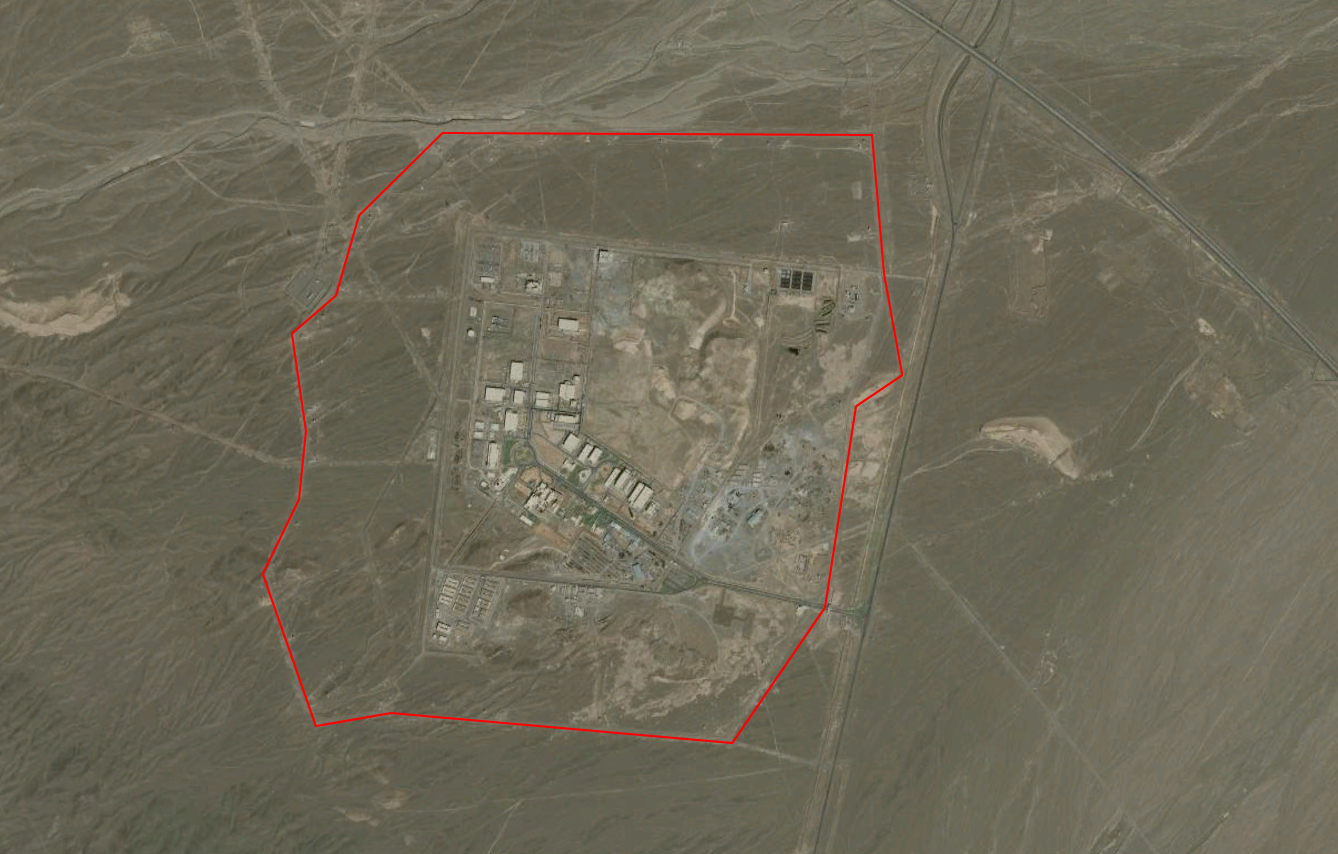
Document 6: Bonn Embassy Airgram A-135 to State Department, 3 August 1961, Limited Official Use
Source: The Berlin Crisis

On July 30, 1961, Chairman of the Senate Foreign Relations Committee Sen. J. William Fulbright (D-Ark) made a television statement suggesting that closing the Berlin escape hatch could be a subject for negotiations over West Berlin.  He said further that the “truth of the matter is that …the Russians have the power to close it in any case. I mean you are not giving up very much because I believe that next week if they chose to close their borders, they could without violating any treaty.” Further, the East Germans “have a right to close their borders.” (Note 5)  As the U.S. Embassy in Bonn reported, Fulbright’s comments created a furor in West Germany and West Berlin. For example, at first West Berlin Mayor Willy Brandt could not believe that Fulbright had said it.  Certainly, East German and Soviet authorities must have seen it as a signal that the West would tolerate the closing of the sector borders.

Document 7: West Berlin Mission Despatch 72 to State Department, “Soviet Zone of Germany – Refugees, Border Crossers (Grenzaengers), East German Police Controls, and Recent East German Legal-Judicial Actions,” 7 August 1961, Official Use Only
Source: The Berlin Crisis

The U.S. mission in West Berlin provided a full account of the ins and outs of the “second Berlin access problem,” the right of entry into West Berlin of the 16 million residents of East Germany and East Berlin.  While the “first Berlin access problem”—Allied and West German access to West Berlin—was in a “pre-crisis” or “potential crisis stage,” the “second access problem” was “nearer to a ‘crisis’ stage as a result of recent repressive actions by the Soviet Zone regime.”  With over 1,100 refugees arriving in West Berlin and West Germany daily, a rate which had “unquestionably disastrous” implications for GDR, East German security police were tightening up controls on roads, railroads, commuter trains, and the Berlin subway.  Receiving close scrutiny by police and courts were younger men and “border crossers,” East Berliners who worked in West Berlin and were fleeing in larger numbers.  Sent by diplomatic pouch, this report did not reach the State Department Berlin Desk until 14 August, the day after the sector border closing.
.
Document 8: “Daily Brief” and “East German Security Measures Against the Refugees,” Central Intelligence Bulletin, 9 August 1961, Top Secret, Excised copy
Source: CIA Research Tool (CREST), National Archives II

While “morale” in West Berlin was fluctuating, partly because of apprehension about possible Western diplomatic compromises with Moscow, refugees were entering the West in record numbers. The East German government was “faced with the dilemma that actions necessary to halt the refugee flow would in all likelihood cause a sharp and dangerous rise in popular discontent.”  So far refraining from adopting “special internal security measures,” the regime was using normal police controls and propaganda techniques to “stem the flow.”   The most coercive measure taken so far was forcing “border crossers” to register with GDR authorities, an action that had also been coordinated with the Soviets. (Note 6)

Document 9: Memorandum of conversation, “Secretary’s Meeting with European Ambassadors,” Paris, 9 August 1961, Secret
Source: State Department Freedom of Information Act release to National Security Archive

While in Paris for meetings with French, British and West German foreign ministers, Secretary of State Dean Rusk and other senior officials held a lengthy discussion with U.S. ambassadors on the Berlin crisis and its implications.  The East German refugee problem did not get a mention, which suggests its low salience for the Kennedy administration’s Berlin policy. As Rusk emphasized it was important to “draw a line between what was vital to our interests and [what was] important but not worth risking the precipitation of armed conflict.”  As Kennedy had stressed in a televised address on 24 July, Rusk argued that what was vital was “the Western presence in West Berlin” and “our physical access to the city.” Rusk was hopeful that the Soviets did not intend to threaten those interests and would be amenable to negotiations over non-vital interests. A “peaceful settlement” was essential because in the nuclear age, war could no “longer be a deliberate instrument of national policy.”

Document 10: “The East German Refugees,” Office of Current Intelligence, Central Intelligence Agency, 10 August 1961, excised copy [full version undergoing declassification review at request of National Security Archive)
Source: CREST

As the refugee crisis intensified, the CIA’s Office of Current Intelligence prepared a fairly detailed analysis, including numbers of refugees, their motives, the impact on East Germany, countermeasures, and the effect on Ulbricht and Khrushchev. The volume of refugees was the highest since the crisis year of 1953 and as already noted, fear that the Soviets would sign a treaty with the GDR affecting the status of West Berlin provided a significant motivation to flee.  The report cited “evidence that the regime is considering harsher measures to reduce the flow” but the evidence is excised from this release except for a reference to decrees that would soon be emanating from the East German Peoples Chamber.  Most likely this report went to middle-level officials at other intelligence agencies, the State Department, and the Pentagon.  While the CIA could not predict when or how the GDR would act, anyone who read it could not have been too surprised by what took place a few days later. (Note 7)

Document 11: “Daily Brief and “Marshall Konev,” Central Intelligence Bulletin, 11 August 1961, Top Secret, Excised copy, excerpts
Source: CREST

On 9 August, over 1,600 refugees from East Germany and East Berlin registered at the refugee reception center at Marienfelde.  The appointment of the former Warsaw Pact commander, Marshall Ivan Konev, as commander of Soviet forces in East Germany was a sign of Khrushchev’s “efforts to impress the West with his determination to conclude a German treaty before the end of this year.”

Document 12: West Berlin mission cable 176 to State Department, 13 August 1961, Confidential
Source: The Berlin Crisis

Early in the morning of 13 August 1961, the East German regime enacted decrees mandating “drastic control measures” at the sector borders to prevent East Germans from going into West Berlin. The East Germans had planned to take this action early on a Sunday morning to catch East and West Berliners by surprise, when most were distracted by weekend holiday plans or were otherwise not up and about. (Note 8) Panic in East Berlin and shock in West Berlin and elsewhere quickly followed the border closing.

Mission chief Allen Lightner speculated that the decision may have been taken at a recent Warsaw Pact meeting in Moscow, a view that would soon be held by many scholars.  As Hope Harrison has demonstrated, the basic decision had already been taken but the Warsaw Pact meeting during 3-5 August was important for consensus-building purposes in the Eastern bloc, but also as a deterrent so that the West did not see the GDR action as “only its plan.” (Note 9)

Document 13: West Berlin mission cable 186 to State Department, 13 August 1961, Confidential
Source: The Berlin Crisis

The mission provided the State Department with an update of the controls over the East German population. Subway cars heading into the West failed to show up and control measures were being implemented “everywhere” with East German police stringing up barbed wire at border points. The flow of refugees had not stopped entirely, because people were fleeing through the canals and fields.  The mission interpreted Soviet troop deployments on the periphery of Berlin as a “show of strength” to “intimidate” East Berliners and disabuse them of any notion of initiating resistance as in 1953.   So far East German officials had not interfered with the movement of Western observers.

Document 14: State Department cable 340 to Embassy Bonn, 13 August 1961, unclassified
Source: The Berlin Crisis

Secretary of Dean Rusk quickly issued a statement condemning the sector border closings as a “flagrant violation of the right of free circulation throughout the city.”  “Communist authorities are now denying the right of individuals to elect a world of free choice rather than a world of coercion.”  Rusk noted that the actions taken by the East Germans violated Berlin’s four power status but they were not aimed at “the allied position in West Berlin or access thereto.”  That is, they did not touch on the “vital interests” which Rusk had discussed with U.S. diplomats on 9 August.  A few days later, during a meeting of the Berlin Steering Group, Rusk underlined the point when he observed that the sector border closing was a “non-shooting” issue. At the same time, he speculated that the Berlin Wall might help solve the crisis, implying that a more stable GDR might make the Soviets more relaxed about the West Berlin problem (see document 21 at page 86).  Nevertheless, serious tensions over West Berlin persisted during the months that followed. (Note 10)

Document 15: Analysis by Central Intelligence Agency, Office of Current Intelligence, cable to White House/Hyannis[port], circa 13-14 August 1961, Secret
Source: CIA FOIA Web site

The CIA kept the White House informed of current developments in Berlin with memoranda like this, but President Kennedy was not satisfied that he had been given adequate warning of the possibility of imminent GDR action to close the sector borders.  Apparently, when the news reached Kennedy at Hyannisport at about 1 p.m., he reacted with some irritation, “How come we didn’t know anything about this?” (Note 11) As noted earlier, what the CIA had reported to President Kennedy in the PICL during the days before the Wall Crisis remains classified.

Document 16: Central Intelligence Agency, “Berlin Situation Report (As of 1630 Hours),” 15 August 1961, excised copy
Source: CIA Research Tool (CREST), National Archives II

CIA had conflicting reports, but the indications were that the East Germans had extended the crackdown to West Berliners and West Germans, who now would be required to get a permit if they wished to enter (or drive into) East Berlin.

Document 17: “Conclusion of Special USIB [U.S. Intelligence Board] Subcommittee on Berlin Situation,”
Central Intelligence Bulletin, 16 August 1961, Top Secret, Excised copy, excerpts
Source:  CREST

The USIB Subcommittee believed that a “critical stage” had been reached that could lead to “severe local demonstrations,” but downplayed the possibility of an uprising: “In contrast to the situation in June 1953, the regime has taken the initiative” and has made “an all-out effort to intimidate the population.”

Document 18: Bonn Embassy cable 354 to State Department, 17 August 1961, Secret
Source: The Berlin Crisis

Assessing the German reaction to the sector border closing, Ambassador Dowling was not overly concerned about the situation in West Germany, but he did see a “crisis of confidence” in West Berlin.  Washington needed to take “dramatic steps” steps to improve the “psychological climate” there.  Martin Hillenbrand, director of the Office of German Affairs later observed that “the volatility of Berlin sentiment, either in the direction of courage or panic, has frequently caught the Western powers by surprise, and this was to provide another good example.” (Note 12)

Document 19: Central Intelligence Agency, Office of Current Intelligence, “Current Intelligence Weekly Summary,” 17 August 1961, Secret, excised and incomplete copy
Source: The Berlin Crisis

This report summarized the status of border controls, refugee movements, communications, Soviet and Eastern bloc positions, and reactions in West Berlin and West Germany.  The report refers to concerns about a “crisis of confidence” in West Berlin, where the population is becoming “increasingly restive over the lack of prompt Western countermeasures.”` The unrest depicted in photo 2 conveys some of the agitation.

Document 20: Central Intelligence Agency, Office of Current Intelligence, “Current Intelligence Weekly Summary,” 24 August 1961, Secret, excised copy, excerpts
Source: CREST

This CIA report provides an update on the new GDR controls at the sector border, the construction of concrete barriers to replace barbed-wire fences, tightened regulation of passage by West Berliners and West Germans into East Berlin, interference with Allied military traffic into the East, and security measures.  Despite the controls, “significant” numbers were still escaping from the East.  The morale problem cited in earlier reports and cables had become less severe owing to the deployment of a U.S. Army battle group and a visit by Vice President Lyndon Johnson. While the Soviets had protested the visits by Johnson and Chancellor Adenauer and accused the West of “provocative” activities” in Berlin, they “sought to minimize the prospect of an imminent crisis,” by playing down immediate threats to Western access to the city.

Document 21: Central Intelligence Agency, Office of Current Intelligence, “Current Intelligence Weekly Summary,” 31 August 1961, Secret, excised copy, excerpts
Source: CREST

According to the CIA, Moscow’s decision to resume nuclear testing suggested that Khrushchev had resorted to “nuclear intimidation” to offset his weakened bargaining position in the Berlin crisis. The sector border closing “severely damaged their efforts to present the East German regime as a sovereign and respectable negotiating partner.” The situation in West Berlin remained difficult; whatever positive impact Vice President Johnson’s visit had on morale had been weakened by East German threats against Western air access to West Berlin. “[A] feeling of frustration and hopeless is already beginning to spread through the West Berlin population.”

Document 22: Executive Secretary, U.S. Intelligence Board, “Review of Advance Intelligence Pertaining to the Berlin Wall and Syrian Coup Incidents,” 12 February 1962, enclosing memorandum from McGeorge Bundy  to Director of Central Intelligence, 22 January 1962,  with report by President’s Foreign Intelligence Advisory Board, Top Secret, excised copy (full version undergoing declassification review at request of National Security Archive)
Source: CREST

President Kennedy’s feeling that he was not adequately warned about the imminent East German action and a coup in Syria on 28 September led him to ask the President’s Foreign Intelligence Advisory Board (PFIAB) for a report on what “advance information” the intelligence agencies had before the events and “what lessons might be learned.” According to PFIAB, in both incidents “indications of imminent significant developments were apparently lost sight of in the mass of intelligence reports.”  With respect to Berlin, no one knew when the “Berlin Wall” was going up, but “our intelligence collectors did obtain information which pointed to the possible imminence of drastic action by the East German regime.”  The problem was the intelligence agencies had not provided top policymakers with “adequate and timely appraisals of the advance information which had been collected.”  Case studies of the incidents are heavily excised, but PFIAB declared that a comment by Ulbricht in a public speech on 10 August was the “best indicator” of imminent action.  It would be interesting to know how the CIA responded to the PFIAB appraisal, but such information is not available.

Document 23: State Department cable 430 to Bonn Embassy, 14 August 1962, Secret
Source: National Archives, Record Group 59, State Department Decimal Files, 1960-1963, 641.61/8-1462 

About a year after the Wall started going up, British Labor Party leader, and future Prime Minister, Harold Wilson met with Soviet Deputy Premier Anastas Mikoyan. According to British diplomats in Washington, Wilson began the conversation by asking “whether Mikoyan did not think Wall was a scandal and blot on Communism.”  Mikoyan agreed but “said Wall was necessary to prevent clashes between two halves of Berlin.” This is probably a reference to Soviet claims about provocative actions by West Berlin around the time the sector borders were closed.  In any event, Mikoyan assured Wilson that Moscow was keeping a “tight hold on Ulbricht and would not let matters go out of hand.”

Document 24: U.S Department of State, Historical Studies Division, Crisis over Berlin: American Policy concerning the Soviet Threats to Berlin, November 1958-December 1962; Part VI: Deepening Crisis over Berlin–Communist Challenges and Western Responses, June-September 1961, April 1970, Top Secret, Excerpts
Source: Berlin Crisis

During the late 1960s, Department of State historians produced a major study of the 1958-1962 Berlin Crisis, although they did not get the opportunity to complete it. This excerpt provides a useful overview of the refugee crisis and the Kennedy administration’s policy response, including countermeasures and steps to raise morale in West Berlin.  Many of the documents cited and summarized were later published in the Department’s Foreign Relations of the United States volumes on the Berlin Crisis.


Notes

1. Patrick Major, Behind the Berlin Wall: East Germany and the Frontiers of Power (Oxford,: Oxford University Press, 2010), 143.  The official term was “Anti-Fascist Defense Rampart” or antifaschistischer Shutzwall).

2. For recent accounts of the 1961 crisis, see Frederick Kempe, Berlin 1961: Kennedy, Khrushchev, and the Most Dangerous Place on Earth ( G.P. Putnam’s Sons, 2011); Pertti Ahonen. Death at the Berlin Wall (Oxford : Oxford University Press, 2011); W.R. Smyser, Kennedy and the Berlin Wall : “a hell of a lot better than a war” (Lanham, Md.: Rowman & Littlefield Publishers, 2009), and Patrick Major, Behind the Berlin Wall: East Germany and the Frontiers of Power.  For an influential study of East German-Soviet relations during the 1950s through the Berlin crisis, see Hope Harrison, Driving the Soviets Up the Wall: Soviet-East German Relations,1953-1961 (Princeton: Princeton University Press, 2003),

3. Harrison, Driving the Soviets Up the Wall. 184-187.

4. For a full account of the 1953 East German revolt, see Christian F. Ostermann, Uprising in East Germany 1953: The Cold War, the German Question, and the First Major Upheaval behind the Iron Curtain (Budapest; New York : Central European University Press, 2001).

5. “Senator’s Remarks on TV, “The New York Times, 3 August 1961.

6. Harrison, Driving the Soviets Up the Wall, 188-189.

7. Apparently a few intelligence officers in West Berlin predicted a “Wall”. See Peter Wyden, Wall: Inside Story of Divided Berlin (New York: Simon & Shuster, 1989), at 91-93.

8. Ibid.,189.

9. Ibid., 192.
10. See for example, Lawrence Freedman, Kennedy’s Wars: Berlin, Cuba, Laos, and Vietnam (New York: Oxford, 2000), 79-91, and Smyser, Kennedy and the Berlin Wall.
11. Peter Wyden, Wall: Inside Story of Divided Berlin (New York: Simon & Shuster, 1989), 26.
12. Martin Hillenbrand, Fragments of Our Time: Memoirs of a Diplomat (Athens: University of Georgia, 1998), 190.

TOP-SECRET FROM THE ARCIVES OF THE FBI: THE FRANK SINATRA DOCUMENTS PART 1


Francis “Frank” Albert Sinatra (1915-1998), singer and actor, appears in many FBI files. He was the target of many extortion attempts that the FBI investigated. Sinatra also appeared in FBI files in connection with his contacts with racketeering investigation subjects and his early involvement with the Communist Party in Hollywood. The dates of these files fall between 1943 and 1985.

Download the files below by mouseclick

sinatr1a

sinatr1b

sinatr2a

sinatr2b

sinatr2c

sinatr2d

sinatr3a

TOP-SECRET FROM THE ARCHIVES OF THE CIA: TERRORISM REVIEW – ANTI-US TERRORISM IN LATIN AMERICA

TERRORISM REVIEW – ANTI-US TERRORISM IN LATIN AMERICA

TOP-SECRET FROM THE ARCHIVES OF THE CIA: US INTELLIGENCE AND VIETNAM

US INTELLIGENCE AND VIETNAM

TOP SECRET: THE CIA’S INTERNAL PROBE OF THE CUBABAY OF PIGS AFFAIR

THE CIA’S INTERNAL PROBE OF THE BAY OF PIGS AFFAIR

RE: STASI-”GoMoPA”: THE CODE-LIST OF THE HIDDEN STASI-AGENTS FROM A TO Z

140520406118;00;00;00;;;;;0,00
040424506110;00;00;00;;;;;0,00
290829406144;00;00;00;;;;;0,00
130563500711;00;00;00;;;;;0,00
130551419182;00;00;00;;;;;0,00
050860421817;00;00;00;;;;;0,00
011220406115;00;00;00;;;;;0,00
051143421034;00;00;00;;;;;0,00
030660424986;00;00;00;;;;;0,00
171161406811;00;00;00;; 000000000000000:;;;0,00
201067428226;14;08;00;;*, *:;;;13225,00
010170516214;09;06;20;;, GABRIELA:;;;1460,00
040866419938;99;99;99;;::;;;2475,00
050368418114;99;99;99;;::;;;2475,00
040168425038;99;99;99;;::;;;2475,00
050367405629;99;99;99;;::;;;2475,00
040167407516;99;99;99;;::;;;2475,00
050168421327;99;99;99;;::;;;2475,00
031067411812;99;99;99;;::;;;2475,00
050167422811;99;99;99;;::;;;2475,00
031067430028;99;99;99;;::;;;2475,00
040567406141;99;99;99;;::;;;2475,00
031267403817;99;99;99;;::;;;2475,00
040167420710;99;99;99;;::;;;2475,00
031067404225;99;99;99;;::;;;2475,00
040967413113;99;99;99;;::;;;2475,00
031066402615;99;99;99;;::;;;2475,00
041166411112;99;99;99;;::;;;2475,00
031267412211;99;99;99;;::;;;2475,00
041067407329;99;99;99;;::;;;2475,00
030967403012;99;99;99;;::;;;2475,00
040767424010;99;99;99;;::;;;2475,00
060268425068;99;99;99;;::;;;2475,00
050264402142;99;99;99;;::;;;2475,00
051166419746;99;99;99;;::;;;2475,00
030168415316;99;99;99;;::;;;2475,00
060268422713;99;99;99;;::;;;2475,00
060267402120;99;99;99;;::;;;2475,00
060167412225;99;99;99;;::;;;2475,00
051165419816;99;99;99;;::;;;2475,00
051067415117;99;99;99;;::;;;2475,00
051167428118;99;99;99;;::;;;2475,00
051266419620;99;99;99;;::;;;2475,00
051167417742;99;99;99;;::;;;2475,00
040267412275;99;99;99;;::;;;2475,00
040267414211;99;99;99;;::;;;2475,00
050567402545;99;99;99;;::;;;2475,00
040268417318;99;99;99;;::;;;2475,00
050866430036;99;99;99;;::;;;2475,00
040368426713;99;99;99;;::;;;2475,00
050767421310;99;99;99;;::;;;2475,00
040267420224;99;99;99;;::;;;2475,00
050667422463;99;99;99;;::;;;2475,00
040368426510;99;99;99;;::;;;2475,00
050966403115;99;99;99;;::;;;2475,00
030965415159;99;99;99;;::;;;2475,00
051166405133;99;99;99;;::;;;2475,00
030267430060;99;99;99;;::;;;2475,00
030467413062;99;99;99;;::;;;2475,00
040367405718;99;99;99;;::;;;2475,00
030667409527;99;99;99;;::;;;2475,00
050866416146;99;99;99;;::;;;2475,00
030367430199;99;99;99;;::;;;2475,00
050467424990;99;99;99;;::;;;2475,00
030168427712;99;99;99;;::;;;2475,00
041167418711;99;99;99;;::;;;2475,00
030766426824;99;99;99;;::;;;2475,00
040967426811;99;99;99;;::;;;2475,00
040967417448;99;99;99;;::;;;2475,00
040368422413;99;99;99;;::;;;2475,00
030268420227;99;99;99;;::;;;2475,00
050767405644;99;99;99;;::;;;2475,00
040866403223;99;99;99;;::;;;2475,00
040767413936;99;99;99;;::;;;2475,00
040467400754;99;99;99;;::;;;2475,00
050565417321;99;99;99;;::;;;2475,00
030367412134;99;99;99;;::;;;2475,00
150168419321;99;99;99;;::;;;2595,00
021267414111;99;99;99;;::;;;2475,00
030468430198;99;99;99;;::;;;2475,00
040167430417;99;99;99;;::;;;2475,00
030767411536;99;99;99;;::;;;2475,00
040268409318;99;99;99;;::;;;2475,00
030767413910;99;99;99;;::;;;2475,00
040267422211;99;99;99;;::;;;2475,00
030867424713;99;99;99;;::;;;2475,00
050967428242;99;99;99;;::;;;2475,00
030867419826;99;99;99;;::;;;2475,00
050767412924;99;99;99;;::;;;2475,00
040567402415;99;99;99;;::;;;2475,00
050567402537;99;99;99;;::;;;2475,00
030667411248;99;99;99;;::;;;2475,00
050468424431;99;99;99;;::;;;2475,00
030368420574;99;99;99;;::;;;2475,00
041266404438;99;99;99;;::;;;2475,00
030667419928;99;99;99;;::;;;2475,00
041267422830;99;99;99;;::;;;2475,00
030567420729;99;99;99;;::;;;2475,00
041066430260;99;99;99;;::;;;2475,00
030666419723;99;99;99;;::;;;2475,00
060268407652;99;99;99;;::;;;2475,00
030667429237;99;99;99;;::;;;2475,00
250267430217;99;99;99;;::;;;2550,00
020928430019;99;99;99;;::;;;2562,50
040767409128;99;99;99;;::;;;2561,29
291266430128;99;99;99;;::;;;2550,00
291067406416;99;99;99;;::;;;2550,00
290666400222;99;99;99;;::;;;2550,00
270268413812;99;99;99;;::;;;2550,00
260666415320;99;99;99;;::;;;2550,00
260368421116;99;99;99;;::;;;2550,00
140367412262;99;99;99;;::;;;2550,00
250168405219;99;99;99;;::;;;2550,00
271066413923;99;99;99;;::;;;2570,00
231267426820;99;99;99;;::;;;2550,00
240168408955;99;99;99;;::;;;2550,00
210766400024;99;99;99;;::;;;2550,00
200667409219;99;99;99;;::;;;2550,00
190367430271;99;99;99;;::;;;2550,00
161267400654;99;99;99;;::;;;2550,00
160667406815;99;99;99;;::;;;2550,00
151167425070;99;99;99;;::;;;2550,00
060167426213;99;99;99;;::;;;2475,00
250766400119;99;99;99;;::;;;2550,00
020168419617;99;99;99;;::;;;2595,00
080371428222;99;99;99;;::;;;2040,00
130367412271;99;99;99;;::;;;2595,00
121167414227;99;99;99;;::;;;2595,00
120867411014;99;99;99;;::;;;2595,00
120367403237;99;99;99;;::;;;2595,00
110368404312;99;99;99;;::;;;2595,00
091267404638;99;99;99;;::;;;2595,00
091067413417;99;99;99;;::;;;2595,00
080666419729;99;99;99;;::;;;2595,00
201126404612;99;99;99;;::;;;2562,50
021267406410;99;99;99;;::;;;2595,00
081266415125;99;99;99;;::;;;2570,00
011267413611;99;99;99;;::;;;2595,00
231165409536;99;99;99;;::;;;2592,00
030567430142;99;99;99;;::;;;2592,00
280664421813;99;99;99;;::;;;2585,00
200763430085;99;99;99;;::;;;2585,00
120761402718;99;99;99;;::;;;2585,00
050228430074;99;99;99;;::;;;2580,00
010667400217;99;99;99;;::;;;2575,00
130367400836;99;99;99;;::;;;2550,00
061166426814;99;99;99;;::;;;2595,00
010667406117;99;99;99;;::;;;2515,65
050966406156;99;99;99;;::;;;2541,00
040367428346;99;99;99;;::;;;2541,00
300867408518;99;99;99;;::;;;2525,00
250967402719;99;99;99;;::;;;2525,00
201066400627;99;99;99;;::;;;2525,00
140367430153;99;99;99;;::;;;2525,00
061167420924;99;99;99;;::;;;2525,00
271267407060;99;99;99;;::;;;2520,00
140866400856;99;99;99;;::;;;2550,00
061169414827;99;99;99;;::;;;2520,00
061266406132;99;99;99;;::;;;2541,00
281269401331;99;99;99;;::;;;2506,93
280368410036;99;99;99;;::;;;2500,00
020563421338;99;99;99;;::;;;2500,00
250864522822;99;99;99;;::;;;2489,41
060467409116;99;99;99;;::;;;2475,00
060666414858;99;99;99;;::;;;2475,00
060665404834;99;99;99;;::;;;2475,00
060766408922;99;99;99;;::;;;2475,00
060266417515;99;99;99;;::;;;2475,00
091067422735;99;99;99;;::;;;2520,00
230767405247;99;99;99;;::;;;2541,00
120368421226;99;99;99;;::;;;2550,00
090667400113;99;99;99;;::;;;2550,00
071266401517;99;99;99;;::;;;2550,00
070667421725;99;99;99;;::;;;2550,00
061266409122;99;99;99;;::;;;2550,00
050566400759;99;99;99;;::;;;2550,00
020867413222;99;99;99;;::;;;2550,00
011166422746;99;99;99;;::;;;2550,00
210532530168;99;99;99;;::;;;2547,10
060268406422;99;99;99;;::;;;2541,00
281067425095;99;99;99;;::;;;2541,00
061266405113;99;99;99;;::;;;2541,00
211264406199;99;99;99;;::;;;2541,00
211067406157;99;99;99;;::;;;2541,00
200467423817;99;99;99;;::;;;2541,00
130967418319;99;99;99;;::;;;2541,00
101167405218;99;99;99;;::;;;2541,00
100867405038;99;99;99;;::;;;2541,00
091167406142;99;99;99;;::;;;2541,00
081066406144;99;99;99;;::;;;2541,00
021167413410;99;99;99;;::;;;2475,00
291167425032;99;99;99;;::;;;2541,00
210966423618;99;99;99;;::;;;2475,00
210667420521;99;99;99;;::;;;2475,00
260666420226;99;99;99;;::;;;2475,00
210567408912;99;99;99;;::;;;2475,00
260667424923;99;99;99;;::;;;2475,00
210867423911;99;99;99;;::;;;2475,00
260766415395;99;99;99;;::;;;2475,00
210967413411;99;99;99;;::;;;2475,00
260667407920;99;99;99;;::;;;2475,00
211267424317;99;99;99;;::;;;2475,00
260567421733;99;99;99;;::;;;2475,00
260566410610;99;99;99;;::;;;2475,00
260567417419;99;99;99;;::;;;2475,00
210867402117;99;99;99;;::;;;2475,00
260567421725;99;99;99;;::;;;2475,00
220167422116;99;99;99;;::;;;2475,00
260867411529;99;99;99;;::;;;2475,00
220167424947;99;99;99;;::;;;2475,00
261066410512;99;99;99;;::;;;2475,00
220267409234;99;99;99;;::;;;2475,00
200667408929;99;99;99;;::;;;2475,00
211067421816;99;99;99;;::;;;2475,00
201166405927;99;99;99;;::;;;2475,00
030268417781;99;99;99;;::;;;2475,00
200967408525;99;99;99;;::;;;2475,00
260167414411;99;99;99;;::;;;2475,00
200967422060;99;99;99;;::;;;2475,00
260368412236;99;99;99;;::;;;2475,00
200767424010;99;99;99;;::;;;2475,00
260168430325;99;99;99;;::;;;2475,00
201065416010;99;99;99;;::;;;2475,00
260268407026;99;99;99;;::;;;2475,00
260666400110;99;99;99;;::;;;2475,00
260268419318;99;99;99;;::;;;2475,00
210168418136;99;99;99;;::;;;2475,00
260367430053;99;99;99;;::;;;2475,00
201067402210;99;99;99;;::;;;2475,00
260168400513;99;99;99;;::;;;2475,00
210367424926;99;99;99;;::;;;2475,00
260366400717;99;99;99;;::;;;2475,00
210368424717;99;99;99;;::;;;2475,00
260766407635;99;99;99;;::;;;2475,00
210267403124;99;99;99;;::;;;2475,00
260967420545;99;99;99;;::;;;2475,00
201266422812;99;99;99;;::;;;2475,00
270467424434;99;99;99;;::;;;2475,00
270368414310;99;99;99;;::;;;2475,00
230268400812;99;99;99;;::;;;2475,00
270367424920;99;99;99;;::;;;2475,00
230368410110;99;99;99;;::;;;2475,00
270367406714;99;99;99;;::;;;2475,00
230367420210;99;99;99;;::;;;2475,00
270368419621;99;99;99;;::;;;2475,00
230267429234;99;99;99;;::;;;2475,00
261065405519;99;99;99;;::;;;2475,00
230567428241;99;99;99;;::;;;2475,00
221267408527;99;99;99;;::;;;2475,00
230866424515;99;99;99;;::;;;2475,00
270667406724;99;99;99;;::;;;2475,00
231066427122;99;99;99;;::;;;2475,00
270567420238;99;99;99;;::;;;2475,00
230767429222;99;99;99;;::;;;2475,00
270767428111;99;99;99;;::;;;2475,00
230865416214;99;99;99;;::;;;2475,00
270567417135;99;99;99;;::;;;2475,00
231067428303;99;99;99;;::;;;2475,00
270268407420;99;99;99;;::;;;2475,00
261166420216;99;99;99;;::;;;2475,00
211167422023;99;99;99;;::;;;2475,00
261266417129;99;99;99;;::;;;2475,00
220467415401;99;99;99;;::;;;2475,00
261167411215;99;99;99;;::;;;2475,00
220368411018;99;99;99;;::;;;2475,00
261167411928;99;99;99;;::;;;2475,00
220567424997;99;99;99;;::;;;2475,00
270167416918;99;99;99;;::;;;2475,00
220567413622;99;99;99;;::;;;2475,00
221167426613;99;99;99;;::;;;2475,00
220567415126;99;99;99;;::;;;2475,00
270367413738;99;99;99;;::;;;2475,00
220767417521;99;99;99;;::;;;2475,00
270167413020;99;99;99;;::;;;2475,00
220967415360;99;99;99;;::;;;2475,00
261267424953;99;99;99;;::;;;2475,00
220967421517;99;99;99;;::;;;2475,00
270267416923;99;99;99;;::;;;2475,00
221166407322;99;99;99;;::;;;2475,00
270367422773;99;99;99;;::;;;2475,00
251266404820;99;99;99;;::;;;2475,00
261267415395;99;99;99;;::;;;2475,00
010866403226;99;99;99;;::;;;2475,00
011167403627;99;99;99;;::;;;2475,00
010867409814;99;99;99;;::;;;2475,00
011167422035;99;99;99;;::;;;2475,00
010967416720;99;99;99;;::;;;2475,00
010767428911;99;99;99;;::;;;2475,00
010966414838;99;99;99;;::;;;2475,00
010767414835;99;99;99;;::;;;2475,00
010667415021;99;99;99;;::;;;2475,00
171267418917;99;99;99;;::;;;2475,00
020866421538;99;99;99;;::;;;2475,00
011066403214;99;99;99;;::;;;2475,00
010766400829;99;99;99;;::;;;2475,00
010967414610;99;99;99;;::;;;2475,00
010766405718;99;99;99;;::;;;2475,00
010567406814;99;99;99;;::;;;2475,00
010666419717;99;99;99;;::;;;2475,00
010867405223;99;99;99;;::;;;2475,00
161166419911;99;99;99;;::;;;2475,00
161267413017;99;99;99;;::;;;2475,00
251167413414;99;99;99;;::;;;2475,00
011067416439;99;99;99;;::;;;2475,00
010367405243;99;99;99;;::;;;2475,00
020767426210;99;99;99;;::;;;2475,00
020565422828;99;99;99;;::;;;2475,00
010467408513;99;99;99;;::;;;2475,00
010467426711;99;99;99;;::;;;2475,00
020667425042;99;99;99;;::;;;2475,00
010468429260;99;99;99;;::;;;2475,00
020867424028;99;99;99;;::;;;2475,00
010368427436;99;99;99;;::;;;2475,00
020367405031;99;99;99;;::;;;2475,00
010766407529;99;99;99;;::;;;2475,00
011166400619;99;99;99;;::;;;2475,00
020268413933;99;99;99;;::;;;2475,00
011167415396;99;99;99;;::;;;2475,00
010168411237;99;99;99;;::;;;2475,00
011167422772;99;99;99;;::;;;2475,00
010268422427;99;99;99;;::;;;2475,00
011066430079;99;99;99;;::;;;2475,00
020667414714;99;99;99;;::;;;2475,00
060567417113;99;99;99;;::;;;2475,00
020267403418;99;99;99;;::;;;2475,00
250267420035;99;99;99;;::;;;2475,00
010367409818;99;99;99;;::;;;2475,00
250966417775;99;99;99;;::;;;2475,00
250867413736;99;99;99;;::;;;2475,00
190567426314;99;99;99;;::;;;2475,00
250866409225;99;99;99;;::;;;2475,00
190368430265;99;99;99;;::;;;2475,00
250866400634;99;99;99;;::;;;2475,00
190767417711;99;99;99;;::;;;2475,00
250867428217;99;99;99;;::;;;2475,00
190667414417;99;99;99;;::;;;2475,00
250167404513;99;99;99;;::;;;2475,00
190767402325;99;99;99;;::;;;2475,00
181166407628;99;99;99;;::;;;2475,00
190966413828;99;99;99;;::;;;2475,00
251166417114;99;99;99;;::;;;2475,00
190967428263;99;99;99;;::;;;2475,00
251167413270;99;99;99;;::;;;2475,00
200167417749;99;99;99;;::;;;2475,00
251067407017;99;99;99;;::;;;2475,00
200266418317;99;99;99;;::;;;2475,00
251160415118;99;99;99;;::;;;2475,00
200467417142;99;99;99;;::;;;2475,00
250766424815;99;99;99;;::;;;2475,00
250368422443;99;99;99;;::;;;2475,00
171266408215;99;99;99;;::;;;2475,00
250467404013;99;99;99;;::;;;2475,00
180366407441;99;99;99;;::;;;2475,00
250567420221;99;99;99;;::;;;2475,00
180167415334;99;99;99;;::;;;2475,00
250566414428;99;99;99;;::;;;2475,00
180767424728;99;99;99;;::;;;2475,00
250467402739;99;99;99;;::;;;2475,00
180666426644;99;99;99;;::;;;2475,00
181165419619;99;99;99;;::;;;2475,00
180767426715;99;99;99;;::;;;2475,00
250767422774;99;99;99;;::;;;2475,00
180966428019;99;99;99;;::;;;2475,00
250367400517;99;99;99;;::;;;2475,00
181066400613;99;99;99;;::;;;2475,00
250767428228;99;99;99;;::;;;2475,00
181167427612;99;99;99;;::;;;2475,00
250866419036;99;99;99;;::;;;2475,00
181266416214;99;99;99;;::;;;2475,00
250767414328;99;99;99;;::;;;2475,00
150767408931;99;99;99;;::;;;2595,00
250368420528;99;99;99;;::;;;2475,00
250167408549;99;99;99;;::;;;2775,00
251267409519;99;99;99;;::;;;2775,00
050567416920;99;99;99;;::;;;2775,00
180368430100;99;99;99;;::;;;2775,00
040966430229;99;99;99;;::;;;2775,00
121267405627;99;99;99;;::;;;2775,00
030468409313;99;99;99;;::;;;2775,00
110867418428;99;99;99;;::;;;2775,00
030667428306;99;99;99;;::;;;2775,00
100467401812;99;99;99;;::;;;2762,67
270767413745;99;99;99;;::;;;2775,00
080967408513;99;99;99;;::;;;2775,00
141067413428;99;99;99;;::;;;2775,00
130368427619;99;99;99;;::;;;2775,00
110967410511;99;99;99;;::;;;2775,00
080568423636;99;99;99;;::;;;2773,33
310168405018;99;99;99;;::;;;2772,00
191066406125;99;99;99;;::;;;2772,00
150167405921;99;99;99;;::;;;2772,00
050367406138;99;99;99;;::;;;2772,00
160467415434;99;99;99;;::;;;2850,00
090666420219;99;99;99;;::;;;2775,00
180165405319;99;99;99;;::;;;2805,00
161266430018;99;99;99;;::;;;2700,00
290566423822;99;99;99;;::;;;2835,00
200467413723;99;99;99;;::;;;2835,00
051065413927;99;99;99;;::;;;2835,00
060267419328;99;99;99;;::;;;2825,00
130370407510;99;99;99;;::;;;2824,19
251252408812;99;99;99;;::;;;2820,00
260967426824;99;99;99;;::;;;2820,00
260367407443;99;99;99;;::;;;2820,00
060967412215;99;99;99;;::;;;2775,00
301160427226;99;99;99;;::;;;2805,00
270667413246;99;99;99;;::;;;2775,00
111262430226;99;99;99;;::;;;2805,00
070160417348;99;99;99;;::;;;2805,00
020260407440;99;99;99;;::;;;2805,00
201066400619;99;99;99;;::;;;2800,00
200967418715;99;99;99;;::;;;2795,00
291067422432;99;99;99;;::;;;2775,00
090466400731;99;99;99;;::;;;2775,00
300667407123;99;99;99;;::;;;2775,00
050537515397;99;99;99;;::;;;2760,01
180567416010;99;99;99;;::;;;2820,00
180967430030;99;99;99;;::;;;2700,00
200567403119;99;99;99;;::;;;2700,00
200667407934;99;99;99;;::;;;2700,00
200167406126;99;99;99;;::;;;2700,00
191267401320;99;99;99;;::;;;2700,00
191167421818;99;99;99;;::;;;2700,00
191167404823;99;99;99;;::;;;2700,00
190764401722;99;99;99;;::;;;2700,00
190467419619;99;99;99;;::;;;2700,00
290367406114;99;99;99;;::;;;2762,67
190466419828;99;99;99;;::;;;2700,00
200867425010;99;99;99;;::;;;2700,00
180966430119;99;99;99;;::;;;2700,00
180468424939;99;99;99;;::;;;2700,00
180667423816;99;99;99;;::;;;2700,00
180167400845;99;99;99;;::;;;2700,00
171167404657;99;99;99;;::;;;2700,00
170168428277;99;99;99;;::;;;2700,00
170168428285;99;99;99;;::;;;2700,00
161267412954;99;99;99;;::;;;2700,00
131067406755;99;99;99;;::;;;2595,00
190268427536;99;99;99;;::;;;2700,00
220367420051;99;99;99;;::;;;2700,00
160865413936;99;99;99;;::;;;2754,00
220166425032;99;99;99;;::;;;2754,00
121265429254;99;99;99;;::;;;2754,00
080931429718;99;99;99;;::;;;2750,00
280667421018;99;99;99;;::;;;2750,00
250342429751;99;99;99;;::;;;2750,00
020867409119;99;99;99;;::;;;2745,00
061066405717;99;99;99;;::;;;2745,00
230467411223;99;99;99;;::;;;2700,00
200966406923;99;99;99;;::;;;2700,00
220767428028;99;99;99;;::;;;2700,00
200767403818;99;99;99;;::;;;2700,00
211267411022;99;99;99;;::;;;2700,00
220167410836;99;99;99;;::;;;2700,00
210867425001;99;99;99;;::;;;2700,00
210667418923;99;99;99;;::;;;2700,00
210467428270;99;99;99;;::;;;2700,00
210267412215;99;99;99;;::;;;2700,00
210367400123;99;99;99;;::;;;2700,00
201067411811;99;99;99;;::;;;2700,00
011267400845;99;99;99;;::;;;2856,45
221267422820;99;99;99;;::;;;2700,00
121267429231;99;99;99;;::;;;3075,00
210246502326;99;99;99;;::;;;3120,00
090229518517;99;99;99;;::;;;3120,00
060237507423;99;99;99;;::;;;3120,00
021068530128;99;99;99;;::;;;3100,00
261267430042;99;99;99;;::;;;3100,00
200667415416;99;99;99;;::;;;3075,00
140366414354;99;99;99;;::;;;3075,00
311265405946;99;99;99;;::;;;3075,00
150252521118;99;99;99;;::;;;3075,00
300967418211;99;99;99;;::;;;3075,00
160255410156;99;99;99;;::;;;3132,00
241067416248;99;99;99;;::;;;3075,00
120964426322;99;99;99;;::;;;3075,00
210267418422;99;99;99;;::;;;3075,00
121166414516;99;99;99;;::;;;3075,00
161167421546;99;99;99;;::;;;3075,00
110866416447;99;99;99;;::;;;3075,00
140467407444;99;99;99;;::;;;3075,00
110467430110;99;99;99;;::;;;3075,00
061132429718;99;99;99;;::;;;2839,58
140467419912;99;99;99;;::;;;3075,00
110370428292;99;99;99;;::;;;3200,00
060267428910;99;99;99;;::;;;3225,00
060267401718;99;99;99;;::;;;3225,00
020767405823;99;99;99;;::;;;3225,00
010559404843;99;99;99;;::;;;3220,00
130170425431;99;99;99;;::;;;3220,00
220368404723;99;99;99;;::;;;3200,00
050669414838;99;99;99;;::;;;3200,00
310568417747;99;99;99;;::;;;3200,00
010967420113;99;99;99;;::;;;3200,00
240224415317;99;99;99;;::;;;3125,00
190369429231;99;99;99;;::;;;3200,00
220929422121;99;99;99;;::;;;3125,00
231268428211;99;99;99;;::;;;3200,00
200569405038;99;99;99;;::;;;3200,00
250665421017;99;99;99;;::;;;3190,00
280344421822;99;99;99;;::;;;3187,50
110628406112;99;99;99;;::;;;3187,50
280966408024;99;99;99;;::;;;3165,99
180365409525;99;99;99;;::;;;3159,00
120659505817;99;99;99;;::;;;3140,89
310368404124;99;99;99;;::;;;3075,00
211168426544;99;99;99;;::;;;3200,00
230768424941;99;99;99;;::;;;2917,90
280138530307;99;99;99;;::;;;2937,50
190233404318;99;99;99;;::;;;2932,50
280268428933;99;99;99;;::;;;2925,00
251267407628;99;99;99;;::;;;2925,00
211167417750;99;99;99;;::;;;2925,00
141167417776;99;99;99;;::;;;2925,00
130767414428;99;99;99;;::;;;2925,00
041267430216;99;99;99;;::;;;2925,00
300567413219;99;99;99;;::;;;3075,00
060867415363;99;99;99;;::;;;2918,55
150368417419;99;99;99;;::;;;2970,00
190865422776;99;99;99;;::;;;2916,00
060660414523;99;99;99;;::;;;2915,00
071168400115;99;99;99;;::;;;2900,00
300966404838;99;99;99;;::;;;2895,00
050635413810;99;99;99;;::;;;2875,00
040959409413;99;99;99;;::;;;2875,00
130271408913;99;99;99;;::;;;2870,00
030166401914;99;99;99;;::;;;2862,00
081064430327;99;99;99;;::;;;2860,00
110866404817;99;99;99;;::;;;2924,00
140967400513;99;99;99;;::;;;3000,00
220667422833;99;99;99;;::;;;3075,00
100766430314;99;99;99;;::;;;3075,00
091066401326;99;99;99;;::;;;3075,00
080867405315;99;99;99;;::;;;3075,00
010167400819;99;99;99;;::;;;3075,00
220171403225;99;99;99;;::;;;3057,58
290370426327;99;99;99;;::;;;3057,58
110767415334;99;99;99;;::;;;3040,00
021063413934;99;99;99;;::;;;3025,00
050367402217;99;99;99;;::;;;2950,00
150658422814;99;99;99;;::;;;3002,50
130653528232;99;99;99;;::;;;2967,74
300453427516;99;99;99;;::;;;3000,00
130767400528;99;99;99;;::;;;3000,00
120661507440;99;99;99;;::;;;3000,00
040527400626;99;99;99;;::;;;3000,00
020327409214;99;99;99;;::;;;3000,00
260347505513;99;99;99;;::;;;2999,28
251253529763;99;99;99;;::;;;2994,49
210167428252;99;99;99;;::;;;2970,00
161067417515;99;99;99;;::;;;2700,00
091169409814;99;99;99;;::;;;3020,00
261167422416;99;99;99;;::;;;2625,00
270969511415;99;99;99;;::;;;2640,00
190271409830;99;99;99;;::;;;2640,00
100471414528;99;99;99;;::;;;2640,00
310867407223;99;99;99;;::;;;2625,00
300567427418;99;99;99;;::;;;2625,00
300367422866;99;99;99;;::;;;2625,00
281166407546;99;99;99;;::;;;2625,00
280567417759;99;99;99;;::;;;2625,00
200267420048;99;99;99;;::;;;2625,00
271067402732;99;99;99;;::;;;2625,00
151266430019;99;99;99;;::;;;2666,13
261167406715;99;99;99;;::;;;2625,00
260667409520;99;99;99;;::;;;2625,00
260667421044;99;99;99;;::;;;2625,00
260667413415;99;99;99;;::;;;2625,00
260367418126;99;99;99;;::;;;2625,00
250767422424;99;99;99;;::;;;2625,00
250367404323;99;99;99;;::;;;2625,00
250635414713;99;99;99;;::;;;2625,00
211067417809;99;99;99;;::;;;2675,00
280466426541;99;99;99;;::;;;2625,00
040666400626;99;99;99;;::;;;2675,00
161266411036;99;99;99;;::;;;2700,00
150467404517;99;99;99;;::;;;2675,00
140867414811;99;99;99;;::;;;2675,00
120966417761;99;99;99;;::;;;2675,00
100967427728;99;99;99;;::;;;2675,00
061067408848;99;99;99;;::;;;2675,00
060468404616;99;99;99;;::;;;2675,00
051167410612;99;99;99;;::;;;2675,00
050666419625;99;99;99;;::;;;2675,00
020667427013;99;99;99;;::;;;2643,55
041067409914;99;99;99;;::;;;2675,00
130167429220;99;99;99;;::;;;2666,13
021067416219;99;99;99;;::;;;2675,00
010268424916;99;99;99;;::;;;2675,00
130466420525;99;99;99;;::;;;2673,00
020366419837;99;99;99;;::;;;2673,00
010268405010;99;99;99;;::;;;2670,00
260667425029;99;99;99;;::;;;2667,50
200767424221;99;99;99;;::;;;2666,13
190467405719;99;99;99;;::;;;2666,13
180967428256;99;99;99;;::;;;2625,00
050367424811;99;99;99;;::;;;2675,00
260766416128;99;99;99;;::;;;2595,00
010234429719;99;99;99;;::;;;2625,00
270767424946;99;99;99;;::;;;2600,00
240767427031;99;99;99;;::;;;2600,00
181140419313;99;99;99;;::;;;2600,00
070967416813;99;99;99;;::;;;2600,00
051267413714;99;99;99;;::;;;2600,00
311066415113;99;99;99;;::;;;2595,00
311067420926;99;99;99;;::;;;2595,00
220767422128;99;99;99;;::;;;2625,00
280666407548;99;99;99;;::;;;2595,00
030368427928;99;99;99;;::;;;2625,00
251267408014;99;99;99;;::;;;2595,00
251267422043;99;99;99;;::;;;2595,00
250666426362;99;99;99;;::;;;2595,00
220267405110;99;99;99;;::;;;2595,00
190267430266;99;99;99;;::;;;2595,00
171066419825;99;99;99;;::;;;2595,00
160867407628;99;99;99;;::;;;2595,00
160766430060;99;99;99;;::;;;2595,00
160367420527;99;99;99;;::;;;2595,00
310567406712;99;99;99;;::;;;2595,00
111027430023;99;99;99;;::;;;2625,00
180767410318;99;99;99;;::;;;2625,00
170967422218;99;99;99;;::;;;2625,00
161067415050;99;99;99;;::;;;2625,00
160767418426;99;99;99;;::;;;2625,00
160367422813;99;99;99;;::;;;2625,00
160268424979;99;99;99;;::;;;2625,00
130767419325;99;99;99;;::;;;2625,00
121067422801;99;99;99;;::;;;2625,00
120767422787;99;99;99;;::;;;2625,00
021067430109;99;99;99;;::;;;2625,00
110867422857;99;99;99;;::;;;2625,00
030167406178;99;99;99;;::;;;2625,00
110567414214;99;99;99;;::;;;2625,00
110567421326;99;99;99;;::;;;2625,00
080267413012;99;99;99;;::;;;2625,00
061166426515;99;99;99;;::;;;2625,00
060665416966;99;99;99;;::;;;2625,00
050967410528;99;99;99;;::;;;2625,00
040967406714;99;99;99;;::;;;2625,00
030867413133;99;99;99;;::;;;2625,00
230567415352;99;99;99;;::;;;2675,00
110966417754;99;99;99;;::;;;2625,00
080267416627;99;99;99;;::;;;2700,00
110168417549;99;99;99;;::;;;2700,00
101167417518;99;99;99;;::;;;2700,00
100966420719;99;99;99;;::;;;2700,00
090566419616;99;99;99;;::;;;2700,00
090767400145;99;99;99;;::;;;2700,00
090367421027;99;99;99;;::;;;2700,00
080267430242;99;99;99;;::;;;2700,00
080268416418;99;99;99;;::;;;2700,00
050467430186;99;99;99;;::;;;2700,00
071266408911;99;99;99;;::;;;2700,00
110767428266;99;99;99;;::;;;2700,00
070967426210;99;99;99;;::;;;2700,00
060867413229;99;99;99;;::;;;2700,00
060467406134;99;99;99;;::;;;2700,00
060167430132;99;99;99;;::;;;2700,00
060268427020;99;99;99;;::;;;2700,00
051067405648;99;99;99;;::;;;2700,00
051066406200;99;99;99;;::;;;2700,00
051067422122;99;99;99;;::;;;2700,00
150767408210;99;99;99;;::;;;2675,00
080267411519;99;99;99;;::;;;2700,00
130767417119;99;99;99;;::;;;2700,00
160867427311;99;99;99;;::;;;2700,00
160667430217;99;99;99;;::;;;2700,00
160168415426;99;99;99;;::;;;2700,00
151267403610;99;99;99;;::;;;2700,00
151067406817;99;99;99;;::;;;2700,00
150767429230;99;99;99;;::;;;2700,00
150467430117;99;99;99;;::;;;2700,00
150566406163;99;99;99;;::;;;2700,00
140467408041;99;99;99;;::;;;2700,00
110667416815;99;99;99;;::;;;2700,00
131267423859;99;99;99;;::;;;2700,00
111067406466;99;99;99;;::;;;2700,00
121267424959;99;99;99;;::;;;2700,00
121167407035;99;99;99;;::;;;2700,00
120967411118;99;99;99;;::;;;2700,00
120767421813;99;99;99;;::;;;2700,00
120767428249;99;99;99;;::;;;2700,00
120267418810;99;99;99;;::;;;2700,00
120268409836;99;99;99;;::;;;2700,00
110965414412;99;99;99;;::;;;2700,00
041067411133;99;99;99;;::;;;2700,00
131267417416;99;99;99;;::;;;2700,00
250168406828;99;99;99;;::;;;2700,00
280367407441;99;99;99;;::;;;2700,00
250966419826;99;99;99;;::;;;2700,00
280168414710;99;99;99;;::;;;2700,00
250567405814;99;99;99;;::;;;2700,00
270467414826;99;99;99;;::;;;2700,00
260768415364;99;99;99;;::;;;2700,00
280566415436;99;99;99;;::;;;2700,00
270967415059;99;99;99;;::;;;2700,00
051167422824;99;99;99;;::;;;2700,00
250367415356;99;99;99;;::;;;2700,00
290766404423;99;99;99;;::;;;2700,00
240767413166;99;99;99;;::;;;2700,00
240867400418;99;99;99;;::;;;2700,00
231265430308;99;99;99;;::;;;2700,00
190368426514;99;99;99;;::;;;2688,71
300967424988;99;99;99;;::;;;2675,00
300367415455;99;99;99;;::;;;2675,00
290867405716;99;99;99;;::;;;2675,00
290167413213;99;99;99;;::;;;2675,00
270767406924;99;99;99;;::;;;2675,00
270467420310;99;99;99;;::;;;2700,00
010667417422;99;99;99;;::;;;2700,00
040666426324;99;99;99;;::;;;2700,00
040467407315;99;99;99;;::;;;2700,00
031267405142;99;99;99;;::;;;2700,00
021267424619;99;99;99;;::;;;2700,00
030168413927;99;99;99;;::;;;2700,00
020966412268;99;99;99;;::;;;2700,00
020866413423;99;99;99;;::;;;2700,00
011267416716;99;99;99;;::;;;2700,00
020168422787;99;99;99;;::;;;2700,00
251067410056;99;99;99;;::;;;2700,00
010867426323;99;99;99;;::;;;2700,00
290368400611;99;99;99;;::;;;2700,00
010168429226;99;99;99;;::;;;2700,00
231266419725;99;99;99;;::;;;2700,00
310866430050;99;99;99;;::;;;2700,00
301167407914;99;99;99;;::;;;2700,00
300567402413;99;99;99;;::;;;2700,00
300667427028;99;99;99;;::;;;2700,00
291167425091;99;99;99;;::;;;2700,00
290666420725;99;99;99;;::;;;2700,00
270866415332;99;99;99;;::;;;2475,00
011067422038;99;99;99;;::;;;2700,00
241267422781;99;99;99;;::;;;2475,00
061267410125;99;99;99;;::;;;2475,00
060967402121;99;99;99;;::;;;2475,00
061067415028;99;99;99;;::;;;2475,00
060966414825;99;99;99;;::;;;2475,00
060966408329;99;99;99;;::;;;2475,00
060867404218;99;99;99;;::;;;2475,00
060967416128;99;99;99;;::;;;2475,00
060667400810;99;99;99;;::;;;2475,00
070667422218;99;99;99;;::;;;2450,00
241266409817;99;99;99;;::;;;2475,00
061167424933;99;99;99;;::;;;2475,00
300368400124;99;99;99;;::;;;2450,00
280667416454;99;99;99;;::;;;2450,00
270767418511;99;99;99;;::;;;2450,00
221166405917;99;99;99;;::;;;2450,00
211167400879;99;99;99;;::;;;2450,00
210268409528;99;99;99;;::;;;2450,00
200767410014;99;99;99;;::;;;2450,00
191166409542;99;99;99;;::;;;2450,00
070567420012;99;99;99;;::;;;2475,00
060467416033;99;99;99;;::;;;2475,00
070268424013;99;99;99;;::;;;2475,00
231067401530;99;99;99;;::;;;2400,00
070567403415;99;99;99;;::;;;2475,00
070767427235;99;99;99;;::;;;2475,00
070866402148;99;99;99;;::;;;2475,00
070767417133;99;99;99;;::;;;2475,00
070368408248;99;99;99;;::;;;2475,00
070368418315;99;99;99;;::;;;2475,00
070468405319;99;99;99;;::;;;2475,00
070366411216;99;99;99;;::;;;2475,00
070167406713;99;99;99;;::;;;2475,00
070268426510;99;99;99;;::;;;2475,00
061167427317;99;99;99;;::;;;2475,00
070167406414;99;99;99;;::;;;2475,00
061261411418;99;99;99;;::;;;2475,00
070167419717;99;99;99;;::;;;2475,00
061167404211;99;99;99;;::;;;2475,00
070167422115;99;99;99;;::;;;2475,00
061167402734;99;99;99;;::;;;2475,00
070167407425;99;99;99;;::;;;2475,00
061267420913;99;99;99;;::;;;2475,00
171167400517;99;99;99;;::;;;2450,00
070267400845;99;99;99;;::;;;2475,00
250867400169;99;99;99;;::;;;2400,00
300767401538;99;99;99;;::;;;2400,00
300168409917;99;99;99;;::;;;2400,00
291267417726;99;99;99;;::;;;2400,00
290567401529;99;99;99;;::;;;2400,00
290767402518;99;99;99;;::;;;2400,00
301267400613;99;99;99;;::;;;2400,00
280866400754;99;99;99;;::;;;2400,00
280567405256;99;99;99;;::;;;2400,00
300367413214;99;99;99;;::;;;2450,00
280667422037;99;99;99;;::;;;2400,00
050729419092;99;99;99;;::;;;2419,35
250766416110;99;99;99;;::;;;2400,00
270367400013;99;99;99;;::;;;2400,00
260267430128;99;99;99;;::;;;2400,00
251267430166;99;99;99;;::;;;2400,00
270867430243;99;99;99;;::;;;2400,00
270467401523;99;99;99;;::;;;2400,00
250269411511;99;99;99;;::;;;2400,00
240267426526;99;99;99;;::;;;2400,00
270766404812;99;99;99;;::;;;2475,00
280667401324;99;99;99;;::;;;2400,00
180368400614;99;99;99;;::;;;2450,00
060167419080;99;99;99;;::;;;2450,00
120967400881;99;99;99;;::;;;2450,00
090268400917;99;99;99;;::;;;2450,00
070667427318;99;99;99;;::;;;2450,00
151267417166;99;99;99;;::;;;2450,00
090867400732;99;99;99;;::;;;2450,00
051067417729;99;99;99;;::;;;2450,00
021166415350;99;99;99;;::;;;2450,00
020967402723;99;99;99;;::;;;2450,00
230767410716;99;99;99;;::;;;2408,87
011067410416;99;99;99;;::;;;2450,00
260867402315;99;99;99;;::;;;2408,87
270767428920;99;99;99;;::;;;2448,21
101029424912;99;99;99;;::;;;2437,50
181165402315;99;99;99;;::;;;2430,00
110865404620;99;99;99;;::;;;2430,00
071266422852;99;99;99;;::;;;2430,00
010966427727;99;99;99;;::;;;2430,00
221130500816;99;99;99;;::;;;2424,63
090970412256;99;99;99;;::;;;2422,26
070567406413;99;99;99;;::;;;2475,00
011167407118;99;99;99;;::;;;2450,00
090567413240;99;99;99;;::;;;2475,00
090867408929;99;99;99;;::;;;2475,00
091067408028;99;99;99;;::;;;2475,00
091066419825;99;99;99;;::;;;2475,00
090767418919;99;99;99;;::;;;2475,00
090767419014;99;99;99;;::;;;2475,00
090667414531;99;99;99;;::;;;2475,00
090567428012;99;99;99;;::;;;2475,00
090567416732;99;99;99;;::;;;2475,00
090167430017;99;99;99;;::;;;2475,00
090667430080;99;99;99;;::;;;2475,00
091067406938;99;99;99;;::;;;2475,00
090367424420;99;99;99;;::;;;2475,00
090367417319;99;99;99;;::;;;2475,00
090266411911;99;99;99;;::;;;2475,00
090467430086;99;99;99;;::;;;2475,00
090267421513;99;99;99;;::;;;2475,00
090267425039;99;99;99;;::;;;2475,00
090268421822;99;99;99;;::;;;2475,00
081267422132;99;99;99;;::;;;2475,00
070566417145;99;99;99;;::;;;2475,00
090567417137;99;99;99;;::;;;2475,00
100467410815;99;99;99;;::;;;2475,00
100667409333;99;99;99;;::;;;2475,00
100967424949;99;99;99;;::;;;2475,00
100766400836;99;99;99;;::;;;2475,00
100667400144;99;99;99;;::;;;2475,00
100666404717;99;99;99;;::;;;2475,00
100966420217;99;99;99;;::;;;2475,00
100767424426;99;99;99;;::;;;2475,00
100667427419;99;99;99;;::;;;2475,00
100467430277;99;99;99;;::;;;2475,00
091167413115;99;99;99;;::;;;2475,00
100368415389;99;99;99;;::;;;2475,00
090867418422;99;99;99;;::;;;2475,00
100467427430;99;99;99;;::;;;2475,00
100467416029;99;99;99;;::;;;2475,00
100567422741;99;99;99;;::;;;2475,00
100267420314;99;99;99;;::;;;2475,00
100267409510;99;99;99;;::;;;2475,00
091267403715;99;99;99;;::;;;2475,00
100268410011;99;99;99;;::;;;2475,00
090867407029;99;99;99;;::;;;2475,00
081267408015;99;99;99;;::;;;2475,00
100468404716;99;99;99;;::;;;2475,00
071166418928;99;99;99;;::;;;2475,00
071267411928;99;99;99;;::;;;2475,00
071266420216;99;99;99;;::;;;2475,00
080168427013;99;99;99;;::;;;2475,00
071267401316;99;99;99;;::;;;2475,00
080168430124;99;99;99;;::;;;2475,00
080267420028;99;99;99;;::;;;2475,00
070967402518;99;99;99;;::;;;2475,00
071167412245;99;99;99;;::;;;2475,00
090167405946;99;99;99;;::;;;2475,00
071067416820;99;99;99;;::;;;2475,00
080168421527;99;99;99;;::;;;2475,00
070966400916;99;99;99;;::;;;2475,00
071067408548;99;99;99;;::;;;2475,00
071067415430;99;99;99;;::;;;2475,00
071167418911;99;99;99;;::;;;2475,00
071166413019;99;99;99;;::;;;2475,00
070967412214;99;99;99;;::;;;2475,00
070966417144;99;99;99;;::;;;2475,00
070767421511;99;99;99;;::;;;2475,00
070767420113;99;99;99;;::;;;2475,00
071067428119;99;99;99;;::;;;2475,00
080766422415;99;99;99;;::;;;2475,00
090167430228;99;99;99;;::;;;2475,00
081167424923;99;99;99;;::;;;2475,00
081167424819;99;99;99;;::;;;2475,00
081067415333;99;99;99;;::;;;2475,00
080967411923;99;99;99;;::;;;2475,00
080967427212;99;99;99;;::;;;2475,00
080867400135;99;99;99;;::;;;2475,00
080867427928;99;99;99;;::;;;2475,00
080867413913;99;99;99;;::;;;2475,00
071267424032;99;99;99;;::;;;2475,00
080667423914;99;99;99;;::;;;2475,00
080168419056;99;99;99;;::;;;2475,00
080368409557;99;99;99;;::;;;2475,00
080367427112;99;99;99;;::;;;2475,00
080567405727;99;99;99;;::;;;2475,00
080567428259;99;99;99;;::;;;2475,00
080367423824;99;99;99;;::;;;2475,00
080167430122;99;99;99;;::;;;2475,00
080267419836;99;99;99;;::;;;2475,00
071266410114;99;99;99;;::;;;2475,00
230967401515;99;99;99;;::;;;2400,00
080766407039;99;99;99;;::;;;2475,00
150635430176;99;99;99;;::;;;2187,50
080827406110;99;99;99;;::;;;2250,00
080430418316;99;99;99;;::;;;2250,00
021166417428;99;99;99;;::;;;2250,00
270632428237;99;99;99;;::;;;2250,00
260267406136;99;99;99;;::;;;2248,26
231266406465;99;99;99;;::;;;2200,00
100969413223;99;99;99;;::;;;2190,00
250431430156;99;99;99;;::;;;2187,50
100970415015;99;99;99;;::;;;2163,39
170938412213;99;99;99;;::;;;2187,50
040669402539;99;99;99;;::;;;2265,00
150232404811;99;99;99;;::;;;2187,50
150331430185;99;99;99;;::;;;2187,50
110231400812;99;99;99;;::;;;2187,50
270129400851;99;99;99;;::;;;2187,50
060828430034;99;99;99;;::;;;2187,50
230171408818;99;99;99;;::;;;2163,39
250571426810;99;99;99;;::;;;2163,39
190570416248;99;99;99;;::;;;2163,39
061267424949;99;99;99;;::;;;2335,01
190630422819;99;99;99;;::;;;2187,50
300867422803;99;99;99;;::;;;2265,00
240167400855;99;99;99;;::;;;2400,00
240467407629;99;99;99;;::;;;2325,00
260969400118;99;99;99;;::;;;2310,00
140570427419;99;99;99;;::;;;2310,00
020570413619;99;99;99;;::;;;2310,00
011269429238;99;99;99;;::;;;2310,00
040570411013;99;99;99;;::;;;2310,00
081166430096;99;99;99;;::;;;2300,00
060568404314;99;99;99;;::;;;2300,00
150168426732;99;99;99;;::;;;2250,00
310568420735;99;99;99;;::;;;2265,00
120867416210;99;99;99;;::;;;2265,00
270170413814;99;99;99;;::;;;2265,00
271165408417;99;99;99;;::;;;2265,00
160268401347;99;99;99;;::;;;2265,00
150768425004;99;99;99;;::;;;2265,00
130169405716;99;99;99;;::;;;2265,00
171269414514;99;99;99;;::;;;2265,00
101267415376;99;99;99;;::;;;2265,00
070267400167;99;99;99;;::;;;2265,00
070370411024;99;99;99;;::;;;2163,39
310567403634;99;99;99;;::;;;2265,00
080642406130;99;99;99;;::;;;2062,50
030870426111;99;99;99;;::;;;2115,00
020170413433;99;99;99;;::;;;2115,00
010171410825;99;99;99;;::;;;2115,00
080670417312;99;99;99;;::;;;2115,00
260968426623;99;99;99;;::;;;2100,00
210868427228;99;99;99;;::;;;2100,00
310562408954;99;99;99;;::;;;2100,00
121069413917;99;99;99;;::;;;2080,00
140770415033;99;99;99;;::;;;2163,39
170134423814;99;99;99;;::;;;2062,50
070970411028;99;99;99;;::;;;2115,00
200940412129;99;99;99;;::;;;2062,50
291165414110;99;99;99;;::;;;2050,00
311270416930;99;99;99;;::;;;2040,00
250471416711;99;99;99;;::;;;2040,00
210171415315;99;99;99;;::;;;2040,00
200471413232;99;99;99;;::;;;2040,00
160471415613;99;99;99;;::;;;2040,00
091269408915;99;99;99;;::;;;2040,00
280568422760;99;99;99;;::;;;6600,00
260970428935;99;99;99;;::;;;2080,00
021167419636;99;99;99;;::;;;2129,04
030171411420;99;99;99;;::;;;2163,39
191269415355;99;99;99;;::;;;2163,39
230952429726;99;99;99;;::;;;2160,00
300370412546;99;99;99;;::;;;2156,13
270770411548;99;99;99;;::;;;2156,13
251167412294;99;99;99;;::;;;2156,13
201070416138;99;99;99;;::;;;2156,13
280668421714;99;99;99;;::;;;2150,00
130168424931;99;99;99;;::;;;2150,00
040370407511;99;99;99;;::;;;2115,00
211169421534;99;99;99;;::;;;2141,61
050970403839;99;99;99;;::;;;2115,00
211166430224;99;99;99;;::;;;2127,14
140636430064;99;99;99;;::;;;2125,00
080829400847;99;99;99;;::;;;2125,00
110429502128;99;99;99;;::;;;2124,28
280470418528;99;99;99;;::;;;2115,00
270171406122;99;99;99;;::;;;2115,00
091170424421;99;99;99;;::;;;2115,00
131269407617;99;99;99;;::;;;2115,00
300670407511;99;99;99;;::;;;2340,00
260863507435;99;99;99;;::;;;2145,00
130168415322;99;99;99;;::;;;2400,00
160368411219;99;99;99;;::;;;2400,00
081167401529;99;99;99;;::;;;2400,00
151067403915;99;99;99;;::;;;2400,00
081267400857;99;99;99;;::;;;2400,00
151068422042;99;99;99;;::;;;2400,00
080767412219;99;99;99;;::;;;2400,00
141167422225;99;99;99;;::;;;2400,00
080368416415;99;99;99;;::;;;2400,00
161267418539;99;99;99;;::;;;2400,00
080469400236;99;99;99;;::;;;2400,00
090267415332;99;99;99;;::;;;2400,00
080169403216;99;99;99;;::;;;2400,00
221266411038;99;99;99;;::;;;2400,00
070867413711;99;99;99;;::;;;2400,00
220765401526;99;99;99;;::;;;2400,00
061167400835;99;99;99;;::;;;2400,00
200967425026;99;99;99;;::;;;2400,00
060766400867;99;99;99;;::;;;2400,00
171267412128;99;99;99;;::;;;2400,00
140168409327;99;99;99;;::;;;2325,82
140268400864;99;99;99;;::;;;2400,00
200268414811;99;99;99;;::;;;2400,00
271268417527;99;99;99;;::;;;2400,00
111266403815;99;99;99;;::;;;2400,00
111067414730;99;99;99;;::;;;2400,00
220867423814;99;99;99;;::;;;2400,00
110669401537;99;99;99;;::;;;2400,00
220667403720;99;99;99;;::;;;2400,00
110167403225;99;99;99;;::;;;2400,00
220268407062;99;99;99;;::;;;2400,00
110267411943;99;99;99;;::;;;2400,00
081067407421;99;99;99;;::;;;2400,00
100967401317;99;99;99;;::;;;2400,00
160268401363;99;99;99;;::;;;2400,00
100467415026;99;99;99;;::;;;2400,00
180767400216;99;99;99;;::;;;2400,00
091267414836;99;99;99;;::;;;2400,00
170168400901;99;99;99;;::;;;2400,00
100267404322;99;99;99;;::;;;2400,00
170168408022;99;99;99;;::;;;2400,00
090767427516;99;99;99;;::;;;2400,00
161067415472;99;99;99;;::;;;2400,00
050967401357;99;99;99;;::;;;2400,00
210268411716;99;99;99;;::;;;2400,00
220728400719;99;99;99;;::;;;2375,00
010367403125;99;99;99;;::;;;2400,00
230368400860;99;99;99;;::;;;2400,00
081066411920;99;99;99;;::;;;2397,58
090767425051;99;99;99;;::;;;2392,74
080467405017;99;99;99;;::;;;2392,74
060167405228;99;99;99;;::;;;2392,74
070156529814;99;99;99;;::;;;2389,04
231067404336;99;99;99;;::;;;2385,00
060368411210;99;99;99;;::;;;2400,00
250826430038;99;99;99;;::;;;2375,00
020867424968;99;99;99;;::;;;2400,00
210328400841;99;99;99;;::;;;2375,00
101134400859;99;99;99;;::;;;2375,00
060738424722;99;99;99;;::;;;2375,00
271128426325;99;99;99;;::;;;2375,00
030325409527;99;99;99;;::;;;2375,00
151169406439;99;99;99;;::;;;2355,00
190667420219;99;99;99;;::;;;2350,00
201267412931;99;99;99;;::;;;2350,00
050361504837;99;99;99;;::;;;2347,26
190467400424;99;99;99;;::;;;2378,23
030468428127;99;99;99;;::;;;2400,00
160467401526;99;99;99;;::;;;2400,00
050966403414;99;99;99;;::;;;2400,00
151066401520;99;99;99;;::;;;2400,00
041067405921;99;99;99;;::;;;2400,00
140268422828;99;99;99;;::;;;2400,00
031067400718;99;99;99;;::;;;2400,00
120767400836;99;99;99;;::;;;2400,00
030767426834;99;99;99;;::;;;2400,00
211167421813;99;99;99;;::;;;2400,00
010667429220;99;99;99;;::;;;2400,00
161266403714;99;99;99;;::;;;2400,00
010467417524;99;99;99;;::;;;2400,00
160467422028;99;99;99;;::;;;2400,00
030470401513;99;99;99;;::;;;2400,00
130868407614;99;99;99;;::;;;2400,00
180967422436;99;99;99;;::;;;2400,00
160569402116;99;99;99;;::;;;2400,00
150168428252;99;99;99;;::;;;2400,00
220767402119;99;99;99;;::;;;2400,00
021267413514;99;99;99;;::;;;2400,00
101267427510;99;99;99;;::;;;2475,00
030967421317;99;99;99;;::;;;2400,00
180366417842;99;99;99;;::;;;2475,00
240866403625;99;99;99;;::;;;2475,00
291166420029;99;99;99;;::;;;2475,00
240766424947;99;99;99;;::;;;2475,00
291066430158;99;99;99;;::;;;2475,00
240965430397;99;99;99;;::;;;2475,00
290867416714;99;99;99;;::;;;2475,00
250267420027;99;99;99;;::;;;2475,00
290866424982;99;99;99;;::;;;2475,00
200567406176;99;99;99;;::;;;2475,00
291167414720;99;99;99;;::;;;2475,00
291067428260;99;99;99;;::;;;2475,00
291166415123;99;99;99;;::;;;2475,00
180866417523;99;99;99;;::;;;2475,00
290867426816;99;99;99;;::;;;2475,00
181166425105;99;99;99;;::;;;2475,00
290967413422;99;99;99;;::;;;2475,00
190766430287;99;99;99;;::;;;2475,00
290967422054;99;99;99;;::;;;2475,00
190967425070;99;99;99;;::;;;2475,00
220766419832;99;99;99;;::;;;2475,00
161266421074;99;99;99;;::;;;2475,00
230867424971;99;99;99;;::;;;2475,00
100867404318;99;99;99;;::;;;2475,00
221266406124;99;99;99;;::;;;2475,00
290767421014;99;99;99;;::;;;2475,00
221067429243;99;99;99;;::;;;2475,00
290767411836;99;99;99;;::;;;2475,00
230267408214;99;99;99;;::;;;2475,00
290567424827;99;99;99;;::;;;2475,00
230667422787;99;99;99;;::;;;2475,00
290567418419;99;99;99;;::;;;2475,00
290866430063;99;99;99;;::;;;2475,00
290567428967;99;99;99;;::;;;2475,00
240467426838;99;99;99;;::;;;2475,00
290666430122;99;99;99;;::;;;2475,00
230867406730;99;99;99;;::;;;2475,00
290767413911;99;99;99;;::;;;2475,00
231166416420;99;99;99;;::;;;2475,00
290567417328;99;99;99;;::;;;2475,00
231167421723;99;99;99;;::;;;2475,00
290867422014;99;99;99;;::;;;2475,00
240467423821;99;99;99;;::;;;2475,00
300367421855;99;99;99;;::;;;2475,00
230866415352;99;99;99;;::;;;2475,00
301066420327;99;99;99;;::;;;2475,00
300867414125;99;99;99;;::;;;2475,00
240268423634;99;99;99;;::;;;2475,00
300967407942;99;99;99;;::;;;2475,00
240667412115;99;99;99;;::;;;2475,00
300966417428;99;99;99;;::;;;2475,00
241066424983;99;99;99;;::;;;2475,00
300767402426;99;99;99;;::;;;2475,00
171266404310;99;99;99;;::;;;2475,00
291167419345;99;99;99;;::;;;2475,00
180867403844;99;99;99;;::;;;2475,00
230867415020;99;99;99;;::;;;2475,00
190766423618;99;99;99;;::;;;2475,00
301267407217;99;99;99;;::;;;2475,00
200967408533;99;99;99;;::;;;2475,00
301167418613;99;99;99;;::;;;2475,00
210267410615;99;99;99;;::;;;2475,00
301067405233;99;99;99;;::;;;2475,00
211067411239;99;99;99;;::;;;2475,00
310167404339;99;99;99;;::;;;2475,00
220467424615;99;99;99;;::;;;2475,00
300867411426;99;99;99;;::;;;2475,00
300666412246;99;99;99;;::;;;2475,00
201067427418;99;99;99;;::;;;2475,00
300367412254;99;99;99;;::;;;2475,00
210168422020;99;99;99;;::;;;2475,00
300167405519;99;99;99;;::;;;2475,00
210766400219;99;99;99;;::;;;2475,00
300367422807;99;99;99;;::;;;2475,00
210967413227;99;99;99;;::;;;2475,00
300368429218;99;99;99;;::;;;2475,00
211266400217;99;99;99;;::;;;2475,00
231167402338;99;99;99;;::;;;2475,00
211167416213;99;99;99;;::;;;2475,00
300767420536;99;99;99;;::;;;2475,00
220567428234;99;99;99;;::;;;2475,00
300566403828;99;99;99;;::;;;2475,00
221266408015;99;99;99;;::;;;2475,00
300667418519;99;99;99;;::;;;2475,00
230367417433;99;99;99;;::;;;2475,00
300567422844;99;99;99;;::;;;2475,00
230766420218;99;99;99;;::;;;2475,00
300667427124;99;99;99;;::;;;2475,00
290567415357;99;99;99;;::;;;2475,00
300467413246;99;99;99;;::;;;2475,00
241266420012;99;99;99;;::;;;2475,00
240567402745;99;99;99;;::;;;2475,00
271267413014;99;99;99;;::;;;2475,00
241167428211;99;99;99;;::;;;2475,00
280267405123;99;99;99;;::;;;2475,00
241167403428;99;99;99;;::;;;2475,00
280167424036;99;99;99;;::;;;2475,00
241067421311;99;99;99;;::;;;2475,00
280467414817;99;99;99;;::;;;2475,00
181067424211;99;99;99;;::;;;2475,00
280368411514;99;99;99;;::;;;2475,00
271166400011;99;99;99;;::;;;2475,00
280567411517;99;99;99;;::;;;2475,00
171167414214;99;99;99;;::;;;2475,00
280966426812;99;99;99;;::;;;2475,00
171166413914;99;99;99;;::;;;2475,00
280667419356;99;99;99;;::;;;2475,00
180168413138;99;99;99;;::;;;2475,00
280667422838;99;99;99;;::;;;2475,00
180567414234;99;99;99;;::;;;2475,00
290567416237;99;99;99;;::;;;2475,00
250167430076;99;99;99;;::;;;2475,00
240367417723;99;99;99;;::;;;2475,00
081068407212;99;99;99;;::;;;3225,00
240168429211;99;99;99;;::;;;2475,00
270867427511;99;99;99;;::;;;2475,00
231167416430;99;99;99;;::;;;2475,00
271167421316;99;99;99;;::;;;2475,00
231167417521;99;99;99;;::;;;2475,00
270966400242;99;99;99;;::;;;2475,00
231267422723;99;99;99;;::;;;2475,00
270966406169;99;99;99;;::;;;2475,00
280167403112;99;99;99;;::;;;2475,00
270966400816;99;99;99;;::;;;2475,00
240867413614;99;99;99;;::;;;2475,00
270966407321;99;99;99;;::;;;2475,00
240267413055;99;99;99;;::;;;2475,00
270967428917;99;99;99;;::;;;2475,00
240667408220;99;99;99;;::;;;2475,00
271166414536;99;99;99;;::;;;2475,00
240665408980;99;99;99;;::;;;2475,00
271166406114;99;99;99;;::;;;2475,00
240667421812;99;99;99;;::;;;2475,00
280667424016;99;99;99;;::;;;2475,00
231267414715;99;99;99;;::;;;2475,00
290167416473;99;99;99;;::;;;2475,00
290168418710;99;99;99;;::;;;2475,00
210267407416;99;99;99;;::;;;2475,00
290368426838;99;99;99;;::;;;2475,00
210566417729;99;99;99;;::;;;2475,00
290167409417;99;99;99;;::;;;2475,00
210967417762;99;99;99;;::;;;2475,00
290368411011;99;99;99;;::;;;2475,00
210867422775;99;99;99;;::;;;2475,00
280767407117;99;99;99;;::;;;2475,00
210967422043;99;99;99;;::;;;2475,00
201066421858;99;99;99;;::;;;2475,00
220268428912;99;99;99;;::;;;2475,00
290368418838;99;99;99;;::;;;2475,00
211167400713;99;99;99;;::;;;2475,00
290467417523;99;99;99;;::;;;2475,00
220467421828;99;99;99;;::;;;2475,00
290667417747;99;99;99;;::;;;2475,00
220567412216;99;99;99;;::;;;2475,00
290667418715;99;99;99;;::;;;2475,00
220567416911;99;99;99;;::;;;2475,00
290268426312;99;99;99;;::;;;2475,00
281167421825;99;99;99;;::;;;2475,00
181167428914;99;99;99;;::;;;2475,00
280967429249;99;99;99;;::;;;2475,00
181166409412;99;99;99;;::;;;2475,00
280967416413;99;99;99;;::;;;2475,00
190266413018;99;99;99;;::;;;2475,00
280967416464;99;99;99;;::;;;2475,00
190766419619;99;99;99;;::;;;2475,00
281067420526;99;99;99;;::;;;2475,00
190866400667;99;99;99;;::;;;2475,00
210268407047;99;99;99;;::;;;2475,00
200167422847;99;99;99;;::;;;2475,00
290168402516;99;99;99;;::;;;2475,00
191267404839;99;99;99;;::;;;2475,00
281067416412;99;99;99;;::;;;2475,00
200467419324;99;99;99;;::;;;2475,00
281167412929;99;99;99;;::;;;2475,00
200767428257;99;99;99;;::;;;2475,00
281066423821;99;99;99;;::;;;2475,00
201166402232;99;99;99;;::;;;2475,00
290167430128;99;99;99;;::;;;2475,00
301067405014;99;99;99;;::;;;2475,00
281166406412;99;99;99;;::;;;2475,00
120967428331;99;99;99;;::;;;2475,00
131067403415;99;99;99;;::;;;2475,00
131067410017;99;99;99;;::;;;2475,00
130866430239;99;99;99;;::;;;2475,00
131067414827;99;99;99;;::;;;2475,00
130767429224;99;99;99;;::;;;2475,00
130767408917;99;99;99;;::;;;2475,00
131067424910;99;99;99;;::;;;2475,00
130466404437;99;99;99;;::;;;2475,00
120667416419;99;99;99;;::;;;2475,00
121267412317;99;99;99;;::;;;2475,00
140168404614;99;99;99;;::;;;2475,00
120967424816;99;99;99;;::;;;2475,00
121167425065;99;99;99;;::;;;2475,00
121167421523;99;99;99;;::;;;2475,00
121167422817;99;99;99;;::;;;2475,00
121066405962;99;99;99;;::;;;2475,00
121067420523;99;99;99;;::;;;2475,00
120966424232;99;99;99;;::;;;2475,00
120967422773;99;99;99;;::;;;2475,00
310167402317;99;99;99;;::;;;2475,00
130567413025;99;99;99;;::;;;2475,00
140467402416;99;99;99;;::;;;2475,00
140667427220;99;99;99;;::;;;2475,00
140867427719;99;99;99;;::;;;2475,00
140666403227;99;99;99;;::;;;2475,00
140766402766;99;99;99;;::;;;2475,00
140368404336;99;99;99;;::;;;2475,00
140467407022;99;99;99;;::;;;2475,00
140268411715;99;99;99;;::;;;2475,00
140367430233;99;99;99;;::;;;2475,00
140467417124;99;99;99;;::;;;2475,00
130866420110;99;99;99;;::;;;2475,00
140266404511;99;99;99;;::;;;2475,00
130867421844;99;99;99;;::;;;2475,00
140467412219;99;99;99;;::;;;2475,00
140368420010;99;99;99;;::;;;2475,00
131167415042;99;99;99;;::;;;2475,00
131167410719;99;99;99;;::;;;2475,00
131167403236;99;99;99;;::;;;2475,00
140167407311;99;99;99;;::;;;2475,00
131167413944;99;99;99;;::;;;2475,00
131267413925;99;99;99;;::;;;2475,00
120767424723;99;99;99;;::;;;2475,00
140268424014;99;99;99;;::;;;2475,00
110167417125;99;99;99;;::;;;2475,00
110767414518;99;99;99;;::;;;2475,00
110467413484;99;99;99;;::;;;2475,00
110567424324;99;99;99;;::;;;2475,00
110567415145;99;99;99;;::;;;2475,00
110267420014;99;99;99;;::;;;2475,00
110267405914;99;99;99;;::;;;2475,00
110267401913;99;99;99;;::;;;2475,00
110367413911;99;99;99;;::;;;2475,00
121067402544;99;99;99;;::;;;2475,00
110168401547;99;99;99;;::;;;2475,00
110767422817;99;99;99;;::;;;2475,00
101167421218;99;99;99;;::;;;2475,00
101167403423;99;99;99;;::;;;2475,00
101167400839;99;99;99;;::;;;2475,00
101067418919;99;99;99;;::;;;2475,00
101067416112;99;99;99;;::;;;2475,00
101166420328;99;99;99;;::;;;2475,00
101167430309;99;99;99;;::;;;2475,00
101267412116;99;99;99;;::;;;2475,00
230967414746;99;99;99;;::;;;2475,00
110167411110;99;99;99;;::;;;2475,00
111167416418;99;99;99;;::;;;2475,00
120866406715;99;99;99;;::;;;2475,00
120867413220;99;99;99;;::;;;2475,00
120767407640;99;99;99;;::;;;2475,00
120667427513;99;99;99;;::;;;2475,00
120267430158;99;99;99;;::;;;2475,00
120567416913;99;99;99;;::;;;2475,00
120367418121;99;99;99;;::;;;2475,00
120267416014;99;99;99;;::;;;2475,00
111266413028;99;99;99;;::;;;2475,00
110467407017;99;99;99;;::;;;2475,00
111267413126;99;99;99;;::;;;2475,00
110767411544;99;99;99;;::;;;2475,00
120167407436;99;99;99;;::;;;2475,00
111167428013;99;99;99;;::;;;2475,00
110767428303;99;99;99;;::;;;2475,00
110767425049;99;99;99;;::;;;2475,00
111067407610;99;99;99;;::;;;2475,00
110767422753;99;99;99;;::;;;2475,00
110967422766;99;99;99;;::;;;2475,00
111067416218;99;99;99;;::;;;2475,00
141167414516;99;99;99;;::;;;2475,00
120168415331;99;99;99;;::;;;2475,00
160966420131;99;99;99;;::;;;2475,00
211267416819;99;99;99;;::;;;2475,00
311265406172;99;99;99;;::;;;2475,00
311067423836;99;99;99;;::;;;2475,00
311067416433;99;99;99;;::;;;2475,00
311267408024;99;99;99;;::;;;2475,00
311267409916;99;99;99;;::;;;2475,00
161267422415;99;99;99;;::;;;2475,00
170167422017;99;99;99;;::;;;2475,00
141067422228;99;99;99;;::;;;2475,00
160967426236;99;99;99;;::;;;2475,00
230167421016;99;99;99;;::;;;2475,00
160967407625;99;99;99;;::;;;2475,00
161067429233;99;99;99;;::;;;2475,00
160867413948;99;99;99;;::;;;2475,00
160567427512;99;99;99;;::;;;2475,00
160666430223;99;99;99;;::;;;2475,00
160667405927;99;99;99;;::;;;2475,00
160567413911;99;99;99;;::;;;2475,00
160567412222;99;99;99;;::;;;2475,00
160767417415;99;99;99;;::;;;2475,00
161267414124;99;99;99;;::;;;2475,00
211067418916;99;99;99;;::;;;2475,00
100667427021;99;99;99;;::;;;2475,00
231067427052;99;99;99;;::;;;2475,00
310367428917;99;99;99;;::;;;2475,00
240167430114;99;99;99;;::;;;2475,00
310367406937;99;99;99;;::;;;2475,00
241167428254;99;99;99;;::;;;2475,00
310567417753;99;99;99;;::;;;2475,00
180667421220;99;99;99;;::;;;2475,00
310367411912;99;99;99;;::;;;2475,00
181167413149;99;99;99;;::;;;2475,00
310866401815;99;99;99;;::;;;2475,00
240667402718;99;99;99;;::;;;2475,00
310866402738;99;99;99;;::;;;2475,00
220767424959;99;99;99;;::;;;2475,00
311266414158;99;99;99;;::;;;2475,00
240168426846;99;99;99;;::;;;2475,00
311267428228;99;99;99;;::;;;2475,00
250167413647;99;99;99;;::;;;2475,00
311067416441;99;99;99;;::;;;2475,00
201067409551;99;99;99;;::;;;2475,00
160166421320;99;99;99;;::;;;2475,00
200167405748;99;99;99;;::;;;2475,00
150168409510;99;99;99;;::;;;2475,00
160767403128;99;99;99;;::;;;2475,00
150866415352;99;99;99;;::;;;2475,00
150967402323;99;99;99;;::;;;2475,00
150368419748;99;99;99;;::;;;2475,00
150368424213;99;99;99;;::;;;2475,00
150367417118;99;99;99;;::;;;2475,00
150368422779;99;99;99;;::;;;2475,00
150666411816;99;99;99;;::;;;2475,00
150567409219;99;99;99;;::;;;2475,00
150767409520;99;99;99;;::;;;2475,00
141267418434;99;99;99;;::;;;2475,00
150767404623;99;99;99;;::;;;2475,00
150268422421;99;99;99;;::;;;2475,00
150168408833;99;99;99;;::;;;2475,00
140967426932;99;99;99;;::;;;2475,00
140967424945;99;99;99;;::;;;2475,00
140967415328;99;99;99;;::;;;2475,00
140967407037;99;99;99;;::;;;2475,00
141065417118;99;99;99;;::;;;2475,00
140967424427;99;99;99;;::;;;2475,00
221067401312;99;99;99;;::;;;2475,00
150667421549;99;99;99;;::;;;2475,00
151167425046;99;99;99;;::;;;2475,00
141167408220;99;99;99;;::;;;2475,00
160167417737;99;99;99;;::;;;2475,00
160467409544;99;99;99;;::;;;2475,00
160466430122;99;99;99;;::;;;2475,00
160268424952;99;99;99;;::;;;2475,00
160268426915;99;99;99;;::;;;2475,00
151267408040;99;99;99;;::;;;2475,00
151067428266;99;99;99;;::;;;2475,00
151067413013;99;99;99;;::;;;2475,00
150867426336;99;99;99;;::;;;2475,00
151167427228;99;99;99;;::;;;2475,00
160767415110;99;99;99;;::;;;2475,00
151167425038;99;99;99;;::;;;2475,00
151167424836;99;99;99;;::;;;2475,00
151066419050;99;99;99;;::;;;2475,00
151167421213;99;99;99;;::;;;2475,00
151267426812;99;99;99;;::;;;2475,00
151167403744;99;99;99;;::;;;2475,00
151267418345;99;99;99;;::;;;2475,00
151266415337;99;99;99;;::;;;2475,00
151167400113;99;99;99;;::;;;2475,00
151066413927;99;99;99;;::;;;2475,00
050668403723;99;99;99;;::;;;6450,00
251261507038;99;99;99;;::;;;6462,50
250662415156;99;99;99;;::;;;6462,50
220538517748;99;99;99;;::;;;6462,50
210463404319;99;99;99;;::;;;6462,50
100763421228;99;99;99;;::;;;6462,50
050168427315;99;99;99;;::;;;6454,17
150643430184;99;99;99;;::;;;6453,64
291167418713;99;99;99;;::;;;6450,00
250268421515;99;99;99;;::;;;6425,00
140368428215;99;99;99;;::;;;6450,00
010254500535;99;99;99;;::;;;6468,75
231033506115;99;99;99;;::;;;6445,84
280468415408;99;99;99;;::;;;6440,33
160967409540;99;99;99;;::;;;6440,33
241254414344;99;99;99;;::;;;6440,00
310165421346;99;99;99;;::;;;6426,00
021065408223;99;99;99;;::;;;6426,00
111066413242;99;99;99;;::;;;6425,00
110368405112;99;99;99;;::;;;6425,00
180967400915;99;99;99;;::;;;6500,00
240567428216;99;99;99;;::;;;6450,00
130867415401;99;99;99;;::;;;6491,67
081067405522;99;99;99;;::;;;6400,00
030567410424;99;99;99;;::;;;6500,00
020932429715;99;99;99;;::;;;6500,00
230667413418;99;99;99;;::;;;6499,19
100368408015;99;99;99;;::;;;6498,38
050268418416;99;99;99;;::;;;6498,38
010268415024;99;99;99;;::;;;6498,38
231063405622;99;99;99;;::;;;6498,00
140467424981;99;99;99;;::;;;6497,50
180730507415;99;99;99;;::;;;6464,58
061267430185;99;99;99;;::;;;6492,50
210867408914;99;99;99;;::;;;6466,93
080745429730;99;99;99;;::;;;6491,66
130168408210;99;99;99;;::;;;6490,00
280833415319;99;99;99;;::;;;6489,92
280930521818;99;99;99;;::;;;6480,00
101033430215;99;99;99;;::;;;6480,00
140568430053;99;99;99;;::;;;6475,00
100235508821;99;99;99;;::;;;6472,26
050445519710;99;99;99;;::;;;6472,26
050468421134;99;99;99;;::;;;6425,00
060368417524;99;99;99;;::;;;6493,55
091267401517;99;99;99;;::;;;6400,00
100767403019;99;99;99;;::;;;6400,00
280268415411;99;99;99;;::;;;6400,00
100967403443;99;99;99;;::;;;6400,00
270568426818;99;99;99;;::;;;6400,00
100967407612;99;99;99;;::;;;6400,00
270268410144;99;99;99;;::;;;6400,00
100368419638;99;99;99;;::;;;6400,00
260668401918;99;99;99;;::;;;6400,00
091267405315;99;99;99;;::;;;6425,00
260369401328;99;99;99;;::;;;6400,00
290168400713;99;99;99;;::;;;6400,00
251166402748;99;99;99;;::;;;6400,00
090767410714;99;99;99;;::;;;6400,00
250368427017;99;99;99;;::;;;6400,00
090668409216;99;99;99;;::;;;6400,00
241167407648;99;99;99;;::;;;6400,00
090367420526;99;99;99;;::;;;6400,00
240869402724;99;99;99;;::;;;6400,00
090368408019;99;99;99;;::;;;6400,00
010368413229;99;99;99;;::;;;6290,00
100568400034;99;99;99;;::;;;6400,00
100568415391;99;99;99;;::;;;6405,00
211167409523;99;99;99;;::;;;6425,00
010668421538;99;99;99;;::;;;6425,00
130468402128;99;99;99;;::;;;6425,00
290368402318;99;99;99;;::;;;6425,00
230867417317;99;99;99;;::;;;6425,00
160667422743;99;99;99;;::;;;6425,00
230867415012;99;99;99;;::;;;6423,39
250568402228;99;99;99;;::;;;6420,16
151267415347;99;99;99;;::;;;6420,16
290368414124;99;99;99;;::;;;6400,00
071067429226;99;99;99;;::;;;6415,32
101066407011;99;99;99;;::;;;6400,00
150168407339;99;99;99;;::;;;6400,00
110368406158;99;99;99;;::;;;6400,00
310867422052;99;99;99;;::;;;6400,00
110168400712;99;99;99;;::;;;6400,00
310168403215;99;99;99;;::;;;6400,00
101267424926;99;99;99;;::;;;6400,00
300567403440;99;99;99;;::;;;6400,00
101067423611;99;99;99;;::;;;6400,00
131267417328;99;99;99;;::;;;6507,26
030667408516;99;99;99;;::;;;6420,16
020968430208;99;99;99;;::;;;6525,00
030668405317;99;99;99;;::;;;6525,00
291167428292;99;99;99;;::;;;6525,00
030568400615;99;99;99;;::;;;6525,00
281067405625;99;99;99;;::;;;6525,00
030368413139;99;99;99;;::;;;6525,00
280568424993;99;99;99;;::;;;6525,00
030167418910;99;99;99;;::;;;6525,00
270867423836;99;99;99;;::;;;6525,00
010368415056;99;99;99;;::;;;6525,00
260568423925;99;99;99;;::;;;6525,00
310867415020;99;99;99;;::;;;6525,00
251267416014;99;99;99;;::;;;6525,00
021067421720;99;99;99;;::;;;6525,00
240967428223;99;99;99;;::;;;6525,00
020268406418;99;99;99;;::;;;6525,00
240468412243;99;99;99;;::;;;6525,00
011266430153;99;99;99;;::;;;6525,00
221267405625;99;99;99;;::;;;6525,00
010666427135;99;99;99;;::;;;6525,00
130468425098;99;99;99;;::;;;6500,00
030168430137;99;99;99;;::;;;6525,00
031167408952;99;99;99;;::;;;6525,00
150568427312;99;99;99;;::;;;6525,00
041167424820;99;99;99;;::;;;6525,00
150168427321;99;99;99;;::;;;6525,00
040667420215;99;99;99;;::;;;6525,00
140568420234;99;99;99;;::;;;6525,00
040468408010;99;99;99;;::;;;6525,00
140367416714;99;99;99;;::;;;6525,00
040268418433;99;99;99;;::;;;6525,00
130767413249;99;99;99;;::;;;6525,00
300667410111;99;99;99;;::;;;6525,00
130767408714;99;99;99;;::;;;6525,00
030568413416;99;99;99;;::;;;6525,00
130368416629;99;99;99;;::;;;6525,00
031267407228;99;99;99;;::;;;6525,00
120767420546;99;99;99;;::;;;6525,00
031067424998;99;99;99;;::;;;6525,00
120867416229;99;99;99;;::;;;6525,00
030867402725;99;99;99;;::;;;6525,00
120667401348;99;99;99;;::;;;6525,00
030767430147;99;99;99;;::;;;6525,00
210767406938;99;99;99;;::;;;6525,00
040367428012;99;99;99;;::;;;6525,00
190867420125;99;99;99;;::;;;6525,00
240867420128;99;99;99;;::;;;6525,00
130767425098;99;99;99;;::;;;6525,00
170967411914;99;99;99;;::;;;6525,00
180367410319;99;99;99;;::;;;6525,00
140667422112;99;99;99;;::;;;6525,00
120966425067;99;99;99;;::;;;6525,00
230967404820;99;99;99;;::;;;6525,00
220666423623;99;99;99;;::;;;6525,00
220168420315;99;99;99;;::;;;6525,00
200767426825;99;99;99;;::;;;6525,00
160767411013;99;99;99;;::;;;6525,00
181167422790;99;99;99;;::;;;6520,16
180367426716;99;99;99;;::;;;6520,16
290667430239;99;99;99;;::;;;6520,00
270568428215;99;99;99;;::;;;6520,00
251167420913;99;99;99;;::;;;6519,28
161066418110;99;99;99;;::;;;6517,50
281153526810;99;99;99;;::;;;6514,92
150867406132;99;99;99;;::;;;6512,91
030967426716;99;99;99;;::;;;6512,10
210867410141;99;99;99;;::;;;6525,00
290268430039;99;99;99;;::;;;6525,00
010268410514;99;99;99;;::;;;6525,00
190967422048;99;99;99;;::;;;6525,00
010368415128;99;99;99;;::;;;6525,00
190167426710;99;99;99;;::;;;6525,00
120767411930;99;99;99;;::;;;6525,00
310867417544;99;99;99;;::;;;6525,00
160966400886;99;99;99;;::;;;6525,00
310368405215;99;99;99;;::;;;6525,00
160568419717;99;99;99;;::;;;6525,00
150567421728;99;99;99;;::;;;6525,00
150568422730;99;99;99;;::;;;6525,00
250767406416;99;99;99;;::;;;6525,00
140568422774;99;99;99;;::;;;6525,00
280767421218;99;99;99;;::;;;6525,00
140167400814;99;99;99;;::;;;6525,00
280267405238;99;99;99;;::;;;6525,00
130967422748;99;99;99;;::;;;6525,00
260468430183;99;99;99;;::;;;6525,00
120767424993;99;99;99;;::;;;6525,00
260368430151;99;99;99;;::;;;6525,00
230967419010;99;99;99;;::;;;6400,00
290967408412;99;99;99;;::;;;6525,00
230869413133;99;99;99;;::;;;6400,00
171266424418;99;99;99;;::;;;6400,00
260568400512;99;99;99;;::;;;6400,00
160767400111;99;99;99;;::;;;6400,00
250667421336;99;99;99;;::;;;6400,00
210767412254;99;99;99;;::;;;6400,00
181067417142;99;99;99;;::;;;6400,00
170168415396;99;99;99;;::;;;6400,00
150569407217;99;99;99;;::;;;6400,00
151027425001;99;99;99;;::;;;6375,00
241067406445;99;99;99;;::;;;6400,00
280568417726;99;99;99;;::;;;6400,00
230268430202;99;99;99;;::;;;6400,00
220468403816;99;99;99;;::;;;6400,00
211267415373;99;99;99;;::;;;6400,00
010368407128;99;99;99;;::;;;6383,87
090649409544;99;99;99;;::;;;6375,00
090867405613;99;99;99;;::;;;6375,00
040429400817;99;99;99;;::;;;6375,00
240644430062;99;99;99;;::;;;6375,00
210967409519;99;99;99;;::;;;6400,00
200468420546;99;99;99;;::;;;6400,00
161167400219;99;99;99;;::;;;6400,00
231267400516;99;99;99;;::;;;6400,00
210268423821;99;99;99;;::;;;6400,00
131167416280;99;99;99;;::;;;6400,00
200867424413;99;99;99;;::;;;6400,00
121267424625;99;99;99;;::;;;6400,00
190967400113;99;99;99;;::;;;6400,00
120666402138;99;99;99;;::;;;6400,00
190168423829;99;99;99;;::;;;6400,00
120368413728;99;99;99;;::;;;6400,00
270368404411;99;99;99;;::;;;6400,00
120268414715;99;99;99;;::;;;6400,00
190268420537;99;99;99;;::;;;6400,00
111267400755;99;99;99;;::;;;6400,00
160766407020;99;99;99;;::;;;6400,00
110568407016;99;99;99;;::;;;6400,00
151067419626;99;99;99;;::;;;6400,00
310568413279;99;99;99;;::;;;6400,00
150368420028;99;99;99;;::;;;6400,00
291167428938;99;99;99;;::;;;6400,00
201167416927;99;99;99;;::;;;6400,00
241228412214;99;99;99;;::;;;6375,00
180667406119;99;99;99;;::;;;6400,00
090170429711;99;99;99;;::;;;6310,00
190467403721;99;99;99;;::;;;6340,32
080766409552;99;99;99;;::;;;6340,00
240767424914;99;99;99;;::;;;6335,00
130857430034;99;99;99;;::;;;6325,00
160269422836;99;99;99;;::;;;6322,58
041132402728;99;99;99;;::;;;6321,88
040831421528;99;99;99;;::;;;6312,50
030630422736;99;99;99;;::;;;6312,50
231041429244;99;99;99;;::;;;6375,00
300568405915;99;99;99;;::;;;6310,00
060366411110;99;99;99;;::;;;6345,00
270568411536;99;99;99;;::;;;6310,00
250669425031;99;99;99;;::;;;6310,00
200967411118;99;99;99;;::;;;6310,00
271068415316;99;99;99;;::;;;6310,00
250769418912;99;99;99;;::;;;6310,00
071267405624;99;99;99;;::;;;6310,00
301169412223;99;99;99;;::;;;6310,00
251267409148;99;99;99;;::;;;6308,71
070568400830;99;99;99;;::;;;3225,00
100667426336;99;99;99;;::;;;6310,00
120268413413;99;99;99;;::;;;6355,00
251144429245;99;99;99;;::;;;6375,00
080434420325;99;99;99;;::;;;6375,00
070133441713;99;99;99;;::;;;6375,00
040769422879;99;99;99;;::;;;6374,19
250268409516;99;99;99;;::;;;6374,19
140168413617;99;99;99;;::;;;6360,48
300866416452;99;99;99;;::;;;6360,48
300368418316;99;99;99;;::;;;6360,48
101067421712;99;99;99;;::;;;6355,00
070731403629;99;99;99;;::;;;6343,75
160967420010;99;99;99;;::;;;6355,00
051266419014;99;99;99;;::;;;6345,00
090468400831;99;99;99;;::;;;6355,00
030368419821;99;99;99;;::;;;6355,00
071267408024;99;99;99;;::;;;6353,87
040667414229;99;99;99;;::;;;6348,39
130368425090;99;99;99;;::;;;6347,52
141266427312;99;99;99;;::;;;6345,00
261065406116;99;99;99;;::;;;6345,00
251066400833;99;99;99;;::;;;6345,00
010268428300;99;99;99;;::;;;6400,00
280969416222;99;99;99;;::;;;6355,00
180467401532;99;99;99;;::;;;6400,00
200167405633;99;99;99;;::;;;6400,00
070368401716;99;99;99;;::;;;6400,00
191067423912;99;99;99;;::;;;6400,00
061267430134;99;99;99;;::;;;6400,00
190368430097;99;99;99;;::;;;6400,00
061267409116;99;99;99;;::;;;6400,00
180967430065;99;99;99;;::;;;6400,00
060666402515;99;99;99;;::;;;6400,00
160368421118;99;99;99;;::;;;6400,00
060468422224;99;99;99;;::;;;6400,00
071067401522;99;99;99;;::;;;6400,00
060367413046;99;99;99;;::;;;6400,00
171167422038;99;99;99;;::;;;6400,00
060368420125;99;99;99;;::;;;6400,00
161267410123;99;99;99;;::;;;6400,00
051066422446;99;99;99;;::;;;6400,00
160966403614;99;99;99;;::;;;6400,00
050866400873;99;99;99;;::;;;6400,00
160766400849;99;99;99;;::;;;6400,00
140368401928;99;99;99;;::;;;6400,00
180667402732;99;99;99;;::;;;6400,00
211267415381;99;99;99;;::;;;6400,00
090167400854;99;99;99;;::;;;6400,00
230368408213;99;99;99;;::;;;6400,00
090168401939;99;99;99;;::;;;6400,00
221166413220;99;99;99;;::;;;6400,00
081066400244;99;99;99;;::;;;6400,00
220368401514;99;99;99;;::;;;6400,00
081168400130;99;99;99;;::;;;6400,00
220164403622;99;99;99;;::;;;6400,00
080766409413;99;99;99;;::;;;6400,00
070867415311;99;99;99;;::;;;6400,00
080367404113;99;99;99;;::;;;6400,00
200368407328;99;99;99;;::;;;6400,00
080468409538;99;99;99;;::;;;6400,00
210766420113;99;99;99;;::;;;6400,00
071268422012;99;99;99;;::;;;6400,00
210568416711;99;99;99;;::;;;6400,00
071267424518;99;99;99;;::;;;6400,00
210368403617;99;99;99;;::;;;6400,00
071166407014;99;99;99;;::;;;6400,00
201267400033;99;99;99;;::;;;6400,00
041266428325;99;99;99;;::;;;6400,00
220268411715;99;99;99;;::;;;6400,00
010767420215;99;99;99;;::;;;6400,00
030467414110;99;99;99;;::;;;6400,00
310167420312;99;99;99;;::;;;6400,00
021167418828;99;99;99;;::;;;6400,00
290468405014;99;99;99;;::;;;6400,00
020268401545;99;99;99;;::;;;6400,00
270967405854;99;99;99;;::;;;6400,00
020168426526;99;99;99;;::;;;6400,00
261267404311;99;99;99;;::;;;6400,00
050667400029;99;99;99;;::;;;6400,00
260167426818;99;99;99;;::;;;6400,00
110668413130;99;99;99;;::;;;6400,00
250167400221;99;99;99;;::;;;6400,00
010567412237;99;99;99;;::;;;6400,00
240268412273;99;99;99;;::;;;6400,00
010468419046;99;99;99;;::;;;6400,00
230466400215;99;99;99;;::;;;6400,00
010368400532;99;99;99;;::;;;6400,00
221167415033;99;99;99;;::;;;6400,00
010168400036;99;99;99;;::;;;6400,00
220168409562;99;99;99;;::;;;6400,00
011067403646;99;99;99;;::;;;6400,00
041067400127;99;99;99;;::;;;6400,00
150967403334;99;99;99;;::;;;6400,00
050268402238;99;99;99;;::;;;6400,00
150568408939;99;99;99;;::;;;6400,00
041167413419;99;99;99;;::;;;6400,00
141267406134;99;99;99;;::;;;6400,00
041167414614;99;99;99;;::;;;6400,00
140966400722;99;99;99;;::;;;6400,00
050168401545;99;99;99;;::;;;6400,00
140368423860;99;99;99;;::;;;6400,00
110568424975;99;99;99;;::;;;6400,00
130666400510;99;99;99;;::;;;6400,00
030767409946;99;99;99;;::;;;6400,00
120967416939;99;99;99;;::;;;6400,00
040468404212;99;99;99;;::;;;6400,00
120667404311;99;99;99;;::;;;6400,00
040268401316;99;99;99;;::;;;6400,00
120568420316;99;99;99;;::;;;6400,00
040368400230;99;99;99;;::;;;6400,00
111267400237;99;99;99;;::;;;6400,00
030867405328;99;99;99;;::;;;6400,00
041167428223;99;99;99;;::;;;6525,00
040866415312;99;99;99;;::;;;6400,00
300666411710;99;99;99;;::;;;6600,00
270368405115;99;99;99;;::;;;6600,00
290368405359;99;99;99;;::;;;6600,00
270268402750;99;99;99;;::;;;6600,00
310568413914;99;99;99;;::;;;6600,00
270268412254;99;99;99;;::;;;6600,00
300866418714;99;99;99;;::;;;6600,00
261267422771;99;99;99;;::;;;6600,00
290967415428;99;99;99;;::;;;6600,00
301167415121;99;99;99;;::;;;6575,00
310168428033;99;99;99;;::;;;6600,00
291267411156;99;99;99;;::;;;6600,00
290766420351;99;99;99;;::;;;6600,00
270167400035;99;99;99;;::;;;6600,00
261167424016;99;99;99;;::;;;6600,00
270168407538;99;99;99;;::;;;6600,00
261167416219;99;99;99;;::;;;6600,00
261167414213;99;99;99;;::;;;6600,00
301267421238;99;99;99;;::;;;6575,00
120967430095;99;99;99;;::;;;6575,00
270568410314;99;99;99;;::;;;6600,00
290367421330;99;99;99;;::;;;6600,00
270268402216;99;99;99;;::;;;6600,00
041167411114;99;99;99;;::;;;6525,00
270868415053;99;99;99;;::;;;6600,00
300367406946;99;99;99;;::;;;6600,00
270368424519;99;99;99;;::;;;6600,00
290867422743;99;99;99;;::;;;6600,00
270367426520;99;99;99;;::;;;6600,00
290568411518;99;99;99;;::;;;6600,00
270367418838;99;99;99;;::;;;6600,00
290568401328;99;99;99;;::;;;6600,00
290867416749;99;99;99;;::;;;6600,00
290366406139;99;99;99;;::;;;6600,00
270267418419;99;99;99;;::;;;6600,00
290367408937;99;99;99;;::;;;6600,00
270268423623;99;99;99;;::;;;6600,00
310767405212;99;99;99;;::;;;6600,00
270267404412;99;99;99;;::;;;6600,00
301066402217;99;99;99;;::;;;6600,00
270268416124;99;99;99;;::;;;6600,00
300867422723;99;99;99;;::;;;6600,00
270468427231;99;99;99;;::;;;6600,00
121167403421;99;99;99;;::;;;6575,00
270268415148;99;99;99;;::;;;6600,00
050767400616;99;99;99;;::;;;6575,00
060667402226;99;99;99;;::;;;6575,00
220267419344;99;99;99;;::;;;6575,00
060667420221;99;99;99;;::;;;6575,00
210267420223;99;99;99;;::;;;6575,00
060568430256;99;99;99;;::;;;6575,00
201267403461;99;99;99;;::;;;6575,00
060268408532;99;99;99;;::;;;6575,00
201267427228;99;99;99;;::;;;6575,00
121067400426;99;99;99;;::;;;6575,00
200168403111;99;99;99;;::;;;6575,00
221167403411;99;99;99;;::;;;6575,00
180568409517;99;99;99;;::;;;6575,00
040667402113;99;99;99;;::;;;6575,00
170967420116;99;99;99;;::;;;6575,00
031067407629;99;99;99;;::;;;6575,00
160766404014;99;99;99;;::;;;6575,00
030867419738;99;99;99;;::;;;6575,00
151267416614;99;99;99;;::;;;6575,00
020967418610;99;99;99;;::;;;6575,00
150468430012;99;99;99;;::;;;6575,00
051167402110;99;99;99;;::;;;6575,00
090168425033;99;99;99;;::;;;6575,00
291067430053;99;99;99;;::;;;6575,00
120767400211;99;99;99;;::;;;6575,00
290168406111;99;99;99;;::;;;6575,00
110666420329;99;99;99;;::;;;6575,00
270468424014;99;99;99;;::;;;6575,00
100468428910;99;99;99;;::;;;6575,00
270368420331;99;99;99;;::;;;6575,00
100168403439;99;99;99;;::;;;6575,00
260568415335;99;99;99;;::;;;6575,00
220366405650;99;99;99;;::;;;6575,00
260168400732;99;99;99;;::;;;6575,00
060967418211;99;99;99;;::;;;6575,00
250568430034;99;99;99;;::;;;6575,00
080368419827;99;99;99;;::;;;6575,00
240567420222;99;99;99;;::;;;6575,00
070967401312;99;99;99;;::;;;6575,00
240167406712;99;99;99;;::;;;6575,00
070667418622;99;99;99;;::;;;6575,00
230467420314;99;99;99;;::;;;6575,00
070667400713;99;99;99;;::;;;6575,00
300866423919;99;99;99;;::;;;6600,00
090566403016;99;99;99;;::;;;6575,00
280267425095;99;99;99;;::;;;6600,00
280268414419;99;99;99;;::;;;6600,00
310767413618;99;99;99;;::;;;6600,00
280167418410;99;99;99;;::;;;6600,00
310568412268;99;99;99;;::;;;6600,00
280268409564;99;99;99;;::;;;6600,00
310568422220;99;99;99;;::;;;6600,00
271267430295;99;99;99;;::;;;6600,00
310368414816;99;99;99;;::;;;6600,00
270967414718;99;99;99;;::;;;6600,00
310168417414;99;99;99;;::;;;6600,00
261167408411;99;99;99;;::;;;6600,00
310168413034;99;99;99;;::;;;6600,00
280168412942;99;99;99;;::;;;6600,00
310167422422;99;99;99;;::;;;6600,00
270966417714;99;99;99;;::;;;6600,00
301166406928;99;99;99;;::;;;6600,00
270967428263;99;99;99;;::;;;6600,00
301067415335;99;99;99;;::;;;6600,00
271167423629;99;99;99;;::;;;6600,00
291267416926;99;99;99;;::;;;6600,00
280168412117;99;99;99;;::;;;6600,00
280368416921;99;99;99;;::;;;6600,00
290667422765;99;99;99;;::;;;6600,00
280367417746;99;99;99;;::;;;6600,00
290766415333;99;99;99;;::;;;6600,00
280468421816;99;99;99;;::;;;6600,00
290568403438;99;99;99;;::;;;6600,00
280468409569;99;99;99;;::;;;6600,00
290667415127;99;99;99;;::;;;6600,00
280468412266;99;99;99;;::;;;6600,00
290568424810;99;99;99;;::;;;6600,00
310867418213;99;99;99;;::;;;6600,00
290368415346;99;99;99;;::;;;6600,00
280268414814;99;99;99;;::;;;6600,00
290368424955;99;99;99;;::;;;6600,00
280167413417;99;99;99;;::;;;6600,00
290368400013;99;99;99;;::;;;6600,00
280168421320;99;99;99;;::;;;6600,00
290168402524;99;99;99;;::;;;6600,00
280168422454;99;99;99;;::;;;6600,00
290168405311;99;99;99;;::;;;6600,00
271267417517;99;99;99;;::;;;6600,00
300766424957;99;99;99;;::;;;6600,00
280368407013;99;99;99;;::;;;6600,00
310368406816;99;99;99;;::;;;6600,00
290568421556;99;99;99;;::;;;6600,00
270567422276;99;99;99;;::;;;6600,00
290167417716;99;99;99;;::;;;6600,00
270568420029;99;99;99;;::;;;6600,00
290468414615;99;99;99;;::;;;6600,00
270767404515;99;99;99;;::;;;6600,00
290268430119;99;99;99;;::;;;6600,00
270767414828;99;99;99;;::;;;6600,00
300867411012;99;99;99;;::;;;6600,00
270666419339;99;99;99;;::;;;6600,00
270668408916;99;99;99;;::;;;6600,00
270766412265;99;99;99;;::;;;6600,00
301167420318;99;99;99;;::;;;6600,00
270567418517;99;99;99;;::;;;6600,00
301167408415;99;99;99;;::;;;6600,00
270568405611;99;99;99;;::;;;6600,00
310167408516;99;99;99;;::;;;6600,00
270568413144;99;99;99;;::;;;6600,00
300867406125;99;99;99;;::;;;6600,00
270568418228;99;99;99;;::;;;6600,00
311267407224;99;99;99;;::;;;6600,00
291267416723;99;99;99;;::;;;6600,00
271167405949;99;99;99;;::;;;6600,00
300867417529;99;99;99;;::;;;6600,00
270967401722;99;99;99;;::;;;6600,00
300667422059;99;99;99;;::;;;6600,00
270967407016;99;99;99;;::;;;6600,00
300567405833;99;99;99;;::;;;6600,00
270967419666;99;99;99;;::;;;6600,00
300367423914;99;99;99;;::;;;6600,00
271066412226;99;99;99;;::;;;6600,00
270568417313;99;99;99;;::;;;6600,00
271167406116;99;99;99;;::;;;6600,00
290567422856;99;99;99;;::;;;6600,00
271166415344;99;99;99;;::;;;6600,00
290866412121;99;99;99;;::;;;6600,00
270967411533;99;99;99;;::;;;6600,00
290867416036;99;99;99;;::;;;6600,00
271067428019;99;99;99;;::;;;6600,00
291067430037;99;99;99;;::;;;6600,00
270867412213;99;99;99;;::;;;6600,00
290767424987;99;99;99;;::;;;6600,00
020568419712;99;99;99;;::;;;6575,00
291266420528;99;99;99;;::;;;6600,00
110867422822;99;99;99;;::;;;6525,00
120368430237;99;99;99;;::;;;6525,00
291266414814;99;99;99;;::;;;6525,00
111267424810;99;99;99;;::;;;6525,00
290967417415;99;99;99;;::;;;6525,00
111167430324;99;99;99;;::;;;6525,00
290568422428;99;99;99;;::;;;6525,00
111167413217;99;99;99;;::;;;6525,00
290368410510;99;99;99;;::;;;6525,00
100667402414;99;99;99;;::;;;6525,00
281267415334;99;99;99;;::;;;6525,00
310767411911;99;99;99;;::;;;6525,00
280967413714;99;99;99;;::;;;6525,00
110468428266;99;99;99;;::;;;6525,00
280168402744;99;99;99;;::;;;6525,00
110568413918;99;99;99;;::;;;6525,00
280268426225;99;99;99;;::;;;6525,00
110168417426;99;99;99;;::;;;6525,00
270767417113;99;99;99;;::;;;6525,00
110368417420;99;99;99;;::;;;6525,00
020867402531;99;99;99;;::;;;6575,00
110867426313;99;99;99;;::;;;6525,00
090867411925;99;99;99;;::;;;6537,50
290168422234;99;99;99;;::;;;6550,00
130368400512;99;99;99;;::;;;6550,00
100667430079;99;99;99;;::;;;6550,00
011067400525;99;99;99;;::;;;6550,00
050367414832;99;99;99;;::;;;6549,00
240466422915;99;99;99;;::;;;6547,50
050966422738;99;99;99;;::;;;6546,78
130767403227;99;99;99;;::;;;6546,76
050267420311;99;99;99;;::;;;6545,88
301267402758;99;99;99;;::;;;6525,00
030361430366;99;99;99;;::;;;6545,00
120468429225;99;99;99;;::;;;6525,00
310567506174;99;99;99;;::;;;6533,55
211267401932;99;99;99;;::;;;6533,33
151067408521;99;99;99;;::;;;6525,00
120667414560;99;99;99;;::;;;6525,00
311067425014;99;99;99;;::;;;6525,00
120467430240;99;99;99;;::;;;6525,00
310867418221;99;99;99;;::;;;6525,00
120567415435;99;99;99;;::;;;6525,00
260268402719;99;99;99;;::;;;6525,00
041167411122;99;99;99;;::;;;6545,00
180168404514;99;99;99;;::;;;6525,00
201267401511;99;99;99;;::;;;6525,00
070468417424;99;99;99;;::;;;6525,00
191167407223;99;99;99;;::;;;6525,00
061067421313;99;99;99;;::;;;6525,00
190568426228;99;99;99;;::;;;6525,00
060667411819;99;99;99;;::;;;6525,00
190468420224;99;99;99;;::;;;6525,00
060468415112;99;99;99;;::;;;6525,00
260568428216;99;99;99;;::;;;6525,00
060667417532;99;99;99;;::;;;6525,00
070967412935;99;99;99;;::;;;6525,00
051267415365;99;99;99;;::;;;6525,00
161267423936;99;99;99;;::;;;6525,00
051067411546;99;99;99;;::;;;6525,00
161067410516;99;99;99;;::;;;6525,00
050767402726;99;99;99;;::;;;6525,00
160667410320;99;99;99;;::;;;6525,00
050667424522;99;99;99;;::;;;6525,00
160268403019;99;99;99;;::;;;6525,00
230767407613;99;99;99;;::;;;6275,00
180468402721;99;99;99;;::;;;6525,00
231267411522;99;99;99;;::;;;6525,00
100568413521;99;99;99;;::;;;6525,00
251167400138;99;99;99;;::;;;6525,00
091267411416;99;99;99;;::;;;6525,00
251267428322;99;99;99;;::;;;6525,00
091067429232;99;99;99;;::;;;6525,00
250667423817;99;99;99;;::;;;6525,00
090967424811;99;99;99;;::;;;6525,00
241067424950;99;99;99;;::;;;6525,00
090768408819;99;99;99;;::;;;6525,00
070368424045;99;99;99;;::;;;6525,00
090267426314;99;99;99;;::;;;6525,00
210967428234;99;99;99;;::;;;6525,00
081167403911;99;99;99;;::;;;6525,00
230667426518;99;99;99;;::;;;6525,00
080867414545;99;99;99;;::;;;6525,00
220966426922;99;99;99;;::;;;6525,00
080967416222;99;99;99;;::;;;6525,00
211167426825;99;99;99;;::;;;6525,00
080468430089;99;99;99;;::;;;6525,00
210967425121;99;99;99;;::;;;6525,00
280668422821;99;99;99;;::;;;6553,23
240667423658;99;99;99;;::;;;6525,00
140667422817;99;99;99;;::;;;6575,00
130568402766;99;99;99;;::;;;6575,00
190468427119;99;99;99;;::;;;6575,00
310168406846;99;99;99;;::;;;6575,00
160767430230;99;99;99;;::;;;6575,00
290967403638;99;99;99;;::;;;6575,00
150766404410;99;99;99;;::;;;6575,00
270468402720;99;99;99;;::;;;6575,00
201167420221;99;99;99;;::;;;6575,00
281267417540;99;99;99;;::;;;6550,00
160467419726;99;99;99;;::;;;6575,00
140867400954;99;99;99;;::;;;6575,00
200667430245;99;99;99;;::;;;6575,00
260567425099;99;99;99;;::;;;6575,00
250168402528;99;99;99;;::;;;6575,00
240167405314;99;99;99;;::;;;6575,00
220667424521;99;99;99;;::;;;6575,00
211067403239;99;99;99;;::;;;6575,00
301067413954;99;99;99;;::;;;6573,38
140468414523;99;99;99;;::;;;6573,38
131267413036;99;99;99;;::;;;6573,38
180568410729;99;99;99;;::;;;6575,00
260966420113;99;99;99;;::;;;6575,00
151267414125;99;99;99;;::;;;6525,00
131267419913;99;99;99;;::;;;6575,00
020468421217;99;99;99;;::;;;6575,00
130867422222;99;99;99;;::;;;6575,00
020468421815;99;99;99;;::;;;6575,00
130667420011;99;99;99;;::;;;6575,00
020168414832;99;99;99;;::;;;6575,00
300867417545;99;99;99;;::;;;6575,00
020168416838;99;99;99;;::;;;6575,00
201167413128;99;99;99;;::;;;6575,00
011066418221;99;99;99;;::;;;6575,00
130967406713;99;99;99;;::;;;6575,00
010667419030;99;99;99;;::;;;6575,00
251067420246;99;99;99;;::;;;6575,00
010168407238;99;99;99;;::;;;6575,00
240268400889;99;99;99;;::;;;6575,00
010368418425;99;99;99;;::;;;6575,00
230267402111;99;99;99;;::;;;6575,00
010267426821;99;99;99;;::;;;6575,00
211167418729;99;99;99;;::;;;6575,00
220566417787;99;99;99;;::;;;6573,38
281067413721;99;99;99;;::;;;6575,00
130330422775;99;99;99;;::;;;6562,50
260468422853;99;99;99;;::;;;6573,38
280330428249;99;99;99;;::;;;6562,50
020230425058;99;99;99;;::;;;6562,50
290728413011;99;99;99;;::;;;6562,50
120444430053;99;99;99;;::;;;6562,50
220328430038;99;99;99;;::;;;6562,50
121228409537;99;99;99;;::;;;6562,50
230429419013;99;99;99;;::;;;6562,50
130727419021;99;99;99;;::;;;6562,50
280344430091;99;99;99;;::;;;6562,50
121130415314;99;99;99;;::;;;6562,50
140928403615;99;99;99;;::;;;6562,50
261044422715;99;99;99;;::;;;6562,50
230736415346;99;99;99;;::;;;6562,50
240429530028;99;99;99;;::;;;6562,50
280333429714;99;99;99;;::;;;6562,50
260831429719;99;99;99;;::;;;6562,50
260926403415;99;99;99;;::;;;6562,50
070368422023;99;99;99;;::;;;6560,00
010258406116;99;99;99;;::;;;6554,39
140767405029;99;99;99;;::;;;6575,00
061128412219;99;99;99;;::;;;6562,50
290368424947;99;99;99;;::;;;6572,50
240169405019;99;99;99;;::;;;6550,00
040667414843;99;99;99;;::;;;6573,38
210967415345;99;99;99;;::;;;6573,38
021066421315;99;99;99;;::;;;6573,38
200268420912;99;99;99;;::;;;6573,38
011067422767;99;99;99;;::;;;6573,38
260967411016;99;99;99;;::;;;6573,38
220168410715;99;99;99;;::;;;6573,38
201066430076;99;99;99;;::;;;6573,38
290339428308;99;99;99;;::;;;6562,50
250568418828;99;99;99;;::;;;6573,38
120667406114;99;99;99;;::;;;6573,38
250367427410;99;99;99;;::;;;6572,50
190767425017;99;99;99;;::;;;6572,50
060368417743;99;99;99;;::;;;6572,50
130235429717;99;99;99;;::;;;6564,51
180645430054;99;99;99;;::;;;6562,50
251032404828;99;99;99;;::;;;6562,50
291030418544;99;99;99;;::;;;6562,50
310829430027;99;99;99;;::;;;6562,50
200727412218;99;99;99;;::;;;6562,50
160667414217;99;99;99;;::;;;6573,38
281136404416;99;99;99;;::;;;4320,00
160228406127;99;99;99;;::;;;4375,00
120538422791;99;99;99;;::;;;4375,00
080128430074;99;99;99;;::;;;4375,00
031036422762;99;99;99;;::;;;4375,00
190961405810;99;99;99;;::;;;4374,00
060663419610;99;99;99;;::;;;4372,50
200364400516;99;99;99;;::;;;4372,50
310368426315;99;99;99;;::;;;4350,00
270367428251;99;99;99;;::;;;4300,00
030948402129;99;99;99;;::;;;4340,31
040333529712;99;99;99;;::;;;4375,00
231130516614;99;99;99;;::;;;4320,00
221035400534;99;99;99;;::;;;4320,00
111031416419;99;99;99;;::;;;4320,00
150966516222;99;99;99;;::;;;4316,31
180742501344;99;99;99;;::;;;4312,50
200570411136;99;99;99;;::;;;4305,00
170132521816;99;99;99;;::;;;4304,15
230168428228;99;99;99;;::;;;4300,00
270455423821;99;99;99;;::;;;4571,25
180568413911;99;99;99;;::;;;4350,00
281132406115;99;99;99;;::;;;4441,67
240968405111;99;99;99;;::;;;4100,00
040853414310;99;99;99;;::;;;4560,00
300470400833;99;99;99;;::;;;4530,00
110567405828;99;99;99;;::;;;4515,00
260832512258;99;99;99;;::;;;4500,00
241267409536;99;99;99;;::;;;4500,00
171267426335;99;99;99;;::;;;4500,00
140329410717;99;99;99;;::;;;4500,00
091067400210;99;99;99;;::;;;4500,00
201032421112;99;99;99;;::;;;4375,00
220767408019;99;99;99;;::;;;4490,00
310328405819;99;99;99;;::;;;4375,00
160270414120;99;99;99;;::;;;4433,23
300471530752;99;99;99;;::;;;4425,81
200560522780;99;99;99;;::;;;4407,06
210438419658;99;99;99;;::;;;4401,21
251029429266;99;99;99;;::;;;4398,75
070734504820;99;99;99;;::;;;4398,75
130429430185;99;99;99;;::;;;4389,68
040957510139;99;99;99;;::;;;4385,45
031265404218;99;99;99;;::;;;4293,00
060331500412;99;99;99;;::;;;4500,00
070737407217;99;99;99;;::;;;4125,00
080271529798;99;99;99;;::;;;4174,19
011061422782;99;99;99;;::;;;4150,00
110665417531;99;99;99;;::;;;4131,00
240761408024;99;99;99;;::;;;4131,00
150565401344;99;99;99;;::;;;4131,00
120665406452;99;99;99;;::;;;4125,00
100229430028;99;99;99;;::;;;4125,00
260834515313;99;99;99;;::;;;4125,00
311267426222;99;99;99;;::;;;4300,00
250362404236;99;99;99;;::;;;4125,00
080867408938;99;99;99;;::;;;4200,00
240830505312;99;99;99;;::;;;4125,00
140144429737;99;99;99;;::;;;4125,00
130667428240;99;99;99;;::;;;4125,00
150828406121;99;99;99;;::;;;4125,00
110830417720;99;99;99;;::;;;4125,00
100229406124;99;99;99;;::;;;4125,00
251030428949;99;99;99;;::;;;4125,00
240933504515;99;99;99;;::;;;4125,00
111266411954;99;99;99;;::;;;6305,50
090329530193;99;99;99;;::;;;4125,00
180428411914;99;99;99;;::;;;4233,87
100862424950;99;99;99;;::;;;4290,00
170168400020;99;99;99;;::;;;4275,00
050368428216;99;99;99;;::;;;4275,00
290966413957;99;99;99;;::;;;4272,97
020369407313;99;99;99;;::;;;4259,82
030867424027;99;99;99;;::;;;4257,00
190941429735;99;99;99;;::;;;4250,00
280129404528;99;99;99;;::;;;4250,00
020835421228;99;99;99;;::;;;4250,00
140571515111;99;99;99;;::;;;4174,19
221232530039;99;99;99;;::;;;4249,99
010469427611;99;99;99;;::;;;4175,00
121265430116;99;99;99;;::;;;4212,00
161062430032;99;99;99;;::;;;4207,50
220143511712;99;99;99;;::;;;4202,15
180469427330;99;99;99;;::;;;4200,00
140944417750;99;99;99;;::;;;4200,00
120667411917;99;99;99;;::;;;4200,00
101038430177;99;99;99;;::;;;4200,00
090767424032;99;99;99;;::;;;4200,00
040170426136;99;99;99;;::;;;4576,67
010629428243;99;99;99;;::;;;4250,00
160957520018;99;99;99;;::;;;4830,00
291229530023;99;99;99;;::;;;4860,00
240329506135;99;99;99;;::;;;4860,00
230554518520;99;99;99;;::;;;4860,00
190352406113;99;99;99;;::;;;4860,00
150842420210;99;99;99;;::;;;4860,00
100239504828;99;99;99;;::;;;4860,00
030866420032;99;99;99;;::;;;4860,00
010253424016;99;99;99;;::;;;4860,00
190841506131;99;99;99;;::;;;4781,25
260360430093;99;99;99;;::;;;4830,00
030628424994;99;99;99;;::;;;4875,00
130235407526;99;99;99;;::;;;4812,50
291164415023;99;99;99;;::;;;4800,00
180768404024;99;99;99;;::;;;4800,00
110967411127;99;99;99;;::;;;4800,00
100666400011;99;99;99;;::;;;4794,00
300368430059;99;99;99;;::;;;4785,00
270163403415;99;99;99;;::;;;4785,00
291031424911;99;99;99;;::;;;4781,25
311057430020;99;99;99;;::;;;4570,32
270957427638;99;99;99;;::;;;4830,00
161266424929;99;99;99;;::;;;4968,00
250749506819;99;99;99;;::;;;5040,00
290629528227;99;99;99;;::;;;5032,50
300438530283;99;99;99;;::;;;5031,25
220257419914;99;99;99;;::;;;5002,50
211054400629;99;99;99;;::;;;5002,50
130949519028;99;99;99;;::;;;5002,50
181225404516;99;99;99;;::;;;5000,00
220167400638;99;99;99;;::;;;4998,00
090234407512;99;99;99;;::;;;4980,00
170163420110;99;99;99;;::;;;4860,48
071029400510;99;99;99;;::;;;4968,75
011138529714;99;99;99;;::;;;4875,00
260569411811;99;99;99;;::;;;4955,00
030268407049;99;99;99;;::;;;4950,00
200767419051;99;99;99;;::;;;4925,00
220229415019;99;99;99;;::;;;4875,00
220232517710;99;99;99;;::;;;4875,00
150129417729;99;99;99;;::;;;4875,00
100537522725;99;99;99;;::;;;4875,00
080843420721;99;99;99;;::;;;4875,00
070534416412;99;99;99;;::;;;4781,25
280532407534;99;99;99;;::;;;4977,82
110131529715;99;99;99;;::;;;4625,00
111053420347;99;99;99;;::;;;4680,00
110632526213;99;99;99;;::;;;4680,00
051051430056;99;99;99;;::;;;4680,00
110128403919;99;99;99;;::;;;4678,43
150631403728;99;99;99;;::;;;4677,41
230457409816;99;99;99;;::;;;4676,25
090529522729;99;99;99;;::;;;4657,50
060265419025;99;99;99;;::;;;4644,00
260339412915;99;99;99;;::;;;4781,25
260866425101;99;99;99;;::;;;4644,00
040237529712;99;99;99;;::;;;4681,24
060530410612;99;99;99;;::;;;4625,00
271263412292;99;99;99;;::;;;4624,00
200366405628;99;99;99;;::;;;4619,61
080329519622;99;99;99;;::;;;4611,16
210269416922;99;99;99;;::;;;4600,00
030368415118;99;99;99;;::;;;4600,00
100233530099;99;99;99;;::;;;4593,75
080331426513;99;99;99;;::;;;4593,75
200665428918;99;99;99;;::;;;4590,00
171065408534;99;99;99;;::;;;4644,00
181169417717;99;99;99;;::;;;4710,00
050431411514;99;99;99;;::;;;4781,25
051244420313;99;99;99;;::;;;4761,90
300328422812;99;99;99;;::;;;4750,00
290833529710;99;99;99;;::;;;4750,00
190531529717;99;99;99;;::;;;4750,00
101039415016;99;99;99;;::;;;4750,00
060748508321;99;99;99;;::;;;4744,19
050826421848;99;99;99;;::;;;4726,13
220570413252;99;99;99;;::;;;4725,00
121040528243;99;99;99;;::;;;4680,00
091227408423;99;99;99;;::;;;4718,75
251139505936;99;99;99;;::;;;4680,00
100969406728;99;99;99;;::;;;4710,00
150167417738;99;99;99;;::;;;4700,00
040968430150;99;99;99;;::;;;4700,00
041165417336;99;99;99;;::;;;4698,00
270766412927;99;99;99;;::;;;4692,00
240435517516;99;99;99;;::;;;4687,50
131132512213;99;99;99;;::;;;4687,50
181231508952;99;99;99;;::;;;4685,18
150569401333;99;99;99;;::;;;4100,00
020368427638;99;99;99;;::;;;4723,06
010165400858;99;99;99;;::;;;3547,50
190352413516;99;99;99;;::;;;3600,00
160951417327;99;99;99;;::;;;3600,00
150362430364;99;99;99;;::;;;3600,00
300354410815;99;99;99;;::;;;3565,00
261256416421;99;99;99;;::;;;3565,00
111256408524;99;99;99;;::;;;3565,00
200966406464;99;99;99;;::;;;3564,00
110634527615;99;99;99;;::;;;3558,46
021234512225;99;99;99;;::;;;3500,00
131055412234;99;99;99;;::;;;3547,50
260350506146;99;99;99;;::;;;3621,73
300866427231;99;99;99;;::;;;3537,00
261058515357;99;99;99;;::;;;3536,25
010367428277;99;99;99;;::;;;3525,00
300167422909;99;99;99;;::;;;3525,00
220368422438;99;99;99;;::;;;3525,00
030467415340;99;99;99;;::;;;3525,00
041068417115;99;99;99;;::;;;3500,00
090135424624;99;99;99;;::;;;3500,00
200541504018;99;99;99;;::;;;3732,58
230770411525;99;99;99;;::;;;3550,00
011266404211;99;99;99;;::;;;3660,00
080470417529;99;99;99;;::;;;4116,13
161051429749;99;99;99;;::;;;3720,00
060751400522;99;99;99;;::;;;3720,00
200834406112;99;99;99;;::;;;3719,76
280369410812;99;99;99;;::;;;3716,13
190660401816;99;99;99;;::;;;3712,50
140968400419;99;99;99;;::;;;3712,50
231266430254;99;99;99;;::;;;3672,00
230765427725;99;99;99;;::;;;3672,00
231067422227;99;99;99;;::;;;3600,00
080667413417;99;99;99;;::;;;3667,10
240950419638;99;99;99;;::;;;3600,00
250366402721;99;99;99;;::;;;3659,01
250564409211;99;99;99;;::;;;3645,00
220566400619;99;99;99;;::;;;3645,00
061235529738;99;99;99;;::;;;3625,00
250239404636;99;99;99;;::;;;3625,00
180833421112;99;99;99;;::;;;3625,00
090337517765;99;99;99;;::;;;3625,00
070870414213;99;99;99;;::;;;3625,00
250144530285;99;99;99;;::;;;3483,87
131065430305;99;99;99;;::;;;3672,00
300168409837;99;99;99;;::;;;3311,00
110169408724;99;99;99;;::;;;3375,00
040136403117;99;99;99;;::;;;3375,00
130464422121;99;99;99;;::;;;3366,00
240168426328;99;99;99;;::;;;3366,00
180935512242;99;99;99;;::;;;3360,00
151267406141;99;99;99;;::;;;3350,00
030267416437;99;99;99;;::;;;3321,00
160167422018;99;99;99;;::;;;3321,00
060340403331;99;99;99;;::;;;3500,00
240230430038;99;99;99;;::;;;3312,50
220229530017;99;99;99;;::;;;3375,00
310767415138;99;99;99;;::;;;3300,00
241134415326;99;99;99;;::;;;3266,67
220567413024;99;99;99;;::;;;3264,00
260336402711;99;99;99;;::;;;3250,00
100333417720;99;99;99;;::;;;3250,00
210266424740;99;99;99;;::;;;3240,00
110470422744;99;99;99;;::;;;3230,00
090168427215;99;99;99;;::;;;3225,00
191168401325;99;99;99;;::;;;2025,00
010532528264;99;99;99;;::;;;3312,50
040367517736;99;99;99;;::;;;3450,00
280765410611;99;99;99;;::;;;3483,00
230455403613;99;99;99;;::;;;3480,00
230229518228;99;99;99;;::;;;3480,00
180454503417;99;99;99;;::;;;3480,00
241058414128;99;99;99;;::;;;3456,00
010667424219;99;99;99;;::;;;3450,00
090469501933;99;99;99;;::;;;3450,00
161264430153;99;99;99;;::;;;3450,00
150559423926;99;99;99;;::;;;3450,00
110370412522;99;99;99;;::;;;3375,00
251067428918;99;99;99;;::;;;3450,00
231167400615;99;99;99;;::;;;3375,00
050256411815;99;99;99;;::;;;3419,25
280166506160;99;99;99;;::;;;3414,19
220564417791;99;99;99;;::;;;3410,00
220368407414;99;99;99;;::;;;3385,00
110668406926;99;99;99;;::;;;3375,00
111168417324;99;99;99;;::;;;3375,00
230168407531;99;99;99;;::;;;3375,00
230263425041;99;99;99;;::;;;3375,00
290964419714;99;99;99;;::;;;3740,00
091163522824;99;99;99;;::;;;3450,00
010670406716;99;99;99;;::;;;3910,00
040269417723;99;99;99;;::;;;3974,19
280966413712;99;99;99;;::;;;3969,00
210966422826;99;99;99;;::;;;3969,00
210765406424;99;99;99;;::;;;3969,00
190266426919;99;99;99;;::;;;3969,00
271133529716;99;99;99;;::;;;3914,98
260831520221;99;99;99;;::;;;3913,00
140469422728;99;99;99;;::;;;3910,00
250329530011;99;99;99;;::;;;3875,00
220768416213;99;99;99;;::;;;3910,00
231267430299;99;99;99;;::;;;4000,00
130370422032;99;99;99;;::;;;3910,00
280568408512;99;99;99;;::;;;3901,94
311065408915;99;99;99;;::;;;3900,00
171262410115;99;99;99;;::;;;3900,00
301230522414;99;99;99;;::;;;3881,25
240939504313;99;99;99;;::;;;3881,25
231230508320;99;99;99;;::;;;3881,25
040760407517;99;99;99;;::;;;3877,50
281063406161;99;99;99;;::;;;3726,00
230969417748;99;99;99;;::;;;3910,00
050237429729;99;99;99;;::;;;4000,00
130868428116;99;99;99;;::;;;4065,00
200336513134;99;99;99;;::;;;4061,17
180634505313;99;99;99;;::;;;4050,00
241270531217;99;99;99;;::;;;4048,39
271164430209;99;99;99;;::;;;4042,50
140963430280;99;99;99;;::;;;4042,50
170141528251;99;99;99;;::;;;4041,28
050369424428;99;99;99;;::;;;4021,67
180356529883;99;99;99;;::;;;4013,75
020433508320;99;99;99;;::;;;3990,00
120668404313;99;99;99;;::;;;4000,00
230542520316;99;99;99;;::;;;4000,00
240668400642;99;99;99;;::;;;4000,00
030927417516;99;99;99;;::;;;4000,00
230868400234;99;99;99;;::;;;4000,00
020929412218;99;99;99;;::;;;4000,00
191268408233;99;99;99;;::;;;4000,00
140440429723;99;99;99;;::;;;4000,00
200131415370;99;99;99;;::;;;4000,00
261169422778;99;99;99;;::;;;4000,00
060340429718;99;99;99;;::;;;3875,00
130468419333;99;99;99;;::;;;4000,00
131128422215;99;99;99;;::;;;3750,00
080265423831;99;99;99;;::;;;3807,00
070167411424;99;99;99;;::;;;3807,00
210255502459;99;99;99;;::;;;3804,67
020259401914;99;99;99;;::;;;3795,00
030351428115;99;99;99;;::;;;3795,00
010435406919;99;99;99;;::;;;3792,34
030668400858;99;99;99;;::;;;3775,00
031231424974;99;99;99;;::;;;3770,00
260762422715;99;99;99;;::;;;3877,50
141231529714;99;99;99;;::;;;3750,00
121266400824;99;99;99;;::;;;3807,00
220235515315;99;99;99;;::;;;3750,00
170135428289;99;99;99;;::;;;3750,00
250130422427;99;99;99;;::;;;3750,00
220229426332;99;99;99;;::;;;3750,00
070826430013;99;99;99;;::;;;3750,00
061243428232;99;99;99;;::;;;3750,00
050967422772;99;99;99;;::;;;3750,00
010831506129;99;99;99;;::;;;3750,00
010965430094;99;99;99;;::;;;3750,00
171029417716;99;99;99;;::;;;3750,00
150150430127;99;99;99;;::;;;3840,00
050838518516;99;99;99;;::;;;3875,00
241231406130;99;99;99;;::;;;3875,00
240227402722;99;99;99;;::;;;3875,00
110838420916;99;99;99;;::;;;3875,00
081045417717;99;99;99;;::;;;3875,00
291267405119;99;99;99;;::;;;3875,00
220226400823;99;99;99;;::;;;3875,00
040737428213;99;99;99;;::;;;3875,00
010728430015;99;99;99;;::;;;3875,00
080464409223;99;99;99;;::;;;3807,00
250151422434;99;99;99;;::;;;3840,00
261265506453;99;99;99;;::;;;3807,00
131169424997;99;99;99;;::;;;3832,86
190568401311;99;99;99;;::;;;3825,00
040169428230;99;99;99;;::;;;3810,00
210966416813;99;99;99;;::;;;3807,00
110966421710;99;99;99;;::;;;3807,00
100865414838;99;99;99;;::;;;3807,00
241166404517;99;99;99;;::;;;3807,00
210764409519;99;99;99;;::;;;3807,00
120337429727;99;99;99;;::;;;5062,50
141154422824;99;99;99;;::;;;3840,00
080129422754;99;99;99;;::;;;6000,00
180235530255;99;99;99;;::;;;6000,00
240434407227;99;99;99;;::;;;6000,00
140968402238;99;99;99;;::;;;6000,00
221129408959;99;99;99;;::;;;6000,00
180468423821;99;99;99;;::;;;6000,00
180531410717;99;99;99;;::;;;6000,00
230434428264;99;99;99;;::;;;6000,00
190835419023;99;99;99;;::;;;6000,00
120769428955;99;99;99;;::;;;5987,09
081145430062;99;99;99;;::;;;6000,00
271229400861;99;99;99;;::;;;6000,00
070643430168;99;99;99;;::;;;6000,00
040349424966;99;99;99;;::;;;6000,00
040229416419;99;99;99;;::;;;6000,00
030530407512;99;99;99;;::;;;6000,00
030339409528;99;99;99;;::;;;6000,00
011242519014;99;99;99;;::;;;6000,00
010727403728;99;99;99;;::;;;6000,00
010429430015;99;99;99;;::;;;6000,00
130568402731;99;99;99;;::;;;6040,00
120333412215;99;99;99;;::;;;6000,00
291167400847;99;99;99;;::;;;6022,58
261131506917;99;99;99;;::;;;5045,36
200568407517;99;99;99;;::;;;6040,00
140369406712;99;99;99;;::;;;6040,00
070368415413;99;99;99;;::;;;6040,00
060470407015;99;99;99;;::;;;6040,00
040267401322;99;99;99;;::;;;6040,00
030568415120;99;99;99;;::;;;6040,00
030667403643;99;99;99;;::;;;6040,00
020170424044;99;99;99;;::;;;6040,00
250844430066;99;99;99;;::;;;6000,00
041067416911;99;99;99;;::;;;6037,10
260844430049;99;99;99;;::;;;6000,00
201053527610;99;99;99;;::;;;6015,79
171269415373;99;99;99;;::;;;6013,87
251167413422;99;99;99;;::;;;6010,97
020859412211;99;99;99;;::;;;6007,50
290667426811;99;99;99;;::;;;6004,76
080568404312;99;99;99;;::;;;6003,71
301034529715;99;99;99;;::;;;6000,00
300450507529;99;99;99;;::;;;6000,00
290970417715;99;99;99;;::;;;5980,00
070159406115;99;99;99;;::;;;6037,50
250966413213;99;99;99;;::;;;5841,00
190865400411;99;99;99;;::;;;5876,10
181235507519;99;99;99;;::;;;5875,00
150630413916;99;99;99;;::;;;5870,97
110768402236;99;99;99;;::;;;5867,74
180960407110;99;99;99;;::;;;5865,00
190659500227;99;99;99;;::;;;5857,81
280135406124;99;99;99;;::;;;5854,84
260329420014;99;99;99;;::;;;5850,00
050767427122;99;99;99;;::;;;5995,00
040167421211;99;99;99;;::;;;5850,00
260832529738;99;99;99;;::;;;5877,08
270867422219;99;99;99;;::;;;5834,00
021031506116;99;99;99;;::;;;5833,34
100467425064;99;99;99;;::;;;5832,00
181161429270;99;99;99;;::;;;5830,00
050564407068;99;99;99;;::;;;5830,00
250767430168;99;99;99;;::;;;5825,00
131167416272;99;99;99;;::;;;5817,77
091069416216;99;99;99;;::;;;5815,00
281035407431;99;99;99;;::;;;5812,50
121168416945;99;99;99;;::;;;5850,00
240533429712;99;99;99;;::;;;5927,42
290569418121;99;99;99;;::;;;5980,00
280958418425;99;99;99;;::;;;5980,00
260570405814;99;99;99;;::;;;5980,00
090869418610;99;99;99;;::;;;5980,00
100368430204;99;99;99;;::;;;5967,50
131067420215;99;99;99;;::;;;5952,82
020470430235;99;99;99;;::;;;5950,00
291251407419;99;99;99;;::;;;5940,00
030355420348;99;99;99;;::;;;5940,00
171128426618;99;99;99;;::;;;5877,08
081164427627;99;99;99;;::;;;5932,80
230229418411;99;99;99;;::;;;5877,08
250670426533;99;99;99;;::;;;5905,00
150370413927;99;99;99;;::;;;5905,00
100969400836;99;99;99;;::;;;5905,00
020470414710;99;99;99;;::;;;5905,00
110367412230;99;99;99;;::;;;5899,45
231170405011;99;99;99;;::;;;5890,00
160650529739;99;99;99;;::;;;5880,00
130270430238;99;99;99;;::;;;5880,00
160170409113;99;99;99;;::;;;6040,00
300131422851;99;99;99;;::;;;5937,50
141029417735;99;99;99;;::;;;6187,50
051167429217;99;99;99;;::;;;6200,00
010867427916;99;99;99;;::;;;6200,00
210967403117;99;99;99;;::;;;6196,00
101167422763;99;99;99;;::;;;6193,55
310845430123;99;99;99;;::;;;6187,50
300830419010;99;99;99;;::;;;6187,50
121045430093;99;99;99;;::;;;6187,50
300836421816;99;99;99;;::;;;6187,50
080568425009;99;99;99;;::;;;6173,55
260363413424;99;99;99;;::;;;6187,50
100560428358;99;99;99;;::;;;6210,00
130528430017;99;99;99;;::;;;6187,50
270643426528;99;99;99;;::;;;6187,50
220245412221;99;99;99;;::;;;6187,50
020337430295;99;99;99;;::;;;6187,50
090759404322;99;99;99;;::;;;6181,25
060767403912;99;99;99;;::;;;6181,00
180568430156;99;99;99;;::;;;6175,00

BETREFF: STASI-“GoMoPA”: DIE CODE-LISTE DER GETARNTEN STASI-MITARBEITER VON A-Z

140520406118;00;00;00;;;;;0,00
040424506110;00;00;00;;;;;0,00
290829406144;00;00;00;;;;;0,00
130563500711;00;00;00;;;;;0,00
130551419182;00;00;00;;;;;0,00
050860421817;00;00;00;;;;;0,00
011220406115;00;00;00;;;;;0,00
051143421034;00;00;00;;;;;0,00
030660424986;00;00;00;;;;;0,00
171161406811;00;00;00;; 000000000000000:;;;0,00
201067428226;14;08;00;;*, *:;;;13225,00
010170516214;09;06;20;;, GABRIELA:;;;1460,00
040866419938;99;99;99;;::;;;2475,00
050368418114;99;99;99;;::;;;2475,00
040168425038;99;99;99;;::;;;2475,00
050367405629;99;99;99;;::;;;2475,00
040167407516;99;99;99;;::;;;2475,00
050168421327;99;99;99;;::;;;2475,00
031067411812;99;99;99;;::;;;2475,00
050167422811;99;99;99;;::;;;2475,00
031067430028;99;99;99;;::;;;2475,00
040567406141;99;99;99;;::;;;2475,00
031267403817;99;99;99;;::;;;2475,00
040167420710;99;99;99;;::;;;2475,00
031067404225;99;99;99;;::;;;2475,00
040967413113;99;99;99;;::;;;2475,00
031066402615;99;99;99;;::;;;2475,00
041166411112;99;99;99;;::;;;2475,00
031267412211;99;99;99;;::;;;2475,00
041067407329;99;99;99;;::;;;2475,00
030967403012;99;99;99;;::;;;2475,00
040767424010;99;99;99;;::;;;2475,00
060268425068;99;99;99;;::;;;2475,00
050264402142;99;99;99;;::;;;2475,00
051166419746;99;99;99;;::;;;2475,00
030168415316;99;99;99;;::;;;2475,00
060268422713;99;99;99;;::;;;2475,00
060267402120;99;99;99;;::;;;2475,00
060167412225;99;99;99;;::;;;2475,00
051165419816;99;99;99;;::;;;2475,00
051067415117;99;99;99;;::;;;2475,00
051167428118;99;99;99;;::;;;2475,00
051266419620;99;99;99;;::;;;2475,00
051167417742;99;99;99;;::;;;2475,00
040267412275;99;99;99;;::;;;2475,00
040267414211;99;99;99;;::;;;2475,00
050567402545;99;99;99;;::;;;2475,00
040268417318;99;99;99;;::;;;2475,00
050866430036;99;99;99;;::;;;2475,00
040368426713;99;99;99;;::;;;2475,00
050767421310;99;99;99;;::;;;2475,00
040267420224;99;99;99;;::;;;2475,00
050667422463;99;99;99;;::;;;2475,00
040368426510;99;99;99;;::;;;2475,00
050966403115;99;99;99;;::;;;2475,00
030965415159;99;99;99;;::;;;2475,00
051166405133;99;99;99;;::;;;2475,00
030267430060;99;99;99;;::;;;2475,00
030467413062;99;99;99;;::;;;2475,00
040367405718;99;99;99;;::;;;2475,00
030667409527;99;99;99;;::;;;2475,00
050866416146;99;99;99;;::;;;2475,00
030367430199;99;99;99;;::;;;2475,00
050467424990;99;99;99;;::;;;2475,00
030168427712;99;99;99;;::;;;2475,00
041167418711;99;99;99;;::;;;2475,00
030766426824;99;99;99;;::;;;2475,00
040967426811;99;99;99;;::;;;2475,00
040967417448;99;99;99;;::;;;2475,00
040368422413;99;99;99;;::;;;2475,00
030268420227;99;99;99;;::;;;2475,00
050767405644;99;99;99;;::;;;2475,00
040866403223;99;99;99;;::;;;2475,00
040767413936;99;99;99;;::;;;2475,00
040467400754;99;99;99;;::;;;2475,00
050565417321;99;99;99;;::;;;2475,00
030367412134;99;99;99;;::;;;2475,00
150168419321;99;99;99;;::;;;2595,00
021267414111;99;99;99;;::;;;2475,00
030468430198;99;99;99;;::;;;2475,00
040167430417;99;99;99;;::;;;2475,00
030767411536;99;99;99;;::;;;2475,00
040268409318;99;99;99;;::;;;2475,00
030767413910;99;99;99;;::;;;2475,00
040267422211;99;99;99;;::;;;2475,00
030867424713;99;99;99;;::;;;2475,00
050967428242;99;99;99;;::;;;2475,00
030867419826;99;99;99;;::;;;2475,00
050767412924;99;99;99;;::;;;2475,00
040567402415;99;99;99;;::;;;2475,00
050567402537;99;99;99;;::;;;2475,00
030667411248;99;99;99;;::;;;2475,00
050468424431;99;99;99;;::;;;2475,00
030368420574;99;99;99;;::;;;2475,00
041266404438;99;99;99;;::;;;2475,00
030667419928;99;99;99;;::;;;2475,00
041267422830;99;99;99;;::;;;2475,00
030567420729;99;99;99;;::;;;2475,00
041066430260;99;99;99;;::;;;2475,00
030666419723;99;99;99;;::;;;2475,00
060268407652;99;99;99;;::;;;2475,00
030667429237;99;99;99;;::;;;2475,00
250267430217;99;99;99;;::;;;2550,00
020928430019;99;99;99;;::;;;2562,50
040767409128;99;99;99;;::;;;2561,29
291266430128;99;99;99;;::;;;2550,00
291067406416;99;99;99;;::;;;2550,00
290666400222;99;99;99;;::;;;2550,00
270268413812;99;99;99;;::;;;2550,00
260666415320;99;99;99;;::;;;2550,00
260368421116;99;99;99;;::;;;2550,00
140367412262;99;99;99;;::;;;2550,00
250168405219;99;99;99;;::;;;2550,00
271066413923;99;99;99;;::;;;2570,00
231267426820;99;99;99;;::;;;2550,00
240168408955;99;99;99;;::;;;2550,00
210766400024;99;99;99;;::;;;2550,00
200667409219;99;99;99;;::;;;2550,00
190367430271;99;99;99;;::;;;2550,00
161267400654;99;99;99;;::;;;2550,00
160667406815;99;99;99;;::;;;2550,00
151167425070;99;99;99;;::;;;2550,00
060167426213;99;99;99;;::;;;2475,00
250766400119;99;99;99;;::;;;2550,00
020168419617;99;99;99;;::;;;2595,00
080371428222;99;99;99;;::;;;2040,00
130367412271;99;99;99;;::;;;2595,00
121167414227;99;99;99;;::;;;2595,00
120867411014;99;99;99;;::;;;2595,00
120367403237;99;99;99;;::;;;2595,00
110368404312;99;99;99;;::;;;2595,00
091267404638;99;99;99;;::;;;2595,00
091067413417;99;99;99;;::;;;2595,00
080666419729;99;99;99;;::;;;2595,00
201126404612;99;99;99;;::;;;2562,50
021267406410;99;99;99;;::;;;2595,00
081266415125;99;99;99;;::;;;2570,00
011267413611;99;99;99;;::;;;2595,00
231165409536;99;99;99;;::;;;2592,00
030567430142;99;99;99;;::;;;2592,00
280664421813;99;99;99;;::;;;2585,00
200763430085;99;99;99;;::;;;2585,00
120761402718;99;99;99;;::;;;2585,00
050228430074;99;99;99;;::;;;2580,00
010667400217;99;99;99;;::;;;2575,00
130367400836;99;99;99;;::;;;2550,00
061166426814;99;99;99;;::;;;2595,00
010667406117;99;99;99;;::;;;2515,65
050966406156;99;99;99;;::;;;2541,00
040367428346;99;99;99;;::;;;2541,00
300867408518;99;99;99;;::;;;2525,00
250967402719;99;99;99;;::;;;2525,00
201066400627;99;99;99;;::;;;2525,00
140367430153;99;99;99;;::;;;2525,00
061167420924;99;99;99;;::;;;2525,00
271267407060;99;99;99;;::;;;2520,00
140866400856;99;99;99;;::;;;2550,00
061169414827;99;99;99;;::;;;2520,00
061266406132;99;99;99;;::;;;2541,00
281269401331;99;99;99;;::;;;2506,93
280368410036;99;99;99;;::;;;2500,00
020563421338;99;99;99;;::;;;2500,00
250864522822;99;99;99;;::;;;2489,41
060467409116;99;99;99;;::;;;2475,00
060666414858;99;99;99;;::;;;2475,00
060665404834;99;99;99;;::;;;2475,00
060766408922;99;99;99;;::;;;2475,00
060266417515;99;99;99;;::;;;2475,00
091067422735;99;99;99;;::;;;2520,00
230767405247;99;99;99;;::;;;2541,00
120368421226;99;99;99;;::;;;2550,00
090667400113;99;99;99;;::;;;2550,00
071266401517;99;99;99;;::;;;2550,00
070667421725;99;99;99;;::;;;2550,00
061266409122;99;99;99;;::;;;2550,00
050566400759;99;99;99;;::;;;2550,00
020867413222;99;99;99;;::;;;2550,00
011166422746;99;99;99;;::;;;2550,00
210532530168;99;99;99;;::;;;2547,10
060268406422;99;99;99;;::;;;2541,00
281067425095;99;99;99;;::;;;2541,00
061266405113;99;99;99;;::;;;2541,00
211264406199;99;99;99;;::;;;2541,00
211067406157;99;99;99;;::;;;2541,00
200467423817;99;99;99;;::;;;2541,00
130967418319;99;99;99;;::;;;2541,00
101167405218;99;99;99;;::;;;2541,00
100867405038;99;99;99;;::;;;2541,00
091167406142;99;99;99;;::;;;2541,00
081066406144;99;99;99;;::;;;2541,00
021167413410;99;99;99;;::;;;2475,00
291167425032;99;99;99;;::;;;2541,00
210966423618;99;99;99;;::;;;2475,00
210667420521;99;99;99;;::;;;2475,00
260666420226;99;99;99;;::;;;2475,00
210567408912;99;99;99;;::;;;2475,00
260667424923;99;99;99;;::;;;2475,00
210867423911;99;99;99;;::;;;2475,00
260766415395;99;99;99;;::;;;2475,00
210967413411;99;99;99;;::;;;2475,00
260667407920;99;99;99;;::;;;2475,00
211267424317;99;99;99;;::;;;2475,00
260567421733;99;99;99;;::;;;2475,00
260566410610;99;99;99;;::;;;2475,00
260567417419;99;99;99;;::;;;2475,00
210867402117;99;99;99;;::;;;2475,00
260567421725;99;99;99;;::;;;2475,00
220167422116;99;99;99;;::;;;2475,00
260867411529;99;99;99;;::;;;2475,00
220167424947;99;99;99;;::;;;2475,00
261066410512;99;99;99;;::;;;2475,00
220267409234;99;99;99;;::;;;2475,00
200667408929;99;99;99;;::;;;2475,00
211067421816;99;99;99;;::;;;2475,00
201166405927;99;99;99;;::;;;2475,00
030268417781;99;99;99;;::;;;2475,00
200967408525;99;99;99;;::;;;2475,00
260167414411;99;99;99;;::;;;2475,00
200967422060;99;99;99;;::;;;2475,00
260368412236;99;99;99;;::;;;2475,00
200767424010;99;99;99;;::;;;2475,00
260168430325;99;99;99;;::;;;2475,00
201065416010;99;99;99;;::;;;2475,00
260268407026;99;99;99;;::;;;2475,00
260666400110;99;99;99;;::;;;2475,00
260268419318;99;99;99;;::;;;2475,00
210168418136;99;99;99;;::;;;2475,00
260367430053;99;99;99;;::;;;2475,00
201067402210;99;99;99;;::;;;2475,00
260168400513;99;99;99;;::;;;2475,00
210367424926;99;99;99;;::;;;2475,00
260366400717;99;99;99;;::;;;2475,00
210368424717;99;99;99;;::;;;2475,00
260766407635;99;99;99;;::;;;2475,00
210267403124;99;99;99;;::;;;2475,00
260967420545;99;99;99;;::;;;2475,00
201266422812;99;99;99;;::;;;2475,00
270467424434;99;99;99;;::;;;2475,00
270368414310;99;99;99;;::;;;2475,00
230268400812;99;99;99;;::;;;2475,00
270367424920;99;99;99;;::;;;2475,00
230368410110;99;99;99;;::;;;2475,00
270367406714;99;99;99;;::;;;2475,00
230367420210;99;99;99;;::;;;2475,00
270368419621;99;99;99;;::;;;2475,00
230267429234;99;99;99;;::;;;2475,00
261065405519;99;99;99;;::;;;2475,00
230567428241;99;99;99;;::;;;2475,00
221267408527;99;99;99;;::;;;2475,00
230866424515;99;99;99;;::;;;2475,00
270667406724;99;99;99;;::;;;2475,00
231066427122;99;99;99;;::;;;2475,00
270567420238;99;99;99;;::;;;2475,00
230767429222;99;99;99;;::;;;2475,00
270767428111;99;99;99;;::;;;2475,00
230865416214;99;99;99;;::;;;2475,00
270567417135;99;99;99;;::;;;2475,00
231067428303;99;99;99;;::;;;2475,00
270268407420;99;99;99;;::;;;2475,00
261166420216;99;99;99;;::;;;2475,00
211167422023;99;99;99;;::;;;2475,00
261266417129;99;99;99;;::;;;2475,00
220467415401;99;99;99;;::;;;2475,00
261167411215;99;99;99;;::;;;2475,00
220368411018;99;99;99;;::;;;2475,00
261167411928;99;99;99;;::;;;2475,00
220567424997;99;99;99;;::;;;2475,00
270167416918;99;99;99;;::;;;2475,00
220567413622;99;99;99;;::;;;2475,00
221167426613;99;99;99;;::;;;2475,00
220567415126;99;99;99;;::;;;2475,00
270367413738;99;99;99;;::;;;2475,00
220767417521;99;99;99;;::;;;2475,00
270167413020;99;99;99;;::;;;2475,00
220967415360;99;99;99;;::;;;2475,00
261267424953;99;99;99;;::;;;2475,00
220967421517;99;99;99;;::;;;2475,00
270267416923;99;99;99;;::;;;2475,00
221166407322;99;99;99;;::;;;2475,00
270367422773;99;99;99;;::;;;2475,00
251266404820;99;99;99;;::;;;2475,00
261267415395;99;99;99;;::;;;2475,00
010866403226;99;99;99;;::;;;2475,00
011167403627;99;99;99;;::;;;2475,00
010867409814;99;99;99;;::;;;2475,00
011167422035;99;99;99;;::;;;2475,00
010967416720;99;99;99;;::;;;2475,00
010767428911;99;99;99;;::;;;2475,00
010966414838;99;99;99;;::;;;2475,00
010767414835;99;99;99;;::;;;2475,00
010667415021;99;99;99;;::;;;2475,00
171267418917;99;99;99;;::;;;2475,00
020866421538;99;99;99;;::;;;2475,00
011066403214;99;99;99;;::;;;2475,00
010766400829;99;99;99;;::;;;2475,00
010967414610;99;99;99;;::;;;2475,00
010766405718;99;99;99;;::;;;2475,00
010567406814;99;99;99;;::;;;2475,00
010666419717;99;99;99;;::;;;2475,00
010867405223;99;99;99;;::;;;2475,00
161166419911;99;99;99;;::;;;2475,00
161267413017;99;99;99;;::;;;2475,00
251167413414;99;99;99;;::;;;2475,00
011067416439;99;99;99;;::;;;2475,00
010367405243;99;99;99;;::;;;2475,00
020767426210;99;99;99;;::;;;2475,00
020565422828;99;99;99;;::;;;2475,00
010467408513;99;99;99;;::;;;2475,00
010467426711;99;99;99;;::;;;2475,00
020667425042;99;99;99;;::;;;2475,00
010468429260;99;99;99;;::;;;2475,00
020867424028;99;99;99;;::;;;2475,00
010368427436;99;99;99;;::;;;2475,00
020367405031;99;99;99;;::;;;2475,00
010766407529;99;99;99;;::;;;2475,00
011166400619;99;99;99;;::;;;2475,00
020268413933;99;99;99;;::;;;2475,00
011167415396;99;99;99;;::;;;2475,00
010168411237;99;99;99;;::;;;2475,00
011167422772;99;99;99;;::;;;2475,00
010268422427;99;99;99;;::;;;2475,00
011066430079;99;99;99;;::;;;2475,00
020667414714;99;99;99;;::;;;2475,00
060567417113;99;99;99;;::;;;2475,00
020267403418;99;99;99;;::;;;2475,00
250267420035;99;99;99;;::;;;2475,00
010367409818;99;99;99;;::;;;2475,00
250966417775;99;99;99;;::;;;2475,00
250867413736;99;99;99;;::;;;2475,00
190567426314;99;99;99;;::;;;2475,00
250866409225;99;99;99;;::;;;2475,00
190368430265;99;99;99;;::;;;2475,00
250866400634;99;99;99;;::;;;2475,00
190767417711;99;99;99;;::;;;2475,00
250867428217;99;99;99;;::;;;2475,00
190667414417;99;99;99;;::;;;2475,00
250167404513;99;99;99;;::;;;2475,00
190767402325;99;99;99;;::;;;2475,00
181166407628;99;99;99;;::;;;2475,00
190966413828;99;99;99;;::;;;2475,00
251166417114;99;99;99;;::;;;2475,00
190967428263;99;99;99;;::;;;2475,00
251167413270;99;99;99;;::;;;2475,00
200167417749;99;99;99;;::;;;2475,00
251067407017;99;99;99;;::;;;2475,00
200266418317;99;99;99;;::;;;2475,00
251160415118;99;99;99;;::;;;2475,00
200467417142;99;99;99;;::;;;2475,00
250766424815;99;99;99;;::;;;2475,00
250368422443;99;99;99;;::;;;2475,00
171266408215;99;99;99;;::;;;2475,00
250467404013;99;99;99;;::;;;2475,00
180366407441;99;99;99;;::;;;2475,00
250567420221;99;99;99;;::;;;2475,00
180167415334;99;99;99;;::;;;2475,00
250566414428;99;99;99;;::;;;2475,00
180767424728;99;99;99;;::;;;2475,00
250467402739;99;99;99;;::;;;2475,00
180666426644;99;99;99;;::;;;2475,00
181165419619;99;99;99;;::;;;2475,00
180767426715;99;99;99;;::;;;2475,00
250767422774;99;99;99;;::;;;2475,00
180966428019;99;99;99;;::;;;2475,00
250367400517;99;99;99;;::;;;2475,00
181066400613;99;99;99;;::;;;2475,00
250767428228;99;99;99;;::;;;2475,00
181167427612;99;99;99;;::;;;2475,00
250866419036;99;99;99;;::;;;2475,00
181266416214;99;99;99;;::;;;2475,00
250767414328;99;99;99;;::;;;2475,00
150767408931;99;99;99;;::;;;2595,00
250368420528;99;99;99;;::;;;2475,00
250167408549;99;99;99;;::;;;2775,00
251267409519;99;99;99;;::;;;2775,00
050567416920;99;99;99;;::;;;2775,00
180368430100;99;99;99;;::;;;2775,00
040966430229;99;99;99;;::;;;2775,00
121267405627;99;99;99;;::;;;2775,00
030468409313;99;99;99;;::;;;2775,00
110867418428;99;99;99;;::;;;2775,00
030667428306;99;99;99;;::;;;2775,00
100467401812;99;99;99;;::;;;2762,67
270767413745;99;99;99;;::;;;2775,00
080967408513;99;99;99;;::;;;2775,00
141067413428;99;99;99;;::;;;2775,00
130368427619;99;99;99;;::;;;2775,00
110967410511;99;99;99;;::;;;2775,00
080568423636;99;99;99;;::;;;2773,33
310168405018;99;99;99;;::;;;2772,00
191066406125;99;99;99;;::;;;2772,00
150167405921;99;99;99;;::;;;2772,00
050367406138;99;99;99;;::;;;2772,00
160467415434;99;99;99;;::;;;2850,00
090666420219;99;99;99;;::;;;2775,00
180165405319;99;99;99;;::;;;2805,00
161266430018;99;99;99;;::;;;2700,00
290566423822;99;99;99;;::;;;2835,00
200467413723;99;99;99;;::;;;2835,00
051065413927;99;99;99;;::;;;2835,00
060267419328;99;99;99;;::;;;2825,00
130370407510;99;99;99;;::;;;2824,19
251252408812;99;99;99;;::;;;2820,00
260967426824;99;99;99;;::;;;2820,00
260367407443;99;99;99;;::;;;2820,00
060967412215;99;99;99;;::;;;2775,00
301160427226;99;99;99;;::;;;2805,00
270667413246;99;99;99;;::;;;2775,00
111262430226;99;99;99;;::;;;2805,00
070160417348;99;99;99;;::;;;2805,00
020260407440;99;99;99;;::;;;2805,00
201066400619;99;99;99;;::;;;2800,00
200967418715;99;99;99;;::;;;2795,00
291067422432;99;99;99;;::;;;2775,00
090466400731;99;99;99;;::;;;2775,00
300667407123;99;99;99;;::;;;2775,00
050537515397;99;99;99;;::;;;2760,01
180567416010;99;99;99;;::;;;2820,00
180967430030;99;99;99;;::;;;2700,00
200567403119;99;99;99;;::;;;2700,00
200667407934;99;99;99;;::;;;2700,00
200167406126;99;99;99;;::;;;2700,00
191267401320;99;99;99;;::;;;2700,00
191167421818;99;99;99;;::;;;2700,00
191167404823;99;99;99;;::;;;2700,00
190764401722;99;99;99;;::;;;2700,00
190467419619;99;99;99;;::;;;2700,00
290367406114;99;99;99;;::;;;2762,67
190466419828;99;99;99;;::;;;2700,00
200867425010;99;99;99;;::;;;2700,00
180966430119;99;99;99;;::;;;2700,00
180468424939;99;99;99;;::;;;2700,00
180667423816;99;99;99;;::;;;2700,00
180167400845;99;99;99;;::;;;2700,00
171167404657;99;99;99;;::;;;2700,00
170168428277;99;99;99;;::;;;2700,00
170168428285;99;99;99;;::;;;2700,00
161267412954;99;99;99;;::;;;2700,00
131067406755;99;99;99;;::;;;2595,00
190268427536;99;99;99;;::;;;2700,00
220367420051;99;99;99;;::;;;2700,00
160865413936;99;99;99;;::;;;2754,00
220166425032;99;99;99;;::;;;2754,00
121265429254;99;99;99;;::;;;2754,00
080931429718;99;99;99;;::;;;2750,00
280667421018;99;99;99;;::;;;2750,00
250342429751;99;99;99;;::;;;2750,00
020867409119;99;99;99;;::;;;2745,00
061066405717;99;99;99;;::;;;2745,00
230467411223;99;99;99;;::;;;2700,00
200966406923;99;99;99;;::;;;2700,00
220767428028;99;99;99;;::;;;2700,00
200767403818;99;99;99;;::;;;2700,00
211267411022;99;99;99;;::;;;2700,00
220167410836;99;99;99;;::;;;2700,00
210867425001;99;99;99;;::;;;2700,00
210667418923;99;99;99;;::;;;2700,00
210467428270;99;99;99;;::;;;2700,00
210267412215;99;99;99;;::;;;2700,00
210367400123;99;99;99;;::;;;2700,00
201067411811;99;99;99;;::;;;2700,00
011267400845;99;99;99;;::;;;2856,45
221267422820;99;99;99;;::;;;2700,00
121267429231;99;99;99;;::;;;3075,00
210246502326;99;99;99;;::;;;3120,00
090229518517;99;99;99;;::;;;3120,00
060237507423;99;99;99;;::;;;3120,00
021068530128;99;99;99;;::;;;3100,00
261267430042;99;99;99;;::;;;3100,00
200667415416;99;99;99;;::;;;3075,00
140366414354;99;99;99;;::;;;3075,00
311265405946;99;99;99;;::;;;3075,00
150252521118;99;99;99;;::;;;3075,00
300967418211;99;99;99;;::;;;3075,00
160255410156;99;99;99;;::;;;3132,00
241067416248;99;99;99;;::;;;3075,00
120964426322;99;99;99;;::;;;3075,00
210267418422;99;99;99;;::;;;3075,00
121166414516;99;99;99;;::;;;3075,00
161167421546;99;99;99;;::;;;3075,00
110866416447;99;99;99;;::;;;3075,00
140467407444;99;99;99;;::;;;3075,00
110467430110;99;99;99;;::;;;3075,00
061132429718;99;99;99;;::;;;2839,58
140467419912;99;99;99;;::;;;3075,00
110370428292;99;99;99;;::;;;3200,00
060267428910;99;99;99;;::;;;3225,00
060267401718;99;99;99;;::;;;3225,00
020767405823;99;99;99;;::;;;3225,00
010559404843;99;99;99;;::;;;3220,00
130170425431;99;99;99;;::;;;3220,00
220368404723;99;99;99;;::;;;3200,00
050669414838;99;99;99;;::;;;3200,00
310568417747;99;99;99;;::;;;3200,00
010967420113;99;99;99;;::;;;3200,00
240224415317;99;99;99;;::;;;3125,00
190369429231;99;99;99;;::;;;3200,00
220929422121;99;99;99;;::;;;3125,00
231268428211;99;99;99;;::;;;3200,00
200569405038;99;99;99;;::;;;3200,00
250665421017;99;99;99;;::;;;3190,00
280344421822;99;99;99;;::;;;3187,50
110628406112;99;99;99;;::;;;3187,50
280966408024;99;99;99;;::;;;3165,99
180365409525;99;99;99;;::;;;3159,00
120659505817;99;99;99;;::;;;3140,89
310368404124;99;99;99;;::;;;3075,00
211168426544;99;99;99;;::;;;3200,00
230768424941;99;99;99;;::;;;2917,90
280138530307;99;99;99;;::;;;2937,50
190233404318;99;99;99;;::;;;2932,50
280268428933;99;99;99;;::;;;2925,00
251267407628;99;99;99;;::;;;2925,00
211167417750;99;99;99;;::;;;2925,00
141167417776;99;99;99;;::;;;2925,00
130767414428;99;99;99;;::;;;2925,00
041267430216;99;99;99;;::;;;2925,00
300567413219;99;99;99;;::;;;3075,00
060867415363;99;99;99;;::;;;2918,55
150368417419;99;99;99;;::;;;2970,00
190865422776;99;99;99;;::;;;2916,00
060660414523;99;99;99;;::;;;2915,00
071168400115;99;99;99;;::;;;2900,00
300966404838;99;99;99;;::;;;2895,00
050635413810;99;99;99;;::;;;2875,00
040959409413;99;99;99;;::;;;2875,00
130271408913;99;99;99;;::;;;2870,00
030166401914;99;99;99;;::;;;2862,00
081064430327;99;99;99;;::;;;2860,00
110866404817;99;99;99;;::;;;2924,00
140967400513;99;99;99;;::;;;3000,00
220667422833;99;99;99;;::;;;3075,00
100766430314;99;99;99;;::;;;3075,00
091066401326;99;99;99;;::;;;3075,00
080867405315;99;99;99;;::;;;3075,00
010167400819;99;99;99;;::;;;3075,00
220171403225;99;99;99;;::;;;3057,58
290370426327;99;99;99;;::;;;3057,58
110767415334;99;99;99;;::;;;3040,00
021063413934;99;99;99;;::;;;3025,00
050367402217;99;99;99;;::;;;2950,00
150658422814;99;99;99;;::;;;3002,50
130653528232;99;99;99;;::;;;2967,74
300453427516;99;99;99;;::;;;3000,00
130767400528;99;99;99;;::;;;3000,00
120661507440;99;99;99;;::;;;3000,00
040527400626;99;99;99;;::;;;3000,00
020327409214;99;99;99;;::;;;3000,00
260347505513;99;99;99;;::;;;2999,28
251253529763;99;99;99;;::;;;2994,49
210167428252;99;99;99;;::;;;2970,00
161067417515;99;99;99;;::;;;2700,00
091169409814;99;99;99;;::;;;3020,00
261167422416;99;99;99;;::;;;2625,00
270969511415;99;99;99;;::;;;2640,00
190271409830;99;99;99;;::;;;2640,00
100471414528;99;99;99;;::;;;2640,00
310867407223;99;99;99;;::;;;2625,00
300567427418;99;99;99;;::;;;2625,00
300367422866;99;99;99;;::;;;2625,00
281166407546;99;99;99;;::;;;2625,00
280567417759;99;99;99;;::;;;2625,00
200267420048;99;99;99;;::;;;2625,00
271067402732;99;99;99;;::;;;2625,00
151266430019;99;99;99;;::;;;2666,13
261167406715;99;99;99;;::;;;2625,00
260667409520;99;99;99;;::;;;2625,00
260667421044;99;99;99;;::;;;2625,00
260667413415;99;99;99;;::;;;2625,00
260367418126;99;99;99;;::;;;2625,00
250767422424;99;99;99;;::;;;2625,00
250367404323;99;99;99;;::;;;2625,00
250635414713;99;99;99;;::;;;2625,00
211067417809;99;99;99;;::;;;2675,00
280466426541;99;99;99;;::;;;2625,00
040666400626;99;99;99;;::;;;2675,00
161266411036;99;99;99;;::;;;2700,00
150467404517;99;99;99;;::;;;2675,00
140867414811;99;99;99;;::;;;2675,00
120966417761;99;99;99;;::;;;2675,00
100967427728;99;99;99;;::;;;2675,00
061067408848;99;99;99;;::;;;2675,00
060468404616;99;99;99;;::;;;2675,00
051167410612;99;99;99;;::;;;2675,00
050666419625;99;99;99;;::;;;2675,00
020667427013;99;99;99;;::;;;2643,55
041067409914;99;99;99;;::;;;2675,00
130167429220;99;99;99;;::;;;2666,13
021067416219;99;99;99;;::;;;2675,00
010268424916;99;99;99;;::;;;2675,00
130466420525;99;99;99;;::;;;2673,00
020366419837;99;99;99;;::;;;2673,00
010268405010;99;99;99;;::;;;2670,00
260667425029;99;99;99;;::;;;2667,50
200767424221;99;99;99;;::;;;2666,13
190467405719;99;99;99;;::;;;2666,13
180967428256;99;99;99;;::;;;2625,00
050367424811;99;99;99;;::;;;2675,00
260766416128;99;99;99;;::;;;2595,00
010234429719;99;99;99;;::;;;2625,00
270767424946;99;99;99;;::;;;2600,00
240767427031;99;99;99;;::;;;2600,00
181140419313;99;99;99;;::;;;2600,00
070967416813;99;99;99;;::;;;2600,00
051267413714;99;99;99;;::;;;2600,00
311066415113;99;99;99;;::;;;2595,00
311067420926;99;99;99;;::;;;2595,00
220767422128;99;99;99;;::;;;2625,00
280666407548;99;99;99;;::;;;2595,00
030368427928;99;99;99;;::;;;2625,00
251267408014;99;99;99;;::;;;2595,00
251267422043;99;99;99;;::;;;2595,00
250666426362;99;99;99;;::;;;2595,00
220267405110;99;99;99;;::;;;2595,00
190267430266;99;99;99;;::;;;2595,00
171066419825;99;99;99;;::;;;2595,00
160867407628;99;99;99;;::;;;2595,00
160766430060;99;99;99;;::;;;2595,00
160367420527;99;99;99;;::;;;2595,00
310567406712;99;99;99;;::;;;2595,00
111027430023;99;99;99;;::;;;2625,00
180767410318;99;99;99;;::;;;2625,00
170967422218;99;99;99;;::;;;2625,00
161067415050;99;99;99;;::;;;2625,00
160767418426;99;99;99;;::;;;2625,00
160367422813;99;99;99;;::;;;2625,00
160268424979;99;99;99;;::;;;2625,00
130767419325;99;99;99;;::;;;2625,00
121067422801;99;99;99;;::;;;2625,00
120767422787;99;99;99;;::;;;2625,00
021067430109;99;99;99;;::;;;2625,00
110867422857;99;99;99;;::;;;2625,00
030167406178;99;99;99;;::;;;2625,00
110567414214;99;99;99;;::;;;2625,00
110567421326;99;99;99;;::;;;2625,00
080267413012;99;99;99;;::;;;2625,00
061166426515;99;99;99;;::;;;2625,00
060665416966;99;99;99;;::;;;2625,00
050967410528;99;99;99;;::;;;2625,00
040967406714;99;99;99;;::;;;2625,00
030867413133;99;99;99;;::;;;2625,00
230567415352;99;99;99;;::;;;2675,00
110966417754;99;99;99;;::;;;2625,00
080267416627;99;99;99;;::;;;2700,00
110168417549;99;99;99;;::;;;2700,00
101167417518;99;99;99;;::;;;2700,00
100966420719;99;99;99;;::;;;2700,00
090566419616;99;99;99;;::;;;2700,00
090767400145;99;99;99;;::;;;2700,00
090367421027;99;99;99;;::;;;2700,00
080267430242;99;99;99;;::;;;2700,00
080268416418;99;99;99;;::;;;2700,00
050467430186;99;99;99;;::;;;2700,00
071266408911;99;99;99;;::;;;2700,00
110767428266;99;99;99;;::;;;2700,00
070967426210;99;99;99;;::;;;2700,00
060867413229;99;99;99;;::;;;2700,00
060467406134;99;99;99;;::;;;2700,00
060167430132;99;99;99;;::;;;2700,00
060268427020;99;99;99;;::;;;2700,00
051067405648;99;99;99;;::;;;2700,00
051066406200;99;99;99;;::;;;2700,00
051067422122;99;99;99;;::;;;2700,00
150767408210;99;99;99;;::;;;2675,00
080267411519;99;99;99;;::;;;2700,00
130767417119;99;99;99;;::;;;2700,00
160867427311;99;99;99;;::;;;2700,00
160667430217;99;99;99;;::;;;2700,00
160168415426;99;99;99;;::;;;2700,00
151267403610;99;99;99;;::;;;2700,00
151067406817;99;99;99;;::;;;2700,00
150767429230;99;99;99;;::;;;2700,00
150467430117;99;99;99;;::;;;2700,00
150566406163;99;99;99;;::;;;2700,00
140467408041;99;99;99;;::;;;2700,00
110667416815;99;99;99;;::;;;2700,00
131267423859;99;99;99;;::;;;2700,00
111067406466;99;99;99;;::;;;2700,00
121267424959;99;99;99;;::;;;2700,00
121167407035;99;99;99;;::;;;2700,00
120967411118;99;99;99;;::;;;2700,00
120767421813;99;99;99;;::;;;2700,00
120767428249;99;99;99;;::;;;2700,00
120267418810;99;99;99;;::;;;2700,00
120268409836;99;99;99;;::;;;2700,00
110965414412;99;99;99;;::;;;2700,00
041067411133;99;99;99;;::;;;2700,00
131267417416;99;99;99;;::;;;2700,00
250168406828;99;99;99;;::;;;2700,00
280367407441;99;99;99;;::;;;2700,00
250966419826;99;99;99;;::;;;2700,00
280168414710;99;99;99;;::;;;2700,00
250567405814;99;99;99;;::;;;2700,00
270467414826;99;99;99;;::;;;2700,00
260768415364;99;99;99;;::;;;2700,00
280566415436;99;99;99;;::;;;2700,00
270967415059;99;99;99;;::;;;2700,00
051167422824;99;99;99;;::;;;2700,00
250367415356;99;99;99;;::;;;2700,00
290766404423;99;99;99;;::;;;2700,00
240767413166;99;99;99;;::;;;2700,00
240867400418;99;99;99;;::;;;2700,00
231265430308;99;99;99;;::;;;2700,00
190368426514;99;99;99;;::;;;2688,71
300967424988;99;99;99;;::;;;2675,00
300367415455;99;99;99;;::;;;2675,00
290867405716;99;99;99;;::;;;2675,00
290167413213;99;99;99;;::;;;2675,00
270767406924;99;99;99;;::;;;2675,00
270467420310;99;99;99;;::;;;2700,00
010667417422;99;99;99;;::;;;2700,00
040666426324;99;99;99;;::;;;2700,00
040467407315;99;99;99;;::;;;2700,00
031267405142;99;99;99;;::;;;2700,00
021267424619;99;99;99;;::;;;2700,00
030168413927;99;99;99;;::;;;2700,00
020966412268;99;99;99;;::;;;2700,00
020866413423;99;99;99;;::;;;2700,00
011267416716;99;99;99;;::;;;2700,00
020168422787;99;99;99;;::;;;2700,00
251067410056;99;99;99;;::;;;2700,00
010867426323;99;99;99;;::;;;2700,00
290368400611;99;99;99;;::;;;2700,00
010168429226;99;99;99;;::;;;2700,00
231266419725;99;99;99;;::;;;2700,00
310866430050;99;99;99;;::;;;2700,00
301167407914;99;99;99;;::;;;2700,00
300567402413;99;99;99;;::;;;2700,00
300667427028;99;99;99;;::;;;2700,00
291167425091;99;99;99;;::;;;2700,00
290666420725;99;99;99;;::;;;2700,00
270866415332;99;99;99;;::;;;2475,00
011067422038;99;99;99;;::;;;2700,00
241267422781;99;99;99;;::;;;2475,00
061267410125;99;99;99;;::;;;2475,00
060967402121;99;99;99;;::;;;2475,00
061067415028;99;99;99;;::;;;2475,00
060966414825;99;99;99;;::;;;2475,00
060966408329;99;99;99;;::;;;2475,00
060867404218;99;99;99;;::;;;2475,00
060967416128;99;99;99;;::;;;2475,00
060667400810;99;99;99;;::;;;2475,00
070667422218;99;99;99;;::;;;2450,00
241266409817;99;99;99;;::;;;2475,00
061167424933;99;99;99;;::;;;2475,00
300368400124;99;99;99;;::;;;2450,00
280667416454;99;99;99;;::;;;2450,00
270767418511;99;99;99;;::;;;2450,00
221166405917;99;99;99;;::;;;2450,00
211167400879;99;99;99;;::;;;2450,00
210268409528;99;99;99;;::;;;2450,00
200767410014;99;99;99;;::;;;2450,00
191166409542;99;99;99;;::;;;2450,00
070567420012;99;99;99;;::;;;2475,00
060467416033;99;99;99;;::;;;2475,00
070268424013;99;99;99;;::;;;2475,00
231067401530;99;99;99;;::;;;2400,00
070567403415;99;99;99;;::;;;2475,00
070767427235;99;99;99;;::;;;2475,00
070866402148;99;99;99;;::;;;2475,00
070767417133;99;99;99;;::;;;2475,00
070368408248;99;99;99;;::;;;2475,00
070368418315;99;99;99;;::;;;2475,00
070468405319;99;99;99;;::;;;2475,00
070366411216;99;99;99;;::;;;2475,00
070167406713;99;99;99;;::;;;2475,00
070268426510;99;99;99;;::;;;2475,00
061167427317;99;99;99;;::;;;2475,00
070167406414;99;99;99;;::;;;2475,00
061261411418;99;99;99;;::;;;2475,00
070167419717;99;99;99;;::;;;2475,00
061167404211;99;99;99;;::;;;2475,00
070167422115;99;99;99;;::;;;2475,00
061167402734;99;99;99;;::;;;2475,00
070167407425;99;99;99;;::;;;2475,00
061267420913;99;99;99;;::;;;2475,00
171167400517;99;99;99;;::;;;2450,00
070267400845;99;99;99;;::;;;2475,00
250867400169;99;99;99;;::;;;2400,00
300767401538;99;99;99;;::;;;2400,00
300168409917;99;99;99;;::;;;2400,00
291267417726;99;99;99;;::;;;2400,00
290567401529;99;99;99;;::;;;2400,00
290767402518;99;99;99;;::;;;2400,00
301267400613;99;99;99;;::;;;2400,00
280866400754;99;99;99;;::;;;2400,00
280567405256;99;99;99;;::;;;2400,00
300367413214;99;99;99;;::;;;2450,00
280667422037;99;99;99;;::;;;2400,00
050729419092;99;99;99;;::;;;2419,35
250766416110;99;99;99;;::;;;2400,00
270367400013;99;99;99;;::;;;2400,00
260267430128;99;99;99;;::;;;2400,00
251267430166;99;99;99;;::;;;2400,00
270867430243;99;99;99;;::;;;2400,00
270467401523;99;99;99;;::;;;2400,00
250269411511;99;99;99;;::;;;2400,00
240267426526;99;99;99;;::;;;2400,00
270766404812;99;99;99;;::;;;2475,00
280667401324;99;99;99;;::;;;2400,00
180368400614;99;99;99;;::;;;2450,00
060167419080;99;99;99;;::;;;2450,00
120967400881;99;99;99;;::;;;2450,00
090268400917;99;99;99;;::;;;2450,00
070667427318;99;99;99;;::;;;2450,00
151267417166;99;99;99;;::;;;2450,00
090867400732;99;99;99;;::;;;2450,00
051067417729;99;99;99;;::;;;2450,00
021166415350;99;99;99;;::;;;2450,00
020967402723;99;99;99;;::;;;2450,00
230767410716;99;99;99;;::;;;2408,87
011067410416;99;99;99;;::;;;2450,00
260867402315;99;99;99;;::;;;2408,87
270767428920;99;99;99;;::;;;2448,21
101029424912;99;99;99;;::;;;2437,50
181165402315;99;99;99;;::;;;2430,00
110865404620;99;99;99;;::;;;2430,00
071266422852;99;99;99;;::;;;2430,00
010966427727;99;99;99;;::;;;2430,00
221130500816;99;99;99;;::;;;2424,63
090970412256;99;99;99;;::;;;2422,26
070567406413;99;99;99;;::;;;2475,00
011167407118;99;99;99;;::;;;2450,00
090567413240;99;99;99;;::;;;2475,00
090867408929;99;99;99;;::;;;2475,00
091067408028;99;99;99;;::;;;2475,00
091066419825;99;99;99;;::;;;2475,00
090767418919;99;99;99;;::;;;2475,00
090767419014;99;99;99;;::;;;2475,00
090667414531;99;99;99;;::;;;2475,00
090567428012;99;99;99;;::;;;2475,00
090567416732;99;99;99;;::;;;2475,00
090167430017;99;99;99;;::;;;2475,00
090667430080;99;99;99;;::;;;2475,00
091067406938;99;99;99;;::;;;2475,00
090367424420;99;99;99;;::;;;2475,00
090367417319;99;99;99;;::;;;2475,00
090266411911;99;99;99;;::;;;2475,00
090467430086;99;99;99;;::;;;2475,00
090267421513;99;99;99;;::;;;2475,00
090267425039;99;99;99;;::;;;2475,00
090268421822;99;99;99;;::;;;2475,00
081267422132;99;99;99;;::;;;2475,00
070566417145;99;99;99;;::;;;2475,00
090567417137;99;99;99;;::;;;2475,00
100467410815;99;99;99;;::;;;2475,00
100667409333;99;99;99;;::;;;2475,00
100967424949;99;99;99;;::;;;2475,00
100766400836;99;99;99;;::;;;2475,00
100667400144;99;99;99;;::;;;2475,00
100666404717;99;99;99;;::;;;2475,00
100966420217;99;99;99;;::;;;2475,00
100767424426;99;99;99;;::;;;2475,00
100667427419;99;99;99;;::;;;2475,00
100467430277;99;99;99;;::;;;2475,00
091167413115;99;99;99;;::;;;2475,00
100368415389;99;99;99;;::;;;2475,00
090867418422;99;99;99;;::;;;2475,00
100467427430;99;99;99;;::;;;2475,00
100467416029;99;99;99;;::;;;2475,00
100567422741;99;99;99;;::;;;2475,00
100267420314;99;99;99;;::;;;2475,00
100267409510;99;99;99;;::;;;2475,00
091267403715;99;99;99;;::;;;2475,00
100268410011;99;99;99;;::;;;2475,00
090867407029;99;99;99;;::;;;2475,00
081267408015;99;99;99;;::;;;2475,00
100468404716;99;99;99;;::;;;2475,00
071166418928;99;99;99;;::;;;2475,00
071267411928;99;99;99;;::;;;2475,00
071266420216;99;99;99;;::;;;2475,00
080168427013;99;99;99;;::;;;2475,00
071267401316;99;99;99;;::;;;2475,00
080168430124;99;99;99;;::;;;2475,00
080267420028;99;99;99;;::;;;2475,00
070967402518;99;99;99;;::;;;2475,00
071167412245;99;99;99;;::;;;2475,00
090167405946;99;99;99;;::;;;2475,00
071067416820;99;99;99;;::;;;2475,00
080168421527;99;99;99;;::;;;2475,00
070966400916;99;99;99;;::;;;2475,00
071067408548;99;99;99;;::;;;2475,00
071067415430;99;99;99;;::;;;2475,00
071167418911;99;99;99;;::;;;2475,00
071166413019;99;99;99;;::;;;2475,00
070967412214;99;99;99;;::;;;2475,00
070966417144;99;99;99;;::;;;2475,00
070767421511;99;99;99;;::;;;2475,00
070767420113;99;99;99;;::;;;2475,00
071067428119;99;99;99;;::;;;2475,00
080766422415;99;99;99;;::;;;2475,00
090167430228;99;99;99;;::;;;2475,00
081167424923;99;99;99;;::;;;2475,00
081167424819;99;99;99;;::;;;2475,00
081067415333;99;99;99;;::;;;2475,00
080967411923;99;99;99;;::;;;2475,00
080967427212;99;99;99;;::;;;2475,00
080867400135;99;99;99;;::;;;2475,00
080867427928;99;99;99;;::;;;2475,00
080867413913;99;99;99;;::;;;2475,00
071267424032;99;99;99;;::;;;2475,00
080667423914;99;99;99;;::;;;2475,00
080168419056;99;99;99;;::;;;2475,00
080368409557;99;99;99;;::;;;2475,00
080367427112;99;99;99;;::;;;2475,00
080567405727;99;99;99;;::;;;2475,00
080567428259;99;99;99;;::;;;2475,00
080367423824;99;99;99;;::;;;2475,00
080167430122;99;99;99;;::;;;2475,00
080267419836;99;99;99;;::;;;2475,00
071266410114;99;99;99;;::;;;2475,00
230967401515;99;99;99;;::;;;2400,00
080766407039;99;99;99;;::;;;2475,00
150635430176;99;99;99;;::;;;2187,50
080827406110;99;99;99;;::;;;2250,00
080430418316;99;99;99;;::;;;2250,00
021166417428;99;99;99;;::;;;2250,00
270632428237;99;99;99;;::;;;2250,00
260267406136;99;99;99;;::;;;2248,26
231266406465;99;99;99;;::;;;2200,00
100969413223;99;99;99;;::;;;2190,00
250431430156;99;99;99;;::;;;2187,50
100970415015;99;99;99;;::;;;2163,39
170938412213;99;99;99;;::;;;2187,50
040669402539;99;99;99;;::;;;2265,00
150232404811;99;99;99;;::;;;2187,50
150331430185;99;99;99;;::;;;2187,50
110231400812;99;99;99;;::;;;2187,50
270129400851;99;99;99;;::;;;2187,50
060828430034;99;99;99;;::;;;2187,50
230171408818;99;99;99;;::;;;2163,39
250571426810;99;99;99;;::;;;2163,39
190570416248;99;99;99;;::;;;2163,39
061267424949;99;99;99;;::;;;2335,01
190630422819;99;99;99;;::;;;2187,50
300867422803;99;99;99;;::;;;2265,00
240167400855;99;99;99;;::;;;2400,00
240467407629;99;99;99;;::;;;2325,00
260969400118;99;99;99;;::;;;2310,00
140570427419;99;99;99;;::;;;2310,00
020570413619;99;99;99;;::;;;2310,00
011269429238;99;99;99;;::;;;2310,00
040570411013;99;99;99;;::;;;2310,00
081166430096;99;99;99;;::;;;2300,00
060568404314;99;99;99;;::;;;2300,00
150168426732;99;99;99;;::;;;2250,00
310568420735;99;99;99;;::;;;2265,00
120867416210;99;99;99;;::;;;2265,00
270170413814;99;99;99;;::;;;2265,00
271165408417;99;99;99;;::;;;2265,00
160268401347;99;99;99;;::;;;2265,00
150768425004;99;99;99;;::;;;2265,00
130169405716;99;99;99;;::;;;2265,00
171269414514;99;99;99;;::;;;2265,00
101267415376;99;99;99;;::;;;2265,00
070267400167;99;99;99;;::;;;2265,00
070370411024;99;99;99;;::;;;2163,39
310567403634;99;99;99;;::;;;2265,00
080642406130;99;99;99;;::;;;2062,50
030870426111;99;99;99;;::;;;2115,00
020170413433;99;99;99;;::;;;2115,00
010171410825;99;99;99;;::;;;2115,00
080670417312;99;99;99;;::;;;2115,00
260968426623;99;99;99;;::;;;2100,00
210868427228;99;99;99;;::;;;2100,00
310562408954;99;99;99;;::;;;2100,00
121069413917;99;99;99;;::;;;2080,00
140770415033;99;99;99;;::;;;2163,39
170134423814;99;99;99;;::;;;2062,50
070970411028;99;99;99;;::;;;2115,00
200940412129;99;99;99;;::;;;2062,50
291165414110;99;99;99;;::;;;2050,00
311270416930;99;99;99;;::;;;2040,00
250471416711;99;99;99;;::;;;2040,00
210171415315;99;99;99;;::;;;2040,00
200471413232;99;99;99;;::;;;2040,00
160471415613;99;99;99;;::;;;2040,00
091269408915;99;99;99;;::;;;2040,00
280568422760;99;99;99;;::;;;6600,00
260970428935;99;99;99;;::;;;2080,00
021167419636;99;99;99;;::;;;2129,04
030171411420;99;99;99;;::;;;2163,39
191269415355;99;99;99;;::;;;2163,39
230952429726;99;99;99;;::;;;2160,00
300370412546;99;99;99;;::;;;2156,13
270770411548;99;99;99;;::;;;2156,13
251167412294;99;99;99;;::;;;2156,13
201070416138;99;99;99;;::;;;2156,13
280668421714;99;99;99;;::;;;2150,00
130168424931;99;99;99;;::;;;2150,00
040370407511;99;99;99;;::;;;2115,00
211169421534;99;99;99;;::;;;2141,61
050970403839;99;99;99;;::;;;2115,00
211166430224;99;99;99;;::;;;2127,14
140636430064;99;99;99;;::;;;2125,00
080829400847;99;99;99;;::;;;2125,00
110429502128;99;99;99;;::;;;2124,28
280470418528;99;99;99;;::;;;2115,00
270171406122;99;99;99;;::;;;2115,00
091170424421;99;99;99;;::;;;2115,00
131269407617;99;99;99;;::;;;2115,00
300670407511;99;99;99;;::;;;2340,00
260863507435;99;99;99;;::;;;2145,00
130168415322;99;99;99;;::;;;2400,00
160368411219;99;99;99;;::;;;2400,00
081167401529;99;99;99;;::;;;2400,00
151067403915;99;99;99;;::;;;2400,00
081267400857;99;99;99;;::;;;2400,00
151068422042;99;99;99;;::;;;2400,00
080767412219;99;99;99;;::;;;2400,00
141167422225;99;99;99;;::;;;2400,00
080368416415;99;99;99;;::;;;2400,00
161267418539;99;99;99;;::;;;2400,00
080469400236;99;99;99;;::;;;2400,00
090267415332;99;99;99;;::;;;2400,00
080169403216;99;99;99;;::;;;2400,00
221266411038;99;99;99;;::;;;2400,00
070867413711;99;99;99;;::;;;2400,00
220765401526;99;99;99;;::;;;2400,00
061167400835;99;99;99;;::;;;2400,00
200967425026;99;99;99;;::;;;2400,00
060766400867;99;99;99;;::;;;2400,00
171267412128;99;99;99;;::;;;2400,00
140168409327;99;99;99;;::;;;2325,82
140268400864;99;99;99;;::;;;2400,00
200268414811;99;99;99;;::;;;2400,00
271268417527;99;99;99;;::;;;2400,00
111266403815;99;99;99;;::;;;2400,00
111067414730;99;99;99;;::;;;2400,00
220867423814;99;99;99;;::;;;2400,00
110669401537;99;99;99;;::;;;2400,00
220667403720;99;99;99;;::;;;2400,00
110167403225;99;99;99;;::;;;2400,00
220268407062;99;99;99;;::;;;2400,00
110267411943;99;99;99;;::;;;2400,00
081067407421;99;99;99;;::;;;2400,00
100967401317;99;99;99;;::;;;2400,00
160268401363;99;99;99;;::;;;2400,00
100467415026;99;99;99;;::;;;2400,00
180767400216;99;99;99;;::;;;2400,00
091267414836;99;99;99;;::;;;2400,00
170168400901;99;99;99;;::;;;2400,00
100267404322;99;99;99;;::;;;2400,00
170168408022;99;99;99;;::;;;2400,00
090767427516;99;99;99;;::;;;2400,00
161067415472;99;99;99;;::;;;2400,00
050967401357;99;99;99;;::;;;2400,00
210268411716;99;99;99;;::;;;2400,00
220728400719;99;99;99;;::;;;2375,00
010367403125;99;99;99;;::;;;2400,00
230368400860;99;99;99;;::;;;2400,00
081066411920;99;99;99;;::;;;2397,58
090767425051;99;99;99;;::;;;2392,74
080467405017;99;99;99;;::;;;2392,74
060167405228;99;99;99;;::;;;2392,74
070156529814;99;99;99;;::;;;2389,04
231067404336;99;99;99;;::;;;2385,00
060368411210;99;99;99;;::;;;2400,00
250826430038;99;99;99;;::;;;2375,00
020867424968;99;99;99;;::;;;2400,00
210328400841;99;99;99;;::;;;2375,00
101134400859;99;99;99;;::;;;2375,00
060738424722;99;99;99;;::;;;2375,00
271128426325;99;99;99;;::;;;2375,00
030325409527;99;99;99;;::;;;2375,00
151169406439;99;99;99;;::;;;2355,00
190667420219;99;99;99;;::;;;2350,00
201267412931;99;99;99;;::;;;2350,00
050361504837;99;99;99;;::;;;2347,26
190467400424;99;99;99;;::;;;2378,23
030468428127;99;99;99;;::;;;2400,00
160467401526;99;99;99;;::;;;2400,00
050966403414;99;99;99;;::;;;2400,00
151066401520;99;99;99;;::;;;2400,00
041067405921;99;99;99;;::;;;2400,00
140268422828;99;99;99;;::;;;2400,00
031067400718;99;99;99;;::;;;2400,00
120767400836;99;99;99;;::;;;2400,00
030767426834;99;99;99;;::;;;2400,00
211167421813;99;99;99;;::;;;2400,00
010667429220;99;99;99;;::;;;2400,00
161266403714;99;99;99;;::;;;2400,00
010467417524;99;99;99;;::;;;2400,00
160467422028;99;99;99;;::;;;2400,00
030470401513;99;99;99;;::;;;2400,00
130868407614;99;99;99;;::;;;2400,00
180967422436;99;99;99;;::;;;2400,00
160569402116;99;99;99;;::;;;2400,00
150168428252;99;99;99;;::;;;2400,00
220767402119;99;99;99;;::;;;2400,00
021267413514;99;99;99;;::;;;2400,00
101267427510;99;99;99;;::;;;2475,00
030967421317;99;99;99;;::;;;2400,00
180366417842;99;99;99;;::;;;2475,00
240866403625;99;99;99;;::;;;2475,00
291166420029;99;99;99;;::;;;2475,00
240766424947;99;99;99;;::;;;2475,00
291066430158;99;99;99;;::;;;2475,00
240965430397;99;99;99;;::;;;2475,00
290867416714;99;99;99;;::;;;2475,00
250267420027;99;99;99;;::;;;2475,00
290866424982;99;99;99;;::;;;2475,00
200567406176;99;99;99;;::;;;2475,00
291167414720;99;99;99;;::;;;2475,00
291067428260;99;99;99;;::;;;2475,00
291166415123;99;99;99;;::;;;2475,00
180866417523;99;99;99;;::;;;2475,00
290867426816;99;99;99;;::;;;2475,00
181166425105;99;99;99;;::;;;2475,00
290967413422;99;99;99;;::;;;2475,00
190766430287;99;99;99;;::;;;2475,00
290967422054;99;99;99;;::;;;2475,00
190967425070;99;99;99;;::;;;2475,00
220766419832;99;99;99;;::;;;2475,00
161266421074;99;99;99;;::;;;2475,00
230867424971;99;99;99;;::;;;2475,00
100867404318;99;99;99;;::;;;2475,00
221266406124;99;99;99;;::;;;2475,00
290767421014;99;99;99;;::;;;2475,00
221067429243;99;99;99;;::;;;2475,00
290767411836;99;99;99;;::;;;2475,00
230267408214;99;99;99;;::;;;2475,00
290567424827;99;99;99;;::;;;2475,00
230667422787;99;99;99;;::;;;2475,00
290567418419;99;99;99;;::;;;2475,00
290866430063;99;99;99;;::;;;2475,00
290567428967;99;99;99;;::;;;2475,00
240467426838;99;99;99;;::;;;2475,00
290666430122;99;99;99;;::;;;2475,00
230867406730;99;99;99;;::;;;2475,00
290767413911;99;99;99;;::;;;2475,00
231166416420;99;99;99;;::;;;2475,00
290567417328;99;99;99;;::;;;2475,00
231167421723;99;99;99;;::;;;2475,00
290867422014;99;99;99;;::;;;2475,00
240467423821;99;99;99;;::;;;2475,00
300367421855;99;99;99;;::;;;2475,00
230866415352;99;99;99;;::;;;2475,00
301066420327;99;99;99;;::;;;2475,00
300867414125;99;99;99;;::;;;2475,00
240268423634;99;99;99;;::;;;2475,00
300967407942;99;99;99;;::;;;2475,00
240667412115;99;99;99;;::;;;2475,00
300966417428;99;99;99;;::;;;2475,00
241066424983;99;99;99;;::;;;2475,00
300767402426;99;99;99;;::;;;2475,00
171266404310;99;99;99;;::;;;2475,00
291167419345;99;99;99;;::;;;2475,00
180867403844;99;99;99;;::;;;2475,00
230867415020;99;99;99;;::;;;2475,00
190766423618;99;99;99;;::;;;2475,00
301267407217;99;99;99;;::;;;2475,00
200967408533;99;99;99;;::;;;2475,00
301167418613;99;99;99;;::;;;2475,00
210267410615;99;99;99;;::;;;2475,00
301067405233;99;99;99;;::;;;2475,00
211067411239;99;99;99;;::;;;2475,00
310167404339;99;99;99;;::;;;2475,00
220467424615;99;99;99;;::;;;2475,00
300867411426;99;99;99;;::;;;2475,00
300666412246;99;99;99;;::;;;2475,00
201067427418;99;99;99;;::;;;2475,00
300367412254;99;99;99;;::;;;2475,00
210168422020;99;99;99;;::;;;2475,00
300167405519;99;99;99;;::;;;2475,00
210766400219;99;99;99;;::;;;2475,00
300367422807;99;99;99;;::;;;2475,00
210967413227;99;99;99;;::;;;2475,00
300368429218;99;99;99;;::;;;2475,00
211266400217;99;99;99;;::;;;2475,00
231167402338;99;99;99;;::;;;2475,00
211167416213;99;99;99;;::;;;2475,00
300767420536;99;99;99;;::;;;2475,00
220567428234;99;99;99;;::;;;2475,00
300566403828;99;99;99;;::;;;2475,00
221266408015;99;99;99;;::;;;2475,00
300667418519;99;99;99;;::;;;2475,00
230367417433;99;99;99;;::;;;2475,00
300567422844;99;99;99;;::;;;2475,00
230766420218;99;99;99;;::;;;2475,00
300667427124;99;99;99;;::;;;2475,00
290567415357;99;99;99;;::;;;2475,00
300467413246;99;99;99;;::;;;2475,00
241266420012;99;99;99;;::;;;2475,00
240567402745;99;99;99;;::;;;2475,00
271267413014;99;99;99;;::;;;2475,00
241167428211;99;99;99;;::;;;2475,00
280267405123;99;99;99;;::;;;2475,00
241167403428;99;99;99;;::;;;2475,00
280167424036;99;99;99;;::;;;2475,00
241067421311;99;99;99;;::;;;2475,00
280467414817;99;99;99;;::;;;2475,00
181067424211;99;99;99;;::;;;2475,00
280368411514;99;99;99;;::;;;2475,00
271166400011;99;99;99;;::;;;2475,00
280567411517;99;99;99;;::;;;2475,00
171167414214;99;99;99;;::;;;2475,00
280966426812;99;99;99;;::;;;2475,00
171166413914;99;99;99;;::;;;2475,00
280667419356;99;99;99;;::;;;2475,00
180168413138;99;99;99;;::;;;2475,00
280667422838;99;99;99;;::;;;2475,00
180567414234;99;99;99;;::;;;2475,00
290567416237;99;99;99;;::;;;2475,00
250167430076;99;99;99;;::;;;2475,00
240367417723;99;99;99;;::;;;2475,00
081068407212;99;99;99;;::;;;3225,00
240168429211;99;99;99;;::;;;2475,00
270867427511;99;99;99;;::;;;2475,00
231167416430;99;99;99;;::;;;2475,00
271167421316;99;99;99;;::;;;2475,00
231167417521;99;99;99;;::;;;2475,00
270966400242;99;99;99;;::;;;2475,00
231267422723;99;99;99;;::;;;2475,00
270966406169;99;99;99;;::;;;2475,00
280167403112;99;99;99;;::;;;2475,00
270966400816;99;99;99;;::;;;2475,00
240867413614;99;99;99;;::;;;2475,00
270966407321;99;99;99;;::;;;2475,00
240267413055;99;99;99;;::;;;2475,00
270967428917;99;99;99;;::;;;2475,00
240667408220;99;99;99;;::;;;2475,00
271166414536;99;99;99;;::;;;2475,00
240665408980;99;99;99;;::;;;2475,00
271166406114;99;99;99;;::;;;2475,00
240667421812;99;99;99;;::;;;2475,00
280667424016;99;99;99;;::;;;2475,00
231267414715;99;99;99;;::;;;2475,00
290167416473;99;99;99;;::;;;2475,00
290168418710;99;99;99;;::;;;2475,00
210267407416;99;99;99;;::;;;2475,00
290368426838;99;99;99;;::;;;2475,00
210566417729;99;99;99;;::;;;2475,00
290167409417;99;99;99;;::;;;2475,00
210967417762;99;99;99;;::;;;2475,00
290368411011;99;99;99;;::;;;2475,00
210867422775;99;99;99;;::;;;2475,00
280767407117;99;99;99;;::;;;2475,00
210967422043;99;99;99;;::;;;2475,00
201066421858;99;99;99;;::;;;2475,00
220268428912;99;99;99;;::;;;2475,00
290368418838;99;99;99;;::;;;2475,00
211167400713;99;99;99;;::;;;2475,00
290467417523;99;99;99;;::;;;2475,00
220467421828;99;99;99;;::;;;2475,00
290667417747;99;99;99;;::;;;2475,00
220567412216;99;99;99;;::;;;2475,00
290667418715;99;99;99;;::;;;2475,00
220567416911;99;99;99;;::;;;2475,00
290268426312;99;99;99;;::;;;2475,00
281167421825;99;99;99;;::;;;2475,00
181167428914;99;99;99;;::;;;2475,00
280967429249;99;99;99;;::;;;2475,00
181166409412;99;99;99;;::;;;2475,00
280967416413;99;99;99;;::;;;2475,00
190266413018;99;99;99;;::;;;2475,00
280967416464;99;99;99;;::;;;2475,00
190766419619;99;99;99;;::;;;2475,00
281067420526;99;99;99;;::;;;2475,00
190866400667;99;99;99;;::;;;2475,00
210268407047;99;99;99;;::;;;2475,00
200167422847;99;99;99;;::;;;2475,00
290168402516;99;99;99;;::;;;2475,00
191267404839;99;99;99;;::;;;2475,00
281067416412;99;99;99;;::;;;2475,00
200467419324;99;99;99;;::;;;2475,00
281167412929;99;99;99;;::;;;2475,00
200767428257;99;99;99;;::;;;2475,00
281066423821;99;99;99;;::;;;2475,00
201166402232;99;99;99;;::;;;2475,00
290167430128;99;99;99;;::;;;2475,00
301067405014;99;99;99;;::;;;2475,00
281166406412;99;99;99;;::;;;2475,00
120967428331;99;99;99;;::;;;2475,00
131067403415;99;99;99;;::;;;2475,00
131067410017;99;99;99;;::;;;2475,00
130866430239;99;99;99;;::;;;2475,00
131067414827;99;99;99;;::;;;2475,00
130767429224;99;99;99;;::;;;2475,00
130767408917;99;99;99;;::;;;2475,00
131067424910;99;99;99;;::;;;2475,00
130466404437;99;99;99;;::;;;2475,00
120667416419;99;99;99;;::;;;2475,00
121267412317;99;99;99;;::;;;2475,00
140168404614;99;99;99;;::;;;2475,00
120967424816;99;99;99;;::;;;2475,00
121167425065;99;99;99;;::;;;2475,00
121167421523;99;99;99;;::;;;2475,00
121167422817;99;99;99;;::;;;2475,00
121066405962;99;99;99;;::;;;2475,00
121067420523;99;99;99;;::;;;2475,00
120966424232;99;99;99;;::;;;2475,00
120967422773;99;99;99;;::;;;2475,00
310167402317;99;99;99;;::;;;2475,00
130567413025;99;99;99;;::;;;2475,00
140467402416;99;99;99;;::;;;2475,00
140667427220;99;99;99;;::;;;2475,00
140867427719;99;99;99;;::;;;2475,00
140666403227;99;99;99;;::;;;2475,00
140766402766;99;99;99;;::;;;2475,00
140368404336;99;99;99;;::;;;2475,00
140467407022;99;99;99;;::;;;2475,00
140268411715;99;99;99;;::;;;2475,00
140367430233;99;99;99;;::;;;2475,00
140467417124;99;99;99;;::;;;2475,00
130866420110;99;99;99;;::;;;2475,00
140266404511;99;99;99;;::;;;2475,00
130867421844;99;99;99;;::;;;2475,00
140467412219;99;99;99;;::;;;2475,00
140368420010;99;99;99;;::;;;2475,00
131167415042;99;99;99;;::;;;2475,00
131167410719;99;99;99;;::;;;2475,00
131167403236;99;99;99;;::;;;2475,00
140167407311;99;99;99;;::;;;2475,00
131167413944;99;99;99;;::;;;2475,00
131267413925;99;99;99;;::;;;2475,00
120767424723;99;99;99;;::;;;2475,00
140268424014;99;99;99;;::;;;2475,00
110167417125;99;99;99;;::;;;2475,00
110767414518;99;99;99;;::;;;2475,00
110467413484;99;99;99;;::;;;2475,00
110567424324;99;99;99;;::;;;2475,00
110567415145;99;99;99;;::;;;2475,00
110267420014;99;99;99;;::;;;2475,00
110267405914;99;99;99;;::;;;2475,00
110267401913;99;99;99;;::;;;2475,00
110367413911;99;99;99;;::;;;2475,00
121067402544;99;99;99;;::;;;2475,00
110168401547;99;99;99;;::;;;2475,00
110767422817;99;99;99;;::;;;2475,00
101167421218;99;99;99;;::;;;2475,00
101167403423;99;99;99;;::;;;2475,00
101167400839;99;99;99;;::;;;2475,00
101067418919;99;99;99;;::;;;2475,00
101067416112;99;99;99;;::;;;2475,00
101166420328;99;99;99;;::;;;2475,00
101167430309;99;99;99;;::;;;2475,00
101267412116;99;99;99;;::;;;2475,00
230967414746;99;99;99;;::;;;2475,00
110167411110;99;99;99;;::;;;2475,00
111167416418;99;99;99;;::;;;2475,00
120866406715;99;99;99;;::;;;2475,00
120867413220;99;99;99;;::;;;2475,00
120767407640;99;99;99;;::;;;2475,00
120667427513;99;99;99;;::;;;2475,00
120267430158;99;99;99;;::;;;2475,00
120567416913;99;99;99;;::;;;2475,00
120367418121;99;99;99;;::;;;2475,00
120267416014;99;99;99;;::;;;2475,00
111266413028;99;99;99;;::;;;2475,00
110467407017;99;99;99;;::;;;2475,00
111267413126;99;99;99;;::;;;2475,00
110767411544;99;99;99;;::;;;2475,00
120167407436;99;99;99;;::;;;2475,00
111167428013;99;99;99;;::;;;2475,00
110767428303;99;99;99;;::;;;2475,00
110767425049;99;99;99;;::;;;2475,00
111067407610;99;99;99;;::;;;2475,00
110767422753;99;99;99;;::;;;2475,00
110967422766;99;99;99;;::;;;2475,00
111067416218;99;99;99;;::;;;2475,00
141167414516;99;99;99;;::;;;2475,00
120168415331;99;99;99;;::;;;2475,00
160966420131;99;99;99;;::;;;2475,00
211267416819;99;99;99;;::;;;2475,00
311265406172;99;99;99;;::;;;2475,00
311067423836;99;99;99;;::;;;2475,00
311067416433;99;99;99;;::;;;2475,00
311267408024;99;99;99;;::;;;2475,00
311267409916;99;99;99;;::;;;2475,00
161267422415;99;99;99;;::;;;2475,00
170167422017;99;99;99;;::;;;2475,00
141067422228;99;99;99;;::;;;2475,00
160967426236;99;99;99;;::;;;2475,00
230167421016;99;99;99;;::;;;2475,00
160967407625;99;99;99;;::;;;2475,00
161067429233;99;99;99;;::;;;2475,00
160867413948;99;99;99;;::;;;2475,00
160567427512;99;99;99;;::;;;2475,00
160666430223;99;99;99;;::;;;2475,00
160667405927;99;99;99;;::;;;2475,00
160567413911;99;99;99;;::;;;2475,00
160567412222;99;99;99;;::;;;2475,00
160767417415;99;99;99;;::;;;2475,00
161267414124;99;99;99;;::;;;2475,00
211067418916;99;99;99;;::;;;2475,00
100667427021;99;99;99;;::;;;2475,00
231067427052;99;99;99;;::;;;2475,00
310367428917;99;99;99;;::;;;2475,00
240167430114;99;99;99;;::;;;2475,00
310367406937;99;99;99;;::;;;2475,00
241167428254;99;99;99;;::;;;2475,00
310567417753;99;99;99;;::;;;2475,00
180667421220;99;99;99;;::;;;2475,00
310367411912;99;99;99;;::;;;2475,00
181167413149;99;99;99;;::;;;2475,00
310866401815;99;99;99;;::;;;2475,00
240667402718;99;99;99;;::;;;2475,00
310866402738;99;99;99;;::;;;2475,00
220767424959;99;99;99;;::;;;2475,00
311266414158;99;99;99;;::;;;2475,00
240168426846;99;99;99;;::;;;2475,00
311267428228;99;99;99;;::;;;2475,00
250167413647;99;99;99;;::;;;2475,00
311067416441;99;99;99;;::;;;2475,00
201067409551;99;99;99;;::;;;2475,00
160166421320;99;99;99;;::;;;2475,00
200167405748;99;99;99;;::;;;2475,00
150168409510;99;99;99;;::;;;2475,00
160767403128;99;99;99;;::;;;2475,00
150866415352;99;99;99;;::;;;2475,00
150967402323;99;99;99;;::;;;2475,00
150368419748;99;99;99;;::;;;2475,00
150368424213;99;99;99;;::;;;2475,00
150367417118;99;99;99;;::;;;2475,00
150368422779;99;99;99;;::;;;2475,00
150666411816;99;99;99;;::;;;2475,00
150567409219;99;99;99;;::;;;2475,00
150767409520;99;99;99;;::;;;2475,00
141267418434;99;99;99;;::;;;2475,00
150767404623;99;99;99;;::;;;2475,00
150268422421;99;99;99;;::;;;2475,00
150168408833;99;99;99;;::;;;2475,00
140967426932;99;99;99;;::;;;2475,00
140967424945;99;99;99;;::;;;2475,00
140967415328;99;99;99;;::;;;2475,00
140967407037;99;99;99;;::;;;2475,00
141065417118;99;99;99;;::;;;2475,00
140967424427;99;99;99;;::;;;2475,00
221067401312;99;99;99;;::;;;2475,00
150667421549;99;99;99;;::;;;2475,00
151167425046;99;99;99;;::;;;2475,00
141167408220;99;99;99;;::;;;2475,00
160167417737;99;99;99;;::;;;2475,00
160467409544;99;99;99;;::;;;2475,00
160466430122;99;99;99;;::;;;2475,00
160268424952;99;99;99;;::;;;2475,00
160268426915;99;99;99;;::;;;2475,00
151267408040;99;99;99;;::;;;2475,00
151067428266;99;99;99;;::;;;2475,00
151067413013;99;99;99;;::;;;2475,00
150867426336;99;99;99;;::;;;2475,00
151167427228;99;99;99;;::;;;2475,00
160767415110;99;99;99;;::;;;2475,00
151167425038;99;99;99;;::;;;2475,00
151167424836;99;99;99;;::;;;2475,00
151066419050;99;99;99;;::;;;2475,00
151167421213;99;99;99;;::;;;2475,00
151267426812;99;99;99;;::;;;2475,00
151167403744;99;99;99;;::;;;2475,00
151267418345;99;99;99;;::;;;2475,00
151266415337;99;99;99;;::;;;2475,00
151167400113;99;99;99;;::;;;2475,00
151066413927;99;99;99;;::;;;2475,00
050668403723;99;99;99;;::;;;6450,00
251261507038;99;99;99;;::;;;6462,50
250662415156;99;99;99;;::;;;6462,50
220538517748;99;99;99;;::;;;6462,50
210463404319;99;99;99;;::;;;6462,50
100763421228;99;99;99;;::;;;6462,50
050168427315;99;99;99;;::;;;6454,17
150643430184;99;99;99;;::;;;6453,64
291167418713;99;99;99;;::;;;6450,00
250268421515;99;99;99;;::;;;6425,00
140368428215;99;99;99;;::;;;6450,00
010254500535;99;99;99;;::;;;6468,75
231033506115;99;99;99;;::;;;6445,84
280468415408;99;99;99;;::;;;6440,33
160967409540;99;99;99;;::;;;6440,33
241254414344;99;99;99;;::;;;6440,00
310165421346;99;99;99;;::;;;6426,00
021065408223;99;99;99;;::;;;6426,00
111066413242;99;99;99;;::;;;6425,00
110368405112;99;99;99;;::;;;6425,00
180967400915;99;99;99;;::;;;6500,00
240567428216;99;99;99;;::;;;6450,00
130867415401;99;99;99;;::;;;6491,67
081067405522;99;99;99;;::;;;6400,00
030567410424;99;99;99;;::;;;6500,00
020932429715;99;99;99;;::;;;6500,00
230667413418;99;99;99;;::;;;6499,19
100368408015;99;99;99;;::;;;6498,38
050268418416;99;99;99;;::;;;6498,38
010268415024;99;99;99;;::;;;6498,38
231063405622;99;99;99;;::;;;6498,00
140467424981;99;99;99;;::;;;6497,50
180730507415;99;99;99;;::;;;6464,58
061267430185;99;99;99;;::;;;6492,50
210867408914;99;99;99;;::;;;6466,93
080745429730;99;99;99;;::;;;6491,66
130168408210;99;99;99;;::;;;6490,00
280833415319;99;99;99;;::;;;6489,92
280930521818;99;99;99;;::;;;6480,00
101033430215;99;99;99;;::;;;6480,00
140568430053;99;99;99;;::;;;6475,00
100235508821;99;99;99;;::;;;6472,26
050445519710;99;99;99;;::;;;6472,26
050468421134;99;99;99;;::;;;6425,00
060368417524;99;99;99;;::;;;6493,55
091267401517;99;99;99;;::;;;6400,00
100767403019;99;99;99;;::;;;6400,00
280268415411;99;99;99;;::;;;6400,00
100967403443;99;99;99;;::;;;6400,00
270568426818;99;99;99;;::;;;6400,00
100967407612;99;99;99;;::;;;6400,00
270268410144;99;99;99;;::;;;6400,00
100368419638;99;99;99;;::;;;6400,00
260668401918;99;99;99;;::;;;6400,00
091267405315;99;99;99;;::;;;6425,00
260369401328;99;99;99;;::;;;6400,00
290168400713;99;99;99;;::;;;6400,00
251166402748;99;99;99;;::;;;6400,00
090767410714;99;99;99;;::;;;6400,00
250368427017;99;99;99;;::;;;6400,00
090668409216;99;99;99;;::;;;6400,00
241167407648;99;99;99;;::;;;6400,00
090367420526;99;99;99;;::;;;6400,00
240869402724;99;99;99;;::;;;6400,00
090368408019;99;99;99;;::;;;6400,00
010368413229;99;99;99;;::;;;6290,00
100568400034;99;99;99;;::;;;6400,00
100568415391;99;99;99;;::;;;6405,00
211167409523;99;99;99;;::;;;6425,00
010668421538;99;99;99;;::;;;6425,00
130468402128;99;99;99;;::;;;6425,00
290368402318;99;99;99;;::;;;6425,00
230867417317;99;99;99;;::;;;6425,00
160667422743;99;99;99;;::;;;6425,00
230867415012;99;99;99;;::;;;6423,39
250568402228;99;99;99;;::;;;6420,16
151267415347;99;99;99;;::;;;6420,16
290368414124;99;99;99;;::;;;6400,00
071067429226;99;99;99;;::;;;6415,32
101066407011;99;99;99;;::;;;6400,00
150168407339;99;99;99;;::;;;6400,00
110368406158;99;99;99;;::;;;6400,00
310867422052;99;99;99;;::;;;6400,00
110168400712;99;99;99;;::;;;6400,00
310168403215;99;99;99;;::;;;6400,00
101267424926;99;99;99;;::;;;6400,00
300567403440;99;99;99;;::;;;6400,00
101067423611;99;99;99;;::;;;6400,00
131267417328;99;99;99;;::;;;6507,26
030667408516;99;99;99;;::;;;6420,16
020968430208;99;99;99;;::;;;6525,00
030668405317;99;99;99;;::;;;6525,00
291167428292;99;99;99;;::;;;6525,00
030568400615;99;99;99;;::;;;6525,00
281067405625;99;99;99;;::;;;6525,00
030368413139;99;99;99;;::;;;6525,00
280568424993;99;99;99;;::;;;6525,00
030167418910;99;99;99;;::;;;6525,00
270867423836;99;99;99;;::;;;6525,00
010368415056;99;99;99;;::;;;6525,00
260568423925;99;99;99;;::;;;6525,00
310867415020;99;99;99;;::;;;6525,00
251267416014;99;99;99;;::;;;6525,00
021067421720;99;99;99;;::;;;6525,00
240967428223;99;99;99;;::;;;6525,00
020268406418;99;99;99;;::;;;6525,00
240468412243;99;99;99;;::;;;6525,00
011266430153;99;99;99;;::;;;6525,00
221267405625;99;99;99;;::;;;6525,00
010666427135;99;99;99;;::;;;6525,00
130468425098;99;99;99;;::;;;6500,00
030168430137;99;99;99;;::;;;6525,00
031167408952;99;99;99;;::;;;6525,00
150568427312;99;99;99;;::;;;6525,00
041167424820;99;99;99;;::;;;6525,00
150168427321;99;99;99;;::;;;6525,00
040667420215;99;99;99;;::;;;6525,00
140568420234;99;99;99;;::;;;6525,00
040468408010;99;99;99;;::;;;6525,00
140367416714;99;99;99;;::;;;6525,00
040268418433;99;99;99;;::;;;6525,00
130767413249;99;99;99;;::;;;6525,00
300667410111;99;99;99;;::;;;6525,00
130767408714;99;99;99;;::;;;6525,00
030568413416;99;99;99;;::;;;6525,00
130368416629;99;99;99;;::;;;6525,00
031267407228;99;99;99;;::;;;6525,00
120767420546;99;99;99;;::;;;6525,00
031067424998;99;99;99;;::;;;6525,00
120867416229;99;99;99;;::;;;6525,00
030867402725;99;99;99;;::;;;6525,00
120667401348;99;99;99;;::;;;6525,00
030767430147;99;99;99;;::;;;6525,00
210767406938;99;99;99;;::;;;6525,00
040367428012;99;99;99;;::;;;6525,00
190867420125;99;99;99;;::;;;6525,00
240867420128;99;99;99;;::;;;6525,00
130767425098;99;99;99;;::;;;6525,00
170967411914;99;99;99;;::;;;6525,00
180367410319;99;99;99;;::;;;6525,00
140667422112;99;99;99;;::;;;6525,00
120966425067;99;99;99;;::;;;6525,00
230967404820;99;99;99;;::;;;6525,00
220666423623;99;99;99;;::;;;6525,00
220168420315;99;99;99;;::;;;6525,00
200767426825;99;99;99;;::;;;6525,00
160767411013;99;99;99;;::;;;6525,00
181167422790;99;99;99;;::;;;6520,16
180367426716;99;99;99;;::;;;6520,16
290667430239;99;99;99;;::;;;6520,00
270568428215;99;99;99;;::;;;6520,00
251167420913;99;99;99;;::;;;6519,28
161066418110;99;99;99;;::;;;6517,50
281153526810;99;99;99;;::;;;6514,92
150867406132;99;99;99;;::;;;6512,91
030967426716;99;99;99;;::;;;6512,10
210867410141;99;99;99;;::;;;6525,00
290268430039;99;99;99;;::;;;6525,00
010268410514;99;99;99;;::;;;6525,00
190967422048;99;99;99;;::;;;6525,00
010368415128;99;99;99;;::;;;6525,00
190167426710;99;99;99;;::;;;6525,00
120767411930;99;99;99;;::;;;6525,00
310867417544;99;99;99;;::;;;6525,00
160966400886;99;99;99;;::;;;6525,00
310368405215;99;99;99;;::;;;6525,00
160568419717;99;99;99;;::;;;6525,00
150567421728;99;99;99;;::;;;6525,00
150568422730;99;99;99;;::;;;6525,00
250767406416;99;99;99;;::;;;6525,00
140568422774;99;99;99;;::;;;6525,00
280767421218;99;99;99;;::;;;6525,00
140167400814;99;99;99;;::;;;6525,00
280267405238;99;99;99;;::;;;6525,00
130967422748;99;99;99;;::;;;6525,00
260468430183;99;99;99;;::;;;6525,00
120767424993;99;99;99;;::;;;6525,00
260368430151;99;99;99;;::;;;6525,00
230967419010;99;99;99;;::;;;6400,00
290967408412;99;99;99;;::;;;6525,00
230869413133;99;99;99;;::;;;6400,00
171266424418;99;99;99;;::;;;6400,00
260568400512;99;99;99;;::;;;6400,00
160767400111;99;99;99;;::;;;6400,00
250667421336;99;99;99;;::;;;6400,00
210767412254;99;99;99;;::;;;6400,00
181067417142;99;99;99;;::;;;6400,00
170168415396;99;99;99;;::;;;6400,00
150569407217;99;99;99;;::;;;6400,00
151027425001;99;99;99;;::;;;6375,00
241067406445;99;99;99;;::;;;6400,00
280568417726;99;99;99;;::;;;6400,00
230268430202;99;99;99;;::;;;6400,00
220468403816;99;99;99;;::;;;6400,00
211267415373;99;99;99;;::;;;6400,00
010368407128;99;99;99;;::;;;6383,87
090649409544;99;99;99;;::;;;6375,00
090867405613;99;99;99;;::;;;6375,00
040429400817;99;99;99;;::;;;6375,00
240644430062;99;99;99;;::;;;6375,00
210967409519;99;99;99;;::;;;6400,00
200468420546;99;99;99;;::;;;6400,00
161167400219;99;99;99;;::;;;6400,00
231267400516;99;99;99;;::;;;6400,00
210268423821;99;99;99;;::;;;6400,00
131167416280;99;99;99;;::;;;6400,00
200867424413;99;99;99;;::;;;6400,00
121267424625;99;99;99;;::;;;6400,00
190967400113;99;99;99;;::;;;6400,00
120666402138;99;99;99;;::;;;6400,00
190168423829;99;99;99;;::;;;6400,00
120368413728;99;99;99;;::;;;6400,00
270368404411;99;99;99;;::;;;6400,00
120268414715;99;99;99;;::;;;6400,00
190268420537;99;99;99;;::;;;6400,00
111267400755;99;99;99;;::;;;6400,00
160766407020;99;99;99;;::;;;6400,00
110568407016;99;99;99;;::;;;6400,00
151067419626;99;99;99;;::;;;6400,00
310568413279;99;99;99;;::;;;6400,00
150368420028;99;99;99;;::;;;6400,00
291167428938;99;99;99;;::;;;6400,00
201167416927;99;99;99;;::;;;6400,00
241228412214;99;99;99;;::;;;6375,00
180667406119;99;99;99;;::;;;6400,00
090170429711;99;99;99;;::;;;6310,00
190467403721;99;99;99;;::;;;6340,32
080766409552;99;99;99;;::;;;6340,00
240767424914;99;99;99;;::;;;6335,00
130857430034;99;99;99;;::;;;6325,00
160269422836;99;99;99;;::;;;6322,58
041132402728;99;99;99;;::;;;6321,88
040831421528;99;99;99;;::;;;6312,50
030630422736;99;99;99;;::;;;6312,50
231041429244;99;99;99;;::;;;6375,00
300568405915;99;99;99;;::;;;6310,00
060366411110;99;99;99;;::;;;6345,00
270568411536;99;99;99;;::;;;6310,00
250669425031;99;99;99;;::;;;6310,00
200967411118;99;99;99;;::;;;6310,00
271068415316;99;99;99;;::;;;6310,00
250769418912;99;99;99;;::;;;6310,00
071267405624;99;99;99;;::;;;6310,00
301169412223;99;99;99;;::;;;6310,00
251267409148;99;99;99;;::;;;6308,71
070568400830;99;99;99;;::;;;3225,00
100667426336;99;99;99;;::;;;6310,00
120268413413;99;99;99;;::;;;6355,00
251144429245;99;99;99;;::;;;6375,00
080434420325;99;99;99;;::;;;6375,00
070133441713;99;99;99;;::;;;6375,00
040769422879;99;99;99;;::;;;6374,19
250268409516;99;99;99;;::;;;6374,19
140168413617;99;99;99;;::;;;6360,48
300866416452;99;99;99;;::;;;6360,48
300368418316;99;99;99;;::;;;6360,48
101067421712;99;99;99;;::;;;6355,00
070731403629;99;99;99;;::;;;6343,75
160967420010;99;99;99;;::;;;6355,00
051266419014;99;99;99;;::;;;6345,00
090468400831;99;99;99;;::;;;6355,00
030368419821;99;99;99;;::;;;6355,00
071267408024;99;99;99;;::;;;6353,87
040667414229;99;99;99;;::;;;6348,39
130368425090;99;99;99;;::;;;6347,52
141266427312;99;99;99;;::;;;6345,00
261065406116;99;99;99;;::;;;6345,00
251066400833;99;99;99;;::;;;6345,00
010268428300;99;99;99;;::;;;6400,00
280969416222;99;99;99;;::;;;6355,00
180467401532;99;99;99;;::;;;6400,00
200167405633;99;99;99;;::;;;6400,00
070368401716;99;99;99;;::;;;6400,00
191067423912;99;99;99;;::;;;6400,00
061267430134;99;99;99;;::;;;6400,00
190368430097;99;99;99;;::;;;6400,00
061267409116;99;99;99;;::;;;6400,00
180967430065;99;99;99;;::;;;6400,00
060666402515;99;99;99;;::;;;6400,00
160368421118;99;99;99;;::;;;6400,00
060468422224;99;99;99;;::;;;6400,00
071067401522;99;99;99;;::;;;6400,00
060367413046;99;99;99;;::;;;6400,00
171167422038;99;99;99;;::;;;6400,00
060368420125;99;99;99;;::;;;6400,00
161267410123;99;99;99;;::;;;6400,00
051066422446;99;99;99;;::;;;6400,00
160966403614;99;99;99;;::;;;6400,00
050866400873;99;99;99;;::;;;6400,00
160766400849;99;99;99;;::;;;6400,00
140368401928;99;99;99;;::;;;6400,00
180667402732;99;99;99;;::;;;6400,00
211267415381;99;99;99;;::;;;6400,00
090167400854;99;99;99;;::;;;6400,00
230368408213;99;99;99;;::;;;6400,00
090168401939;99;99;99;;::;;;6400,00
221166413220;99;99;99;;::;;;6400,00
081066400244;99;99;99;;::;;;6400,00
220368401514;99;99;99;;::;;;6400,00
081168400130;99;99;99;;::;;;6400,00
220164403622;99;99;99;;::;;;6400,00
080766409413;99;99;99;;::;;;6400,00
070867415311;99;99;99;;::;;;6400,00
080367404113;99;99;99;;::;;;6400,00
200368407328;99;99;99;;::;;;6400,00
080468409538;99;99;99;;::;;;6400,00
210766420113;99;99;99;;::;;;6400,00
071268422012;99;99;99;;::;;;6400,00
210568416711;99;99;99;;::;;;6400,00
071267424518;99;99;99;;::;;;6400,00
210368403617;99;99;99;;::;;;6400,00
071166407014;99;99;99;;::;;;6400,00
201267400033;99;99;99;;::;;;6400,00
041266428325;99;99;99;;::;;;6400,00
220268411715;99;99;99;;::;;;6400,00
010767420215;99;99;99;;::;;;6400,00
030467414110;99;99;99;;::;;;6400,00
310167420312;99;99;99;;::;;;6400,00
021167418828;99;99;99;;::;;;6400,00
290468405014;99;99;99;;::;;;6400,00
020268401545;99;99;99;;::;;;6400,00
270967405854;99;99;99;;::;;;6400,00
020168426526;99;99;99;;::;;;6400,00
261267404311;99;99;99;;::;;;6400,00
050667400029;99;99;99;;::;;;6400,00
260167426818;99;99;99;;::;;;6400,00
110668413130;99;99;99;;::;;;6400,00
250167400221;99;99;99;;::;;;6400,00
010567412237;99;99;99;;::;;;6400,00
240268412273;99;99;99;;::;;;6400,00
010468419046;99;99;99;;::;;;6400,00
230466400215;99;99;99;;::;;;6400,00
010368400532;99;99;99;;::;;;6400,00
221167415033;99;99;99;;::;;;6400,00
010168400036;99;99;99;;::;;;6400,00
220168409562;99;99;99;;::;;;6400,00
011067403646;99;99;99;;::;;;6400,00
041067400127;99;99;99;;::;;;6400,00
150967403334;99;99;99;;::;;;6400,00
050268402238;99;99;99;;::;;;6400,00
150568408939;99;99;99;;::;;;6400,00
041167413419;99;99;99;;::;;;6400,00
141267406134;99;99;99;;::;;;6400,00
041167414614;99;99;99;;::;;;6400,00
140966400722;99;99;99;;::;;;6400,00
050168401545;99;99;99;;::;;;6400,00
140368423860;99;99;99;;::;;;6400,00
110568424975;99;99;99;;::;;;6400,00
130666400510;99;99;99;;::;;;6400,00
030767409946;99;99;99;;::;;;6400,00
120967416939;99;99;99;;::;;;6400,00
040468404212;99;99;99;;::;;;6400,00
120667404311;99;99;99;;::;;;6400,00
040268401316;99;99;99;;::;;;6400,00
120568420316;99;99;99;;::;;;6400,00
040368400230;99;99;99;;::;;;6400,00
111267400237;99;99;99;;::;;;6400,00
030867405328;99;99;99;;::;;;6400,00
041167428223;99;99;99;;::;;;6525,00
040866415312;99;99;99;;::;;;6400,00
300666411710;99;99;99;;::;;;6600,00
270368405115;99;99;99;;::;;;6600,00
290368405359;99;99;99;;::;;;6600,00
270268402750;99;99;99;;::;;;6600,00
310568413914;99;99;99;;::;;;6600,00
270268412254;99;99;99;;::;;;6600,00
300866418714;99;99;99;;::;;;6600,00
261267422771;99;99;99;;::;;;6600,00
290967415428;99;99;99;;::;;;6600,00
301167415121;99;99;99;;::;;;6575,00
310168428033;99;99;99;;::;;;6600,00
291267411156;99;99;99;;::;;;6600,00
290766420351;99;99;99;;::;;;6600,00
270167400035;99;99;99;;::;;;6600,00
261167424016;99;99;99;;::;;;6600,00
270168407538;99;99;99;;::;;;6600,00
261167416219;99;99;99;;::;;;6600,00
261167414213;99;99;99;;::;;;6600,00
301267421238;99;99;99;;::;;;6575,00
120967430095;99;99;99;;::;;;6575,00
270568410314;99;99;99;;::;;;6600,00
290367421330;99;99;99;;::;;;6600,00
270268402216;99;99;99;;::;;;6600,00
041167411114;99;99;99;;::;;;6525,00
270868415053;99;99;99;;::;;;6600,00
300367406946;99;99;99;;::;;;6600,00
270368424519;99;99;99;;::;;;6600,00
290867422743;99;99;99;;::;;;6600,00
270367426520;99;99;99;;::;;;6600,00
290568411518;99;99;99;;::;;;6600,00
270367418838;99;99;99;;::;;;6600,00
290568401328;99;99;99;;::;;;6600,00
290867416749;99;99;99;;::;;;6600,00
290366406139;99;99;99;;::;;;6600,00
270267418419;99;99;99;;::;;;6600,00
290367408937;99;99;99;;::;;;6600,00
270268423623;99;99;99;;::;;;6600,00
310767405212;99;99;99;;::;;;6600,00
270267404412;99;99;99;;::;;;6600,00
301066402217;99;99;99;;::;;;6600,00
270268416124;99;99;99;;::;;;6600,00
300867422723;99;99;99;;::;;;6600,00
270468427231;99;99;99;;::;;;6600,00
121167403421;99;99;99;;::;;;6575,00
270268415148;99;99;99;;::;;;6600,00
050767400616;99;99;99;;::;;;6575,00
060667402226;99;99;99;;::;;;6575,00
220267419344;99;99;99;;::;;;6575,00
060667420221;99;99;99;;::;;;6575,00
210267420223;99;99;99;;::;;;6575,00
060568430256;99;99;99;;::;;;6575,00
201267403461;99;99;99;;::;;;6575,00
060268408532;99;99;99;;::;;;6575,00
201267427228;99;99;99;;::;;;6575,00
121067400426;99;99;99;;::;;;6575,00
200168403111;99;99;99;;::;;;6575,00
221167403411;99;99;99;;::;;;6575,00
180568409517;99;99;99;;::;;;6575,00
040667402113;99;99;99;;::;;;6575,00
170967420116;99;99;99;;::;;;6575,00
031067407629;99;99;99;;::;;;6575,00
160766404014;99;99;99;;::;;;6575,00
030867419738;99;99;99;;::;;;6575,00
151267416614;99;99;99;;::;;;6575,00
020967418610;99;99;99;;::;;;6575,00
150468430012;99;99;99;;::;;;6575,00
051167402110;99;99;99;;::;;;6575,00
090168425033;99;99;99;;::;;;6575,00
291067430053;99;99;99;;::;;;6575,00
120767400211;99;99;99;;::;;;6575,00
290168406111;99;99;99;;::;;;6575,00
110666420329;99;99;99;;::;;;6575,00
270468424014;99;99;99;;::;;;6575,00
100468428910;99;99;99;;::;;;6575,00
270368420331;99;99;99;;::;;;6575,00
100168403439;99;99;99;;::;;;6575,00
260568415335;99;99;99;;::;;;6575,00
220366405650;99;99;99;;::;;;6575,00
260168400732;99;99;99;;::;;;6575,00
060967418211;99;99;99;;::;;;6575,00
250568430034;99;99;99;;::;;;6575,00
080368419827;99;99;99;;::;;;6575,00
240567420222;99;99;99;;::;;;6575,00
070967401312;99;99;99;;::;;;6575,00
240167406712;99;99;99;;::;;;6575,00
070667418622;99;99;99;;::;;;6575,00
230467420314;99;99;99;;::;;;6575,00
070667400713;99;99;99;;::;;;6575,00
300866423919;99;99;99;;::;;;6600,00
090566403016;99;99;99;;::;;;6575,00
280267425095;99;99;99;;::;;;6600,00
280268414419;99;99;99;;::;;;6600,00
310767413618;99;99;99;;::;;;6600,00
280167418410;99;99;99;;::;;;6600,00
310568412268;99;99;99;;::;;;6600,00
280268409564;99;99;99;;::;;;6600,00
310568422220;99;99;99;;::;;;6600,00
271267430295;99;99;99;;::;;;6600,00
310368414816;99;99;99;;::;;;6600,00
270967414718;99;99;99;;::;;;6600,00
310168417414;99;99;99;;::;;;6600,00
261167408411;99;99;99;;::;;;6600,00
310168413034;99;99;99;;::;;;6600,00
280168412942;99;99;99;;::;;;6600,00
310167422422;99;99;99;;::;;;6600,00
270966417714;99;99;99;;::;;;6600,00
301166406928;99;99;99;;::;;;6600,00
270967428263;99;99;99;;::;;;6600,00
301067415335;99;99;99;;::;;;6600,00
271167423629;99;99;99;;::;;;6600,00
291267416926;99;99;99;;::;;;6600,00
280168412117;99;99;99;;::;;;6600,00
280368416921;99;99;99;;::;;;6600,00
290667422765;99;99;99;;::;;;6600,00
280367417746;99;99;99;;::;;;6600,00
290766415333;99;99;99;;::;;;6600,00
280468421816;99;99;99;;::;;;6600,00
290568403438;99;99;99;;::;;;6600,00
280468409569;99;99;99;;::;;;6600,00
290667415127;99;99;99;;::;;;6600,00
280468412266;99;99;99;;::;;;6600,00
290568424810;99;99;99;;::;;;6600,00
310867418213;99;99;99;;::;;;6600,00
290368415346;99;99;99;;::;;;6600,00
280268414814;99;99;99;;::;;;6600,00
290368424955;99;99;99;;::;;;6600,00
280167413417;99;99;99;;::;;;6600,00
290368400013;99;99;99;;::;;;6600,00
280168421320;99;99;99;;::;;;6600,00
290168402524;99;99;99;;::;;;6600,00
280168422454;99;99;99;;::;;;6600,00
290168405311;99;99;99;;::;;;6600,00
271267417517;99;99;99;;::;;;6600,00
300766424957;99;99;99;;::;;;6600,00
280368407013;99;99;99;;::;;;6600,00
310368406816;99;99;99;;::;;;6600,00
290568421556;99;99;99;;::;;;6600,00
270567422276;99;99;99;;::;;;6600,00
290167417716;99;99;99;;::;;;6600,00
270568420029;99;99;99;;::;;;6600,00
290468414615;99;99;99;;::;;;6600,00
270767404515;99;99;99;;::;;;6600,00
290268430119;99;99;99;;::;;;6600,00
270767414828;99;99;99;;::;;;6600,00
300867411012;99;99;99;;::;;;6600,00
270666419339;99;99;99;;::;;;6600,00
270668408916;99;99;99;;::;;;6600,00
270766412265;99;99;99;;::;;;6600,00
301167420318;99;99;99;;::;;;6600,00
270567418517;99;99;99;;::;;;6600,00
301167408415;99;99;99;;::;;;6600,00
270568405611;99;99;99;;::;;;6600,00
310167408516;99;99;99;;::;;;6600,00
270568413144;99;99;99;;::;;;6600,00
300867406125;99;99;99;;::;;;6600,00
270568418228;99;99;99;;::;;;6600,00
311267407224;99;99;99;;::;;;6600,00
291267416723;99;99;99;;::;;;6600,00
271167405949;99;99;99;;::;;;6600,00
300867417529;99;99;99;;::;;;6600,00
270967401722;99;99;99;;::;;;6600,00
300667422059;99;99;99;;::;;;6600,00
270967407016;99;99;99;;::;;;6600,00
300567405833;99;99;99;;::;;;6600,00
270967419666;99;99;99;;::;;;6600,00
300367423914;99;99;99;;::;;;6600,00
271066412226;99;99;99;;::;;;6600,00
270568417313;99;99;99;;::;;;6600,00
271167406116;99;99;99;;::;;;6600,00
290567422856;99;99;99;;::;;;6600,00
271166415344;99;99;99;;::;;;6600,00
290866412121;99;99;99;;::;;;6600,00
270967411533;99;99;99;;::;;;6600,00
290867416036;99;99;99;;::;;;6600,00
271067428019;99;99;99;;::;;;6600,00
291067430037;99;99;99;;::;;;6600,00
270867412213;99;99;99;;::;;;6600,00
290767424987;99;99;99;;::;;;6600,00
020568419712;99;99;99;;::;;;6575,00
291266420528;99;99;99;;::;;;6600,00
110867422822;99;99;99;;::;;;6525,00
120368430237;99;99;99;;::;;;6525,00
291266414814;99;99;99;;::;;;6525,00
111267424810;99;99;99;;::;;;6525,00
290967417415;99;99;99;;::;;;6525,00
111167430324;99;99;99;;::;;;6525,00
290568422428;99;99;99;;::;;;6525,00
111167413217;99;99;99;;::;;;6525,00
290368410510;99;99;99;;::;;;6525,00
100667402414;99;99;99;;::;;;6525,00
281267415334;99;99;99;;::;;;6525,00
310767411911;99;99;99;;::;;;6525,00
280967413714;99;99;99;;::;;;6525,00
110468428266;99;99;99;;::;;;6525,00
280168402744;99;99;99;;::;;;6525,00
110568413918;99;99;99;;::;;;6525,00
280268426225;99;99;99;;::;;;6525,00
110168417426;99;99;99;;::;;;6525,00
270767417113;99;99;99;;::;;;6525,00
110368417420;99;99;99;;::;;;6525,00
020867402531;99;99;99;;::;;;6575,00
110867426313;99;99;99;;::;;;6525,00
090867411925;99;99;99;;::;;;6537,50
290168422234;99;99;99;;::;;;6550,00
130368400512;99;99;99;;::;;;6550,00
100667430079;99;99;99;;::;;;6550,00
011067400525;99;99;99;;::;;;6550,00
050367414832;99;99;99;;::;;;6549,00
240466422915;99;99;99;;::;;;6547,50
050966422738;99;99;99;;::;;;6546,78
130767403227;99;99;99;;::;;;6546,76
050267420311;99;99;99;;::;;;6545,88
301267402758;99;99;99;;::;;;6525,00
030361430366;99;99;99;;::;;;6545,00
120468429225;99;99;99;;::;;;6525,00
310567506174;99;99;99;;::;;;6533,55
211267401932;99;99;99;;::;;;6533,33
151067408521;99;99;99;;::;;;6525,00
120667414560;99;99;99;;::;;;6525,00
311067425014;99;99;99;;::;;;6525,00
120467430240;99;99;99;;::;;;6525,00
310867418221;99;99;99;;::;;;6525,00
120567415435;99;99;99;;::;;;6525,00
260268402719;99;99;99;;::;;;6525,00
041167411122;99;99;99;;::;;;6545,00
180168404514;99;99;99;;::;;;6525,00
201267401511;99;99;99;;::;;;6525,00
070468417424;99;99;99;;::;;;6525,00
191167407223;99;99;99;;::;;;6525,00
061067421313;99;99;99;;::;;;6525,00
190568426228;99;99;99;;::;;;6525,00
060667411819;99;99;99;;::;;;6525,00
190468420224;99;99;99;;::;;;6525,00
060468415112;99;99;99;;::;;;6525,00
260568428216;99;99;99;;::;;;6525,00
060667417532;99;99;99;;::;;;6525,00
070967412935;99;99;99;;::;;;6525,00
051267415365;99;99;99;;::;;;6525,00
161267423936;99;99;99;;::;;;6525,00
051067411546;99;99;99;;::;;;6525,00
161067410516;99;99;99;;::;;;6525,00
050767402726;99;99;99;;::;;;6525,00
160667410320;99;99;99;;::;;;6525,00
050667424522;99;99;99;;::;;;6525,00
160268403019;99;99;99;;::;;;6525,00
230767407613;99;99;99;;::;;;6275,00
180468402721;99;99;99;;::;;;6525,00
231267411522;99;99;99;;::;;;6525,00
100568413521;99;99;99;;::;;;6525,00
251167400138;99;99;99;;::;;;6525,00
091267411416;99;99;99;;::;;;6525,00
251267428322;99;99;99;;::;;;6525,00
091067429232;99;99;99;;::;;;6525,00
250667423817;99;99;99;;::;;;6525,00
090967424811;99;99;99;;::;;;6525,00
241067424950;99;99;99;;::;;;6525,00
090768408819;99;99;99;;::;;;6525,00
070368424045;99;99;99;;::;;;6525,00
090267426314;99;99;99;;::;;;6525,00
210967428234;99;99;99;;::;;;6525,00
081167403911;99;99;99;;::;;;6525,00
230667426518;99;99;99;;::;;;6525,00
080867414545;99;99;99;;::;;;6525,00
220966426922;99;99;99;;::;;;6525,00
080967416222;99;99;99;;::;;;6525,00
211167426825;99;99;99;;::;;;6525,00
080468430089;99;99;99;;::;;;6525,00
210967425121;99;99;99;;::;;;6525,00
280668422821;99;99;99;;::;;;6553,23
240667423658;99;99;99;;::;;;6525,00
140667422817;99;99;99;;::;;;6575,00
130568402766;99;99;99;;::;;;6575,00
190468427119;99;99;99;;::;;;6575,00
310168406846;99;99;99;;::;;;6575,00
160767430230;99;99;99;;::;;;6575,00
290967403638;99;99;99;;::;;;6575,00
150766404410;99;99;99;;::;;;6575,00
270468402720;99;99;99;;::;;;6575,00
201167420221;99;99;99;;::;;;6575,00
281267417540;99;99;99;;::;;;6550,00
160467419726;99;99;99;;::;;;6575,00
140867400954;99;99;99;;::;;;6575,00
200667430245;99;99;99;;::;;;6575,00
260567425099;99;99;99;;::;;;6575,00
250168402528;99;99;99;;::;;;6575,00
240167405314;99;99;99;;::;;;6575,00
220667424521;99;99;99;;::;;;6575,00
211067403239;99;99;99;;::;;;6575,00
301067413954;99;99;99;;::;;;6573,38
140468414523;99;99;99;;::;;;6573,38
131267413036;99;99;99;;::;;;6573,38
180568410729;99;99;99;;::;;;6575,00
260966420113;99;99;99;;::;;;6575,00
151267414125;99;99;99;;::;;;6525,00
131267419913;99;99;99;;::;;;6575,00
020468421217;99;99;99;;::;;;6575,00
130867422222;99;99;99;;::;;;6575,00
020468421815;99;99;99;;::;;;6575,00
130667420011;99;99;99;;::;;;6575,00
020168414832;99;99;99;;::;;;6575,00
300867417545;99;99;99;;::;;;6575,00
020168416838;99;99;99;;::;;;6575,00
201167413128;99;99;99;;::;;;6575,00
011066418221;99;99;99;;::;;;6575,00
130967406713;99;99;99;;::;;;6575,00
010667419030;99;99;99;;::;;;6575,00
251067420246;99;99;99;;::;;;6575,00
010168407238;99;99;99;;::;;;6575,00
240268400889;99;99;99;;::;;;6575,00
010368418425;99;99;99;;::;;;6575,00
230267402111;99;99;99;;::;;;6575,00
010267426821;99;99;99;;::;;;6575,00
211167418729;99;99;99;;::;;;6575,00
220566417787;99;99;99;;::;;;6573,38
281067413721;99;99;99;;::;;;6575,00
130330422775;99;99;99;;::;;;6562,50
260468422853;99;99;99;;::;;;6573,38
280330428249;99;99;99;;::;;;6562,50
020230425058;99;99;99;;::;;;6562,50
290728413011;99;99;99;;::;;;6562,50
120444430053;99;99;99;;::;;;6562,50
220328430038;99;99;99;;::;;;6562,50
121228409537;99;99;99;;::;;;6562,50
230429419013;99;99;99;;::;;;6562,50
130727419021;99;99;99;;::;;;6562,50
280344430091;99;99;99;;::;;;6562,50
121130415314;99;99;99;;::;;;6562,50
140928403615;99;99;99;;::;;;6562,50
261044422715;99;99;99;;::;;;6562,50
230736415346;99;99;99;;::;;;6562,50
240429530028;99;99;99;;::;;;6562,50
280333429714;99;99;99;;::;;;6562,50
260831429719;99;99;99;;::;;;6562,50
260926403415;99;99;99;;::;;;6562,50
070368422023;99;99;99;;::;;;6560,00
010258406116;99;99;99;;::;;;6554,39
140767405029;99;99;99;;::;;;6575,00
061128412219;99;99;99;;::;;;6562,50
290368424947;99;99;99;;::;;;6572,50
240169405019;99;99;99;;::;;;6550,00
040667414843;99;99;99;;::;;;6573,38
210967415345;99;99;99;;::;;;6573,38
021066421315;99;99;99;;::;;;6573,38
200268420912;99;99;99;;::;;;6573,38
011067422767;99;99;99;;::;;;6573,38
260967411016;99;99;99;;::;;;6573,38
220168410715;99;99;99;;::;;;6573,38
201066430076;99;99;99;;::;;;6573,38
290339428308;99;99;99;;::;;;6562,50
250568418828;99;99;99;;::;;;6573,38
120667406114;99;99;99;;::;;;6573,38
250367427410;99;99;99;;::;;;6572,50
190767425017;99;99;99;;::;;;6572,50
060368417743;99;99;99;;::;;;6572,50
130235429717;99;99;99;;::;;;6564,51
180645430054;99;99;99;;::;;;6562,50
251032404828;99;99;99;;::;;;6562,50
291030418544;99;99;99;;::;;;6562,50
310829430027;99;99;99;;::;;;6562,50
200727412218;99;99;99;;::;;;6562,50
160667414217;99;99;99;;::;;;6573,38
281136404416;99;99;99;;::;;;4320,00
160228406127;99;99;99;;::;;;4375,00
120538422791;99;99;99;;::;;;4375,00
080128430074;99;99;99;;::;;;4375,00
031036422762;99;99;99;;::;;;4375,00
190961405810;99;99;99;;::;;;4374,00
060663419610;99;99;99;;::;;;4372,50
200364400516;99;99;99;;::;;;4372,50
310368426315;99;99;99;;::;;;4350,00
270367428251;99;99;99;;::;;;4300,00
030948402129;99;99;99;;::;;;4340,31
040333529712;99;99;99;;::;;;4375,00
231130516614;99;99;99;;::;;;4320,00
221035400534;99;99;99;;::;;;4320,00
111031416419;99;99;99;;::;;;4320,00
150966516222;99;99;99;;::;;;4316,31
180742501344;99;99;99;;::;;;4312,50
200570411136;99;99;99;;::;;;4305,00
170132521816;99;99;99;;::;;;4304,15
230168428228;99;99;99;;::;;;4300,00
270455423821;99;99;99;;::;;;4571,25
180568413911;99;99;99;;::;;;4350,00
281132406115;99;99;99;;::;;;4441,67
240968405111;99;99;99;;::;;;4100,00
040853414310;99;99;99;;::;;;4560,00
300470400833;99;99;99;;::;;;4530,00
110567405828;99;99;99;;::;;;4515,00
260832512258;99;99;99;;::;;;4500,00
241267409536;99;99;99;;::;;;4500,00
171267426335;99;99;99;;::;;;4500,00
140329410717;99;99;99;;::;;;4500,00
091067400210;99;99;99;;::;;;4500,00
201032421112;99;99;99;;::;;;4375,00
220767408019;99;99;99;;::;;;4490,00
310328405819;99;99;99;;::;;;4375,00
160270414120;99;99;99;;::;;;4433,23
300471530752;99;99;99;;::;;;4425,81
200560522780;99;99;99;;::;;;4407,06
210438419658;99;99;99;;::;;;4401,21
251029429266;99;99;99;;::;;;4398,75
070734504820;99;99;99;;::;;;4398,75
130429430185;99;99;99;;::;;;4389,68
040957510139;99;99;99;;::;;;4385,45
031265404218;99;99;99;;::;;;4293,00
060331500412;99;99;99;;::;;;4500,00
070737407217;99;99;99;;::;;;4125,00
080271529798;99;99;99;;::;;;4174,19
011061422782;99;99;99;;::;;;4150,00
110665417531;99;99;99;;::;;;4131,00
240761408024;99;99;99;;::;;;4131,00
150565401344;99;99;99;;::;;;4131,00
120665406452;99;99;99;;::;;;4125,00
100229430028;99;99;99;;::;;;4125,00
260834515313;99;99;99;;::;;;4125,00
311267426222;99;99;99;;::;;;4300,00
250362404236;99;99;99;;::;;;4125,00
080867408938;99;99;99;;::;;;4200,00
240830505312;99;99;99;;::;;;4125,00
140144429737;99;99;99;;::;;;4125,00
130667428240;99;99;99;;::;;;4125,00
150828406121;99;99;99;;::;;;4125,00
110830417720;99;99;99;;::;;;4125,00
100229406124;99;99;99;;::;;;4125,00
251030428949;99;99;99;;::;;;4125,00
240933504515;99;99;99;;::;;;4125,00
111266411954;99;99;99;;::;;;6305,50
090329530193;99;99;99;;::;;;4125,00
180428411914;99;99;99;;::;;;4233,87
100862424950;99;99;99;;::;;;4290,00
170168400020;99;99;99;;::;;;4275,00
050368428216;99;99;99;;::;;;4275,00
290966413957;99;99;99;;::;;;4272,97
020369407313;99;99;99;;::;;;4259,82
030867424027;99;99;99;;::;;;4257,00
190941429735;99;99;99;;::;;;4250,00
280129404528;99;99;99;;::;;;4250,00
020835421228;99;99;99;;::;;;4250,00
140571515111;99;99;99;;::;;;4174,19
221232530039;99;99;99;;::;;;4249,99
010469427611;99;99;99;;::;;;4175,00
121265430116;99;99;99;;::;;;4212,00
161062430032;99;99;99;;::;;;4207,50
220143511712;99;99;99;;::;;;4202,15
180469427330;99;99;99;;::;;;4200,00
140944417750;99;99;99;;::;;;4200,00
120667411917;99;99;99;;::;;;4200,00
101038430177;99;99;99;;::;;;4200,00
090767424032;99;99;99;;::;;;4200,00
040170426136;99;99;99;;::;;;4576,67
010629428243;99;99;99;;::;;;4250,00
160957520018;99;99;99;;::;;;4830,00
291229530023;99;99;99;;::;;;4860,00
240329506135;99;99;99;;::;;;4860,00
230554518520;99;99;99;;::;;;4860,00
190352406113;99;99;99;;::;;;4860,00
150842420210;99;99;99;;::;;;4860,00
100239504828;99;99;99;;::;;;4860,00
030866420032;99;99;99;;::;;;4860,00
010253424016;99;99;99;;::;;;4860,00
190841506131;99;99;99;;::;;;4781,25
260360430093;99;99;99;;::;;;4830,00
030628424994;99;99;99;;::;;;4875,00
130235407526;99;99;99;;::;;;4812,50
291164415023;99;99;99;;::;;;4800,00
180768404024;99;99;99;;::;;;4800,00
110967411127;99;99;99;;::;;;4800,00
100666400011;99;99;99;;::;;;4794,00
300368430059;99;99;99;;::;;;4785,00
270163403415;99;99;99;;::;;;4785,00
291031424911;99;99;99;;::;;;4781,25
311057430020;99;99;99;;::;;;4570,32
270957427638;99;99;99;;::;;;4830,00
161266424929;99;99;99;;::;;;4968,00
250749506819;99;99;99;;::;;;5040,00
290629528227;99;99;99;;::;;;5032,50
300438530283;99;99;99;;::;;;5031,25
220257419914;99;99;99;;::;;;5002,50
211054400629;99;99;99;;::;;;5002,50
130949519028;99;99;99;;::;;;5002,50
181225404516;99;99;99;;::;;;5000,00
220167400638;99;99;99;;::;;;4998,00
090234407512;99;99;99;;::;;;4980,00
170163420110;99;99;99;;::;;;4860,48
071029400510;99;99;99;;::;;;4968,75
011138529714;99;99;99;;::;;;4875,00
260569411811;99;99;99;;::;;;4955,00
030268407049;99;99;99;;::;;;4950,00
200767419051;99;99;99;;::;;;4925,00
220229415019;99;99;99;;::;;;4875,00
220232517710;99;99;99;;::;;;4875,00
150129417729;99;99;99;;::;;;4875,00
100537522725;99;99;99;;::;;;4875,00
080843420721;99;99;99;;::;;;4875,00
070534416412;99;99;99;;::;;;4781,25
280532407534;99;99;99;;::;;;4977,82
110131529715;99;99;99;;::;;;4625,00
111053420347;99;99;99;;::;;;4680,00
110632526213;99;99;99;;::;;;4680,00
051051430056;99;99;99;;::;;;4680,00
110128403919;99;99;99;;::;;;4678,43
150631403728;99;99;99;;::;;;4677,41
230457409816;99;99;99;;::;;;4676,25
090529522729;99;99;99;;::;;;4657,50
060265419025;99;99;99;;::;;;4644,00
260339412915;99;99;99;;::;;;4781,25
260866425101;99;99;99;;::;;;4644,00
040237529712;99;99;99;;::;;;4681,24
060530410612;99;99;99;;::;;;4625,00
271263412292;99;99;99;;::;;;4624,00
200366405628;99;99;99;;::;;;4619,61
080329519622;99;99;99;;::;;;4611,16
210269416922;99;99;99;;::;;;4600,00
030368415118;99;99;99;;::;;;4600,00
100233530099;99;99;99;;::;;;4593,75
080331426513;99;99;99;;::;;;4593,75
200665428918;99;99;99;;::;;;4590,00
171065408534;99;99;99;;::;;;4644,00
181169417717;99;99;99;;::;;;4710,00
050431411514;99;99;99;;::;;;4781,25
051244420313;99;99;99;;::;;;4761,90
300328422812;99;99;99;;::;;;4750,00
290833529710;99;99;99;;::;;;4750,00
190531529717;99;99;99;;::;;;4750,00
101039415016;99;99;99;;::;;;4750,00
060748508321;99;99;99;;::;;;4744,19
050826421848;99;99;99;;::;;;4726,13
220570413252;99;99;99;;::;;;4725,00
121040528243;99;99;99;;::;;;4680,00
091227408423;99;99;99;;::;;;4718,75
251139505936;99;99;99;;::;;;4680,00
100969406728;99;99;99;;::;;;4710,00
150167417738;99;99;99;;::;;;4700,00
040968430150;99;99;99;;::;;;4700,00
041165417336;99;99;99;;::;;;4698,00
270766412927;99;99;99;;::;;;4692,00
240435517516;99;99;99;;::;;;4687,50
131132512213;99;99;99;;::;;;4687,50
181231508952;99;99;99;;::;;;4685,18
150569401333;99;99;99;;::;;;4100,00
020368427638;99;99;99;;::;;;4723,06
010165400858;99;99;99;;::;;;3547,50
190352413516;99;99;99;;::;;;3600,00
160951417327;99;99;99;;::;;;3600,00
150362430364;99;99;99;;::;;;3600,00
300354410815;99;99;99;;::;;;3565,00
261256416421;99;99;99;;::;;;3565,00
111256408524;99;99;99;;::;;;3565,00
200966406464;99;99;99;;::;;;3564,00
110634527615;99;99;99;;::;;;3558,46
021234512225;99;99;99;;::;;;3500,00
131055412234;99;99;99;;::;;;3547,50
260350506146;99;99;99;;::;;;3621,73
300866427231;99;99;99;;::;;;3537,00
261058515357;99;99;99;;::;;;3536,25
010367428277;99;99;99;;::;;;3525,00
300167422909;99;99;99;;::;;;3525,00
220368422438;99;99;99;;::;;;3525,00
030467415340;99;99;99;;::;;;3525,00
041068417115;99;99;99;;::;;;3500,00
090135424624;99;99;99;;::;;;3500,00
200541504018;99;99;99;;::;;;3732,58
230770411525;99;99;99;;::;;;3550,00
011266404211;99;99;99;;::;;;3660,00
080470417529;99;99;99;;::;;;4116,13
161051429749;99;99;99;;::;;;3720,00
060751400522;99;99;99;;::;;;3720,00
200834406112;99;99;99;;::;;;3719,76
280369410812;99;99;99;;::;;;3716,13
190660401816;99;99;99;;::;;;3712,50
140968400419;99;99;99;;::;;;3712,50
231266430254;99;99;99;;::;;;3672,00
230765427725;99;99;99;;::;;;3672,00
231067422227;99;99;99;;::;;;3600,00
080667413417;99;99;99;;::;;;3667,10
240950419638;99;99;99;;::;;;3600,00
250366402721;99;99;99;;::;;;3659,01
250564409211;99;99;99;;::;;;3645,00
220566400619;99;99;99;;::;;;3645,00
061235529738;99;99;99;;::;;;3625,00
250239404636;99;99;99;;::;;;3625,00
180833421112;99;99;99;;::;;;3625,00
090337517765;99;99;99;;::;;;3625,00
070870414213;99;99;99;;::;;;3625,00
250144530285;99;99;99;;::;;;3483,87
131065430305;99;99;99;;::;;;3672,00
300168409837;99;99;99;;::;;;3311,00
110169408724;99;99;99;;::;;;3375,00
040136403117;99;99;99;;::;;;3375,00
130464422121;99;99;99;;::;;;3366,00
240168426328;99;99;99;;::;;;3366,00
180935512242;99;99;99;;::;;;3360,00
151267406141;99;99;99;;::;;;3350,00
030267416437;99;99;99;;::;;;3321,00
160167422018;99;99;99;;::;;;3321,00
060340403331;99;99;99;;::;;;3500,00
240230430038;99;99;99;;::;;;3312,50
220229530017;99;99;99;;::;;;3375,00
310767415138;99;99;99;;::;;;3300,00
241134415326;99;99;99;;::;;;3266,67
220567413024;99;99;99;;::;;;3264,00
260336402711;99;99;99;;::;;;3250,00
100333417720;99;99;99;;::;;;3250,00
210266424740;99;99;99;;::;;;3240,00
110470422744;99;99;99;;::;;;3230,00
090168427215;99;99;99;;::;;;3225,00
191168401325;99;99;99;;::;;;2025,00
010532528264;99;99;99;;::;;;3312,50
040367517736;99;99;99;;::;;;3450,00
280765410611;99;99;99;;::;;;3483,00
230455403613;99;99;99;;::;;;3480,00
230229518228;99;99;99;;::;;;3480,00
180454503417;99;99;99;;::;;;3480,00
241058414128;99;99;99;;::;;;3456,00
010667424219;99;99;99;;::;;;3450,00
090469501933;99;99;99;;::;;;3450,00
161264430153;99;99;99;;::;;;3450,00
150559423926;99;99;99;;::;;;3450,00
110370412522;99;99;99;;::;;;3375,00
251067428918;99;99;99;;::;;;3450,00
231167400615;99;99;99;;::;;;3375,00
050256411815;99;99;99;;::;;;3419,25
280166506160;99;99;99;;::;;;3414,19
220564417791;99;99;99;;::;;;3410,00
220368407414;99;99;99;;::;;;3385,00
110668406926;99;99;99;;::;;;3375,00
111168417324;99;99;99;;::;;;3375,00
230168407531;99;99;99;;::;;;3375,00
230263425041;99;99;99;;::;;;3375,00
290964419714;99;99;99;;::;;;3740,00
091163522824;99;99;99;;::;;;3450,00
010670406716;99;99;99;;::;;;3910,00
040269417723;99;99;99;;::;;;3974,19
280966413712;99;99;99;;::;;;3969,00
210966422826;99;99;99;;::;;;3969,00
210765406424;99;99;99;;::;;;3969,00
190266426919;99;99;99;;::;;;3969,00
271133529716;99;99;99;;::;;;3914,98
260831520221;99;99;99;;::;;;3913,00
140469422728;99;99;99;;::;;;3910,00
250329530011;99;99;99;;::;;;3875,00
220768416213;99;99;99;;::;;;3910,00
231267430299;99;99;99;;::;;;4000,00
130370422032;99;99;99;;::;;;3910,00
280568408512;99;99;99;;::;;;3901,94
311065408915;99;99;99;;::;;;3900,00
171262410115;99;99;99;;::;;;3900,00
301230522414;99;99;99;;::;;;3881,25
240939504313;99;99;99;;::;;;3881,25
231230508320;99;99;99;;::;;;3881,25
040760407517;99;99;99;;::;;;3877,50
281063406161;99;99;99;;::;;;3726,00
230969417748;99;99;99;;::;;;3910,00
050237429729;99;99;99;;::;;;4000,00
130868428116;99;99;99;;::;;;4065,00
200336513134;99;99;99;;::;;;4061,17
180634505313;99;99;99;;::;;;4050,00
241270531217;99;99;99;;::;;;4048,39
271164430209;99;99;99;;::;;;4042,50
140963430280;99;99;99;;::;;;4042,50
170141528251;99;99;99;;::;;;4041,28
050369424428;99;99;99;;::;;;4021,67
180356529883;99;99;99;;::;;;4013,75
020433508320;99;99;99;;::;;;3990,00
120668404313;99;99;99;;::;;;4000,00
230542520316;99;99;99;;::;;;4000,00
240668400642;99;99;99;;::;;;4000,00
030927417516;99;99;99;;::;;;4000,00
230868400234;99;99;99;;::;;;4000,00
020929412218;99;99;99;;::;;;4000,00
191268408233;99;99;99;;::;;;4000,00
140440429723;99;99;99;;::;;;4000,00
200131415370;99;99;99;;::;;;4000,00
261169422778;99;99;99;;::;;;4000,00
060340429718;99;99;99;;::;;;3875,00
130468419333;99;99;99;;::;;;4000,00
131128422215;99;99;99;;::;;;3750,00
080265423831;99;99;99;;::;;;3807,00
070167411424;99;99;99;;::;;;3807,00
210255502459;99;99;99;;::;;;3804,67
020259401914;99;99;99;;::;;;3795,00
030351428115;99;99;99;;::;;;3795,00
010435406919;99;99;99;;::;;;3792,34
030668400858;99;99;99;;::;;;3775,00
031231424974;99;99;99;;::;;;3770,00
260762422715;99;99;99;;::;;;3877,50
141231529714;99;99;99;;::;;;3750,00
121266400824;99;99;99;;::;;;3807,00
220235515315;99;99;99;;::;;;3750,00
170135428289;99;99;99;;::;;;3750,00
250130422427;99;99;99;;::;;;3750,00
220229426332;99;99;99;;::;;;3750,00
070826430013;99;99;99;;::;;;3750,00
061243428232;99;99;99;;::;;;3750,00
050967422772;99;99;99;;::;;;3750,00
010831506129;99;99;99;;::;;;3750,00
010965430094;99;99;99;;::;;;3750,00
171029417716;99;99;99;;::;;;3750,00
150150430127;99;99;99;;::;;;3840,00
050838518516;99;99;99;;::;;;3875,00
241231406130;99;99;99;;::;;;3875,00
240227402722;99;99;99;;::;;;3875,00
110838420916;99;99;99;;::;;;3875,00
081045417717;99;99;99;;::;;;3875,00
291267405119;99;99;99;;::;;;3875,00
220226400823;99;99;99;;::;;;3875,00
040737428213;99;99;99;;::;;;3875,00
010728430015;99;99;99;;::;;;3875,00
080464409223;99;99;99;;::;;;3807,00
250151422434;99;99;99;;::;;;3840,00
261265506453;99;99;99;;::;;;3807,00
131169424997;99;99;99;;::;;;3832,86
190568401311;99;99;99;;::;;;3825,00
040169428230;99;99;99;;::;;;3810,00
210966416813;99;99;99;;::;;;3807,00
110966421710;99;99;99;;::;;;3807,00
100865414838;99;99;99;;::;;;3807,00
241166404517;99;99;99;;::;;;3807,00
210764409519;99;99;99;;::;;;3807,00
120337429727;99;99;99;;::;;;5062,50
141154422824;99;99;99;;::;;;3840,00
080129422754;99;99;99;;::;;;6000,00
180235530255;99;99;99;;::;;;6000,00
240434407227;99;99;99;;::;;;6000,00
140968402238;99;99;99;;::;;;6000,00
221129408959;99;99;99;;::;;;6000,00
180468423821;99;99;99;;::;;;6000,00
180531410717;99;99;99;;::;;;6000,00
230434428264;99;99;99;;::;;;6000,00
190835419023;99;99;99;;::;;;6000,00
120769428955;99;99;99;;::;;;5987,09
081145430062;99;99;99;;::;;;6000,00
271229400861;99;99;99;;::;;;6000,00
070643430168;99;99;99;;::;;;6000,00
040349424966;99;99;99;;::;;;6000,00
040229416419;99;99;99;;::;;;6000,00
030530407512;99;99;99;;::;;;6000,00
030339409528;99;99;99;;::;;;6000,00
011242519014;99;99;99;;::;;;6000,00
010727403728;99;99;99;;::;;;6000,00
010429430015;99;99;99;;::;;;6000,00
130568402731;99;99;99;;::;;;6040,00
120333412215;99;99;99;;::;;;6000,00
291167400847;99;99;99;;::;;;6022,58
261131506917;99;99;99;;::;;;5045,36
200568407517;99;99;99;;::;;;6040,00
140369406712;99;99;99;;::;;;6040,00
070368415413;99;99;99;;::;;;6040,00
060470407015;99;99;99;;::;;;6040,00
040267401322;99;99;99;;::;;;6040,00
030568415120;99;99;99;;::;;;6040,00
030667403643;99;99;99;;::;;;6040,00
020170424044;99;99;99;;::;;;6040,00
250844430066;99;99;99;;::;;;6000,00
041067416911;99;99;99;;::;;;6037,10
260844430049;99;99;99;;::;;;6000,00
201053527610;99;99;99;;::;;;6015,79
171269415373;99;99;99;;::;;;6013,87
251167413422;99;99;99;;::;;;6010,97
020859412211;99;99;99;;::;;;6007,50
290667426811;99;99;99;;::;;;6004,76
080568404312;99;99;99;;::;;;6003,71
301034529715;99;99;99;;::;;;6000,00
300450507529;99;99;99;;::;;;6000,00
290970417715;99;99;99;;::;;;5980,00
070159406115;99;99;99;;::;;;6037,50
250966413213;99;99;99;;::;;;5841,00
190865400411;99;99;99;;::;;;5876,10
181235507519;99;99;99;;::;;;5875,00
150630413916;99;99;99;;::;;;5870,97
110768402236;99;99;99;;::;;;5867,74
180960407110;99;99;99;;::;;;5865,00
190659500227;99;99;99;;::;;;5857,81
280135406124;99;99;99;;::;;;5854,84
260329420014;99;99;99;;::;;;5850,00
050767427122;99;99;99;;::;;;5995,00
040167421211;99;99;99;;::;;;5850,00
260832529738;99;99;99;;::;;;5877,08
270867422219;99;99;99;;::;;;5834,00
021031506116;99;99;99;;::;;;5833,34
100467425064;99;99;99;;::;;;5832,00
181161429270;99;99;99;;::;;;5830,00
050564407068;99;99;99;;::;;;5830,00
250767430168;99;99;99;;::;;;5825,00
131167416272;99;99;99;;::;;;5817,77
091069416216;99;99;99;;::;;;5815,00
281035407431;99;99;99;;::;;;5812,50
121168416945;99;99;99;;::;;;5850,00
240533429712;99;99;99;;::;;;5927,42
290569418121;99;99;99;;::;;;5980,00
280958418425;99;99;99;;::;;;5980,00
260570405814;99;99;99;;::;;;5980,00
090869418610;99;99;99;;::;;;5980,00
100368430204;99;99;99;;::;;;5967,50
131067420215;99;99;99;;::;;;5952,82
020470430235;99;99;99;;::;;;5950,00
291251407419;99;99;99;;::;;;5940,00
030355420348;99;99;99;;::;;;5940,00
171128426618;99;99;99;;::;;;5877,08
081164427627;99;99;99;;::;;;5932,80
230229418411;99;99;99;;::;;;5877,08
250670426533;99;99;99;;::;;;5905,00
150370413927;99;99;99;;::;;;5905,00
100969400836;99;99;99;;::;;;5905,00
020470414710;99;99;99;;::;;;5905,00
110367412230;99;99;99;;::;;;5899,45
231170405011;99;99;99;;::;;;5890,00
160650529739;99;99;99;;::;;;5880,00
130270430238;99;99;99;;::;;;5880,00
160170409113;99;99;99;;::;;;6040,00
300131422851;99;99;99;;::;;;5937,50
141029417735;99;99;99;;::;;;6187,50
051167429217;99;99;99;;::;;;6200,00
010867427916;99;99;99;;::;;;6200,00
210967403117;99;99;99;;::;;;6196,00
101167422763;99;99;99;;::;;;6193,55
310845430123;99;99;99;;::;;;6187,50
300830419010;99;99;99;;::;;;6187,50
121045430093;99;99;99;;::;;;6187,50
300836421816;99;99;99;;::;;;6187,50
080568425009;99;99;99;;::;;;6173,55
260363413424;99;99;99;;::;;;6187,50
100560428358;99;99;99;;::;;;6210,00
130528430017;99;99;99;;::;;;6187,50
270643426528;99;99;99;;::;;;6187,50
220245412221;99;99;99;;::;;;6187,50
020337430295;99;99;99;;::;;;6187,50
090759404322;99;99;99;;::;;;6181,25
060767403912;99;99;99;;::;;;6181,00
180568430156;99;99;99;;::;;;6175,00

SECRET//NOFORN: RE-ENGAGING SYRIA: DEALING WITH SARG DIPLOMACY

VZCZCXRO9472
OO RUEHBC RUEHDE RUEHDH RUEHKUK RUEHROV
DE RUEHDM #0384/01 1541323
ZNY SSSSS ZZH
O 031323Z JUN 09
FM AMEMBASSY DAMASCUS
TO RUEHC/SECSTATE WASHDC IMMEDIATE 6431
INFO RUEHEE/ARAB LEAGUE COLLECTIVE PRIORITY
RHEHNSC/NSC WASHDC PRIORITY
RUEAIIA/CIA WASHINGTON DC PRIORITY
RHMFISS/HQ USCENTCOM MACDILL AFB FL PRIORITY
RUMICEA/USCENTCOM INTEL CEN MACDILL AFB FL PRIORITY
S E C R E T SECTION 01 OF 03 DAMASCUS 000384 

NOFORN
SIPDIS 

E.O. 12958: DECL: 12/07/2018
TAGS: PREL SY
SUBJECT: RE-ENGAGING SYRIA:  DEALING WITH SARG DIPLOMACY 

Classified By: CDA Maura Connelly for reasons 1.4 (b) and (d) 

1.  (S/NF) Summary:  As the U.S. continues its re-engagement
with Syria, it may help us achieve our goals if we understand
how SARG officials pursue diplomatic goals. Syrian President
Bashar al-Asad is neither as shrewd nor as long-winded as his
father but he, too, prefers to engage diplomatically on a
level of abstraction that seems designed to frustrate any
direct challenge to Syria's behavior and, by extension, his
judgment.  Bashar's vanity represents another Achilles heel:
the degree to which USG visitors add to his consequence to
some degree affects the prospects for a successful meeting.
The SARG foreign policy apparatus suffers from apparent
dysfunctionality and weaknesses in terms of depth and
resources but the SARG punches above its weight because of
the talents of key individuals.  SARG officials generally
have clear, if tactical, guidance from Bashar and they are
sufficiently professional to translate those instructions
into recognizable diplomatic practice.  But in a diplomatic
world that is generally oiled by courtesy and euphemism, the
Syrians don't hesitate to be nasty in order to achieve their
objectives.  The behaviors they employ as diplomatic
"force-multipliers" are the hallmarks of a Syrian diplomatic
style that is at best abrasive and, at its worst, brutal.
End Summary. 

-------------------
Gaming Out the SARG
------------------- 

2.  (S/NF) As the U.S. moves forward to re-engage Syria, we
are well aware that Syrian officials have long been famous
for their abilities as tough negotiators.  The late President
Hafiz al-Asad could wear down his interlocutors through sheer
staying power in 10-hour meetings without breaks; the wealth
of detail and historical perspective he brought to those
discussions also tested the mettle of those who were
attempting to persuade him to a course of action he
questioned.  His son Bashar is neither as shrewd nor as
long-winded as his father but he, too, prefers to engage
diplomatically on a level of abstraction that seems designed
to frustrate any direct challenge to Syria's behavior and, by
extension, his judgment.  Bashar's presentations on world
affairs suggest that he would prefer to see himself as a sort
of philosopher-king, the Pericles of Damascus.  Playing to
Bashar's intellectual pretentions is one stratagem for
gaining his confidence and acquiescence; it may be
time-consuming but could well produce results.  Bashar's
vanity represents another Achilles heel:  the degree to which
USG visitors add to his consequence to some degree affects
the prospects for achieving our goals.  Every interaction we
have with the SARG is, in fact, a transaction and the better
equipped we are to understand the dynamics of our
negotiations the better able we will be to achieve our
objectives.  Post has assembled the compendium below in an
attempt to reflect our experience in dealing with the SARG in
the hope that Washington-based interlocutors will find it
useful. 

------------------------------------
A Compendium of Diplomatic Behaviors
------------------------------------ 

3. (S/NF) Capacity:  SARG scope of action is limited the
President's span of control.  He is generally able to monitor
 the activities of his foreign minister, political/media
advisor, intelligence chiefs, and brother Maher.  At various
times, his vice president and national security advisor are
also active and therefore under his direct supervision.
While communication flows between him and his subordinates,
it appears not to be formalized and information is highly
compartmented.  Subordinates' portfolios are not clearly
delineated; overlapping areas create tension and competition.
 There is no "interagency" policy development process that
lays out advantages and disadvantages of policy choices.
There are, as far as we know, no briefing or decision memos.
The bench is not deep; beyond the principals lie only a few
trusted staffers.  Bashar and his team also find it difficult
to juggle more than one major foreign policy issue at a time. 

4. (S/NF) Protocol:  SARG officials are sticklers for
diplomatic protocol, although they are not experts on the
international conventions from which it is derived.   The
SARG places a high value on protocolary forms that ensure
respectful treatment of state officials (despite bilateral
differences) because such forms guarantee that the President
and his representatives are shown proper courtesies by a
world that is often at odds with Syria.  (This focus on
protocol underlies the continuing Syrian unhappiness over the
absence of a U.S. ambassador.)  Protocol conventions also
reinforce the notion of equal relations between sovereign
states and the SARG insists that communications between it
and foreign embassies comply with traditional diplomatic
practice.  The MFA receives a flood of diplomatic notes from
Damascus-based foreign missions daily which are apportioned
out to various offices for action.  The diplomatic notes,
translated into Arabic by the senders, become the paper trail
for SARG decisions.  The MFA bureaucracy does not appear to
generate cover memoranda that provide background to requests
or recommendations for decisions.  Many such notes, possibly
all notes from the U.S. Embassy, are sent to the Minister
himself for review.  The MFA does not have internal email,
only fax and phone.  Instructions to Syrian missions abroad
are often sent by fax; sometimes the MFA fails to provide
instructions at all. 

5. (S/NF) The Suq:  In dealing with the U.S., the Syrians see
every encounter as a transaction.  The level and composition
of the Syrian side of any meeting is carefully calculated in
terms of protocol and the political message being sent; a
lunch invitation must be interpreted as more than just the
Arab compulsion to hospitality ) who hosts the lunch is as
important as who attends the meetings.  When it comes to
content, the Syrians seek to gain the highest value
deliverable for the lowest price or no price at all.  During
the re-engagement process, the SARG has attempted to extract
high profile USG gestures in exchange for relief of
operational constraints on the Embassy.  The SARG has been
uncharacteristically forward-leaning in allowing discussions
on a New Embassy Compound site to develop as far as they
have; actual closure on a land deal, however, is probably
contingent on U.S. delivery of a SARG desirable, e.g., the
announcement that a U.S. ambassador will be sent to Damascus.
 The SARG's focus on embassy operations is in part rooted in
their paranoia over USG intelligence collection and
penetration of Syrian society but the imposition of
constraints on mission activities has also conveniently
created an embassy list of desiderata that the SARG seeks to
use as cost-free concessions.  FM Muallim candidly
acknowledged this approach when he commented in February to
Charge that he had not yet decided what he needed in exchange
for permission to reopen the American School in Damascus. 

6.  (S/NF) Vanity and Self-preservation:  The President's
self-image plays a disproportionate role in policy
formulation and diplomatic activity.   Meetings, visits,
trips abroad that enhance his respectability and prestige are
pursued; encounters that may involve negotiations or
difficult debate are declined or delegated to subordinates.
The President responds with anger if he finds himself
challenged by visitors, but not until after the meeting.  He
seems to avoid direct confrontation.  When engaged in summit
diplomacy, he often seeks to include allies to bolster his
confidence (e.g., Quadripartite Summit in September 2008,
Riyadh Summit in April 2009).   His foreign policy
subordinates are all "employees" without constituencies or
influence independent of the President's favor.  Their
overriding concern when engaging foreigners is to avoid the
appearance of overstepping or violating their instructions.
They are particularly cautious in the presence of other
Syrians; requests to meet one-on-one often yield more
expansive and candid responses. 

7. (S/NF) Deceit:  SARG officials at every level lie.  They
persist in a lie even in the face of evidence to the
contrary.  They are not embarrassed to be caught in a lie.
While lower level officials often lie to avoid potential
punitive action from their own government, senior level
officials generally lie when they deem a topic too
"dangerous" to discuss (e.g., Al-Kibar, IAEA) or when they
have not yet determined whether or how to respond (FFN,
Hezbollah arms supplies, etc).  When a senior SARG official
is lying, the key challenge is not demonstrating  the lack of
veracity but discovering the true reasons for it. 

8. (S/NF) Passivity:  SARG foreign policy is formulated in
response to external developments (changes in regional
leadership, initiatives from the West, etc).  The SARG does
not launch initiatives and generally seeks cover from allies
when exploring new courses of action.  The SARG is much more
confident on the Arab level than on the international level.
SARG policy responses are generally tactical and operational,
exploratory rather than decisive, oblique instead of direct.
Strategy, to the extent it exists, emerges from a series of
tactical choices.  The lack of initiative appears rooted in
an underlying sense of diplomatic powerlessness.  Every
foreign policy embarrassment in Syria's history lies under
the surface of a generally false projection of assertiveness.
 That assertiveness is sometimes read as arrogance. 

9.  (S/NF) Antagonism:  Every Syrian diplomatic relationship
contains an element of friction.  There is some current
friction, for example, in the Syrians' relations with the
Turks and the French.  The Syrians are not troubled by
discord; they seek an upper hand in any relationship by
relying on foreign diplomats' instinctive desire to resolve
problems. By withholding a solution, the SARG seeks to
control the pace and temperature of the relationship.  SARG
officials artificially restrict their availability  and can
engage in harsh verbal attacks to intimidate and rattle
foreign diplomats.  SARG officials delight in disparaging
their interlocutors behind their backs for allowing
themselves to be cowed.  On the international level, the
President has indulged in personal criticisms of foreign
leaders; unlike his father, he deliberately makes enemies
when he doesn't necessarily have to.  FM Muallim can behave
similarly but he probably does so on the President's
instructions. 

10. (S/NF) Complacency:  SARG leadership genuinely believes
that SARG foreign policy has been, is being, and will be
vindicated by events.  They also genuinely believe their
foreign policy is based on morally defensible and
intellectually solid principles, although it is usually
reactive and opportunistic.  Existing policy choices are
immutable unless the President decides to change them, in
which case, his new policies, despite any appearances to the
contrary, are consistent with "traditional" principles.
Baathism infuses foreign policy principles (Pan-Arabism) but
pragmatism is more important.  More recently, Bashar's like
or dislike of other leaders plays a role in policy
formulation. 

11. (S/NF) The Non Sequitur:  When Syrian officials don't
like a point that has been made to them, they frequently
resort to an awkward changes in subject to deflect perceived
criticism.  Syrian officials seem to think they've scored a
verbal hit by employing a facile non sequitur, usually in the
form of a counter-accusation.  When the SARG's human rights
record is raised with Muallim, for example, he often raises
Israel's December-January Gaza operation or, more recently,
asks if the U.S. will accept the 1300 Al Qaeda sympathizers
in Syrian jails.   The non sequitur is intended to stop
discussion of the unwelcome topic while subtly intimidating
the interlocutor with the threat of raising a subject that is
putatively embarrassing to him or her.  When the non sequitur
is deployed, it is clear that the SARG official is on the
defensive. 

12.  (S/NF) Comment:  Given the apparent dysfunctionality of
the SARG foreign policy apparatus and its weaknesses in terms
of depth and resources, the SARG's ability to punch above its
weight internationally is noteworthy.  Much of its strength
appears to lie in the talents of key individuals and their
ability to collaborate with each other, despite tensions and
rivalries.  SARG officials generally have clear, if tactical,
guidance from Bashar and they are sufficiently professional
to translate those instructions into recognizable diplomatic
practice.  But the behaviors they employ as diplomatic
"force-multipliers" are the hallmarks of a Syrian diplomatic
style that is at best abrasive and, at its worst, brutal.  At
the end of the day, there are few who really like to deal
with the Syrians.  The SARG, well aware of its reputation,
however,  spends much of its energy ensuring that we have to. 

CONNELLY

SECRET: CORRUPTION INVESTIGATION RATTLES BUSINESS COMMUNITY

VZCZCXYZ0011
PP RUEHWEB

DE RUEHDM #0274/01 0991518
ZNY SSSSS ZZH
P 091518Z APR 09
FM AMEMBASSY DAMASCUS
TO RUEHC/SECSTATE WASHDC PRIORITY 6245
INFO RUEHAM/AMEMBASSY AMMAN PRIORITY 7573
RUEHGB/AMEMBASSY BAGHDAD PRIORITY 1047
RUEHLB/AMEMBASSY BEIRUT PRIORITY 5119
RUEHEG/AMEMBASSY CAIRO PRIORITY 3877
RUEHLO/AMEMBASSY LONDON PRIORITY 0517
RUEHFR/AMEMBASSY PARIS PRIORITY 0486
RUEAIIA/CIA WASHINGTON DC PRIORITY
RHEFDIA/DIA WASHINGTON DC PRIORITY
RUEATRS/DEPT OF TREASURY WASHINGTON DC PRIORITY
RUCPDOC/DEPT OF COMMERCE WASHINGTON DC PRIORITY
RHEHNSC/NSC WASHDC PRIORITY
S E C R E T DAMASCUS 000274 

SIPDIS 

DEPT FOR NEA/ELA; NSC FOR SHAPIRO/MCDERMOTT; PARIS FOR
WALLER; LONDON FOR TSOU 

E.O. 12958: DECL: 04/08/2019
TAGS: ETRD EFIN ETTC PGOV PREL SY
SUBJECT: CORRUPTION INVESTIGATION RATTLES BUSINESS COMMUNITY 

REF: A. DAMASCUS 168
     B. DAMASCUS 218
     C. 08 DAMASCUS 541 

Classified By: Charge d'Affaires Maura Connelly for reasons 1.4(b,d) 

-------
Summary
------- 

1. (S) The recent imprisonment of a prominent businessman
thought to be close to President Asad has rattled the Syrian
business community.  Although the high-profile arrest was not
reported by Syrian media, Prime Minister Utri made a veiled
reference to it in a daily newspaper, saying, "we will cut
off the hand of any who dare to abuse the public funds."
Business contacts report that two other business elites are
currently under investigation for corruption charges linked
to the February arrest of Customs Directorate Chief Brigadier
General Hasan Makhlouf, including the current Chairman of the
Damascus Chamber of Industry.  Adding to their concern, a
popular local business magazine recently published profiles
of "The Top 100 Syrian Businessmen," which many feared would
raise their profile to the regime.  Conspicuously absent from
the article was Syria's most famous tycoon, Rami Makhlouf.
End summary. 

---------------------------
Computer Magnate Imprisoned
--------------------------- 

2. (C) Syrian business elites are abuzz with the news that
SARG security officials jailed Engineer Firas Bakour (DOB:
01/30/1966) in late March, along with former Minister of
Communication and Technology Amro Salem and two unnamed
employees of Syria Telecommunications Establishment (STE).
Contacts report that Bakour's arrest stemmed from a USD 65
million SARG tender that he was awarded to provide a Voice
Over Internet Protocol (VOIP) service to STE.  According to
the reports, SARG officials were angered at the slow pace of
Bakour's progress in fulfilling the contract -- particularly
when his "winning" bid for the tender had been over twice as
high as those of several foreign companies.  A close friend
of Bakour's offered a different take, claiming that the Sunni
Bakour's Alawi enemies had grown jealous of the virtual
monopoly his company enjoyed over IT in Syria and the USD 10
million that he was reportedly earning each month. 

3. (C) The President and CEO of INANA Group -- an umbrella of
eight subsidiary companies that offer a variety of
information technology, telecommunications, marketing,
entertainment and business development lines -- Bakour was
close to President Bashar al-Asad in the mid-1990s when Asad
headed the then-nascent Syrian Computer Society (SCS).  A
longtime Embassy contact with a sister living in Florida,
Bakour's presence at Embassy rep events in 2007 had a
chilling effect on other guests due to his alleged ties to
SARG security services.  While Syrian media has not reported
the high-profile arrest, Prime Minister Utri made a
thinly-veiled reference to it in the March 31 edition of
daily Tishreen, saying, "we will cut off the hand of any who
dare to abuse the public funds." 

4. (C) In 2008, former Minister of Communications and
Technology Amro Salem told us that he was asked to resign
from his ministerial post in December 2007 because he had
launched an investigation into Bakour's suspicious business
activities.  He claimed then that President Asad had
personally cleared him of any wrongdoing and had ordered the
investigation of Bakour to proceed.  (Note: It would not be
unusual for Syrian security forces to arrest all suspects
while sorting out individual stories.  End note.) 

------------------------
Known By the Company You Keep
------------------------ 

5. (C) Adding to the business community's case of the
jitters, the locally popular Syrian business magazine
al-Iqtissadi (the Economist) dedicated this week's edition to
profiling "The Top 100 Syrian Businessmen."  Listing the
businessmen alphabetically, the 55-page article contained
photographs and 3-5 paragraph corporate biographies of each
prominent businessman and his family.  Firas Bakour was
featured in the magazine, as was one-time SyriaTel Chief
Operating Officer Nader Qa'lai, who is reportedly himself
under investigation for embezzlement.  Syria's most infamous
tycoon -- Rami Makhlouf -- was conspicuously absent, as were
Muhammad and Abdulsalam al-Haykal, who own the media company
that publishes al-Iqtissadi.  The website "Syrian Informer,"
which is blocked in Syria, commented disparagingly on the
list as largely comprising nouveaux riches who have acquired
wealth through opportunism and corruption, presumably in
contrast to the more "virtuous" Damascenes who inherited
their fortunes. 

6. (C) Embassy contacts who were listed in the article
expressed nervousness at having their profiles publicly
elevated, while others were relieved to have not been
mentioned.  The head of one featured family lamented that the
article was probably already in the hands of the SARG's
equivalent to the Internal Revenue Service (IRS), which he
claimed would be examining the tax returns of each listed
family over the last several years.  (Note: The only Syrians
who consistently pay the correct amount of income tax seem to
be public servants, whose taxes are withheld automatically
from their government salaries.  End note.) 

-----------------------------
Wider SARG Campaign Underway?
----------------------------- 

7. (S) Bakour's arrest is the latest event in what contacts
report is a wide-ranging SARG crackdown on "corruption" that
began with the January sacking of Political Security
Department Chief Major General Muhammad Mansurah and
mid-February arrest of Chief Customs official Brigadier
General Hasan Makhlouf (refs A,B).  (Note: By all accounts,
Hasan is not close to his more famous cousins Muhammad, Rami
and Hafiz Makhlouf.  End note.)  The oft-heard rumor on the
Damascus streets is that Hasan Makhlouf attracted the ire of
Maher Asad after the President's brother learned from a real
estate agent that the Customs Director's driver had tried to
purchase a multi-million dollar property in Lattakia.
Investigators allegedly discovered some USD 50 million hidden
in the driver's home, which -- according to the story --
enraged Maher and prompted the Palace to act. 

8. (S) The rumor of Hasan Makhlouf's millions is strikingly
similar to another story that circulated around Damascus
following the August 2008 assassination of Brigadier General
Muhammad Sulayman (ref C).  Sulayman, who was Asad's top
security aide and reportedly managed several sensitive
military projects, was killed by sniper fire in the coastal
city of Tartous while Asad was visiting Tehran.  The
subsequent investigation into Sulayman's slaying reportedly
uncovered USD 80 million cash in a basement room of the
general's home in the mountains between Damascus and the
Lebanese border.  Asad was said to be devastated by the
discovery, and, fearing Sulayman had betrayed him, redirected
the investigation from solving his murder to finding out how
the general had acquired so much money. 

-------------------
Car Importers Under Suspicion
------------------- 

9. (S) Embassy contacts report that two prominent businessmen
are under suspicion in the Makhlouf/Mansurah investigation --
Ammar Karkour and Chairman of the Damascus Chamber of
Industry Imad Ghreiwati.  Karkour, the Syrian agent for
Audi/VW, and Ghreiwati, who owns the Ford dealership and
represents LG electronics, are both suspected of bribing the
Customs Director to accept grossly reduced invoices on their
imported cars and electronics in order to avoid paying
customs duties on the goods' actual value.  The Ghreiwati
family may have had a falling out with the Asad clan in fall
2008, as Imad's brother Issam then complained bitterly to us
about the President, the SARG's decision to close Damascus
Community School -- where the Ghreiwati children studied --
and revealed that the entire family was considering
emigrating to the U.S.  (Note: Ghreiwati's fall from grace
would be cheered by many of his class-conscious peers, who
resent his family's meteoric ascent to social prominence and
his once-favored status among the Alawis.  End note.) 

-------
Comment
------- 

10. (S) While there does not yet appear to be a direct link
between Bakour's arrest and the Makhlouf/Mansurah
investigation, our contacts believe that his incarceration is
part of a broader "anti-corruption" campaign ordered by the
Palace to re-assert Asad's authority and to shake-up the
status quo.  The Palace has probably already chosen the
eventual winners and losers in this investigation, the timing
of which may coincide with a long-anticipated cabinet
reshuffle.  Regardless of the SARG's motivation, the business
community's concern is illustrative of their tenuous
relationship with the Syrian government. While Bakour's and
Ghreiwati's situations demonstrate that proximity to the
regime is no guarantee of long-term security, other
businessmen equate Syria's byzantine legal and tax codes --
and not their lack of compliance to them -- to a sword of
Damocles the regime dangles over their heads to keep them in
line. 

CONNELLY

SECRET: FRENCH BELIEVE THAT ASSASSINATION OF SYRIAN GENERAL WAS AN INSIDE JOB

VZCZCXYZ0000
PP RUEHWEB

DE RUEHFR #1717 2561757
ZNY SSSSS ZZH
P 121757Z SEP 08
FM AMEMBASSY PARIS
TO RUEHC/SECSTATE WASHDC PRIORITY 4295
INFO RUEHXK/ARAB ISRAELI COLLECTIVE
S E C R E T PARIS 001717 

NOFORN 

SIPDIS 

E.O. 12958: DECL: 09/05/2018
TAGS: PGOV PREL PINS PINR FR SY LE
SUBJECT: FRENCH BELIEVE THAT ASSASSINATION OF SYRIAN
GENERAL SLEIMAN WAS AN INSIDE JOB 

REF: PARIS 1703 

Classified By: Political Minister Counselor Kathy Allegrone
for reasons 1.4. (b), (d). 

1.  (S/NF)  As Washington readers and others ponder French
policy toward Syria, and as an expansion of para 3 in reftel,
we pass along the previously unreported views of two of our
GOF interlocutors from meetings in late August on the
mysterious assassination earlier in the month of Syrian
brigadier general Muhammad Sleiman and its potential
significance for the regime of Syrian President Asad.  NEA
adviser at the French presidency Boris Boillon, on August 20,
asserted that the killing seemed to be some sort of inside
job.  He flatly rejected the notion that the Israelis had
taken out Sleiman, particularly the theory that a sniper had
shot him on a boat situated somewhere off the coast of the
Syrian coastal city of Tartus.  Boillon claimed that French
information was that the hit was more "classic" and
"mafia-like" with police stopping traffic in the immediate
vicinity, bodyguards looking the other way, and the assailant
pumping a slug into Sleiman's head. 

2.  (S/NF)  When asked how he interpreted the killing,
Boillon said that several theories presented themselves, the
only common denominator of which was internecine rivalry in
the entourage close to Bashar al-Asad.  Although Bashar's
disgruntled brother-in-law and sidelined head of Syrian
Military Intelligence 'Asif Shawkat seems to have the most
compelling motive for knocking off someone he might have
regarded as a rival and source of his reputed downfall in
recent months, Boillon thought Bashar's brother Mahir was a
more likely suspect.  Boillon described Mahir as ambitious, a
bit of a wild man, and determined to increase his power and
influence within the inner circle.  Inasmuch as Mahir might
have contrived to bring down Shawkat, he might also have
decided to take out his next key rival, Sleiman, in a more
permanent way. 

3.  (S/NF)  Boillon further referred  the related possibility
that Mahir had rubbed out Sleiman in the same way he might
have rubbed out Hizballah leader 'Imad Mughniyah ) possibly
even on Bashar's orders.  The latter explanation would tie in
with the notion of cleaning house as Syria needed to present
a more respectable image while it pursued its rapprochement
with France and/or needed to remove those who "knew too much"
(in the case of Sleiman, about the clandestine nuclear
program).  Of course, Boillon added, one could never rule out
the notion that Sleiman's death was related to a bloody
struggle over control of lucrative criminal activities. 

4.  (S/NF)  Pouille on August 28, meanwhile, was less
forthcoming than Boillon in terms of offering interpretations
of Sleiman's death, but he was equally categorical in
disputing the theory that the Israelis were responsible.  He
cited the French ambassador in Damascus as his source for the
contention that the killing was an inside job to "settle old
scores" as well as conveniently get rid of someone who might
have information of value to the UNIIIC on Lebanon or to the
IAEA on Syria's nuclear program. 

5.  (S/NF)  Comment:  We offer these insights, some of which
have appeared in abridged form in the French press, less for
the light they may shed on Sleiman's assassination than they
do about the French perception of the Asad regime.  Indeed,
Boillon's rundown of the various theories sounded like he had
recently read a finished French intelligence assessment of
the situation.  Both Boillon and Pouille sought, in these
conversations, to stress that France does not judge the Asad
regime dangerously unstable or Asad's grip on power slipping.
 Nonetheless, they believe that the internal situation is
fragile enough to warrant concern and a nuanced approach.  We
believe this could partly account for Sarkozy's decision to
move so quickly to cultivate his personal relationship with
Bashar and to "gamble" (as the French media have put it) on
Bashar's willingness to change course on Lebanon, peace with
Israel, and even Syria's relationship with Iran.  For what it
may be worth, former Lebanese military intelligence chief
Johnny Abdo recently contended the assassination was an
inside job and pointed to the absence of the sort of mass
arrests inside Syria that would normally accompany this type
of killing by criminal or non-regime elements.  End comment 

Please visit Paris' Classified Website at:
http://www.intelink.sgov.gov/wiki/Portal:Fran ce 

STAPLETON

SECRET: PREMATURE RUMORS OF ASIF SHAWKAT’S DEMISE

VZCZCXRO7077
PP RUEHAG RUEHROV
DE RUEHDM #0251/01 1051417
ZNY SSSSS ZZH
P 141417Z APR 08
FM AMEMBASSY DAMASCUS
TO RUEHC/SECSTATE WASHDC PRIORITY 4849
INFO RUEHXK/ARAB ISRAELI COLLECTIVE PRIORITY
RUCNMEM/EU MEMBER STATES COLLECTIVE PRIORITY
RUEHAK/AMEMBASSY ANKARA PRIORITY 5535
RUEHGB/AMEMBASSY BAGHDAD PRIORITY 0846
RUEKJCS/CJCS WASHDC PRIORITY
RUCNDT/USMISSION USUN NEW YORK PRIORITY 0378
RUEAIIA/CIA WASHDC PRIORITY
RHEFDIA/DIA WASHDC PRIORITY
RHEHNSC/NSC WASHDC PRIORITY
RHMFISS/HQ USEUCOM VAIHINGEN GE PRIORITY
RHMFISS/HQ USCENTCOM MACDILL AFB FL PRIORITY
RHEHAAA/WHITE HOUSE WASHDC PRIORITY
S E C R E T SECTION 01 OF 03 DAMASCUS 000251 

SIPDIS 

SIPDIS 

PARIS FOR JORDAN; LONDON FOR TSOU 

E.O. 12958: DECL: 04/13/2018
TAGS: PREL PGOV SY IZ
SUBJECT: PREMATURE RUMORS OF ASIF SHAWKAT'S DEMISE 

REF: DAMASCUS 142 

Classified By: CDA Michael Corbin, per 1.4 b,d. 

1.  (S) Summary:  Widespread reports that Syrian Military
Intelligence Chief Asif Shawkat is under house arrest and
that Shawkat's wife (and Bashar Asad's sister) Bushra al-Asad
is trying to flee the country likely reflect Bashar's
successful moves to limit Shawkat's influence.  While our
sources suspect both stories are untrue and blame the
external opposition for stirring the rumor mill to weaken
Bashar, Shawkat's star definitely appears to be on the wane.
End Summary 

-------------------------------
The Rumor Mill Working Overtime
------------------------------- 

2.  (SBU)  Many Embassy contacts point to a report published
by opposition website "Free Syria"  as the original source of
a number of news stories reporting Shawkat's house arrest.
Sources here also contend that former Syrian VP (and now
leader of the expat opposition group National Salvation
Front) Abdel Halim Khaddam has attempted to weaken Bashar by
repeating this rumor during recent anti-SARG interviews on
SkyTV and Lebanese TV station al Moustaqbal in which he
alleged Shawkat's house arrest and predicted Shawkat would
suffer the same fate as now deceased head of Syrian
intelligence operations in Lebanon, Ghazi Kanaan. 

3.  (SBU)  Opposition website "al Haqiqa" published an April
6 story reporting that President Asad would replace Shawkat
with SMI deputy Ali Yunis, a story similar to a "Debka"
website report on Bashar's decision to fire Shawkat.  Saudi
daily "Sharq al Awsaat" reported Shawkat's house arrest;
according to this version, Shawkat overstepped his authority
in negotiating (via the Turks) with the USG about withdrawing
Syria's support for Hizballah in exchange for agreement that
the International Tribunal would not indict senior Syrian
officials.  Another version reported by the French-based
opposition website "Ihraar Suriya" (the Free People of Syria)
alleged that Shawkat had been implicated in the assassination
plot against Hizballah leader Imad Mugniyah and that
Hizballah and Iran were demanding his prosecution. 

4.  (C) Another rumor circulating in diplomatic circles
(perhaps reflecting wishful thinking) is that Bashar has
decided to turn Shawkat over to the International Tribunal
for the murder for former Lebanese PM Rafiq Hariri in
exchange for immunity. 

-----------------------------------
Bushra al-Asad to Flee the Country?
----------------------------------- 

5.  (C)  Different stories regarding Shawkat's arrest also
allege that his wife (and Bashar older sister) has or is
attempting to leave the country and seek political asylum in
possibly France or a Gulf country such as the UAE.  The
Kuwaiti daily "al-Siyasiya," for example,  reported that
Shawkat allegedly told his wife, Busra, to leave Syria with
the couple's children, and she had applied for asylum in
France (later denied by the French government, according to
an April 13 story in "al Hayat.")  According to a few
contacts here, however, Bushra remains in Syria and her
children are still attending school.  A French Embassy
contact told us that Bushra had been to Paris earlier in the
year on a routine shopping excursion but there was no truth
to stories that she had sought political asylum. 

----------------------
Rumors Discounted Here
---------------------- 

6.  (SBU)  In what many are viewing as a SARG response to the
growing wave of rumors, an April 10 Syrian TV evening
newscast showed footage of Shawkat attending a military
academy graduation ceremony. The footage highlighted Shawkat
wearing his military uniform and appearing with Minister of
Defense Hasan Turkumani, who delivered the key note address.
Meanwhile, pro-government Syrian website "Shafaf al-Sham" ran
a story describing Shawkat as the "most powerful man in
Syria" and reporting government plans to appoint Shawkat as
Vice President for National Security Affairs.  (Note:  This
position was a job briefly held by Bashar's paternal uncle
Rifa't al-Asad before being exiled by the late Hafez al
Asad.) 

7.  (S)  Most of our contacts heavily discount reports of
Shawkat's dismissal and house arrest.  Well connected
As-Safir correspondent Ziad Haydar called the reports
"rubbish."   Ihsan Sanker, a longtime Embassy contact who
claims occassional access to Asad family members, reported
April 10 seeing Shawkat at the funeral of a mutual friend a
week earlier.  According to Sanker, mutual acquaintances say
they have seen Shawkat "regularly" over the last month. 

-----------------------------
Shawkat's Star on the Decline?
----------------------------- 

8.  (S) Describing Shawkat as "dejected and withdrawn,"
Sanker said Shawkat was "not even trying to hide" his
unhappiness over his continuing loss of influence.  The
assassination of Hizballah luminary Imad Mugniyeh led to a
series of accusations between SMI and GID, with the outcome
coming out in GID's favor, Sanker reported.  Additionally,
Sanker said he had heard Shawkat's portfolio had been pared
down to military issues, while Bashar's cousin Hafez Makhluf
had all but taken over the national security portfolio.
As-Safir correspondent Haydar reported he had heard the same
thing, saying Bashar had recently further marginalized
Shawkat's national security role. 

9.  (S)  Orient Center Director and MFA Advisor Samir al-Taki
told us recently that Shawkat and  GID chief Ali Mamluk had
exchanged mutual recriminations of blame and negligence in
the wake of the Mugniyeh assassination (reftel).  In an
attempt to discredit GID, Shawkat ordered SMI to question a
number of Syrians with ties to France and the U.S. (including
al-Taki) under possible suspicion of involvement in the
Mugniyeh affair.  In the meantime, al-Taqi added, the GID had
assumed primary responsibility for investigating the Mugniyeh
killing, under the overall direction of Bashar's cousin,
Hafez Makhluf, a prominent GID officer.  Against the backdrop
of these recent events, an ongoing reorganization of security
organizations has made it difficult to determine who was up
and who was down, al-Taqi explained.  Separate reporting and
diplomatic circles point to Mamluk's rise and Shawkat's
relative retreat. But Al-Taqi cast doubt on reports of
Shawkat's removal, saying "we've heard such reports before,"
only to see Shawkat maintain his position as a key insider. 

-------------------------
Shawkat in the Dog House?
------------------------- 

10.  (S)  A UK-Syrian business contact with low level regime
ties told us April 13 that Shawkat's problems with Bashar had
come to head before the Arab League Summit.  According to
this source, SMI arrested a Saudi national suspected of
involvement in the Mugniyeh assassination.  This Saudi died
in SMI custody, complicating Bashar's already strained
relations with the Saudi royal family.  A variant of this
rumor which has appeared in the press was that the deceased
Saudi was a diplomat working in the Saudi Embassy.  Our
contact discounted this rumor because "not even Shawkat would
be stupid enough" to apprehend someone with diplomatic
immunity. 

11.  (S)  Comment:  It seems highly unlikely that Bashar
would arrest Shawkat unless he perceived a direct challenge
to his authority, especially at a time when Syrians are
openly talking about the possibility of war with Israel and
worsening economic conditions that require greater regime
cohesion.  Moreover, we strongly doubt Bashar feels pressured
enough on Lebanon to be preparing to turn over Shawkat to the
Tribunal.  Rather, we believe Bashar's continuing efforts to
erode Shawkat's influence reflect his perception of Shawkat
as a potential threat that must be managed.  Separately, we
assess that Bashar is most comfortable with Bushra here in
Syria under his thumb and that he would not cause her to
flee.  We also believe that unless family matters worsen,
Bushra prefers to reside in Syria, particularly given her
desire to stay close to her elderly mother. 

CORBIN

SECRET: HIZBALLAH’S IMAD MUGNIYAH KILLED BY CAR BOMB

VZCZCXRO7049
PP RUEHAG RUEHROV
DE RUEHDM #0107 0441447
ZNY SSSSS ZZH
P 131447Z FEB 08
FM AMEMBASSY DAMASCUS
TO RUEHC/SECSTATE WASHDC PRIORITY 4627
INFO RUEHXK/ARAB ISRAELI COLLECTIVE PRIORITY
RUCNMEM/EU MEMBER STATES COLLECTIVE PRIORITY
RUEAIIA/CIA WASHDC PRIORITY
RUEPGBA/CDR USEUCOM INTEL VAIHINGEN GE PRIORITY
RHEFDIA/DIA WASHDC PRIORITY
RHMFISS/HQ USCENTCOM MACDILL AFB FL PRIORITY
RHEHNSC/NSC WASHDC PRIORITY
RUEKJCS/SECDEF WASHDC PRIORITY
S E C R E T DAMASCUS 000107 

SIPDIS 

SIPDIS 

E.O. 12958: DECL: 02/12/2018
TAGS: PGOV PTER SY LE
SUBJECT: HIZBALLAH'S IMAD MUGNIYAH KILLED BY CAR BOMB IN
DAMASCUS 

Classified By: CDA Michael Corbin, reasons 1.5 b and d. 

1.  (SBU)  Syria's tightly controlled press remained silent
on reports of Imad Mugniyah's death in a car bomb that
exploded near Syrian Military Intelligence (SMI) headquarters
in the neighborhood of Kafr Sousa at approximately 10:00 pm
local February 12.  According to contacts who were on the
scene, SMI secured and cleared the area and kept other police
services away.  Tow trucks removed several vehicles within 45
minutes after the explosion which jarred surrounding
buildings and could be felt at the American Ambassador's
residence three miles away.  Syrian officials reported the
blast had been the result of a butane gas leak and that one
unidentified person (later two) had been killed. 

2.  (C) Media and other contacts reported mid-morning
February 13 that unknown assailants had launched a car bomb
attack against notorious Hizballah military operative Imad
Mugniyah.  The story broke simultaneously on wire services
and Arab satellite television stations al Jazeera, al
Arabyia, and al Manar.  Western press was also reporting that
the second victim was Hizballah MP al Hajj Hussein, although
Hizballah denied this.  As of COB local, Syrian authorities
had yet to provide any further comment on the incident.  (A
Fox News affiliate told us MFA officials seemed "shocked" by
reports of Mugniyah's death but offered no comment.) 

3.  (C)  The most frequent theory suggested by media and
diplomatic contacts was that Israel conducted the attack to
embarrass Syria on the eve of a previously scheduled visit by
Iranian FM Manuchehr Mottaki.  Going to the other extreme,
others were unwilling to rule out that Hizballah itself had
conducted the assassination to neutralize Mugniyah's
challenge to Hizballah Secretary General Hassan Nasrallah.
One contact even suggested that Syria could have undertaken
the operation as a sign of its desire to engage Israel and
the West. 

4.  (S)  Saudi XXXXXXXXXXXX (protect)
told us Mugniyah's presence in Damascus might have been
related to a possible February 13 meeting in Damascus among
Lebanese March 8 MPs with SARG officials.  He also noted that
SMI Director Assaf Shawkat's offices were close to where the
explosion occurred, and Mugniyah could have been going to or
coming from the meeting.  British and Egyptian Embassy
sources suggested Iranian FM Mottaki planned to meet with
Hizballah and March 8 representatives during his February
13-14 visit to Damascus as a counter to March 14's planned
public demonstration to mark the third anniversary of the
February 14 assassination of former Lebanese PM Rafiq Hariri. 

5.  (C)  Comment: This apparent targeted assassination of one
of Hizballah's most notorious operatives coincides with a
busy week of official visits meant to refute suggestions that
Syria's Lebanon policy is resulting in a new period of
Western and Arab diplomatic isolation.  Syria's ongoing
silence regarding the attack is a characteristic regime
response, most recently observed (and still in effect) after
Israel's September 6 air strike near Deir az-Zur.  This
silence likely reflects a deep sense of regime embarrassment
from the acknowledged assassination of a wanted-terrorist
whose presence in Syria it denied for years.  The event also
impacts Syrian-Iranian-Hizballah cooperation on the eve of FM
Mottaki's visit likely meant to bolster Syria's position in
the face of escalating March 14 rhetoric and growing Western
impatience with Syria's Lebanon policy.
CORBIN

TOP-SECRET FROM THE ARCHIVES OF THE CIA: TERRORISM REVIEW

Terorism Review

SECRET: MAXIMIZING THE IMPACT OF RAMI’S DESIGNATION

VZCZCXRO5973
OO RUEHDE
DE RUEHDM #0070/01 0311027
ZNY SSSSS ZZH
O 311027Z JAN 08
FM AMEMBASSY DAMASCUS
TO RUEHC/SECSTATE WASHDC IMMEDIATE 4583
INFO RUEHAD/AMEMBASSY ABU DHABI IMMEDIATE 1372
RUEHAM/AMEMBASSY AMMAN IMMEDIATE 7207
RUEHAK/AMEMBASSY ANKARA IMMEDIATE 5447
RUEHTH/AMEMBASSY ATHENS IMMEDIATE 0324
RUEHGB/AMEMBASSY BAGHDAD IMMEDIATE 0758
RUEHLB/AMEMBASSY BEIRUT IMMEDIATE 4839
RUEHKU/AMEMBASSY KUWAIT IMMEDIATE 1295
RUEHNC/AMEMBASSY NICOSIA IMMEDIATE 7624
RUEHRH/AMEMBASSY RIYADH IMMEDIATE 7932
RUEHTV/AMEMBASSY TEL AVIV IMMEDIATE 2081
RUEHVI/AMEMBASSY VIENNA IMMEDIATE 0147
RUEHDE/AMCONSUL DUBAI IMMEDIATE 0161
RUEAIIA/CIA WASHDC IMMEDIATE
RHEFDIA/DIA WASHDC IMMEDIATE
RHEHNSC/NSC WASHDC IMMEDIATE
RUEATRS/DEPT OF TREASURY WASHDC IMMEDIATE
RUCPDOC/DEPT OF COMMERCE WASHDC IMMEDIATE
S E C R E T SECTION 01 OF 04 DAMASCUS 000070 

SIPDIS 

SIPDIS 

STATE FOR NEA/ELA, EEB/TFS; TREASURY FOR U/S LEVEY; NSC FOR
ABRAMS/SINGH 

E.O. 12958: DECL: 01/31/2018
TAGS: ECON EINV EPET ETTC PGOV PINR KCOR SY
SUBJECT: MAXIMIZING THE IMPACT OF RAMI'S DESIGNATION 

REF: A. DAMASCUS 54
     B. 05 DAMASCUS 2364
     C. 06 DAMASCUS 03 

Classified By: Charge d'Affaires Michael Corbin for reasons 1.4(b,d) 

-------
SUMMARY
------- 

1. (S/NF) As Washington moves towards designating Rami
Makhlouf, Embassy Damascus recommends that the Department's
roll-out strategy focus on linking his corrupt activities to
consequences suffered by the Syrian people (see para 11).  In
some of the largest economic sectors -- electricity,
petroleum, and telecommunications -- Makhlouf has used
government instruments to squeeze out legitimate businessmen,
receive lucrative public contracts, establish cash cows and
then milk them with impunity from oversight or competition.
Significantly, several of his ventures exploit weaknesses in
the Syrian economy and undermine reform efforts while
increasing the burden on Syria's lower classes.  Embassy
contacts report that Makhlouf is anticipating his eventual
designation, and that he has taken steps to lower his profile
and mitigate risk to his personal fortune.  End summary. 

------------------
MAKING THE CASE...
------------------ 

2. (C) In one well-known example, Makhlouf used his regime
ties to muscle-out the local agent for Iberdrola, just before
the Spanish company was awarded a 430 million-euro contract
to build a new power plant.  Having previously obtained
exclusive rights to represent Siemens, Rami profited again
when additional power infrastructure projects were awarded to
the German company.  Currently, both the Iberdrola (Iberinco)
and Siemens projects are behind schedule and over-budget.
Over the same period, the Syrian public suffered from rolling
blackouts and increased electrical bills.  During last
summer's August heatwave, poorer neighborhoods went without
power up to ten hours per day while Prime Minister Utri
blamed Syria's electrical woes on "international pressure"
rather than insufficient SARG investment in infrastructure.
Blackouts have recently returned to Syria and Rami's avarice
(reportedly demanding a USD 30 million "commission" in
Iberdrola's case) is a key contributing factor. 

3. (U) Rami is suspected of delaying the SARG's anticipated
licensing of a third GSM service provider in Syria until he
closes a deal to sell SyriaTel, which reportedly earned USD
692 million in 2007 alone.  Since GSM service was first
introduced in 2000, Syrians have been forced to choose
between two providers, Makhlouf's SyriaTel and Areeba (now
MTN), which was reportedly owned by First Lady Asma
al-Akhras' family.  Syrians widely resent the duopoly's
ability to set prices for the entire country.  With market
forces unable to compete, regime corruption elevated the
price of basic GSM service on which the average Syrian relies
as his primary means of communication. (There are six million
mobile subscribers to roughly three million land-line
connections.) 

4. (C) At a time when Syria's petroleum exports are
contracting and the Syrian people are increasingly suffering
from fuel shortages, Rami's presence in the petroleum sector
is exacerbating the problem.  The French company Total
proposed a venture that would have brought additional Syrian
gas reserves on-line in time to avert recent shortages, but
the deal has inexplicably floundered facing SARG bureaucratic
inaction.  Similarly, a Shell offer to upgrade and increase
capacity of Syrian refineries remains mired in SARG
bureaucracy at a time of acute shortages in refined product.
Interestingly, the only petroleum project currently
proceeding at full-speed in Syria is the Gulfsands (35
percent) "strategic partnership" with the Rami-led Cham
Holding Company (65 percent) to develop the recent oil and
gas discovery in the Khurbet East region (Northeastern
Syria).  According to a Gulfsands' statement, the joint
venture soon expects to bring 10,000 bpd of new oil
production on-line. 

5. (U) In a particularly brazen venture, Makhlouf also seems
intent on profiting from the impact of US sanctions on Syrian
Arab Airlines.  Rami's Cham Holding Company (40 percent) has
joined with Syrian Air (25 percent) and the Kuwaiti company
Al Aqeelah (35 percent) to create the first "private airline"
in Syria, dubbed the Cham Pearl.  The Kuwaiti company's
subsidiary, Aqeeq Aviation Holding, is apparently exploring
ways to circumvent US sanctions and provide commercial
aircraft.  Once operational, Cham Pearl intends to take over
Syrian Air's most profitable routes of three hours or less --
75 percent of Syrian Air's business -- from Damascus to major
regional airports, leaving Syrian Air with the less
profitable long-haul routes. (See "Syria: Opening Skies,"
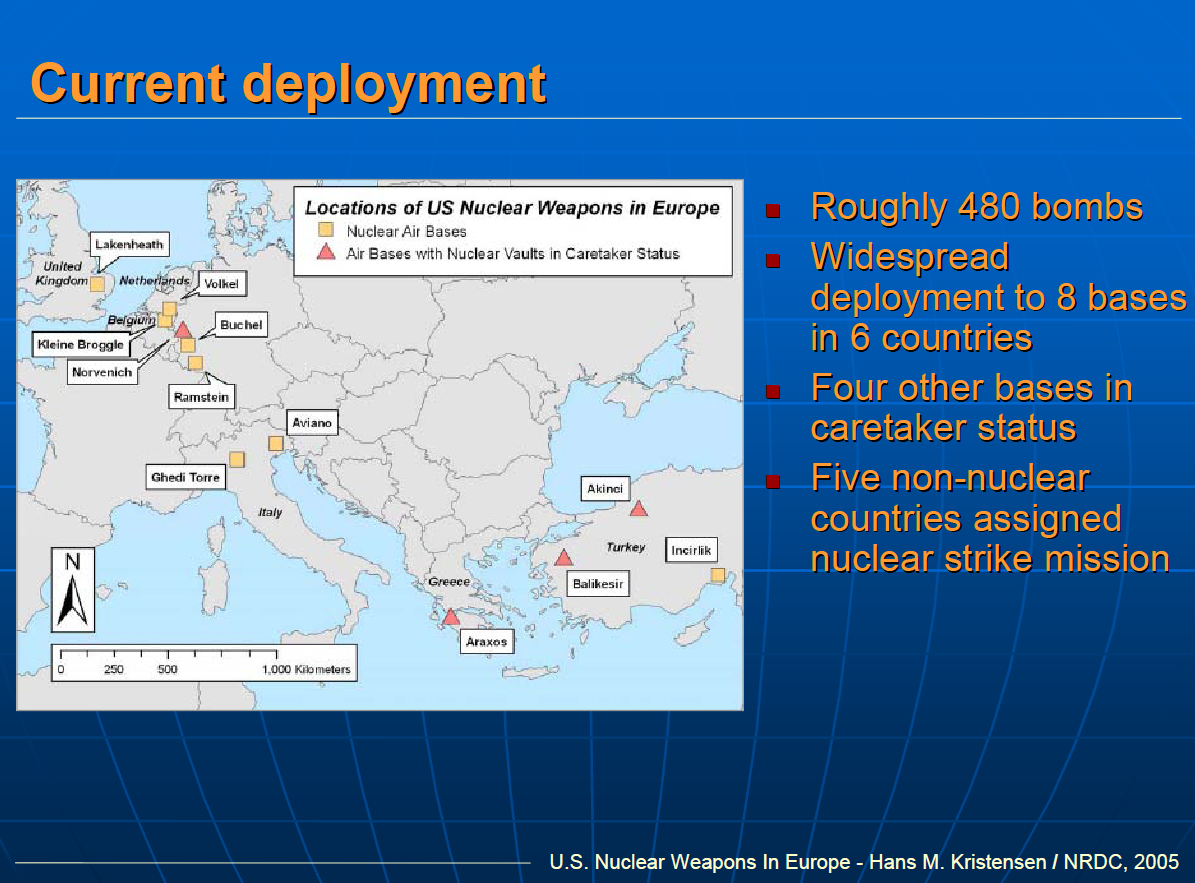
Oxford Business Group, January 29, 2008) 

6. (U) Makhlouf remains unabashed about employing SARG muscle
when necessary.  In one oft-repeated example on the Damascus
street in 2007, a Syrian businessman purchased a prime piece
of real estate along the Mezzeh autostrade and received a
permit from the city to construct a large apartment building.
 As the project progressed, the SARG security services
informed the building's owner that he could not complete his
project as it would allow future occupants to have direct
line-of-sight to the Damascus airport.  Rami's agents then
visited the distraught owner and offered to buy the
unfinished building for a fraction of the property's actual
value.  Rebuffing Makhlouf's initial offer, the owner sought
recourse in the local courts for weeks to no avail.  In late
2007, Cham Holding announced that it had acquired the
property and would be developing a five-star Marriott hotel
on the site at a cost of USD 70 million. 

7. (C) Note: A hospitality-industry contact told Econoff that
Rami and Nabil Kuzbari (ref A) had traveled to the US and met
with senior Marriott executives in December to present a
potential business proposal and discuss design options for
the site.  According to the contact, the Syrians left the US
believing they had closed the deal and upon returning,
prematurely leaked their success to the local media.  In late
December, Marriott reportedly informed Cham Holding that it
was no longer interested in the proposal due to "political
reasons." End note. 

8. (U) Although difficult to prove, various internet-based
newsletters claim that Makhlouf is the political patron of
many high-ranking public SARG officials, including Minister
of Construction Hamud al-Hussein, Minister of Petroleum
Sufian Allaw, Minister of Electricity Ahmad Khalid al-Ali,
Central Bank Governor Adib Mayaleh and former Minister of
Telecommunications Amro Salem.  As officials with these
portfolios would be in position to wield substantial
influence over industry regulation and lucrative tenders, it
is doubtful that Rami would have enjoyed such uncanny
business successes without government collusion. 

------------------------
DIFFUSING RESPONSIBILITY
------------------------ 

9. (U) Since returning from his brief exile in Dubai (ref B),
Rami has taken several measures to try to both lower his
profile and insulate his personal fortune.  In 2006, Makhlouf
founded the Al Mashrek Fund, a holding company with a
reported capitalization of SYP 4 billion (USD 80 million),
including SYP 1 billion (USD 20 million) in cash deposited
with Banque Bemo Saudi Fransi.  Later that year, Makhlouf and
69 prominent Syrian businessmen formed the Cham Holding
Company with an initial capitalization of USD 200 million,
now estimated to be worth USD 350 million.  Representing
Makhlouf, the Al Mashrek Fund is the majority shareholder in
Cham Holding, which currently has 65 partners and a
ten-member board of directors.  By mid-2007, Cham Holding was
pursuing six "landmark" development projects valued at USD
1.3 billion, primarily in energy, transportation and real
estate.  (See The Syria Report, April 30 and Sept 12, 2007) 

-----------------------------------------
USING CUT-OUTS AND PRIVATE BANKING SECTOR
----------------------------------------- 

10. (S/NF) In addition to his public financial activities,
Makhlouf has undertaken several behind-the-scenes
machinations to mitigate his financial risk.  Possibly
concerned by the vulnerability of UAE banks to US pressure --
or frustrated by Emirati laws limiting foreign investment to
real estate and the stock market -- Rami reportedly brought a
part of his fortune back into Syria in 2006.  According to a
well-informed contact, Rami befriended then-expatriate Syrian
Morthada al-Dandashi in Dubai and hired him to manage many of
Makhlouf's "parallel" financial activities in Syria.  The
contact said that Rami paid Dandashi's USD 2 million "ante"
to become a partner in Cham Holding, and deposited
significant sums under Dandashi's name in the Damascus branch
of the Lebanese Byblos Bank -- where Dandashi subsequently
became a partner.  Syrian-Austrian citizen and Cham Holding
director Nabil Kuzbari is also reported to have deposited
money for Rami in Austrian banks.  Finally, contacts say
Makhlouf has also opened accounts under different names in
Lebanon, Greece, Turkey, and possibly Cyprus -- where Post
has learned that Rami once explored obtaining citizenship. 

-------------------------
SUGGESTED ROLL-OUT THEMES
------------------------- 

11. (U) Post recommends the following themes for public
statements regarding the designation of Rami Makhlouf: 

-- Electricity: Rami Makhlouf used his influence with the
regime to gain lucrative contracts in the power sector.
Yet, as the Syrian people continue to suffer from chronic
power outages and higher electrical bills, Rami has already
been paid for projects that are behind schedule and well
over-budget. 

-- Petroleum: Although several Western petroleum companies
are interested in helping Syria develop its gas and oil
sector, the only new project to be proceeding without SARG
impediment is Rami's.  As a result, Syria has become a net
importer of petroleum products.  In the midst of an unusually
severe winter, severe fuel shortages are forcing the Syrian
public to wait in long lines for, and frequently go without,
heating fuel for their homes. 

-- GSM service: Rami Makhlouf has made millions of dollars
from his ownership of SyriaTel, one of only two GSM service
providers in Syria.  Currently, Rami is said to be blocking
the licensing of a third GSM provider until he completes a
deal to sell SyriaTel.  Until free market forces are allowed
to compete, Makhlouf will continue to subject the Syrian
public to artificially elevated prices for basic
telecommunications services. 
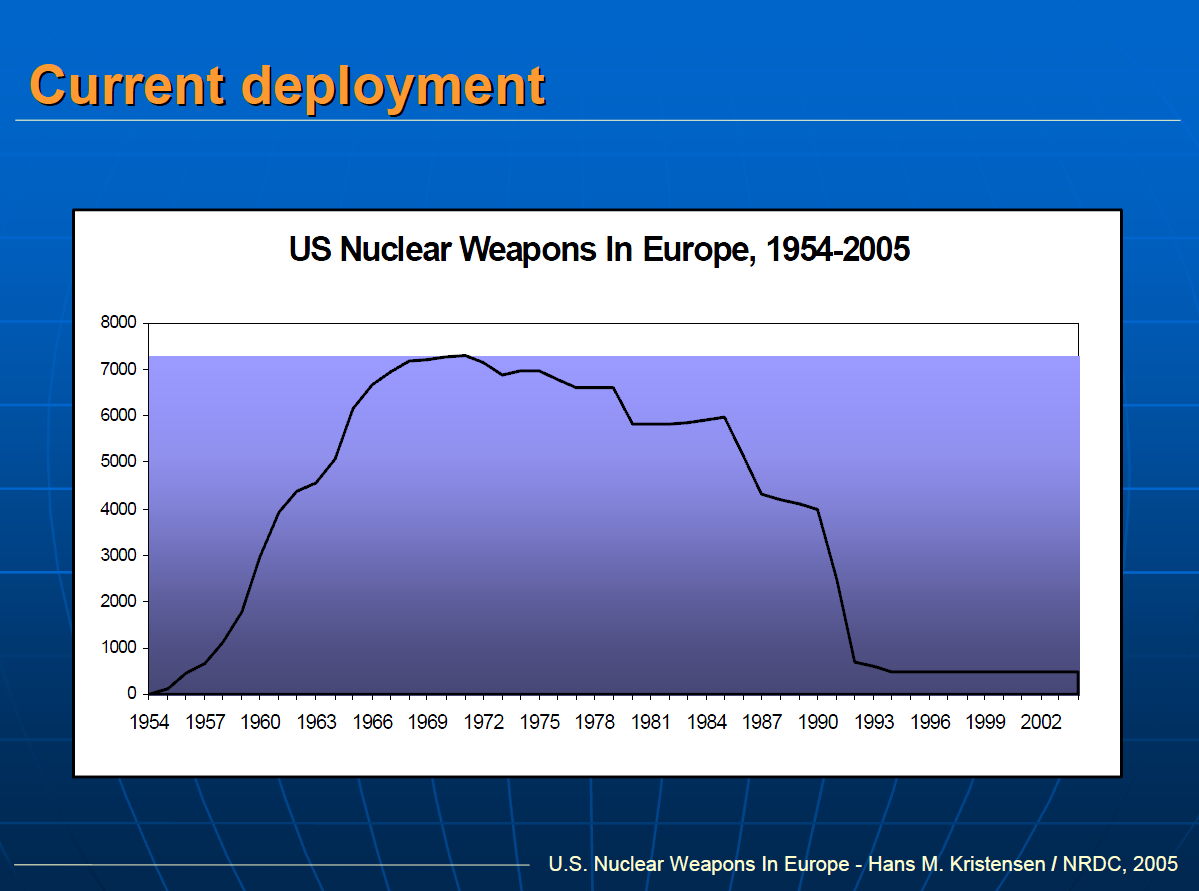
-- Aviation: The Syrian national air carrier, Syrian Arab
Airlines (Syrian Air), has an aging fleet that is in need of
replacement.  Rather than addressing any of Syrian Air's
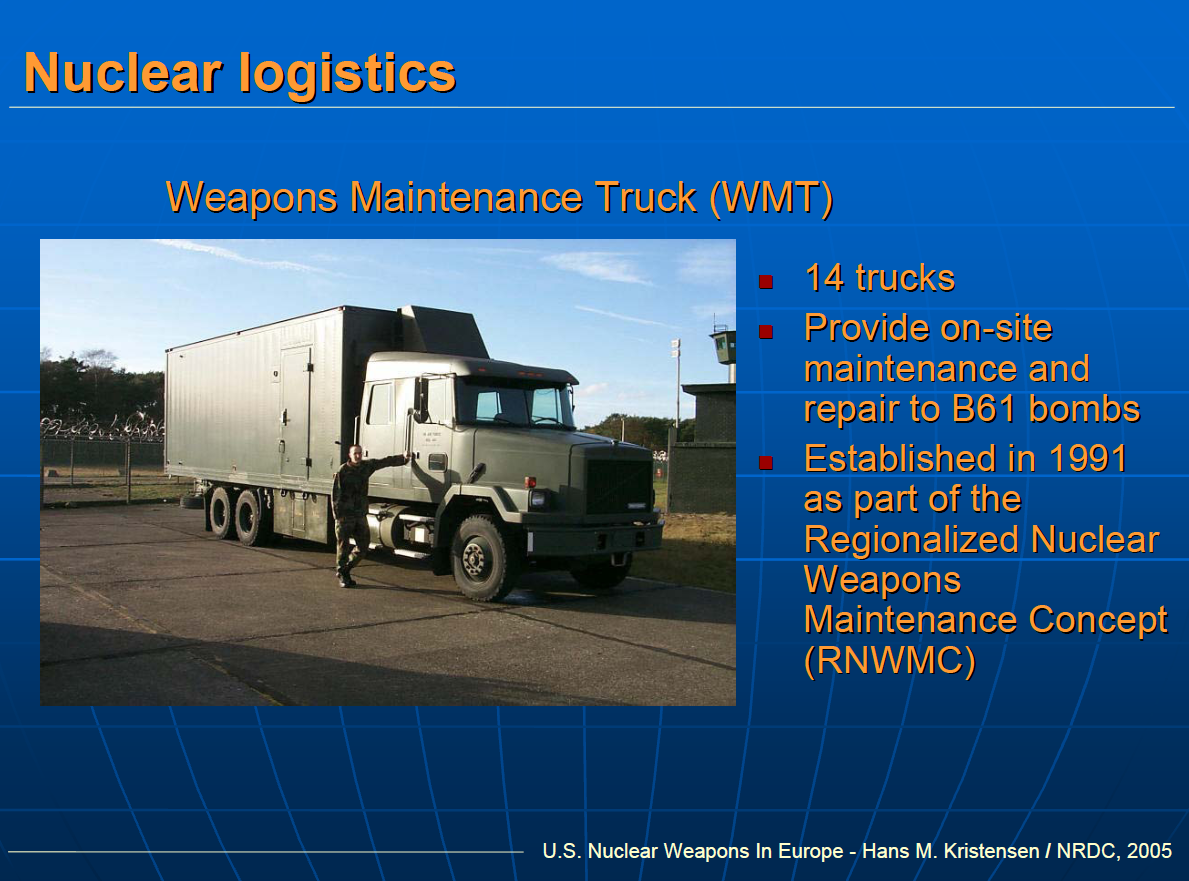
needs, the Assad regime instead awarded Rami Makhlouf a
license to operate a private airline that intends to assume
the most profitable of Syrian Air's routes. 

-- Tourism/Hospitality: The Syrian people are known for their
hospitality and entrepreneurial expertise.  Unfortunately,
legitimate Syrian businessmen hoping to invest in the
emerging tourism sector have again been muscled-out by Rami
Makhlouf and regime thugs who wish to monopolize every
opening in the Syrian economy for their own profit, rather
than share the country's potential with the hard-working
Syrian people. 

-------
COMMENT
------- 

12. (S/NF) Makhlouf's efforts to divest and diversify suggest
that he is expecting eventual USG action against him,
particularly since the November 2007 designation of his
brother, Hafiz.  Although his countermeasures will likely
mitigate the impact of his designation, we believe that it
will still send a strong signal to the regime and to his
current and potential future business partners.  Corruption
is a theme that resonates here, as every Syrian has been a
victim of it.  Rami has long been Syria's poster-boy for
corruption, so making the charge stick is not difficult.
Citing examples that impact the daily lives of Syrians should
help to amplify the designation's roll-out and ensure that it
receives the widest possible coverage.
HOLMSTROM

SECRET: TREASURY TEAM’S DAMASCUS CONSULTATIONS ON

VZCZCXRO6583
PP RUEHAG RUEHROV
DE RUEHDM #0269/01 0741541
ZNY SSSSS ZZH
P 151541Z MAR 07
FM AMEMBASSY DAMASCUS
TO RUEHC/SECSTATE WASHDC PRIORITY 3157
INFO RUEHXK/ARAB ISRAELI COLLECTIVE PRIORITY
RUCNMEM/EU MEMBER STATES COLLECTIVE PRIORITY
RHEHAAA/WHITE HOUSE WASHDC PRIORITY
RUEAIIA/CIA WASHDC PRIORITY
RUEATRS/DEPT OF TREASURY WASHDC PRIORITY
S E C R E T SECTION 01 OF 02 DAMASCUS 000269 

SIPDIS 

SIPDIS 

NEA/ELA;TREASURY FOR LEBENSON/GLASER/SZUBIN; NSC FOR
MARCHESE 

EO 12958 DECL: 03/06/2017
TAGS EFIN, ECON, ETTC, SY, SANC
SUBJECT: TREASURY TEAM’S DAMASCUS CONSULTATIONS ON
FINANCIAL SANCTIONS

REF: A. DAMASCUS 0108  B. 05 DAMASCUS 6224

Classified By: Charge d’Affaires Michael Corbin, reasons 1.4 b/d

1. (S/NF) Summary: Treasury representatives recently visited Post to discuss options for using financial sanctions to apply pressure to the Syrian regime. We discussed:
-- Treasury’s requirements for finalizing the pending designations of Mohammad Sulayman and Ali Mamluk, and Treasury’s information requirements for a public statement;
-- Treasury’s need to maintain the legal thread between the classified designation packet and the public statement announcing the designation;
-- Post’s support for designating Mohammad Nassif Kheirbek, SARG pointman for its relationship with Iran;
-- How designating regime financiers like Rami and Mohammad Mahlouf could be problematic without a new Executive Order on corruption. End Summary.

2. (S/NF) PENDING DESIGNATIONS: Post understands the designations for Mohammad Sulieman, Syrian Special Presidential Advisor for Arms Procurement and Strategic Weapons and Ali Mamluk, Chief of the Syrian General Intelligence Directorate, are pending due to a lack of unclassified material necessary for Treasury’s public
SIPDIS designation statement. In post’s estimate, Mohammad Sulayman is a relatively low-payoff target. His activities are not widely known, which will make it difficult to obtain unclassified information for a public statement and,
SIPDIS likewise, make it unlikely that his designation would resonate inside Syria. Ali Mamluk, on the other hand, is more well-known within Syria, especially for involvement in his objectionable activities regarding Lebanon, and his suppressing Syrian civil society and the internal opposition.  Therefore, Mamluk’s designation will likely have a larger impact with local and regional audiences if the public statement announcing his designation also discusses his oppression of Syrian society.

3. (S/NF) We understood from our visit with Treasury representatives that although we are limited to designating regime members under the existing Executive Orders, there is some flexibility in Treasury,s public statement announcing the designation. Post has advocated that no matter the legal basis of the designation, any public designation should focus on themes that resonate inside Syria: corruption, suppression of civil society, and denial of basic human rights (ref A). The need to maintain the “legal thread” between the designation packet and the public announcement could be challenging on cases like Mohamad Sulieman whose links to corruption are less clear. In cases like Ali Mamluk, however, the role of the organization he heads in suppressing internal dissent is publicly known in Syria and stating as much in our statement would resonate well here.

4. (S/NF) Post also supports moving forward with the designation packet on Mohammad Nasif Kheirbek, Syrian Deputy Vice-President for Security and lead Syrian liaison to Iran. Keirbek’s designation could play to a SARG vulnerability, in this case, the SARG’s relationship with Iran, which worries the Sunni majority. Designation of regime pillars involved with the SARG’s partnership with Iran could heighten Syrian and regional concerns about the SARG’s willingness to accomodate an expansionary Iranian agenda.

5. (S/NF) REGIEME FINANCIERS: We also discussed the possibility of targeting high-profile inner circle members and regime financiers like Rami Mahklouf (Asad’s first cousin) and Mohammad Makhlouf (Rami’s father) in the next phase of targeted financial sanctions. Based on our consultation with the Treasury representatives, it seemed apparent that without an Executive Order on corruption it would be difficult to compile enough information to designate this group under the current executive orders. The other option for pursuing this group would be to show how these individuals provided financial support to previously designated individuals such as Asif Shawkat. This course of action could prove highly problematic given the regime’s proficiency at obfuscating its financial transactions (ref B).
DAMASCUS 00000269 002 OF 002

6. (S) Comment. Post thanks Treasury for its team’s February 25-27 visit and welcomes any additional feedback that Washington agencies may have on our recommendations covered in ref A. Post continues to believe targeted financial sanctions are a tool appropriate for the Syrian setting but this tool requires further work to fully develop. ROEBUCK

TOP-SECRET: Soviets Planned Nuclear First Strike to Preempt West, Documents Show

Soviets Planned Nuclear First Strike to
Preempt West, Documents Show

Warsaw Pact Allies Resented Soviet Dominance and “Nuclear Romanticism”

Bloc Saw Military Balance in West’s Favor from 1970s On, Especially in Technology

New Volume of Formerly Secret Records Published on 50th Anniversary of Warsaw Pact

National Security Archive Electronic Briefing Book No. 154

For more information contact
Vojtech Mastny 202/415-6707
Malcolm Byrne – 202/994-7043

May 13, 2005

Read “The Warsaw Pact, gone with a whimper”
by Malcolm Byrne and Vojtech Mastny
The International Herald Tribune
May 14, 2005
“The Warsaw Pact, gone with a whimper”
by Malcolm Byrne and Vojtech Mastny, International Herald Tribune, May 14, 2005

Advance praise for new volume:

A “remarkable book … not just a story for experts or historians – it is a chronology of significance and an era we must never forget.”
The Rt. Hon. Lord Robertson of Port Ellen, NATO Secretary General ’99-’03

“A remarkable achievement … [T]his pioneer effort will be an indispensable resource for Cold War scholars.”
Lawrence S. Kaplan, Georgetown U., author of NATO Divided, NATO United

“[T]his invaluable volume illuminates not only the ‘inside history’ of the Warsaw Pact, but, as reflected in that story, the history of Soviet-East European relations.”
William Taubman, Amherst College, Pulitzer Prize-winning author of Khrushchev: The Man and His Era

“[Mastny] and Byrne are to be congratulated for producing this monumental volume, with a trove of translated documents that is a major boon to both scholars and teachers.”
William E. Odom (Lt. Gen., Ret.), former Director, U.S. National Security Agency, author of The Collapse of the Soviet Military

Washington D.C. August 13 th, 2011 – The Soviet-led Warsaw Pact had a long-standing strategy to attack Western Europe that included being the first to use nuclear weapons, according to a new book of previously Secret Warsaw Pact documents published tomorrow. Although the aim was apparently to preempt NATO “aggression,” the Soviets clearly expected that nuclear war was likely and planned specifically to fight and win such a conflict.

The documents show that Moscow’s allies went along with these plans but the alliance was weakened by resentment over Soviet domination and the belief that nuclear planning was sometimes highly unrealistic. Just the opposite of Western views at the time, Pact members saw themselves increasingly at a disadvantage compared to the West in the military balance, especially with NATO’s ability to incorporate high-technology weaponry and organize more effectively, beginning in the late 1970s.

These and other findings appear in a new volume published tomorrow on the 50th anniversary of the founding of the Warsaw Pact. Consisting of 193 documents originating from all eight original member-states, the volume, A Cardboard Castle? An Inside History of the Warsaw Pact, 1955-1991, provides significant new evidence of the intentions and capabilities of one of the most feared military machines in history.

Highlights of the 726-page volume include highly confidential internal reports, military assessments, minutes of Warsaw Pact leadership meetings, and Politburo discussions on topics such as:

* The shift beginning in the 1960s from defensive operations to plans to launch attacks deep into Western Europe. (Documents Nos. 16, 20a-b, 21)

* Plans to initiate the use of nuclear weapons, ostensibly to preempt Western first-use. (Documents Nos. 81, 83)

* Soviet expectations that conventional conflicts would go nuclear, and plans to fight and win such conflicts. (Documents Nos. 81, 83)

* The deep resentment of alliance members, behind the façade of solidarity, of Soviet dominance and the unequal share of the military burden that was imposed on them. (Documents Nos. 4-6, 33-37, 47, 52)

* East European views on the futility of plans for nuclear war and the realization that their countries, far more than the Soviet Union, would suffer the most devastating consequences of such a conflict. (Documents Nos. 22b, 38, 50, 52)

* The “nuclear romanticism,” primarily of Soviet planners, concerning the viability of unconventional warfare, including a memorable retort by the Polish leader that “no one should have the idea that in a nuclear war one could enjoy a cup of coffee in Paris in five or six days.” (Documents Nos. 31, 115)

* Ideologically warped notions of Warsaw Pact planners about the West’s presumed propensity to initiate hostilities and the prospects for defeating it. (Documents Nos. 50, 73, 79, 81)

* The impact of Chernobyl as a reality check for Soviet officials on the effects of nuclear weapons. (Document No. 115)

* The pervasiveness and efficacy of East bloc spying on NATO, mainly by East Germans (Documents Nos. 11, 28, 80, 97, 109, 112)

* Warsaw Pact shortcomings in resisting hostile military action, including difficulties in firing nuclear weapons. (Documents Nos. 44, 143)

* Data on the often disputed East-West military balance, seen from the Soviet bloc side as much more favorable to the West than the West itself saw it, with the technological edge increasingly in Western favor since the time of the Carter administration (Documents Nos. 47, 79, 81, 82, 130, 131, 135, 136)

The motives accounting for the Warsaw Pact’s offensive military culture included not only the obsessive Soviet memory of having been taken by surprise by the nearly fatal Nazi attack in June 1941 but primarily the ideological militancy of the Marxist-Leninist doctrine that posited irreconcilable hostility of the capitalist adversaries. The influence of the doctrine explains, for example, the distorted interpretation of secret Western planning documents that were unequivocally defensive documents to which Warsaw Pact spies had extensive access. So integral was the offensive strategy to the Soviet system that its replacement by a defensive strategy under Gorbachev proved impossible to implement before the system itself disintegrated.

The Soviet military, as the ideologically most devoted and disciplined part of the Soviet establishment, were given extensive leeway by the political leadership in designing the Warsaw Pact’s plans for war and preparing for their implementation. Although the leadership reserved the authority to decide under what circumstances they would be implemented and never actually tried to act on them, the chances of a crisis spiraling out of control may have been greater than imagined at the time. The plans had dynamics of their own and the grip of the aging leadership continued to diminish with the passage of time.

The new collection of documents published today is the first of its kind in examining the Warsaw Pact from the inside, with the benefit of materials once thought to be sealed from public scrutiny in perpetuity. It was prepared by the Parallel History Project on NATO and the Warsaw Pact (PHP), an international scholarly network formed to explore and disseminate documentation on the military and security aspects of contemporary history. The book appears as part of the “National Security Archive Cold War Reader Series” through Central European University Press.

The PHP’s founders and partners are the National Security Archive, a non-governmental research organization based at The George Washington University; the Center for Security Studies at ETH Zurich; the Institute for Strategy and Security Policy at the Austrian Defense Academy in Vienna; the Machiavelli Center for Cold War Studies in Florence; and the Norwegian Institute for Defence Studies in Oslo.

In addition to documents, the volume features a major original essay by Vojtech Mastny, a leading historian of the Warsaw Pact, and contextual headnotes for each document by co-editor Malcolm Byrne. A detailed chronology, glossaries and bibliography are also included.

The documents in the collection were obtained by numerous scholars and archivists, many of them associated with PHP and its partners, including the Cold War International History Project at the Woodrow Wilson International Center for Scholars in Washington D.C.

The vast majority of the documents were translated especially for this volume and have never previously appeared in English.

Attached to this notice are ten representative documents taken from the list above. They appear as they do in the volume, i.e. with explanatory headnotes at the top of each item.

The documents in their original languages can be found in their entirety on the Center for Security Studies website.

On Saturday, May 14, a book launch for A Cardboard Castle? will take place in Warsaw at the Military Office of Historical Research. The address is: 2, ul. Stefana Banacha, Room 218. It will begin at 11:30 a.m. Speakers include:

* Gen. William E. Odom, former Director, U.S. National Security Agency
* Gen. Tadeusz Pioro, senior Polish representative to the Warsaw Pact
* Brig. Gen. Leslaw Dudek, Polish representative to the alliance
* Prof. dr. hab. Andrzej Paczkowski, Polish Academy of Sciences
* Dr hab. Krzysztof Komorowski, Military Office of Historical Research
* Prof. dr hab. Wojciech Materski, Polish Academy of Sciences

Documents
Note: The following documents are in PDF format.
You will need to download and install the free Adobe Acrobat Reader to view.

Below are ten representative documents from A Cardboard Castle?. They are numbered as they are in the volume and include explanatory headnotes at the top of each item. Links to the original documents — in their orginal languages — appear at the end of each entry.

Document No. 16: Speech by Marshal Malinovskii Describing the Need for Warsaw Pact Offensive Operations, May 1961 – original language

Document No. 21: Organizational Principles of the Czechoslovak Army, November 22, 1962 – original language

Document No. 50: Memorandum of the Academic Staff of the Czechoslovak Military Academies on Czechoslovakia’s Defense Doctrine, June 4, 1968 – original language

Document No. 64: Report by Ceaus,escu to the Romanian Politburo on the PCC Meeting in Budapest, March 18, 1969 – original language

Document No. 81: Marshal Ogarkov Analysis of the ?Zapad? Exercise, May 30-June 9, 1977 – original language

Document No. 83: Soviet Statement at the Chiefs of General Staff Meeting in Sofia,
June 12-14, 1978 – original language

Document No. 109: East German Intelligence Assessment of NATO?s Intelligence on the Warsaw Pact, December 16, 1985 – original language

Document No. 115: Minutes of the Political Consultative Committee Party Secretaries? Meeting in Budapest, June 11, 1986 – original language (part 1 – part 2 – part 3)

Document No. 136: Summary of Discussion among Defense Ministers at the Political Consultative Committee Meeting in Warsaw, July 15, 1988 – original language (part 1 – part 2)

Document No. 143: Czechoslovak Description of ?Vltava-89? Exercise, May 23, 1989 – original language

TOP-SECRET: The Diary of Anatoly Chernyaev Former Top Soviet Adviser’s Journal Chronicles Final Years of the Cold War

Washington, DC, August 13th, 2011 – Today the National Security Archive is publishing the first installment of the diary of one of the key behind-the-scenes figures of the Gorbachev era – Anatoly Sergeevich Chernyaev. This document is being published in English here for the first time.

It is hard to overestimate the uniqueness and importance of this diary for our understanding of the end of the Cold War – and specifically for the peaceful withdrawal of Soviet forces from Afghanistan and Eastern Europe, and the dissolution of the Soviet Union. The document allows the reader a rare opportunity to become a fly on the wall during the heady discussions of early perestroika, and to witness such fascinating phenomena as how the dying ideology of Soviet-style communism held sway over the hearts and minds of Soviet society.

In 2004, Anatoly Chernyaev donated the originals of his diaries from 1972 to 1991 to the National Security Archive in order to ensure full and permanent public access to his notes – beyond the reach of the political uncertainties of contemporary Russia. The Archive is planning to publish the complete English translation of the diaries in regular installments.

This first installment covers the year 1985, which saw the election of Mikhail Gorbachev to the post of General Secretary of the Communist Party of the Soviet Union (CPSU) and the beginning of the changes that were evident first in the “style,” and then in the practice of Soviet domestic and foreign policy. The diary gives a detailed account of Gorbachev’s election and of the political struggle associated with it. The author is observing the changes in 1985 from his position as a senior analyst in the International Department of the Central Committee (CC), where Chernyaev was in charge of relations with West European Communist parties.

The author documents all the major developments of 1985 – beginning from the first revelations about the sad state of the Soviet economy and the extent of such societal problems as alcoholism, to anguished discussions about the war in Afghanistan, to the first summit with President Ronald Reagan in Geneva. Throughout the year, the most noticeable change is the process of radical “cleansing” of the party – the great turnover of personnel designed to replace the old dogmatic Brezhnevite elite. The diary sheds light on how, gradually but persistently, Gorbachev built his reform coalition, making such fateful decisions as appointing Eduard Shevardnadze to the post of Foreign Minister, and bringing Boris Yeltsin to Moscow.

The pages of the diary provide a gallery of living portraits of all the influential figures in the highest echelons of the Soviet elite who in 1985 were engaged in a struggle for political survival under the new leadership. Chernyaev observes his colleagues in the Central Committee trying to reconcile their ingrained ideology with the new “Gorbachev style,” or “Gorbachev thinking.” He himself, as is clear from his notes, remained committed to the Leninist romanticism of communist ideology and argued for going back to Lenin in an effort to purify and reform the Soviet society.

One line of Chernyaev’s narrative follows developments in the influential International Department of the CC CPSU as its staff tried to find answers about the future of the international communist movement as the Soviet Union itself began to change. Gorbachev at that time chose to renounce Moscow’s Big Brother role with regard to socialist countries and non-ruling Communist parties, both in terms of dictating to them but also bankrolling them. Chernyaev presents us with an intimate portrait of one of the most influential figures in the Soviet leadership – the head of the International Department, Boris N. Ponomarev.

The diary gives a detailed account about one of the most important (and long poorly-understood) dynamics of foreign policy making in the Soviet Union – the interaction between the Central Committee and the Foreign Ministry in every step of the preparation of major events and decisions. From its pages, one can see the tremendous role of experts and consultants – the free-thinking intellectuals of the Soviet elite – in forming policy priorities for the leadership. The International Department was a major oasis of enlightened thinking in the Soviet nomenklatura; it provided Gorbachev with people on whom he could rely for new ideas and honest estimates of the situation after coming to power – beginning with Anatoly Chernyaev, whom Gorbachev chose as his foreign policy adviser in March 1986. One can confidently say that every bold foreign policy initiative advanced by Gorbachev in the years 1986-1991 bears Chernyaev’s mark on it. Thus, the diary gives insights into the thought processes of one of most influential new thinkers in Moscow.

Anatoly Sergeevich Chernyaev was born on May 25, 1921 in Moscow. He fought in World War II beginning in 1941. After the war, he returned to his studies at Moscow State University in the Department of History, which he completed in 1948. From 1950-1958, he taught contemporary history at Moscow State University. From 1958-1961, Chernyaev worked in Prague on the editorial board of the theoretical journal Problems of Peace and Socialism, joining the International Department in 1961. In 1986, he became foreign policy adviser to the General Secretary, and later to the first and the last President of the USSR. A prolific writer, Chernyaev has published five monographs in addition to numerous articles in Soviet, Russian, European and U.S. journals.

The National Security Archive takes great pleasure in wishing a happy birthday to Anatoly Sergeevich, who for years has been our partner in the mission to fight government secrecy through glasnost. Anatoly Sergeevich turns 85 today.

The Chernyaev Diary was translated by Anna Melyakova and edited by Svetlana Savranskaya for the National Security Archive.

SECRET: ATTACKING BASHAR’S MONEY

VZCZCXRO0088
PP RUEHAG RUEHBC RUEHDE RUEHKUK RUEHROV
DE RUEHDM #0054/01 0241517
ZNY SSSSS ZZH
P 241517Z JAN 08
FM AMEMBASSY DAMASCUS
TO RUEHC/SECSTATE WASHDC PRIORITY 4564
INFO RUEHEE/ARAB LEAGUE COLLECTIVE PRIORITY
RUCNMEM/EU MEMBER STATES COLLECTIVE PRIORITY
RHEHNSC/NSC WASHDC PRIORITY
RUEATRS/DEPT OF TREASURY WASHDC PRIORITY
RUMICEA/USCENTCOM INTEL CEN MACDILL AFB FL PRIORITY
RUCNDT/USMISSION USUN NEW YORK PRIORITY 0339
S E C R E T SECTION 01 OF 02 DAMASCUS 000054 

SIPDIS 

SIPDIS 

NEA/ELA
NSC FOR SINGH
TREASURY FOR GLASER 

E.O. 12958: DECL: 01/23/2027
TAGS: EFIN ETTC PGOV PREL PTER SY
SUBJECT: ATTACKING BASHAR'S MONEY 

REF: A. 07 DAMASCUS 2066
     B. 07 DAMASCUS 1926
     C. 07 DAMASCUS 68 

Classified By: CDA Michael H. Corbin for reasons 1.5 b/d 

1.  (S) Summary. As Washington policy makers consider ways to
pressure the regime, one possibility would be to go after
President Asad's money-men.  Four individuals Asad uses to
make and move money are Zuhair Sahloul, Nabil Kuzbari, Asad's
uncle Mohammad Makhlouf, and his father-in-law, Fawas Akhras.
 Each is important to Asad and each plays a somewhat
different role in facilitating regime graft.  End summary. 

2.  (S) Sahloul (AKA Abu Shafic) is the most important
black-market money changer in Syria.  When the Syrian Pound
(SYP) devalued precipitously in the fall of 2005, the SARG
gave Sahloul an office in the Central Bank and access to its
hard currency reserves so he could intervene in the black
market to stabilize the currency.  (Note.  Sahloul was
surprisingly effective and within weeks the SYP appreciated
20 percent, allowing Sahloul in the process a handsome profit
for both himself and a handful of regime-insiders.  End
note.)  Sahloul moves Asad's money using his own network and
his access to Hawalis worldwide.  A Sahloul intimate bragged
to us recently that Sahloul could move ten million dollars
anywhere in the world in 24-hours. 

3.  (S) In addition to being the father of Syria's poster-boy
for corruption, Rami Makhlouf, Mohammad Makhlouf has long
served as a financial advisor to the Asad family.  If Rami is
the face of corruption, Mohammad is the brain.  When Asad
agreed to open the telecom sector to cellphone providers, it
was Mohammad that some credit with conceptualizing the deal
whereby Rami took over the first provider, SyriaTel, (long
Rami's biggest cash-cow), and the second license (originally
to SpaceTel, then Areeba 94, and now MTN) went to the
first-lady's family (see para five below).  Long held in
check by his brother-in-law, the late president Hafiz Asad,
under Bashar Asad, Mohammad's avarice reportedly has no
bounds.  As a result, the Makhloufs have had an at-times
problematic relationship with Bashar and were forced to leave
the country for a number of months in 2005 following one
particularly heated exchange. 

4.  (S) Because of the Makhlouf's excesses and Asad's
inherited propensity to limit the power and influence of his
family members, Nabil Kuzbari has played an increasingly
important role for the first-family. Known locally as "the
Paper King," Kuzbari's base of operations has long been in
Vienna.  In the last two years, however, he has developed an
increasingly collaborative relationship with Rami and
Mohammed Makhlouf.  Last year he served as Rami's frontman in
establishing his holding company, Sham Holding, which brought
together 70 of Syria's most-important business families to
fund a number of Rami's most ambitious entrepreneurial
projects.  In addition to lobbying European politicians to
engage the Asad regime, Kuzbari reportedly uses his contacts
in the Austrian business and banking circles to move regime
assets abroad. 

5.  (S) In addition to being Asad's father-in-law, Fawas
Akhras has been increasingly active in business here in
Syria.  Akhras is the force behind the Syrian-British
Business Council and recently put together a visit to London
by a large group of Syrian businessmen.  Coming only lately
to business, Akhras has stepped on a number of established
business families who increasingly resent his assertiveness
and willingness to use his son-in-law's position to advance
his nascent Syria-based businesses.  Contacts in the banking
sector have commented on the large amount of funds that have
begun to move recently through his accounts.  A long-time
resident of London, he is suspected of being another avenue
used by Asad to stash funds abroad. 

6.  (S) Comment. Post has long advocated moving against
individuals, like those listed above, who are intregal to
allowing the regime to profit from its corruption.  Taking
action against those linked to corruption is a win-win
proposition: not only does it bring pressure on the regime
where it hurts most - its pocketbook, but such a move would
also be popular with the average Syrian who is the most
common victim of the regime's avarice. 

CORBIN

SECRET: TREASURY TEAM’S DAMASCUS CONSULTATIONS ON

VZCZCXRO6583
PP RUEHAG RUEHROV
DE RUEHDM #0269/01 0741541
ZNY SSSSS ZZH
P 151541Z MAR 07
FM AMEMBASSY DAMASCUS
TO RUEHC/SECSTATE WASHDC PRIORITY 3157
INFO RUEHXK/ARAB ISRAELI COLLECTIVE PRIORITY
RUCNMEM/EU MEMBER STATES COLLECTIVE PRIORITY
RHEHAAA/WHITE HOUSE WASHDC PRIORITY
RUEAIIA/CIA WASHDC PRIORITY
RUEATRS/DEPT OF TREASURY WASHDC PRIORITY
S E C R E T SECTION 01 OF 02 DAMASCUS 000269 

SIPDIS 

SIPDIS 

NEA/ELA;TREASURY FOR LEBENSON/GLASER/SZUBIN; NSC FOR
MARCHESE 

EO 12958 DECL: 03/06/2017
TAGS EFIN, ECON, ETTC, SY, SANC
SUBJECT: TREASURY TEAM’S DAMASCUS CONSULTATIONS ON
FINANCIAL SANCTIONS

REF: A. DAMASCUS 0108  B. 05 DAMASCUS 6224

Classified By: Charge d’Affaires Michael Corbin, reasons 1.4 b/d

1. (S/NF) Summary: Treasury representatives recently visited Post to discuss options for using financial sanctions to apply pressure to the Syrian regime. We discussed:
-- Treasury’s requirements for finalizing the pending designations of Mohammad Sulayman and Ali Mamluk, and Treasury’s information requirements for a public statement;
-- Treasury’s need to maintain the legal thread between the classified designation packet and the public statement announcing the designation;
-- Post’s support for designating Mohammad Nassif Kheirbek, SARG pointman for its relationship with Iran;
-- How designating regime financiers like Rami and Mohammad Mahlouf could be problematic without a new Executive Order on corruption. End Summary.

2. (S/NF) PENDING DESIGNATIONS: Post understands the designations for Mohammad Sulieman, Syrian Special Presidential Advisor for Arms Procurement and Strategic Weapons and Ali Mamluk, Chief of the Syrian General Intelligence Directorate, are pending due to a lack of unclassified material necessary for Treasury’s public
SIPDIS designation statement. In post’s estimate, Mohammad Sulayman is a relatively low-payoff target. His activities are not widely known, which will make it difficult to obtain unclassified information for a public statement and,
SIPDIS likewise, make it unlikely that his designation would resonate inside Syria. Ali Mamluk, on the other hand, is more well-known within Syria, especially for involvement in his objectionable activities regarding Lebanon, and his suppressing Syrian civil society and the internal opposition.  Therefore, Mamluk’s designation will likely have a larger impact with local and regional audiences if the public statement announcing his designation also discusses his oppression of Syrian society.

3. (S/NF) We understood from our visit with Treasury representatives that although we are limited to designating regime members under the existing Executive Orders, there is some flexibility in Treasury,s public statement announcing the designation. Post has advocated that no matter the legal basis of the designation, any public designation should focus on themes that resonate inside Syria: corruption, suppression of civil society, and denial of basic human rights (ref A). The need to maintain the “legal thread” between the designation packet and the public announcement could be challenging on cases like Mohamad Sulieman whose links to corruption are less clear. In cases like Ali Mamluk, however, the role of the organization he heads in suppressing internal dissent is publicly known in Syria and stating as much in our statement would resonate well here.

4. (S/NF) Post also supports moving forward with the designation packet on Mohammad Nasif Kheirbek, Syrian Deputy Vice-President for Security and lead Syrian liaison to Iran. Keirbek’s designation could play to a SARG vulnerability, in this case, the SARG’s relationship with Iran, which worries the Sunni majority. Designation of regime pillars involved with the SARG’s partnership with Iran could heighten Syrian and regional concerns about the SARG’s willingness to accomodate an expansionary Iranian agenda.

5. (S/NF) REGIEME FINANCIERS: We also discussed the possibility of targeting high-profile inner circle members and regime financiers like Rami Mahklouf (Asad’s first cousin) and Mohammad Makhlouf (Rami’s father) in the next phase of targeted financial sanctions. Based on our consultation with the Treasury representatives, it seemed apparent that without an Executive Order on corruption it would be difficult to compile enough information to designate this group under the current executive orders. The other option for pursuing this group would be to show how these individuals provided financial support to previously designated individuals such as Asif Shawkat. This course of action could prove highly problematic given the regime’s proficiency at obfuscating its financial transactions (ref B).
DAMASCUS 00000269 002 OF 002

6. (S) Comment. Post thanks Treasury for its team’s February 25-27 visit and welcomes any additional feedback that Washington agencies may have on our recommendations covered in ref A. Post continues to believe targeted financial sanctions are a tool appropriate for the Syrian setting but this tool requires further work to fully develop. ROEBUCK

TOP-SECRET: FBI DOCUMENTS ABOUT THE MURDER OF PRESIDENT CANDIDATE ROBERT “BOBBY” KENNEDY

rfksumm1a

rfksumm1b

rfksumm1c

Here are the FBI documents about the murder click links above

The assassination of Robert F. Kennedy, a United States Senator and brother of assassinated President John F. Kennedy, took place shortly after midnight on June 5, 1968, in Los Angeles, California. After winning the California primary election for the Democratic nomination for President of the United States, Kennedy was shot as he walked through the kitchen of the Ambassador Hotel and died in the Good Samaritan Hospital twenty-six hours later. Sirhan Sirhan, a 24-year-old Palestinian immigrant, was convicted of Kennedy’s murder and is serving a life sentence for the crime. The shooting was recorded on audio tape by a freelance newspaper reporter, and the aftermath was captured on film.

Kennedy’s body lay in repose at St. Patrick’s Cathedral in New York for two days before a funeral mass was held on June 8. His body was interred near his brother John at Arlington National Cemetery. His death prompted the protection of presidential candidates by the United States Secret Service. Hubert Humphrey went on to win the Democratic nomination for the presidency, but ultimately narrowly lost the election to Richard Nixon.

As with his brother’s death, Robert Kennedy’s assassination and the circumstances surrounding it have spawned a variety of conspiracy theories. As of 2011 Kennedy remains one of only two sitting United States Senators to be assassinated.

Der Fall Rohwedder

CABLEGATE: FOR OFFICIAL USE ONLY- COCALEROS USE CONGRESS TO PUSH PRO-COCA/ANTI-U.S. MESSAGE

VZCZCXYZ0000
PP RUEHWEB

DE RUEHPE #3823/01 2701742
ZNR UUUUU ZZH
P 271742Z SEP 06
FM AMEMBASSY LIMA
TO RUEHC/SECSTATE WASHDC PRIORITY 2453
INFO RUEHBO/AMEMBASSY BOGOTA 3931
RUEHBR/AMEMBASSY BRASILIA 6989
RUEHCV/AMEMBASSY CARACAS 9791
RUEHLP/AMEMBASSY LA PAZ SEP QUITO 0705
RUEHSG/AMEMBASSY SANTIAGO 0866
RUEAIIA/CIA WASHDC
RHMFIUU/CDR USSOUTHCOM MIAMI FL
RUEABND/DEA HQS WASHDC
RHEFDIA/DIA WASHDC
RHEHOND/DIRONDCP WASHDC
UNCLAS LIMA 003823 

SIPDIS 

SENSITIVE
SIPDIS 

E.O. 12958: N/A
TAGS: PGOV SNAR PE
SUBJECT: COCALEROS USE CONGRESS TO PUSH PRO-COCA/ANTI-U.S. MESSAGE

REF: A. LIMA 3677 B. 05LIMA 4441 C. 03LIMA 983

Sensitive But Unclassified, Please Handle Accordingly. 

1. (SBU) Summary: Pro-cocalero congressional representatives
ranted about the benefits of coca and the costs of U.S.
imperialism disguised as counternarcotics policy at a recent
"Coca and Biodiversity" conference held in a Congressional
annex.  Cocalero leader Nelson Palomino also participated.
The well-attended event highlighted that cocaleros now have a
foothold in Congress, and are using coca as a banner for a
larger anti-system, anti-U.S. message.  End Summary. 

2. (U) On September 16 Poloff attended a "Coca and
Biodiversity" conference (9/16), at the Congressional annex
building in downtown Lima.  Huanuco Congresswoman Yaneth
Cajahuanca of the Peruvian Nationalist Party (PNP) organized
the event, which was co-sponsored by a natural medicine and
nutrition organization and the Kuska Peru political group led
by cocalero leader Nelson Palomino.  Approximately 150 people
of diverse age and gender filled the auditorium.  A handful
of people were chewing coca leaf - a rare sight in Lima. 

3. (U) Two themes dominated the discussion: the clear
difference between coca producers and narcotraffickers
(though 90 percent of coca production goes to
narcotrafficking) and coca's historical, cultural, and
nutritional value.  Vendors selling "coca flour" and coca
baked goods at the conference received much positive
attention.  (Note: The "flour" is a nutritional supplement to
be mixed with water or milk that includes 9-10 healthy
additives (e.g., soy, rice, whole wheat, etc.) in addition to
coca. End Note.) 

4. (U) Ricardo Soberon, staffer for cocalero Congresswoman
Nancy Obregon, said coca was Peru's biggest renewable natural
resource, but was a "sequestered plant" made taboo by "a dark
force" (the U.S.).  Soberon told the crowd that the U.S. uses
the drug war as a pretext for its presence in Peru to steal
the country's natural resources.  He added that the U.S. is
"like an octopus with tentacles spreading misinformation in
all the press," and that the GOP Ministries obey the orders
of the U.S. Embassy.  Soberon closed his diatribe with a
commitment by Congresswoman Obregon to present new coca
legislation recognizing coca's historical, traditional, and
cultural significance, regionalizing management of the licit
market, and protecting coca producers and including them in a
dialogue.  His speech got strong applause.  (Note: On
September 19, Obregon and other pro-coca Congressmembers
submitted a draft bill to declare coca and its traditional
use as natural patrimony. End Note.) 

5. (U) In a subsequent presentation, cocalero Congresswoman
Yaneth Cajahuanca said she, like farmers in the field, chews
coca because it energizes her and helps her work.  She said
farmers in her district have no alternative to coca for cash
income and claimed fumigation had dried up coca crops in
Huanuco. 

6. (SBU) Radical cocalero leader Nelson Palomino closed out
the event.  His discourse reportedly united indigenous rights
and pride with coca as a cultural element.  Palomino was
released from jail in June on parole after completing a third
of his 10-year sentence for kidnapping, burglary, aggravated
theft, public disturbance, and support of crime and coercion
(Refs B, C).  Since his release he has criticized the GOP's
drug policies and formed a regional pro-coca political
movement called "Kuska Peru" (Quechua for "Together for
Peru.")  Palomino's stature as a political leader has been
strengthened through the cocalero dialogue with the
government, meetings with senior GOP officials including
President Garcia, and in conferences such as this. 

7. (SBU) Comment: The conference highlights the emergence of a newly empowered leadership of pro-coca political leaders inside and outside of Congress. Some observers believe Palomino's and other cocalero leader's political stars are rising, enabled by the government's decisions to elevate them to the status of valid interlocutors. These pro-coca leaders are attempting to shape the GOP's policy through the on-going government dialogue and legislative proposals. It further suggests the consolidation of the coca leaf, and its cultivation free from the interference of outside powers, as the banner of a larger anti-systemic, anti-U.S. political movement that now has a foothold in Congress. End Comment.

STRUBLE

SECRET: CJCS ADMIRAL MULLEN’S JANUARY 17 MEETING

VZCZCXYZ0001
PP RUEHWEB

DE RUEHBO #0337/01 0281705
ZNY SSSSS ZZH
P 281705Z JAN 08
FM AMEMBASSY BOGOTA
TO RUEHC/SECSTATE WASHDC PRIORITY 1118
INFO RUEHAC/AMEMBASSY ASUNCION PRIORITY 0512
RUEHBE/AMEMBASSY BELMOPAN PRIORITY 0053
RUEHBR/AMEMBASSY BRASILIA PRIORITY 8006
RUEHBU/AMEMBASSY BUENOS AIRES PRIORITY 2122
RUEHCV/AMEMBASSY CARACAS PRIORITY 9849
RUEHLP/AMEMBASSY LA PAZ JAN 9199
RUEHPE/AMEMBASSY LIMA PRIORITY 5846
RUEHMU/AMEMBASSY MANAGUA PRIORITY 2134
RUEHME/AMEMBASSY MEXICO PRIORITY 8270
RUEHMN/AMEMBASSY MONTEVIDEO PRIORITY 2930
RUEHNY/AMEMBASSY OSLO PRIORITY 0387
RUEHZP/AMEMBASSY PANAMA PRIORITY 1138
RUEHSJ/AMEMBASSY SAN JOSE PRIORITY 4734
RUEHSN/AMEMBASSY SAN SALVADOR PRIORITY 1864
RUEHSG/AMEMBASSY SANTIAGO PRIORITY 2374
RUEHTG/AMEMBASSY TEGUCIGALPA PRIORITY 1471
RUEHGL/AMCONSUL GUAYAQUIL PRIORITY 4279
RUEHUB/USINT HAVANA PRIORITY 0168
RUEKJCS/JOINT STAFF WASHINGTON DC PRIORITY
RUEAIIA/CIA WASHDC PRIORITY
RHMFISS/CDR USSOUTHCOM MIAMI FL PRIORITY
RUEKJCS/SECDEF WASHDC PRIORITY
RUEKJCS/SECDEF WASHDC//USDP ADMIN/CHAIRS// PRIORITY
S E C R E T BOGOTA 000337 

SIPDIS 

SIPDIS 

E.O. 12958: DECL: 01/23/2018
TAGS: PREL PGOV PTER MARR MOPS VZ AR BH BR CI CS
CU, ES, HO, MX, NU, PM, PA, PE, UY, CO
SUBJECT: CJCS ADMIRAL MULLEN'S JANUARY 17 MEETING WITH
PRESIDENT URIBE 

Classified By: Ambassador William R. Brownfield
Reasons: 1.4 (b) and (d) 

-------
Summary
------- 

1. (S) President Uribe's overwhelming concern during a
January 17 meeting with Chairman of the Joint Chiefs of Staff
(CJCS) Admiral Michael Mullen, was Hugo Chavez' aggressive
remarks and proposal to grant belligerent status to the FARC.
 Uribe insisted the Revolutionary Armed Forces of Colombia
(FARC) and National Liberation Army (ELN) must keep their
terrorist designation, and the USG and GOC should work
together to convince Latin American countries that Chavez'
approach would harm Colombia and regional democracy.  Uribe
said Chavez has committed to bring down Uribe and his
government by using the FARC as his militia inside Colombia.
The GOC's current plan of action on hostages consists of
locating them, securing areas near the hostage groups, and
calling on the International Committee of the Red Cross
(ICRC) to negotiate their release.  Uribe would authorize
Colombian forces to cross into Venezuela to arrest FARC
leaders and bring them to justice in Colombia.  End Summary. 

2. (U) Participants 

UNITED STATES 

CJCS Admiral Michael Mullen
Ambassador William Brownfield
CJCS/EA CAPT James Foggo
Defense Attach COL Mark Wilkins (notetaker) 

COLOMBIA 

President Alvaro Uribe
Defense Minister Juan Manuel Santos
Armed Forces Commander General Freddy Padilla
MFA U.S. and Canada Desk Officer Patricia Cortes 

-------------------------------
Uribe Obsessed By Chavez Blasts
------------------------------- 

3. (C) President Alvaro Uribe arrived late to the meeting,
directly from a discussion with his cabinet on how to respond
to Venezuelan President Hugo Chavez' latest inflammatory
remarks, and the show of solidarity by the Venezuelan
Congress on granting "belligerent" status to the FARC.  It
was clear that he was still focused on Chavez and the GOC
response. 

-------------------------
GOC Progress, USG Support
------------------------- 

4. (C) Uribe thanked the United States for its continued
support, stressing its decisiveness in helping Colombia pull
back from the brink of becoming a failed state.  While much
work remains, Colombia has made great progress against
terrorists and the GOC feels certain they can win this
battle.  Uribe attributed a great portion of the credit for
Colombia's success to the permanent assistance of the USG and 

its armed forces.  Chairman Mullen reaffirmed the strength of
the bilateral relationship and assured Uribe of continuing
USG commitment to defeating our common adversaries.  He
admired Colombians' determination and leadership.  The
Colombian military had transformed itself remarkably and
performed the highest calling possible -- returning Colombia
to its citizens. 

---------------------------
Chavez' Endorsement of FARC
--------------------------- 

5. (C) Turning to Venezuela, Uribe said his neighbor's
actions cause Colombia great difficulty.  The FARC and ELN
must keep their terrorist designation, Uribe insisted, and
there should be negative consequences for any country
granting them belligerent status.  It was important to
counter and challenge Chavez' rhetoric, especially on this
point.  When France and Mexico granted that status to the
Farabundo Marti Liberation Front (FMLN) rebels in El Salvador
in 1981, Uribe commented, they fought an unelected and brutal
dictatorship.  By contrast, the FARC waged war on a duly
elected democracy, they had no public support, and they
financed themselves through narcotrafficking and extortion. 

6. (S) Asked by the Chairman how much help Chavez gave the
FARC, Uribe replied that Chavez has a five to seven year plan
to advance his Bolivarian agenda in Colombia.  He has created
popular militias inside Venezuela (apart from the Armed
Forces) to sustain his revolution.  The GOC believes Chavez
thinks he could use the FARC as his militia inside Colombia
to combat its democratic government.  Chavez remains
committed to bring down both Uribe and his government, as the
primary obstacles to his Bolivarian expansionist dreams.
With no clear Colombian presidential successor, a well
financed candidate favoring Chavez might find space in 2010.
The best counter to Chavez, in Uribe's view, remains action
-- including use of the military. 

----------------
Regional Support
---------------- 

7. (S) Uribe urged the GOC and USG to work together to
convince Latin American countries that Chavez' approach to
the FARC was wrong and would harm Colombia and regional
democracy.  The USG, he said, ought to lead a public campaign
against Venezuela and counter Chavez' progress through
preferential oil offers.  The U.S. and Mexico, supported by
Honduras, Panama, Belize, and Costa Rica (especially Oscar
Arias in the latter) were natural leaders to counter Chavez.
Even Cuba, which felt Chavez had crossed into dangerous
territory, has exercised a restraining influence.  When the
GOC asked the Cuban government their views on Chavez' call to
roll back the FARC's terrorist designation, the Cubans stated
that it was "a difficult proposal." 

8. (S) Uribe saw mixed loyalties among other Latin American countries. Only Nicaragua had supported Chavez' FARC proposal. Argentina remains difficult, since Venezuela bought Argentine bonds and Chavez made campaign contributions to the new President. Paraguay, in the midst of an election cycle, is uncertain though the front-runner supports Chavez. Uruguay, a possible ally, is sitting on the fence. Brazil remains friendly with Colombia, but prefers neutrality lest it offend anyone. In Peru, President Alan Garcia concurs with the United States and would follow its lead. Chile remains a good friend to Colombia and its cause.

-----------------
Hostages and HVTs
----------------- 

9. (S) Uribe listed rescue of hostages held by the FARC as
one of his main goals for 2008.  He outlined a plan whereby
the military would establish a "cordon sanitaire" around
areas where hostages were held.  Then the GOC would
temporarily open the area to outside interlocutors such as
the ICRC to offer an international medical mission and
conduct negotiations.  Under this umbrella, the GOC would
focus on the 44 hostages the FARC had identified as
"exchangeable."  Chairman Mullen assured USG support for
GOC's efforts, but he cautioned that the USG wanted the
hostages returned alive.  Uribe responded with his conviction
that the FARC would not kill hostages at this stage.  The
best course of action, he advocated, remains to locate the
hostages, secure the positions, and then call in the ICRC to
negotiate their release. 

10. (S) Uribe said the GOC also placed a priority on high
value targets and that they had achieved great results in
late 2007.  Finally, he said he was prepared to authorize
Colombian forces to cross into Venezuela, arrest FARC
leaders, and bring them to justice in Colombia. 

11. (U) CJCS Admiral Mullen cleared this cable. 

Brownfield

TOP SECRET: The Reykjavik File

President Reagan greets Soviet General Secretary Gorbachev at Hofdi House during the Reykjavik Summit, Iceland (Source: Ronald Reagan Presidential Library) [Click image for larger version.]

Previously Secret Documents from U.S. and Soviet Archives on the 1986 Reagan-Gorbachev Summit

Washington, D.C. and Reykjavik, Iceland – President Ronald Reagan and Soviet leader Mikhail Gorbachev almost achieved a deal 20 years ago at the 1986 Reykjavik summit to abolish nuclear weapons, but the agreement would have required “an exceptional level of trust” that neither side had yet developed, according to previously secret U.S. and Soviet documents posted today on the Web by the National Security Archive of George Washington University and presented on October 12 in Reykjavik directly to Gorbachev and the president of Iceland.

The two leaders in conversation at Hofdi House, 11 October 1986 (Source: Ronald Reagan Presidential Library) [Click image for larger version.]

The documents include Gorbachev’s initial letter to Reagan from 15 September 1986 asking for “a quick one-on-one meeting, let us say in Iceland or in London,” newly translated Gorbachev discussions with his aides and with the Politburo preparing for the meeting, U.S. Secretary of State George Shultz’s briefing book for the summit, the complete U.S. and Soviet transcripts of the Reykjavik summit, and the internal recriminations and reflections by both sides after the meeting failed to reach agreement.

Archive director Thomas Blanton, Archive director of Russia programs Dr. Svetlana Savranskaya, and Pulitzer-Prize-winning biographer Dr. William Taubman presented the documents to Gorbachev at a state dinner in the residence of President Olafur Ragnar Grimsson of Iceland on October 12 marking the 20th anniversary of the summit, which Grimsson commented had put Iceland on the map as a meeting place for international dialogue.

The documents show that U.S. analysis of Gorbachev’s goals for the summit completely missed the Soviet leader’s emphasis on “liquidation” of nuclear weapons, a dream Gorbachev shared with Reagan and which the two leaders turned to repeatedly during the intense discussions at Reykjavik in October 1986. But the epitaph for the summit came from Soviet aide Gyorgy Arbatov, who at one point during staff discussions told U.S. official Paul Nitze that the U.S. proposals (continued testing of missile defenses in the Strategic Defense Initiative or SDI while proceeding over 10 years to eliminate all ballistic missiles, leading to the ultimate abolition of all offensive nuclear weapons) would require “an exceptional level of trust” and therefore “we cannot accept your position.”

Gorbachev and Reagan during a one-on-one session at Hofdi House. U.S. Ambassador Jack Matlock is seated to Reagan’s left. (Source: Ronald Reagan Presidential Library) [Click image for larger version.]

Politburo notes from October 30, two weeks after the summit, show that Gorbachev by then had largely accepted Reagan’s formulation for further SDI research, but by that point it was too late for a deal. The Iran-Contra scandal was about to break, causing Reagan’s approval ratings to plummet and removing key Reagan aides like national security adviser John Poindexter, whose replacement was not interested in the ambitious nuclear abolition dreams the two leaders shared at Reykjavik. The documents show that even the more limited notion of abolishing ballistic missiles foundered on opposition from the U.S. military which presented huge estimates of needed additional conventional spending to make up for not having the missiles.

The U.S. documents were obtained by the Archive through Freedom of Information Act requests to the Ronald Reagan Presidential Library and the U.S. Department of State. The Soviet documents came to the Archive courtesy of top Gorbachev aide Anatoly Sergeyevich Chernyaev, who has donated his diary and notes of Politburo and other Gorbachev discussions to the Archive, and from the Volkogonov collection of the U.S. Library of Congress.


Reagan and Gorbachev following a final, unscheduled session held in hopes of reaching agreement, 12 October 1986. Soviet Ambassador Anatoly Dobrynin (center) and Foreign Minister Eduard Shevardnadze (far right) look on. (Source: Ronald Reagan Presidential Library) [Click image for larger version.]

The Reykjavik File: Previously Secret U.S. and Soviet Documents on the 1986 Reagan-Gorbachev SummitFrom the Collections of the National Security Archive, George Washington University, Washington, D.C., October 2006

[The U.S. documents were obtained by the Archive through Freedom of Information Act requests and Mandatory Declassification Review Requests to the Ronald Reagan Presidential Library and the U.S. Department of State. The Soviet documents came to the Archive courtesy of top Gorbachev aide Anatoly Sergeyevich Chernyaev, who has donated his diary and notes of Politburo and other Gorbachev discussions to the Archive, and from the Volkogonov collection of the U.S. Library of Congress.]

Note: The documents cited in this Electronic Briefing Book are in PDF format. You will need to download and install the free Adobe Acrobat Reader to view.

Document 1: “Dear Mr. President,” Mikhail Gorbachev letter to Ronald Reagan, 15 September 1986 (unofficial translation with signed Russian original, proposing “a quick one-on-one meeting, let us say in Iceland or in London”), 6 pp. with 4 pp. Russian original

This letter, carried by Soviet foreign minister Eduard Shevardnadze to Washington, initiated the Reykjavik summit meeting when Gorbachev proposed “a quick one-on-one meeting, let us say in Iceland or in London,” in order to break out of the cycle of spy-versus-spy posturing and inconclusive diplomatic negotiations after the 1985 Geneva summit. The English translation includes underlining by Reagan himself, who marked the sentence accusing the U.S. of deliberately finding a “pretext” to “aggravate” relations, and the two sentences about making “no start” on implementing the Geneva agreements and not “an inch closer to an agreement on arms reduction.”

Document 2: USSR CC CPSU Politburo discussion of Reagan’s response to Gorbachev’s initiative to meet in Reykjavik and strategic disarmament proposals, 22 September 1986, 2 pp.

Foreign Minister Eduard Shevardnadze reports to the Politburo on his talks in Washington and informs the Soviet leadership about Reagan’s decision to accept Gorbachev’s invitation to meet in Reykjavik on the condition that 25 Soviet dissidents including Yury Orlov and Nicholas Daniloff, accused of spying, are released. Gorbachev accepts the conditions and sets forth his main ideas for the summit. The Soviet position, according to him, should be based on acceptance of U.S. security interests, otherwise negotiations would be unproductive. Gorbachev is aiming at a serious improvement in U.S.-Soviet relations.

Document 3: Gorbachev discussion with assistants on preparations for Reykjavik, 29 September 1986, 1p.

At this Politburo meeting Gorbachev stresses once again the importance of taking U.S. interests into account and the fact that his new policy is creating a positive dynamic for disarmament in Europe. He emphasizes the need for an “offensive” and the active nature of new Soviet initiatives for Reykjavik.

Document 4: Memorandum to the President, Secretary of State George Shultz, “Subject: Reykjavik,” 2 October 1986, 4 pp.

This briefing memo from Shultz to Reagan, labeled “Super Sensitive” as well as formally classified as “Secret/Sensitive,” shows that the U.S. did not expect any actual agreement at Reykjavik, but rather, mere preparations for a future summit in the U.S. Shultz talks here about ceilings on ballistic missiles but fails to predict Gorbachev’s dramatic agreements to 50% cuts and a process leading to the abolition of nuclear weapons. Ironically, Shultz says one of the U.S. goals is to emphasize progress “without permitting the impression that Reykjavik itself was a Summit,” when history now sees Reykjavik as in many ways the most dramatic summit meeting of the Cold War.

Document 5: Gorbachev’s instructions for the group preparing for Reykjavik, 4 October 1986, 5 pp.

Gorbachev explains his top priorities and specific proposals to the group charged with preparing for Reykjavik. He calls for preparing a position with a “breakthrough potential,” which would take into account U.S. interests and put strategic weapons, not issues of nuclear testing, at the forefront. Gorbachev’s ultimate goal for Reykjavik-he reiterates it several times during the meeting-is total liquidation of nuclear weapons based on the Soviet 15 January 1986 Program of Liquidation of Nuclear Weapons by the Year 2000. Whereas Gorbachev sees the value in making concessions in hopes of achieving a breakthrough, his Politburo colleagues (including Chebrikov) warn him against using this word in the negotiations. In the evening Gorbachev gives additional instructions to Chernyaev on human rights and on the matter of Gorbachev’s wife, Raisa Maksimovna, accompanying him to Iceland.

Document 6: “Gorbachev’s Goals and Tactics at Reykjavik,” National Security Council (Stephen Sestanovich), 4 October 1986, 2 pp. (plus cover page from John M. Poindexter [National Security Adviser to the President] to Shultz)

This briefing memo prepared (on the same day as Gorbachev’s Politburo discussion above) by one of the National Security Council’s senior Soviet experts, completely mis-predicts Gorbachev’s behavior at the Reykjavik summit. Far from being “coy” or “undecided” about a future U.S. summit, Gorbachev was already planning major concessions and breakthroughs. Far from having to “smoke” Gorbachev out during the talks, Reagan would be faced with an extraordinarily ambitious set of possible agreements.

Document 7: “The President’s Trip to Reykjavik, Iceland, October 9-12, 1986 – Issues Checklist for the Secretary,” U.S. Department of State, 7 October 1986, 23 pp. (first 2 sections only, Checklist and Walk-through)

This detailed briefing book for Secretary Shultz provides a one-stop-shopping portrait of the state of U.S.-Soviet relations and negotiations on the eve of the Reykjavik summit. The complete table of contents gives the list of briefing papers and backgrounders that are also available in the collections of the National Security Archive (from FOIA requests to the State Department), but posted here are only the first two sections of the briefing book: the “Checklist” of U.S.-Soviet issues, and the “Walk-Through” of subjects for the Reykjavik agenda. Notable is the very first item on the latter, which presupposes that the best they will achieve is some agreement on a number of ballistic missile warheads between the U.S. proposal of 5500 and the Soviet proposal of 6400, rather than the radical cuts that wound up on the table at Reykjavik.

Document 8: USSR CC CPSU Politburo session on preparations for Reykjavik, 8 October 1986, 6 pp.

In this last Politburo session before the delegation departed for Reykjavik, Gorbachev goes over the final details of the Soviet proposals. He allows for the possibility that the meeting could be a failure, and suggests making “concessions on intermediate range missiles,” and French and British nuclear weapons. Gorbachev believes there should be no “intermediate” positions or agreements, driving for his maximum program even if concessions would have to be made. Shevardnadze sounds most optimistic predicting that the U.S. side could agree with the Soviet non-withdrawal period on the Anti-Ballistic Missile (ABM) treaty and on 50% cuts of the nuclear triad (missiles, bombers, submarines) and intermediate-range missiles.

Reagan and Gorbachev depart Hofdi House after the conclusion of the summit, 12 October 1986. (Source: Ronald Reagan Presidential Library) [Click image for larger version.]

Document 9: U.S. Memorandum of Conversation, Reagan-Gorbachev, First Meeting, 11 October 1986, 10:40 a.m. – 12:30 p.m., 8 pp.

Document 10: Russian transcript of Reagan-Gorbachev Summit in Reykjavik, 11 October 1986 (morning), published in FBIS-USR-93-061, 17 May 1993, 5 pp.

Document 11: U.S. Memorandum of Conversation, Reagan-Gorbachev, Second Meeting, 11 October 1986, 3:30 p.m. – 5:40 p.m., 15 pp.

Document 12: Russian transcript of Reagan-Gorbachev Summit in Reykjavik, 11 October 1986 (afternoon), published in FBIS-USR-93-087, 12 July 1993, 6 pp.

Document 13: U.S. Memorandum of Conversation, Reagan-Gorbachev, Third Meeting, 12 October 1986, 10:00 a.m. – 1:35 p.m., 21 pp.

Document 14: Russian transcript of Reagan-Gorbachev Summit in Reykjavik, 12 October 1986 (morning), published in FBIS-USR-93-113, 30 August 1993, 11 pp.

Document 15: U.S. Memorandum of Conversation, Reagan-Gorbachev, Final Meeting, 12 October 1986, 3:25 p.m. – 4:30 p.m. and 5:30 p.m. – 6:50 p.m., 16 pp.

Document 16: Russian transcript of Reagan-Gorbachev Summit in Reykjavik, 12 October 1986 (afternoon), published in FBIS-USR-93-121, 20 September 1993, 7 pp.

This side-by-side presentation of the official U.S. transcripts of the Reykjavik summit meetings and the Soviet transcripts as published in Moscow in 1993 and translated by the U.S. government’s Foreign Broadcast Information Service puts the reader inside the bullet-proof glass over the windows of Hofdi House as Reagan, Gorbachev, their translators, and their foreign ministers discuss radical changes in both U.S. and Soviet national security thinking.

The two sets of transcripts are remarkably congruent, with each version providing slightly different wording and detail but no direct contradictions. Reagan and Gorbachev eloquently express their shared vision of nuclear abolition, and heatedly debate their widely divergent views of missile defenses. For Reagan, SDI was the ultimate insurance policy against a madman blackmailing the world with nuclear-tipped missiles in a future where all the superpowers’ missiles and nuclear weapons had been destroyed. Reagan comes back again and again to the metaphor of keeping your gas masks even after banning chemical weapons, but Gorbachev feels as if Reagan is lecturing him, and says “that’s the 10th time you talked about gas masks.”

For Gorbachev, SDI was a U.S. attempt to take the arms race into space and potentially launch a first-strike attack on the Soviet Union – the ultimate nightmare for Soviet leaders seared into their consciousnesses by Hitler’s blitzkrieg. But Gorbachev’s scientists had already told him that missile defenses could be easily and cheaply countered with multiple warheads and decoys even if the defenses ever worked (which was unlikely).

The great “what if” question suggested by the Reykjavik transcripts is what would have happened if Gorbachev had simply accepted Reagan’s apparently sincere offer to share SDI technology rather than dismissing this as ridiculous when the U.S. would not even share “milking machines.” If Gorbachev had “pocketed” Reagan’s offer, then the pressure would have been on the U.S. to deliver, in the face of a probable firestorm of opposition from the U.S. military and foreign policy establishment. Working in the opposite direction in favor of the deal would have been overwhelming public support for these dramatic changes, both in the U.S. and in the Soviet Union, and especially in Europe.

Perhaps most evocative is the Russian version’s closing words, which are not included in the U.S. transcript. This exchange comes after Reagan asks for a personal “favor” from Gorbachev of accepting the offer on SDI and ABM, and Gorbachev replies by saying this is not a favor but a matter of principle. The U.S. version has Reagan standing at that point to leave the room and a brief polite exchange about regards to Nancy Reagan. But the Russian version has Reagan saying, “I think you didn’t want to achieve an agreement anyway” and “I don’t know when we’ll ever have another chance like this and whether we will meet soon.”

Document 17: Russian transcript of Negotiations in the Working Group on Military Issues, headed by Nitze and Akhromeev, 11-12 October 1986, 52 pp.

In the all-night negotiations of Soviet and U.S. military experts during the middle of the Reykjavik summit, the Soviet delegation led by Marshal Sergei Akhromeev starts from the new Soviet program, just outlined by Gorbachev in his meeting with Reagan earlier in the day-proposing 50% cuts of strategic weapons across the board, a zero option on intermediate-range missiles in Europe, and a 10-year period of non-withdrawal from the ABM treaty. At the same time, the U.S. delegation led by Paul Nitze conducts the discussion practically disregarding the new Soviet proposals and negotiating on the basis of U.S. proposals of 18 January 1986, which by now are overtaken by the latest developments in the Reagan-Gorbachev talks. Responding to U.S. proposals on allowing development of SDI while proceeding with deep cuts in strategic weapons, member of the Soviet delegation Georgy Arbatov comments “what you are offering requires an exceptional level of trust. We cannot accept your position,” directly implying that the necessary level of trust was not there. This document, prepared as a result of the all-night discussion, outlined the disagreements but failed to integrate the understandings achieved by the two leaders on October 11 or approached again on October 12.

Document 18: “Lessons of Reykjavik,” U.S. Department of State, c. 12 October 1986, 1 p. (plus cover sheet from Shultz briefing book for media events October 17, but text seems to have been written on last day of summit, October 12)

This remarkable one-page summary of the summit’s lessons seems to have been written on the last day of Reykjavik, given the mention of “today’s” discussions, but leaves a dramatically positive view of the summit in contrast to the leaders’ faces as they left Hofdi House, as well as to Shultz’s downbeat presentation at the press briefing immediately following the summit. It is unclear who authored this document, although the text says that “I have been pointing out these advantages [of thinking big] in a theoretical sense for some time.” This document plus Gorbachev’s own very positive press briefing commentary immediately following the summit were included in Secretary Shultz’s briefing book for his subsequent media appearances.

Document 19: Gorbachev’s reflections on Reykjavik on the flight to Moscow, 12 October 1986, 2 pp.

In his remarks on the way back from Reykjavik, written down by Chernyaev, Gorbachev gives a very positive assessment of the summit. He proclaims that he is now “even more of an optimist after Reykjavik,” that he understood Reagan’s domestic problems and that the U.S. President was not completely free in making his decisions. He understands Reykjavik as signifying a new stage in the process of disarmament-from limitations to total abolition.

Document 20: “Iceland Chronology,” U.S. Department of State, 14 October 1986, 11 pp.

This blow-by-blow, minute-by-minute chronology sums up not only the discussions given in detail in the transcripts above, but also all the preparatory meetings and discussions and logistics on the U.S. side.

Document 21: USSR CC CPSU Politburo session on results of the Reykjavik Summit, 14 October 1986, 12 pp.

In the first Politburo meeting after Reykjavik, Gorbachev reports on the results, starting with a standard ideological criticism of Reagan as a class enemy who showed “extreme primitivism, a caveman outlook and intellectual impotence.” He goes on, however, to describe the summit as a breakthrough, and the attainment of a new “higher level from which now we have to begin a struggle for liquidation and complete ban on nuclear armaments.” The Politburo agrees with the assessment and approves the General Secretary’s tough posturing.

Document 22: USSR CC CPSU Politburo session on measures in connection with the expulsion of Soviet diplomats from the USA, 22 October 1986, 2 pp.

Reacting to the U.S. decision to expel Soviet diplomats, the Politburo discusses the perceived American retreat from the understandings reached at Reykjavik and decides to press Reagan to follow through with the disarmament agenda on the basis of the summit.

Document 23: USSR CC CPSU Politburo session. Reykjavik assessment and instructions for Soviet delegation for negotiations in Geneva, 30 October 1986, 5 pp.

At this Politburo session Gorbachev and Shevardnadze discuss whether and when to reveal the new Soviet position on SDI testing, which would allow “testing in the air, on the test sites on the ground, but not in space.” This is a significant step in the direction of the U.S. position and is seen as a serious concession on the Soviet part by Foreign Minister Gromyko. Gorbachev is very concerned that the U.S. administration is “perverting and revising Reykjavik, retreating from it.” He places a great deal of hope in Shevardnadze-Shultz talks in terms of returning to and expanding the Reykjavik agenda.

Document 24: Memorandum for the President, John M. Poindexter, “Subject: Guidance for Post-Reykjavik Follow-up Activities,” 1 November 1986, 1 p.

This cover memo describes the process of developing National Security Decision Directive 250 (next document) on Post-Reykjavik follow-up, led by National Security Adviser John Poindexter. The most striking aspect of this memo is Poindexter’s own claim that he has incorporated as much as he can (accounting for the President’s expressed bottom lines) of the Pentagon’s and other objections, and that he needs to brief Reagan about remaining objections on matters that simply would not fit with the President’s program.

Document 25: National Security Decision Directive Number 250, “Post-Reykjavik Follow-Up,” 3 November 1986 (signed by Ronald Reagan), 14 pp.

Largely the work of NSC staffer Robert Linhard, who participated at Reykjavik, NSDD 250 attempts to keep the U.S. national security bureaucracy focused on President Reagan’s goal of eliminating ballistic missiles while walking back from Reagan’s expressed intent at Reykjavik to eliminate all offensive nuclear weapons. In fact, the NSDD’s version of Reykjavik completely leaves out the Reagan and Shultz statements to Gorbachev about welcoming the abolition of nuclear weapons. Yet even this limited effort did not succeed in moving the U.S. bureaucracy towards realistic planning, and in fact the Joint Chiefs of Staff promptly weighed in with National Security Adviser Poindexter to the effect that eliminating missiles would require large increases in conventional military spending.

Document 26: USSR CC CPSU Politburo session. About discussions between Shevardnadze and Shultz in Vienna, 13 November 1986, 3 pp.

Here the Politburo discusses the results of the Shevardnadze-Shultz talks in Geneva, where Shultz refused to discuss new Shevardnadze’s proposals concerning what is allowed and not allowed under the ABM treaty. Shultz’s position notwithstanding, Gorbachev emphasizes the need to press the U.S. to move forward on the basis of Reykjavik. Gorbachev stresses that “we have not yet truly understood what Reykjavik means,” referring to its significance as a new level of disarmament dialogue.

Document 27: Gorbachev Conversation with Chernyaev about Reykjavik, 17 November 1986, 1 p.

In a conversation with Chernyaev, Gorbachev talks about Soviet next steps in countering the U.S. attempts to circumvent Reykjavik. He stresses that “we cannot go below Reykjavik,” and is concerned that “the Americans will not go above Reykjavik.”

Document 28: Gorbachev Conference with Politburo Members and Secretaries of the Central Committee, 1 December 1986, 4 pp.

In a Politburo discussion of the Reagan decision to abandon the SALT II treaty, Gorbachev angrily states that the Americans are not doing anything in the spirit of Reykjavik and that the recent position of the Reagan administration was related to the domestic political crisis over Iran-Contra. Yegor Ligachev agrees with Gorbachev that after Reykjavik the Soviet positions only became stronger. Gorbachev speaks about his awareness of growing opposition to his disarmament proposals among the generals, who are “hissing among themselves.”

Document 29: Meeting with the Joint Chiefs of Staff, Alton G. Keel [Executive Secretary of the National Security Council], 18 December 1986 [for meeting on 19 December to discuss NSDD 250 and other topics], 7 pp. with staff attachments and talking points

This set of documents demonstrates how the proposals on the table at Reykjavik had fallen off the table in Washington after the Iran-Contra scandal and Poindexter’s departure, and as the result of the U.S. military’s opposition. NSC senior staffer Alton Keel sets up an agenda for President Reagan’s meeting with the Joint Chiefs of Staff that includes the elimination of ballistic missiles together with routine briefings about military exercises and anti-drug efforts in Bolivia, and alerts the President to the military’s insistence on large spending increases. But he does not forward the striking talking points prepared by the NSC staff (under Poindexter) that would have expressed to the top U.S. military what Reagan had said at Reykjavik to Gorbachev.